Essential safety protocols, map reading, and compass navigation for wilderness environments. Strengthens group dynamics and problem-solving through structured outdoor team-building challenges.
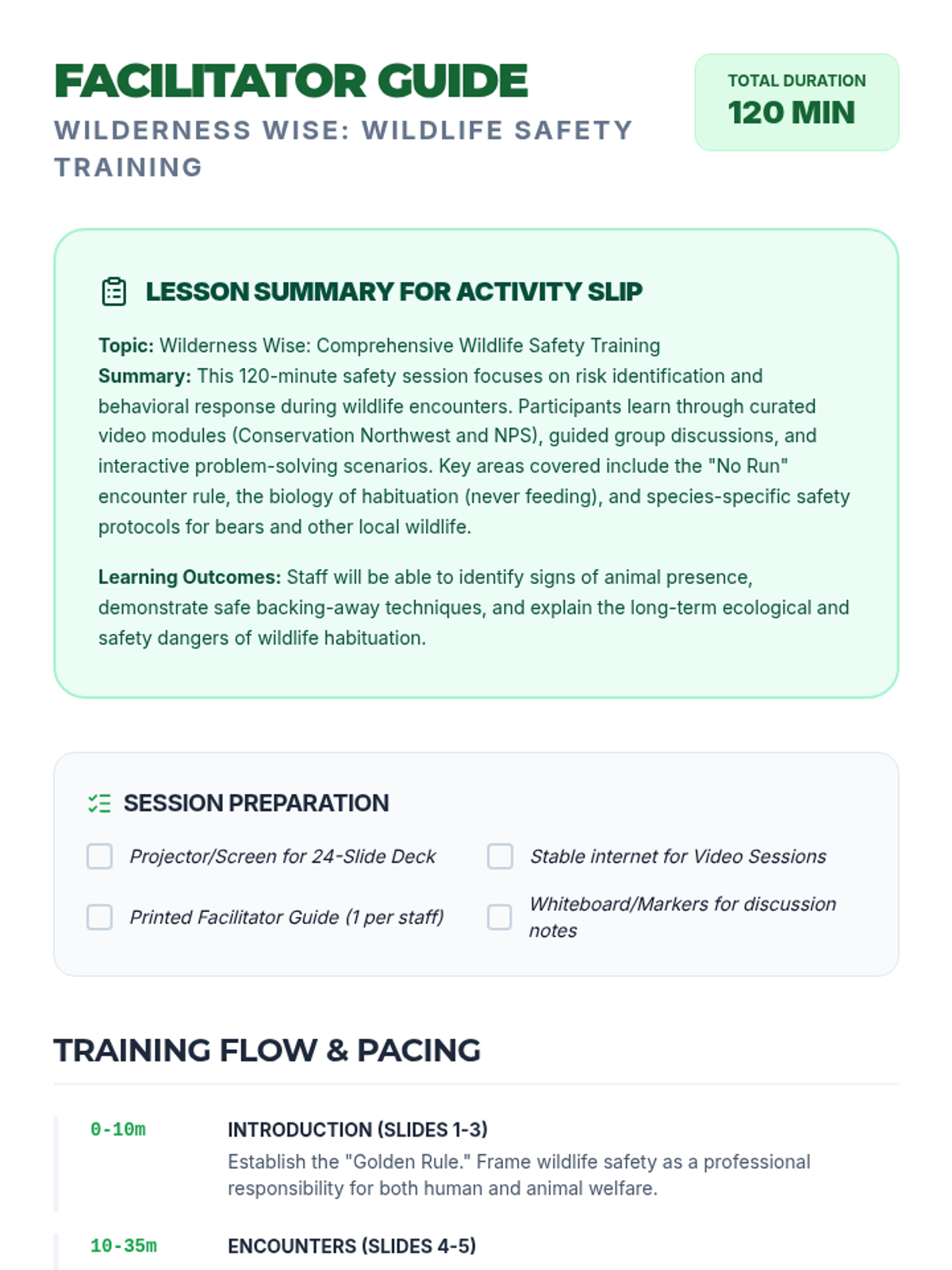
Facilitator guide for Wilderness Wise. Includes a timed 120-minute agenda, pacing flow for 24 slides, a scenario reference key, and a specific "Lesson Summary" for the activity slip as requested.
Final 24-slide presentation. Includes 3 video sessions (Encounter, Feeding, Bears) with discussion prompts, plus 6 interactive scenarios each followed by a dedicated answer slide. Optimized for a 120-minute training block.
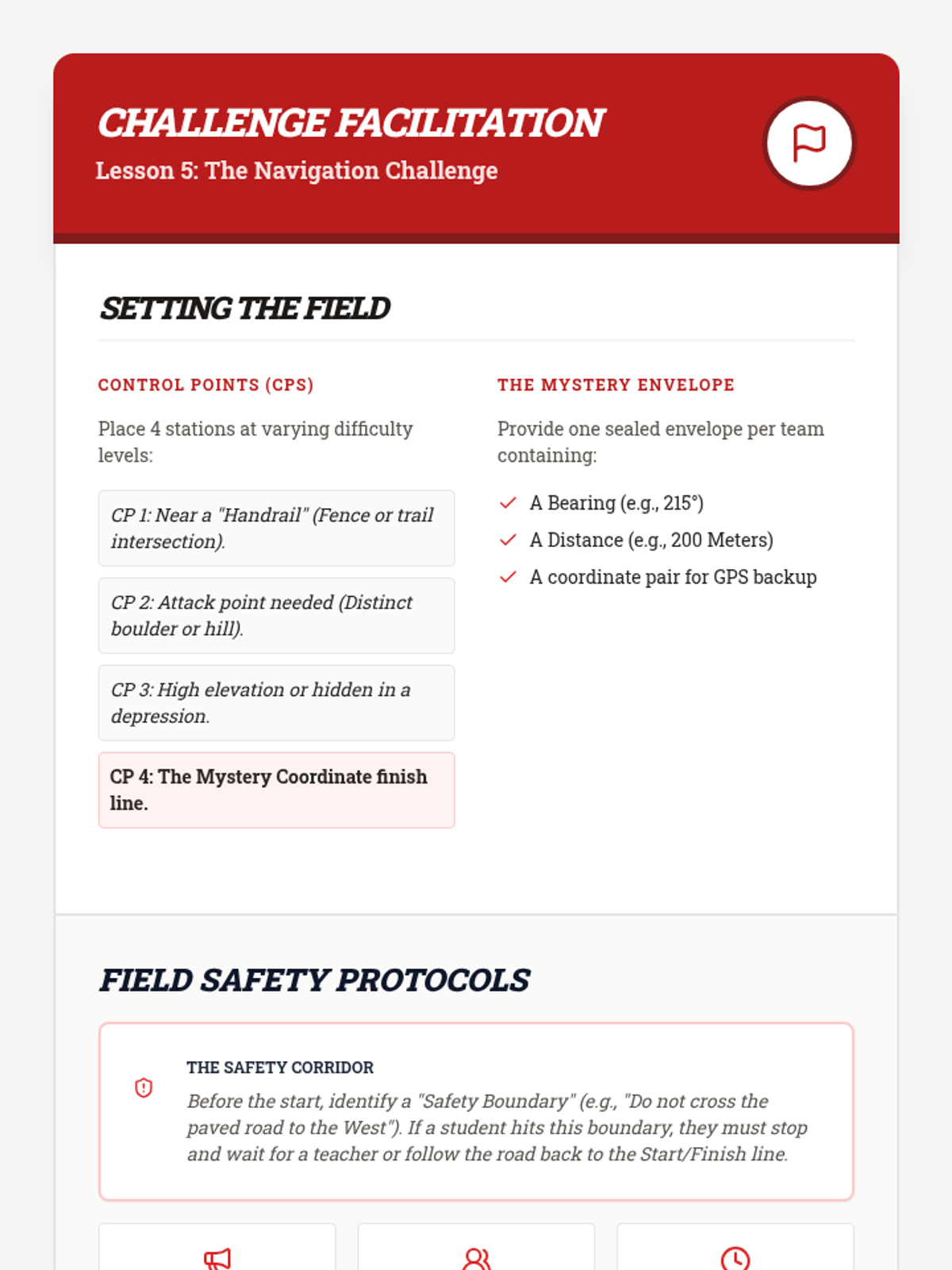
Teacher facilitation guide for Lesson 5, covering the technical setup for the orienteering course and course safety.
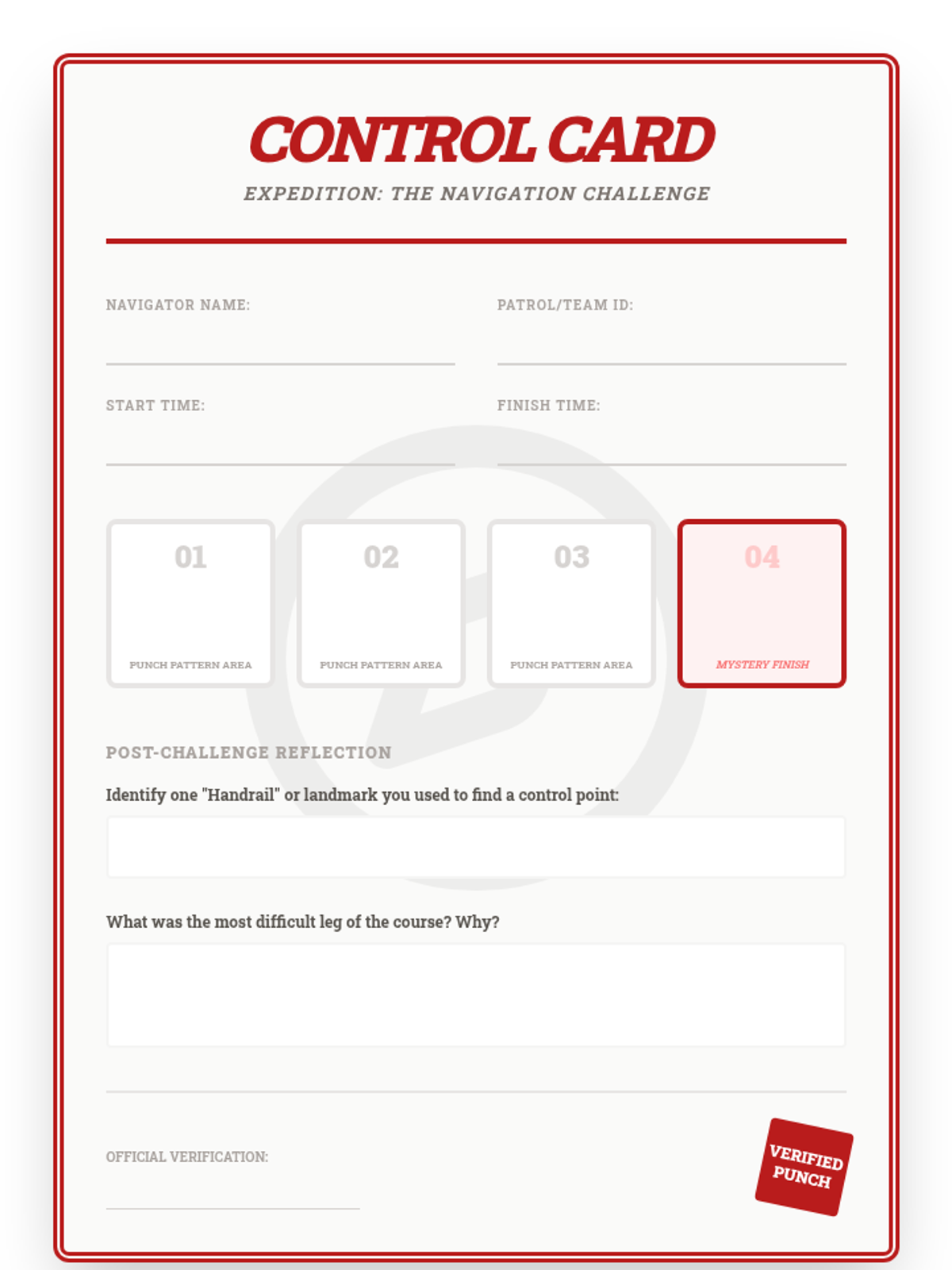
Student activity sheet for Lesson 5, serving as the official record for punching control points and reflecting on orienteering strategy.
Introductory slide deck for Lesson 5, covering the rules of orienteering, strategy, route selection, and safety protocols for the final challenge.
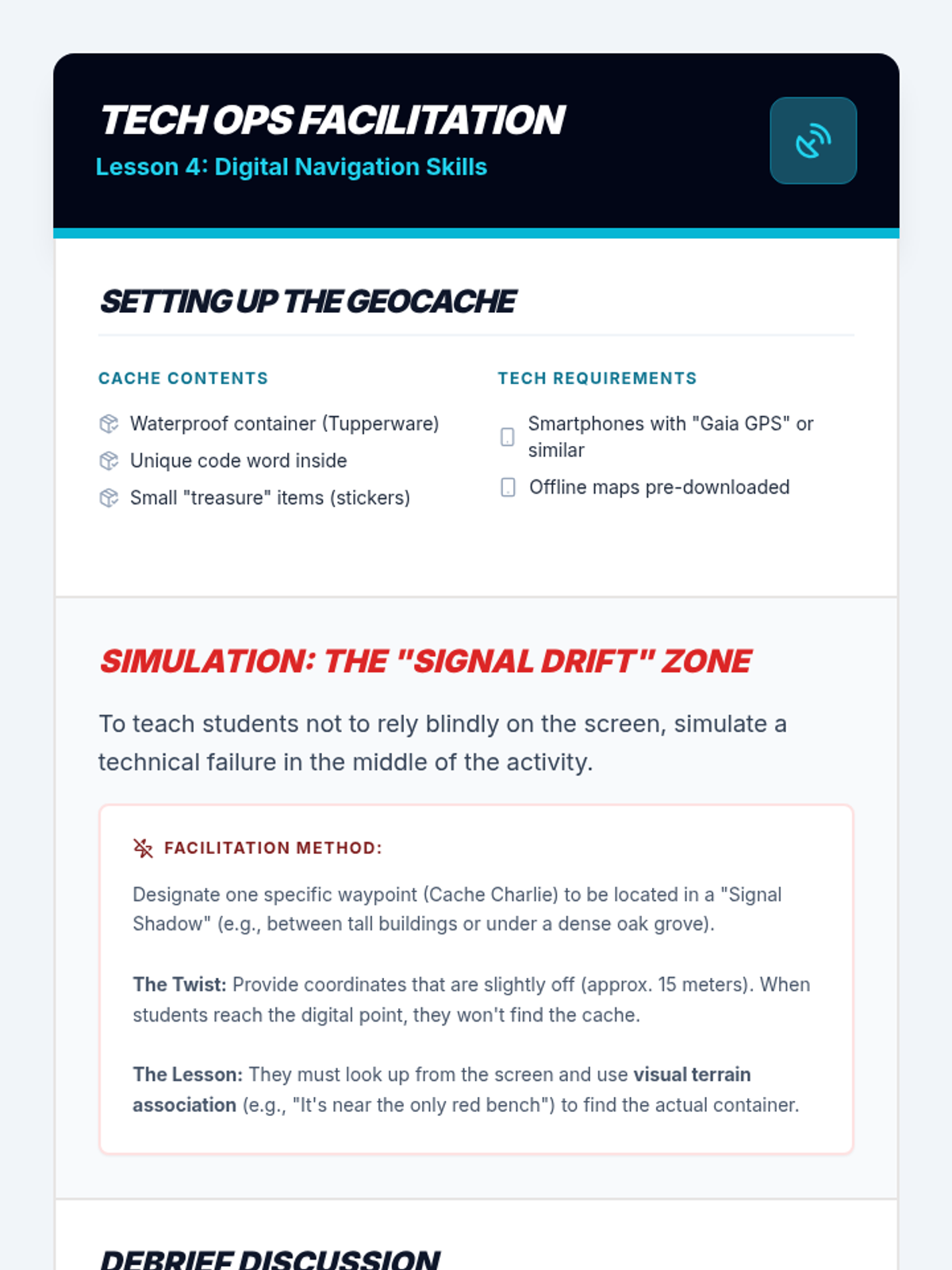
Teacher facilitation guide for Lesson 4, covering the technical setup for geocaching and the signal-drift simulation activity.
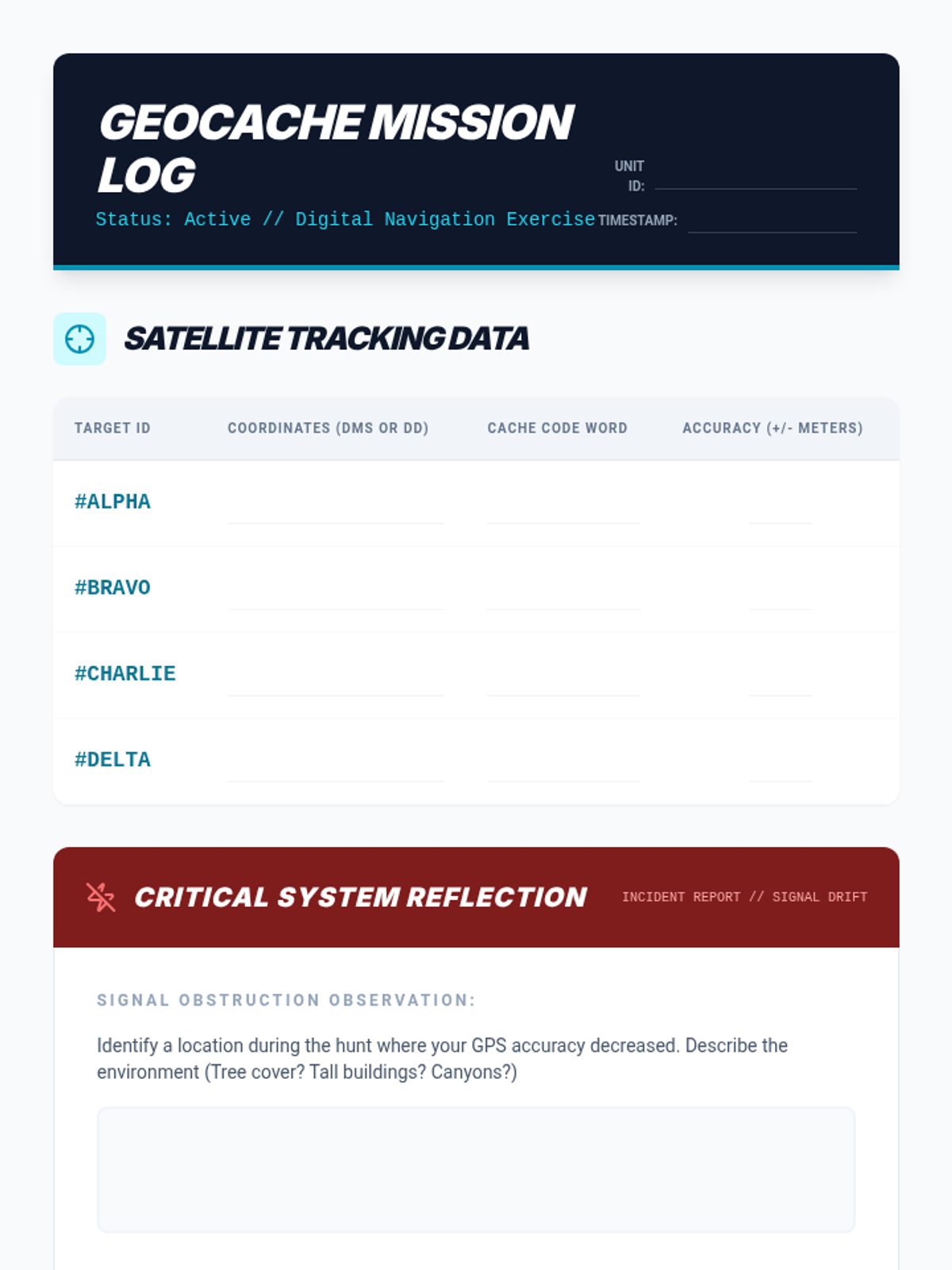
Student activity sheet for Lesson 4, focusing on logging coordinates, marking waypoints, and reflecting on technology limitations.
Introductory slide deck for Lesson 4, covering GPS technology, digital waypoints, and the limitations of electronic navigation tools.
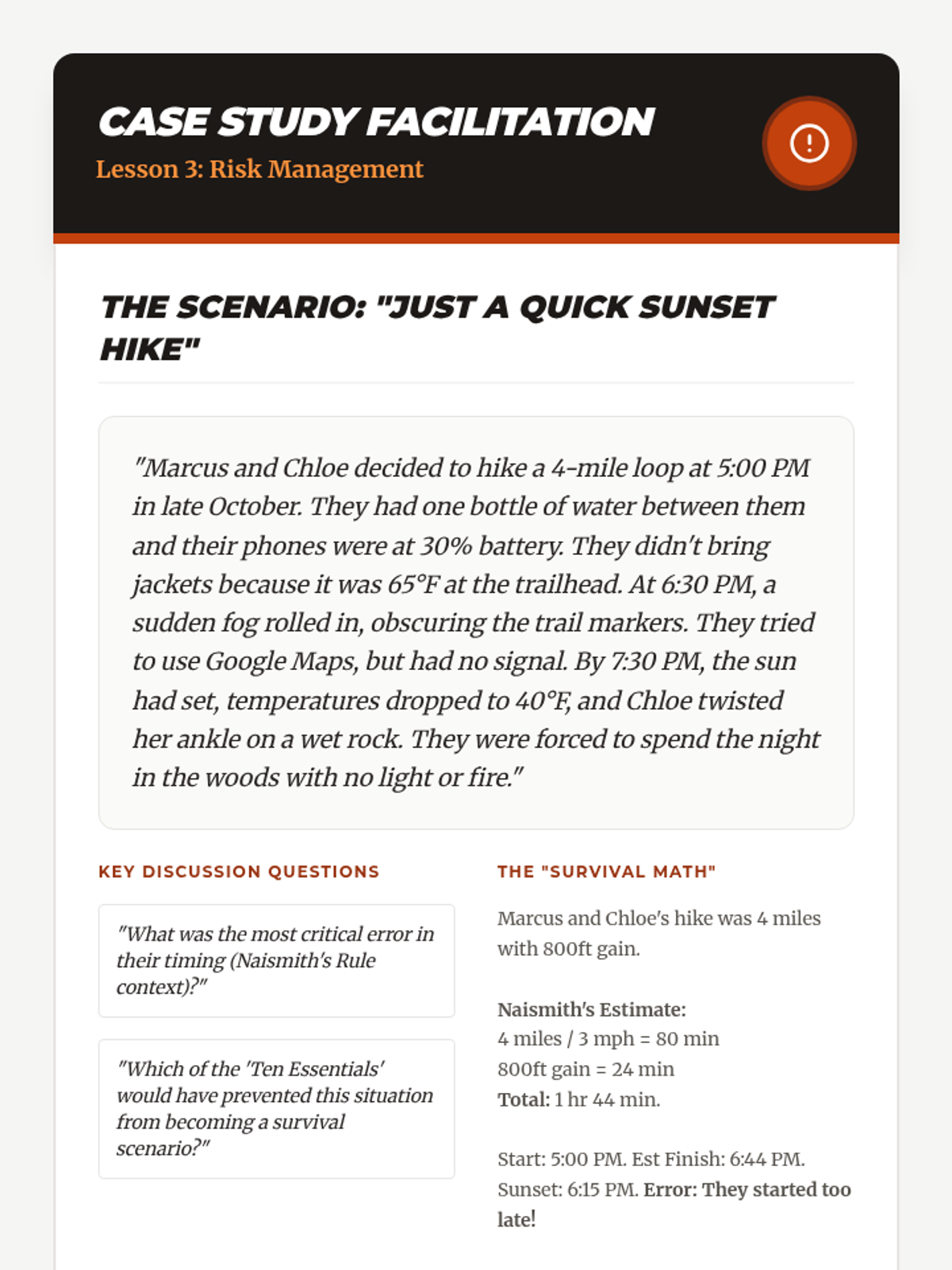
Teacher facilitation guide for Lesson 3, featuring the "Lost Hiker" case study, discussion prompts, and Naismith's Rule application.
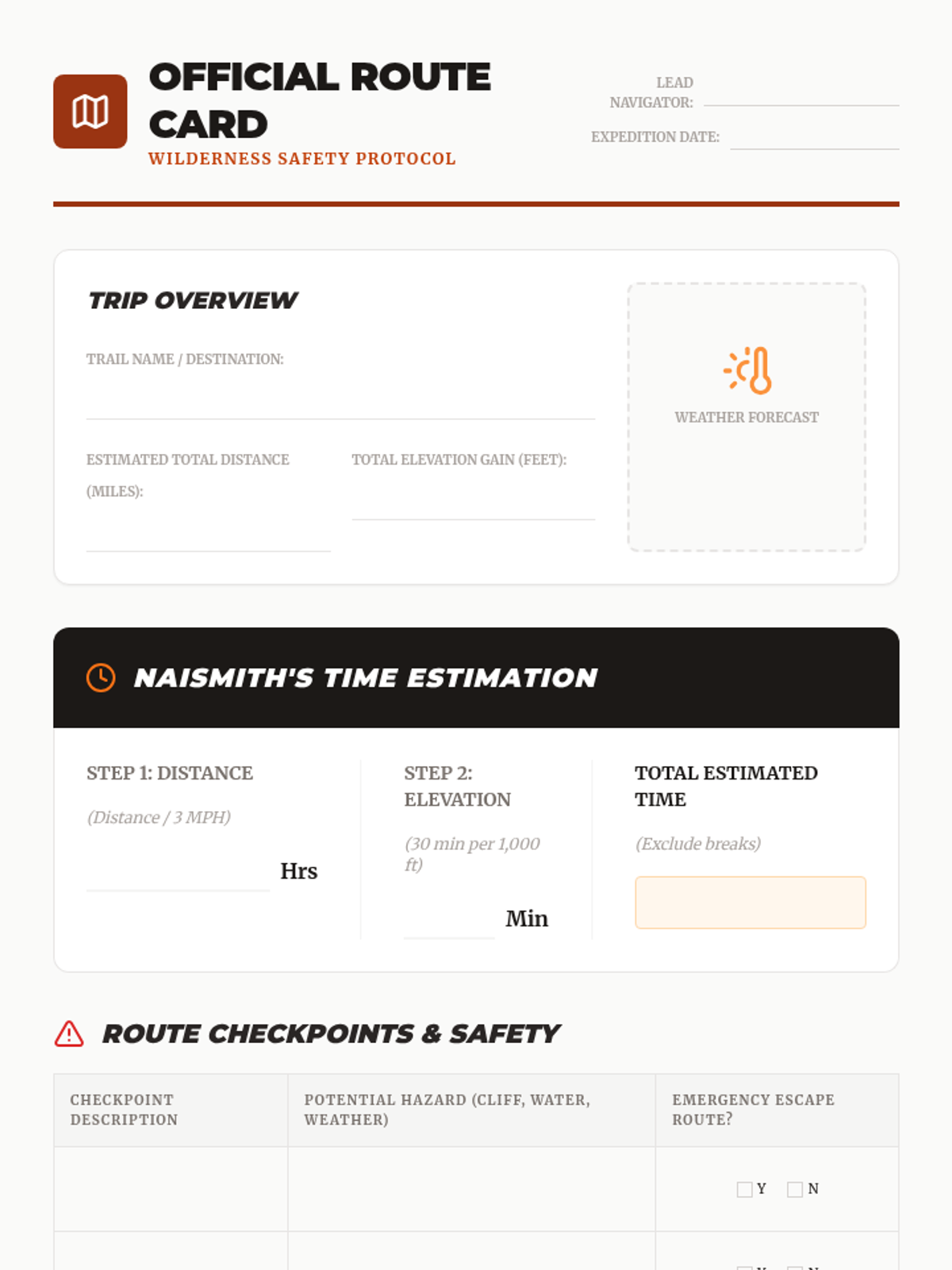
Student worksheet for Lesson 3, focusing on travel time calculation, hazard identification, and route card creation.
Introductory slide deck for Lesson 3, covering trip planning, safety essentials, time calculation (Naismith's Rule), and Leave No Trace principles.
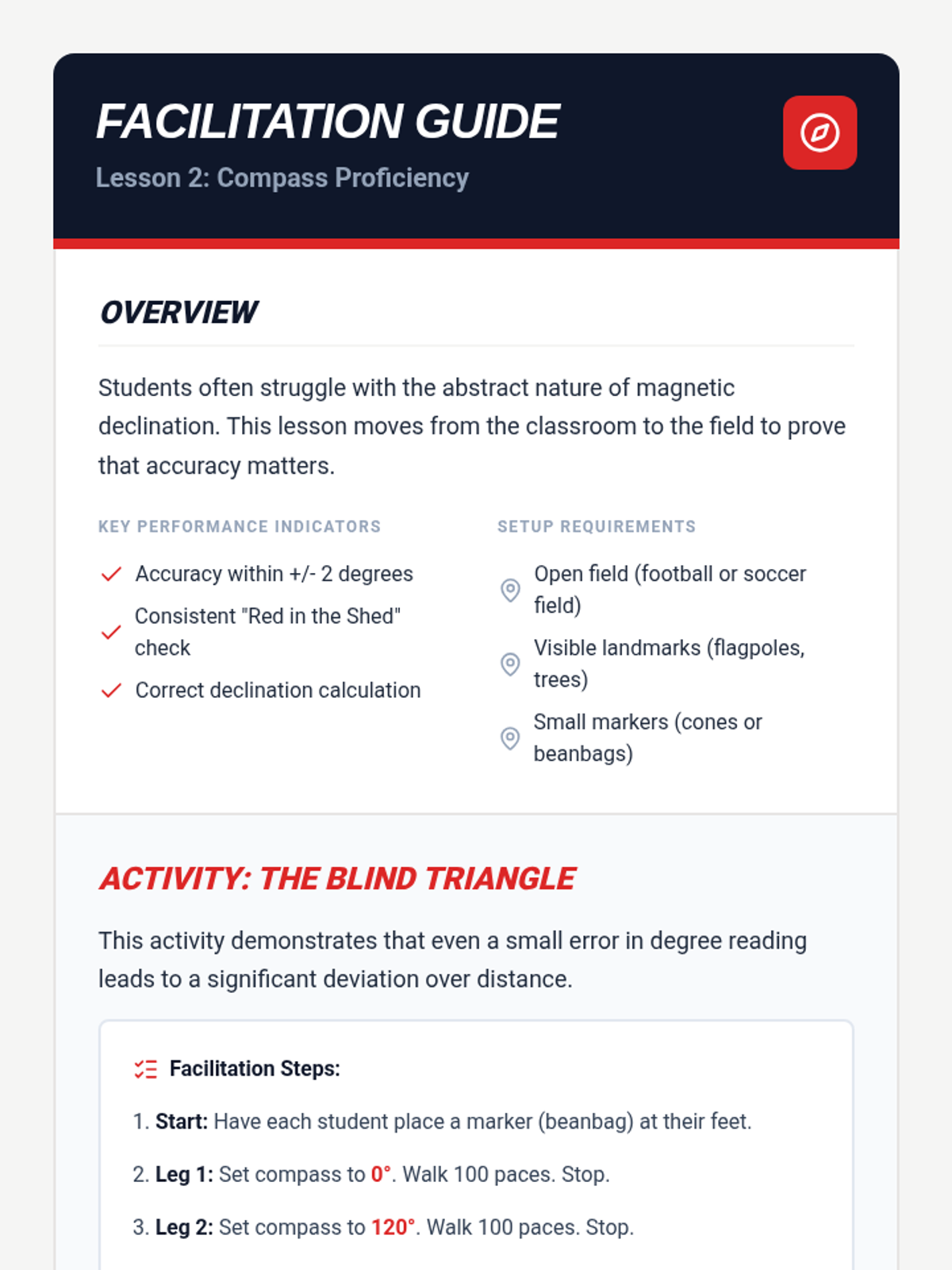
Teacher facilitation guide for Lesson 2, covering the technical setup for compass practice and the "Blind Triangle" field activity.
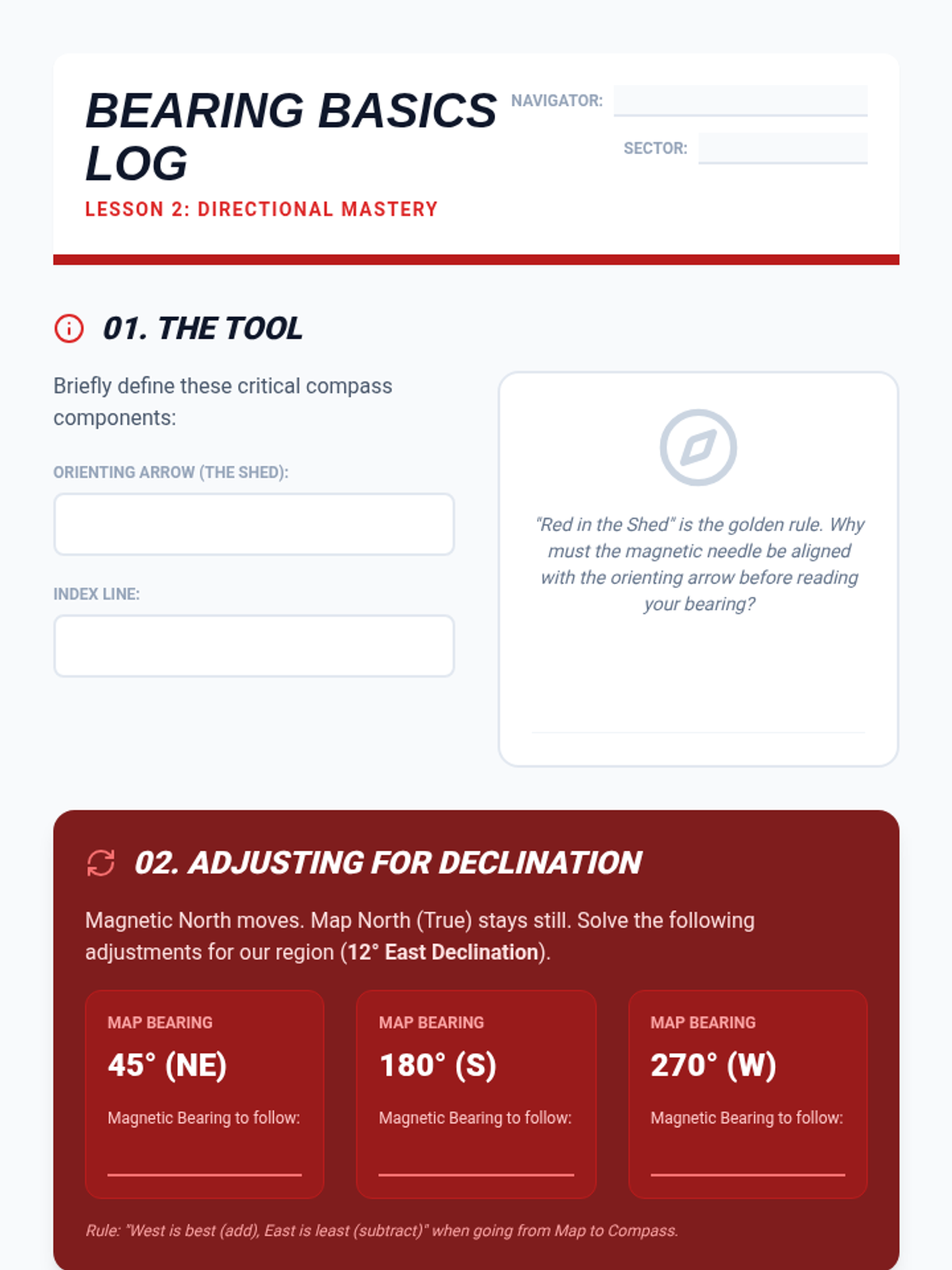
Student worksheet for Lesson 2, focusing on shooting bearings, adjusting for magnetic declination, and logging field sightings.
Introductory slide deck for Lesson 2, covering compass anatomy, the difference between true and magnetic north, and the technique for shooting bearings.
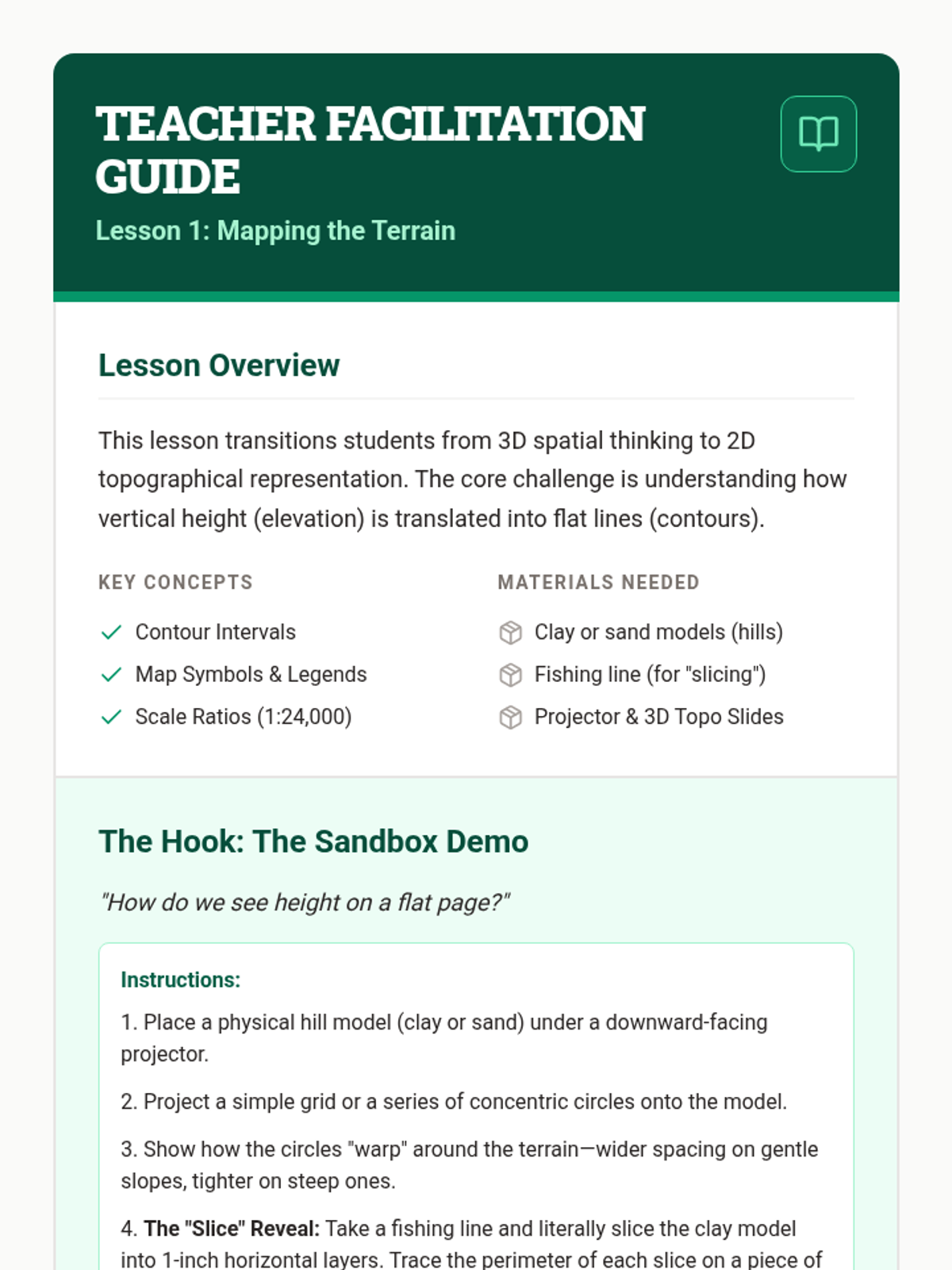
Teacher facilitation guide for Lesson 1, detailing the 3D model demonstration hook, common student misconceptions about contour lines, and pacing suggestions.
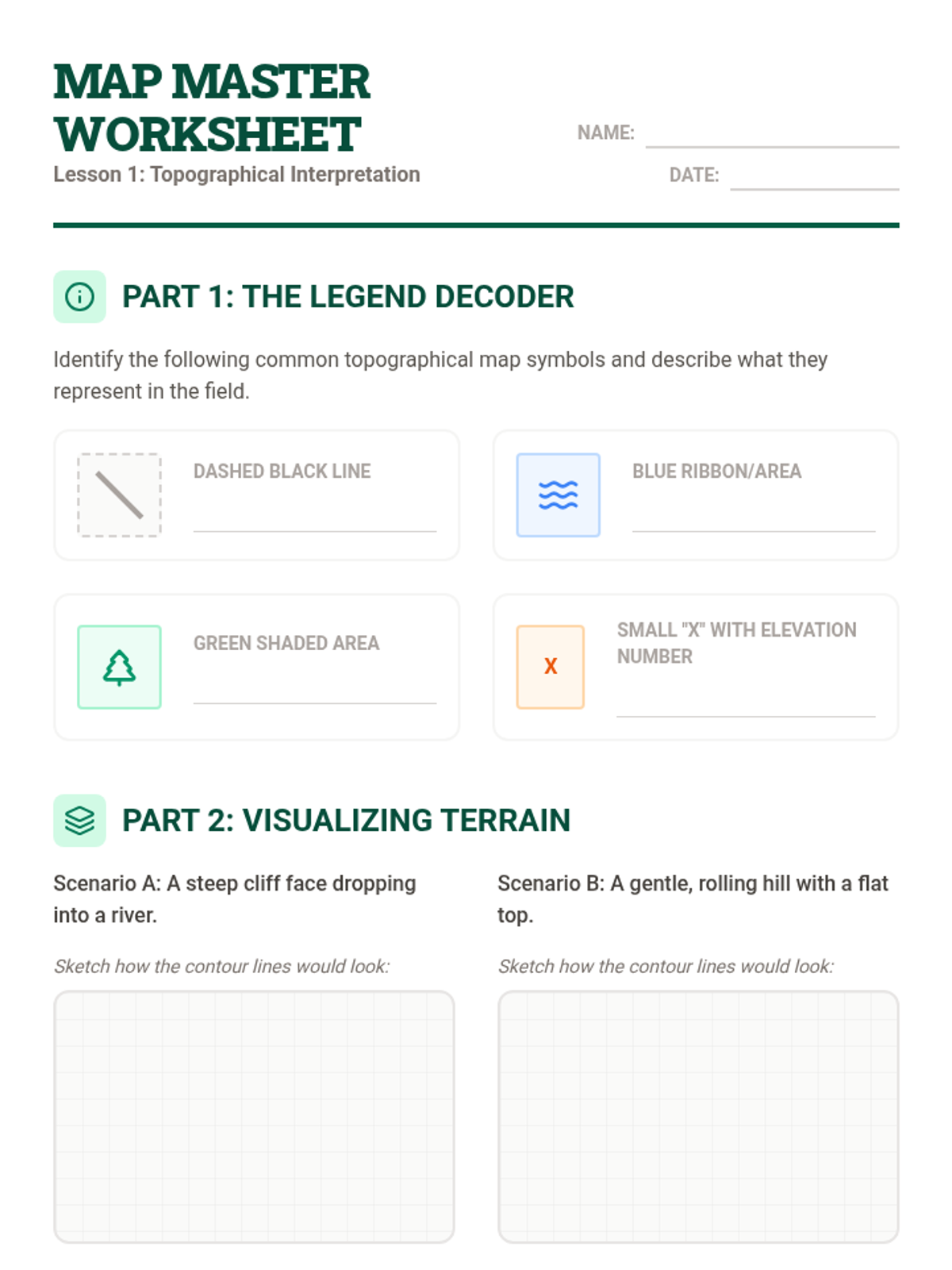
Student worksheet for Lesson 1, focusing on topographical map symbols, contour line visualization, and a mapping exercise from a 3D model.
Introductory slide deck for Lesson 1, covering the basics of topographical map reading, including contour lines, scale, and symbols.
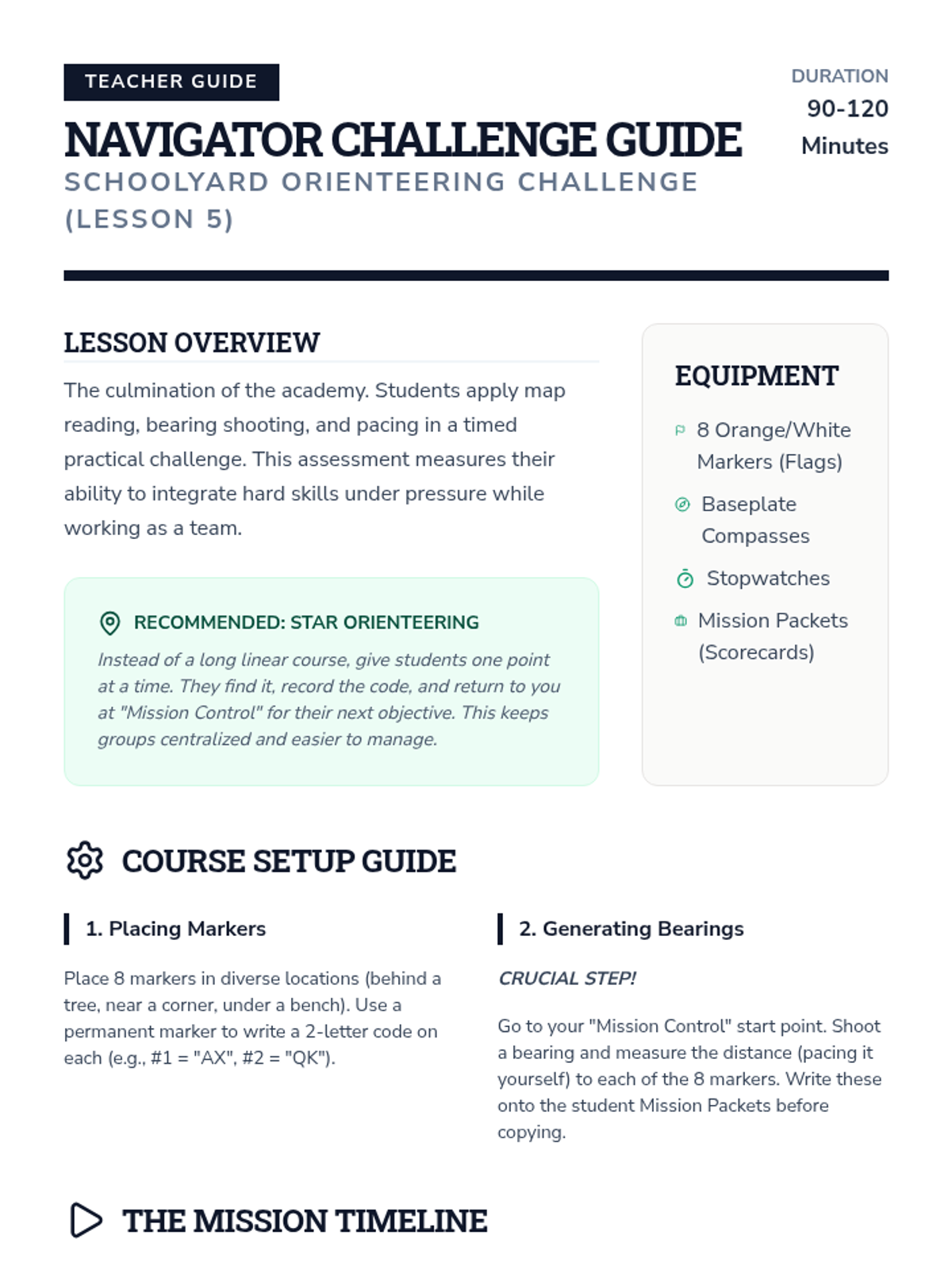
A comprehensive teacher guide for Lesson 5, including course setup, mission logic, and an assessment rubric.
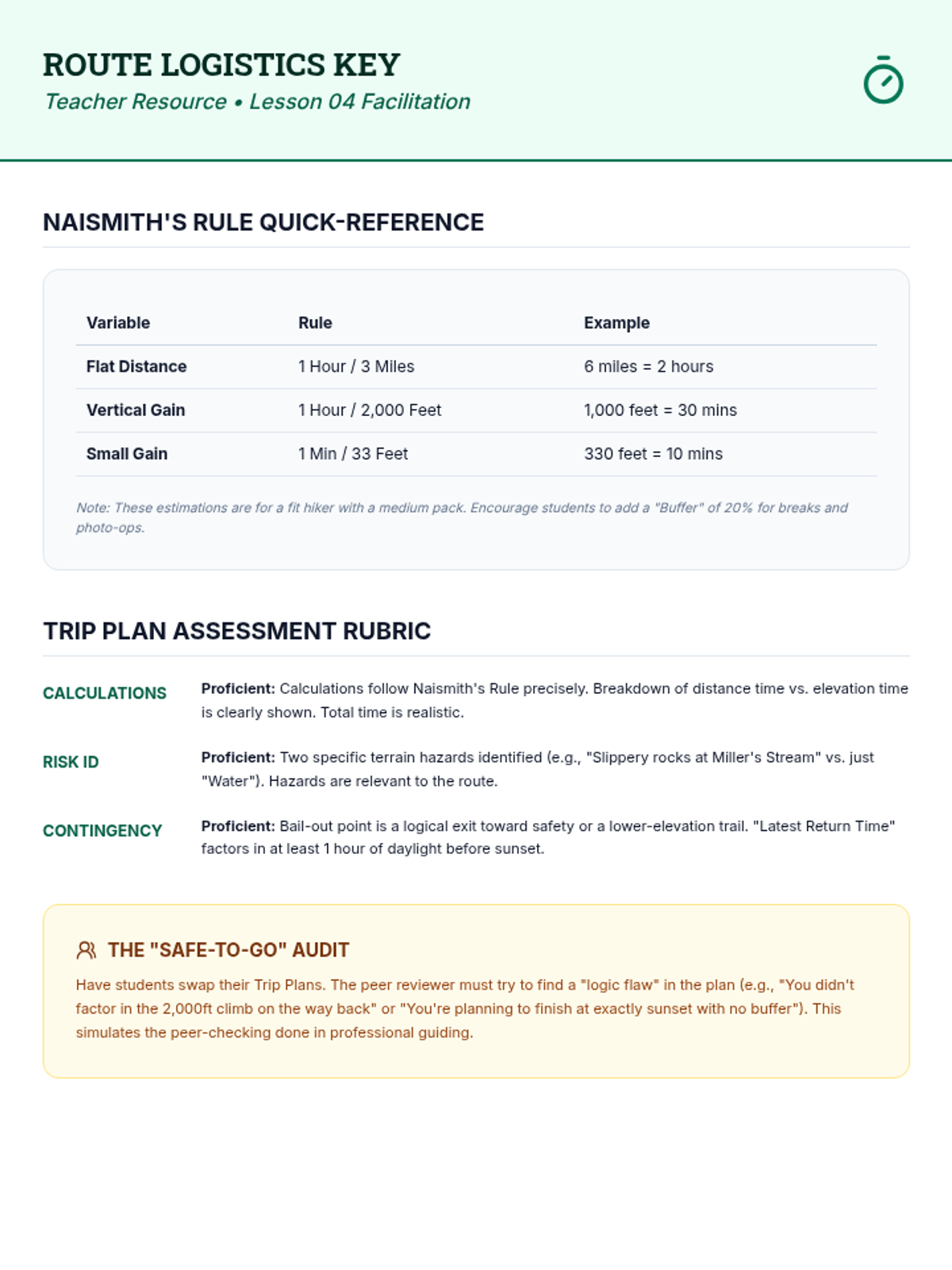
Teacher resource for Lesson 4 providing a rubric for the trip plan activity and a quick-reference guide for Naismith's Rule calculations.
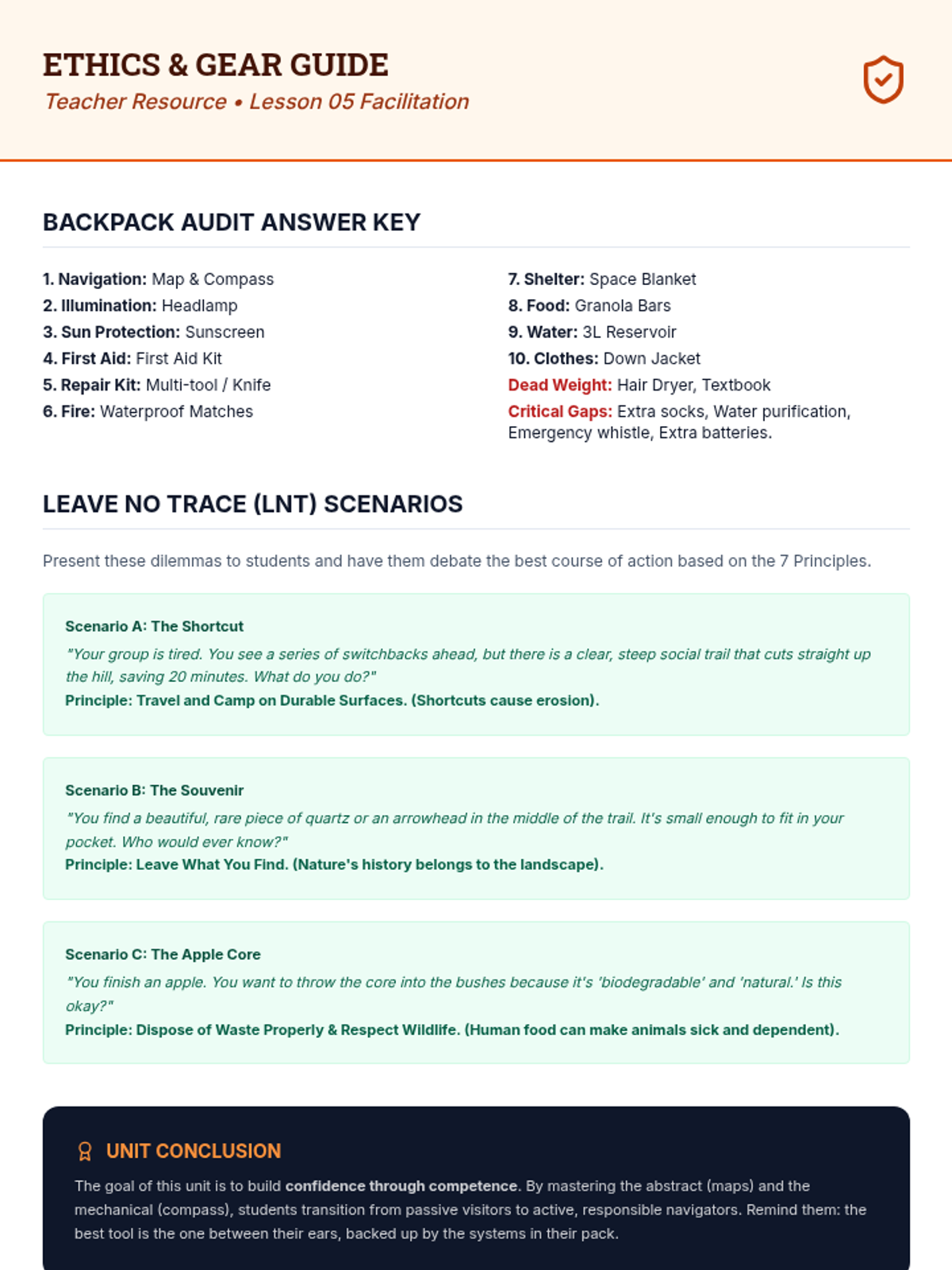
Teacher resource for Lesson 5 containing LNT scenario discussion prompts and the answer key for the Backpack Audit Worksheet.
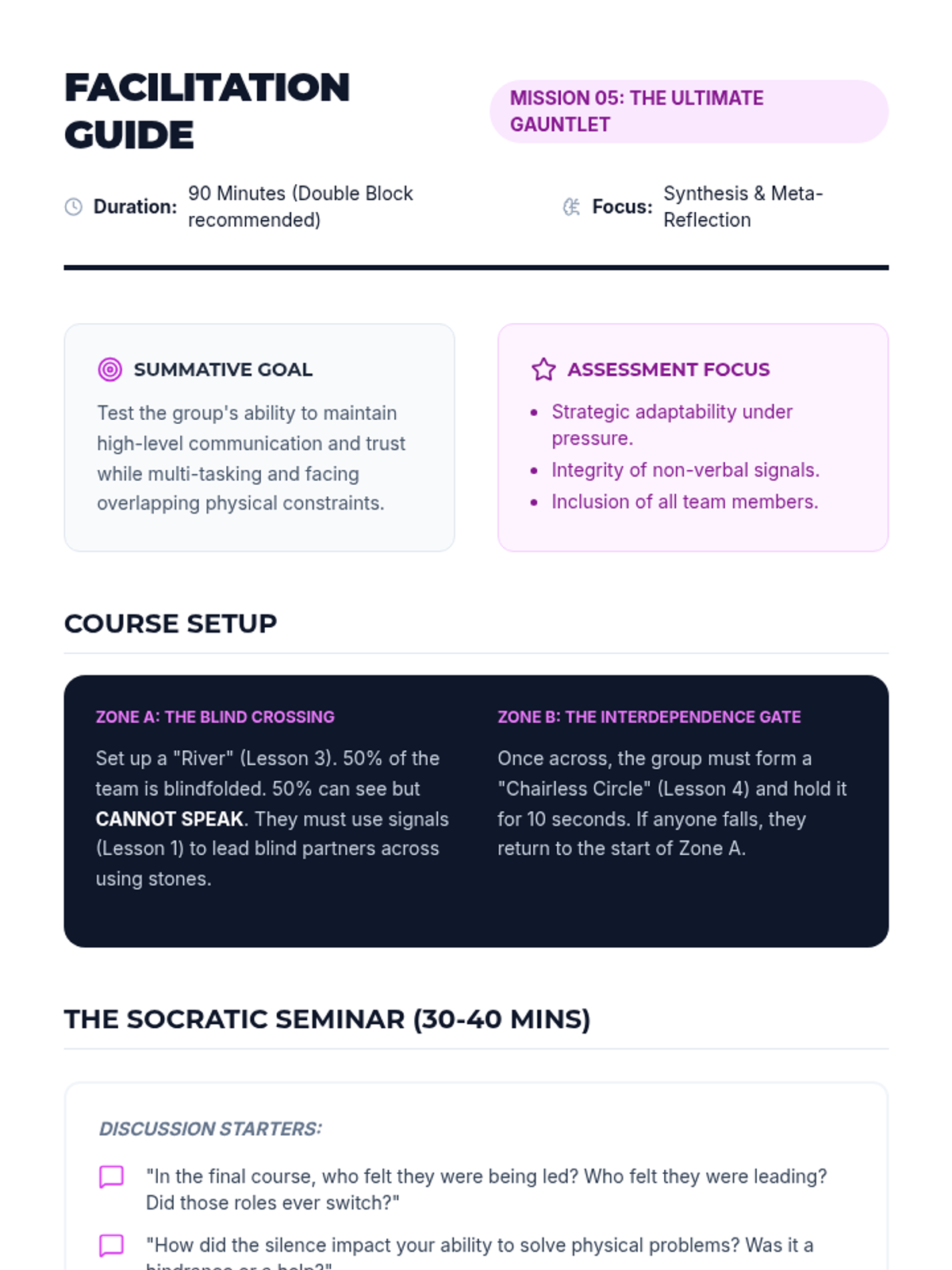
A facilitation guide for the final challenge course and Socratic seminar, including a setup overview and an assessment rubric.
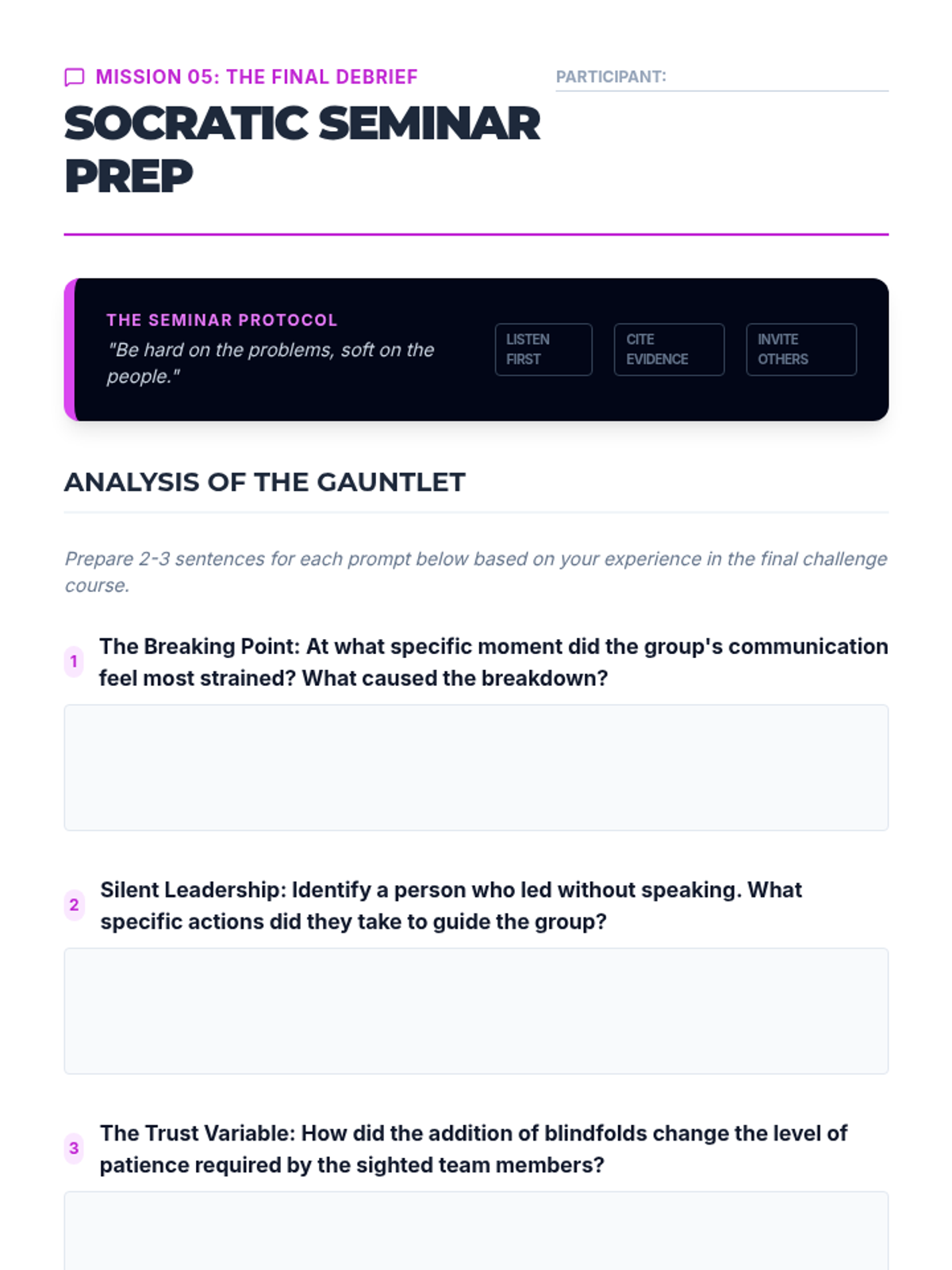
A preparation worksheet for the final Socratic seminar, requiring students to reflect on leadership, communication breakdowns, and group dynamics across the sequence.
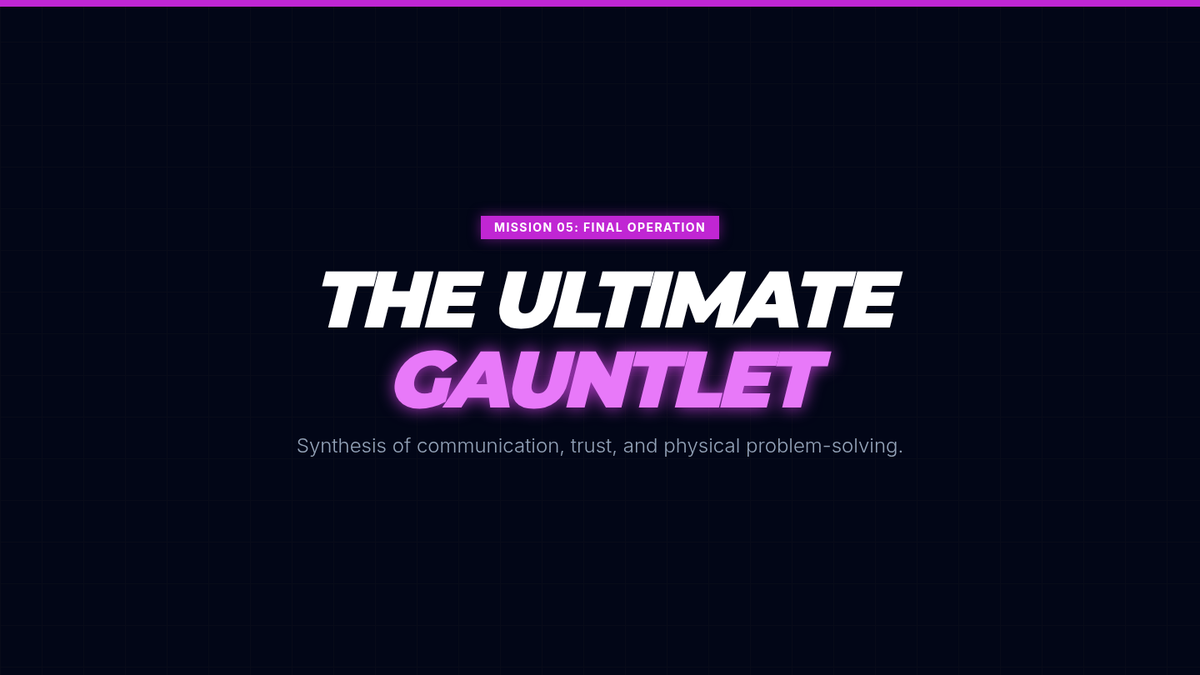
Introductory slides for the final challenge course, combining all skills learned in previous lessons: silence, blindfolds, resource management, and physical reliance.
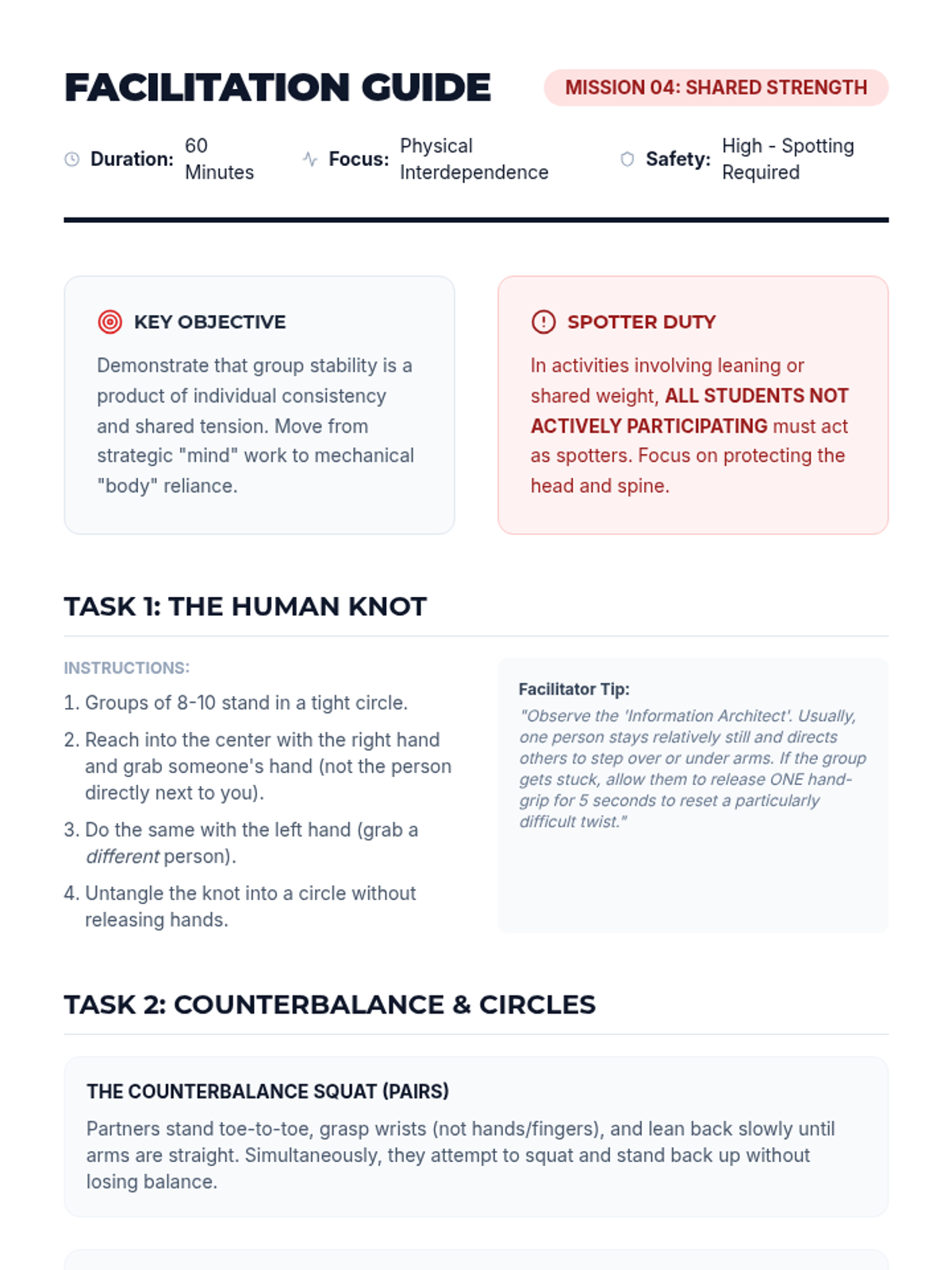
A facilitation guide for the 'Shared Strength' lesson, including setup instructions, safety spotting protocols, and coaching cues for interdependence activities.
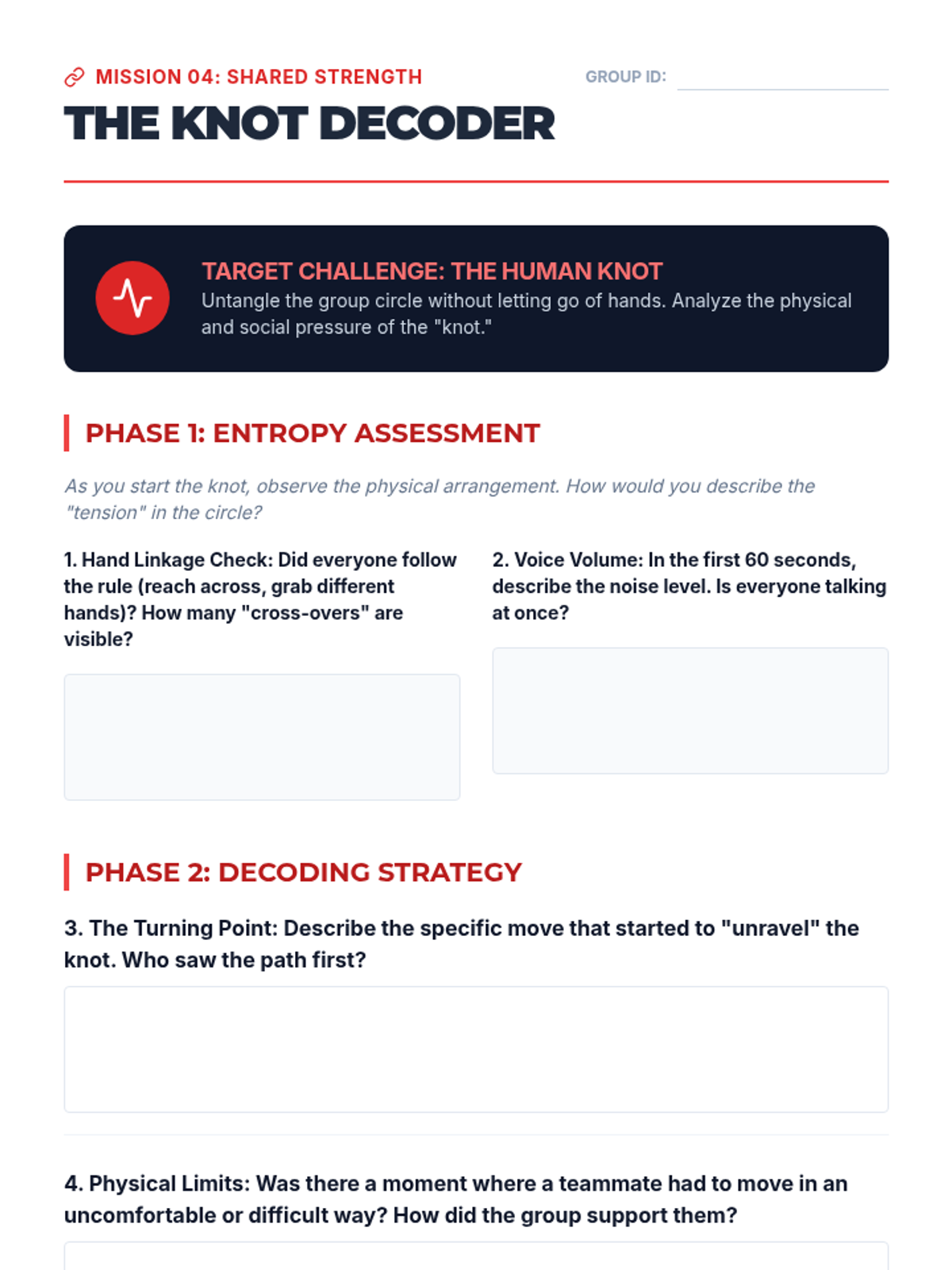
A reflection worksheet for the 'Human Knot' and interdependence activities, focusing on group dynamics, strategy, and physical reliance.
Mechanics of weight and balance slides for the 'Shared Strength' lesson, focusing on physical reliance, counterbalance, and safety spotting.
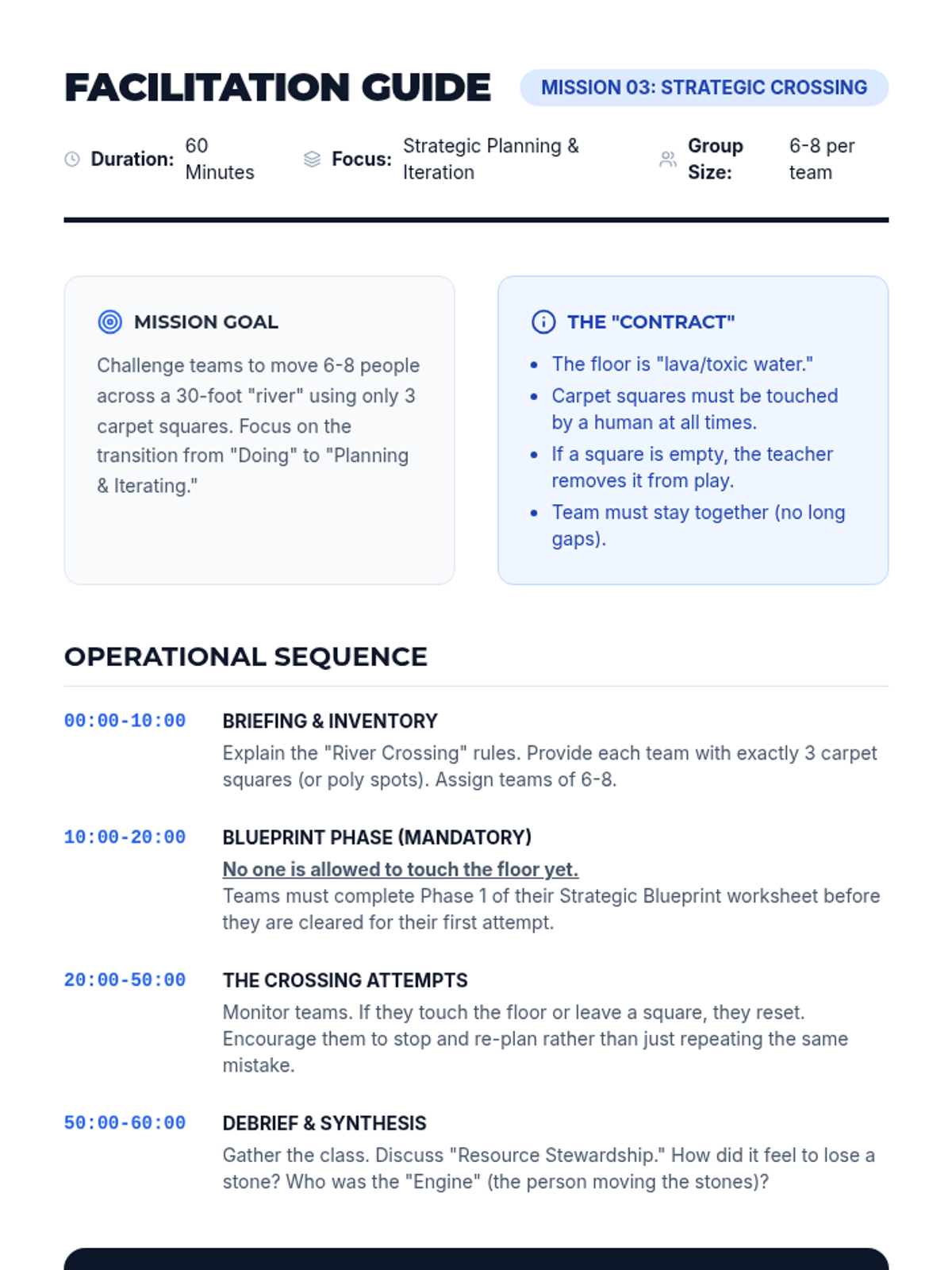
A facilitation guide for the 'River Crossing' challenge, including setup instructions, mandatory planning phases, and complexity variations.
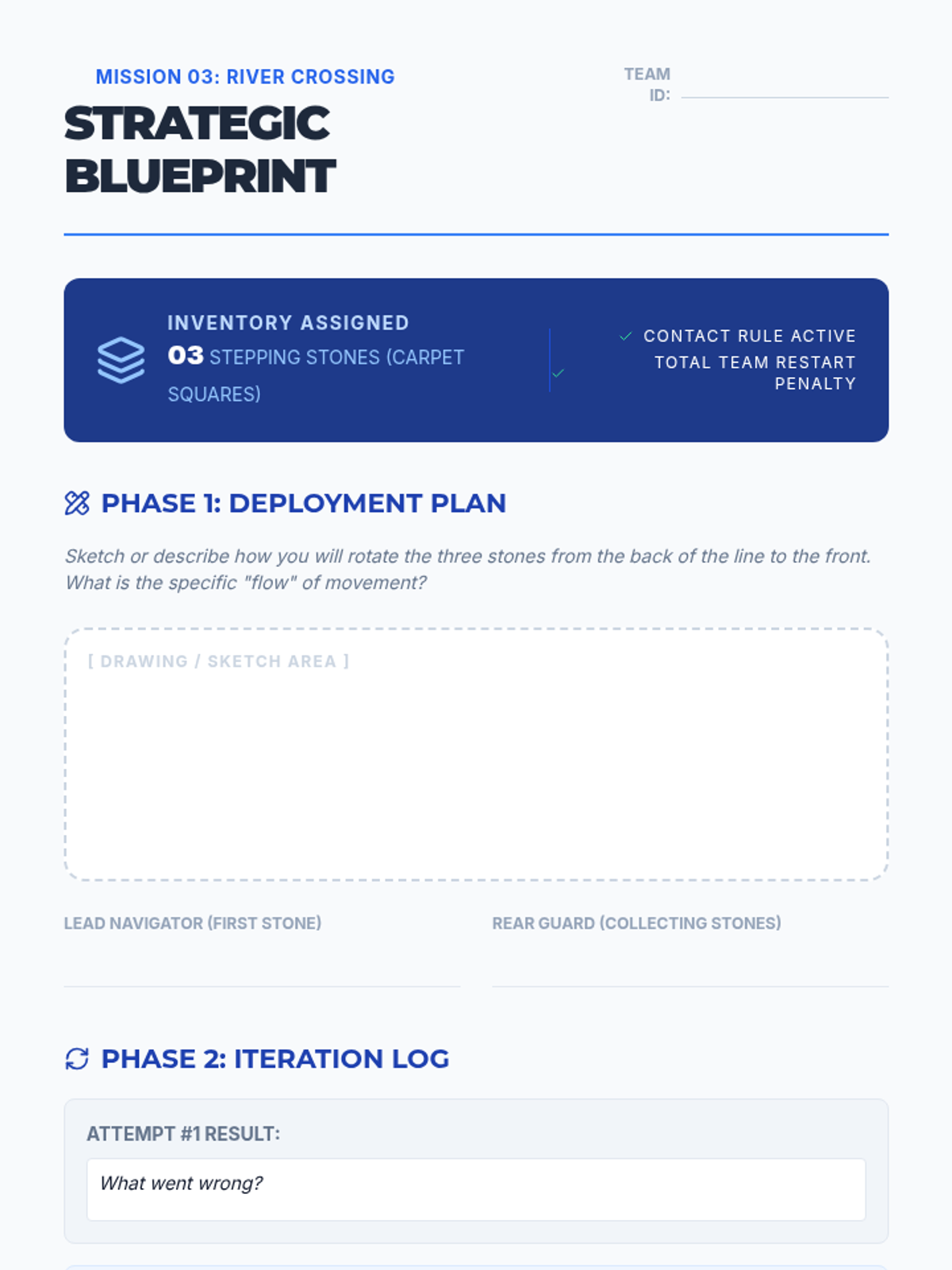
A planning sheet for the 'River Crossing' challenge, allowing teams to sketch their initial strategy and record adjustments made after failed attempts.
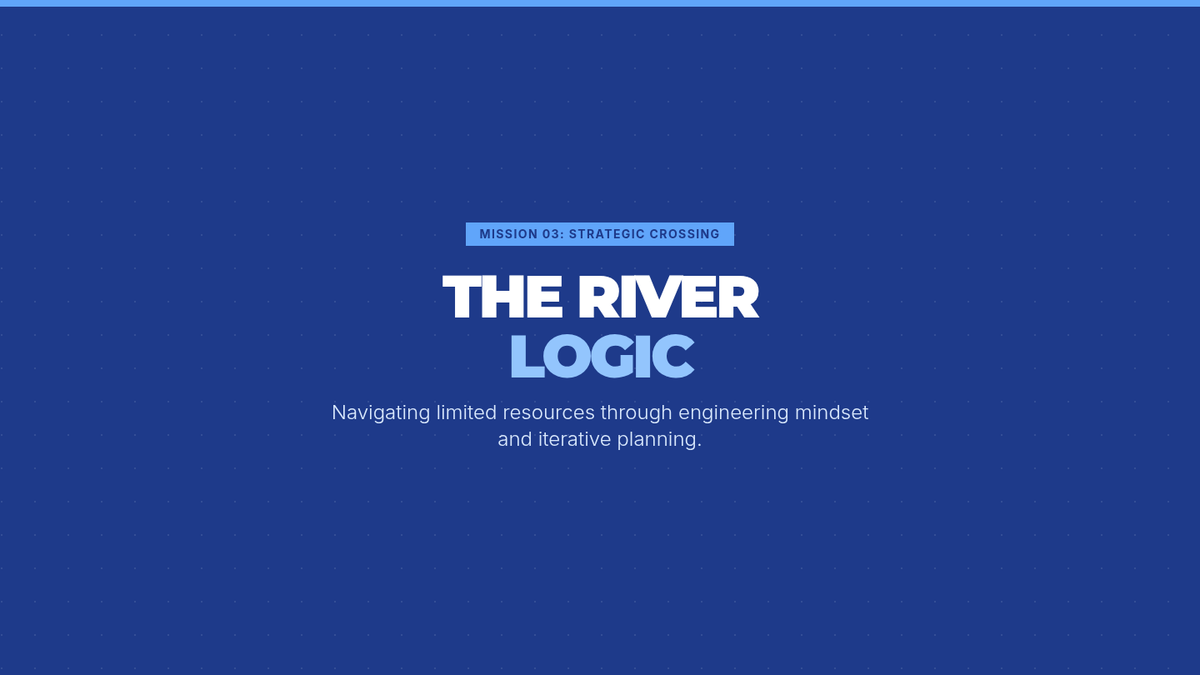
Introductory slides for the 'Strategic Crossing' challenge, focusing on resource management, iterative planning, and equitable teamwork.
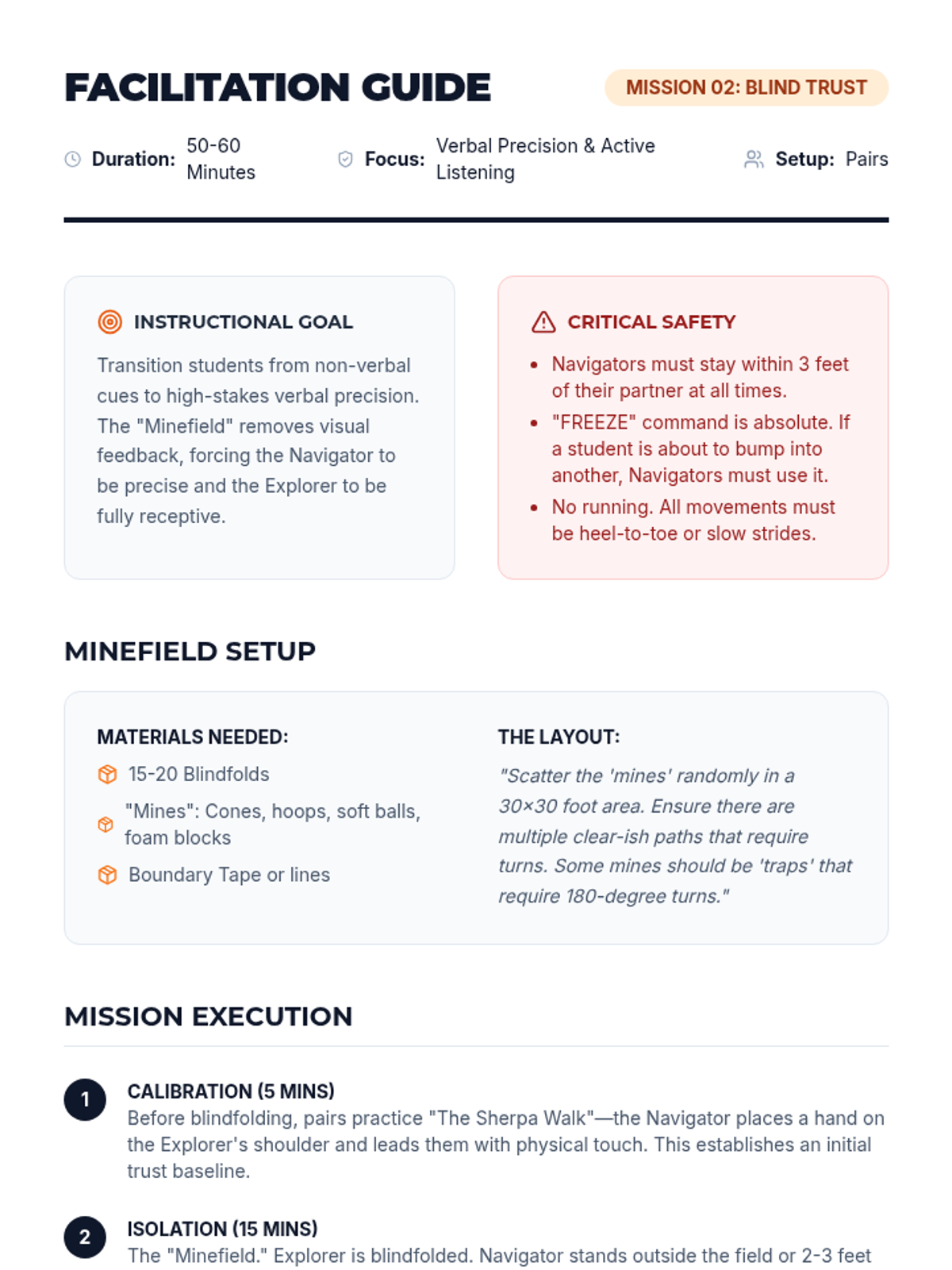
Facilitation notes for Lesson 2, including the 'Minefield' setup, safety instructions, and coaching strategies for verbal precision.
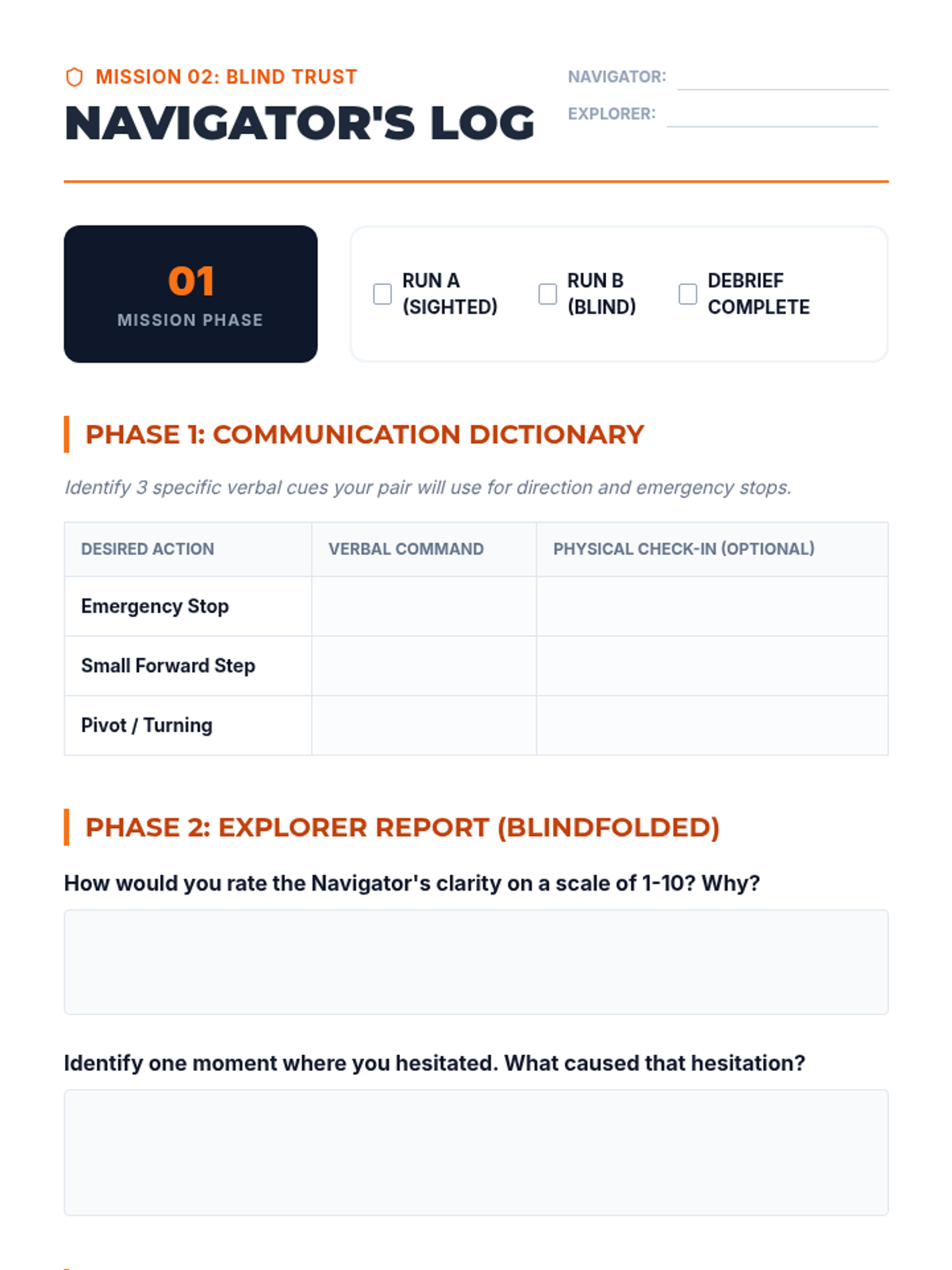
A pair communication log for the 'Minefield' challenge, allowing students to plan their verbal cues and reflect on the navigation process from both roles.
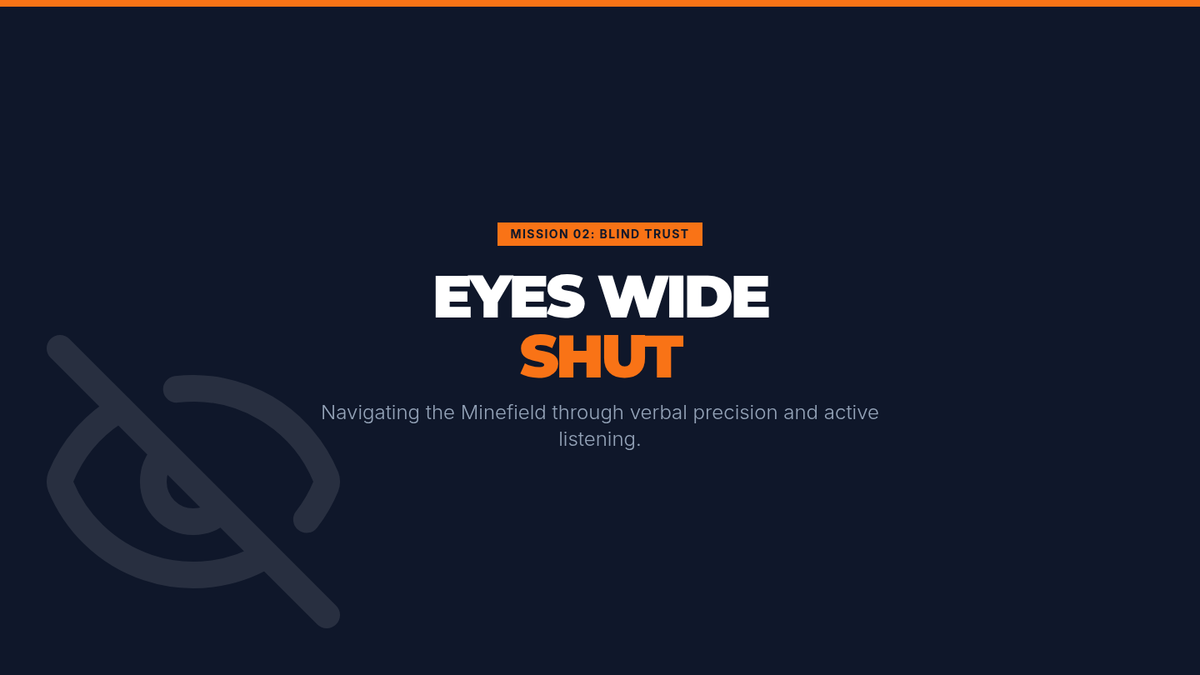
Safety and communication slides for the 'Blind Trust' lesson, focusing on verbal precision and active listening during navigation challenges.
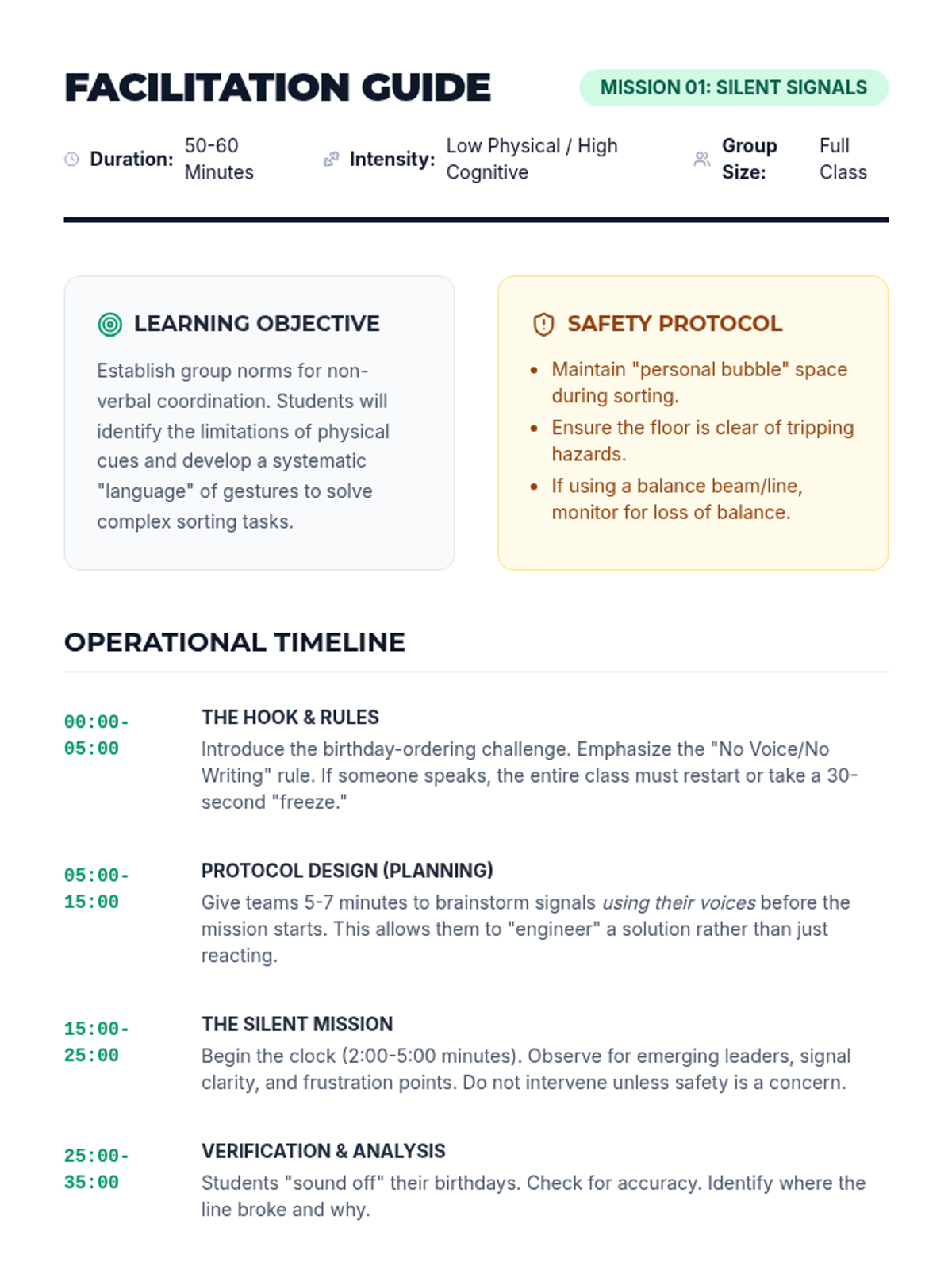
A facilitation guide for the 'Silent Signals' lesson, including a timeline, safety protocols, and key observational points for teachers.
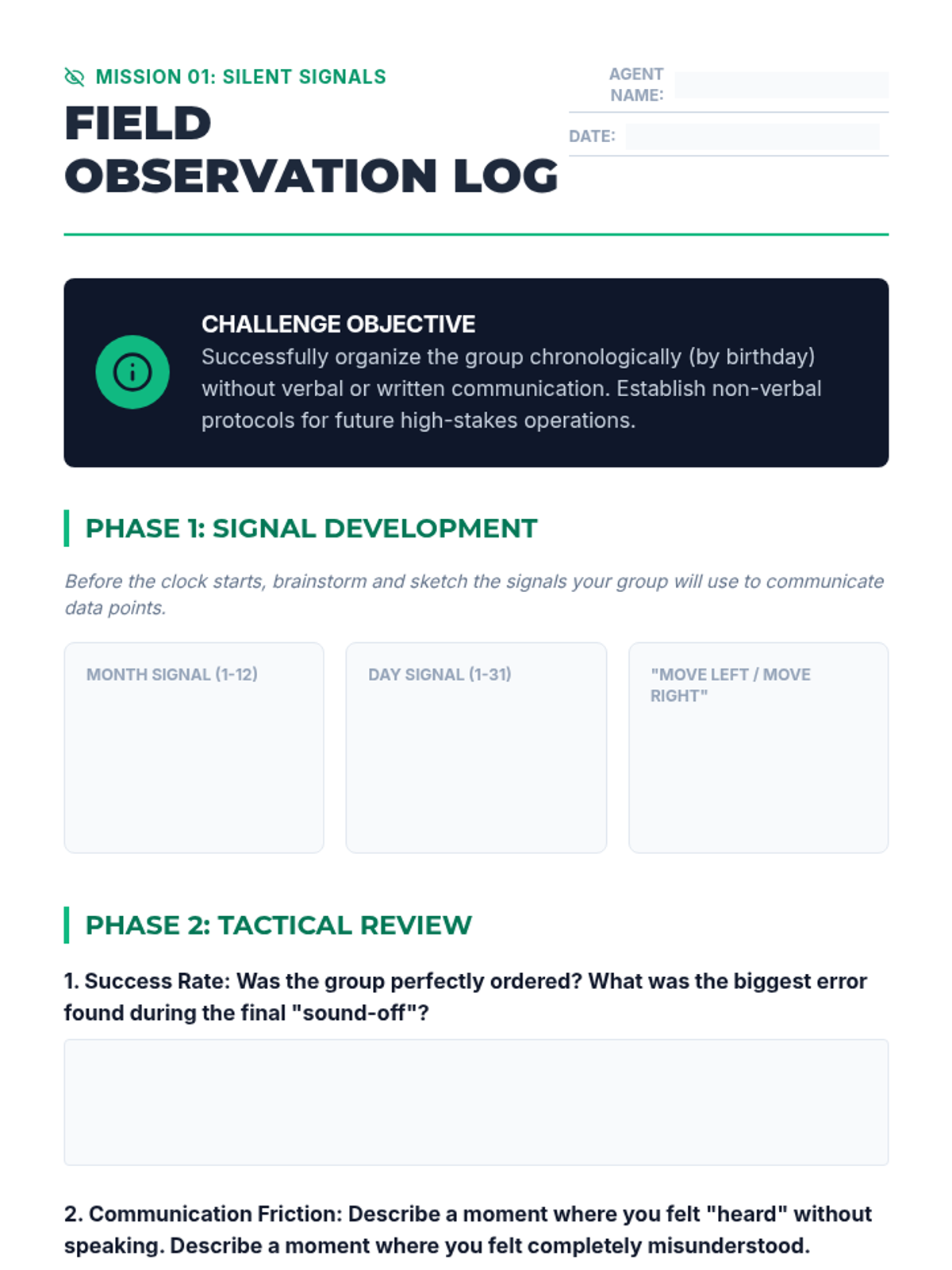
A field notes worksheet for students to record their observations and reflect on non-verbal communication strategies used during the birthday-ordering challenge.
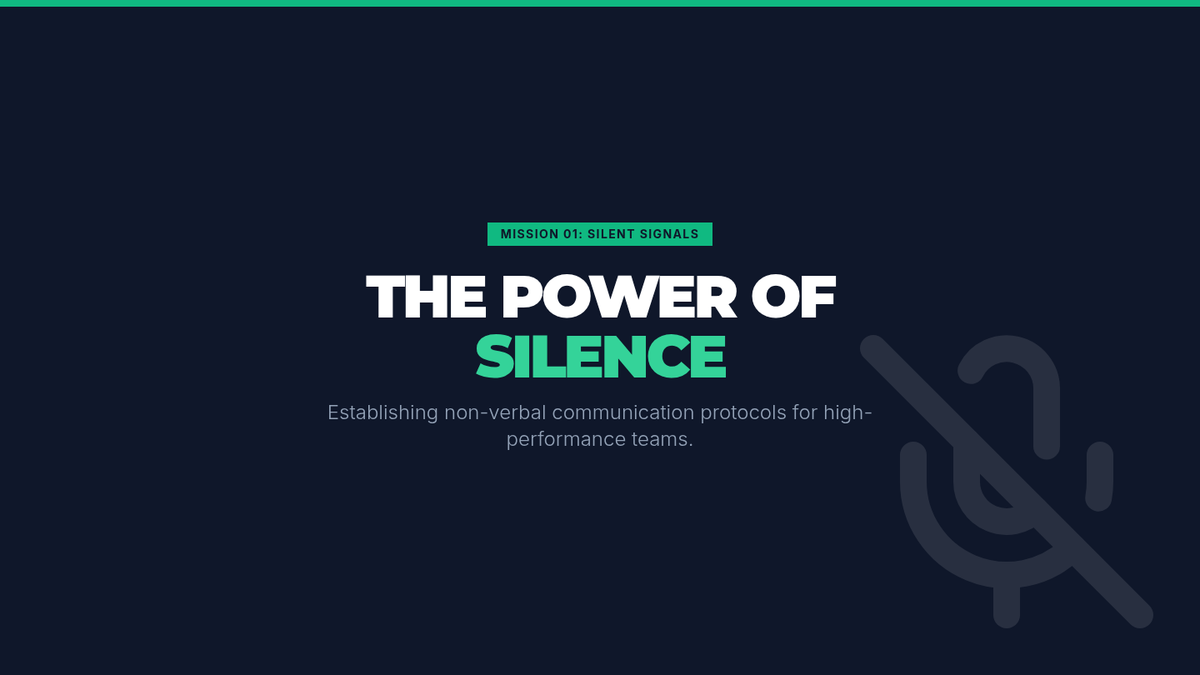
Introductory slides for the 'Silent Signals' lesson, focusing on the importance of non-verbal communication and establishing protocols for the class birthday-ordering challenge.
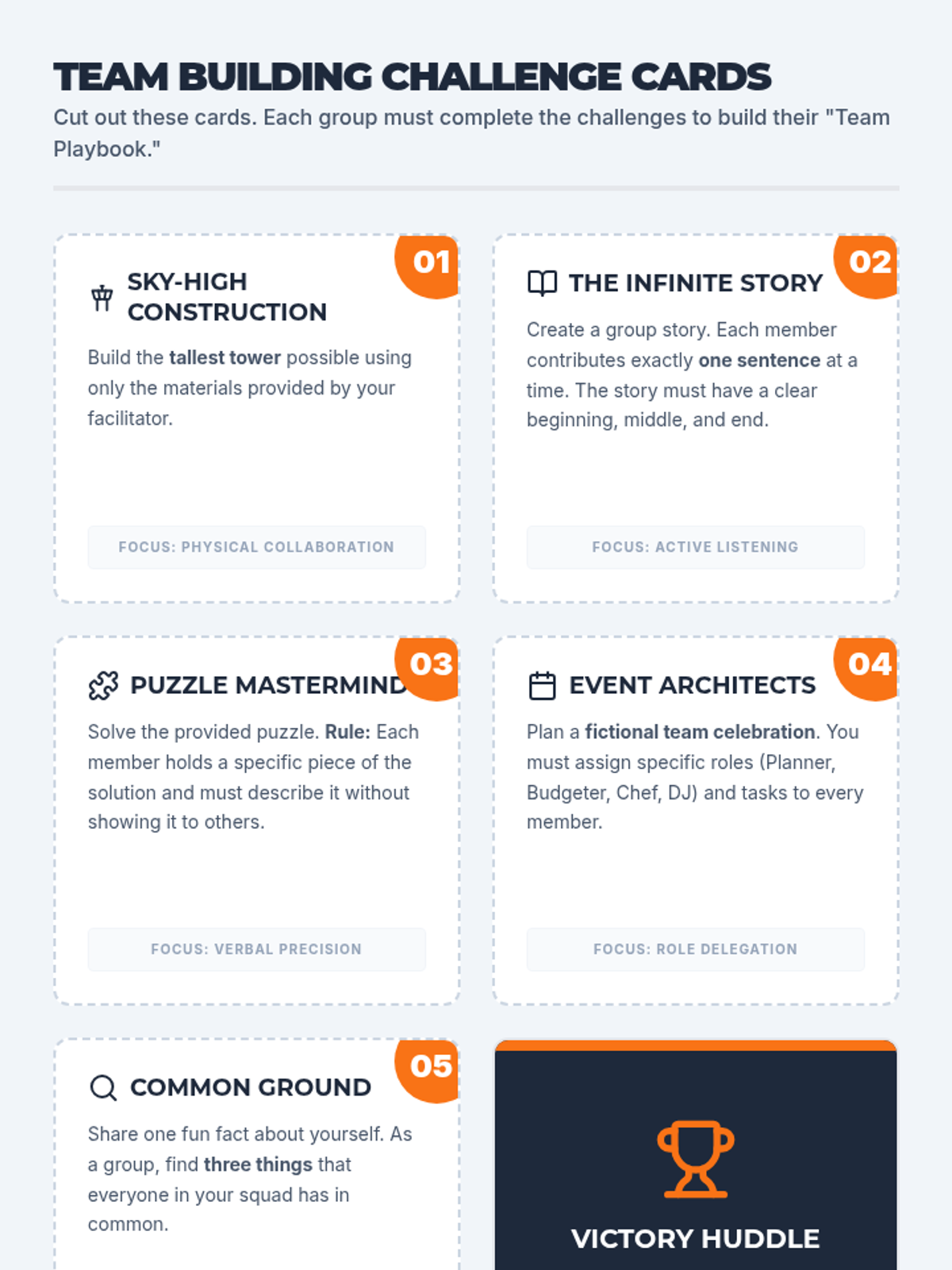
A set of six printable challenge cards for team-building activities, featuring a cohesive sports-strategy aesthetic with specific collaboration prompts.
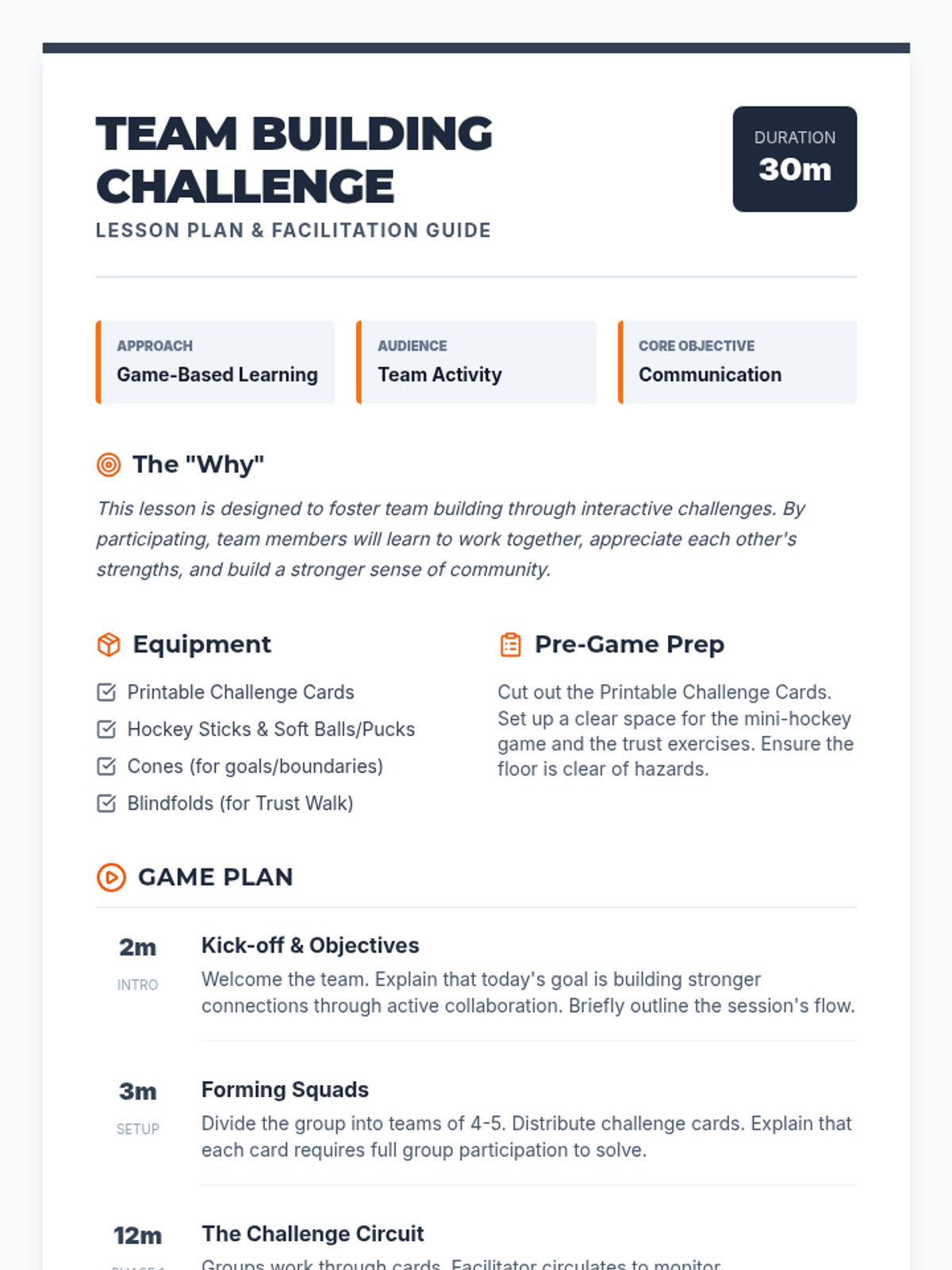
A comprehensive facilitator guide for a 30-minute team building session, including objectives, materials, and a structured instructional sequence with a sports-playbook aesthetic.
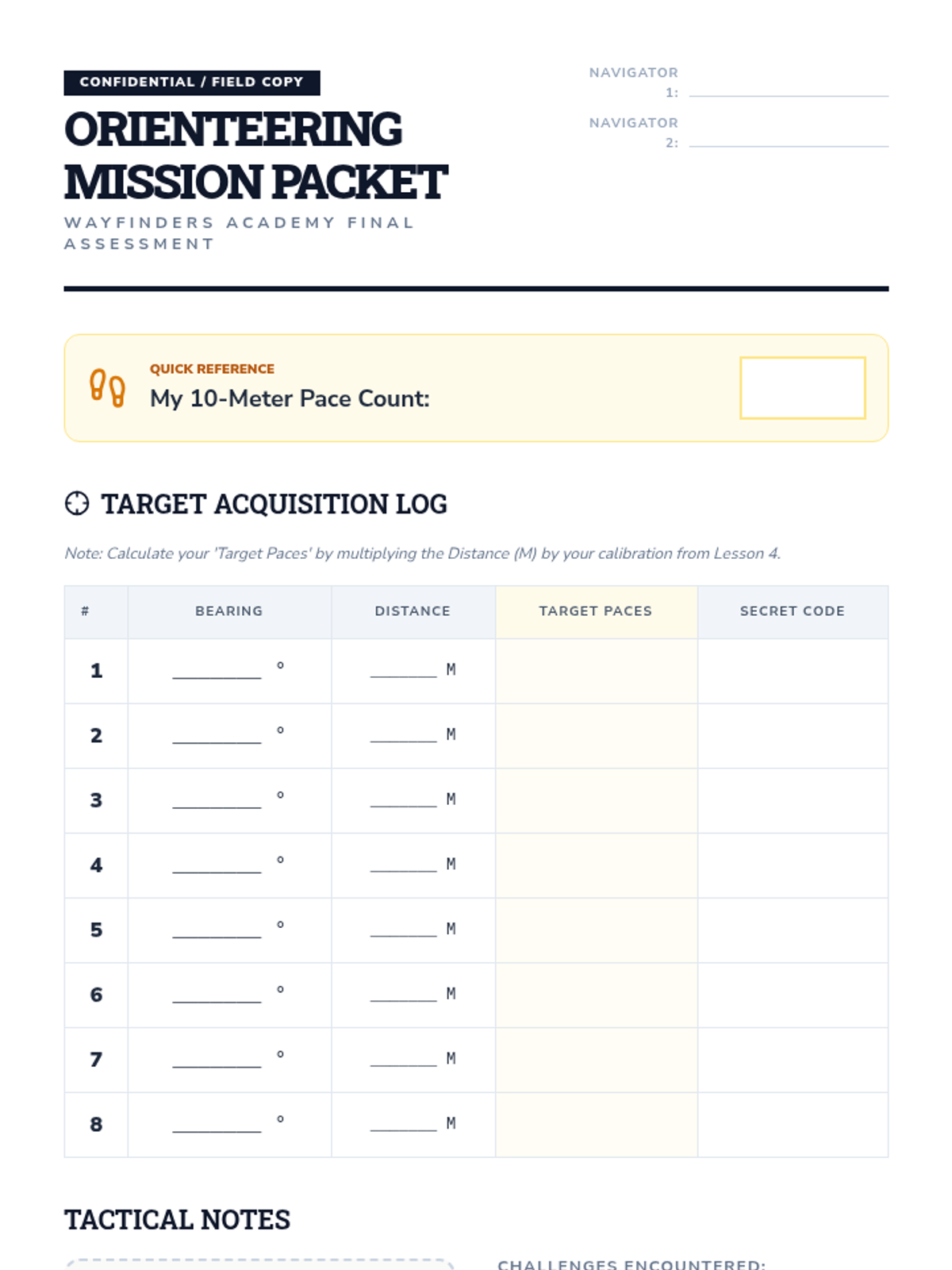
A comprehensive mission packet for the schoolyard orienteering challenge, including a data log for bearings, distances, and secret codes.
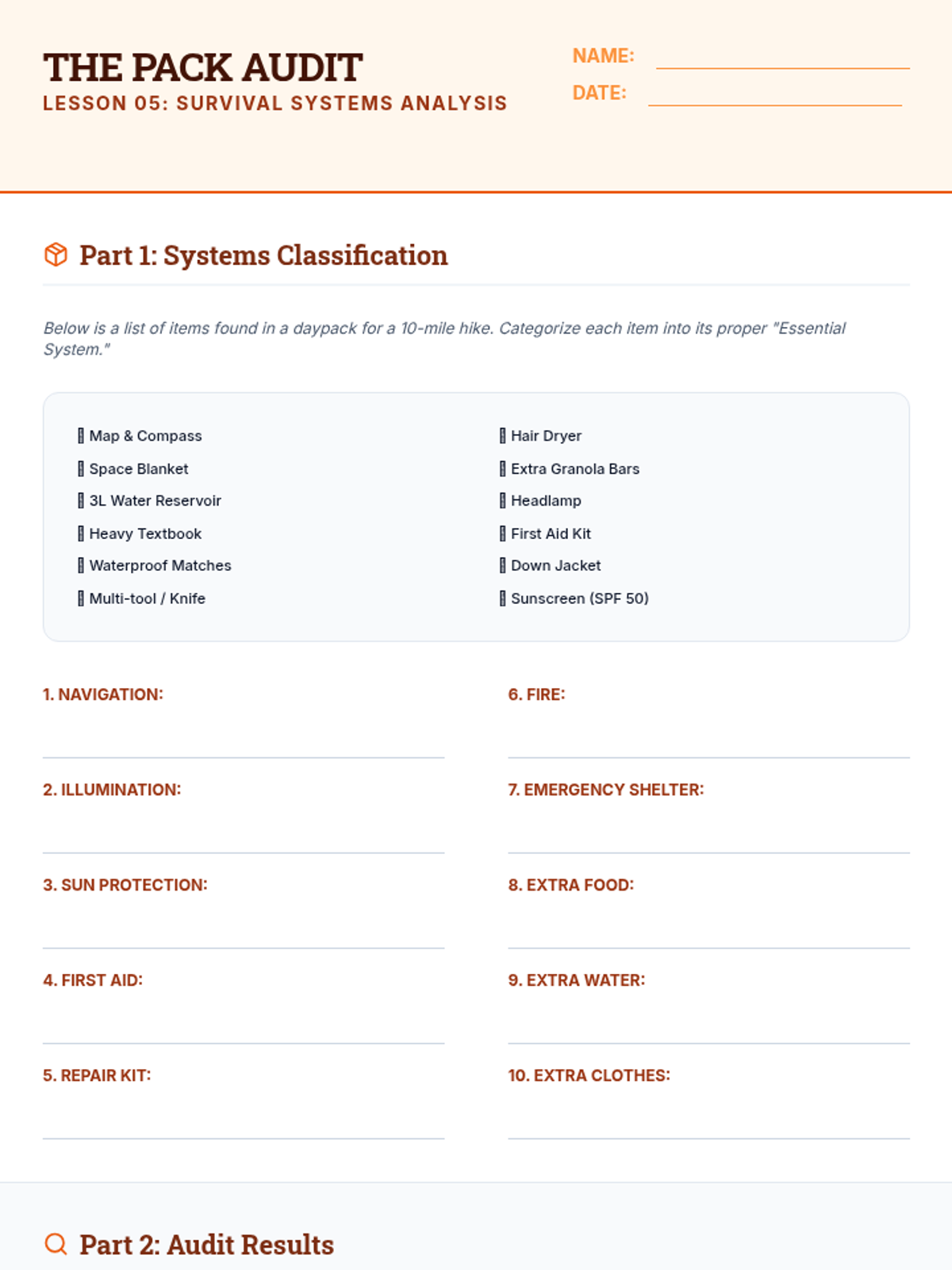
Student worksheet for auditing a backpack load-out based on the Ten Essentials and reflecting on Leave No Trace principles.