Daily hygiene, hydration, and sleep routines paired with strategies for disease and injury prevention. Builds skills in health decision-making, body awareness, and self-advocacy to support lifelong well-being.
A colorful and supportive slide deck for 3rd and 4th graders exploring physical changes, hygiene habits, and self-esteem. This version includes a high-contrast, simplified title slide for maximum compatibility.
A colorful and supportive slide deck for 3rd and 4th graders exploring physical changes, hygiene habits, and self-esteem through a social-emotional lens. Now includes a Learning Objectives slide and a refreshed title slide.
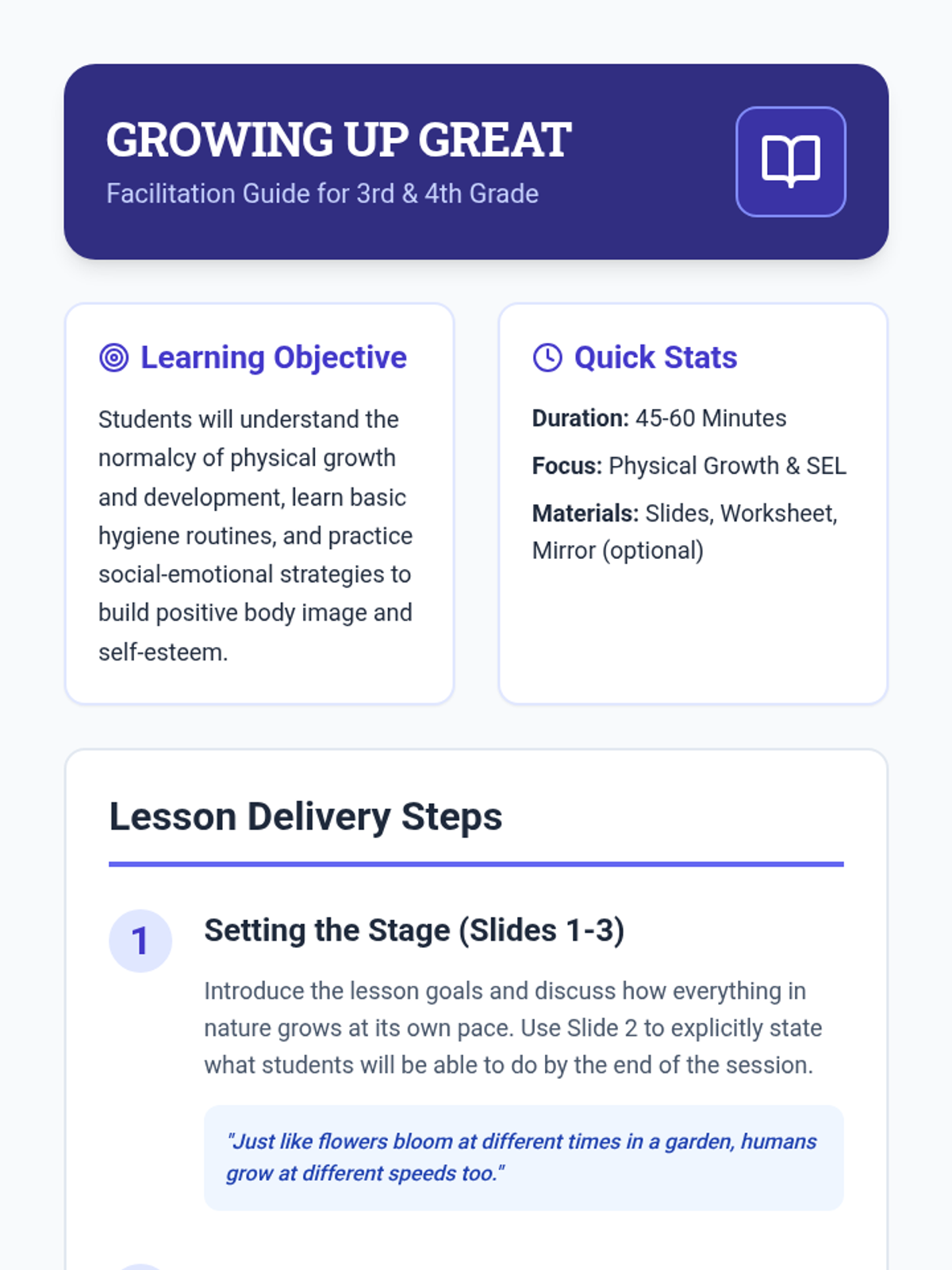
A teacher facilitation guide for the Growing Up Great lesson, including discussion prompts and advice for handling sensitive topics. Updated to match the slide sequence.
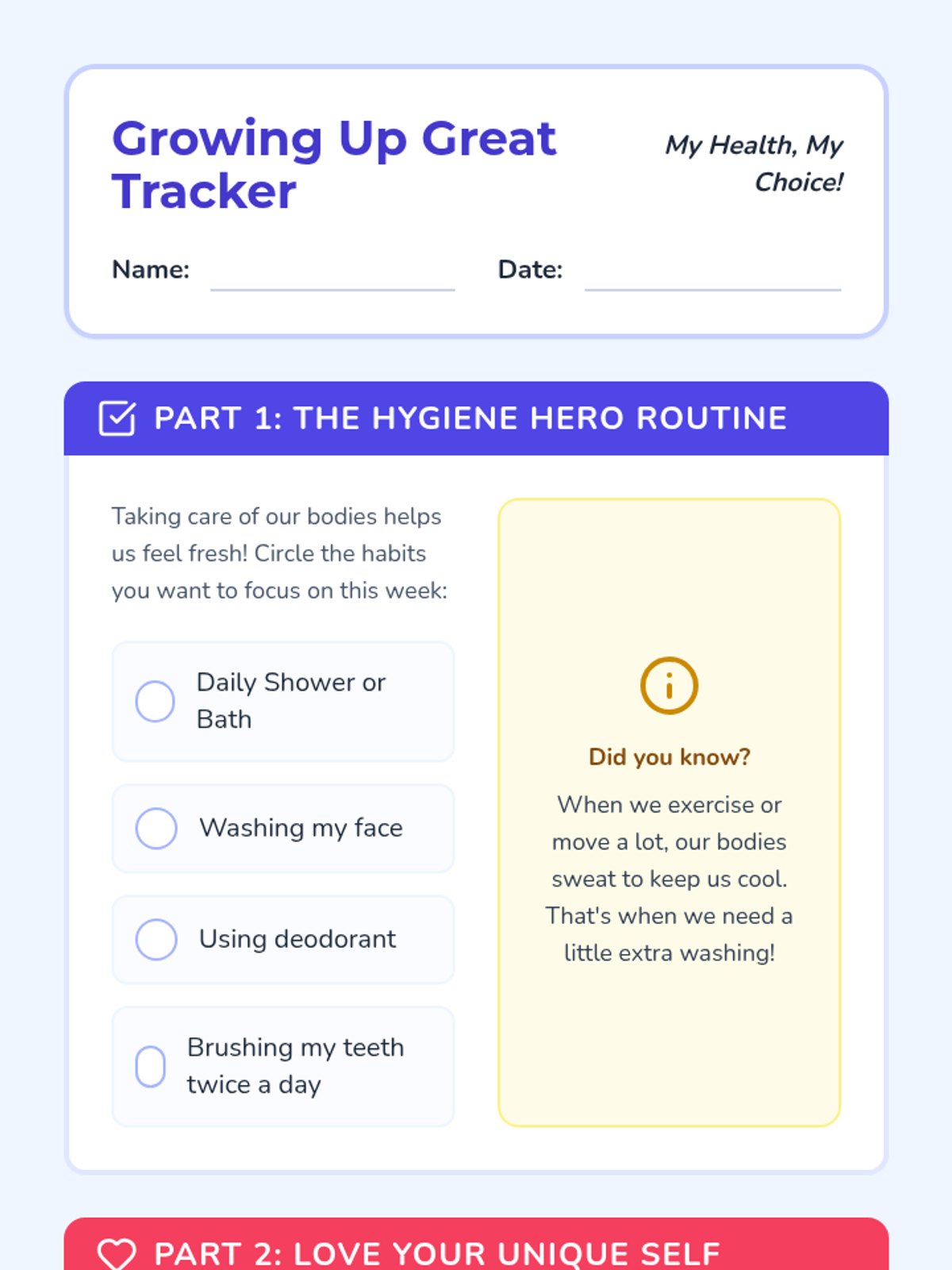
A student worksheet focusing on hygiene routines and positive body image reflections for 3rd and 4th graders.
A colorful and supportive slide deck for 3rd and 4th graders exploring physical changes, hygiene habits, and self-esteem through a social-emotional lens. Now includes a Learning Objectives slide.
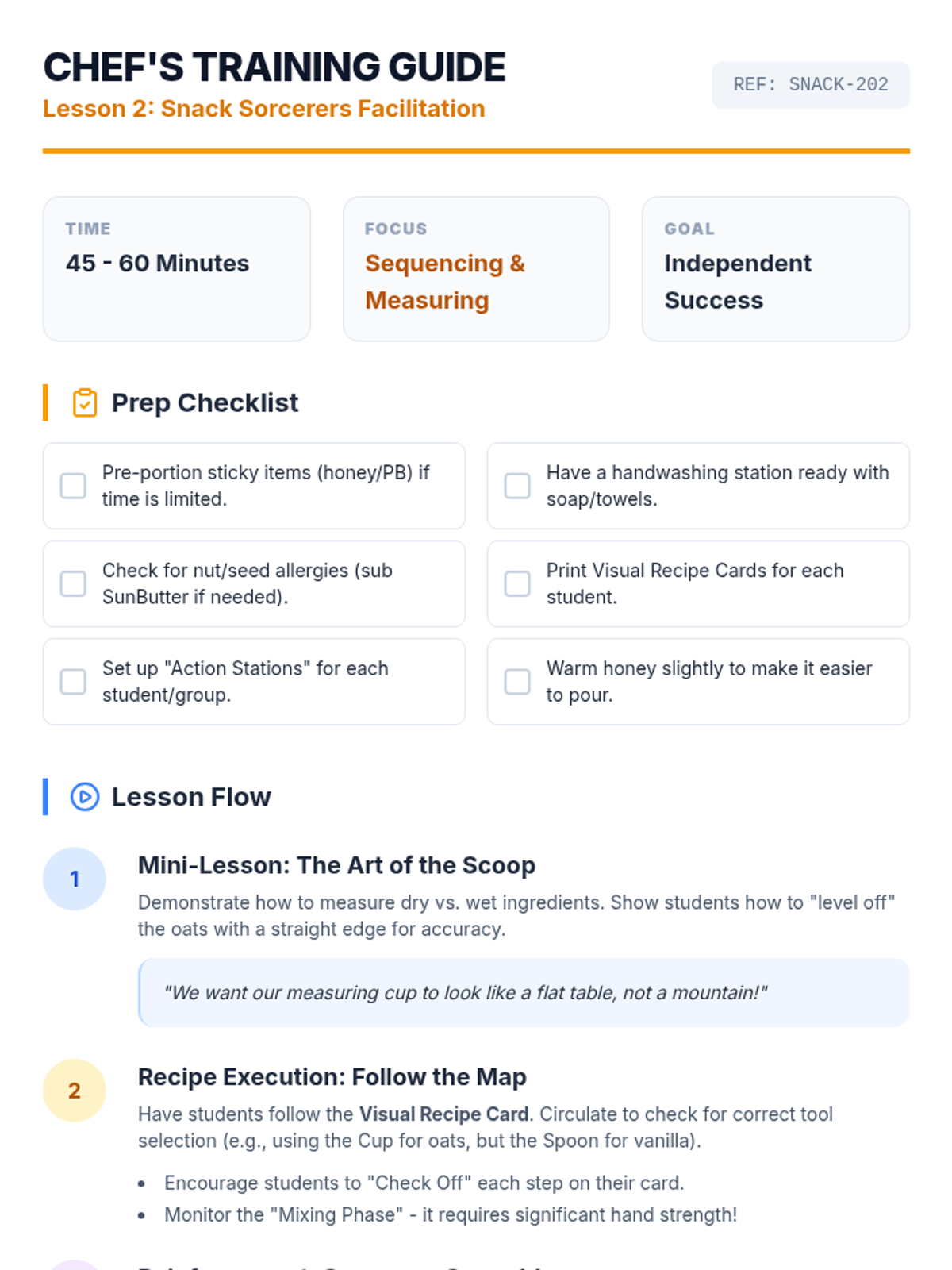
A teacher-facing guide for the Snack Sorcerers lesson. Includes a prep checklist, facilitation steps for the visual recipe, and strategies for differentiation and scaffolding.
A presentation designed to introduce elementary students to the core concepts of kitchen safety, hygiene, and tool identification. Features large text, high-contrast visuals, and simple rules.
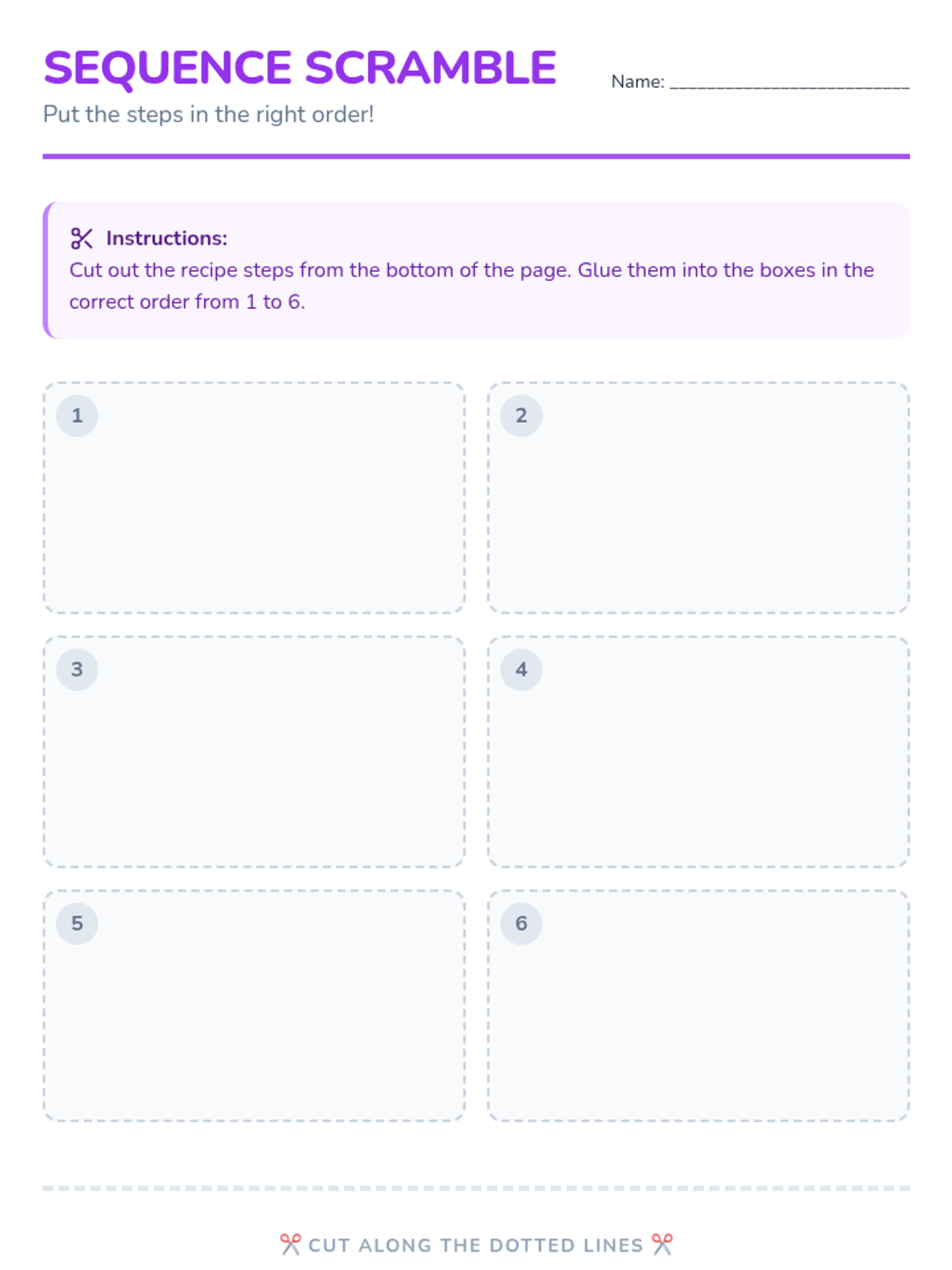
A cut-and-paste sequencing activity where students arrange the steps of the Spark Plug Energy Bites recipe in the correct order. Focuses on sequencing skills and memory recall from the visual recipe.
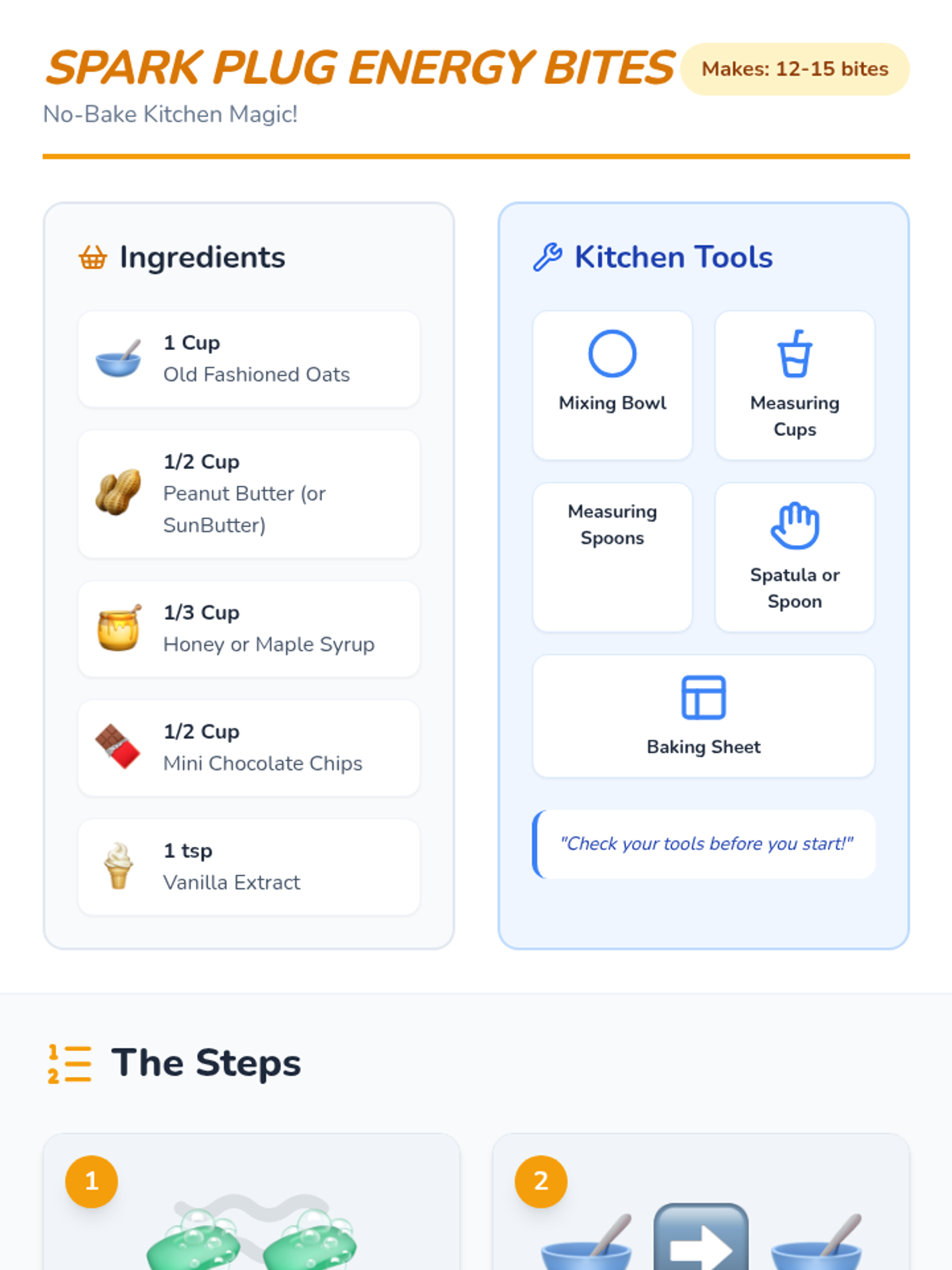
A comprehensive visual recipe for Spark Plug Energy Bites, designed for elementary students. It features clear ingredient lists, tool requirements, and an 8-step visual instruction guide with icons and simplified text.
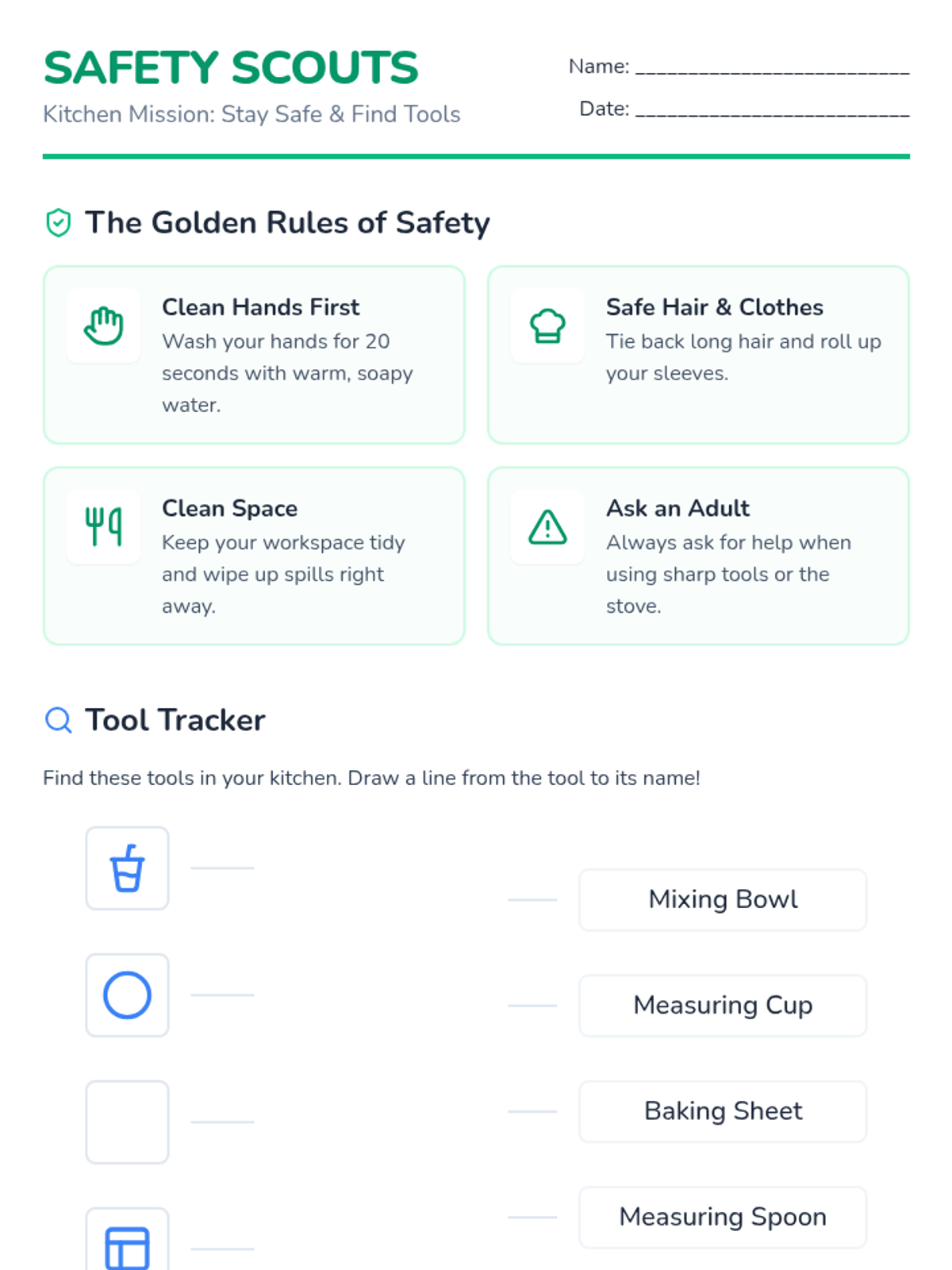
A two-page worksheet for elementary students focusing on kitchen safety rules and tool identification. It includes matching activities and safety scenario analysis.
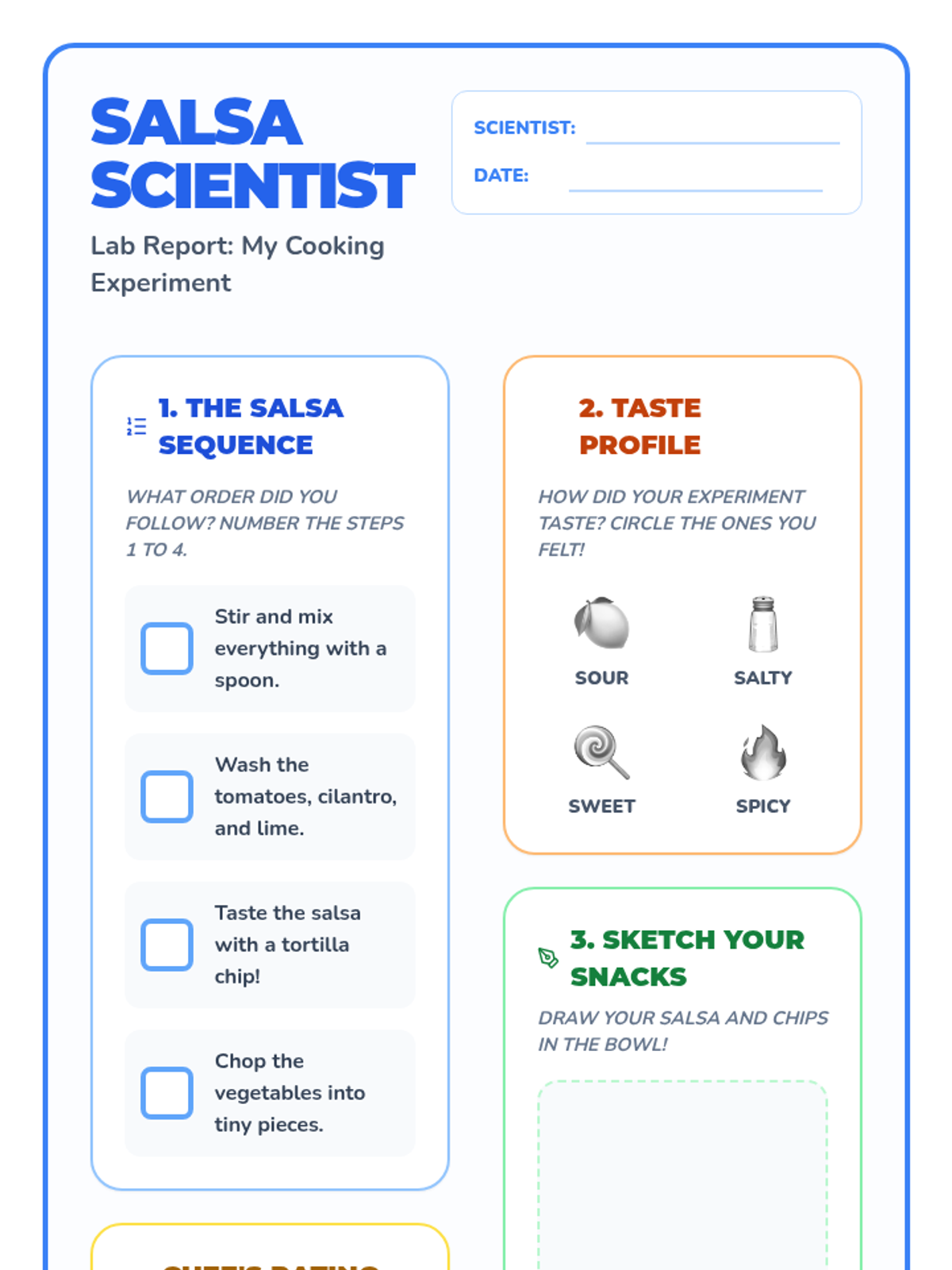
A student reflection worksheet for the Salsa Smash activity, focusing on sequencing steps and reflecting on the sensory experience.
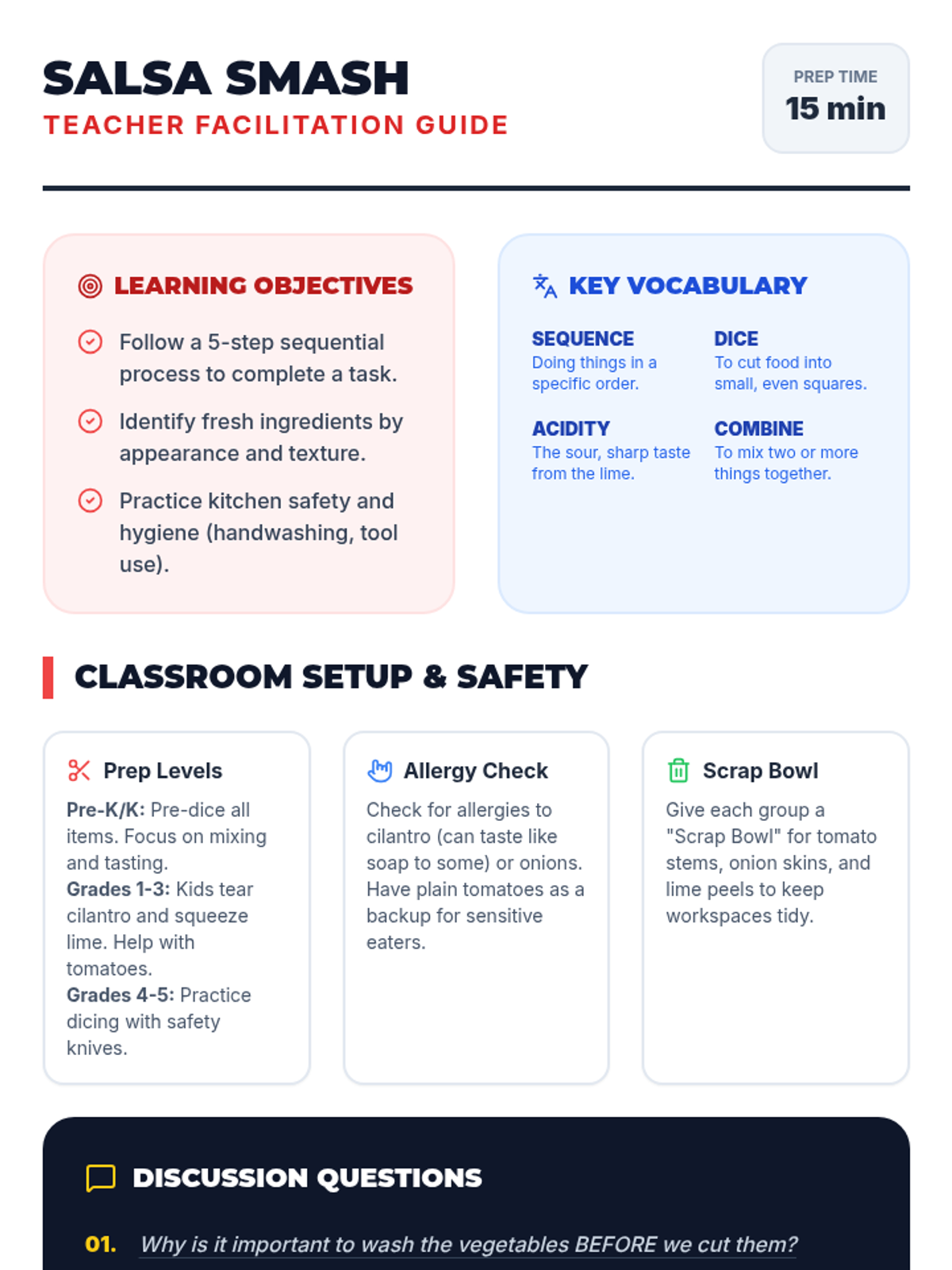
A comprehensive teacher facilitation guide with prep tips, safety considerations, vocabulary, and discussion questions for the Salsa Smash activity.
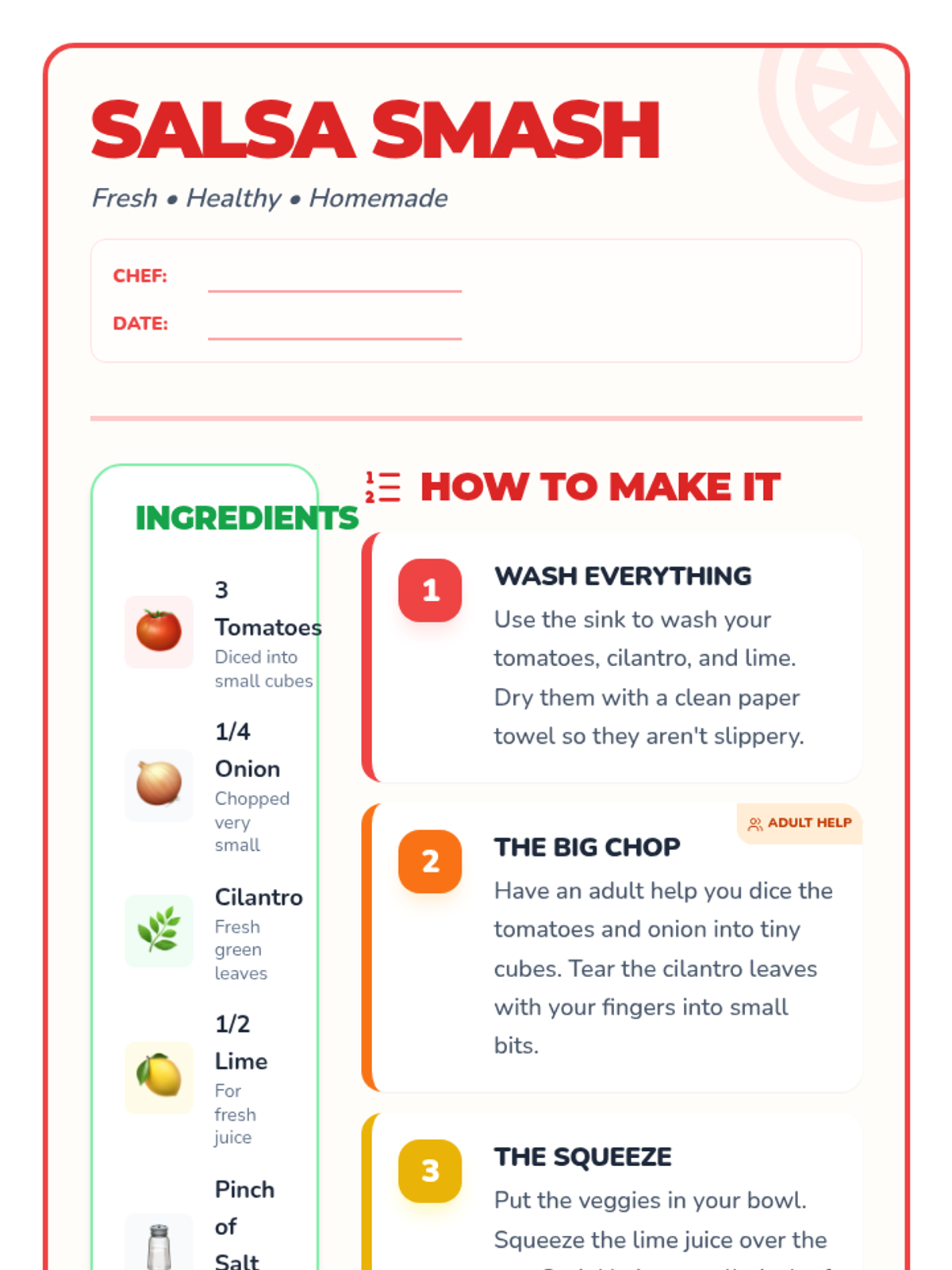
A vibrant, visual-heavy recipe card for elementary students to follow step-by-step instructions to make fresh salsa.
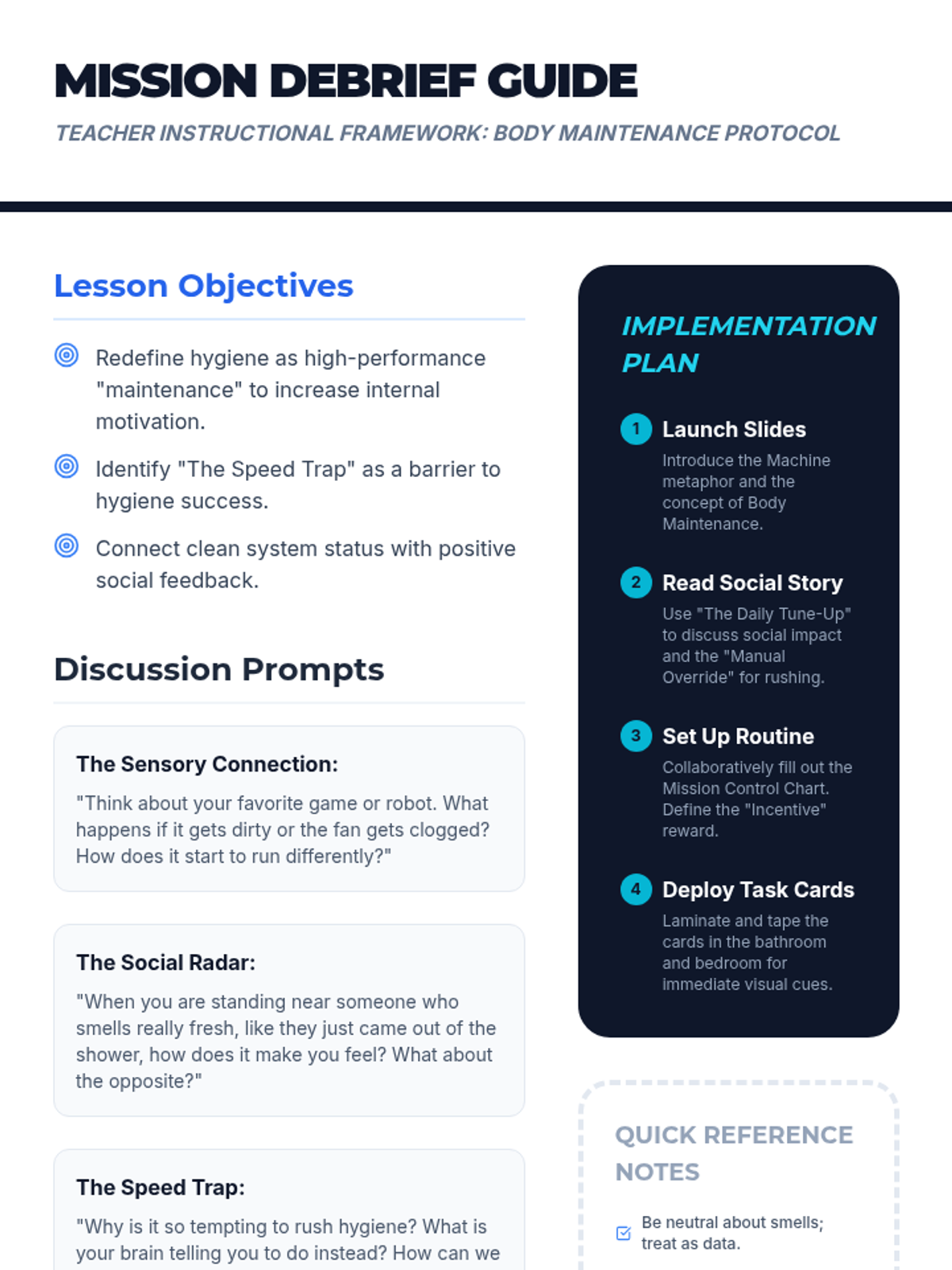
A comprehensive teacher guide for the hygiene lesson, including objectives, discussion prompts, implementation steps, and specific strategies for addressing impulsivity in a 10-year-old boy.
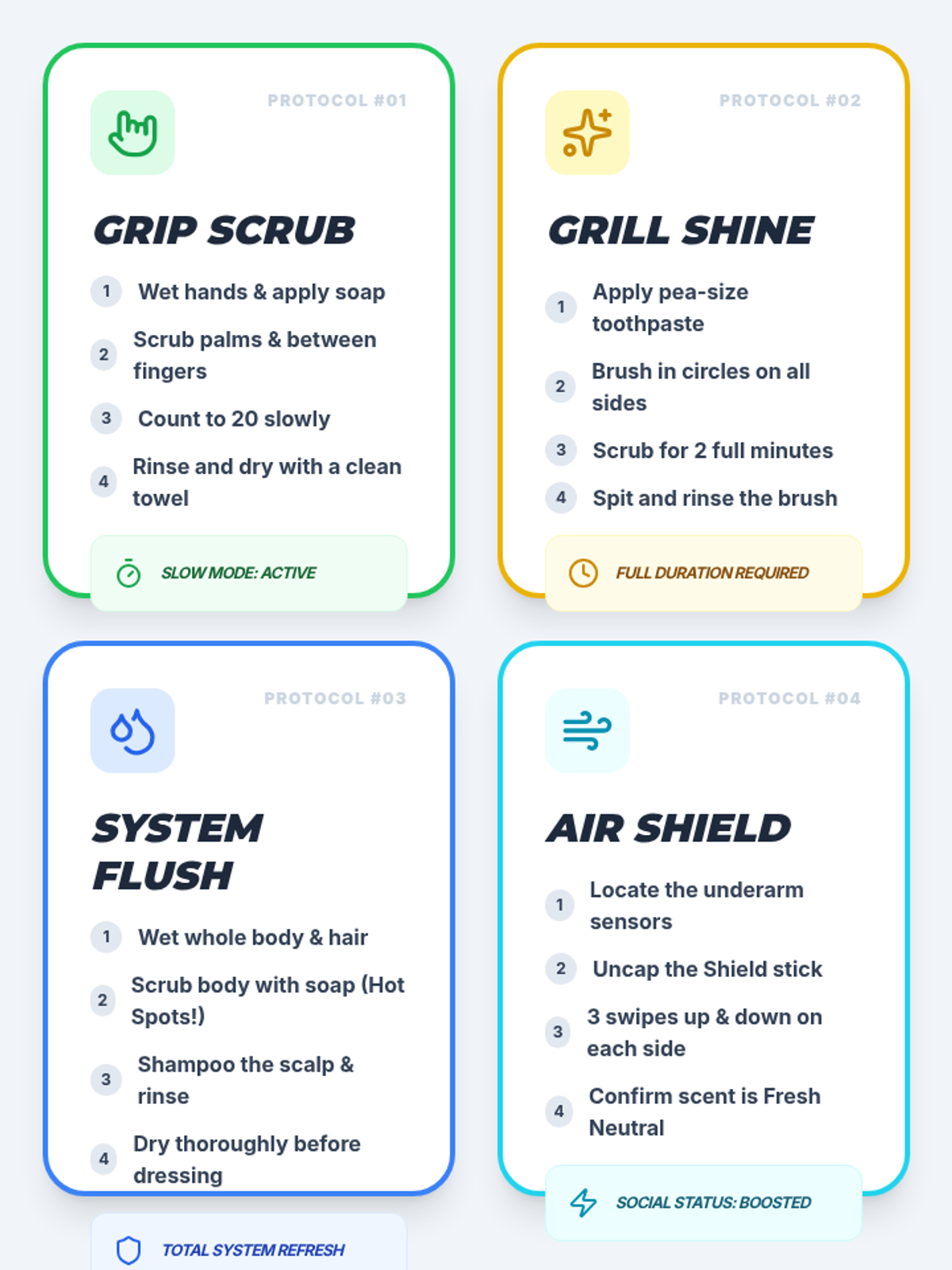
Visual task cards for hygiene routines (hand washing, teeth brushing, showering, deodorant, face washing, hair care, clean clothes, and nail care). Each card follows the "Machine Maintenance" theme with clear, bold steps designed to cut through impulsivity and ensure completeness.
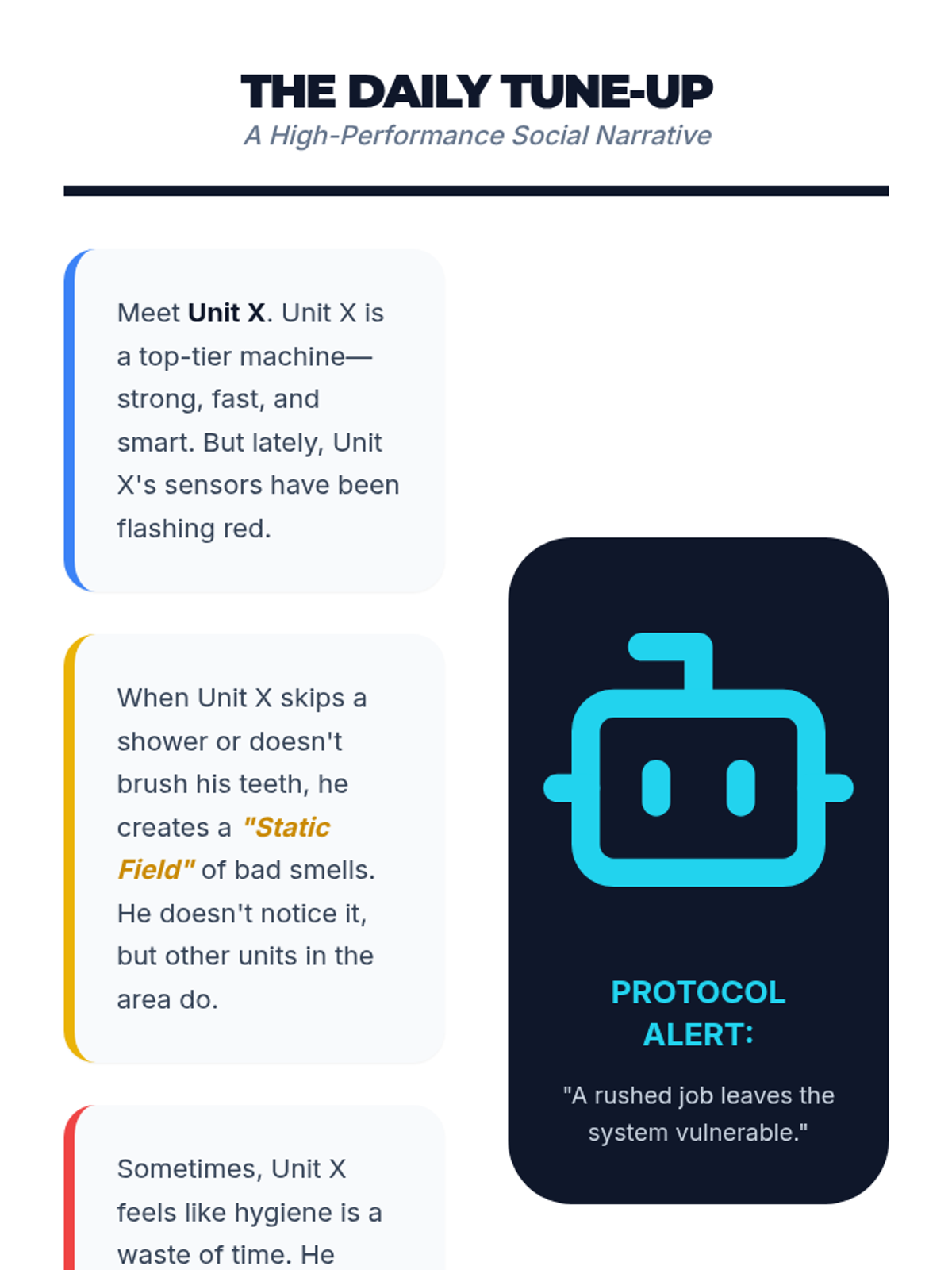
A social narrative presented as a "Tactical Field Guide" for a 10-year-old. It uses machine metaphors to explain the social impact of hygiene and provides "manual override" strategies to combat impulsivity.
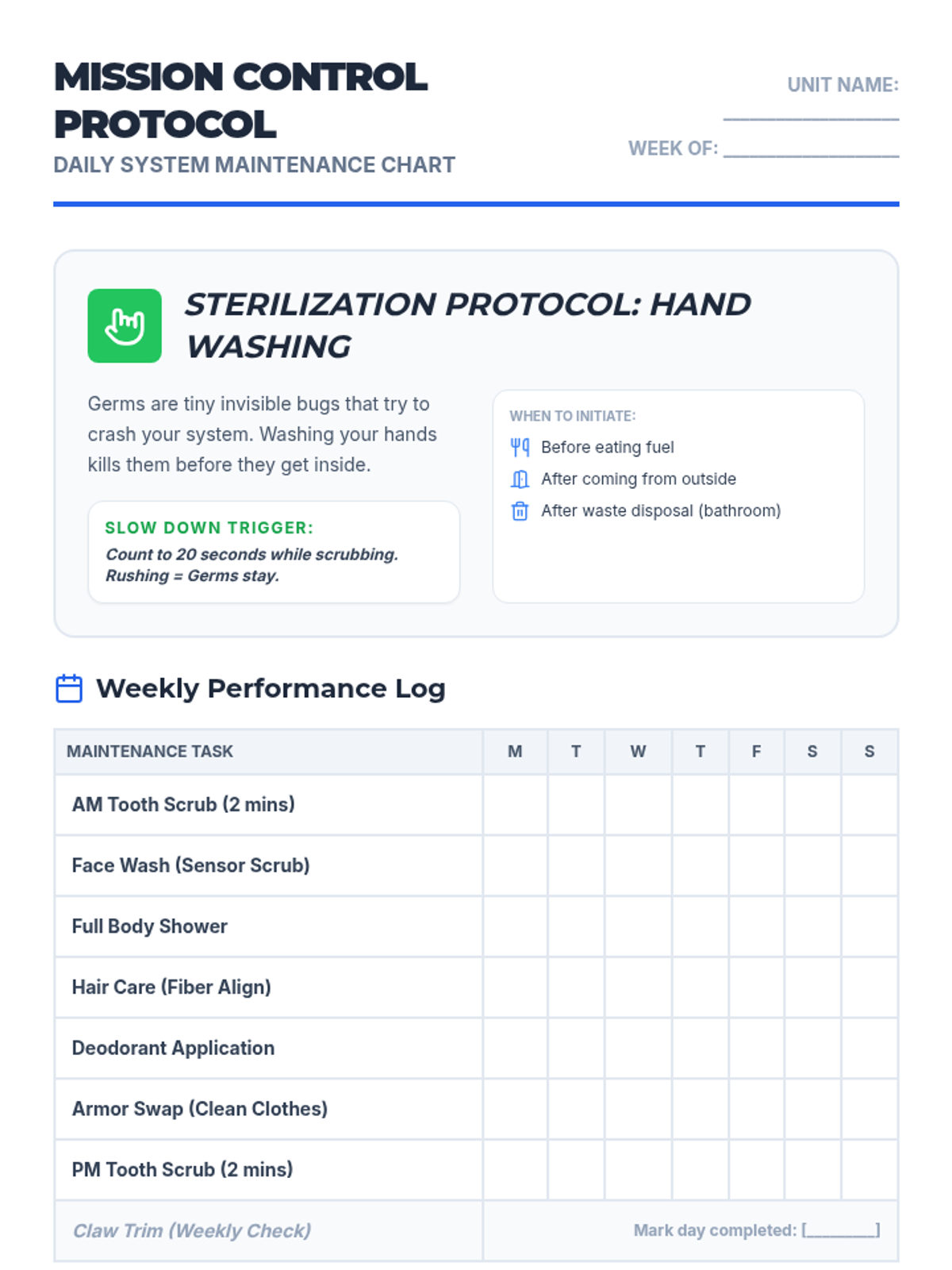
A technical "Maintenance Protocol" document featuring an expanded weekly hygiene tracker and detailed system requirements. Now includes face washing, hair care, and weekly nail care to match the task cards.
An updated, high-energy slide deck that now includes the full range of hygiene protocols (face washing, hair care, clean clothes, and nail care) to match the expanded task cards. Maintains the machine theme and "Speed Trap" impulsivity metaphor.
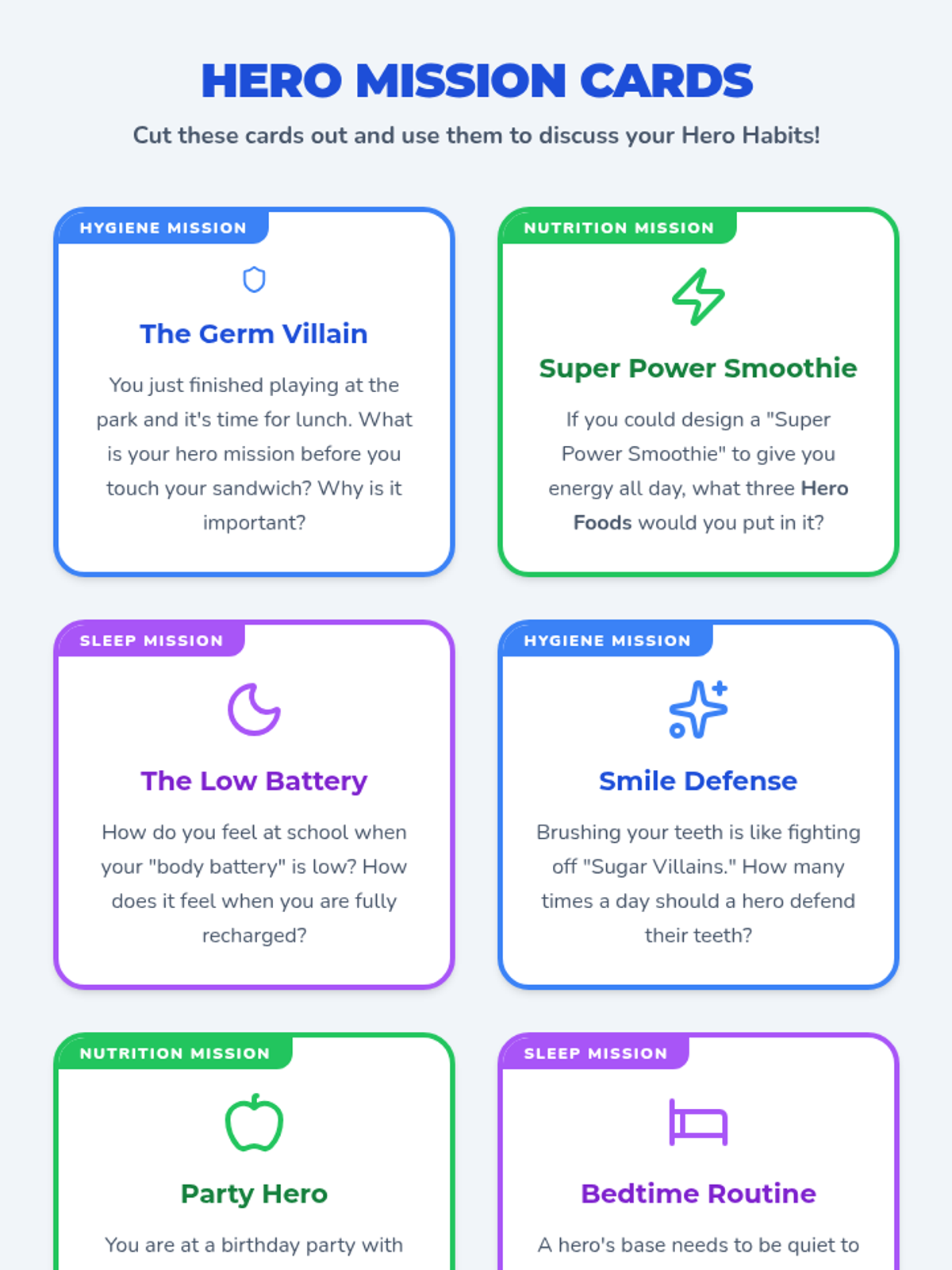
A set of 6 printable discussion cards (Hero Mission Cards) focusing on hygiene, nutrition, and sleep with engaging scenarios for student discussion.
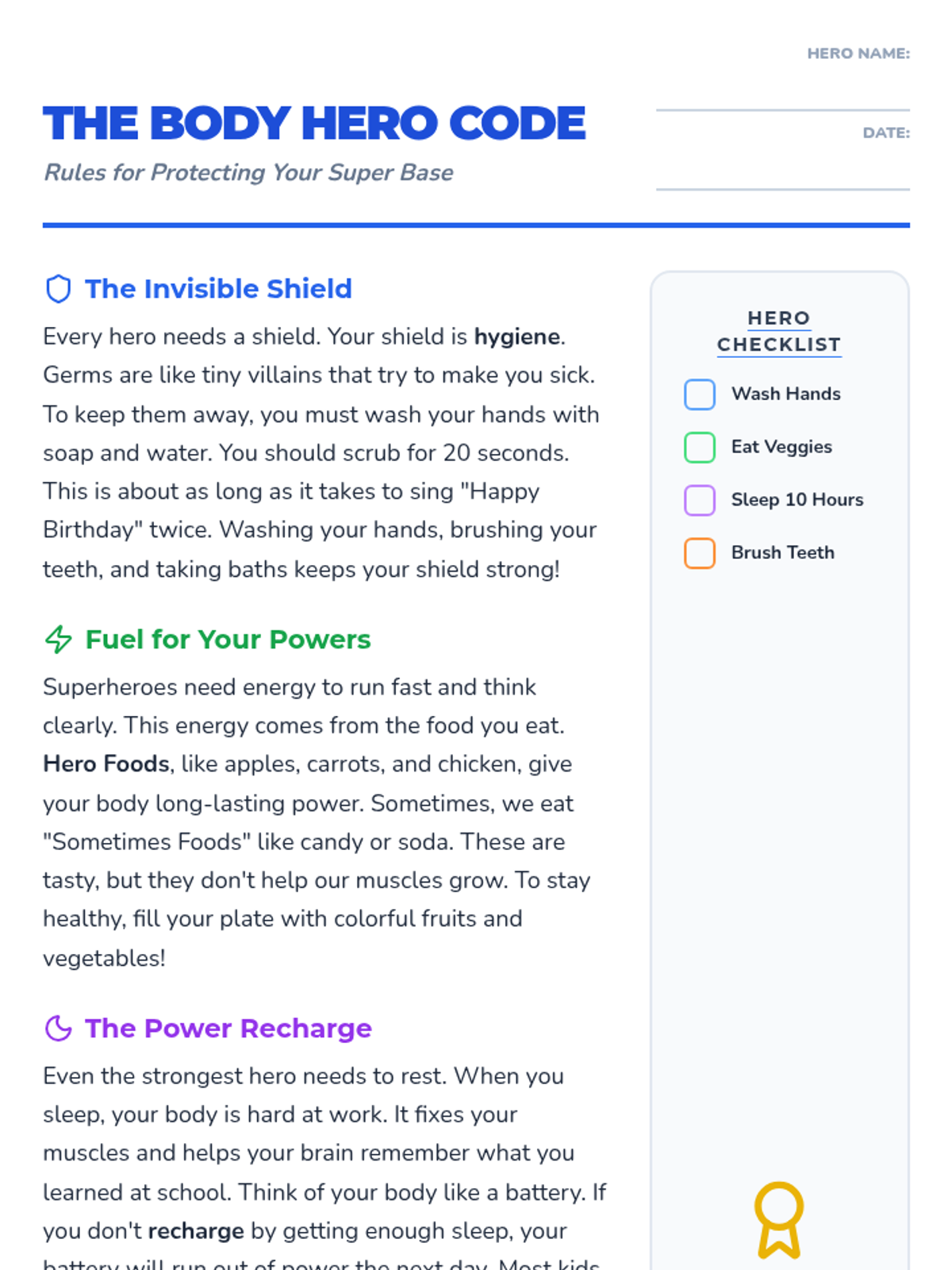
A reading passage titled 'The Body Hero Code' that explains hygiene, nutrition, and sleep using a superhero metaphor, followed by comprehension questions.
Two sun safety coloring sheets for younger students (K-3) featuring desert scenes, sunscreen tools, and health tips like hydration and seeking shade.
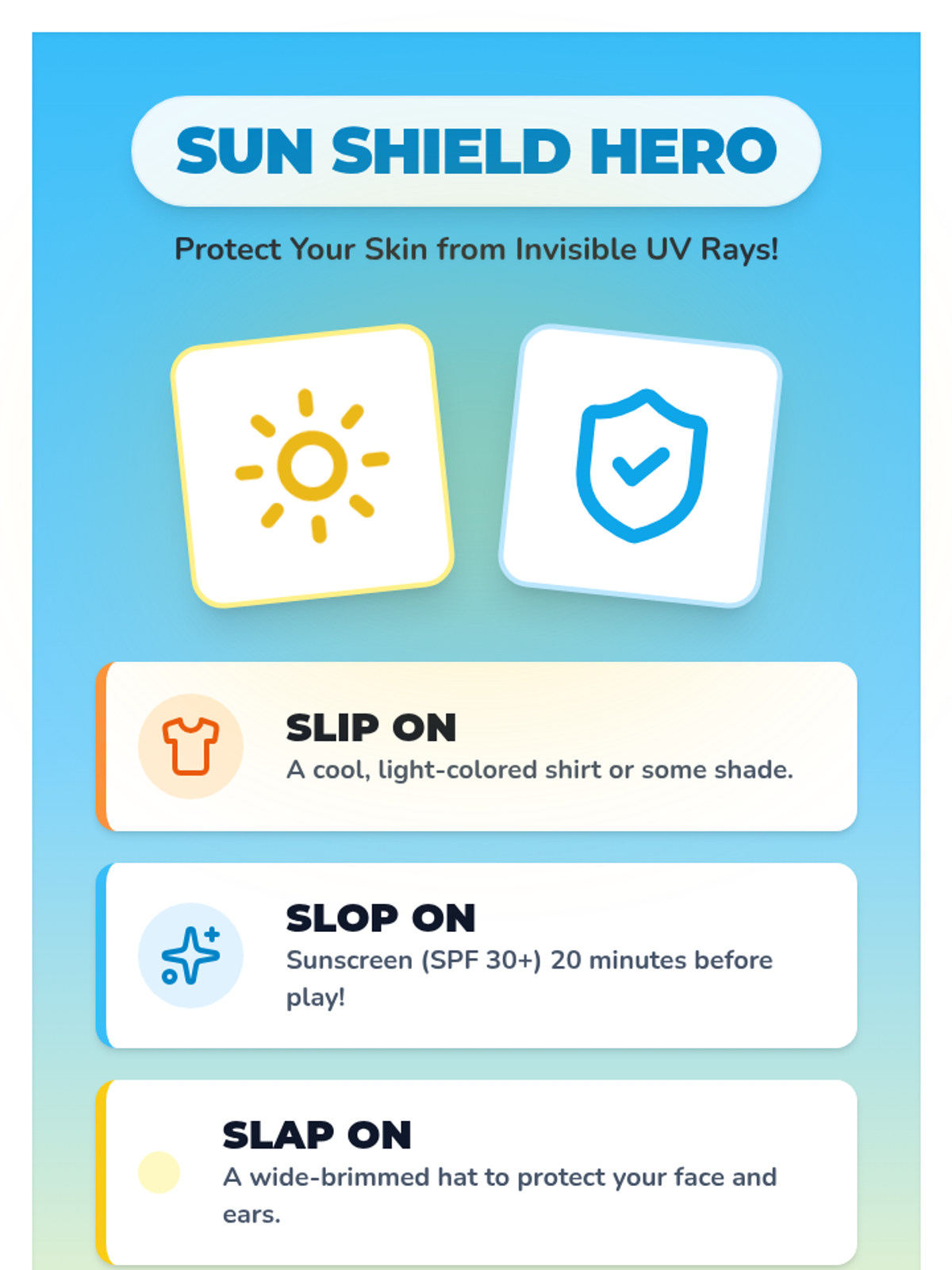
A vibrant, educational poster for the classroom emphasizing the 'Slip, Slop, Slap' rule for sun safety and the importance of sunscreen application.
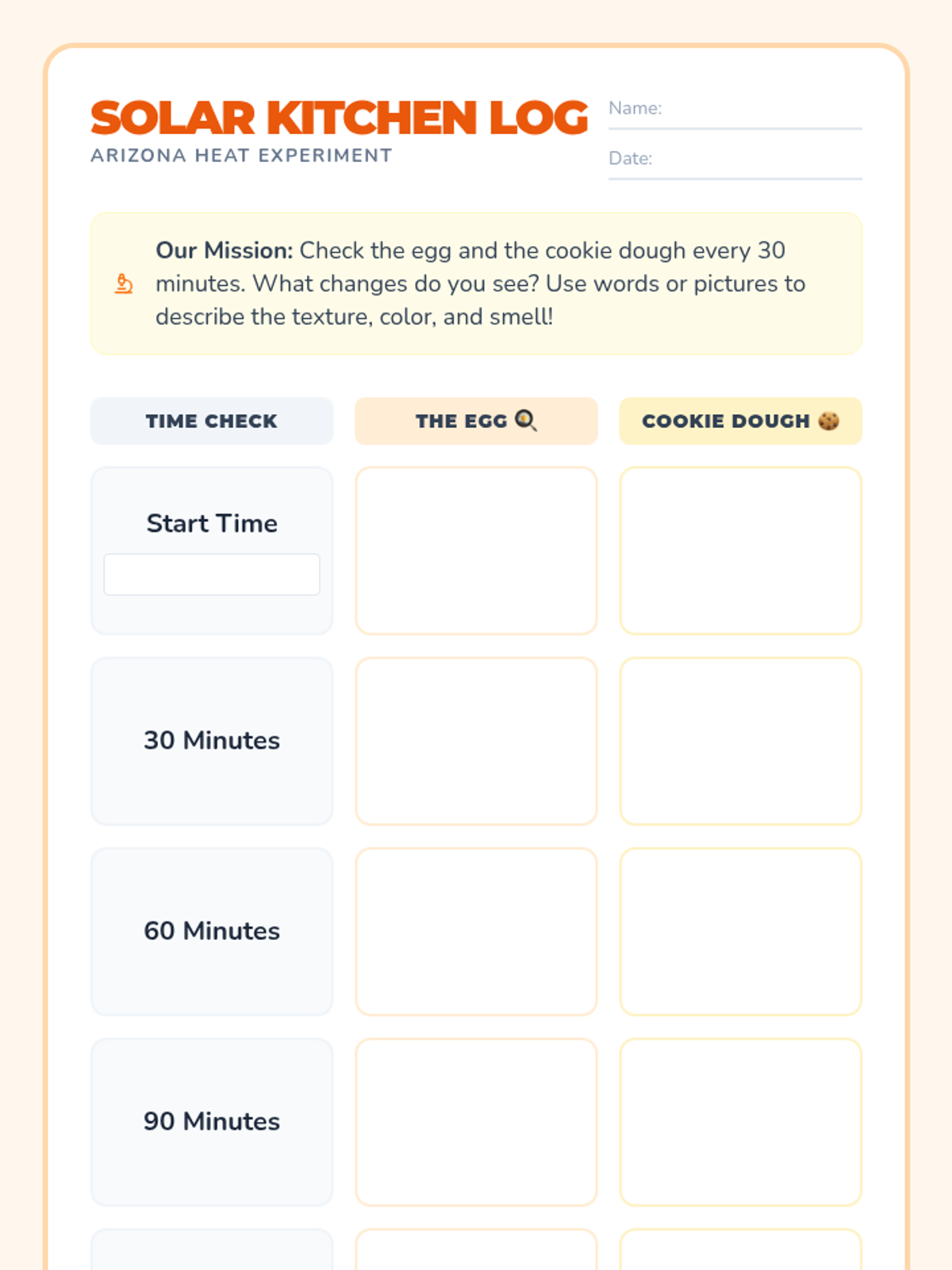
An observation log for the solar kitchen experiment where students chart changes in an egg and cookie dough every 30 minutes for two hours, including space for notes and drawings.
A visually engaging 6-slide presentation covering the 4-day Desert Heat unit, including comparisons of AZ spring weather, hydration tips, sun safety rules, the solar kitchen experiment introduction, and cooling strategies.
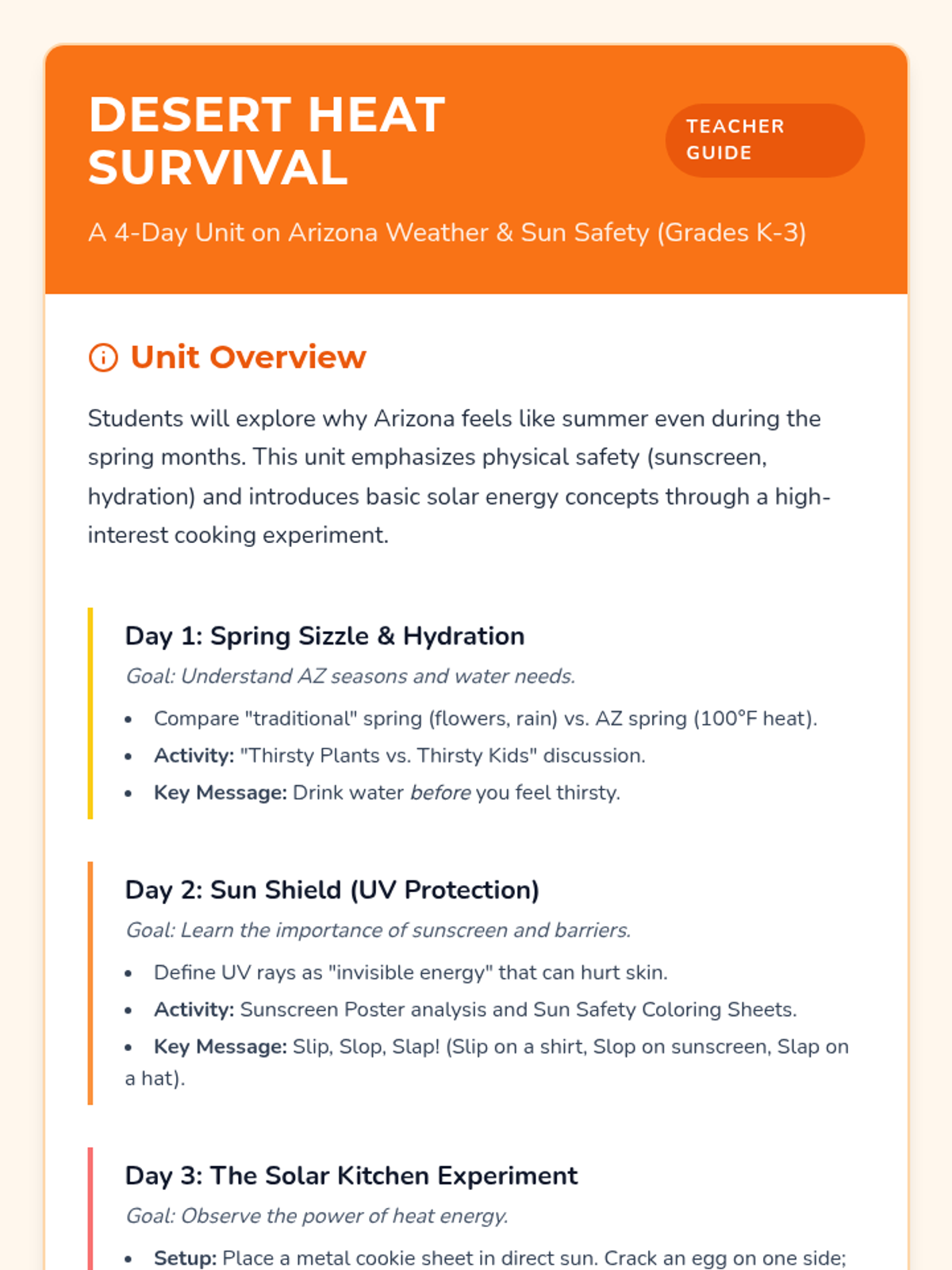
A comprehensive teacher guide outlining the four-day unit on Arizona weather, sun safety, and the solar kitchen experiment, including daily goals and a preparation checklist.
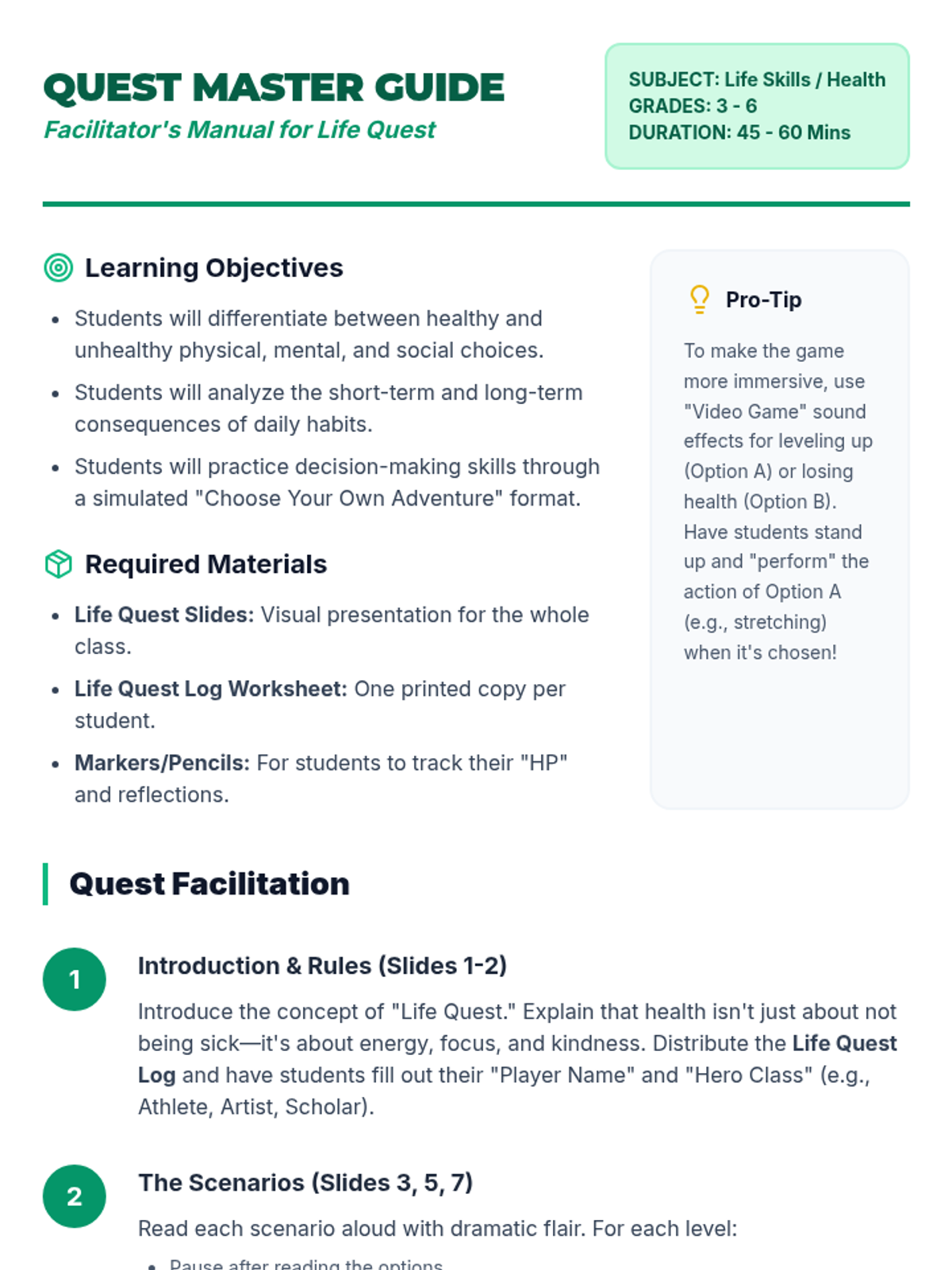
A comprehensive facilitator's guide providing learning objectives, facilitation steps, and deep-dive discussion prompts for the Life Quest lesson.
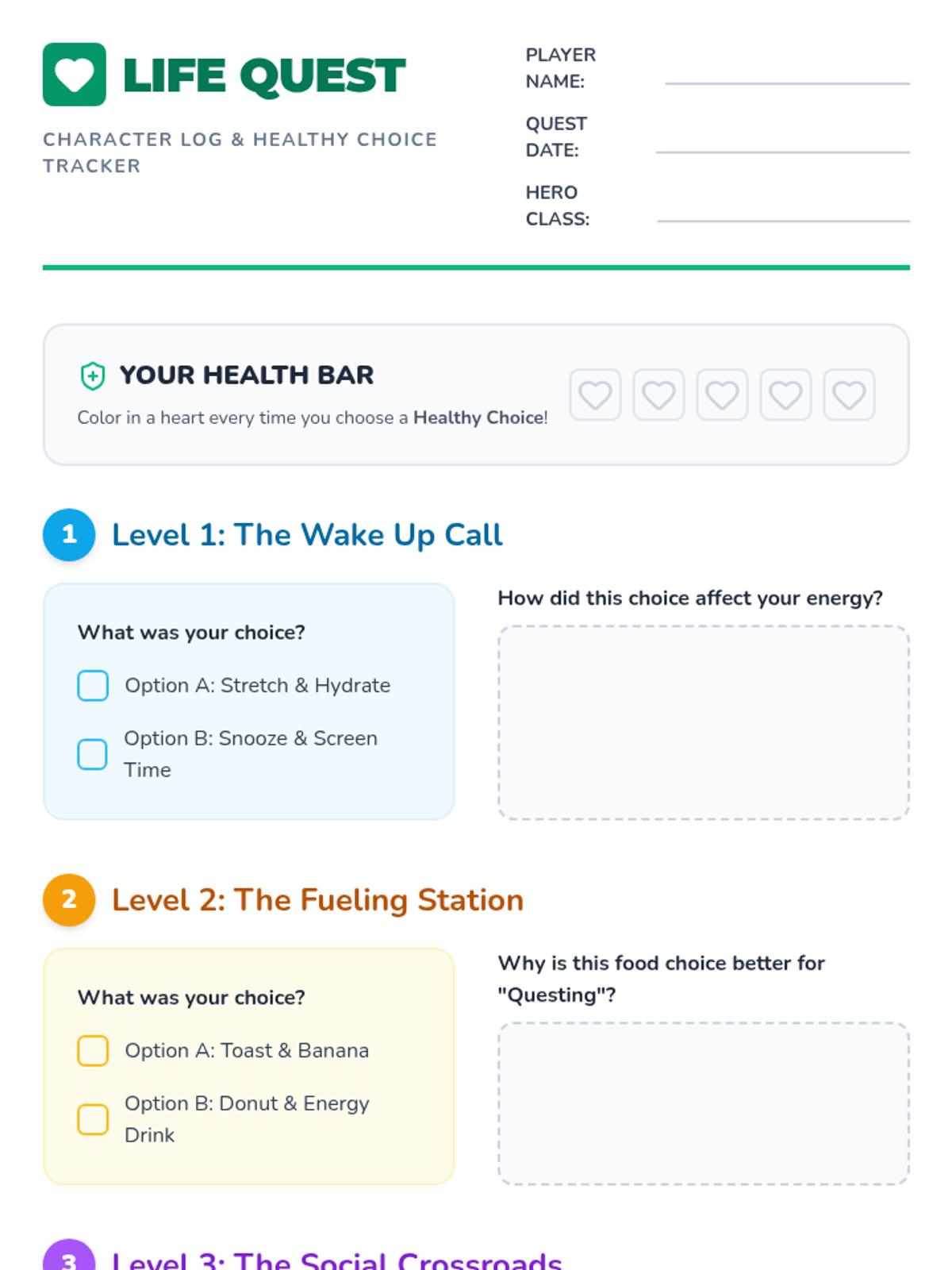
A companion worksheet for the Life Quest presentation where students record their choices, track their health points (HP), and reflect on real-world healthy decision-making.
An interactive slide deck themed like a video game that introduces students to making healthy choices through scenarios and guided discussion.
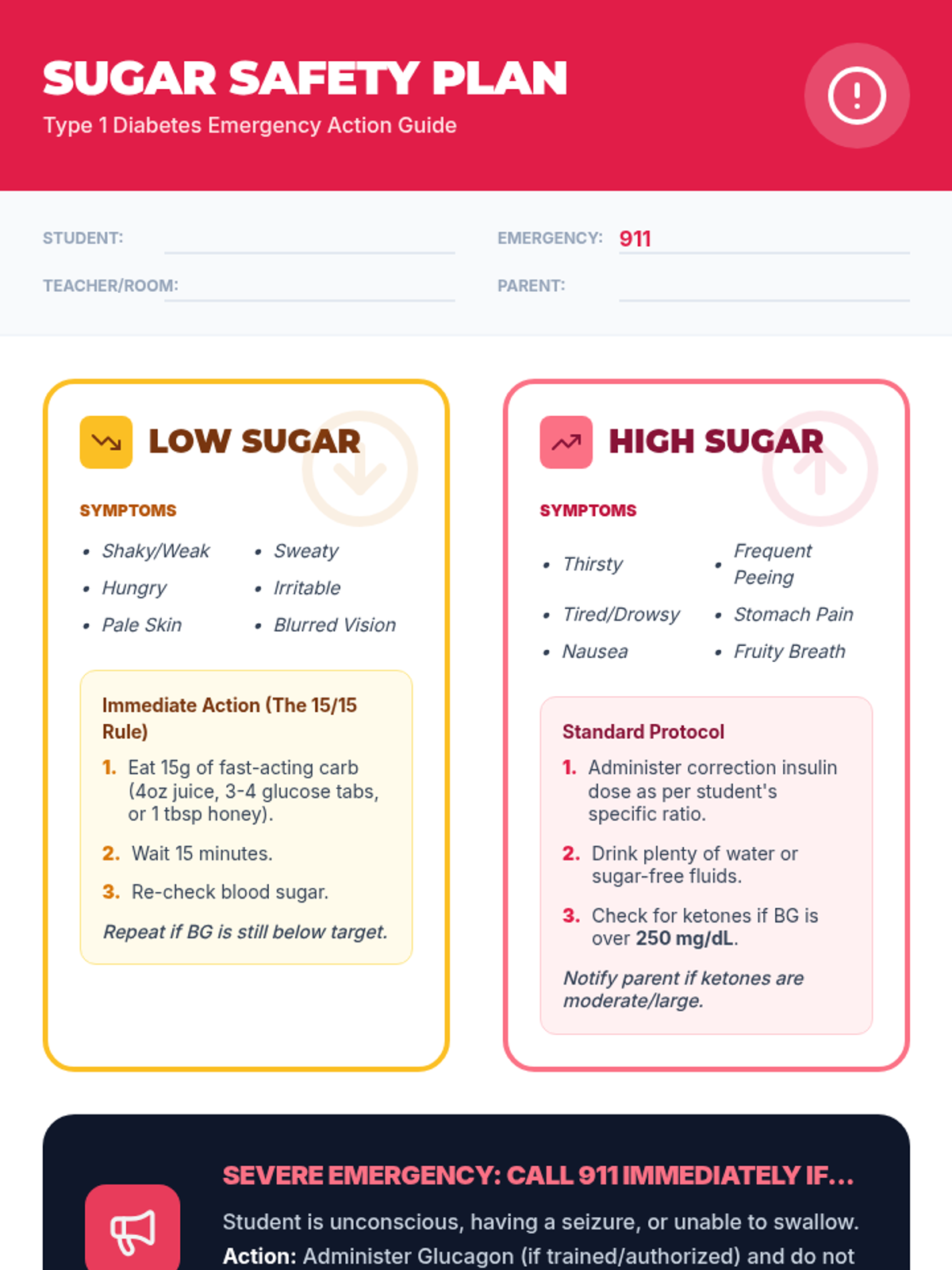
An emergency medical protocol for Type 1 Diabetes, detailing symptoms and immediate actions for hypoglycemia and hyperglycemia, designed for easy reference by school staff and caregivers.
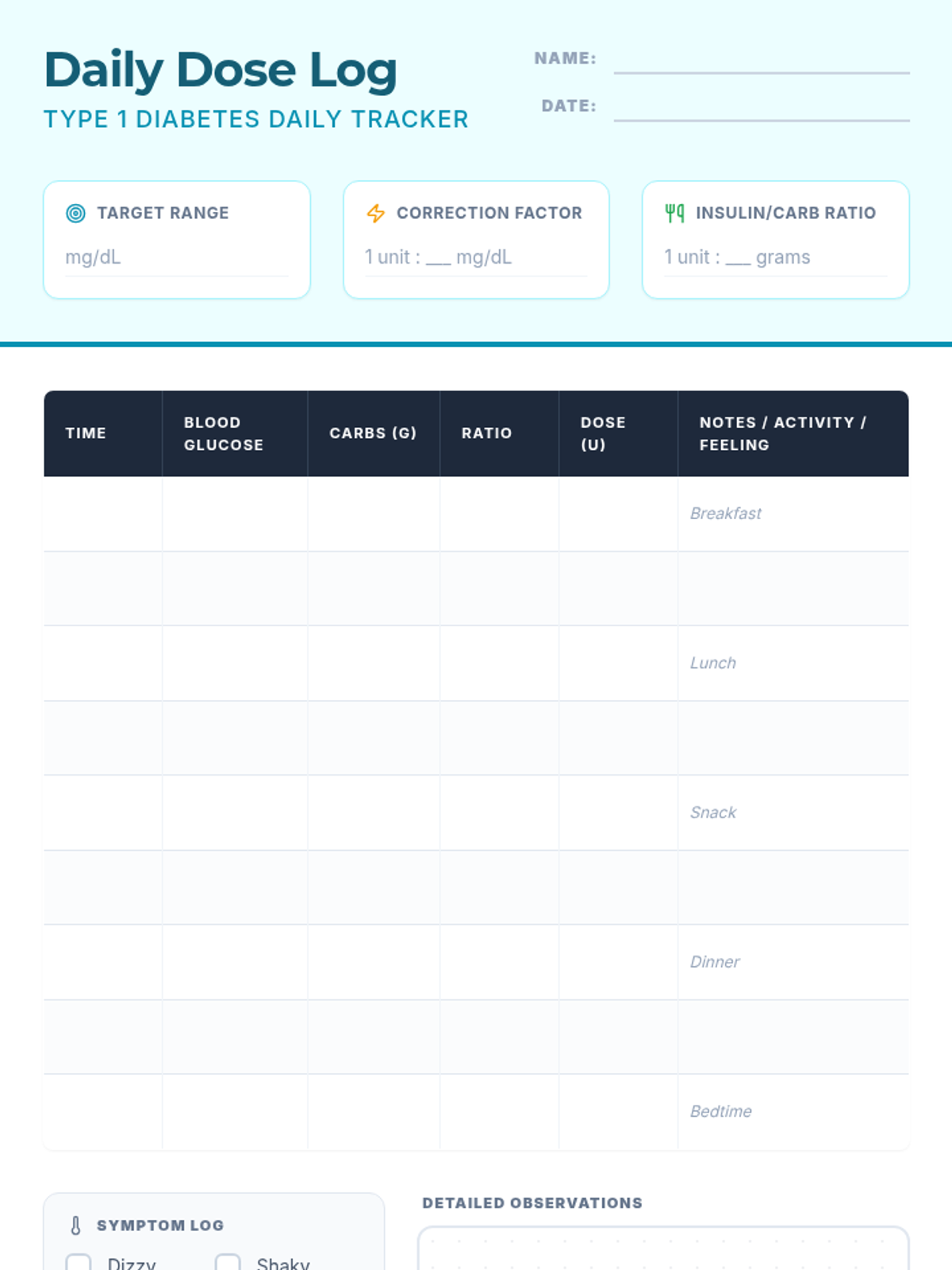
A refined daily documentation sheet for Type 1 Diabetes with expanded row heights for easier handwriting, a dedicated symptom log, and clearly defined tracking for blood glucose, carbs, and insulin.
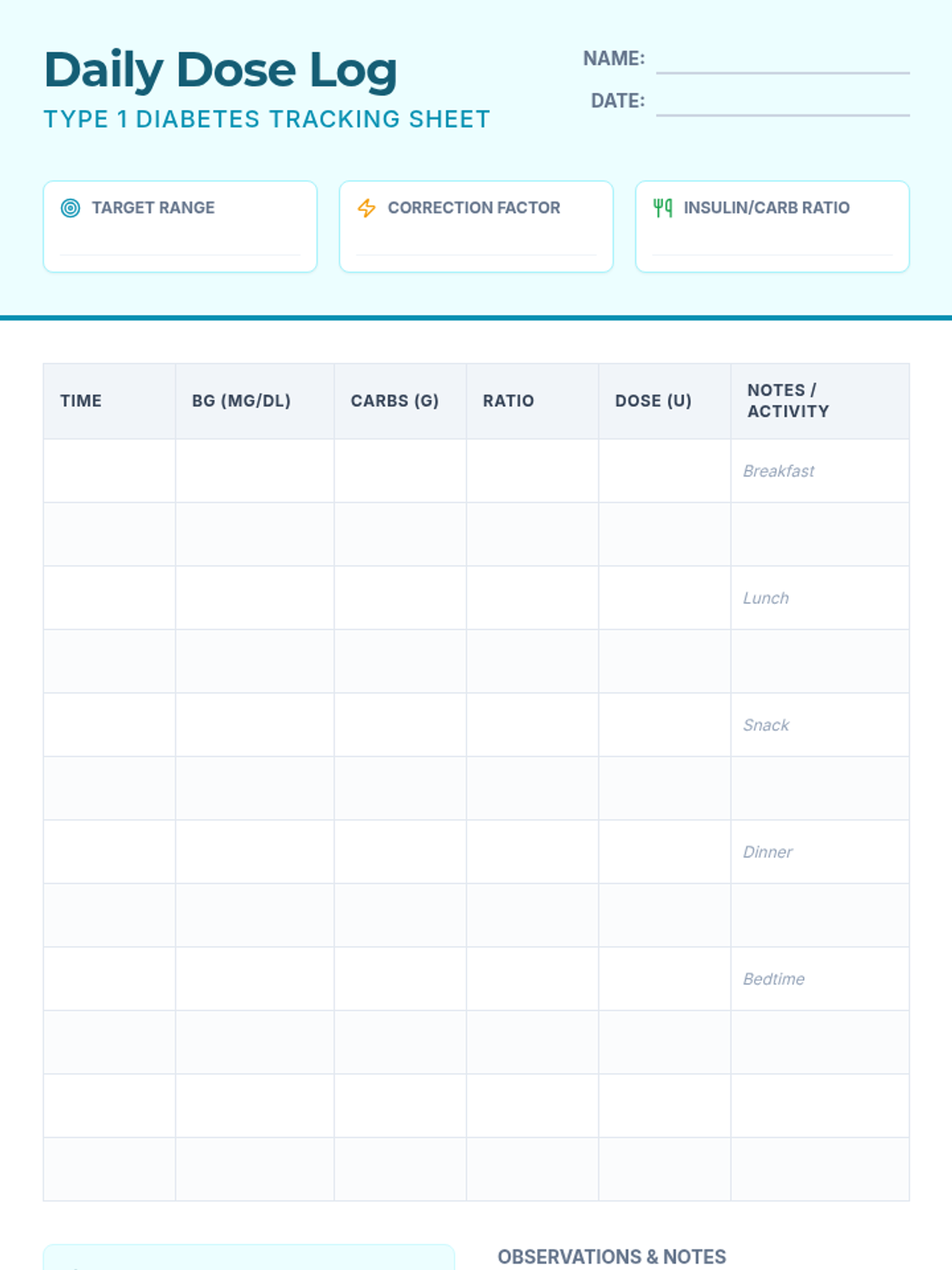
A comprehensive daily documentation sheet for Type 1 Diabetes, featuring columns for time, blood glucose levels, carbohydrate intake, insulin ratios, and dosage, with additional space for notes and symptom tracking.
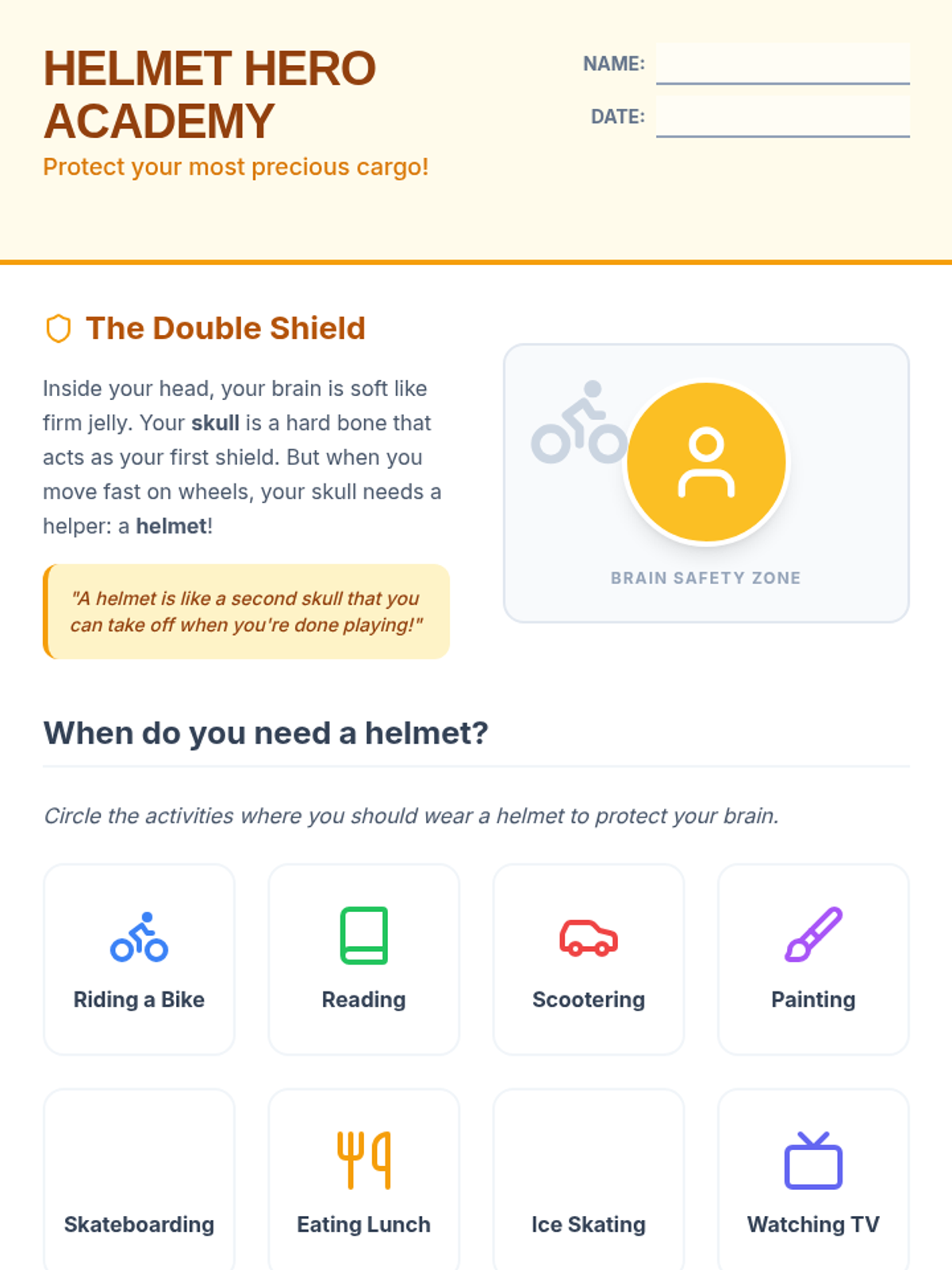
A worksheet focused on physical brain safety, teaching students about the skull's natural protection and the importance of wearing helmets during high-speed activities, including the "2-V-1" helmet fit rule.
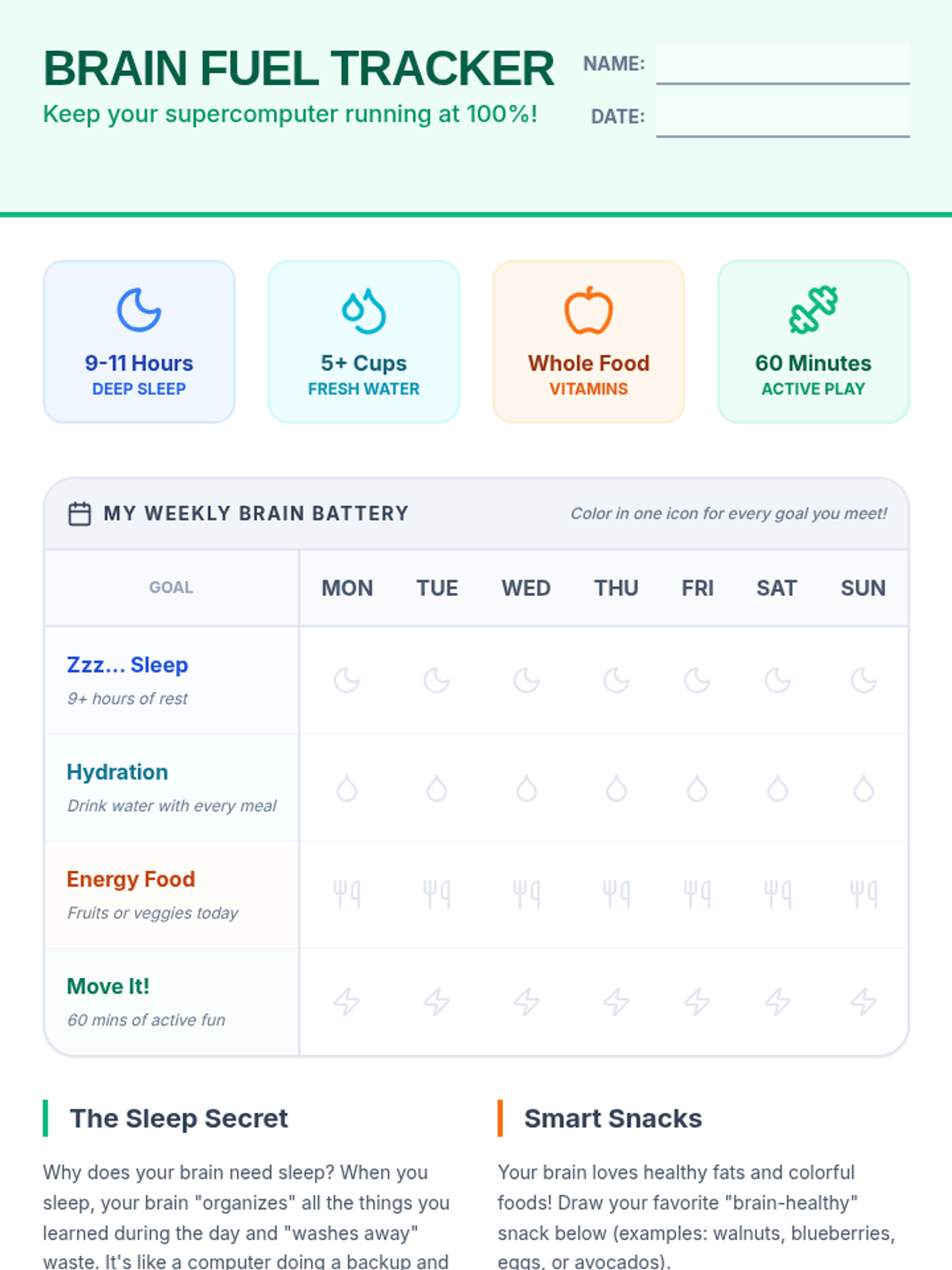
A weekly habit tracker for students to monitor their brain-healthy behaviors, including sleep, hydration, nutrition, and exercise, with brief explanations of why these habits matter.
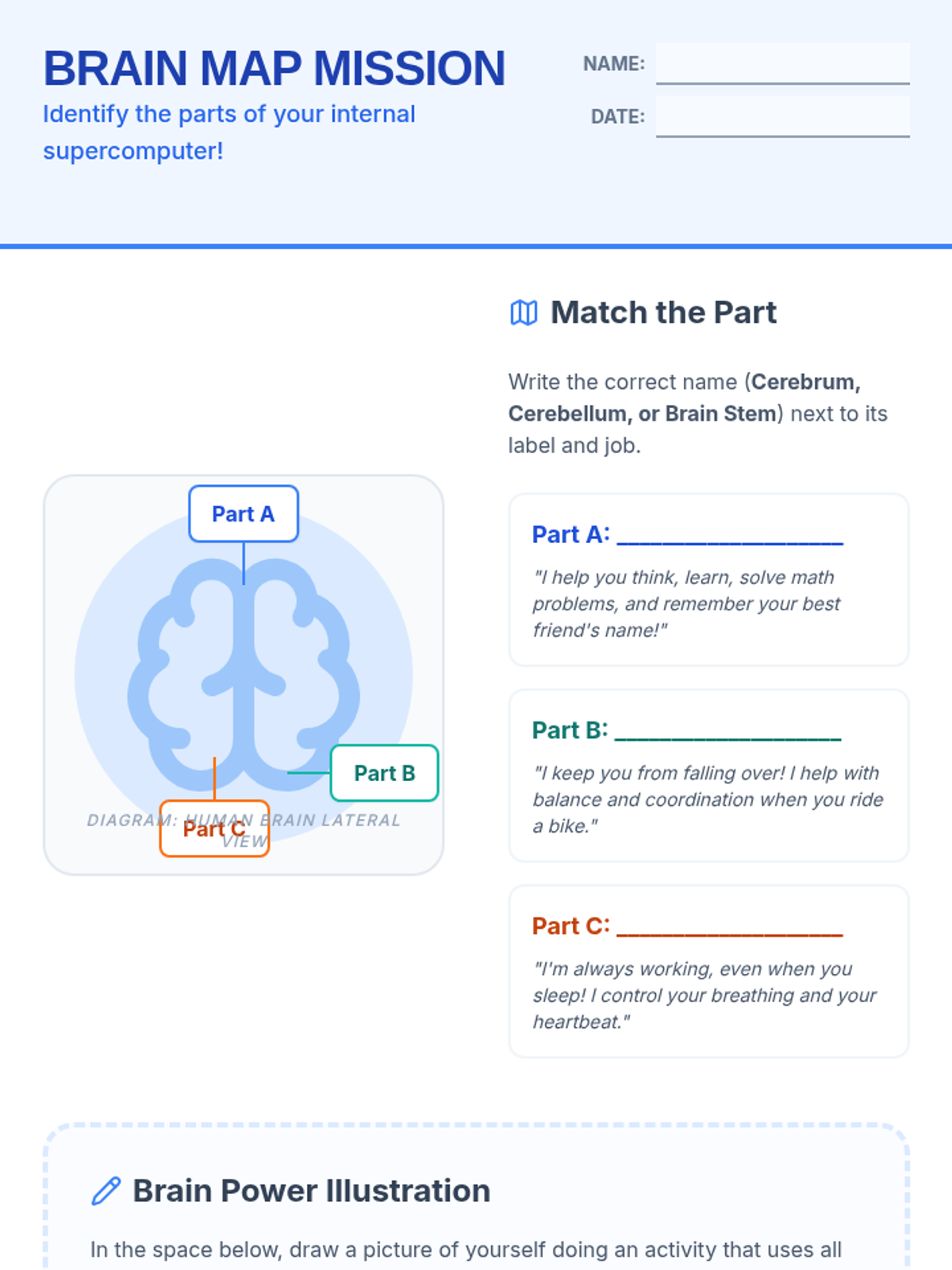
A worksheet for students to identify the three main parts of the brain (cerebrum, cerebellum, and brain stem) and describe their primary functions through a matching activity and a drawing prompt.
An introductory slide deck for elementary students covering basic brain functions, its main parts (cerebrum, cerebellum, brain stem), healthy habits like sleep and nutrition, and the importance of safety equipment like helmets.
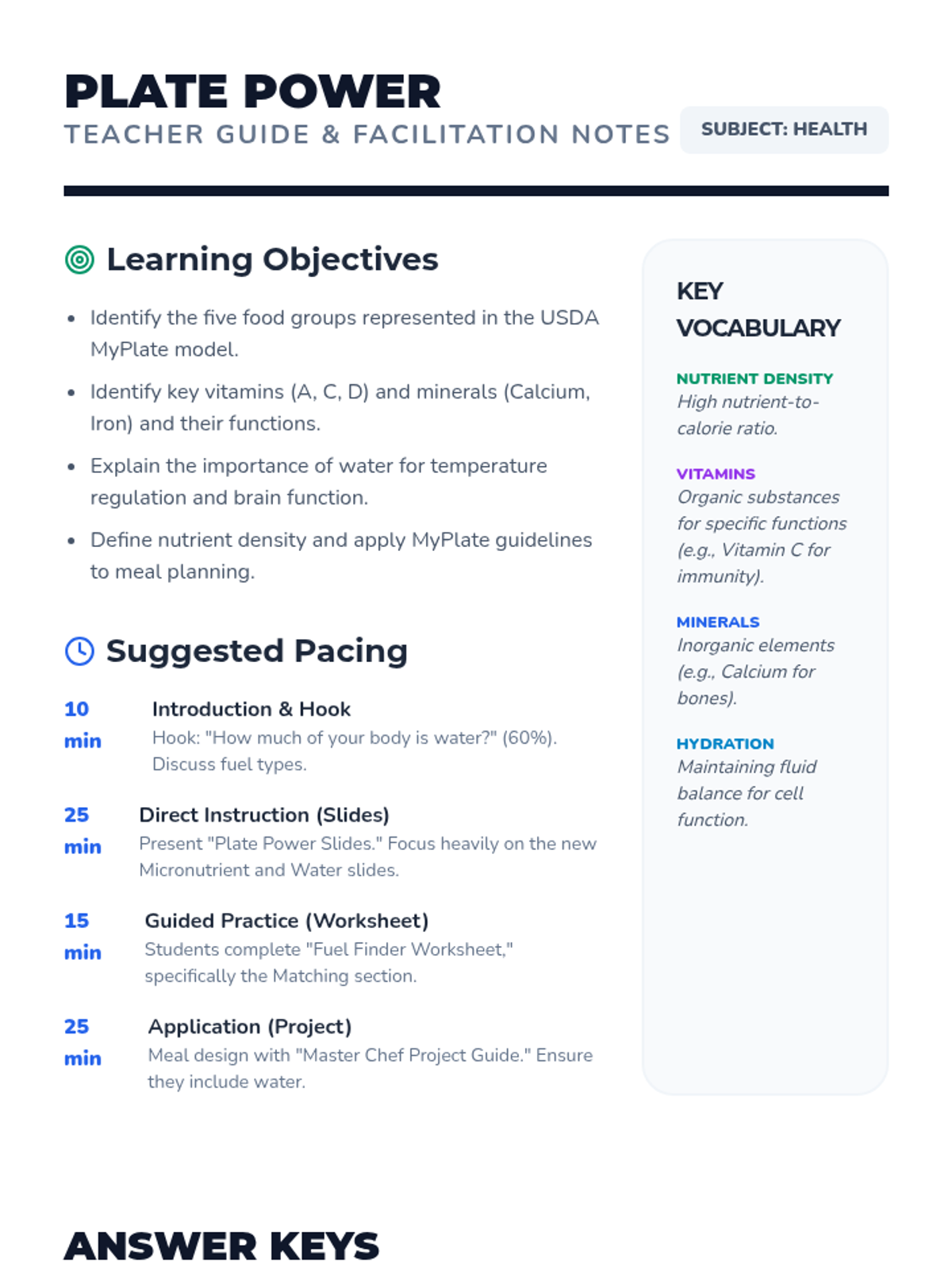
Updated Plate Power Teacher Guide with added focus on vitamins, minerals, hydration, and corresponding answer keys.
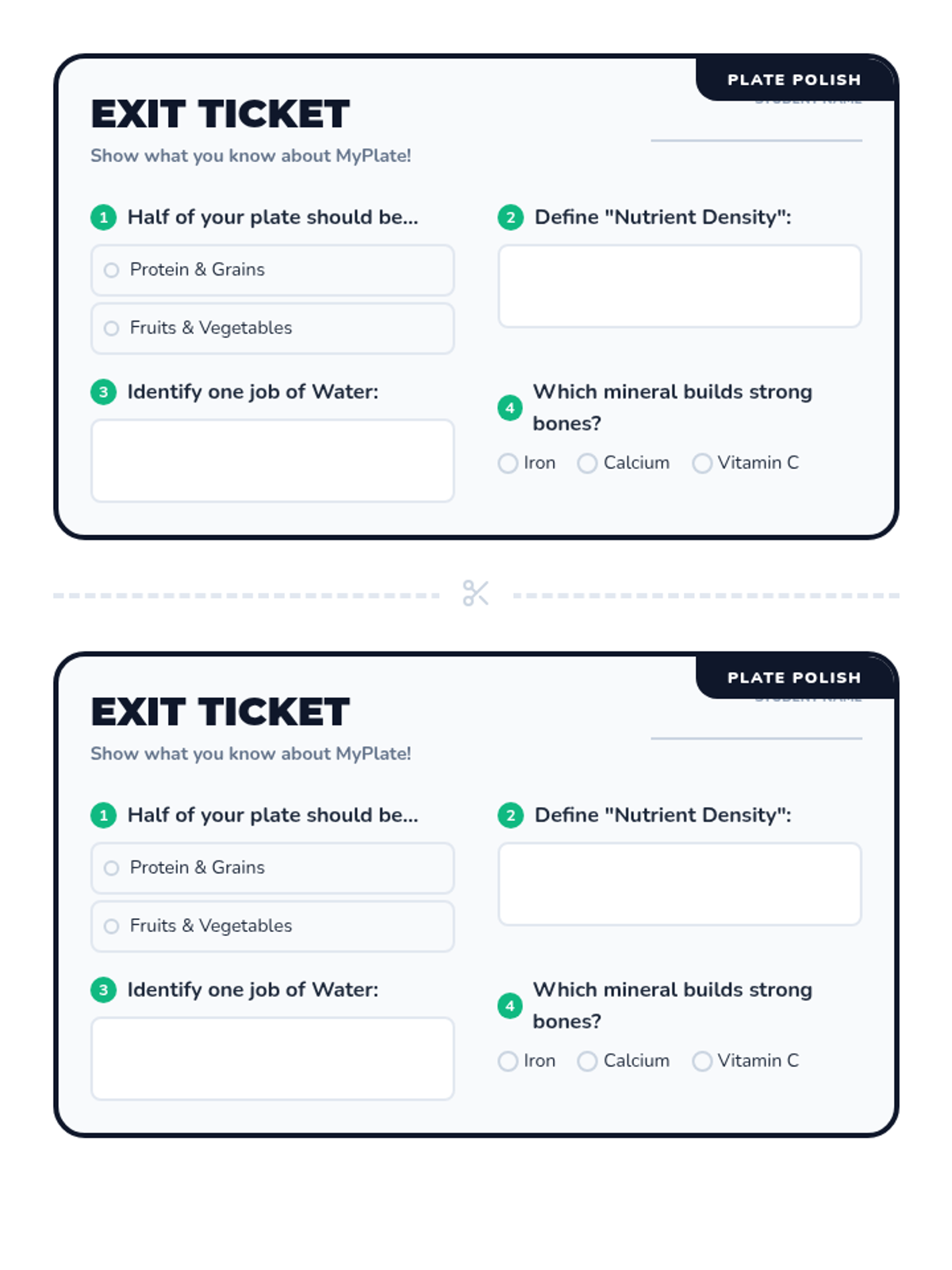
Updated Plate Polish Exit Ticket with new questions covering hydration and minerals.
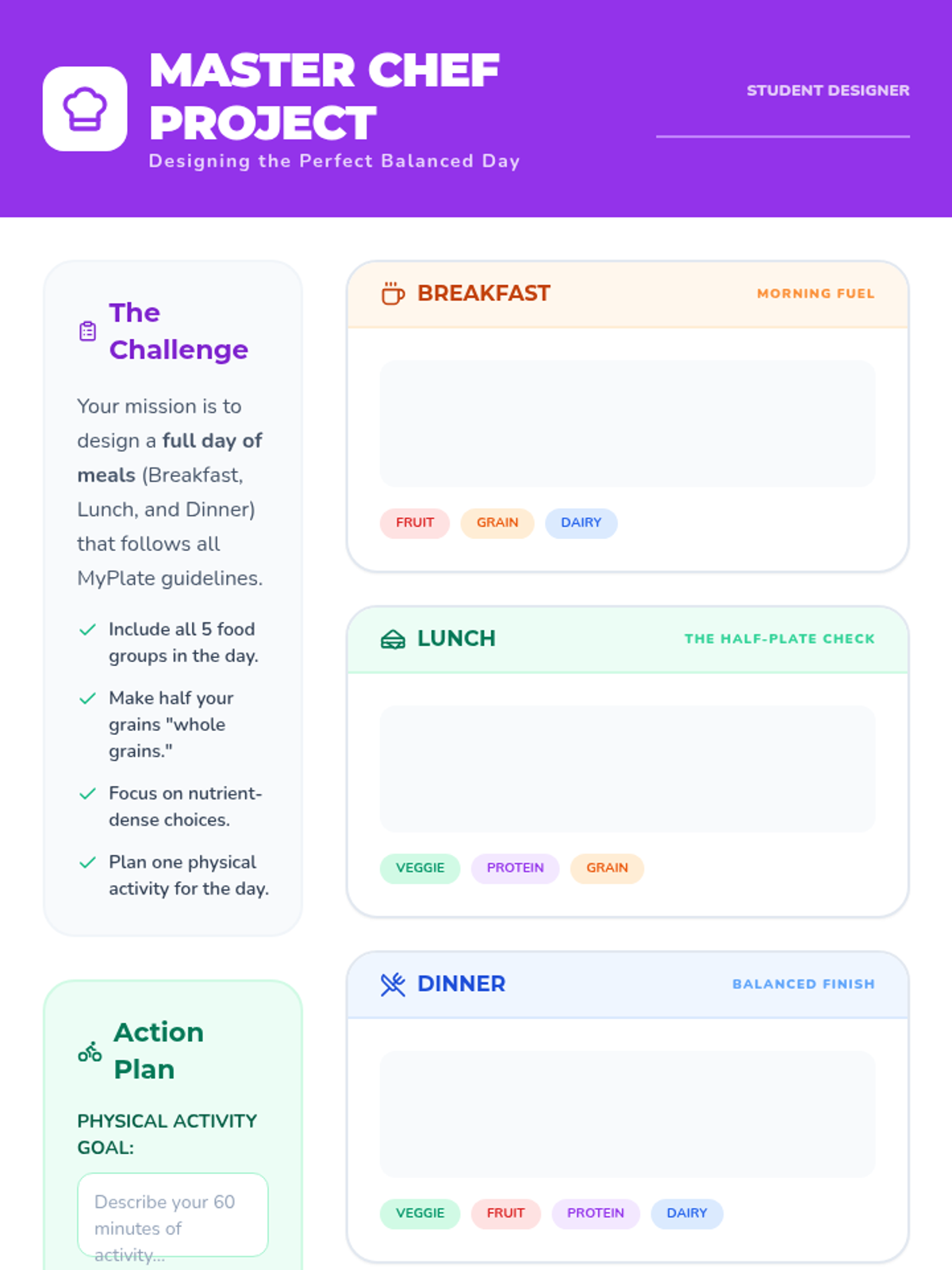
A project guide for students to design a full day of balanced meals (breakfast, lunch, and dinner) while incorporating physical activity and hydration goals.
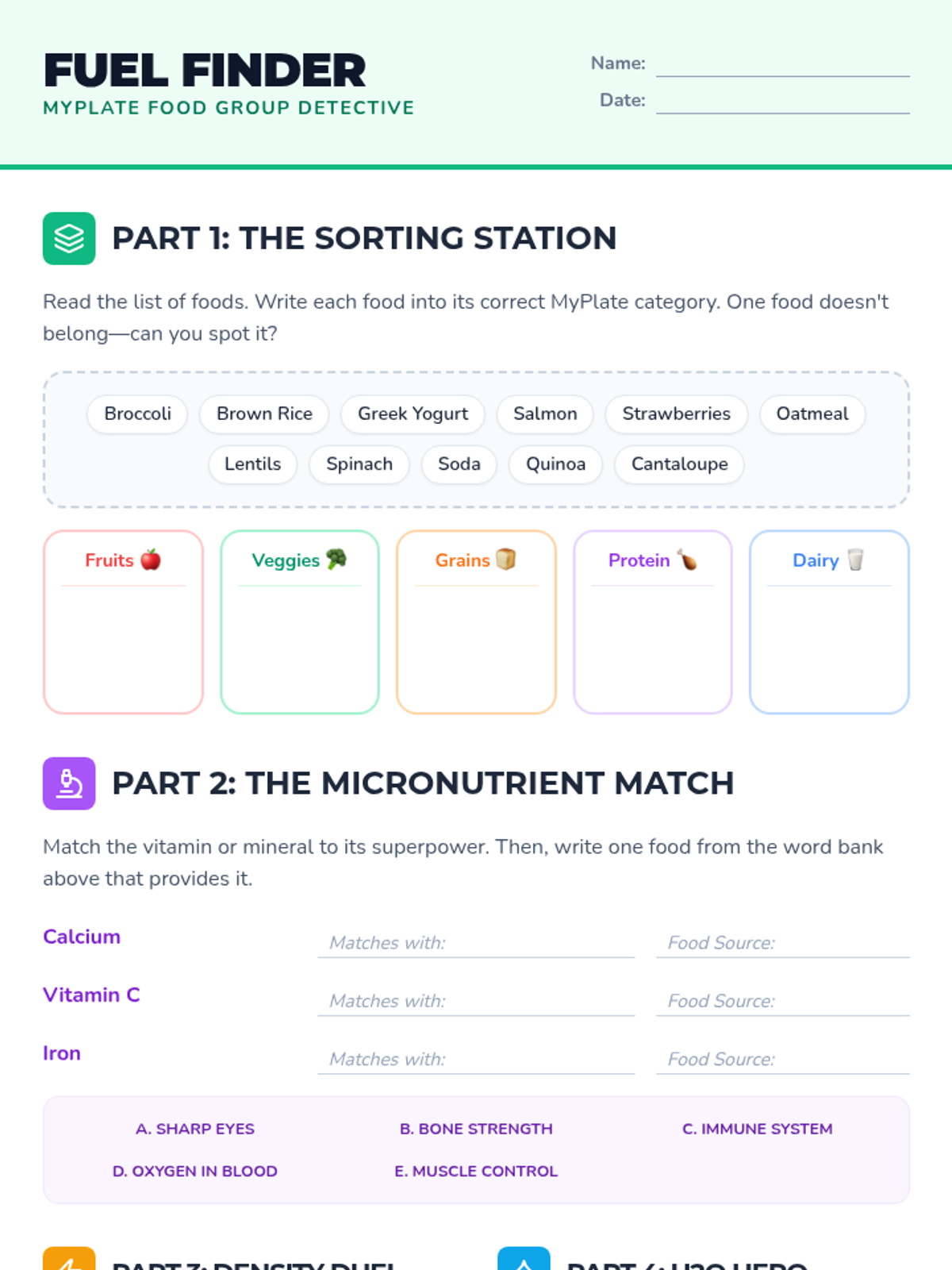
Updated Fuel Finder Worksheet with a new matching section for micronutrients and a hydration focus.
Updated Plate Power Slides with new sections on Vitamins, Minerals, and the critical importance of water for hydration and bodily function.
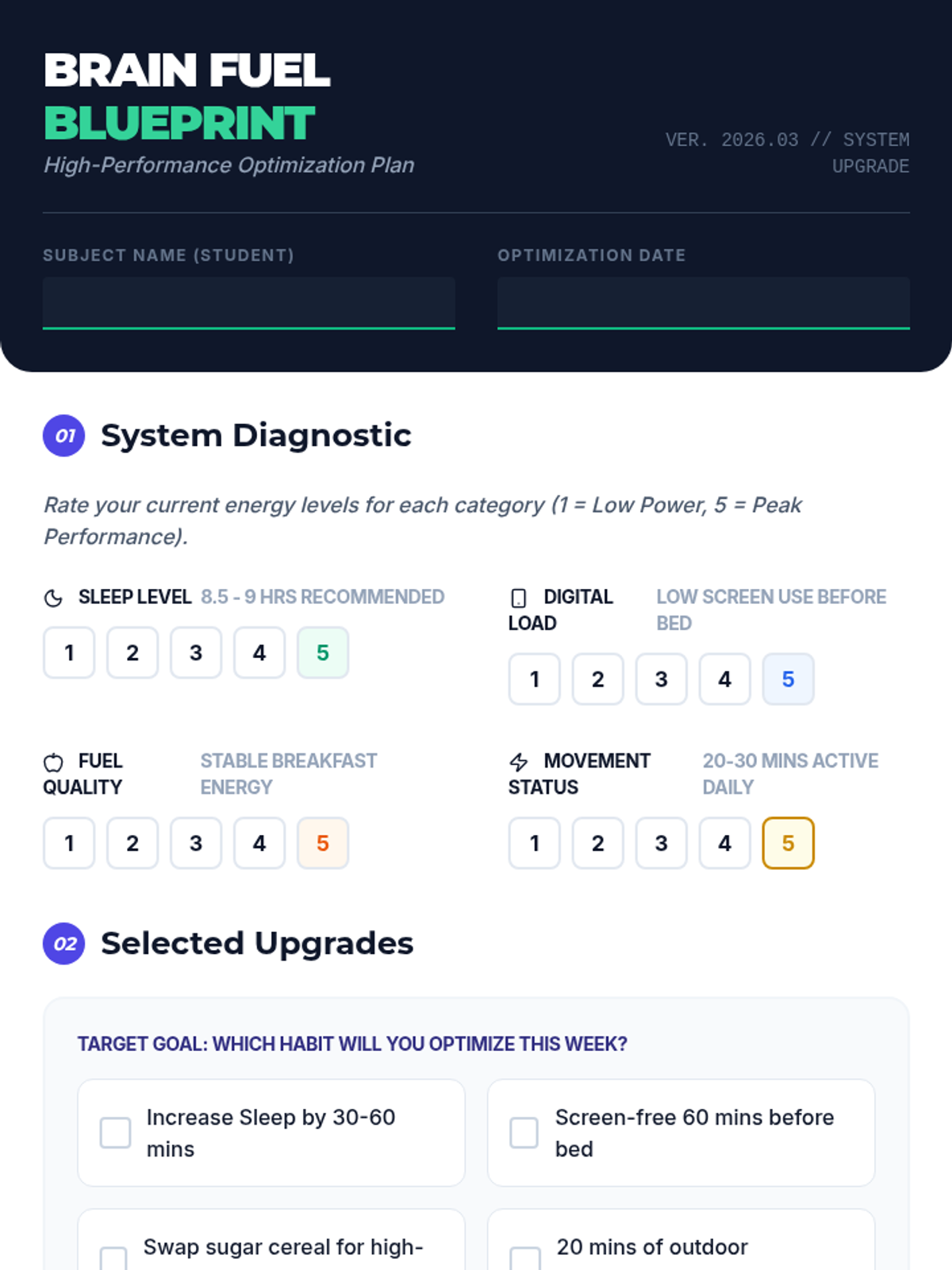
A personal wellness planning document for students to self-assess their habits and commit to specific 'brain upgrades' to improve their academic and cognitive performance.
A visually striking, data-driven slide presentation for grades 3-8 that frames healthy habits as 'system upgrades' for peak academic and cognitive performance.
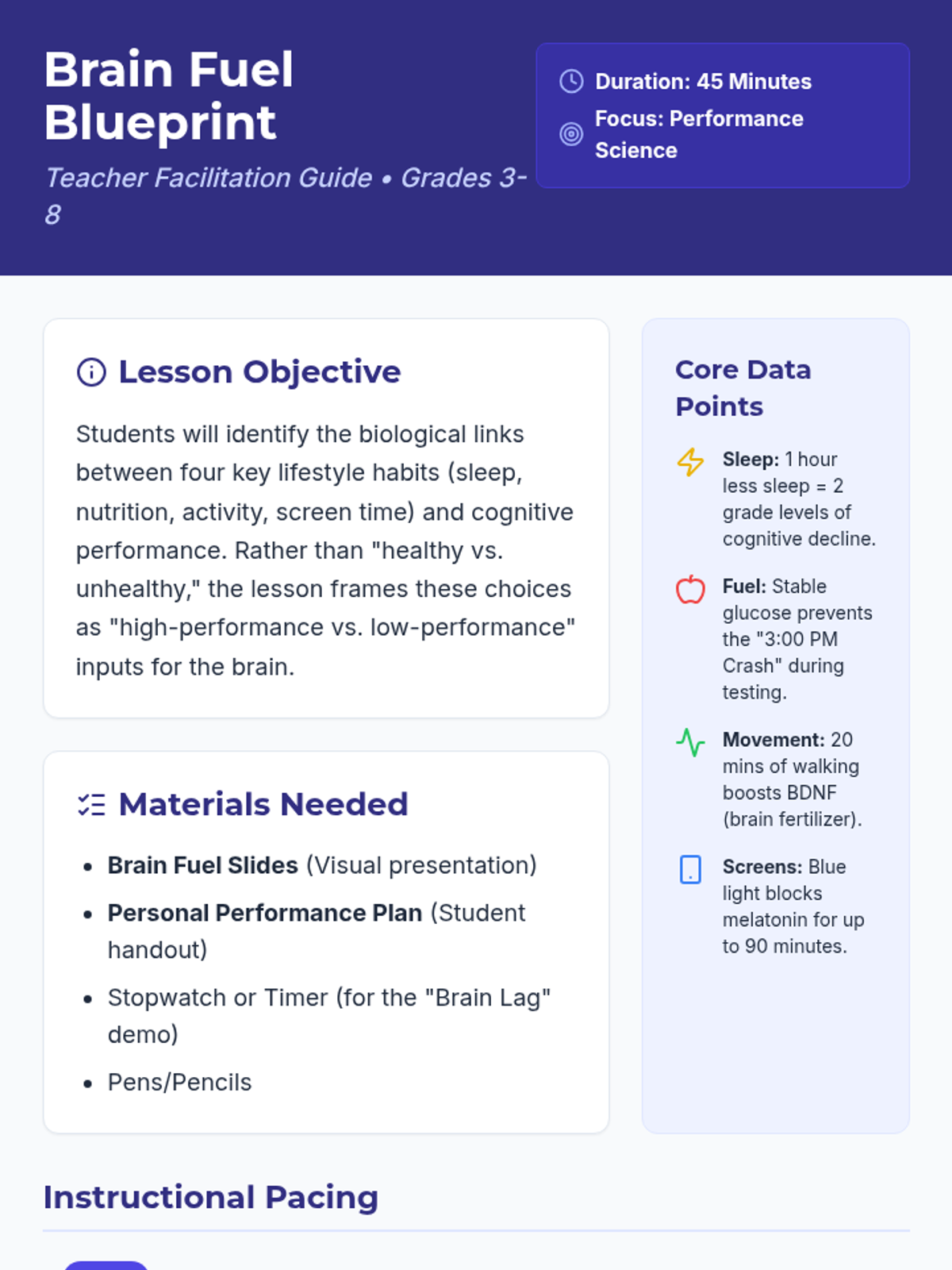
A comprehensive teacher facilitation guide for the Brain Fuel Blueprint lesson, featuring a 45-minute instructional sequence, performance-based framing strategies, and core data points for grades 3-8.
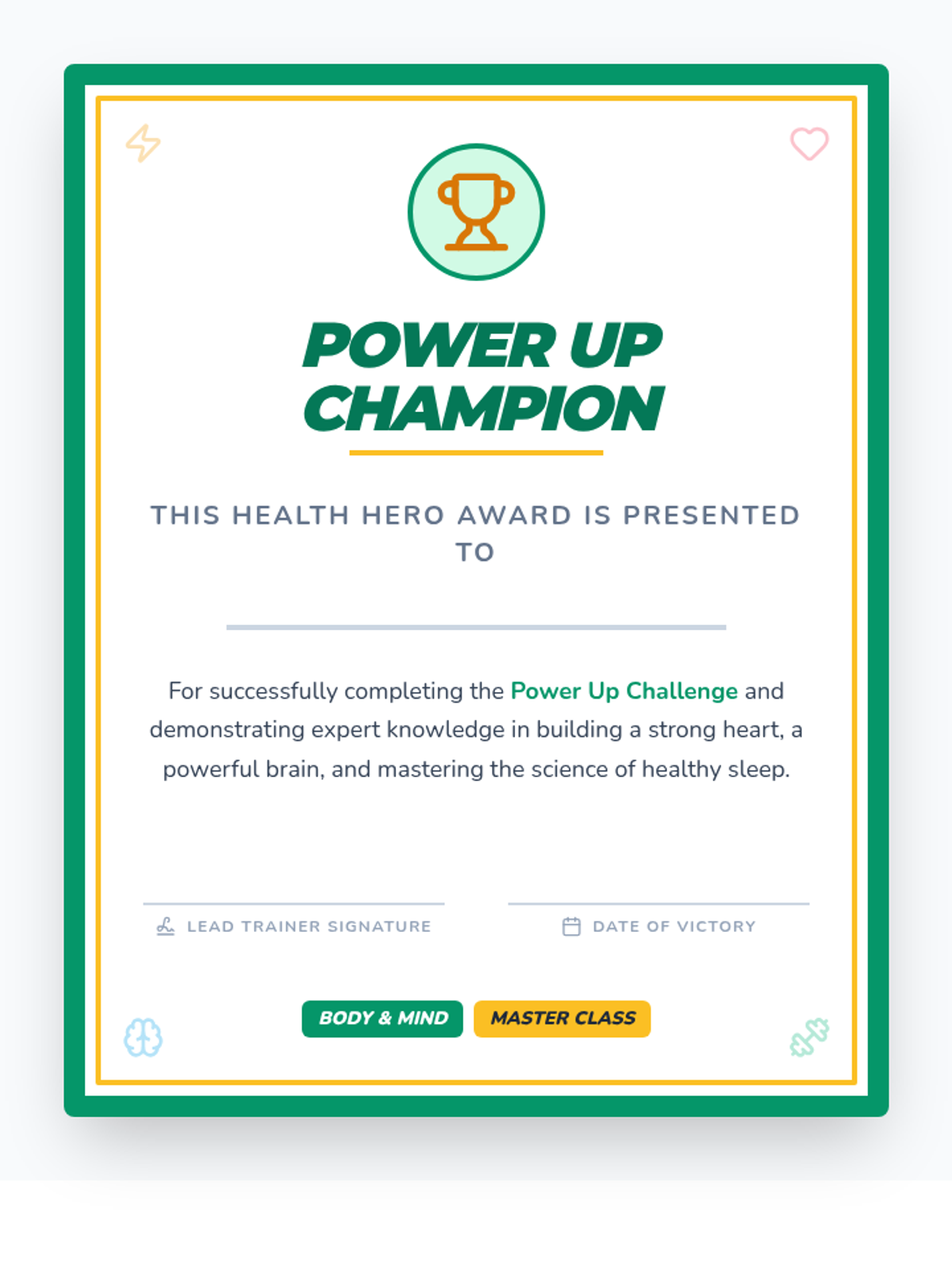
A vibrant, printable award certificate for students who complete the Power Up Challenge, recognizing their knowledge of physical and mental health.
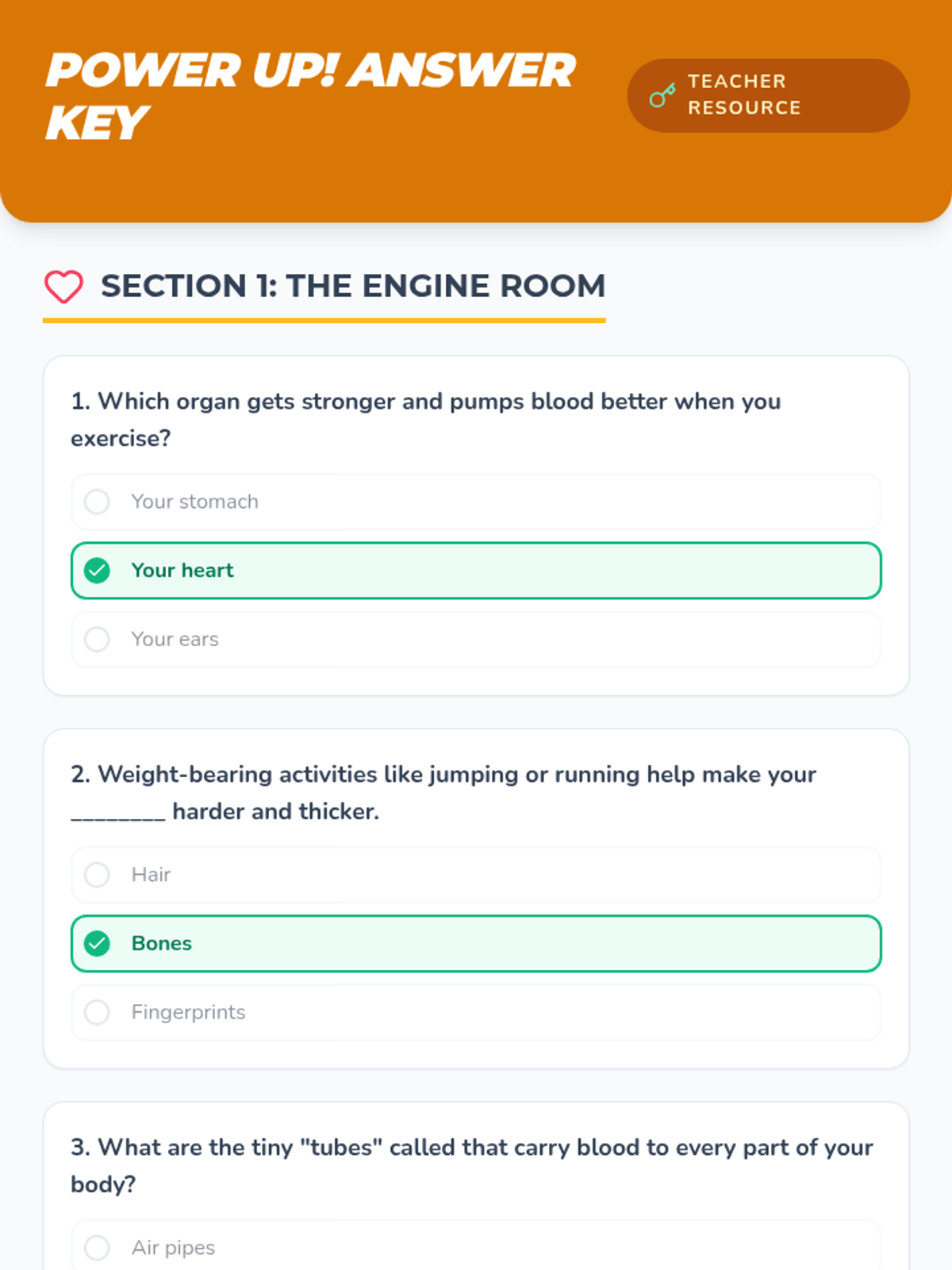
An updated teacher-facing answer key for the Power Up Quiz, including correct answers for the expanded "Engine Room" and sleep science sections.
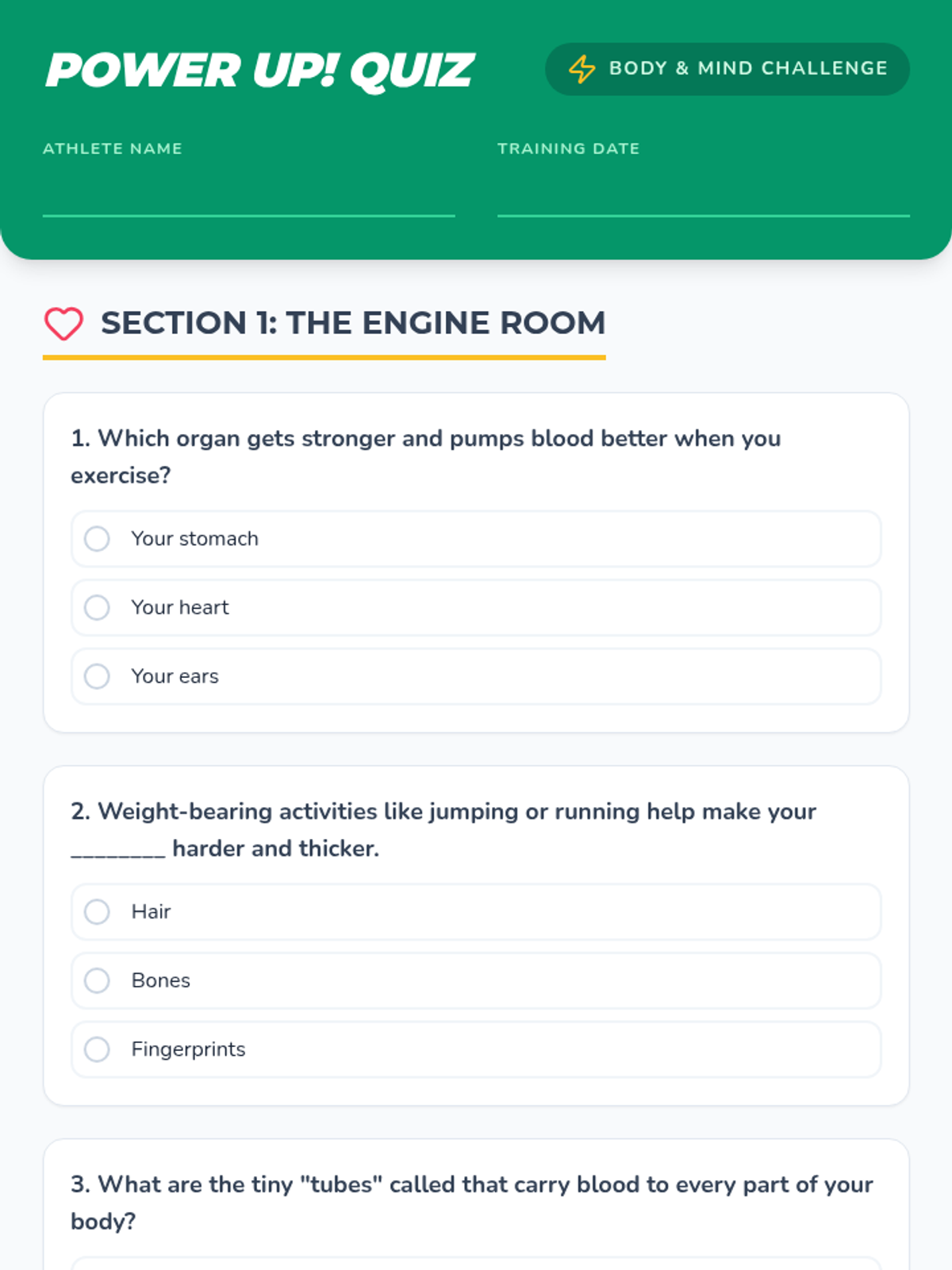
An expanded quiz for students covering the physical and mental benefits of exercise, with an enlarged "Engine Room" section on cardiovascular health and a major focus on sleep science.
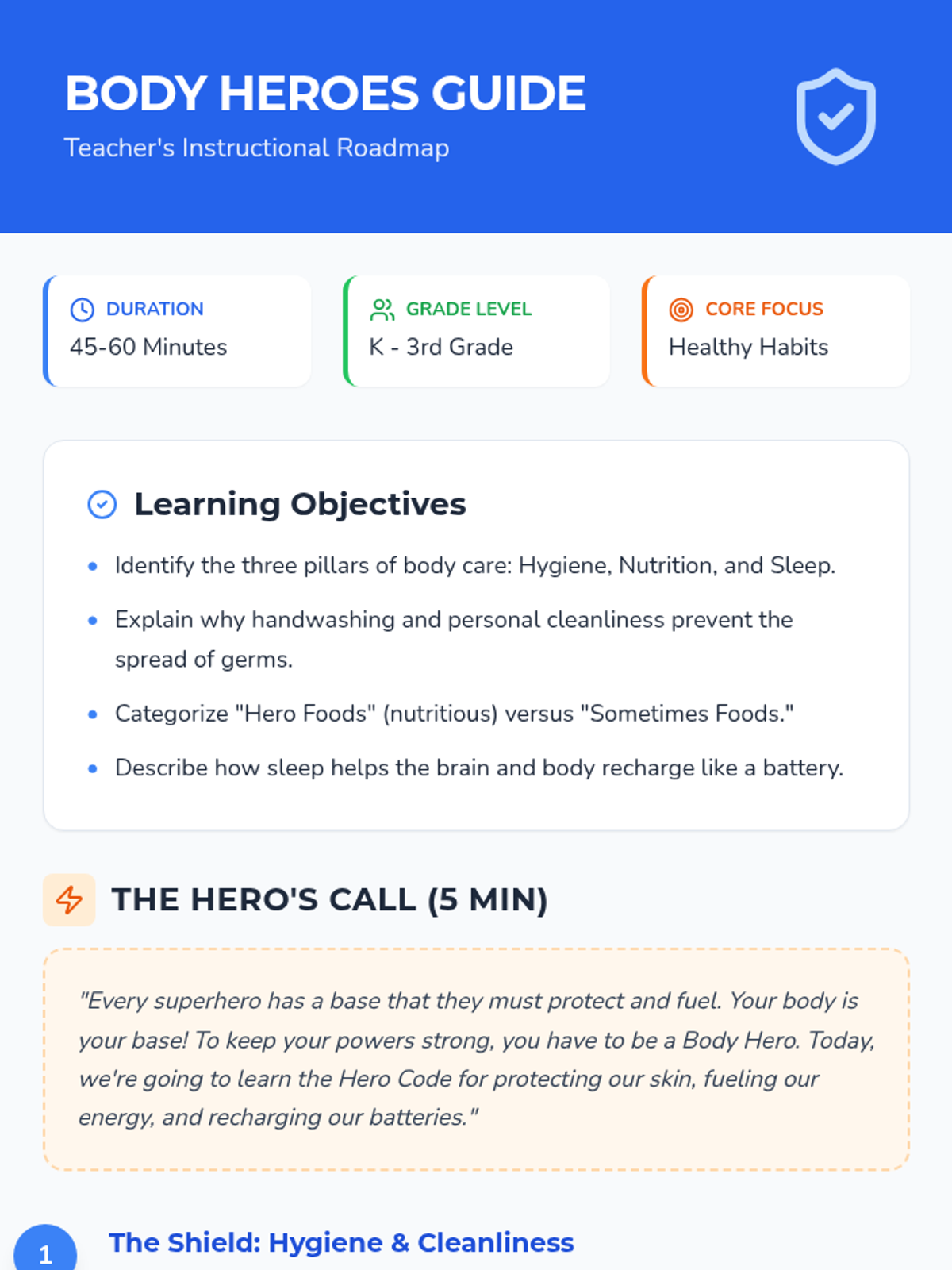
A comprehensive teacher's guide for the Body Heroes lesson, featuring instructional steps, talking points for hygiene, nutrition, and sleep, and a structured lesson flow with a creative superhero theme.
A comprehensive 20-slide superhero-themed presentation for teaching heart health and advocacy, featuring deep dives into anatomy, habit heroes, and interactive mission prompts.
An expanded, vibrant superhero-themed presentation for teaching heart health and advocacy, featuring 15 slides with interactive trivia, habitat hero spotlights, and mission prompts.
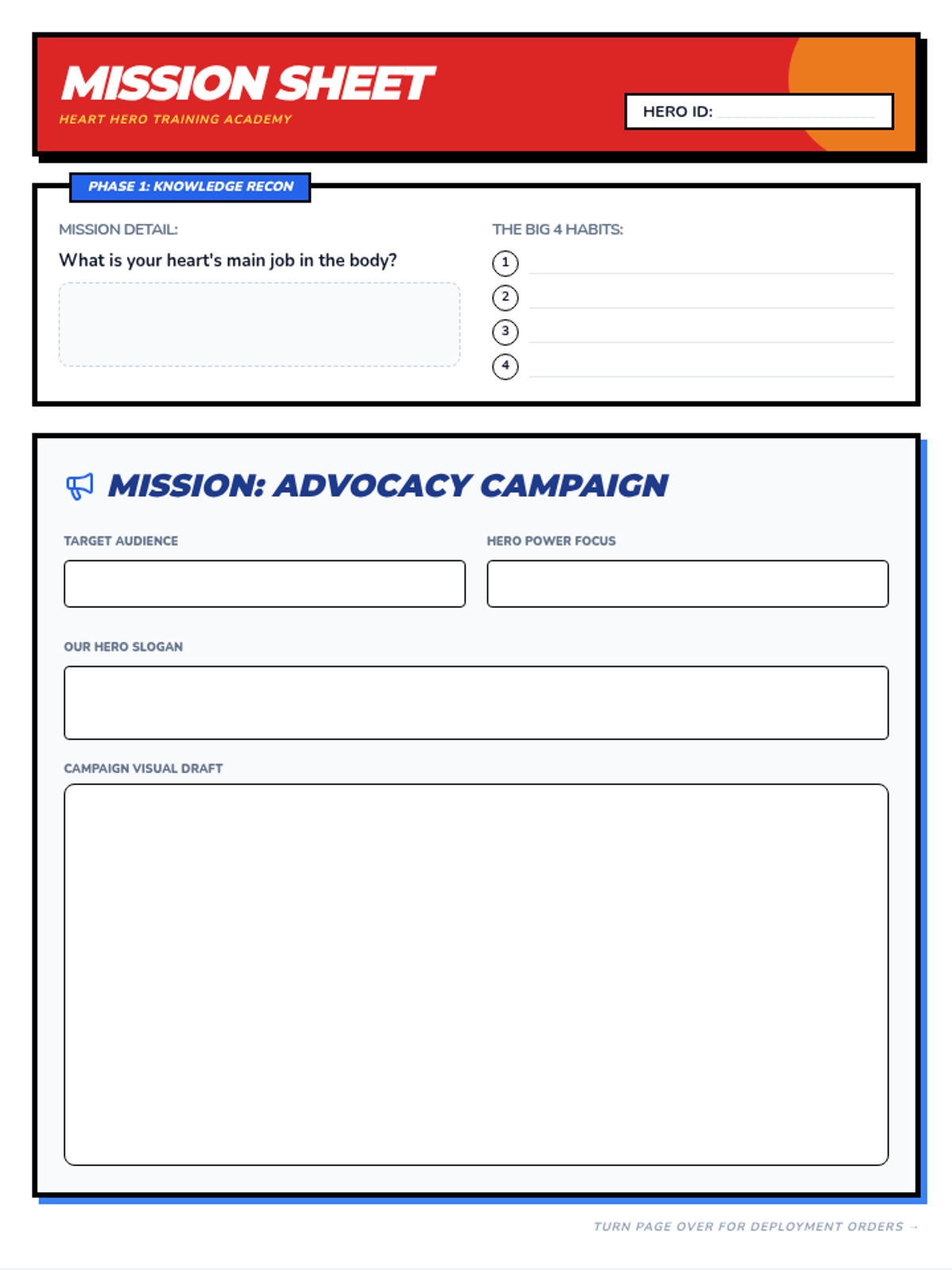
A superhero-themed student activity sheet for planning an advocacy campaign and completing a home-based heart health mission.
A vibrant, superhero-themed presentation for teaching heart health and advocacy, featuring interactive trivia breaks and activity prompts.
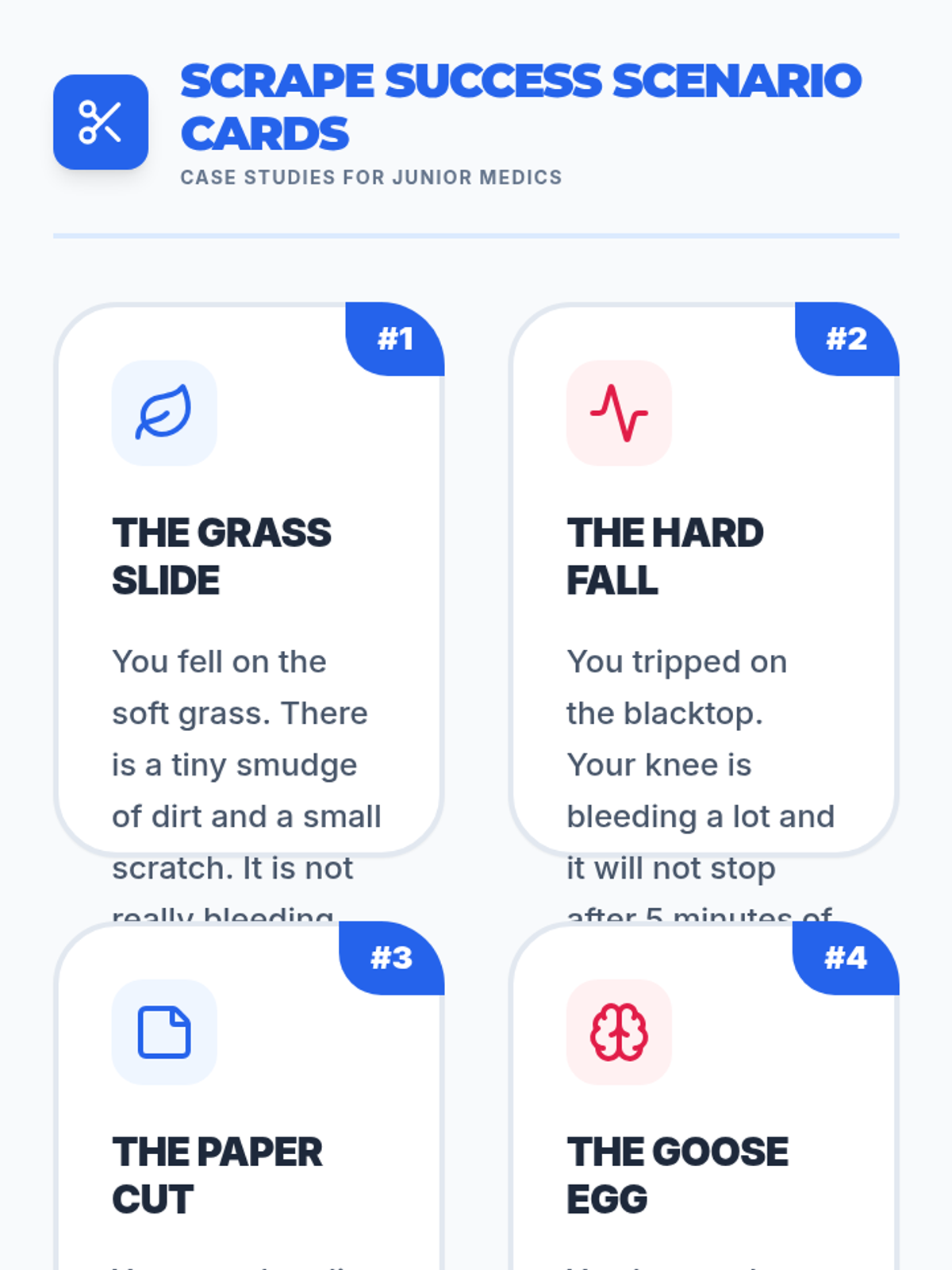
A set of scenario-based task cards designed for small group activities. Students evaluate various injury situations and determine whether they require self-care or a visit to the school nurse. Includes a teacher answer key.
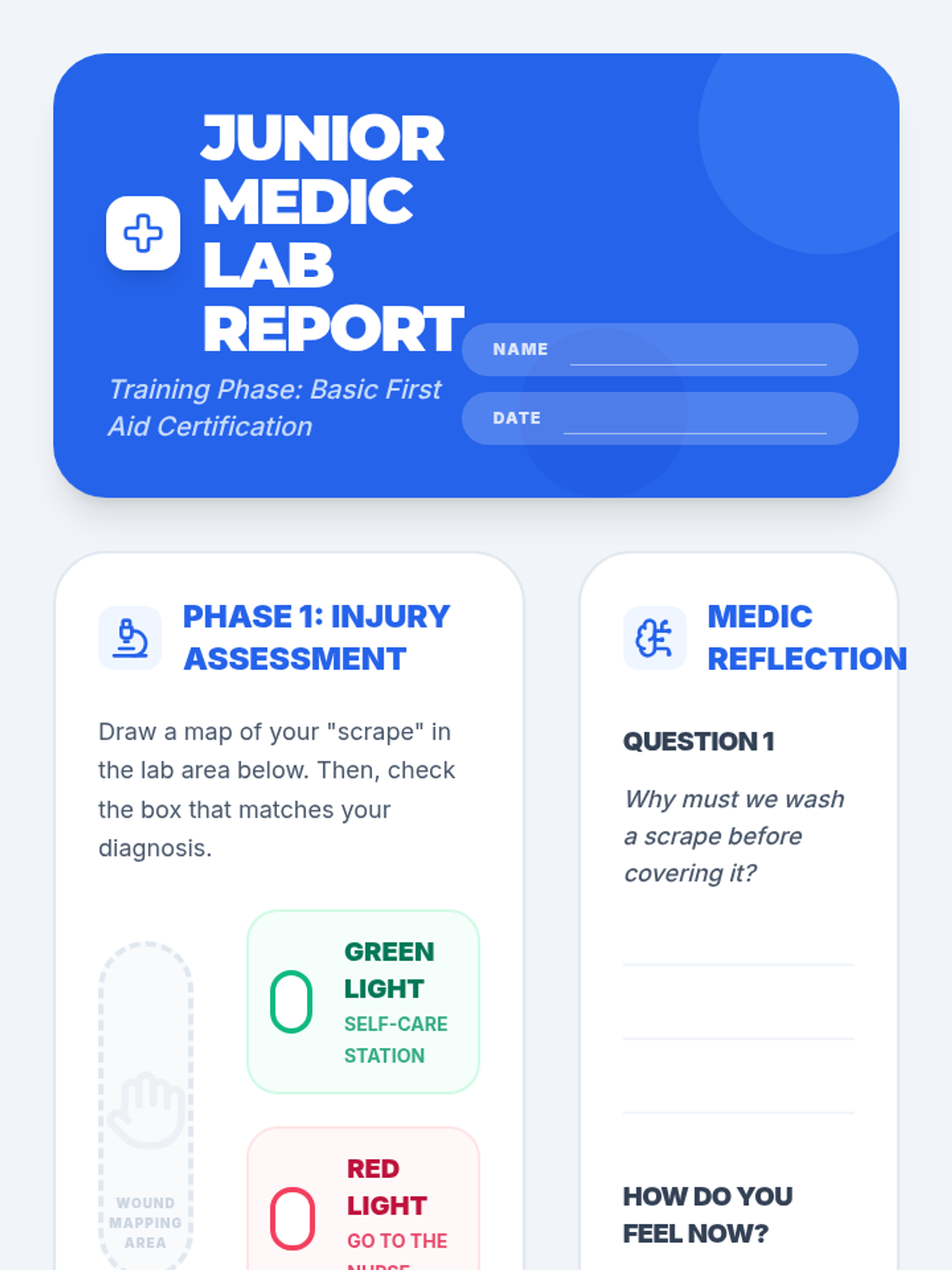
A student lab report where students document their injury assessment, follow a step-by-step procedure checklist for cleaning and bandaging, and reflect on their confidence as a Junior Medic. Includes space for drawing and writing.
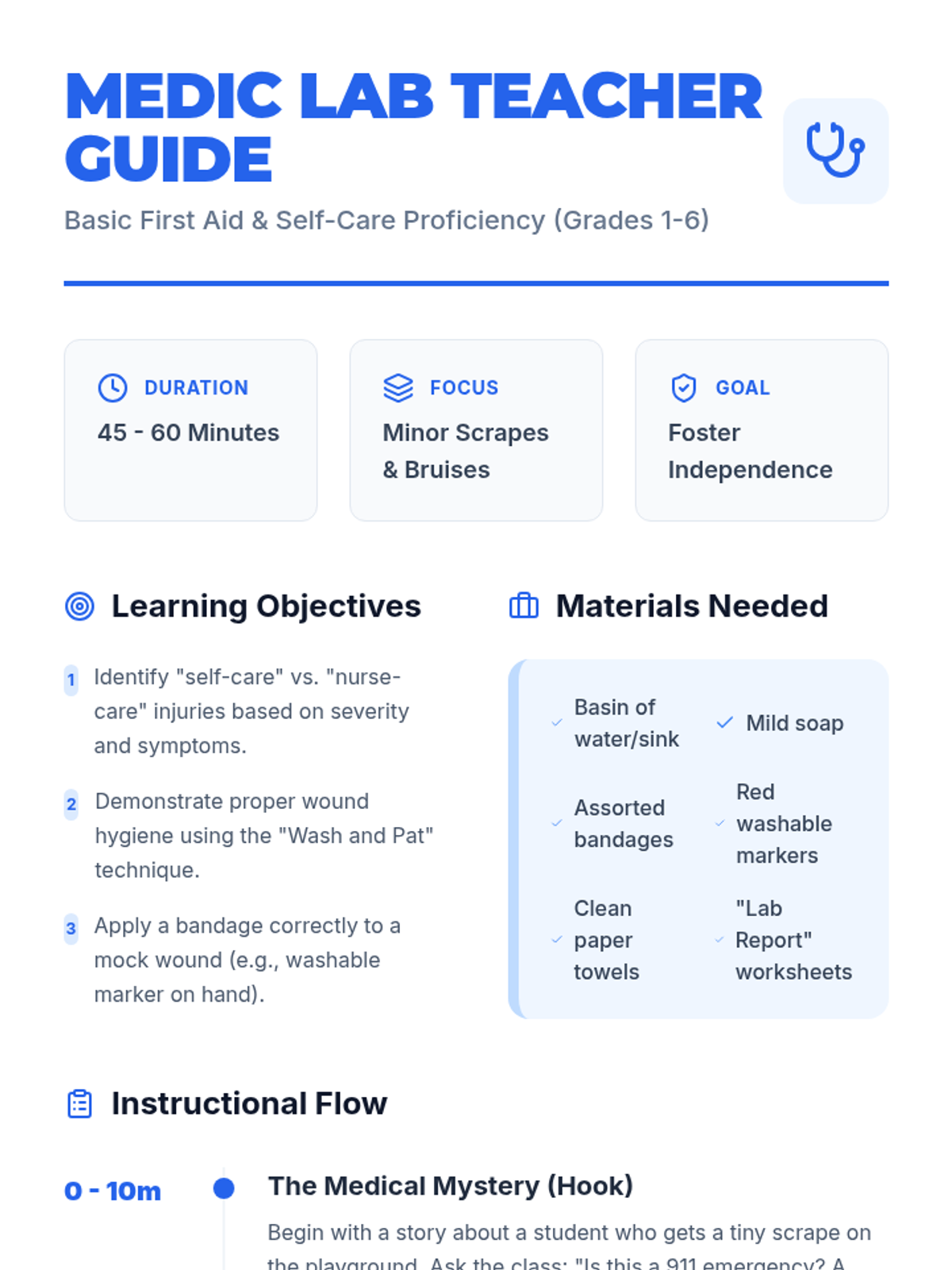
A comprehensive teacher guide for the Junior Medic Lab, including learning objectives, a detailed timeline, materials list, and tiered differentiation strategies for elementary grade levels.
An engaging slide deck designed to teach elementary students the basics of identifying minor injuries and performing self-care cleaning and bandaging. Features a 'Lab' theme with high-contrast visuals and clear, large-font instructions for classroom presentation.
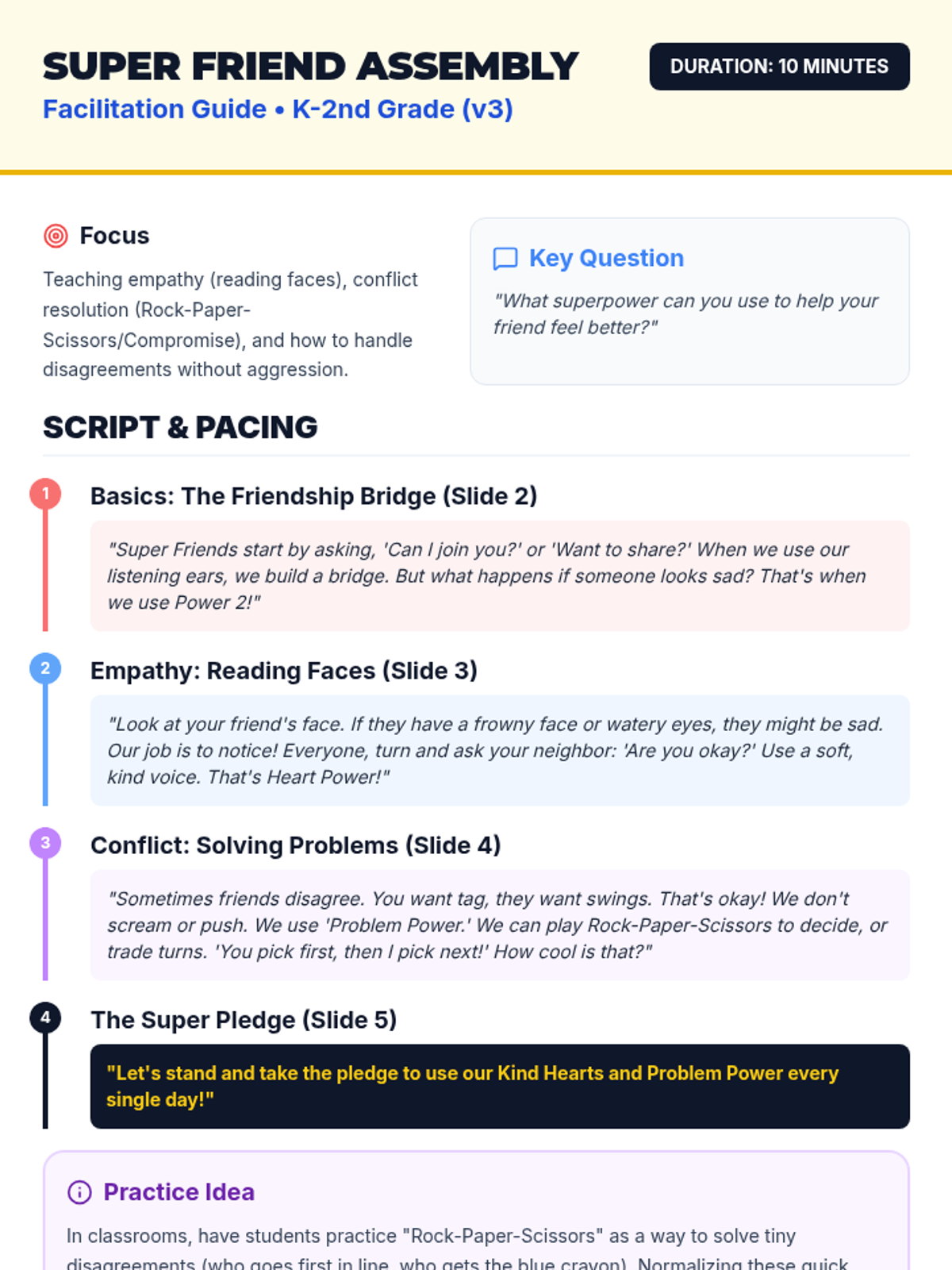
Updated K-2 facilitation guide with scripts for teaching empathy, reading non-verbal cues, and practical conflict resolution tools like Rock-Paper-Scissors.
Updated K-2 assembly slides with specific focus on empathy (caring for feelings), handling disagreements, and conflict resolution strategies for young students.
A visual presentation for teaching heart rate concepts, pulse-checking techniques, and the science of BPM, including a slide for a cardiovascular health video.
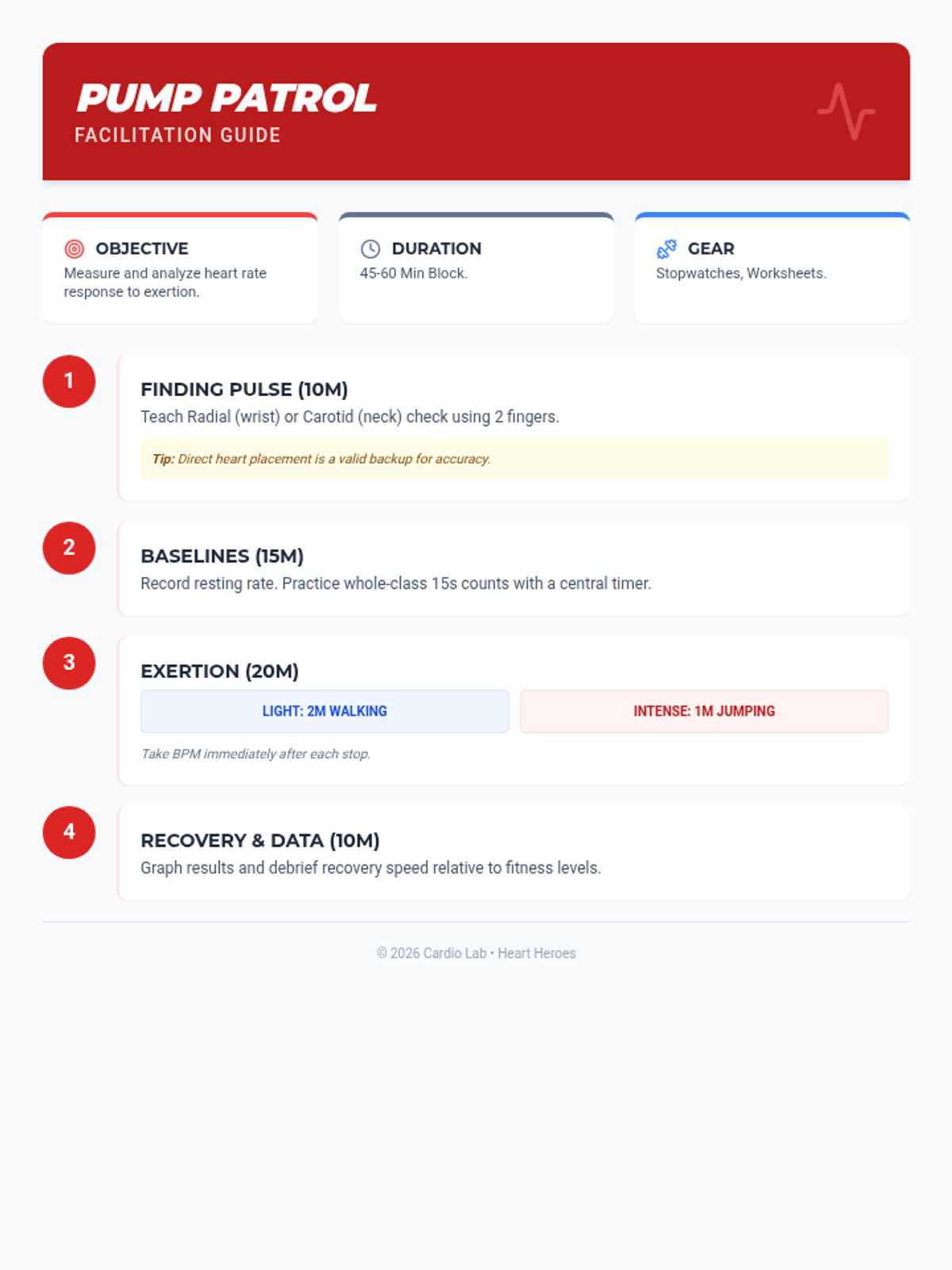
A facilitation guide for teachers to lead a heart rate lab, optimized for a single-page view.
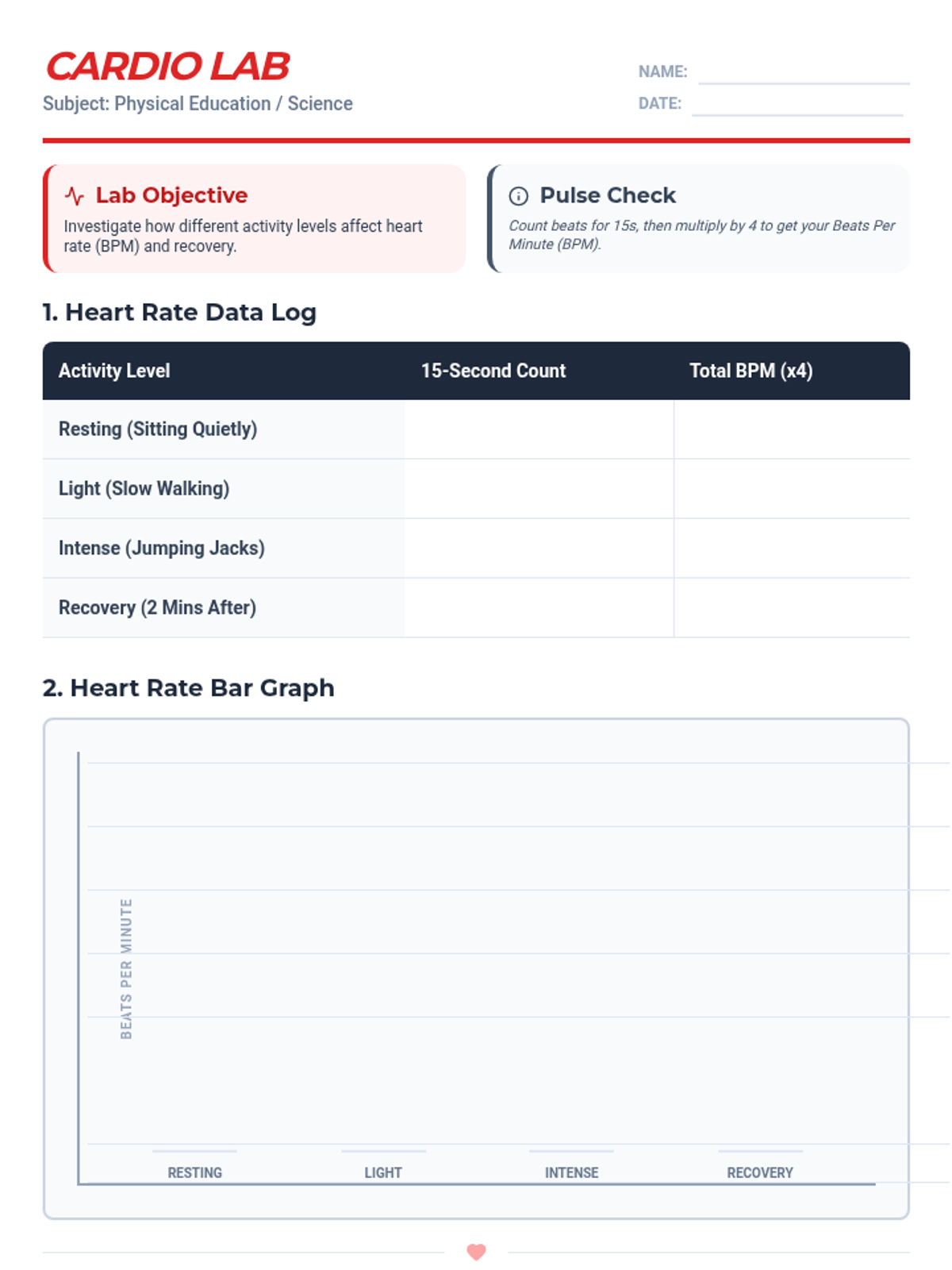
A student lab report for tracking heart rate, featuring a data log and a large bar graph area, optimized for a single-page view.
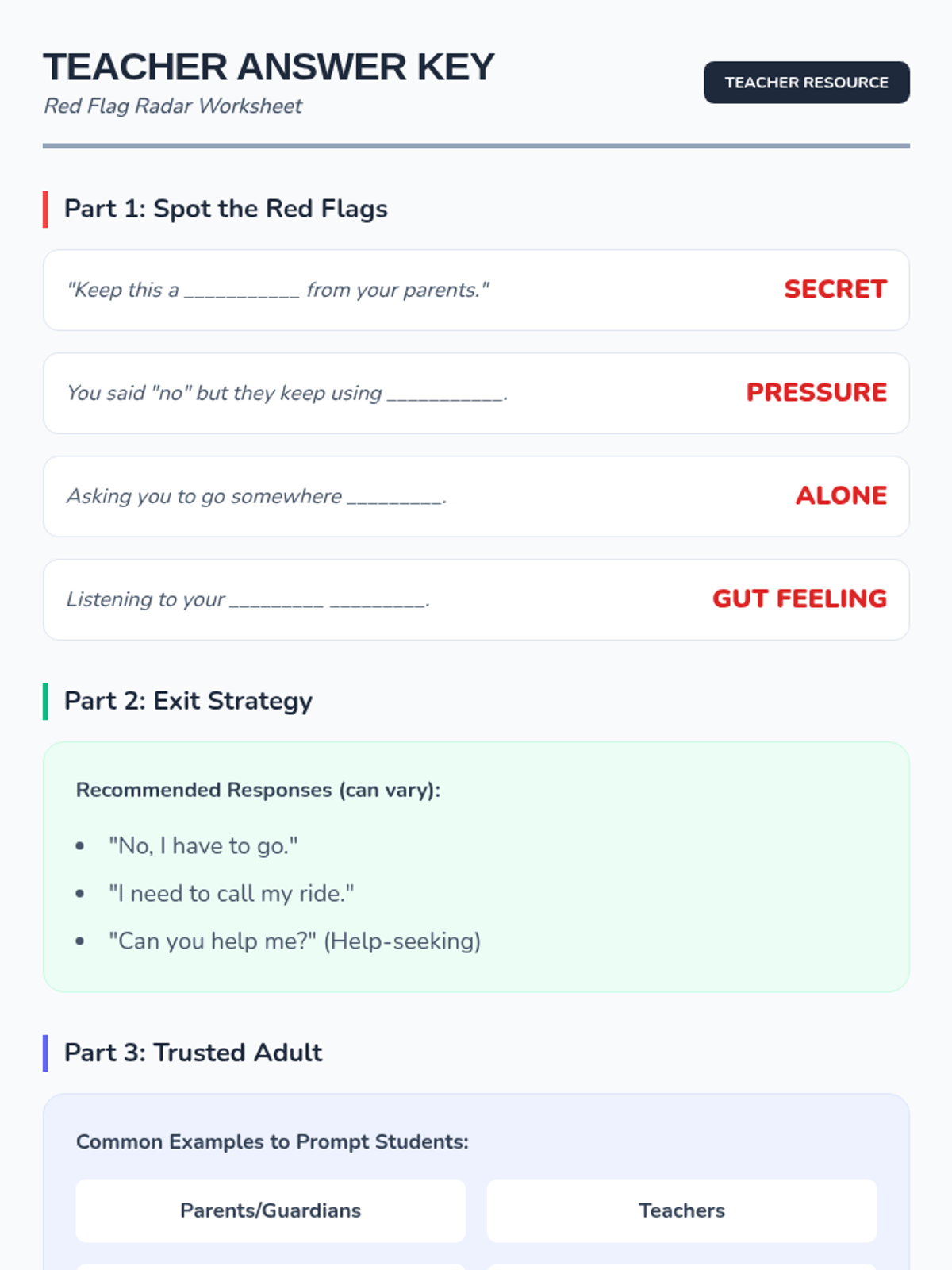
A two-page teacher answer key for the Safe or Unsafe Decision Worksheet, featuring 12 scenarios with clear correct answers and teaching prompts.
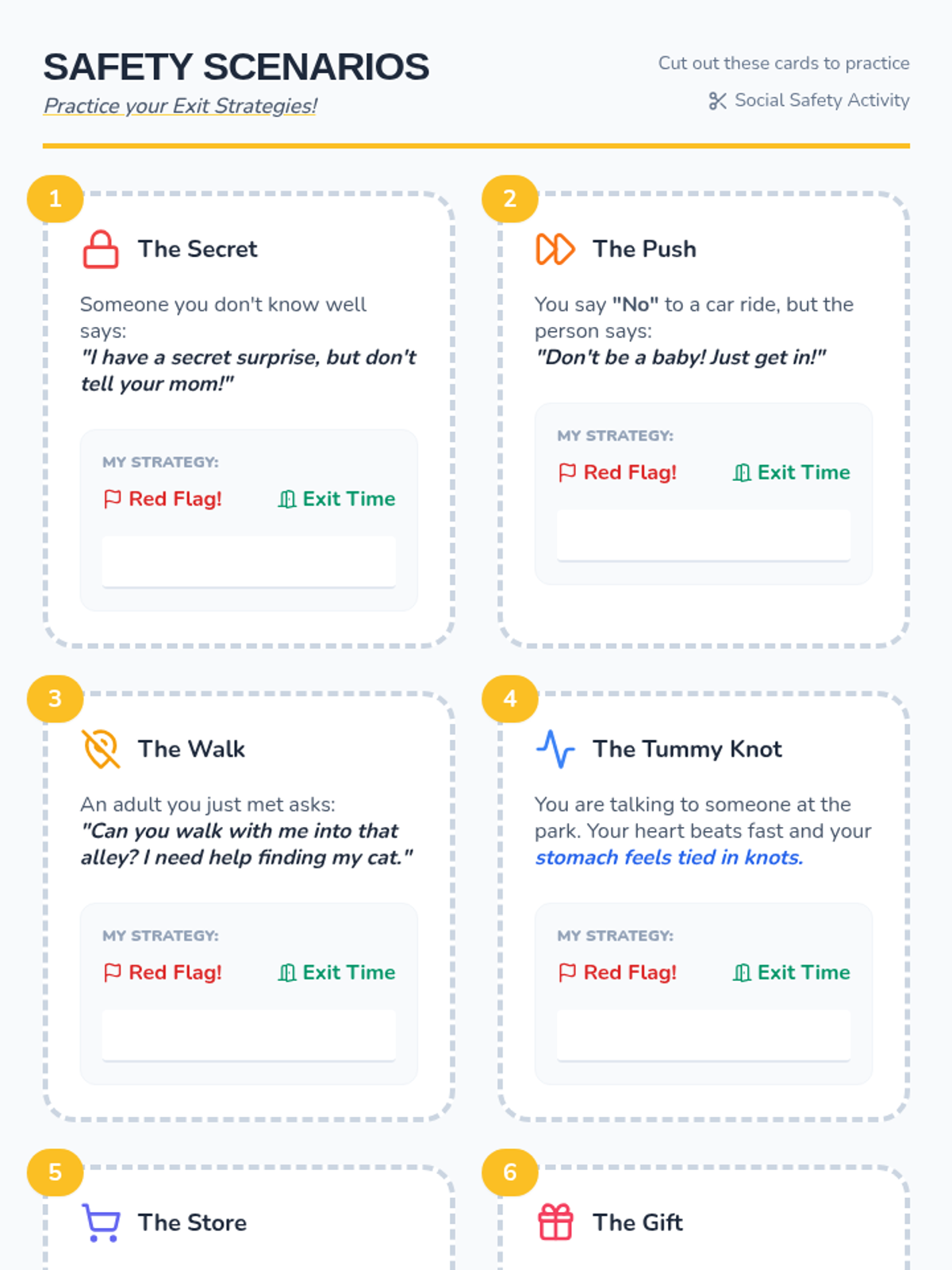
Twelve printable scenario cards where students decide if a situation is 'Safe' (Thumbs Up) or 'Unsafe' (Red Flag). Designed for role-playing and hands-on decision making. Stylized for student use with identical styling for all options. Updated to match the worksheet scenarios.
A game-based slide deck where students practice identifying 12 different scenarios as 'Safe' (Thumbs Up) or 'Unsafe' (Red Flag). Options are styled identically for student decision-making. Updated to use gender-neutral 'parent' language.
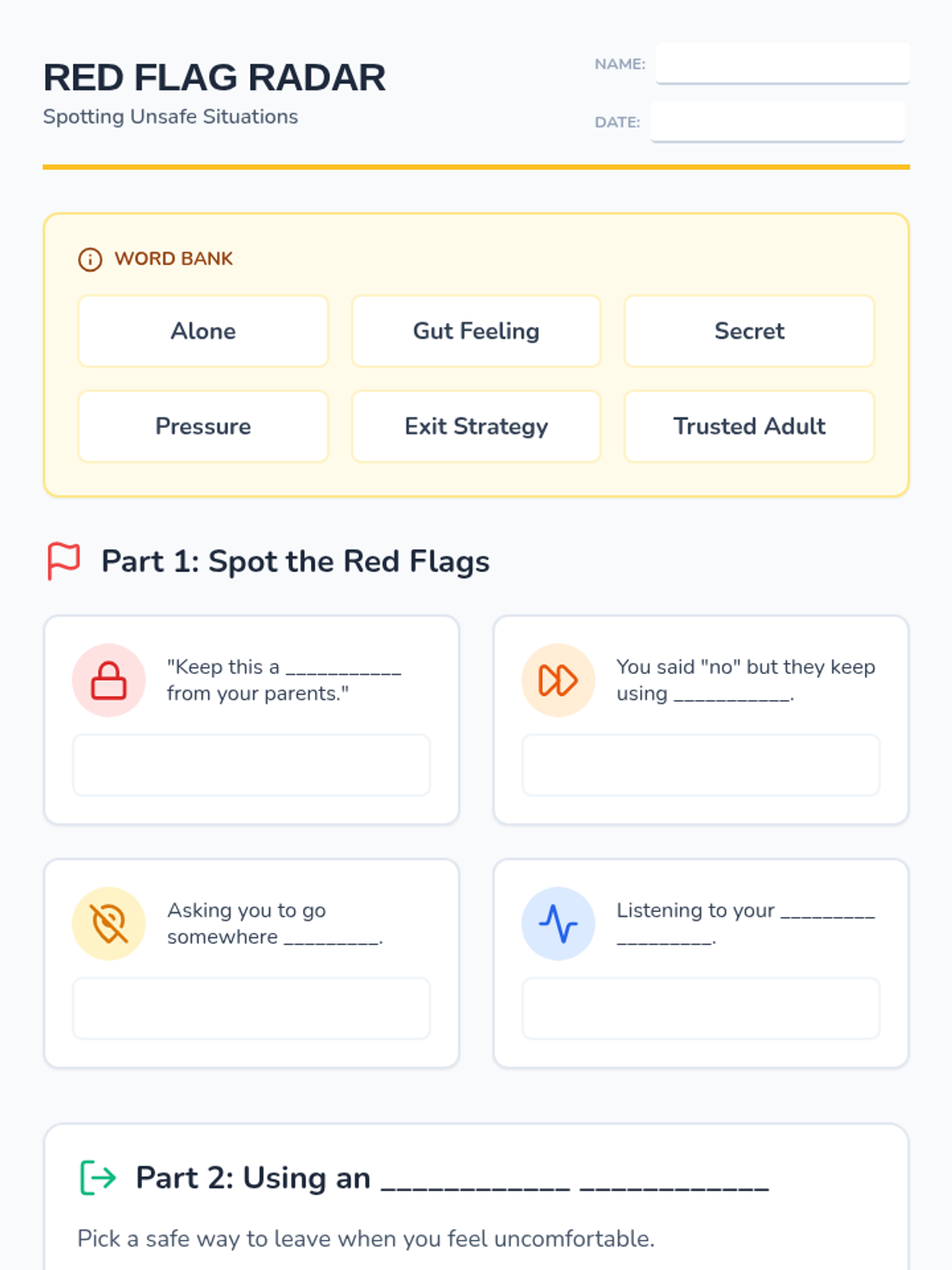
A decision-making worksheet spread over two 8.5x11 pages for maximum readability. Students identify 12 social situations as 'Safe' (Thumbs Up) or 'Unsafe' (Red Flag) using large icons and simplified, gender-neutral language. Options share identical styling for student use.
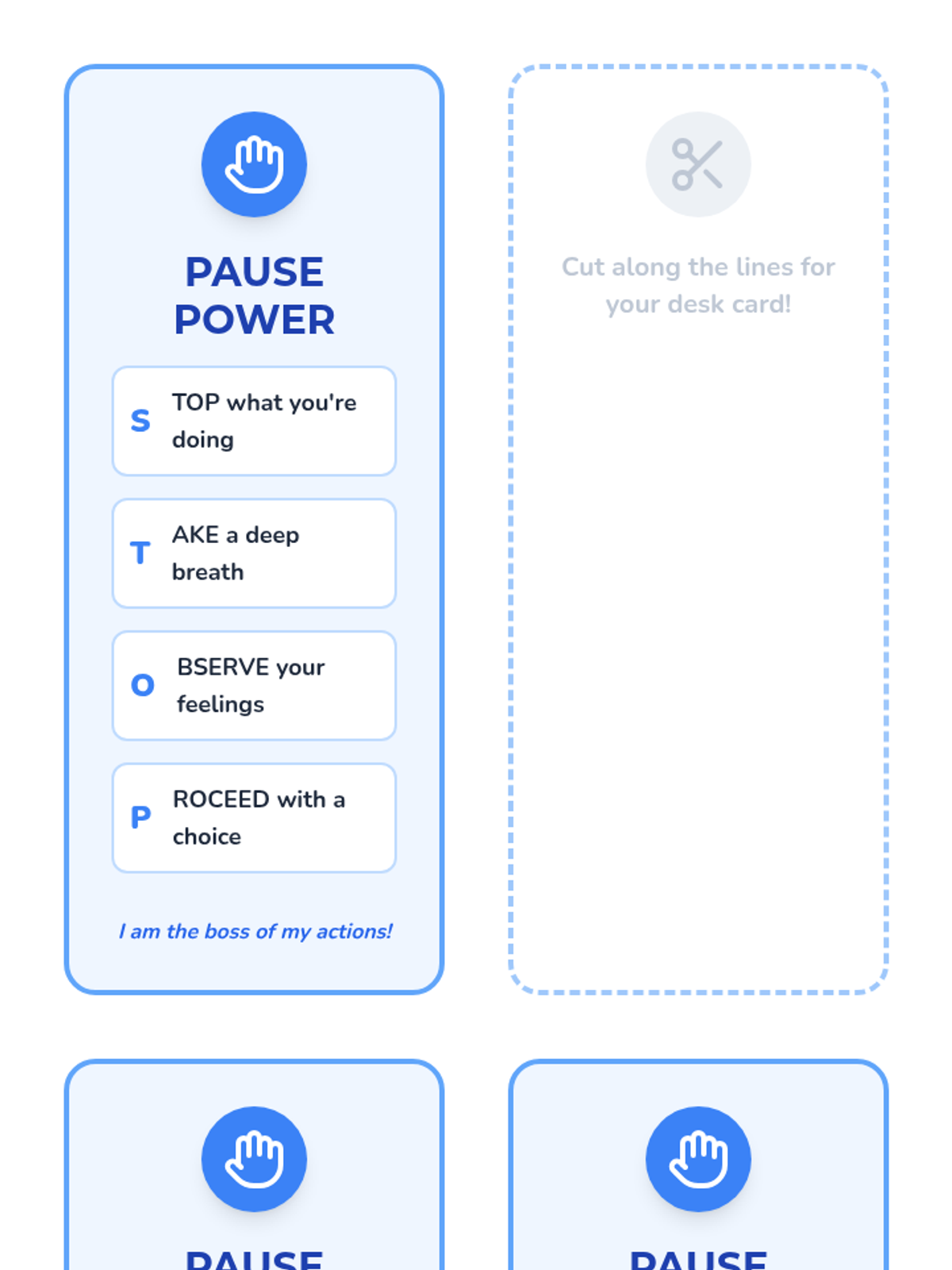
Printable desk cards featuring the STOP strategy (Stop, Take a breath, Observe, Proceed) for impulse control. Designed to be cut out and kept as a visual reminder for students.
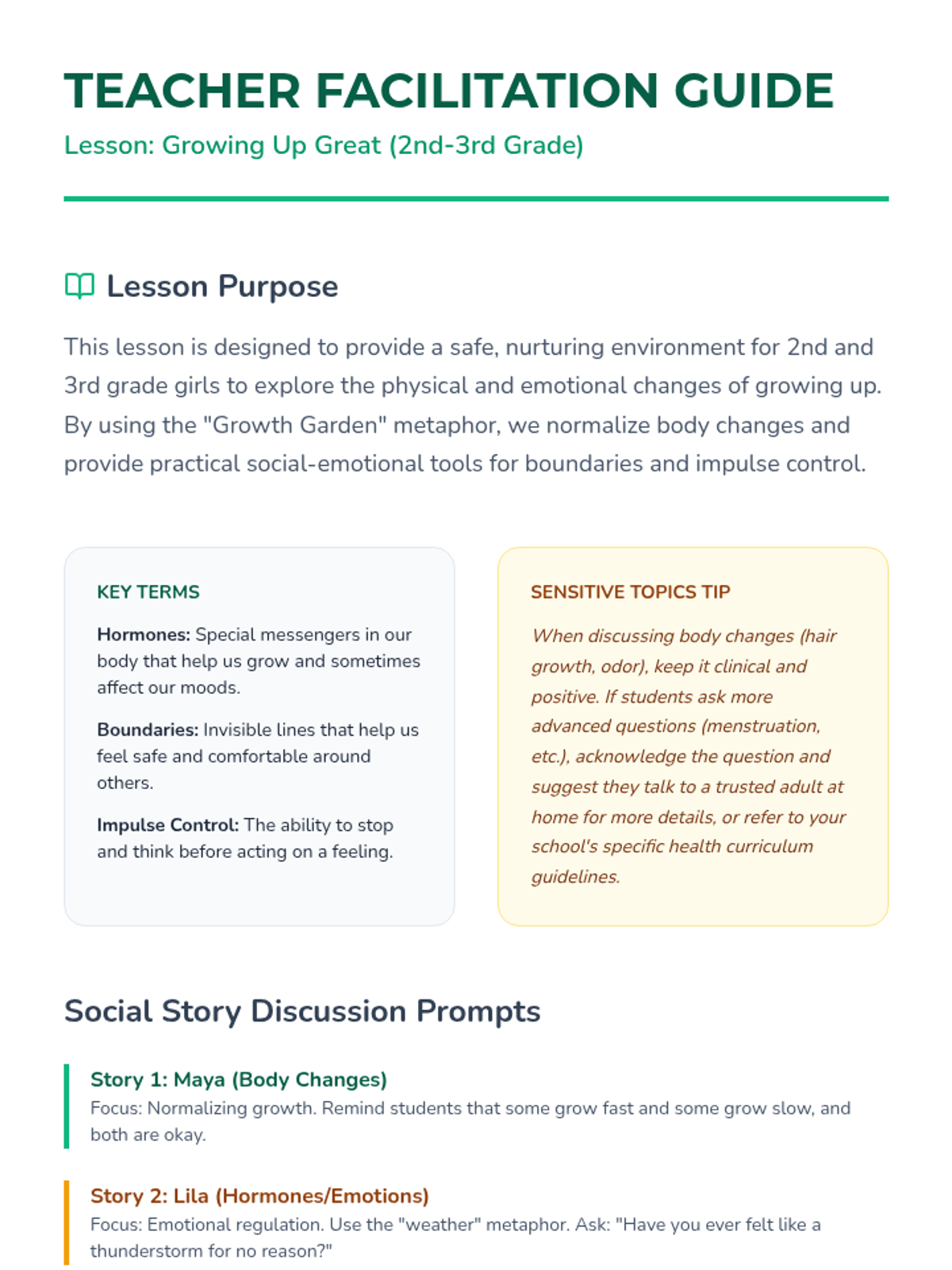
A comprehensive teacher guide for facilitating the 'Growing Up Great' lesson. Includes lesson objectives, key definitions for hormones and boundaries, sensitive topic navigation tips, and discussion prompts for social stories.
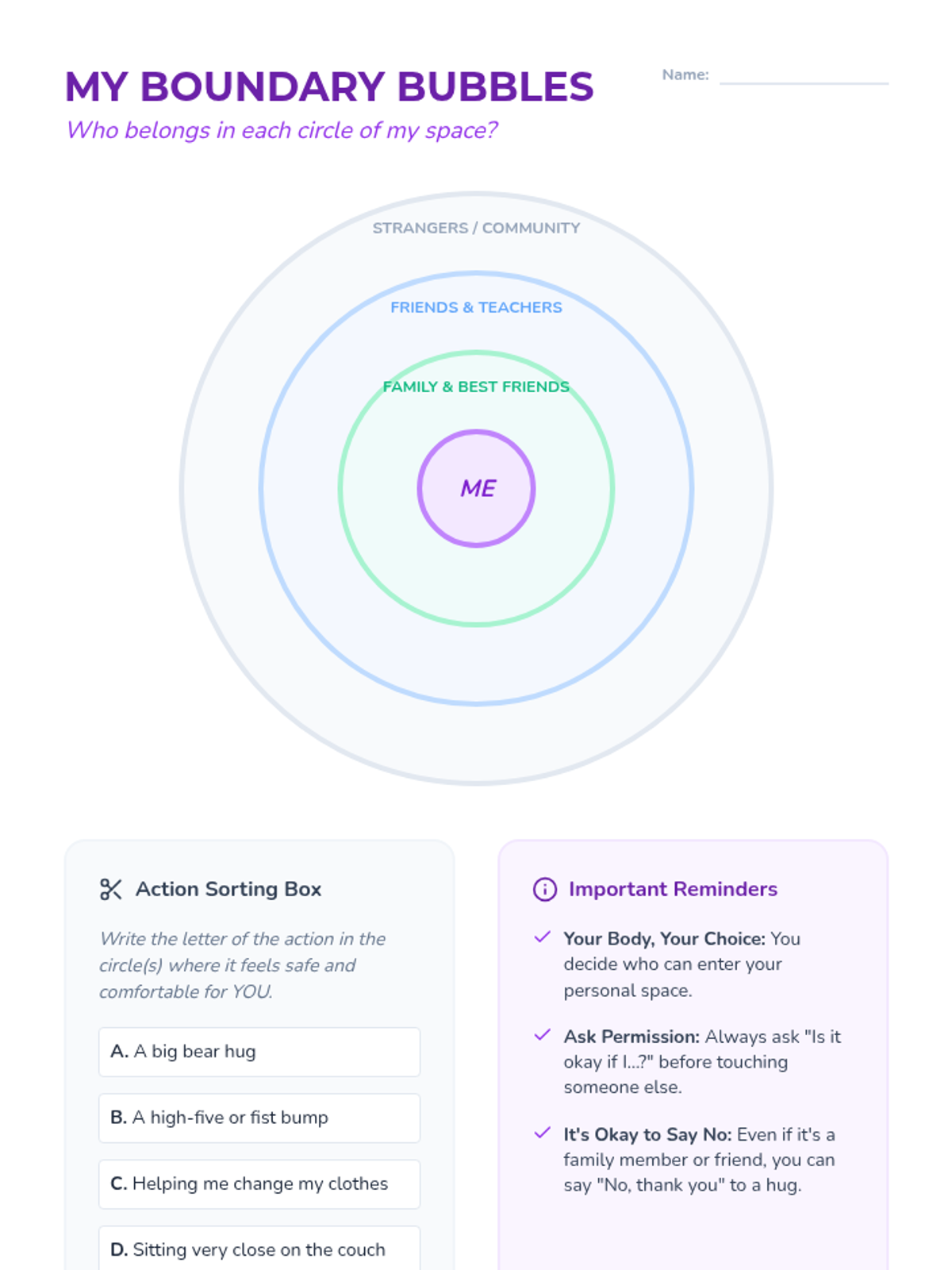
A concentric circles activity worksheet for identifying appropriate physical boundaries with different groups of people (self, family, friends, strangers). It includes a sorting task to help 2nd-3rd grade girls understand personal space levels.
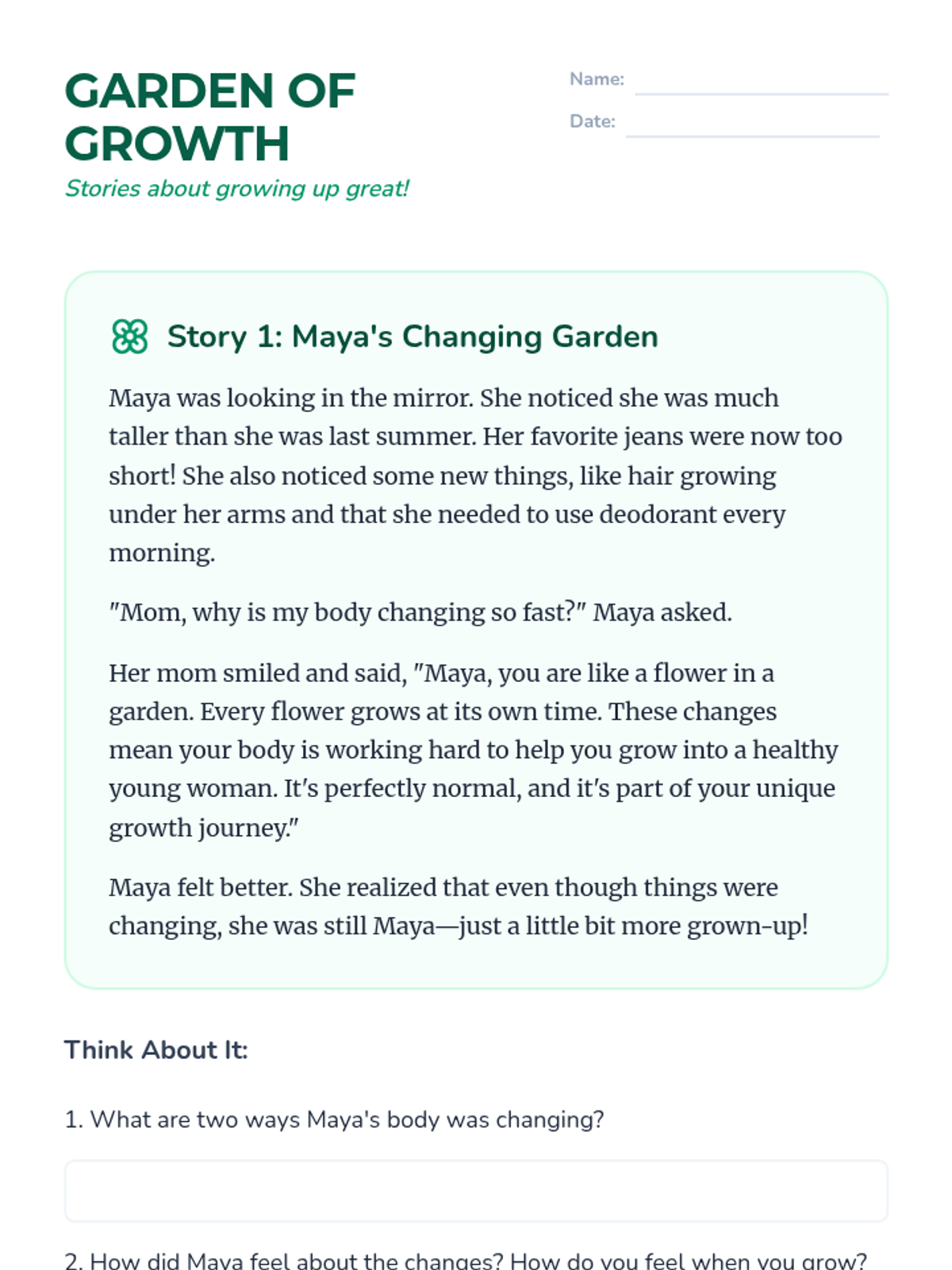
A collection of four illustrated social stories for 2nd-3rd grade girls, covering body changes, emotional regulation (hormones), personal boundaries, and impulse control. Each story includes guided reflection questions for classroom discussion or individual work.
A visually engaging slide deck titled 'Growing Up Great' designed for 2nd-3rd grade girls. It covers body changes, hormones/emotions, impulse control (STOP strategy), and personal boundaries using a growth-themed aesthetic.
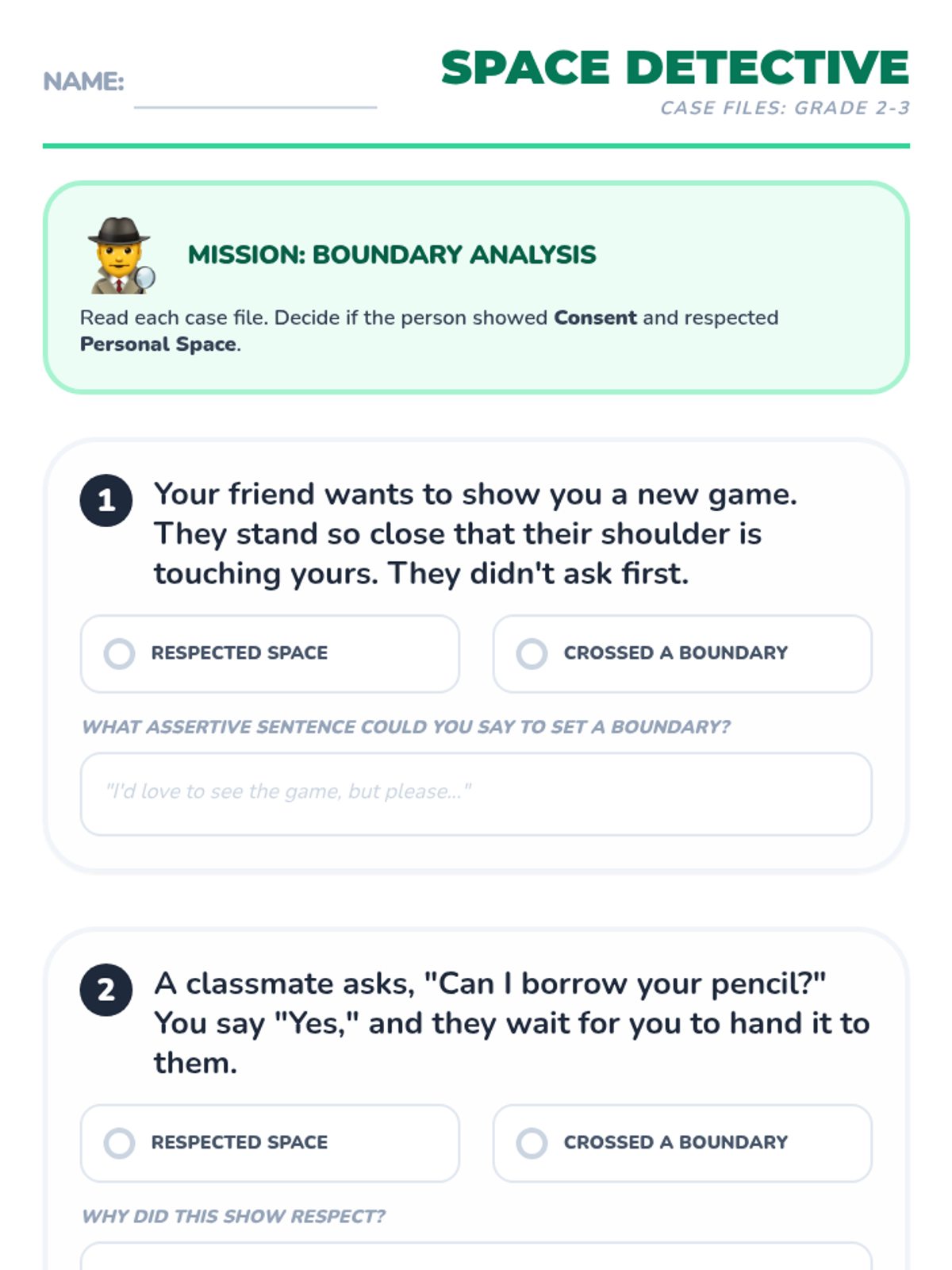
A three-page, boundaries-focused worksheet for 2nd and 3rd-grade students. It features four complex scenario-based checks, a zone identification activity, and a section to identify a trusted safety team.
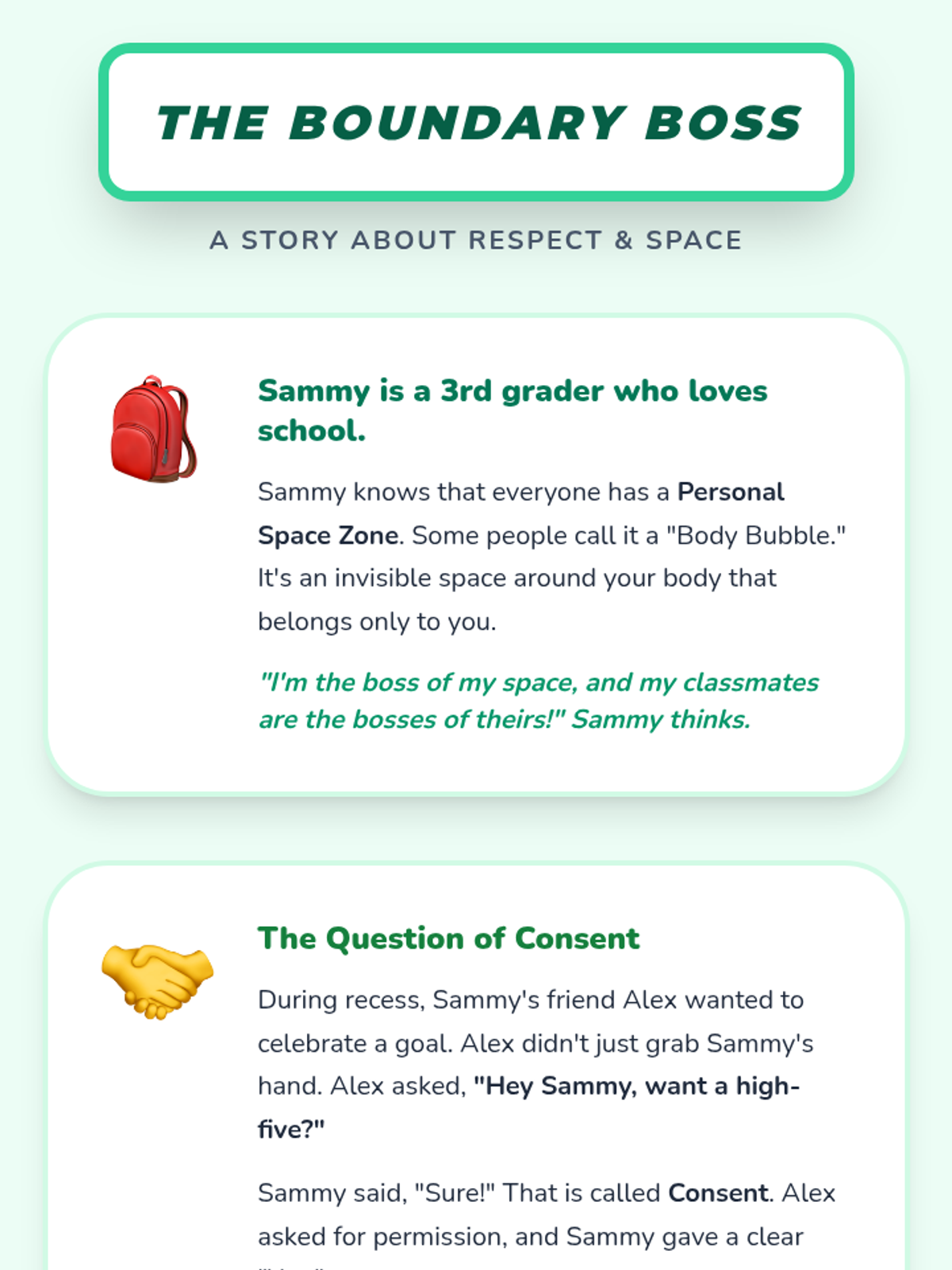
An empowering social story about personal space and the "Body Bubble." Teaches children to ask permission before entering others' space and how to set boundaries when their own space is ignored.
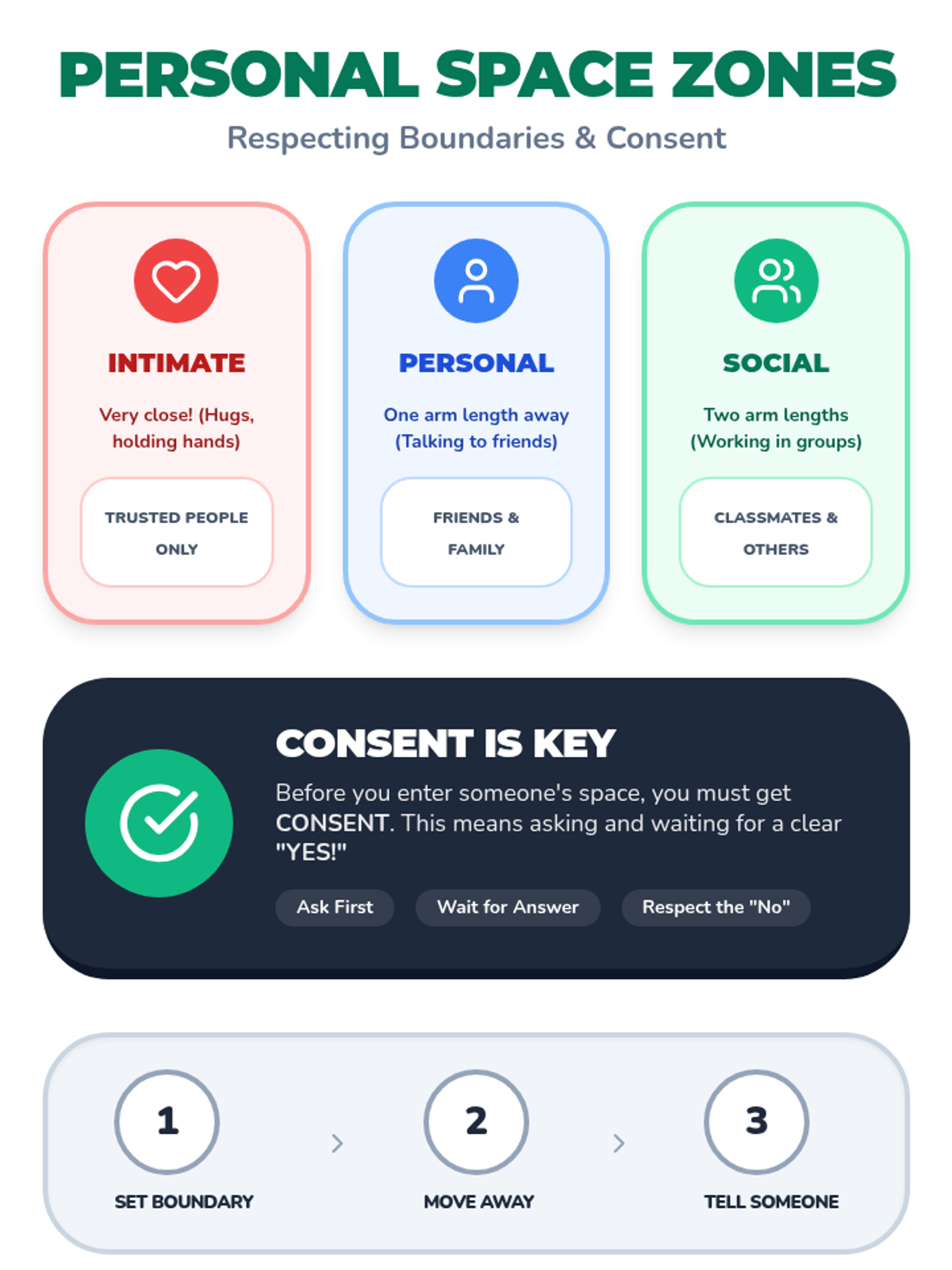
A visual anchor chart focused on personal boundaries and respecting space. It illustrates the difference between respecting and crossing boundaries and provides a clear "Say Stop, Move Away, Tell" strategy.
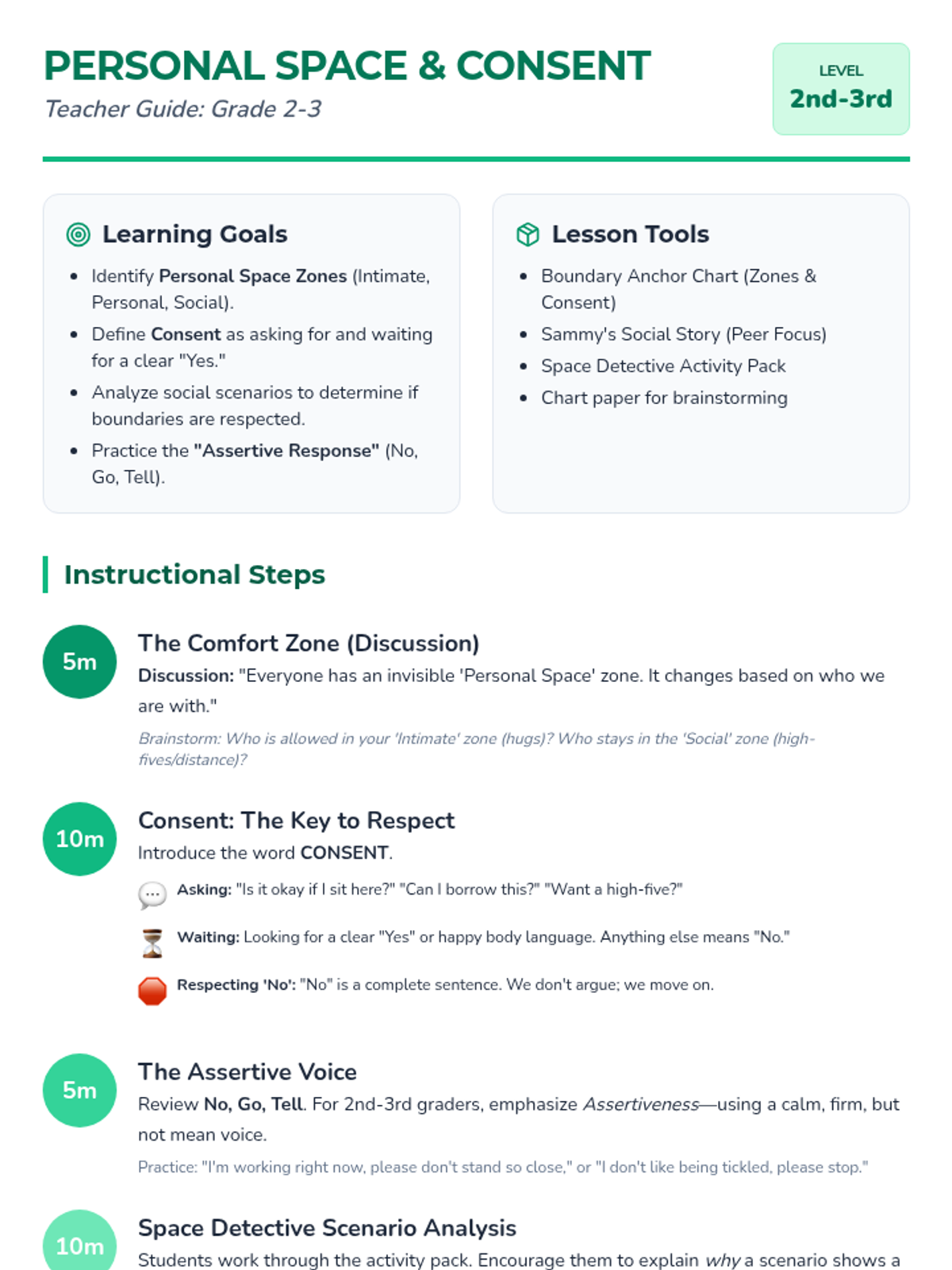
A teacher-facing lesson plan for 2nd and 3rd-grade students focused on personal space zones, the concept of consent, and assertive communication. Includes discussion prompts and role-play activities.
A set of 6 printable scenario cards for students to practice asserting boundaries, applying the No-Go-Tell rule, and recognizing when to involve a trusted adult.
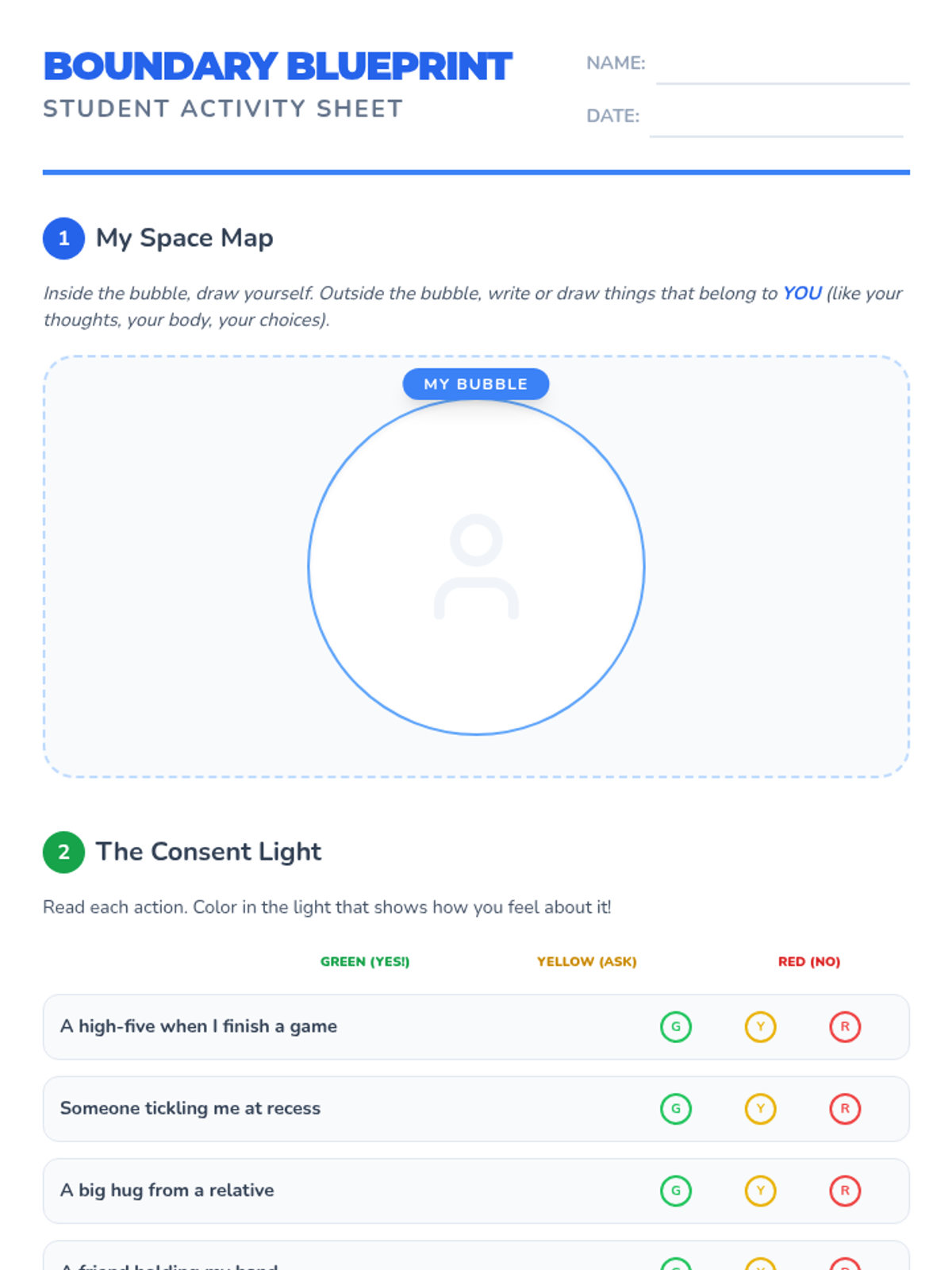
A hands-on student worksheet for grades 3-5 to map personal space, practice evaluating boundaries with the "Consent Light," and identify their trusted adult "Safety Team."
Engaging classroom presentation slides for the "Boundary Bosses" lesson, featuring high-contrast visuals, minimum 24px font size, and clear explanations of body autonomy and consent.
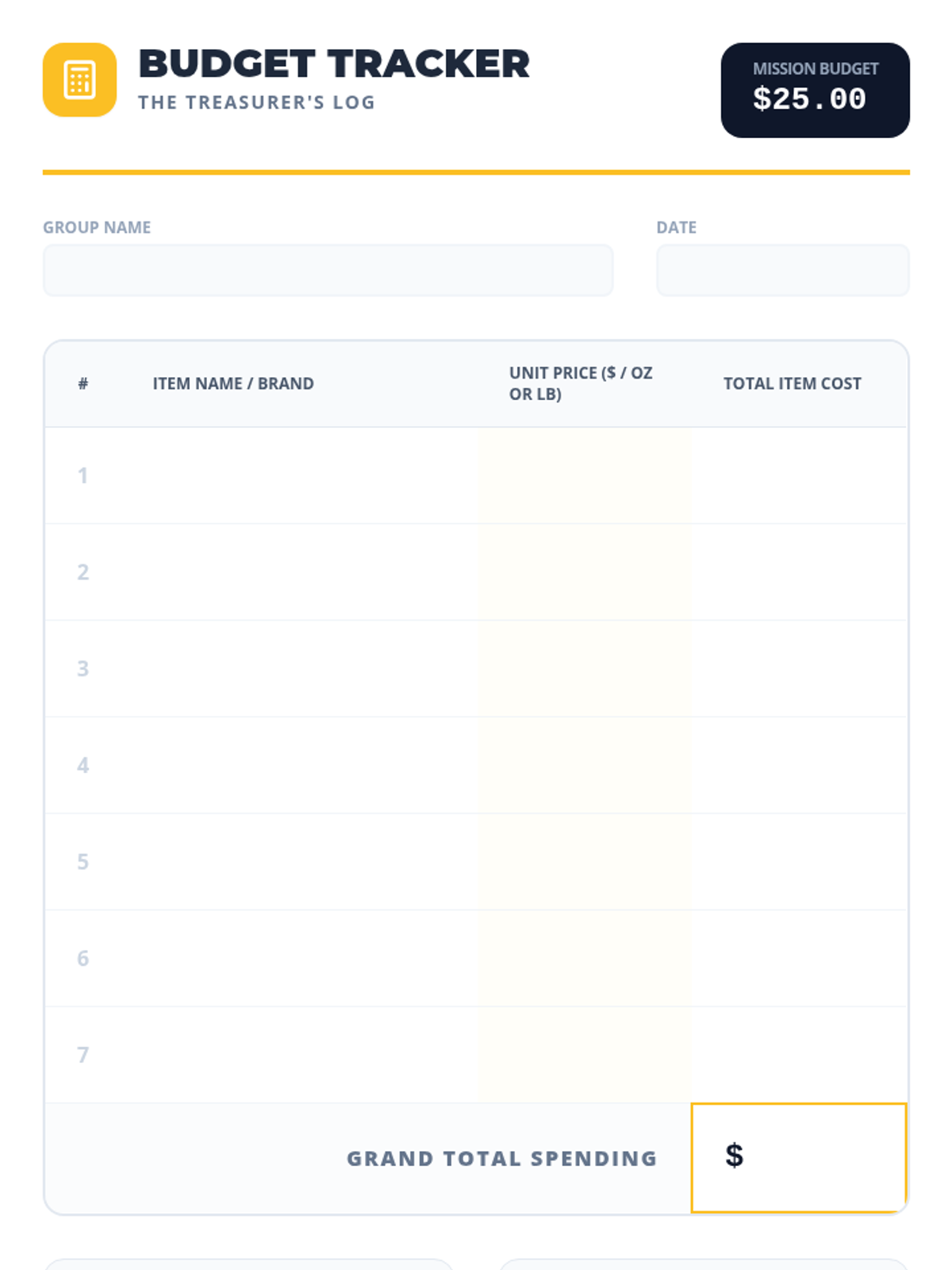
A specialized tracking sheet for the team 'Treasurer' to log grocery items, record unit prices, and calculate total spending within a $25 budget.
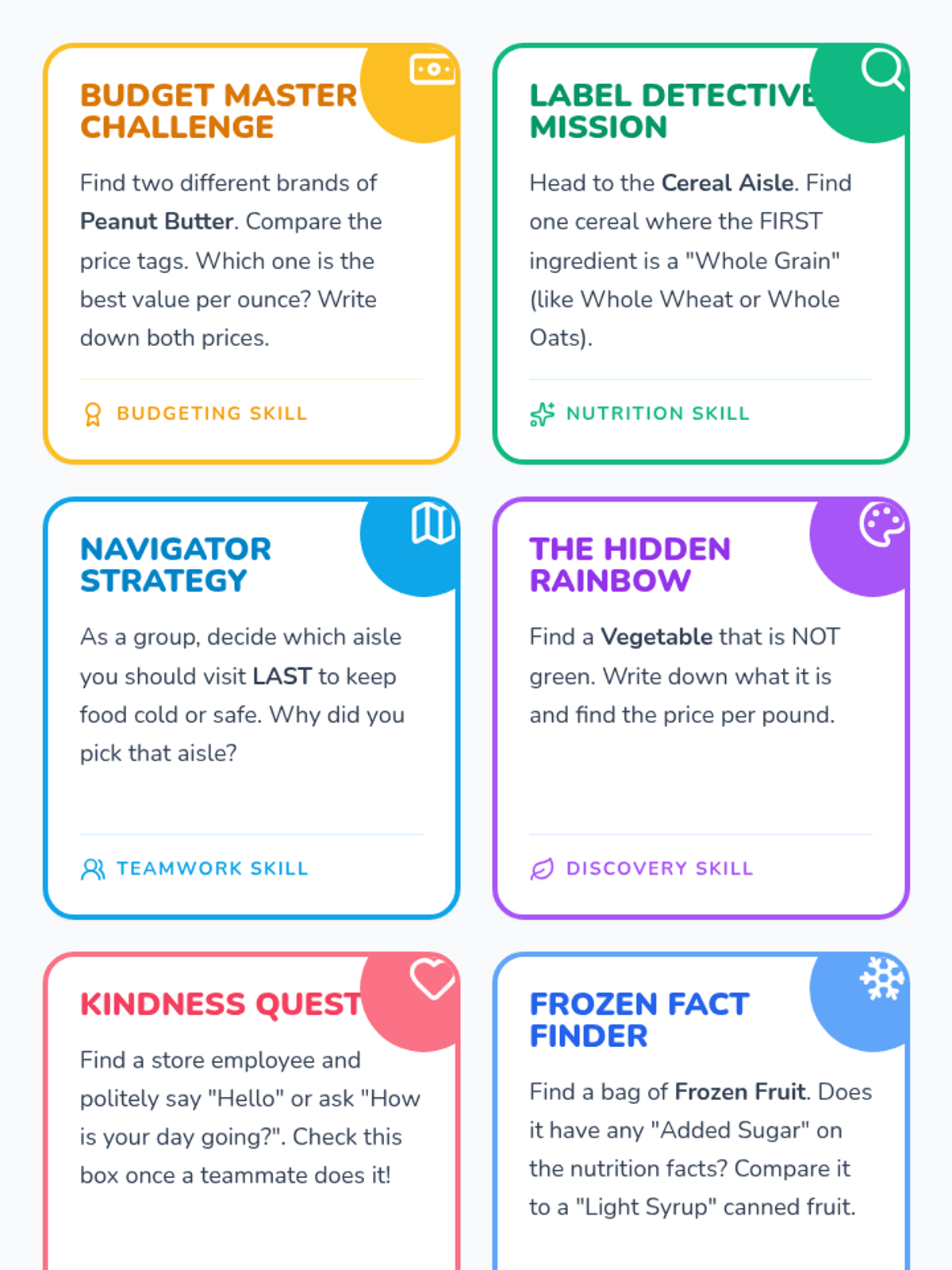
A set of 6 printable task cards that challenge student teams to perform specific missions involving nutrition, budgeting, and social skills.
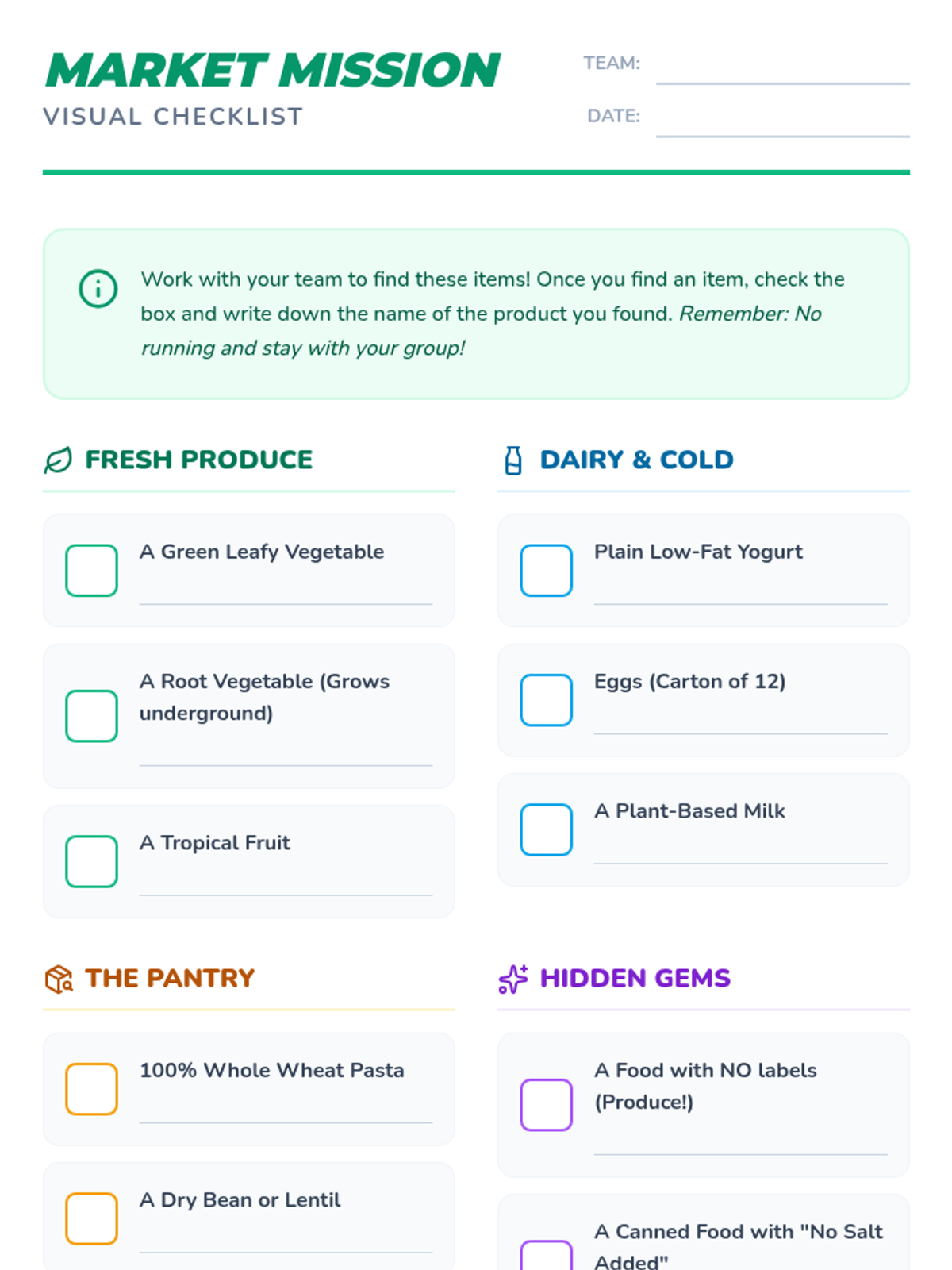
A visual checklist with icons and checkboxes for students to identify healthy grocery items across various departments.
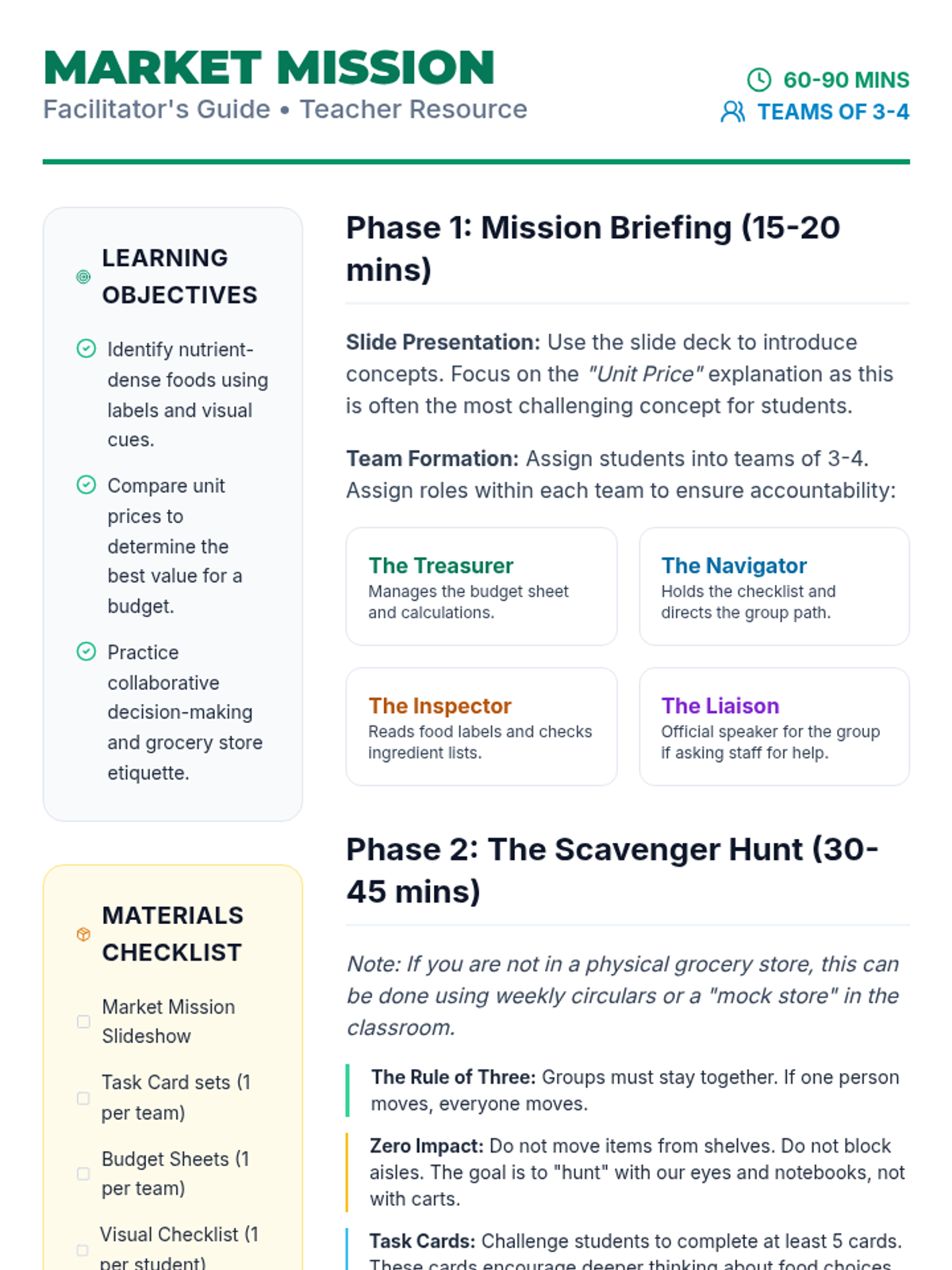
A comprehensive guide for teachers and facilitators to lead the Market Mission scavenger hunt, including learning objectives, team roles, and debrief questions.
A vibrant, visual slide deck that introduces the Market Mission scavenger hunt, covering health tips, budgeting basics, and teamwork expectations.