Essential food groups, nutrient functions, and balanced meal planning. Develops skills for interpreting nutrition labels and adopting lifelong healthy eating patterns.
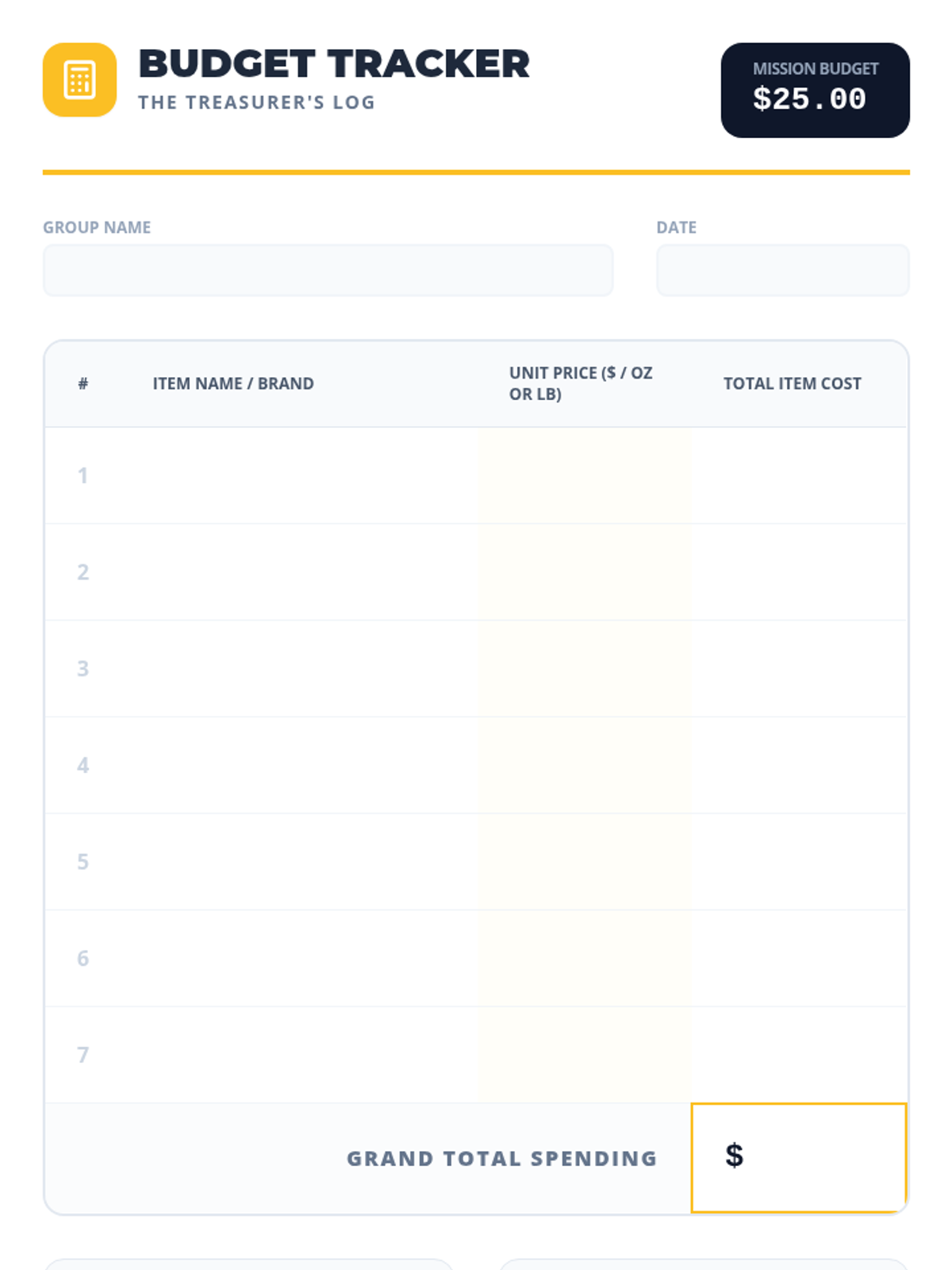
A specialized tracking sheet for the team 'Treasurer' to log grocery items, record unit prices, and calculate total spending within a $25 budget.
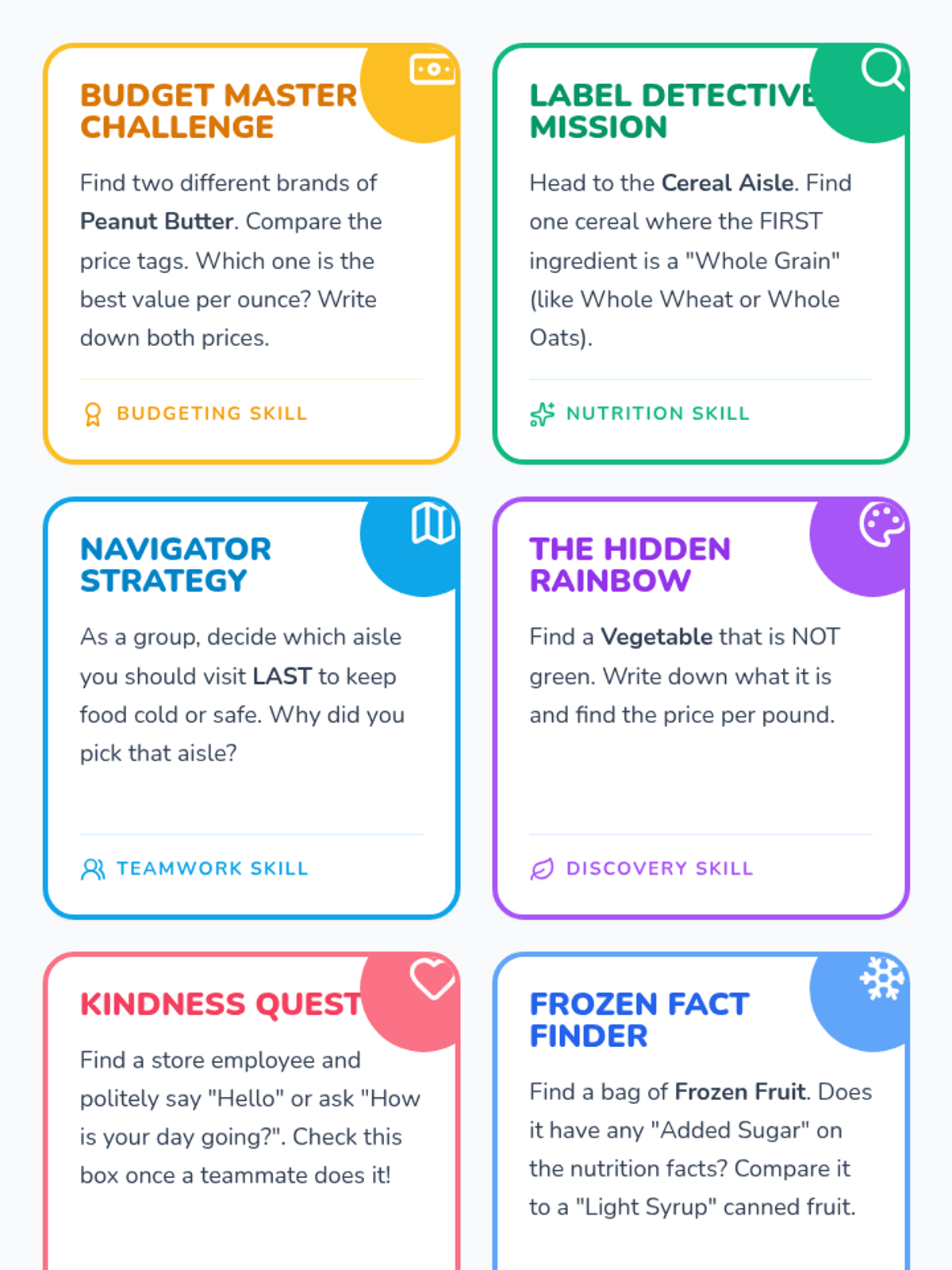
A set of 6 printable task cards that challenge student teams to perform specific missions involving nutrition, budgeting, and social skills.
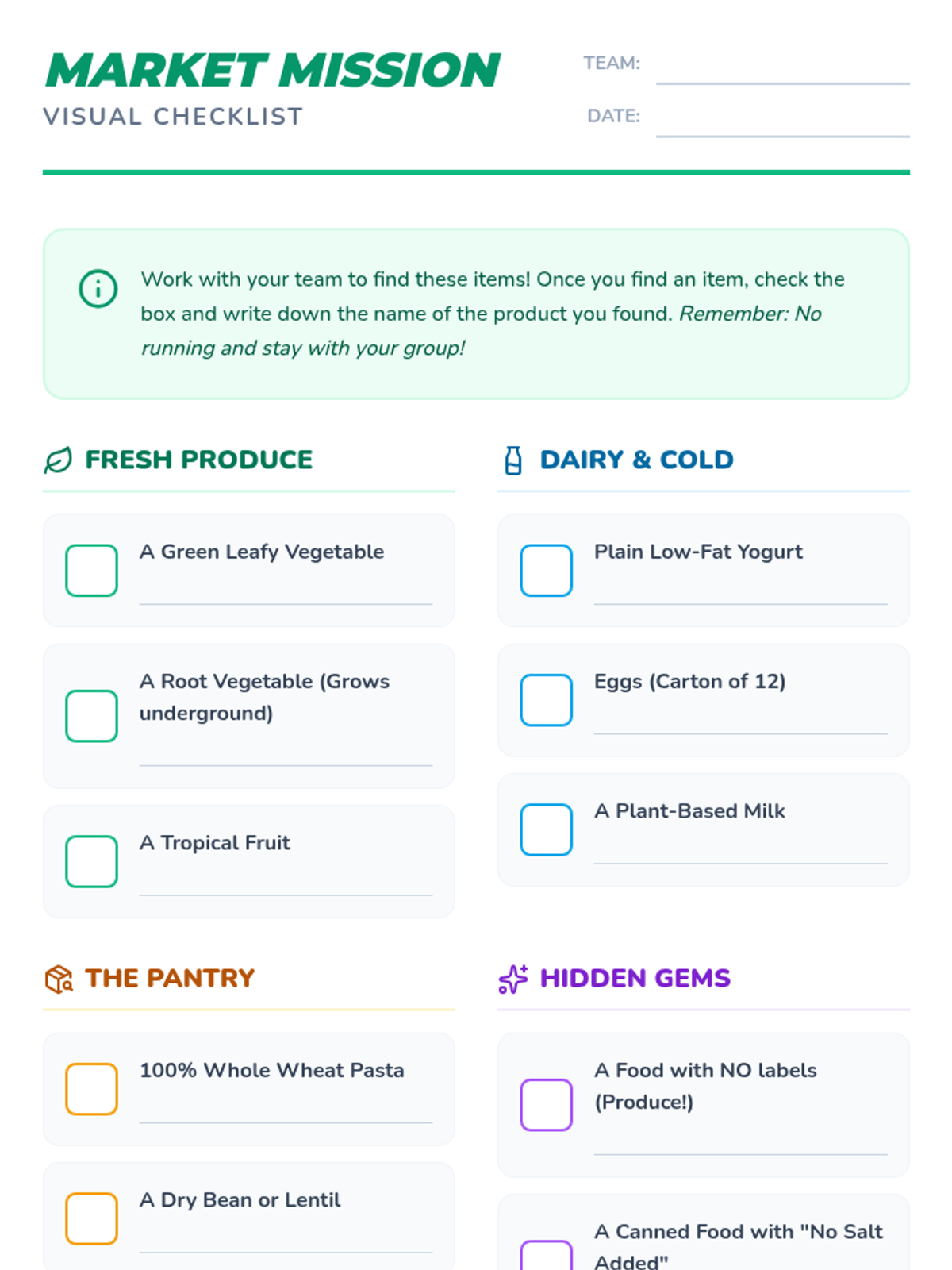
A visual checklist with icons and checkboxes for students to identify healthy grocery items across various departments.
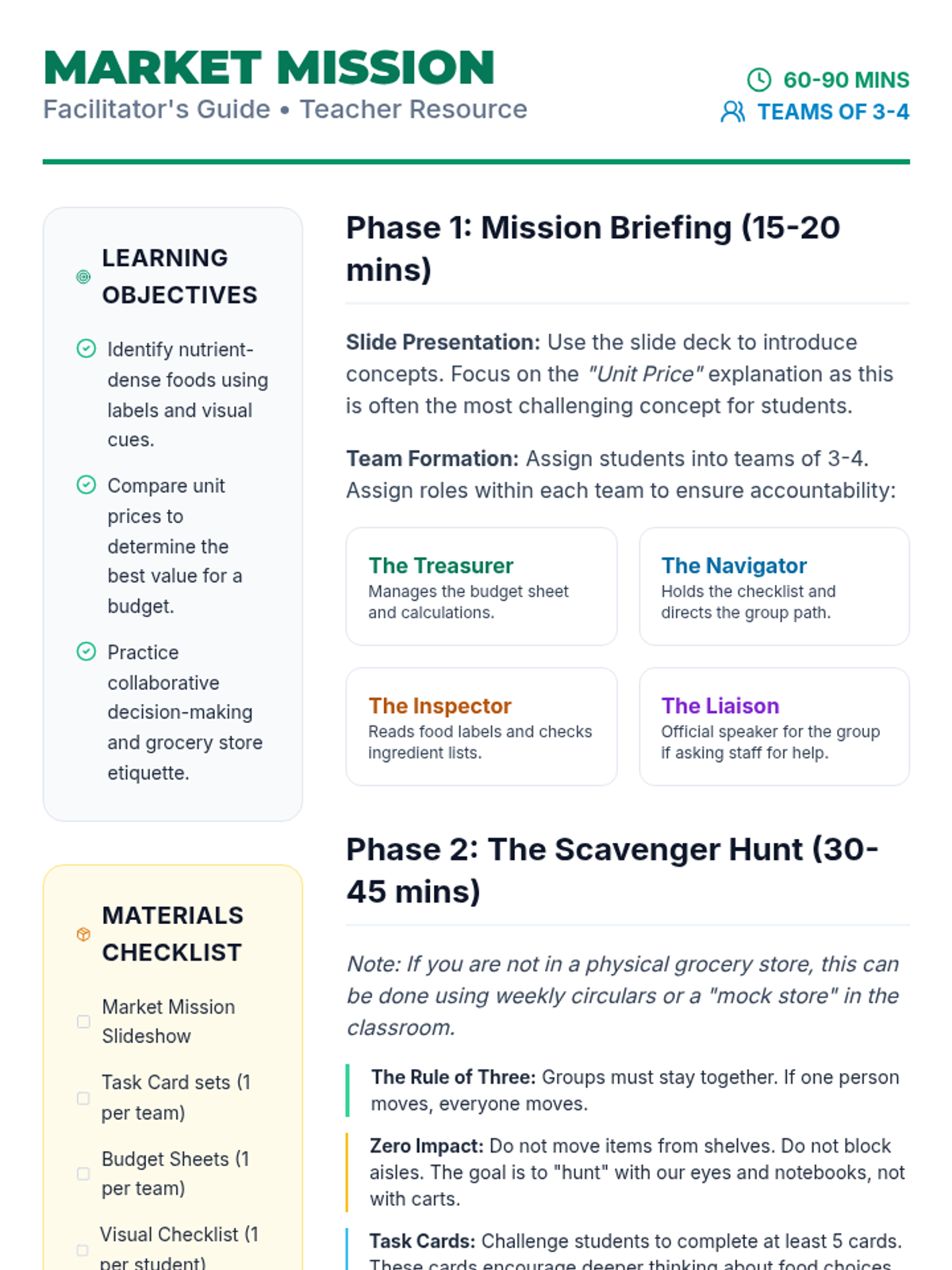
A comprehensive guide for teachers and facilitators to lead the Market Mission scavenger hunt, including learning objectives, team roles, and debrief questions.
A vibrant, visual slide deck that introduces the Market Mission scavenger hunt, covering health tips, budgeting basics, and teamwork expectations.
A car-themed social story explaining the different purposes of home rules and school rules, helping students understand when and why to "shift gears." Includes safety rules about fighting and dangerous items using road safety metaphors.
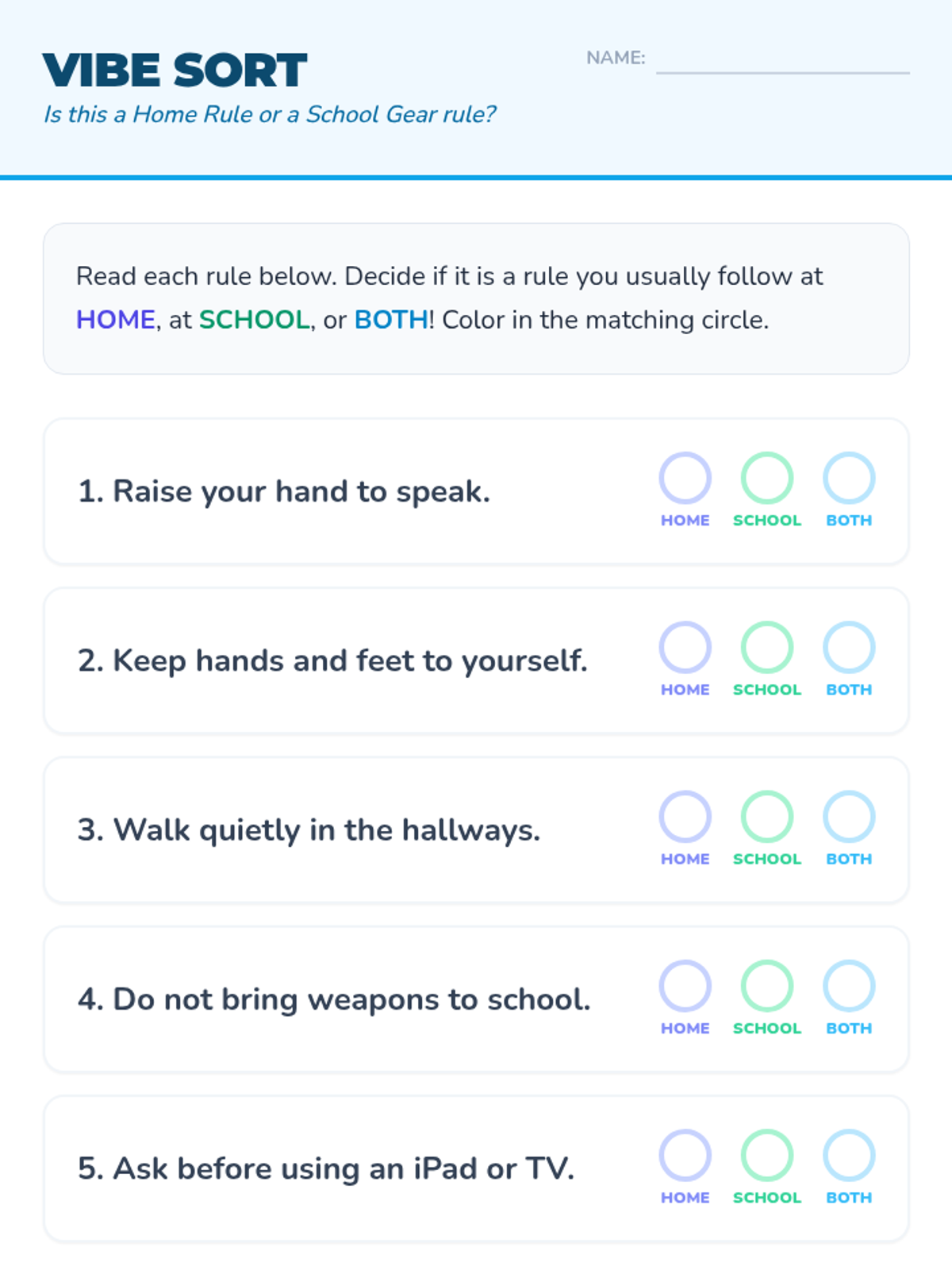
A comparative worksheet where students identify whether common rules belong at home, at school, or both. Updated to include safety-specific rules like keeping hands to oneself and not bringing weapons to school.
A social story explaining the different purposes of home rules and school rules, helping students understand when and why to "switch gears." Now includes a dedicated section on school safety rules regarding fighting and dangerous items.
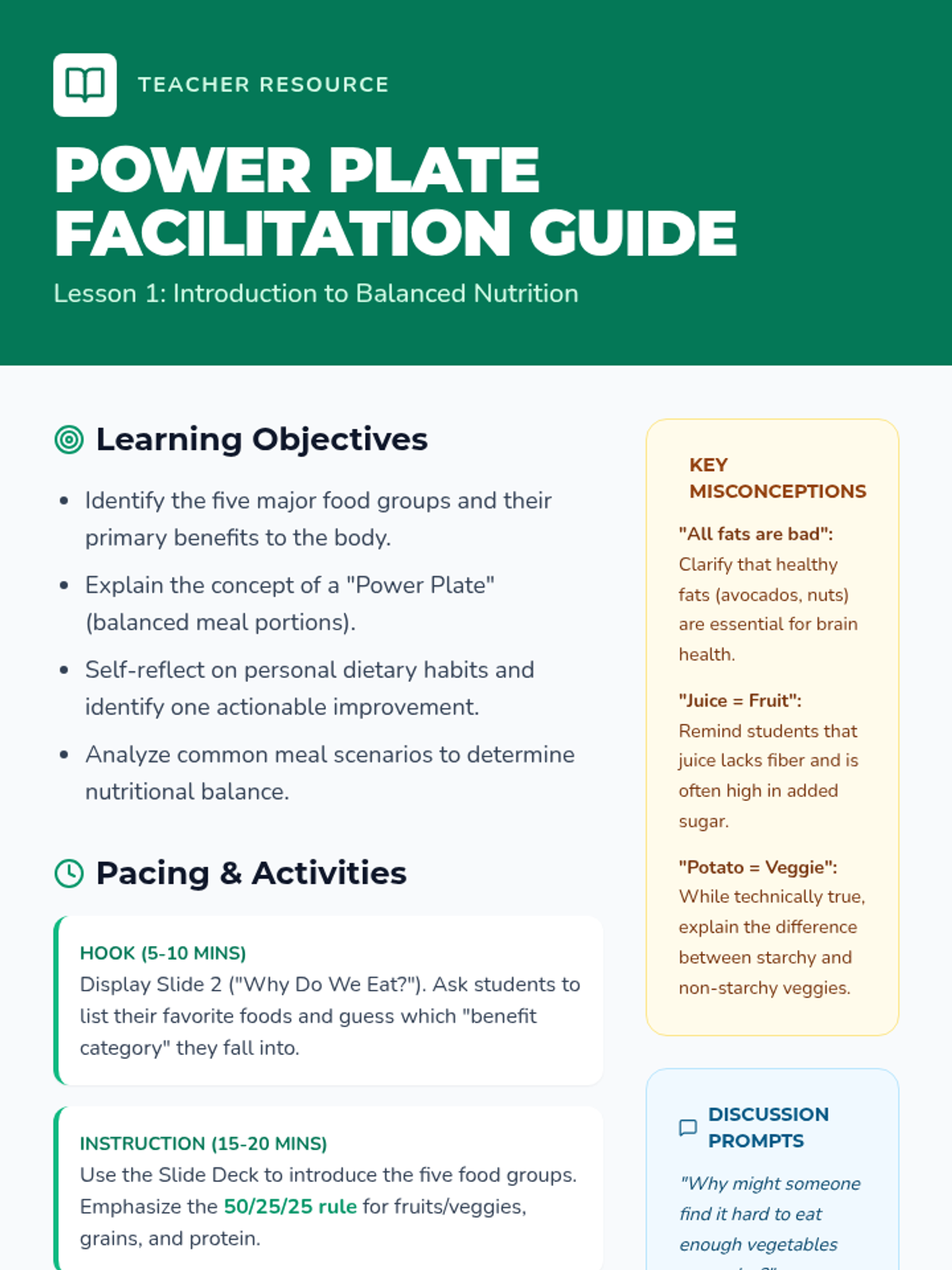
A comprehensive guide for teachers to deliver the Power Plate lesson, including learning objectives, pacing, discussion prompts, and differentiation strategies.
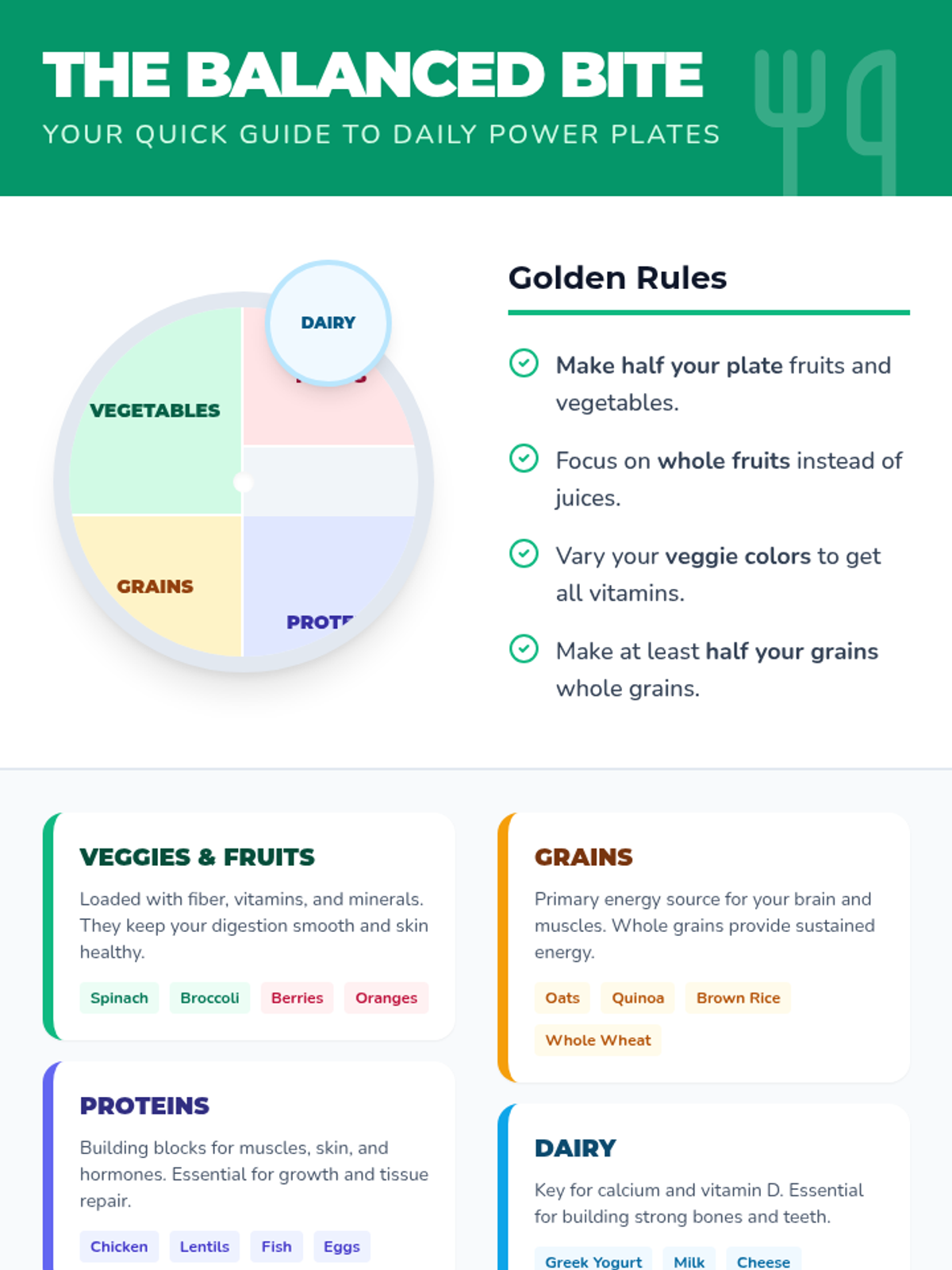
A visually engaging reference sheet (anchor chart) summarizing the "Power Plate" method and key examples for each food group.
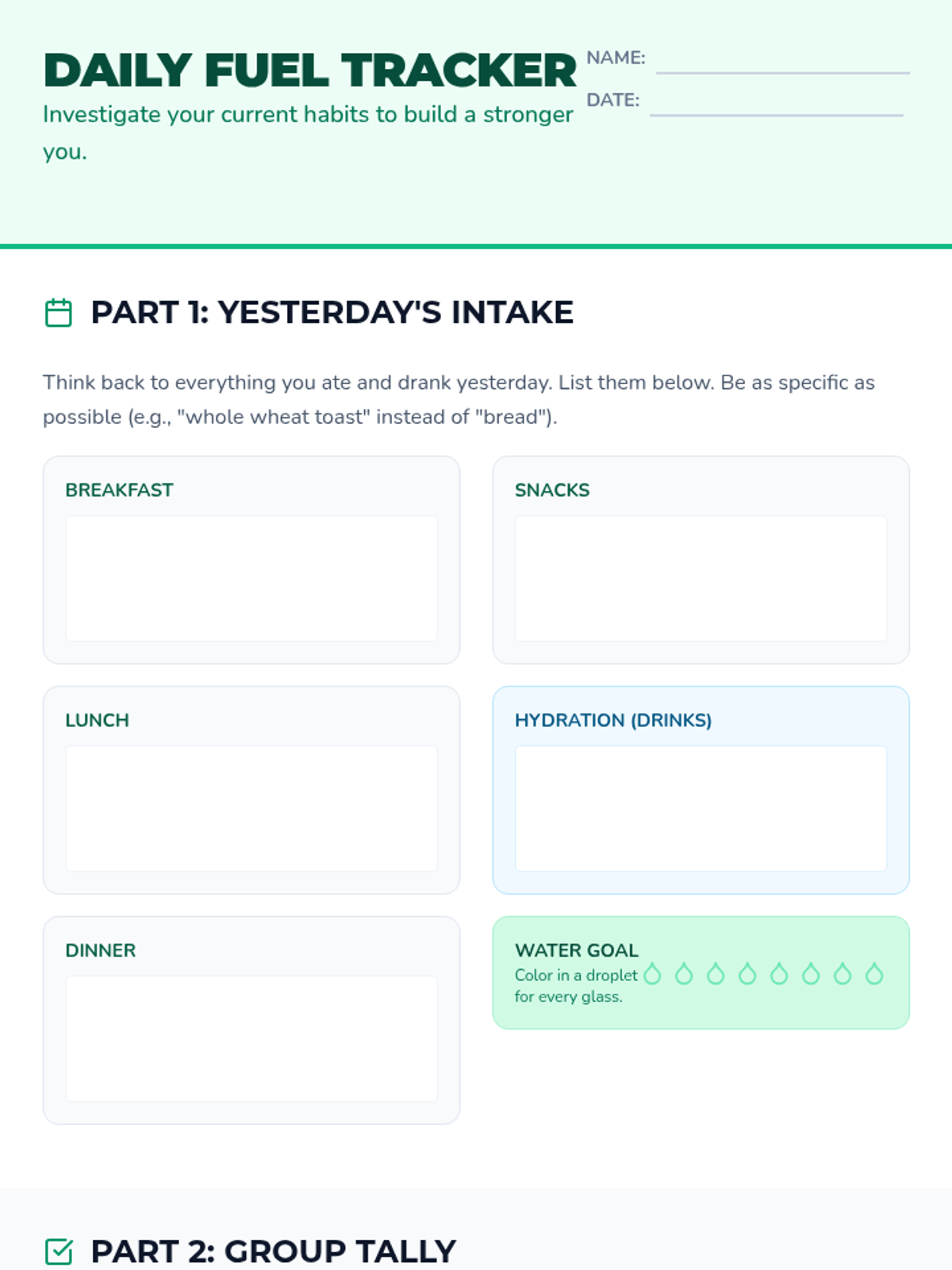
A reflective worksheet for students to track their food intake for a day, categorize it into the five food groups, and identify areas for improvement.
A visual presentation introducing the five food groups, the importance of balanced nutrition, and the "Power Plate" method for building healthy meals.
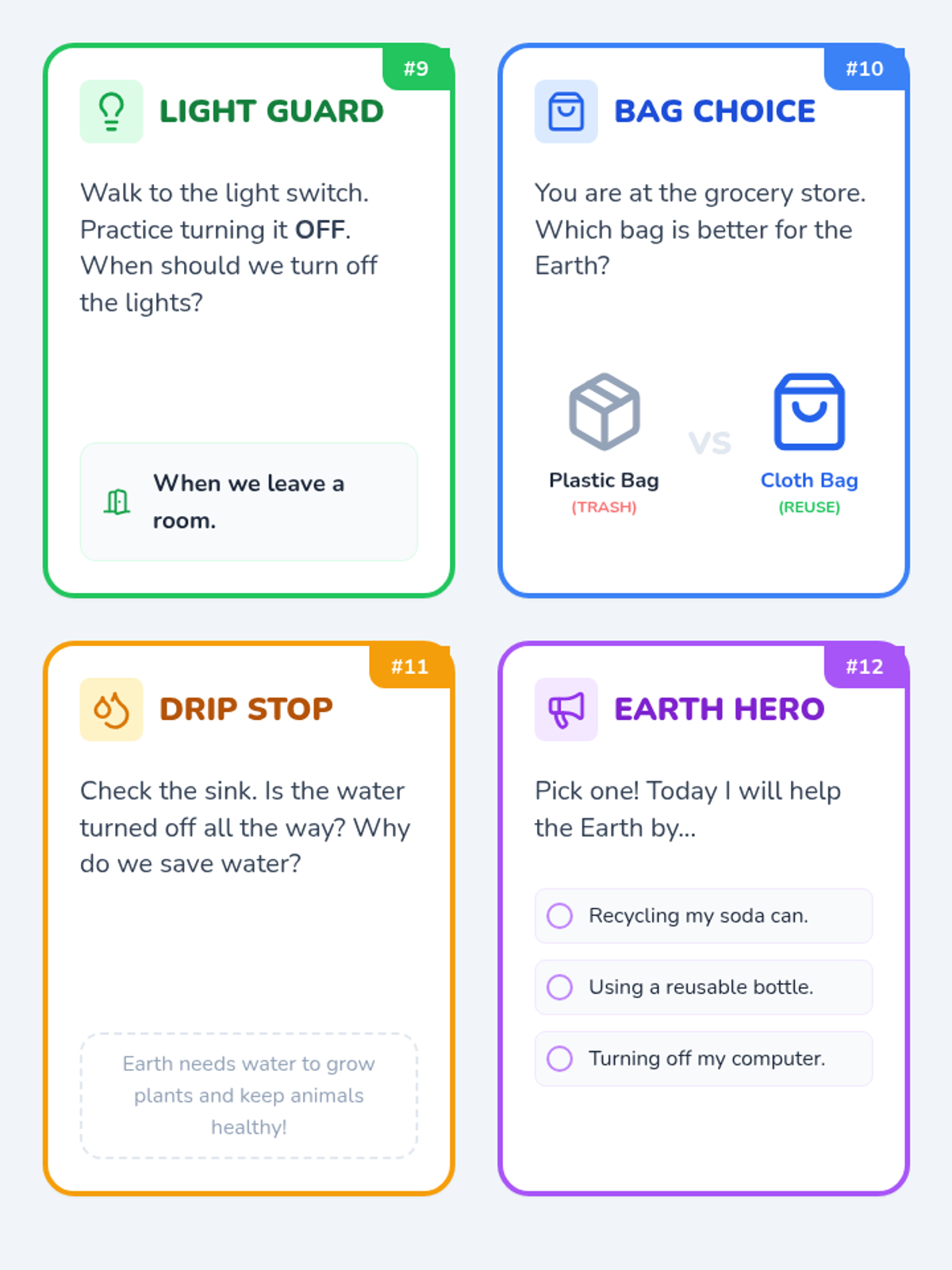
Task cards for Lesson 3 focusing on daily environmental habits like turning off lights, using reusable bags, and saving water.
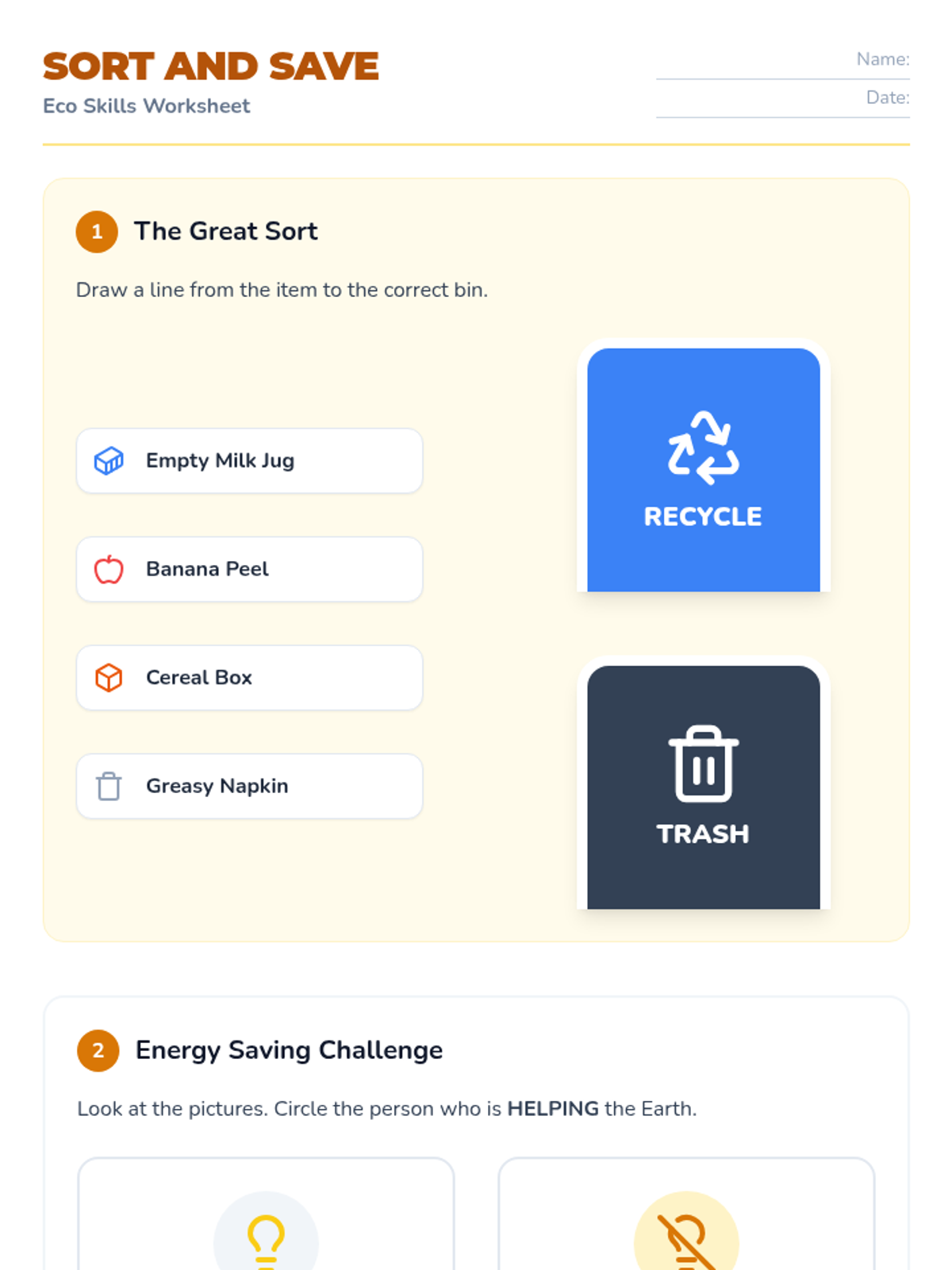
A worksheet for Lesson 3 involving recycling sorting (blue bin vs trash) and identifying energy and water-saving habits.
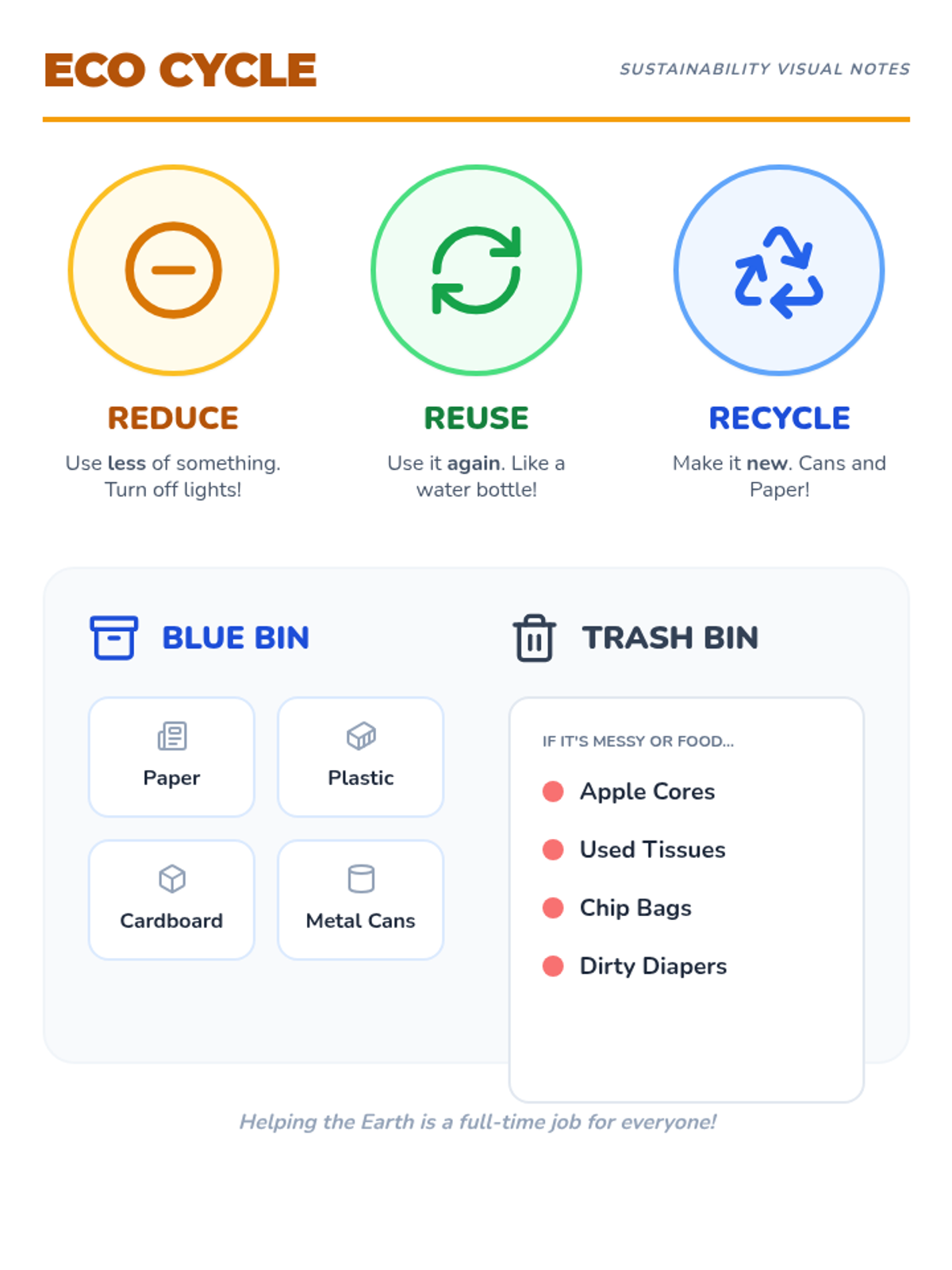
Visual notes for Lesson 3 detailing the "3 Rs" (Reduce, Reuse, Recycle) and a visual sorting guide for blue bins versus trash cans.
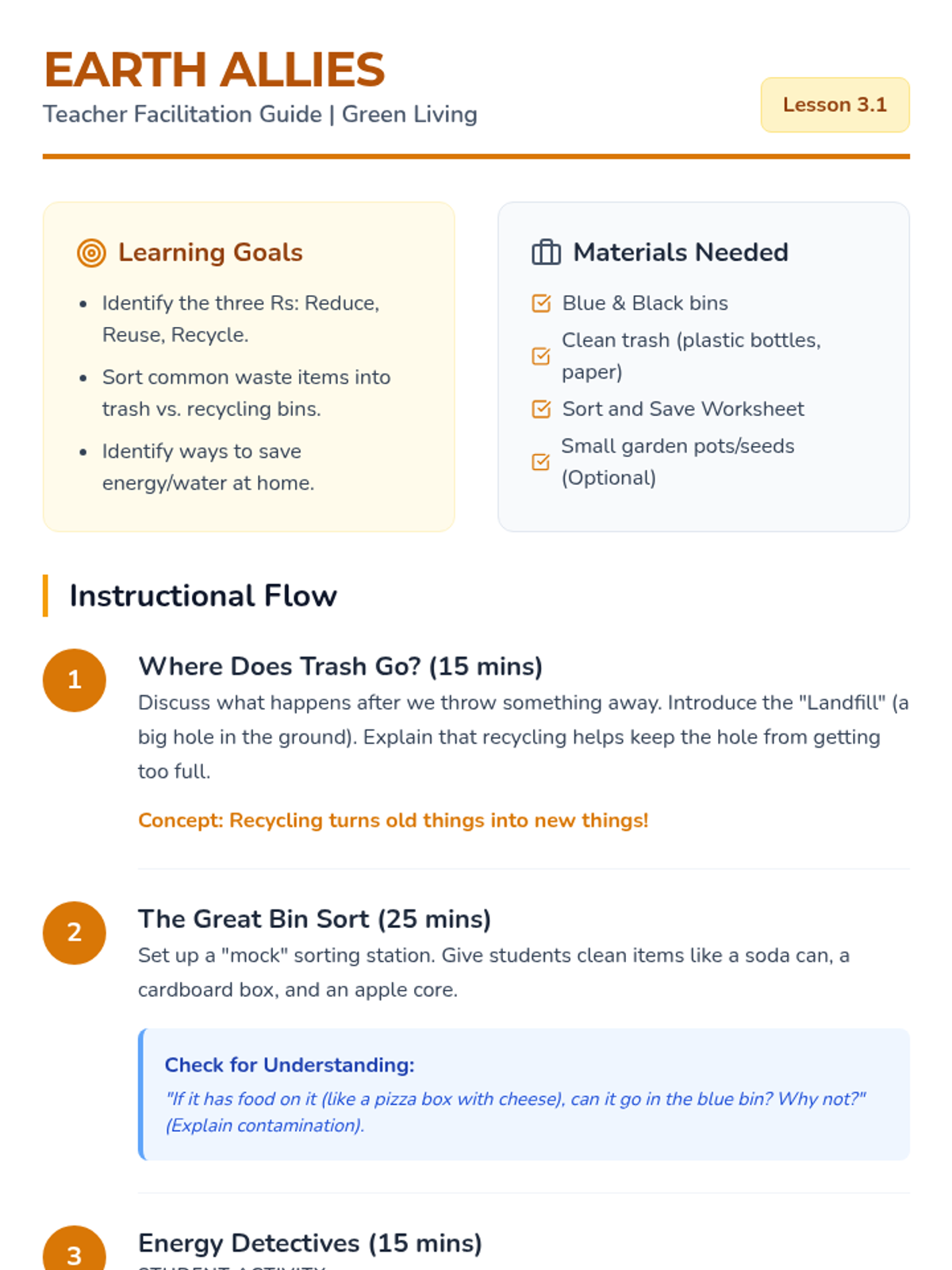
A teacher facilitation guide for Lesson 3 focusing on sustainability, recycling sorting activities, and energy conservation practices for life skills students.
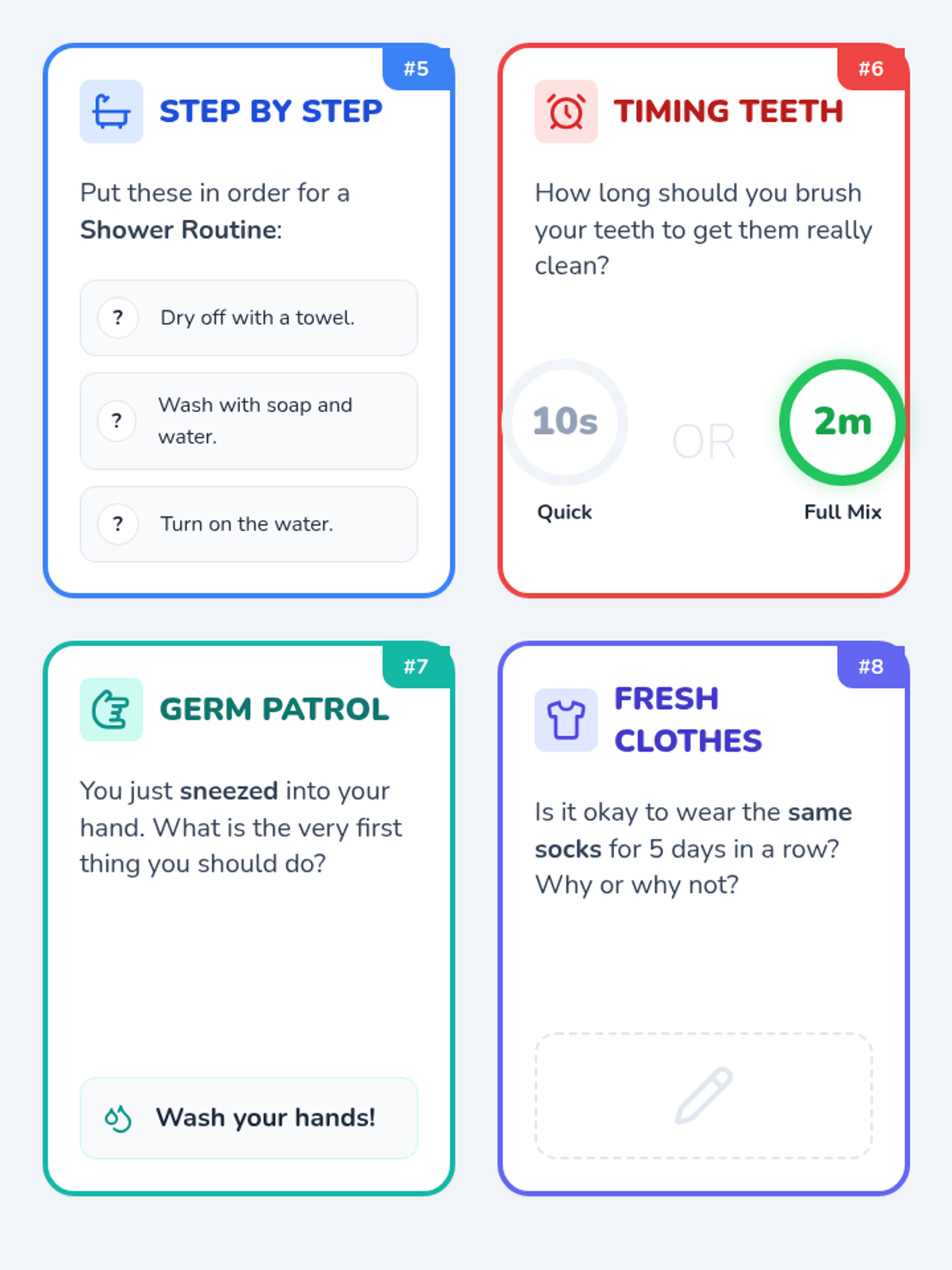
Task cards for Lesson 2 focusing on daily living hygiene skills like the steps of a shower routine, tooth brushing duration, and germ management.
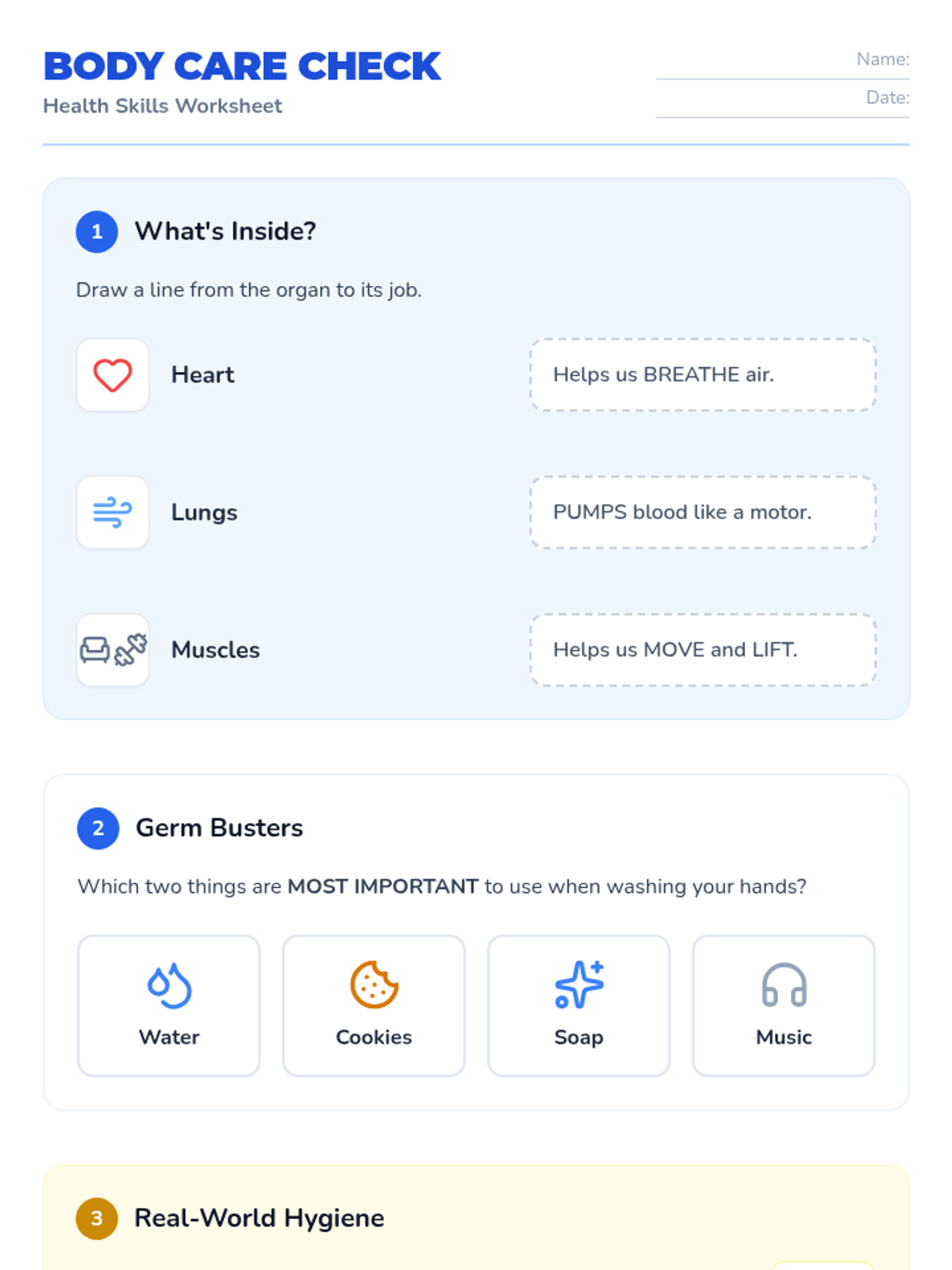
A worksheet for Lesson 2 that includes anatomy matching (heart, lungs, muscles) and practical hygiene scenarios like handwashing and post-exercise care.
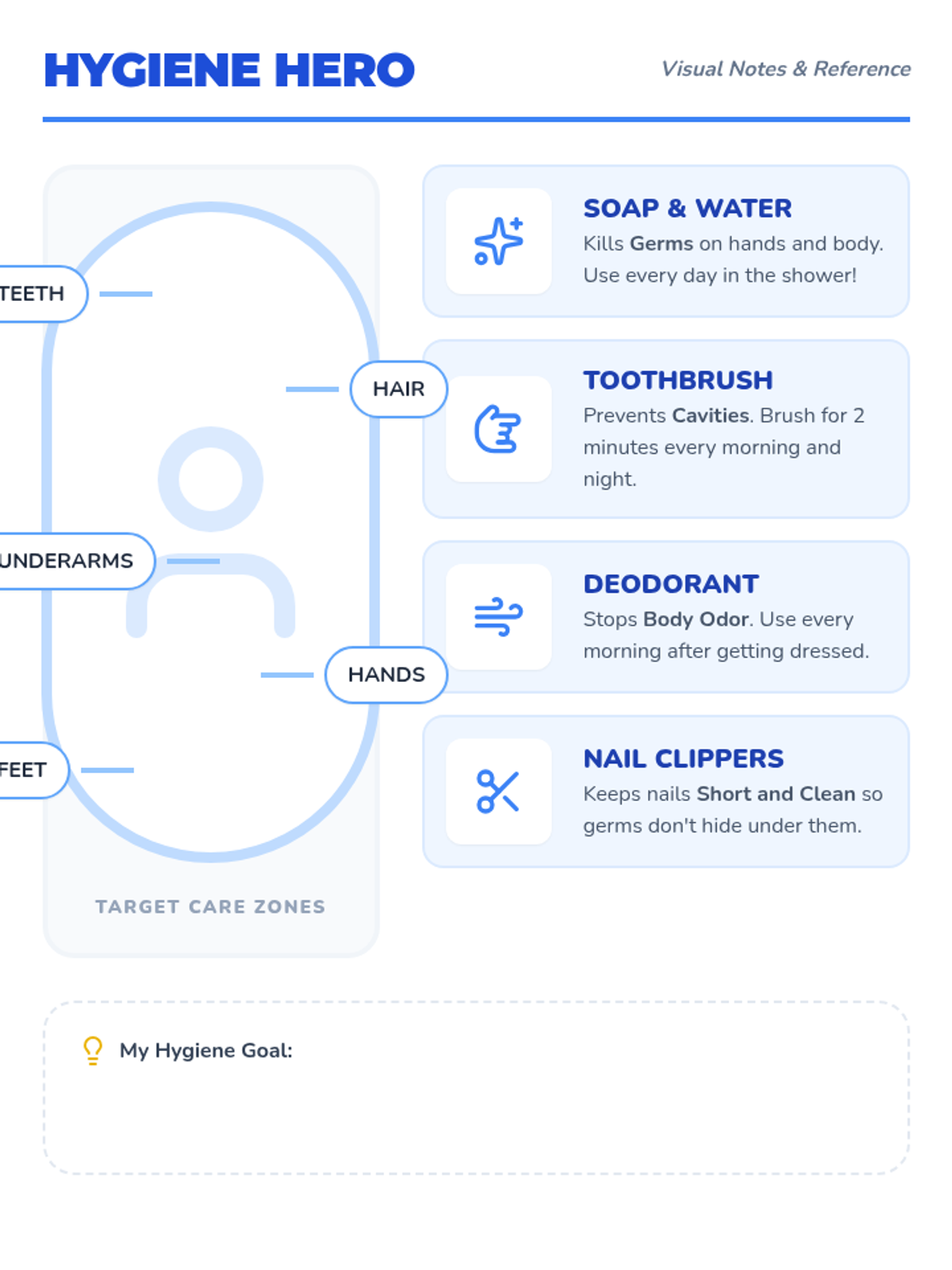
Visual notes for Lesson 2 that serve as an anchor chart for personal hygiene, mapping specific tools like toothbrushes and deodorant to the body parts they protect.
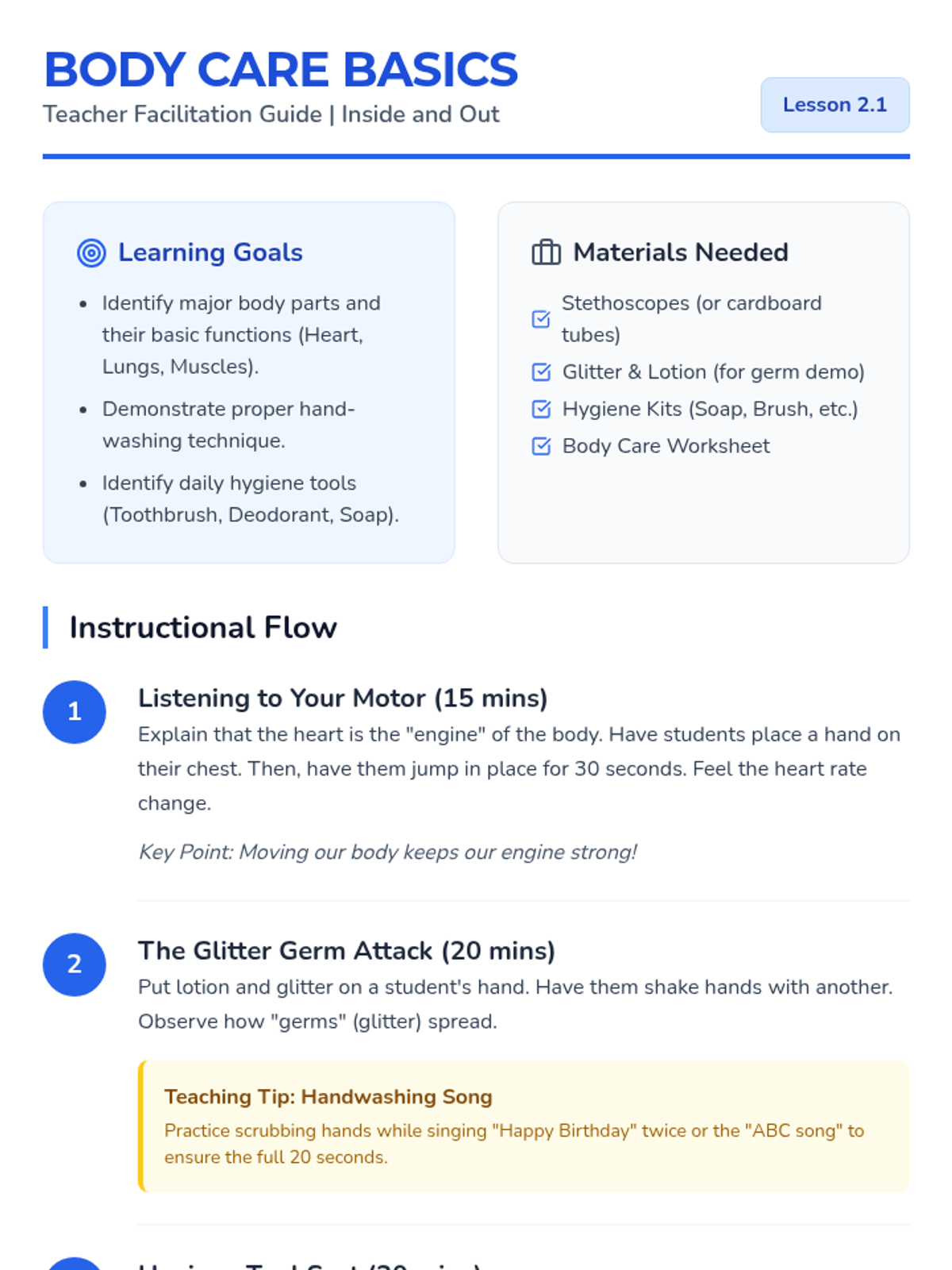
A teacher facilitation guide for Lesson 2, covering basic anatomy (heart/lungs) and hygiene routines through sensory activities like the "Glitter Germ Attack."
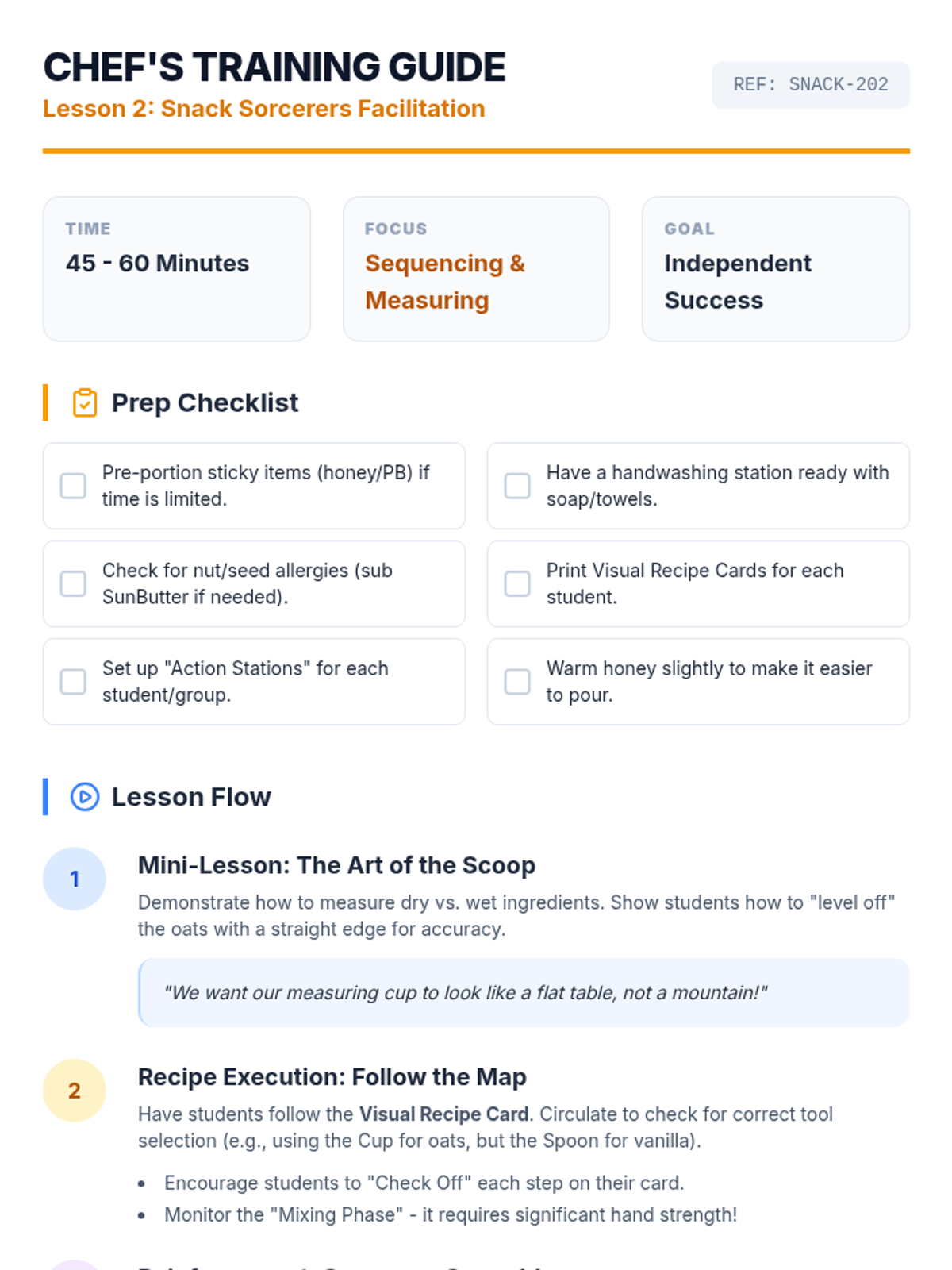
A teacher-facing guide for the Snack Sorcerers lesson. Includes a prep checklist, facilitation steps for the visual recipe, and strategies for differentiation and scaffolding.
A presentation designed to introduce elementary students to the core concepts of kitchen safety, hygiene, and tool identification. Features large text, high-contrast visuals, and simple rules.
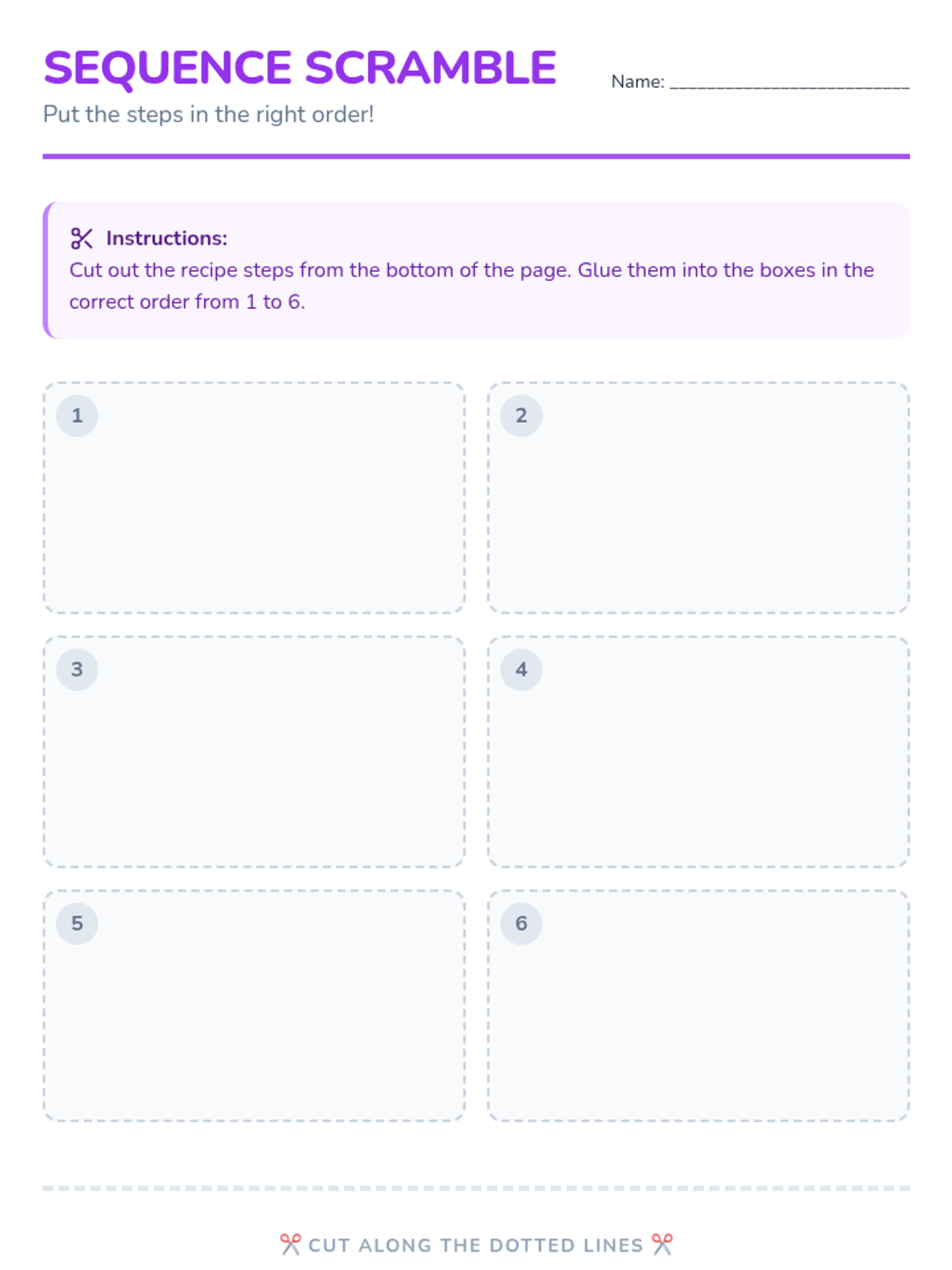
A cut-and-paste sequencing activity where students arrange the steps of the Spark Plug Energy Bites recipe in the correct order. Focuses on sequencing skills and memory recall from the visual recipe.
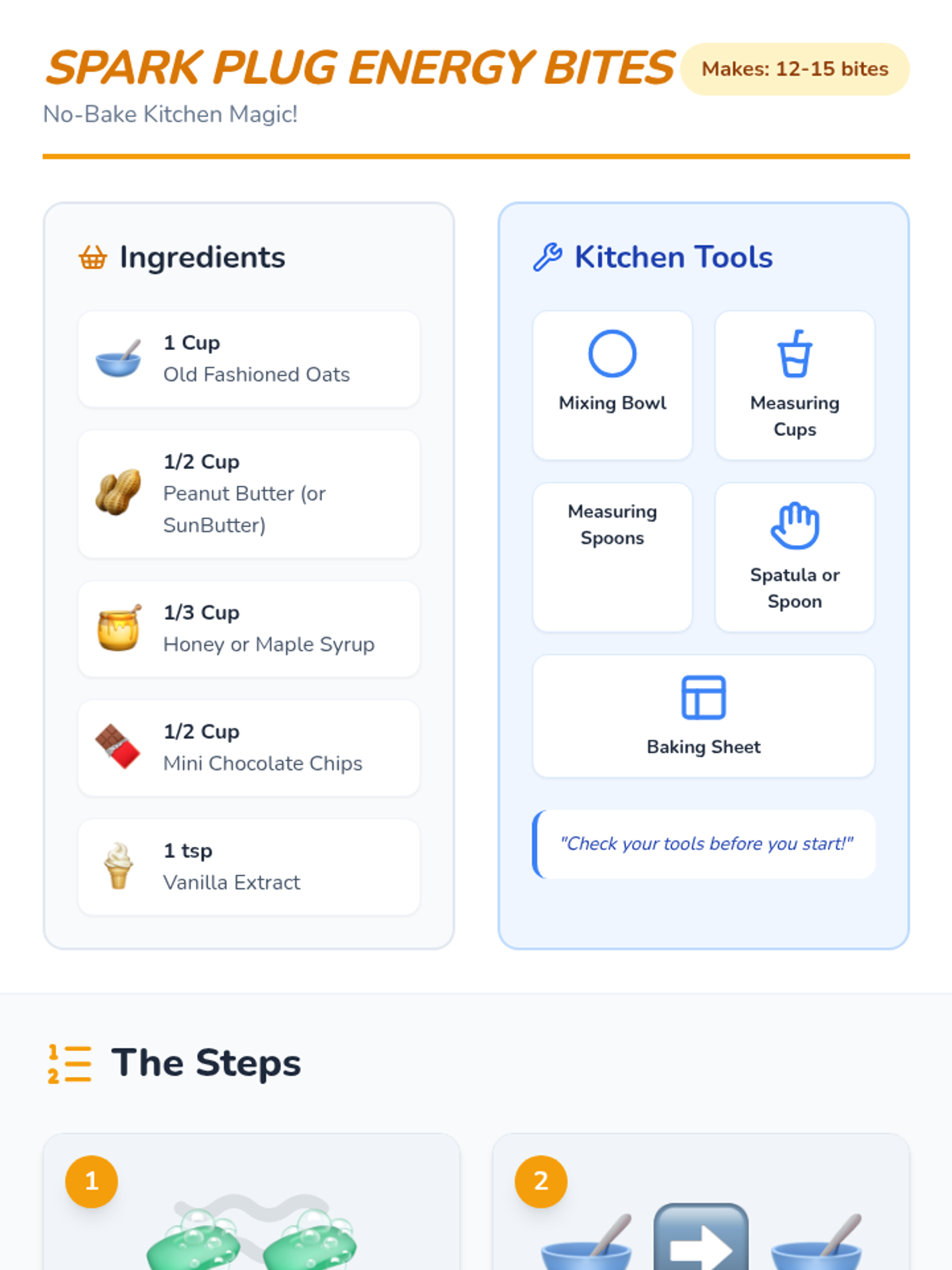
A comprehensive visual recipe for Spark Plug Energy Bites, designed for elementary students. It features clear ingredient lists, tool requirements, and an 8-step visual instruction guide with icons and simplified text.
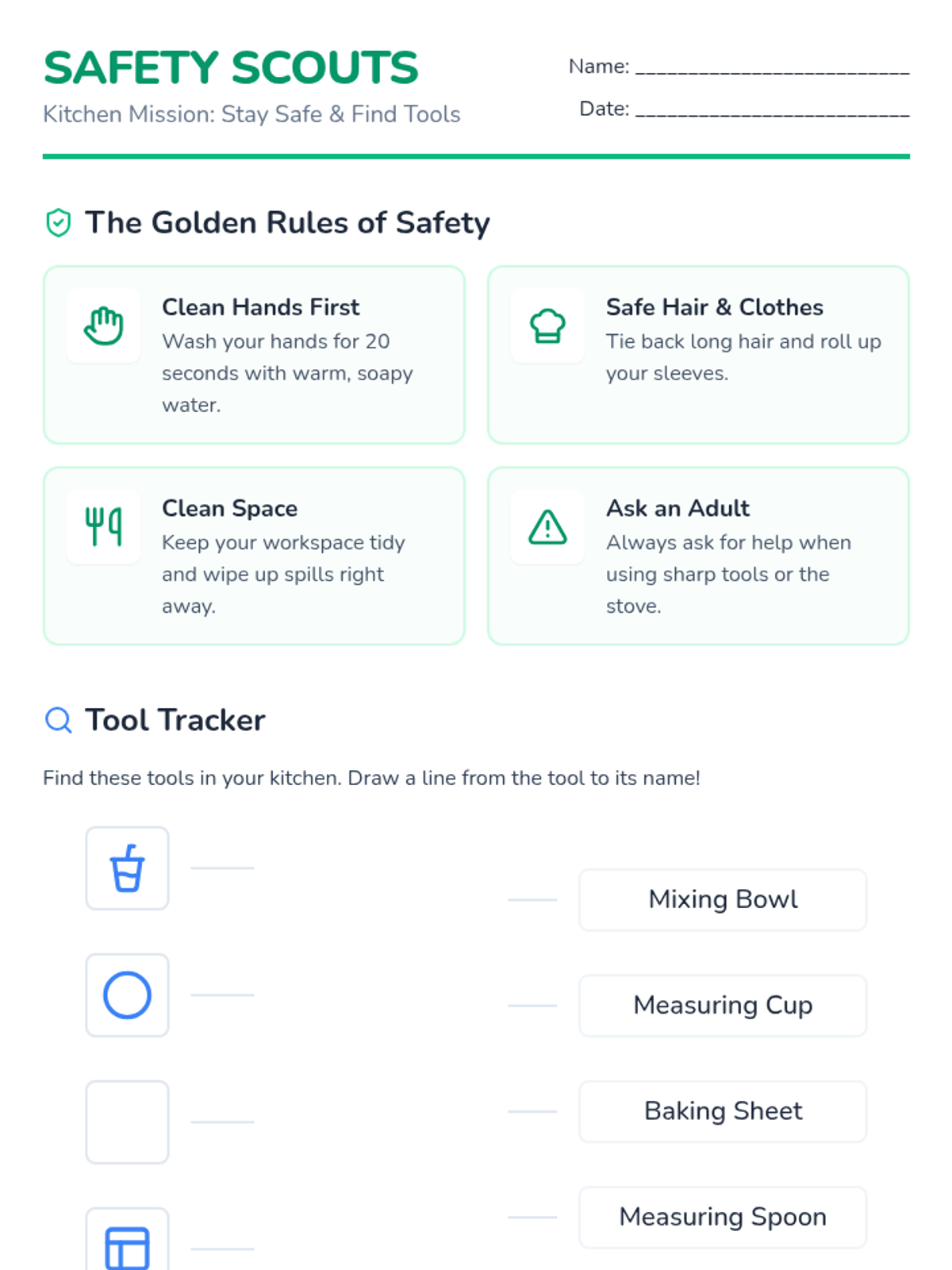
A two-page worksheet for elementary students focusing on kitchen safety rules and tool identification. It includes matching activities and safety scenario analysis.
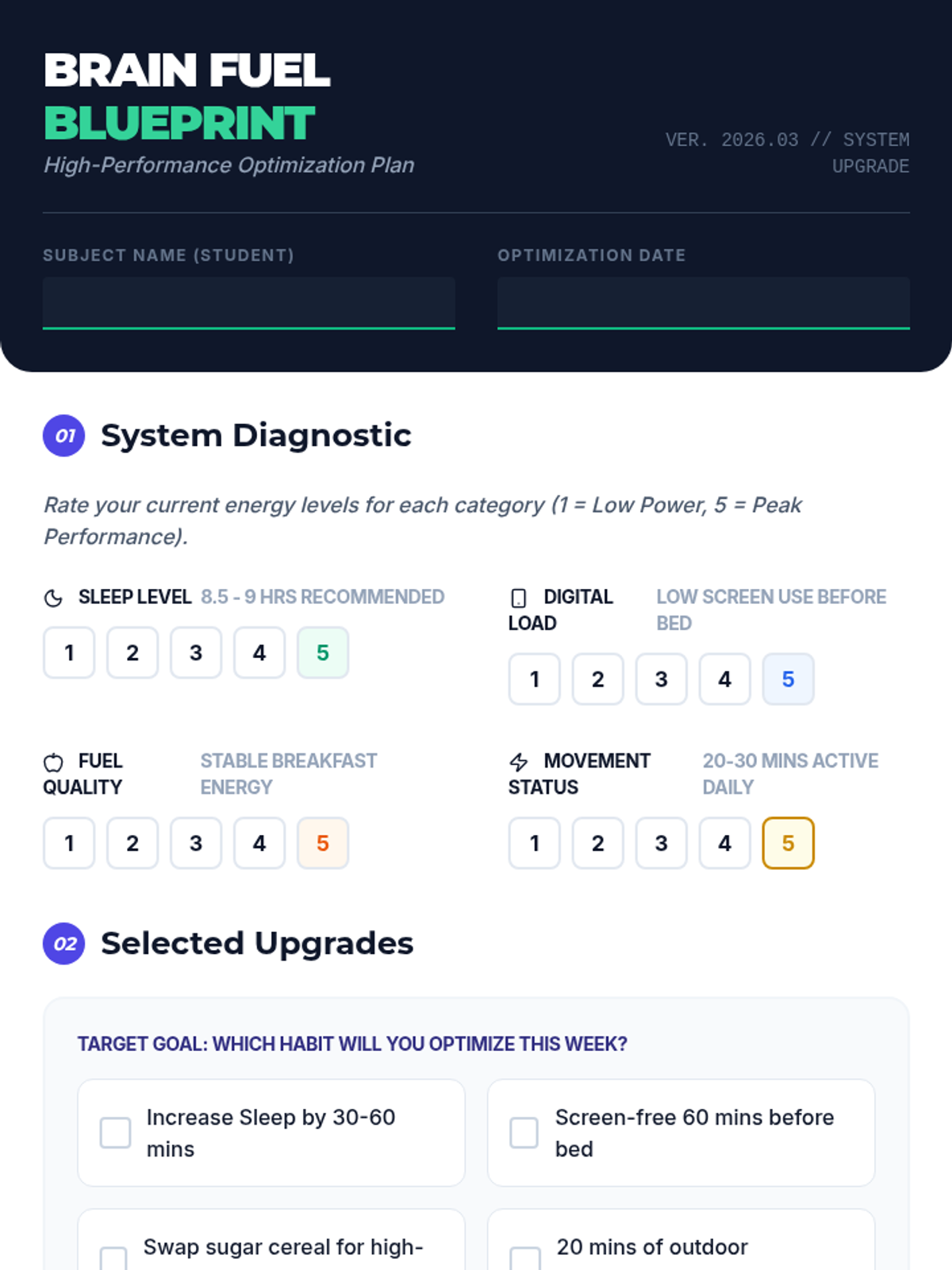
A personal wellness planning document for students to self-assess their habits and commit to specific 'brain upgrades' to improve their academic and cognitive performance.
A visually striking, data-driven slide presentation for grades 3-8 that frames healthy habits as 'system upgrades' for peak academic and cognitive performance.
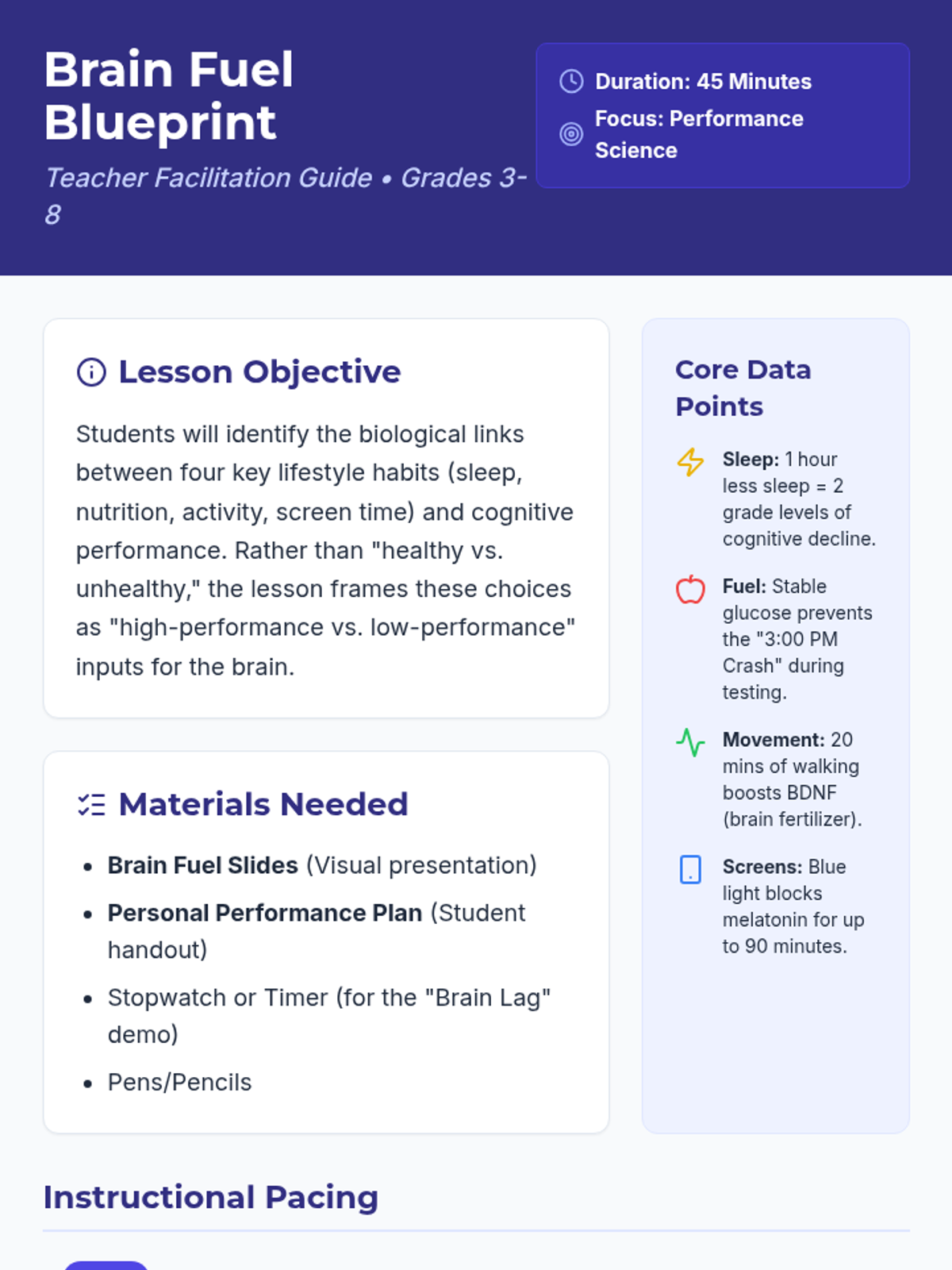
A comprehensive teacher facilitation guide for the Brain Fuel Blueprint lesson, featuring a 45-minute instructional sequence, performance-based framing strategies, and core data points for grades 3-8.
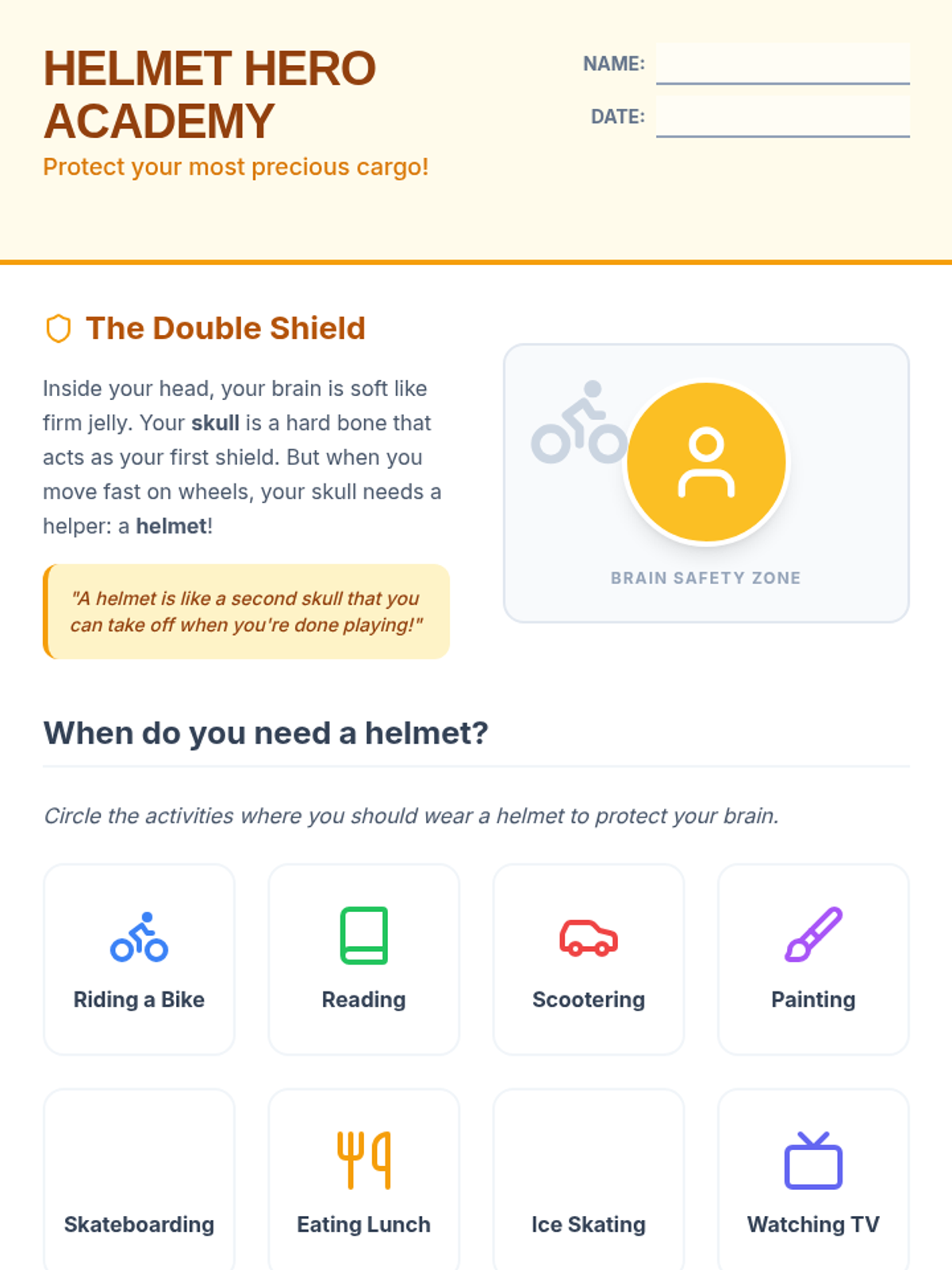
A worksheet focused on physical brain safety, teaching students about the skull's natural protection and the importance of wearing helmets during high-speed activities, including the "2-V-1" helmet fit rule.
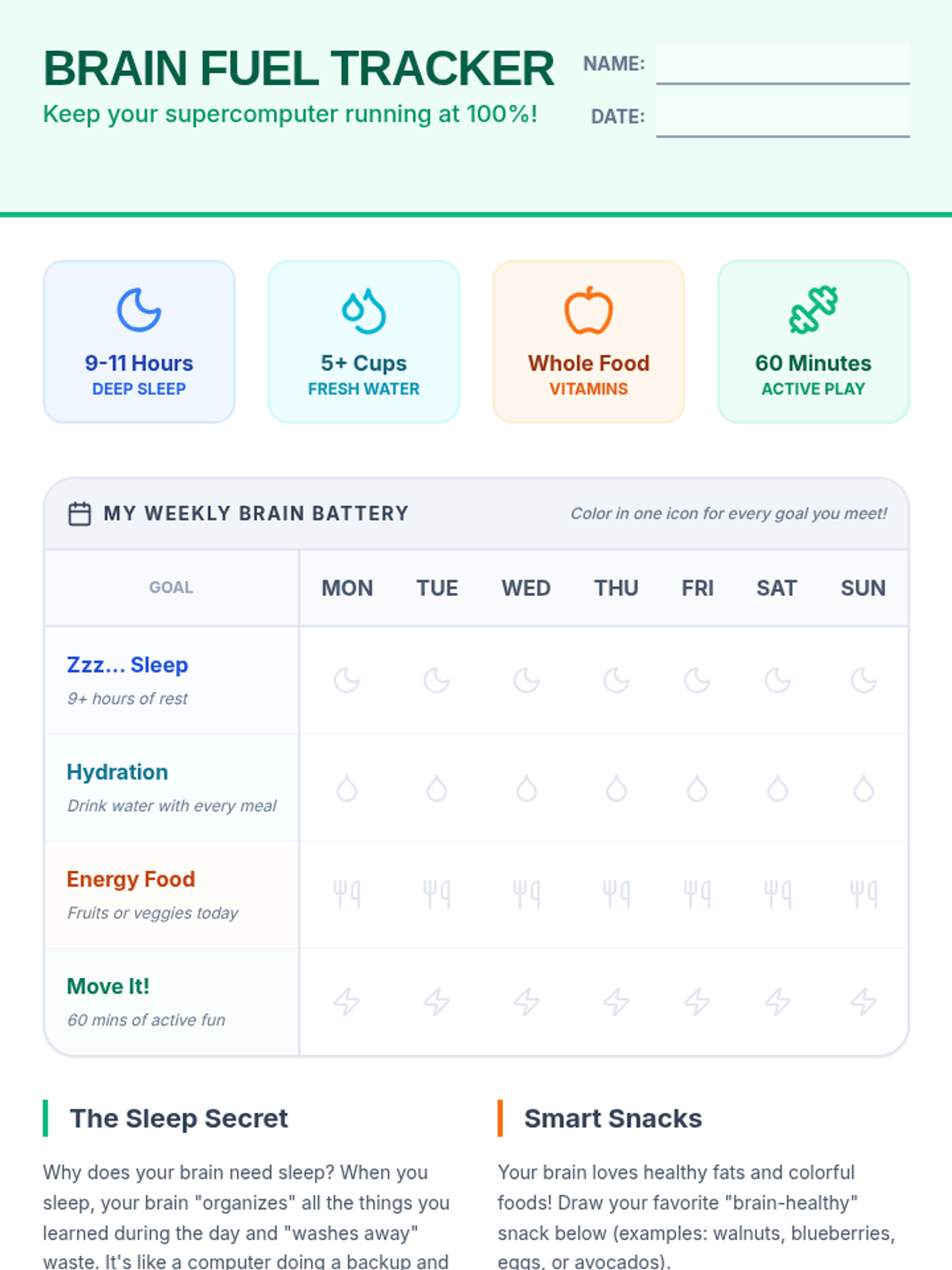
A weekly habit tracker for students to monitor their brain-healthy behaviors, including sleep, hydration, nutrition, and exercise, with brief explanations of why these habits matter.
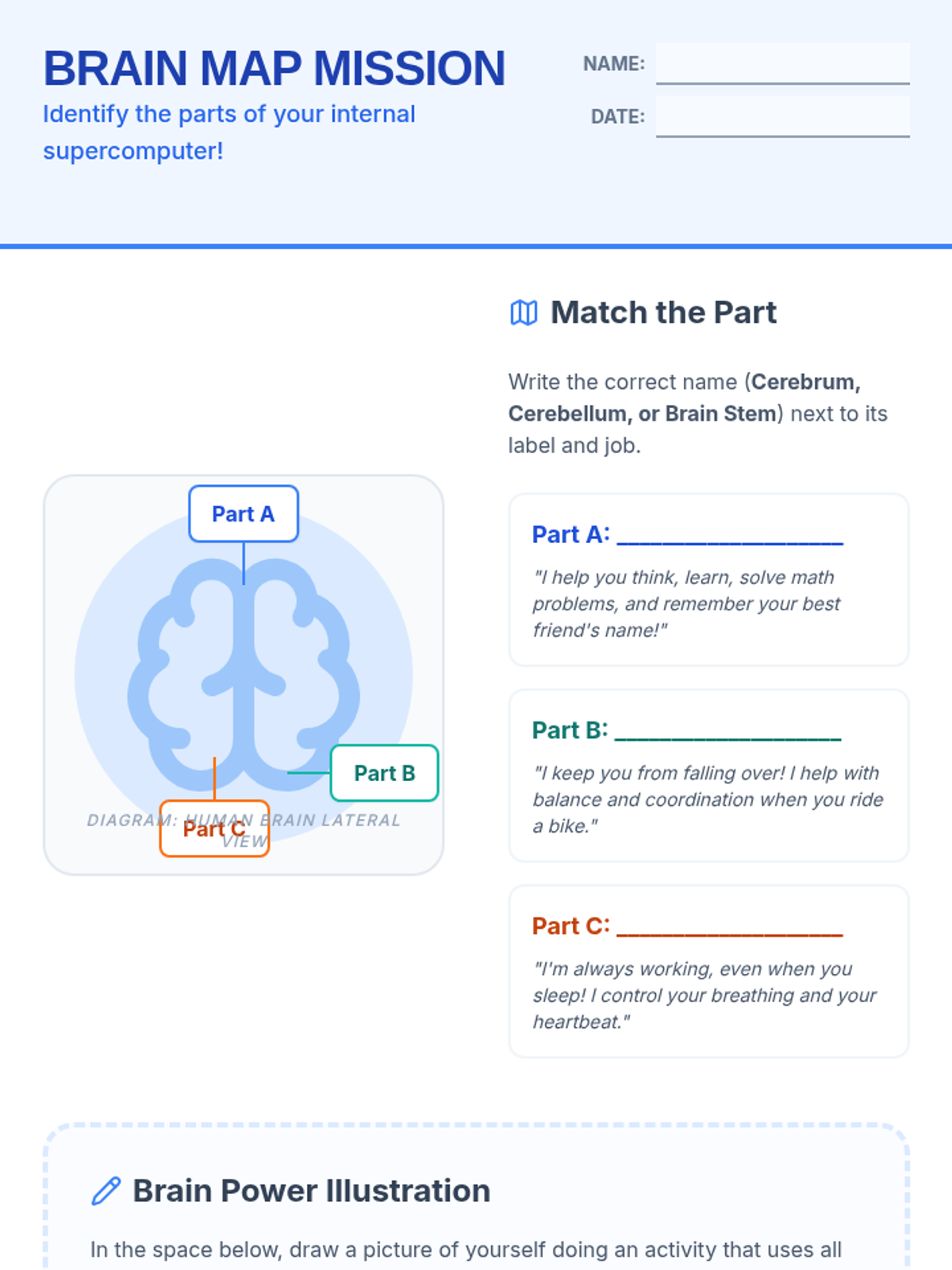
A worksheet for students to identify the three main parts of the brain (cerebrum, cerebellum, and brain stem) and describe their primary functions through a matching activity and a drawing prompt.
An introductory slide deck for elementary students covering basic brain functions, its main parts (cerebrum, cerebellum, brain stem), healthy habits like sleep and nutrition, and the importance of safety equipment like helmets.
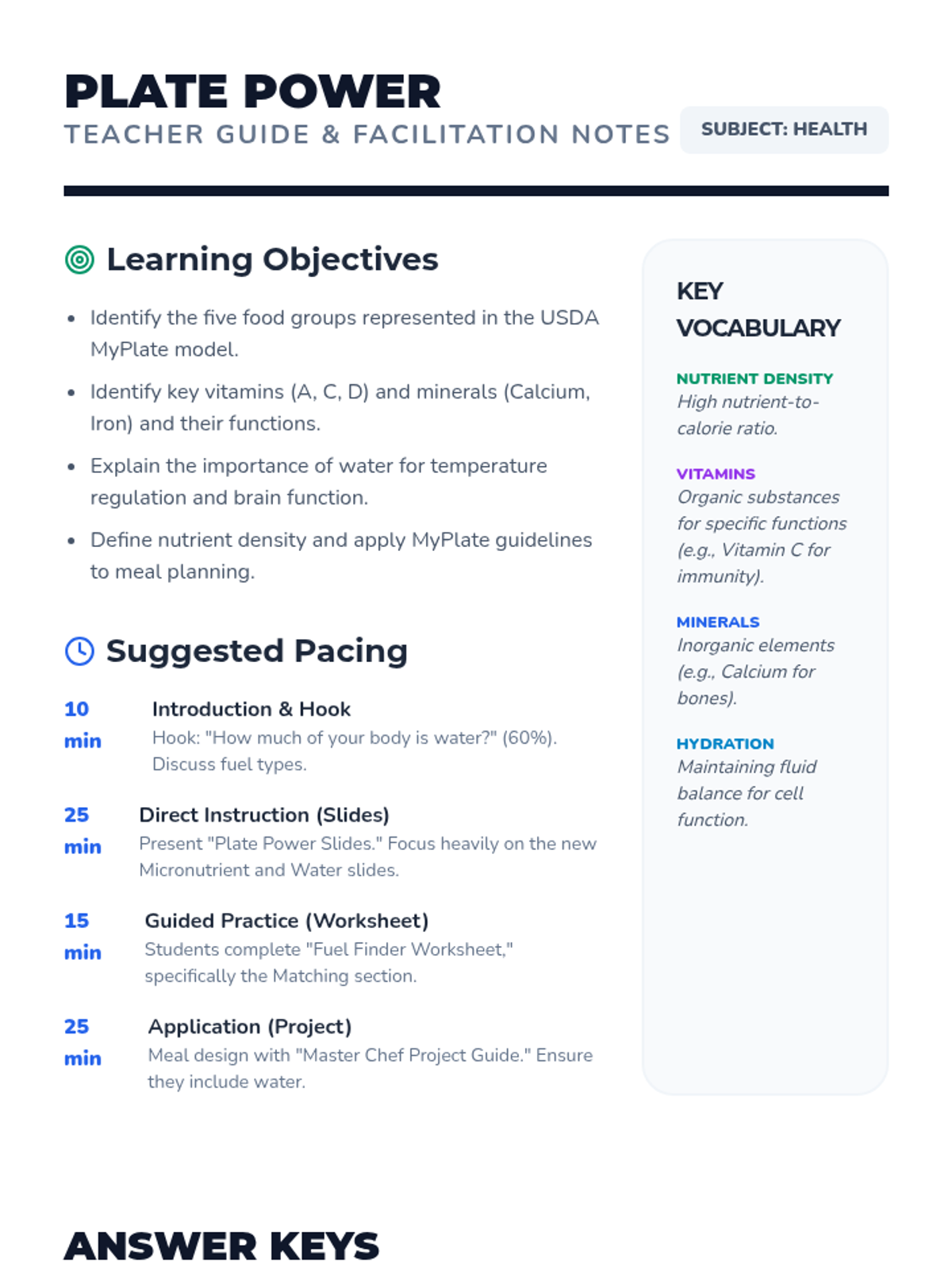
Updated Plate Power Teacher Guide with added focus on vitamins, minerals, hydration, and corresponding answer keys.
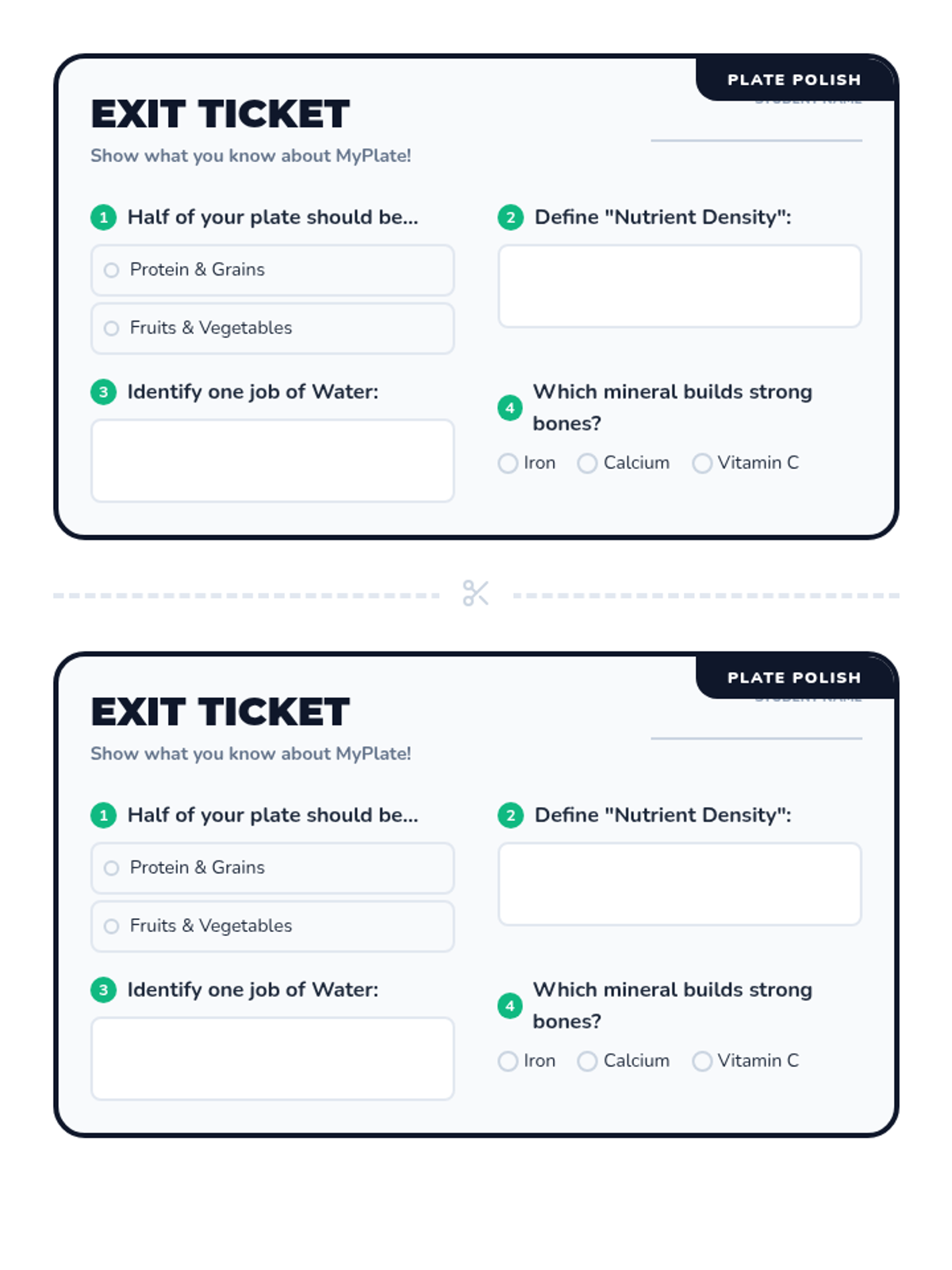
Updated Plate Polish Exit Ticket with new questions covering hydration and minerals.
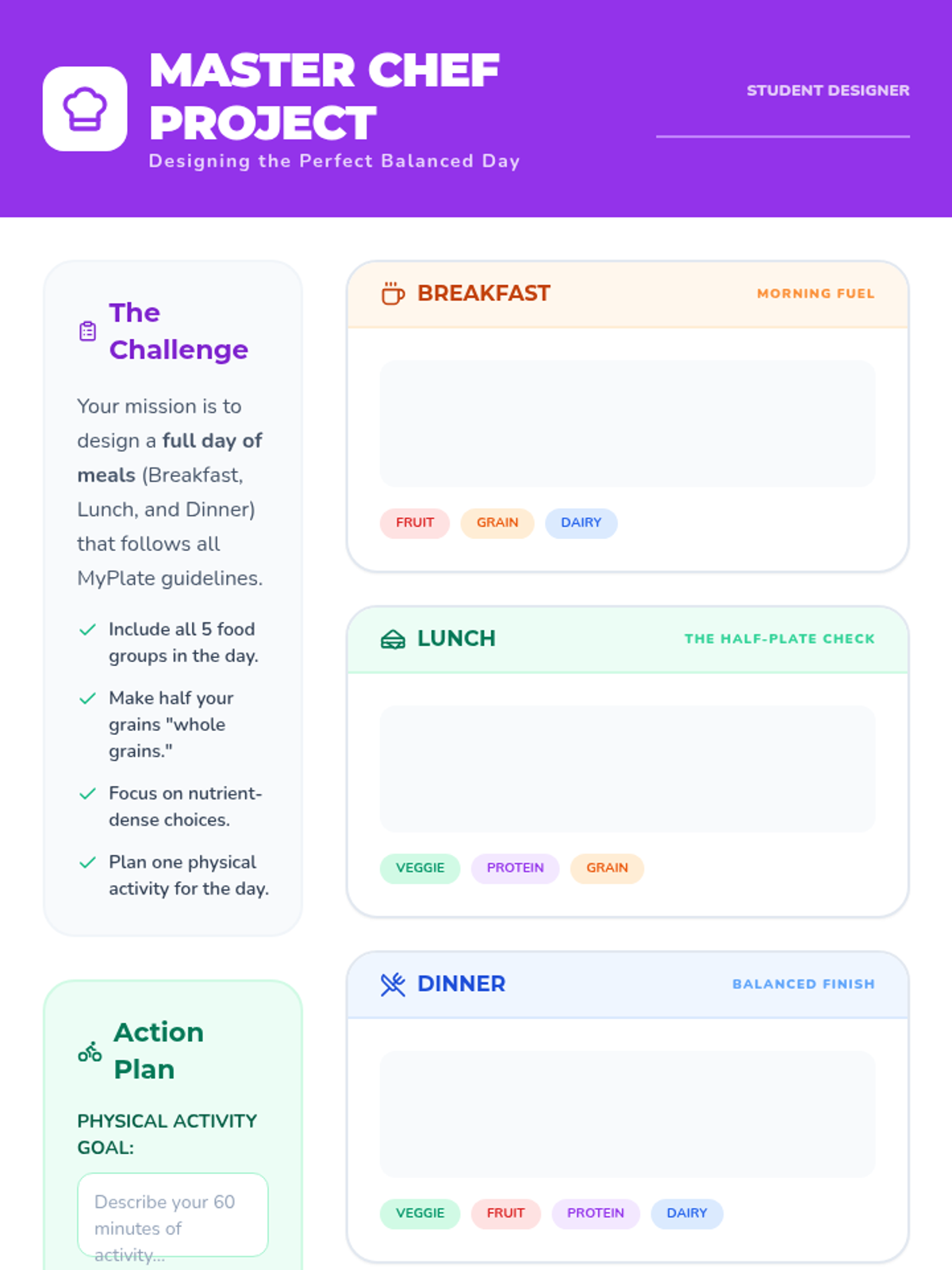
A project guide for students to design a full day of balanced meals (breakfast, lunch, and dinner) while incorporating physical activity and hydration goals.
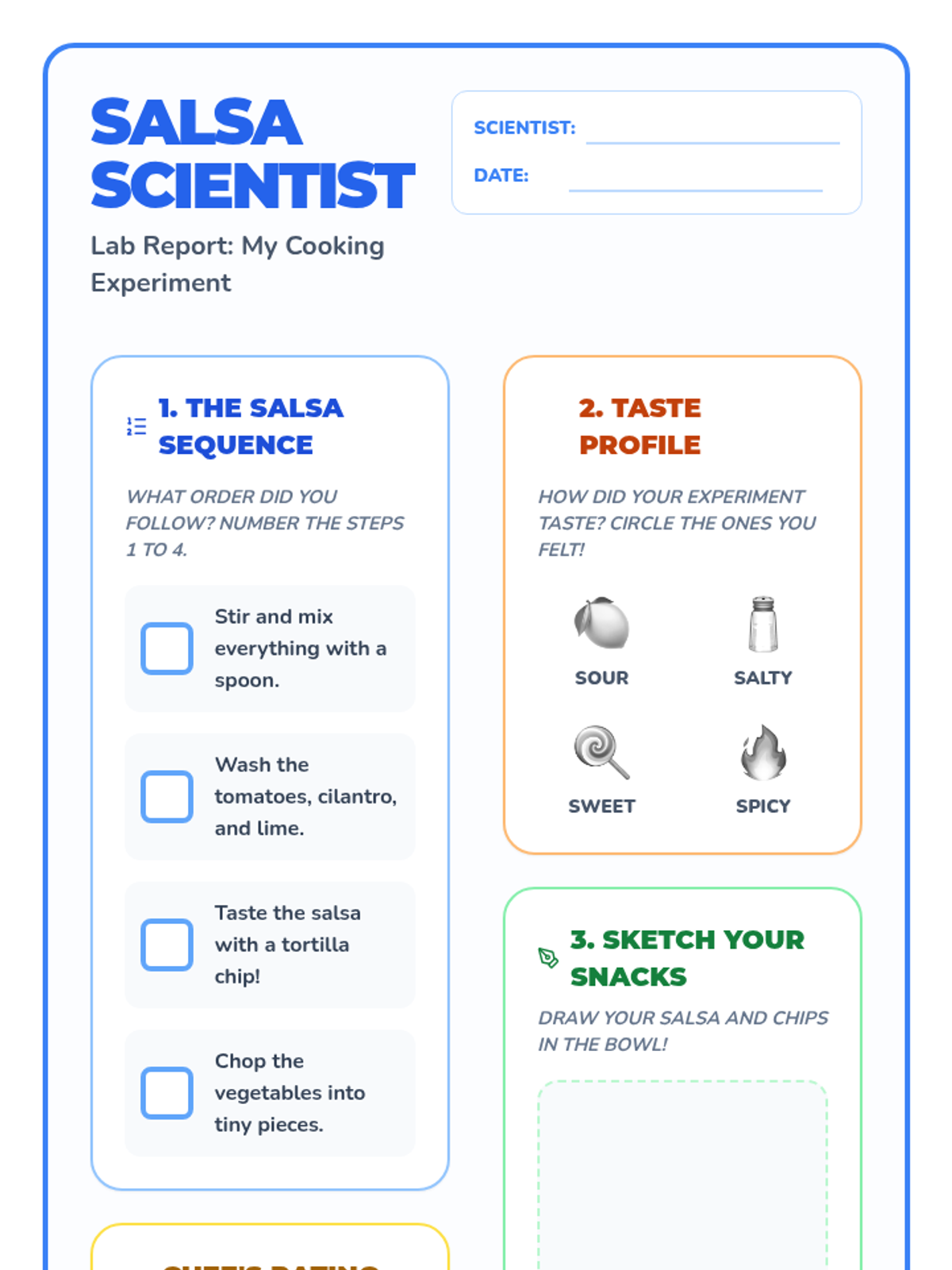
A student reflection worksheet for the Salsa Smash activity, focusing on sequencing steps and reflecting on the sensory experience.
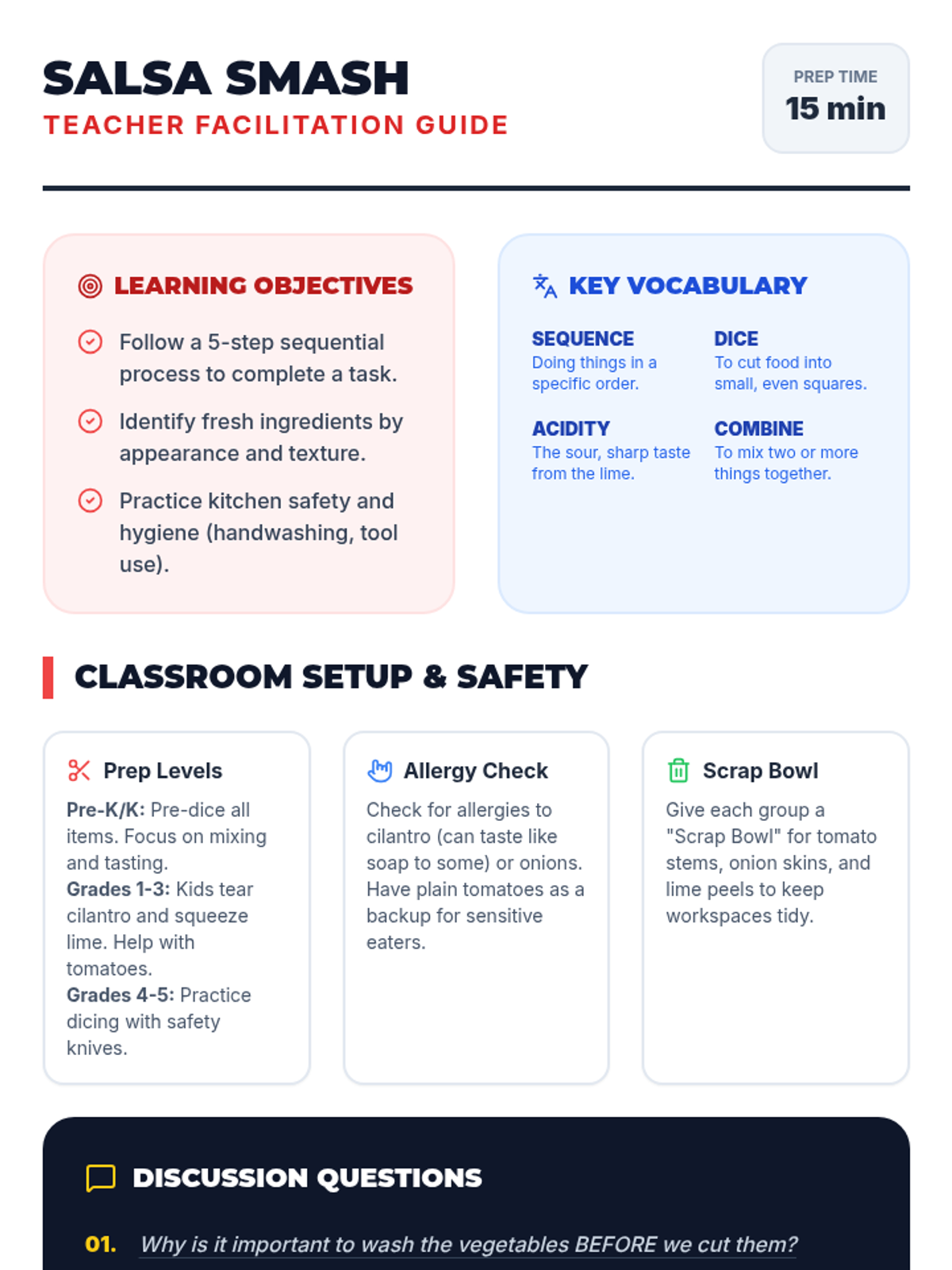
A comprehensive teacher facilitation guide with prep tips, safety considerations, vocabulary, and discussion questions for the Salsa Smash activity.
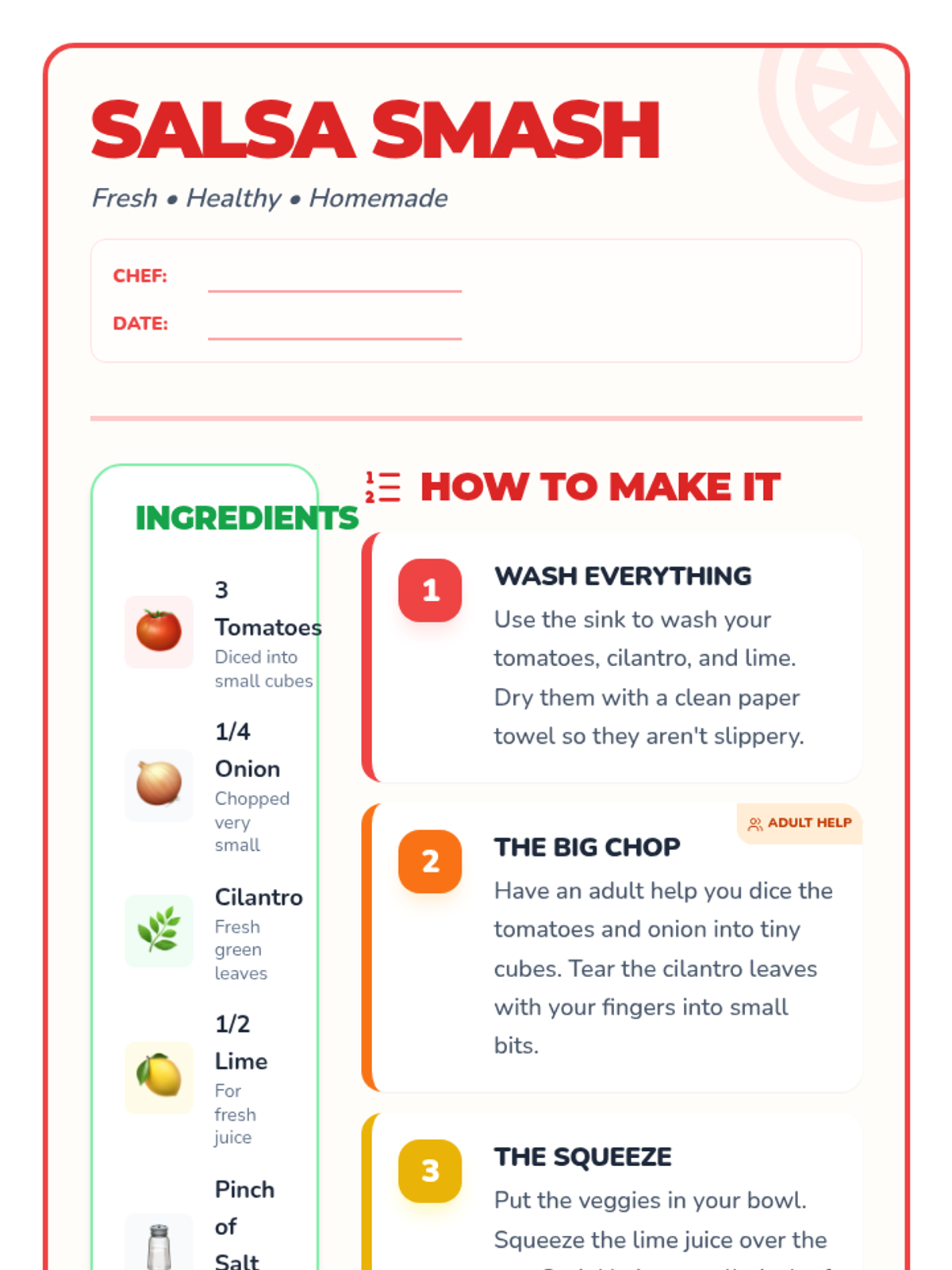
A vibrant, visual-heavy recipe card for elementary students to follow step-by-step instructions to make fresh salsa.
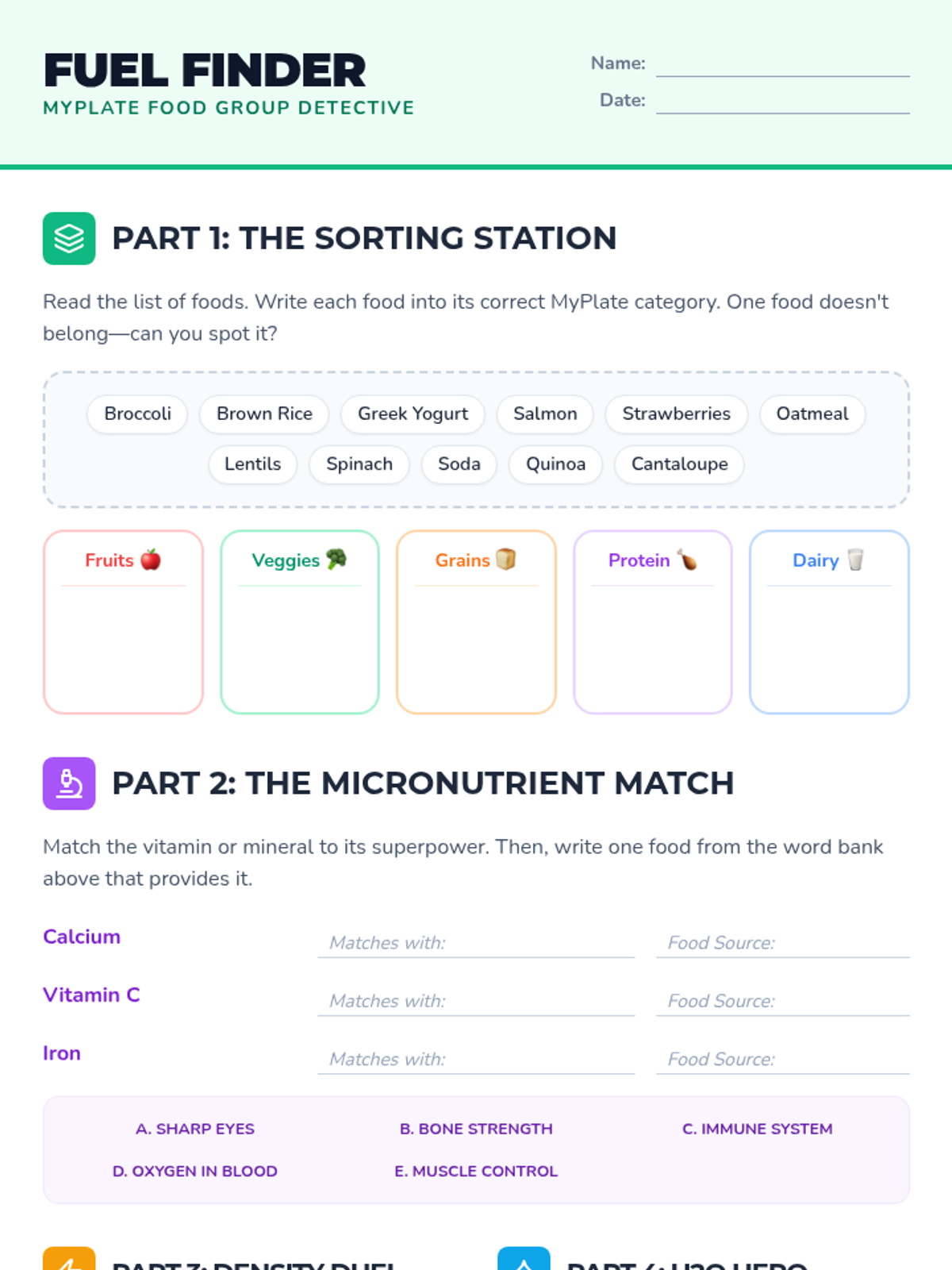
Updated Fuel Finder Worksheet with a new matching section for micronutrients and a hydration focus.
Updated Plate Power Slides with new sections on Vitamins, Minerals, and the critical importance of water for hydration and bodily function.
A high-impact printable presentation document where each slide is a full 8.5x11 page. Designed for robust printing with strict page break controls and bold, clear visuals.
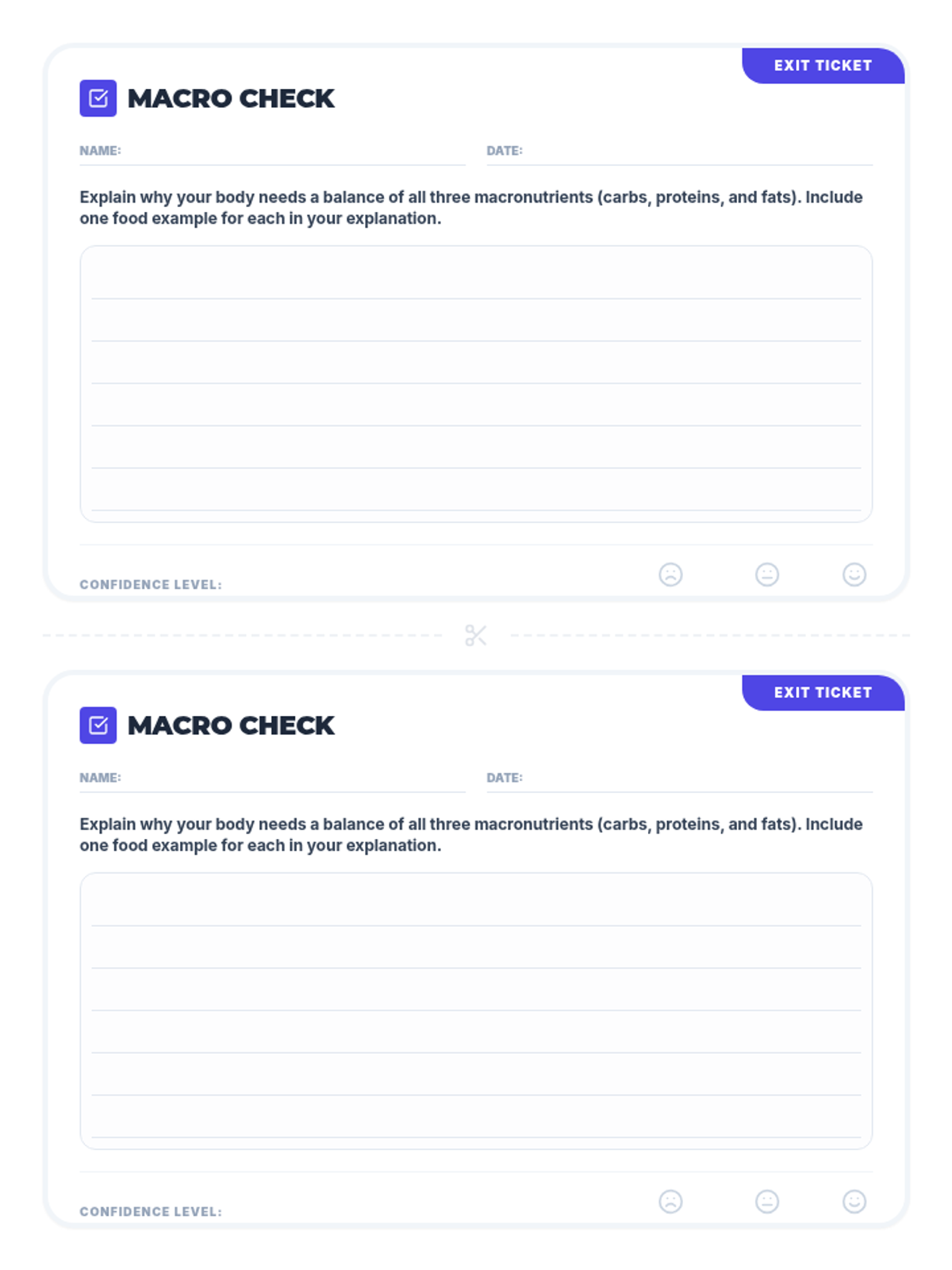
A quick, two-per-page exit ticket with a single open-ended prompt asking students to explain the importance of a balanced macronutrient intake. Redesigned with a cleaner layout and consistent writing lines.
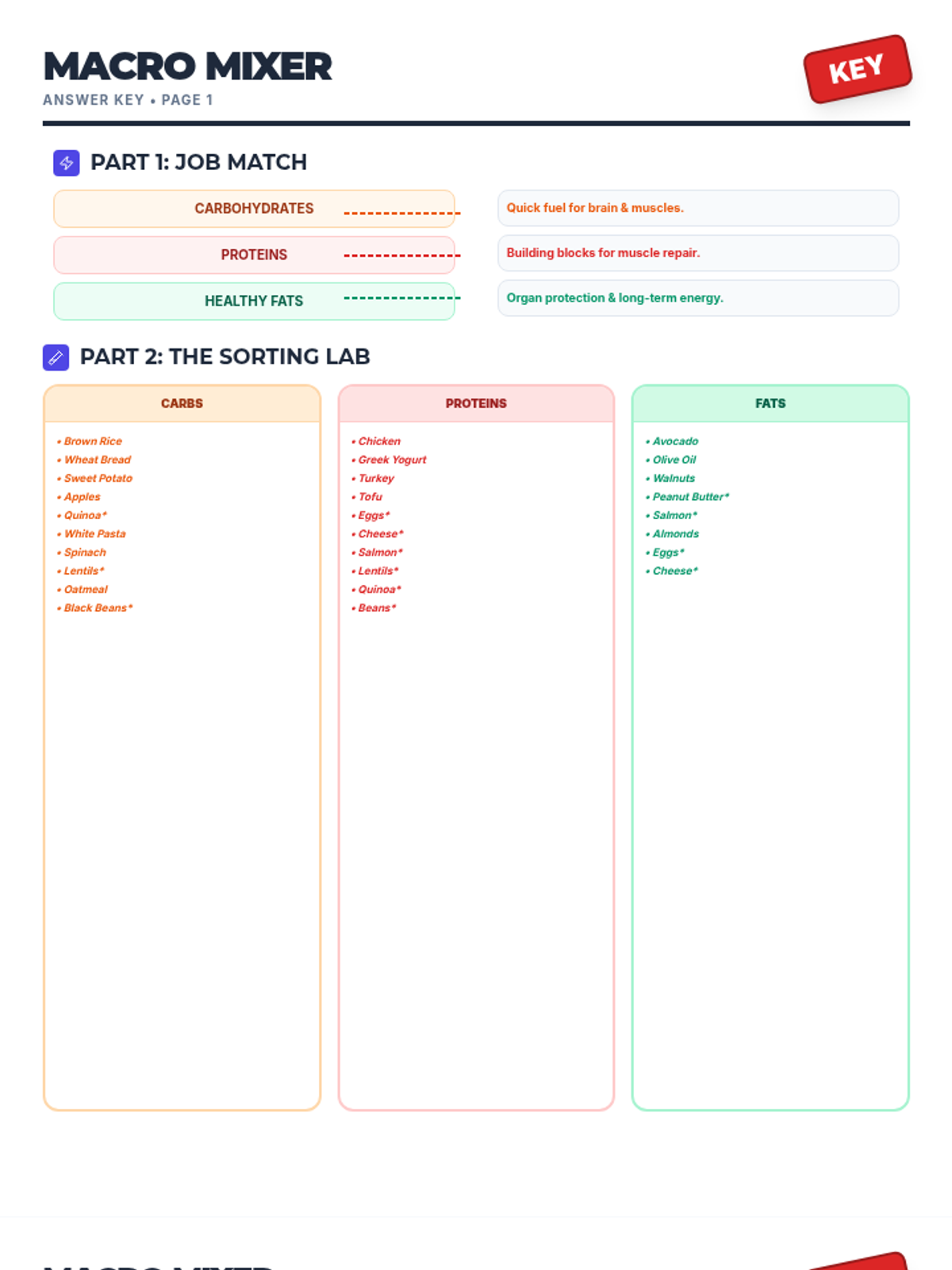
Updated teacher-facing answer key for the Macro Mixer worksheet, now including sample answers across two pages with strict page break controls and section protection.
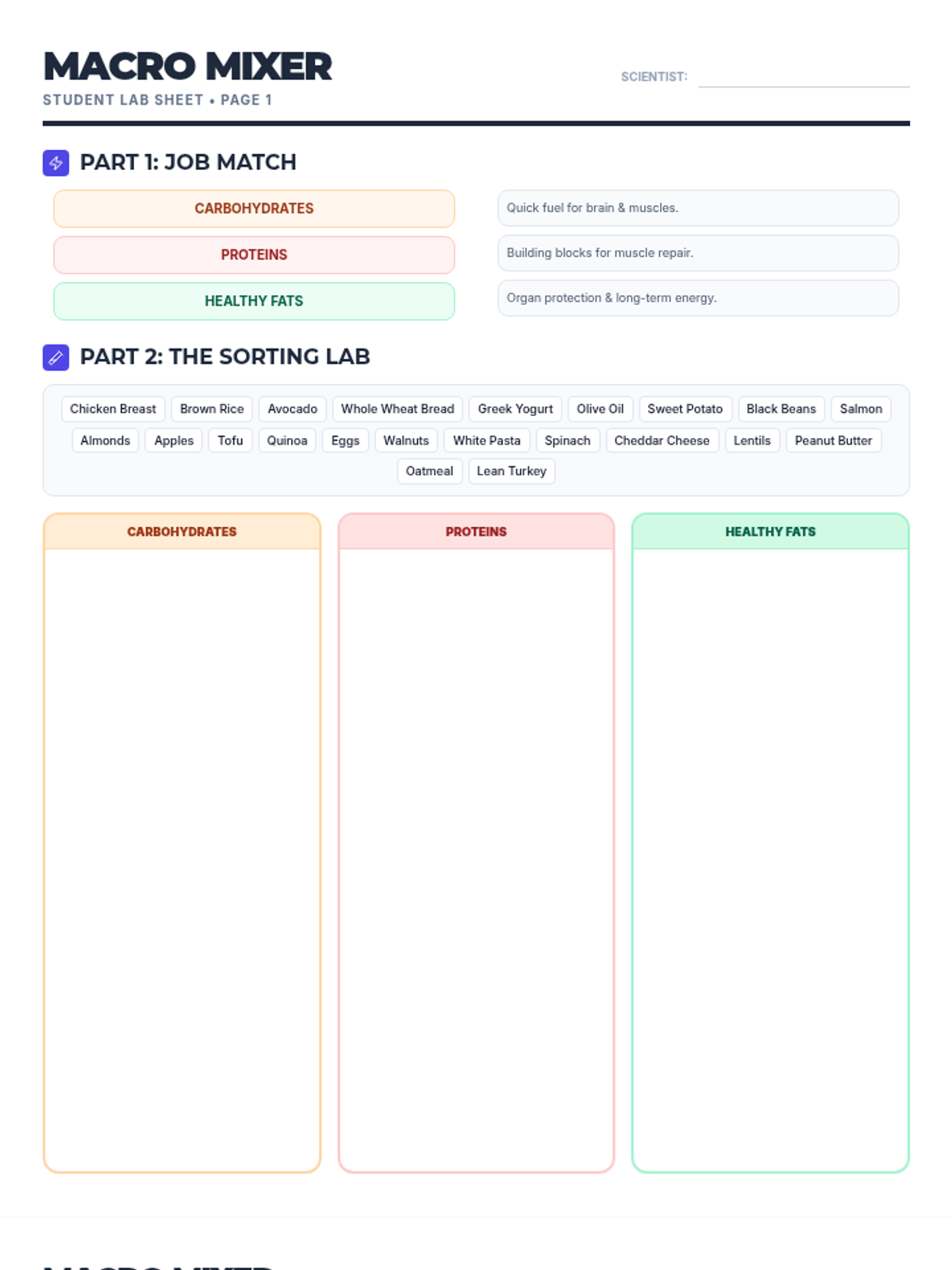
An expanded student worksheet with an extended food categorization lab (22 items) and two separate meal-building exercises. Spaced across two pages with strict page break controls and internal section protection for reliable printing.
An upgraded, high-impact slide deck with consistent 48px+ titles, minimum 24px body text, and vibrant custom-themed slides for macronutrients. Includes a refactored balanced plate model for maximum legibility.
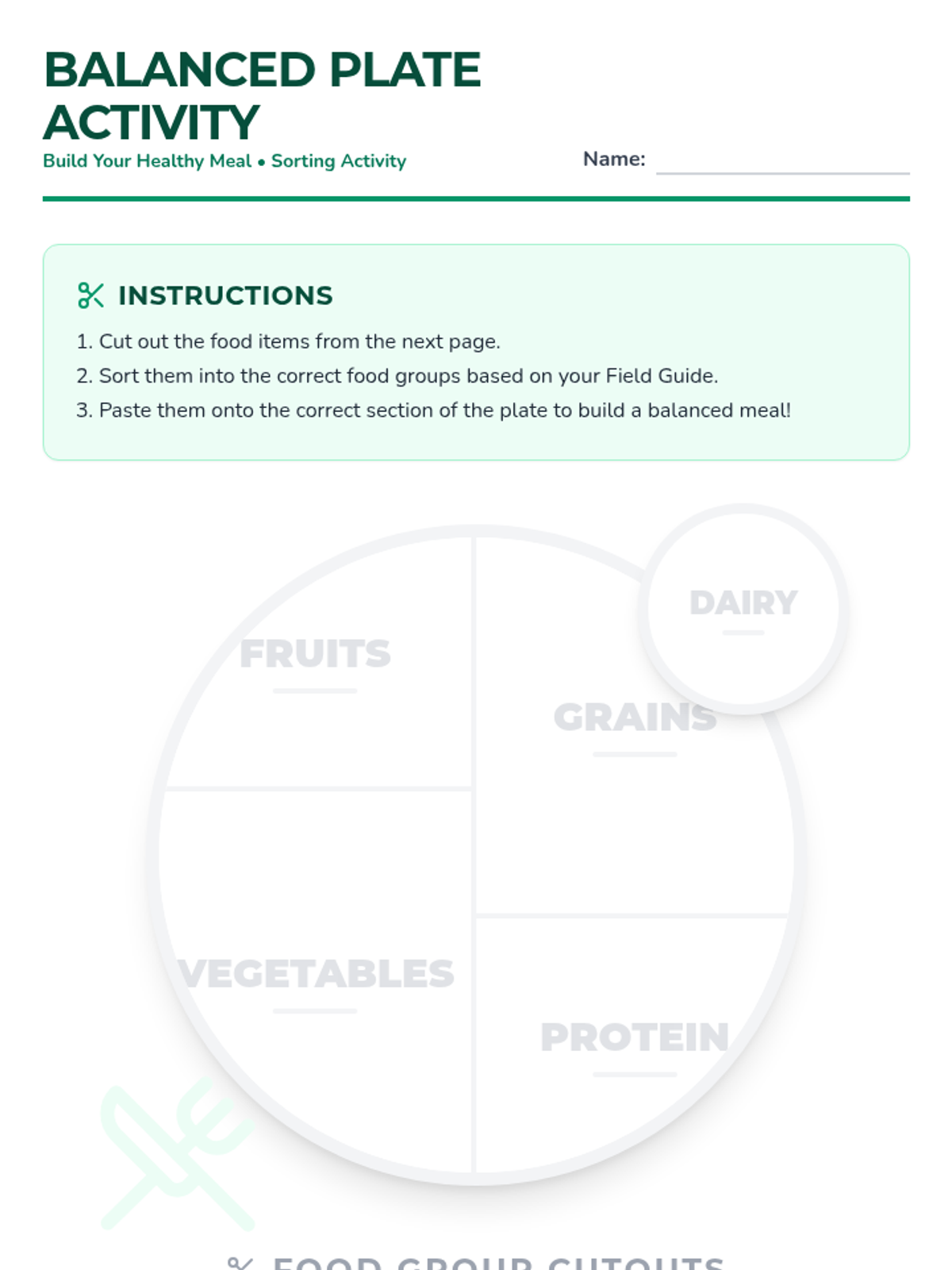
A hands-on cut-and-paste activity where students build a balanced meal by sorting food items into the correct sections of a divided plate.
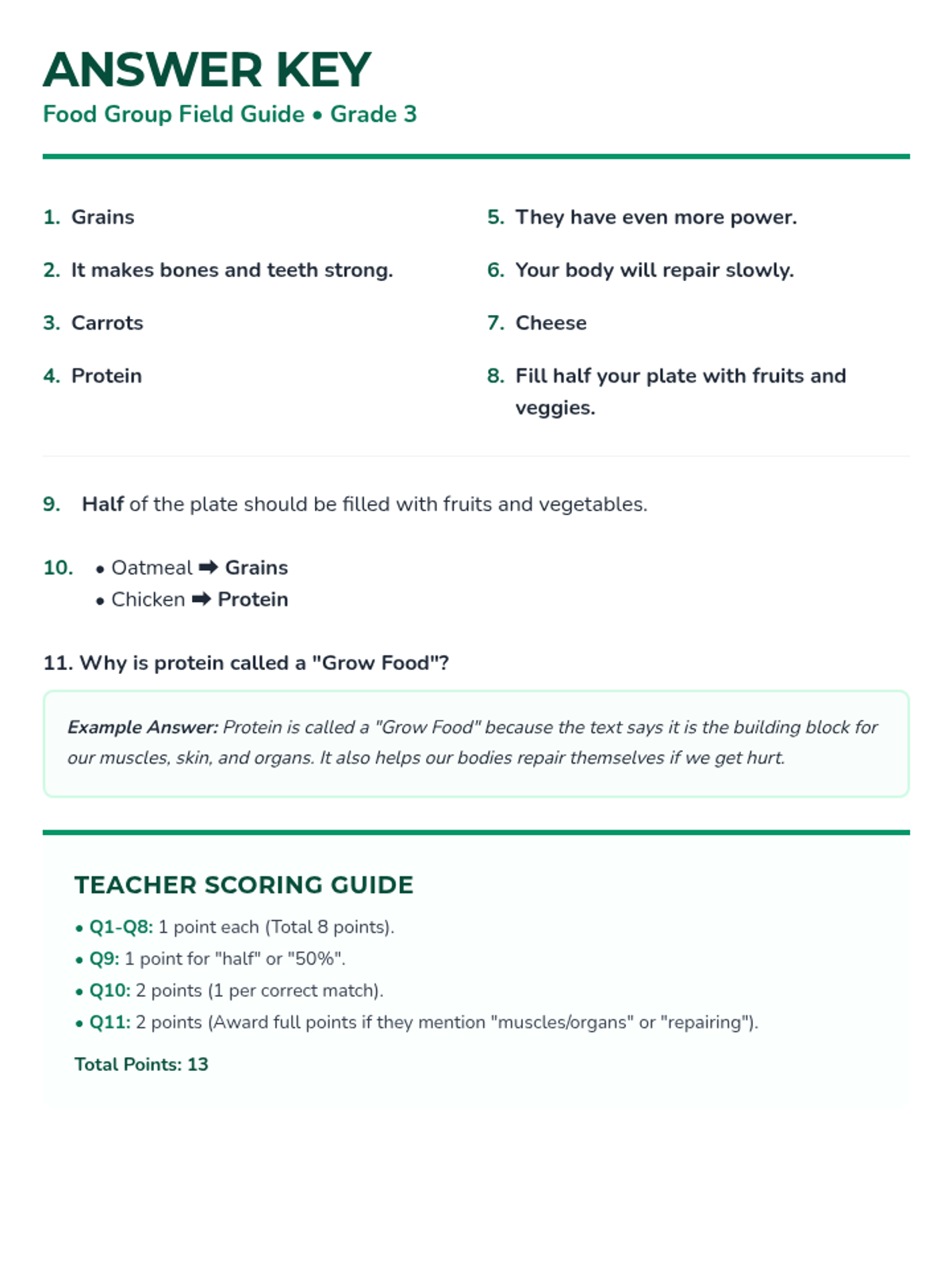
Teacher answer key and scoring guide for the Food Group Field Guide Worksheet.
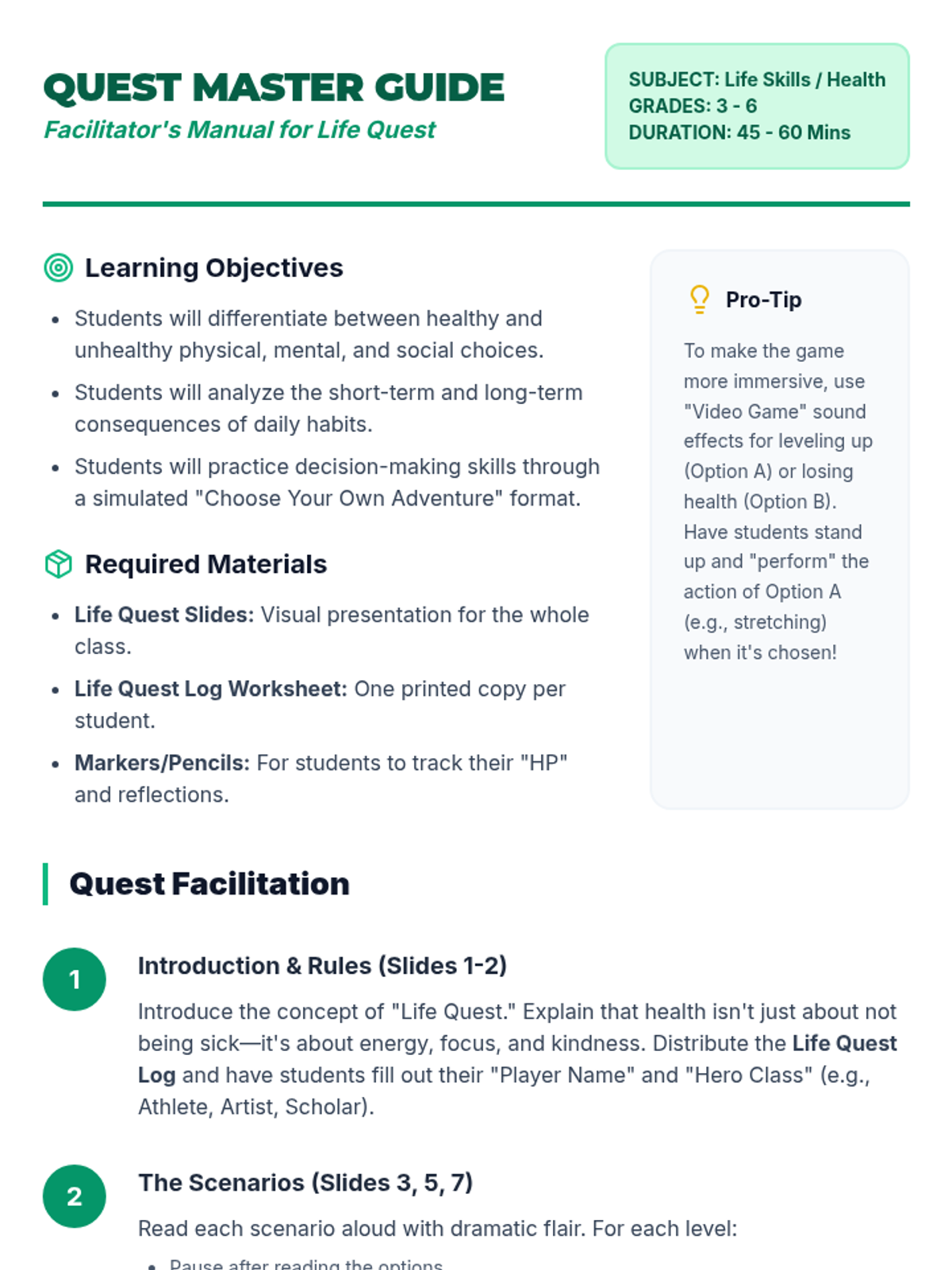
A comprehensive facilitator's guide providing learning objectives, facilitation steps, and deep-dive discussion prompts for the Life Quest lesson.
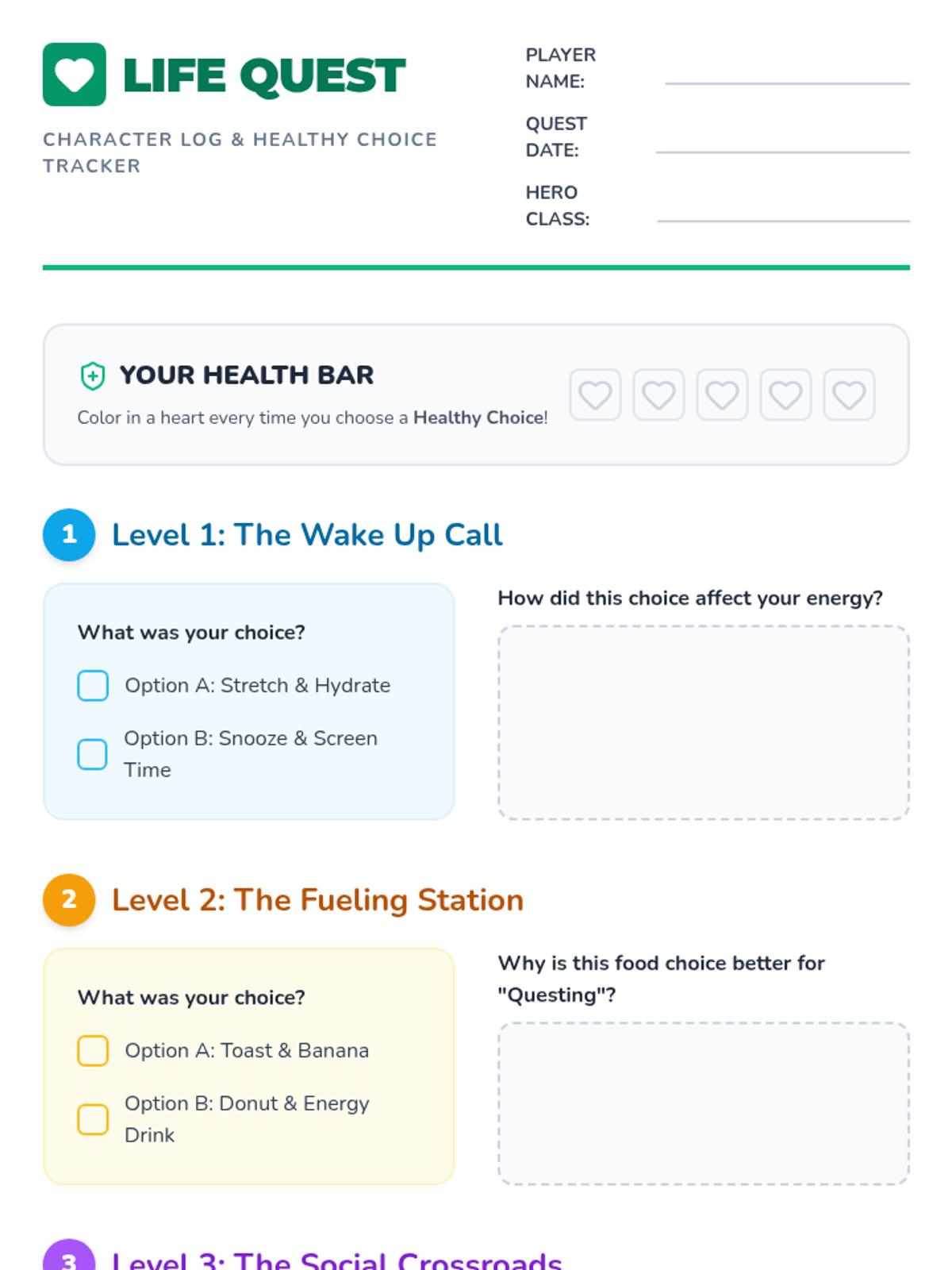
A companion worksheet for the Life Quest presentation where students record their choices, track their health points (HP), and reflect on real-world healthy decision-making.
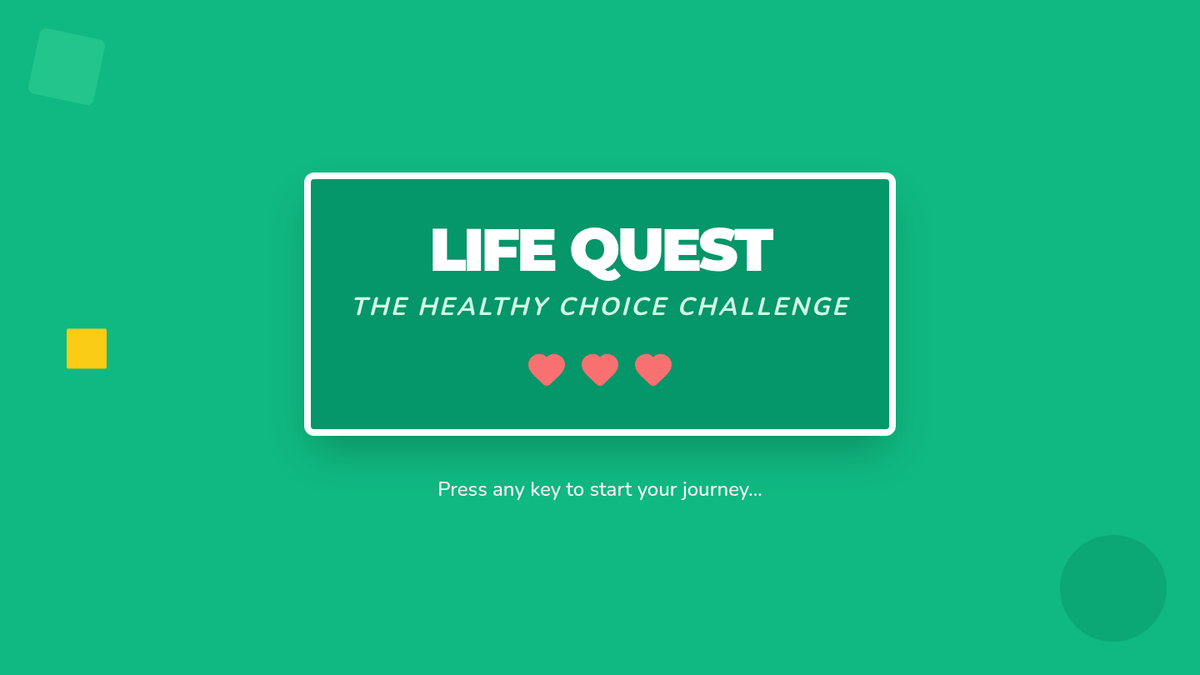
An interactive slide deck themed like a video game that introduces students to making healthy choices through scenarios and guided discussion.
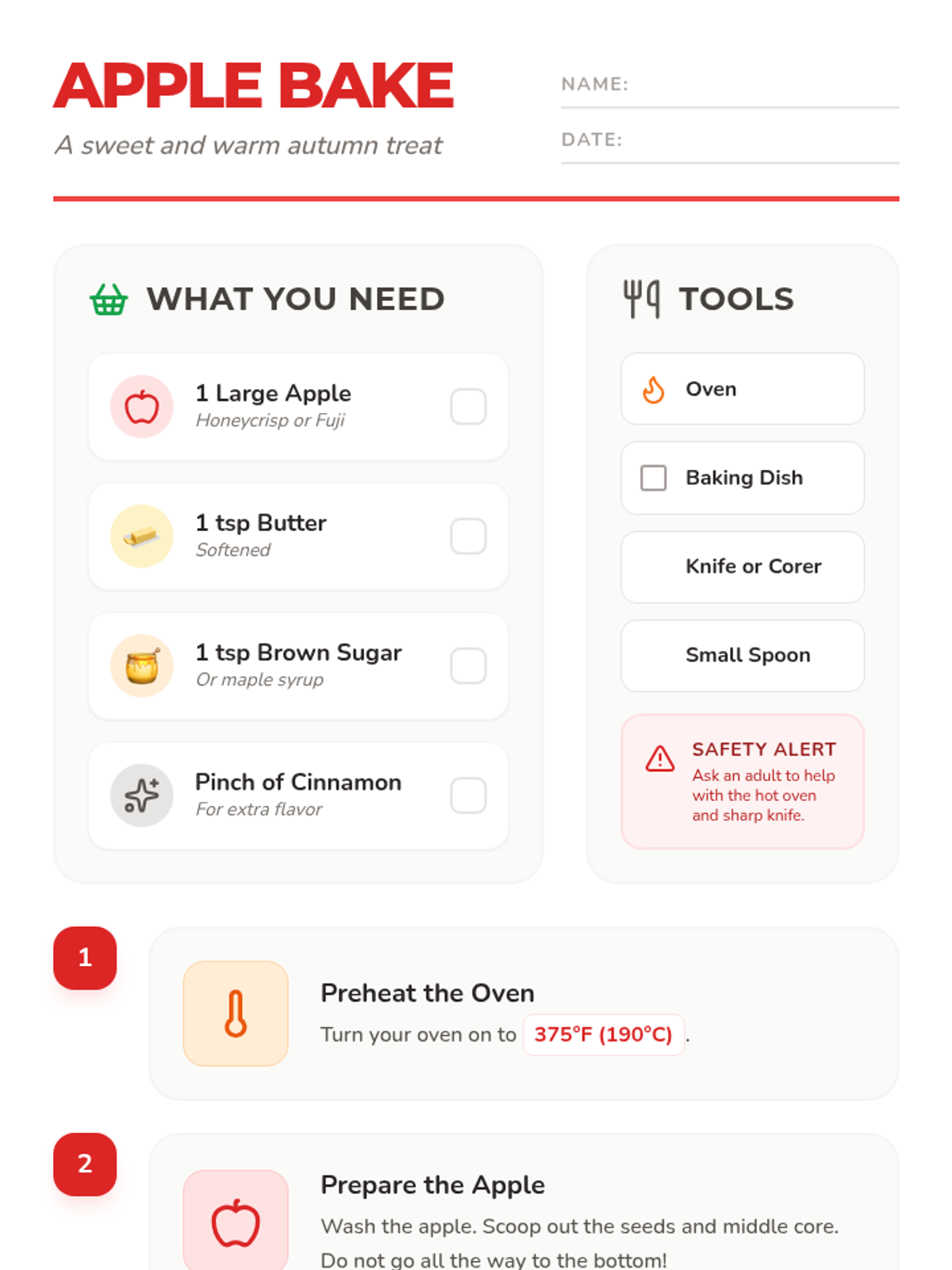
A visually supported two-page recipe for baked apples, featuring clear icons, a simple step-by-step layout, and a large reflection area for student feedback. Designed for young learners with bold text and safety reminders.