Complex grammar structures, idiomatic expressions, and phrasal verbs. Strengthens reading and listening comprehension while building conversational fluency for varied social and professional settings.
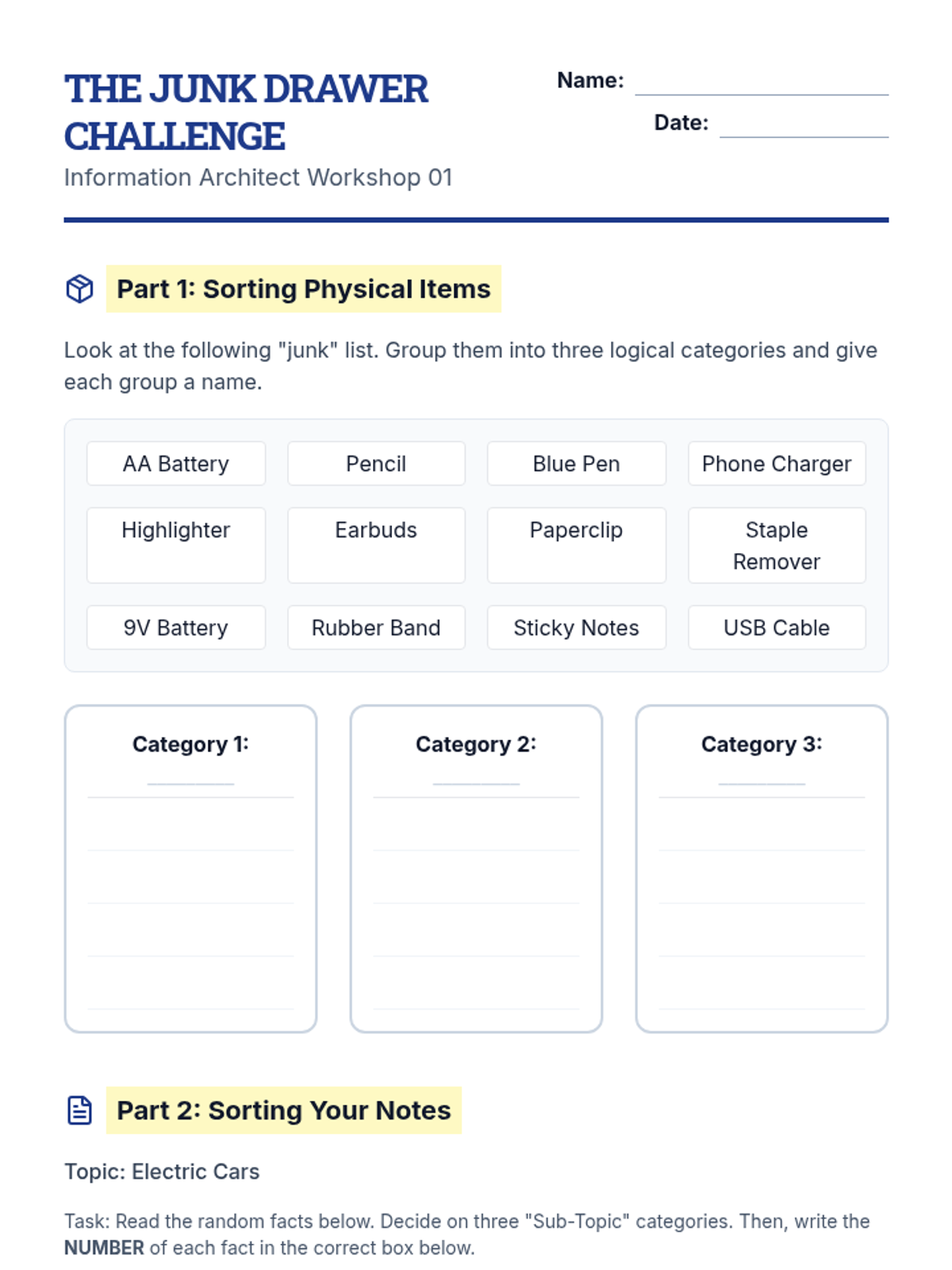
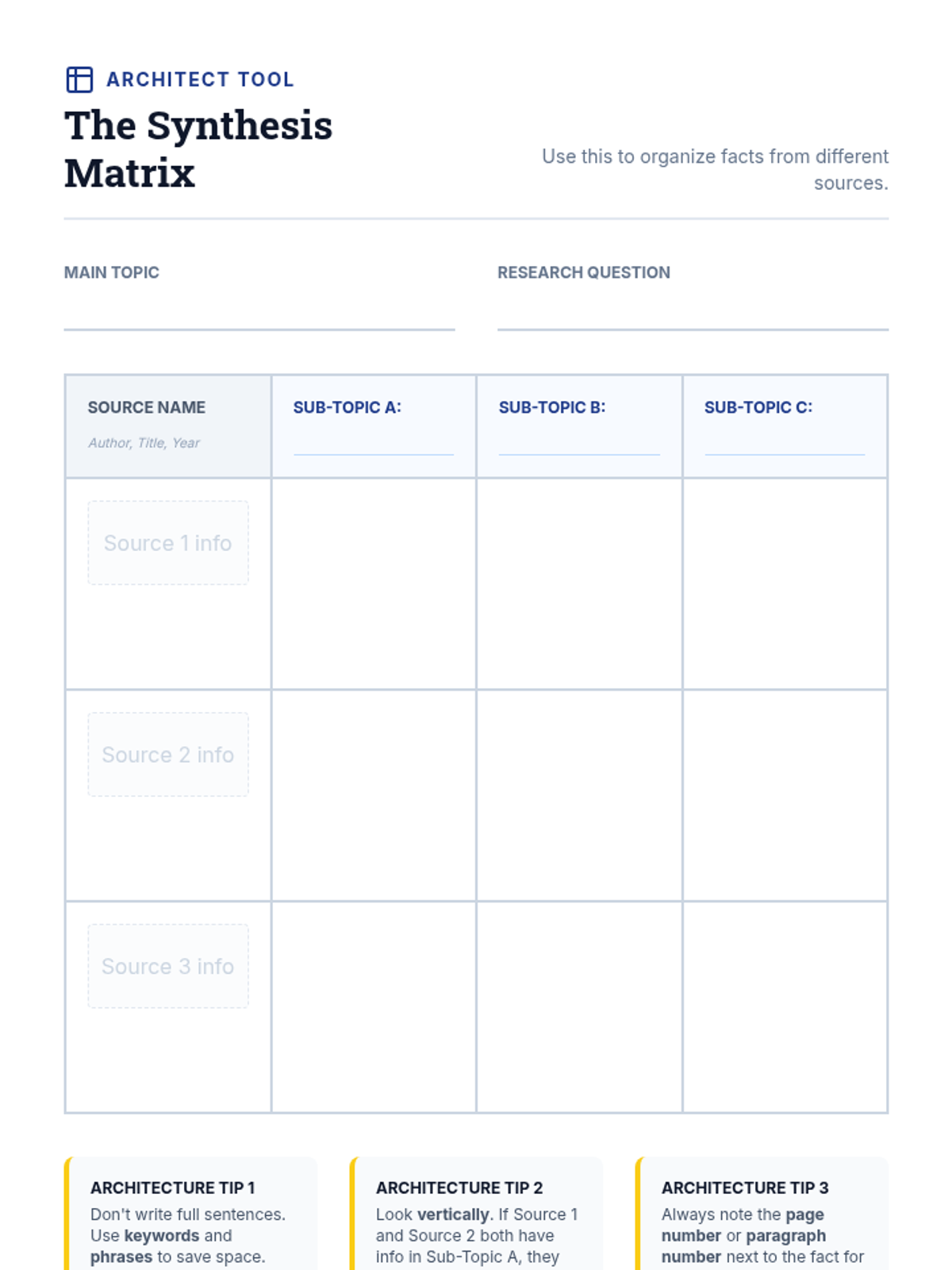
A comprehensive 5-lesson sequence designed for 7th-grade ESL students to master the art of synthesizing information. Students progress from organizing raw research notes to writing sophisticated, cohesive academic paragraphs using evidence from multiple sources.
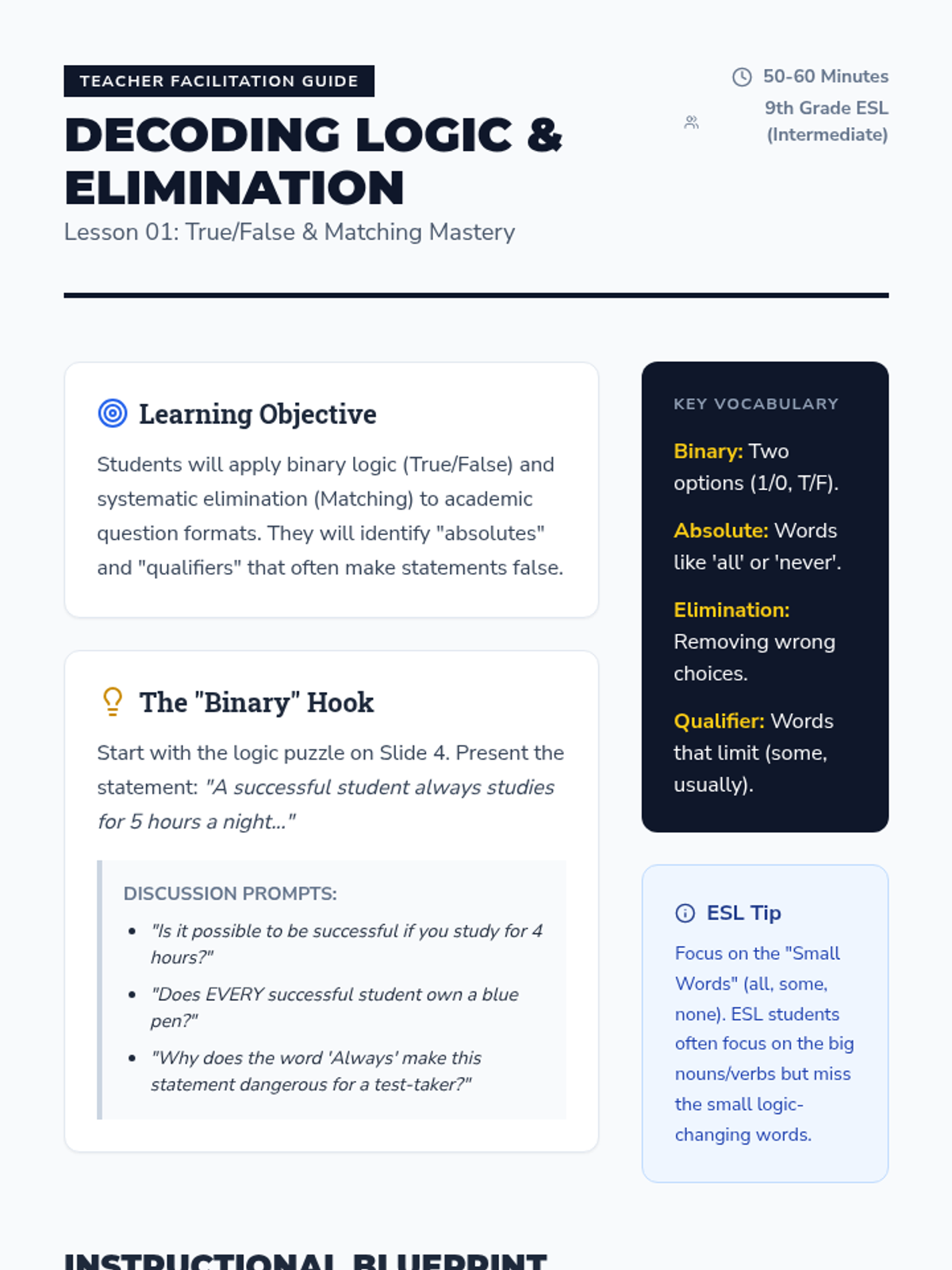
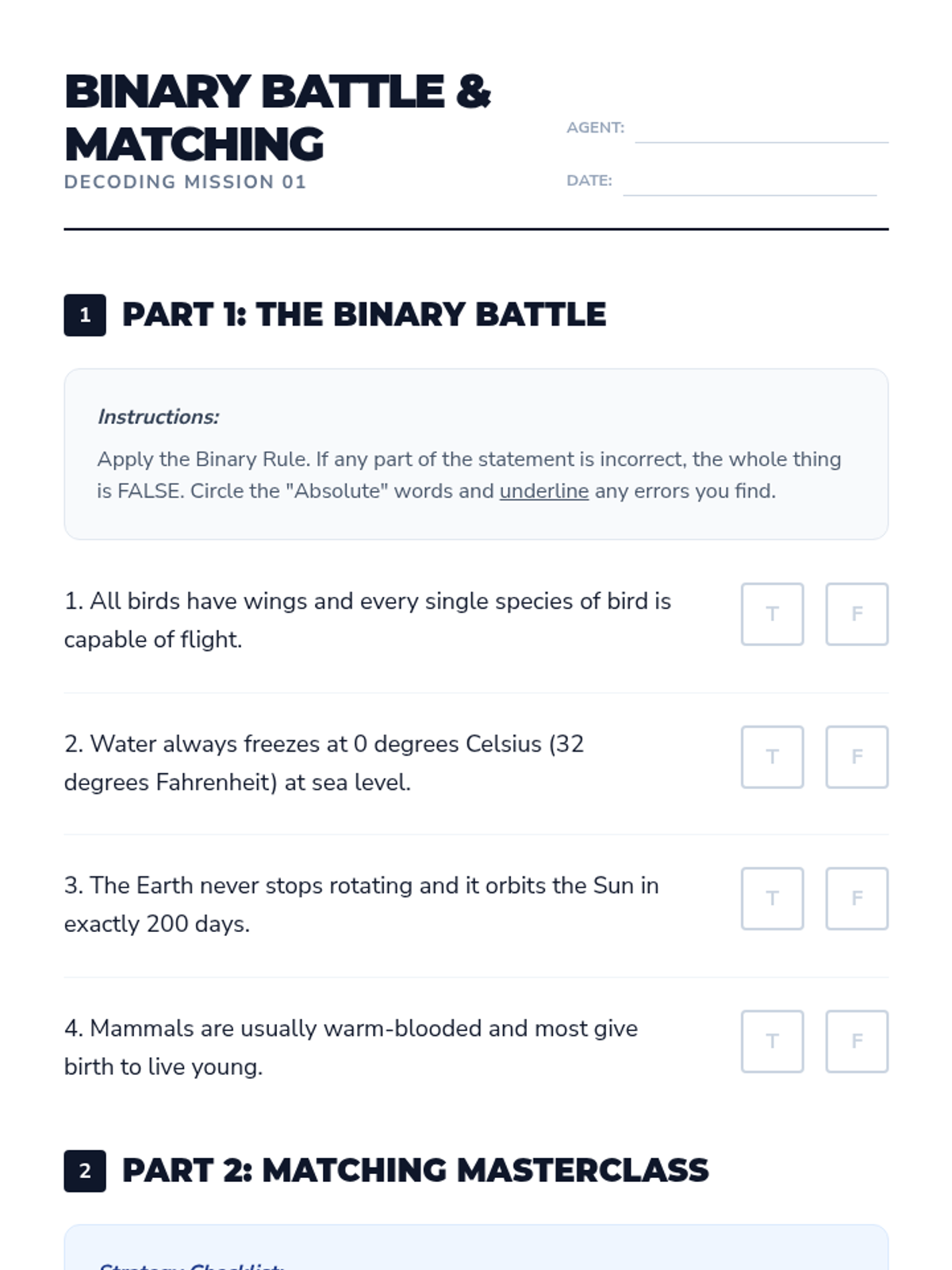
A comprehensive 9th Grade ESL sequence focusing on academic test-taking strategies. Students learn to decode diverse question formats, from True/False logic to data interpretation, using a workshop-based 'Test Decoder' approach.
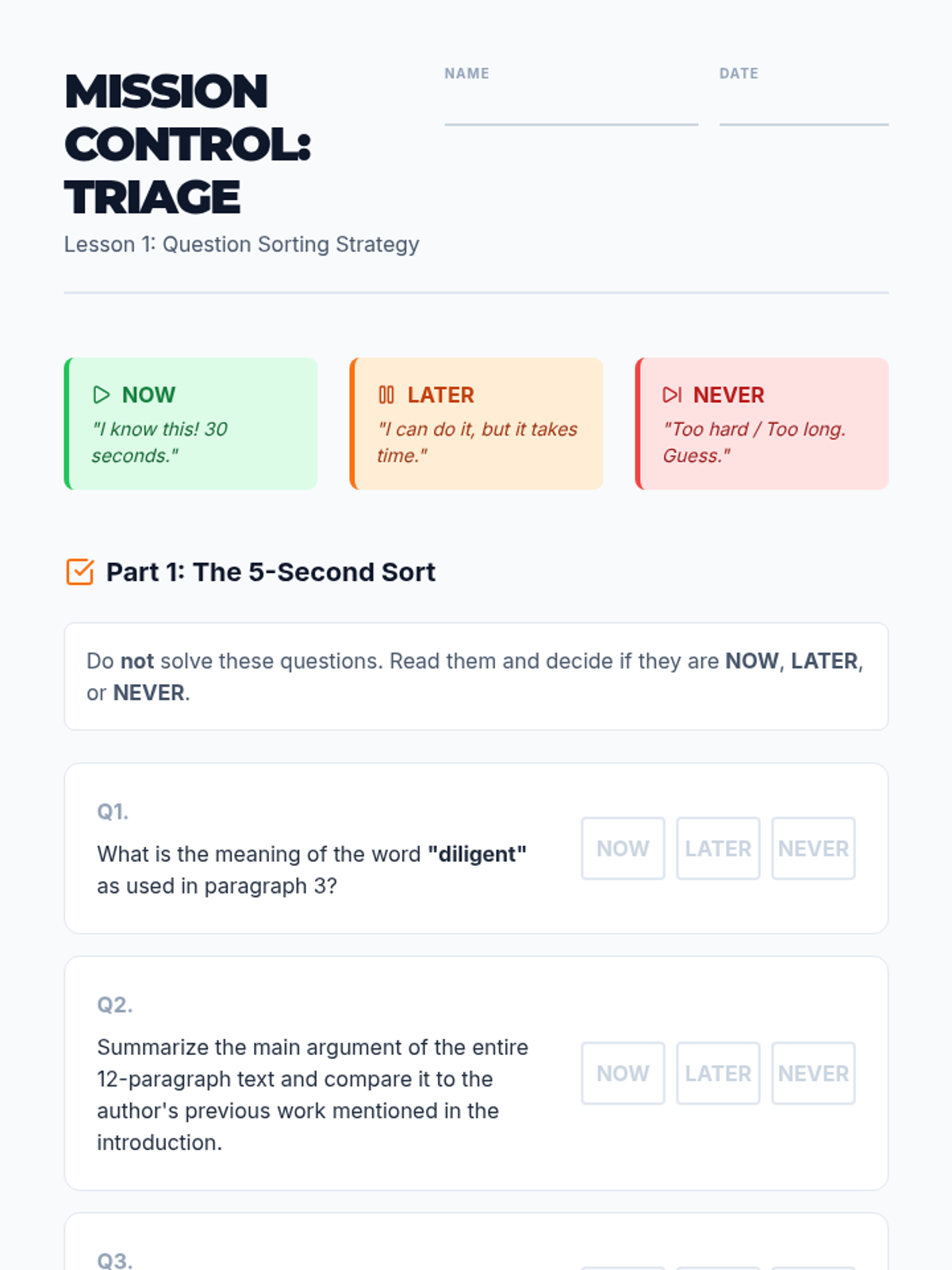
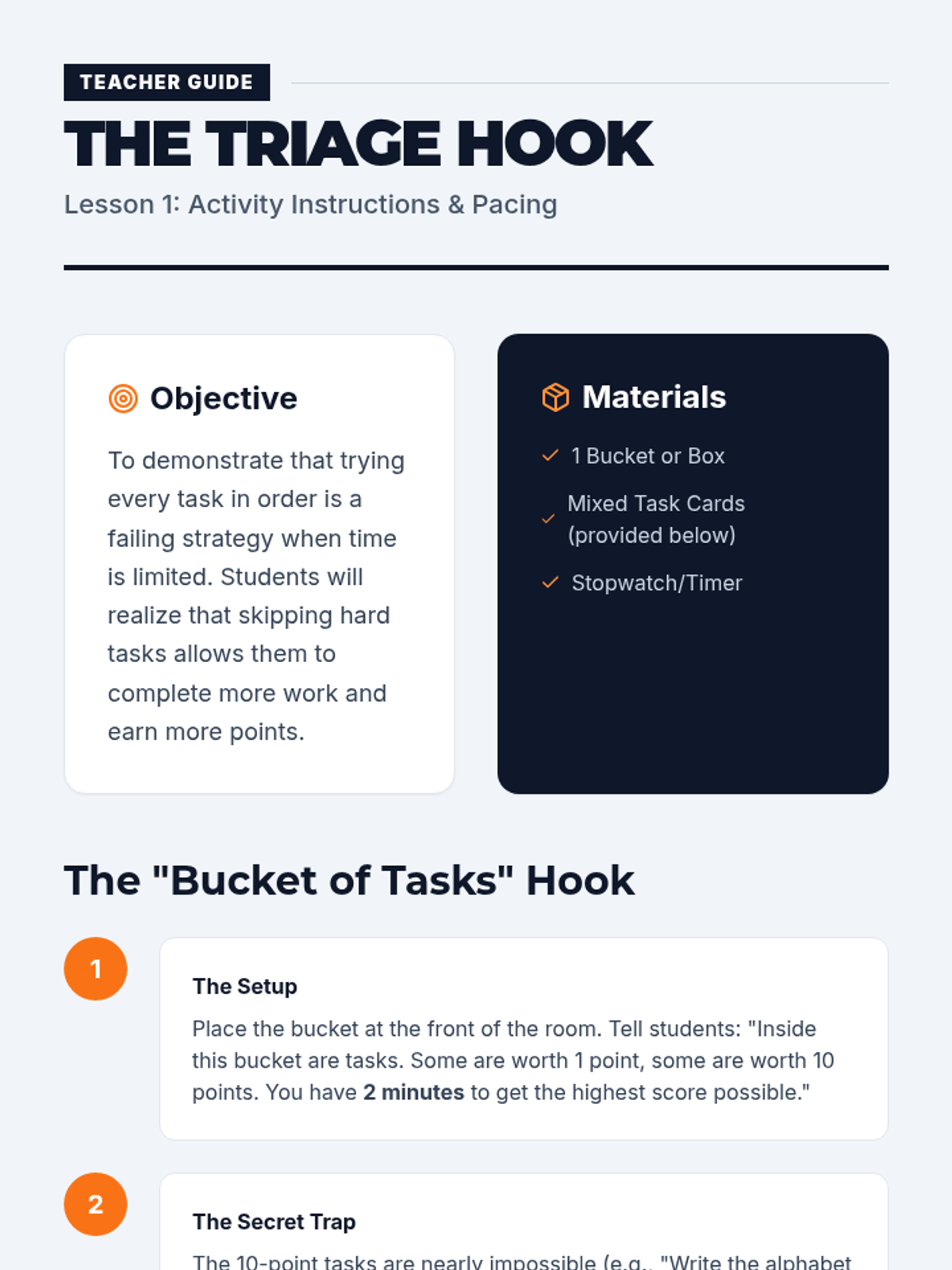
A comprehensive sequence designed for 9th-grade ESL students to master time management, prioritization, and stress-reduction techniques for high-stakes standardized testing. Students learn the 'Triage' method, time budgeting, strategic guessing, and physiological anxiety resets through active simulations.
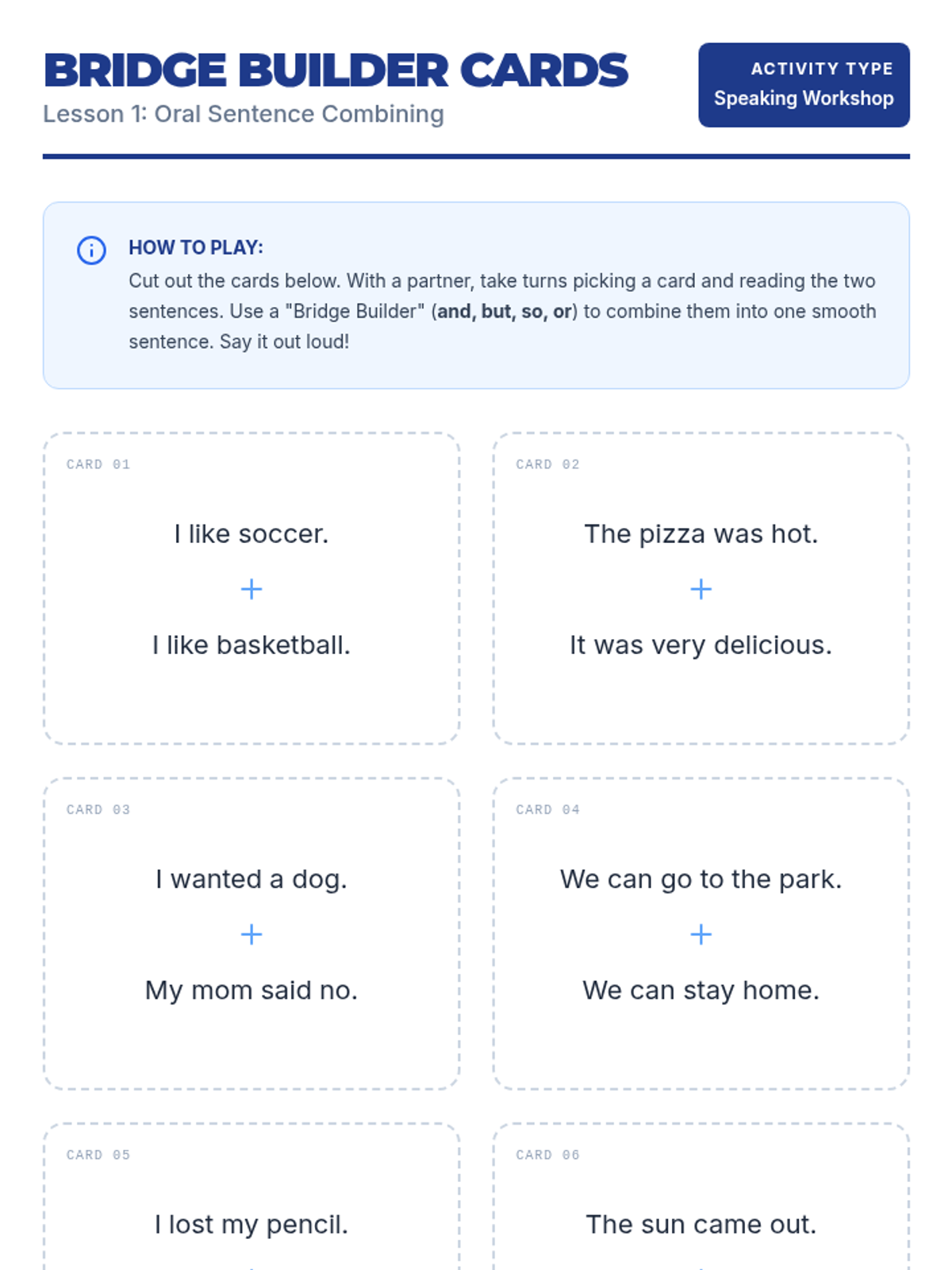
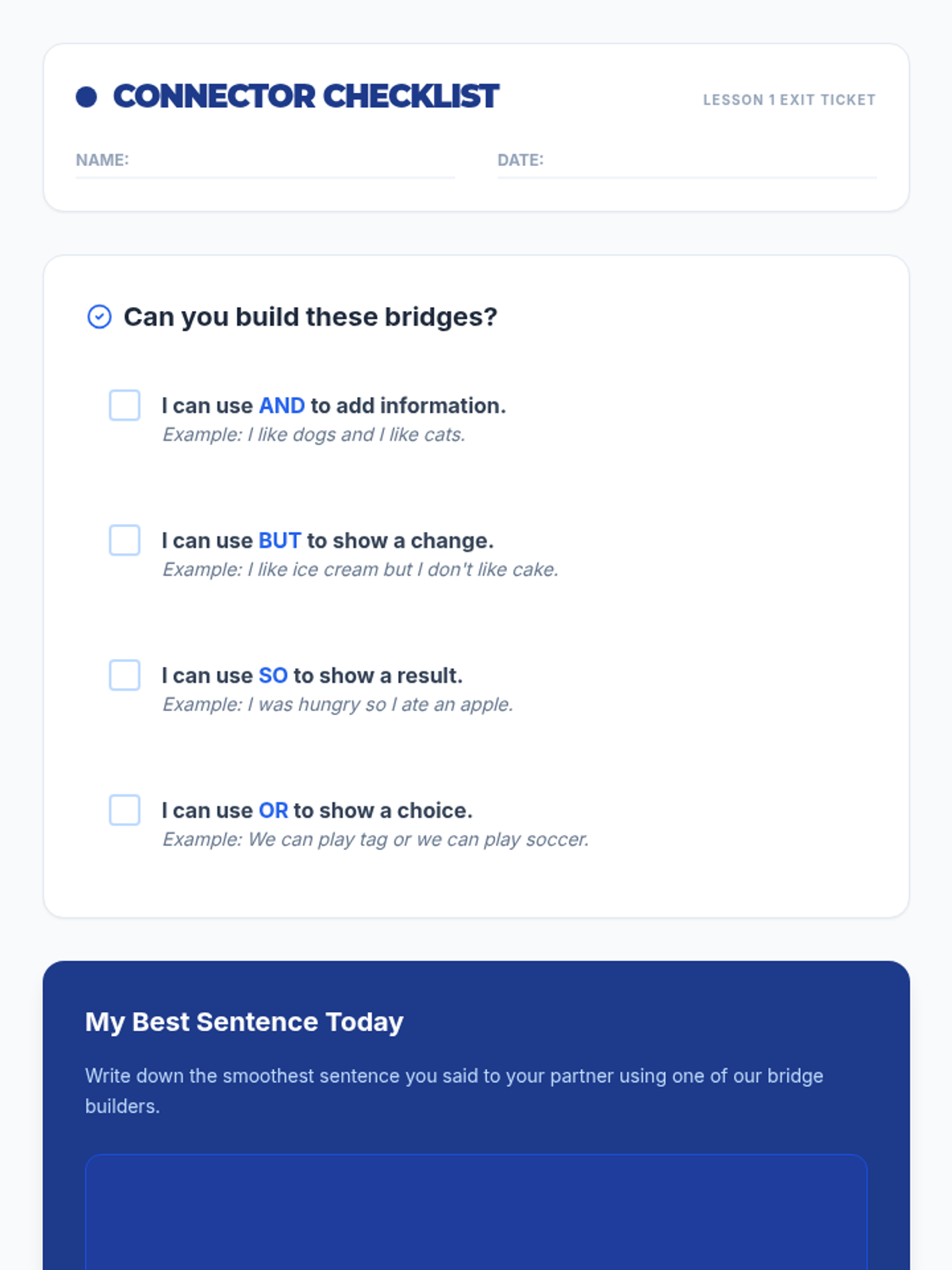
A sequence for intermediate ESL students to master complex sentence structures in oral storytelling. Students transition from choppy, simple sentences to fluid narratives using conjunctions, transitions, and relative clauses.
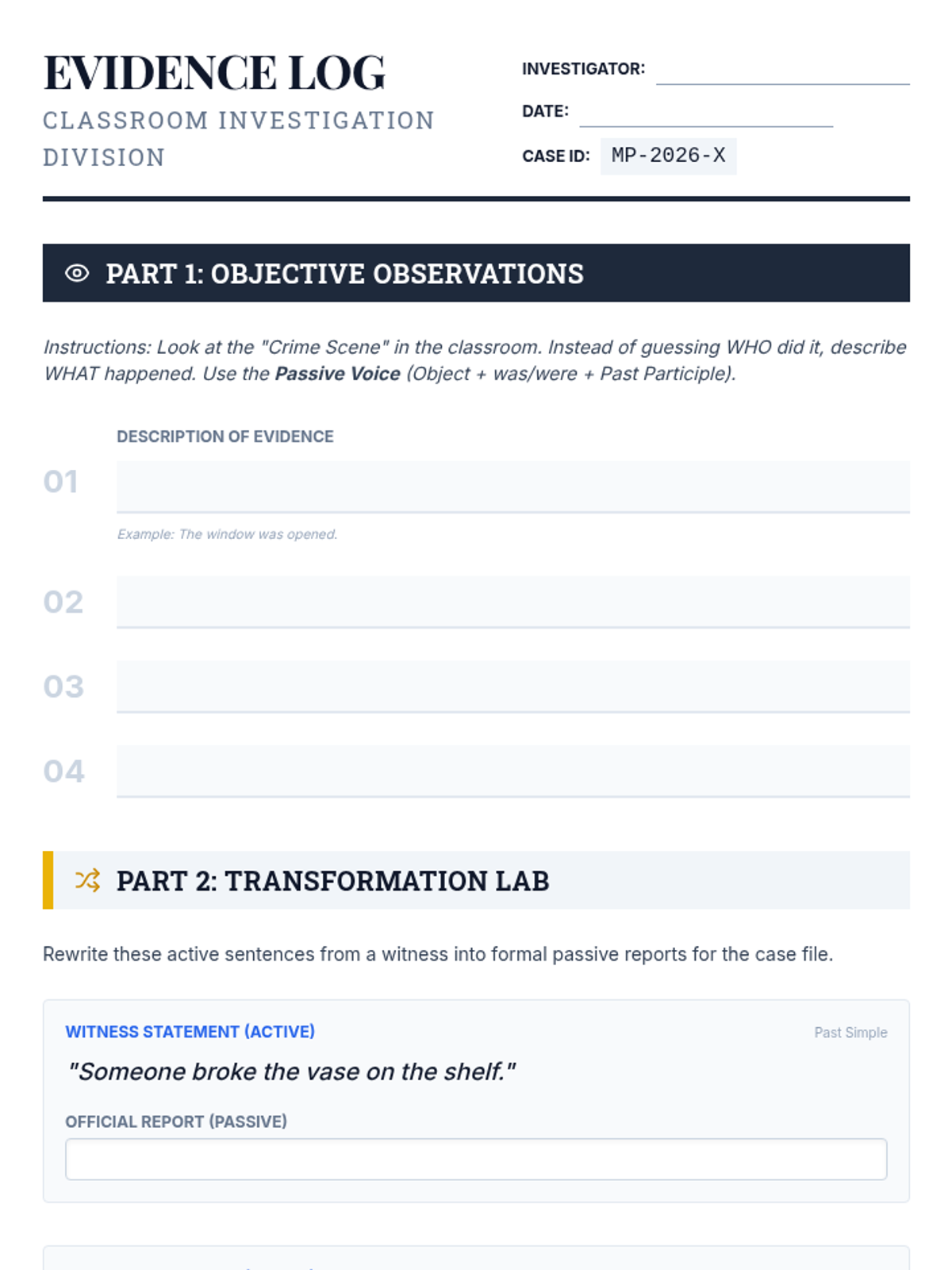
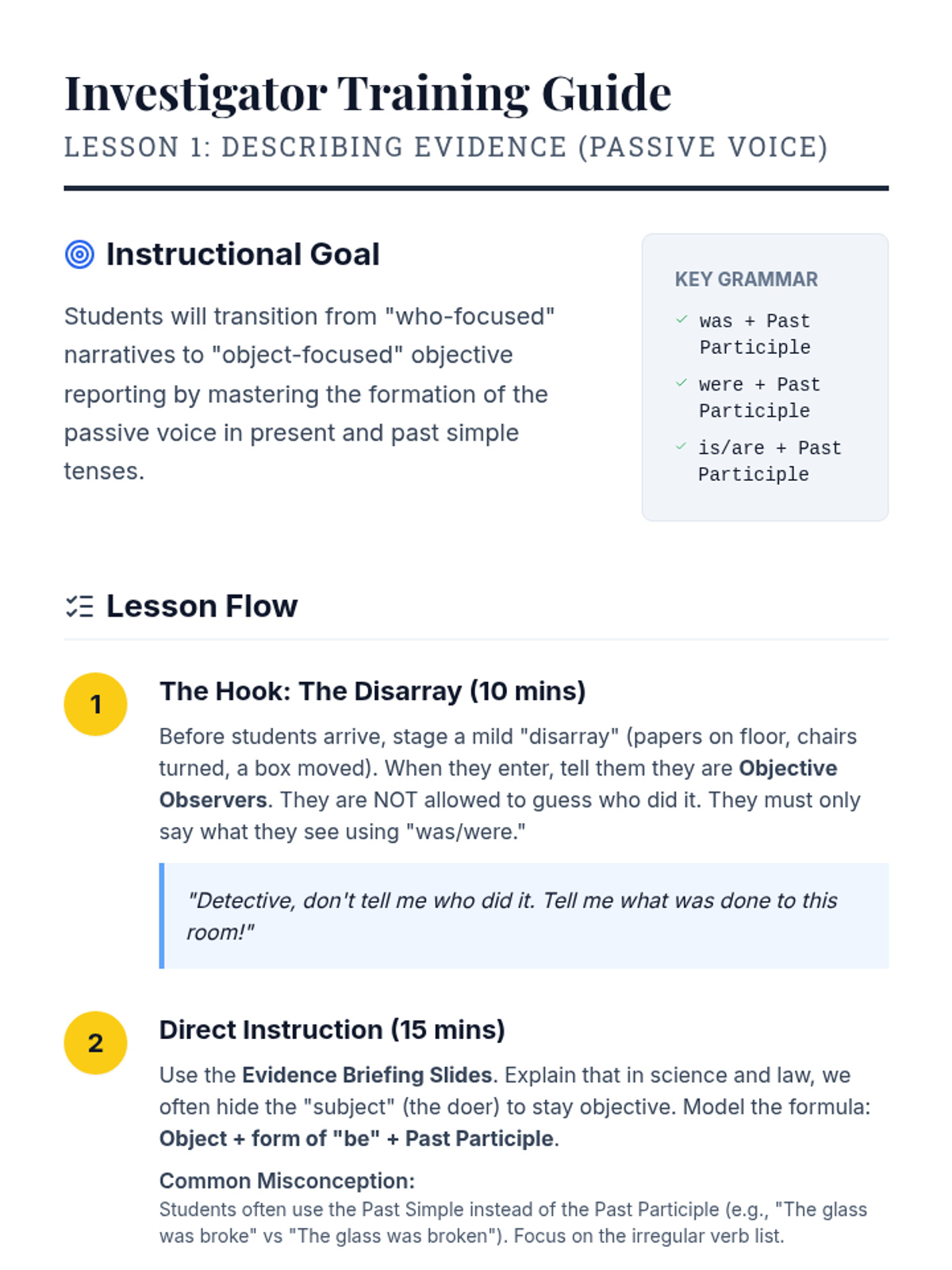
A grammar-focused ESL unit where students act as investigators to solve a classroom mystery. They master passive voice, modals of deduction, reported speech, and past perfect to write an objective case report.
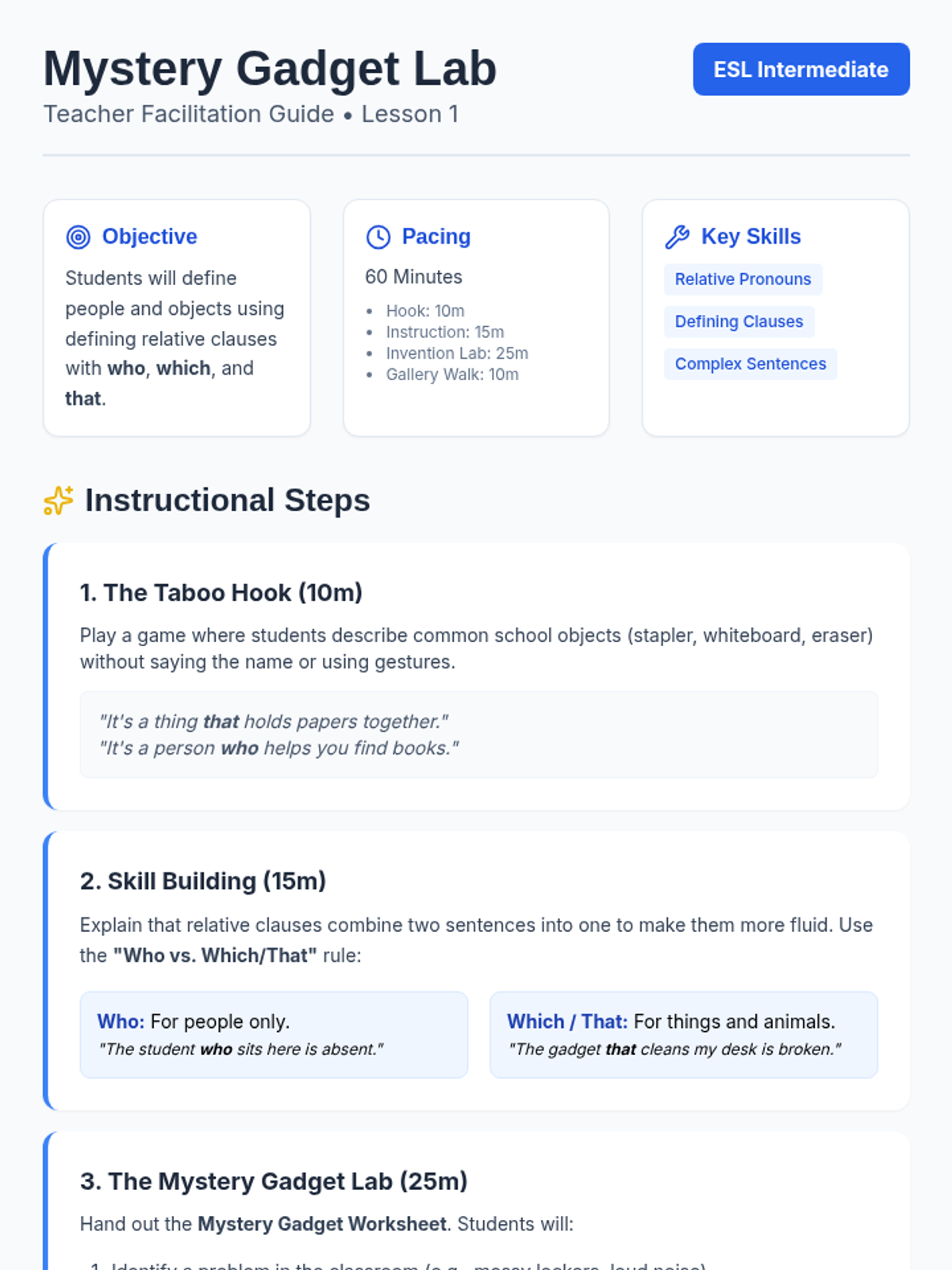
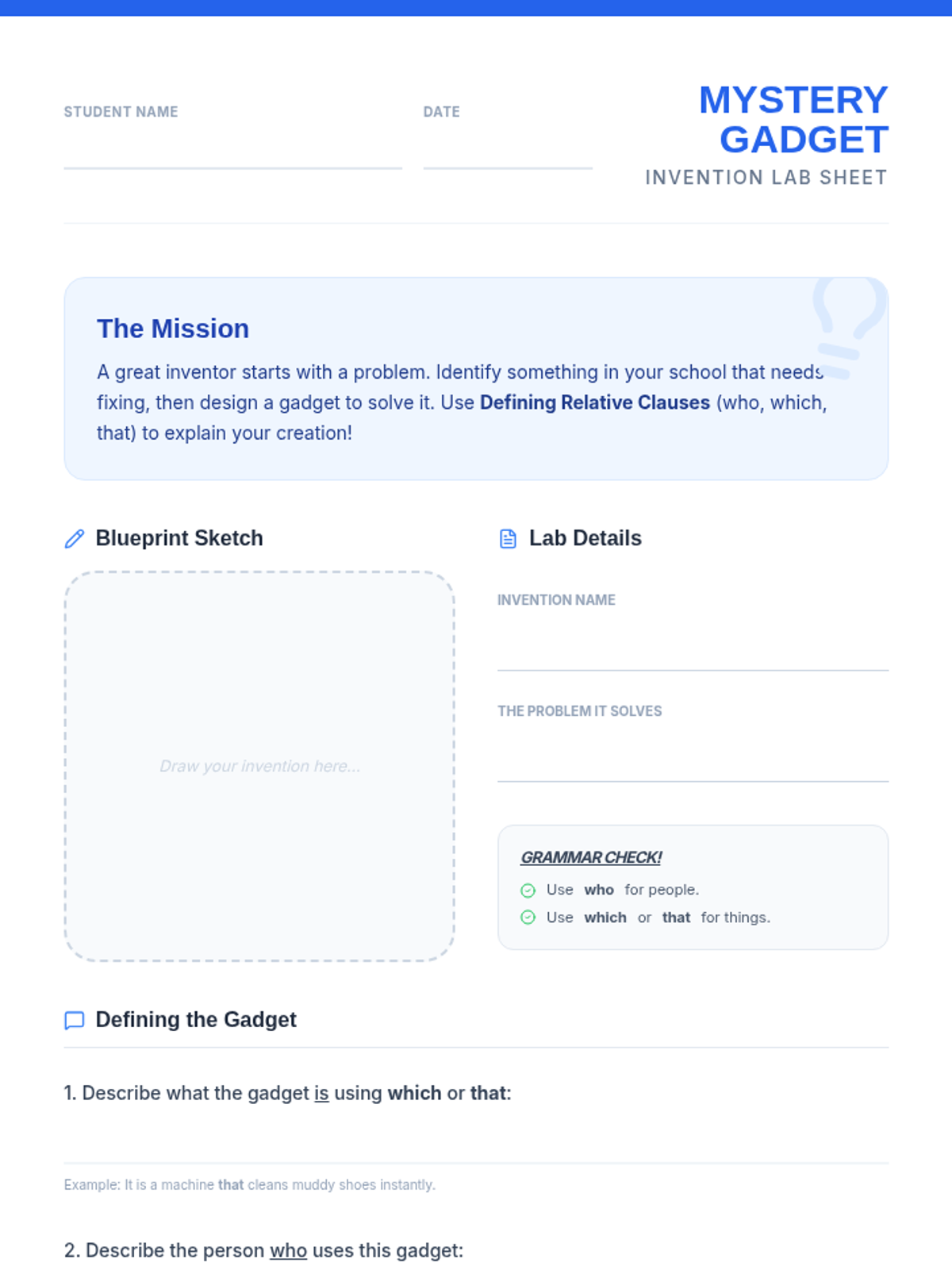
A grammar-focused ESL sequence where students use relative clauses and conditionals to design and pitch inventions for a 'School of the Future.' Students move from defining objects to predicting outcomes and hypothesizing wild improvements.
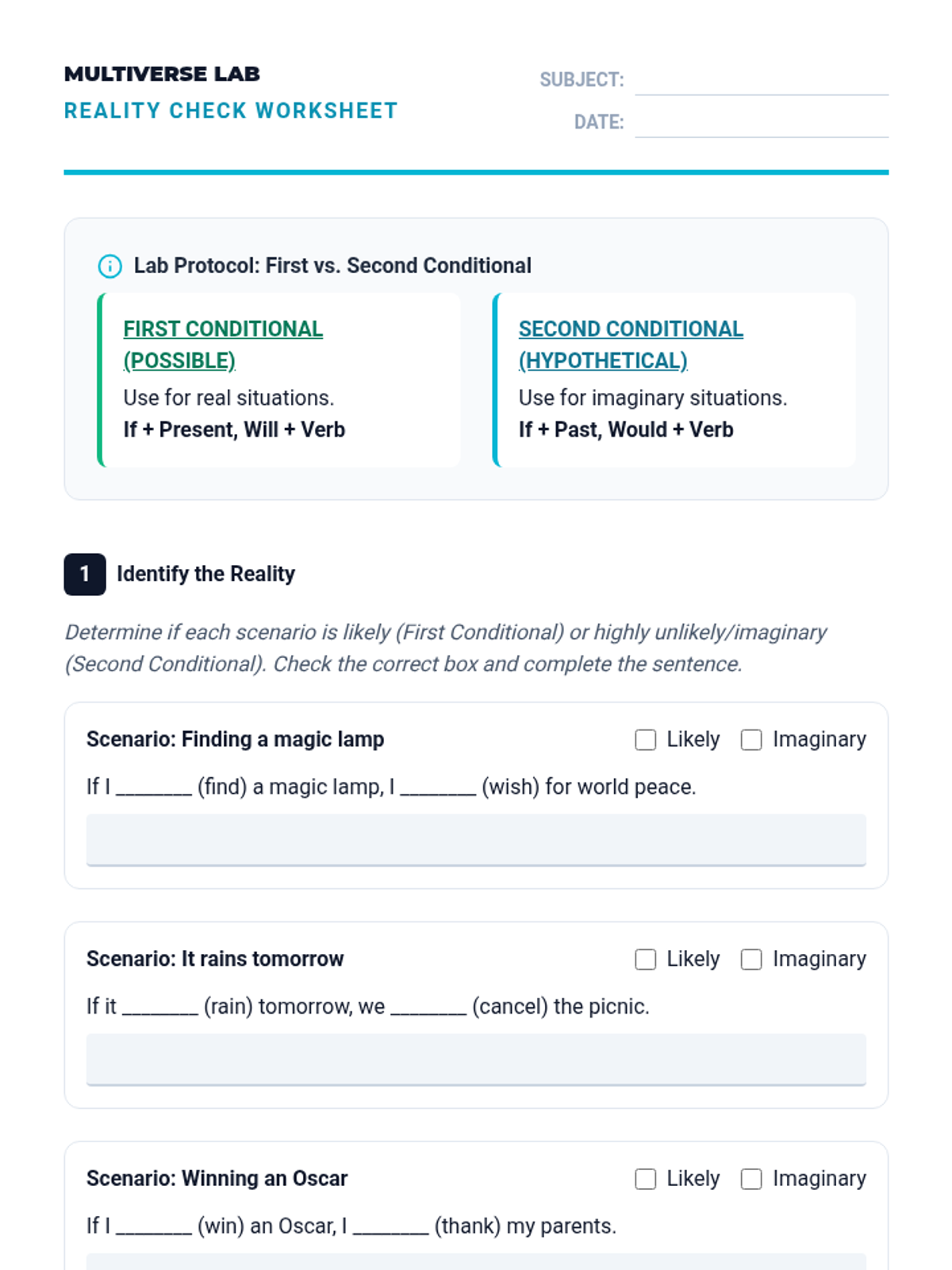
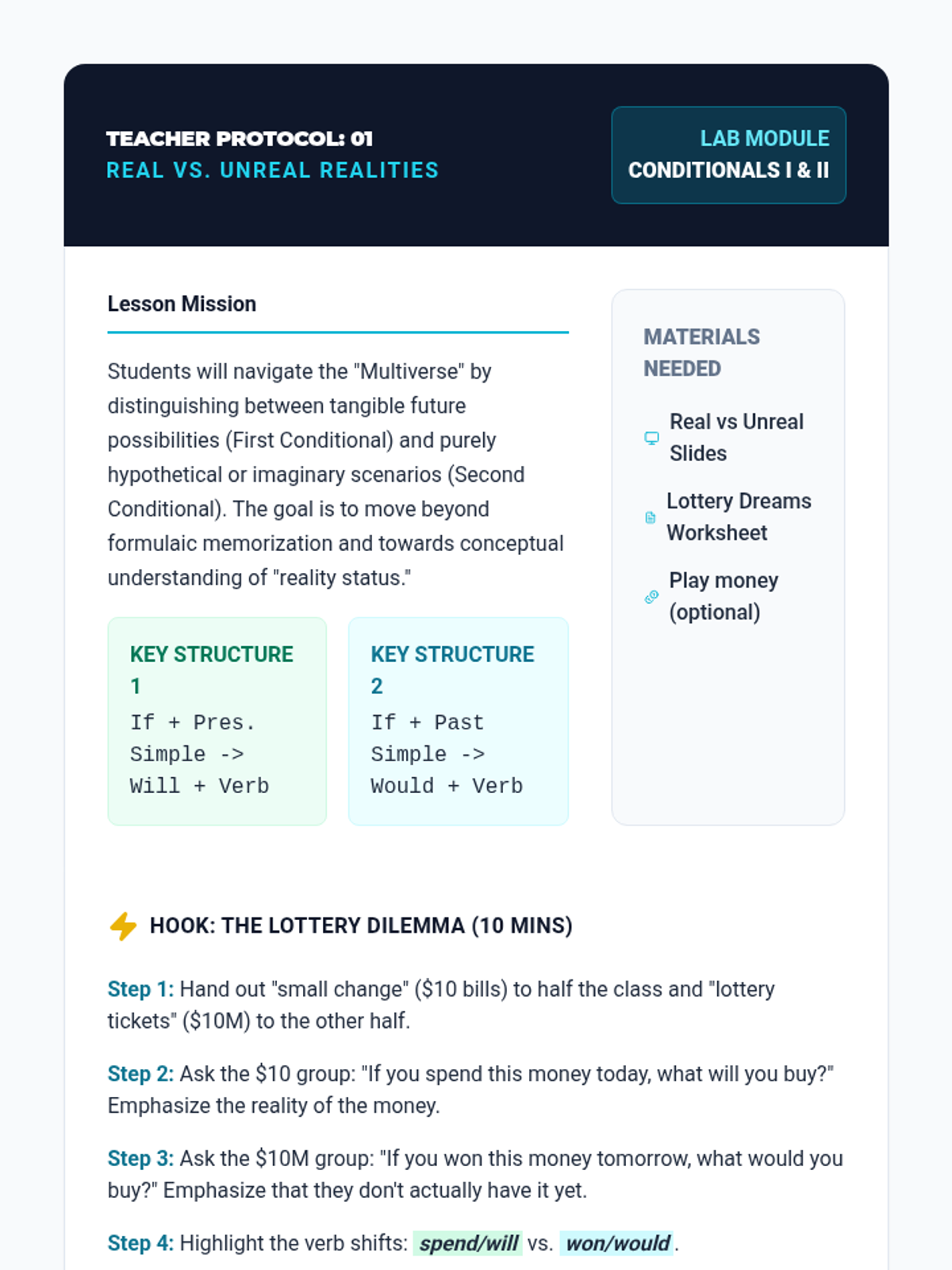
Students delve into the nuances of English conditionals, moving beyond basic cause-and-effect to explore hypothetical situations, regrets, and impossible scenarios using a 'Multiverse Lab' simulation theme.
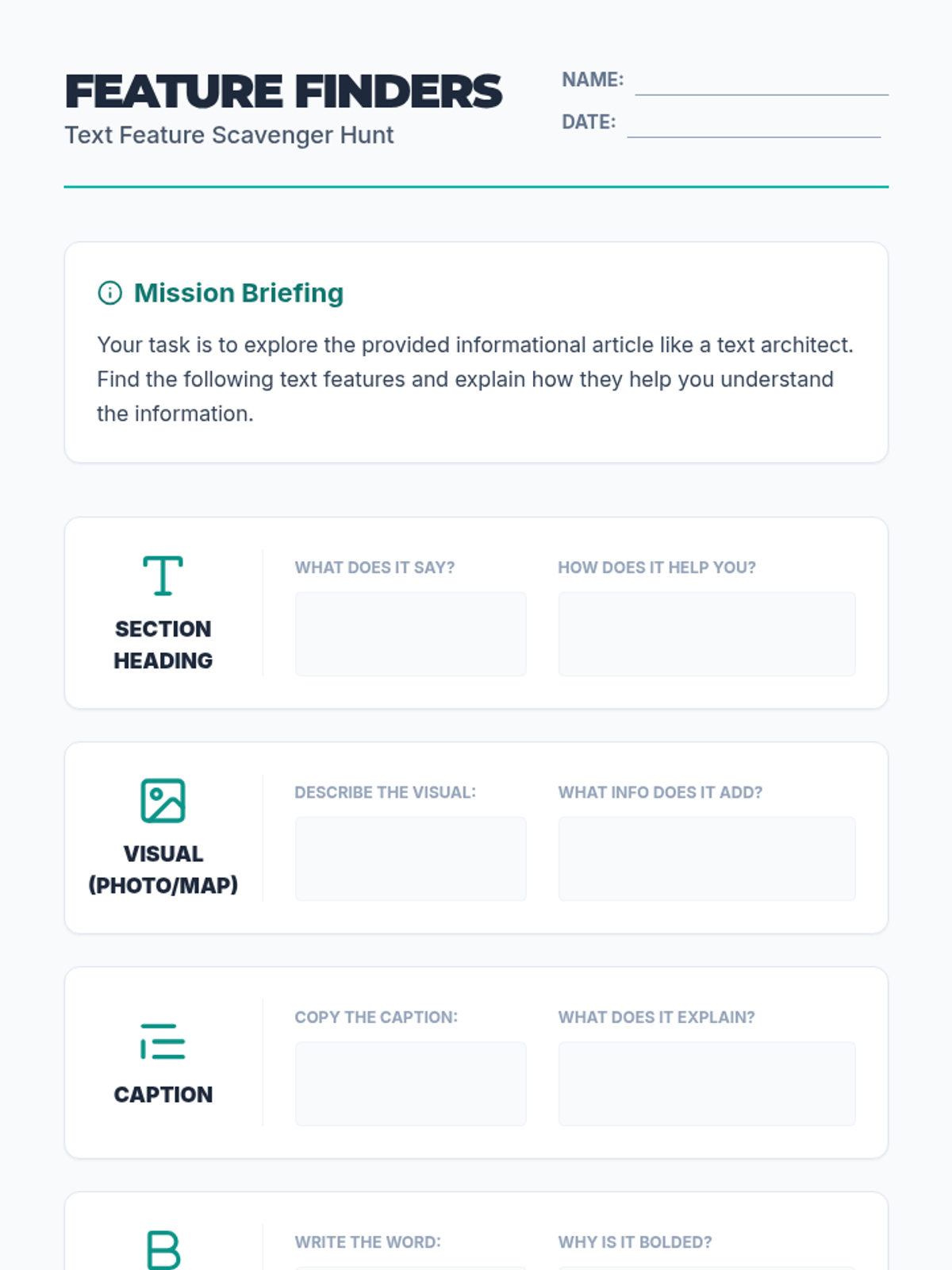
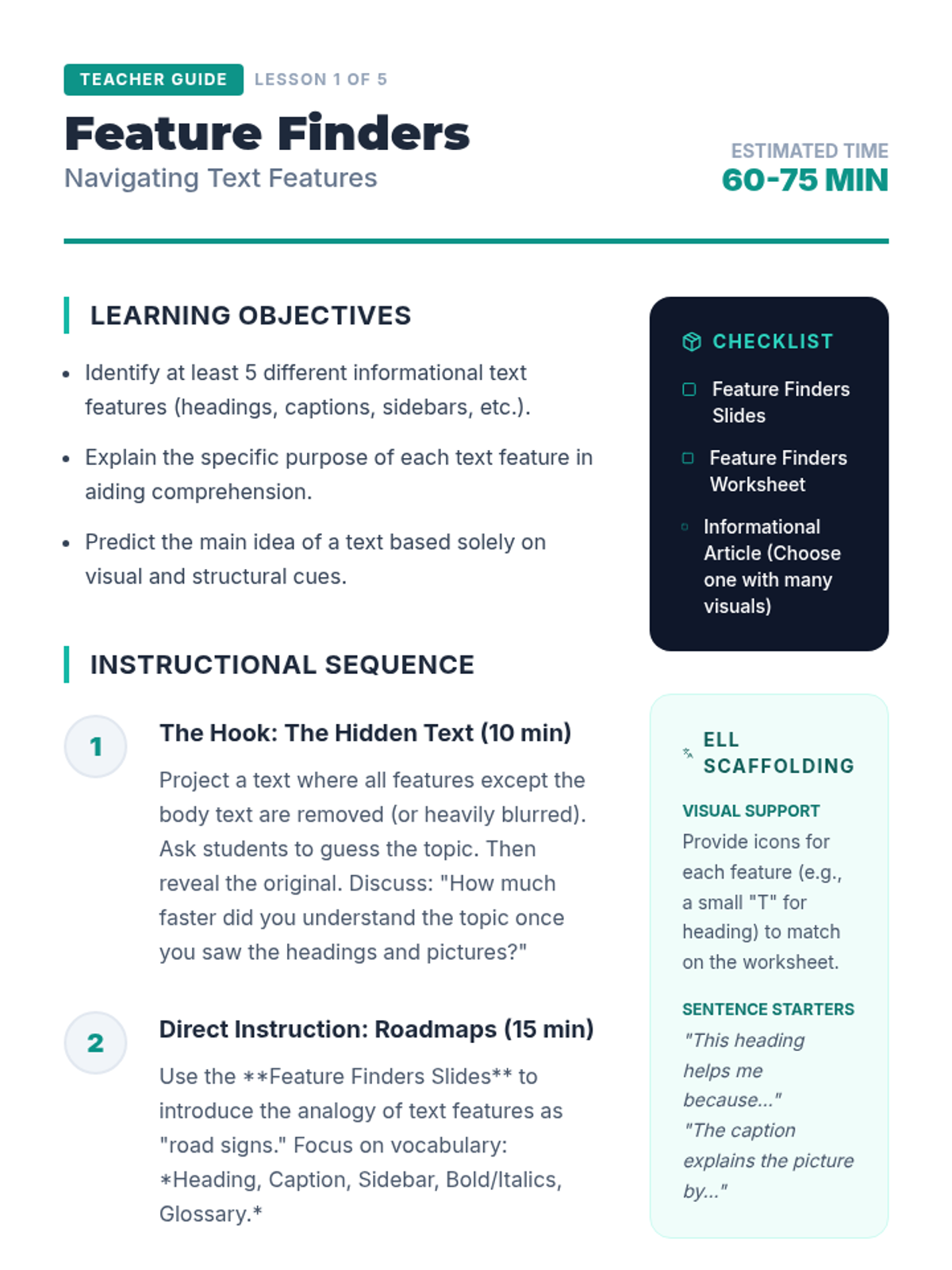
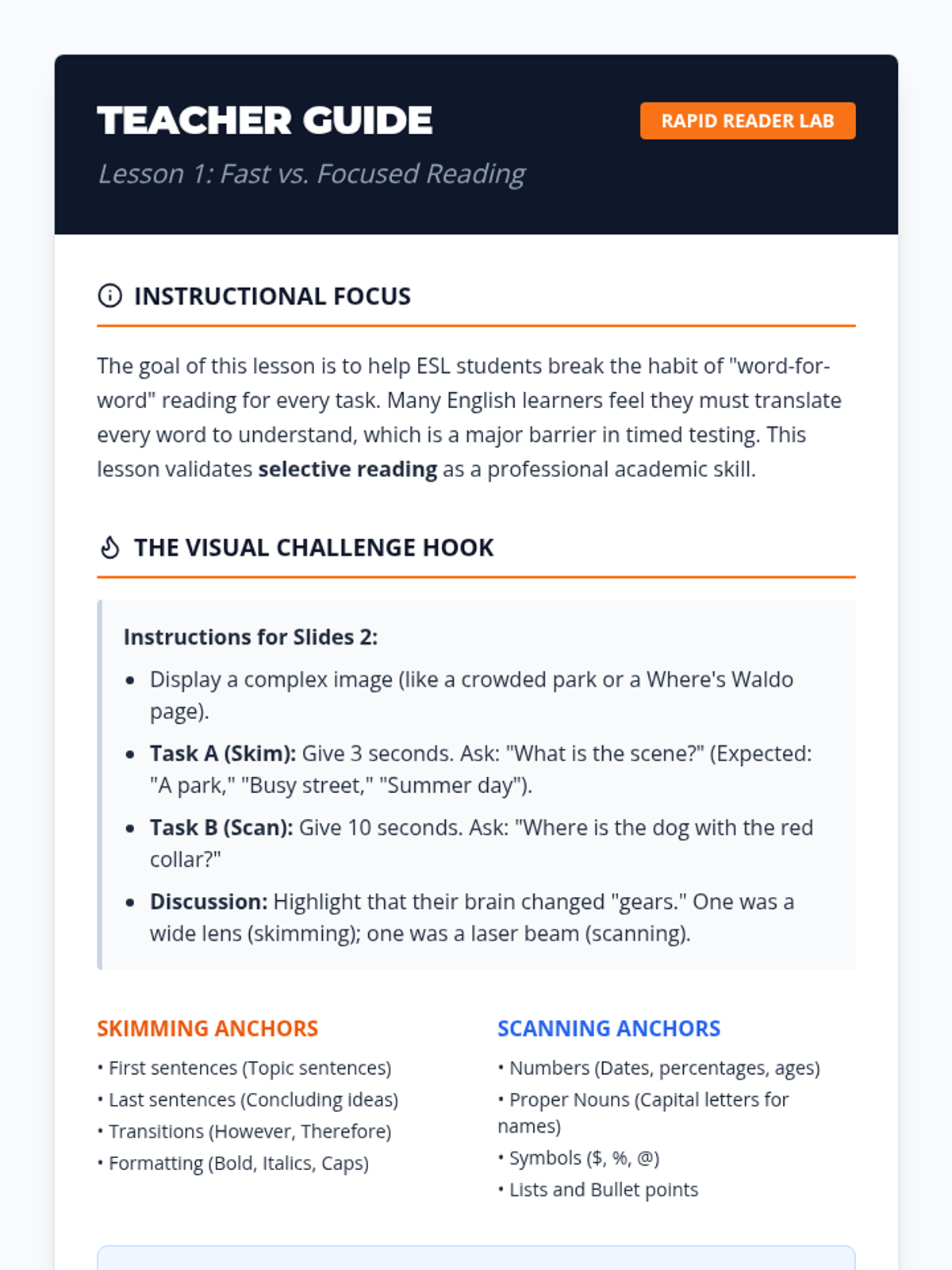
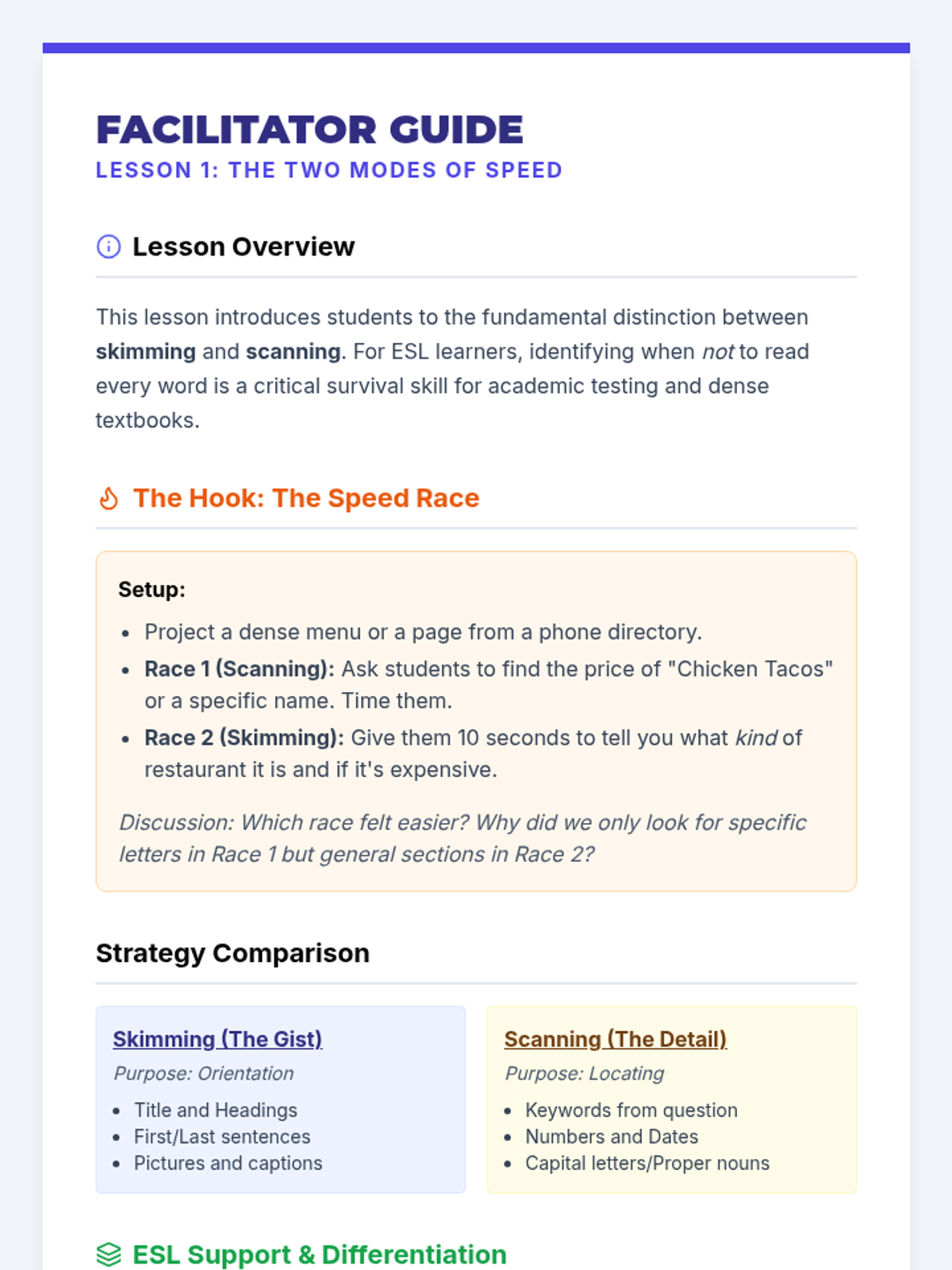
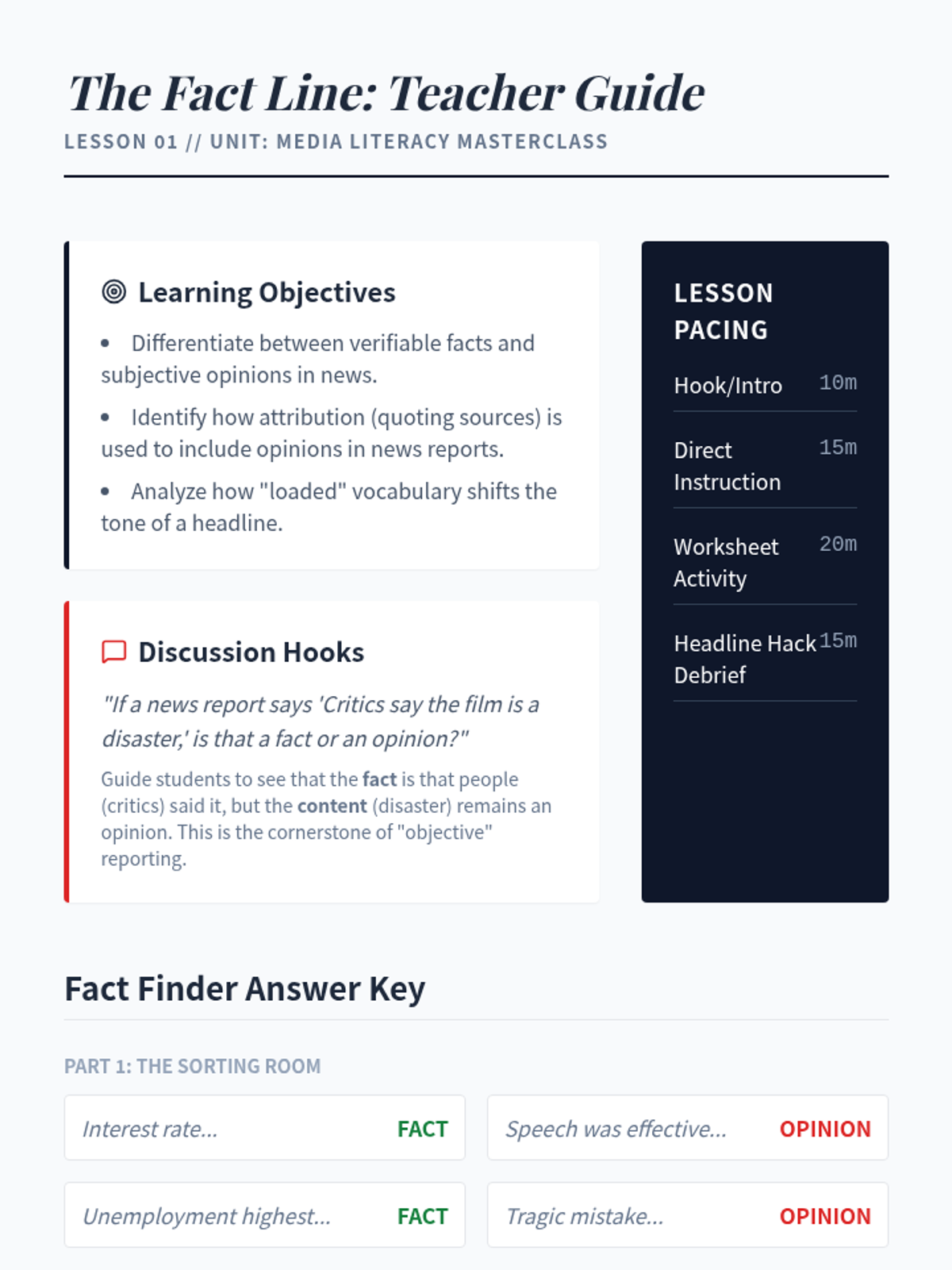
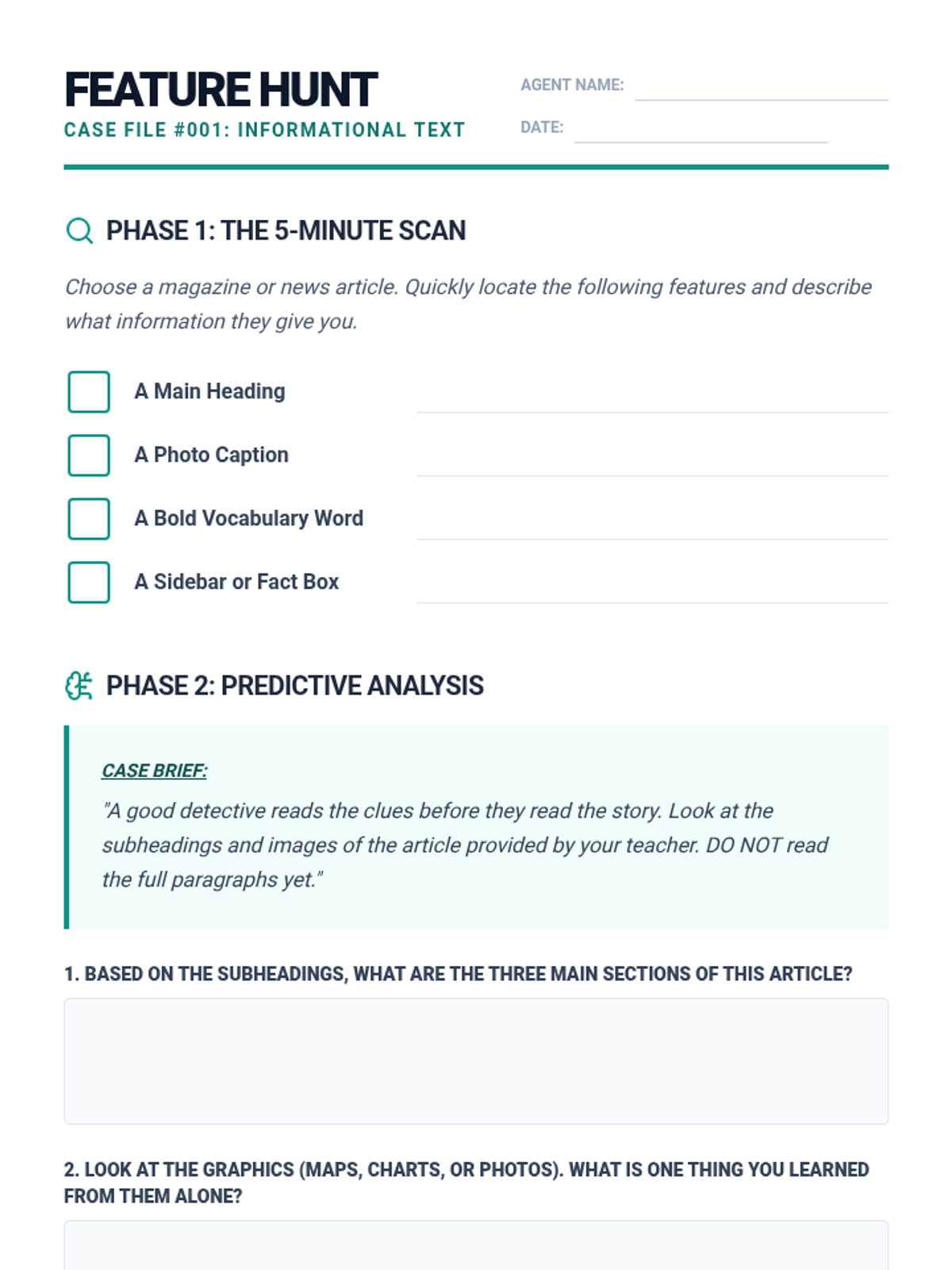
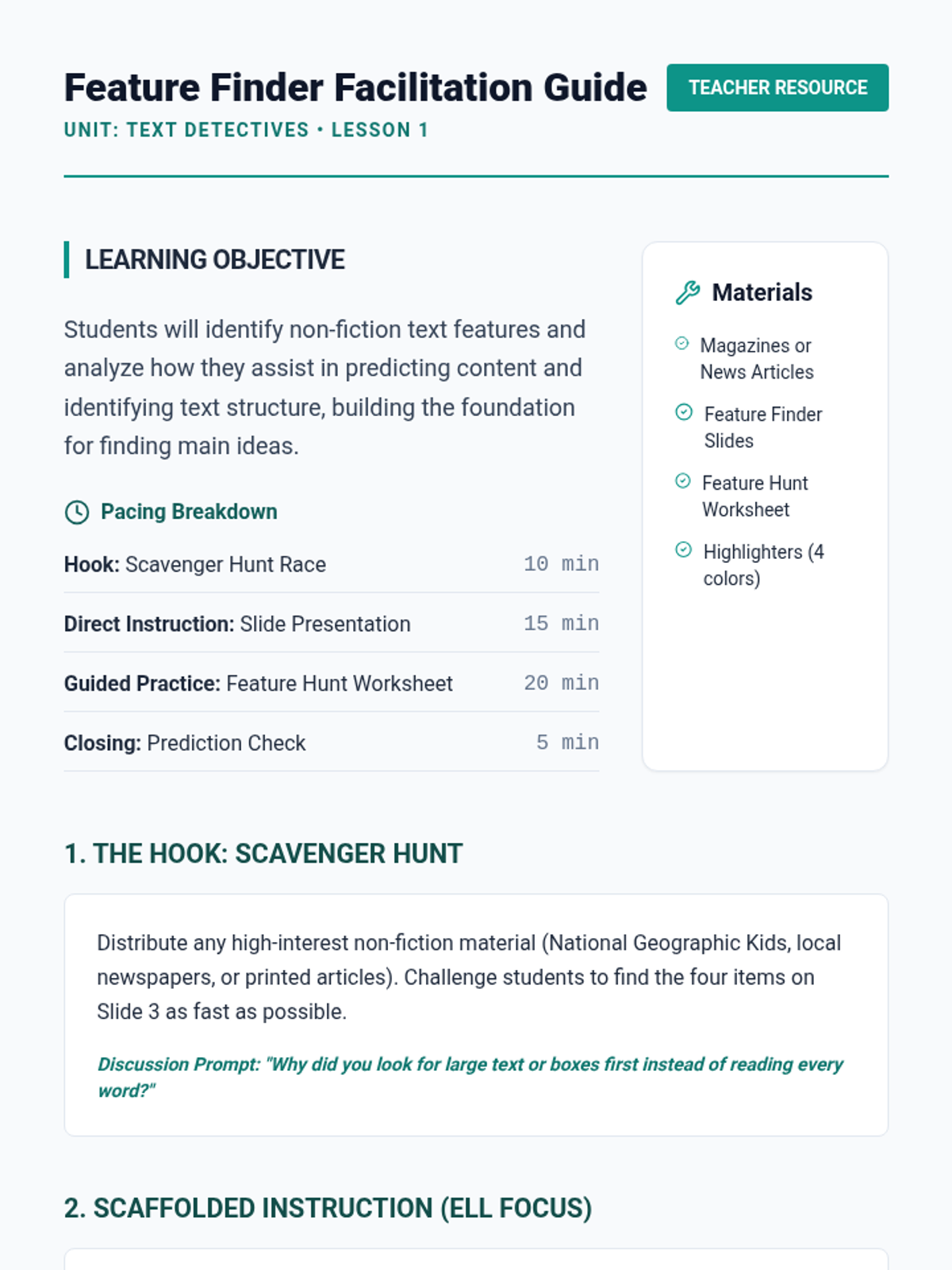
A comprehensive sequence for 9th-grade ELL students focused on deconstructing informational texts. Students will learn to identify text features, analyze paragraph structure, distinguish between facts and opinions, and master skimming and scanning techniques to produce concise summaries.
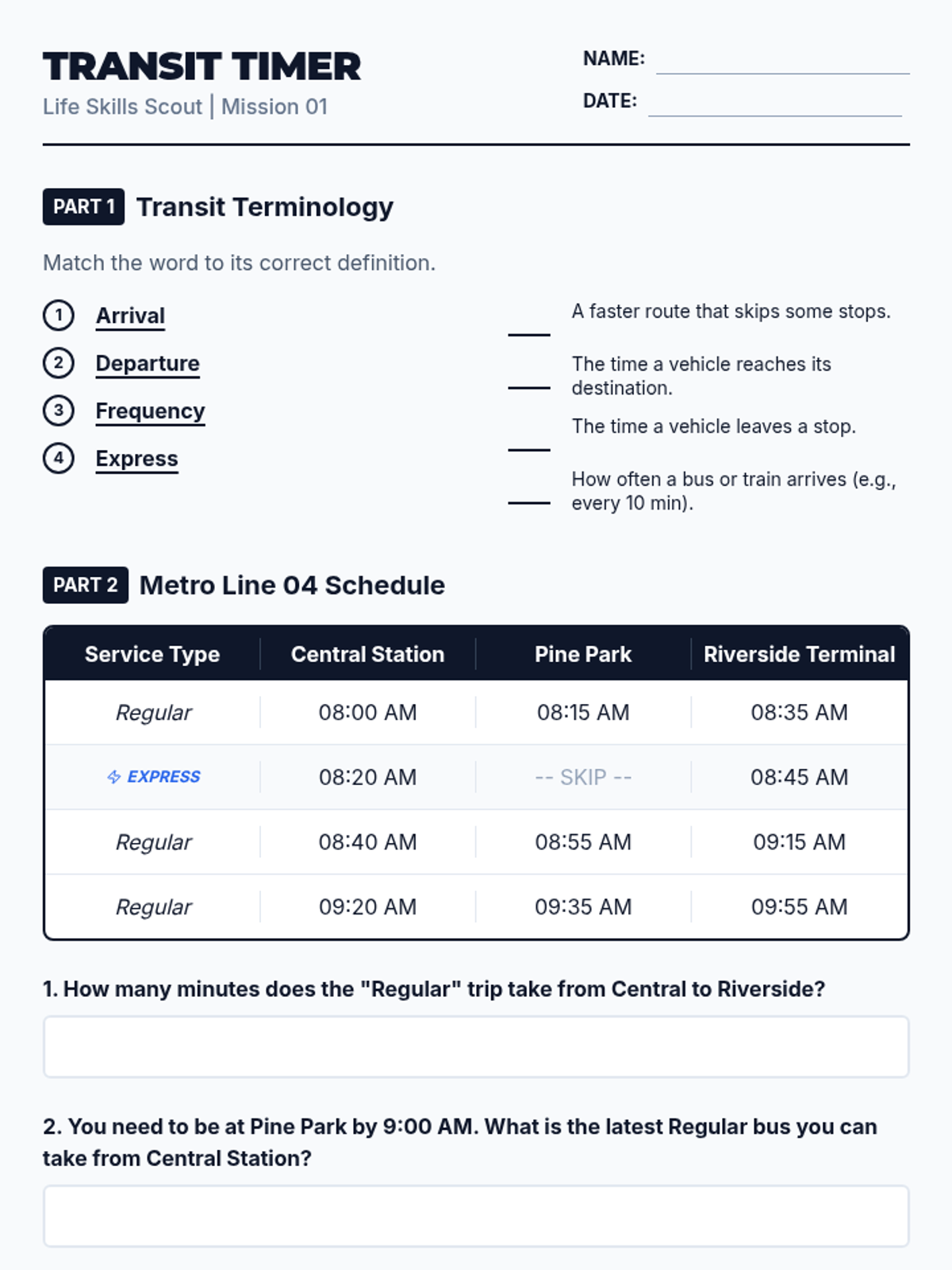
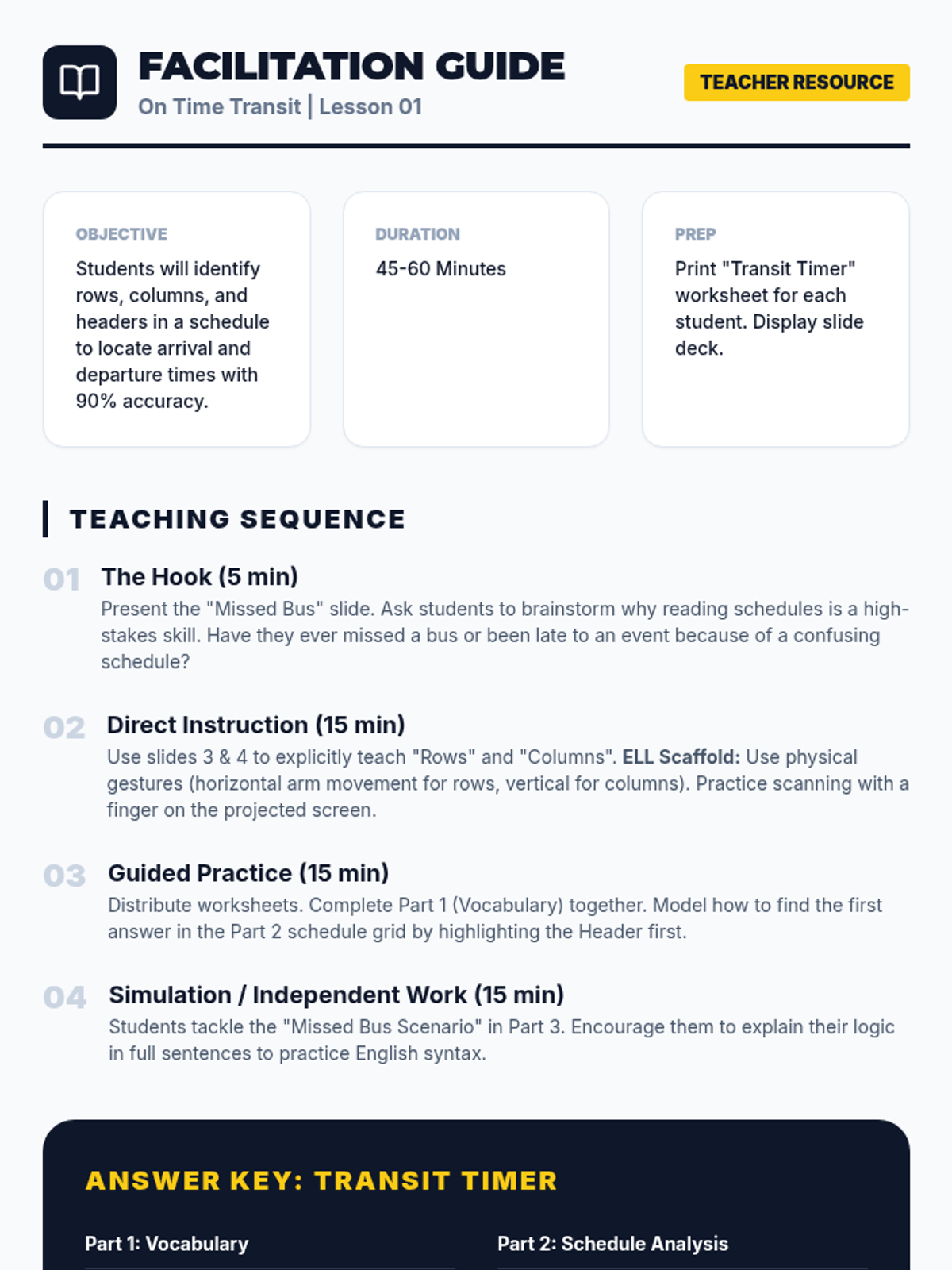
A functional literacy unit for intermediate English learners that focuses on reading schedules, menus, maps, and digital communications through real-world simulations. Students develop practical skills to navigate everyday information efficiently and accurately.
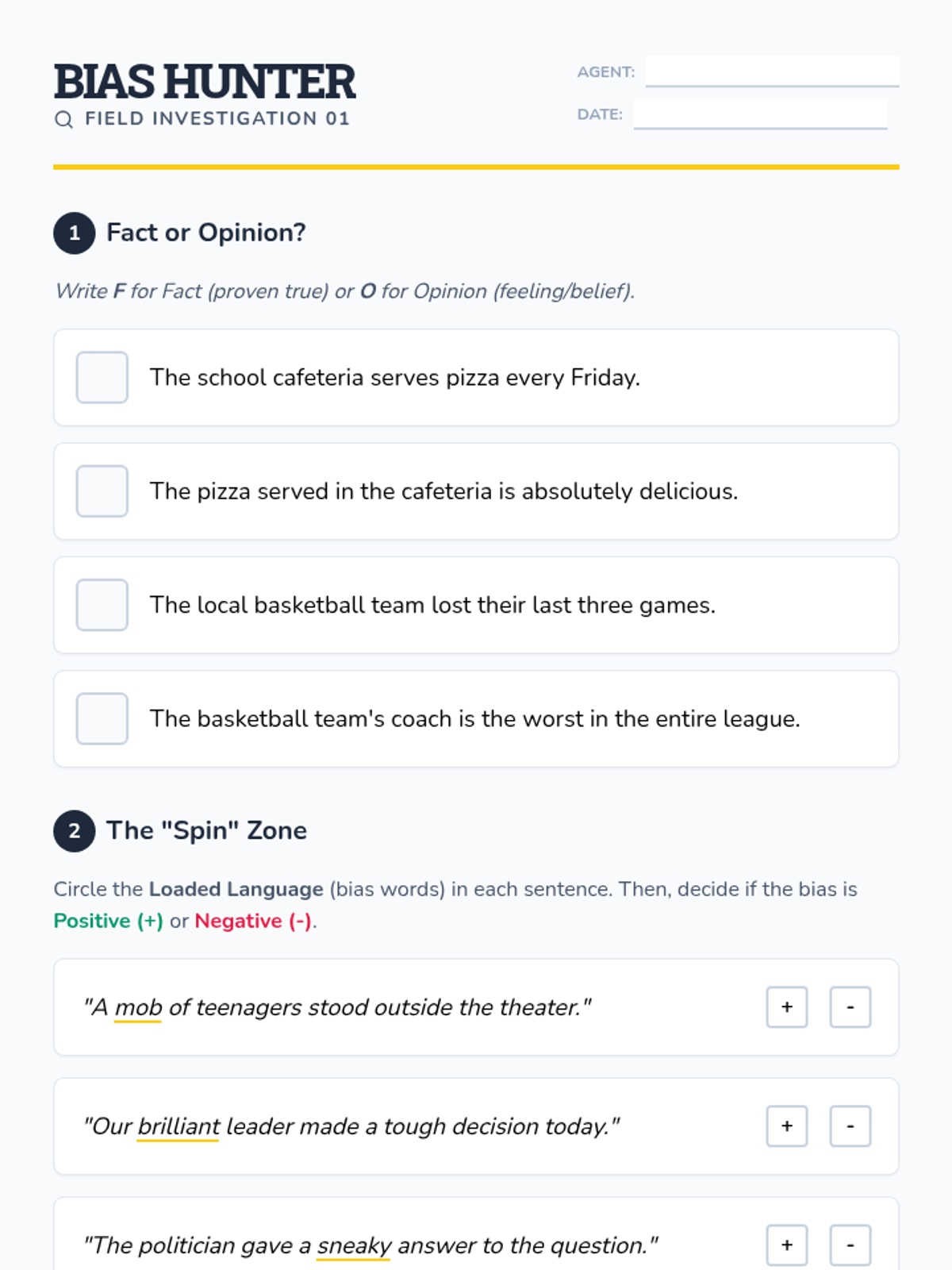
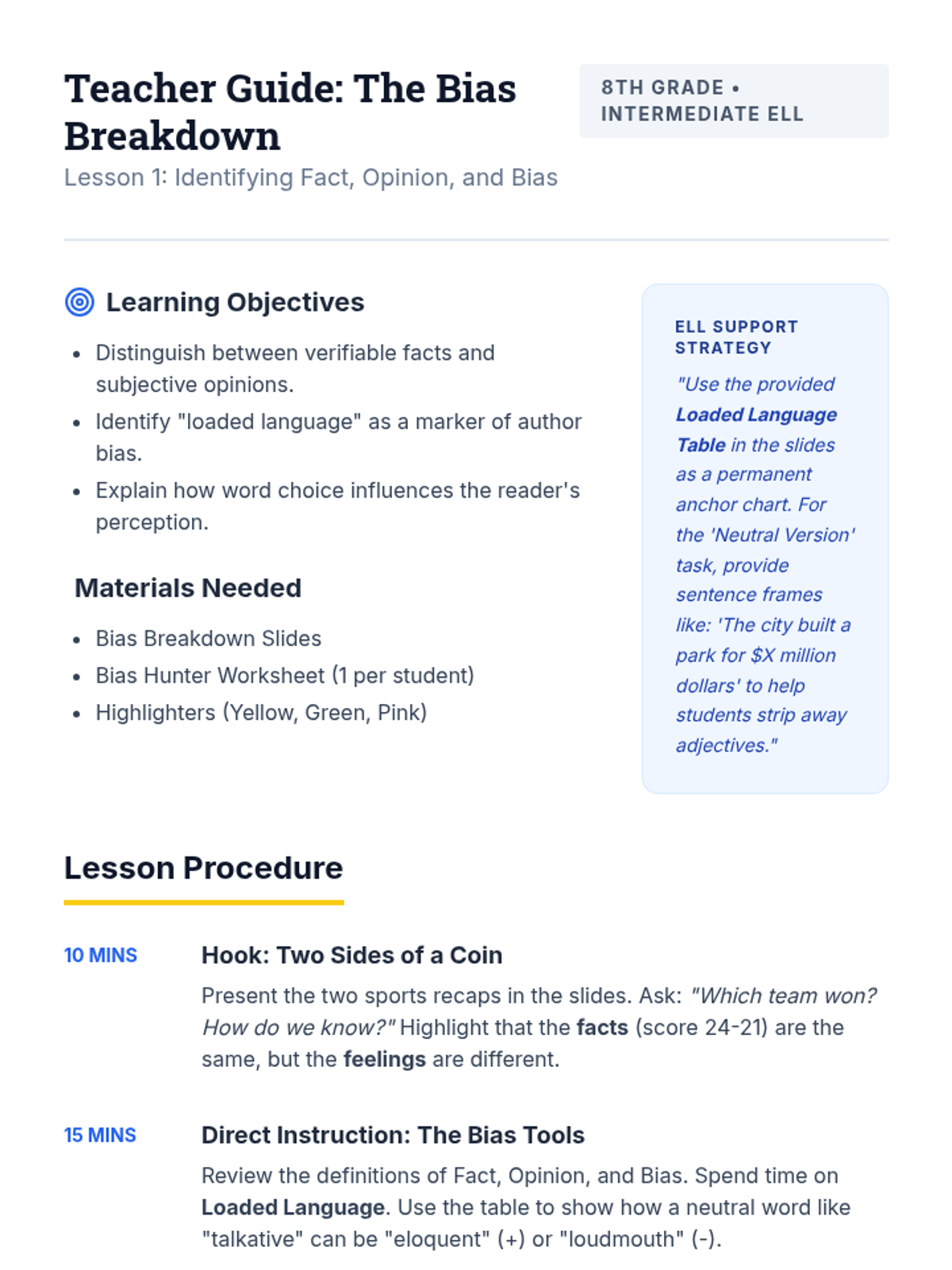
This 8th-grade intermediate ELL sequence focuses on media literacy and critical analysis. Students learn to identify bias, tone, and rhetorical appeals in various texts, from sports recaps to advertisements and opinion editorials, ultimately creating their own persuasive campaign.
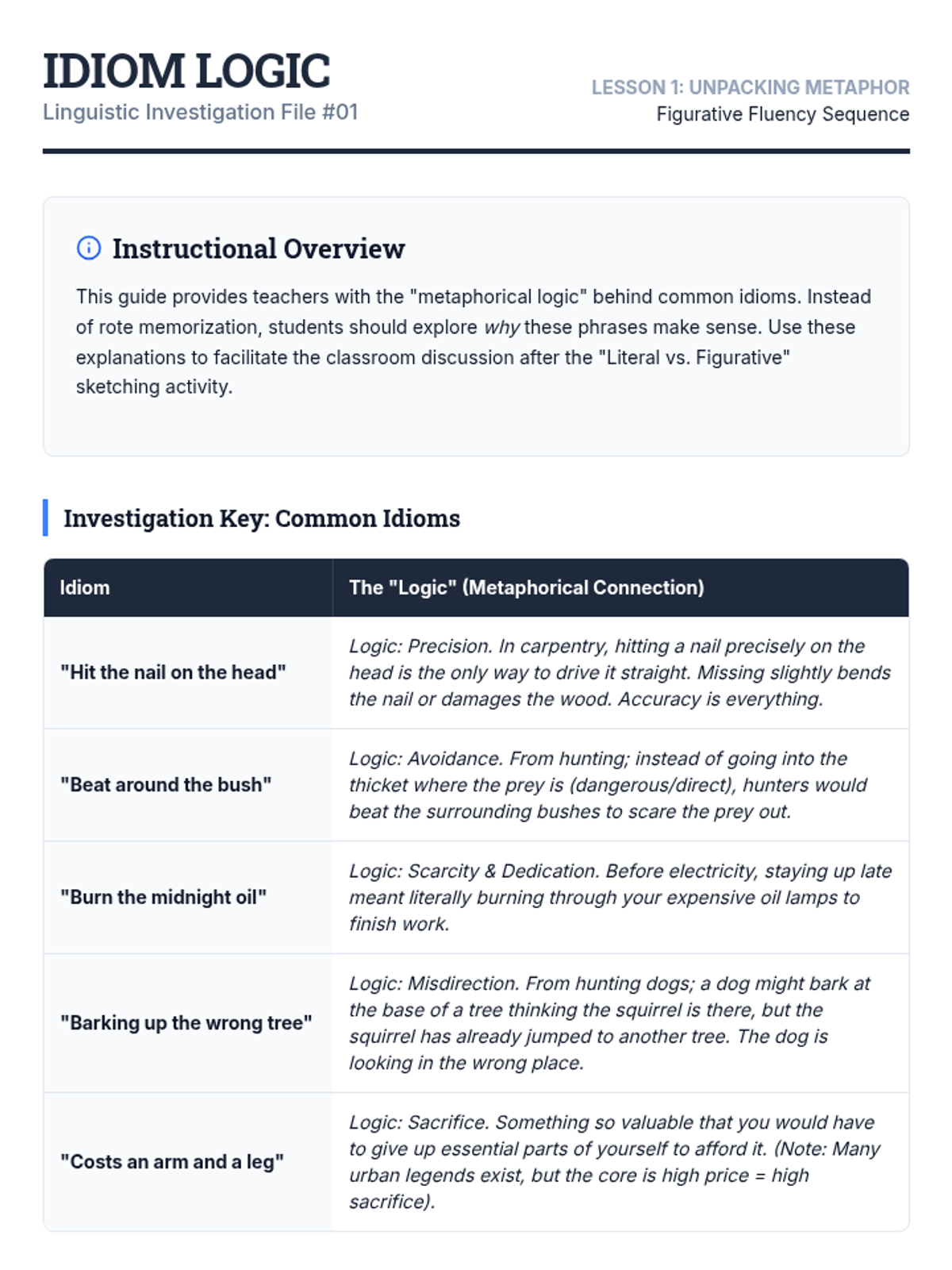
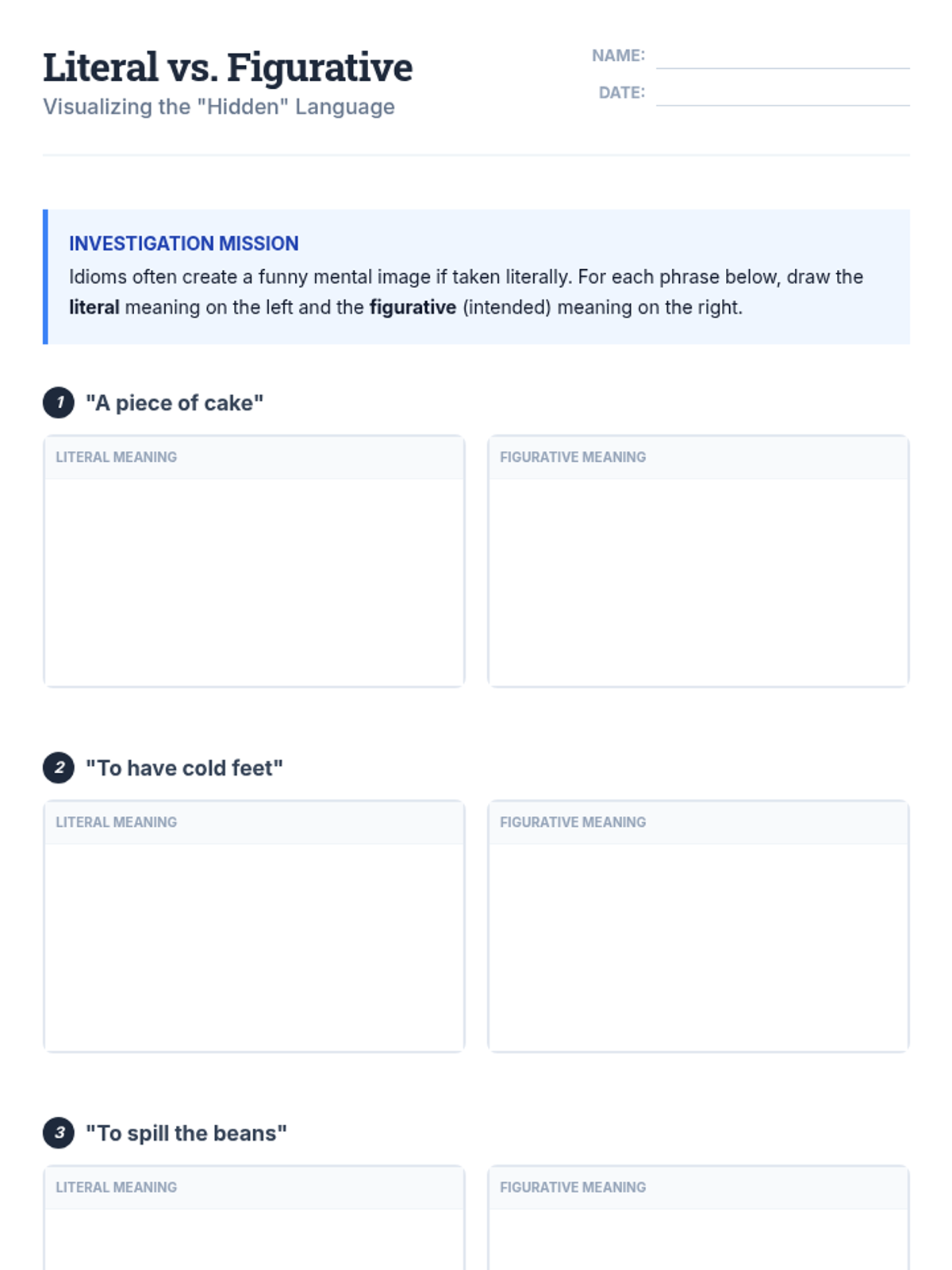
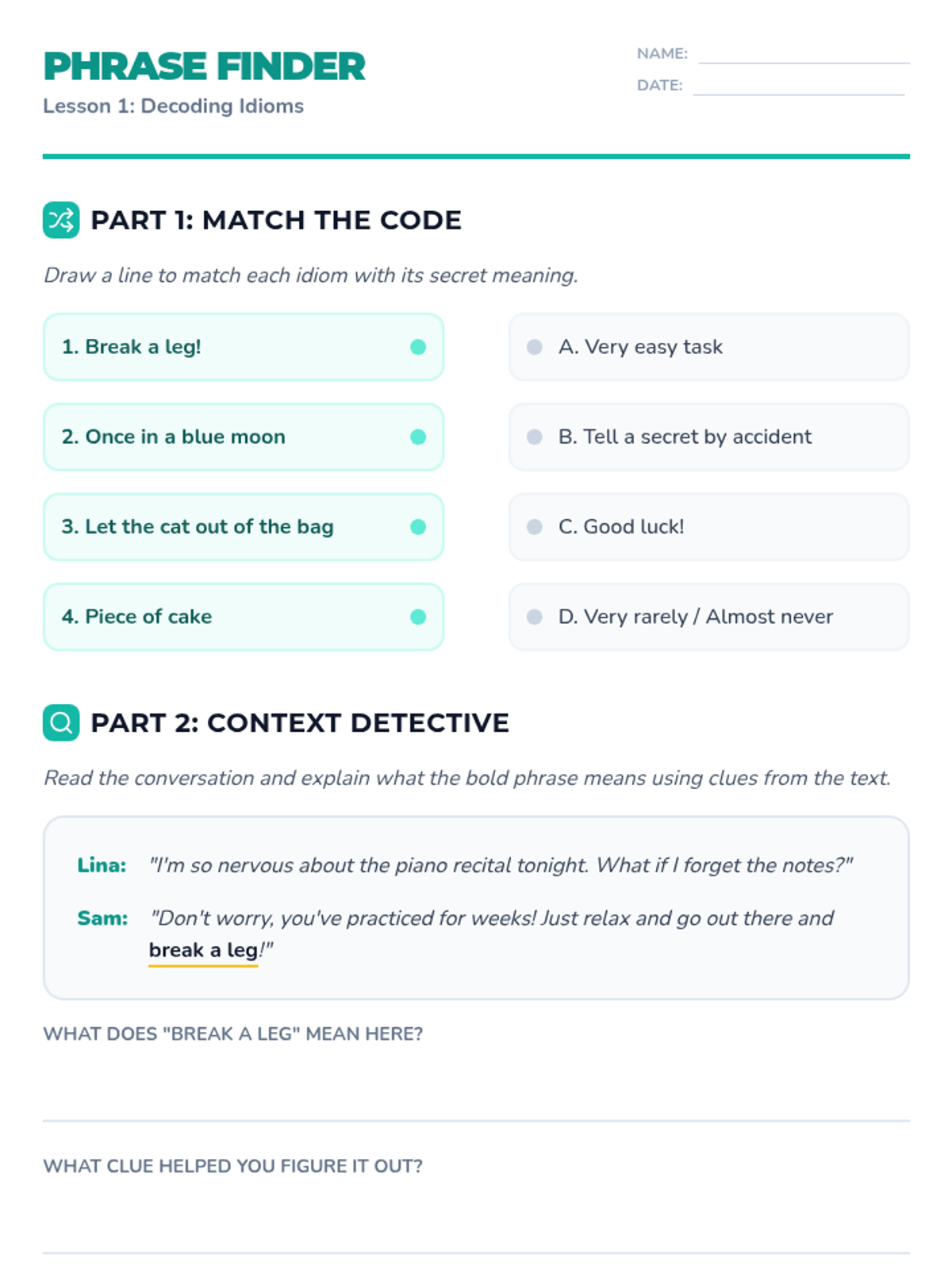
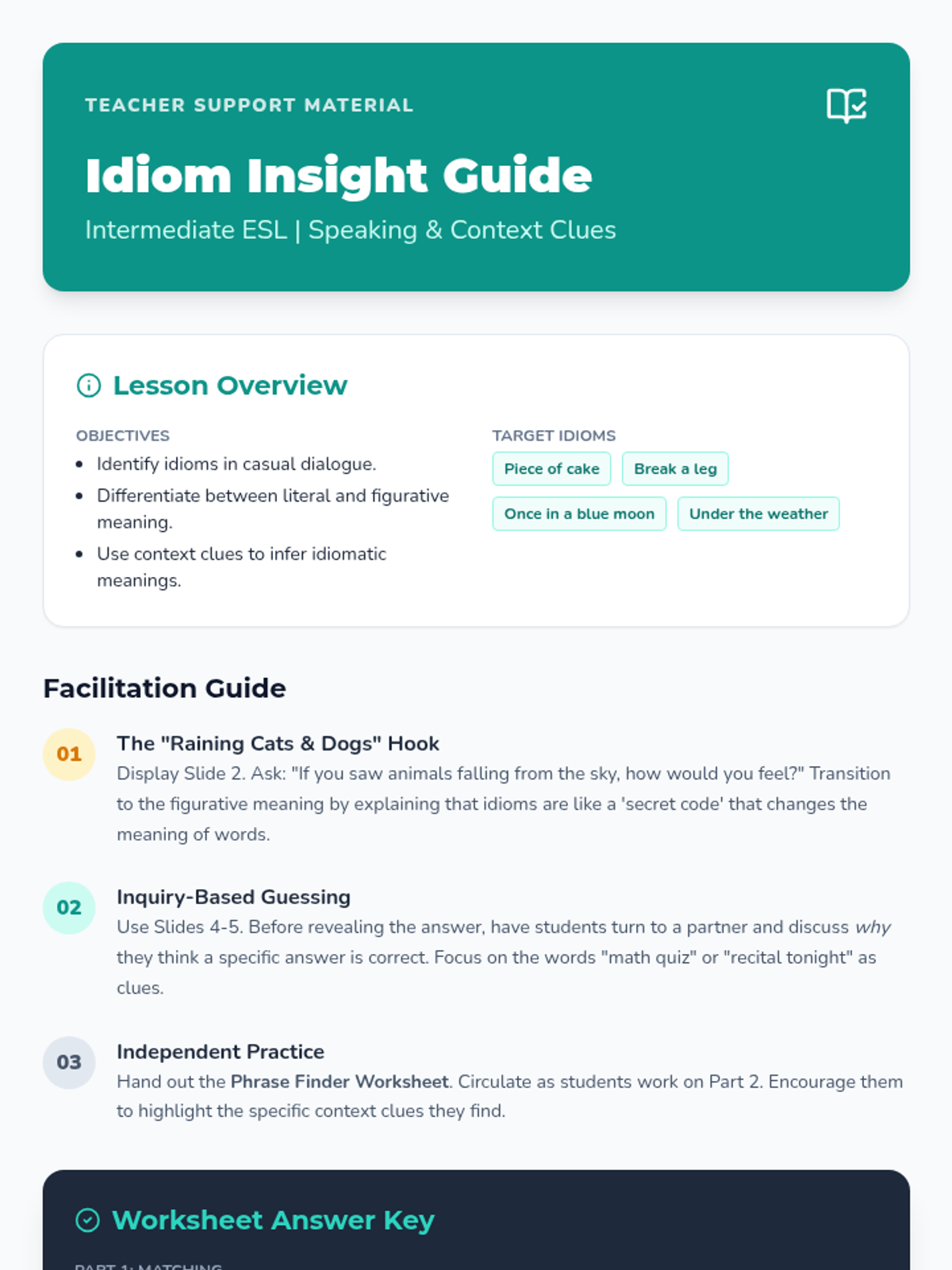
This sequence guides advanced English learners through the nuances of idiomatic and figurative language. Students explore the logic behind metaphors, master professional idioms, analyze cultural origins in sports and war, and develop oral fluency through creative performance.
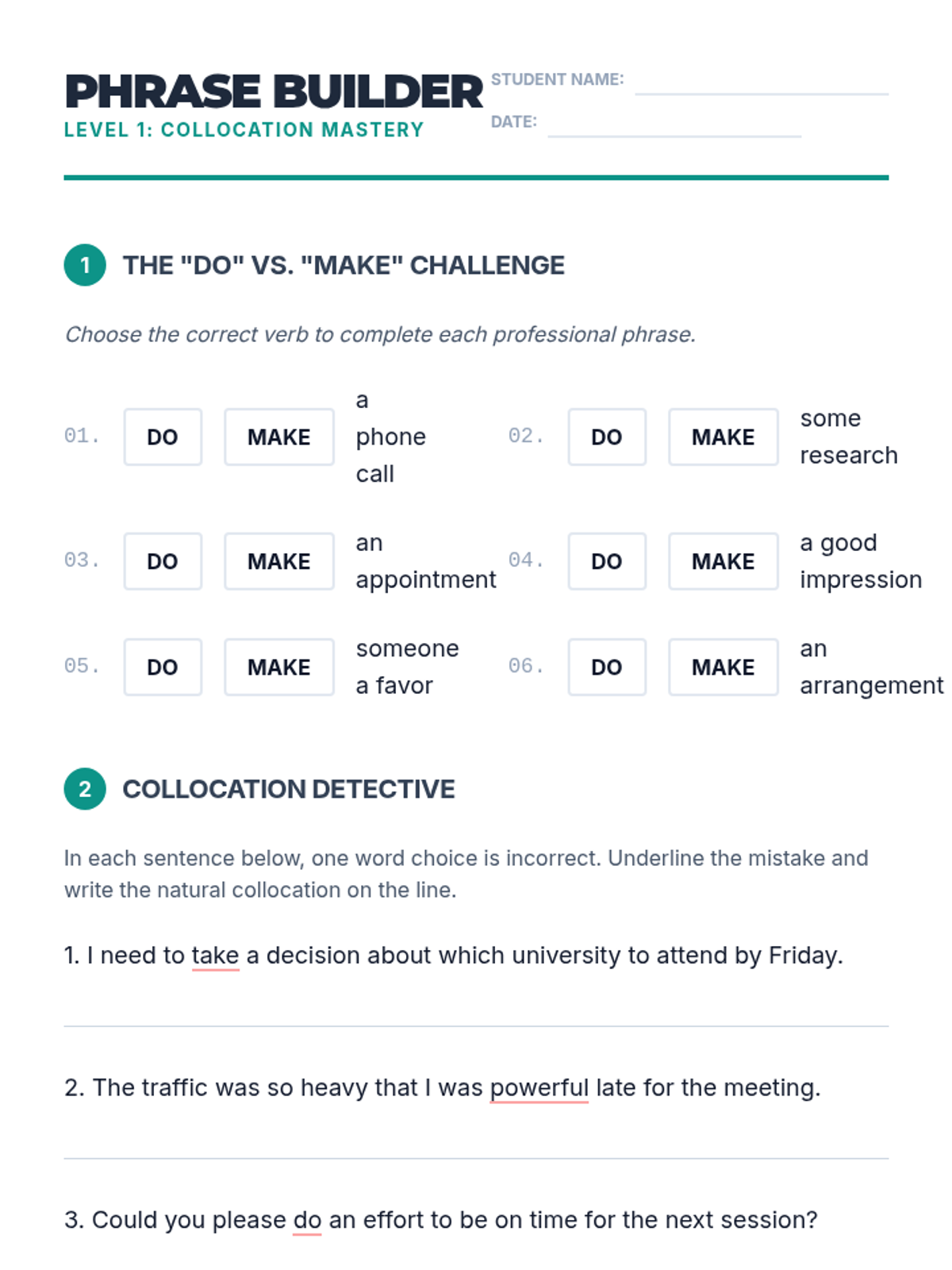
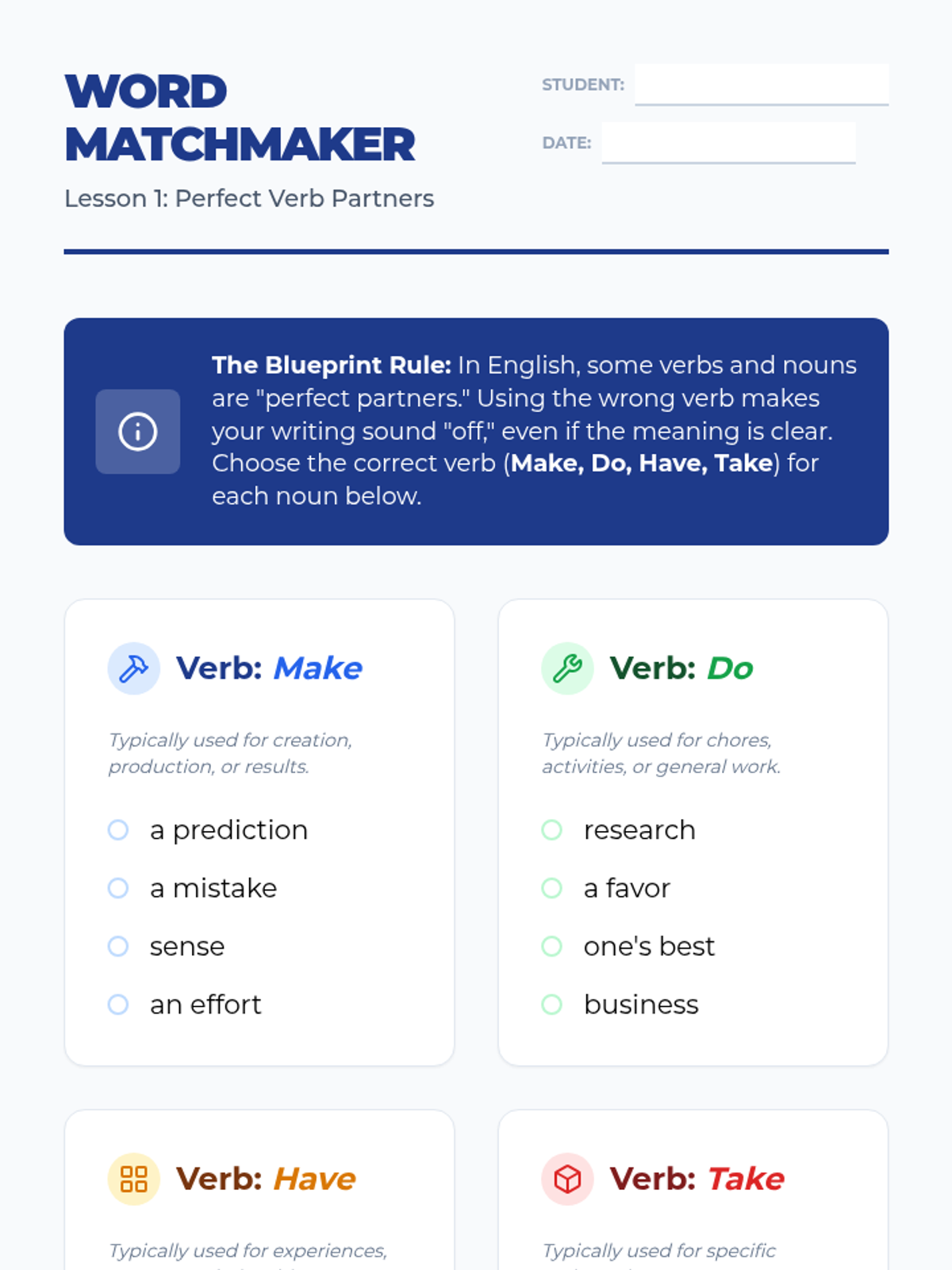
This sequence addresses the complexities of English phraseology, specifically academic collocations and professional idioms. Students move from literal translations to understanding figurative language used in business and formal environments.
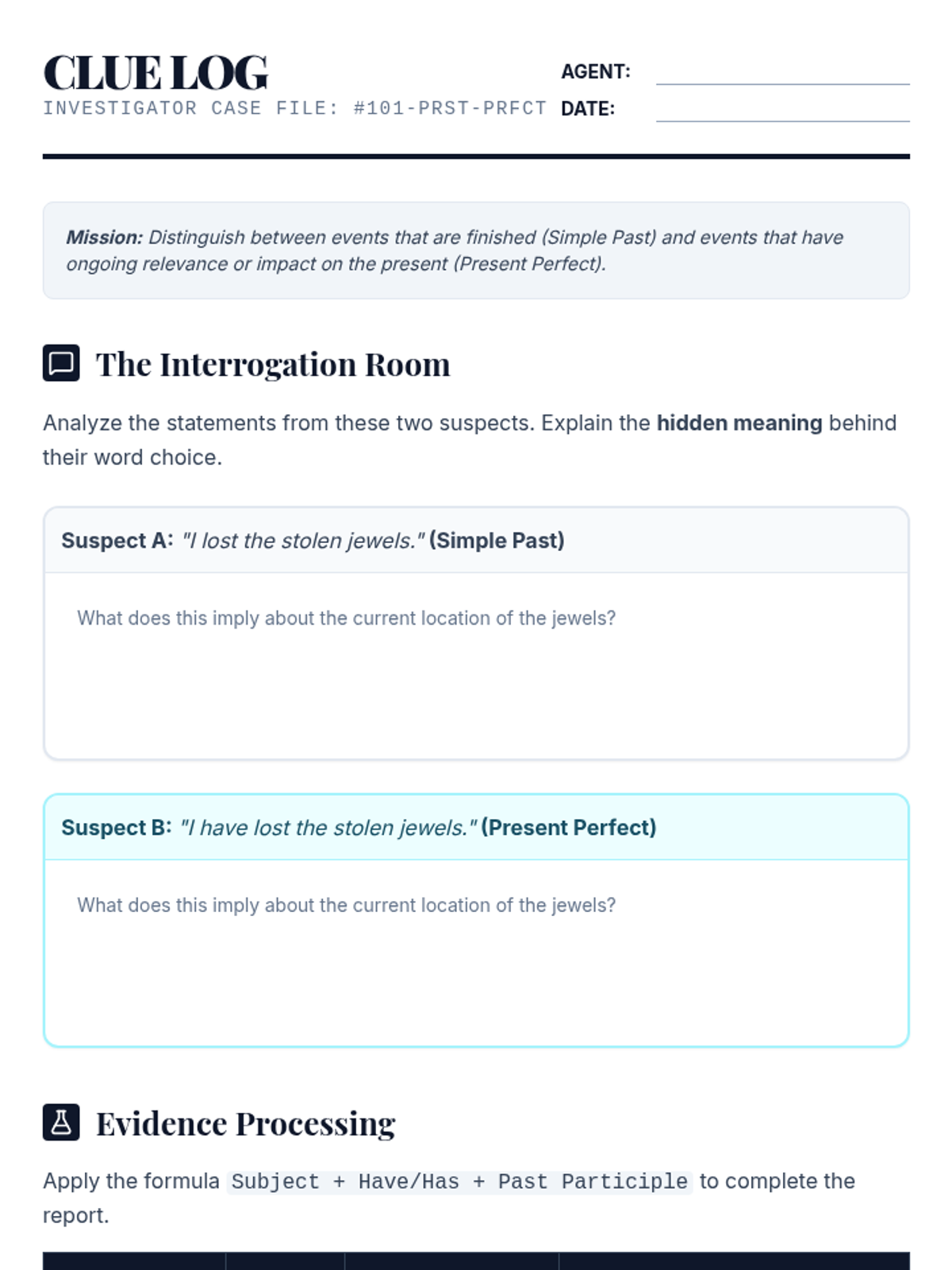
A 9th-grade grammar unit focusing on the perfect verb tenses (present, past, and future). Students use visual timelines, logic puzzles, and creative writing to master complex sequences and causality.
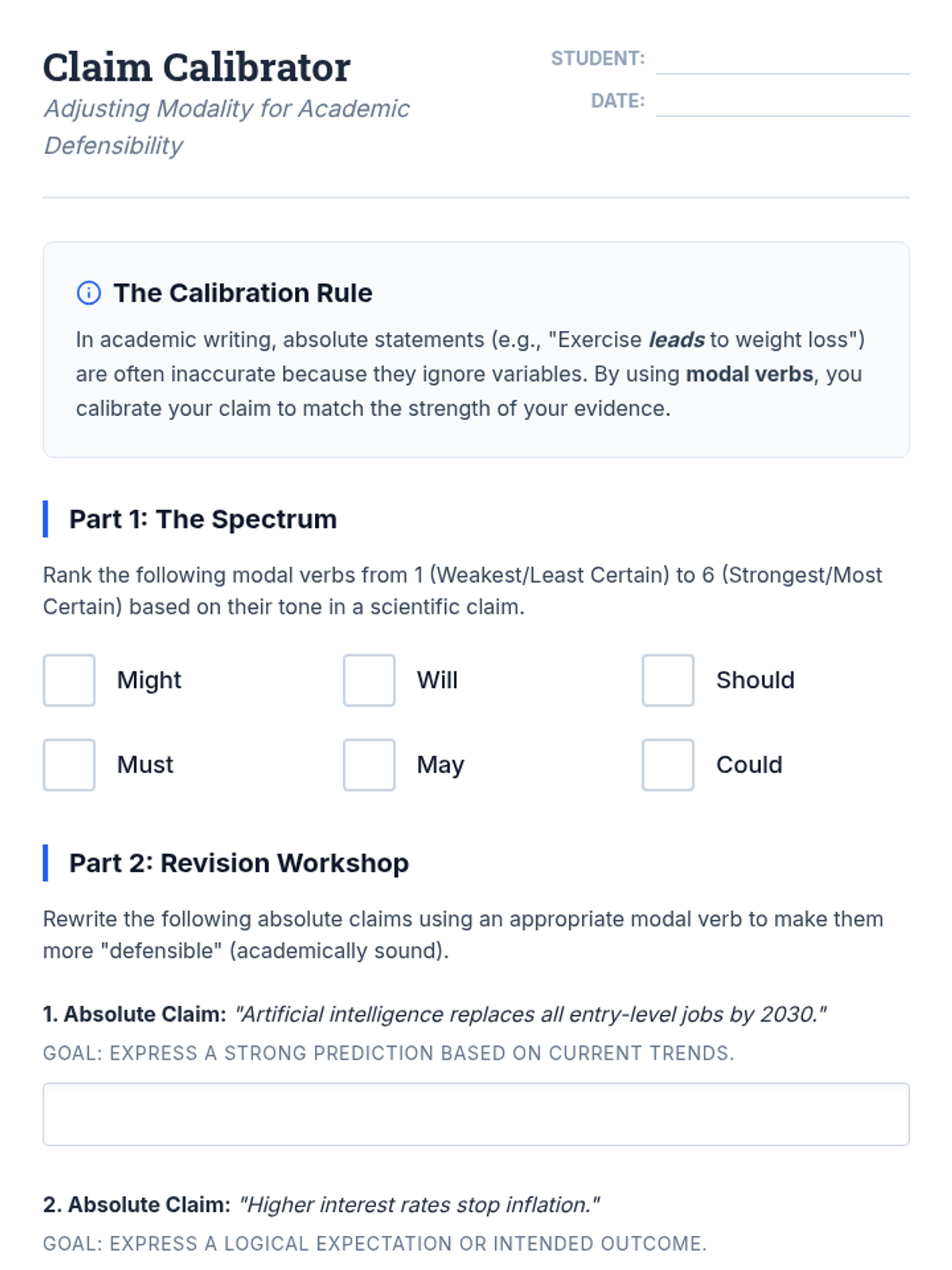
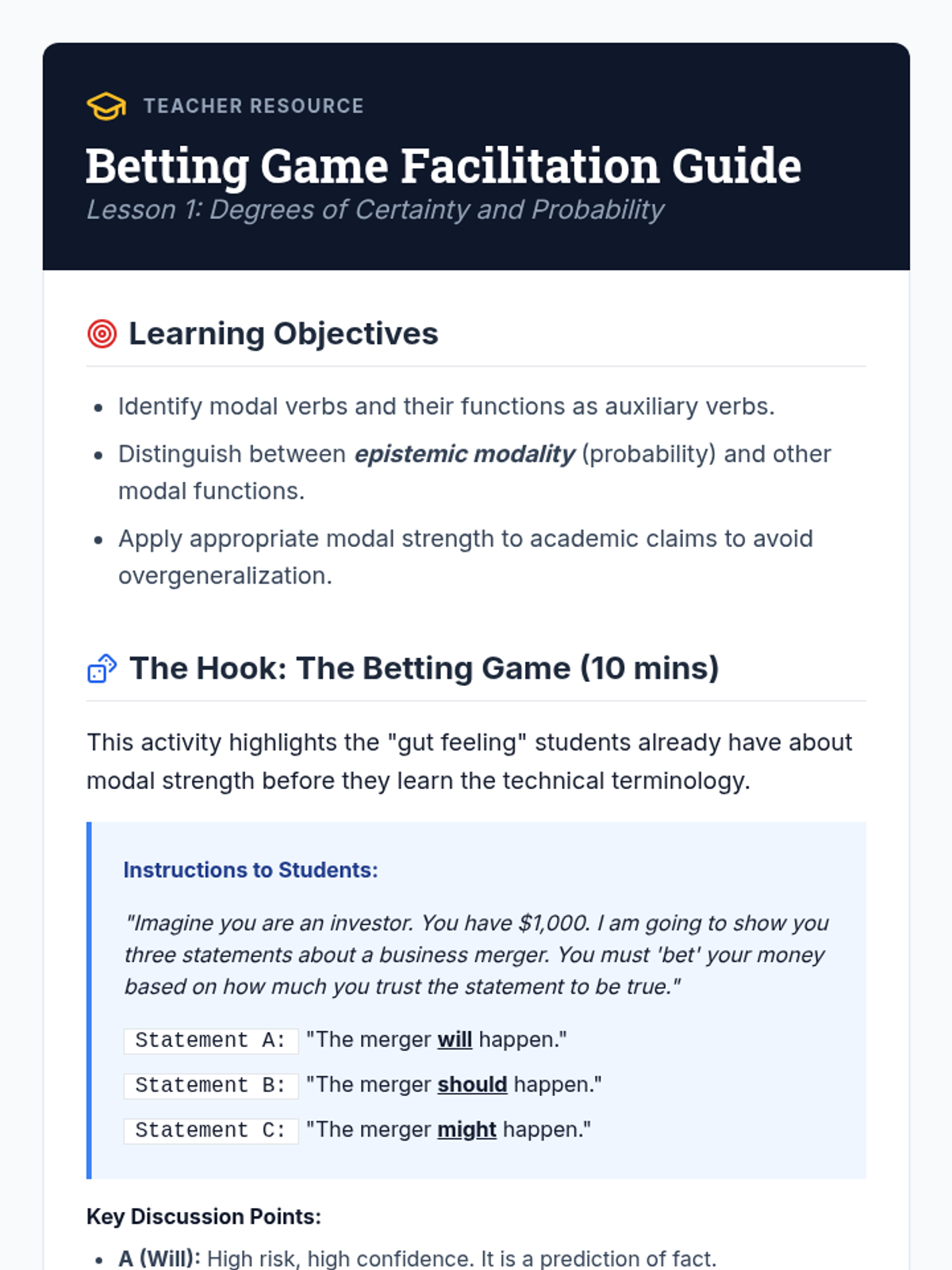
This sequence explores the function of modal verbs in establishing stance, probability, and politeness in professional and academic discourse. Students learn to 'hedge' claims, define obligations, and analyze subtext in political and scientific texts.
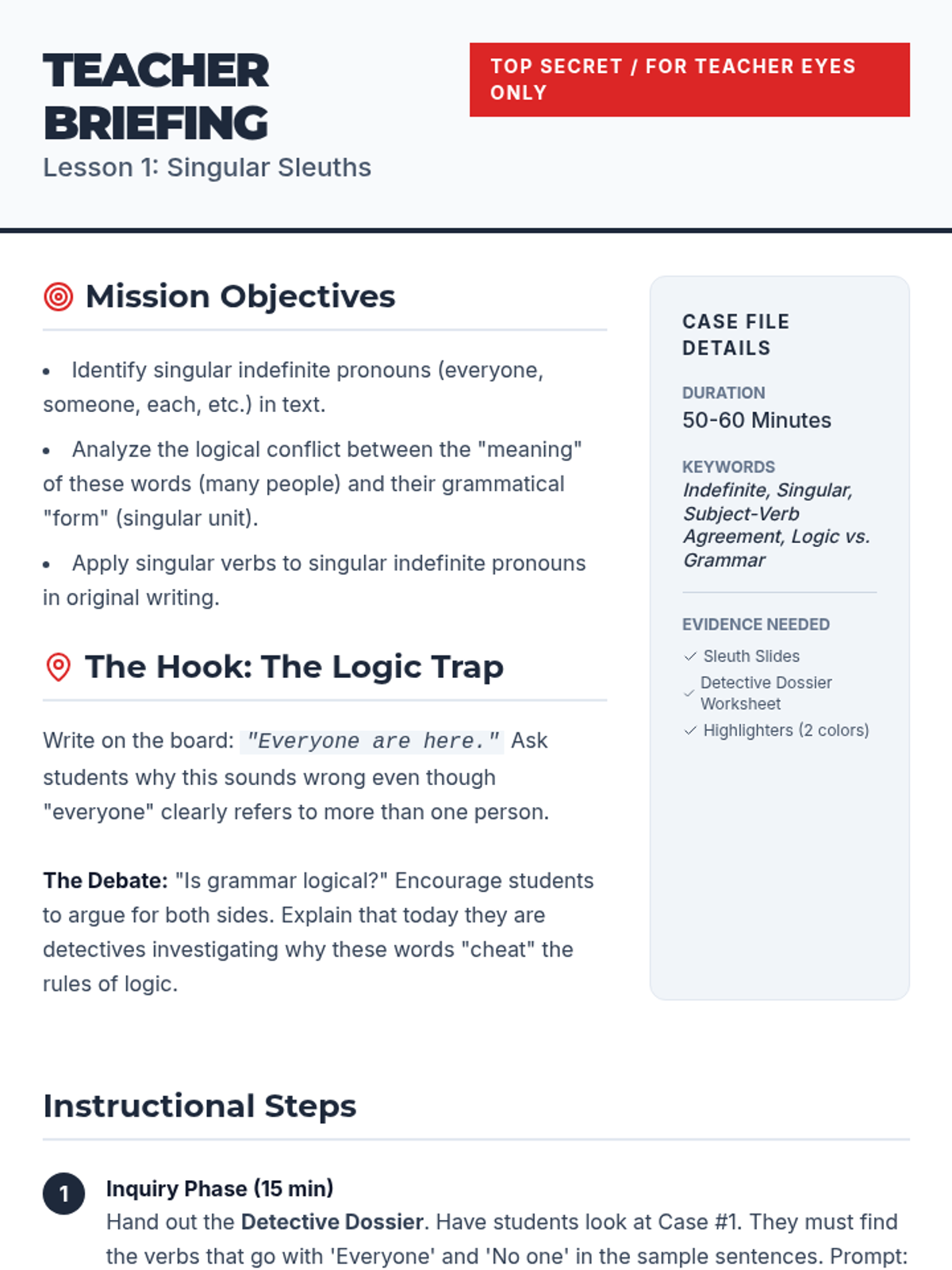
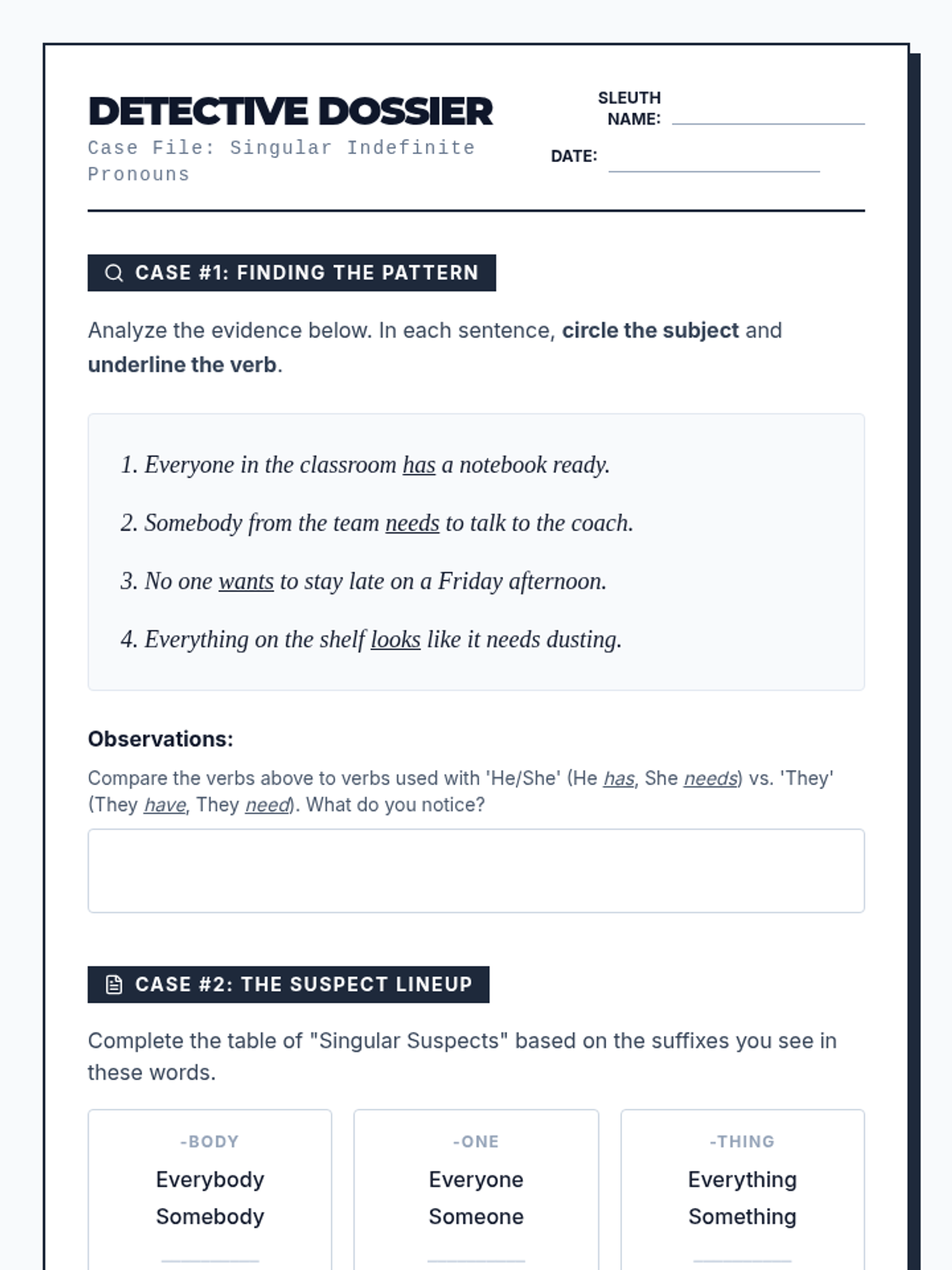
An inquiry-based exploration of subject-verb agreement for collective nouns and indefinite pronouns, using a 'language investigation' theme. Students analyze patterns, categorize tricky words, and synthesize their findings into a 'User Manual for Aliens'.
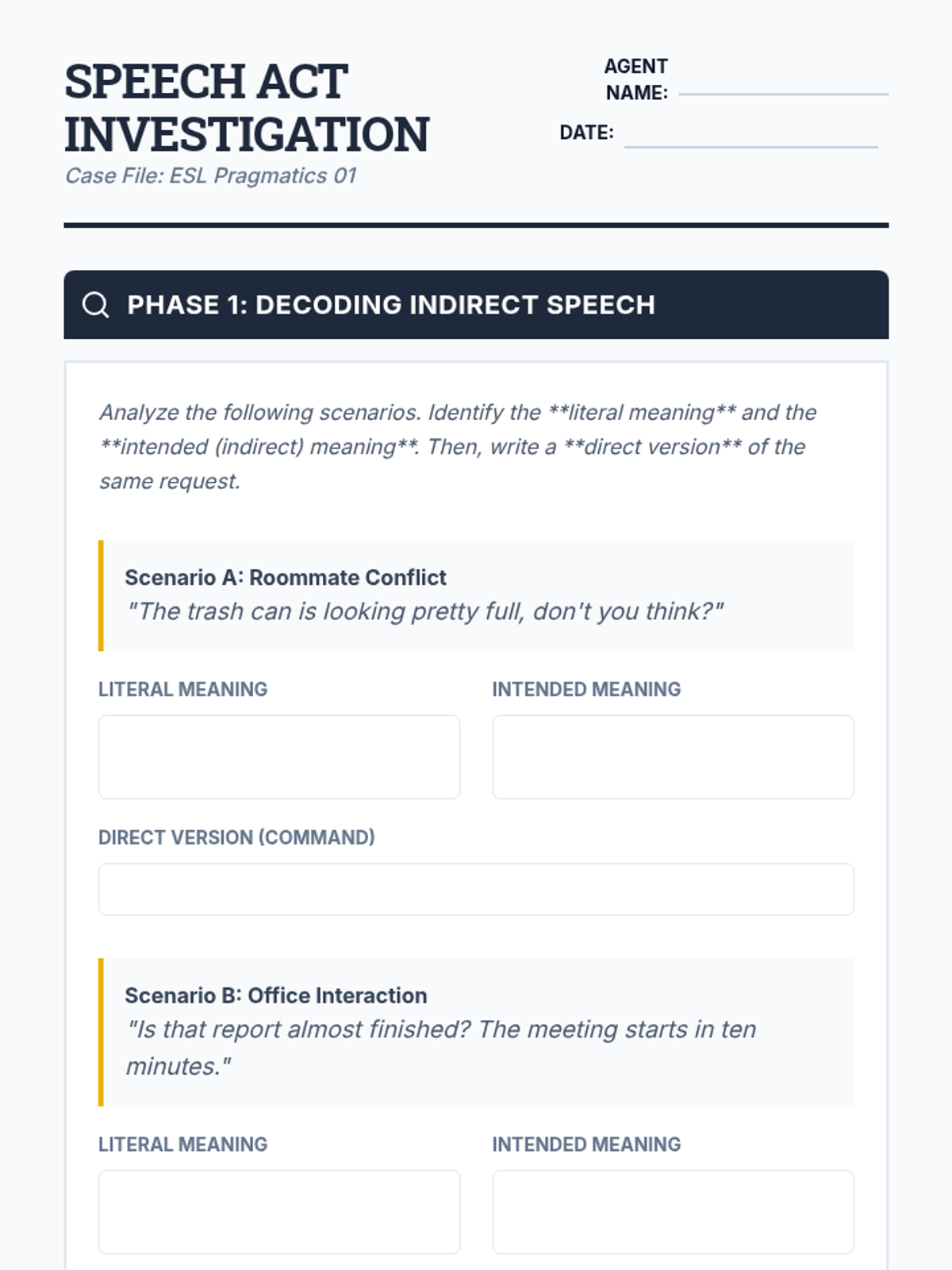
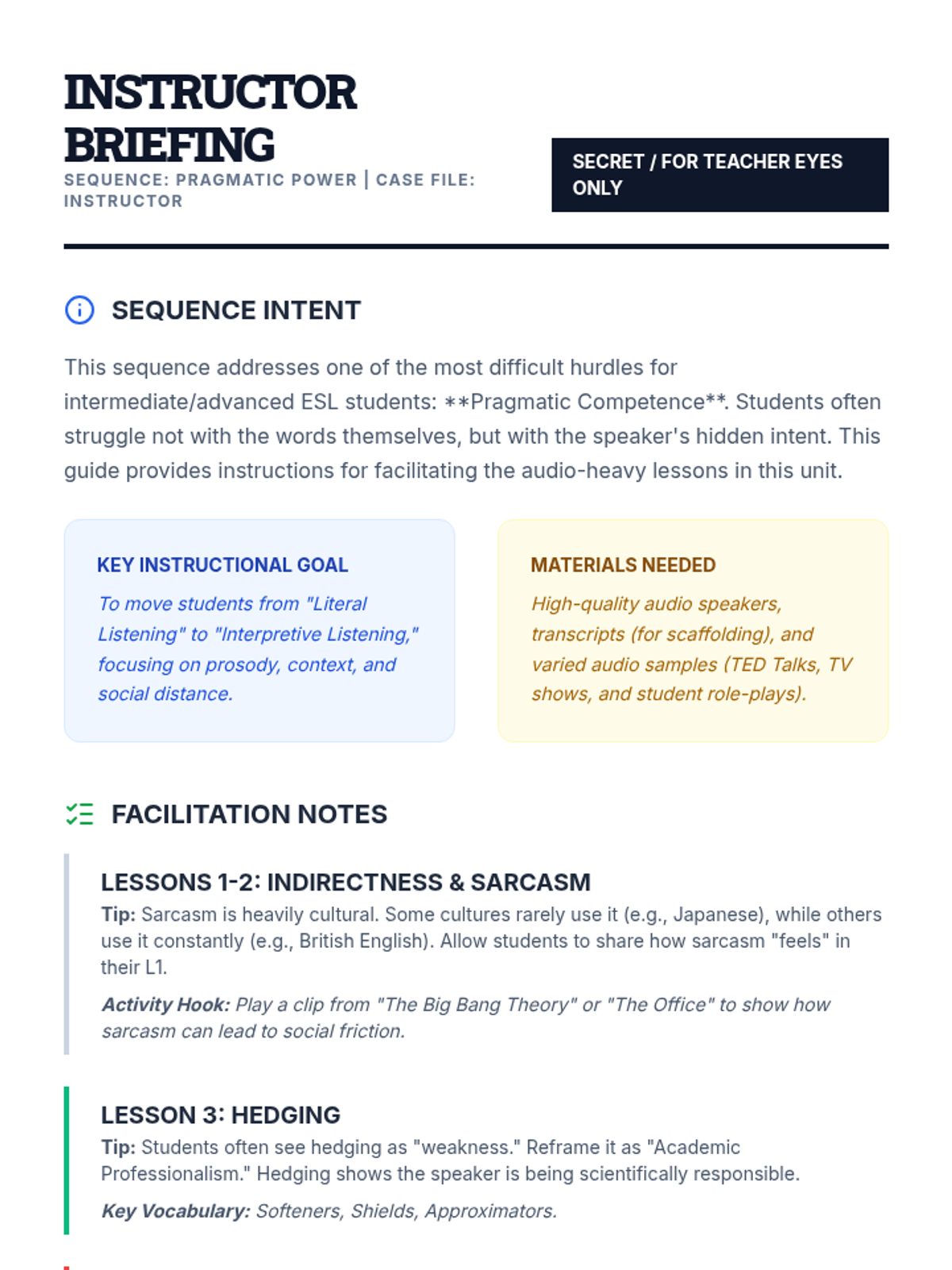
This sequence guides intermediate ESL students through the nuances of pragmatic meaning in English. Students will learn to decode indirect speech, sarcasm, hedging language, and emotional undertones in academic and social contexts to improve their listening comprehension and communicative competence.
This sequence equips intermediate ESL students with the linguistic and cognitive tools needed to navigate university lectures. It covers discourse markers, hierarchy of information, identifying tangents, note-taking systems, and synthesizing long-form academic speech.
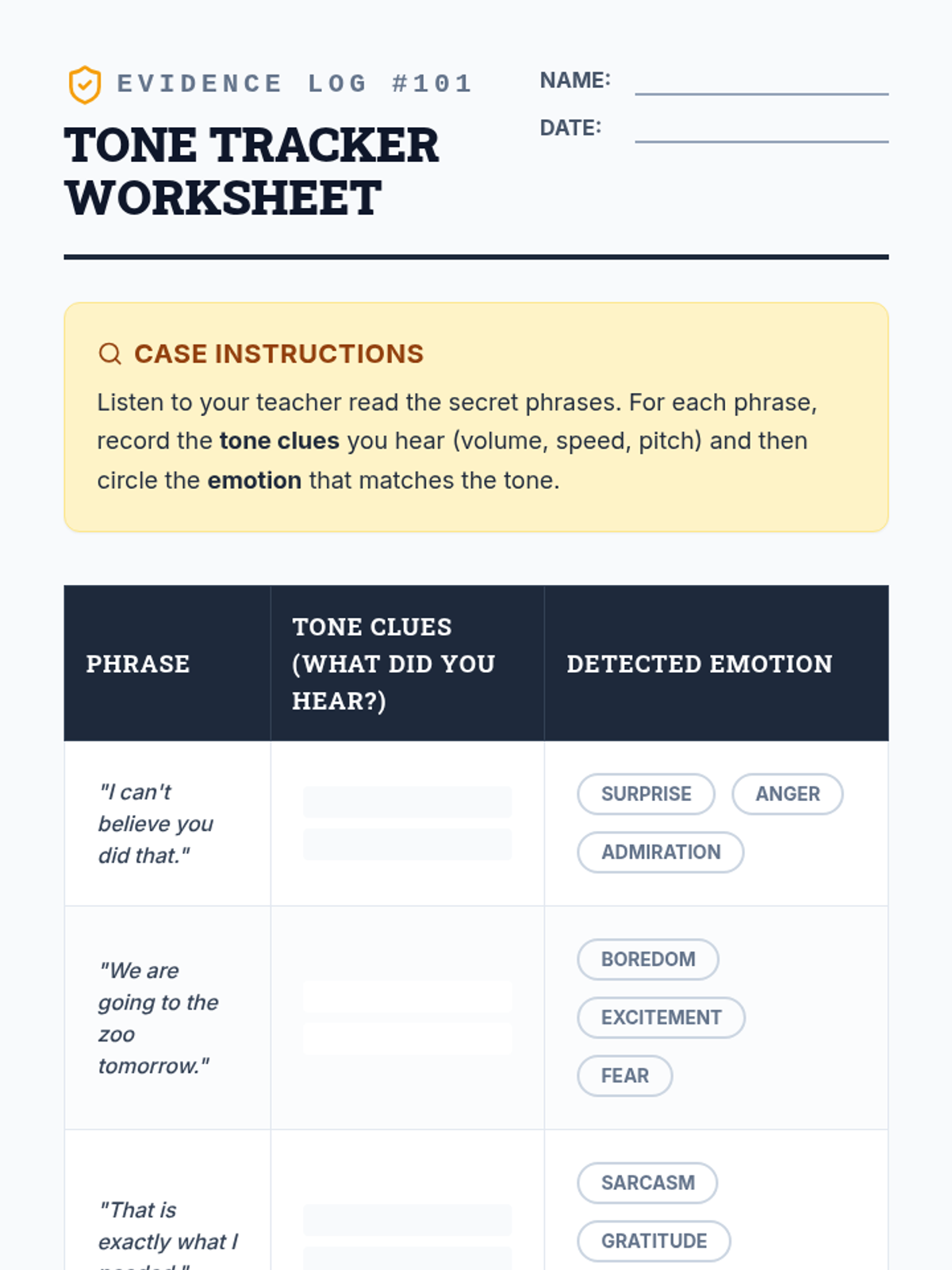
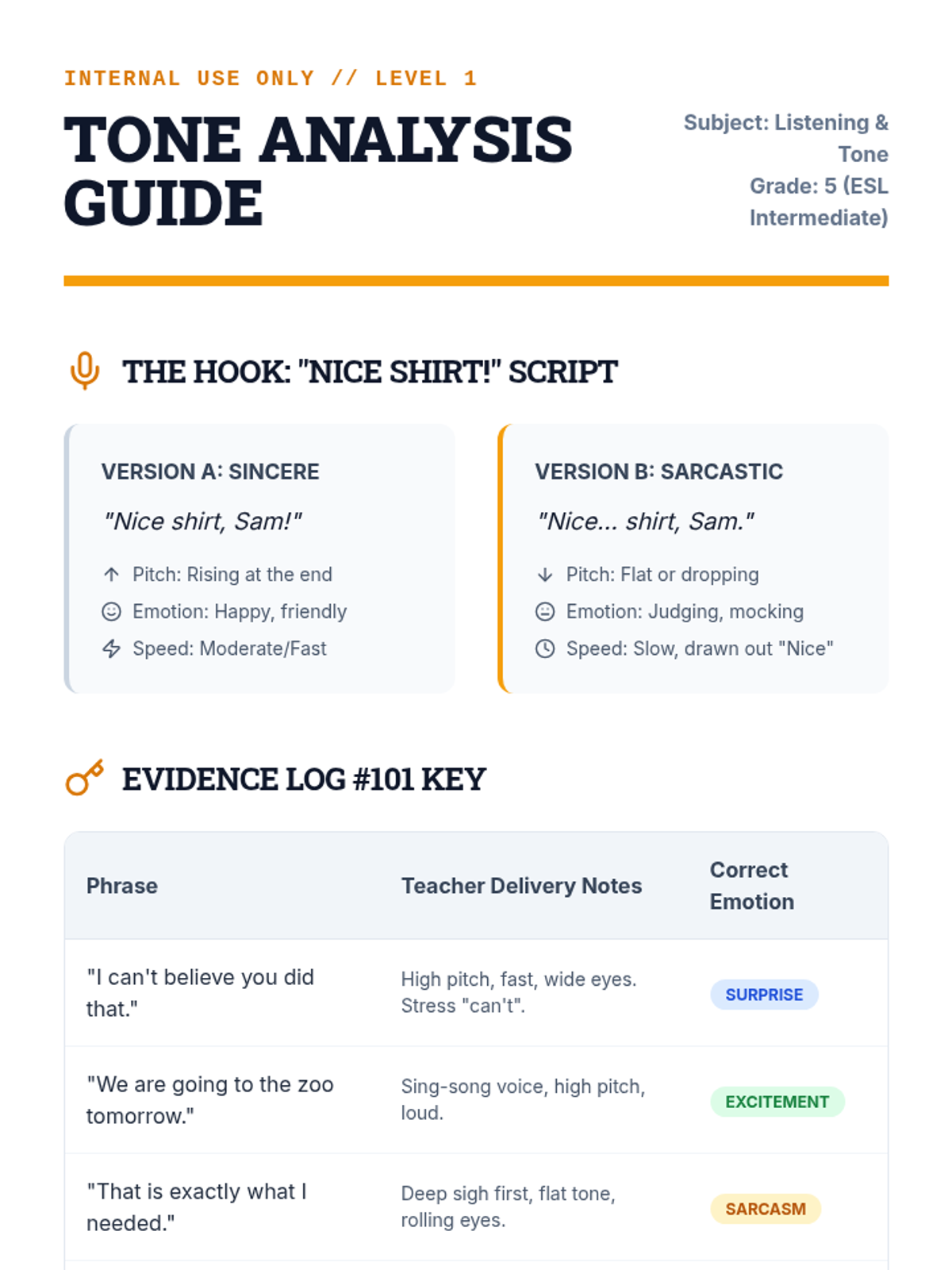
An intermediate ESL sequence where students act as 'communication detectives' to analyze tone, idioms, exaggeration, and speaker intent in spoken English. The sequence culminates in a mystery simulation requiring students to synthesize all listening skills to solve a case.
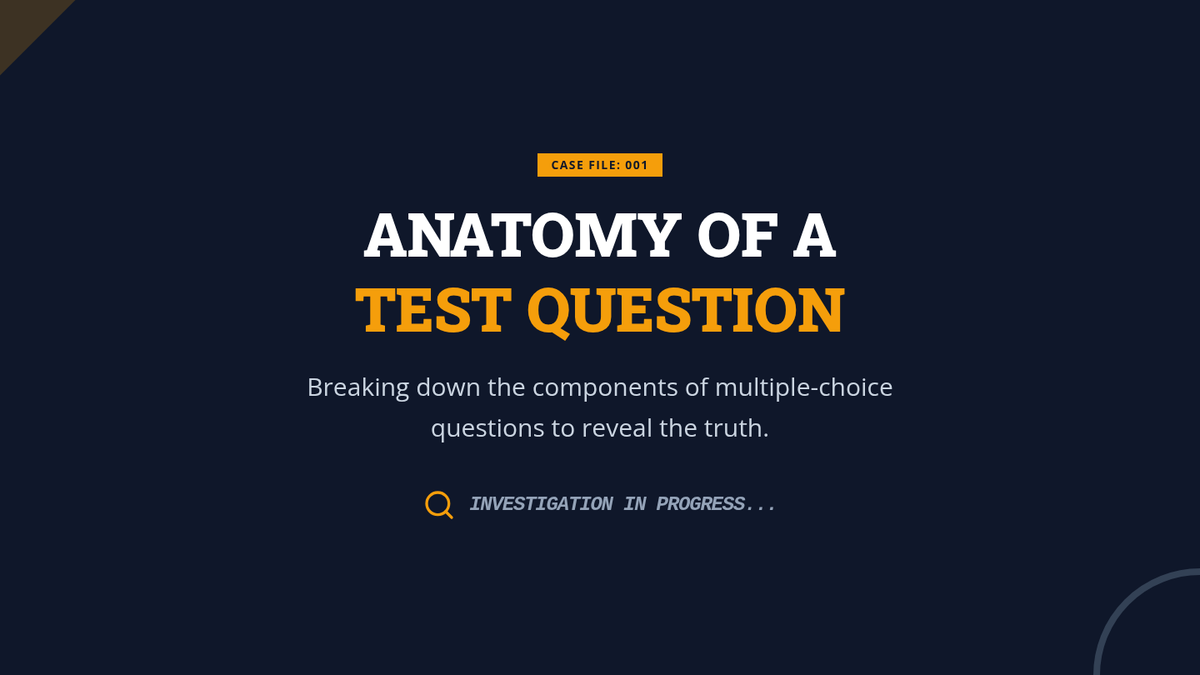
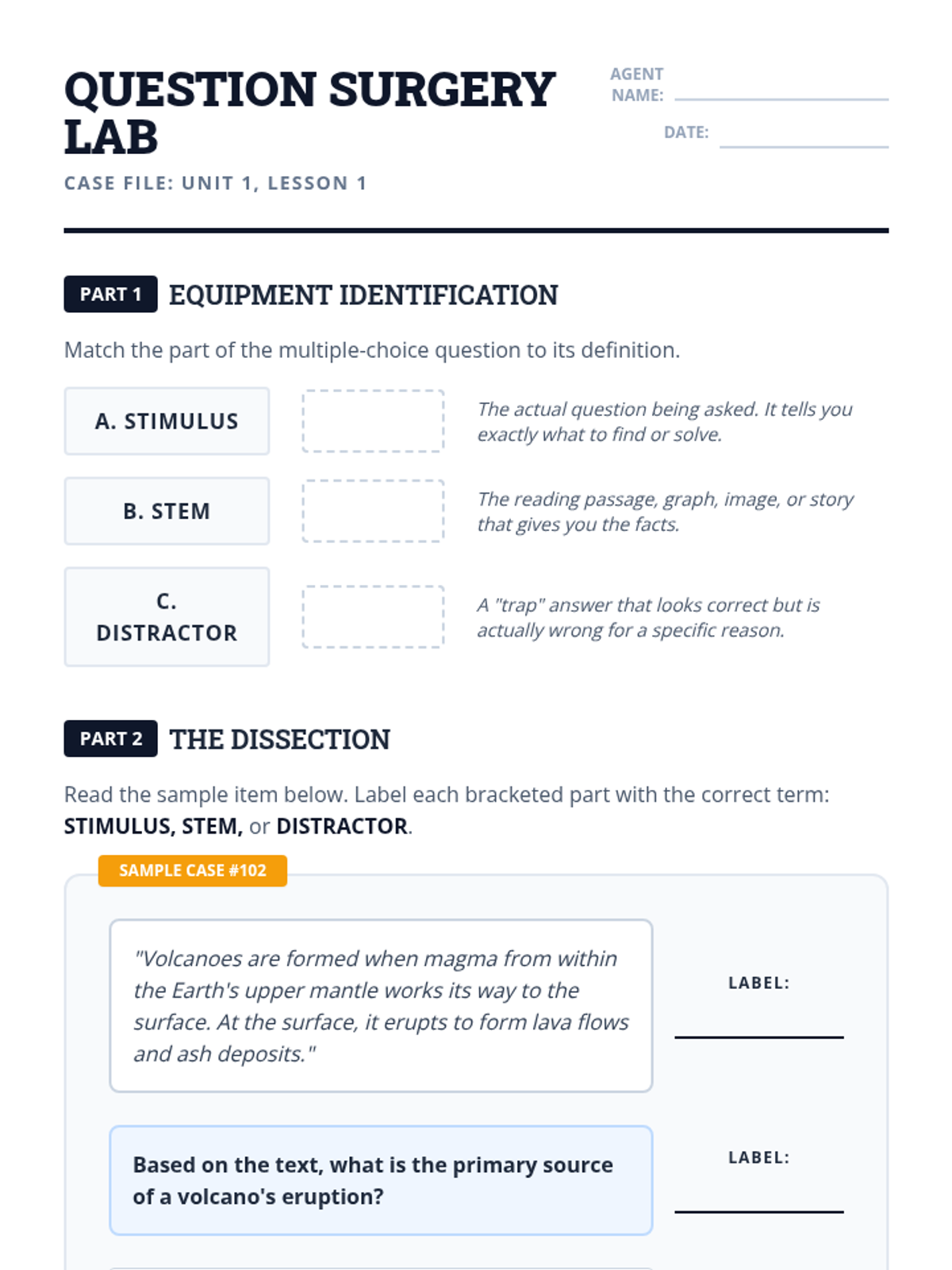
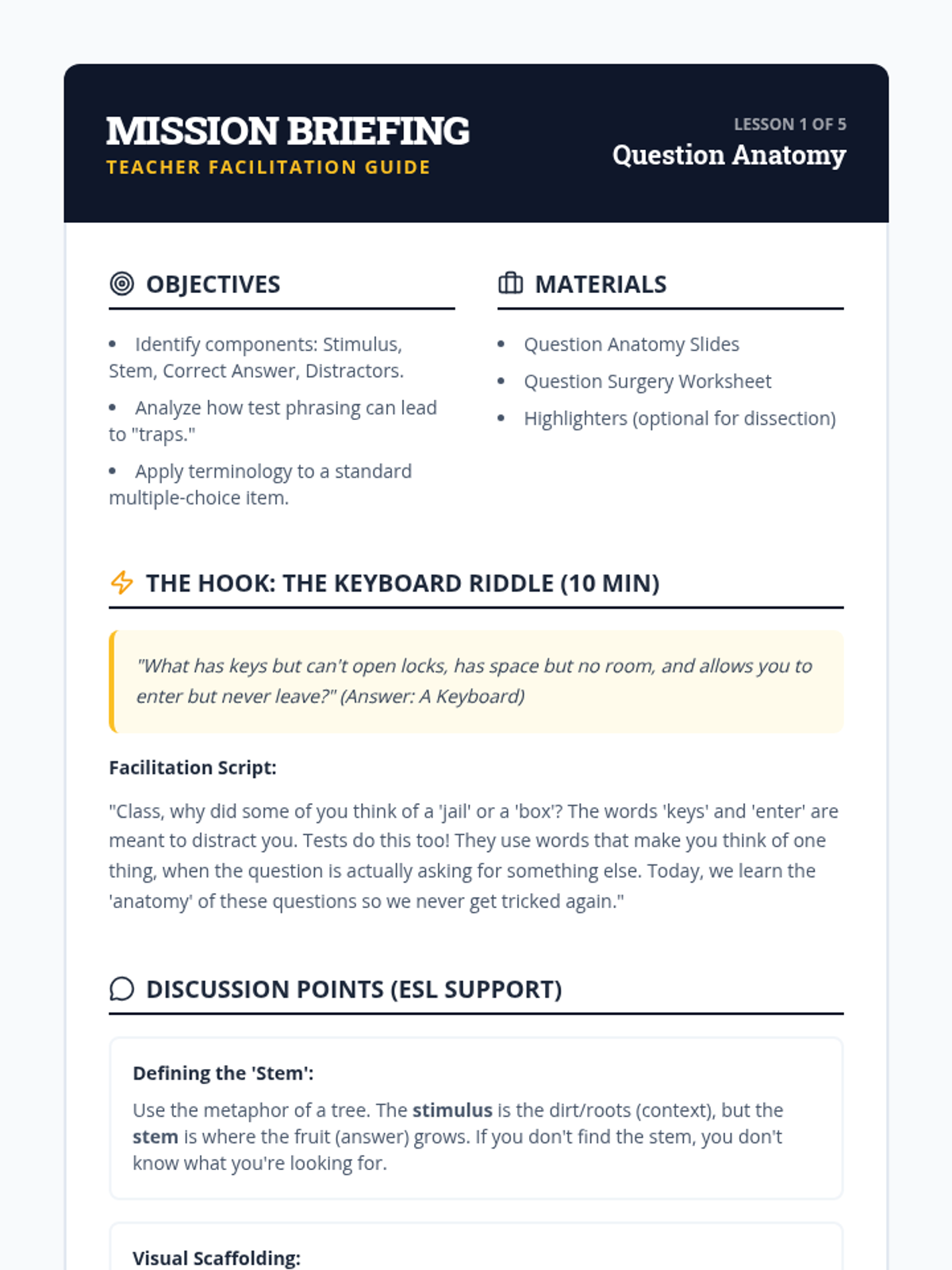
This sequence targets the analytical skills required to dismantle multiple-choice questions for 7th Grade ESL learners. Students move from understanding the anatomy of a question to identifying common logical fallacies and 'trap' answers, utilizing game-based learning and deductive reasoning.
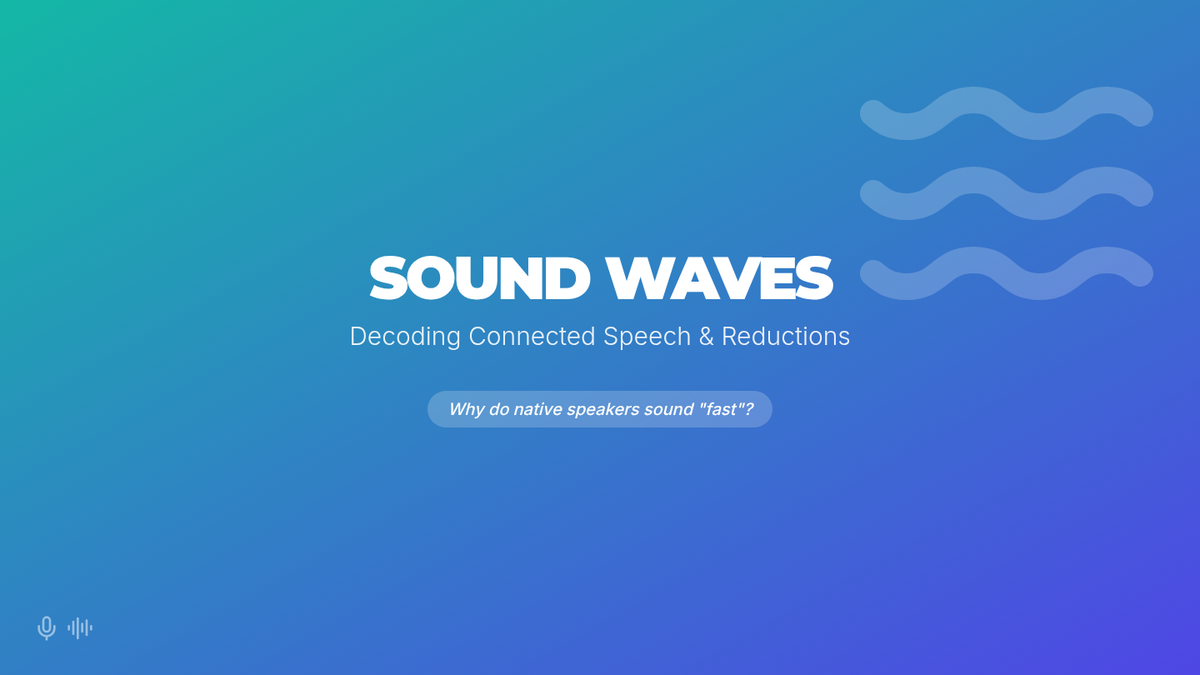
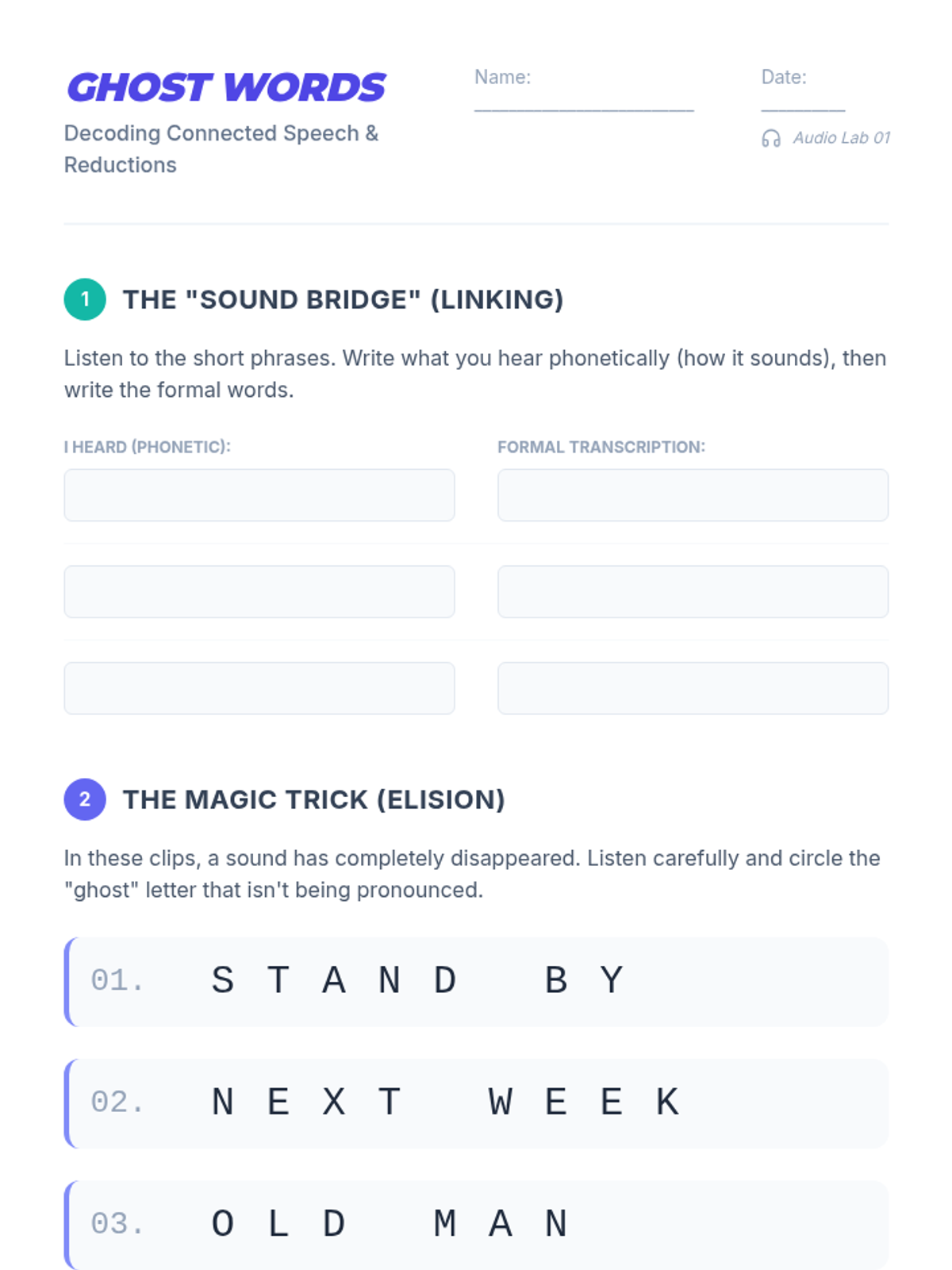
An intermediate ESL sequence focused on mastering the complexities of natural spoken English. Students explore connected speech, reductions, idioms, and prosodic features to decode meaning beyond literal definitions in authentic media contexts like podcasts and interviews.
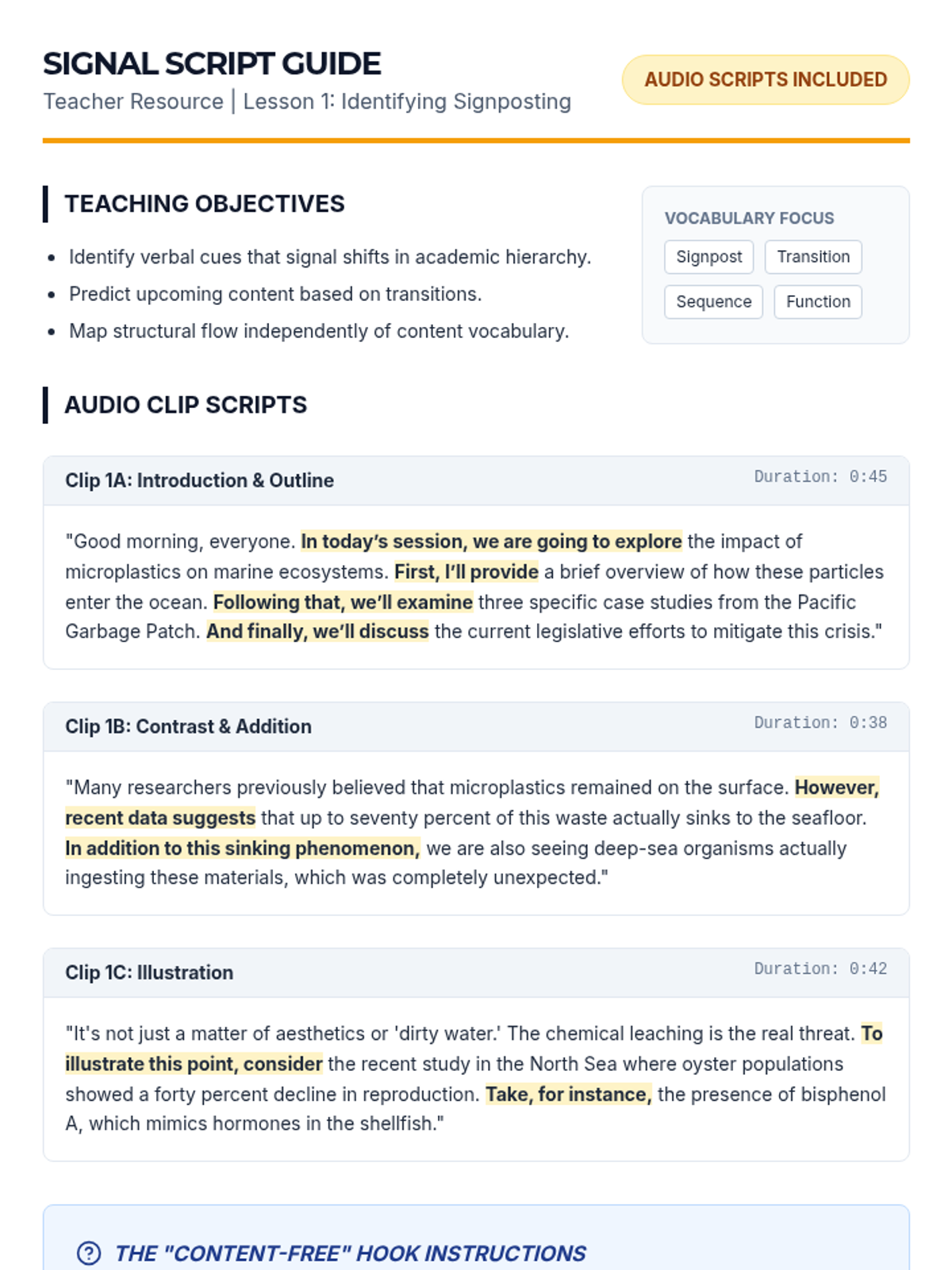
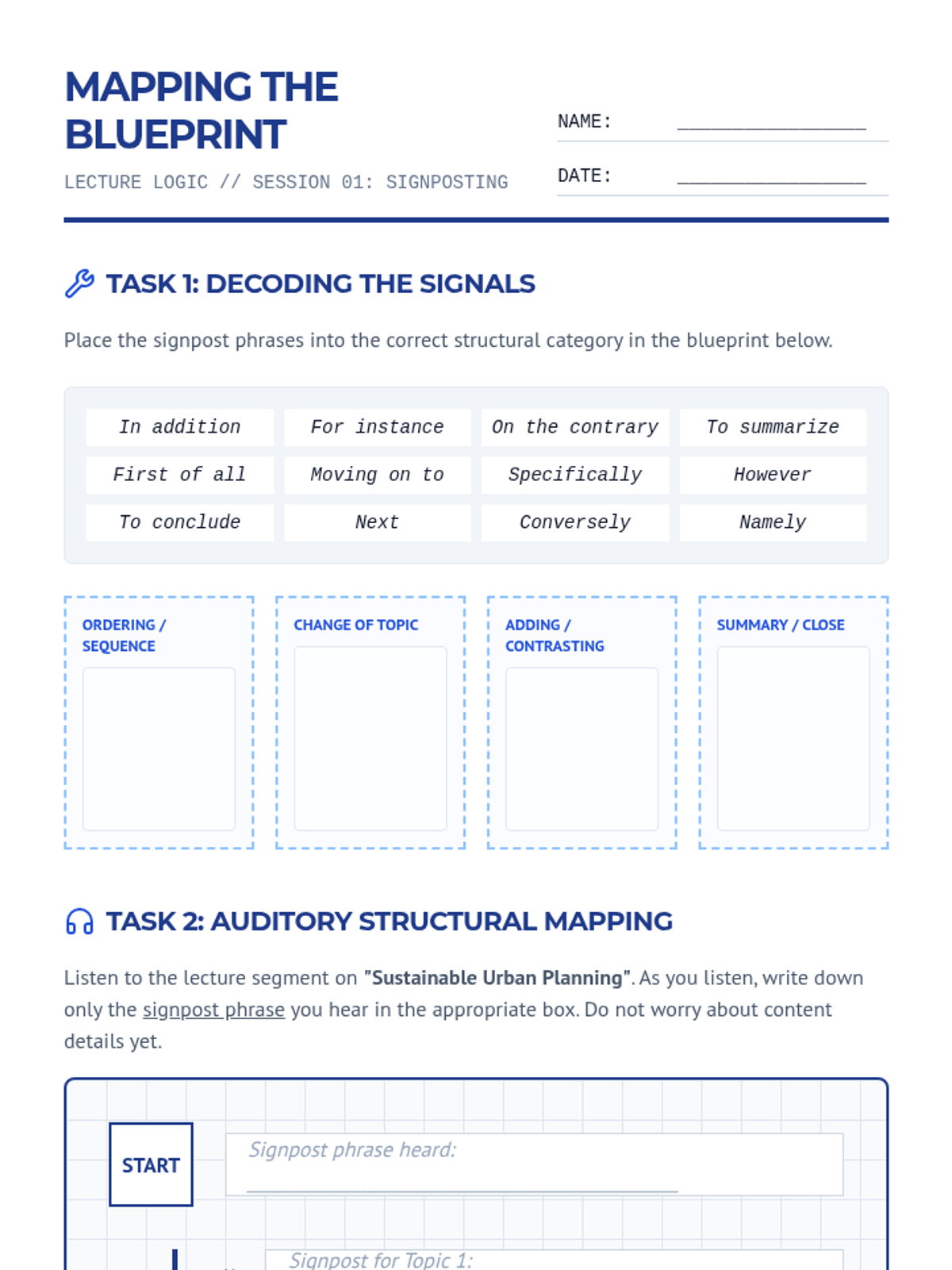
This sequence prepares intermediate ESL students for university-level academic listening by focusing on signposting language, speaker stance, hedging, and strategic note-taking. Students will move from identifying basic transitions to synthesizing complex arguments from multiple spoken sources.
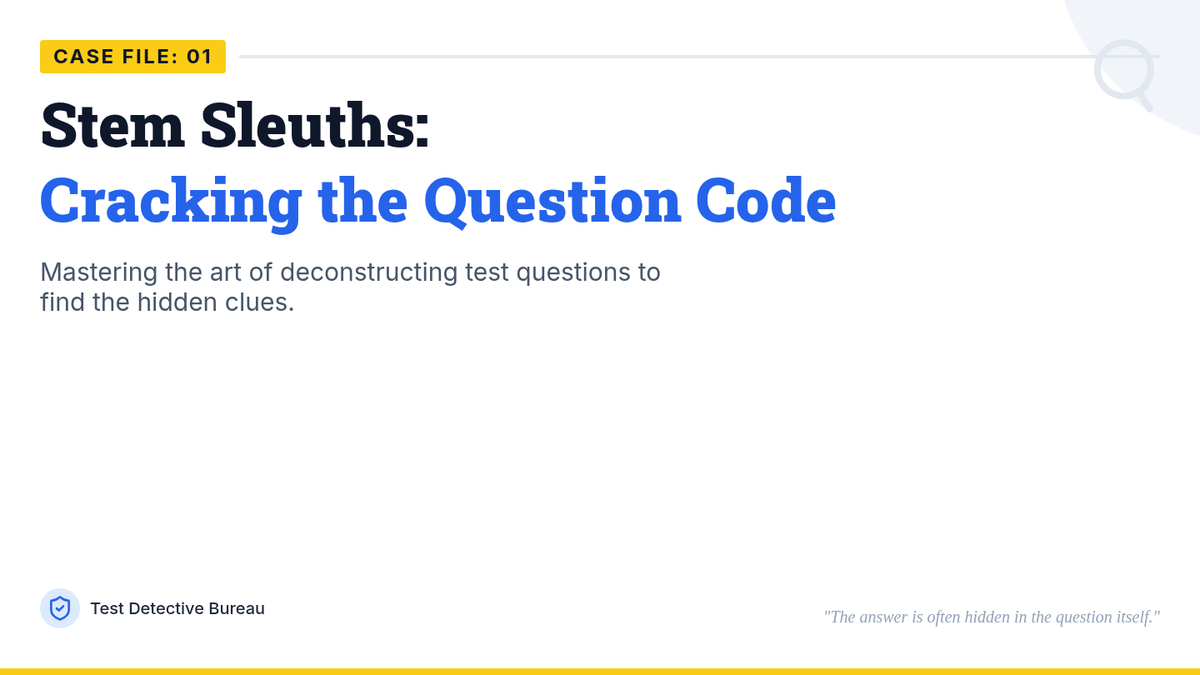
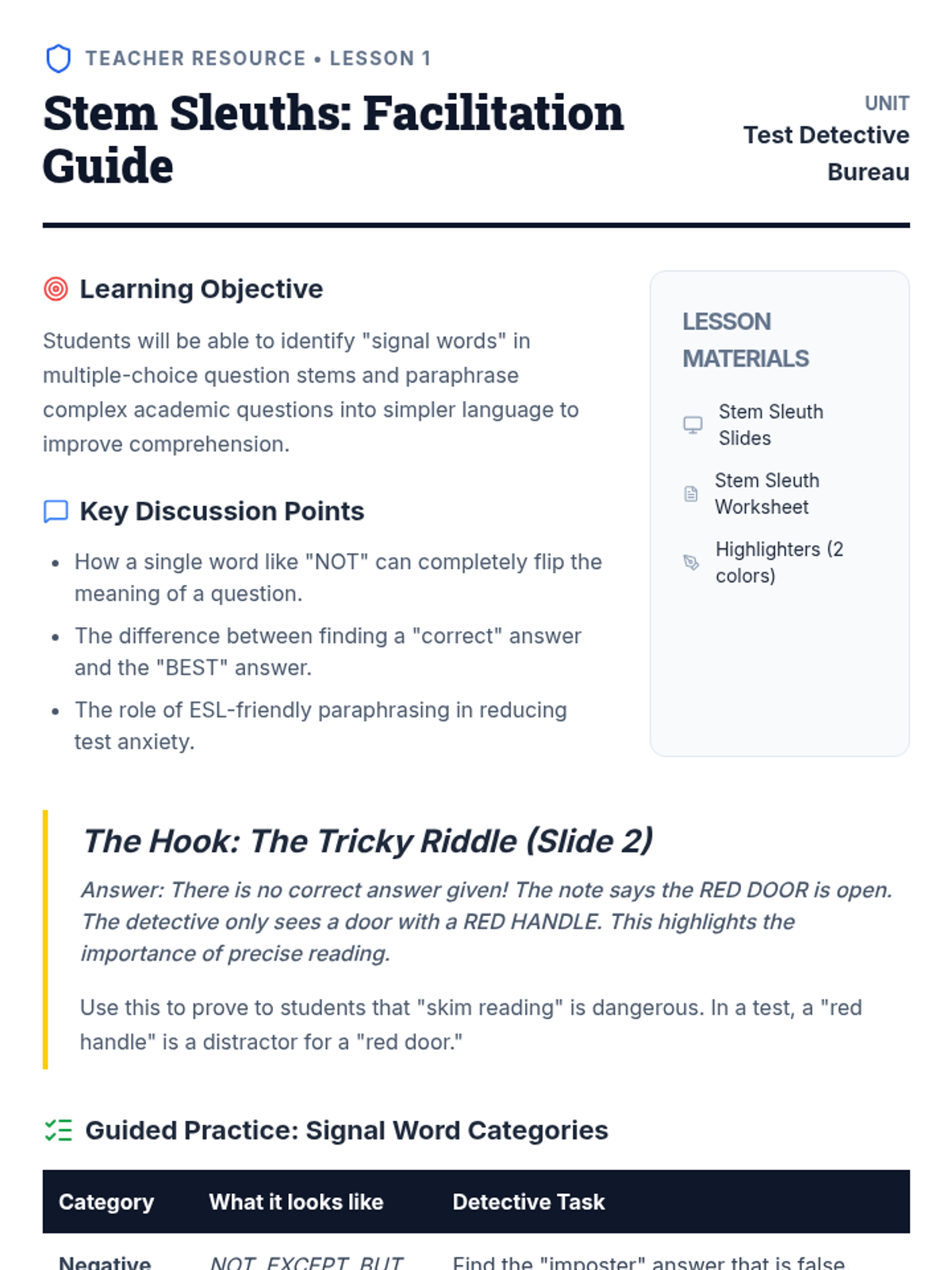
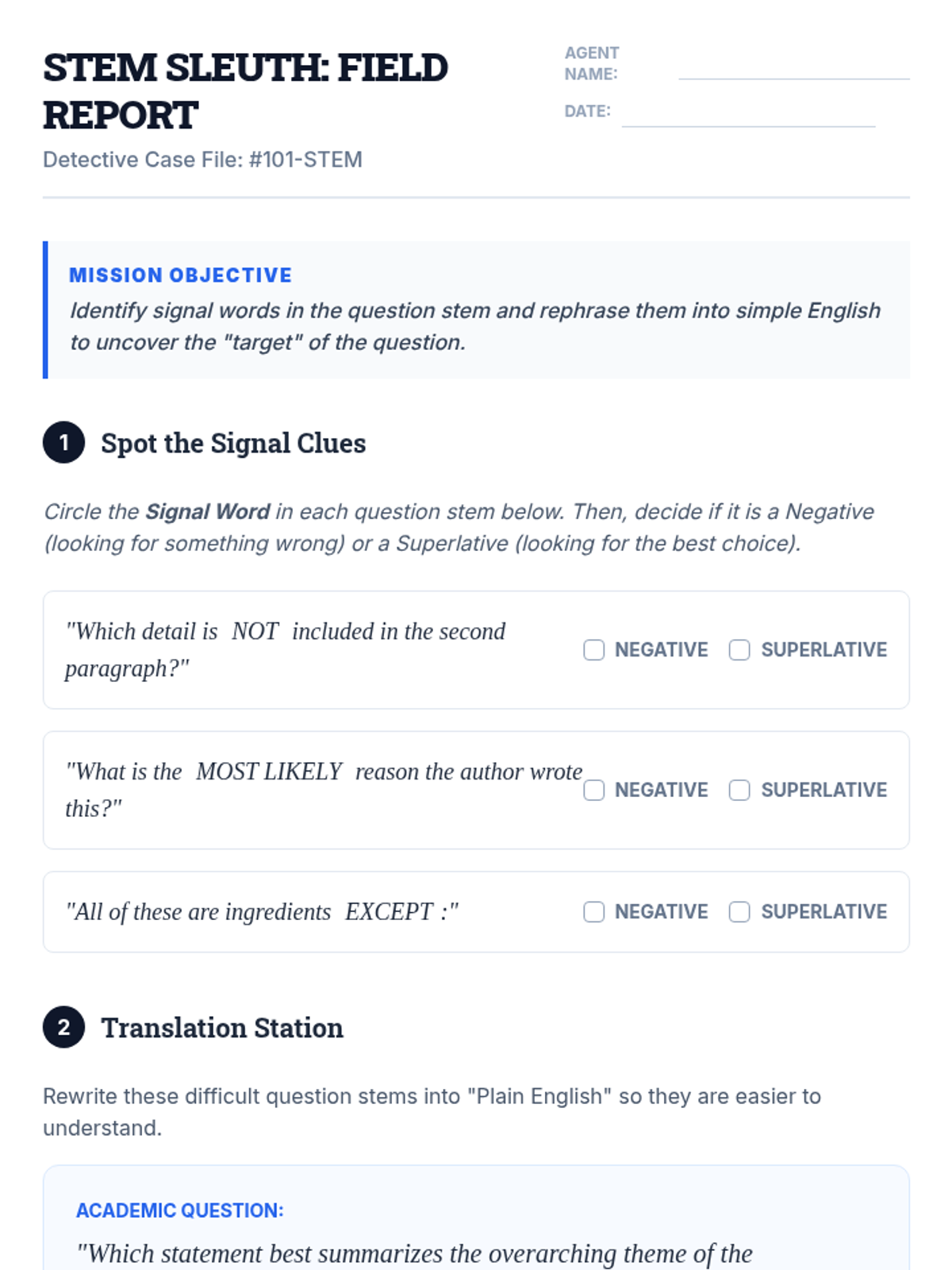
A sequence for 6th-grade ESL students to master academic test-taking through logic and deduction, using a detective-themed approach to analyze question stems and eliminate distractor answers.
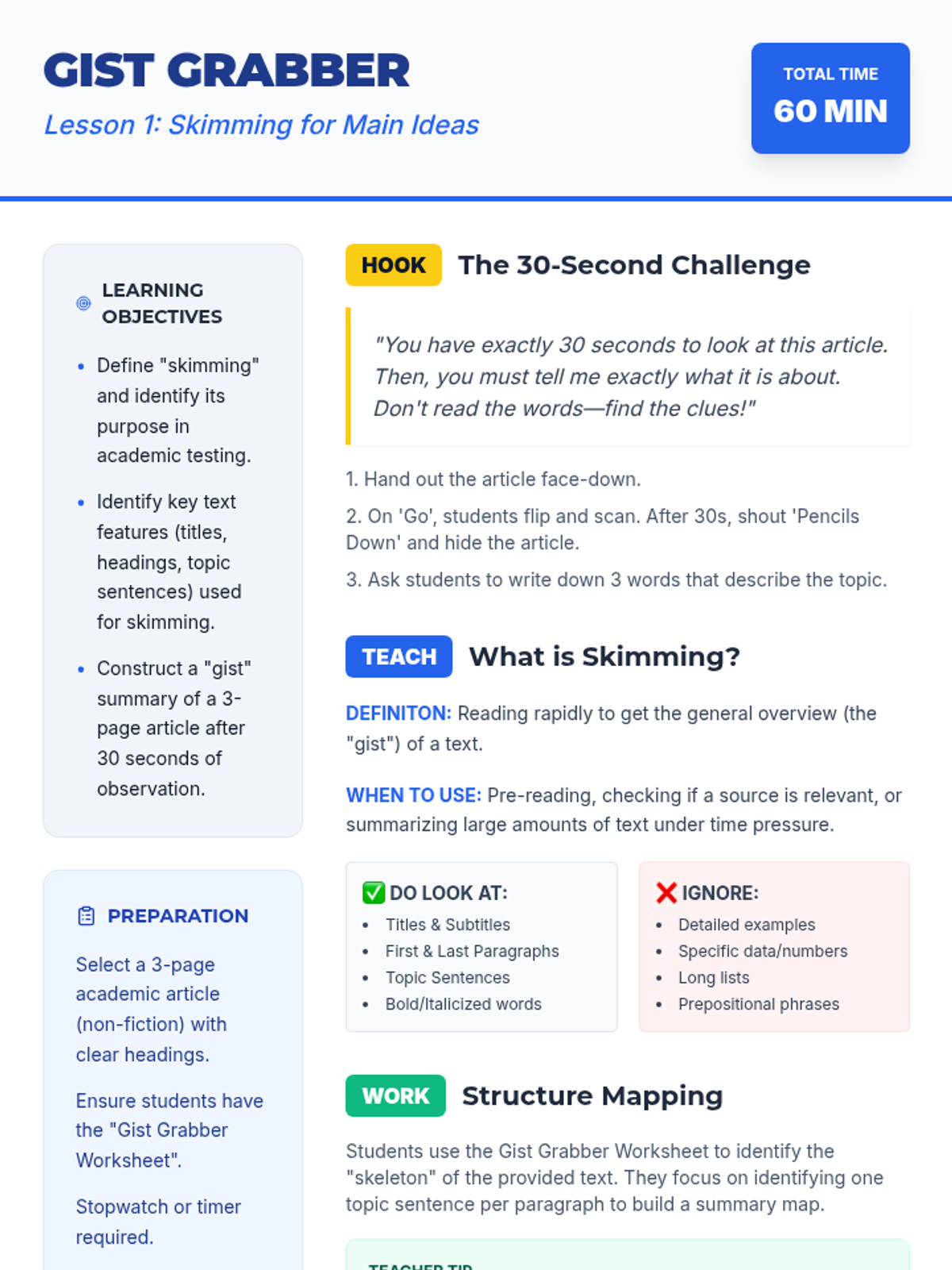
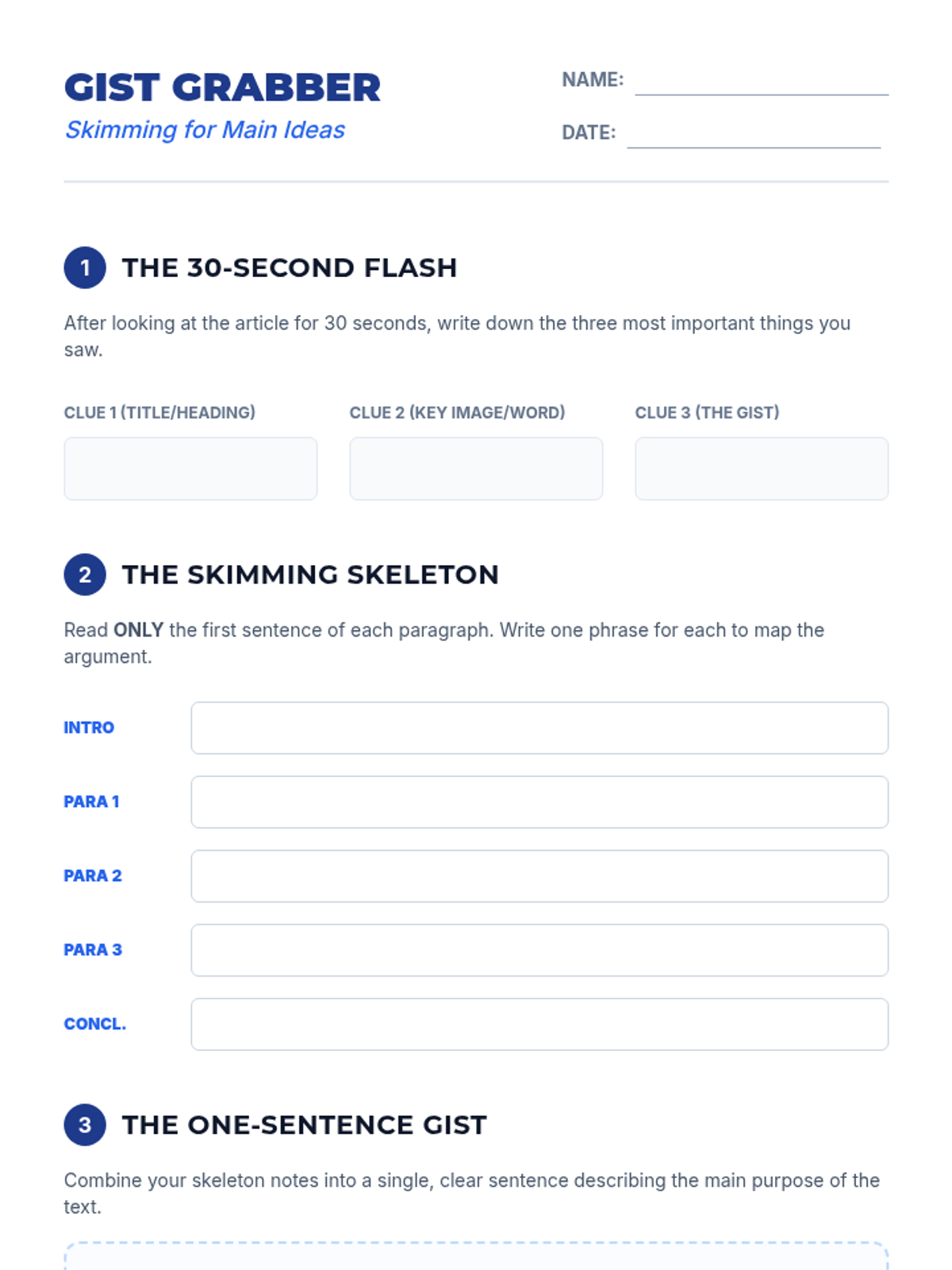
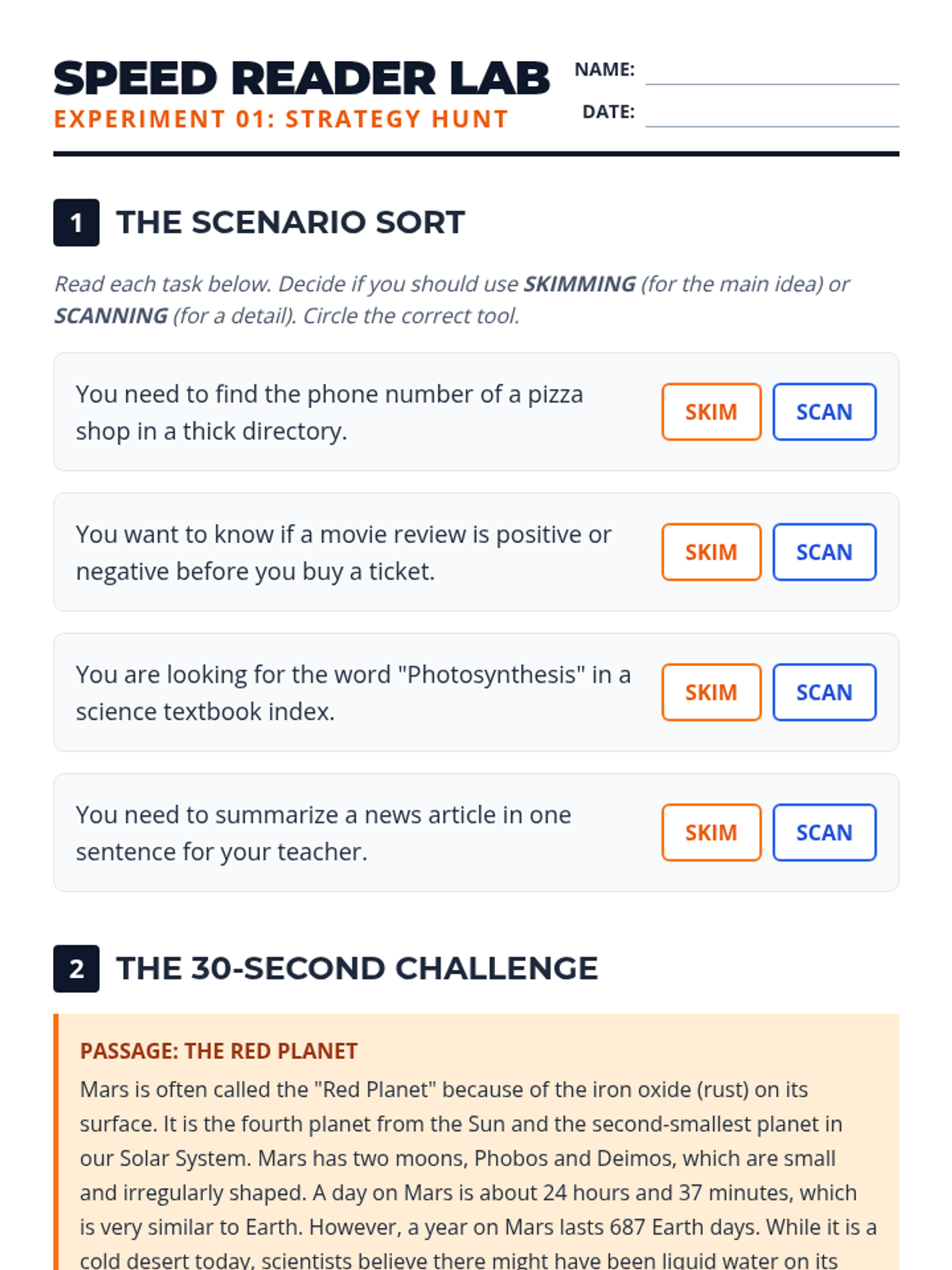
This sequence develops critical reading efficiency for 9th-grade ESL students, focusing on skimming for main ideas and scanning for specific details to succeed in timed academic exams. Students progress from grasping the 'gist' using text features to locating specific data points and utilizing signpost words to navigate complex arguments.
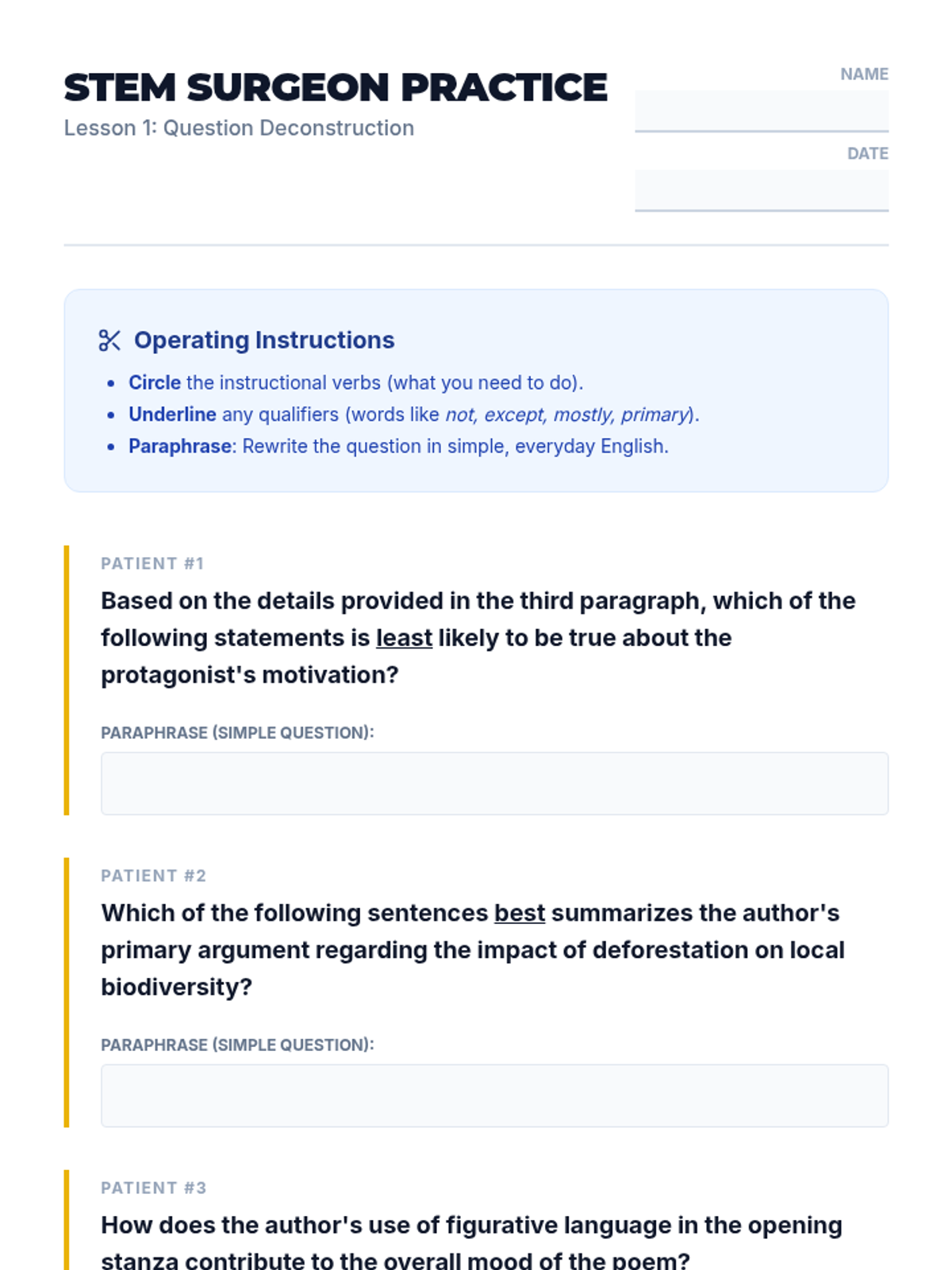
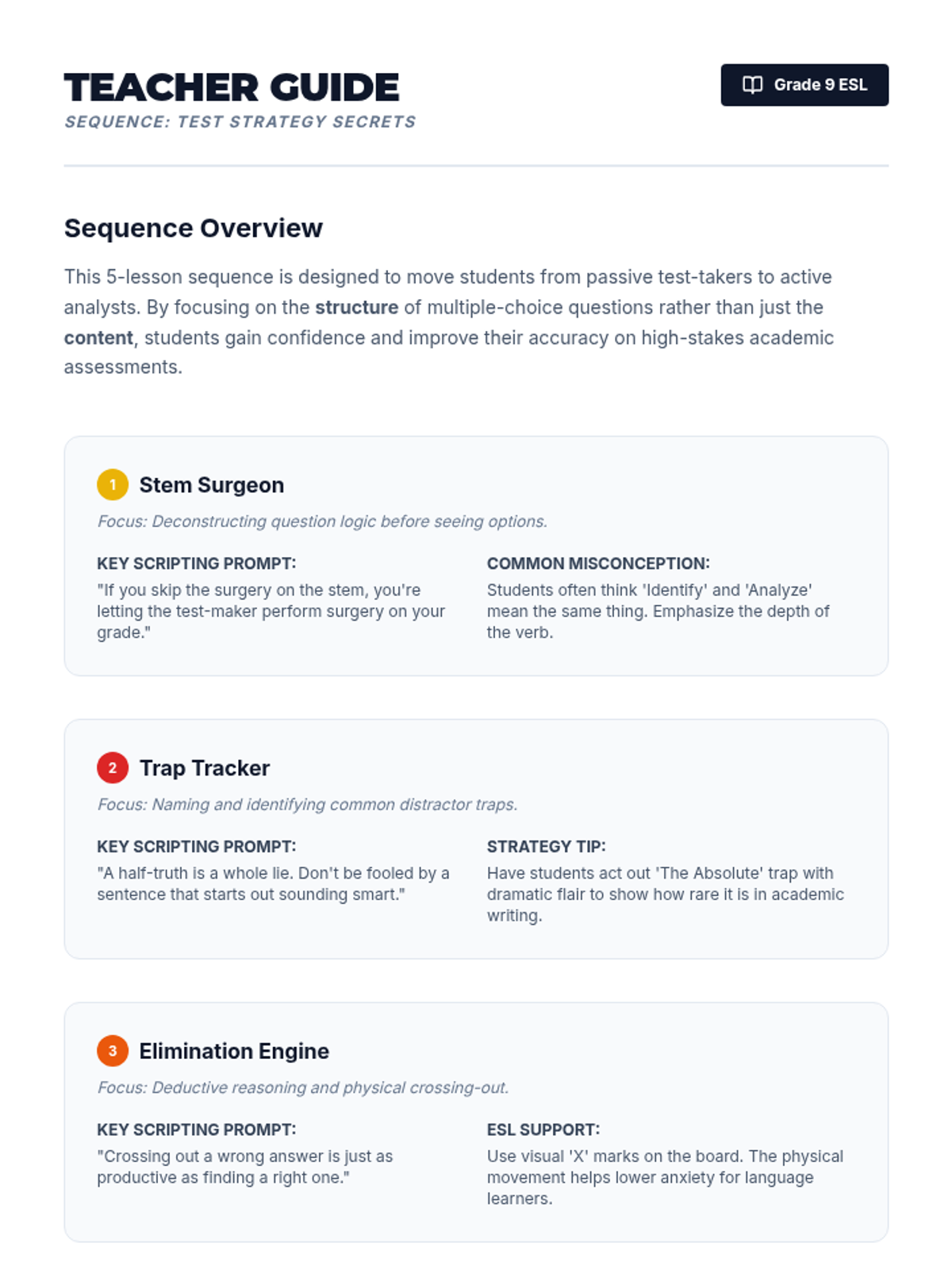
This sequence equips 9th-grade ESL students with the analytical tools to navigate complex multiple-choice questions. Students learn to deconstruct question stems, identify common distractor traps, and apply a systematic process of elimination to improve accuracy in academic testing.
An intermediate ESL sequence focused on mastering the nuances of spoken English. Students progress from decoding the mechanics of connected speech to analyzing abstract elements like sarcasm, bias, and persuasion in various audio contexts.
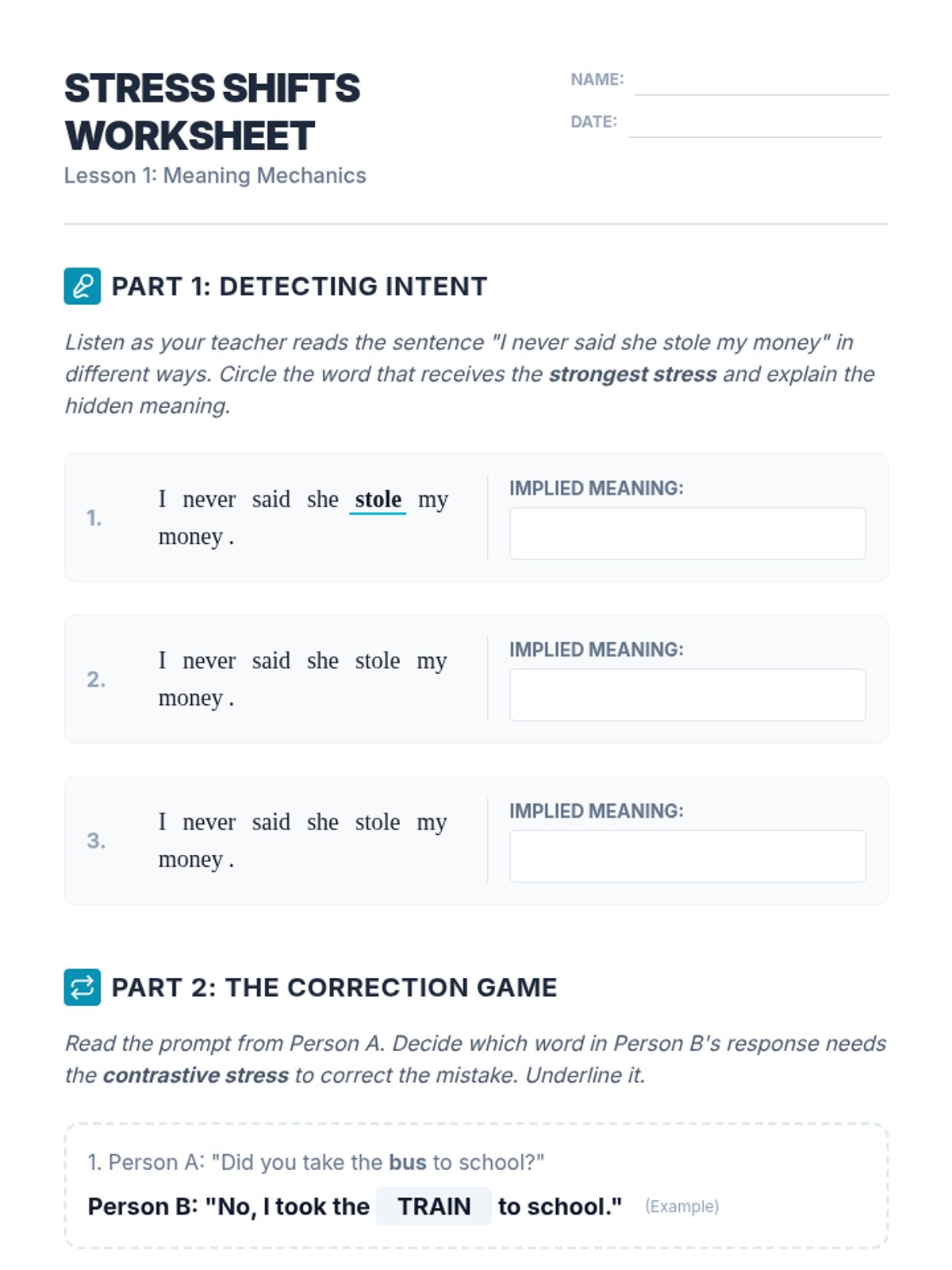
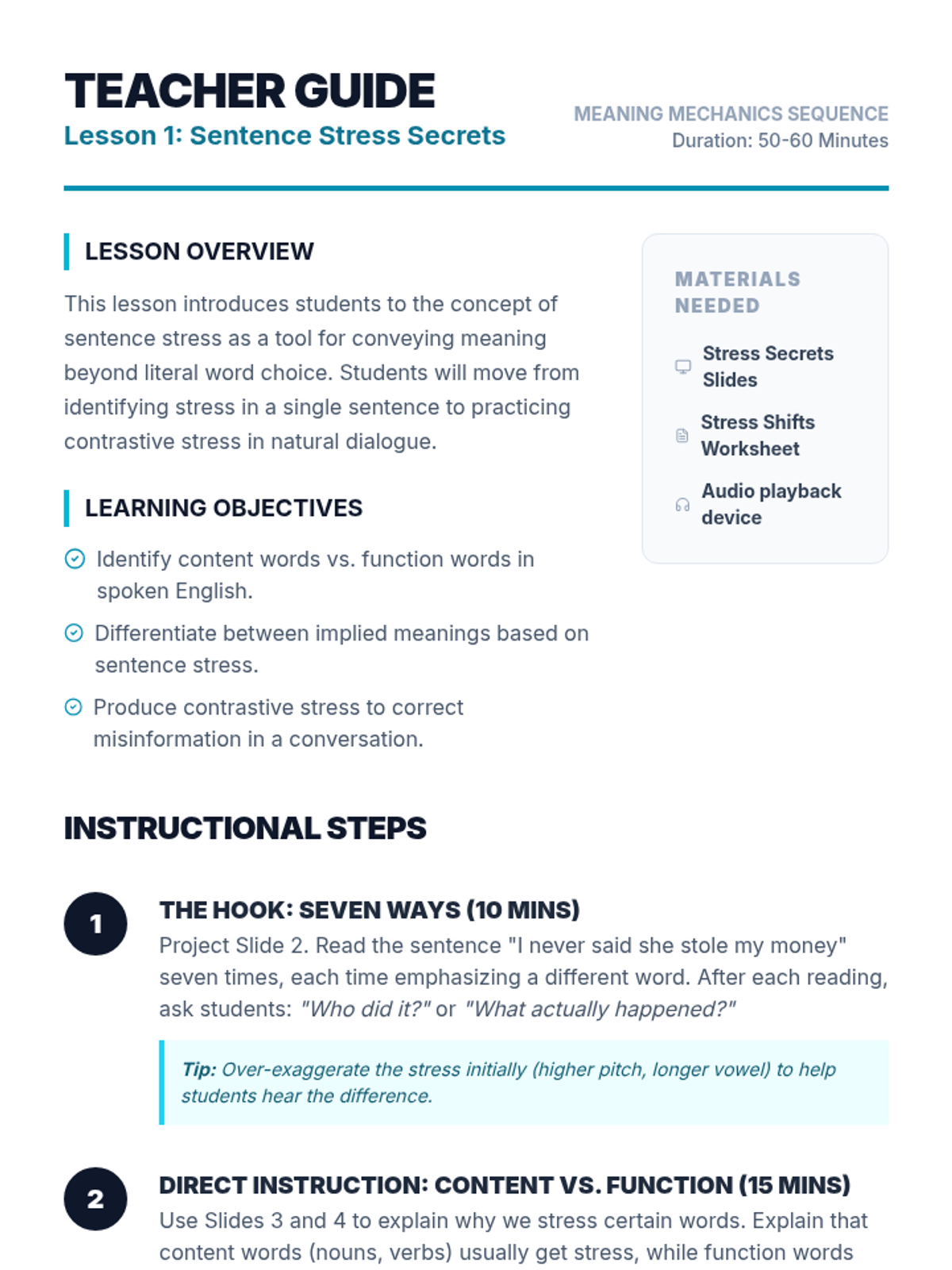
This sequence guides intermediate ESL students through the complexities of spoken English, moving from basic sentence stress to the nuances of sarcasm, idioms, and academic signposting. Students will develop the ability to infer speaker intent and respond appropriately in real-world scenarios.
Students explore English beyond the textbook, focusing on authentic fast-paced speech, regional dialects, and varying registers to improve real-world listening comprehension.
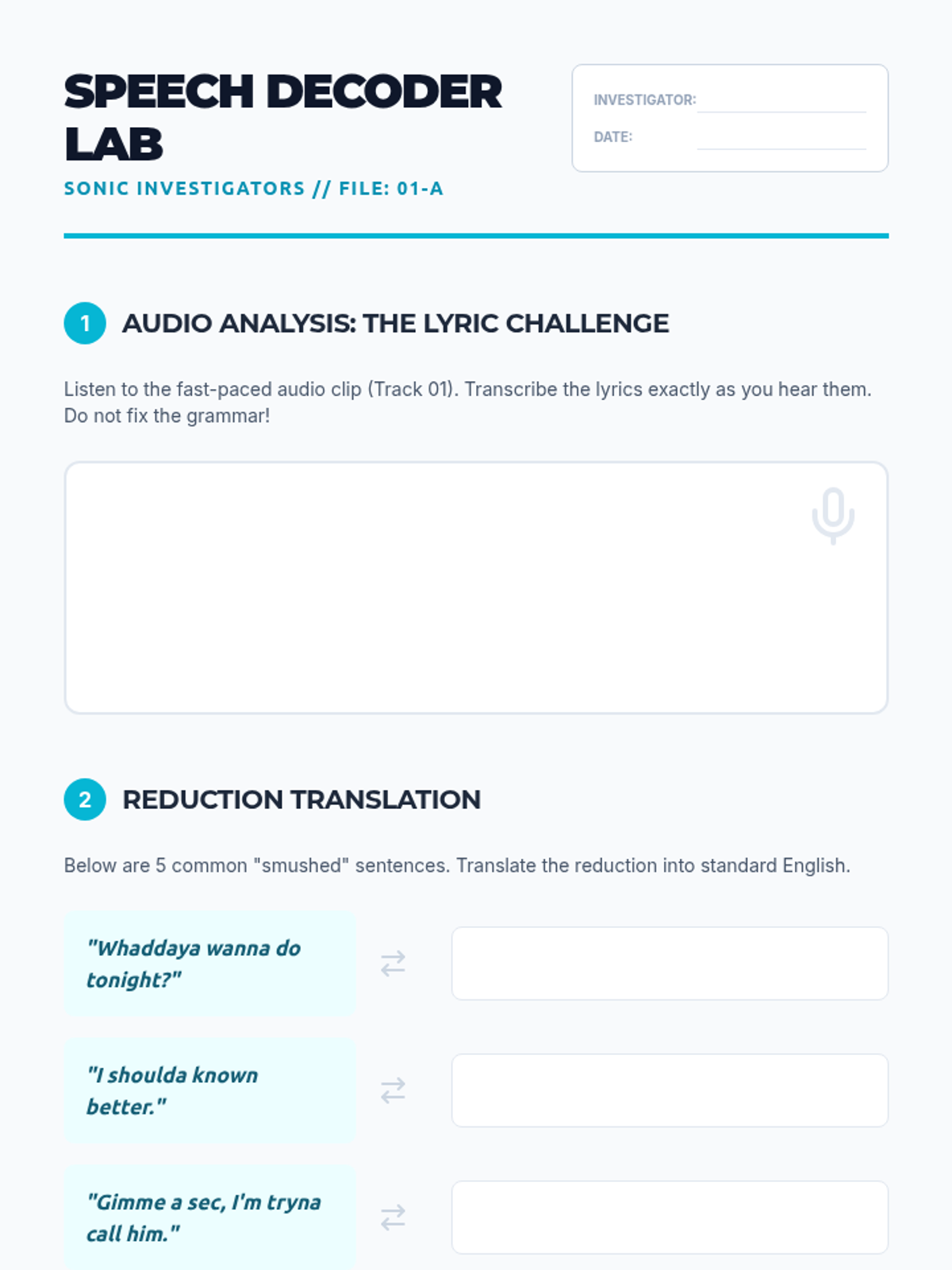
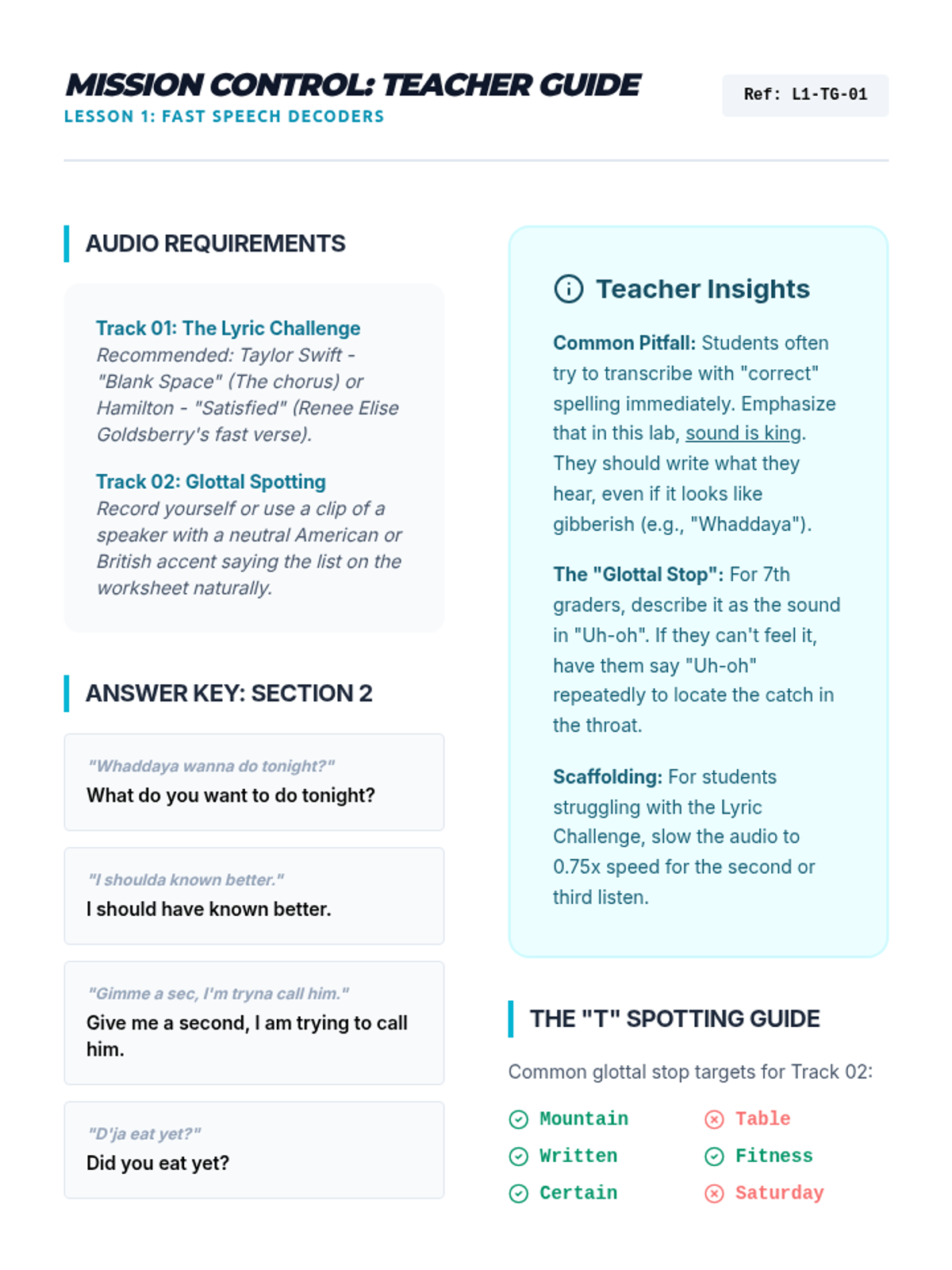
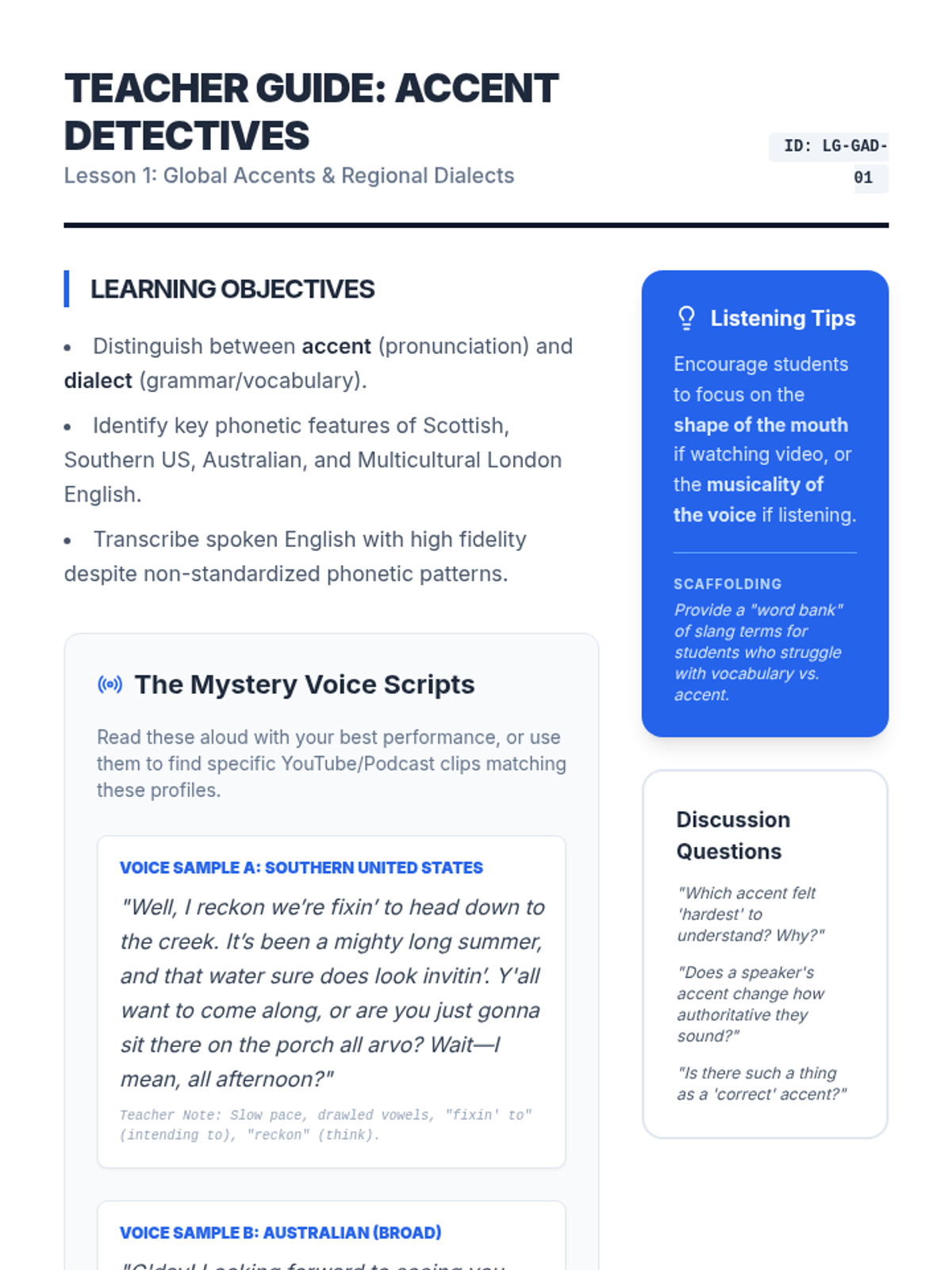
This sequence challenges students to move beyond 'textbook English' to decode the realities of natural, fast-paced speech, including regional dialects and connected speech phenomena. Students investigate how sounds change, disappear, or merge in casual conversation (assimilation and elision) and explore major English accents (American, British, Australian). Through inquiry and case studies of real-world media, students learn to navigate the variability of the English language with confidence.
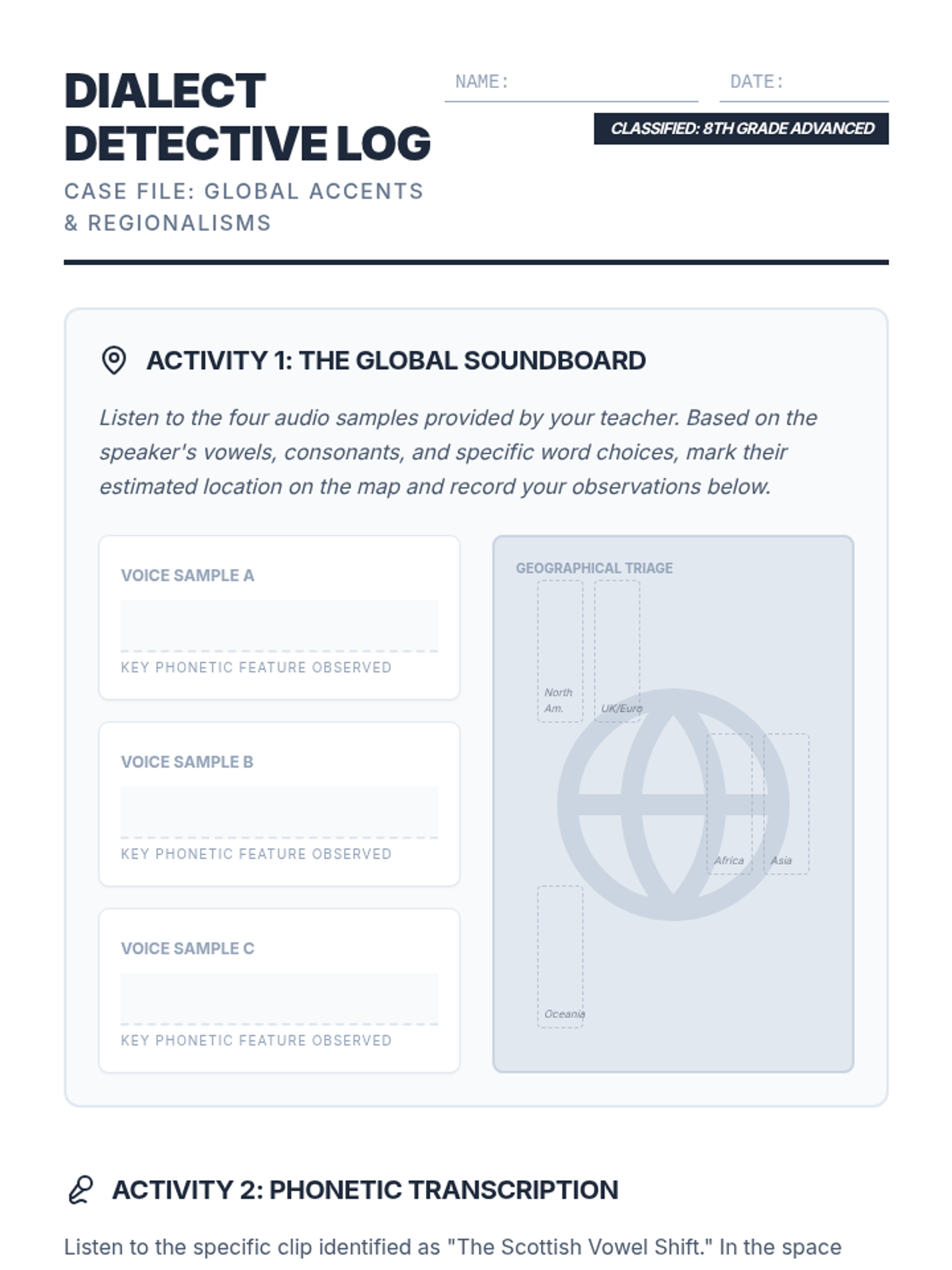
An advanced 8th Grade ESL listening sequence that teaches students to move beyond literal comprehension. Students learn to decode global accents, connected speech, speaker bias, sarcasm, and rhetorical devices through authentic-style audio analysis and investigative tasks.
This sequence immerses intermediate ESL students in the nuances of casual English conversation, focusing on idiomatic expressions, emotional intonation, and social registers. Students transition from literal understanding to figurative fluency through inquiry, simulation, and performance.
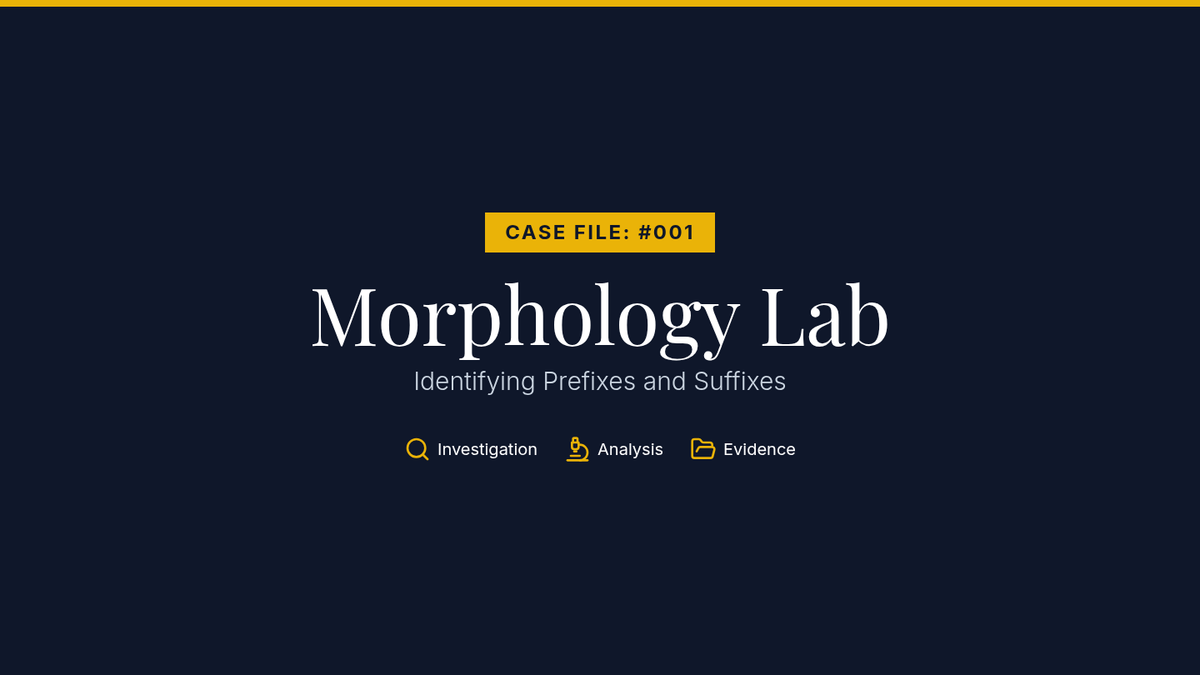
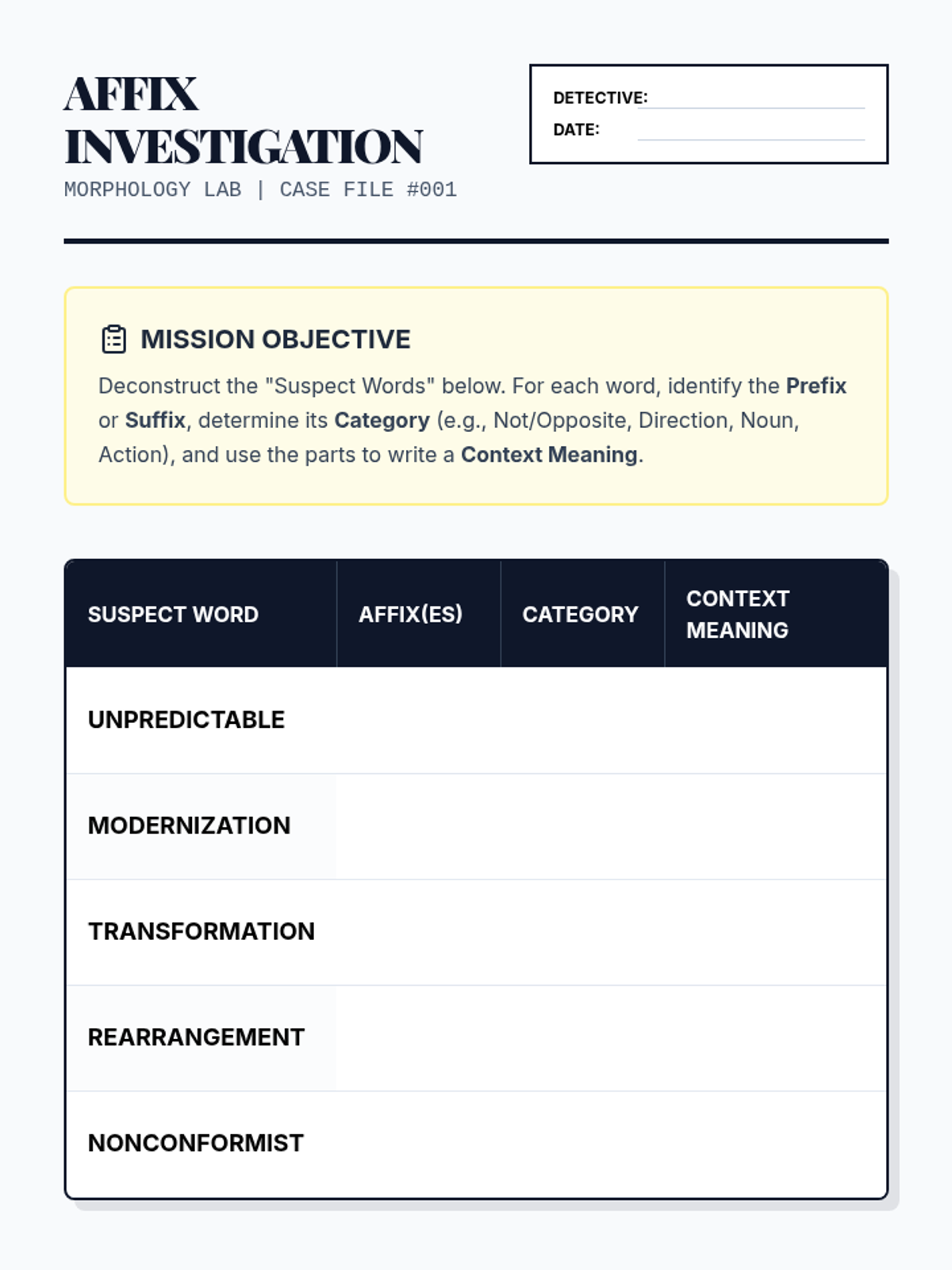
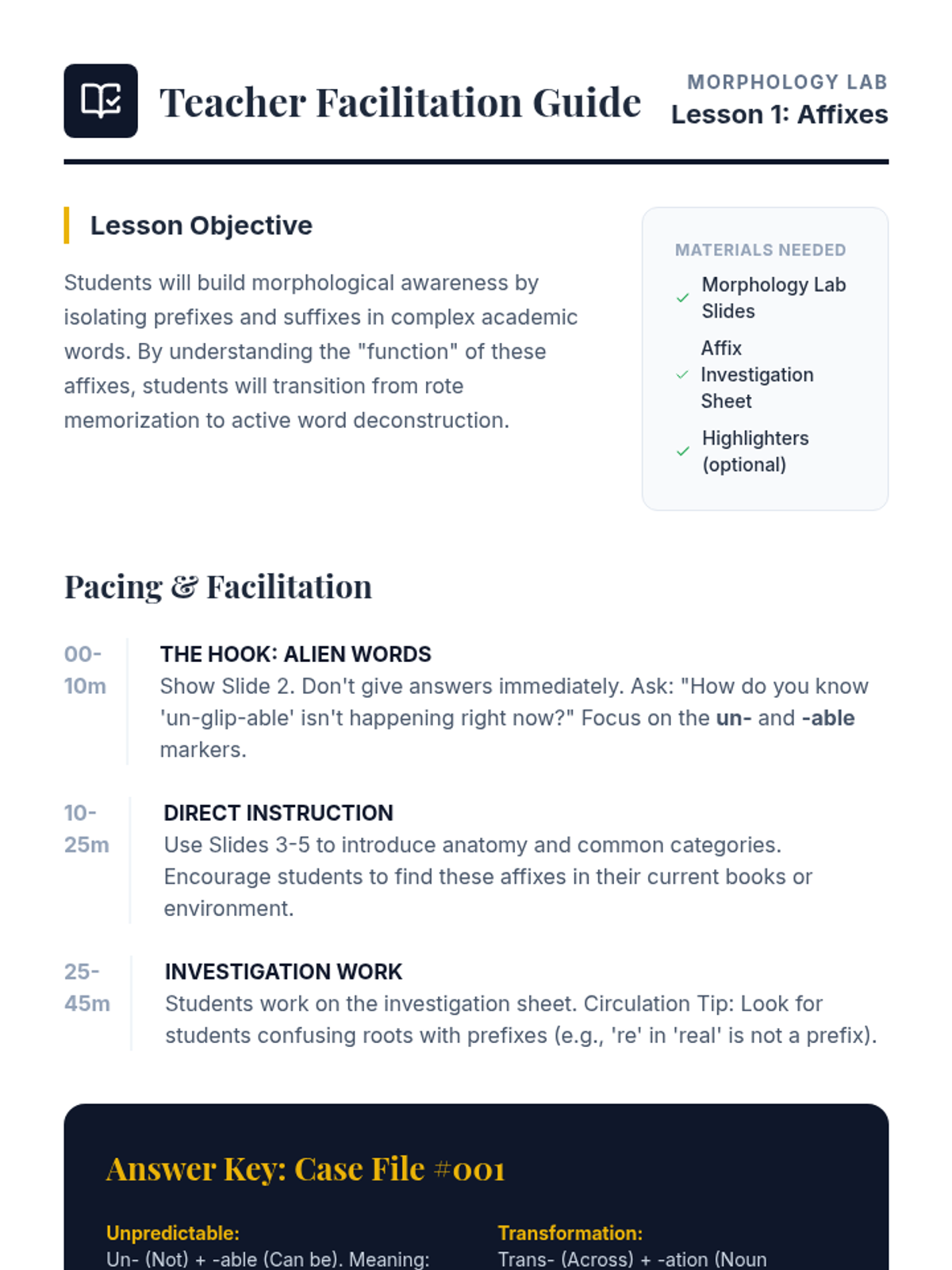
A comprehensive 6th-grade ESL sequence focusing on morphological awareness through the study of Greek and Latin roots, prefixes, and suffixes. Students transition from identifying basic word parts to synthesizing their own neologisms, building advanced academic vocabulary stamina.
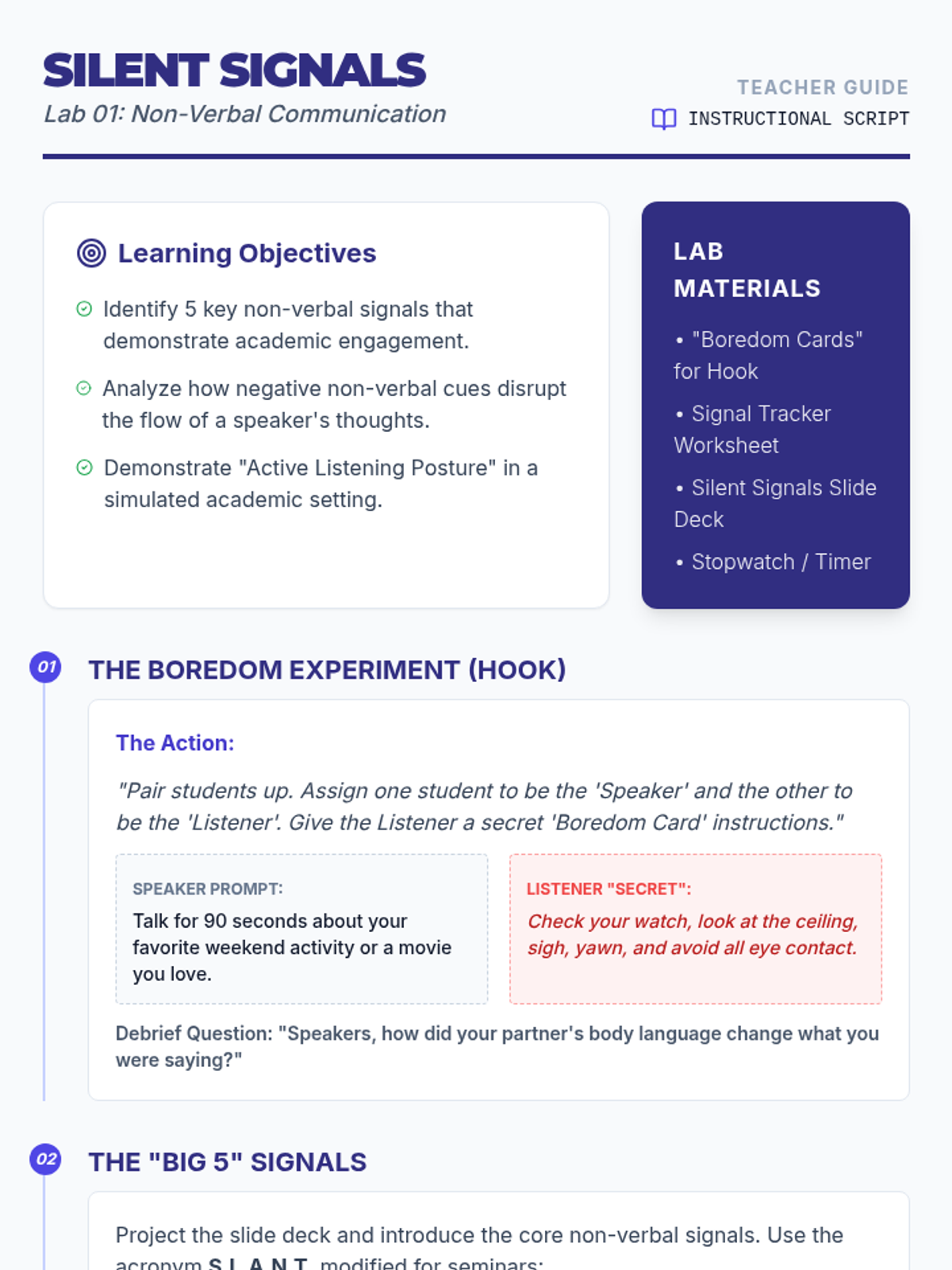
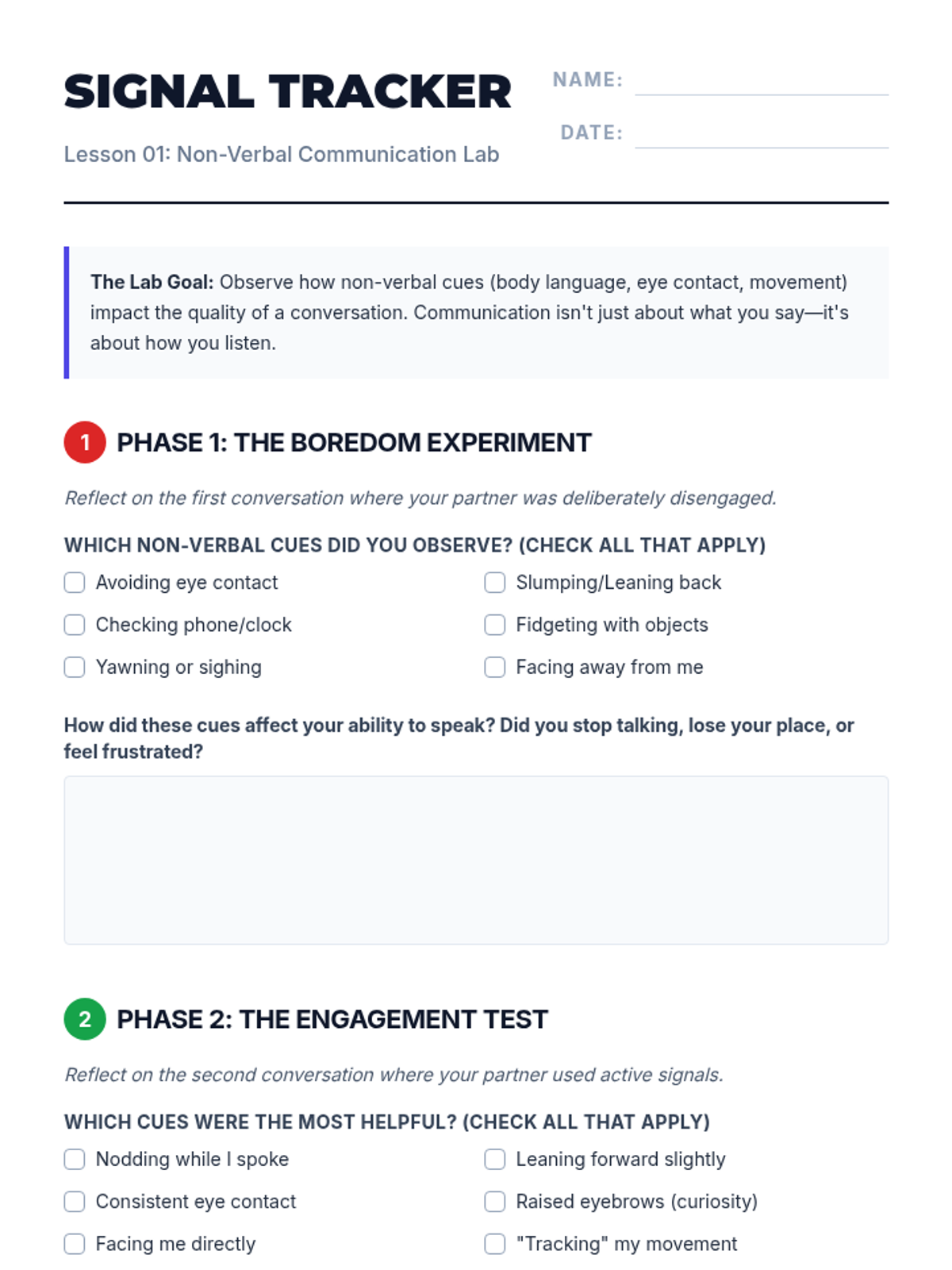
A comprehensive sequence for 9th-grade students to master academic discourse. Students move from understanding non-verbal cues to using sophisticated linguistic frames for paraphrasing, clarifying, and debating, culminating in a student-led Socratic Seminar.
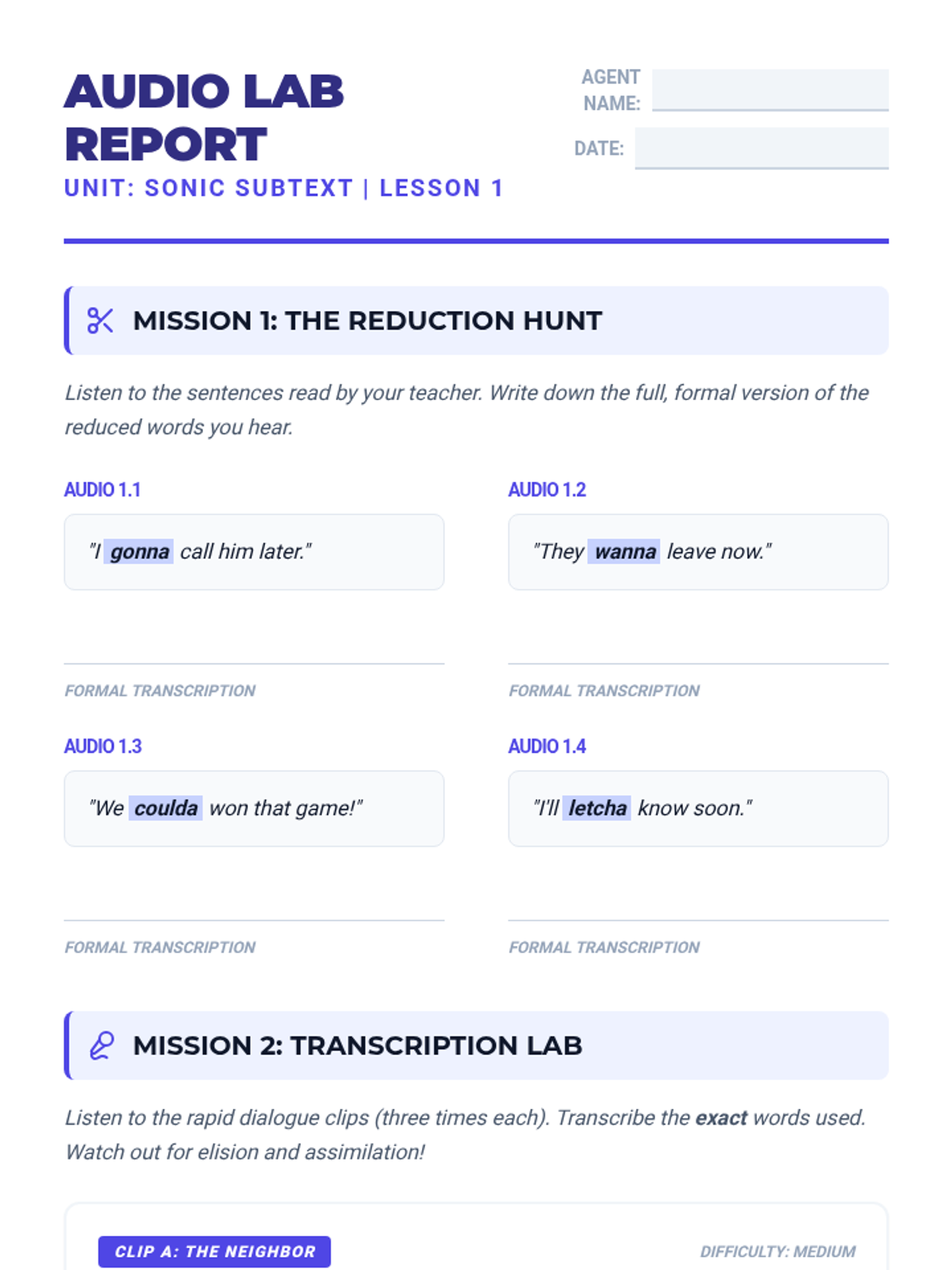
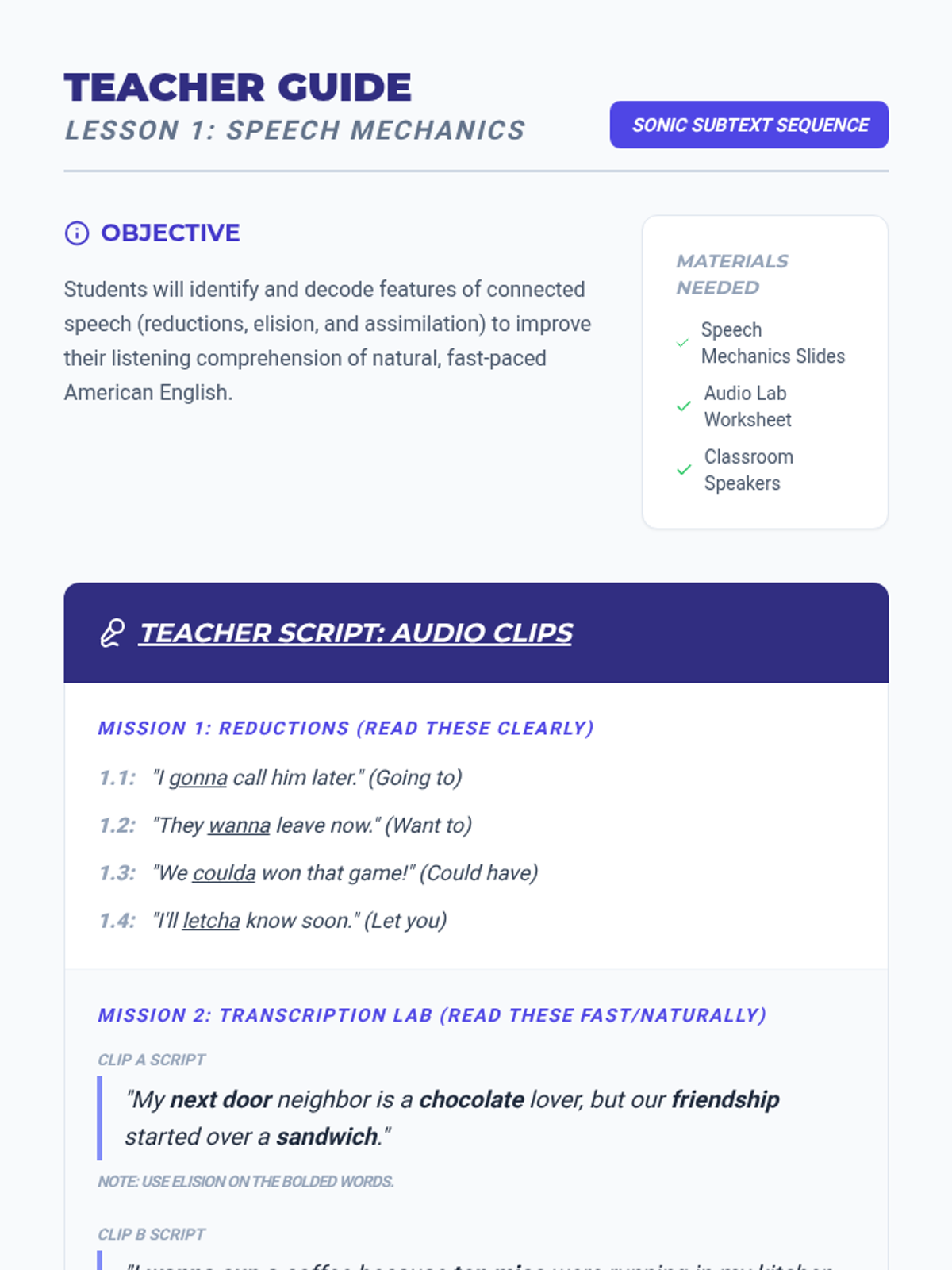
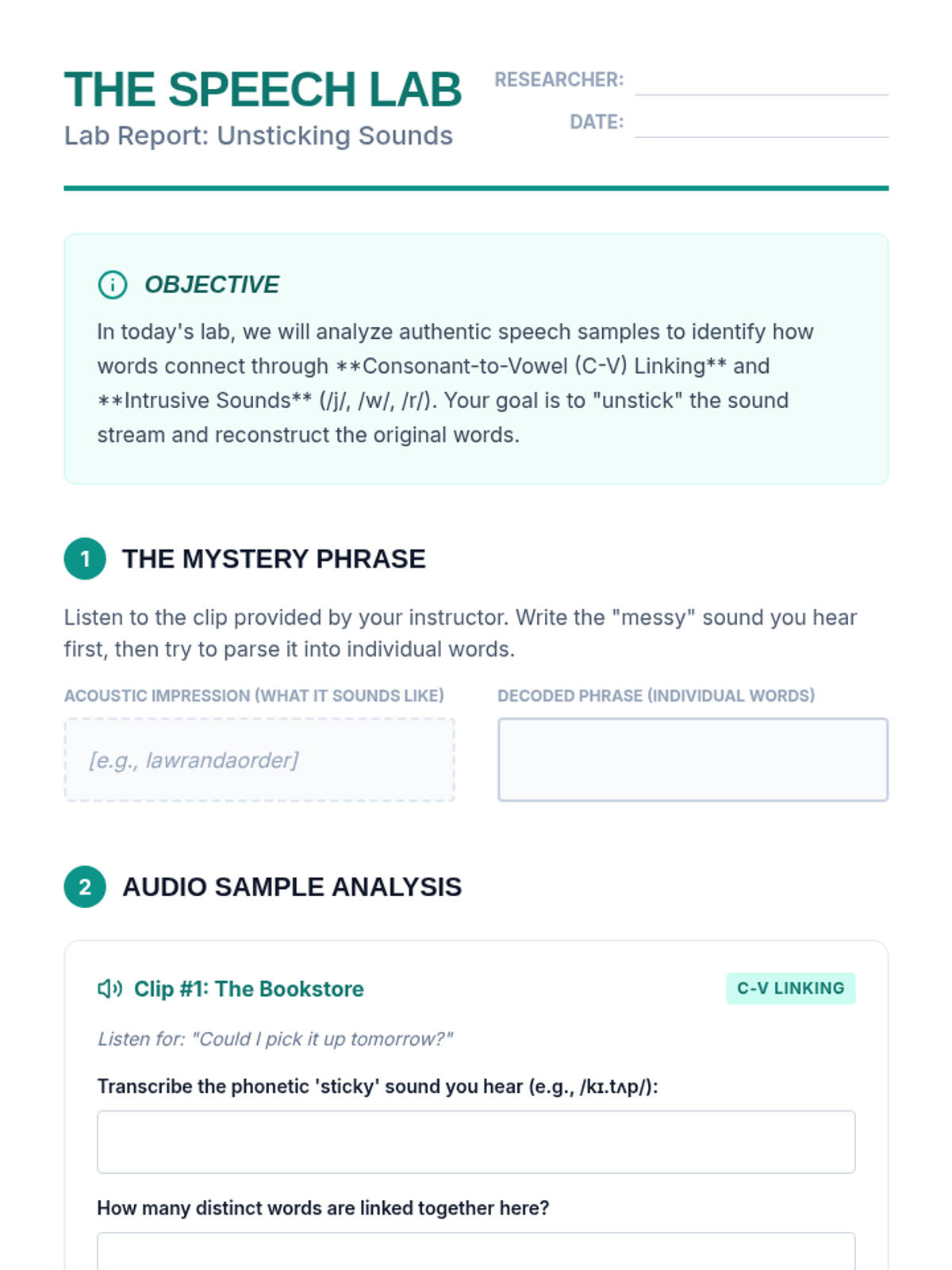
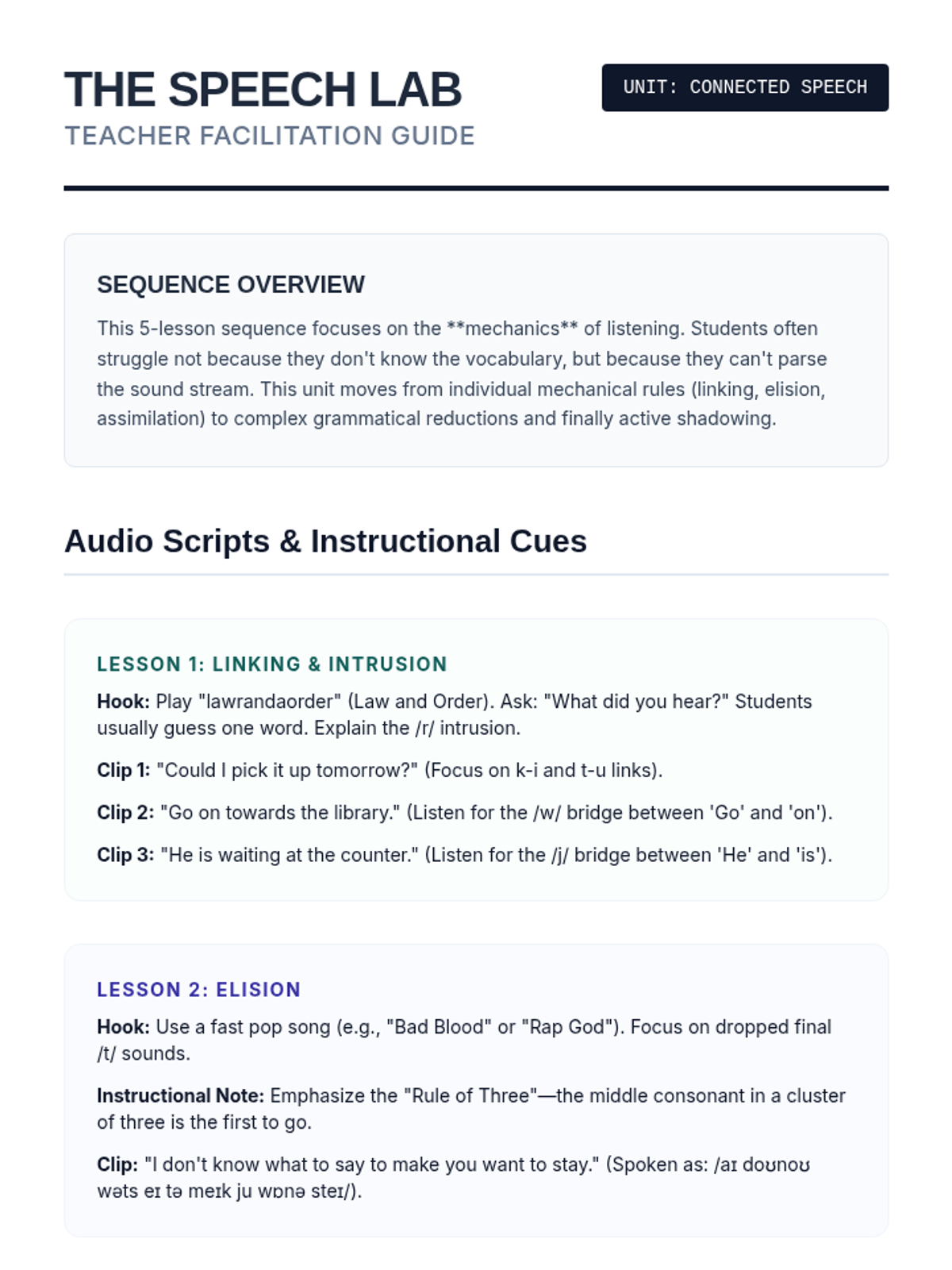
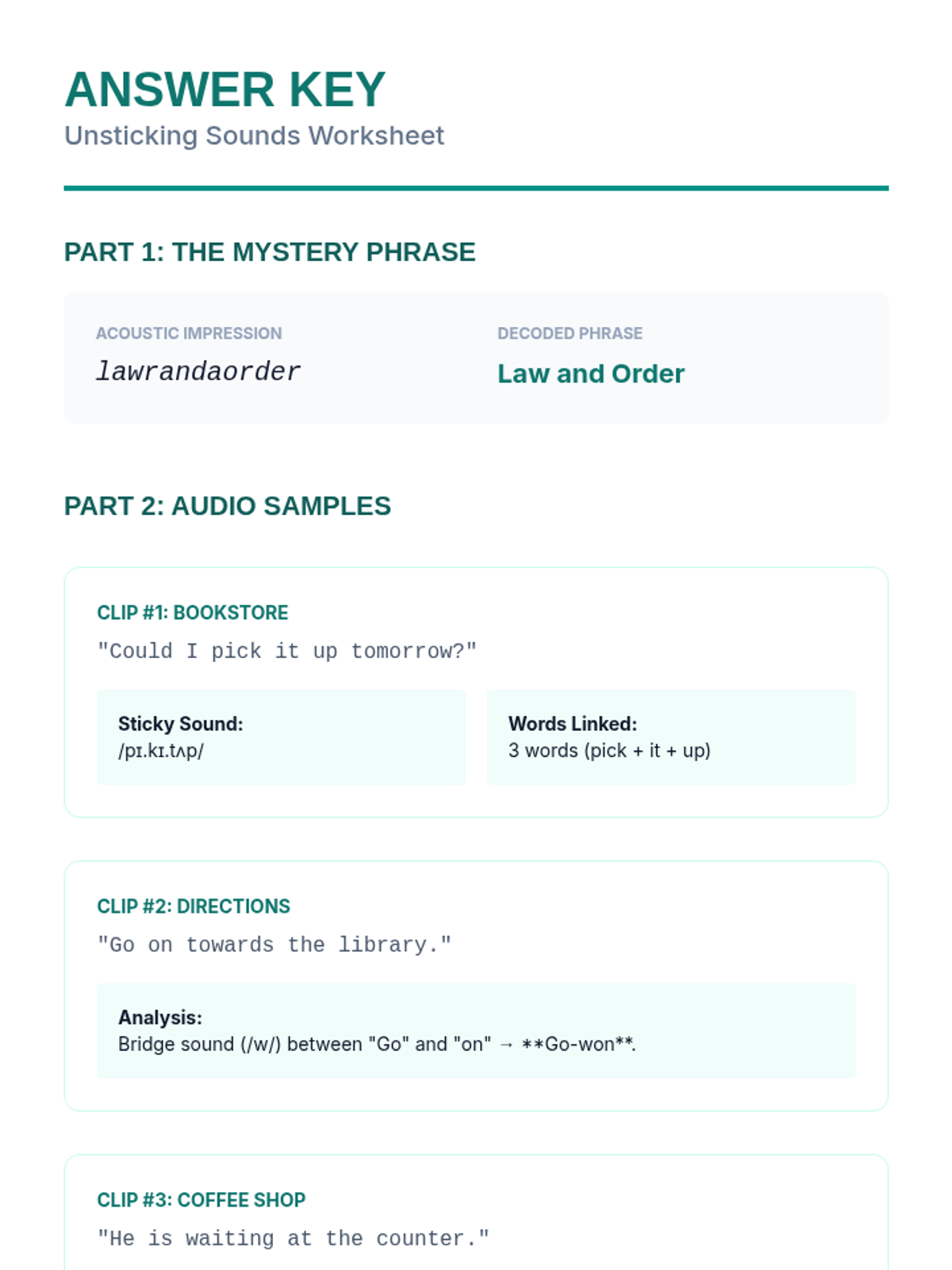
This sequence targets the mechanical difficulties of understanding natural, fast-paced English. Students explore phonological rules like linking, elision, and assimilation to decode authentic, fluid speech patterns found in campus social life.
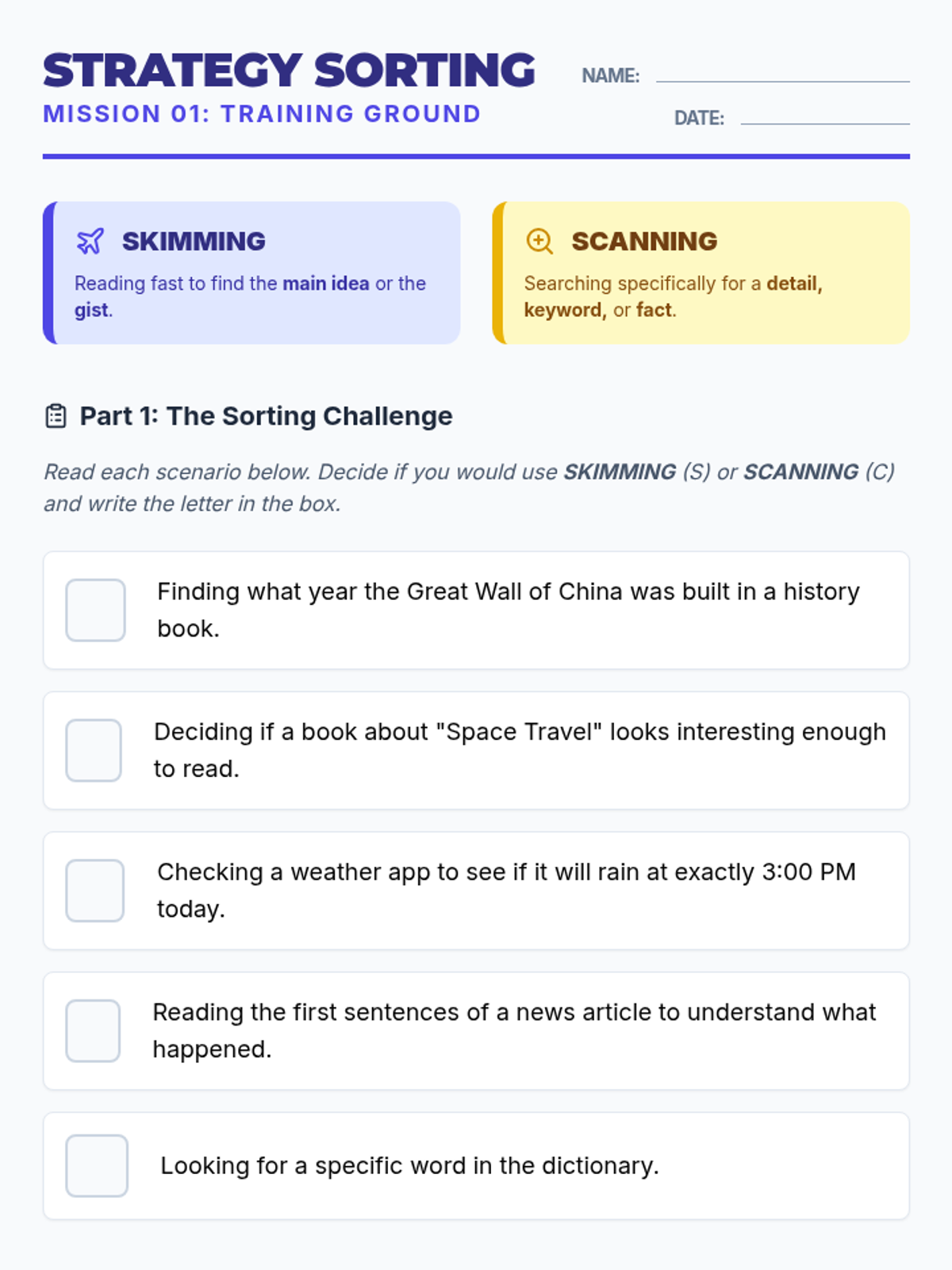
A comprehensive 5-lesson sequence designed for 7th Grade ESL students to master skimming and scanning techniques. Students progress from basic differentiation of reading styles to high-speed information retrieval and synthesis, building the confidence and fluency needed for timed academic assessments.
This sequence teaches 6th-grade ESL students the essential test-taking strategies of skimming and scanning. Through a 'Speed Scout' academy theme, students learn to navigate academic texts efficiently, identifying when to look for the 'gist' versus specific details to save time and improve accuracy on standardized tests.
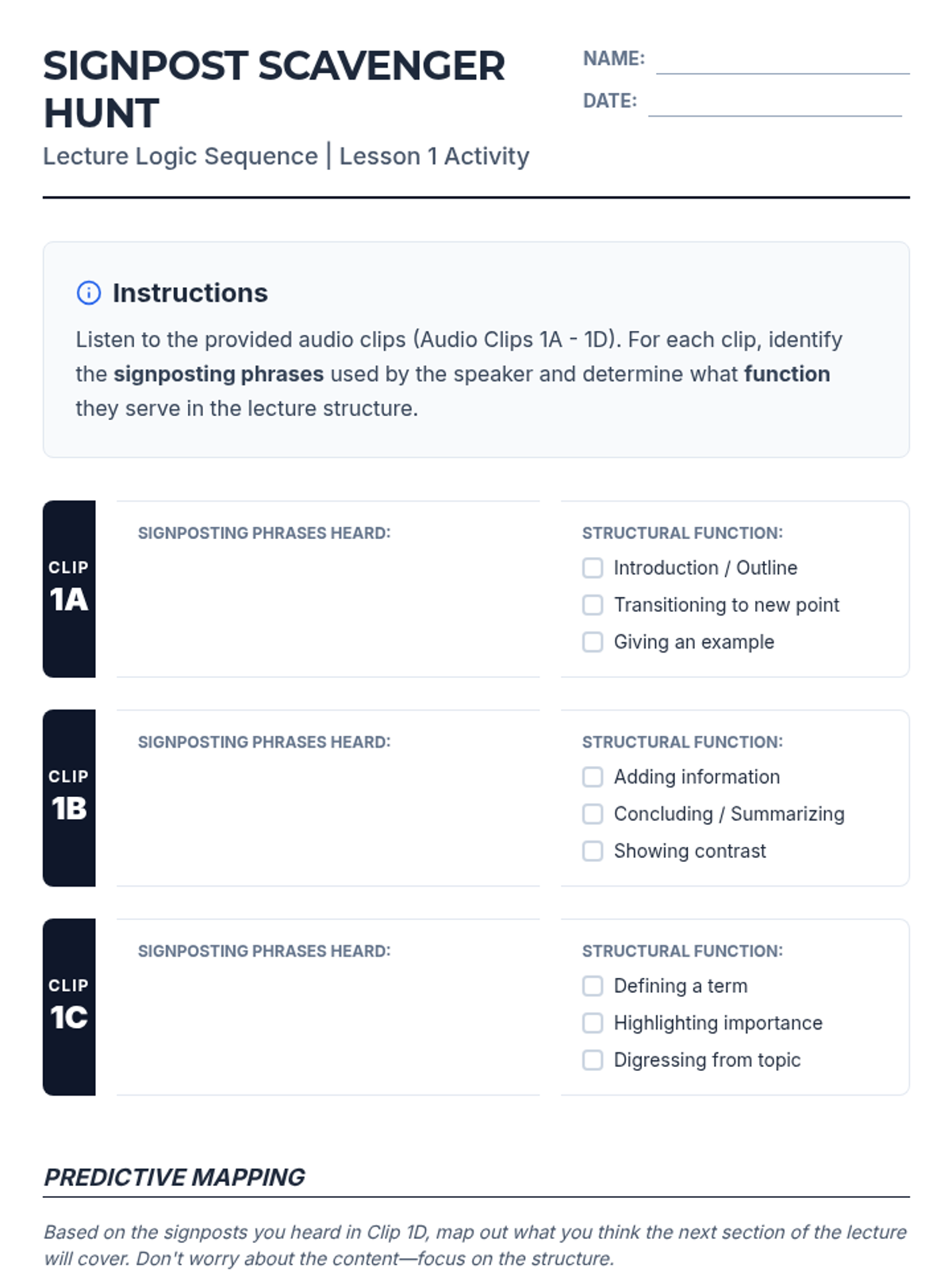
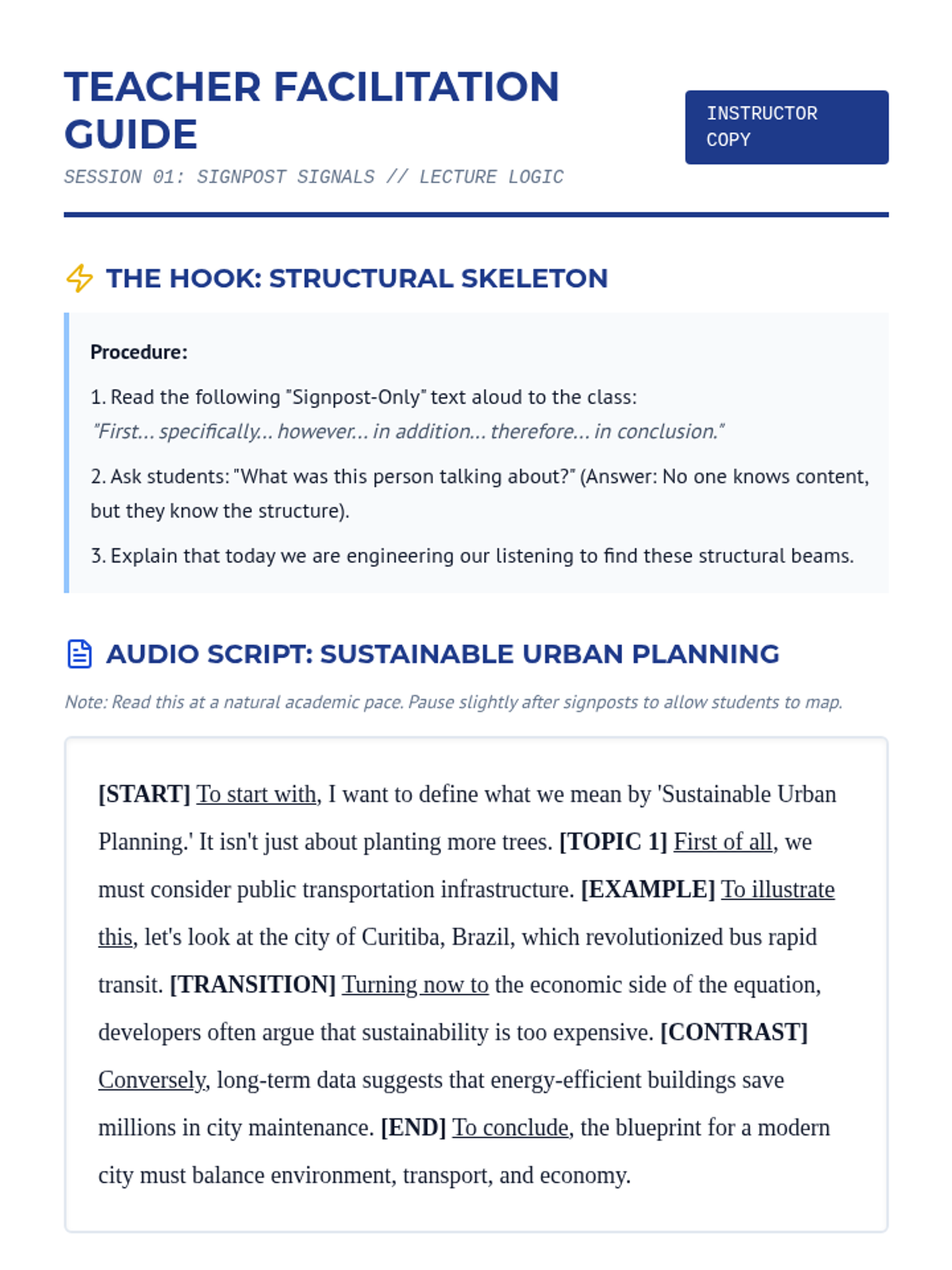
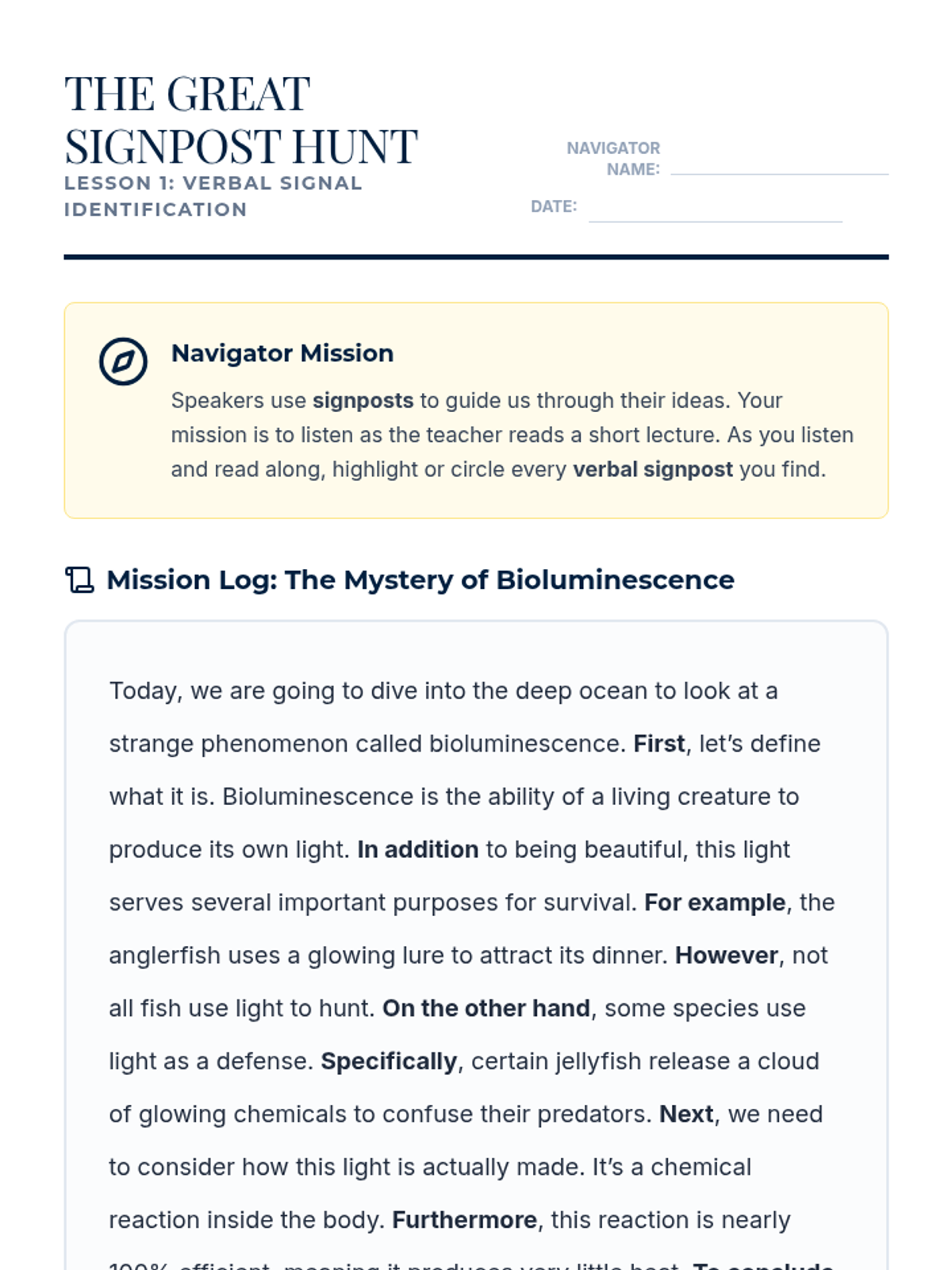
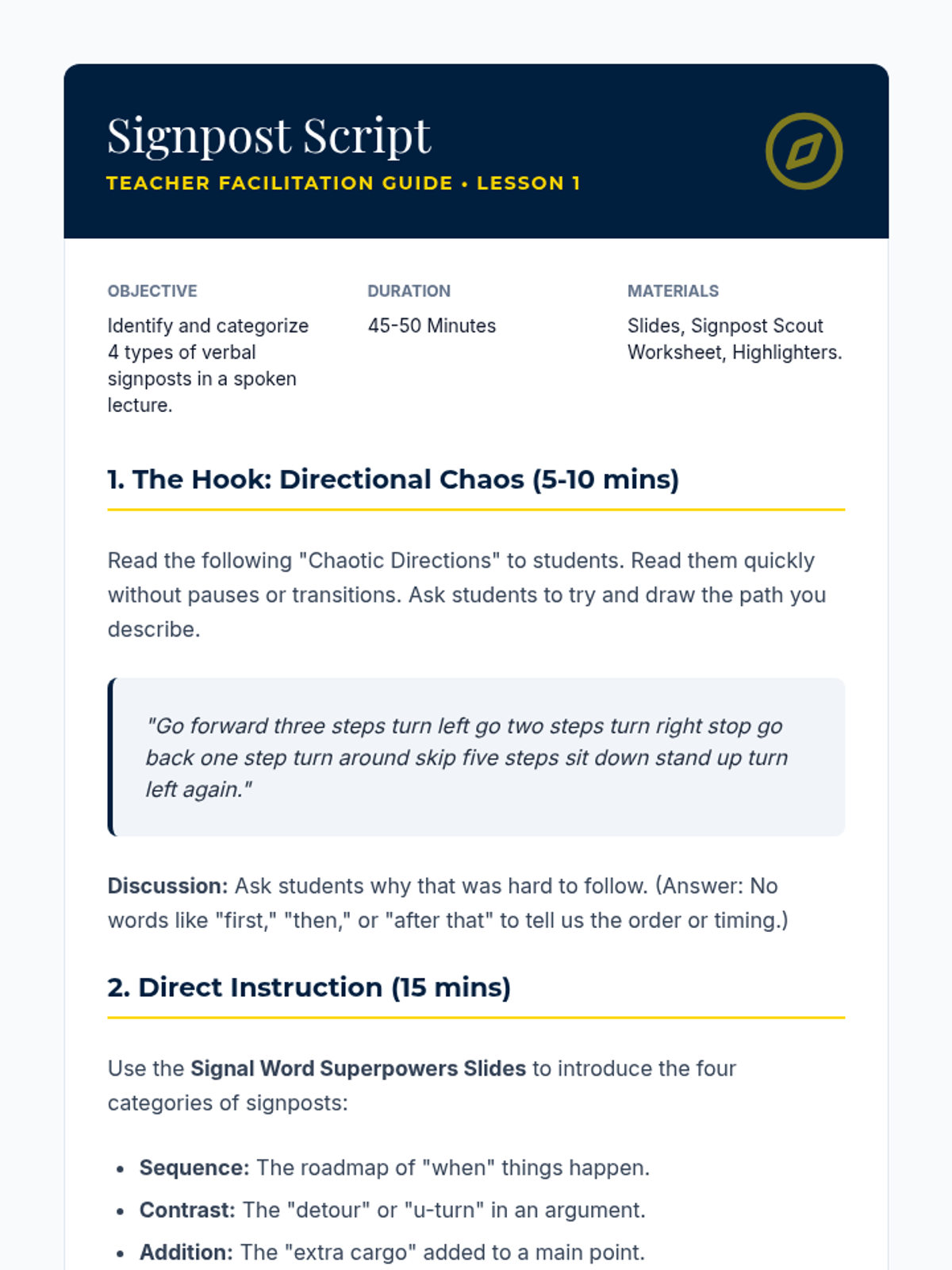
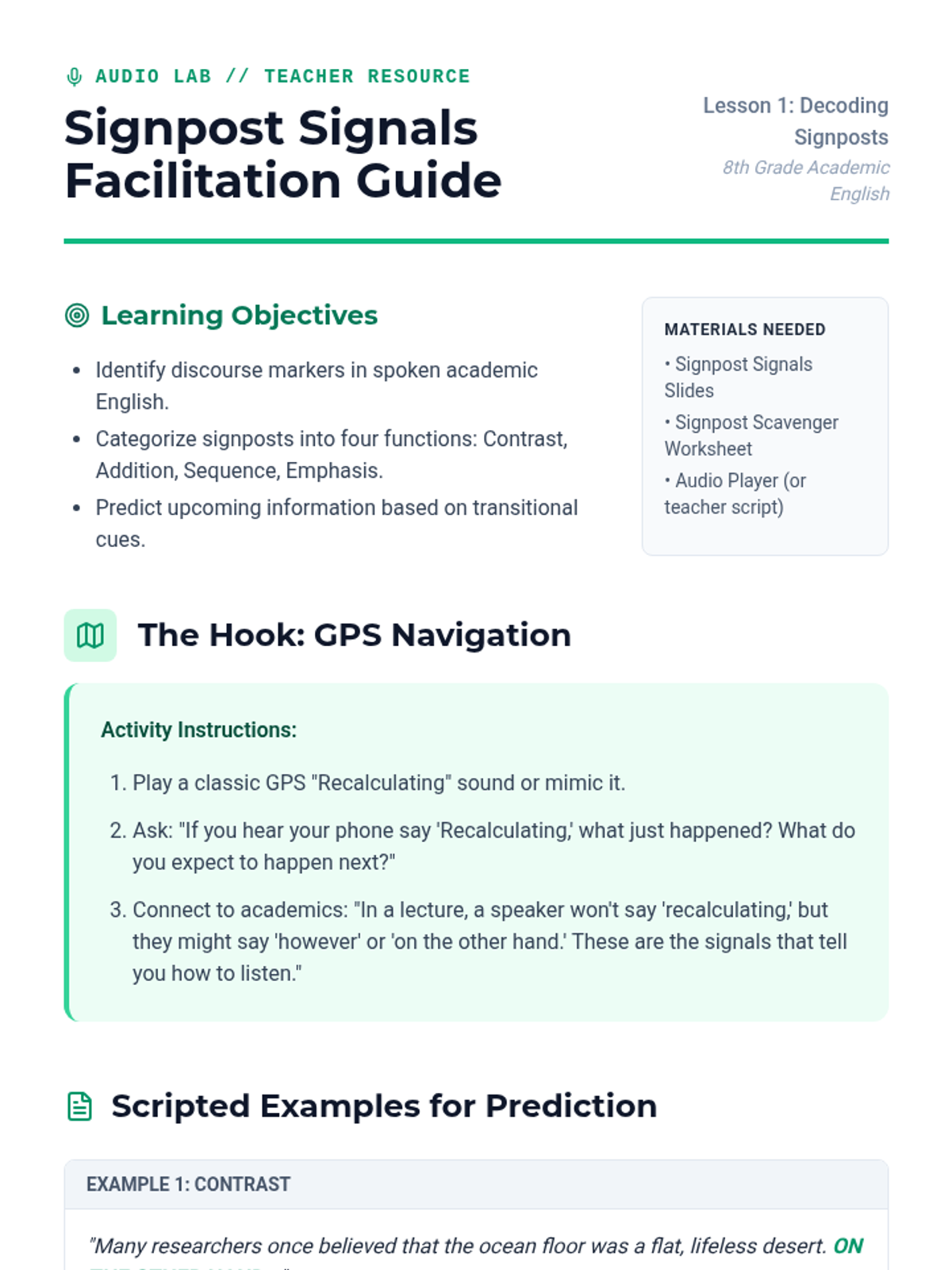
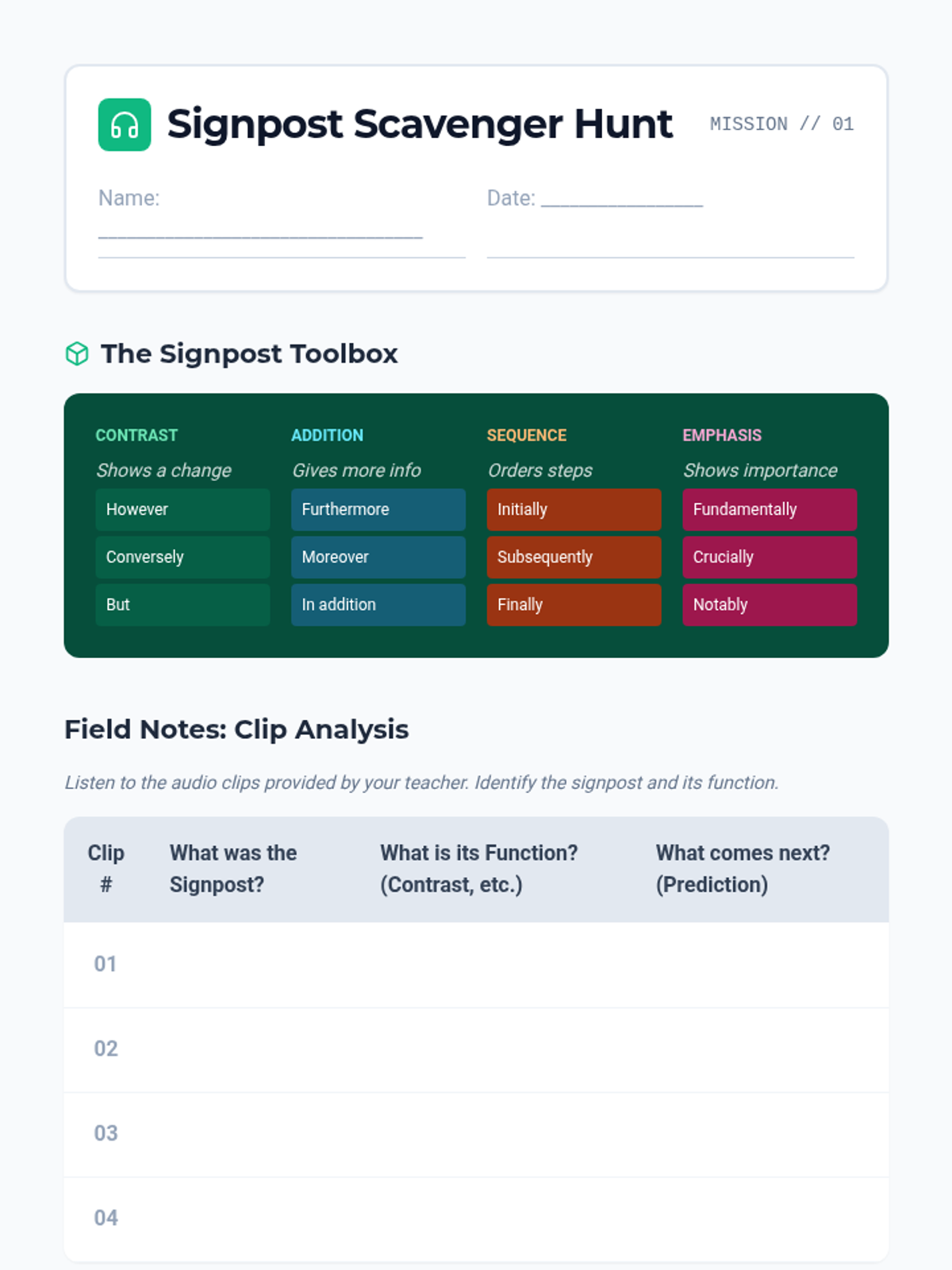
This sequence trains students to navigate academic lectures by identifying verbal signposts, emphasis markers, and structural cues. Through simulations and hands-on activities, students develop the ability to predict information flow and synthesize spoken content.
A comprehensive sequence designed for 8th-grade English Language Learners to master academic listening. Students progress from identifying simple verbal transitions to synthesizing complex, conflicting viewpoints and advocating for their own understanding through clarification strategies.
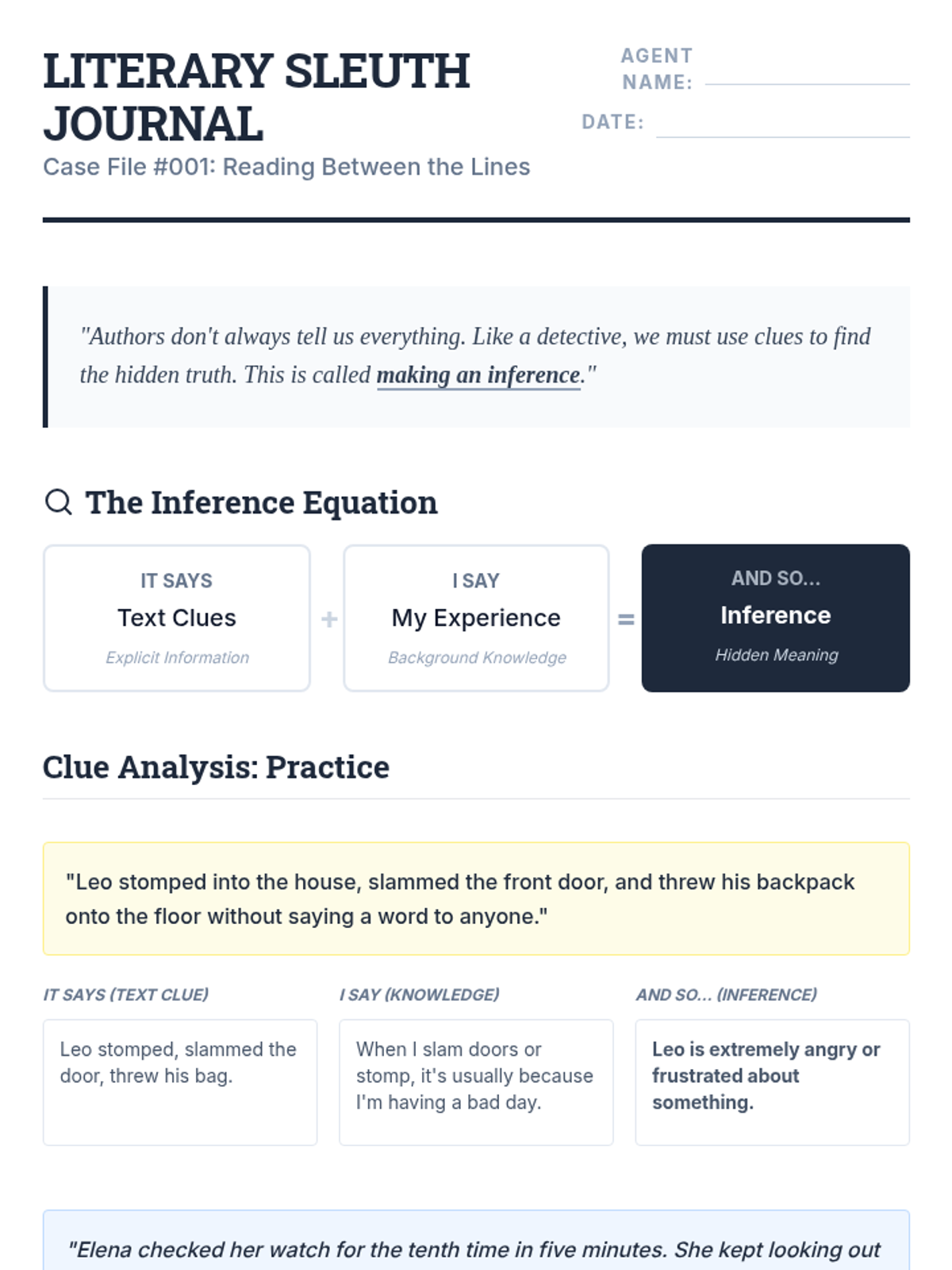
This sequence guides Intermediate ELL students through narrative fiction analysis, focusing on the shift from literal comprehension to deep inference and tone evaluation. Through a 'Literary Sleuth' theme, students develop strategies to decode hidden meanings, analyze character motivations, and engage in academic discussions using textual evidence.
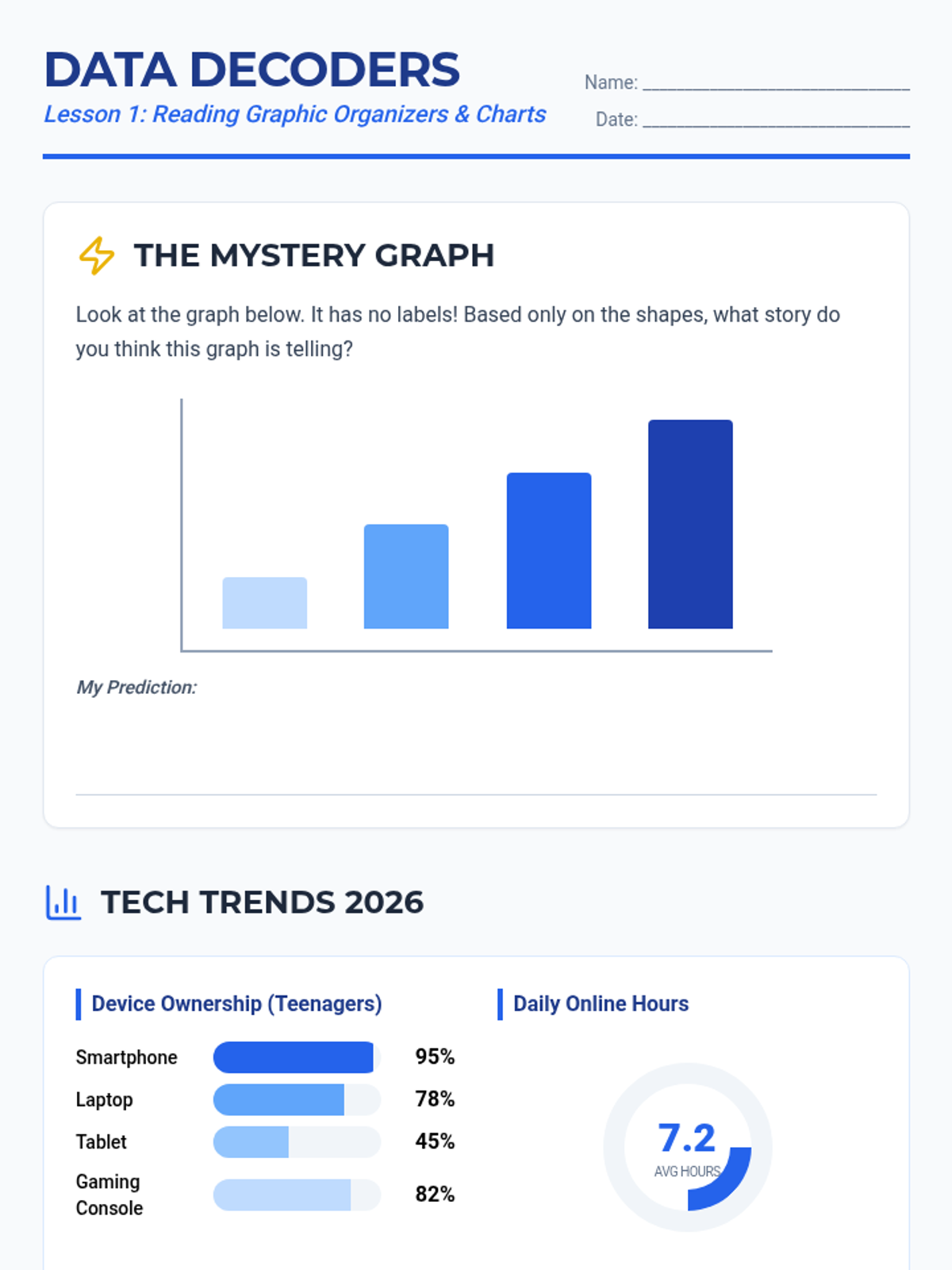
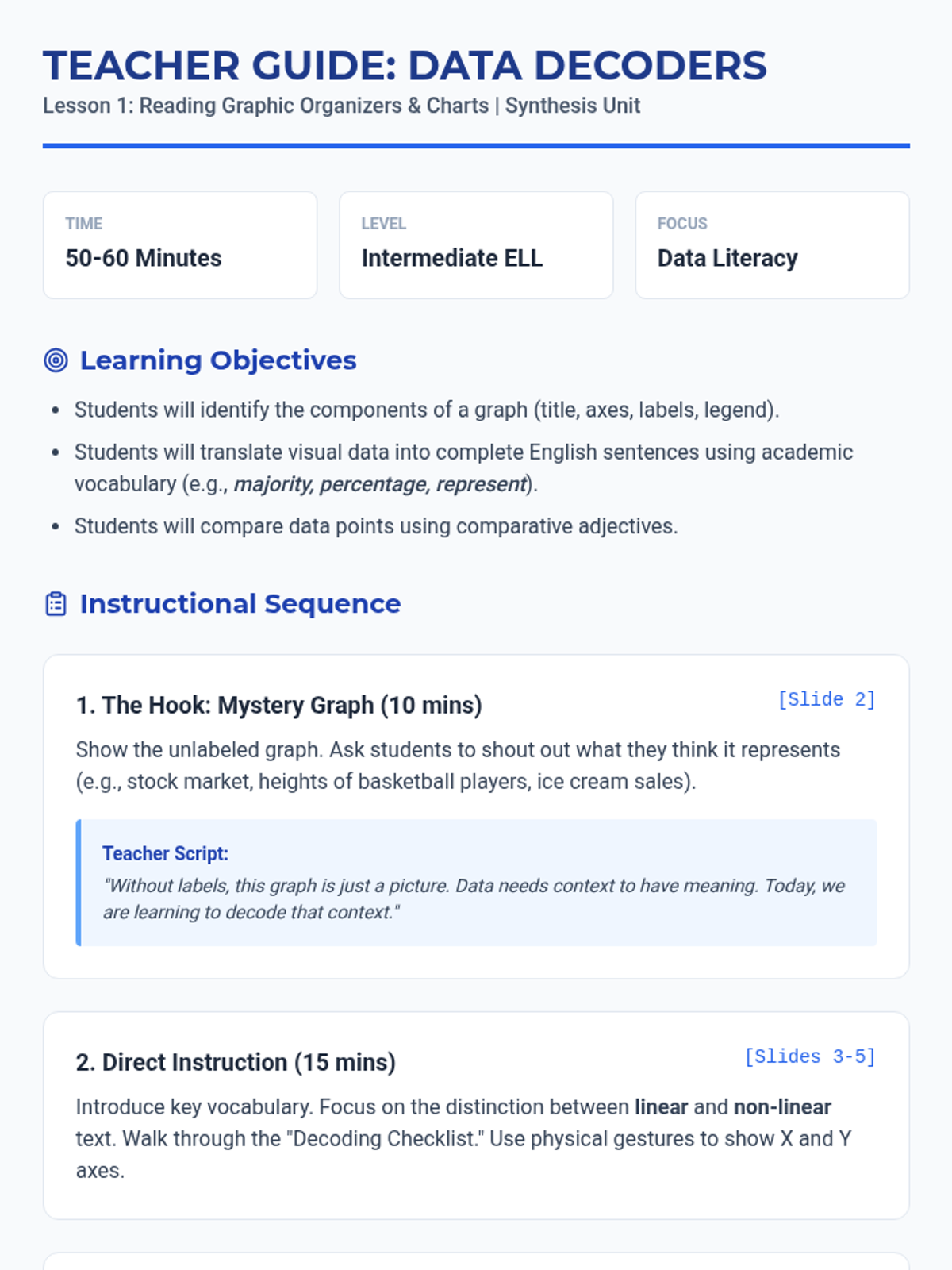
A 9th-grade ELL sequence focused on synthesizing information from diverse sources (charts, videos, articles) to build a comprehensive understanding of complex topics like technology's impact. Students develop data literacy, comparative analysis, and multimedia integration skills.
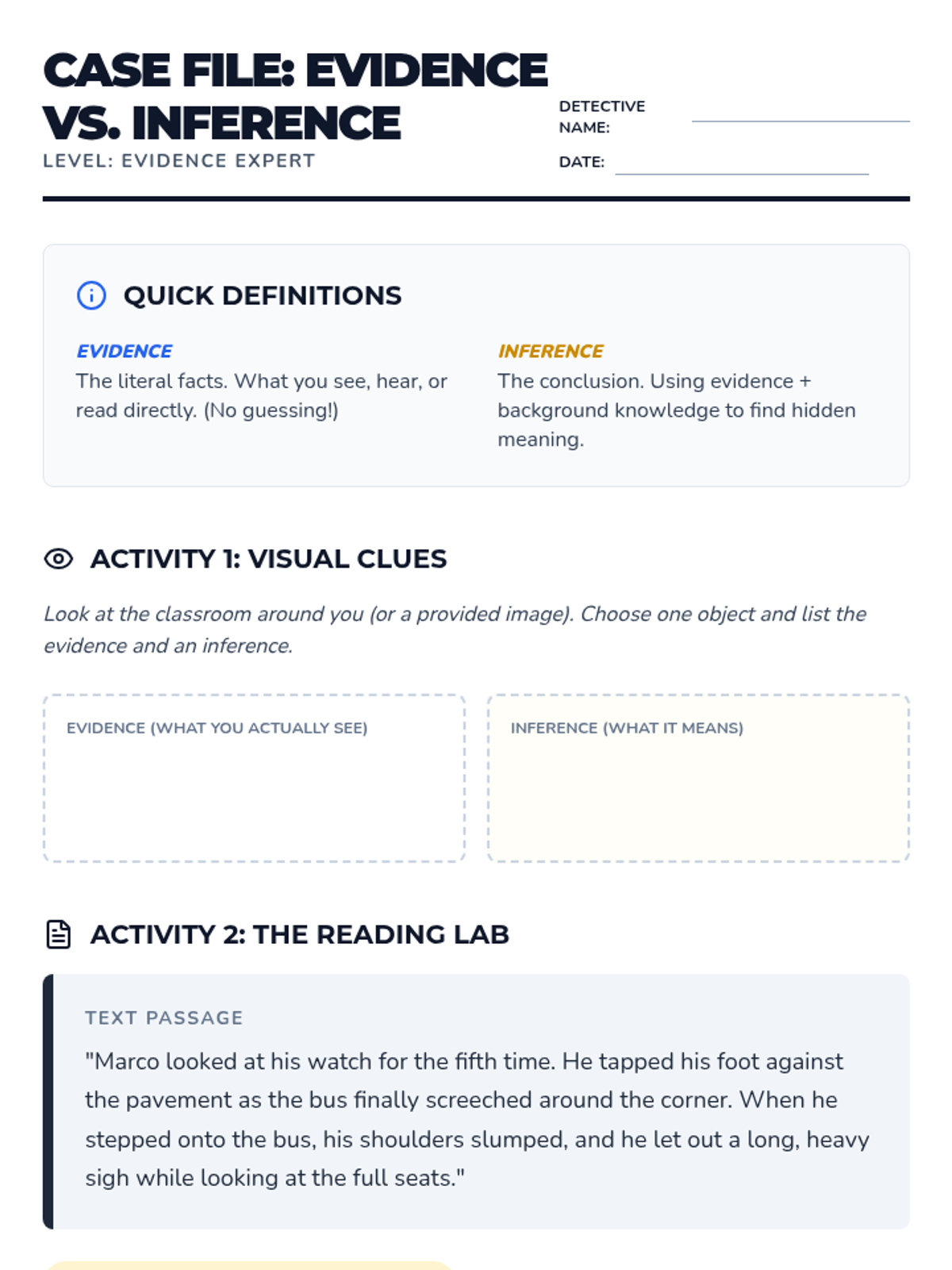
A comprehensive 9th Grade ELL reading sequence focused on bridging the gap between literal comprehension and inferential thinking. Students use character analysis, dialogue subtext, and cultural context to uncover deeper meanings in literature.
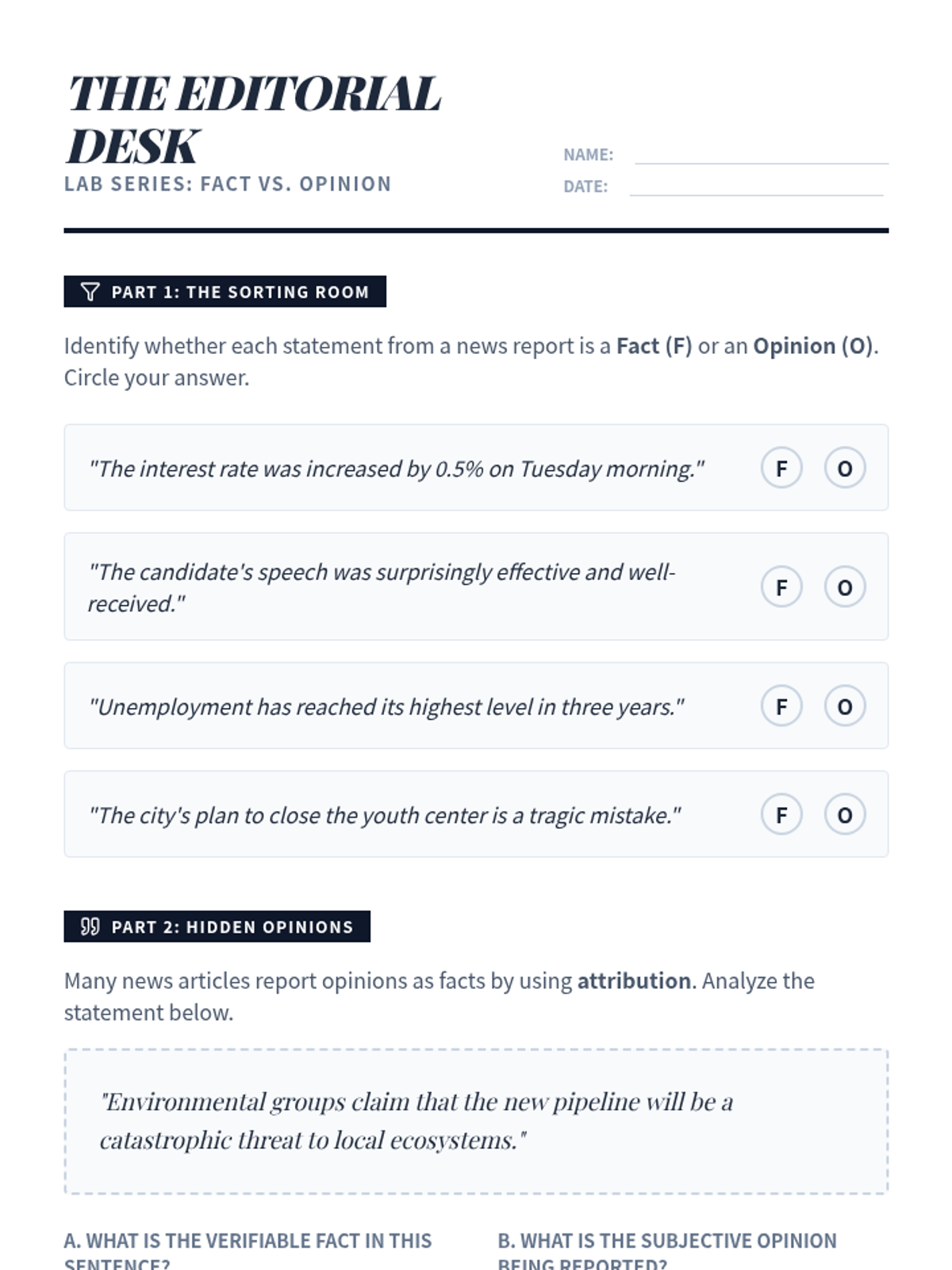
A comprehensive unit for intermediate English learners focusing on critical reading of news, identifying bias, and analyzing rhetorical strategies in media. Students transition from identifying basic facts to conducting comparative analyses of international journalism.
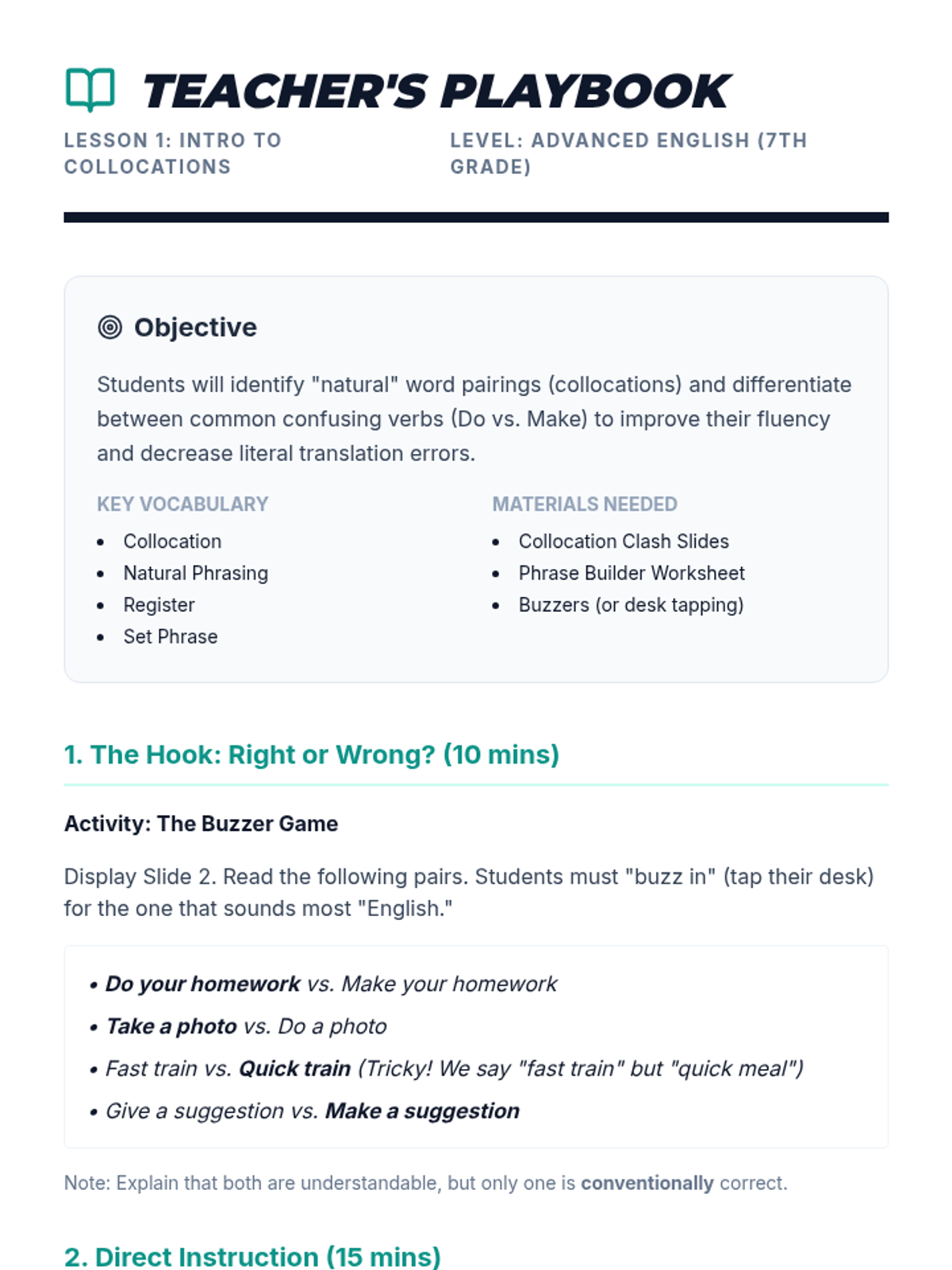
A sequence focused on academic collocations and formal register, teaching students how to use precise word pairings and code-switch for professional contexts.
A comprehensive 8th-grade reading sequence designed for intermediate ELL students to master identifying main ideas and analyzing non-fiction text structures. Through a journalist-themed lens, students move from identifying surface-level text features to critically comparing how different structures convey central ideas.
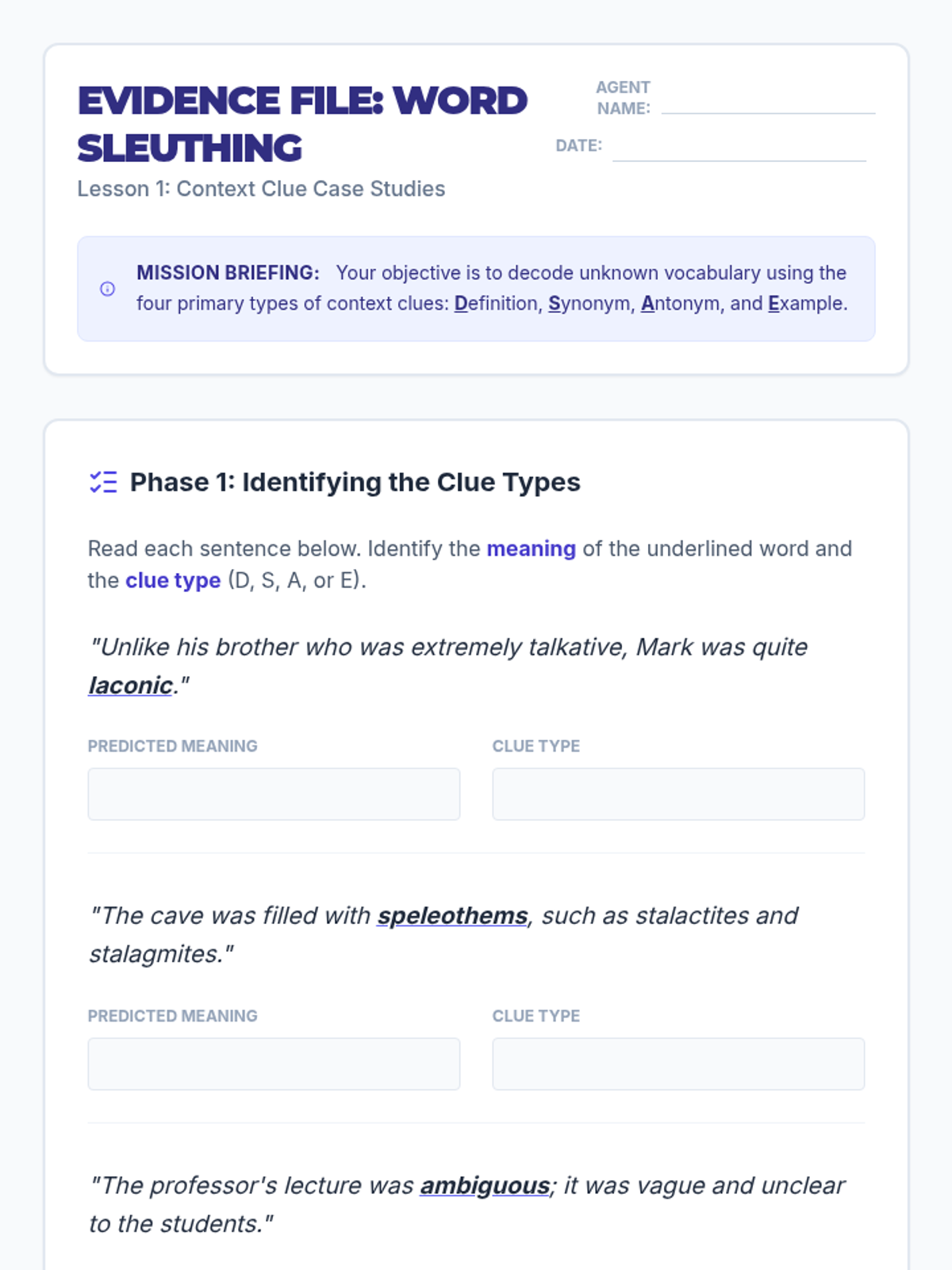
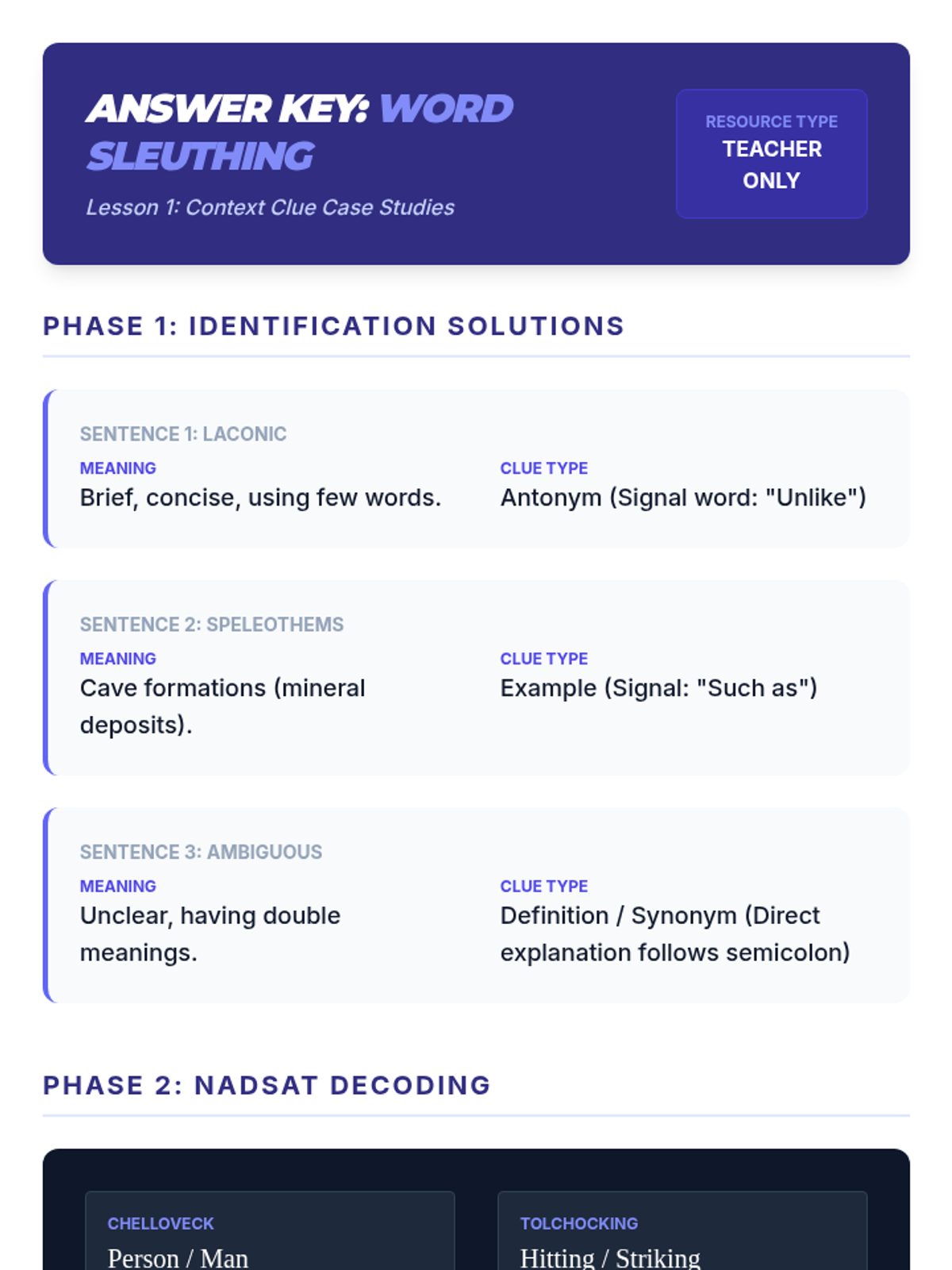
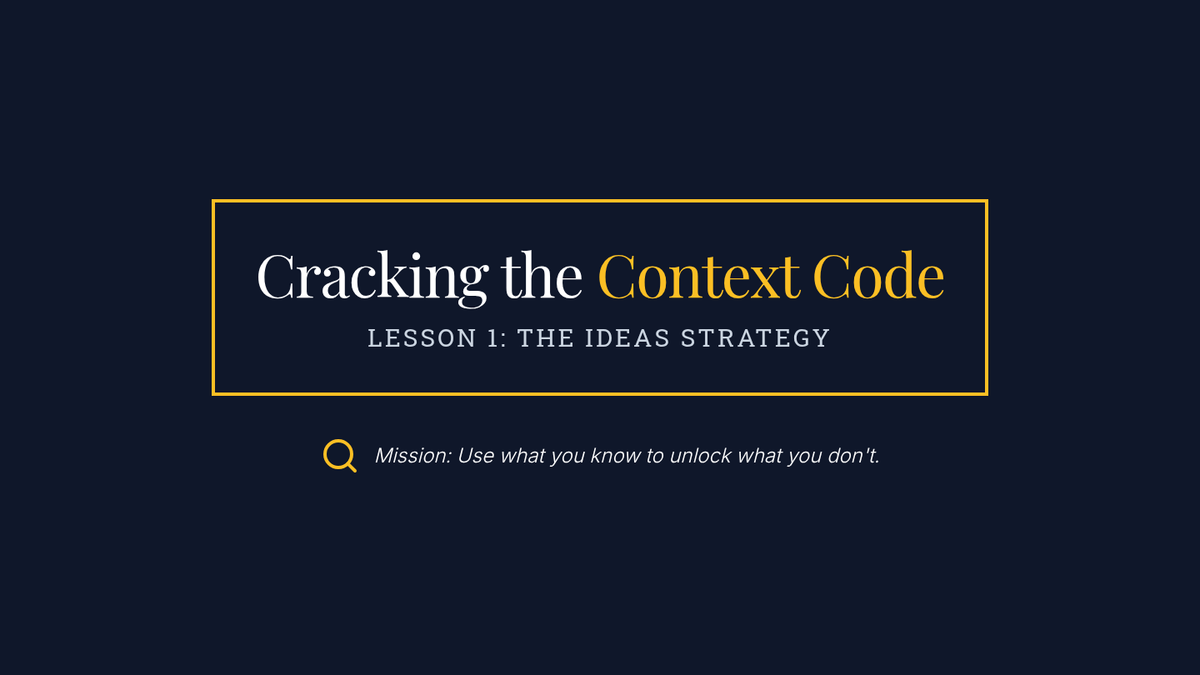
This sequence helps intermediate English learners develop independence in reading by mastering context clues, morphological analysis, polysemy, collocations, and semantic gradients. Students transition from dictionary reliance to autonomous decoding of complex academic and literary texts.
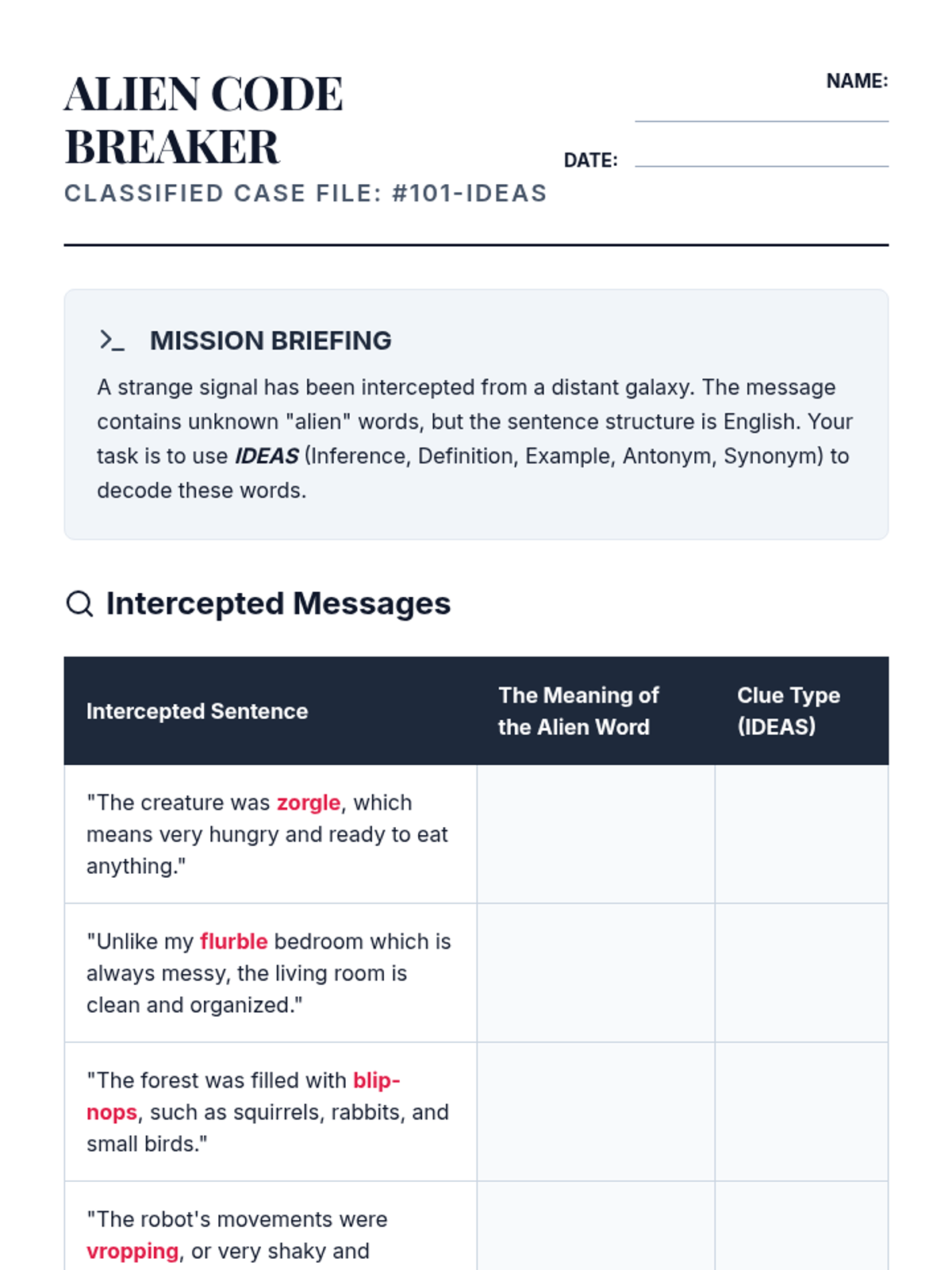
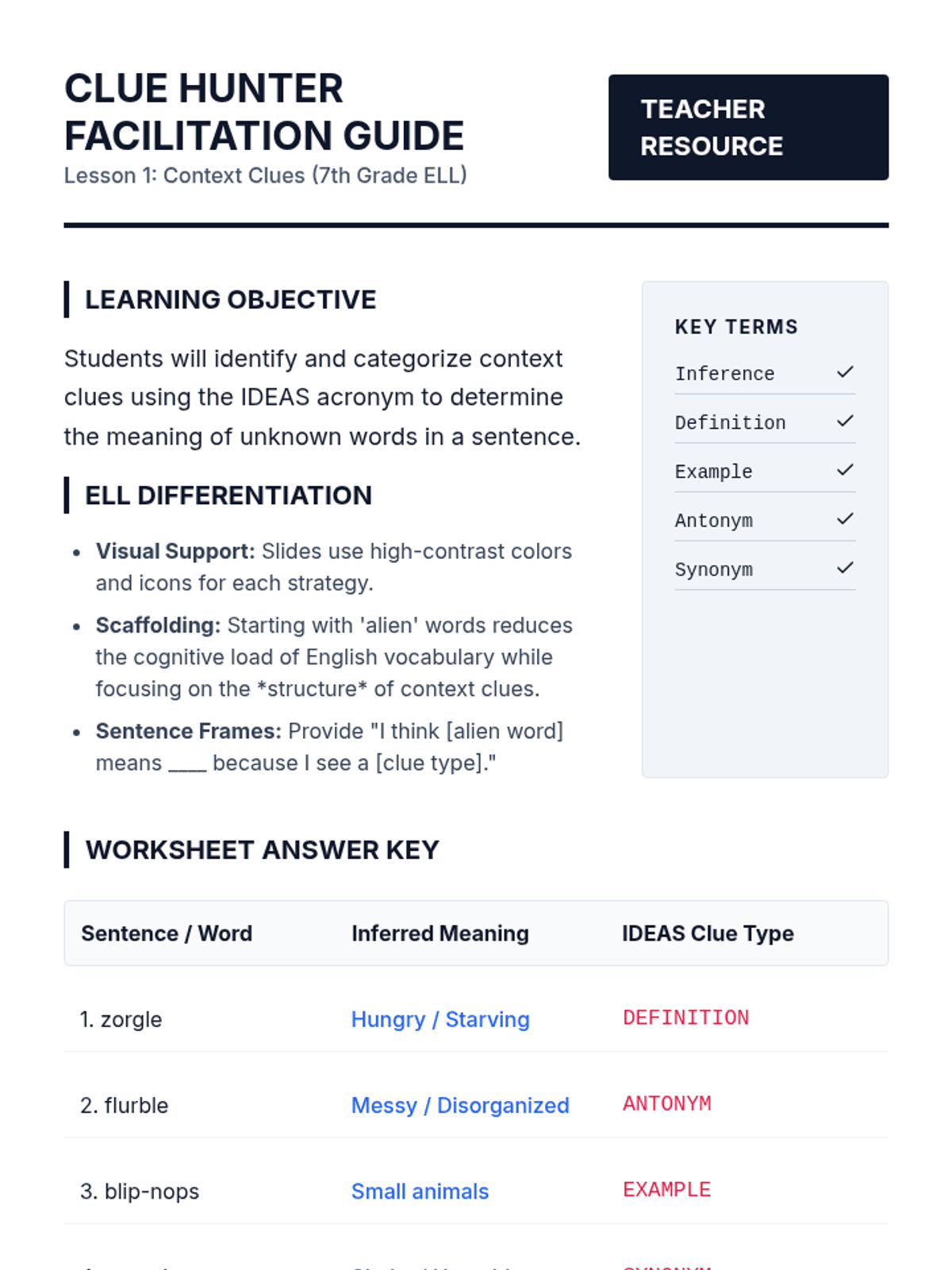
A comprehensive sequence for intermediate ELL students focusing on context clues, morphology, and connotation to build reading independence. Students learn to use the 'IDEAS' acronym, analyze word parts, and evaluate word intensity.