Fundamental notation, instrumental proficiency, and vocal techniques across various genres. Connects historical analysis with original composition and creative performance skills.
A comprehensive exploration of world music and dance, focusing on cultural heritage, musical elements, and creative expression through drumming, melody, and global fusion.
A foundational music education series designed for early elementary students, covering rhythm, movement, note reading, dynamics, and music history.
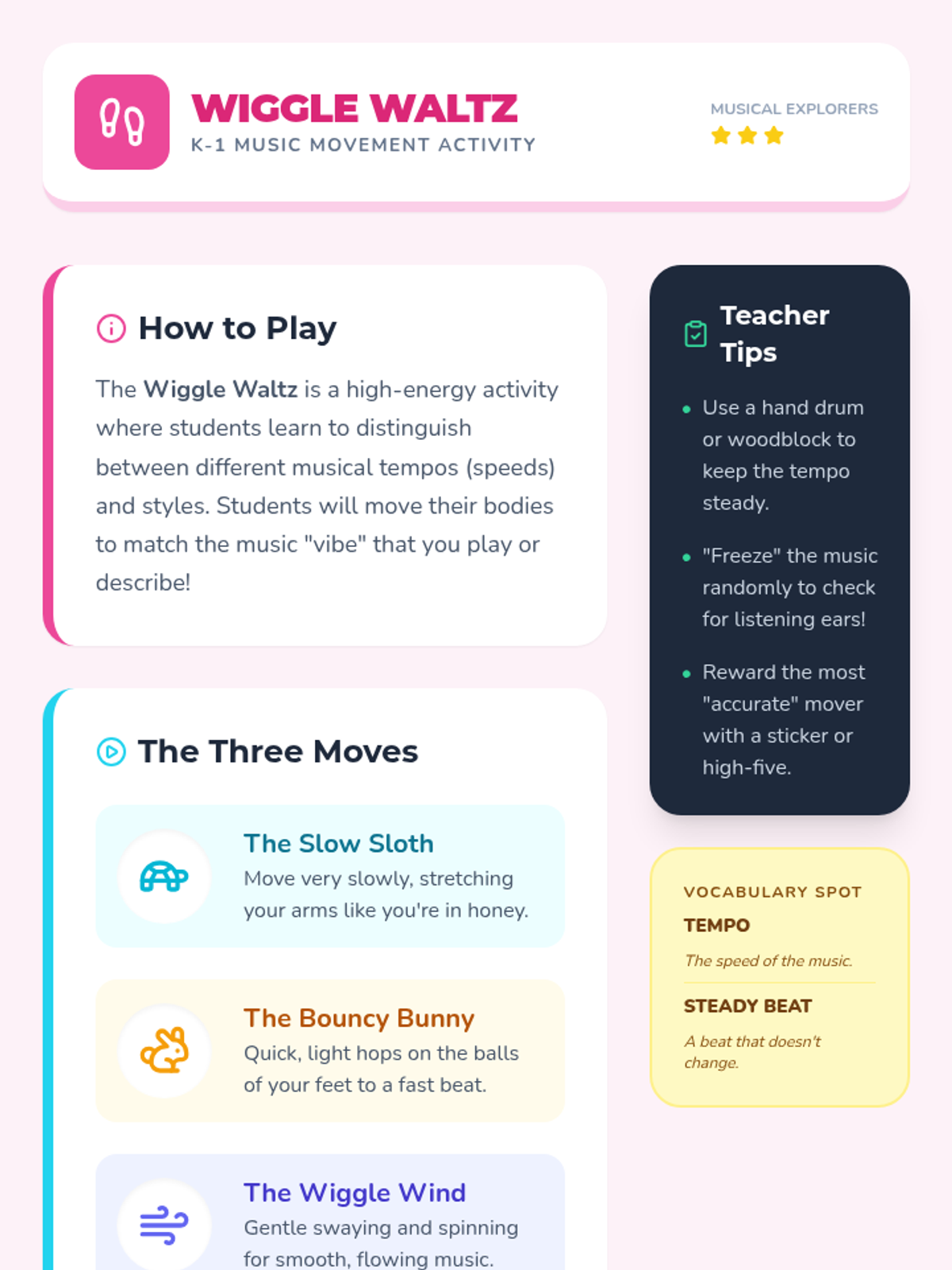
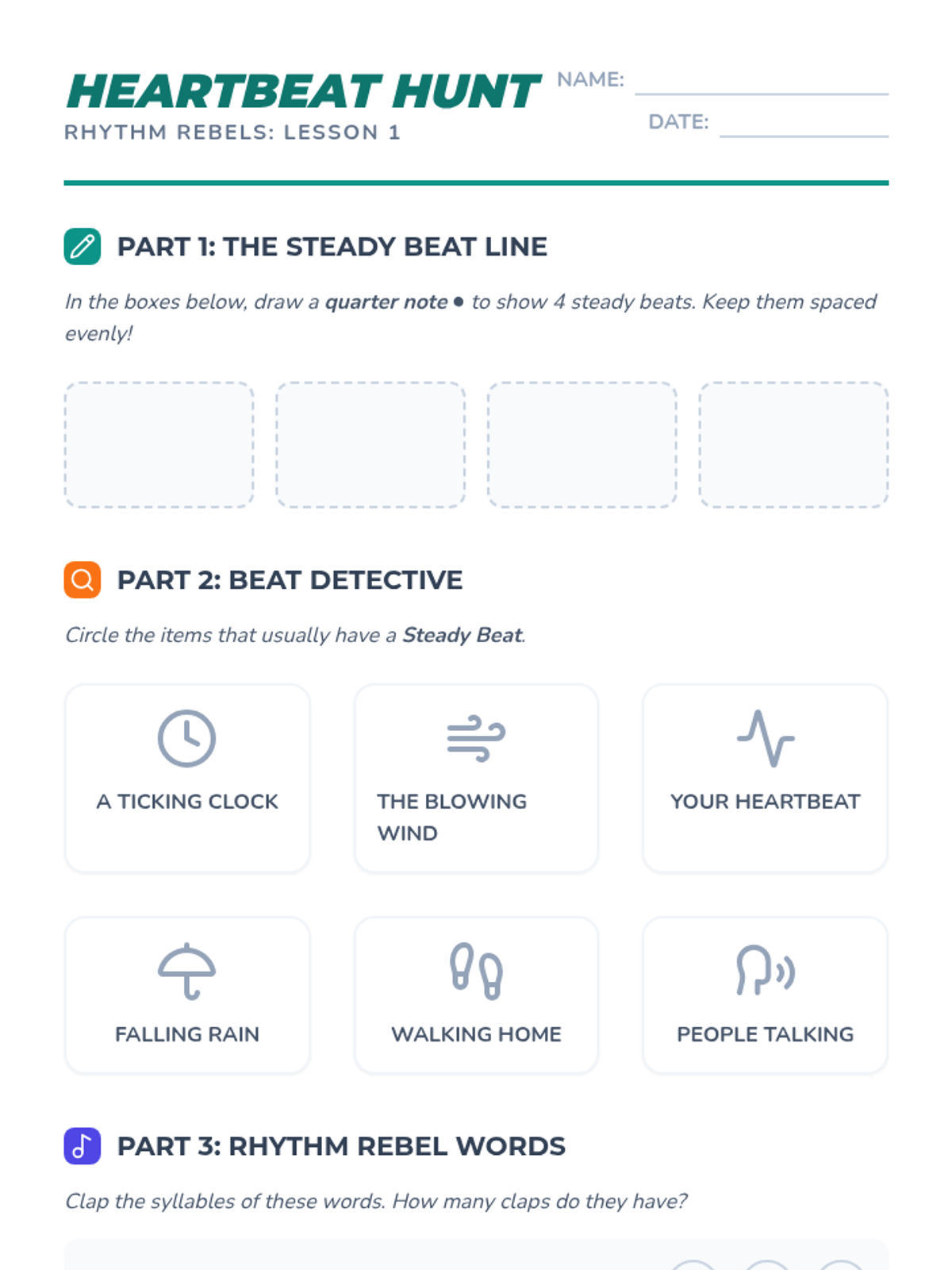
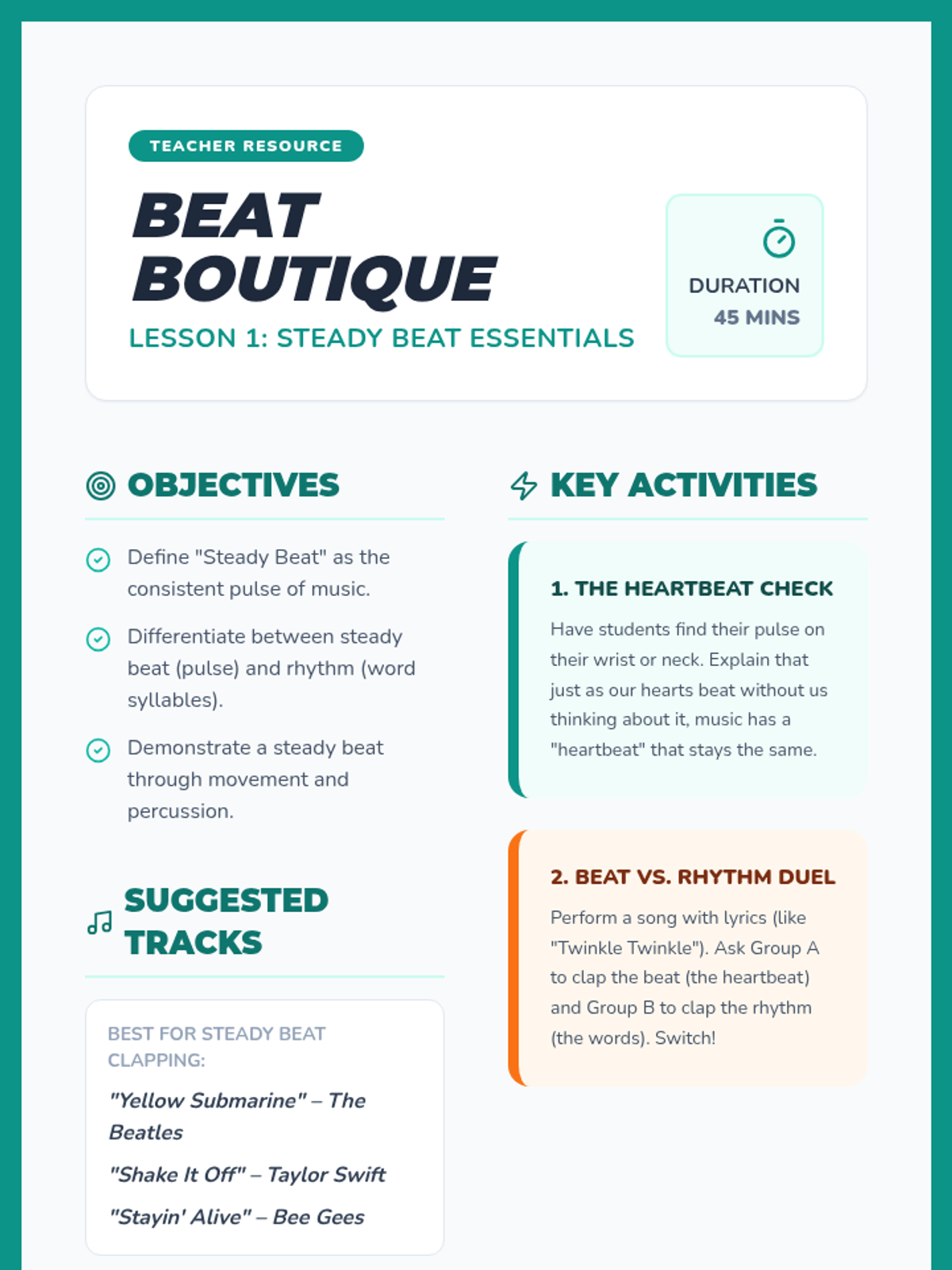
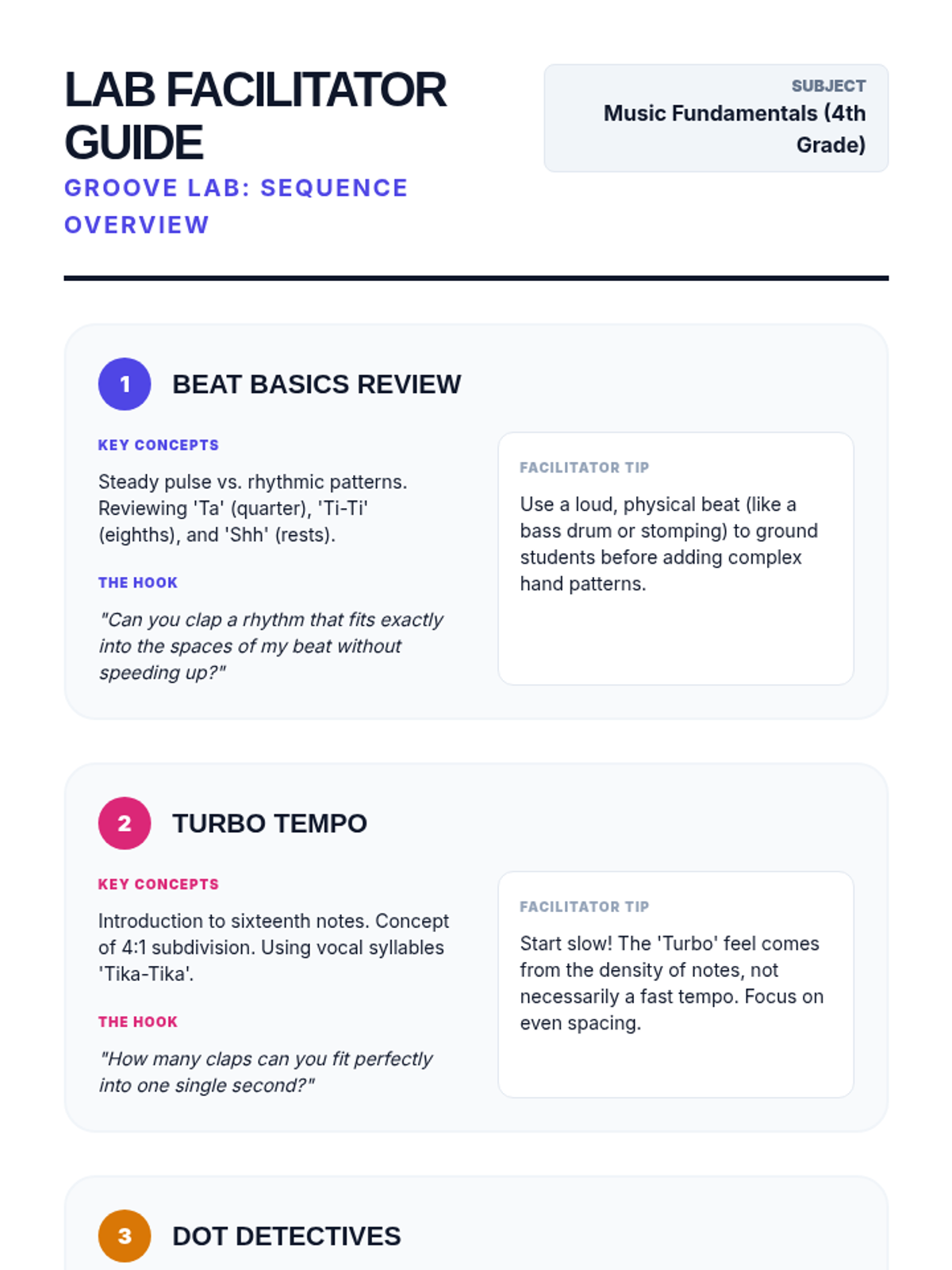
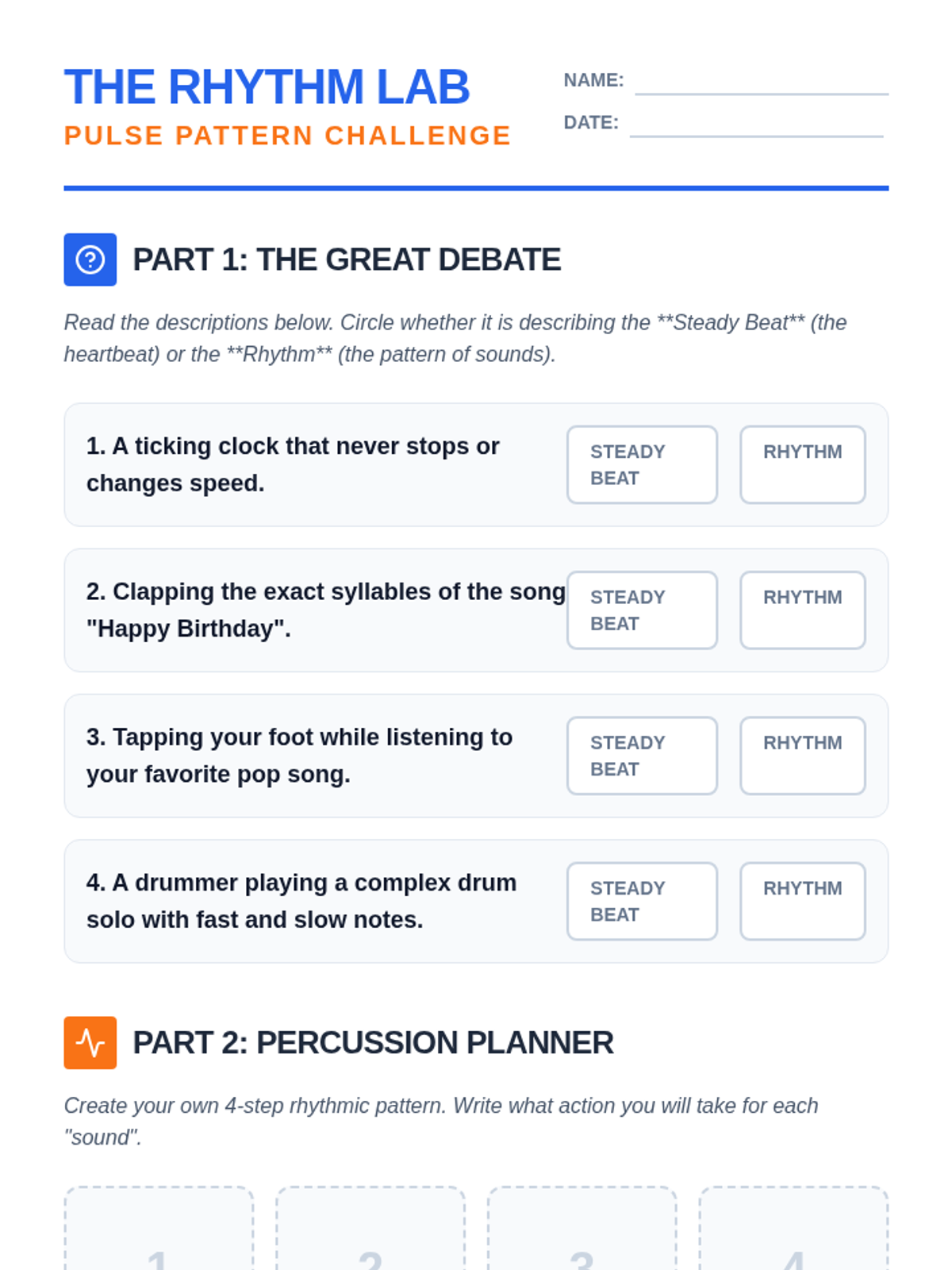
A high-energy elementary music unit focusing on the fundamentals of steady beat, tempo variations, and rhythmic patterns through interactive play-alongs and movement.
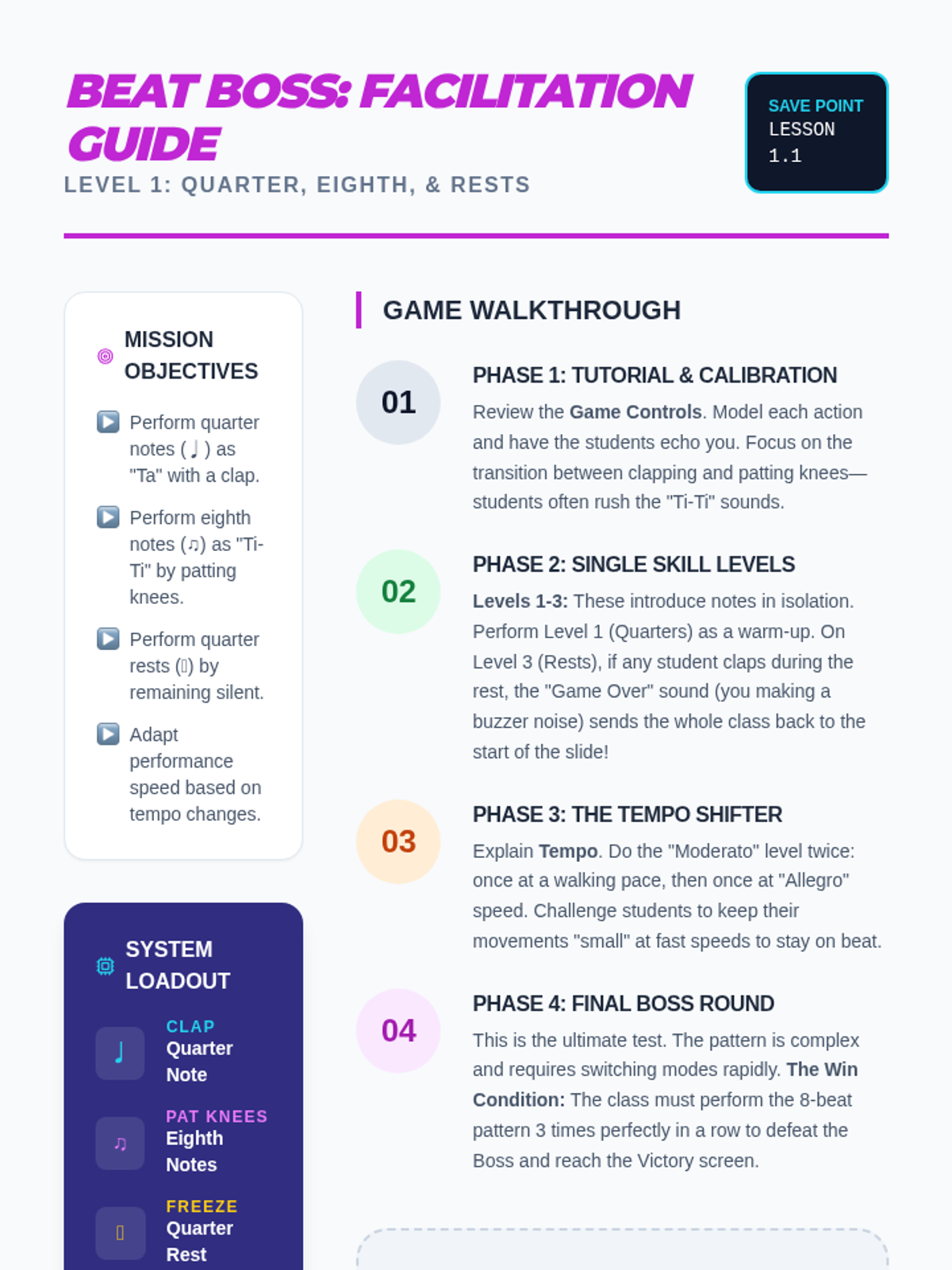
A high-energy, interactive unit focused on mastering rhythm and tempo through digital gameplay and body percussion, designed specifically for paperless classrooms.
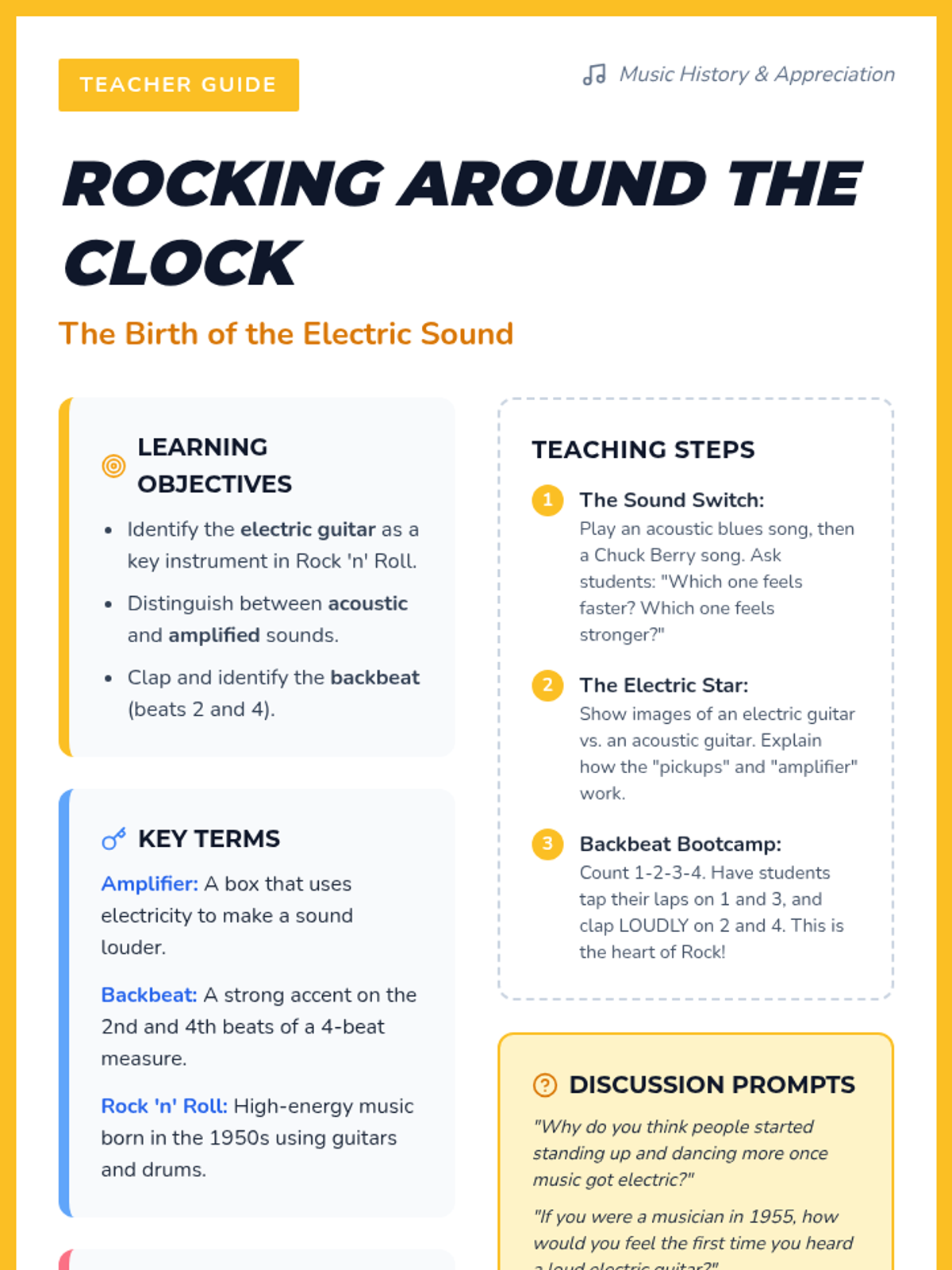
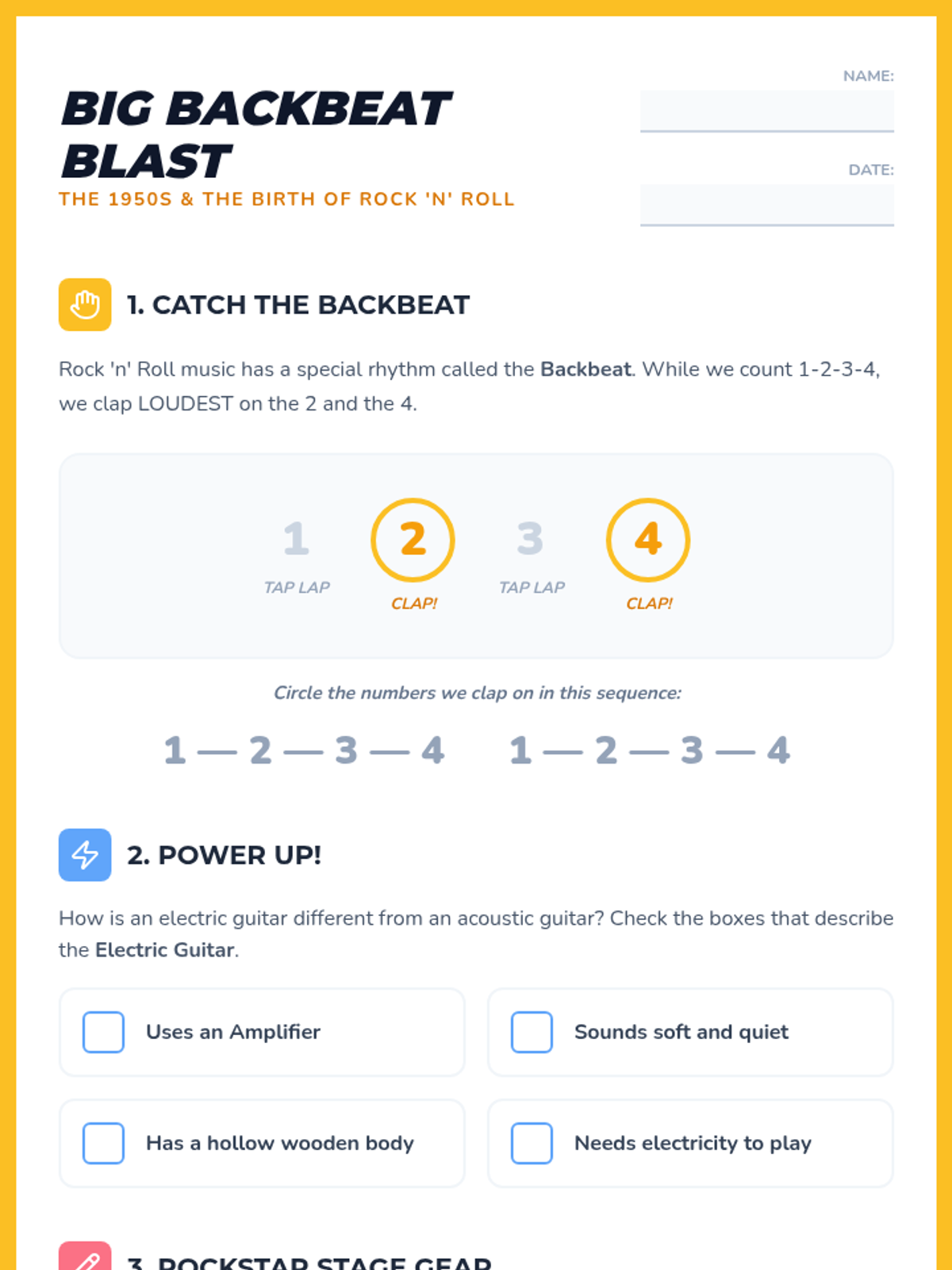
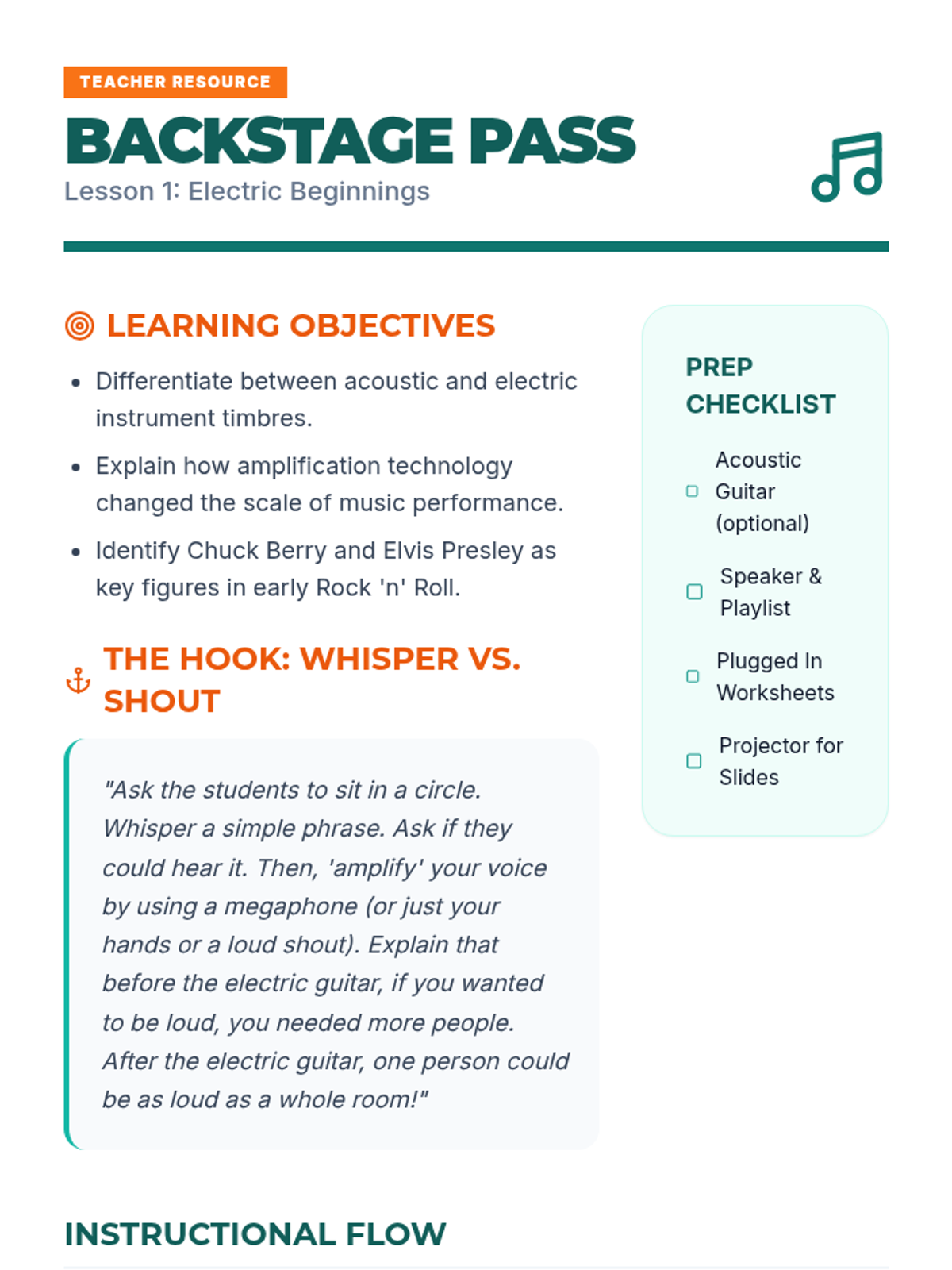
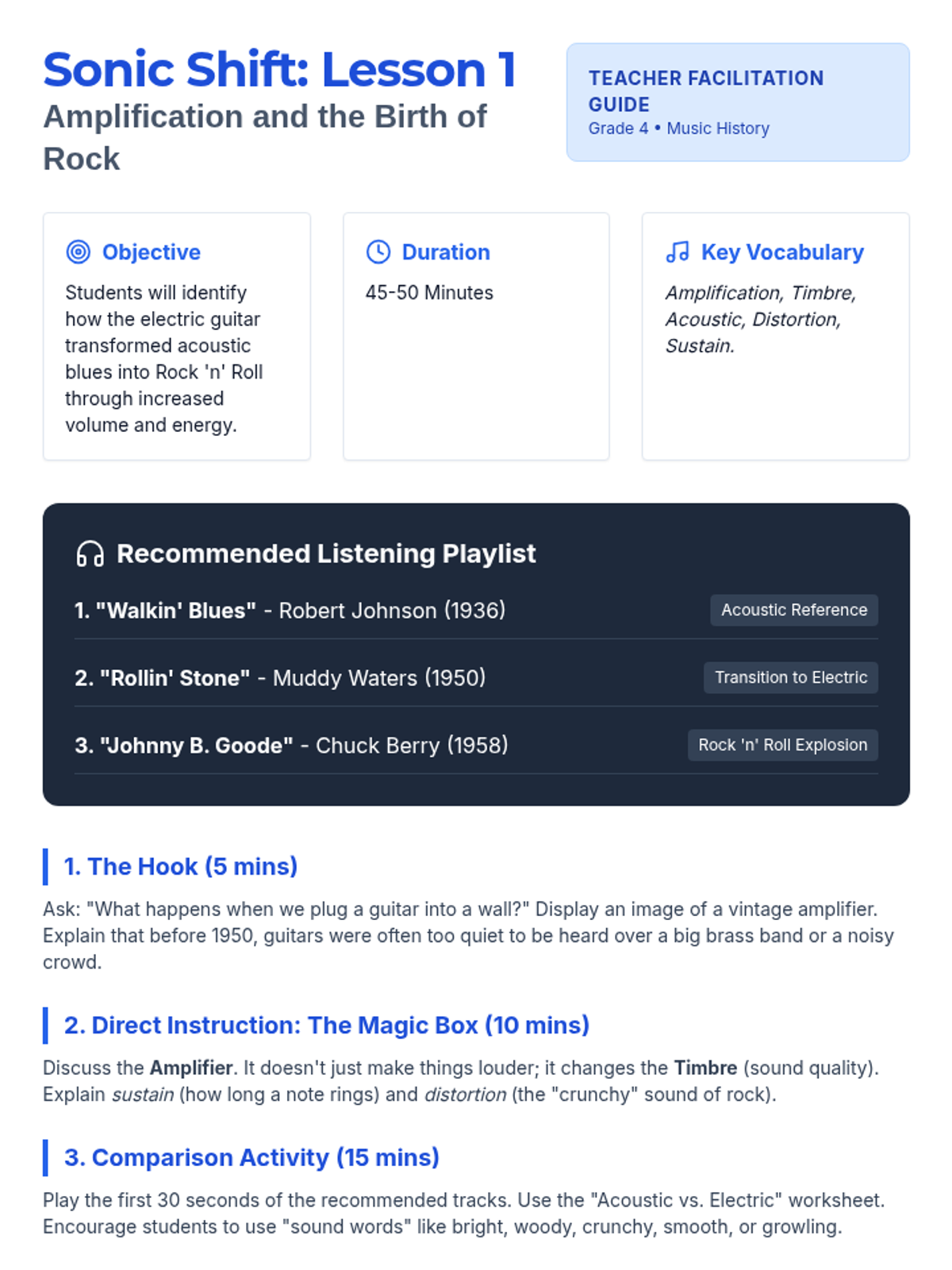
A journey through the 20th and 21st centuries, exploring how technology like electric guitars and synthesizers shaped genres from Rock 'n' Roll to Pop. Students analyze rhythm, structure, and sound to build a chronological timeline of musical evolution.
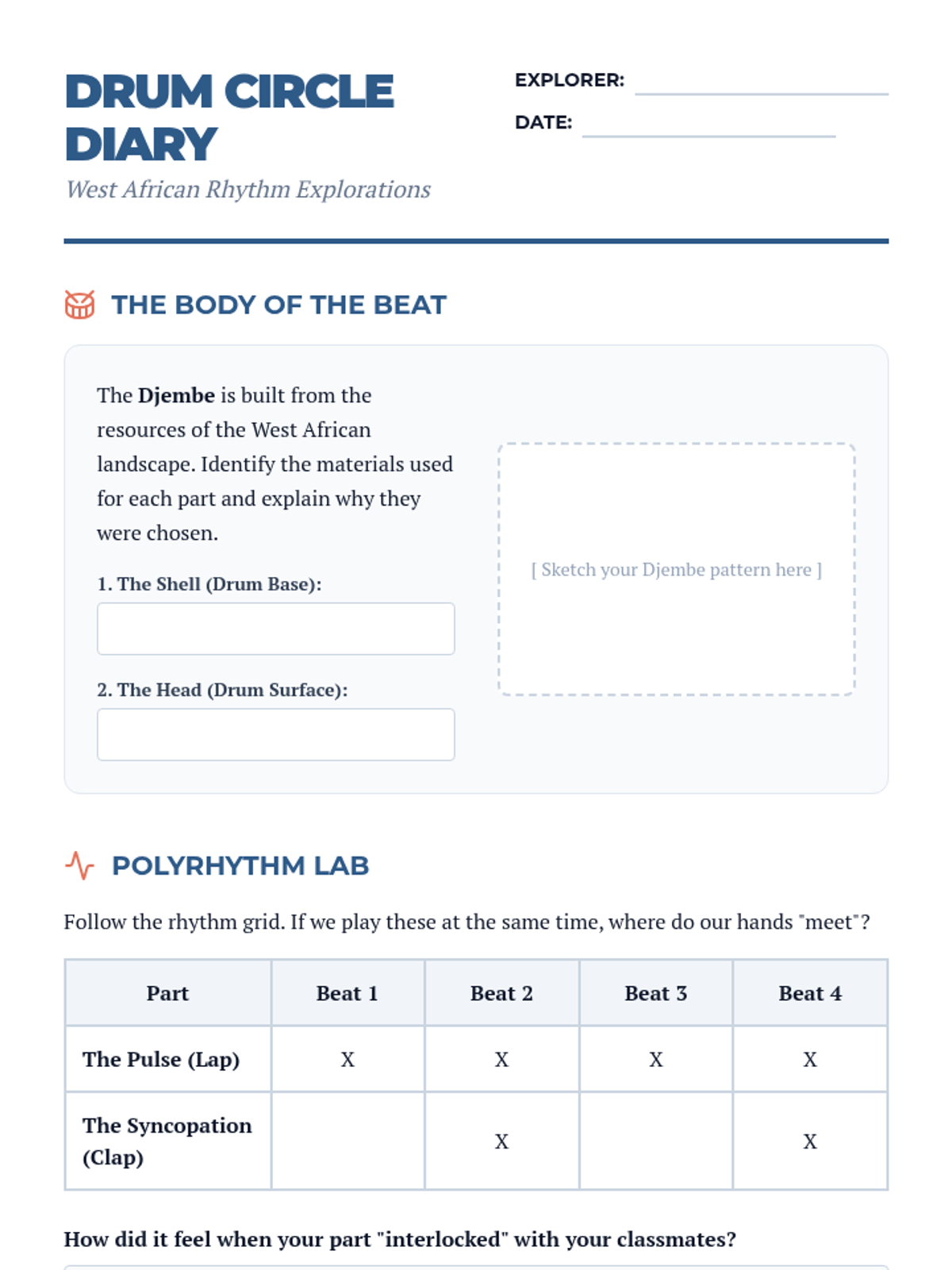
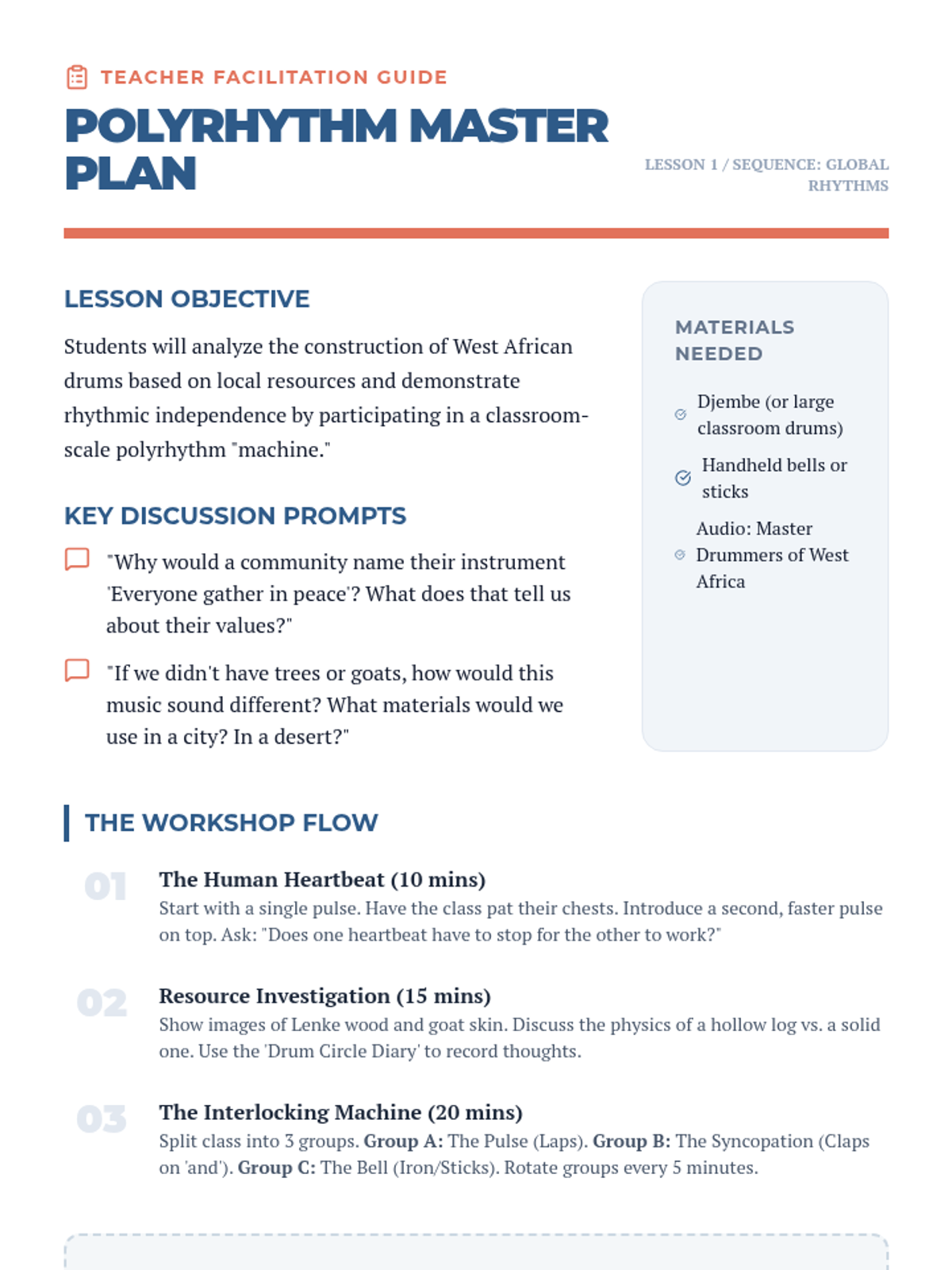
A 4th-grade music appreciation sequence exploring the connection between geography, natural resources, and musical traditions across West Africa, Indonesia, the Andes, and the Caribbean. Students develop rhythmic skills and cultural understanding through active workshops and comparative analysis.
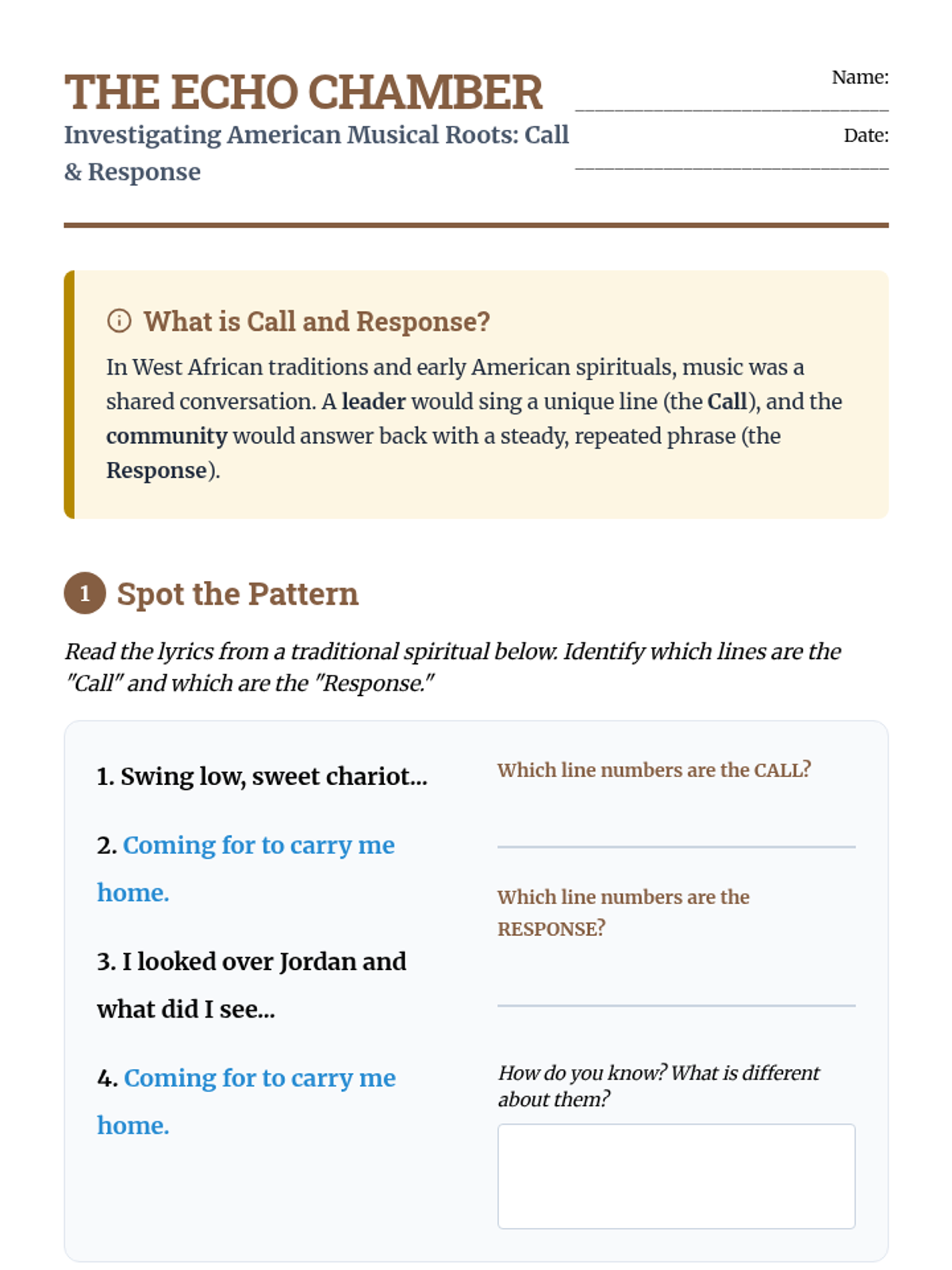
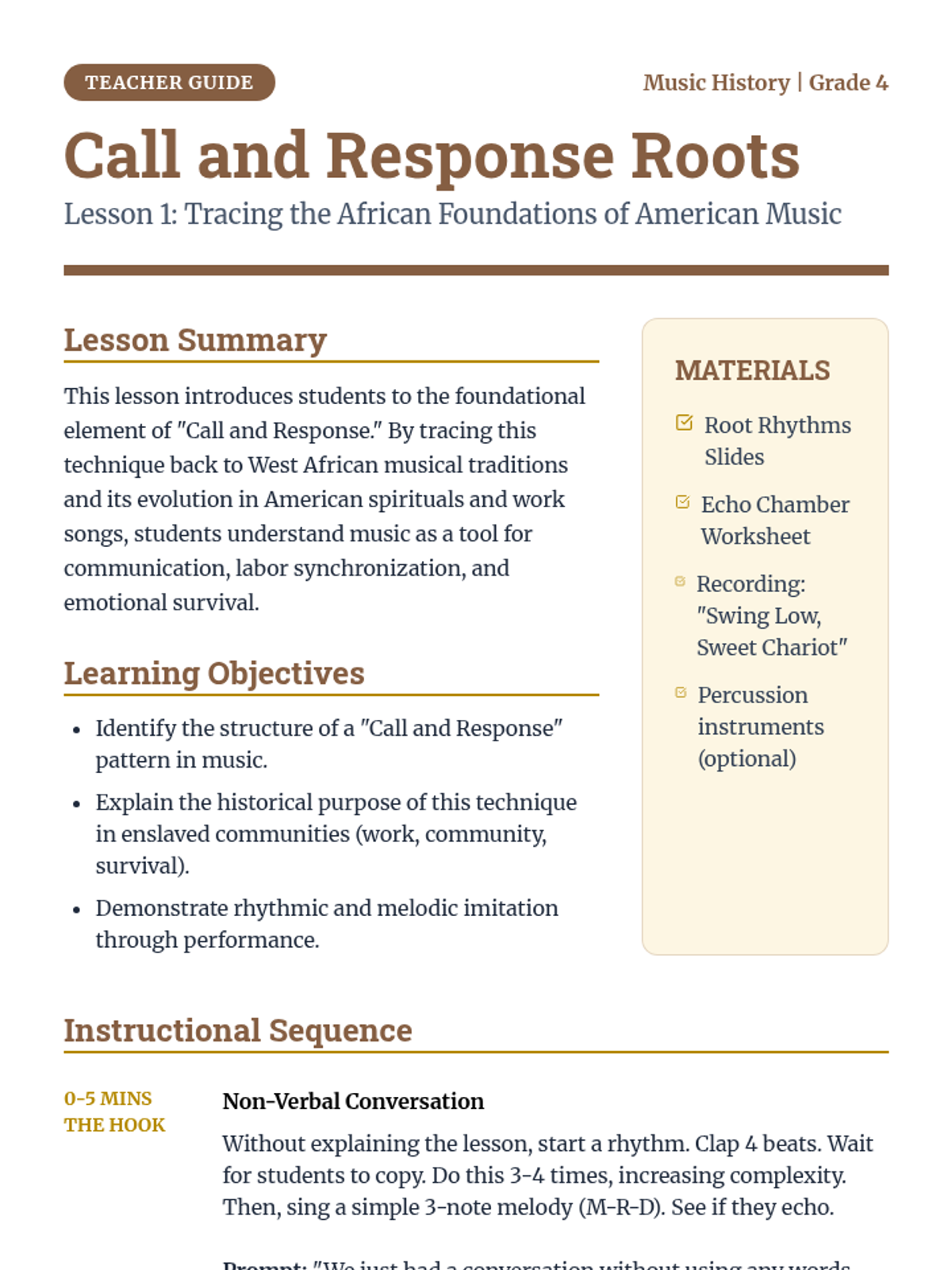
This 4th-grade music history sequence explores the evolution of American music from African roots to Jazz. Students investigate how historical context, community struggle, and cultural migration shaped genres like Spirituals, Blues, Ragtime, and Jazz through active listening, writing, and performance.
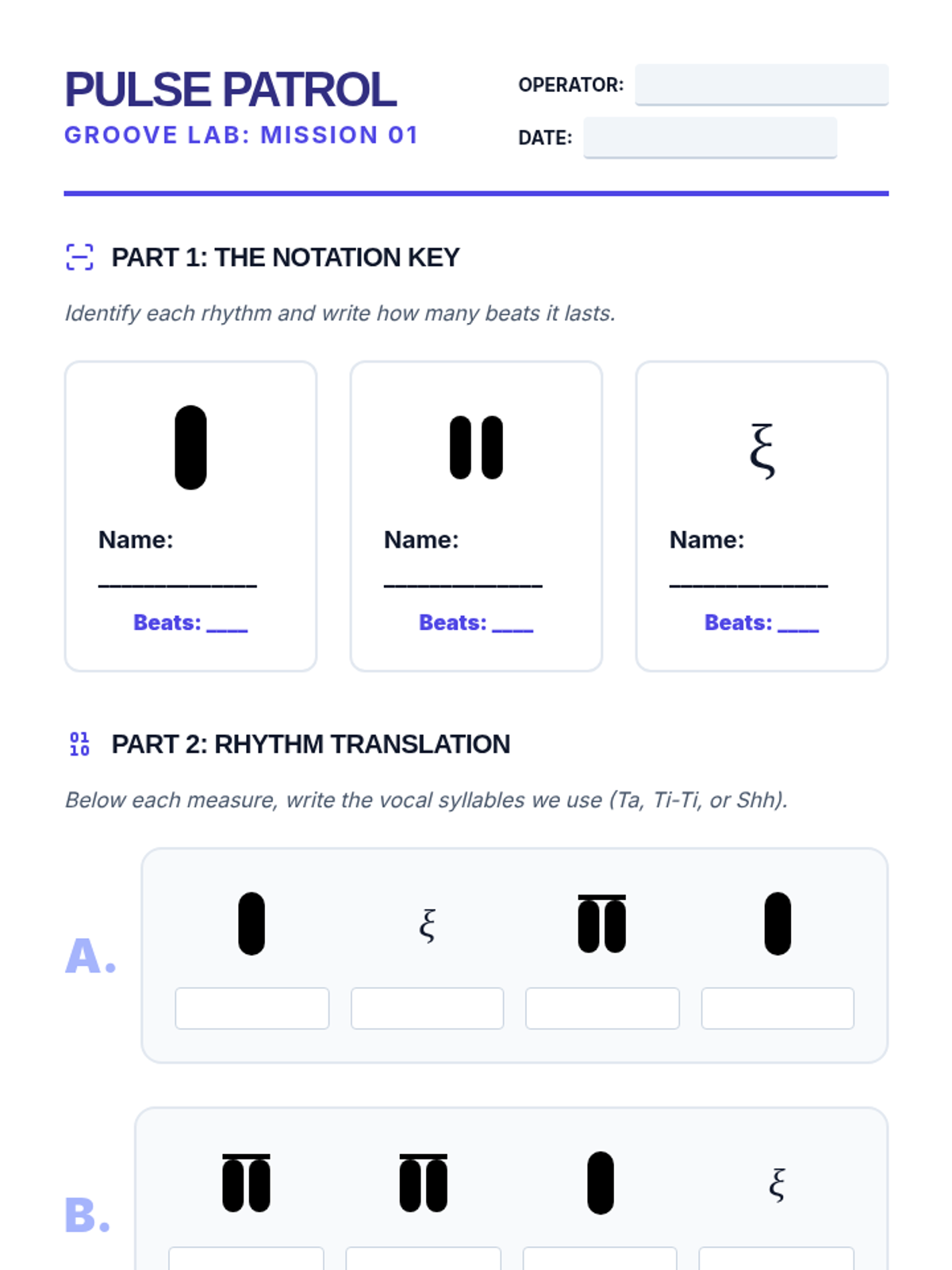
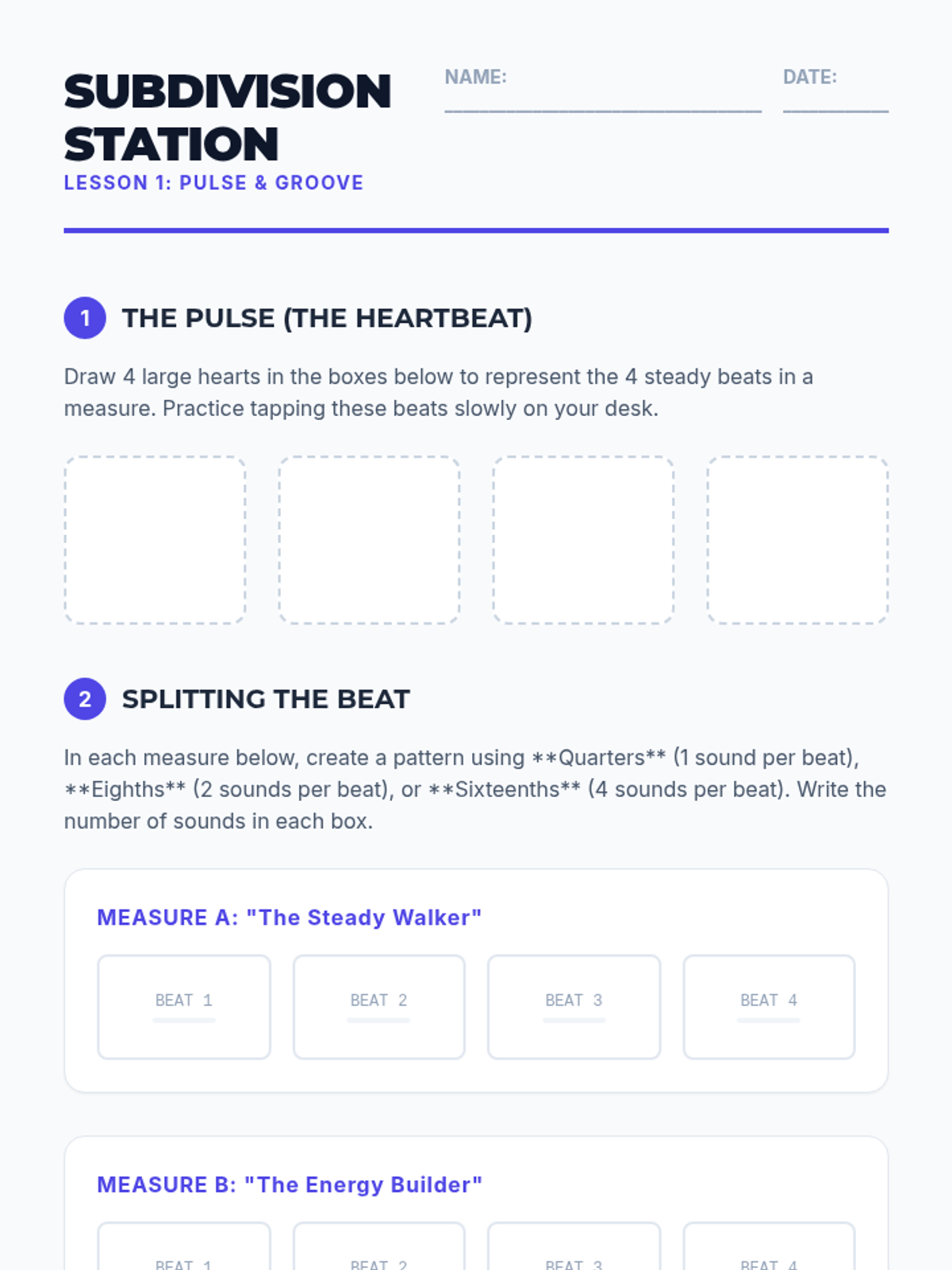
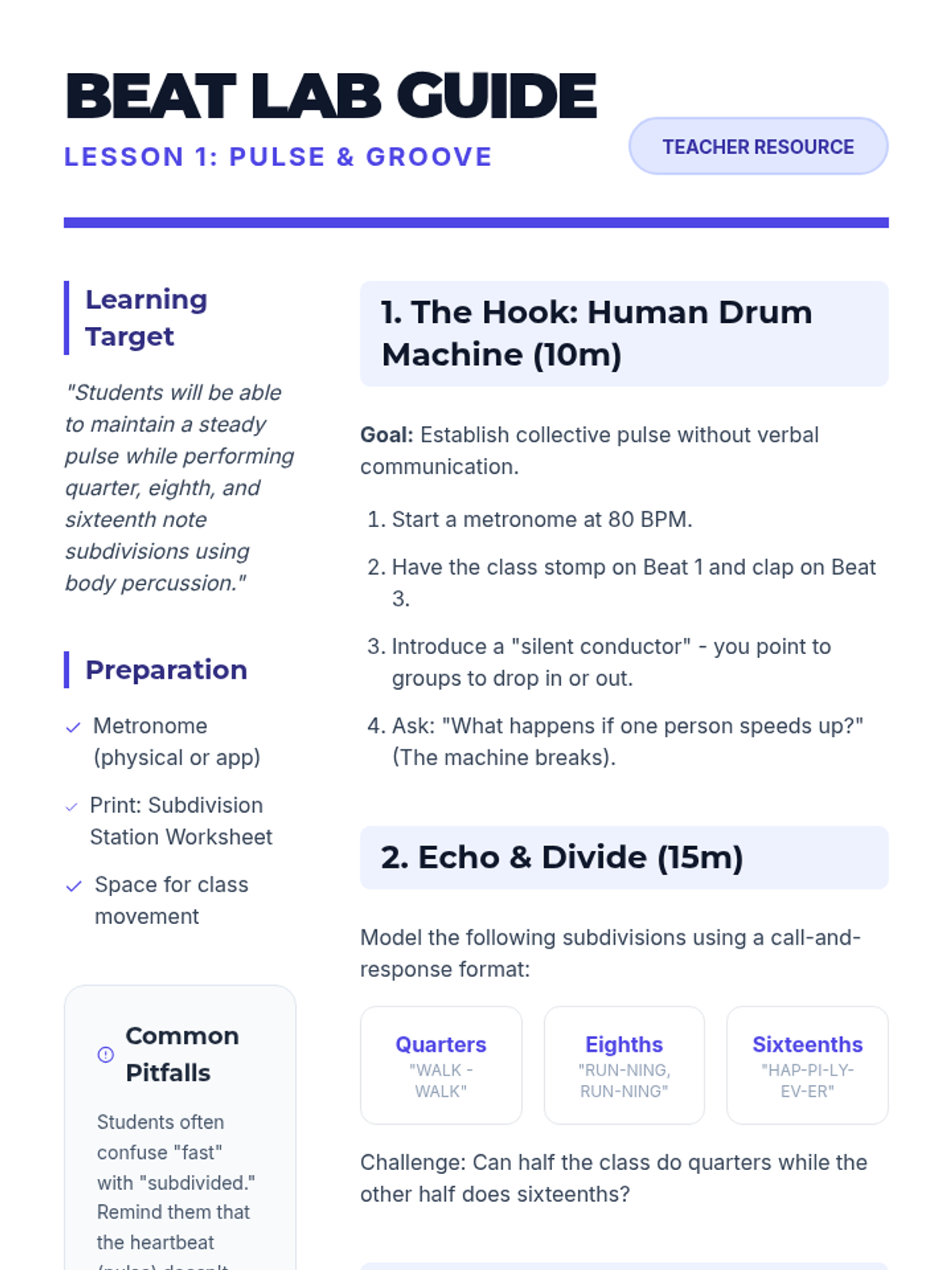
A high-energy 4th grade music sequence focused on mastering rhythmic notation, subdivision, and time signatures through movement, games, and ensemble performance. Students progress from basic pulse review to performing complex multi-layered rhythmic compositions.
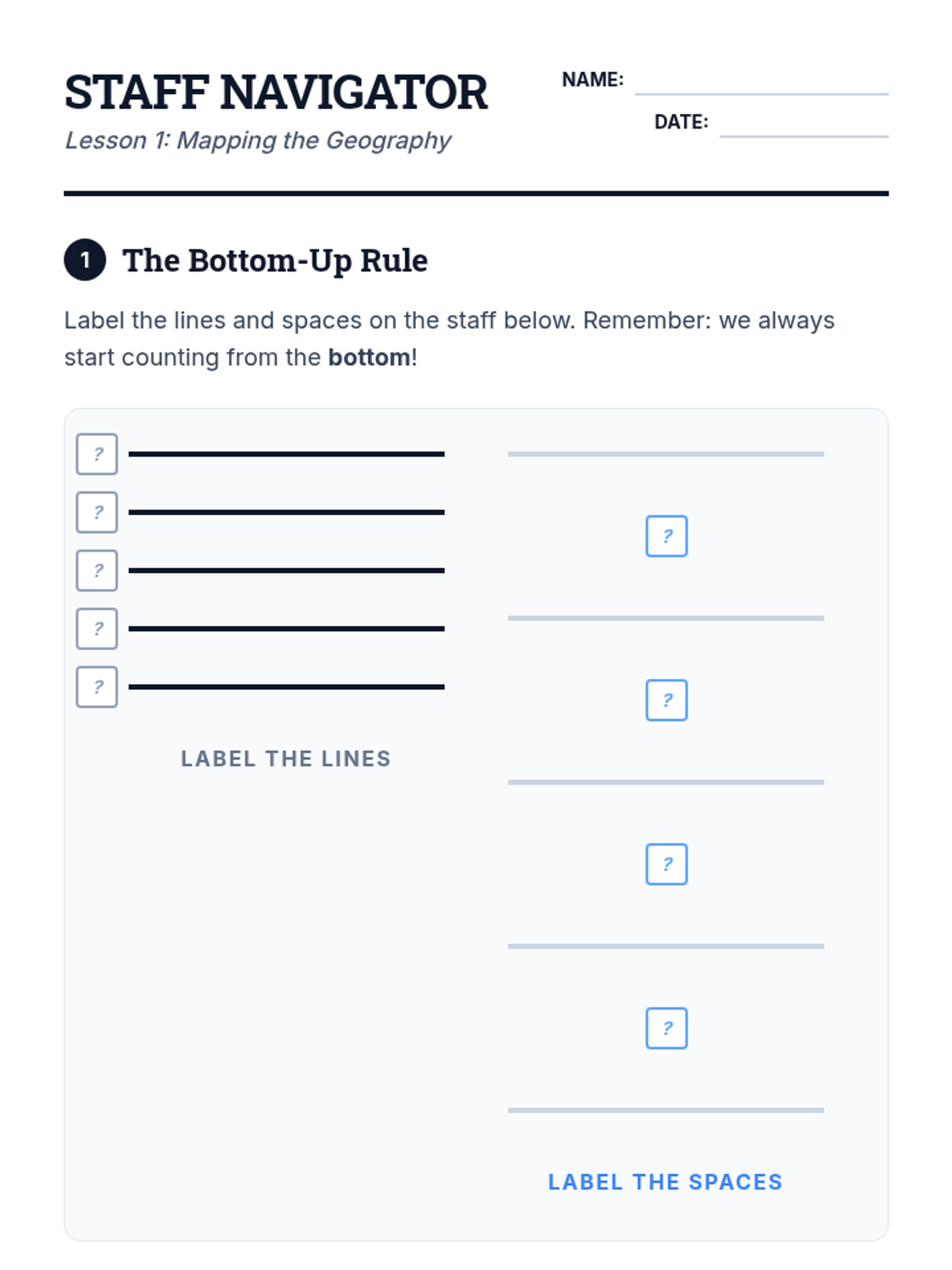
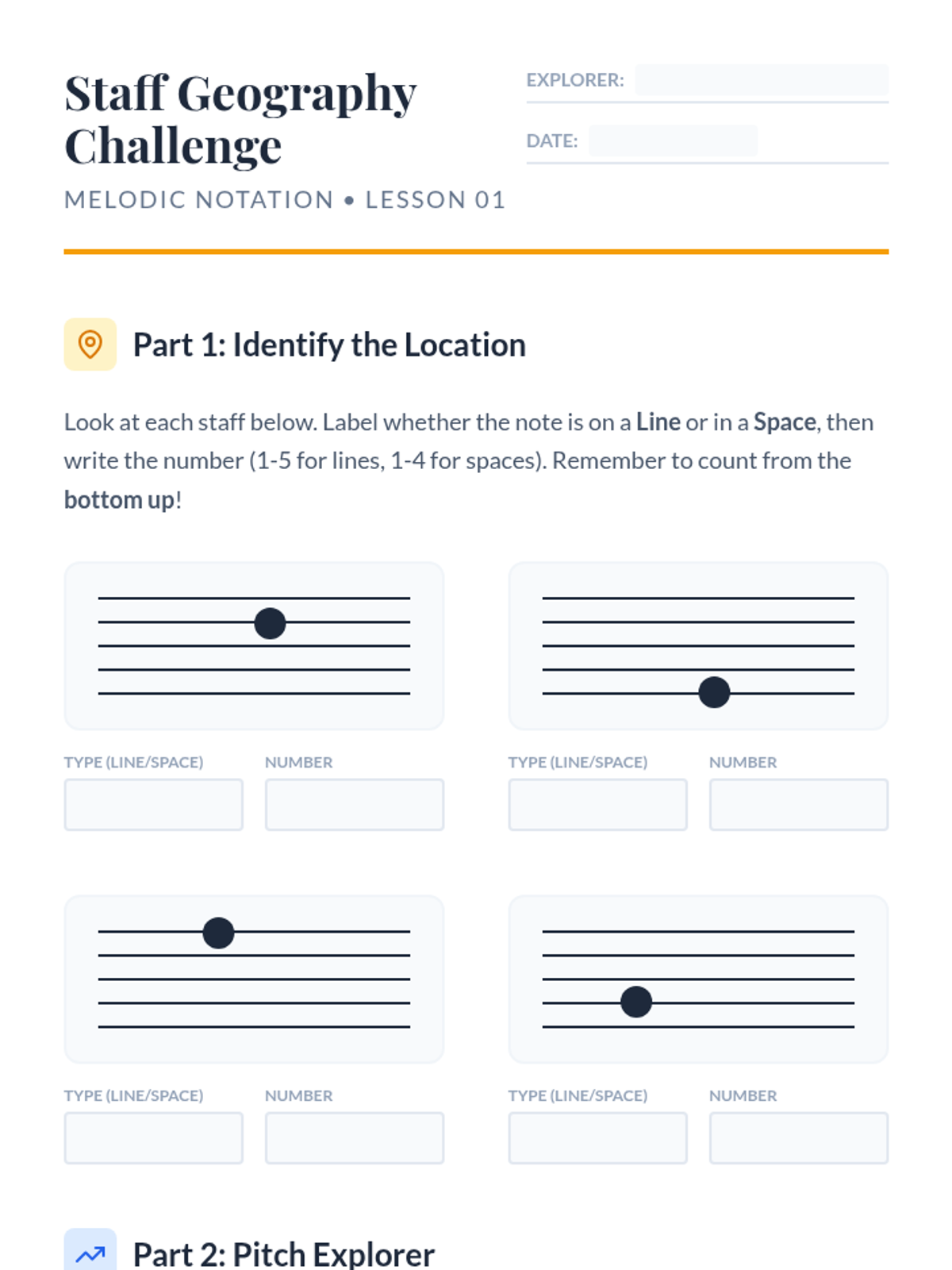
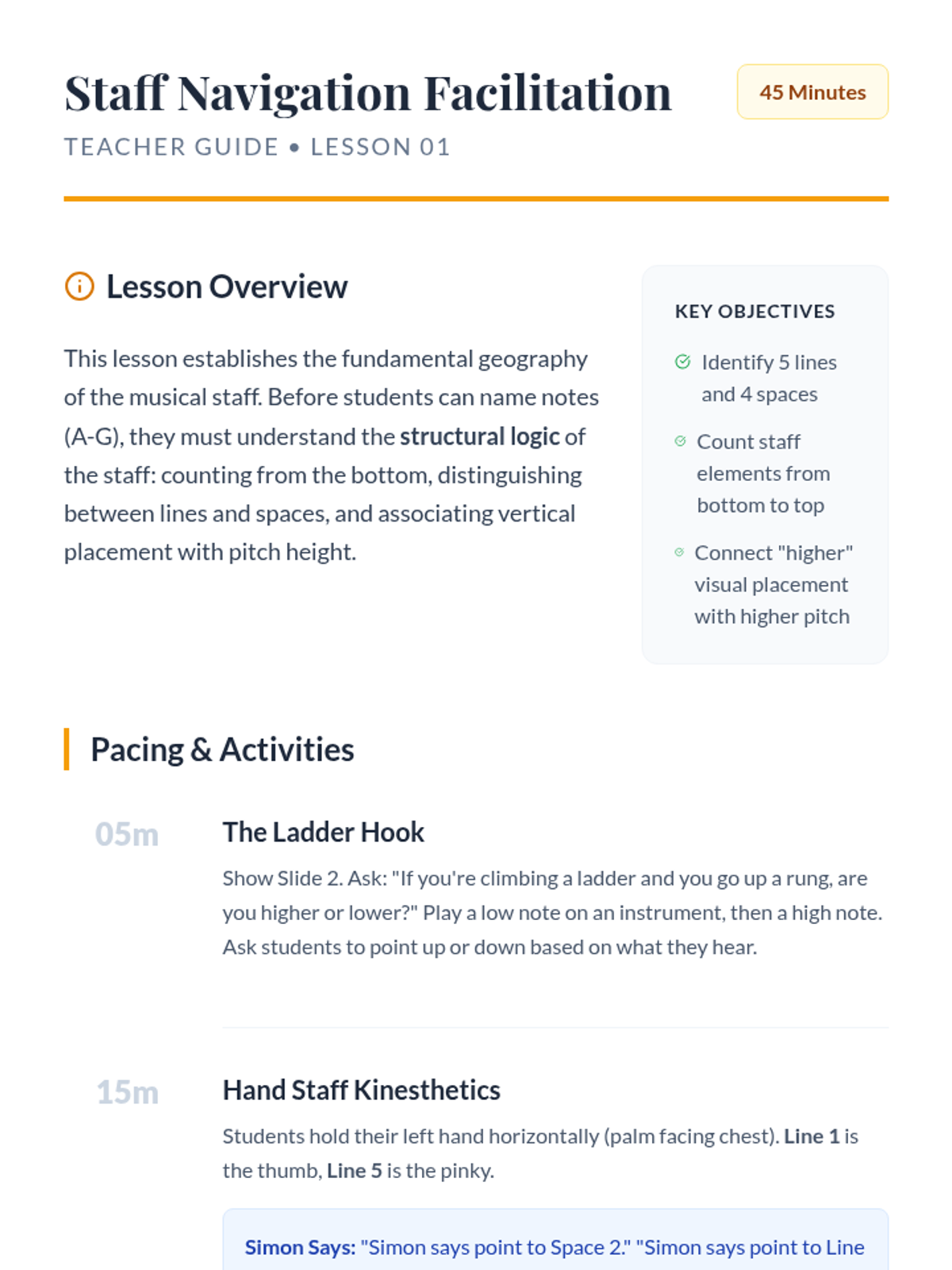
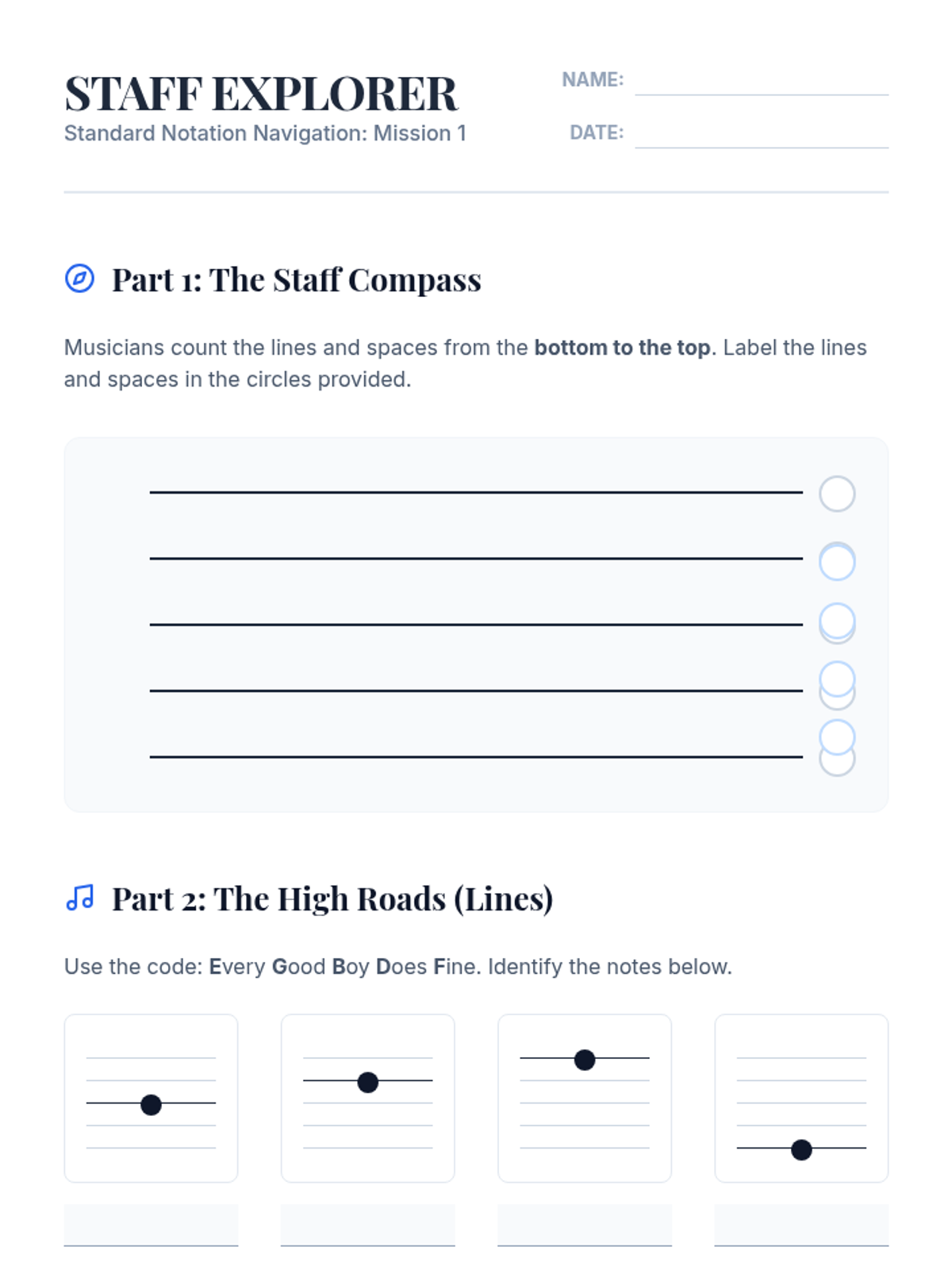
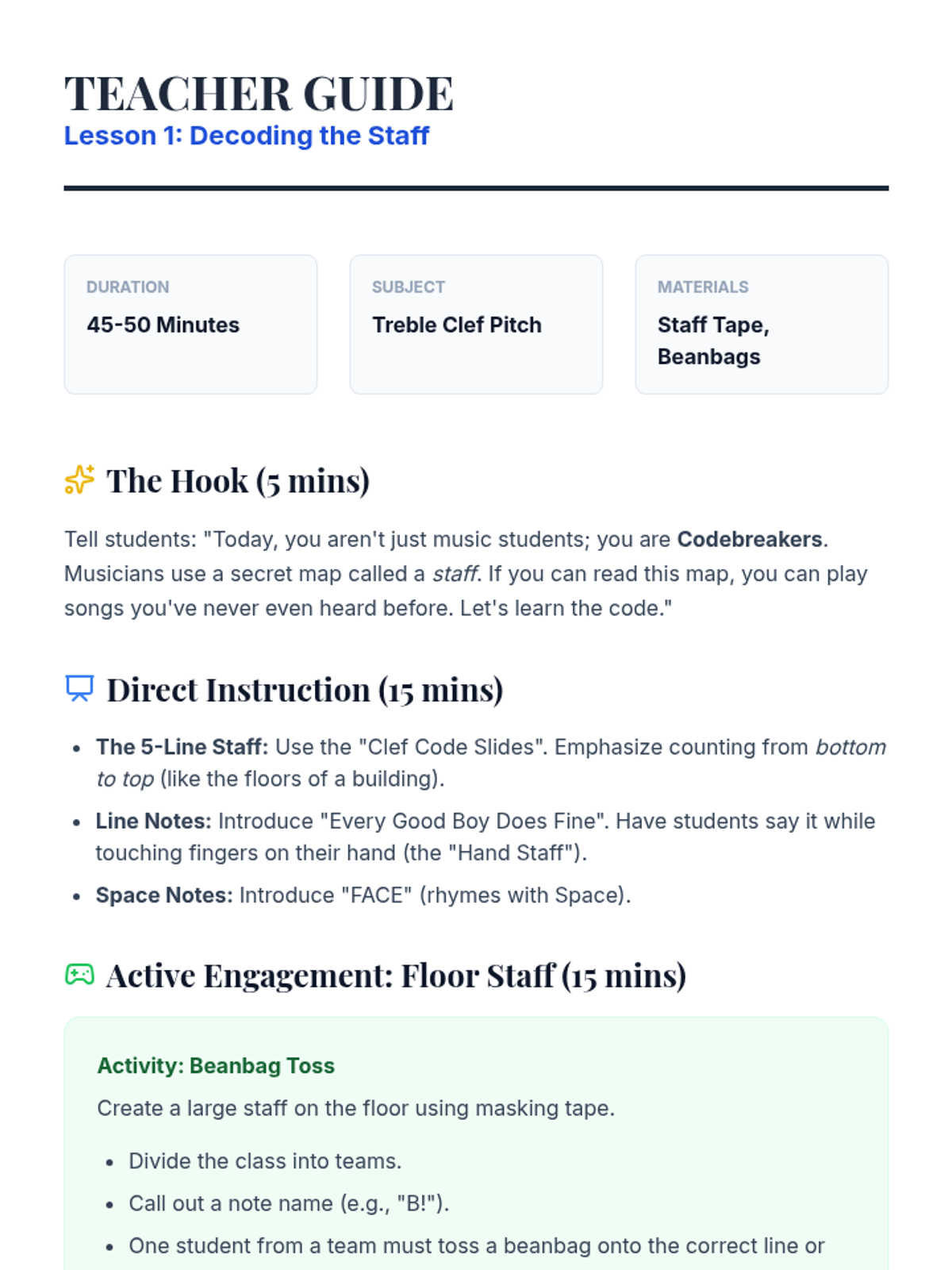
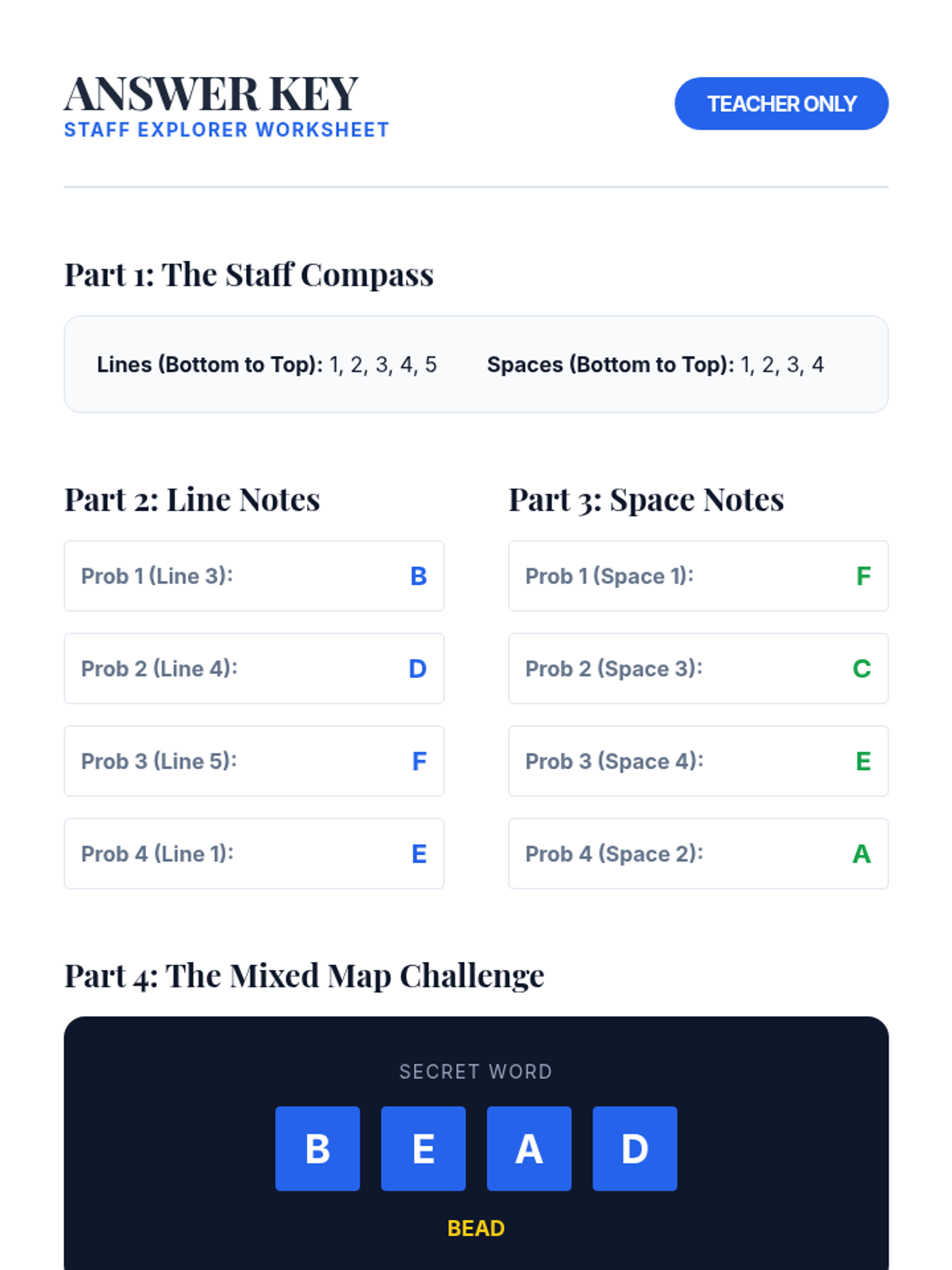
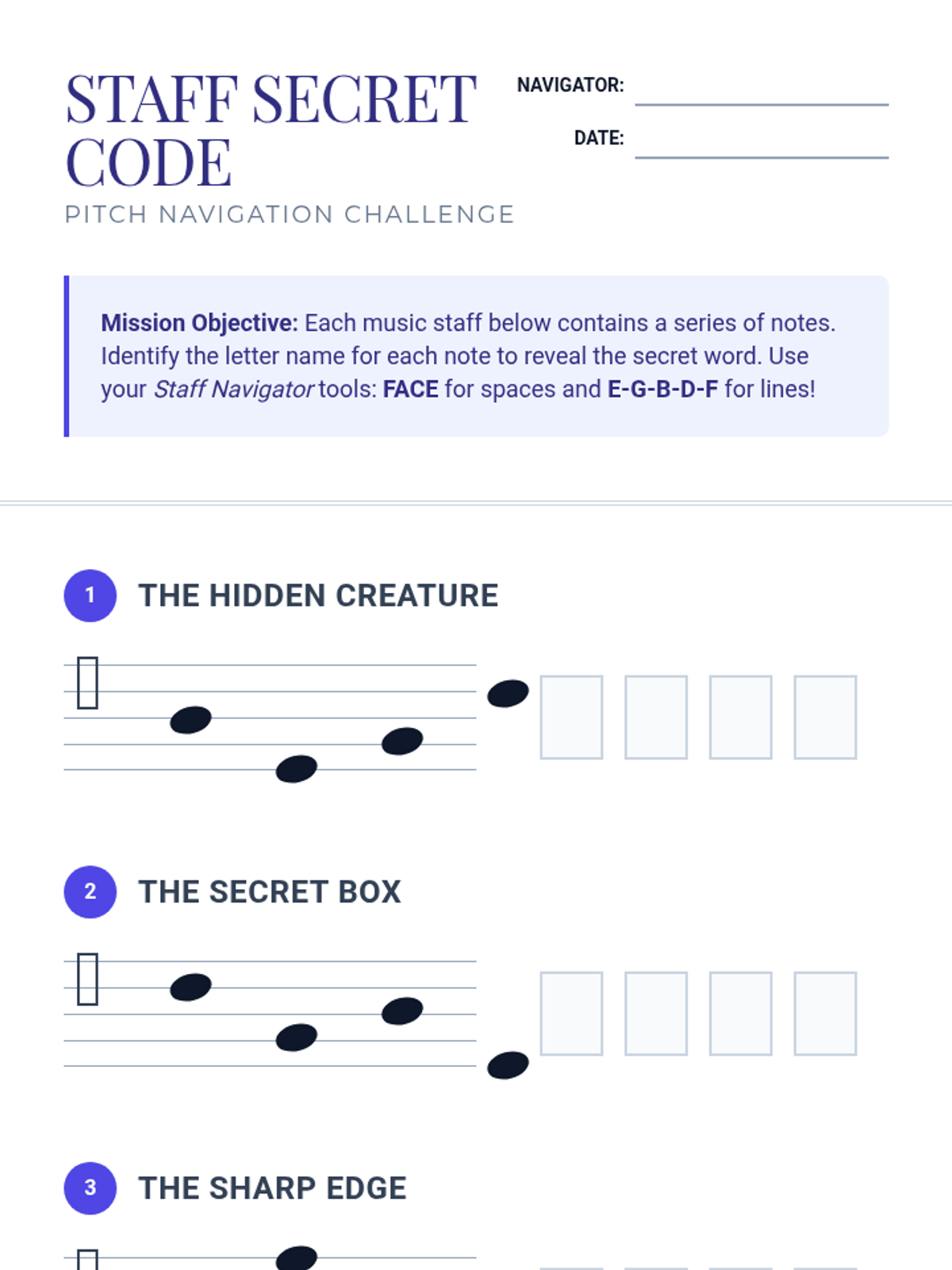
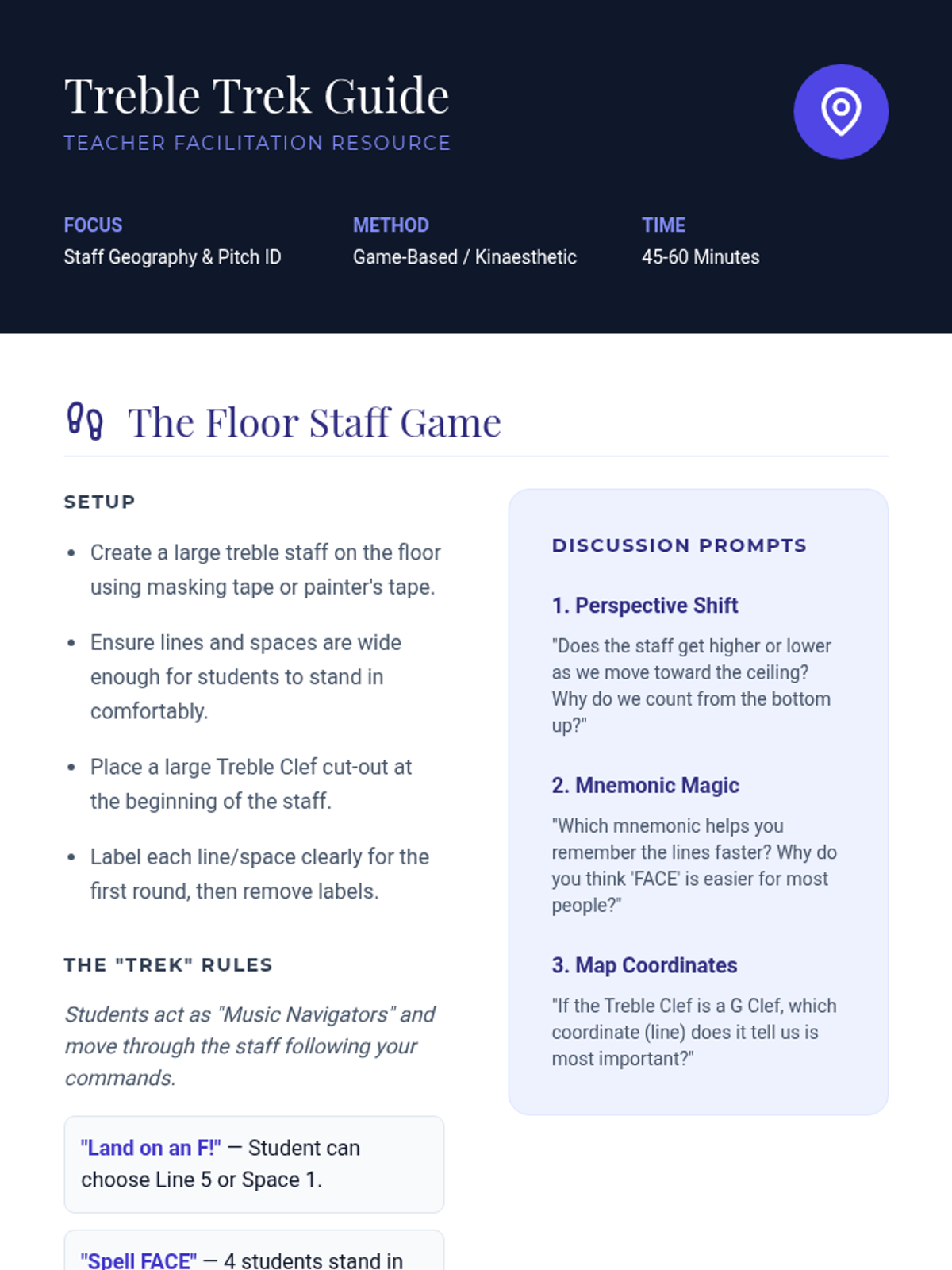
A comprehensive sequence for 4th-grade music students to master reading pitch on the treble clef staff. Students progress from basic staff geography to identifying notes, recognizing intervals, and finally sight-reading simple melodies on instruments.
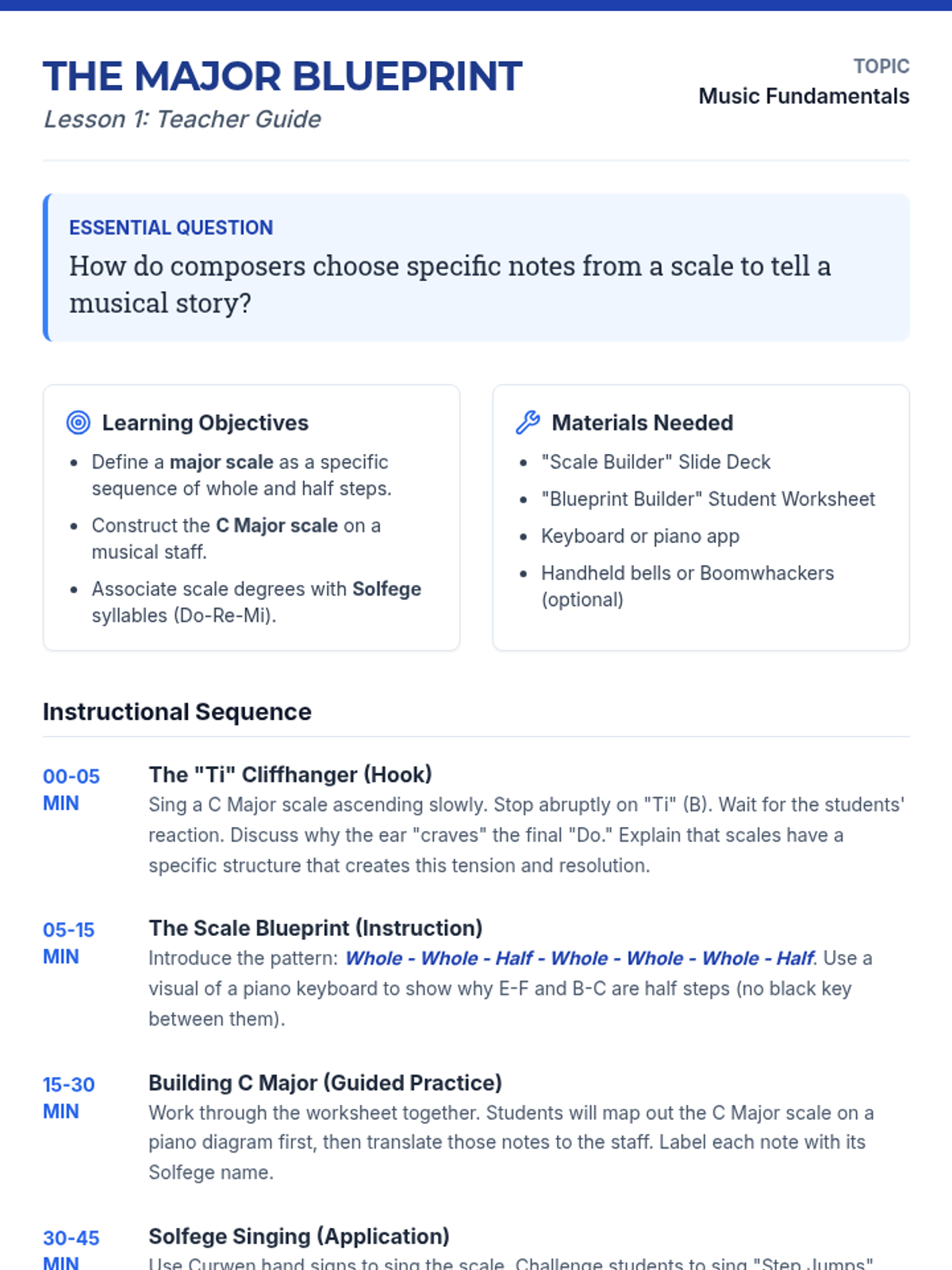
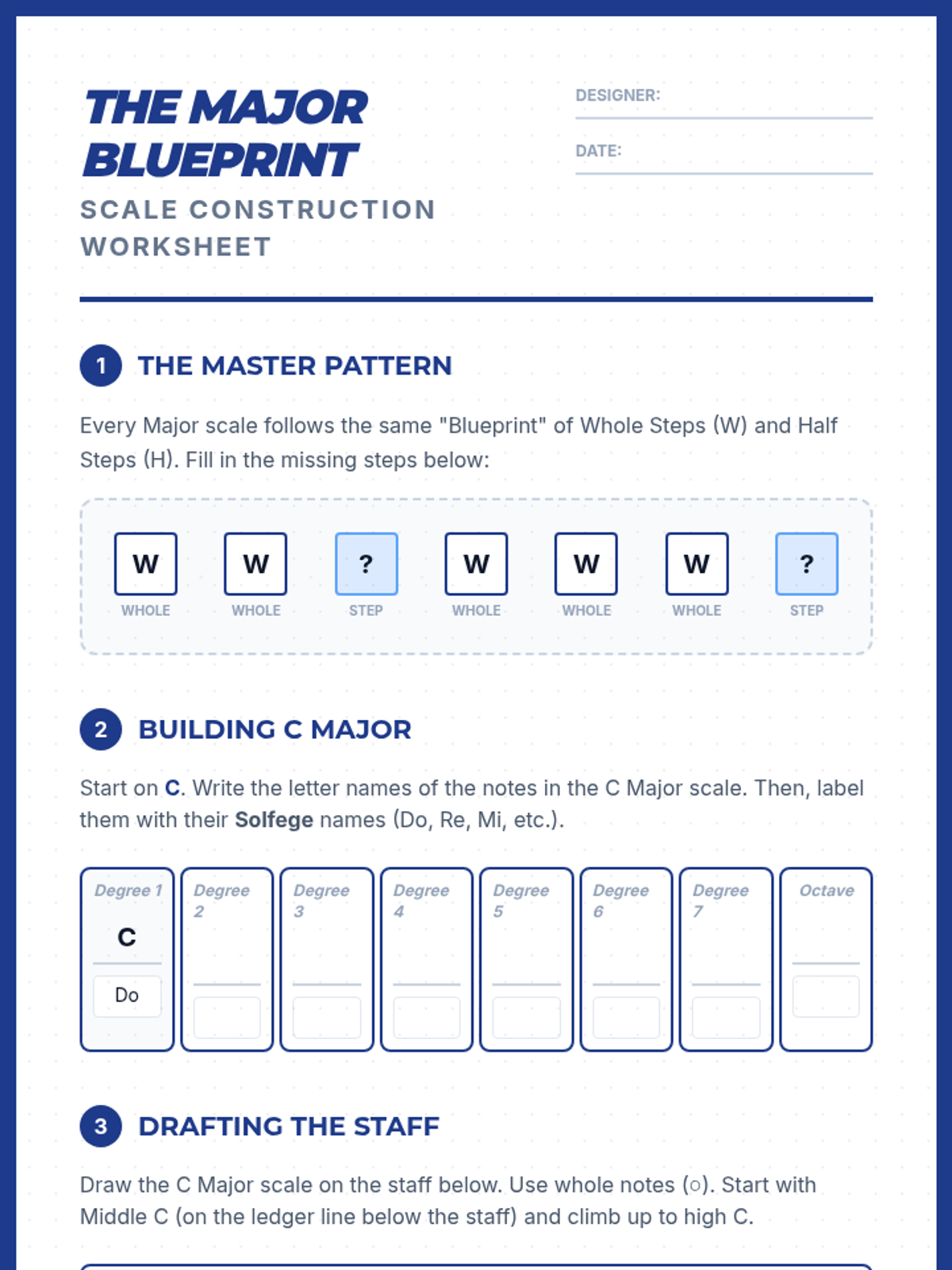
A 4th-grade music sequence where students transform from music listeners to composers. Students explore the architecture of major and pentatonic scales, draft melodic shapes, and finally notate their own 4-measure musical motifs.
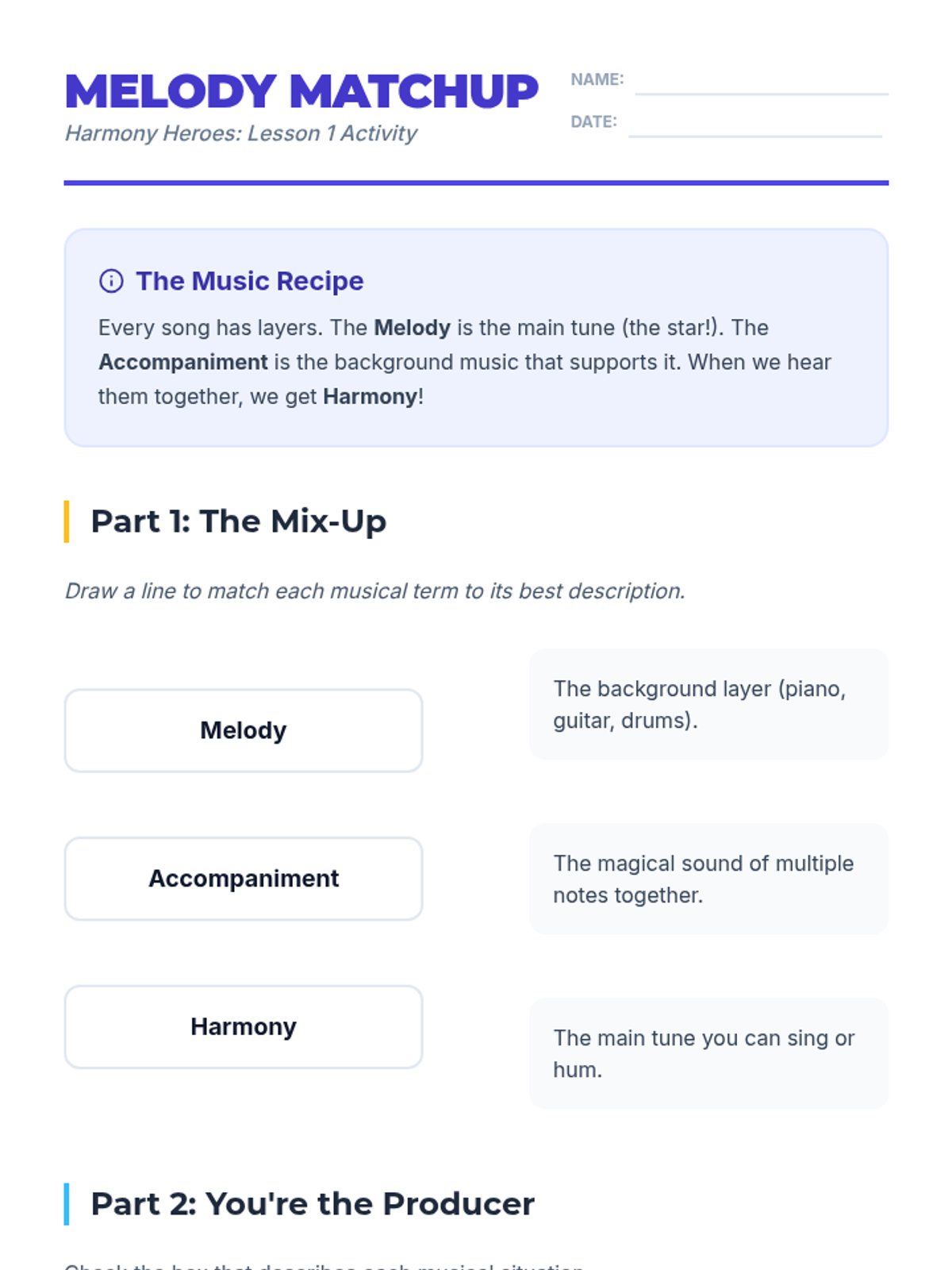
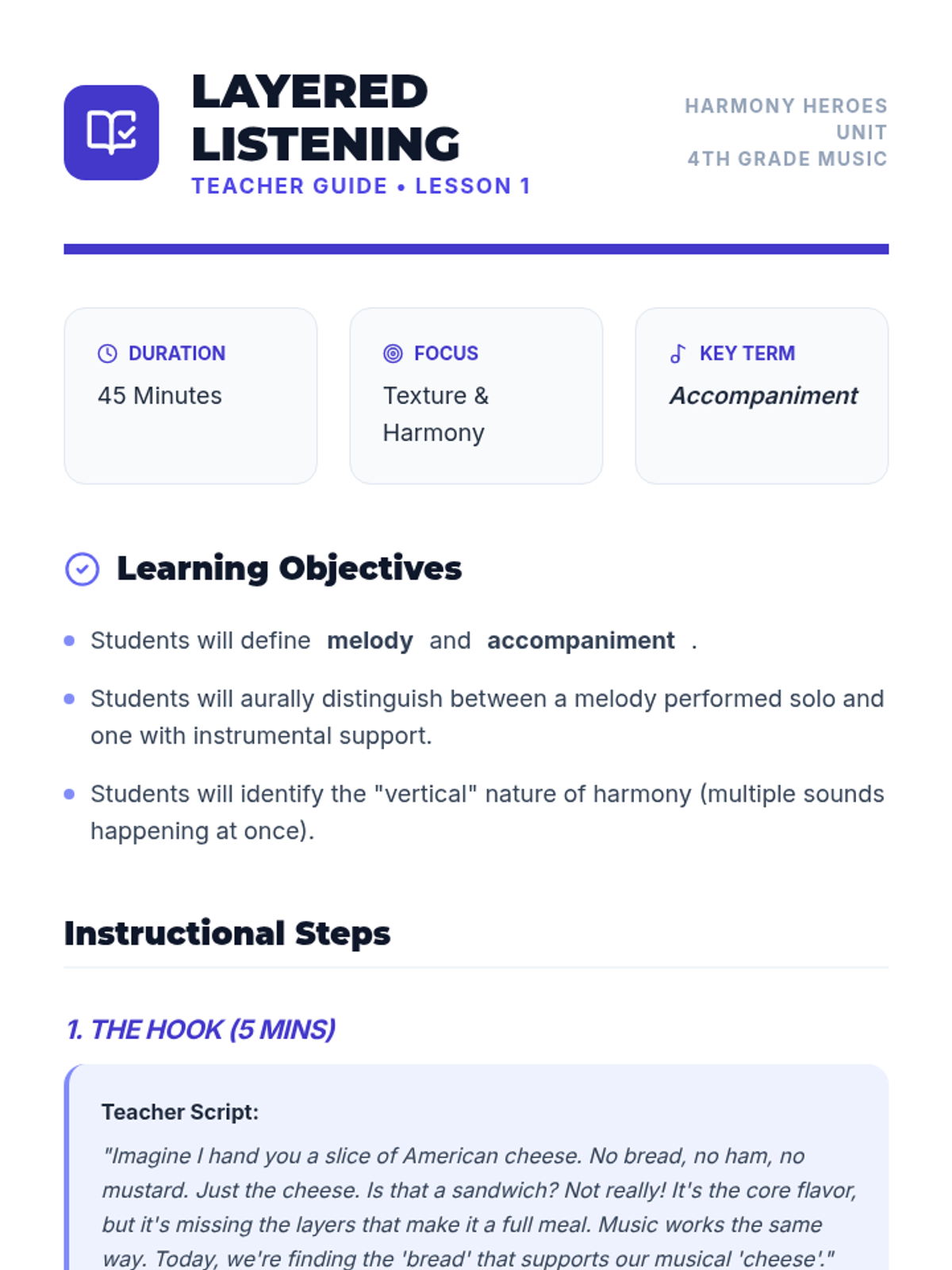
A comprehensive introduction to harmony for 4th graders, covering the difference between melody and accompaniment, intervals, triad construction, major vs. minor tonality, and creating simple harmonic patterns.
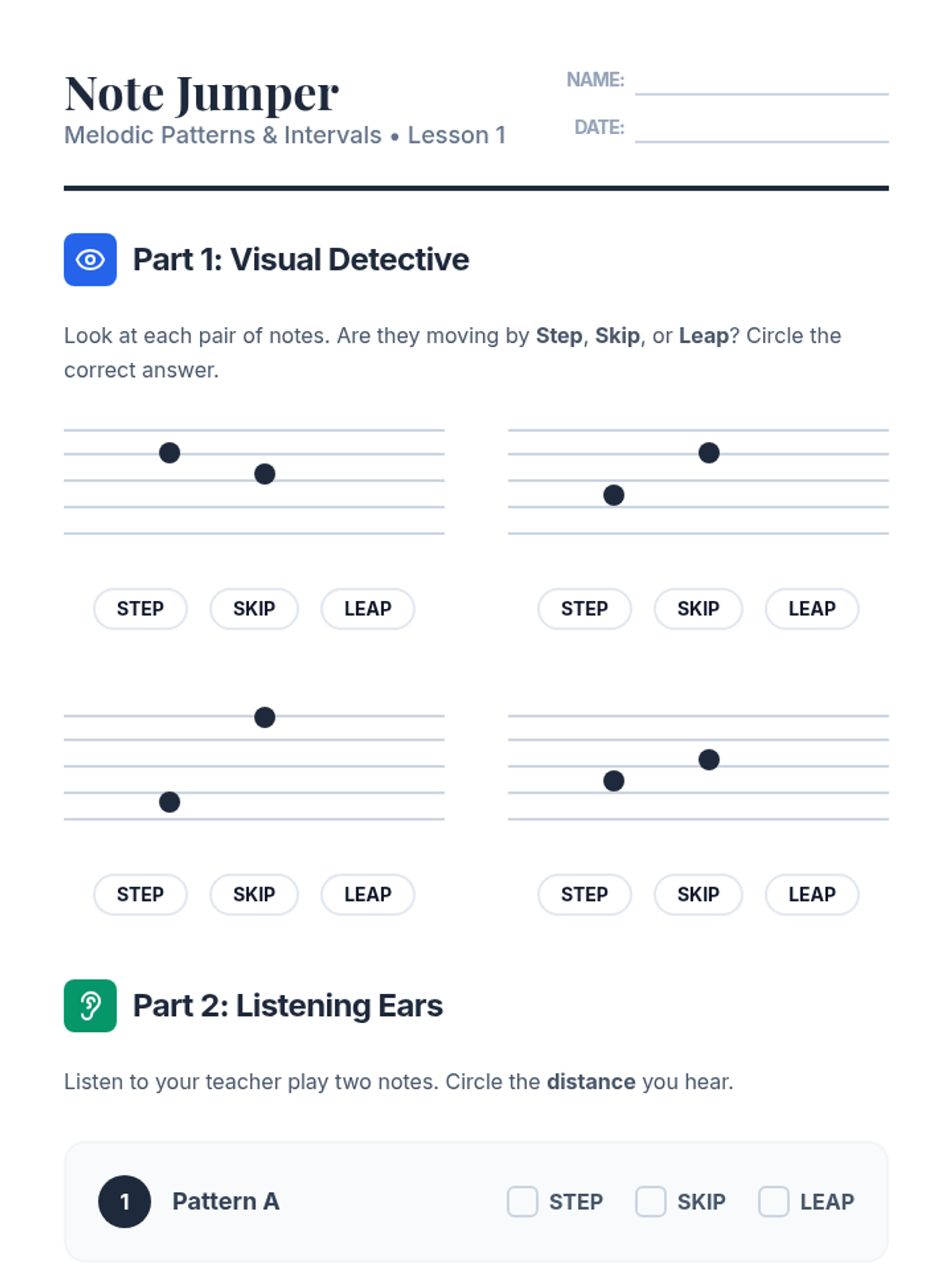
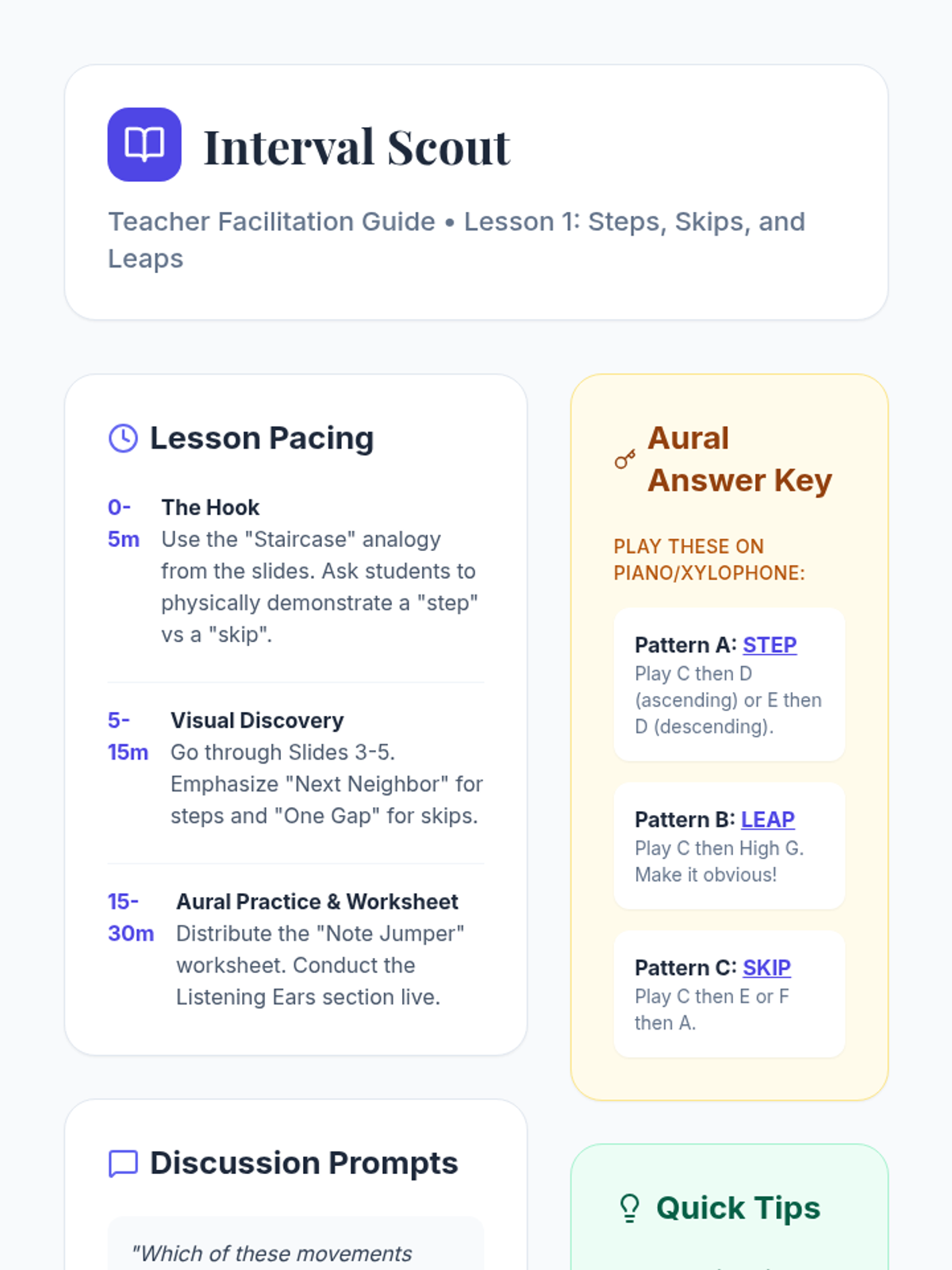
Students explore the relationships between notes, focusing on intervals (steps, skips, leaps) and the construction of the C Major scale. Using solfege, hand signs, and aural analysis, students learn to identify and dictate melodic patterns in simple folk music.
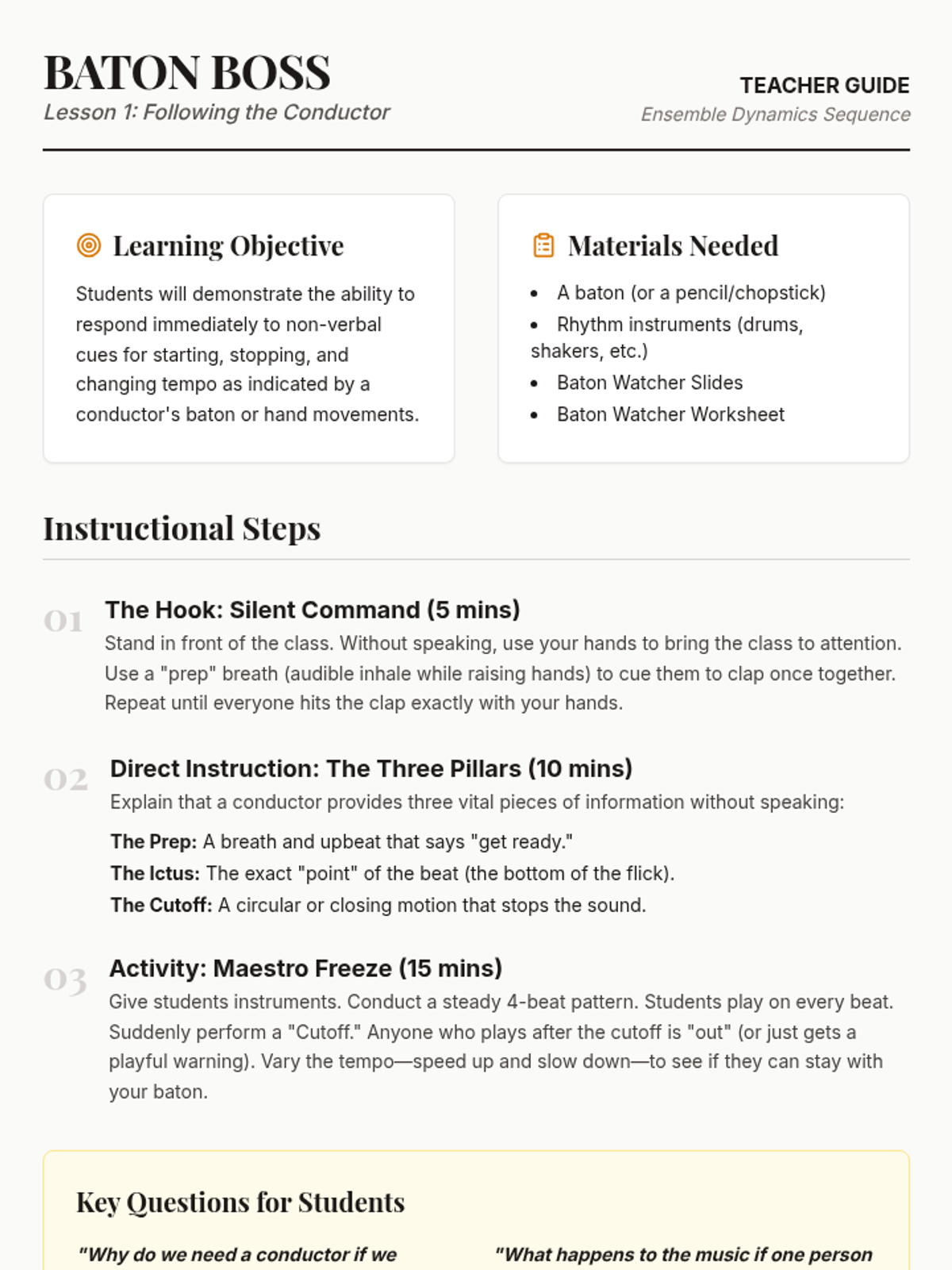
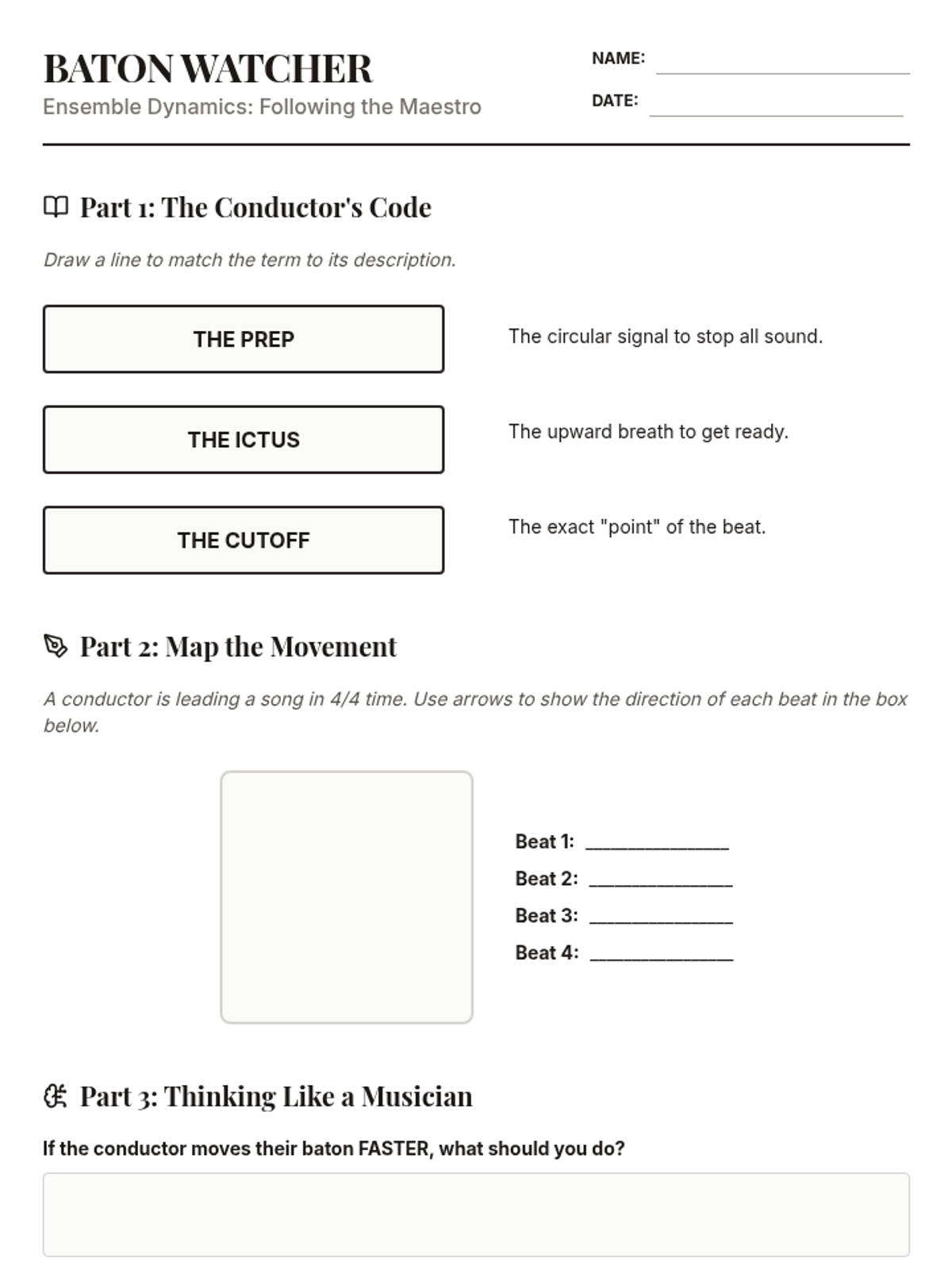
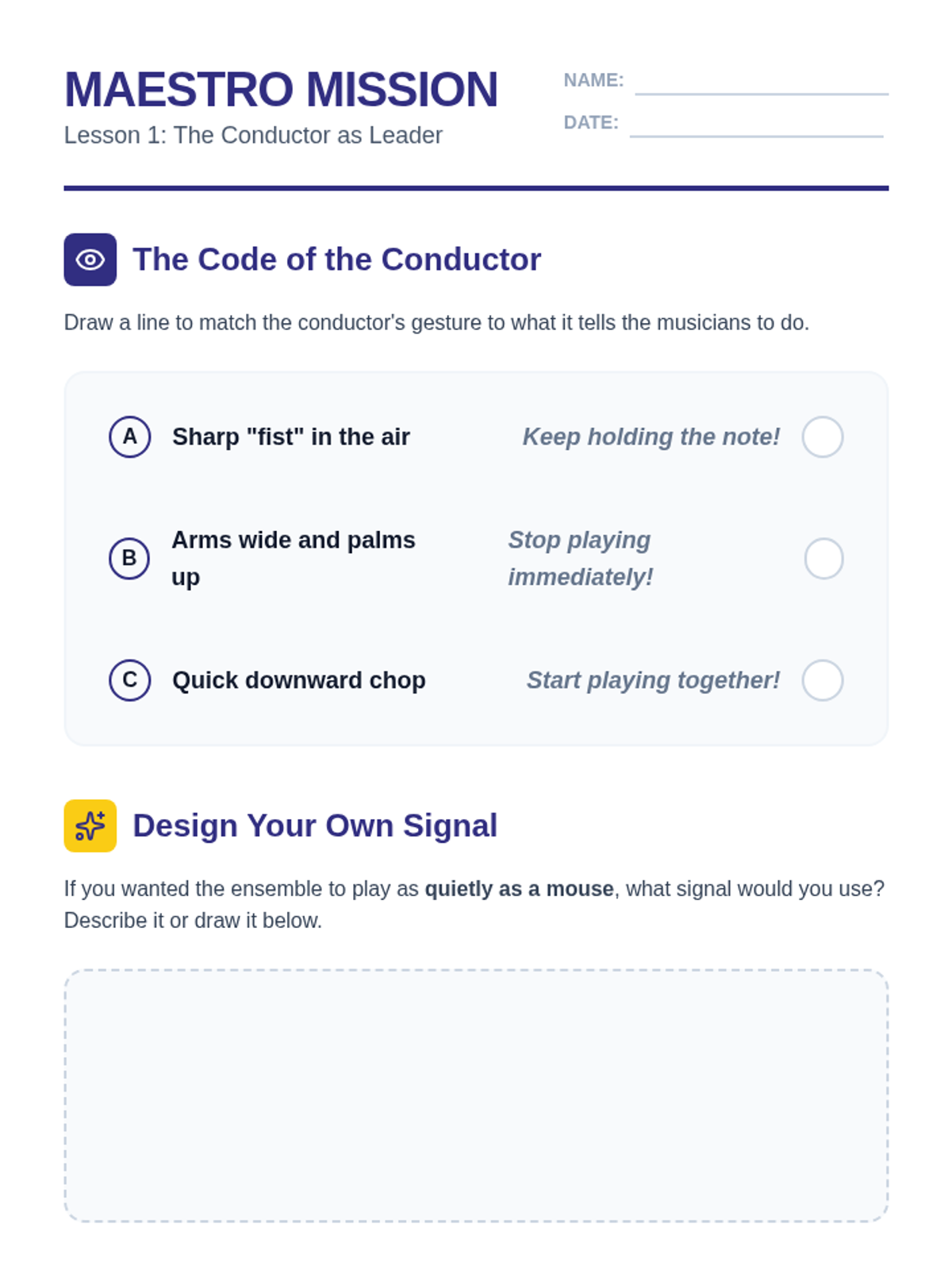
This sequence explores how musicians work together as an ensemble, focusing on conducting cues, dynamic control, balance, and tempo maintenance. Students transition from following a leader to collaborating in small independent groups.
This sequence guides 4th-grade music students through the transition from initial practice to a polished concert performance. Students develop technical habits, practice strategies, critical listening skills, and stage etiquette to understand the discipline and artistry of instrumental performance.
A comprehensive sequence for 4th-grade music students to master reading melodic notation on the treble clef. Students progress from basic staff geography to performing simple melodies on instruments, bridging the gap between visual symbols and physical performance.
A 4th-grade music sequence focusing on building foundational rhythmic skills, moving from body percussion and steady beat to formal notation, measures in 4/4 time, and ensemble sight-reading.
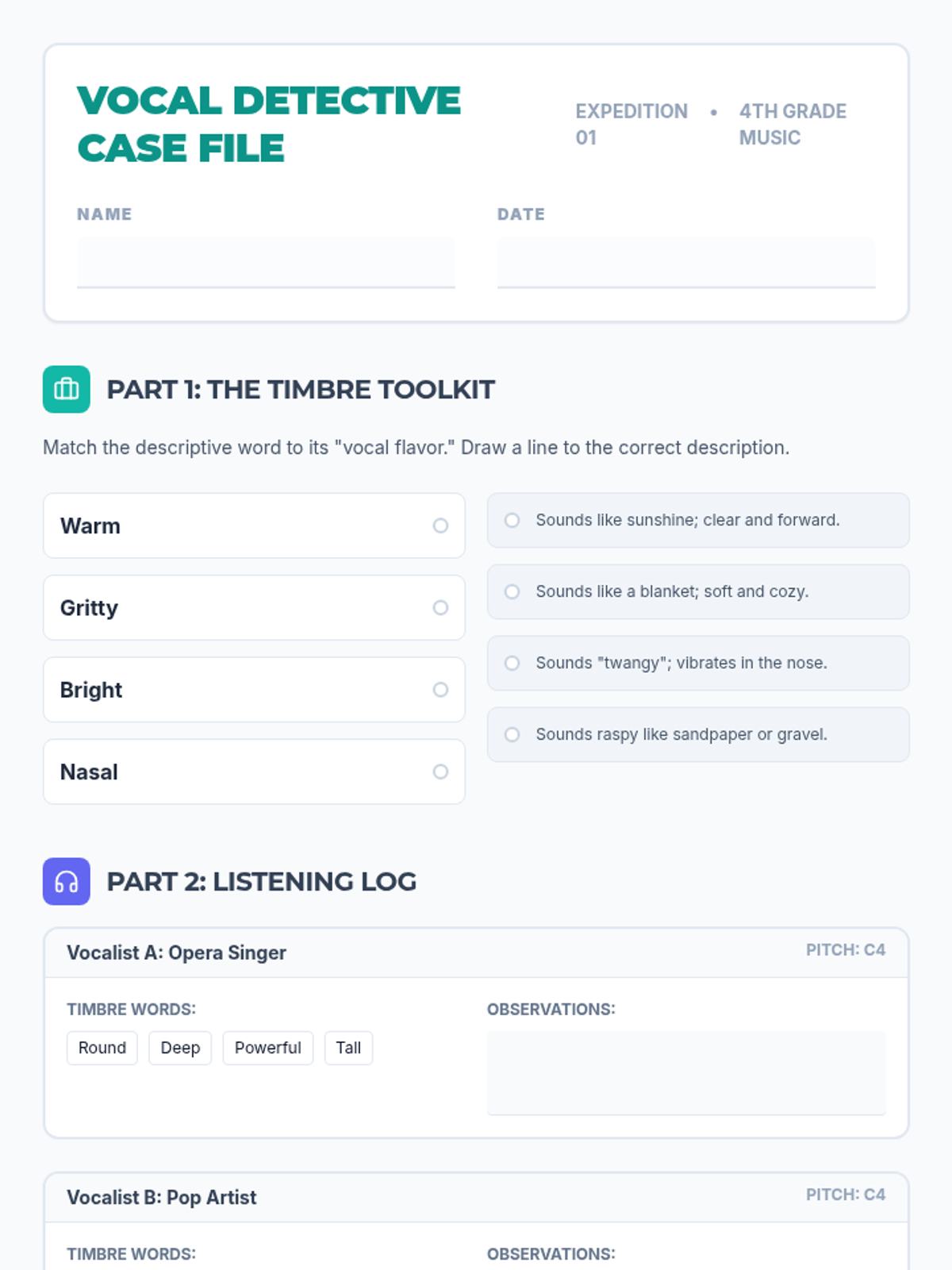
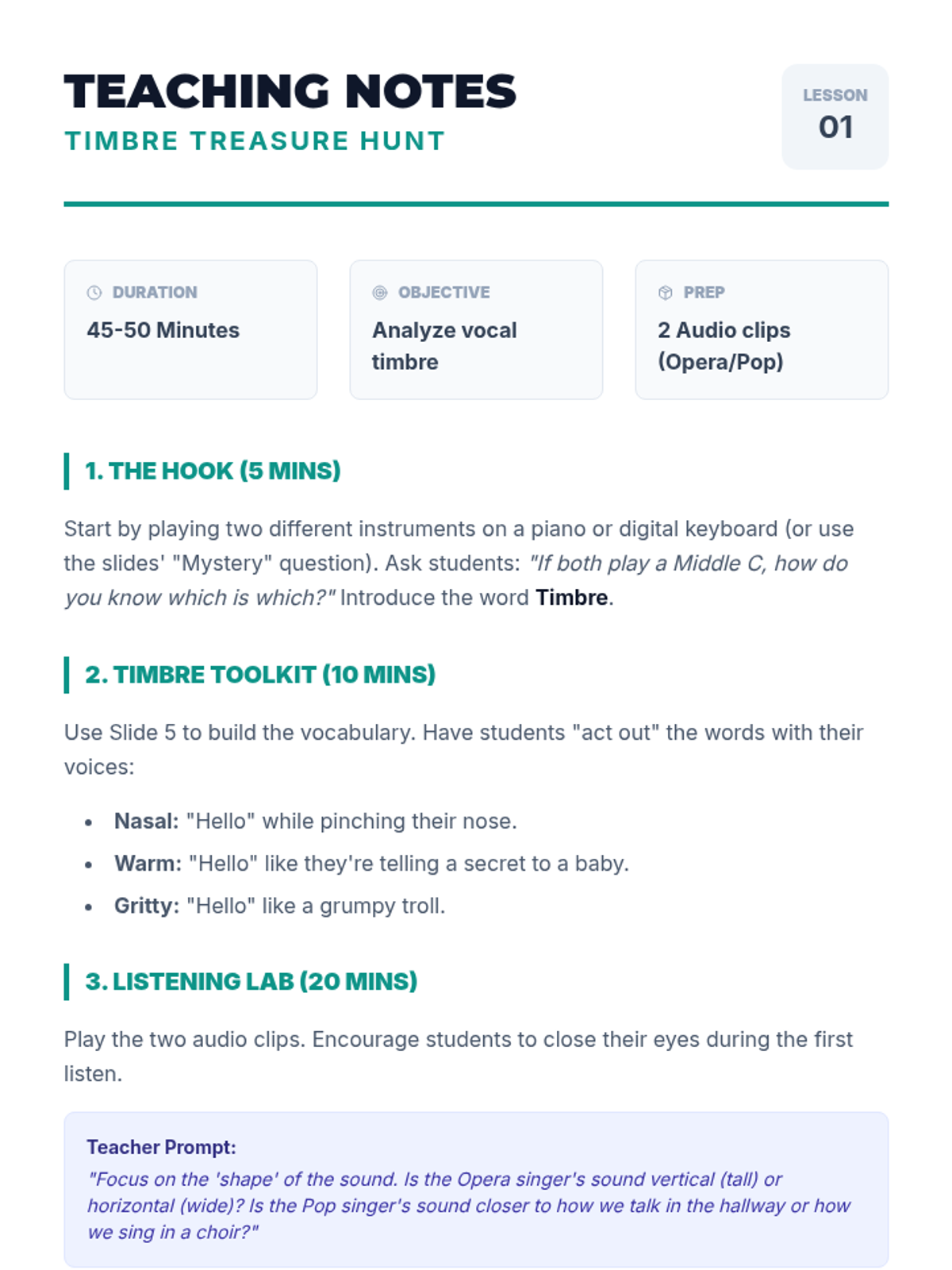
A 5-lesson unit for 4th graders exploring how vocal technique, timbre, and style change across different musical genres, from Folk and Classical to Jazz and beyond.
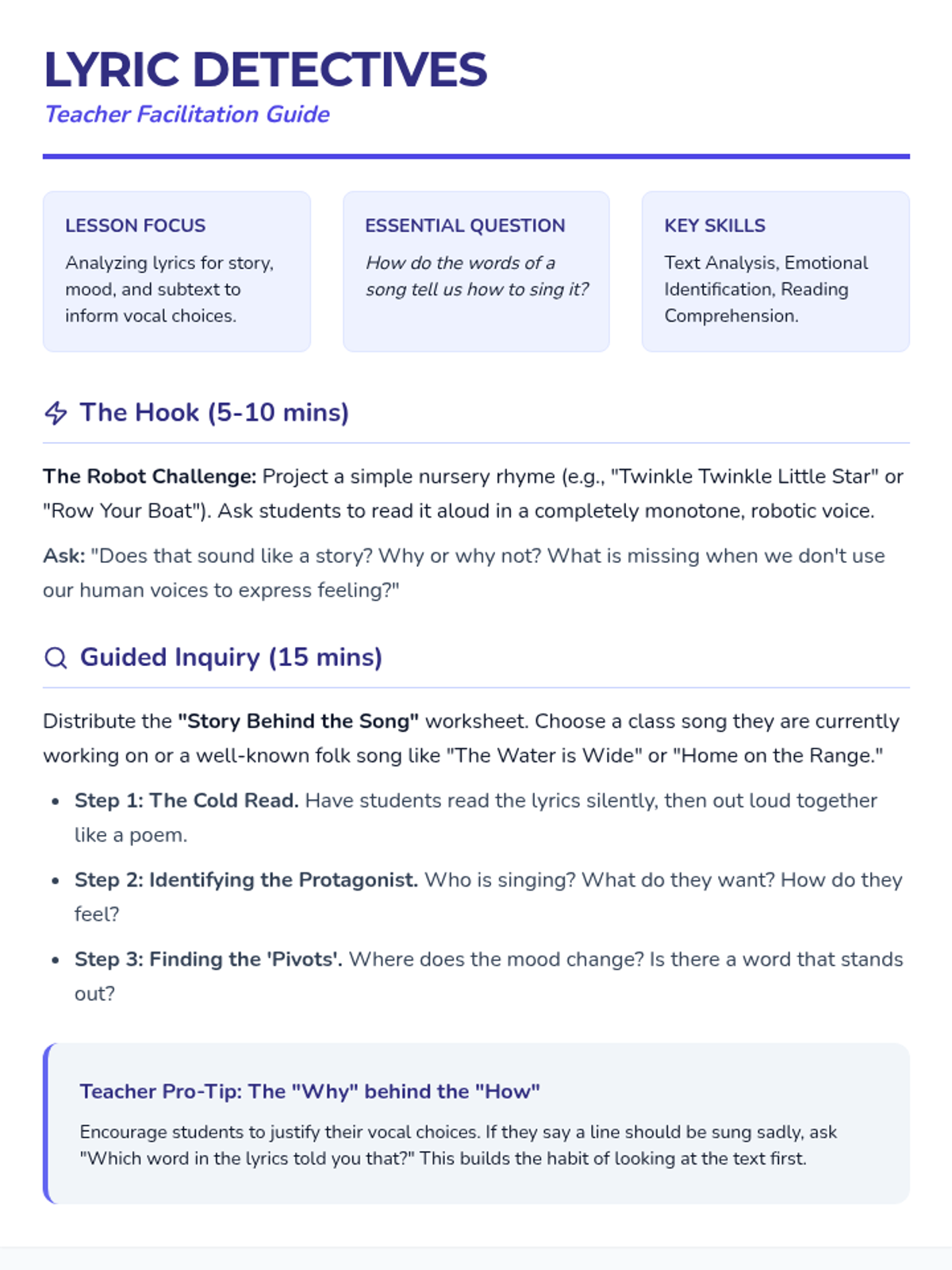
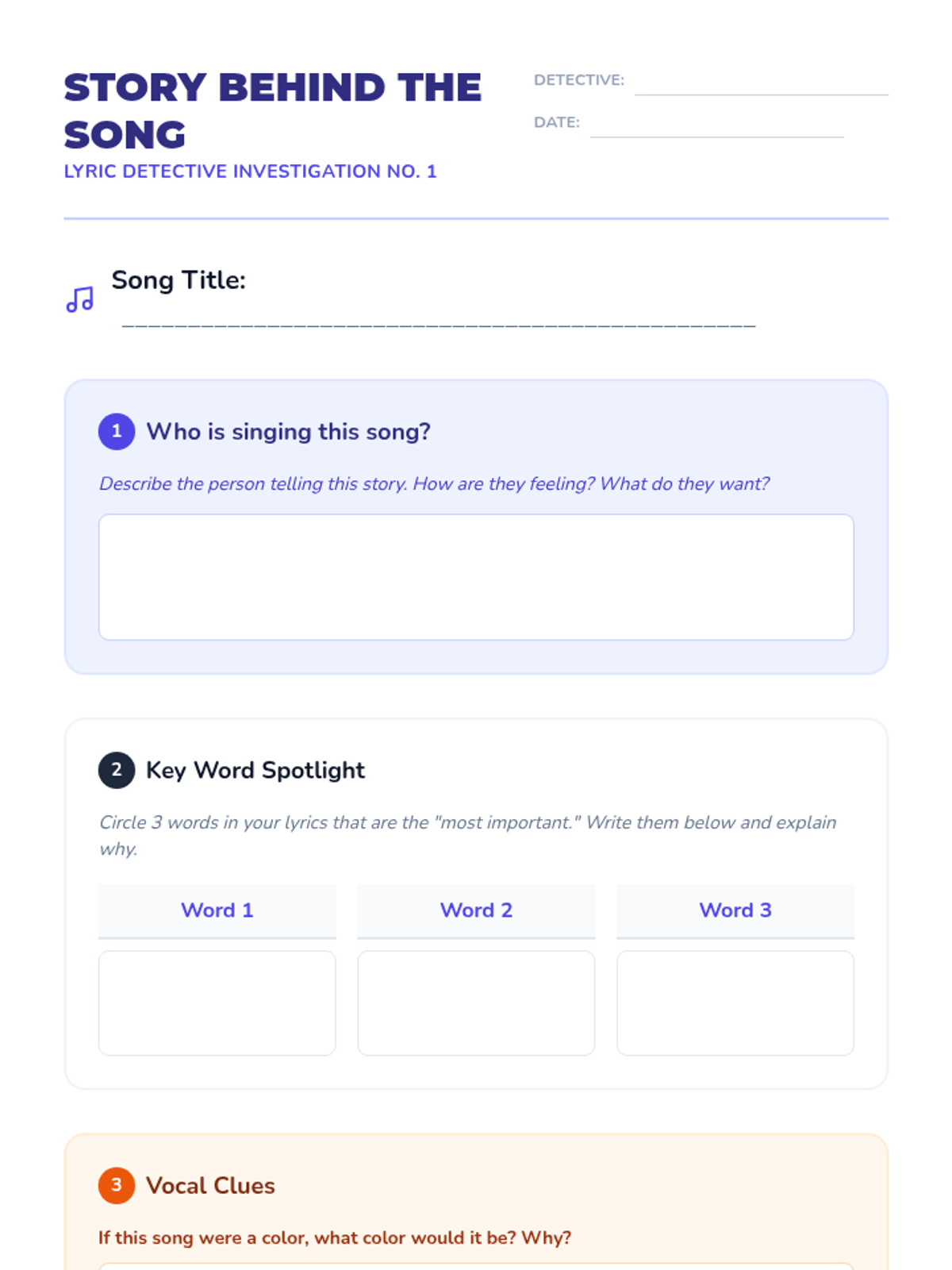
A 5-lesson unit for 4th grade students focused on vocal expression, lyric analysis, dynamics, phrasing, and tempo. Students learn to move beyond mechanical singing to become intentional storytellers through their voice.
A 5-lesson journey into ensemble techniques, focusing on non-verbal communication, dynamic control, layering parts with ostinatos, and collaborative performance. Students develop the skills needed to listen, adjust, and play as a unified musical group.
This sequence introduces students to reading standard music notation on melodic instruments. Students learn to identify pitch on the treble clef staff and map it to their instrument, building from finding notes to playing stepwise melodies and managing leaps.
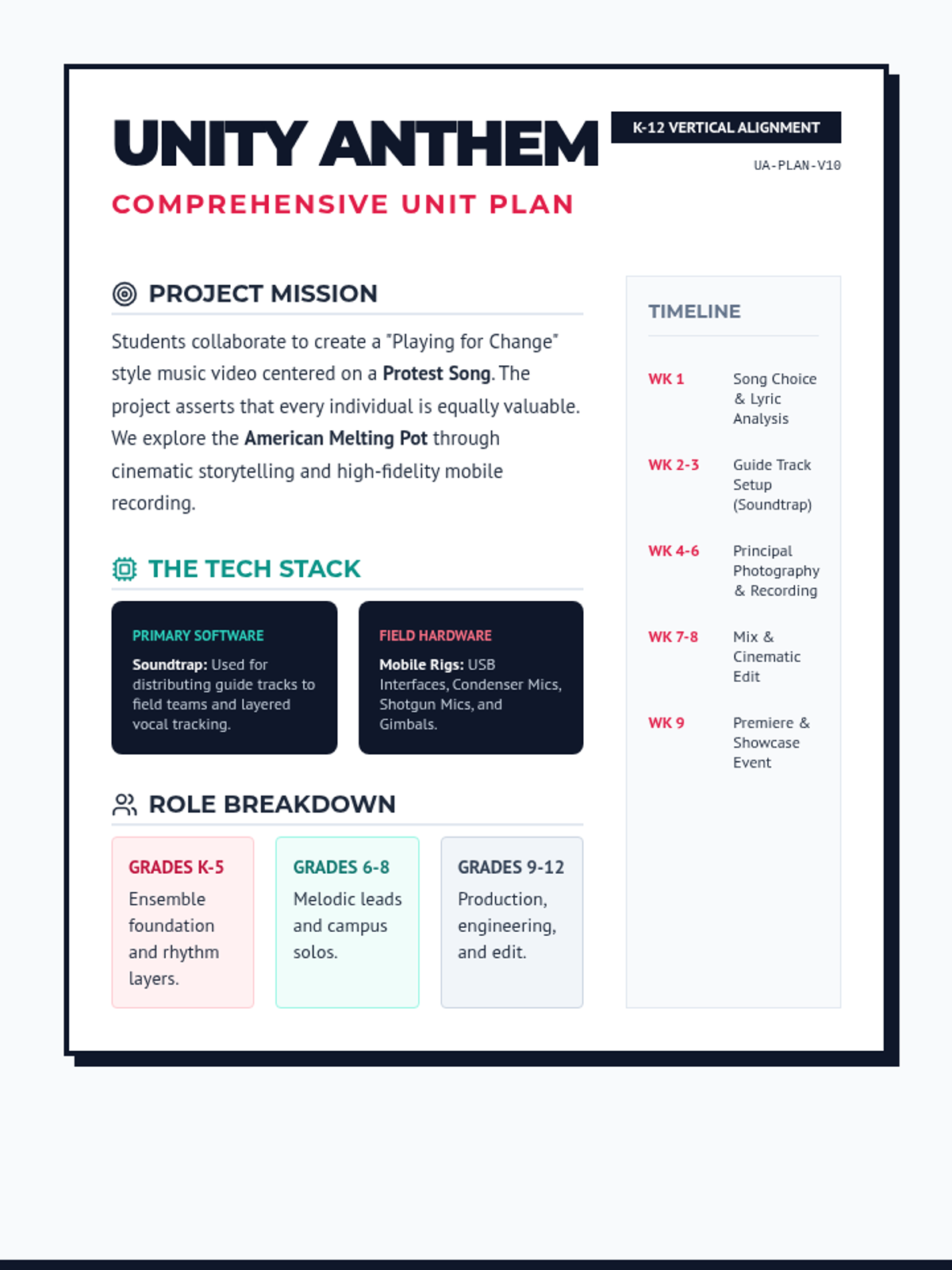
A K-12 collaborative music video project where students across all grade levels work together to produce a 'Playing for Change' style cover of a protest song centered on equality and cultural identity. High school students lead production, while K-8 students provide the musical and visual heart of the performance.
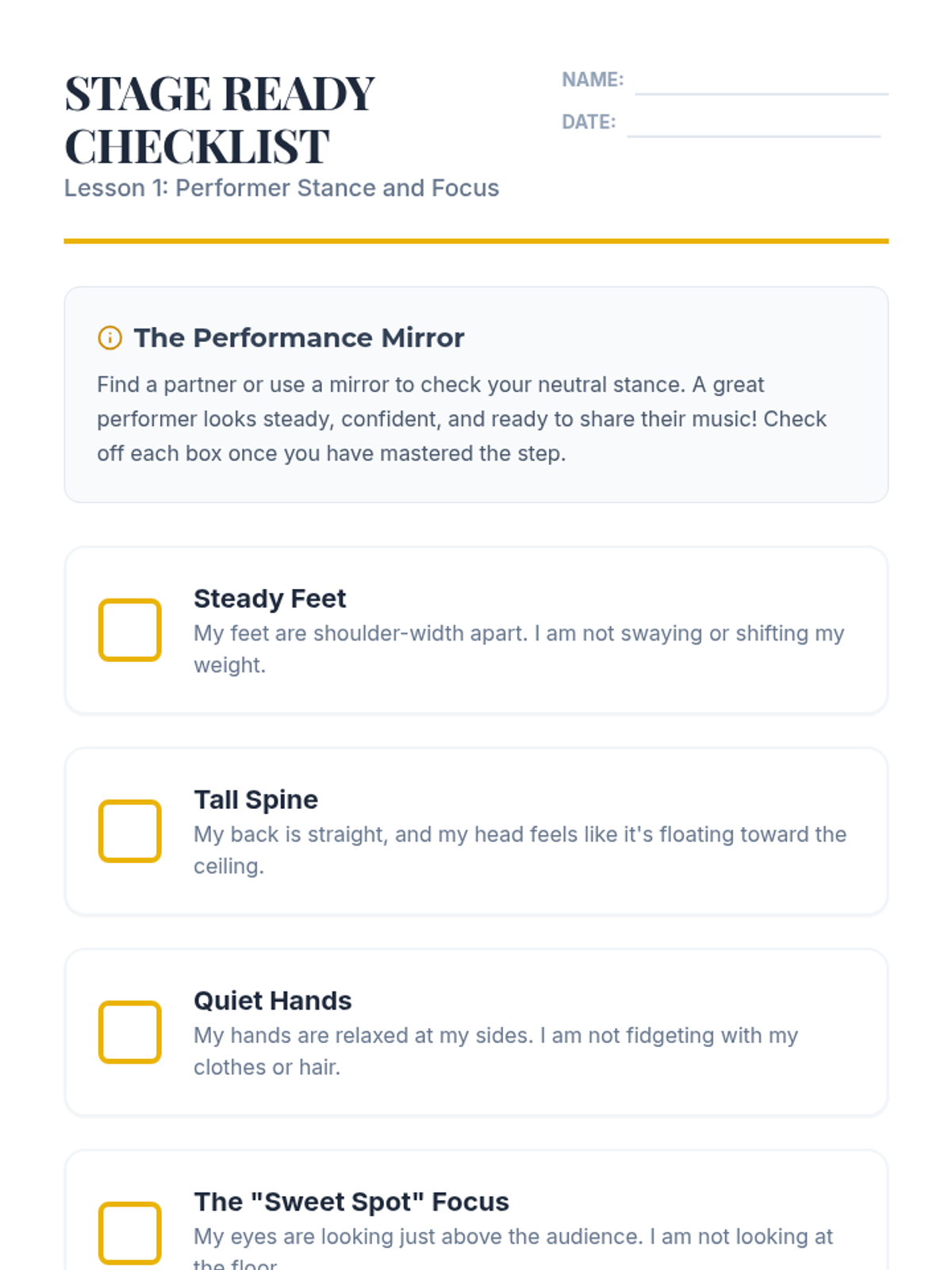
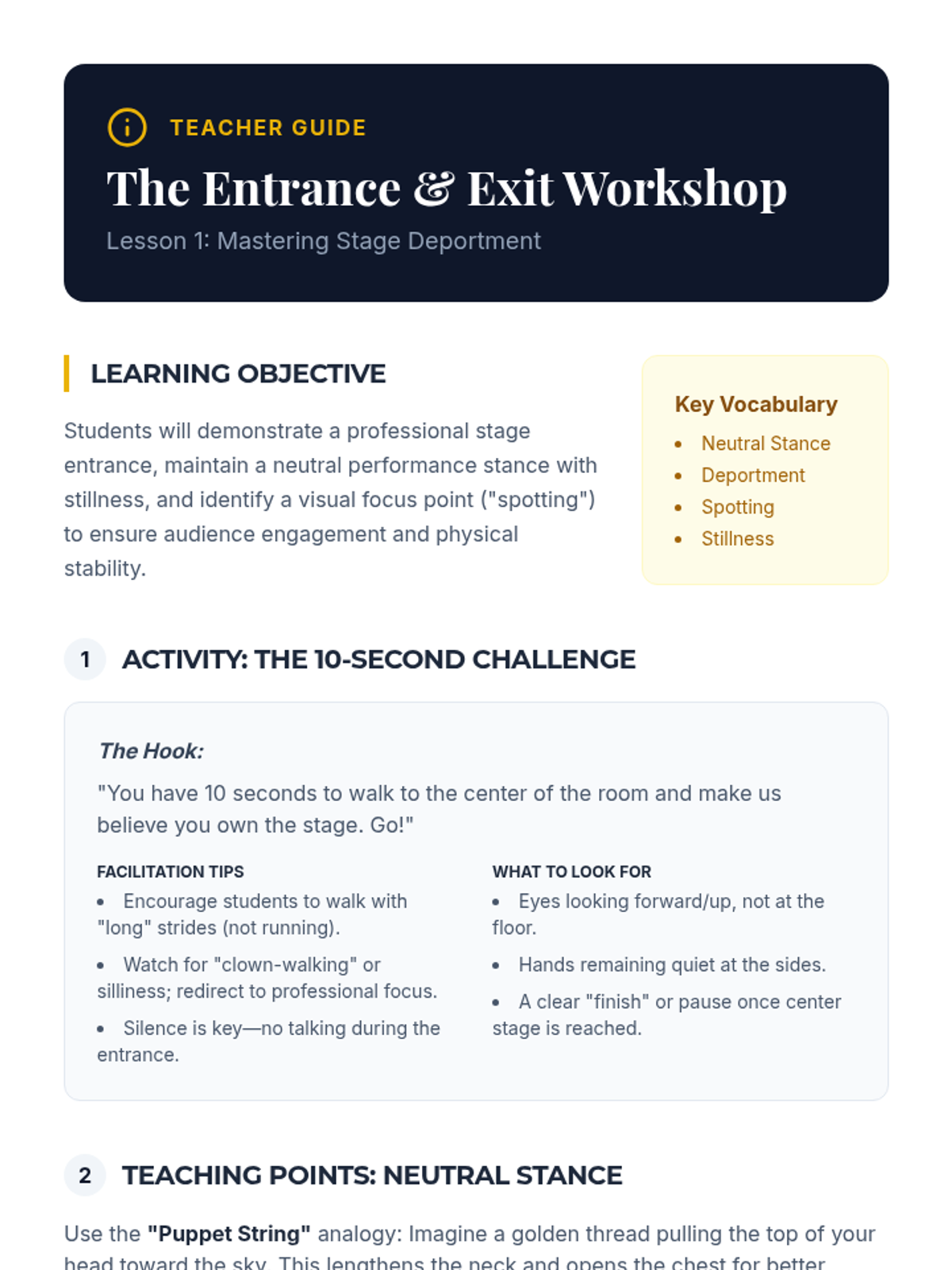
This sequence guides 4th-grade students through the visual and psychological aspects of vocal performance. Students will master stage presence, manage performance anxiety, and learn to connect with their audience through non-verbal communication and professional etiquette.
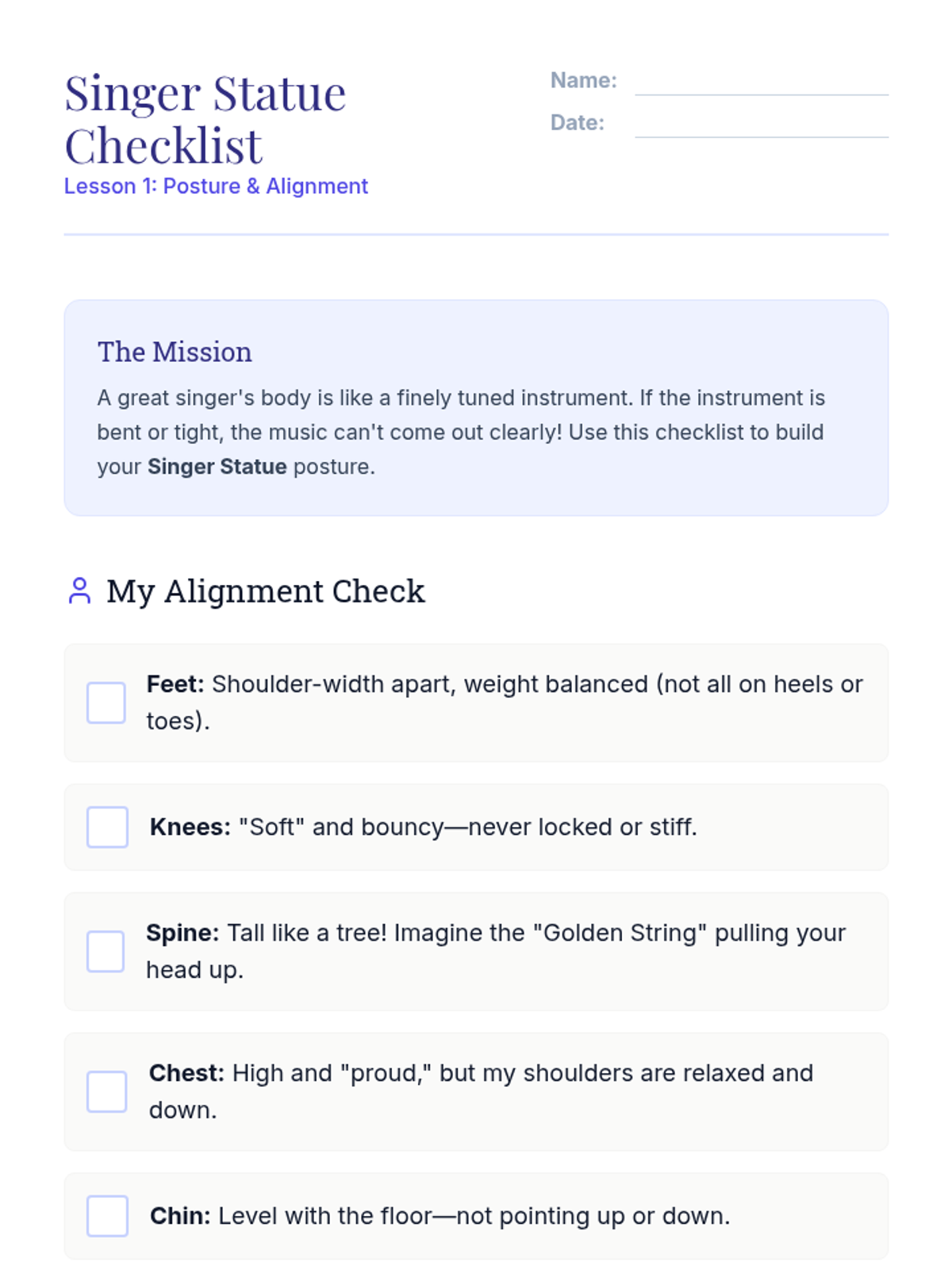
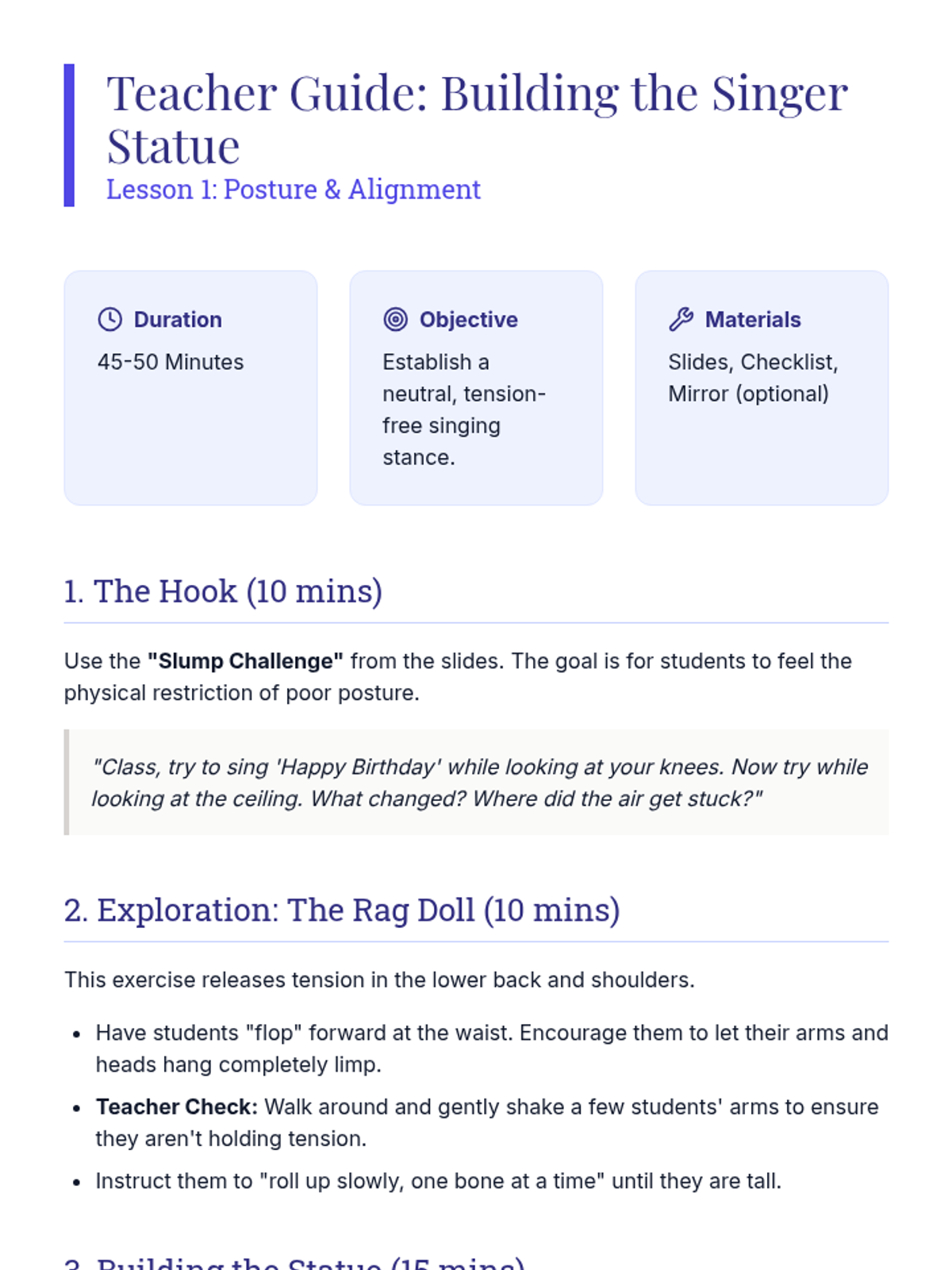
This sequence explores the physical mechanics of singing, treating the body as a primary instrument. Students learn anatomy, posture, diaphragmatic breathing, resonance, and articulation to produce clear, controlled vocal tones.
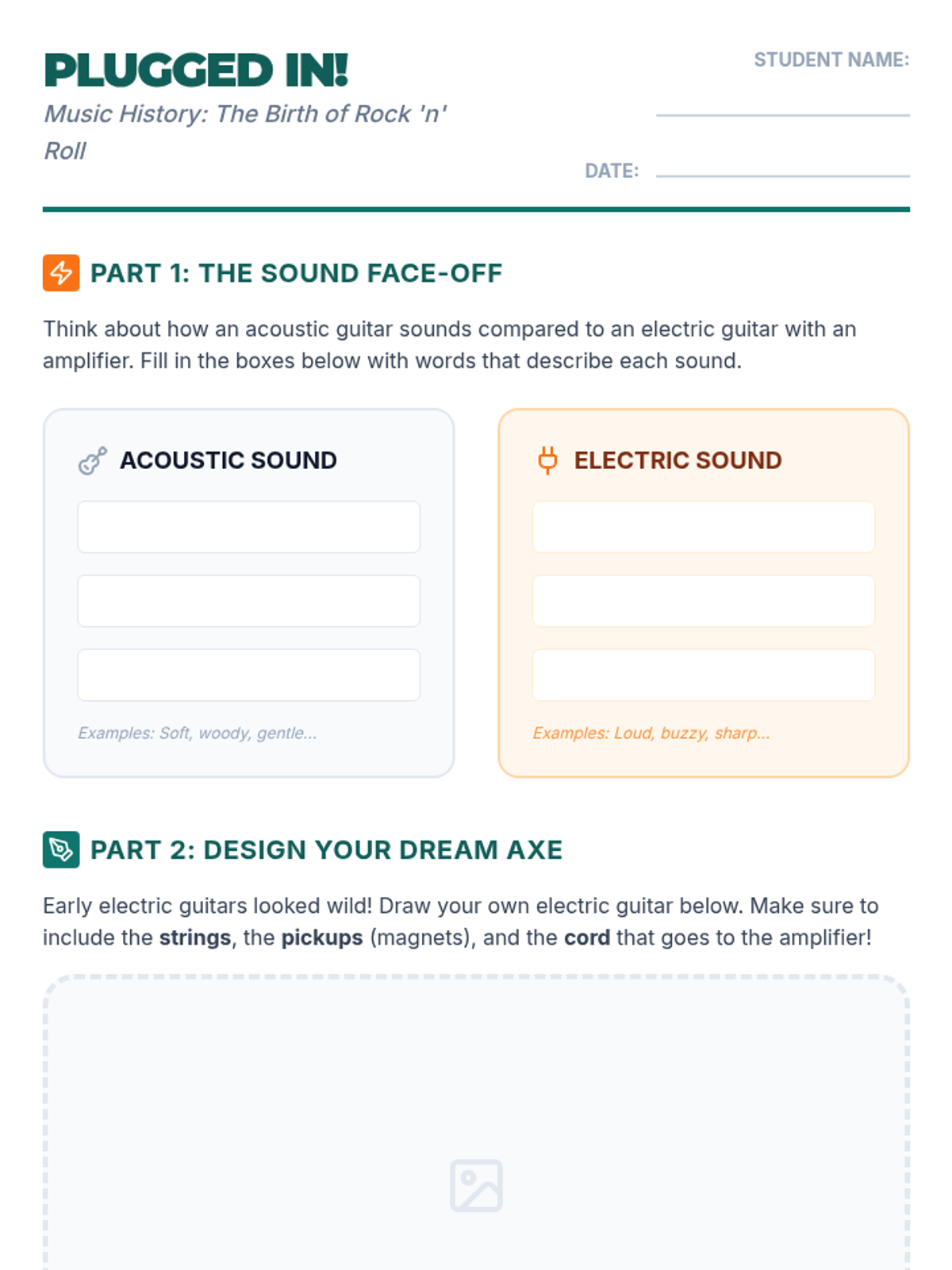
This sequence explores how technology—from the electric guitar to digital software—transformed music from the mid-20th century to today, focusing on genre evolution, song structure, and production.
This sequence analyzes how technology in the 20th and 21st centuries revolutionized music production and consumption. Students trace the evolution from early Rock 'n' Roll amplification to electronic synthesis and digital sampling, culminating in a creative project where they design music for the future.
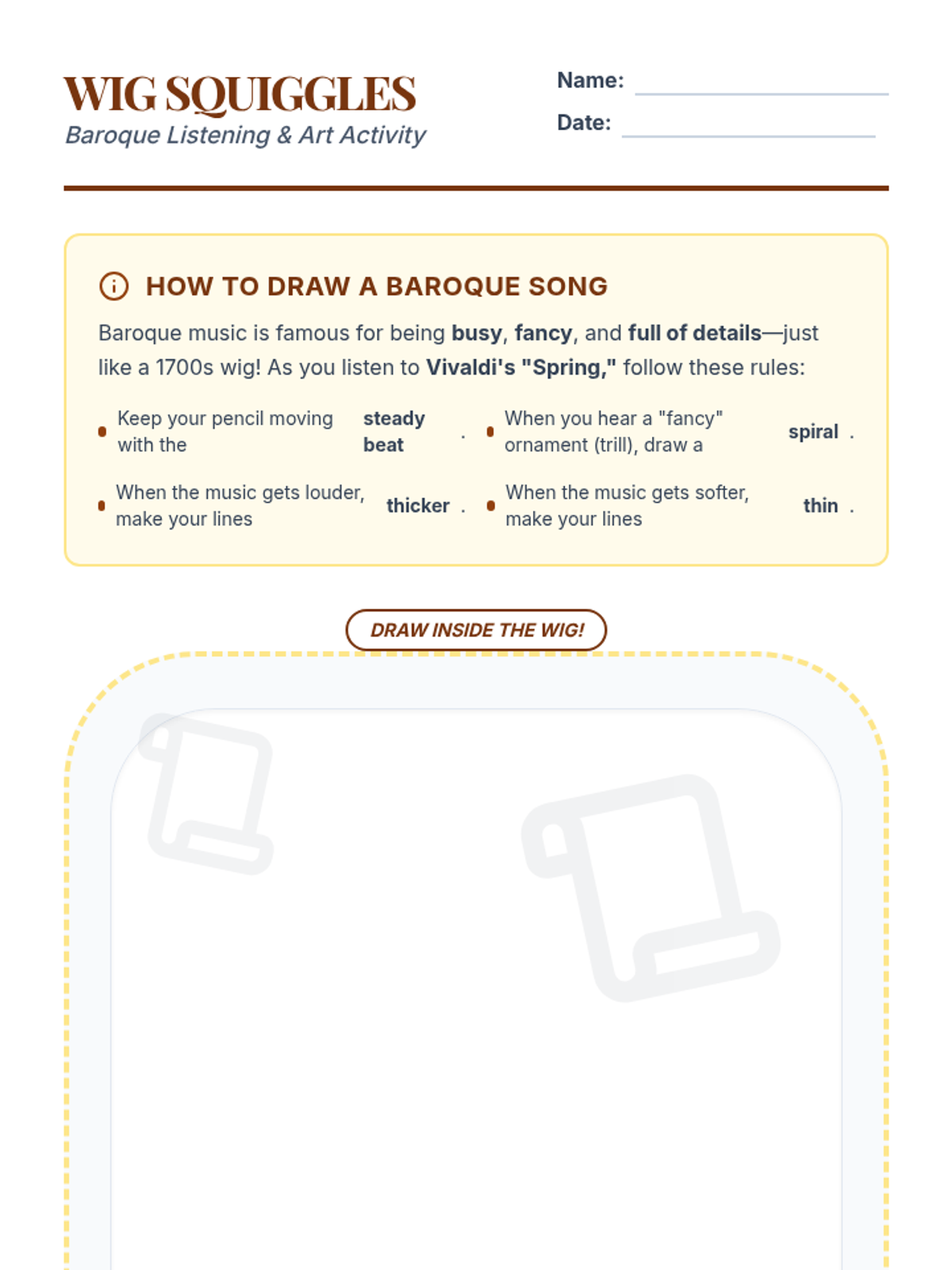
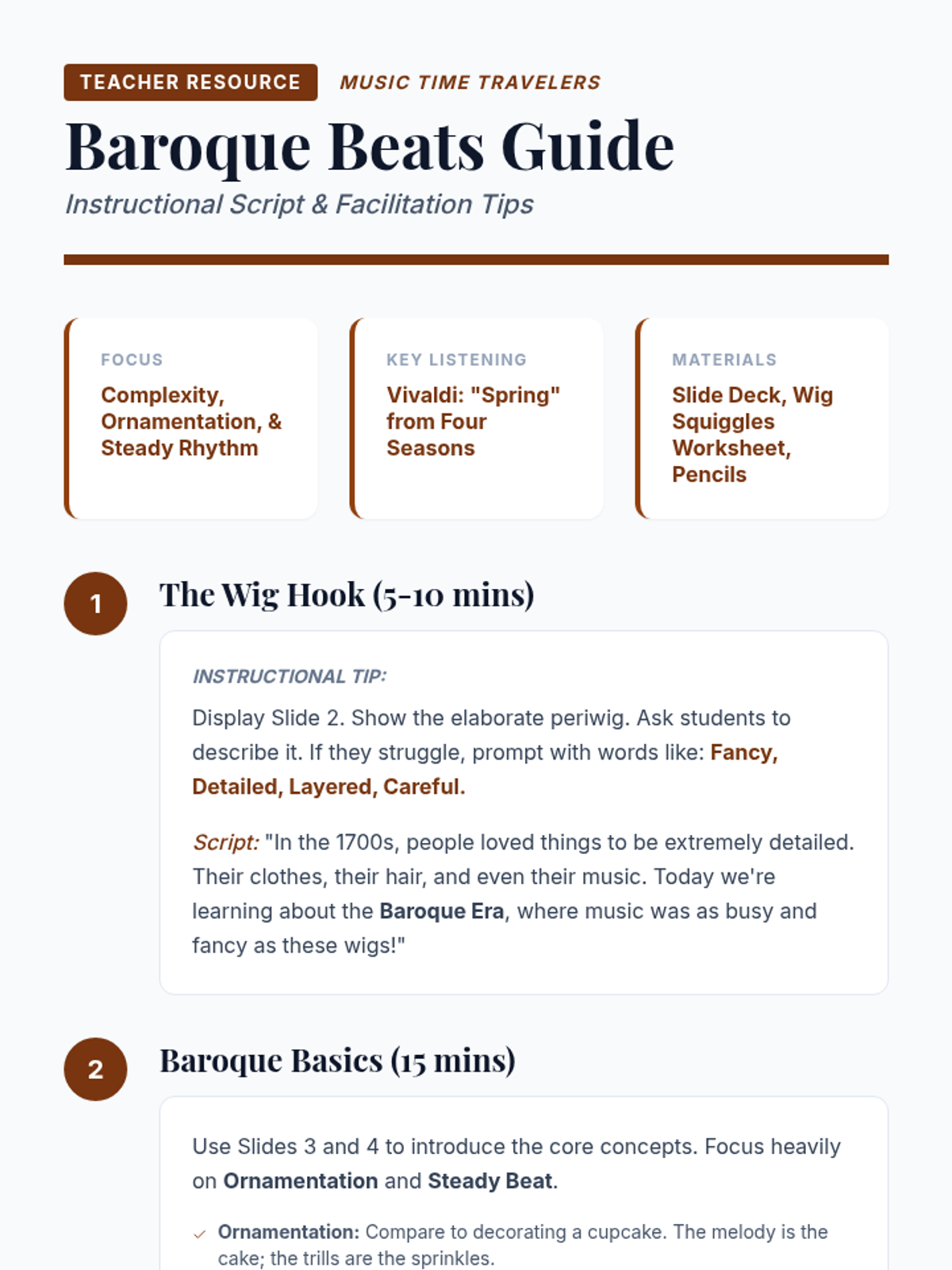
This sequence introduces 4th-grade students to the chronological development of Western Art Music from the Baroque to the Romantic eras, focusing on structural patterns, emotional expression, and instrumentation changes.
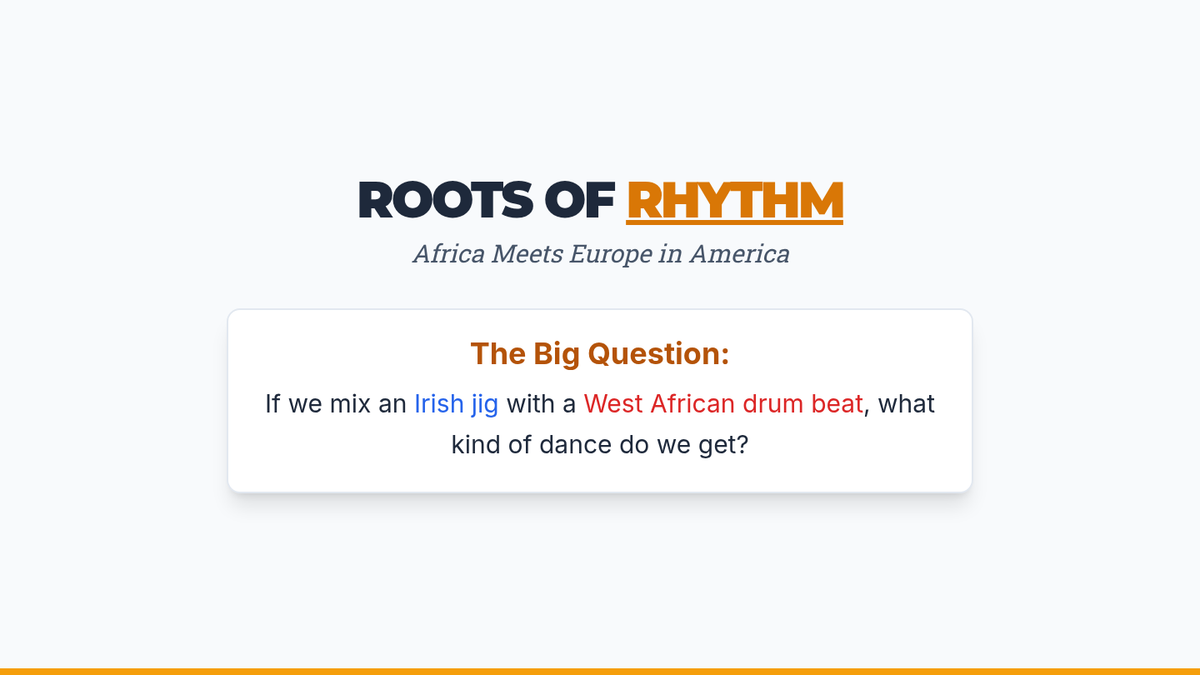
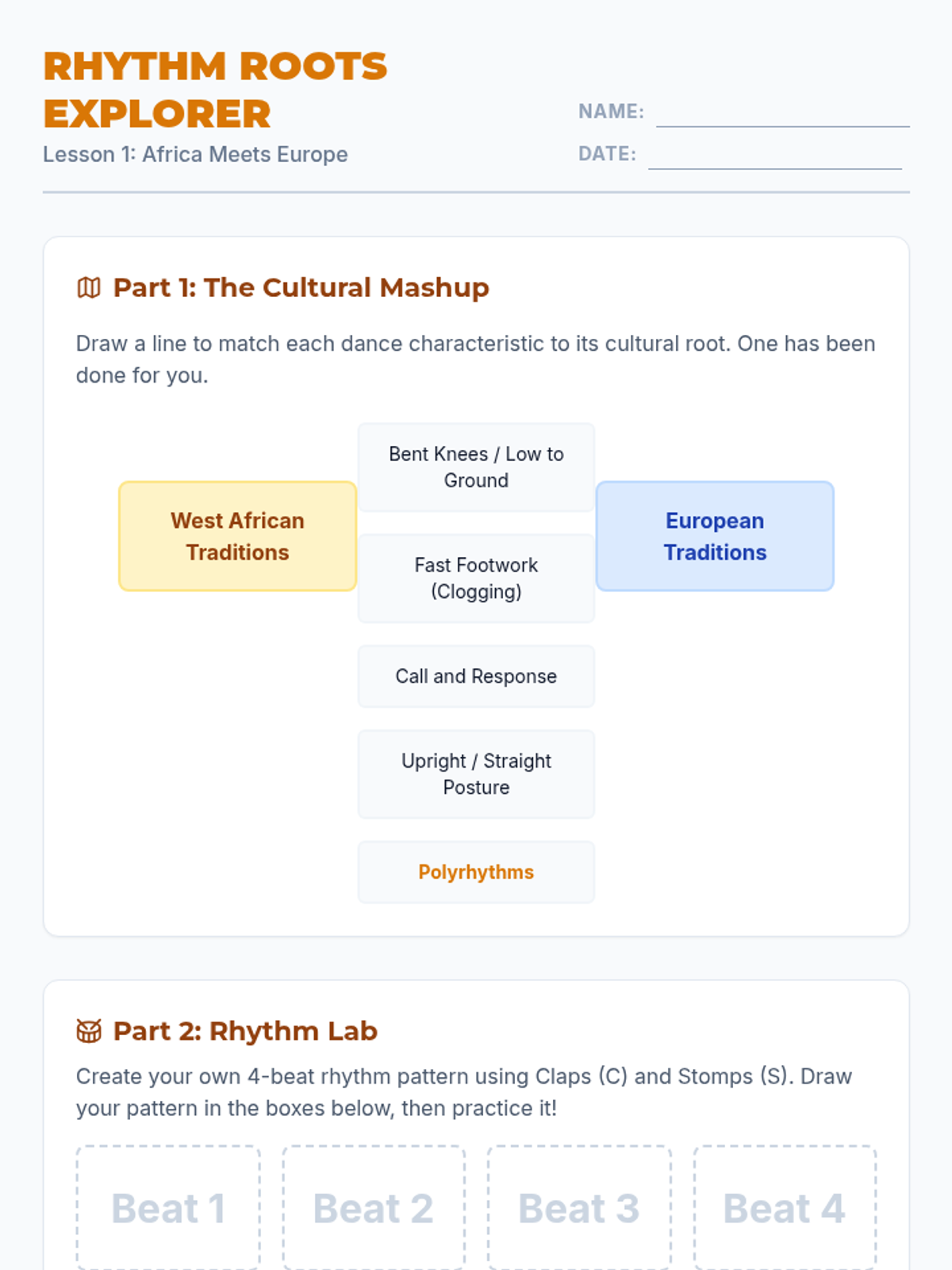
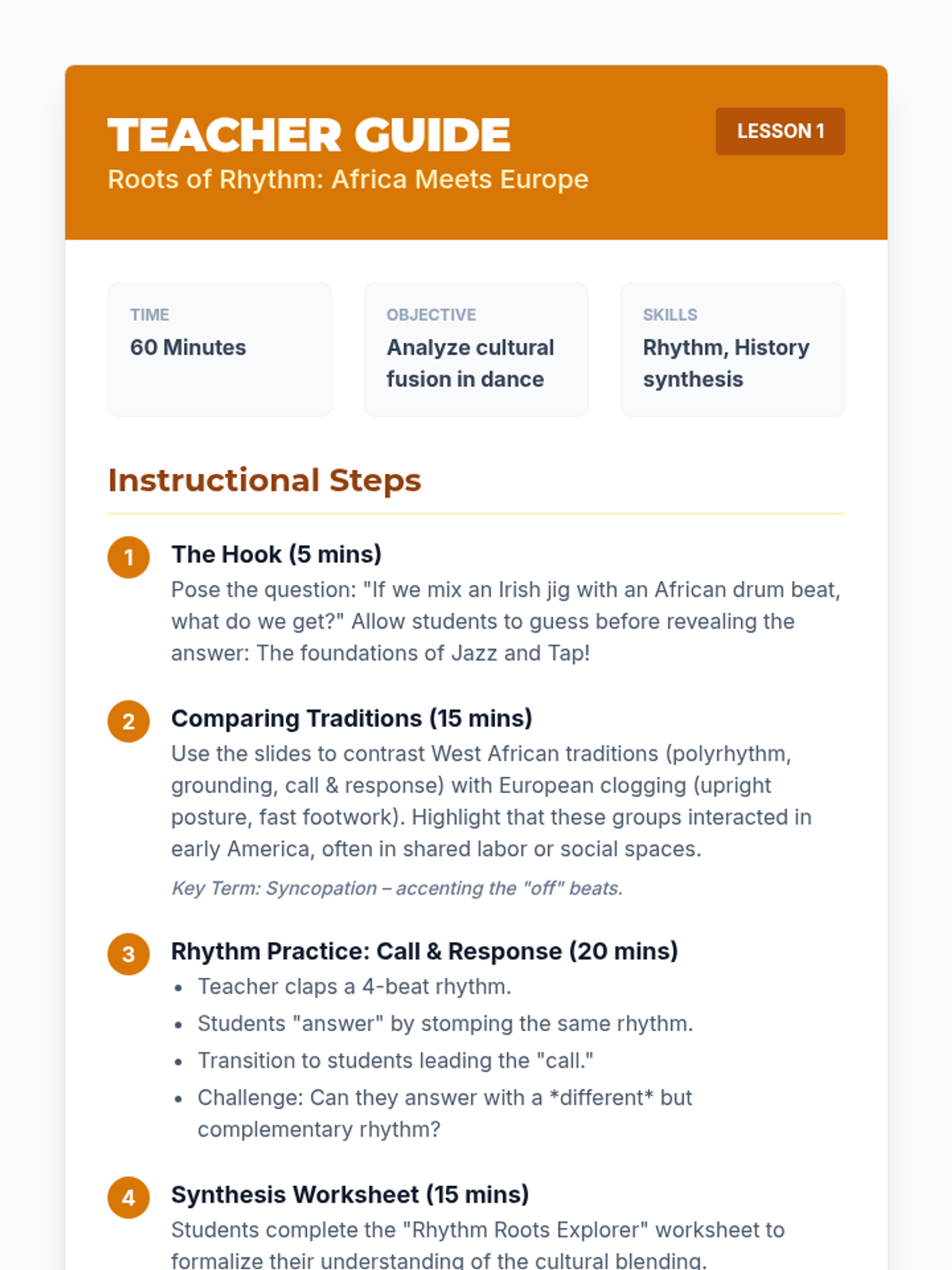
A 5-lesson unit for 4th graders exploring the cultural origins and evolution of American Jazz and Tap dance, from African and European roots to the Harlem Renaissance and Broadway.
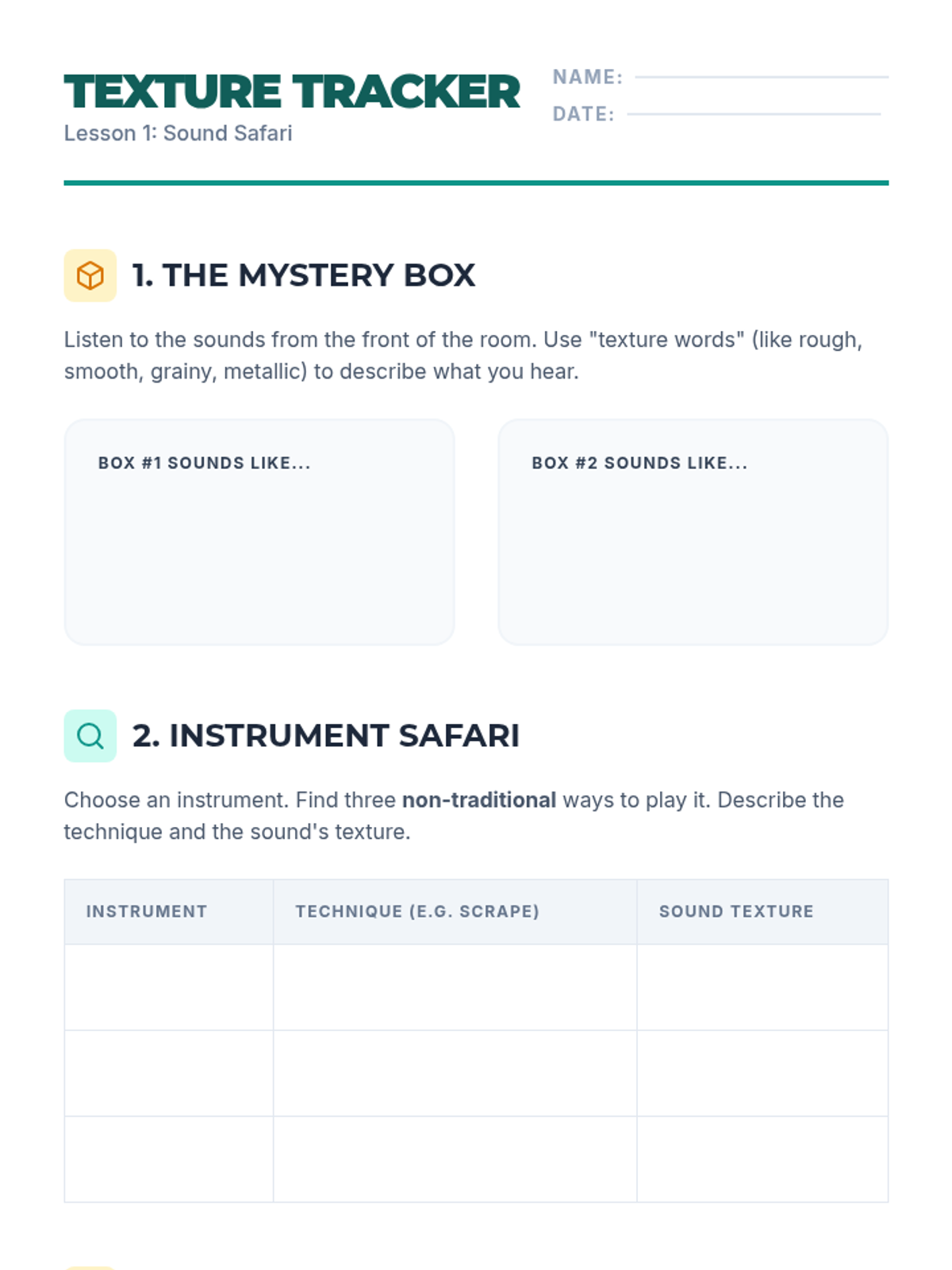
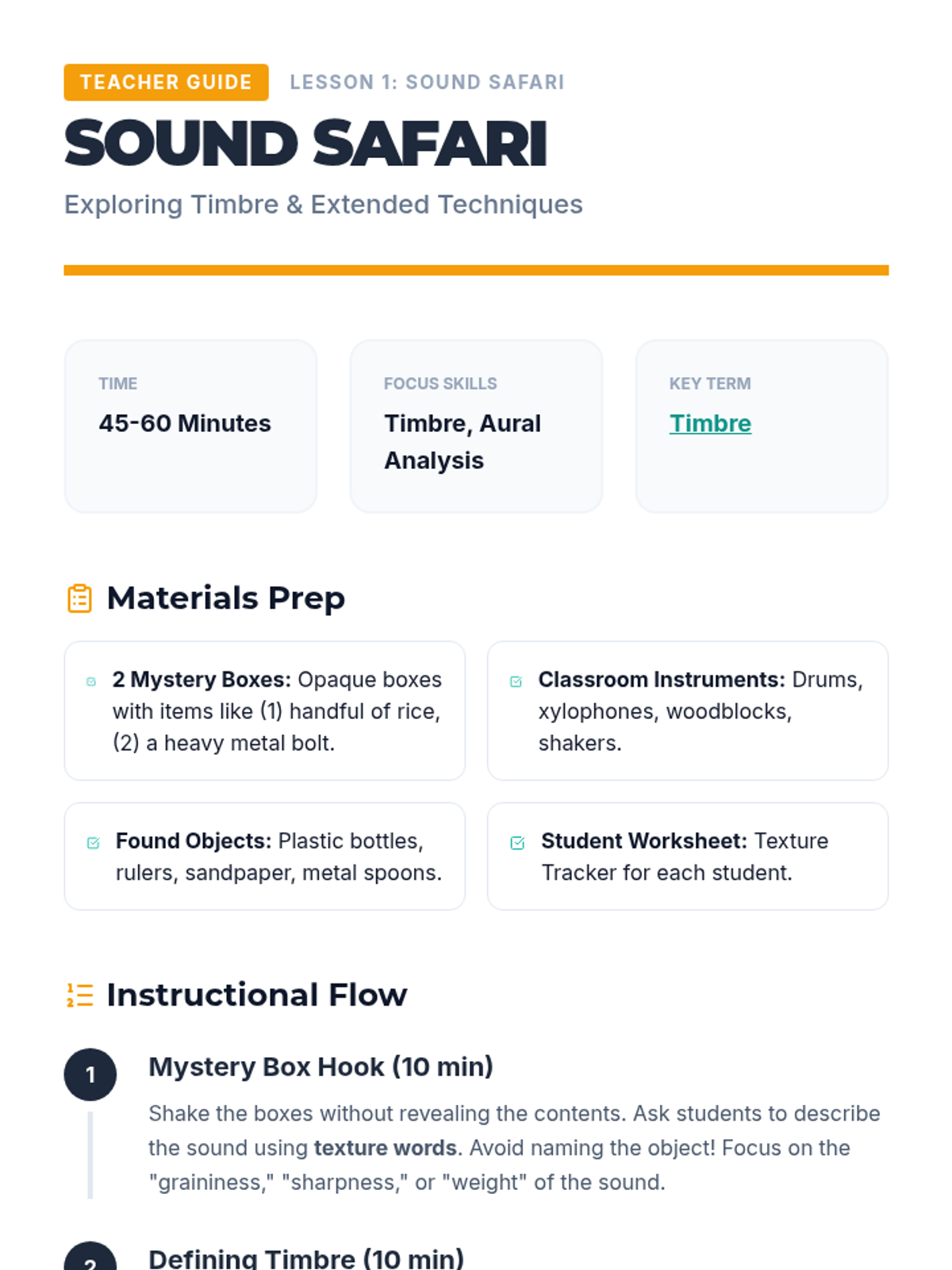
A 5-lesson journey into music composition using graphic notation. Students explore sound textures, invent visual symbols for audio, compose narrative soundscapes, and lead ensembles as conductors.
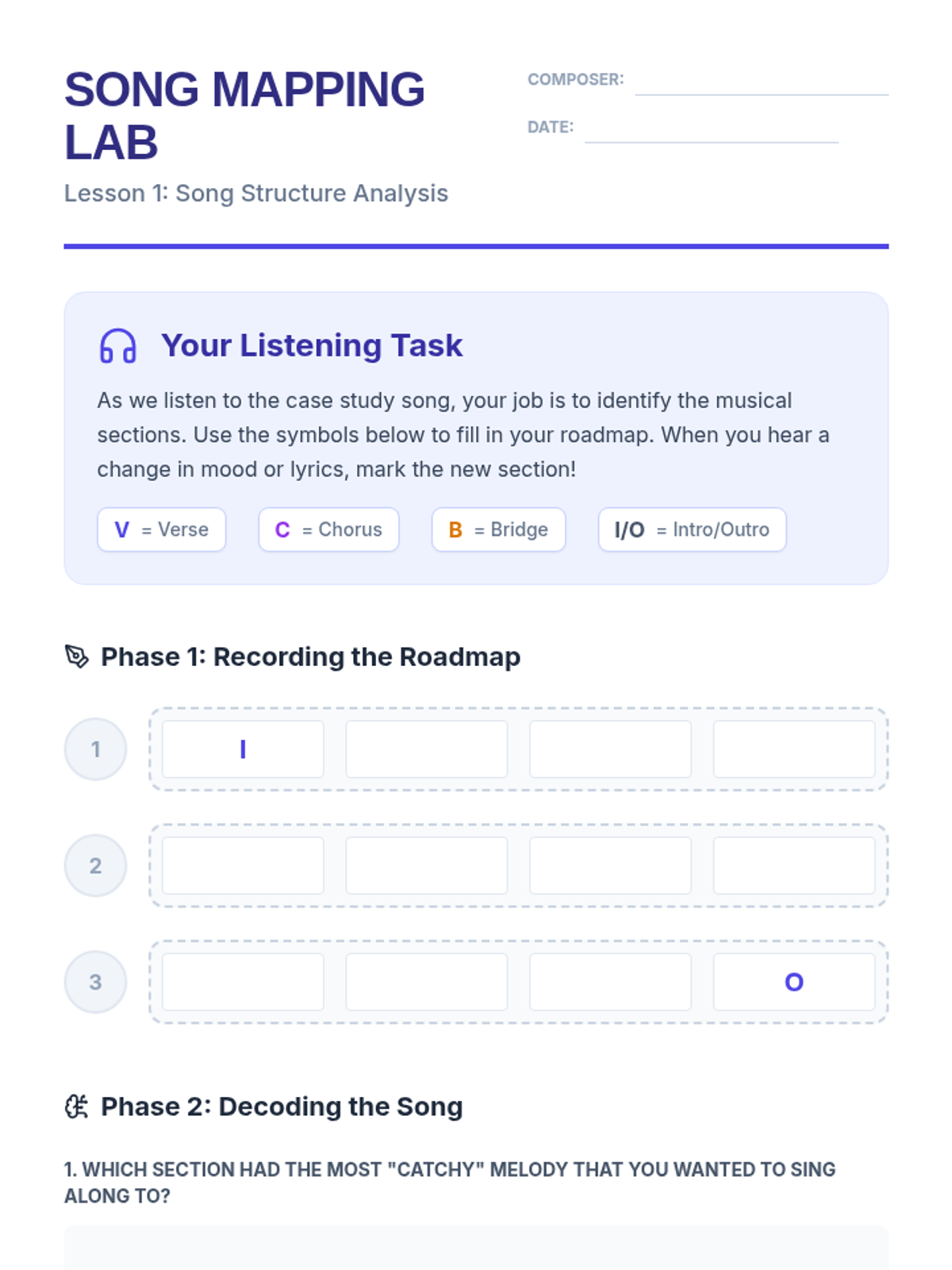
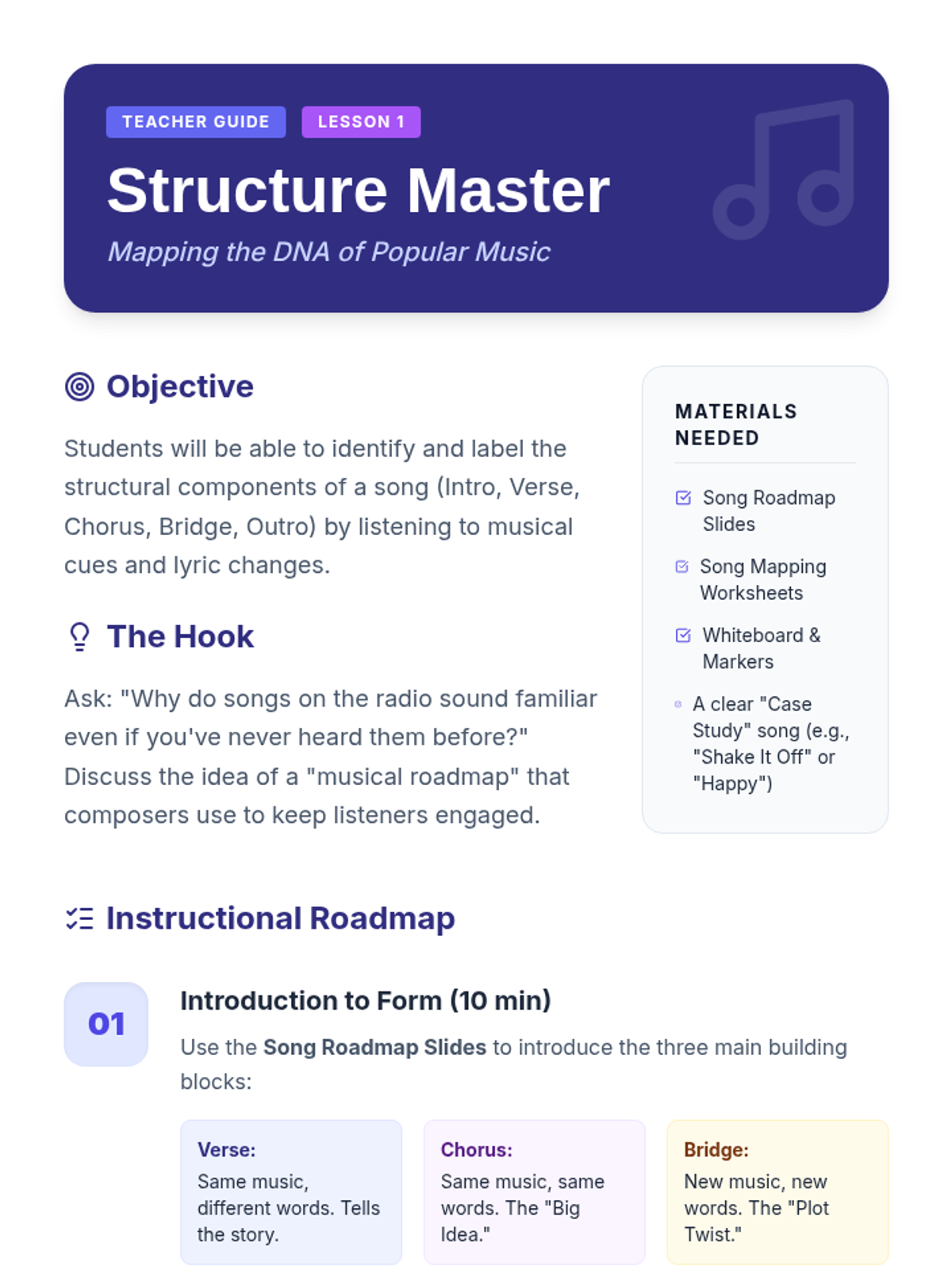
A 4th-grade music sequence that guides students through the songwriting process, from analyzing song forms to composing original lyrics and adding harmonic accompaniment. Students explore the synergy between storytelling and musical structure.
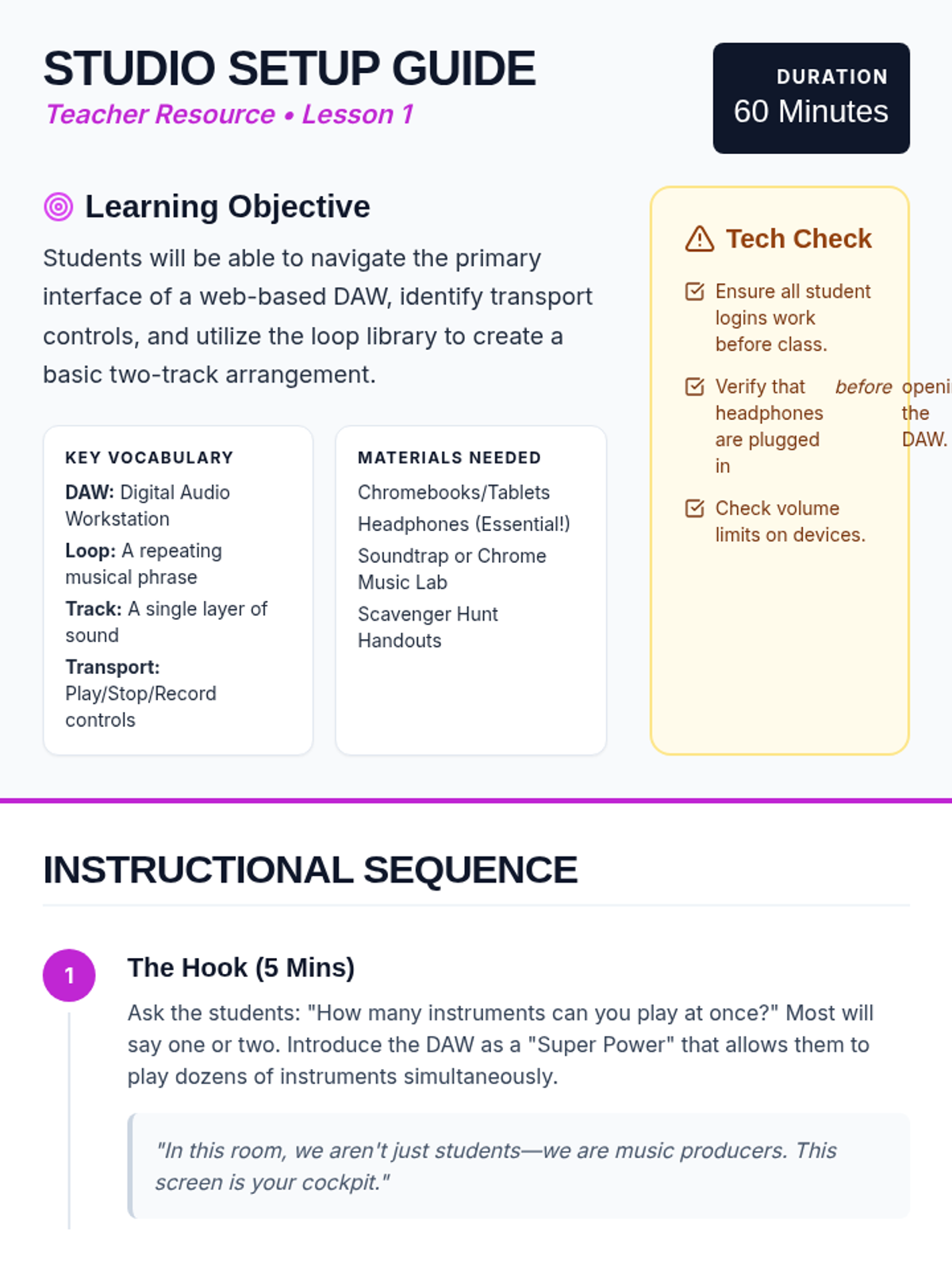
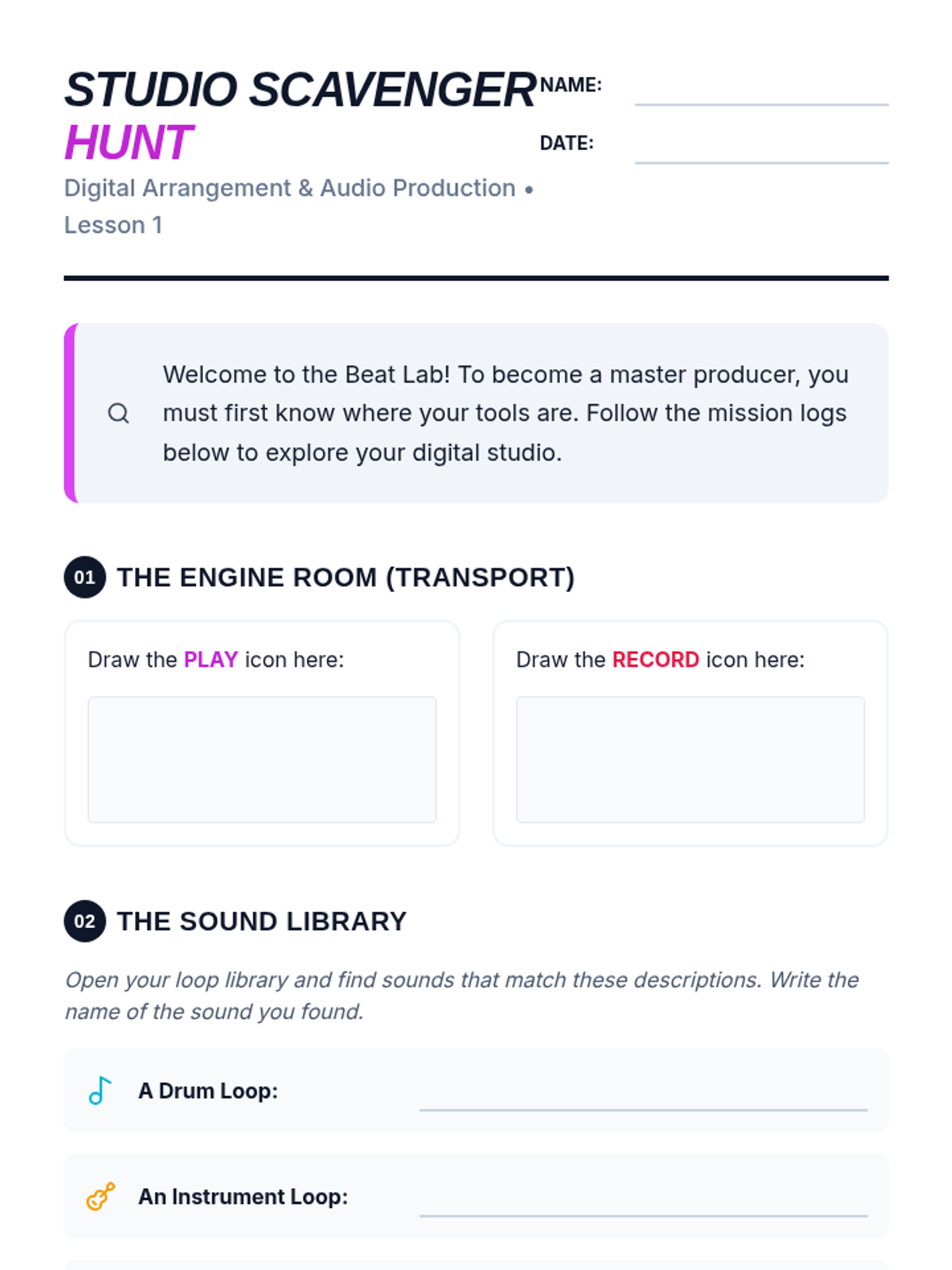
A 4th-grade music production unit where students use digital audio workstations (DAWs) to compose, arrange, and mix original music. Students learn about timbre, texture, song structure, and digital literacy through the lens of a modern music producer.
A comprehensive 5-lesson sequence for 4th graders exploring melodic construction, the pentatonic scale, and standard music notation through the lens of 'musical cartography'. Students learn to read, improvise, and eventually compose and perform their own 4-measure melodies.
A comprehensive 4th-grade music sequence focusing on pulse, subdivision, ostinato creation, graphic notation, and ensemble layering. Students progress from basic beat maintenance to performing complex, multi-layered percussion compositions.
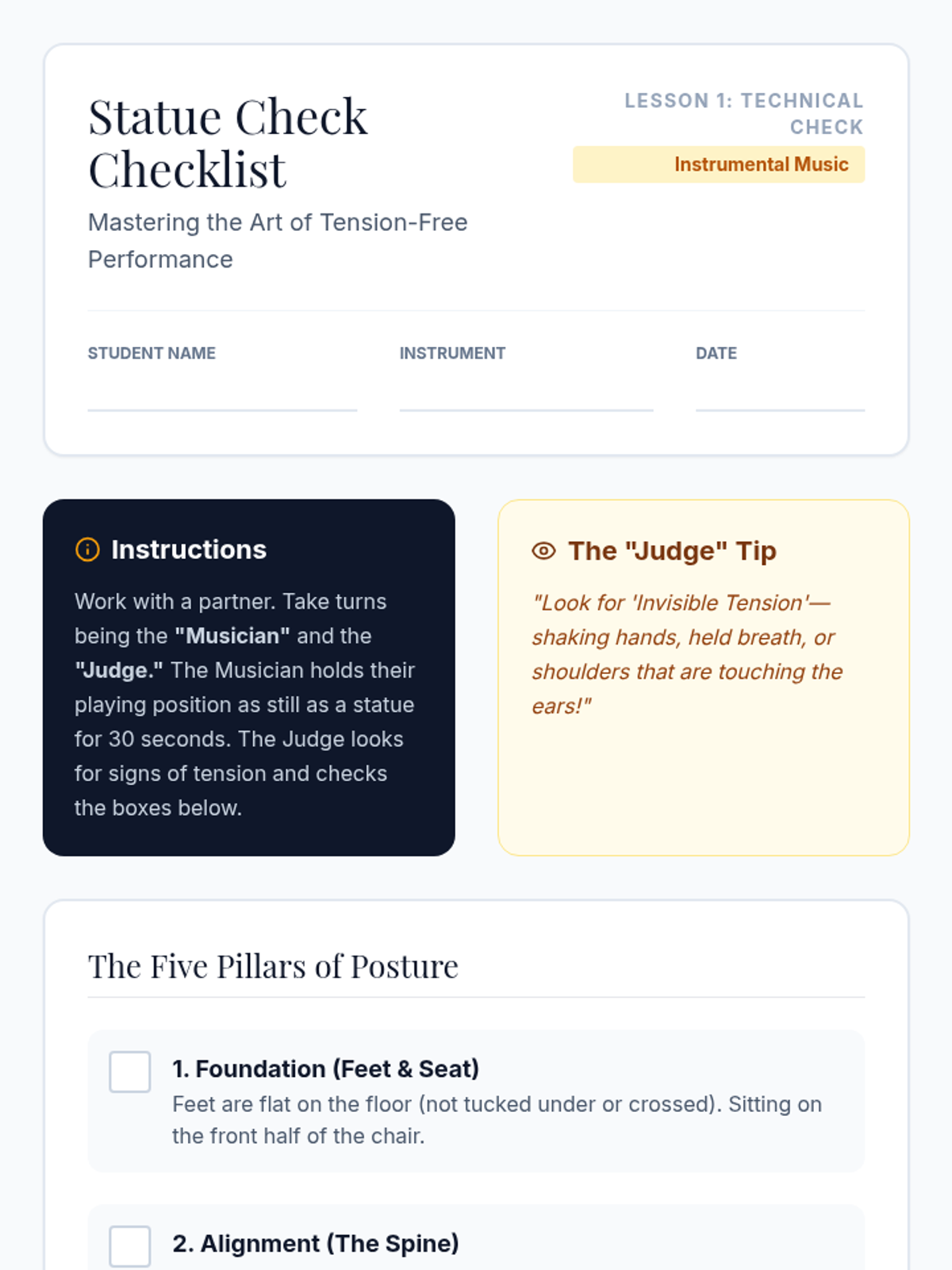
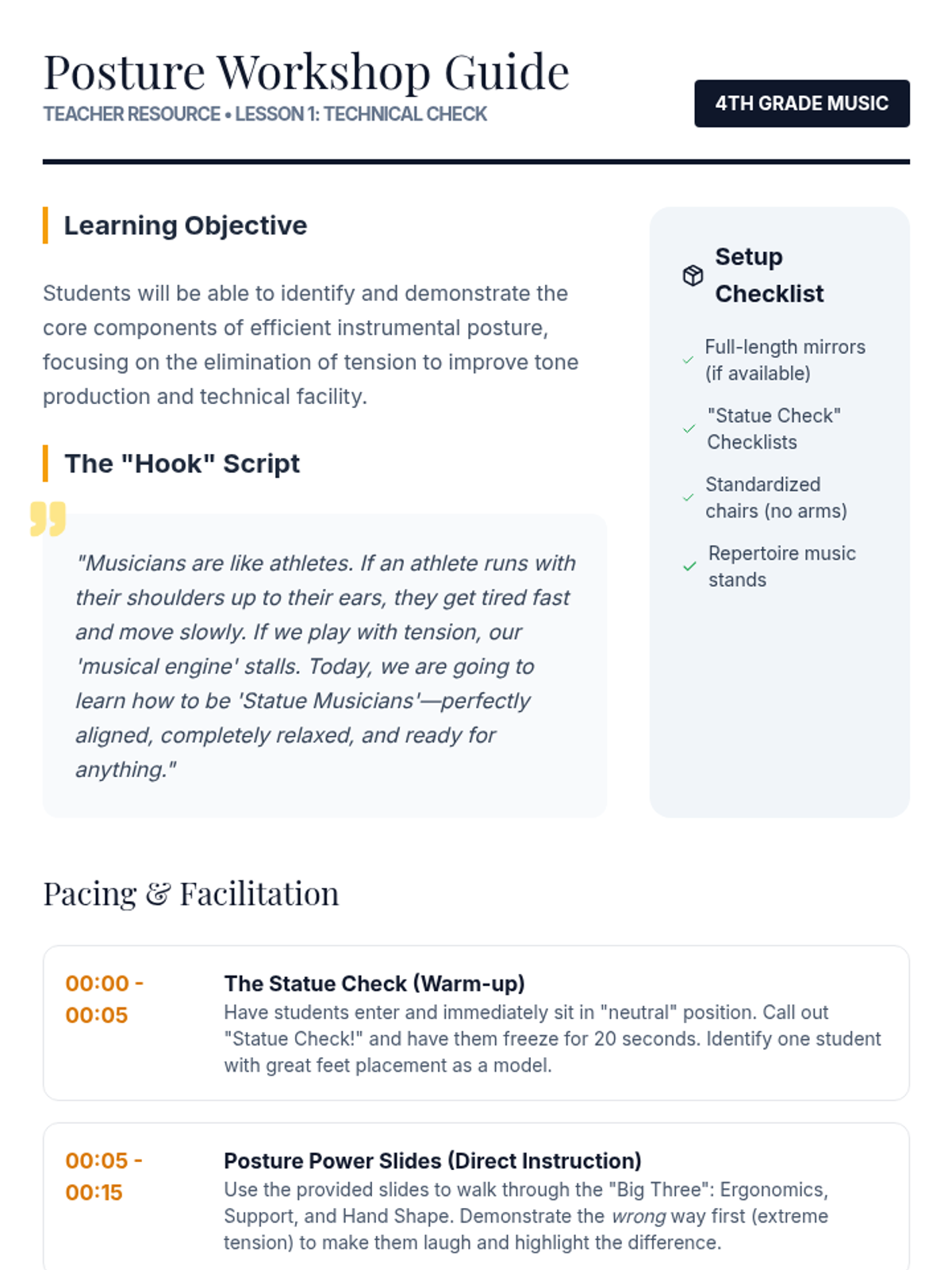
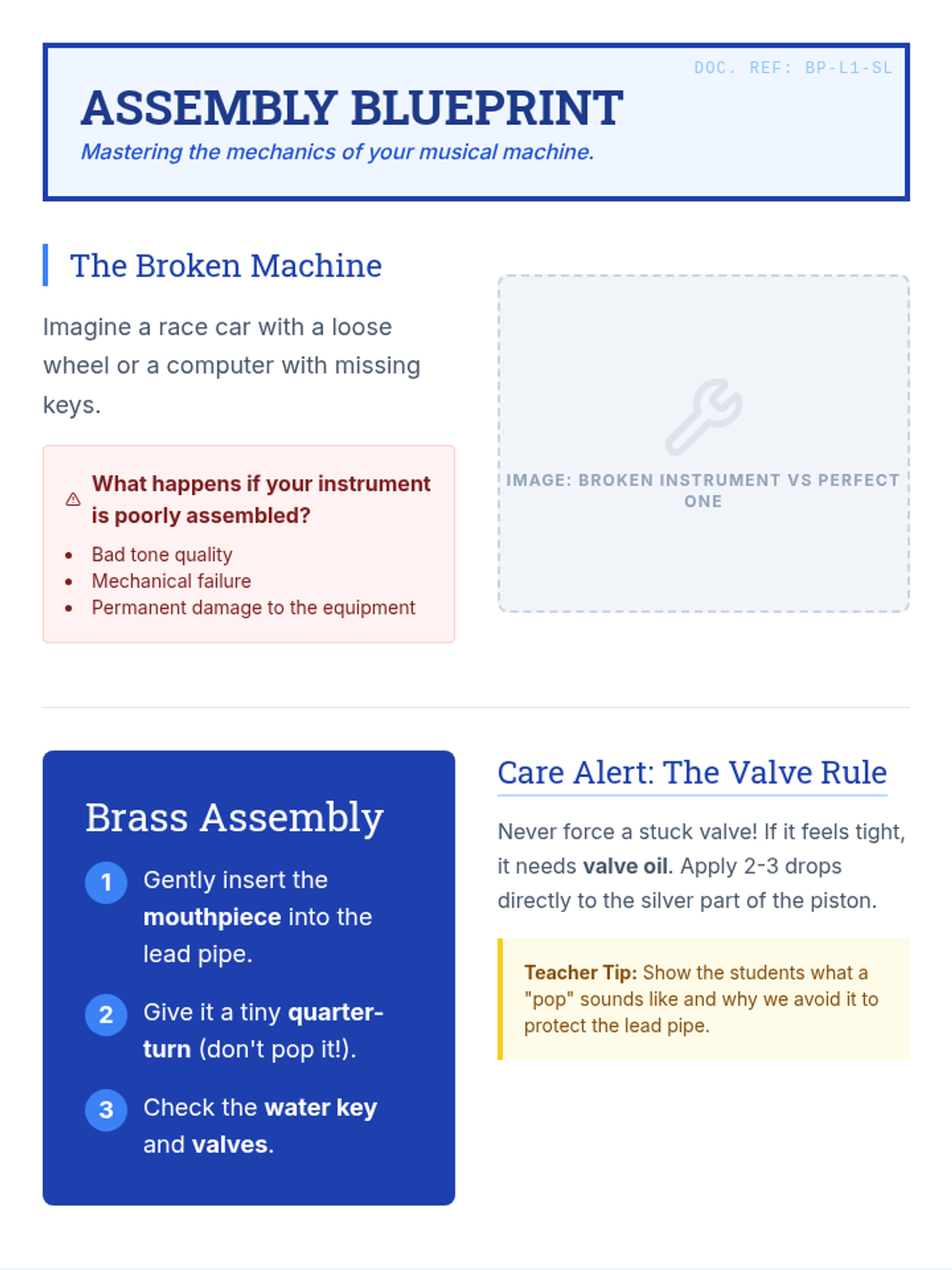
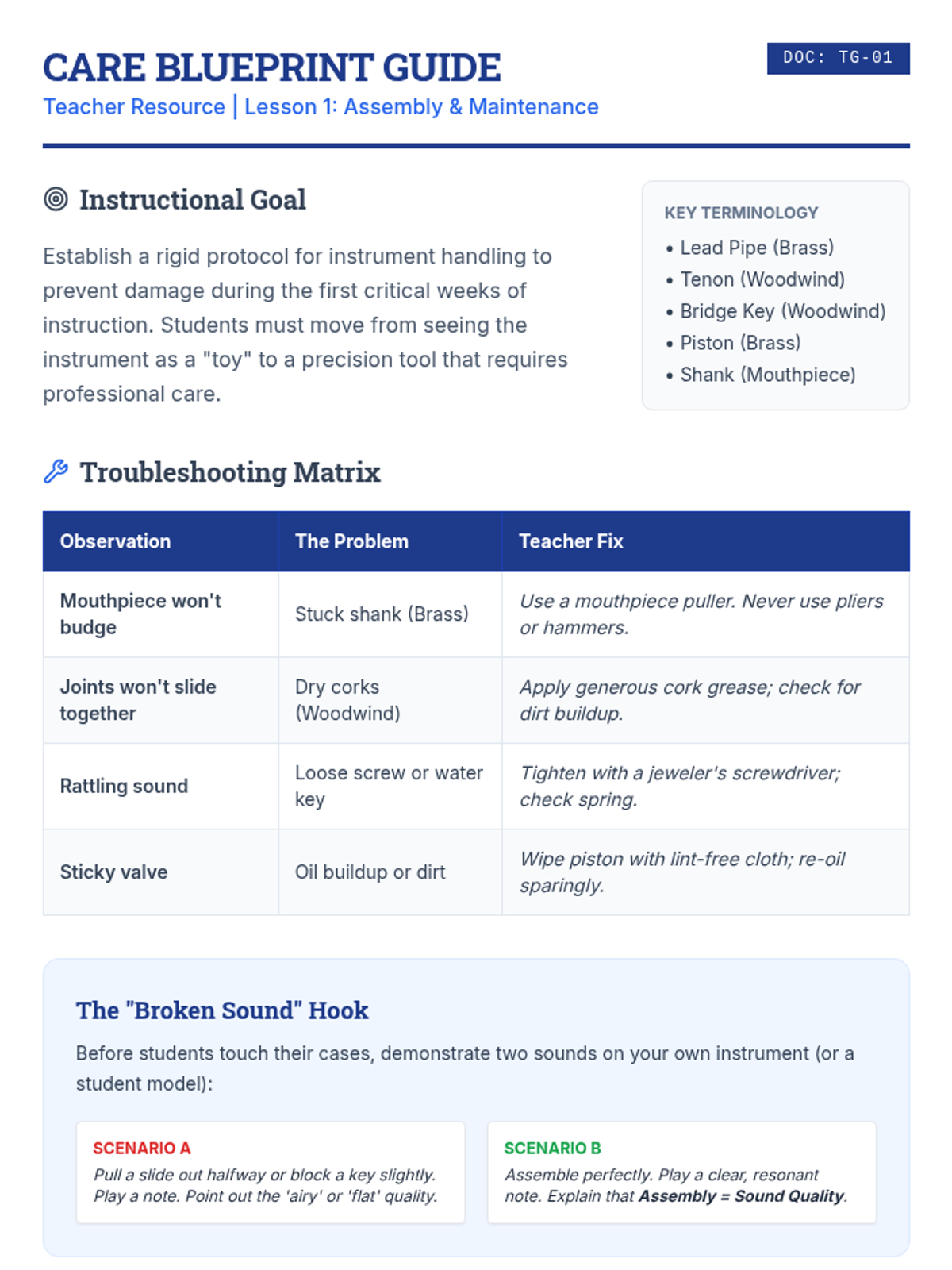
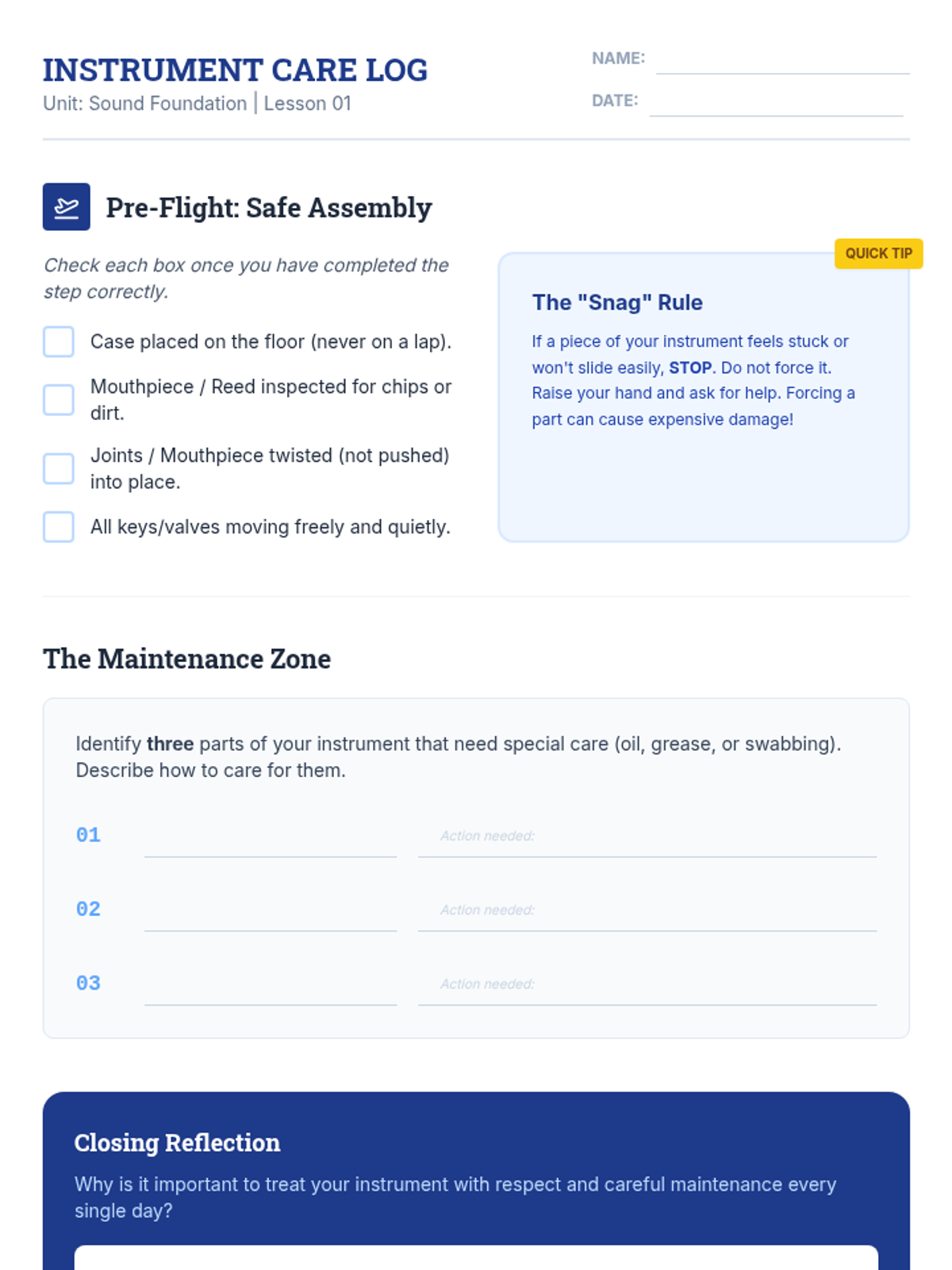
This foundational workshop for beginning instrumentalists focuses on the physical mechanics of playing, from assembly to tone production. Students master the physical techniques required to produce a characteristic sound on their specific instrument through hands-on practice and technical drills.