Techniques for brainstorming, collaborative project management, and individual artistic expression. Guides students through the iterative creative process from initial concept to final execution.
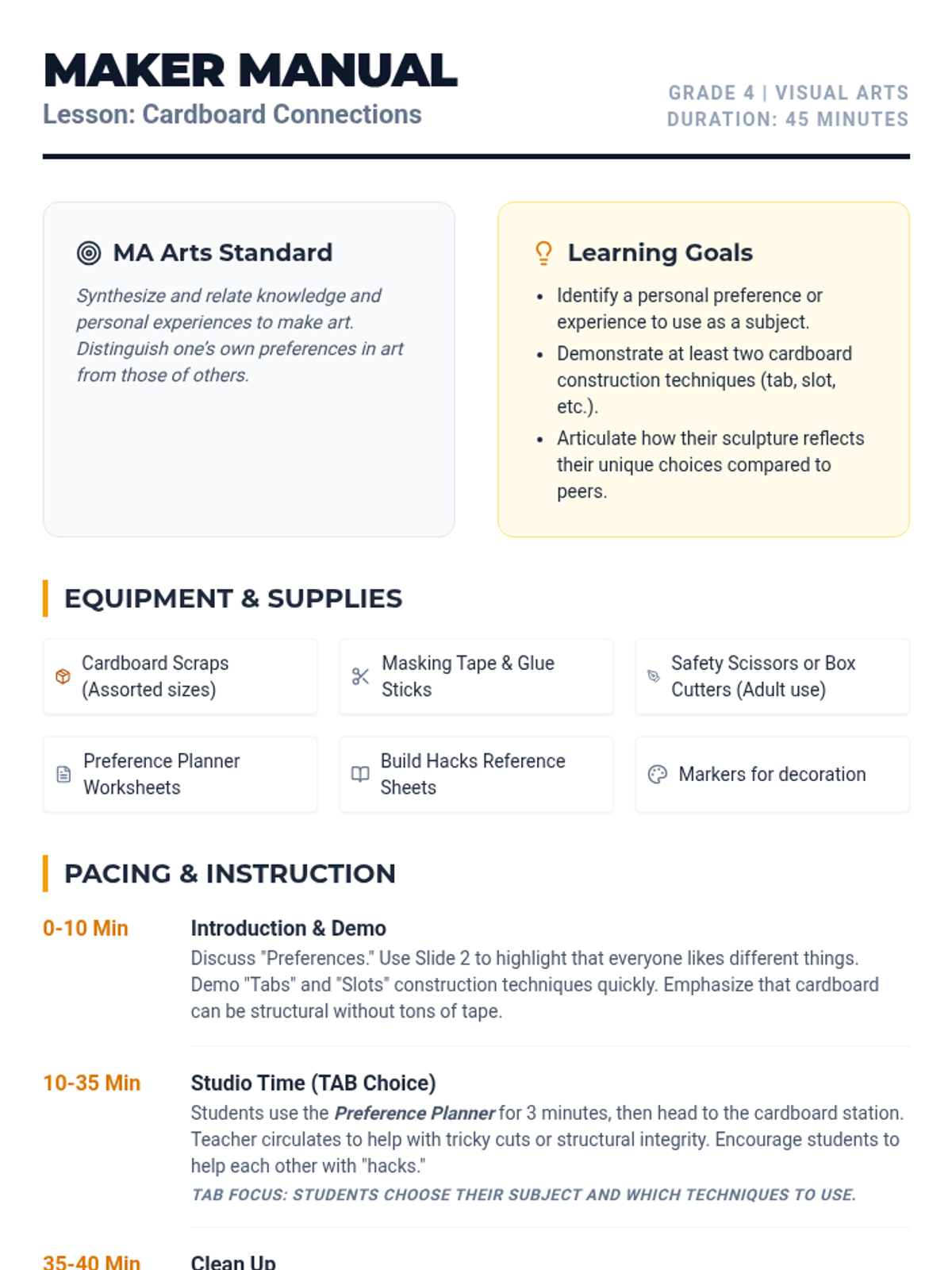
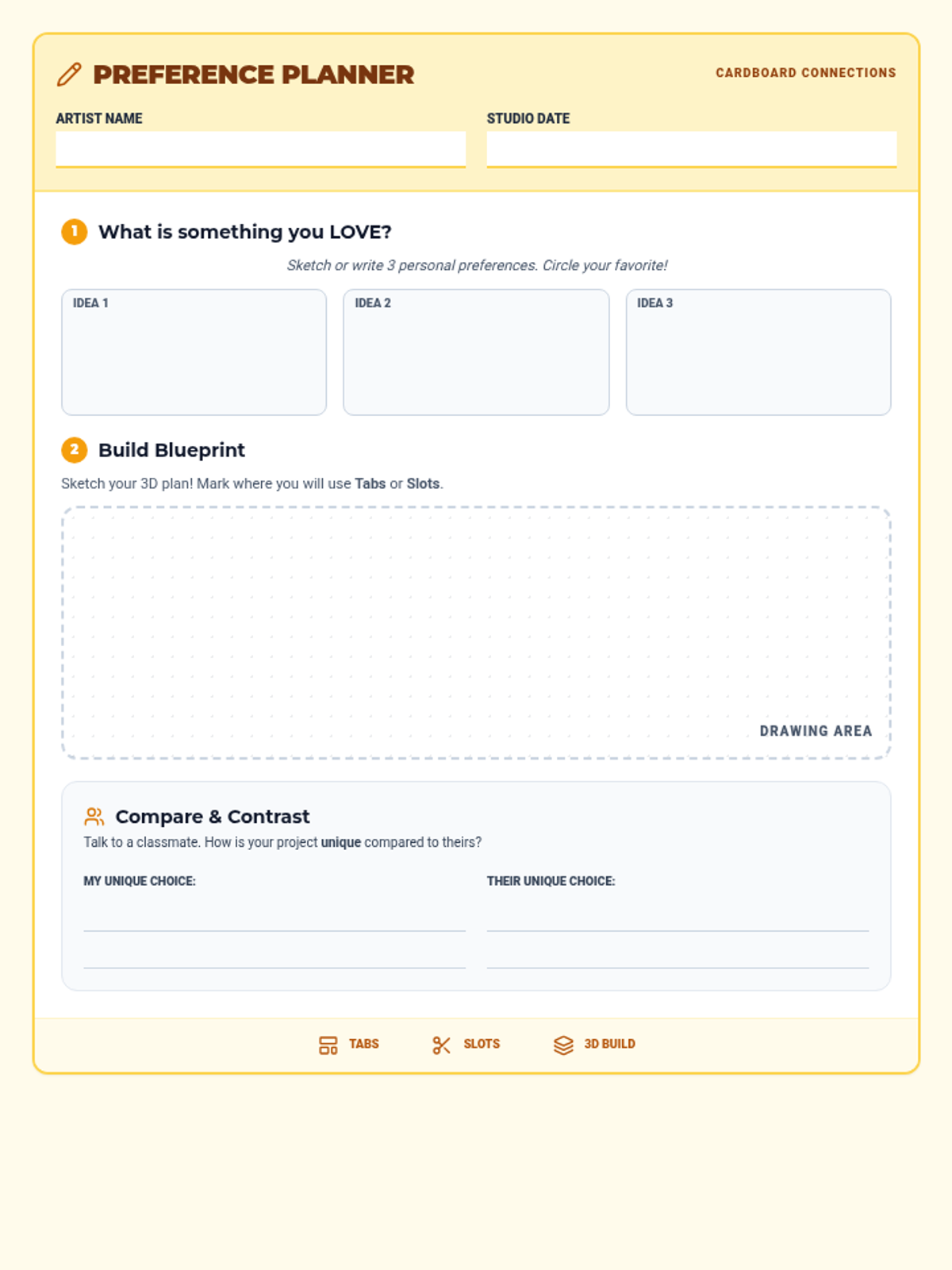
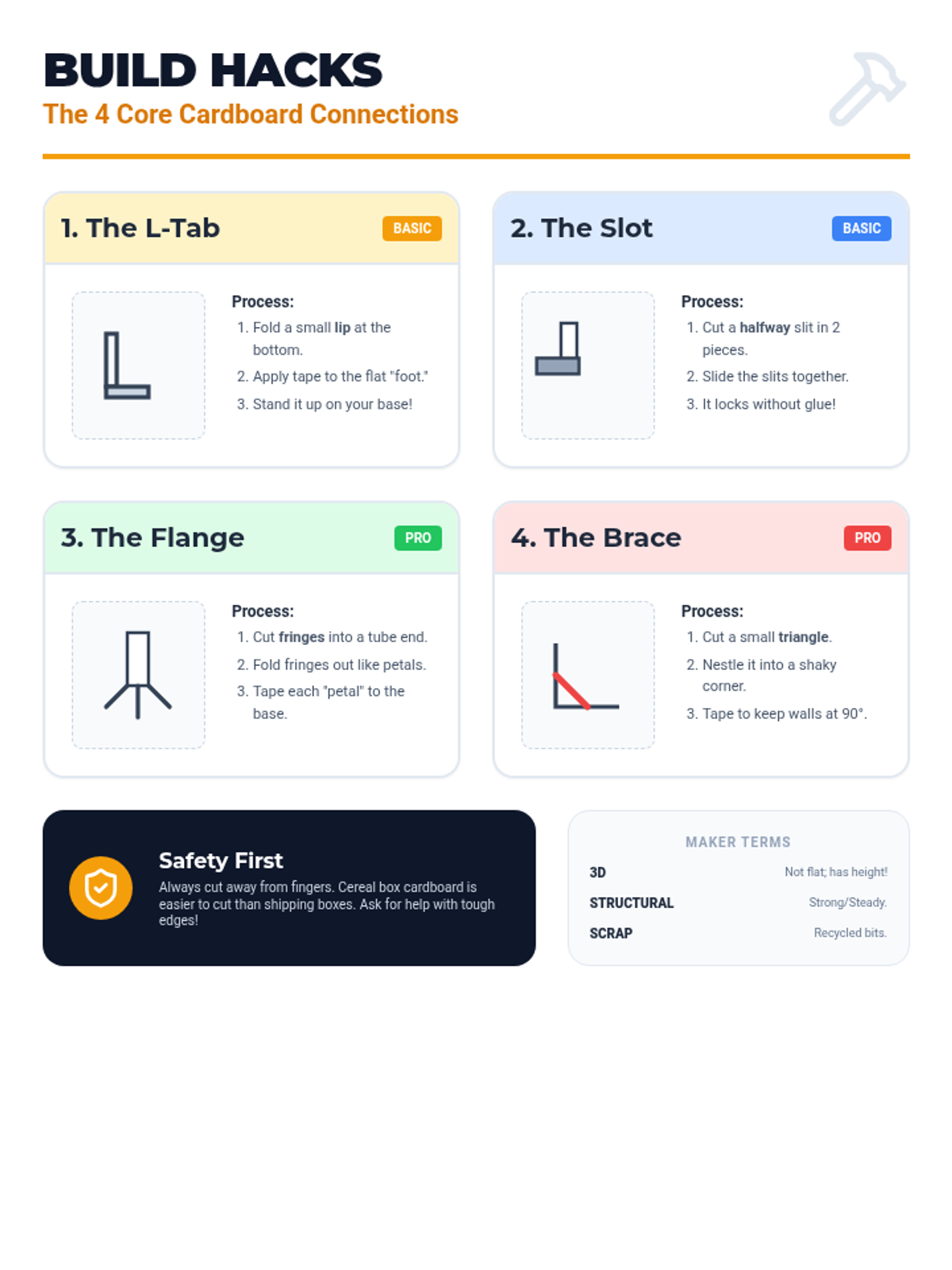
A series of lessons focused on personal expression through diverse media, starting with structural exploration in cardboard. Students learn to translate their unique interests and preferences into three-dimensional forms.
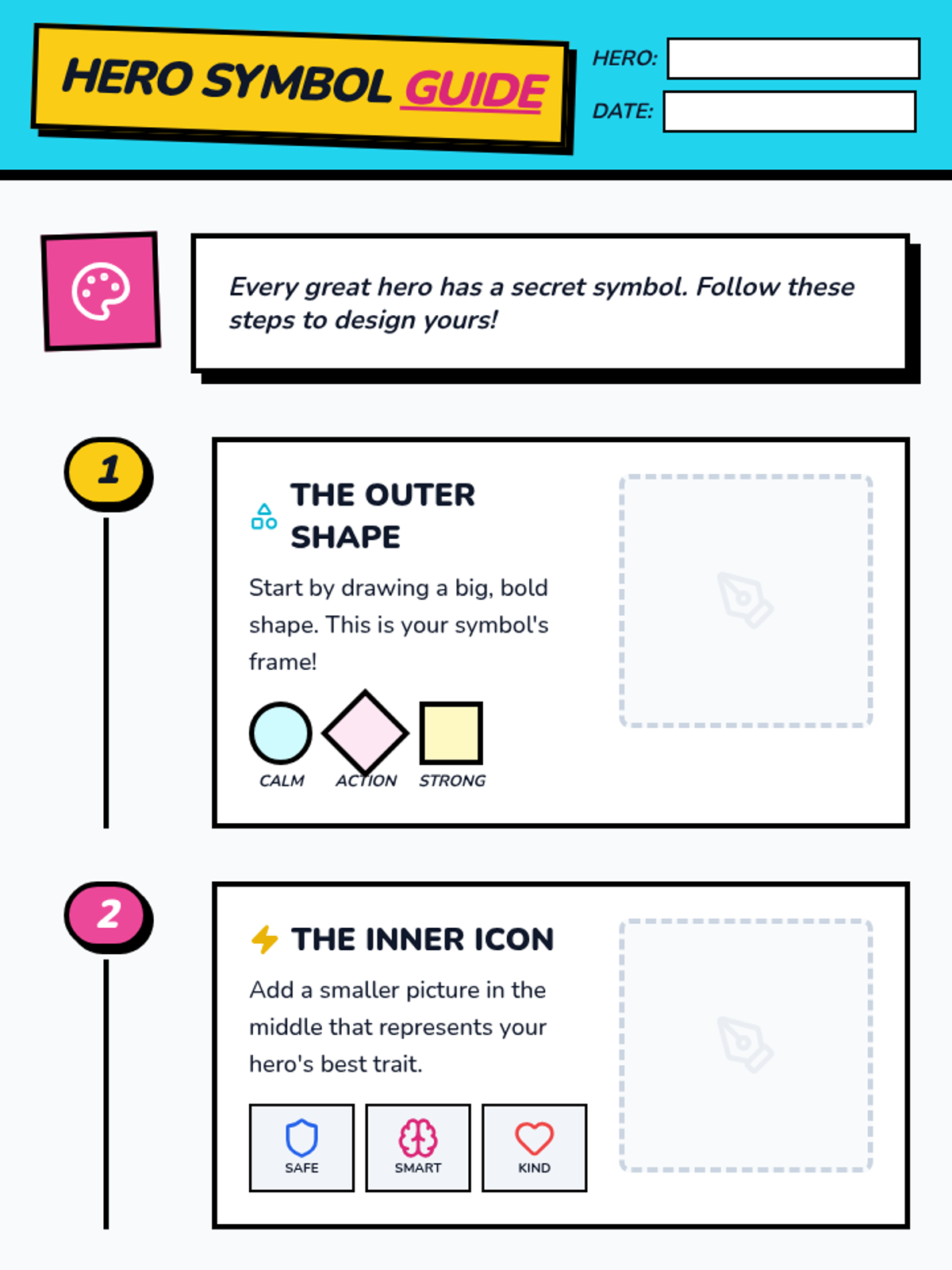
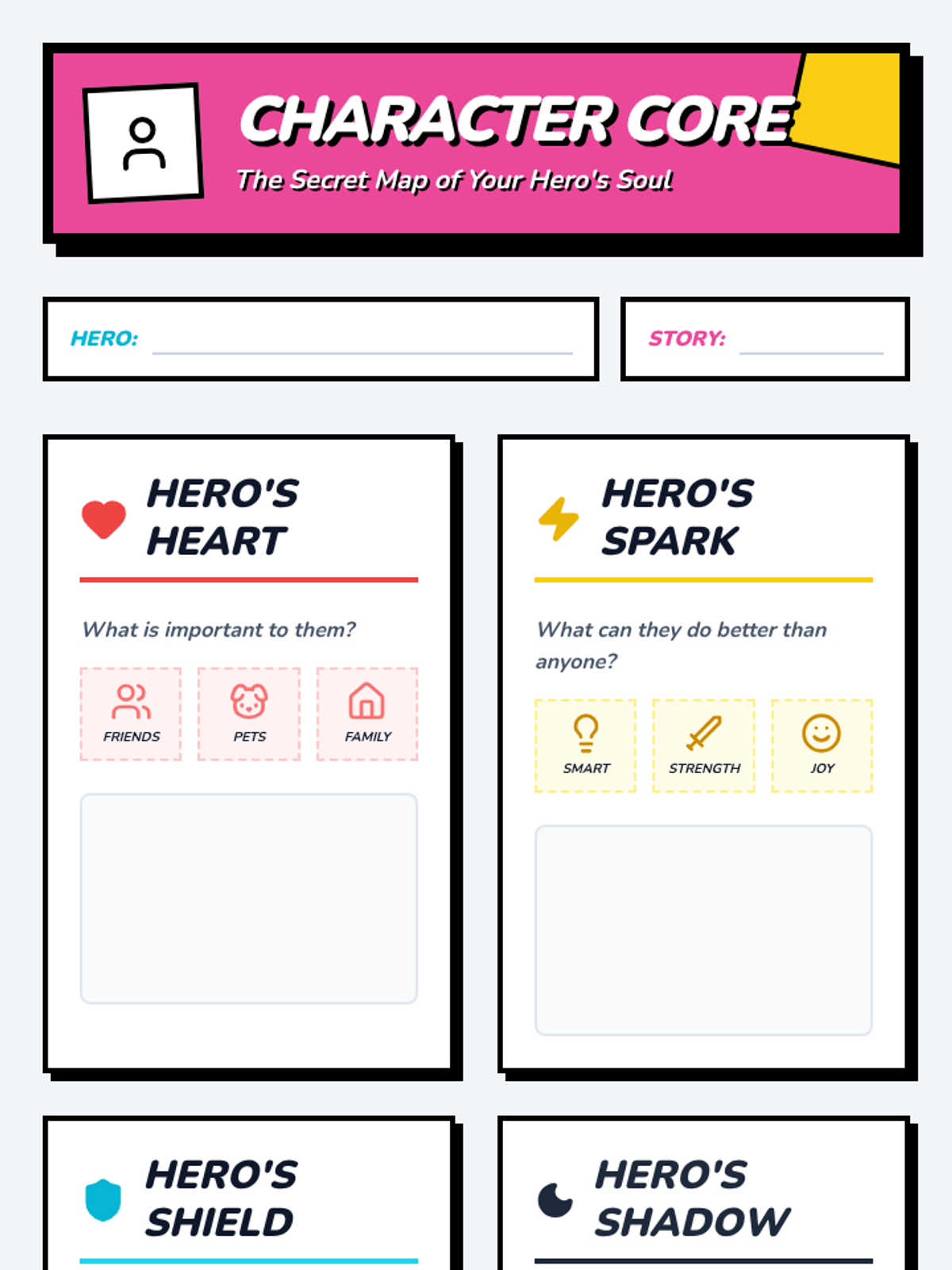
A creative exploration of graphic novel elements, focusing on visual storytelling, character depth, and symbolic representation.
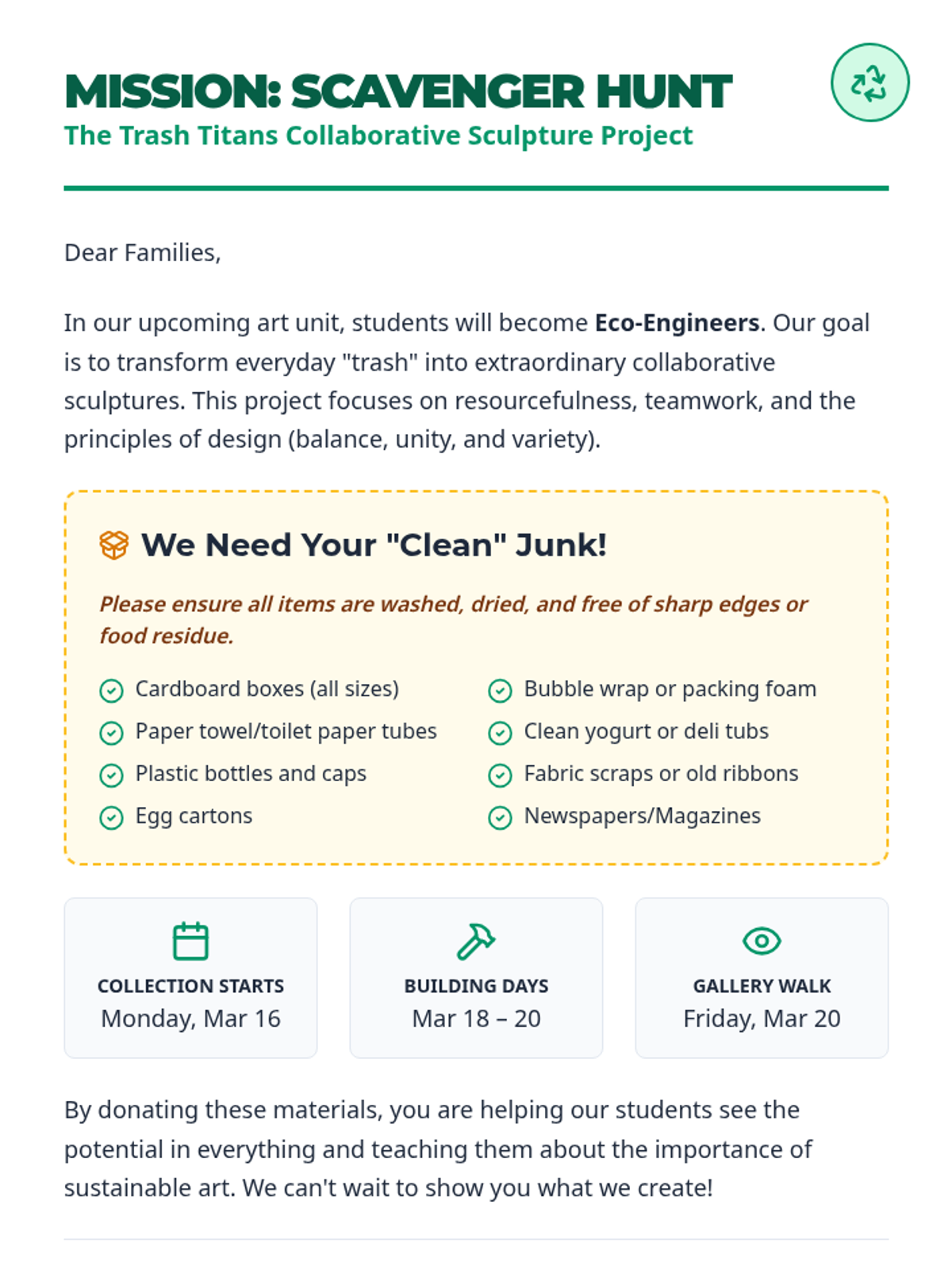
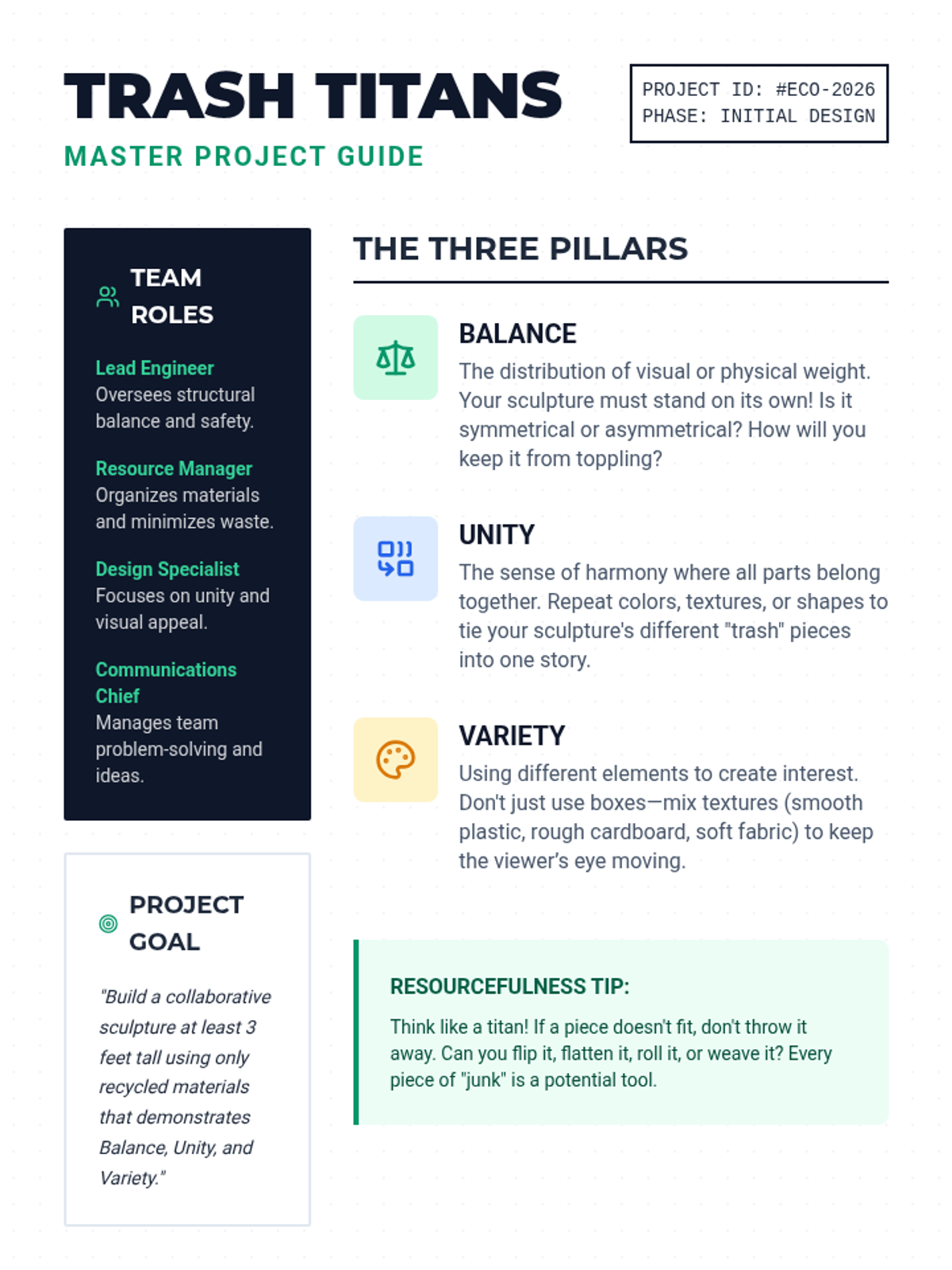
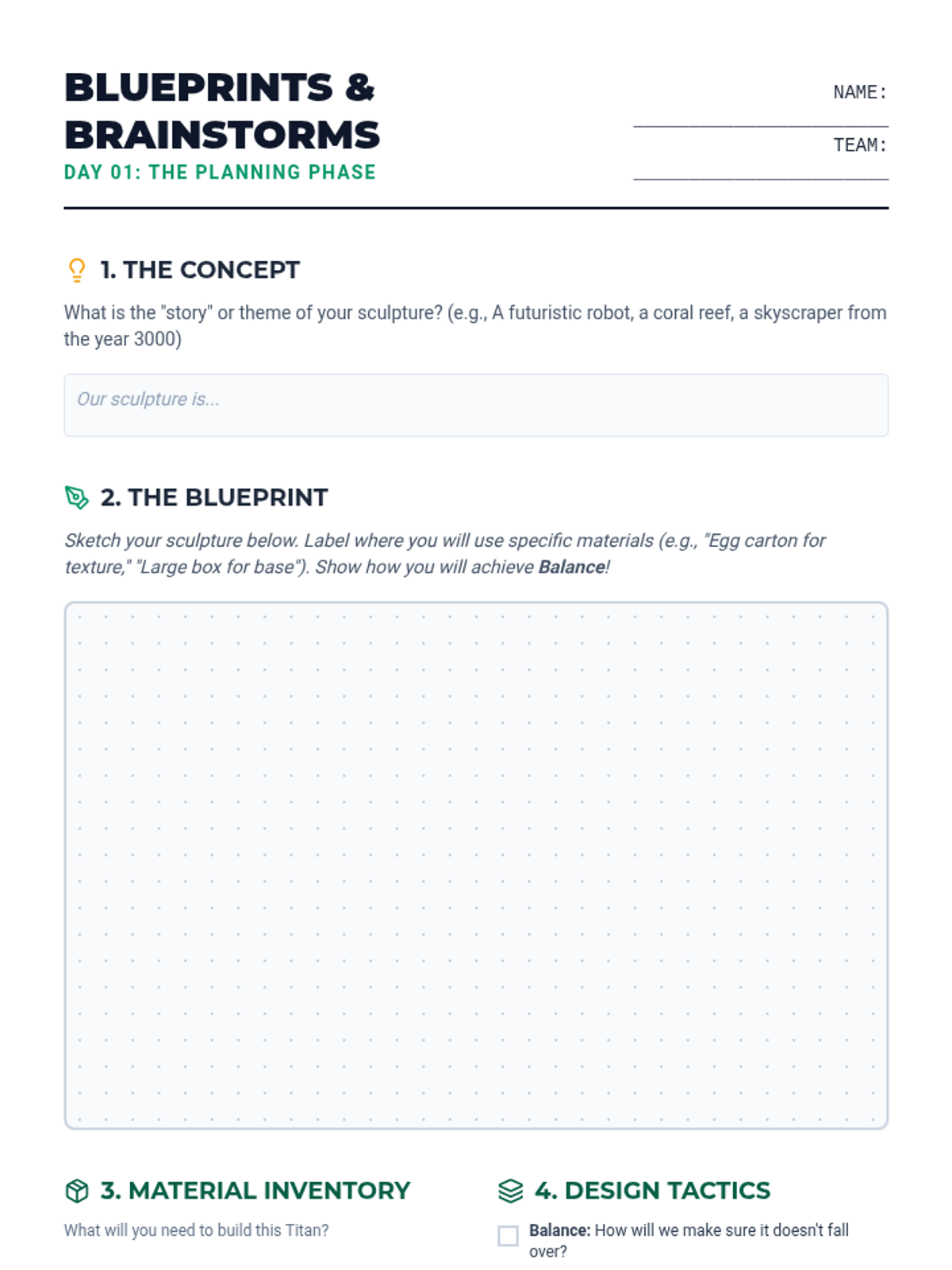
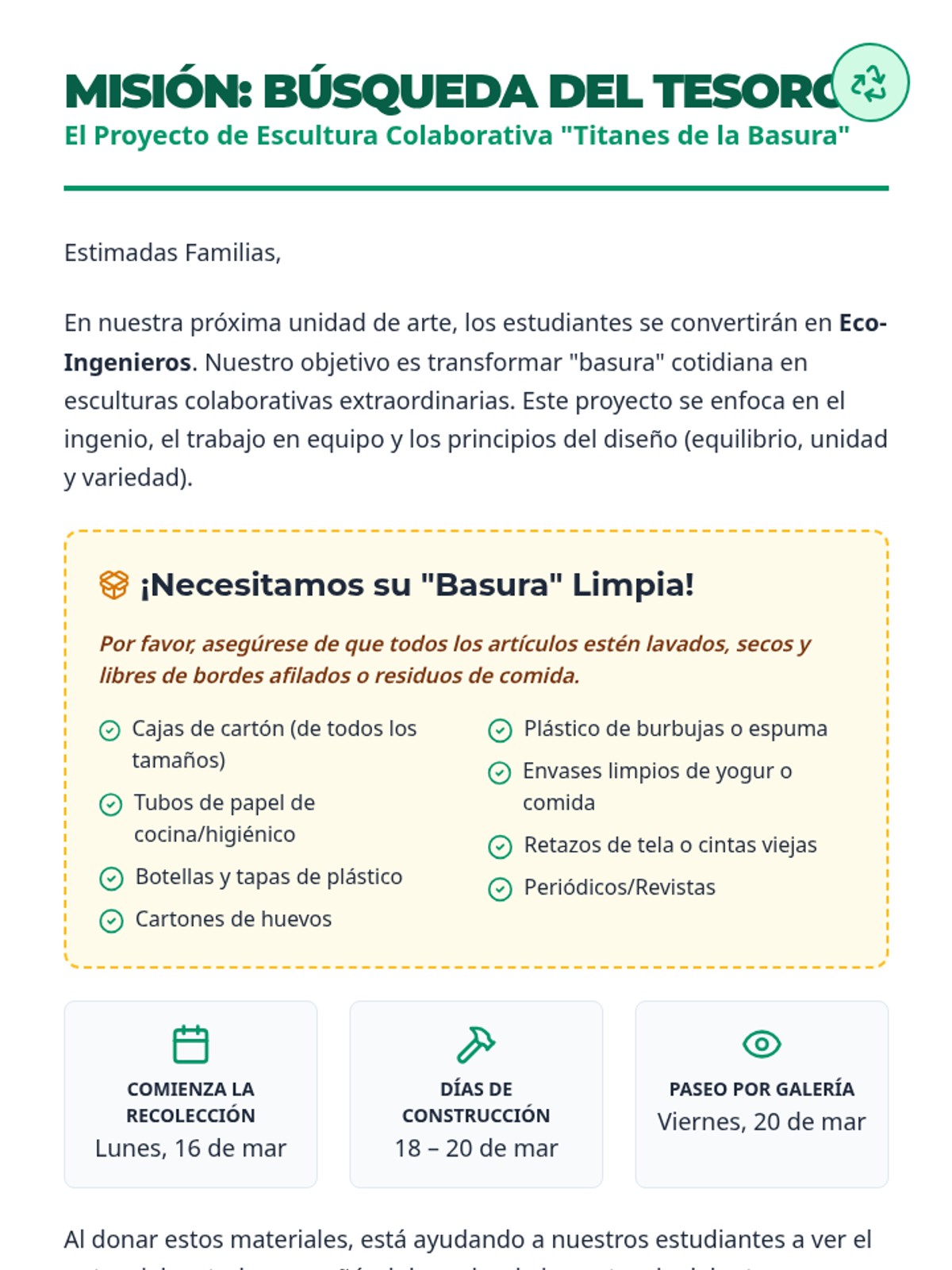
A 3-day collaborative art project where students transform recycled materials into large-scale sculptures while applying principles of design and creative problem-solving.
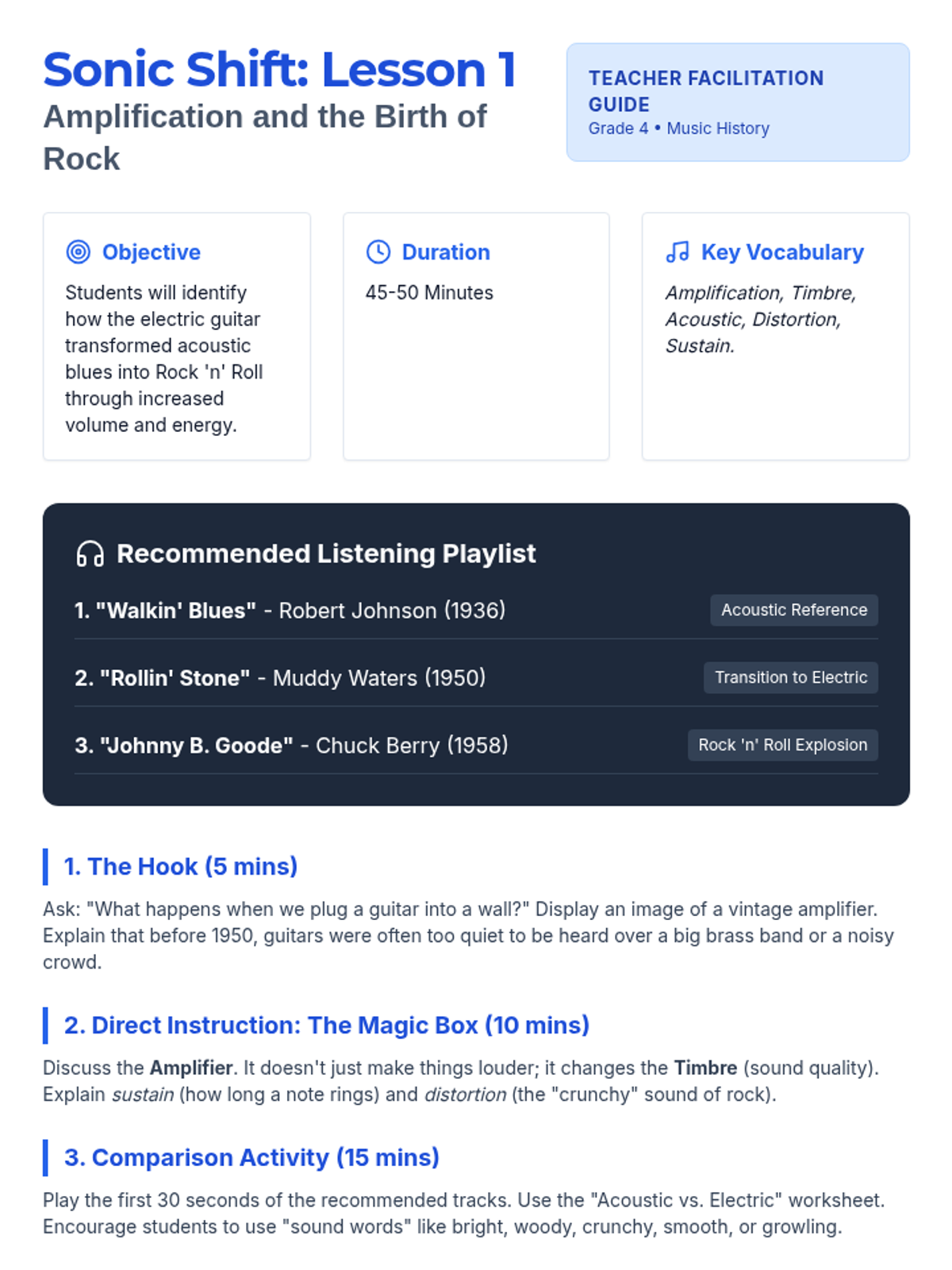
This sequence analyzes how technology in the 20th and 21st centuries revolutionized music production and consumption. Students trace the evolution from early Rock 'n' Roll amplification to electronic synthesis and digital sampling, culminating in a creative project where they design music for the future.
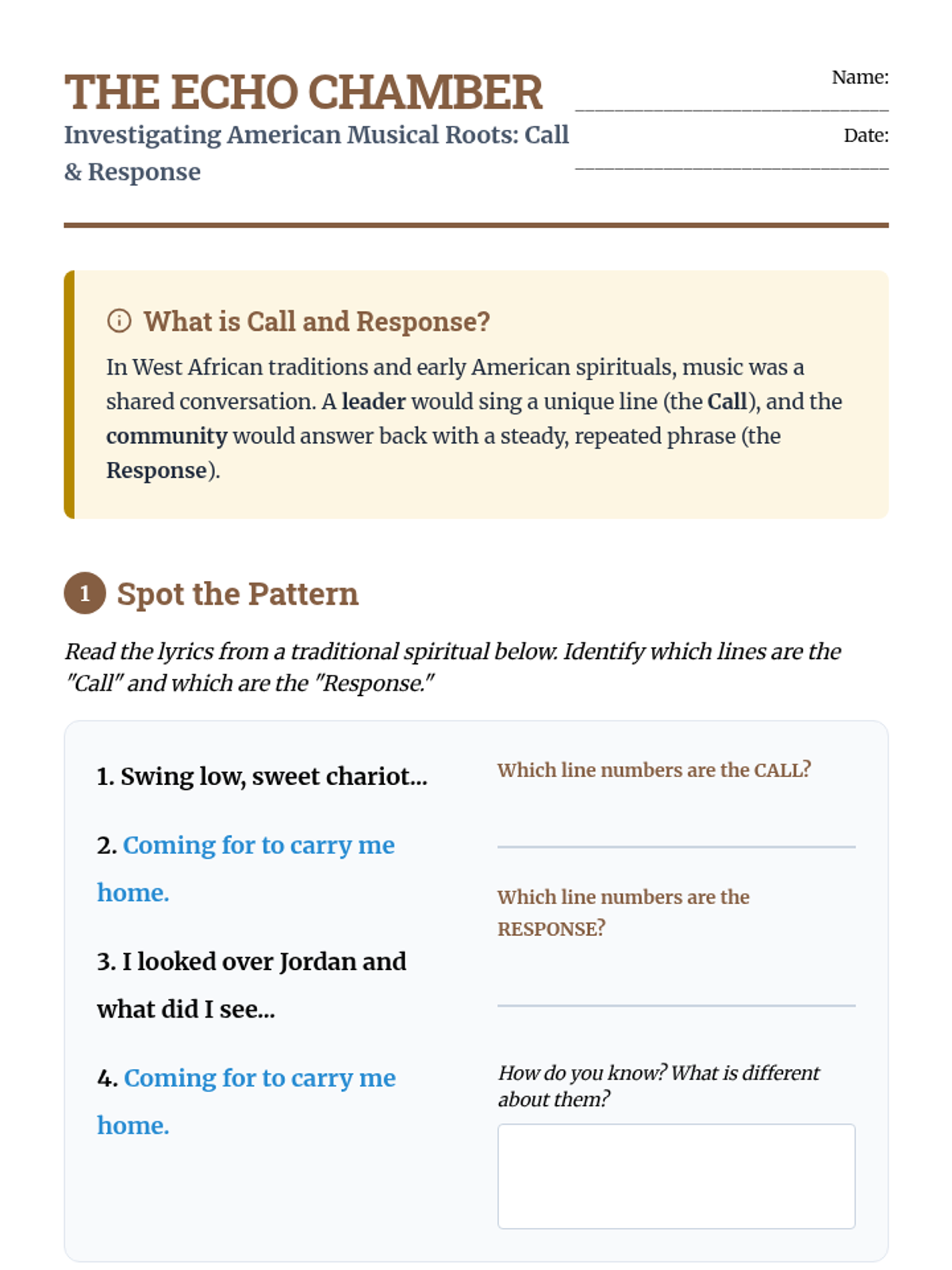
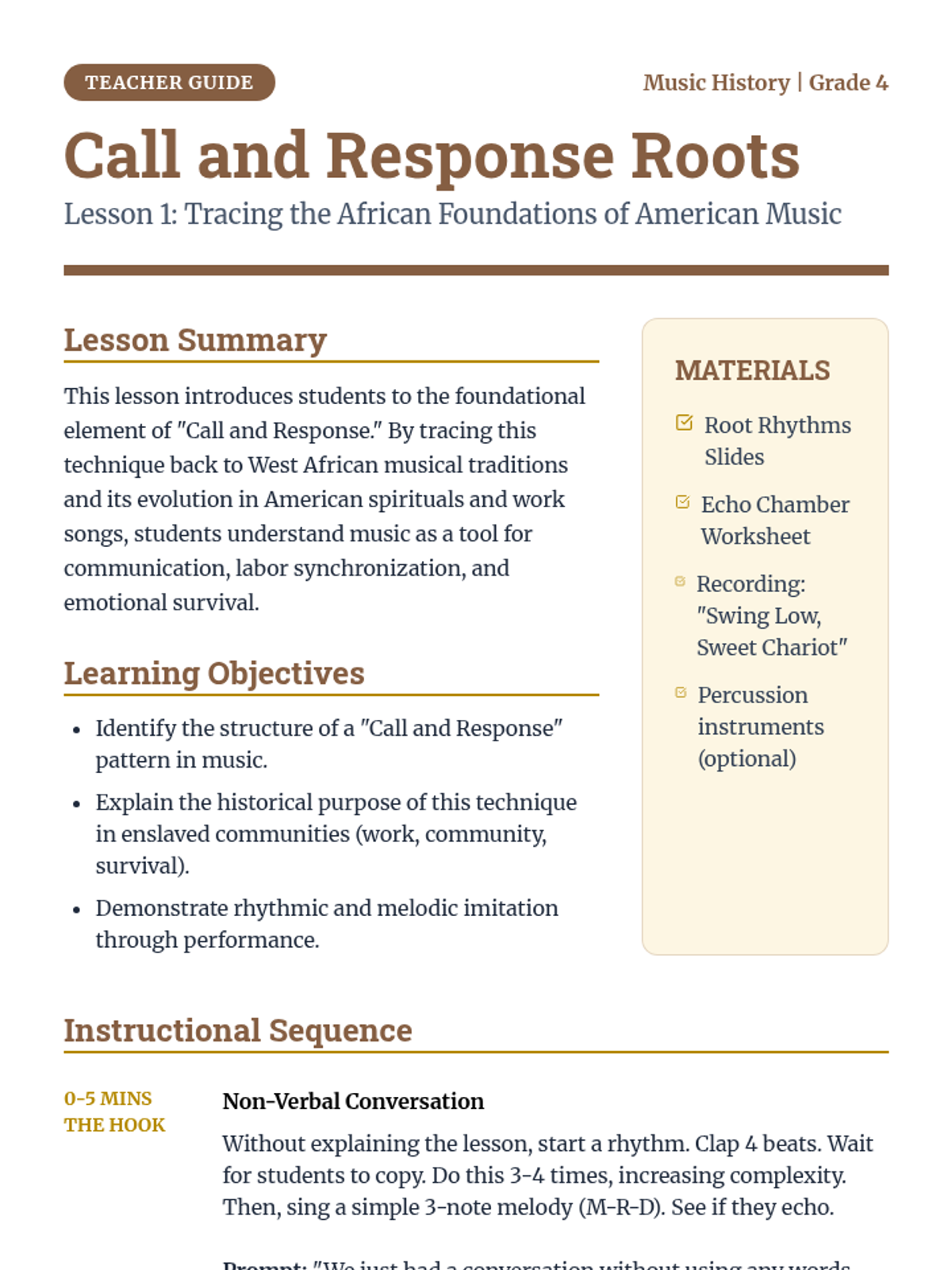
This 4th-grade music history sequence explores the evolution of American music from African roots to Jazz. Students investigate how historical context, community struggle, and cultural migration shaped genres like Spirituals, Blues, Ragtime, and Jazz through active listening, writing, and performance.
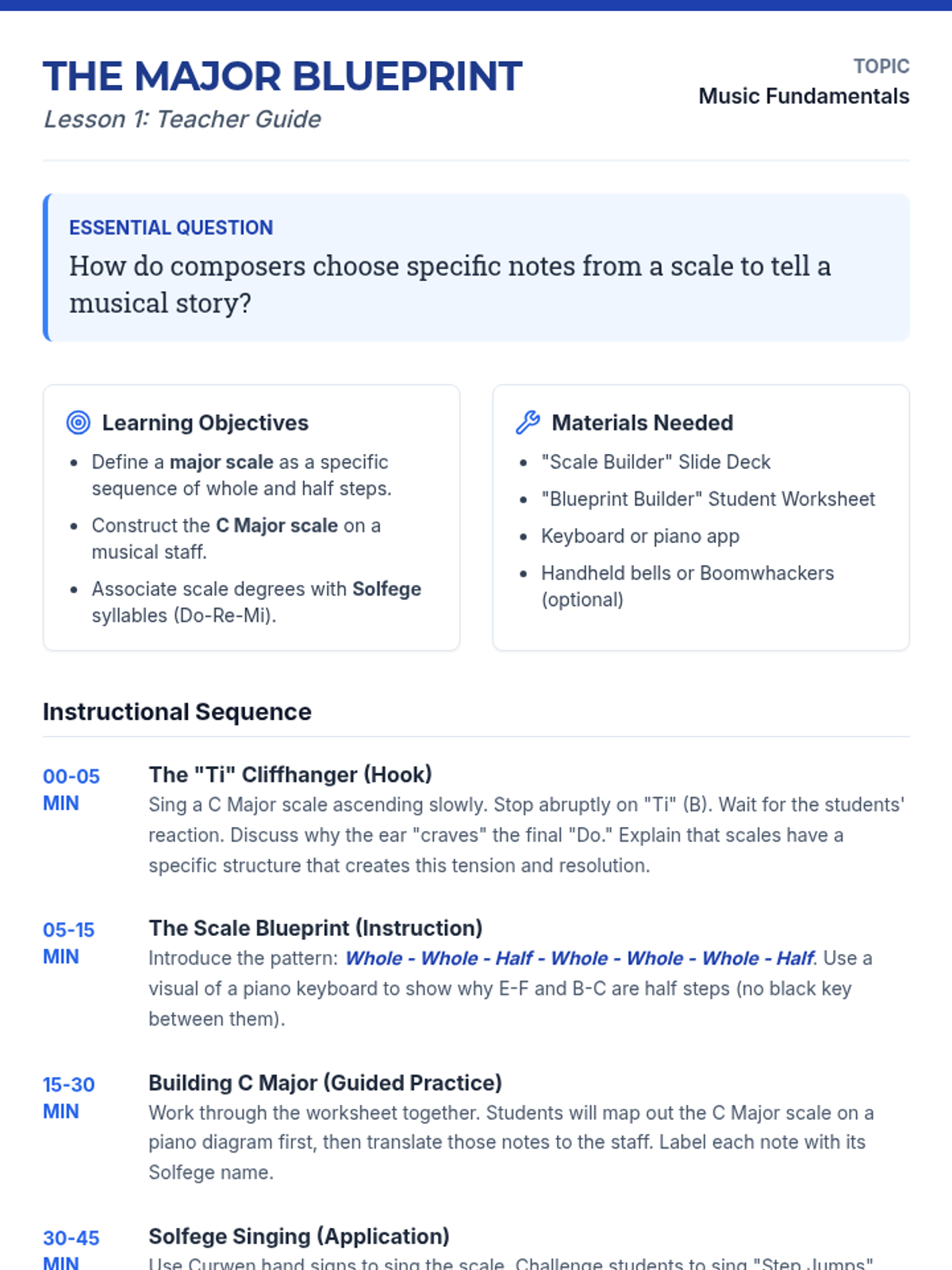
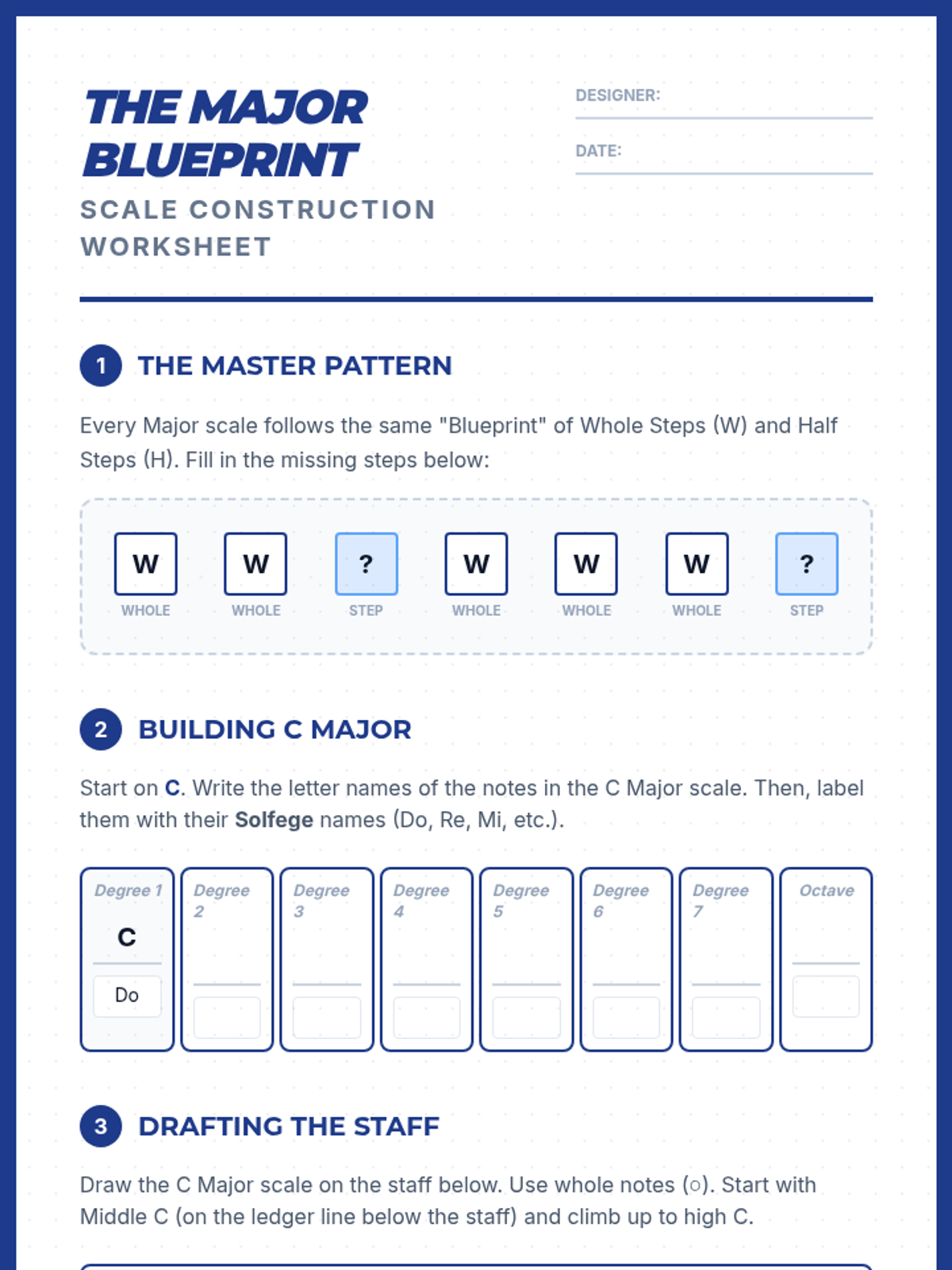
A 4th-grade music sequence where students transform from music listeners to composers. Students explore the architecture of major and pentatonic scales, draft melodic shapes, and finally notate their own 4-measure musical motifs.
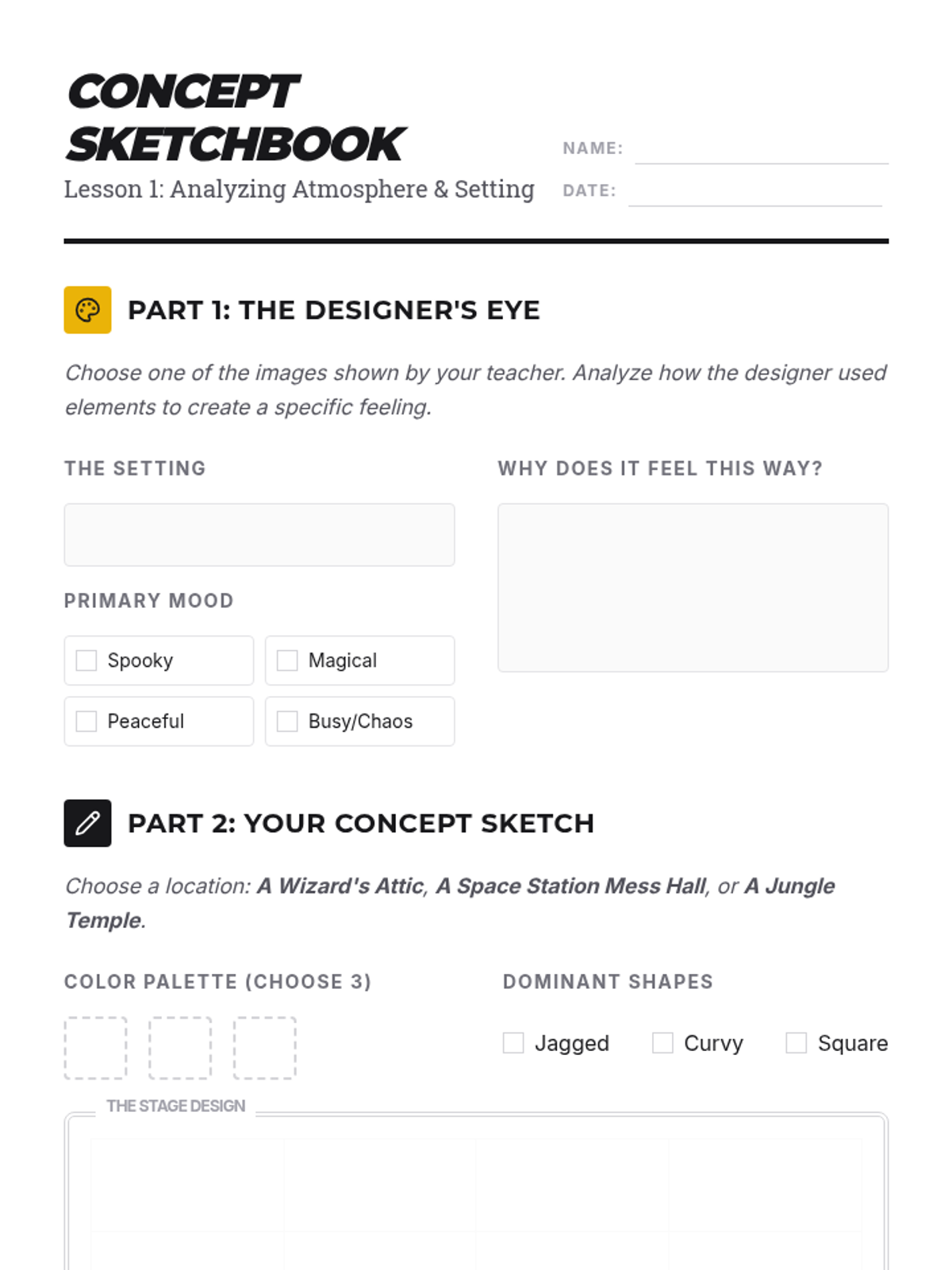
A project-based sequence for 4th graders exploring the technical world of theater production. Students learn to manipulate space, materials, sound, and light to tell compelling stories, culminating in a design showcase.
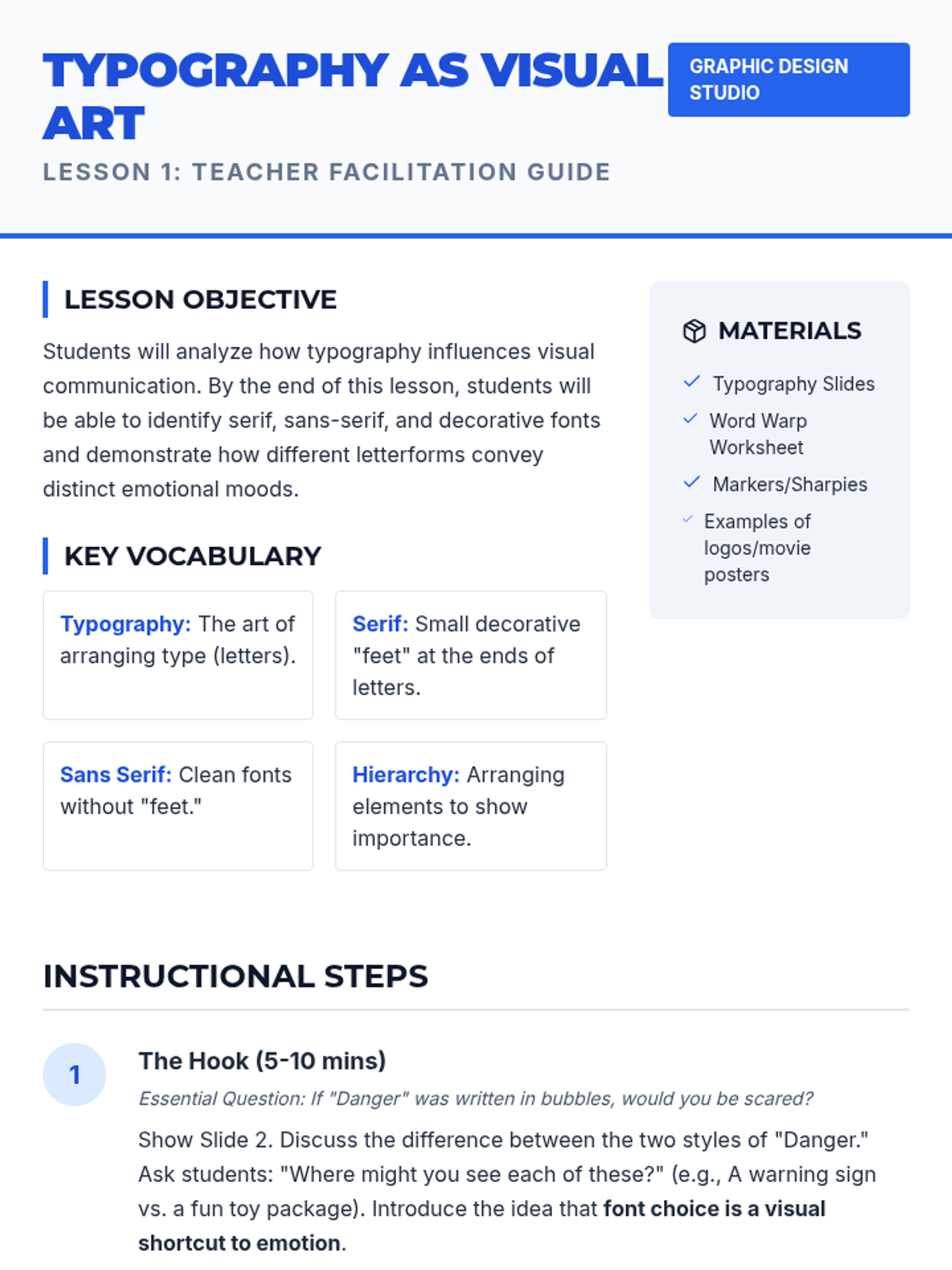
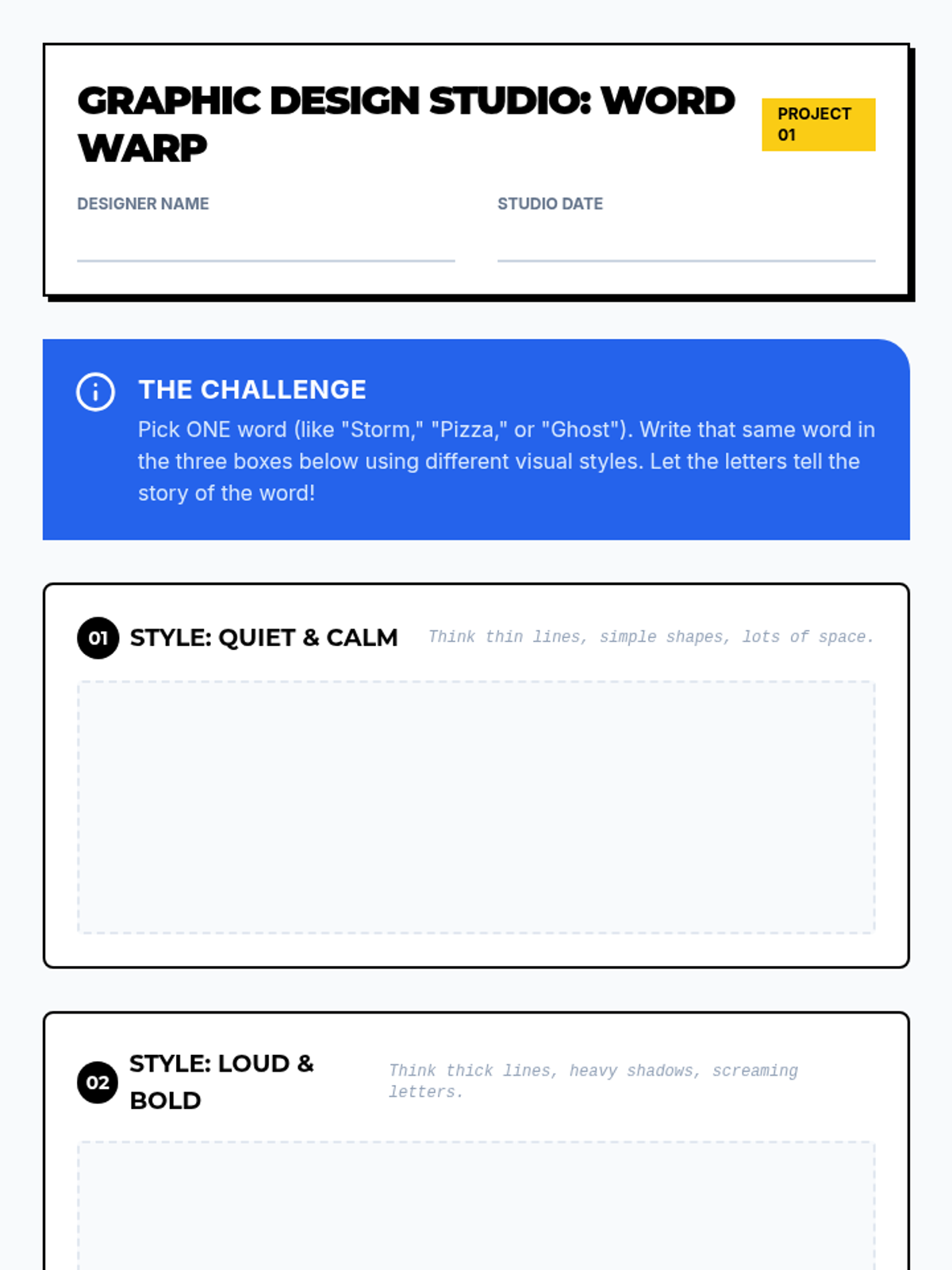
A project-based sequence for 4th-grade students exploring typography, layout, and stencil printmaking to create communicative graphic posters. Students act as designers, learning how visual elements and text work together to convey messages effectively.
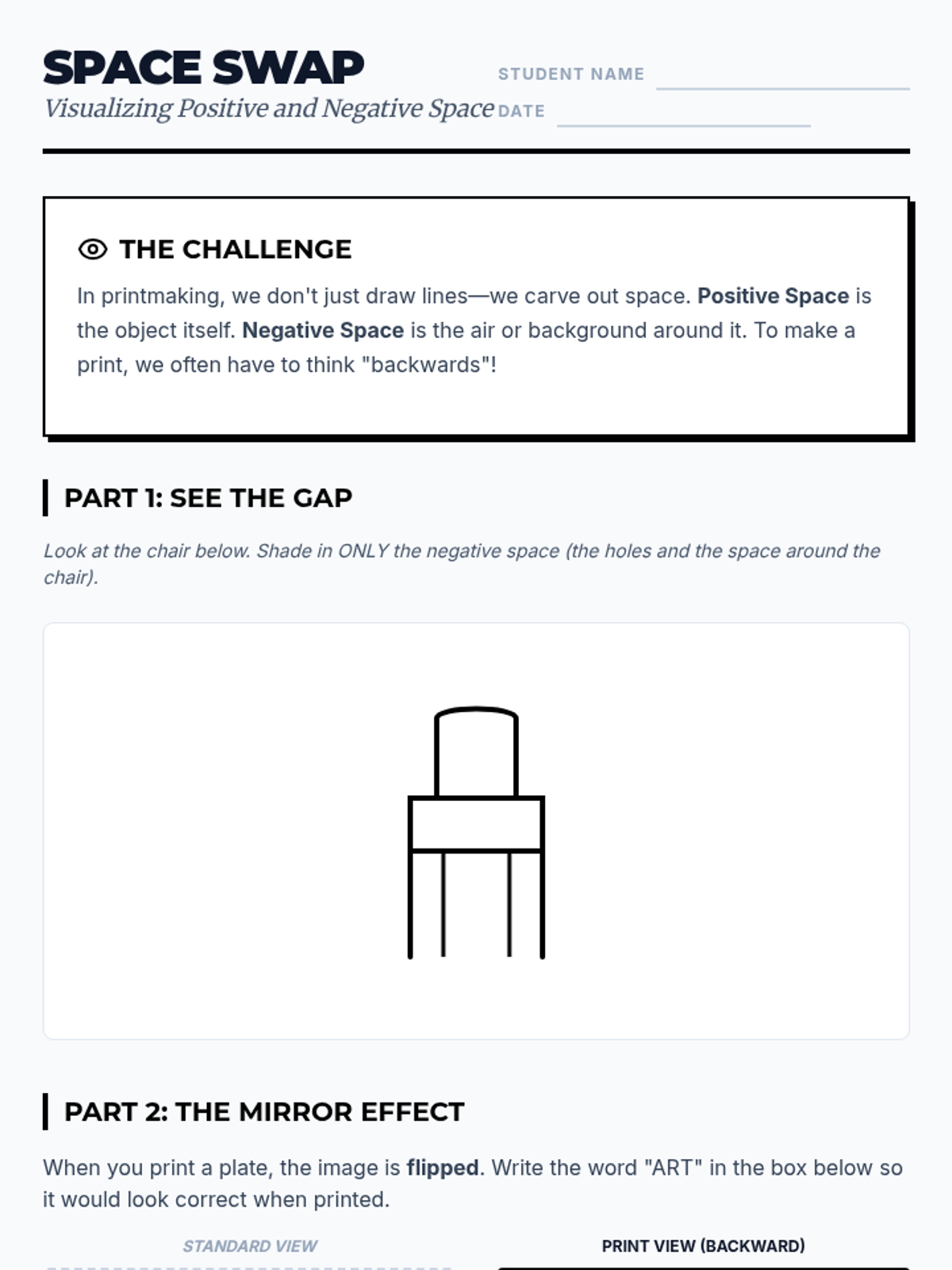
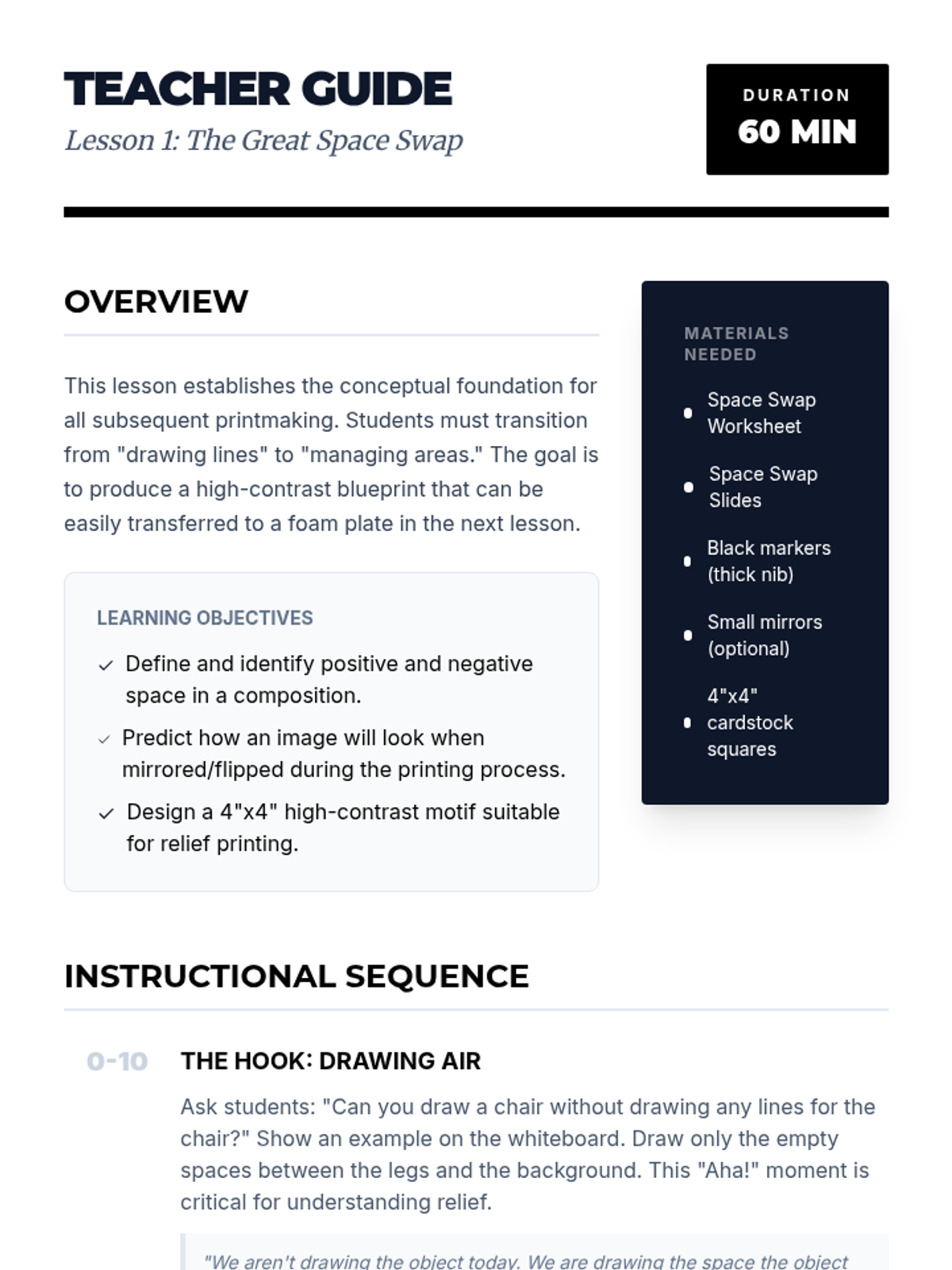
Students explore relief printing using soft foam plates, focusing on positive and negative space, inking techniques, and pattern creation. The sequence culminates in a professional-style edition of prints and a gallery walk critique.
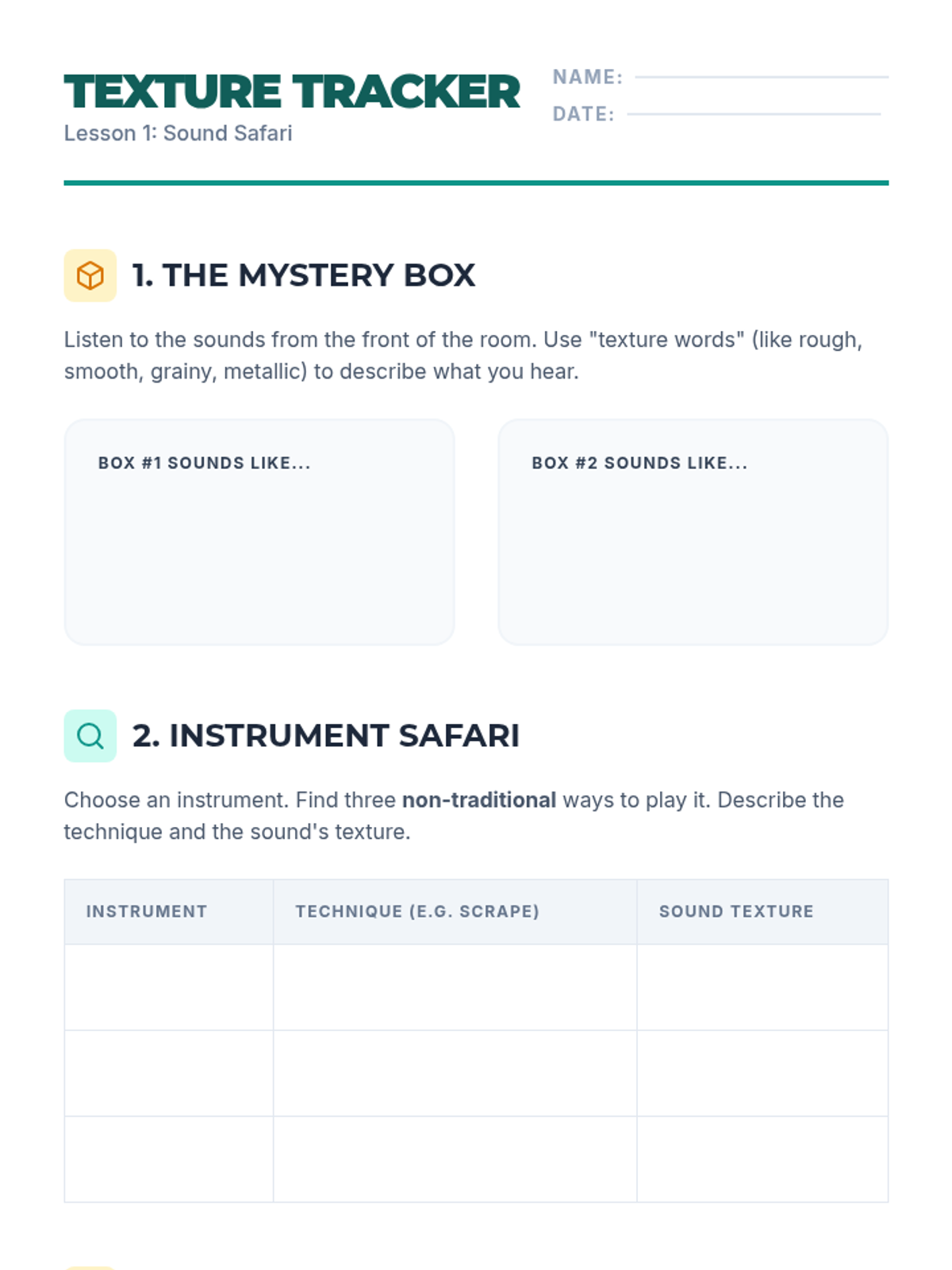
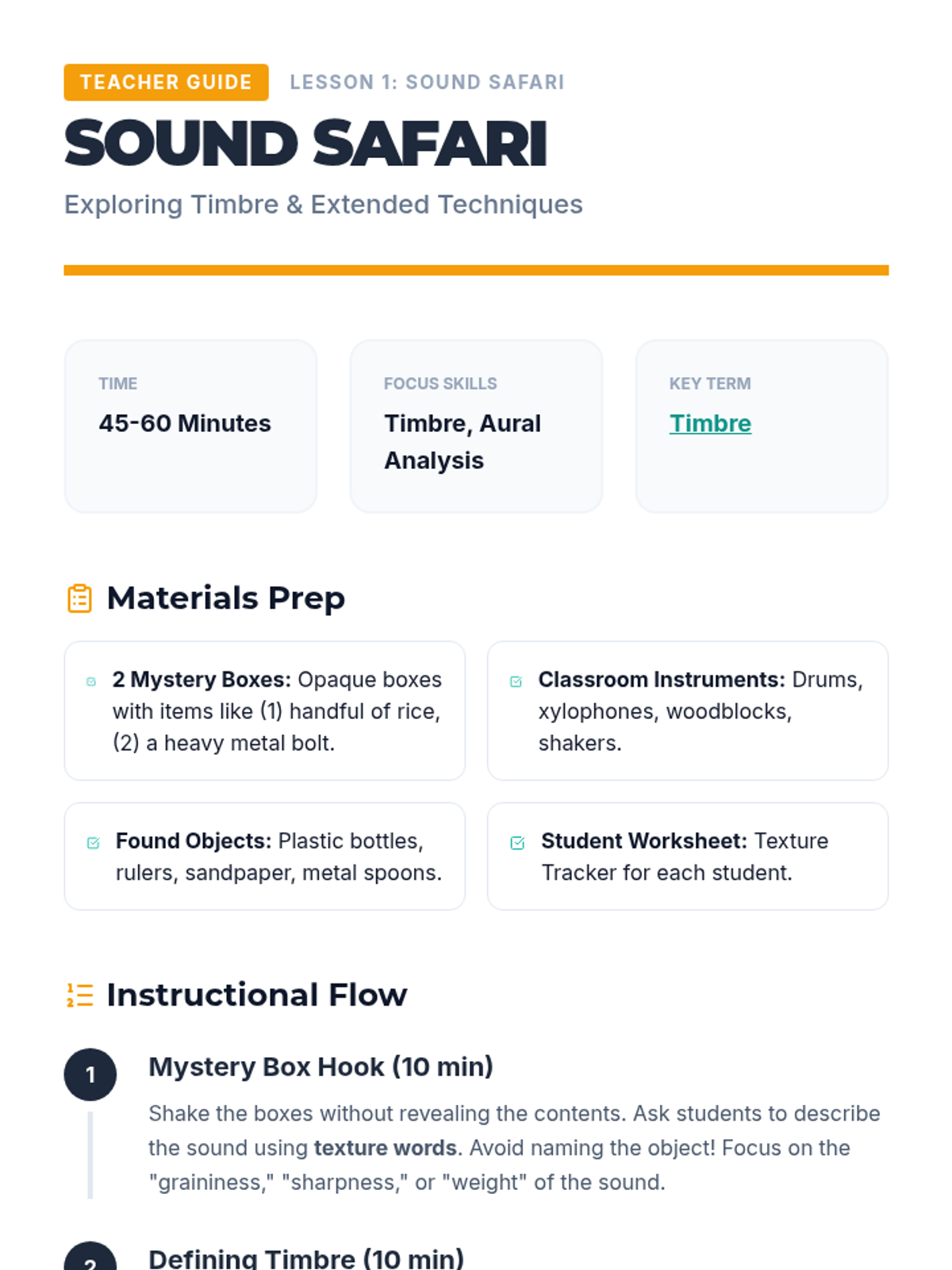
A 5-lesson journey into music composition using graphic notation. Students explore sound textures, invent visual symbols for audio, compose narrative soundscapes, and lead ensembles as conductors.
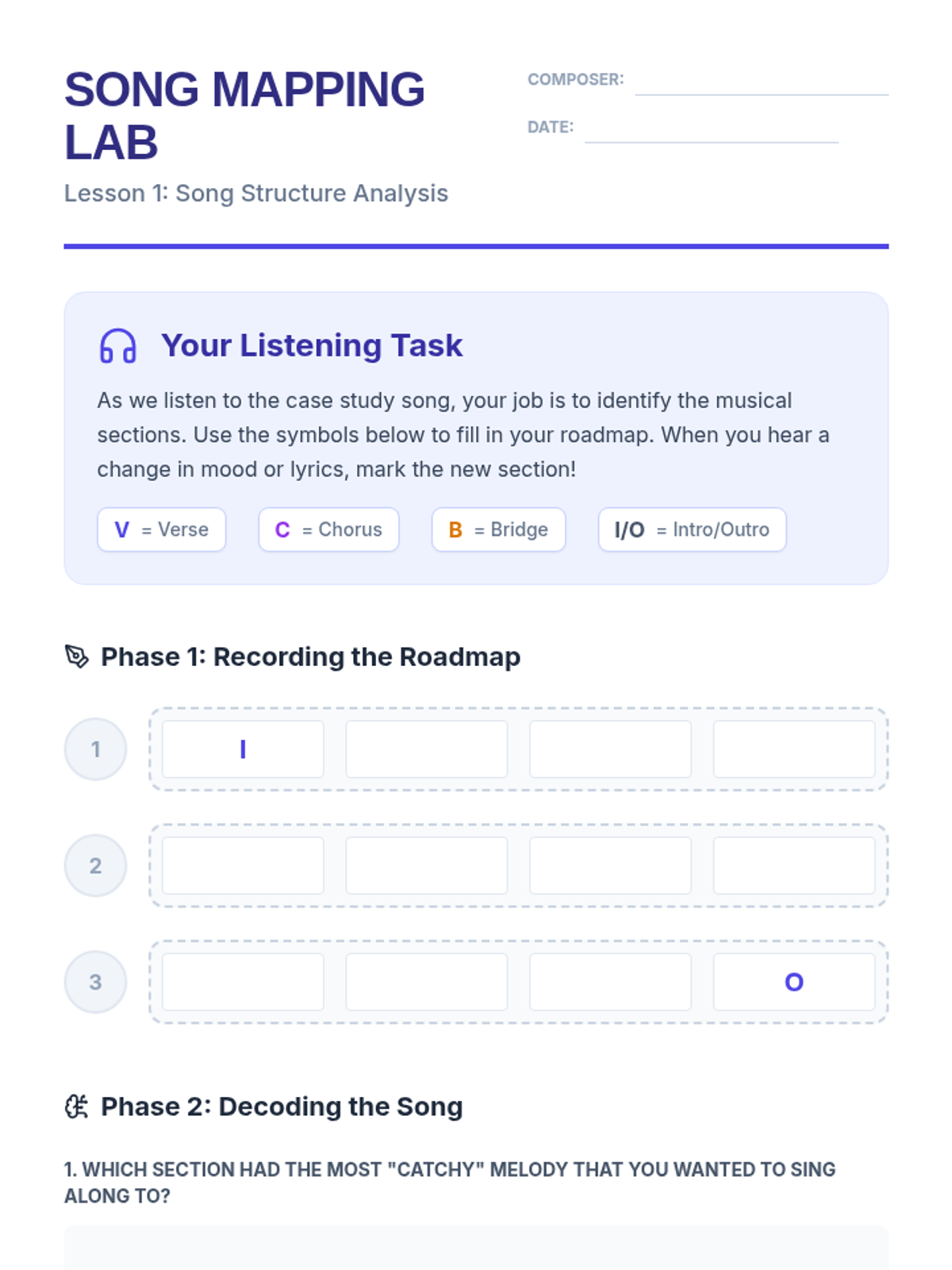
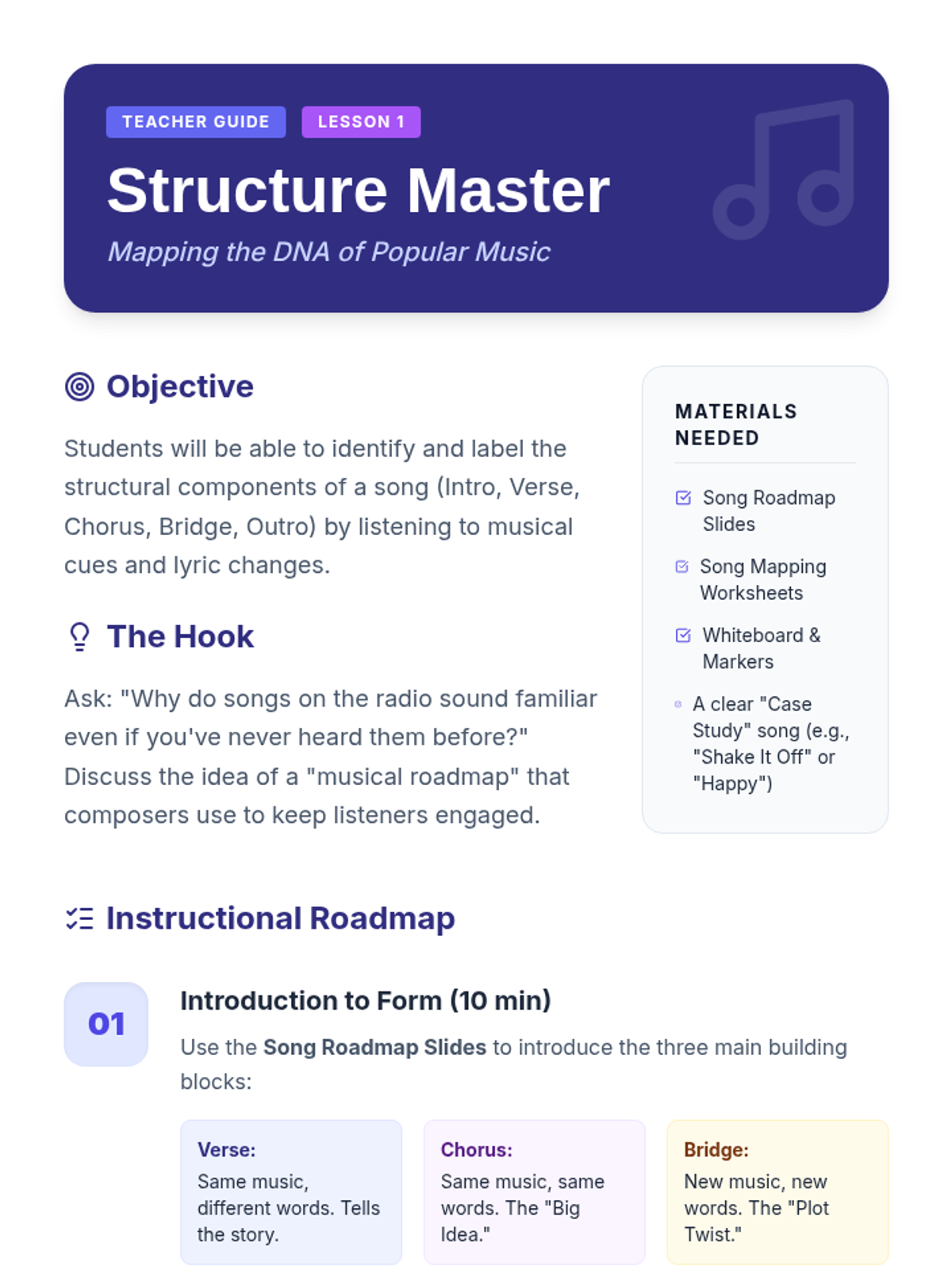
A 4th-grade music sequence that guides students through the songwriting process, from analyzing song forms to composing original lyrics and adding harmonic accompaniment. Students explore the synergy between storytelling and musical structure.
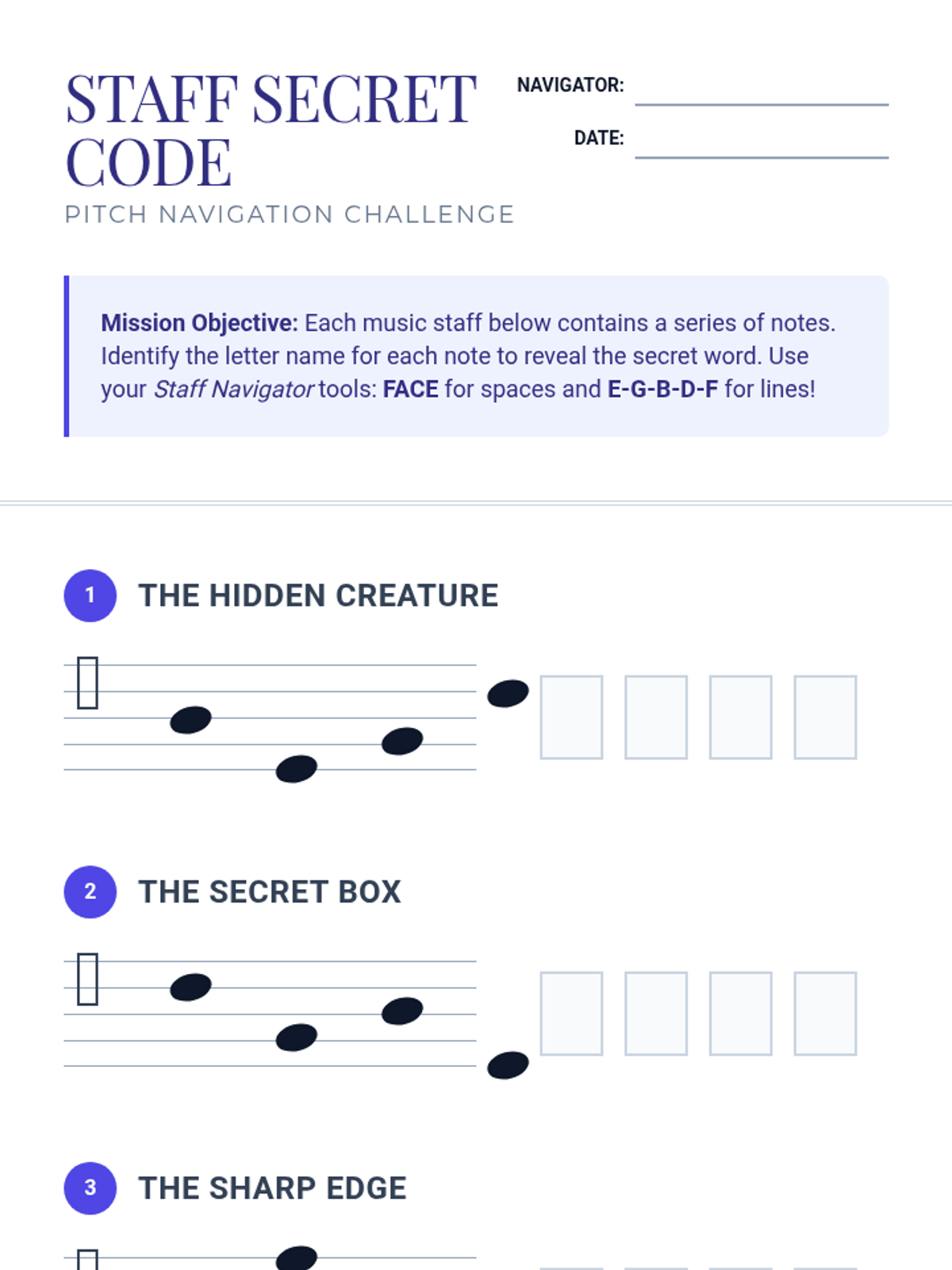
A comprehensive 5-lesson sequence for 4th graders exploring melodic construction, the pentatonic scale, and standard music notation through the lens of 'musical cartography'. Students learn to read, improvise, and eventually compose and perform their own 4-measure melodies.
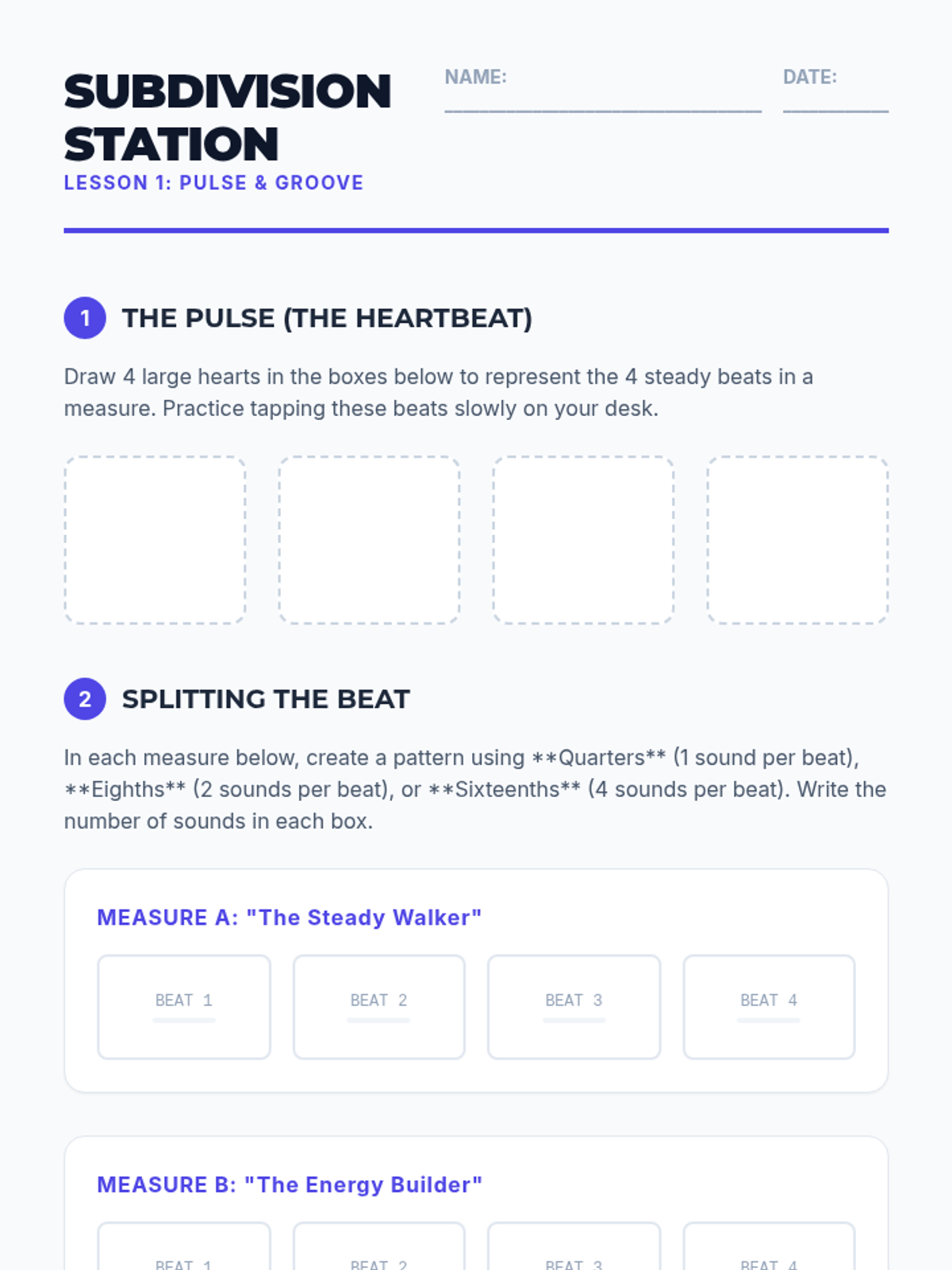
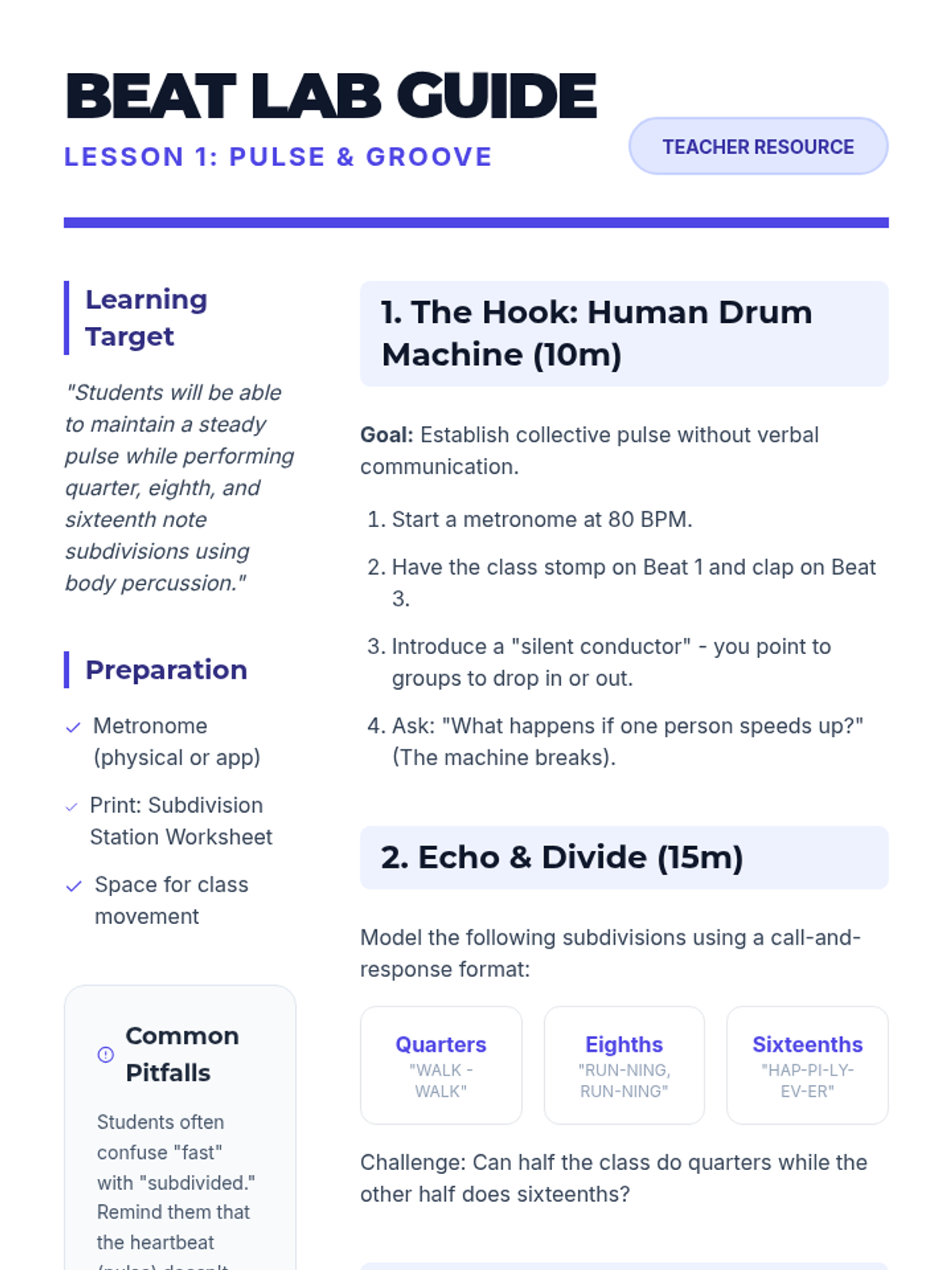
A comprehensive 4th-grade music sequence focusing on pulse, subdivision, ostinato creation, graphic notation, and ensemble layering. Students progress from basic beat maintenance to performing complex, multi-layered percussion compositions.
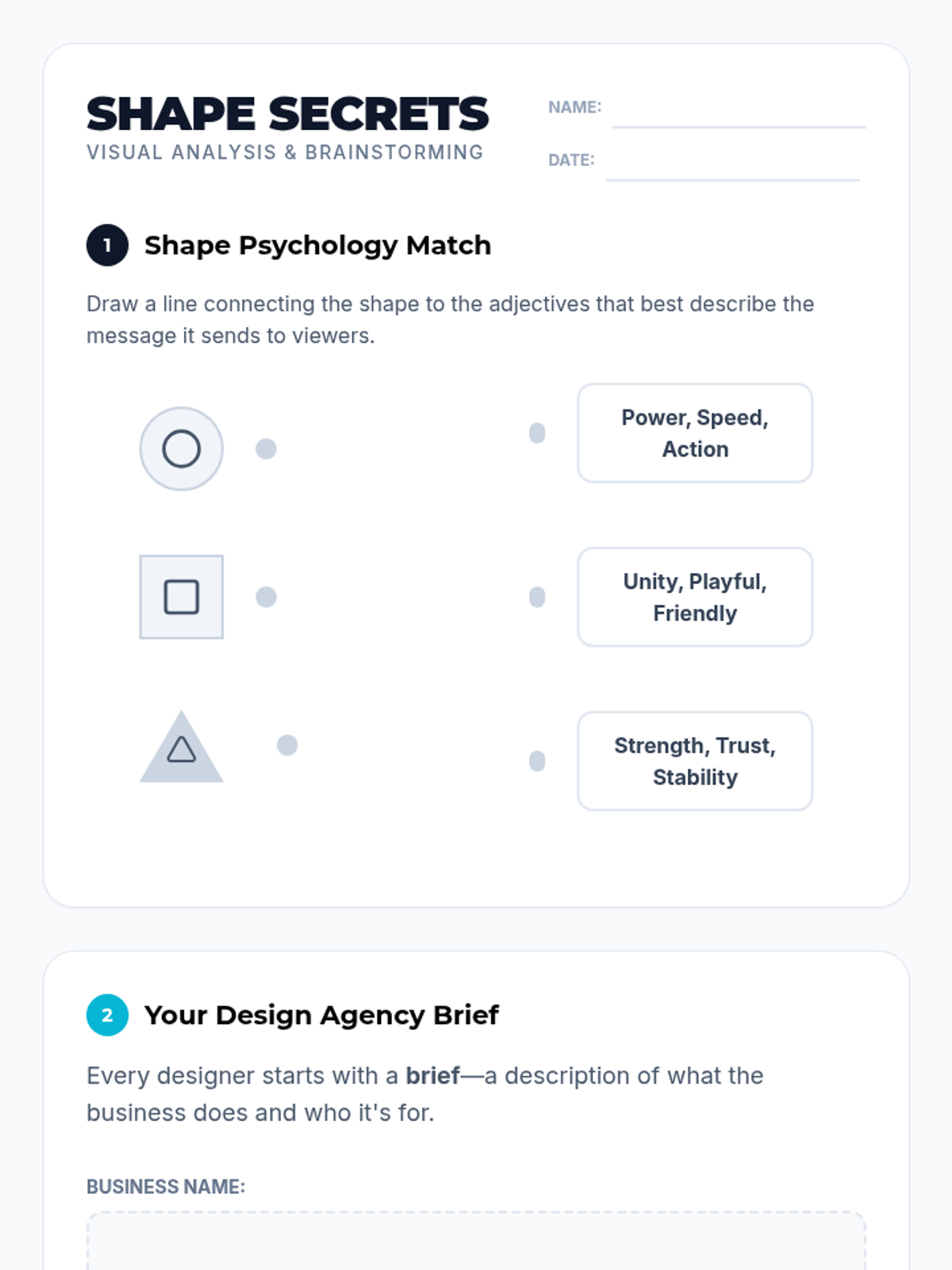
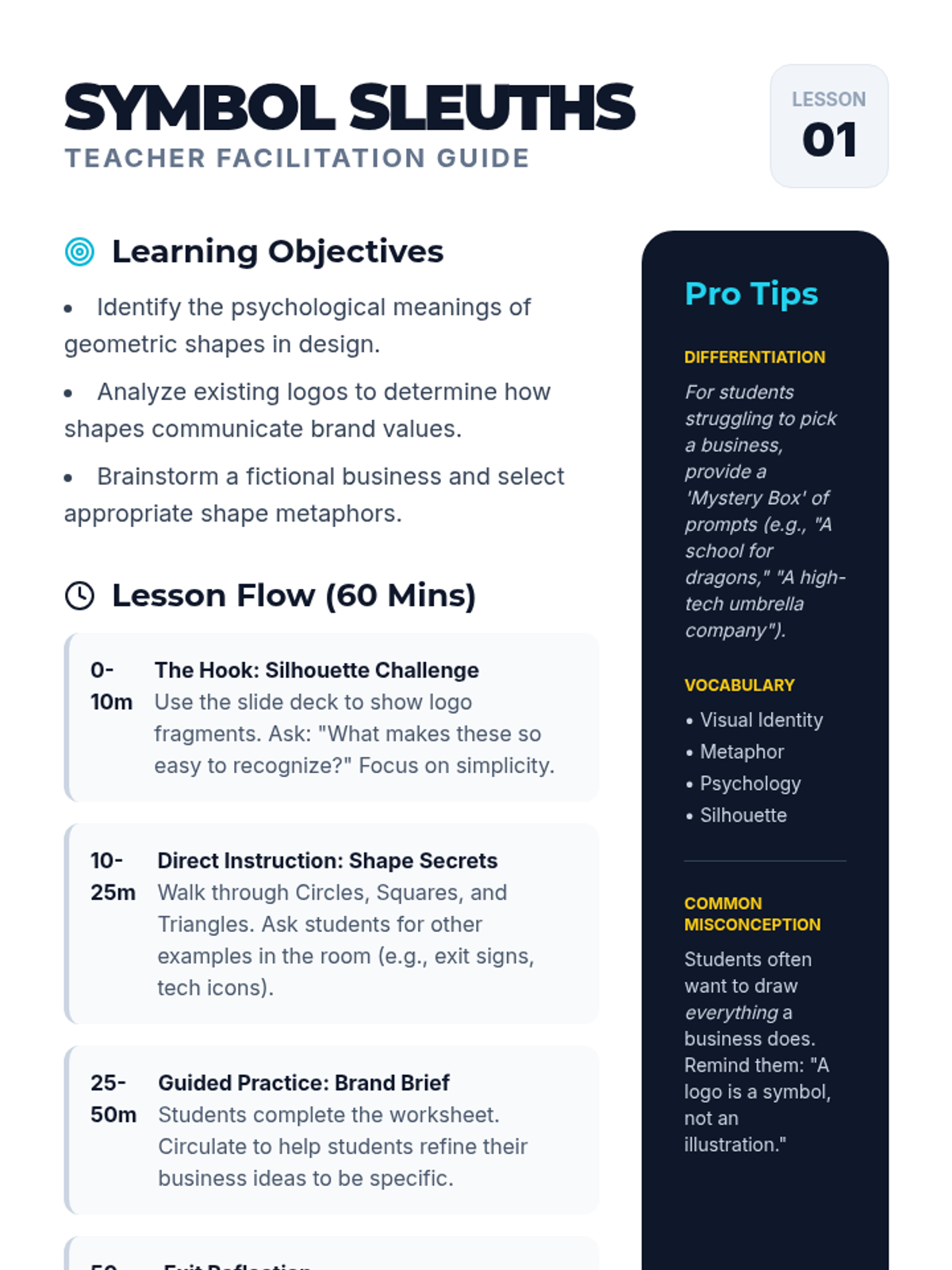
In this project-based sequence, fourth-grade students explore the core principles of graphic design by creating a visual identity for a fictional business. They progress through analyzing shapes, colors, and typography to sketching and refining their own original logos and business cards.
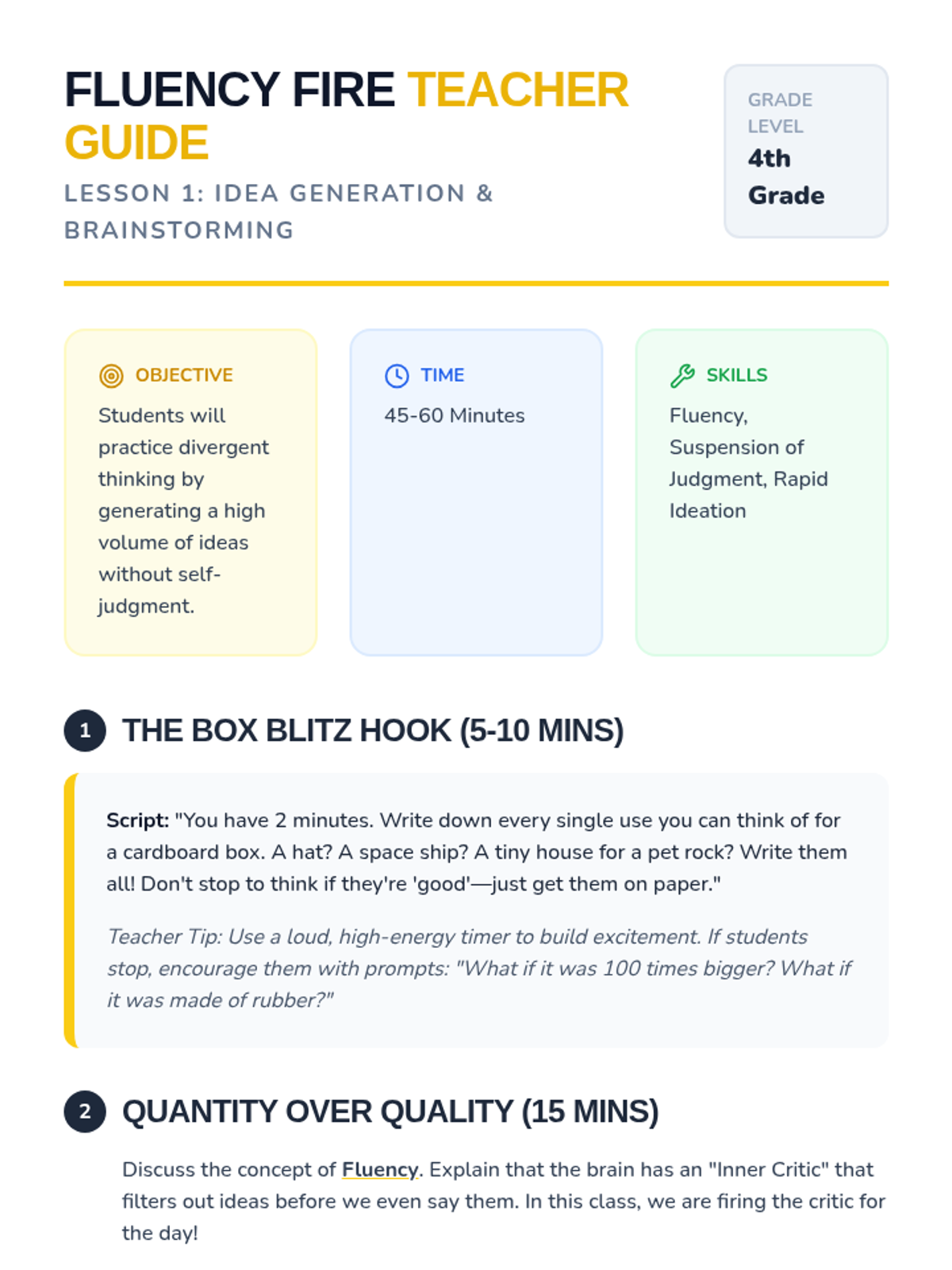
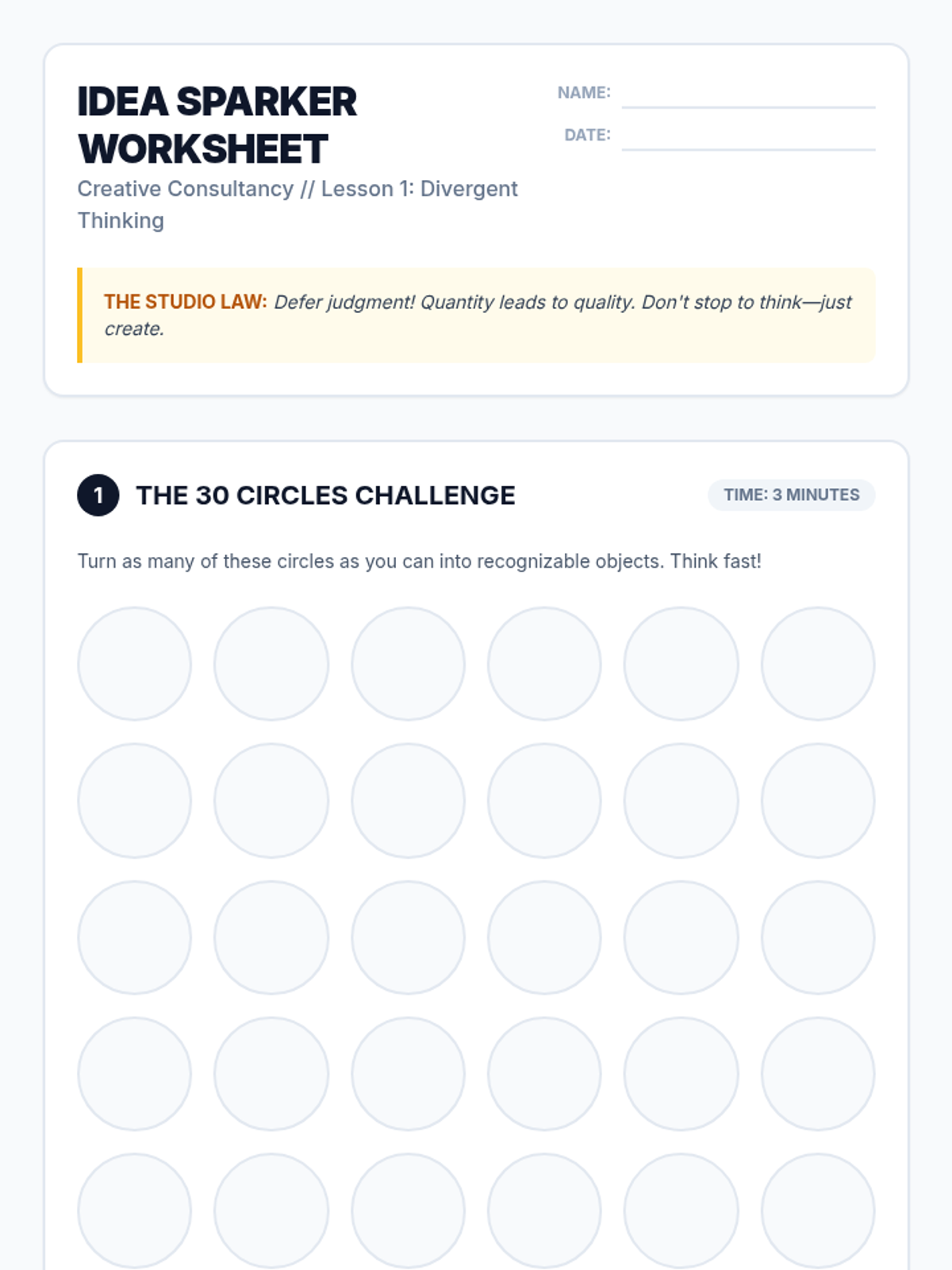
A sequence for 4th-grade students to master various ideation strategies, moving from rapid brainstorming to structured modification and refinement of original ideas.
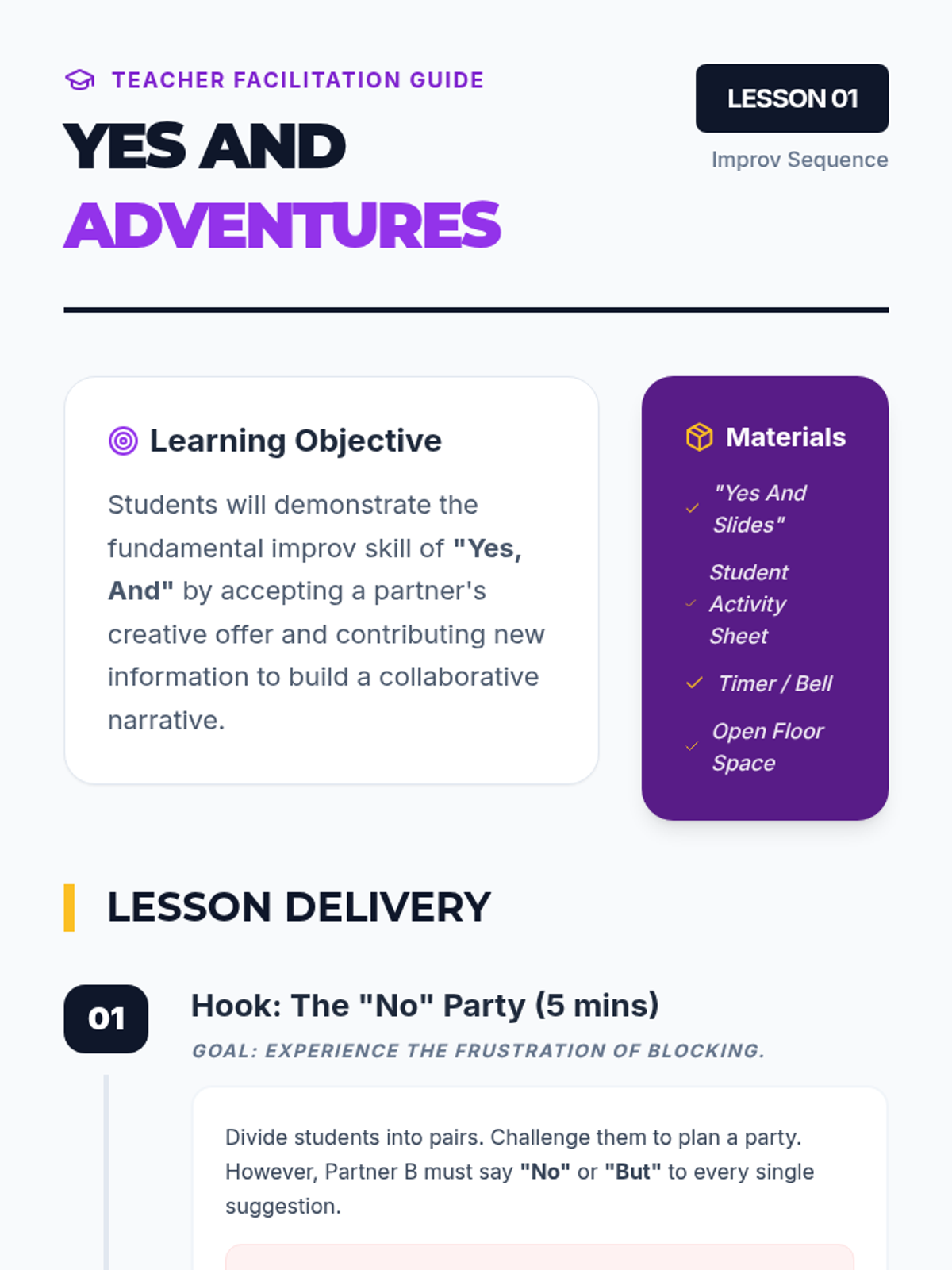
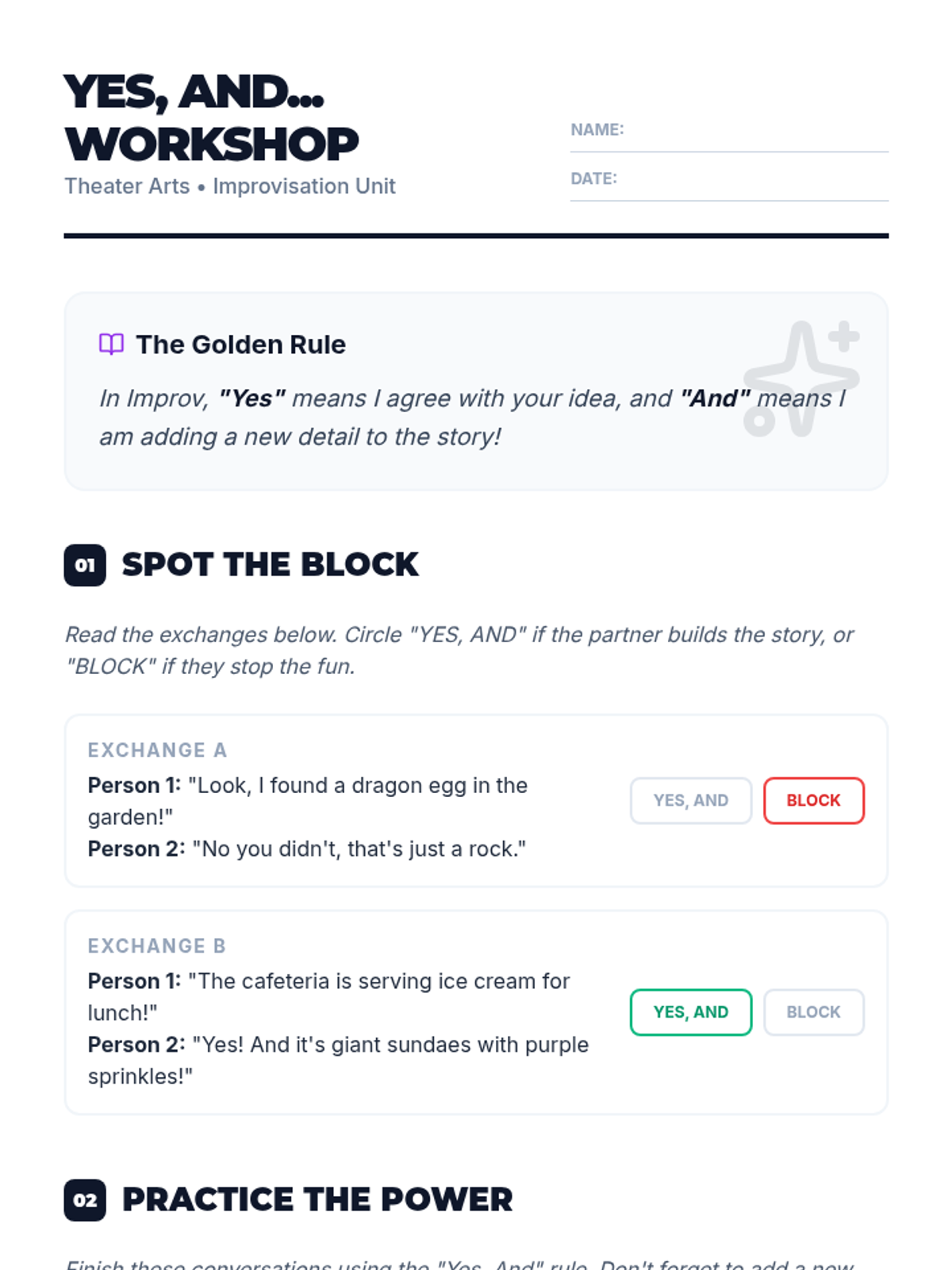
A 5-lesson unit for 4th-grade theater students focusing on the core principles of improvisation: agreement, active listening, environment building, character relationships, and narrative structure. Students develop spontaneity and teamwork through game-based learning.
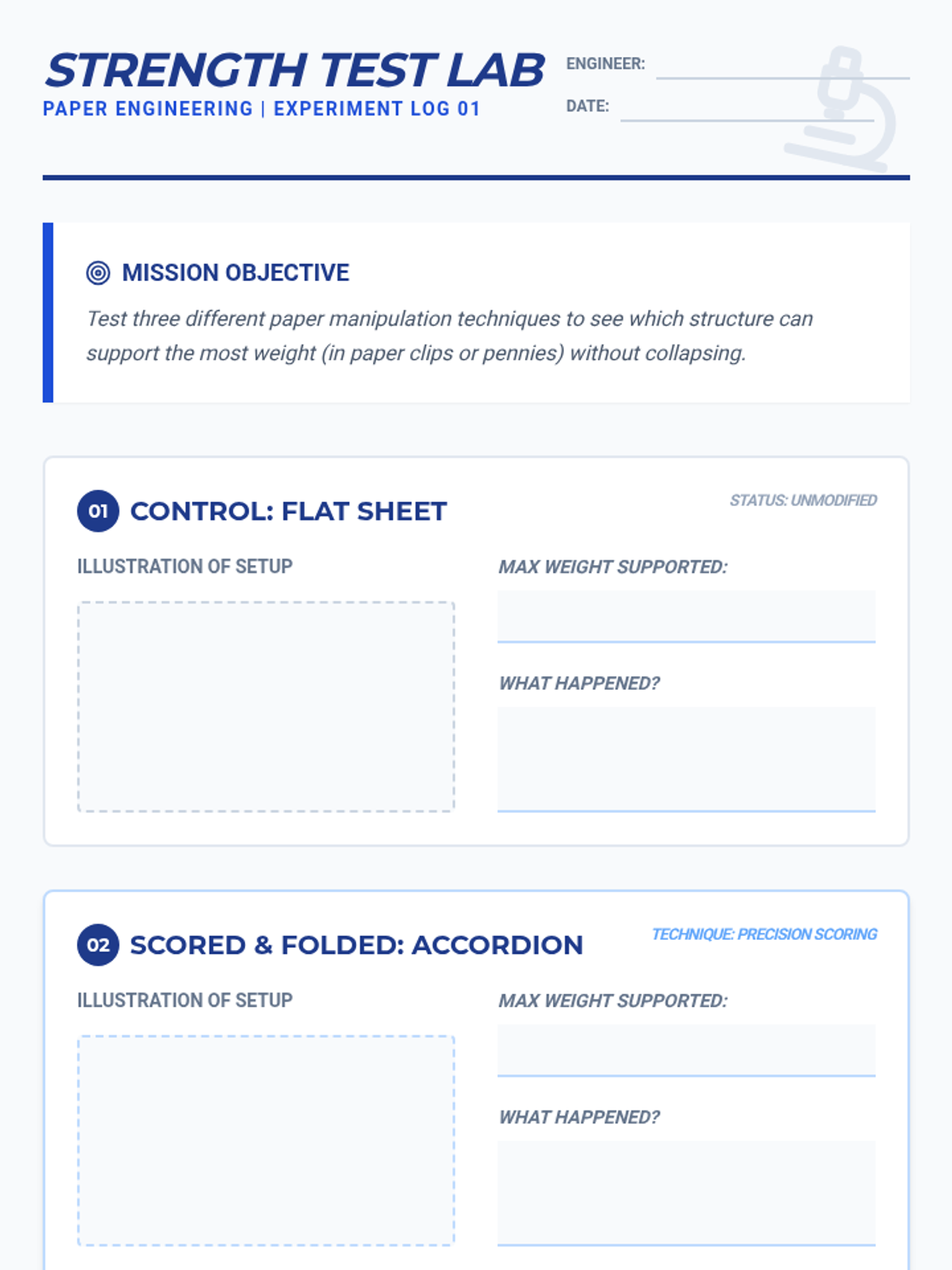
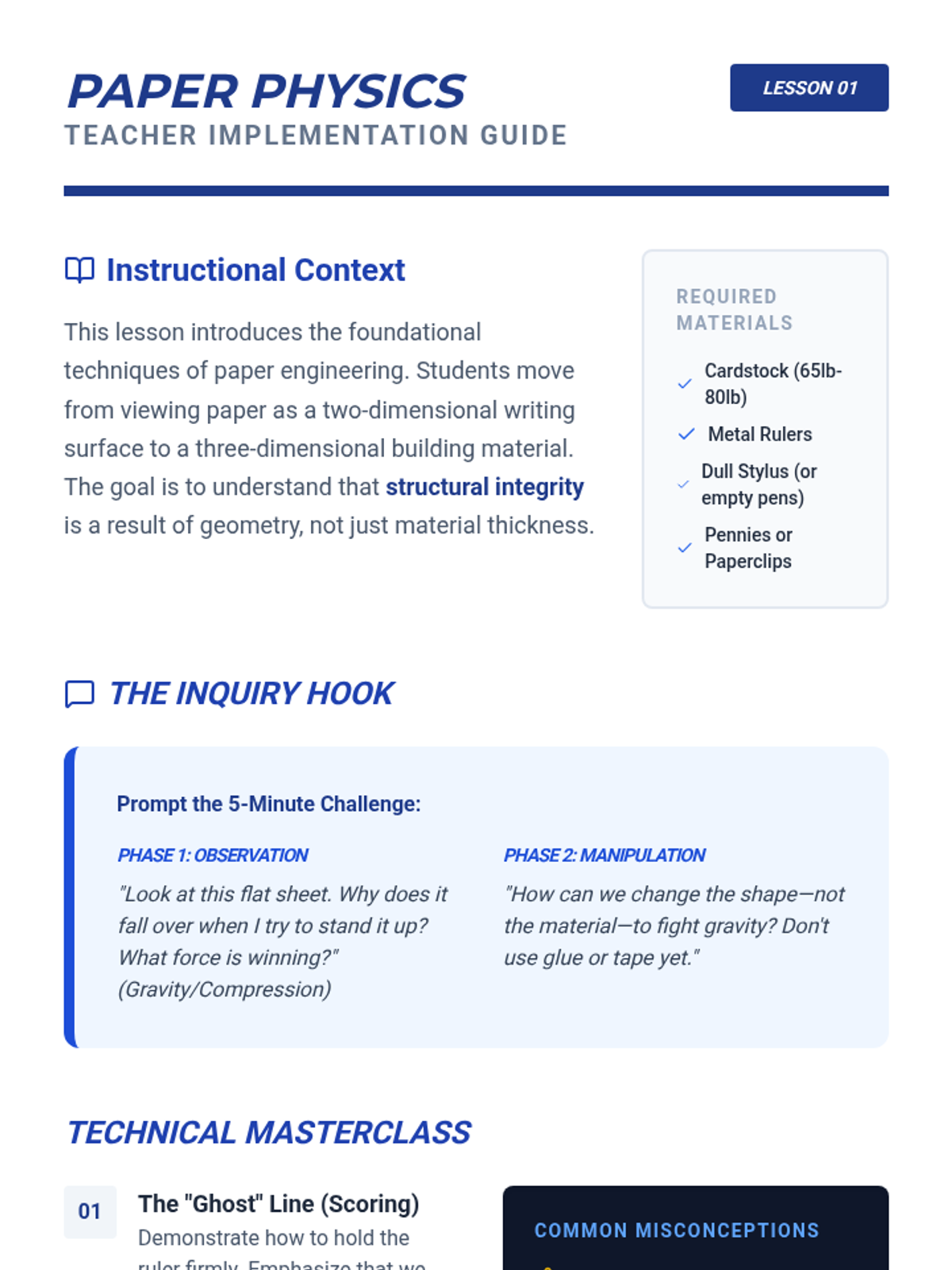
This sequence explores the intersection of engineering and art through paper sculpture. Students investigate how a flimsy, flat material can be manipulated through folding, scoring, and slotting to become rigid and self-supporting, moving from basic relief to free-standing geometric construction.
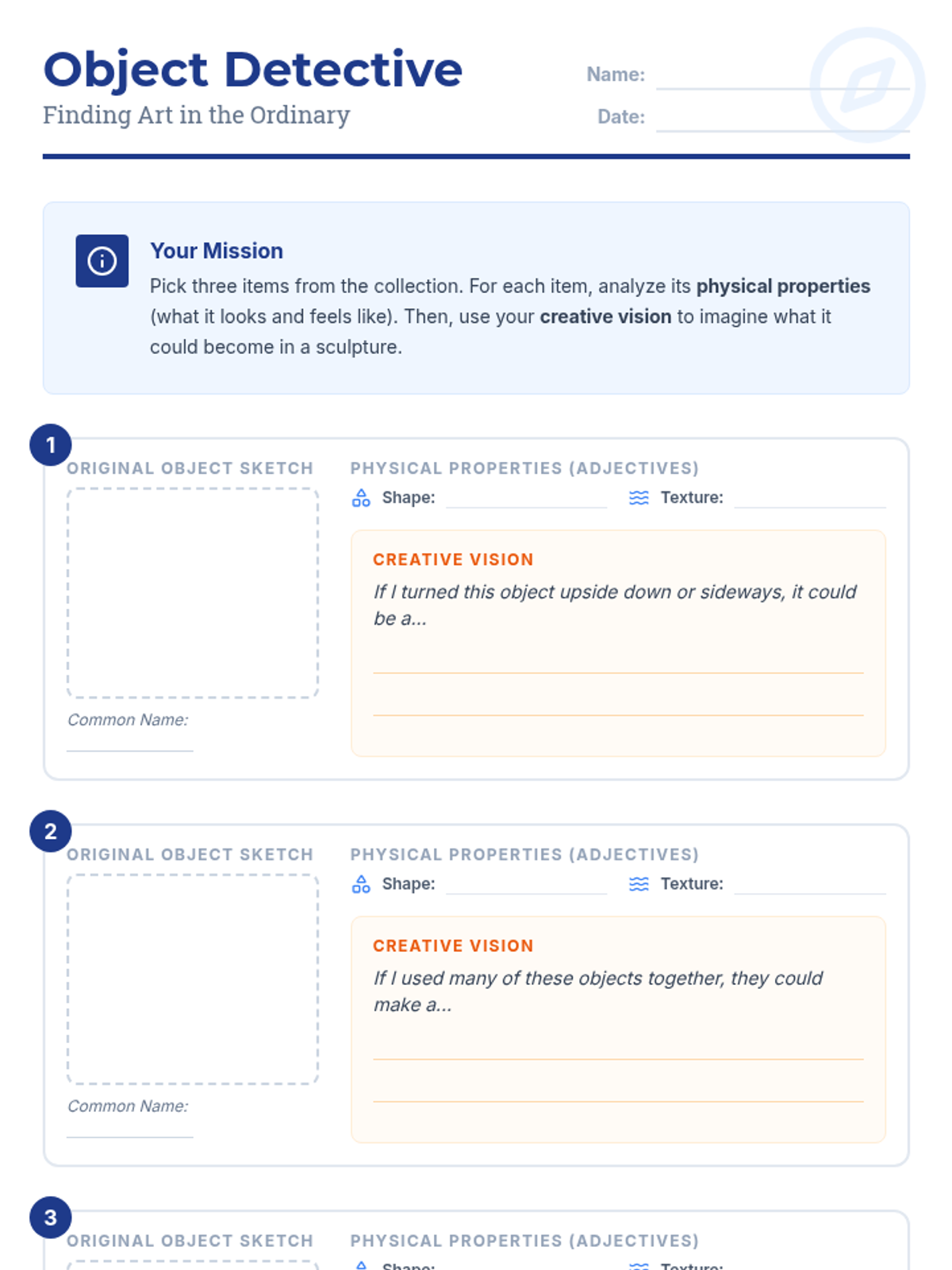
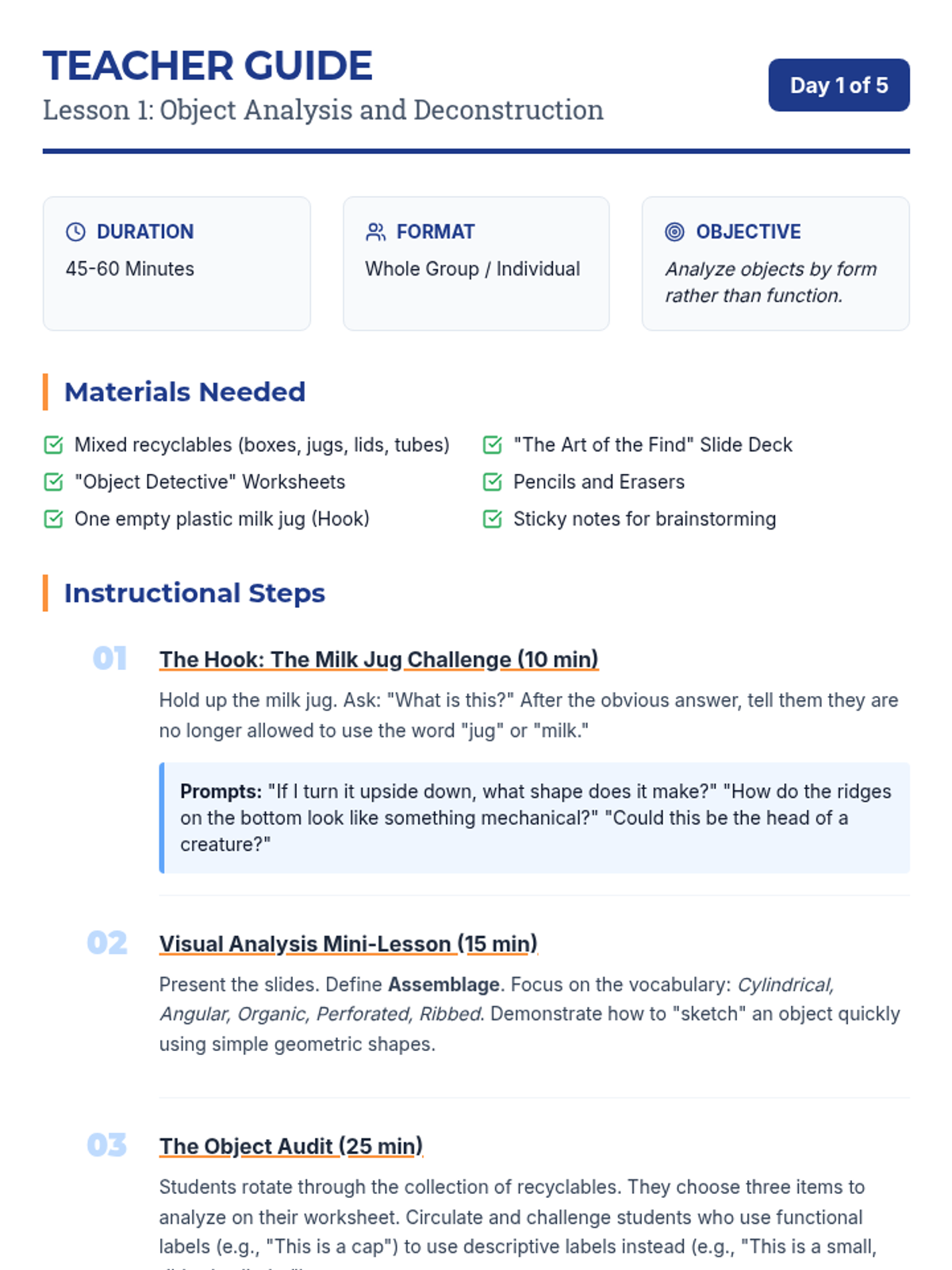
A 5-lesson unit where 4th-grade students transform recycled materials into 3D sculptures, focusing on visual analysis, engineering connections, and artistic unification.
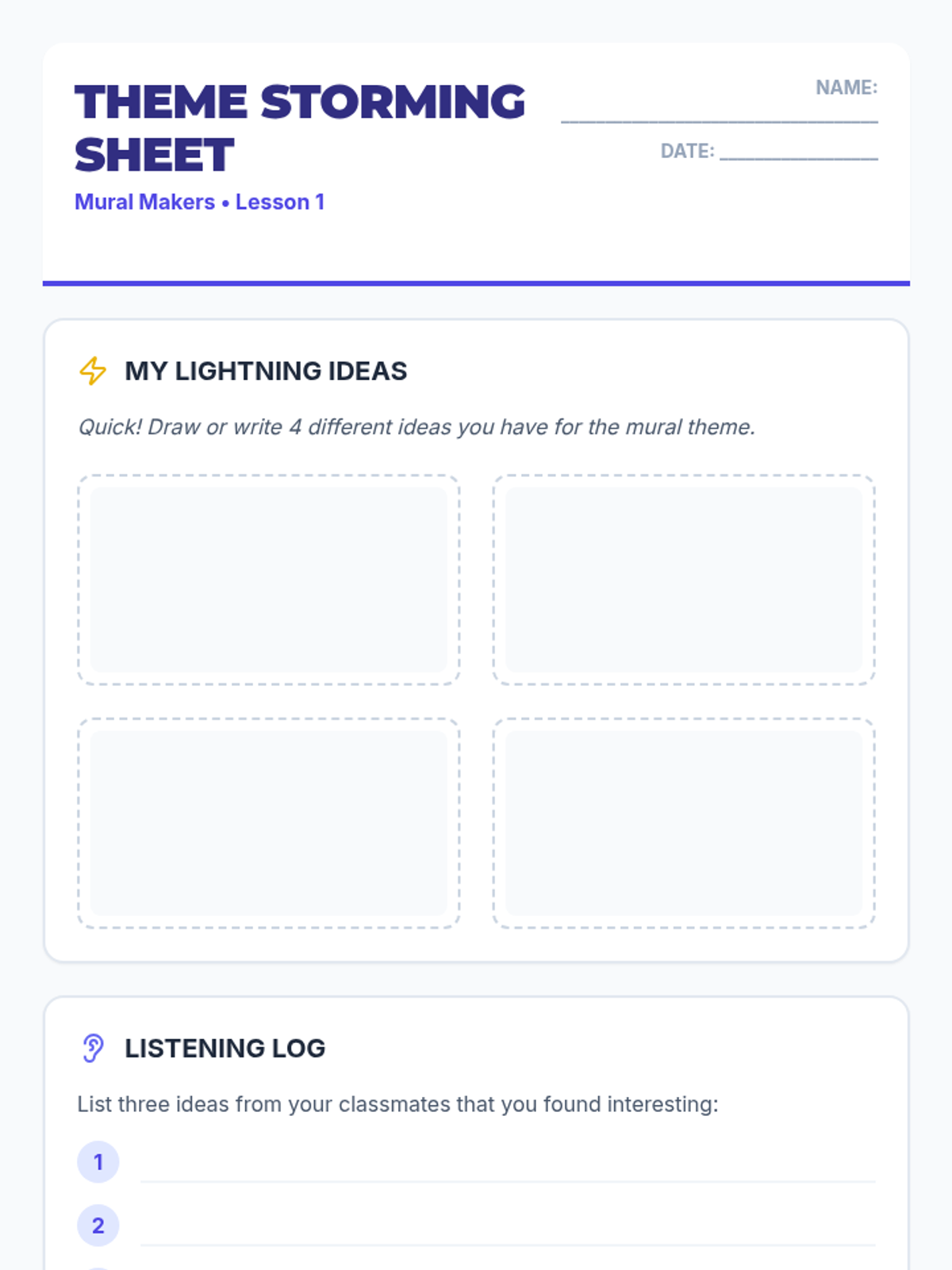
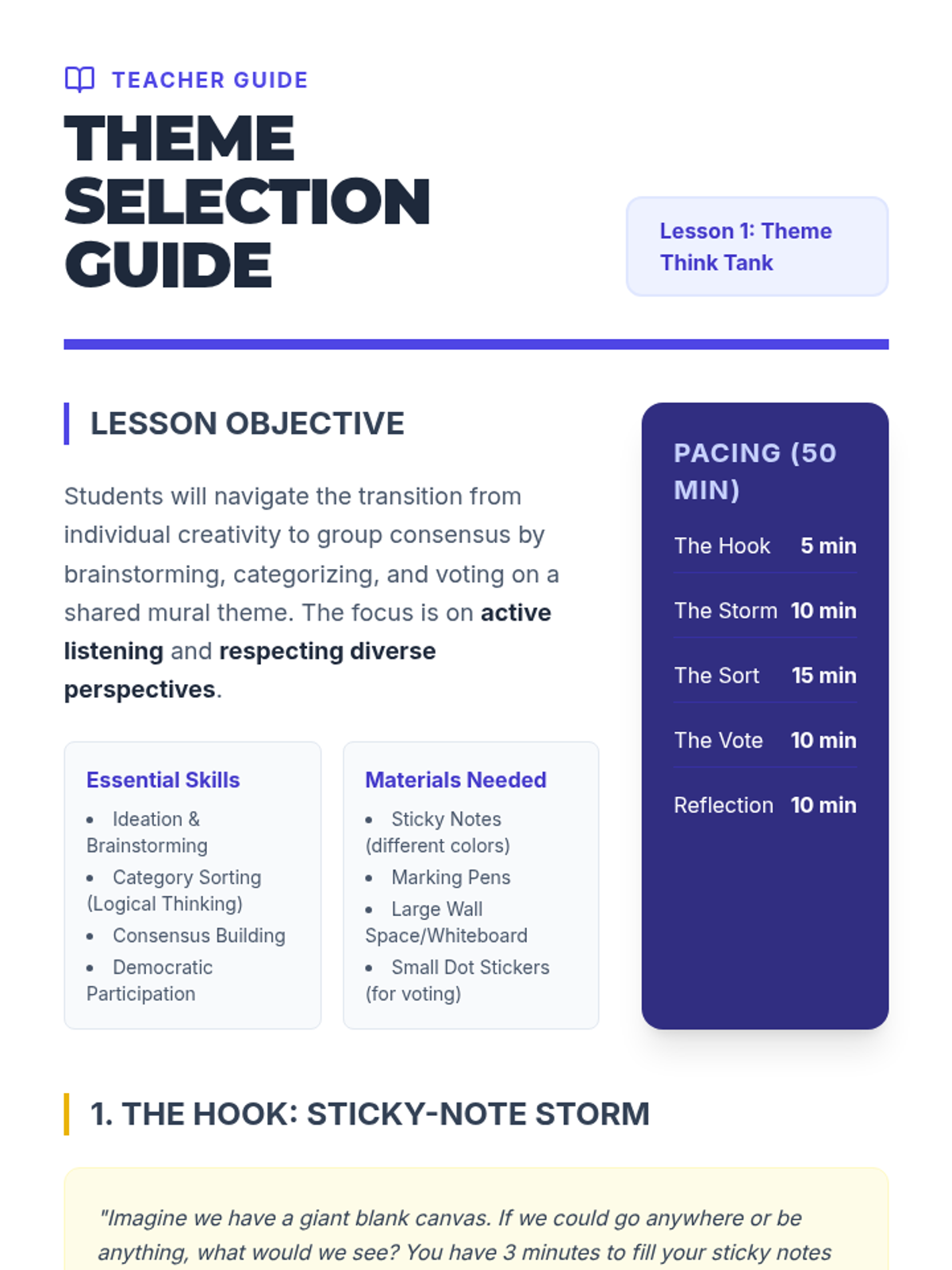
A 5-lesson sequence for 4th graders focused on the iterative design process, teaching students how to brainstorm collectively, provide constructive feedback, and navigate creative differences within an arts context.
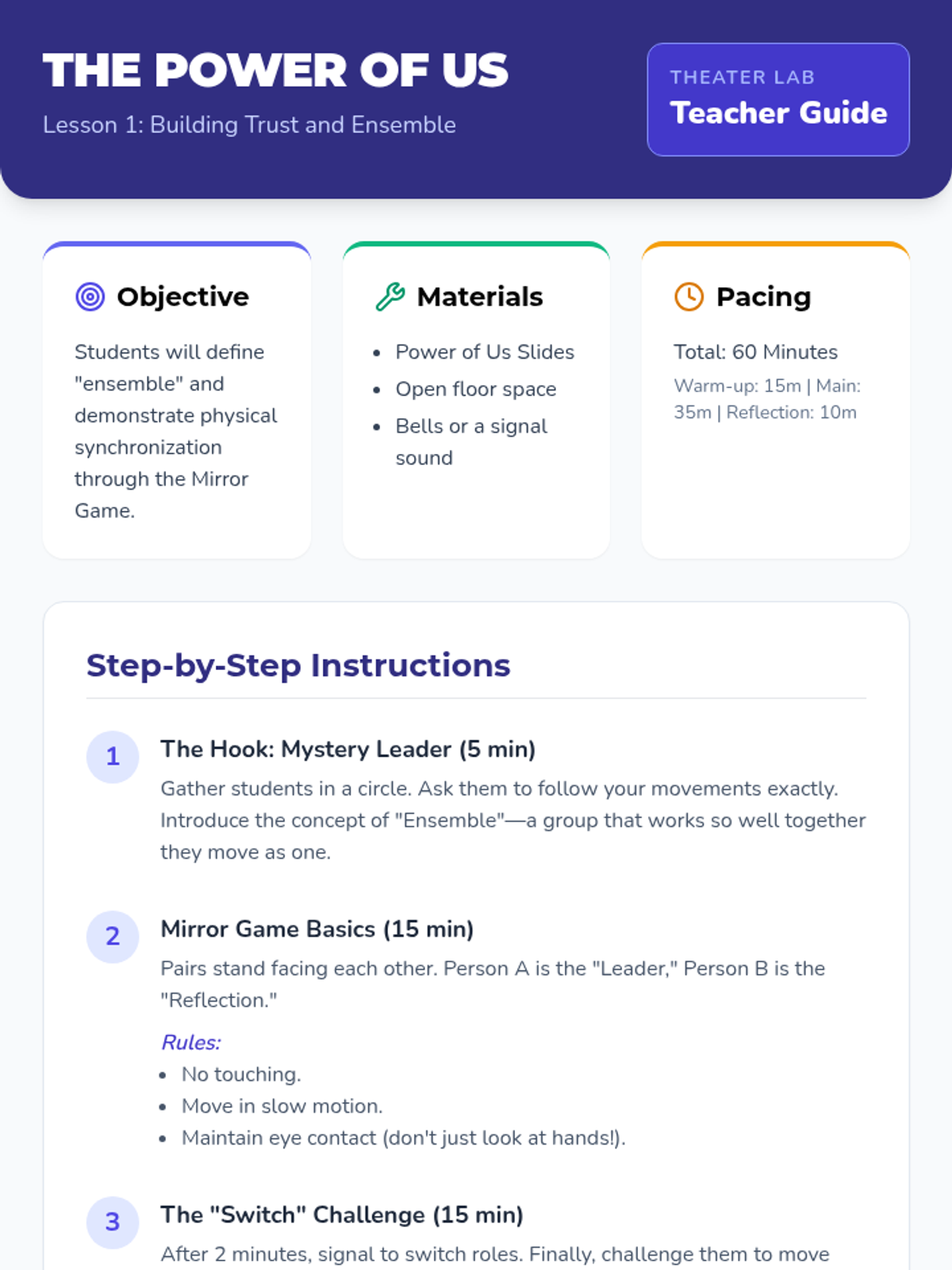
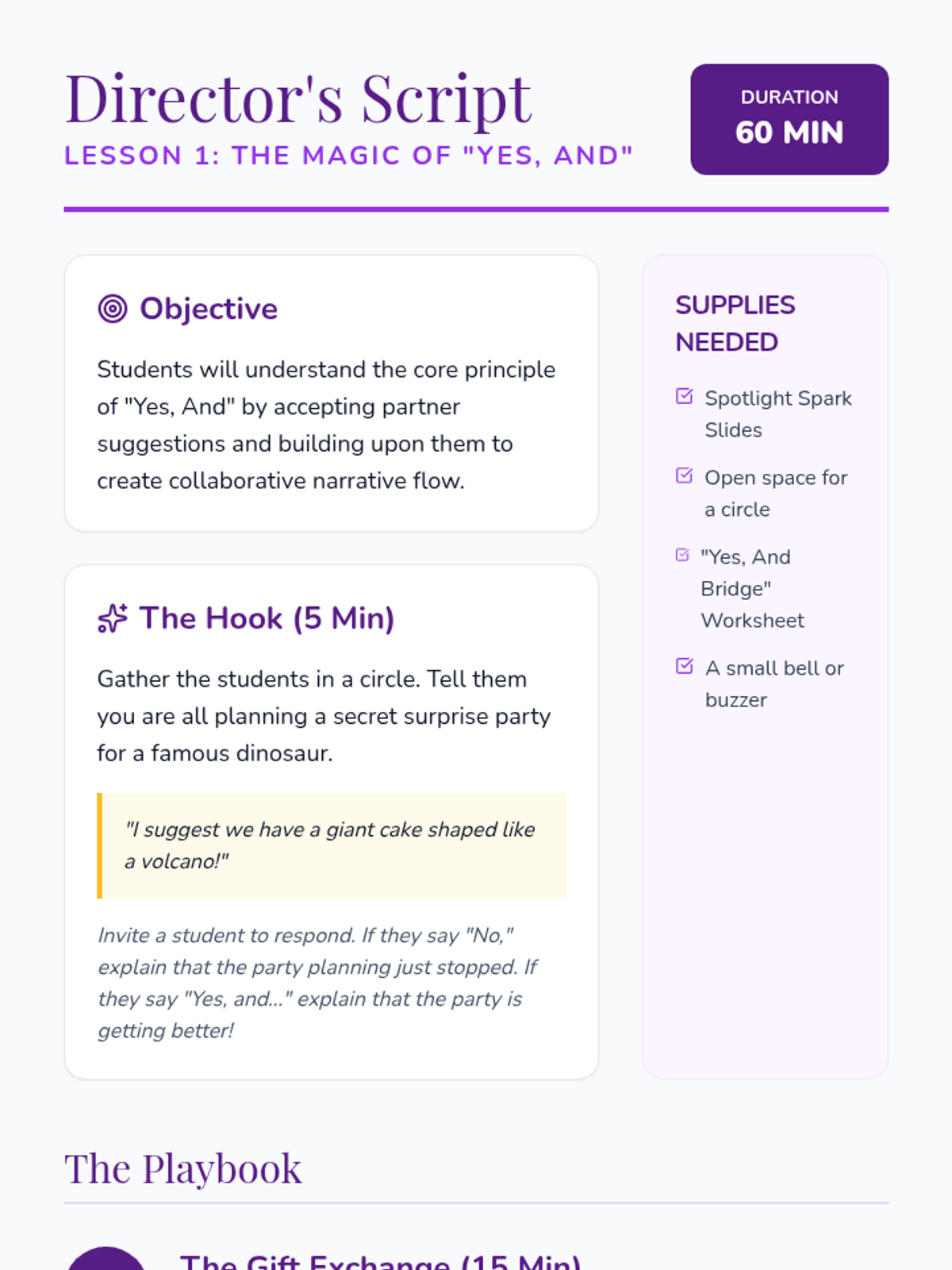
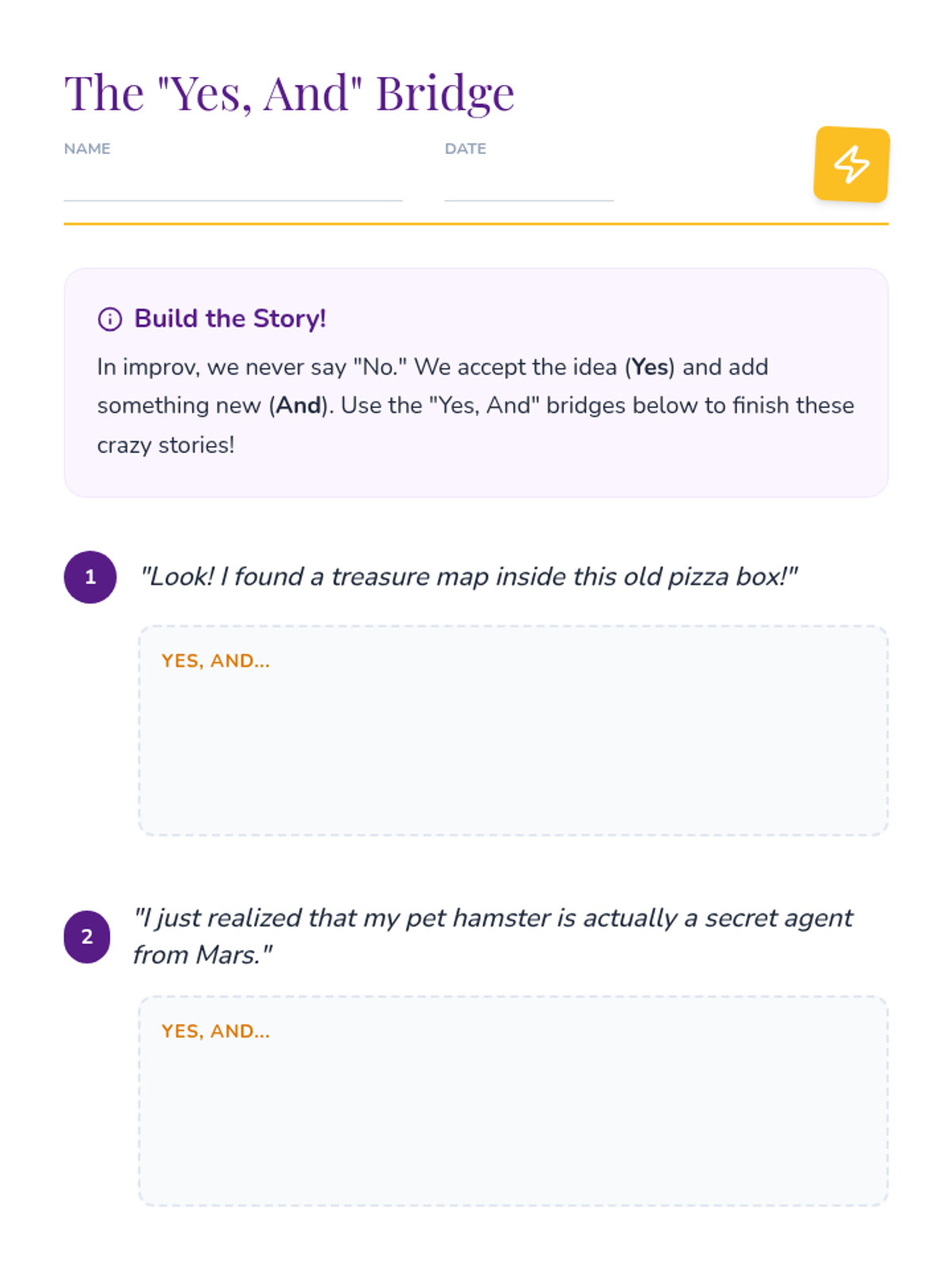
A five-lesson sequence for 4th Grade students that uses theater techniques to build ensemble skills, trust, and creative collaboration. Students explore improvisation through 'Yes, And' exercises, non-verbal communication, and collective storytelling.
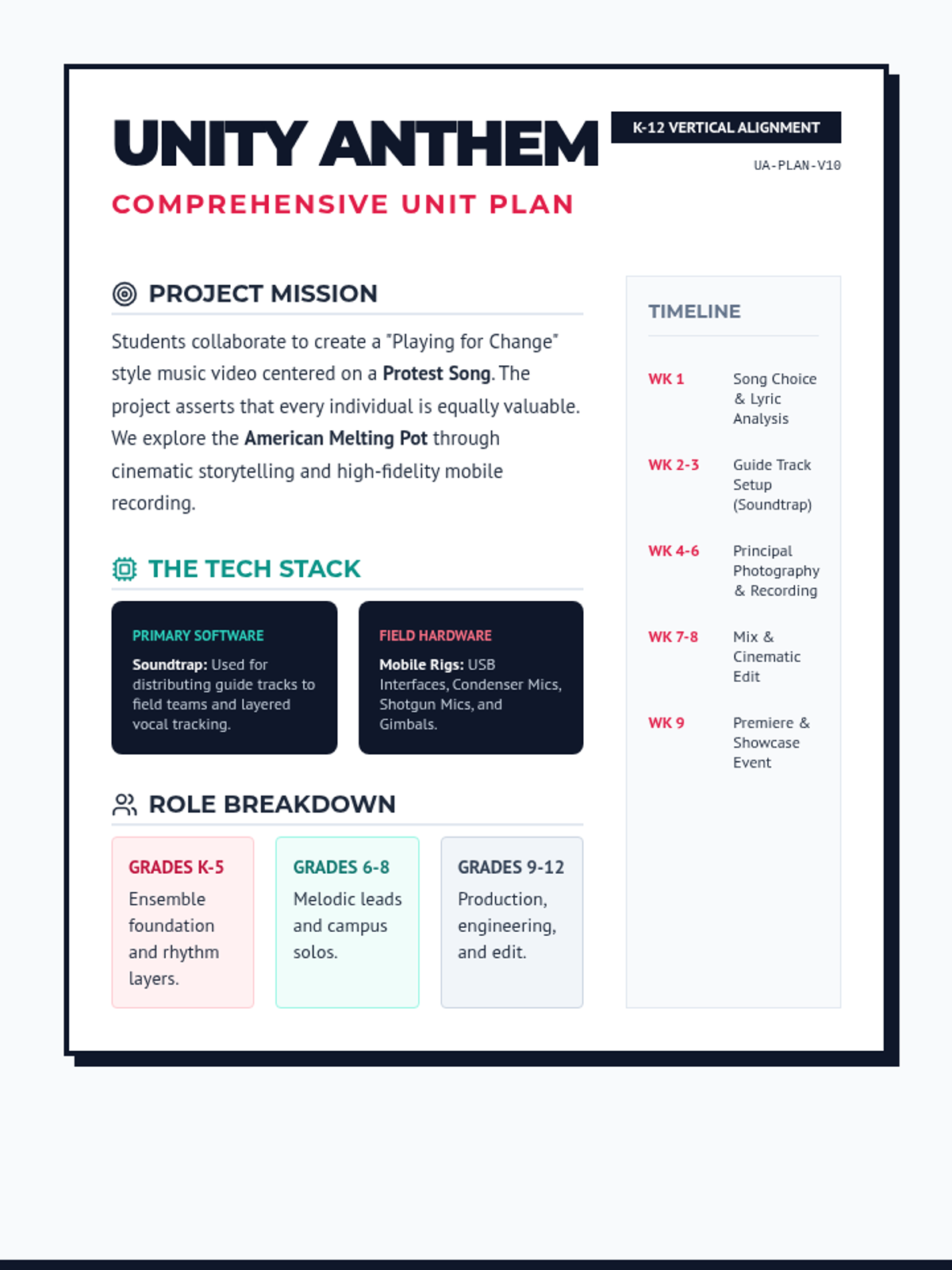
A K-12 collaborative music video project where students across all grade levels work together to produce a 'Playing for Change' style cover of a protest song centered on equality and cultural identity. High school students lead production, while K-8 students provide the musical and visual heart of the performance.
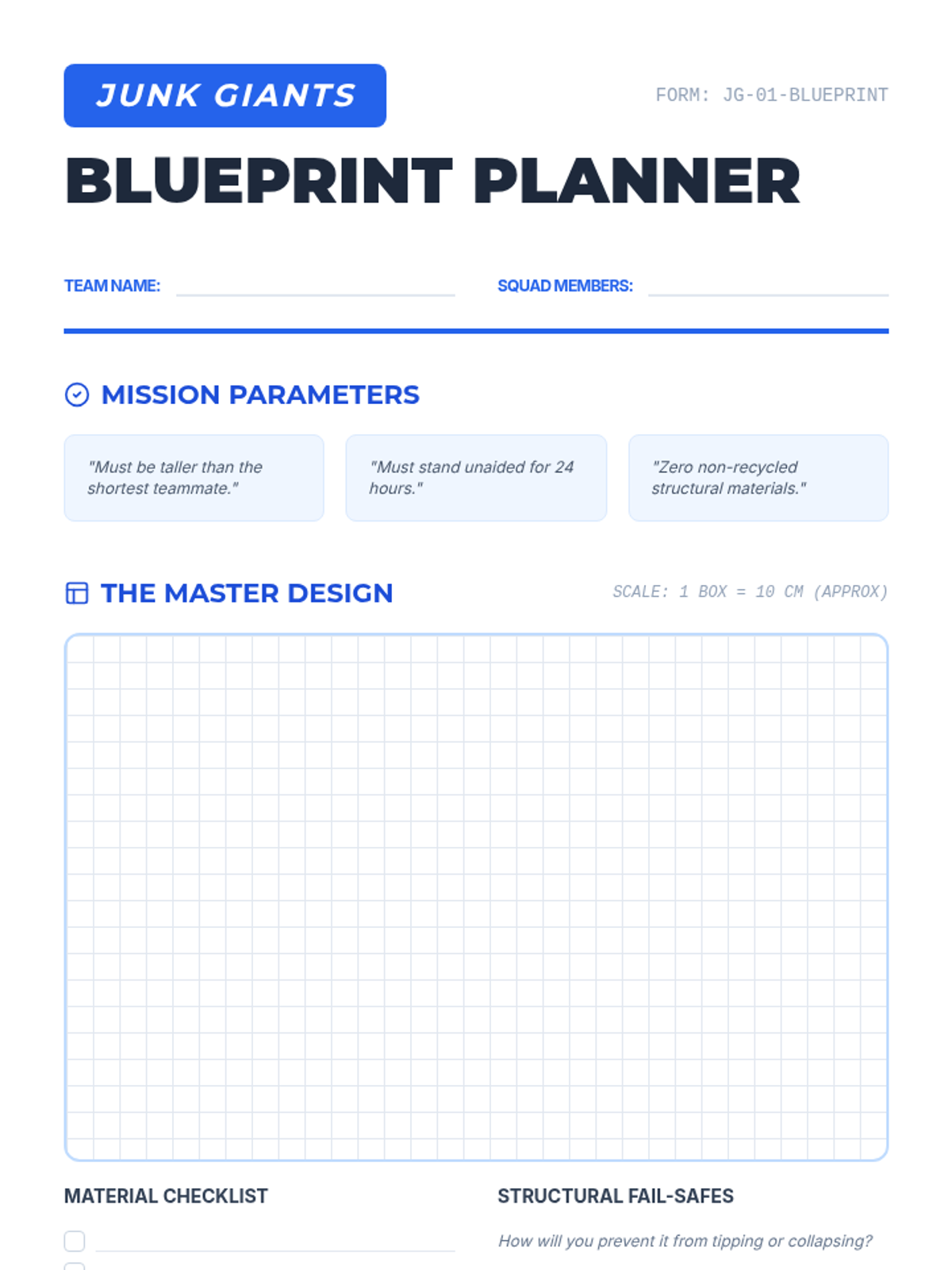
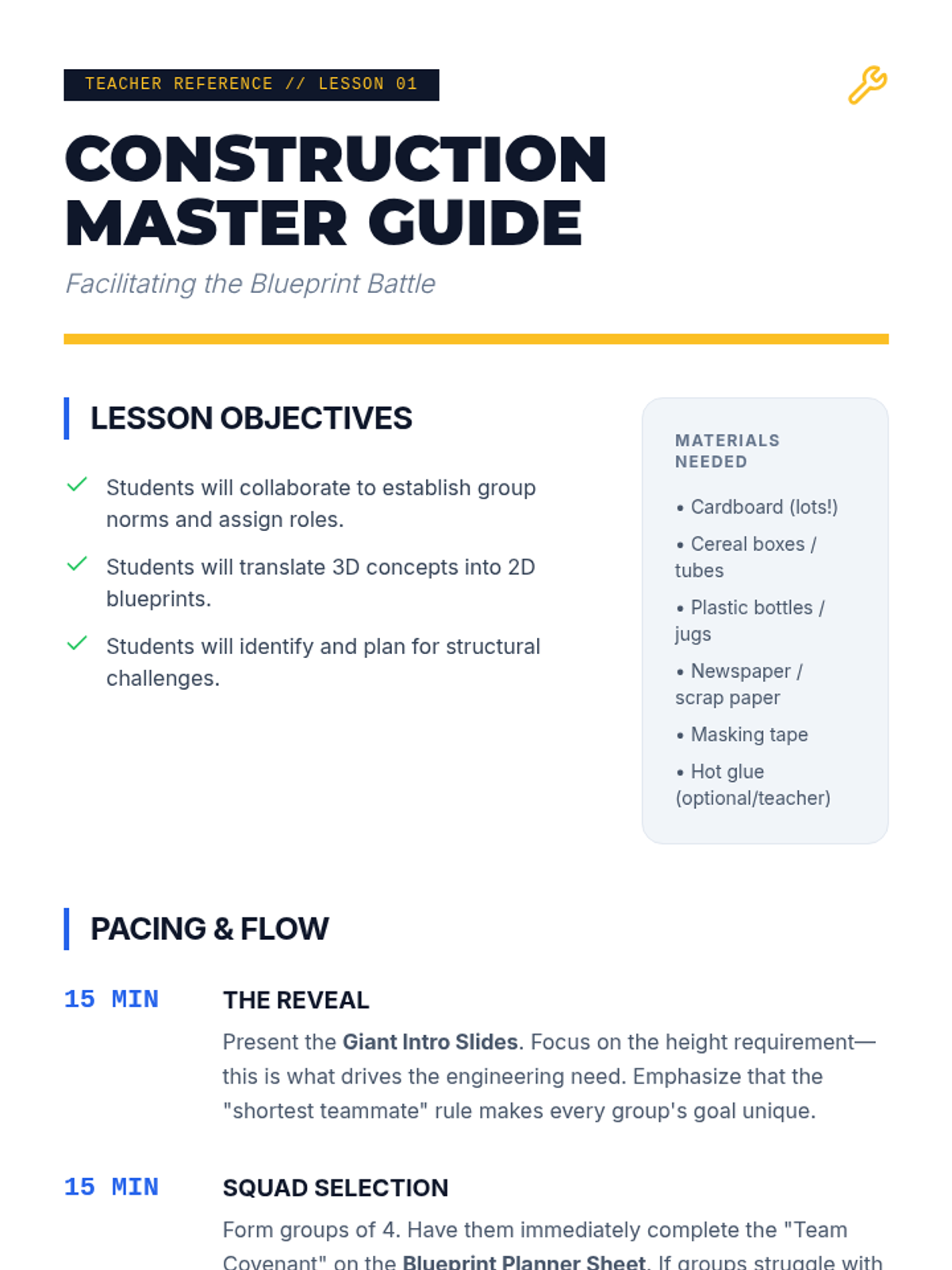
A 3-day collaborative sculpture project where students transform recycled materials into massive structures while overcoming engineering challenges.
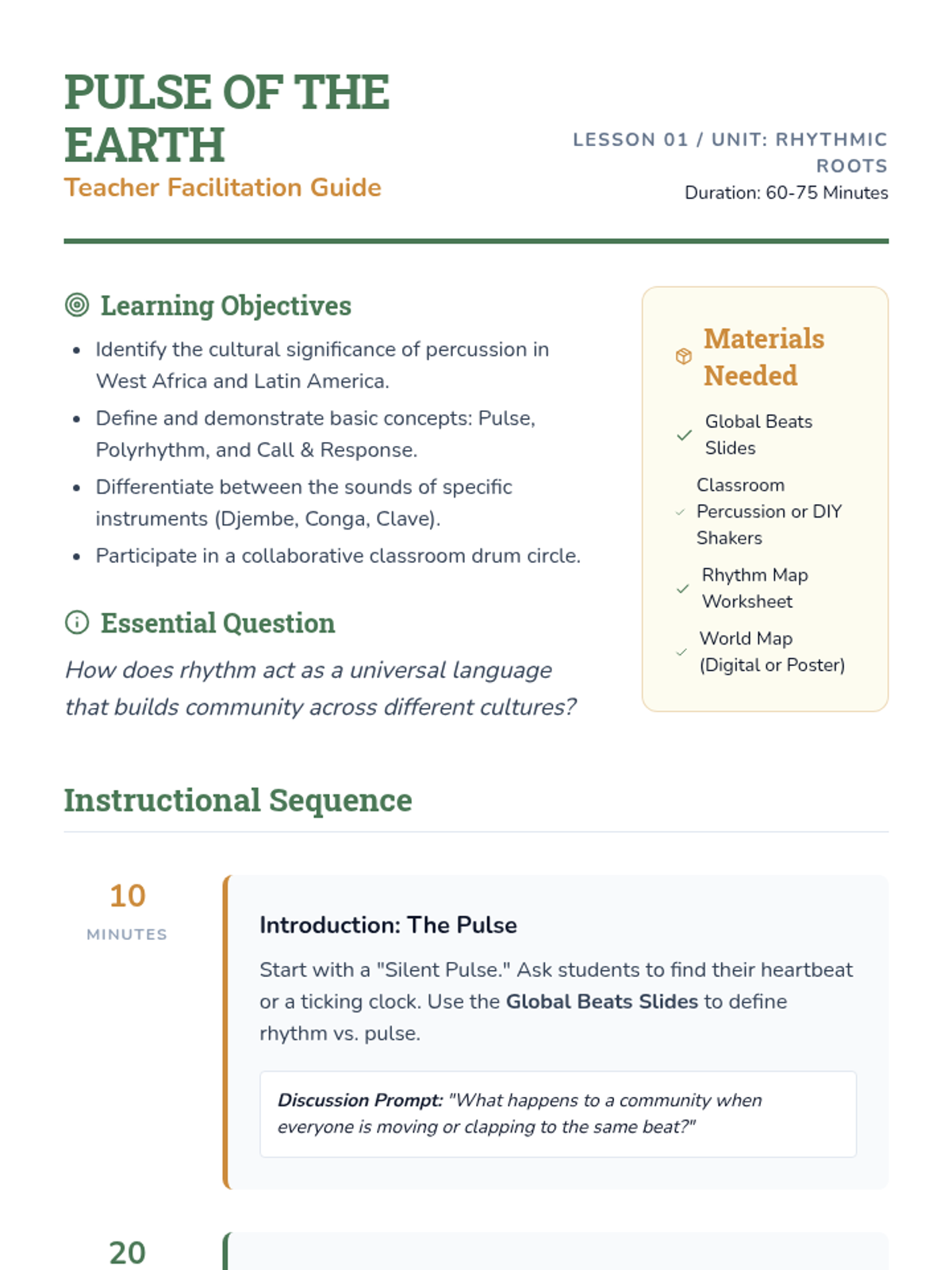
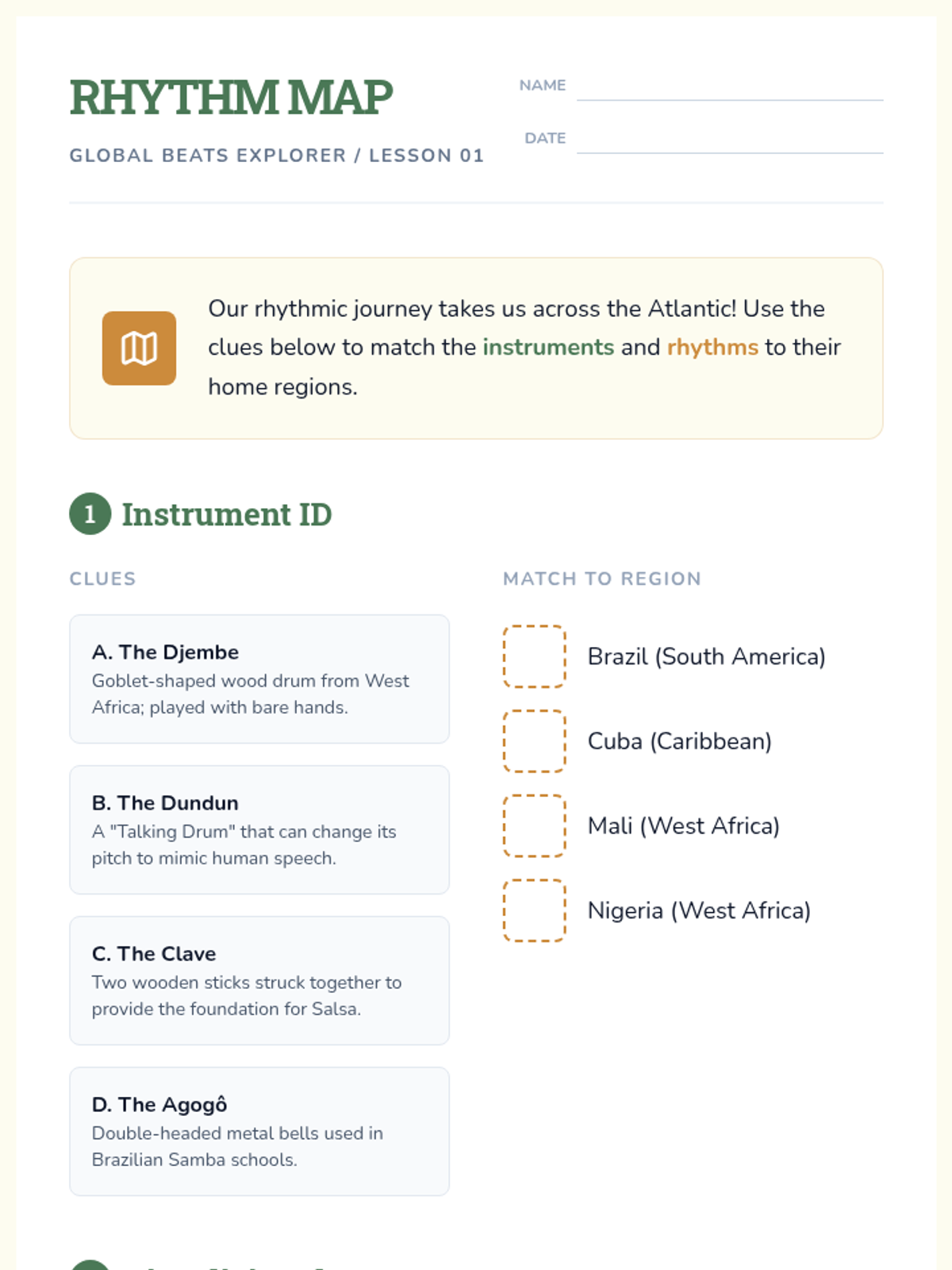
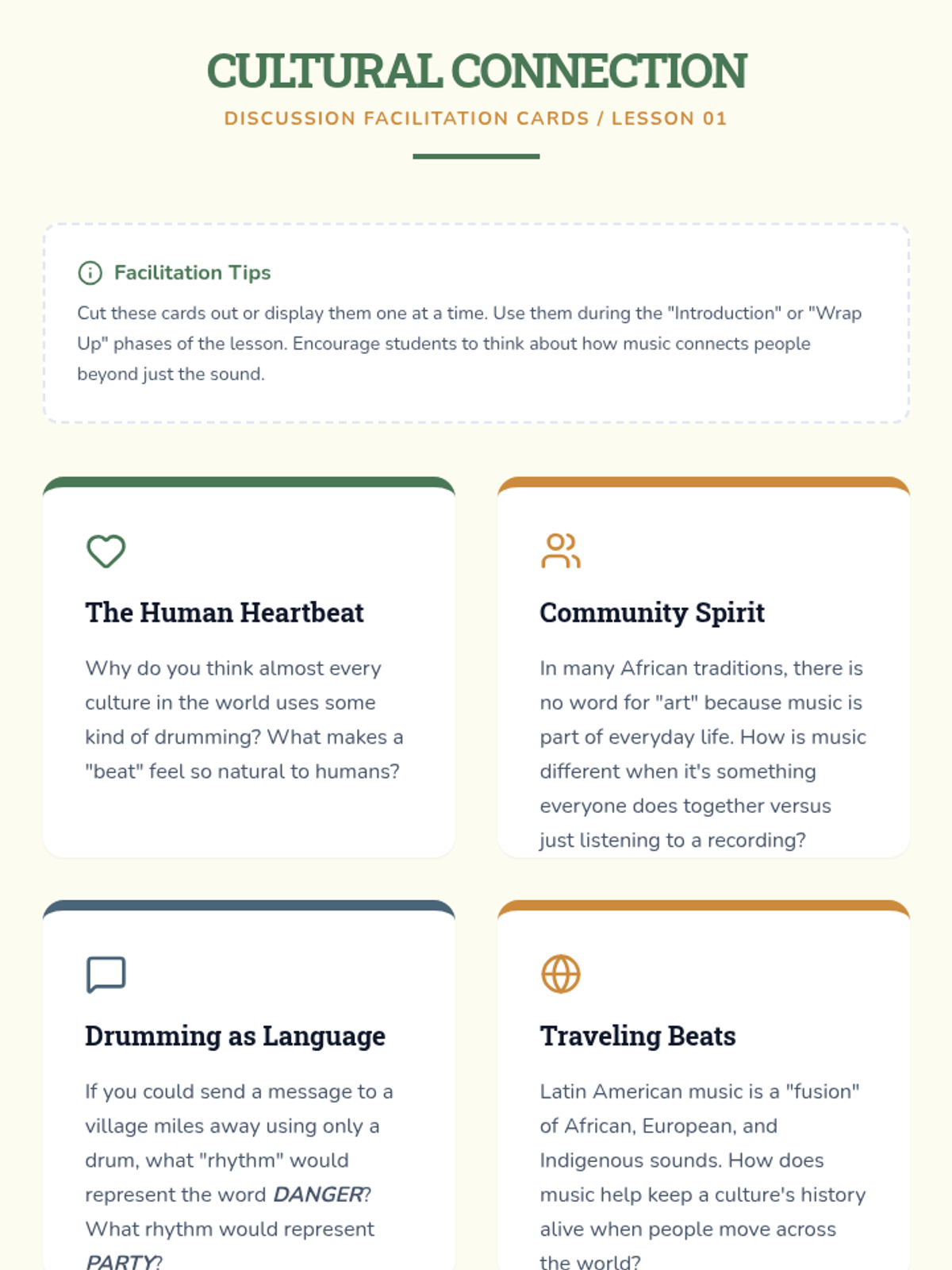
A comprehensive exploration of world music and dance, focusing on cultural heritage, musical elements, and creative expression through drumming, melody, and global fusion.
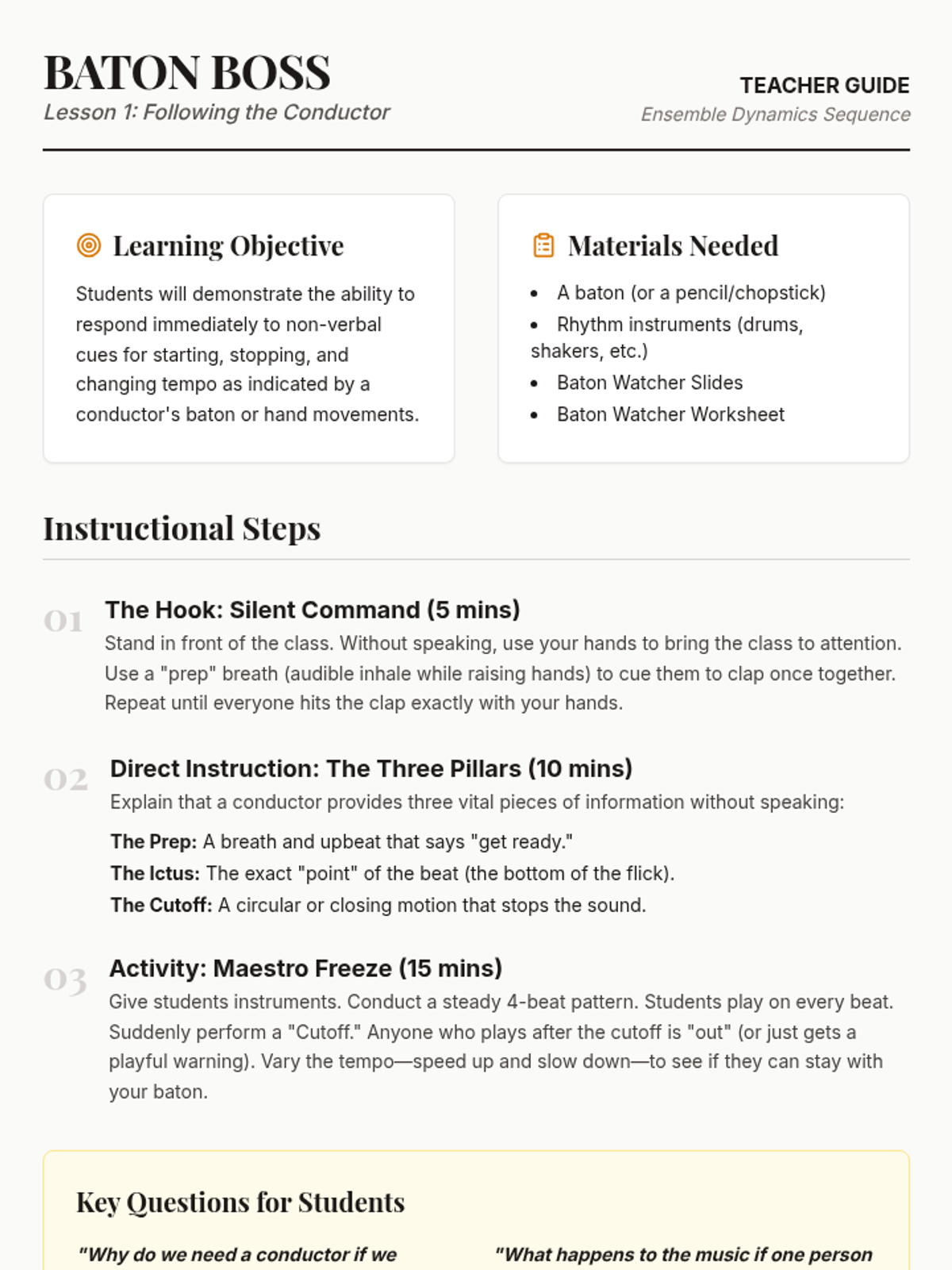
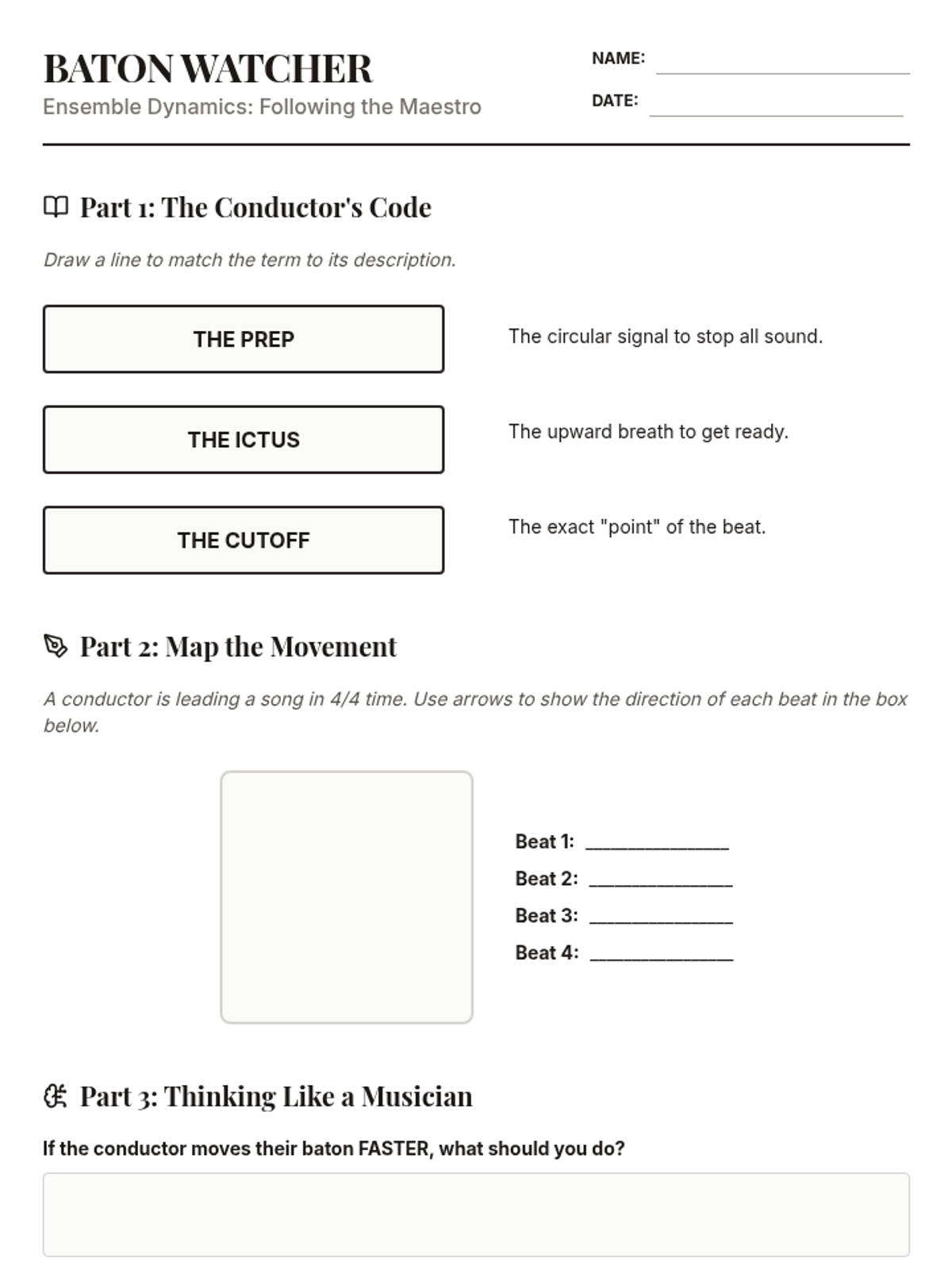
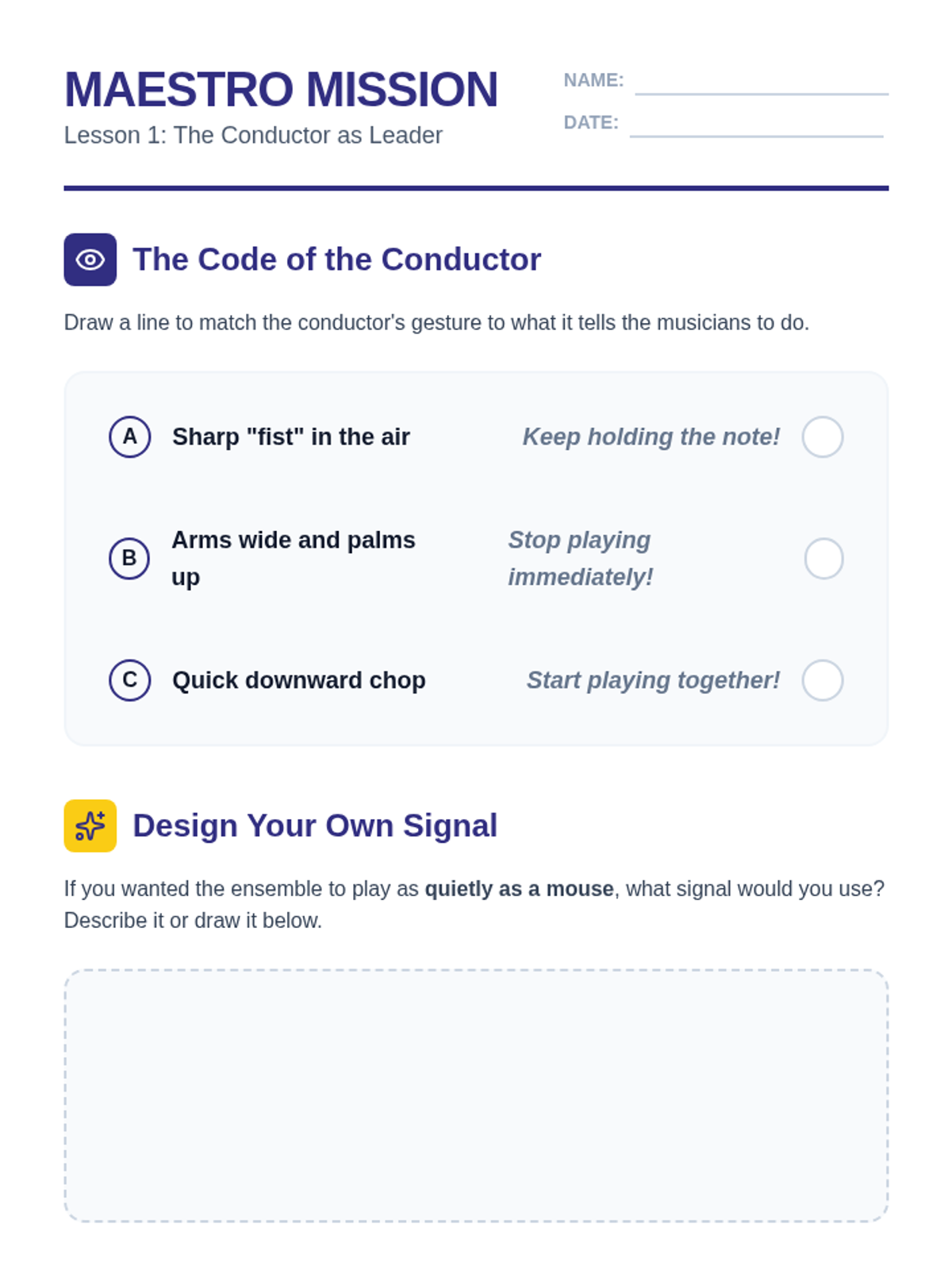
This sequence explores how musicians work together as an ensemble, focusing on conducting cues, dynamic control, balance, and tempo maintenance. Students transition from following a leader to collaborating in small independent groups.
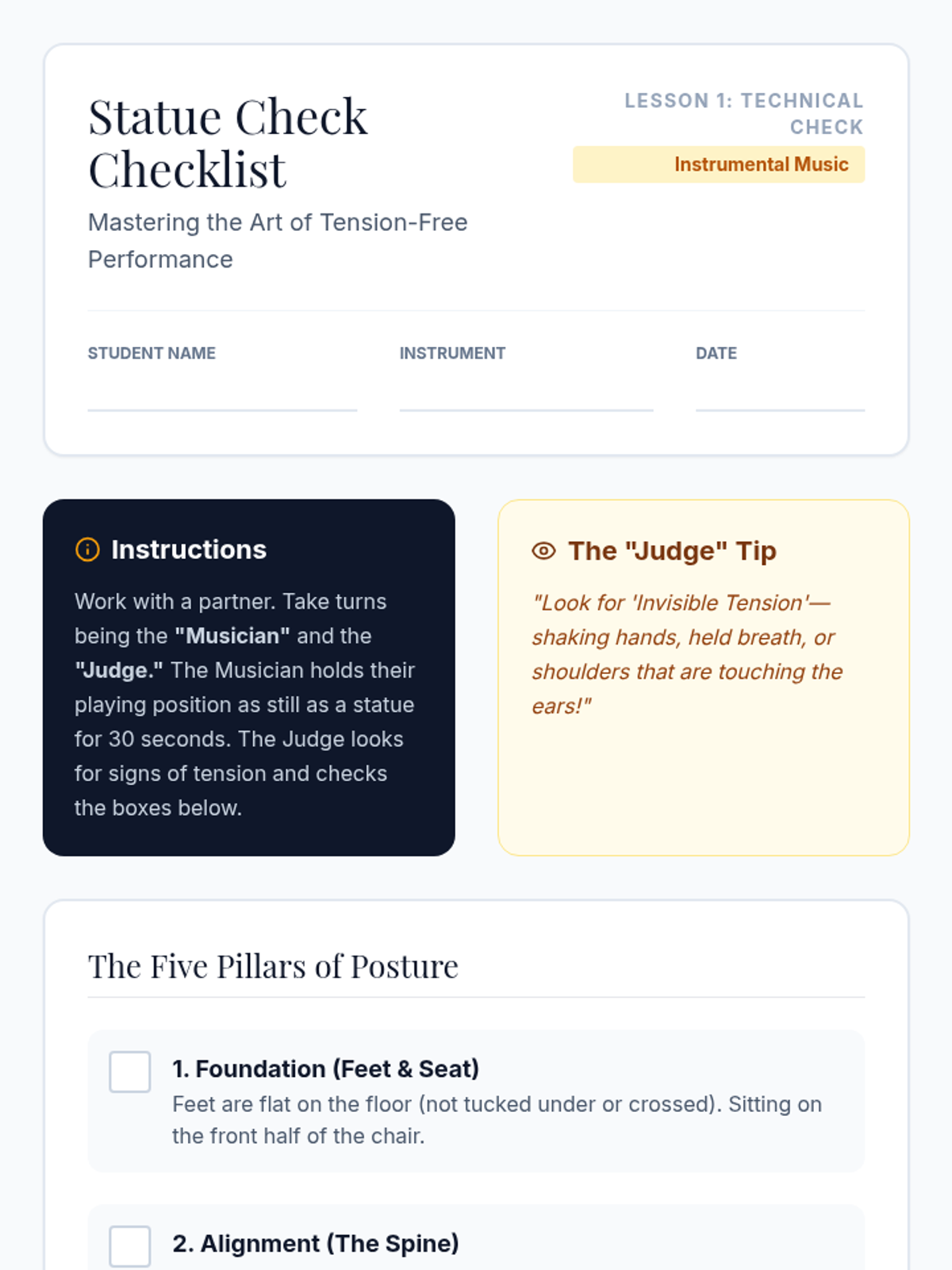
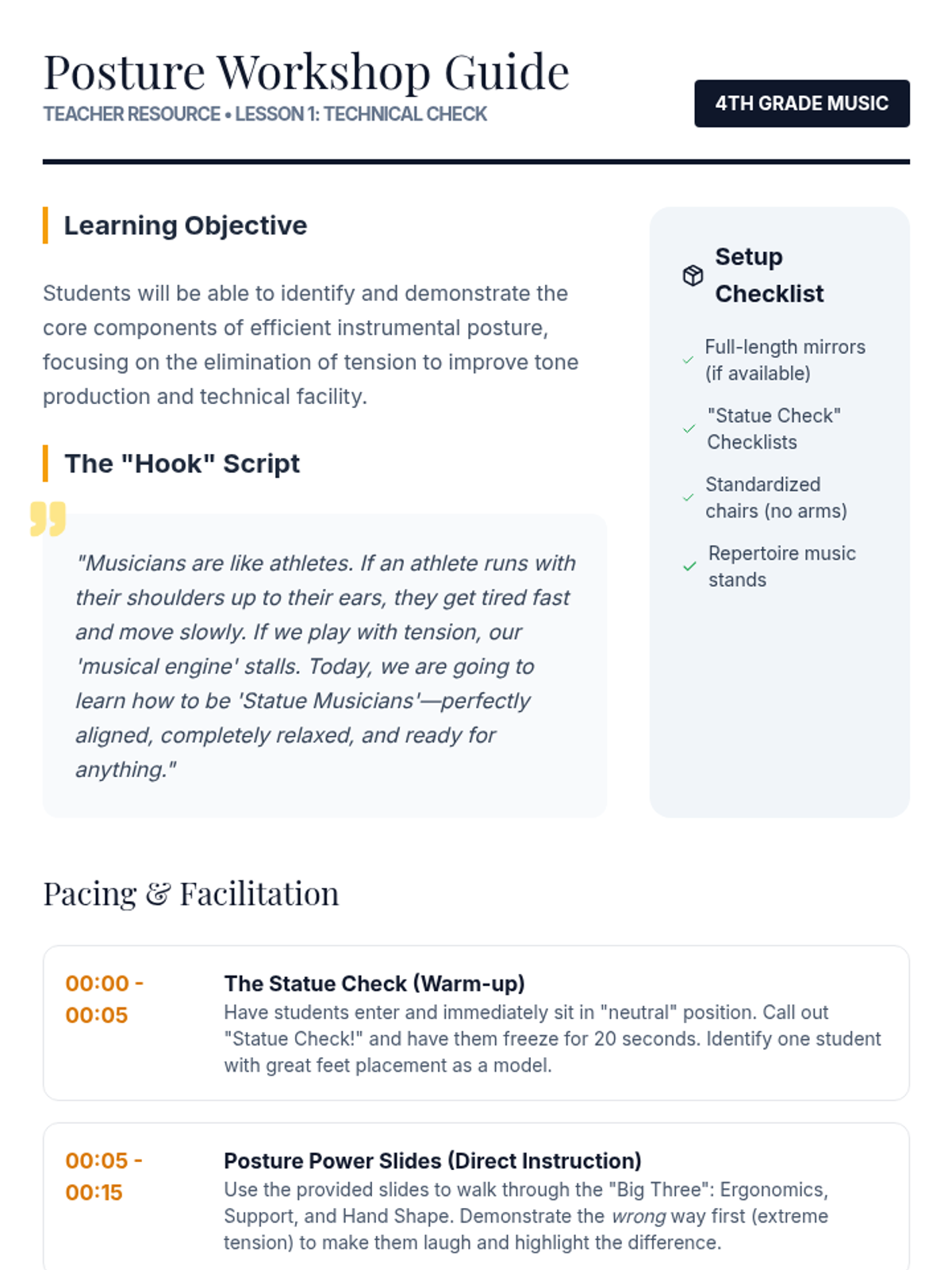
This sequence guides 4th-grade music students through the transition from initial practice to a polished concert performance. Students develop technical habits, practice strategies, critical listening skills, and stage etiquette to understand the discipline and artistry of instrumental performance.
A 5-lesson journey into ensemble techniques, focusing on non-verbal communication, dynamic control, layering parts with ostinatos, and collaborative performance. Students develop the skills needed to listen, adjust, and play as a unified musical group.
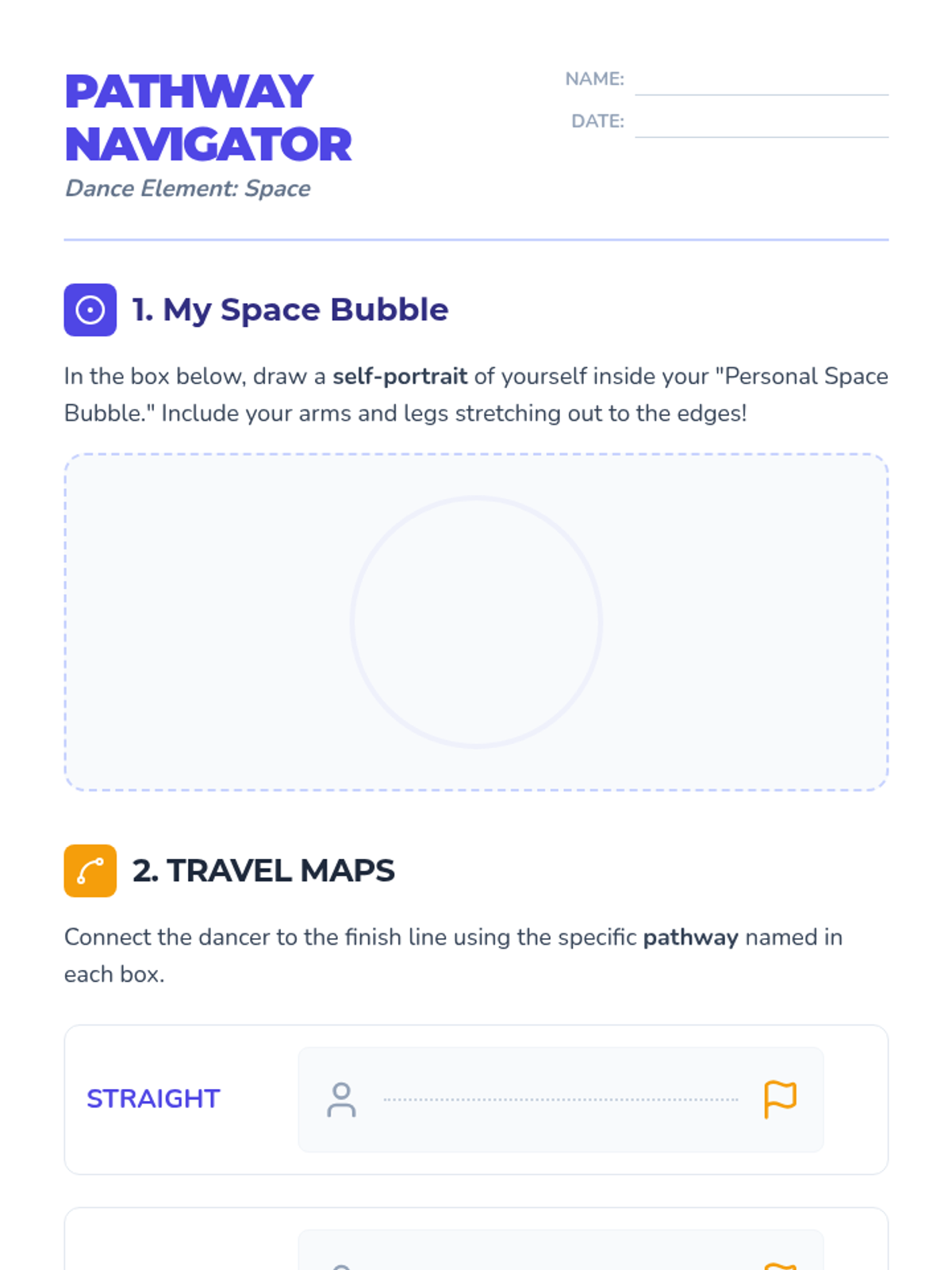
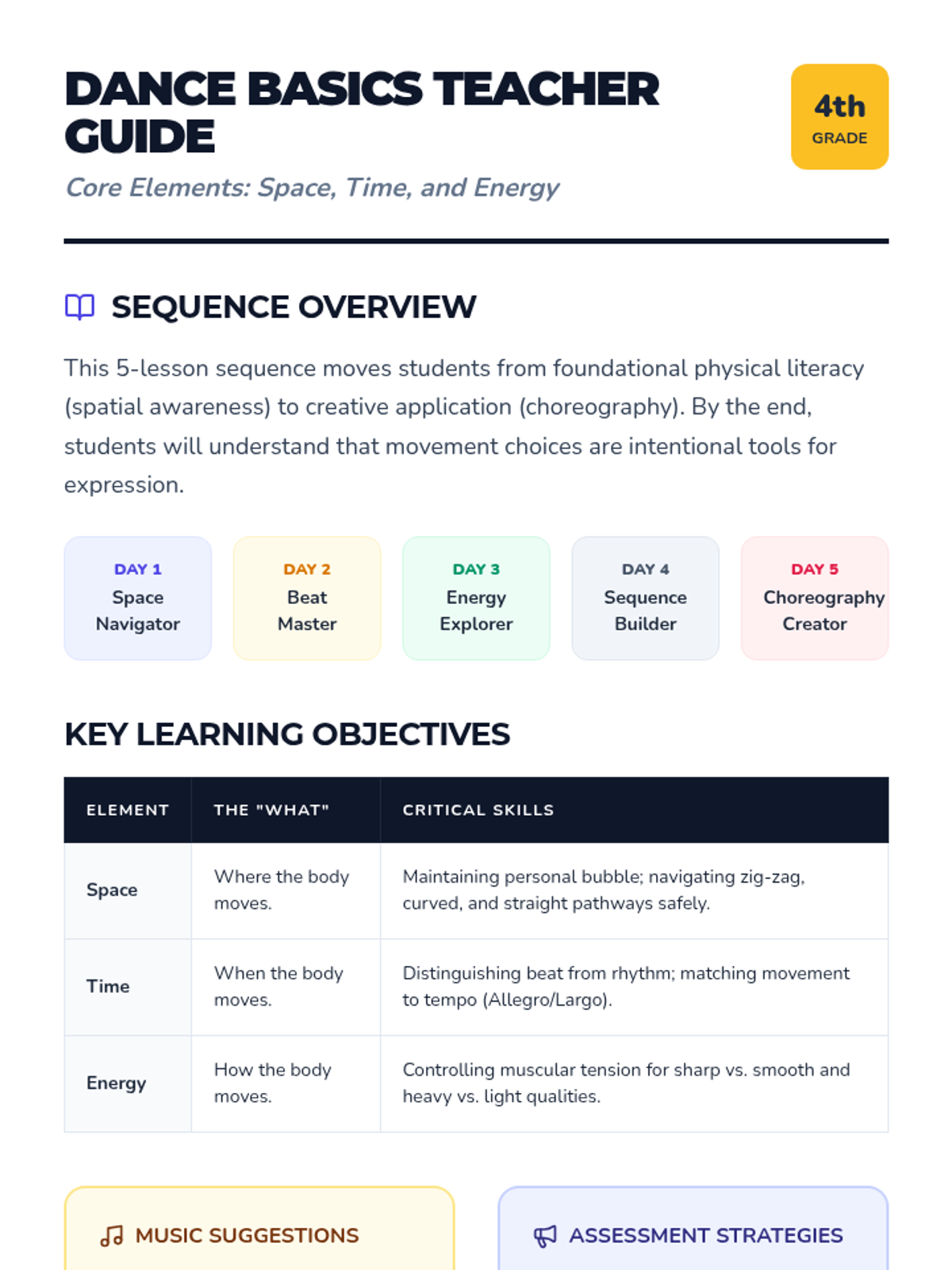
A comprehensive 5-lesson sequence for 4th graders exploring the foundational elements of dance: Space, Time, and Energy. Students progress from basic spatial awareness to collaborative choreography, learning how movement choices express meaning.
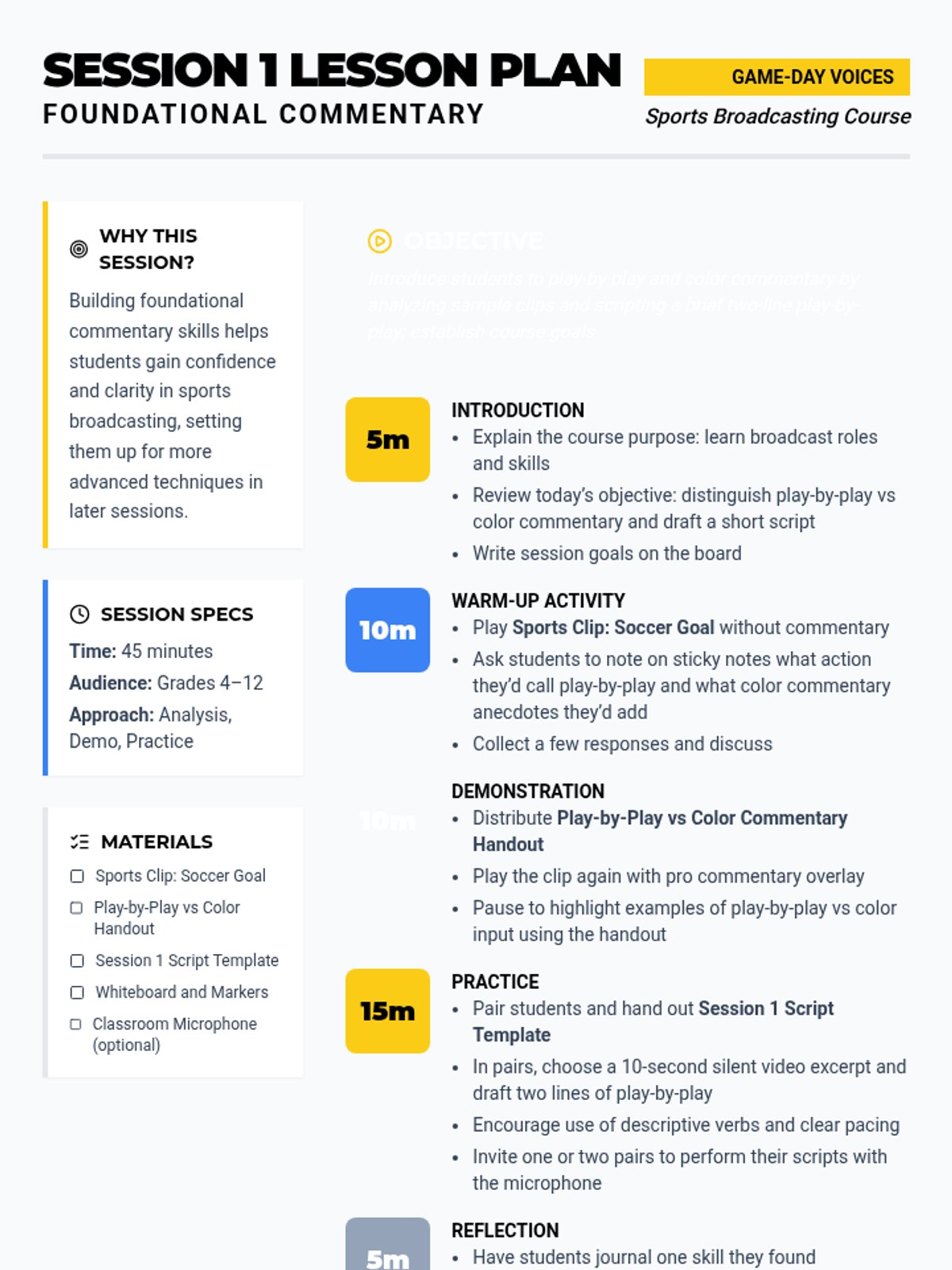
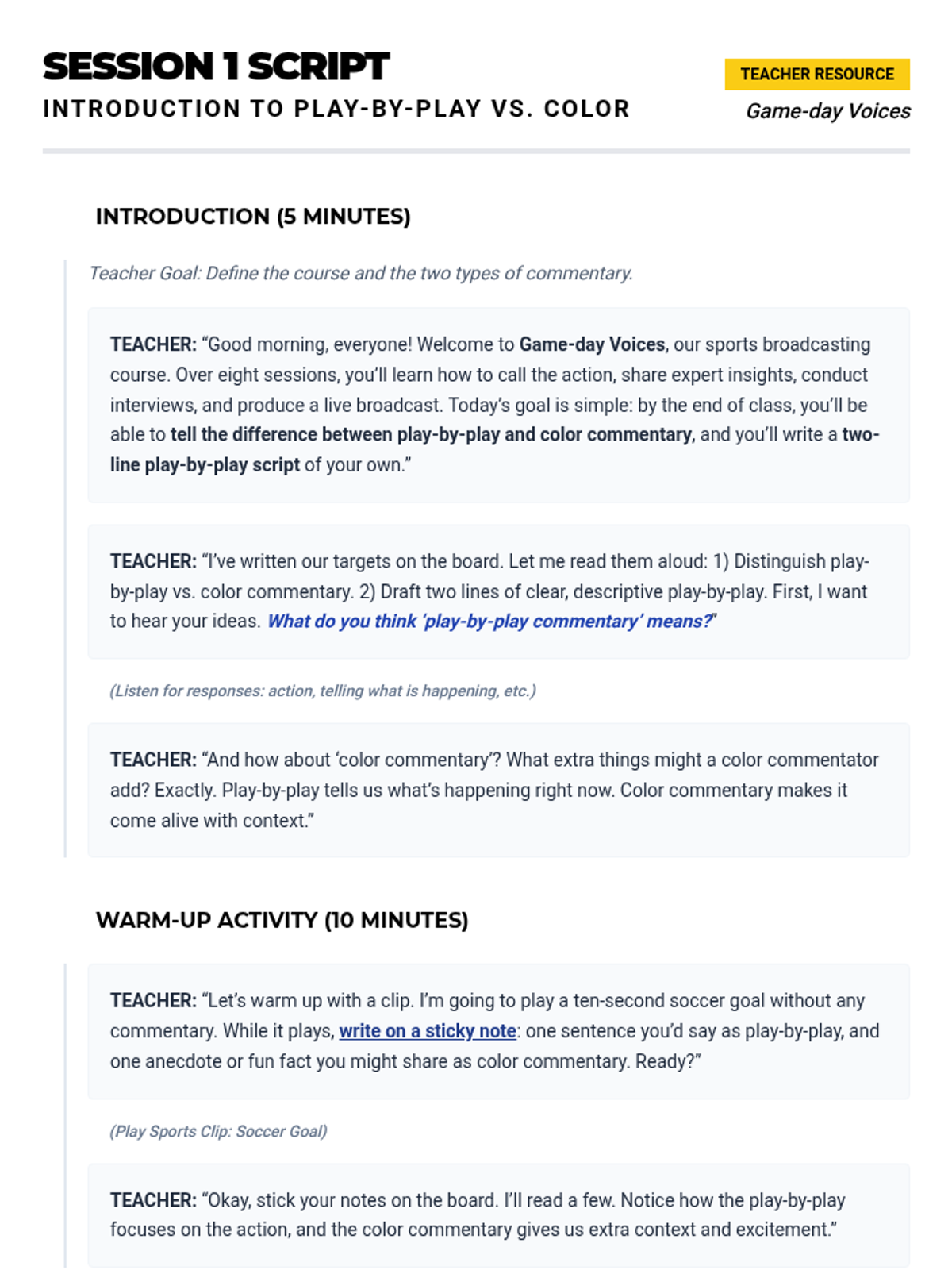
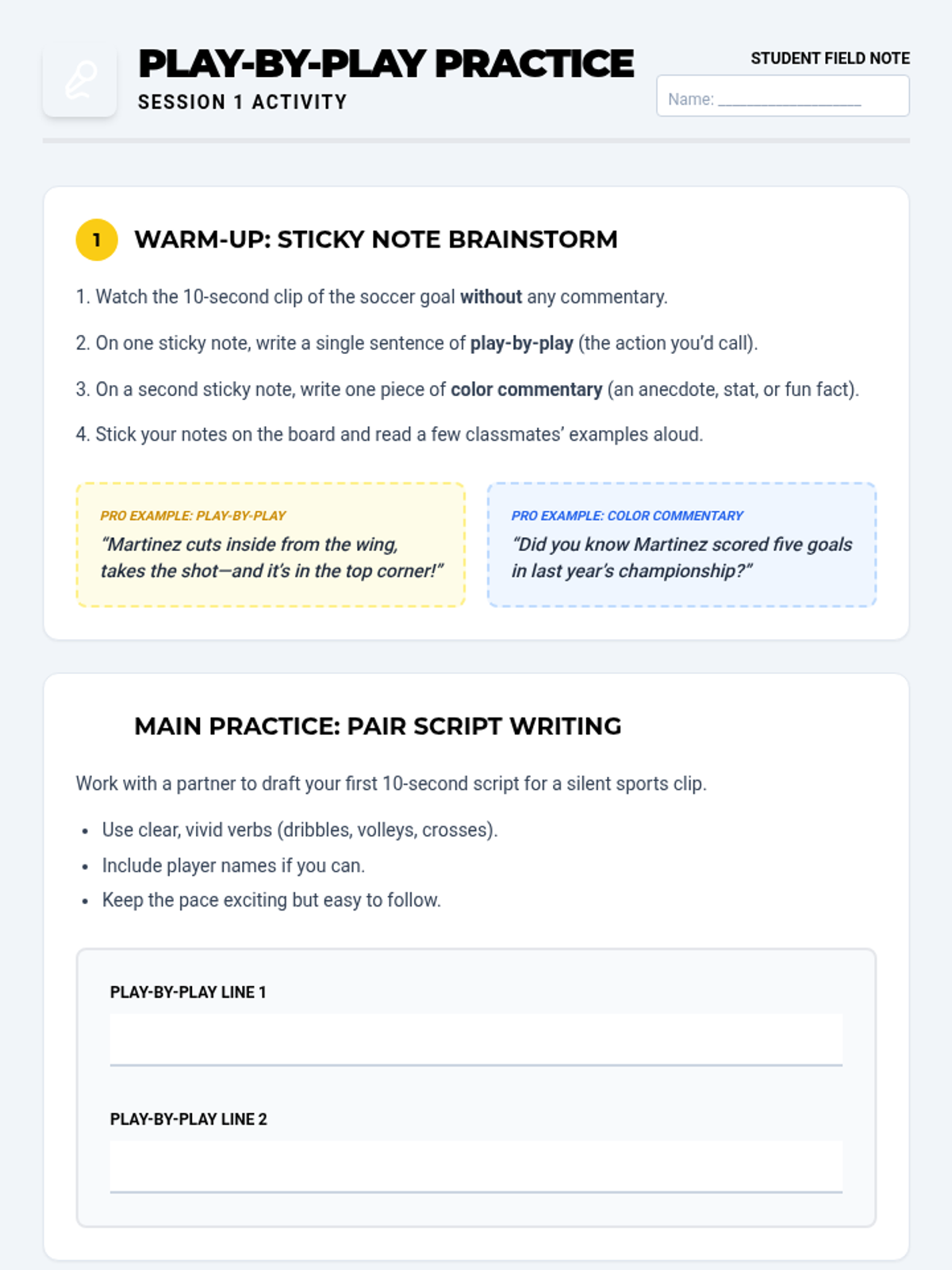
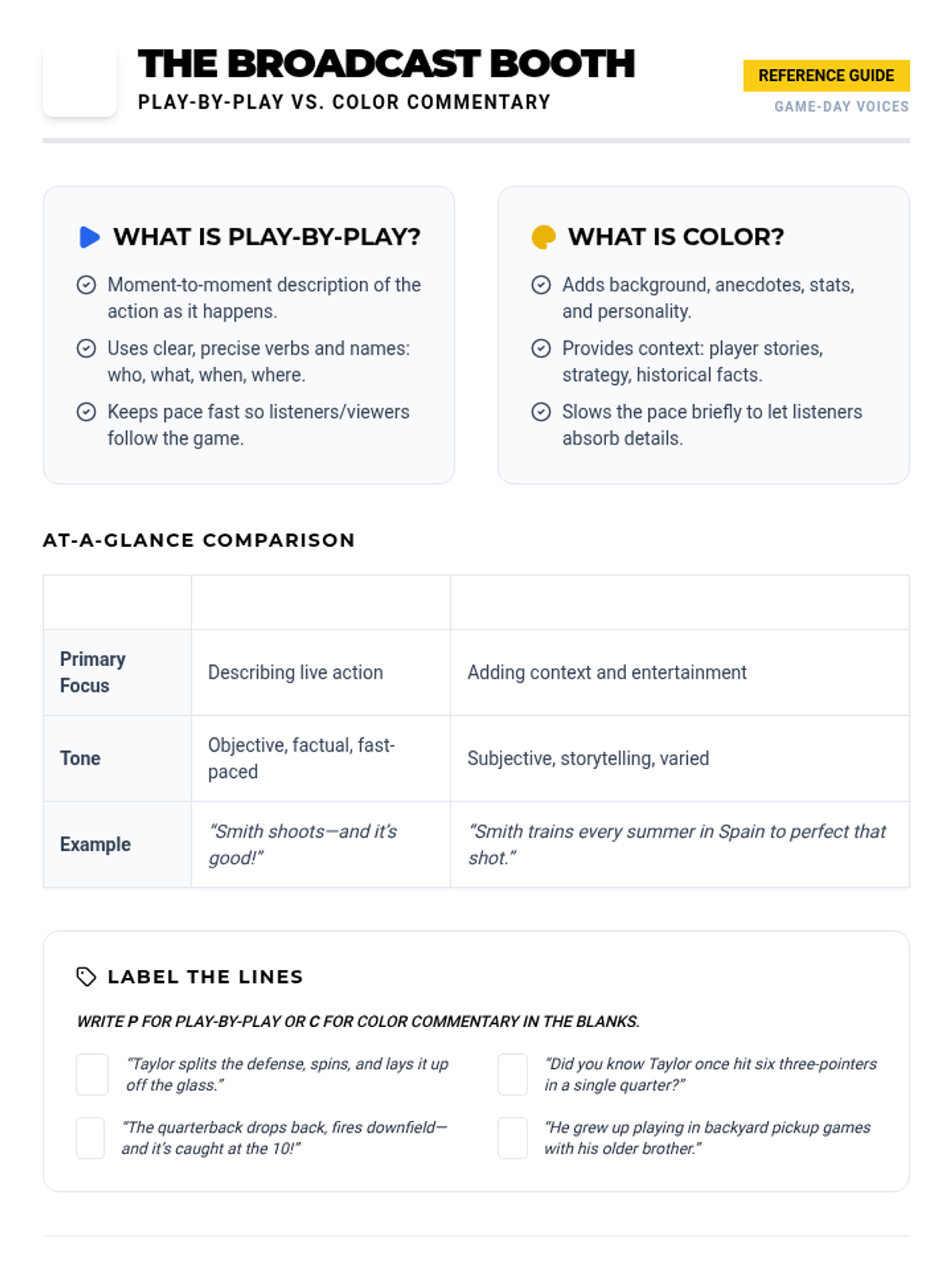
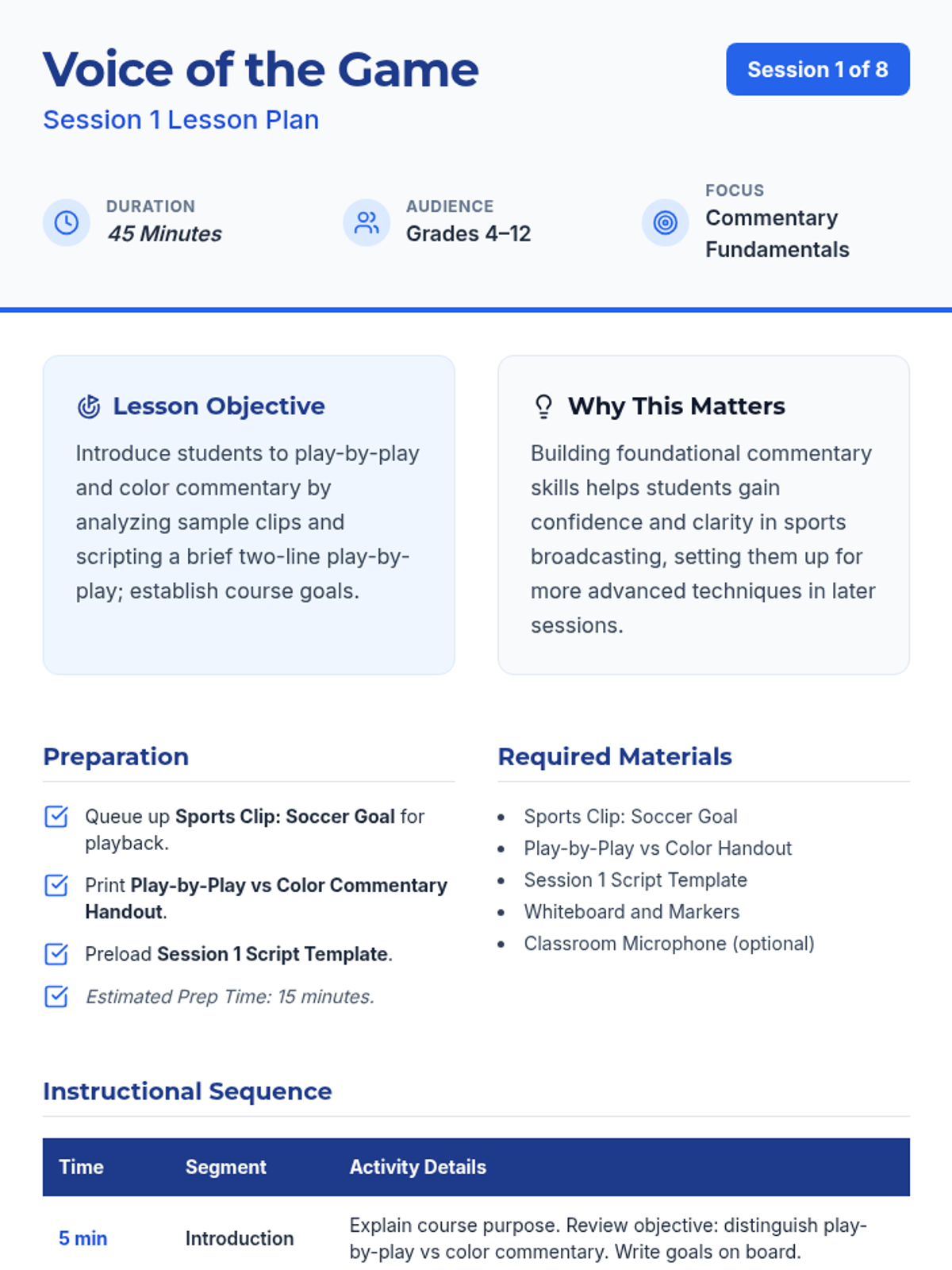
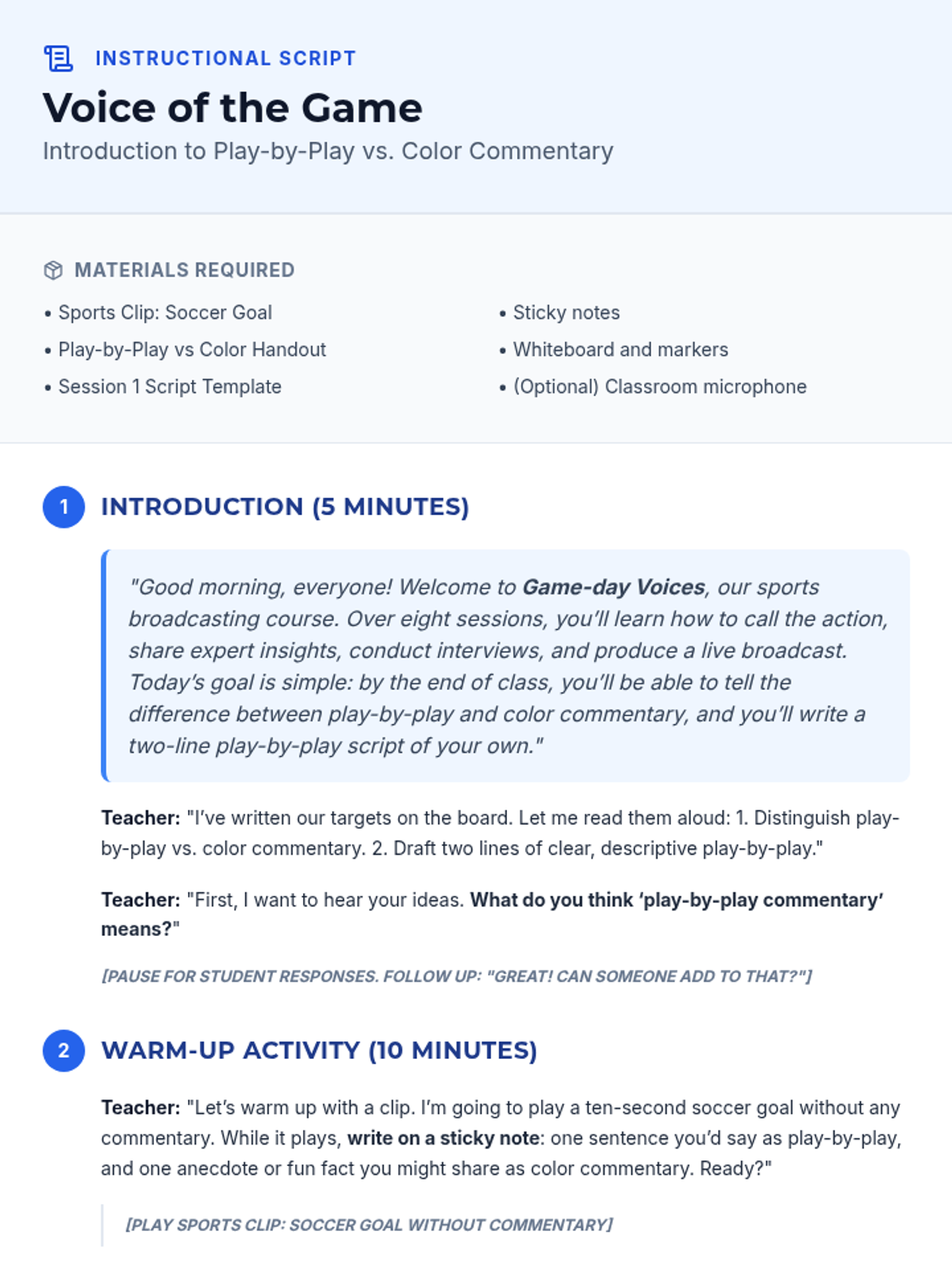
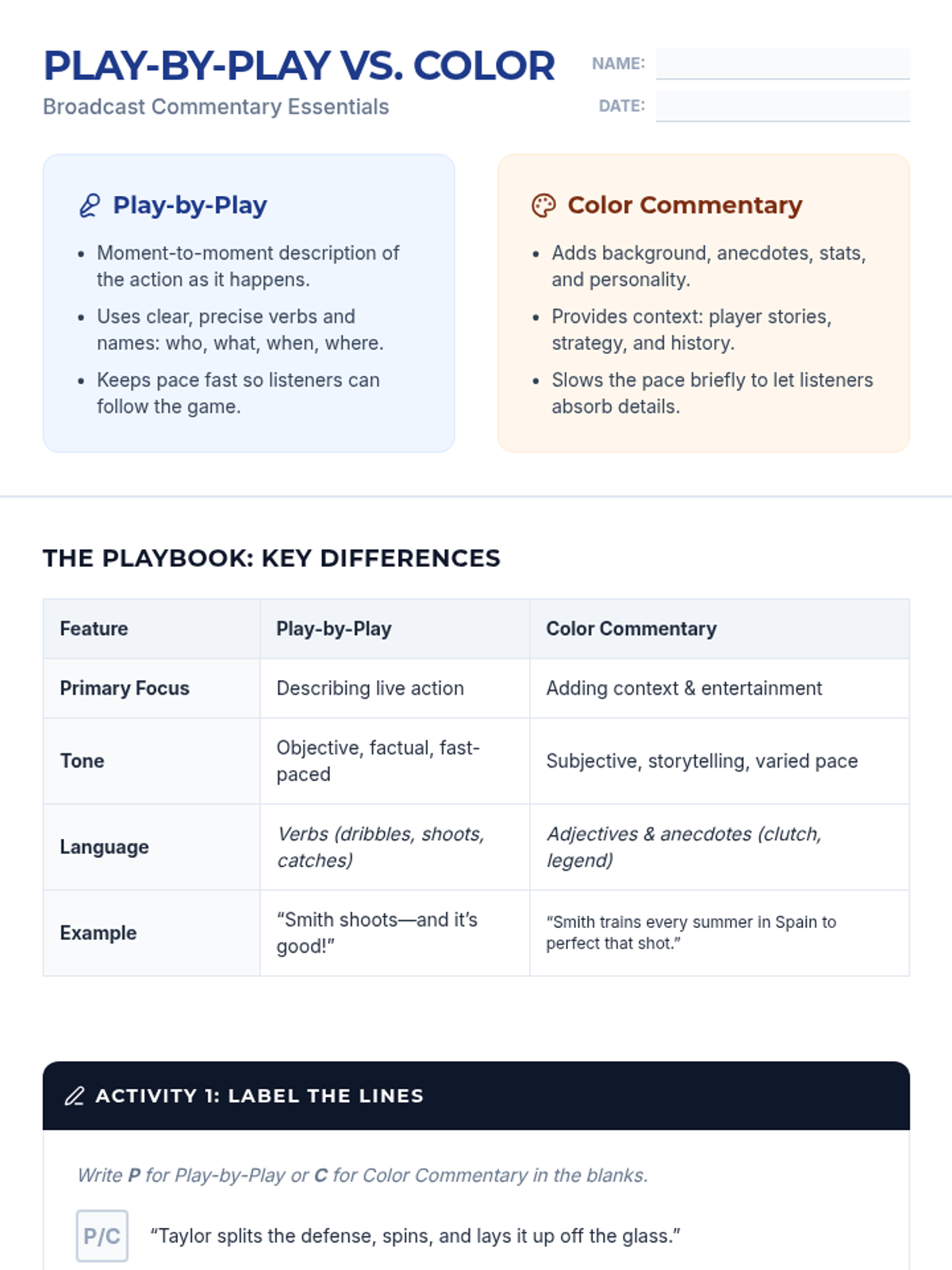
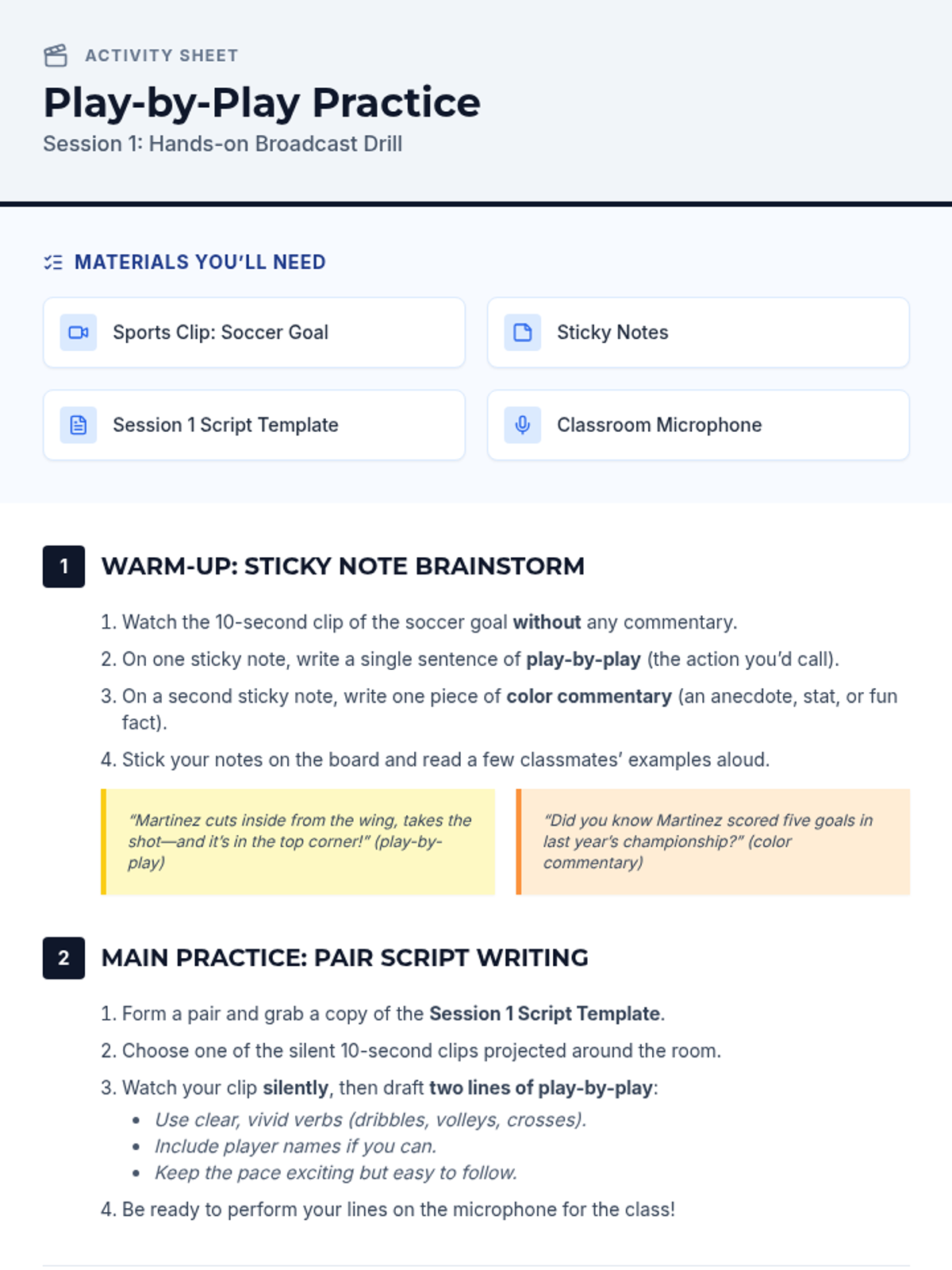
An 8-session sports broadcasting course for grades 4–12, covering play-by-play, color analysis, interviewing, and technical production. Students move from foundational commentary to producing a full capstone broadcast segment.
An 8-session sports broadcasting course for grades 4–12, covering play-by-play, color commentary, interviewing, camera work, audio mixing, and live production directing. Students progress from foundational vocal skills to a complete capstone broadcast project.
This sequence develops improvisation skills and ensemble collaboration, teaching students to react authentically in the moment. Students build trust and creative confidence by practicing 'Yes, And,' establishing environments, and solving narrative problems as a team.
A project-based sequence where 4th-grade students learn the art of collaboration by designing and executing a group mural. They will move from individual ideas to a unified collective vision through negotiation, sketching, and artistic blending.
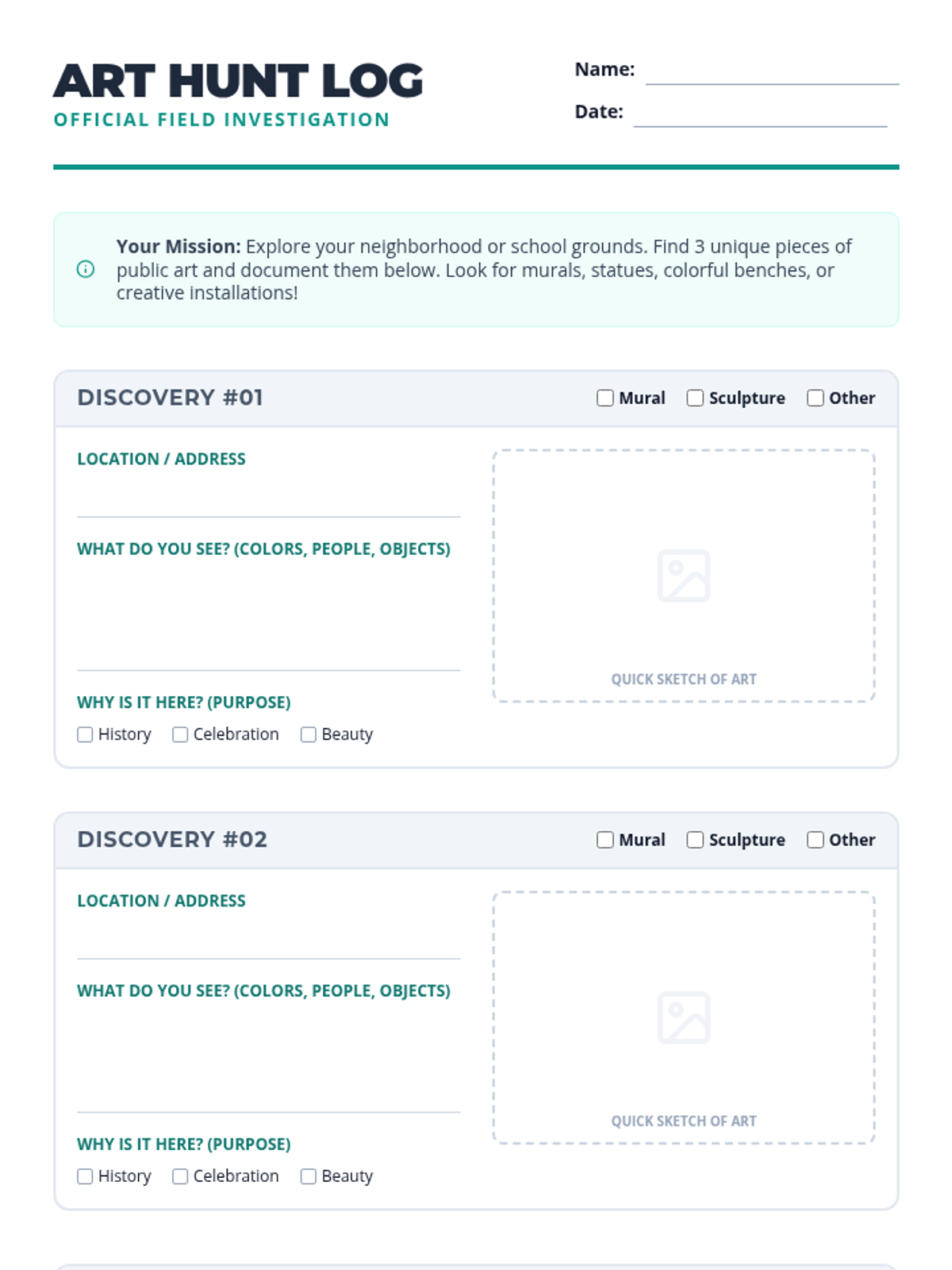
A project-based learning unit for 4th graders exploring how public art reflects local culture, values, and history, culminating in a collaborative mural design proposal.
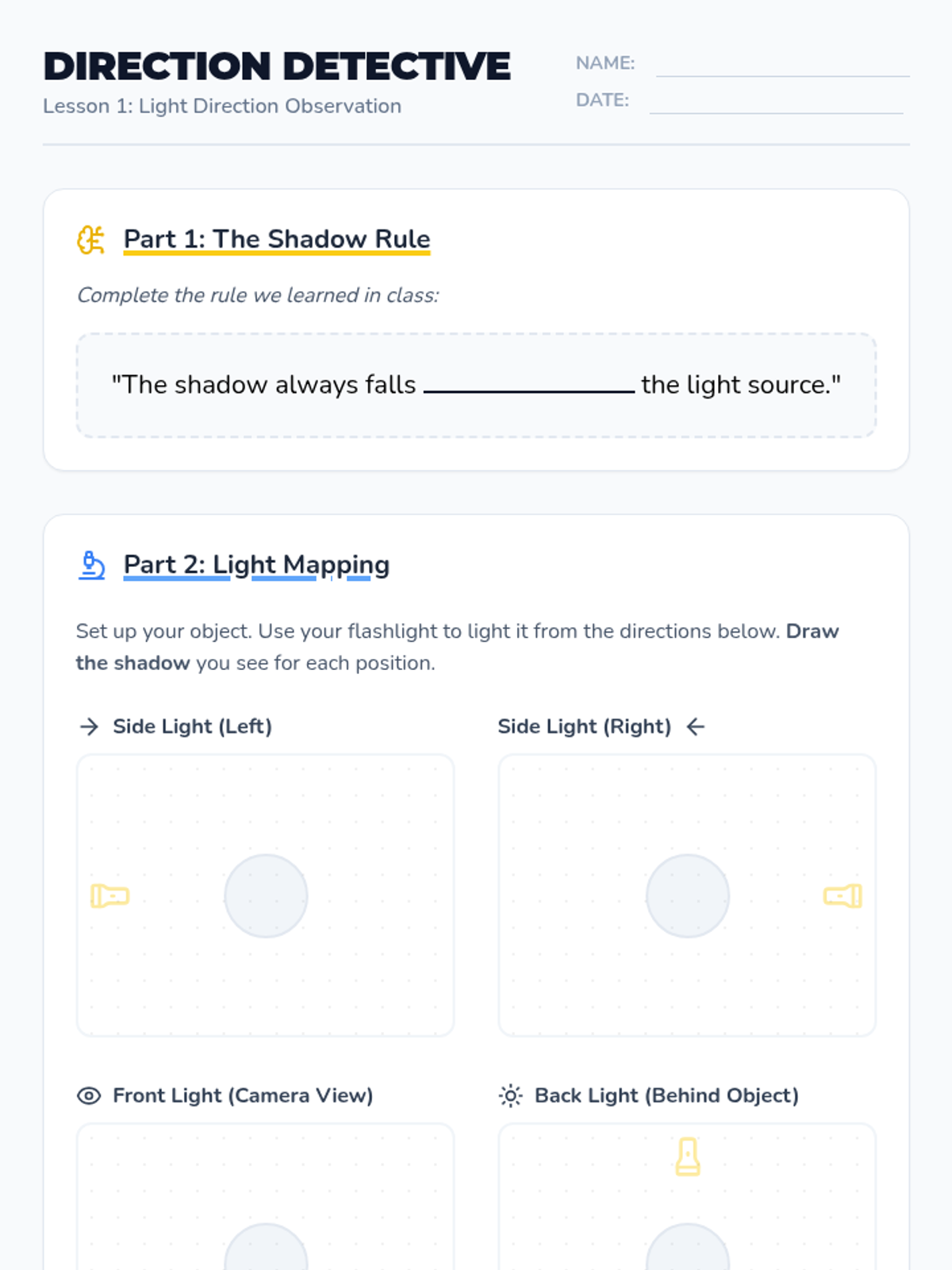
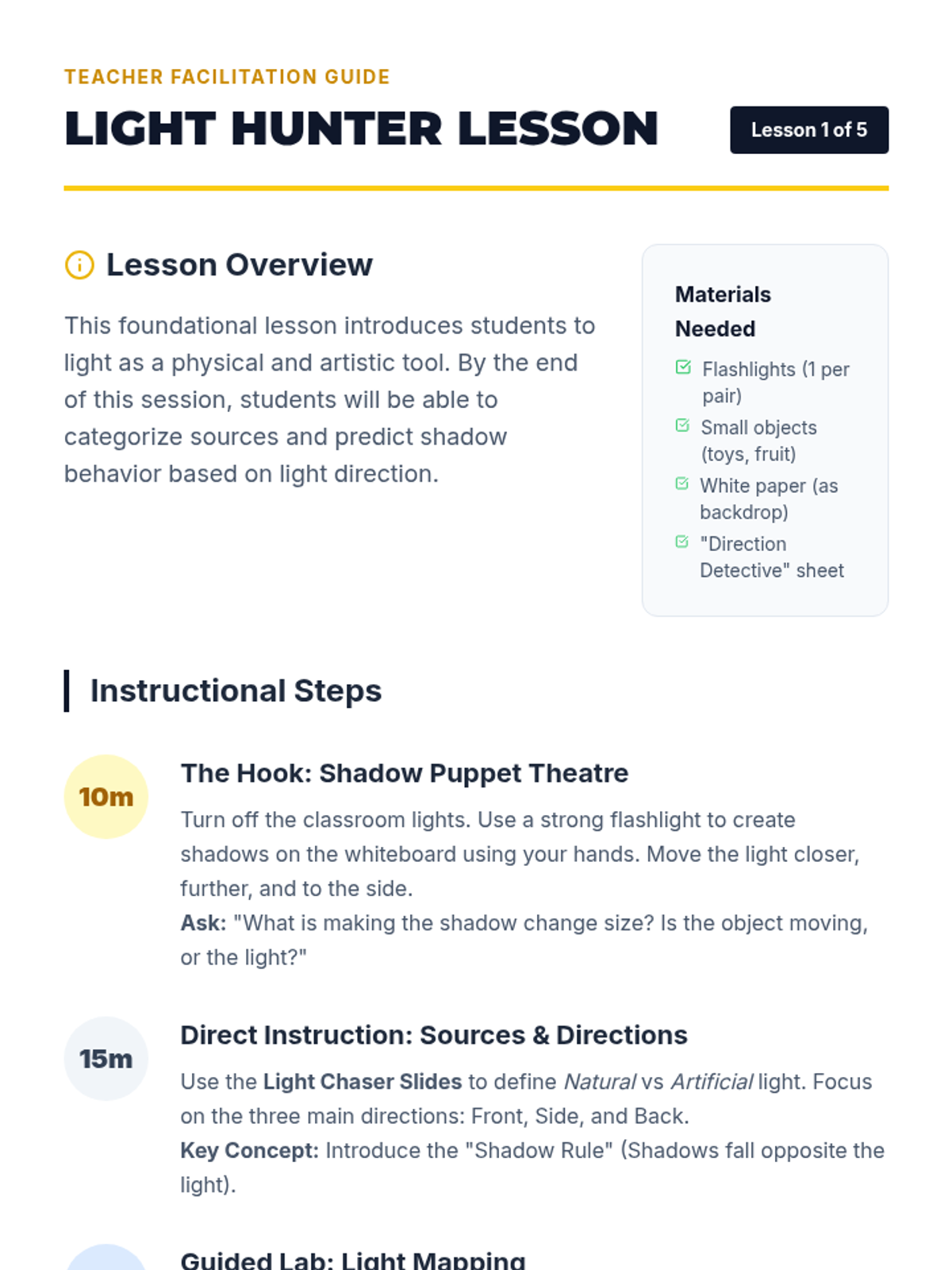
In this sequence, students explore light as the primary medium of photography, investigating how direction, quality, and source affect the mood of an image. Through hands-on experiments, learners discover the difference between hard and soft light and learn to manipulate shadows for artistic effect.
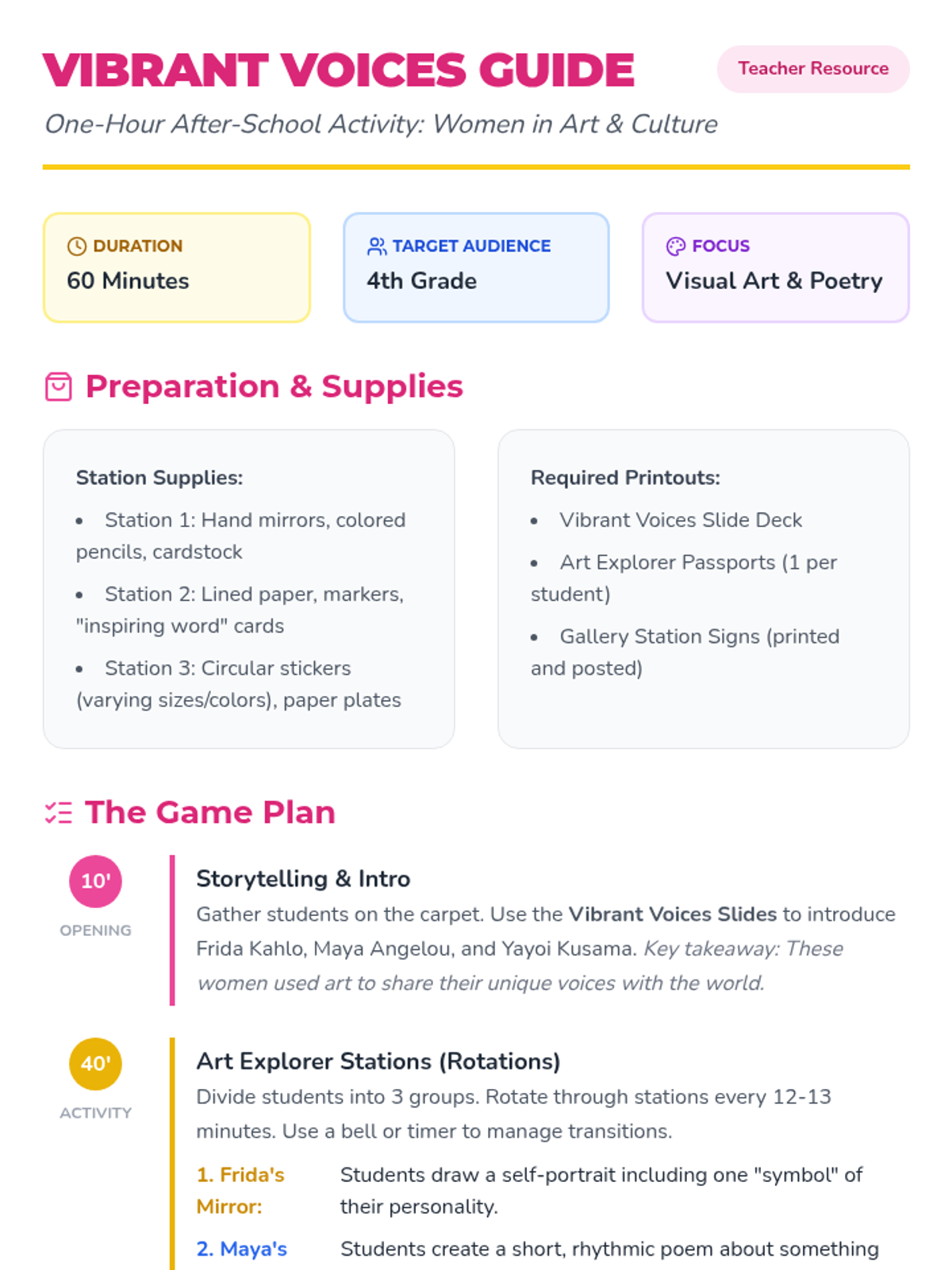
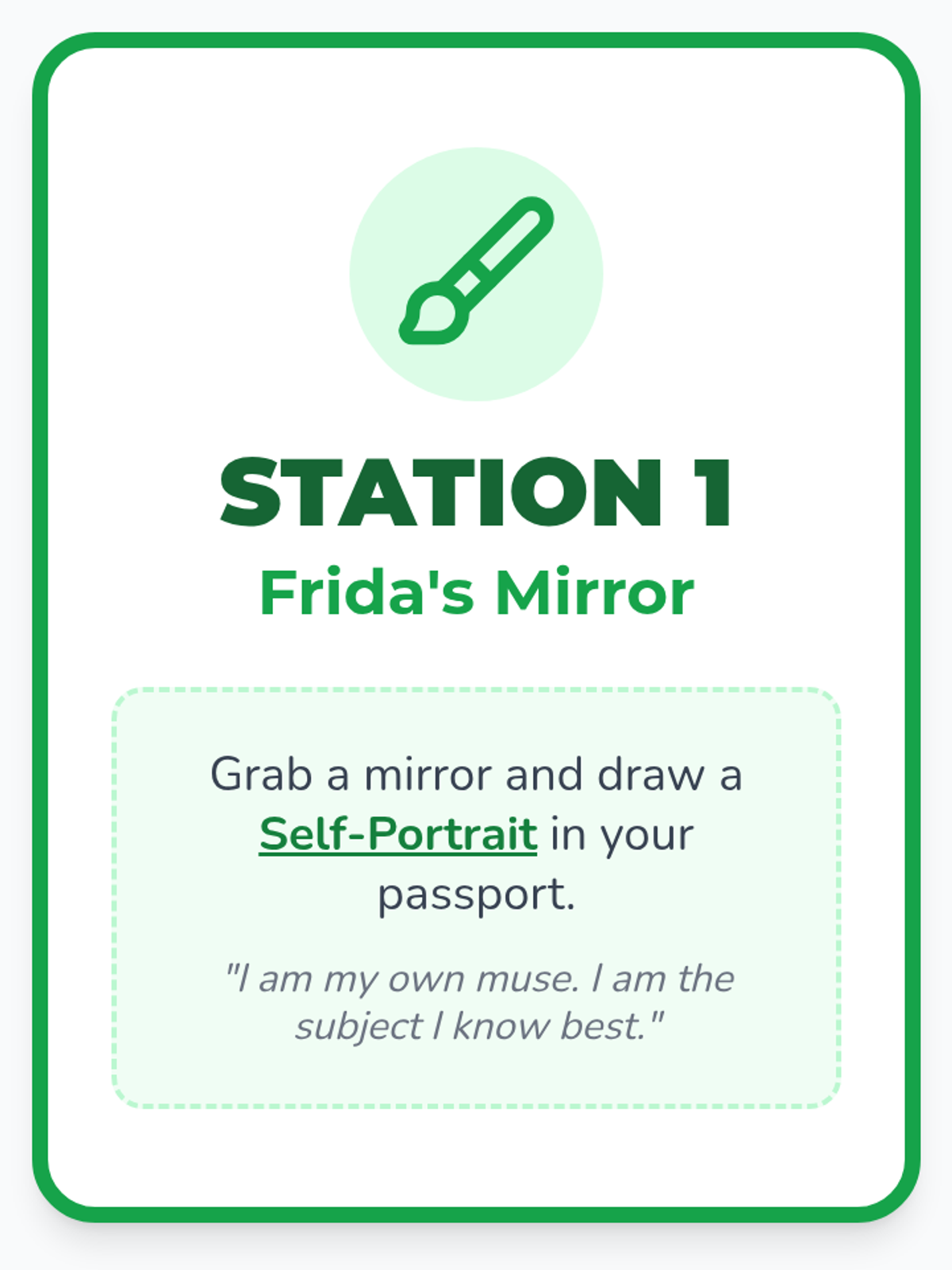
A collection of resources celebrating women's contributions to art and culture, designed for upper elementary students in an after-school or workshop setting.
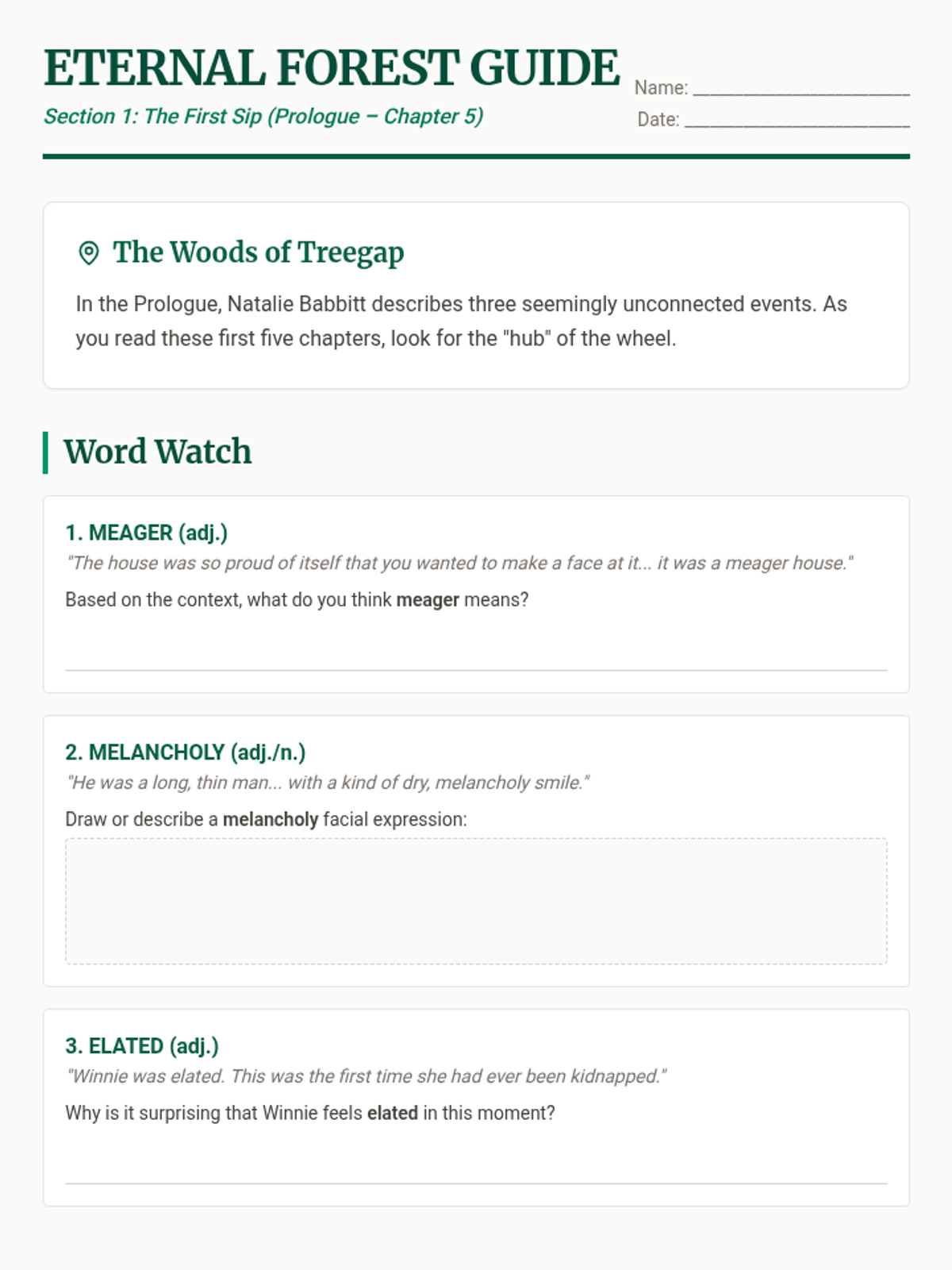
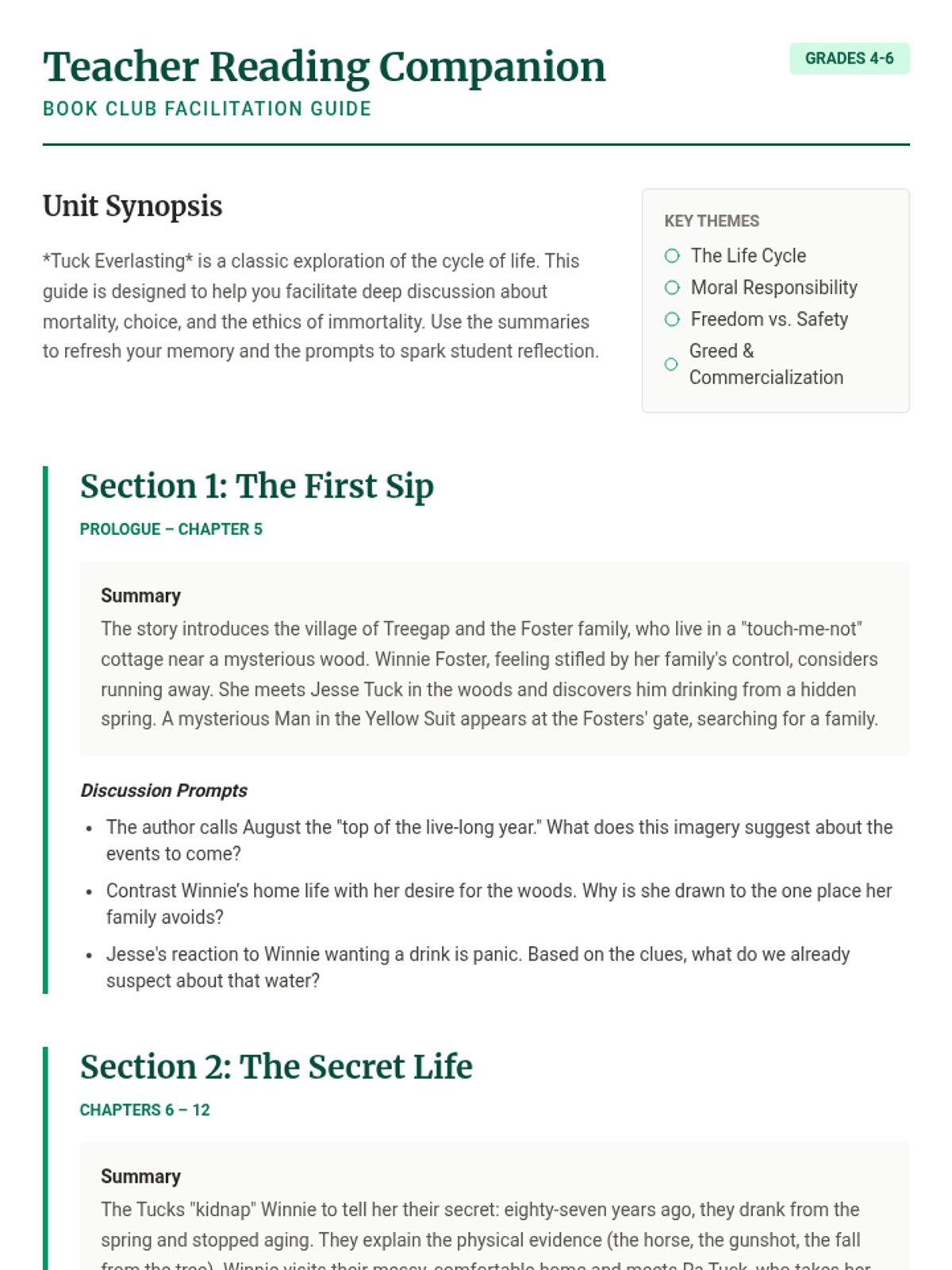
A comprehensive book club unit for Natalie Babbitt's *Tuck Everlasting*, exploring themes of immortality, nature's cycles, and moral choices through guided discussion, vocabulary expansion, and project-based learning.
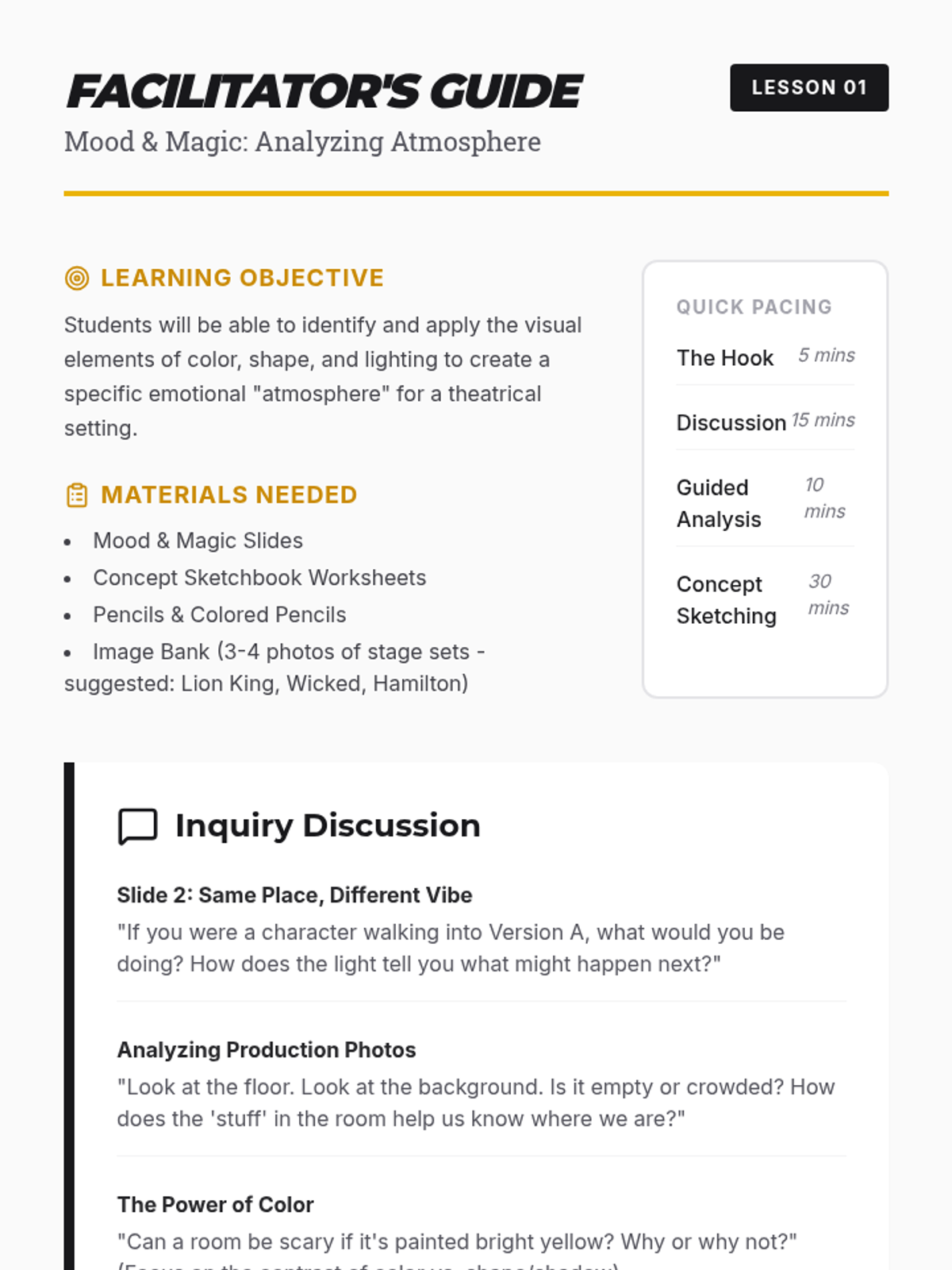
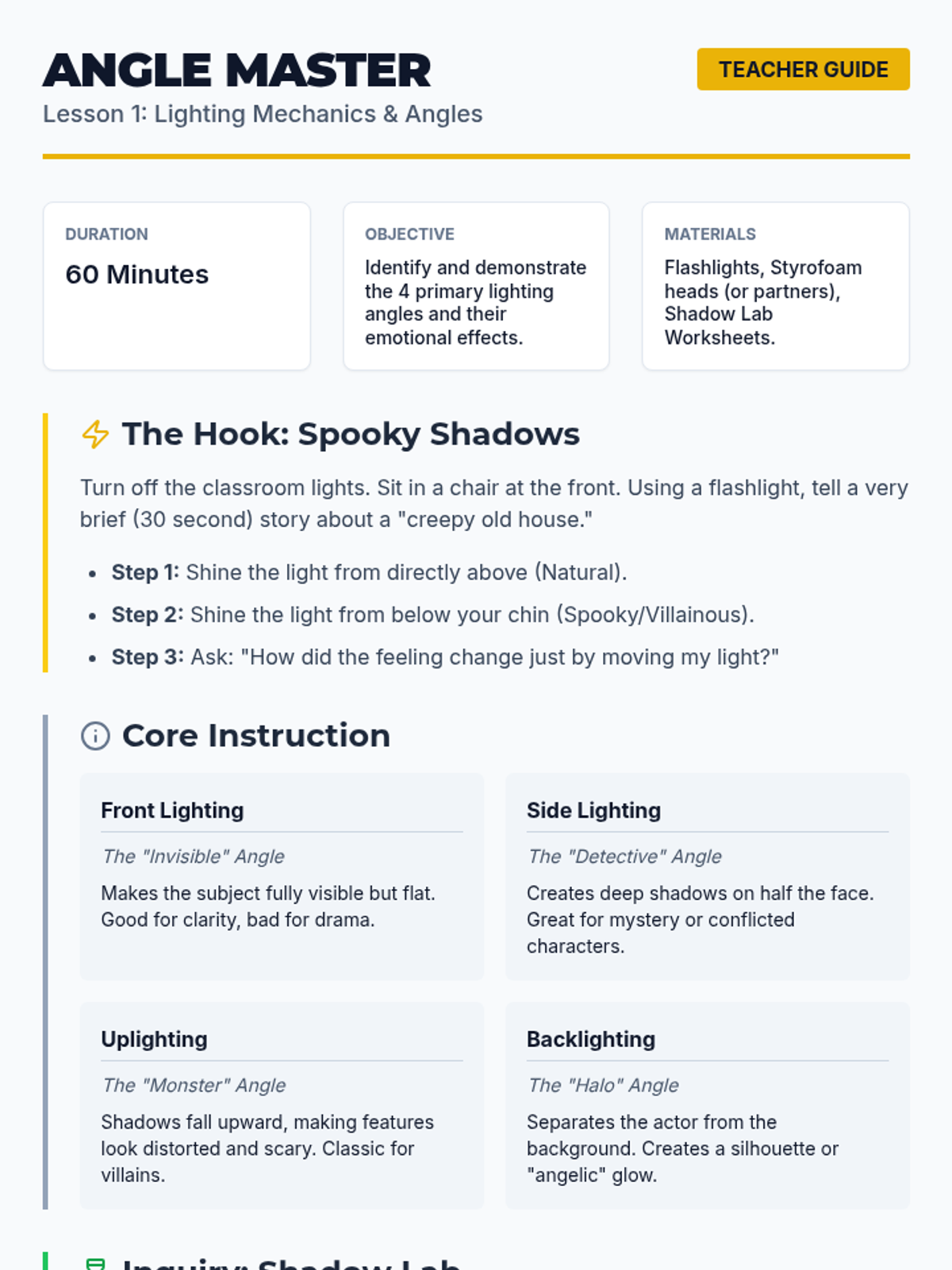
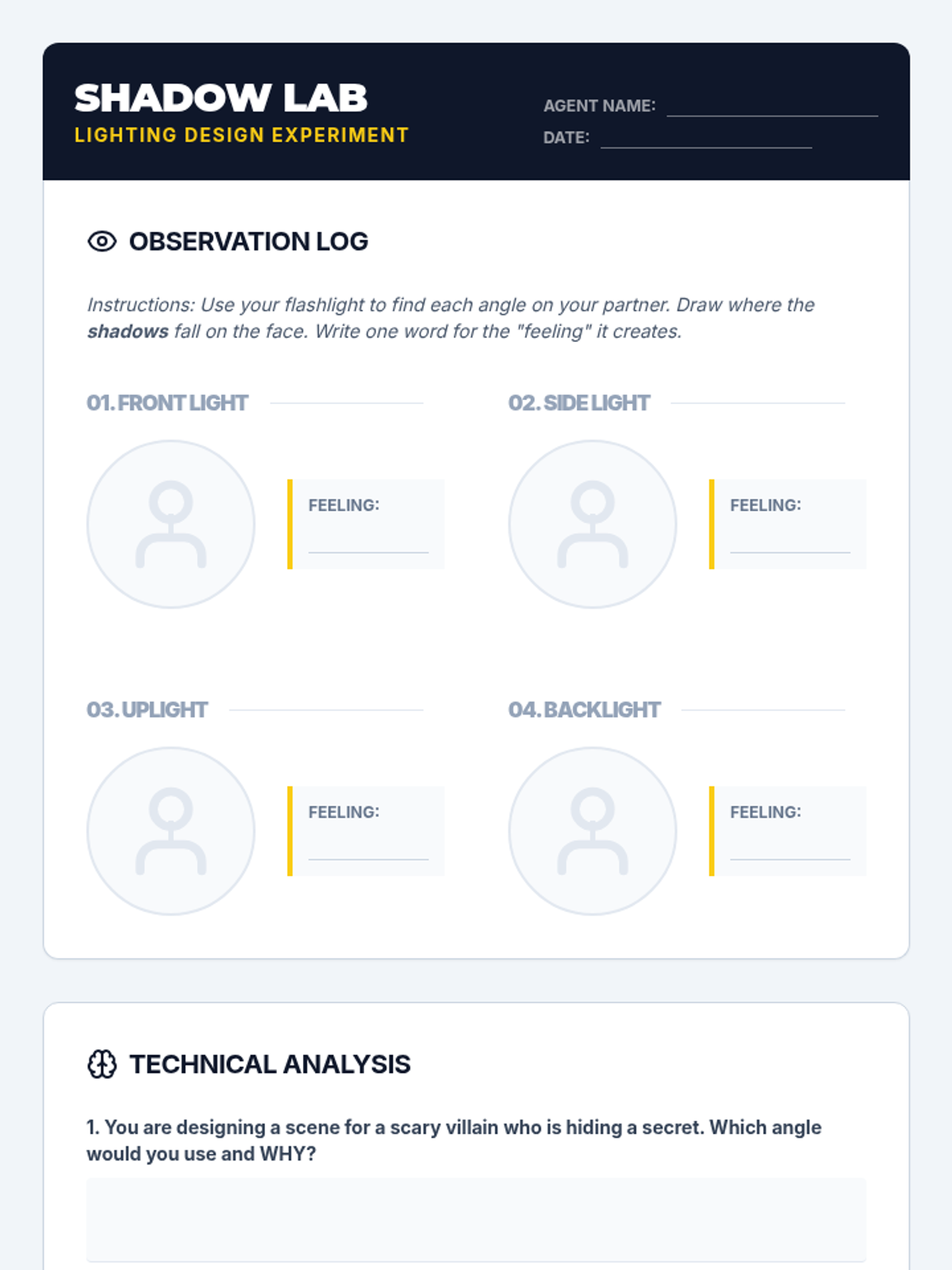
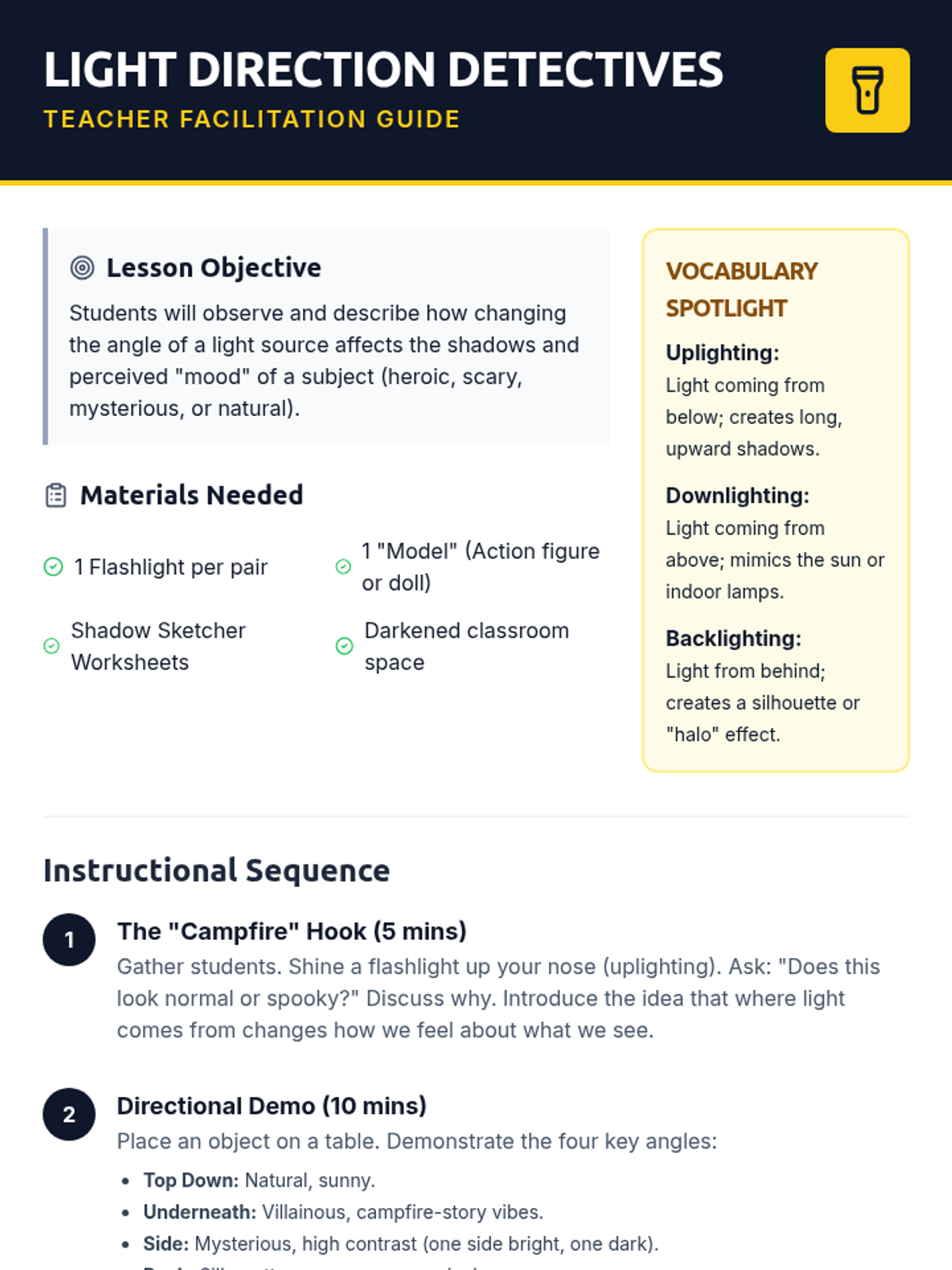
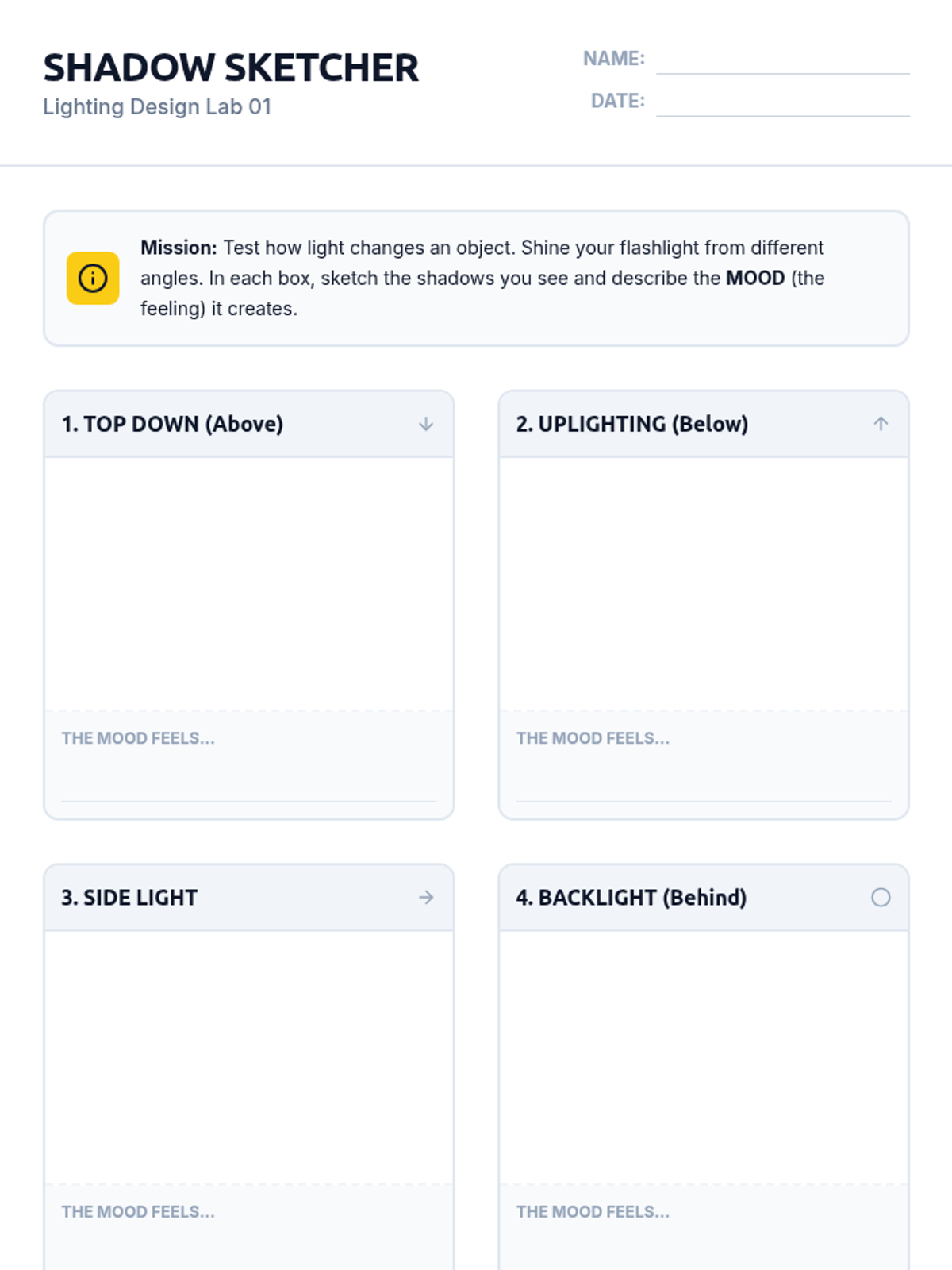
This sequence introduces 4th-grade students to the technical side of theater, focusing on lighting and sound. Students learn how lighting angles and colors create mood, and how sound effects and soundscapes build immersive worlds.
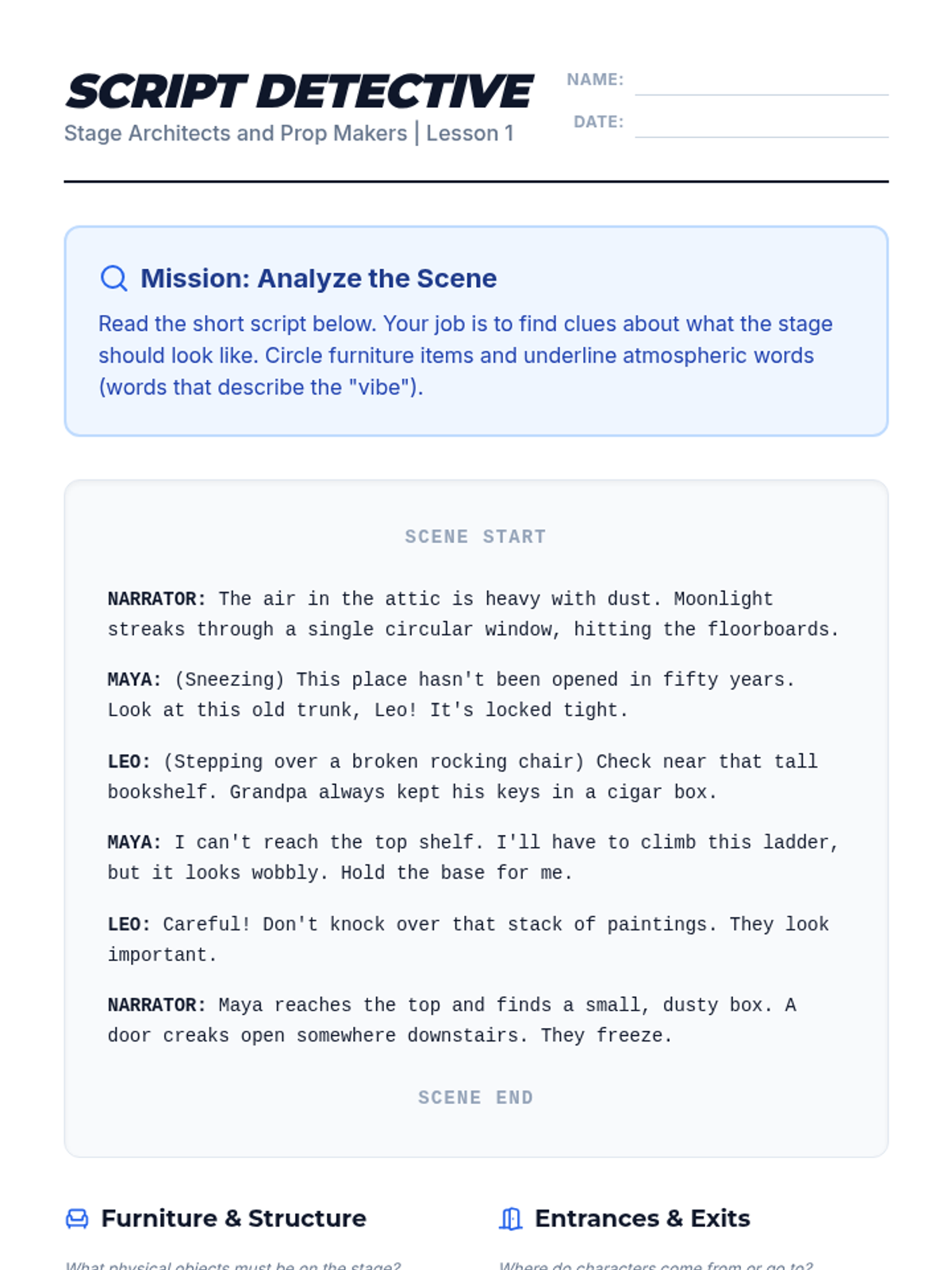
This hands-on sequence introduces 4th graders to the visual and engineering side of theater. Students analyze scripts to design environments, draft scale floor plans, build 3D scenic models, and fabricate props, emphasizing spatial reasoning and storytelling through physical space.
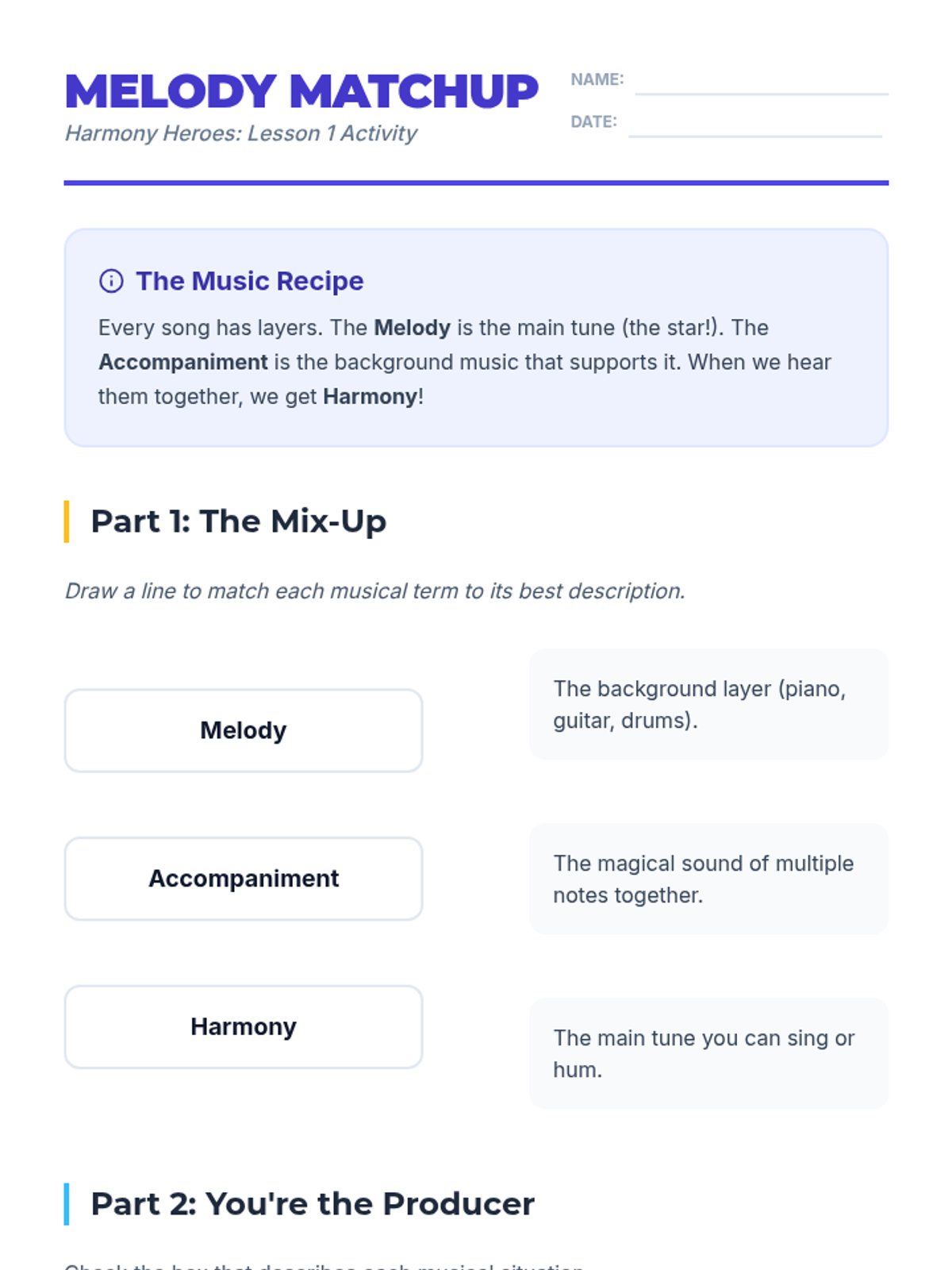
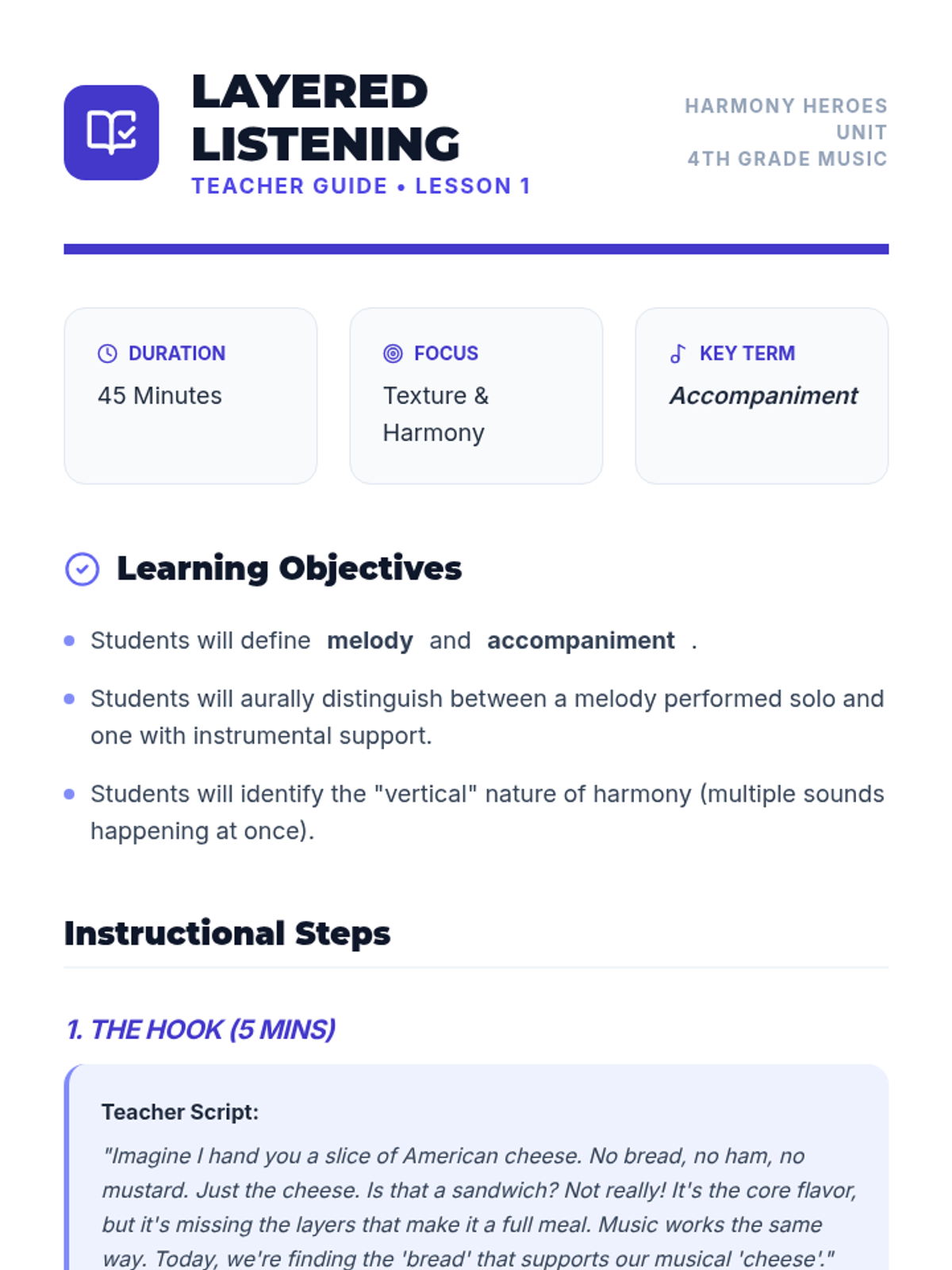
A comprehensive introduction to harmony for 4th graders, covering the difference between melody and accompaniment, intervals, triad construction, major vs. minor tonality, and creating simple harmonic patterns.
Students explore the basics of stage lighting, including direction, shadow, and color, to understand how lighting design creates mood and tells stories in theater.
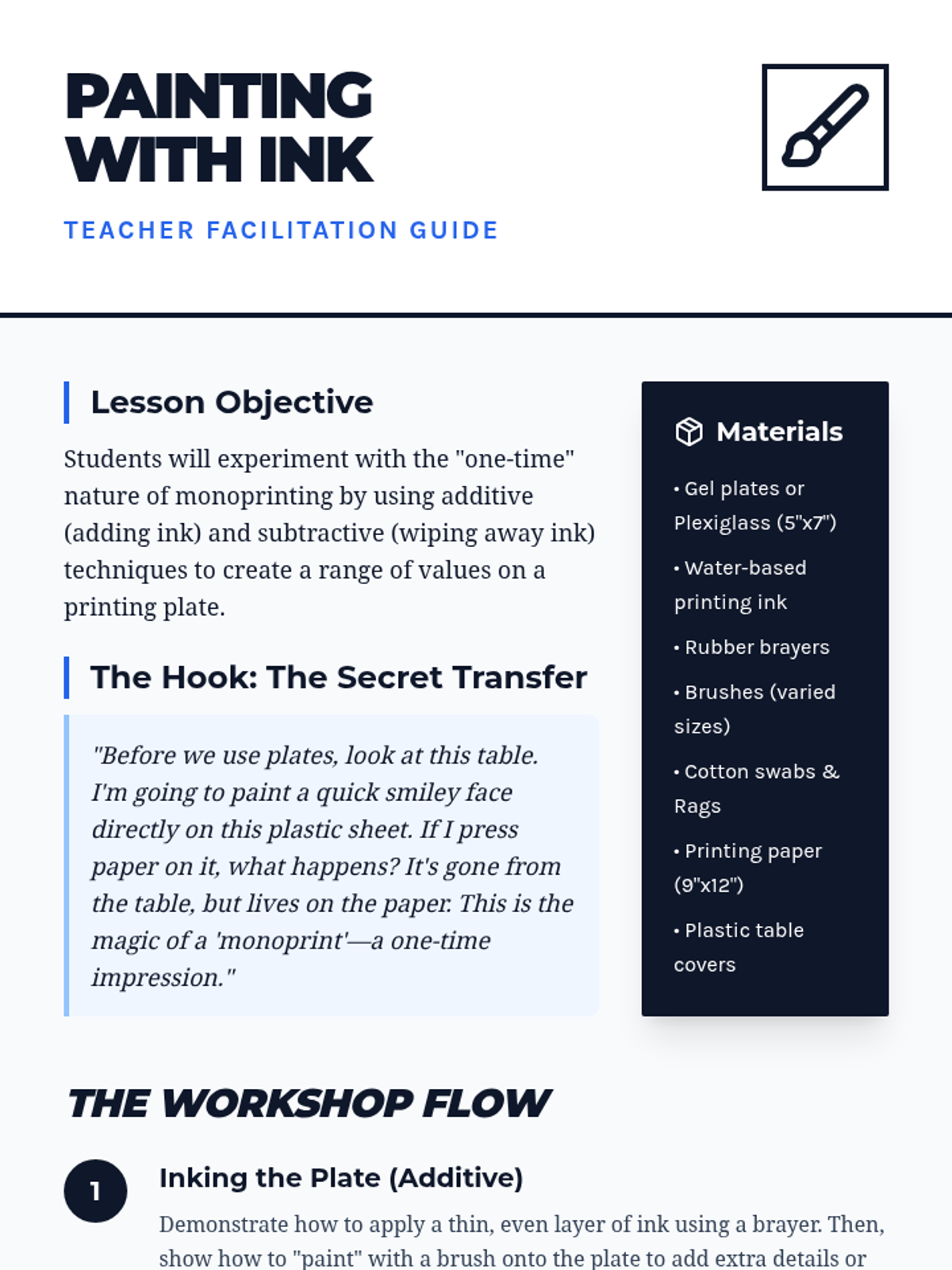
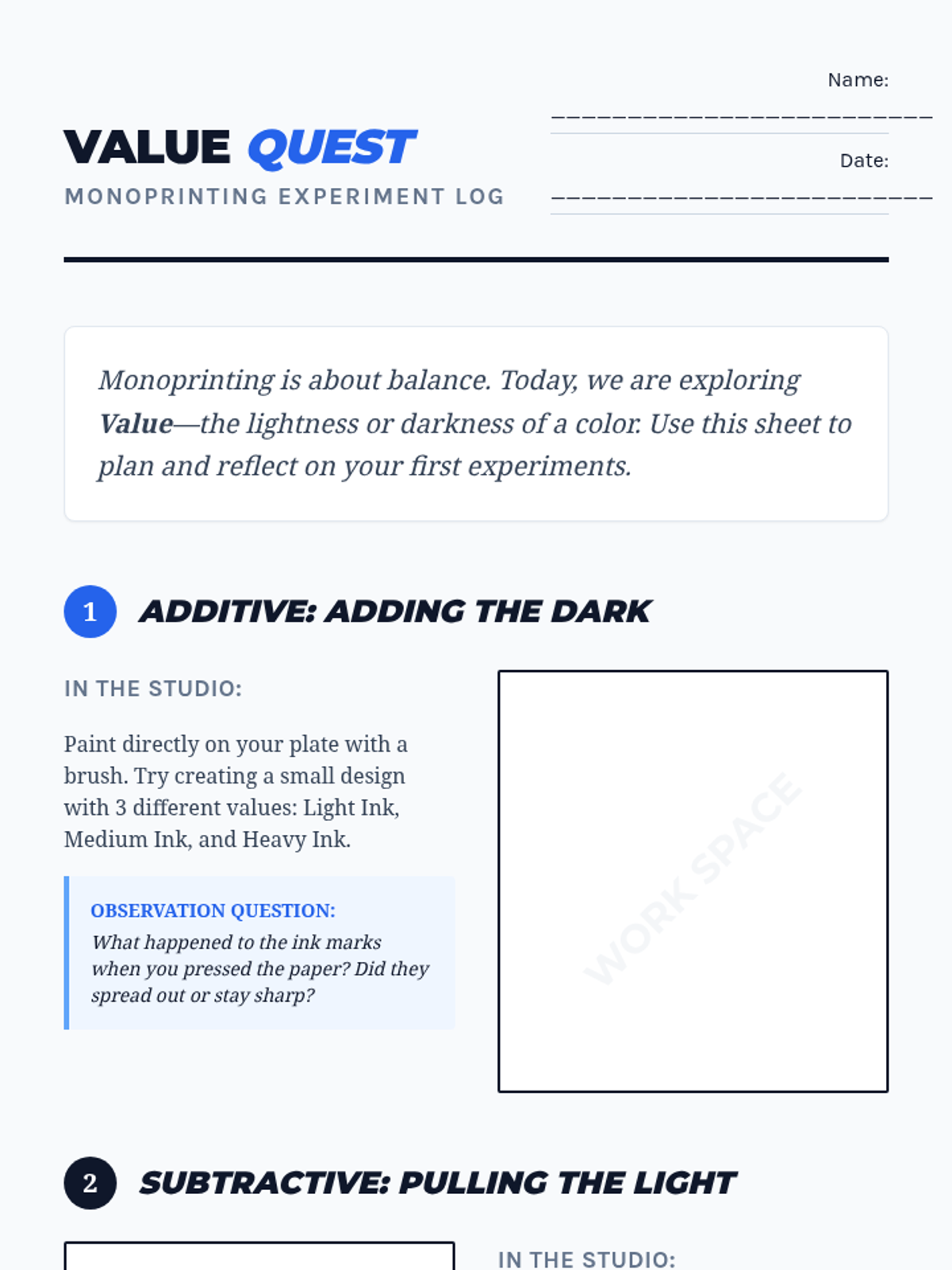
A 5-lesson sequence exploring the experimental nature of monoprinting. Students investigate ink properties, transparency, and layering through additive/subtractive methods, found object textures, masking, and ghost printing, culminating in a curated portfolio.
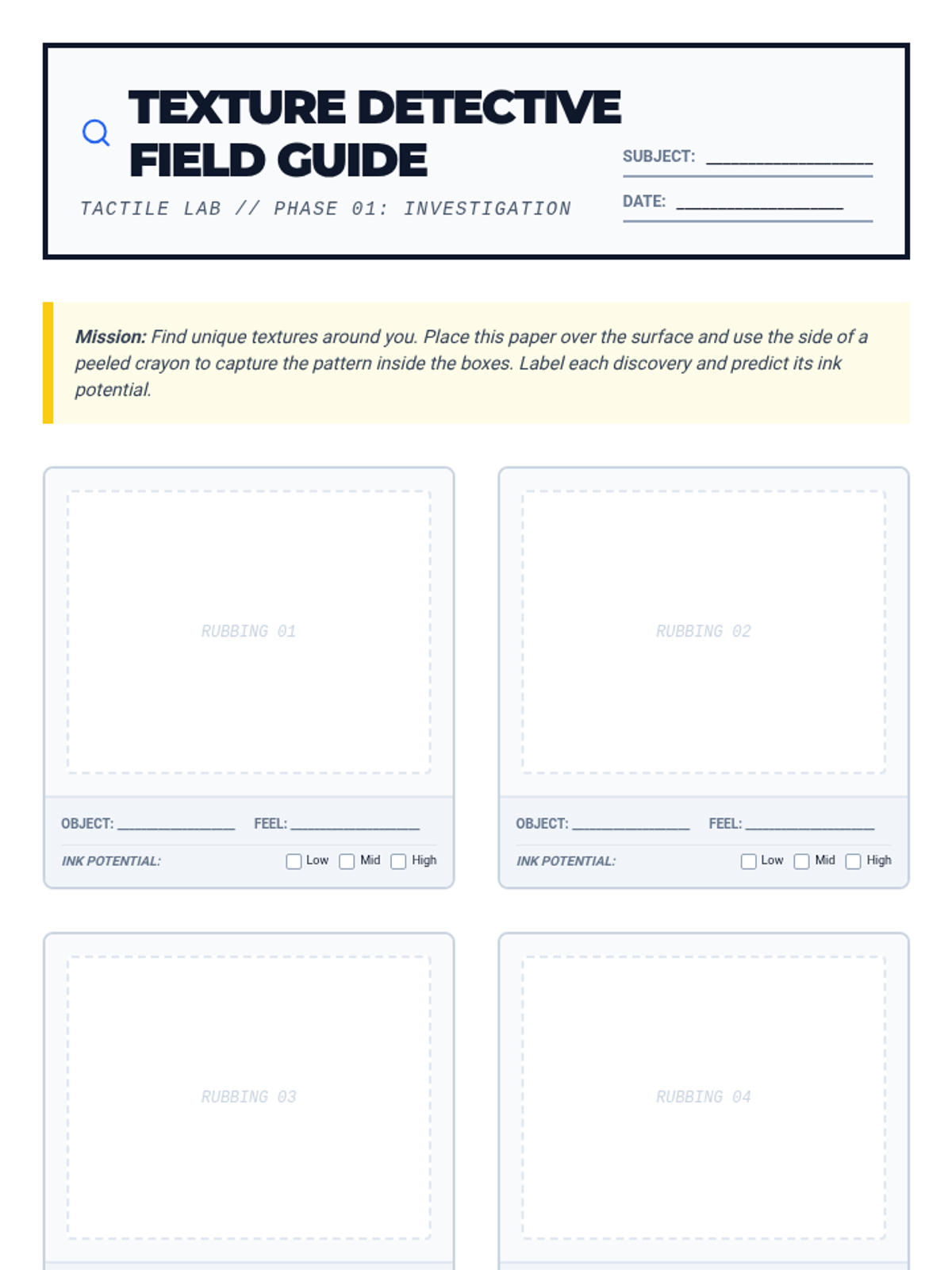
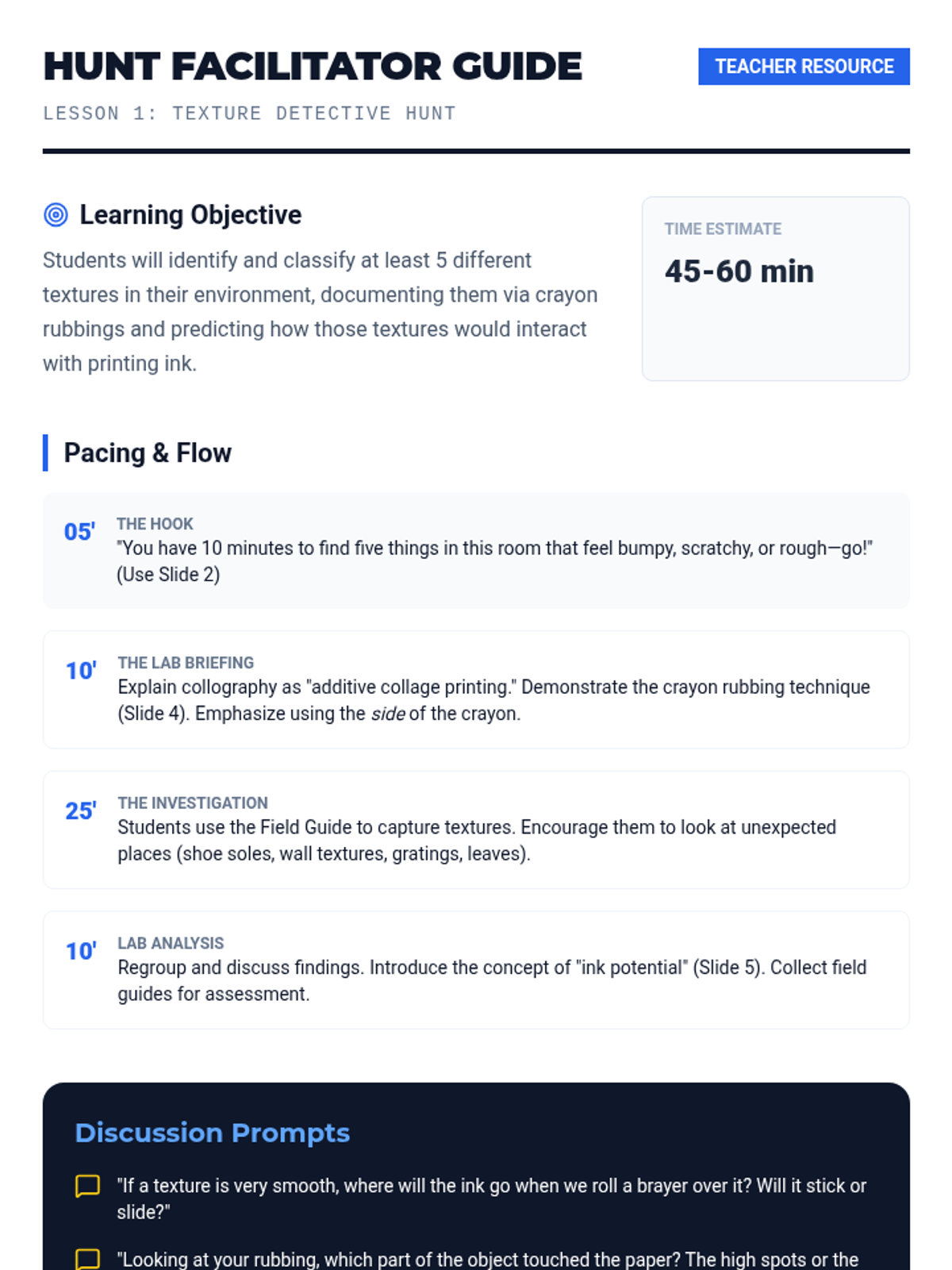
A 4th-grade printmaking unit where students transform found textures into complex printing plates. Through inquiry and experimentation, students explore collography by building, sealing, inking, and pressing tactile 'matrices'.
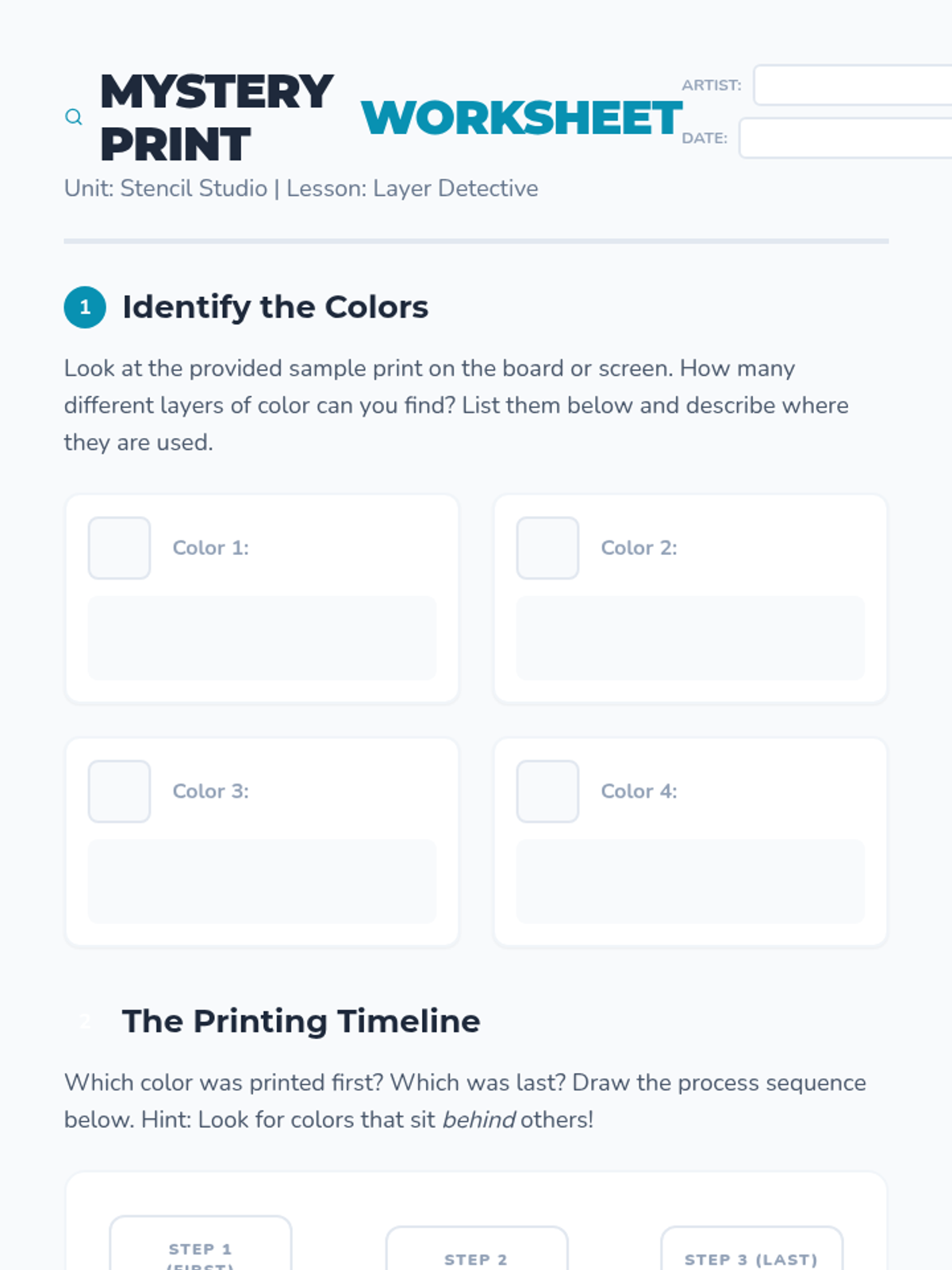
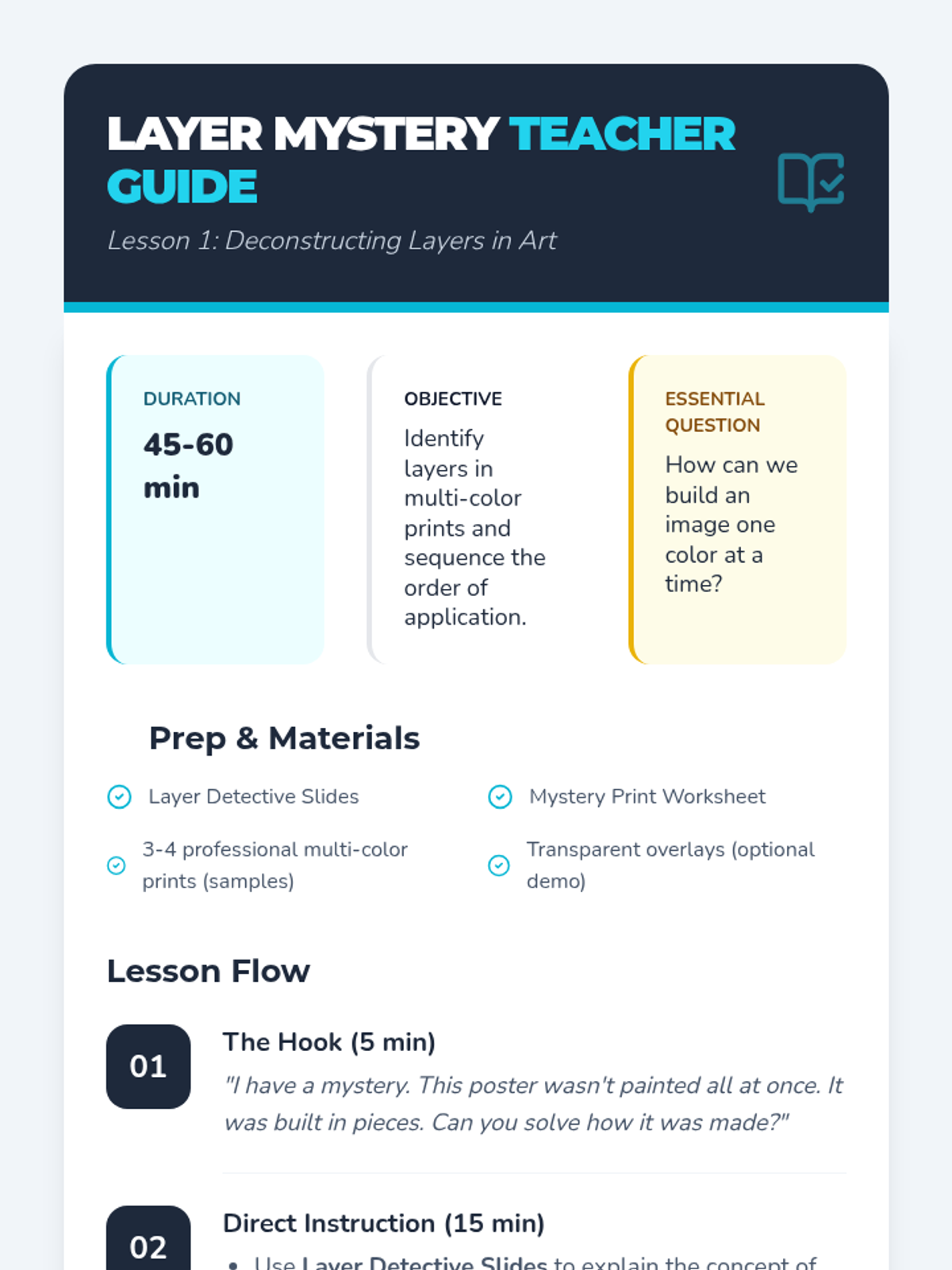
An inquiry-based art sequence where 4th graders explore multi-layer stencil printing, focusing on color theory, registration, and visual deconstruction. Students move from analyzing professional prints to creating their own multi-layered color compositions.