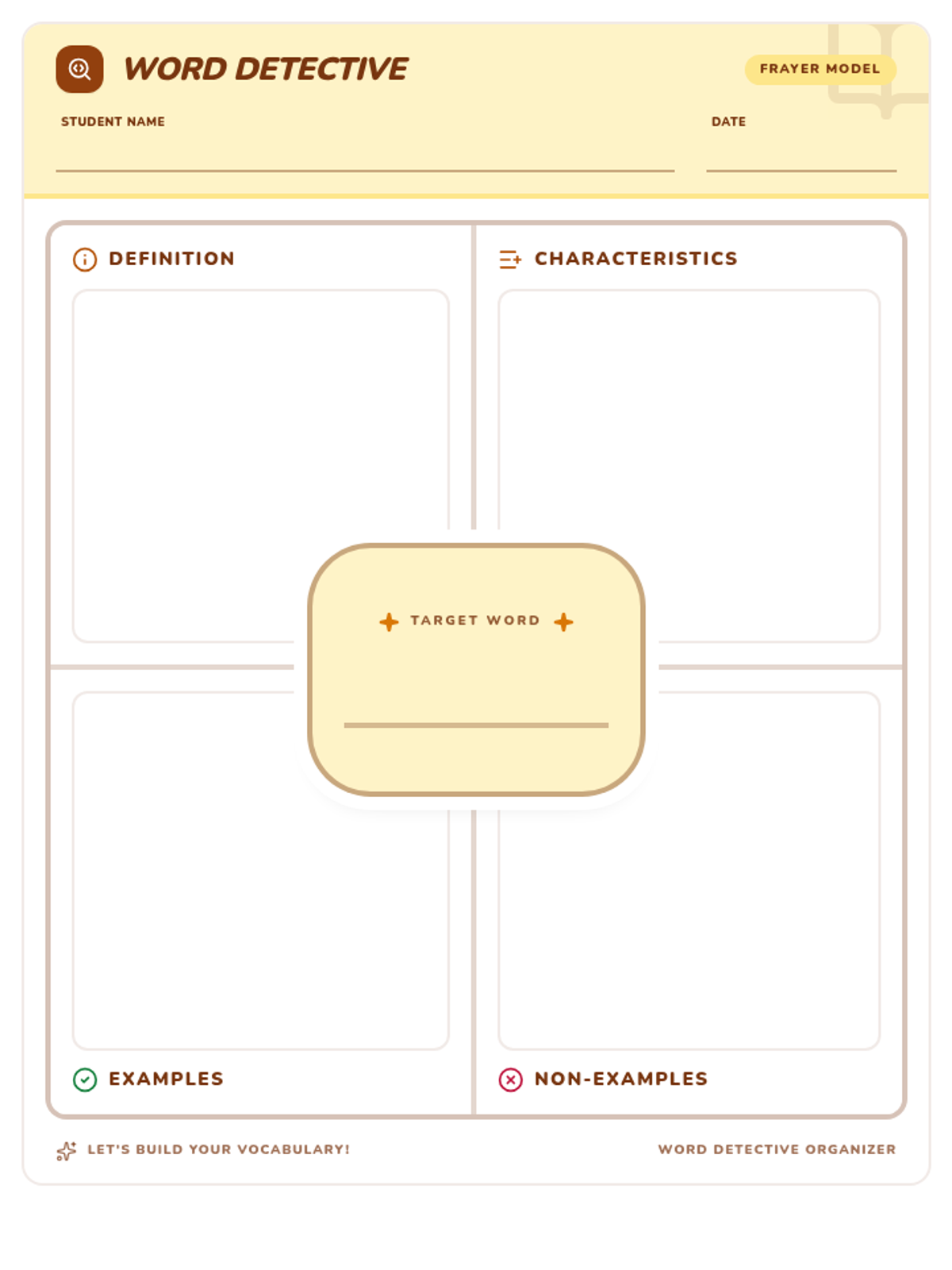
Builds word mastery through parts of speech, Greek and Latin roots, and morphological analysis of prefixes and suffixes. Develops nuanced comprehension using context clues, shades of meaning, and idiomatic expressions.
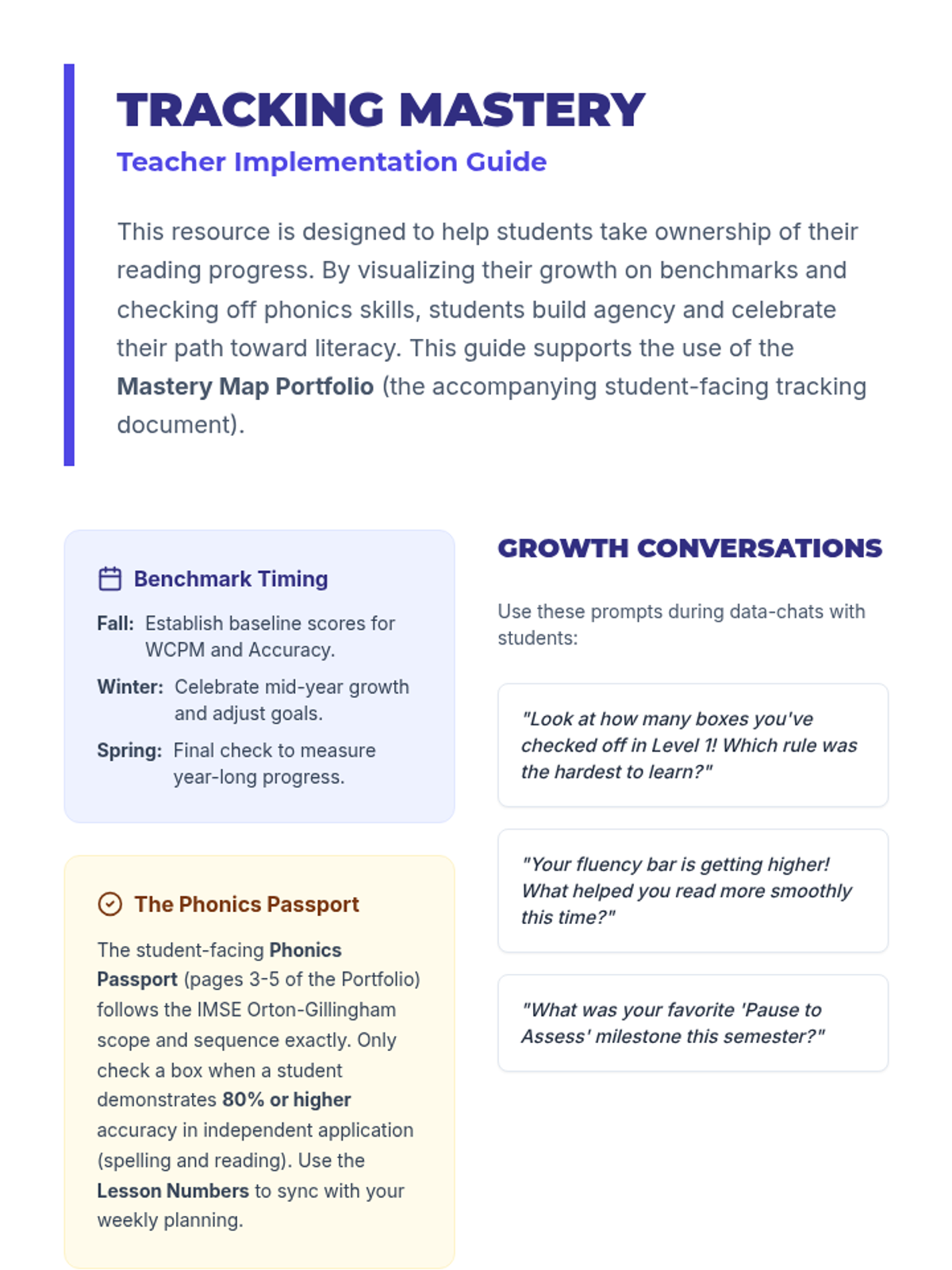
A comprehensive suite of data tracking tools for students to monitor their reading progress, including benchmark assessments and IMSE Orton-Gillingham concept checks from Kindergarten through 5th grade.
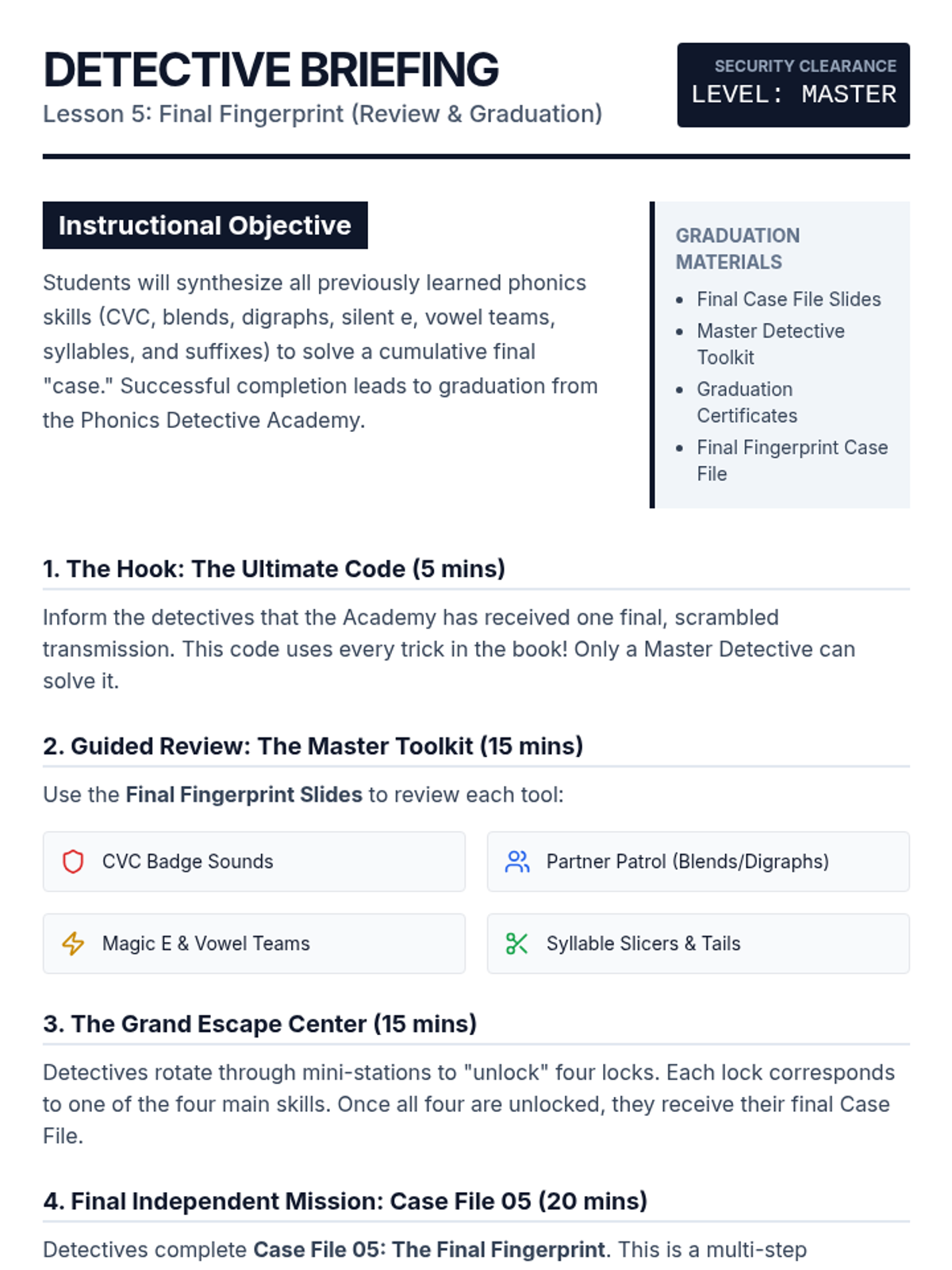
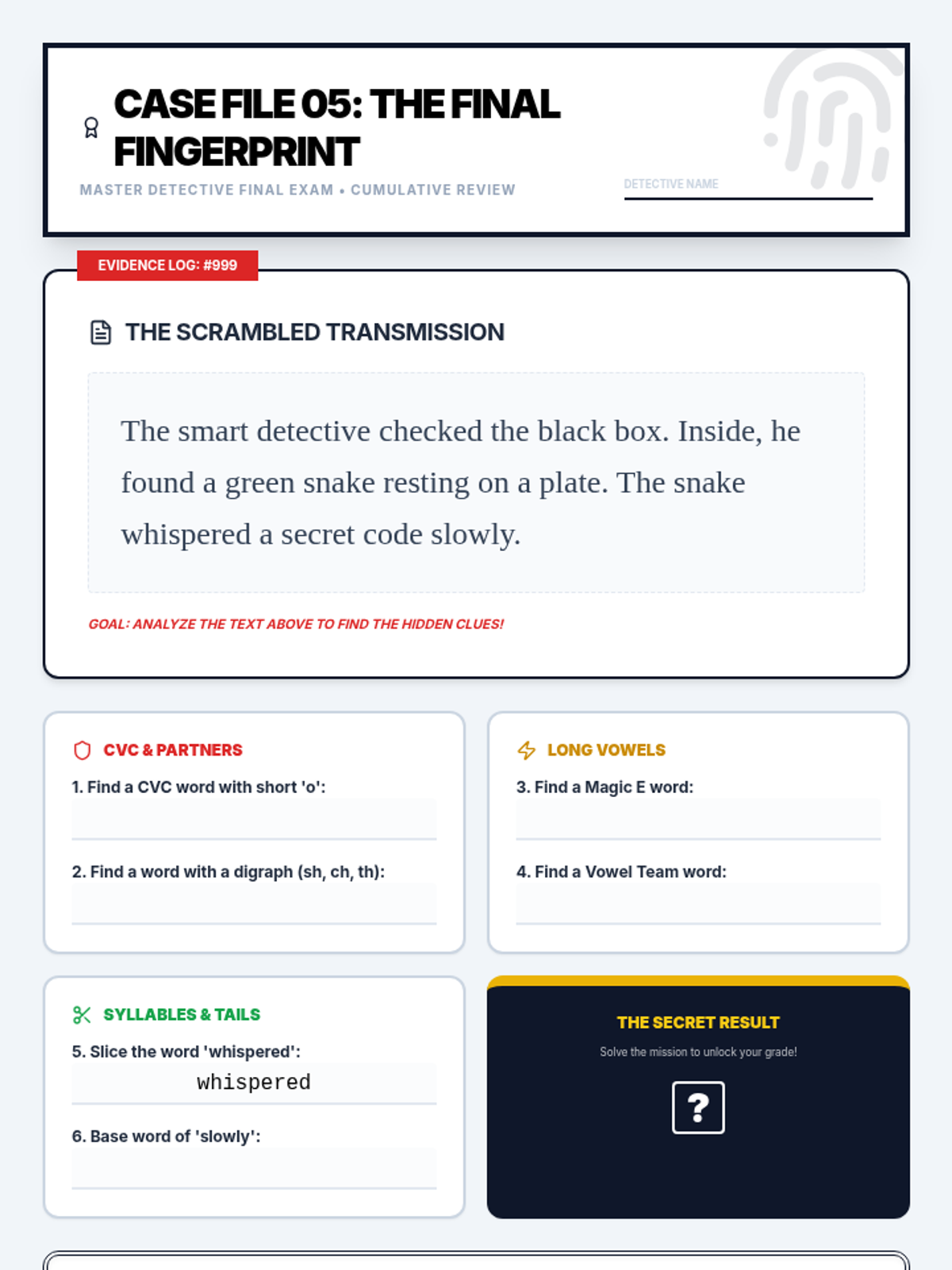
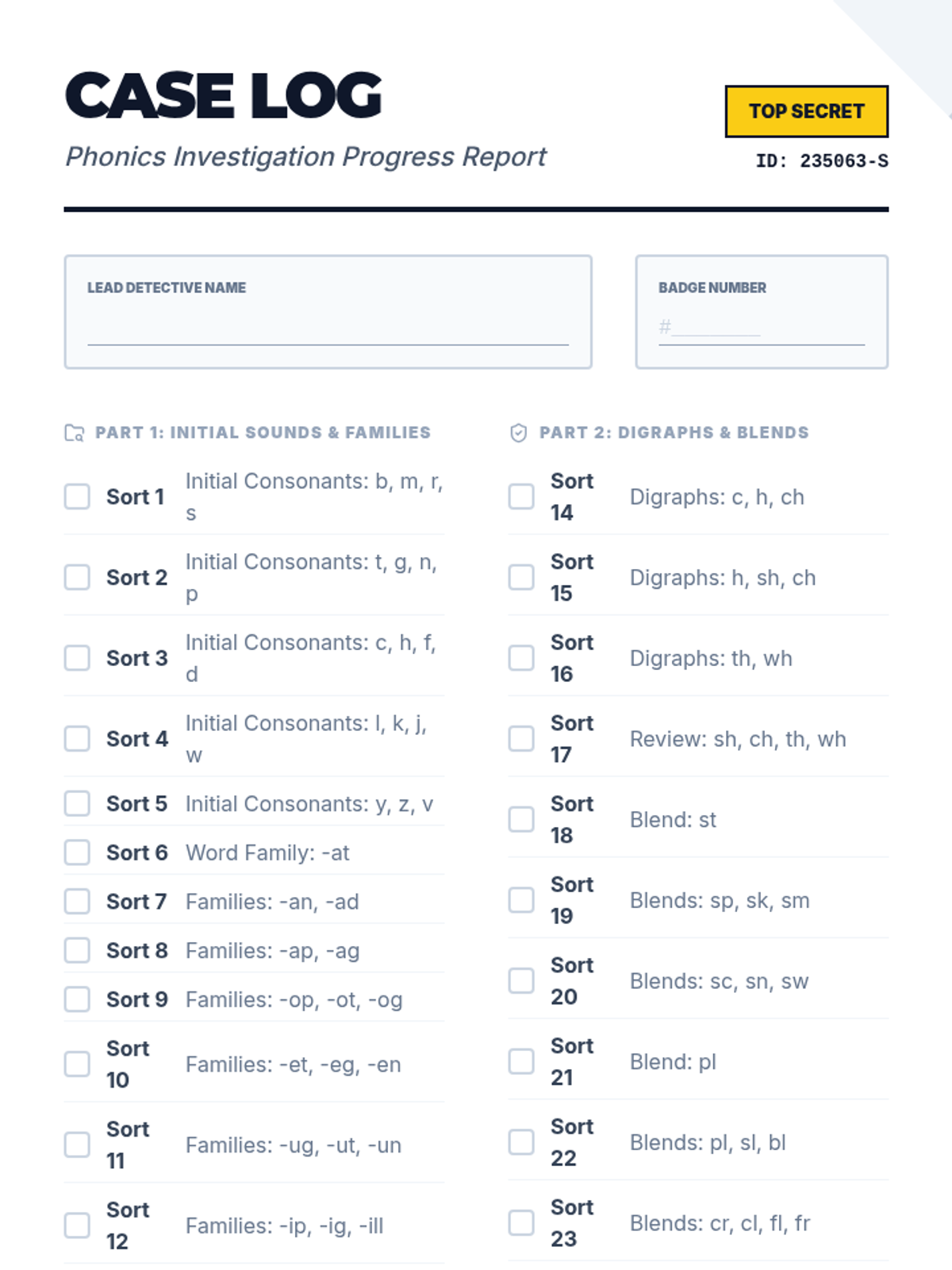
The final mission where detectives apply all their skills to crack the ultimate code and earn their Phonics Detective Badge.
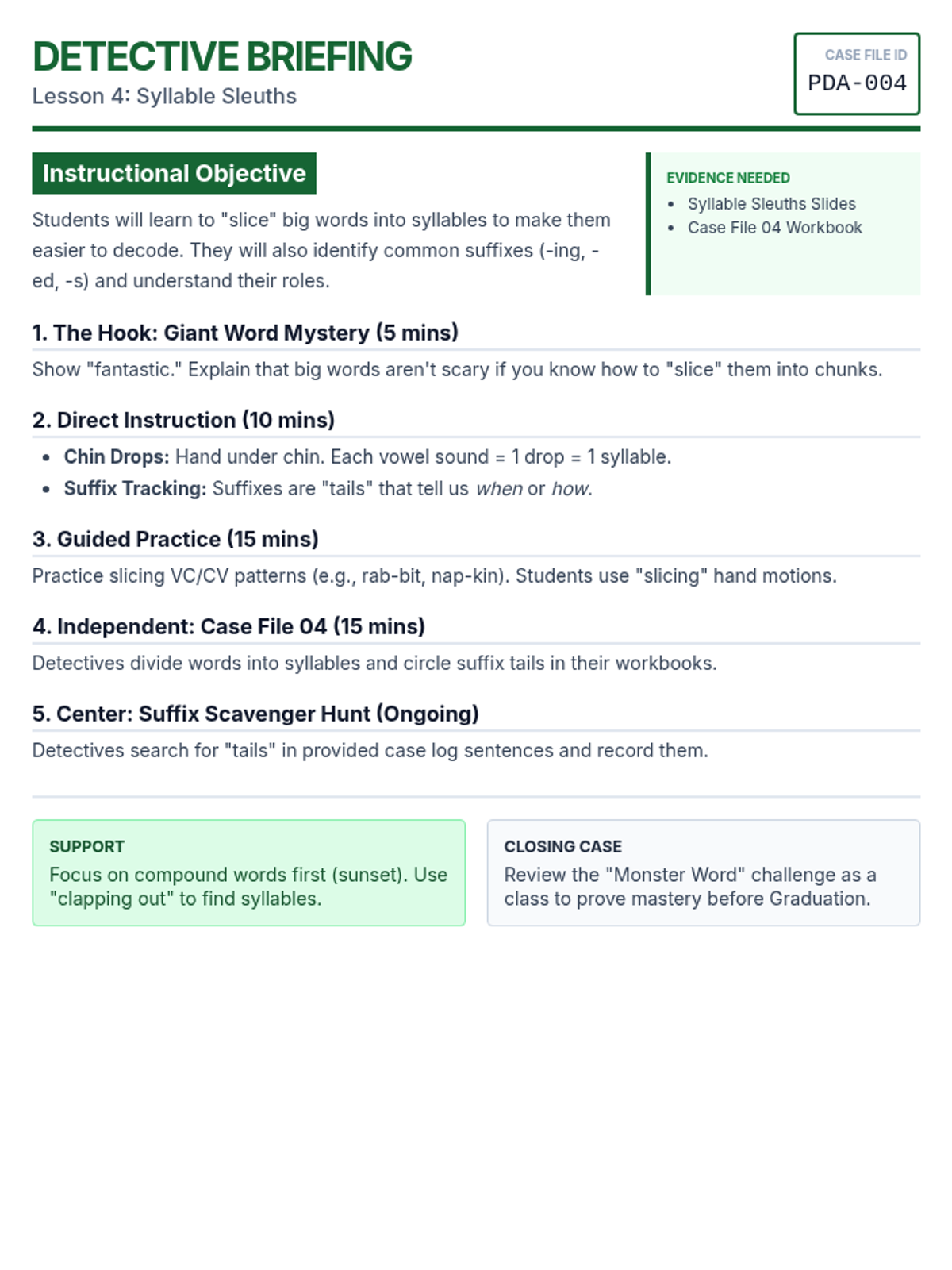
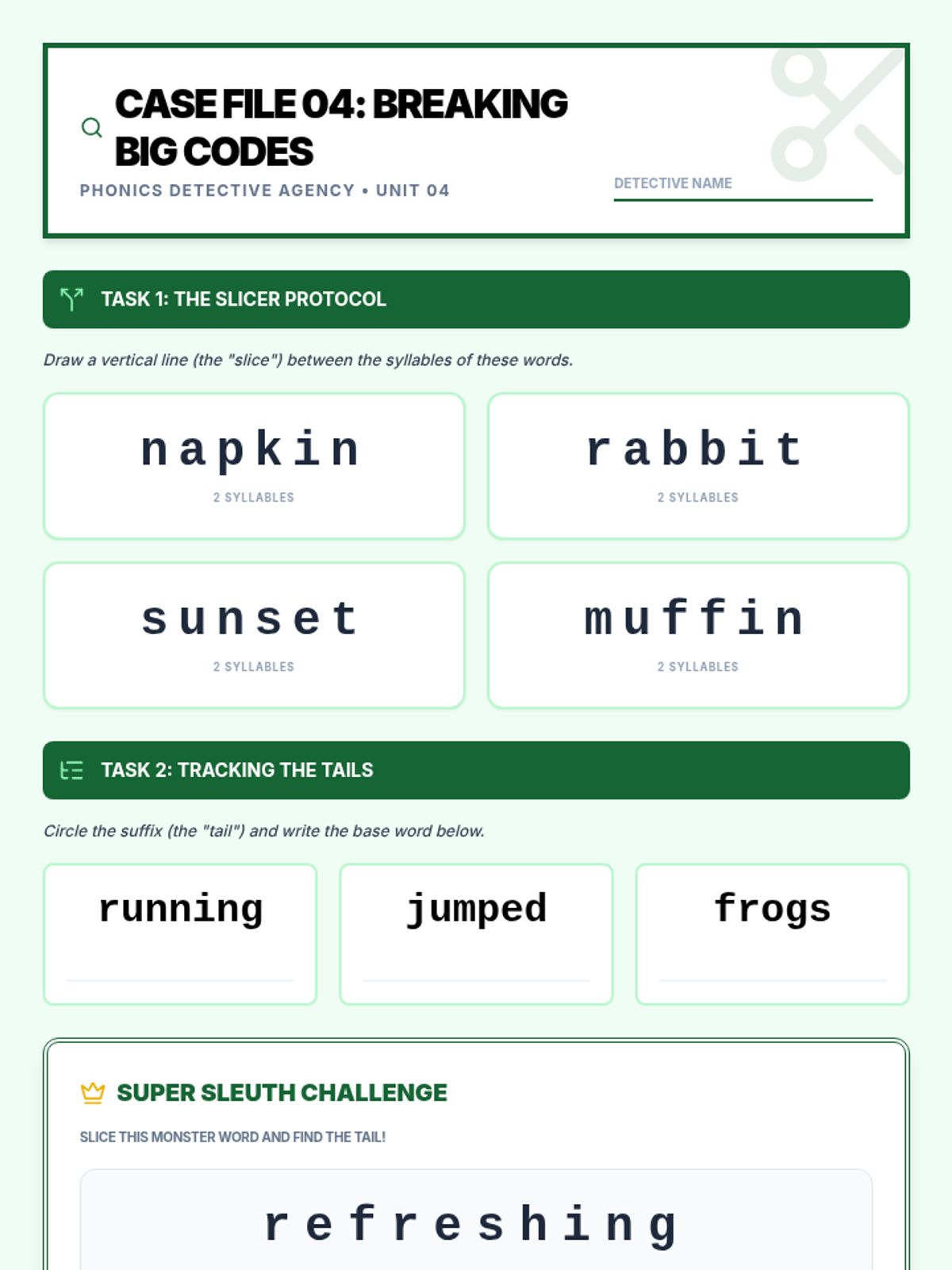
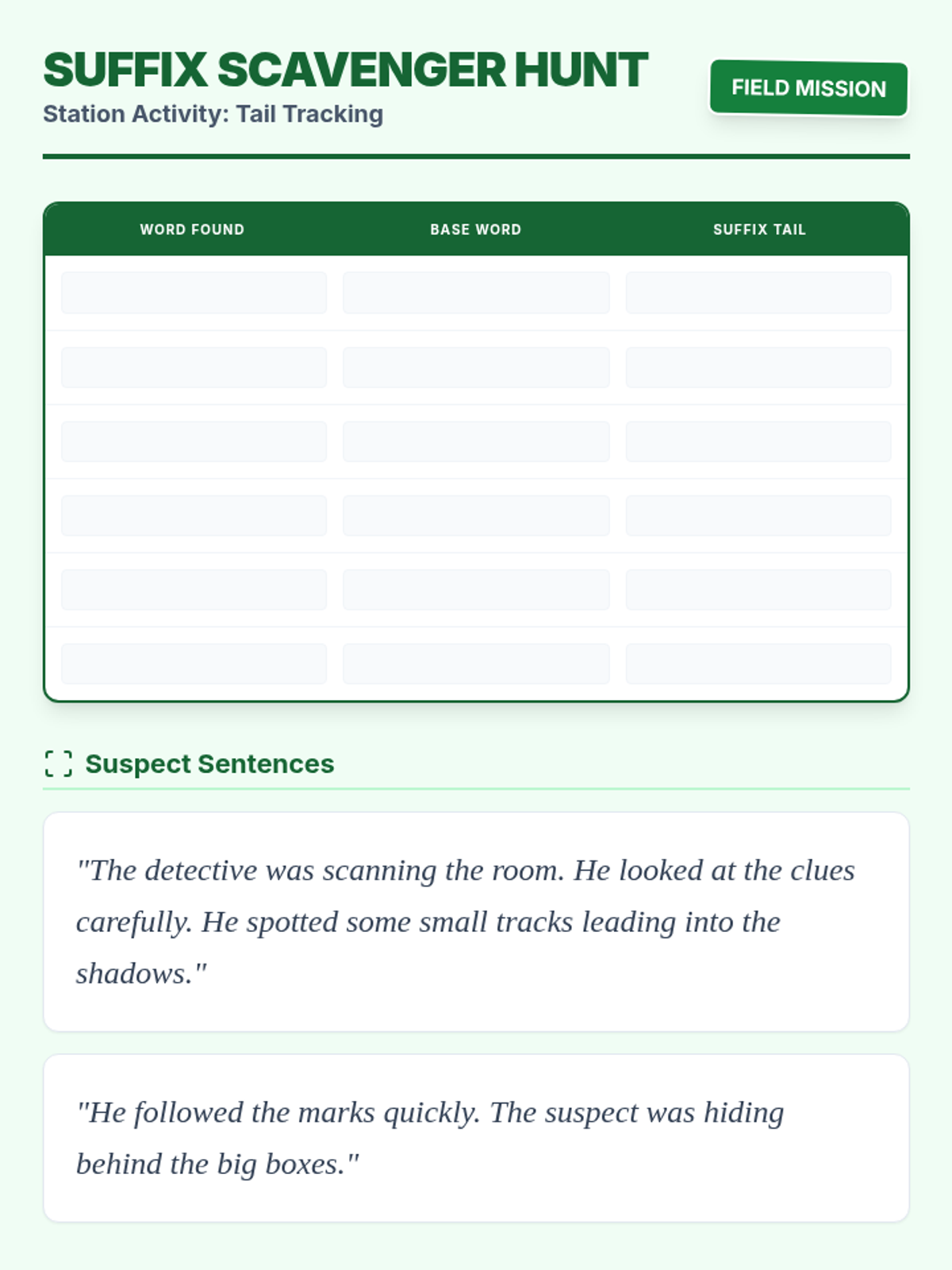
Detectives learn to break down big, multi-syllabic words and track down suffixes at the end of word 'trails'.
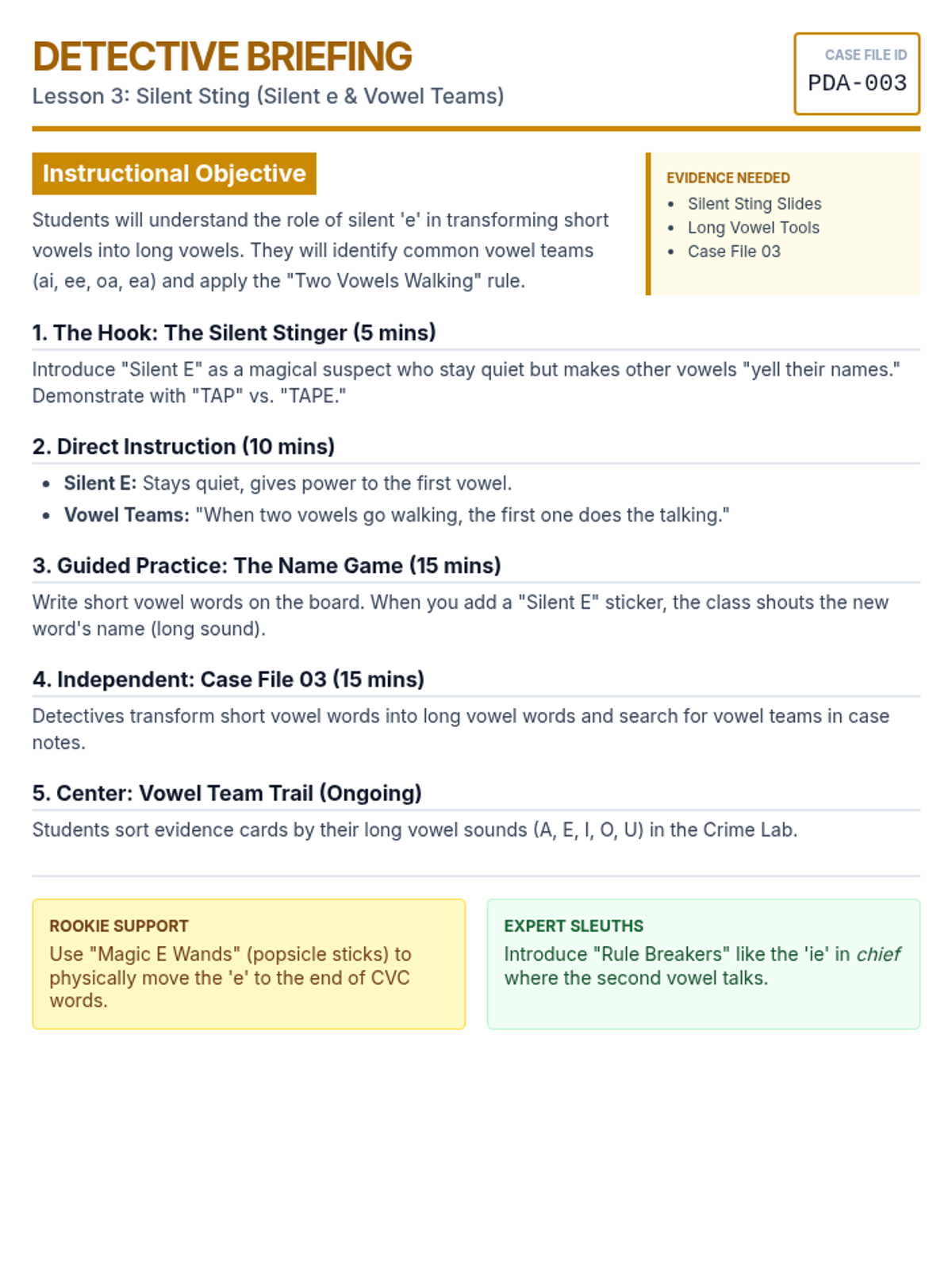
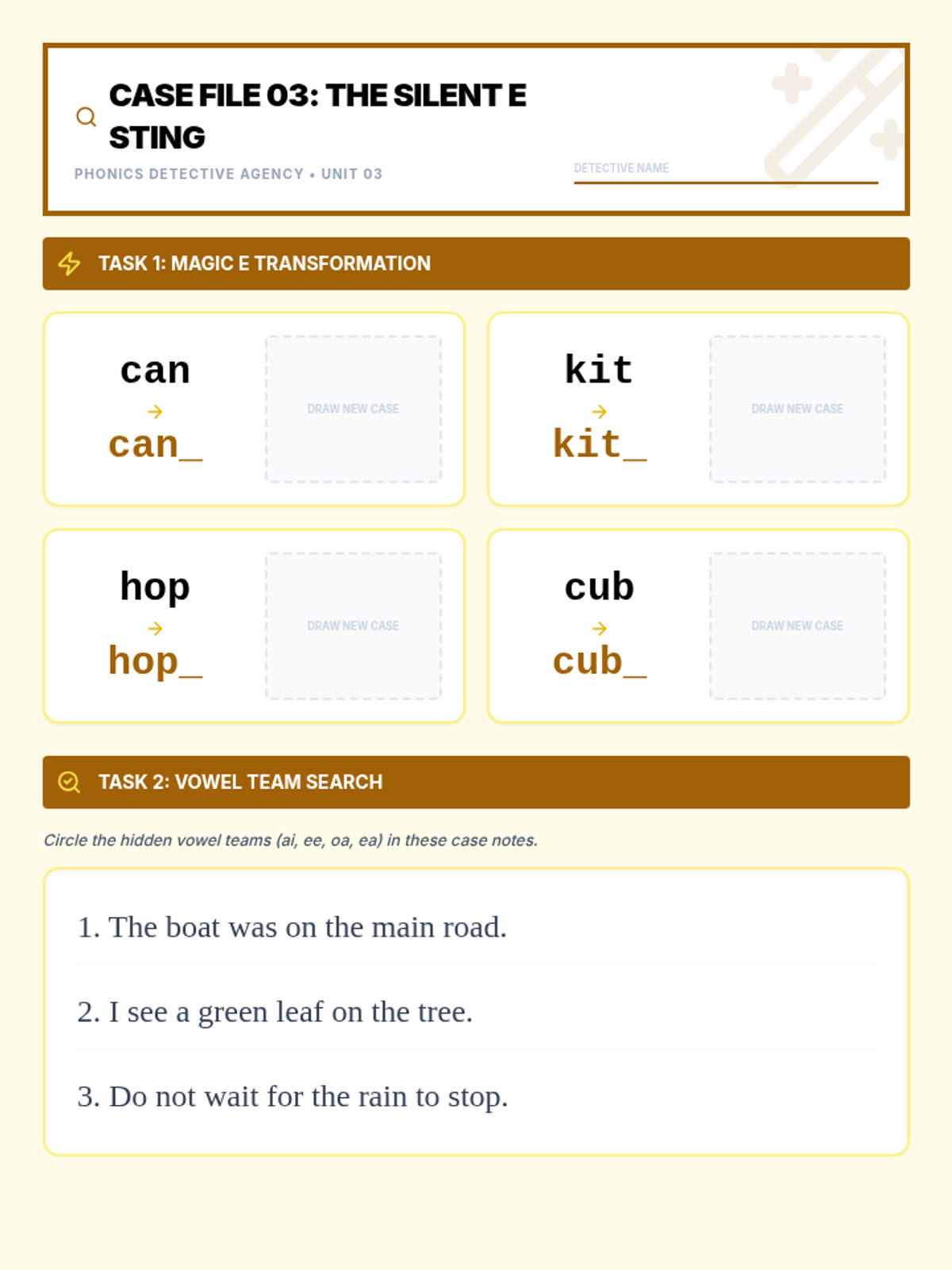
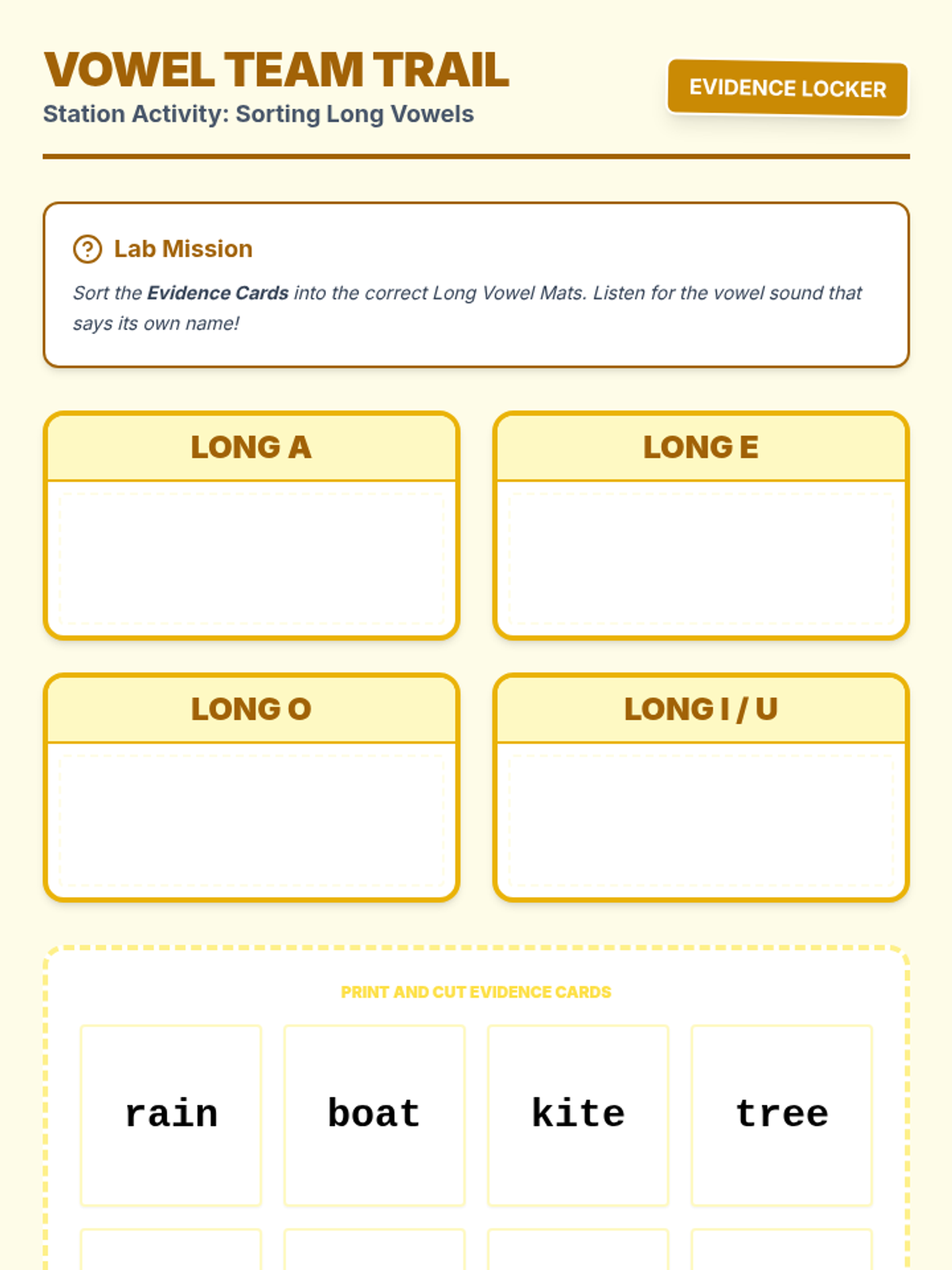
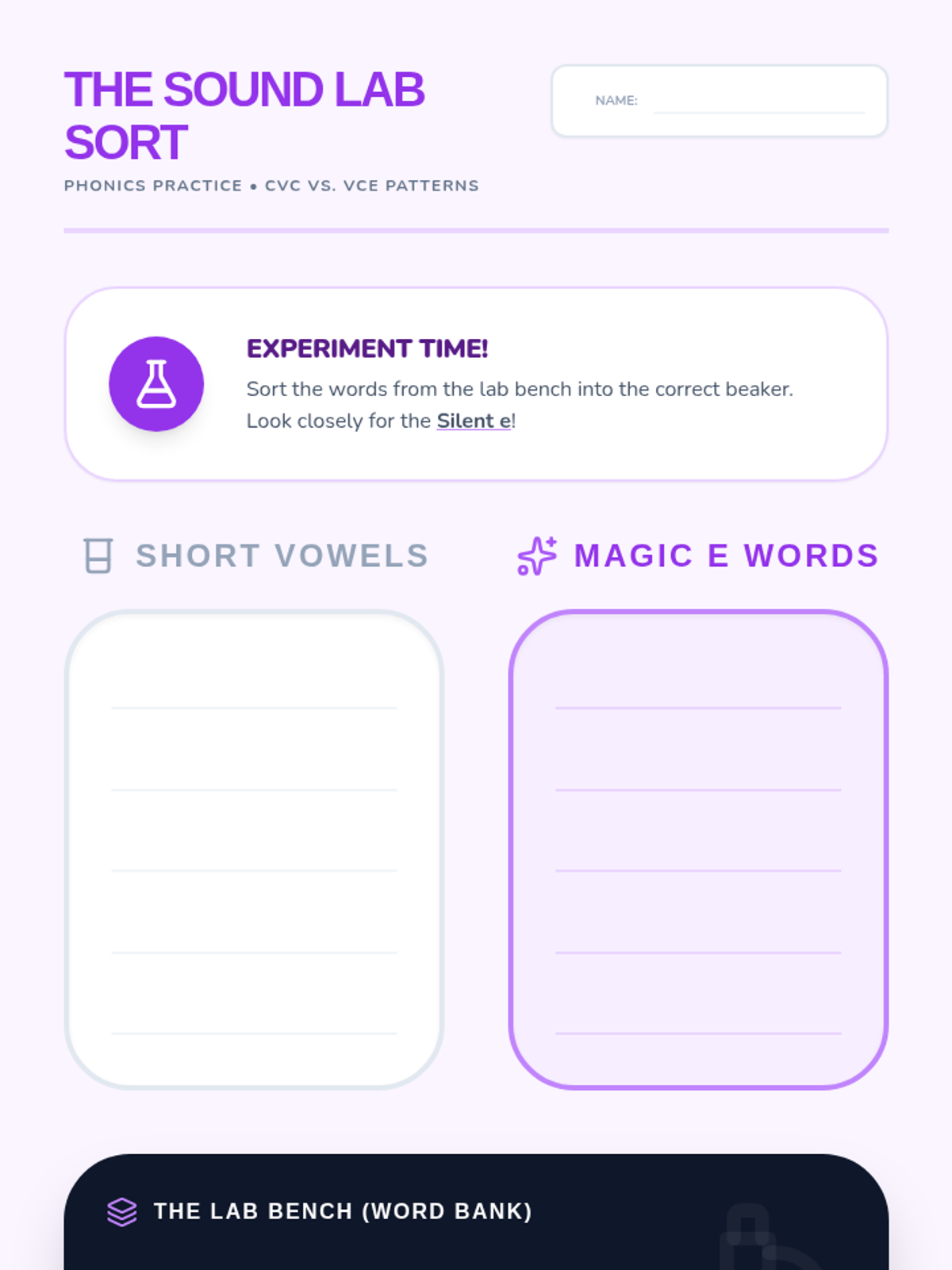
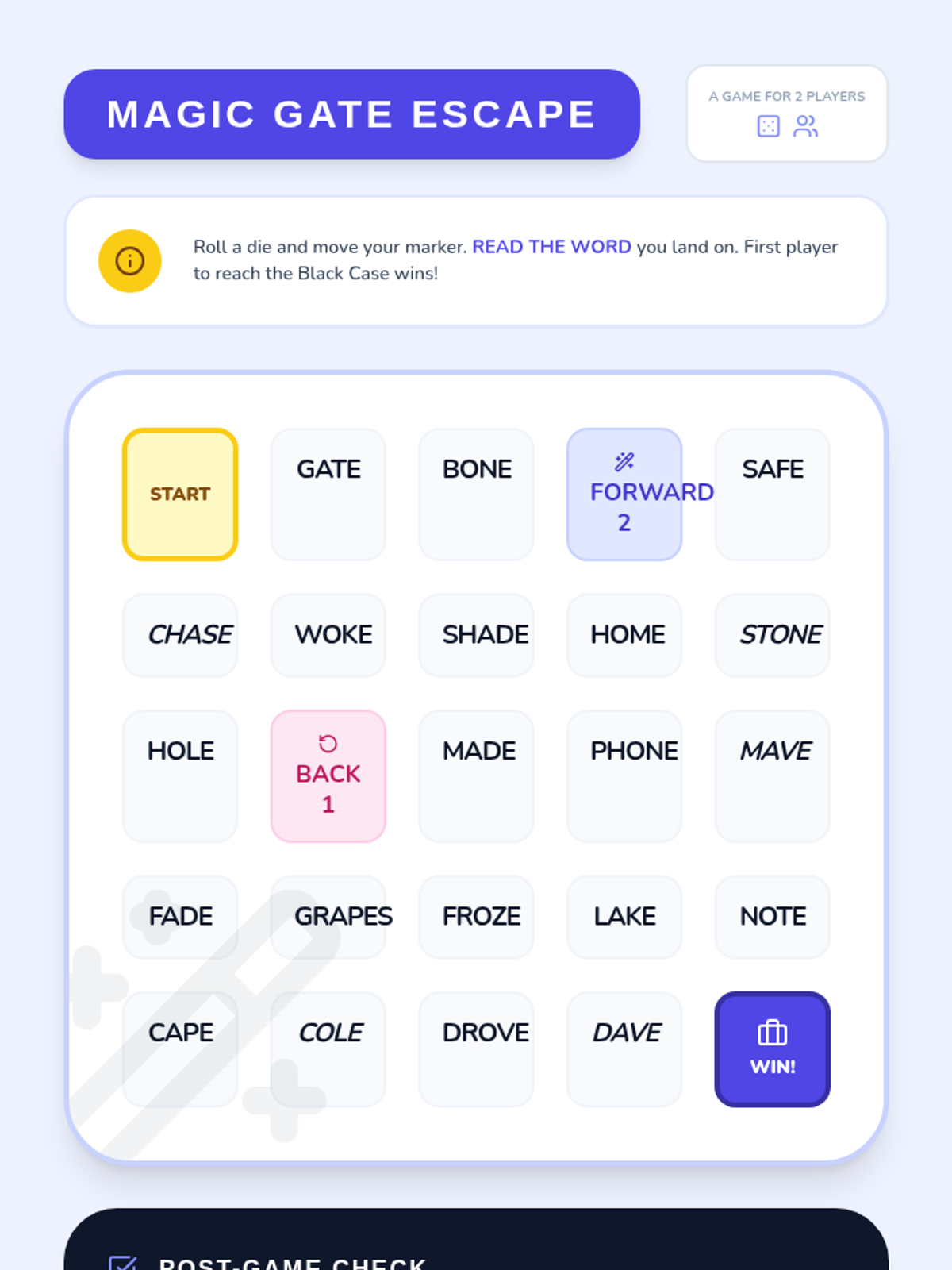
A mystery involving the Silent E and its team of vowels that change the 'identities' of words.
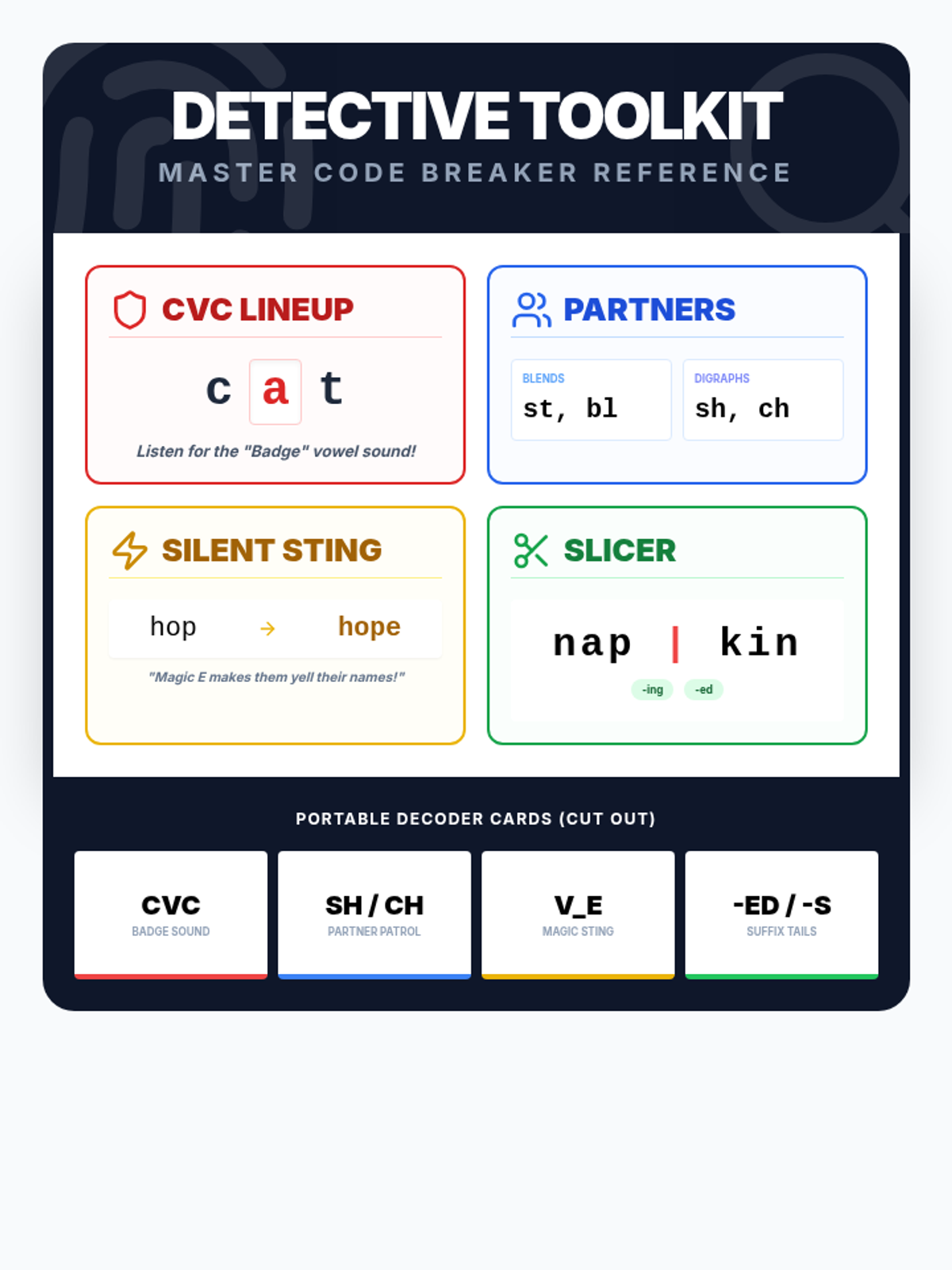
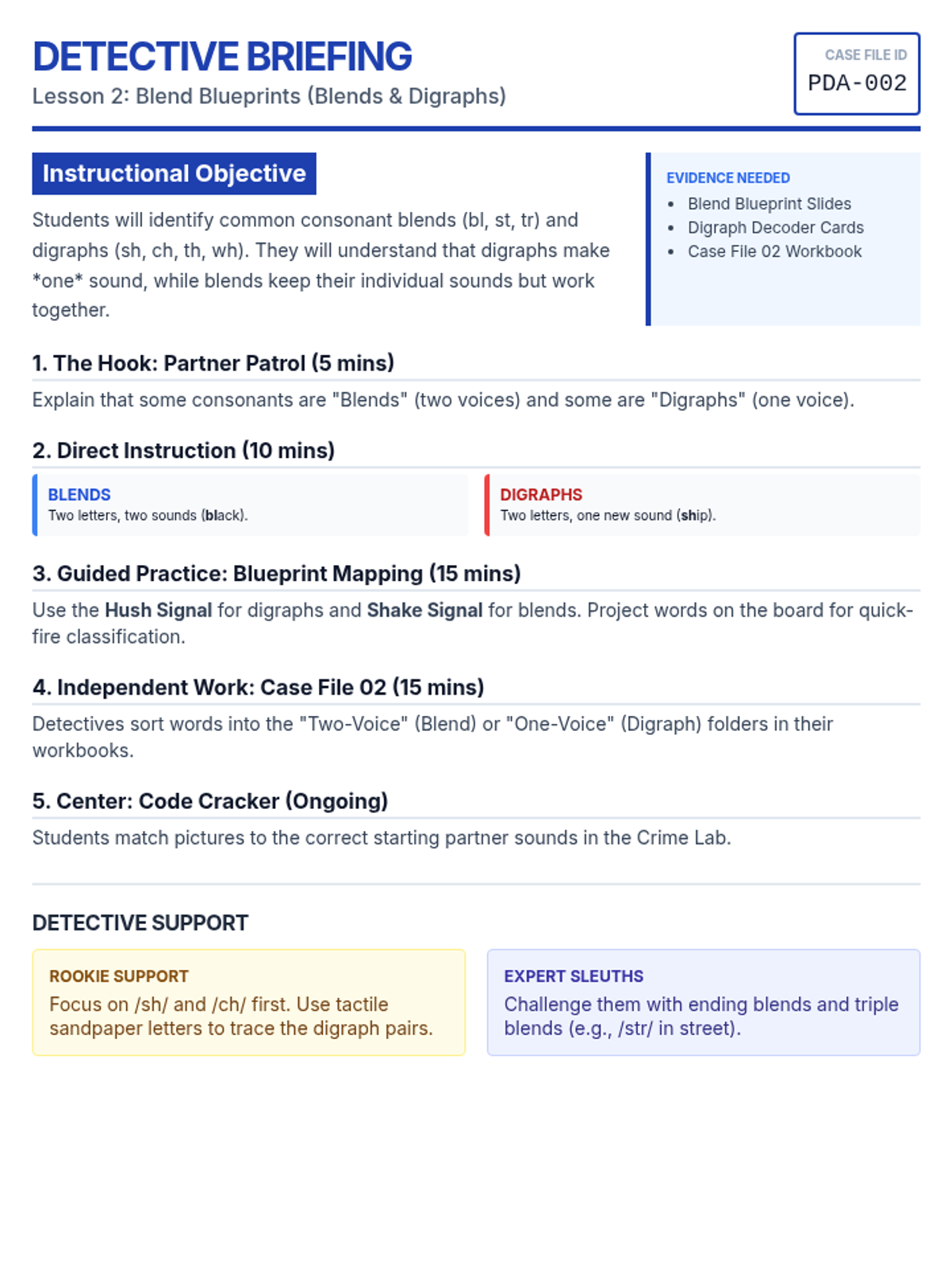
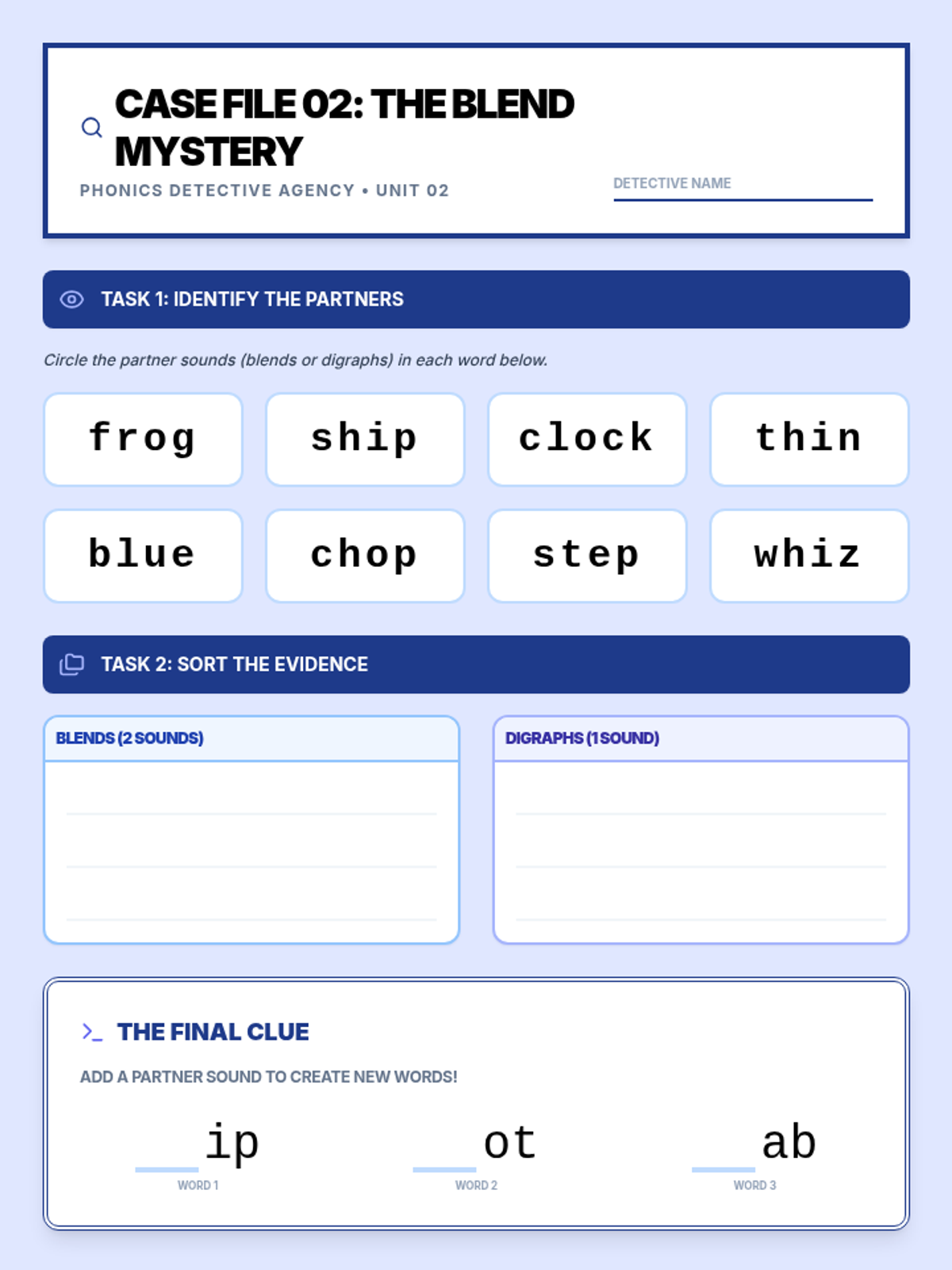
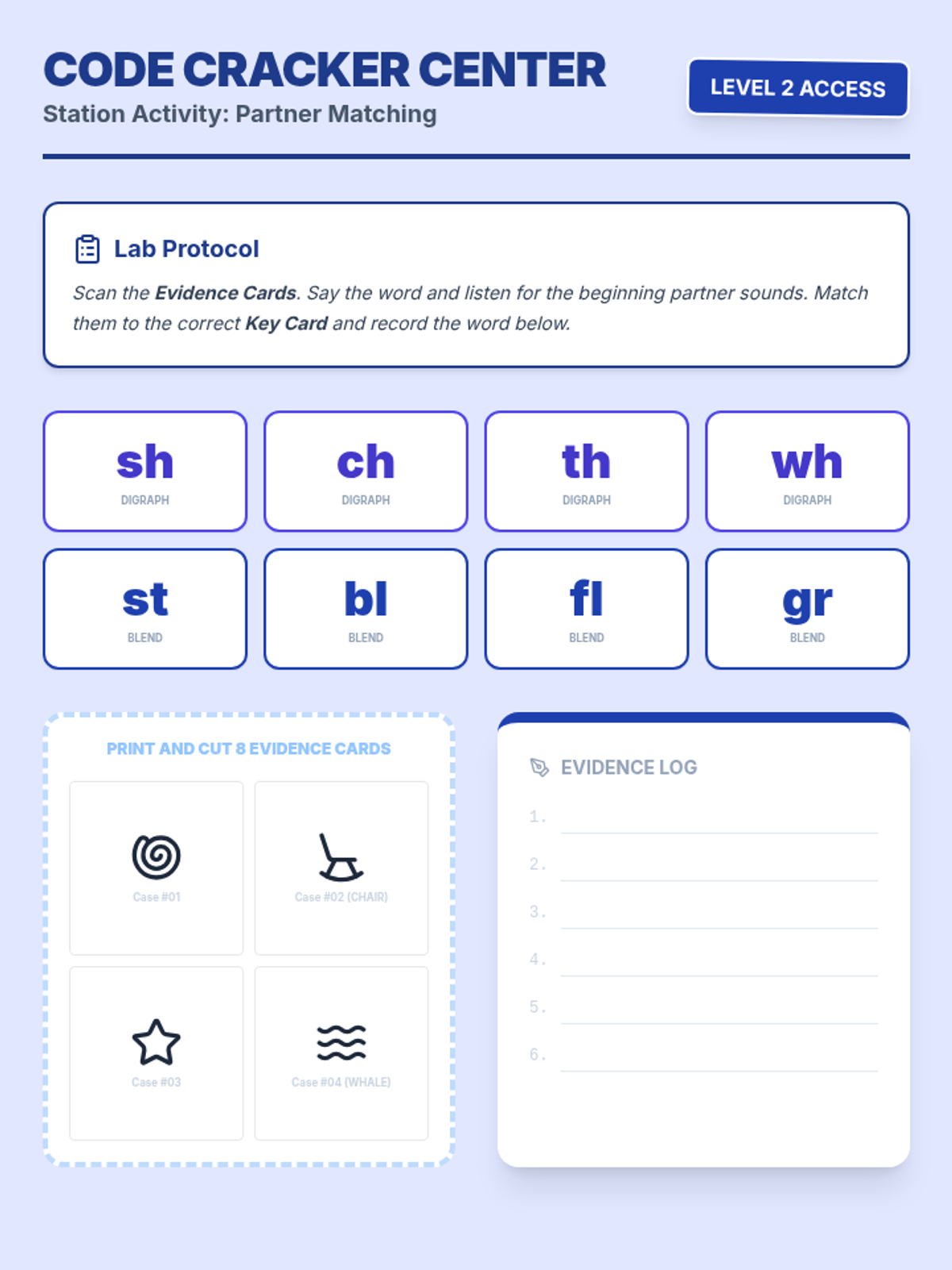
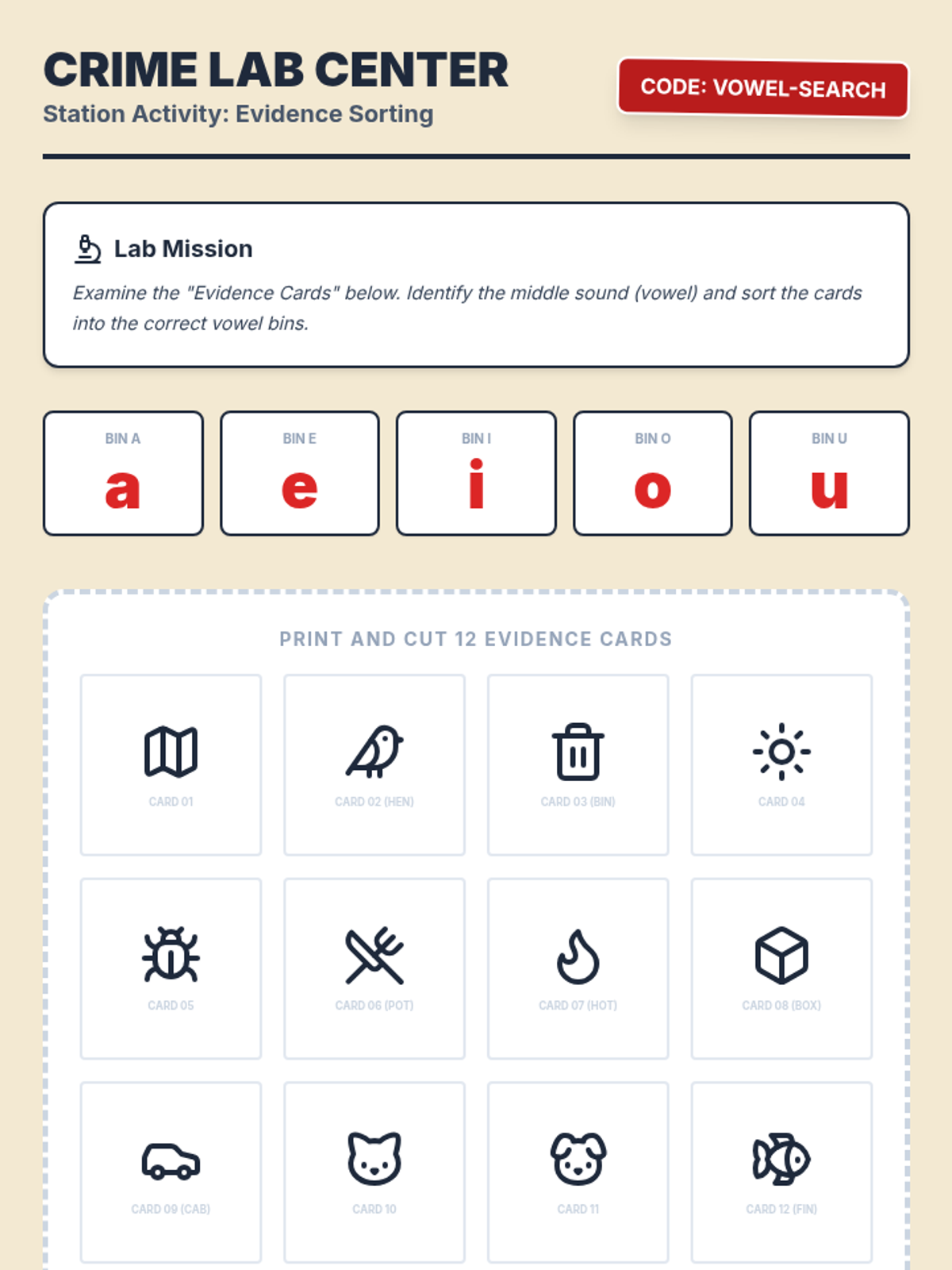
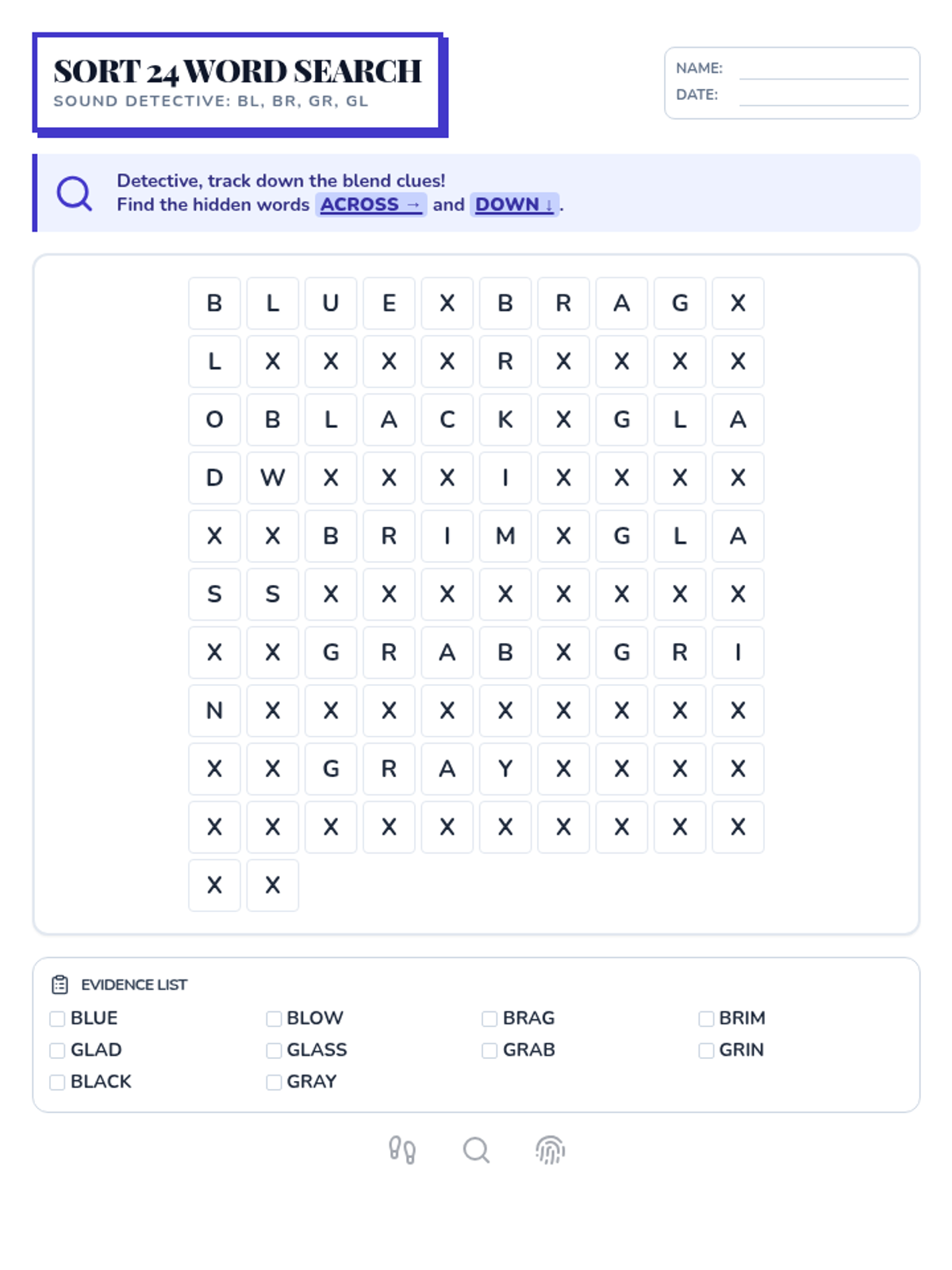
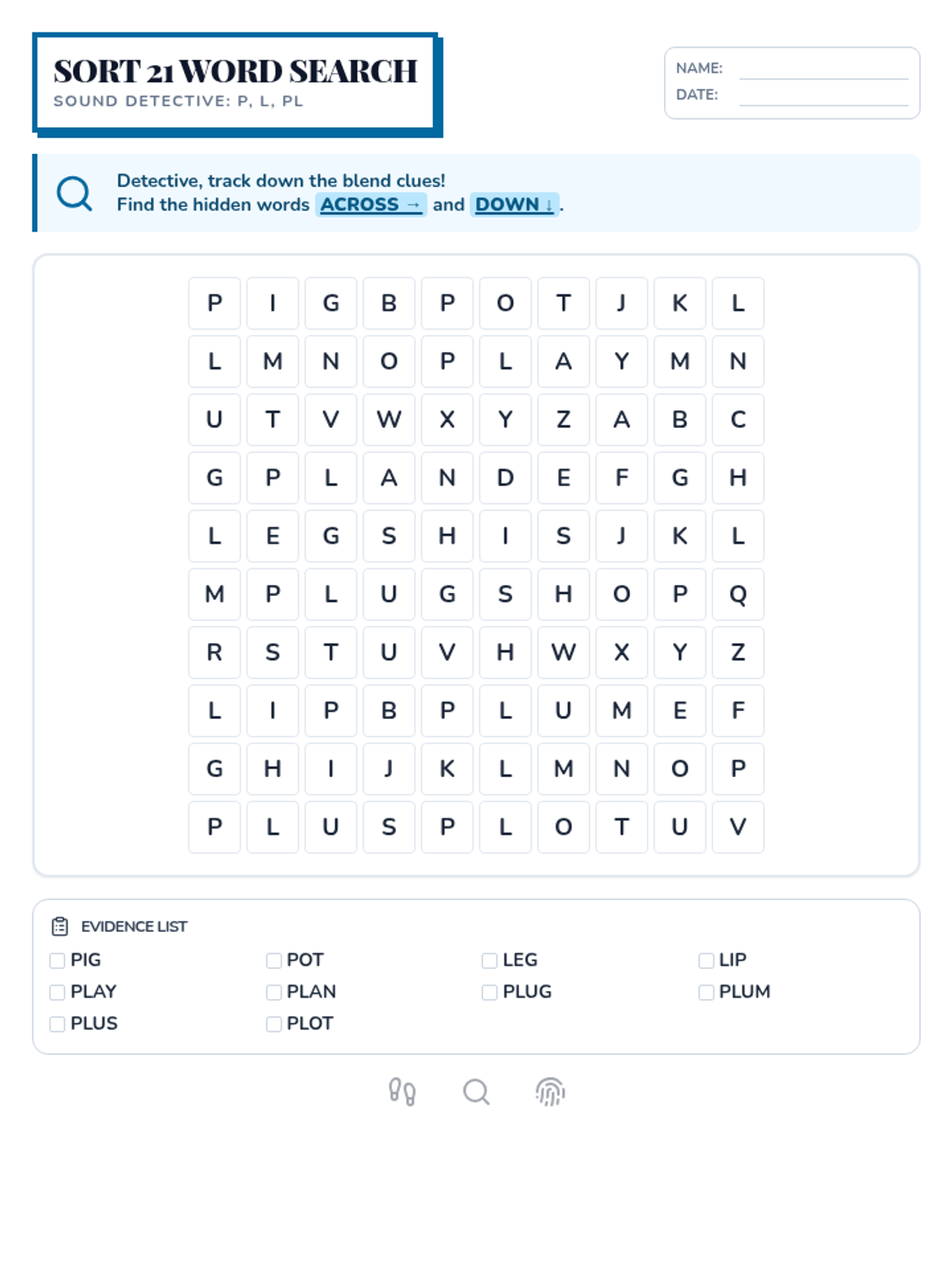
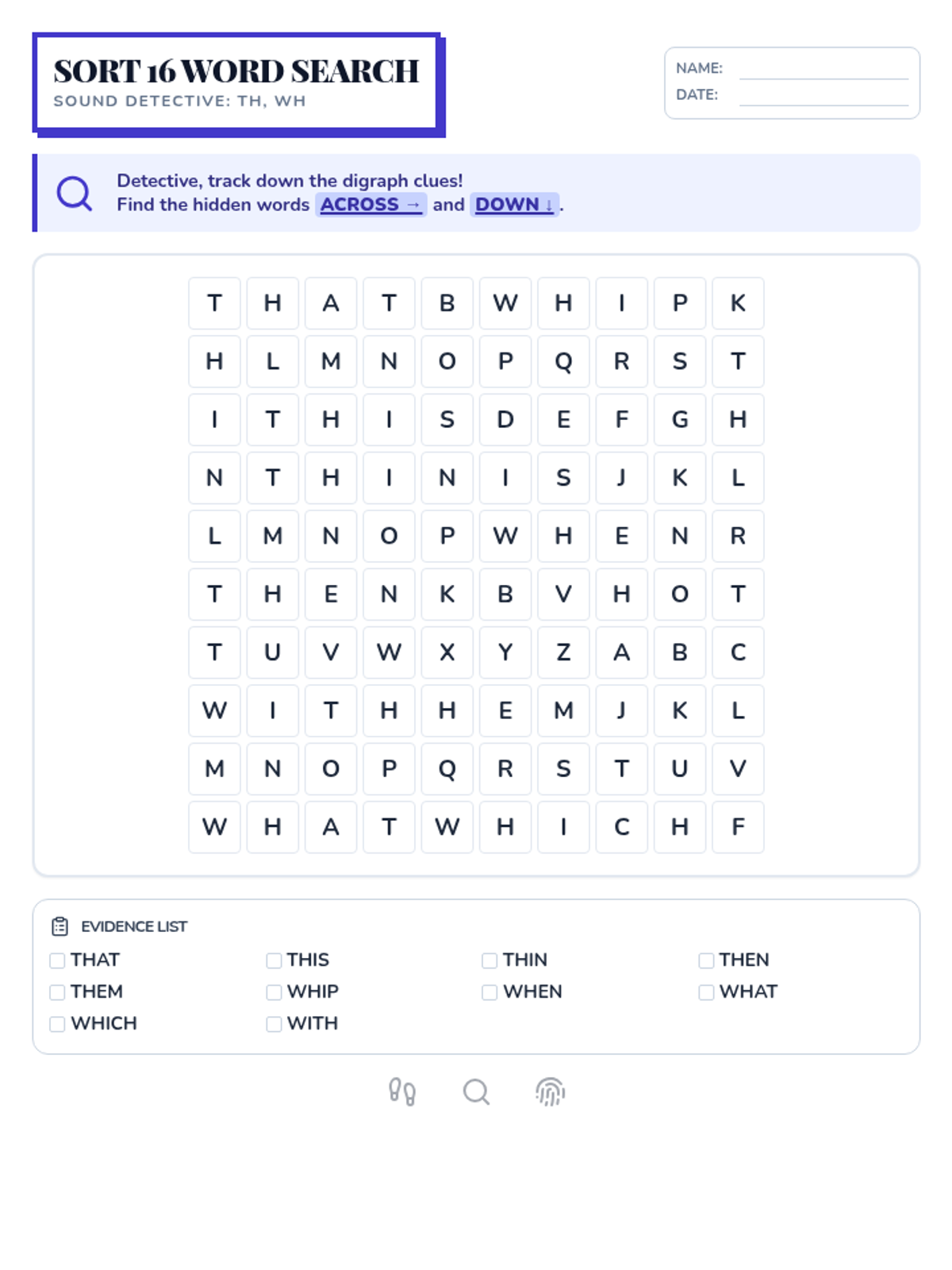
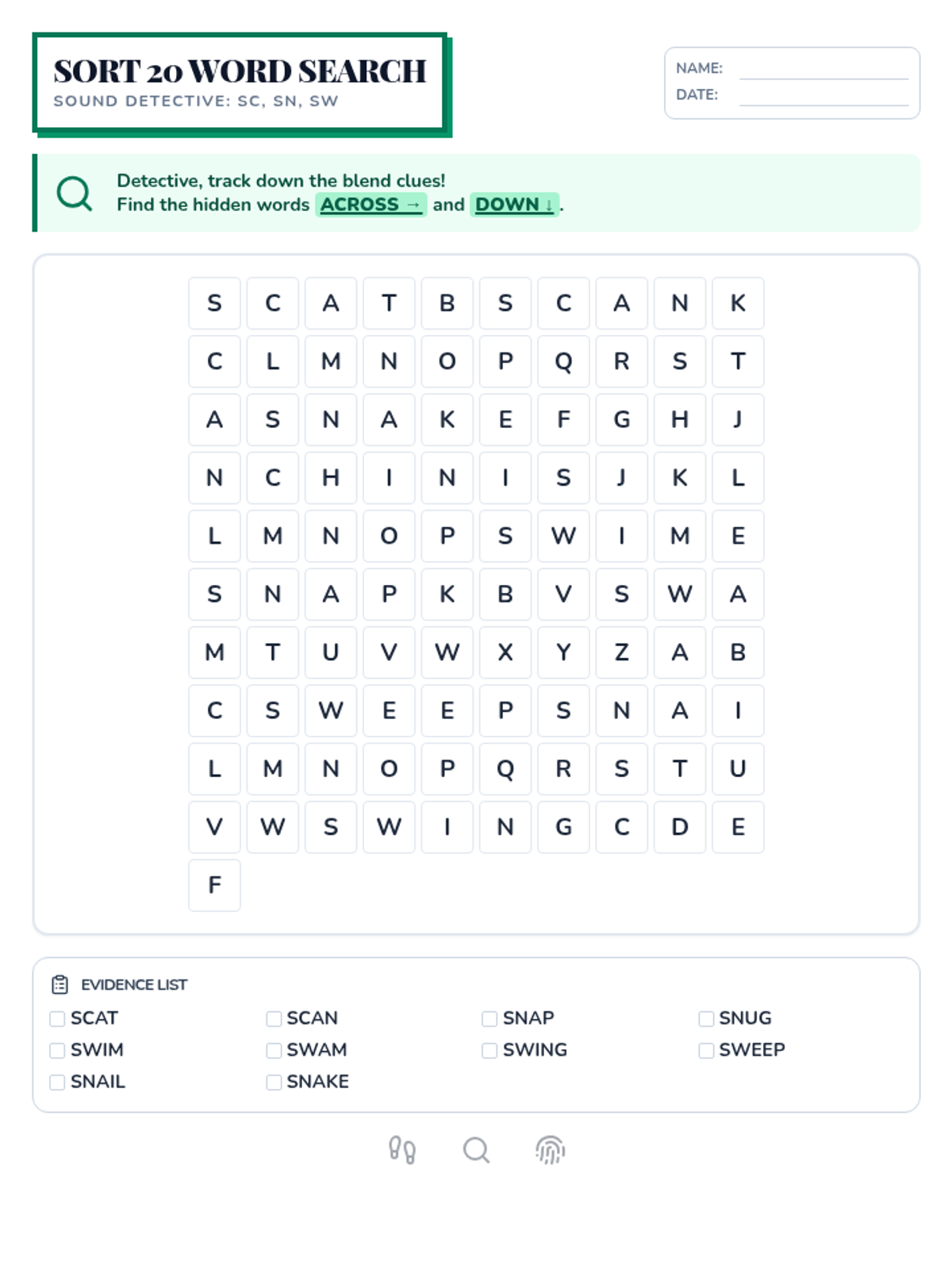
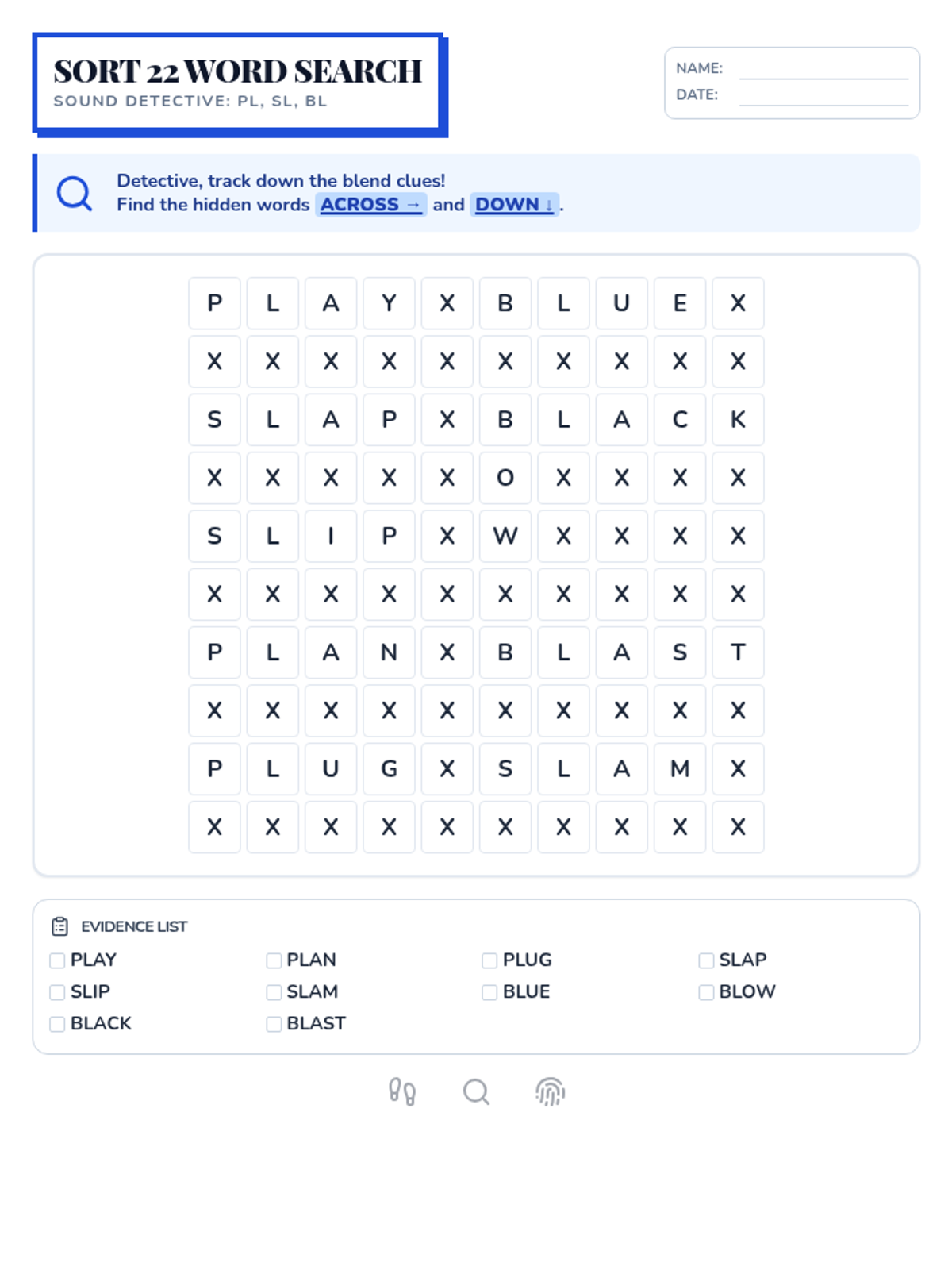
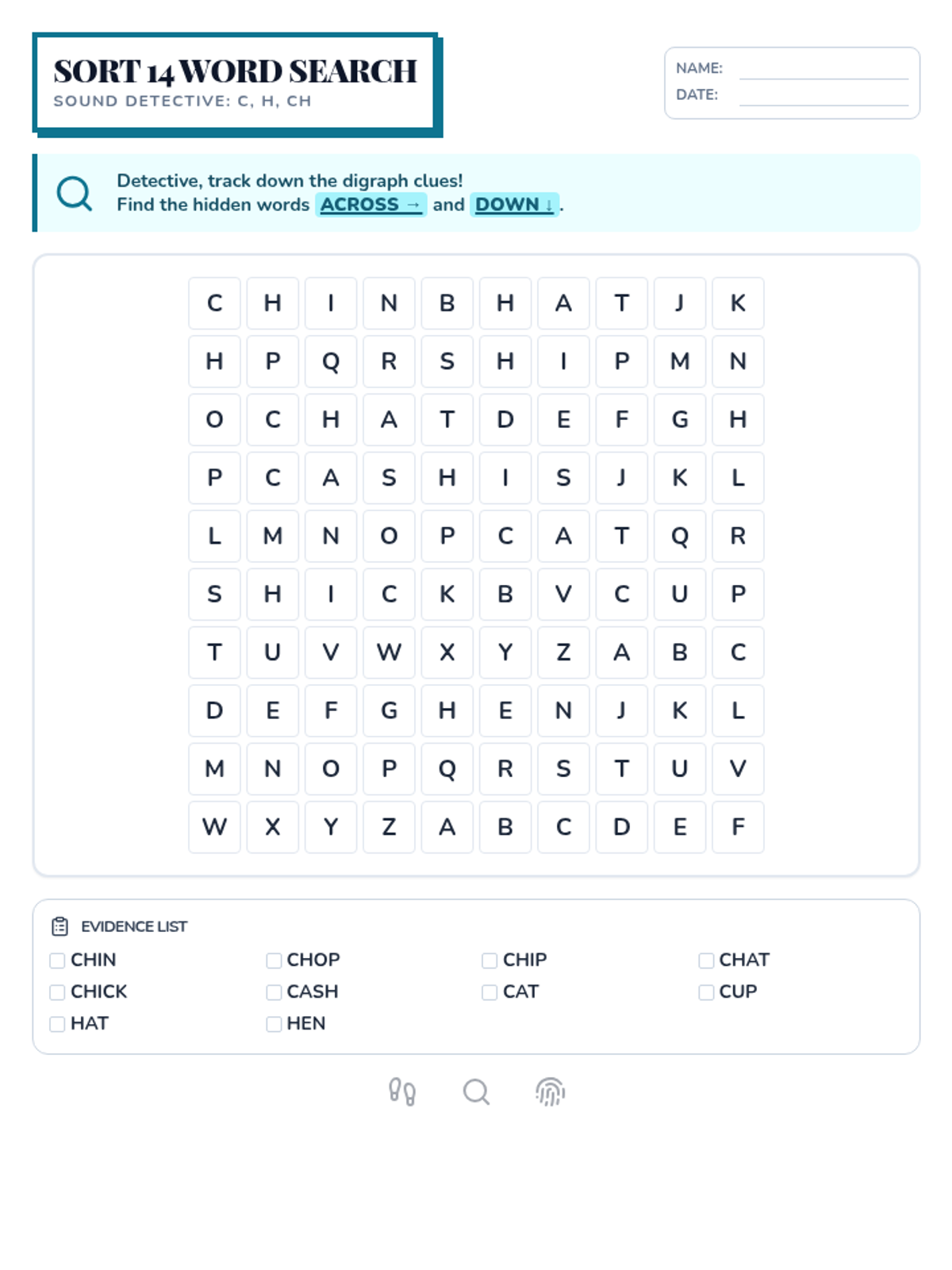
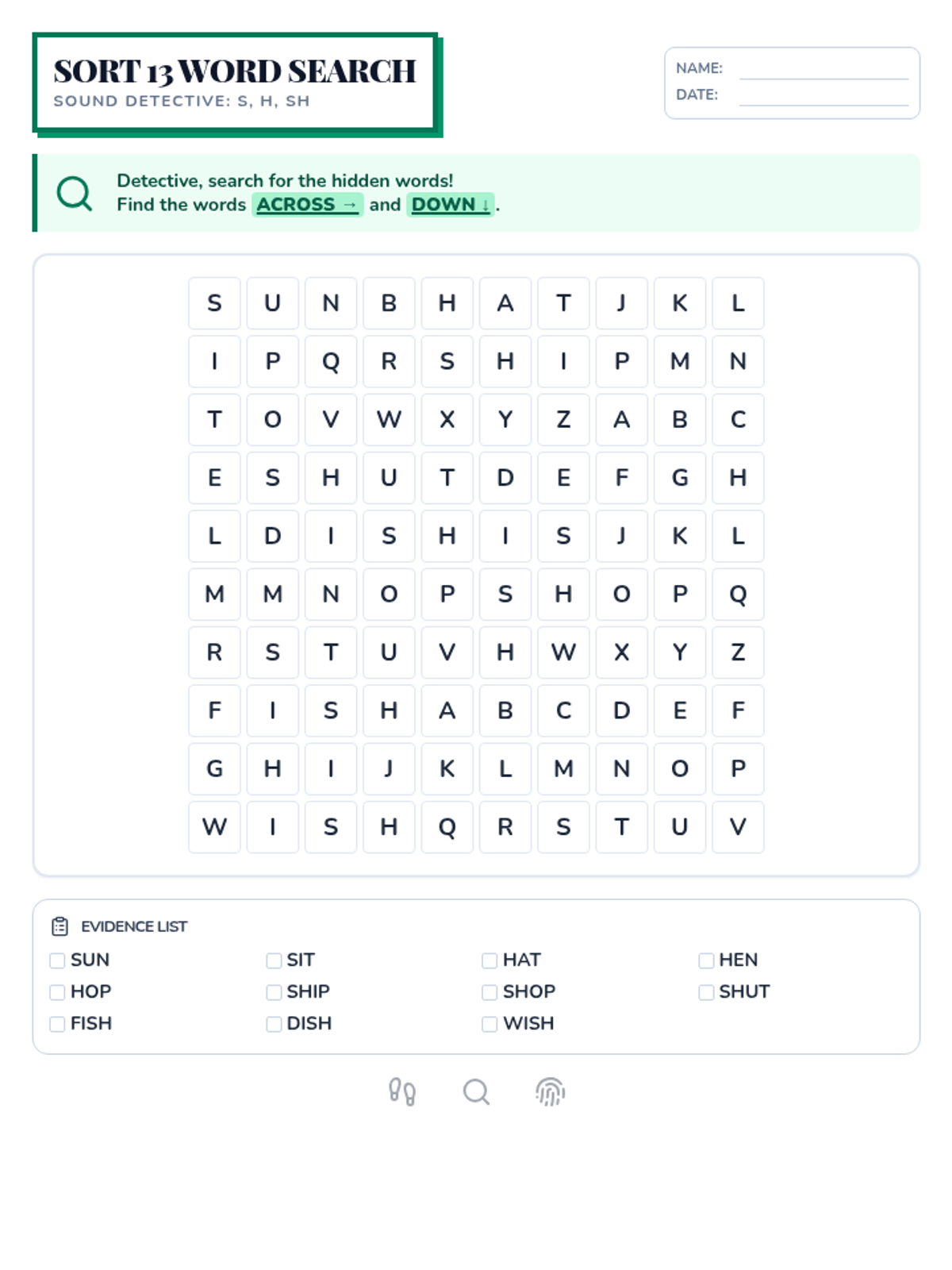
Detectives use blueprints to understand how consonants work together in blends and digraphs to create unique sounds.
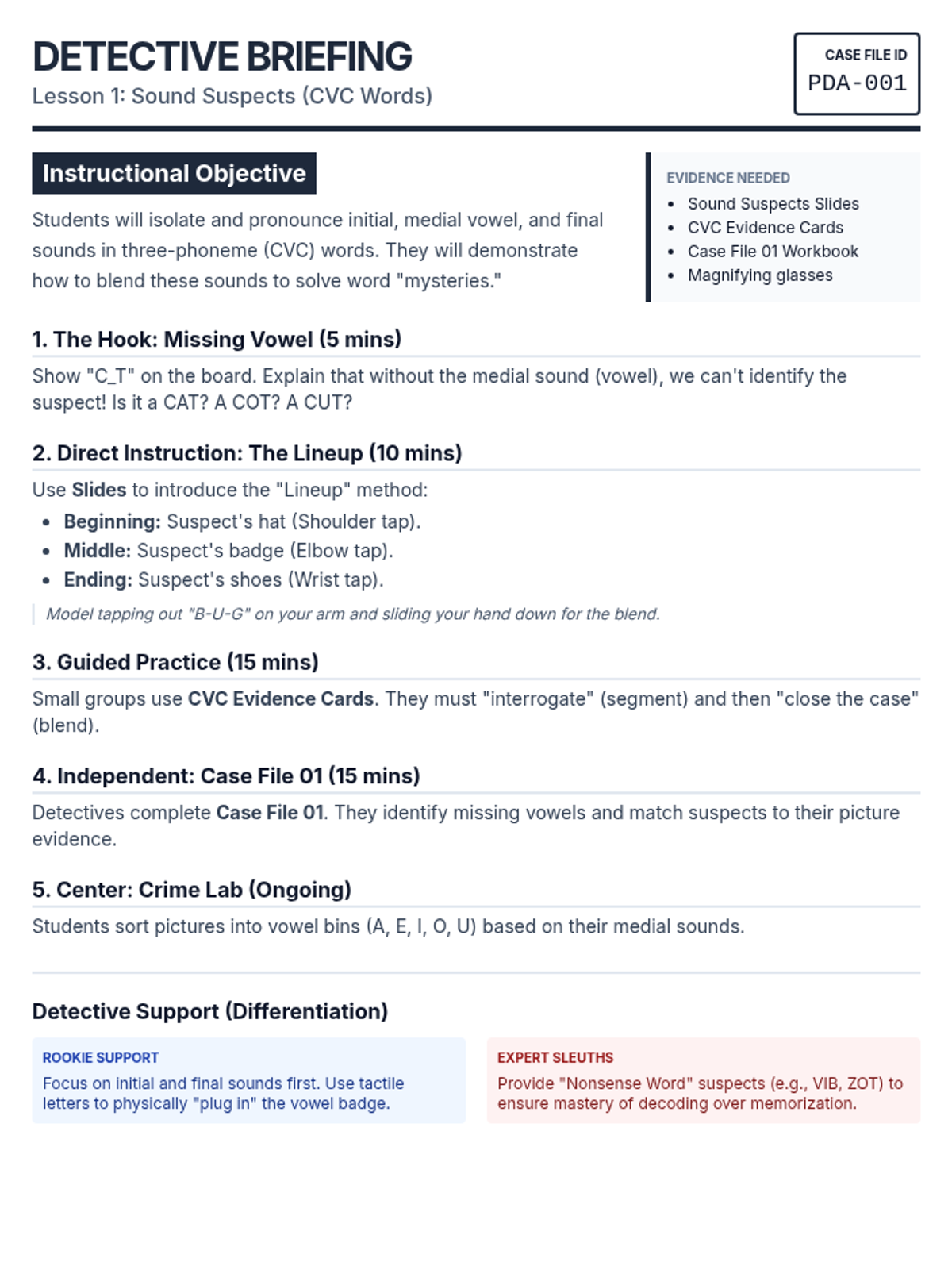
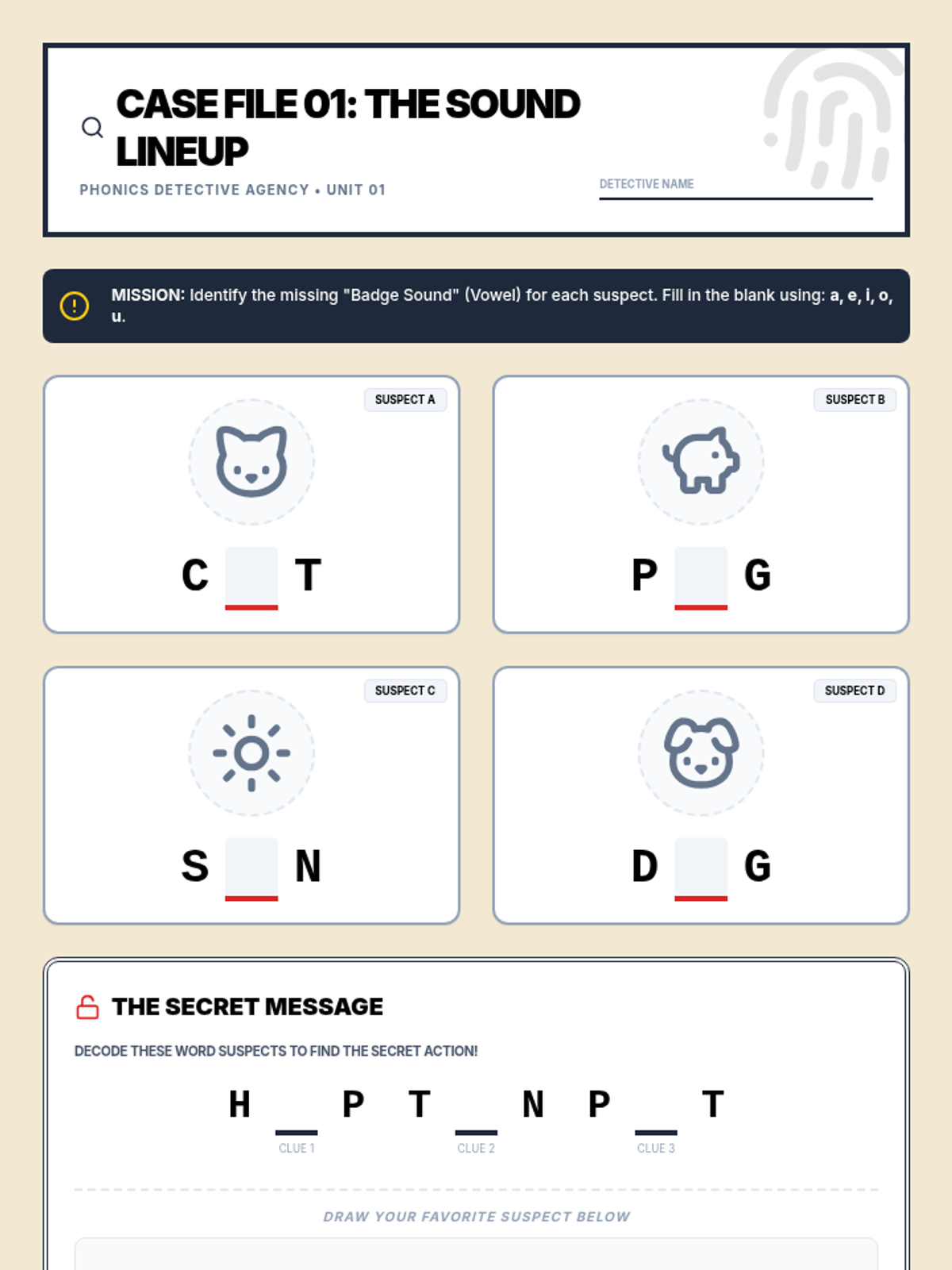
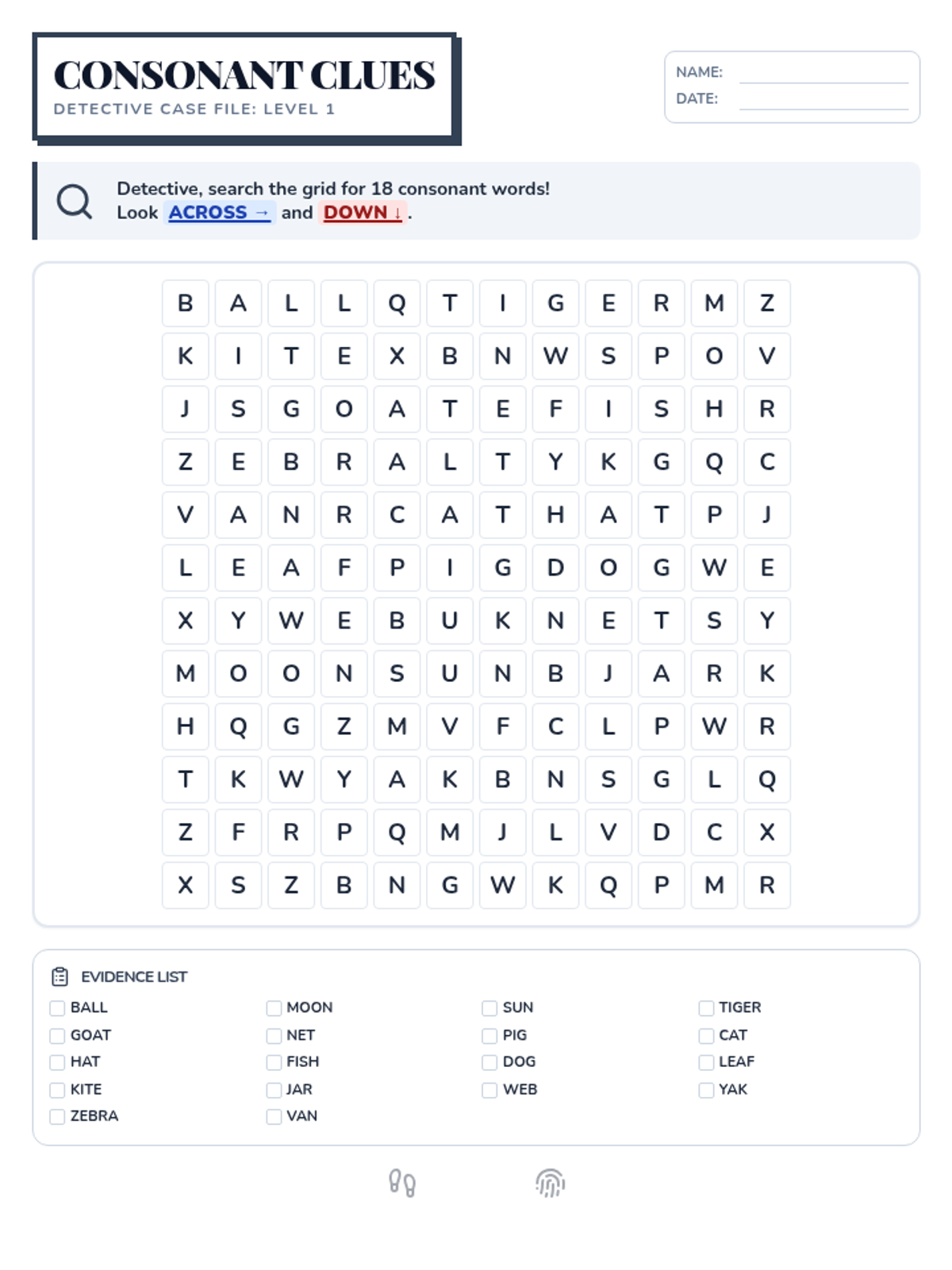
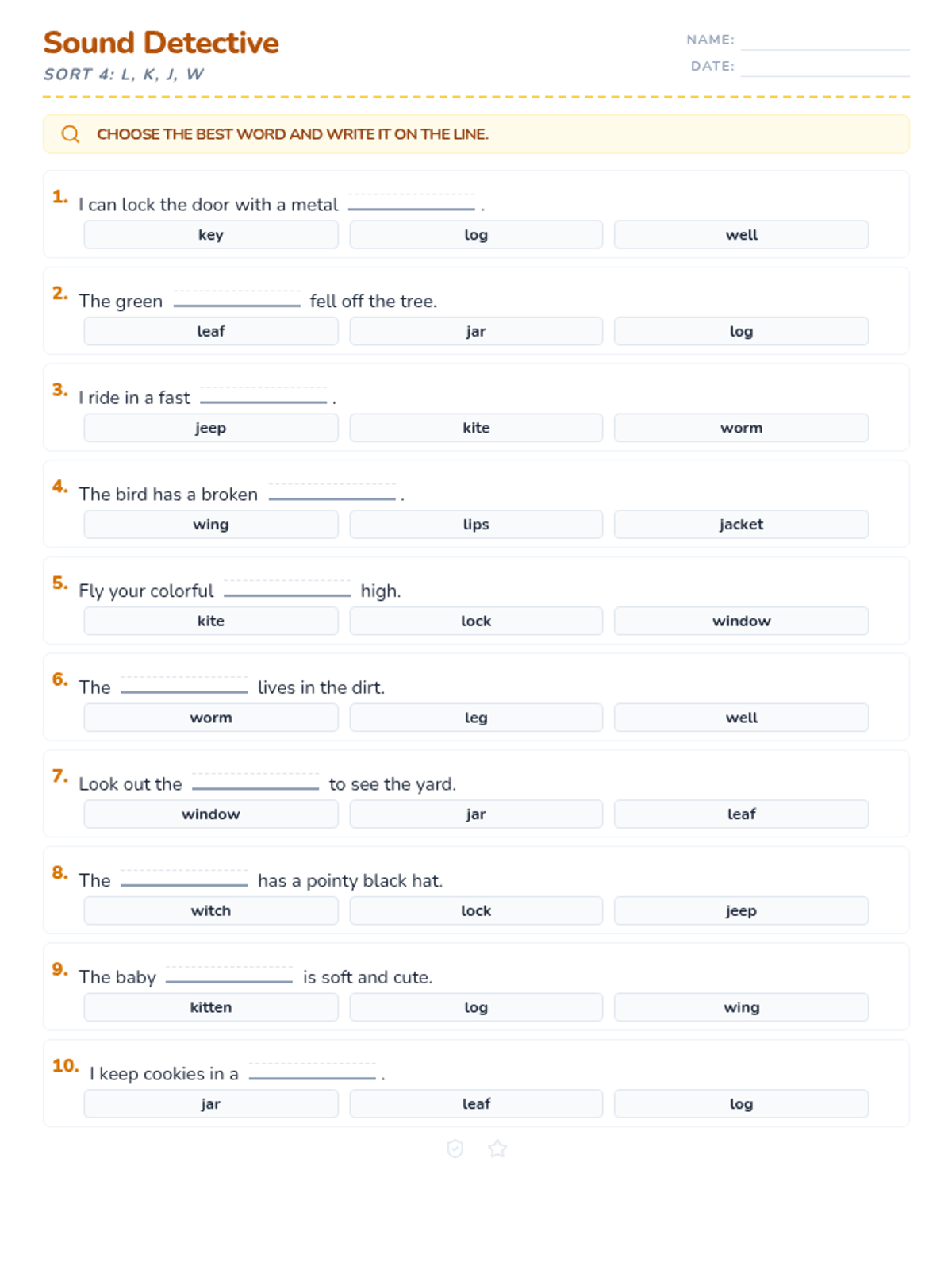
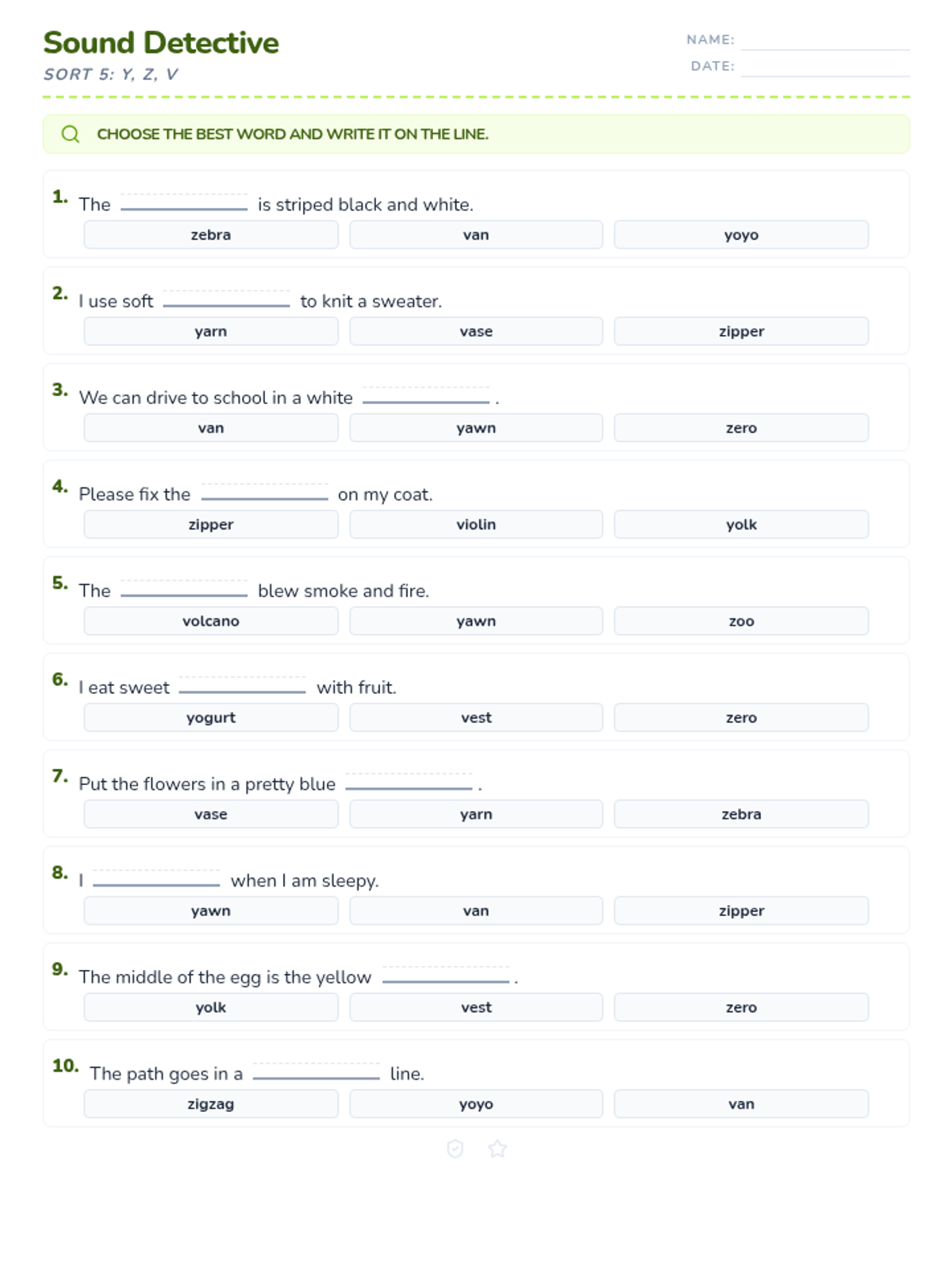
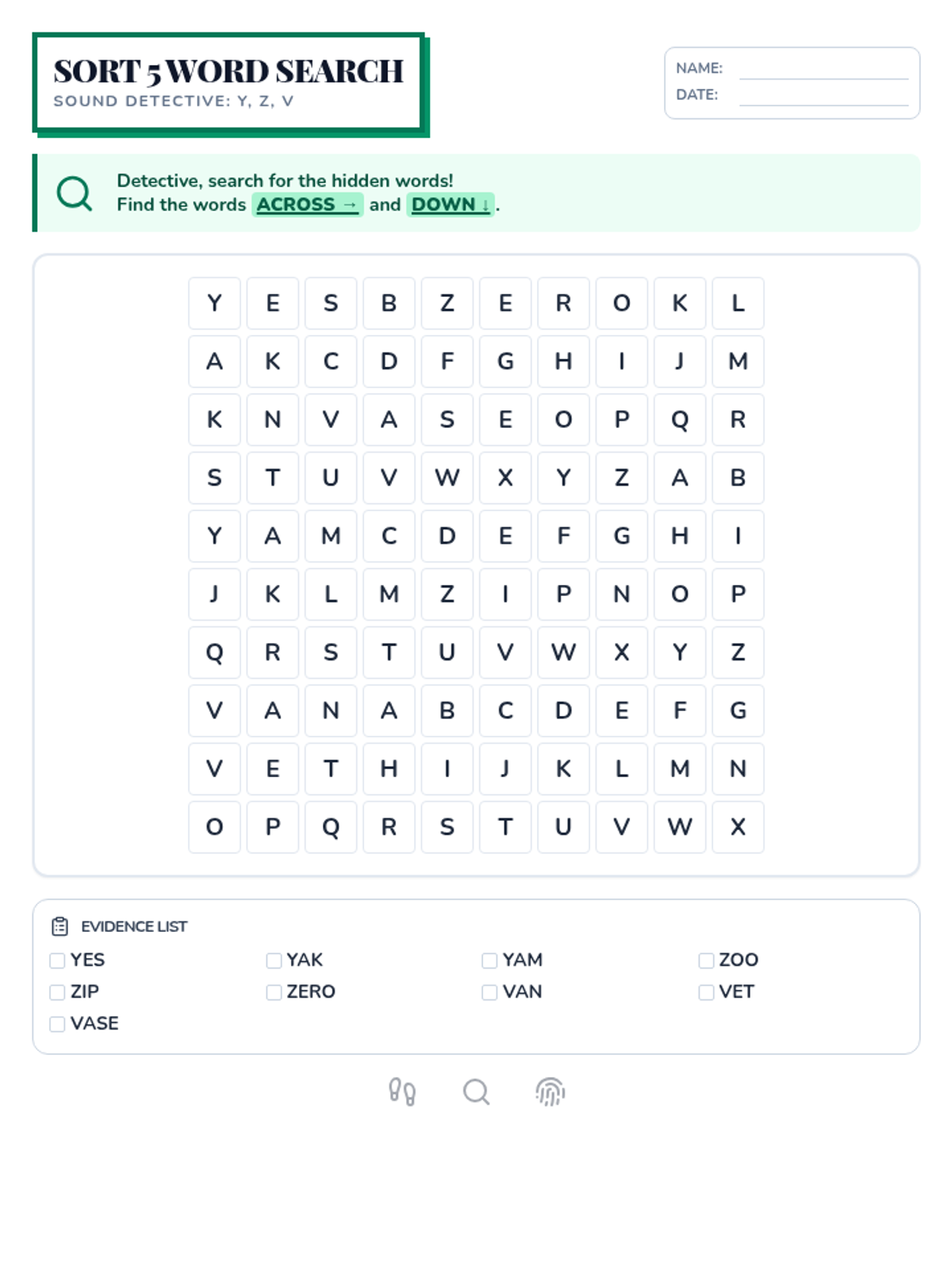
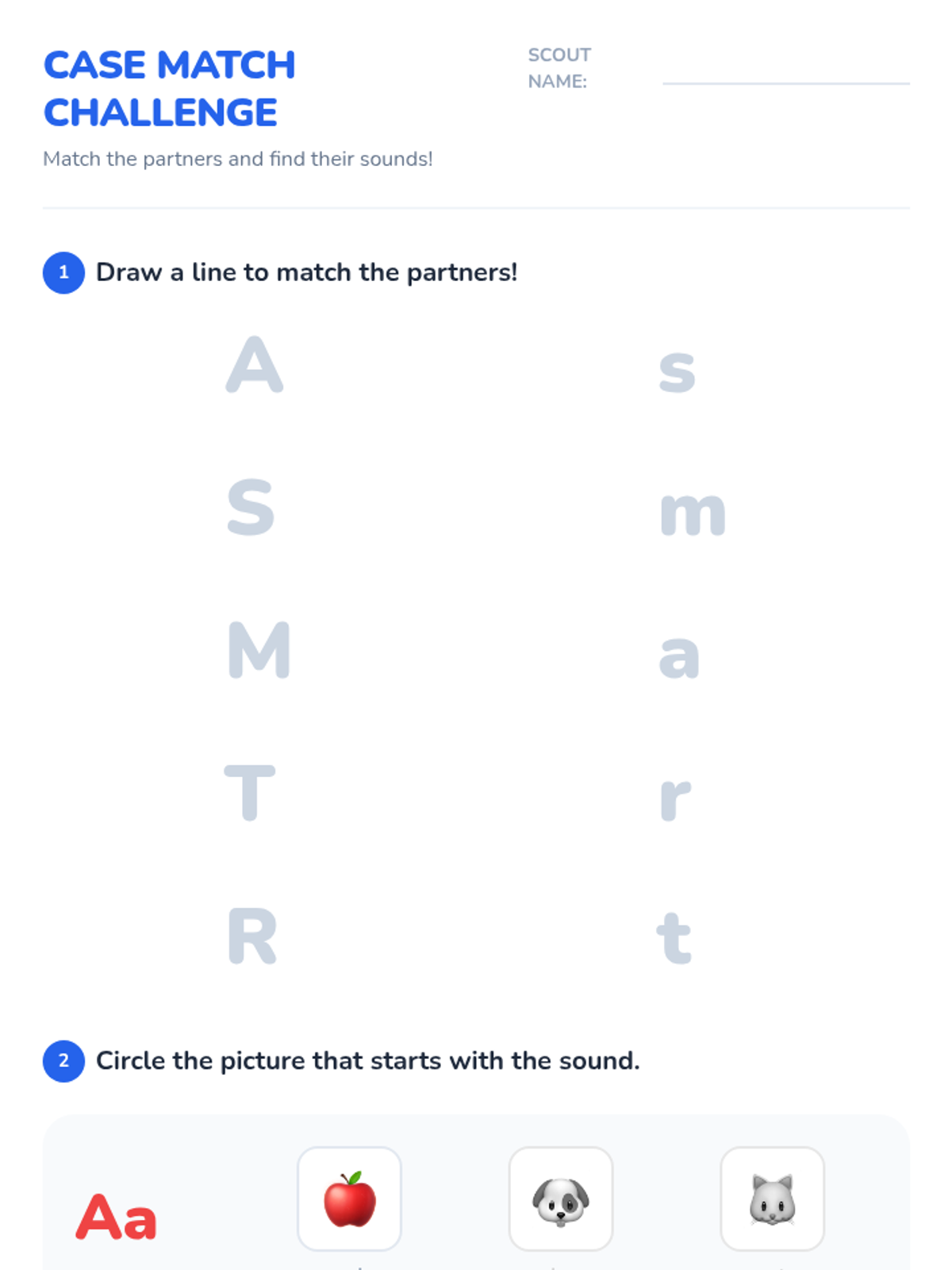
Detectives investigate the 'Lineup of Sounds' to master individual letter sounds and build CVC words using vowel clues.
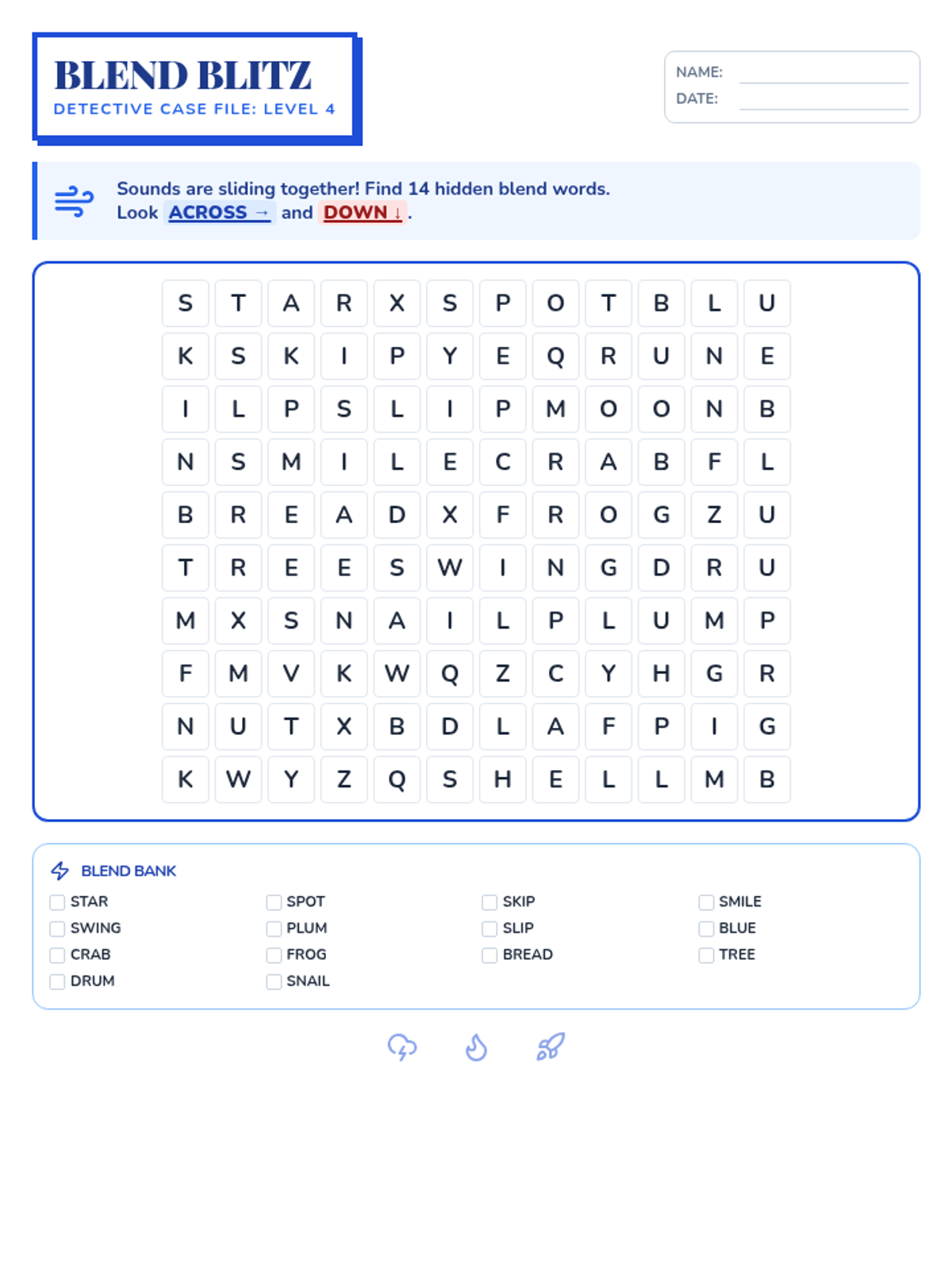
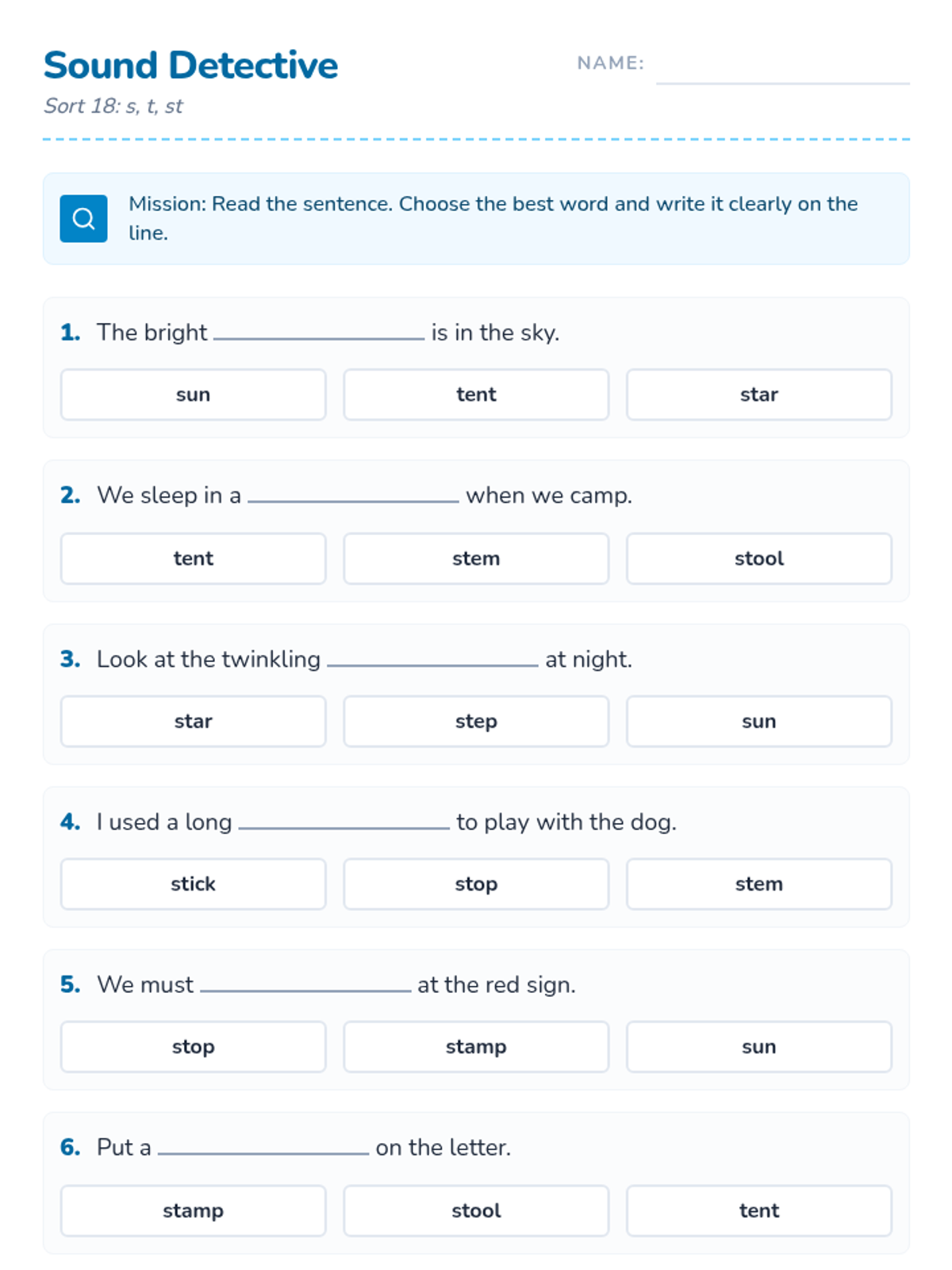
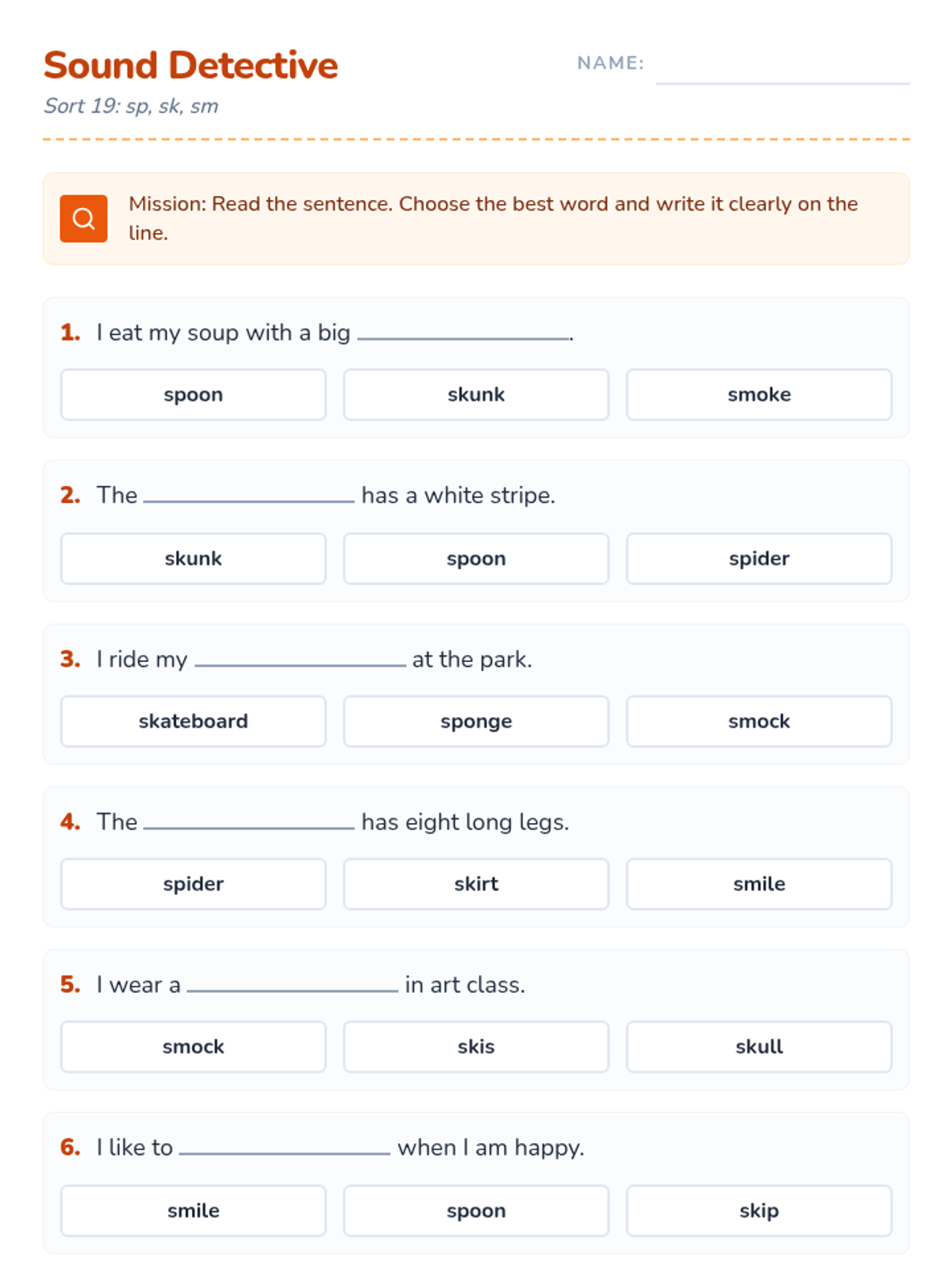
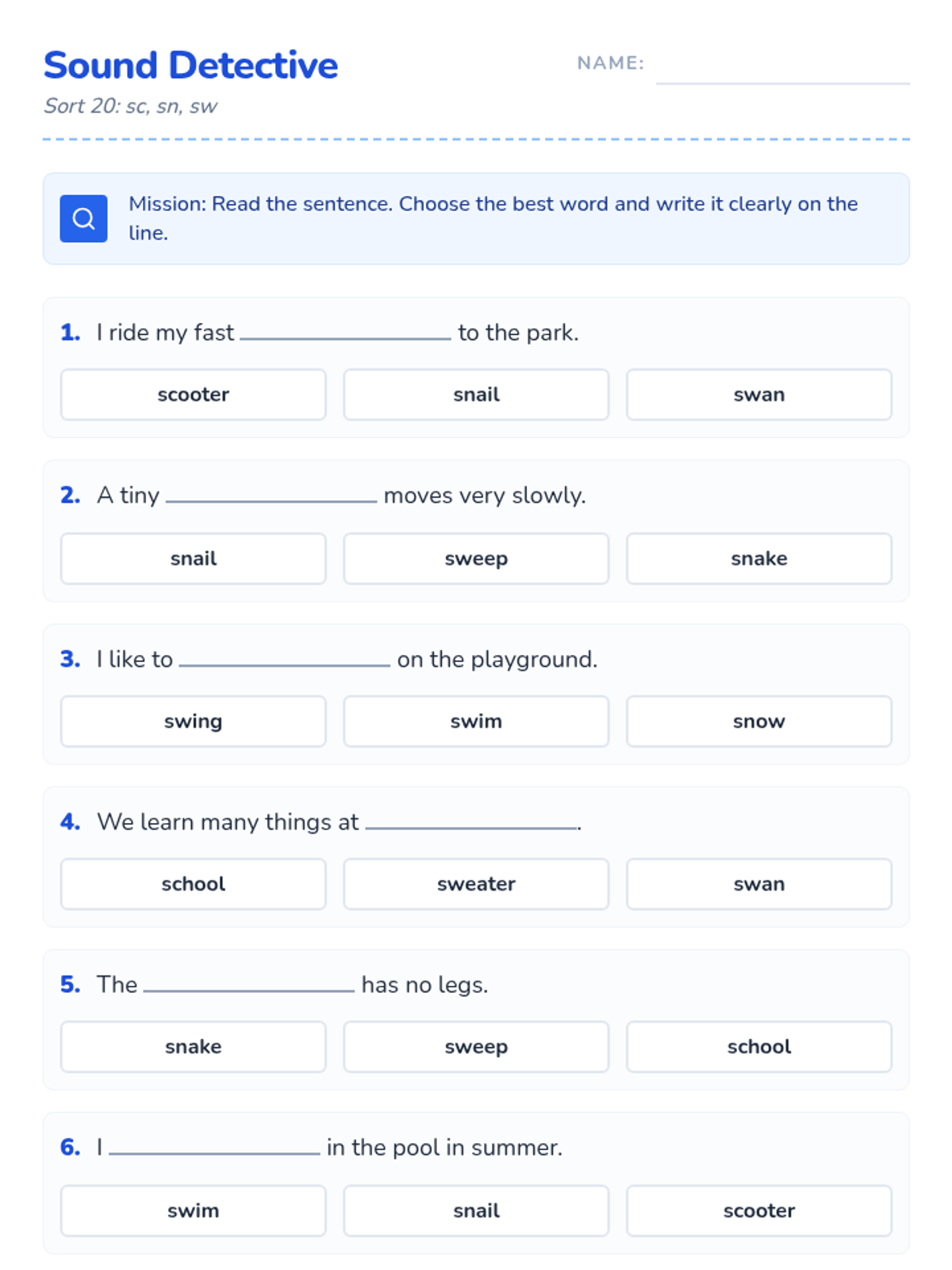
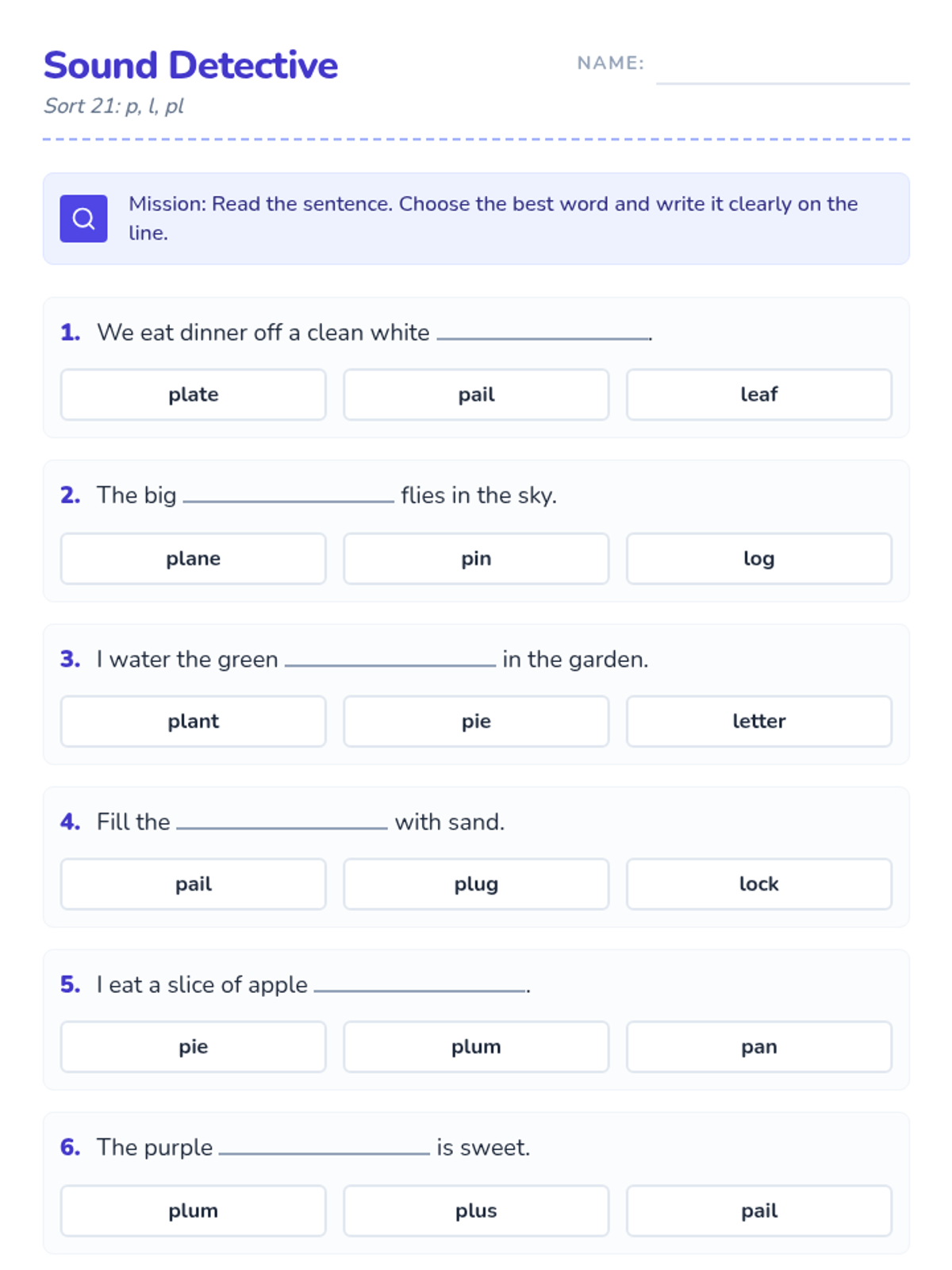
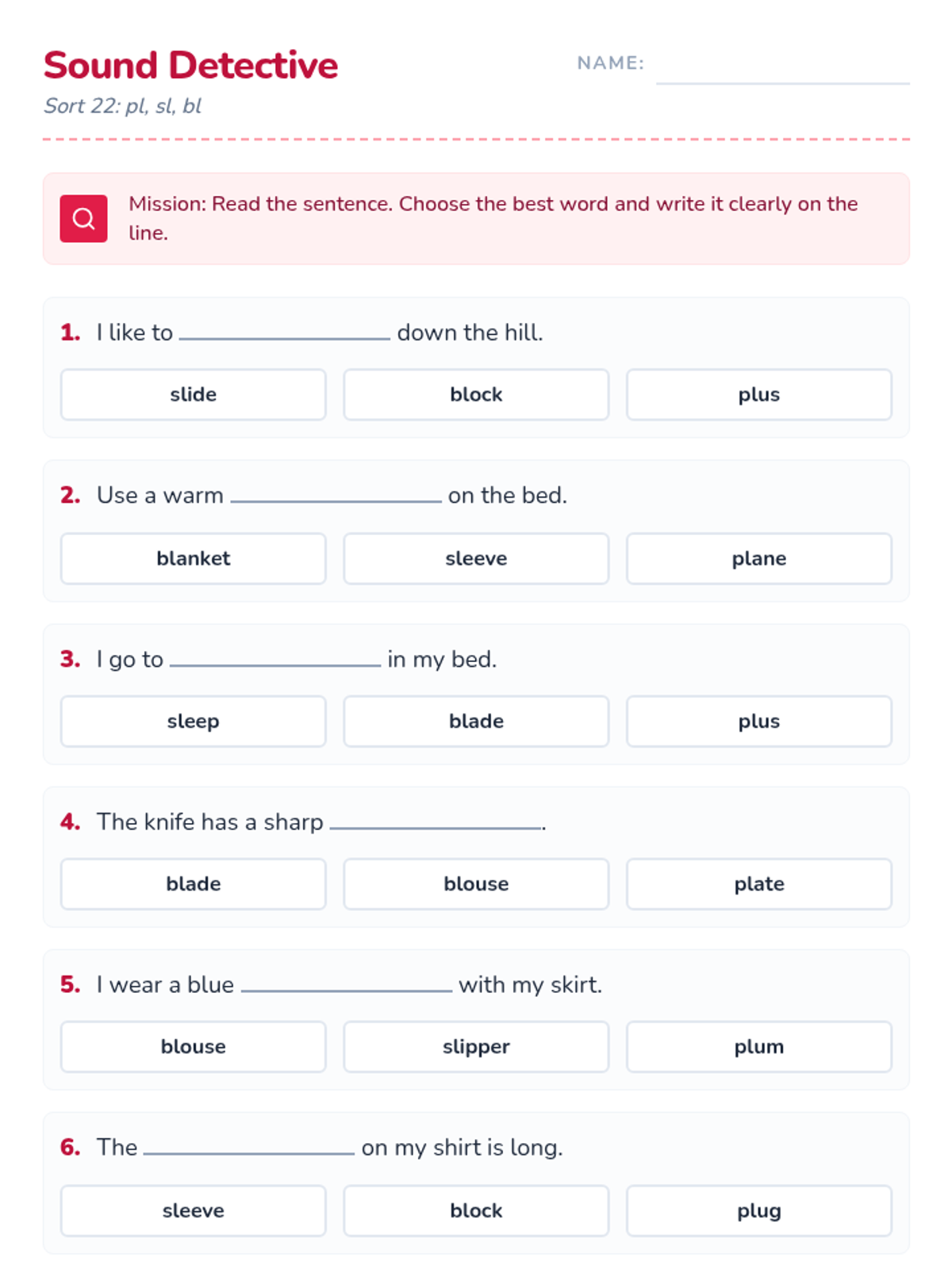
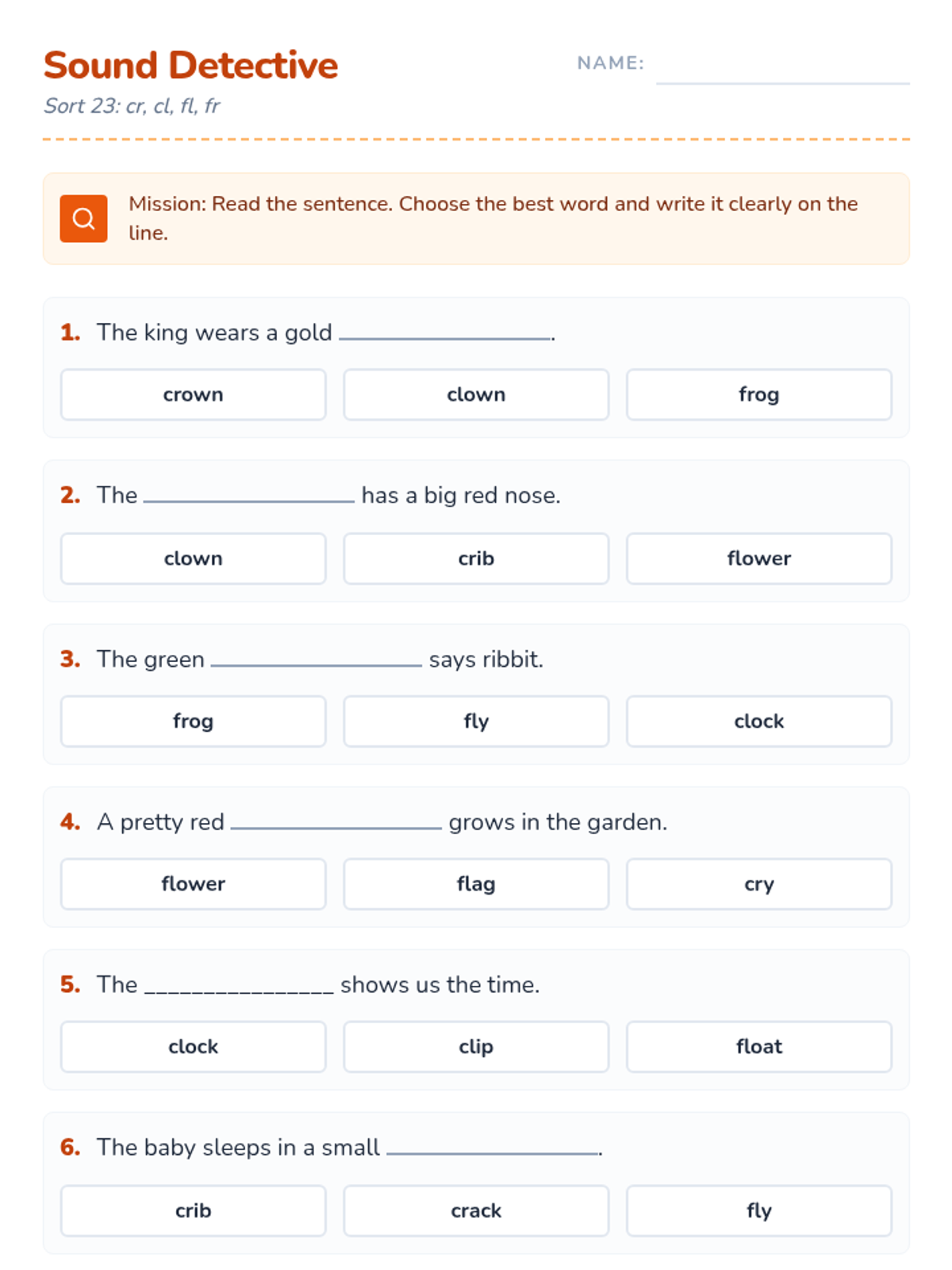
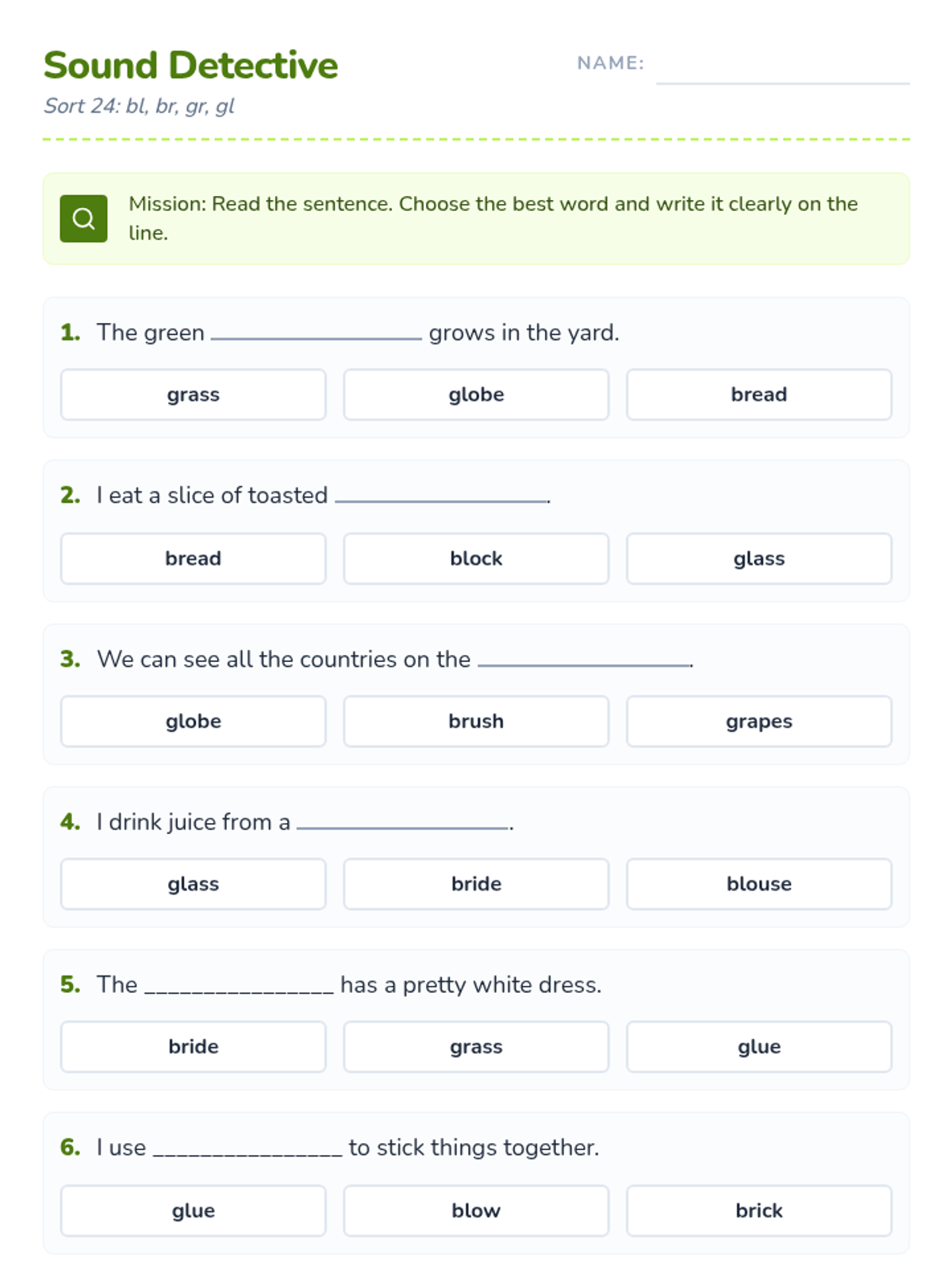
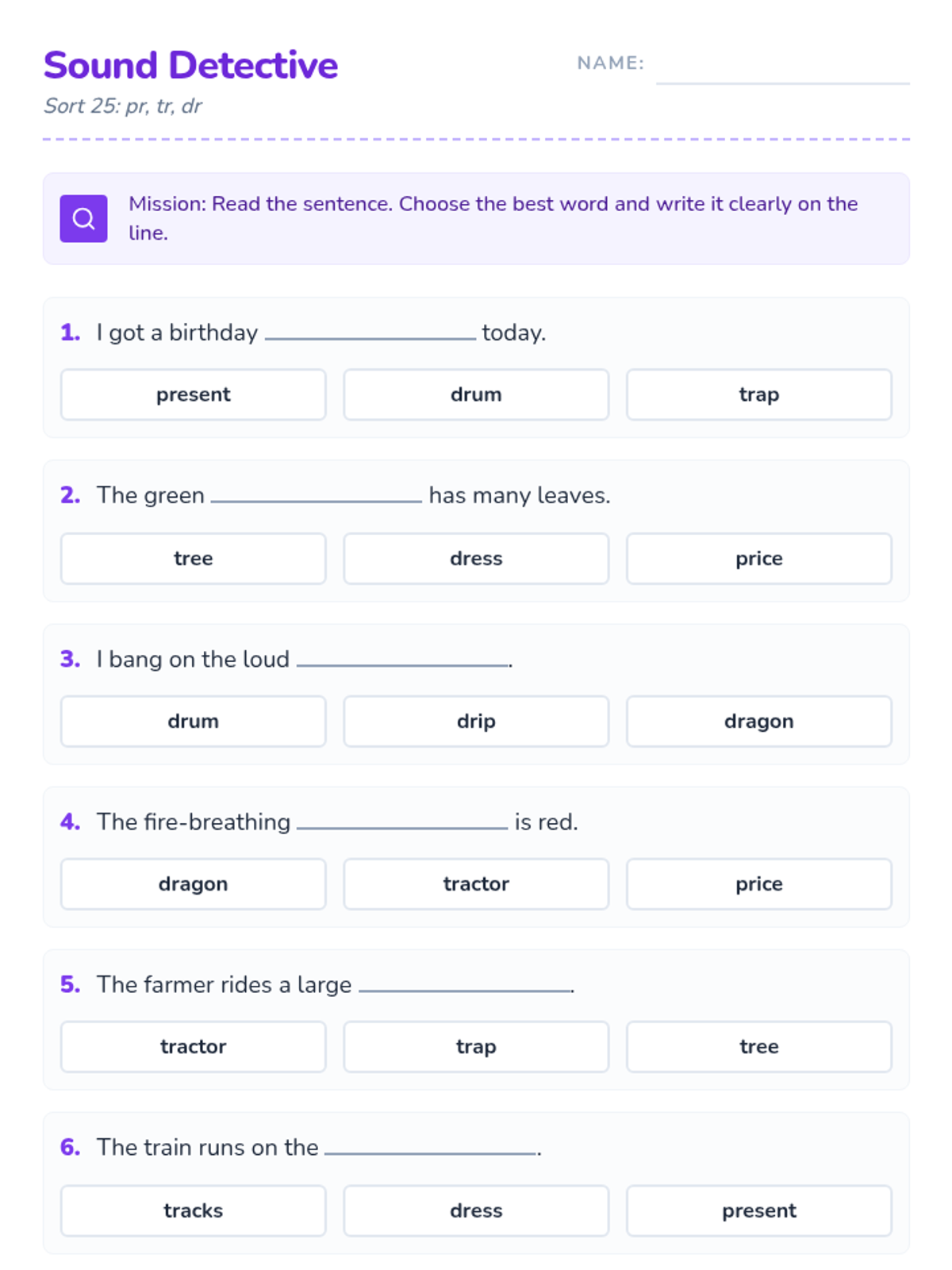
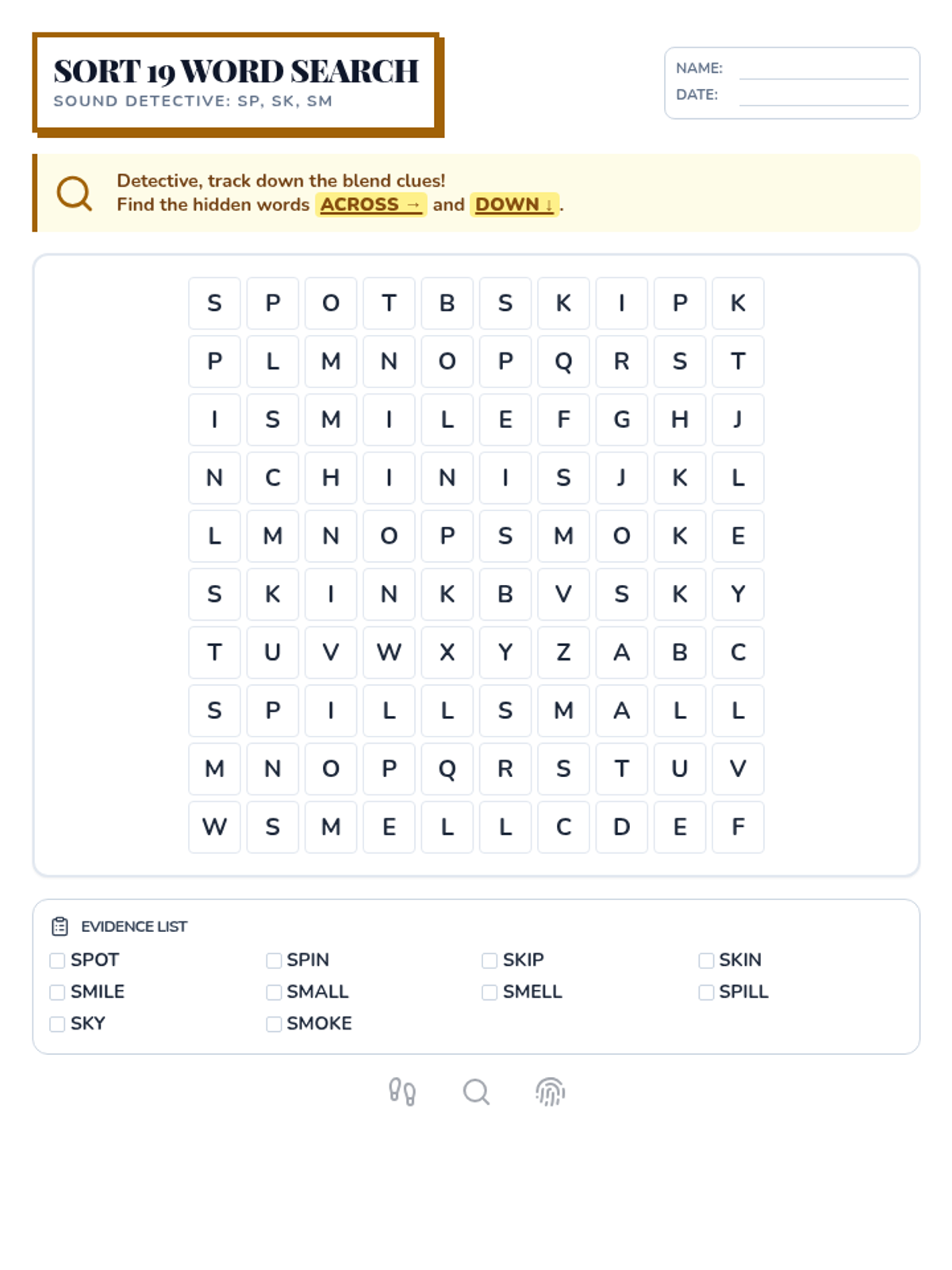
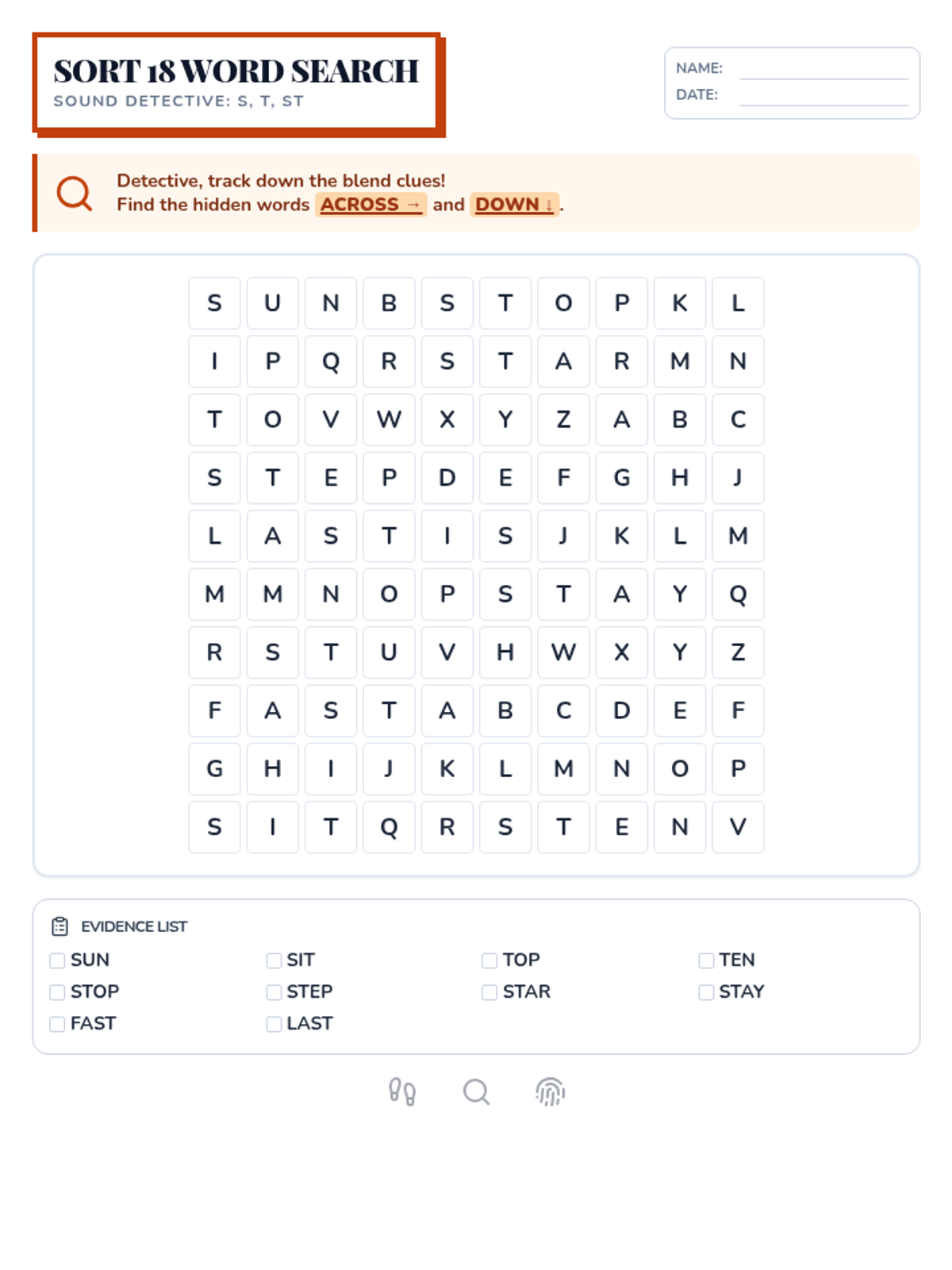
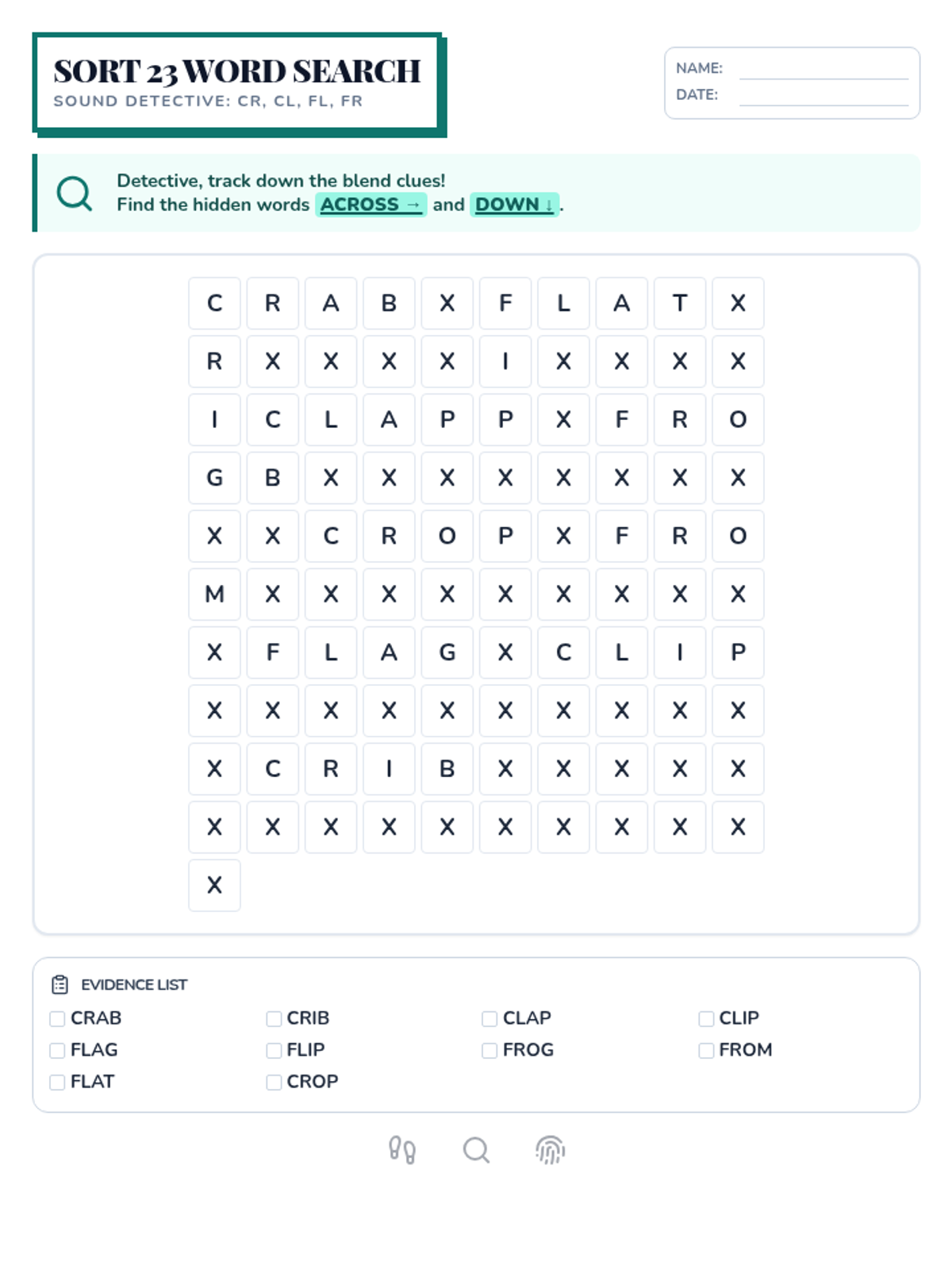
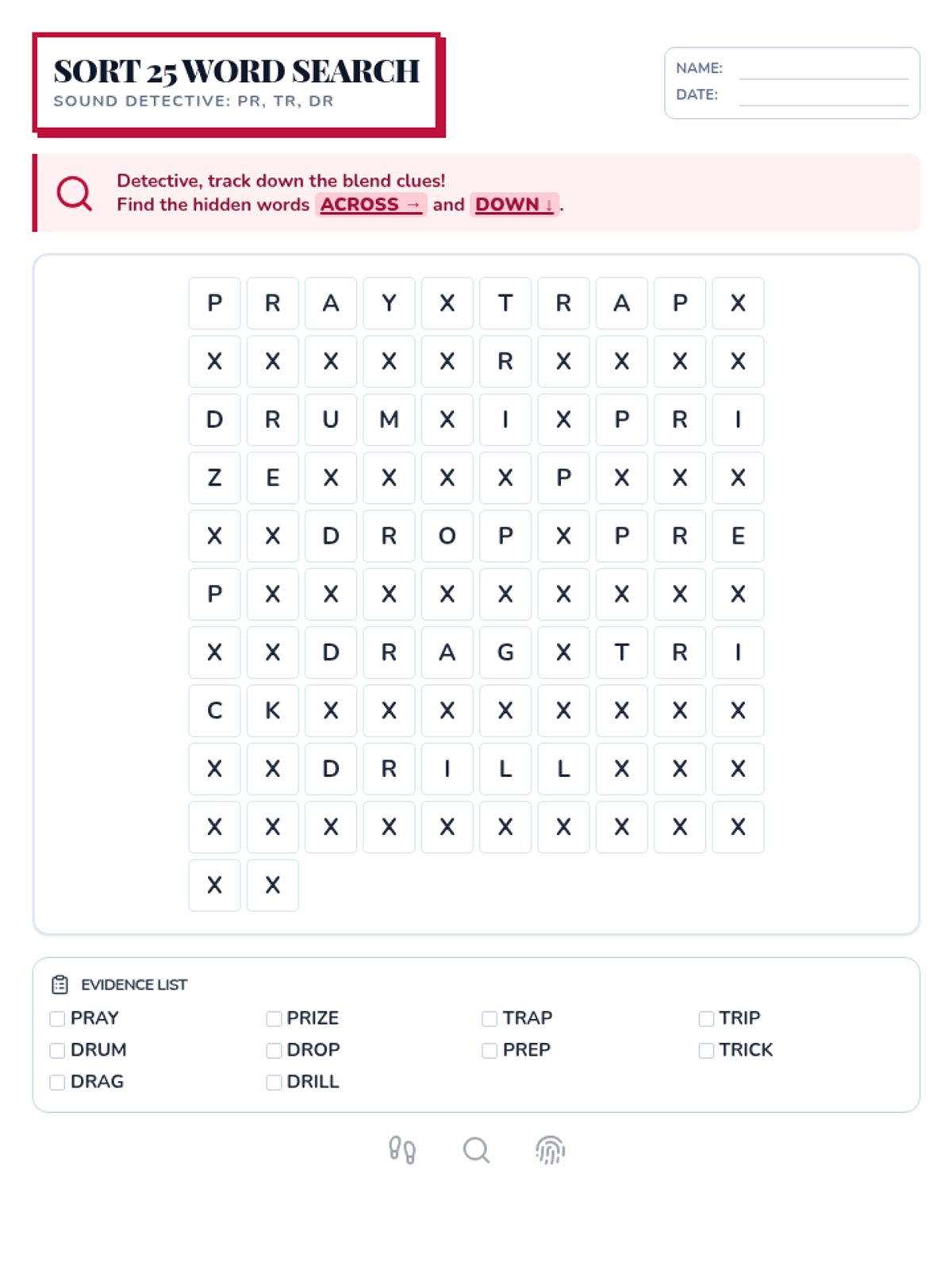
Mastering complex clusters where two sounds slide together, focusing on s-blends, l-blends, and r-blends.
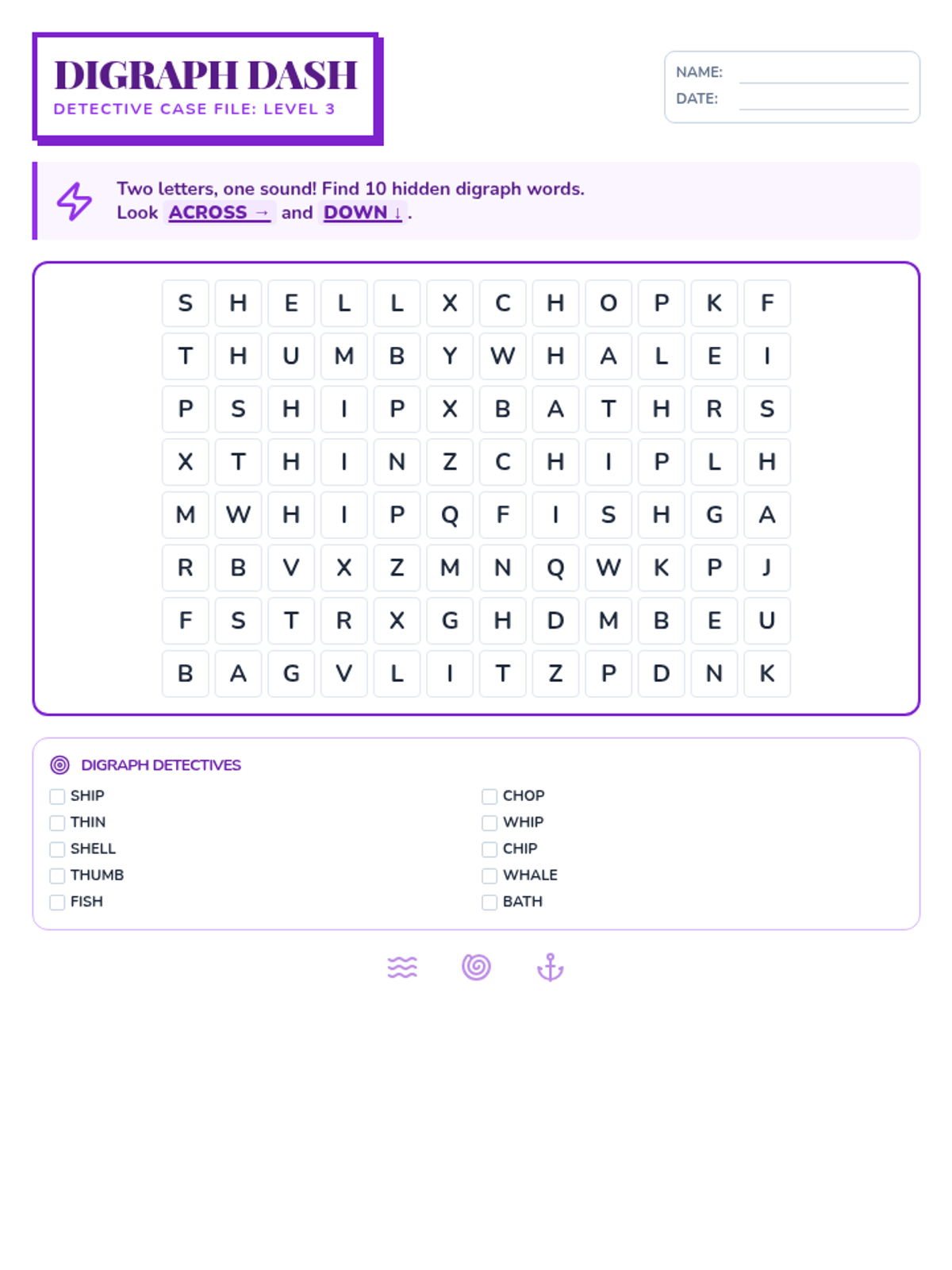
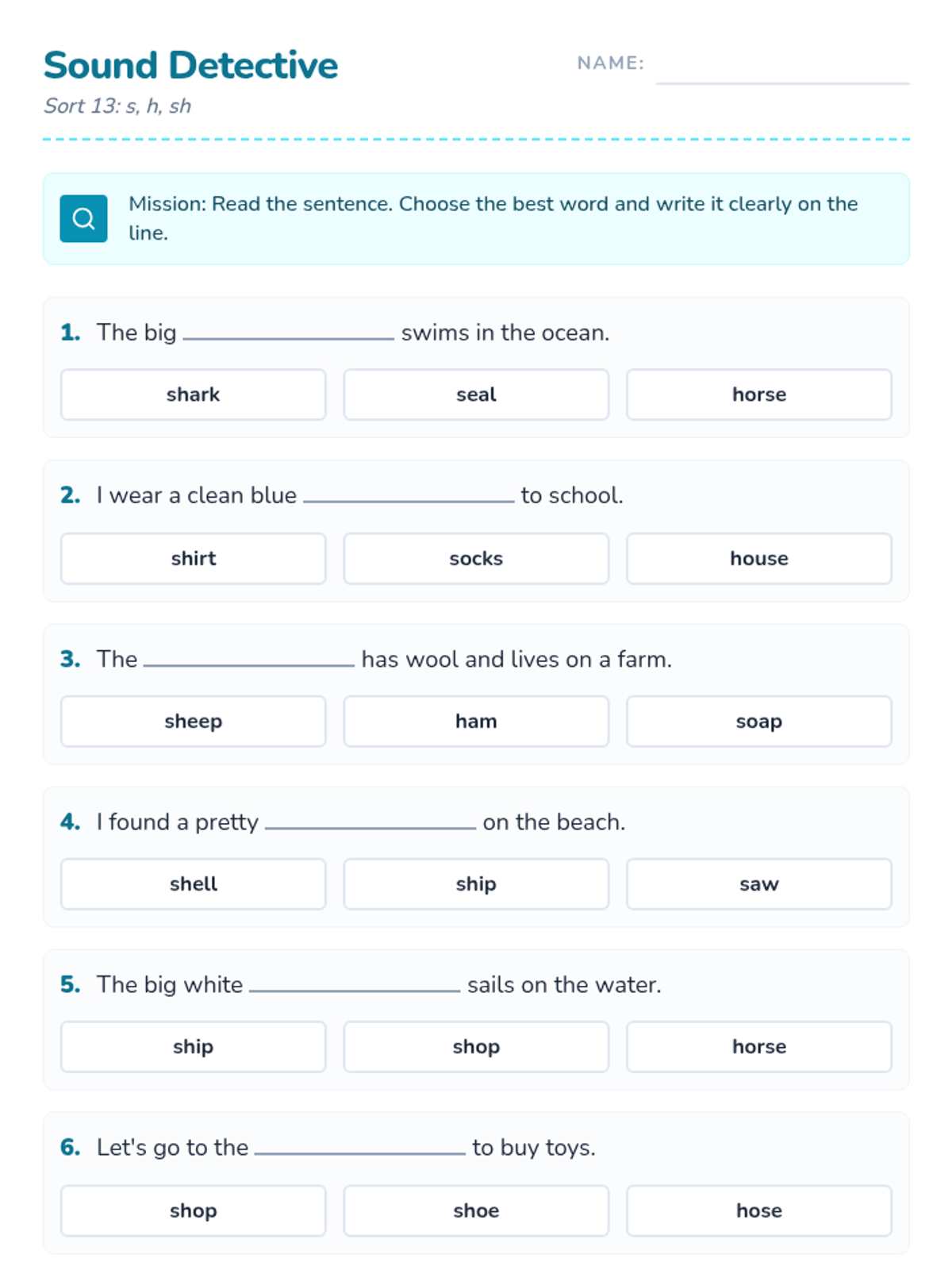
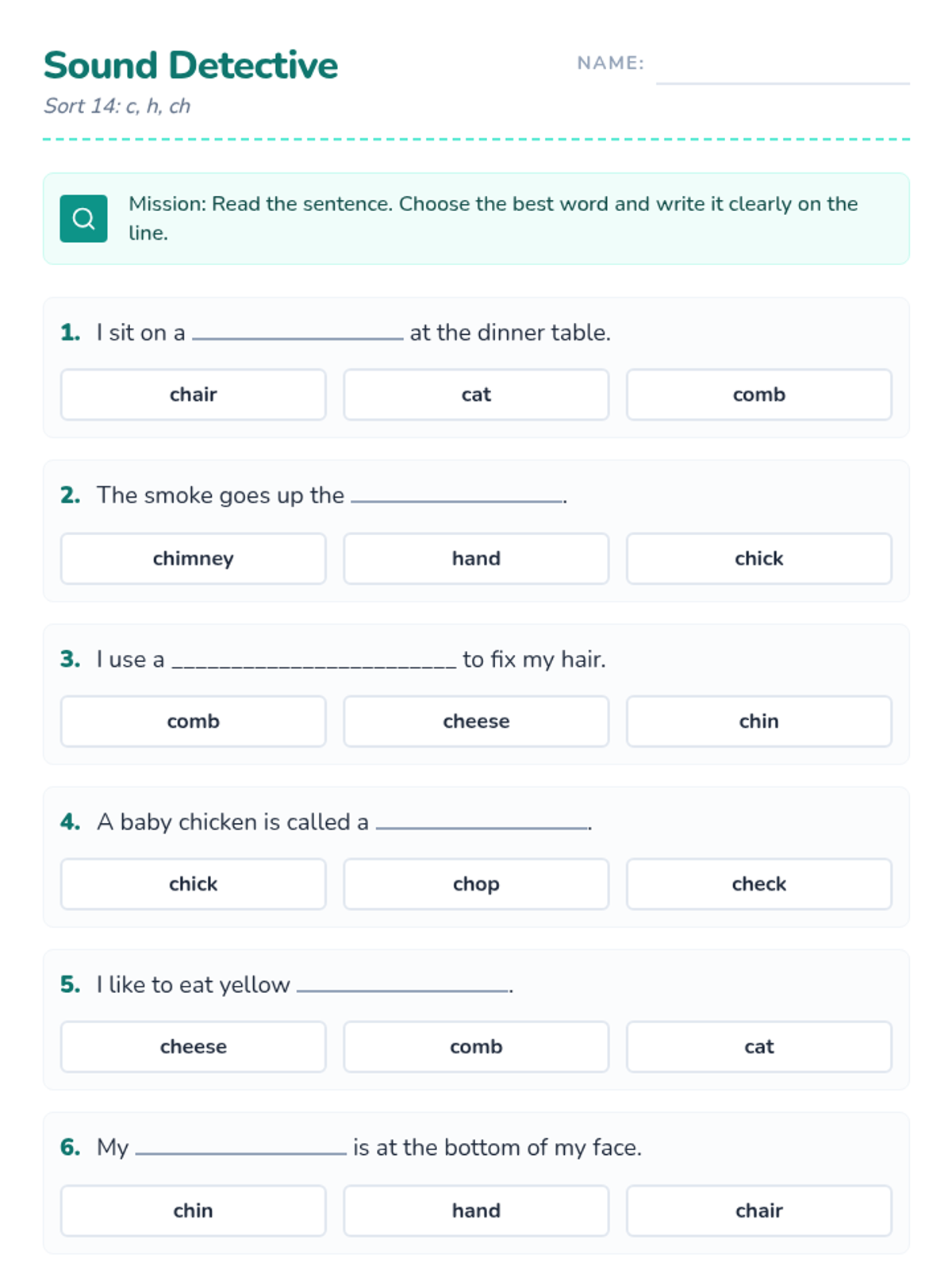
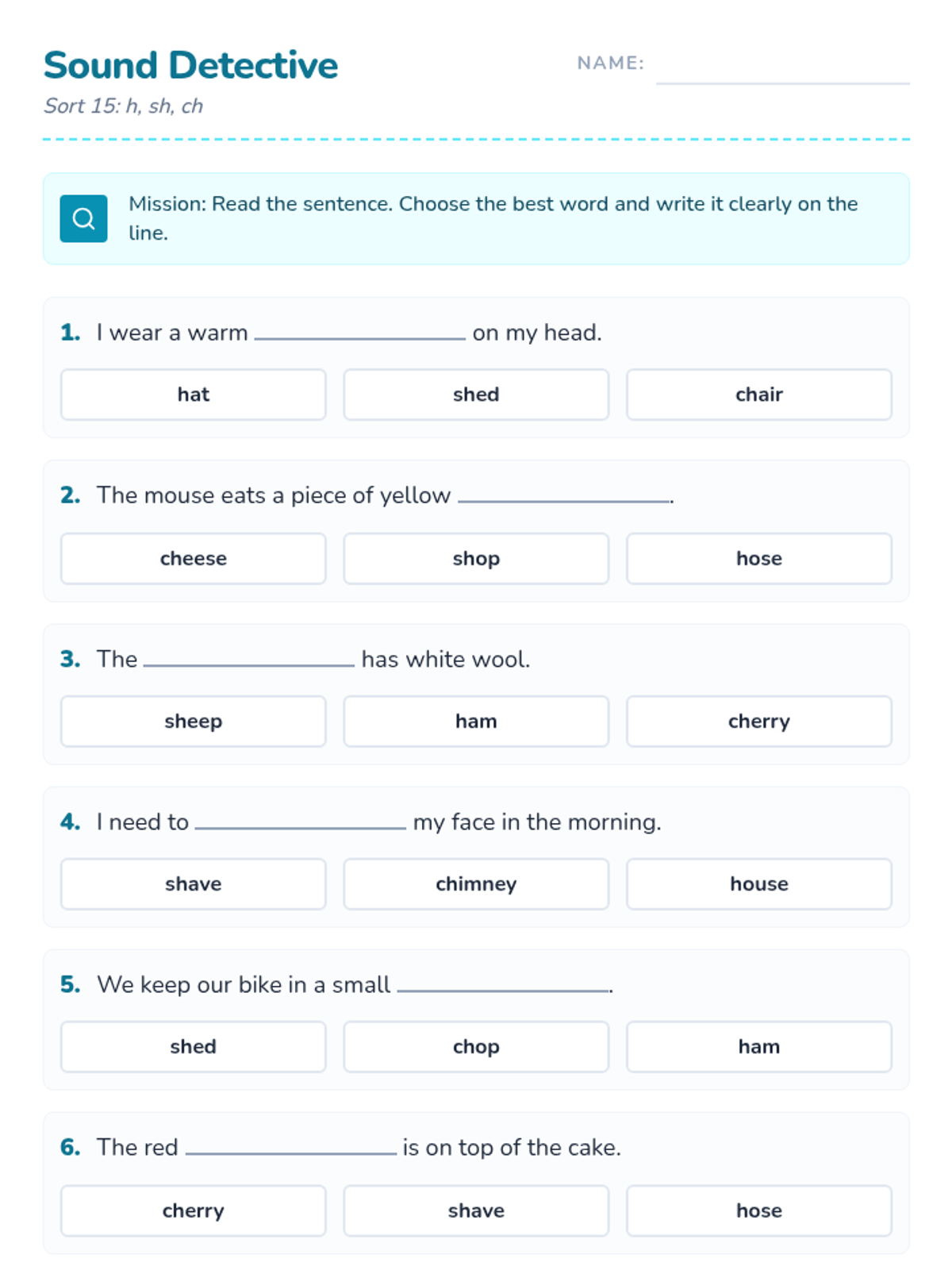
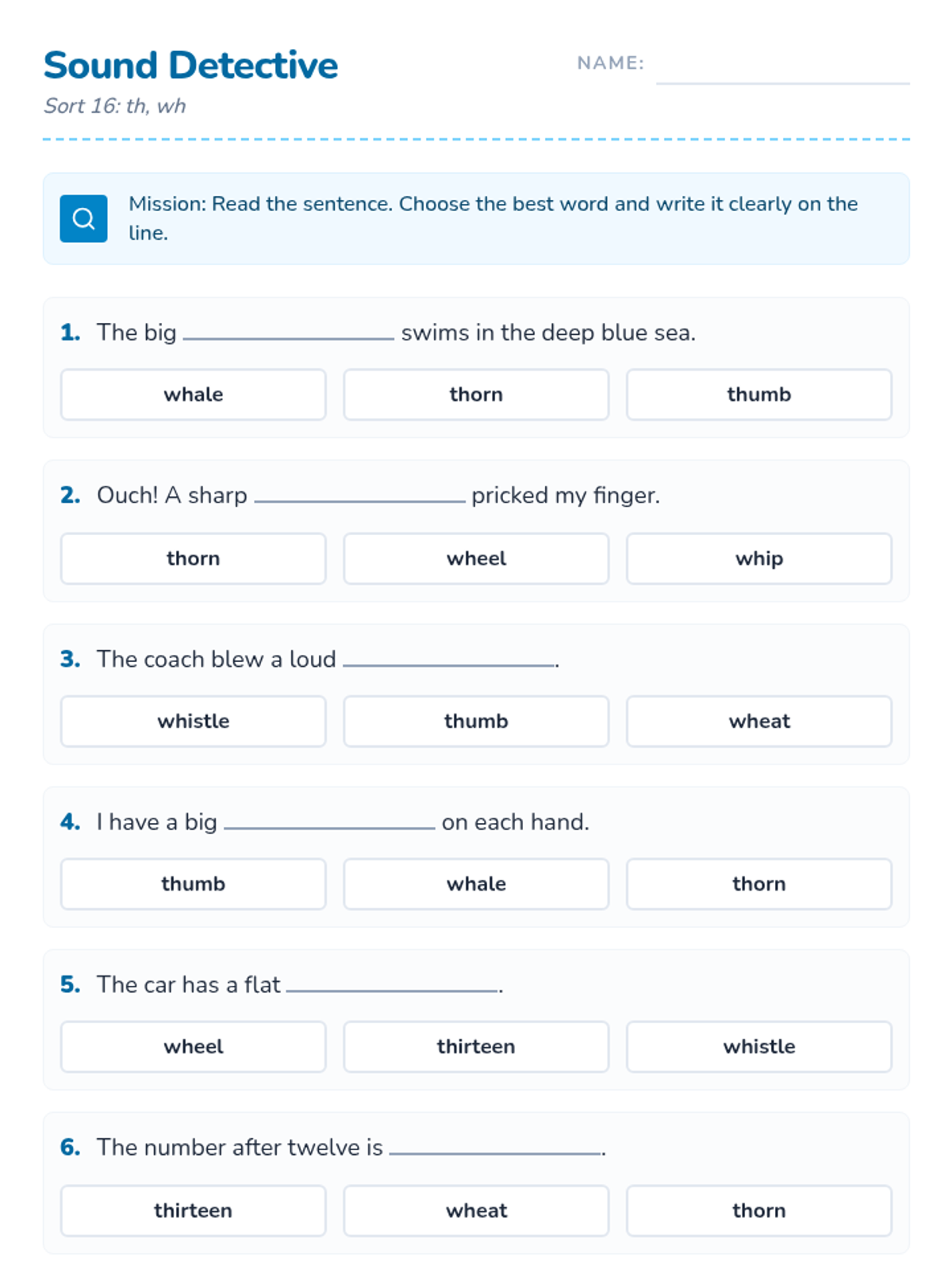
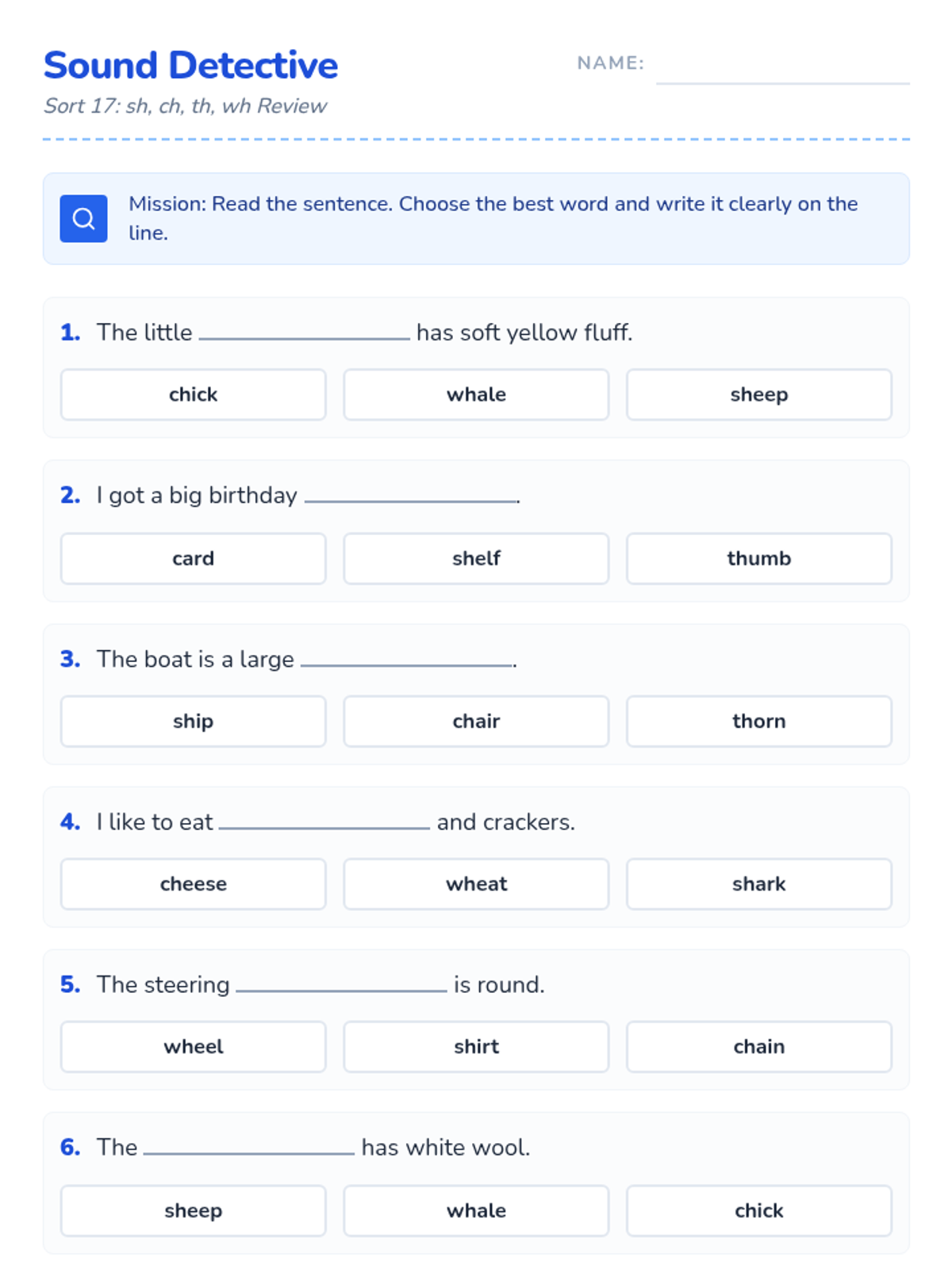
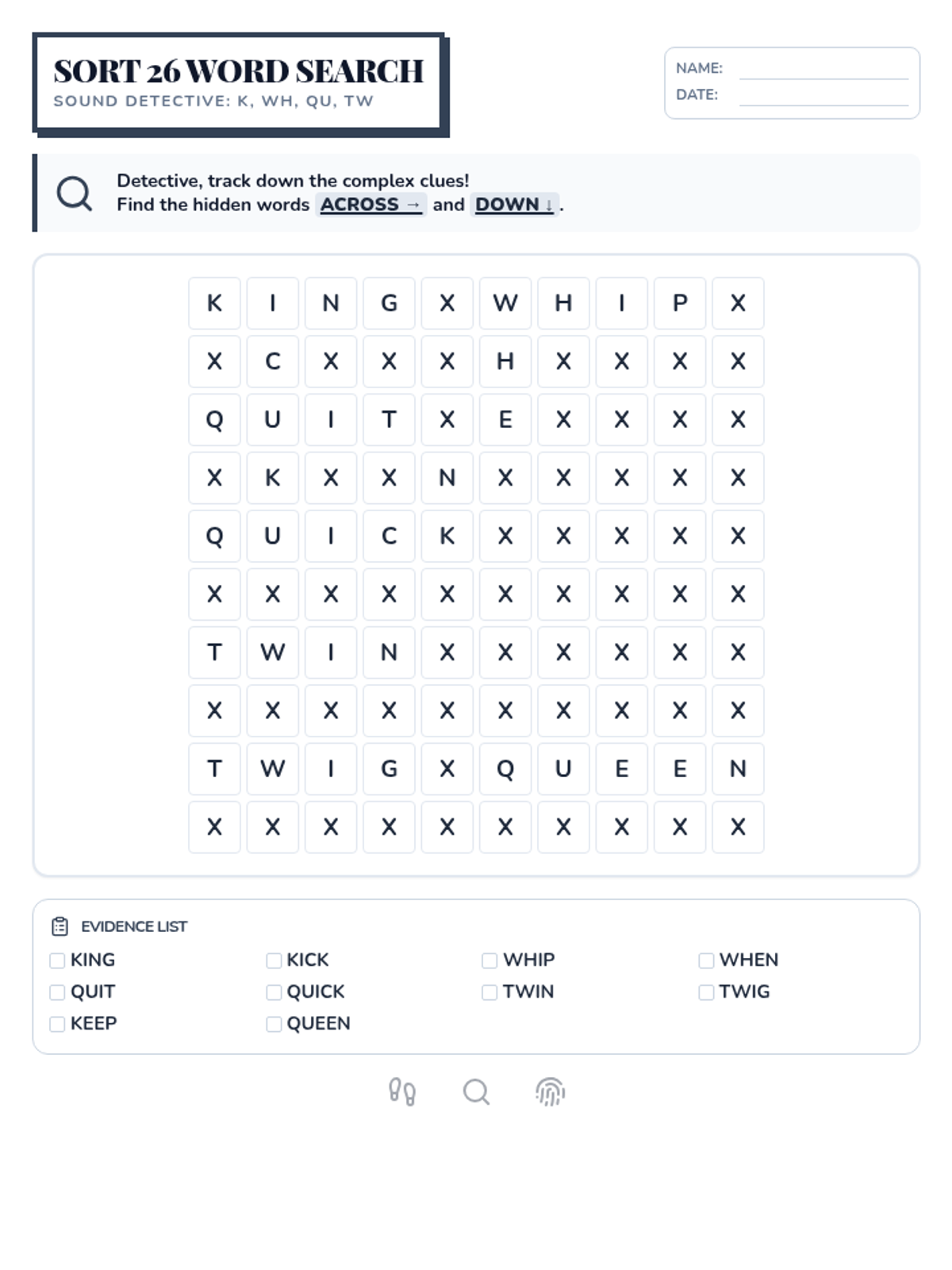
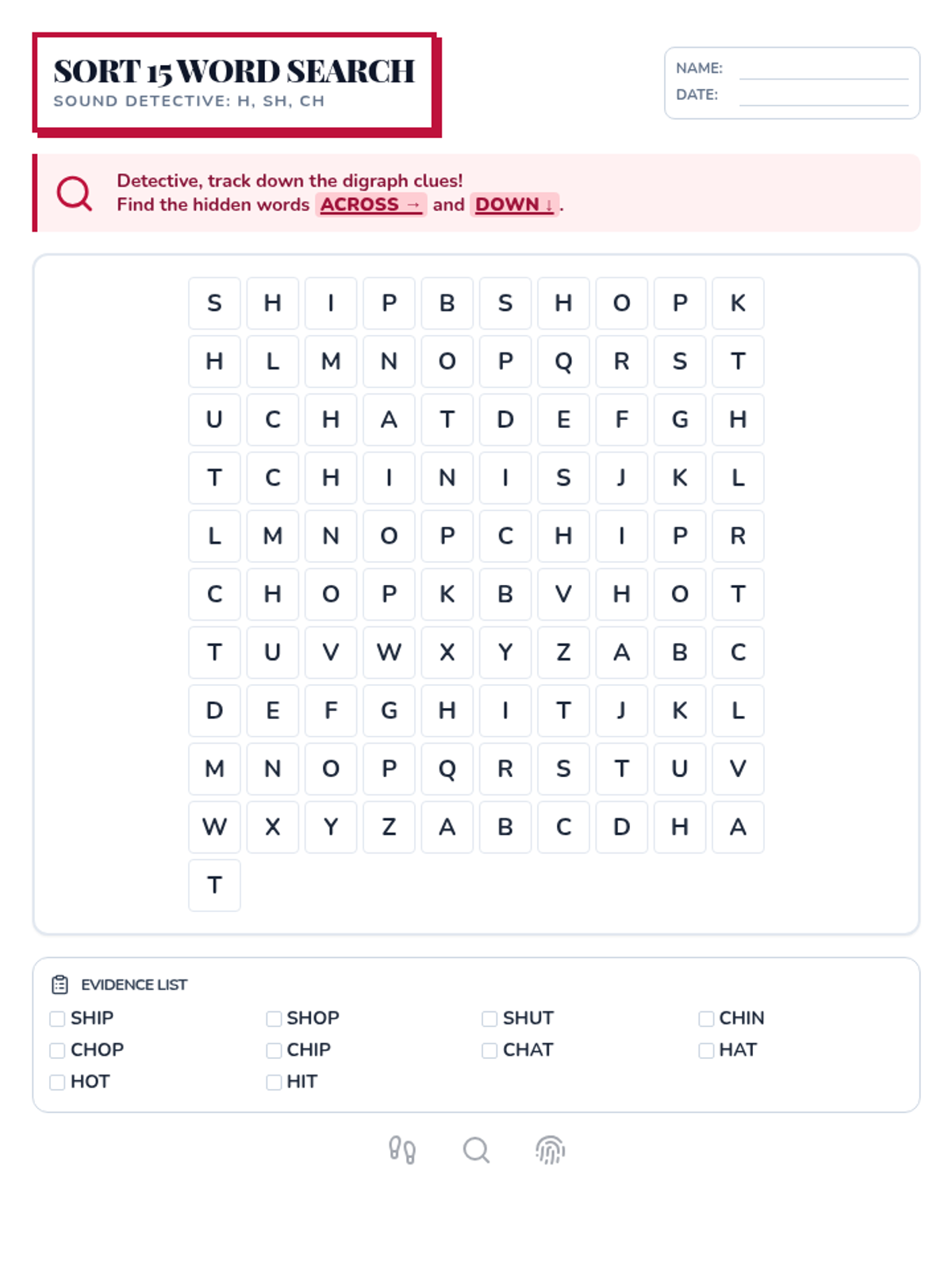
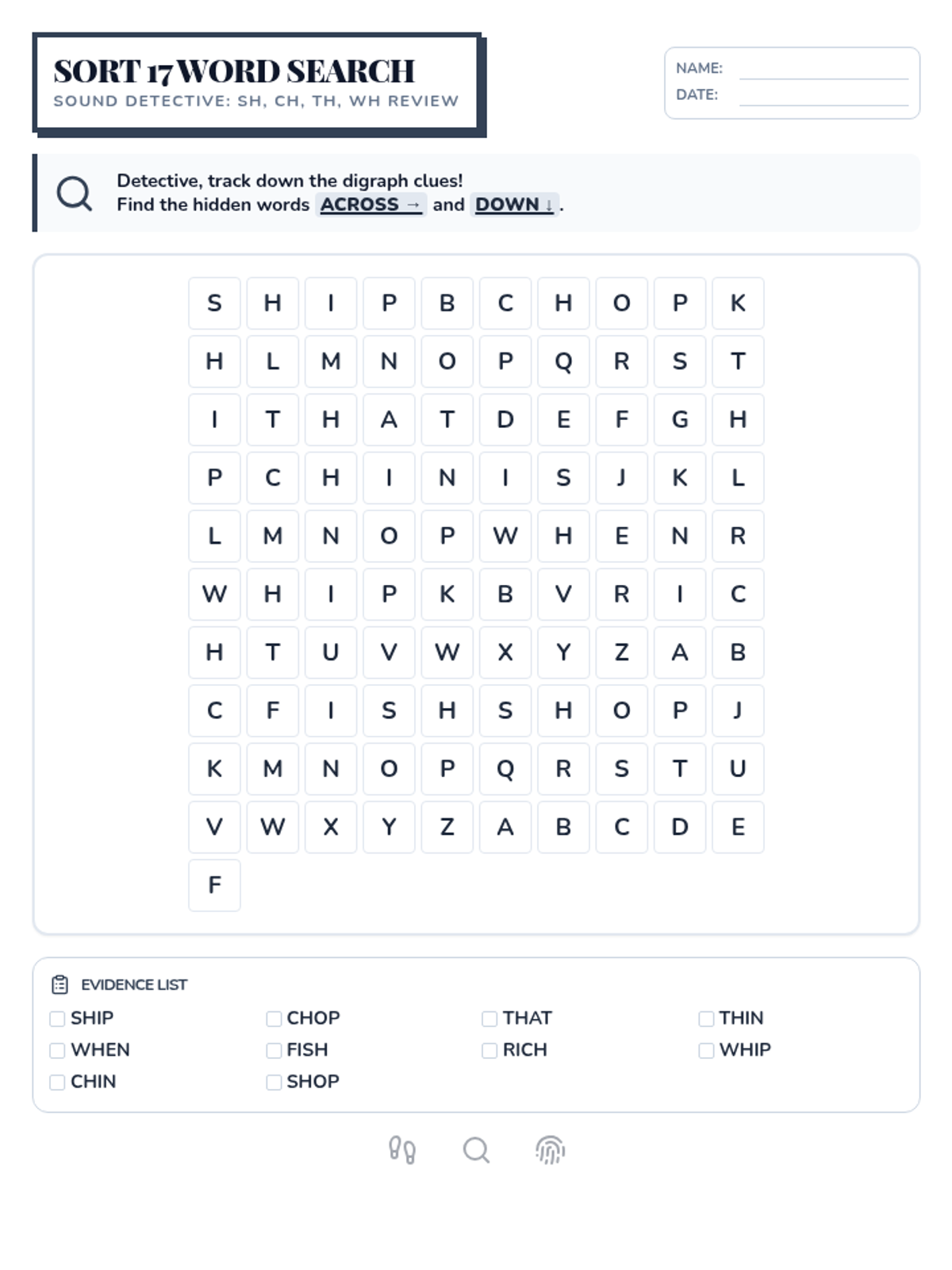
Investigations into special two-letter combinations that create unique single sounds, featuring sh, ch, th, and wh.
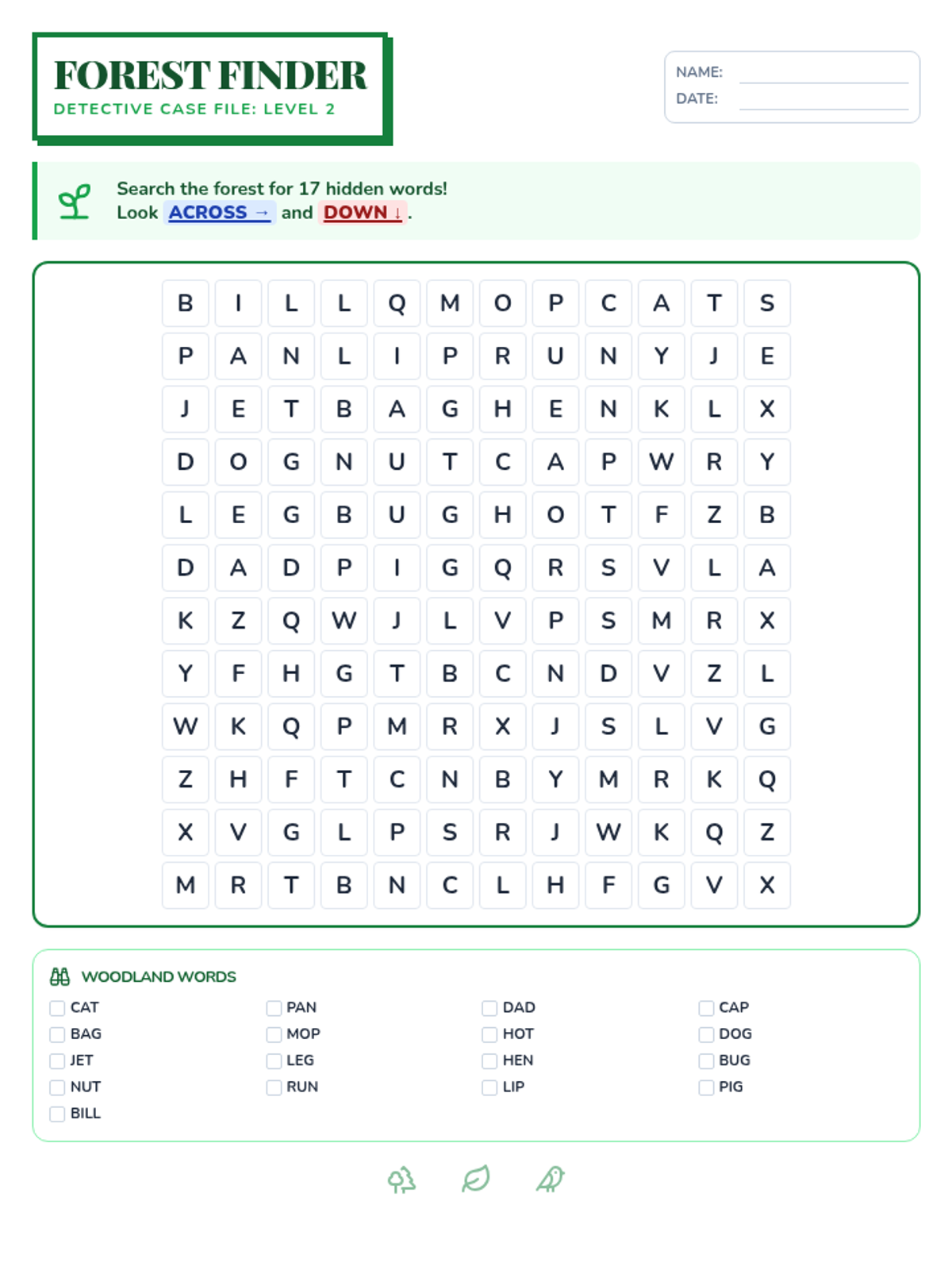
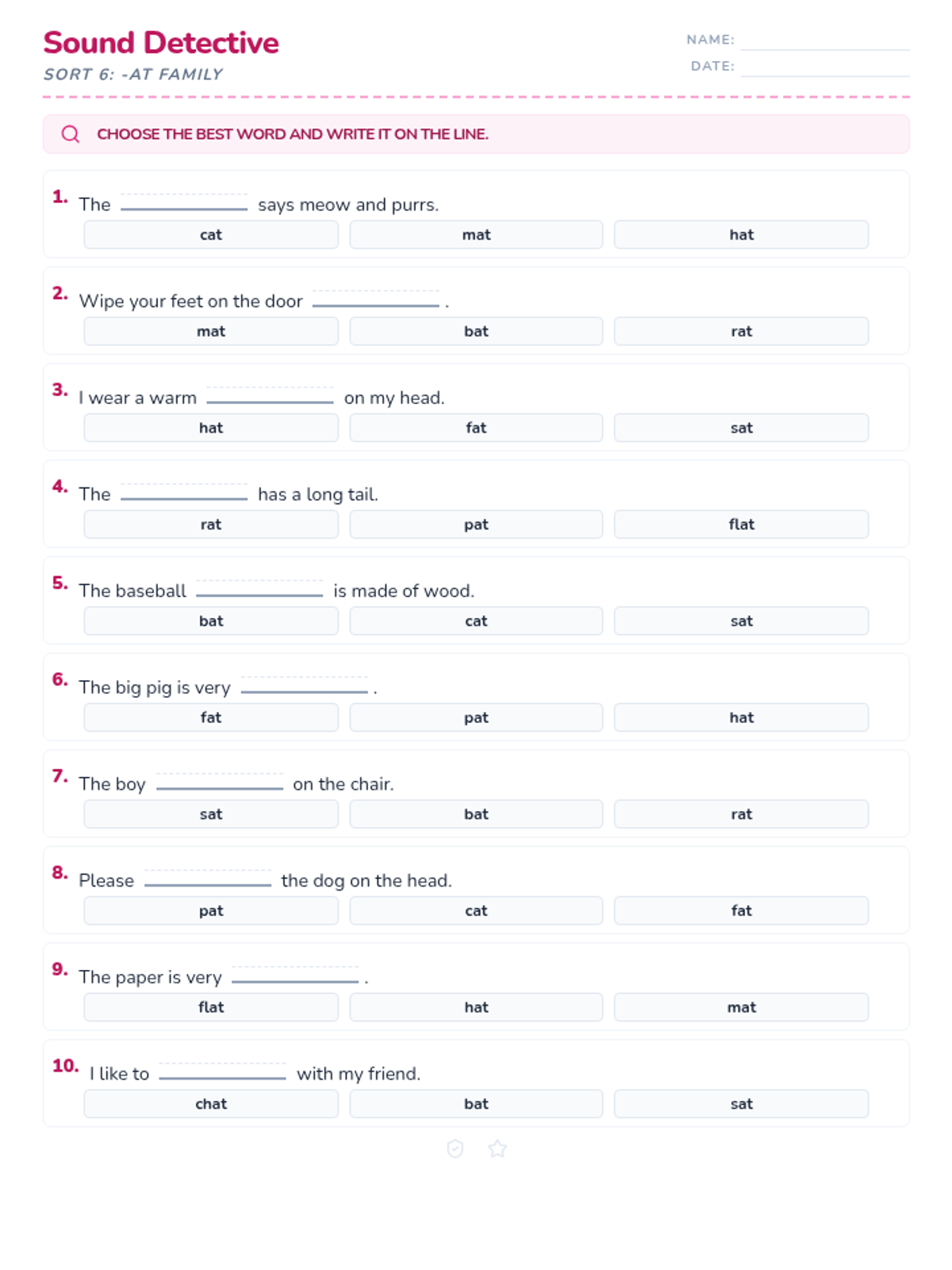
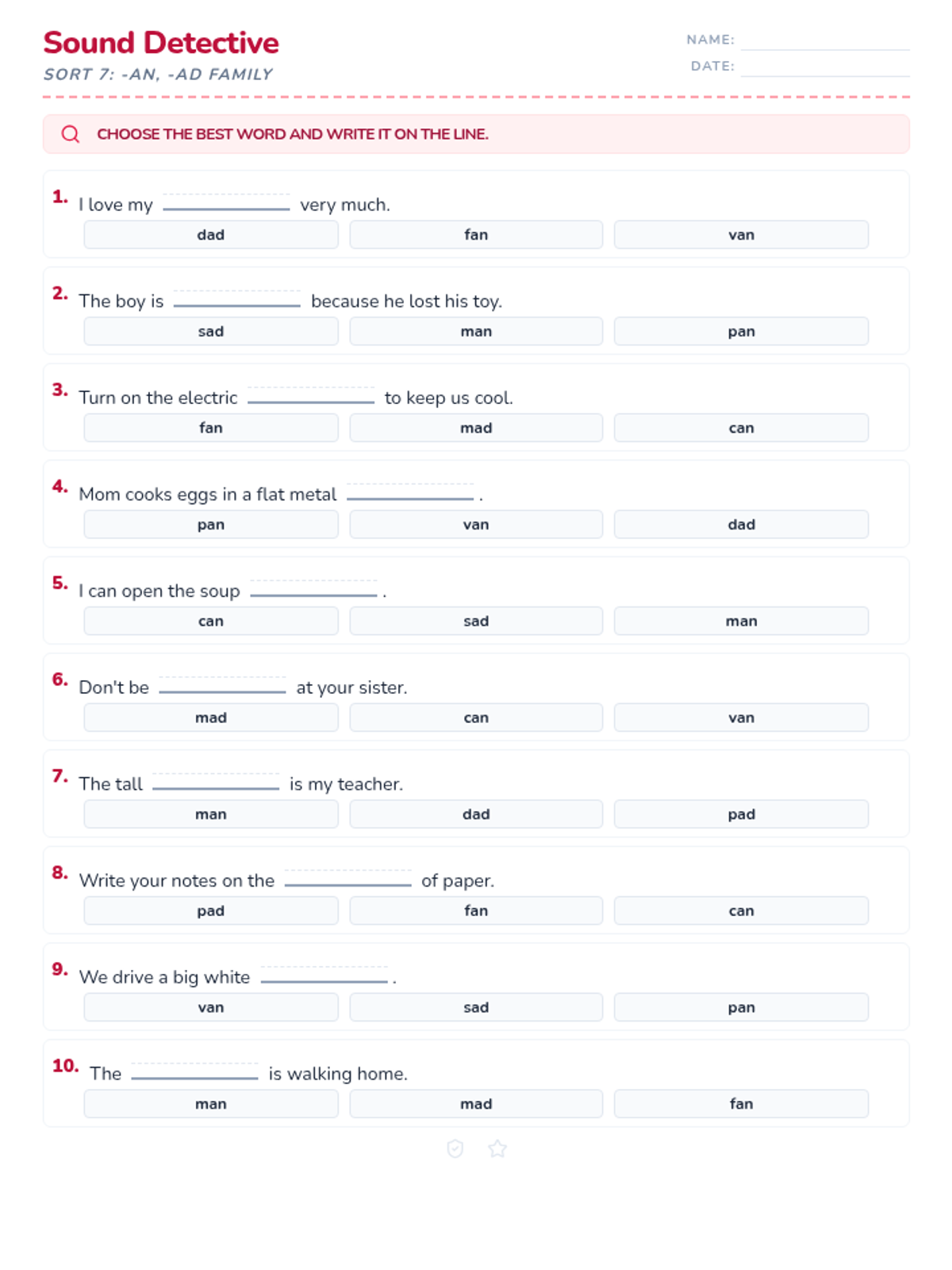
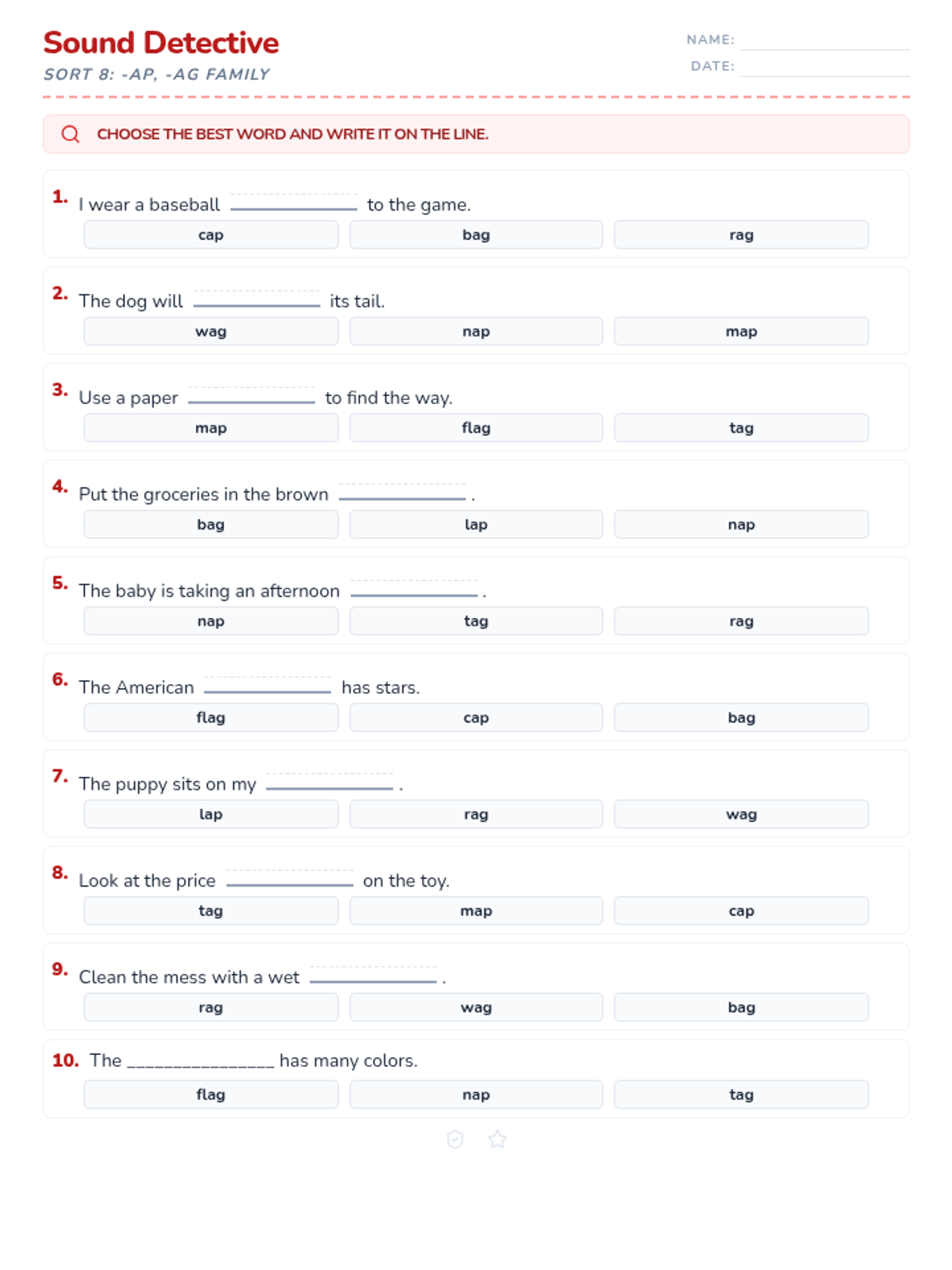
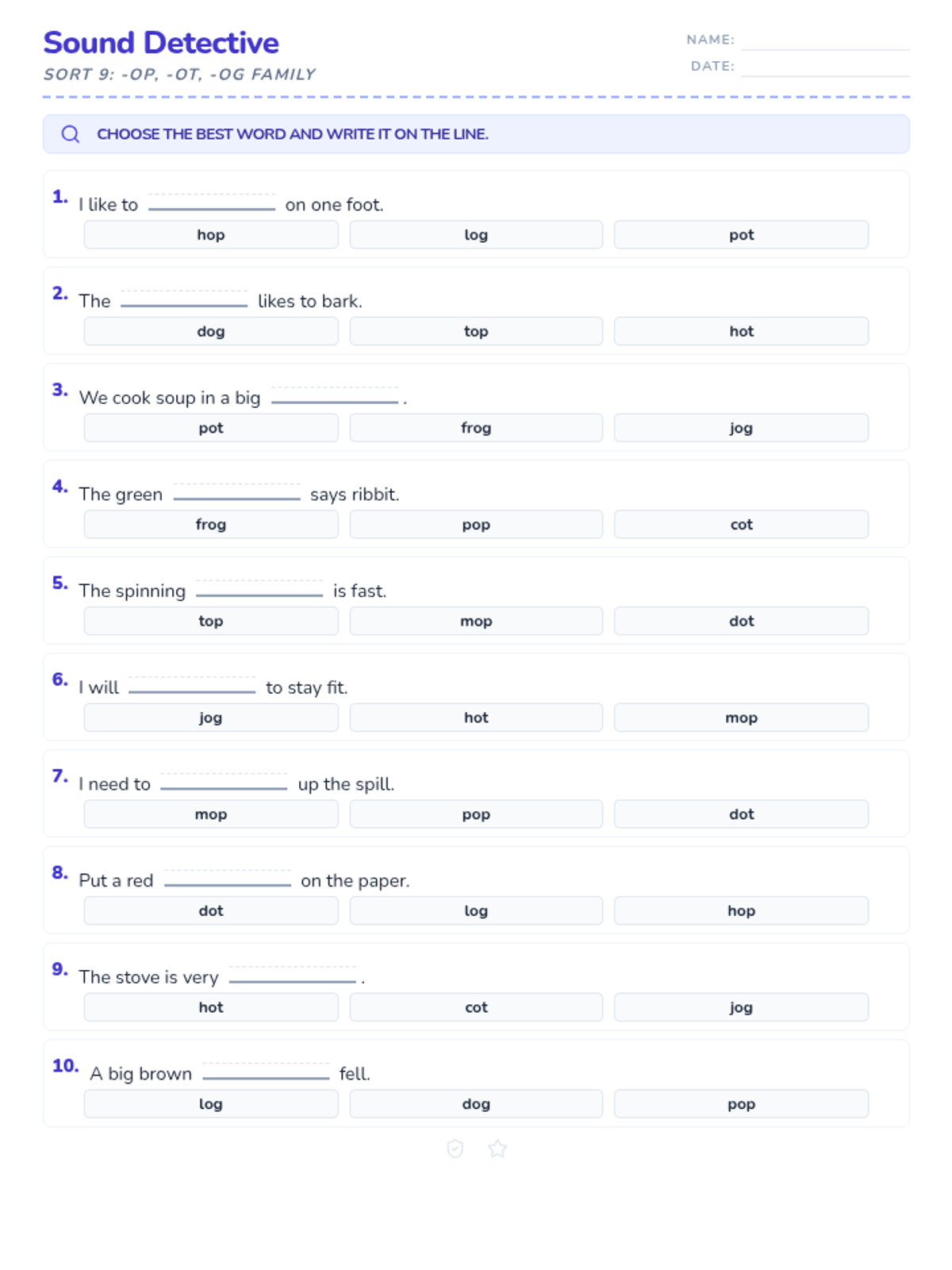
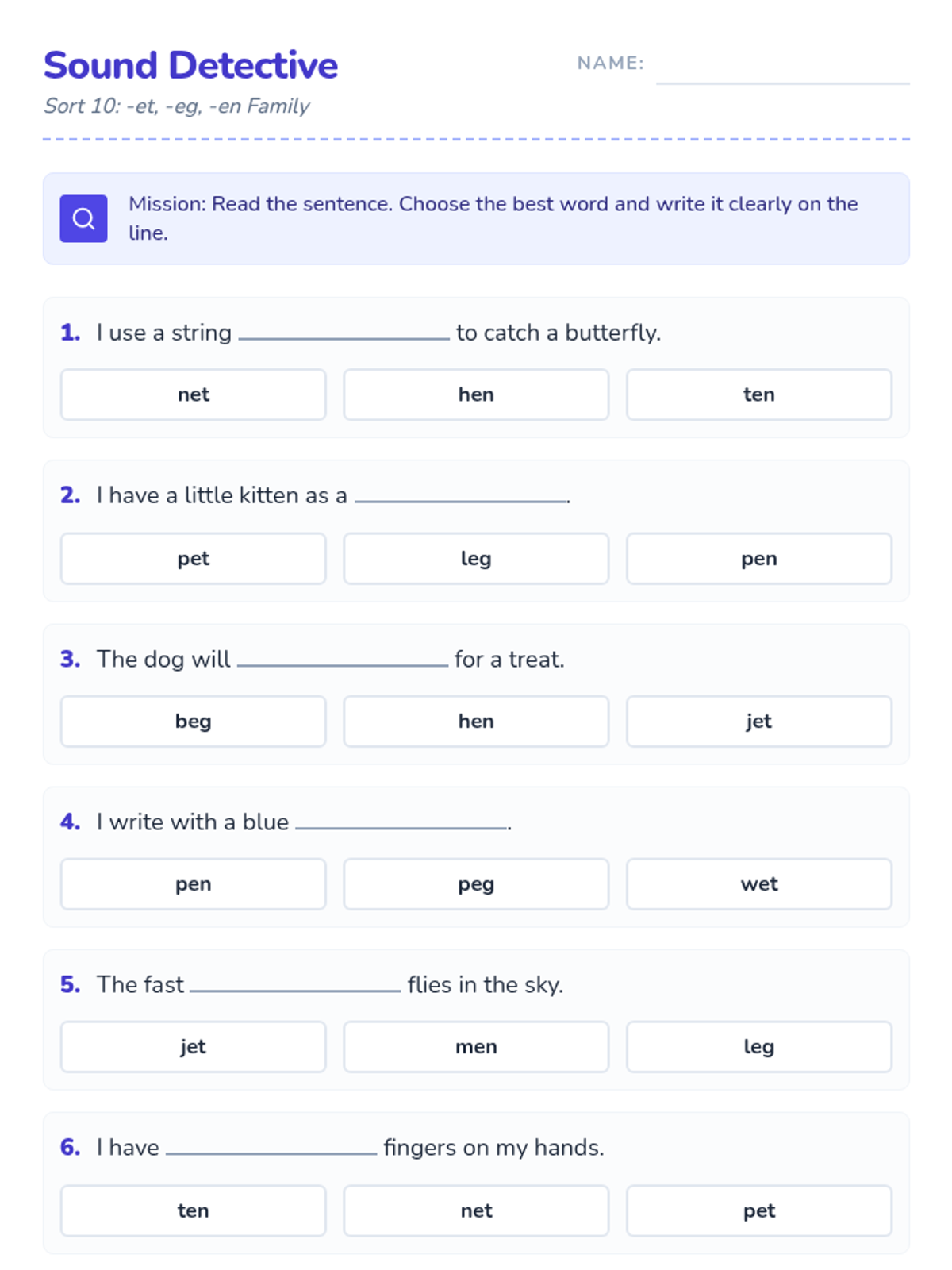
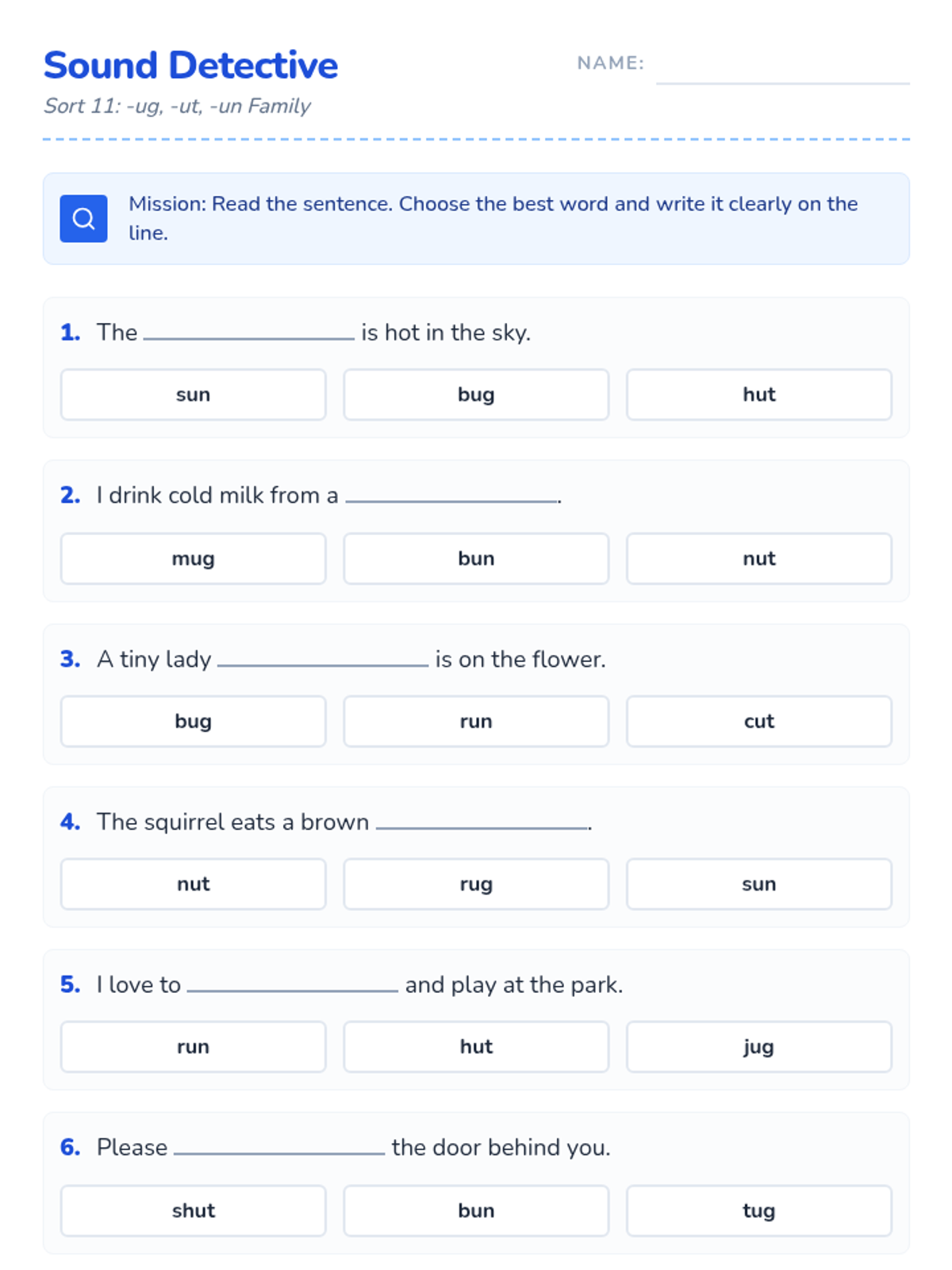
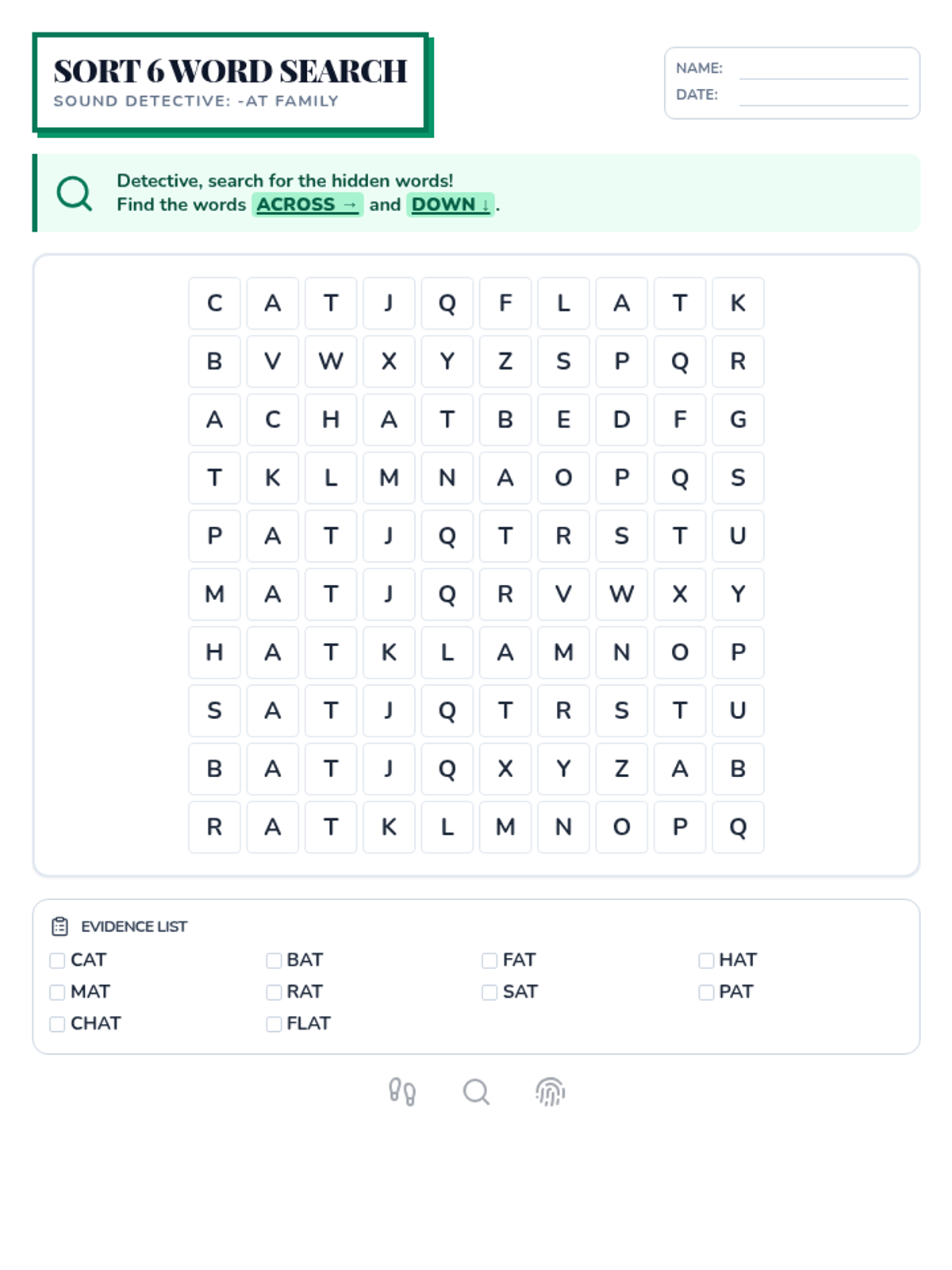
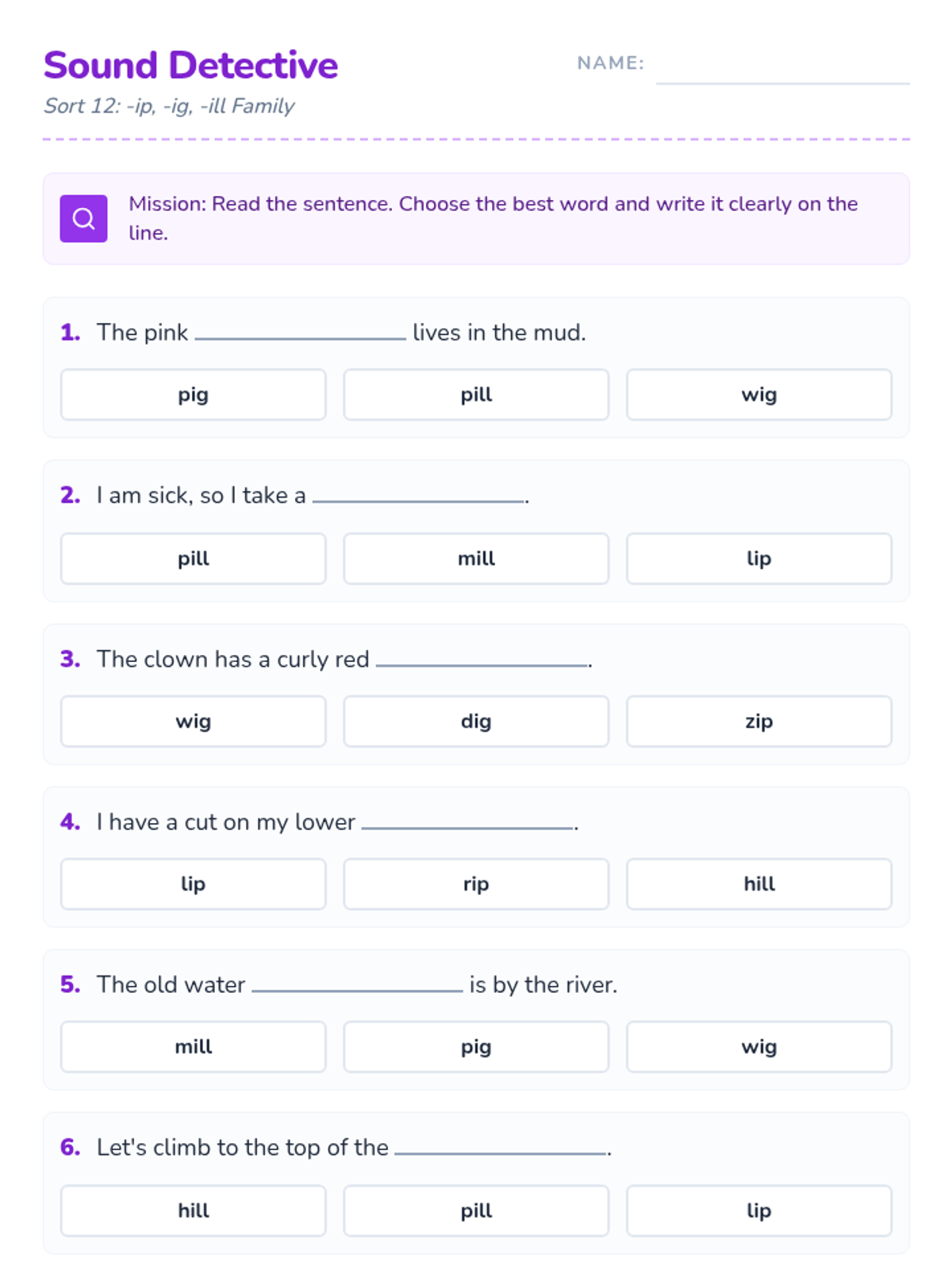
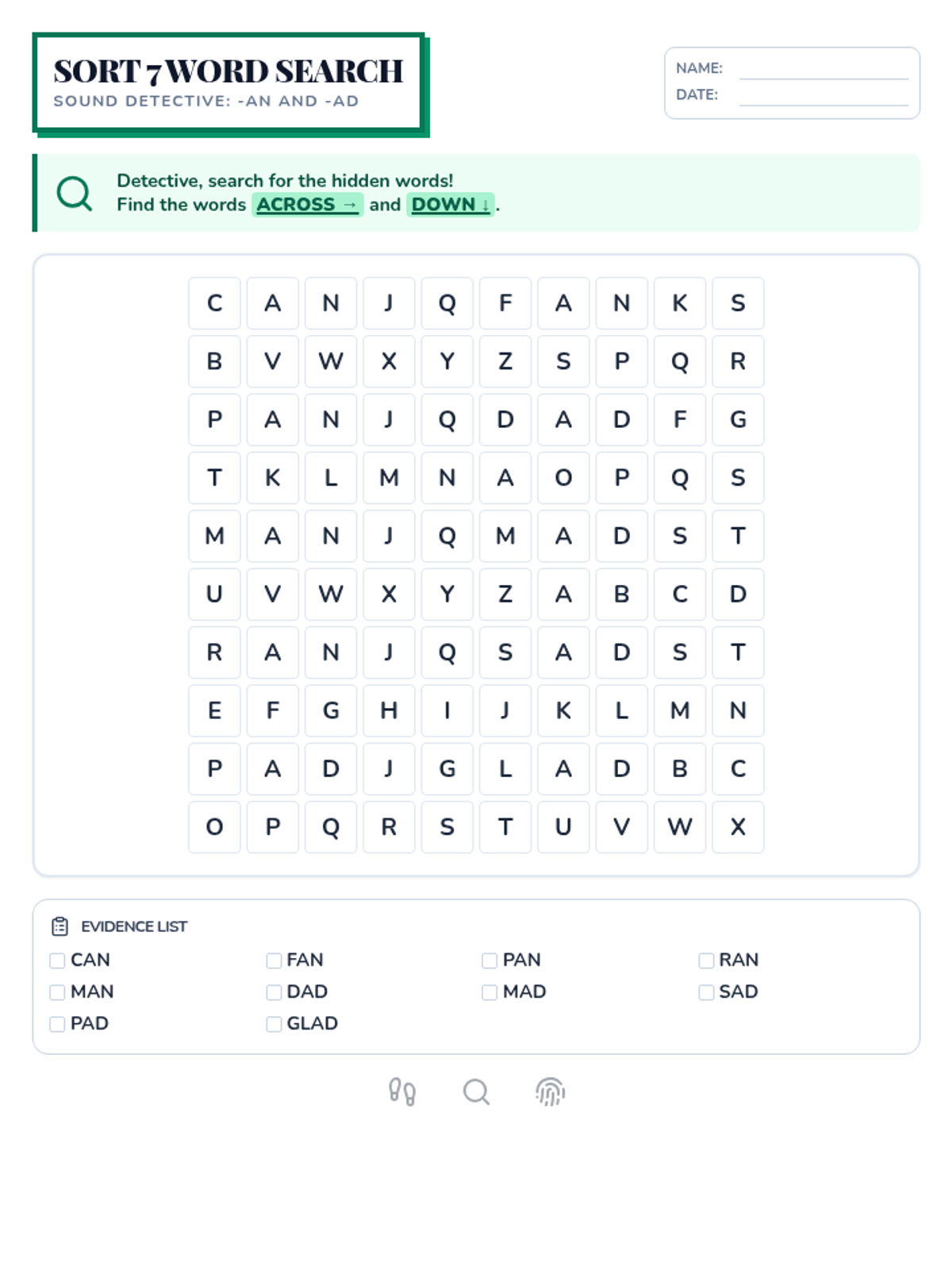
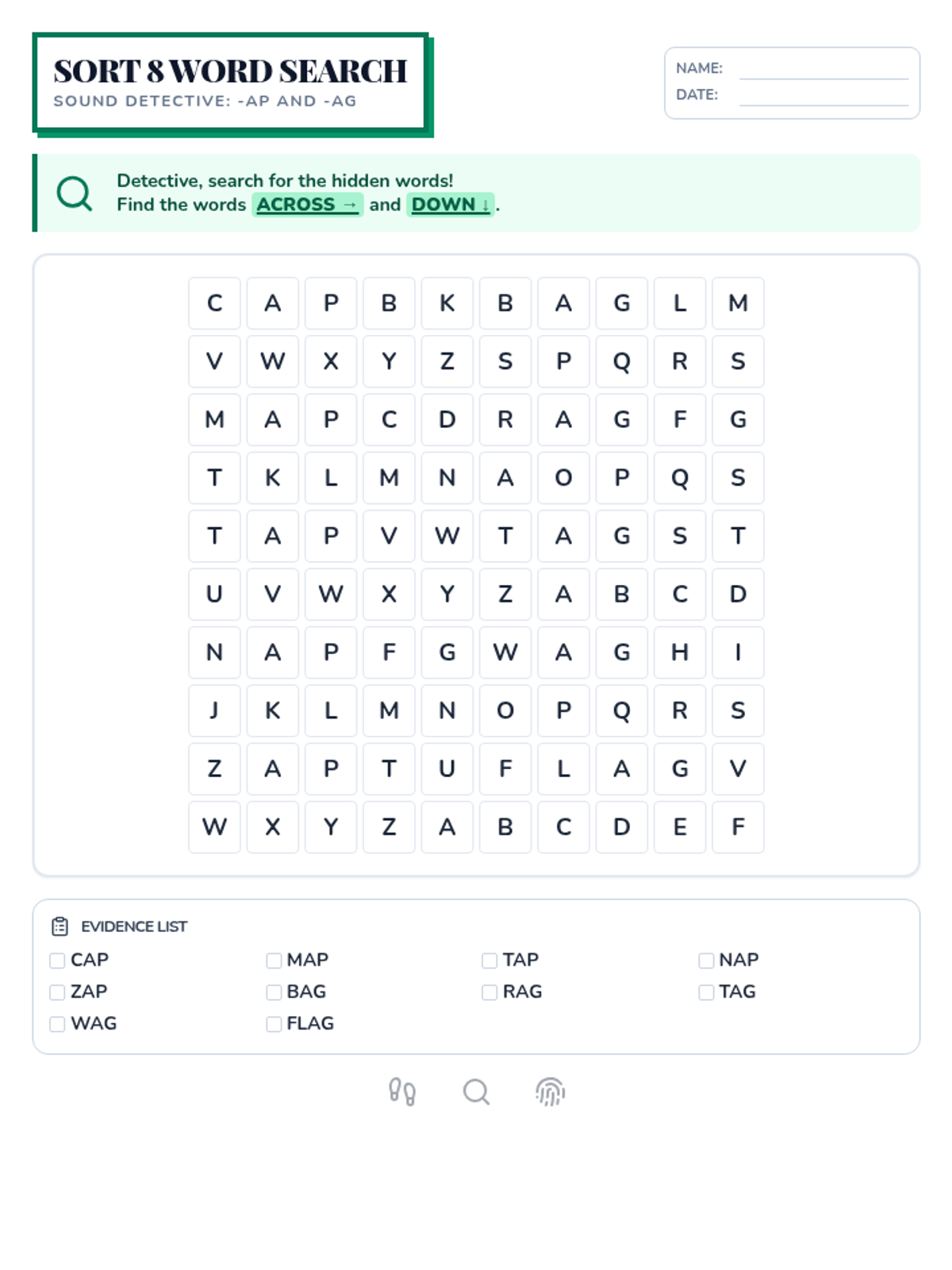
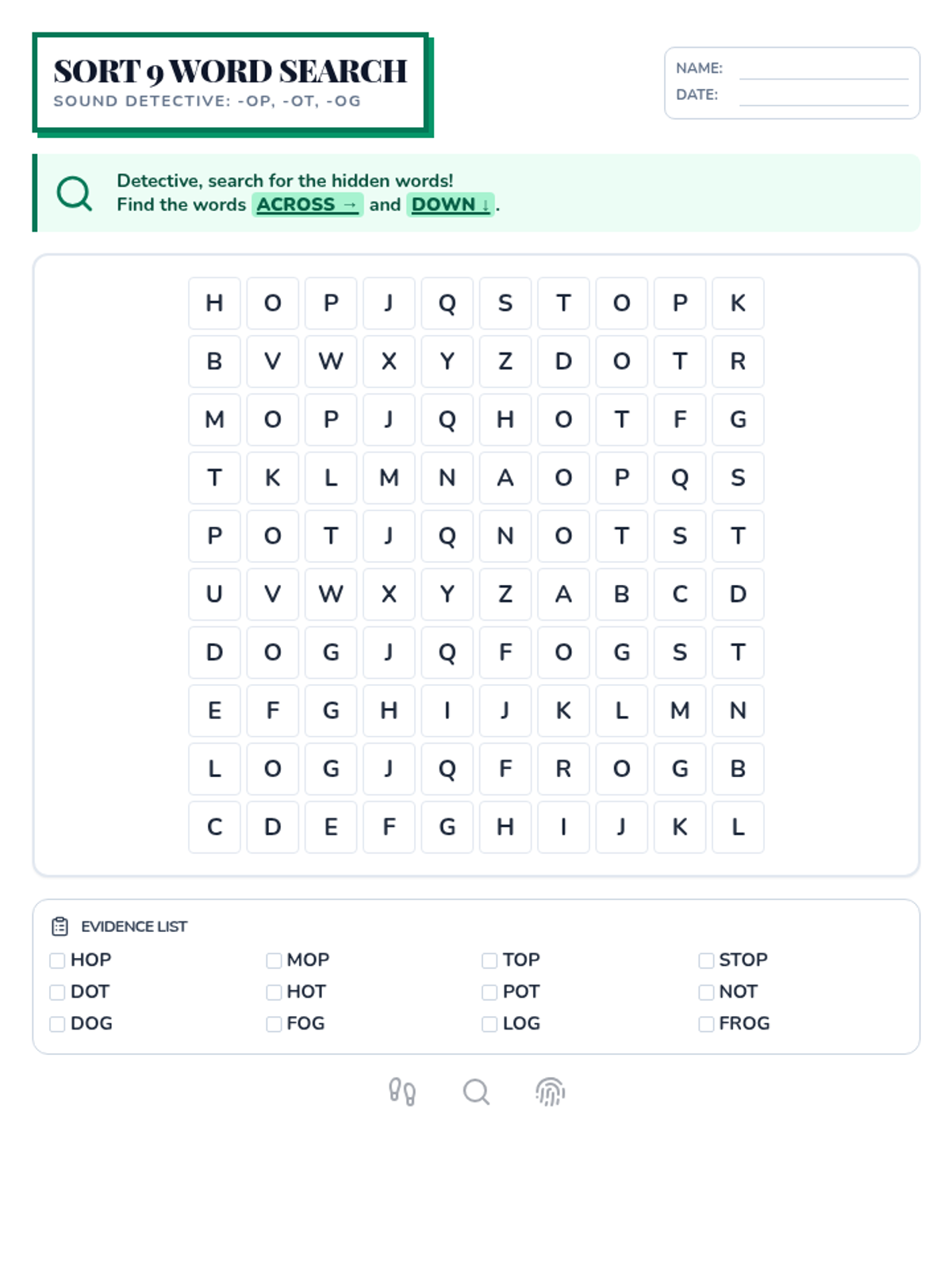
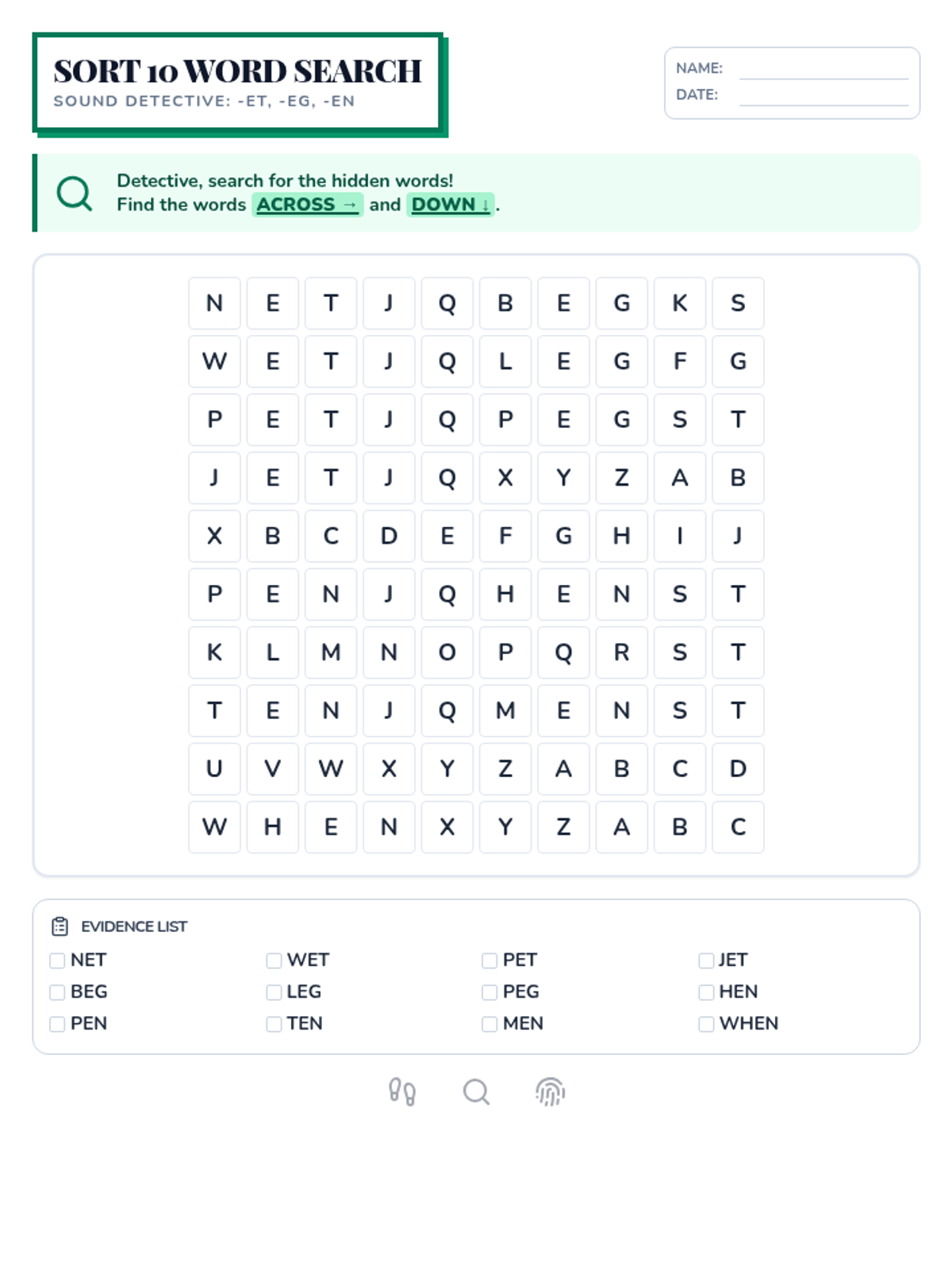
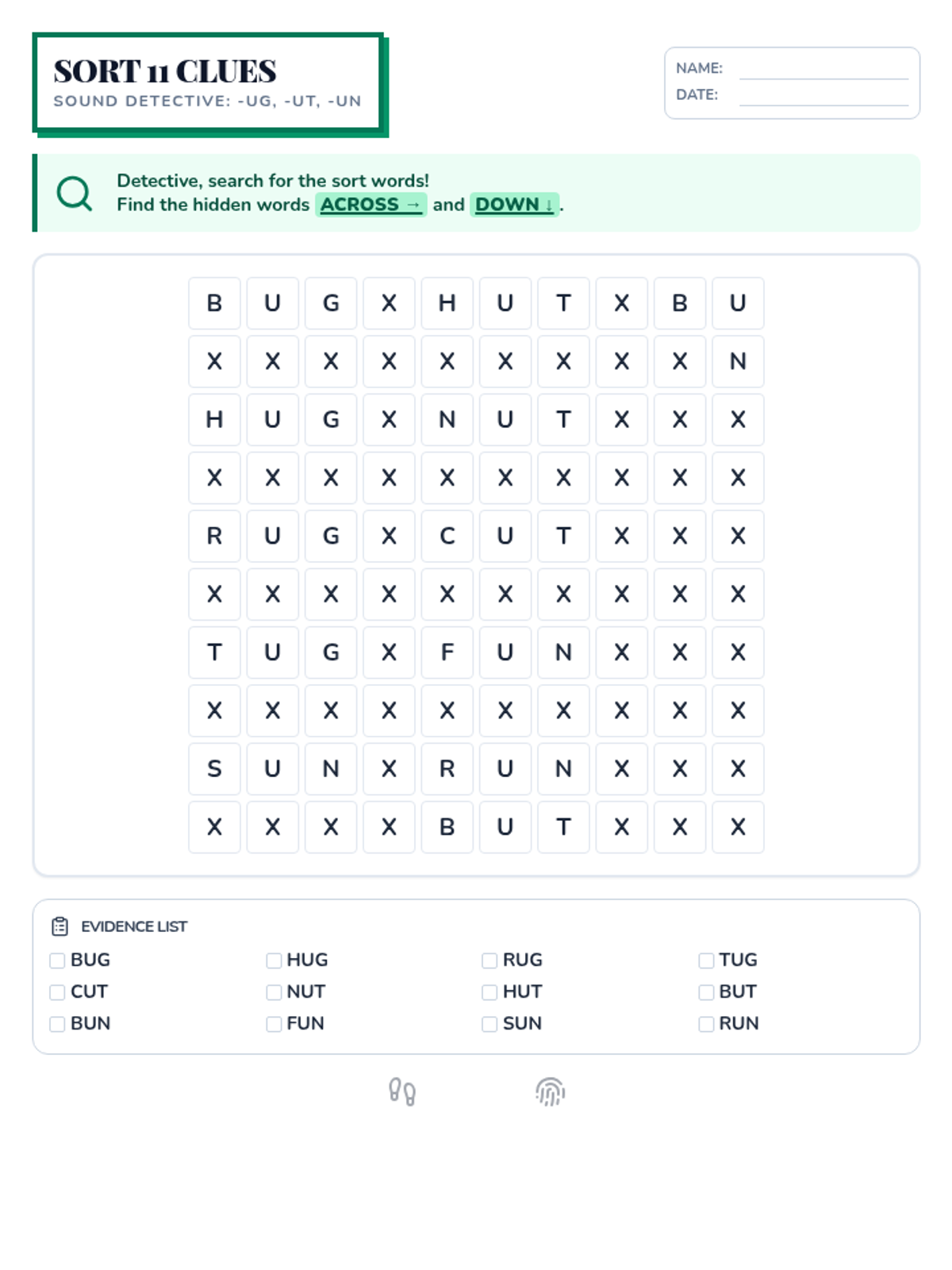
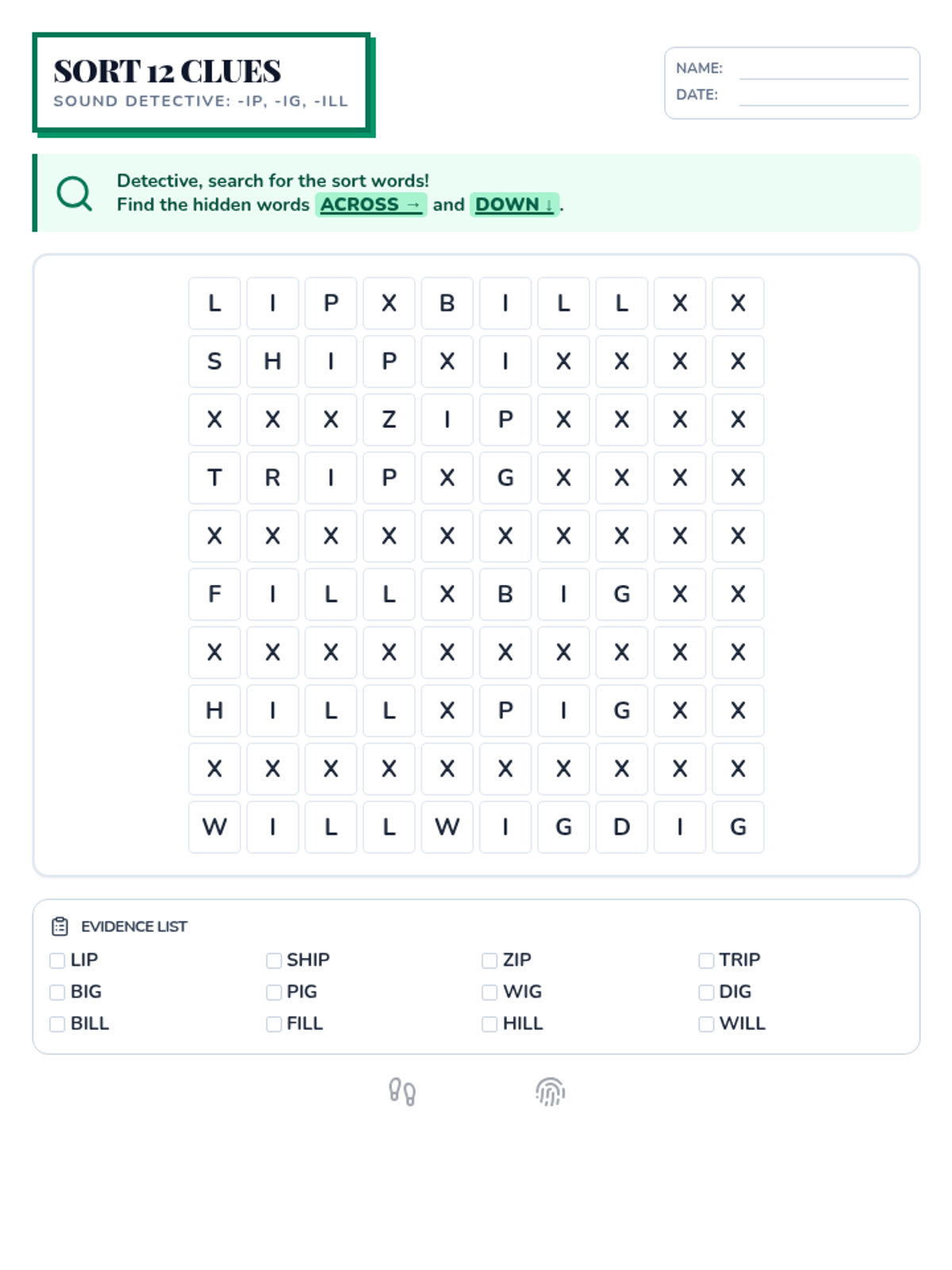
Detecting patterns in word endings, students explore common word families to build rhyme and reading fluency.
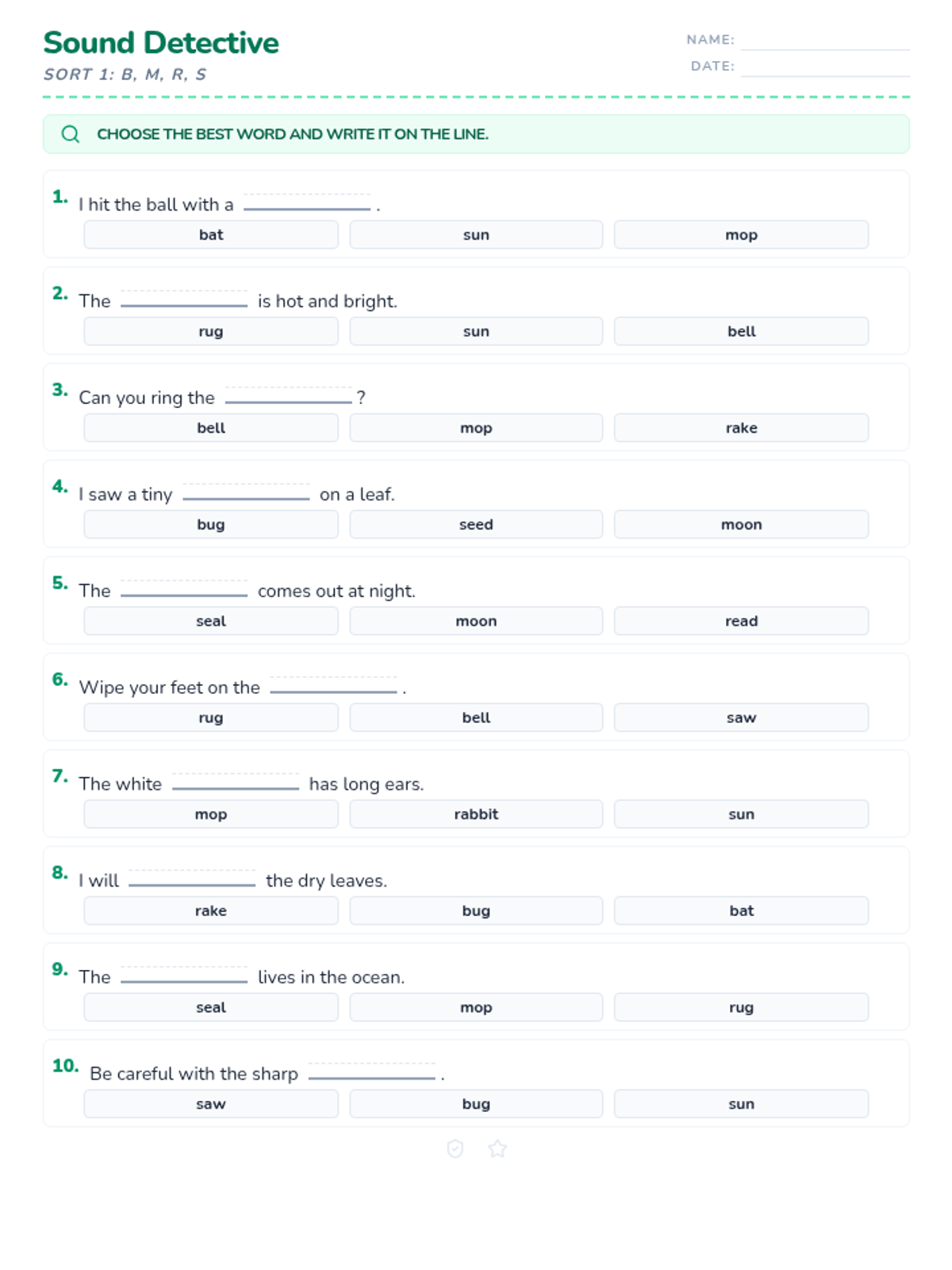
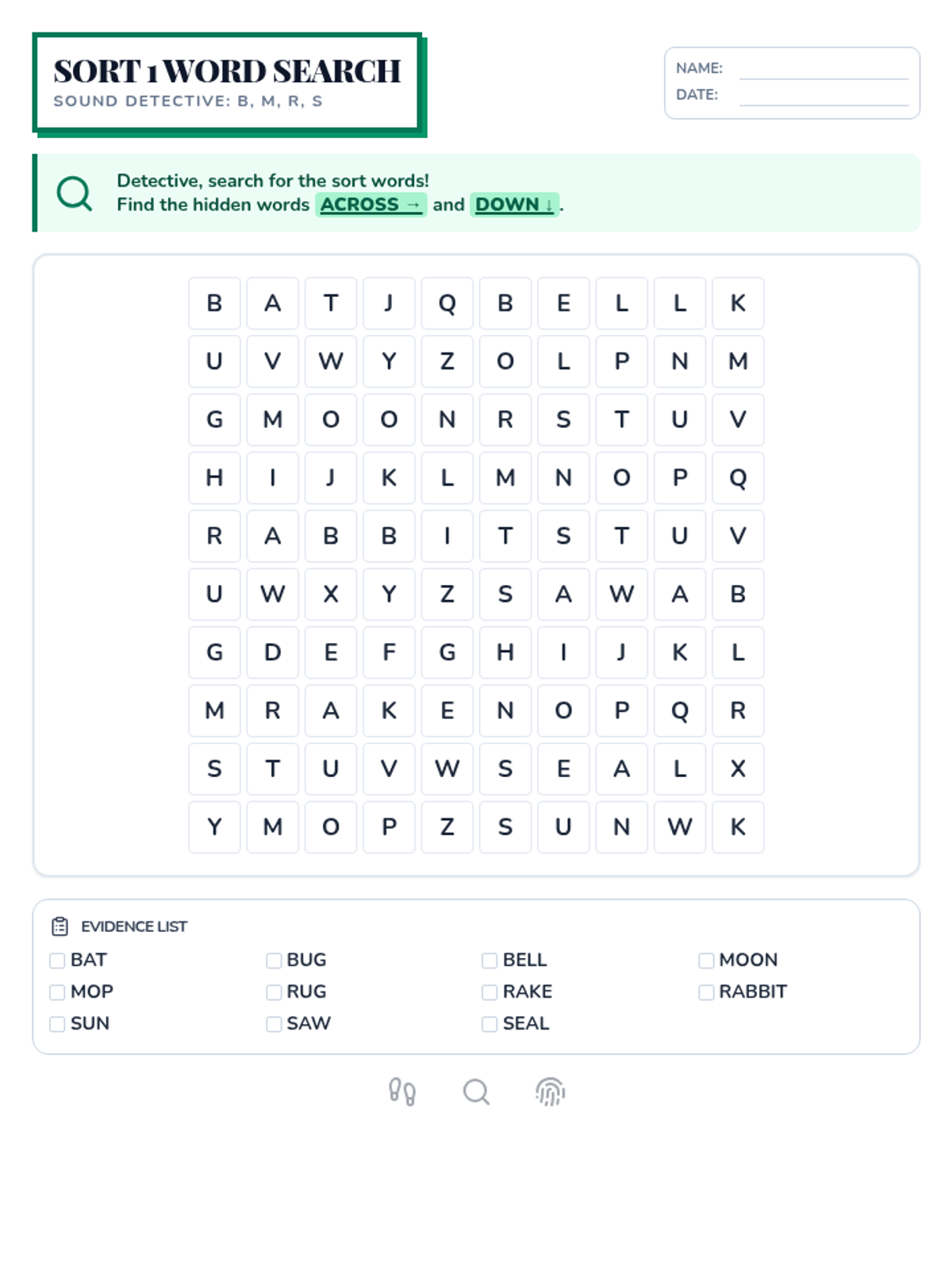
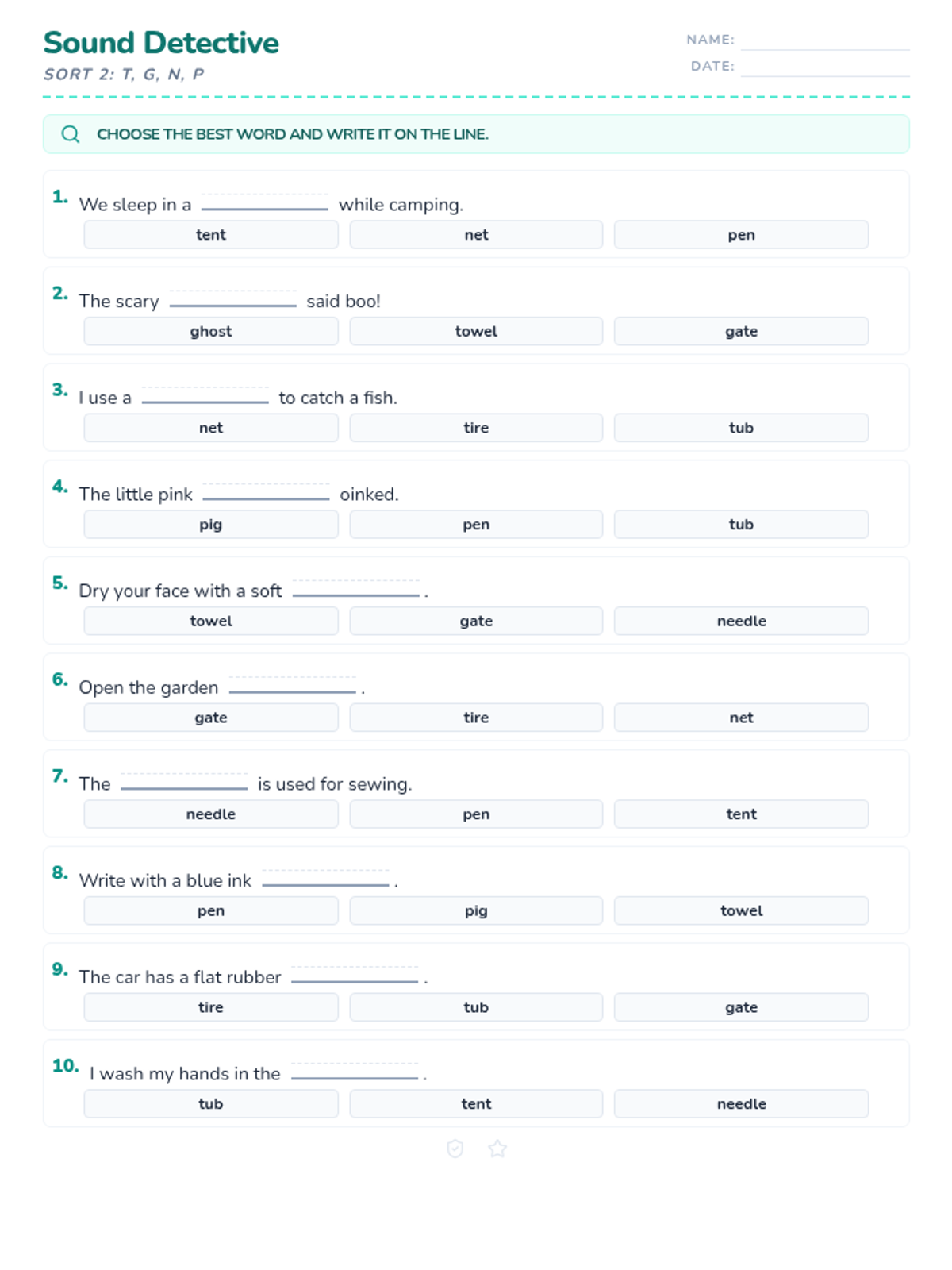
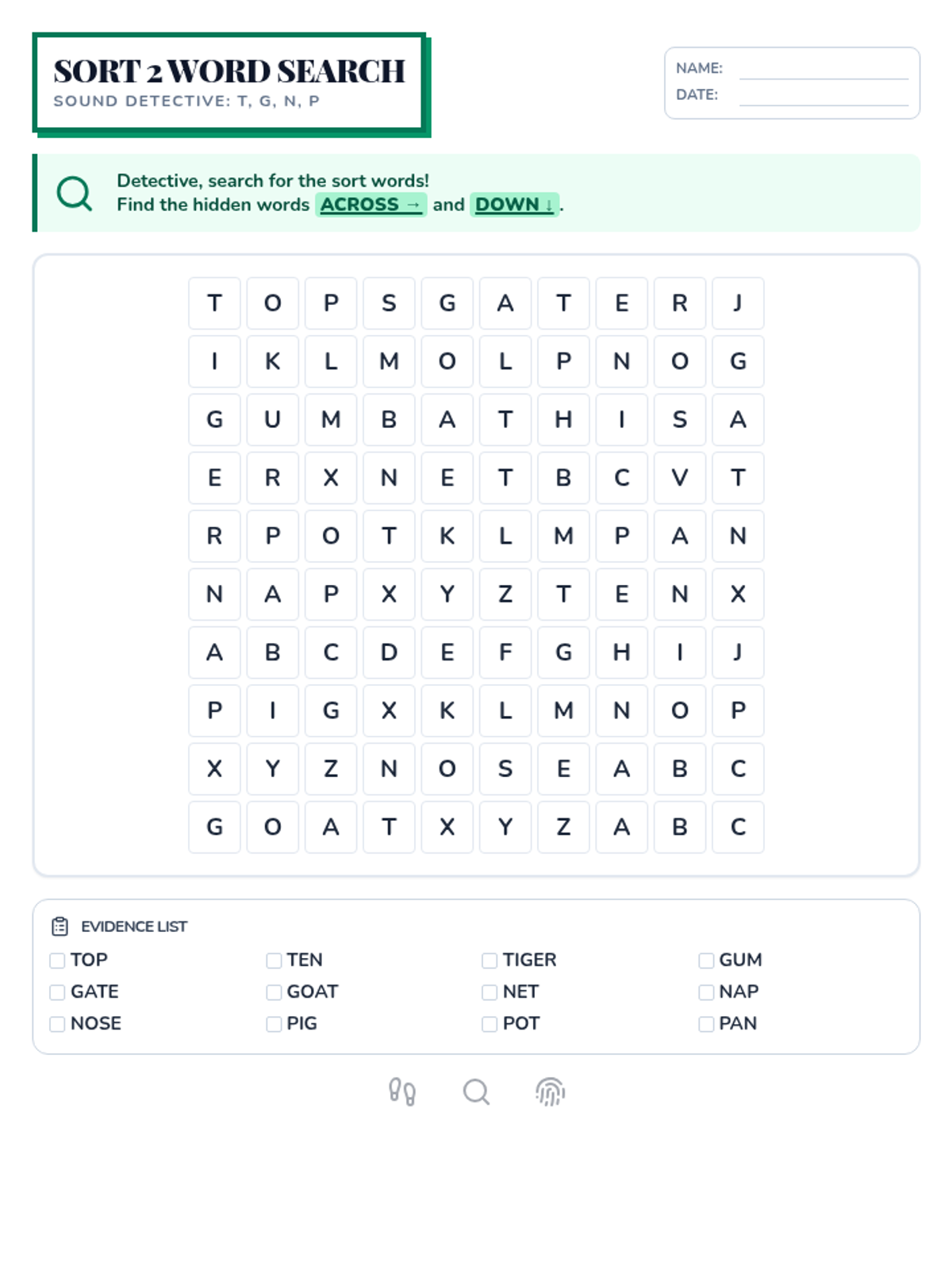
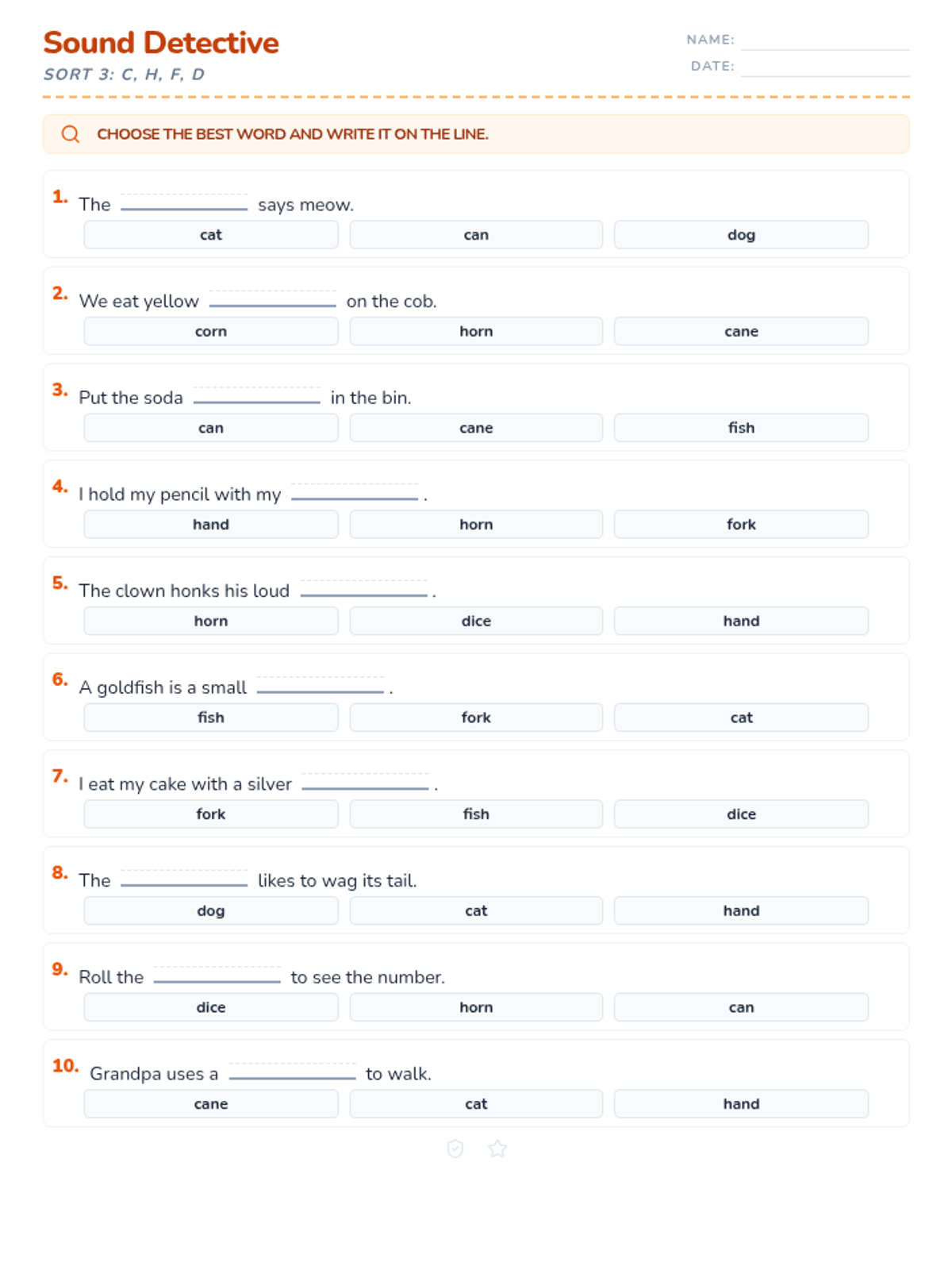
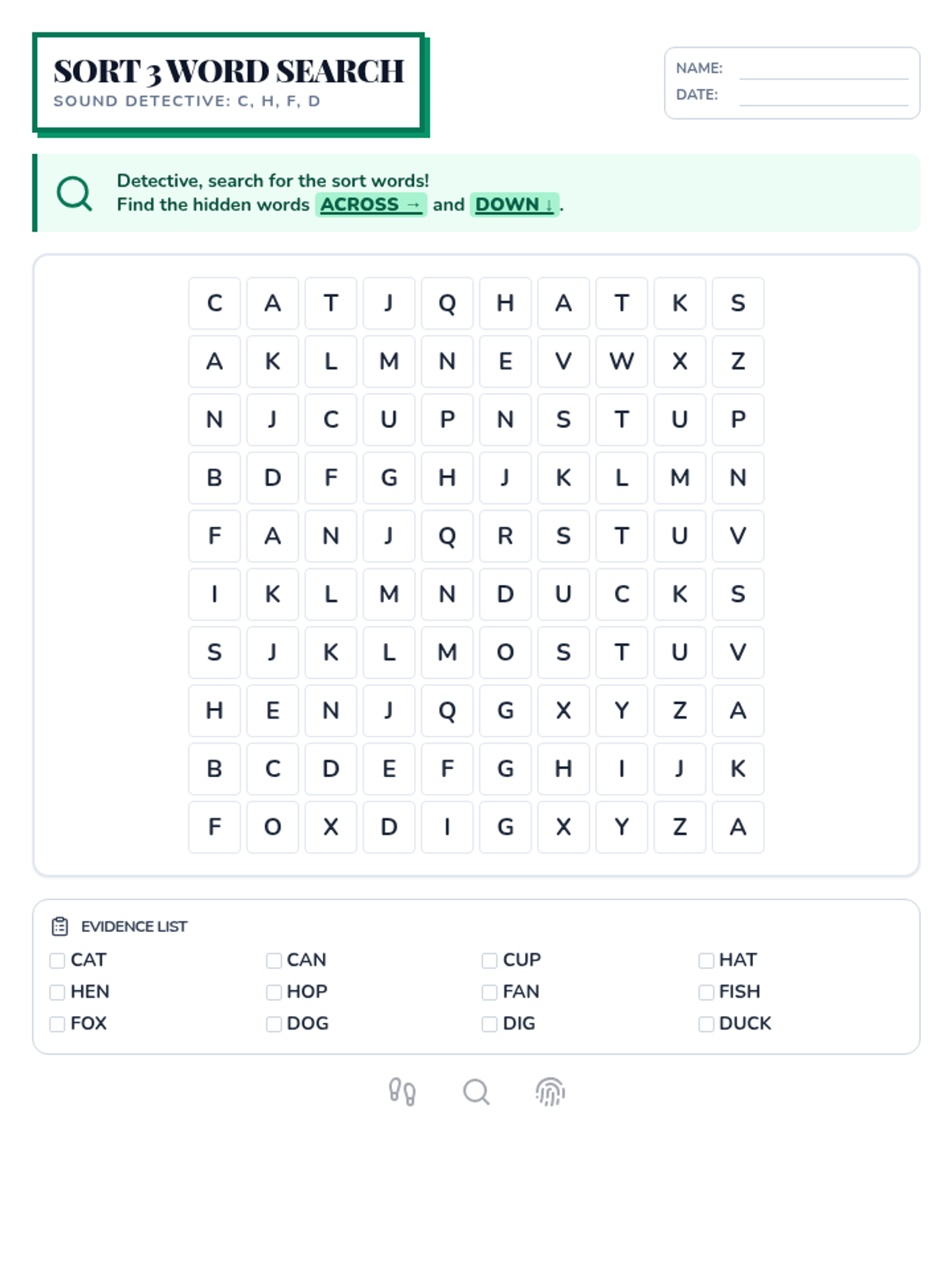
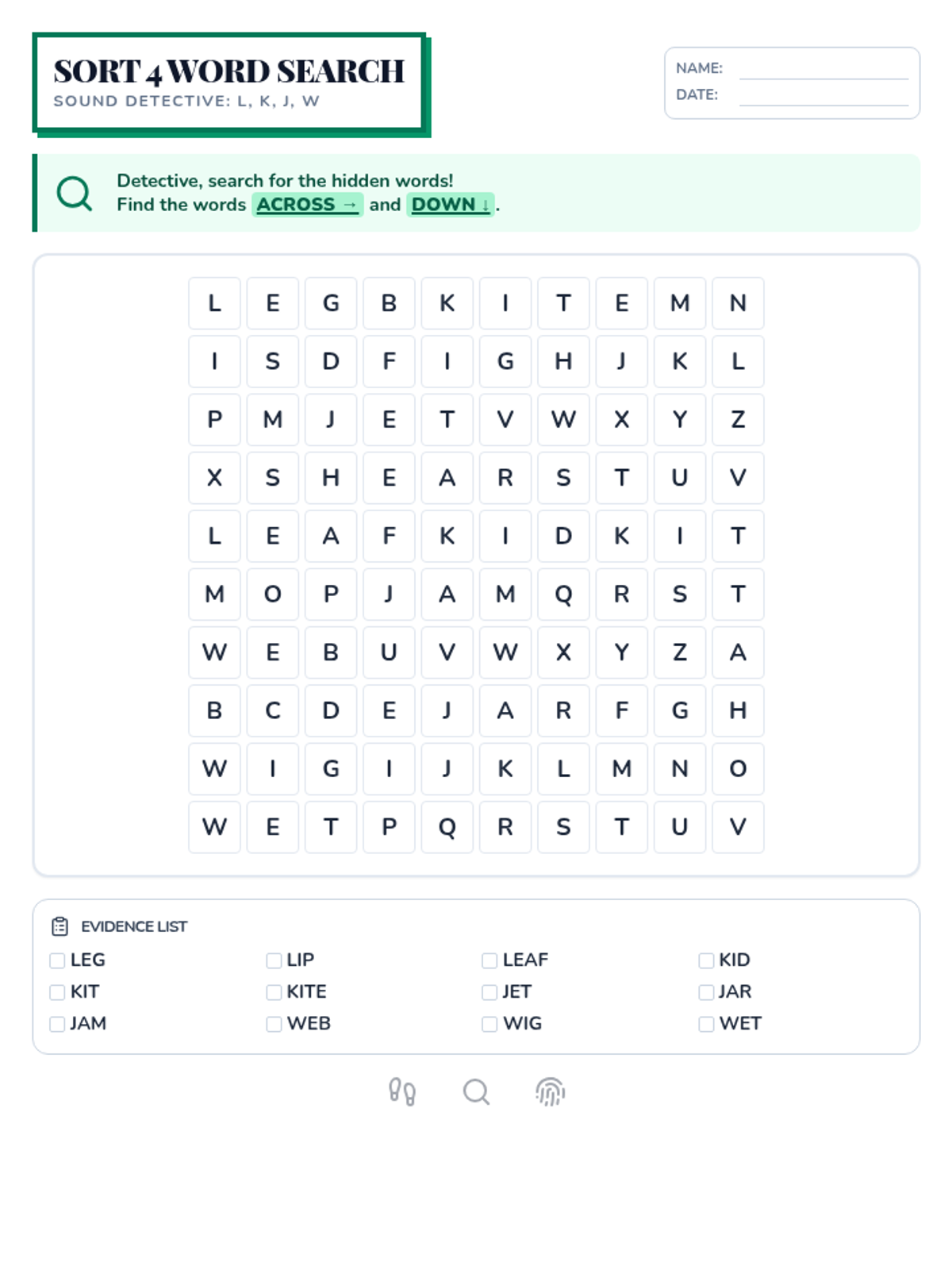
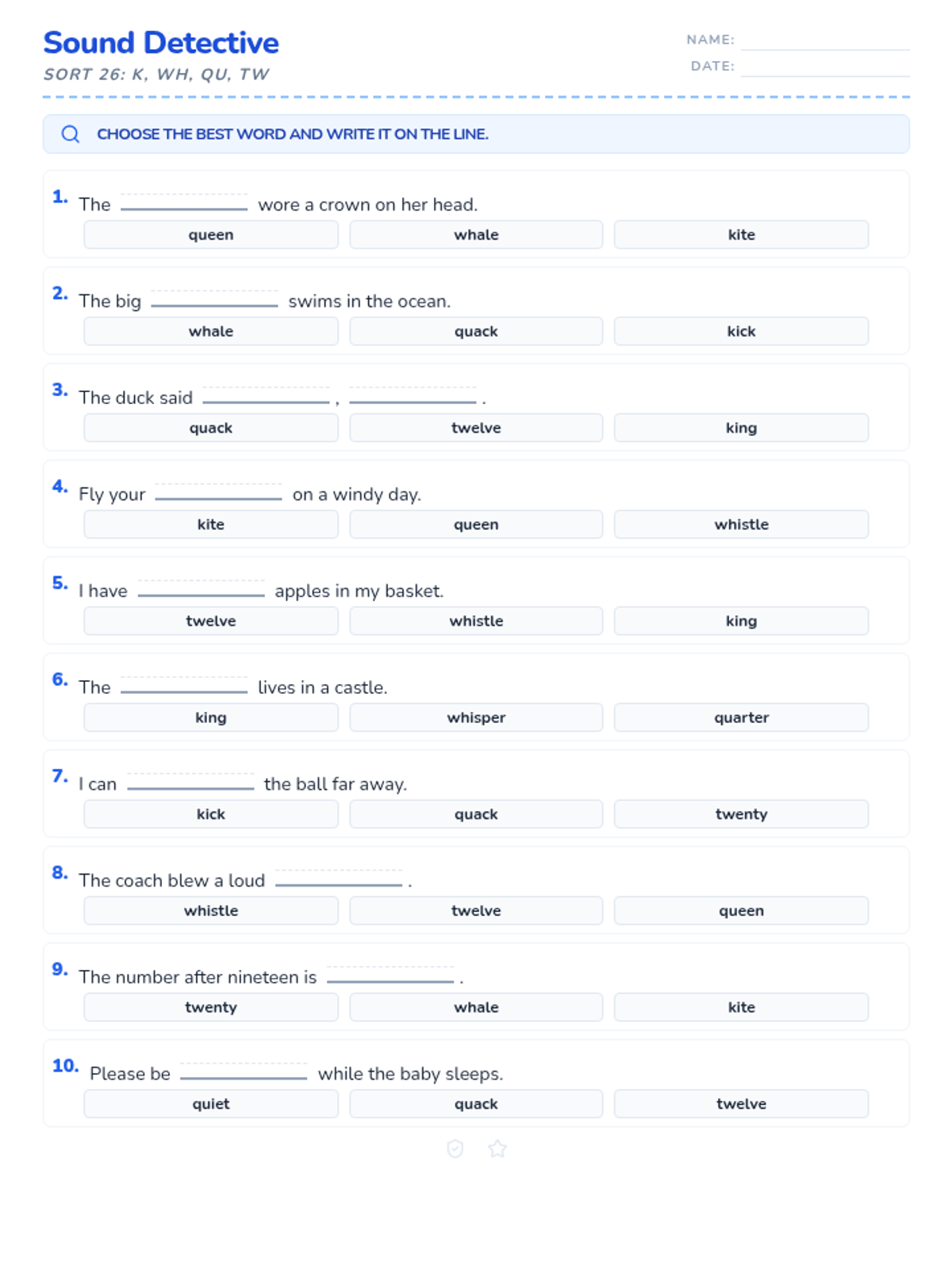
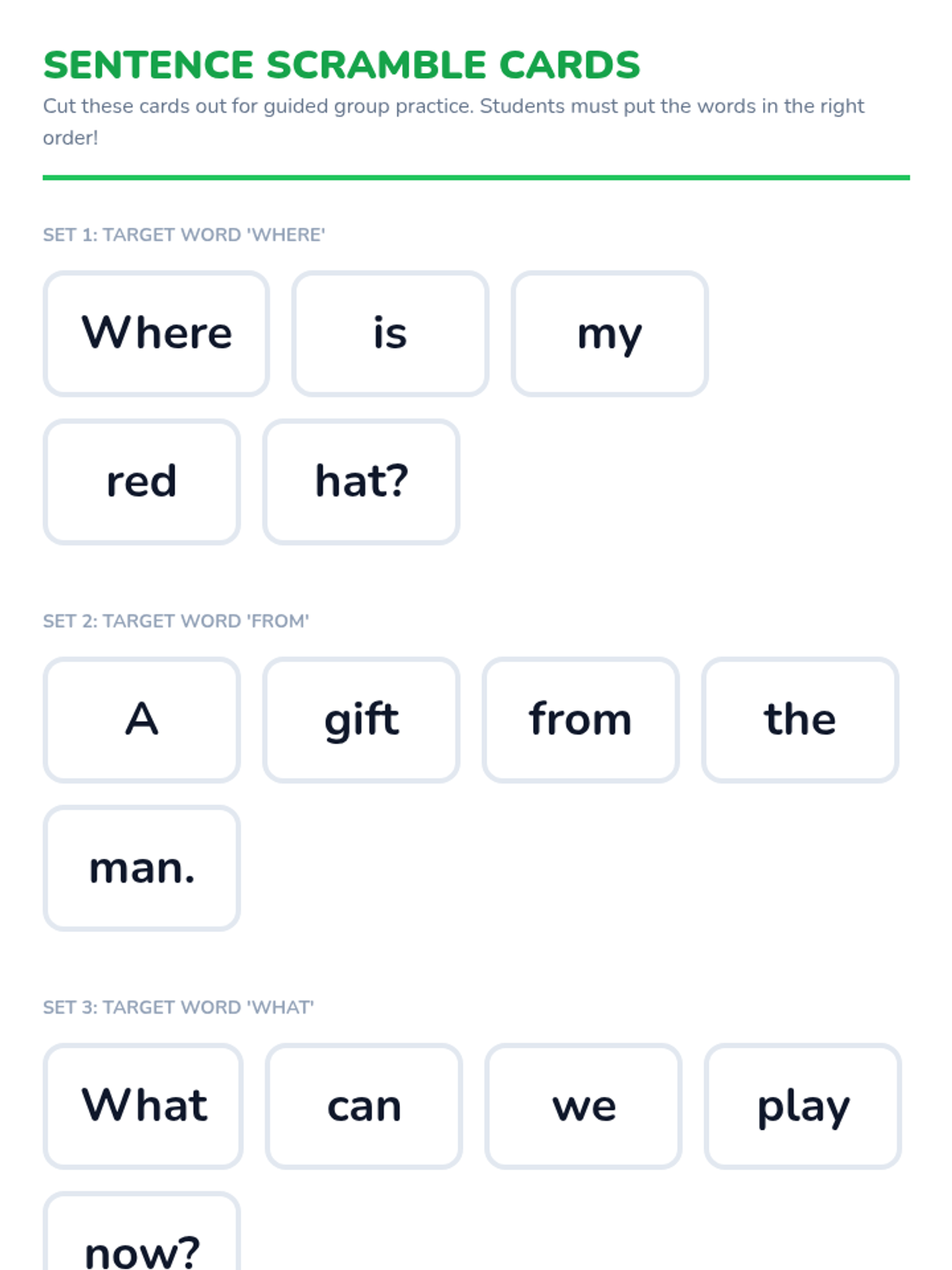
The first stage of the Sound Detective journey, focusing on the discovery of initial consonant sounds through interactive sentence puzzles.
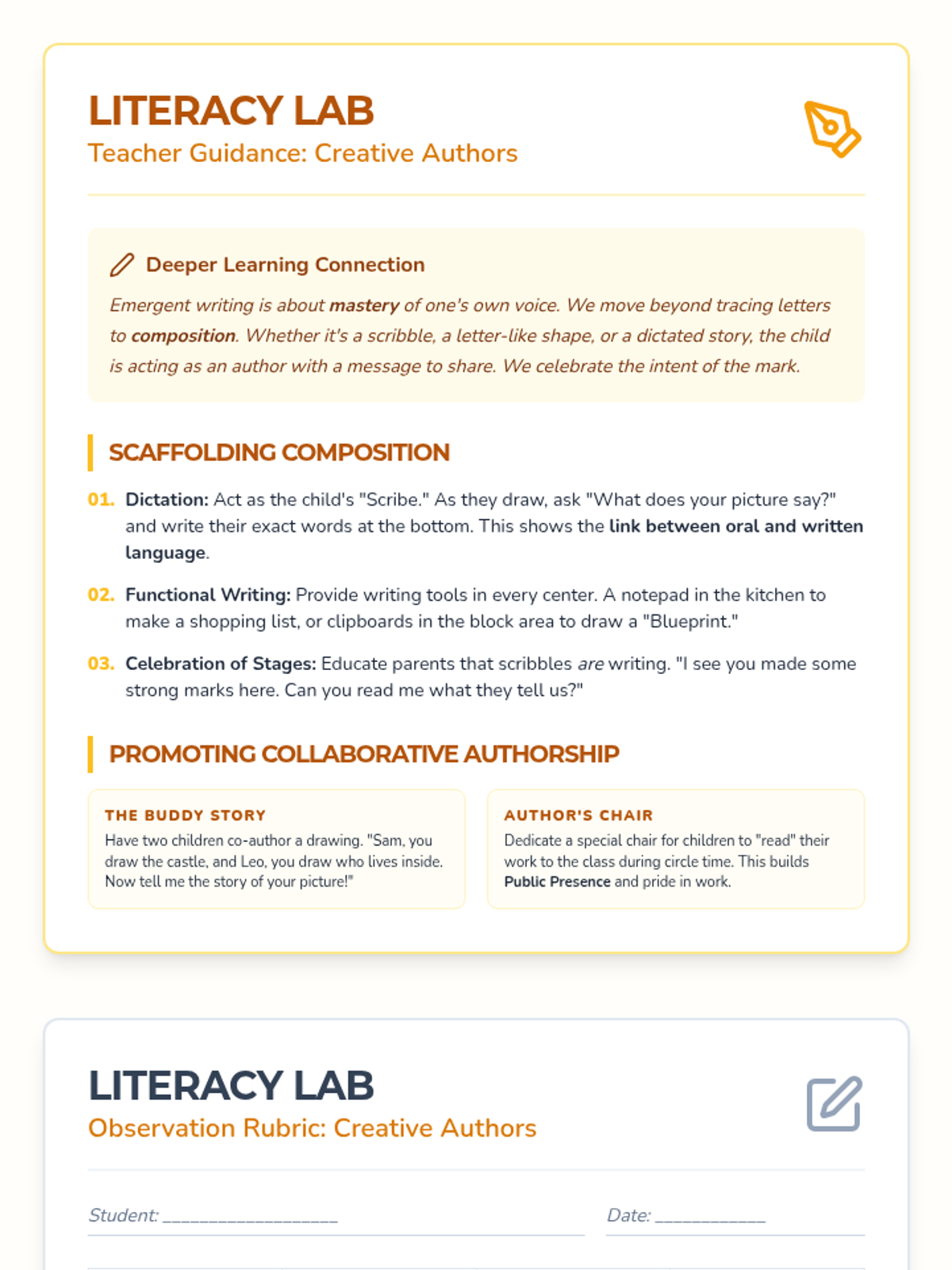
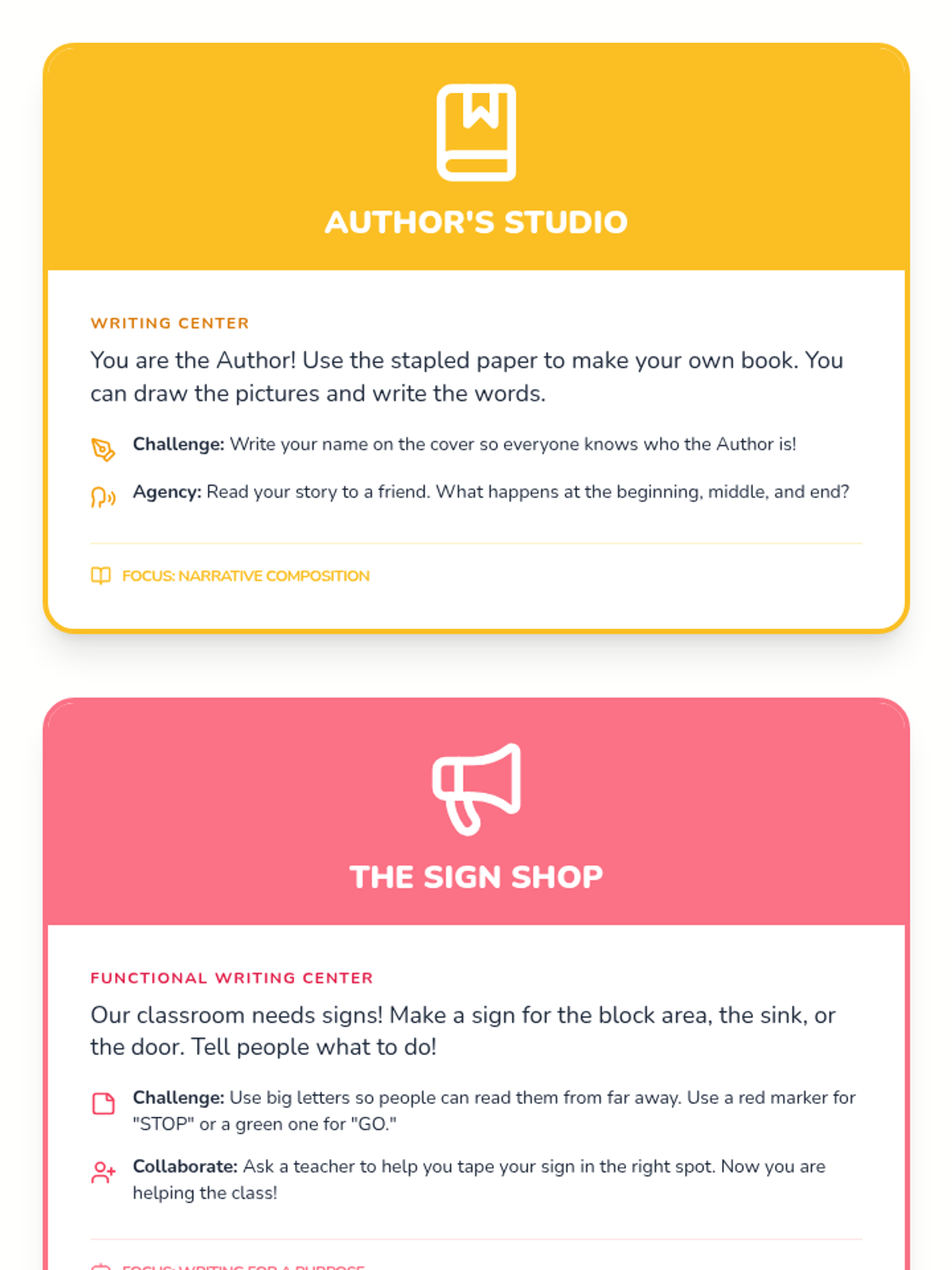
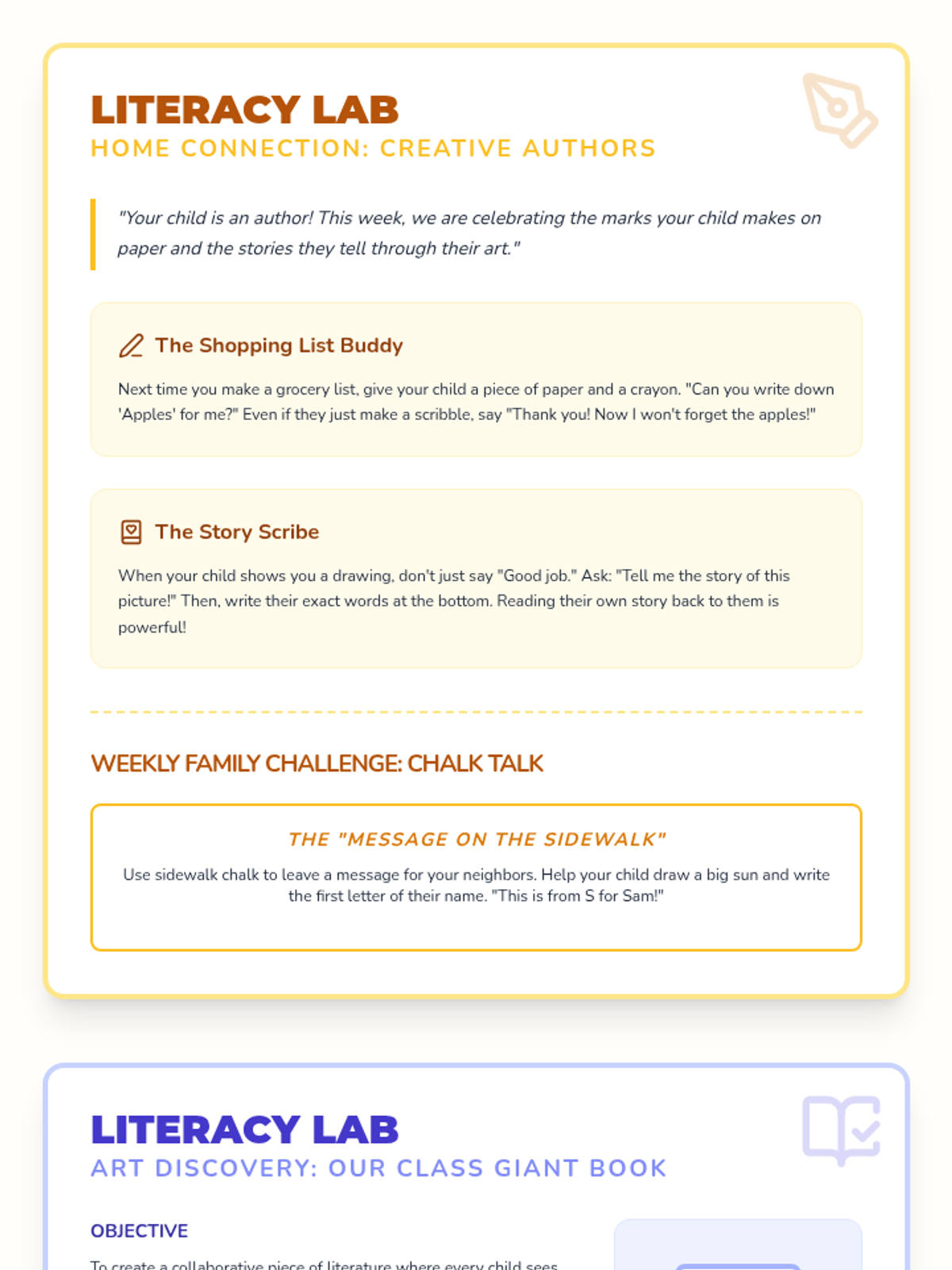
Focuses on emergent writing and composition through play-based storytelling and symbolic representation. Children discover that their marks on paper can communicate thoughts, emotions, and stories to others.
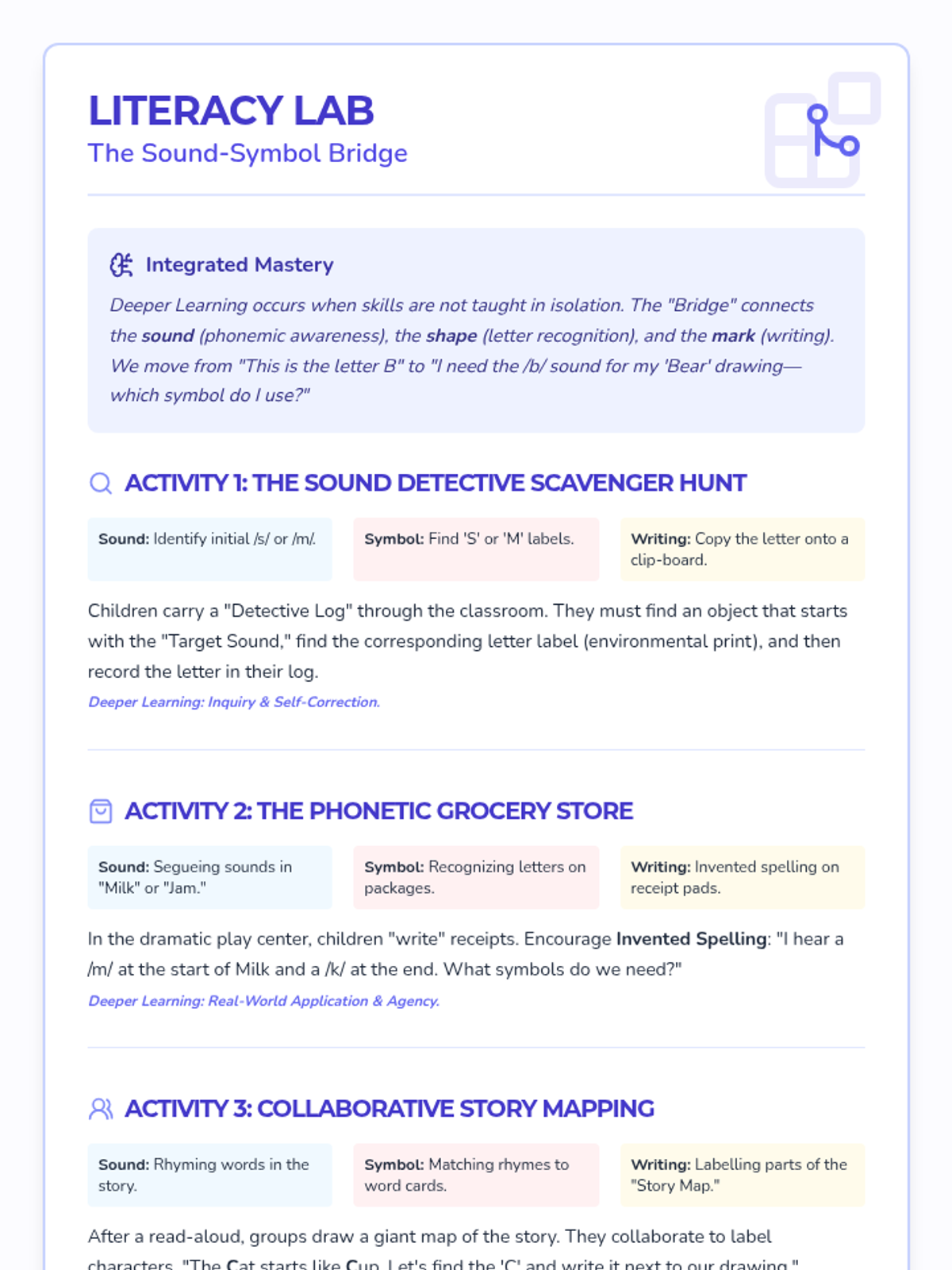
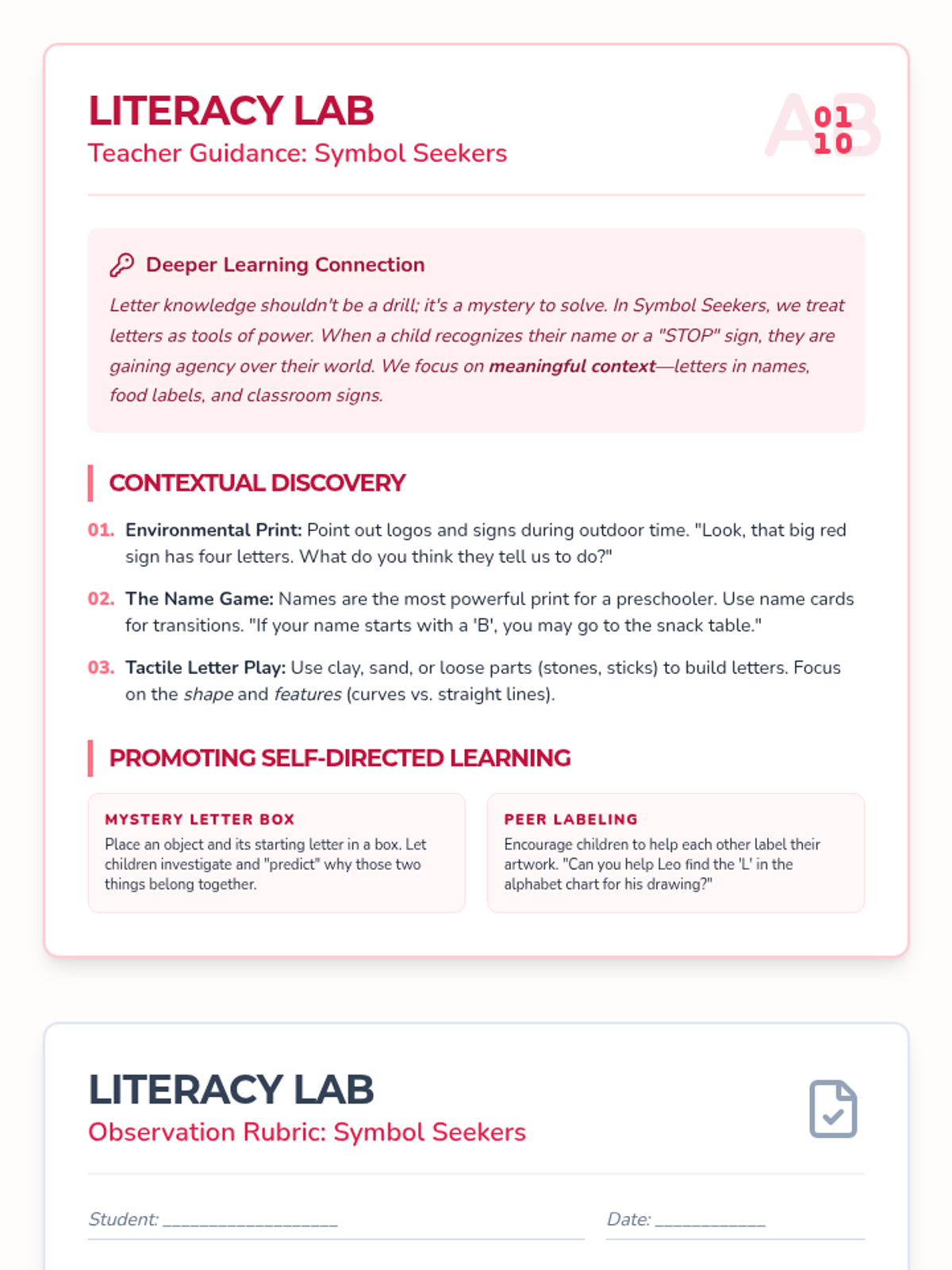
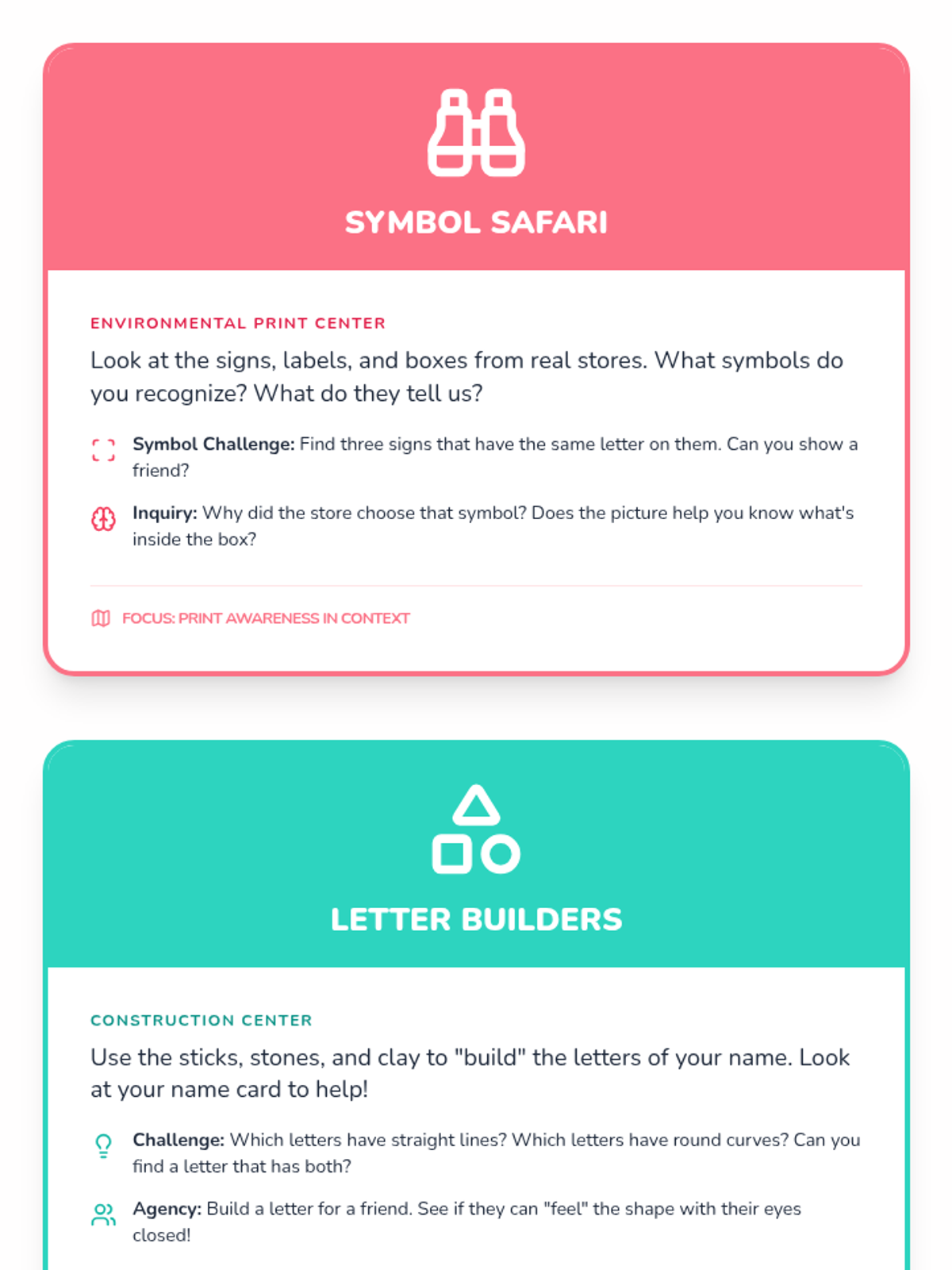
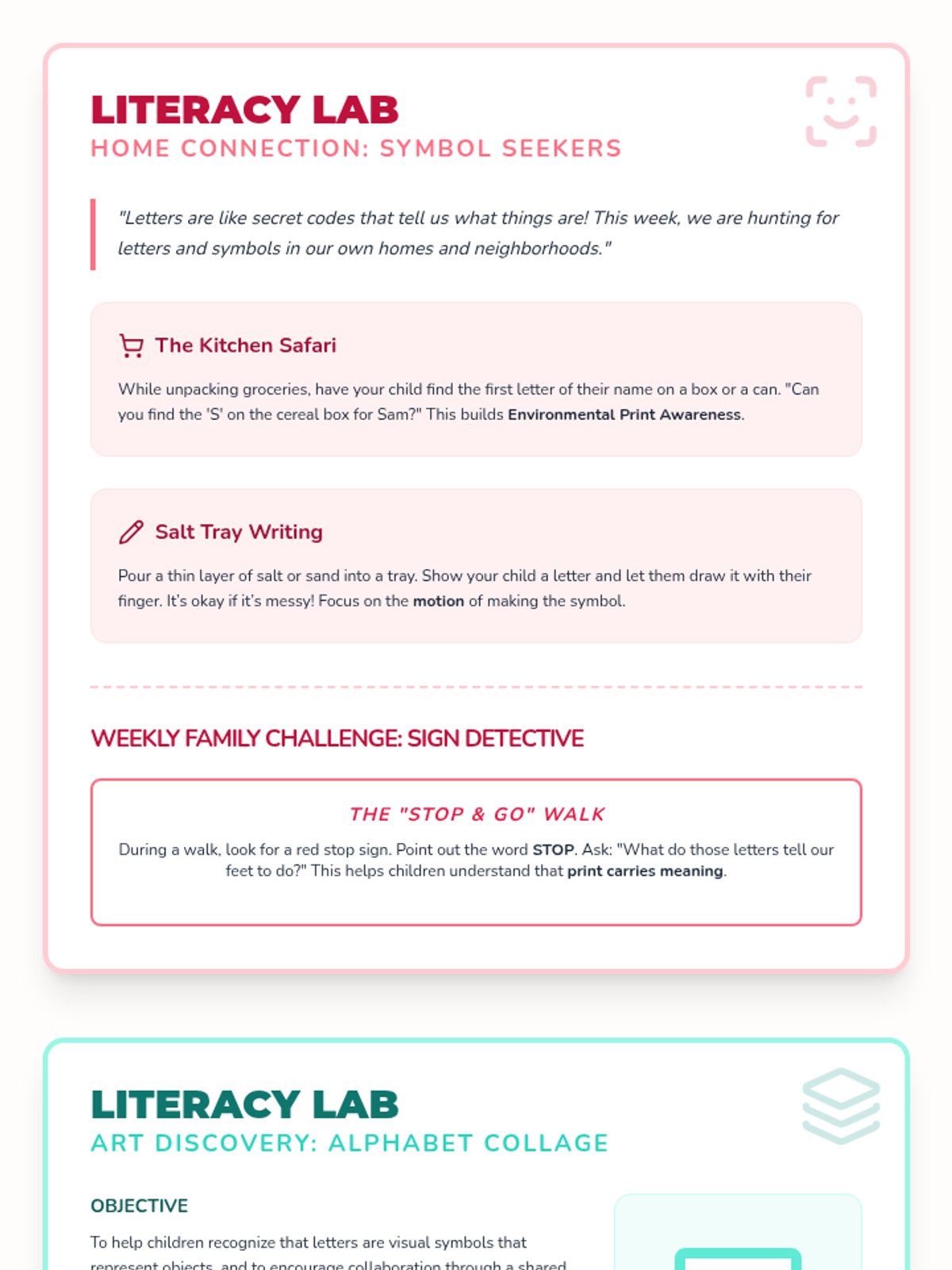
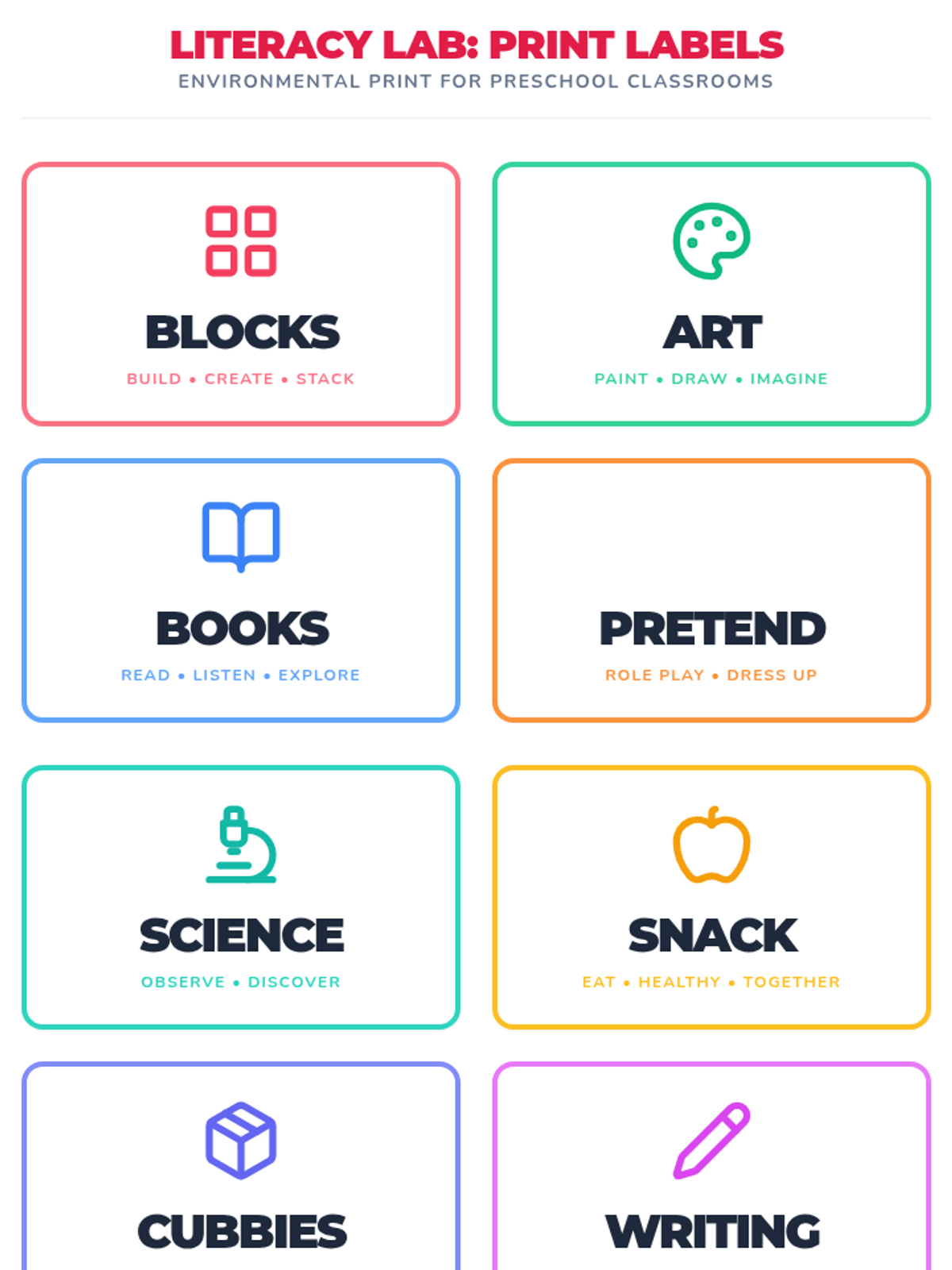
Focuses on print awareness and letter knowledge through meaningful, context-rich exploration. Students discover how symbols represent language in their environment and begin to master letter shapes and sounds through creative play.
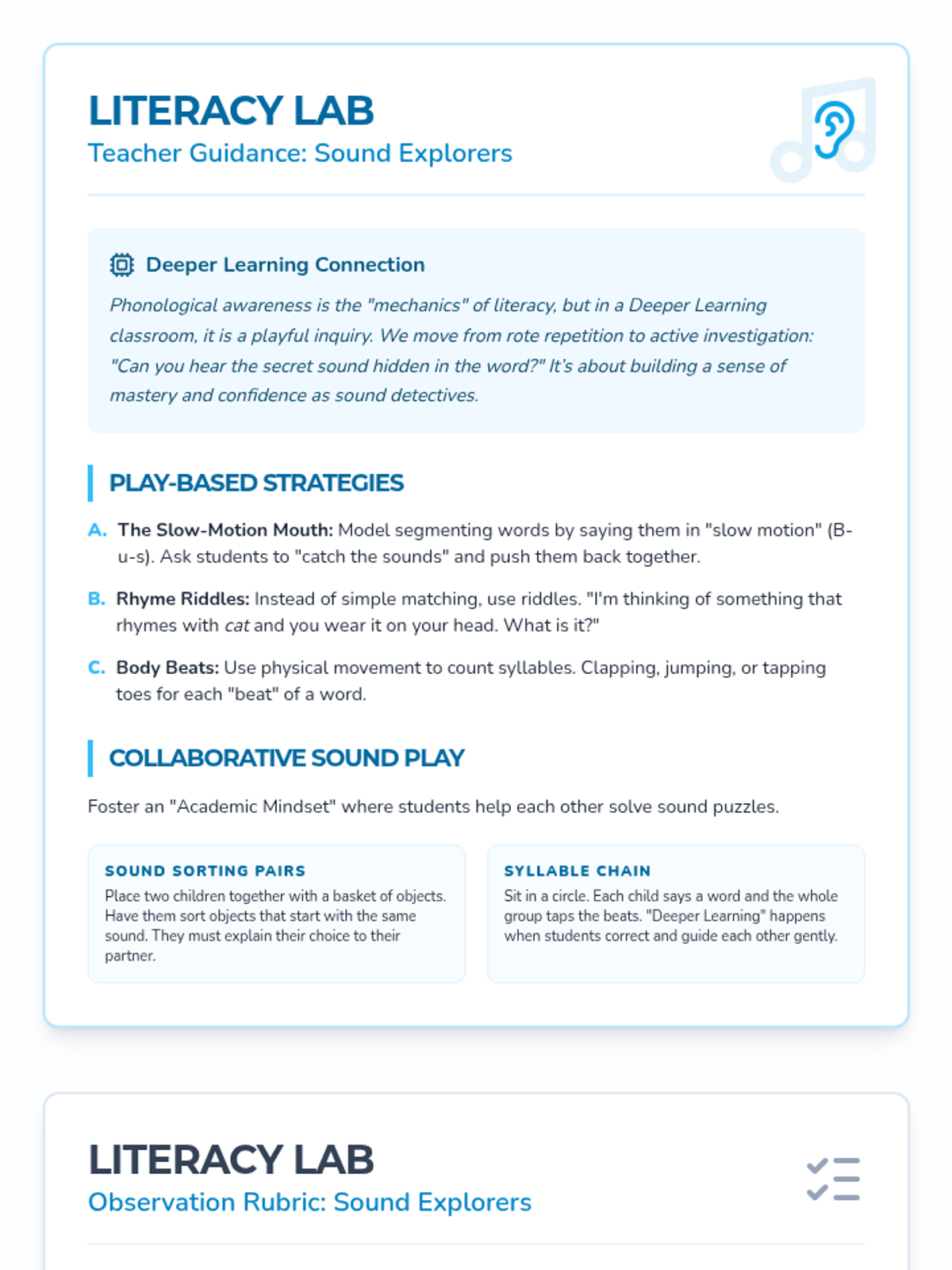
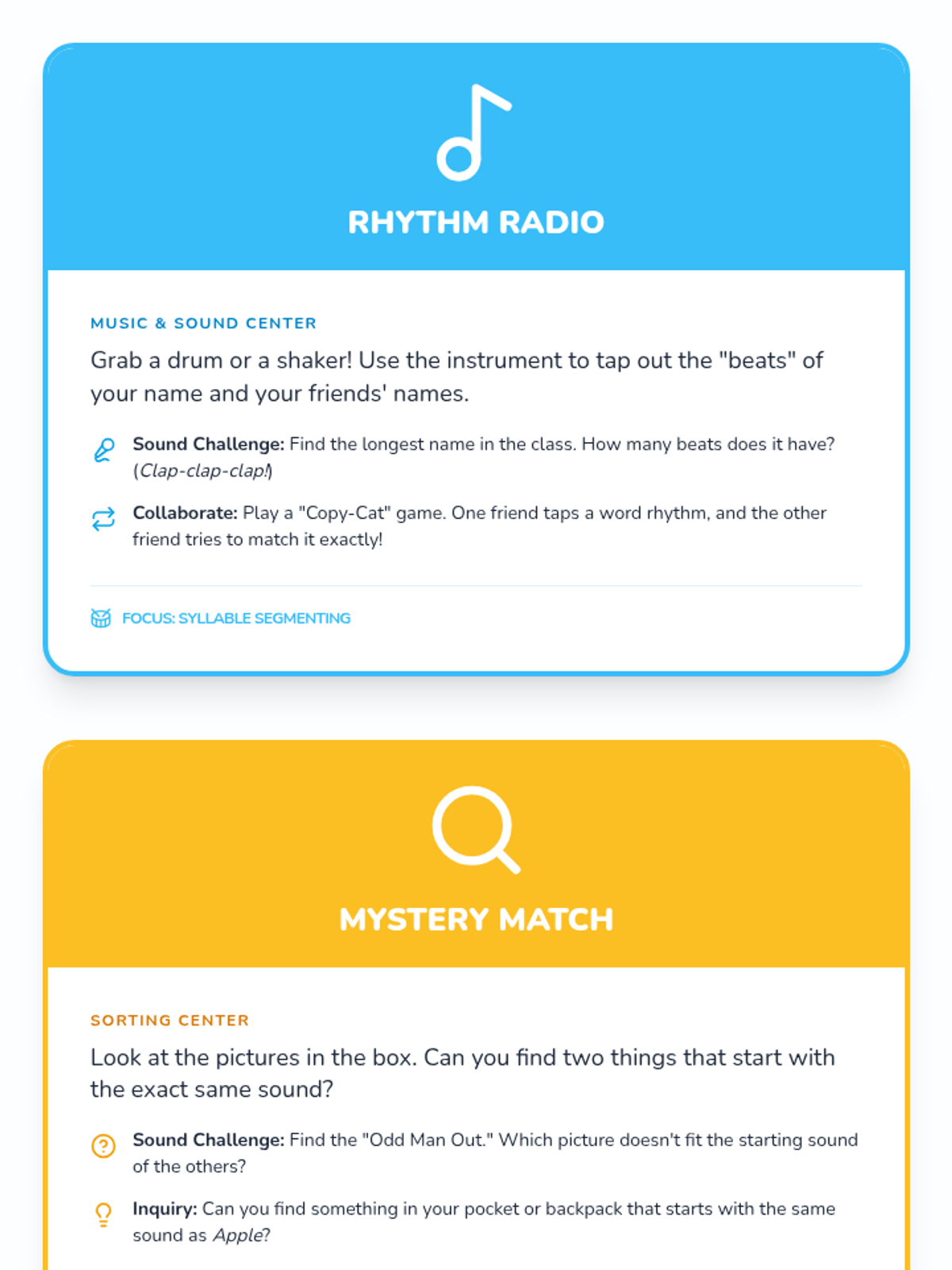
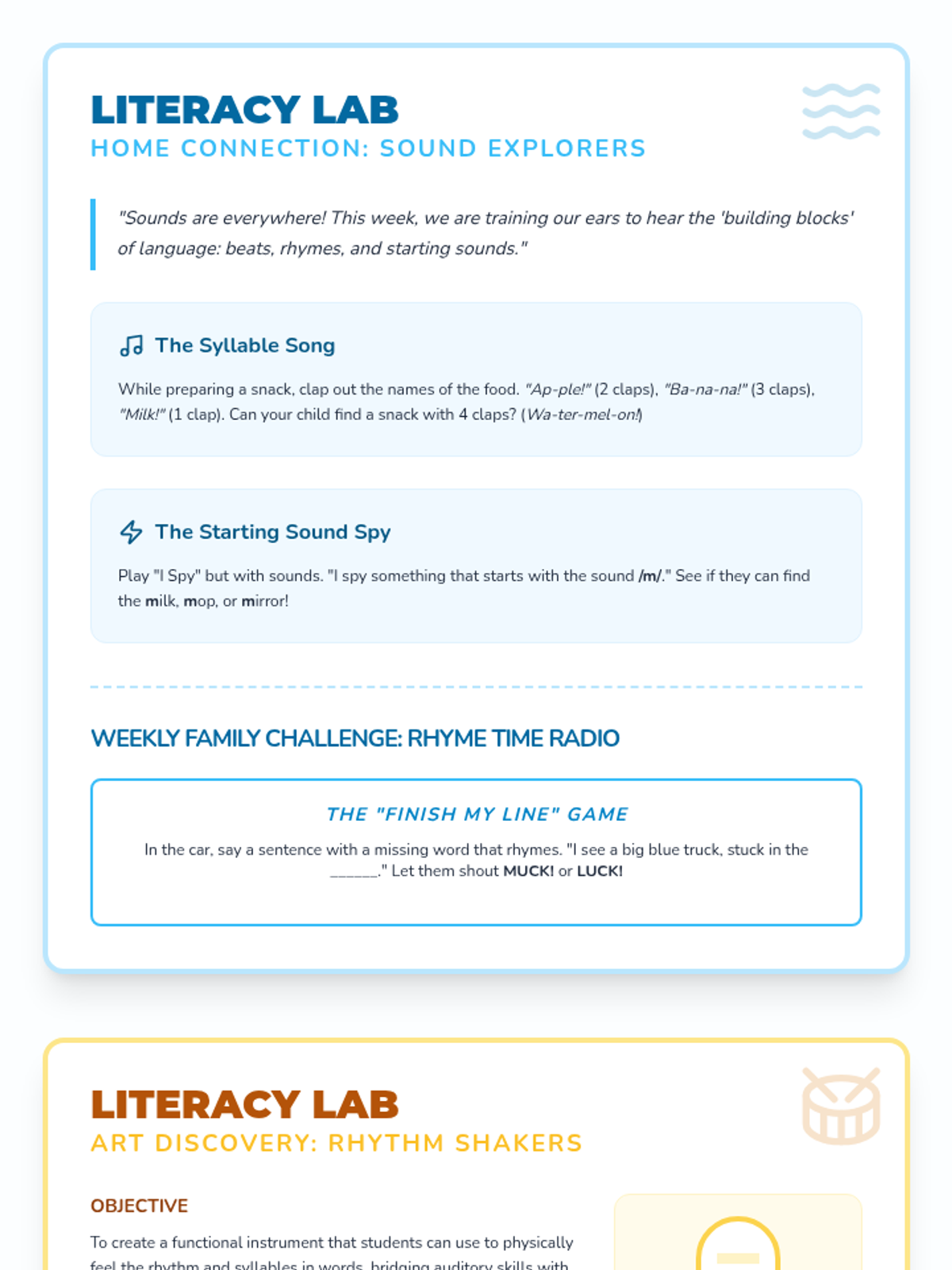
Focuses on developing phonological and phonemic awareness through playful sound discrimination, rhyming, and rhythm. Children build an ear for the sounds of language in a collaborative, active environment.
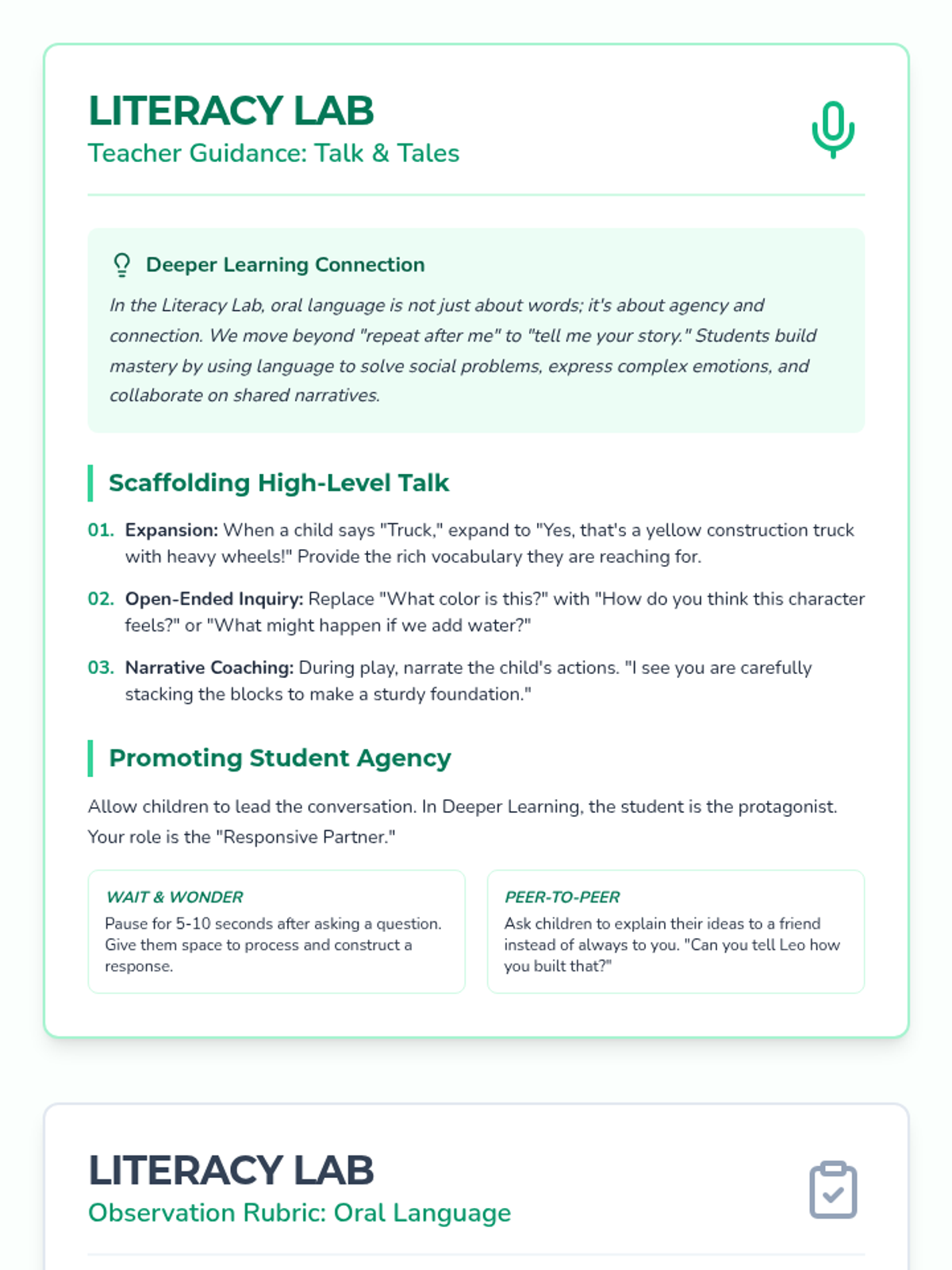
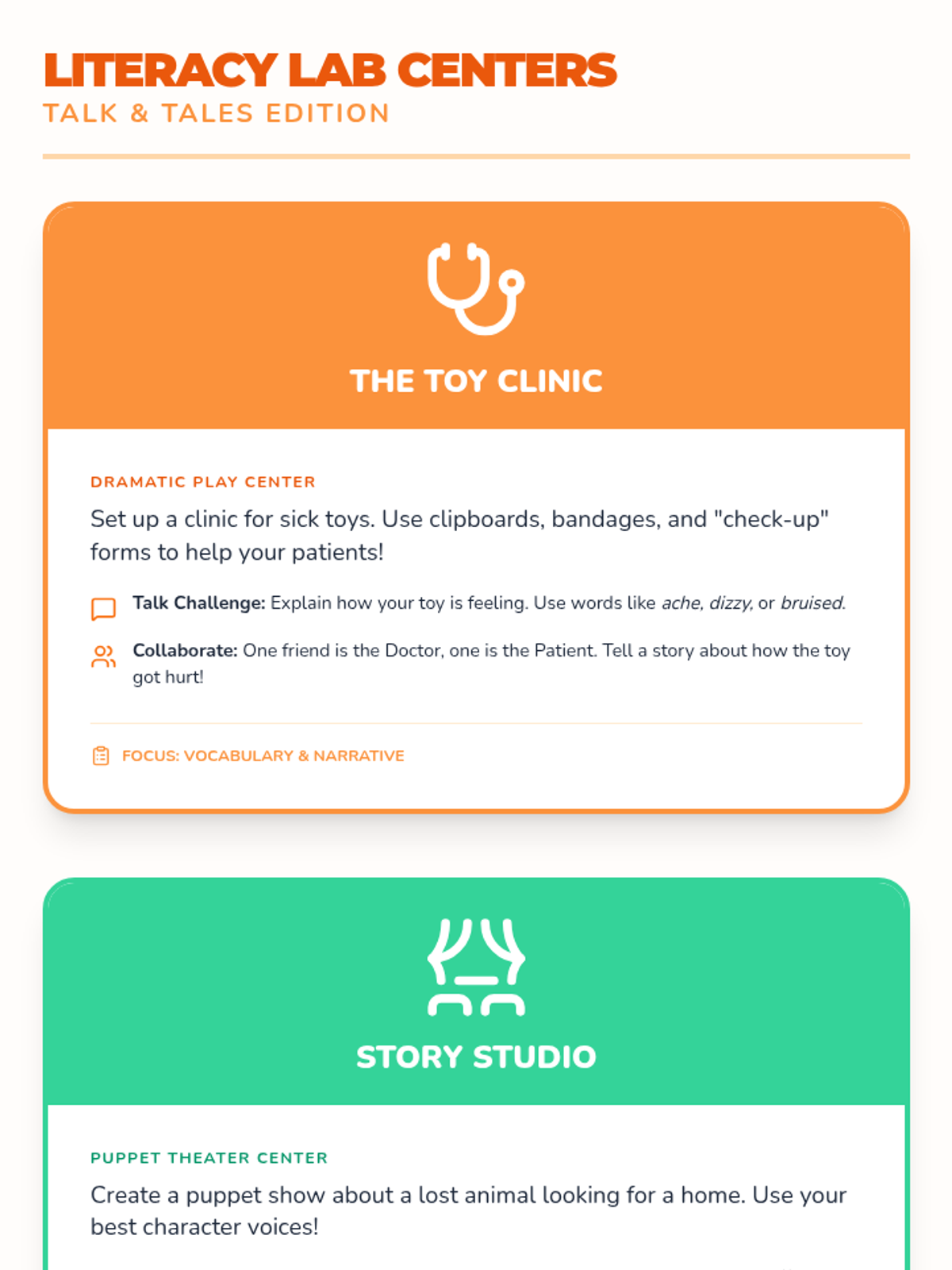
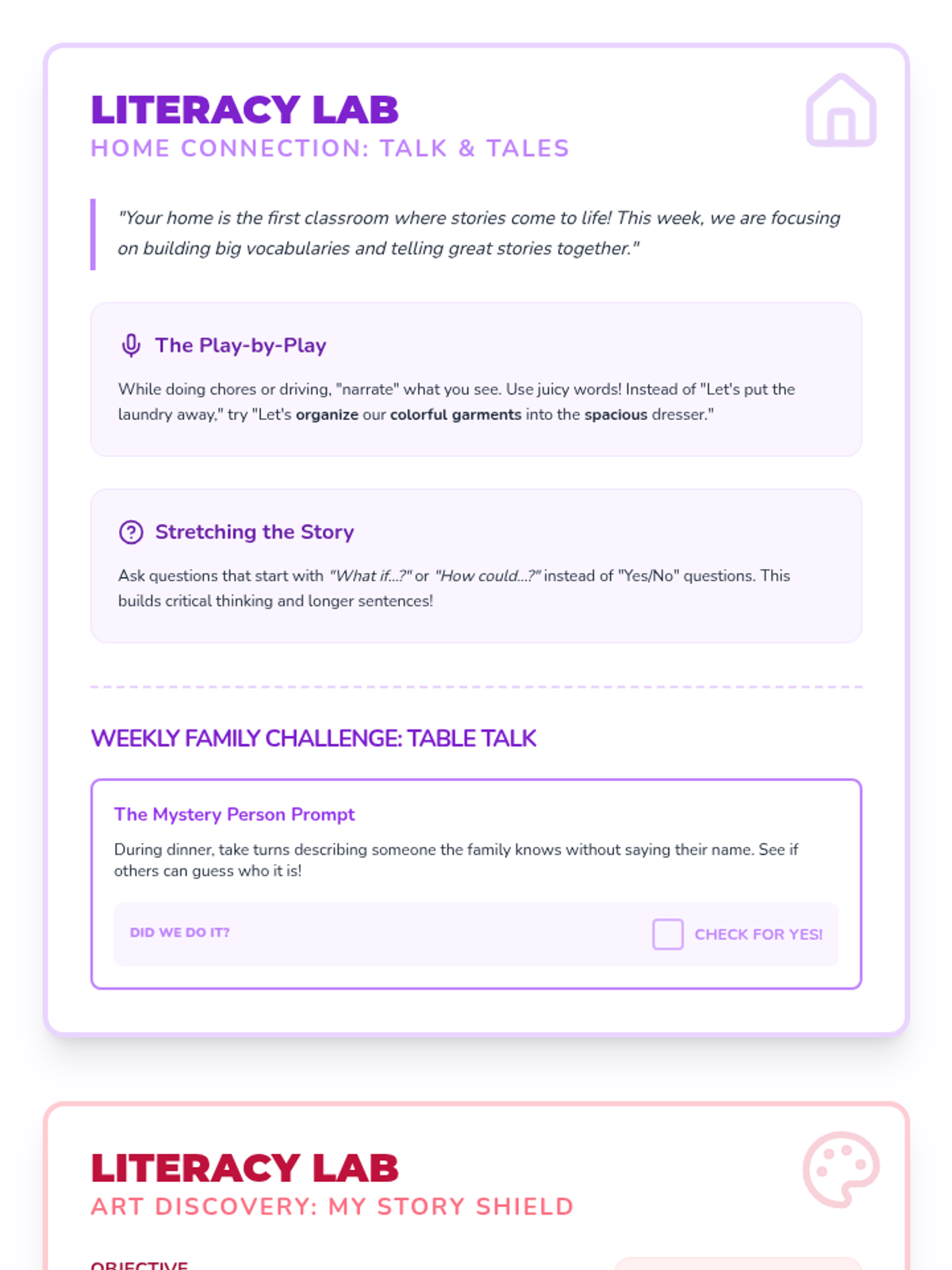
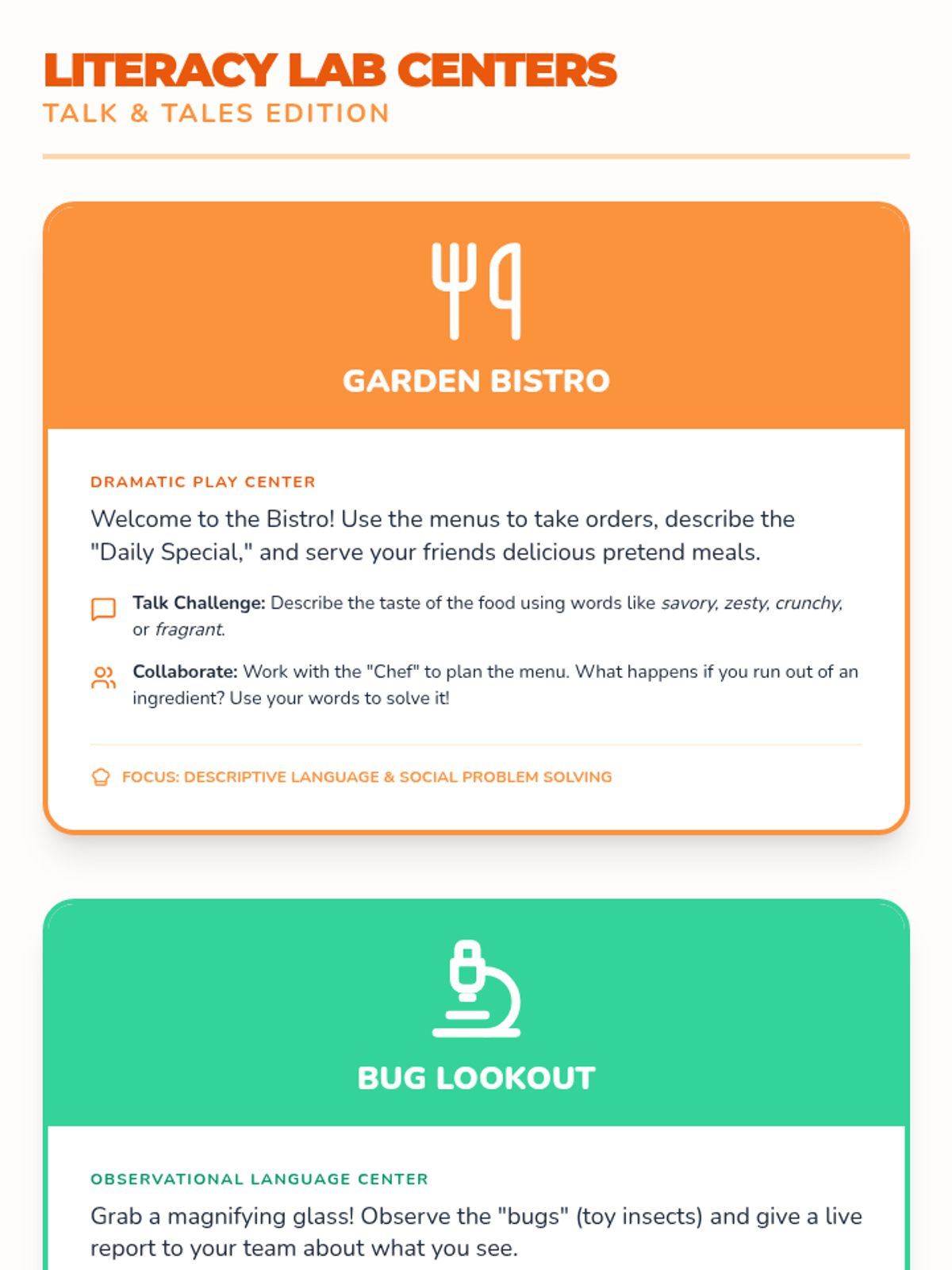
Focuses on building robust oral language and vocabulary through dramatic play, storytelling, and collaborative conversation. Teachers use 'Deeper Learning' strategies to scaffold high-level thinking in early childhood.
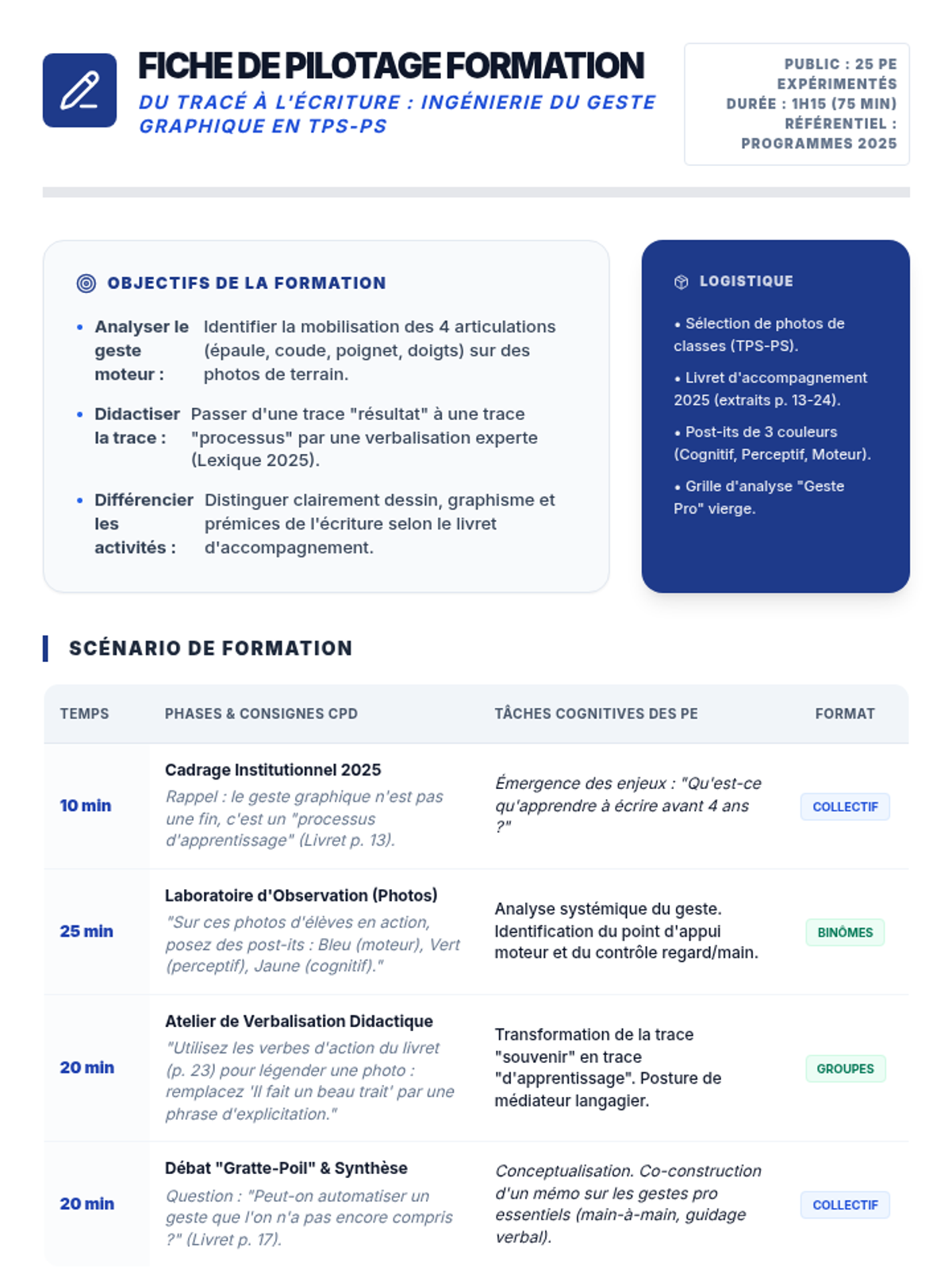
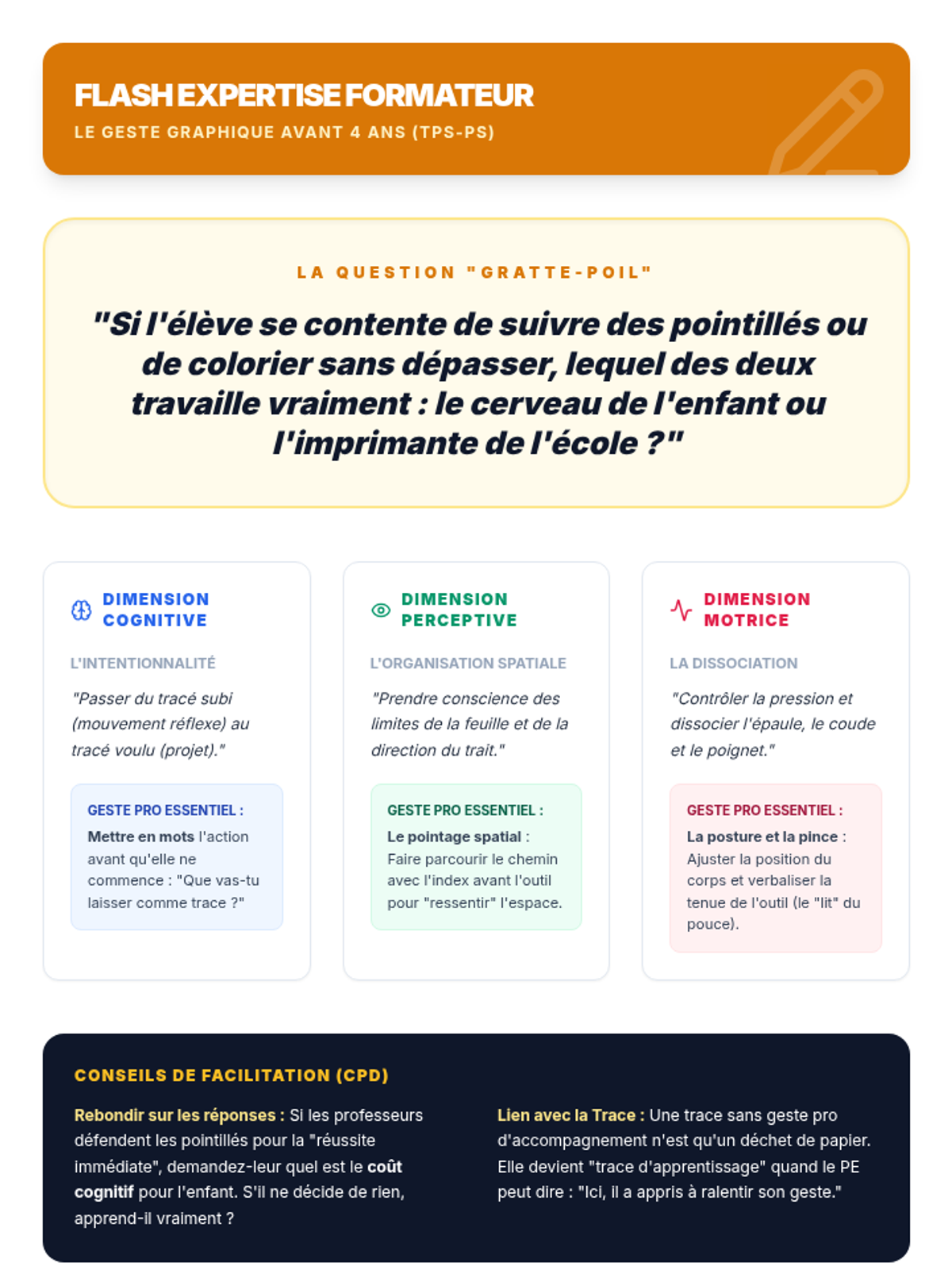
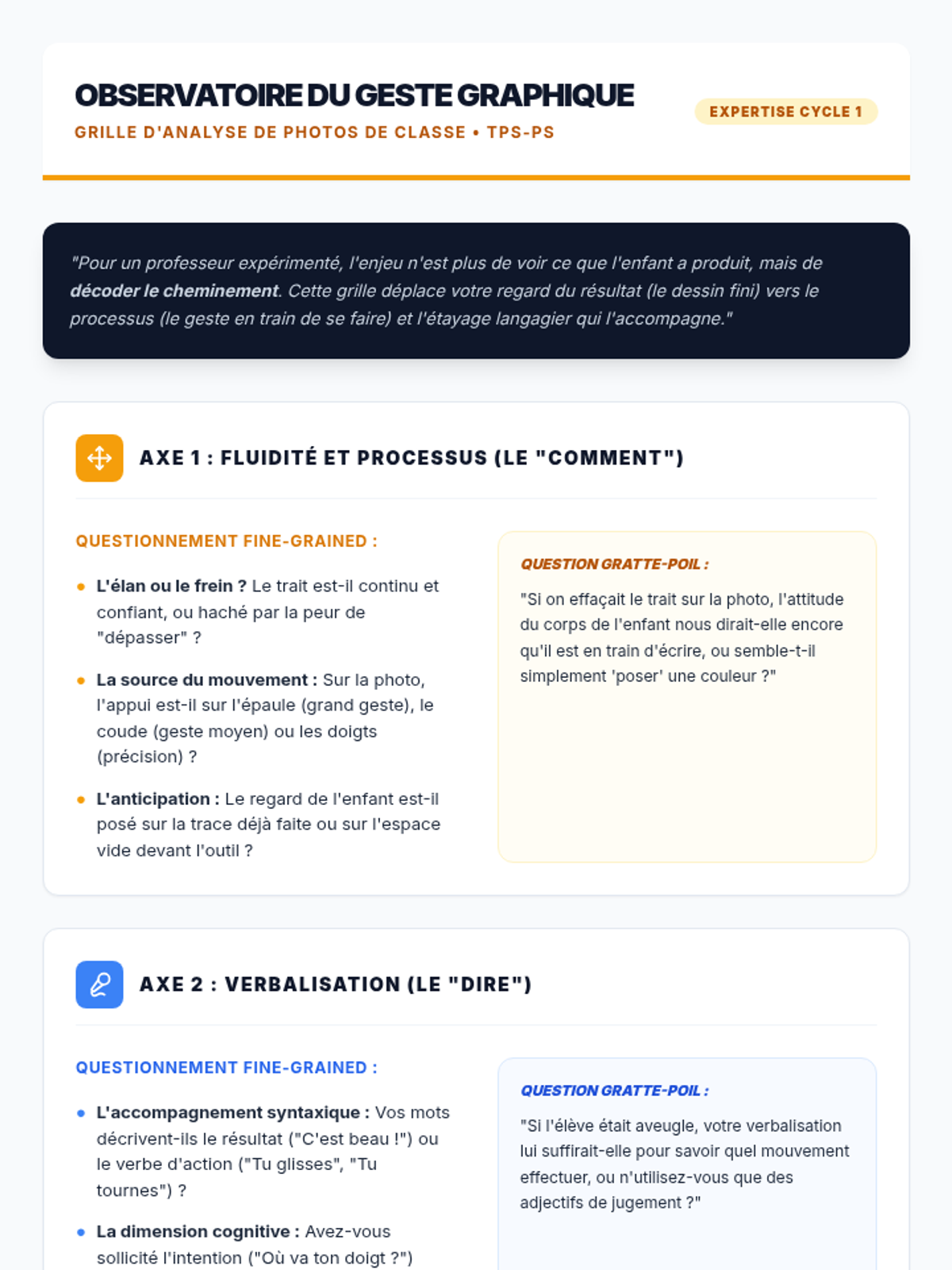
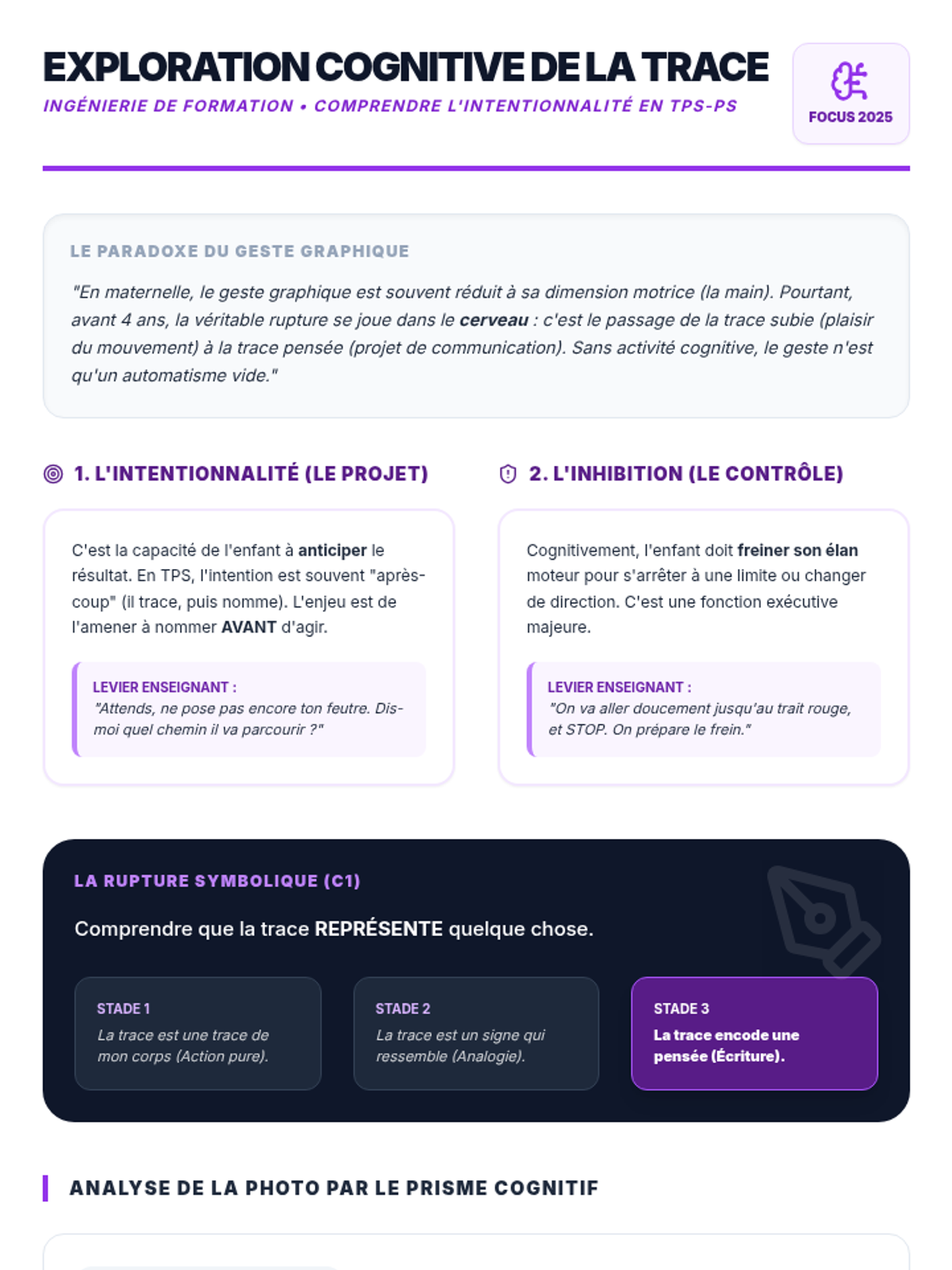
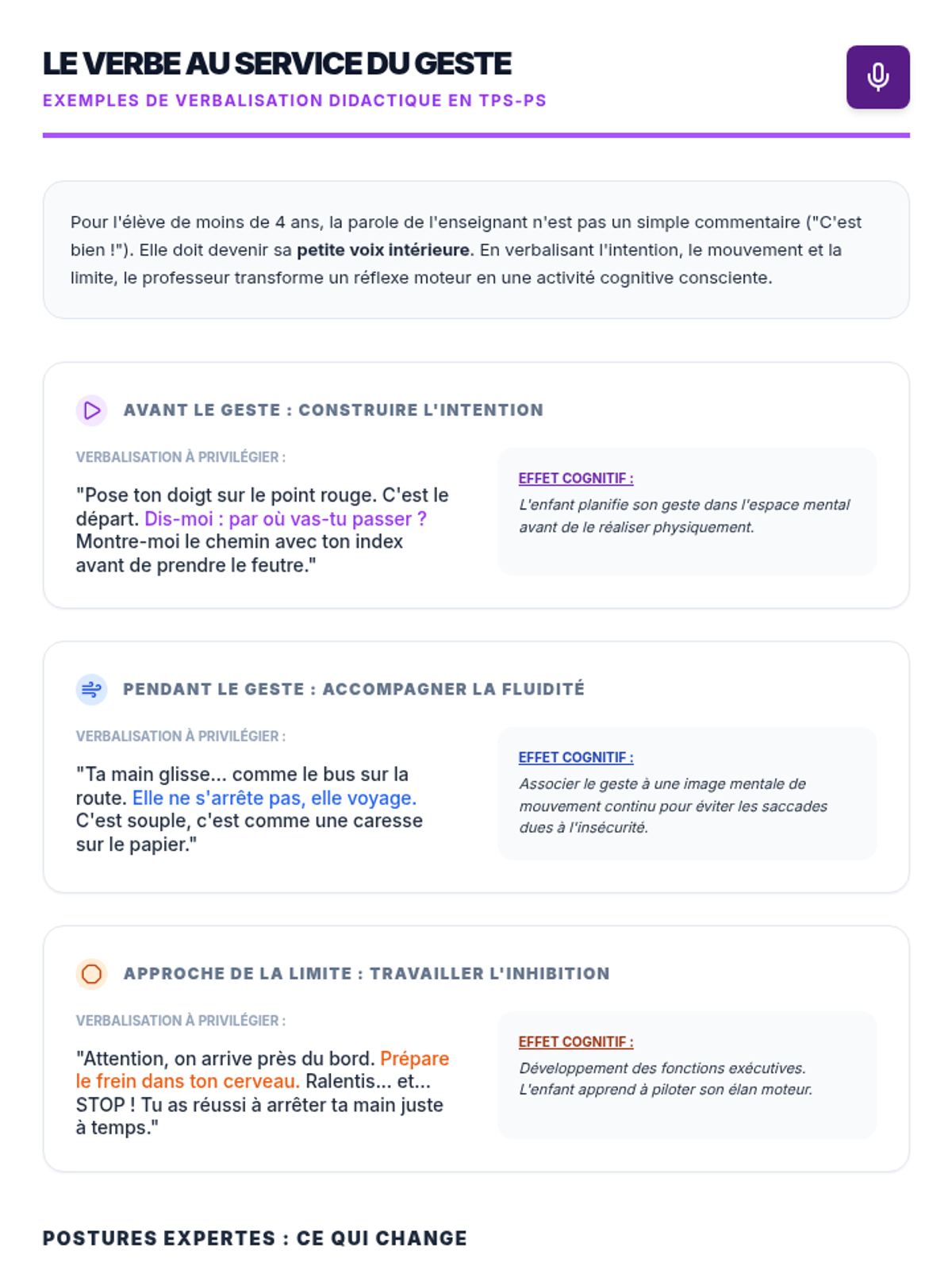
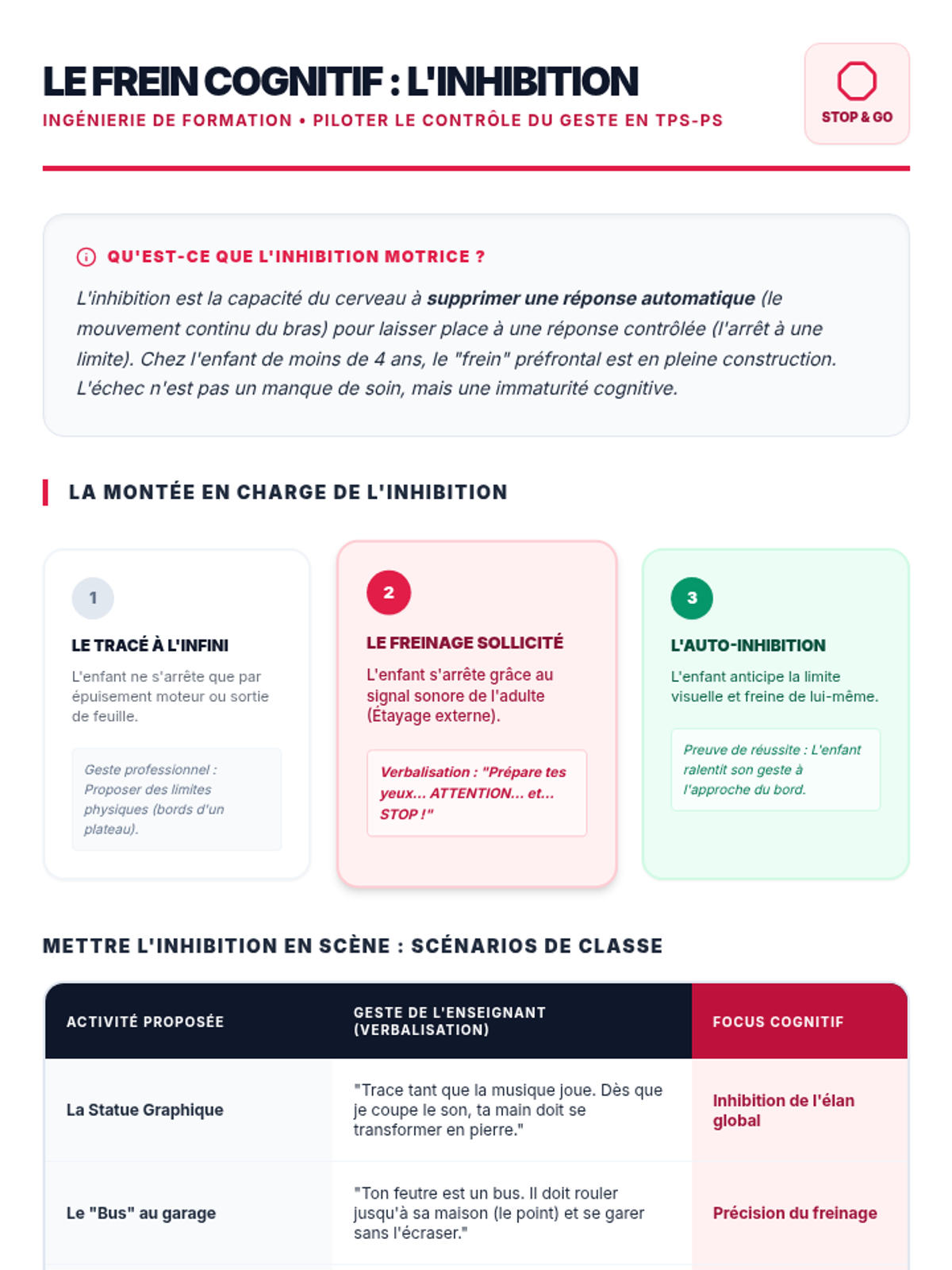
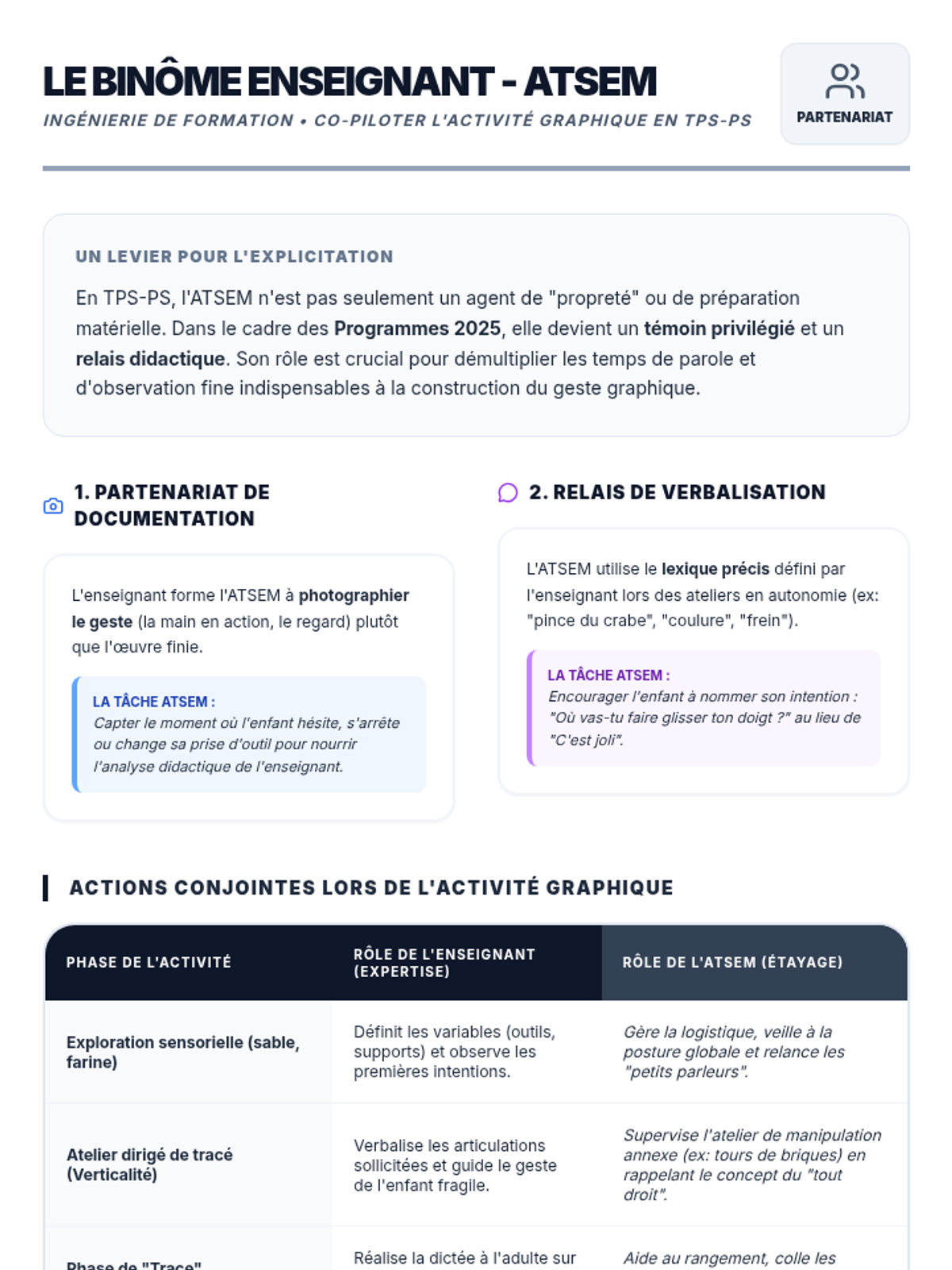
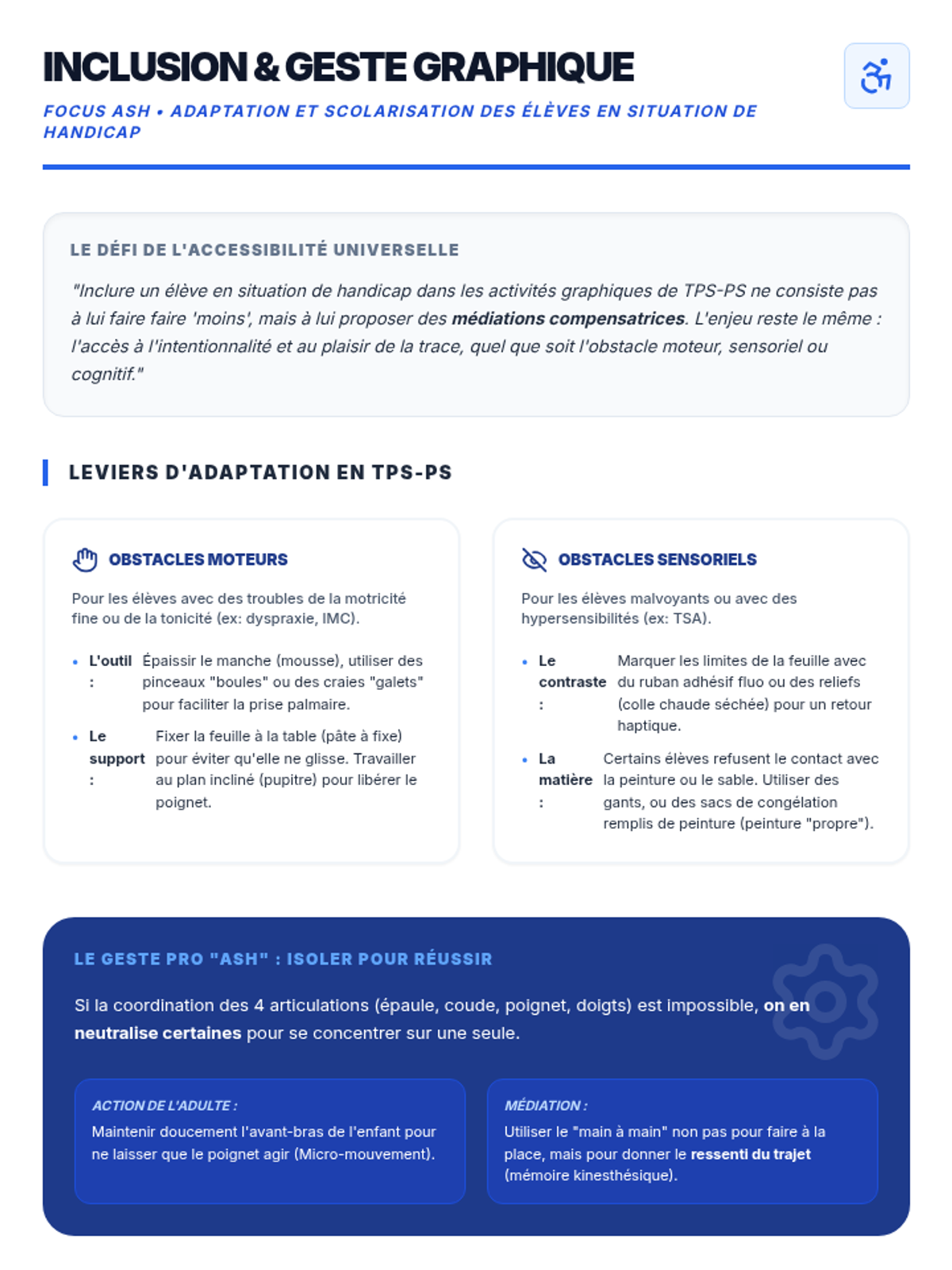
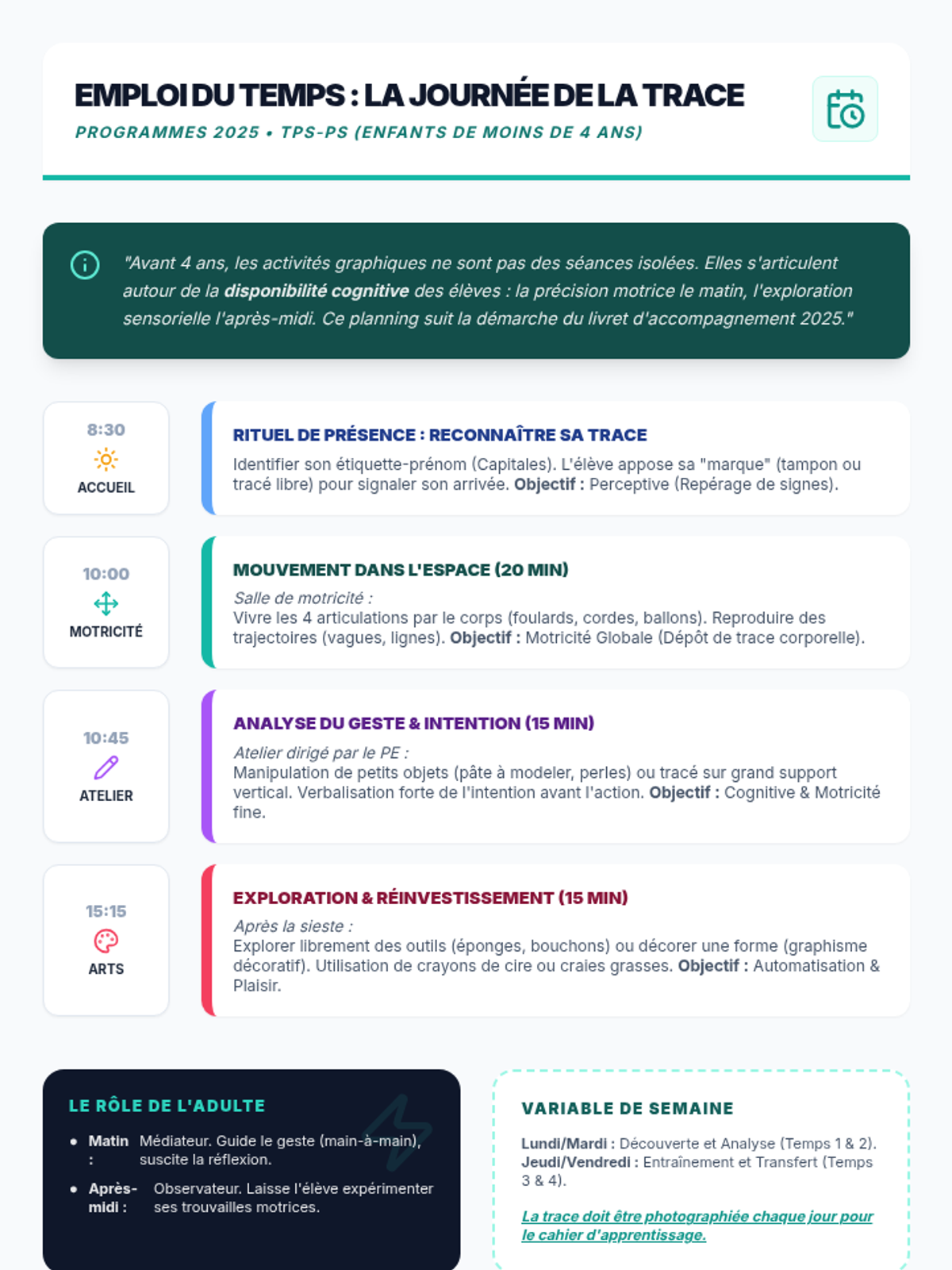
Cette formation pour les professeurs de TPS-PS vise à professionnaliser la conception des "traces" d'activités (cahiers de vie, affichages). En s'appuyant sur les photos de classe et les guides 2025, les enseignants apprennent à rendre les apprentissages explicites pour les élèves et les familles.
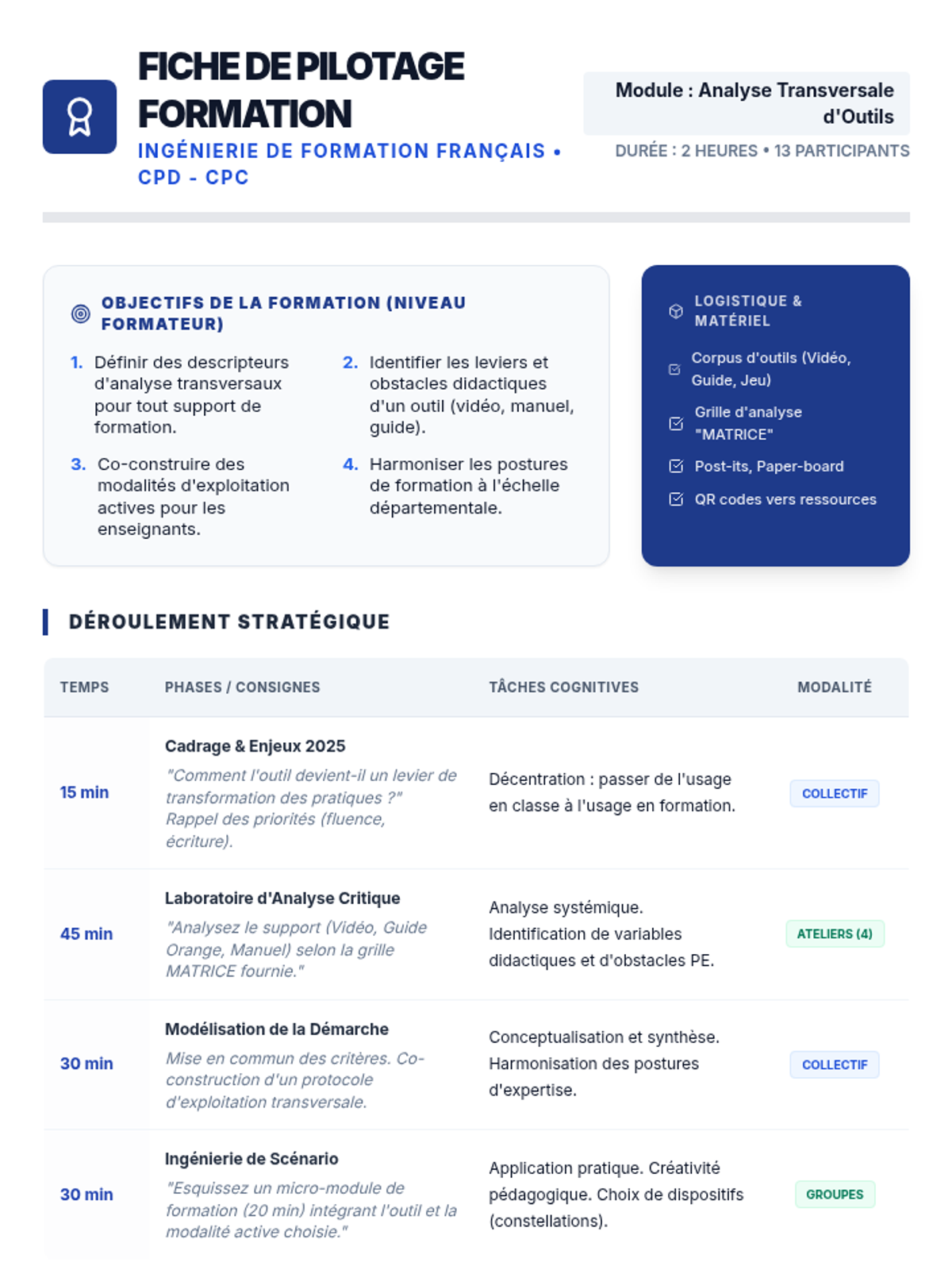
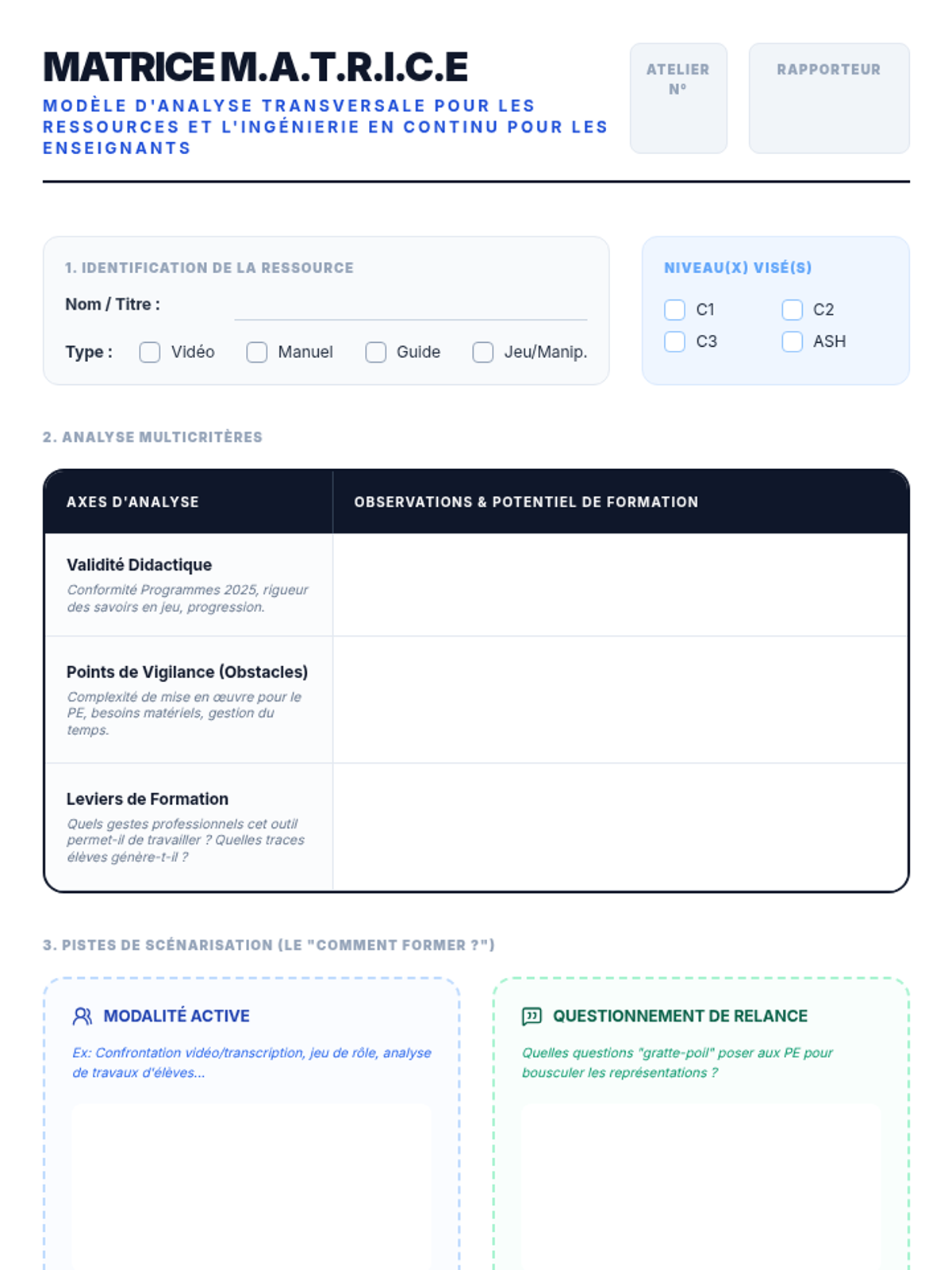
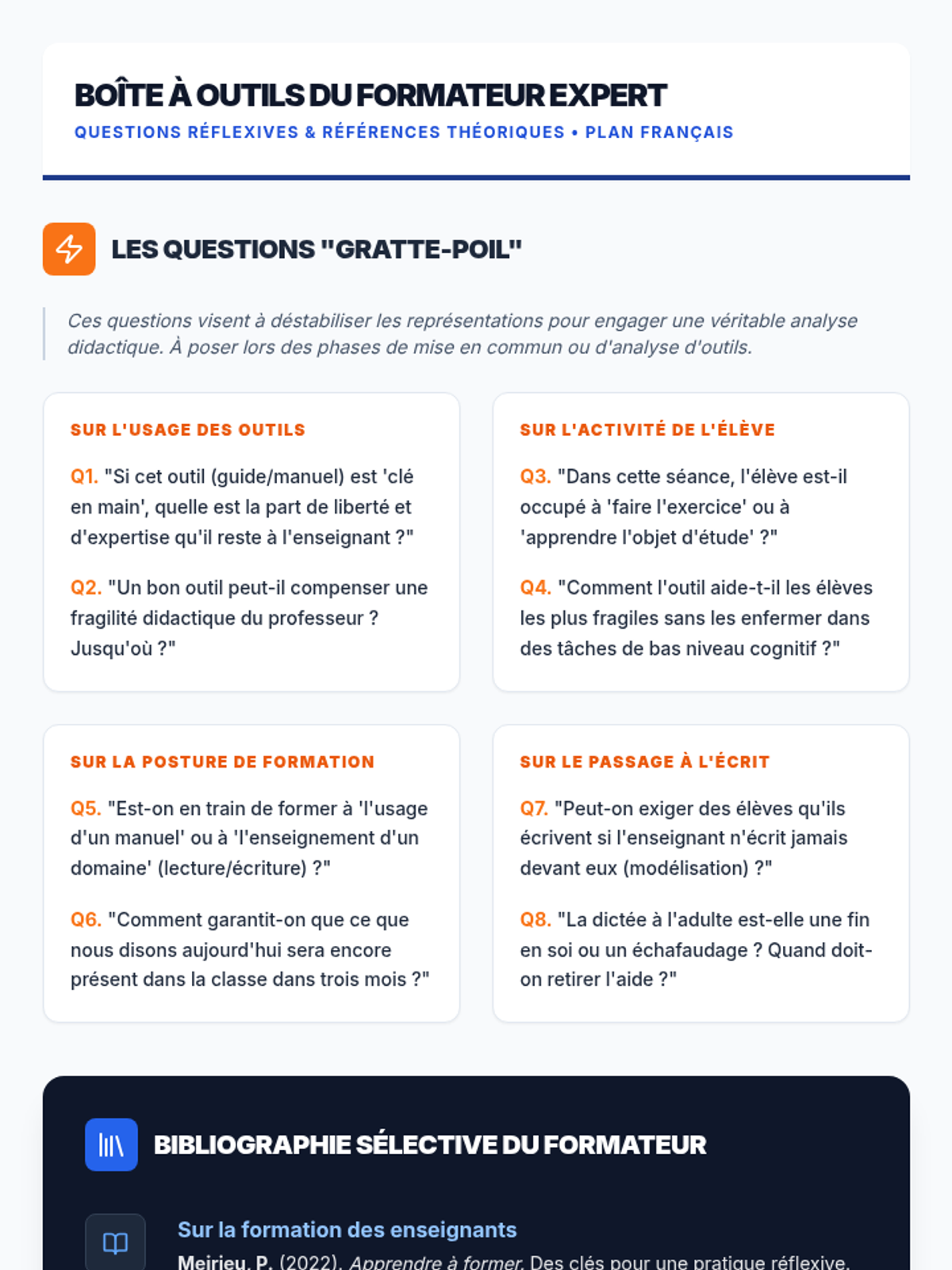
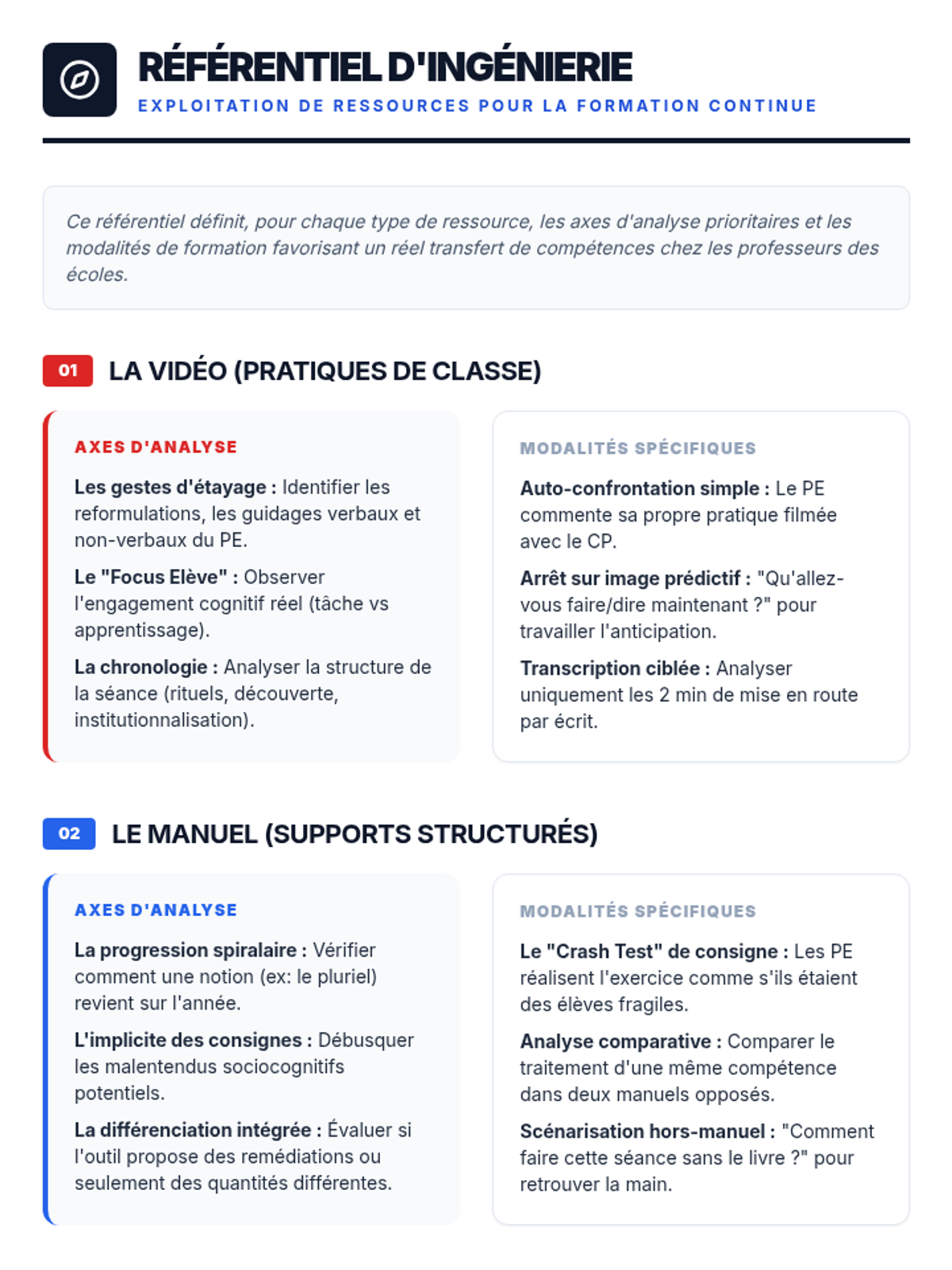
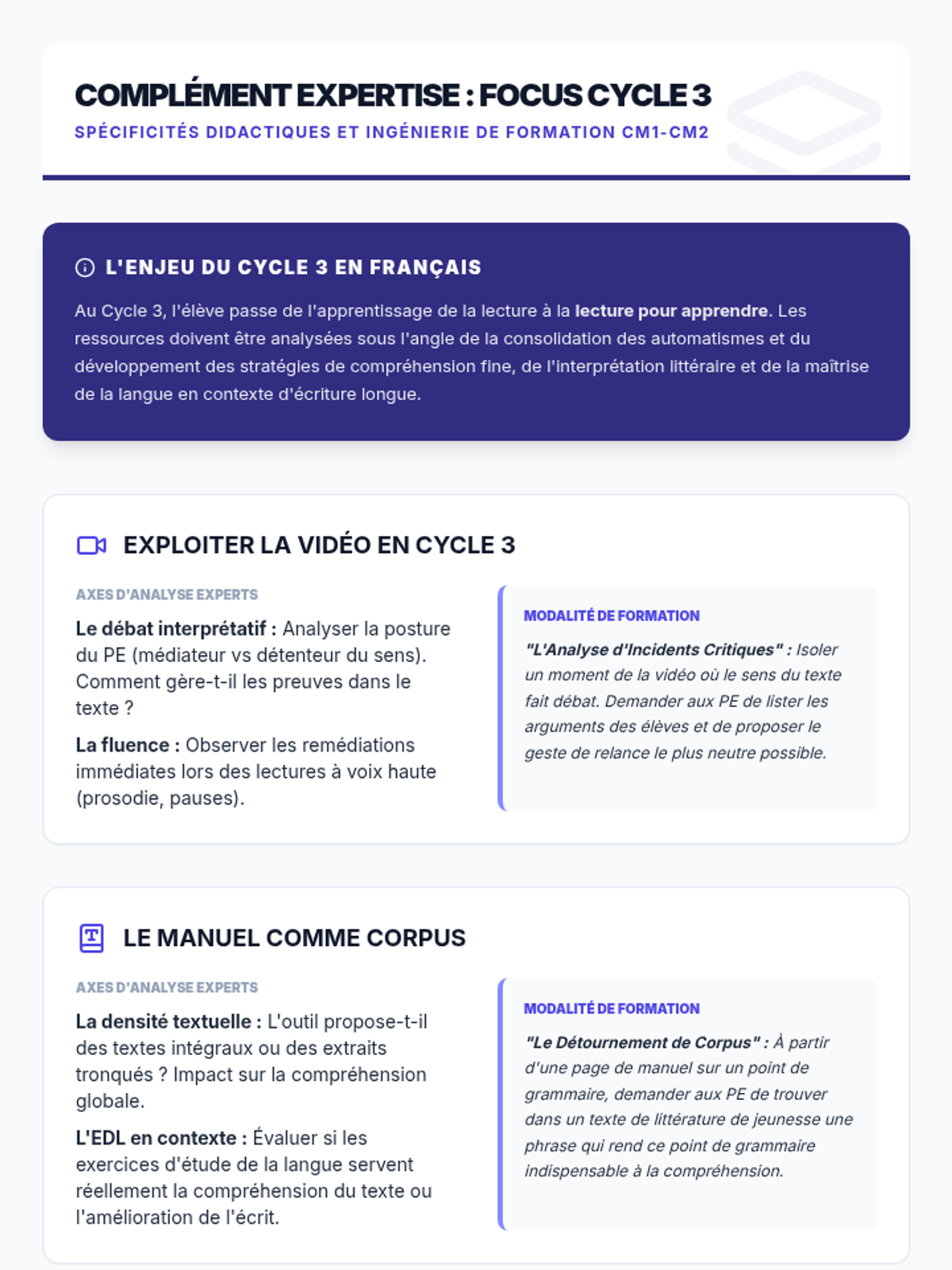
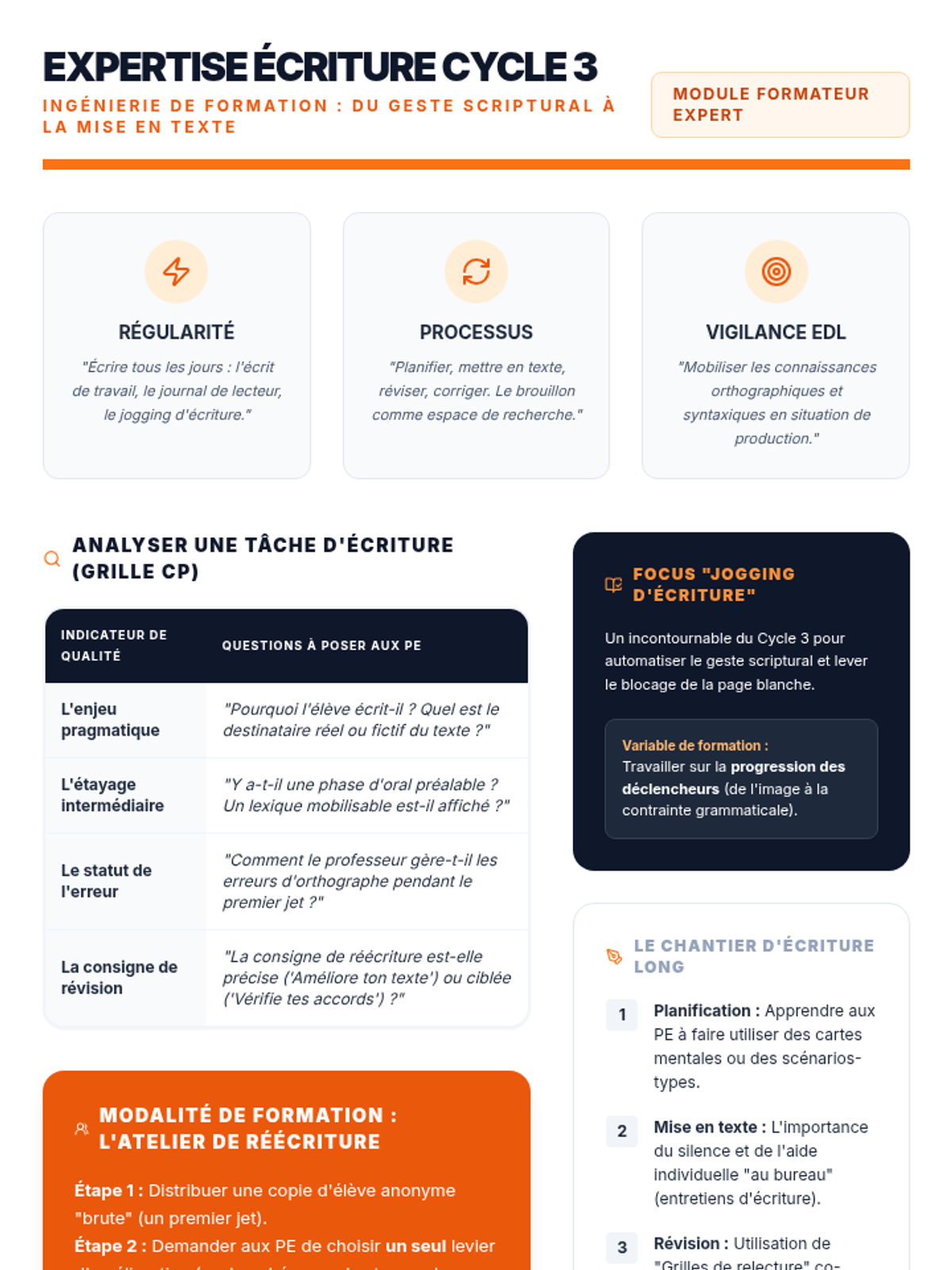
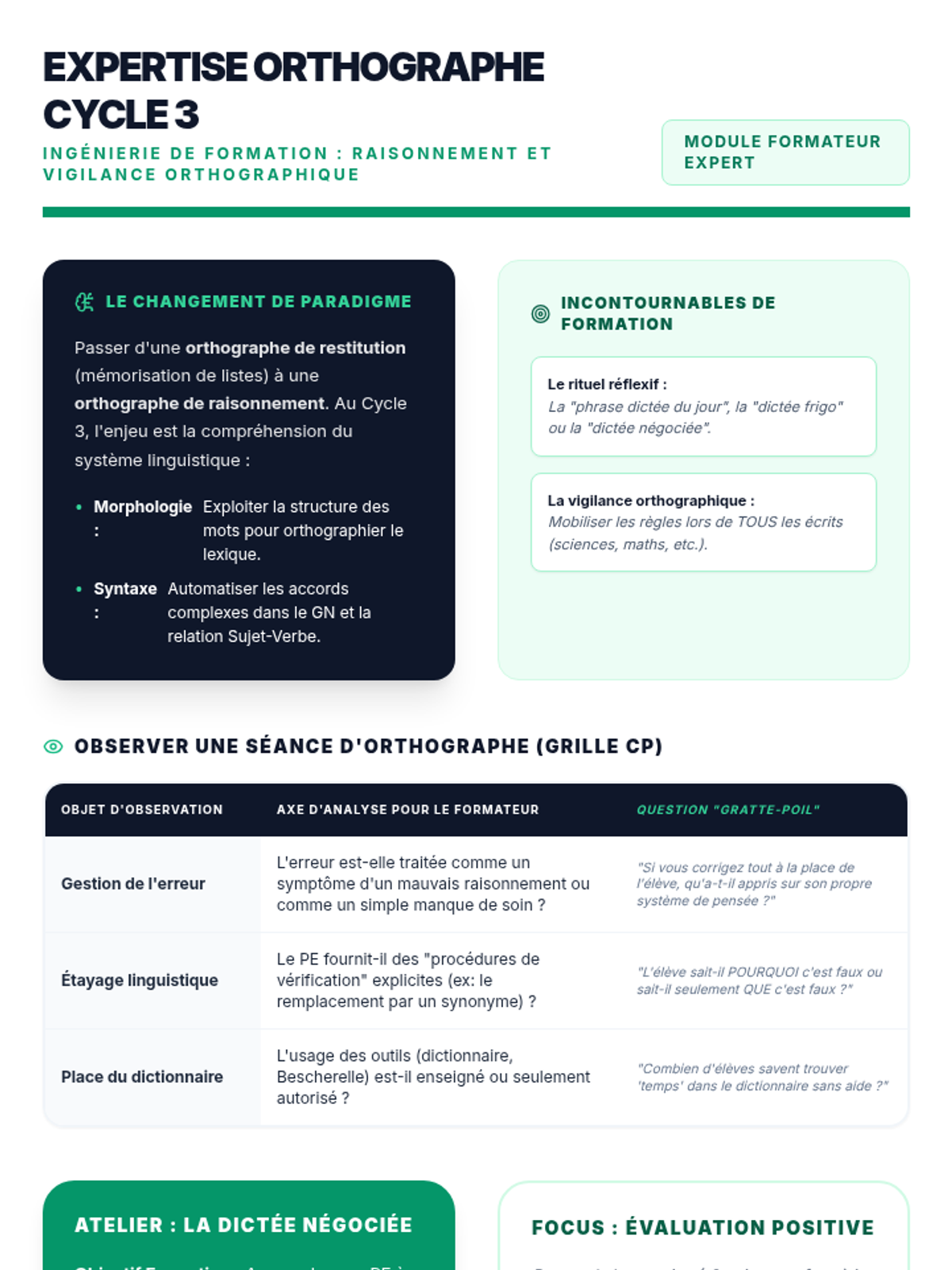
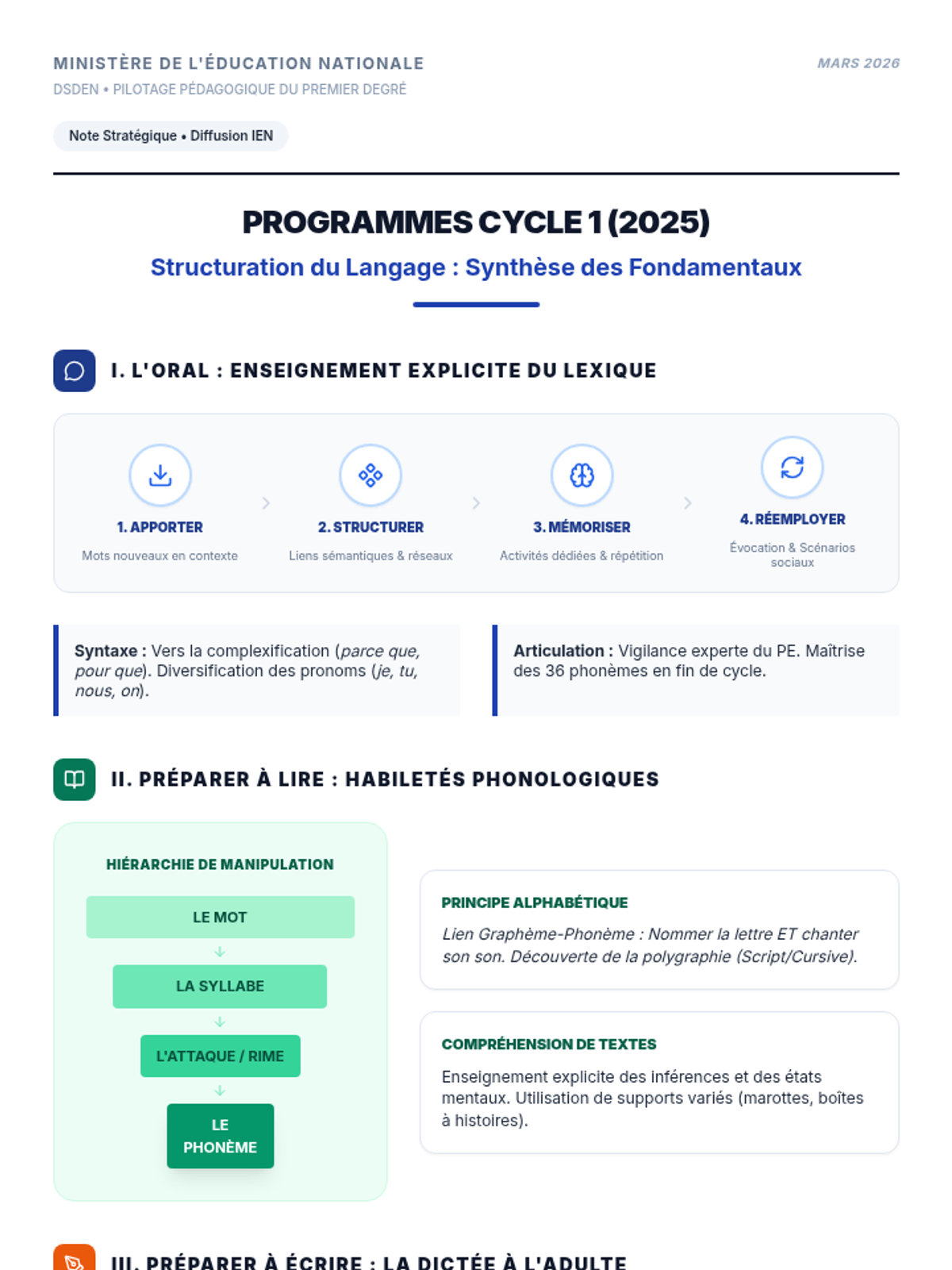
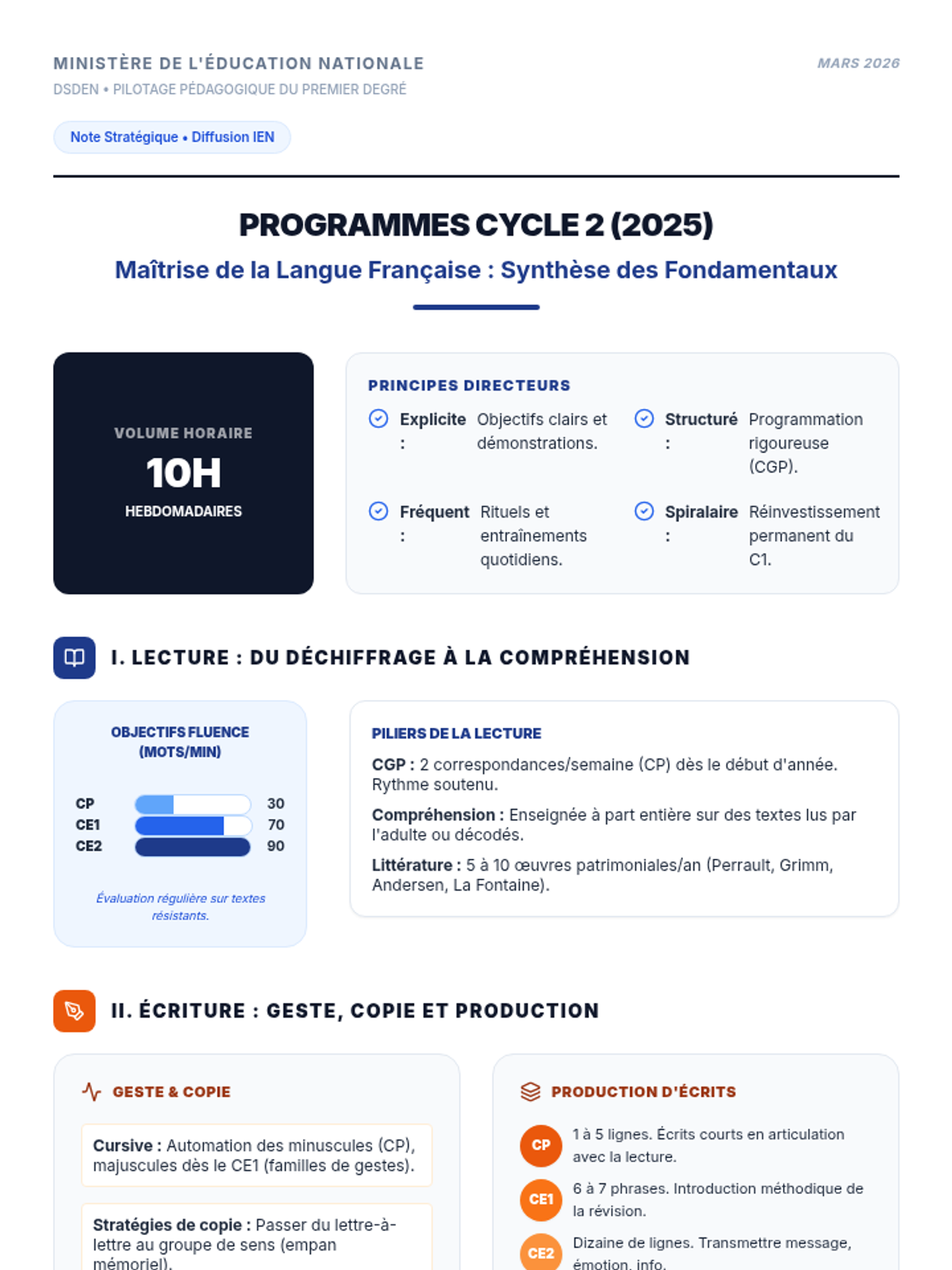
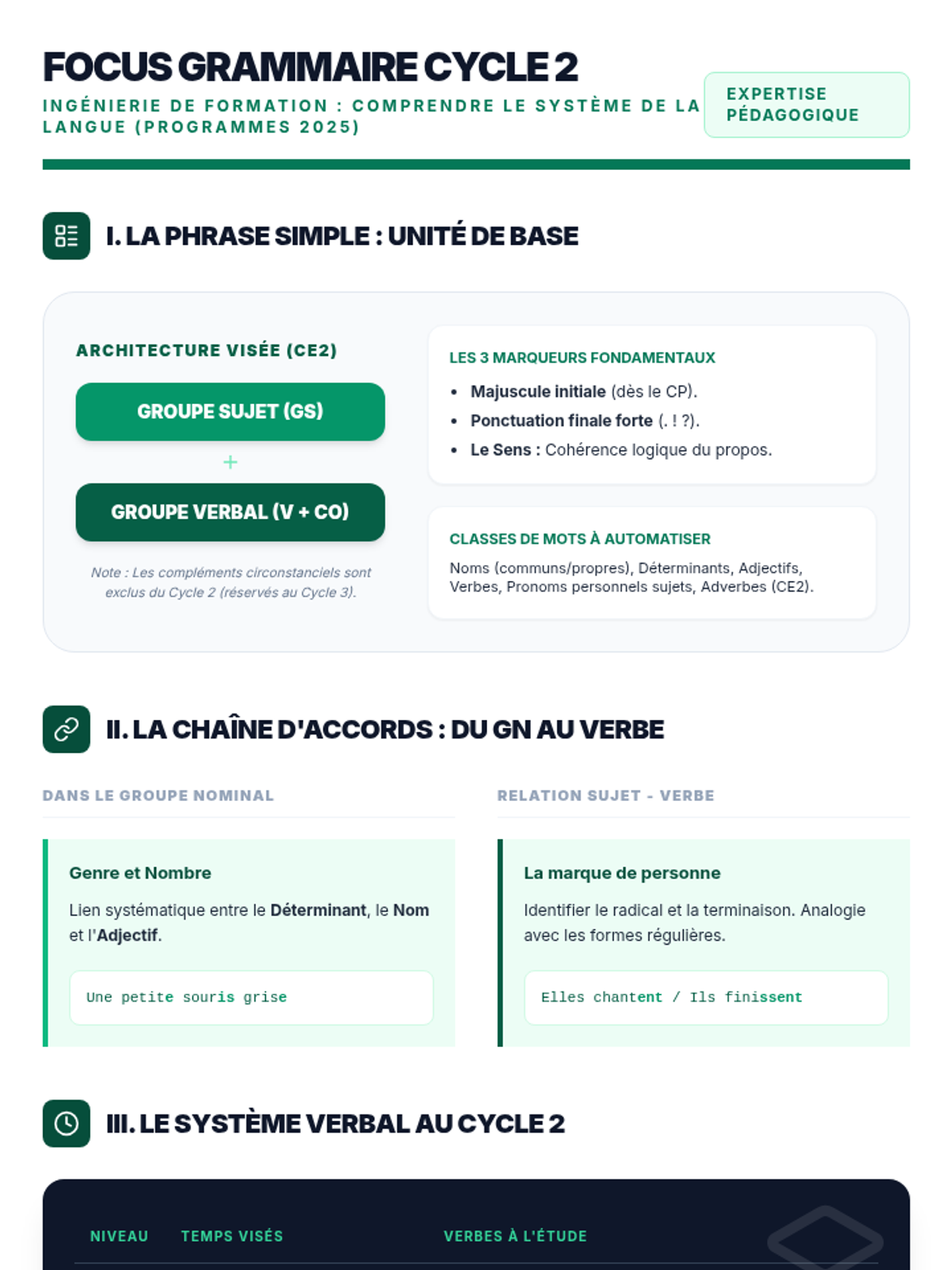
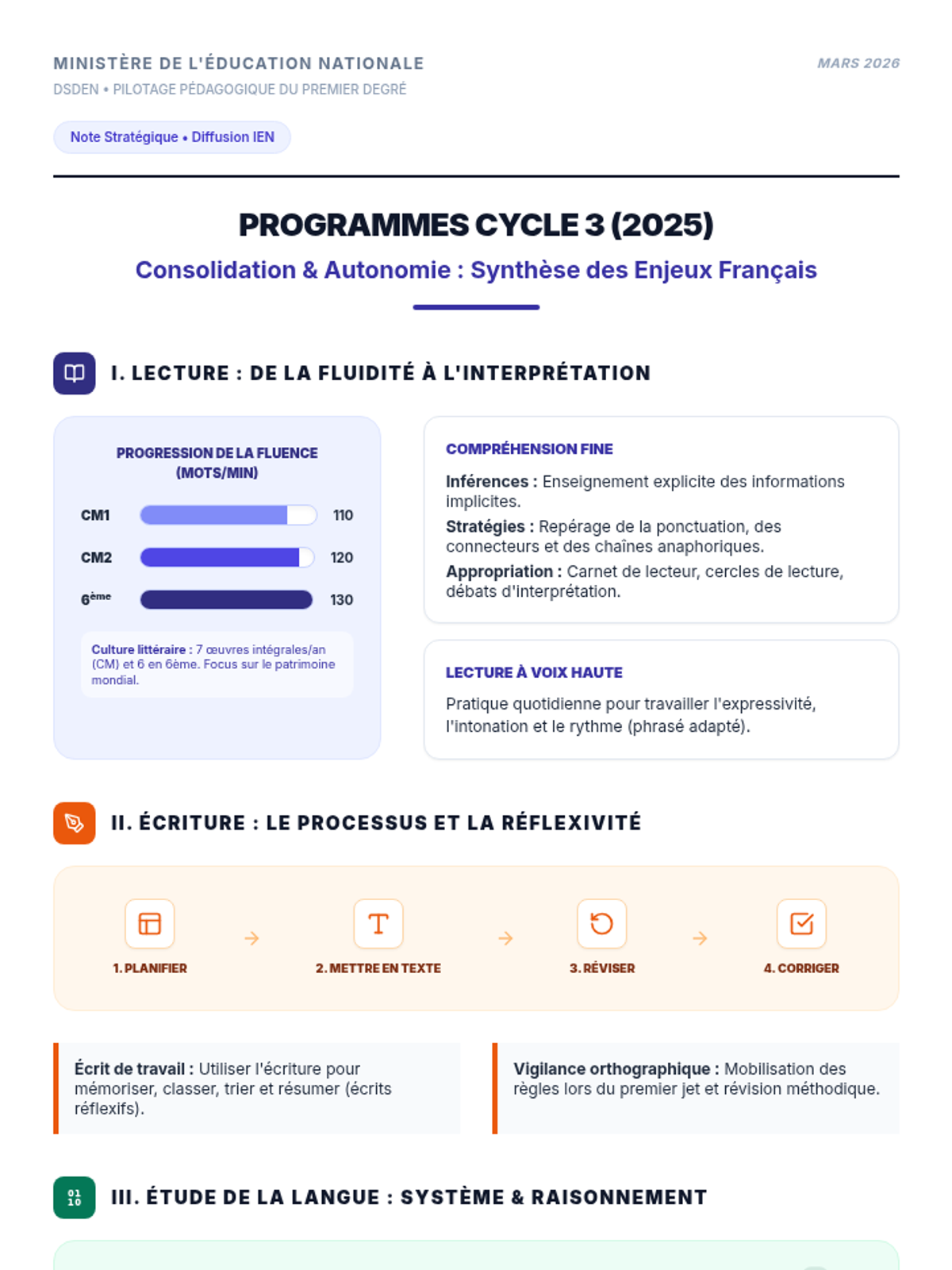
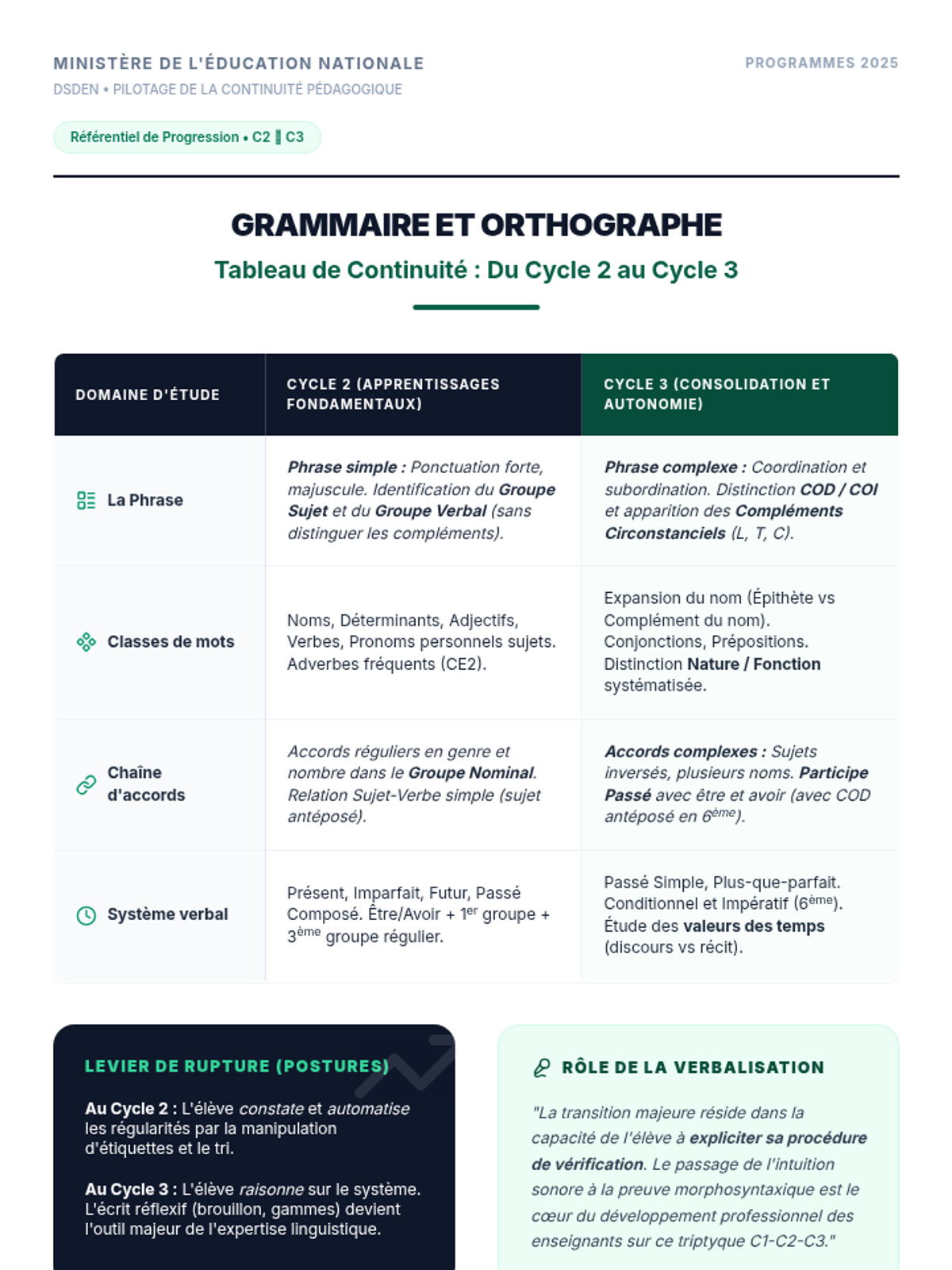
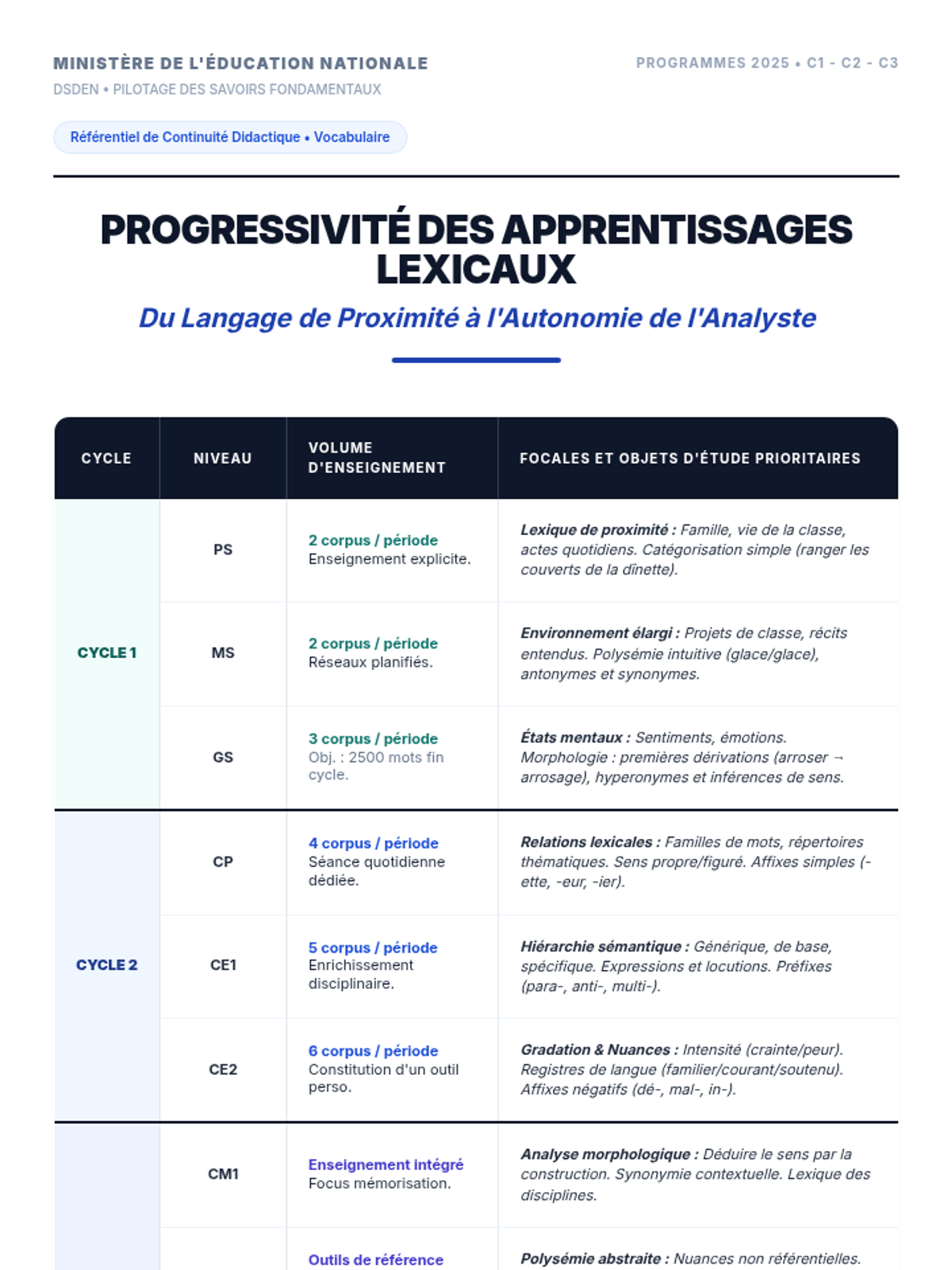
Cette formation vise à outiller les conseillers pédagogiques pour l'analyse et l'exploitation de ressources diverses (vidéos, manuels, guides) dans le cadre de la formation continue des professeurs des écoles en français, conformément aux orientations stratégiques nationales.
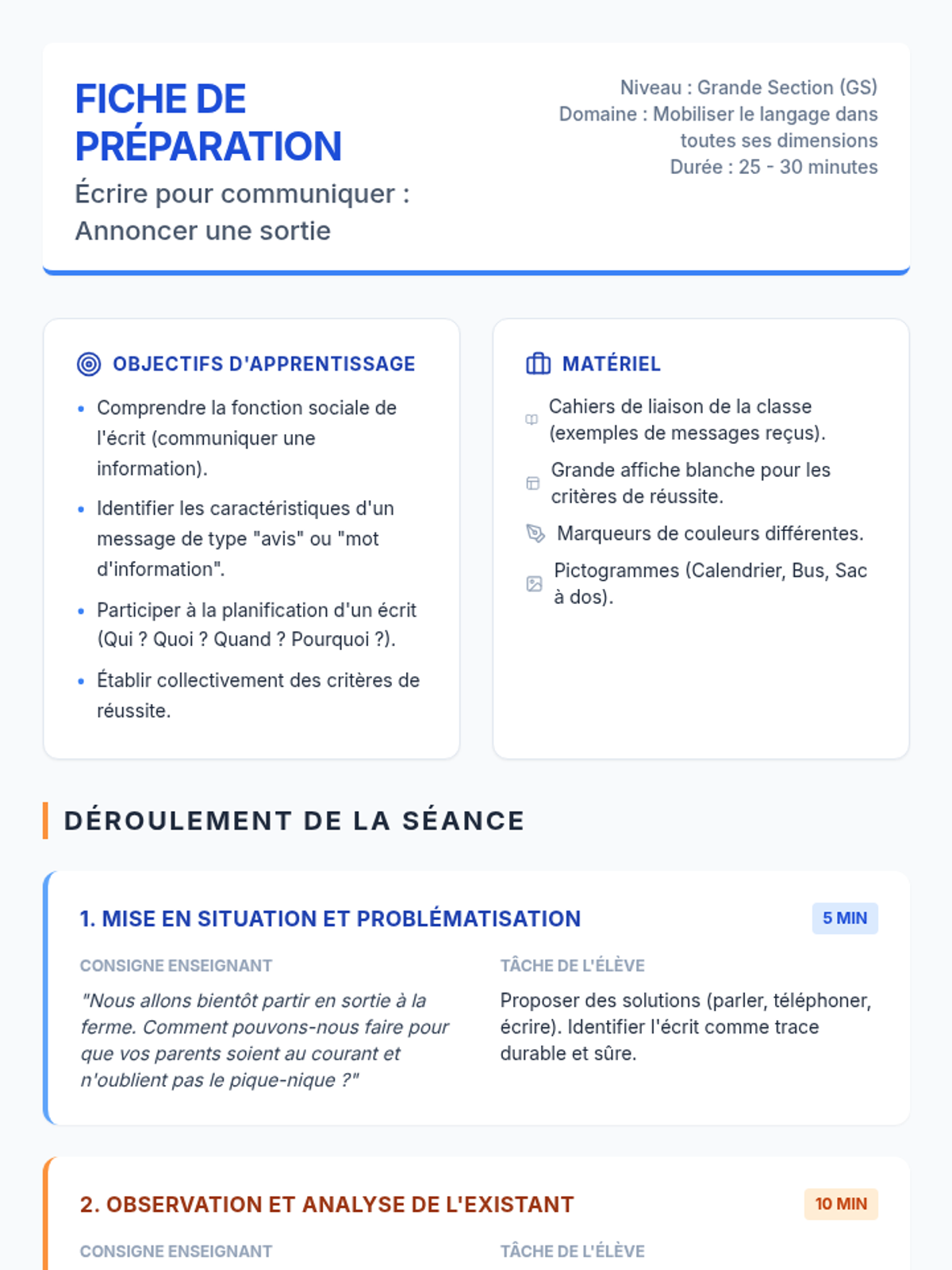
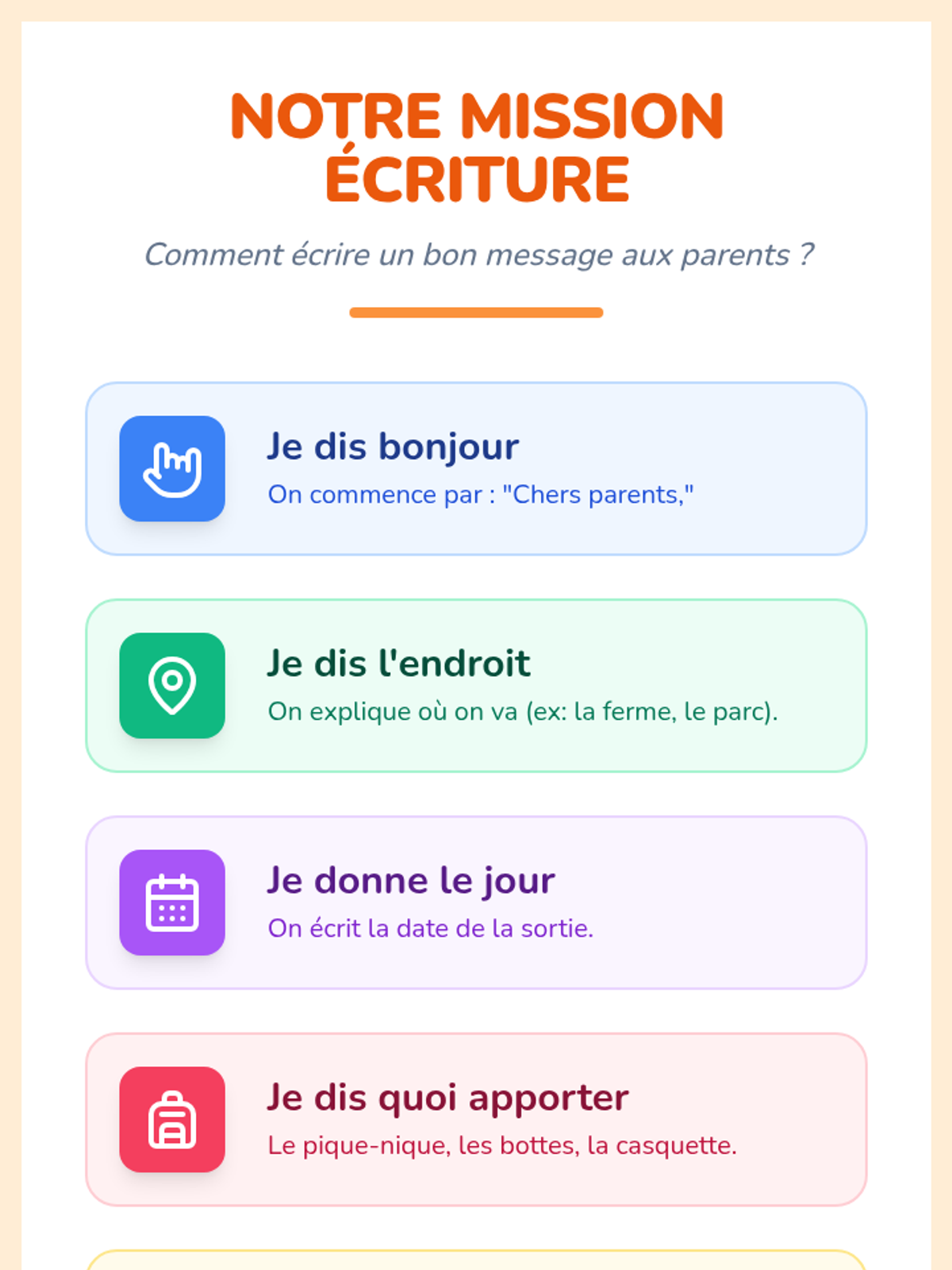
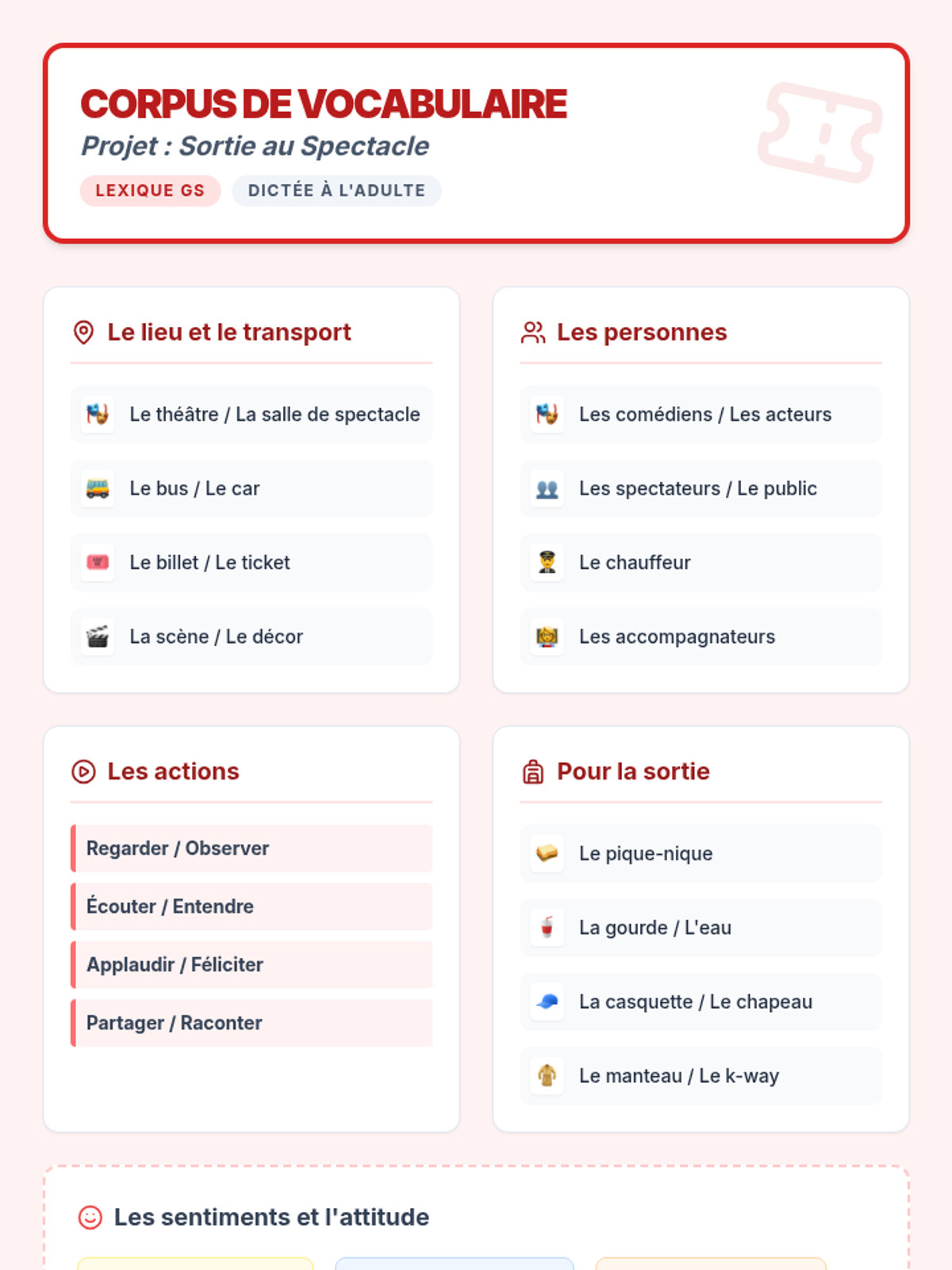
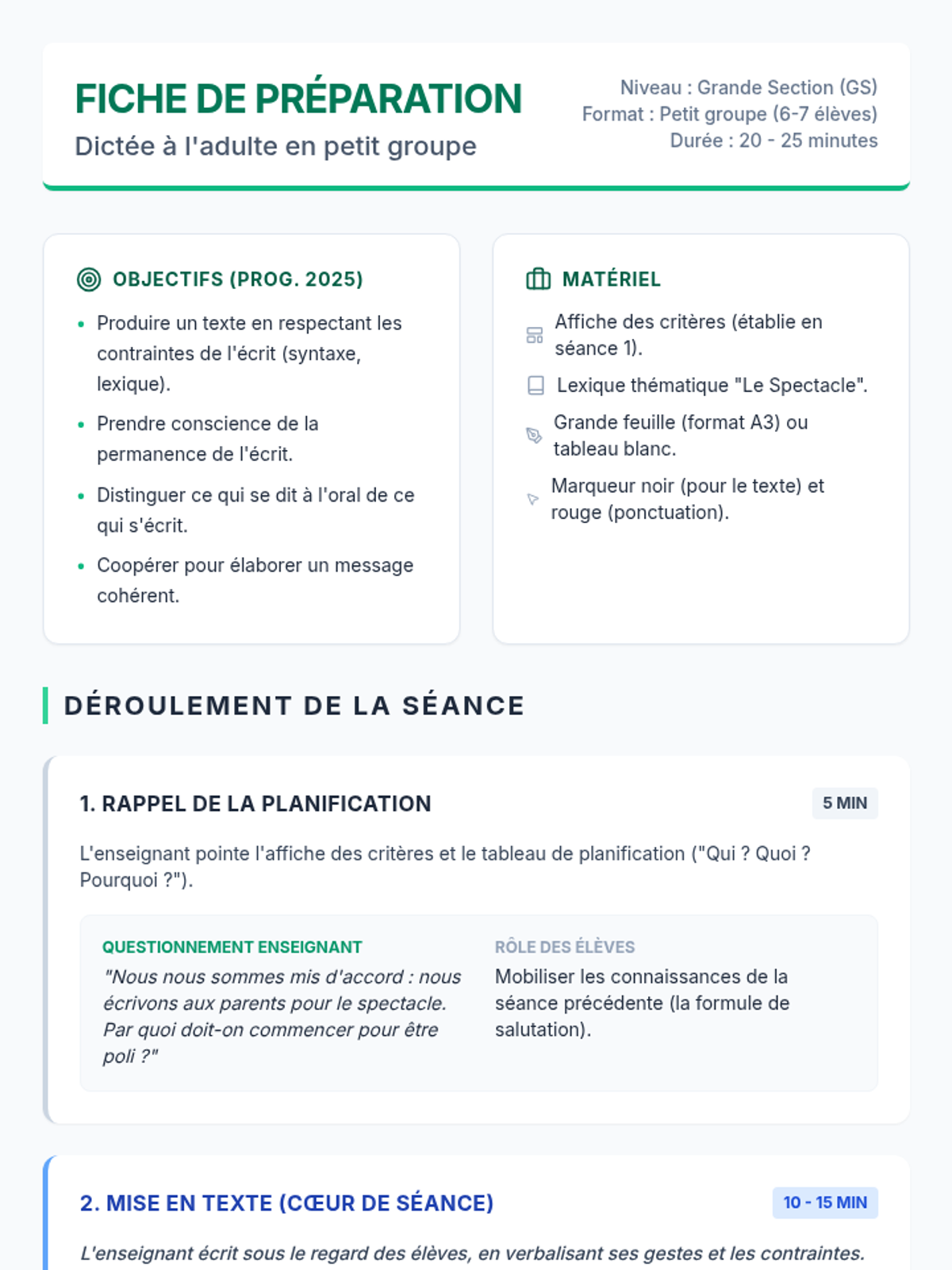
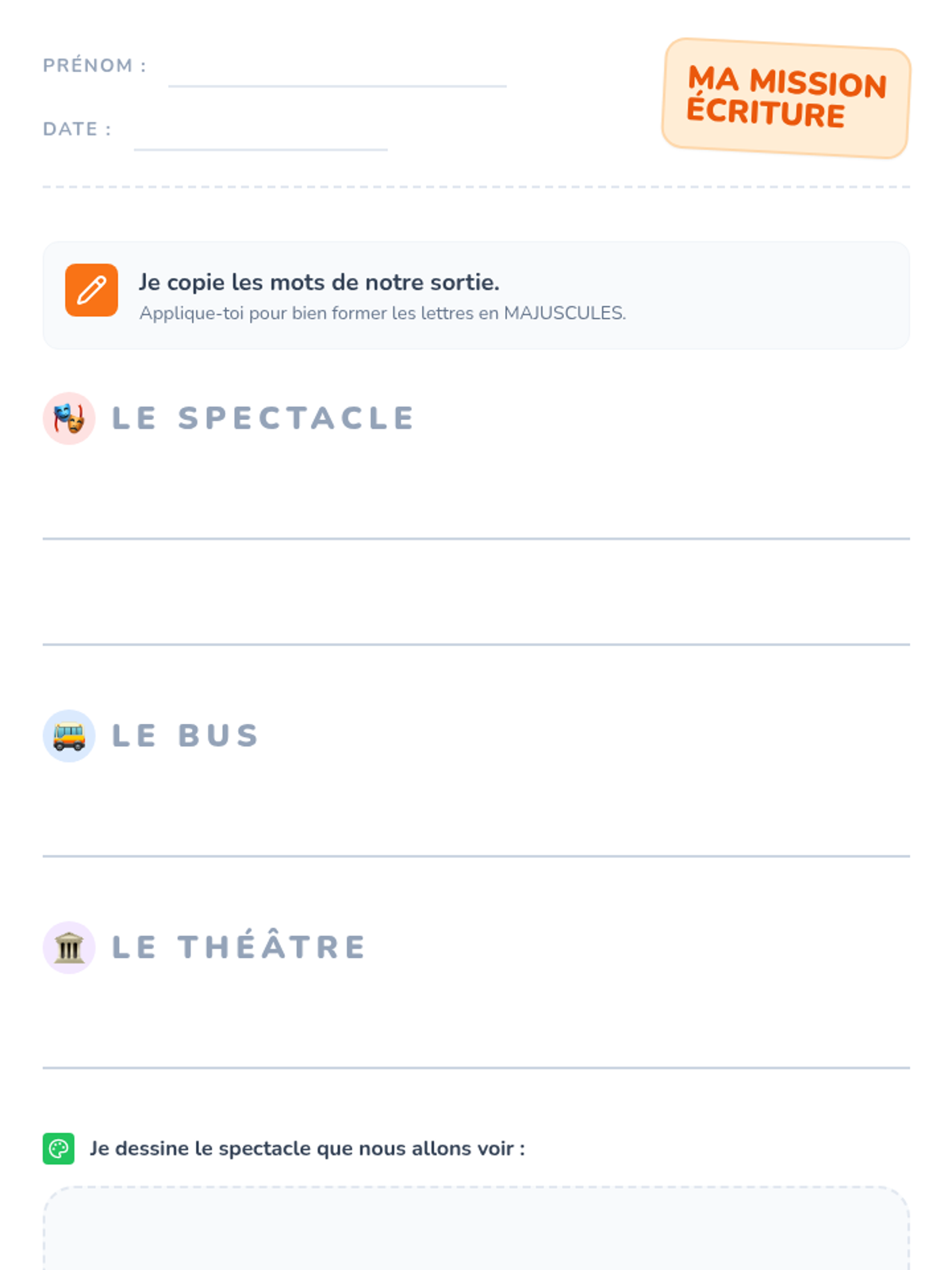
Cette leçon vise à introduire un projet d'écriture authentique en Grande Section : rédiger un message aux parents pour annoncer une sortie scolaire. Elle s'appuie sur l'observation de messages existants pour définir des critères de réussite et initier la planification selon les programmes 2025.
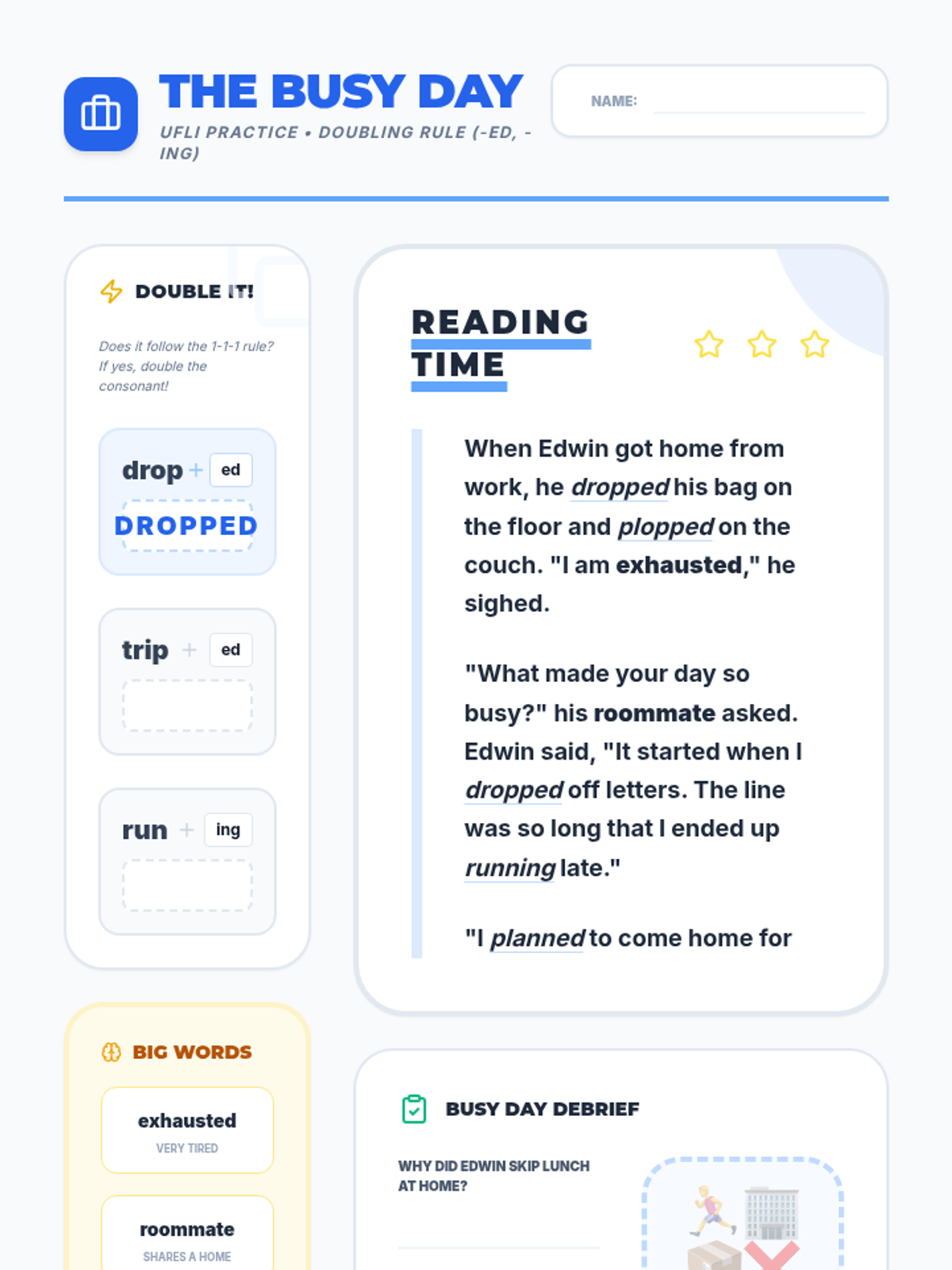
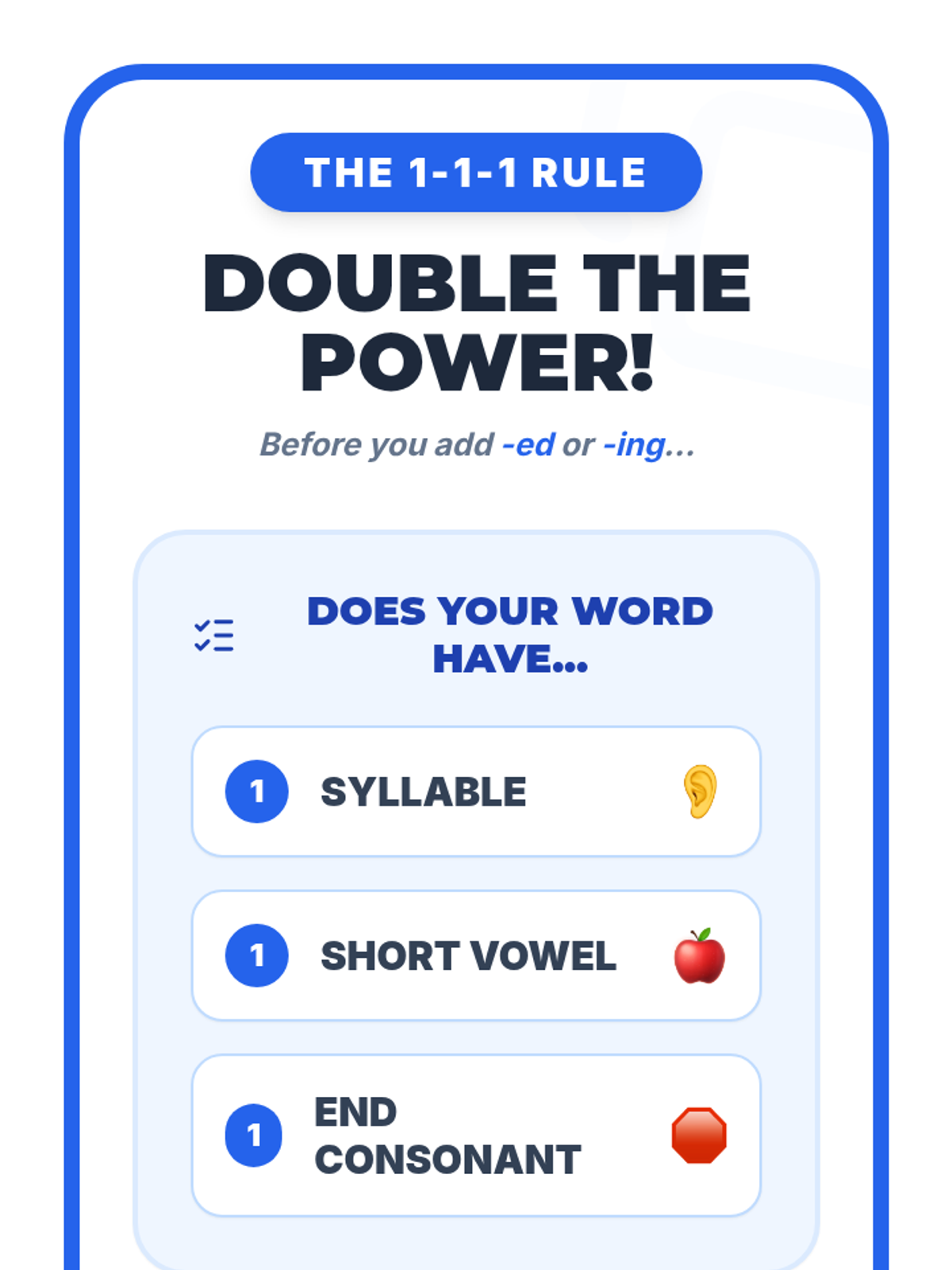
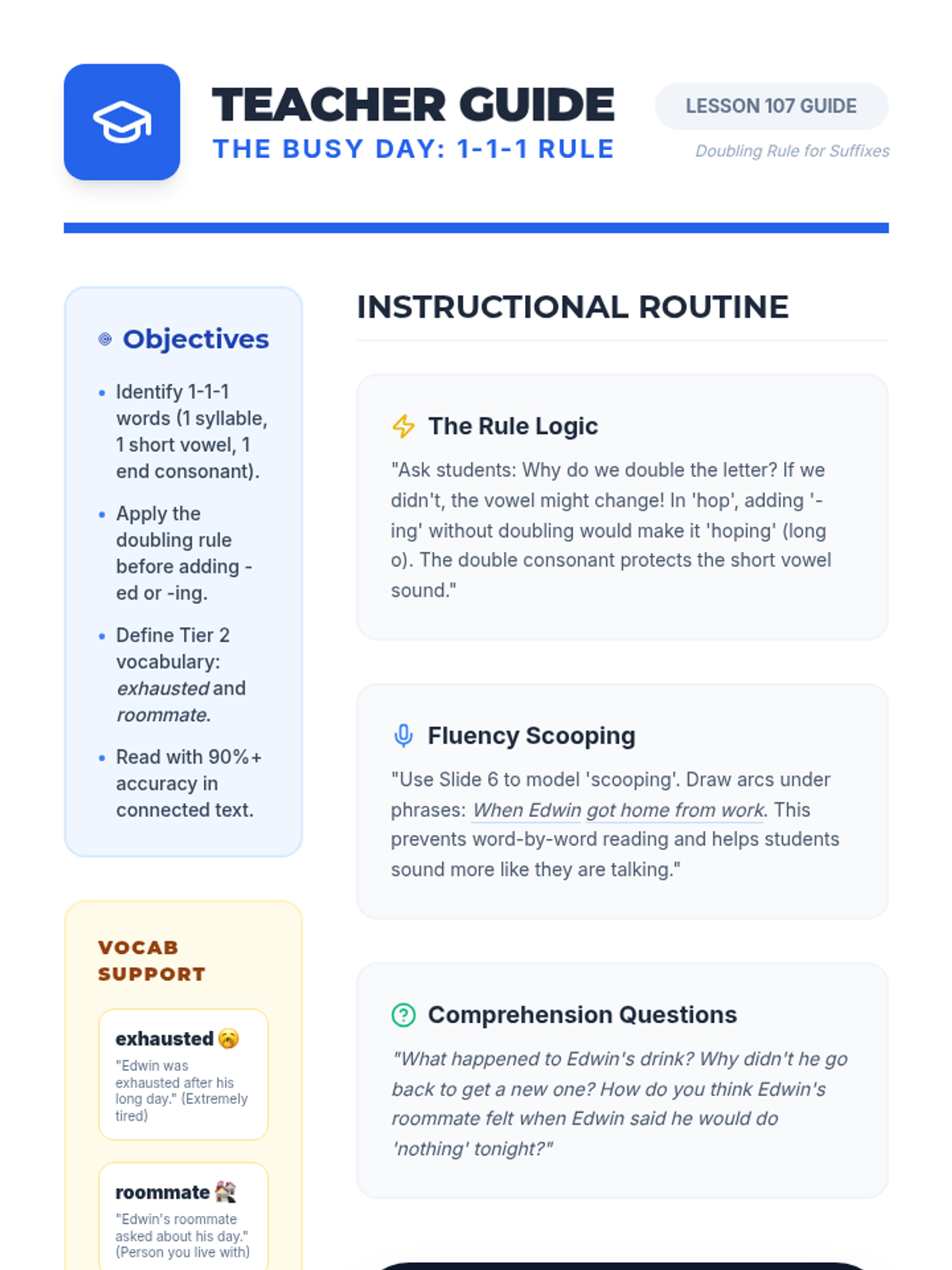
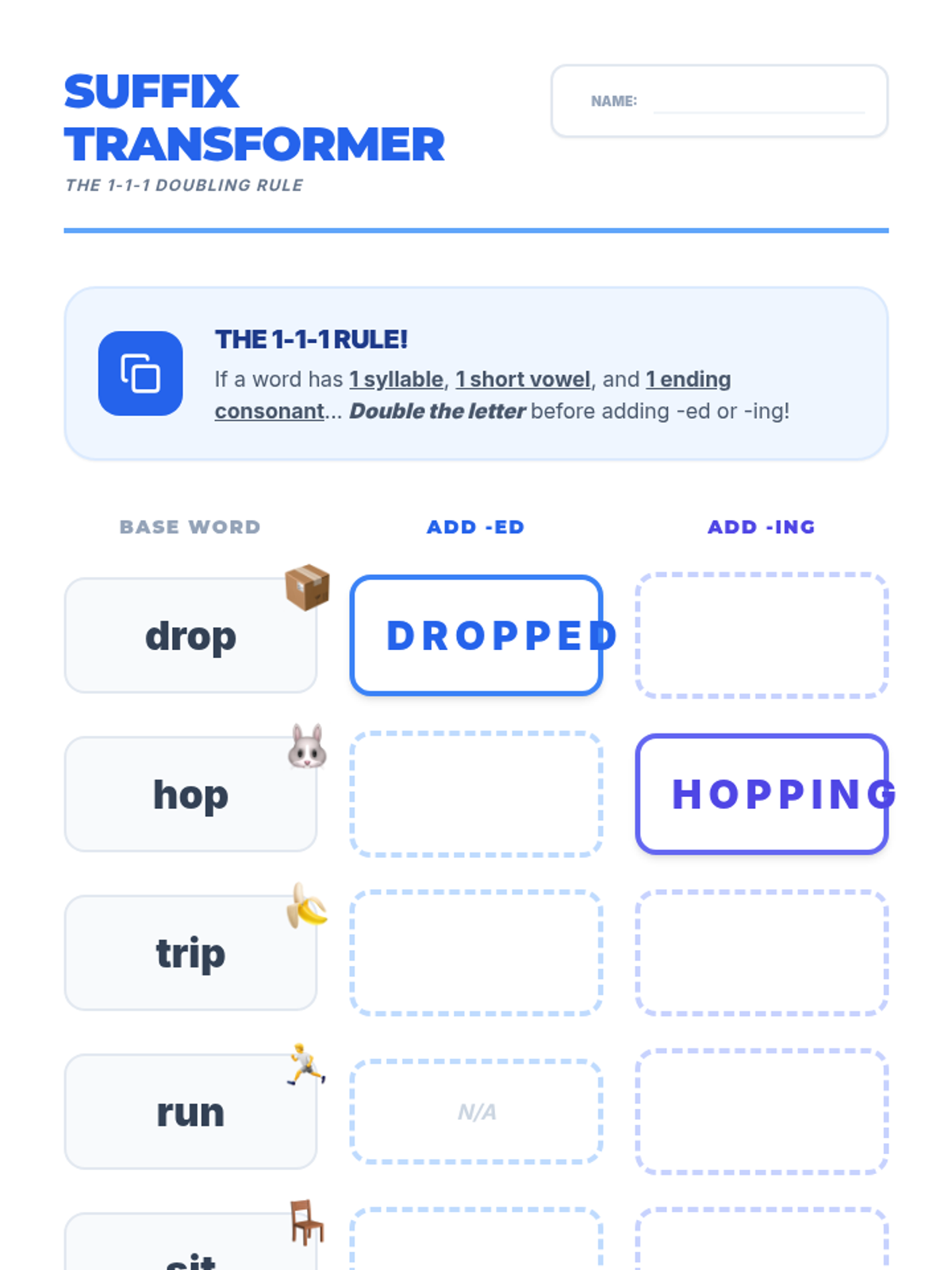
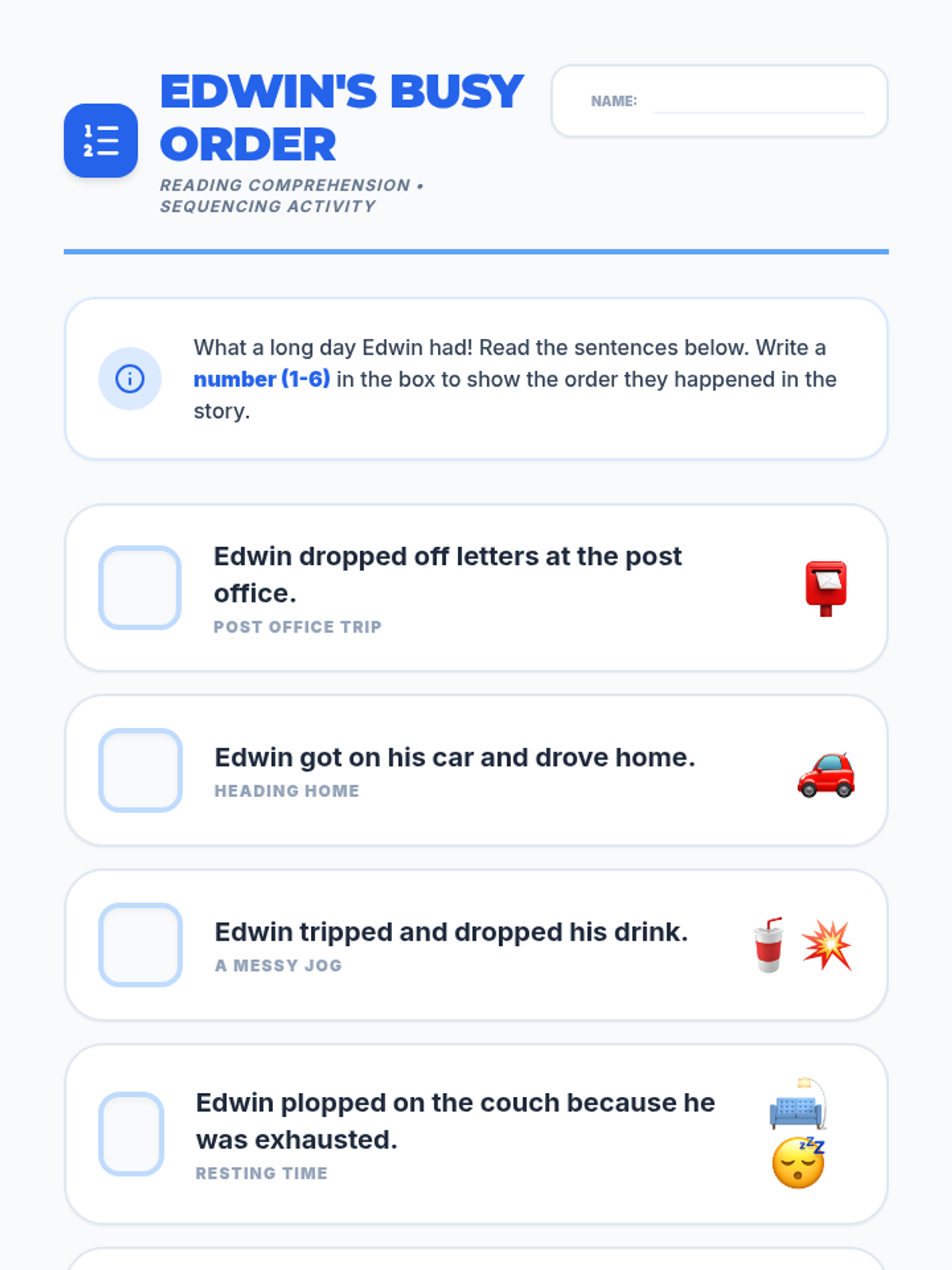
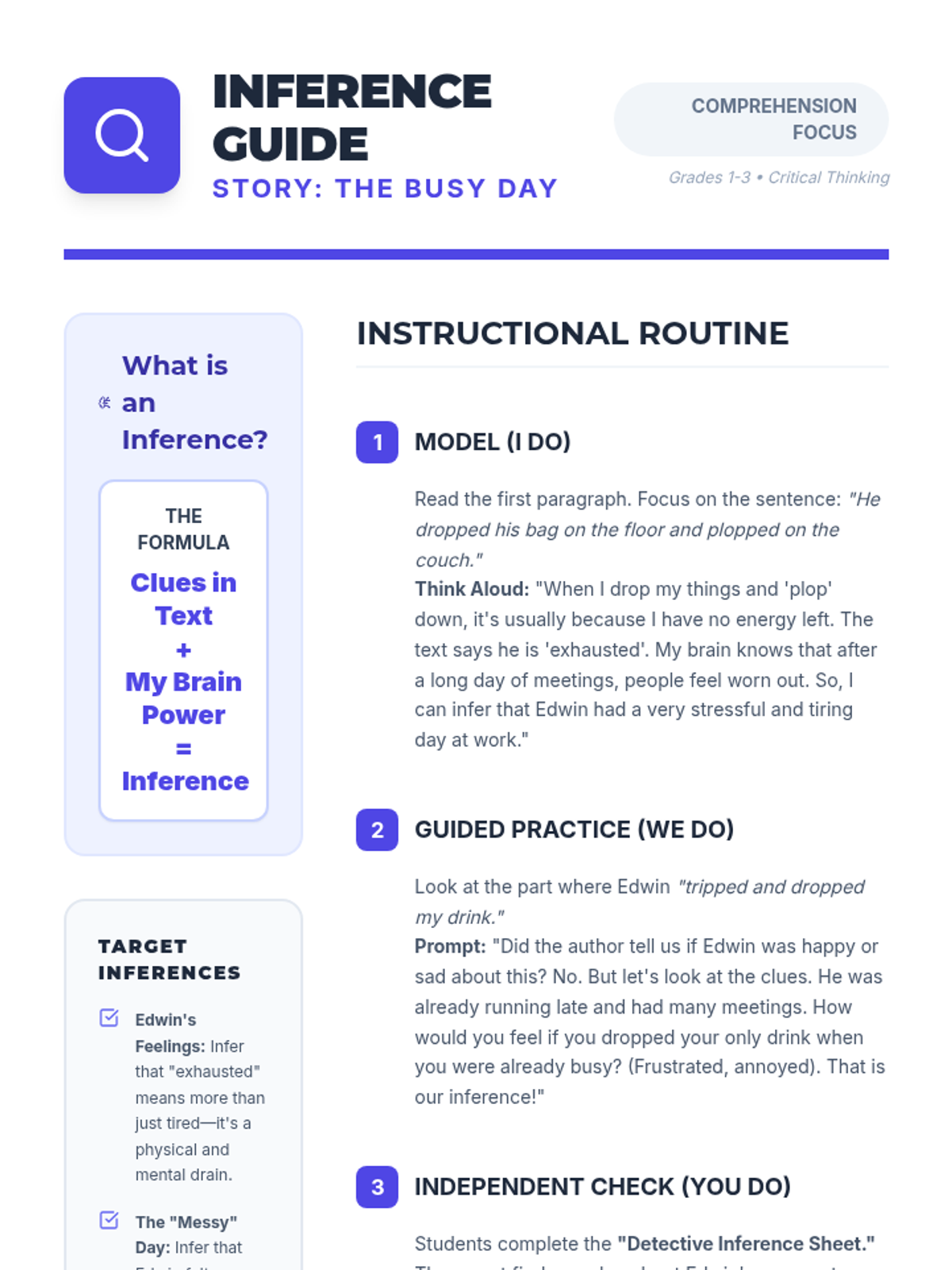
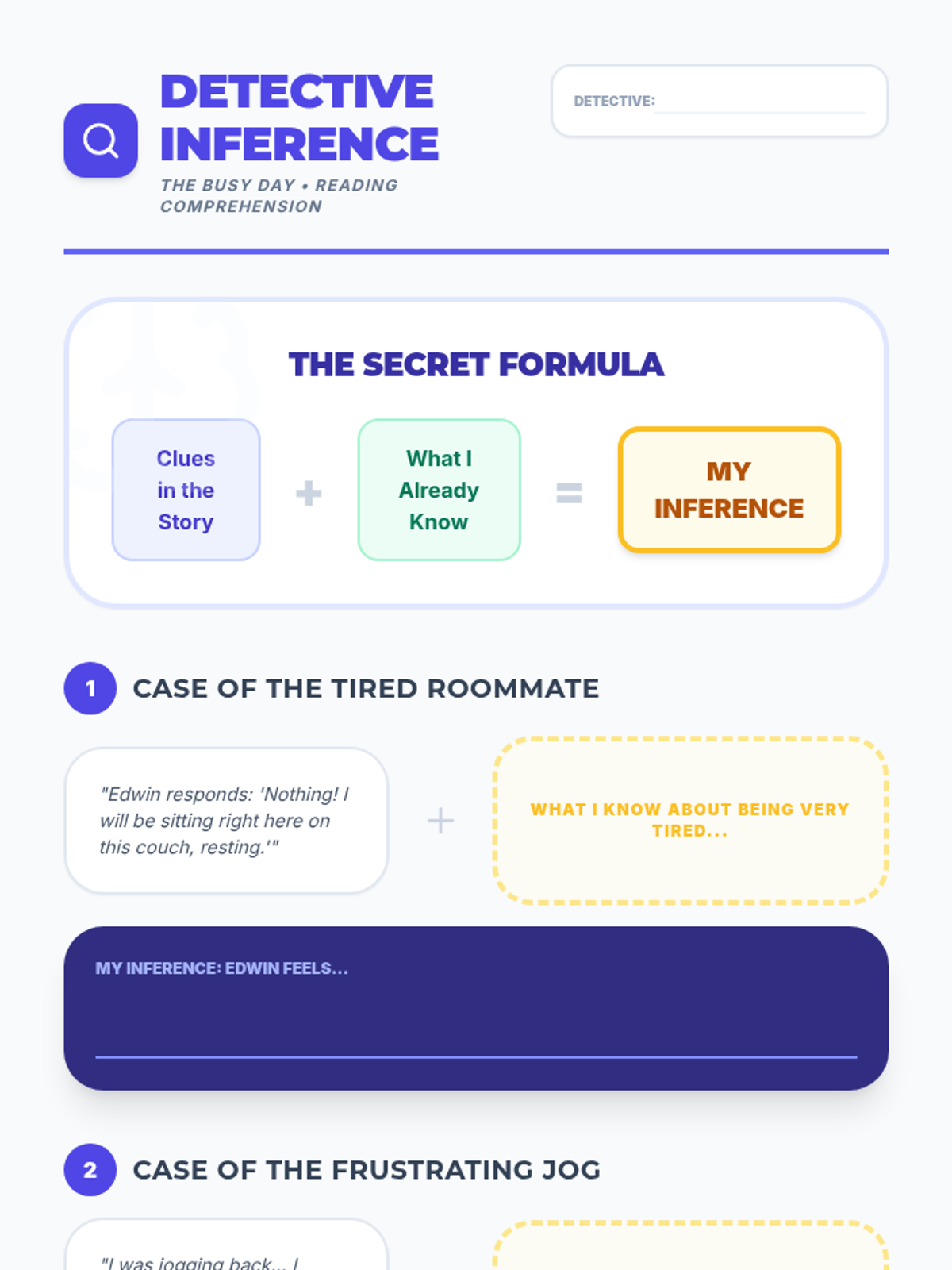
Focuses on the 1-1-1 doubling rule for adding suffixes -ed and -ing. Students will read about Edwin's busy day, practicing words like 'dropped', 'jogging', 'tripped', and 'sitting' while building vocabulary for words like 'exhausted'.
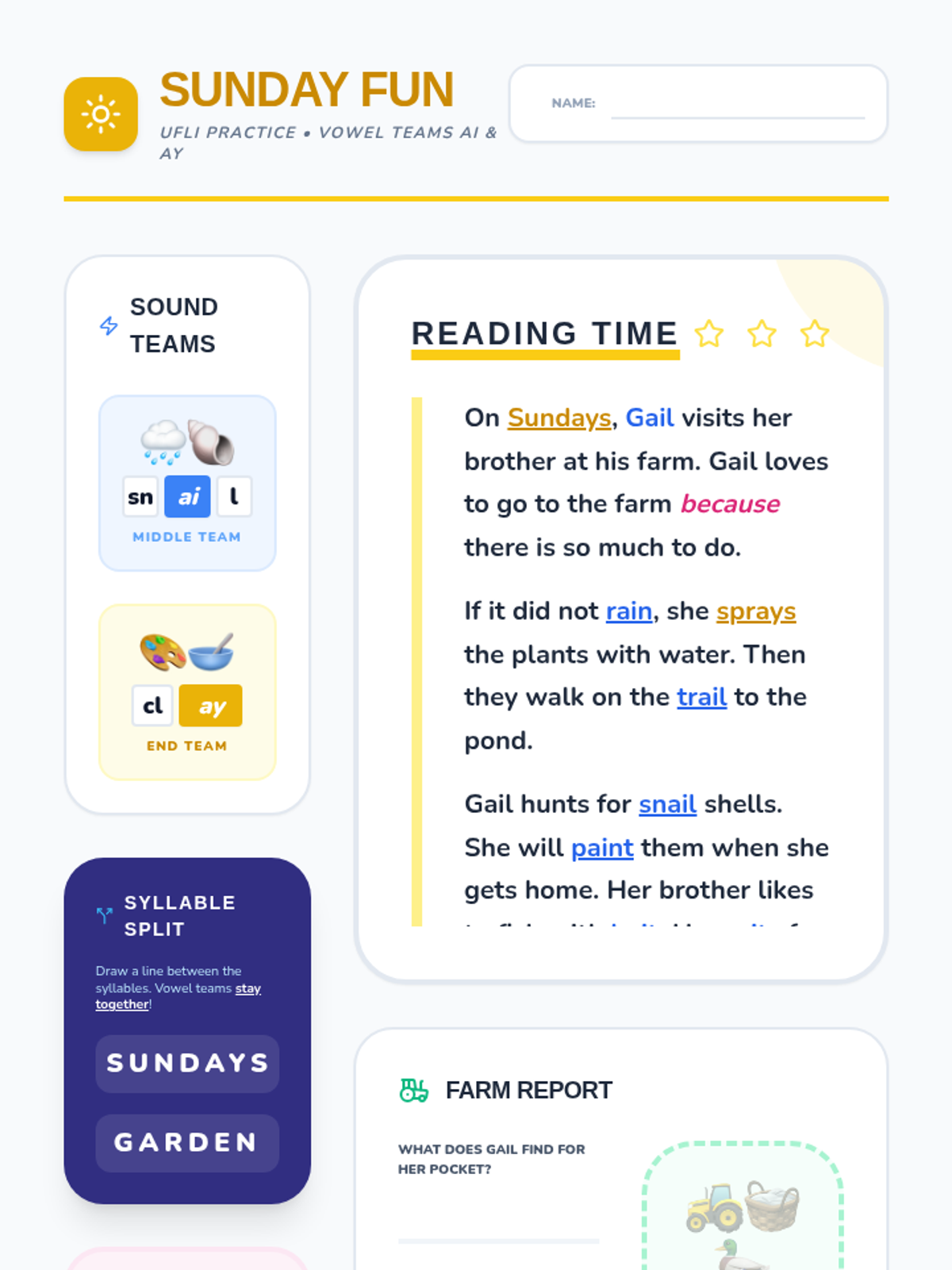
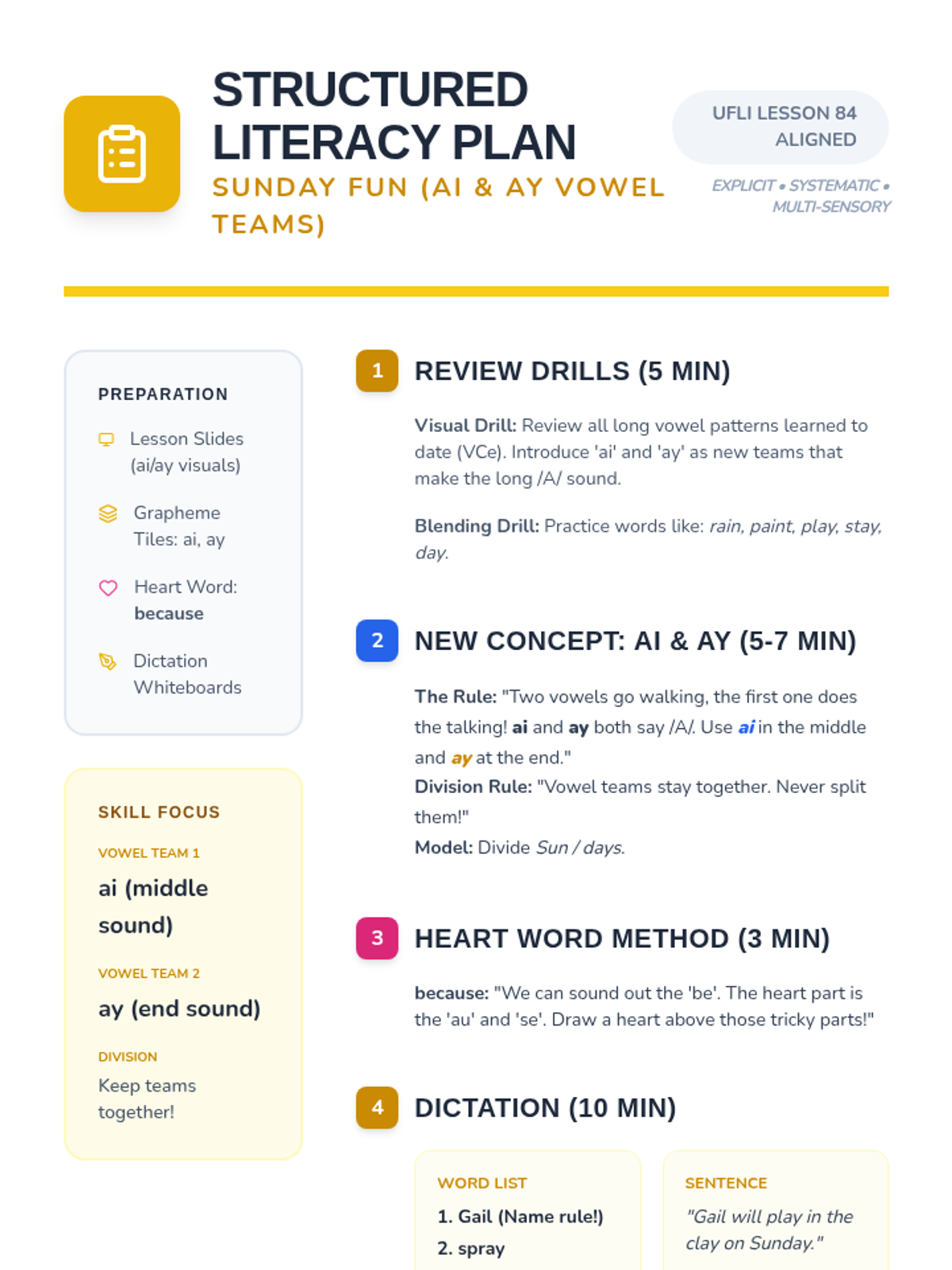
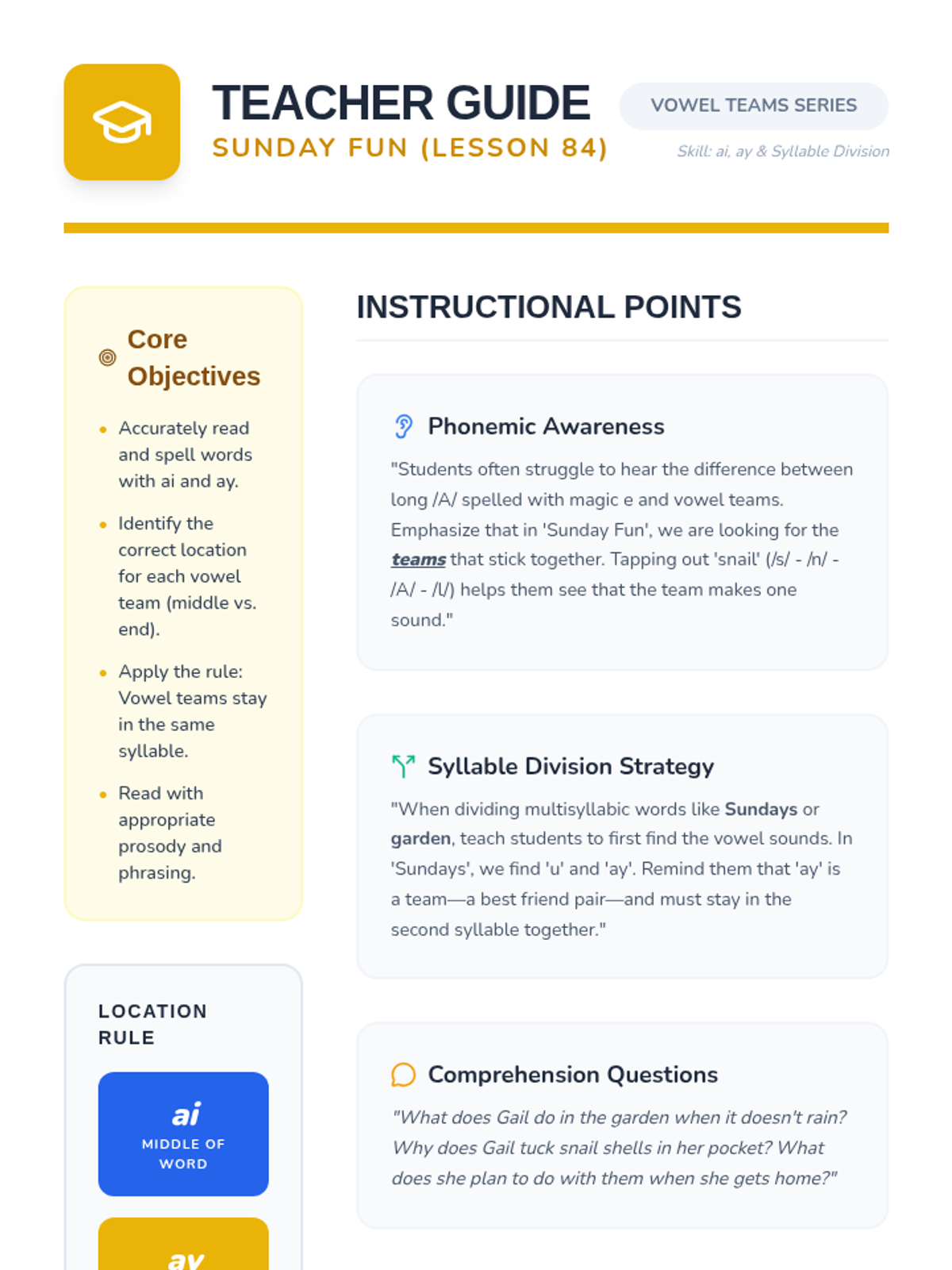
Focuses on the long 'a' vowel teams 'ai' and 'ay'. Students read about Gail's trip to her brother's farm on a Sunday, practicing words like 'trail', 'snail', 'spray', and 'clay' while learning syllable division rules for vowel teams.
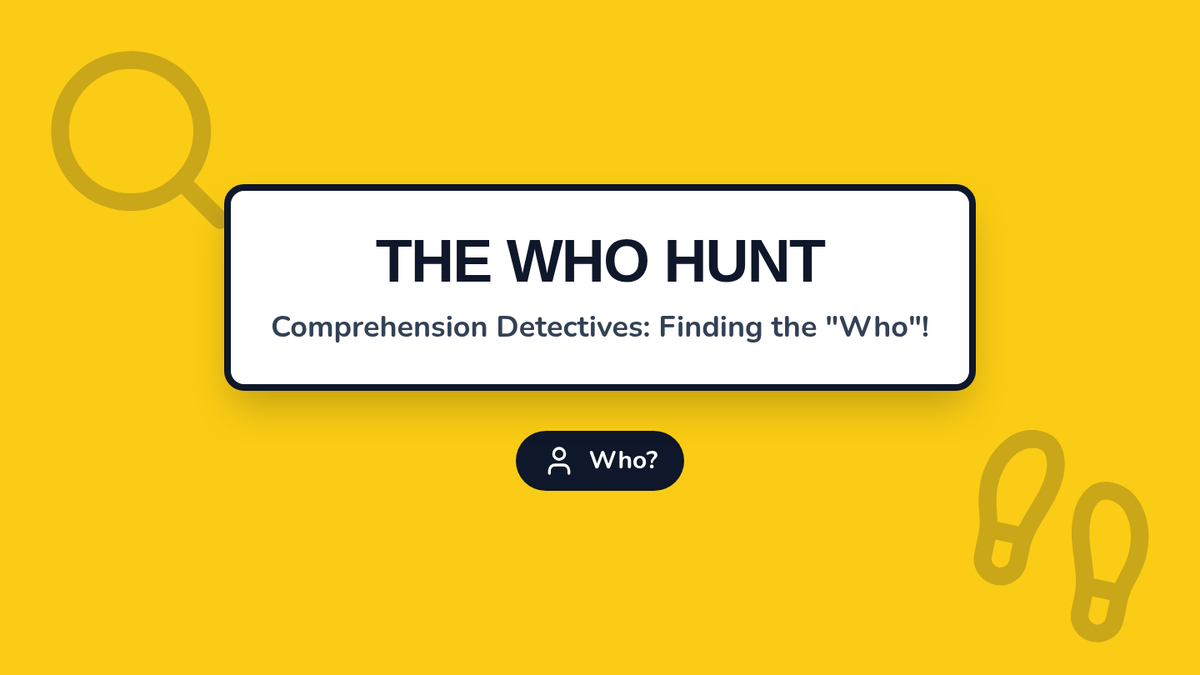
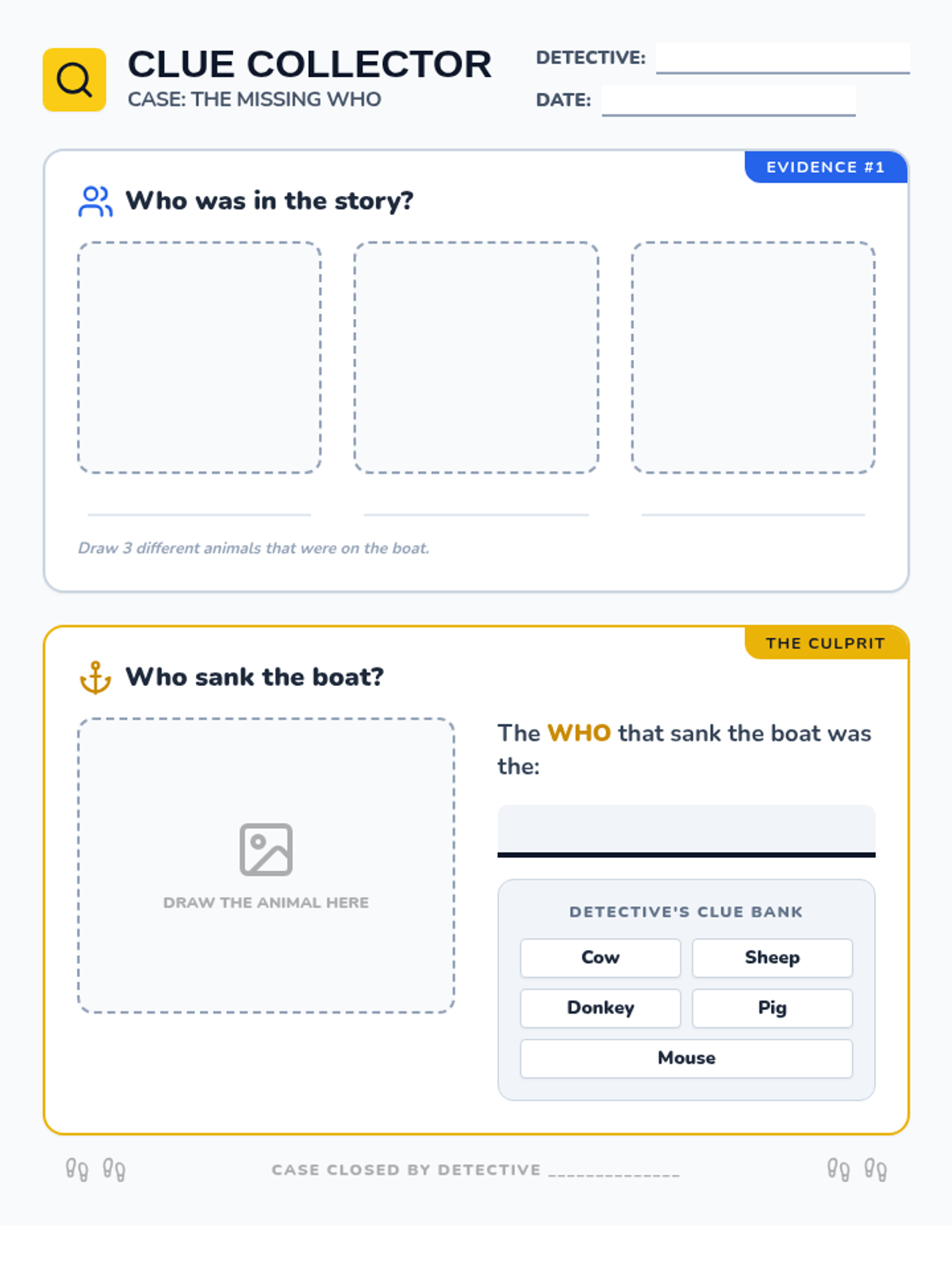
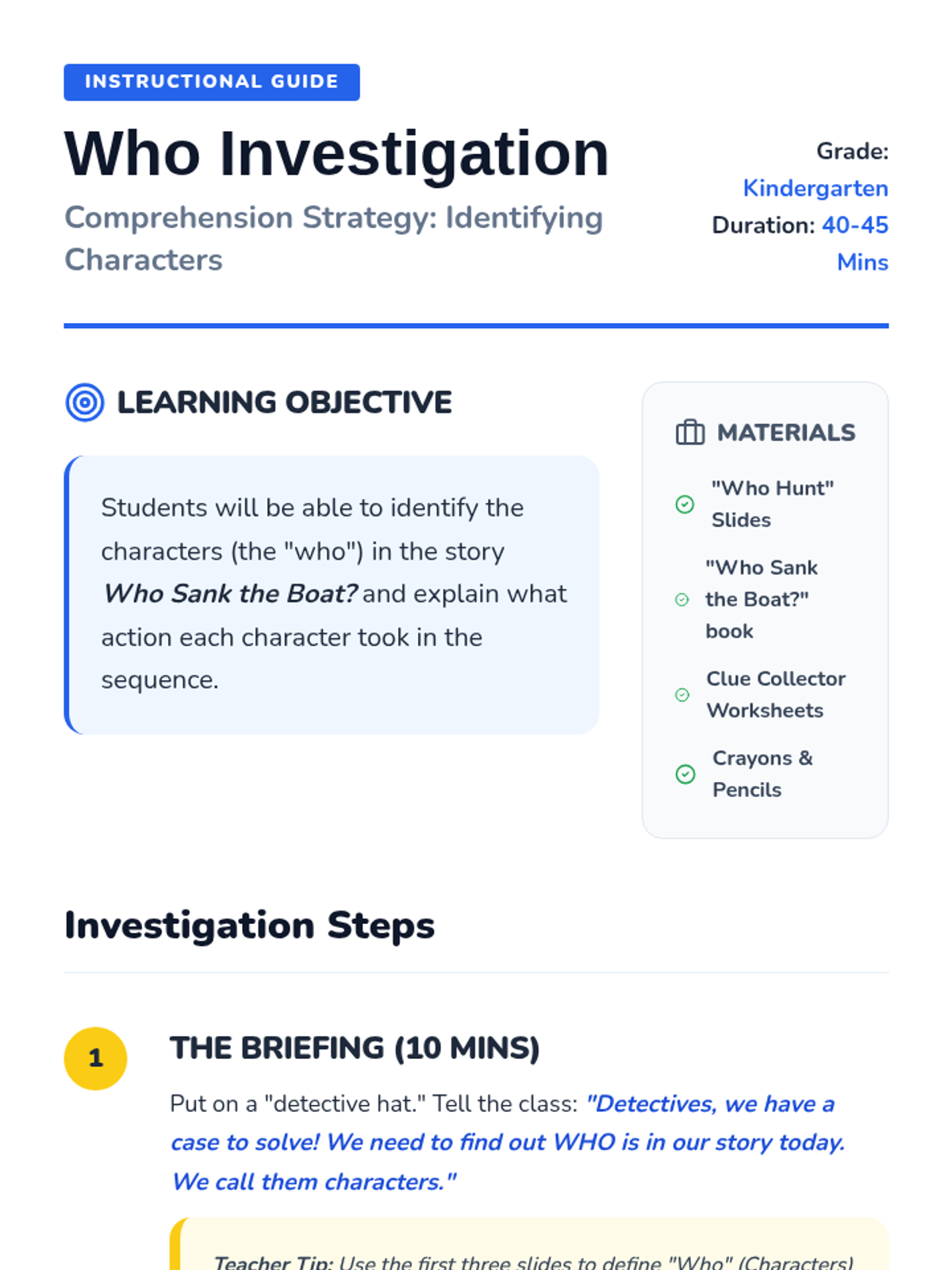
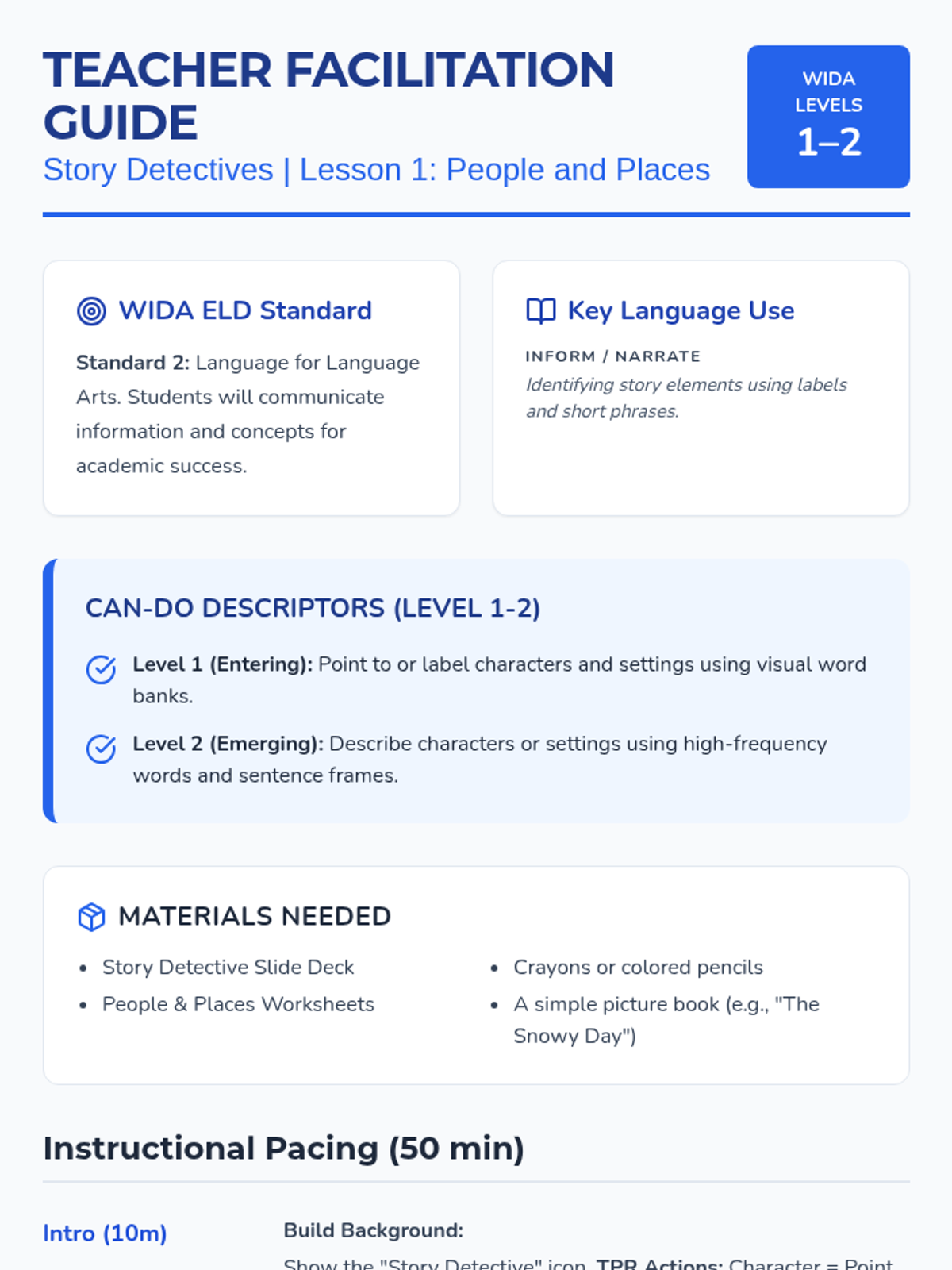
A kindergarten comprehension lesson focused on identifying 'Who' in a story using the book 'Who Sank the Boat?' by Pamela Allen. Students will practice identifying characters and their actions through a detective-themed investigation.
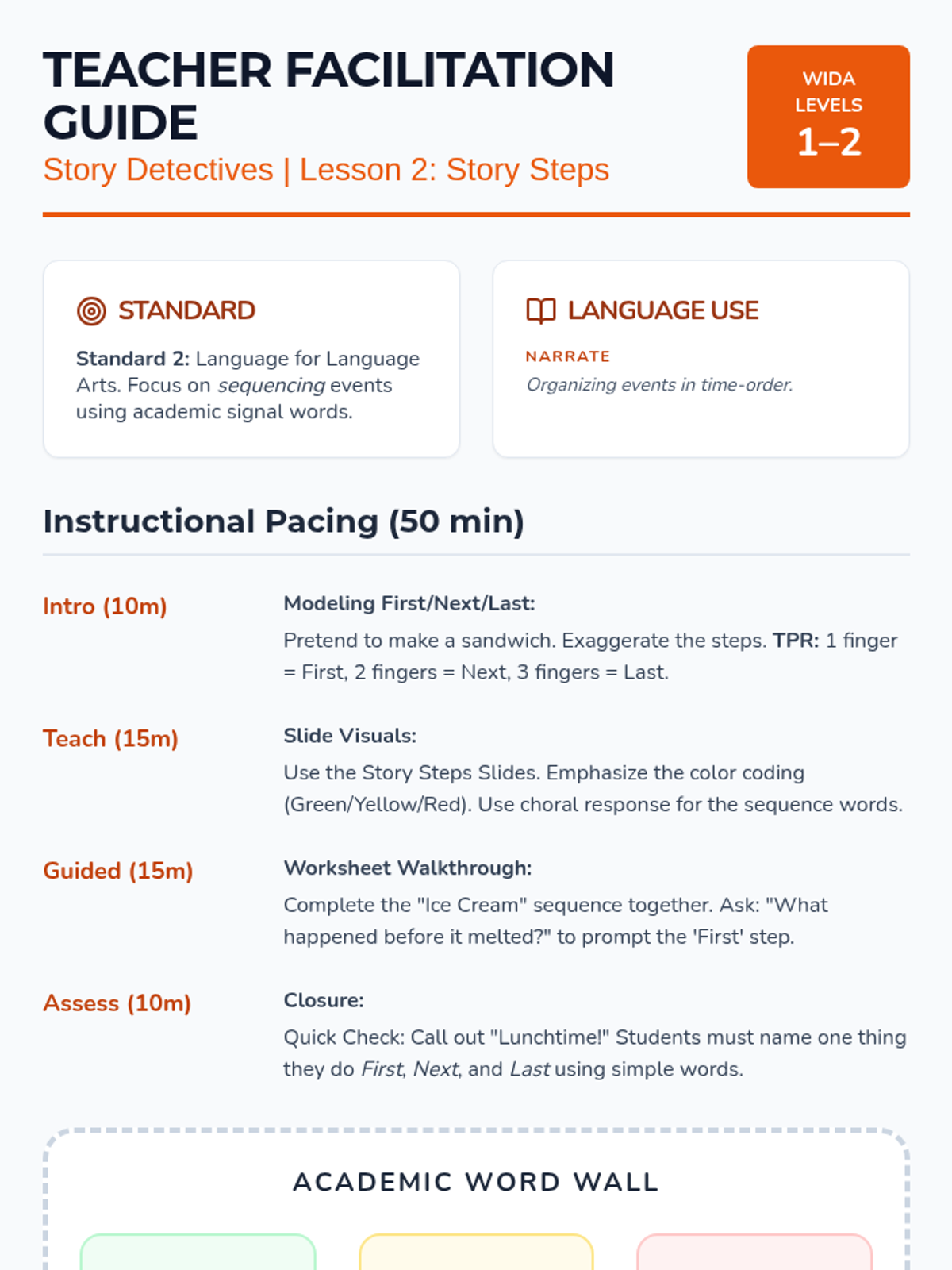
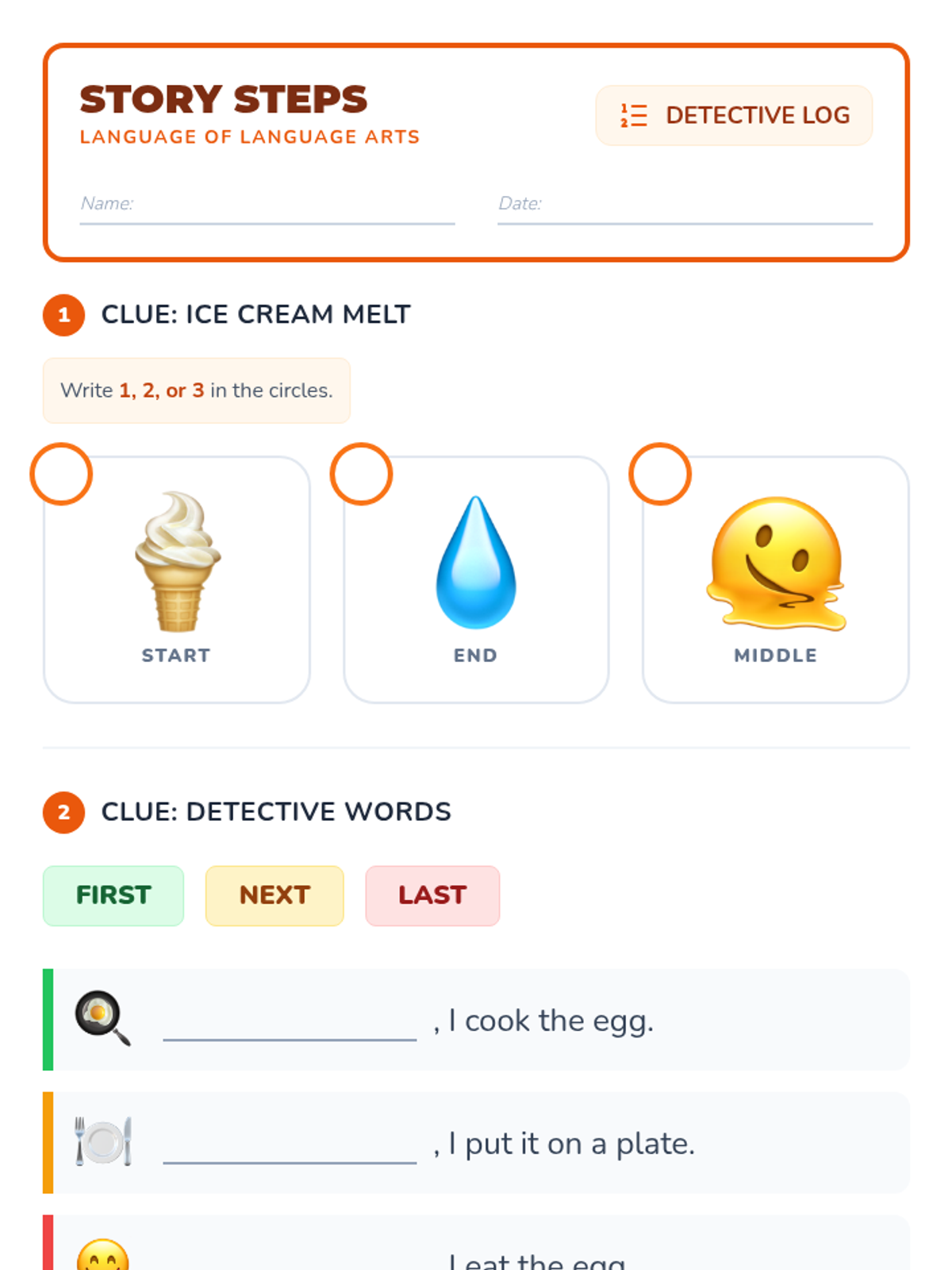
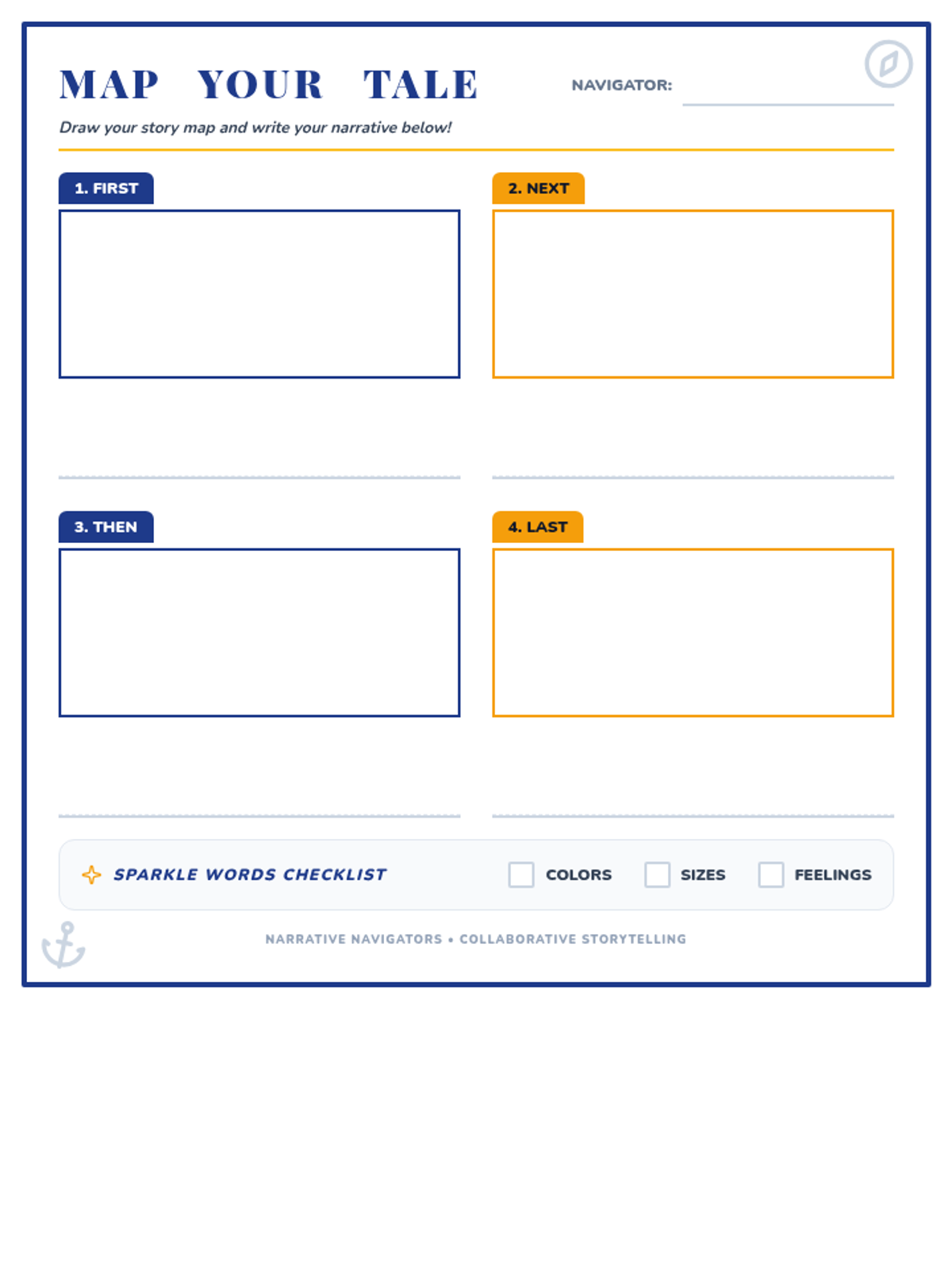
Students will sequence three major events in a story using the signal words 'first', 'next', and 'last'.
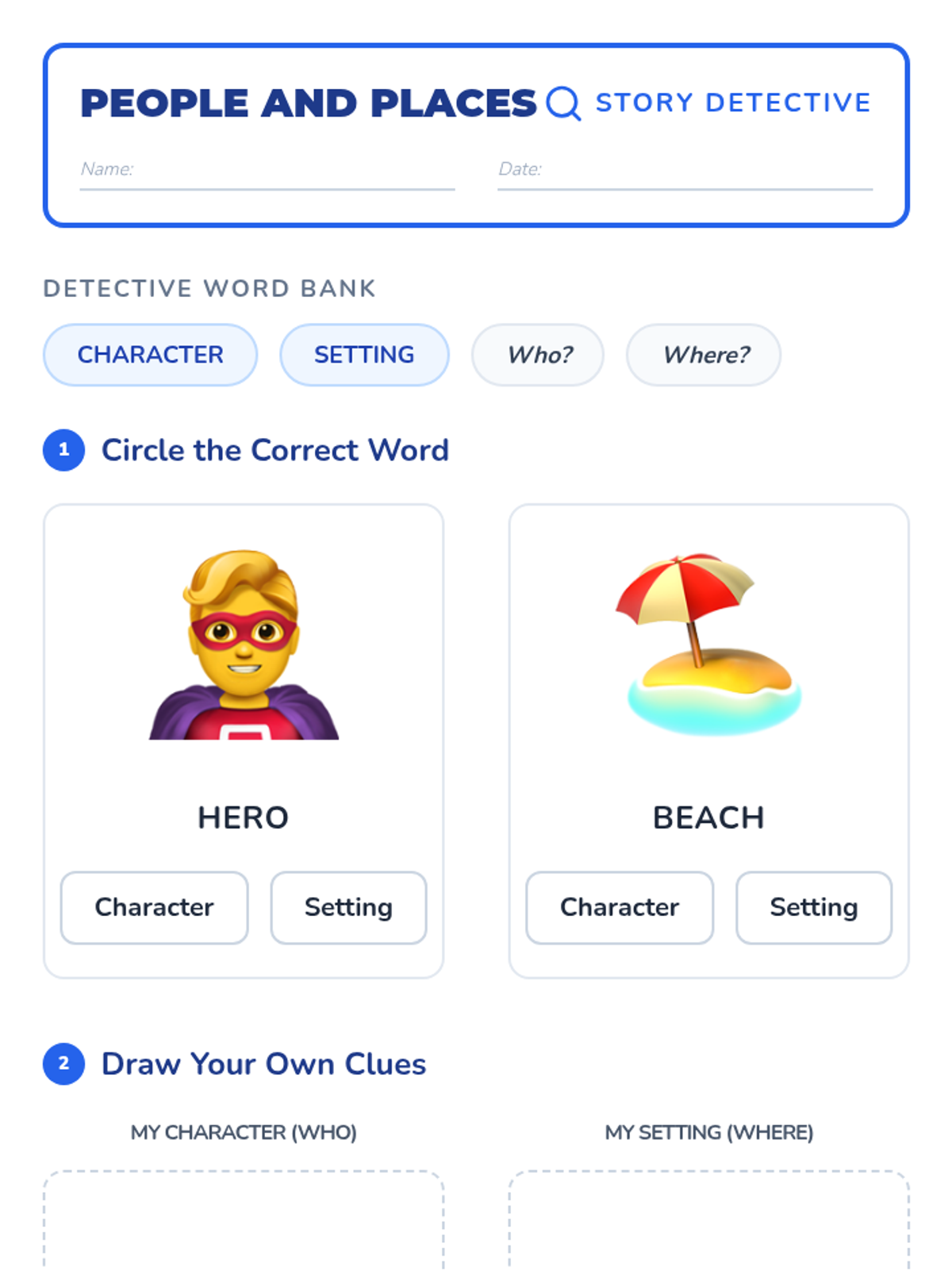
Students will identify characters (who) and settings (where) in simple narratives using visual cues and foundational descriptive language.
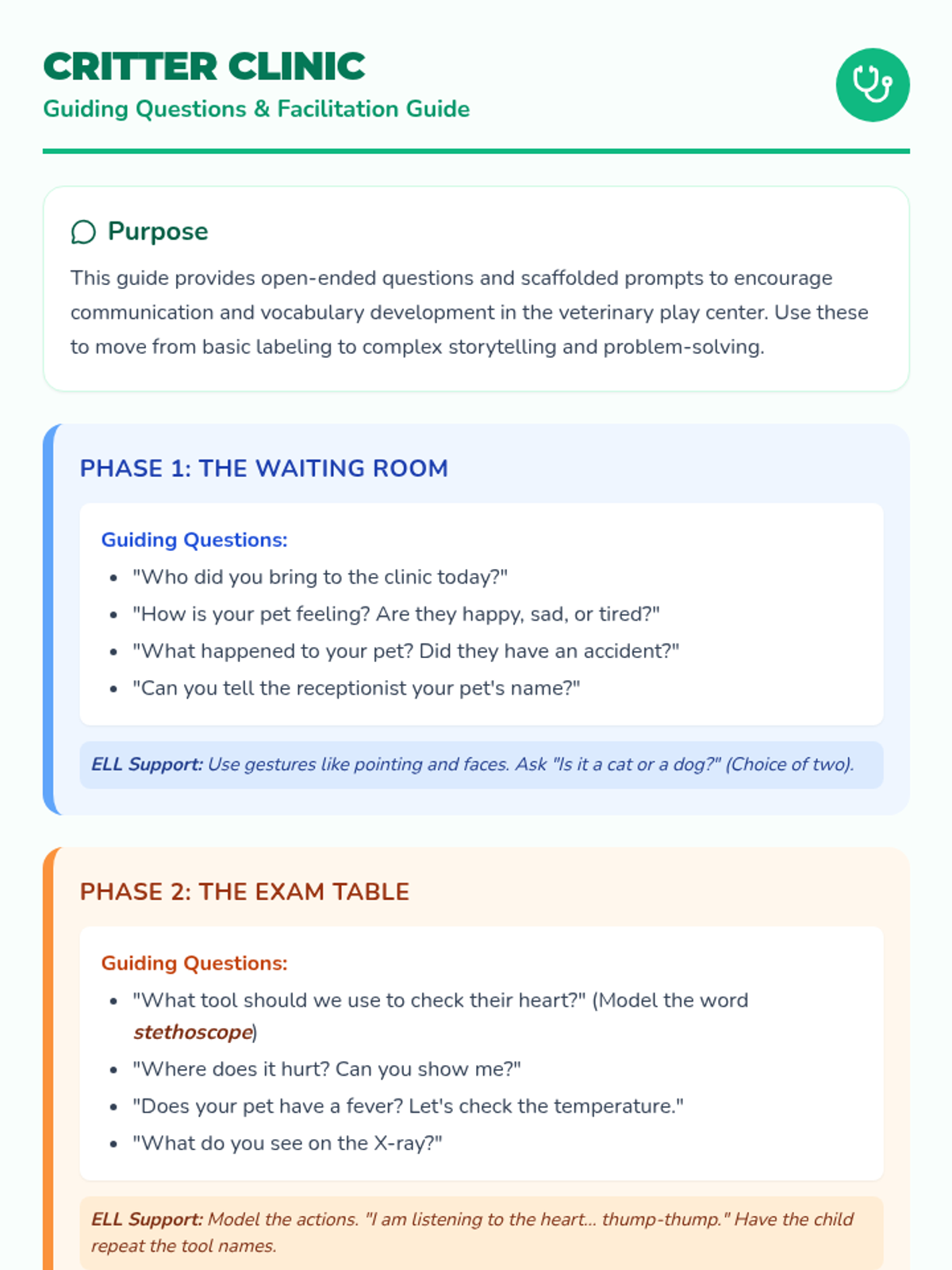
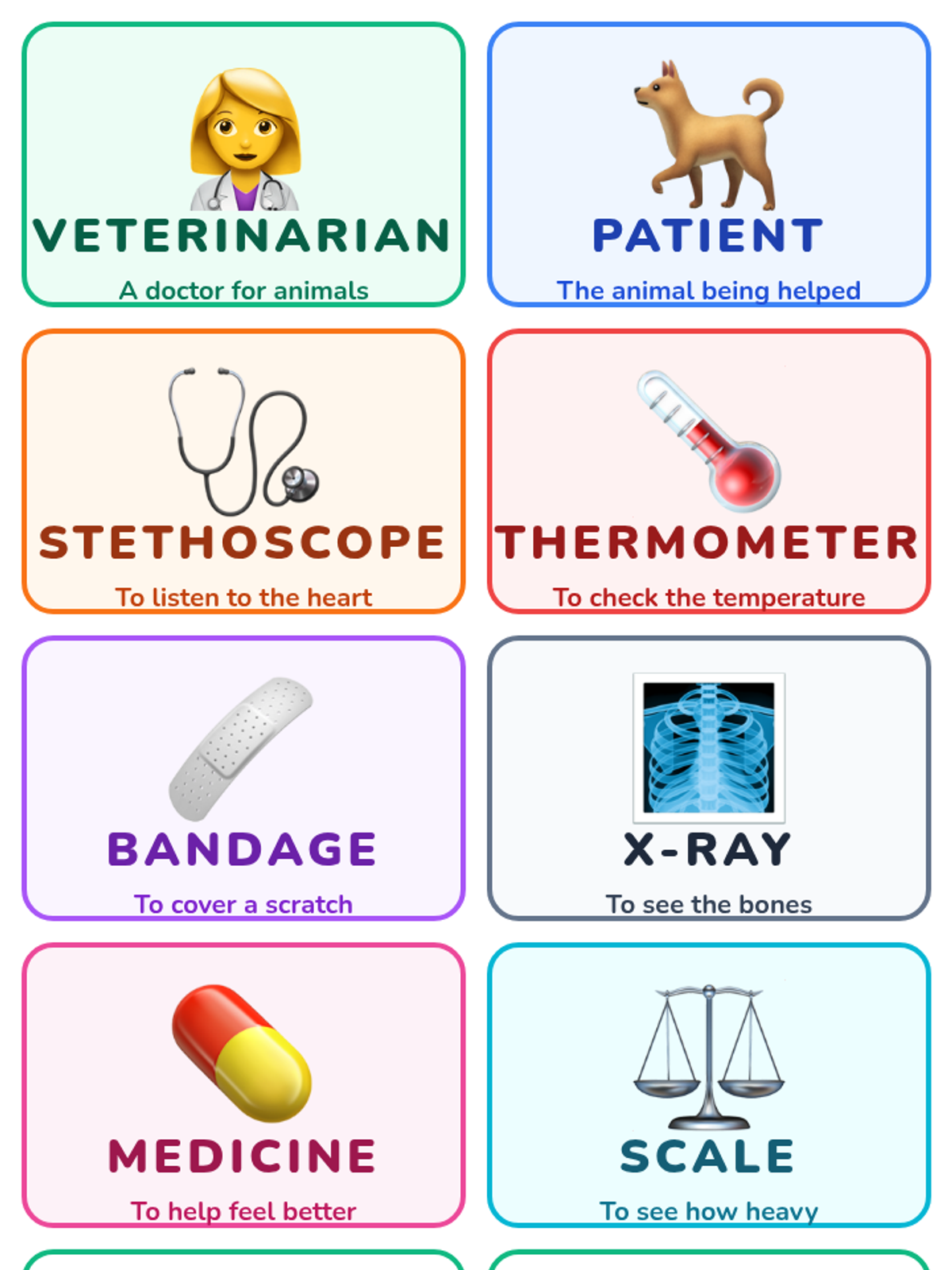
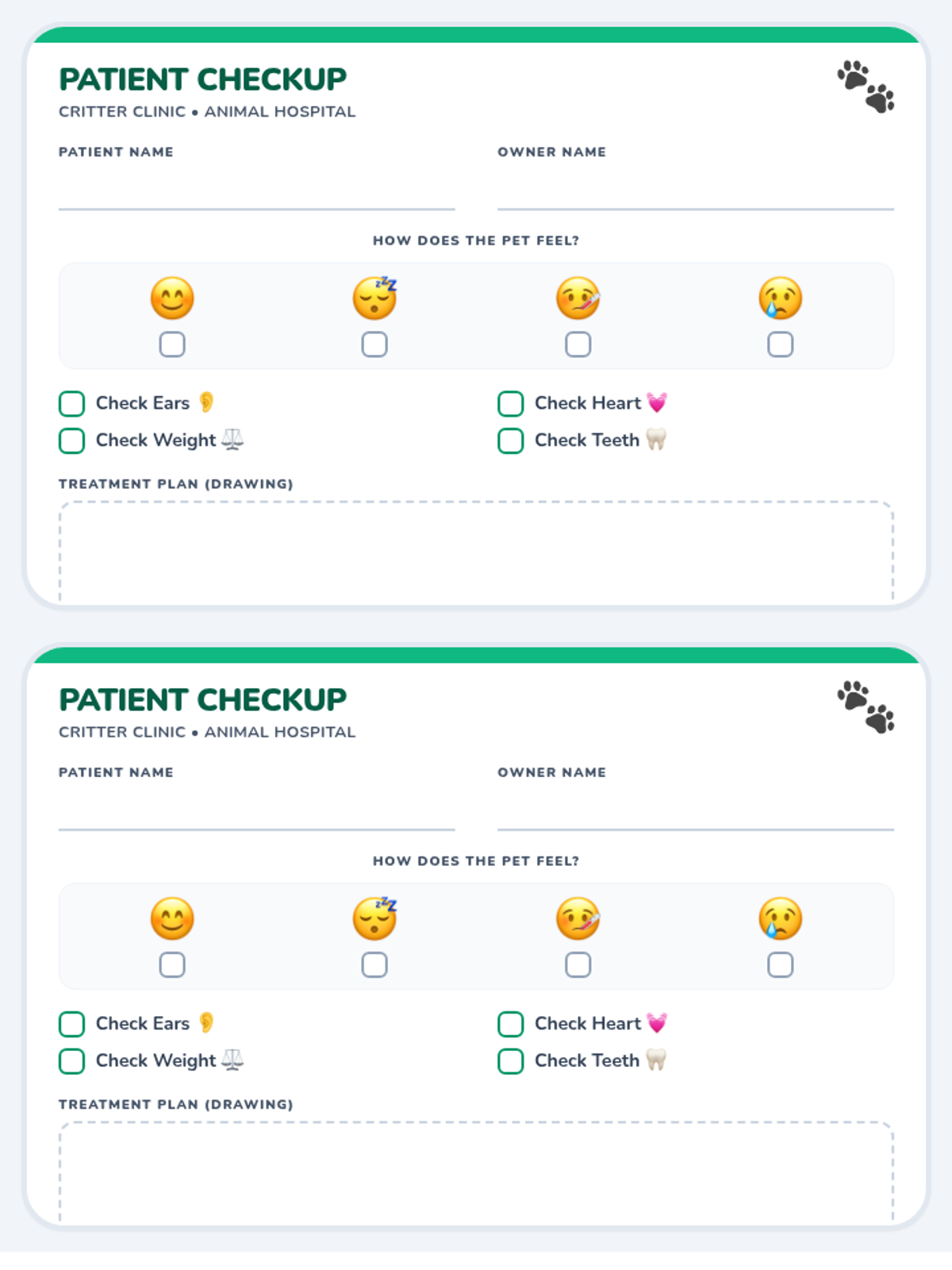
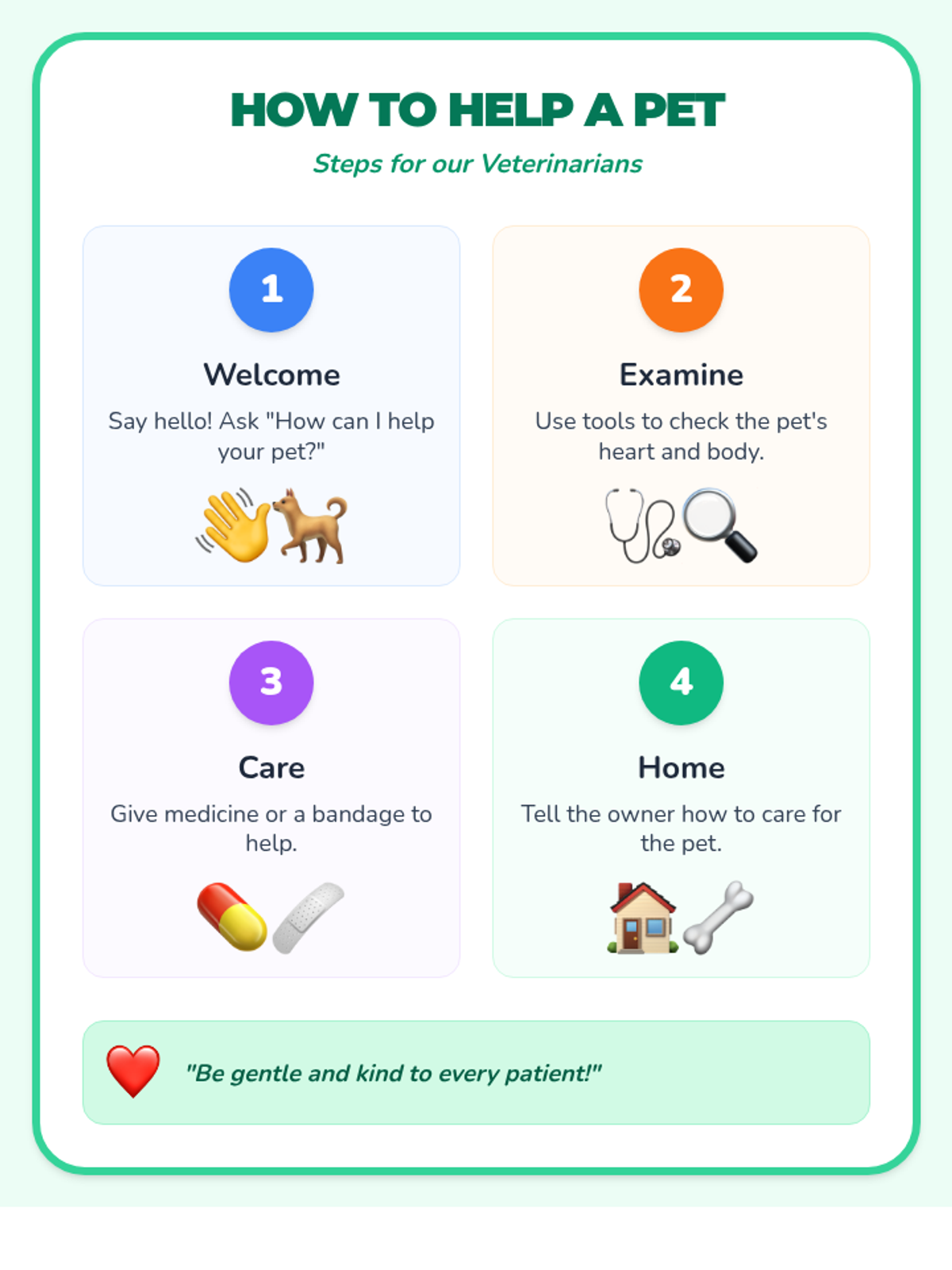
A comprehensive set of resources for a Pre-K veterinary dramatic play center, focusing on oral language, vocabulary acquisition, and communication skills for English Language Learners.
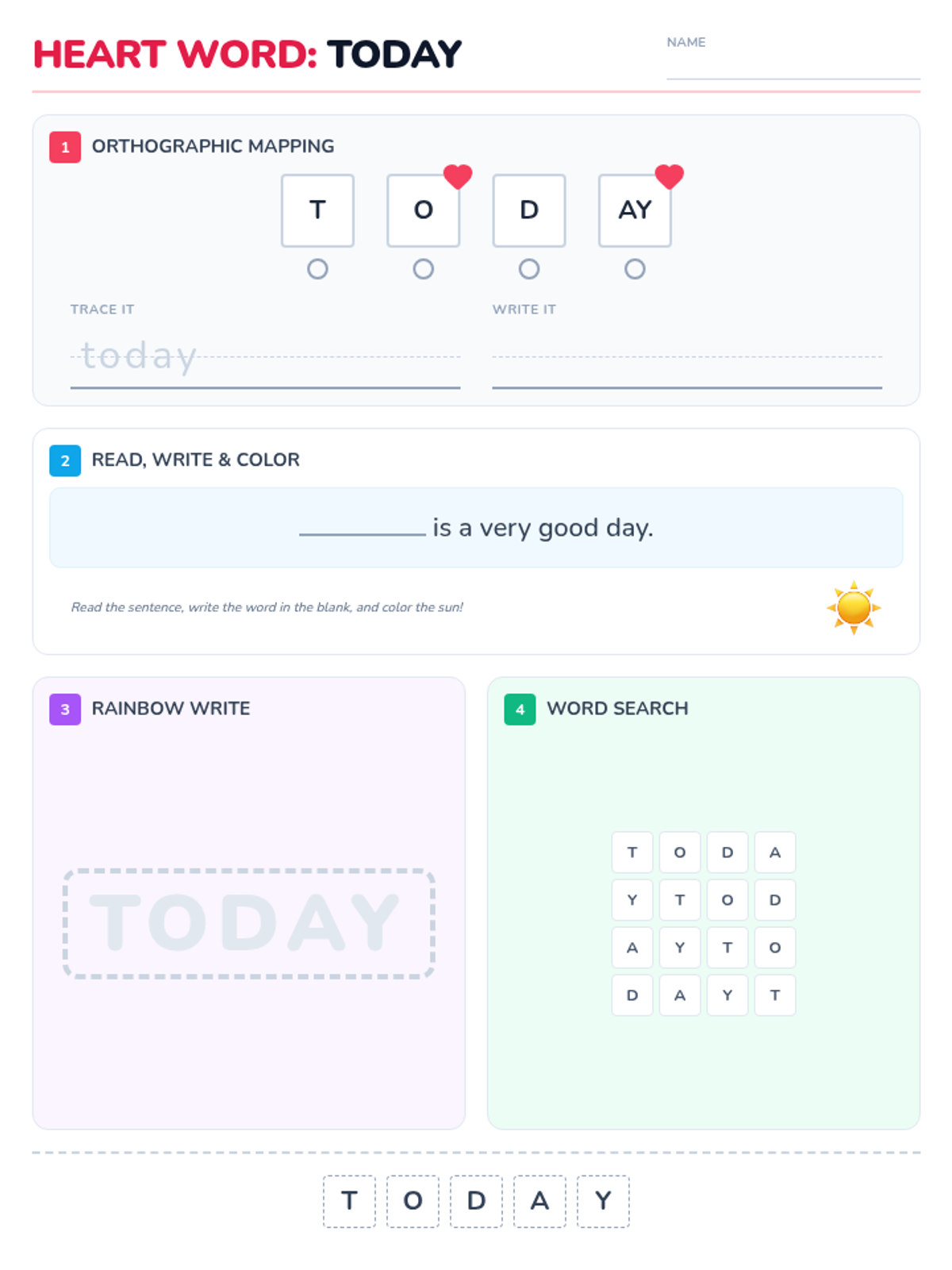
The final set of heart word practice pages covering time and place concepts like 'Today', 'Above', 'Again', and 'Always'.
Focusing on words for people and common actions like 'Friend', 'Because', 'Woman', and 'People', these pages provide deep orthographic practice.
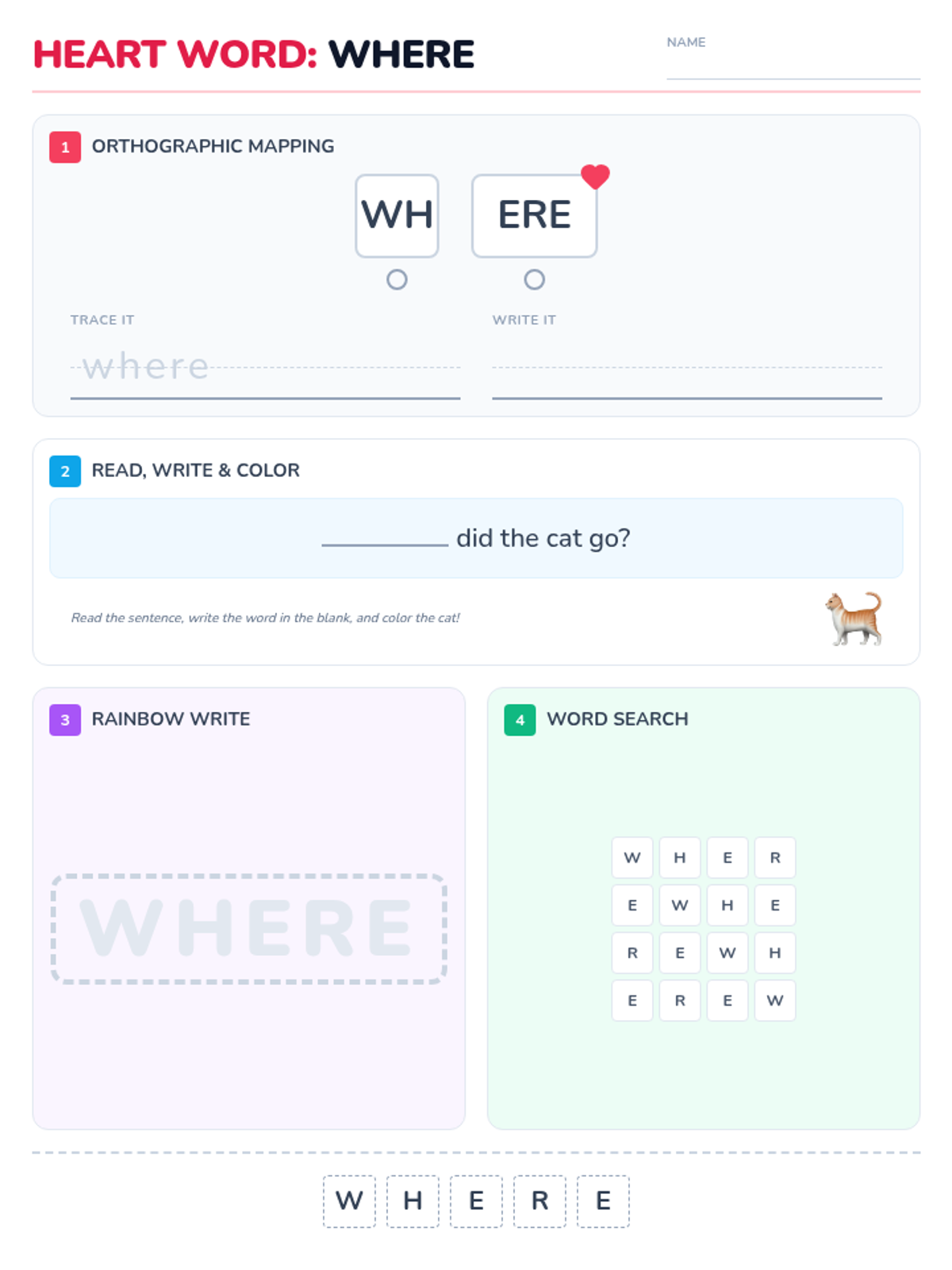
Practice pages for tricky high-frequency words such as 'Where', 'One', 'Two', and 'Does', continuing the UFLI-aligned mapping and word building.
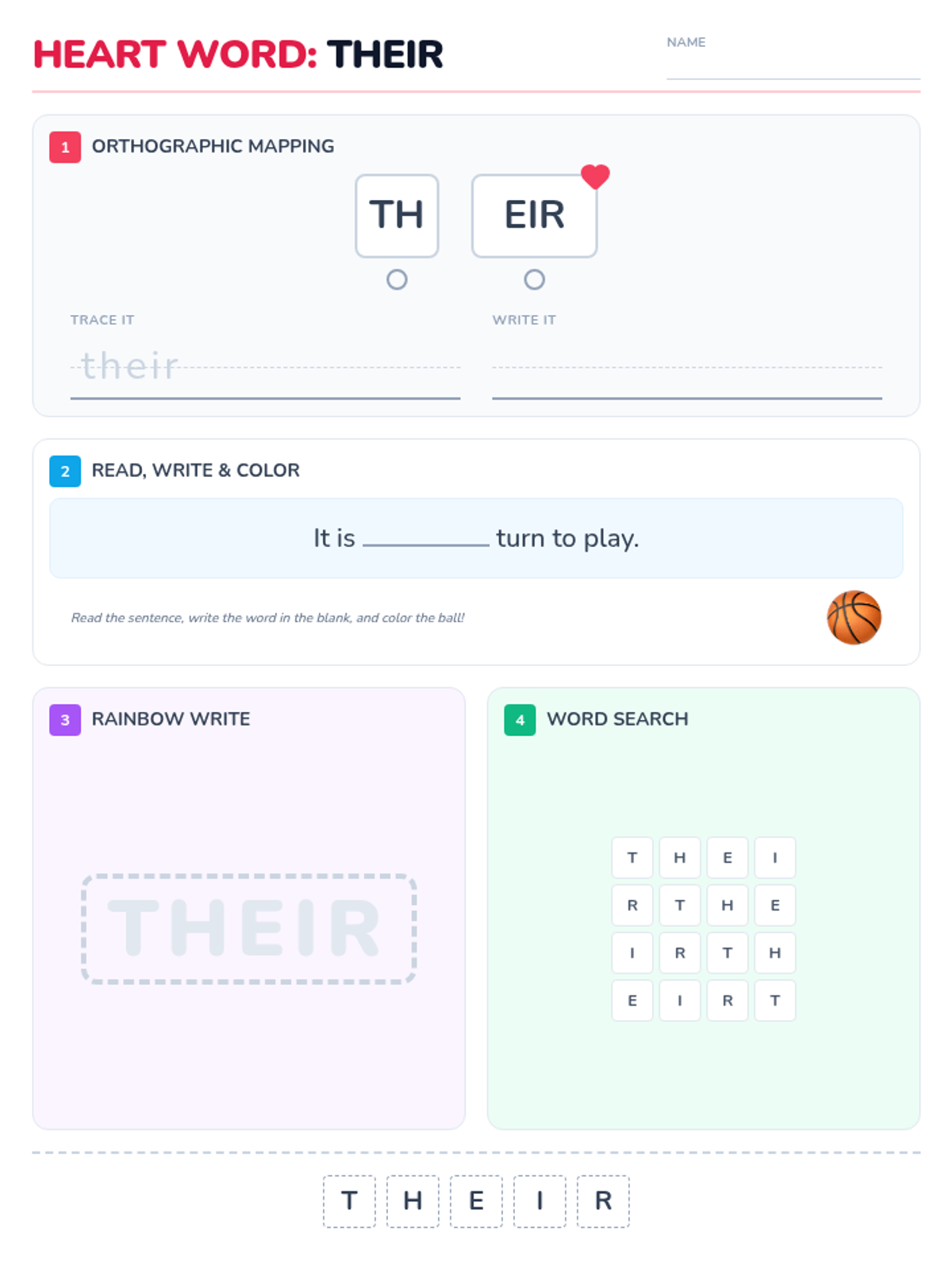
A set of heart word practice pages focusing on words related to direction, quantity, and common verbs, including 'Their', 'Were', 'Talk', and the '-ould' family.
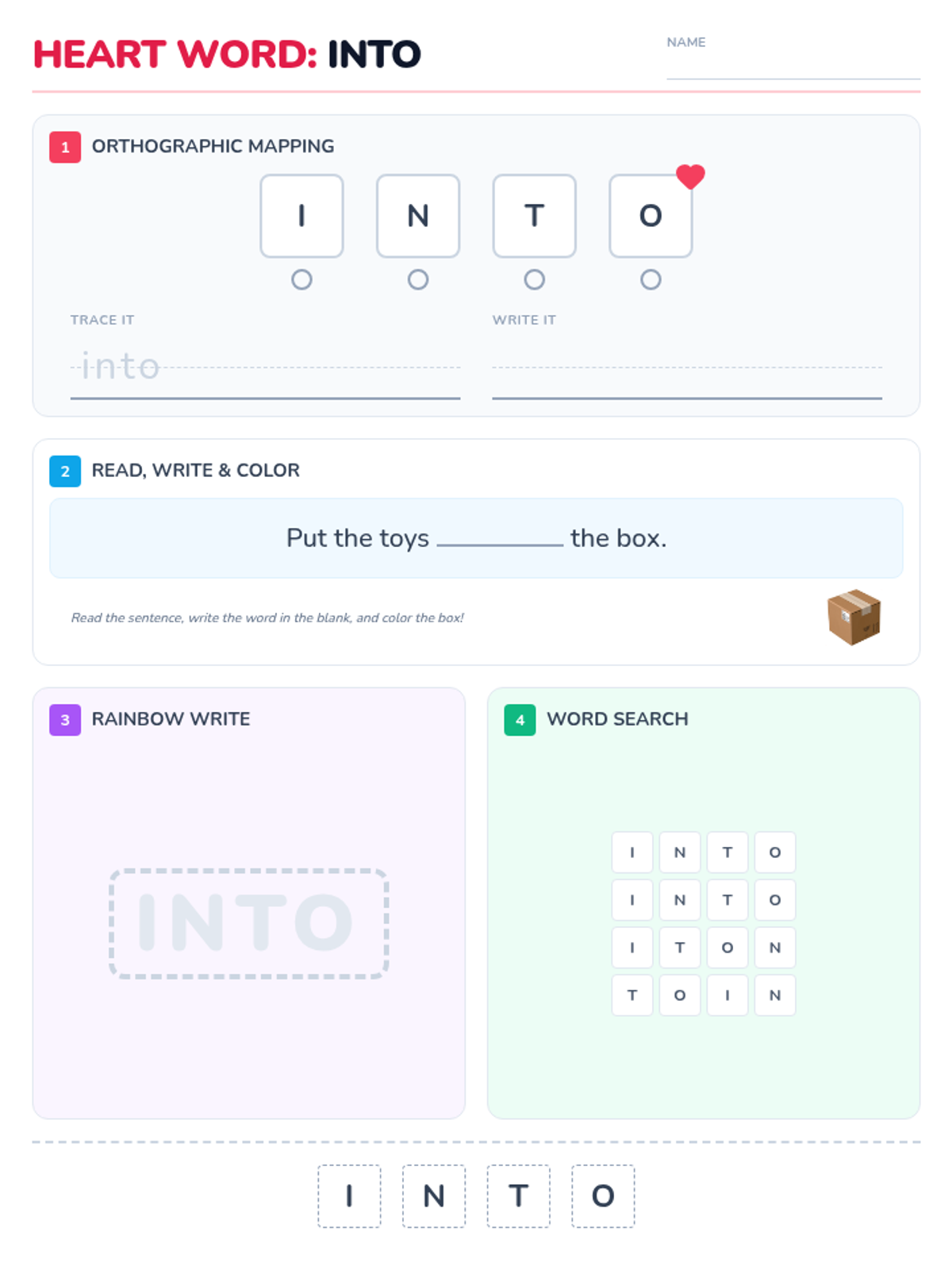
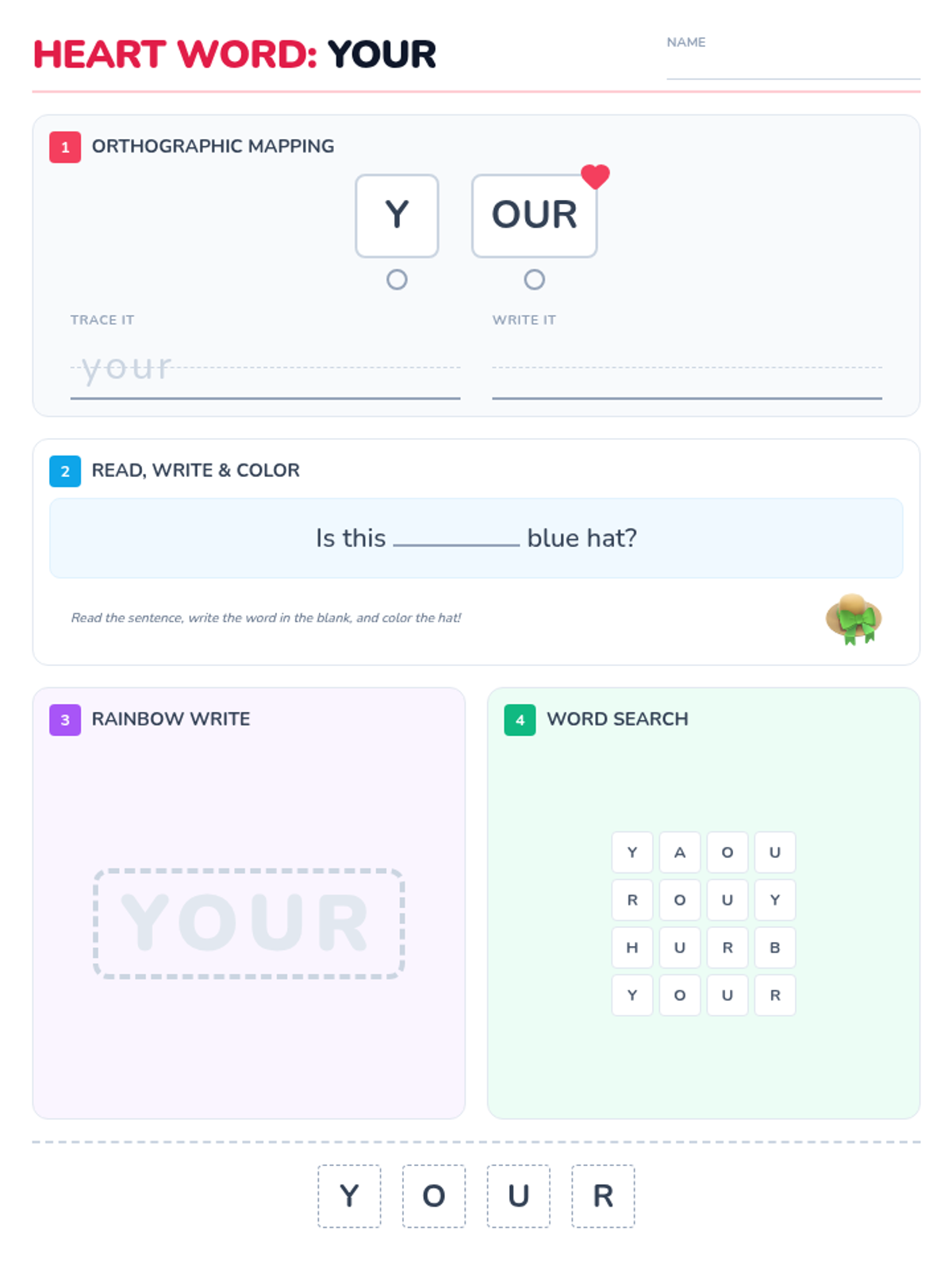
The first set of heart word practice pages focusing on common high-frequency words with irregular parts, including 'Your', 'Want', 'Go', and others. Each page includes mapping, tracing, writing, and word-building activities.
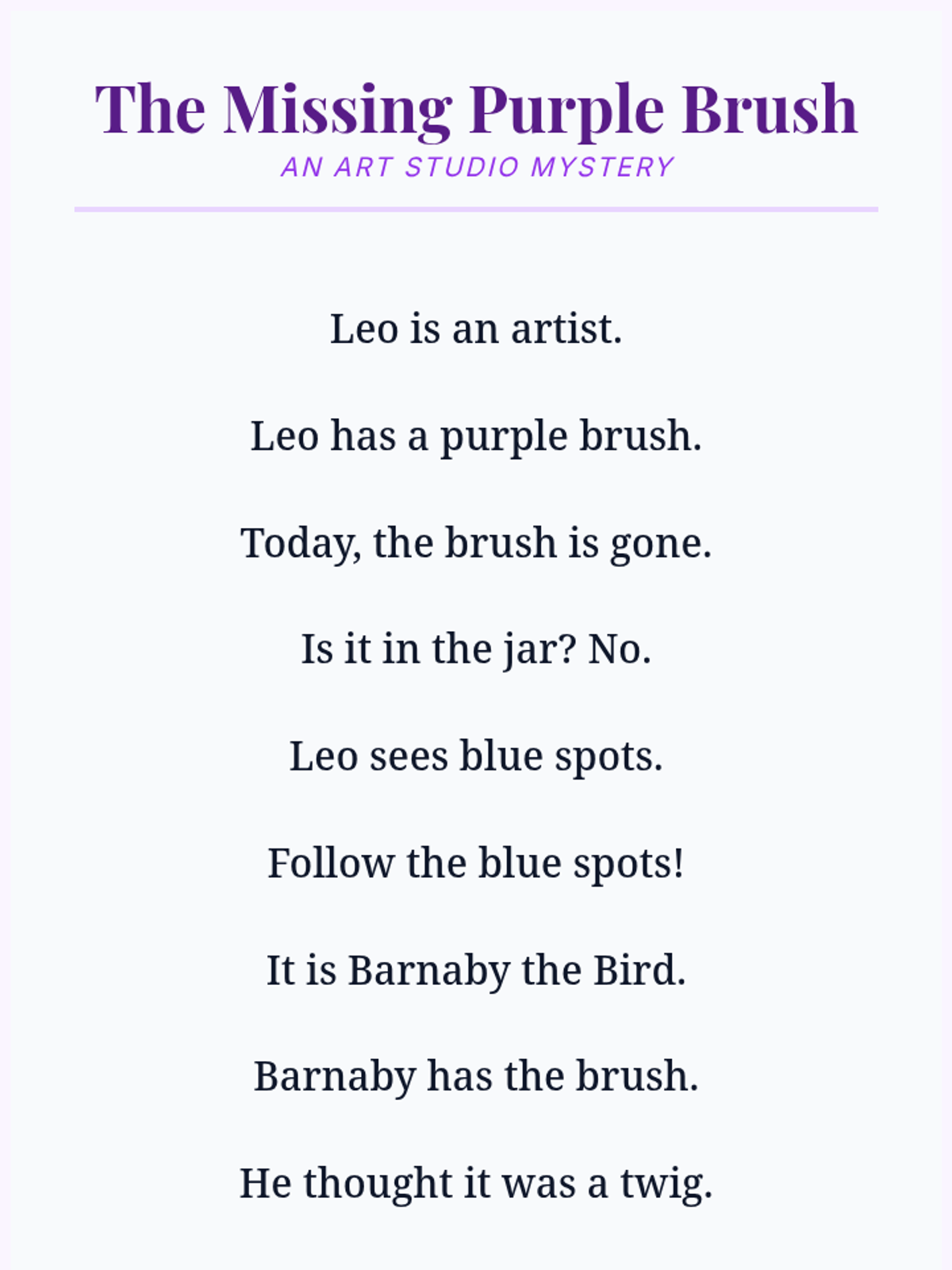
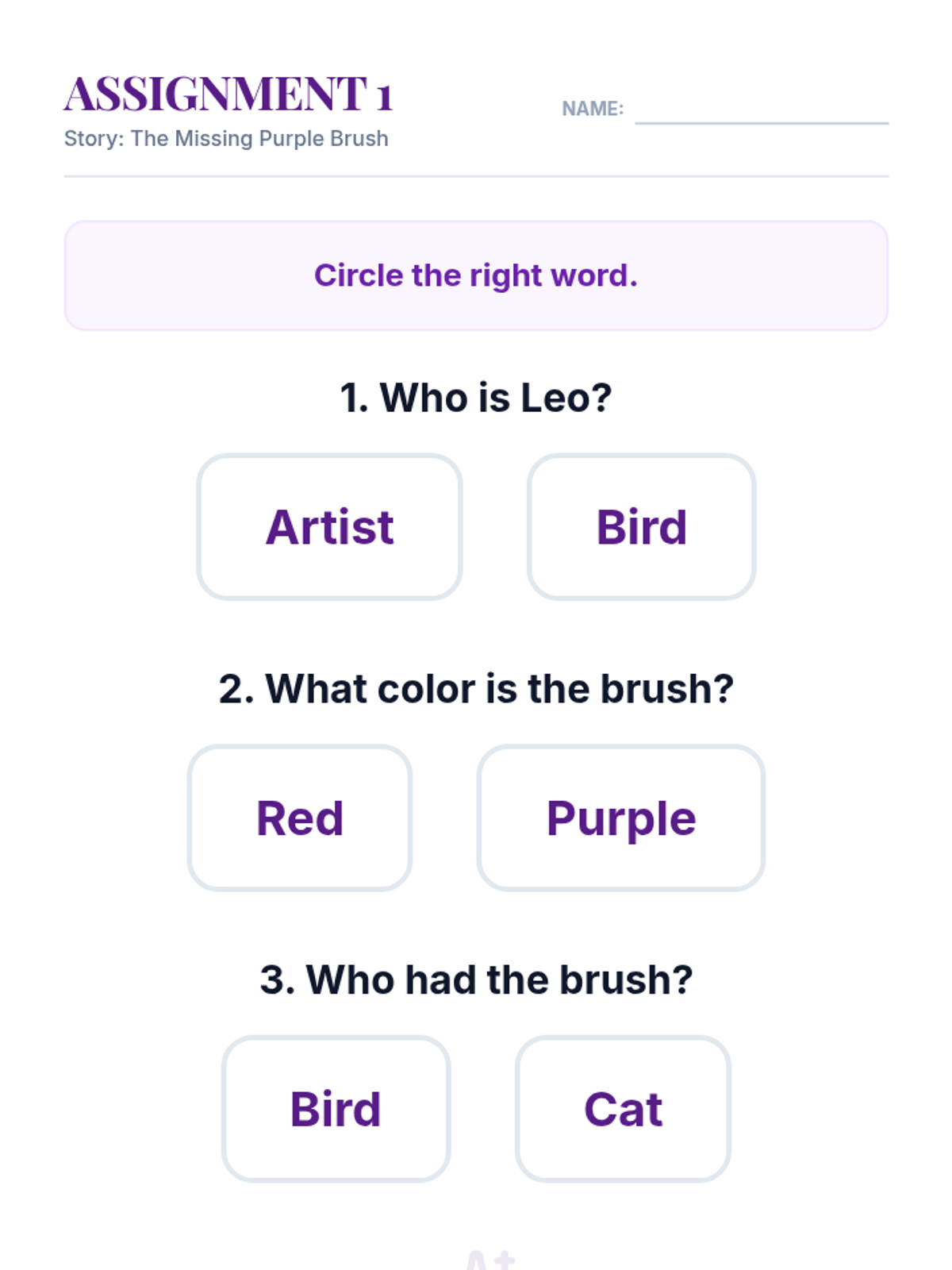
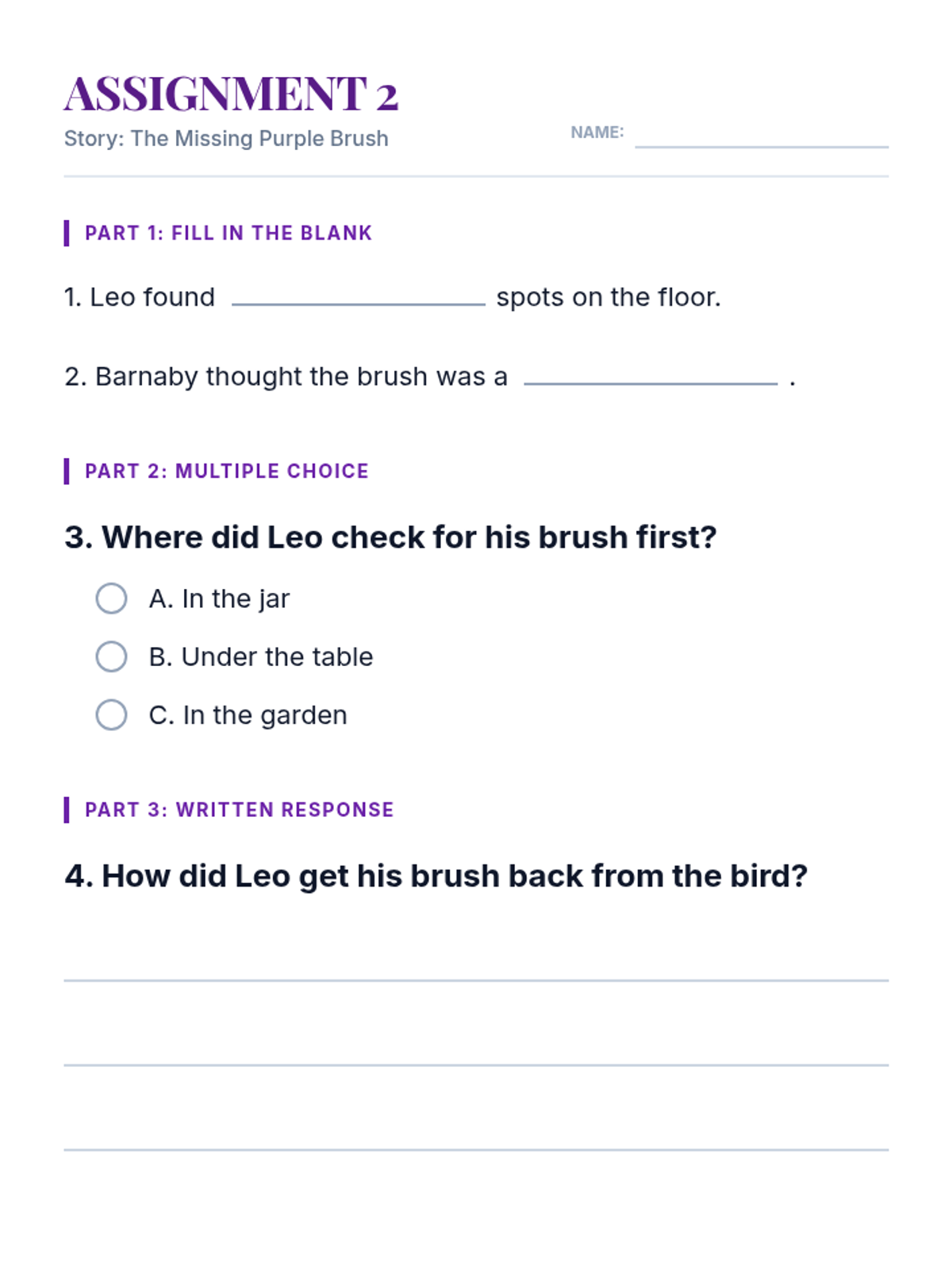
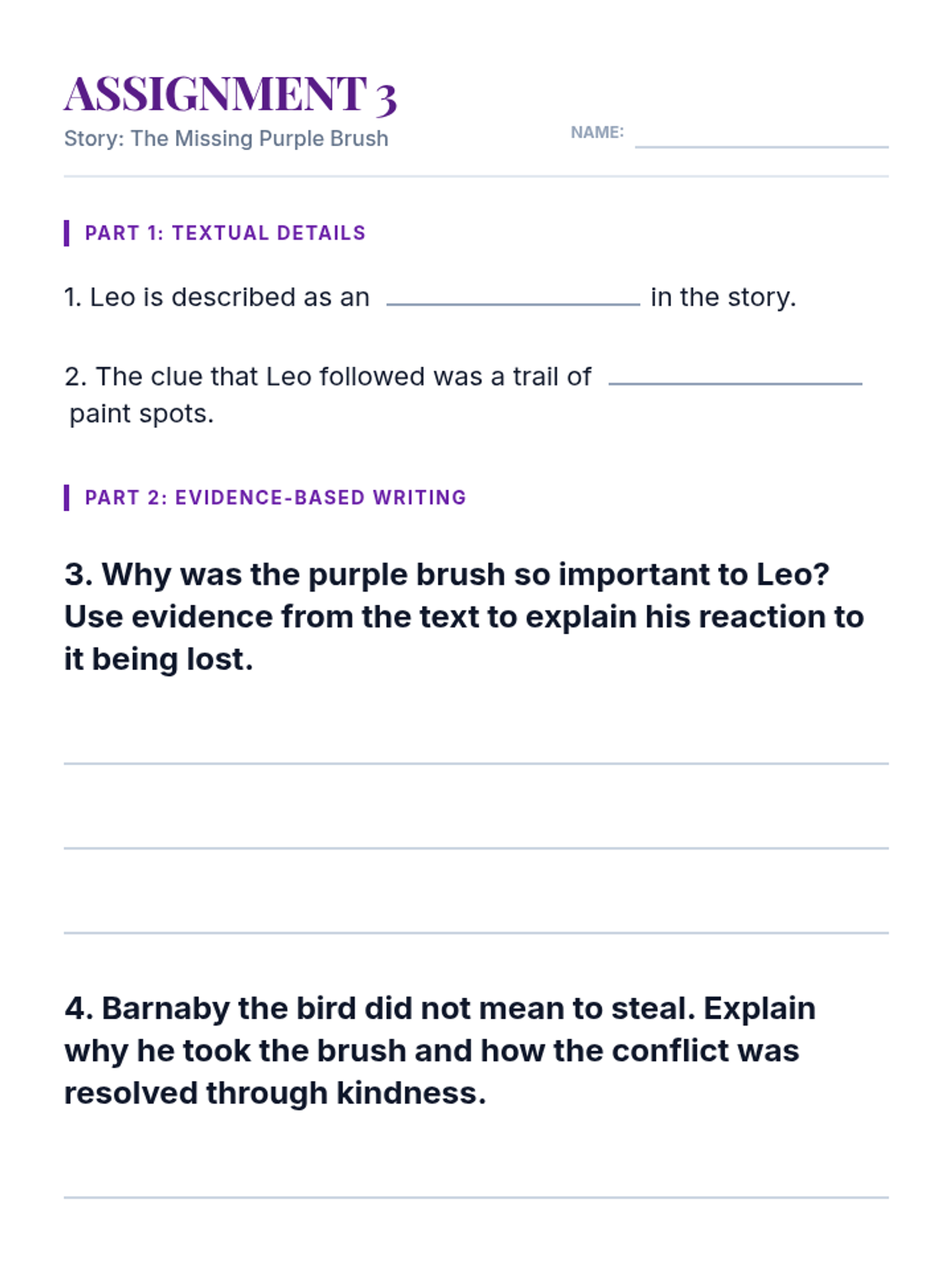
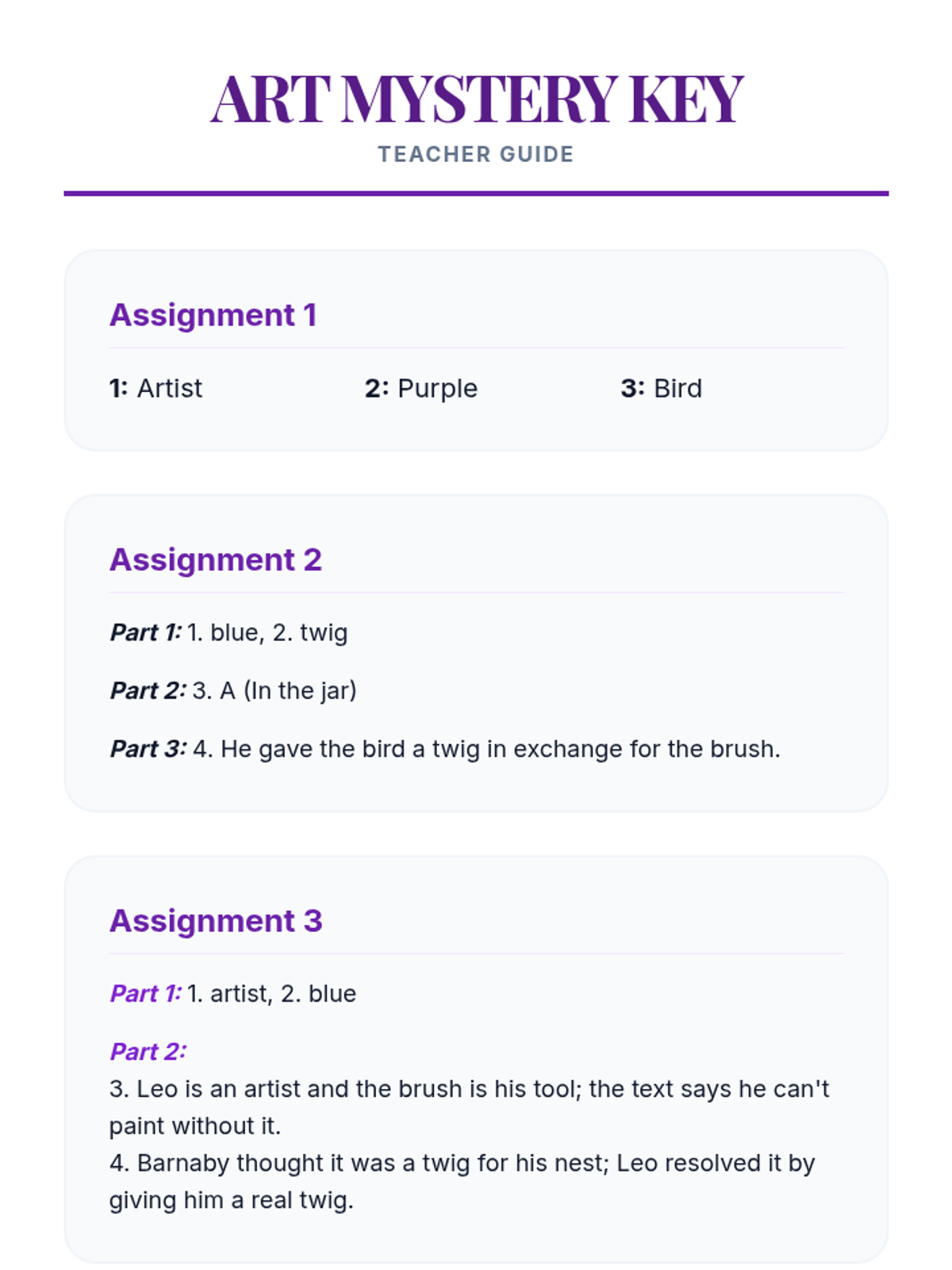
An art-themed mystery where a painter's favorite purple brush goes missing, featuring tiered assignments for different grade levels.
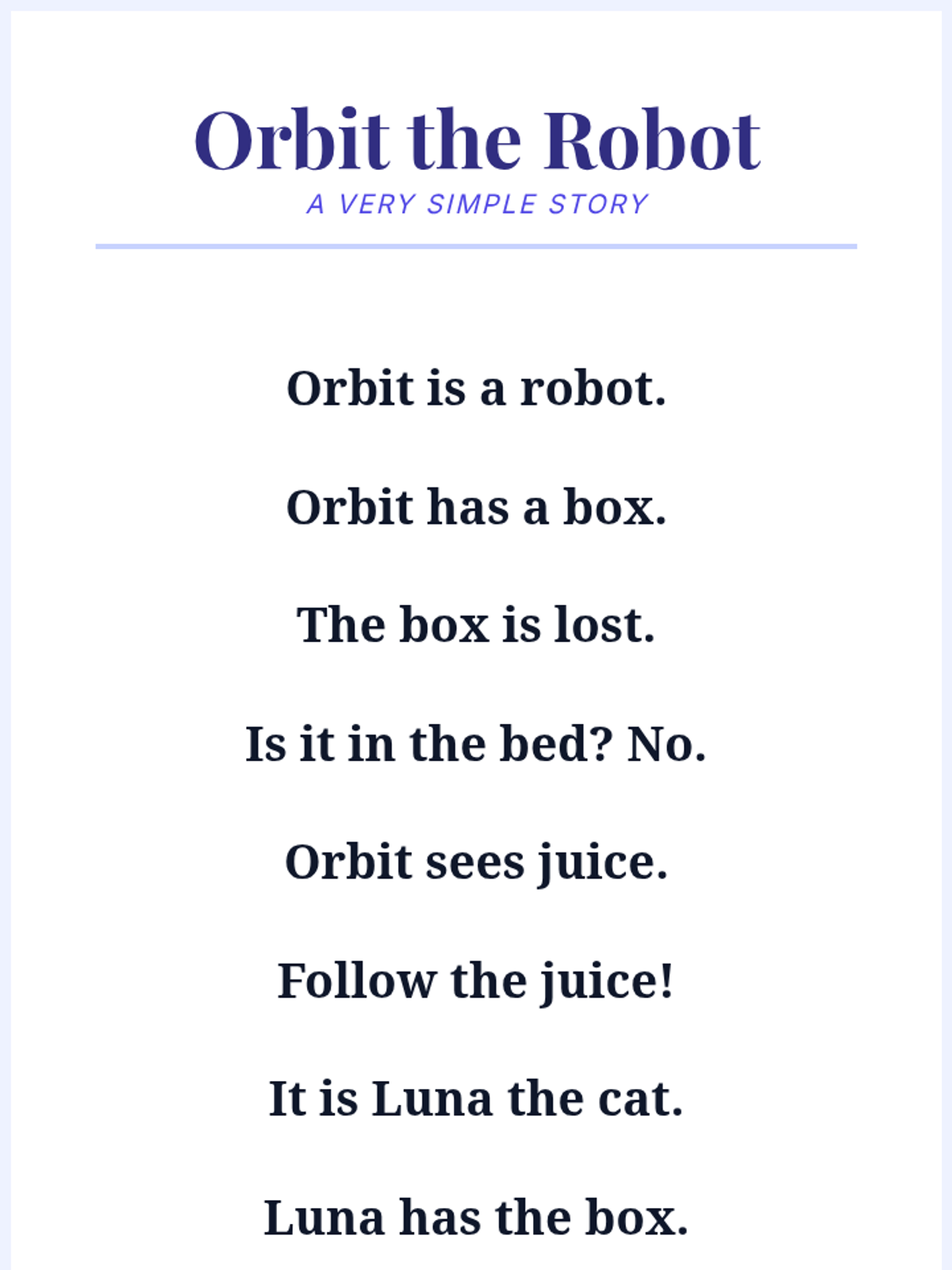
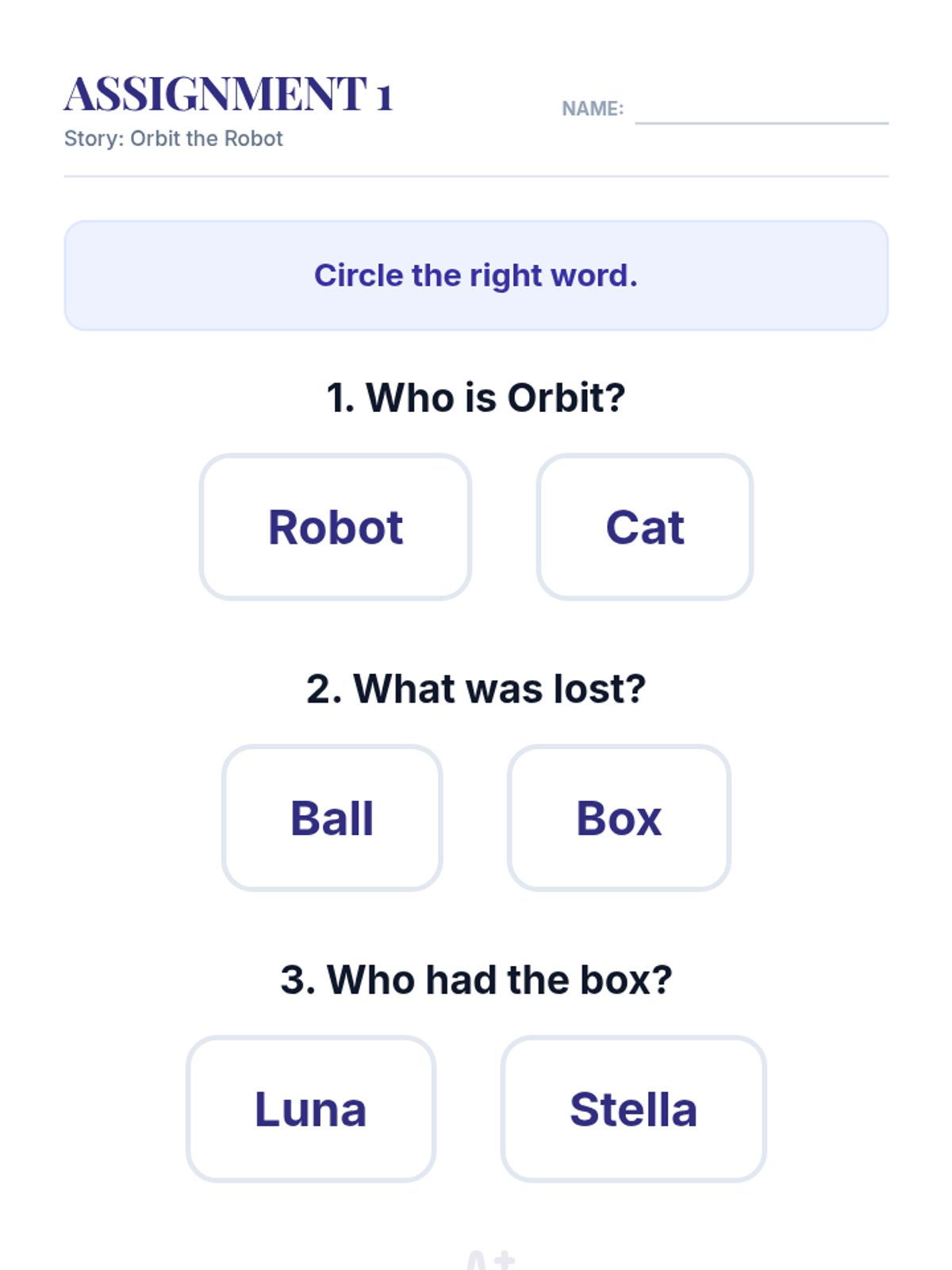
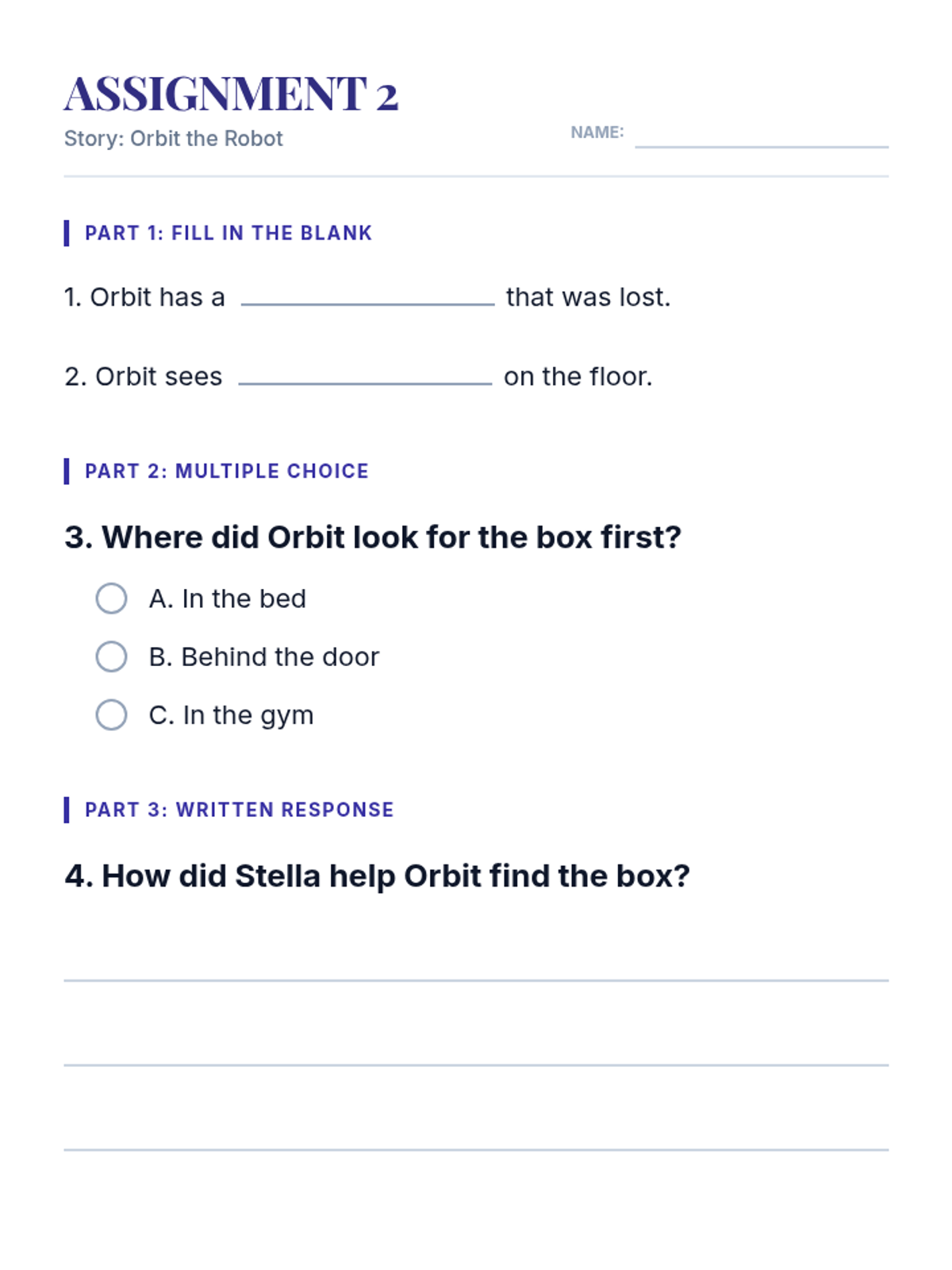
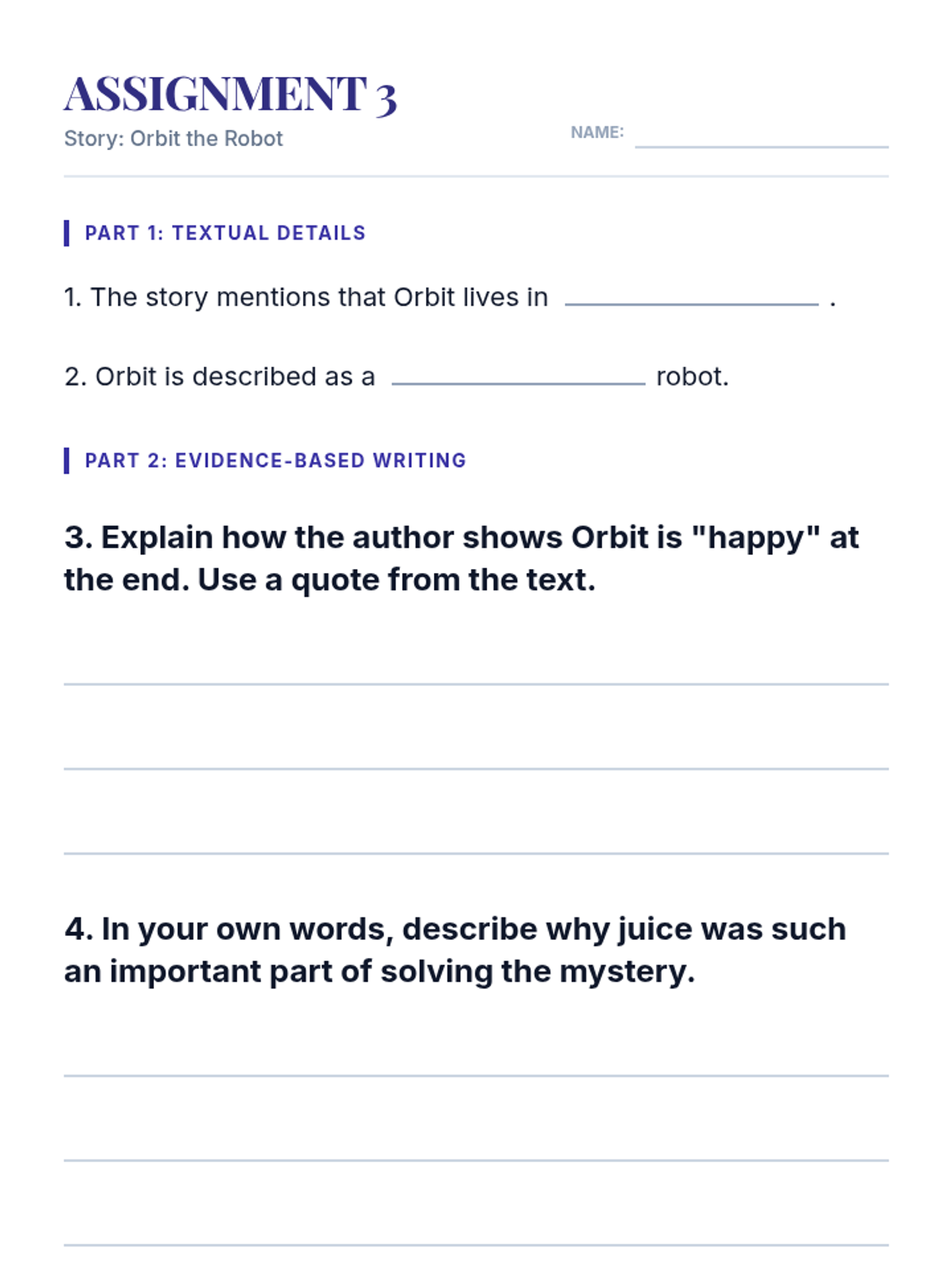
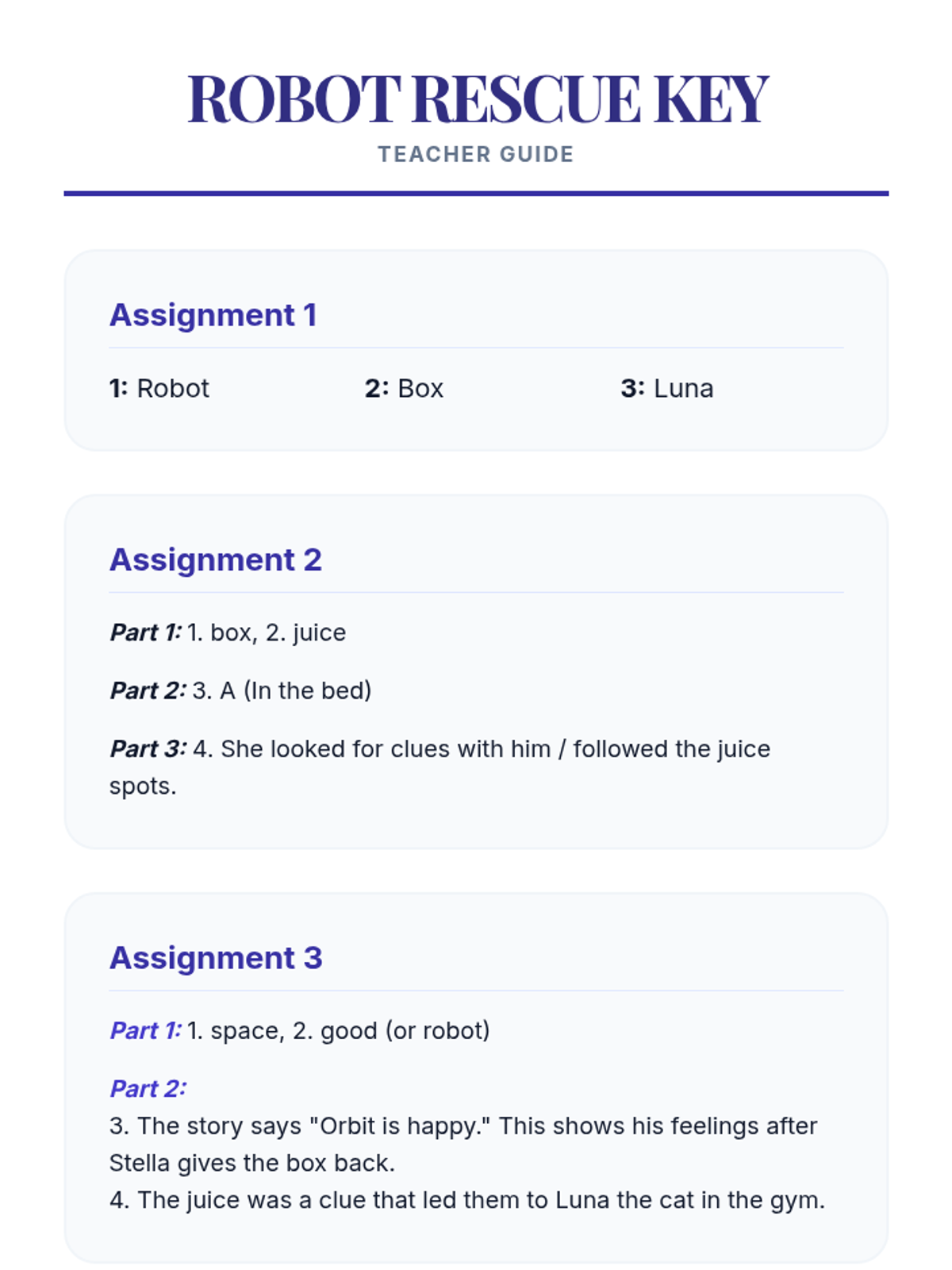
A science-fiction mystery where a robot's battery charger goes missing on a space station, with assignments focusing on logical deduction.
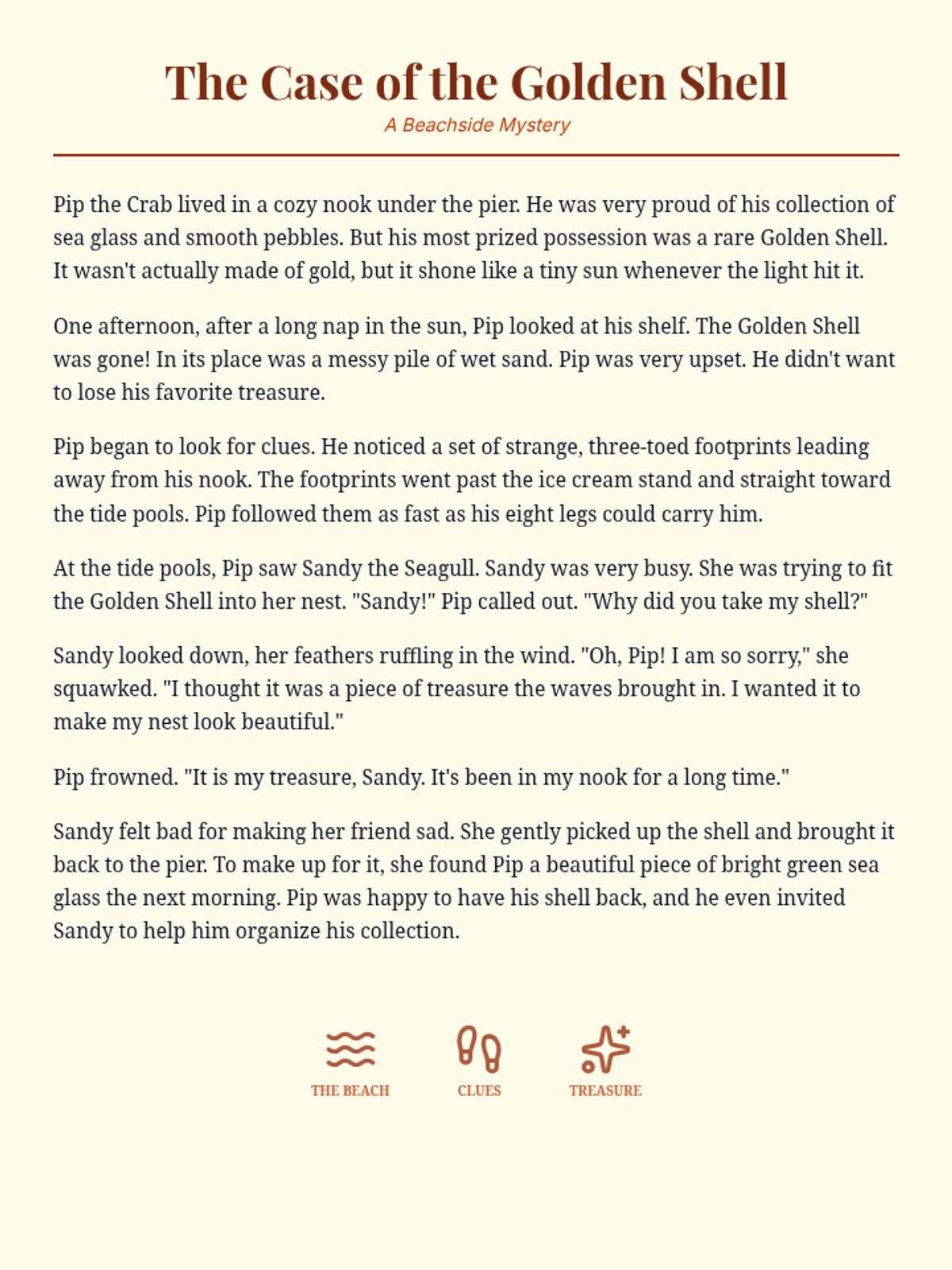
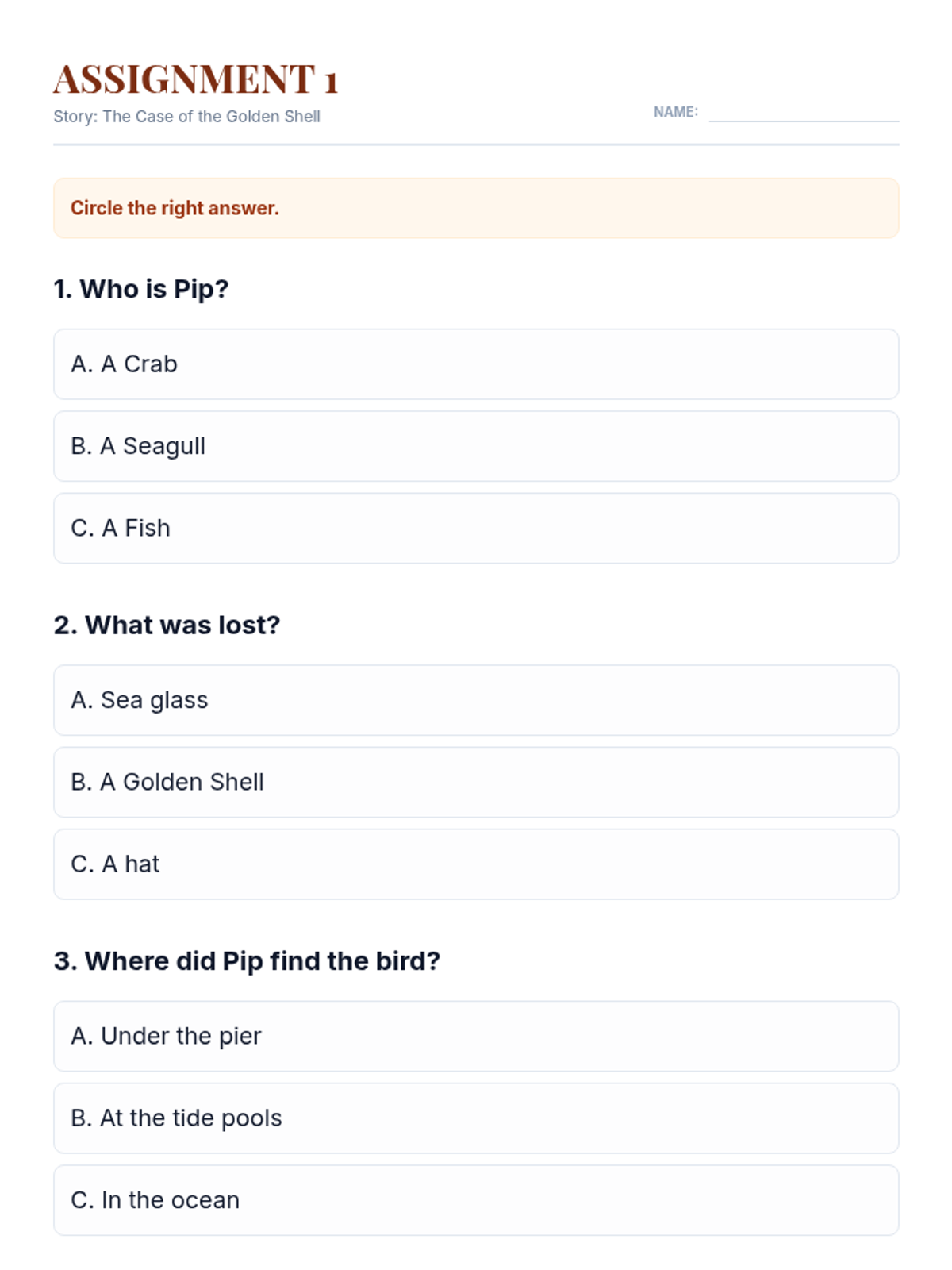
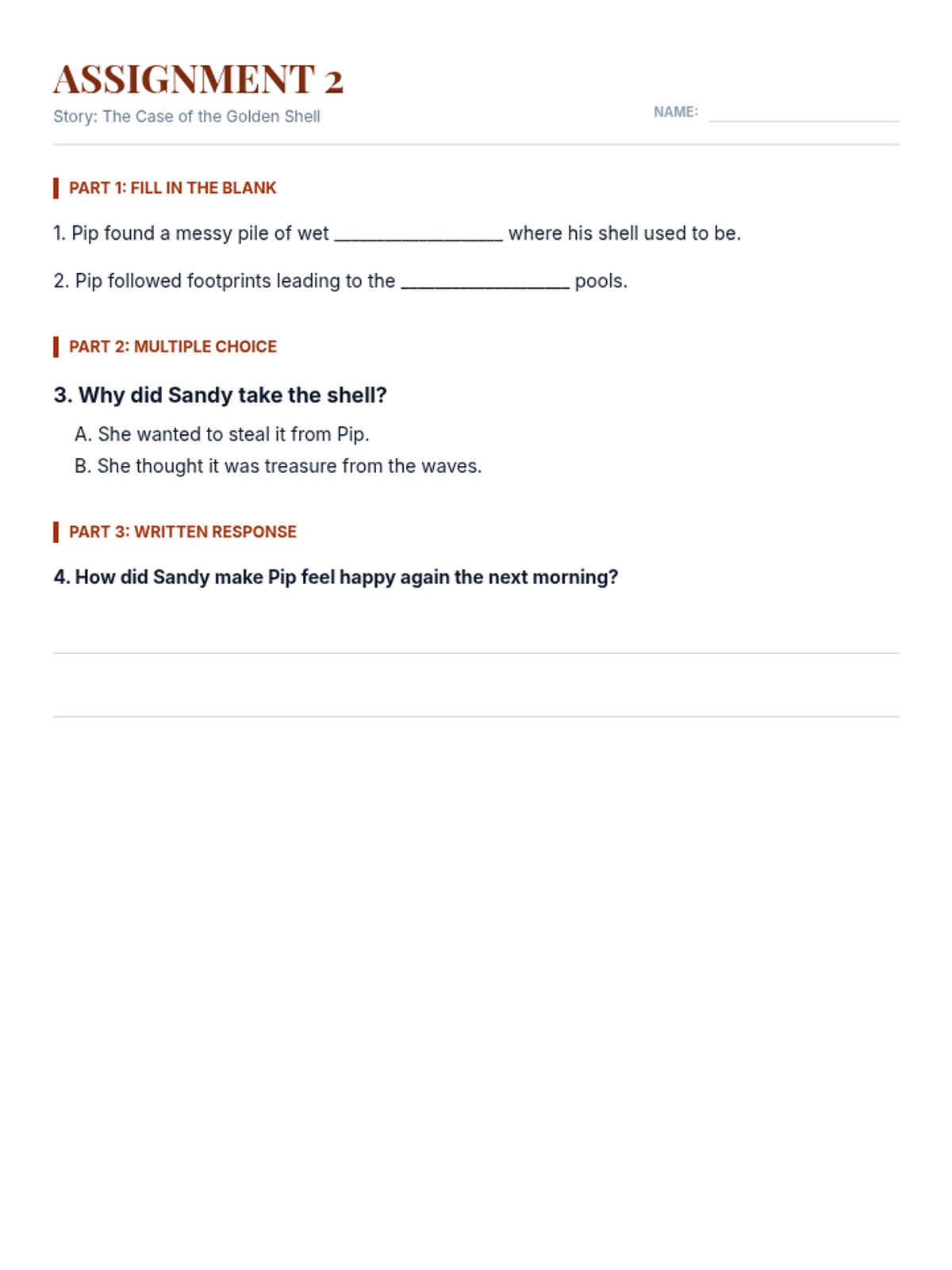
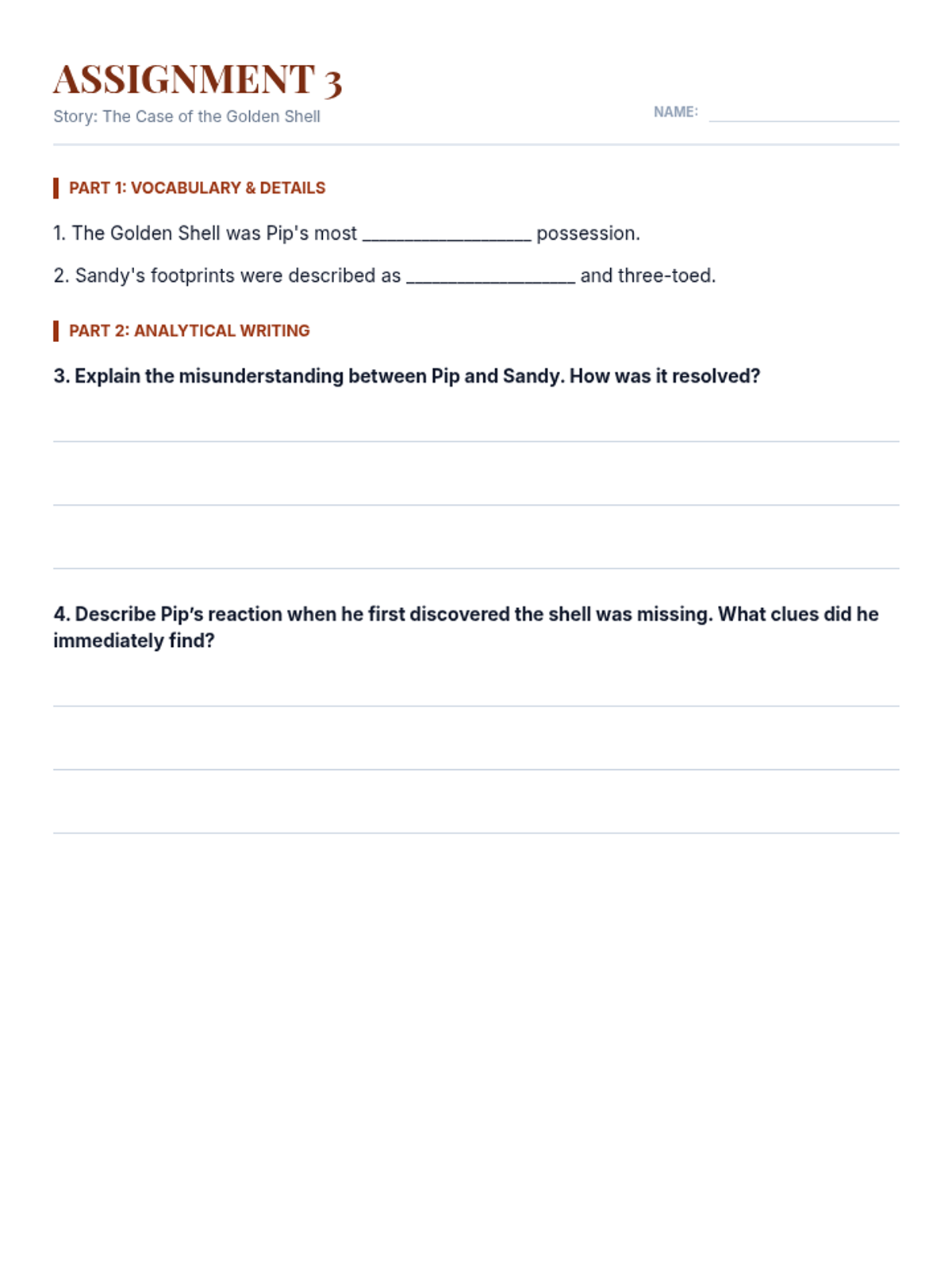
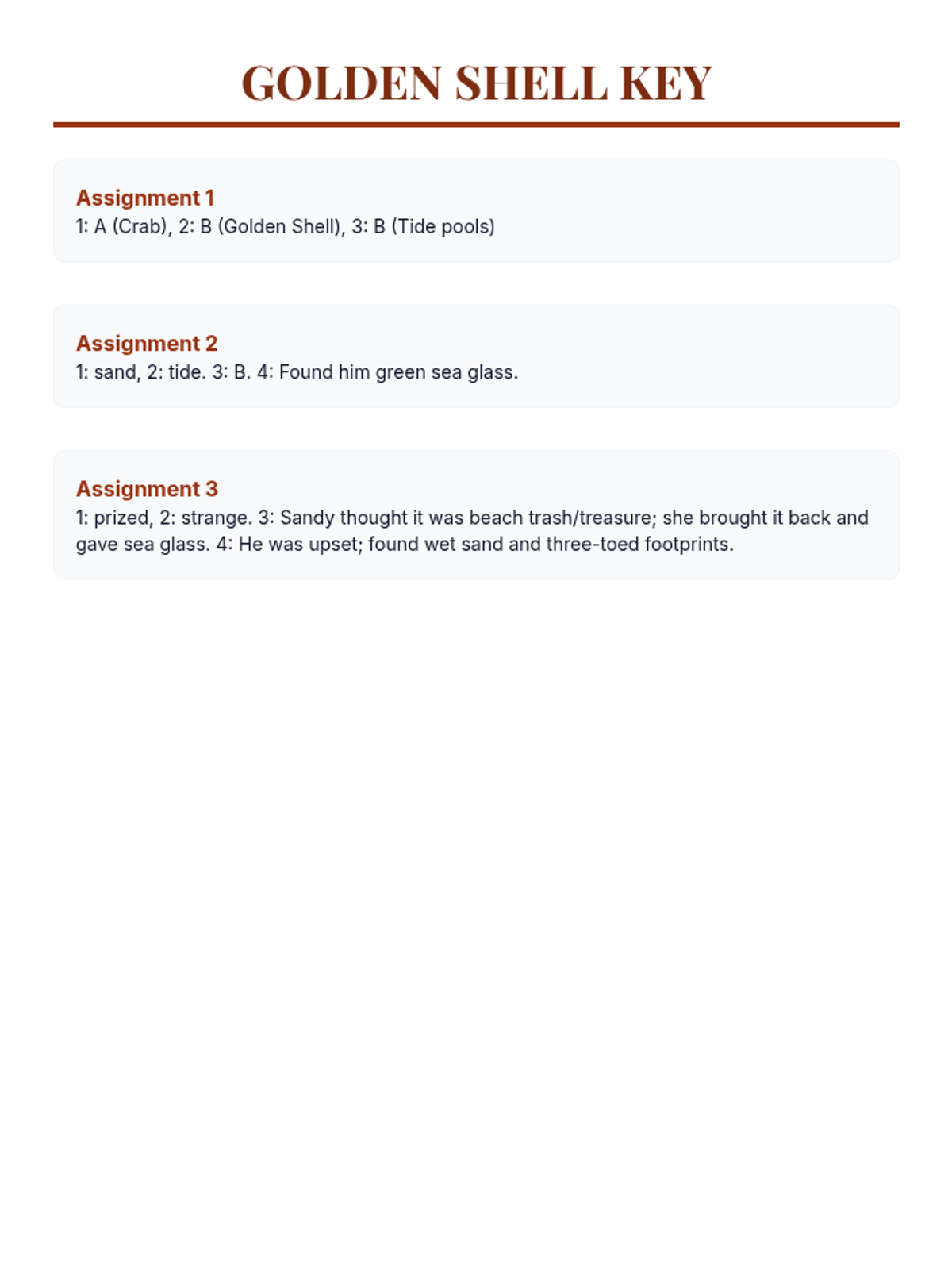
A mystery story set on a beach where a special golden shell has gone missing, with tiered assignments focusing on evidence-based comprehension.
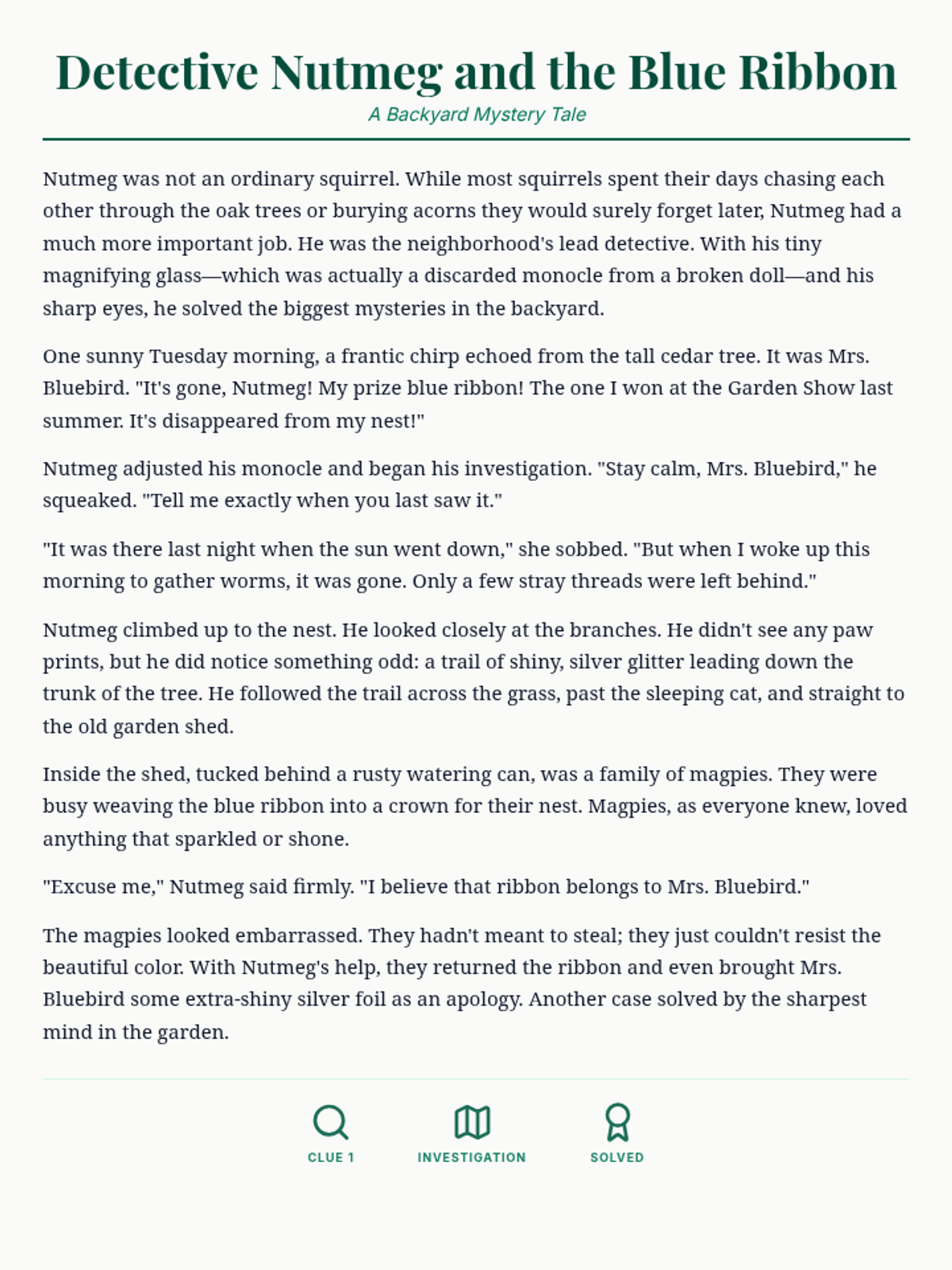
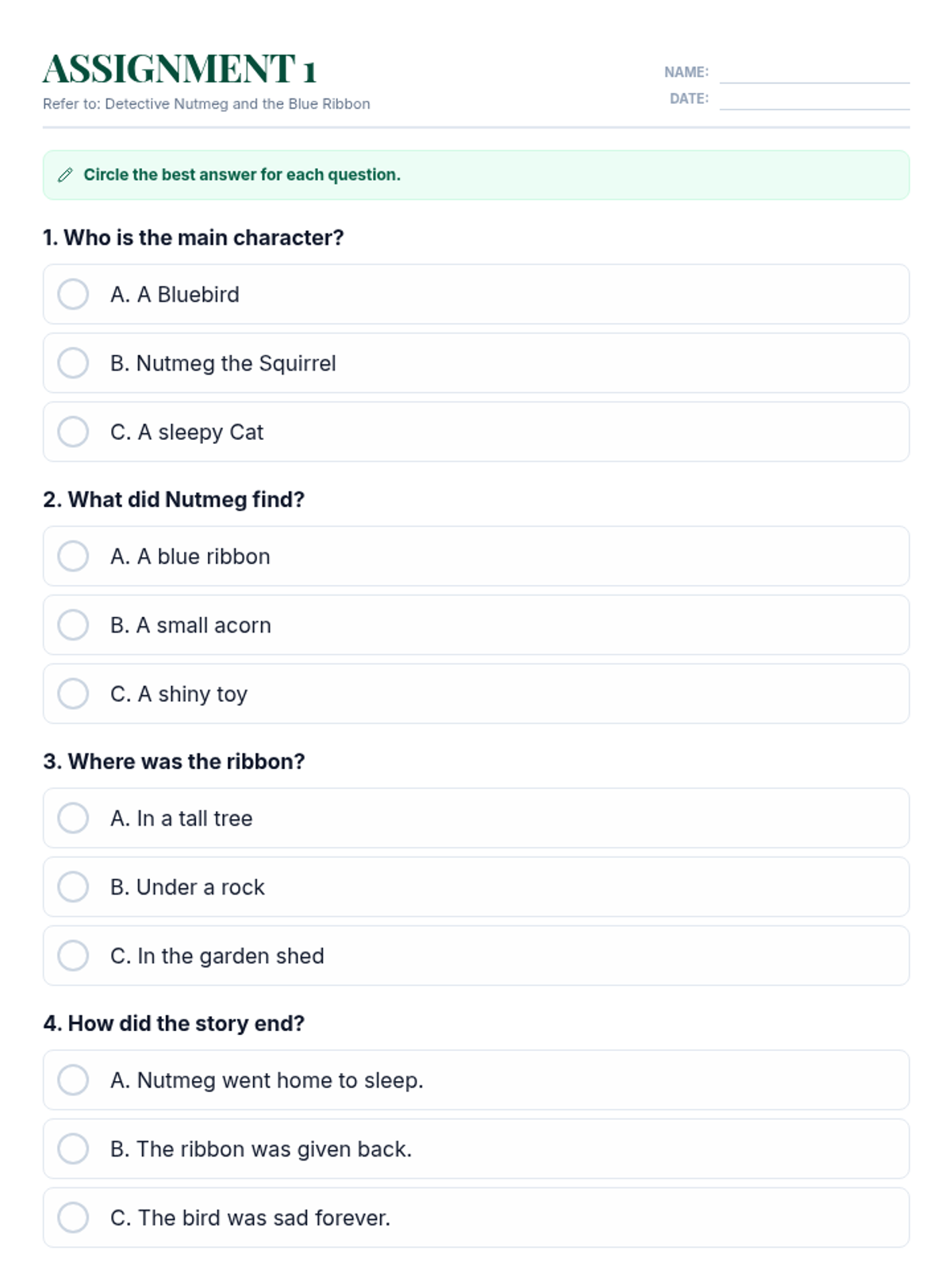
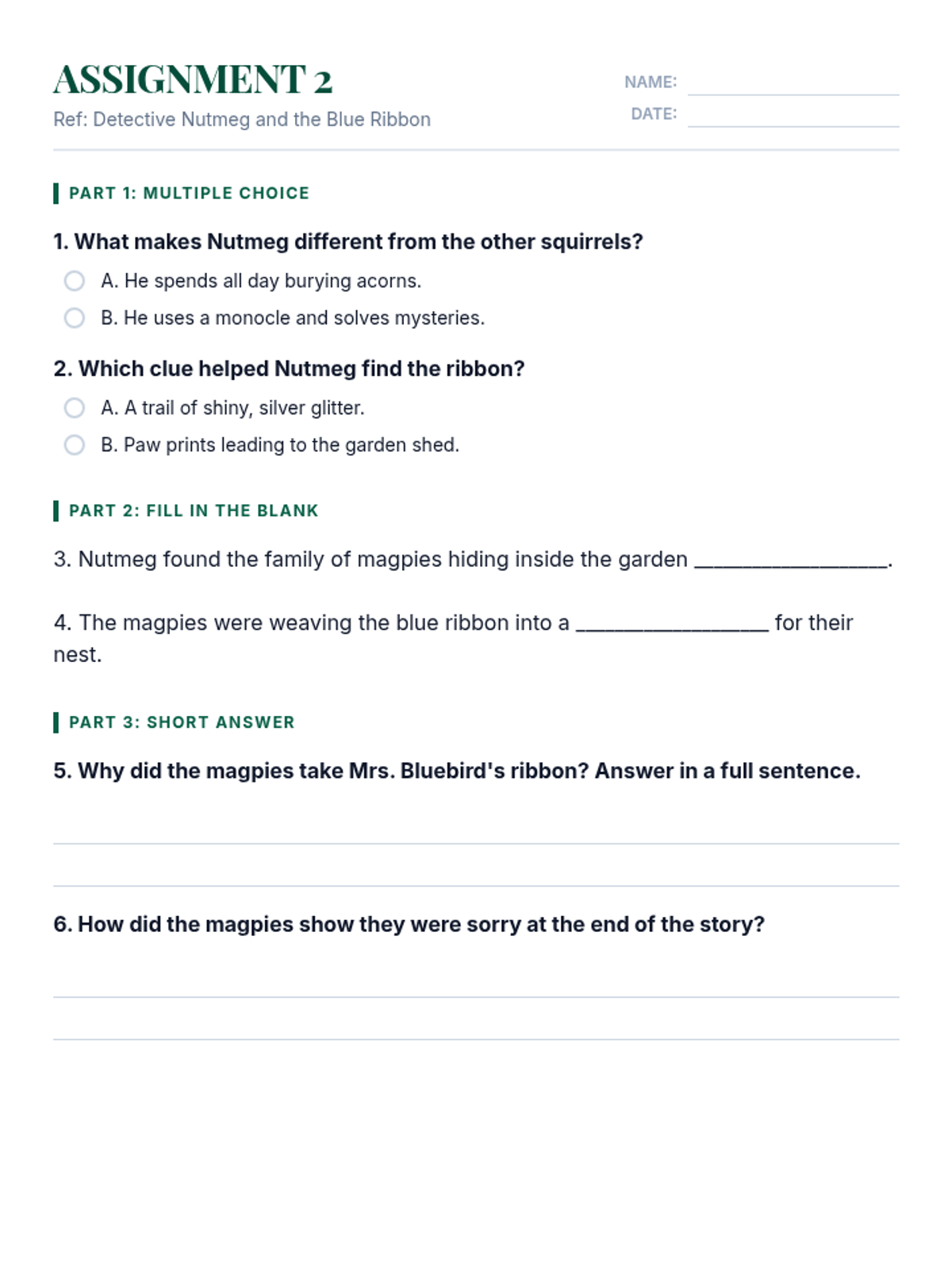
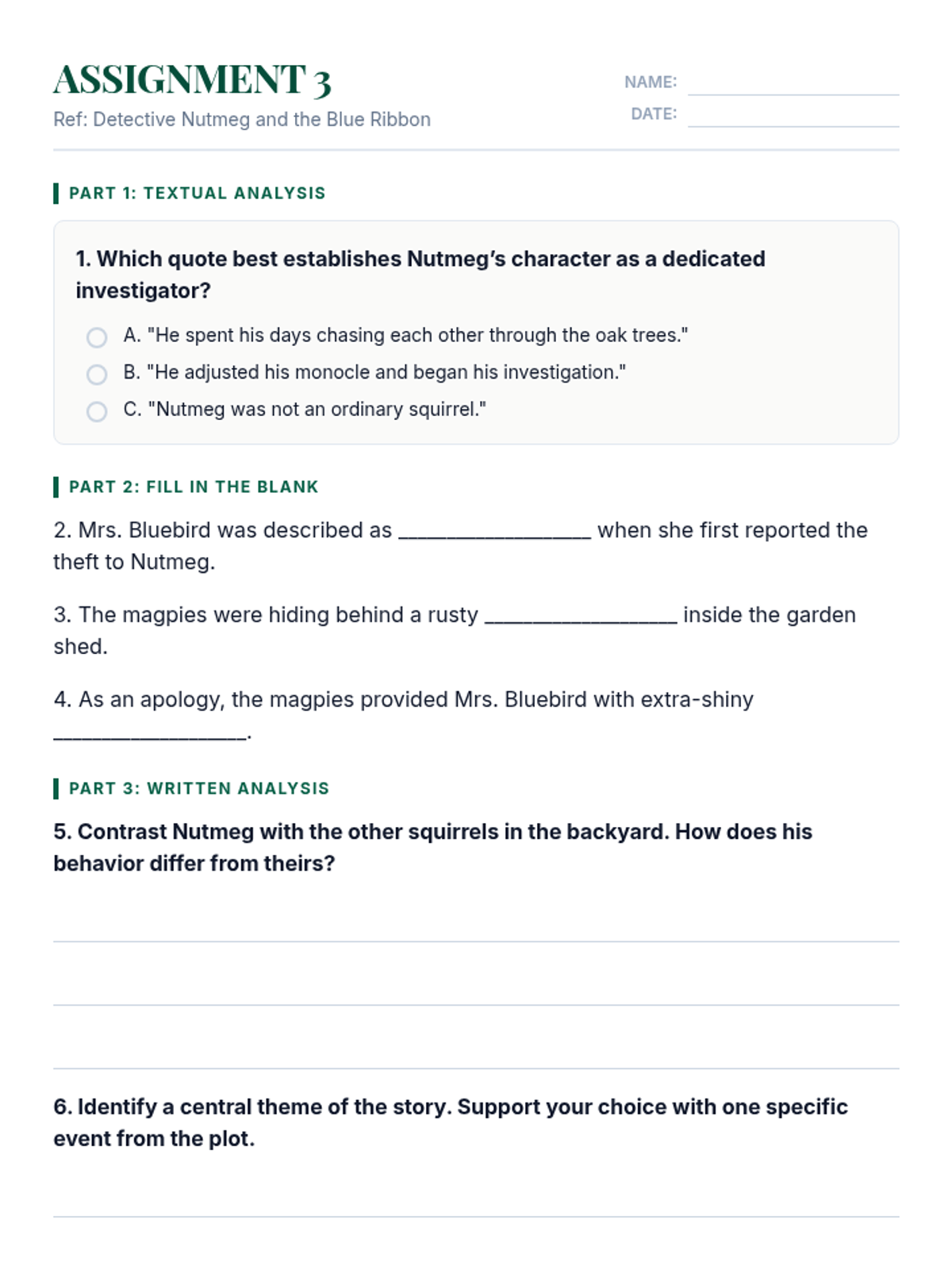
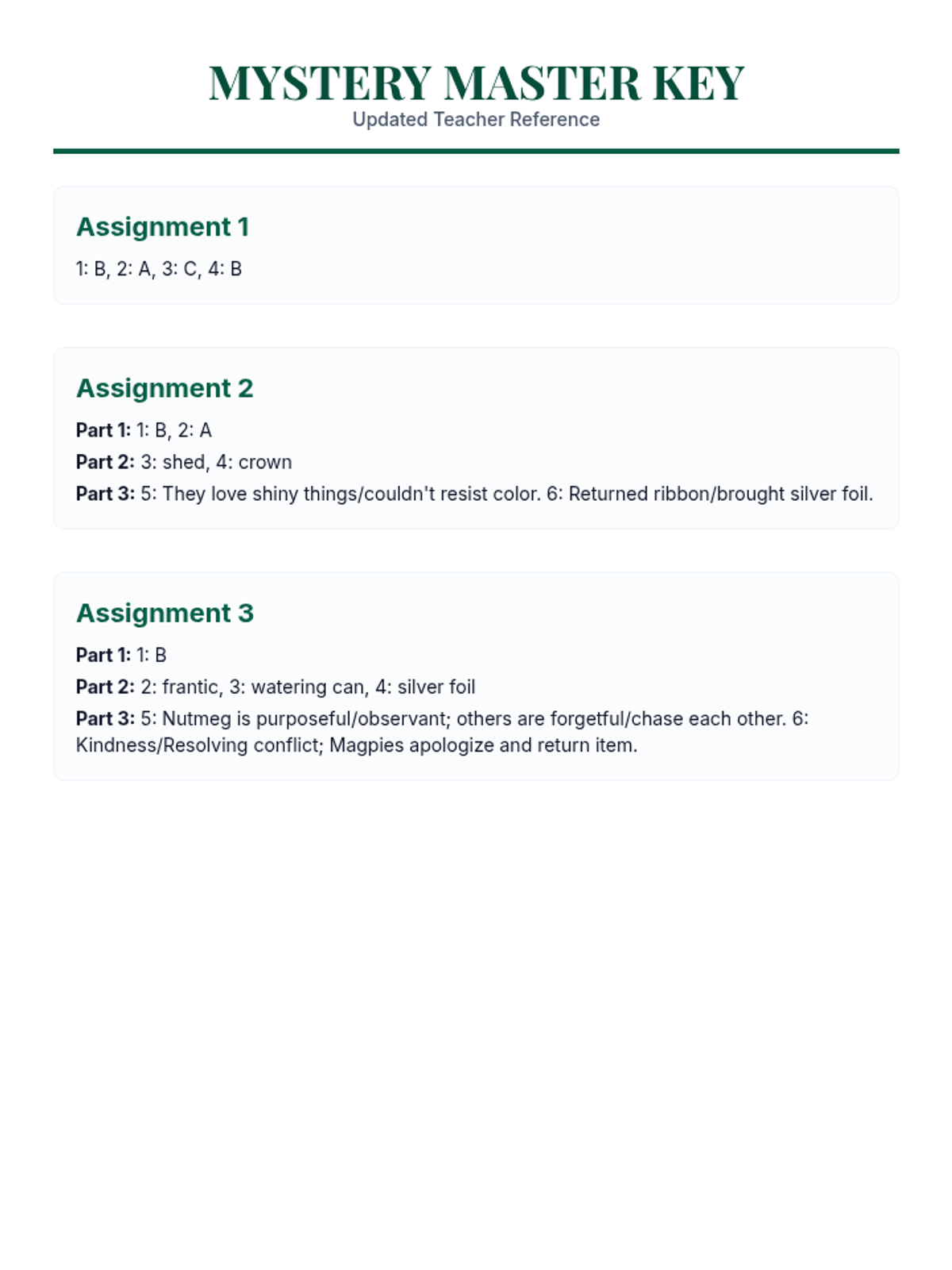
A collection of materials focused on a mystery story about a squirrel detective, featuring a reading passage and three tiered comprehension assignments.
A collection of visual prompt cards and resources to help kindergarten students practice oral language skills and describe their work using sentence frames.
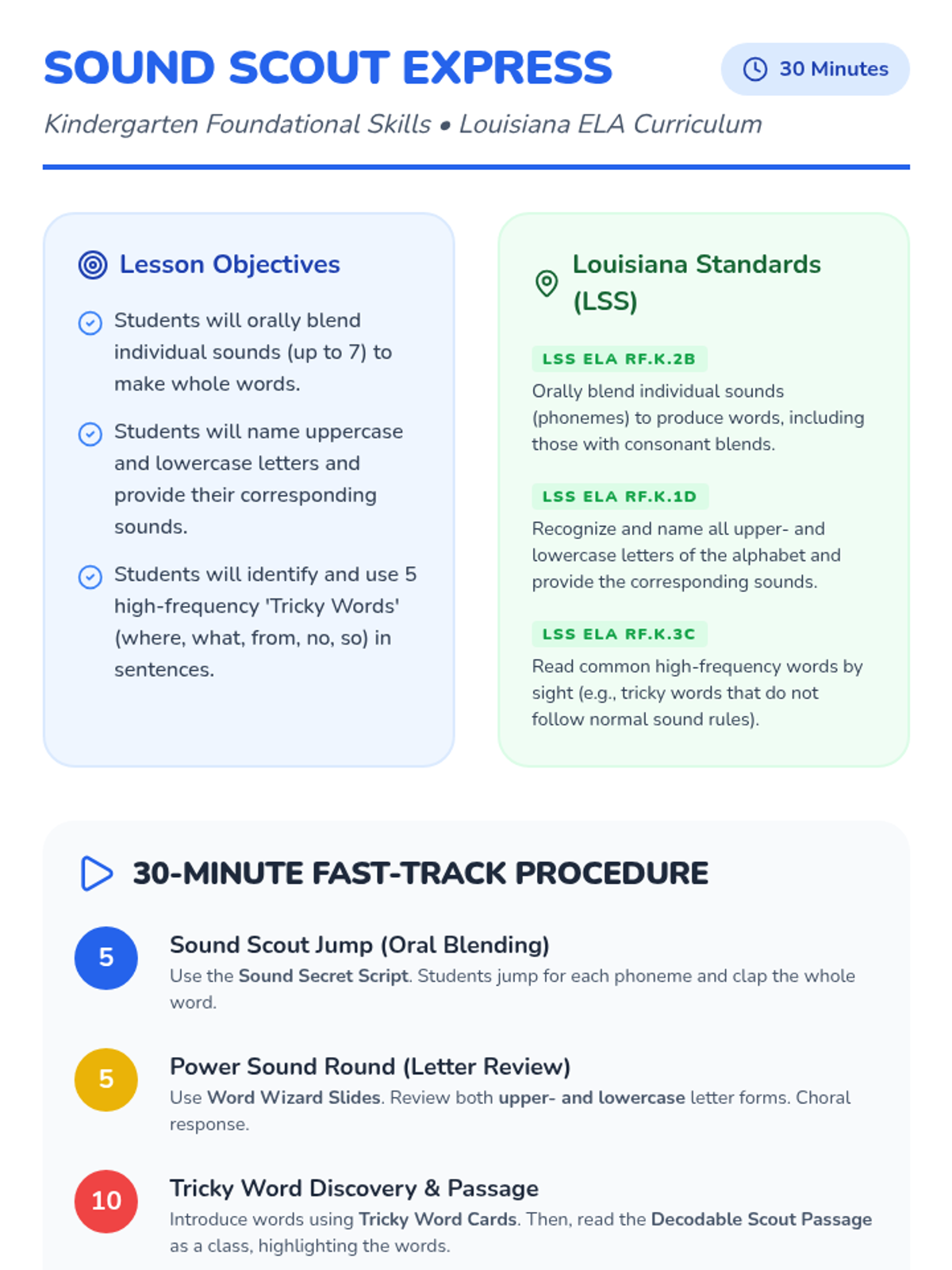
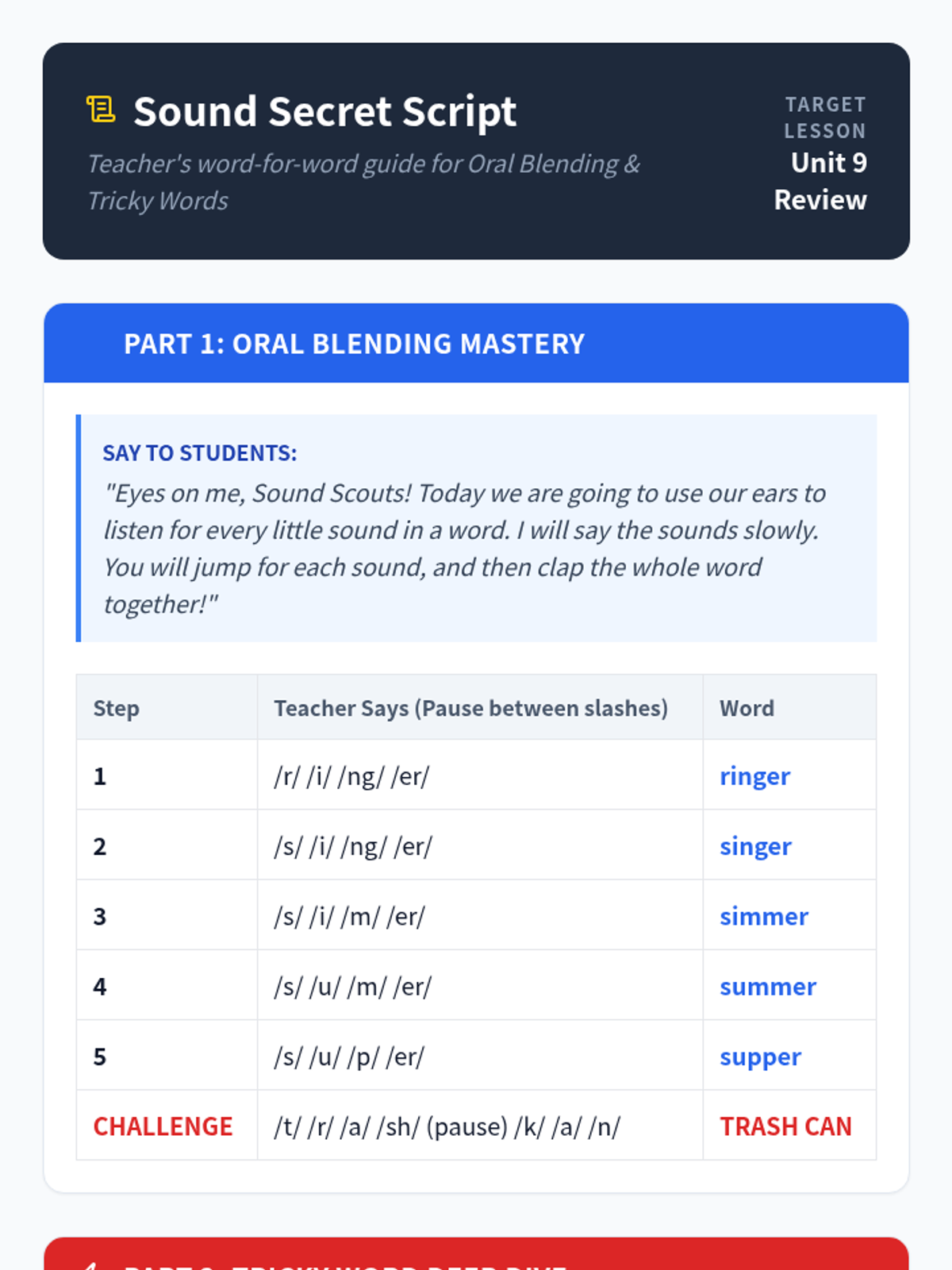
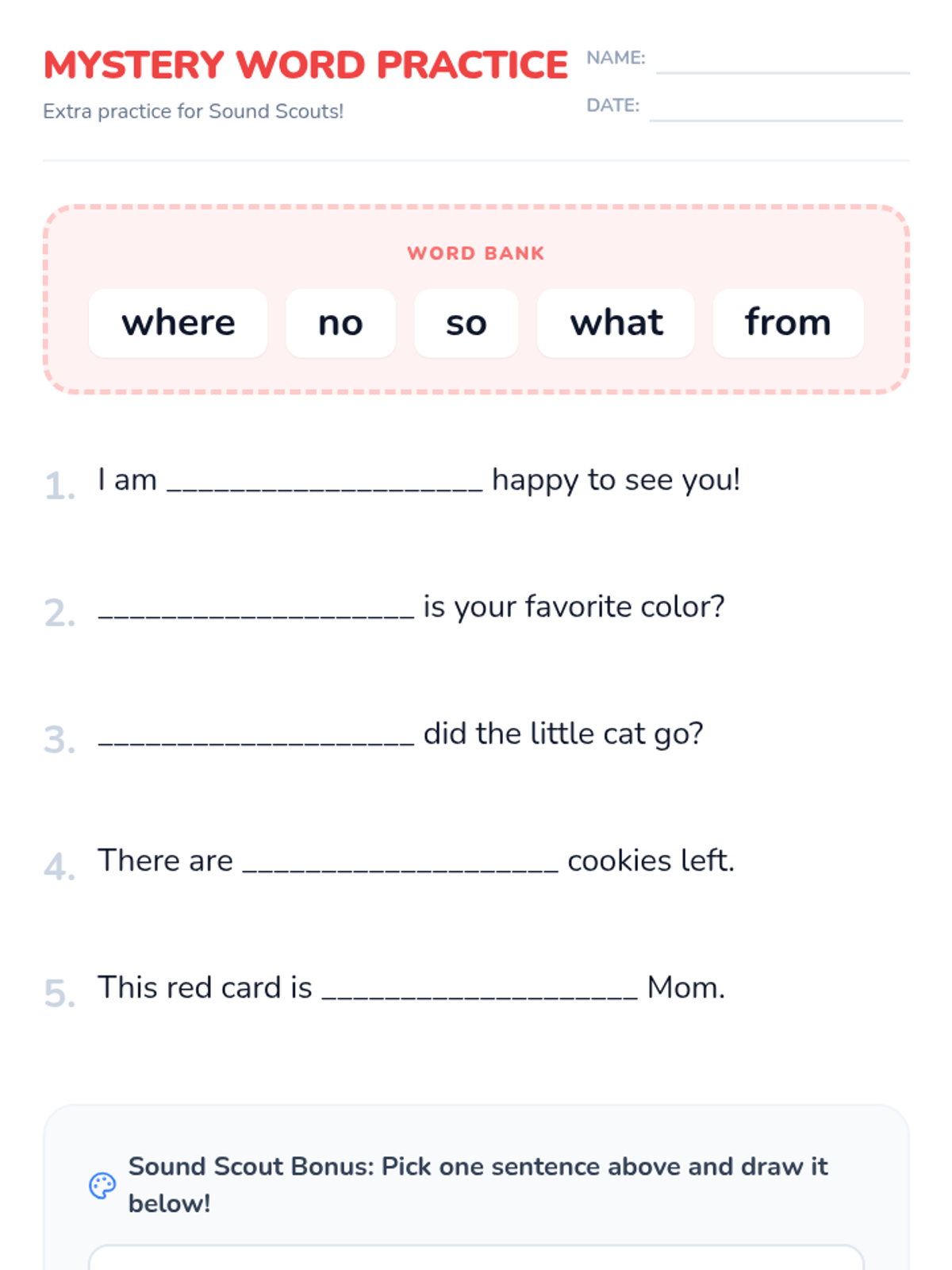
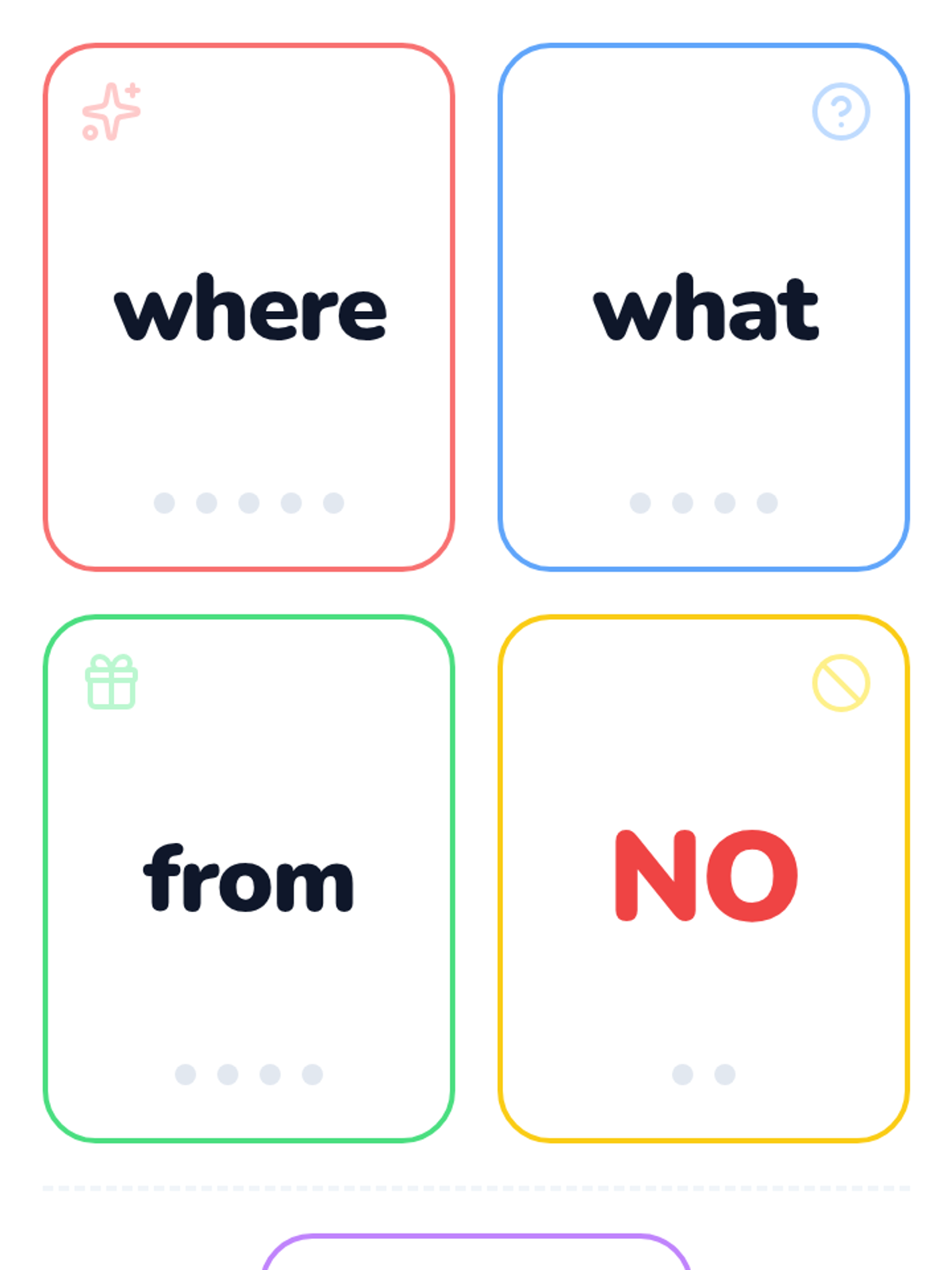
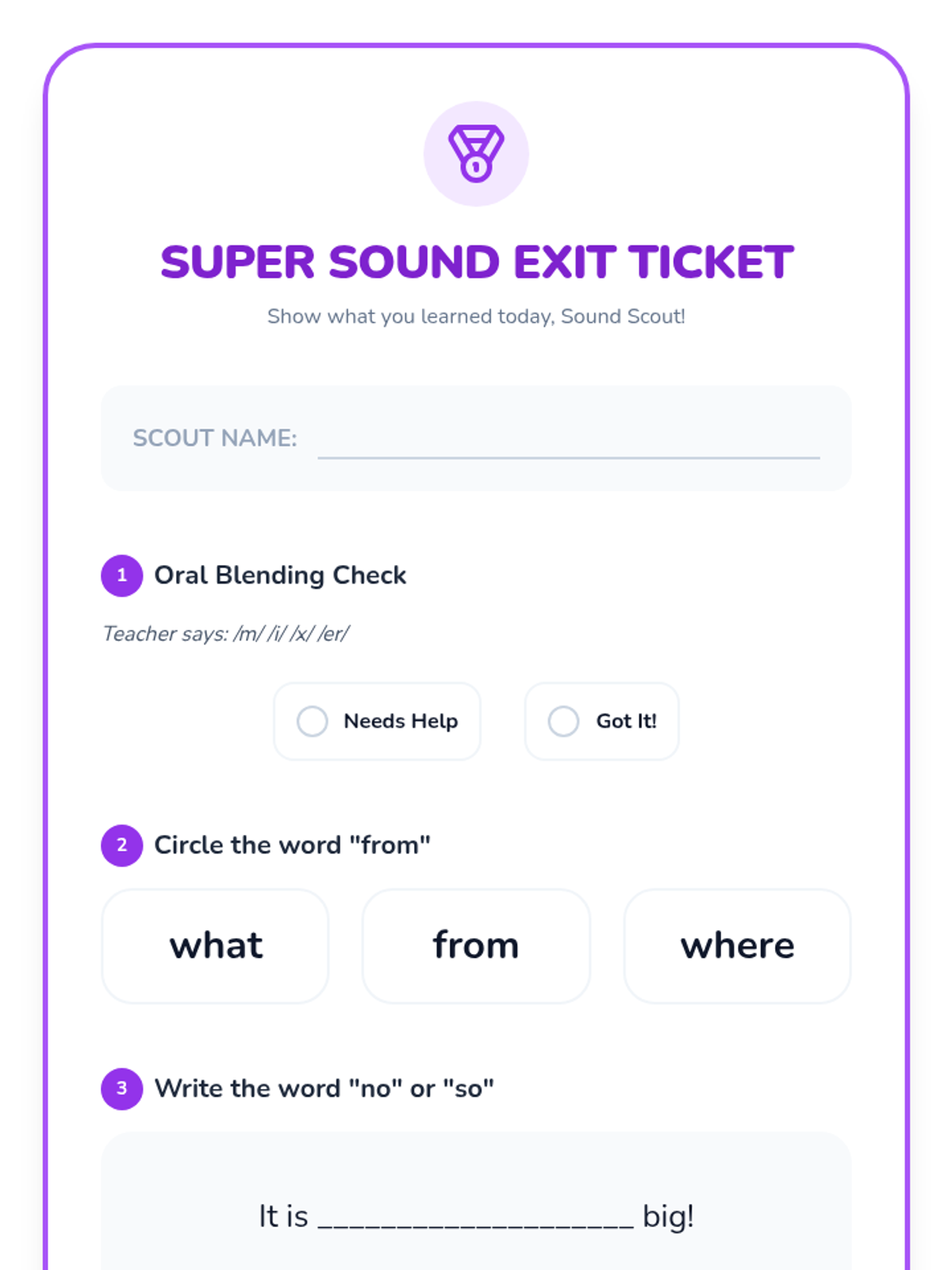
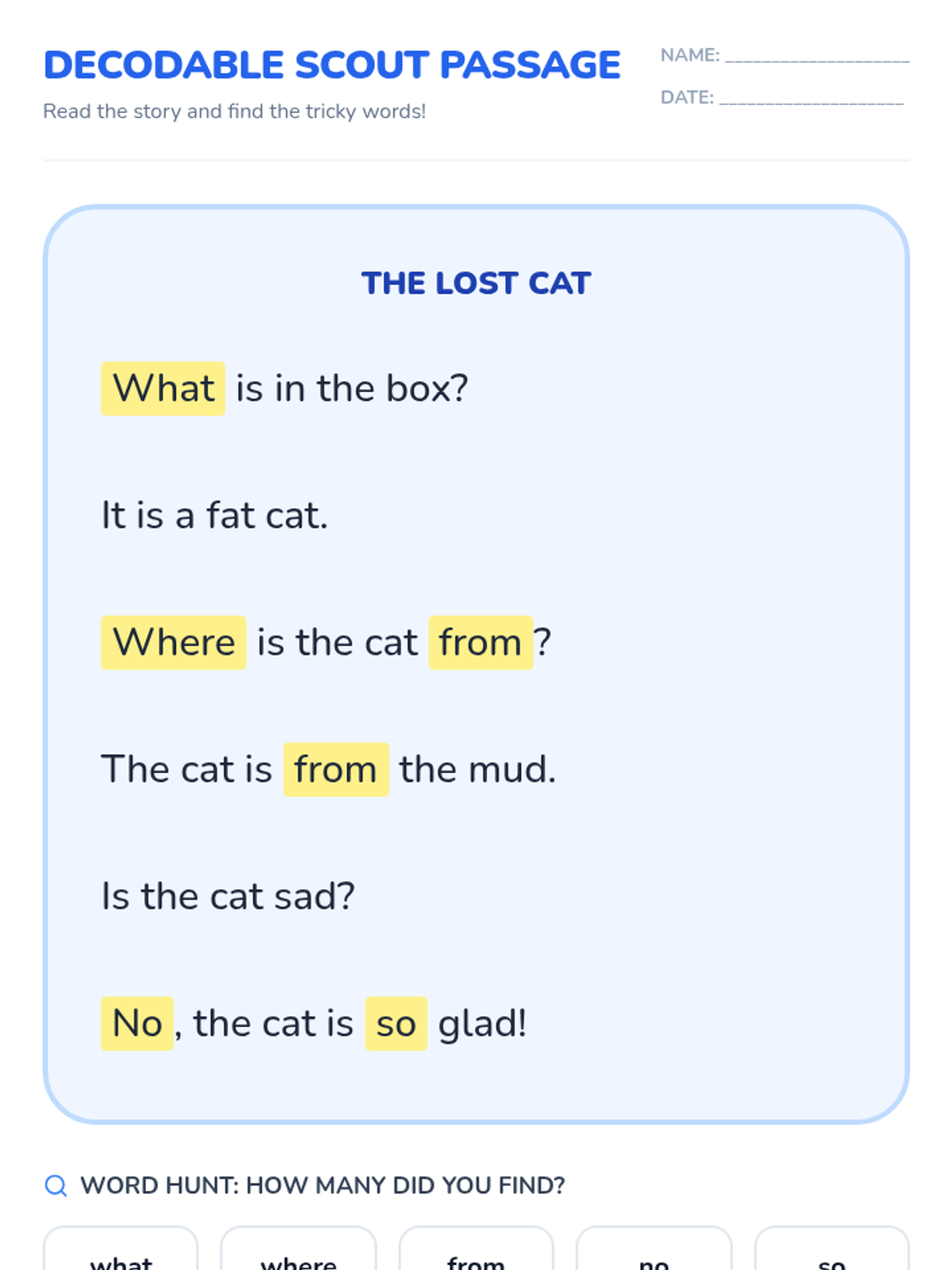
A fast-paced, 30-minute Kindergarten literacy lesson focused on oral blending of phonemes and mastering high-frequency 'tricky' words through energetic interactive activities.
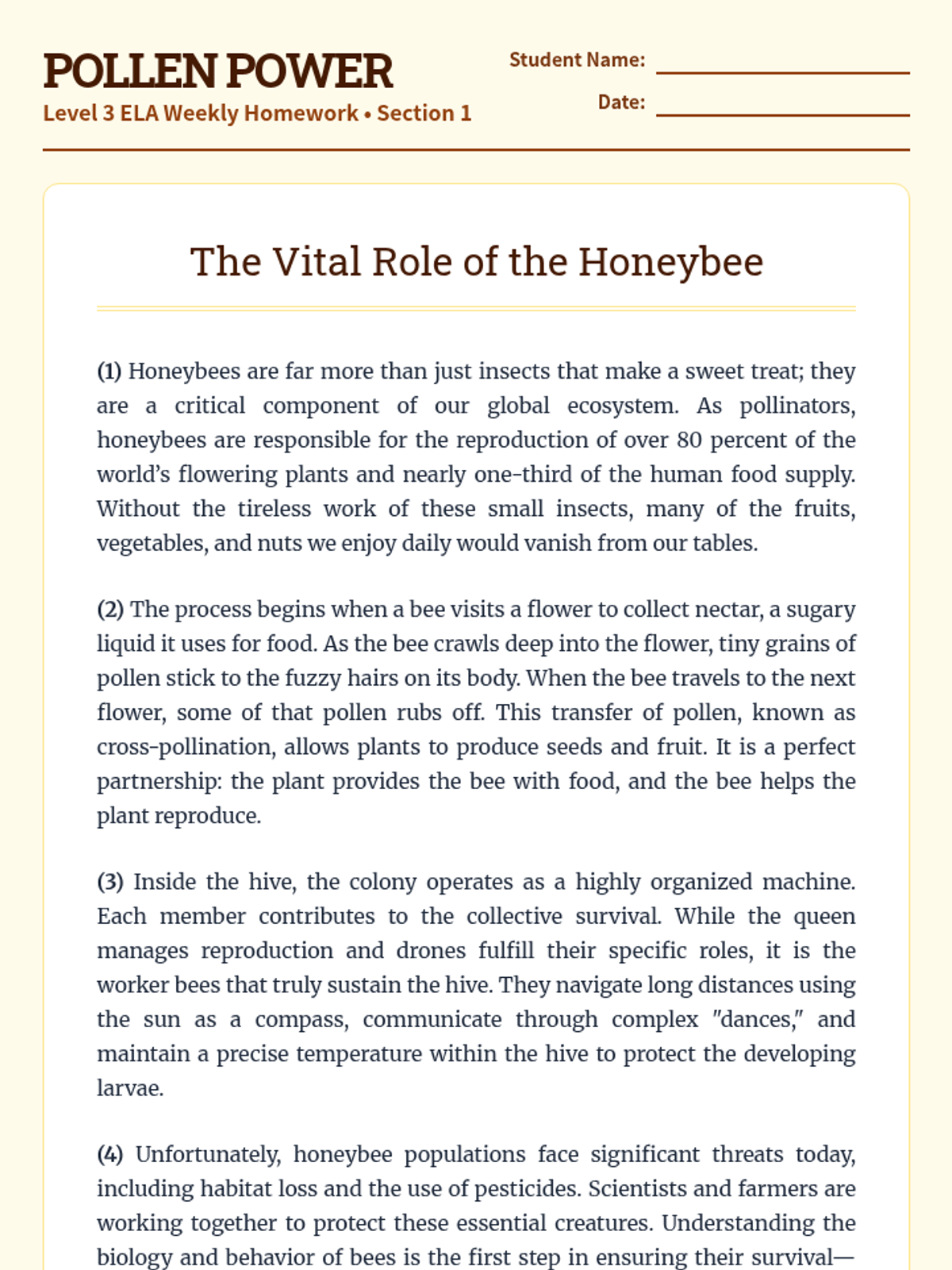
An advanced informational text packet exploring bee biology, pollination, and hive hierarchy.
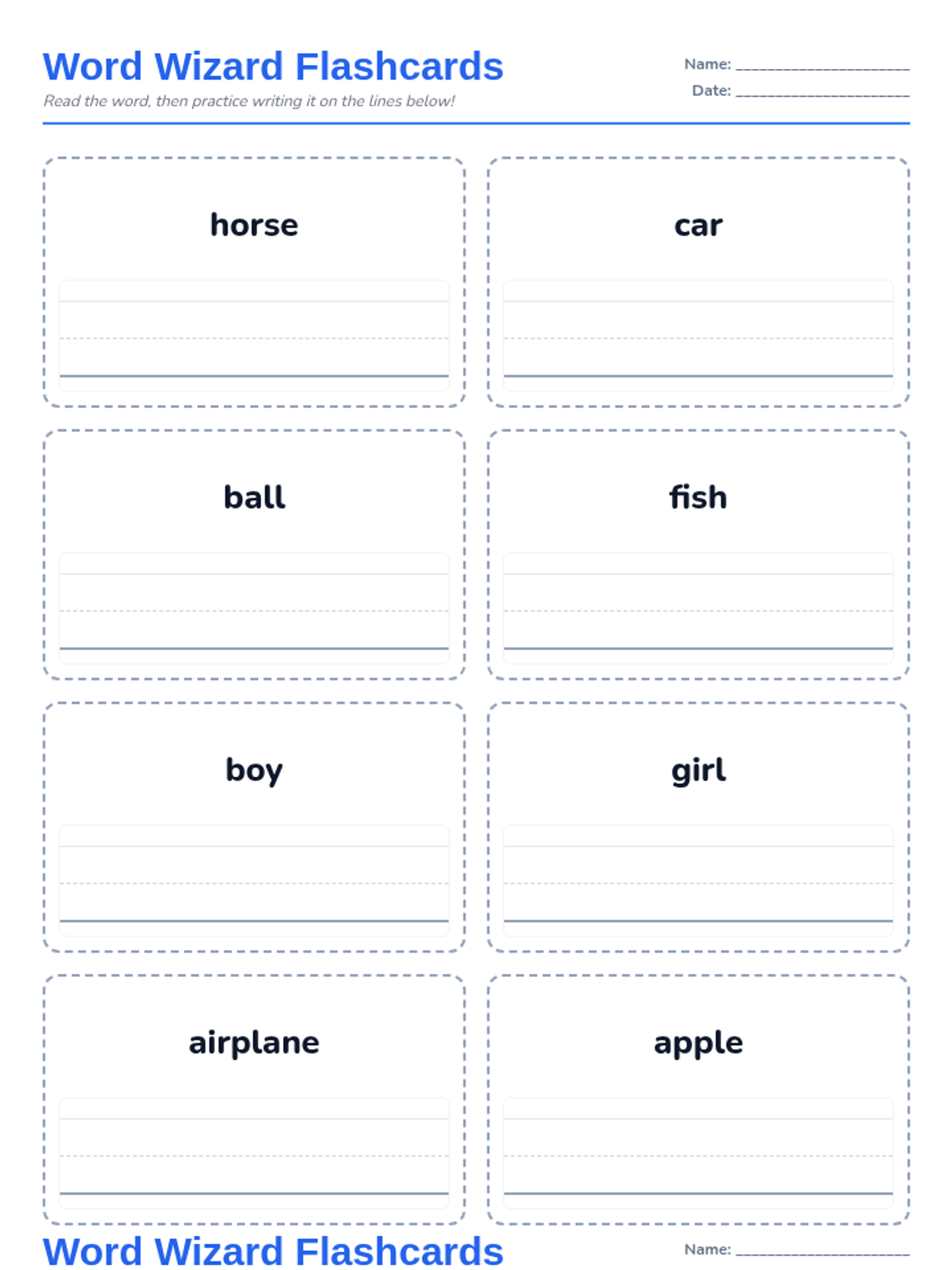
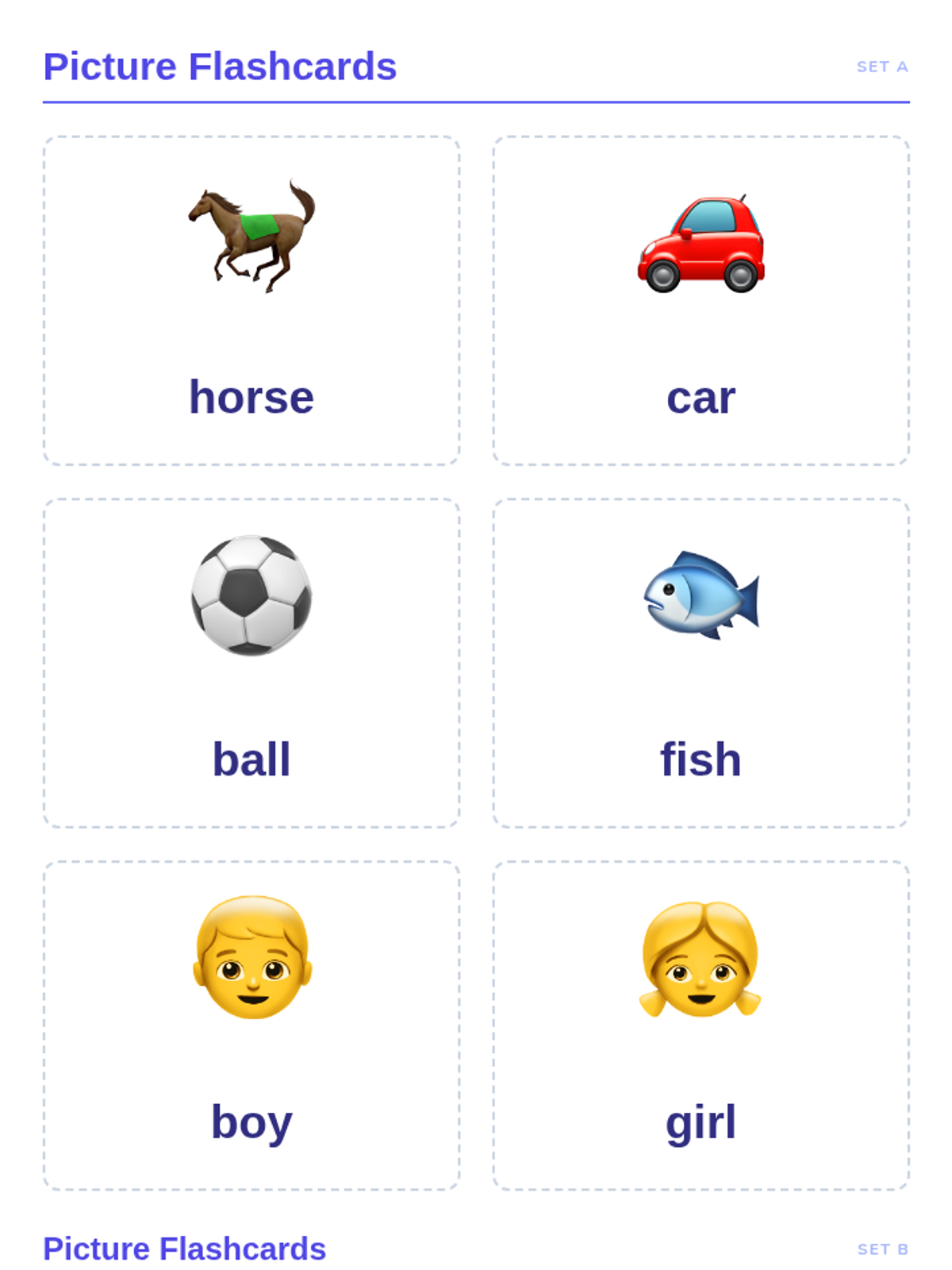
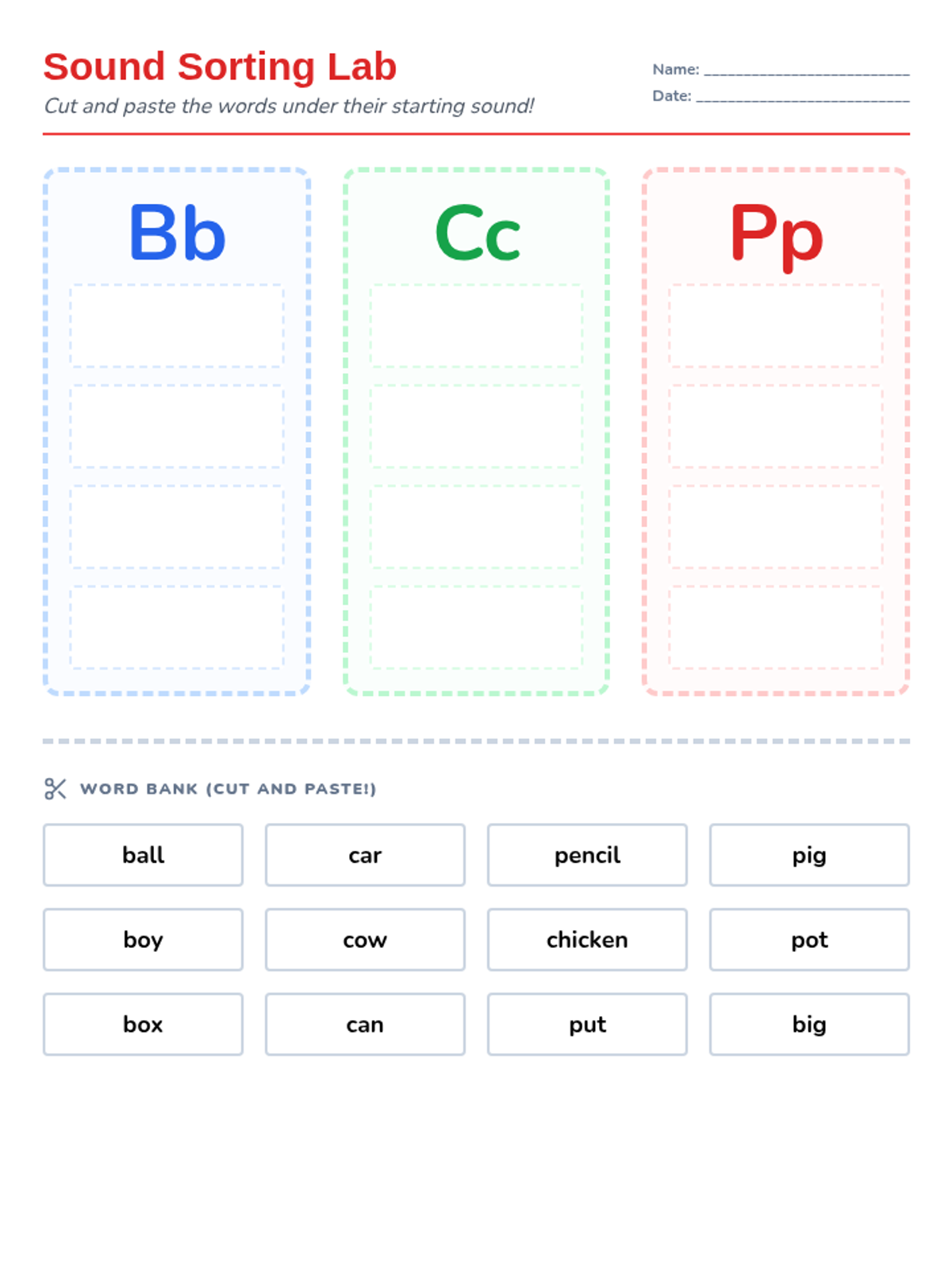
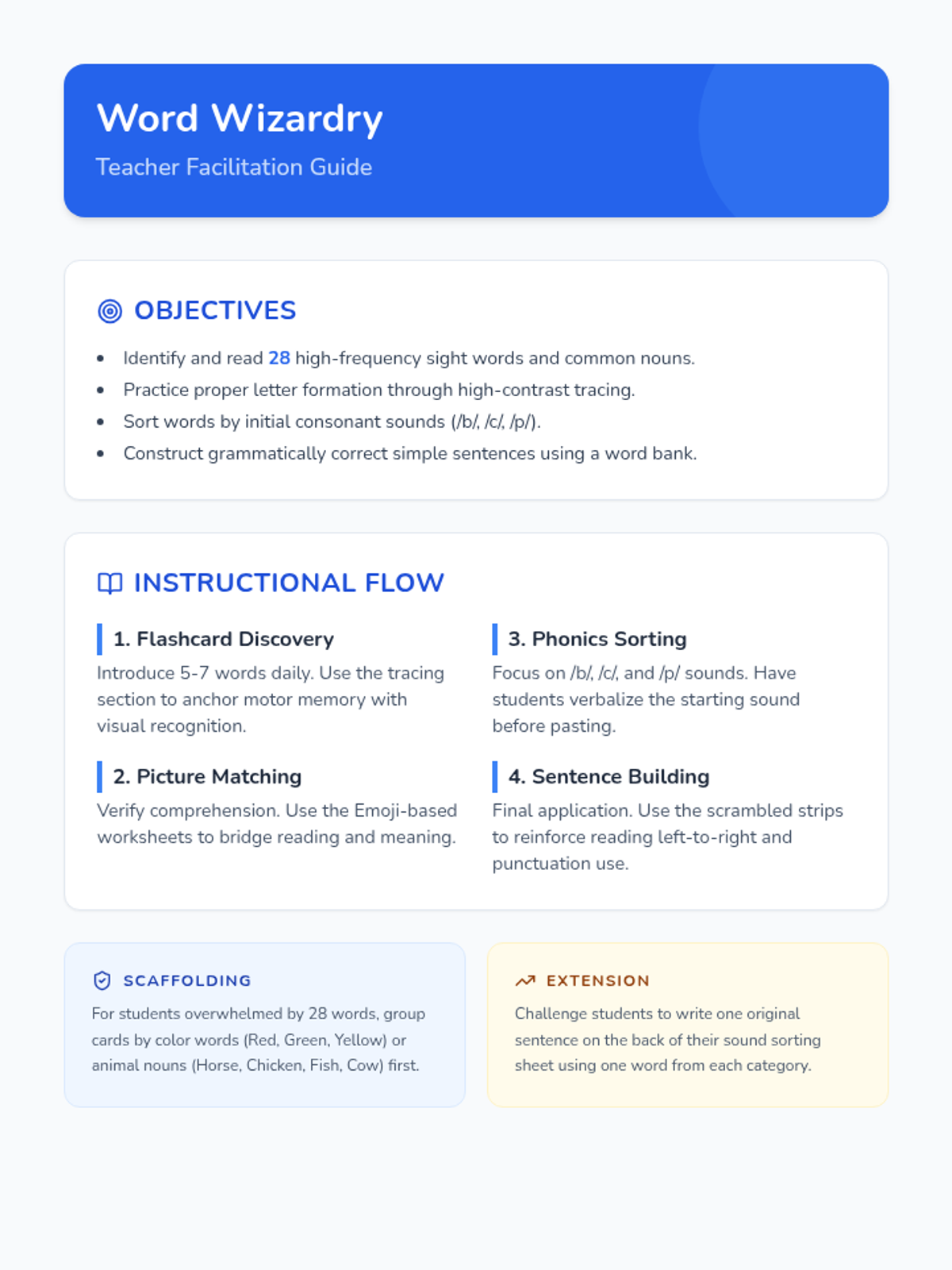
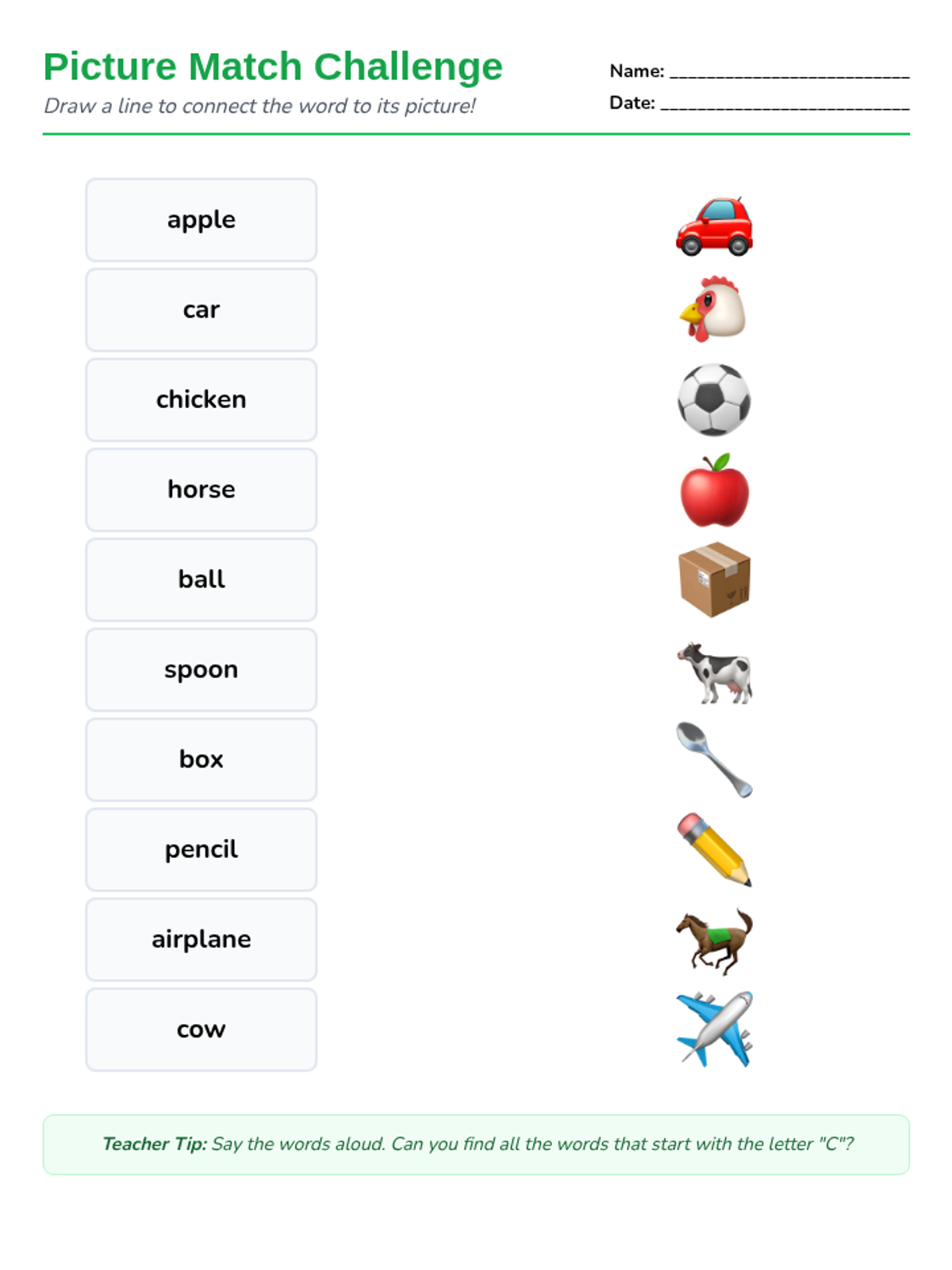
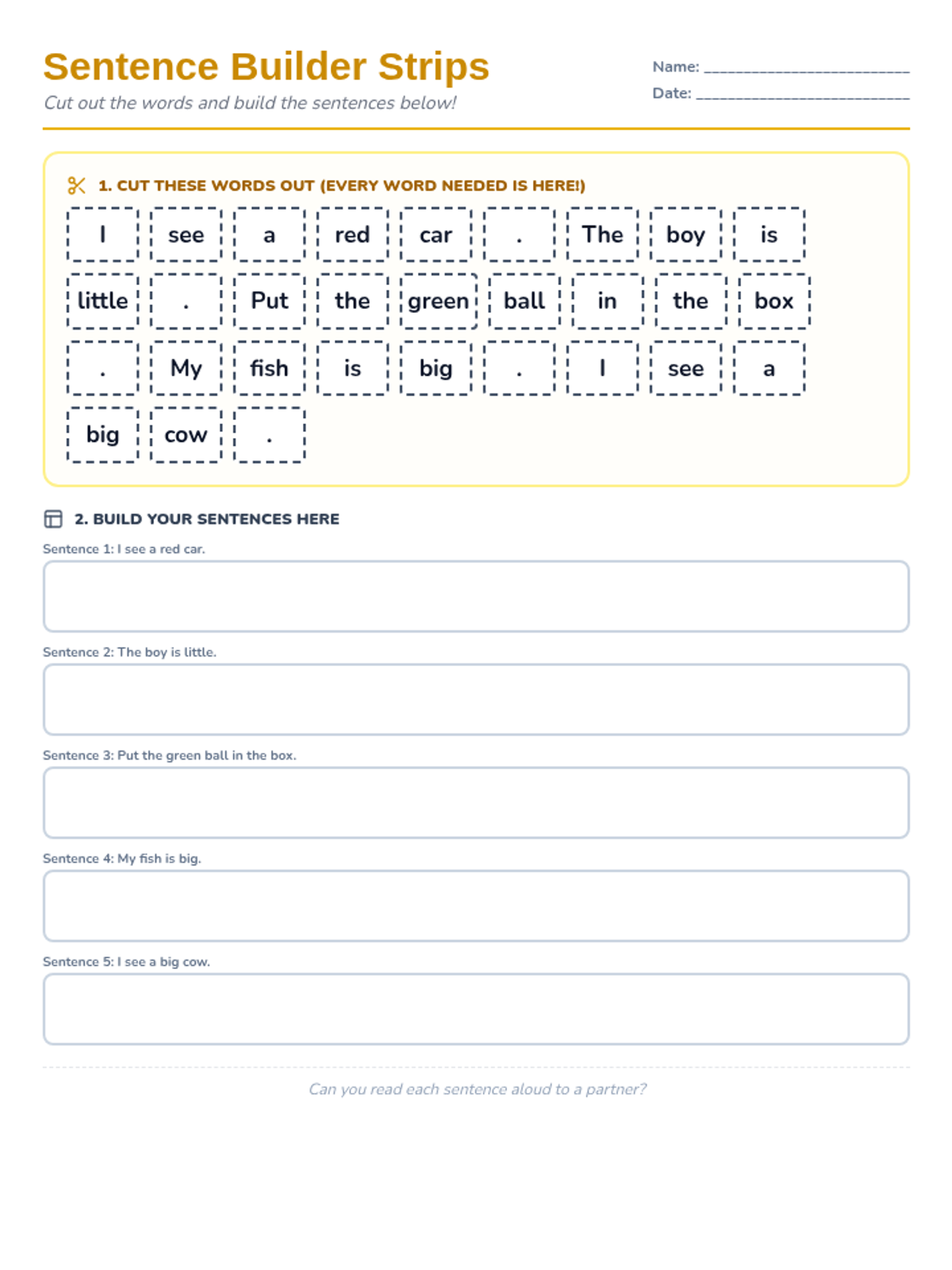
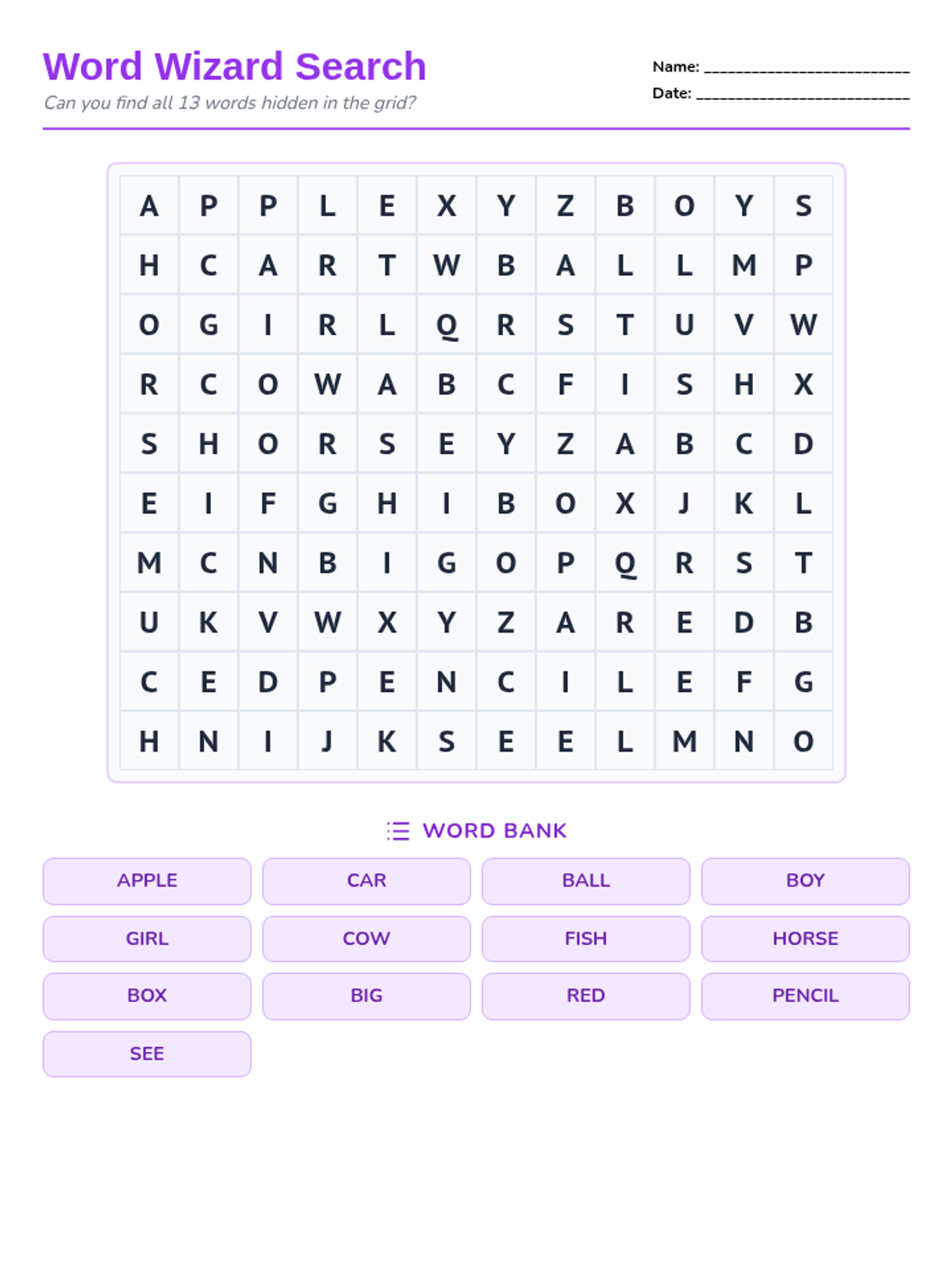
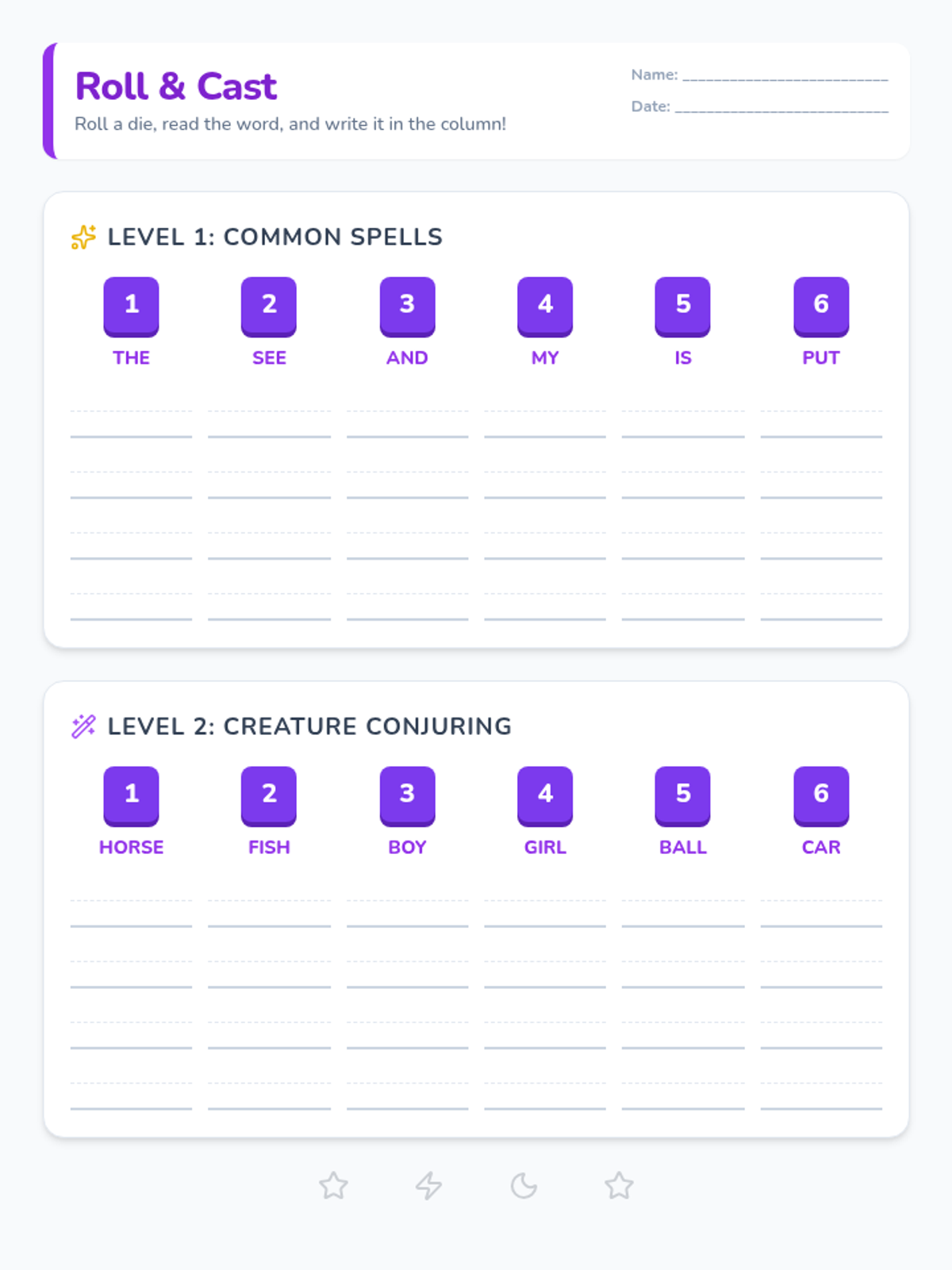
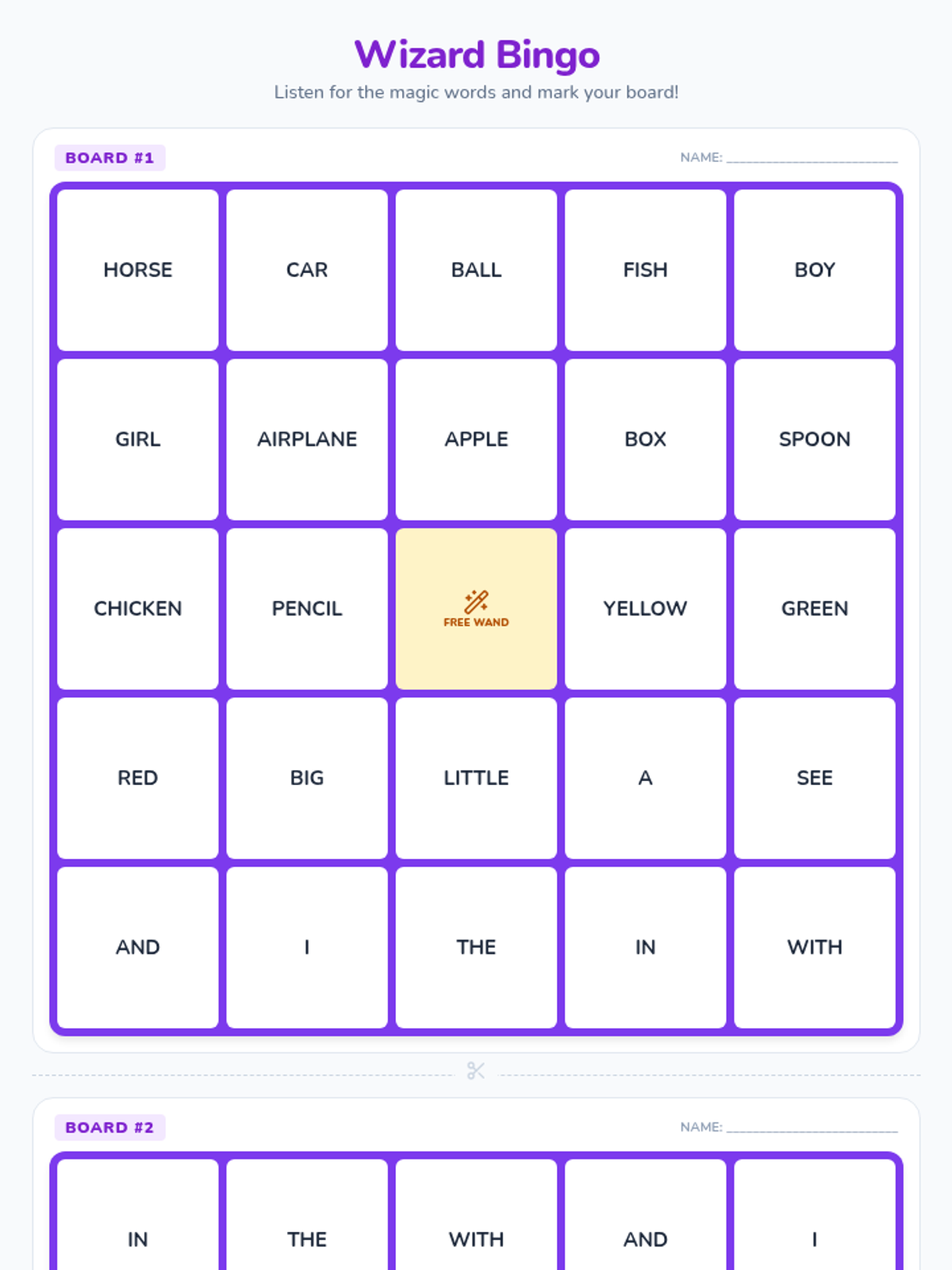
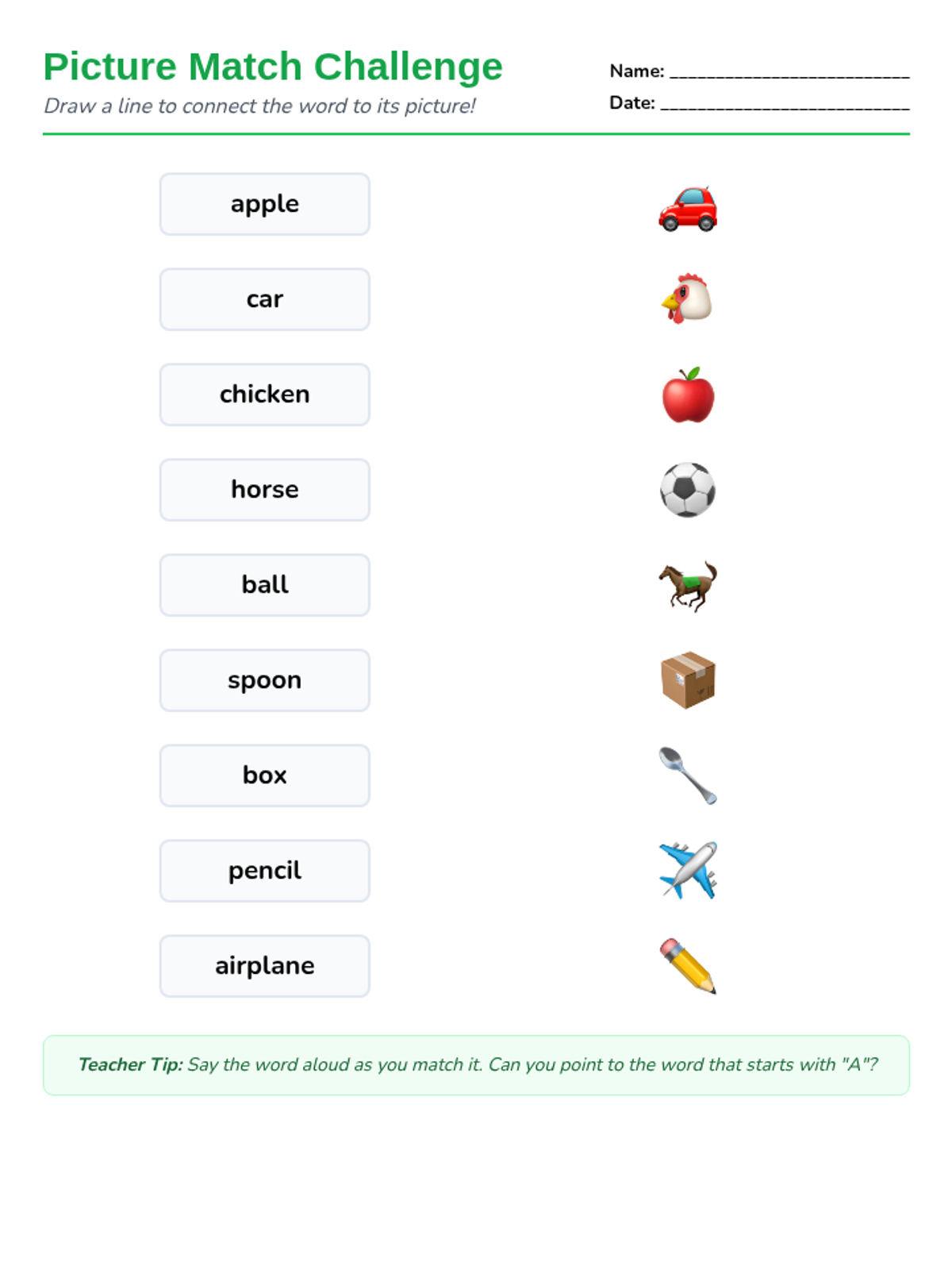
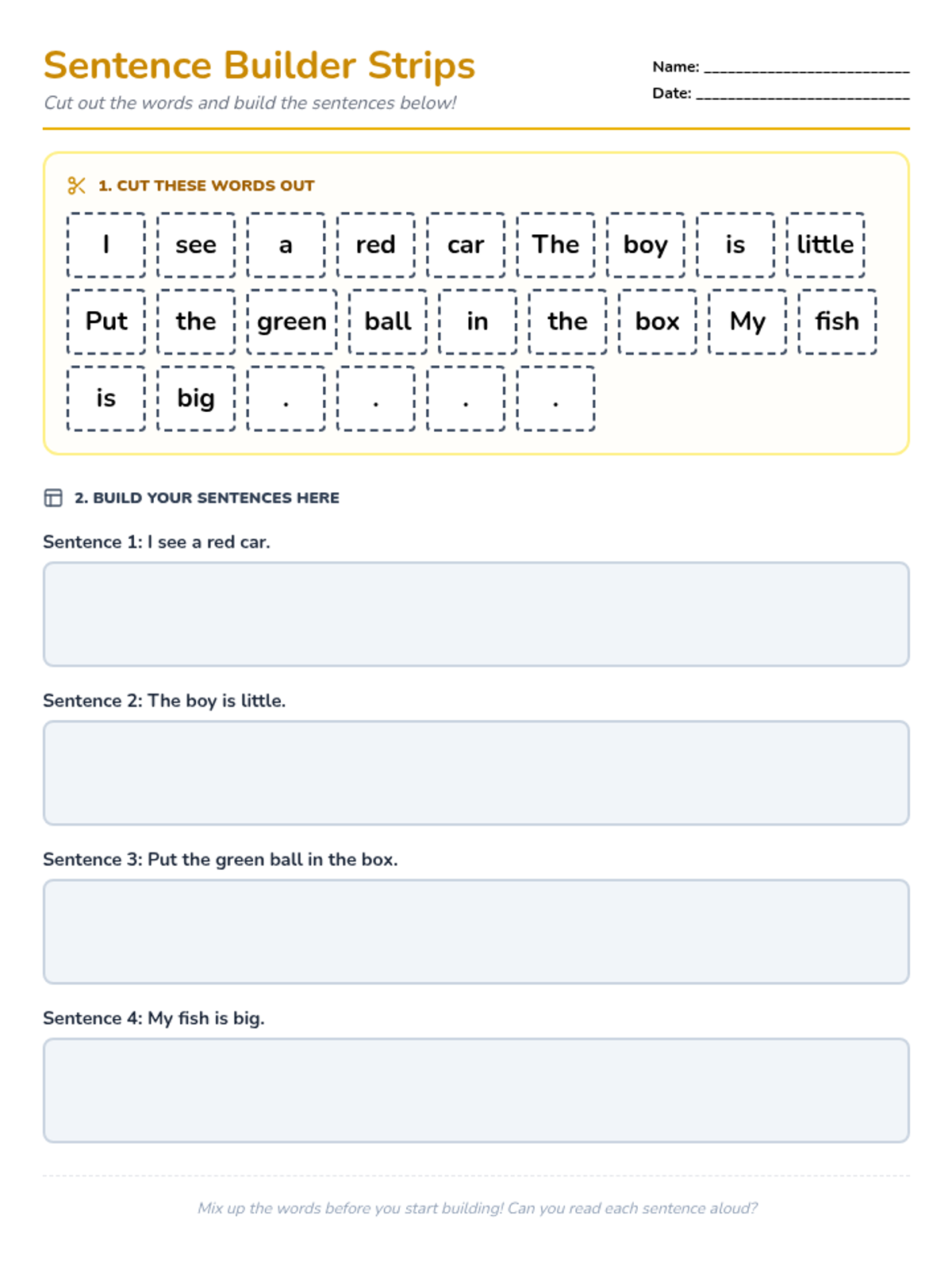
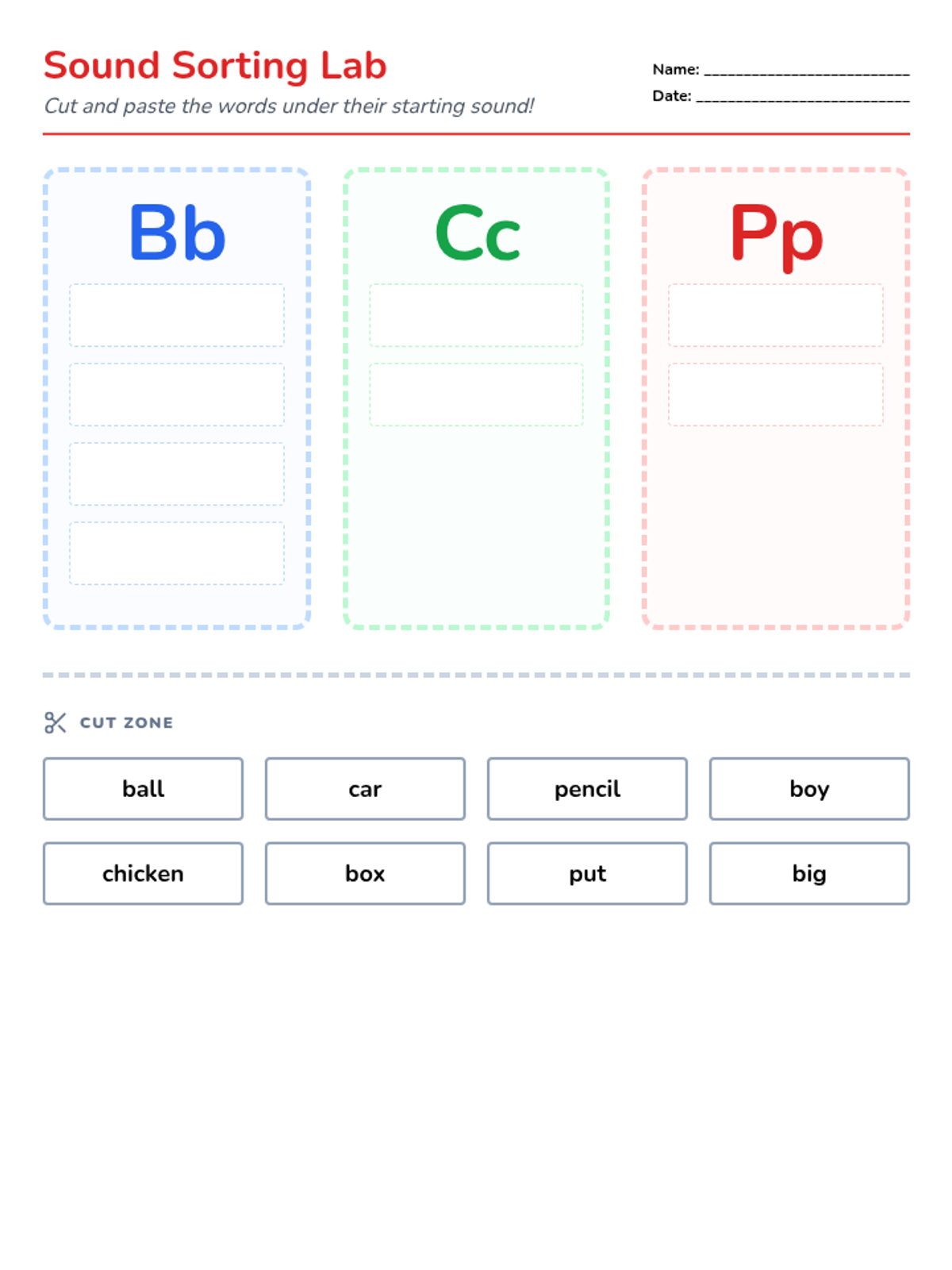
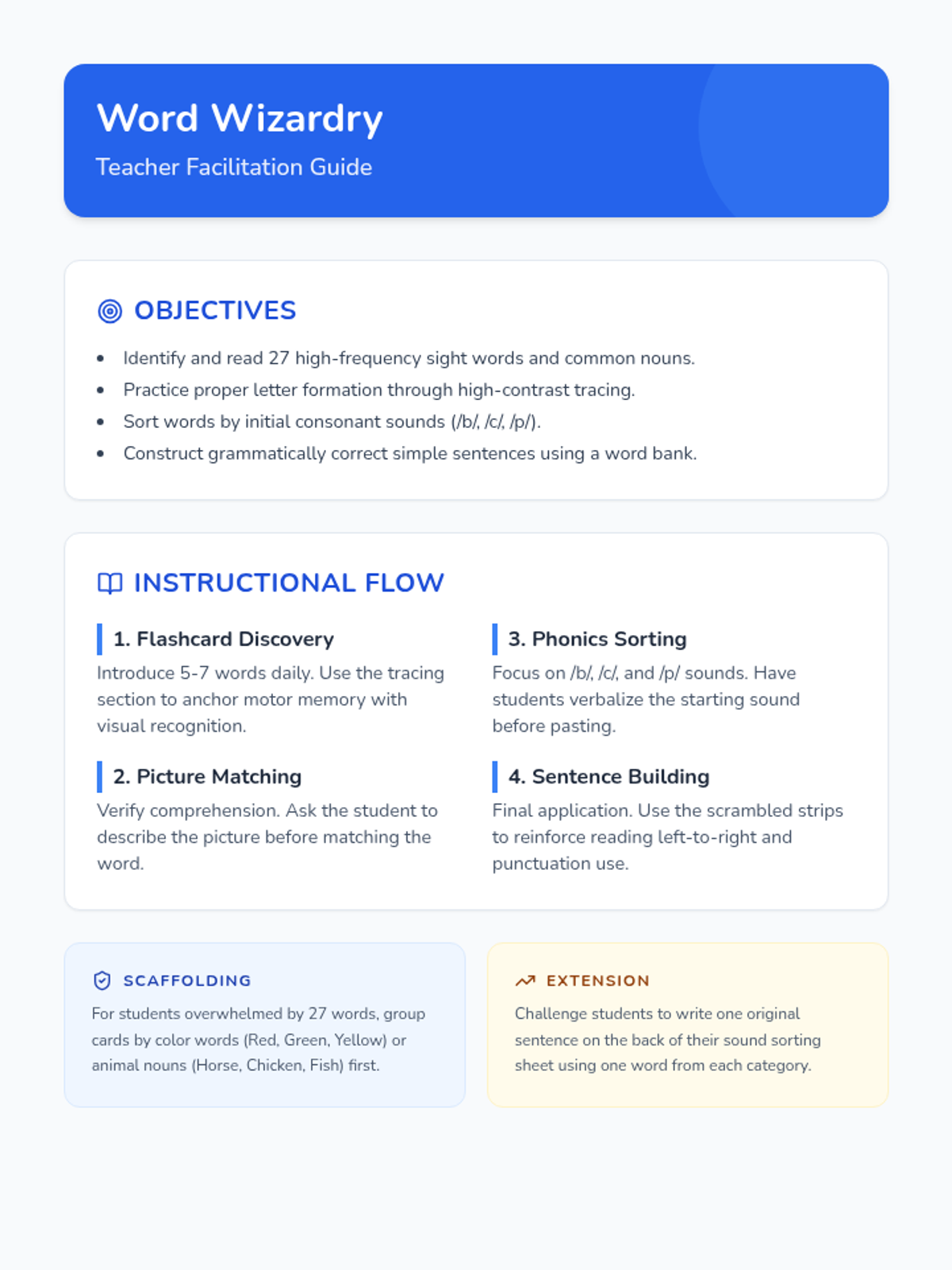
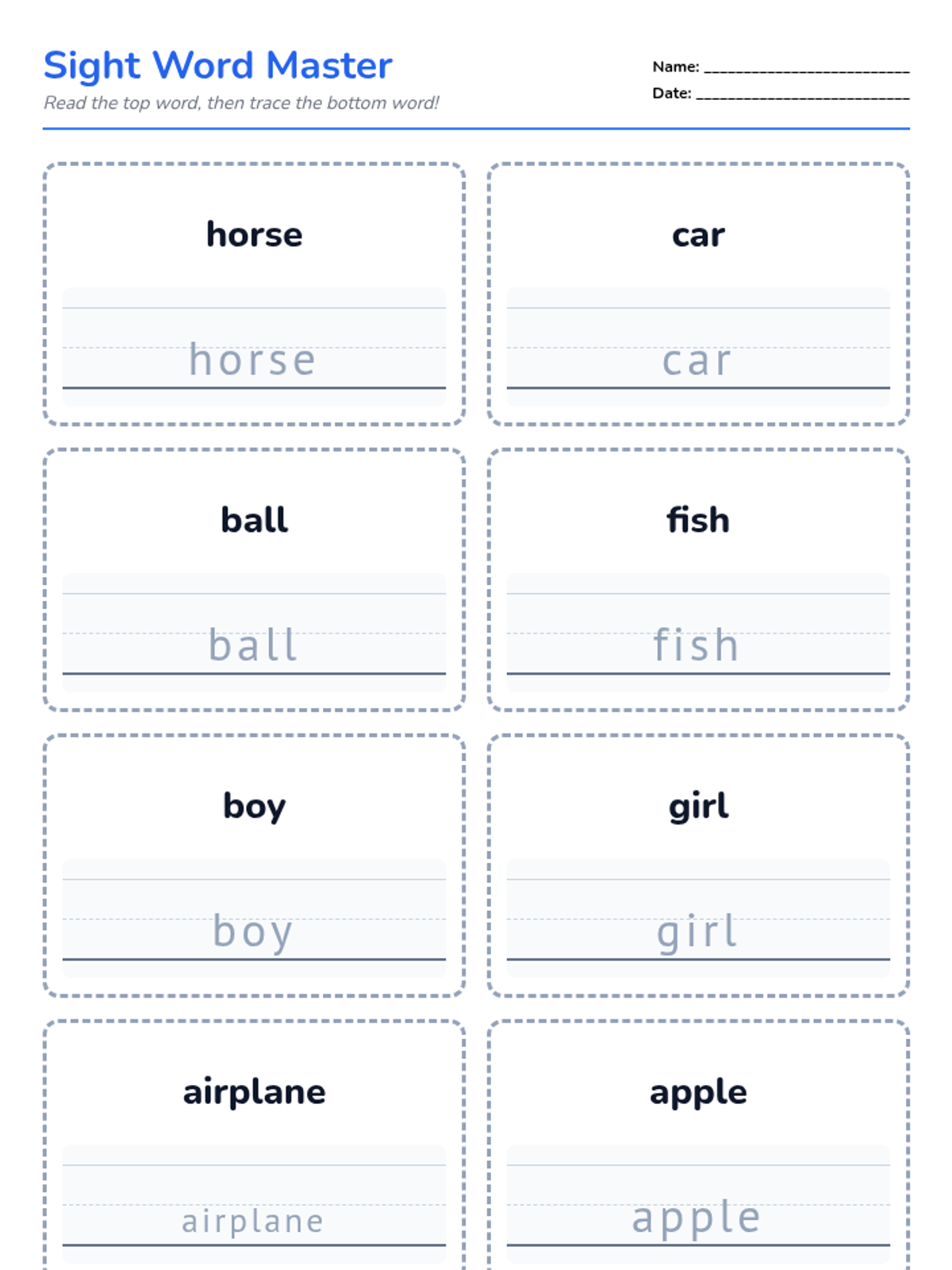
A comprehensive set of foundational literacy materials focused on 27 key sight words and nouns, covering word recognition, handwriting, sentence structure, and phonics.
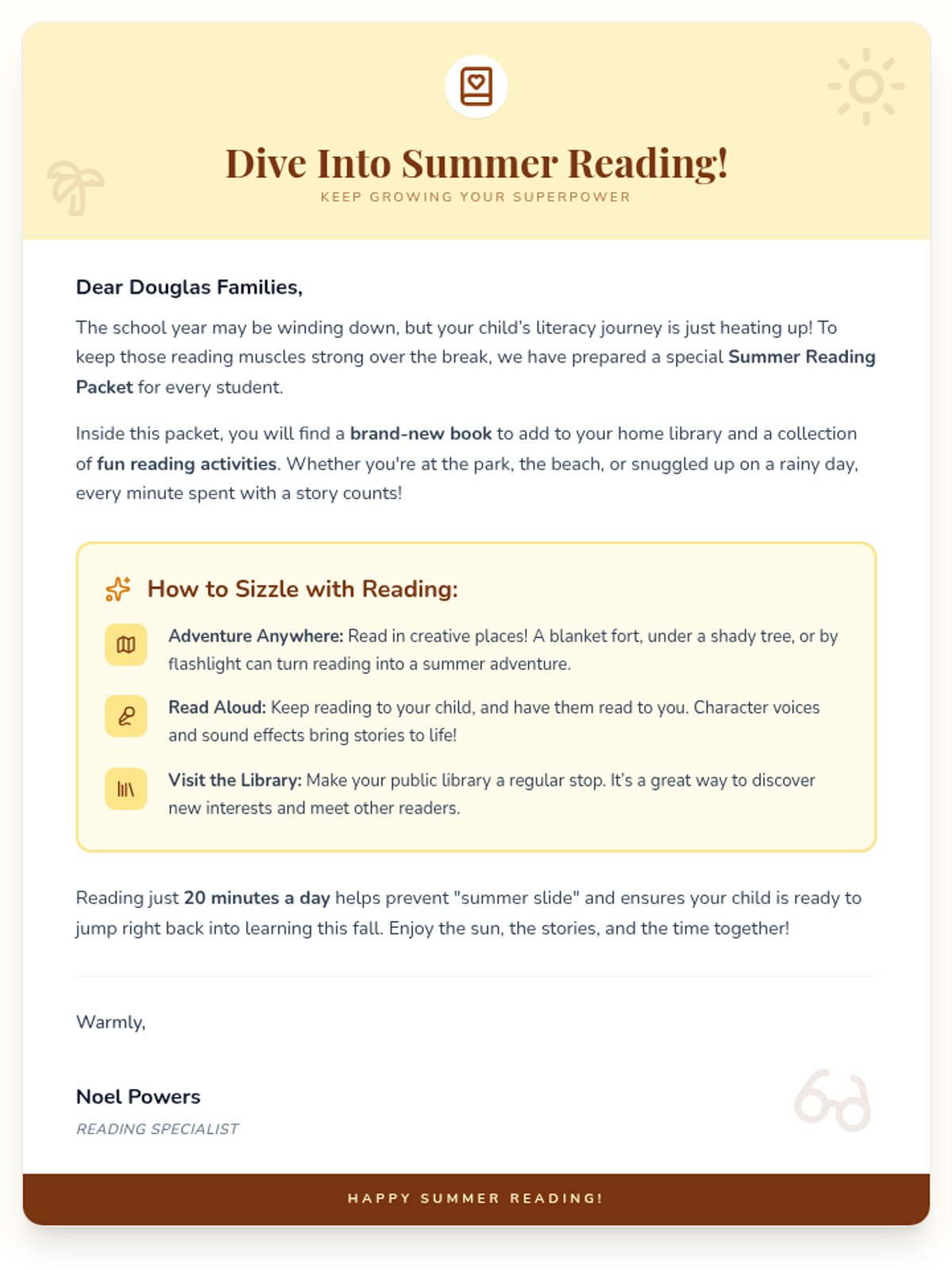
A collection of resources to encourage and track reading progress over the summer break for K-3 students, including a parent letter and activity suggestions.
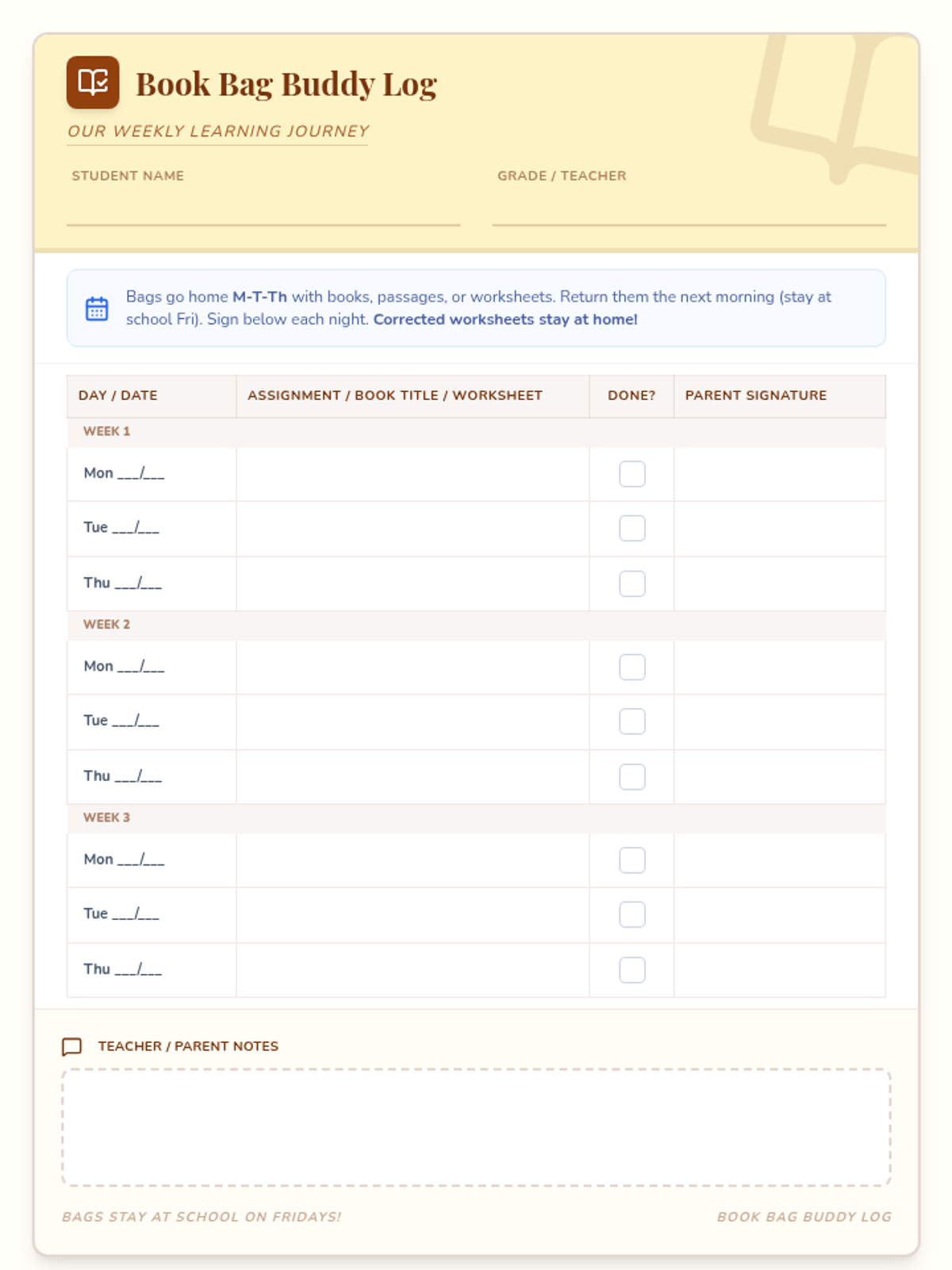
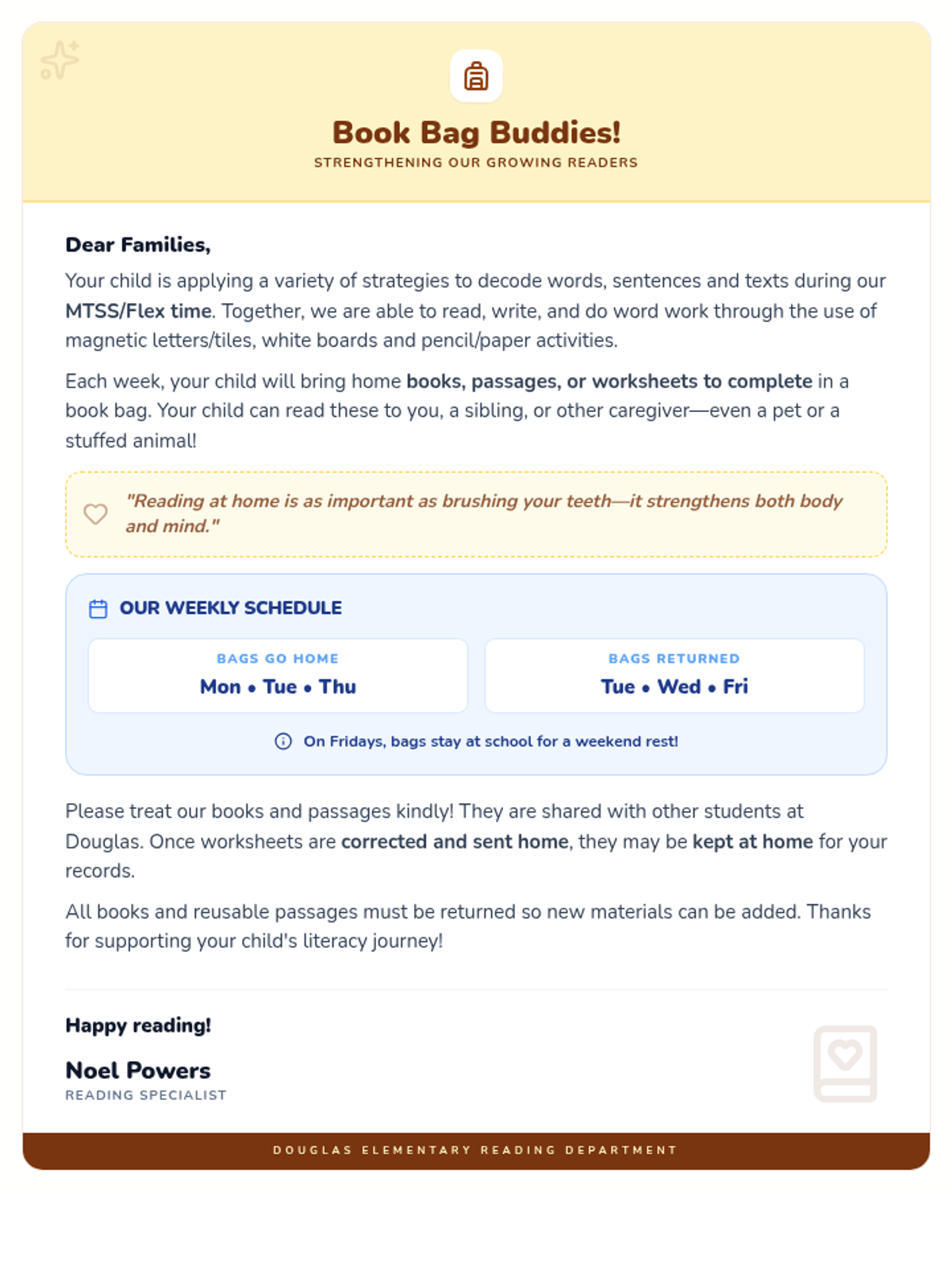
A home-school communication system for K-3 students featuring a homework bag log and an introductory letter for parents, detailing a Monday-Tuesday-Thursday homework schedule.
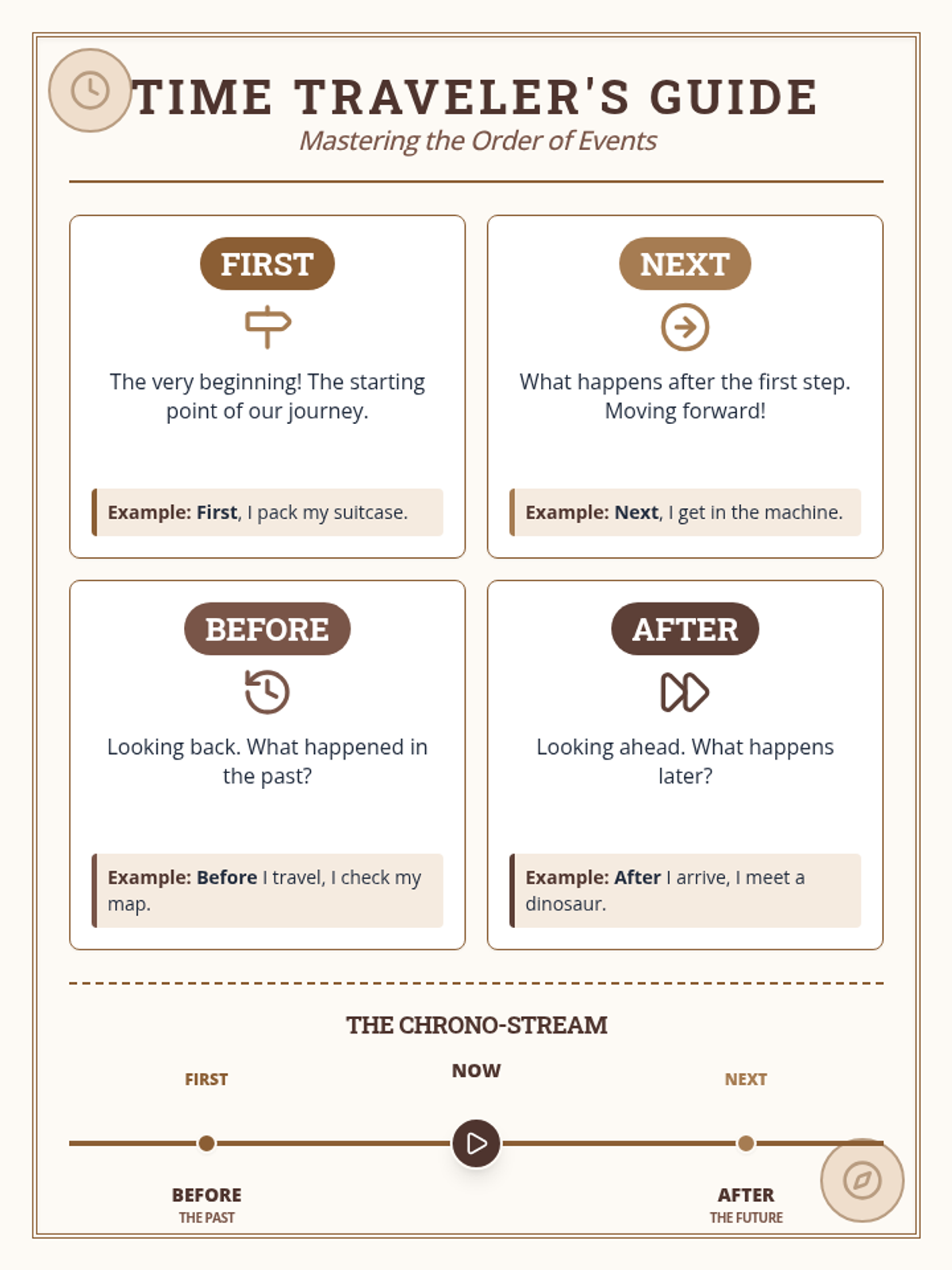
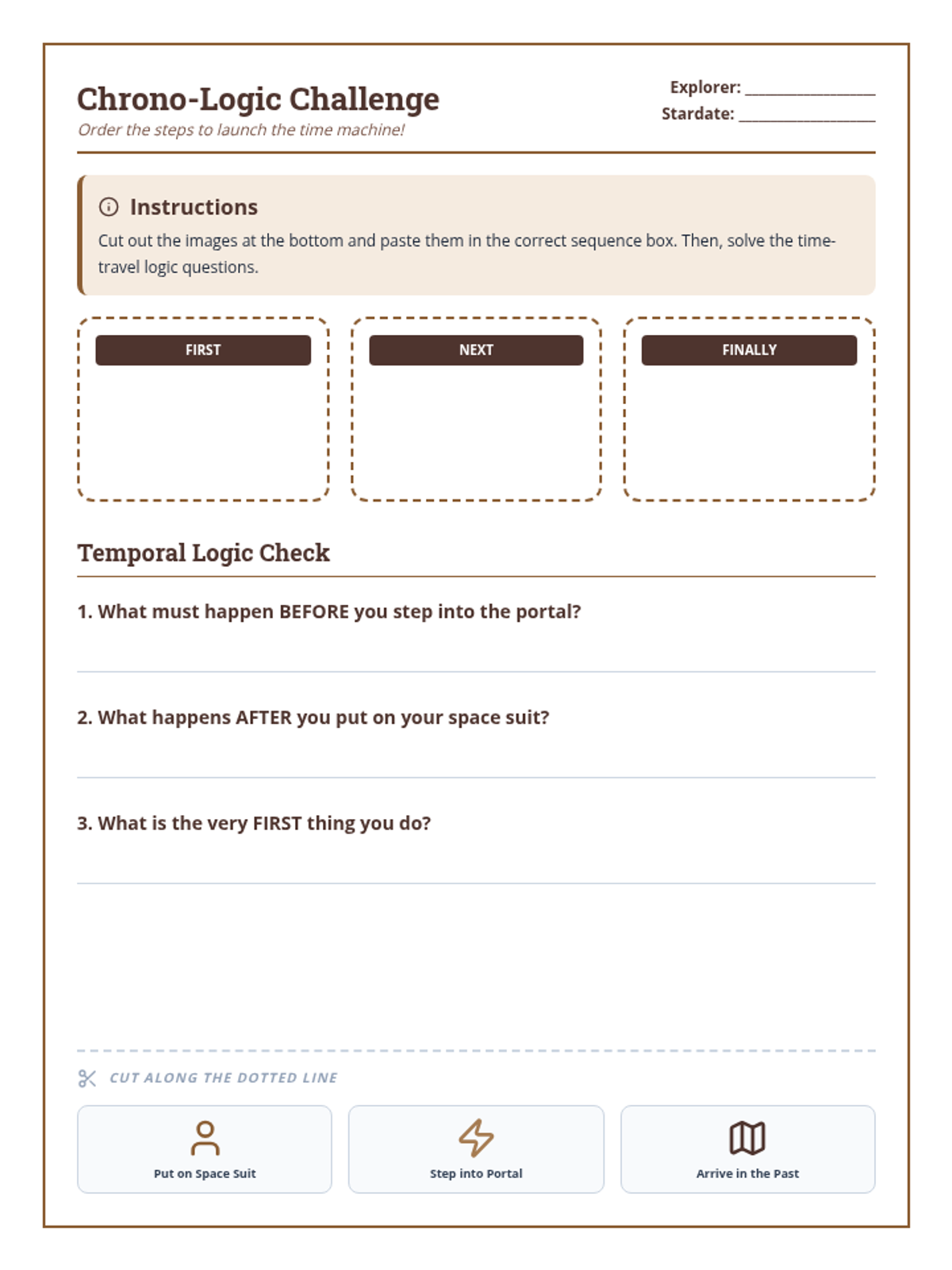
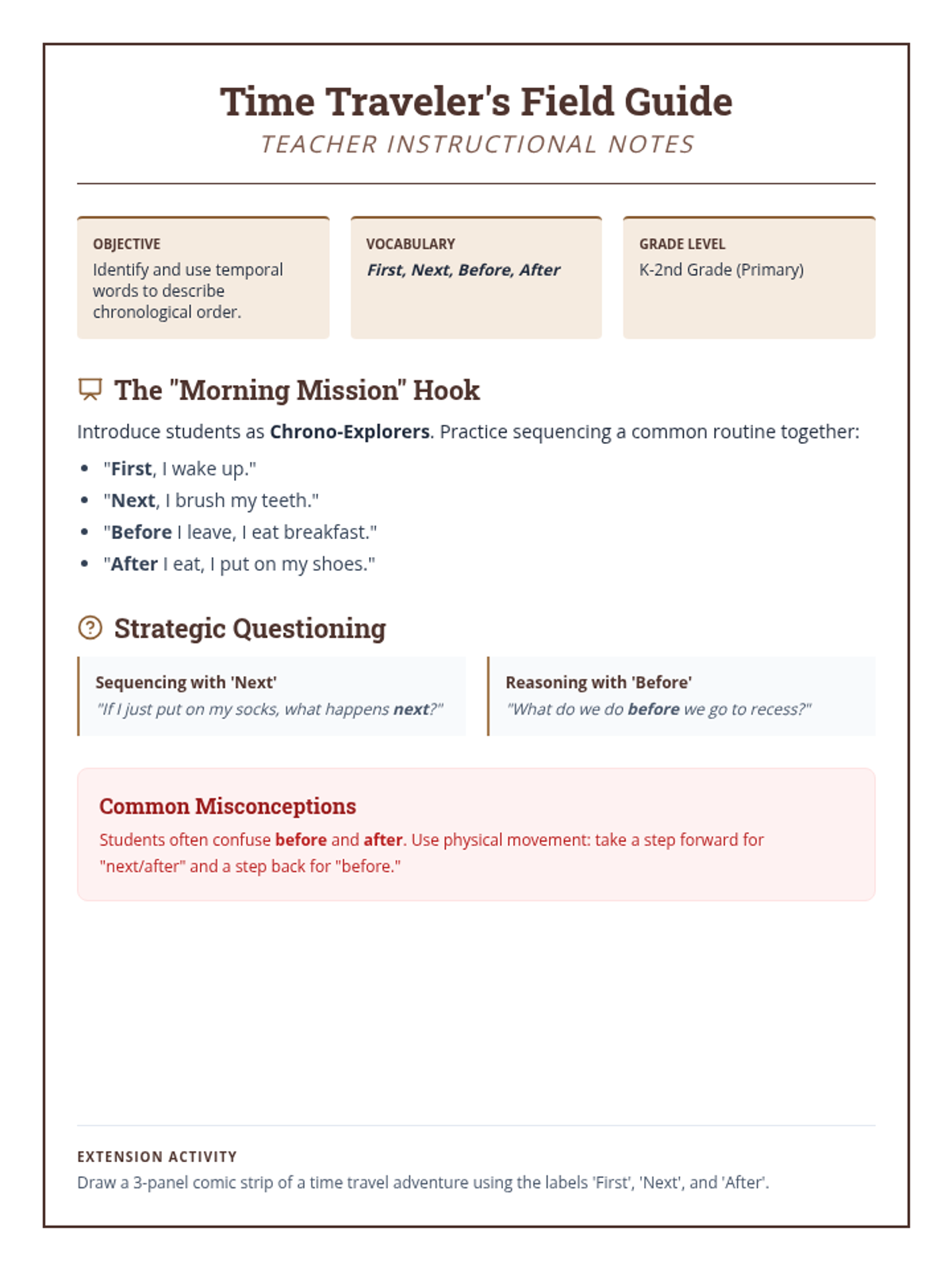
A foundational lesson on temporal sequencing words including 'first', 'next', 'before', and 'after' using a time-traveler theme to engage students in chronological order.
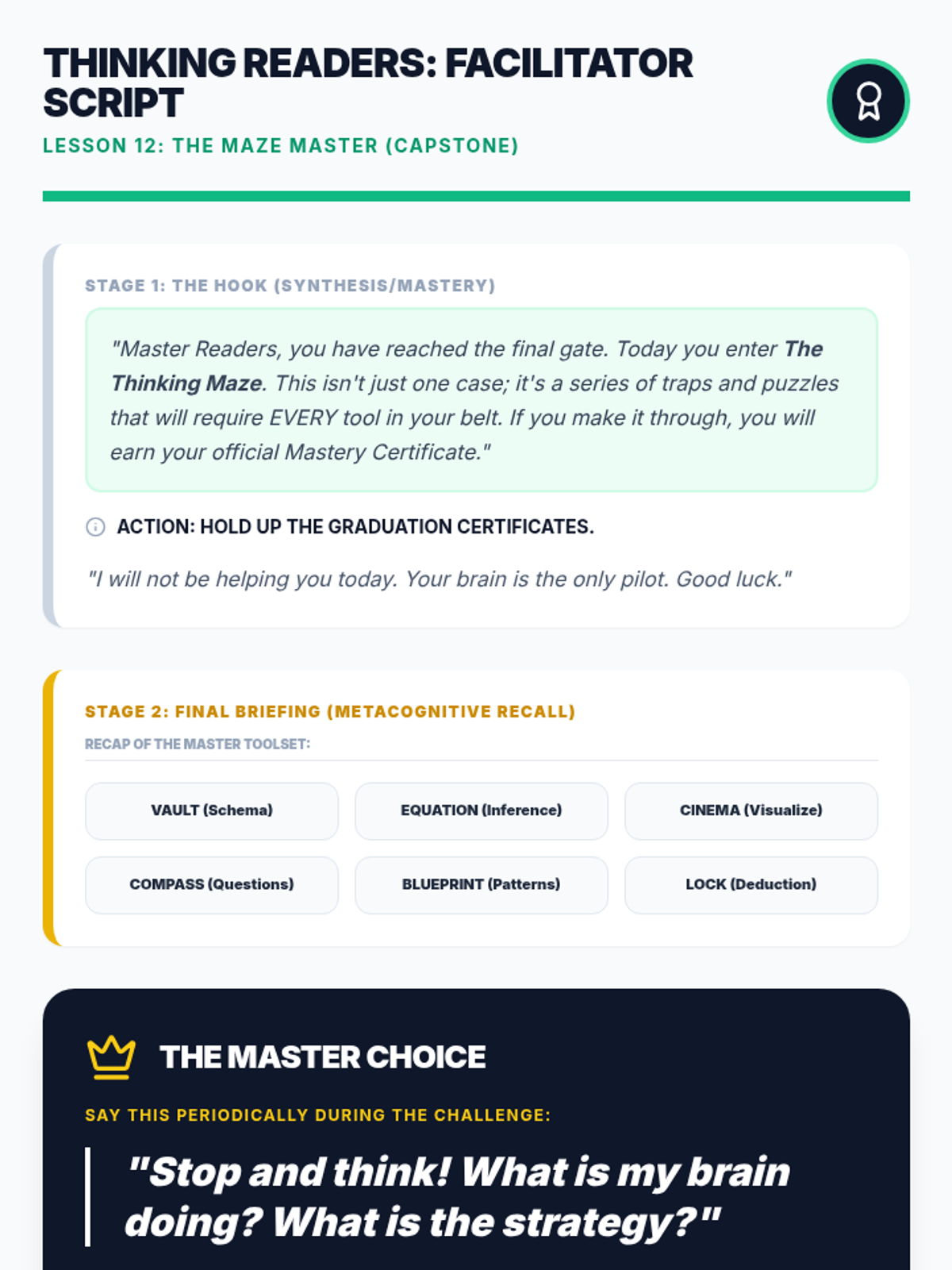
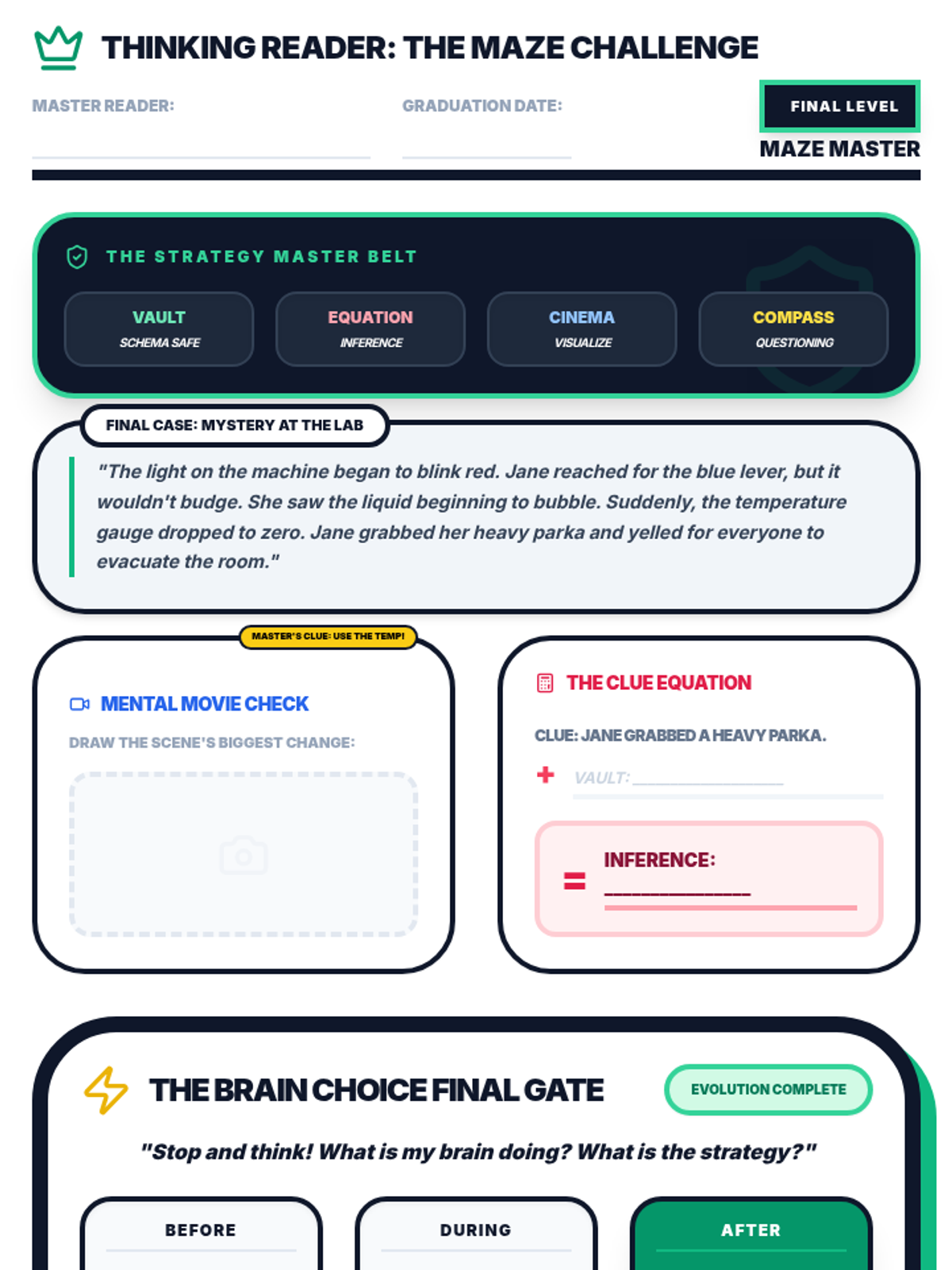
Capstone simulation. Students apply all 11 strategies to solve a complex text-based 'Maze' and earn their Thought Tracker Mastery.
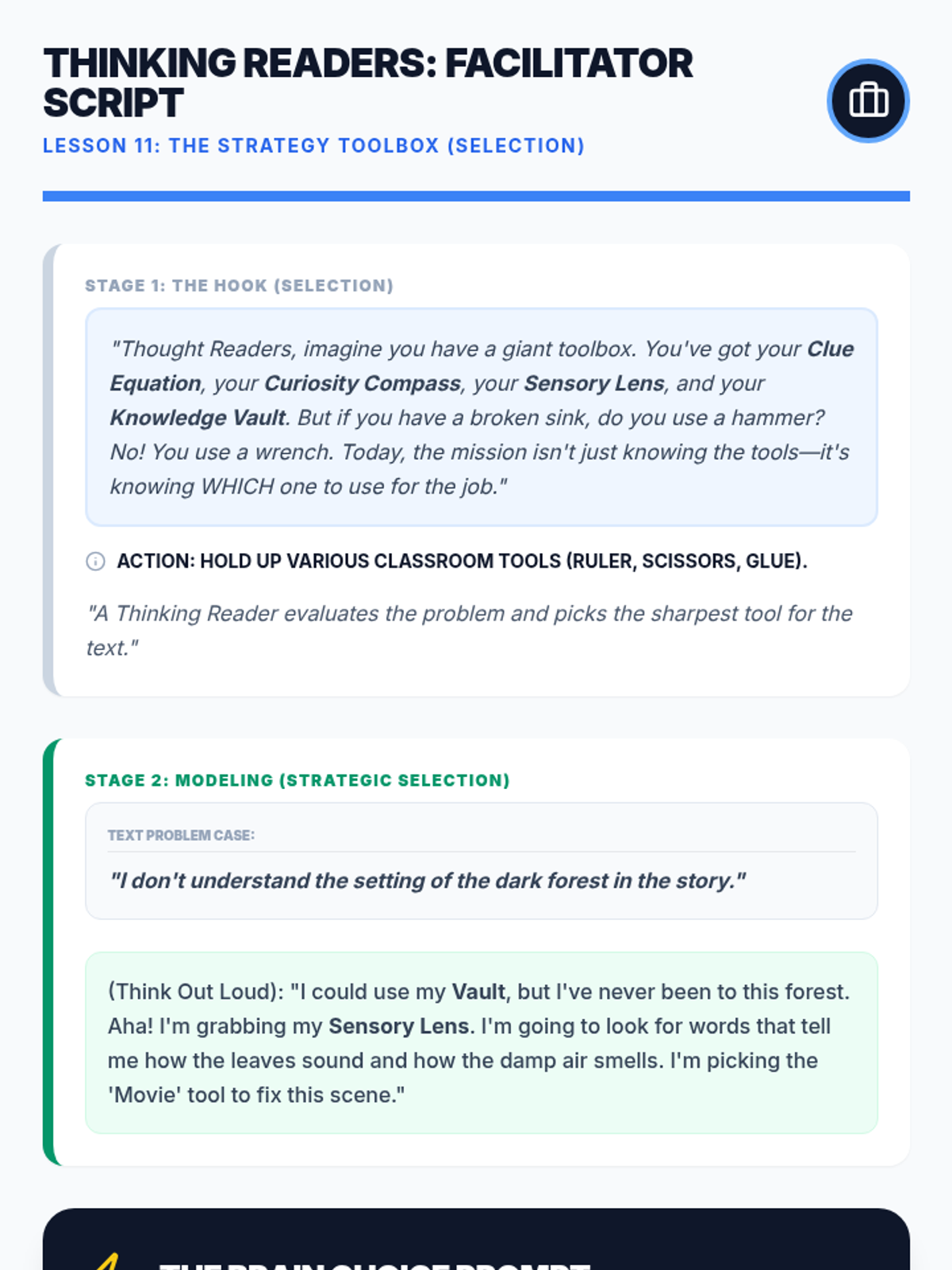
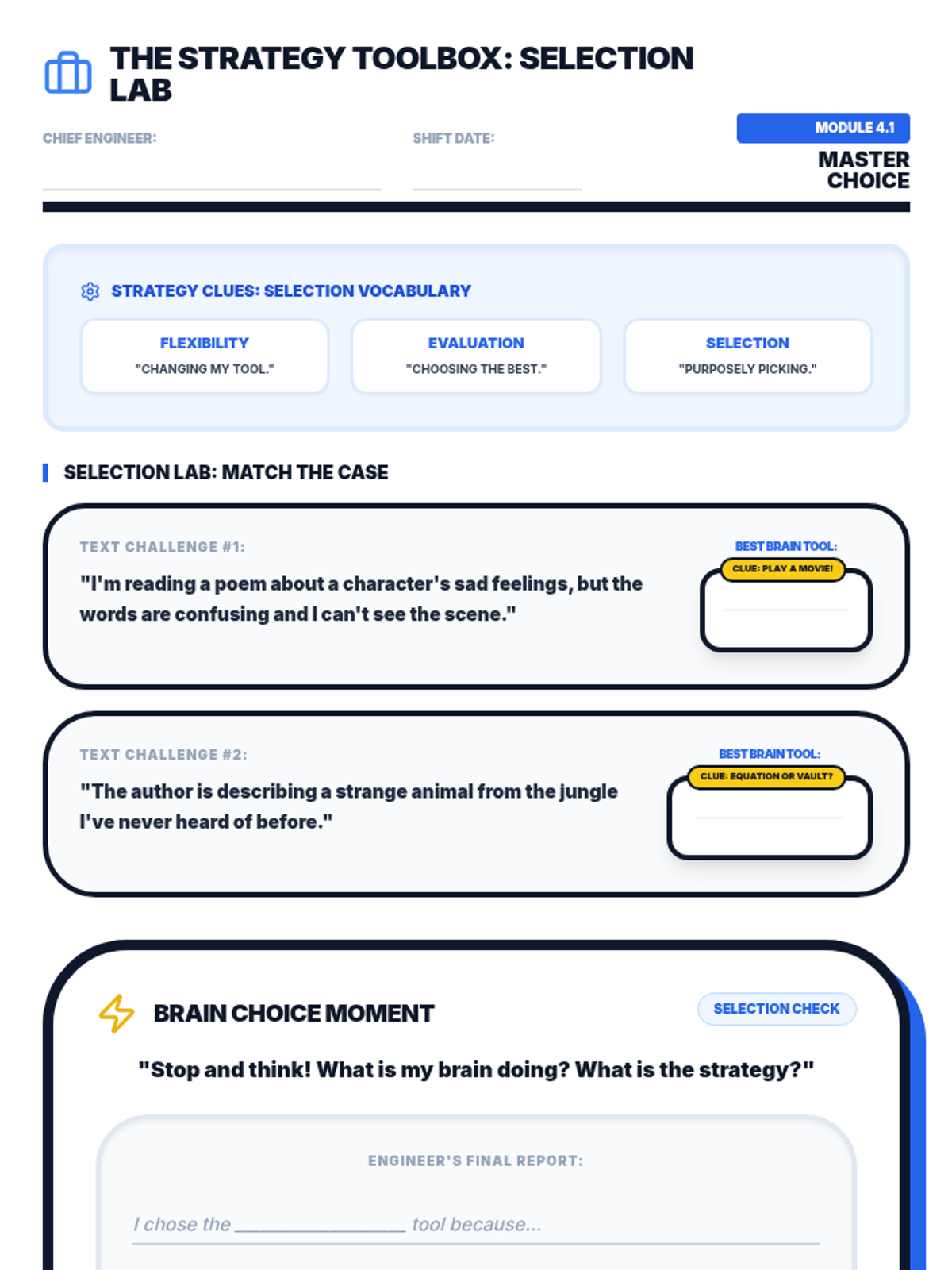
Metacognitive choice. Students practice deciding which 'Mind Tool' (Inference, Visualization, Questioning) is best for specific text challenges.
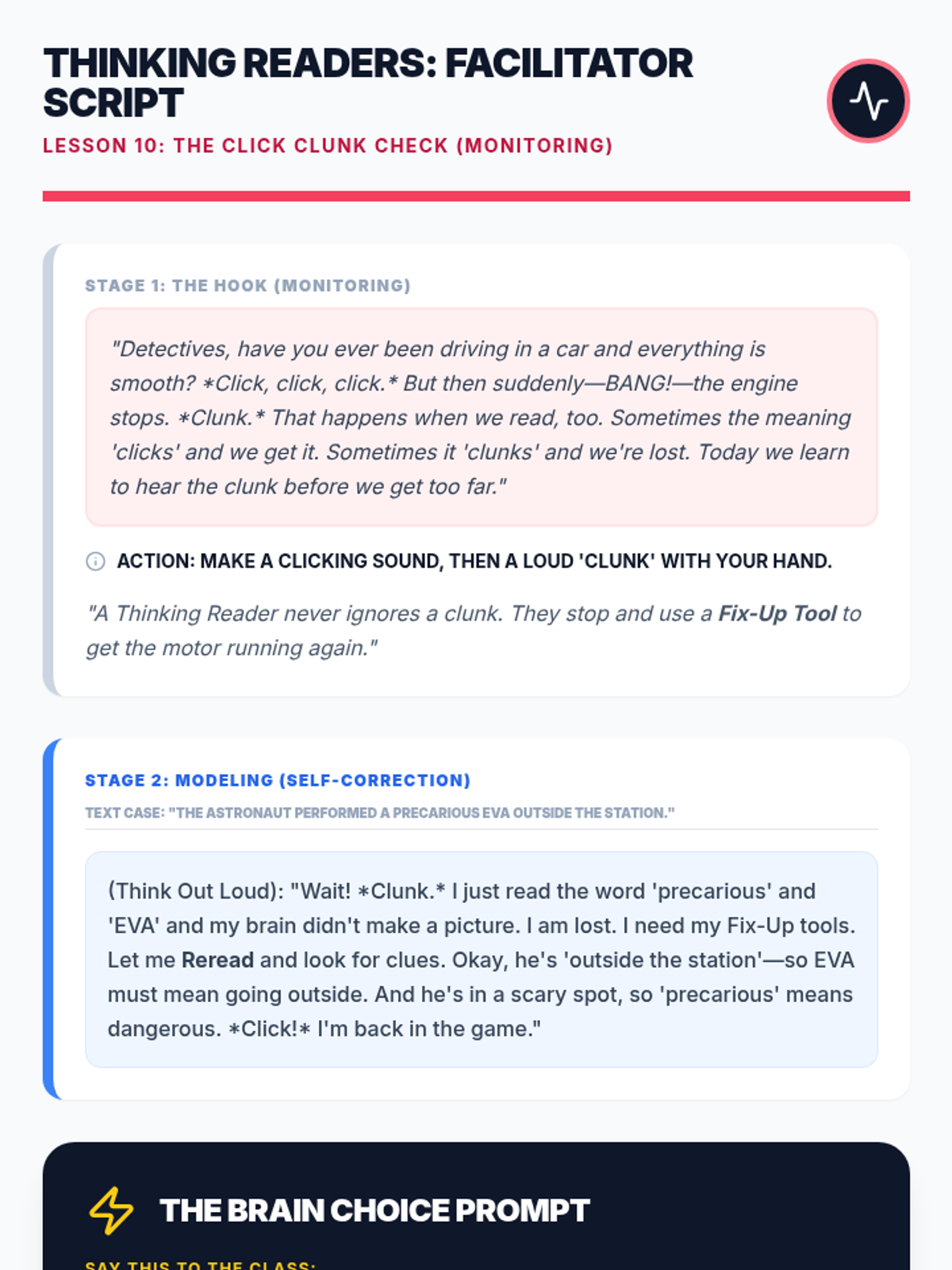
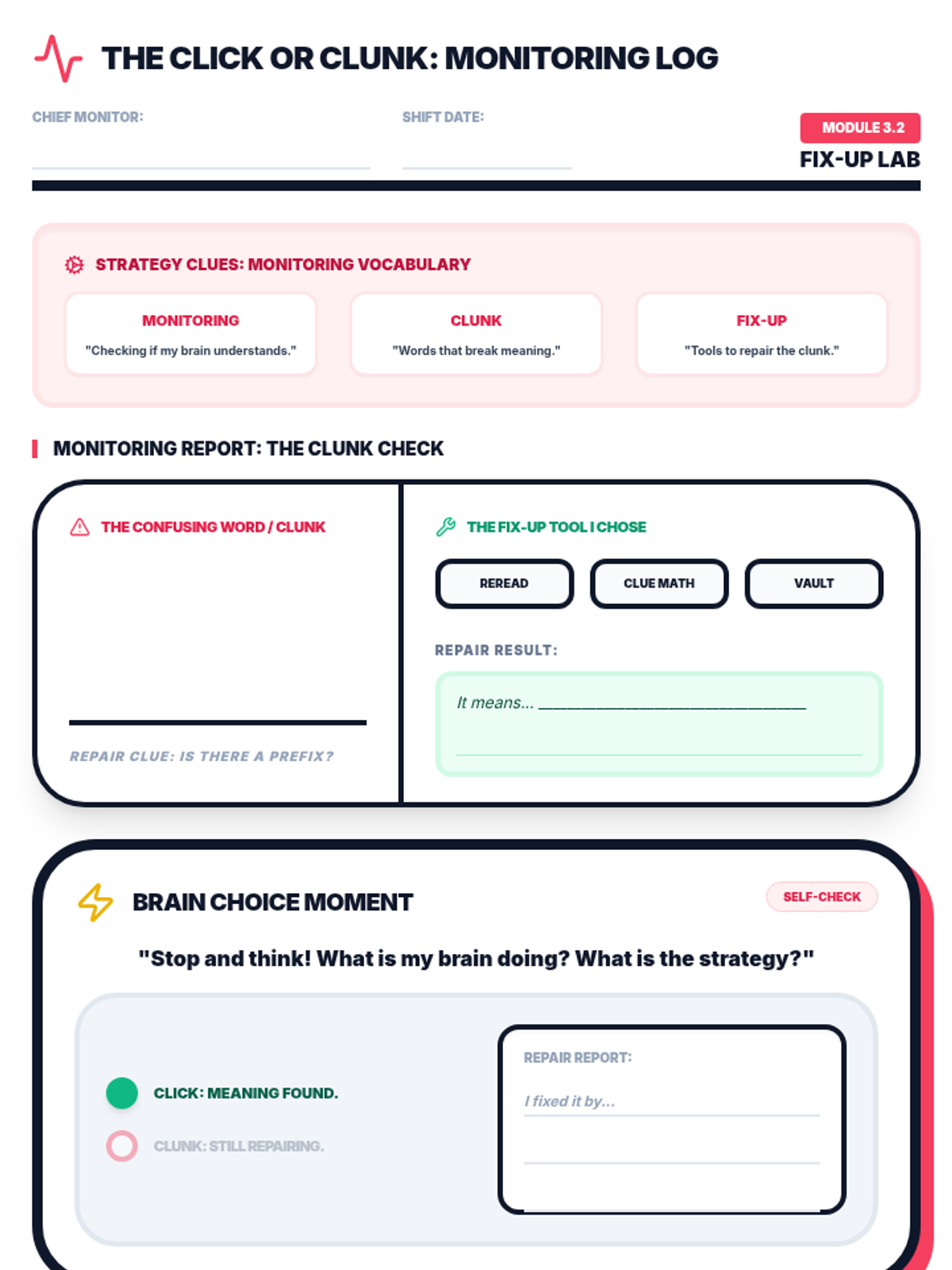
Masters the 'Click or Clunk' monitoring technique. Students learn to identify when meaning breaks down and which tool to use for a 'fix-up'.
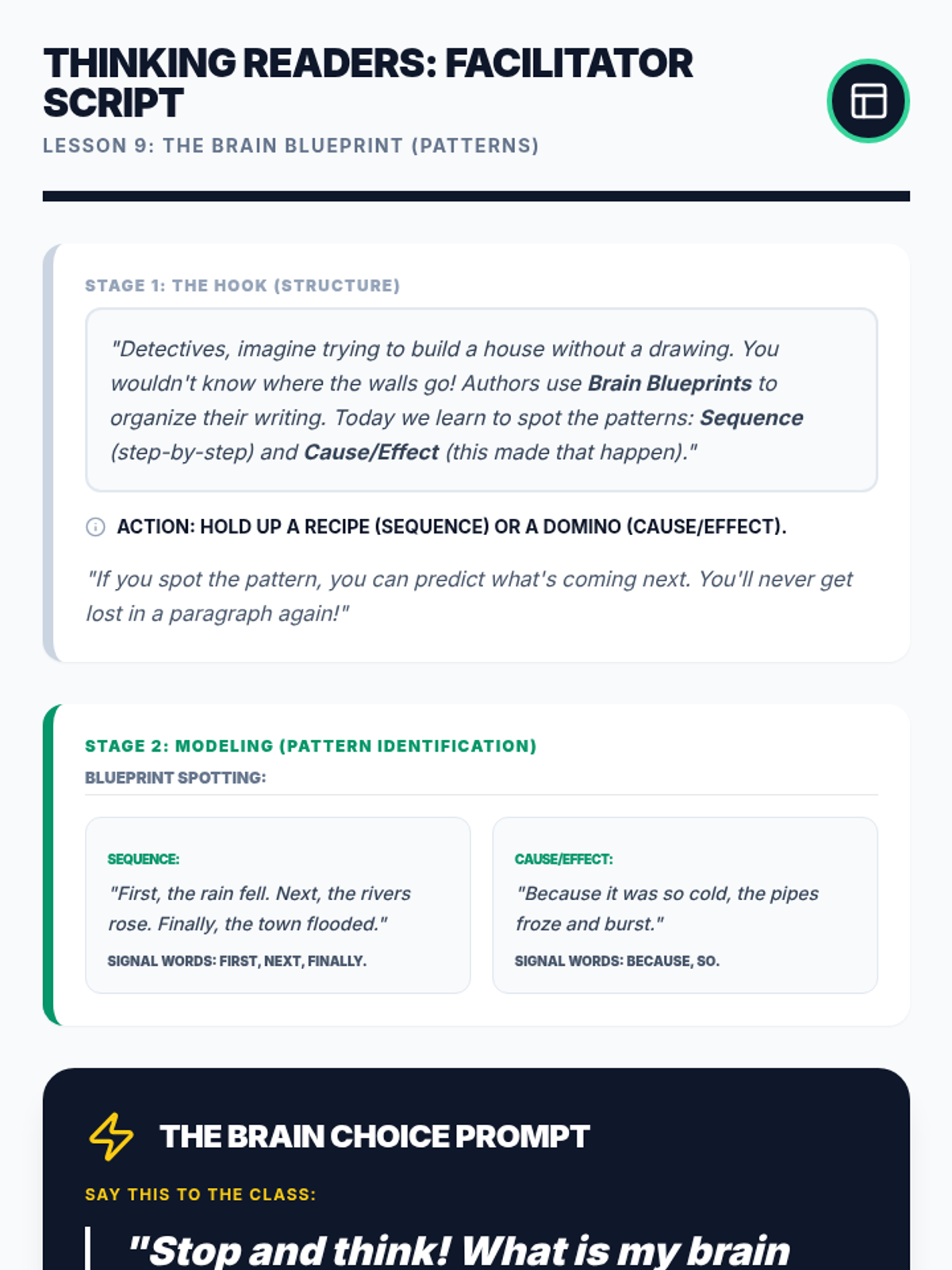
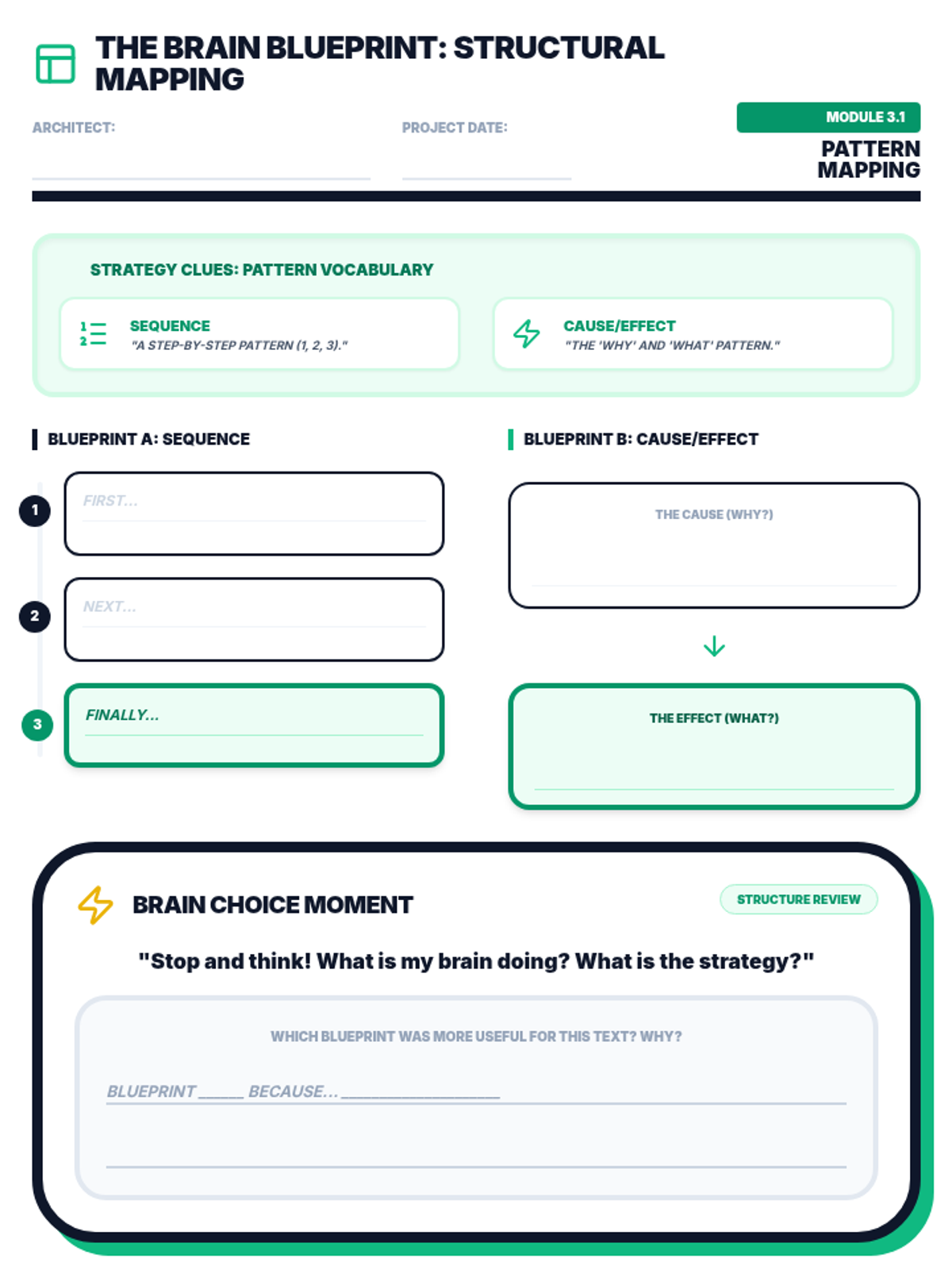
Identifies text structures (Cause/Effect, Sequence) as 'Brain Blueprints' that help organize incoming data.
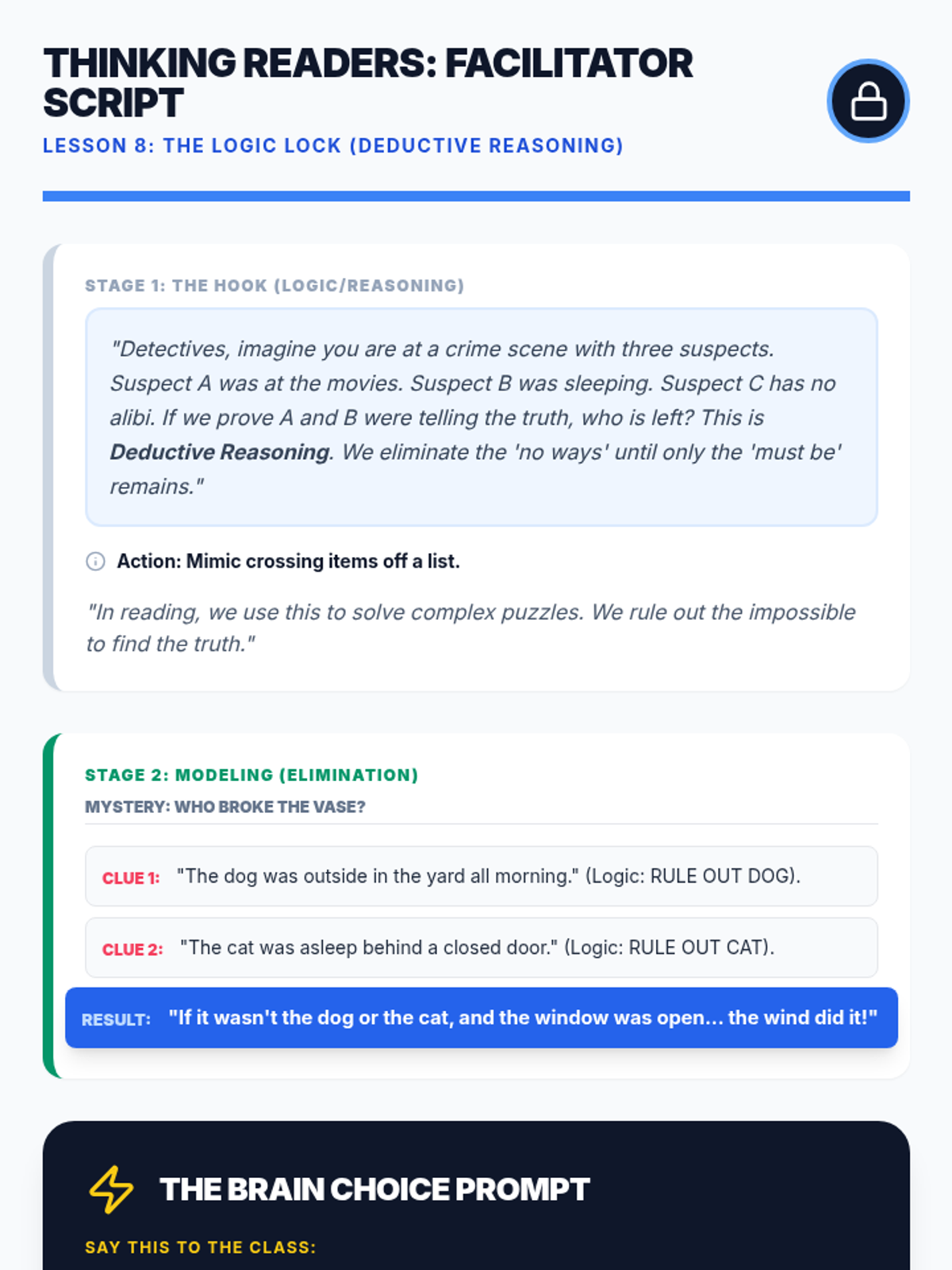
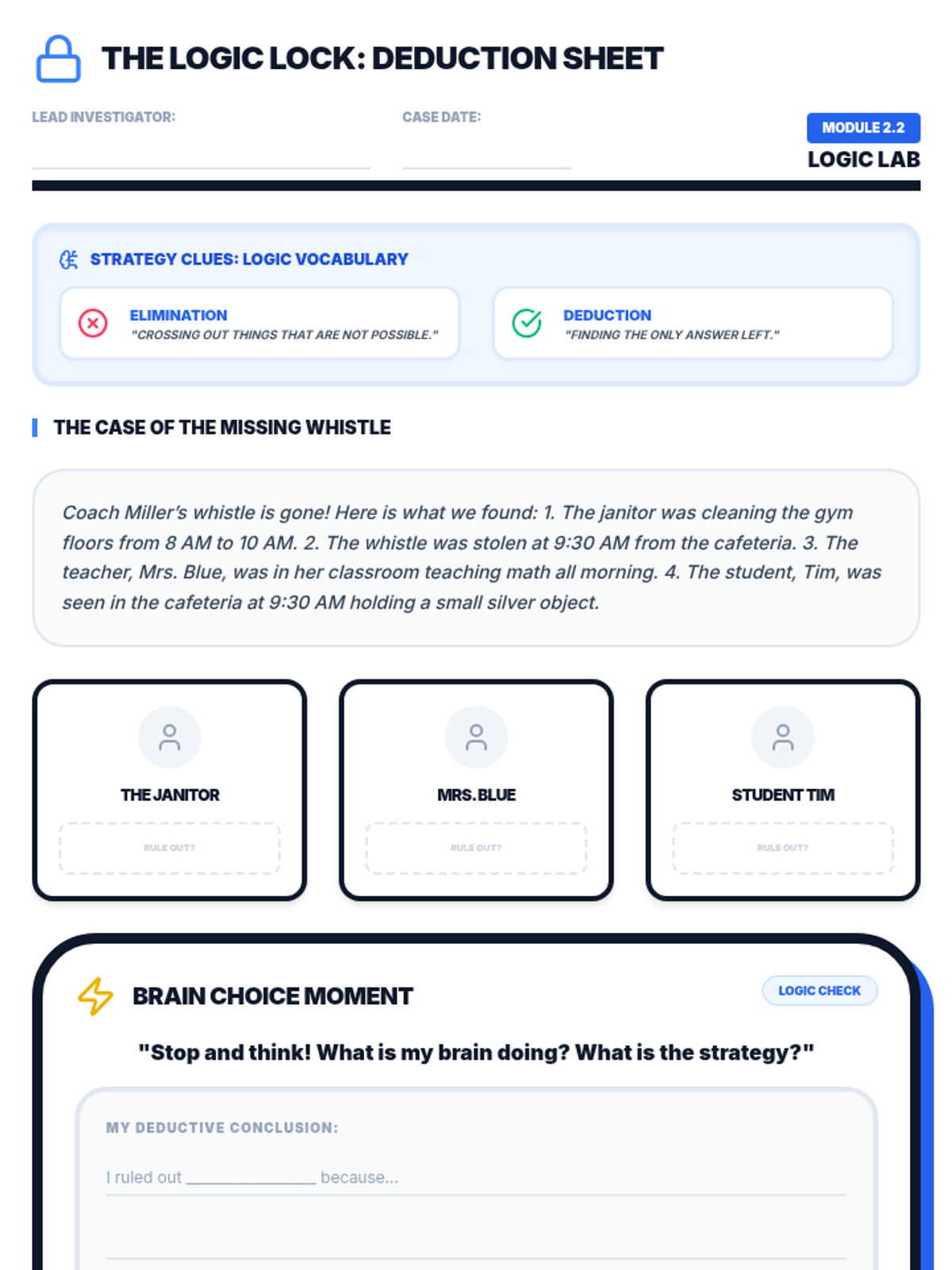
Uses Arthur Evans' deductive reasoning techniques. Students solve logic puzzles by eliminating impossibilities within a text.
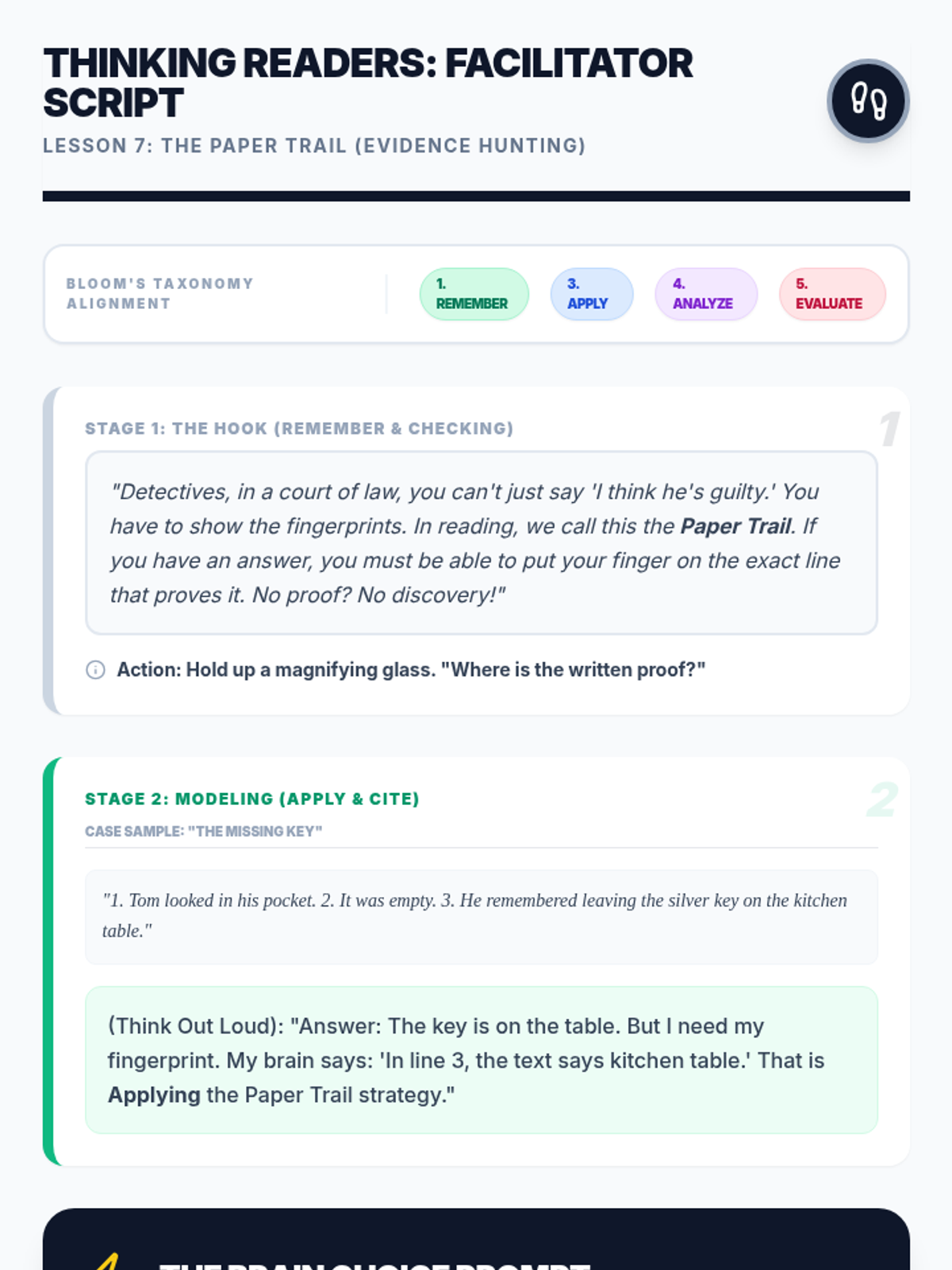
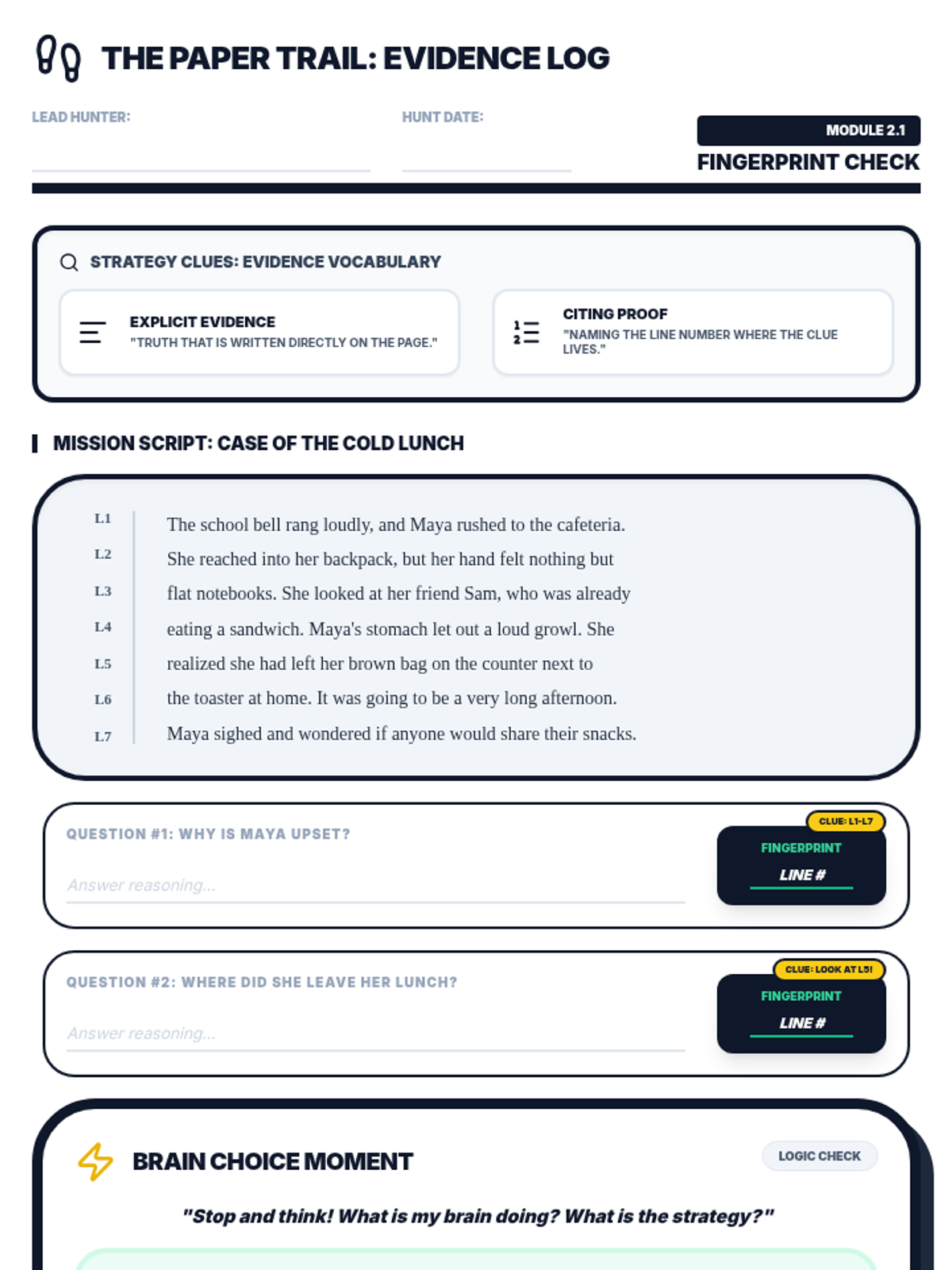
Directly inspired by the Reading Detective series. Students learn to cite page, line, and word clues to prove their reasoning.
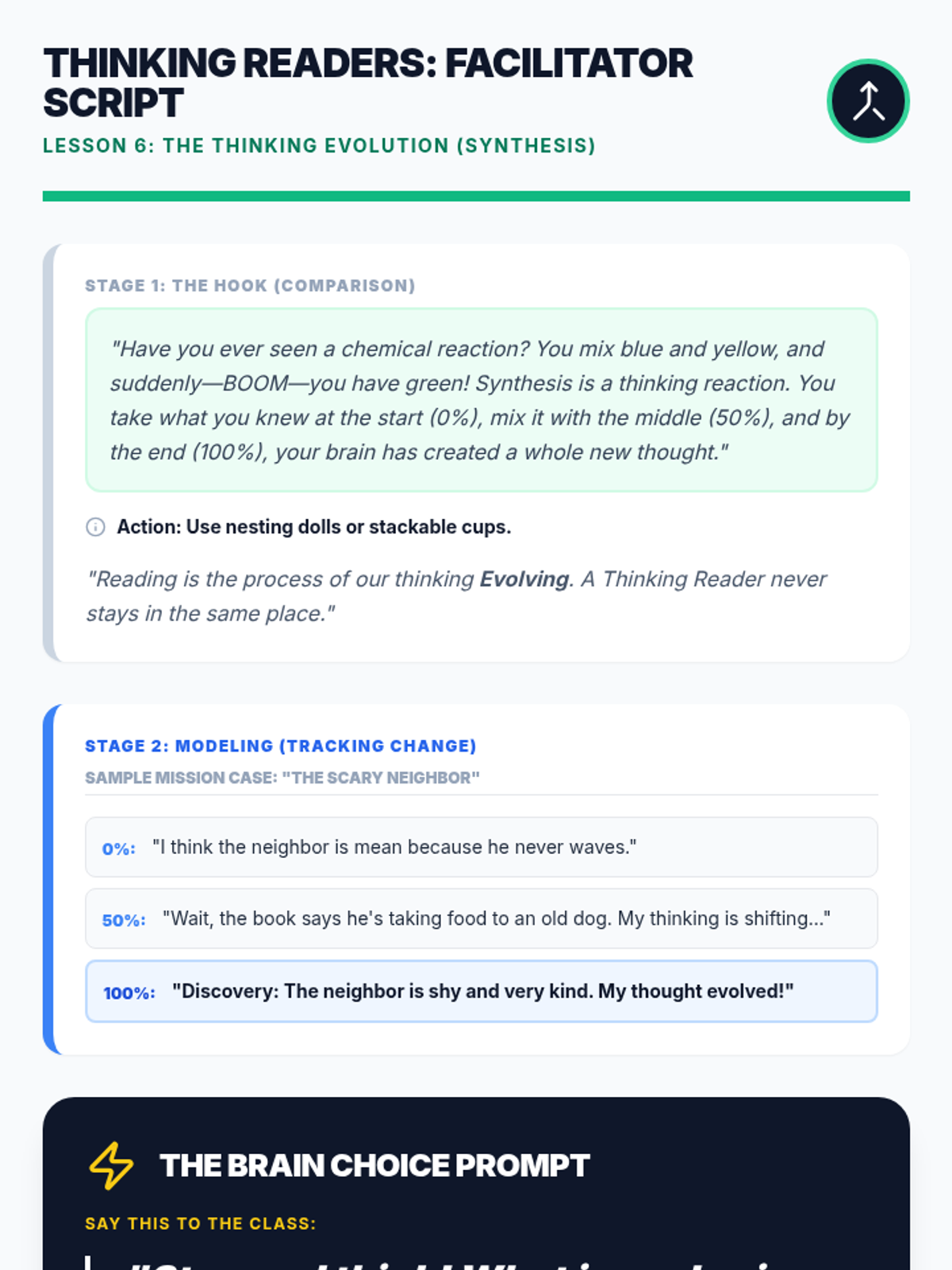
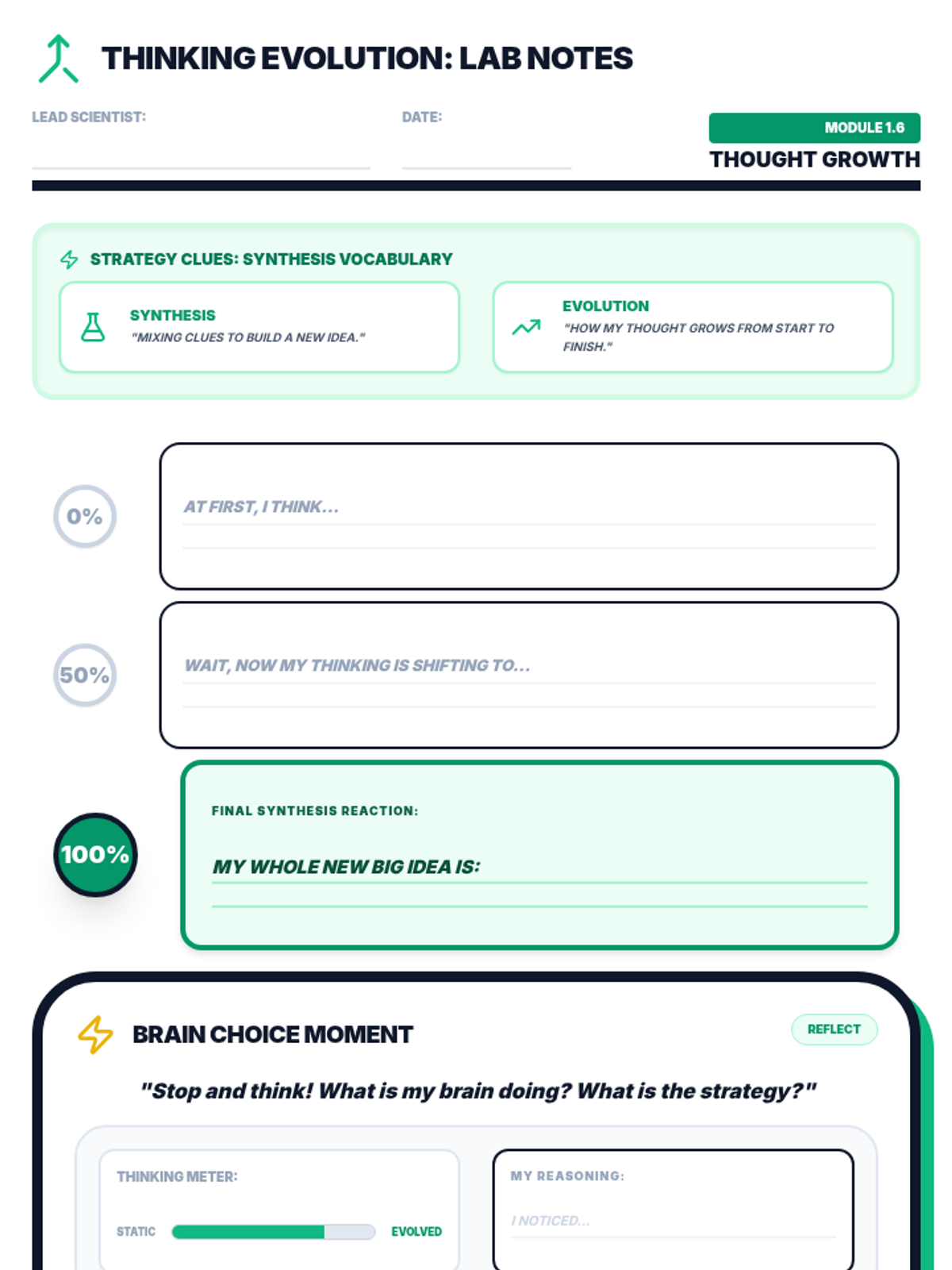
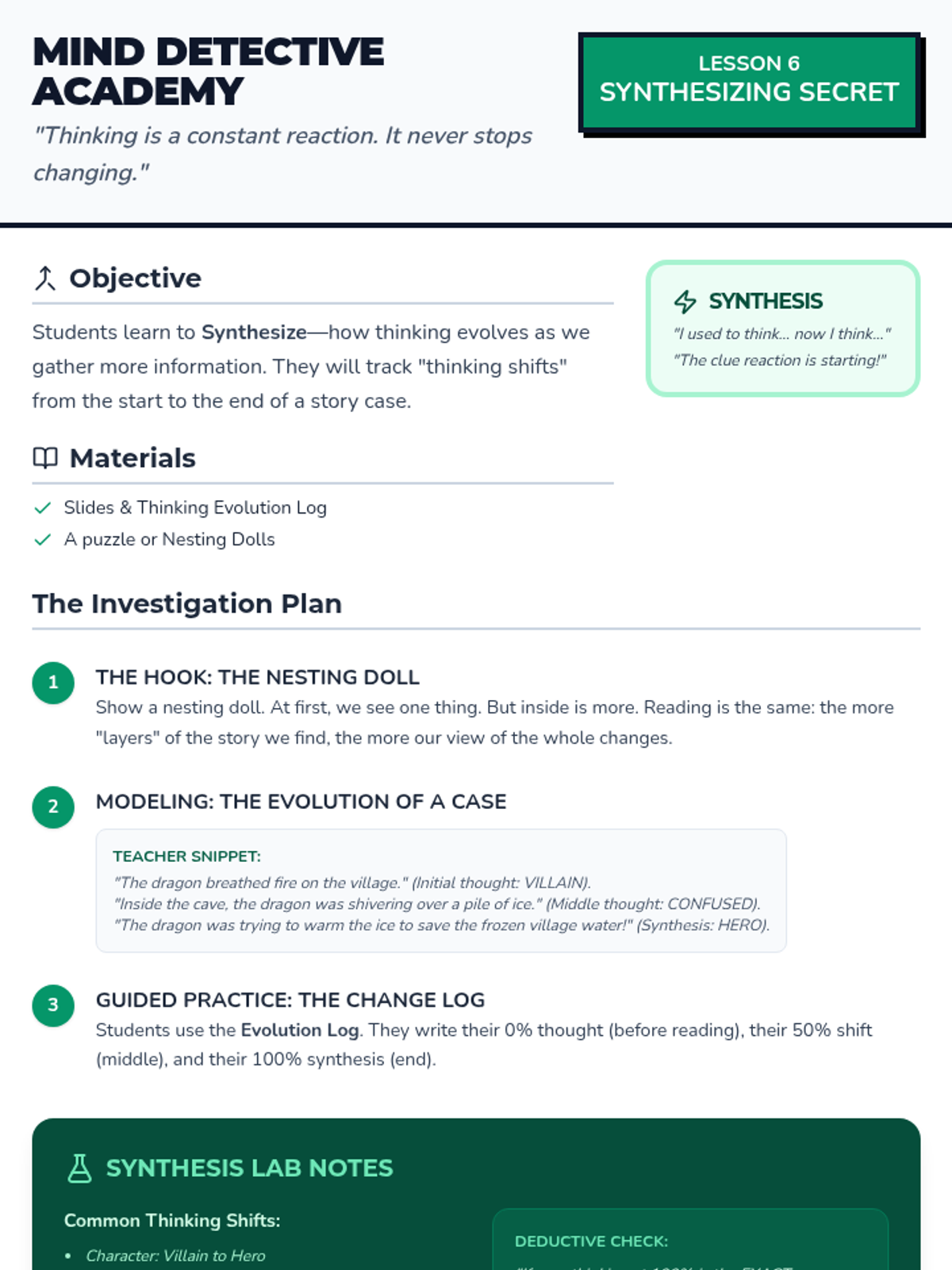
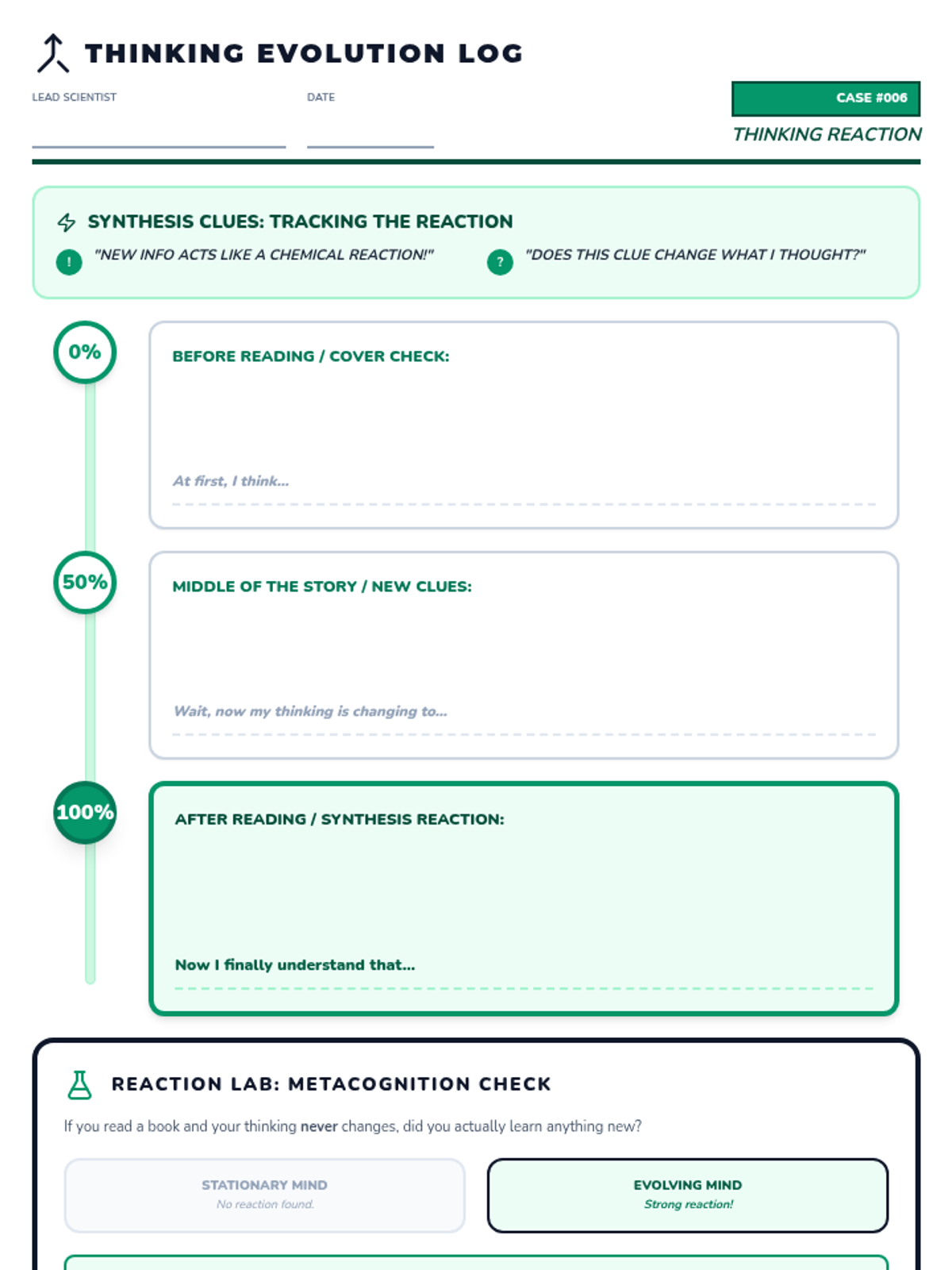
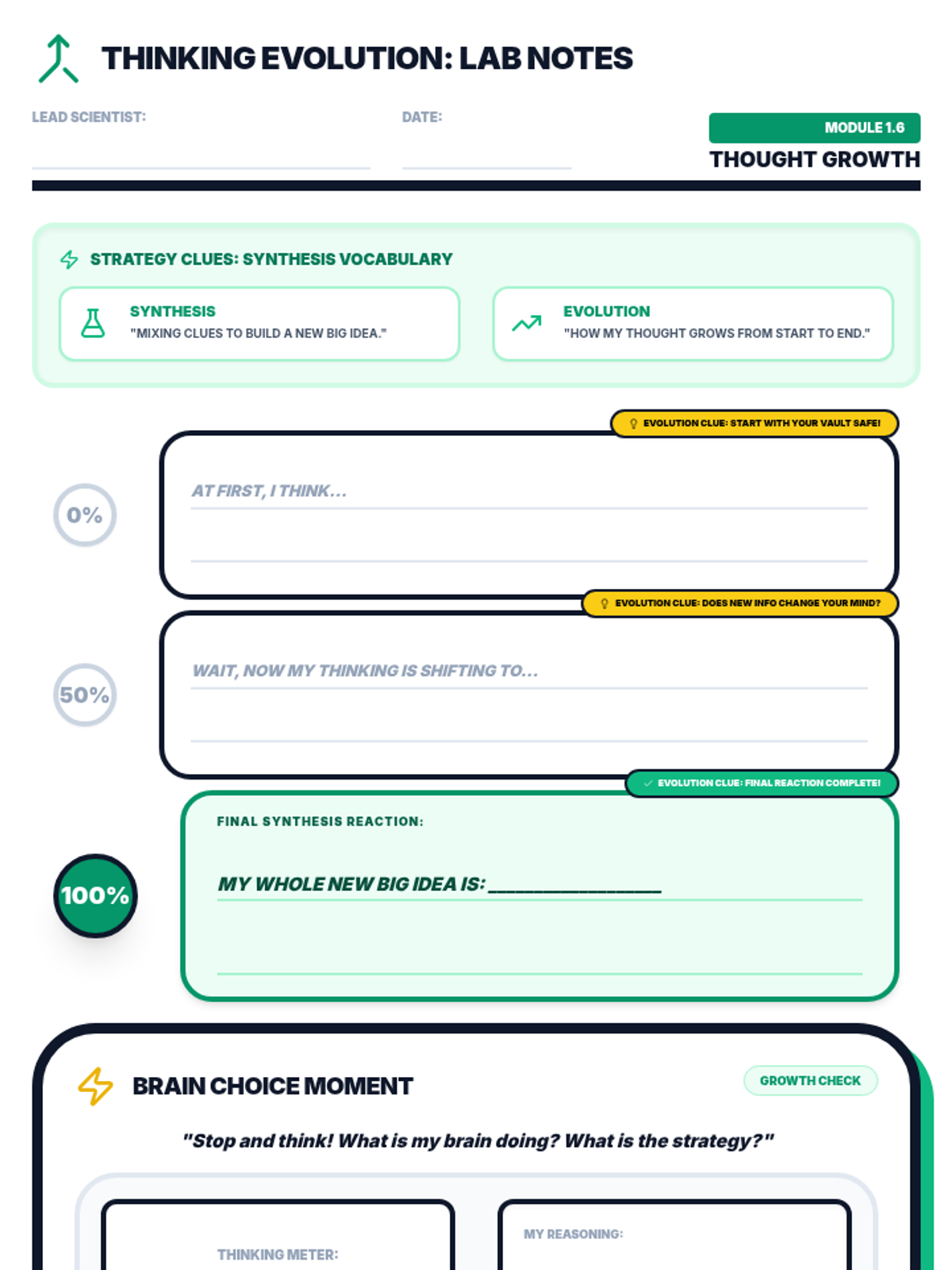
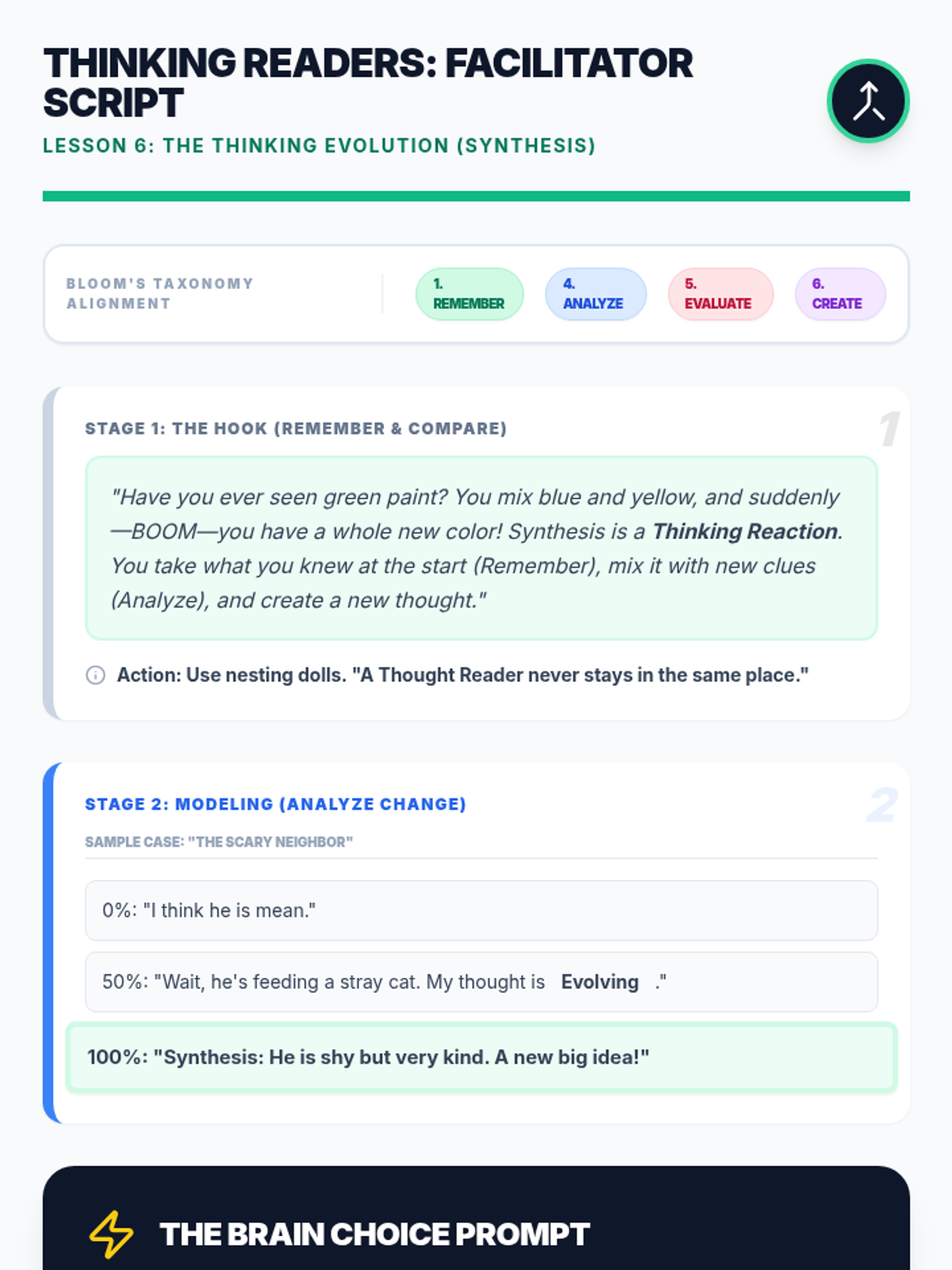
Focuses on Synthesis. Students track how their 'Thought Map' changes from the first page to the final sentence.
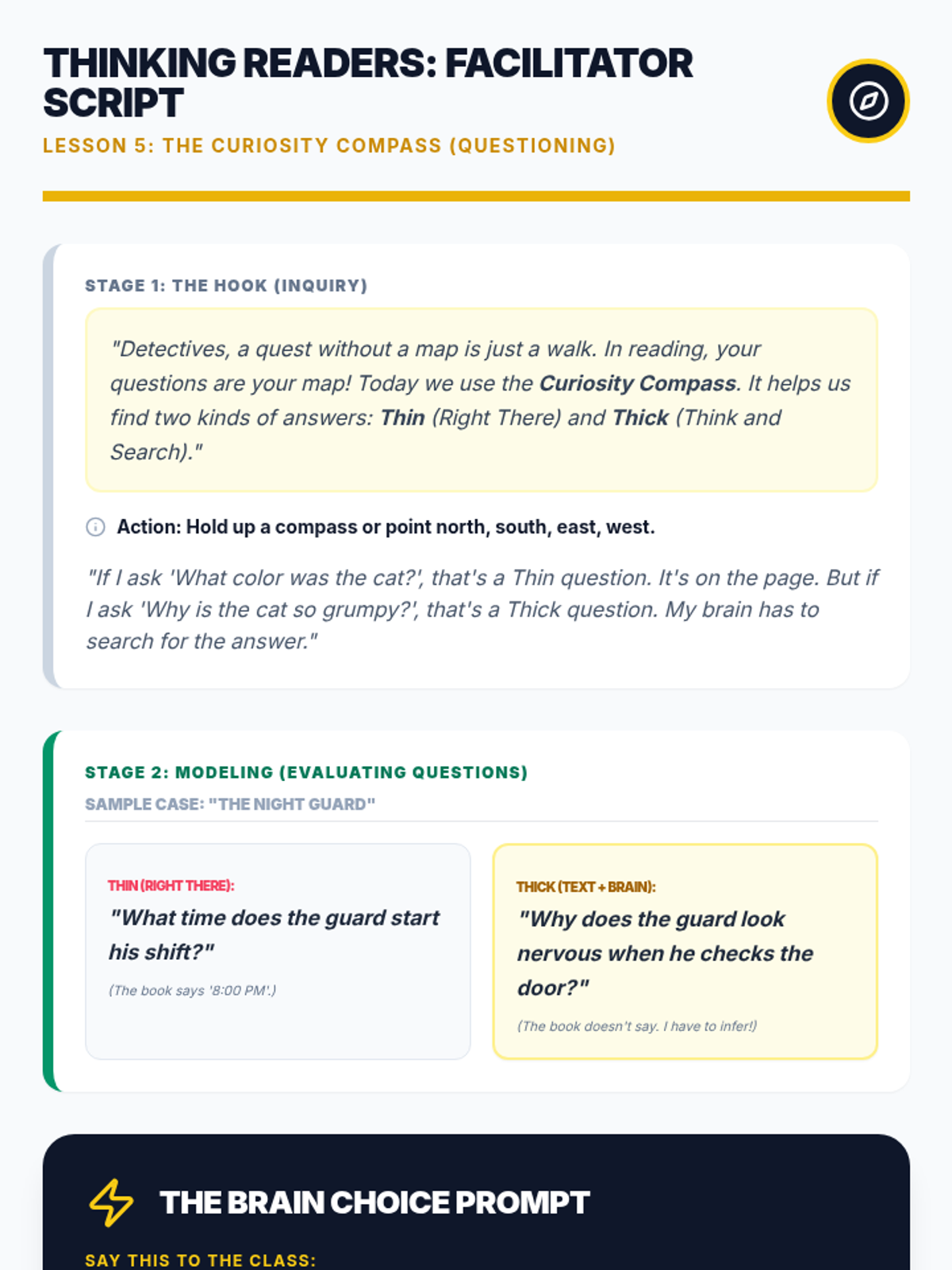
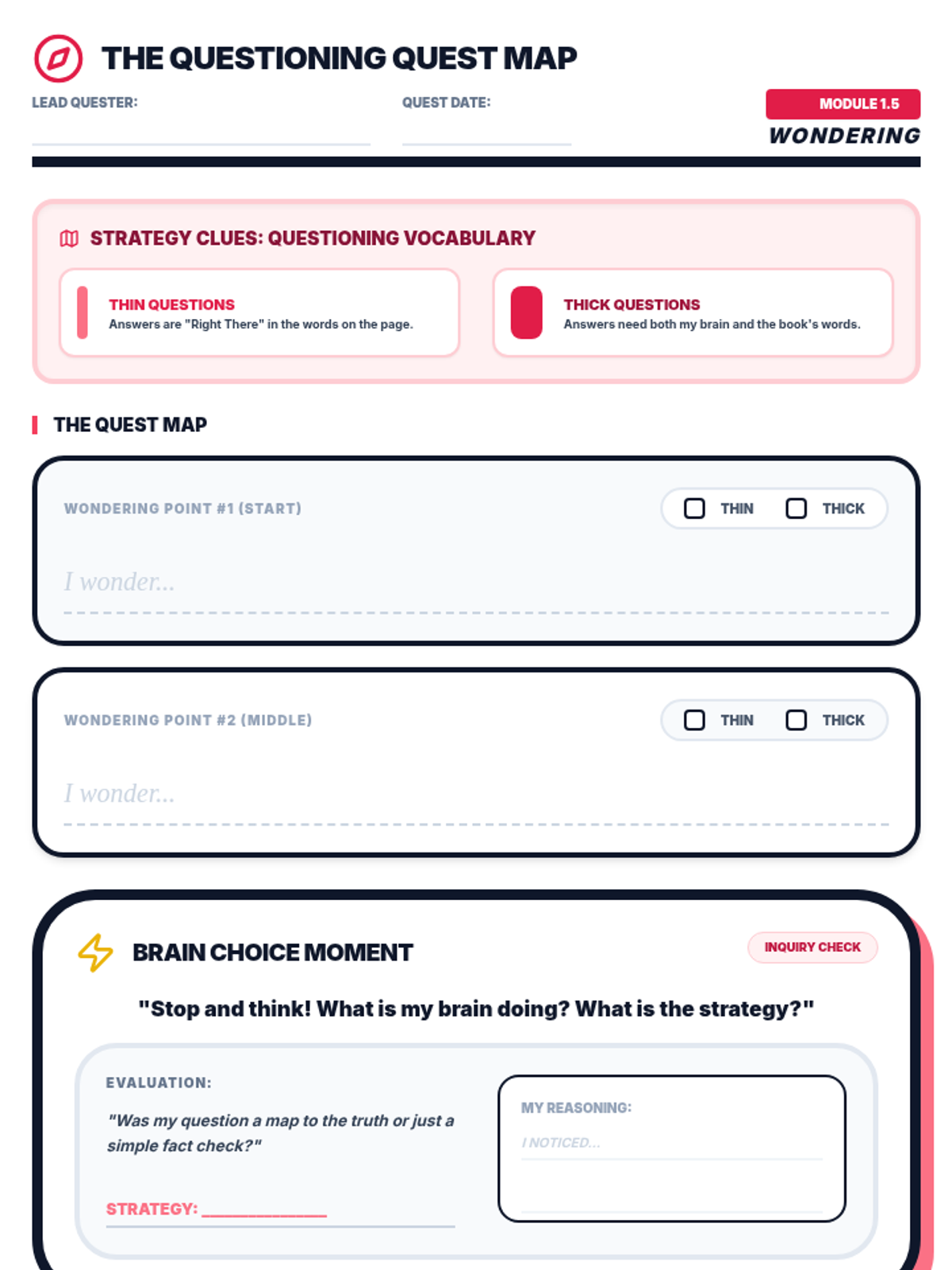
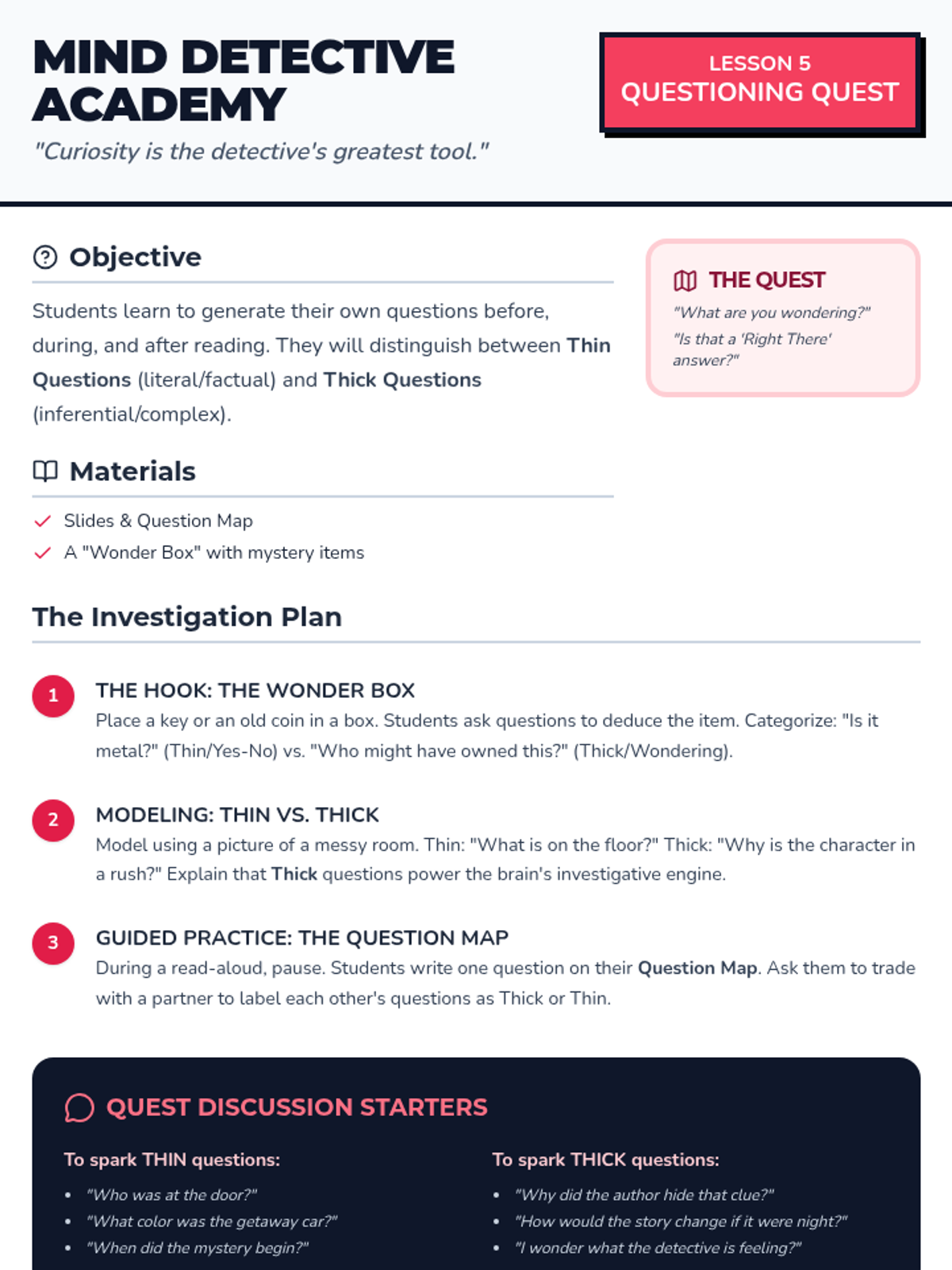
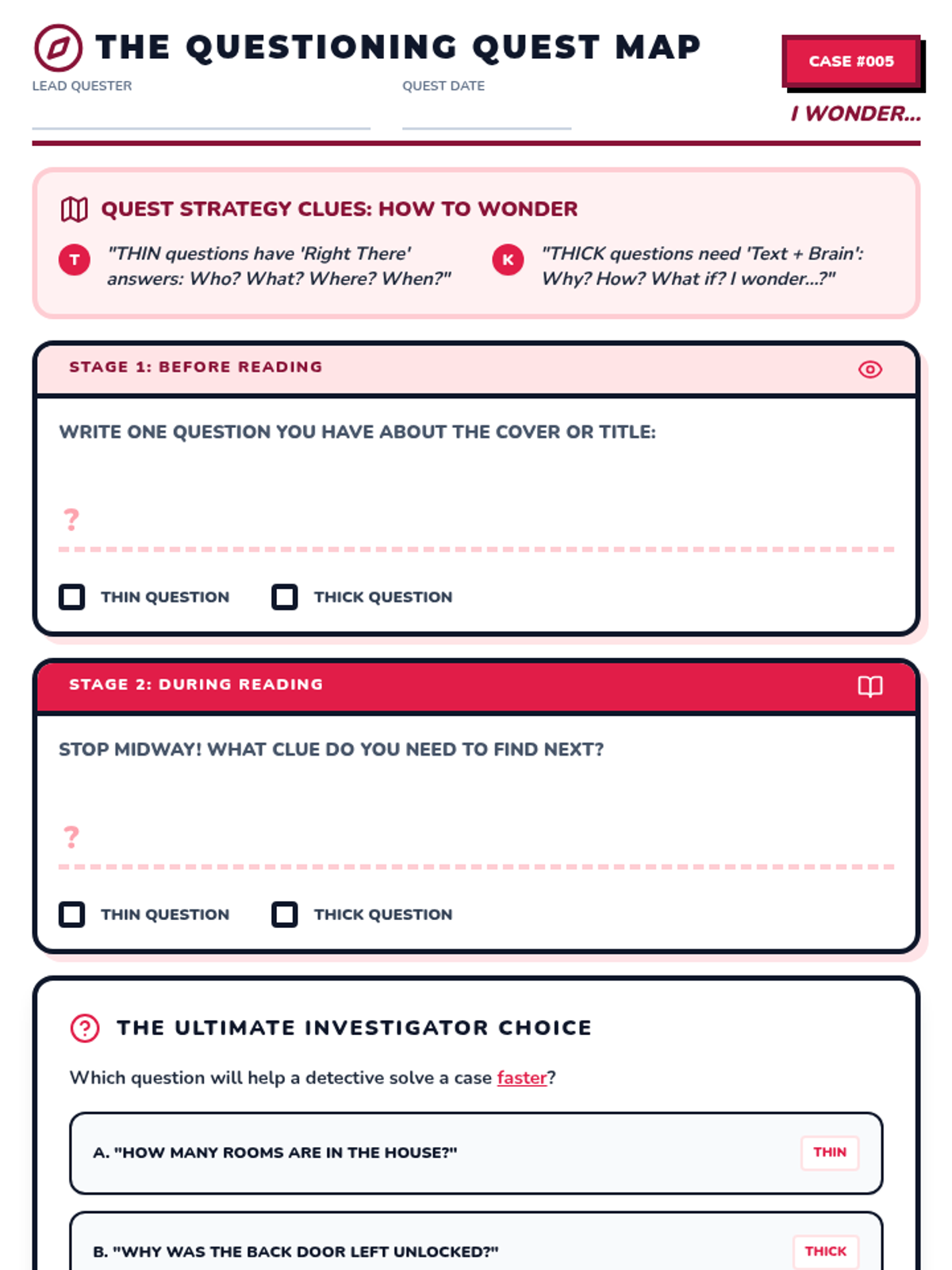
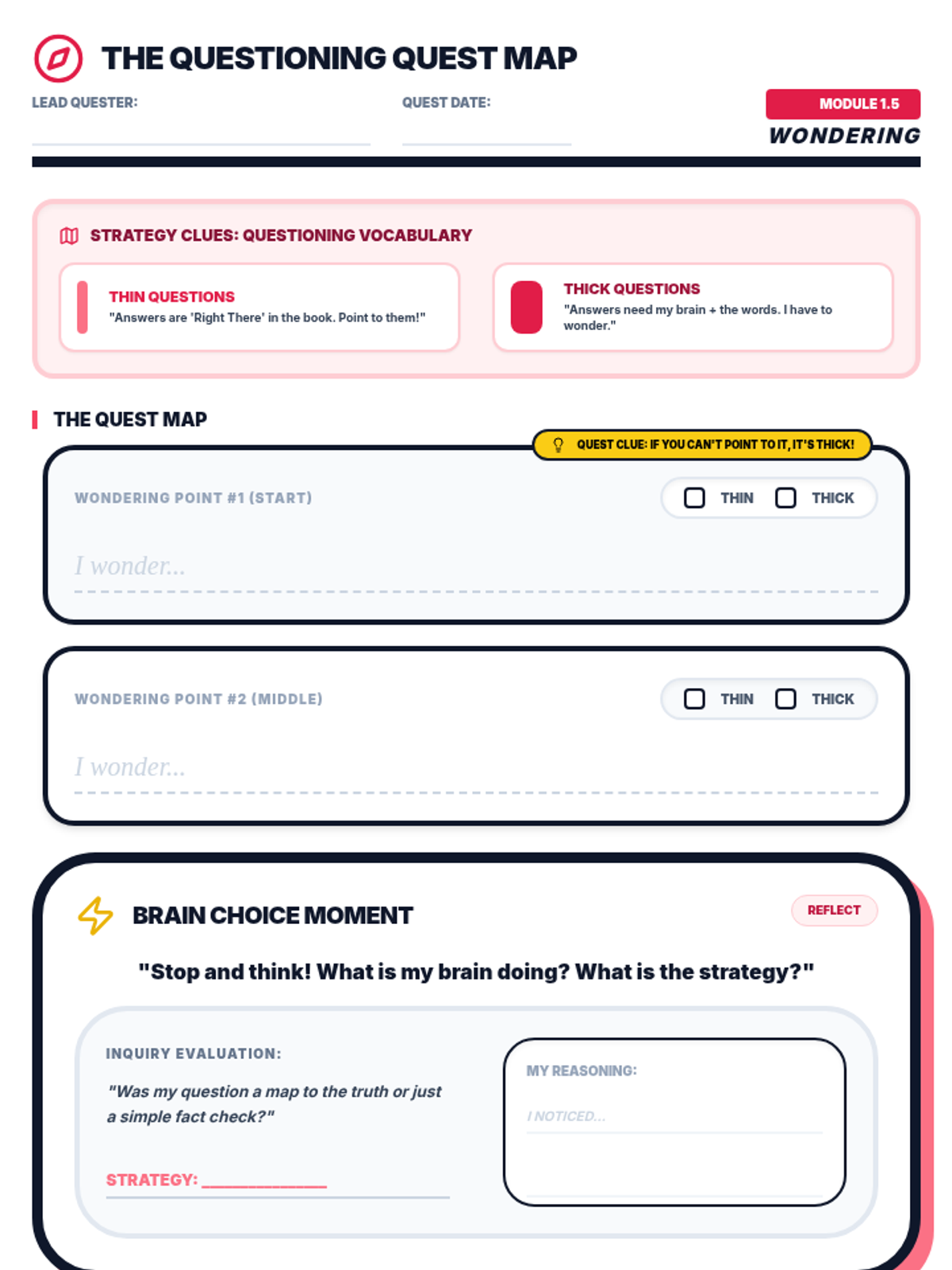
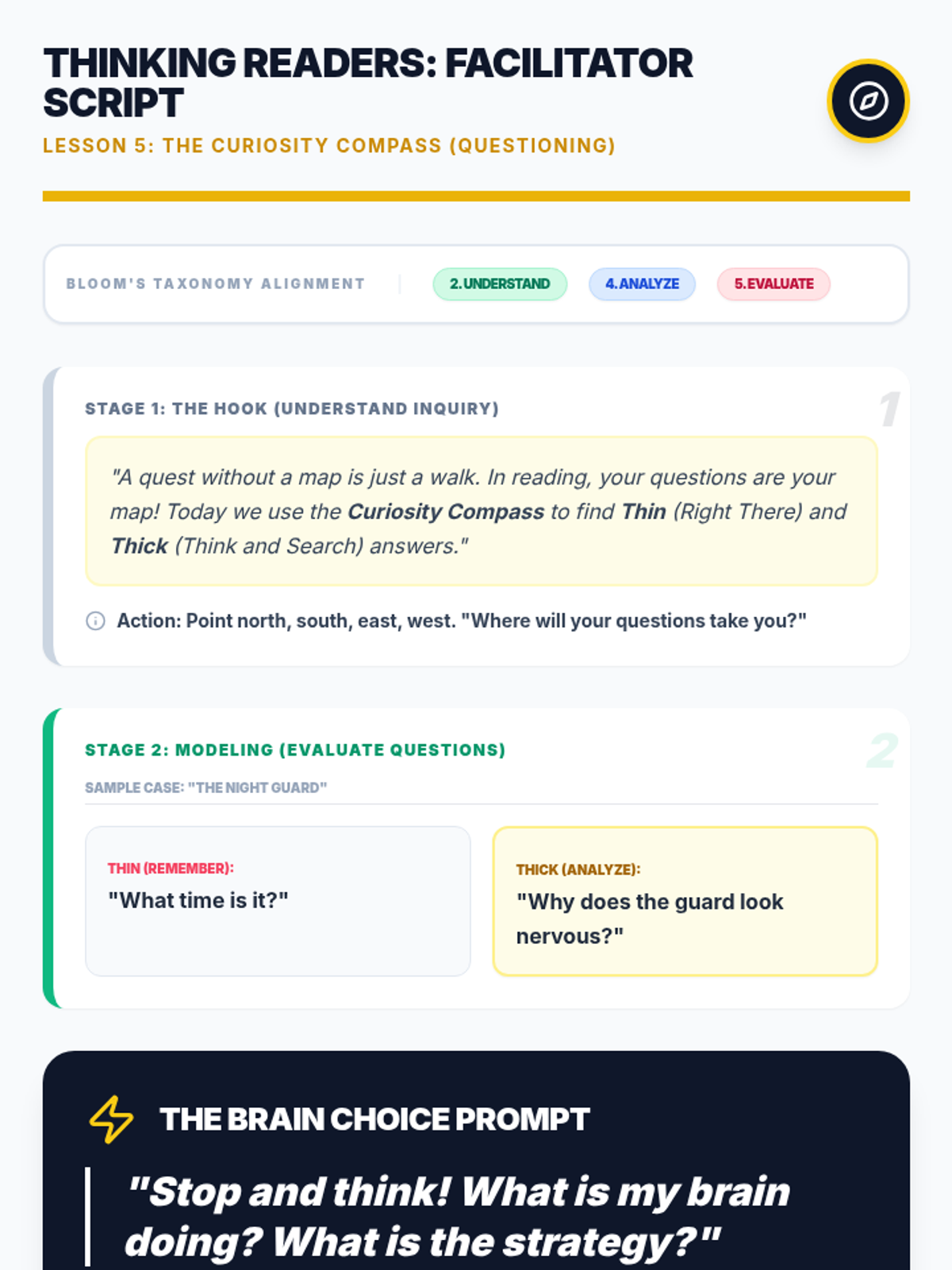
Introduces the 'Curiosity Compass' to generate Thick and Thin questions, moving from literal facts to deep inquiry.
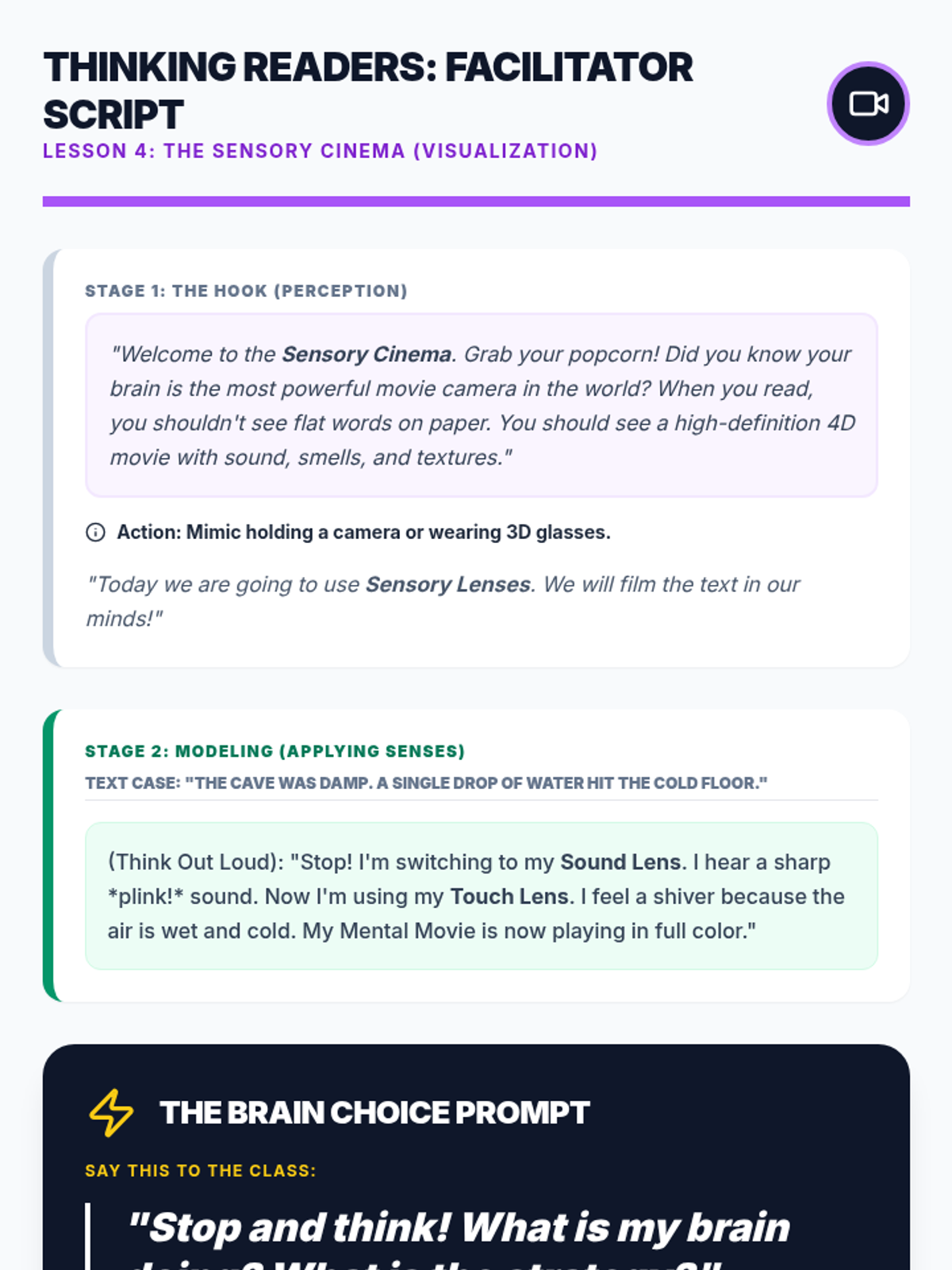
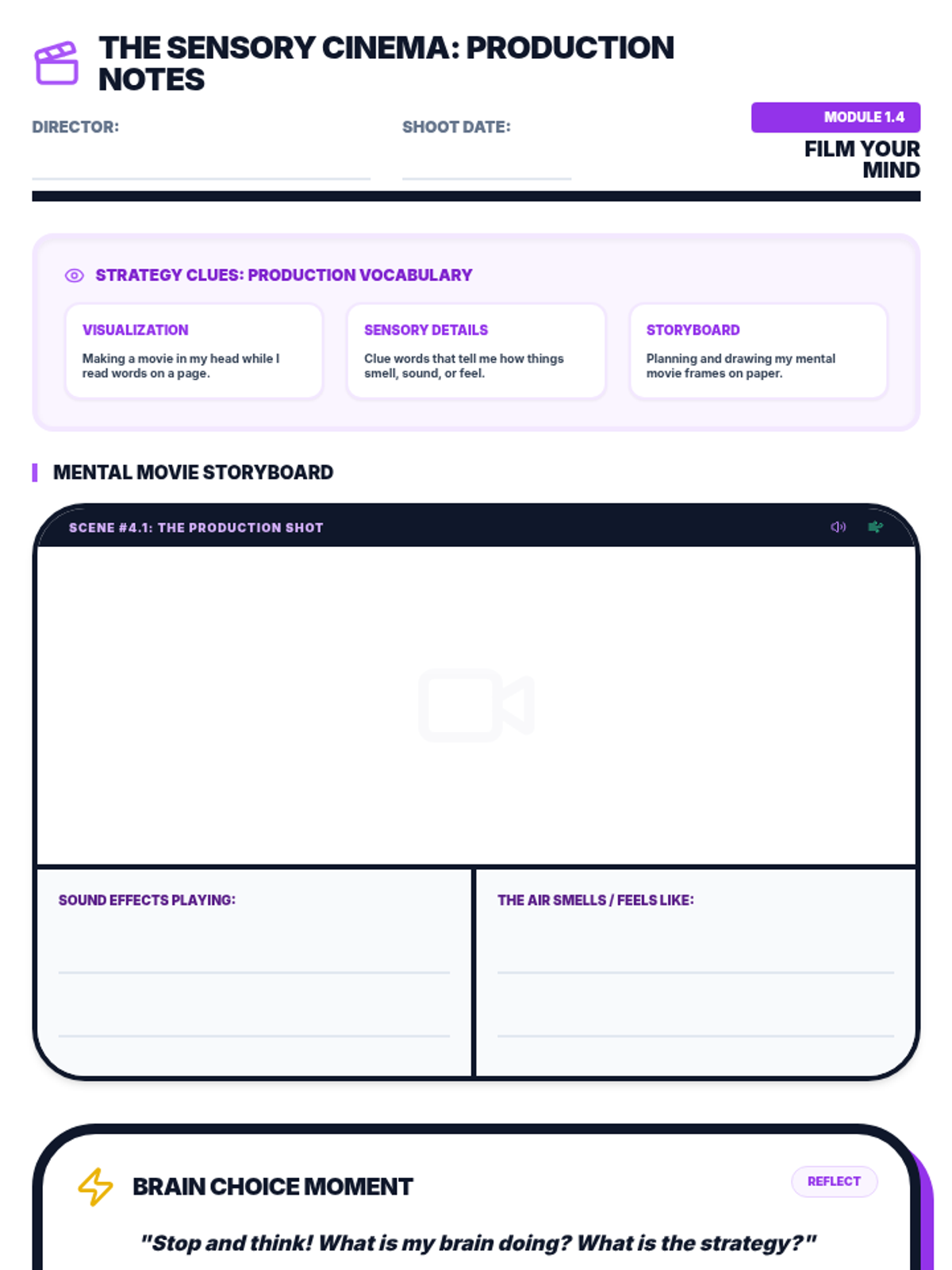
Teaches visualization as a sensory experience. Students learn to 'film' the story in their heads using five-sense descriptions.
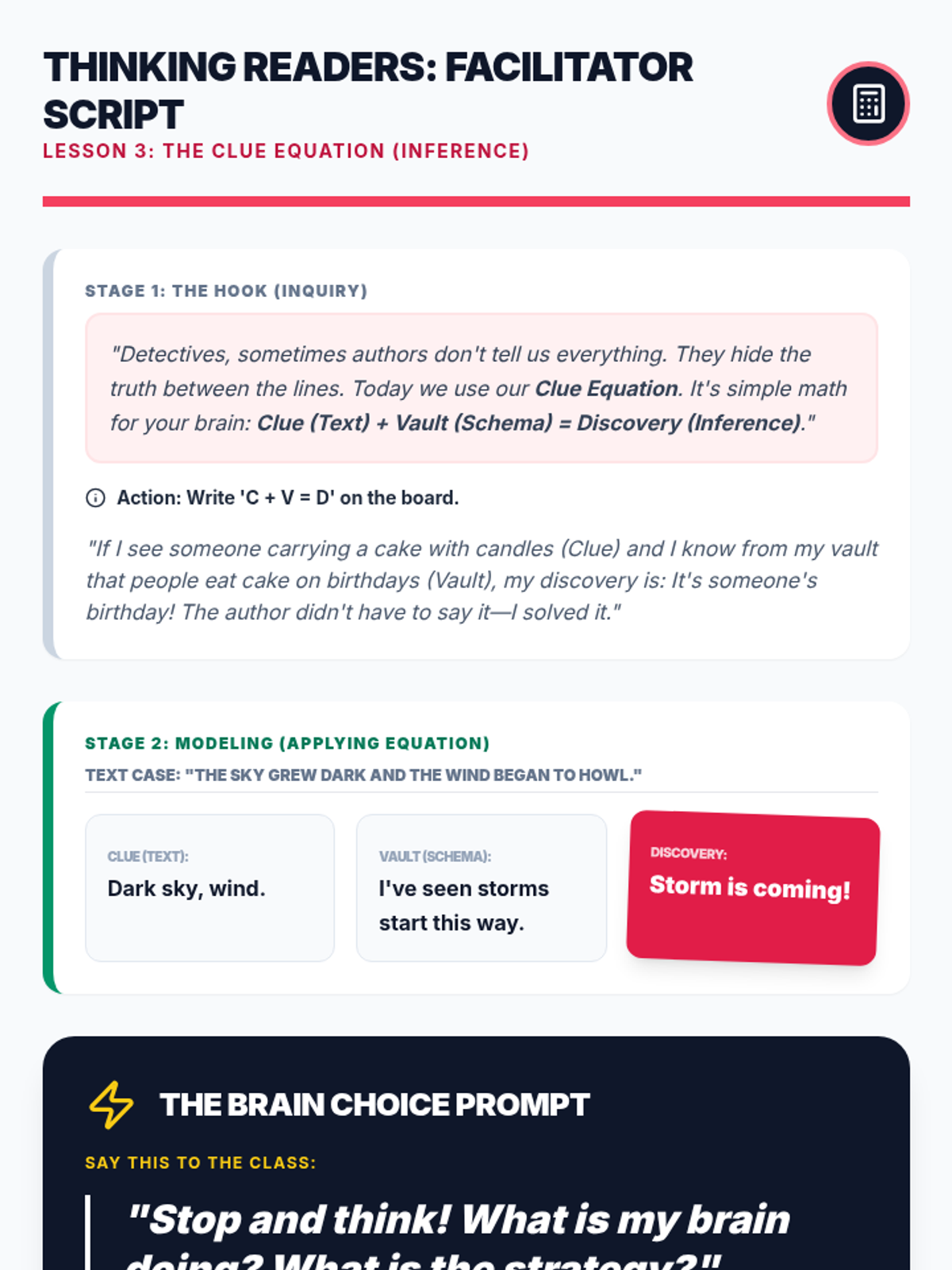
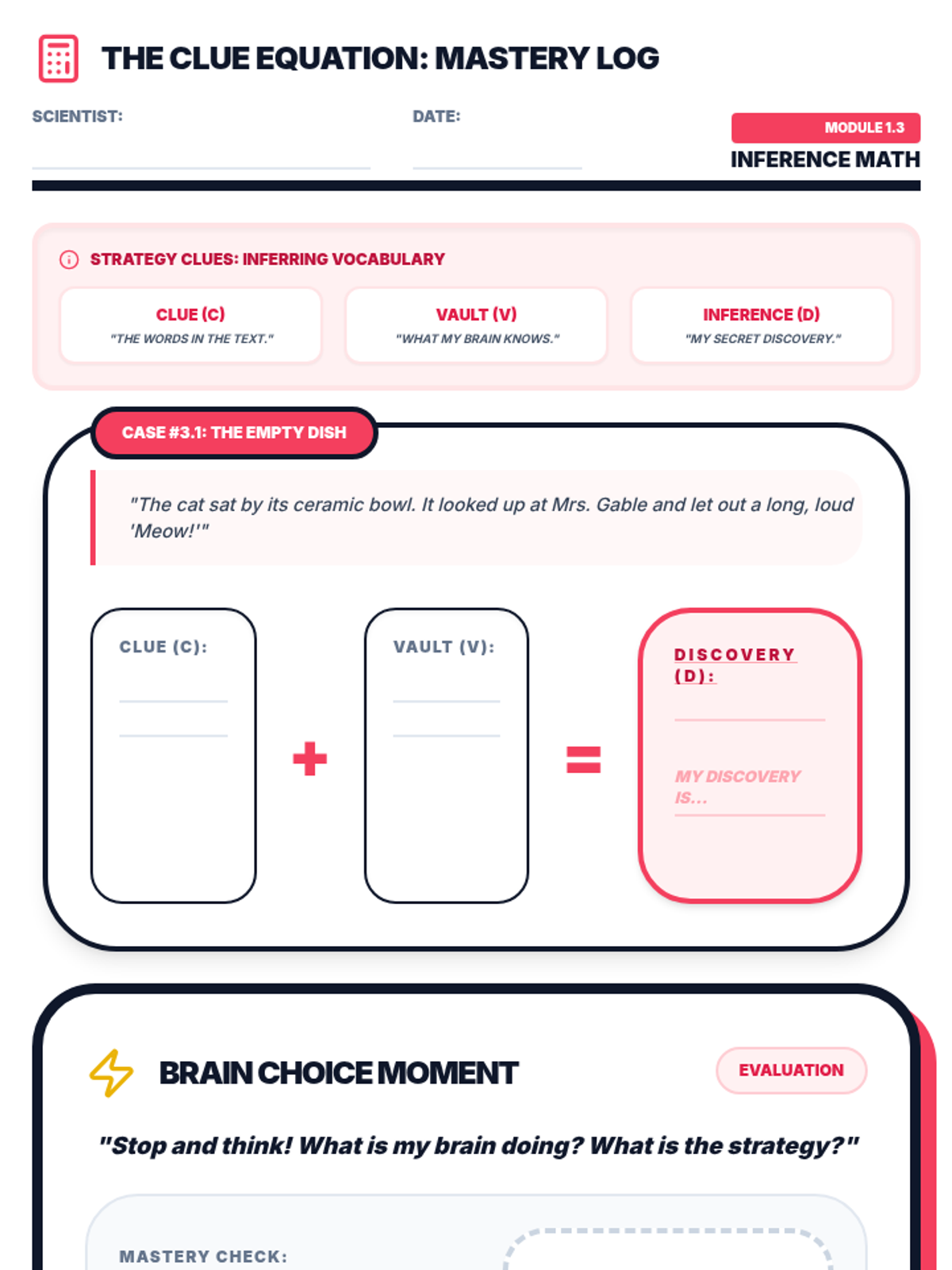
Masters the 'Clue + Vault = Discovery' equation. Students learn to justify their inferences using specific text evidence and background knowledge.
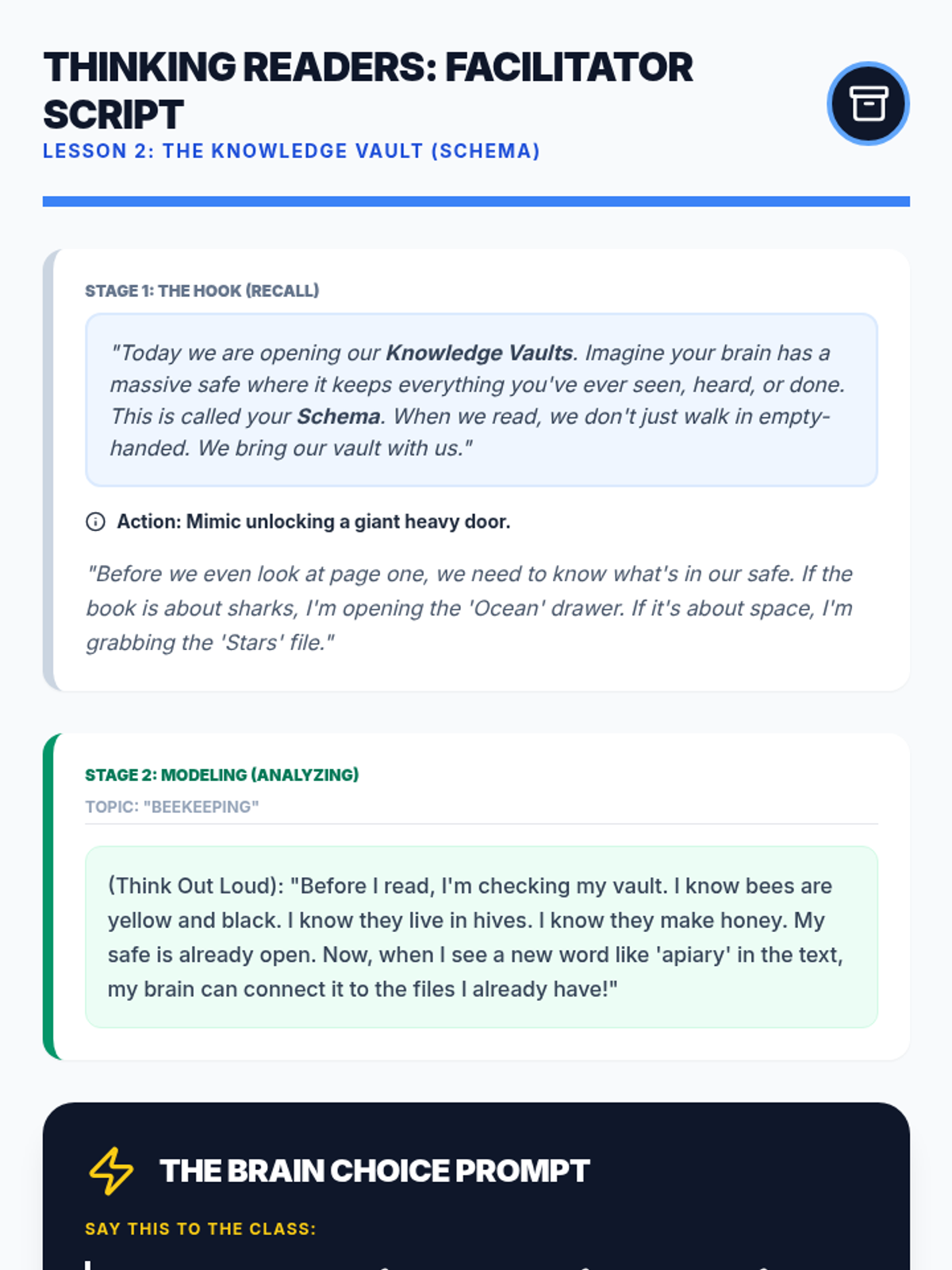
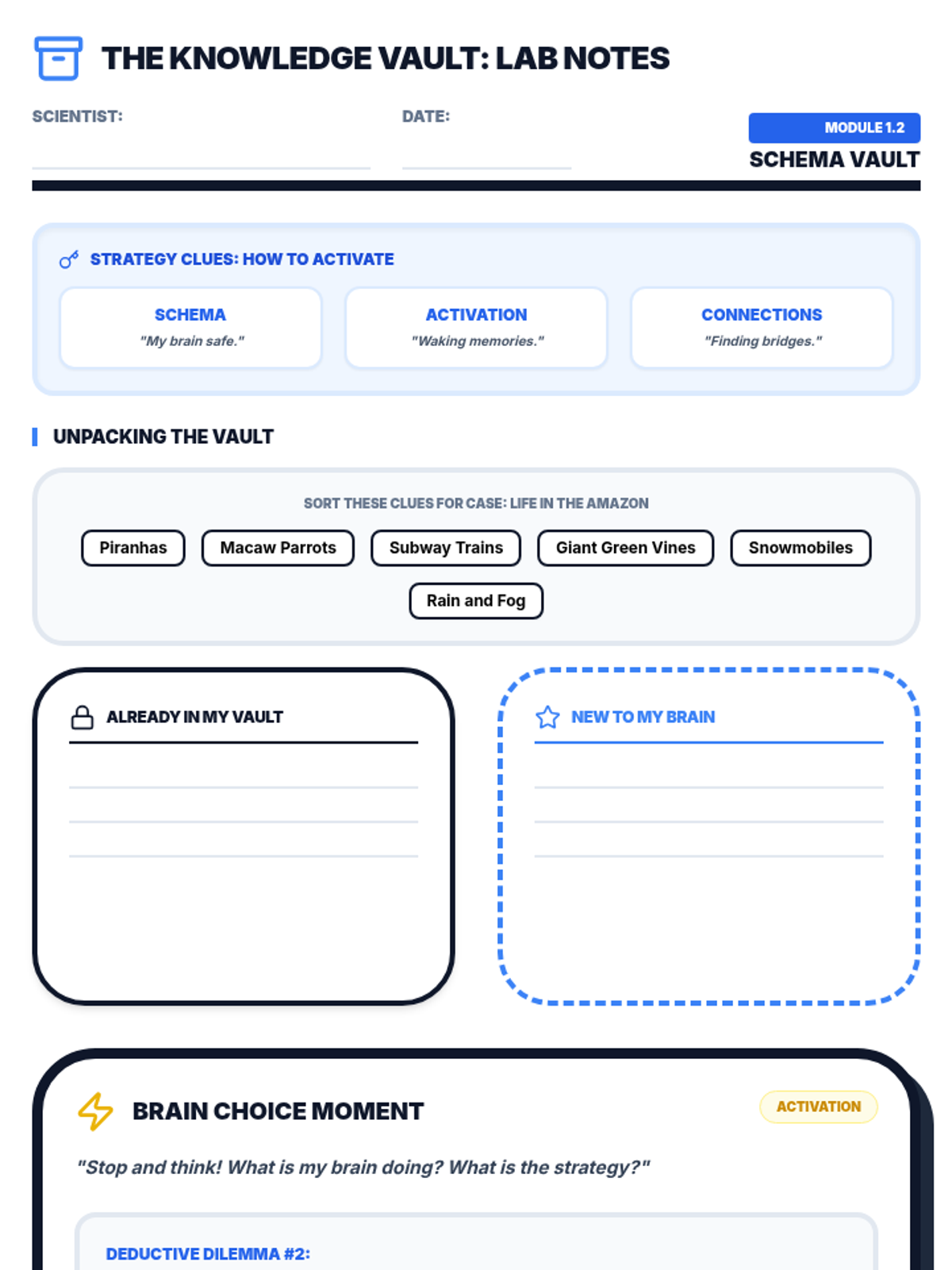
Focuses on Schema as the 'Knowledge Vault.' Students learn to retrieve and organize prior knowledge before entering a text.
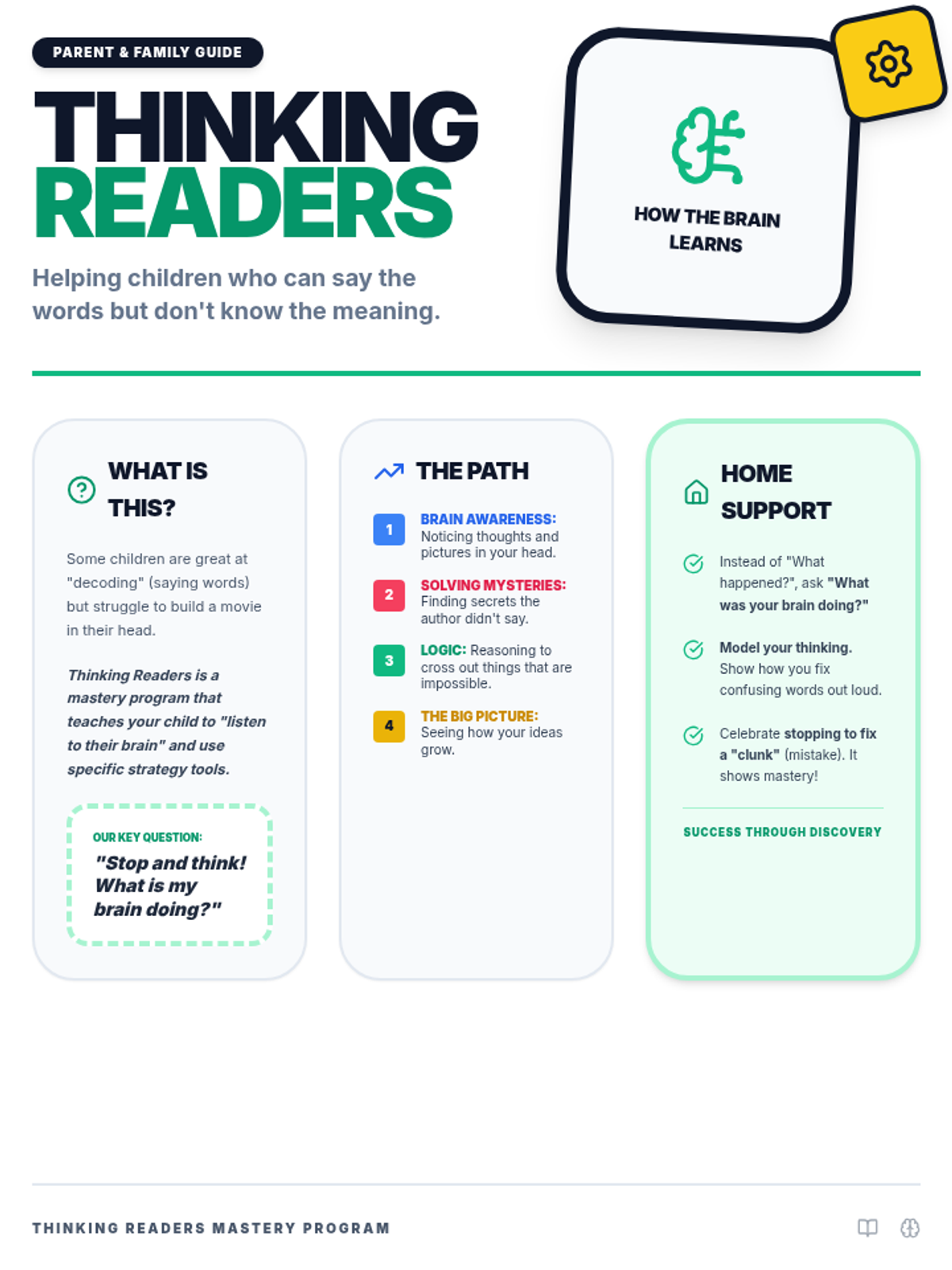
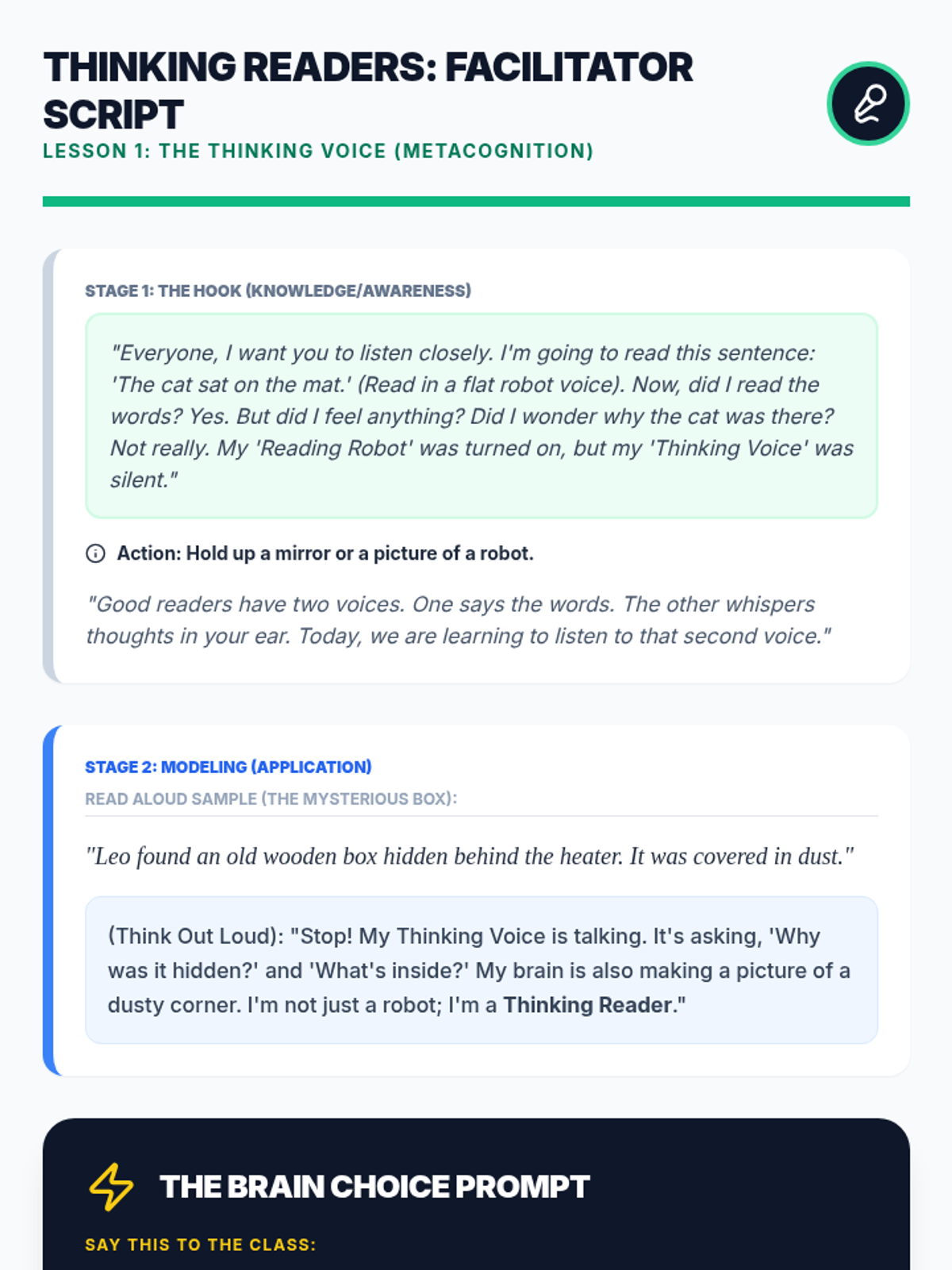
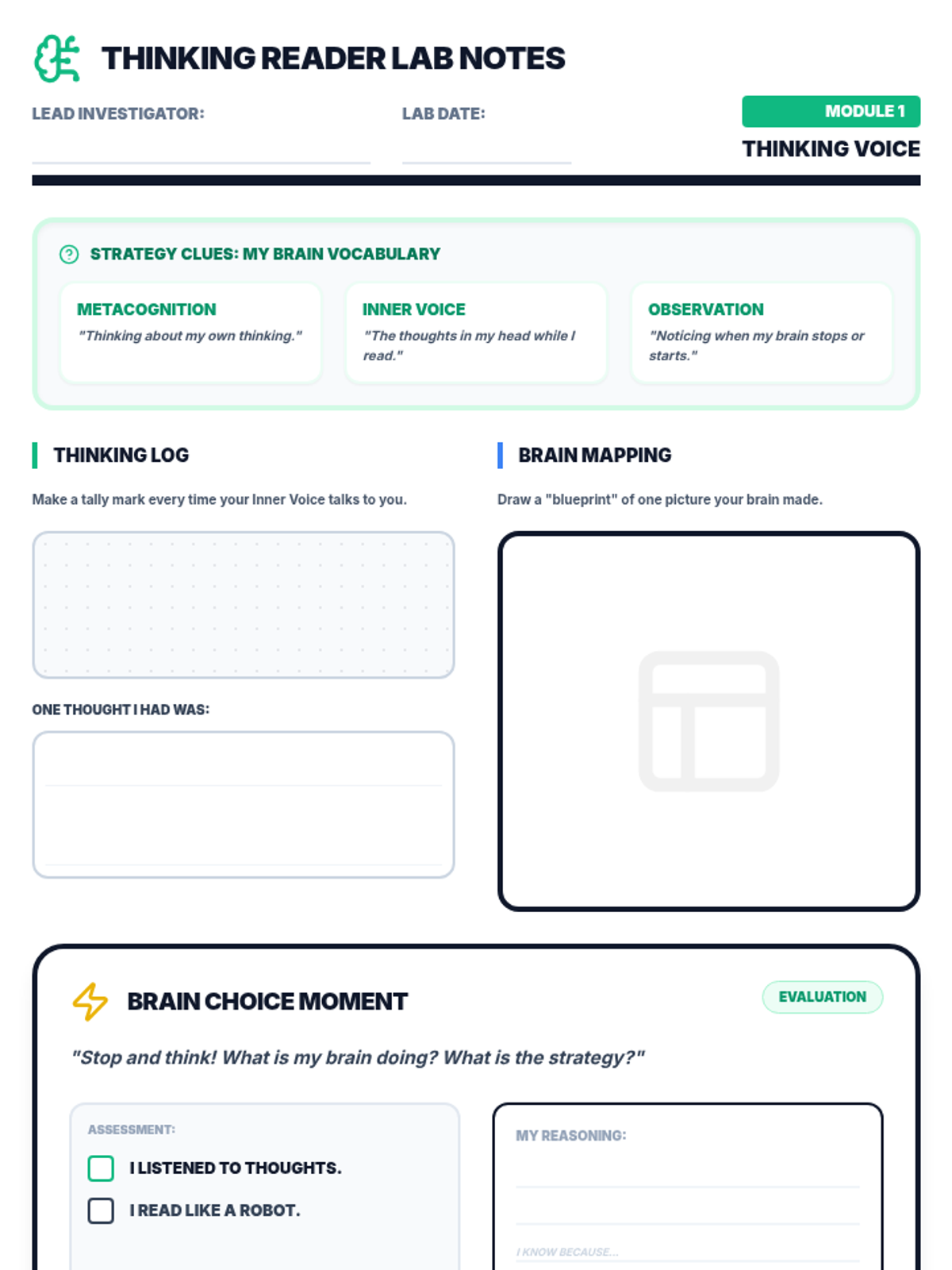
Introduction to the 'Inner Voice'. Students learn to identify when their brain is actively thinking versus just reading words, using the 'Reading Robot' vs. 'Thought Tracker' comparison.
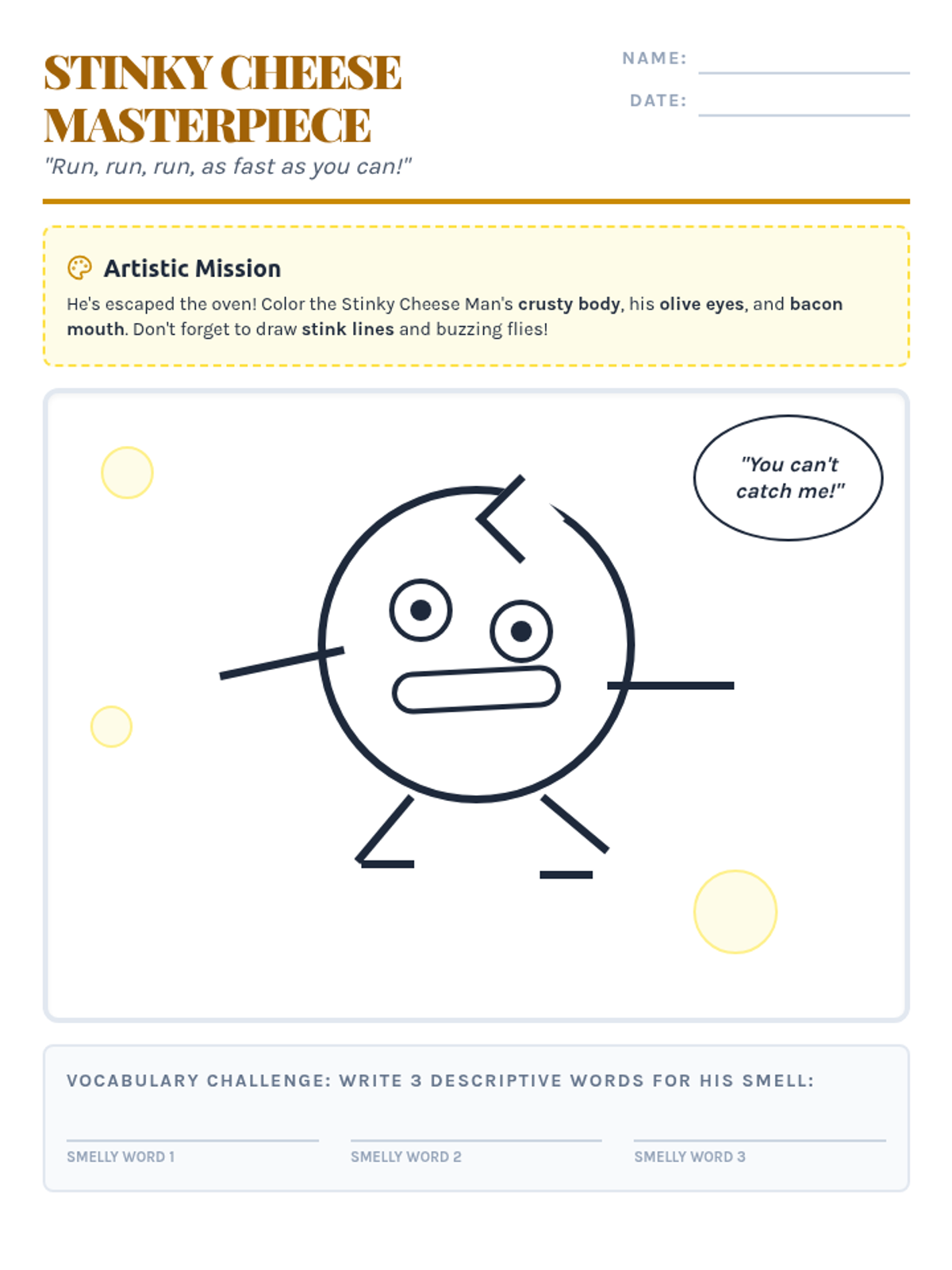
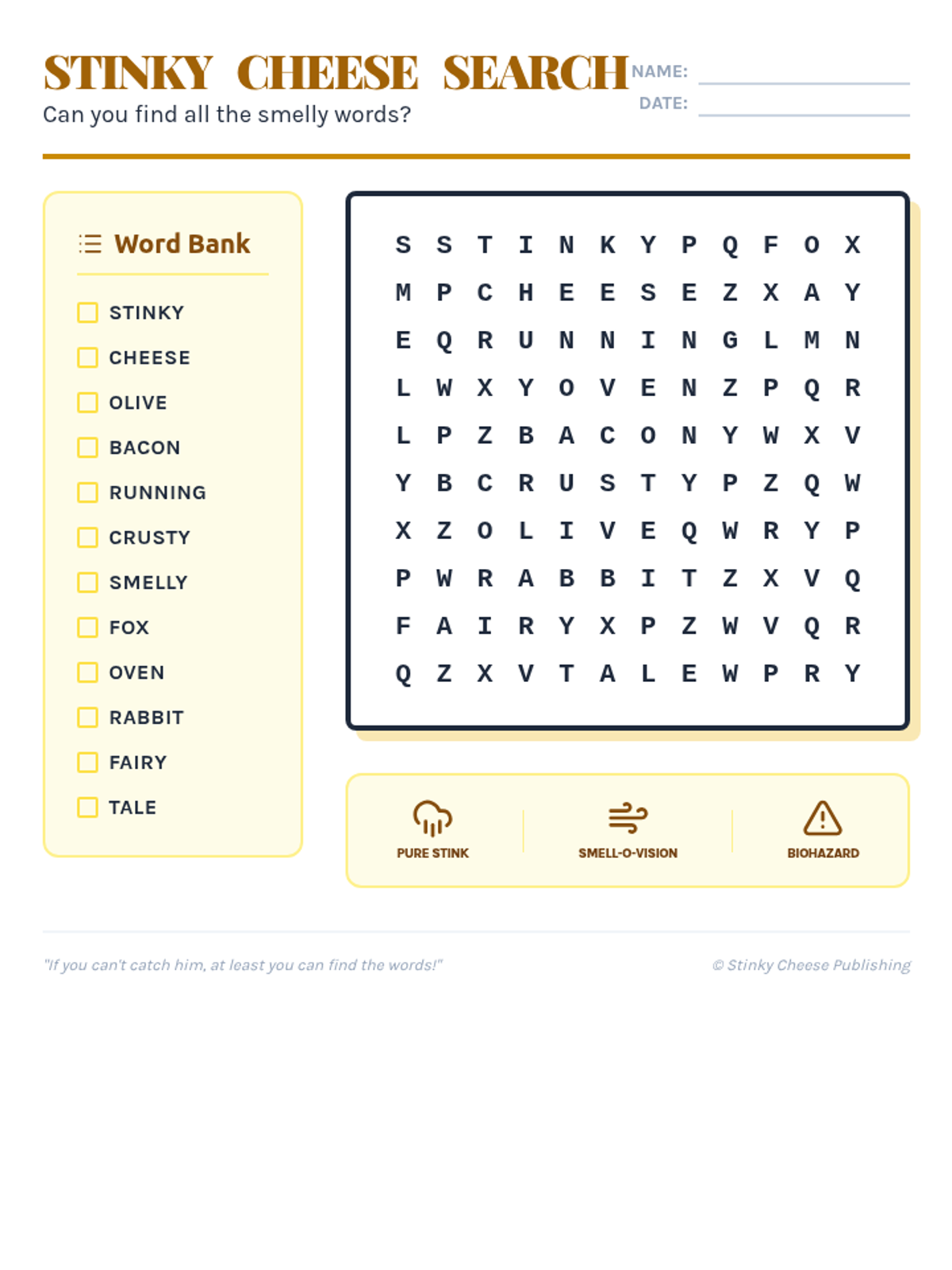
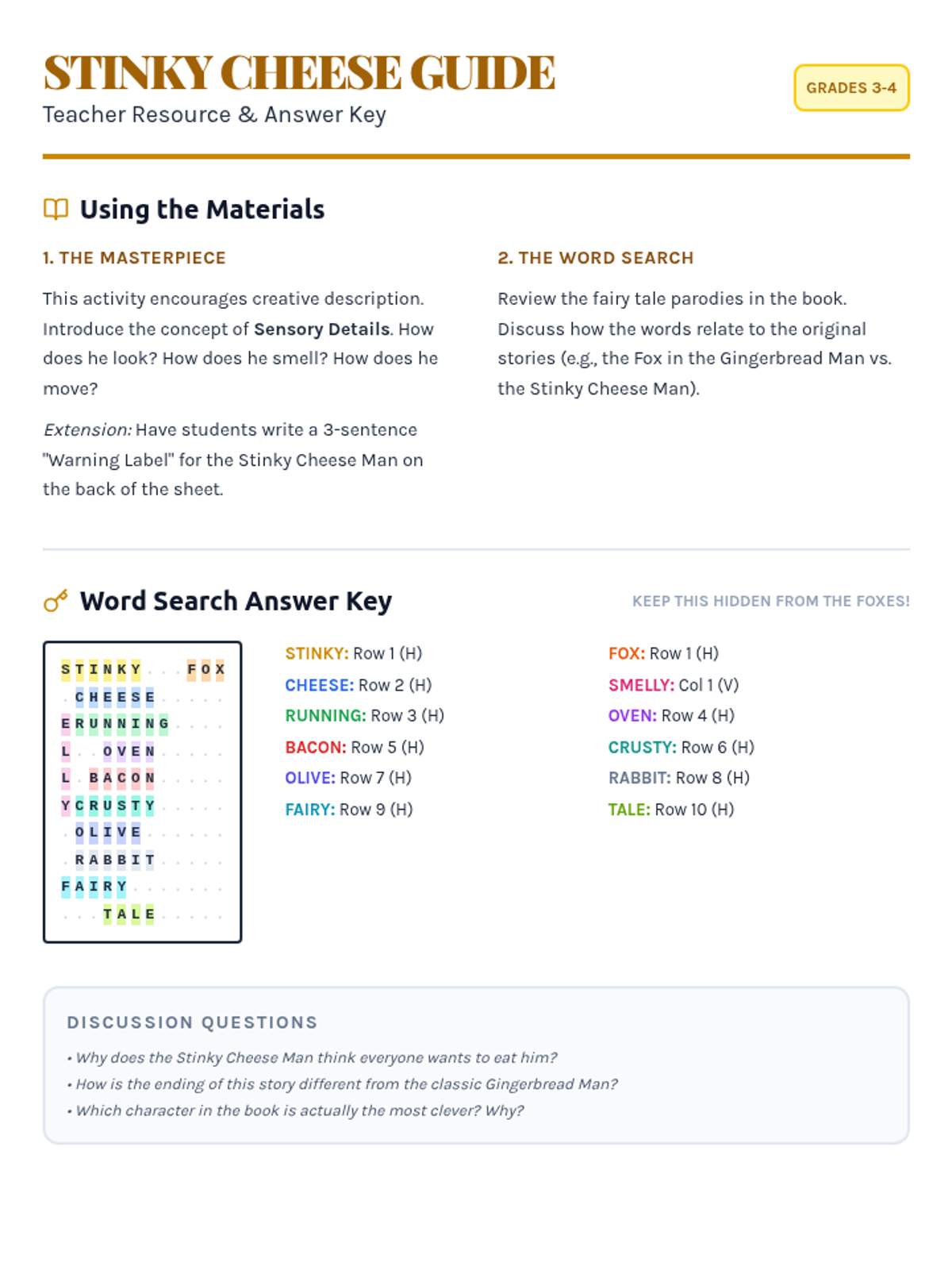
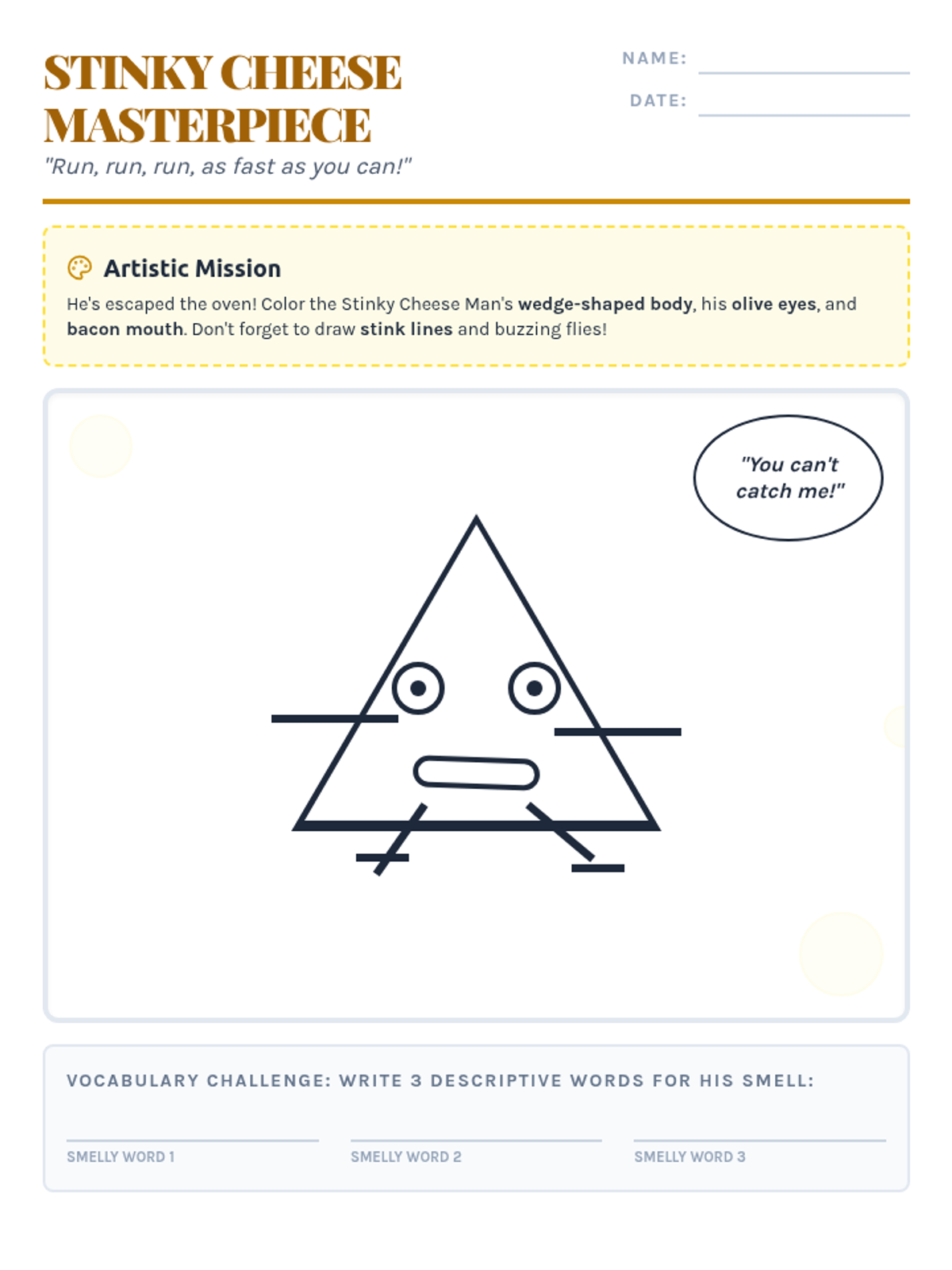
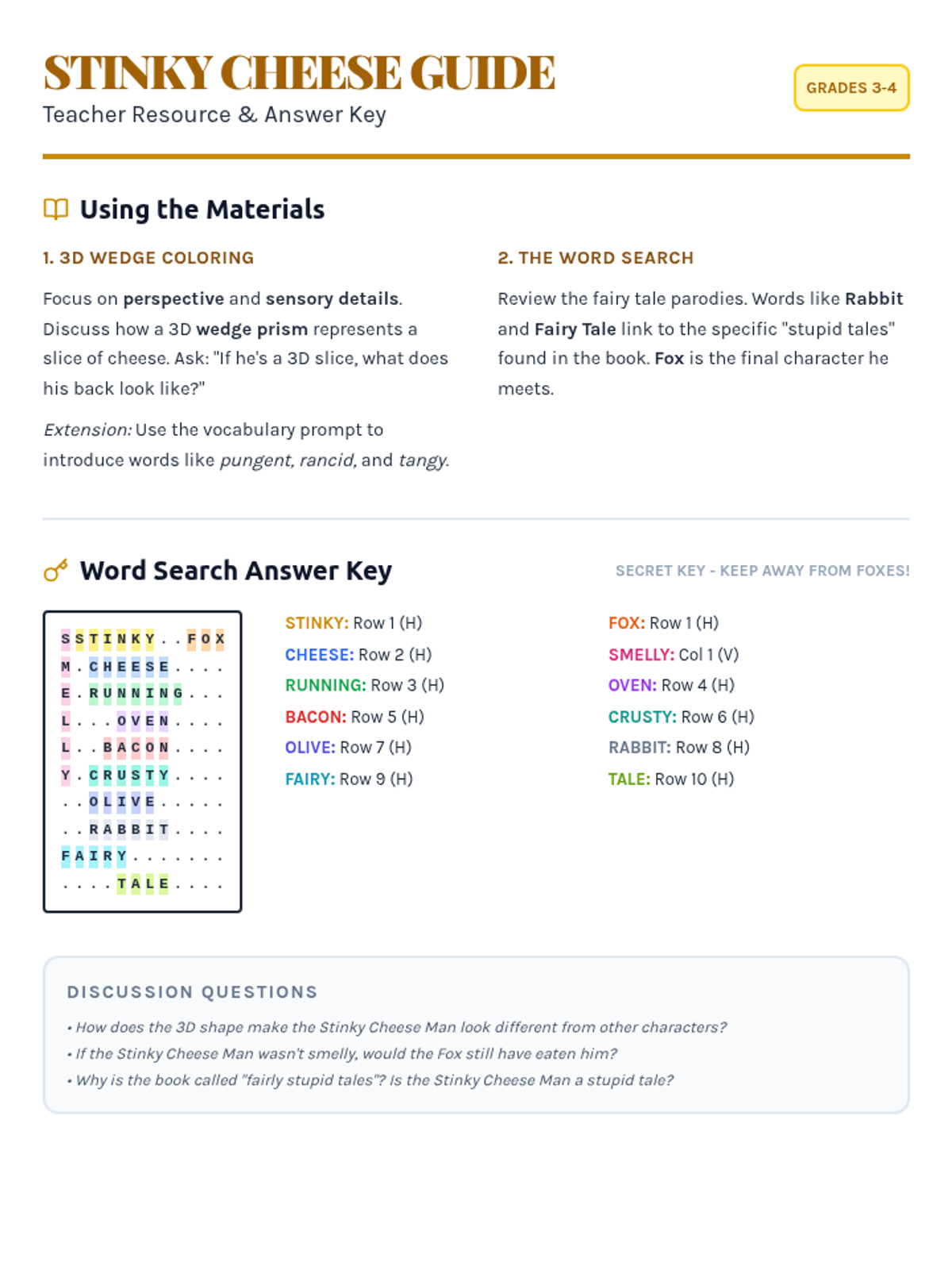
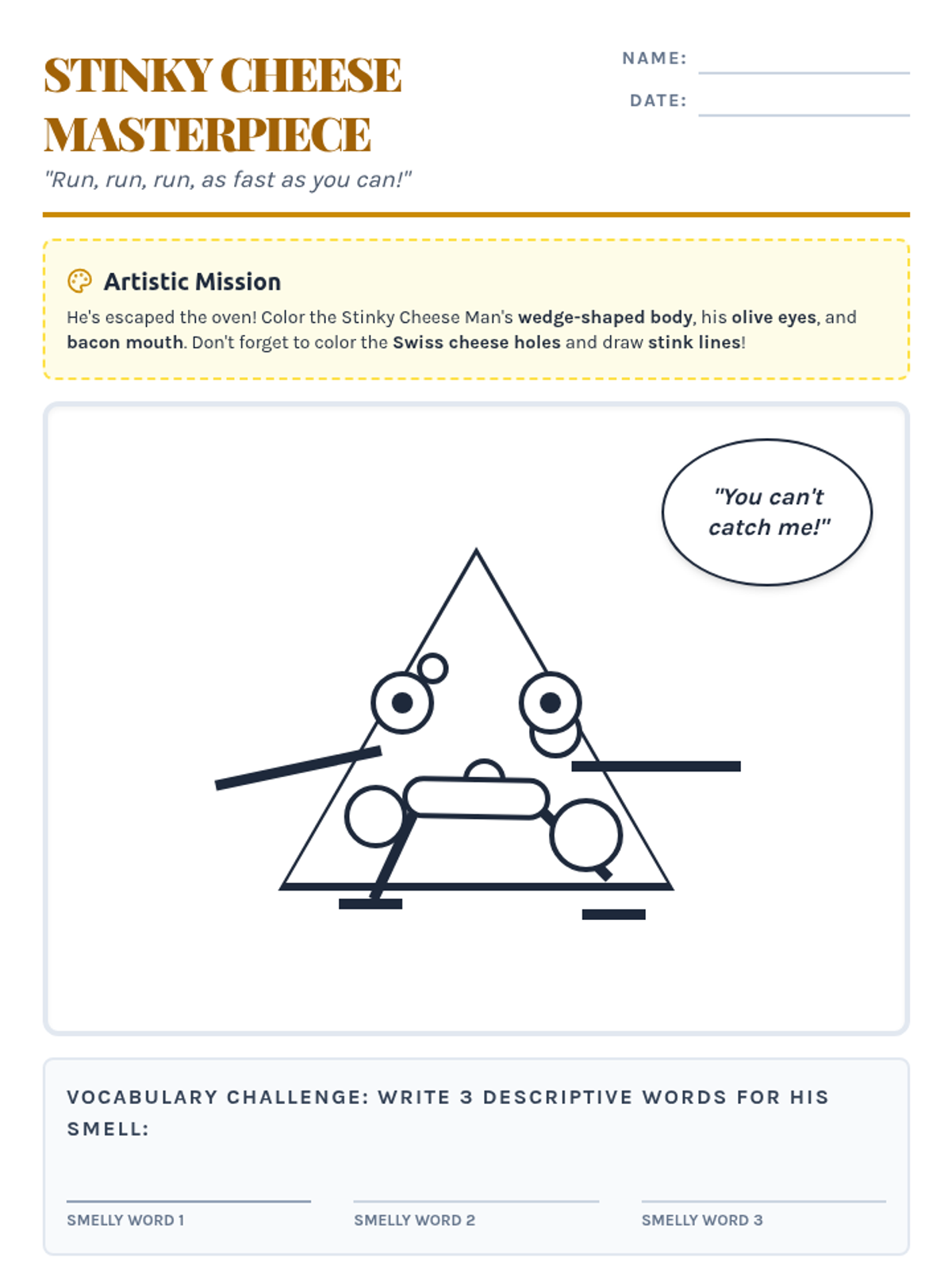
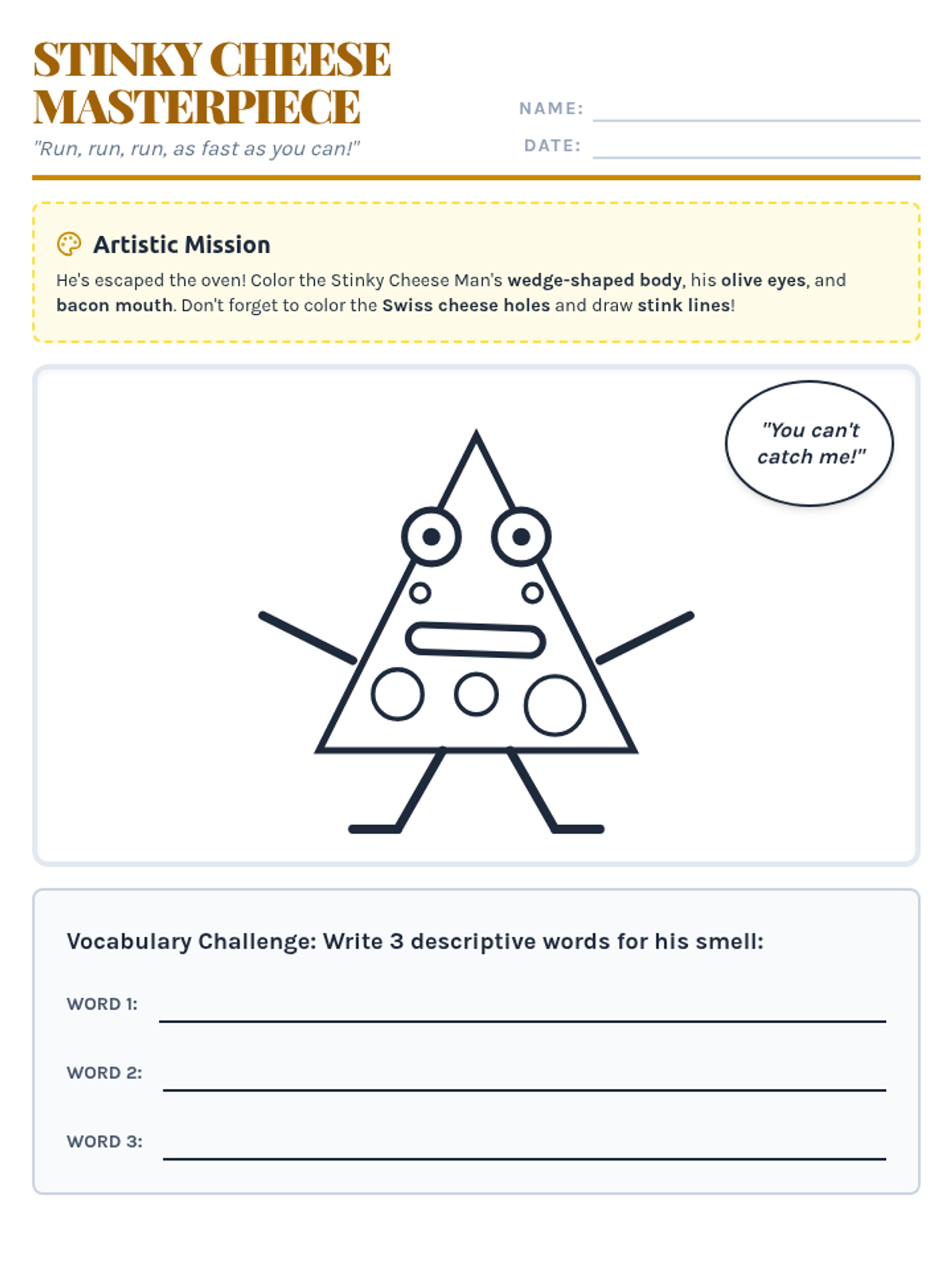
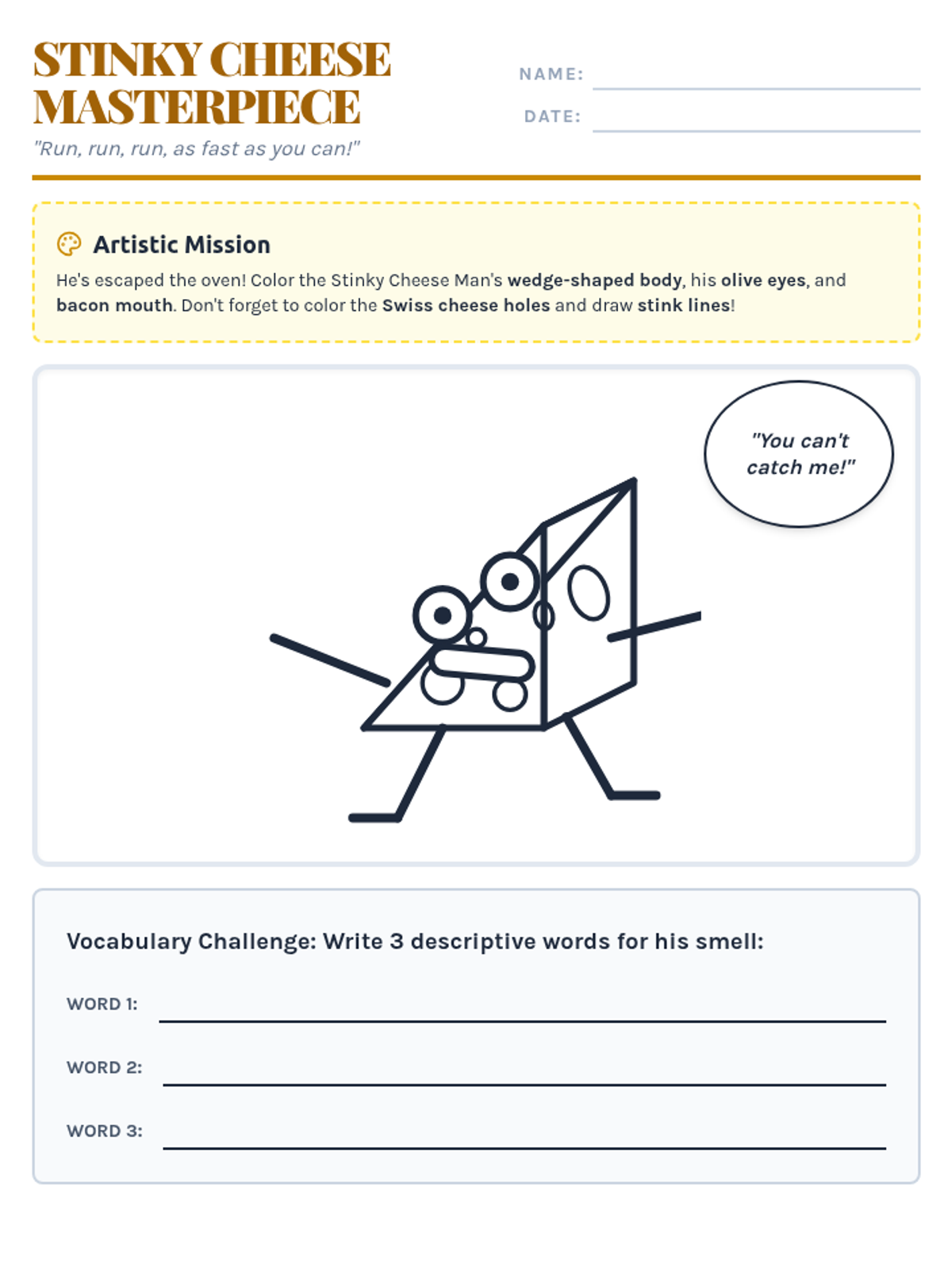
A collection of fun activities based on the classic book 'The Stinky Cheese Man', focusing on creative expression and vocabulary.
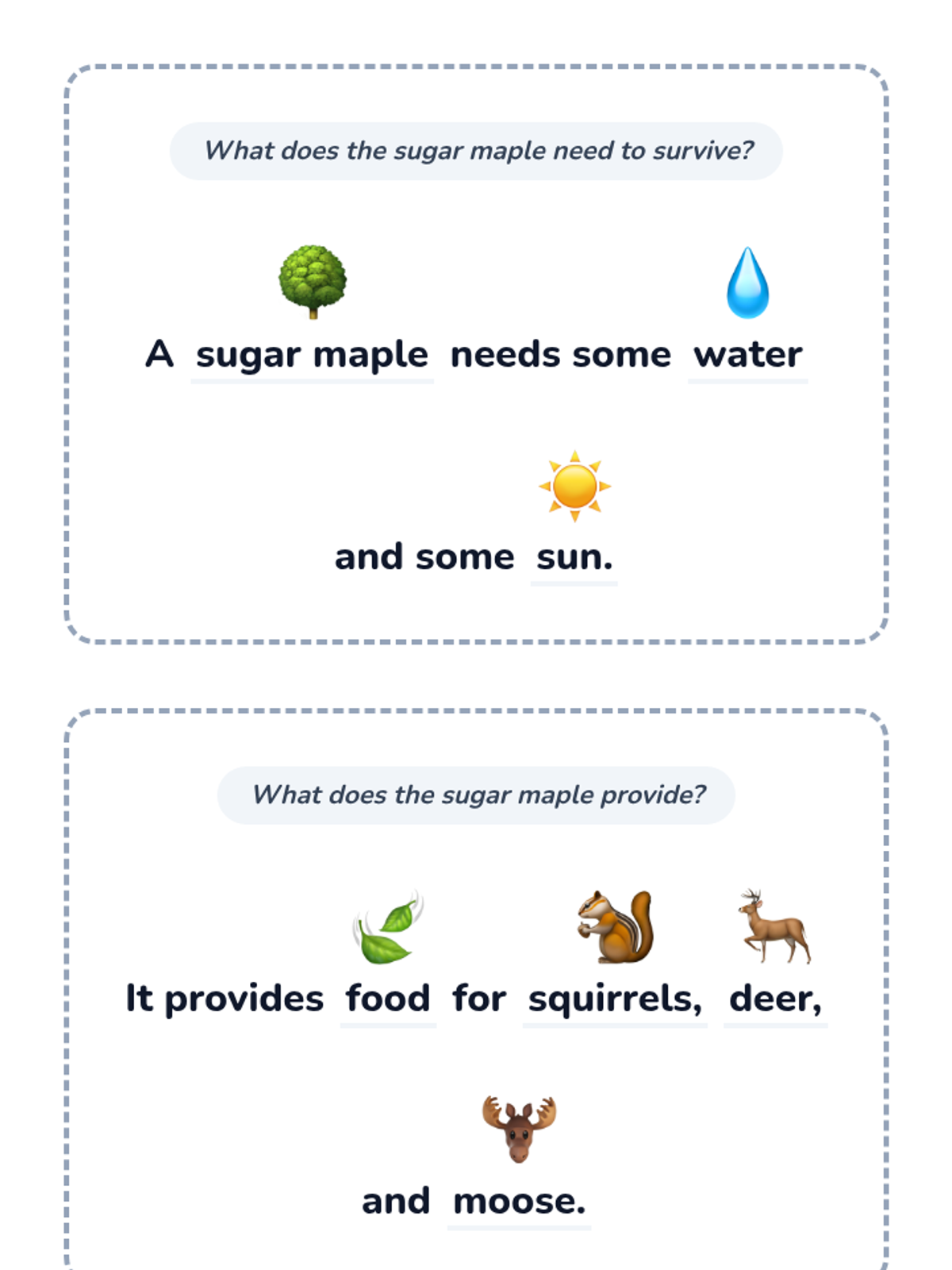
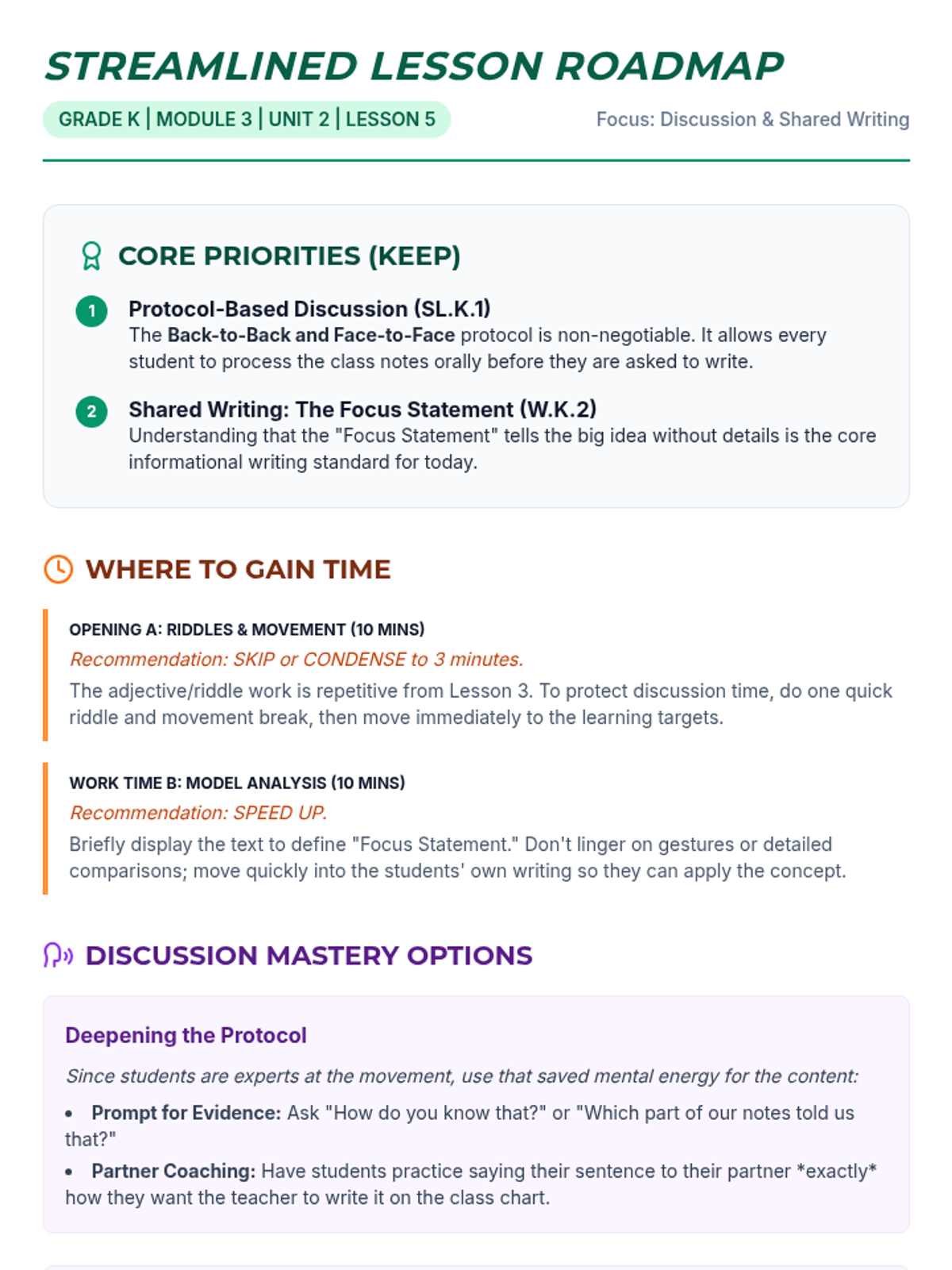
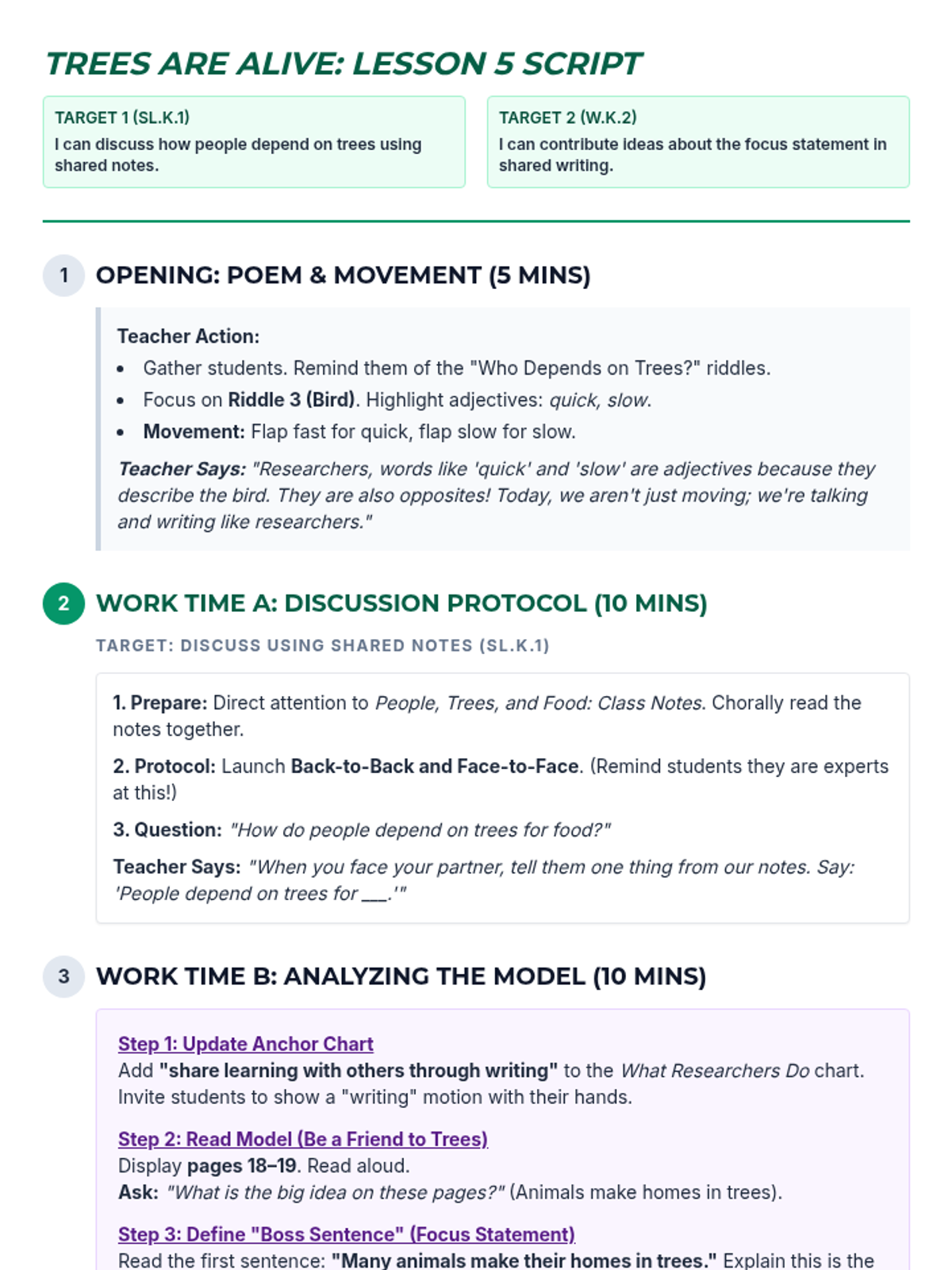
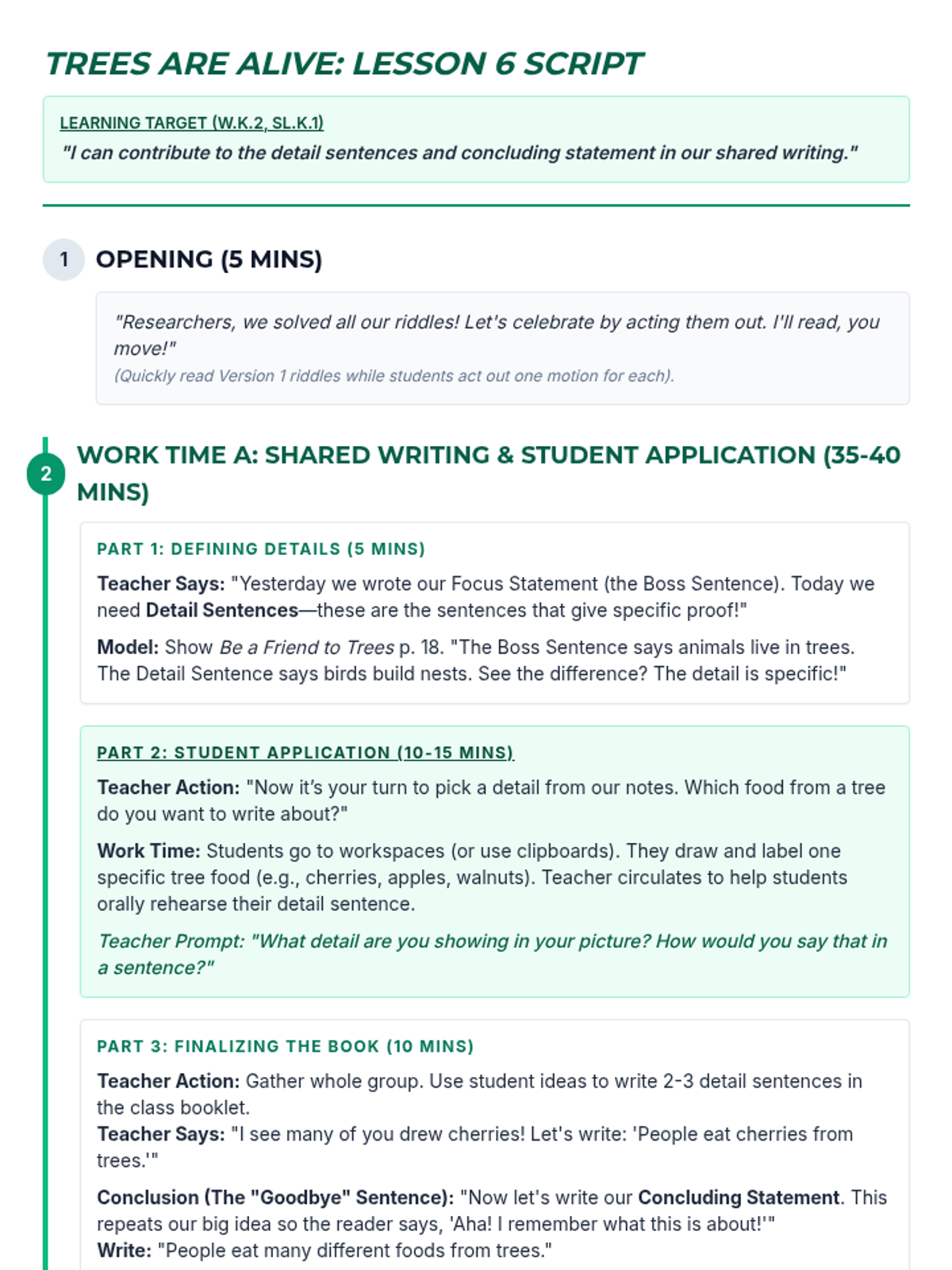
A streamlined roadmap for Grade K Module 3, Unit 2, Lesson 5, focusing on how humans depend on trees for food and introducing the concept of a focus statement through shared writing.
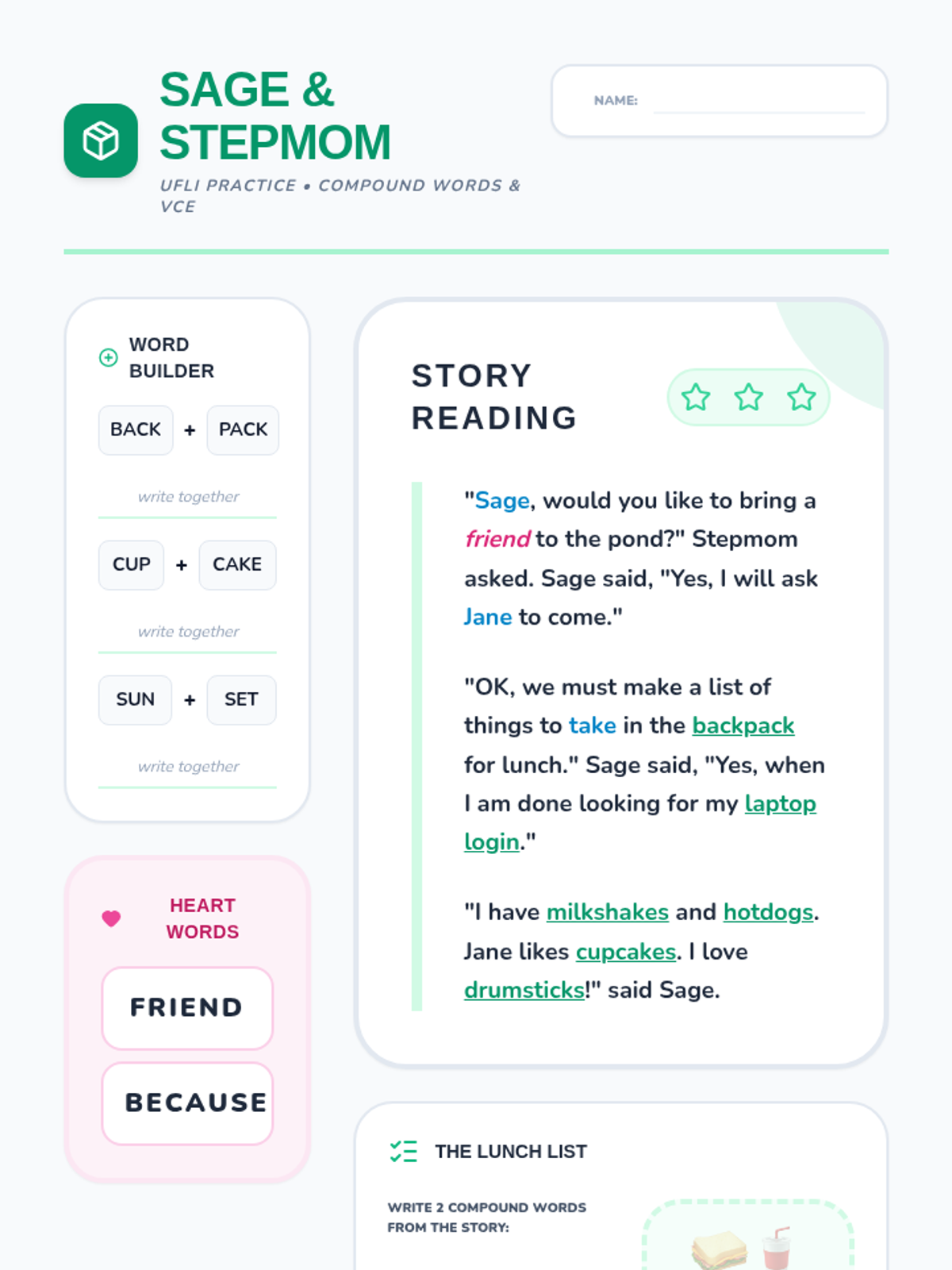
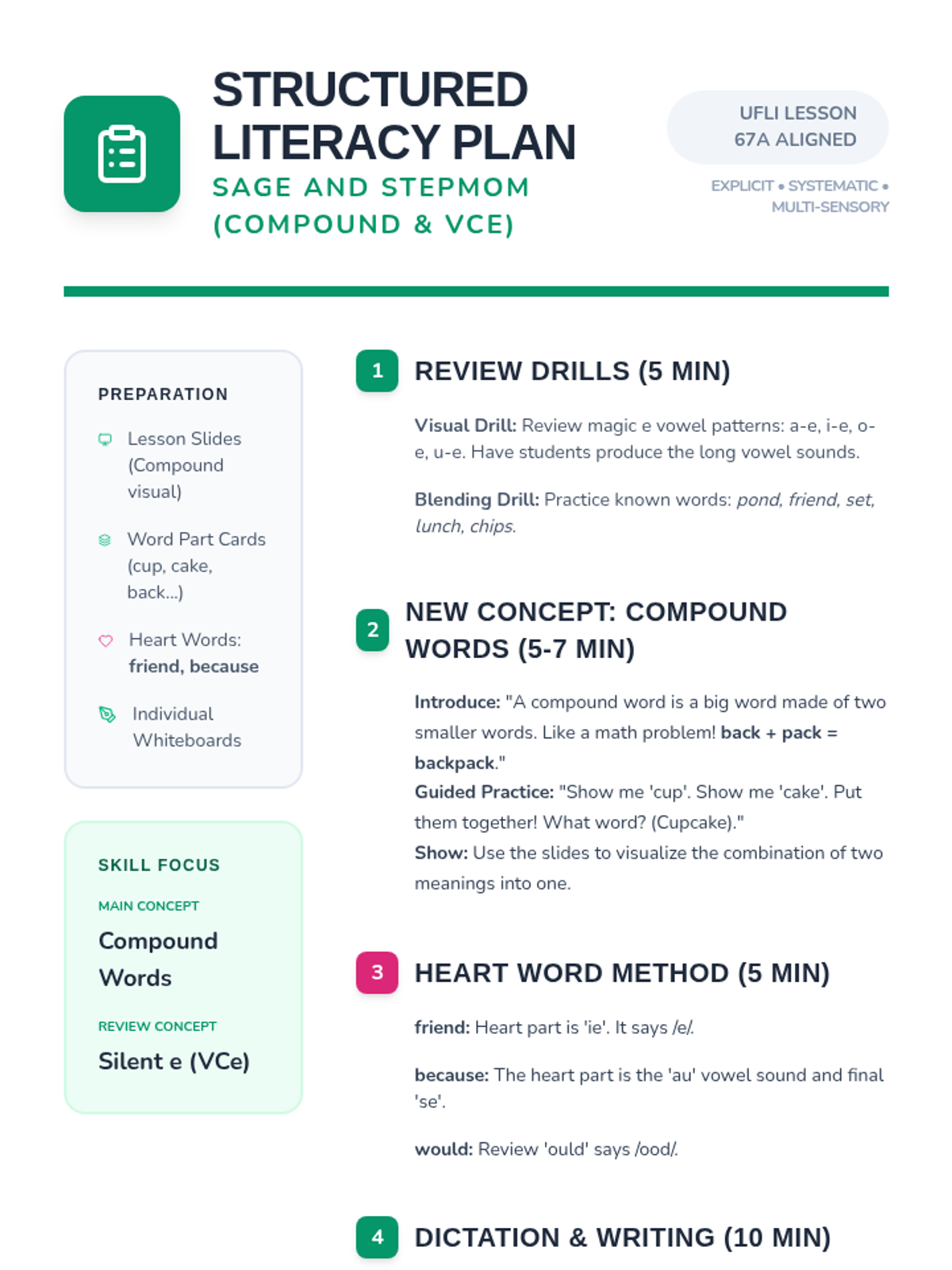
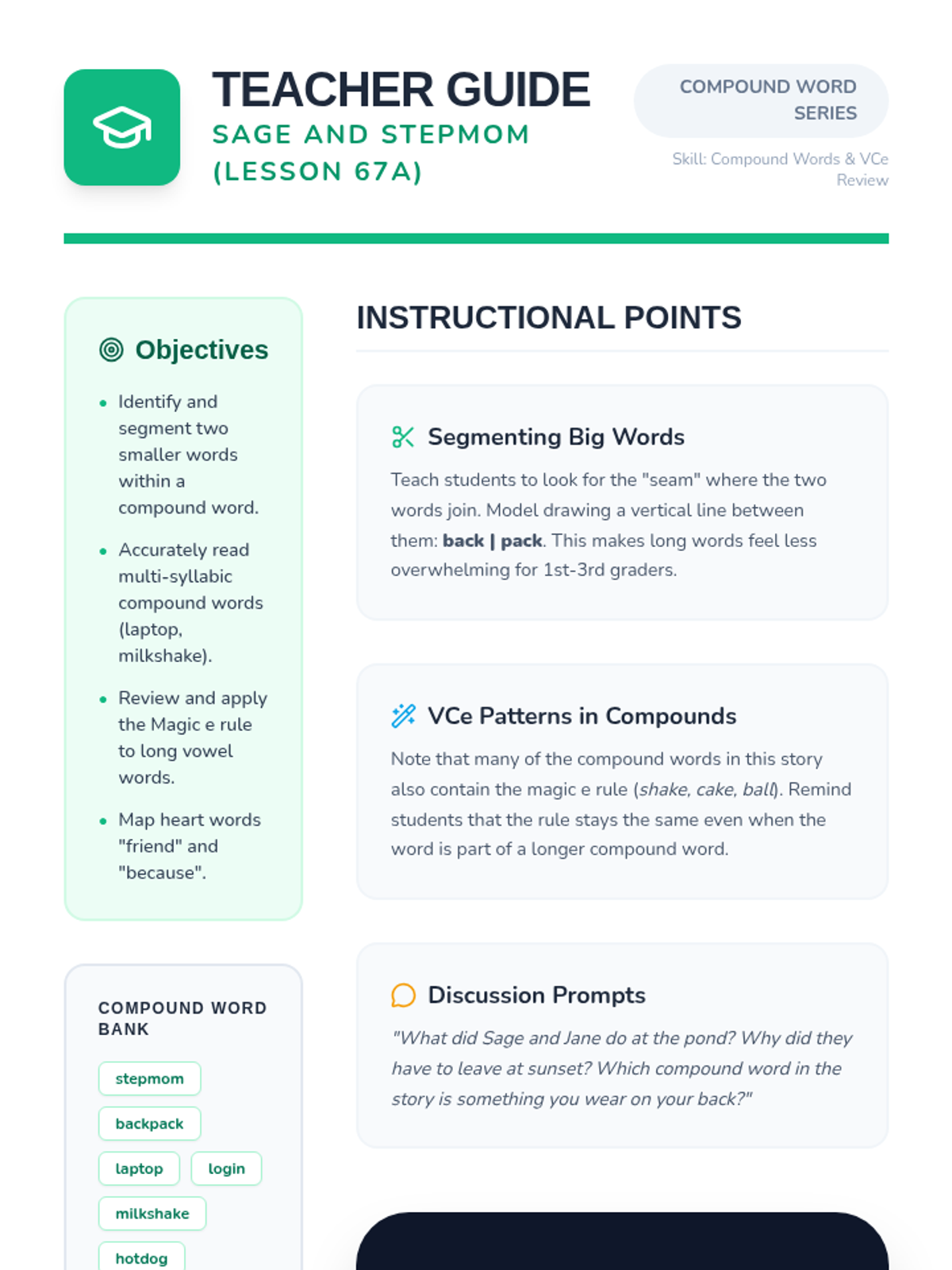
Focuses on compound words and a review of the silent 'e' (VCe) pattern. Students read about Sage and her stepmom packing a lunch for a trip to the pond, practicing words like 'backpack', 'laptop', 'milkshakes', and 'cupcakes'.
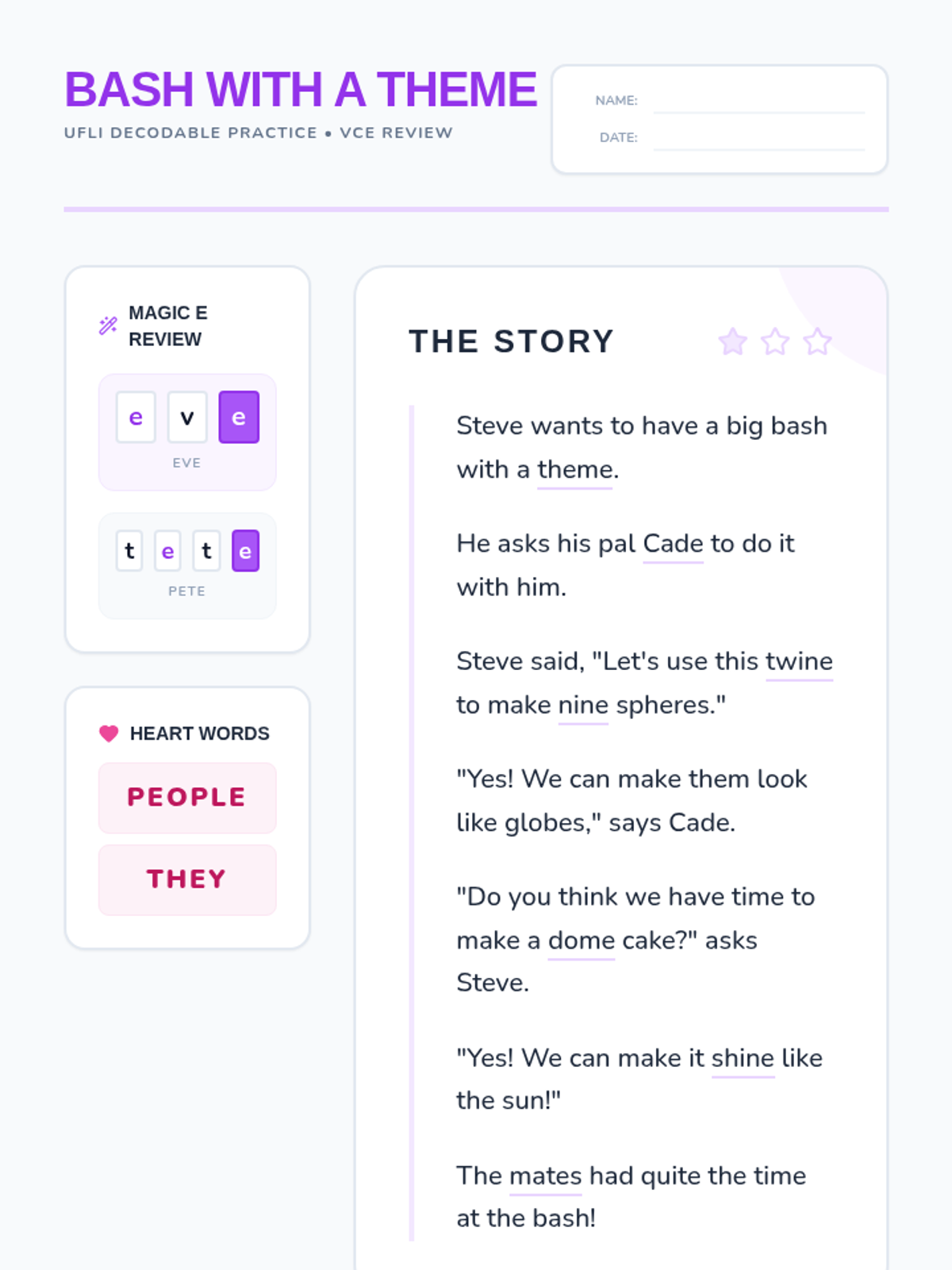
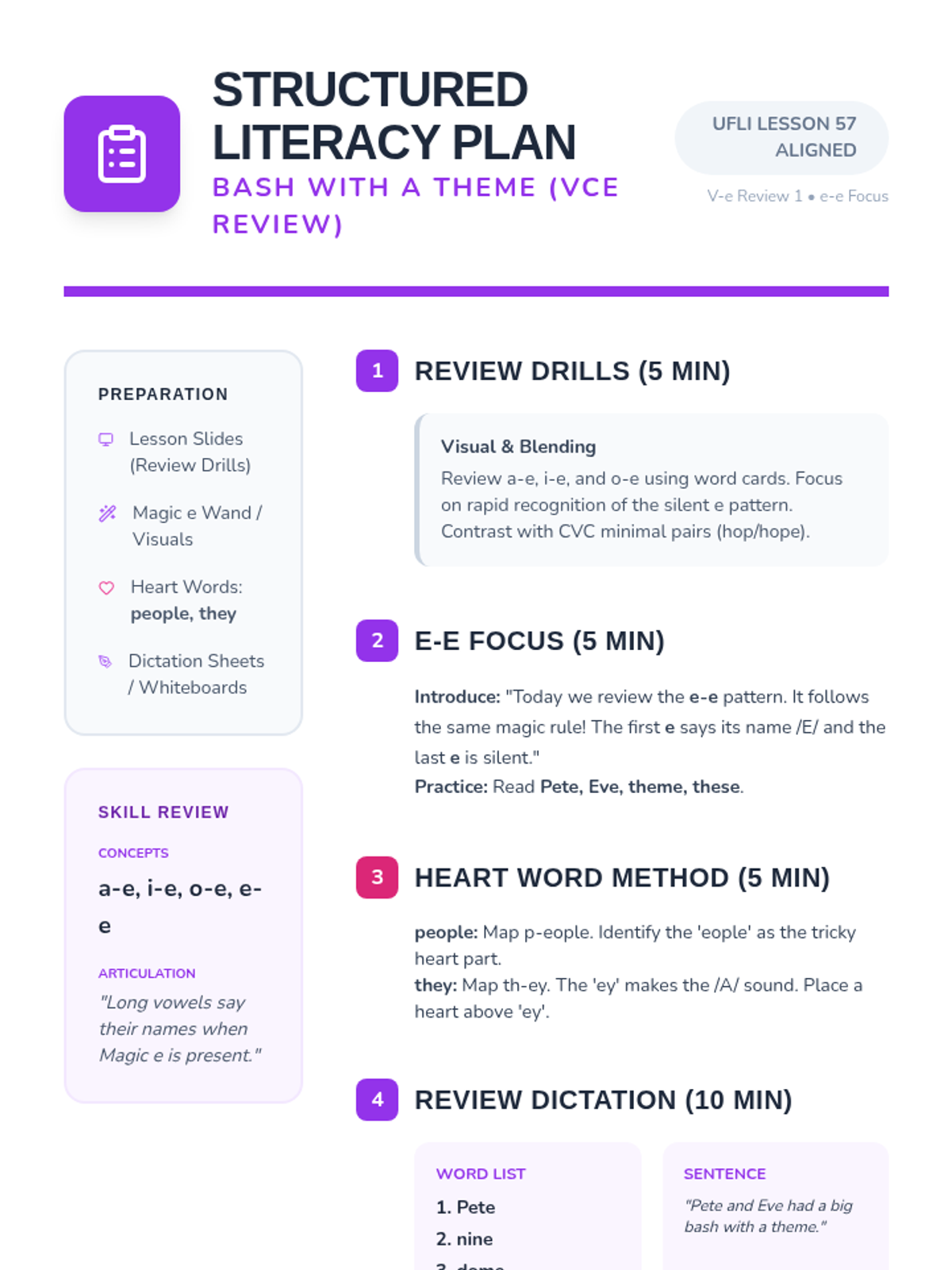
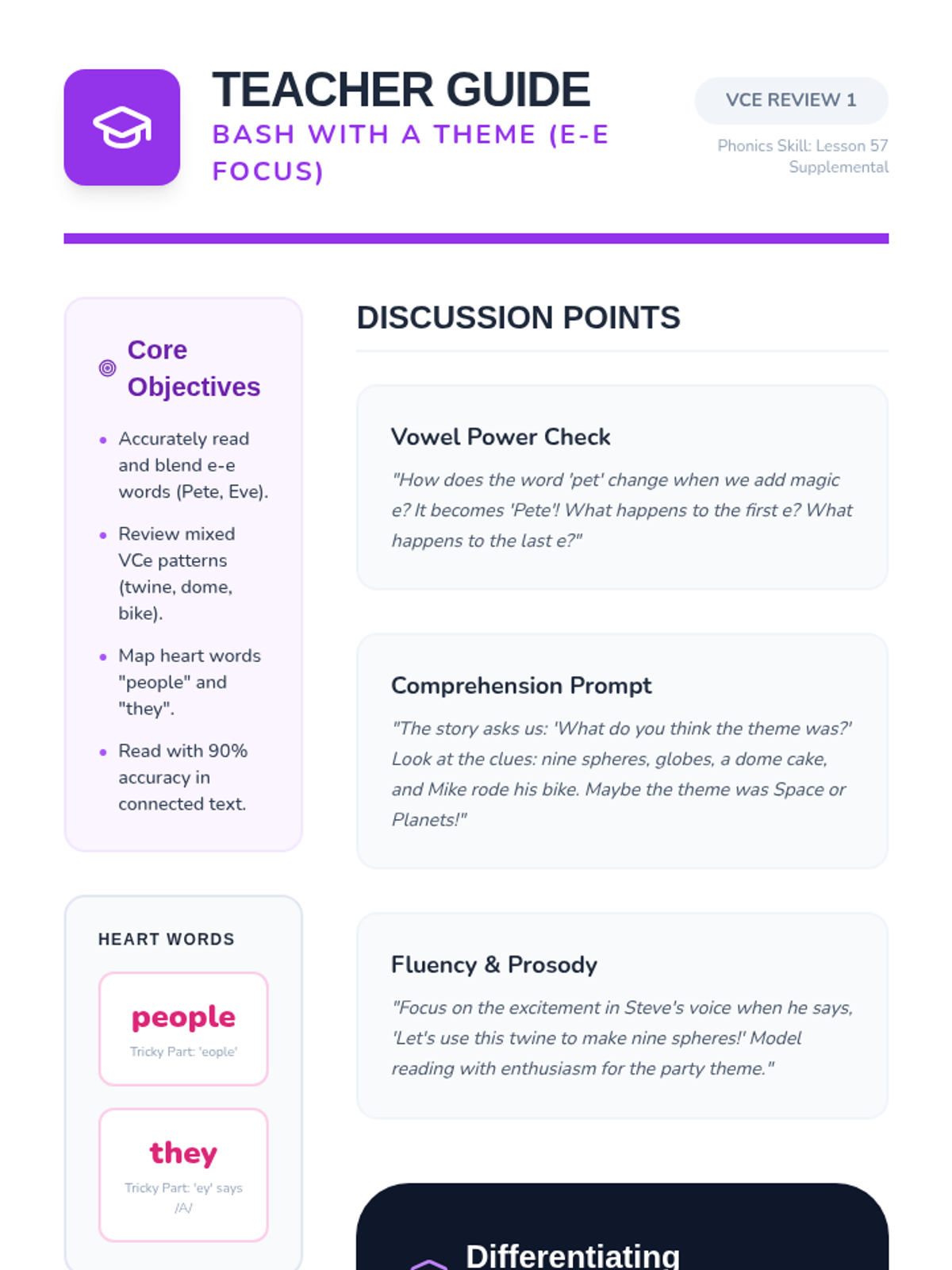
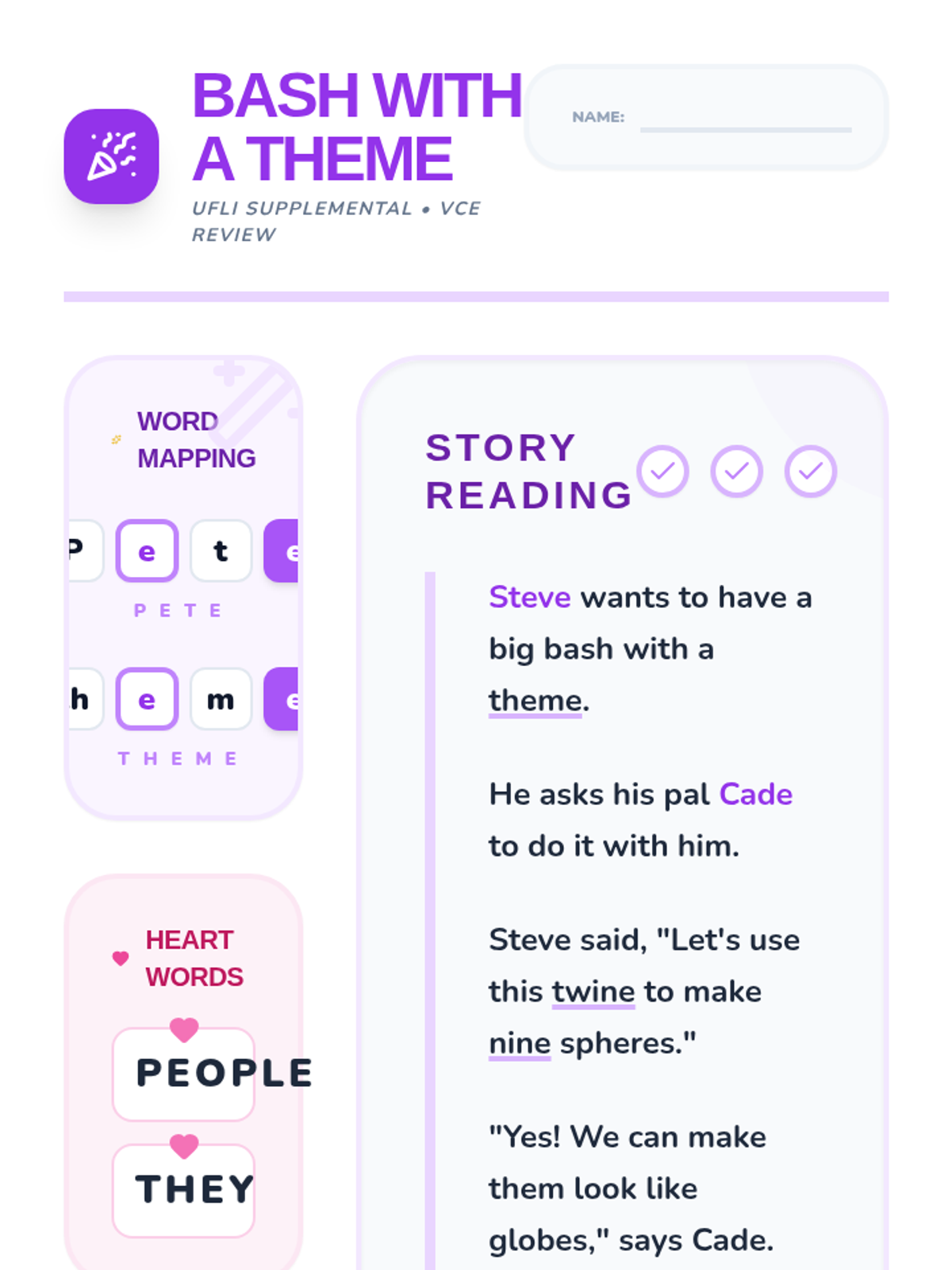
Focuses on the long 'e' vowel sound with the silent 'e' pattern (e-e). Students will read about Pete and Eve's themed party, practicing words like 'theme', 'Pete', 'Eve', and 'these'.
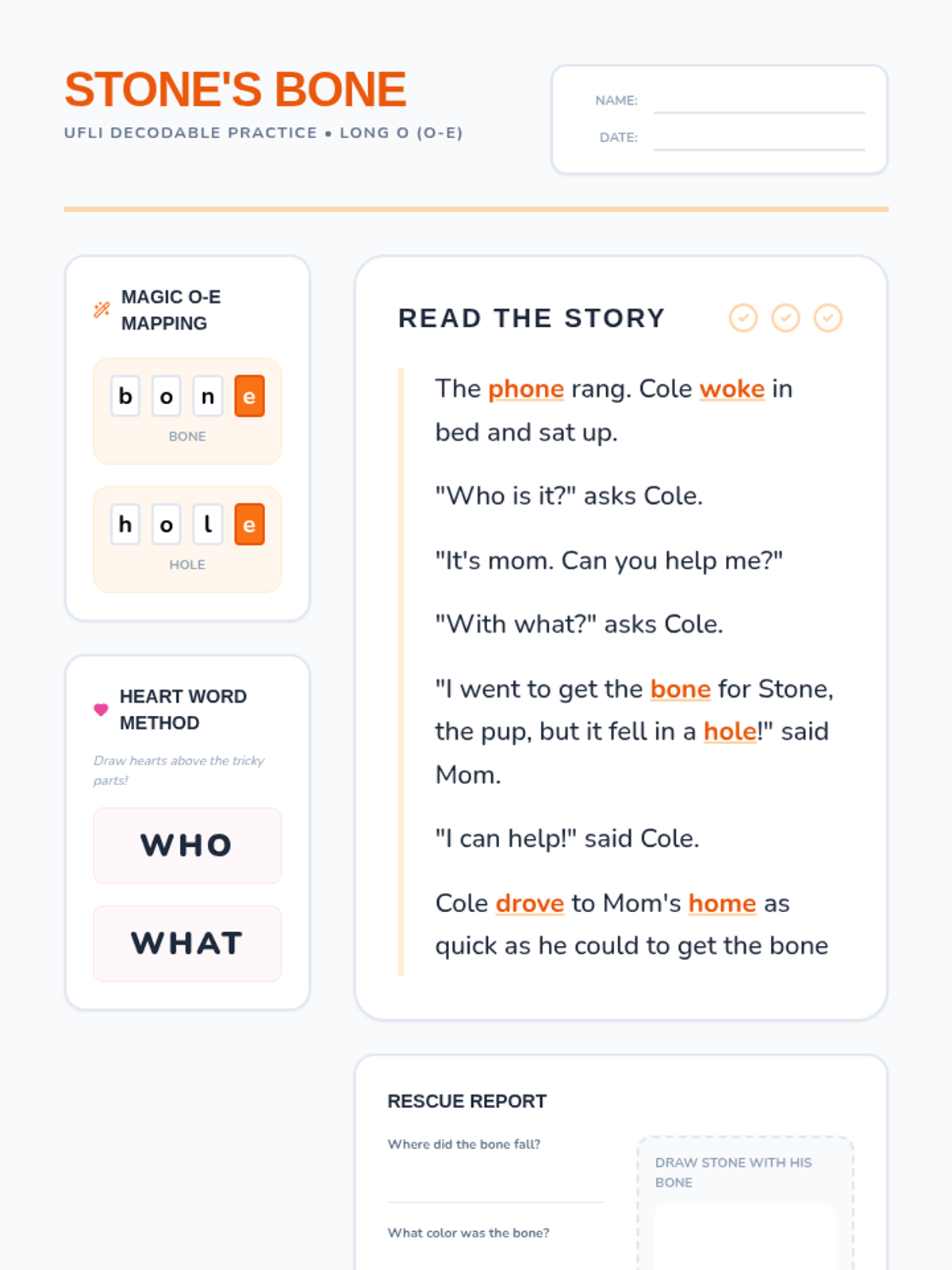
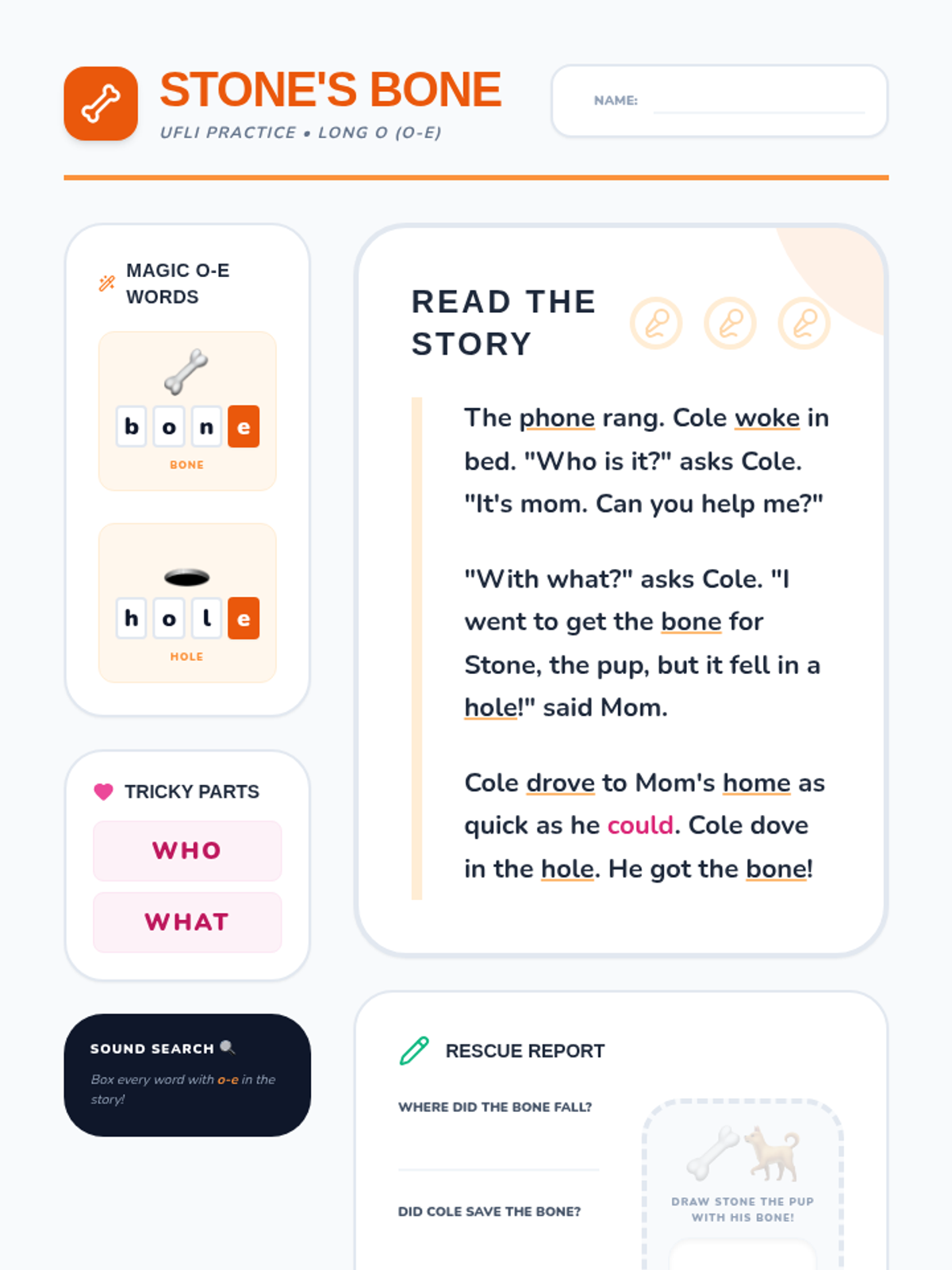
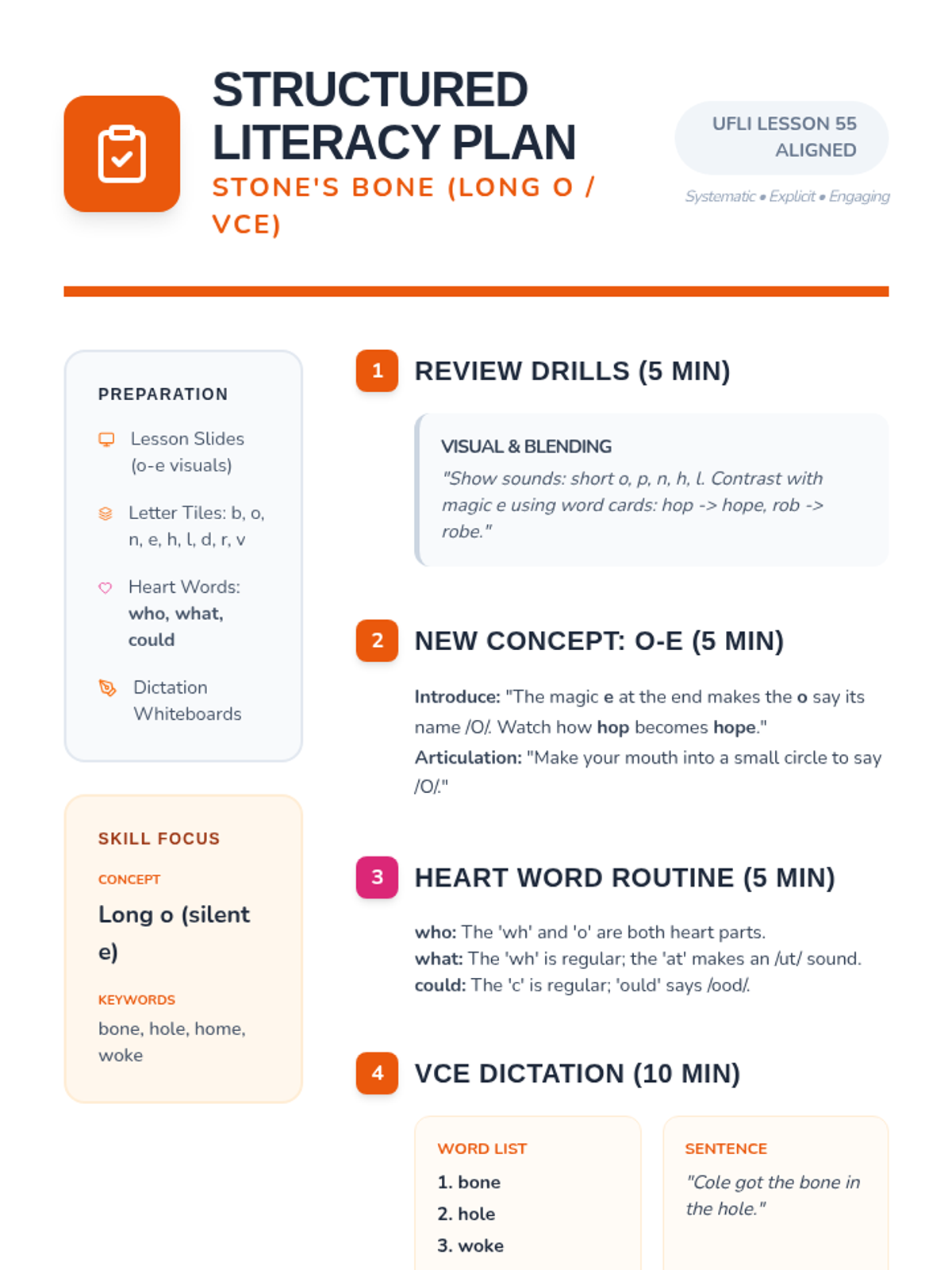
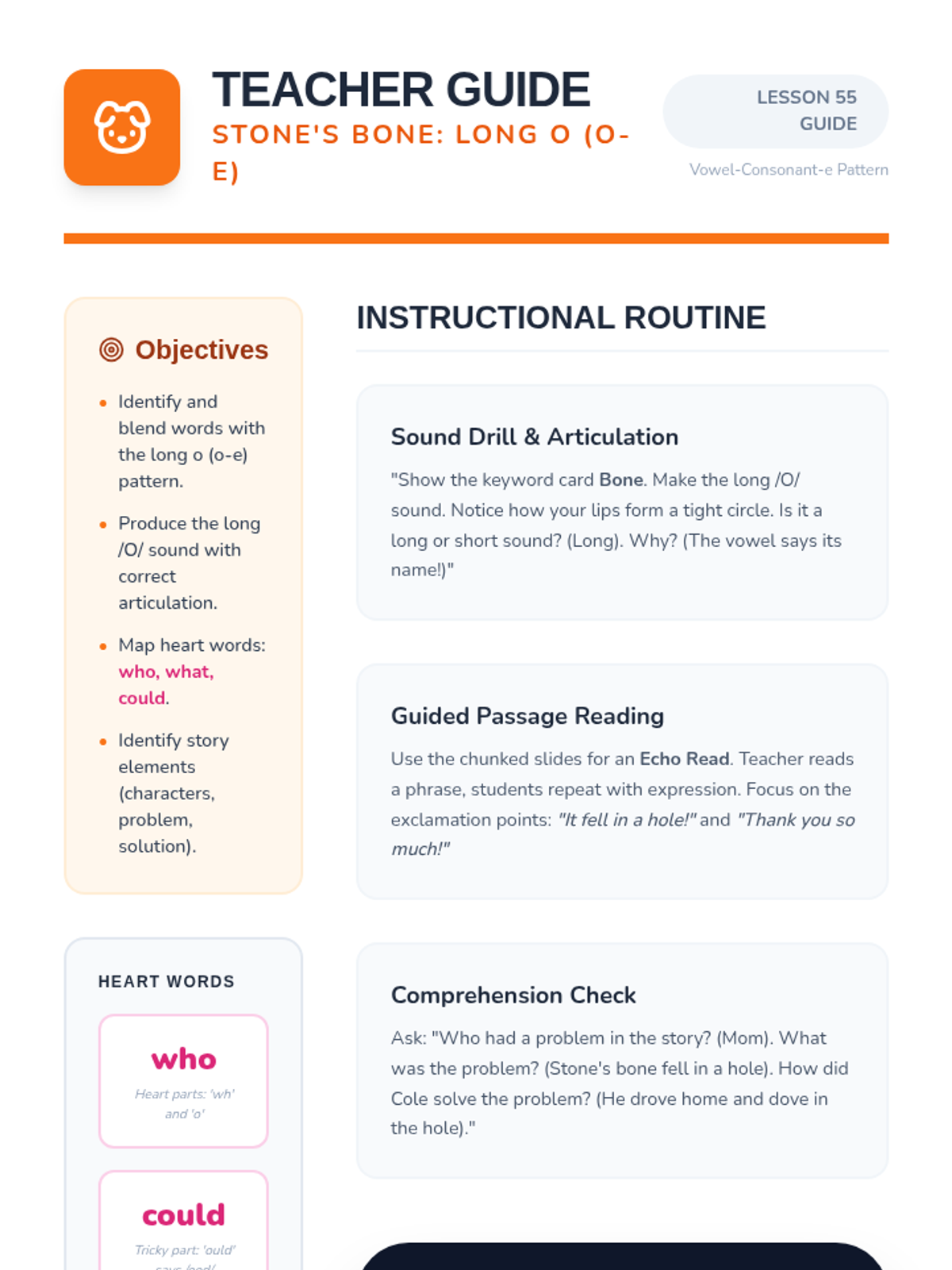
Focuses on the long 'o' vowel sound with the silent 'e' pattern (o-e). Students will read about Cole helping his mom rescue a bone for Stone the pup, practicing words like 'phone', 'woke', 'bone', 'hole', and 'froze'.
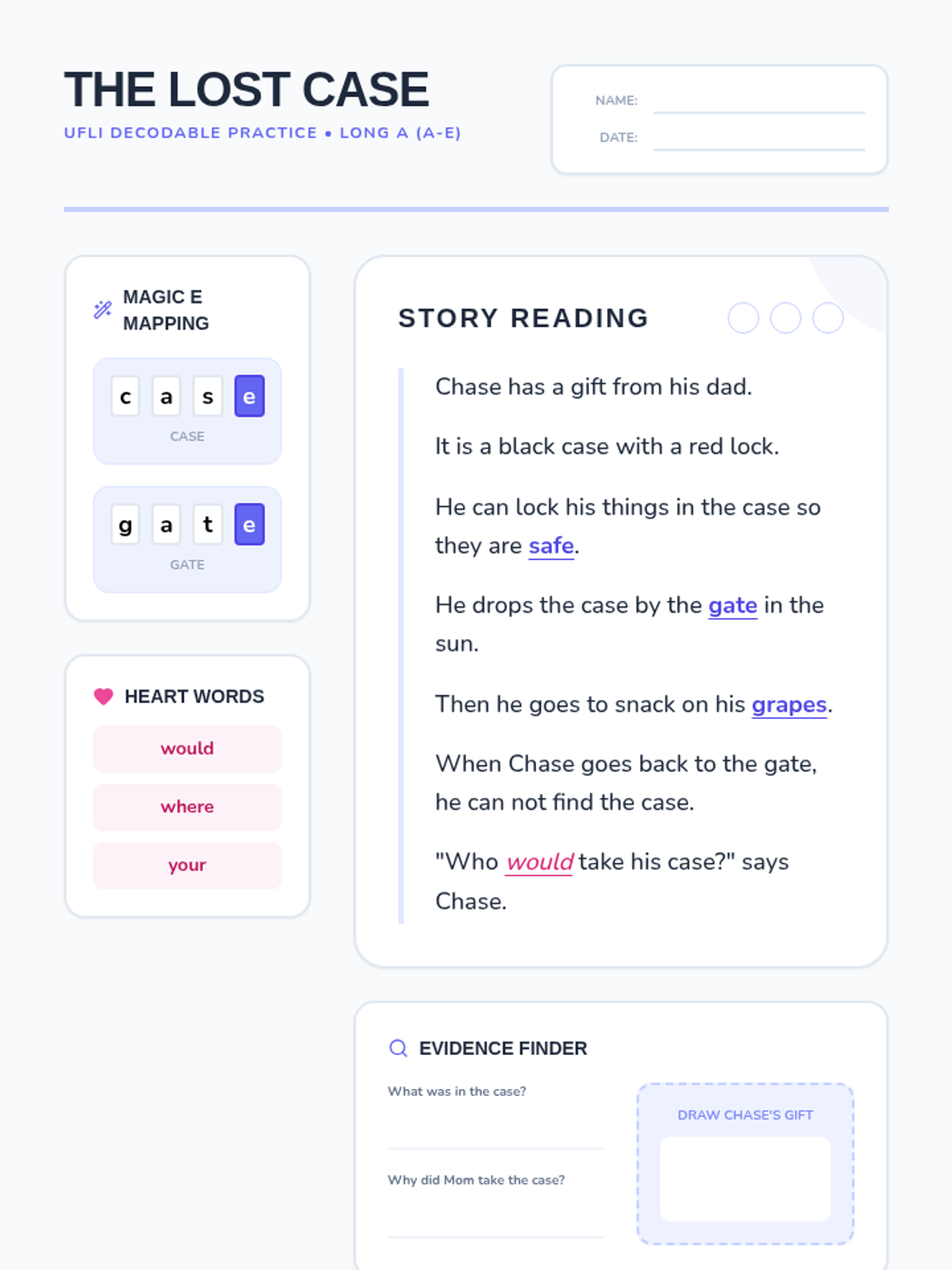
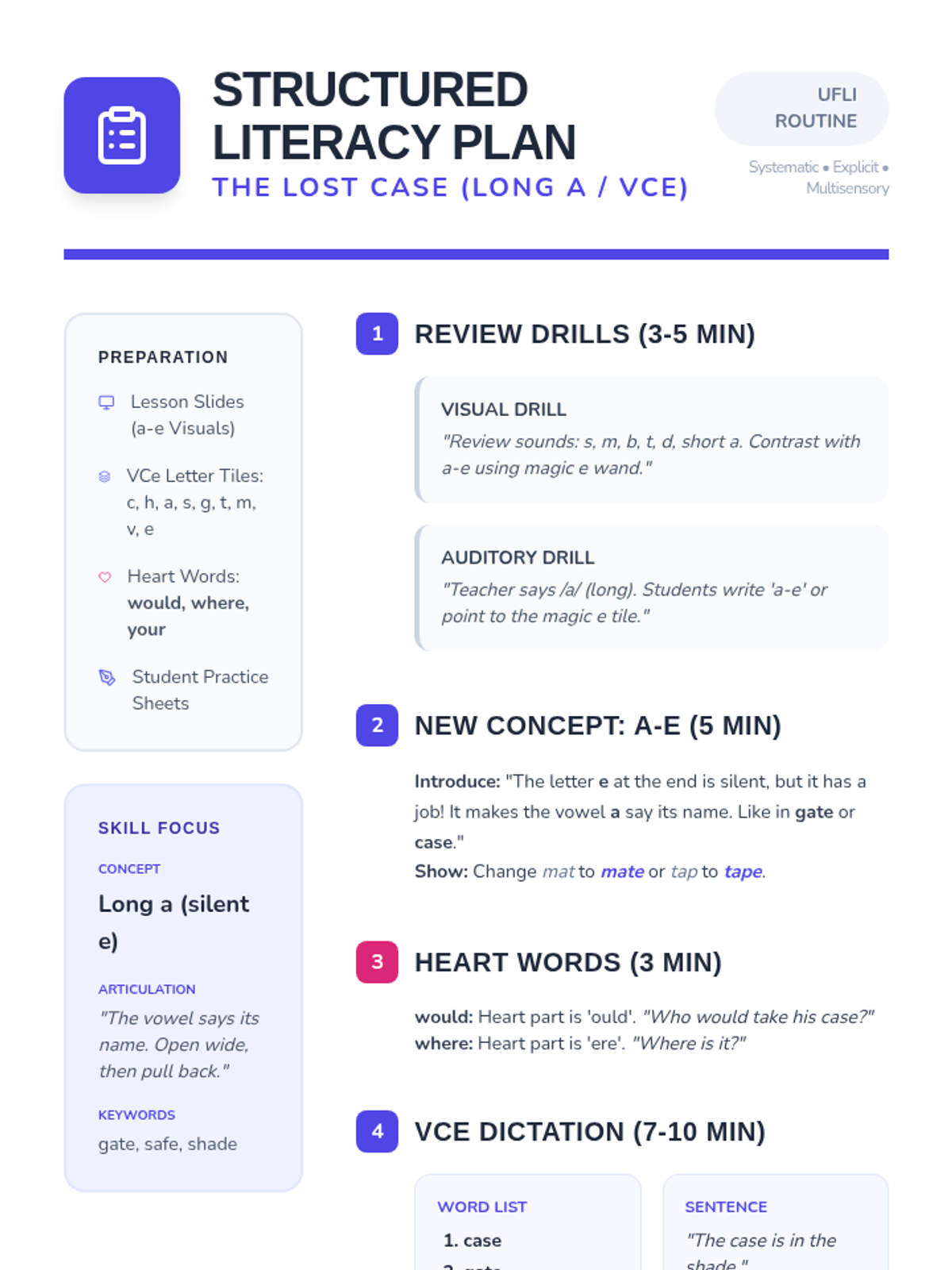
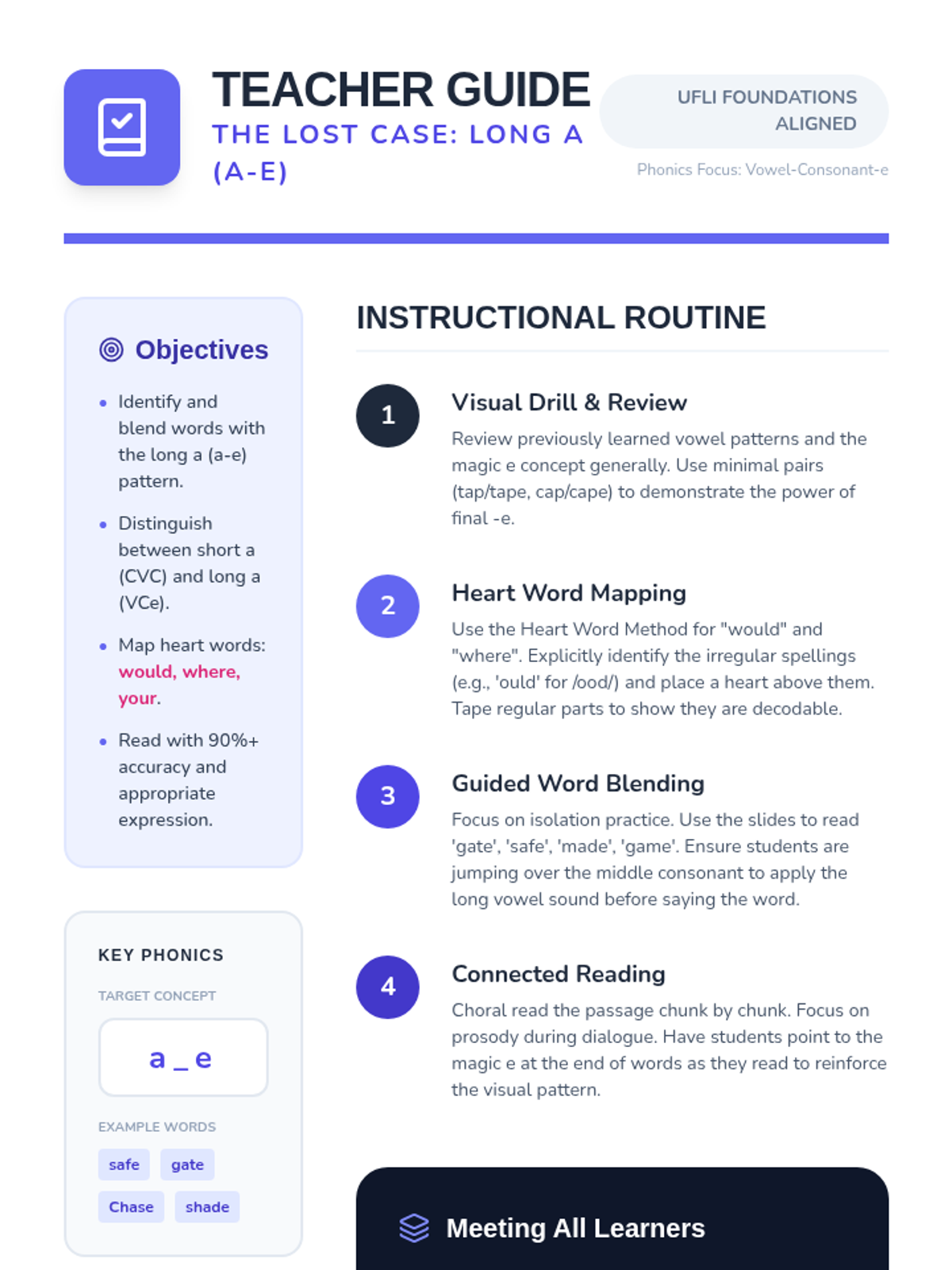
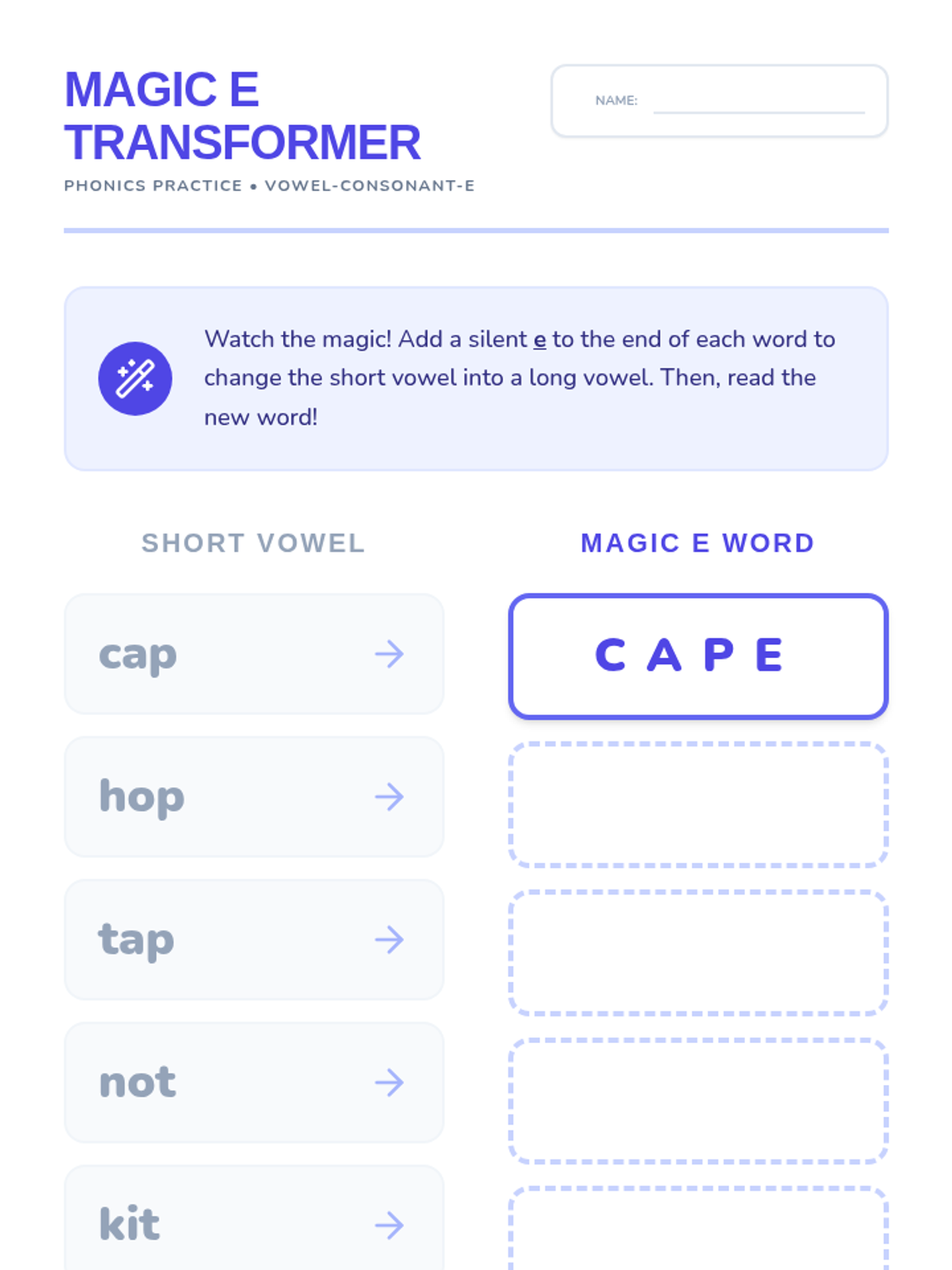
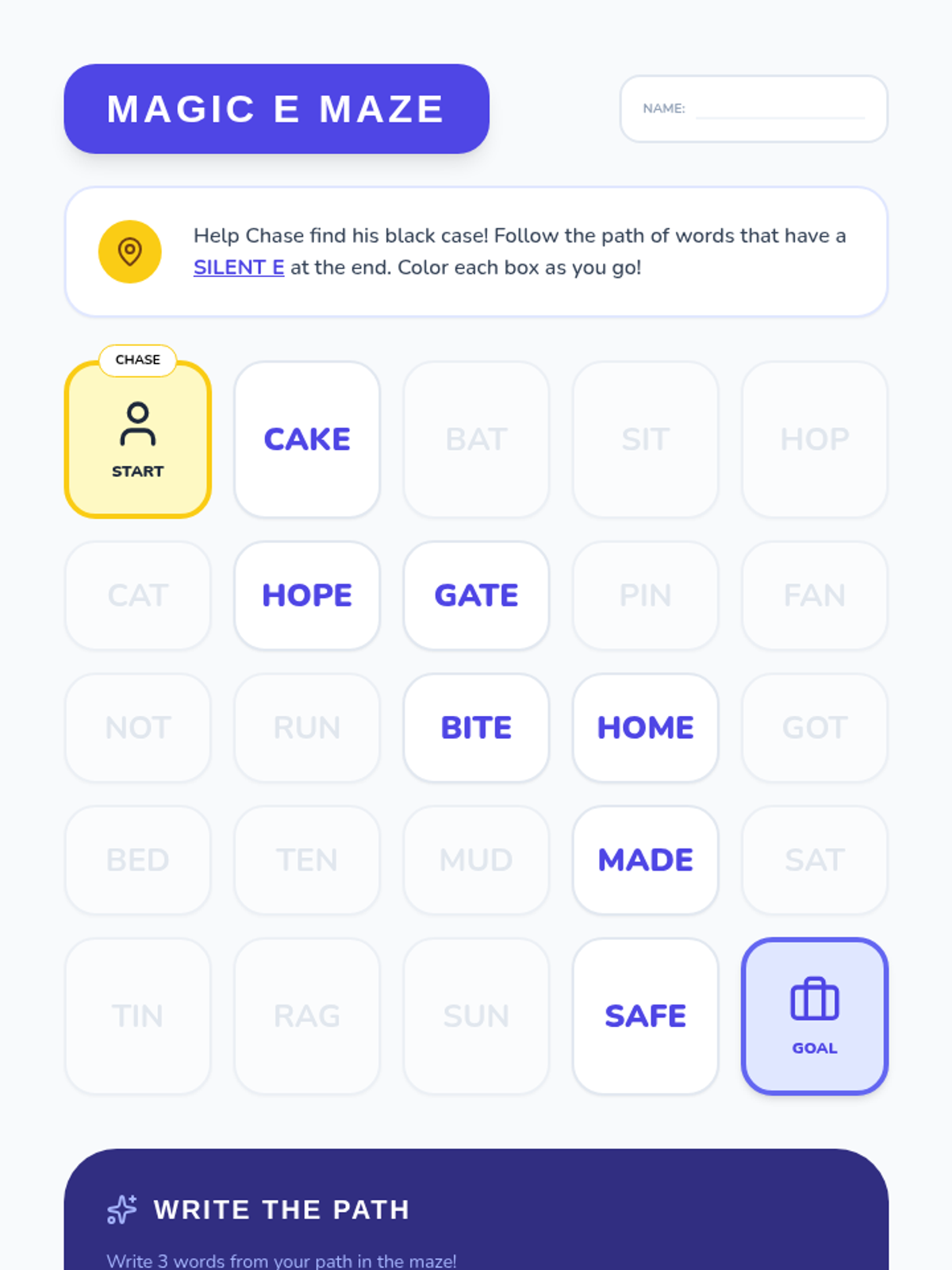
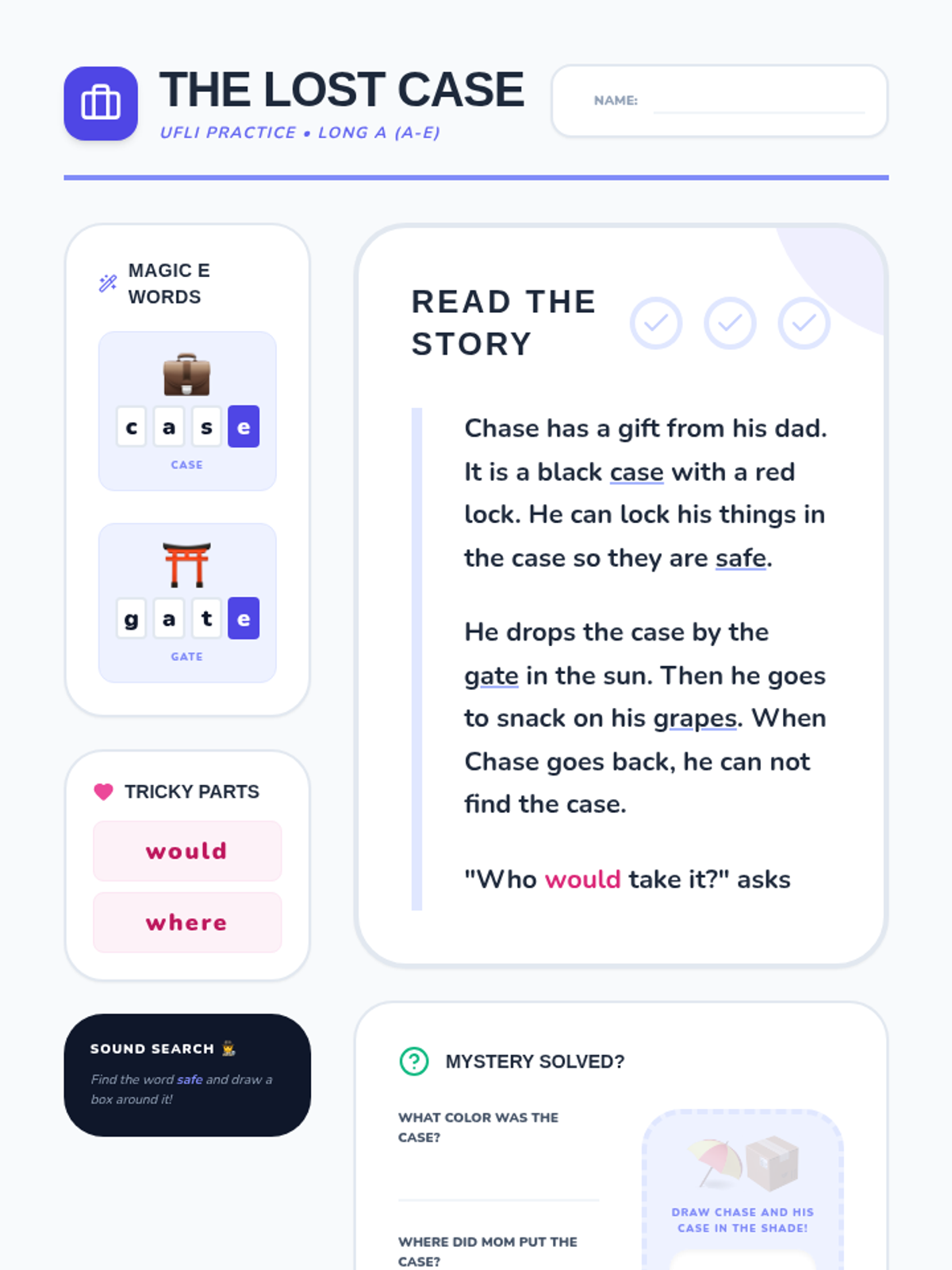
Focuses on the long 'a' vowel sound with the silent 'e' pattern (a-e). Students will read about Chase and his lost black case, practicing words like 'gate', 'safe', 'shade', and 'Mave'.
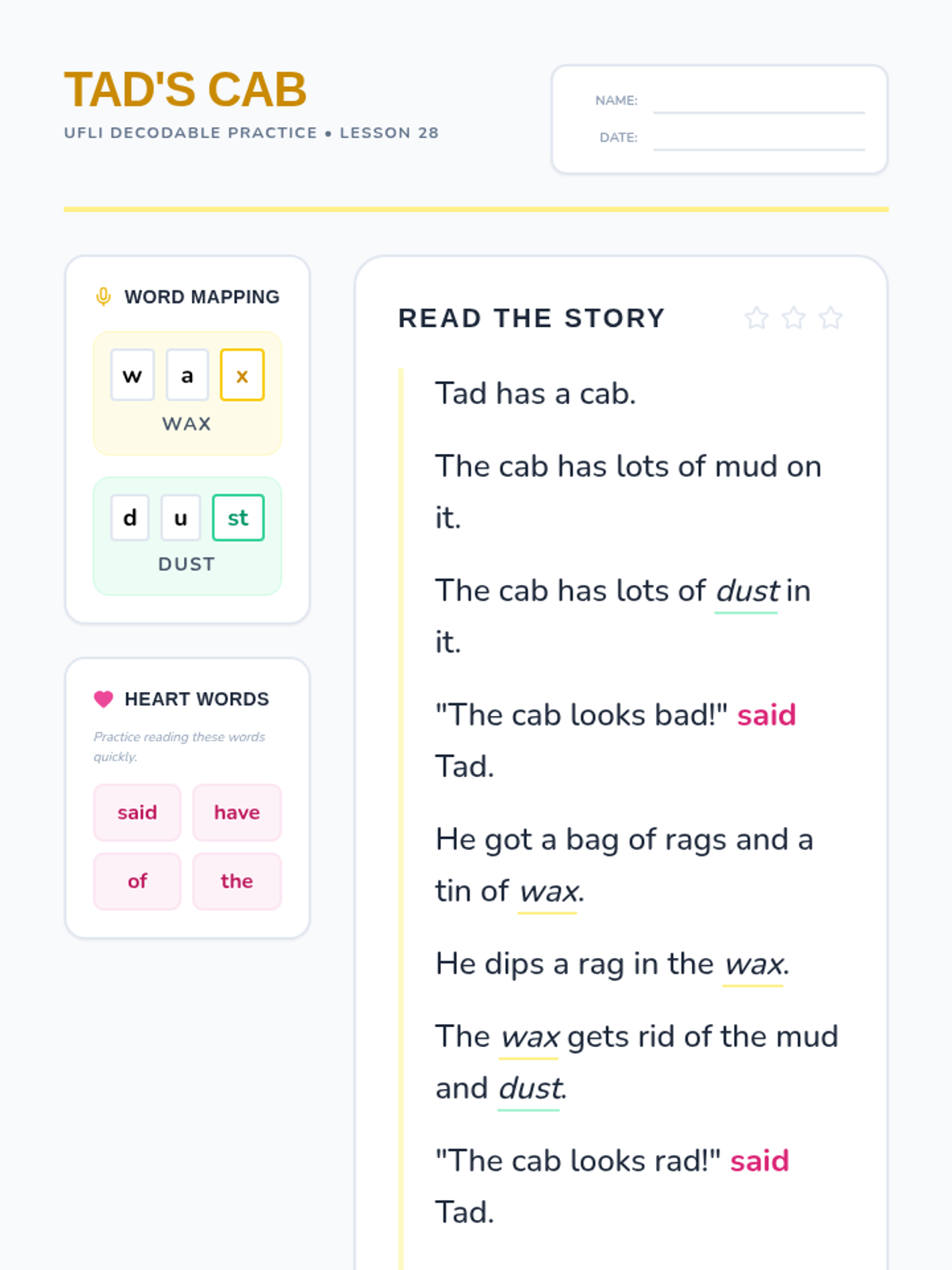
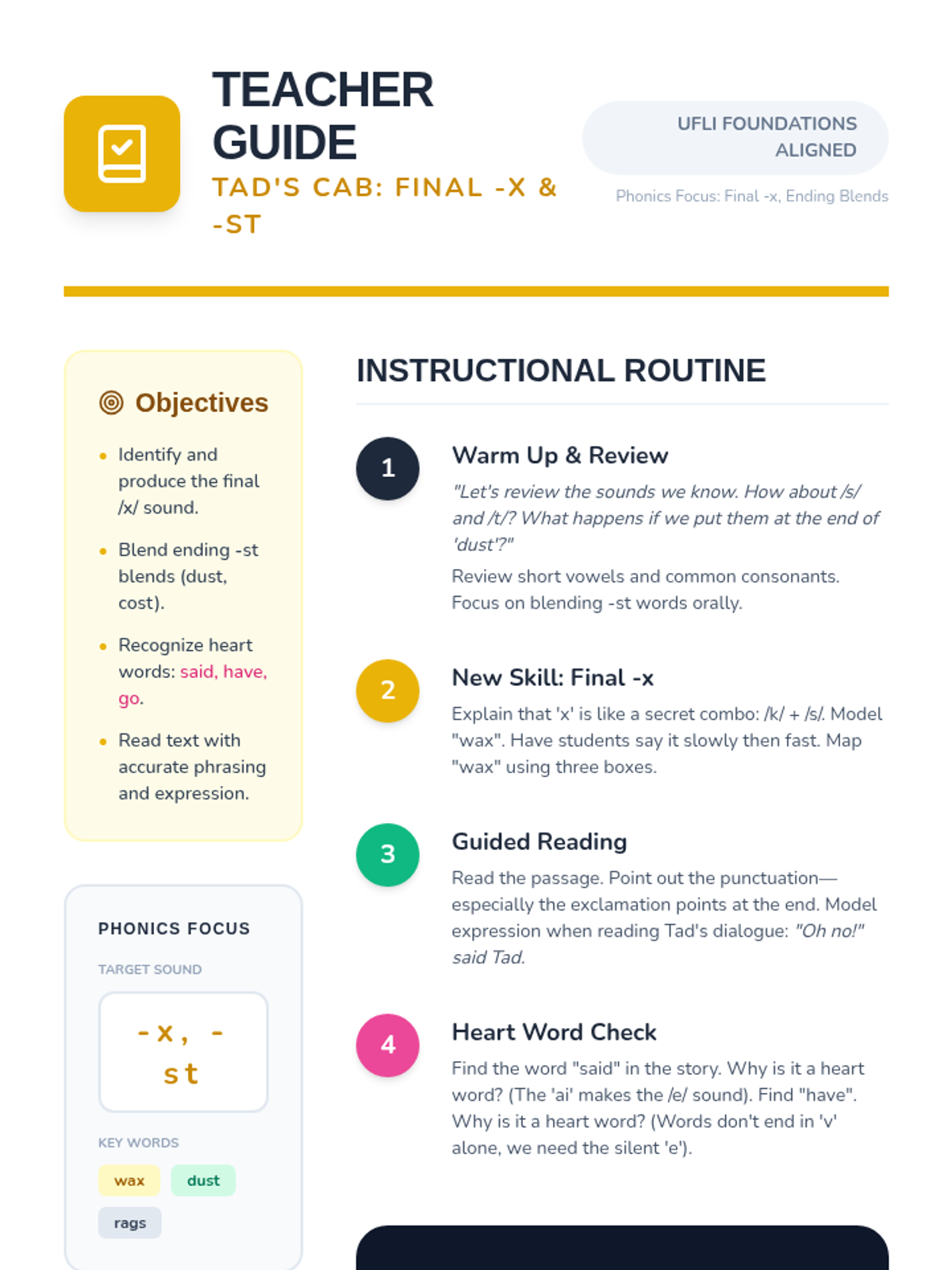
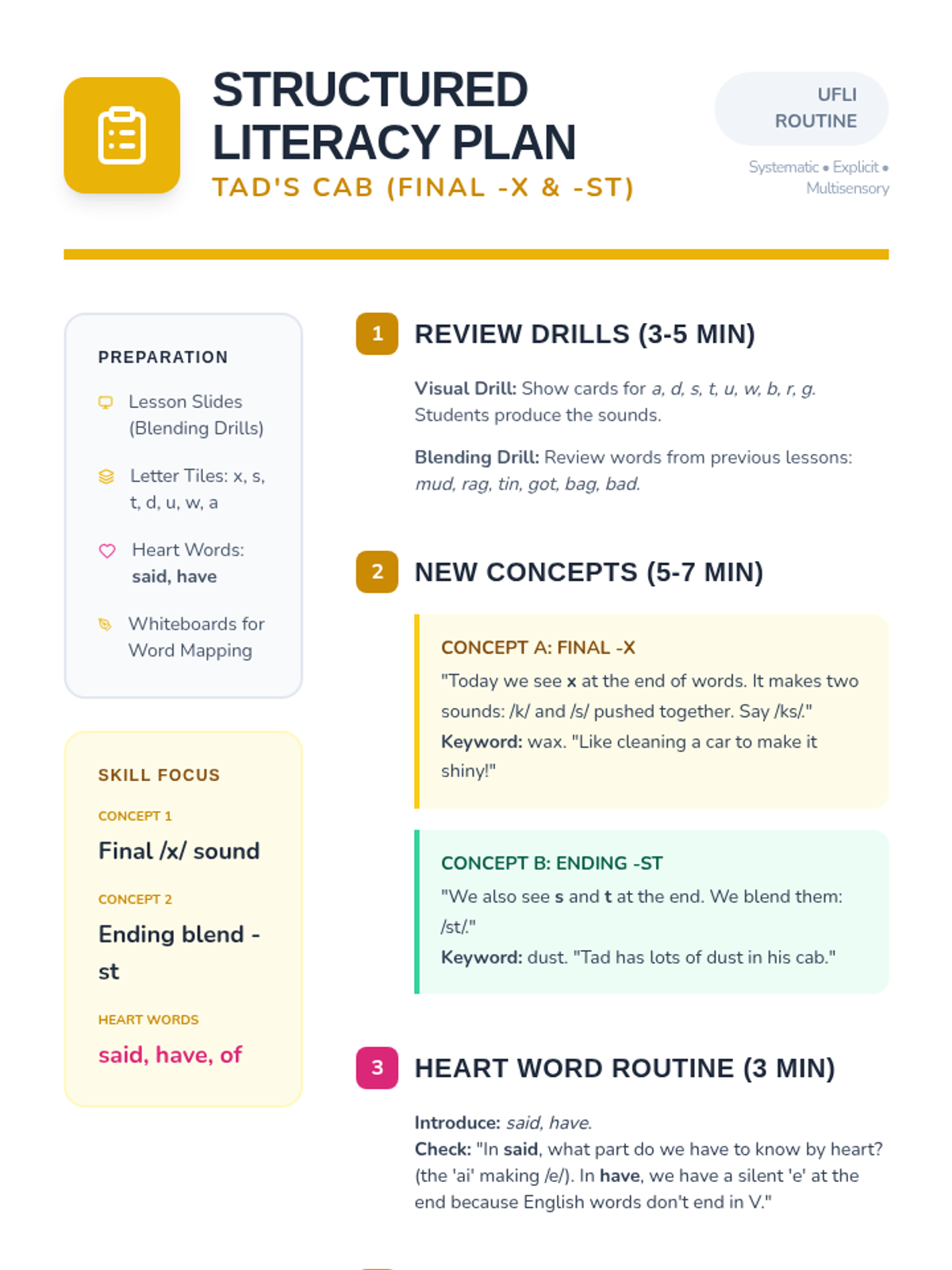
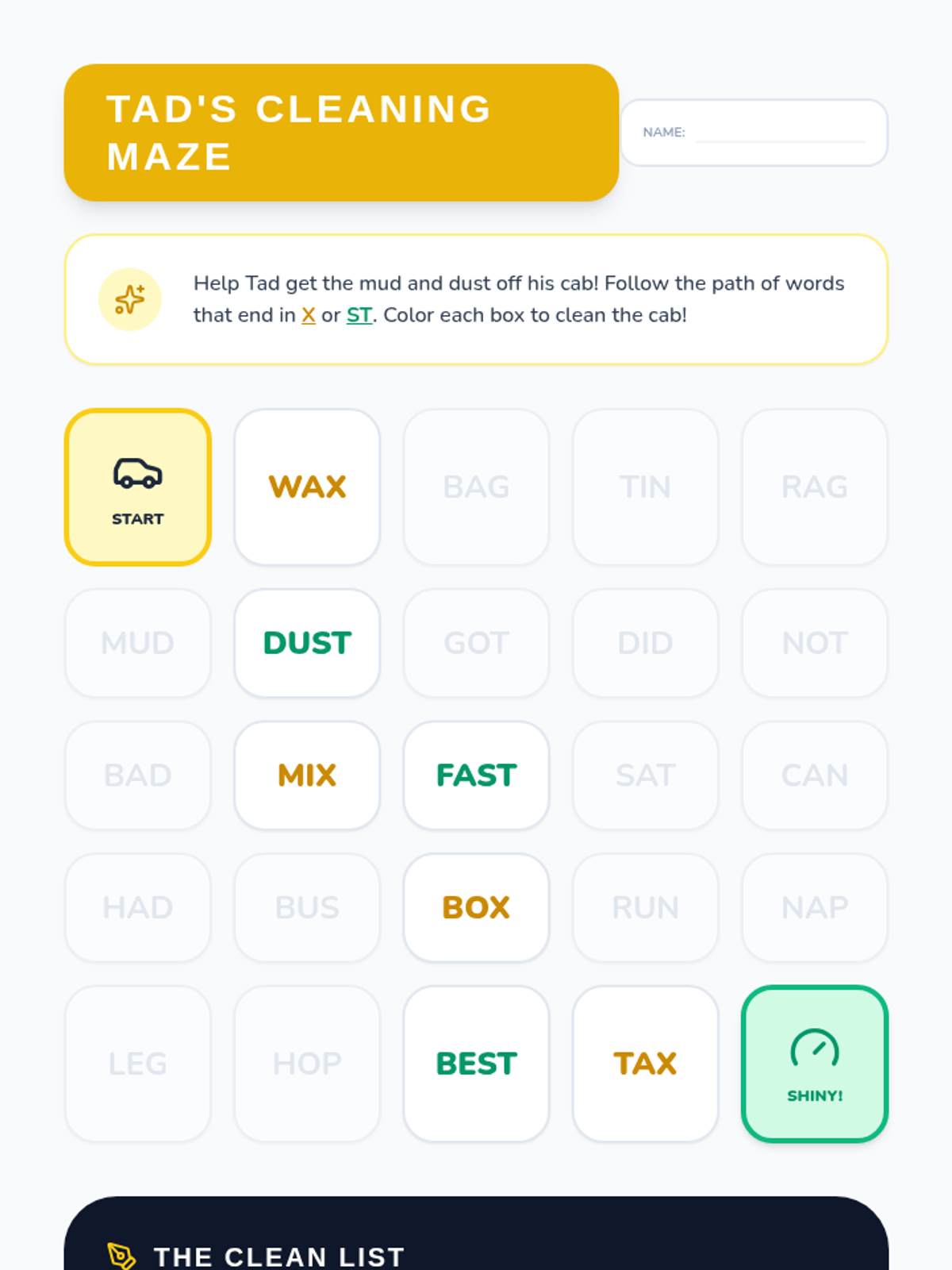
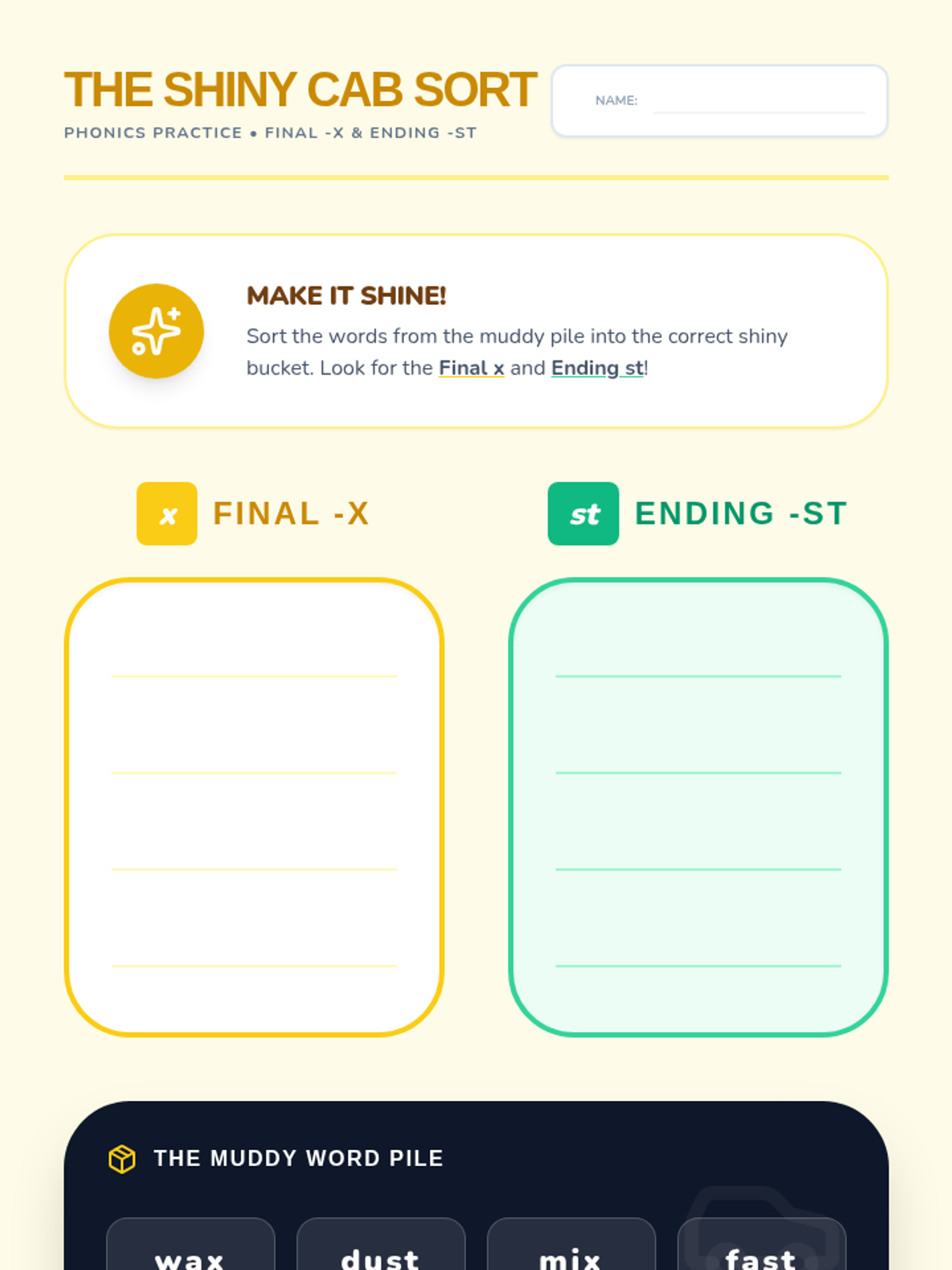
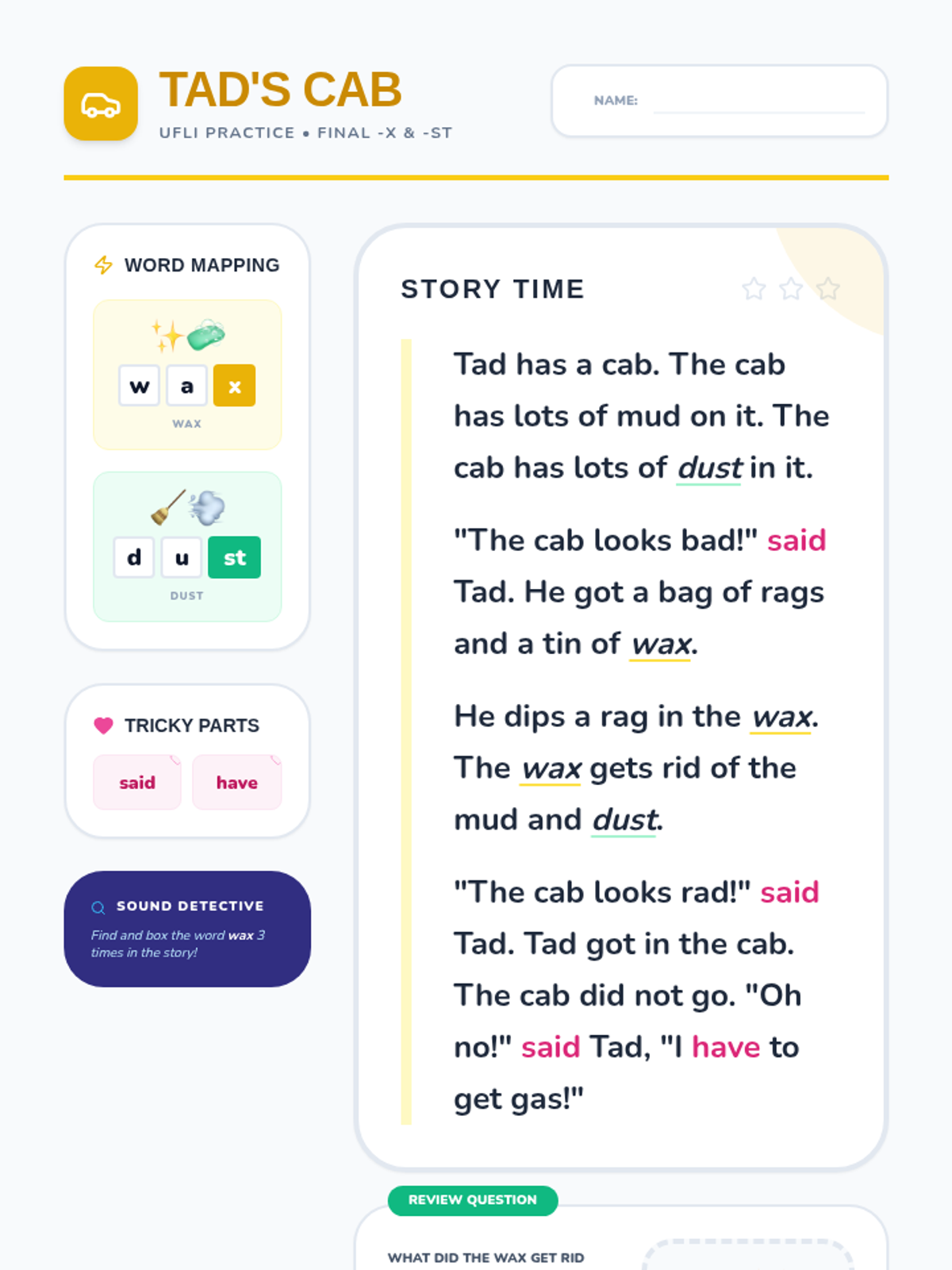
Focuses on short vowels, ending blends (-st), and the final -x sound. Students will read about Tad cleaning his muddy cab, incorporating words like 'dust', 'wax', and 'rags'.
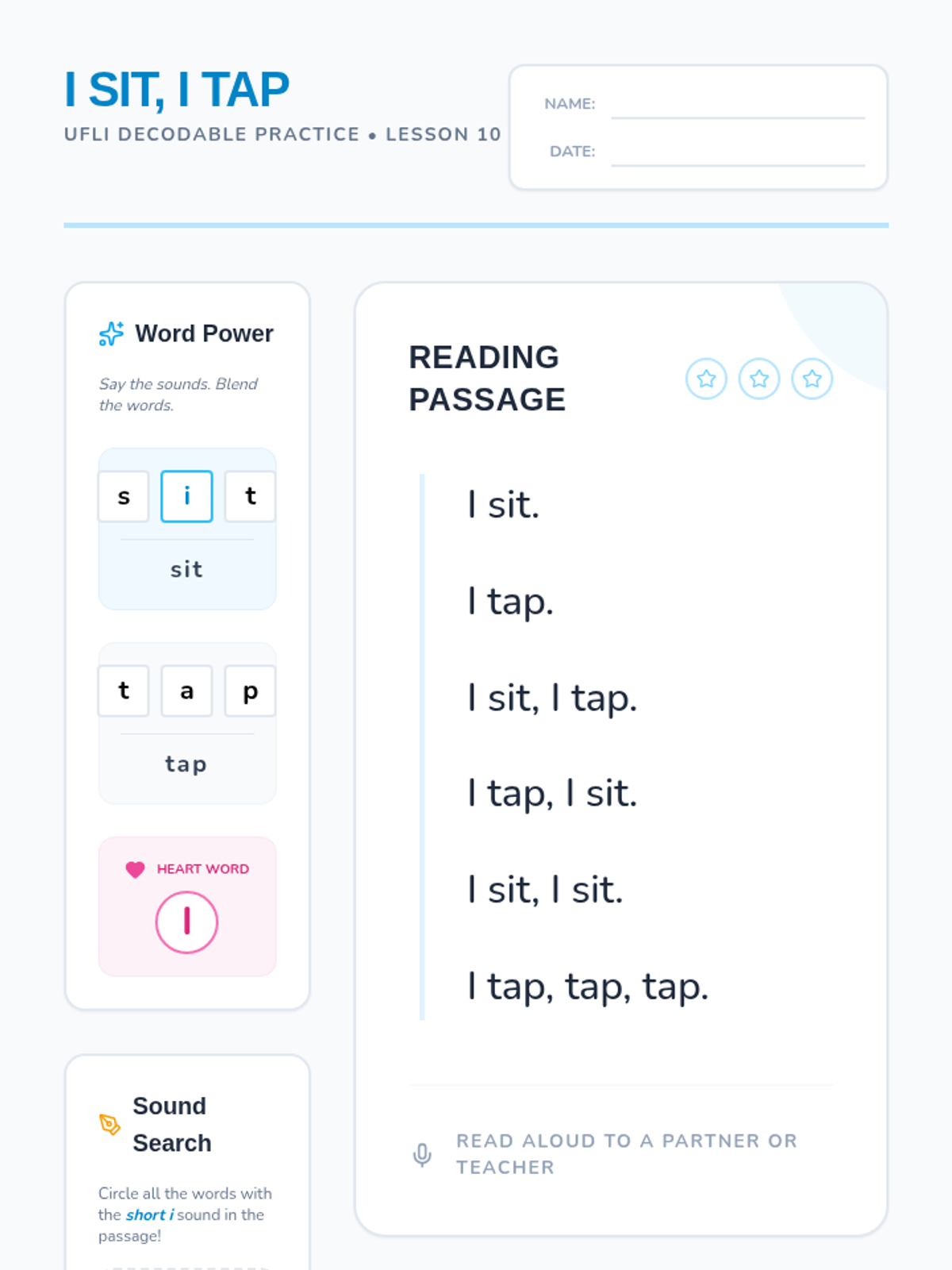
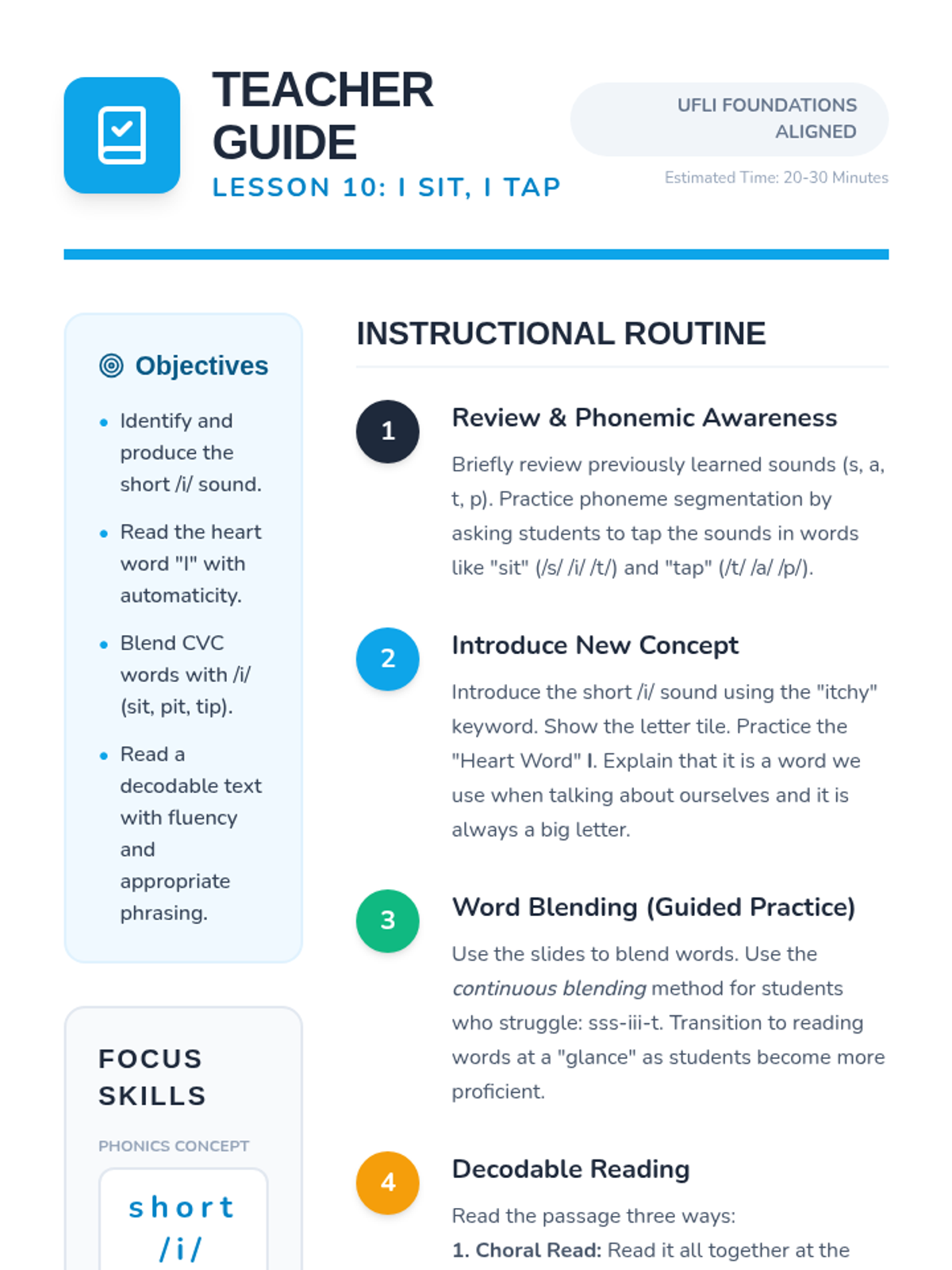
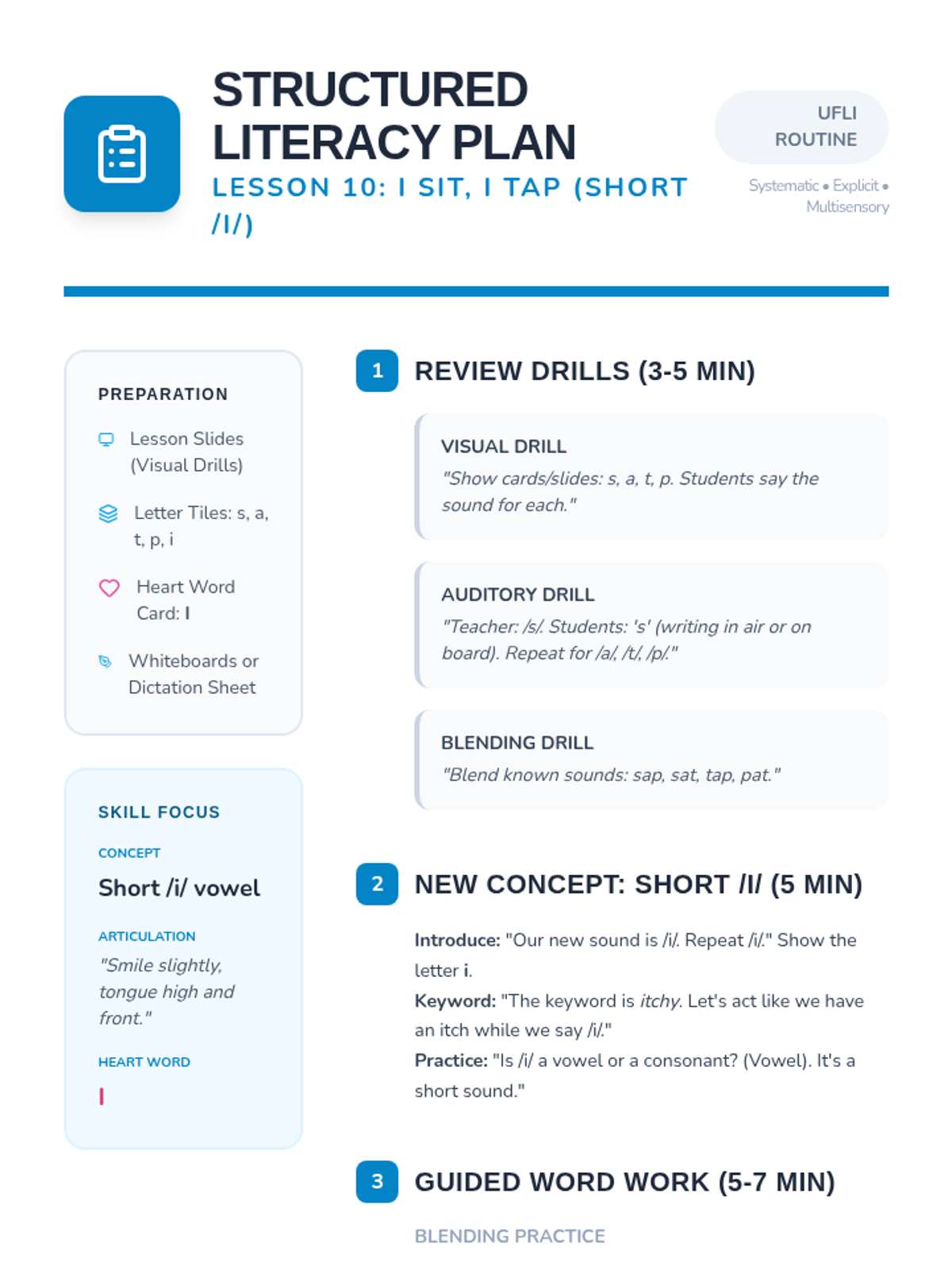
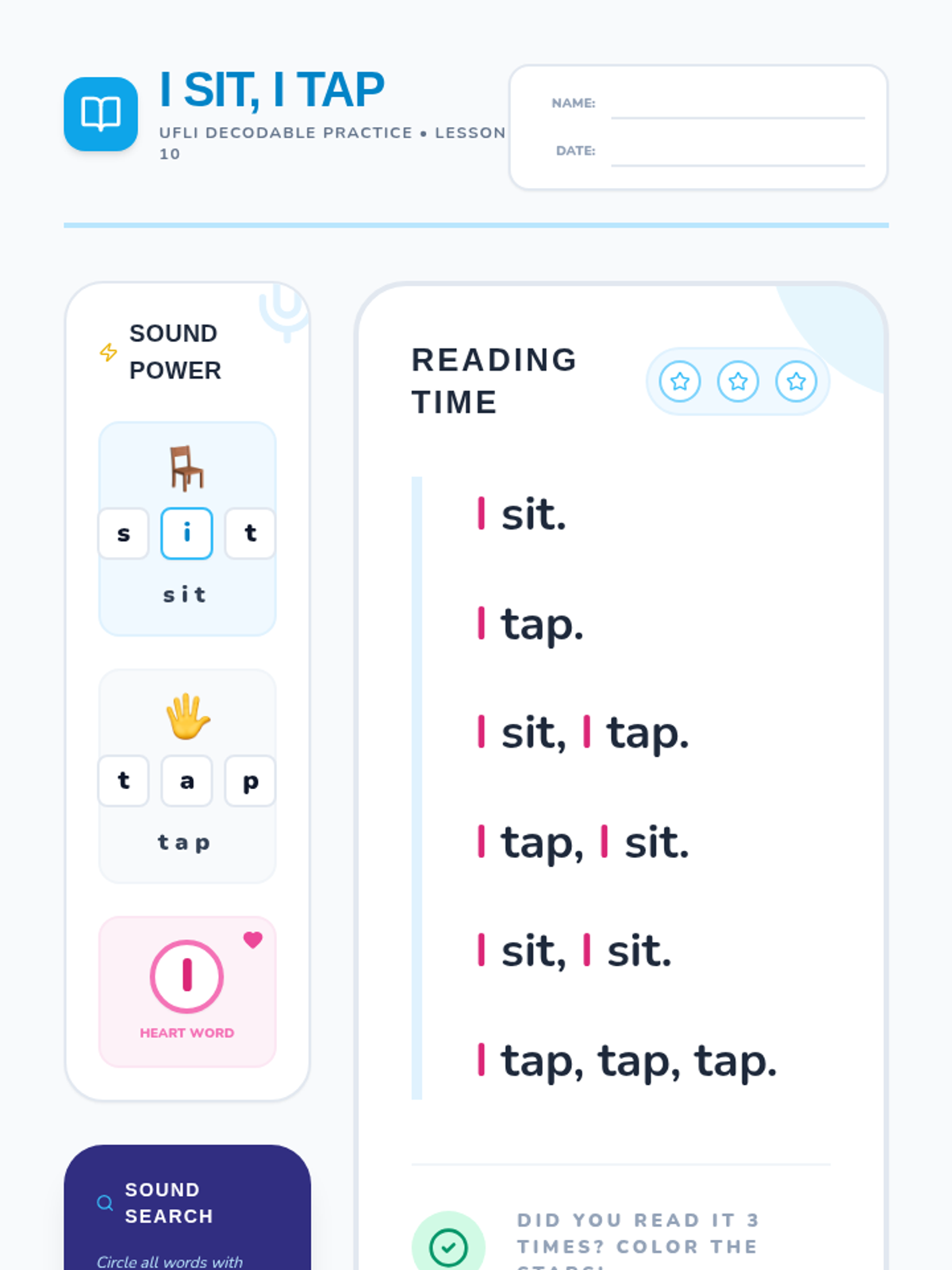
Focuses on the short /i/ vowel sound and the heart word 'I'. Students will practice blending letters s, a, t, p, and i to read a rhythmic decodable passage about sitting and tapping.
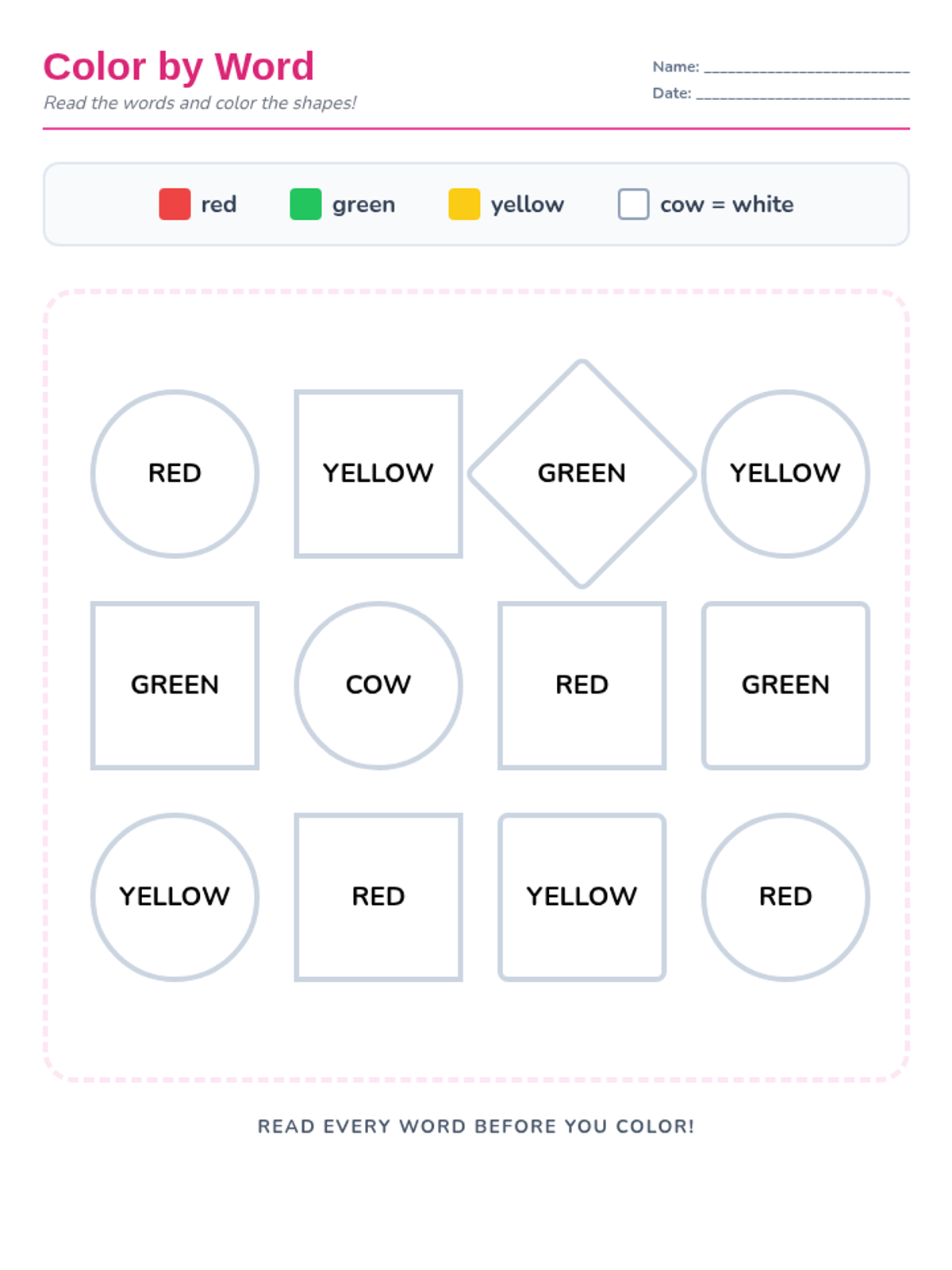
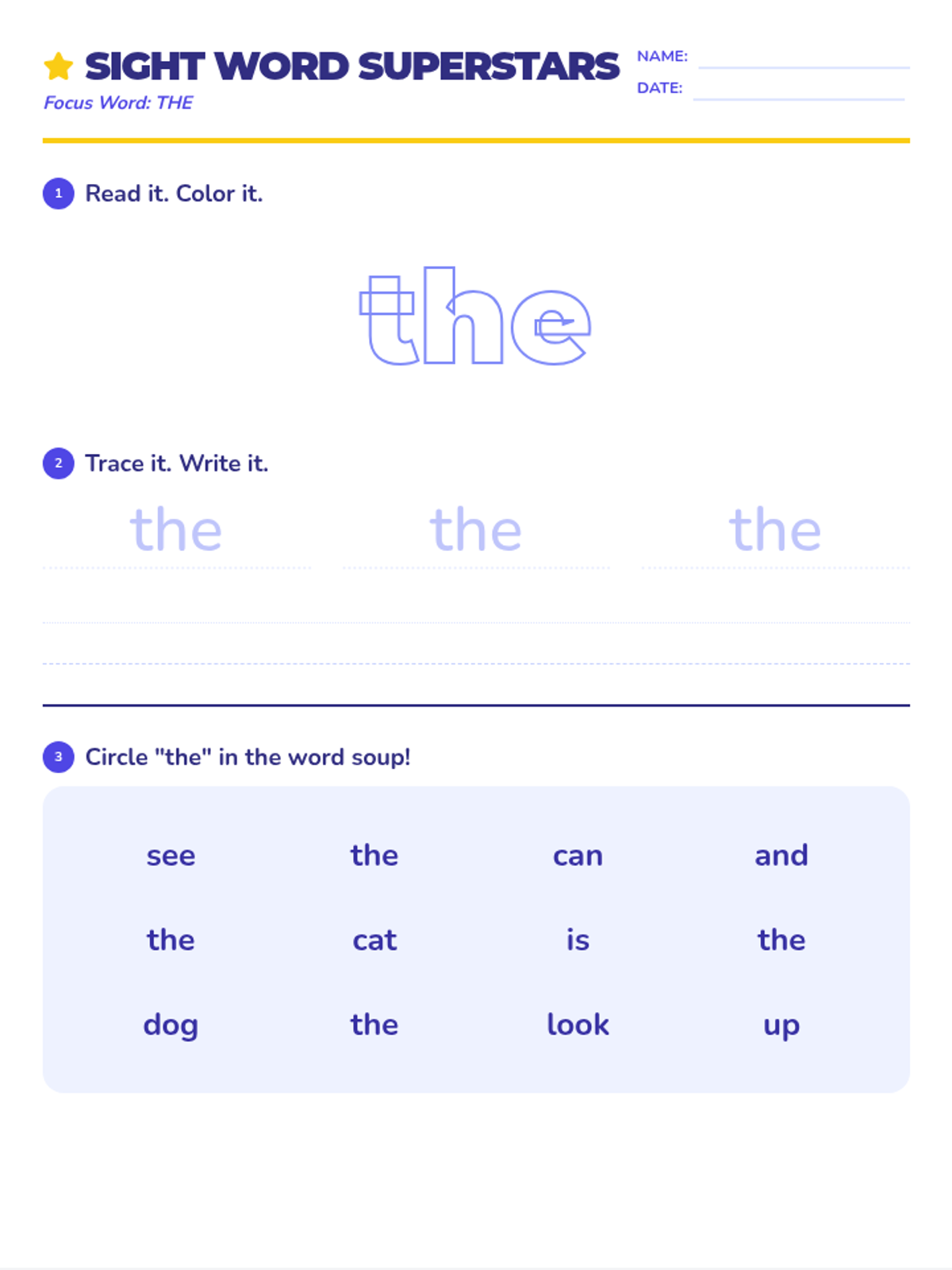
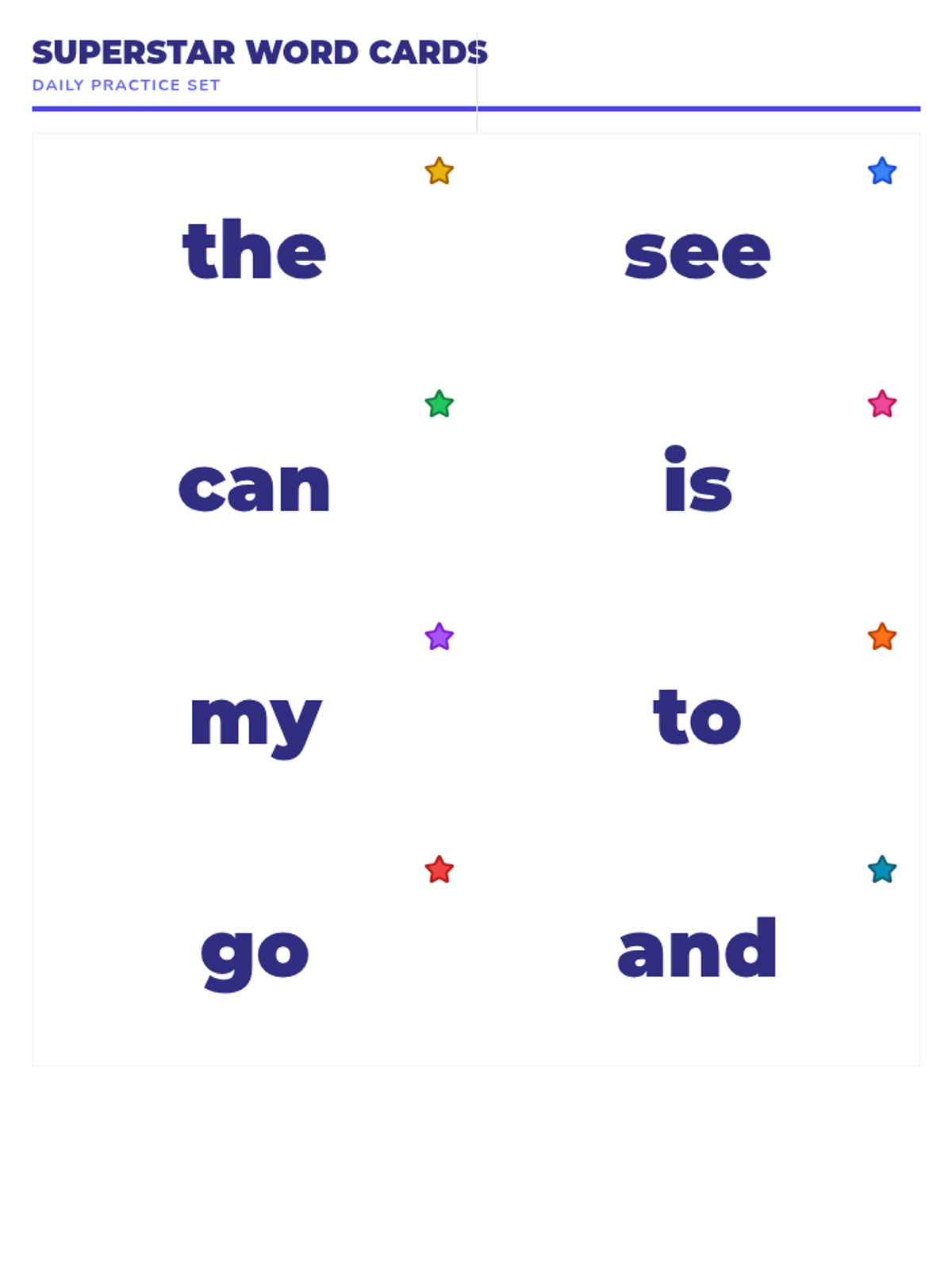
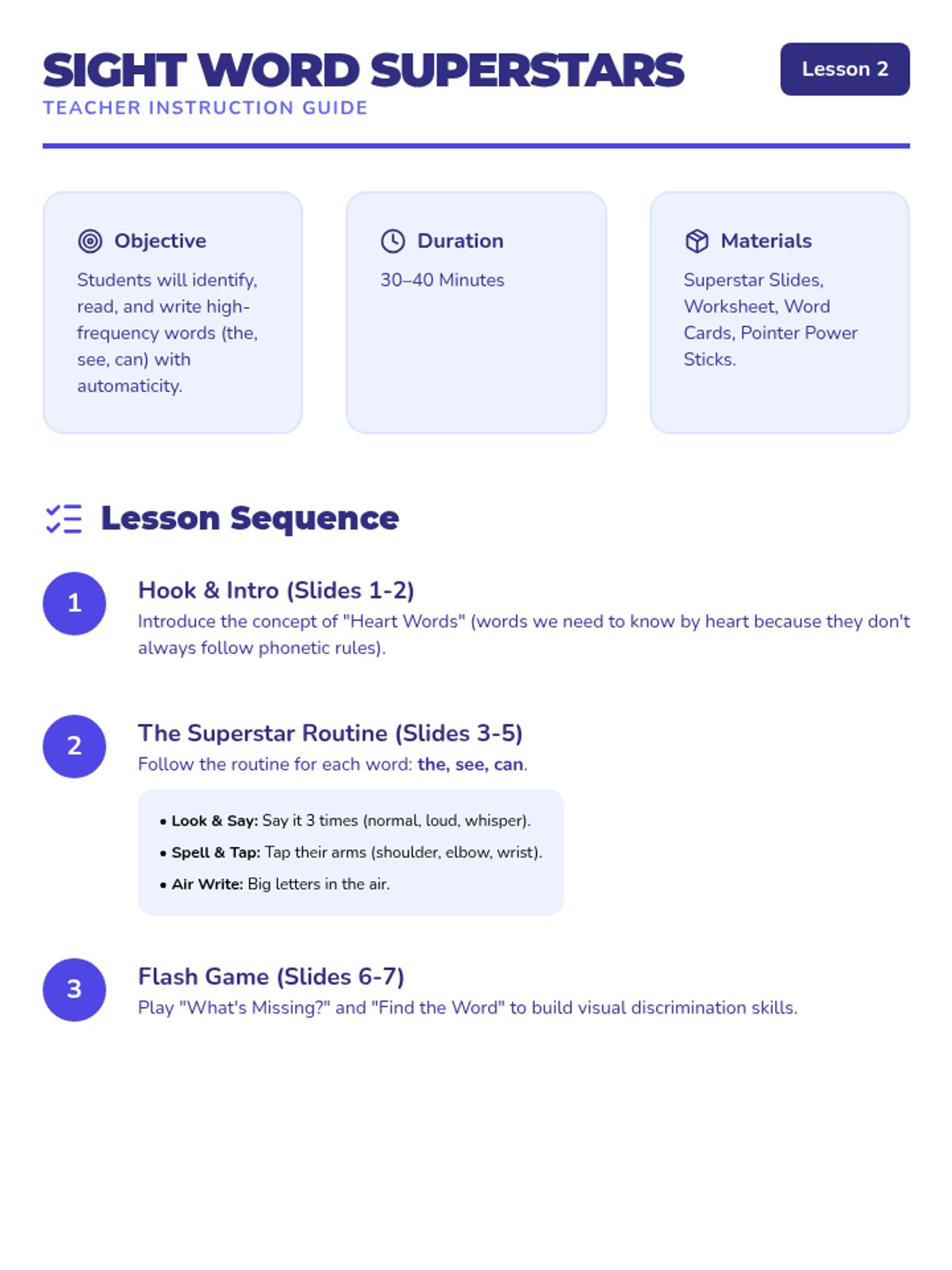
A focused lesson on identifying, reading, and writing high-frequency sight words to build reading fluency and confidence.
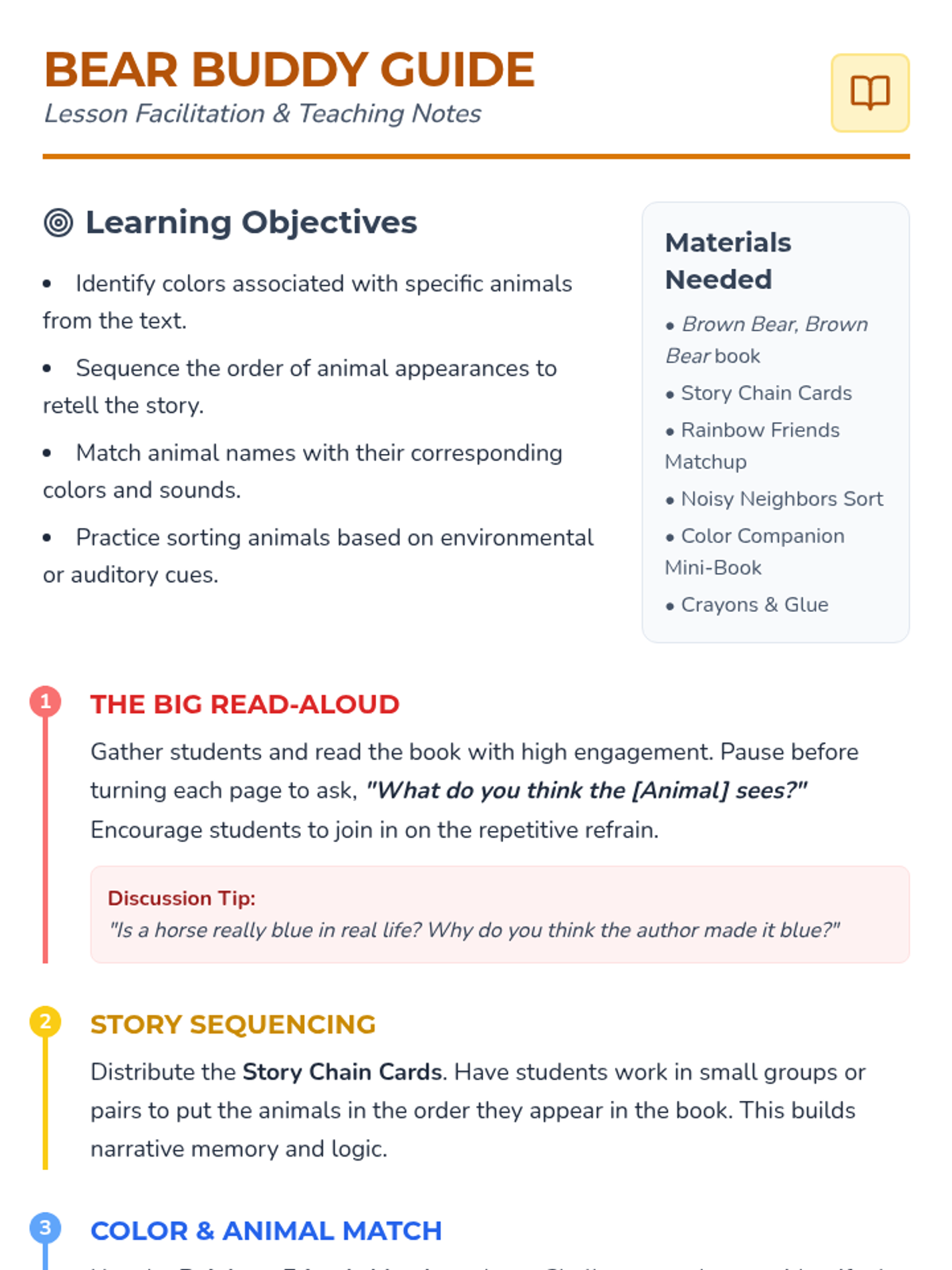
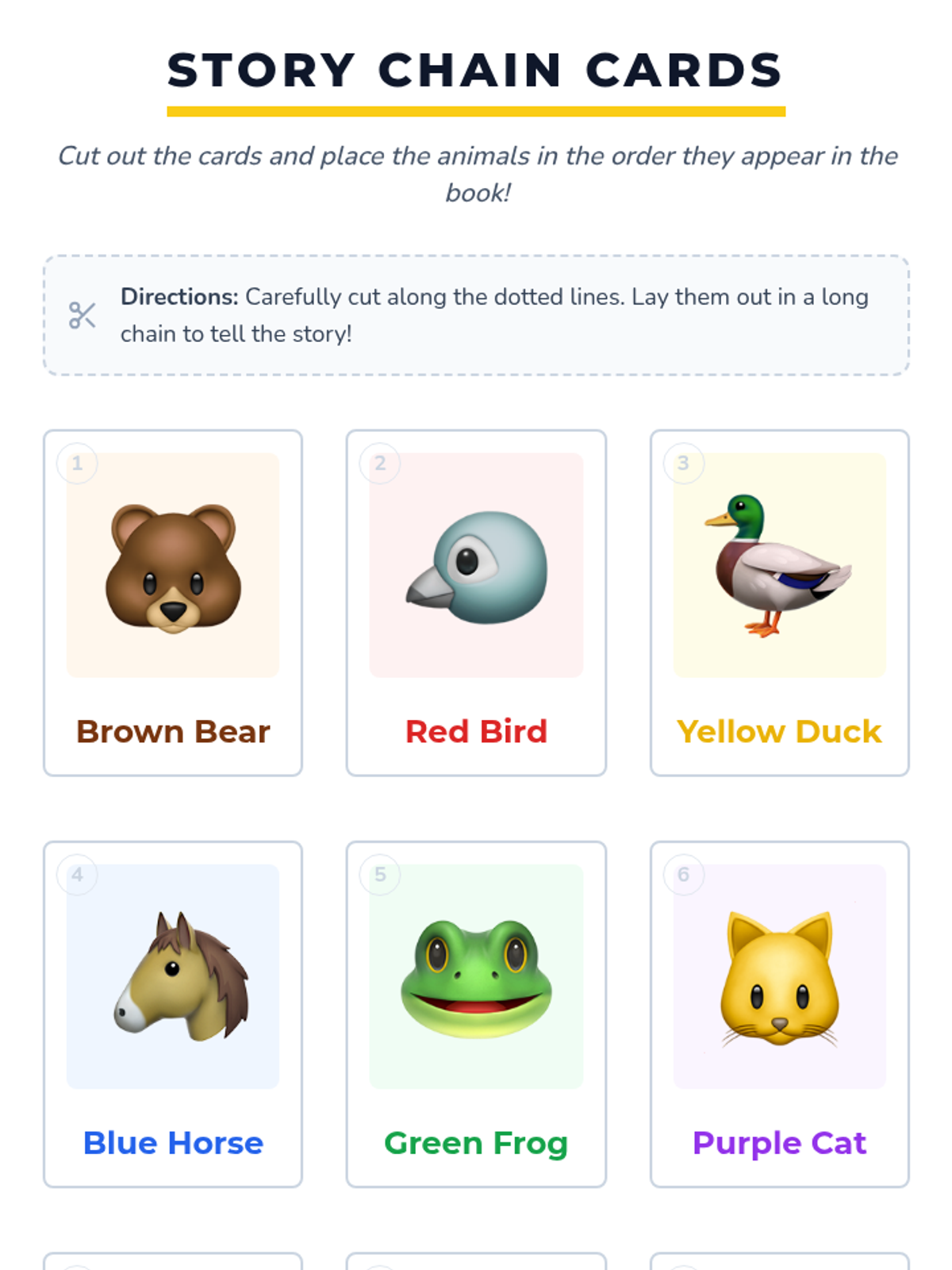
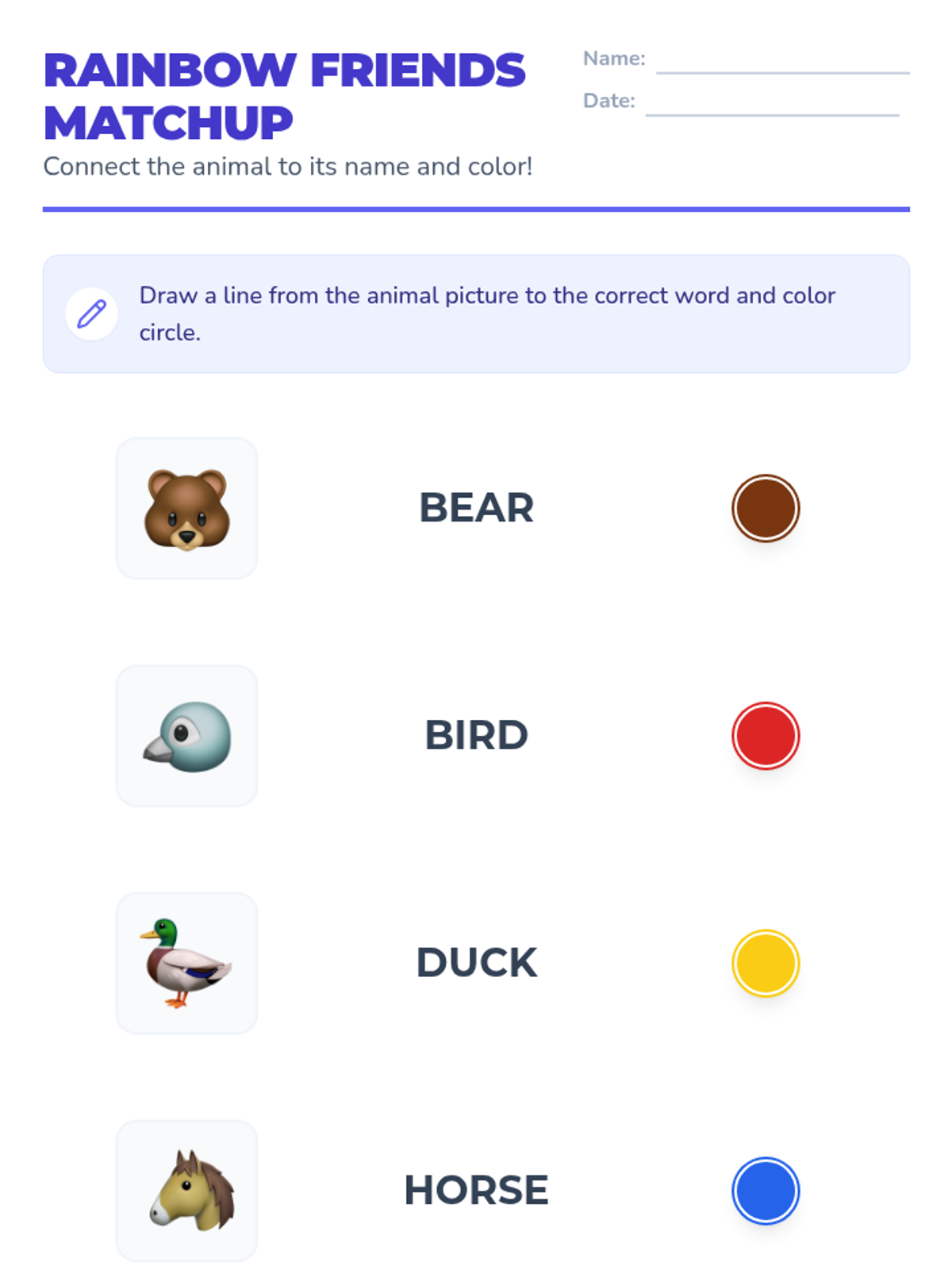
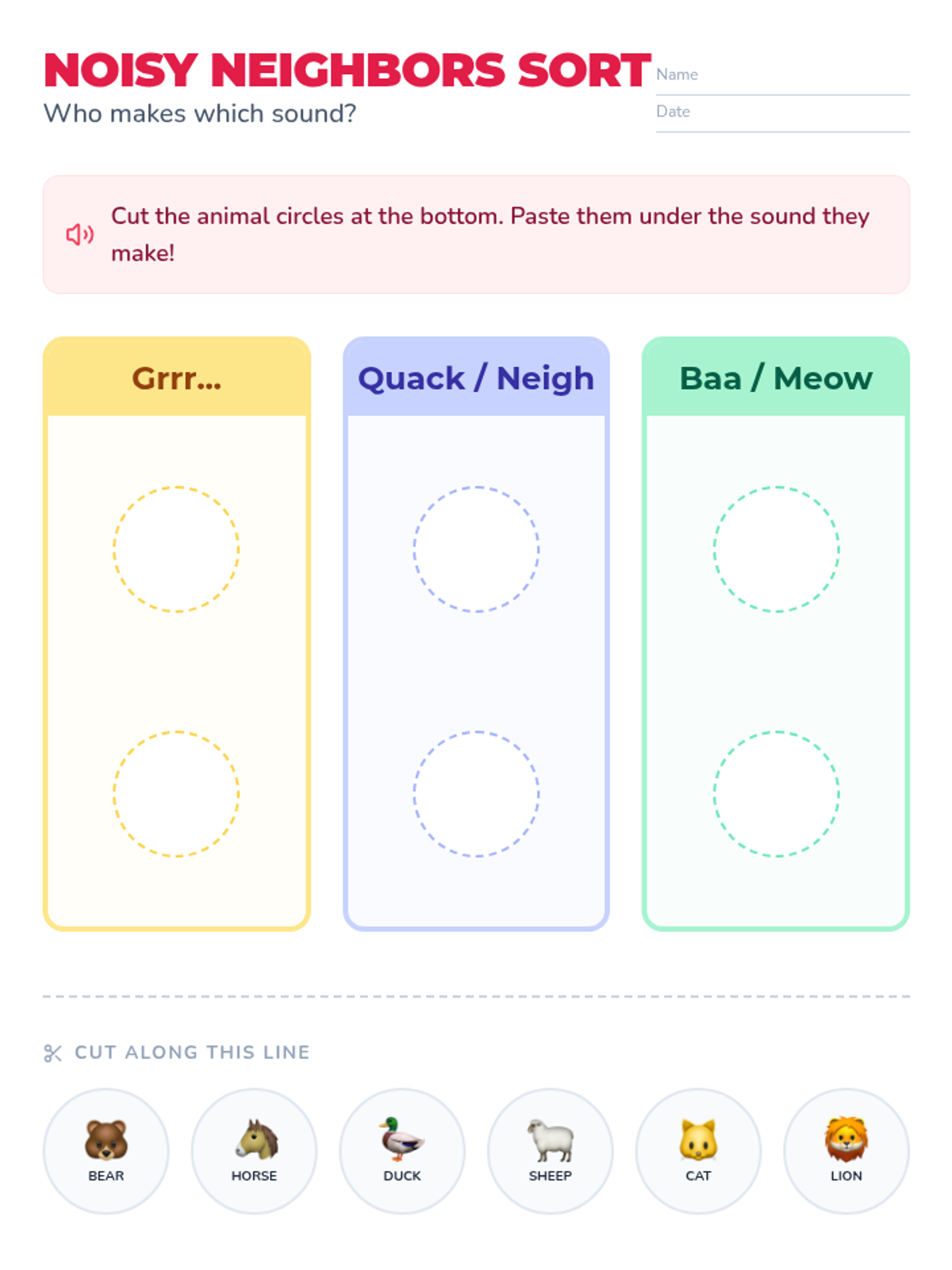
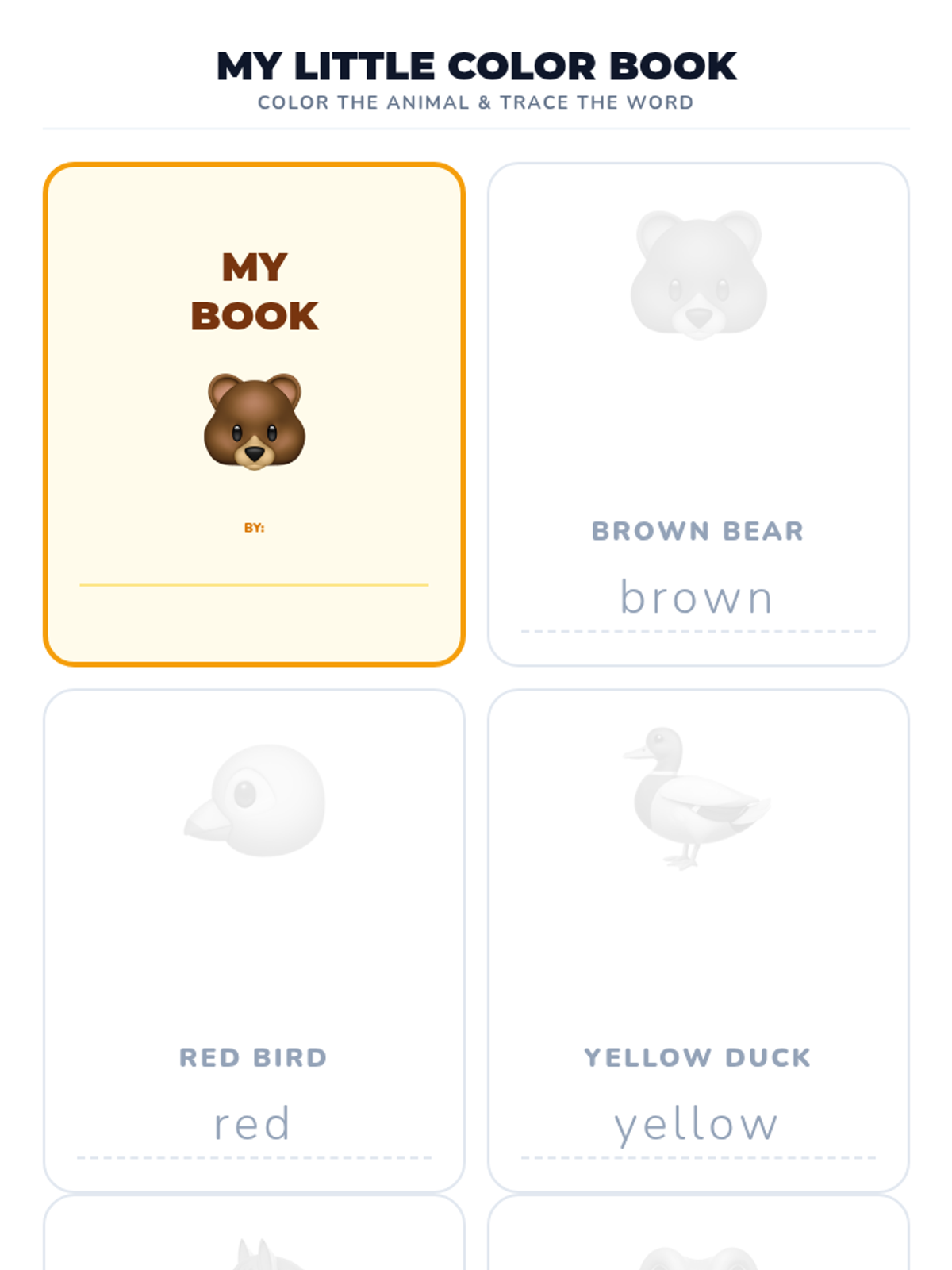
A comprehensive lesson focused on color identification, sequencing, and animal recognition through the classic story Brown Bear, Brown Bear, What Do You See? Students will engage in retelling, matching, and sorting activities designed for early childhood learners.
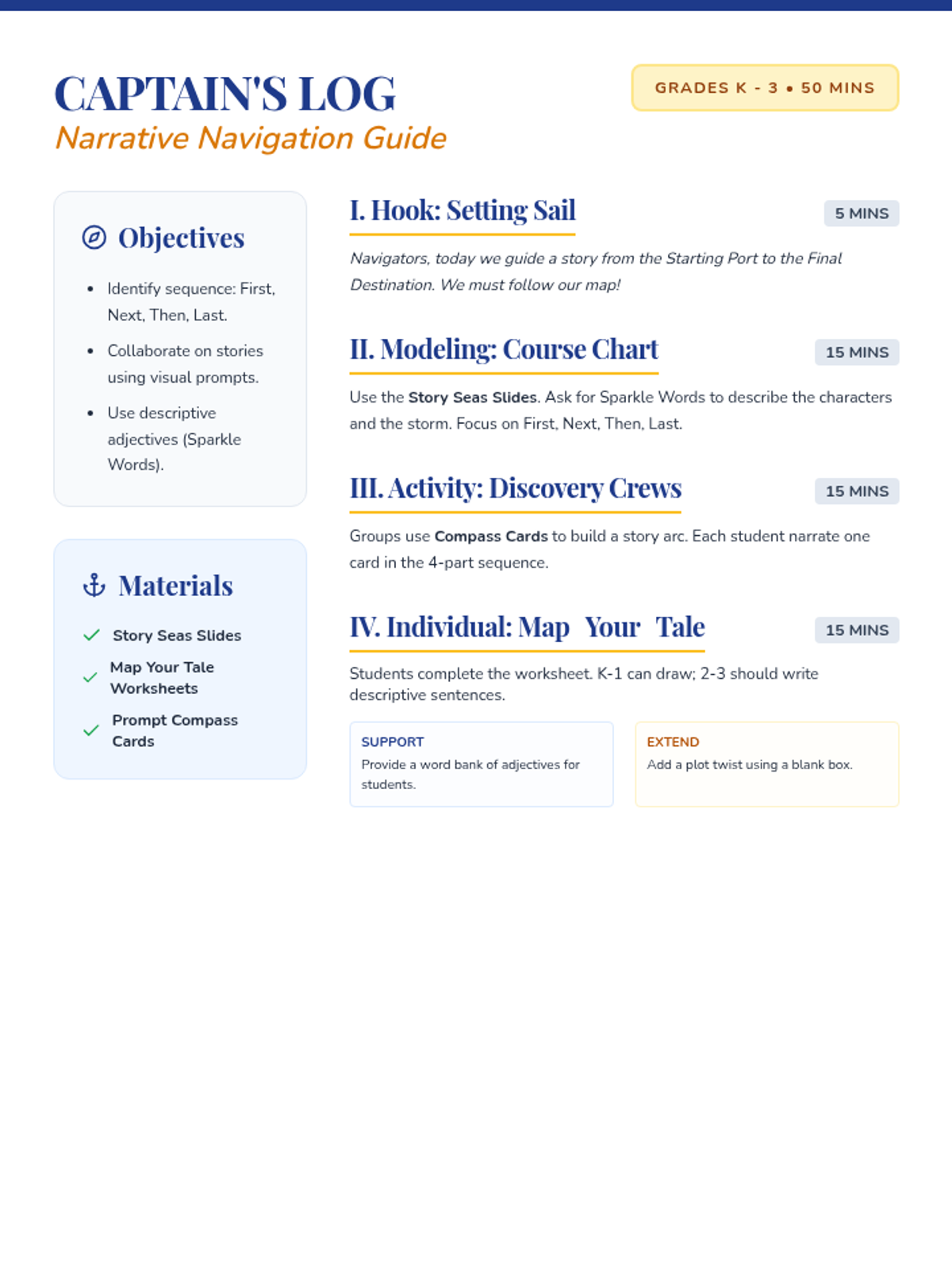
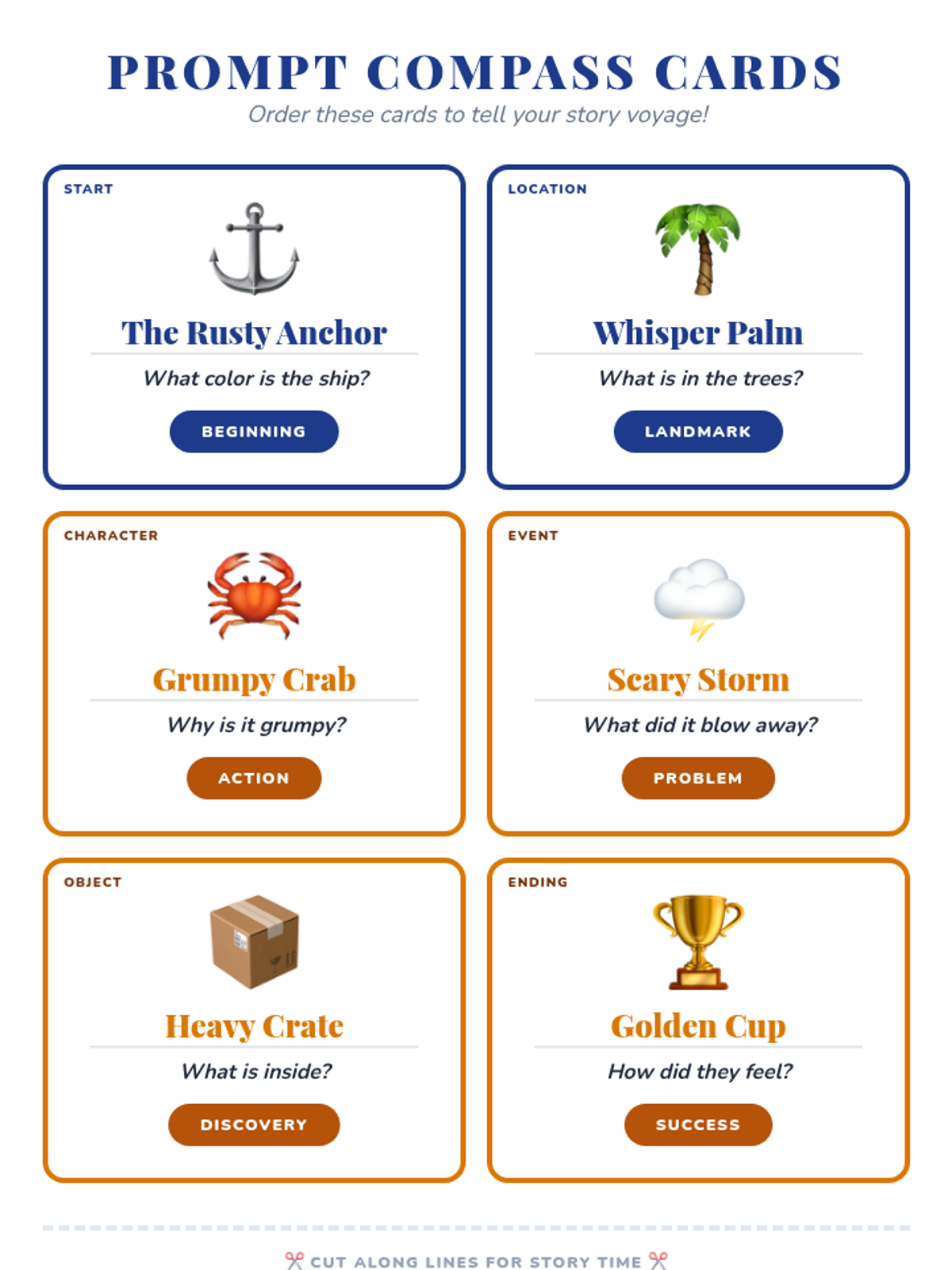
A collaborative storytelling lesson where students use visual prompts to navigate through the elements of a story, focusing on sequencing and descriptive language.
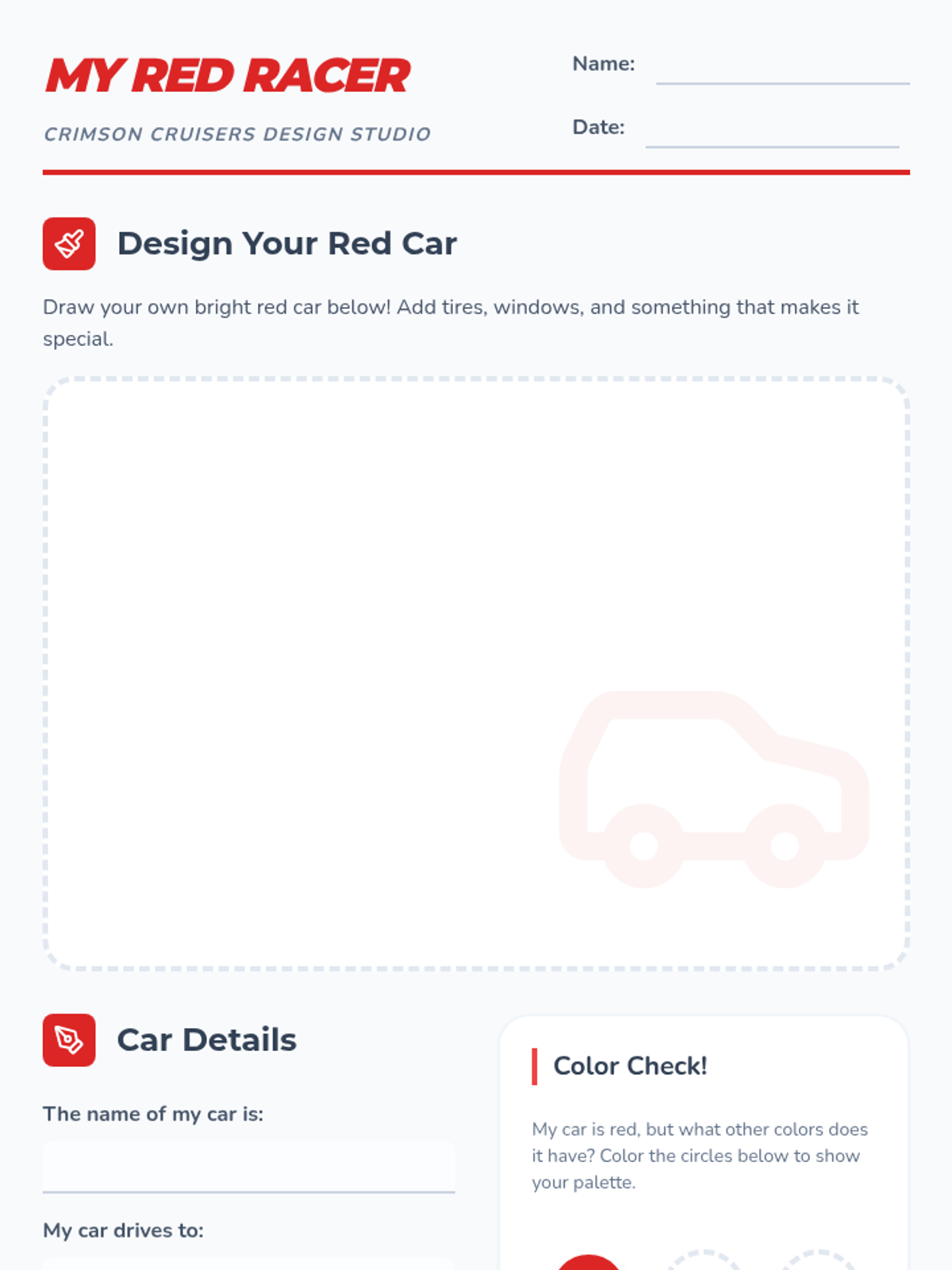
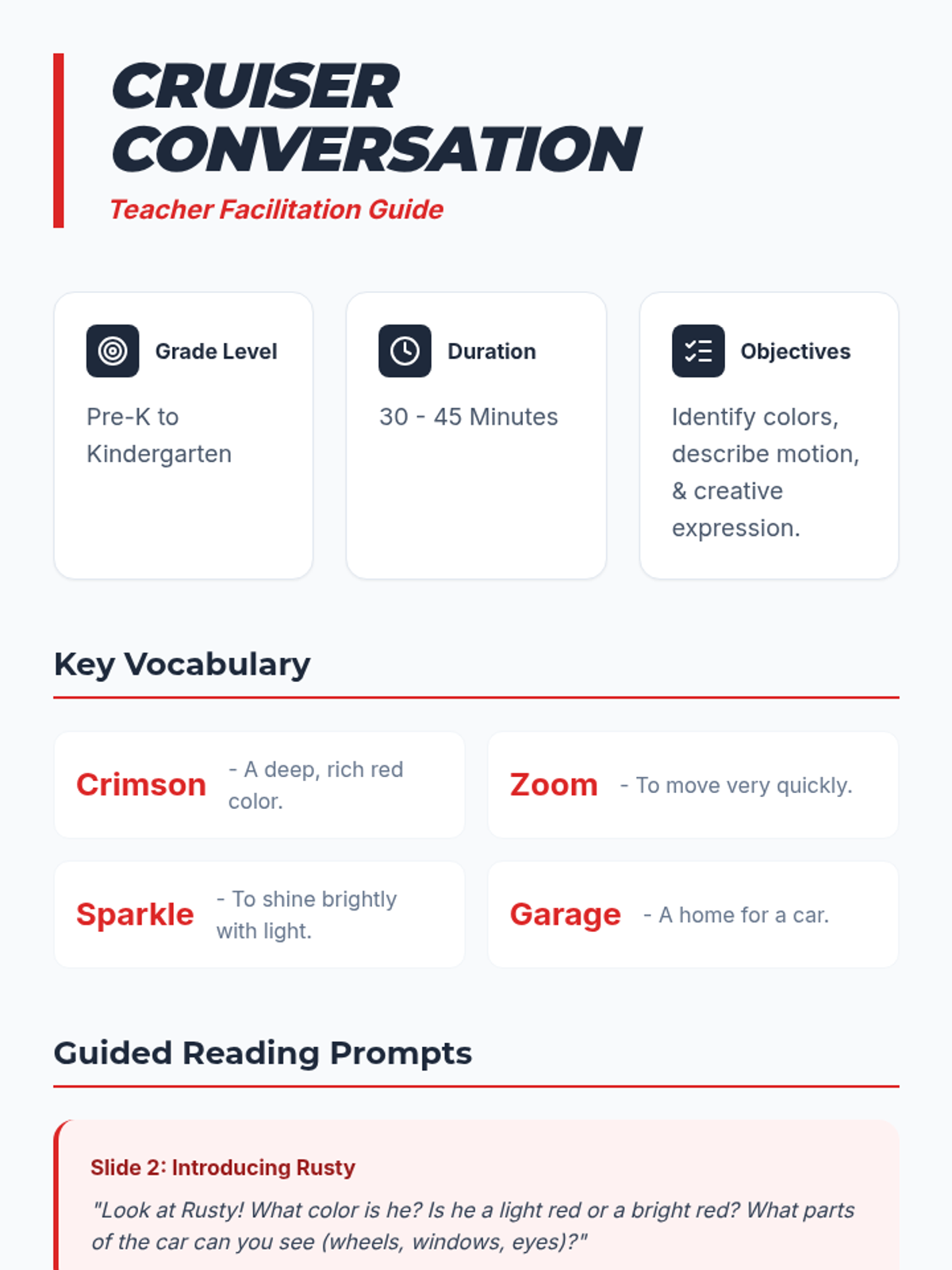
A fun introduction to descriptive language and color recognition through the story of a very special red car named Rusty. Students will explore colors, parts of a car, and creative expression.
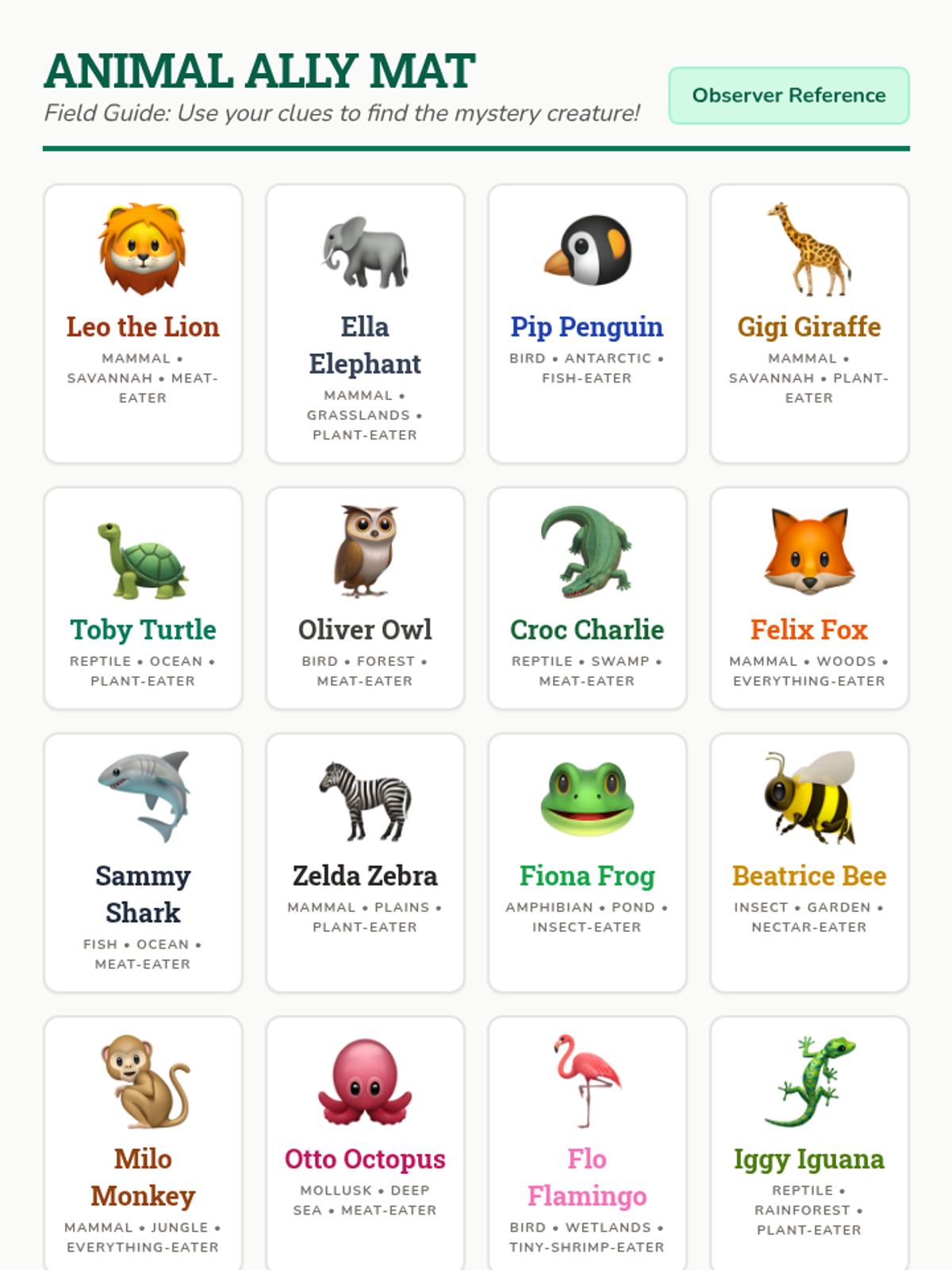
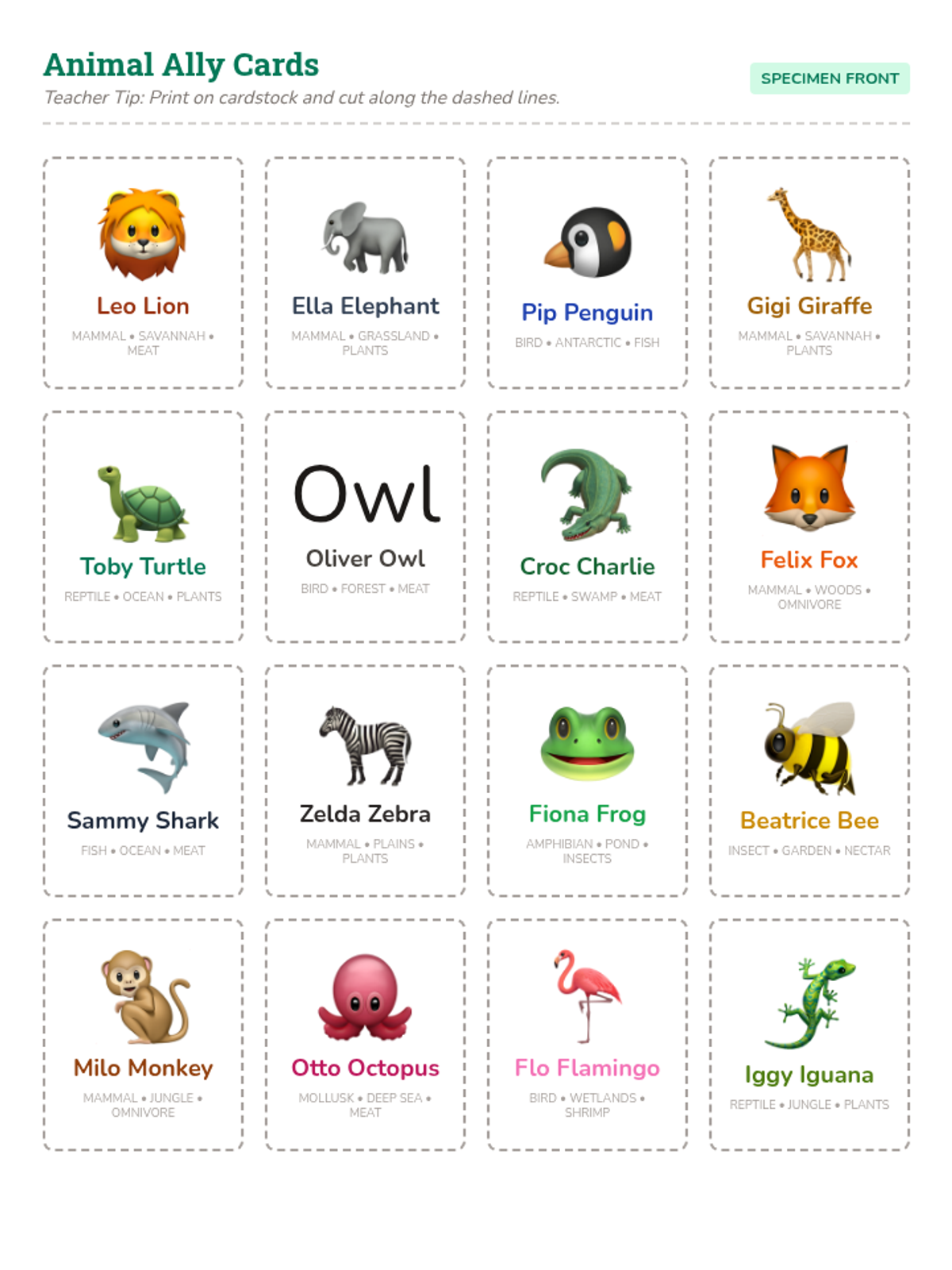
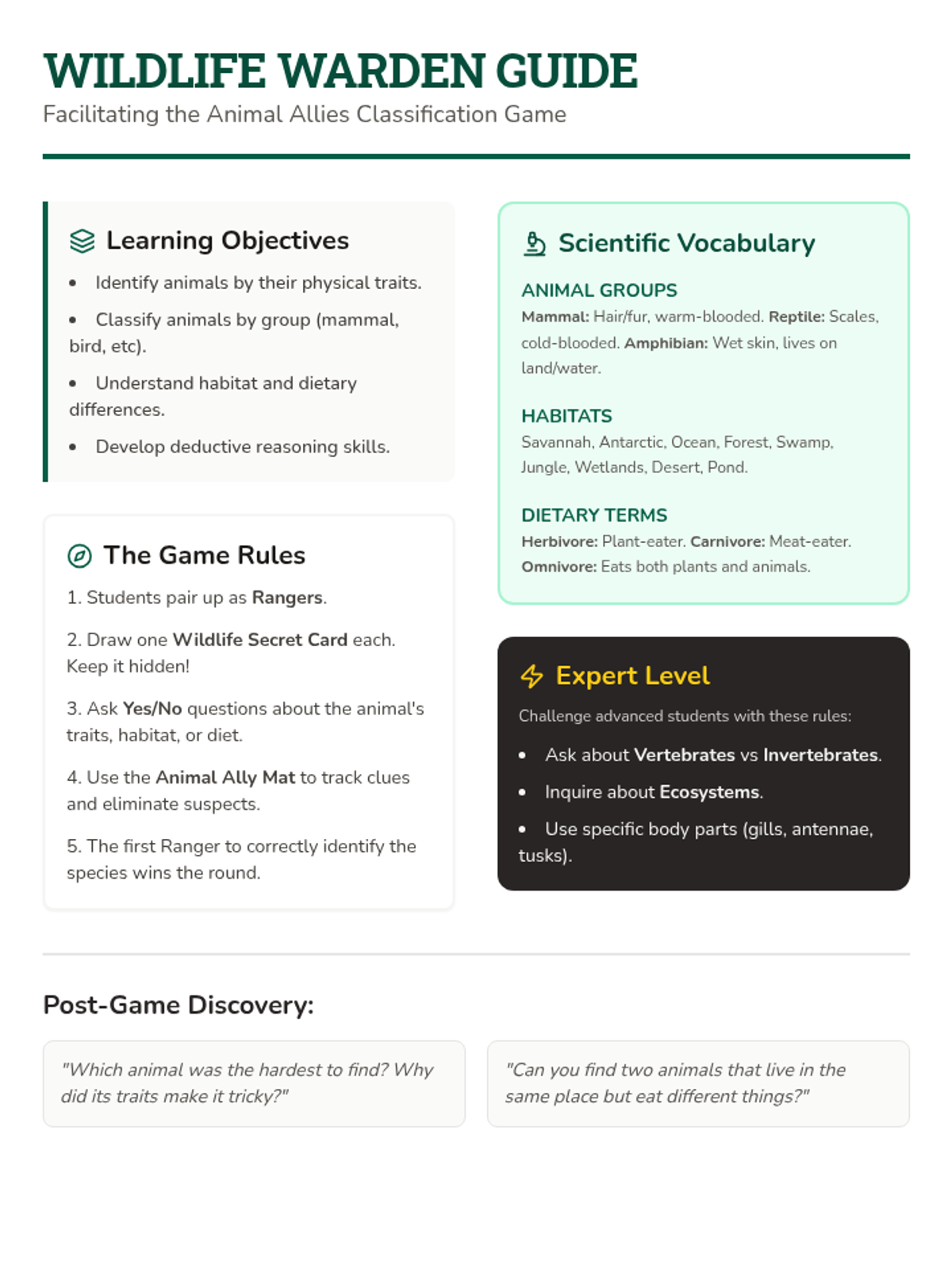
An engaging 'Guess Who' style game where students use descriptive language and biological traits to identify mystery animals. Focuses on classification, habitats, and physical characteristics.
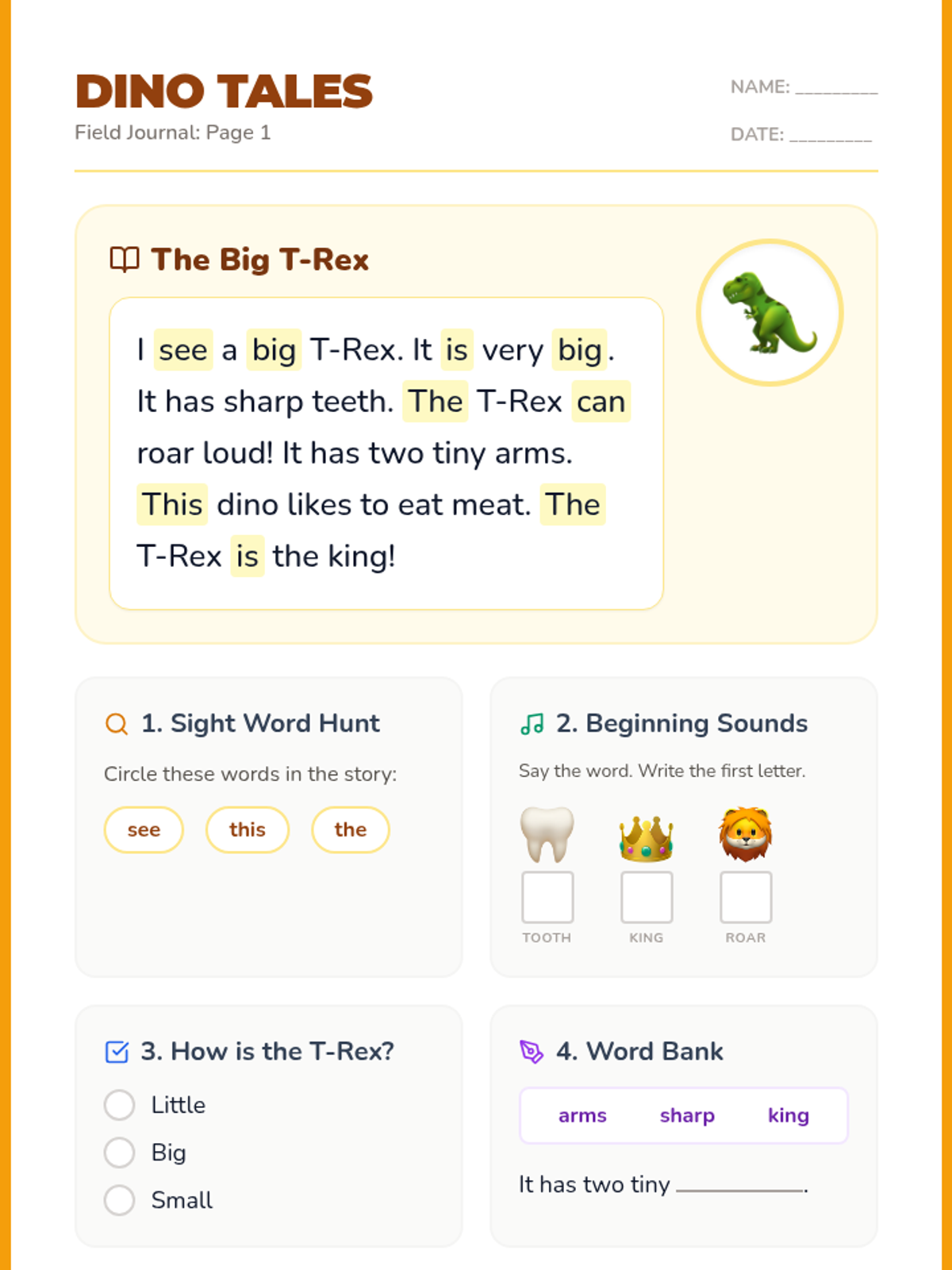
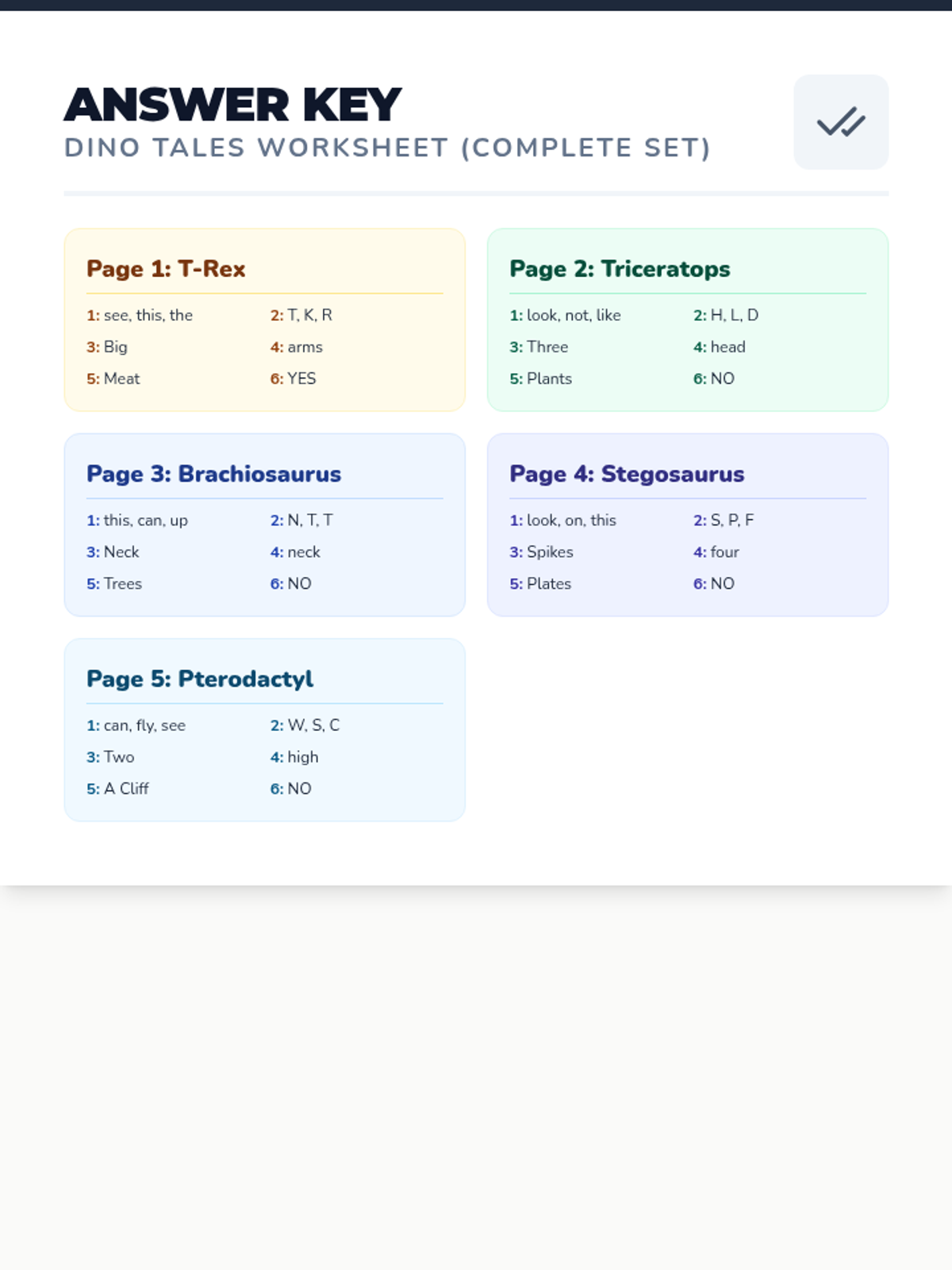
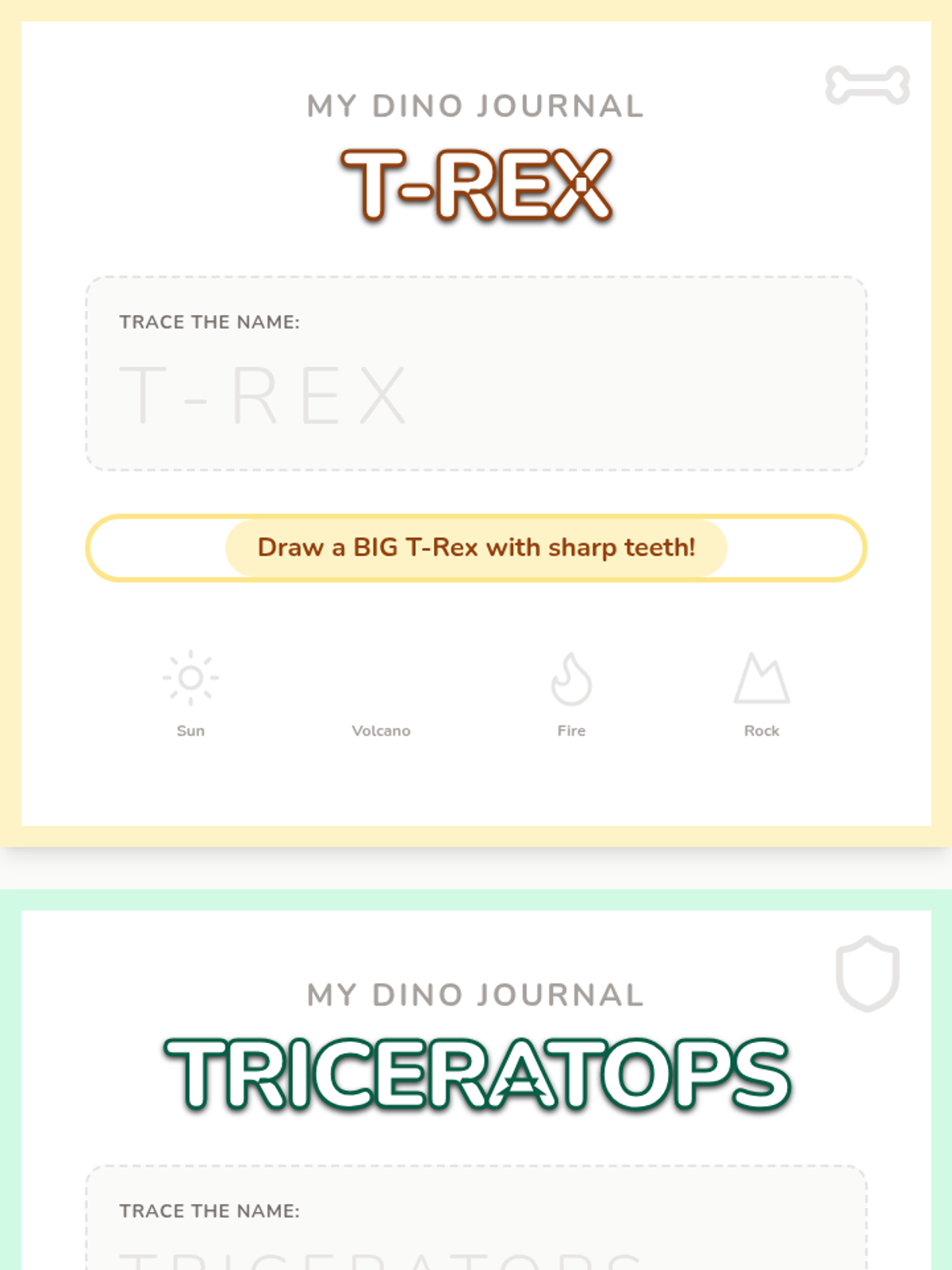
A fun, introductory lesson for kindergarten students to learn about dinosaurs while practicing foundational reading skills like sight word recognition and phonics. Students will explore three different dinosaurs through short, engaging passages and interactive activities.
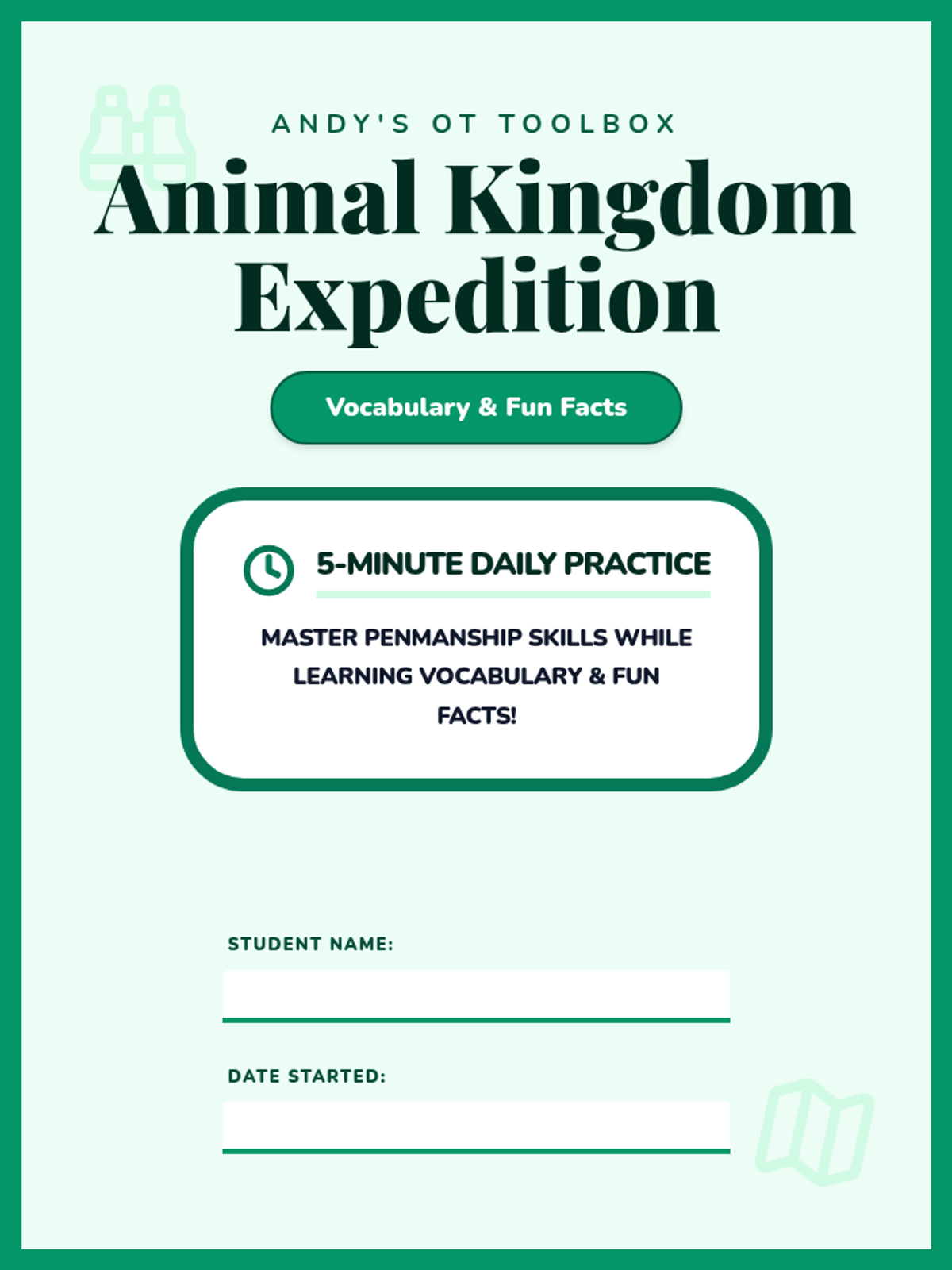
A 30-day handwriting practice program focused on animal kingdom facts and vocabulary, designed to improve fine motor skills through short, daily exercises.
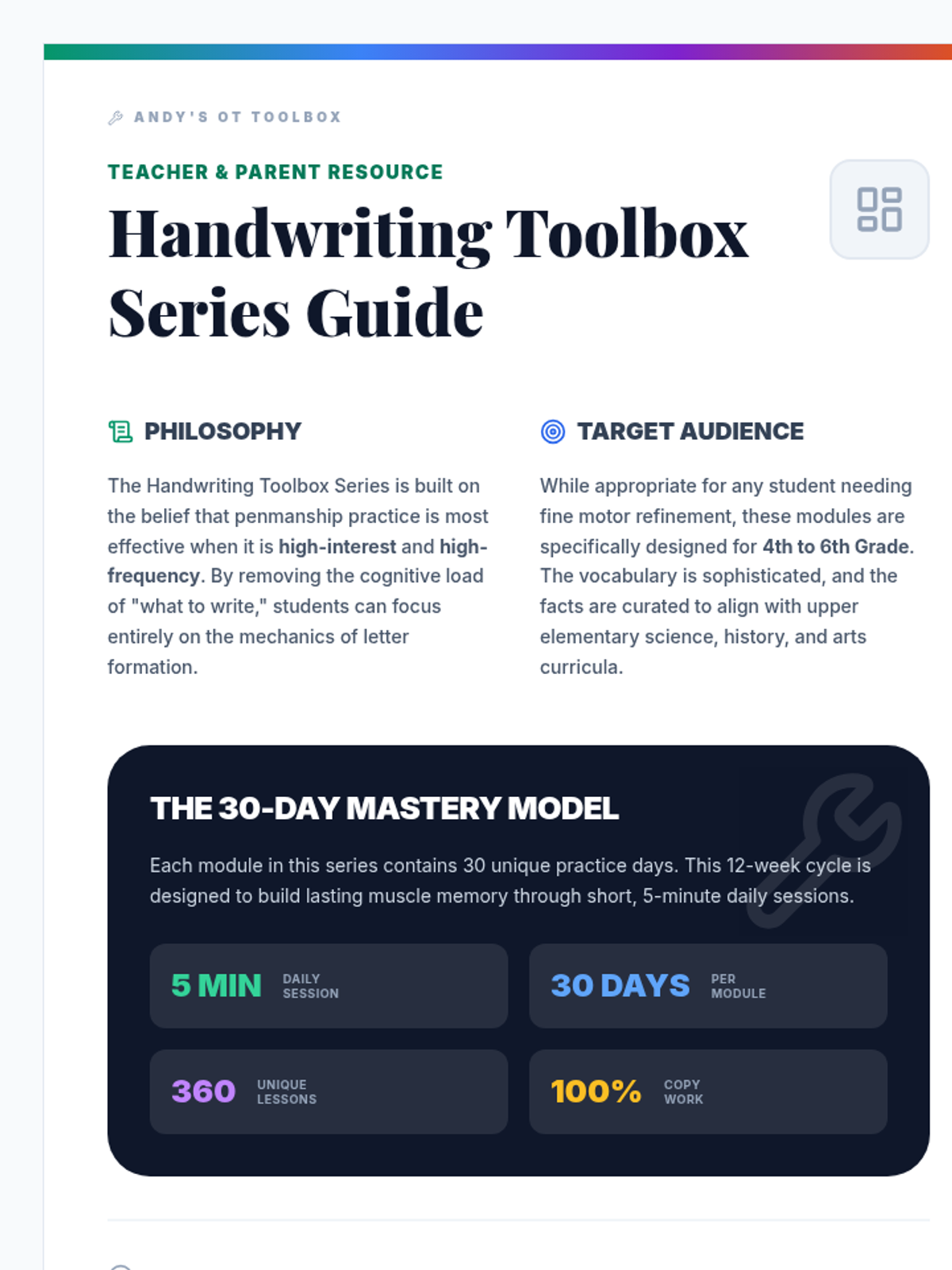
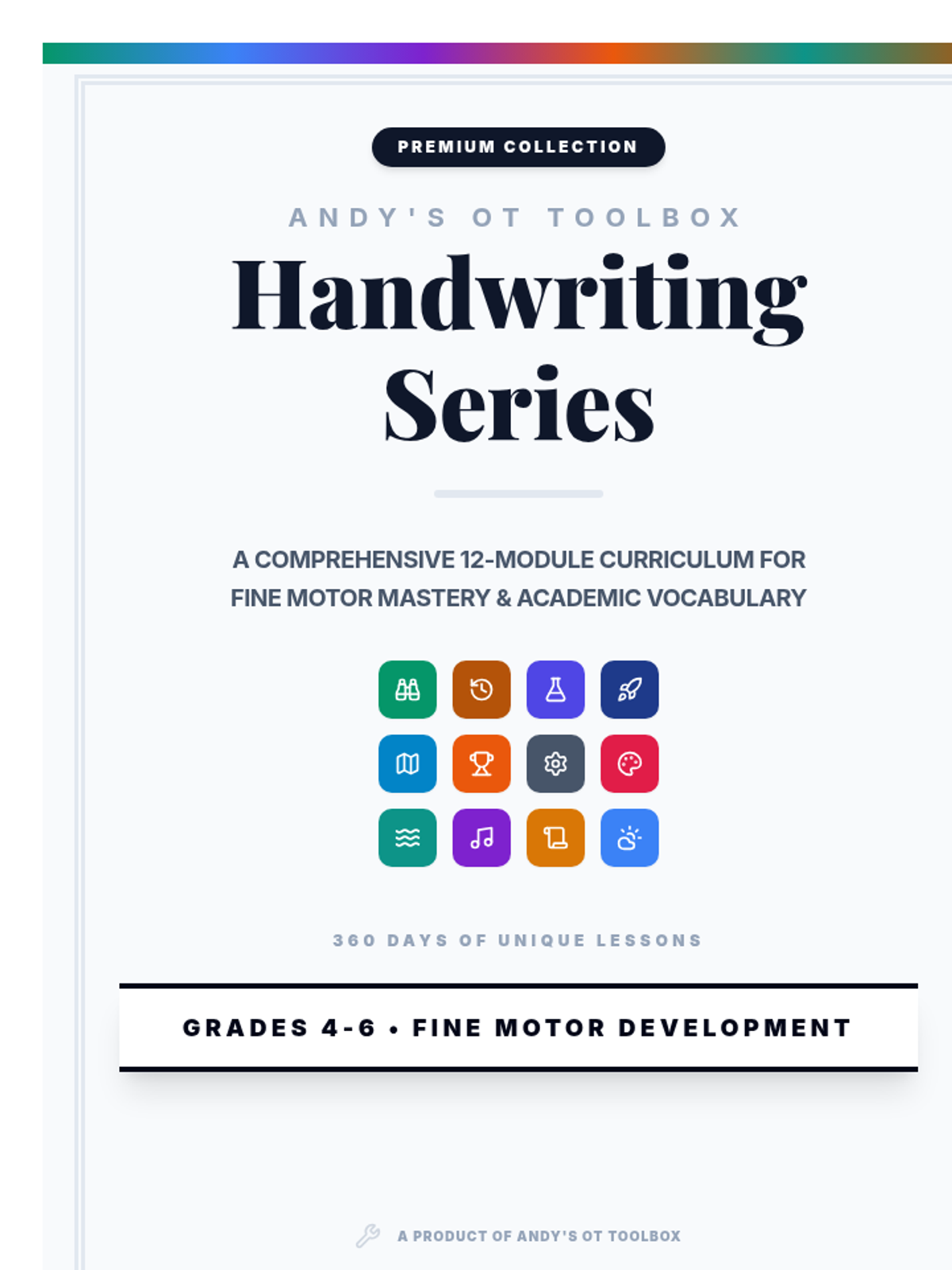
Administrative and general resources for the entire Handwriting Toolbox Series, including curriculum maps, tracking sheets, and implementation guides.
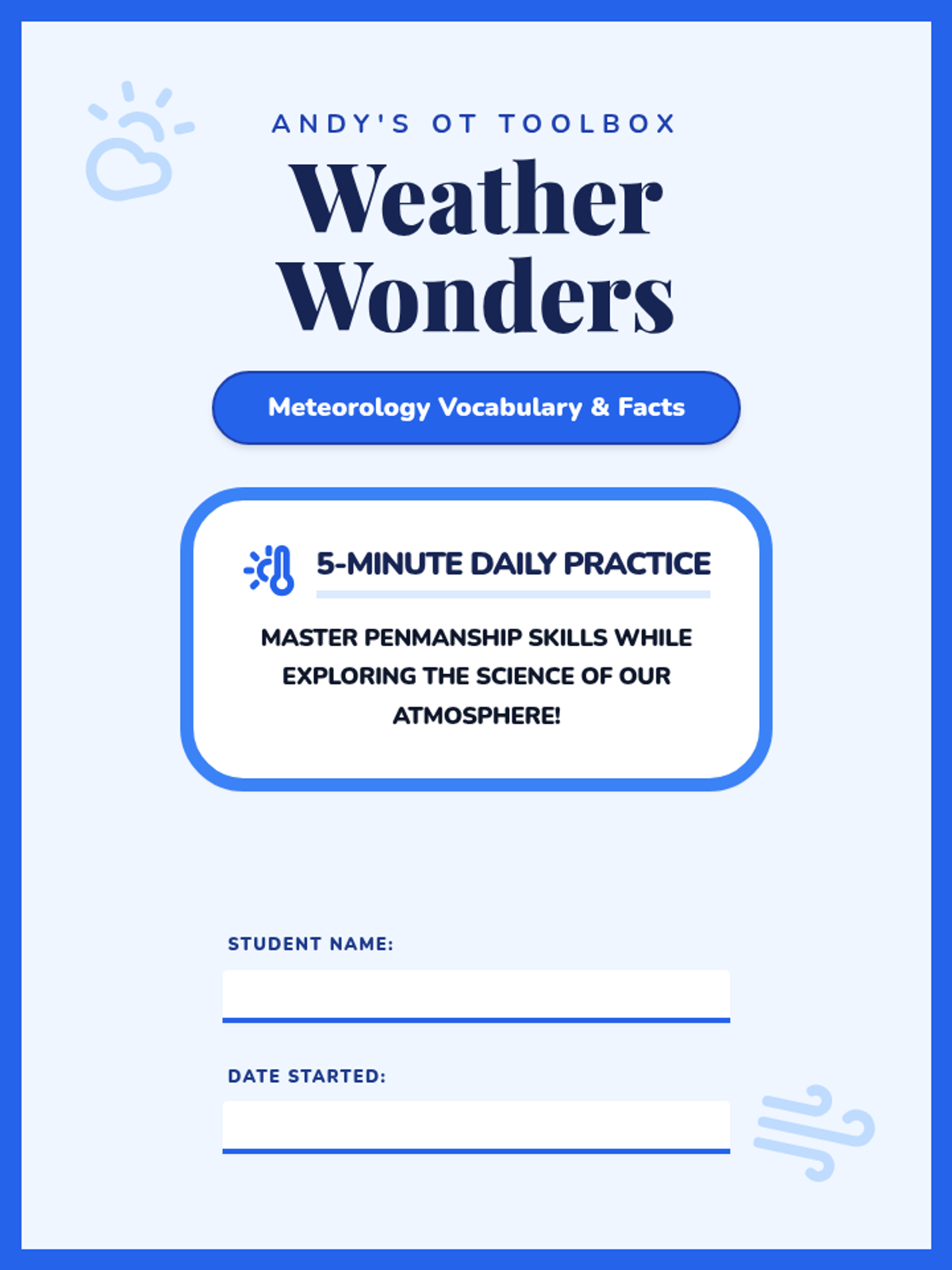
A 30-day handwriting practice program focused on meteorology, atmospheric science, and extreme weather phenomena, designed for 4th to 6th graders.
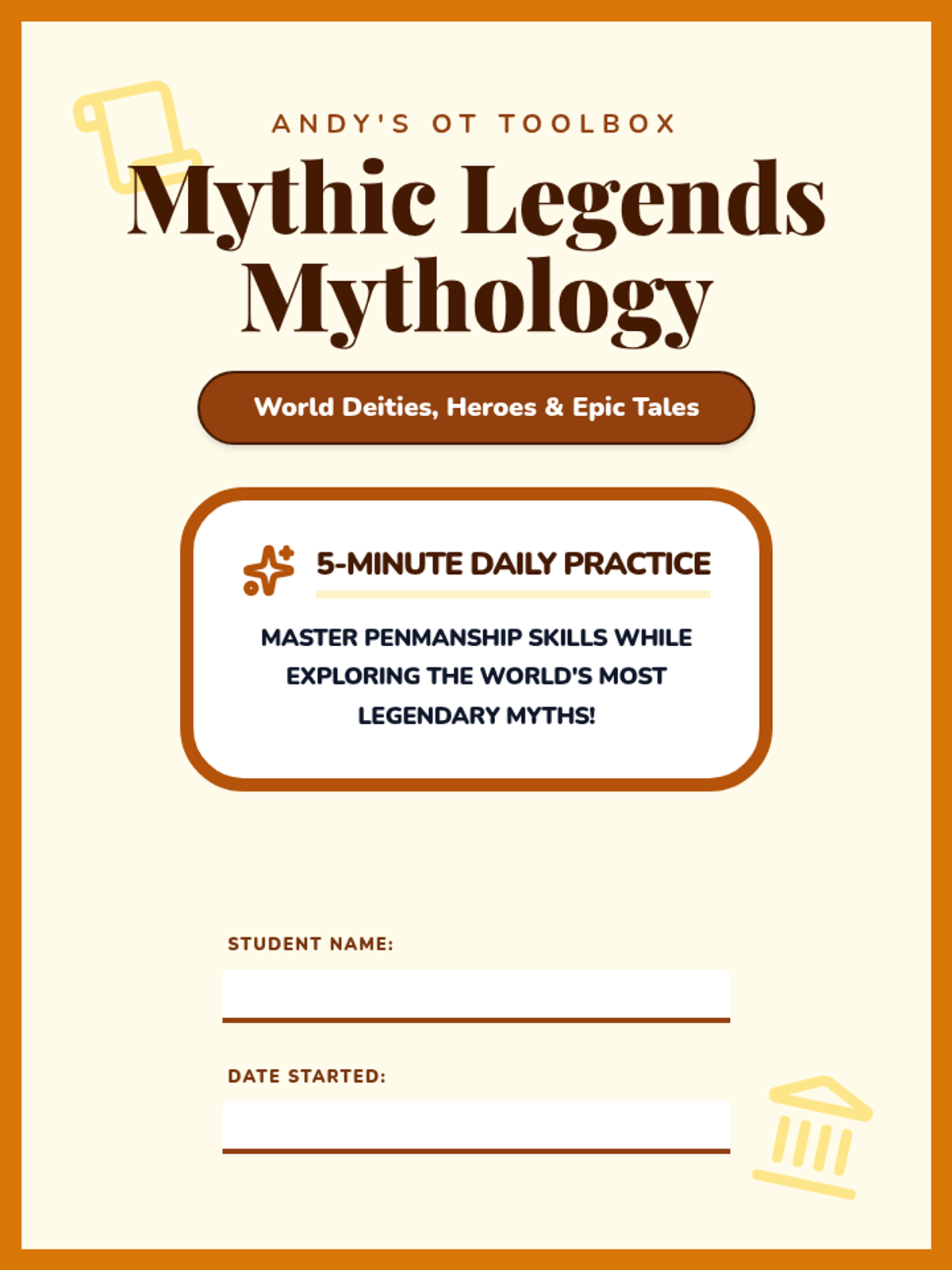
A 30-day handwriting practice program focused on world mythology, legendary heroes, and ancient deities, designed for 4th to 6th graders.