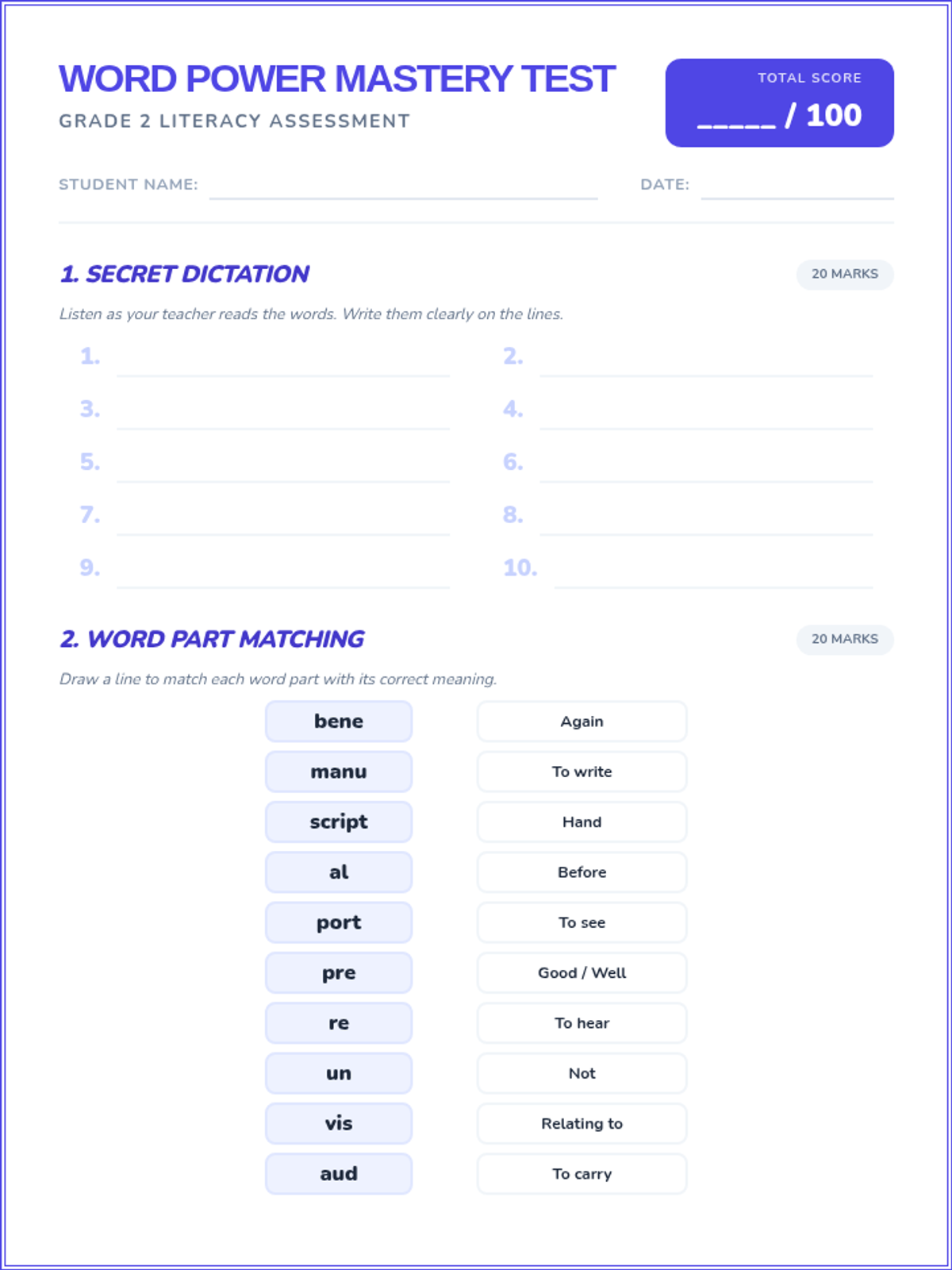
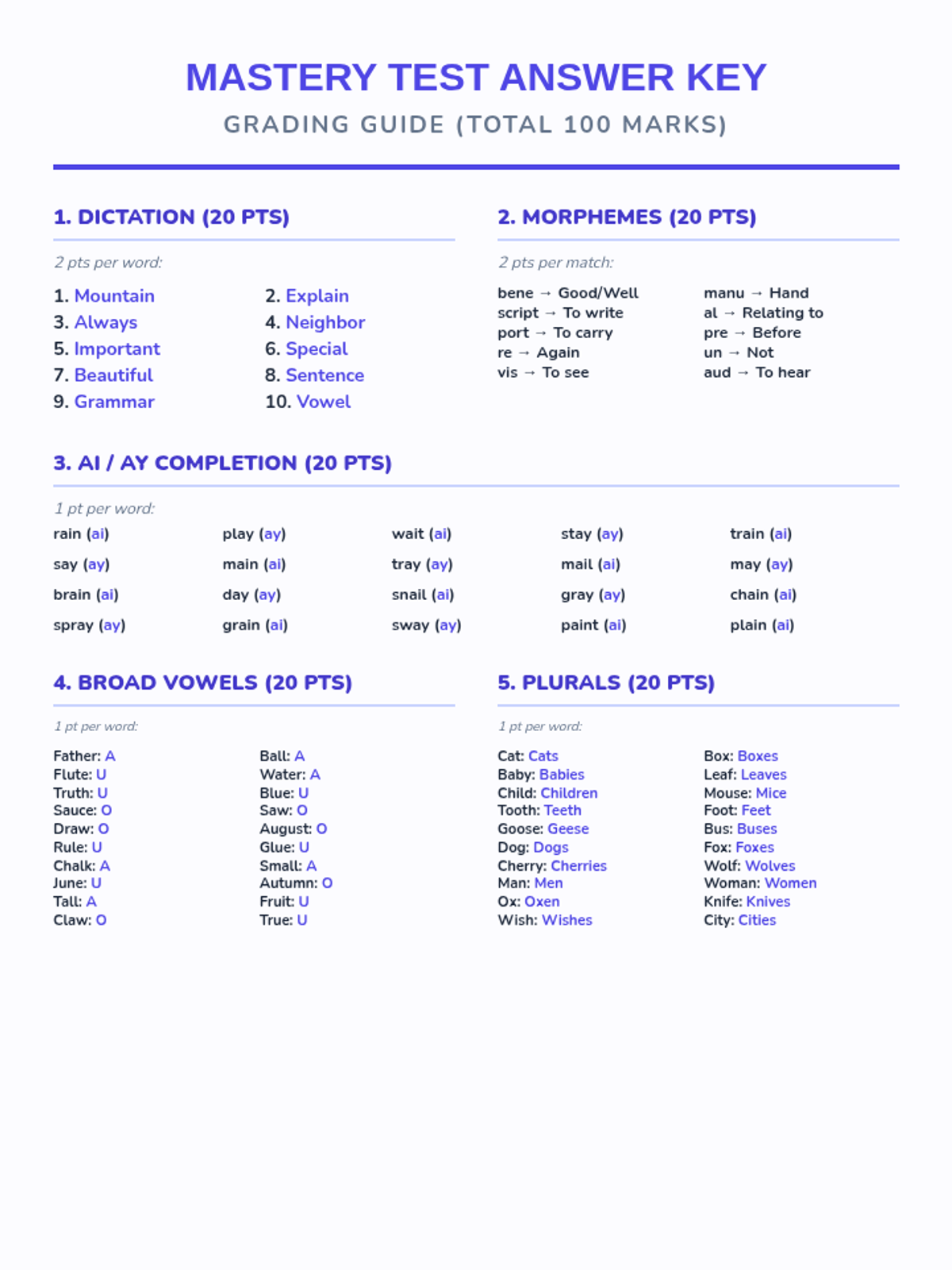
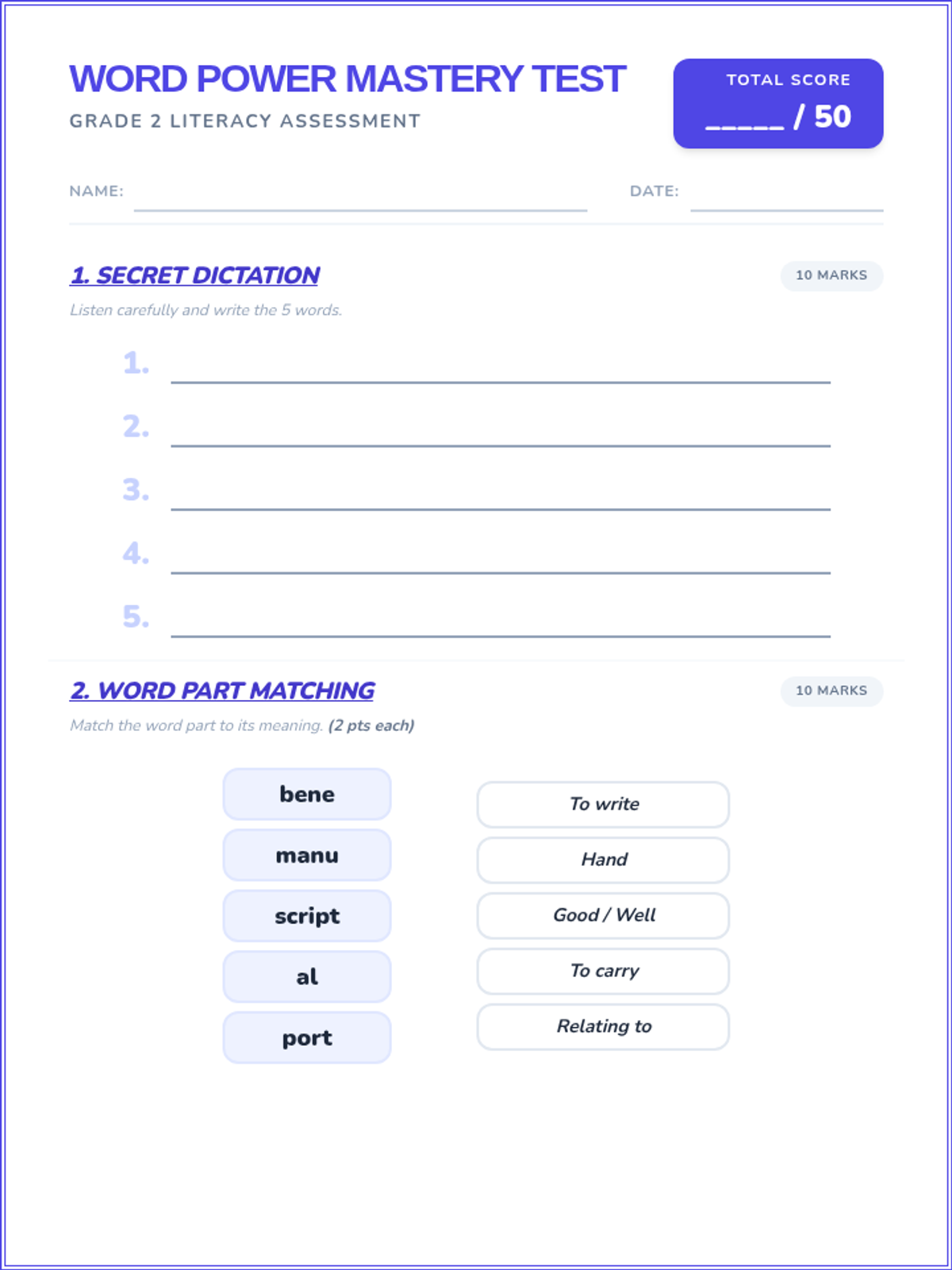
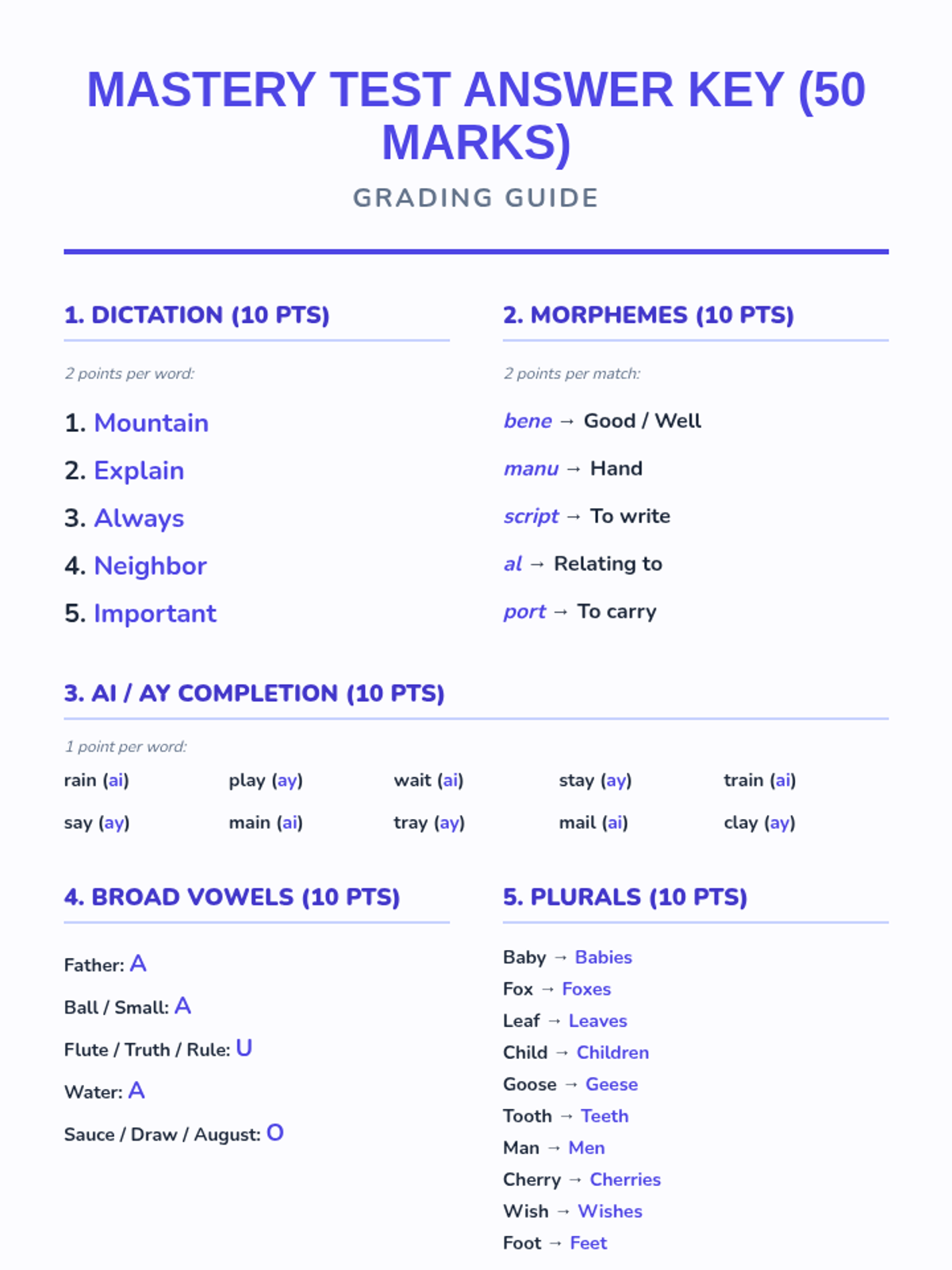
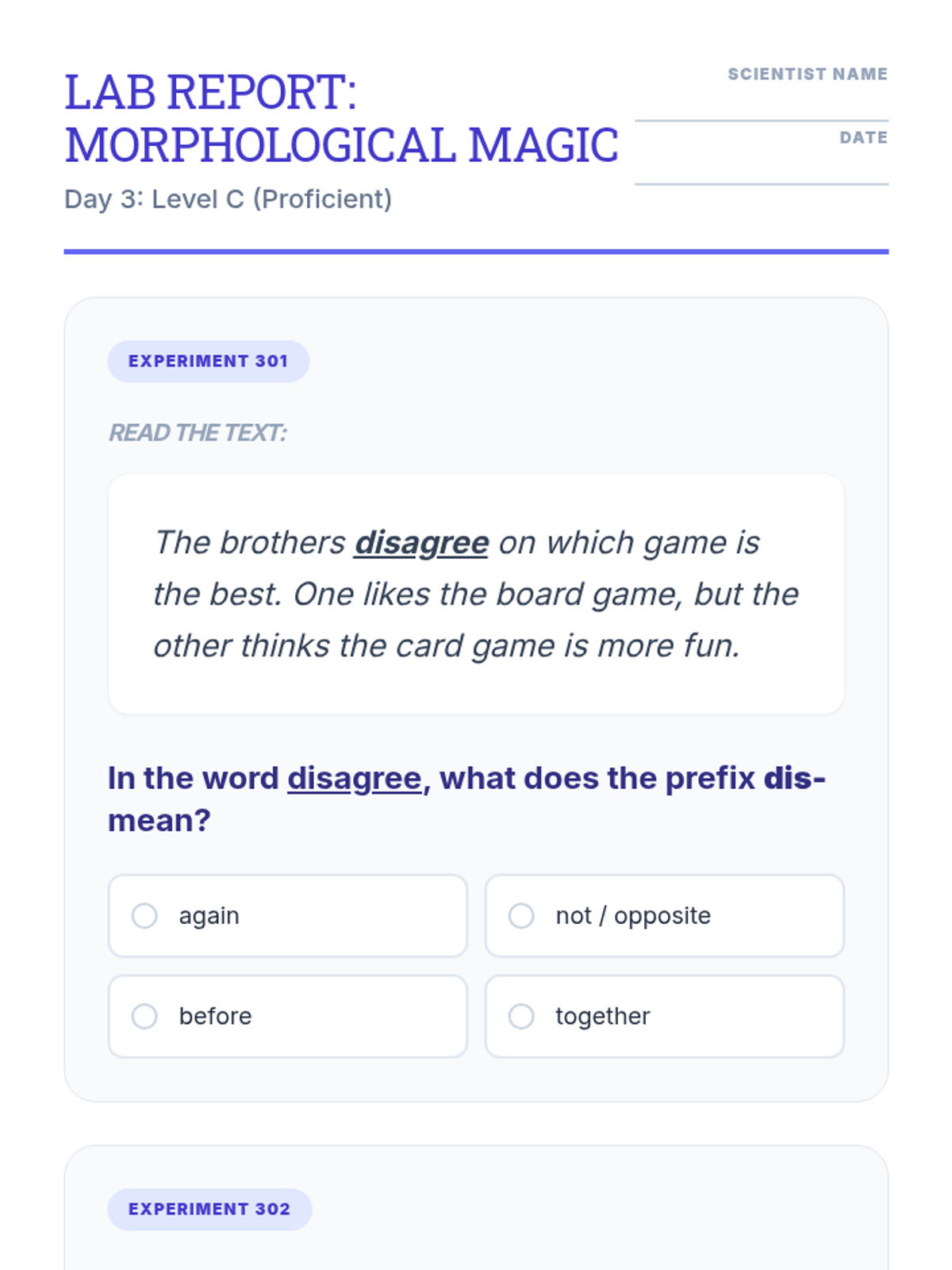
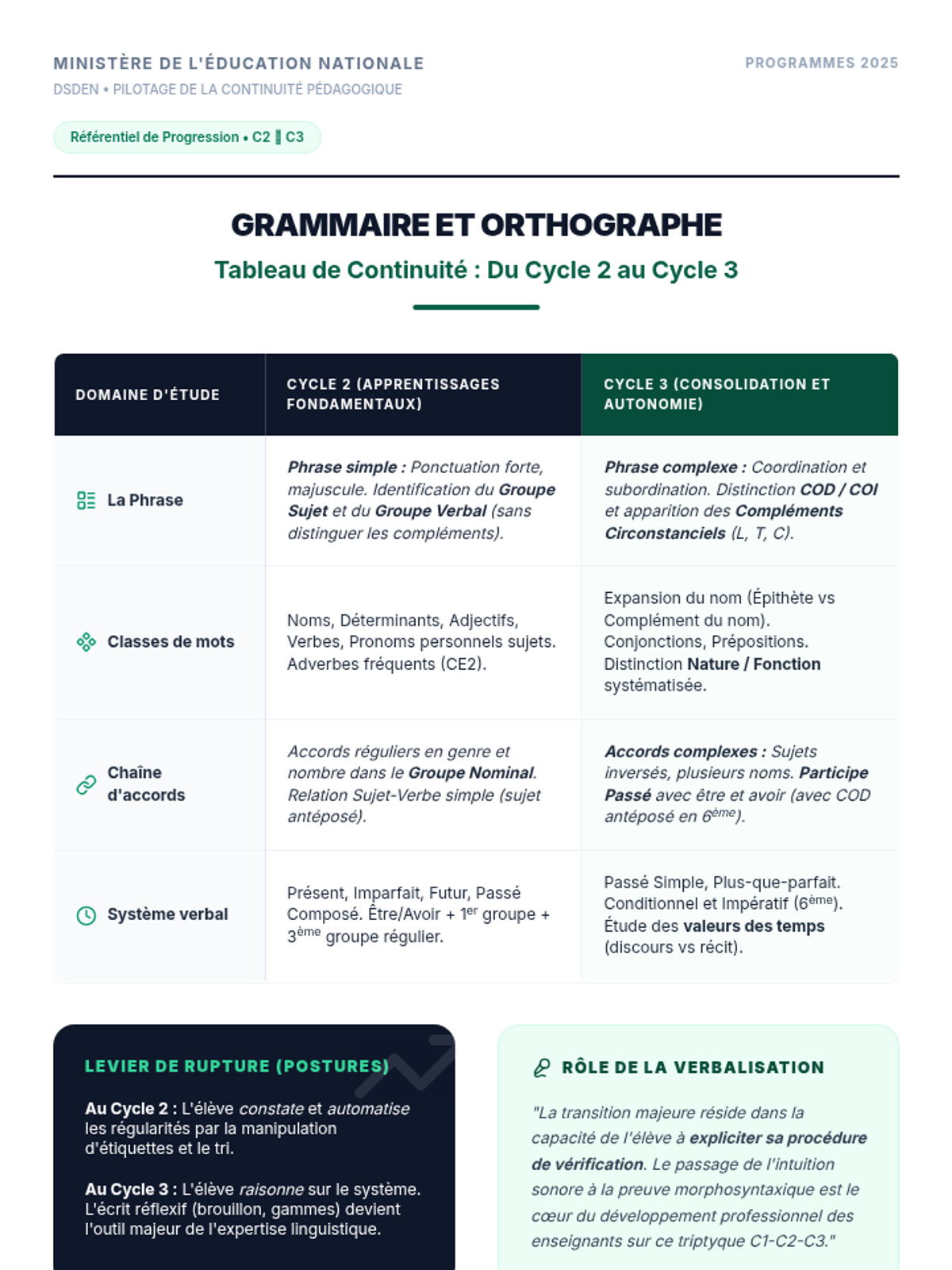
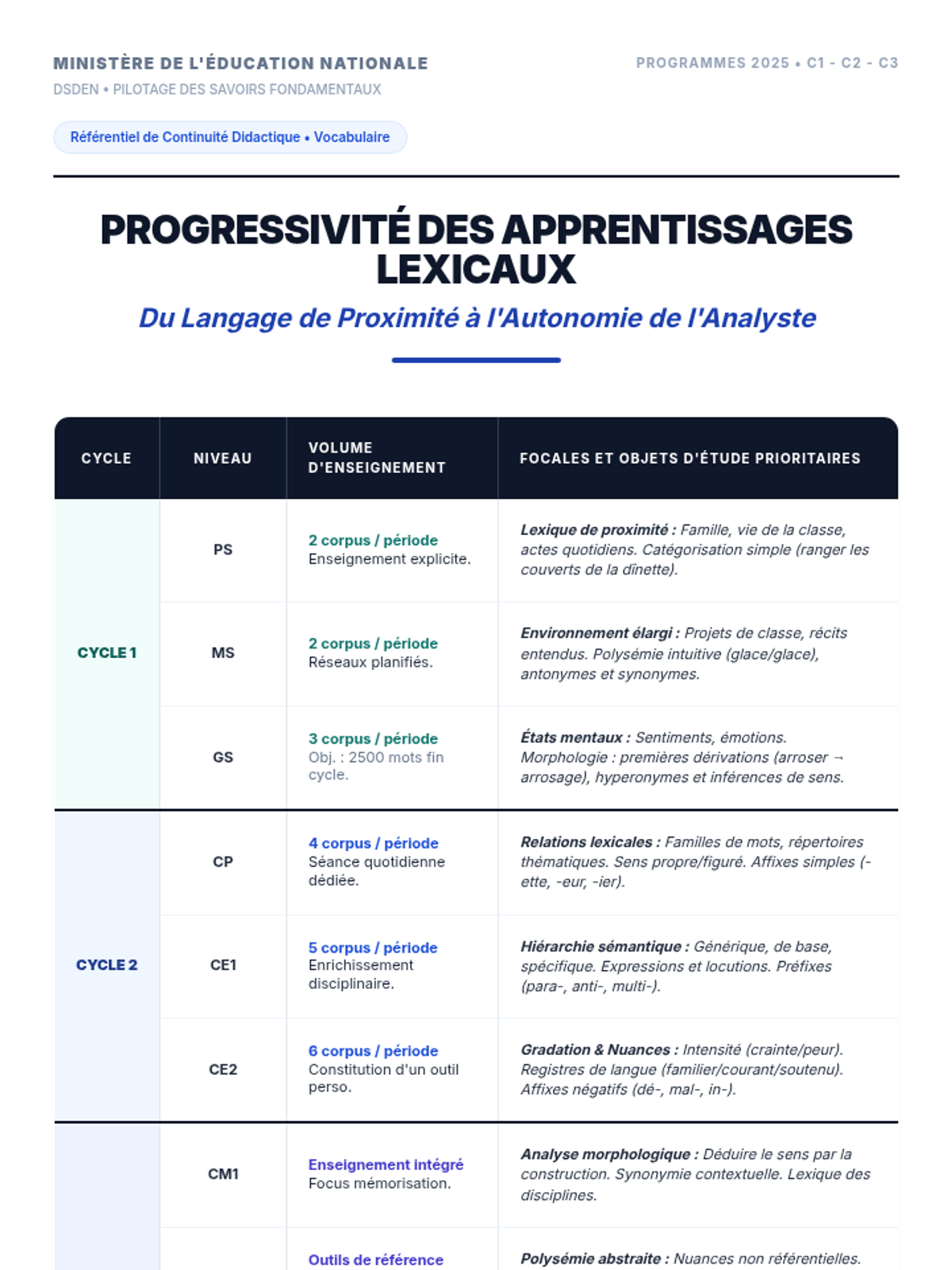
Builds word mastery through parts of speech, Greek and Latin roots, and morphological analysis of prefixes and suffixes. Develops nuanced comprehension using context clues, shades of meaning, and idiomatic expressions.
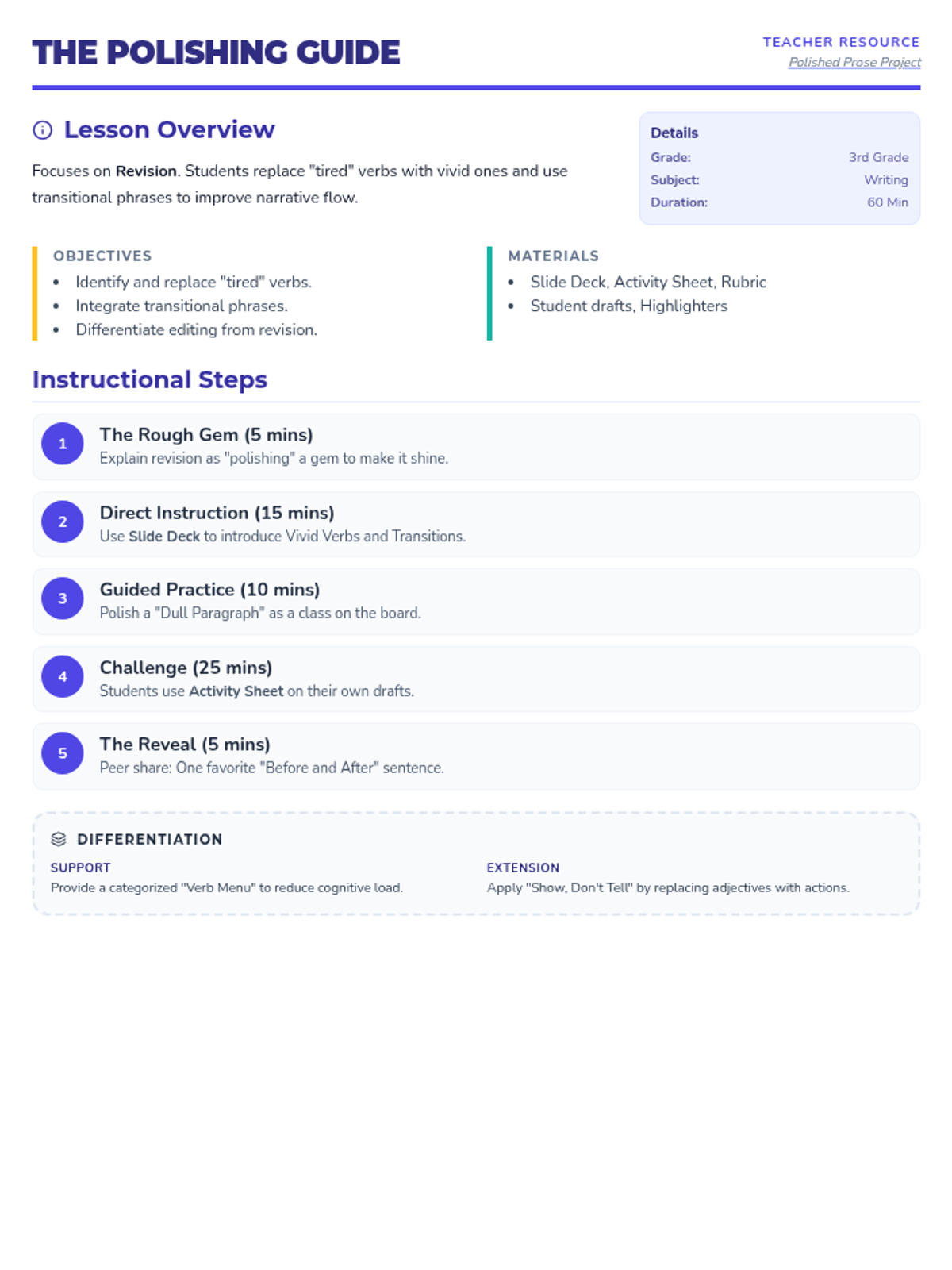
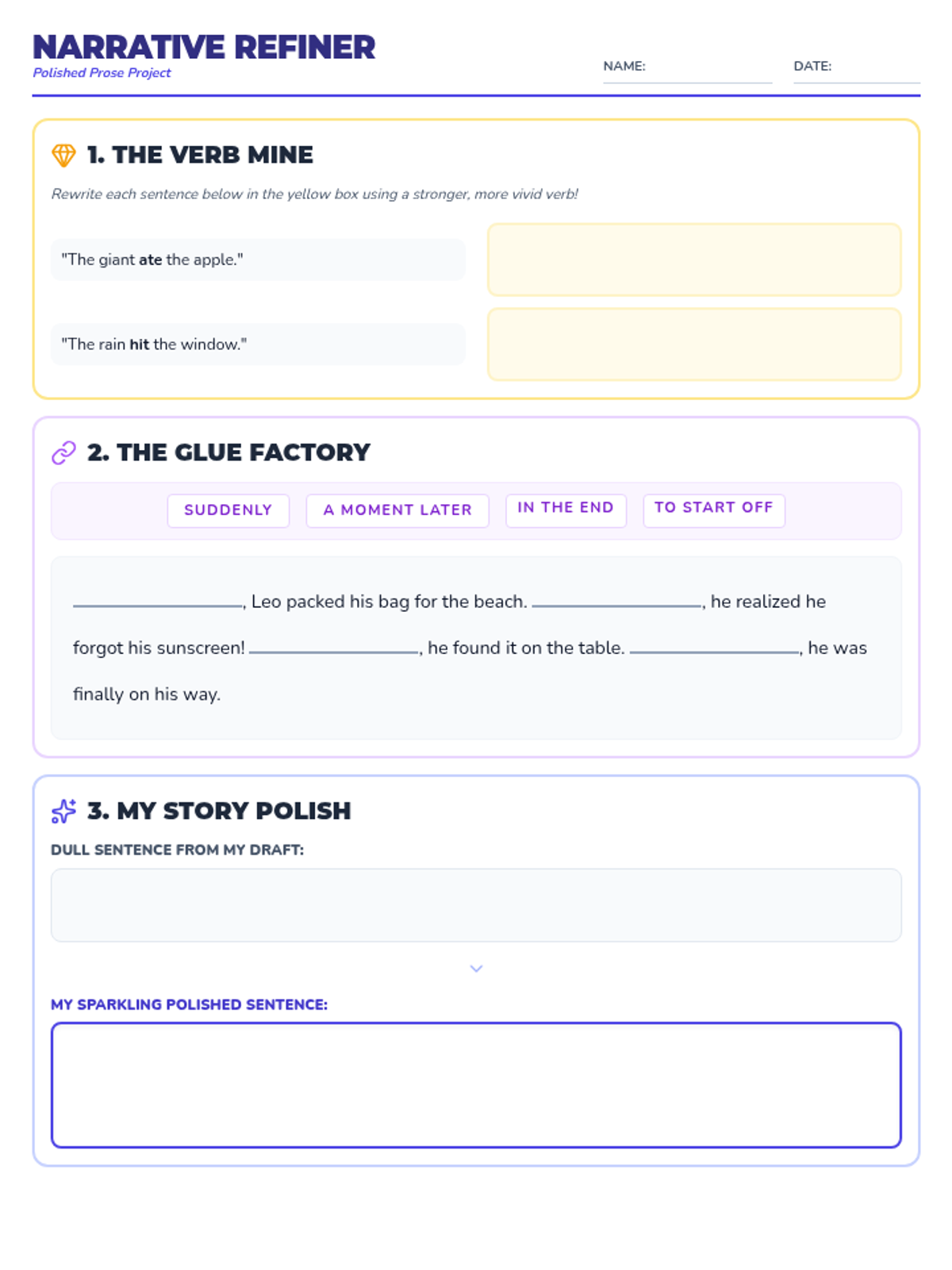
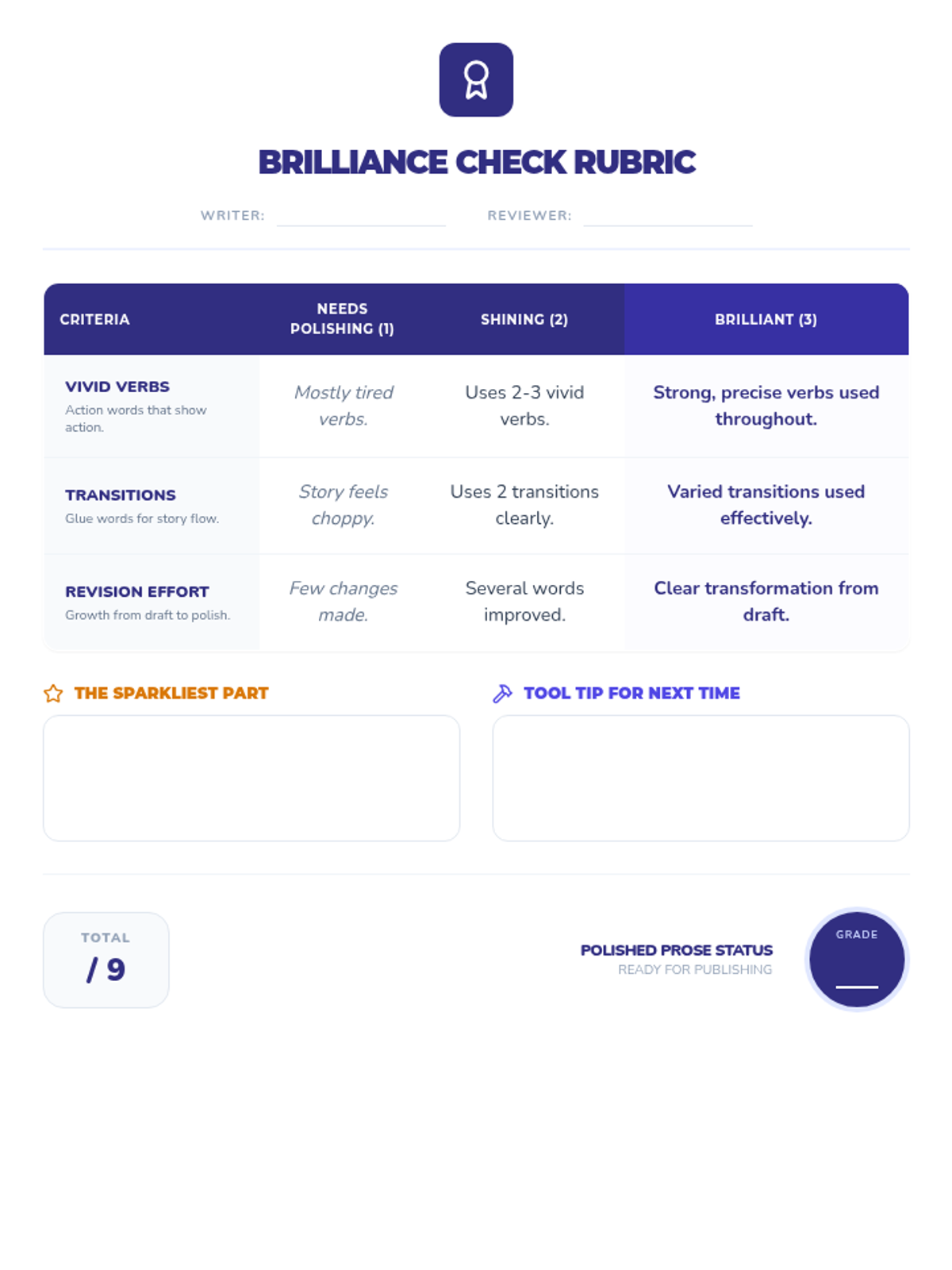
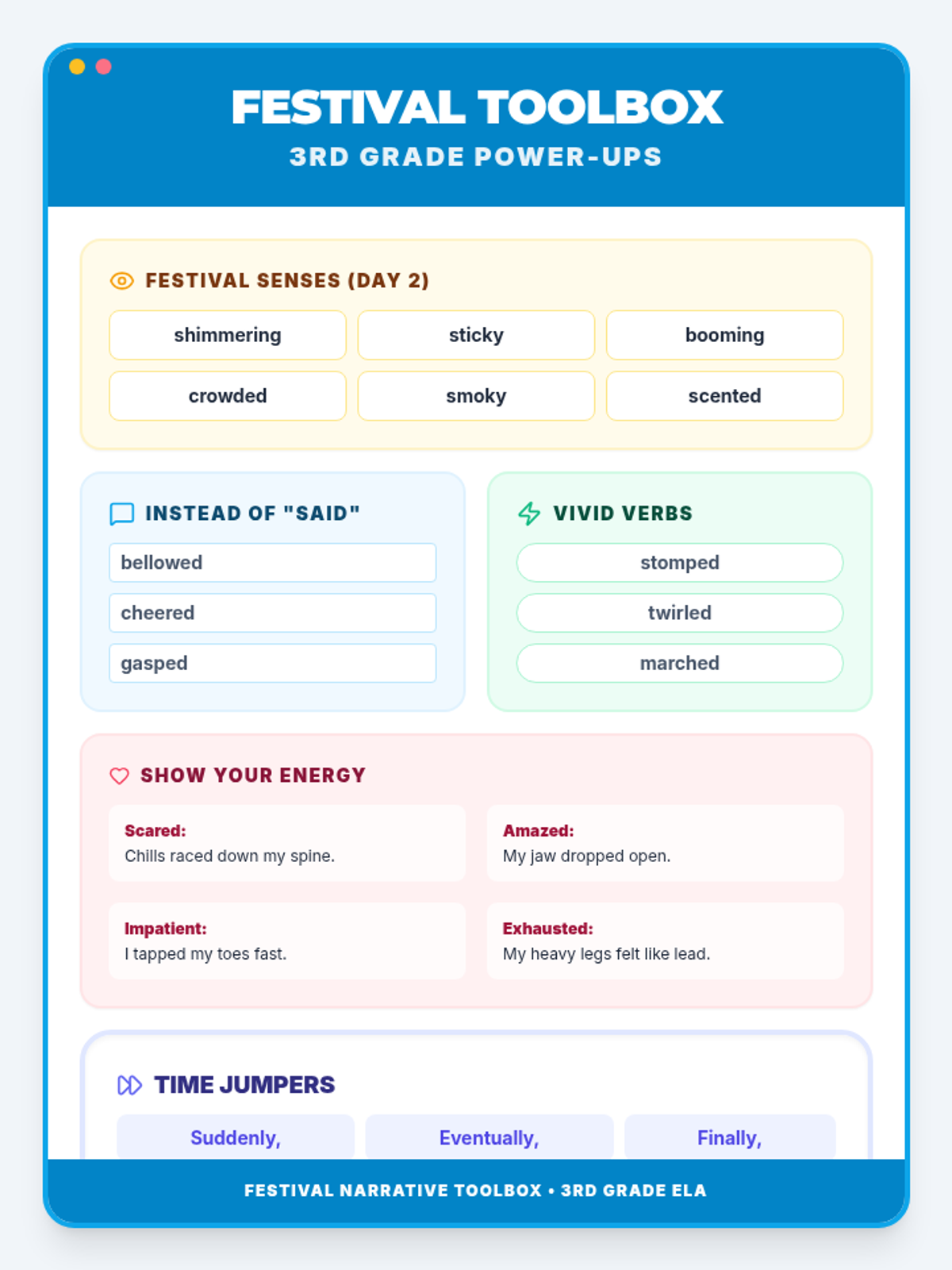
In this lesson, third-grade students learn to 'polish' their narrative drafts into sparkling stories. They focus on replacing 'tired' verbs with vivid ones and using transitional phrases to create a smooth flow for their readers.
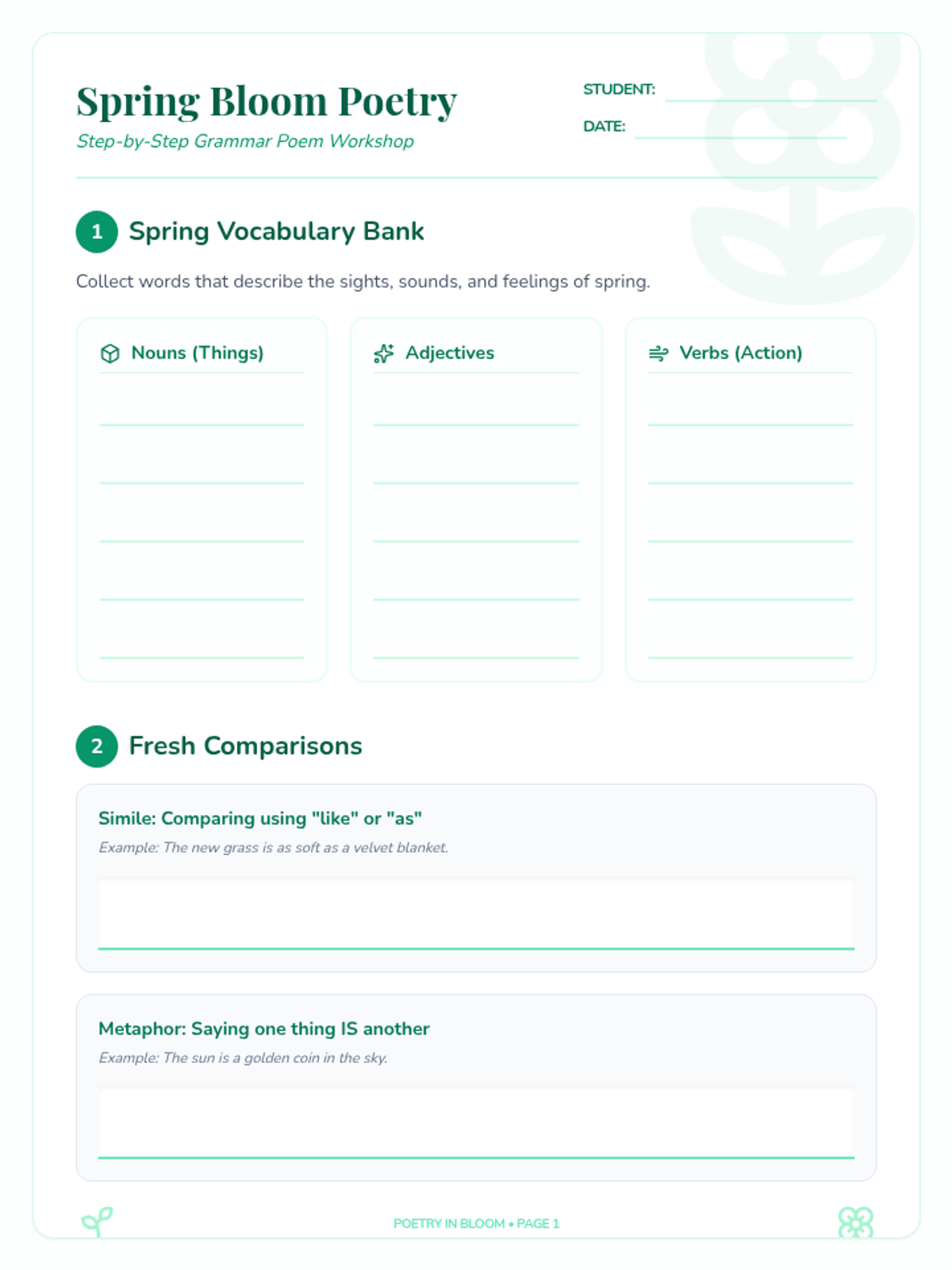
A guided poetry workshop where students use grammar concepts and figurative language to celebrate the arrival of spring.
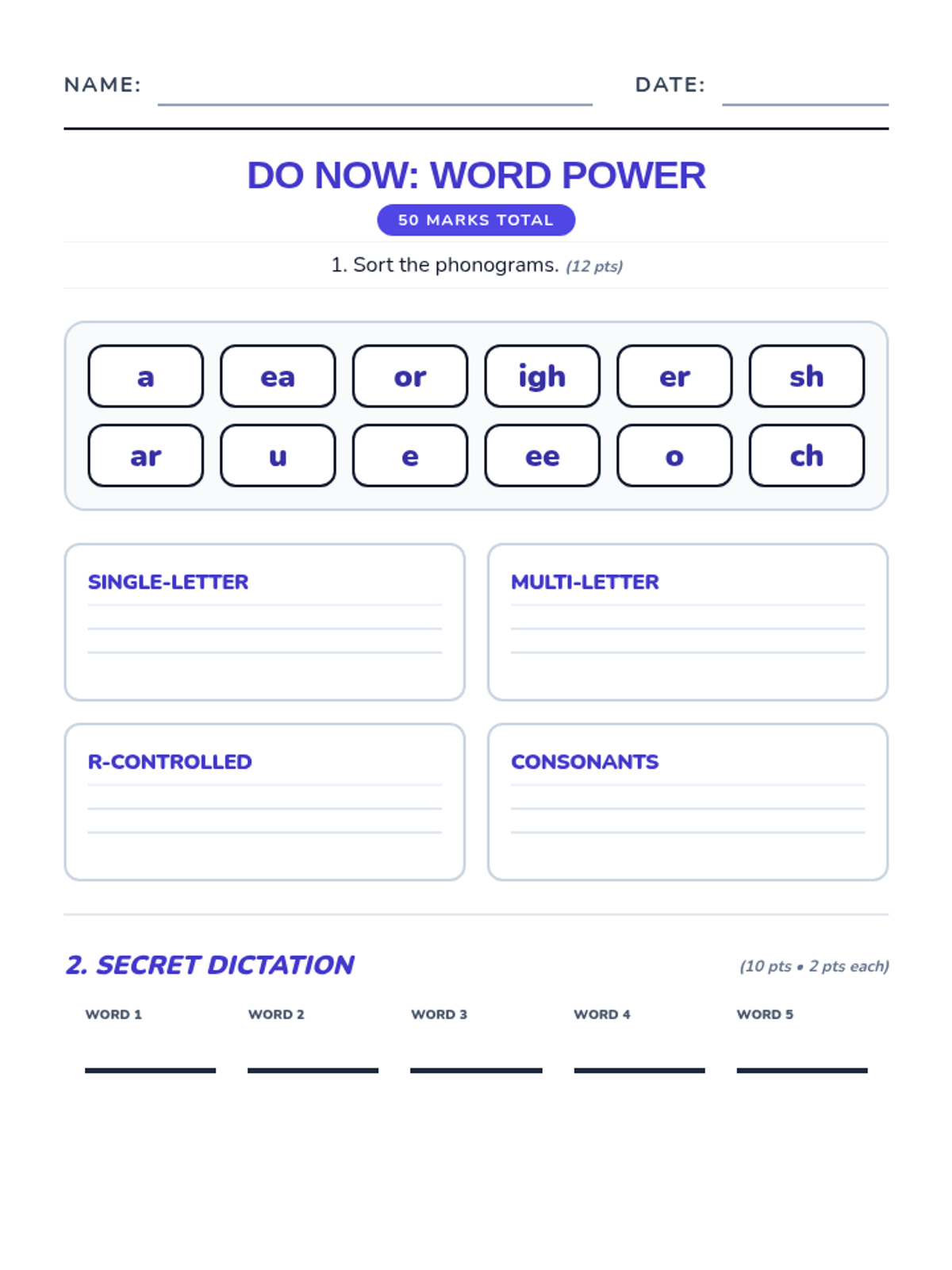
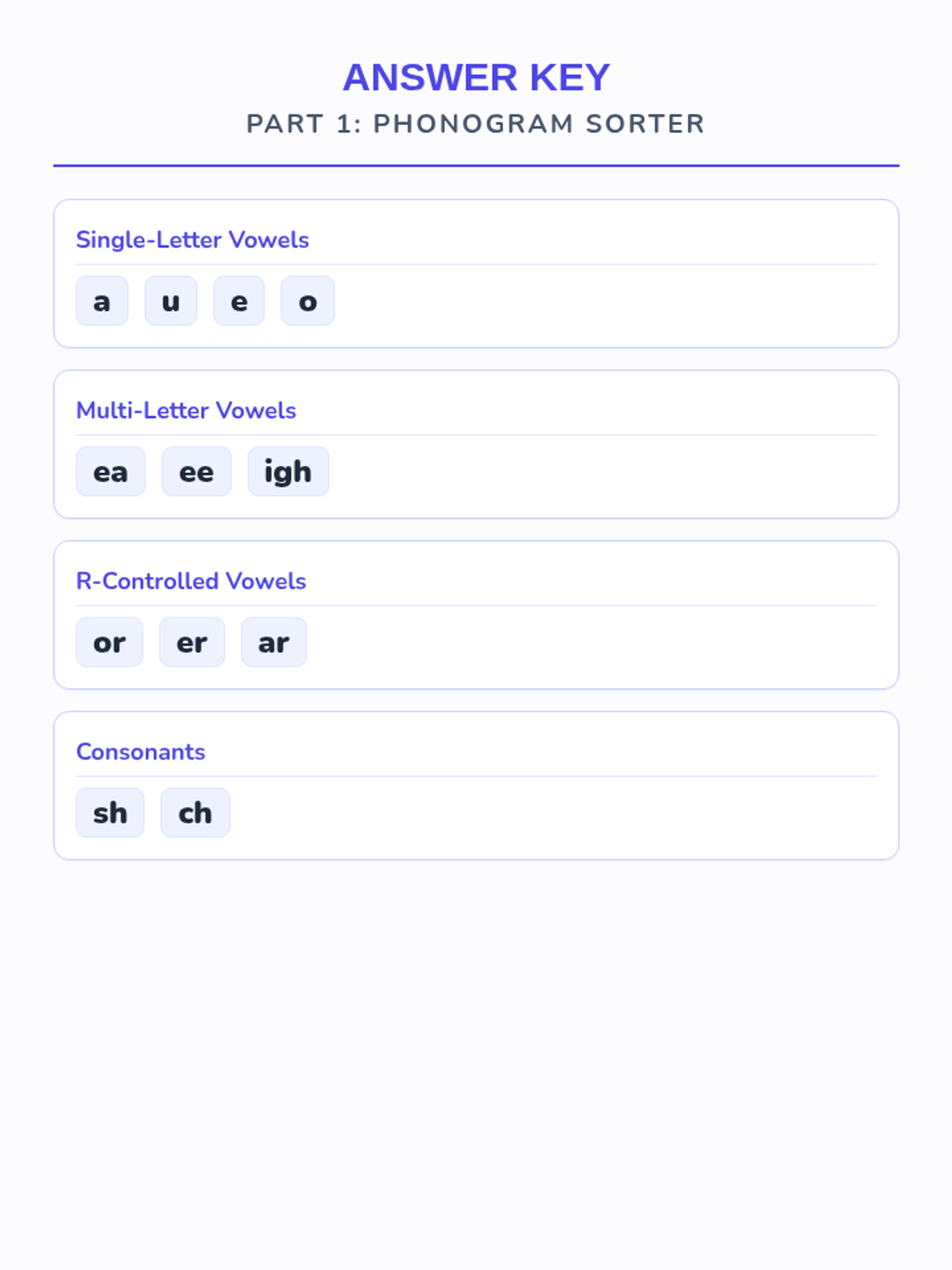
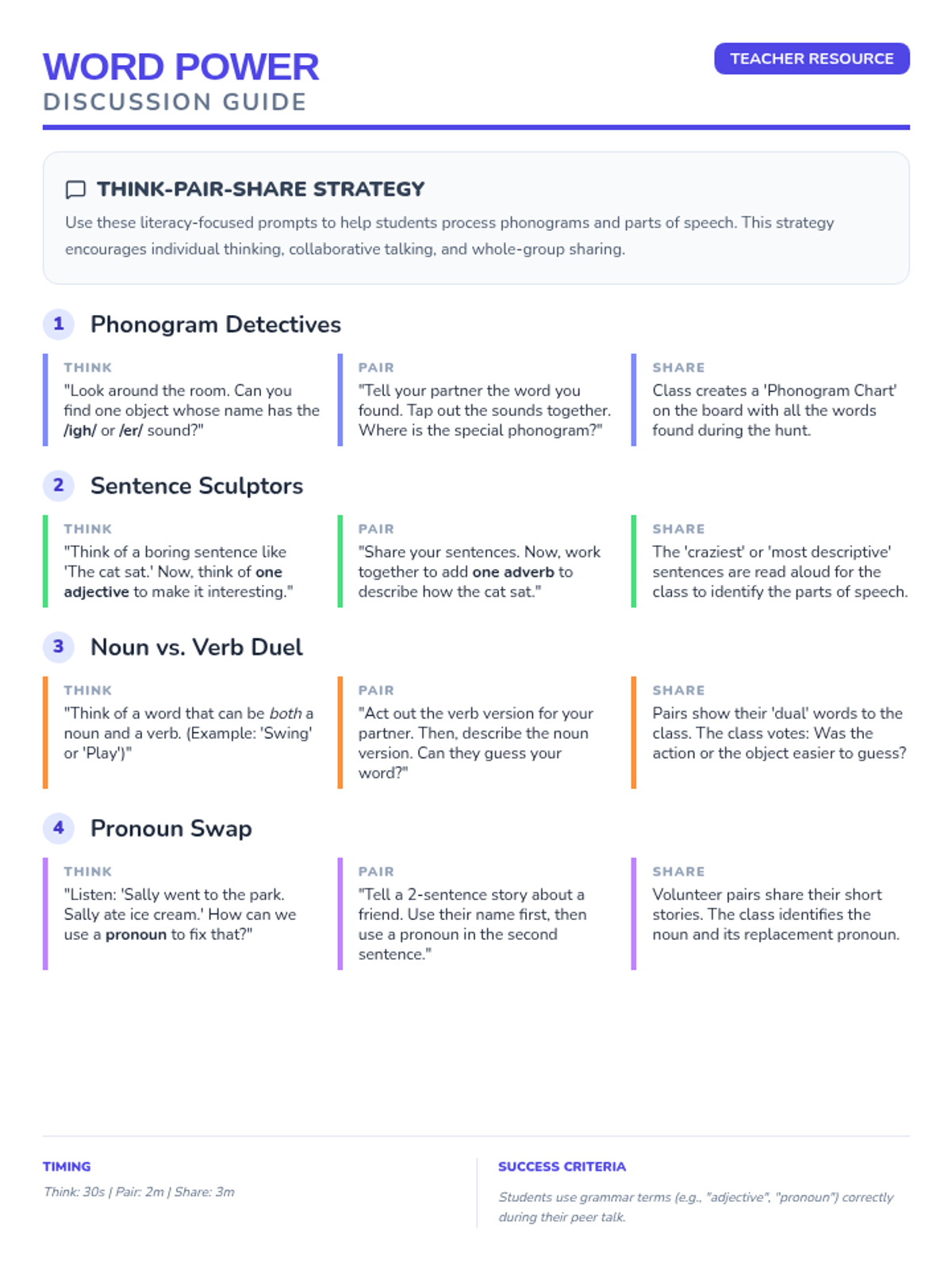
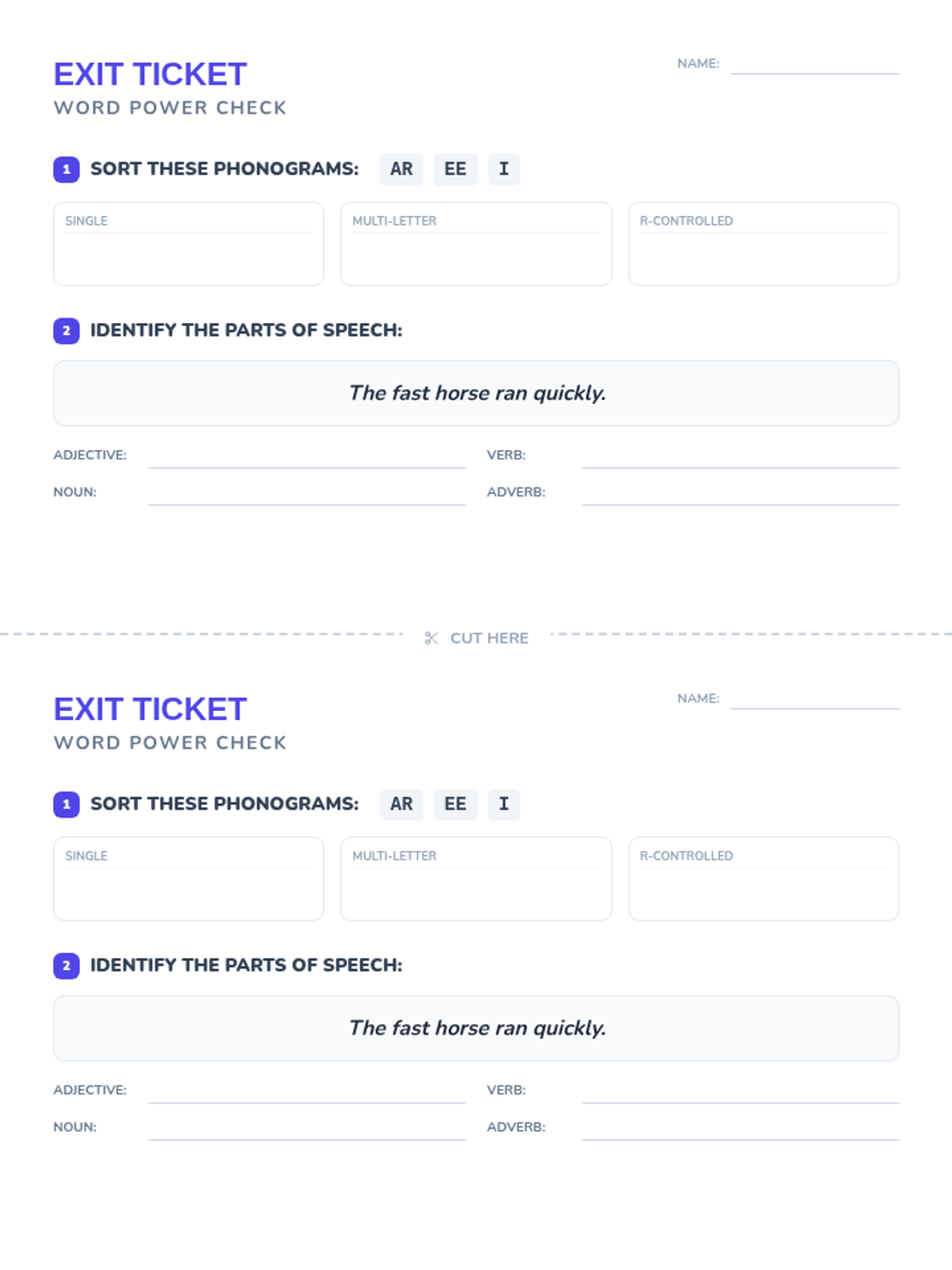
A two-part foundational literacy lesson focusing on phonogram categorization and identifying parts of speech in simple sentences.
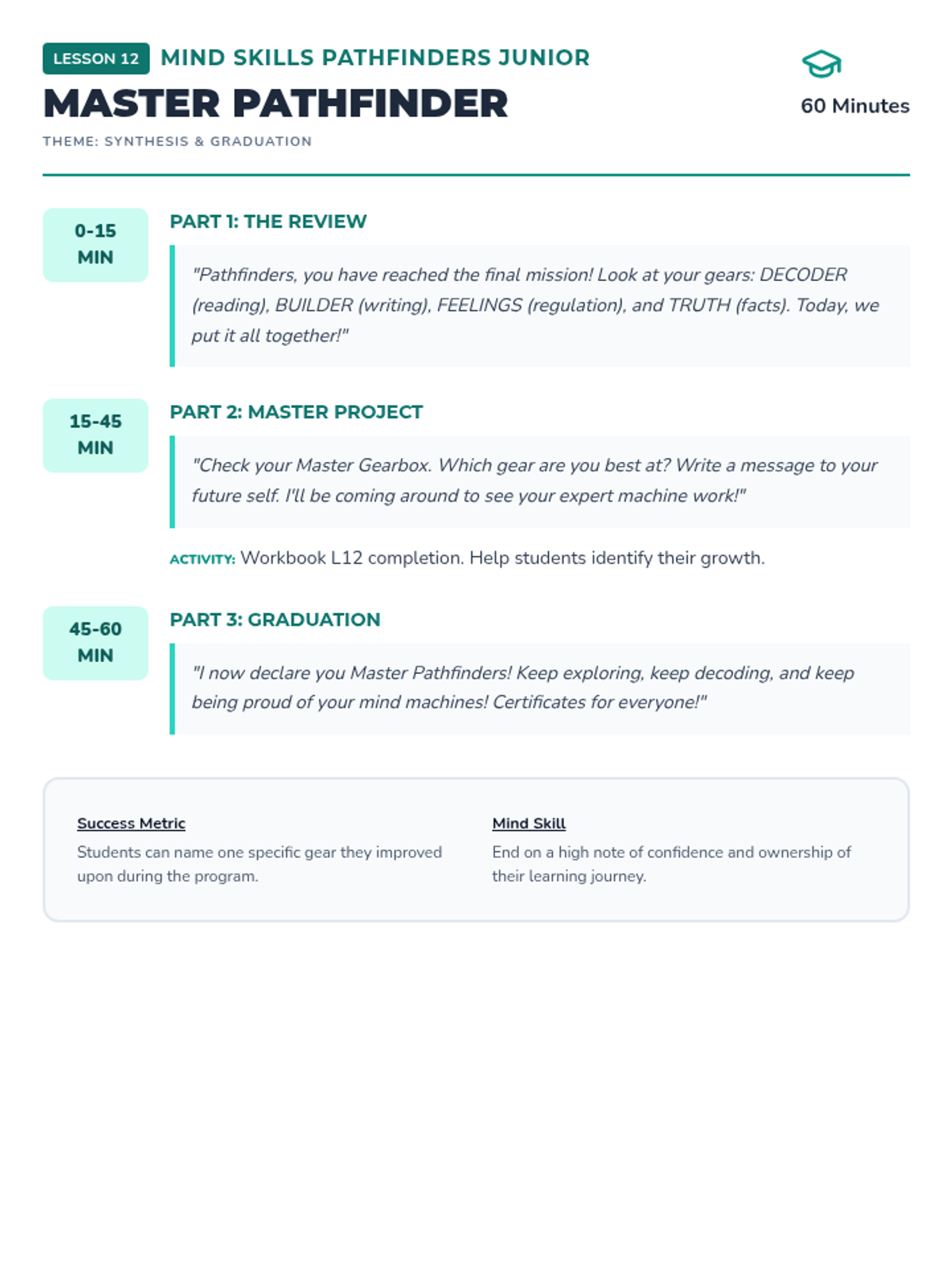
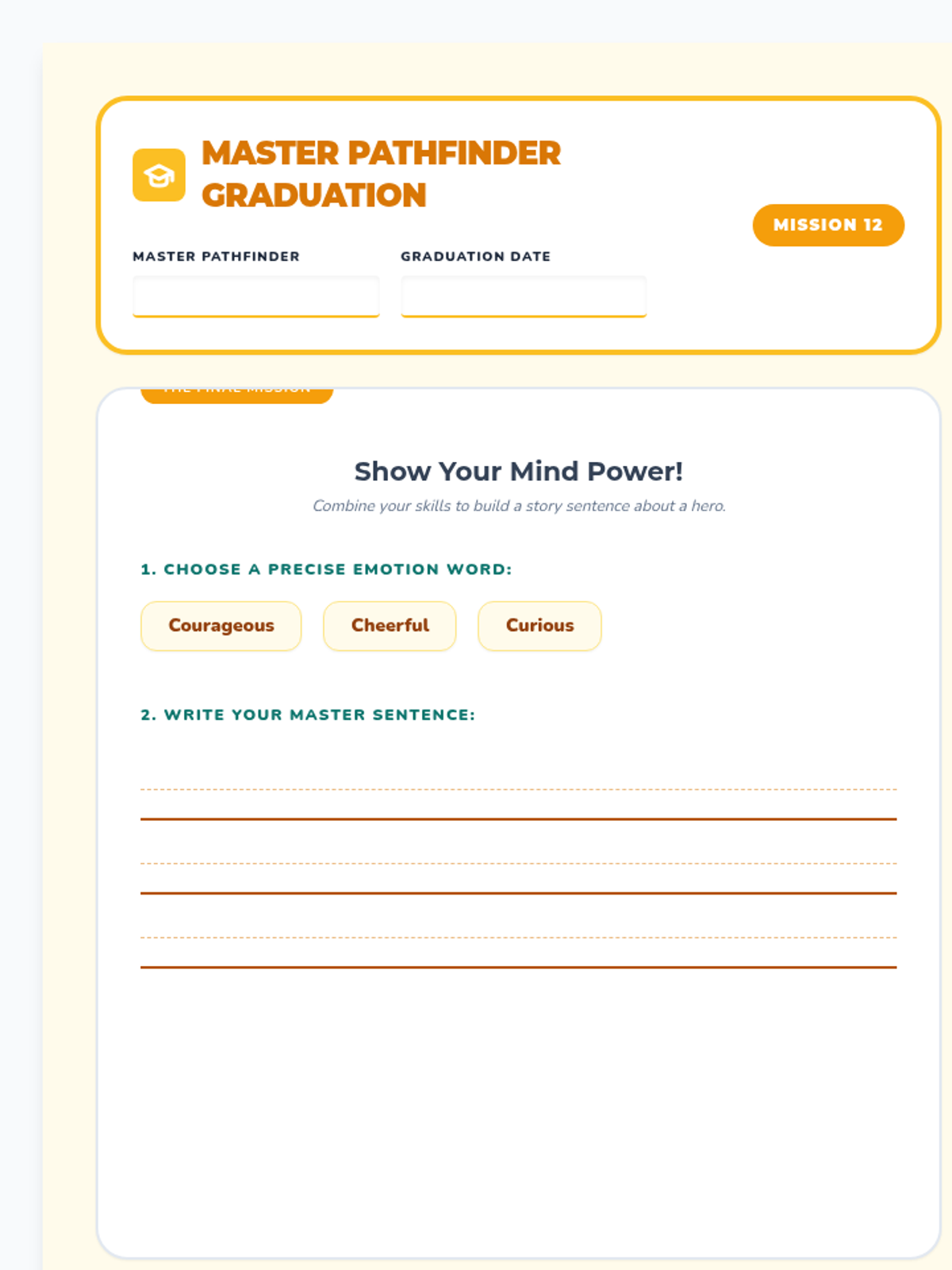
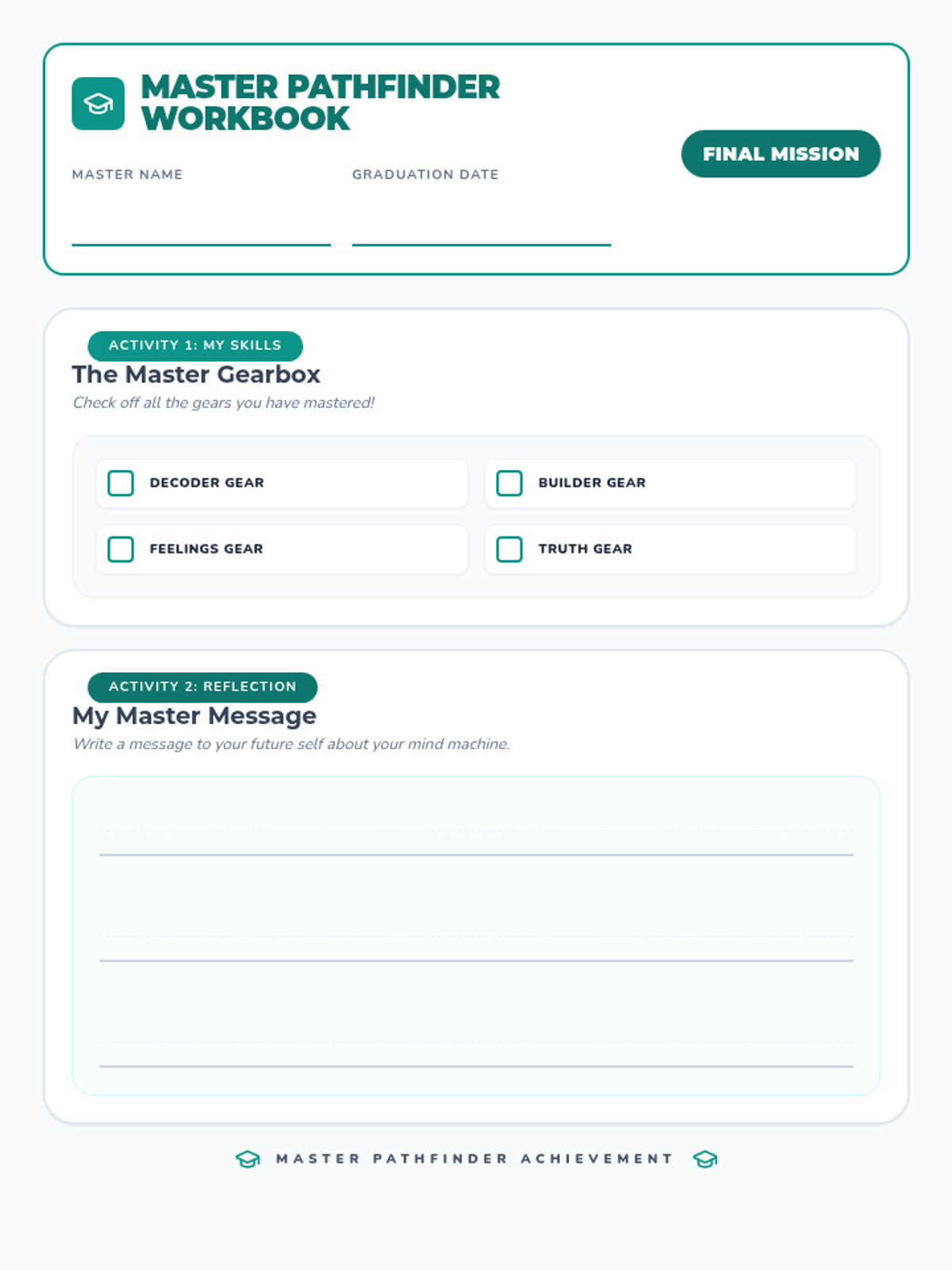
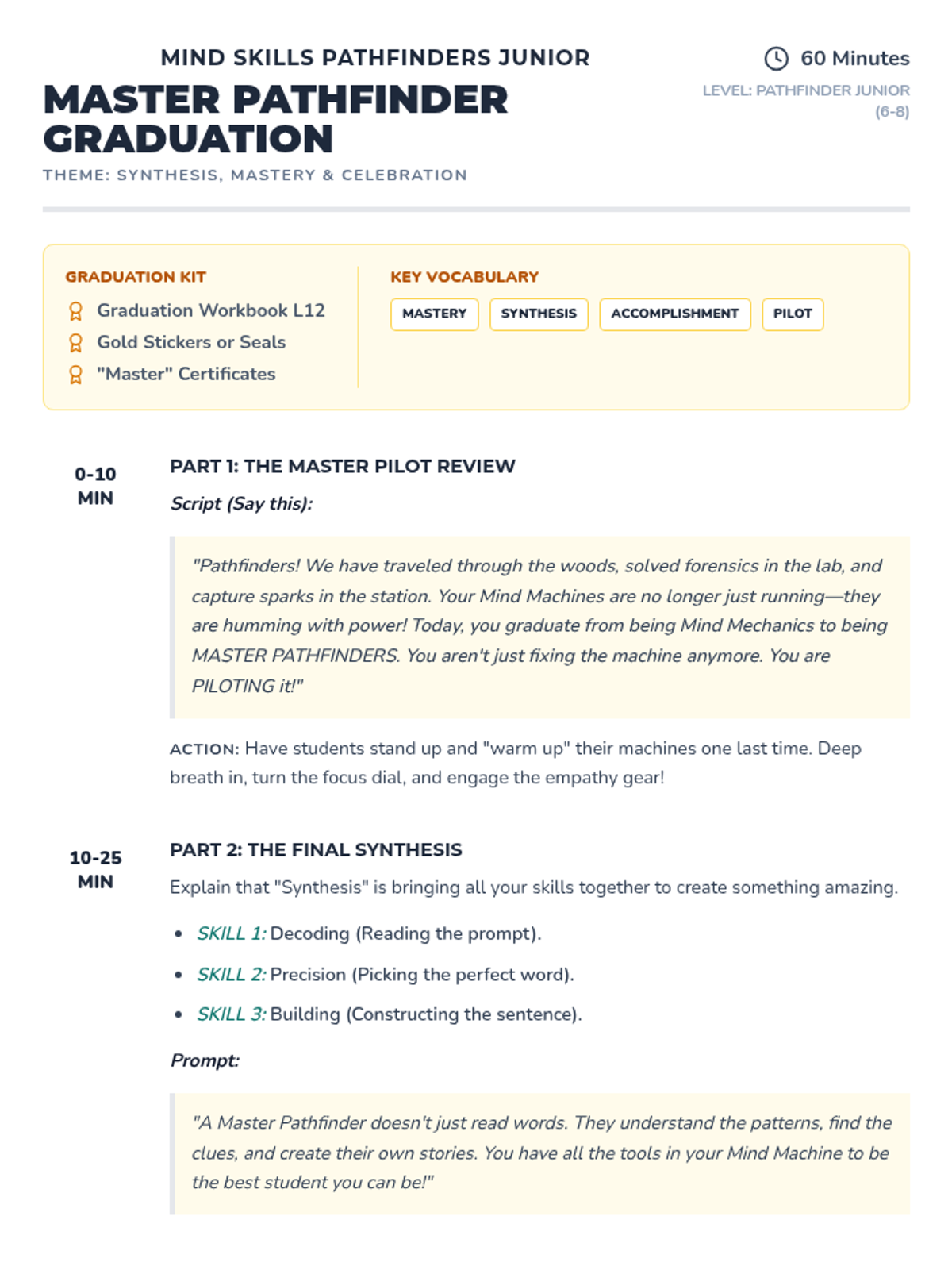
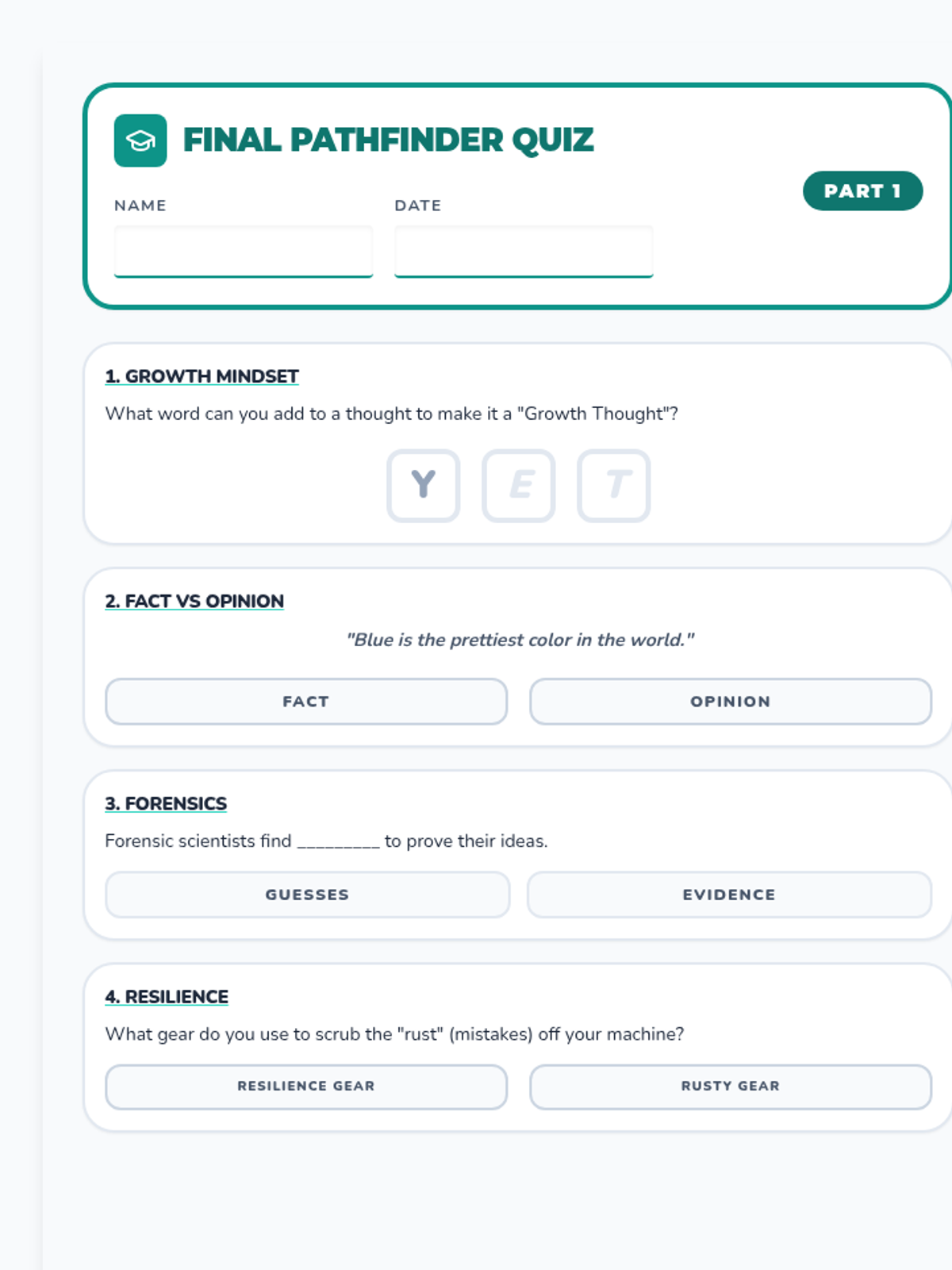
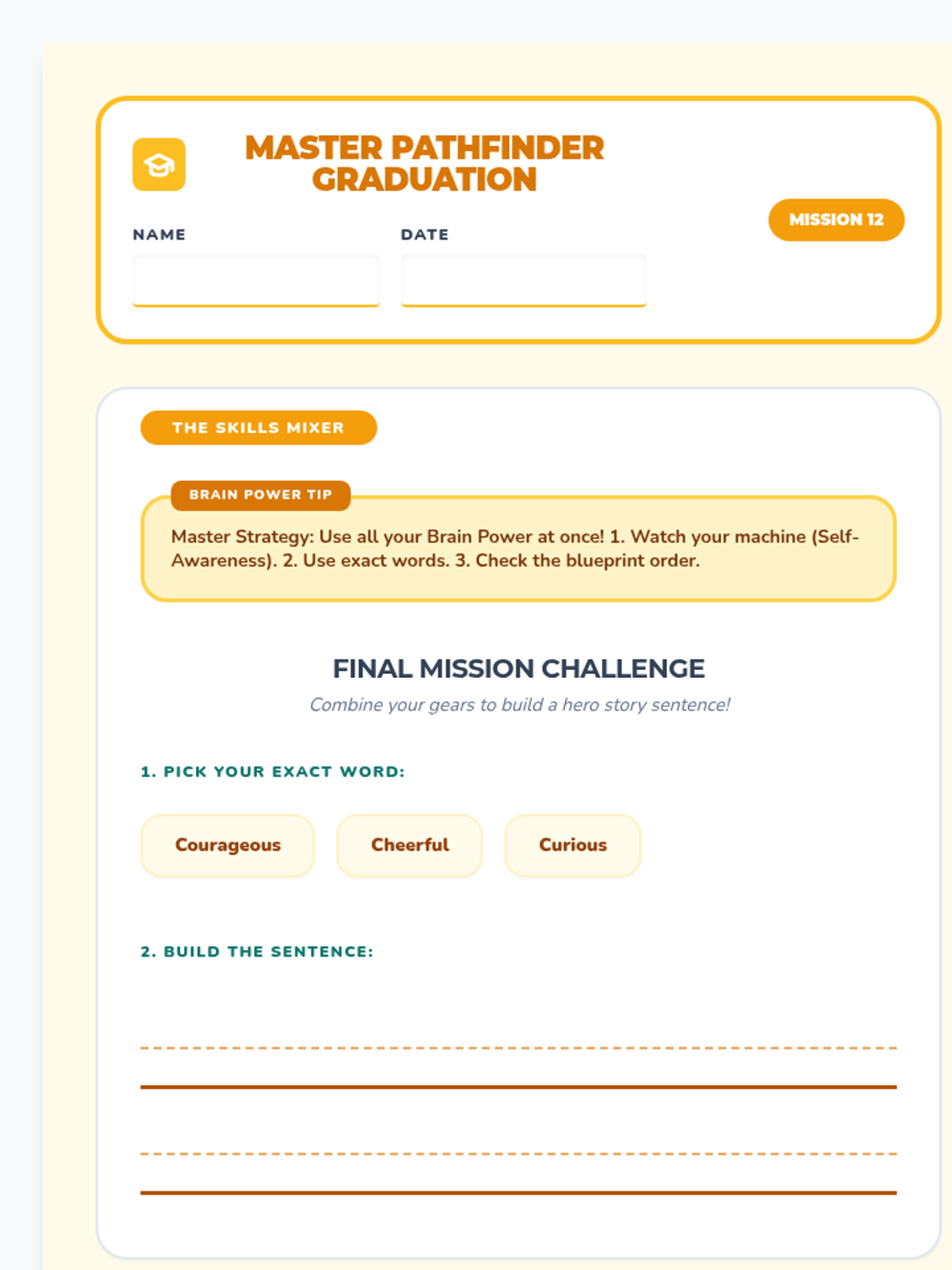
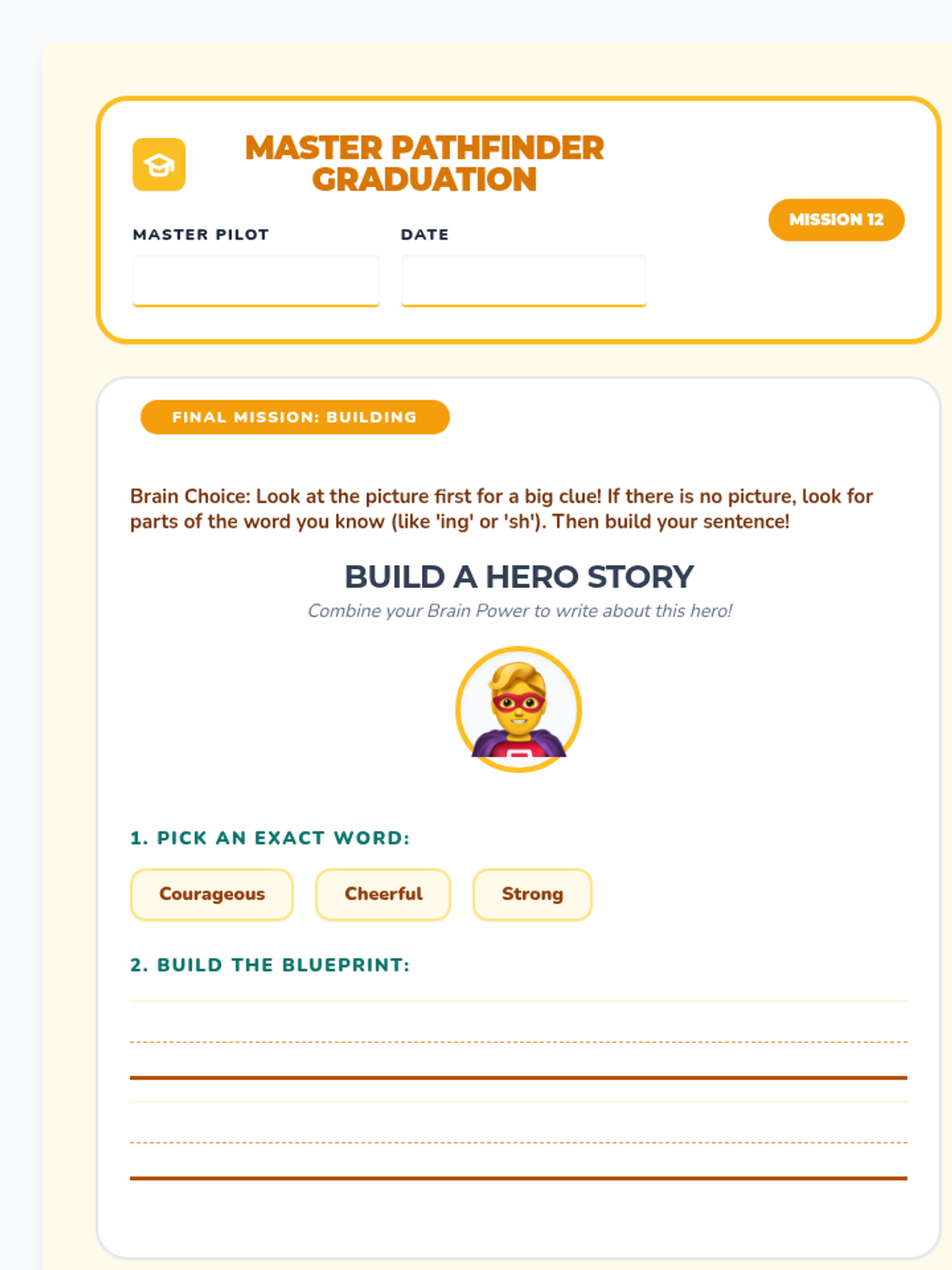
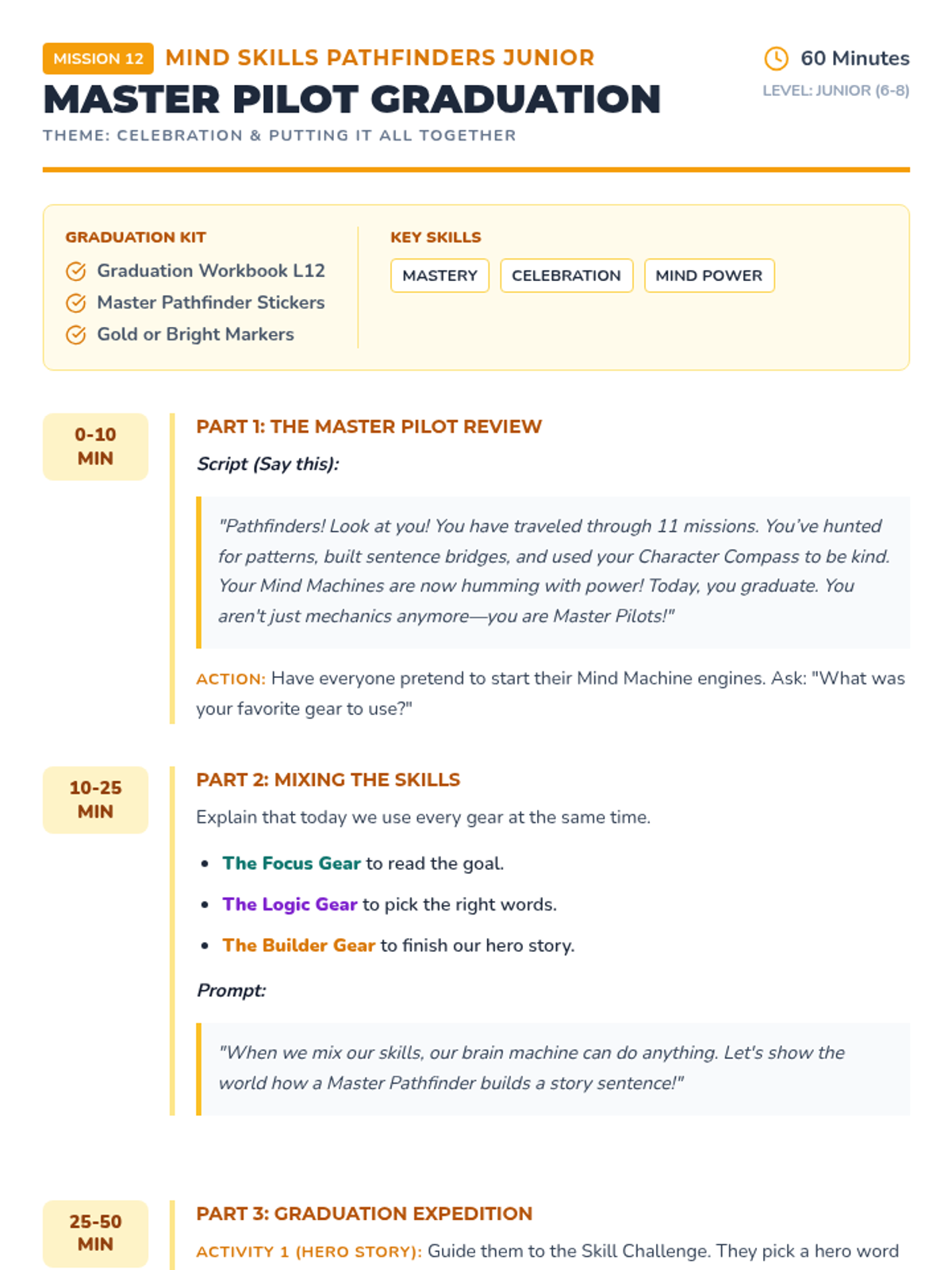
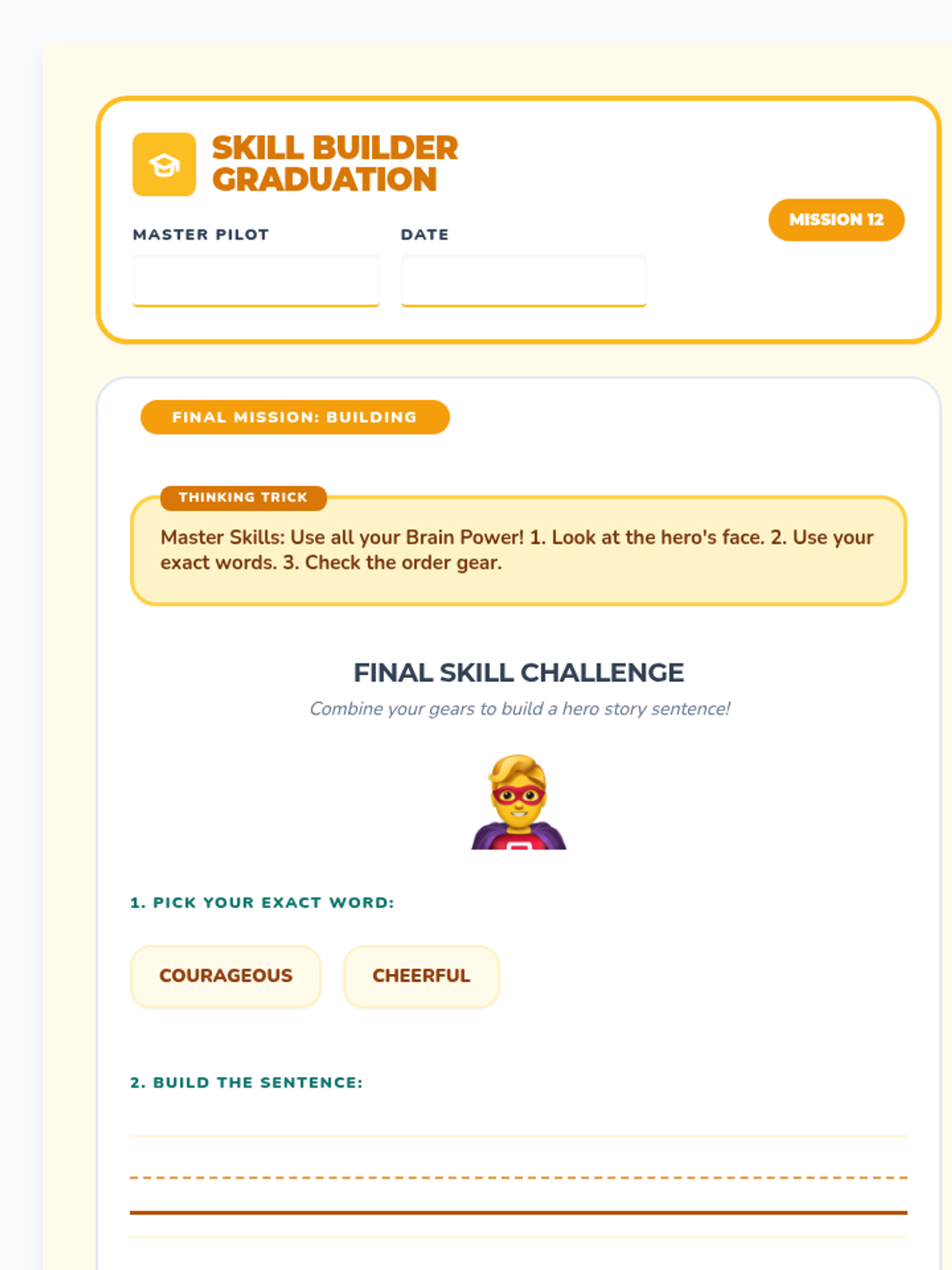
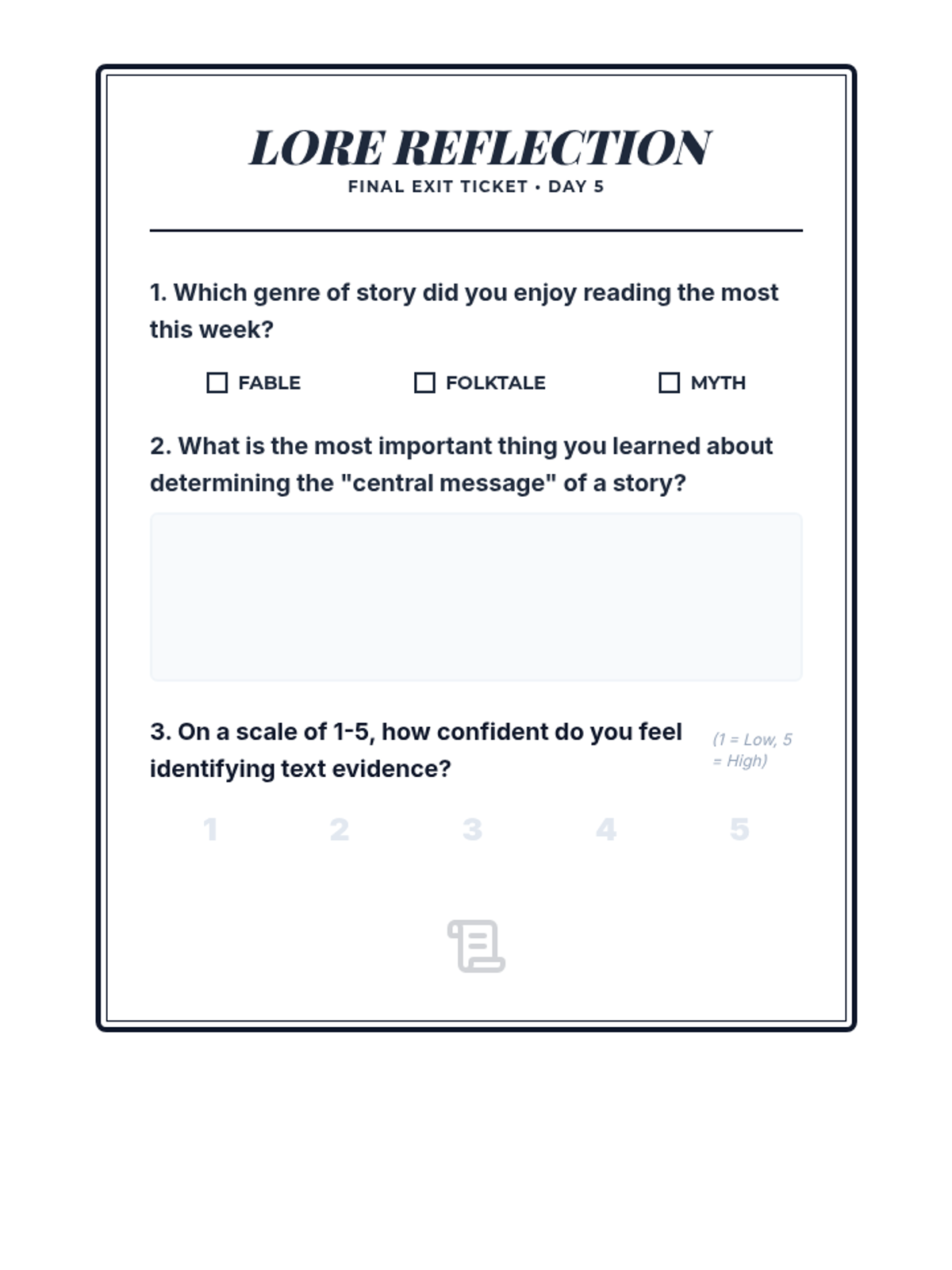
A celebratory final session where students demonstrate their 'Master Pathfinder' skills and receive recognition for their growth in thinking and English.
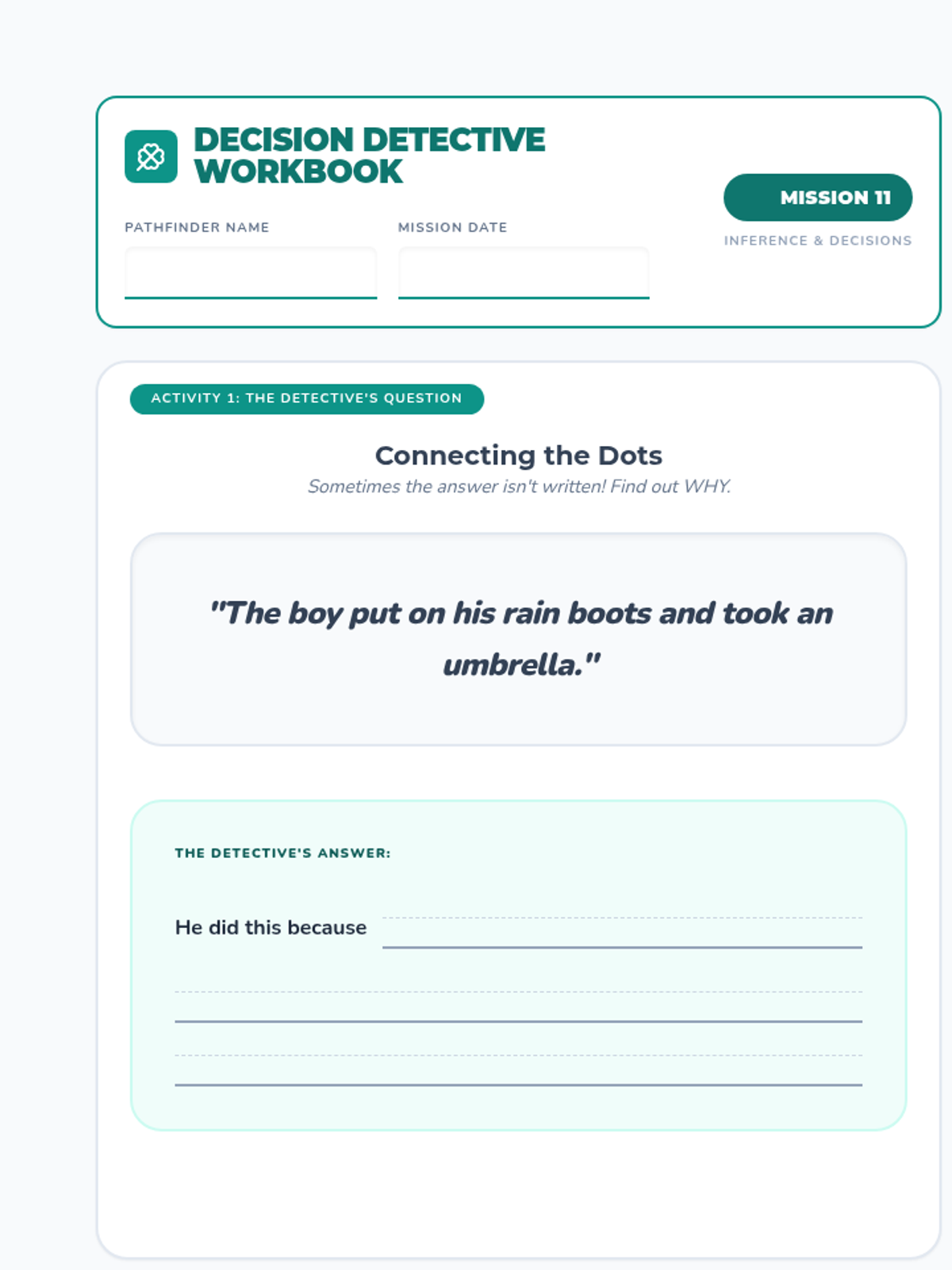
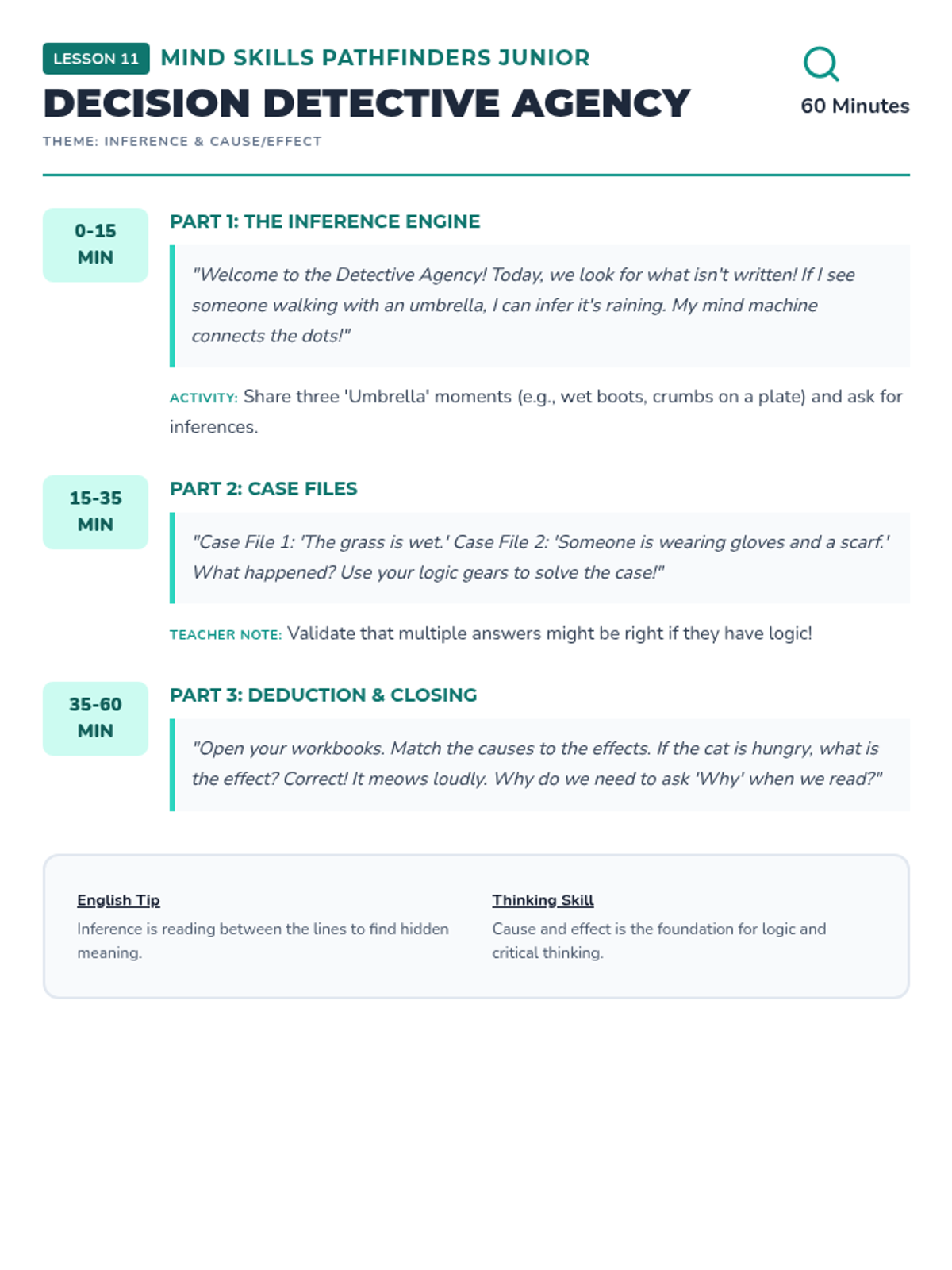
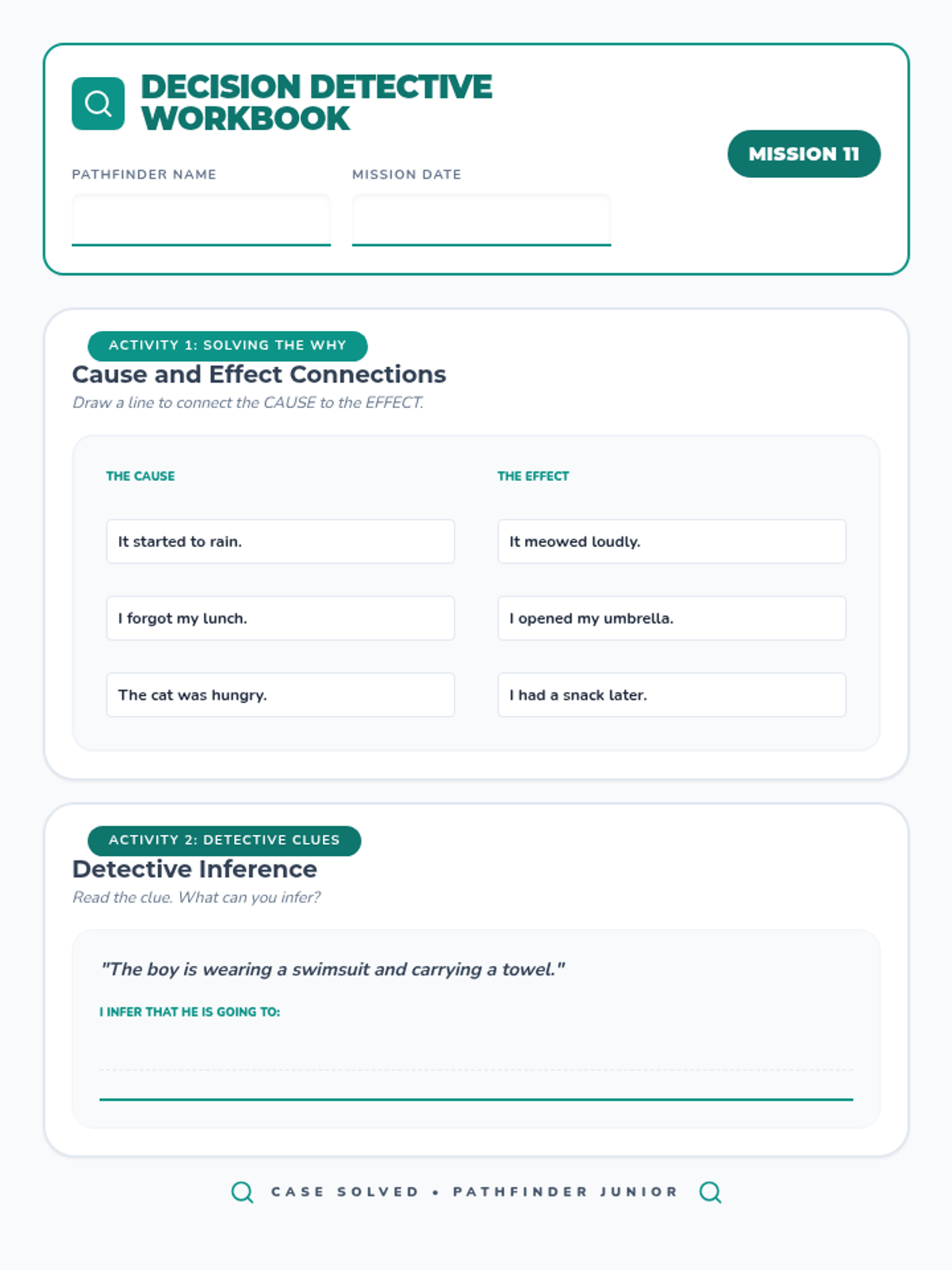
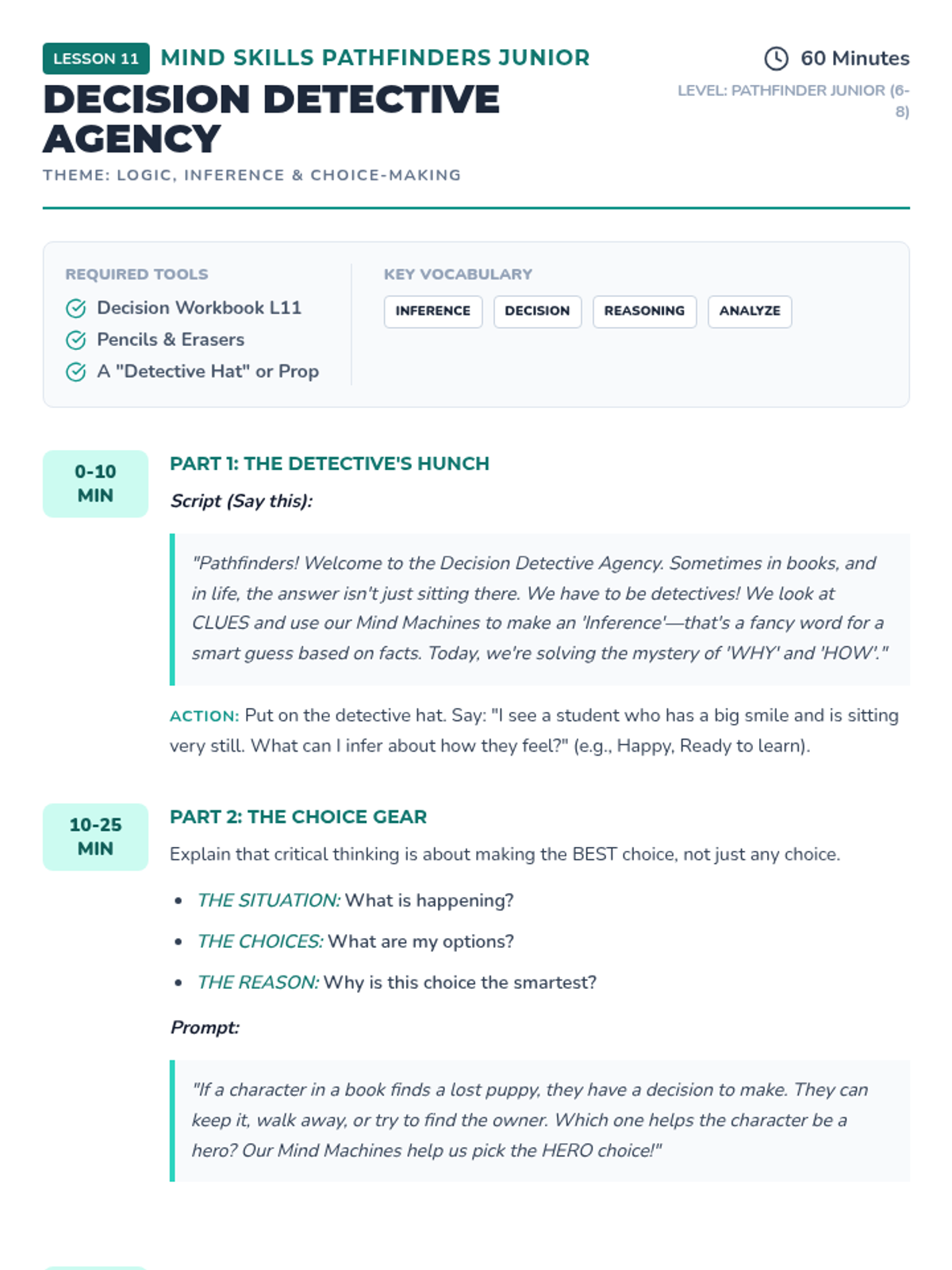
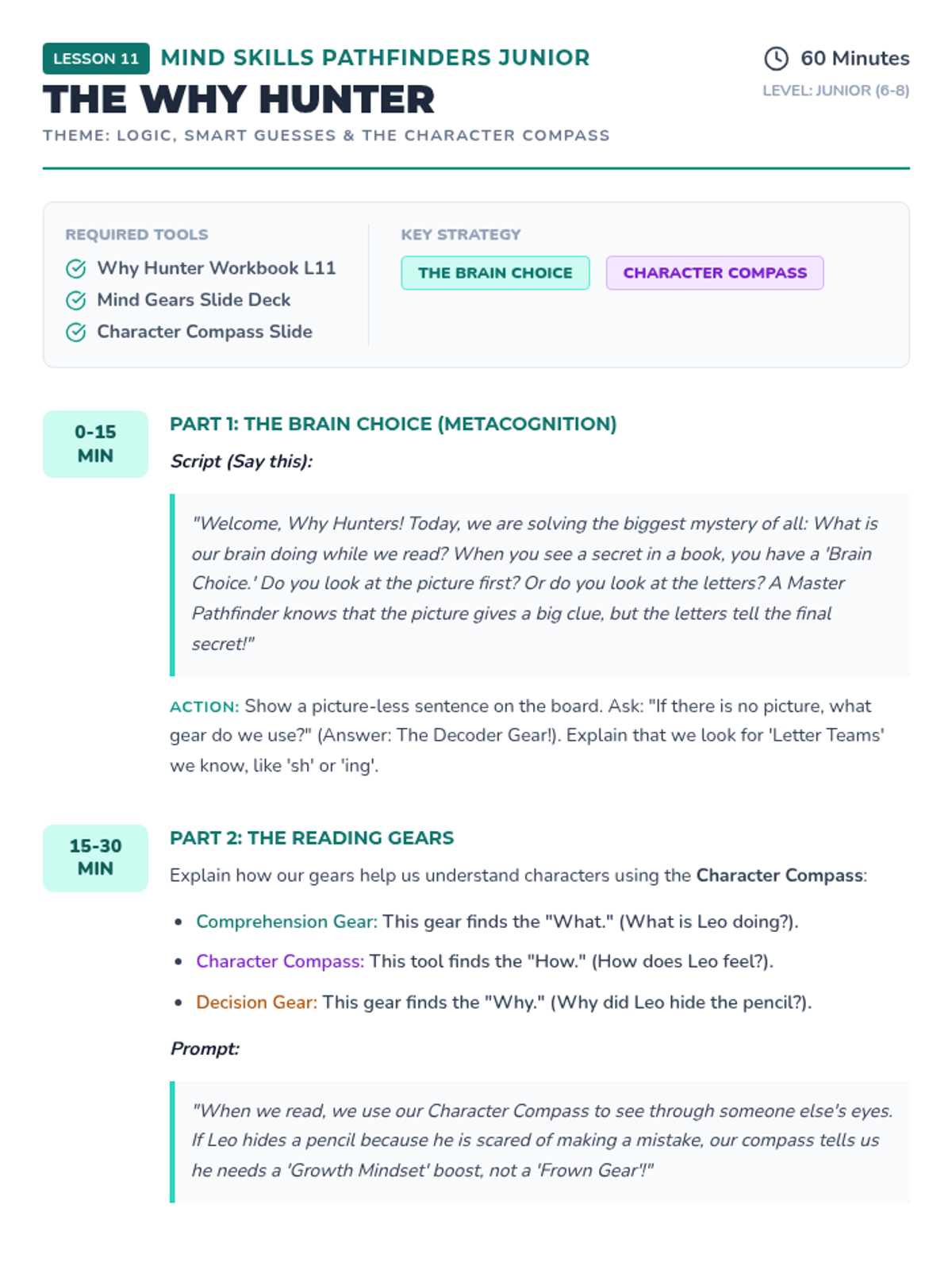
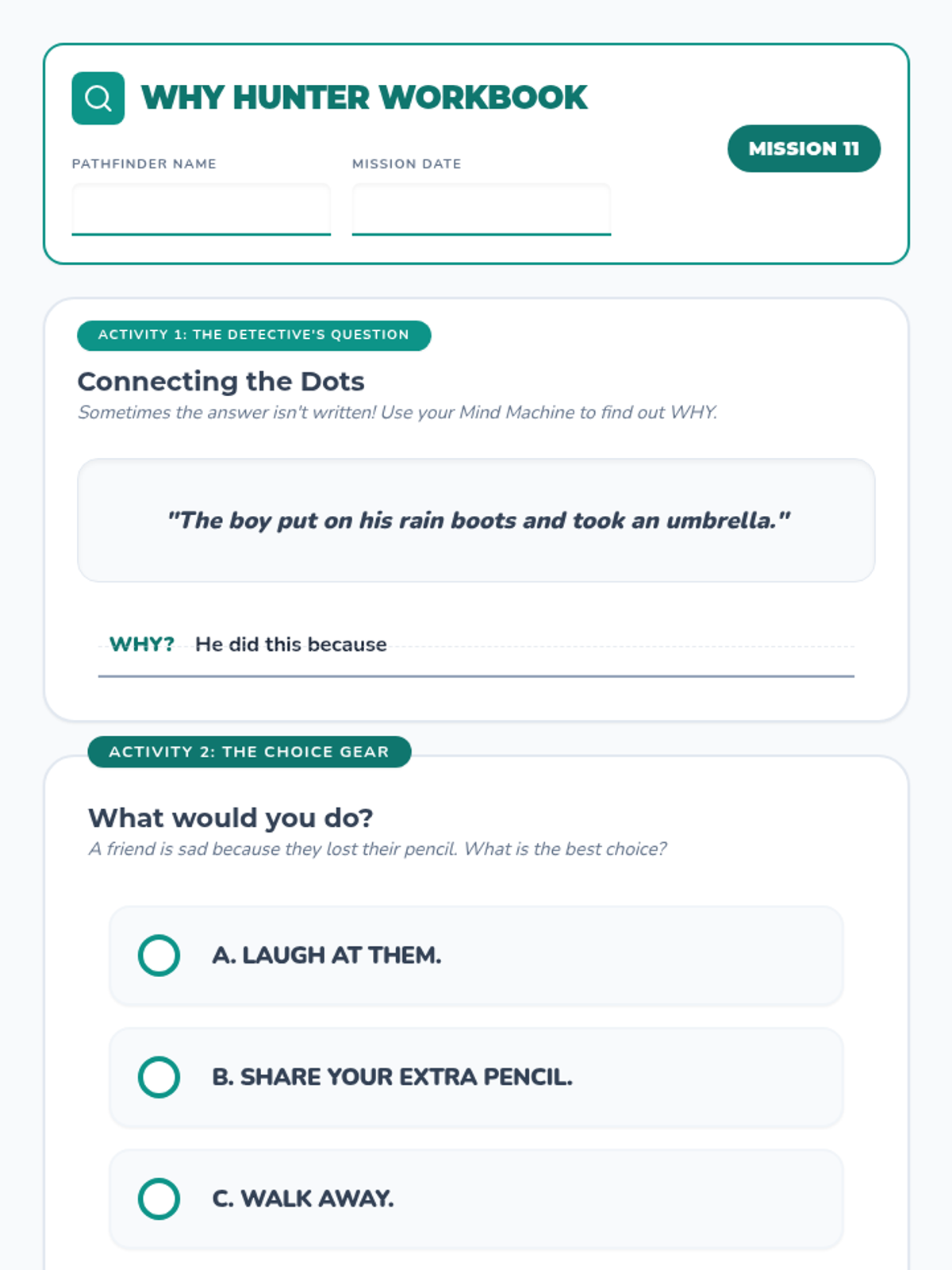
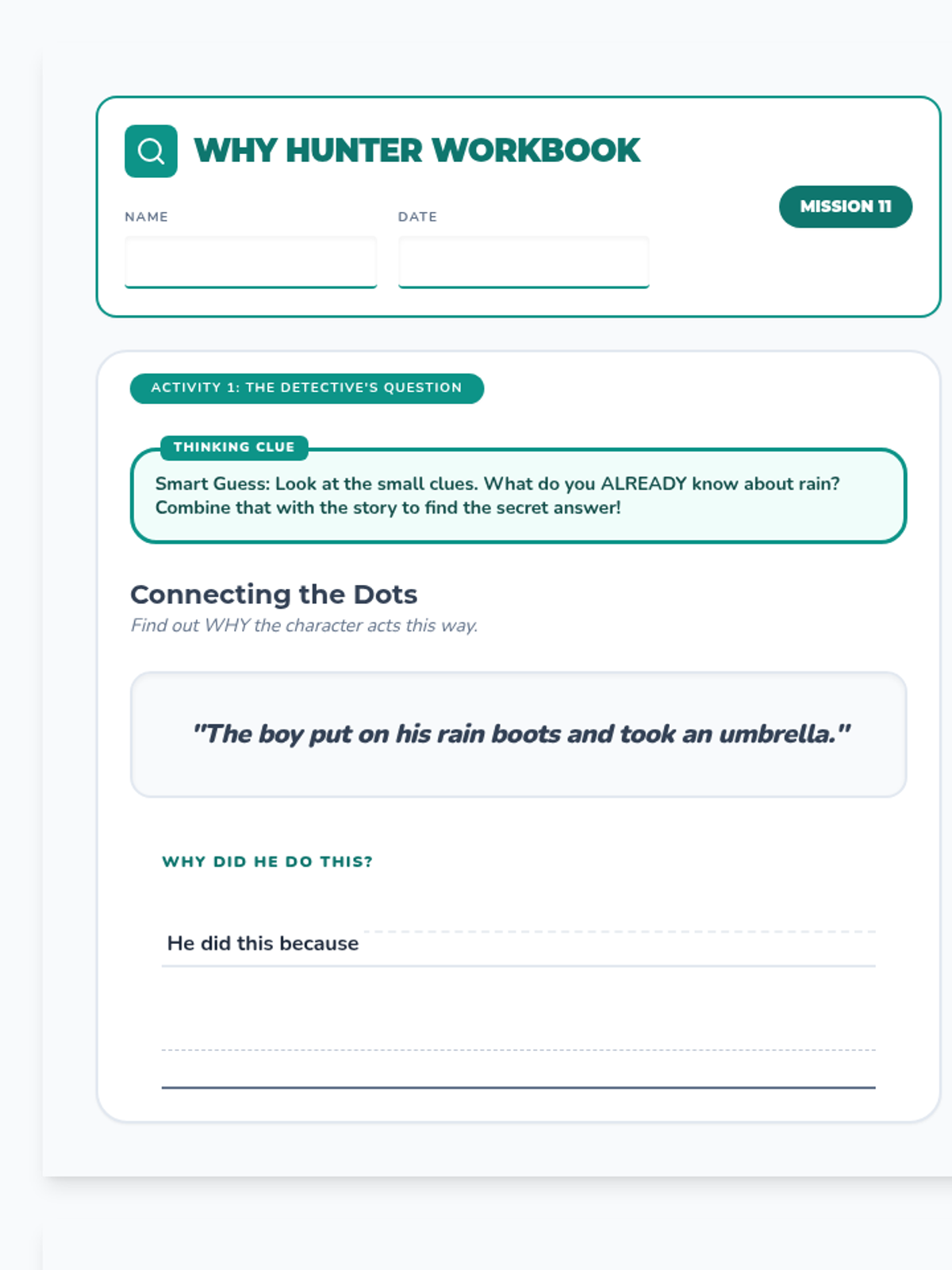
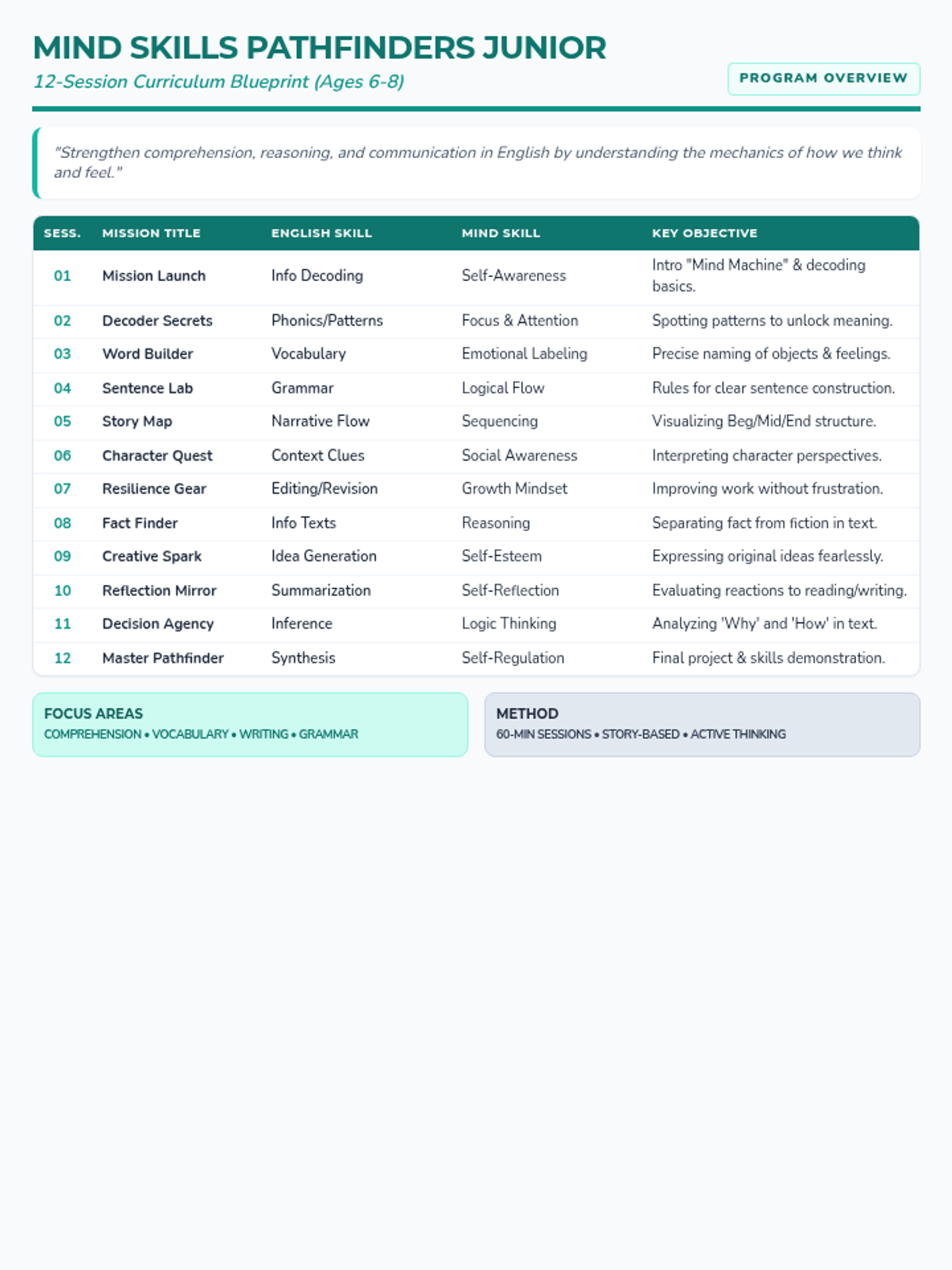
Focuses on logic and decision-making by asking 'why' and 'how' questions about texts to understand cause and effect.
Deepens self-awareness through journaling and reflection, helping students recognize their own reactions and thoughts while reading and writing.
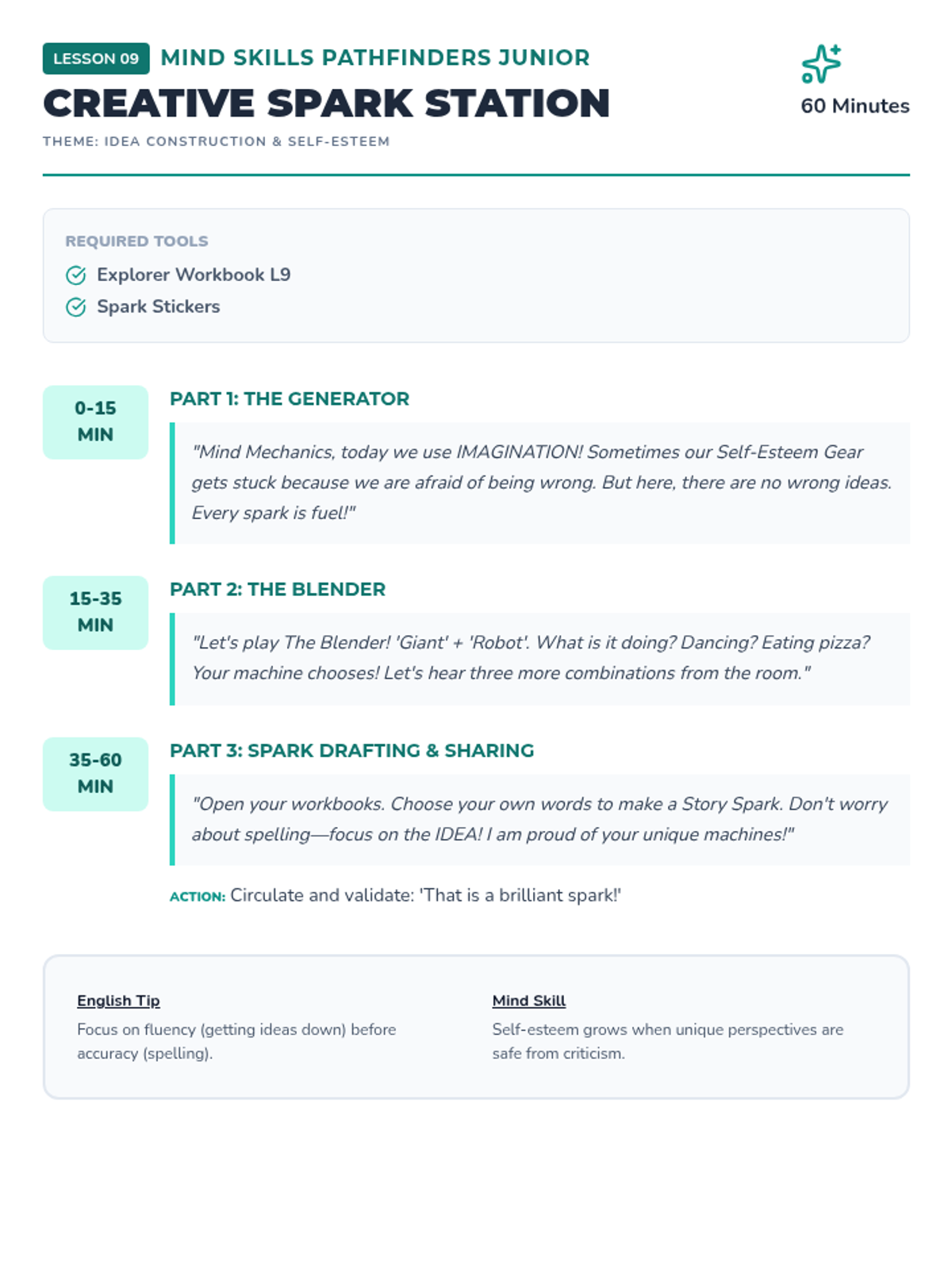
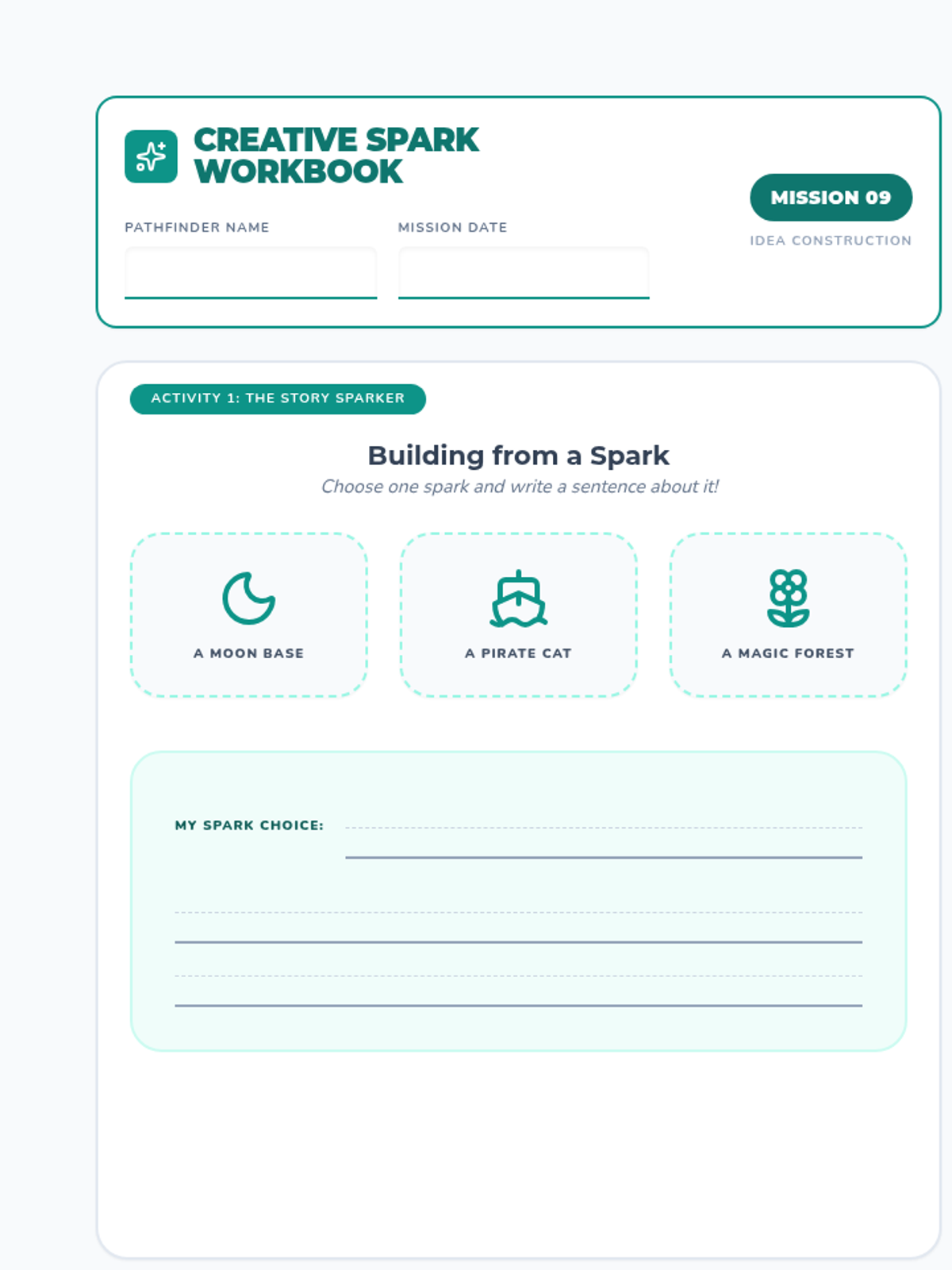
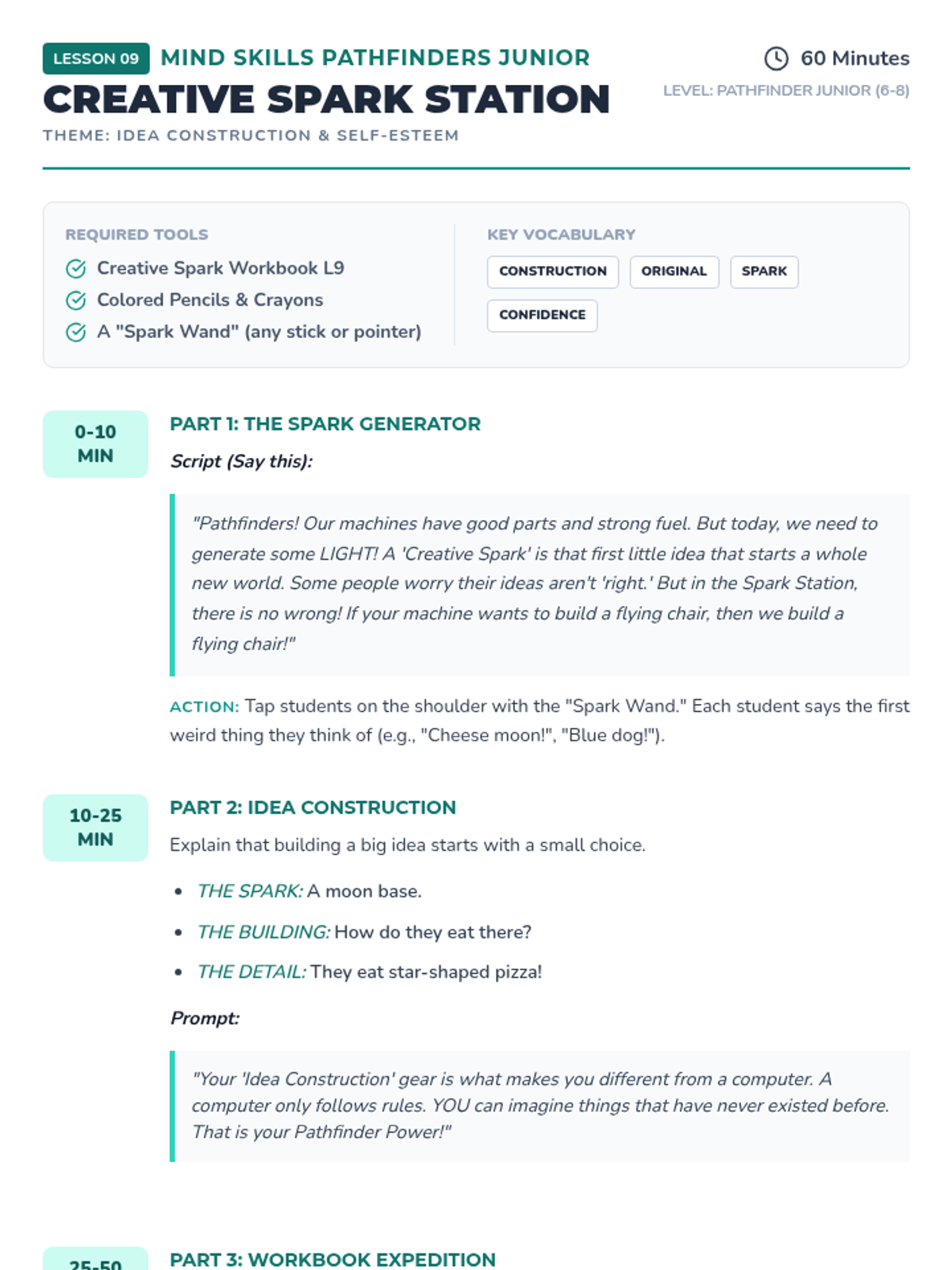
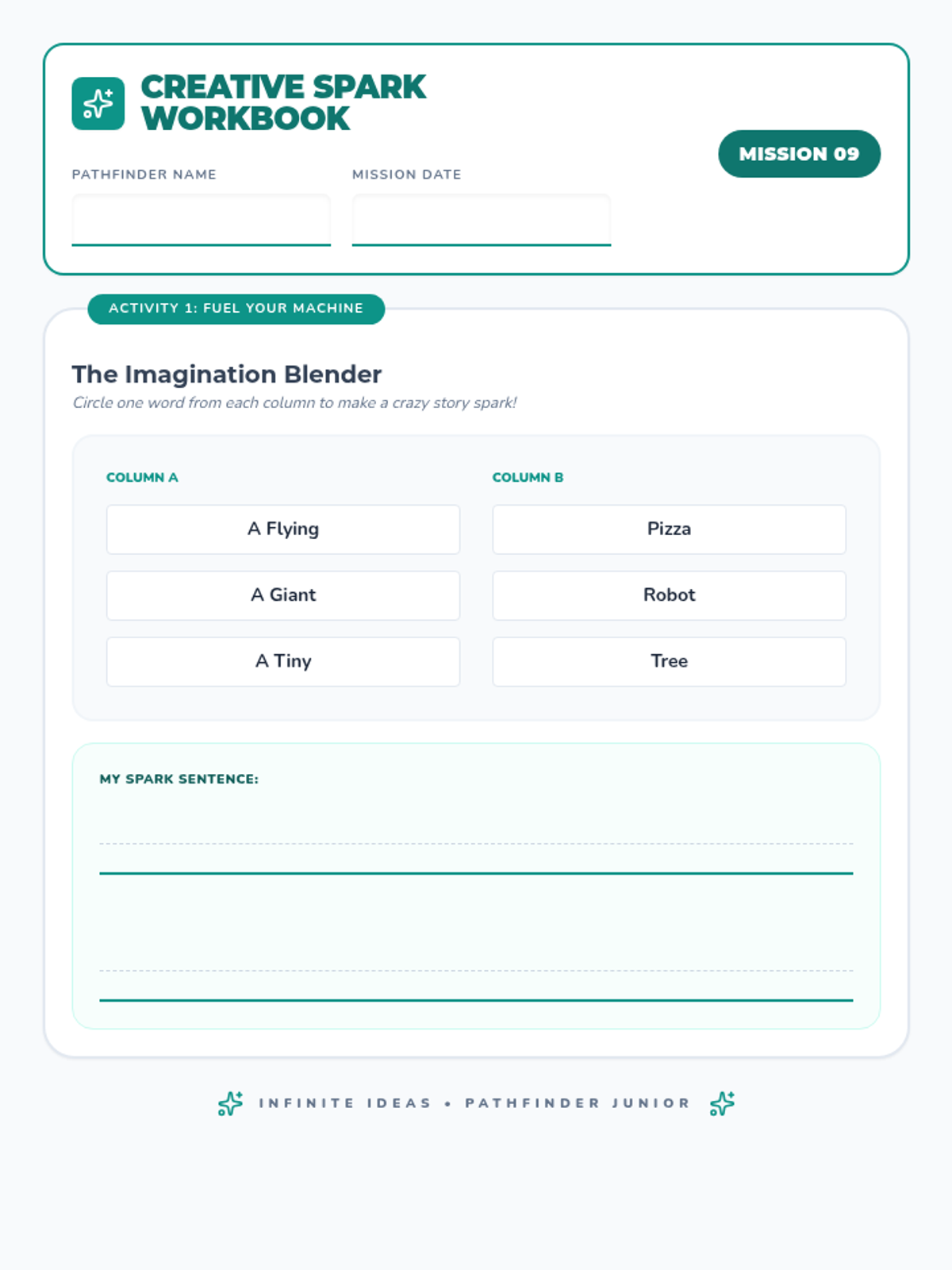
Encourages idea construction and creative writing, showing students how to fuel their mind machines with imagination to create original stories.
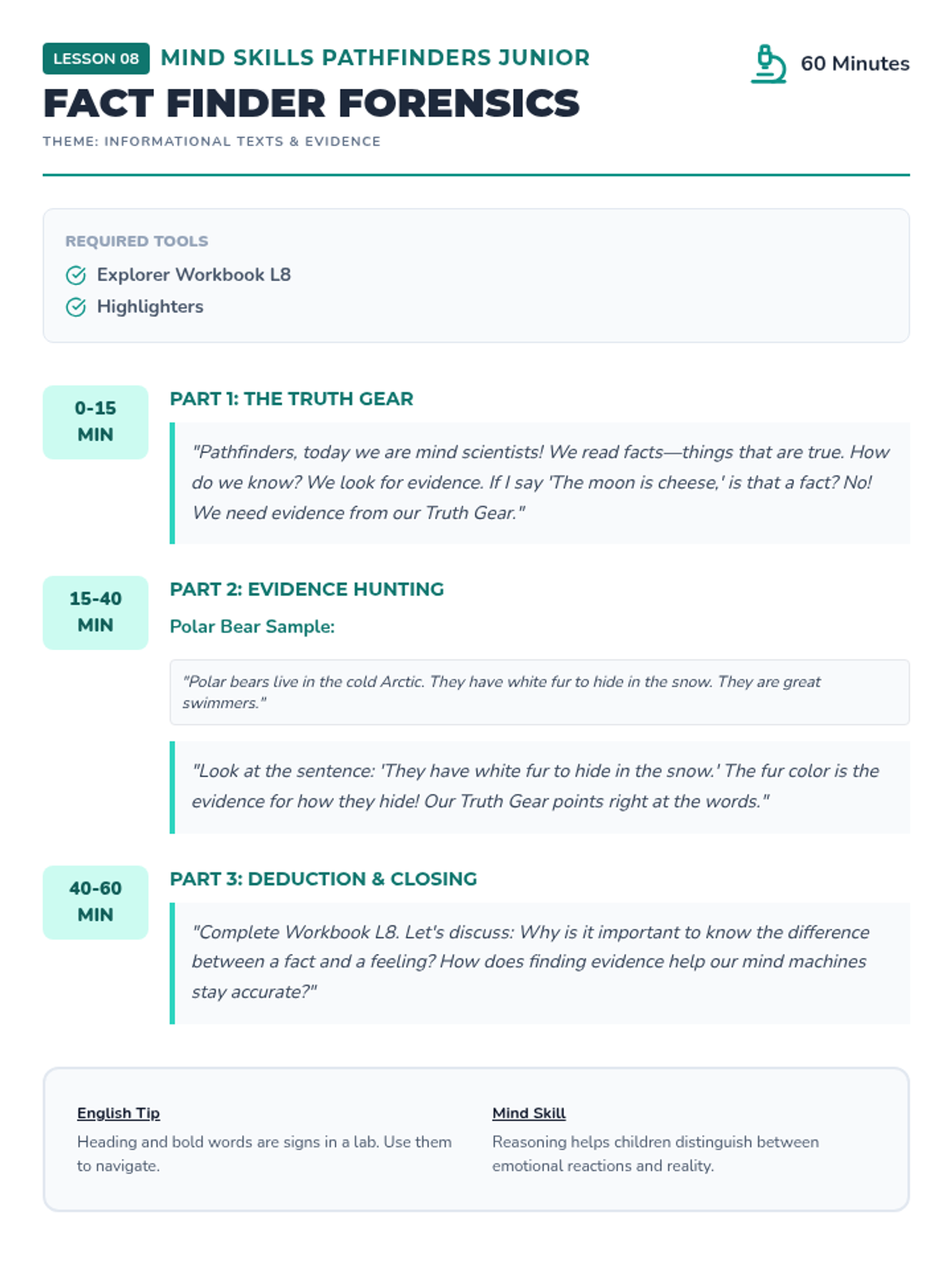
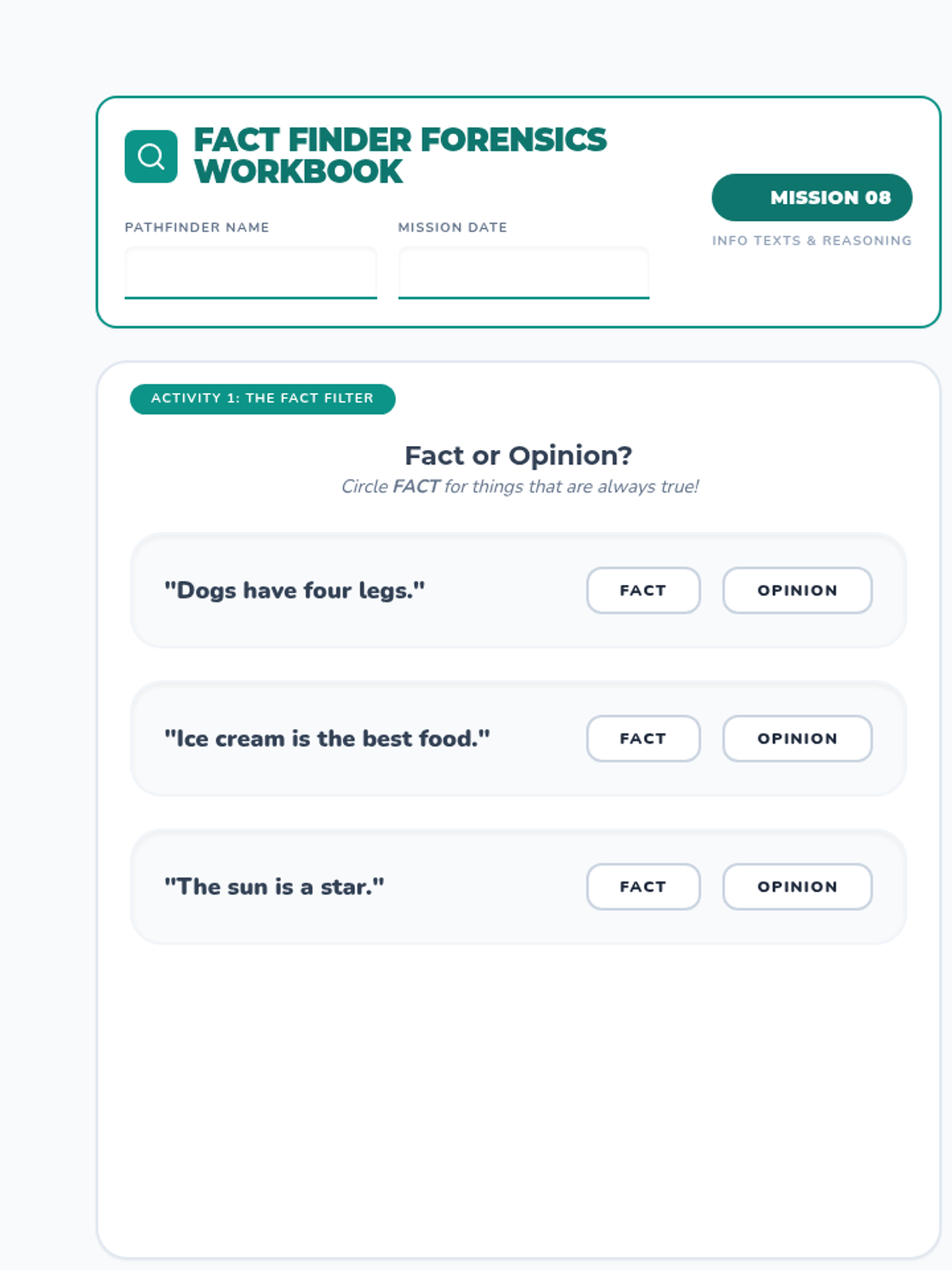
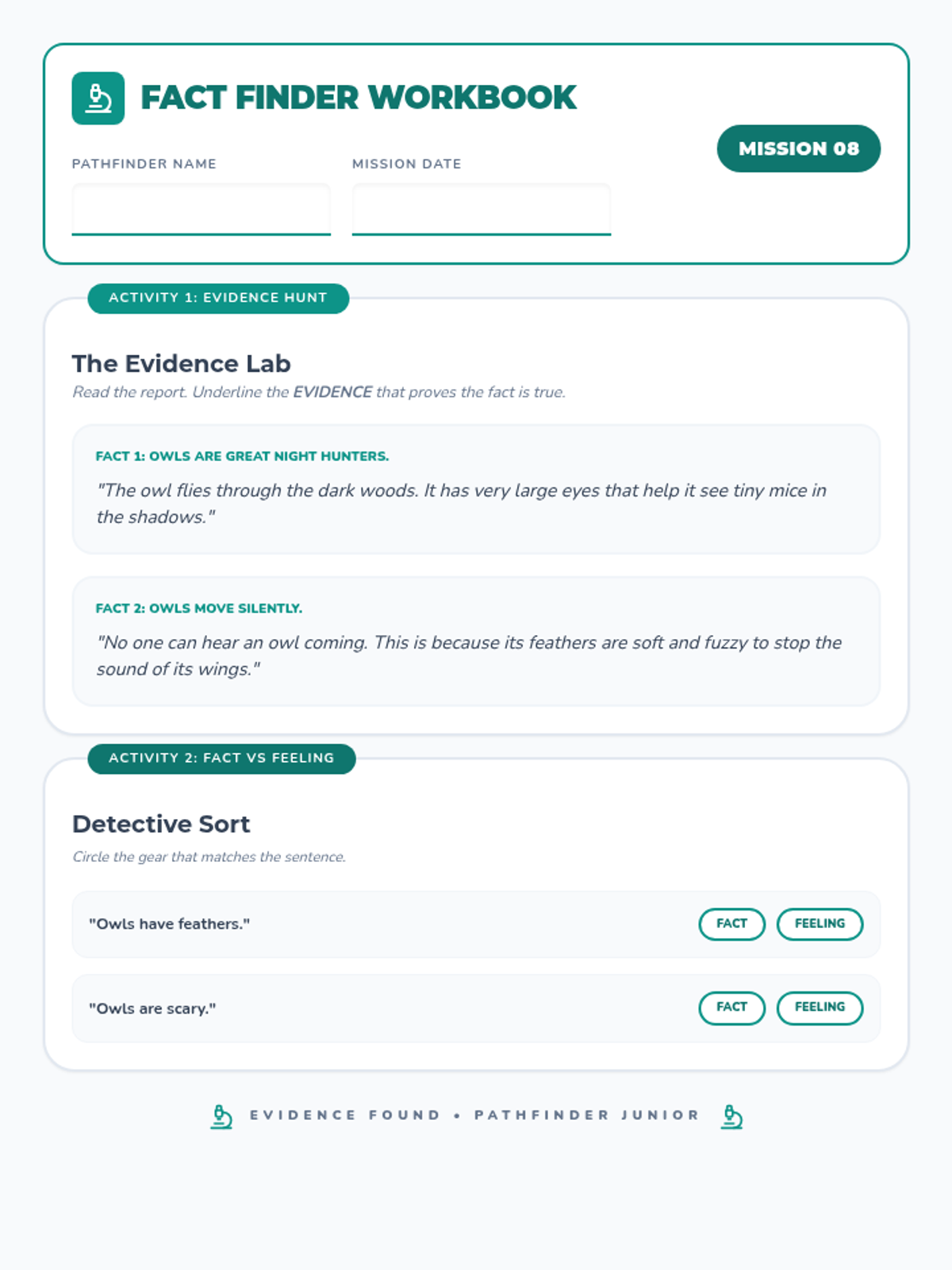
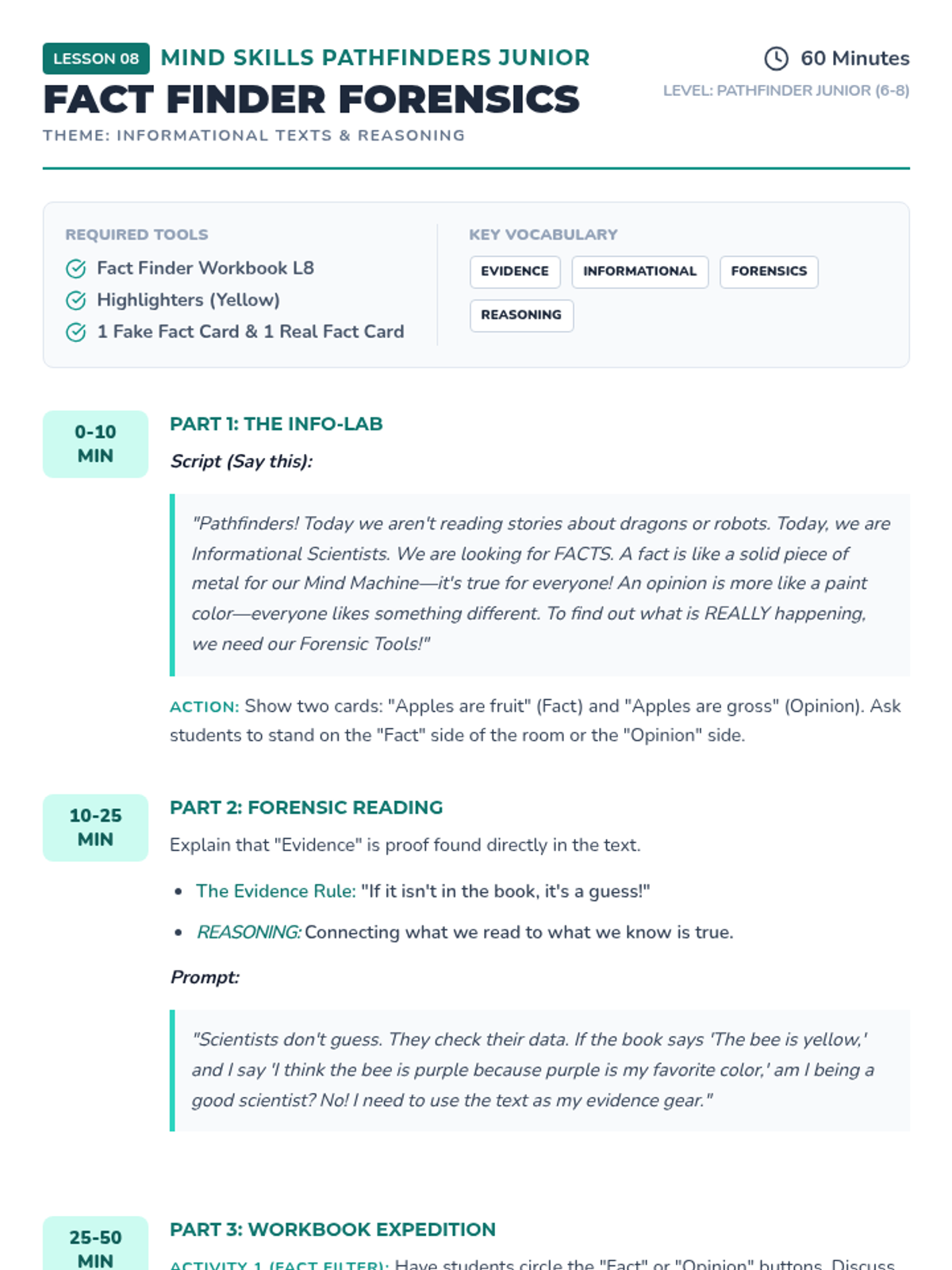
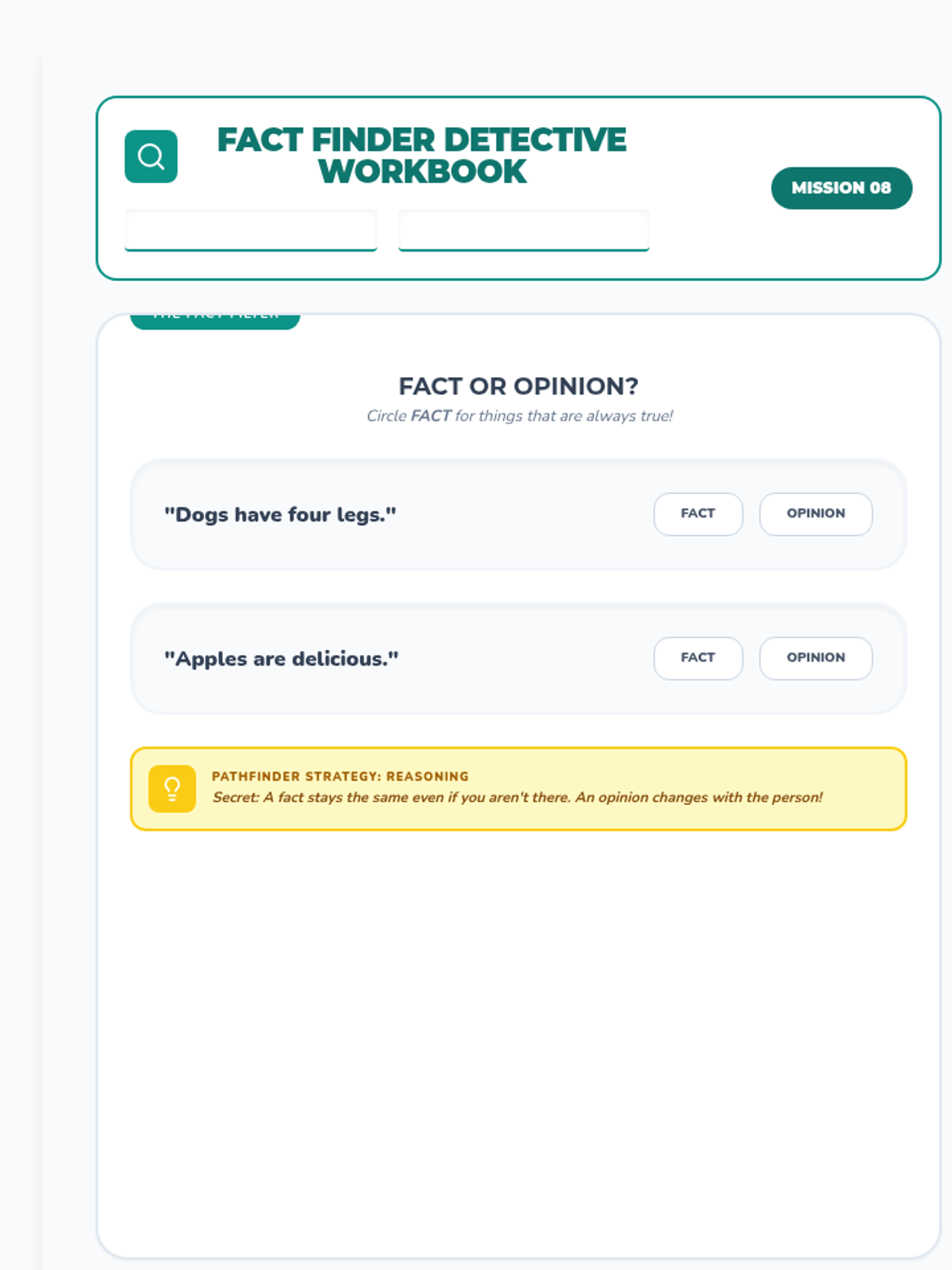
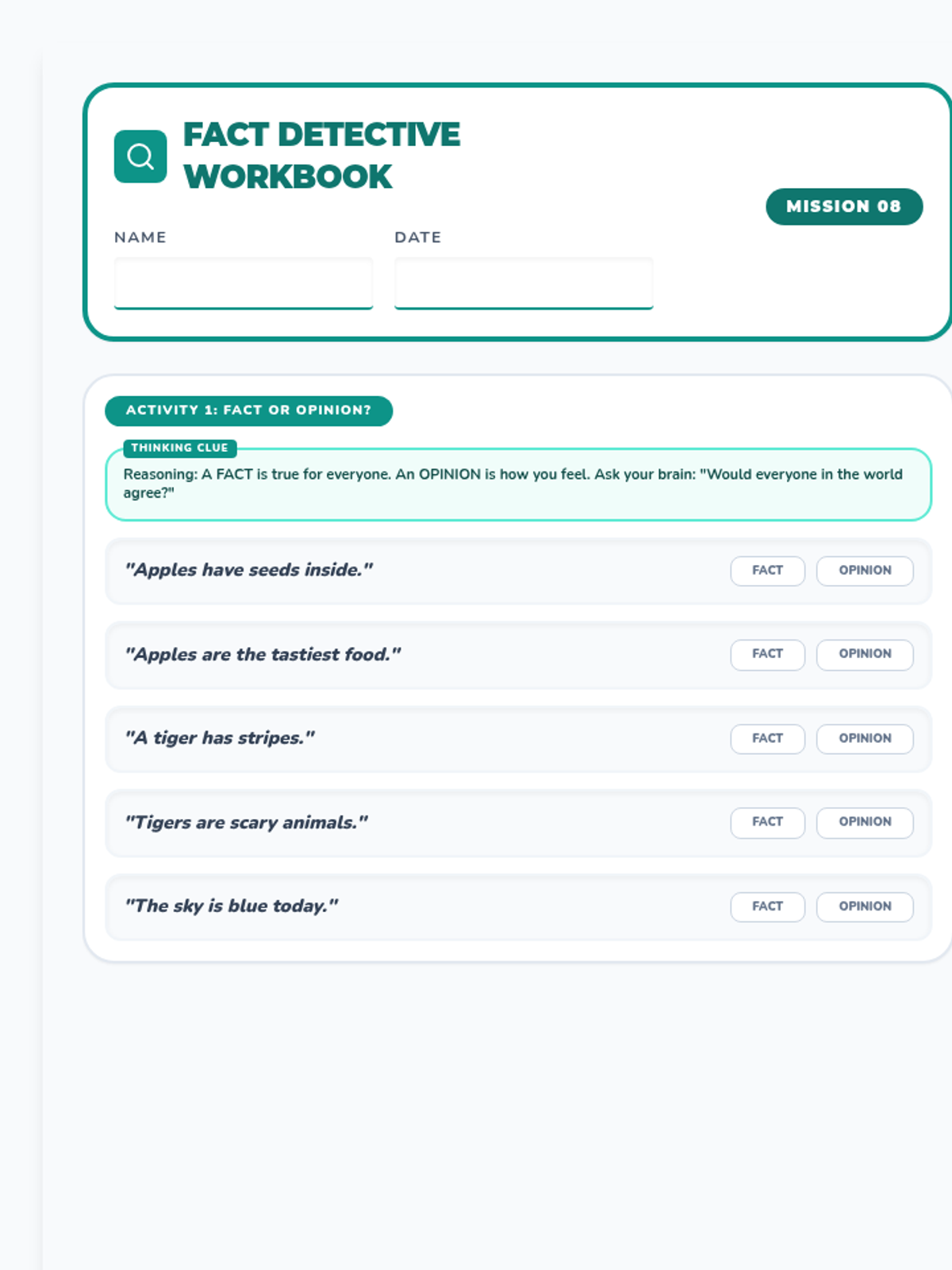
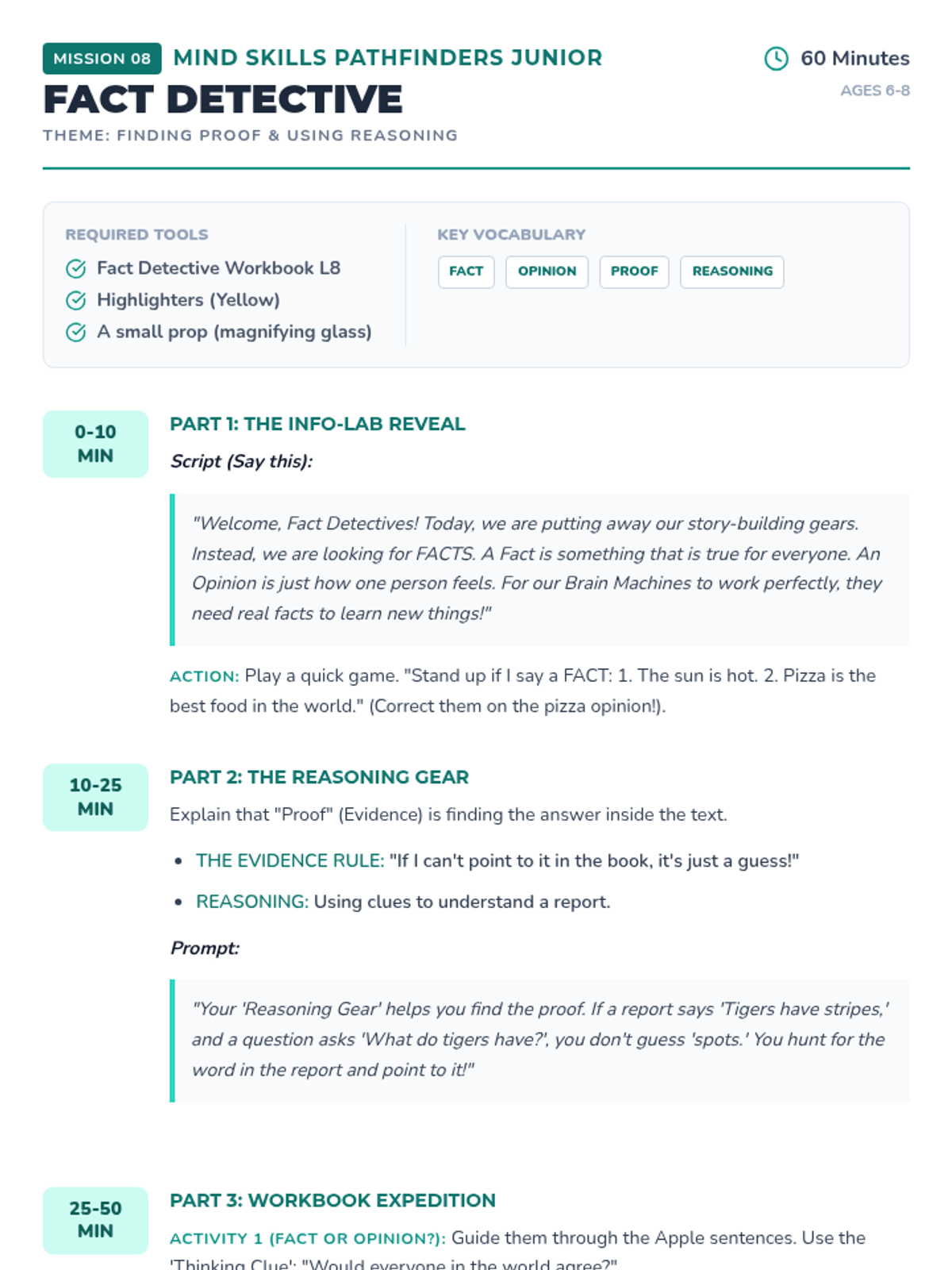
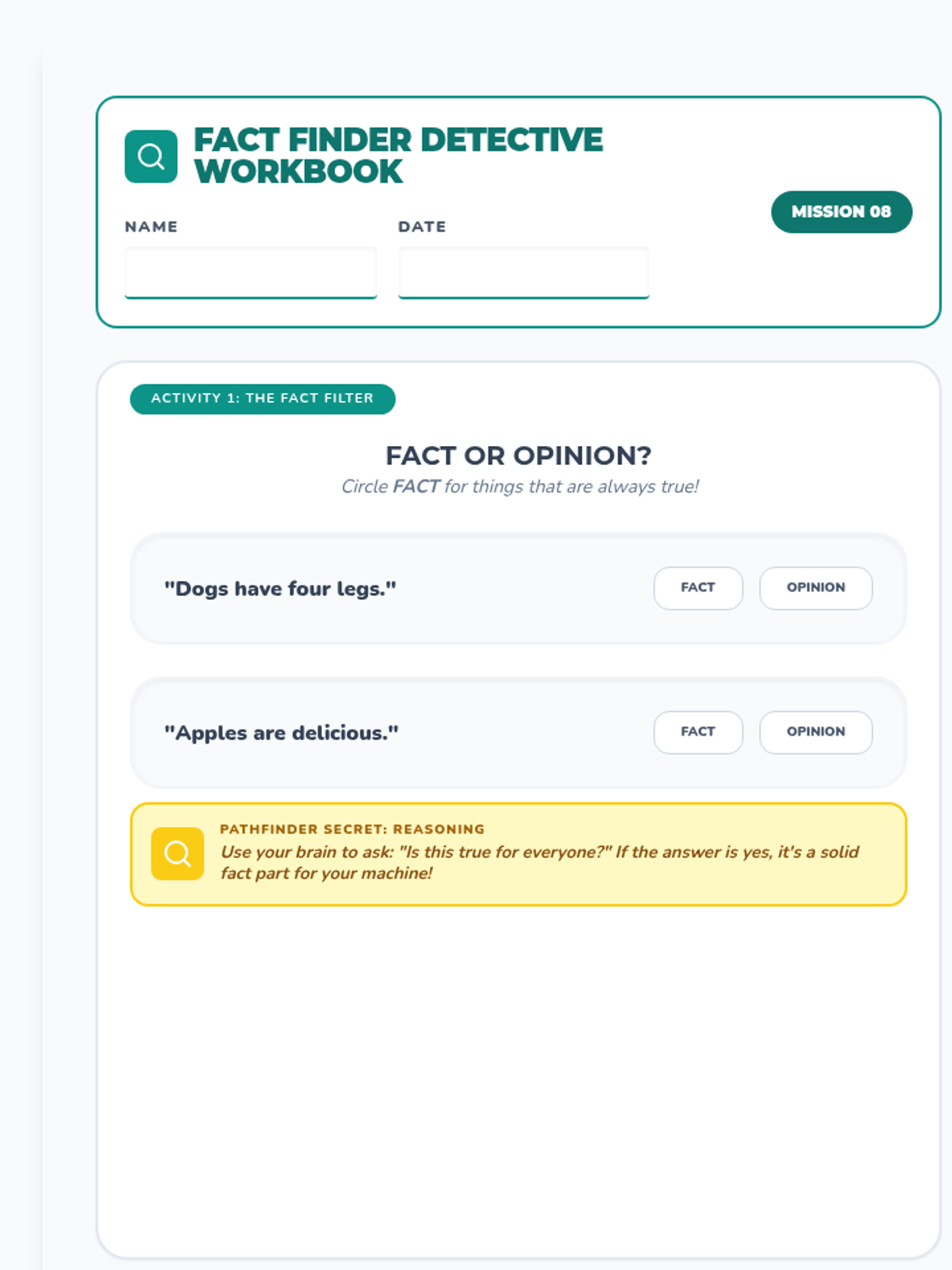
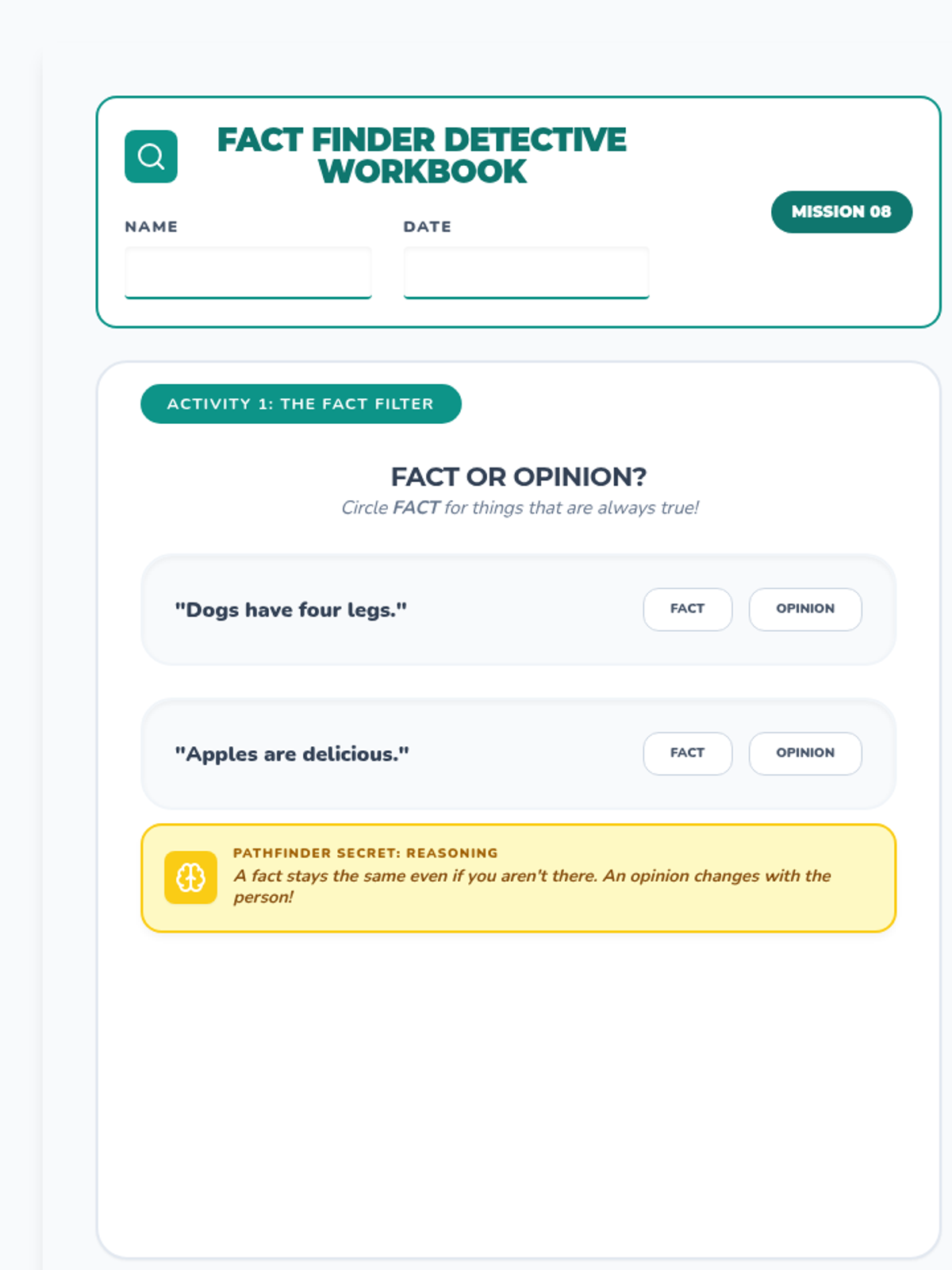
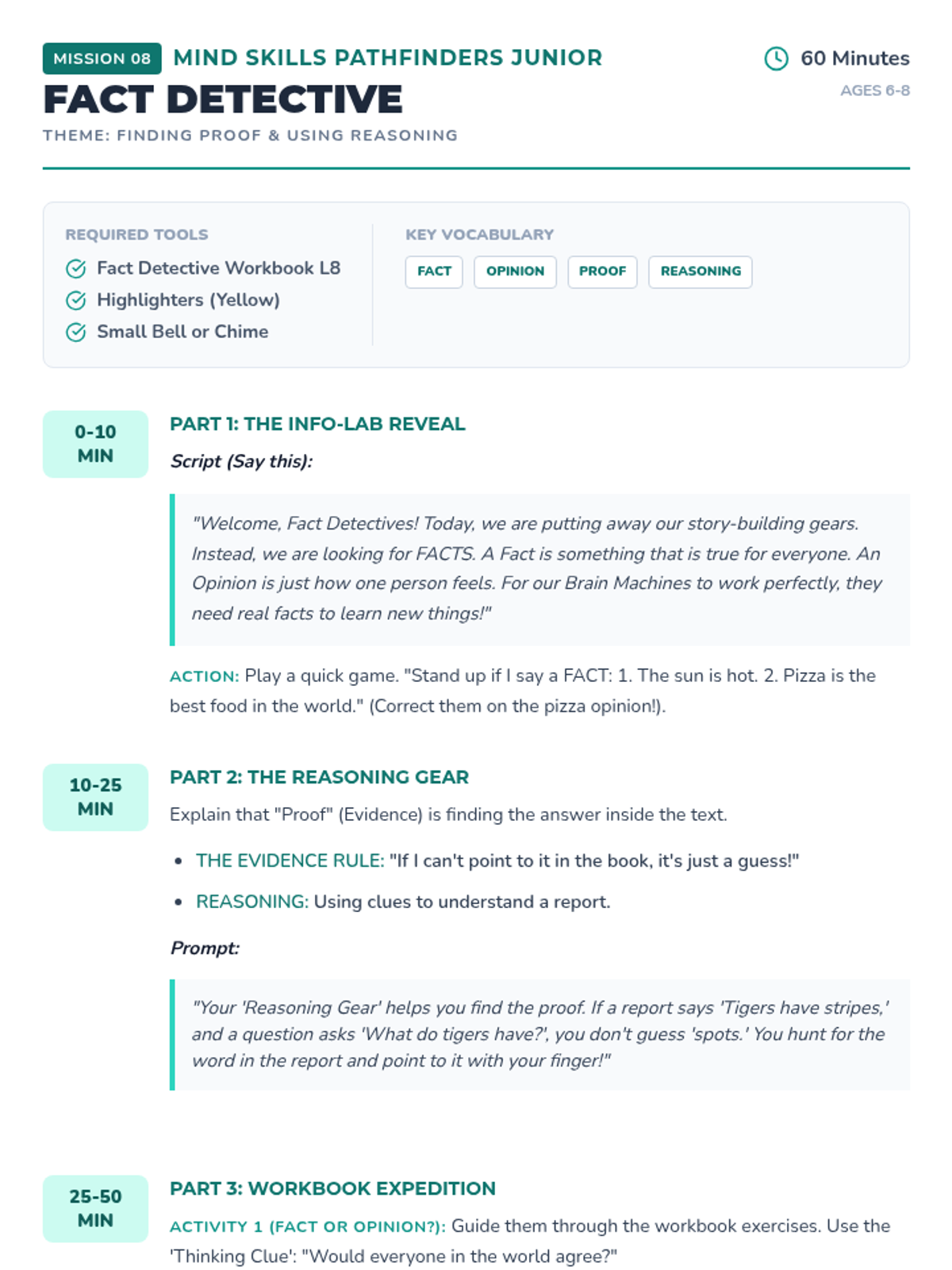
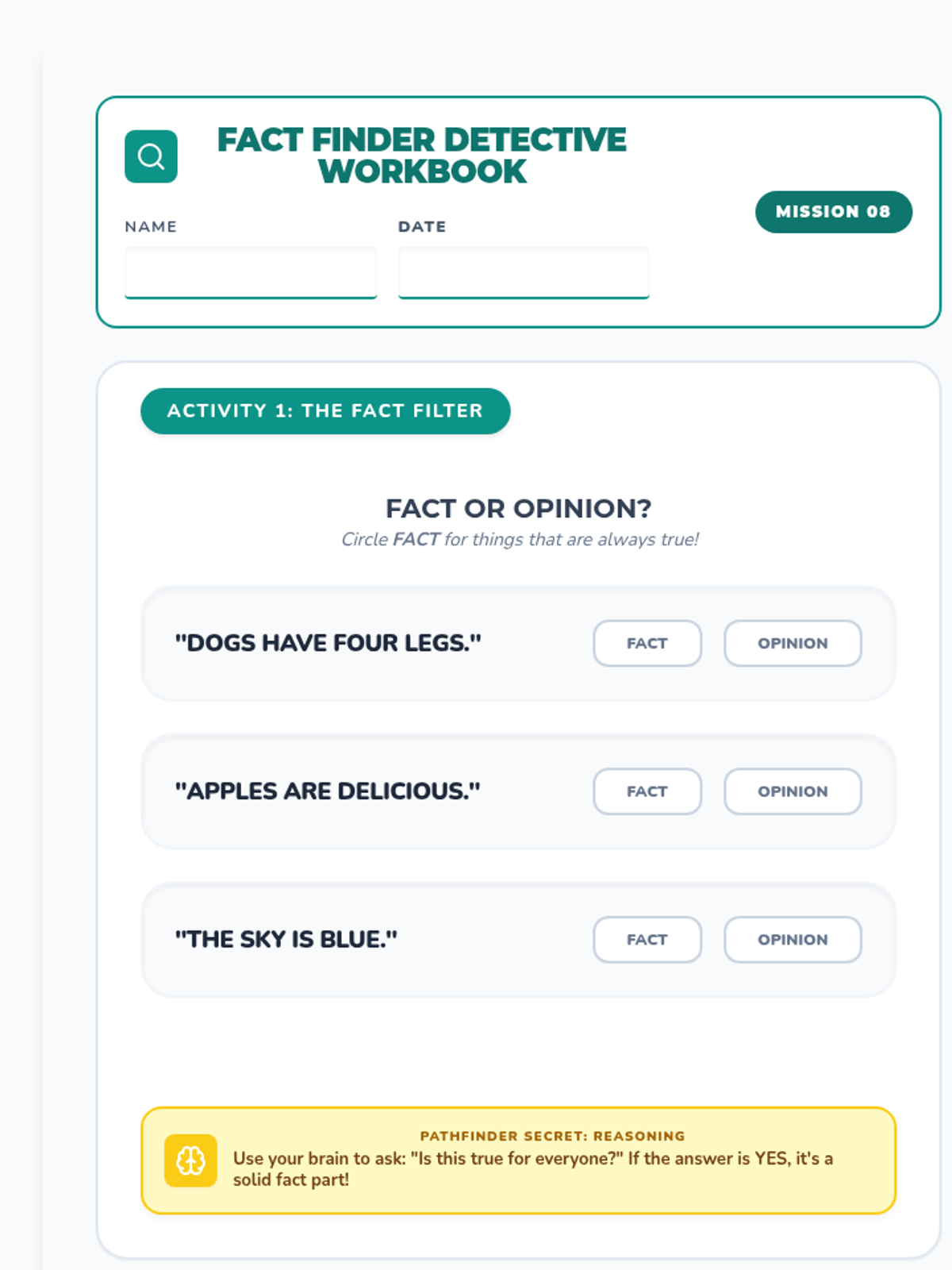
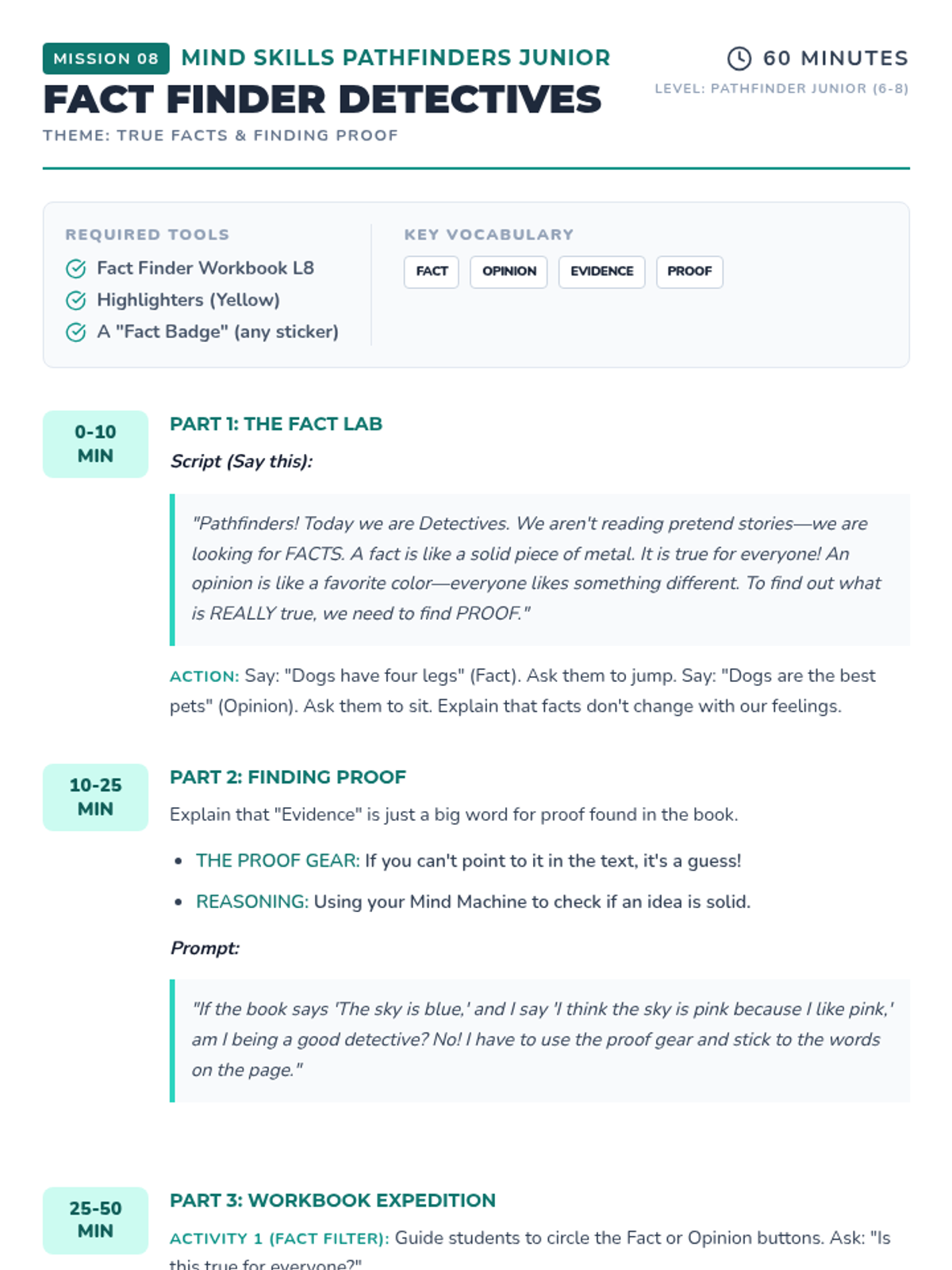
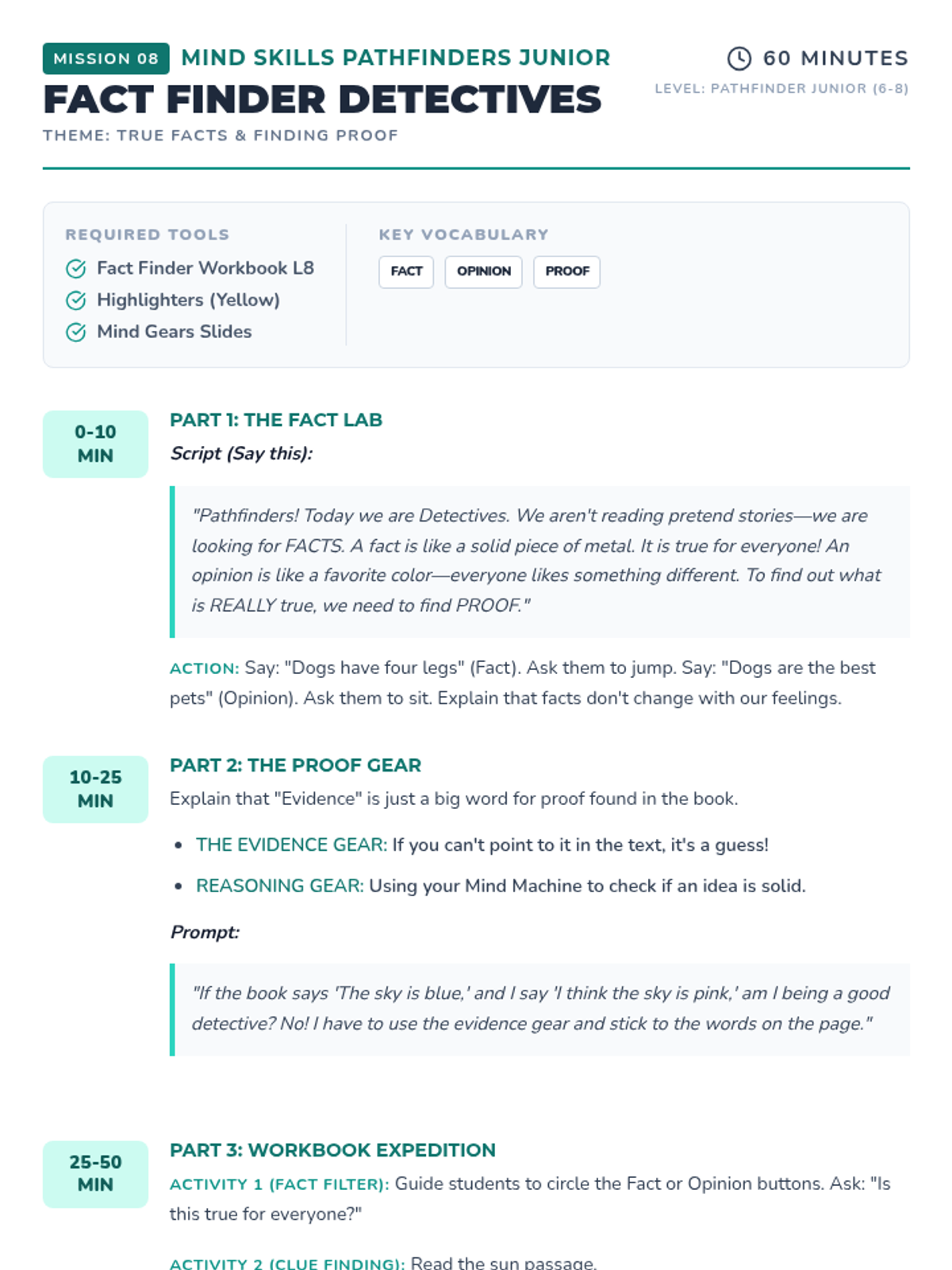
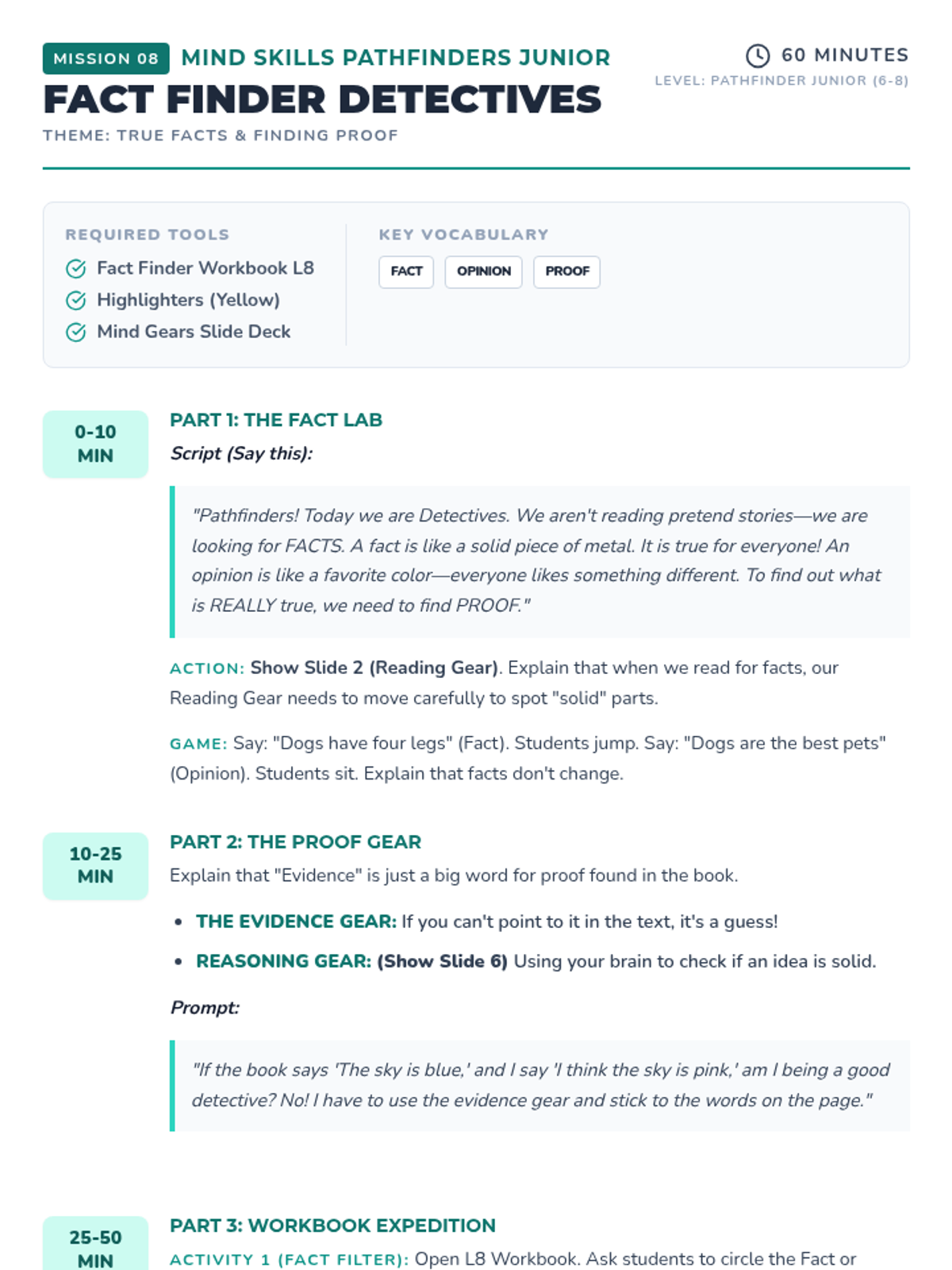
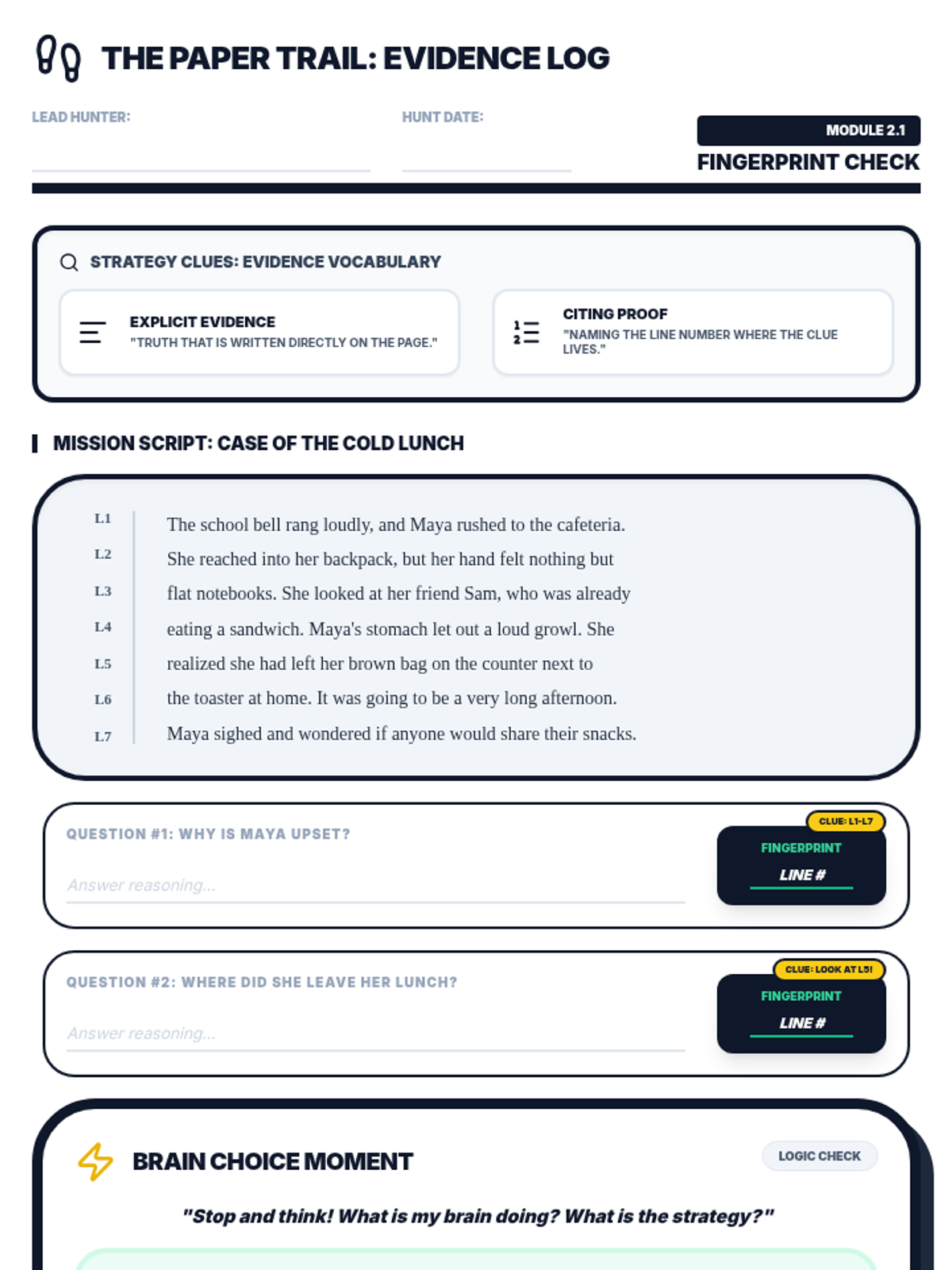
Develops information decoding skills by teaching students to search for facts and evidence within a text, much like a forensic scientist.
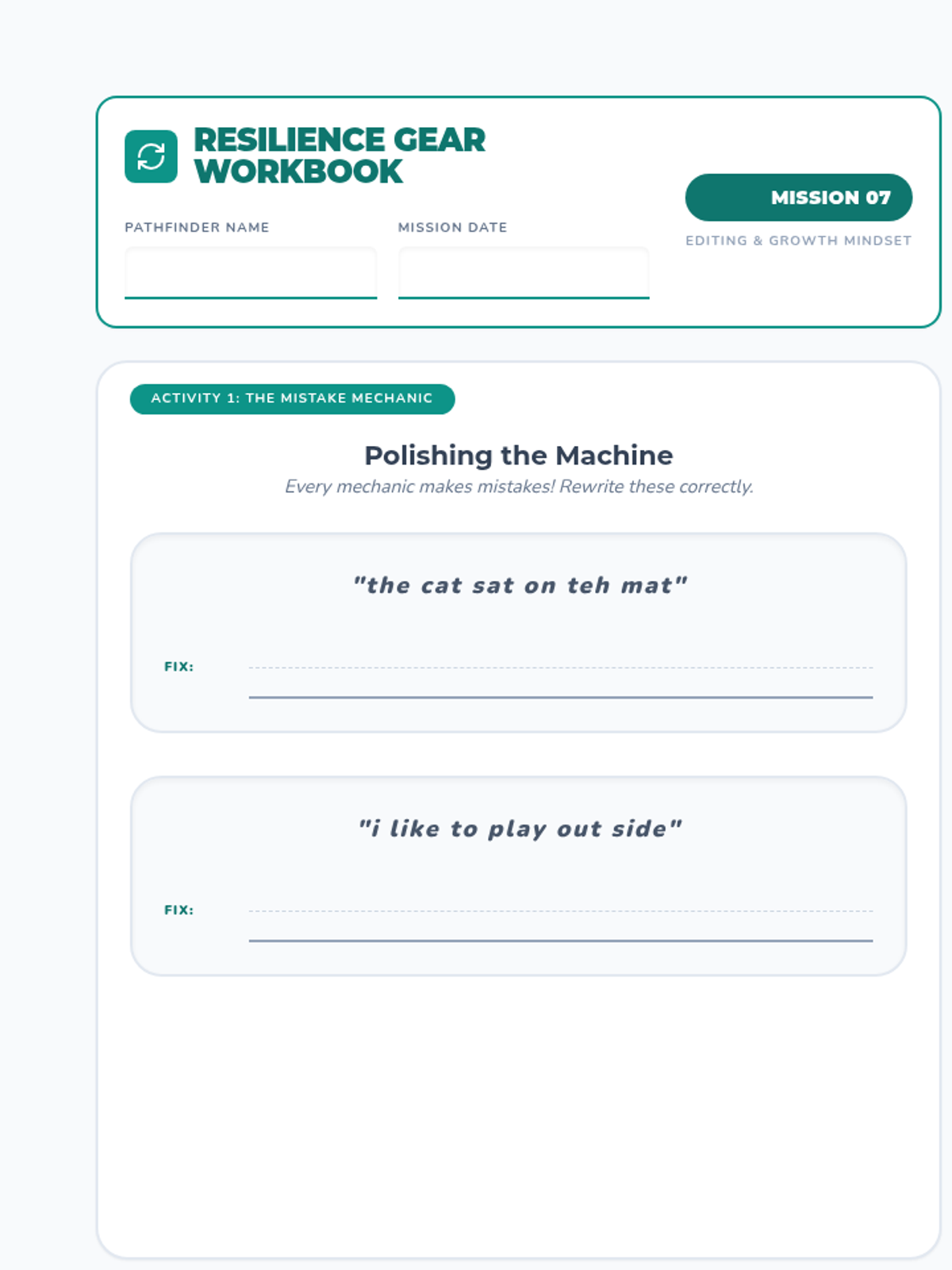
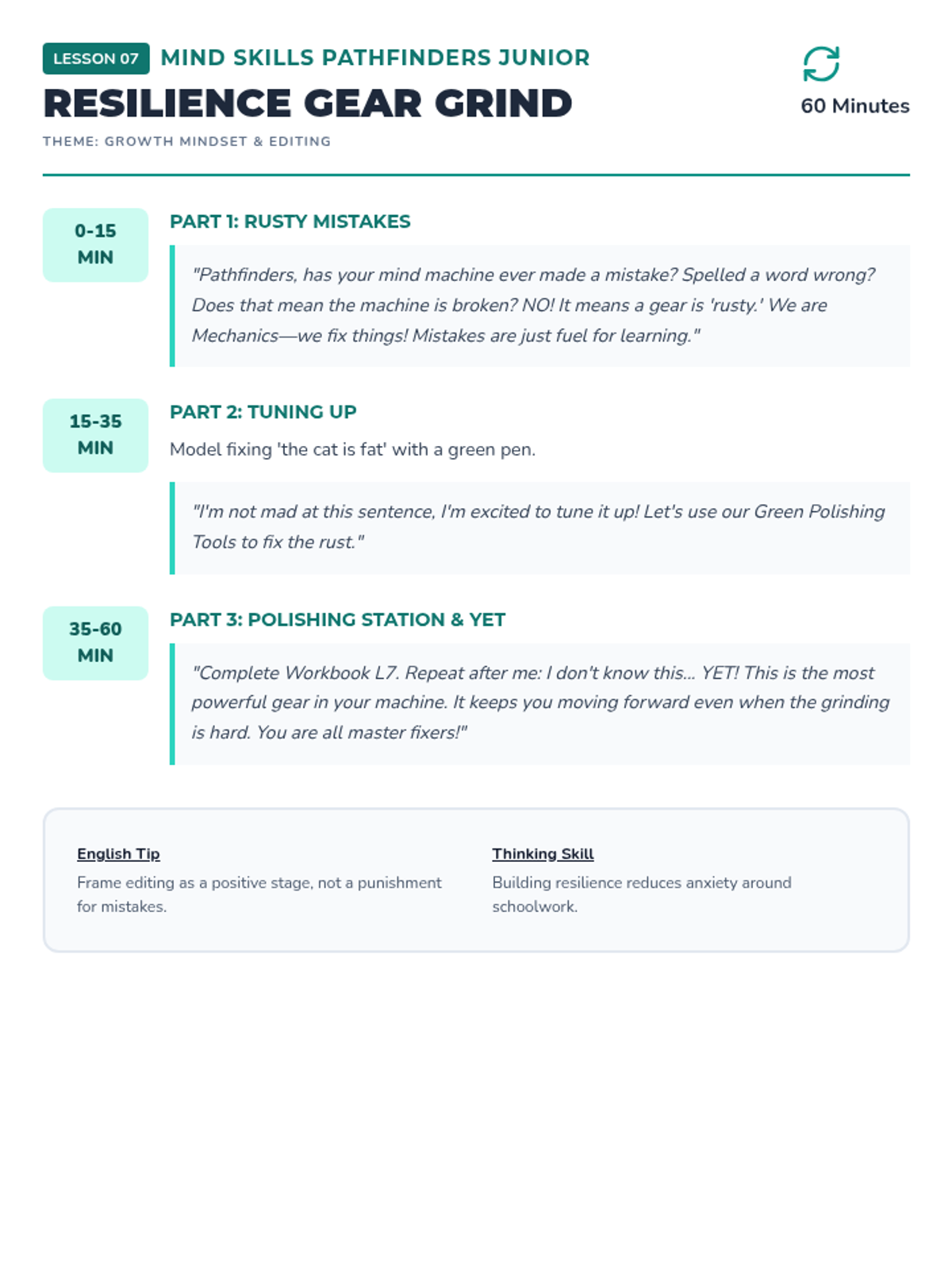
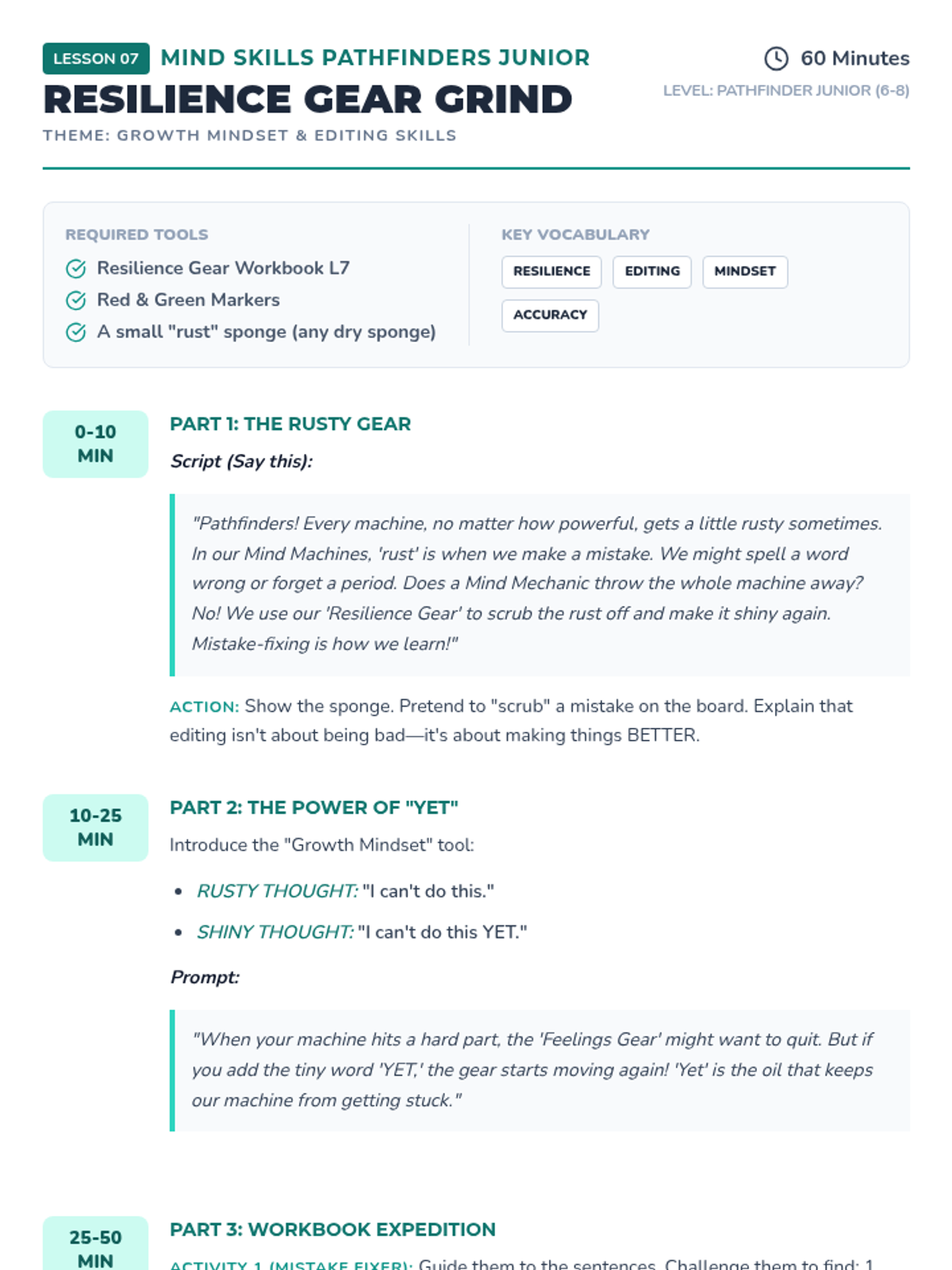
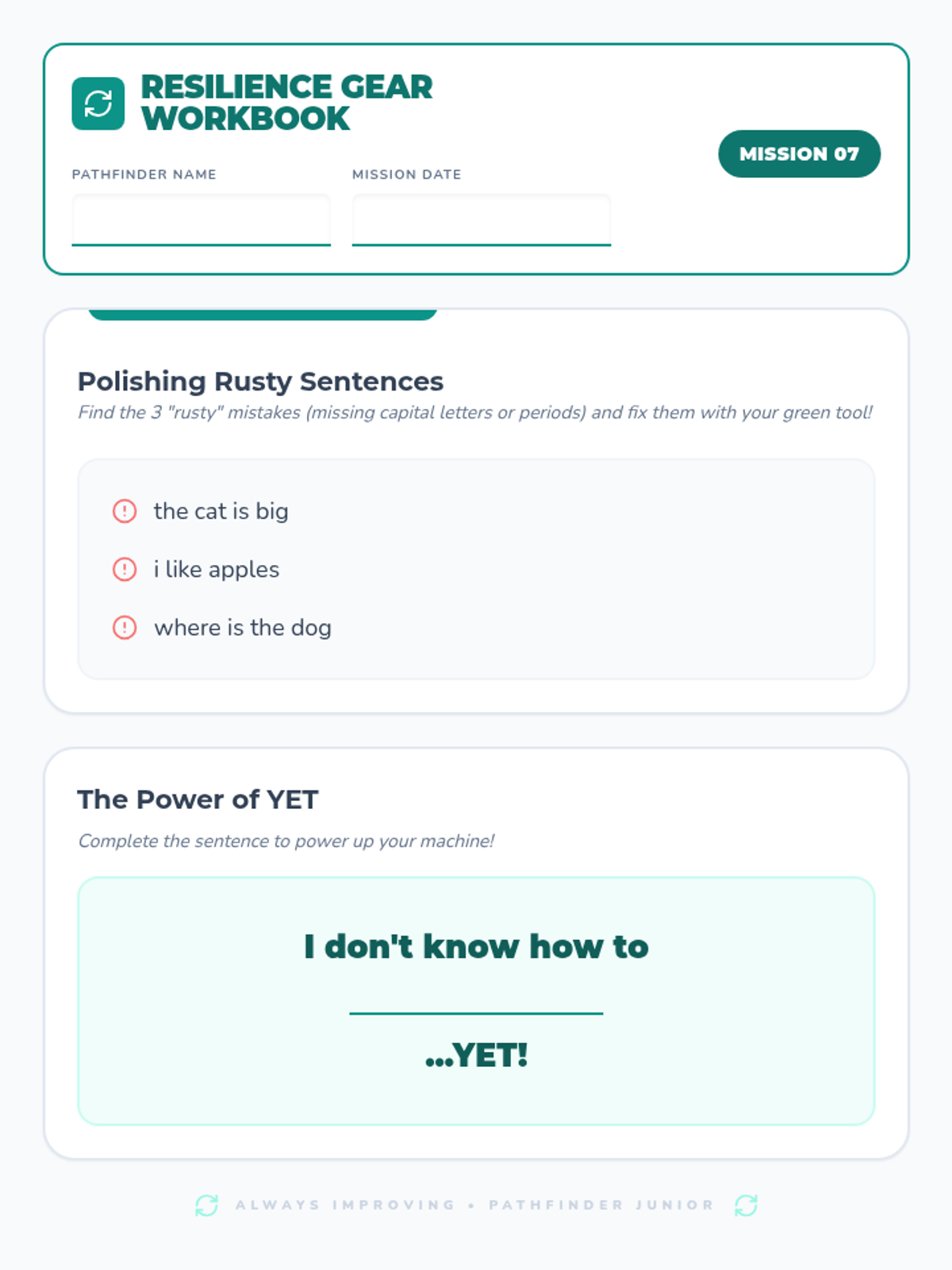
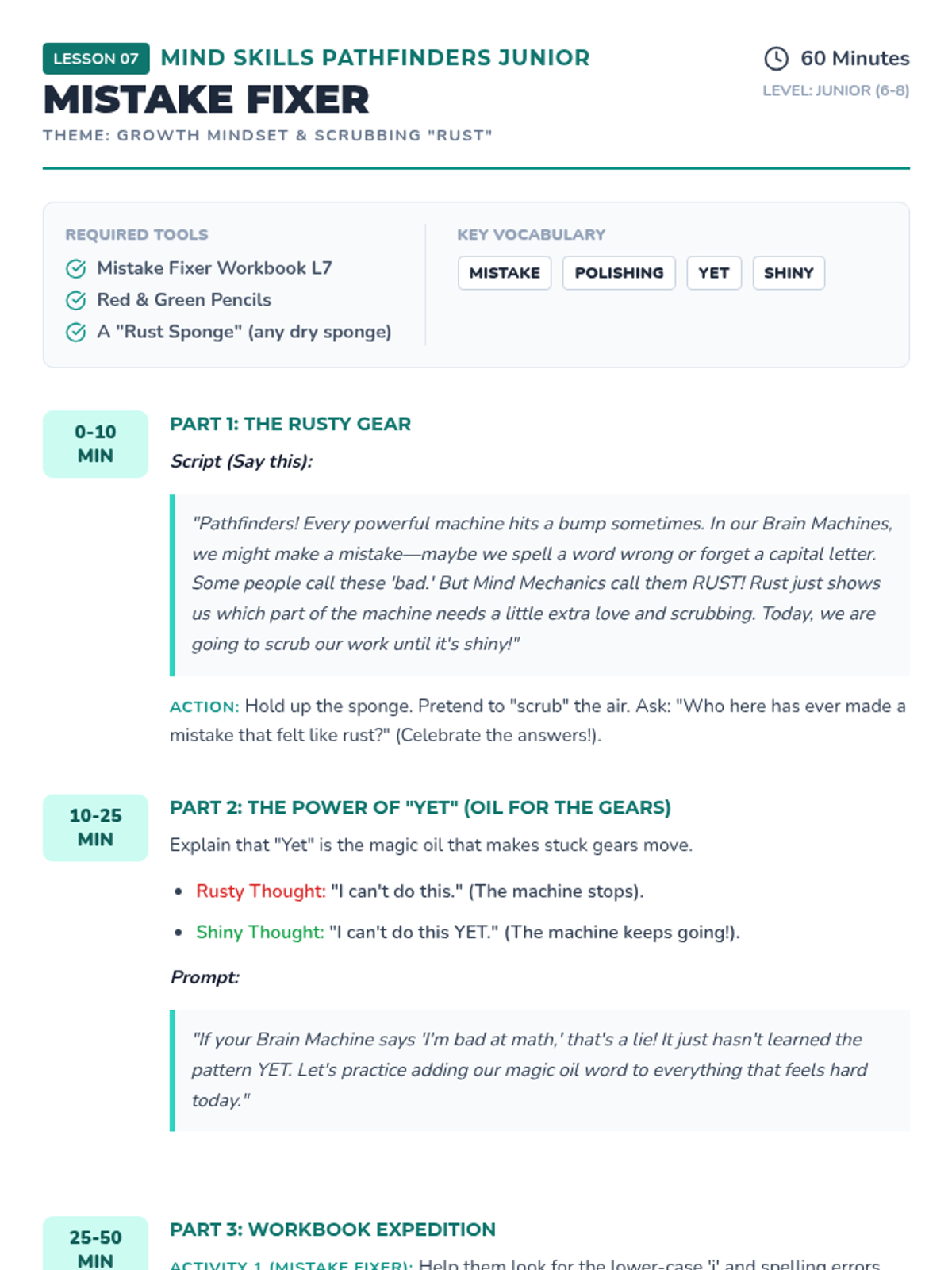
Introduces the growth mindset by comparing resilience to a gear that helps us keep moving forward even when we encounter 'rusty' mistakes.
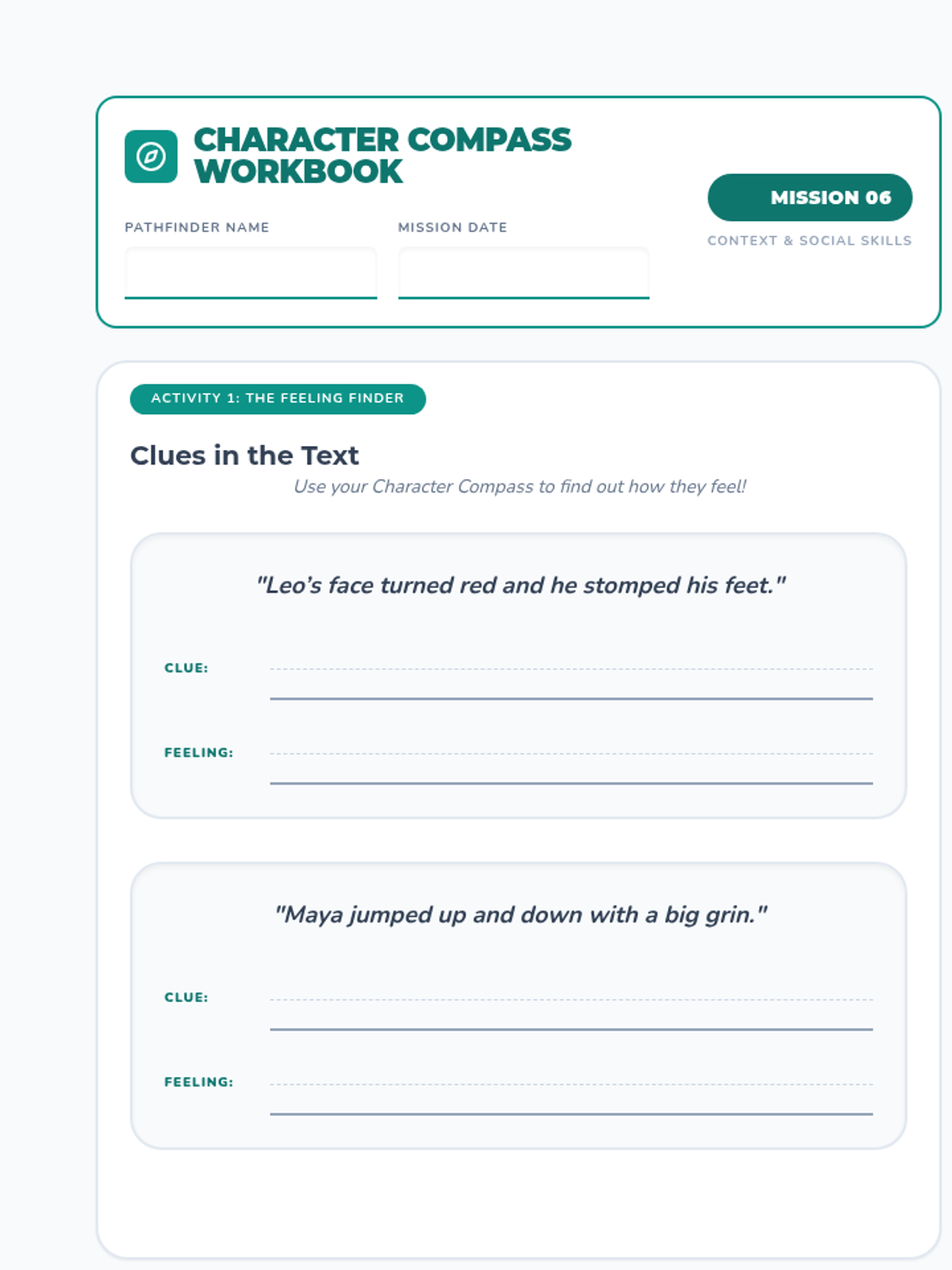
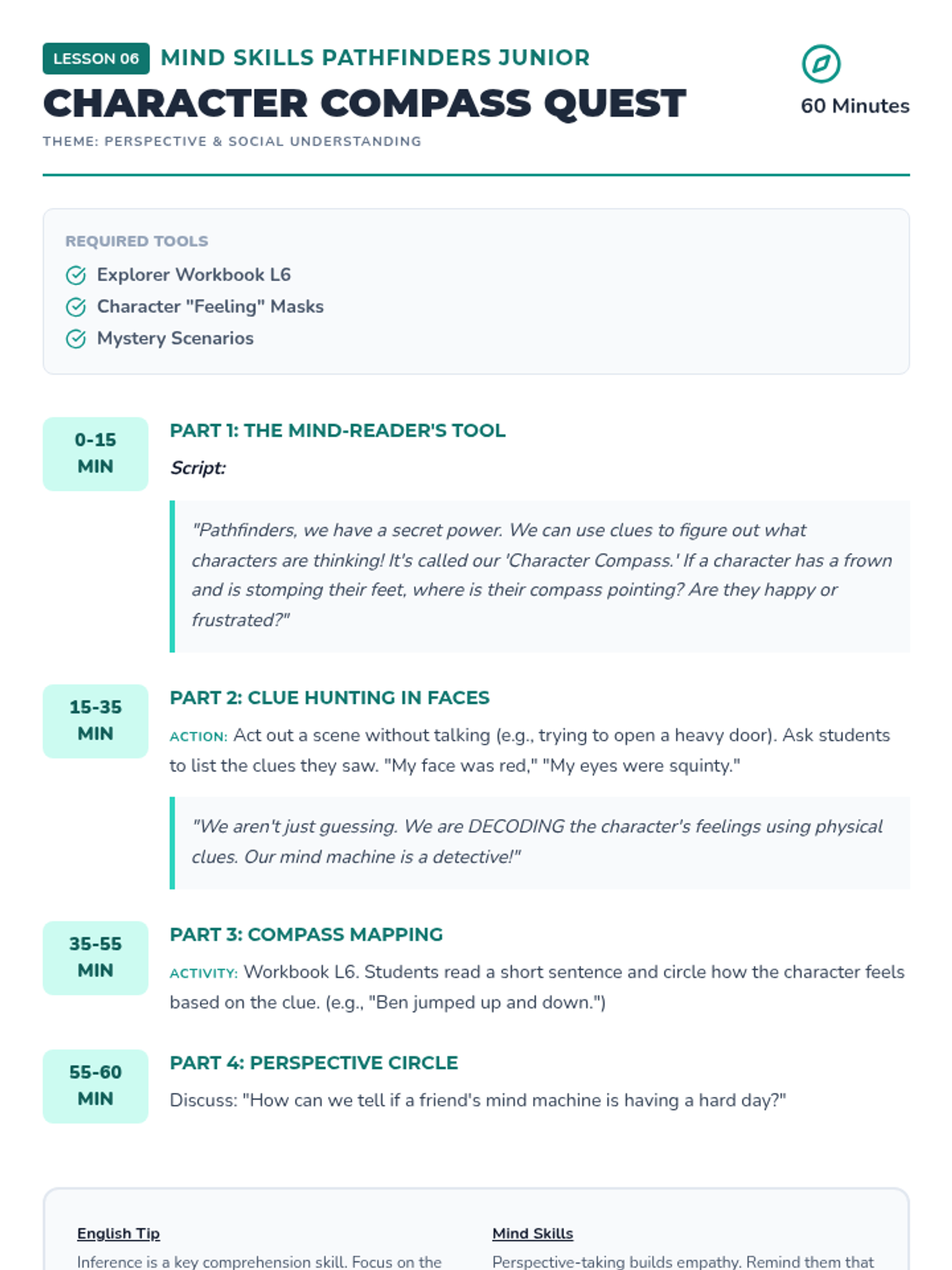
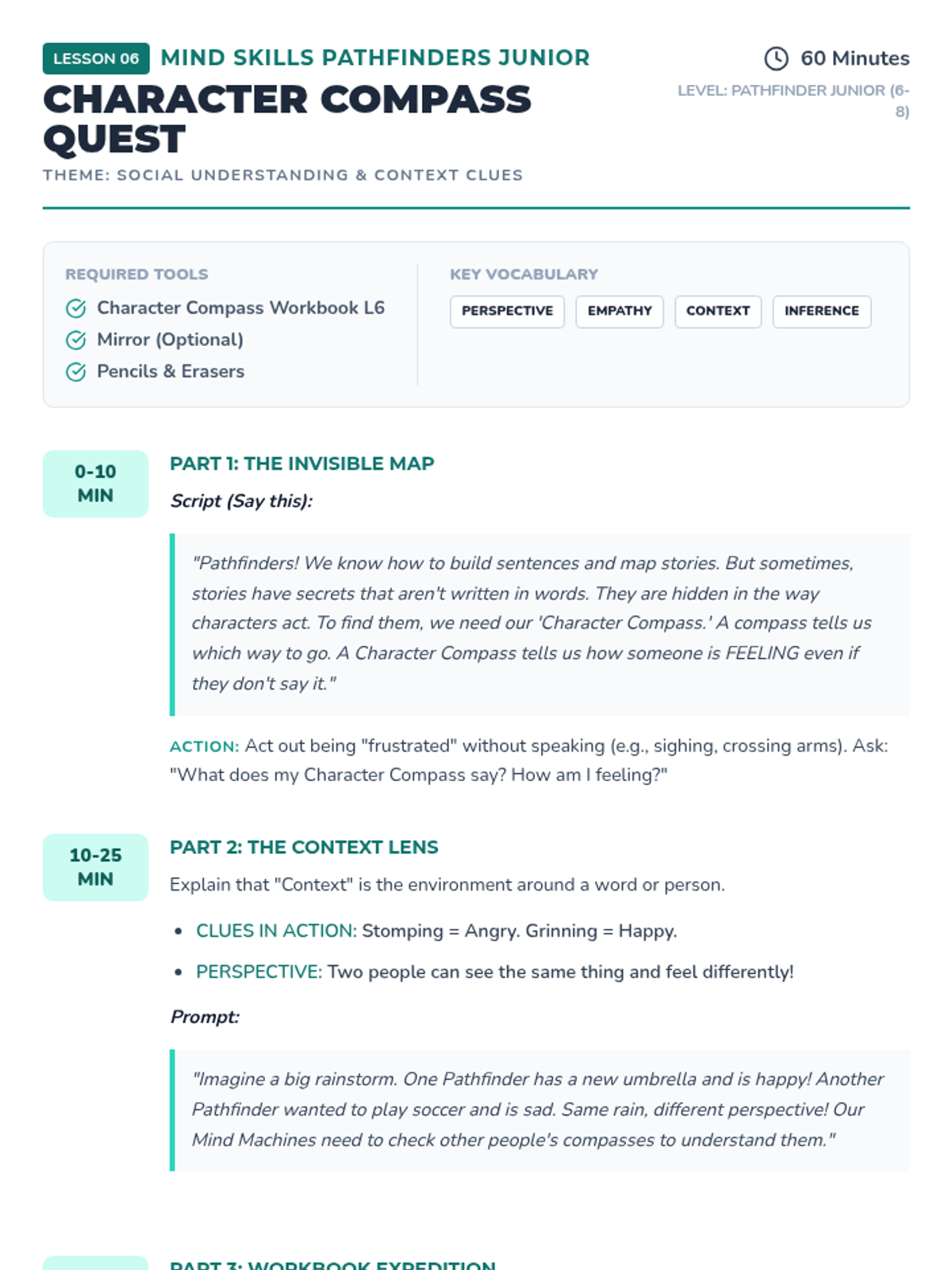
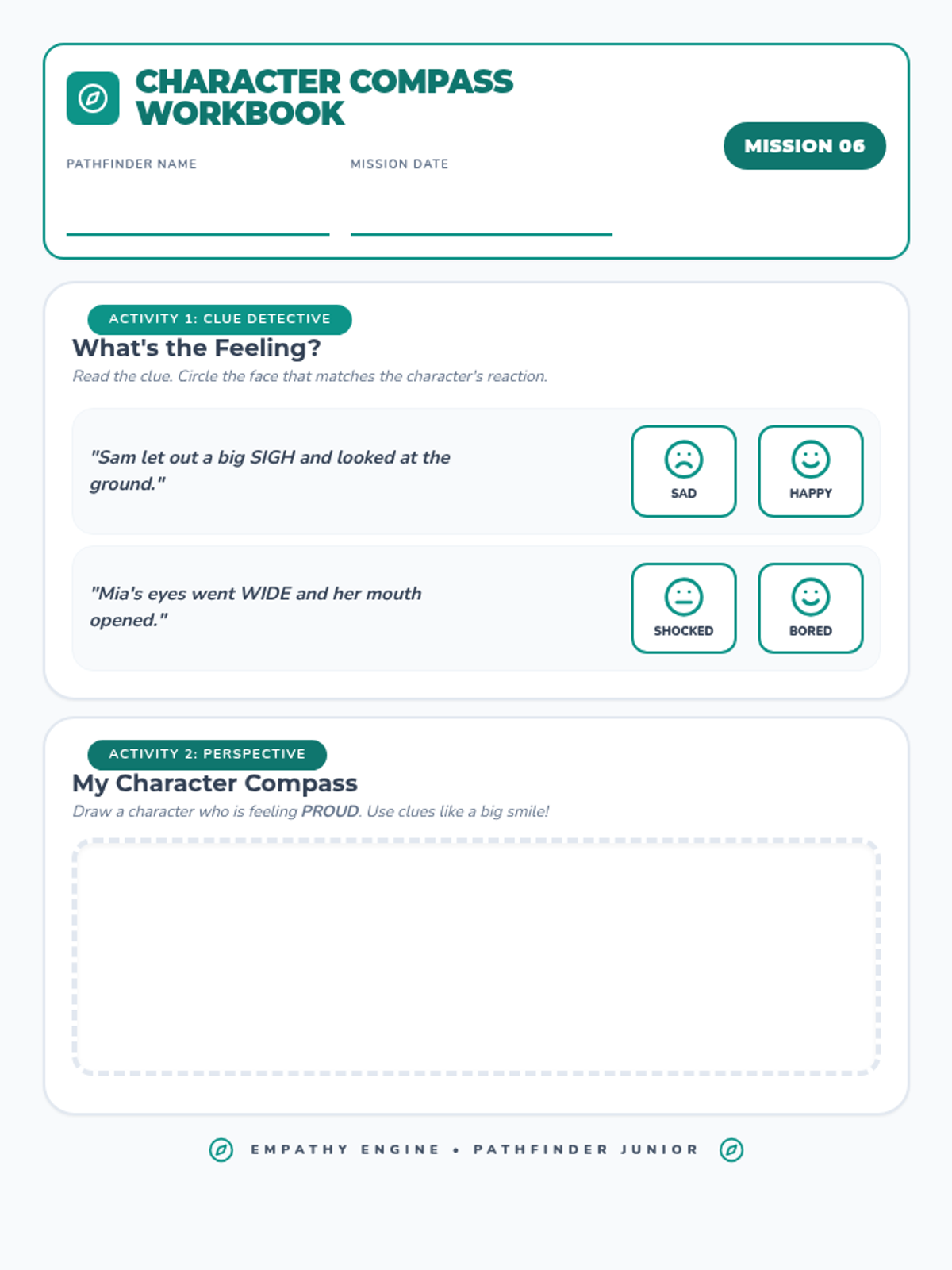
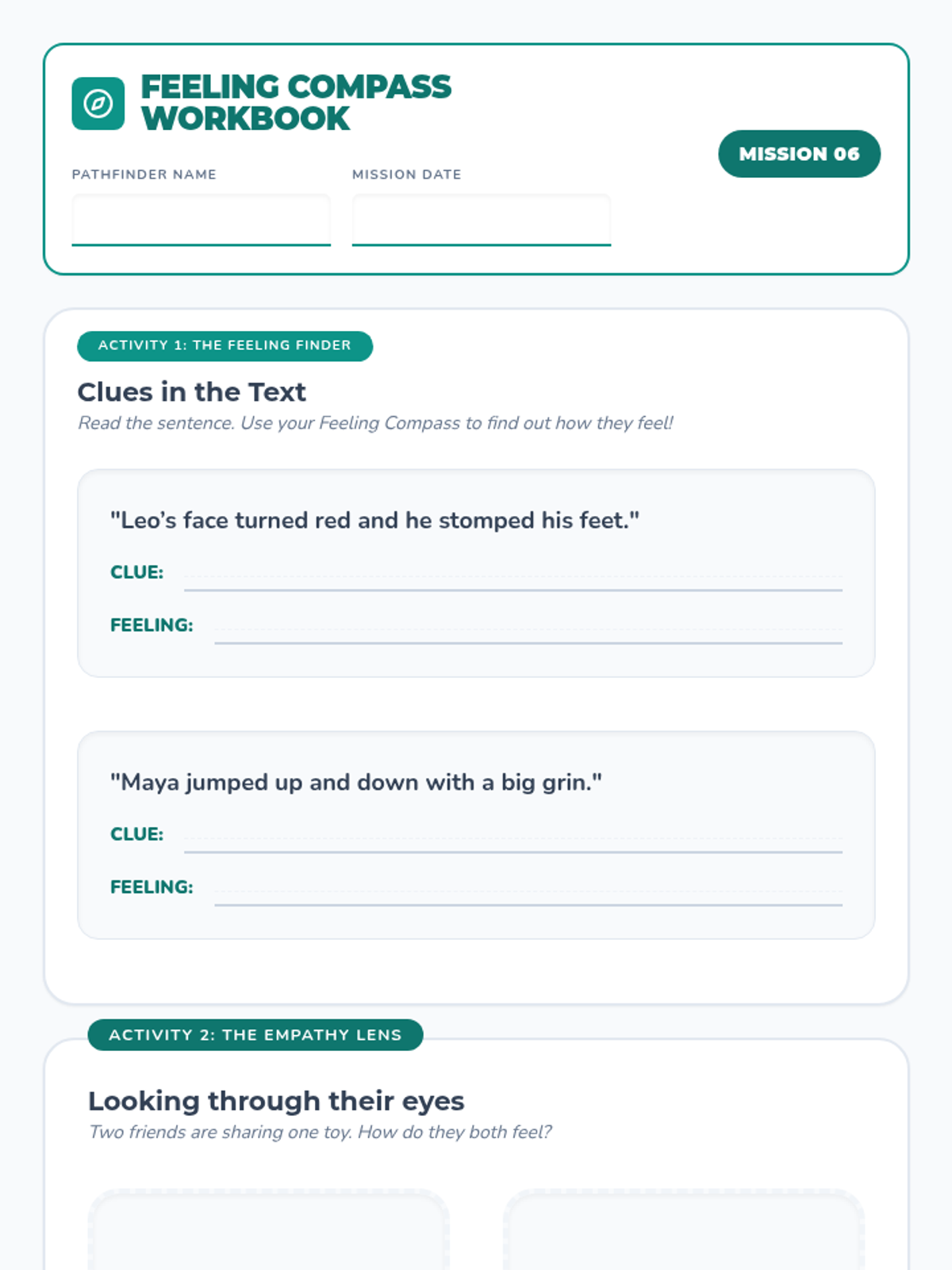
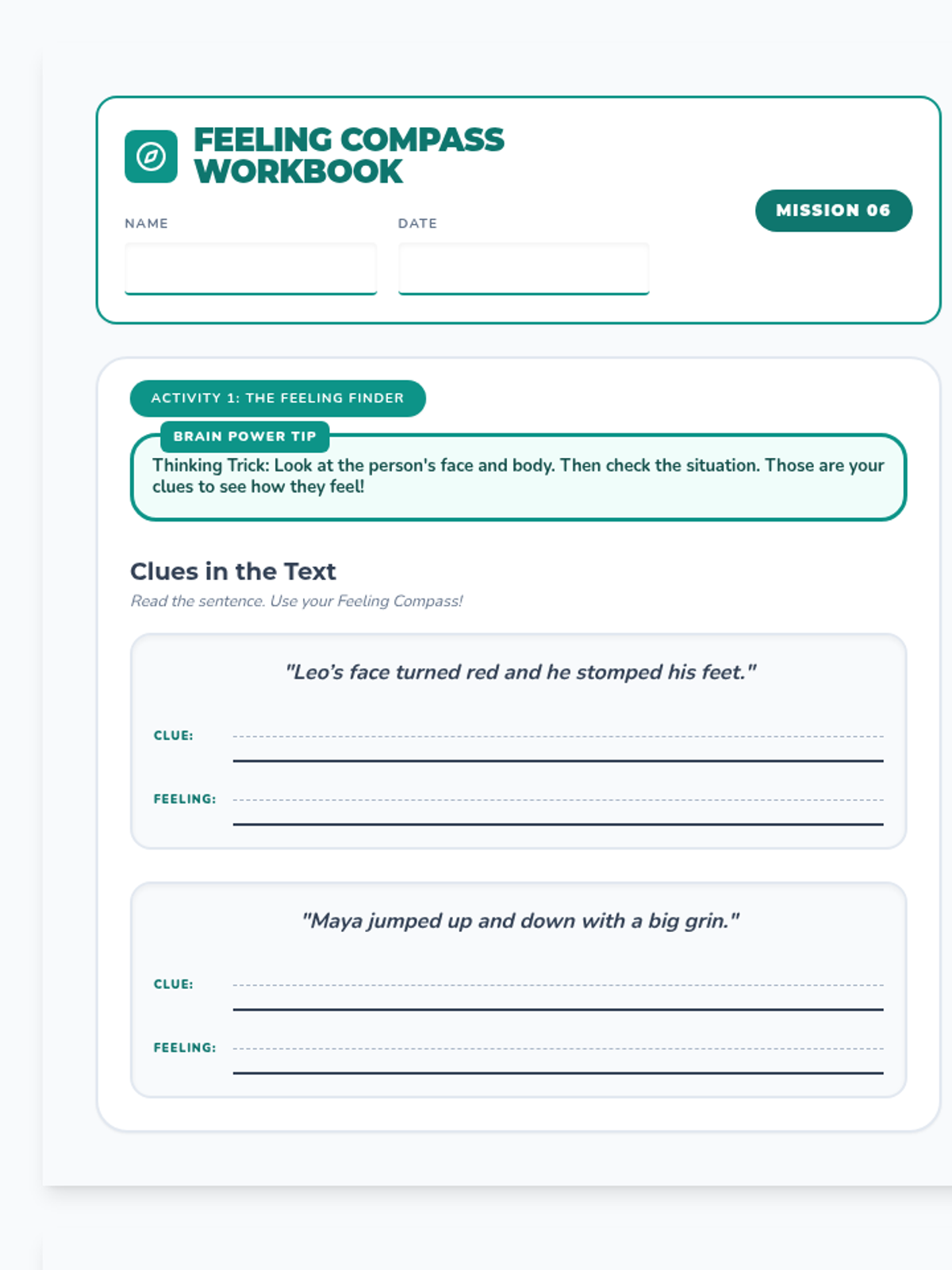
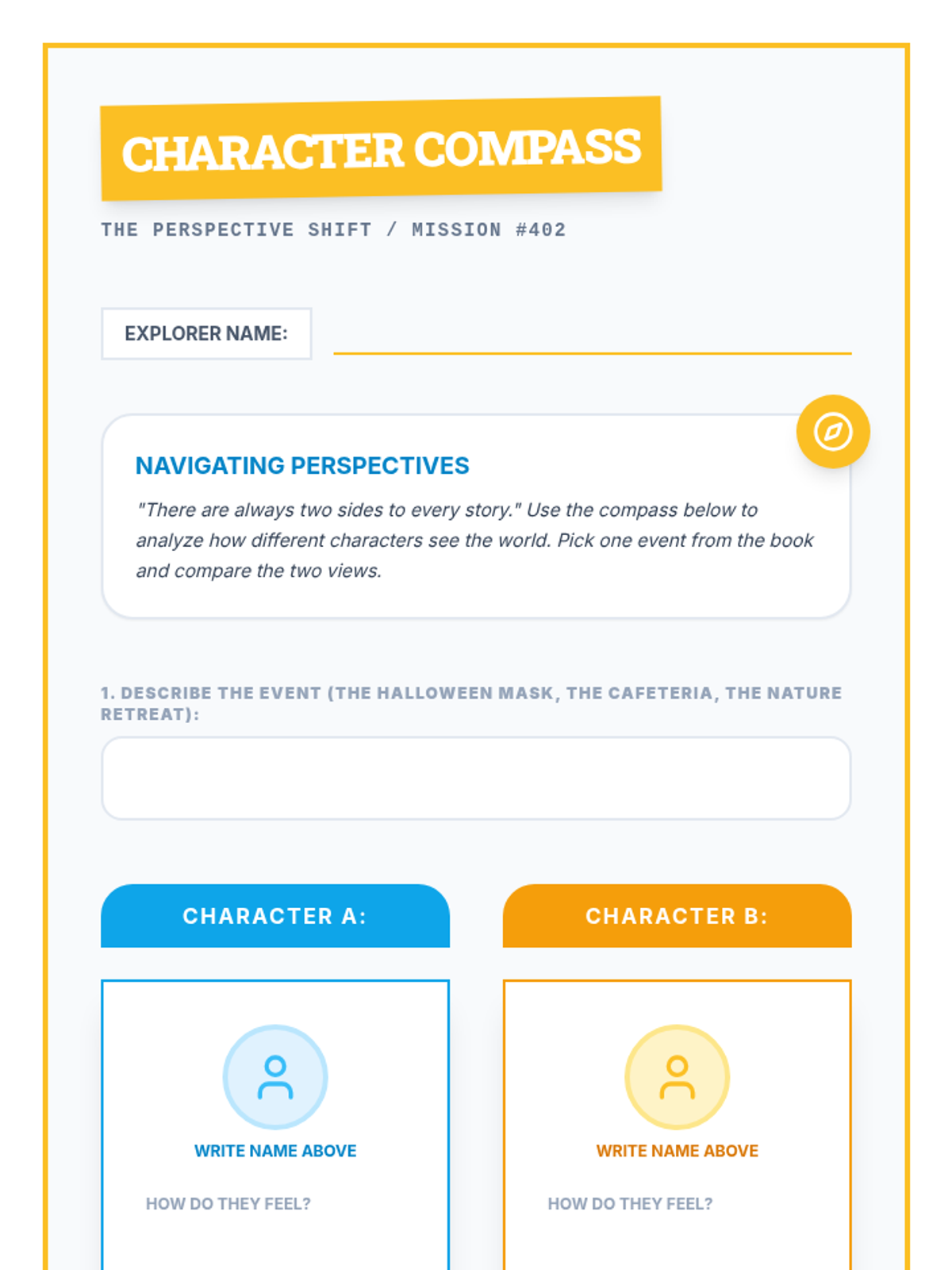
Explores social understanding by teaching students how to use their 'internal compass' to interpret character feelings and perspectives in texts.
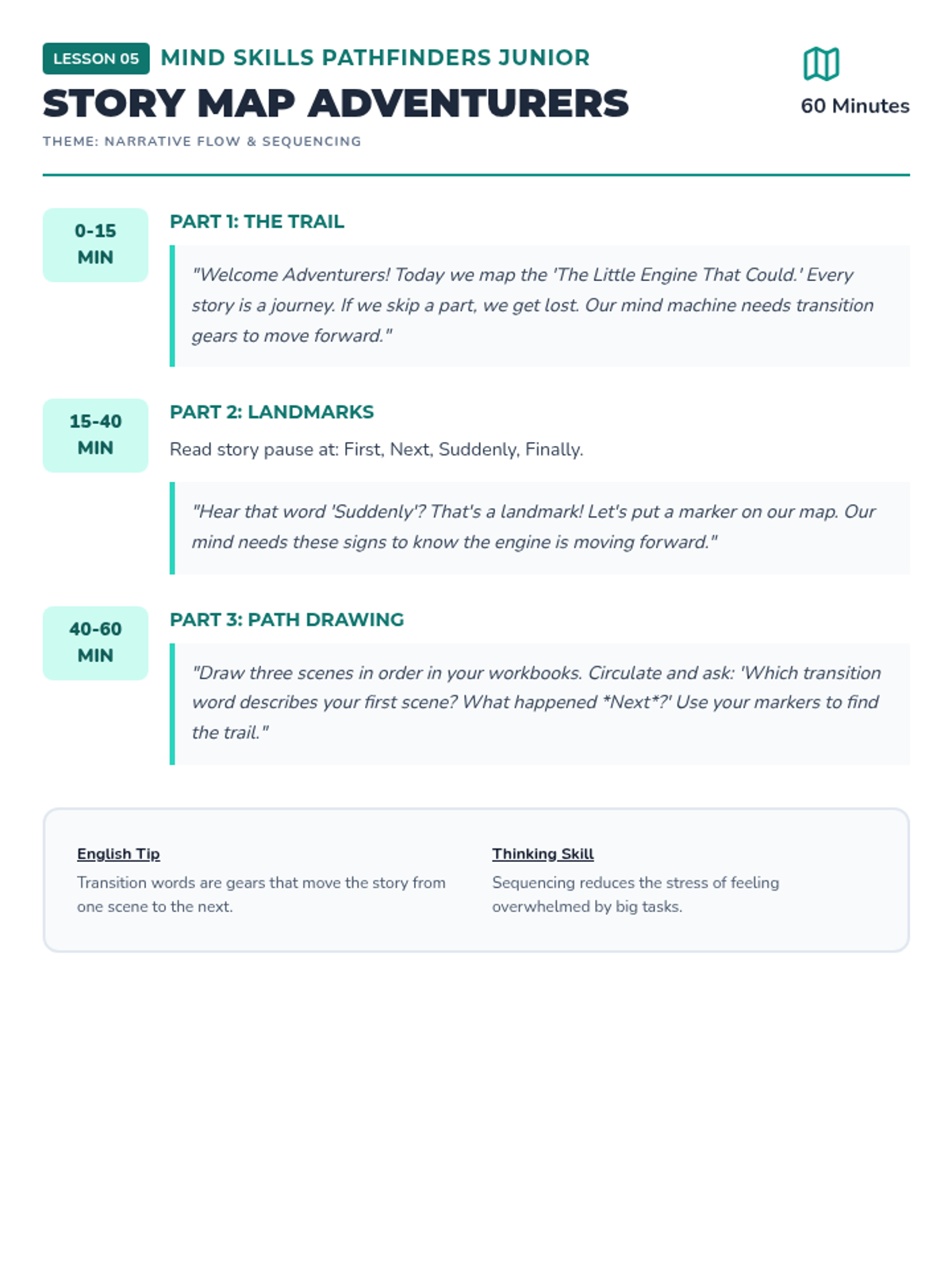
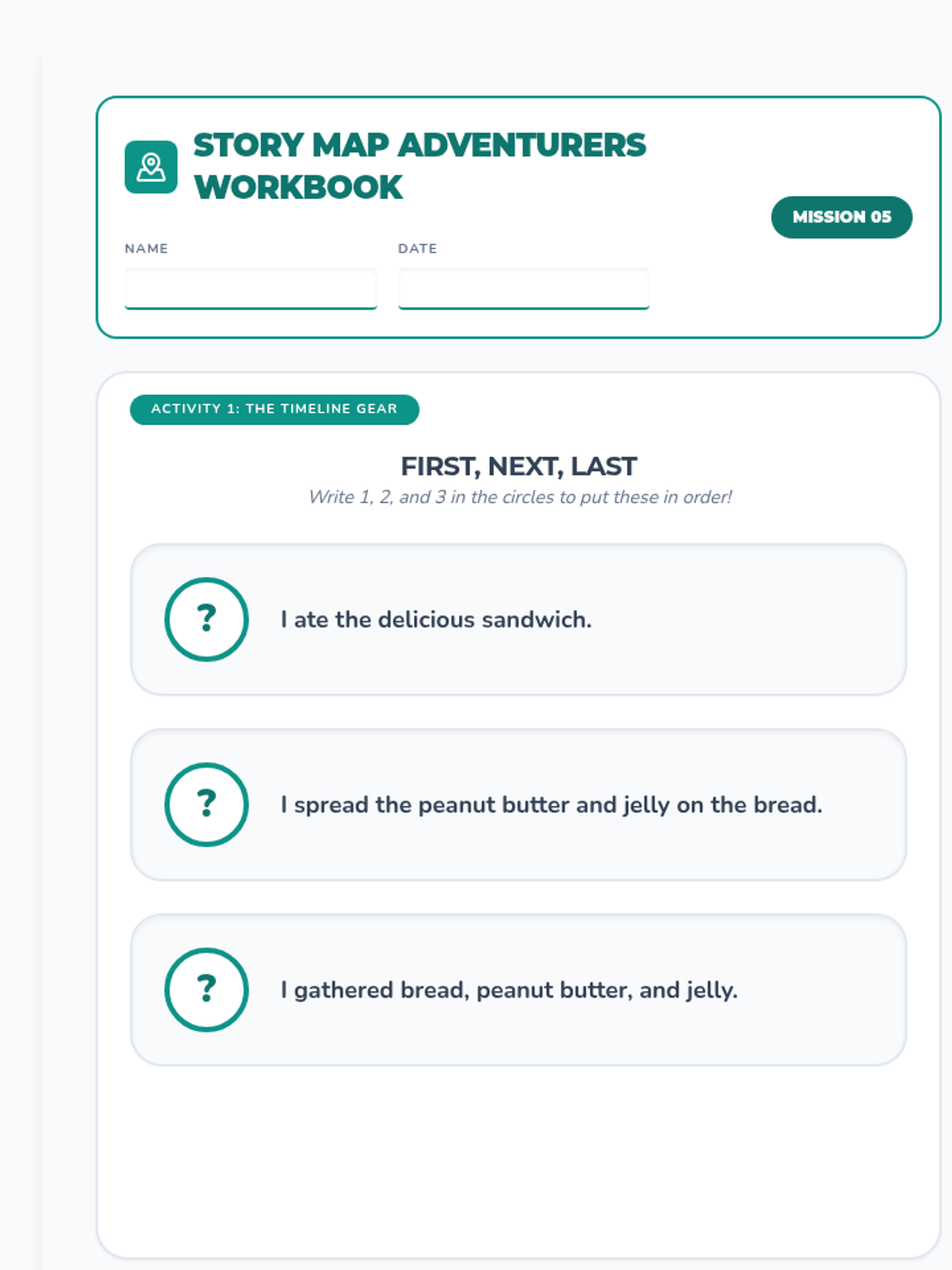
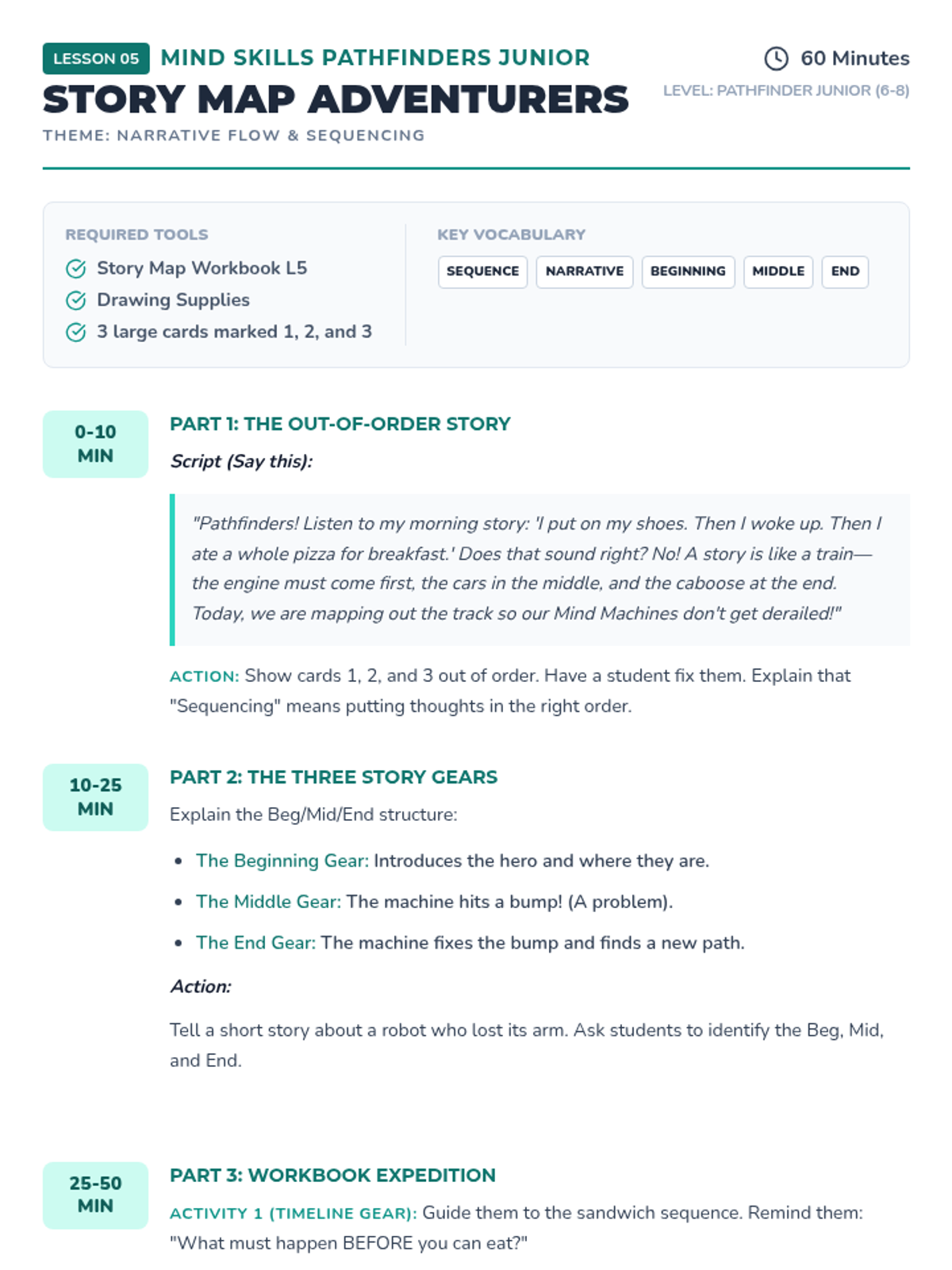
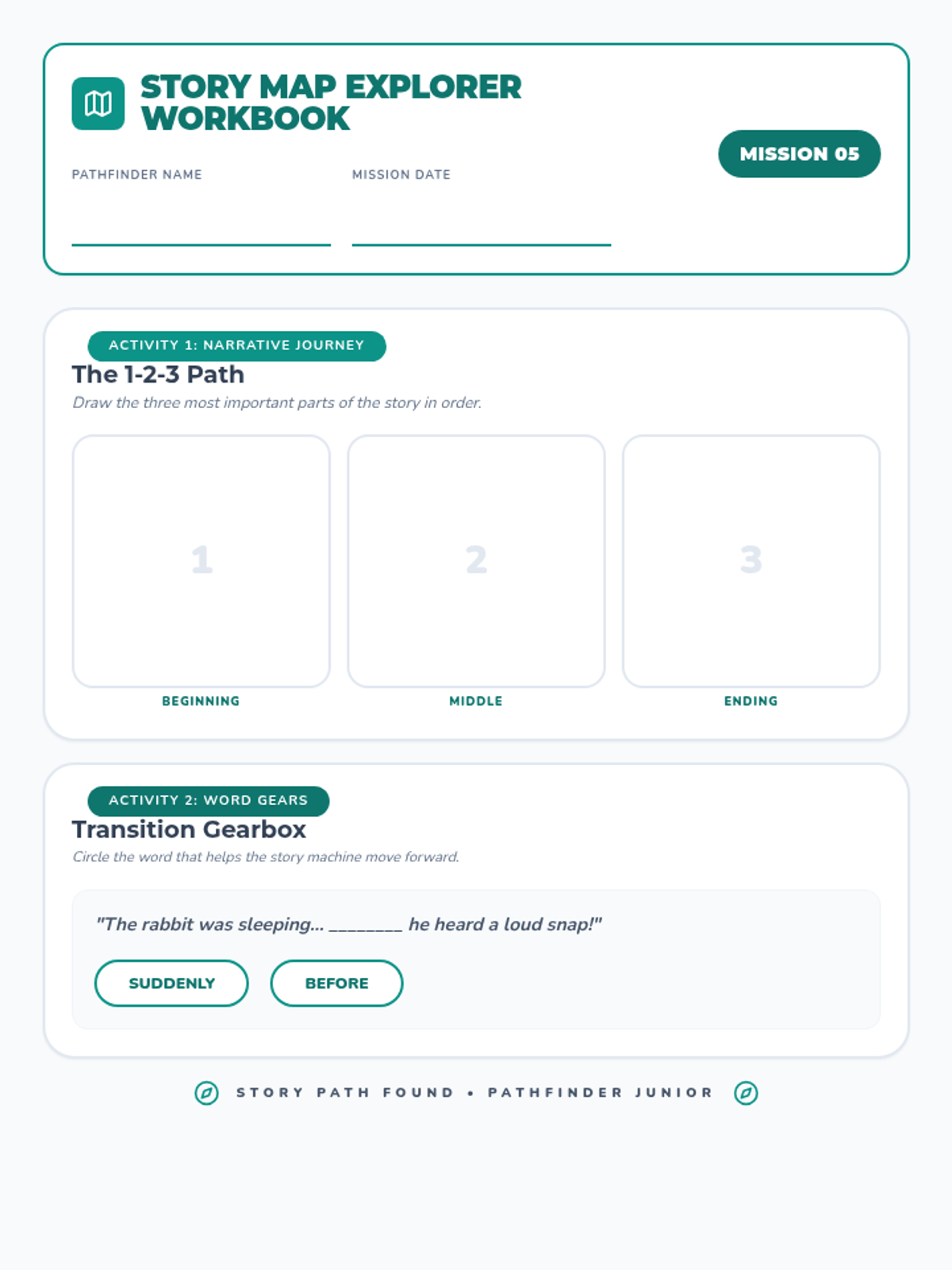
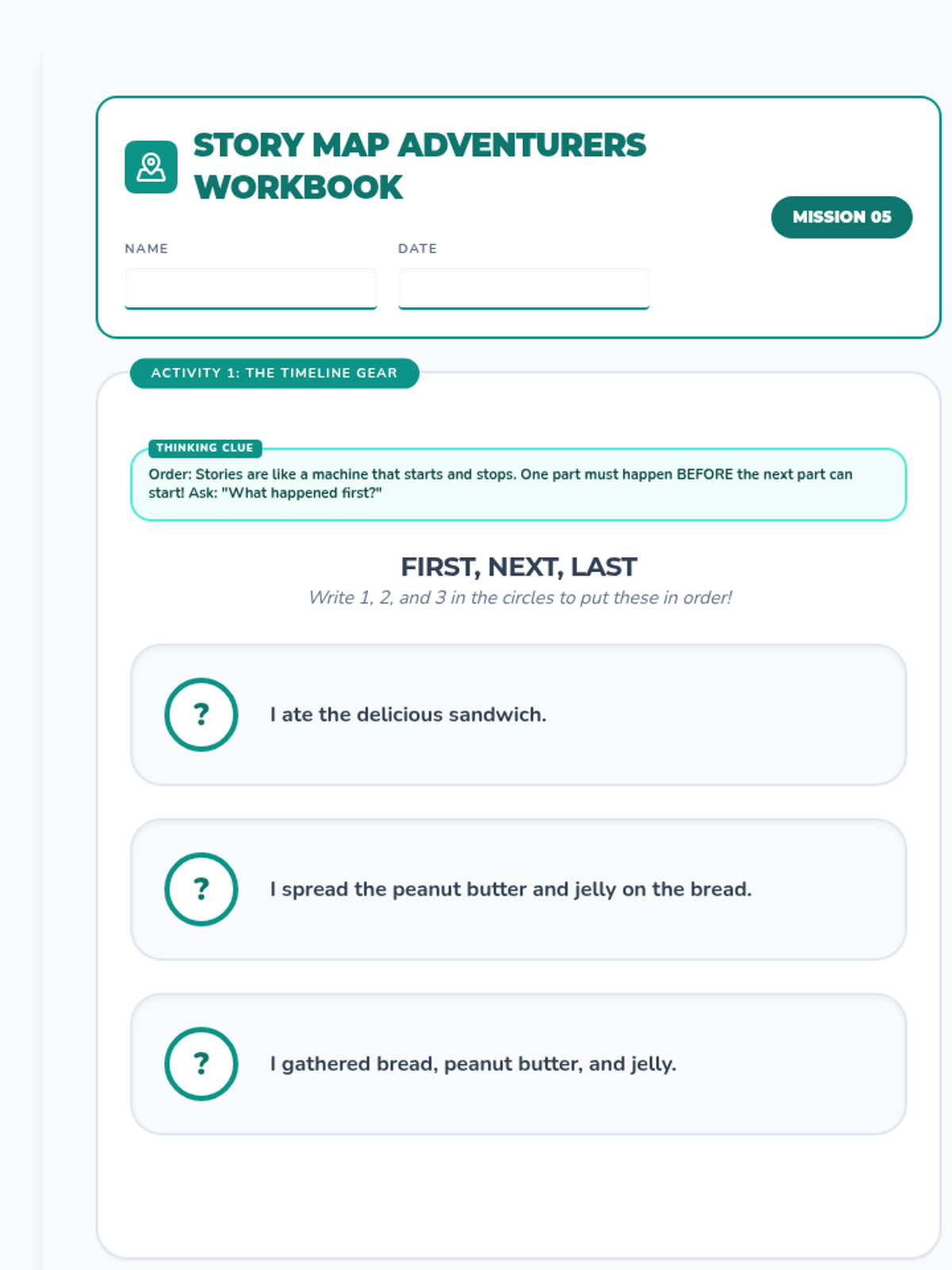
Uses story mapping to help students visualize narrative flow and understand how different parts of a story connect to form a whole.
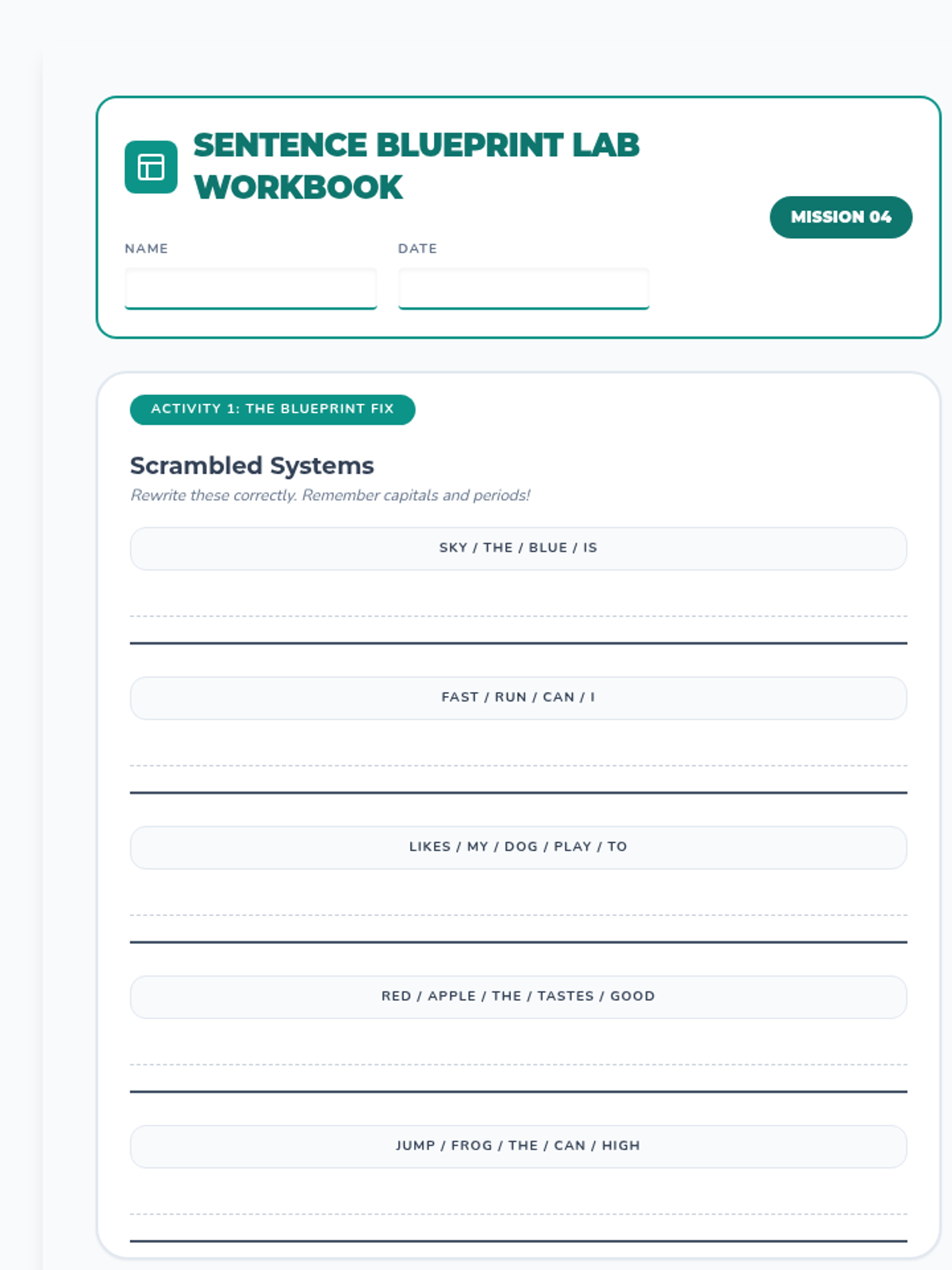
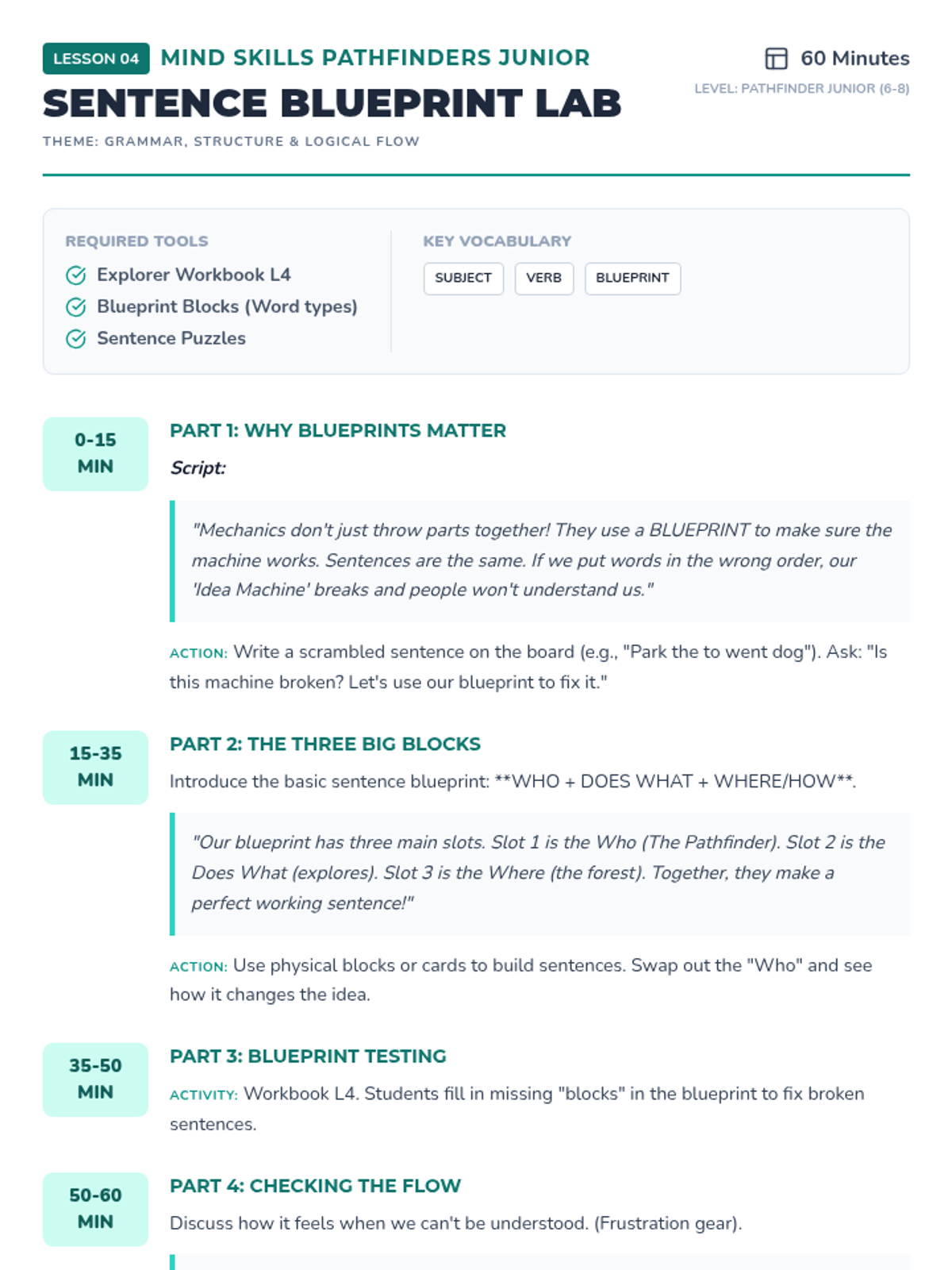
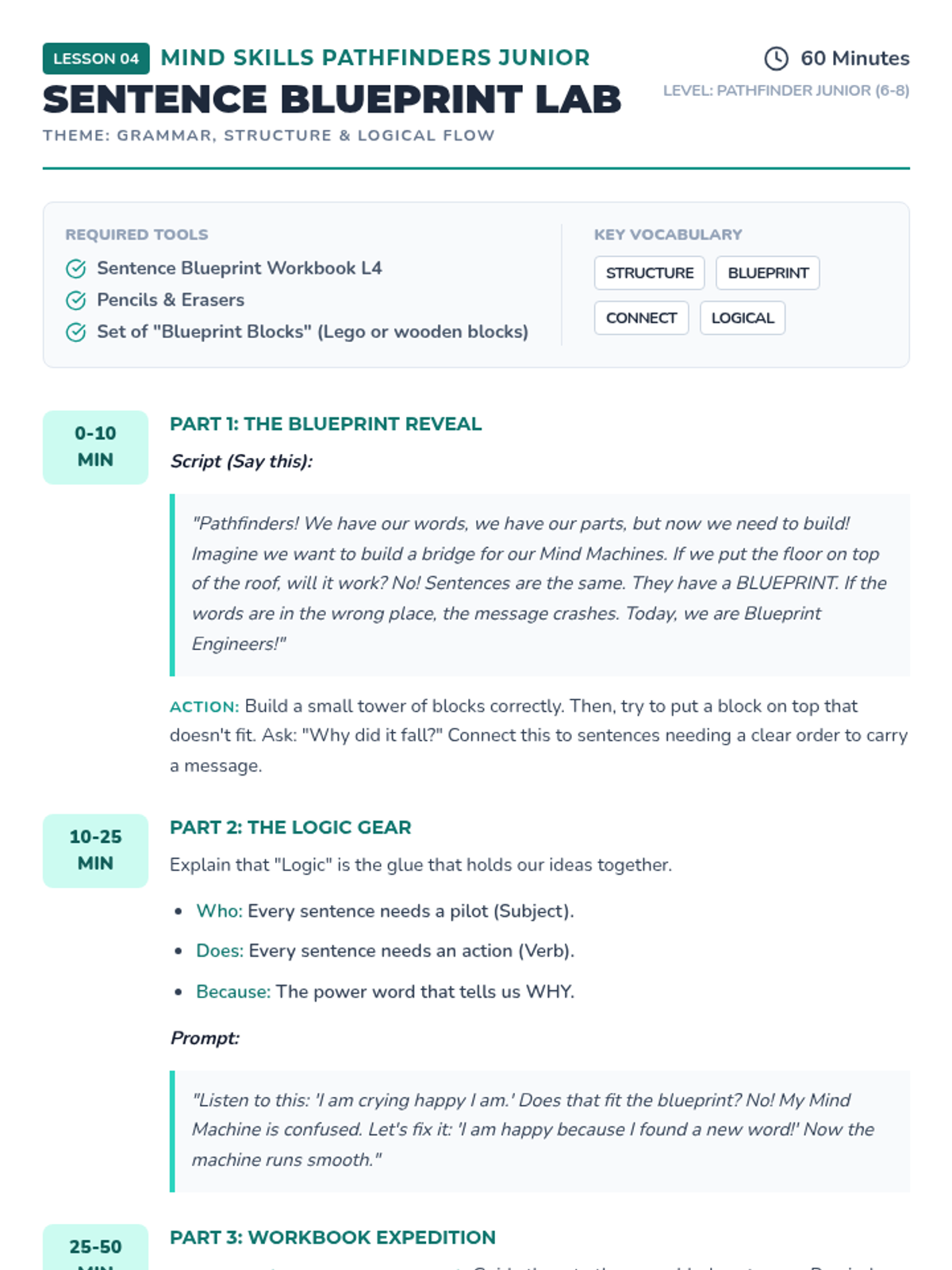
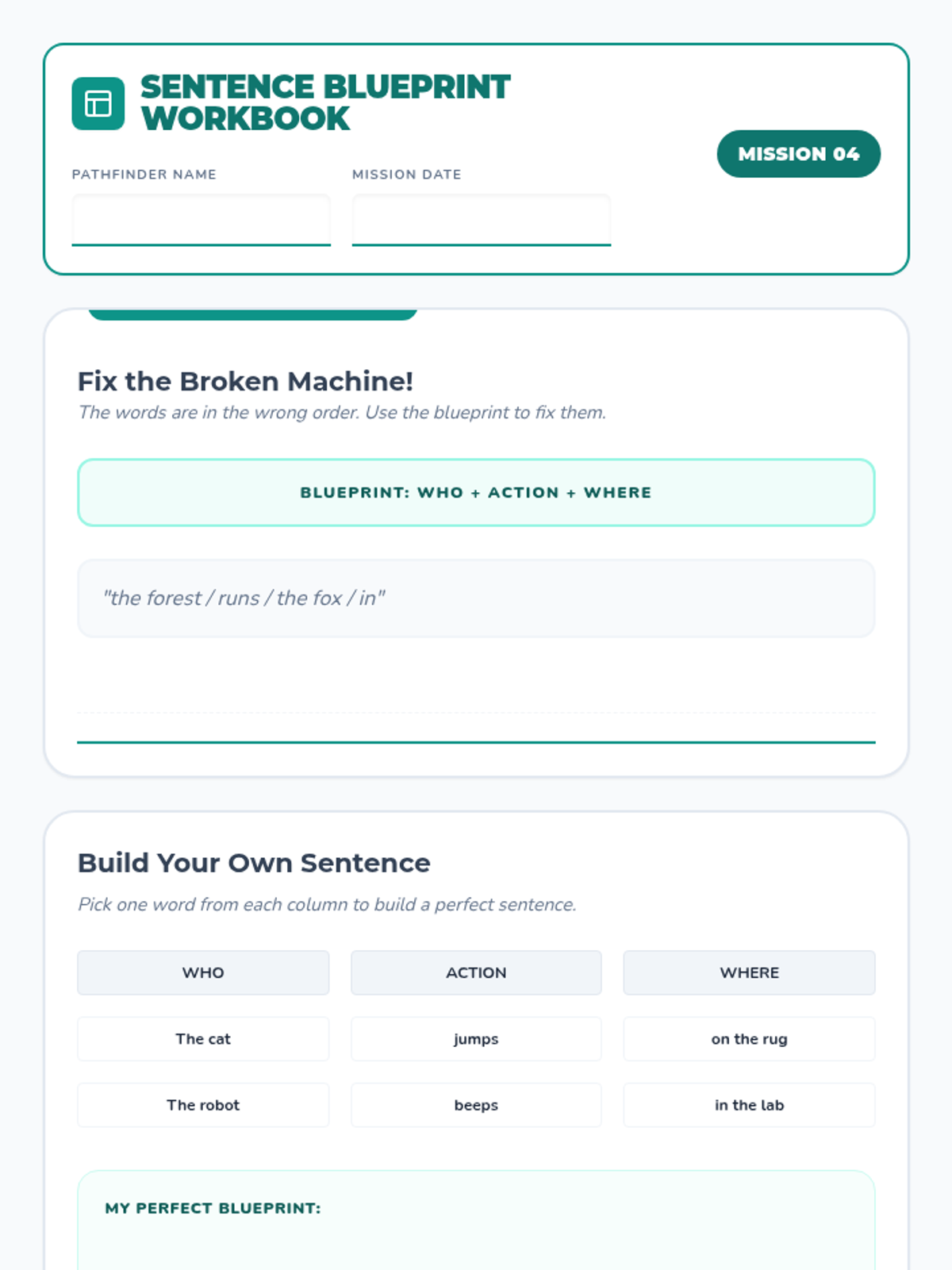
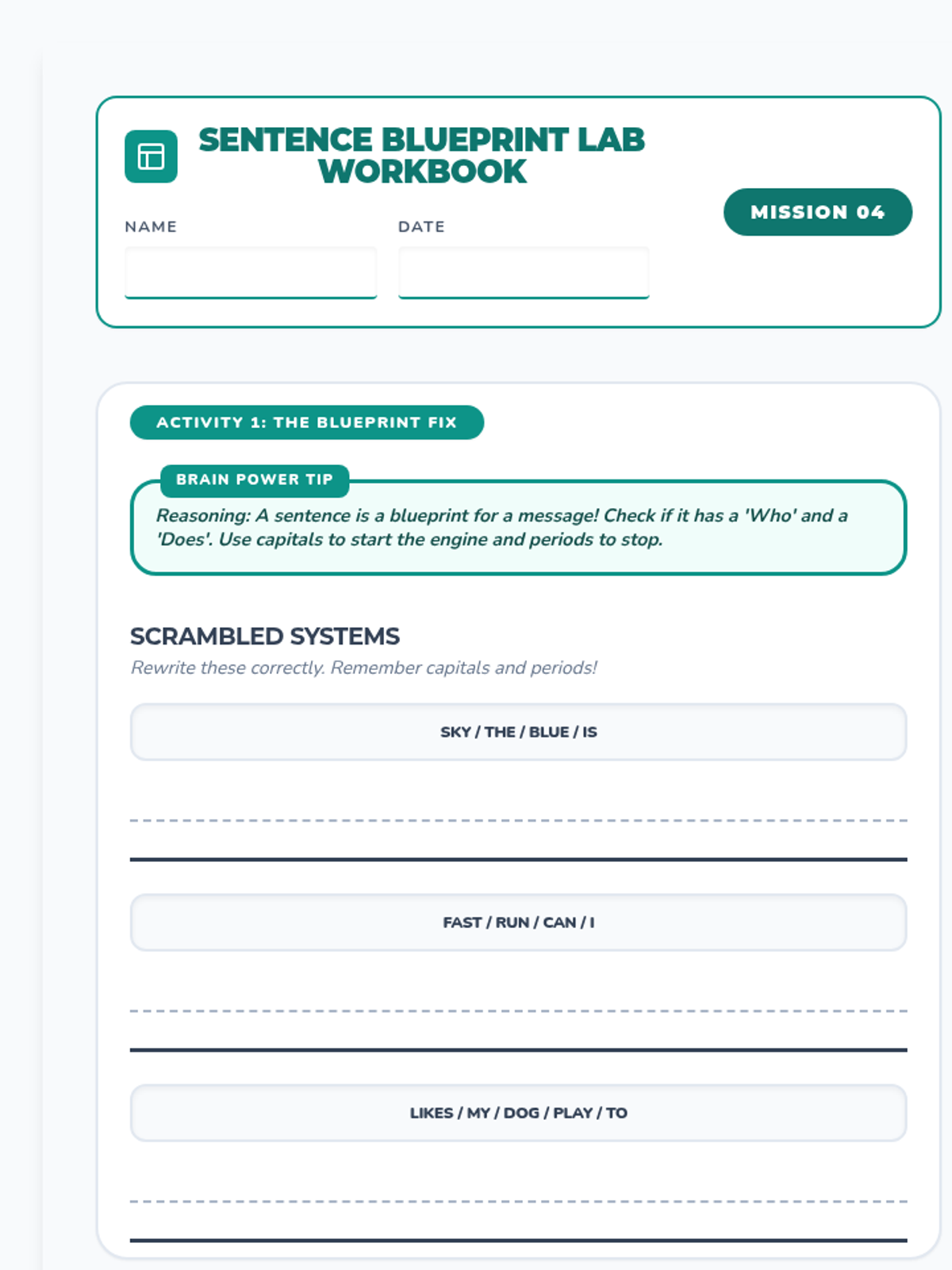
Teaches basic grammar and sentence structure as the 'blueprints' that help us express ideas clearly so others can understand our thoughts.
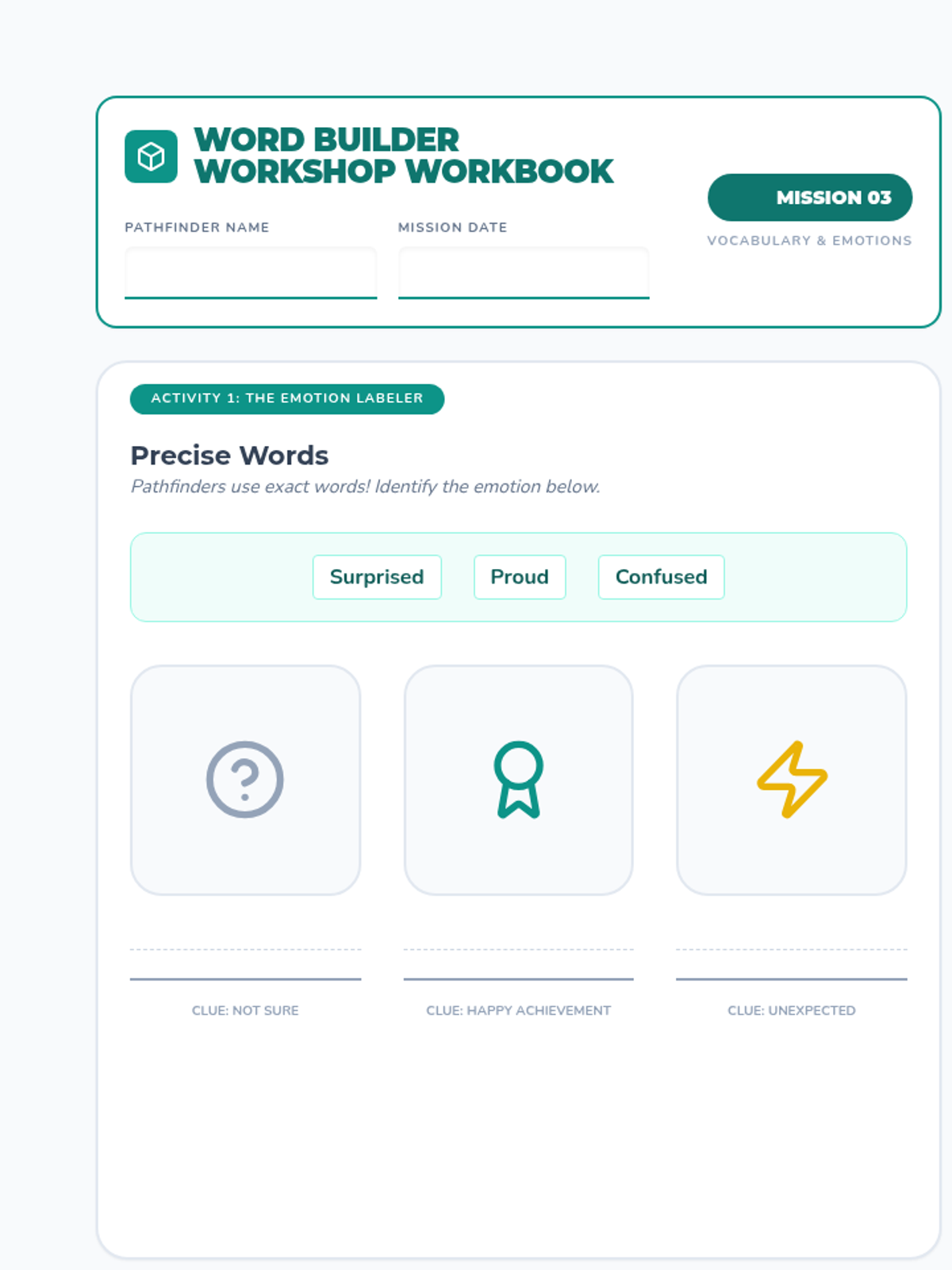
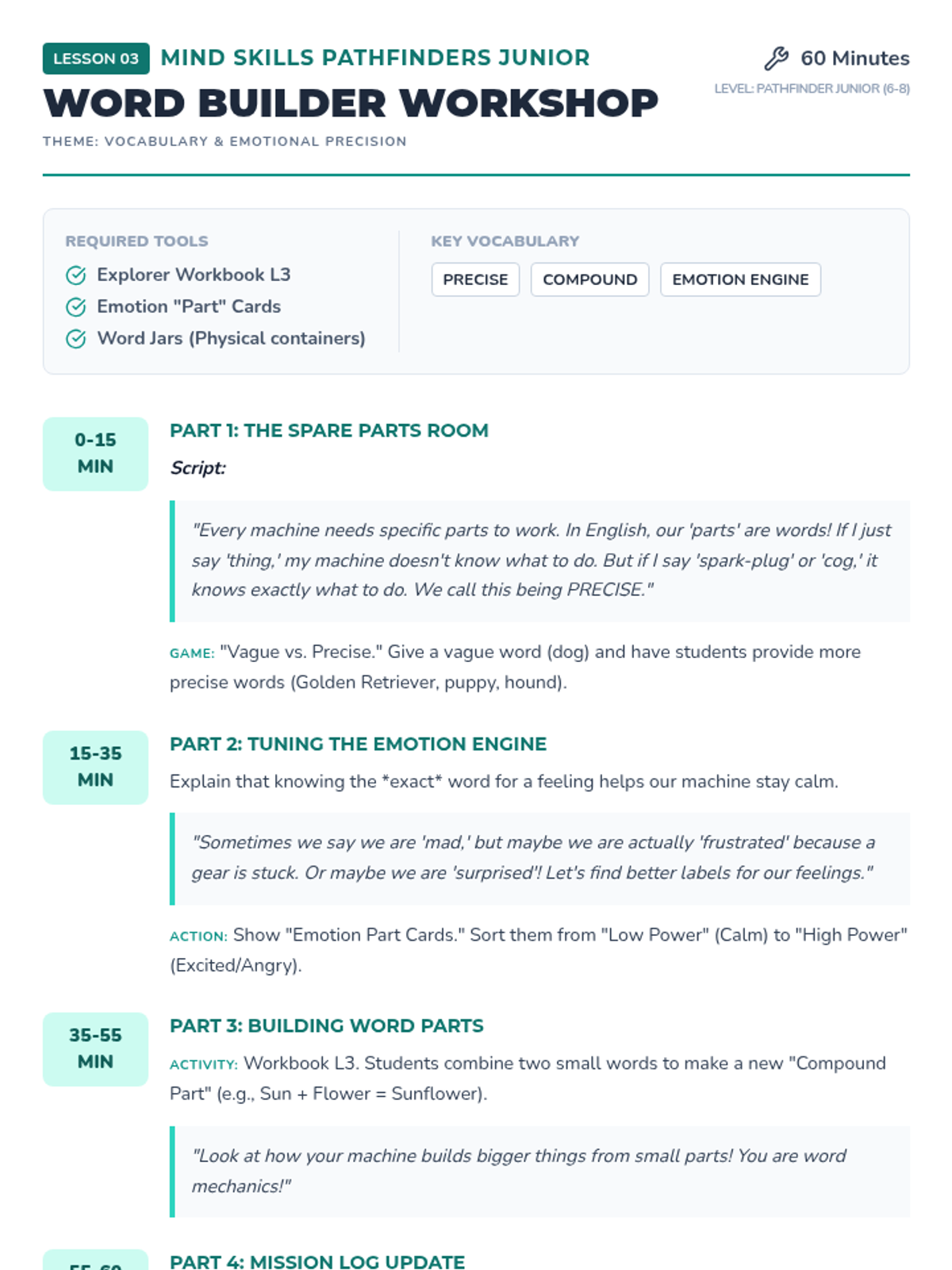
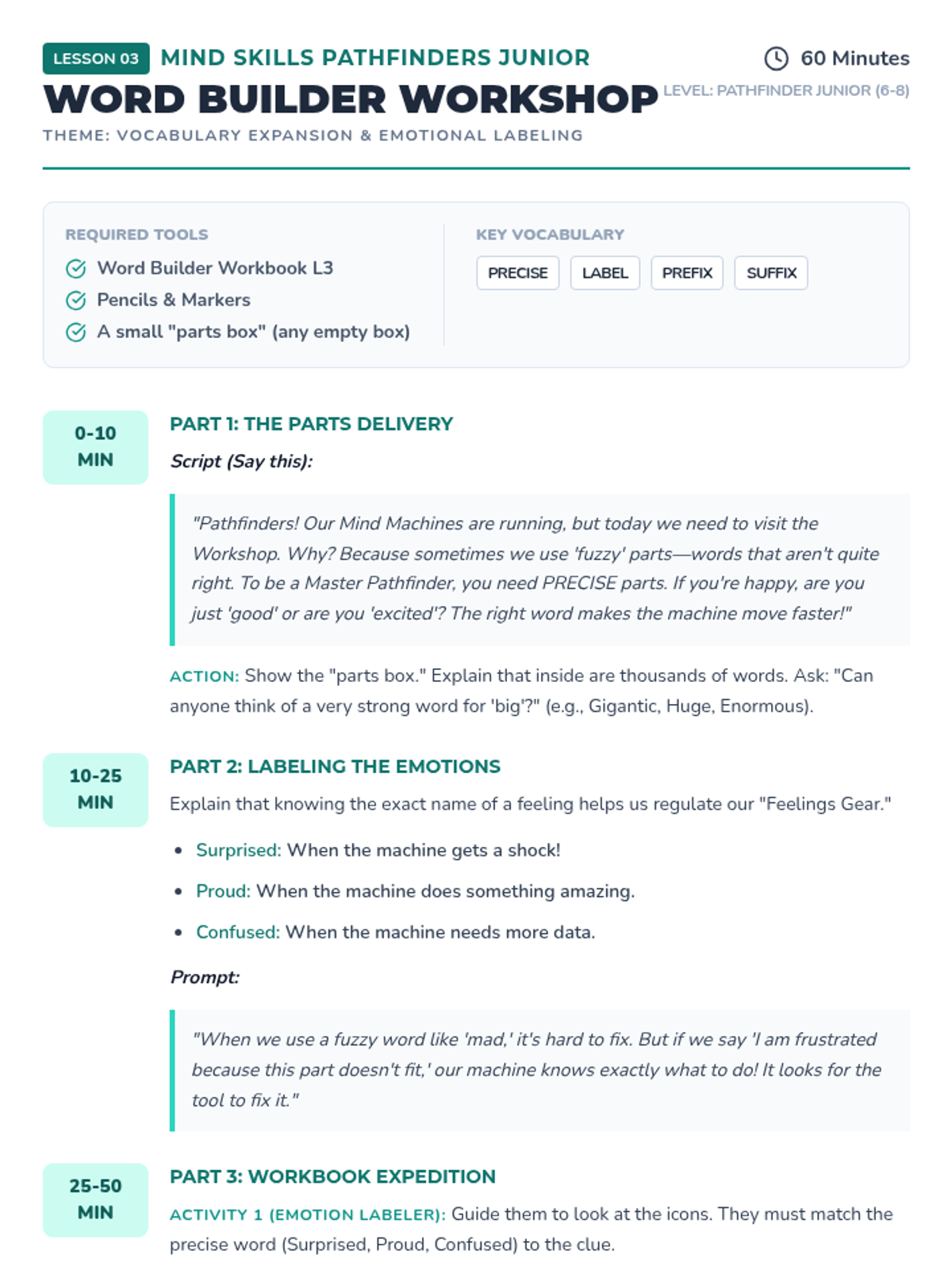
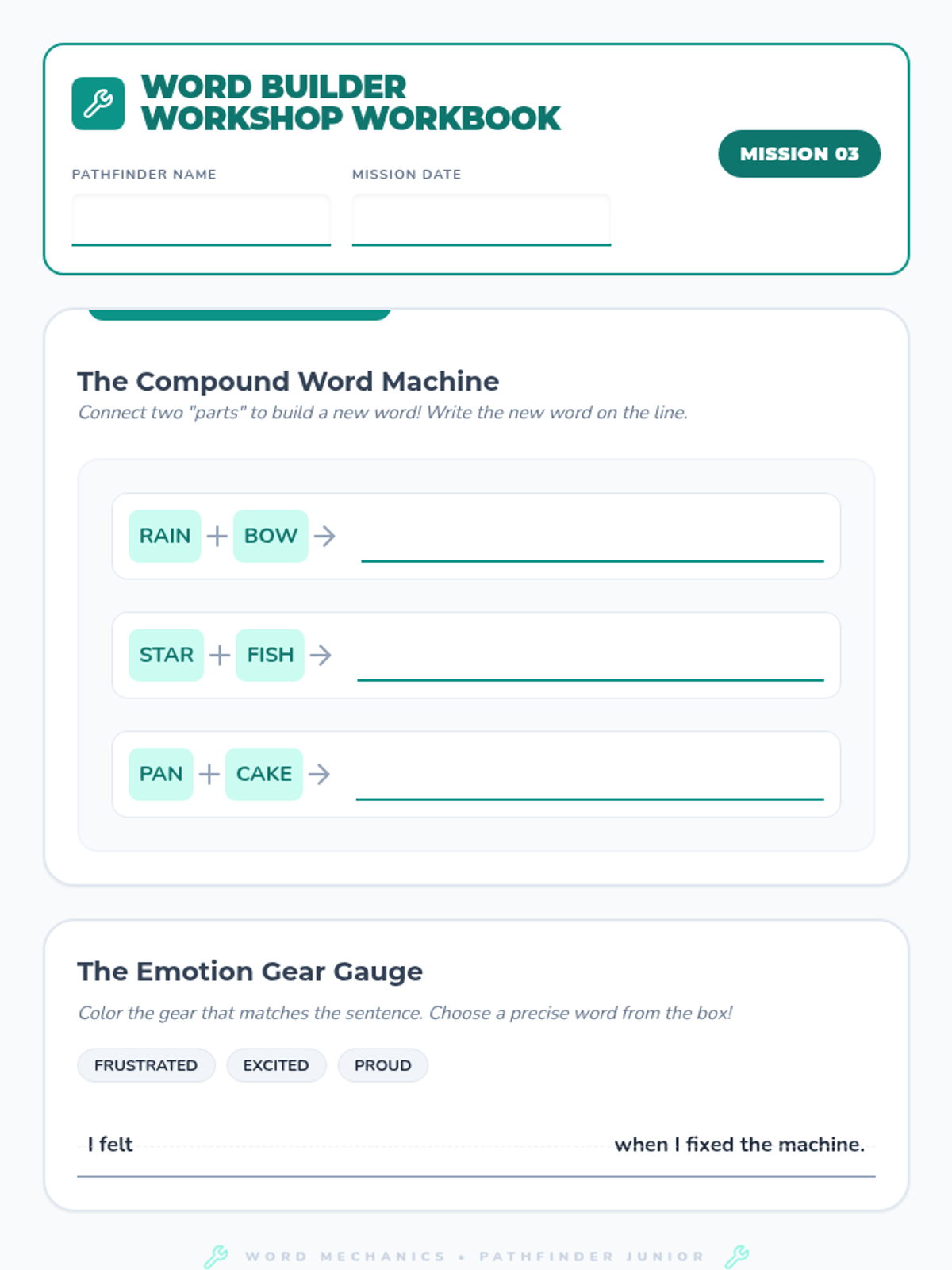
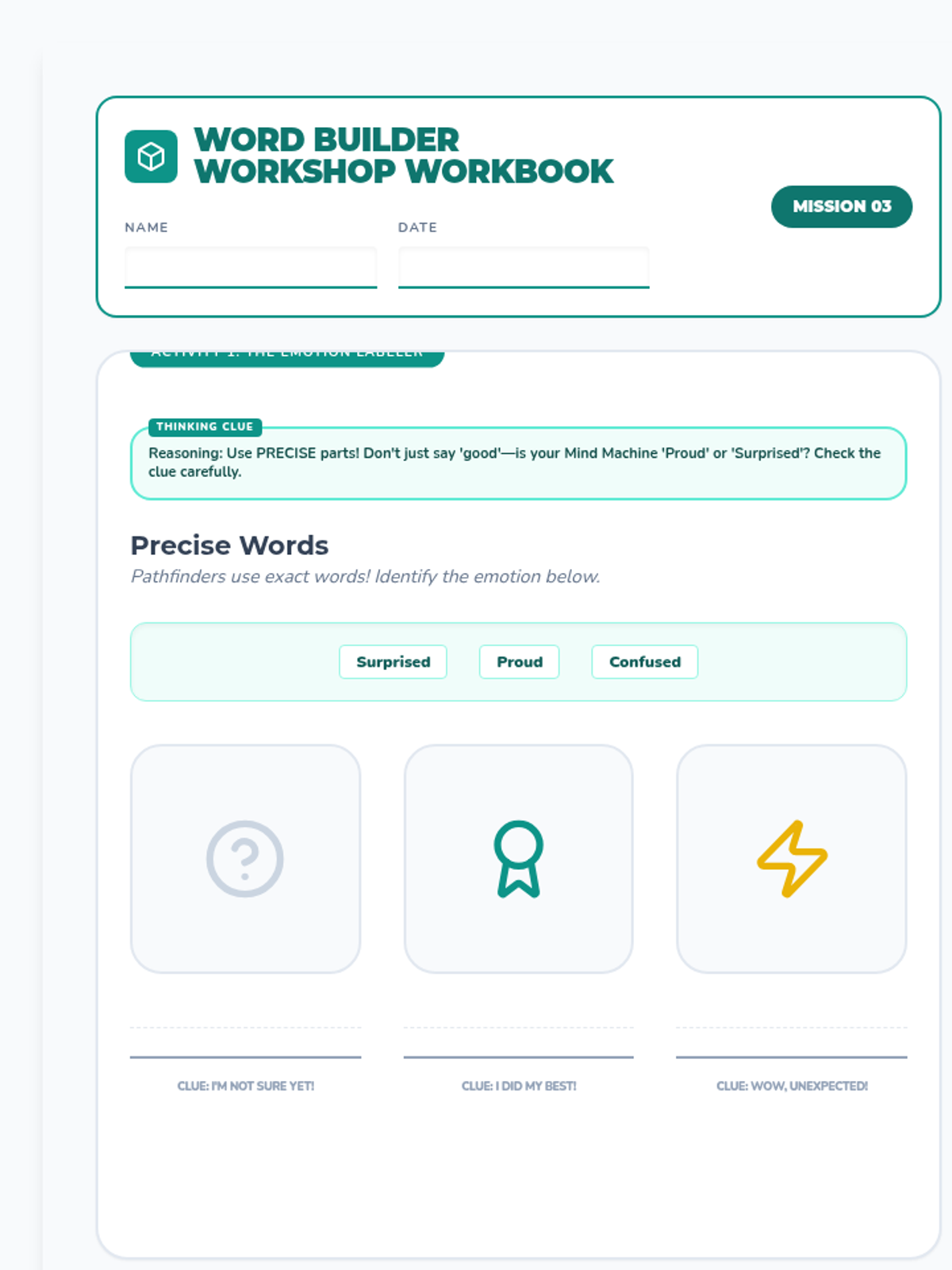
Introduces vocabulary building through the lens of 'parts' for our mind machines, focusing on labeling emotions and objects with precision.
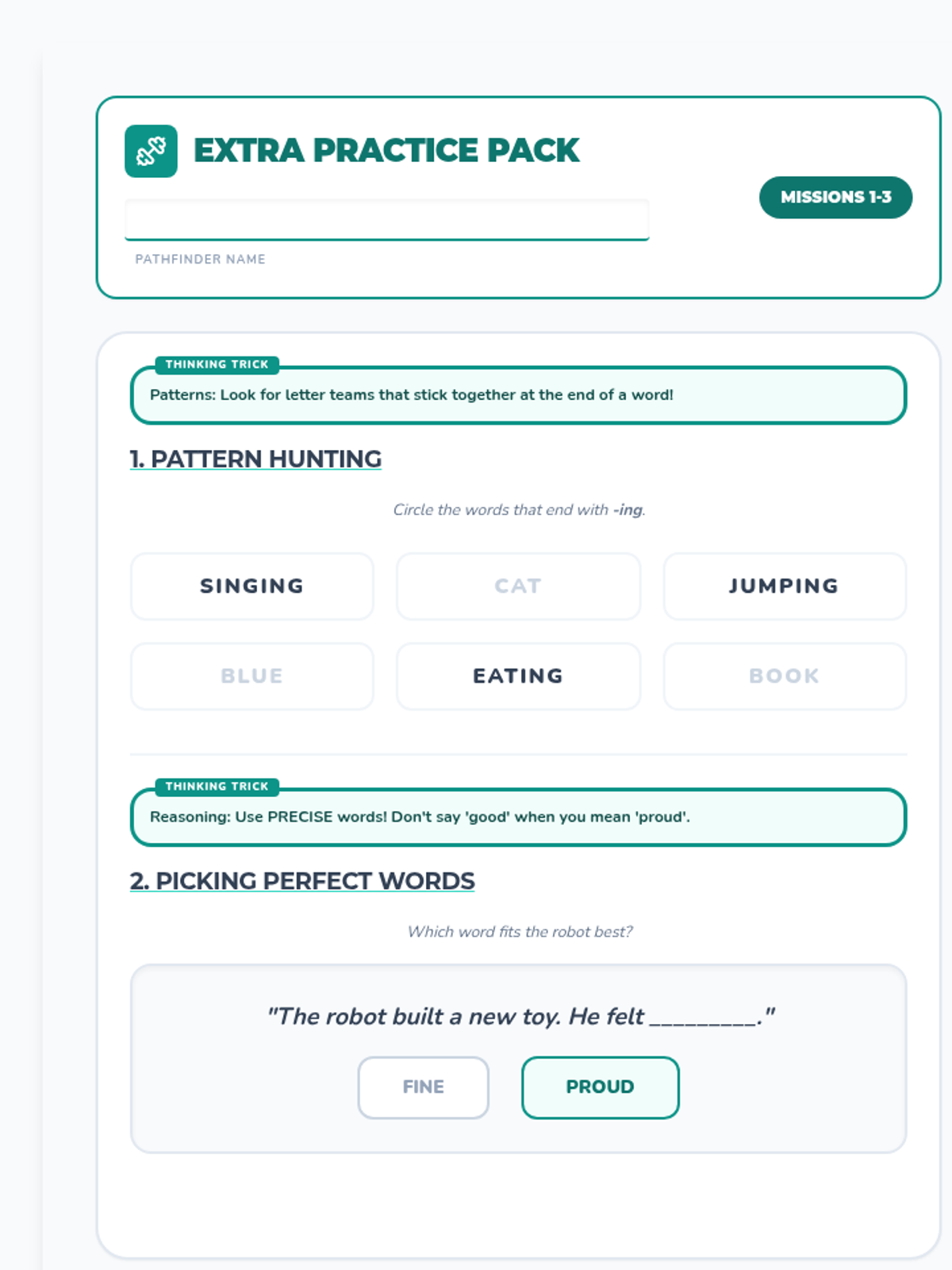
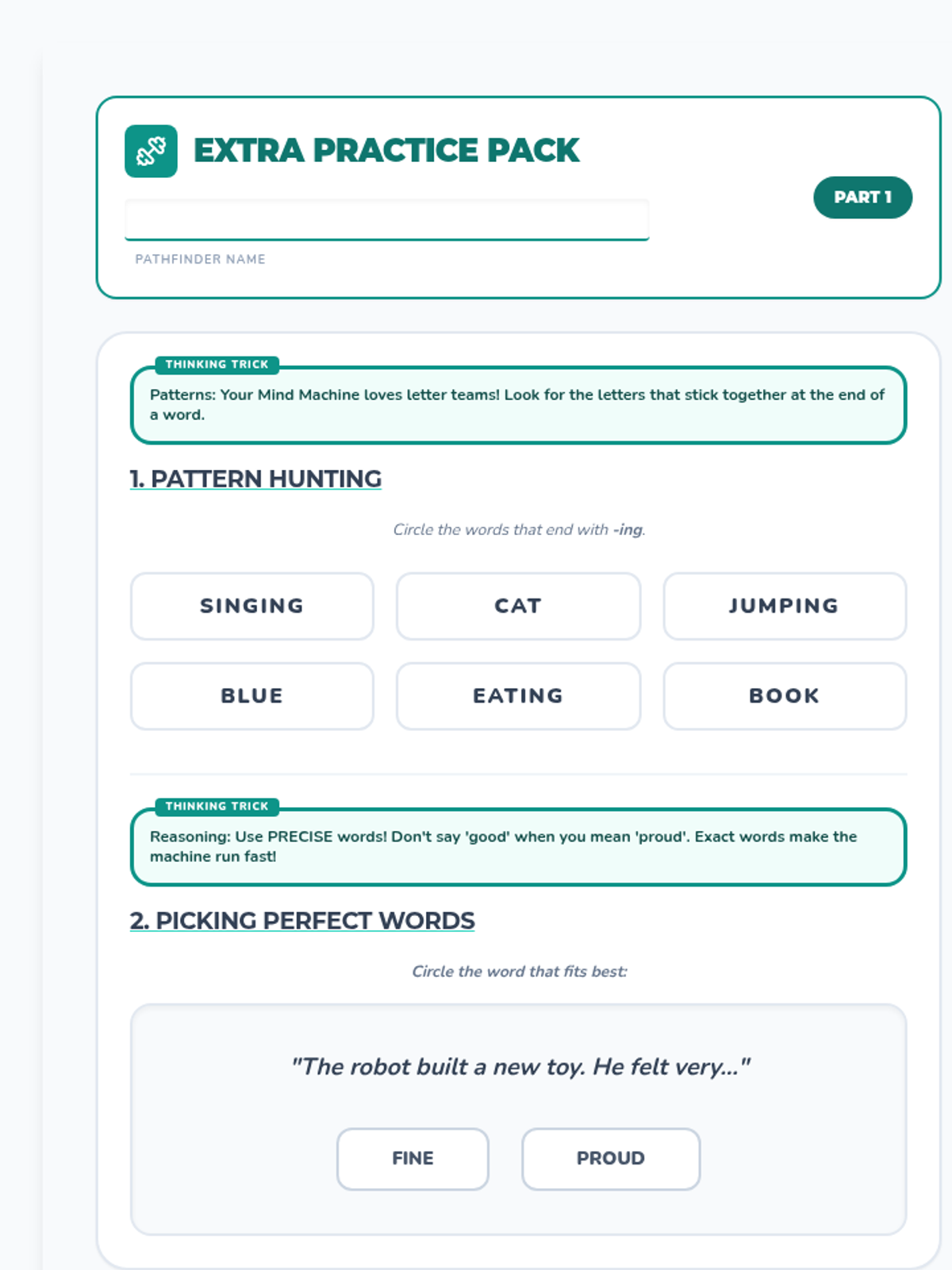
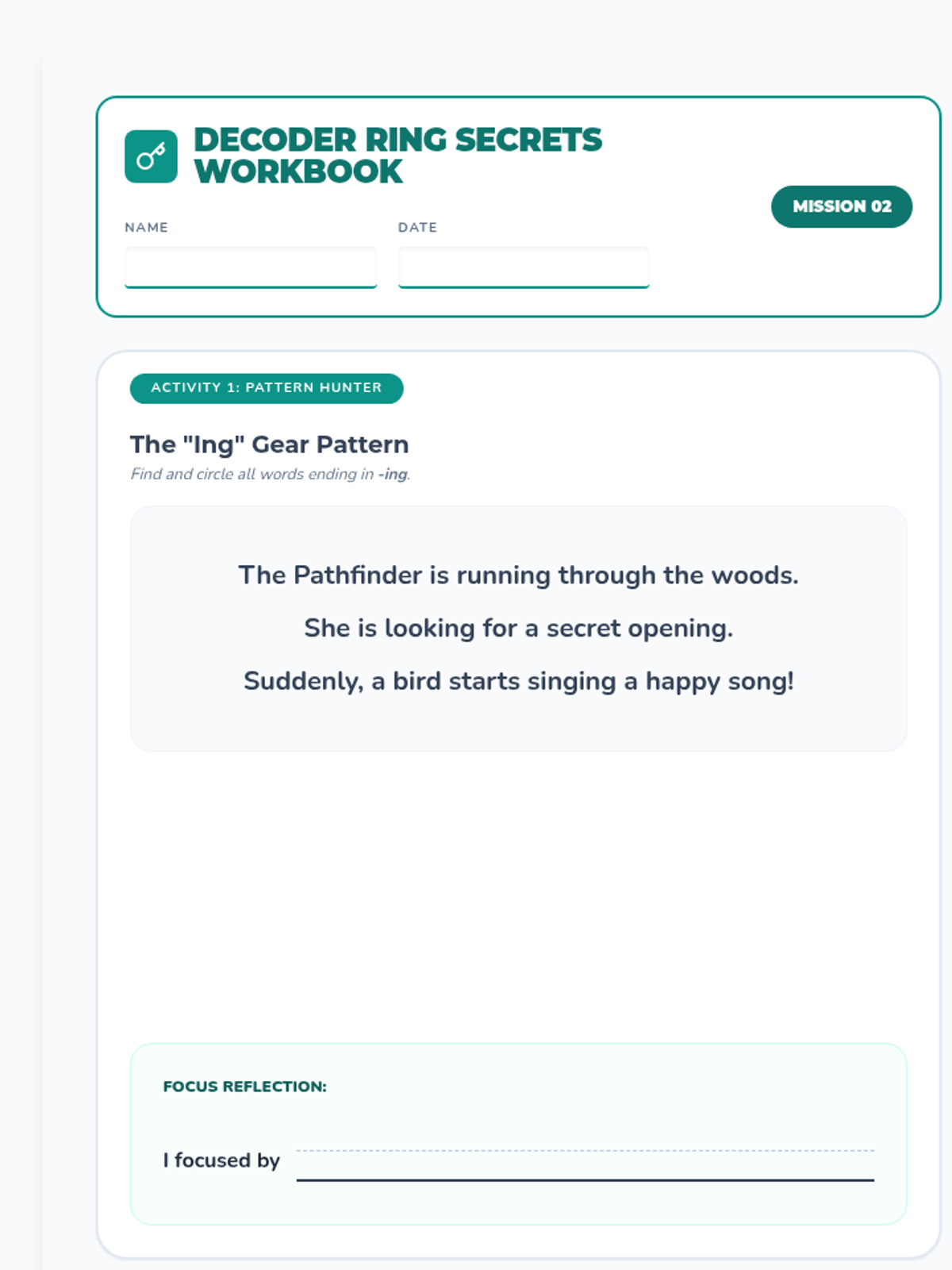
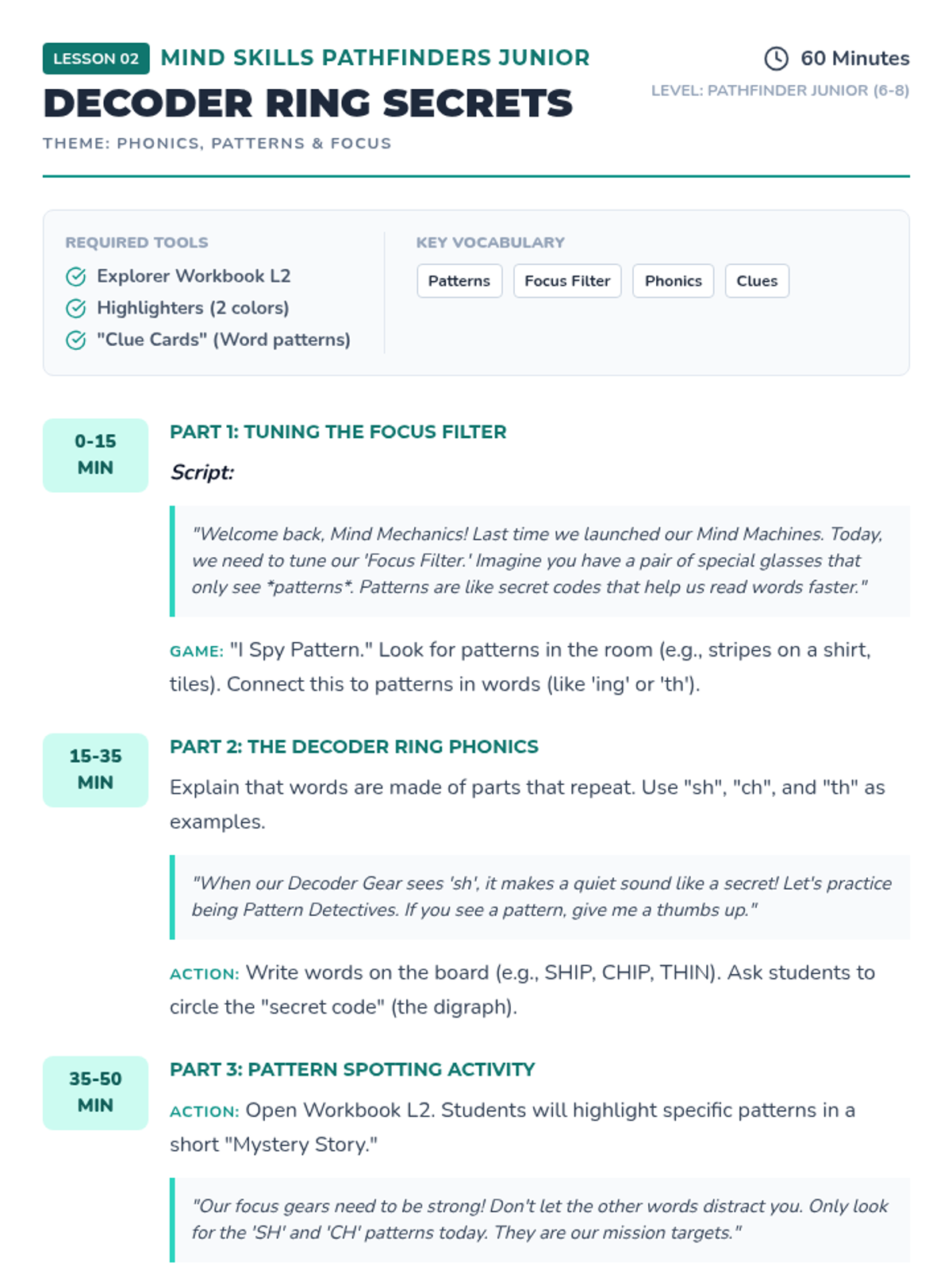
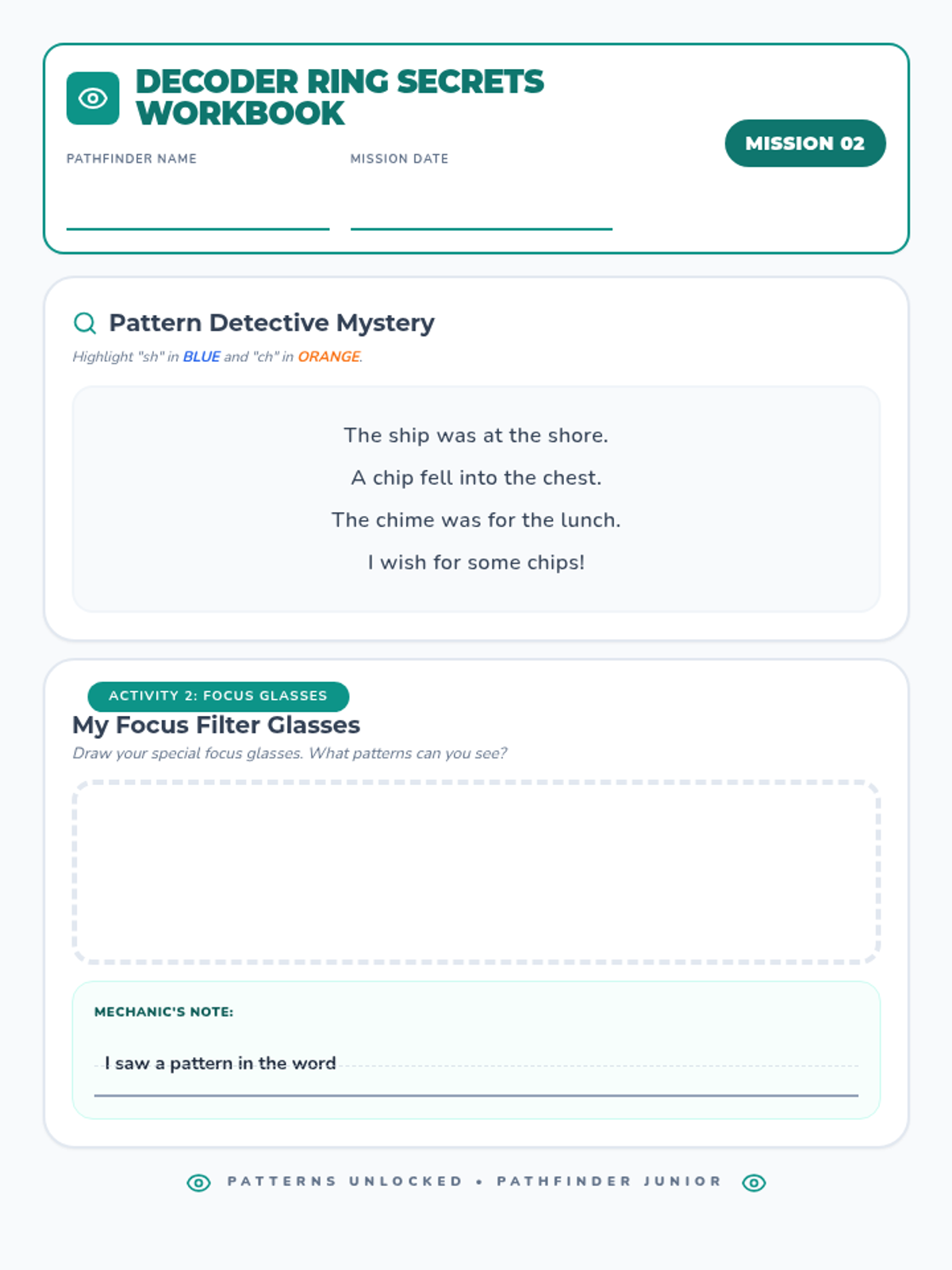
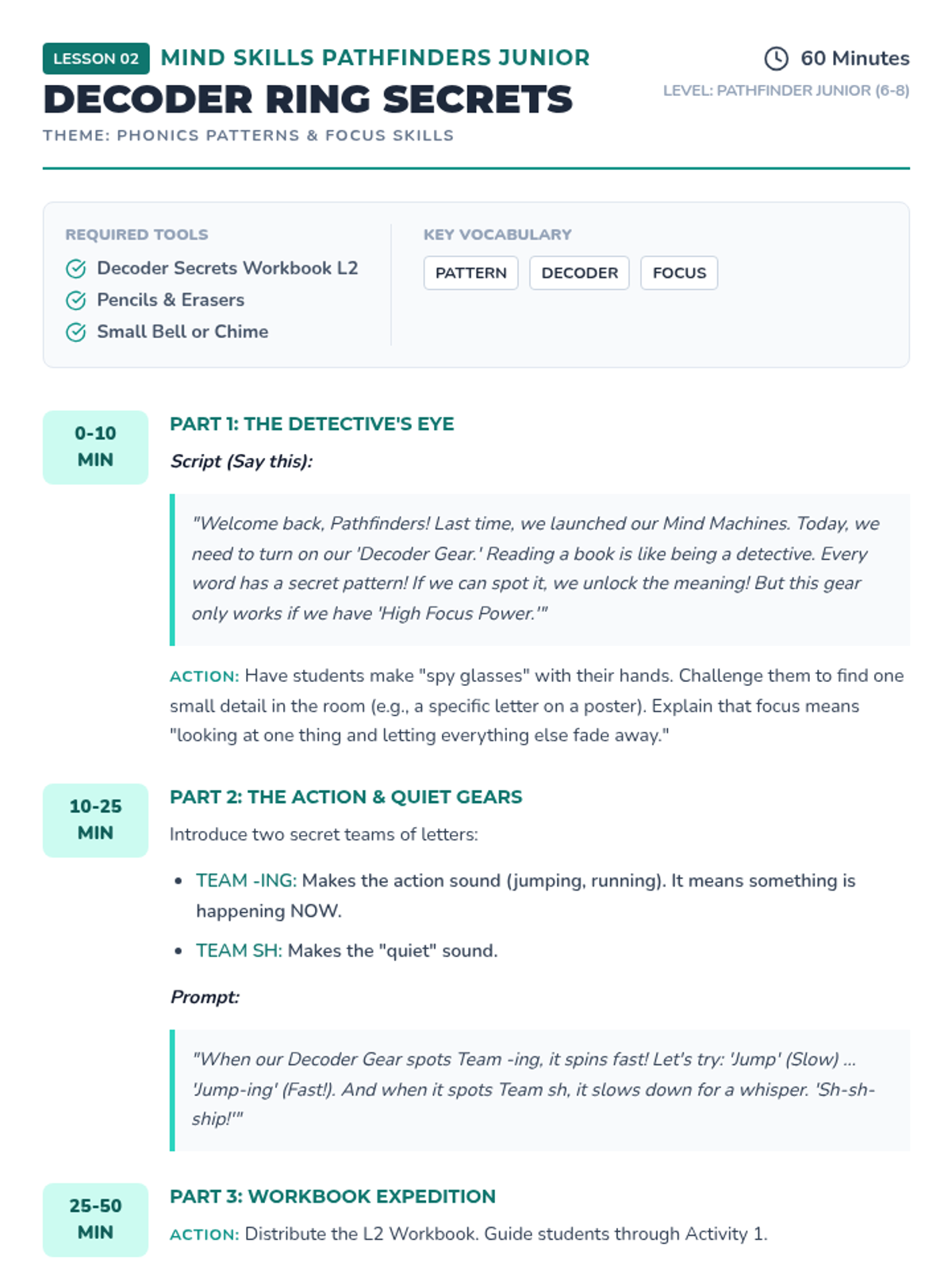
Focuses on phonics and pattern spotting in text, teaching students that reading is a form of detective work where we look for clues to unlock meaning.
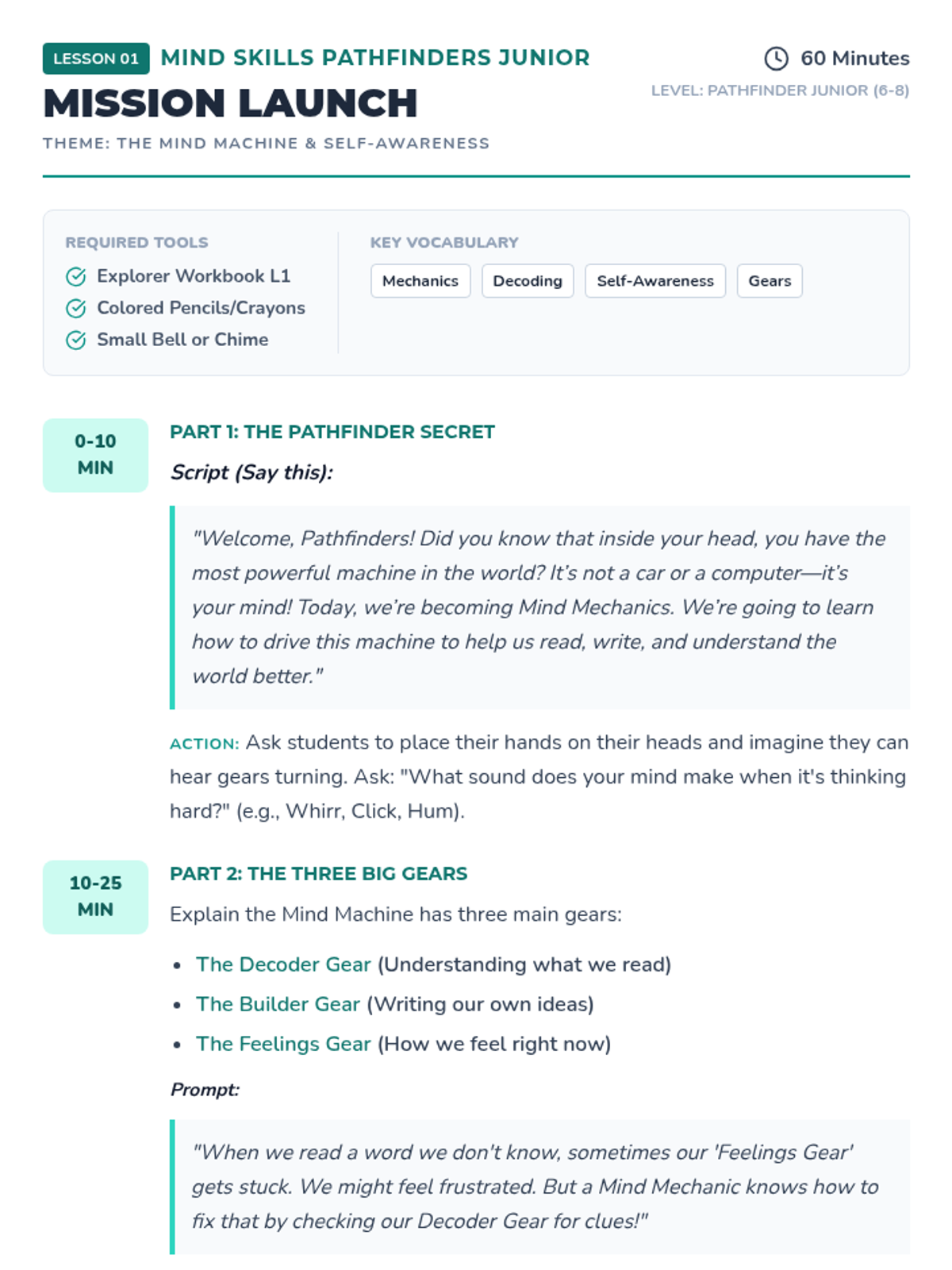
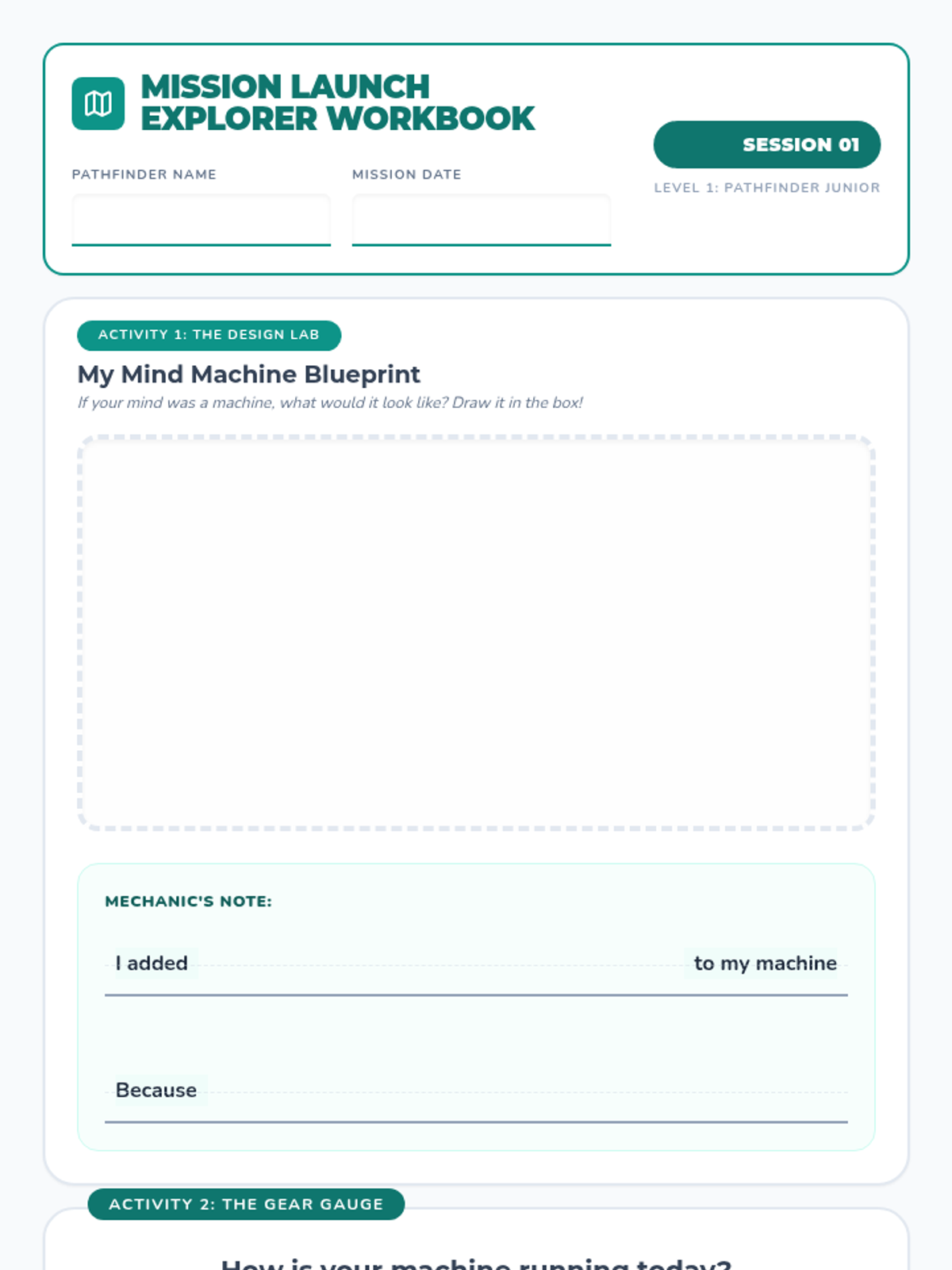
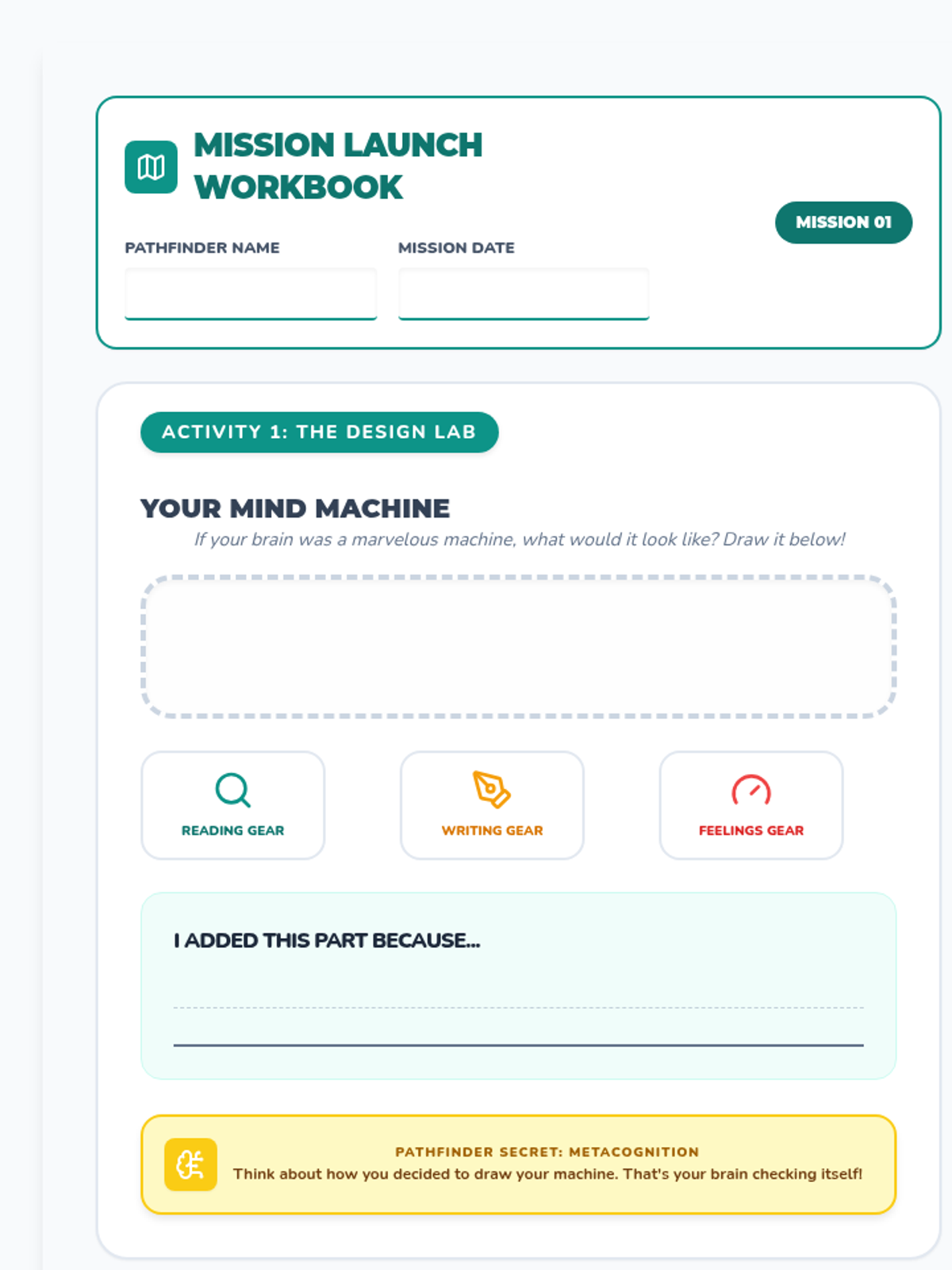
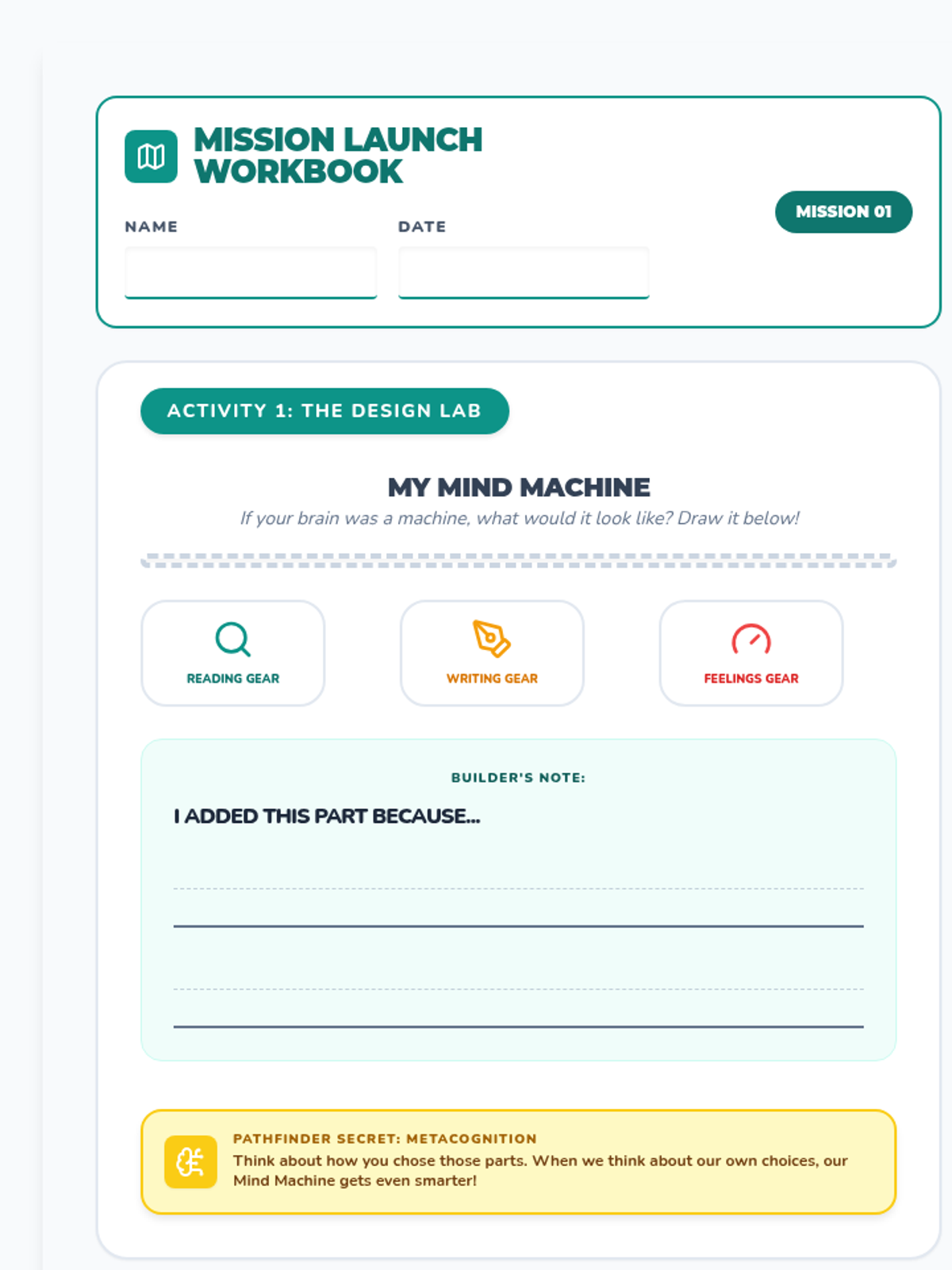
An introductory lesson where students become 'Pathfinders,' learning that their minds are like incredible machines with gears they can control. Focuses on self-awareness and the basics of how we decode stories.
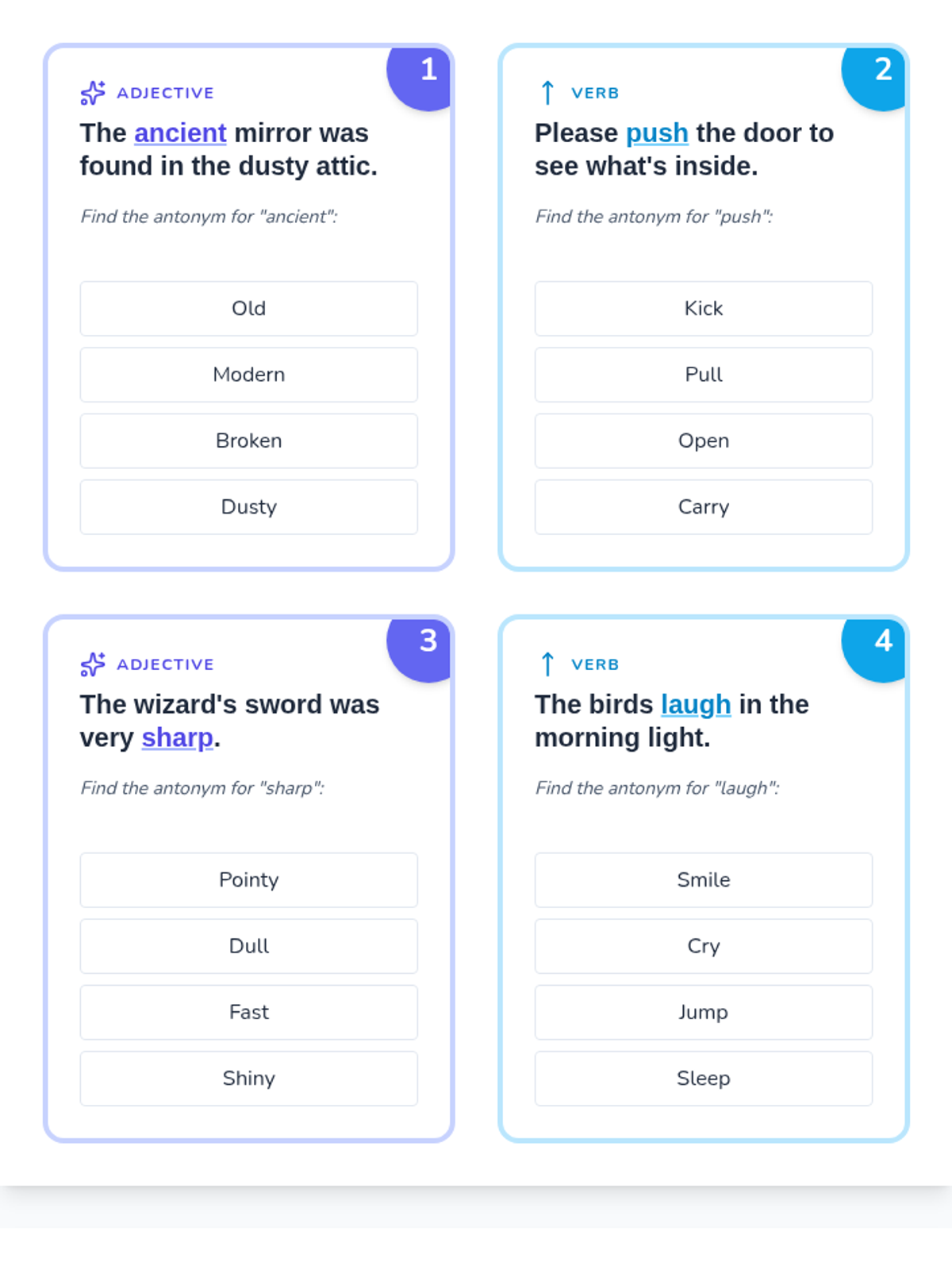
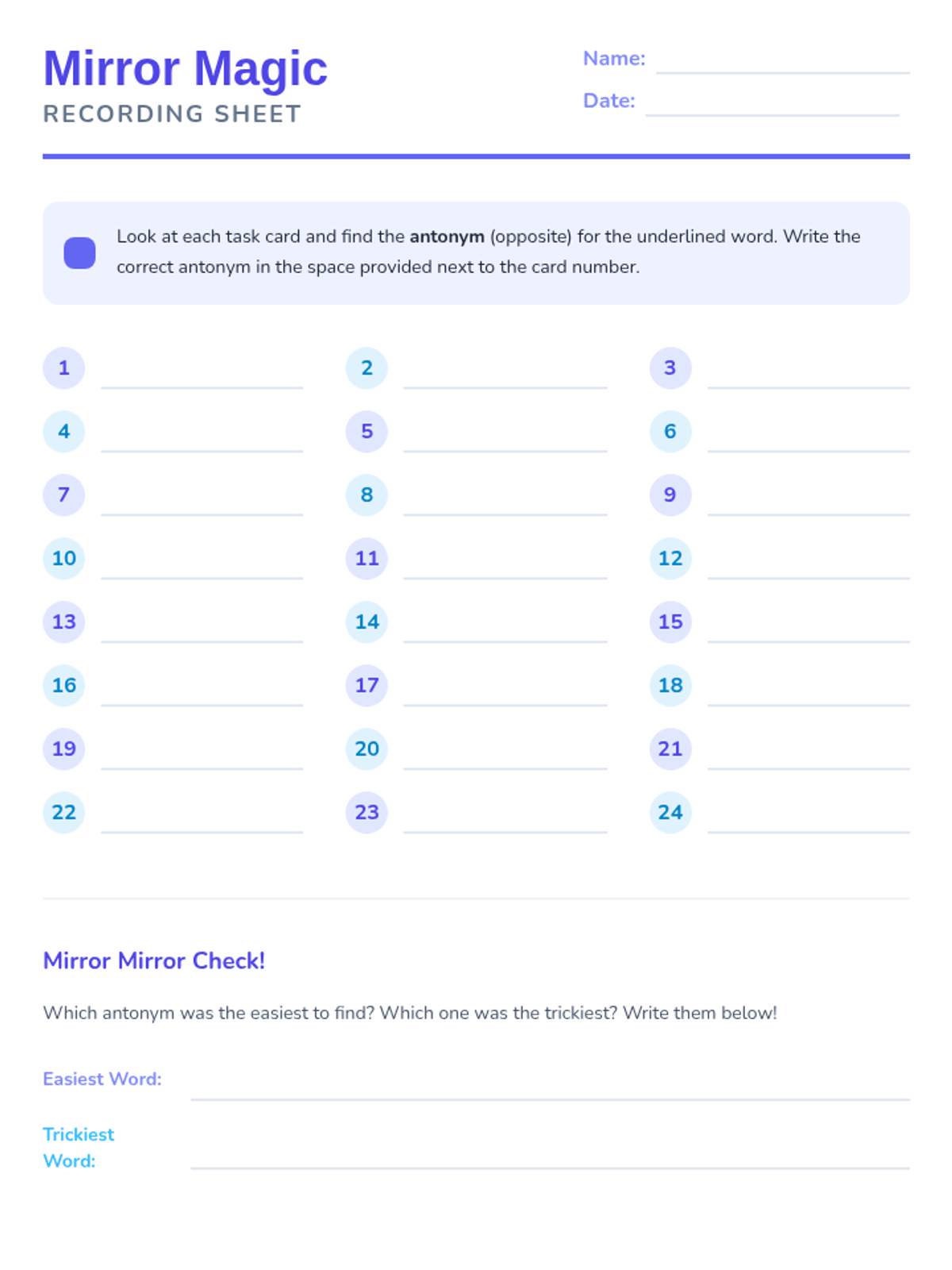
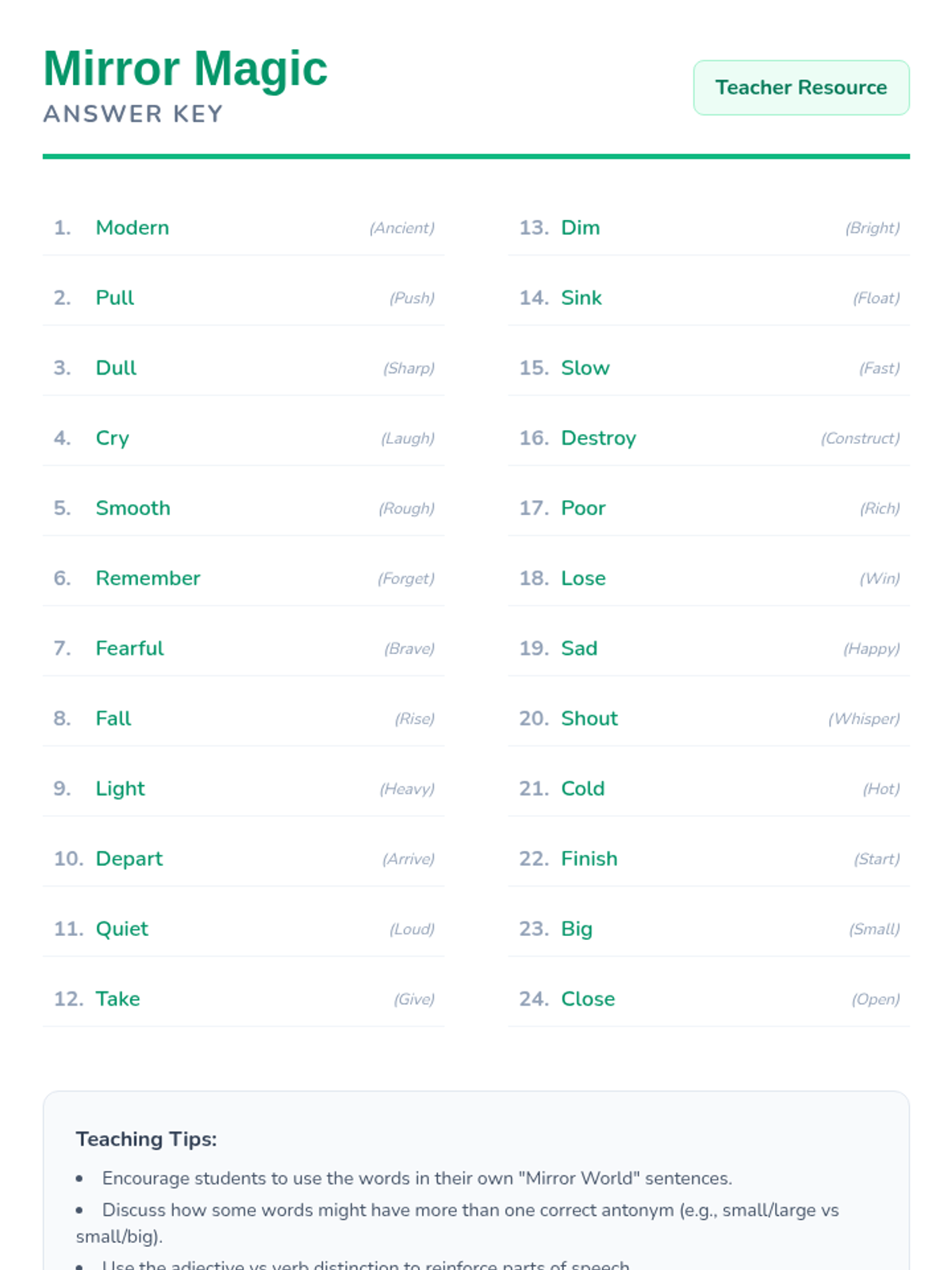
A set of engaging antonym task cards focusing on adjectives and verbs to help 3rd-grade students master word opposites through a magical mirror theme.
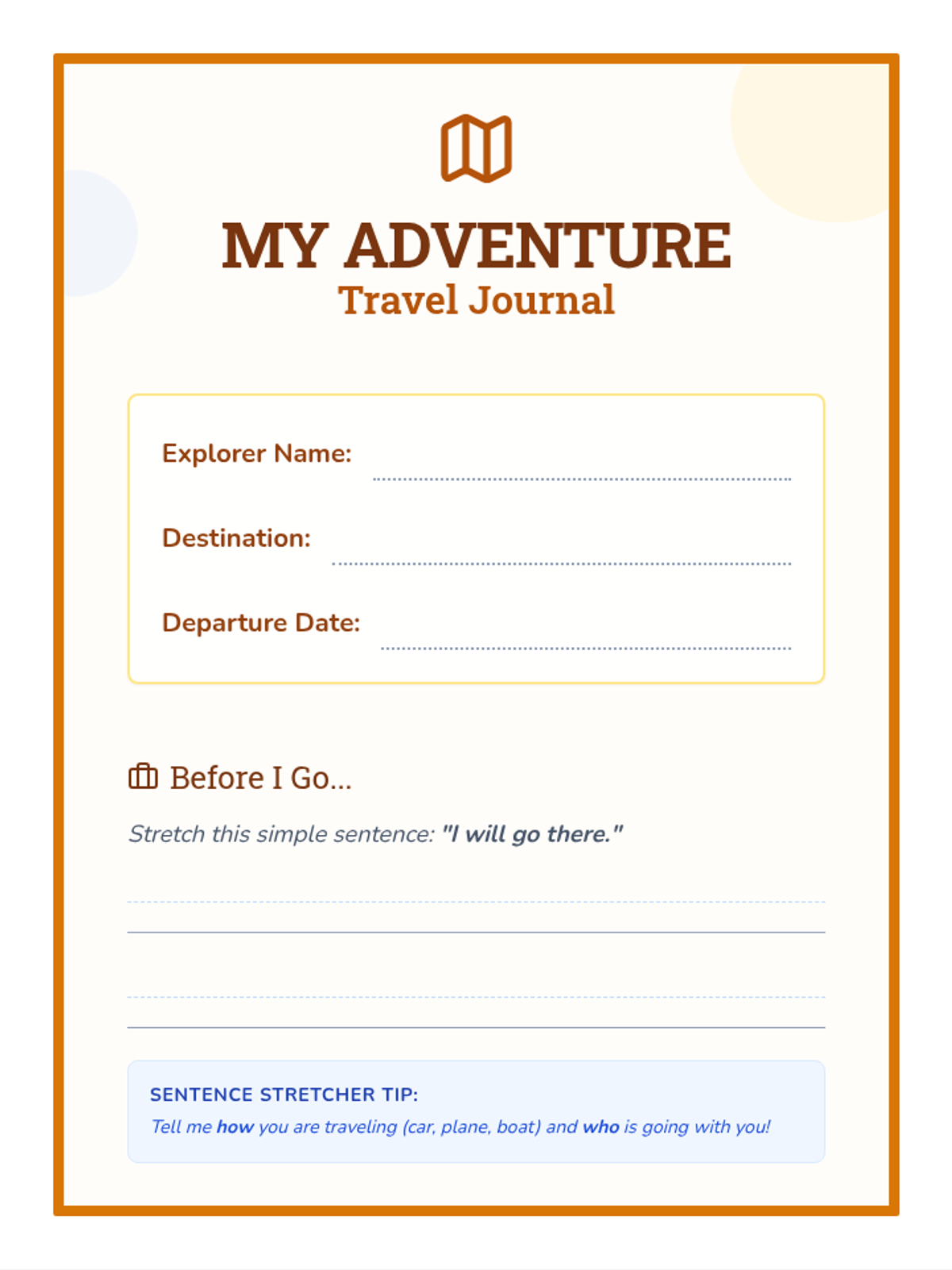
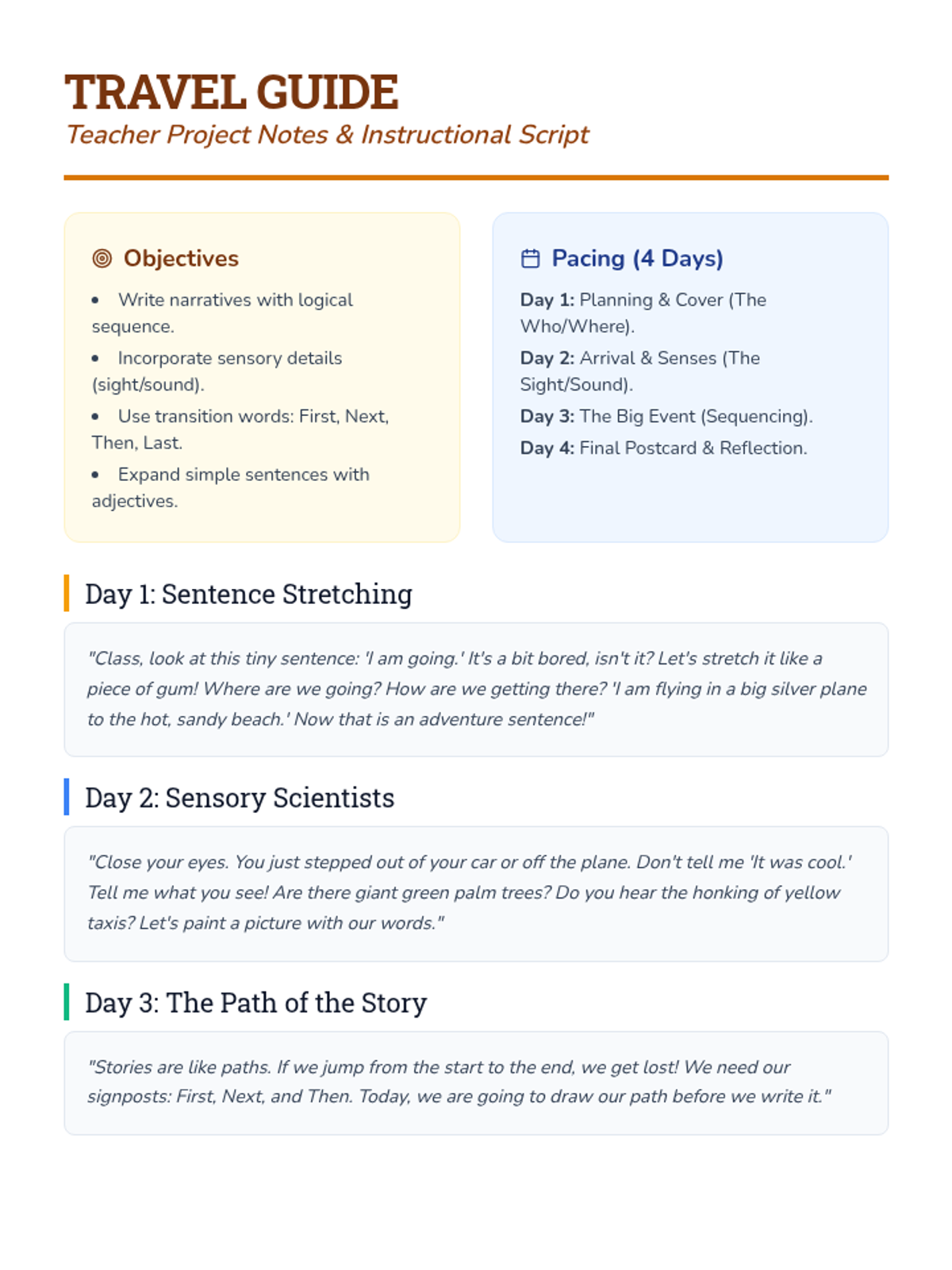
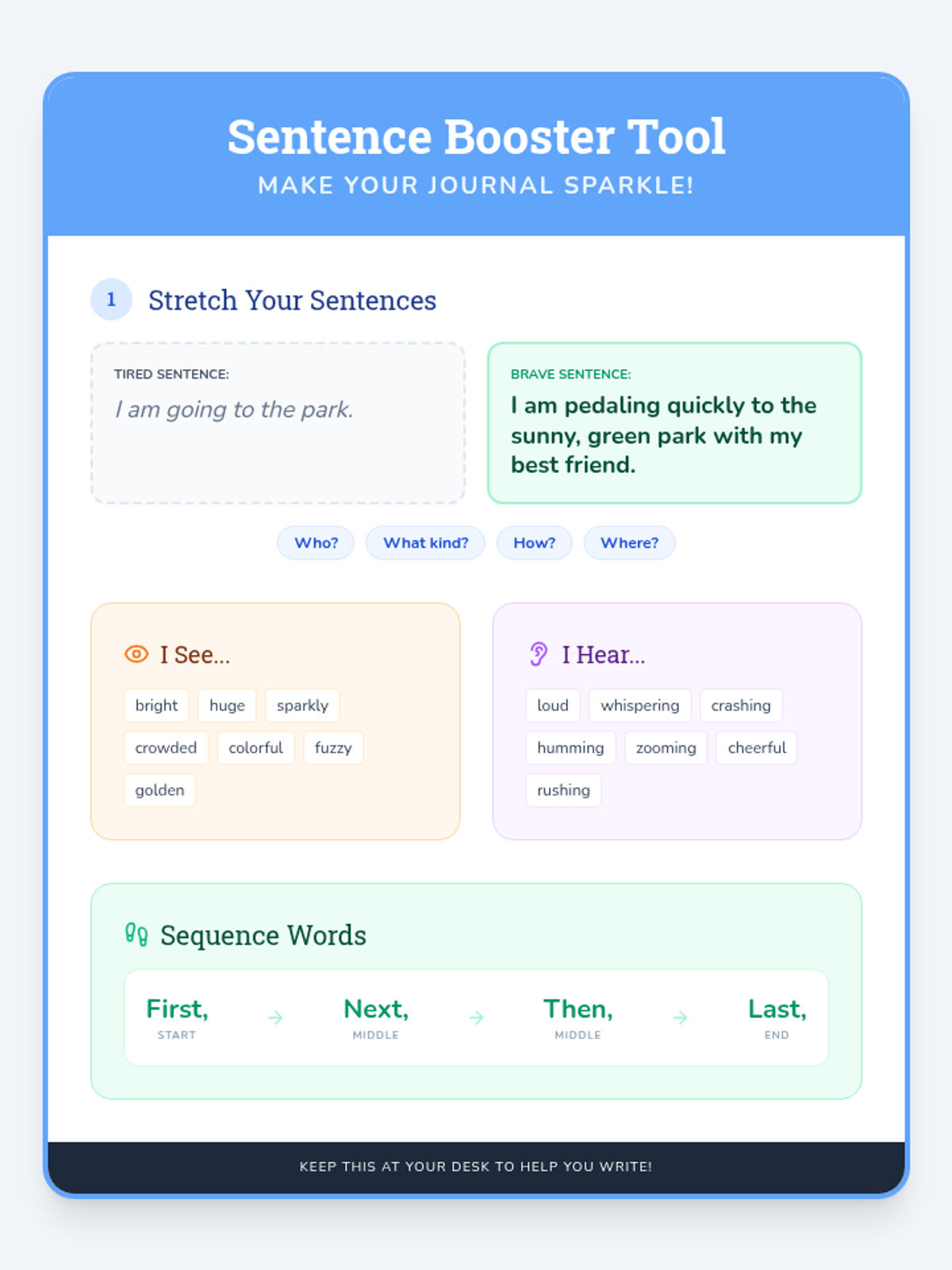
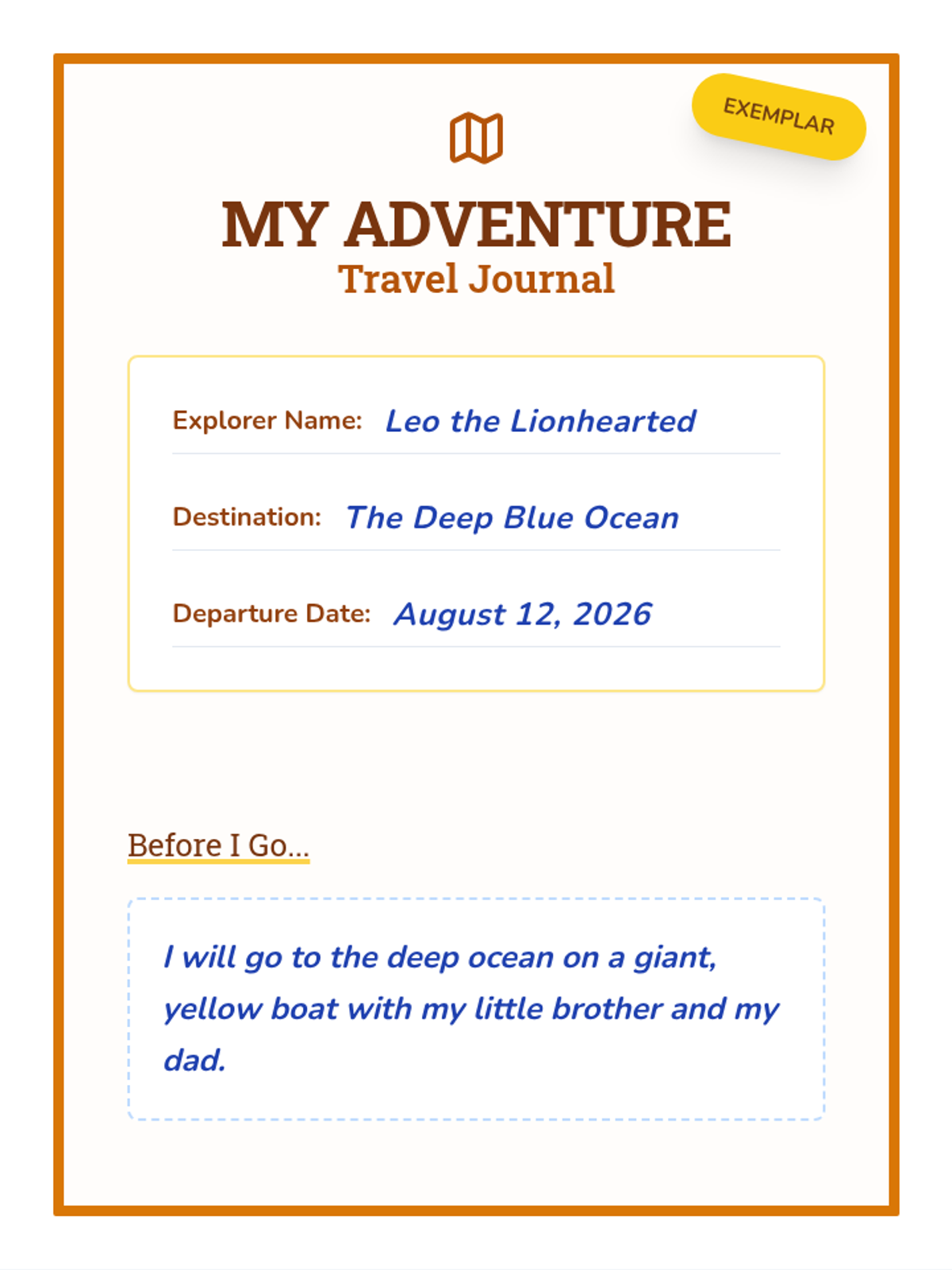
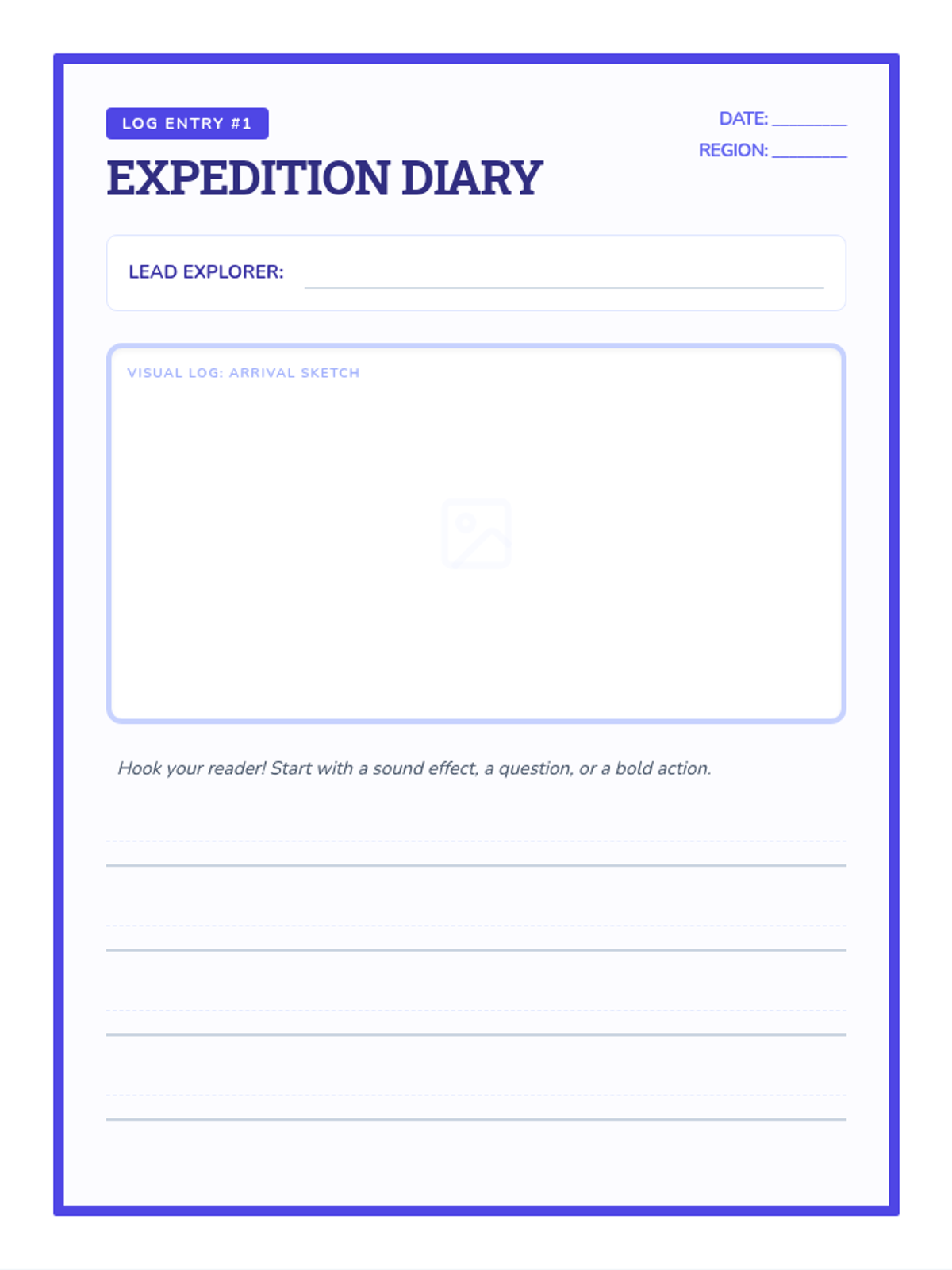
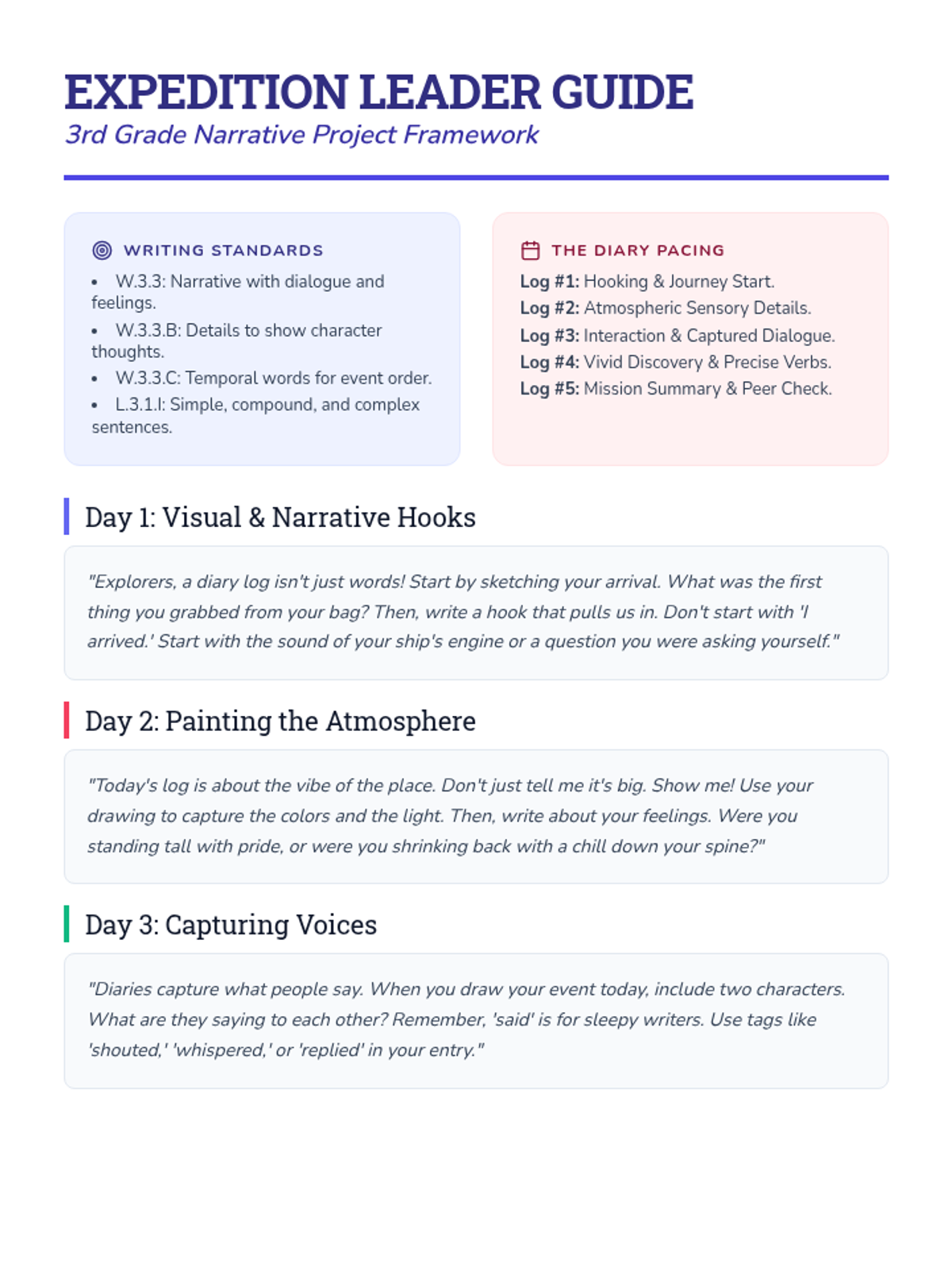
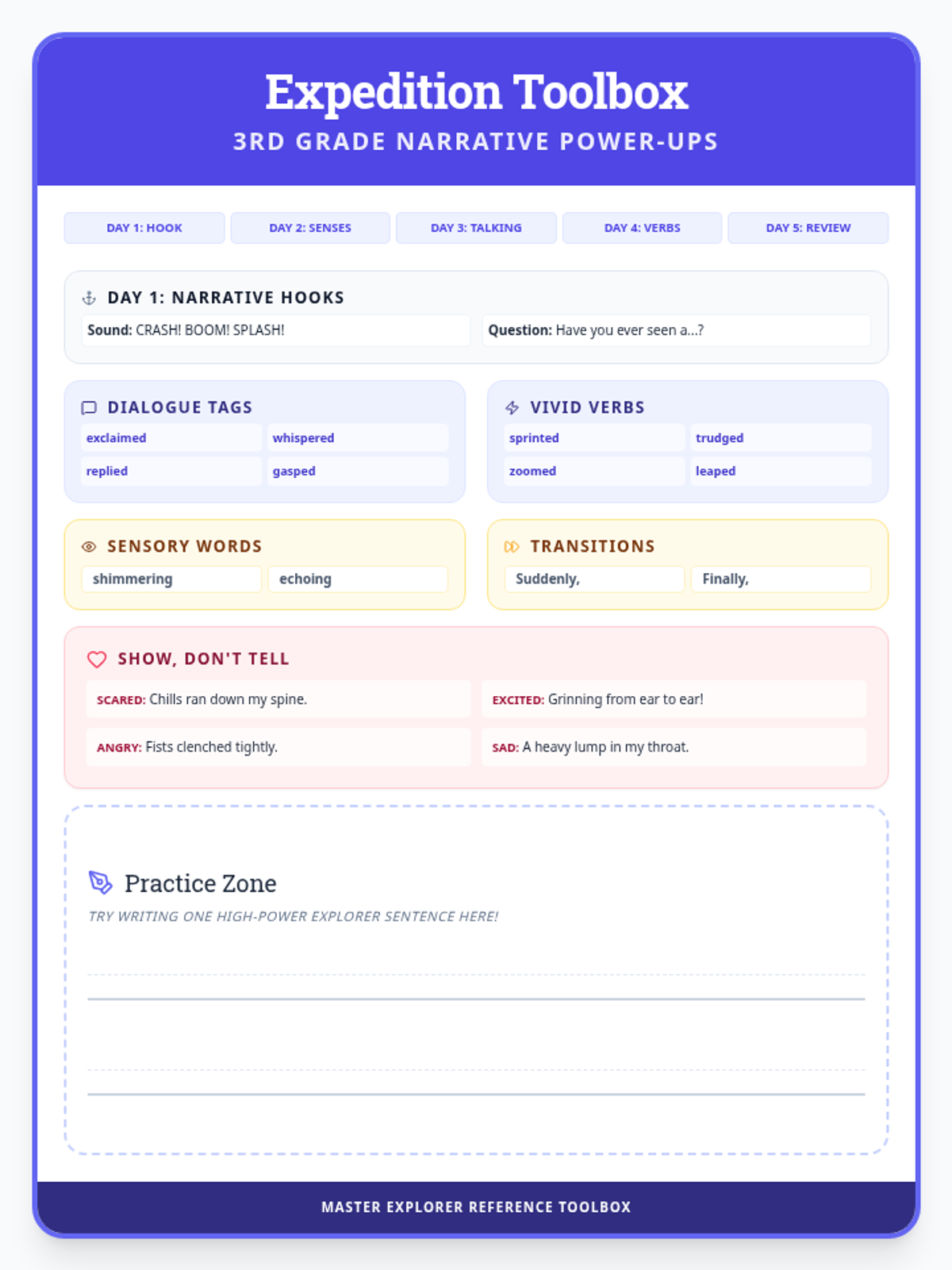
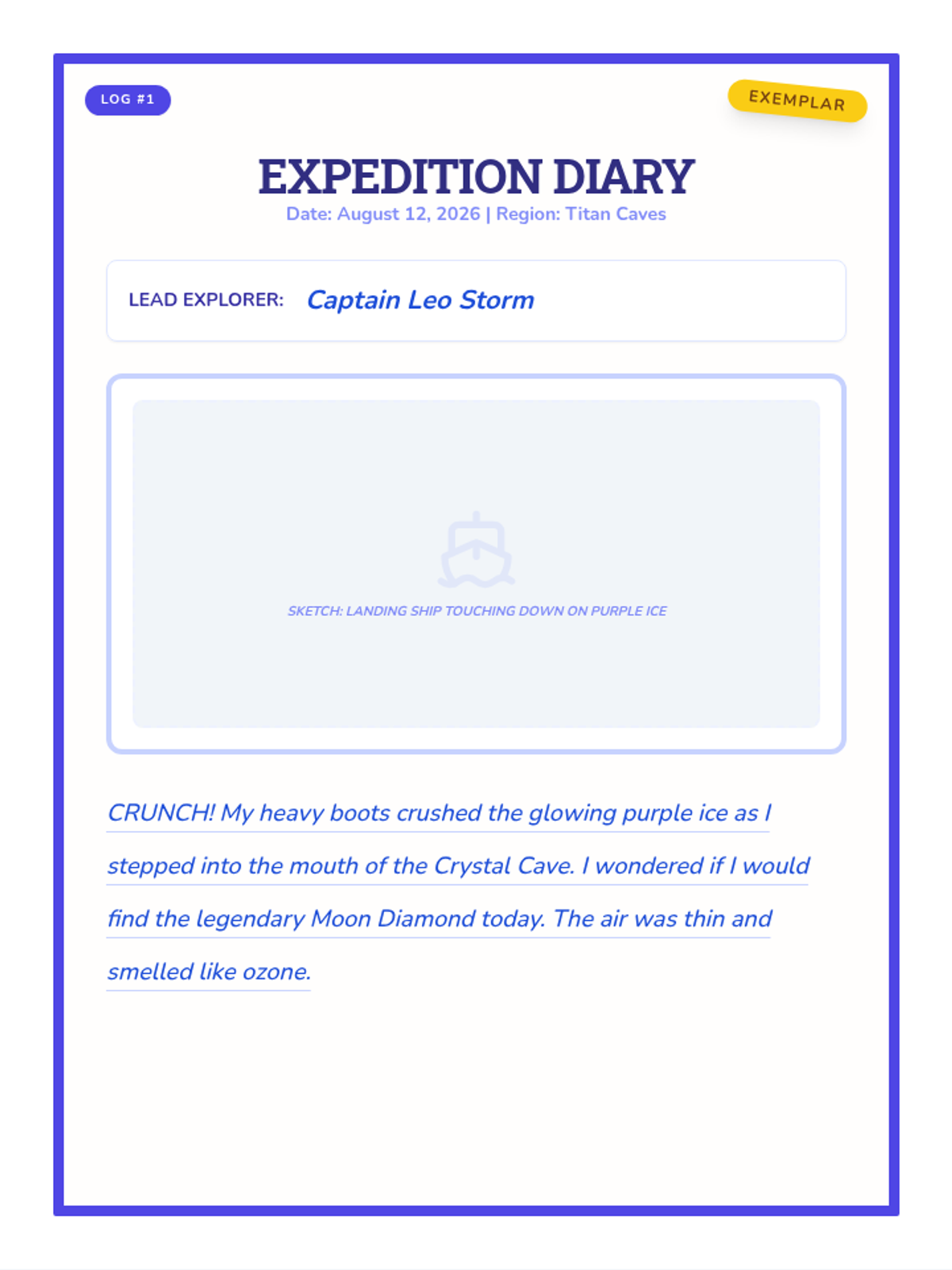
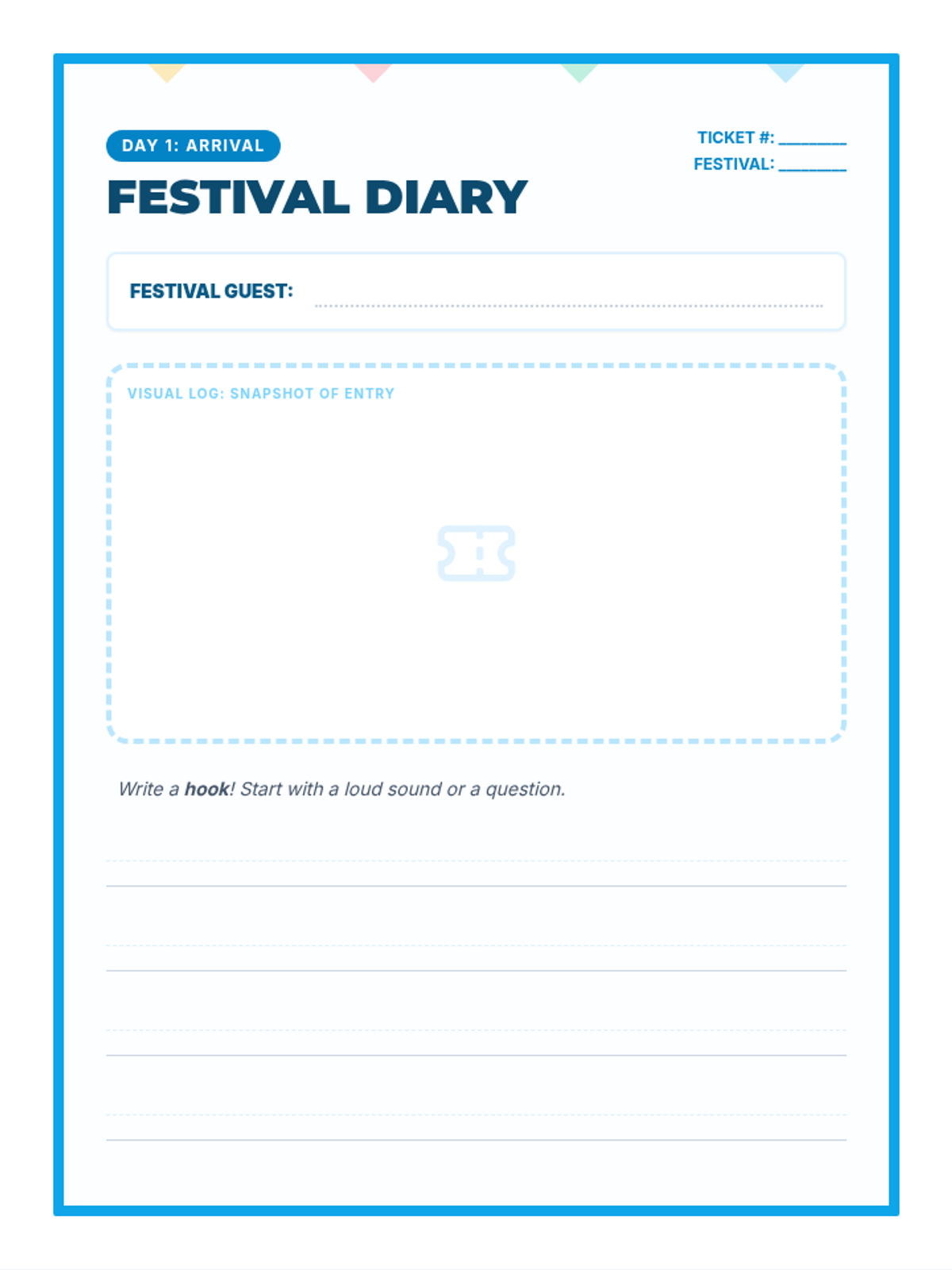
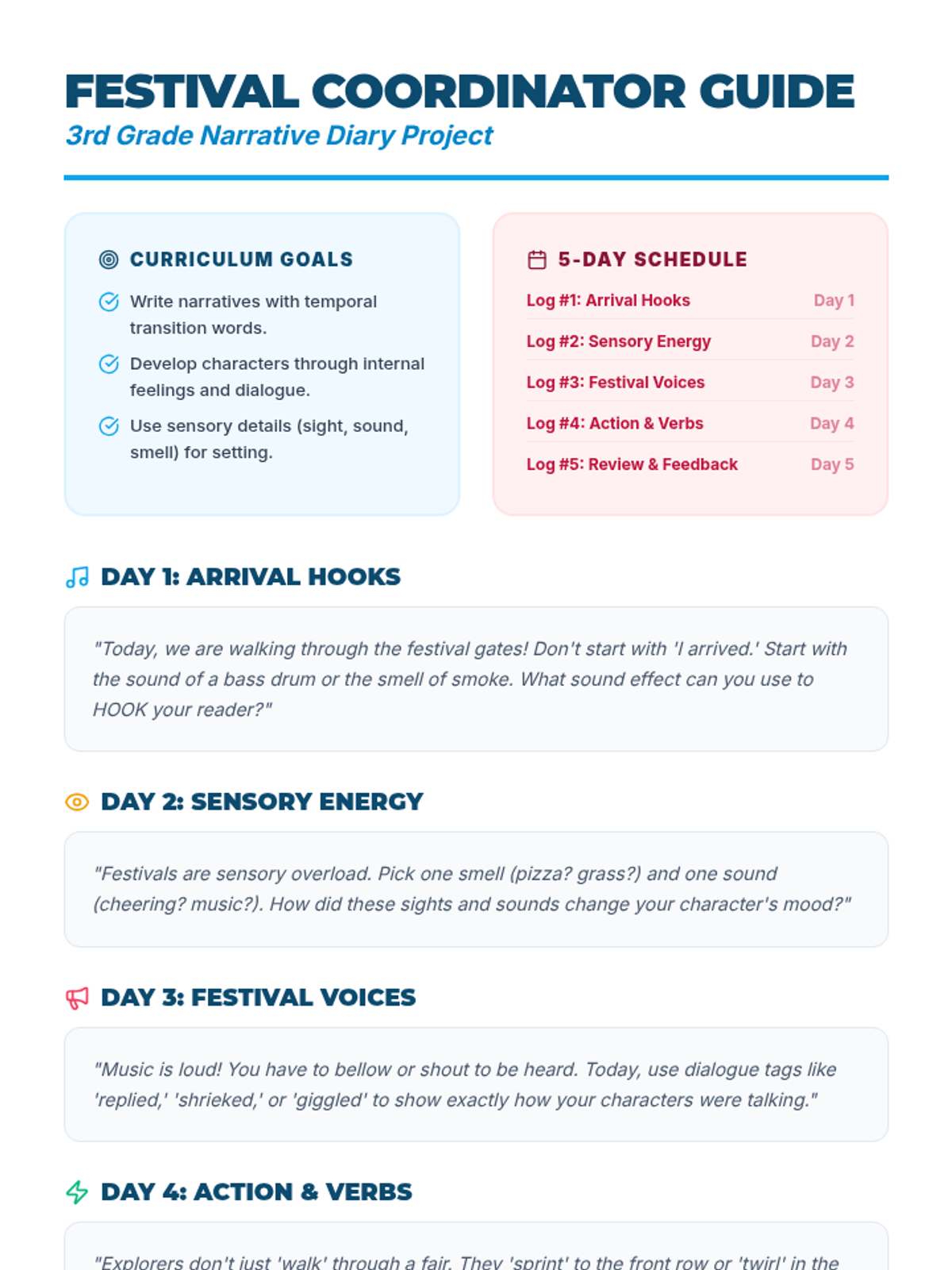
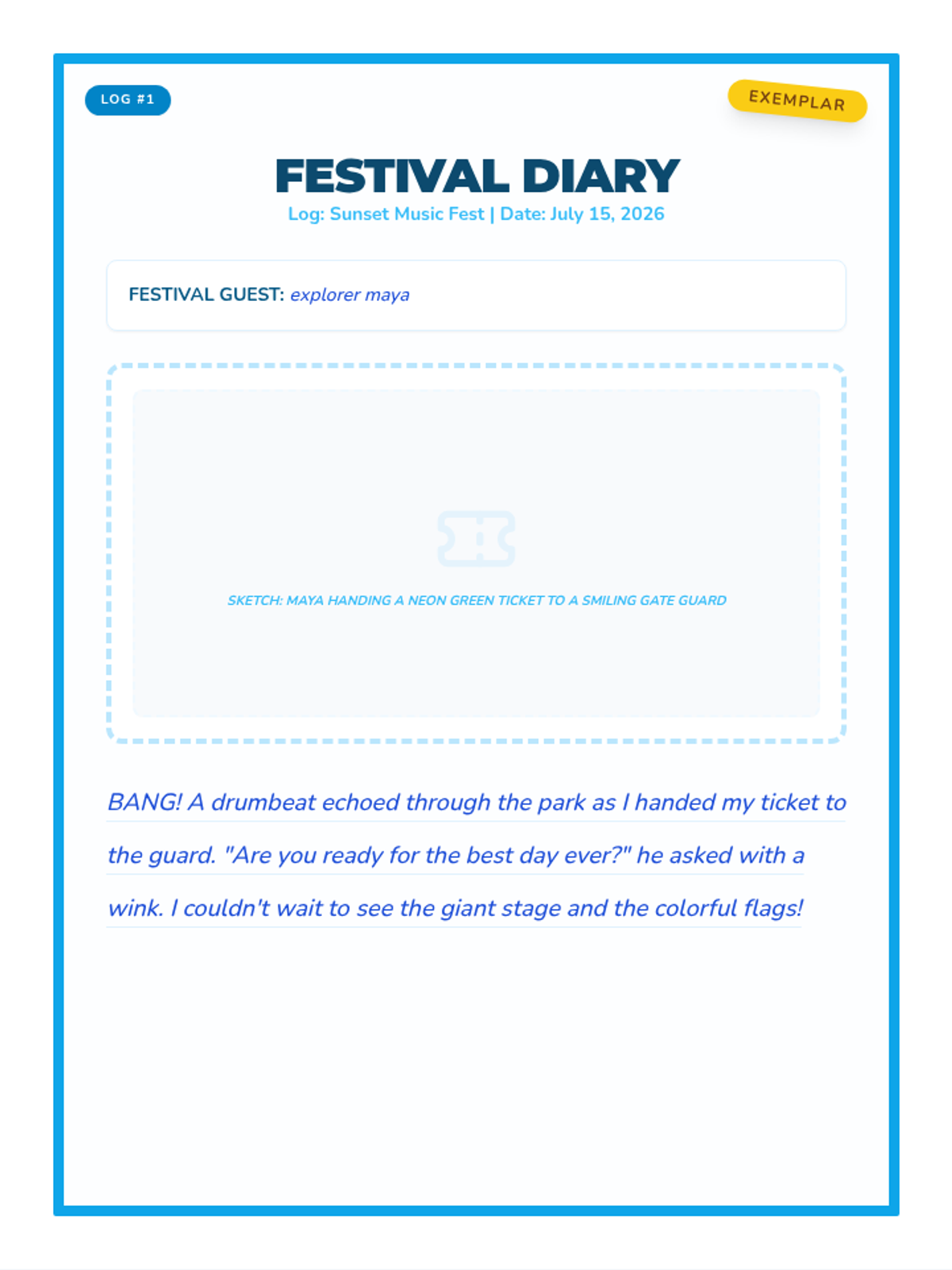
A multi-day ELA project for 2nd graders to practice narrative writing, sensory details, and sentence expansion through a creative travel journal format.
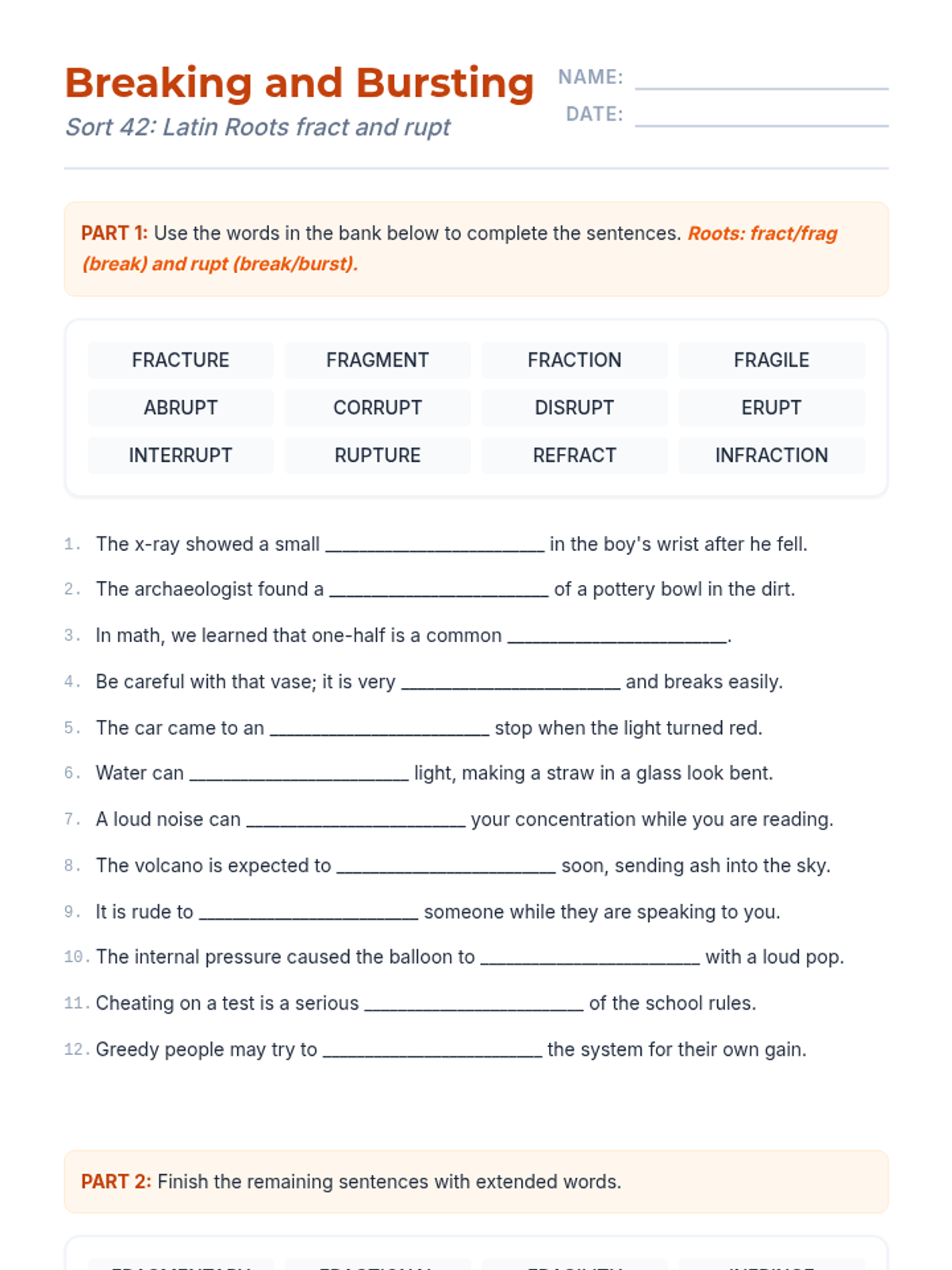
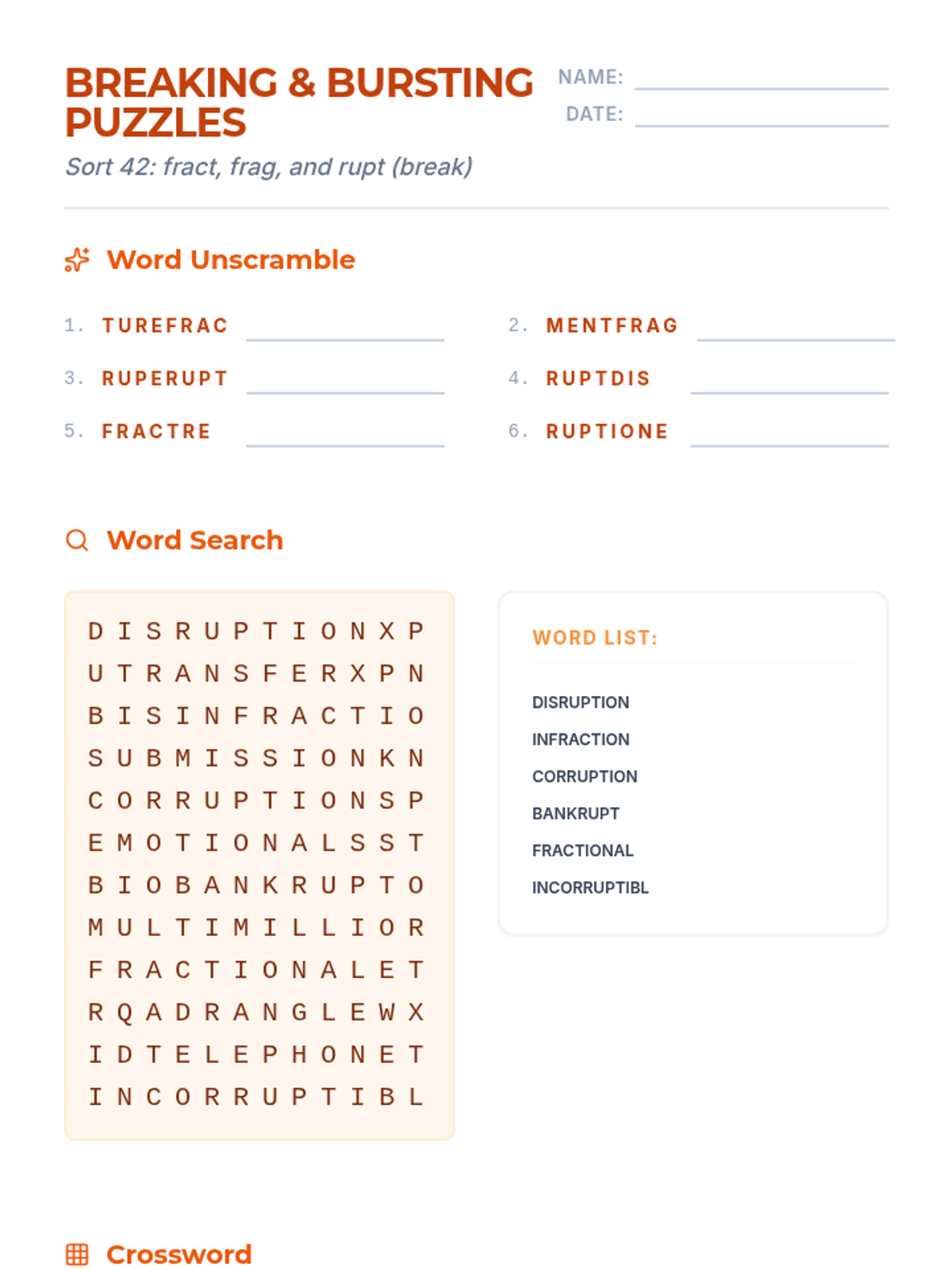
Mastering Latin roots related to breaking and bursting: fract, frag (break) and rupt (break, burst).
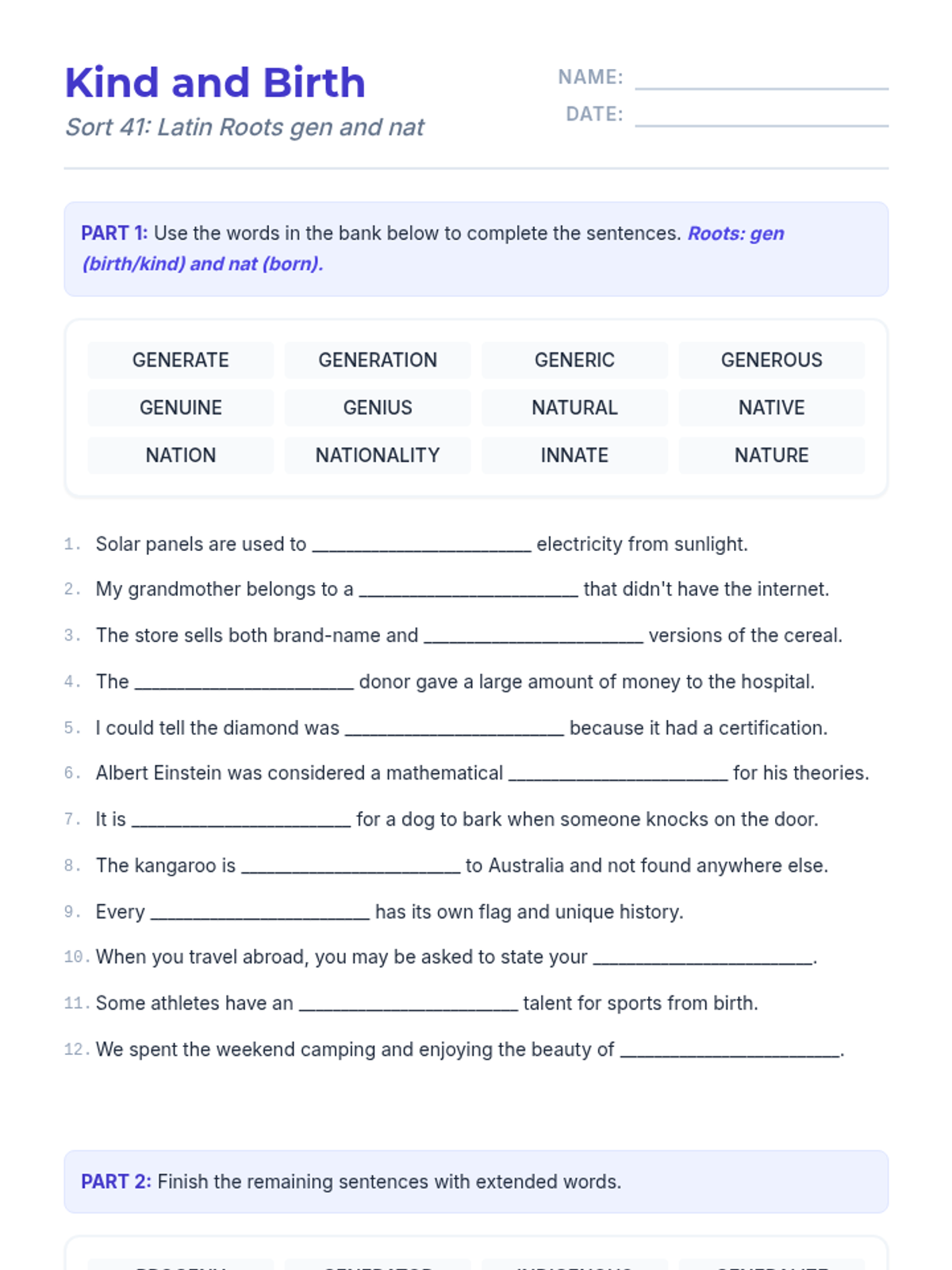
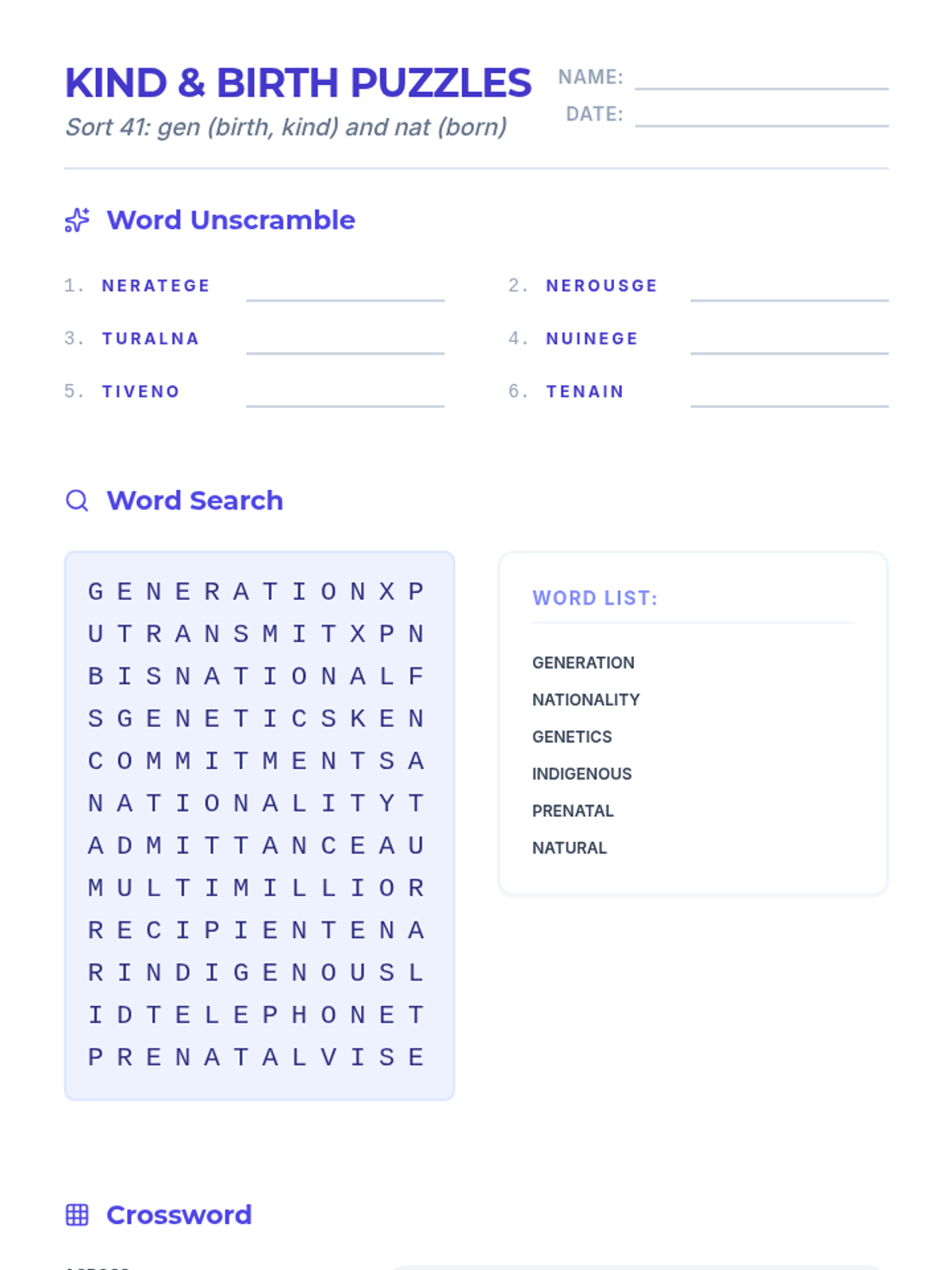
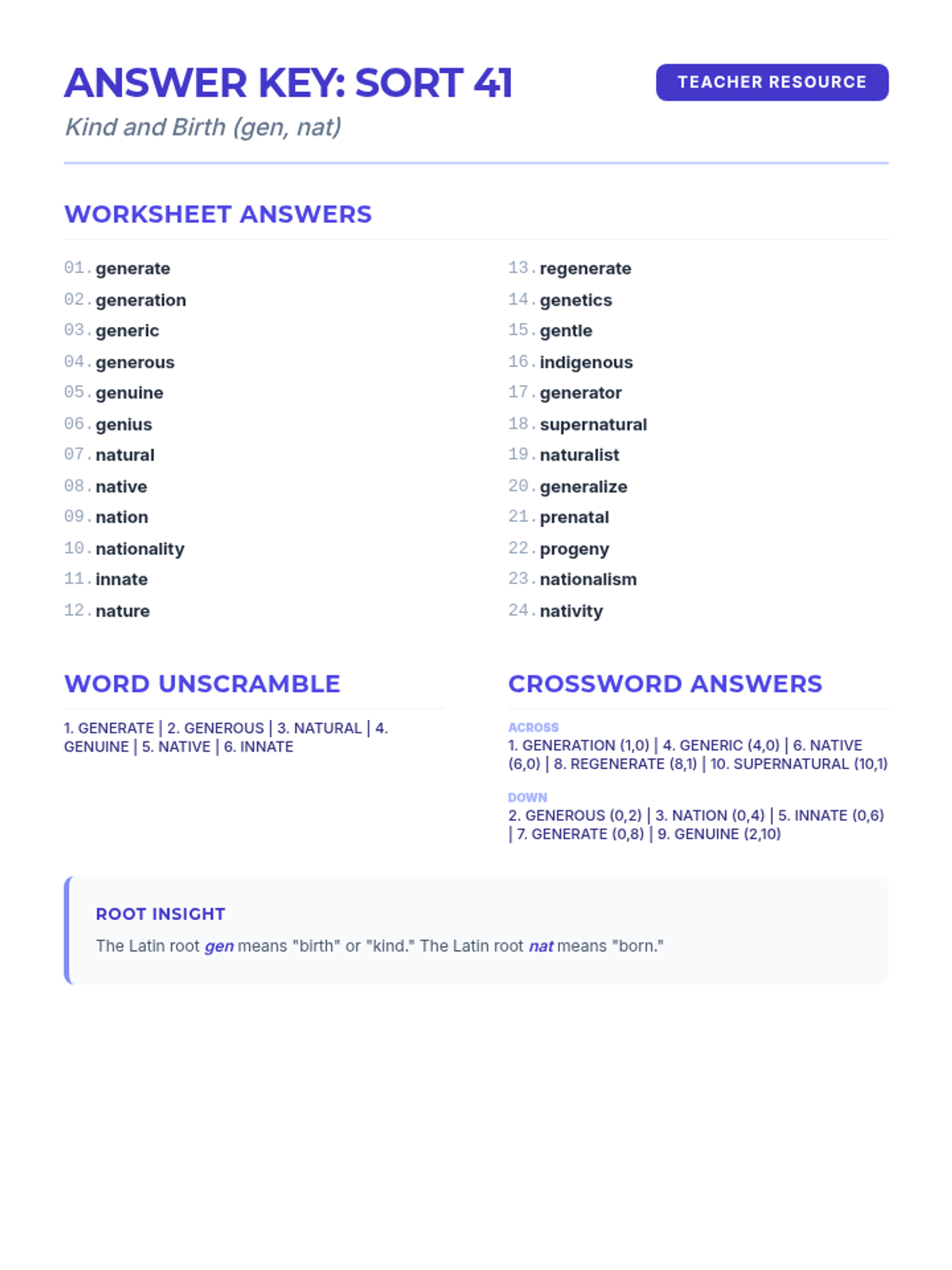
Mastering Latin roots related to kind and birth: gen (birth, kind) and nat (born).
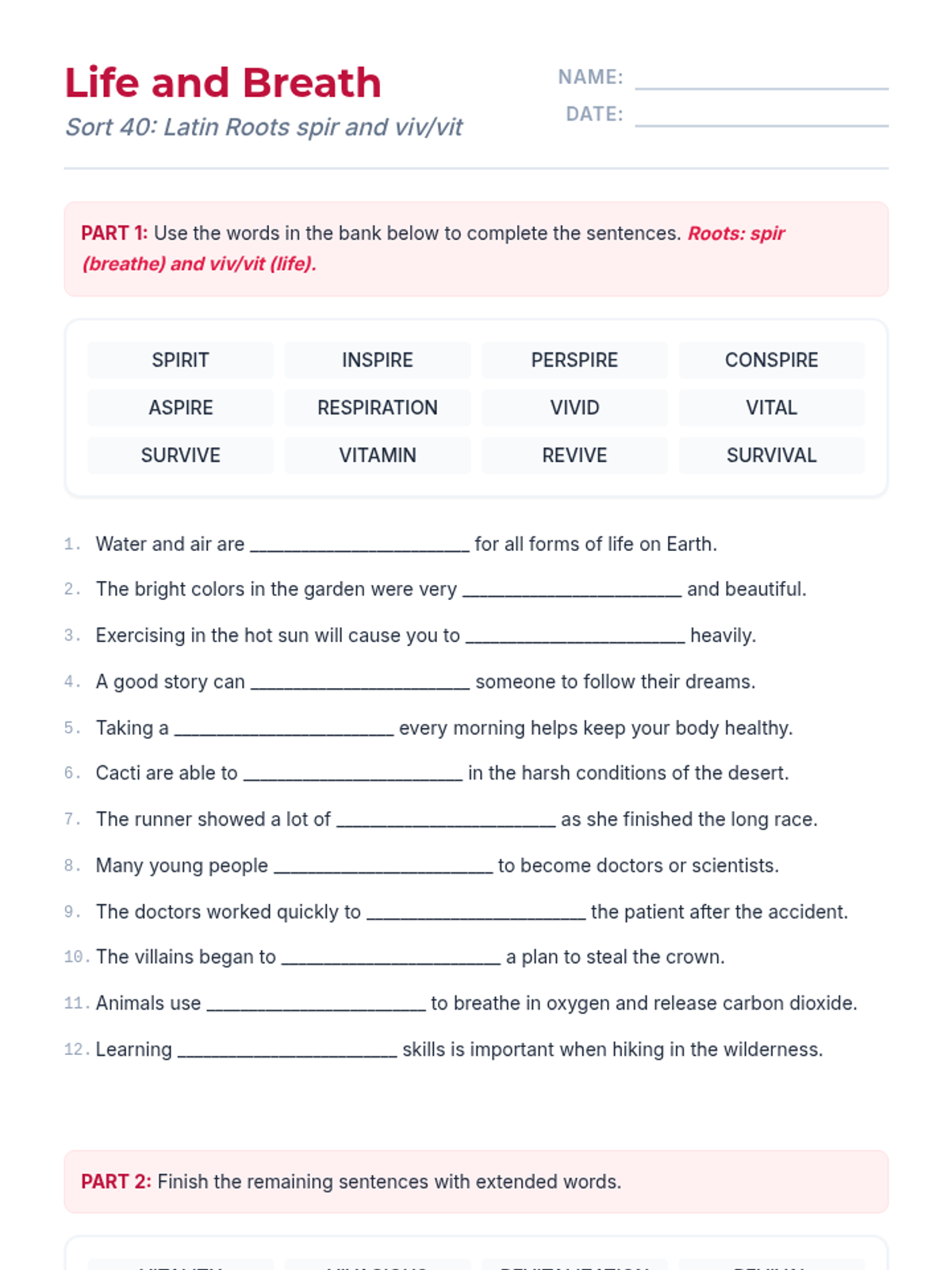
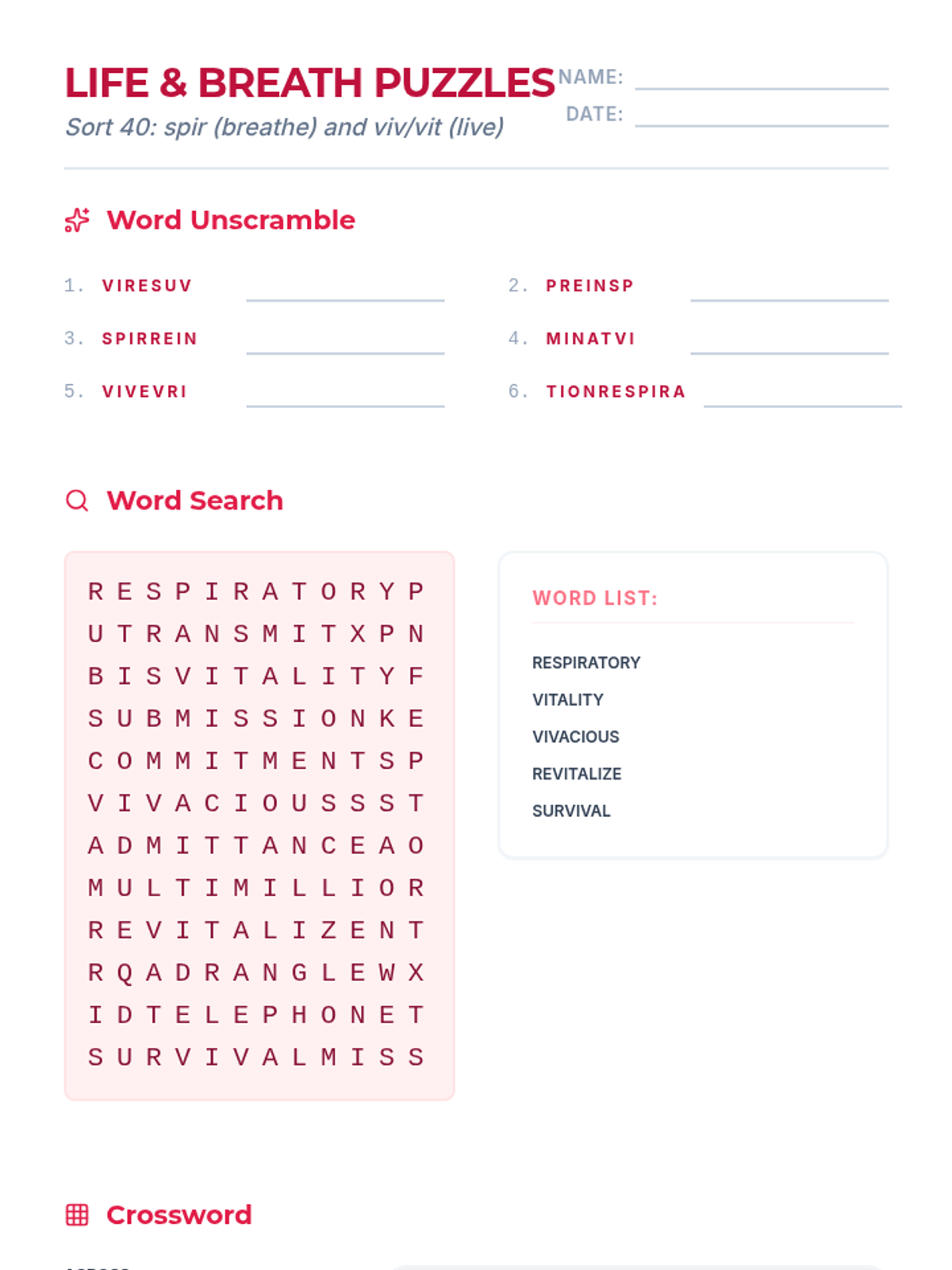
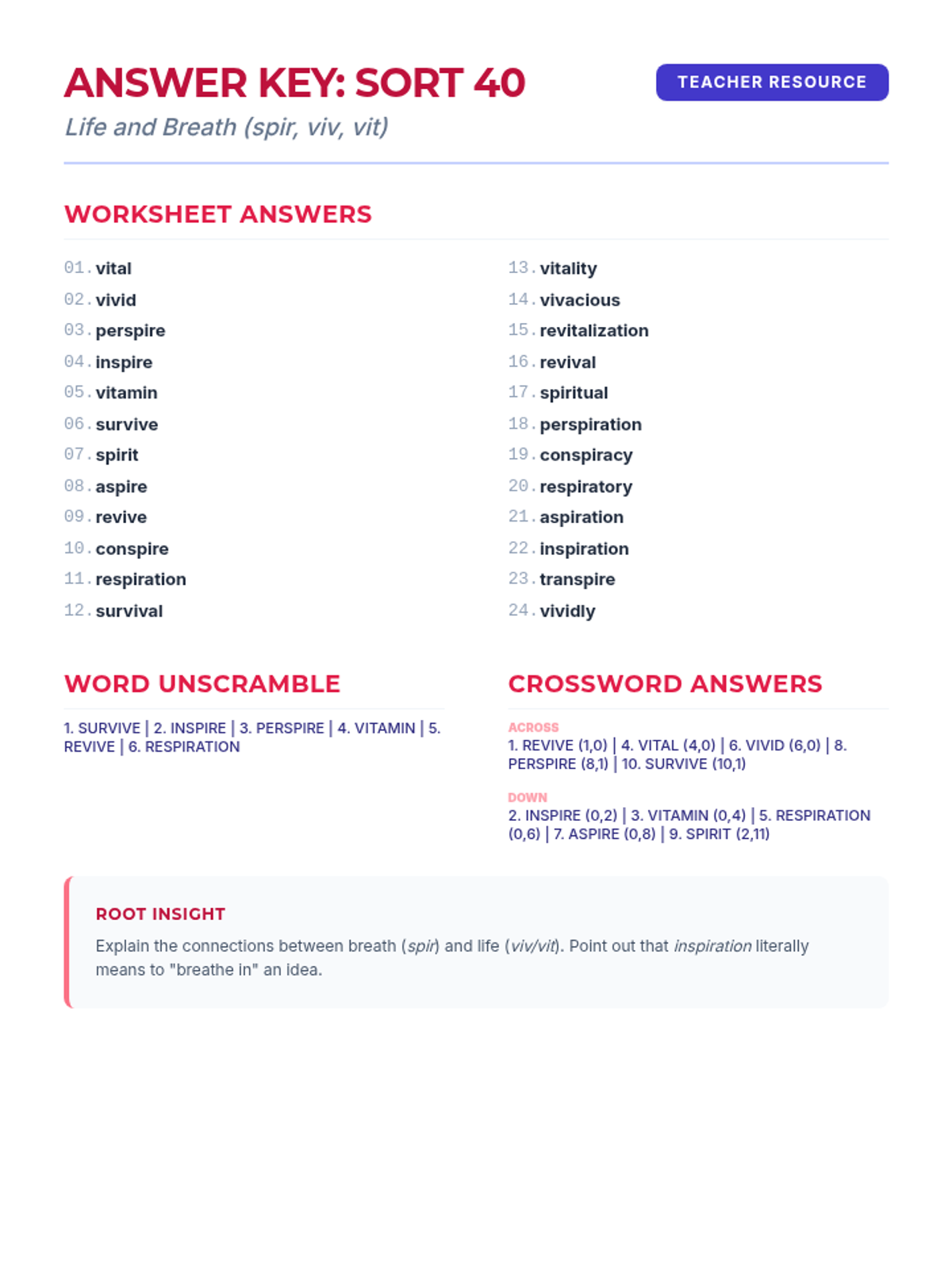
Mastering Latin roots related to life and breath: spir (to breathe) and viv/vit (to live).
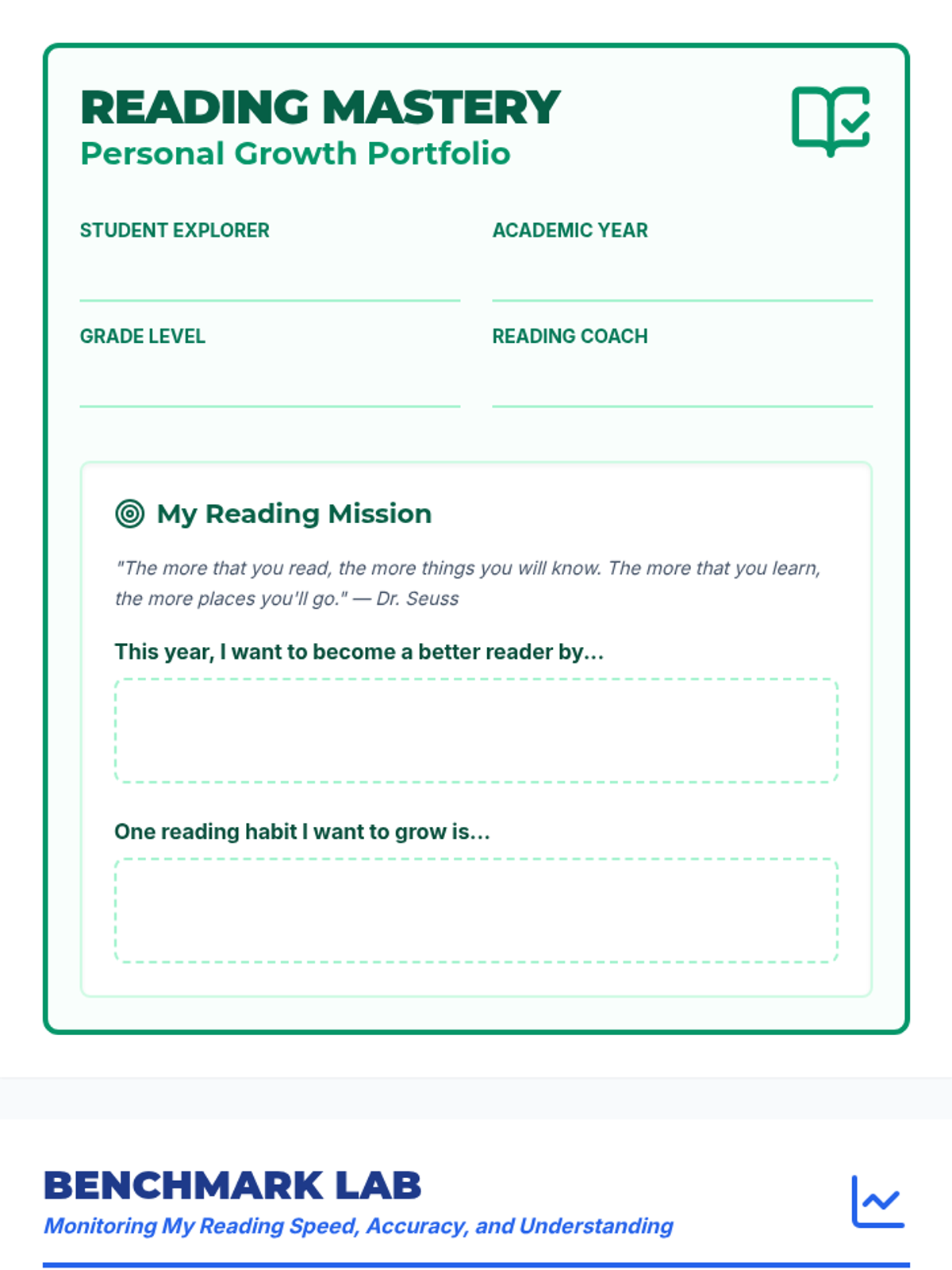
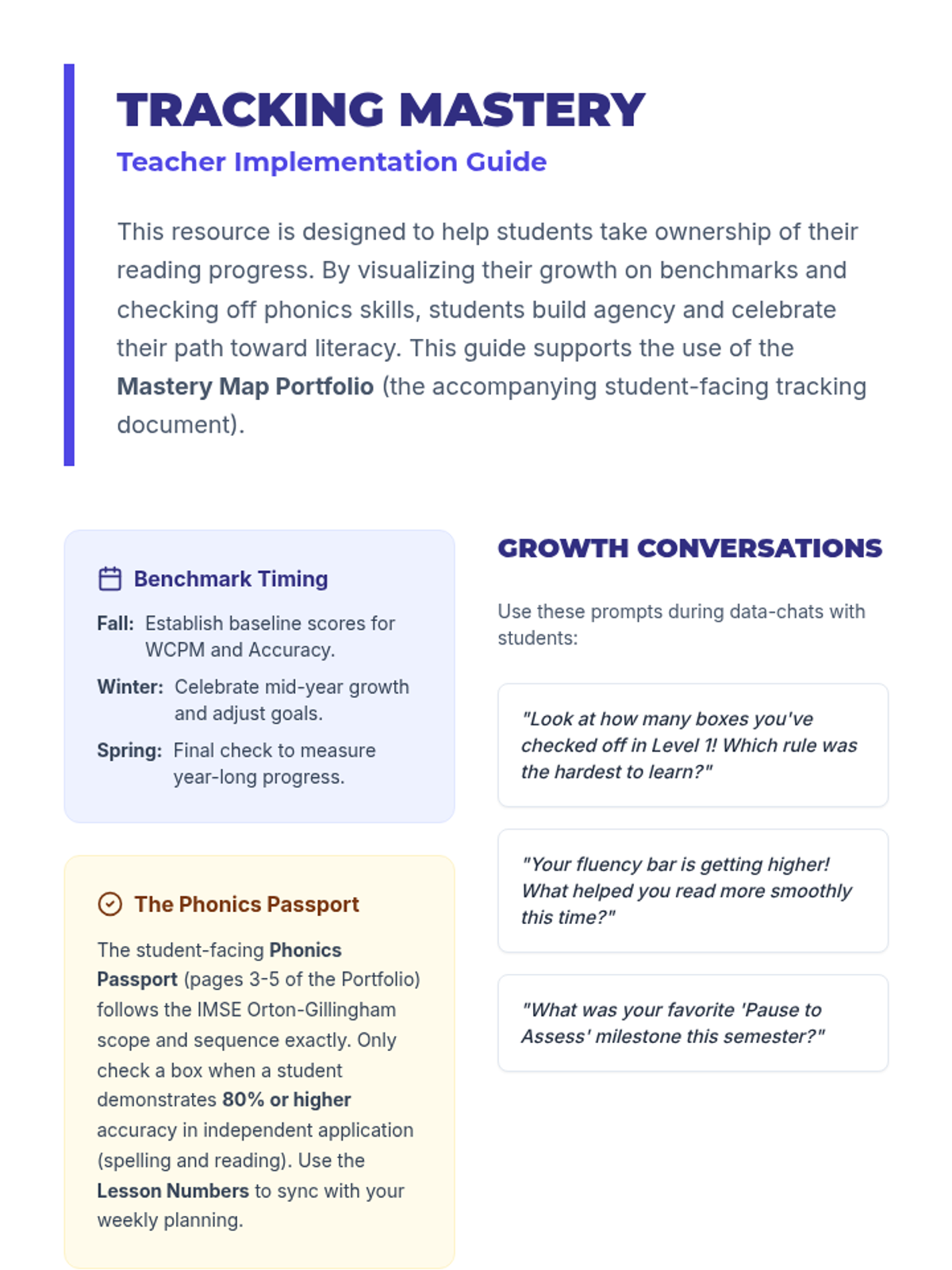
A comprehensive suite of data tracking tools for students to monitor their reading progress, including benchmark assessments and IMSE Orton-Gillingham concept checks from Kindergarten through 5th grade.
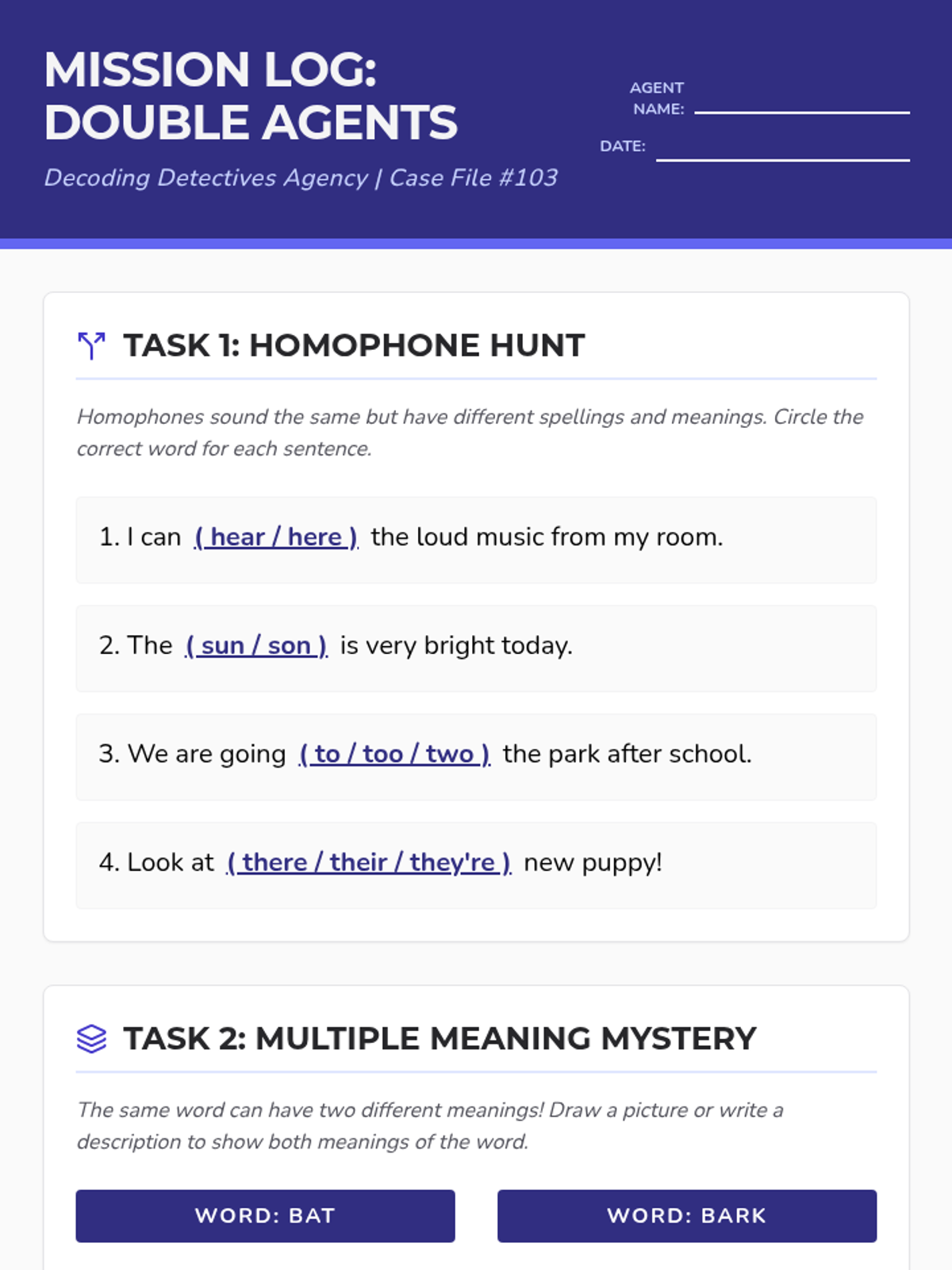
Unmask words that sound the same but look different (homophones) and words that look the same but have different meanings (multiple meaning words). Focuses on using context clues to solve word mysteries.
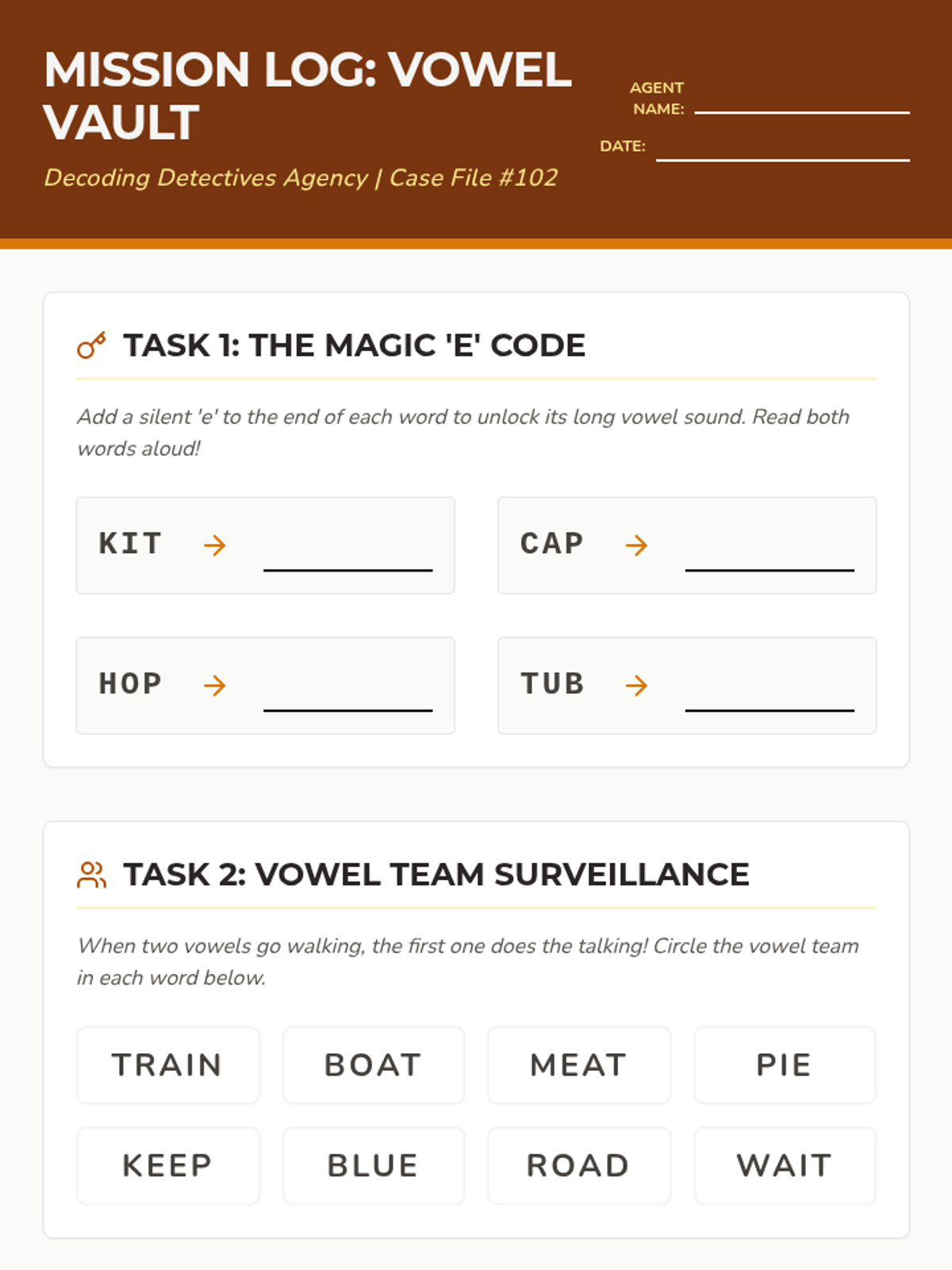
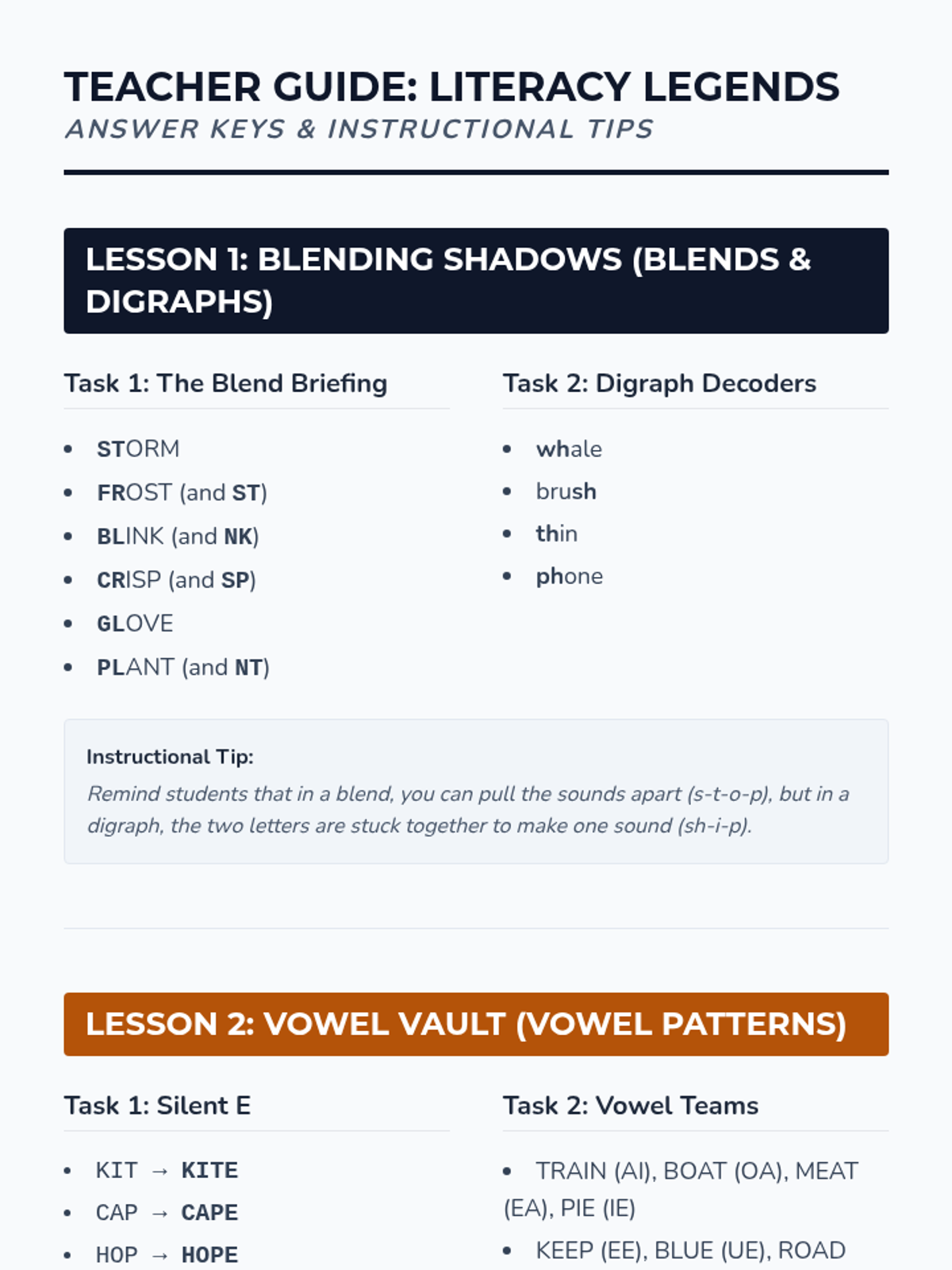
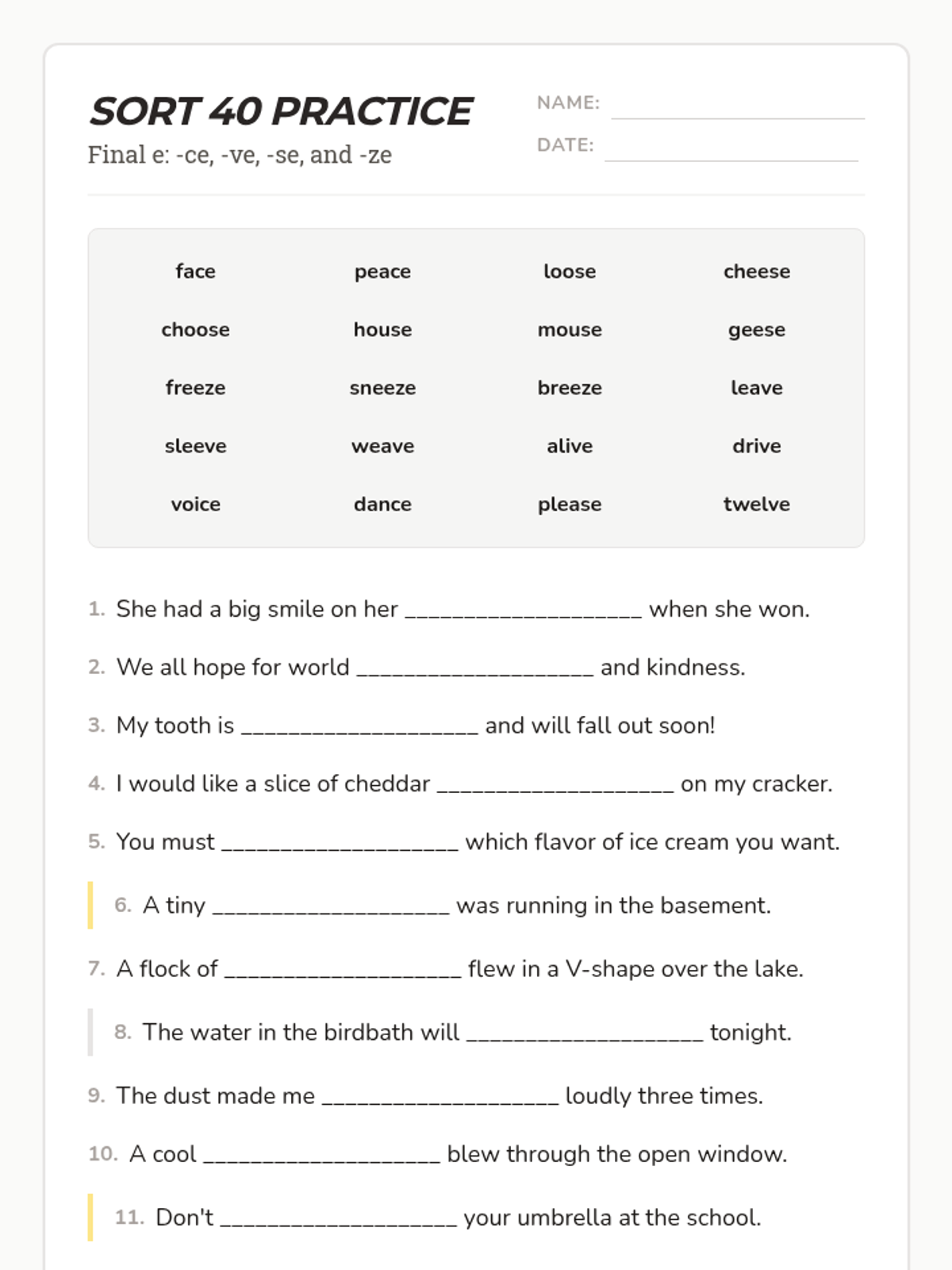
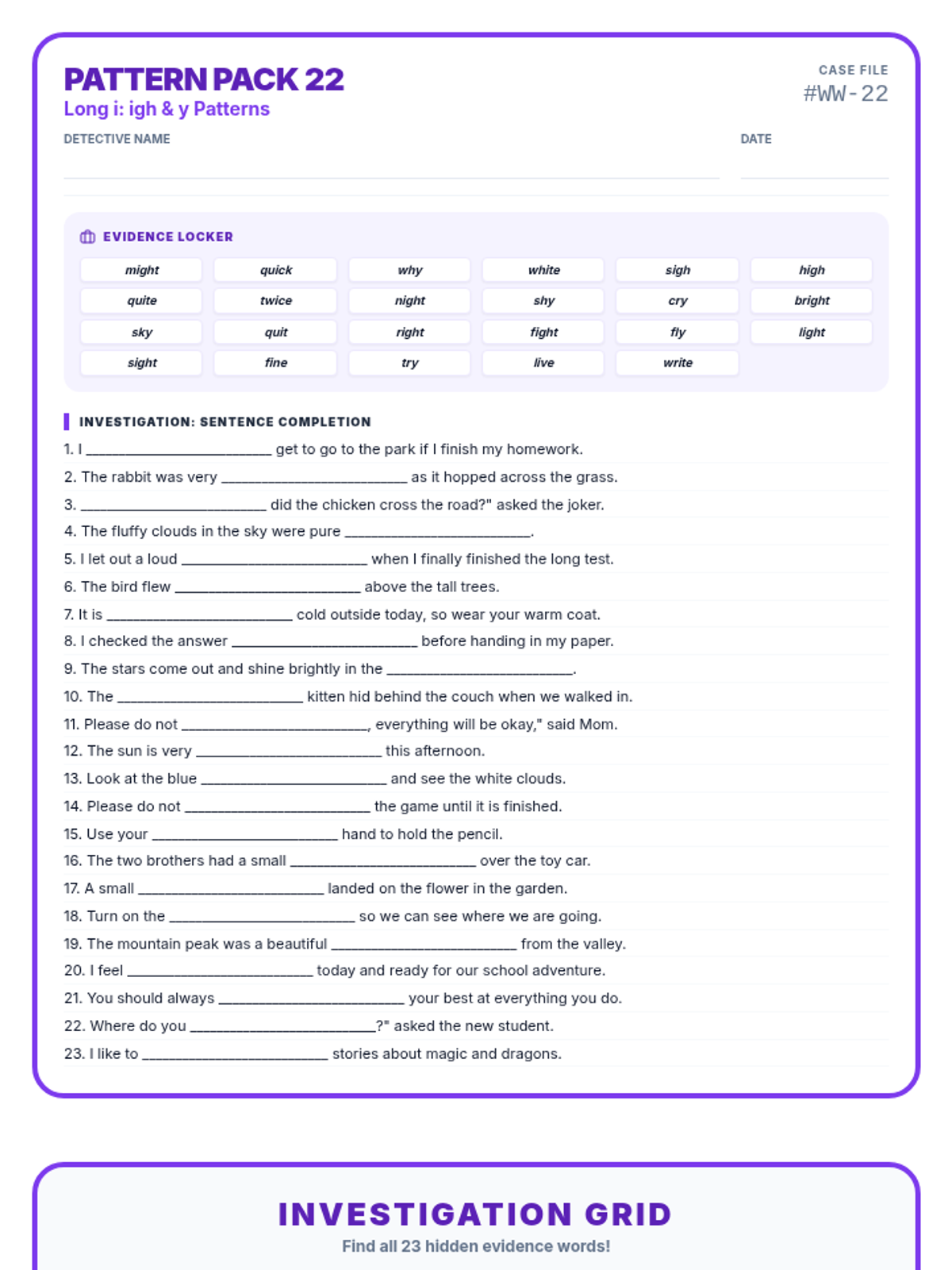
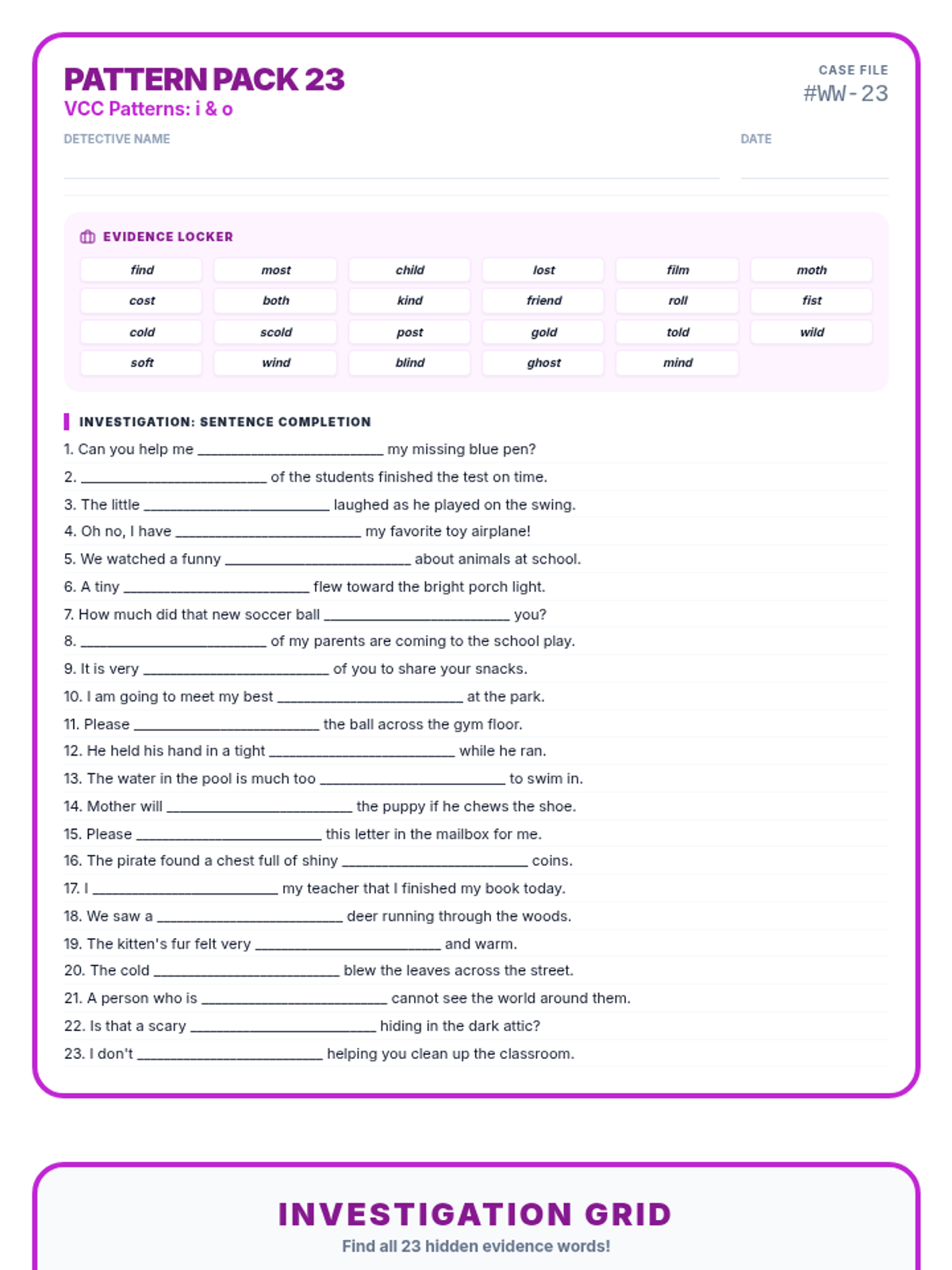
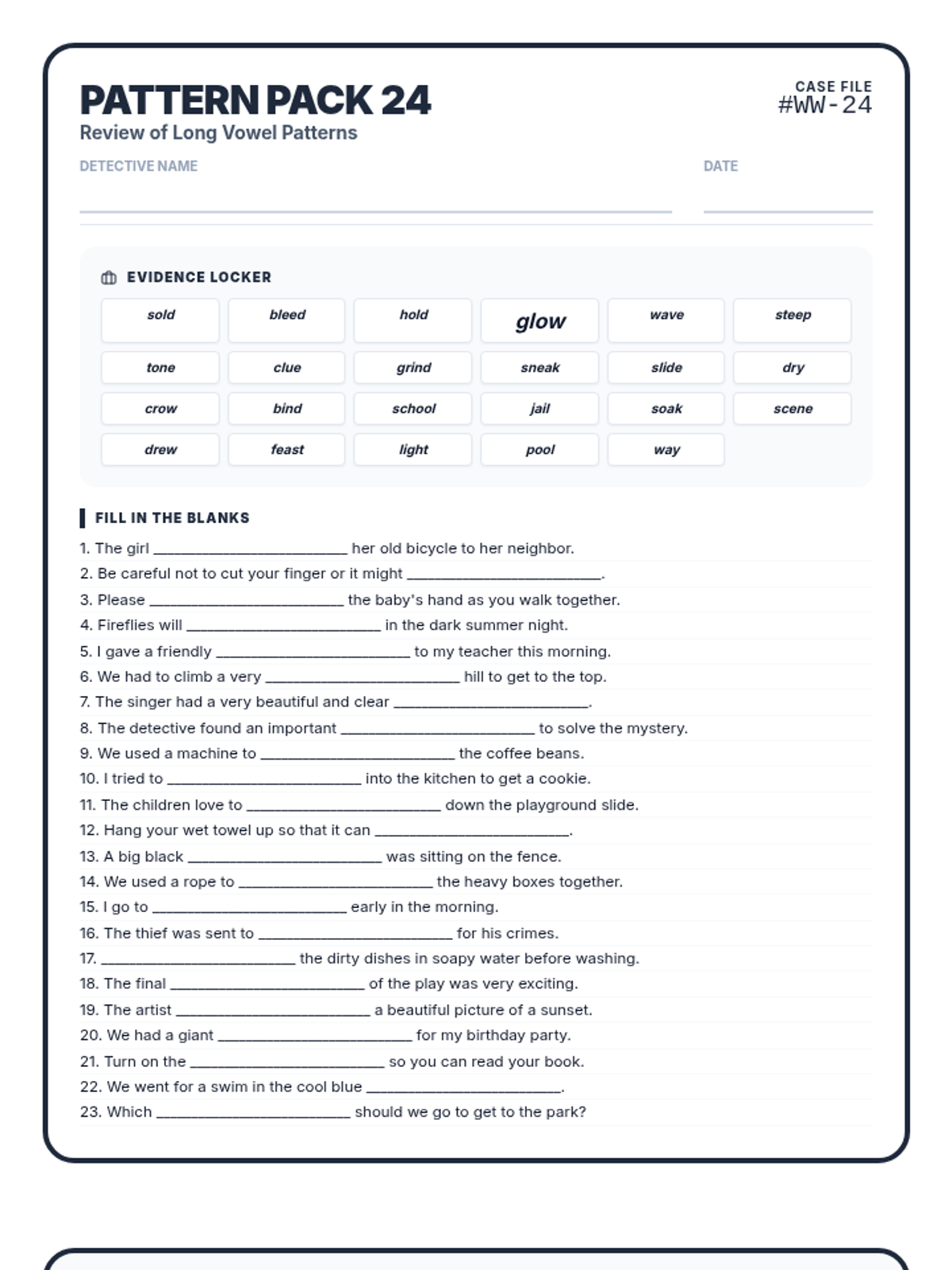
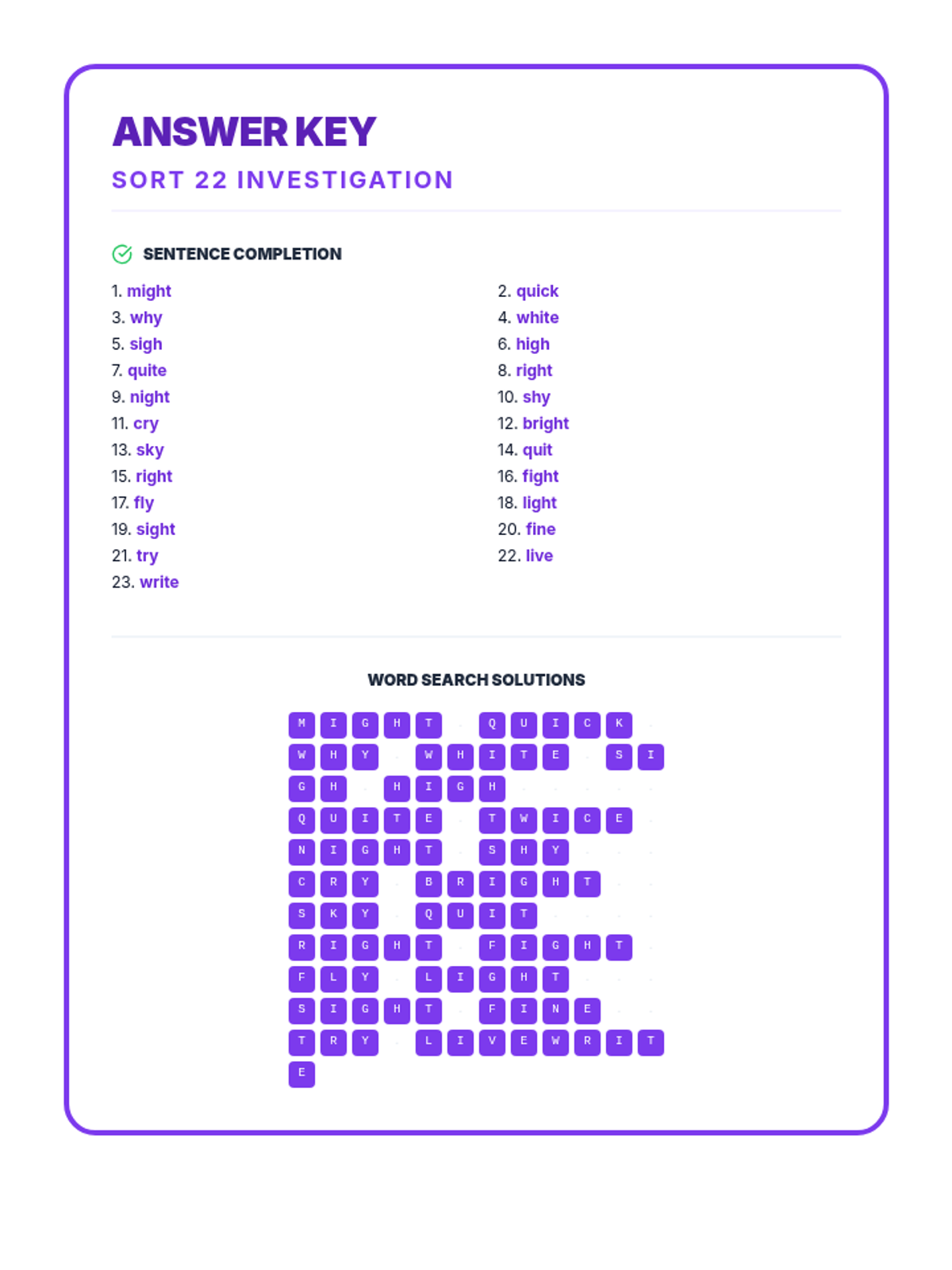
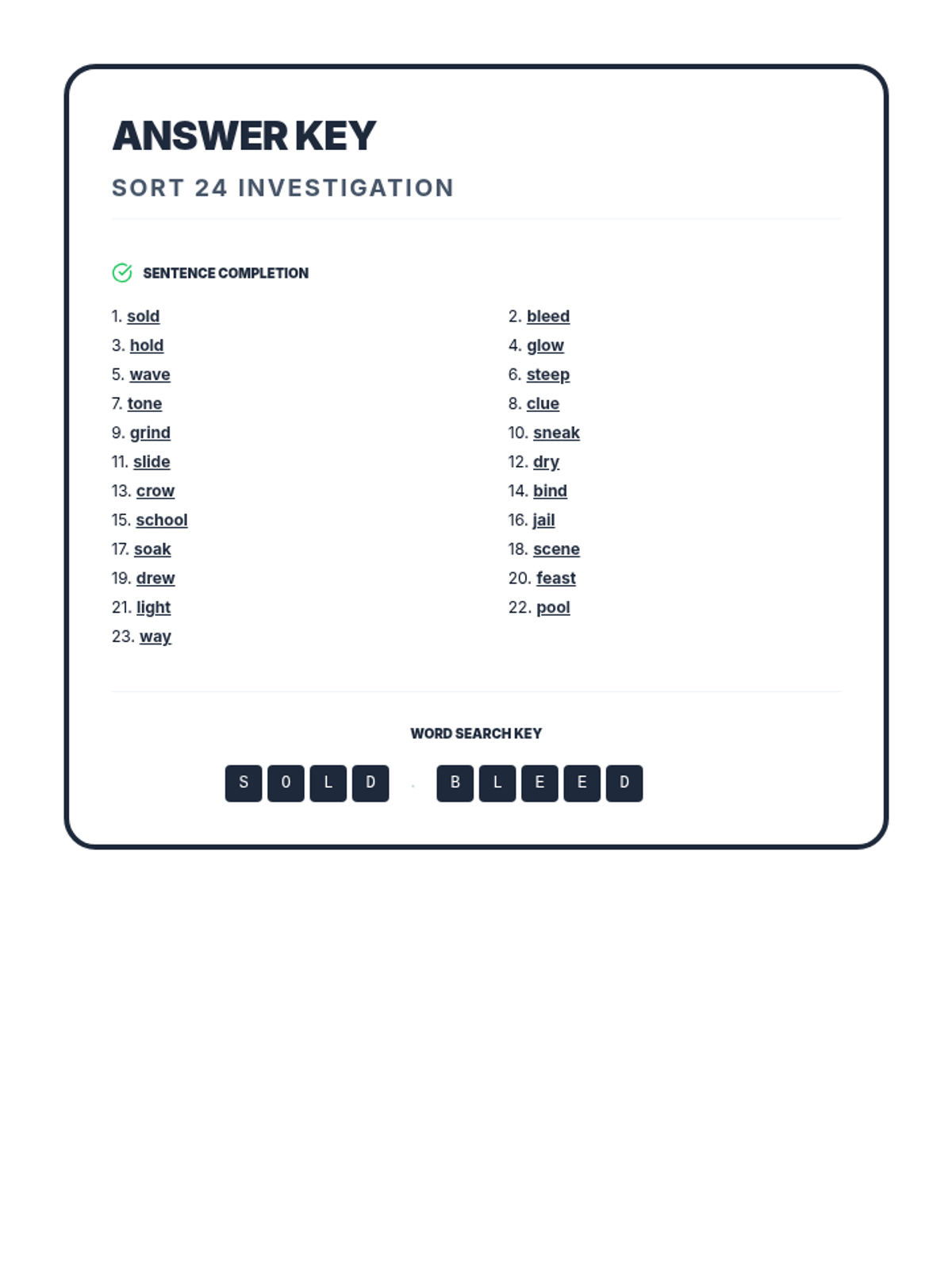
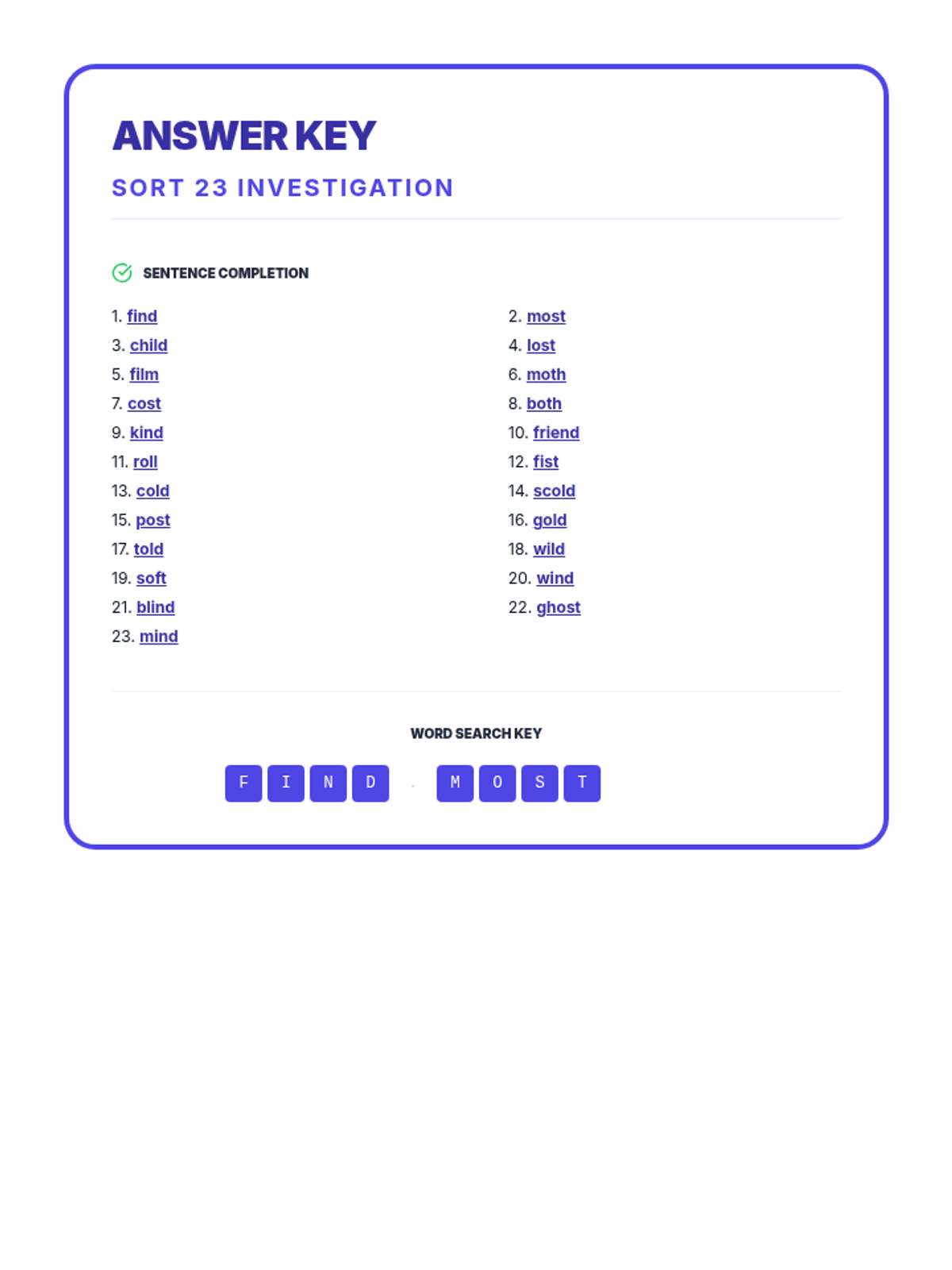
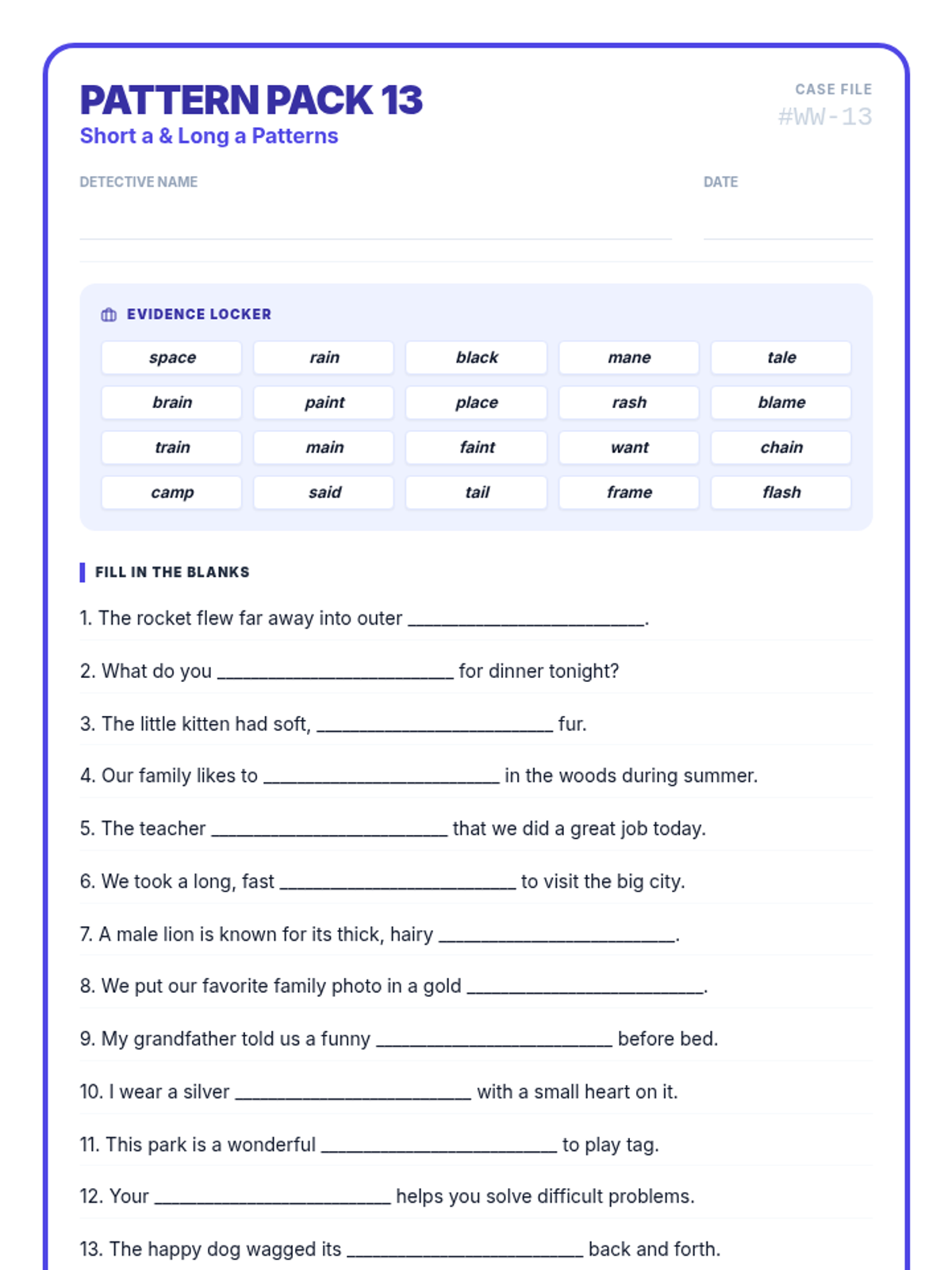
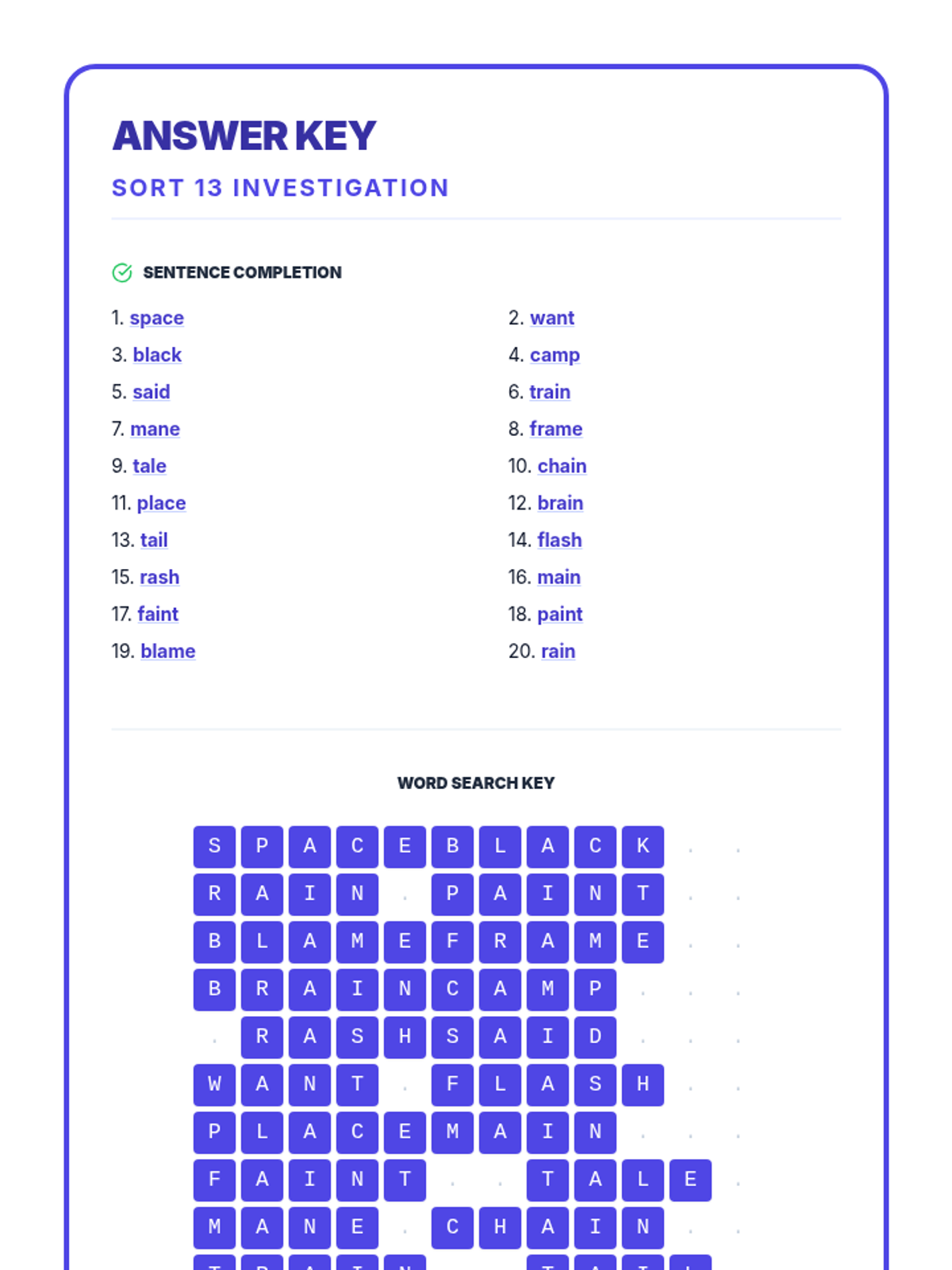
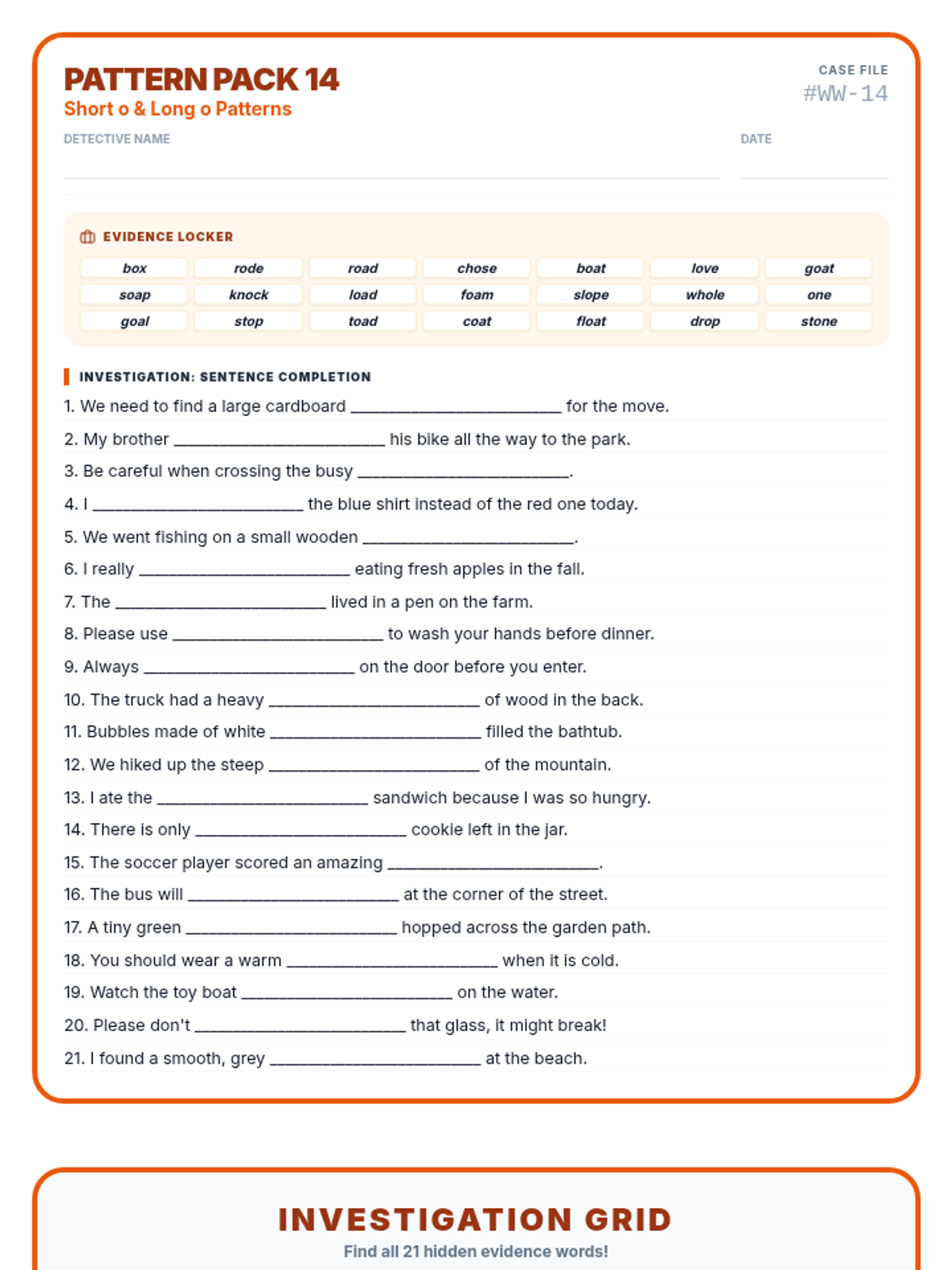
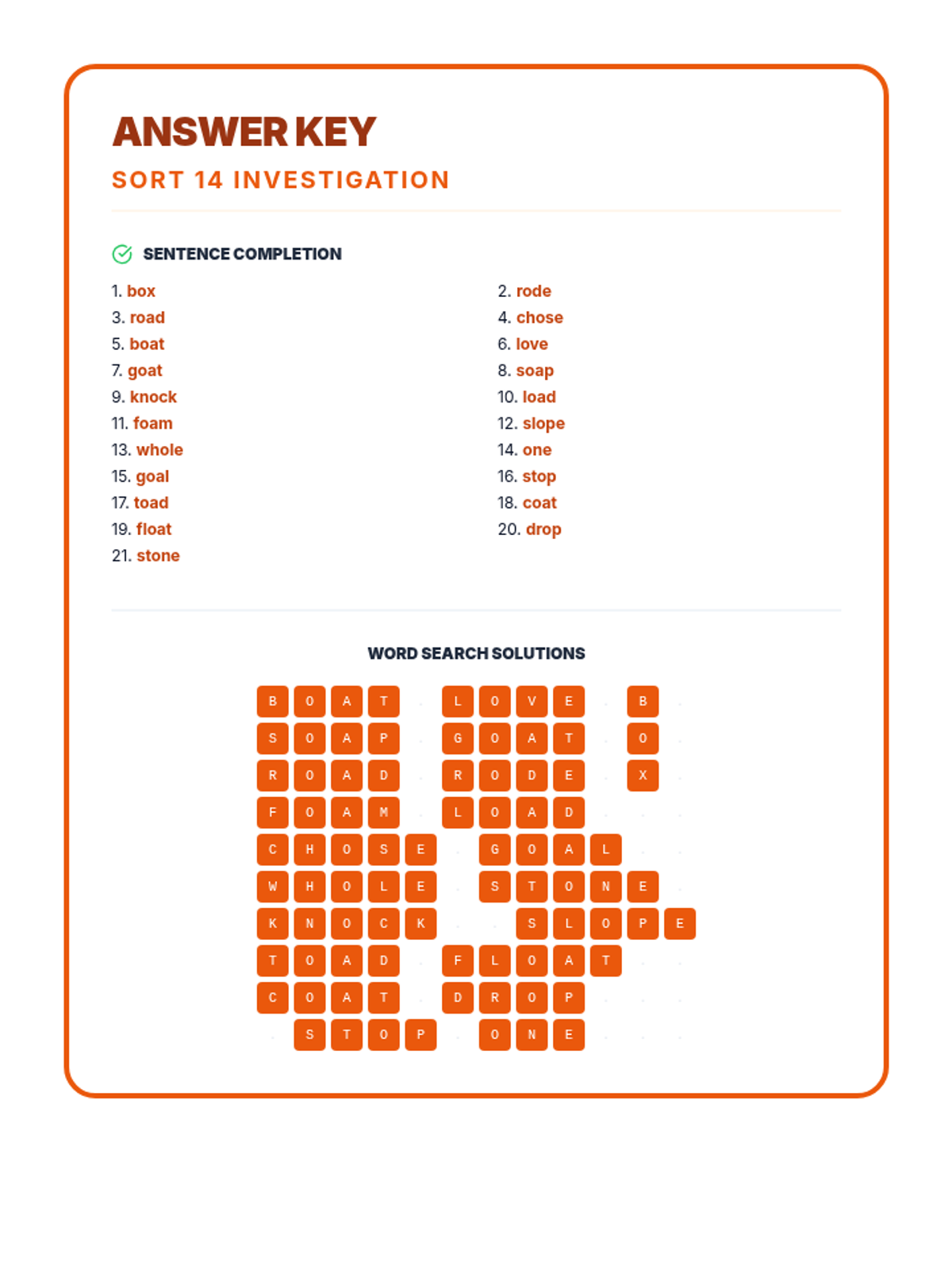
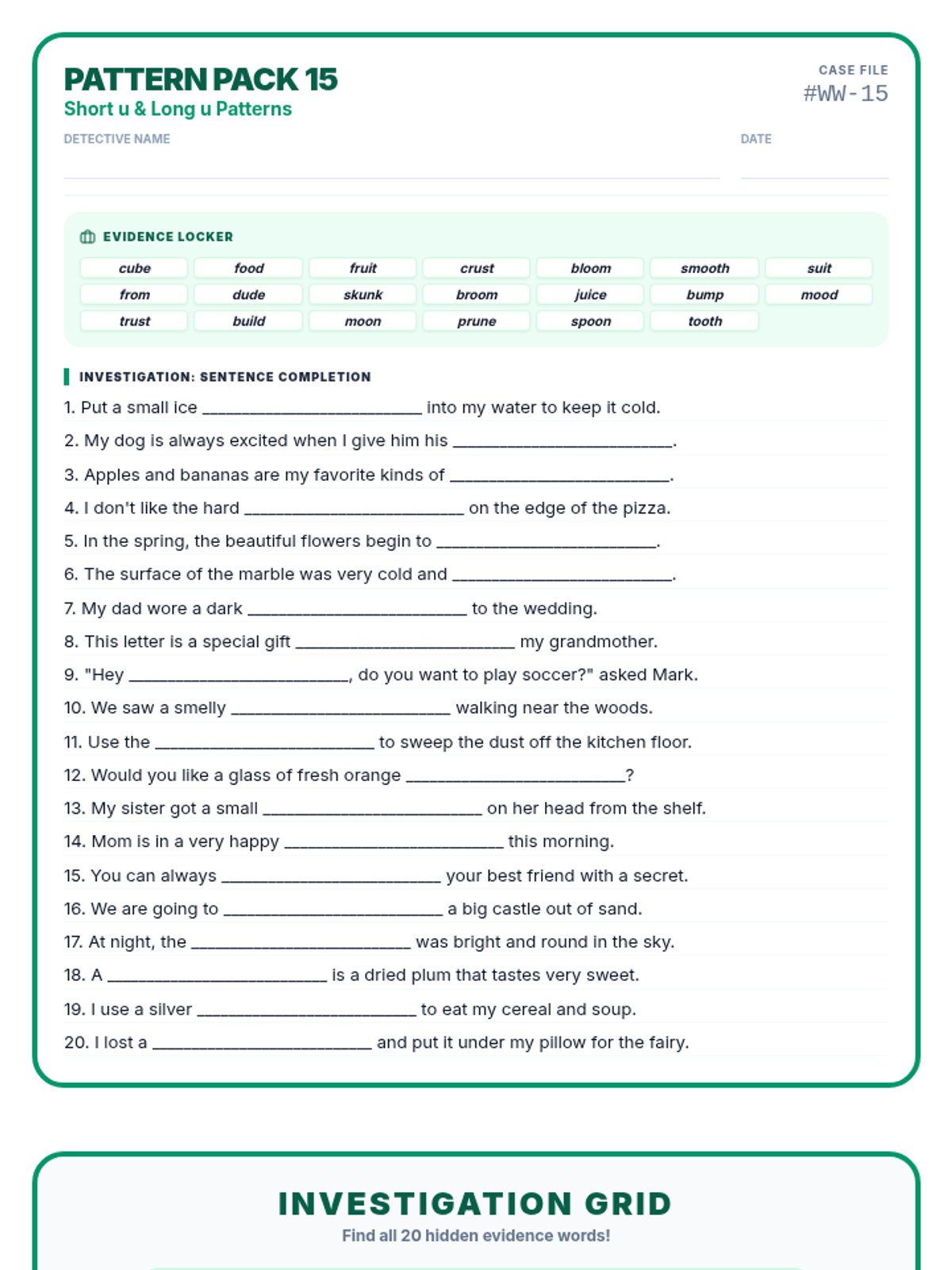
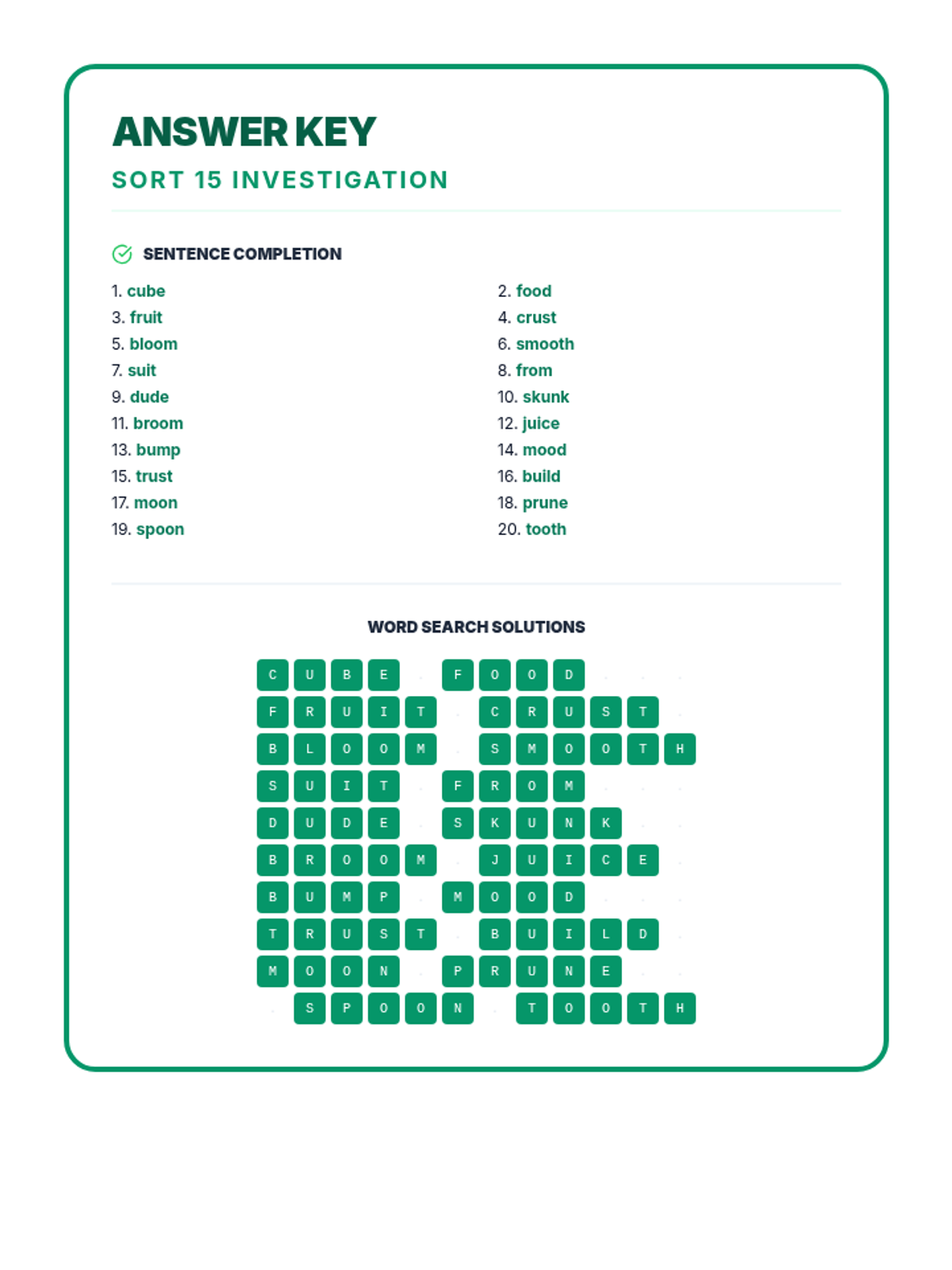
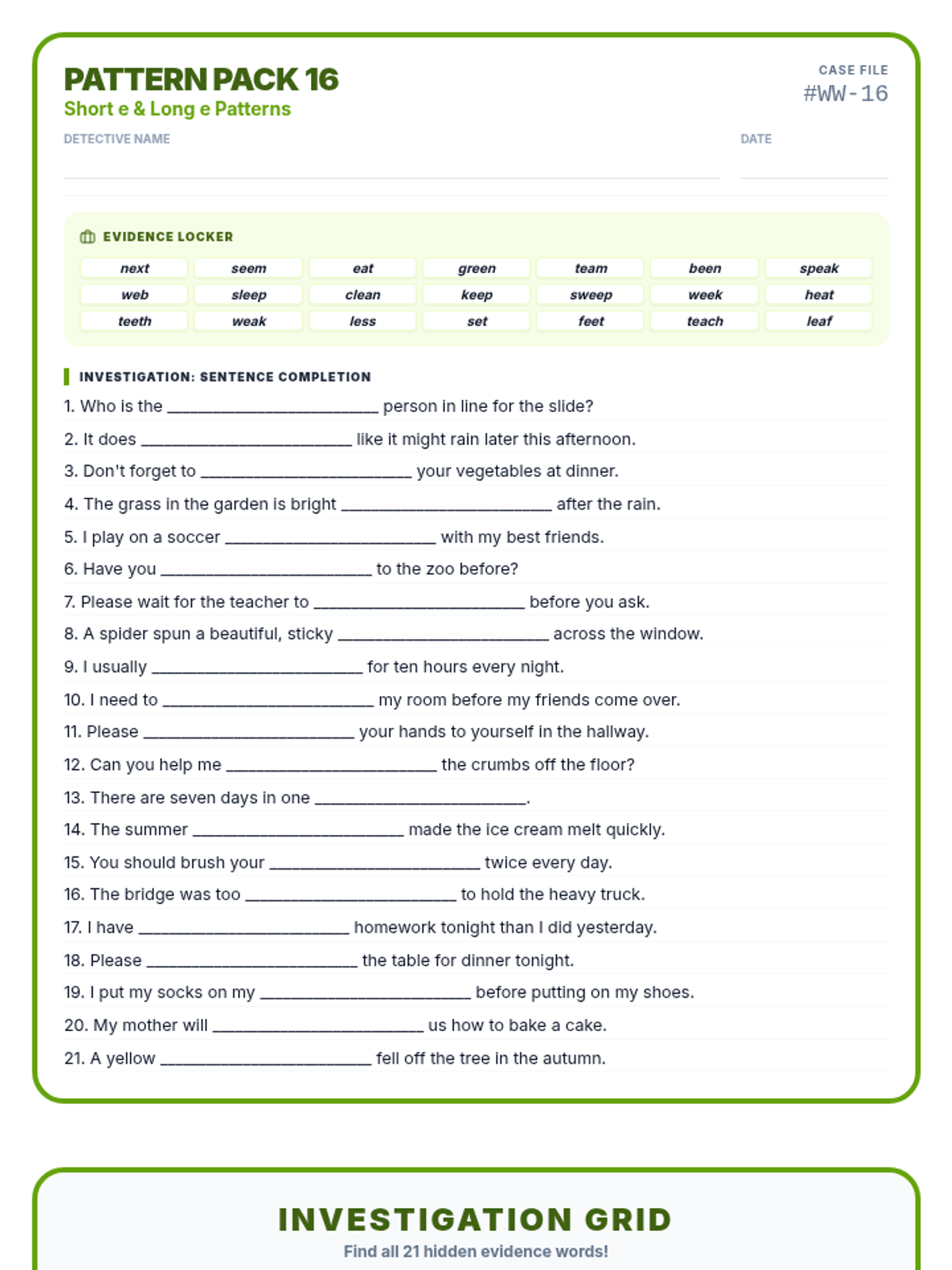
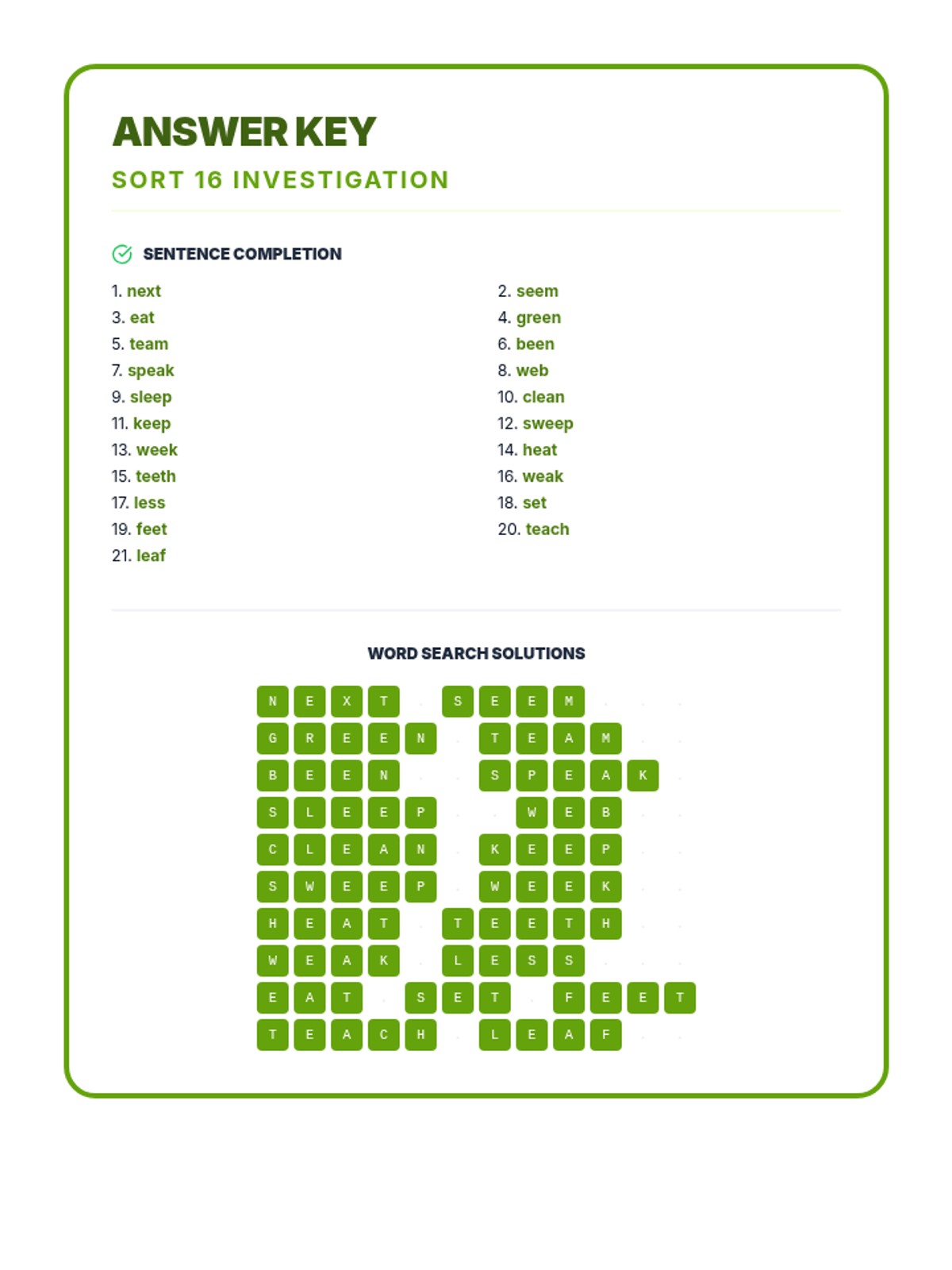
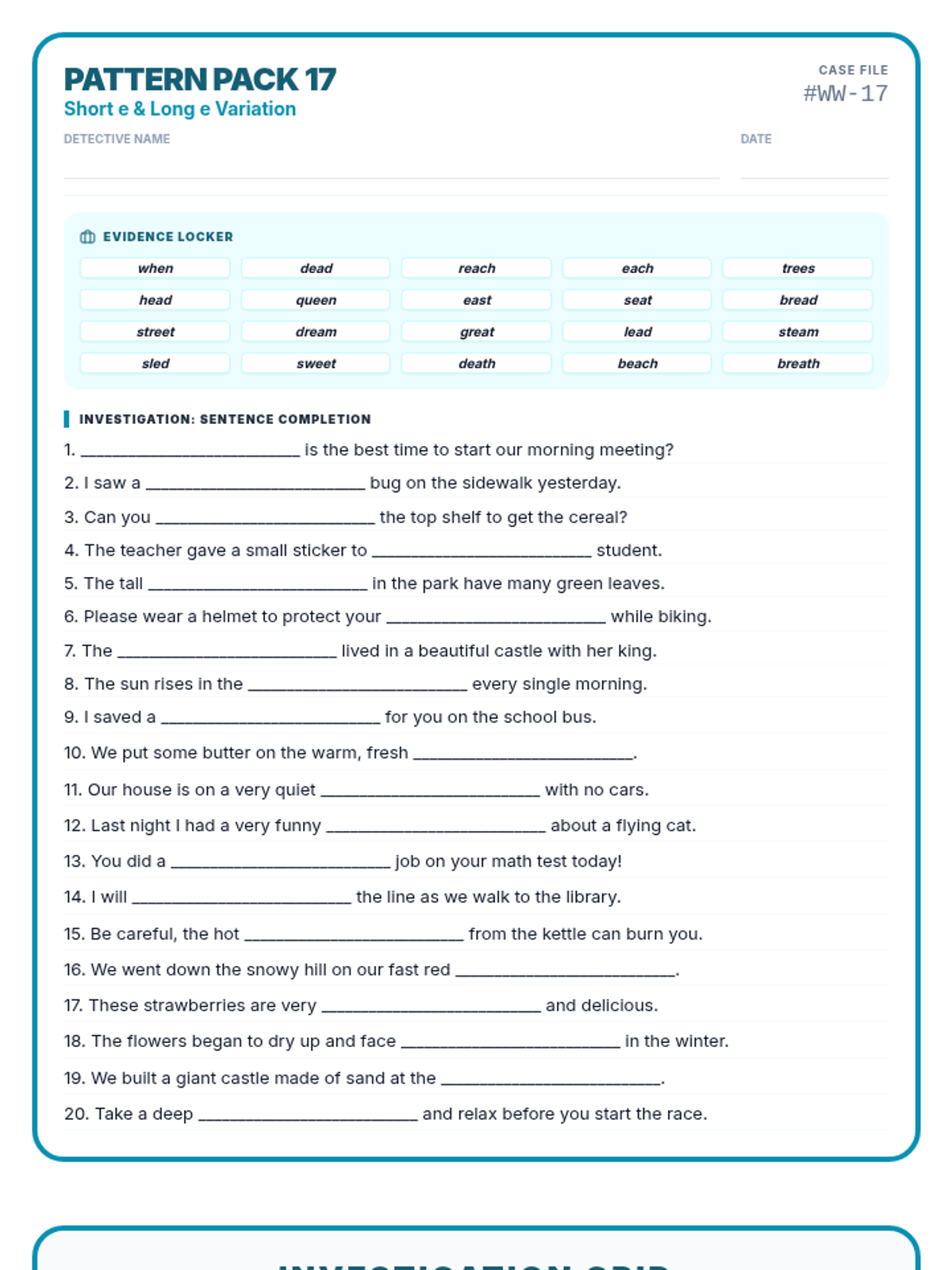
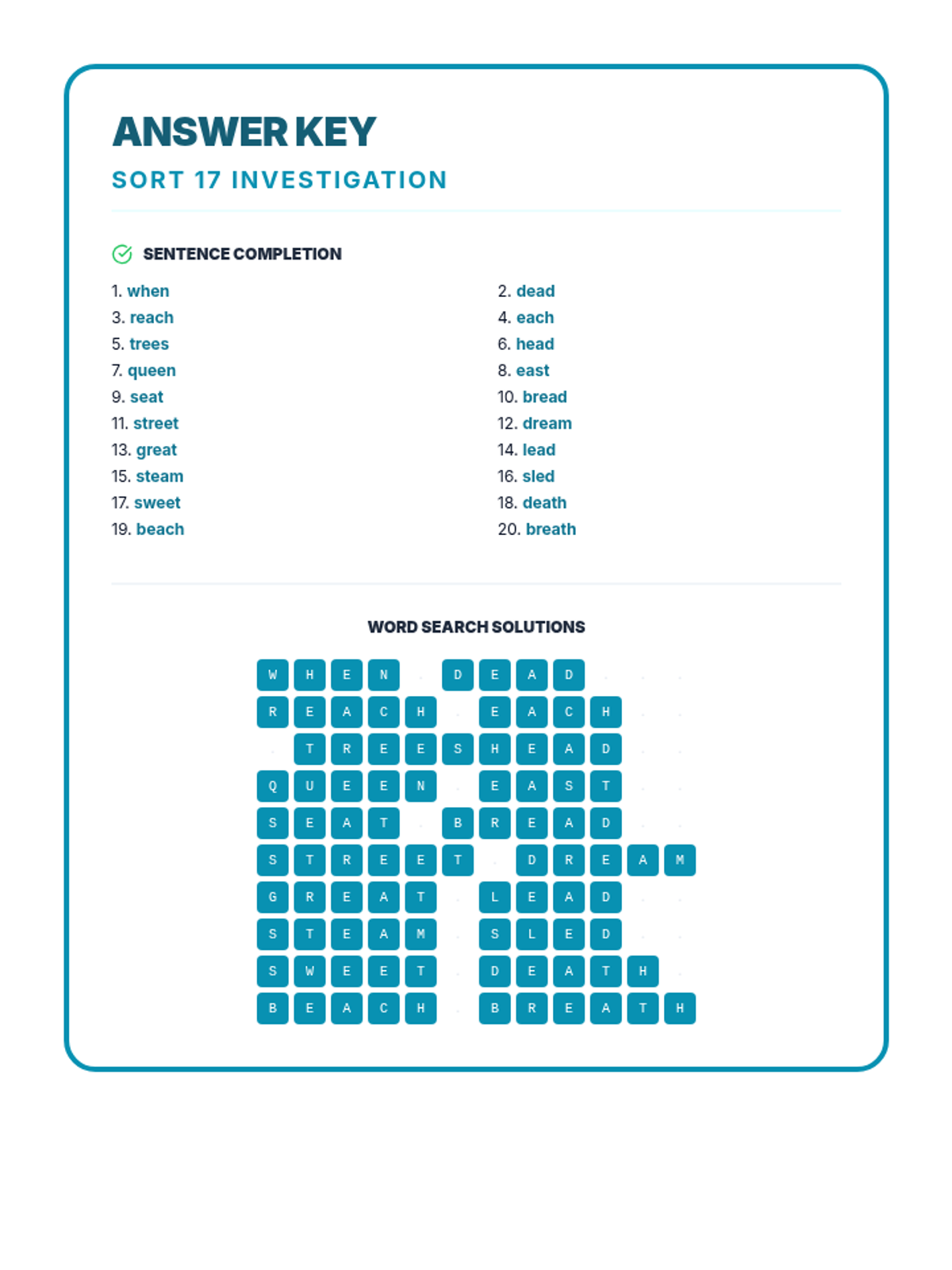
Unlock the secrets of long and short vowels, vowel teams, and the power of the silent 'e'. This lesson focuses on identifying patterns that change how a word is pronounced and spelled.
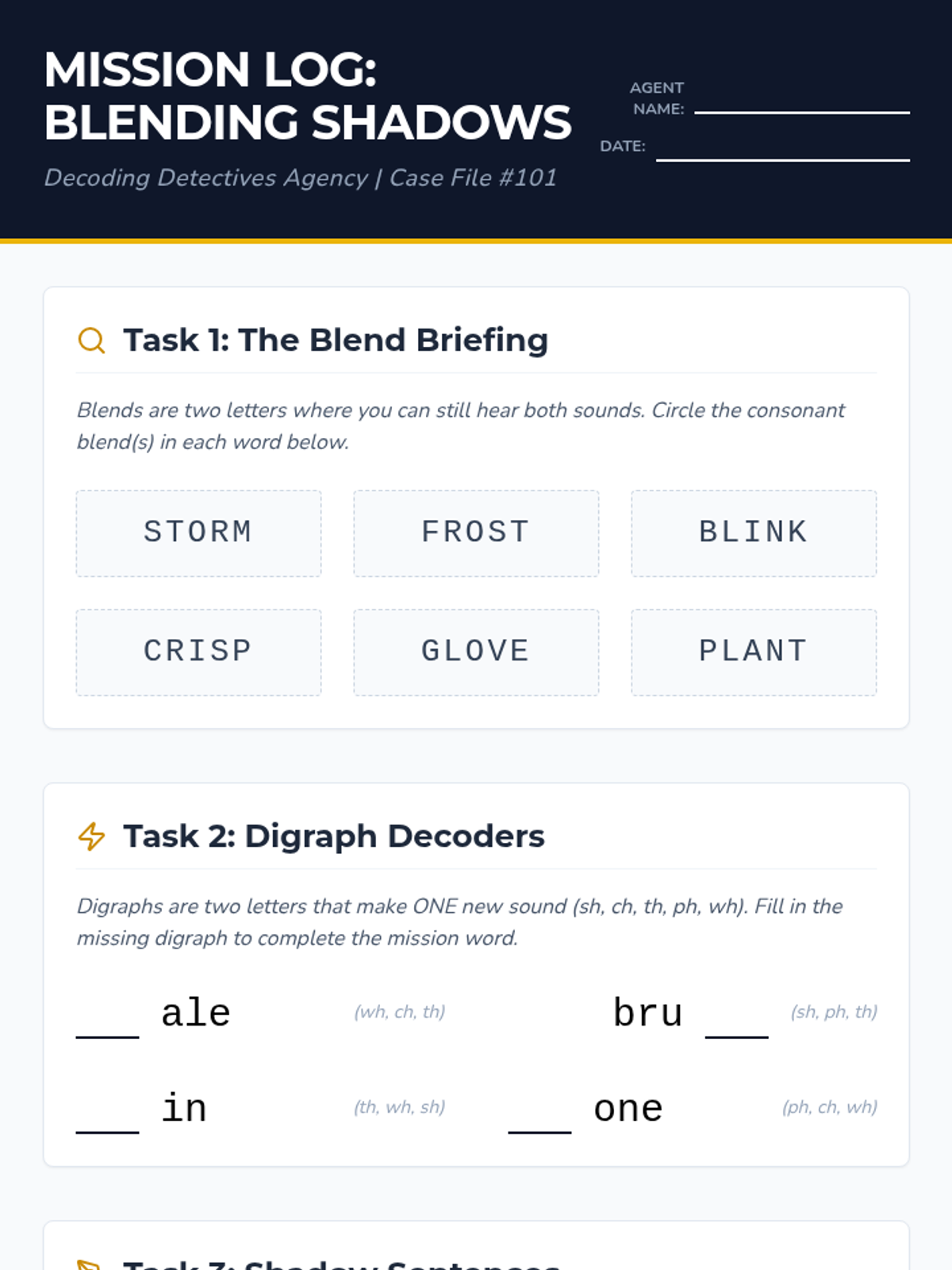
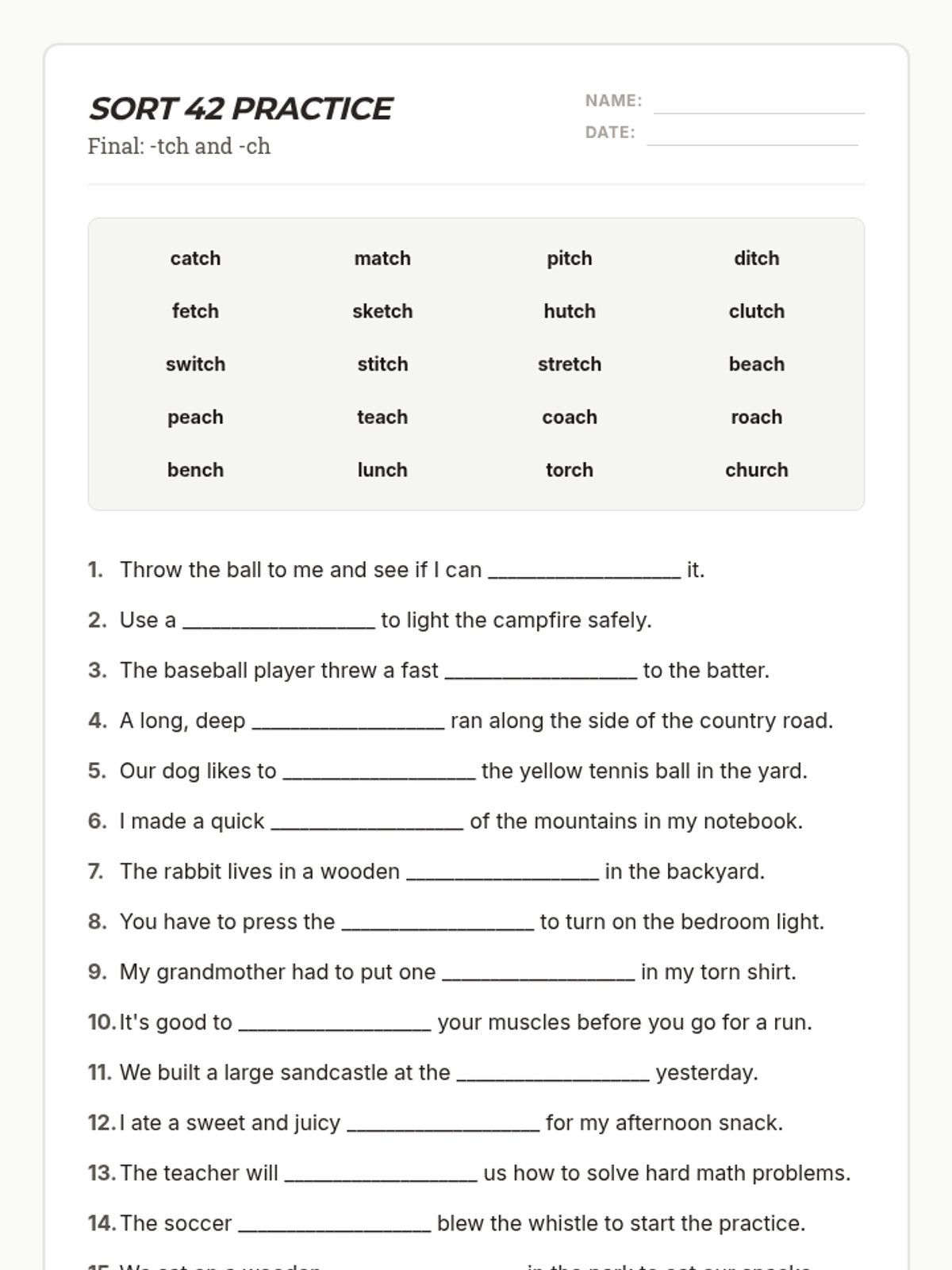
Investigate consonant blends and digraphs to master the sounds at the beginning and end of words. Students learn to distinguish between blended sounds and the unique sounds created by digraphs.
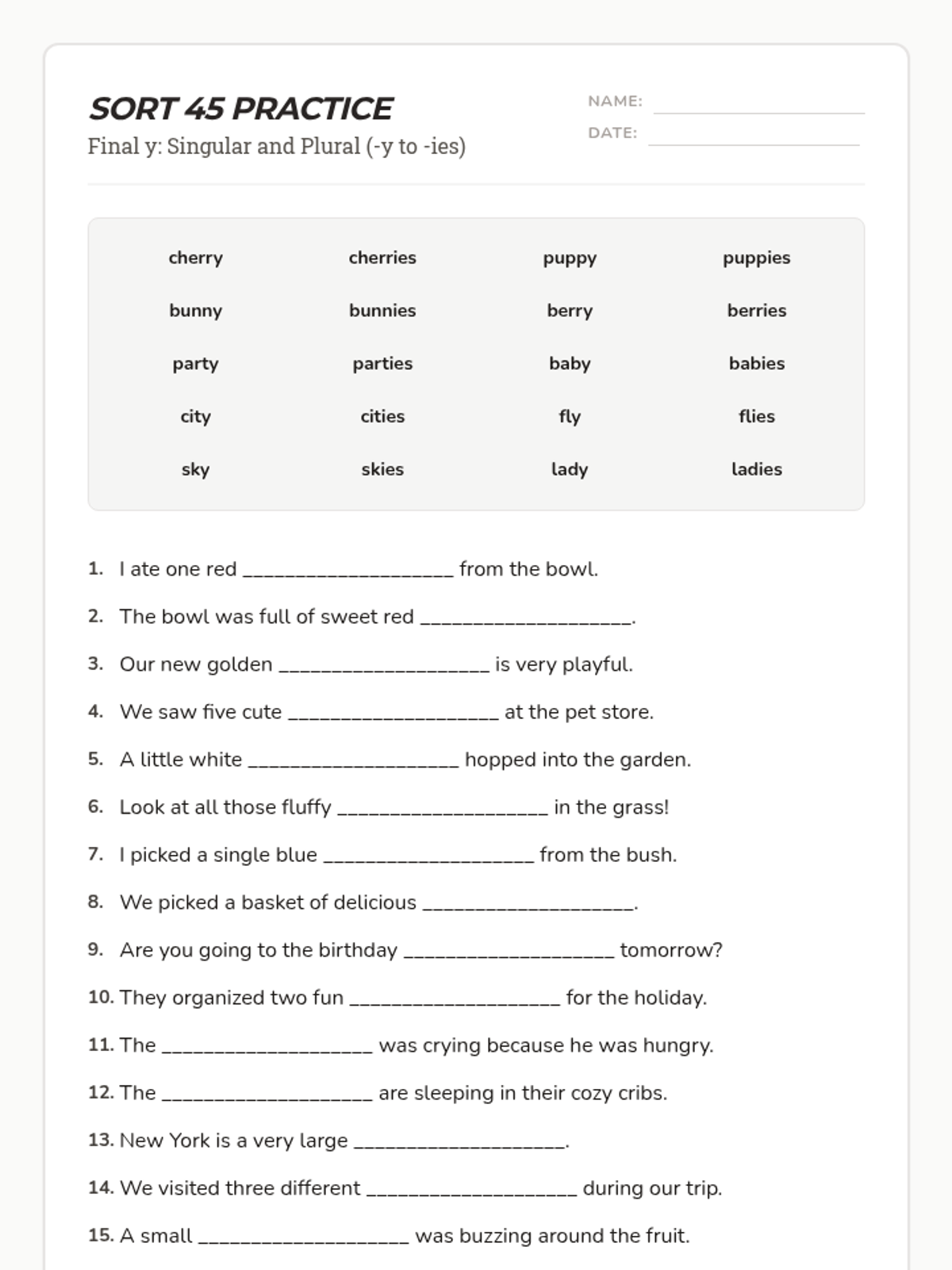
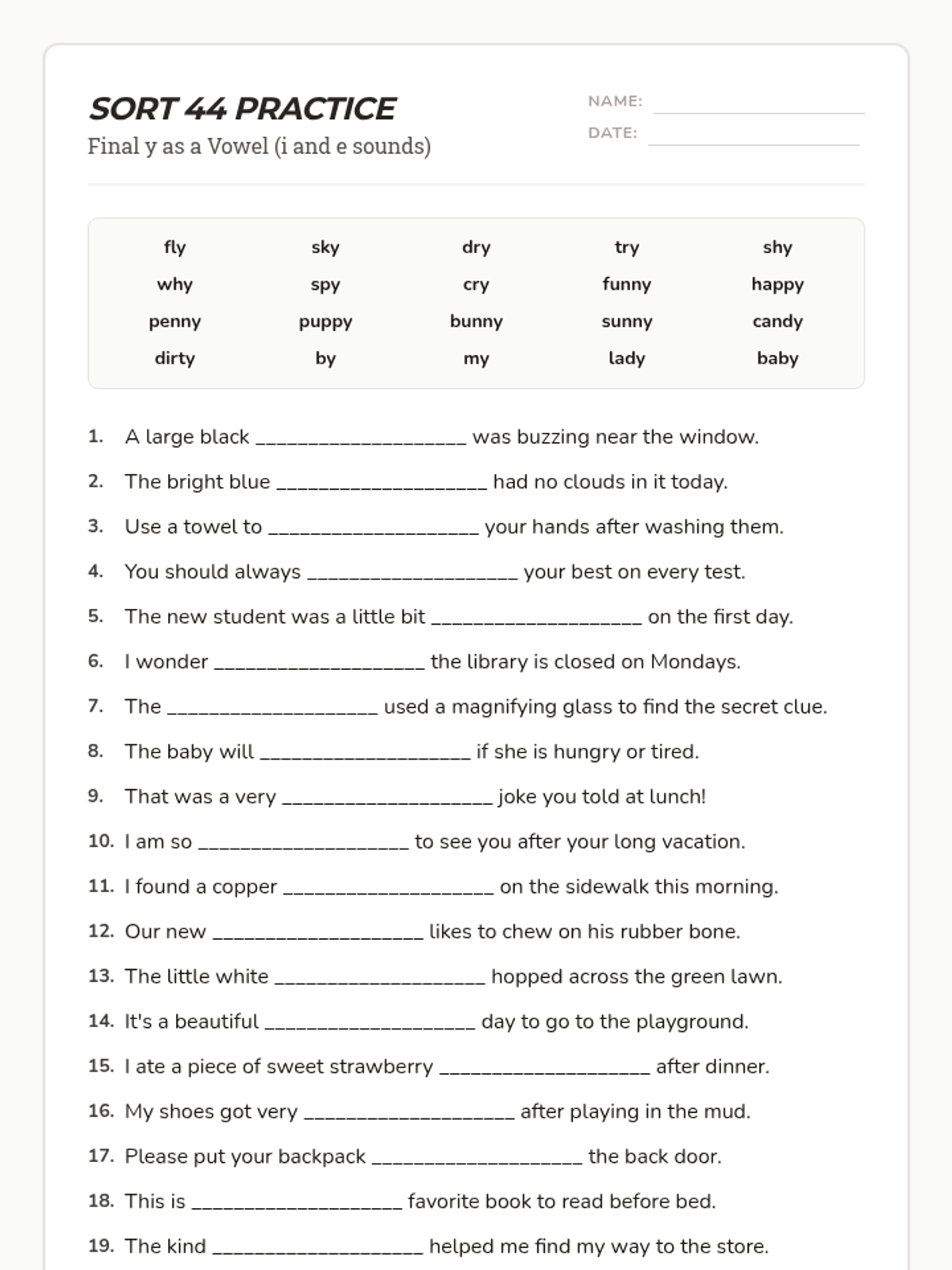
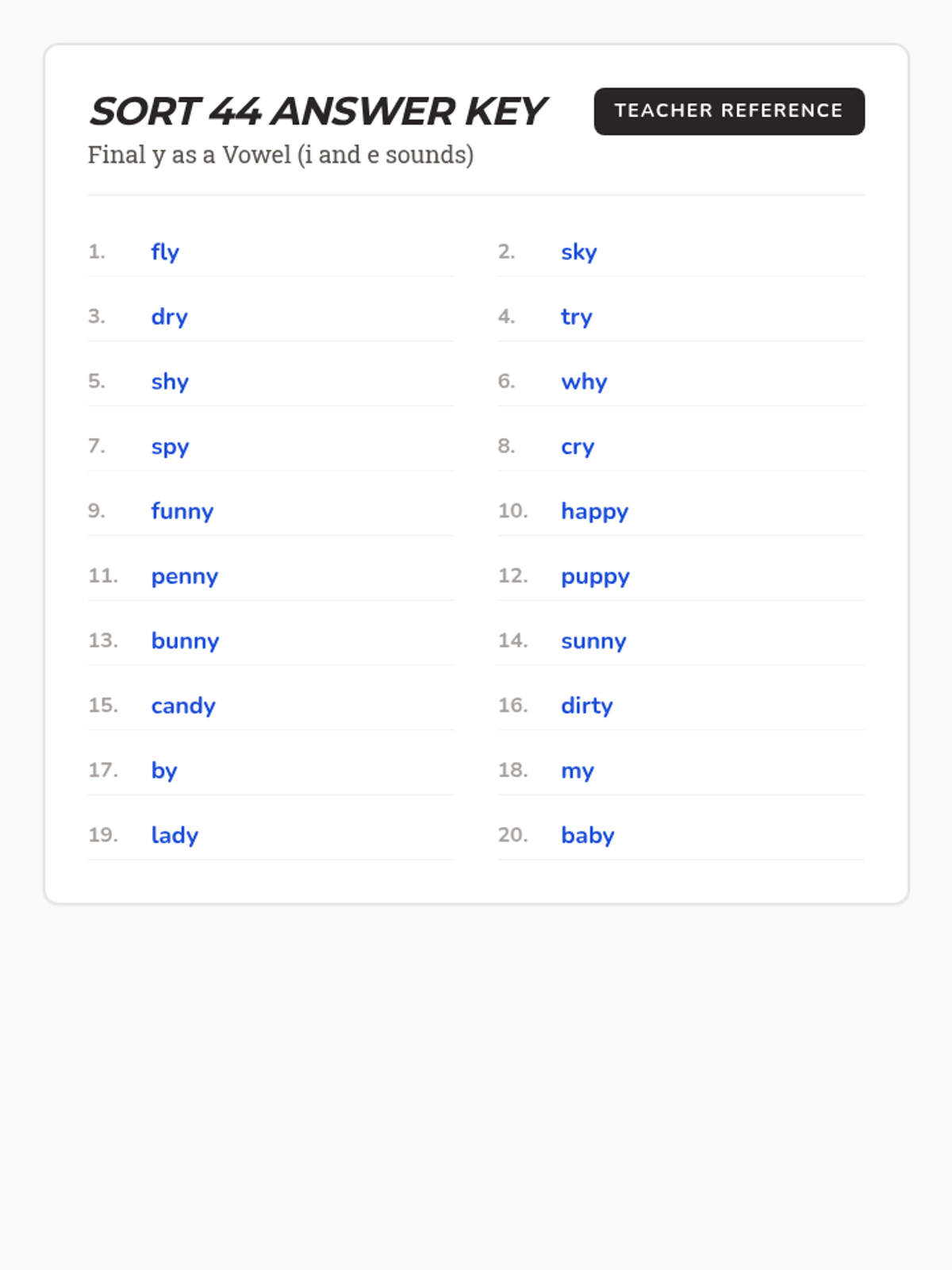
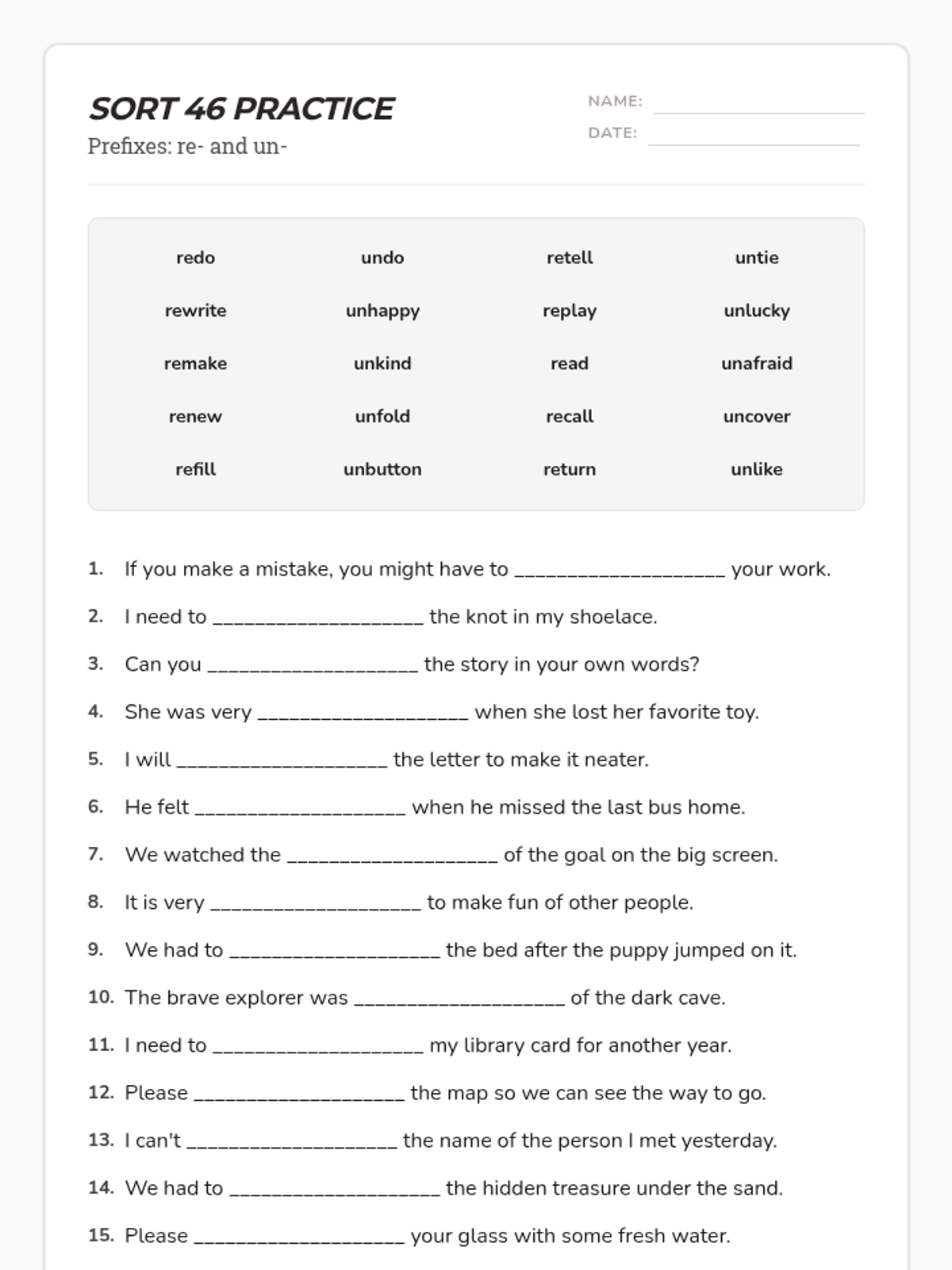
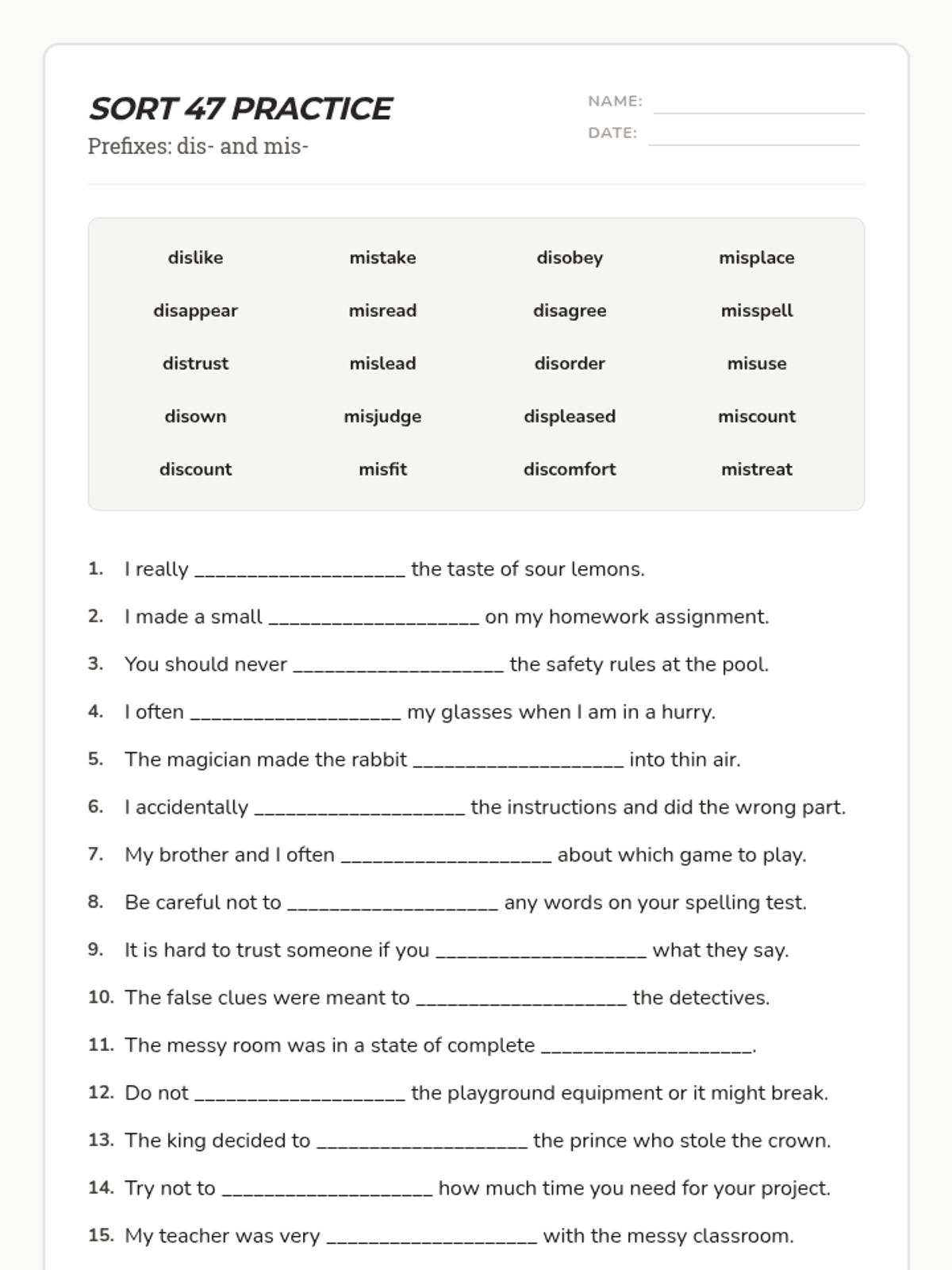
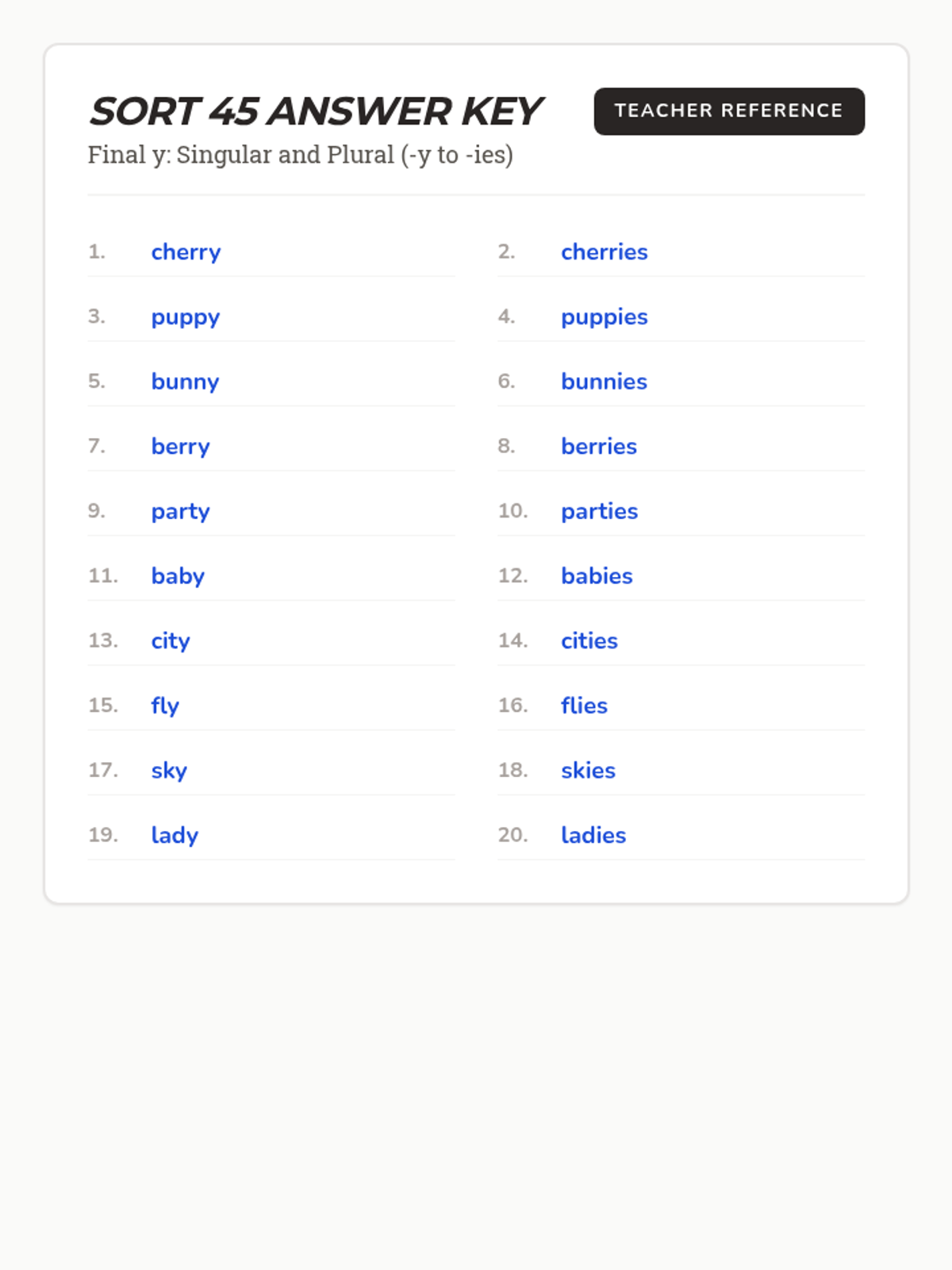
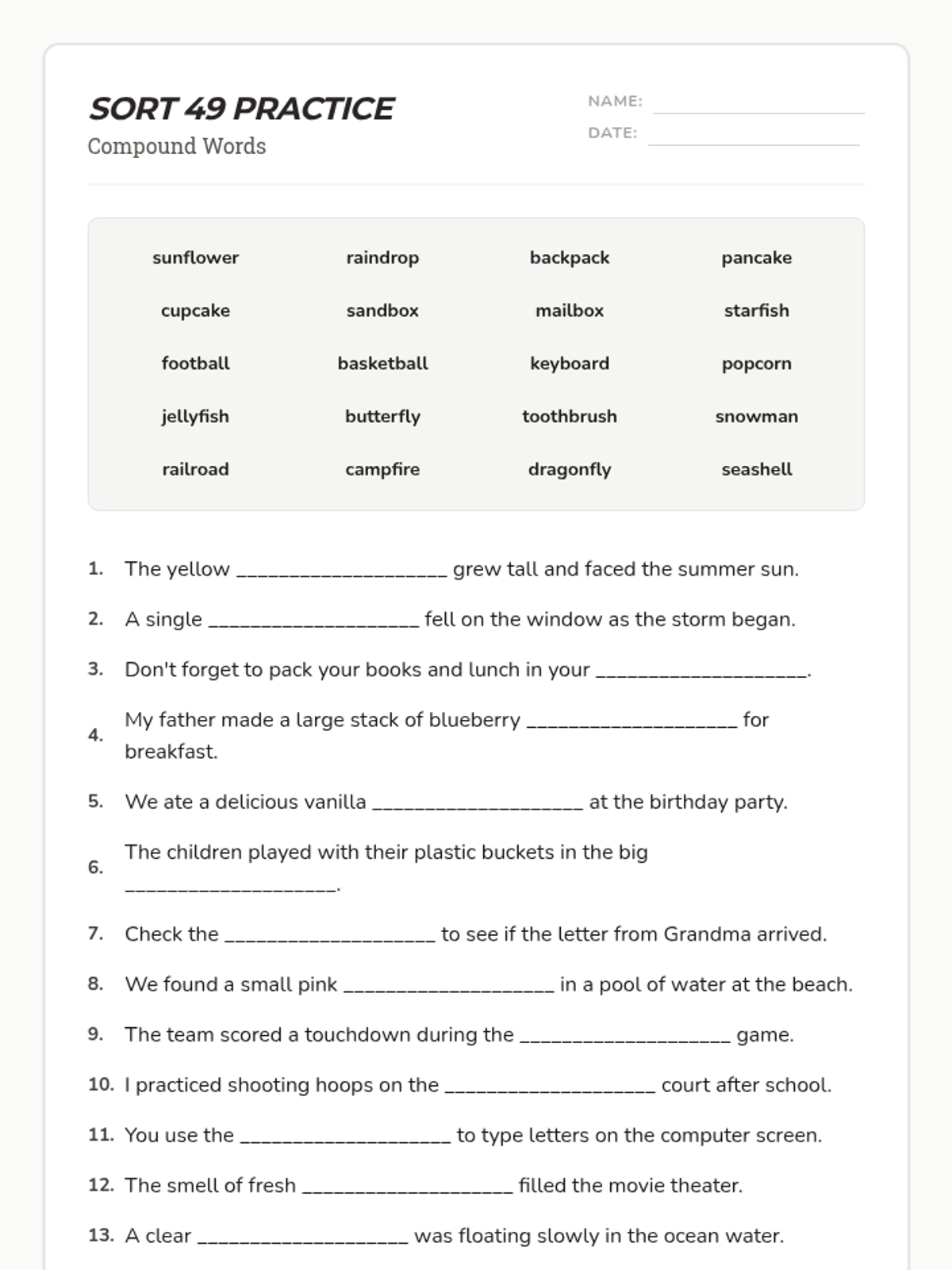
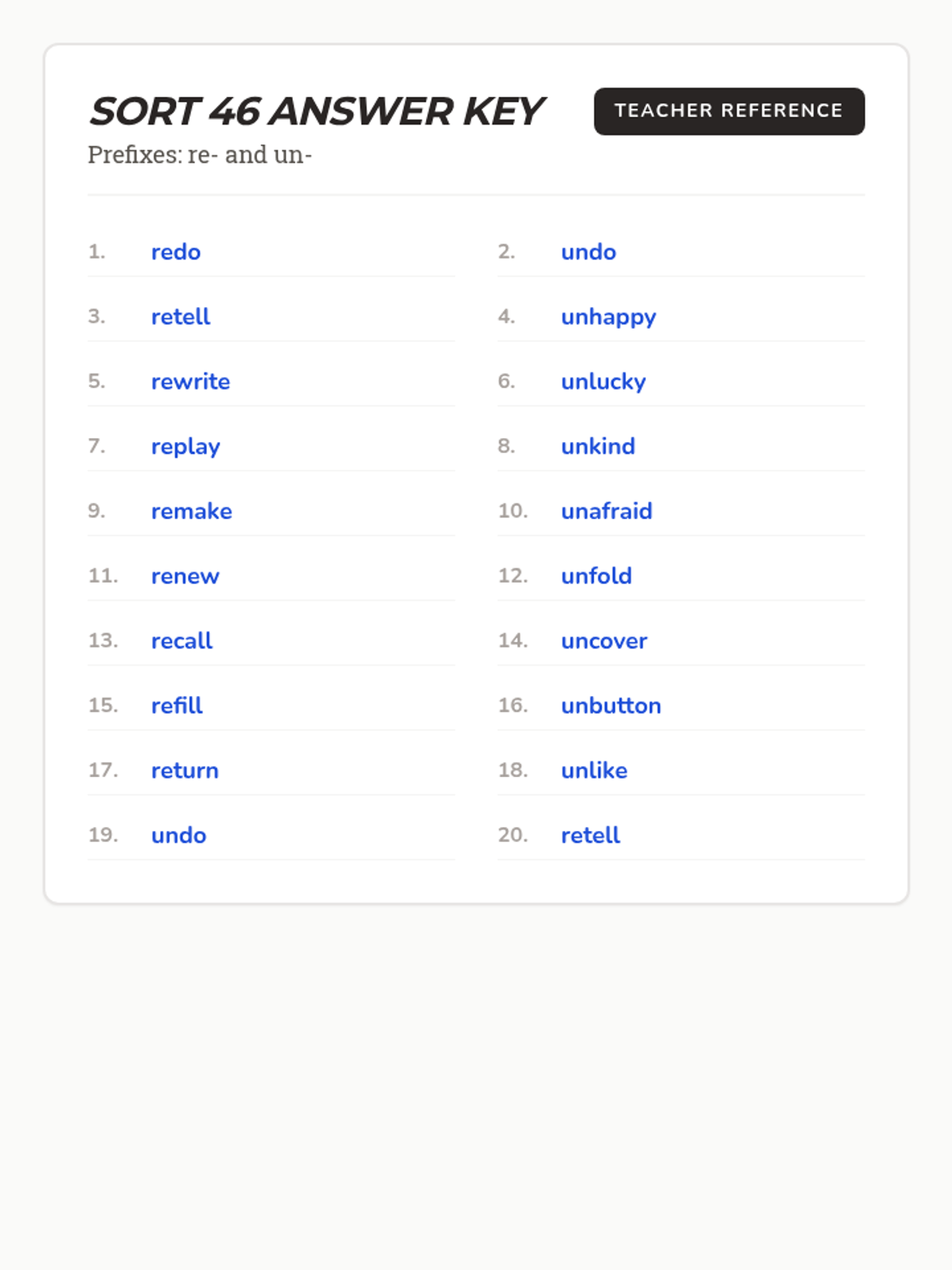
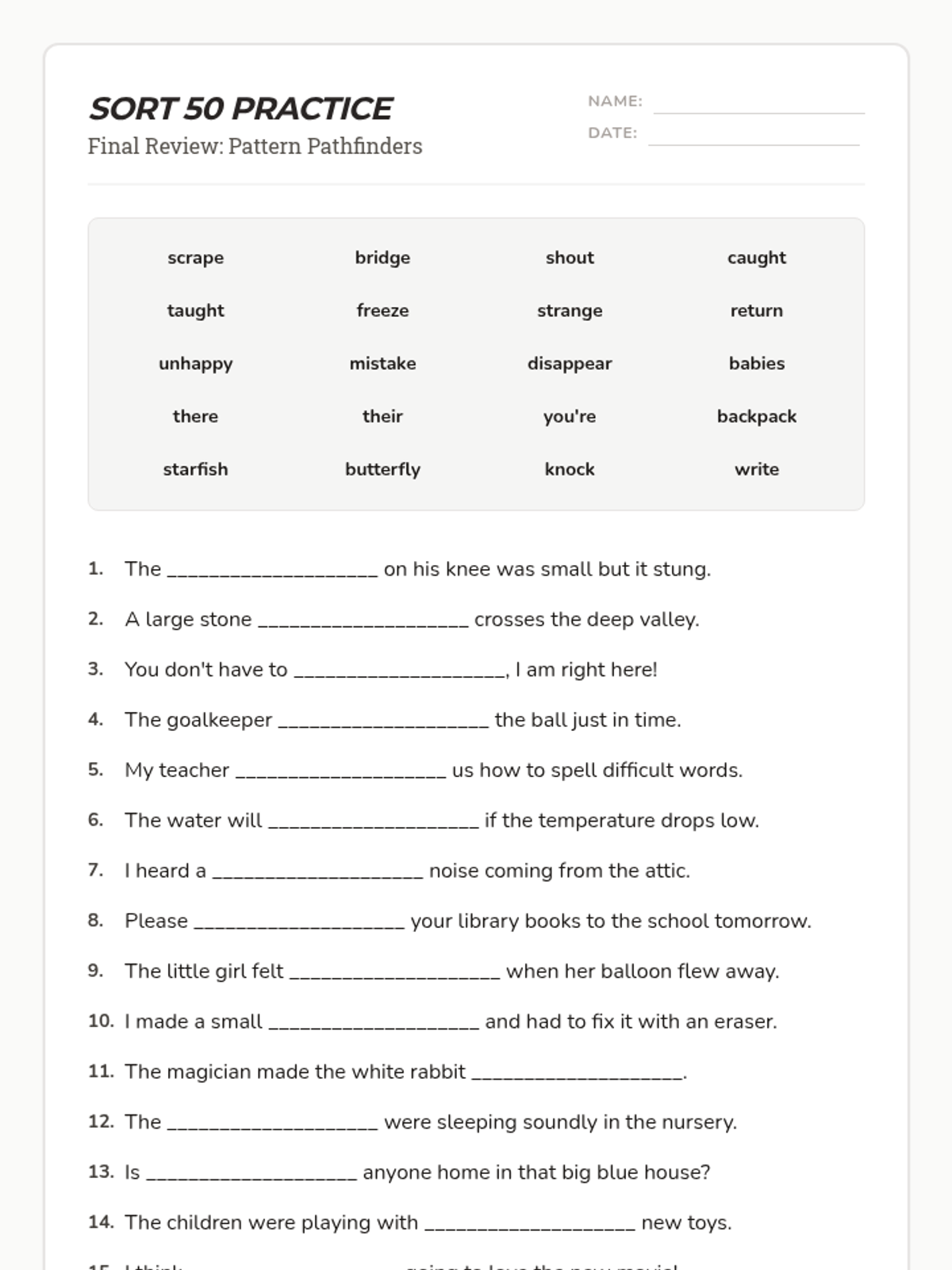
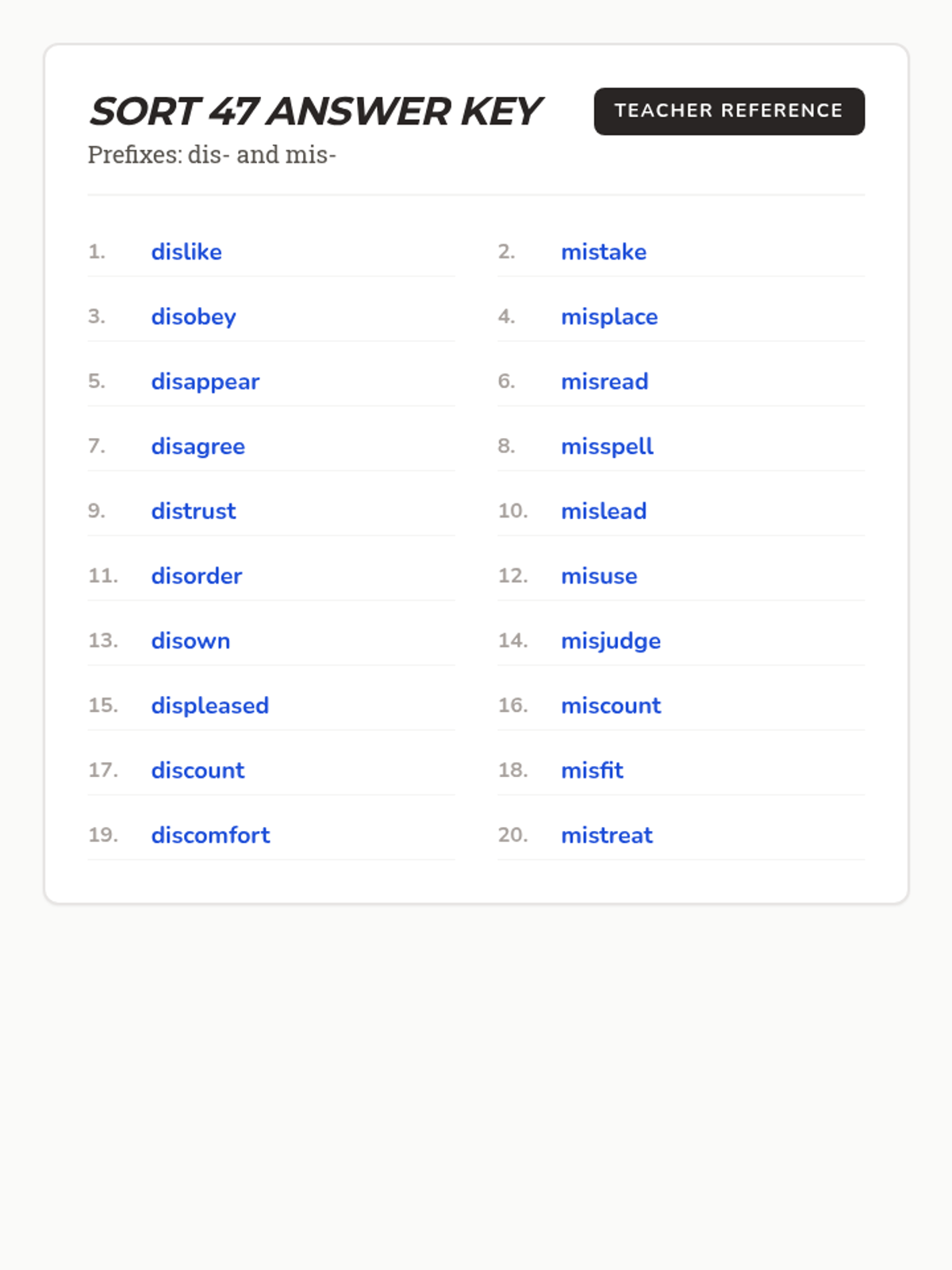
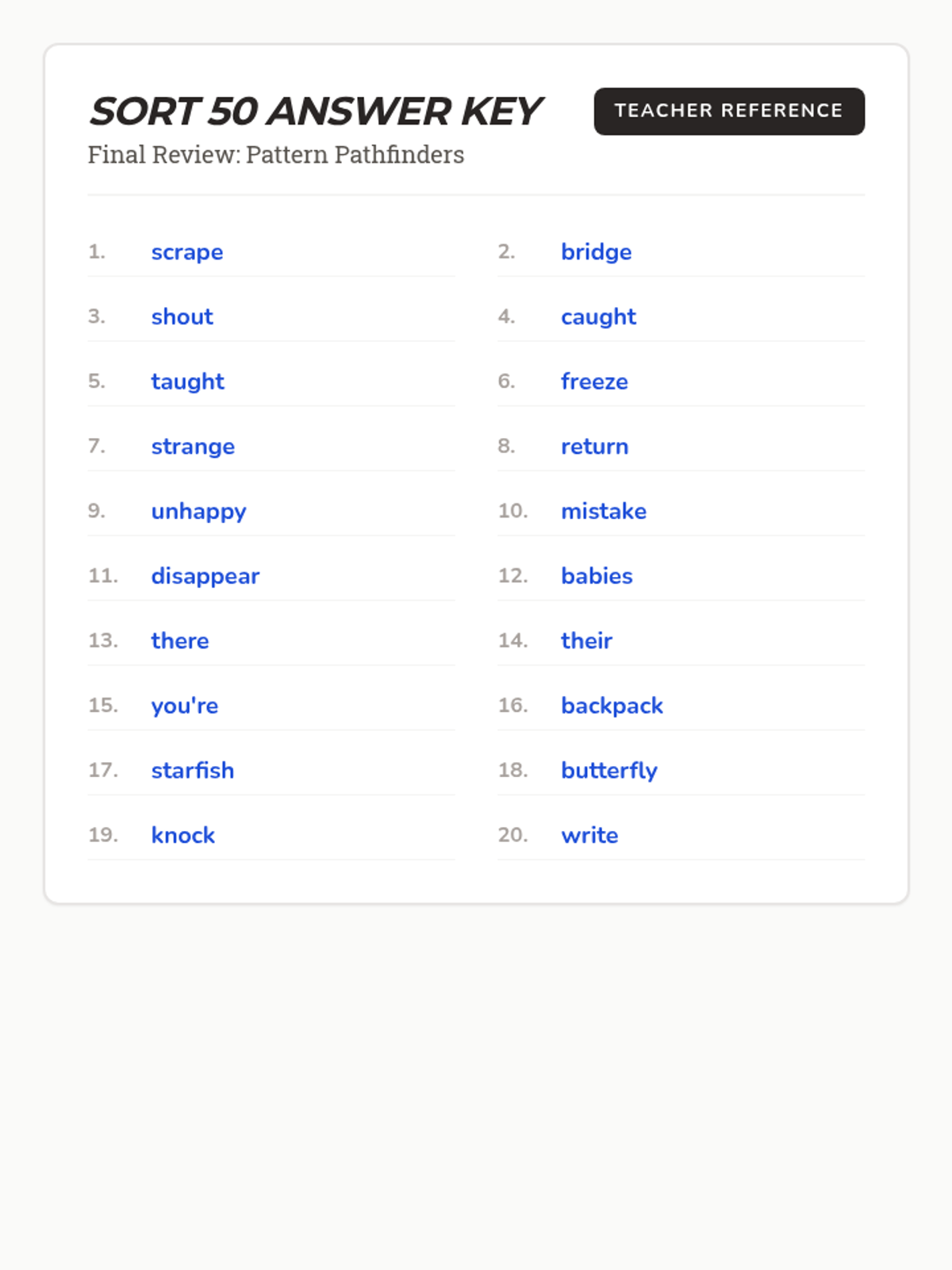
Covers final y as a vowel, plural endings with -ies, common prefixes (re-, un-, dis-, mis-), and a comprehensive review of patterns from Sorts 13-50.
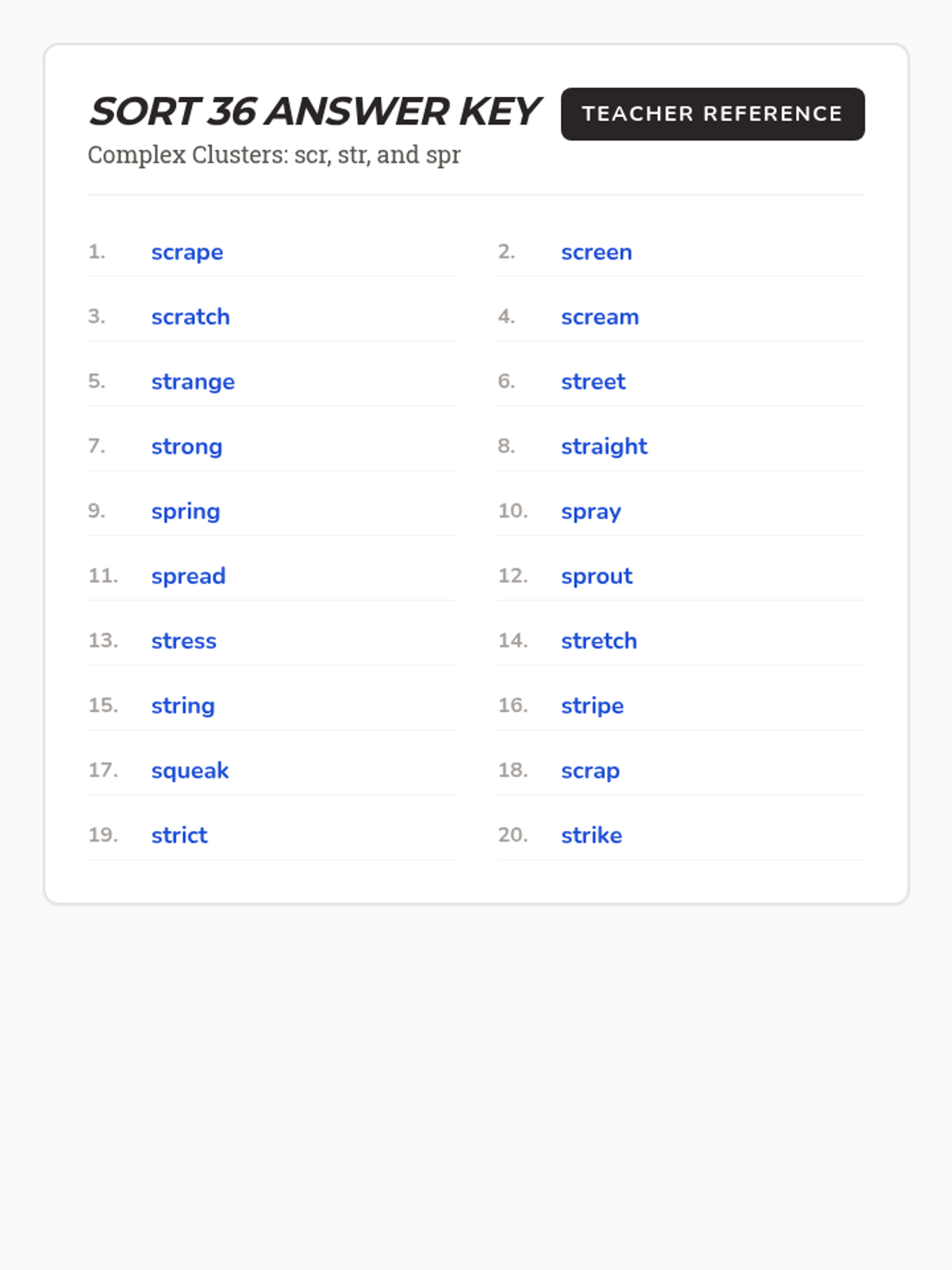
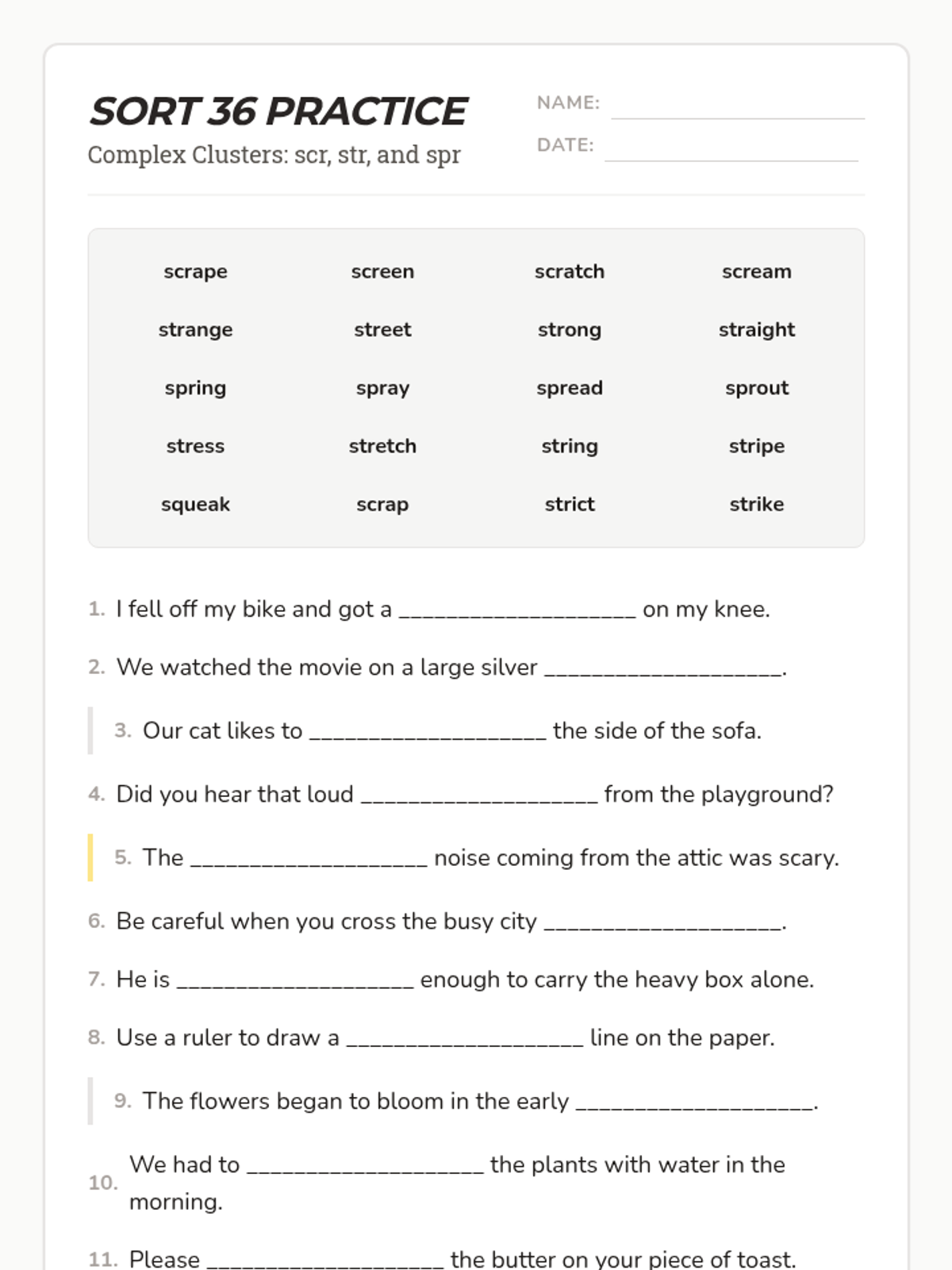
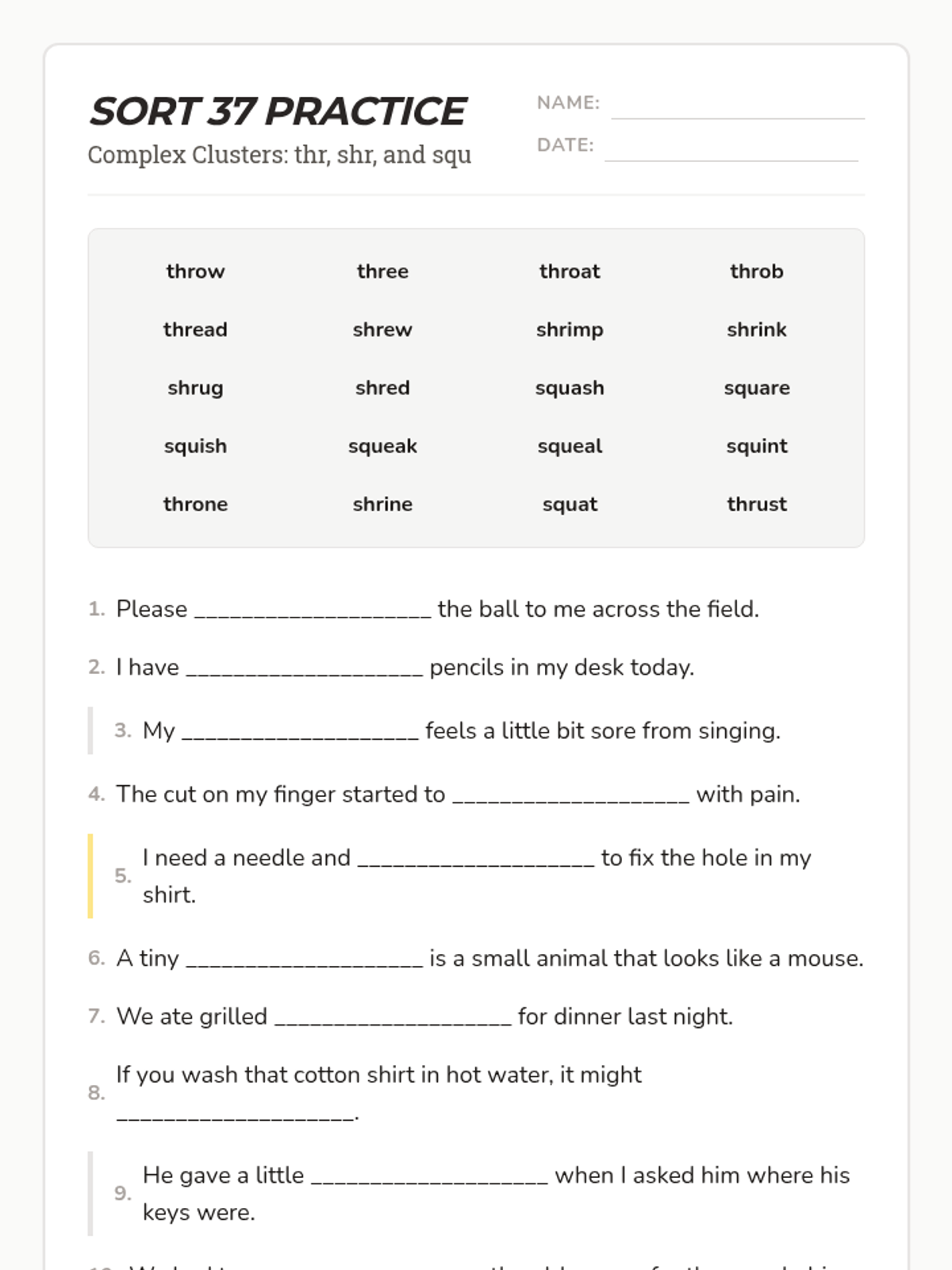
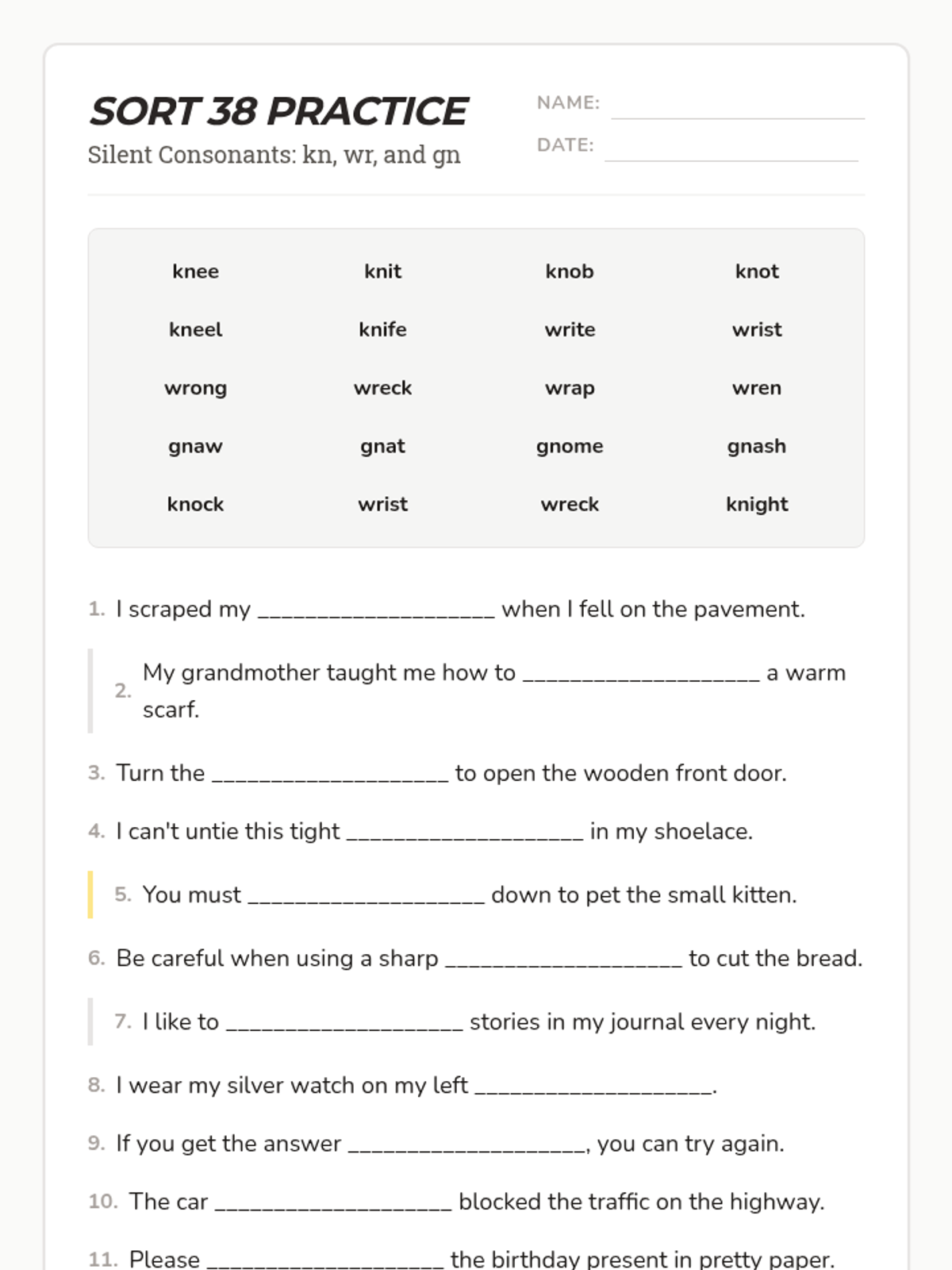
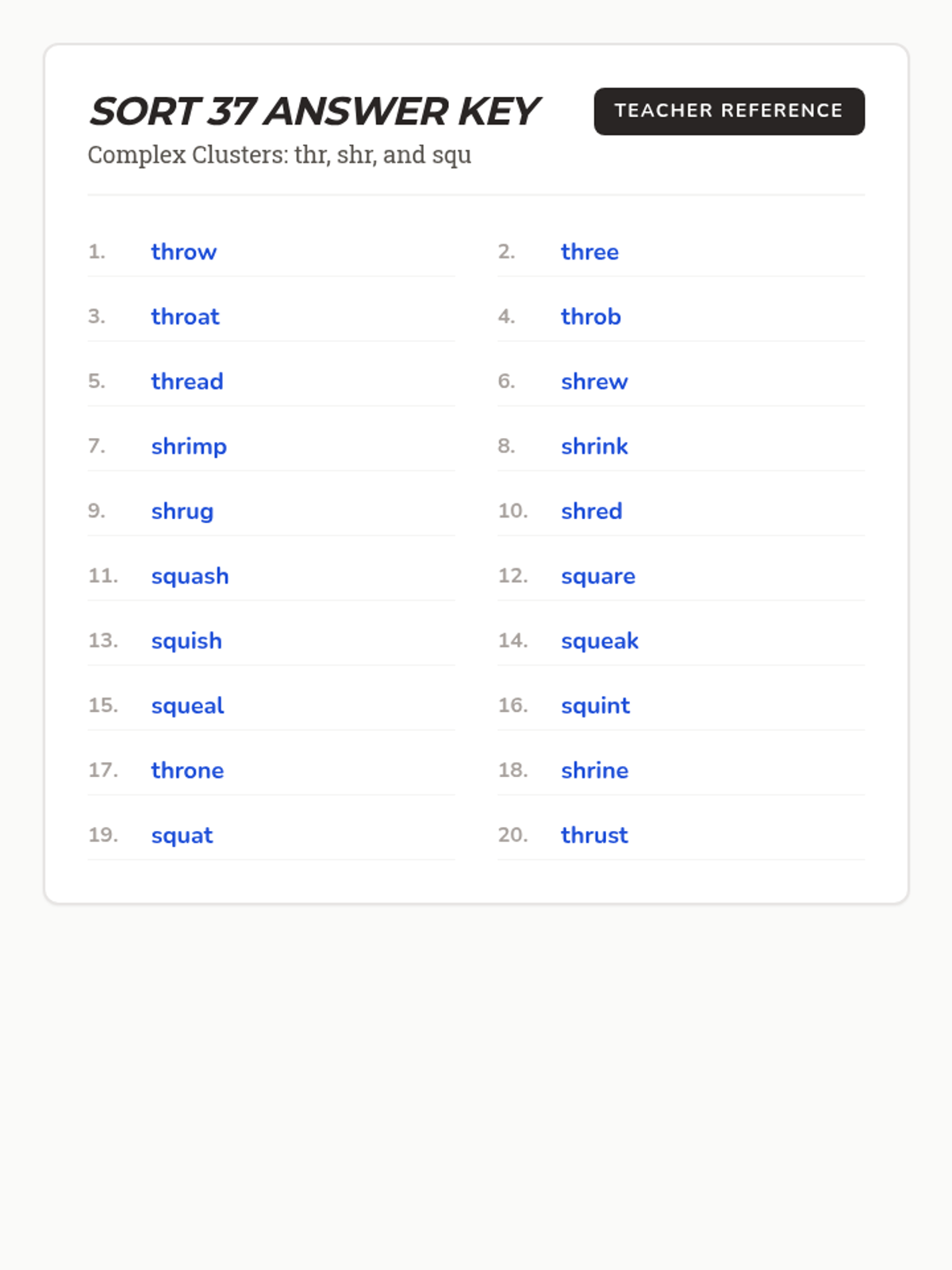
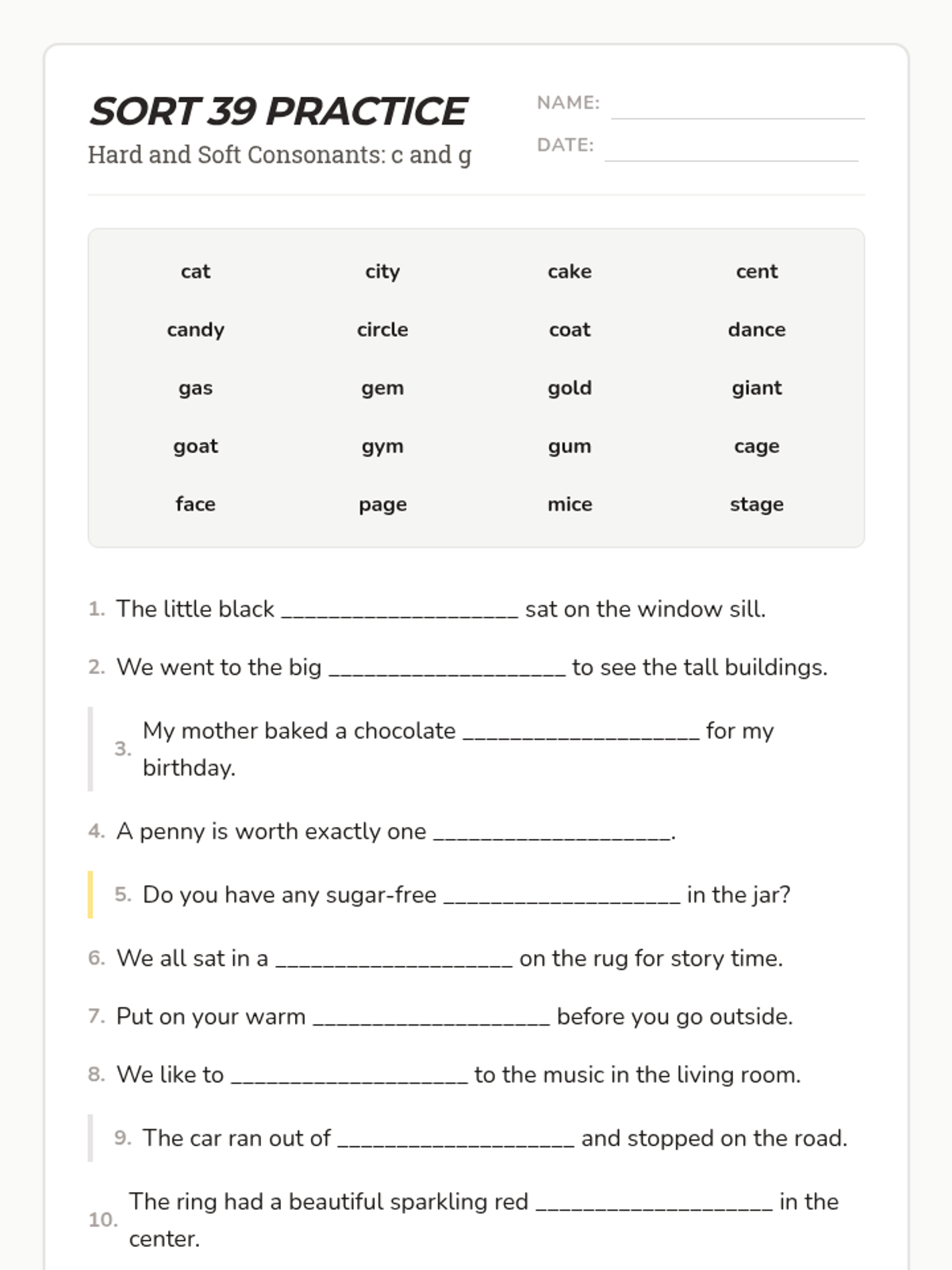
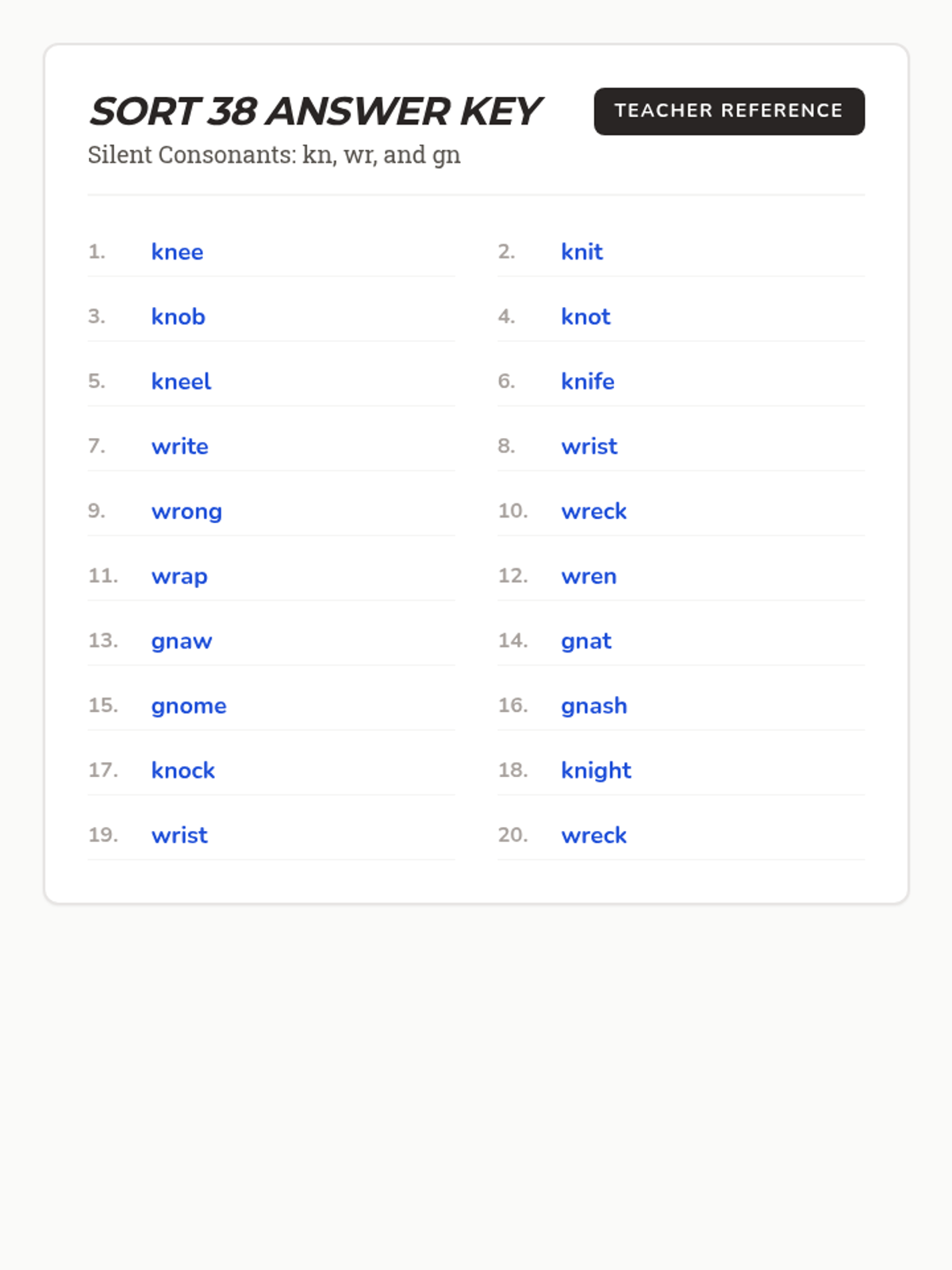
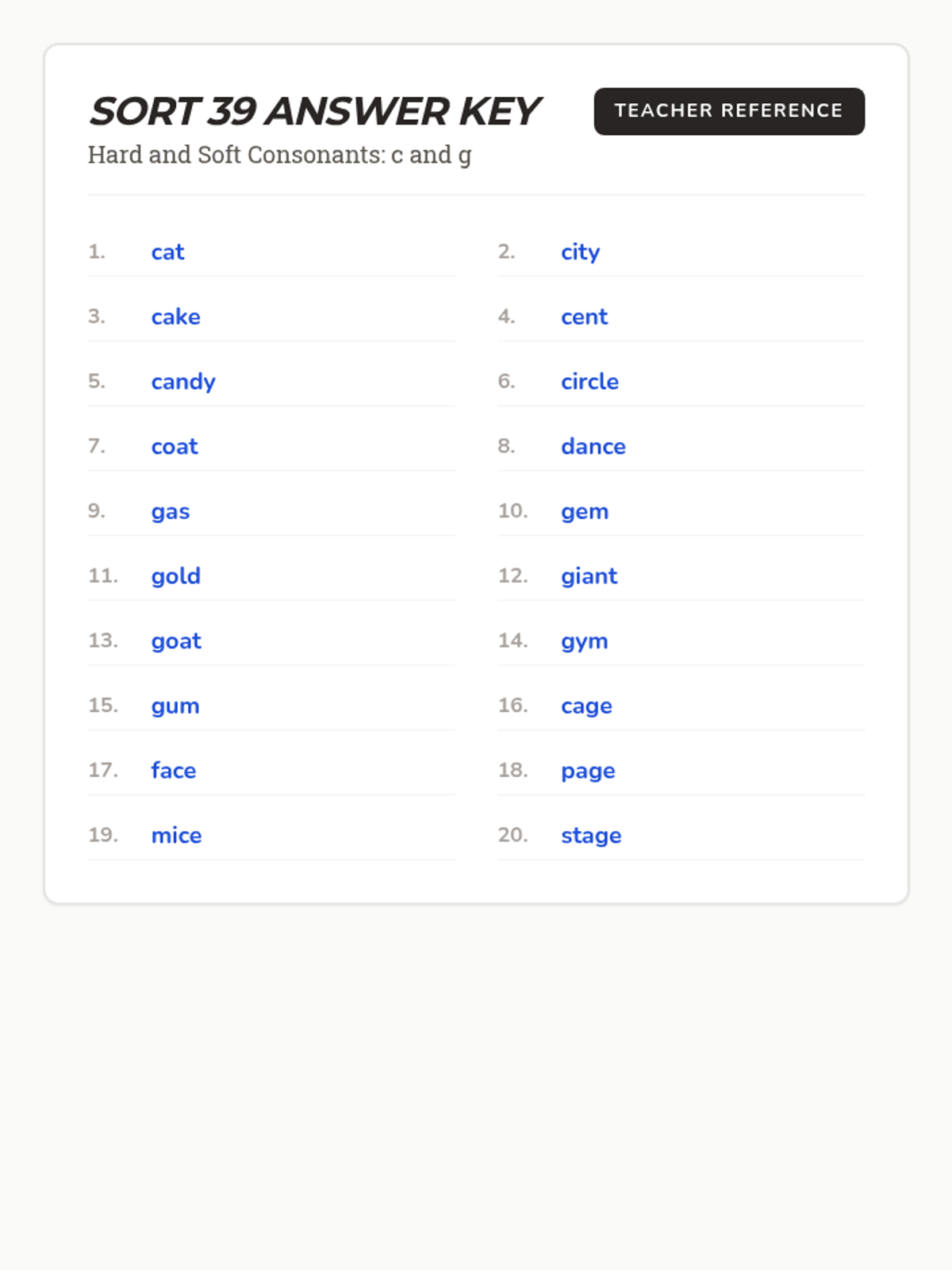
Focuses on complex consonant clusters including triple blends (scr, str, spr, thr, shr, squ), silent consonants (kn, wr, gn), and variations of hard/soft c and g. Students will practice these intricate spelling patterns through context.
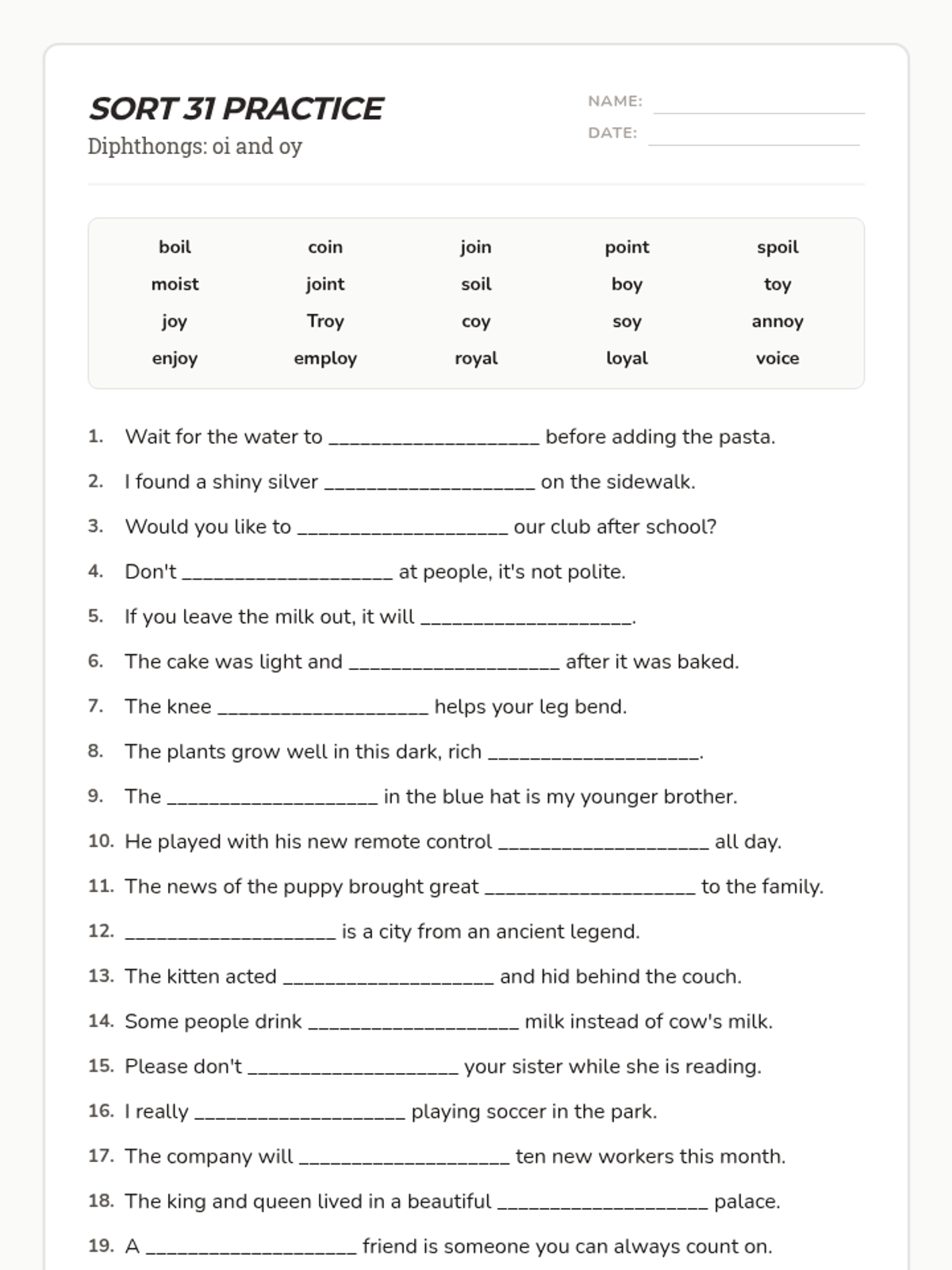
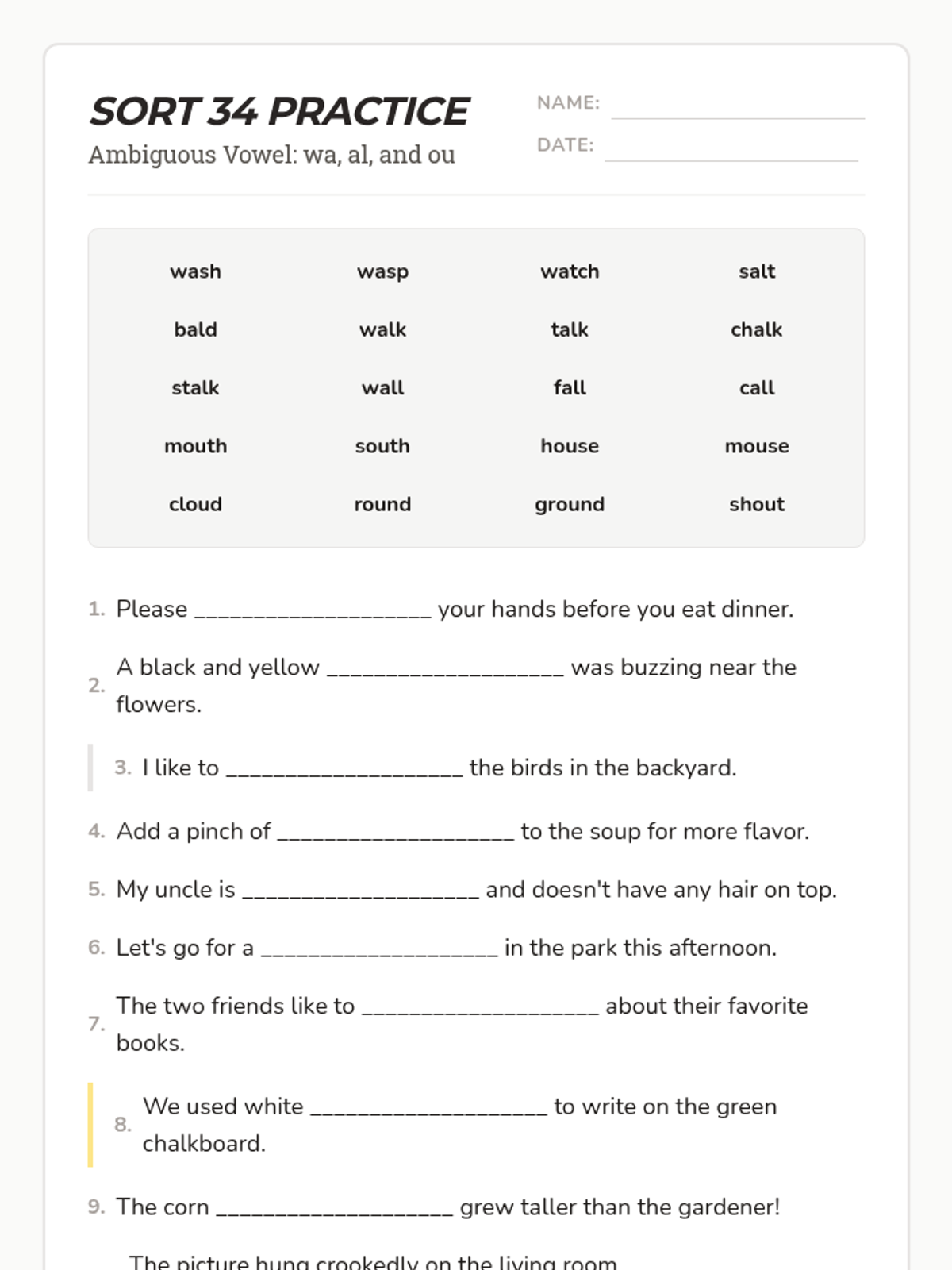
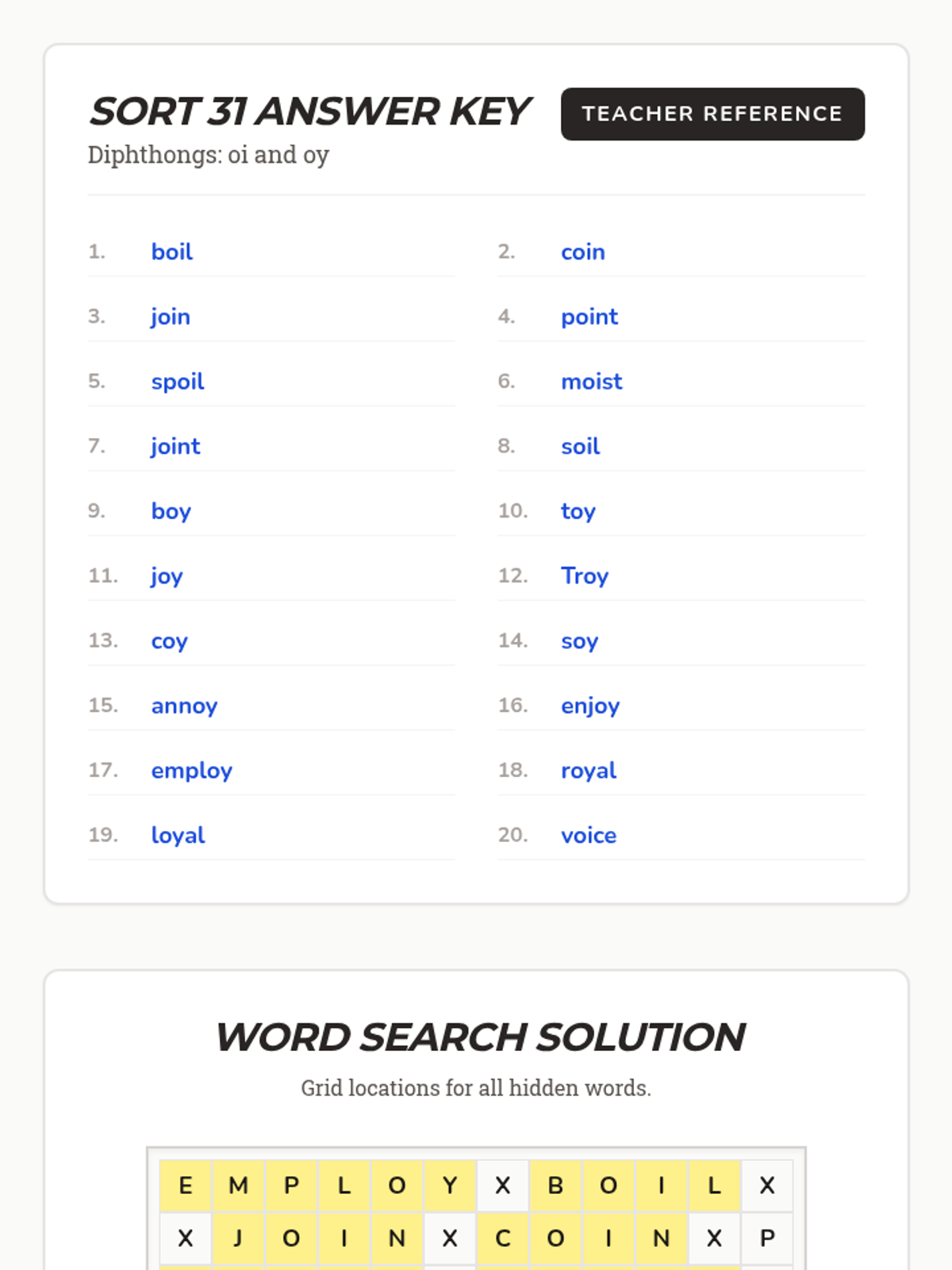
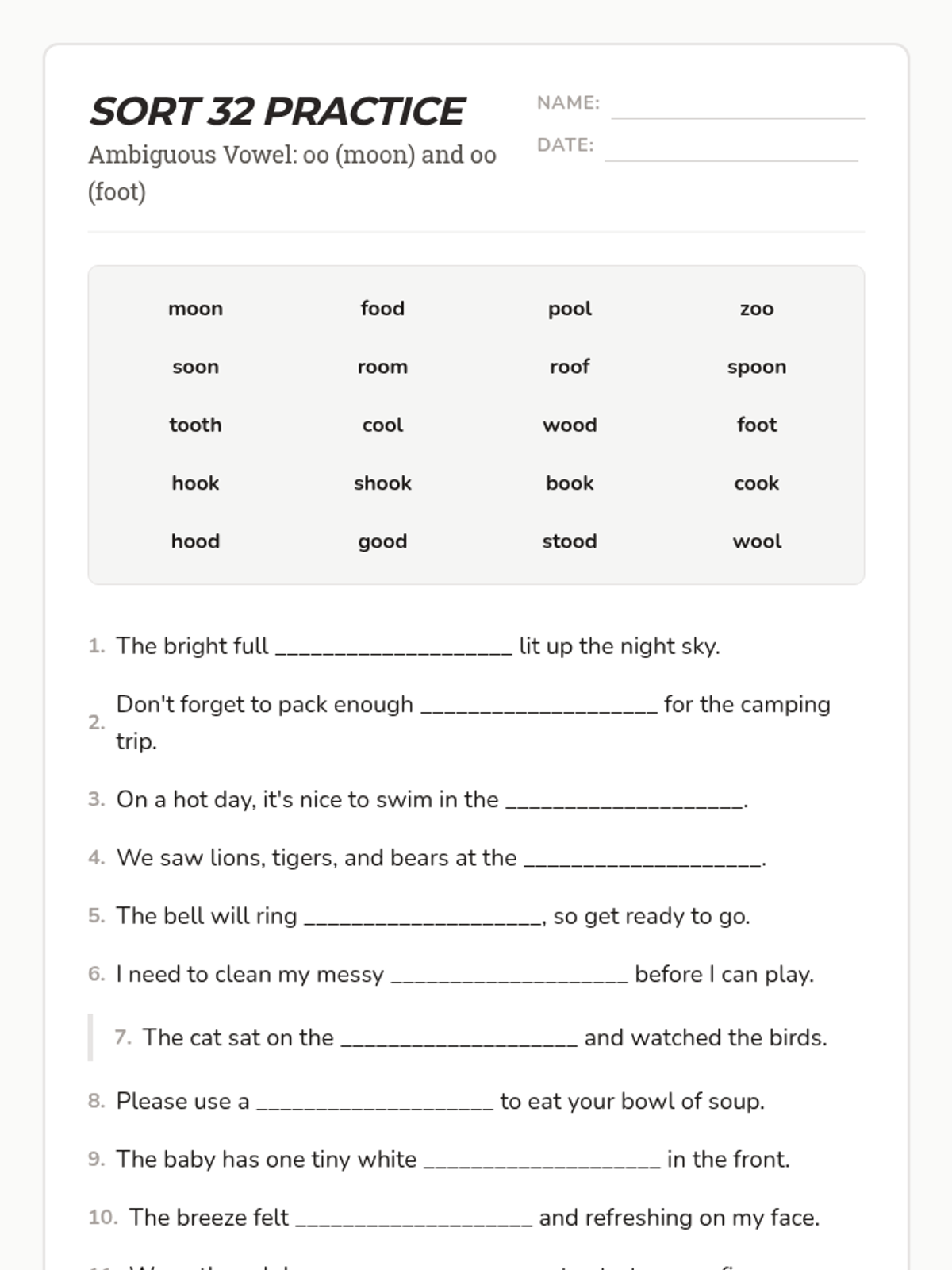
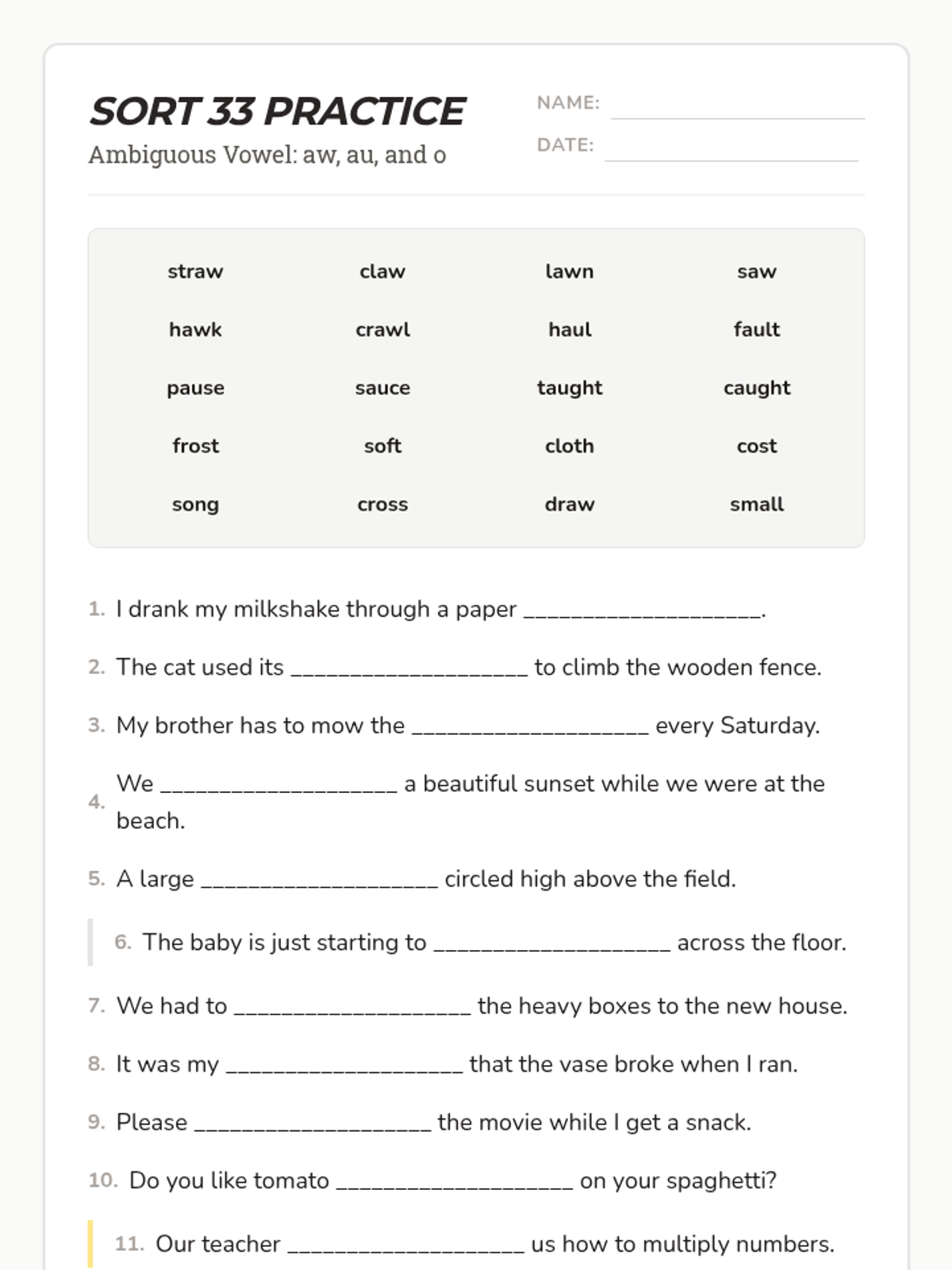
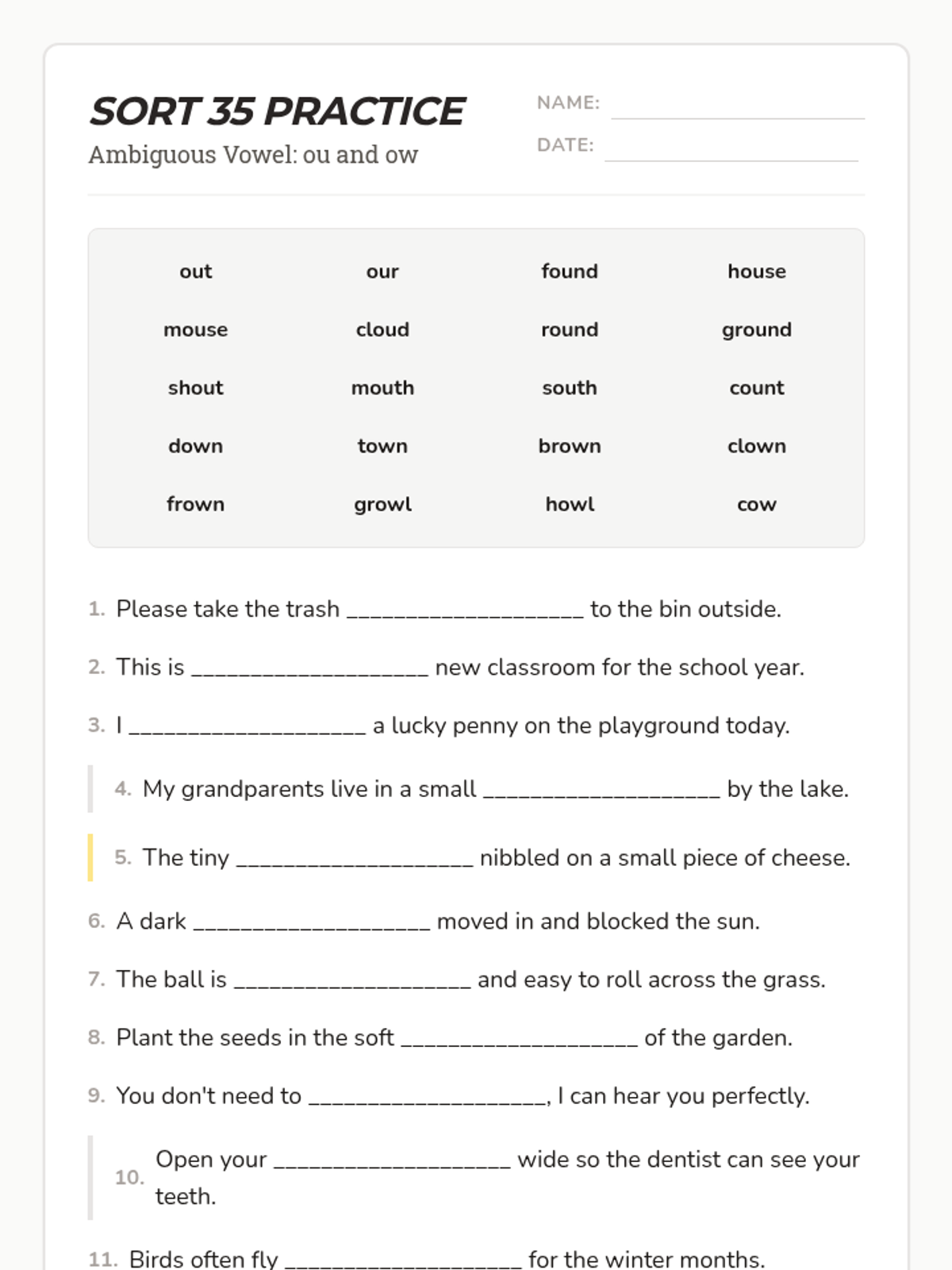
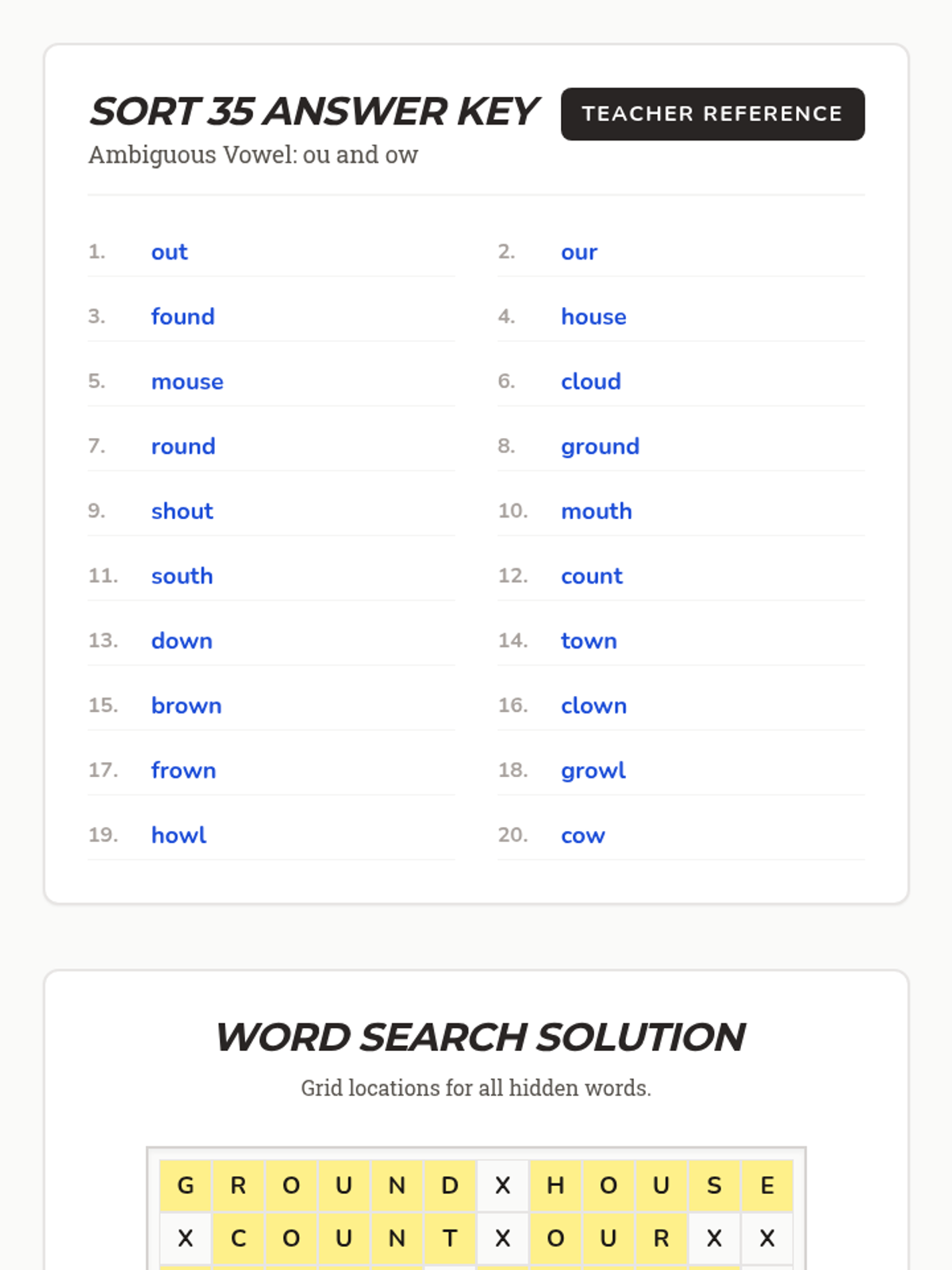
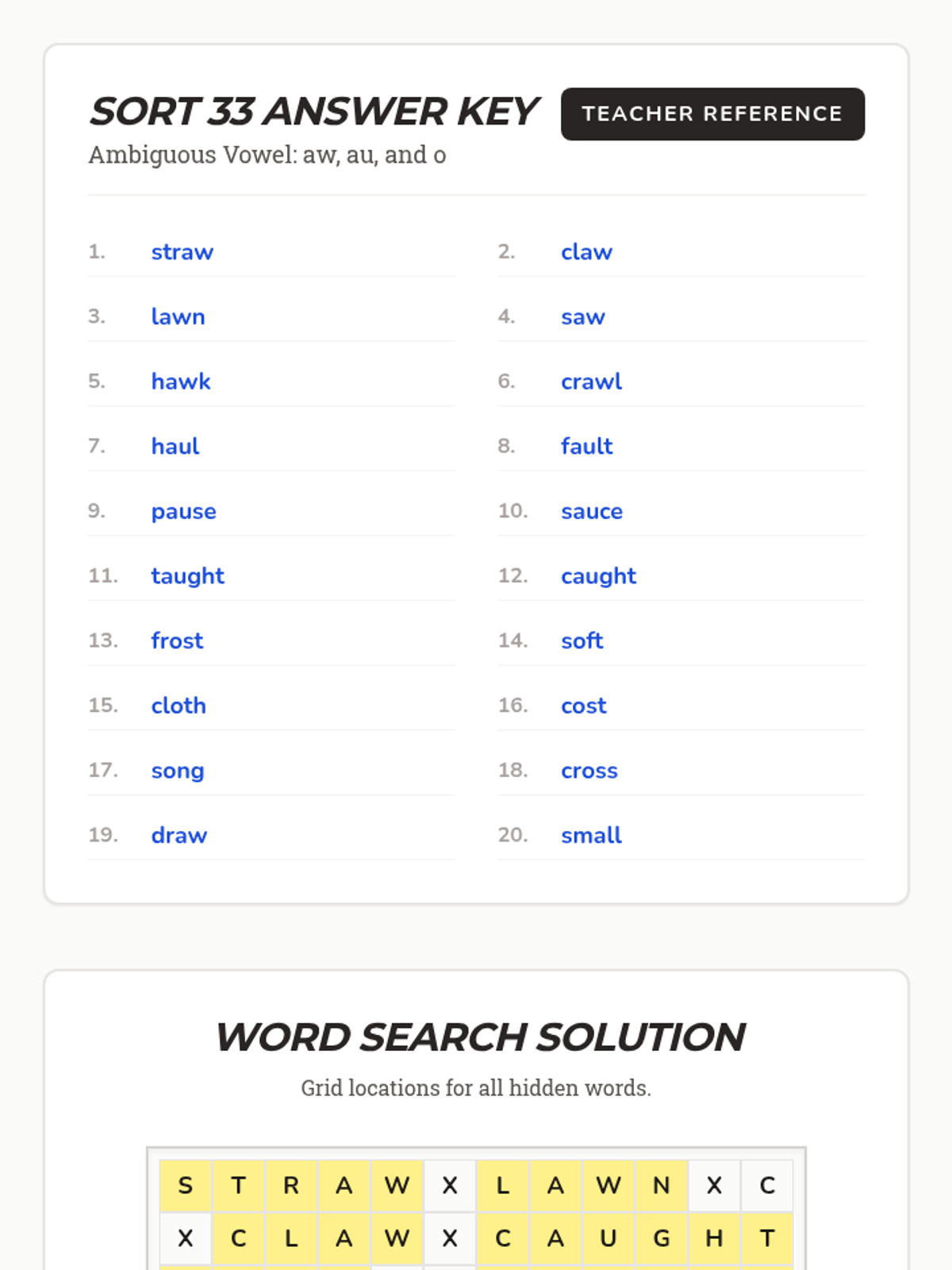
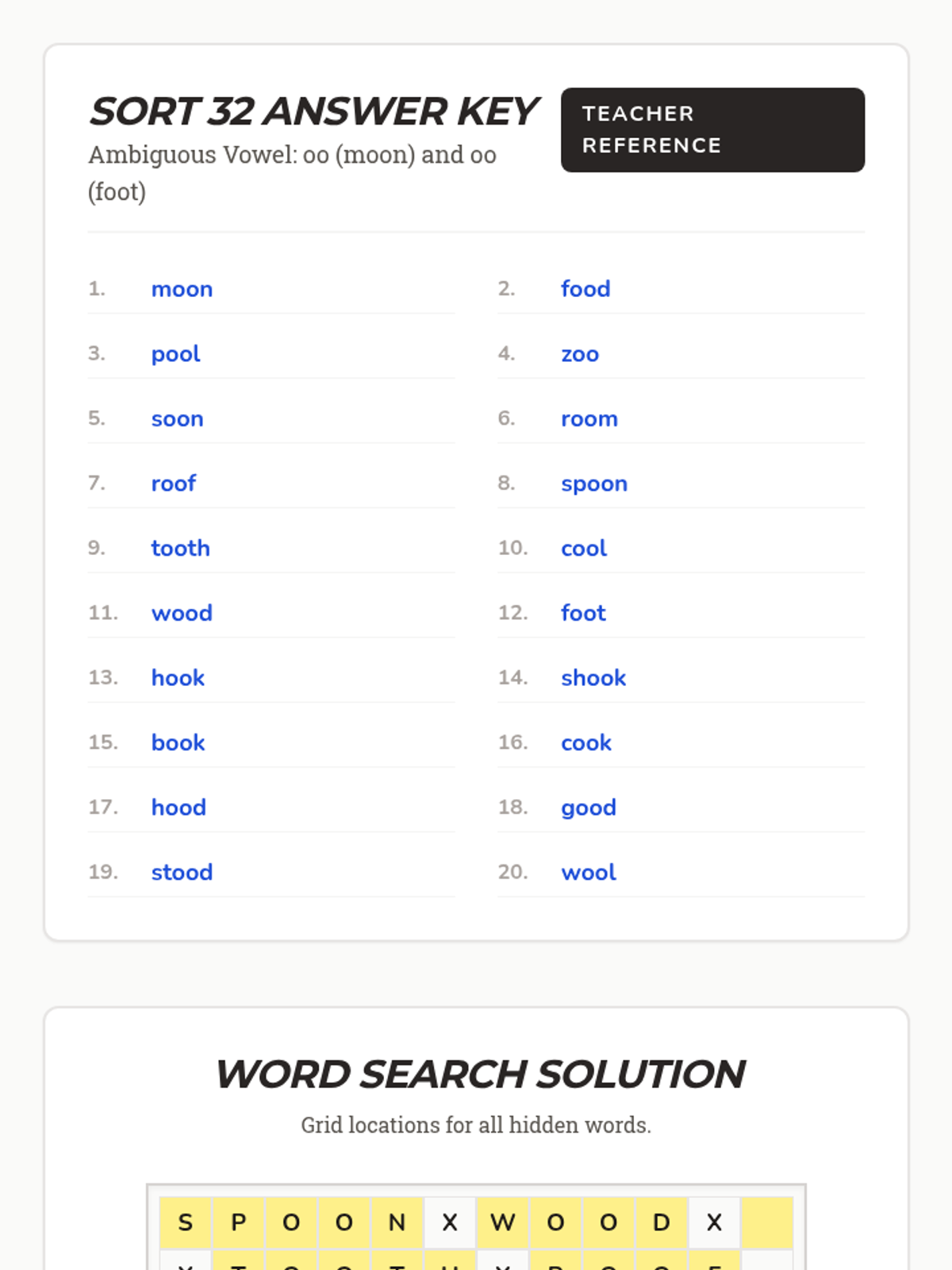
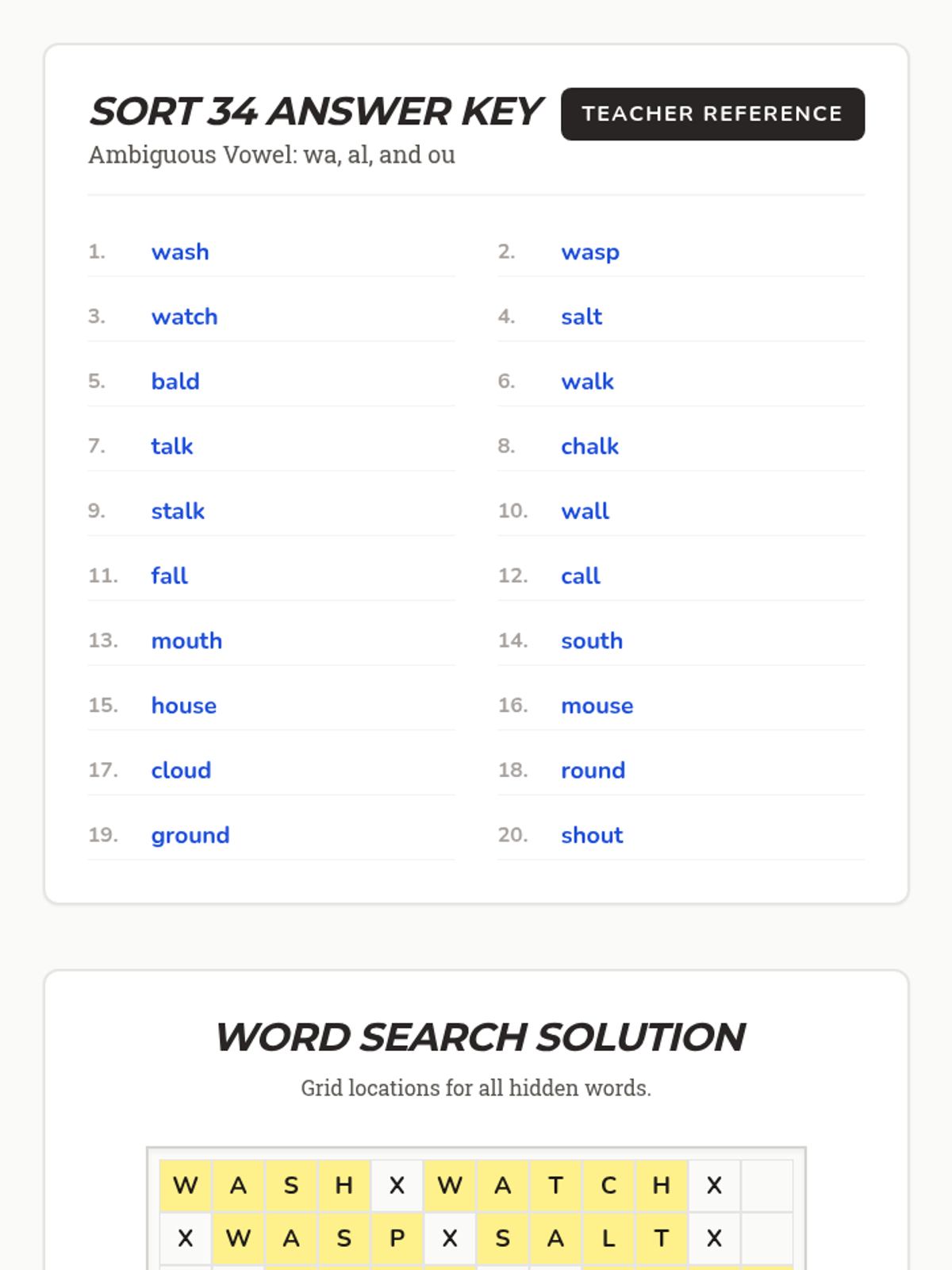
This lesson explores diphthongs and ambiguous vowel patterns including oi, oy, oo, aw, au, wa, al, and ou/ow. Students will practice identifying these sounds through context and word searches.
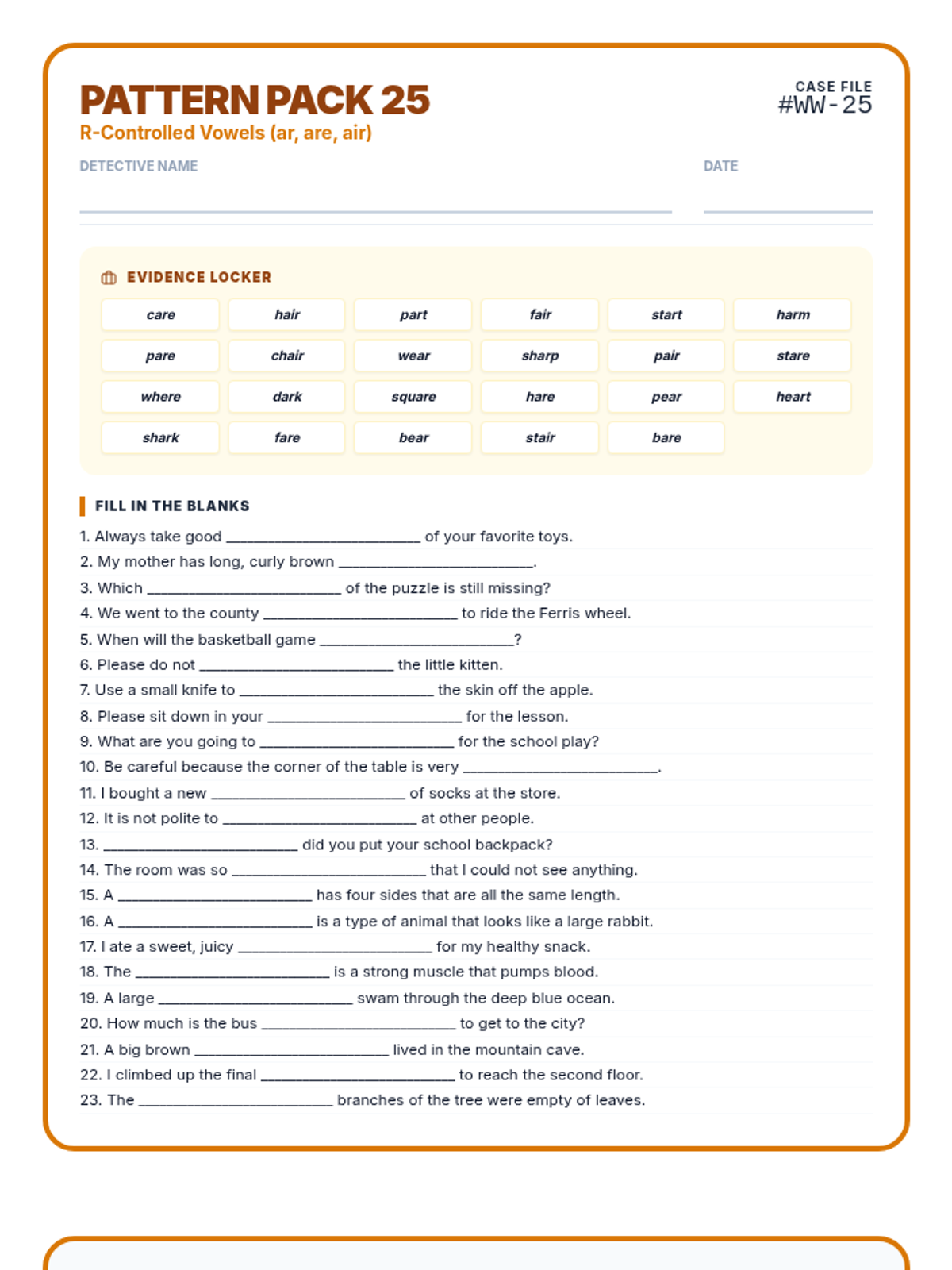
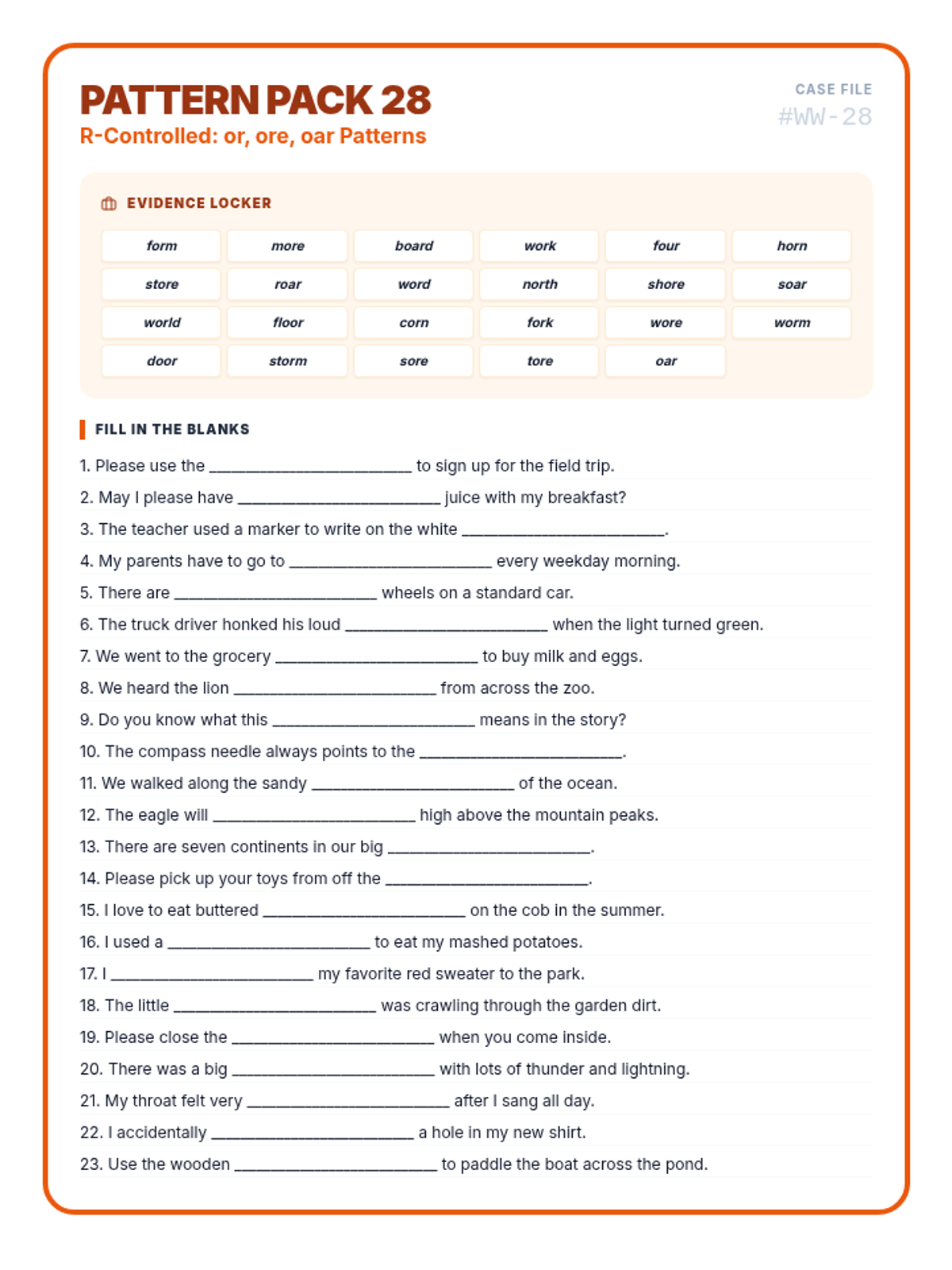
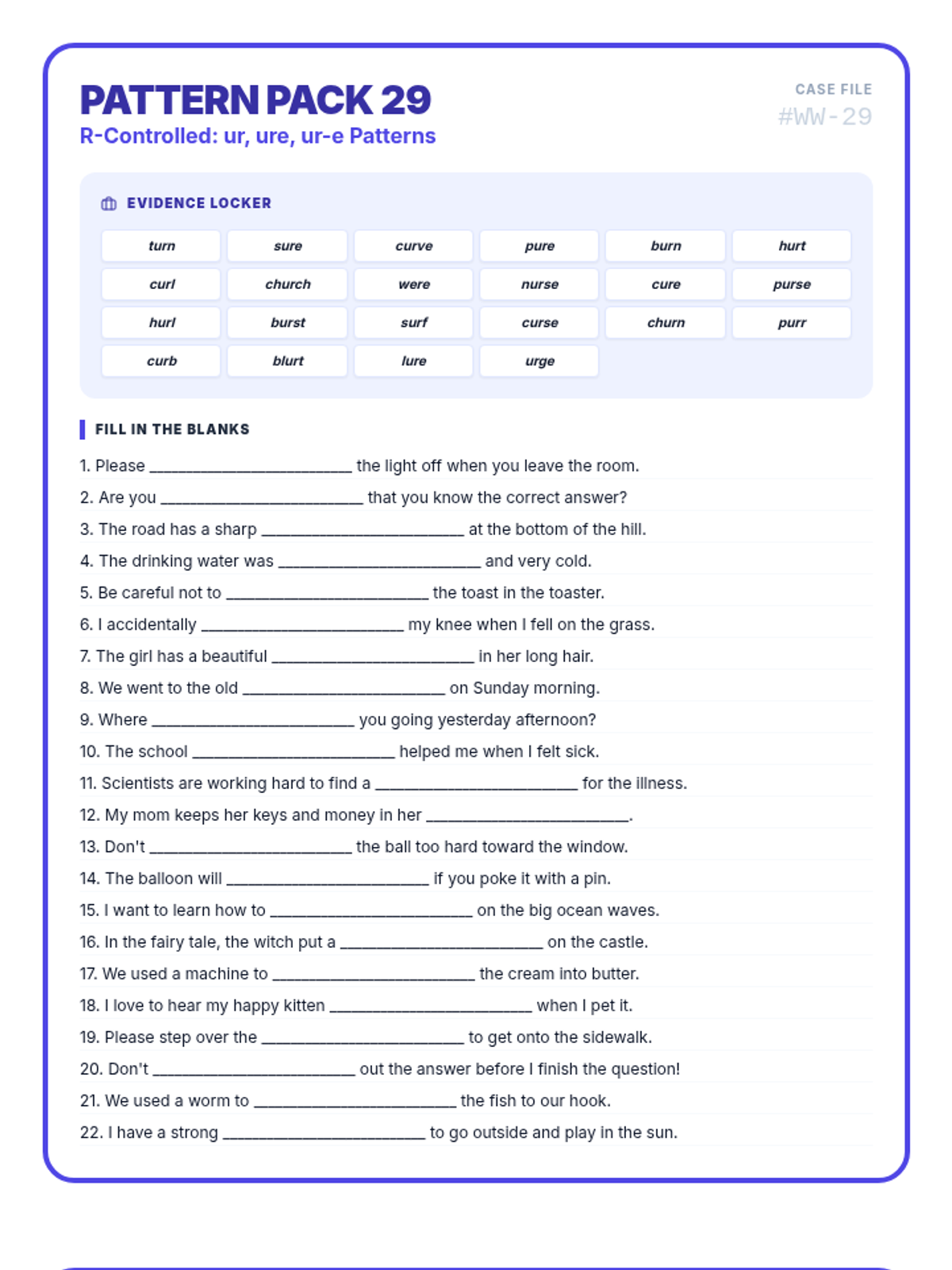
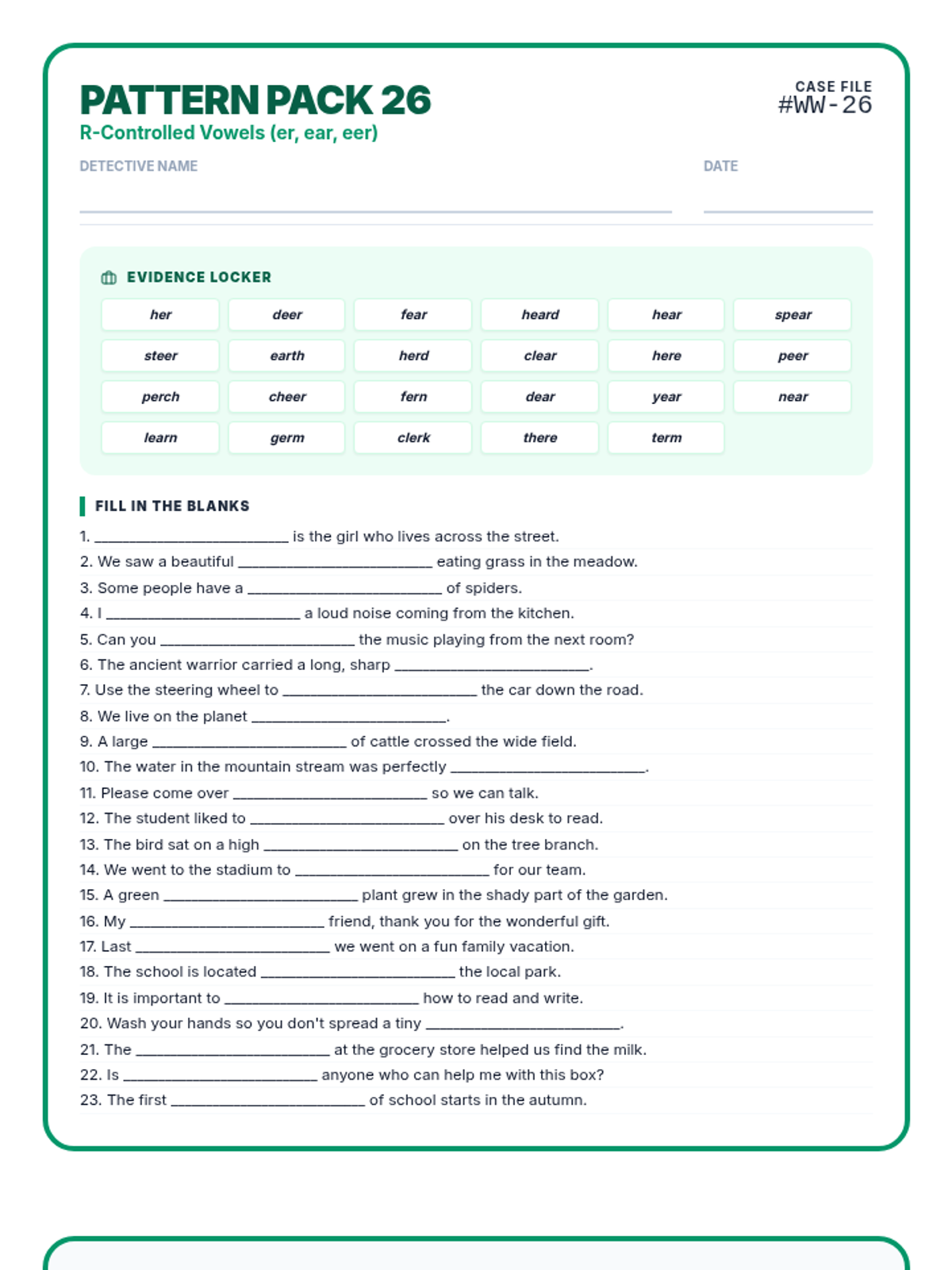
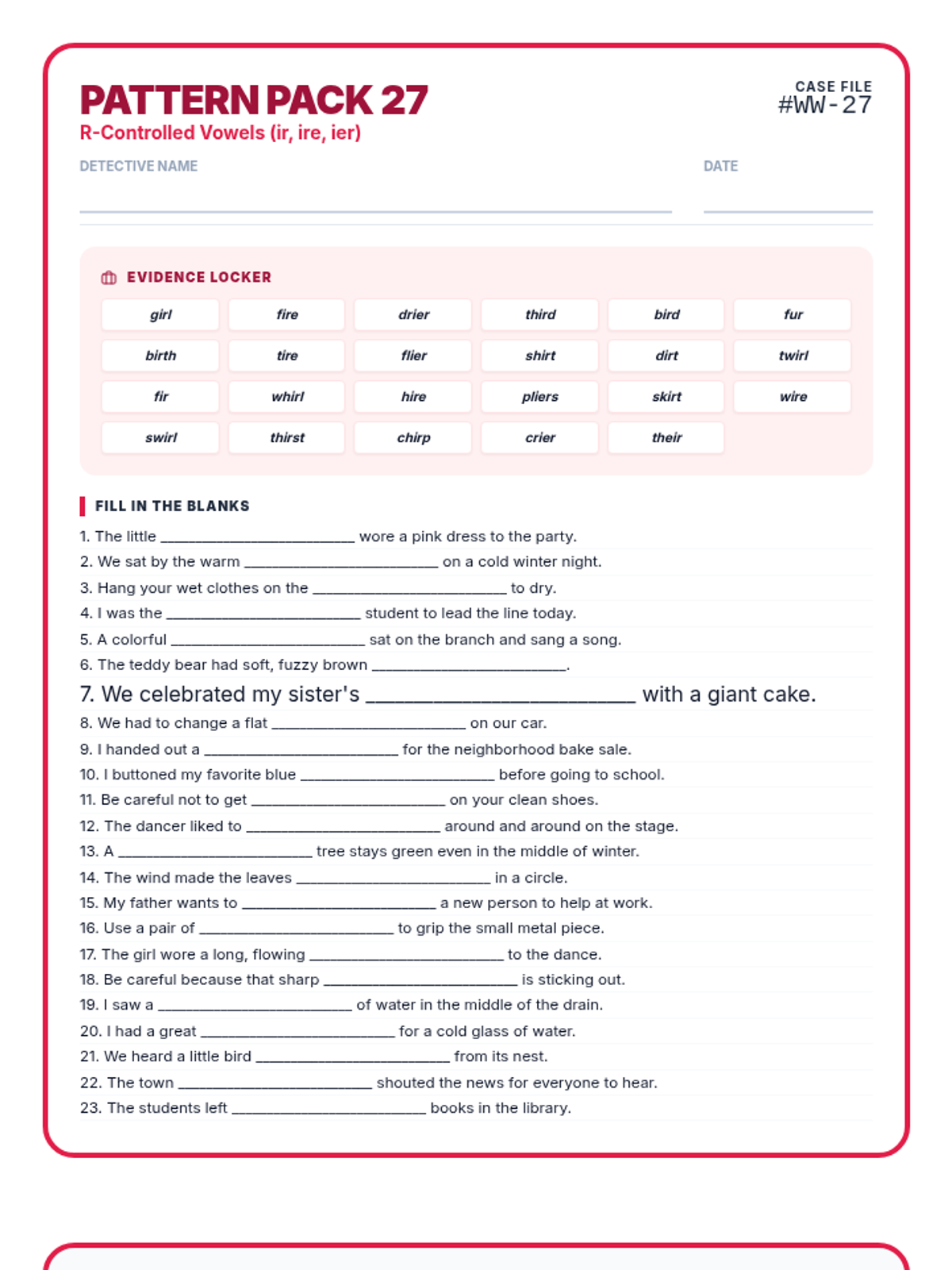
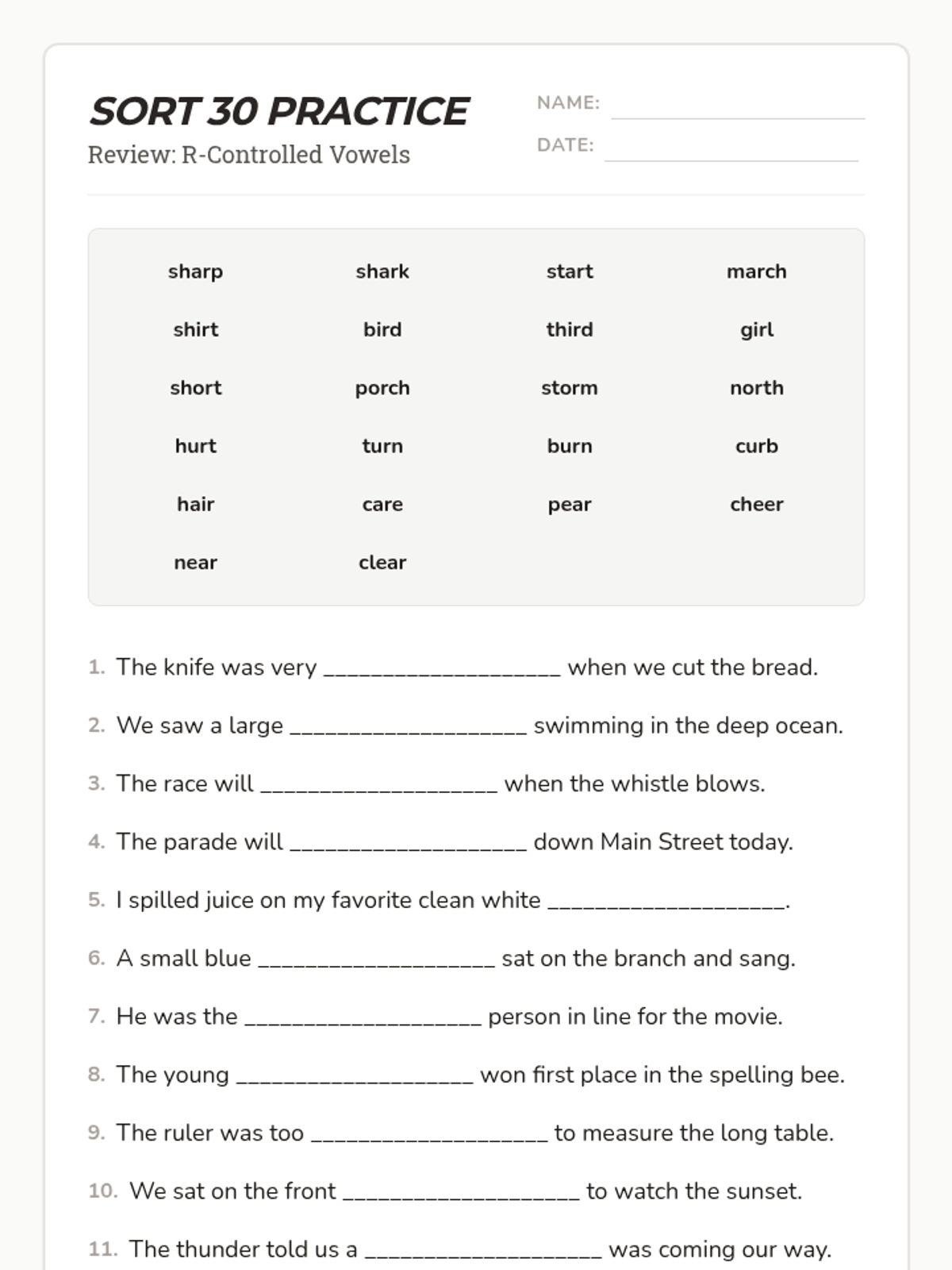
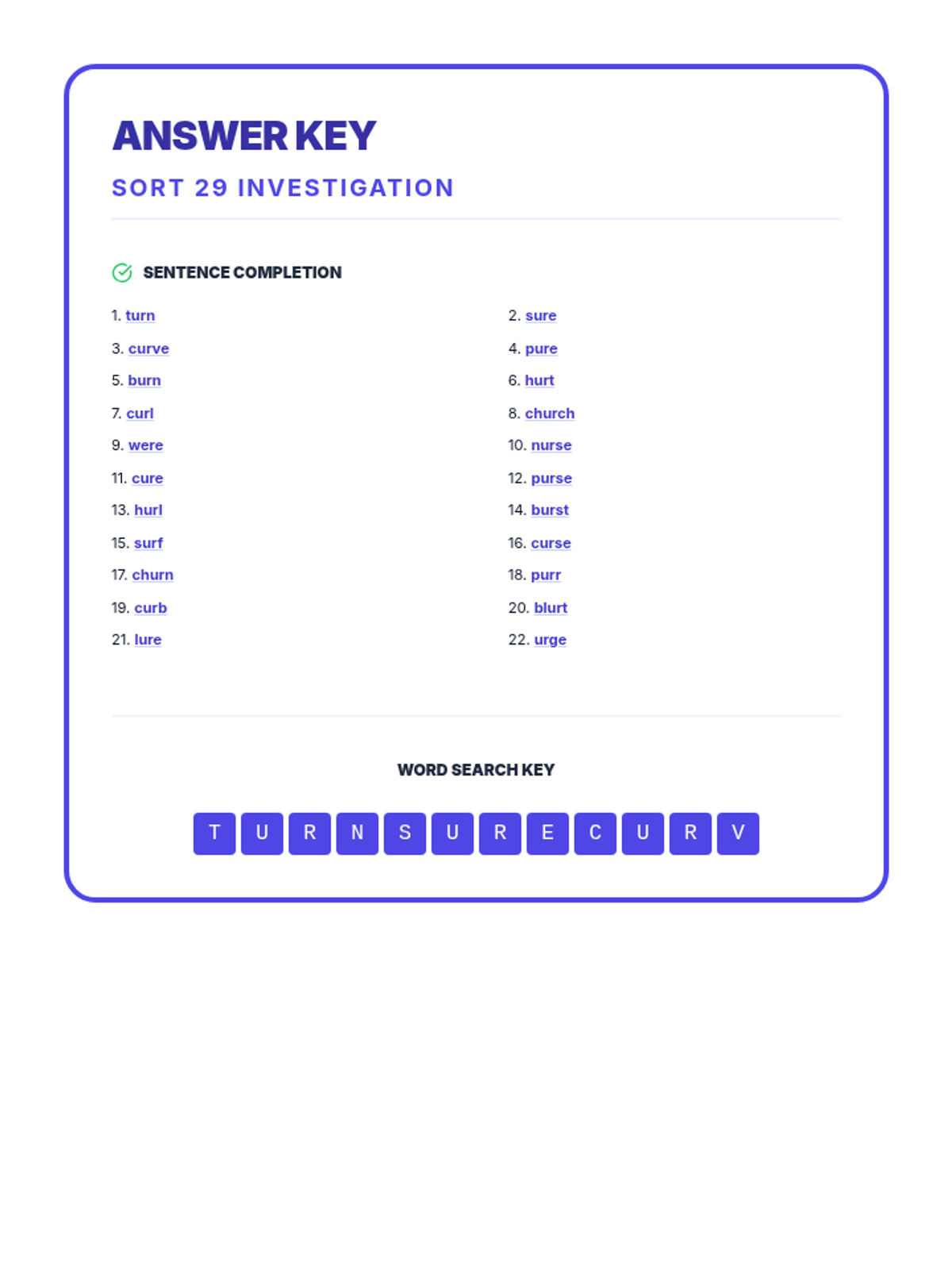
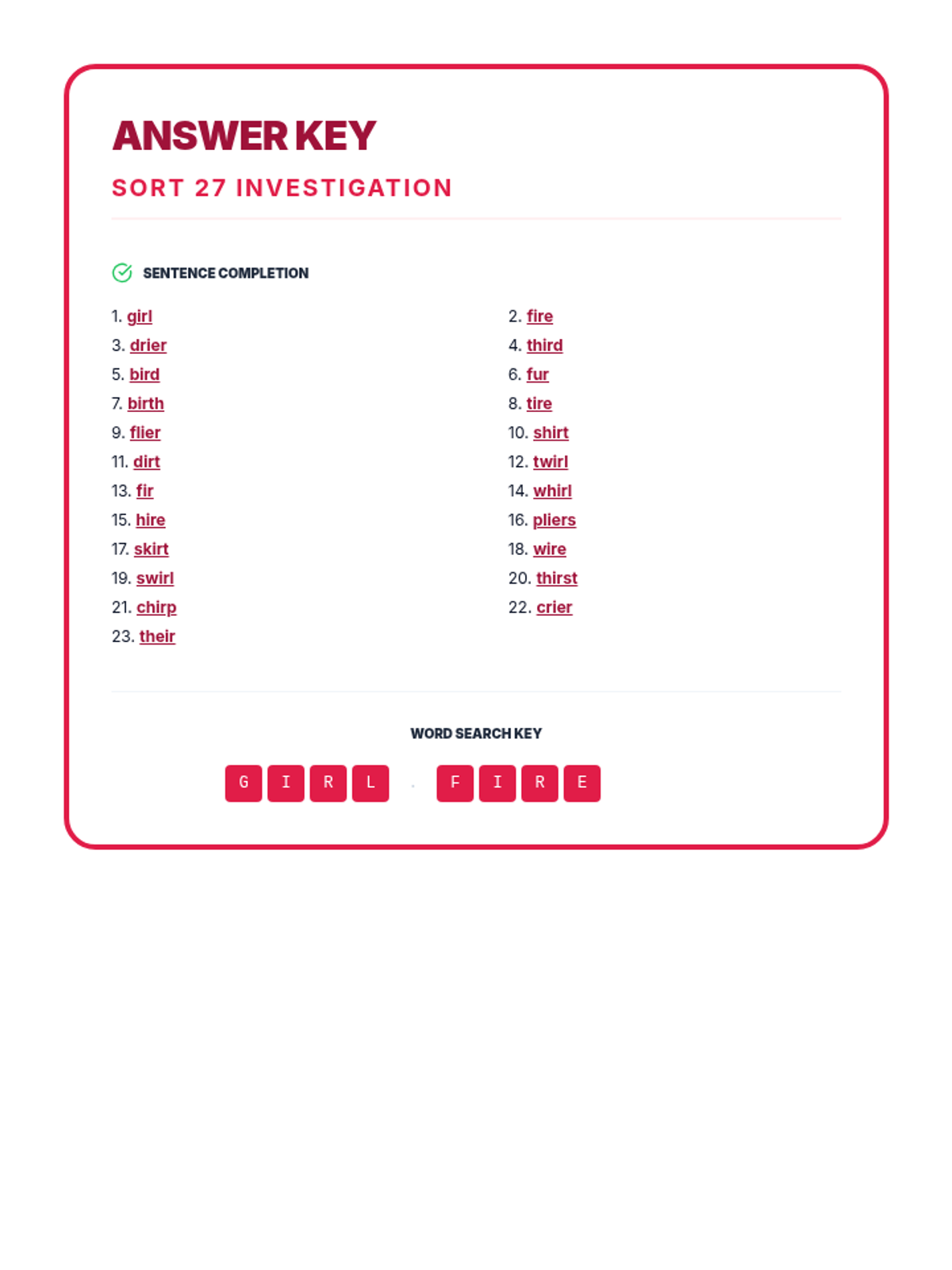
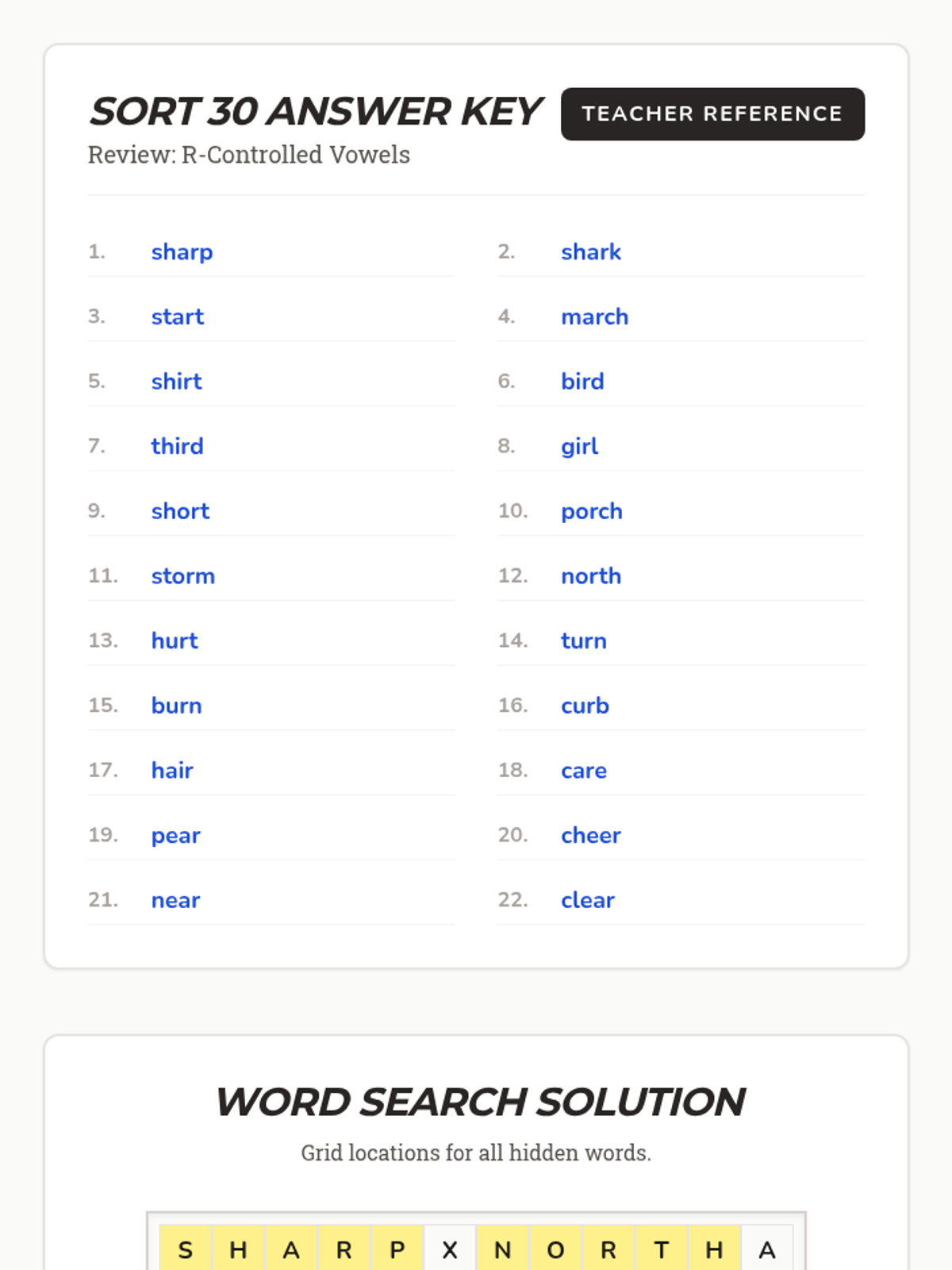
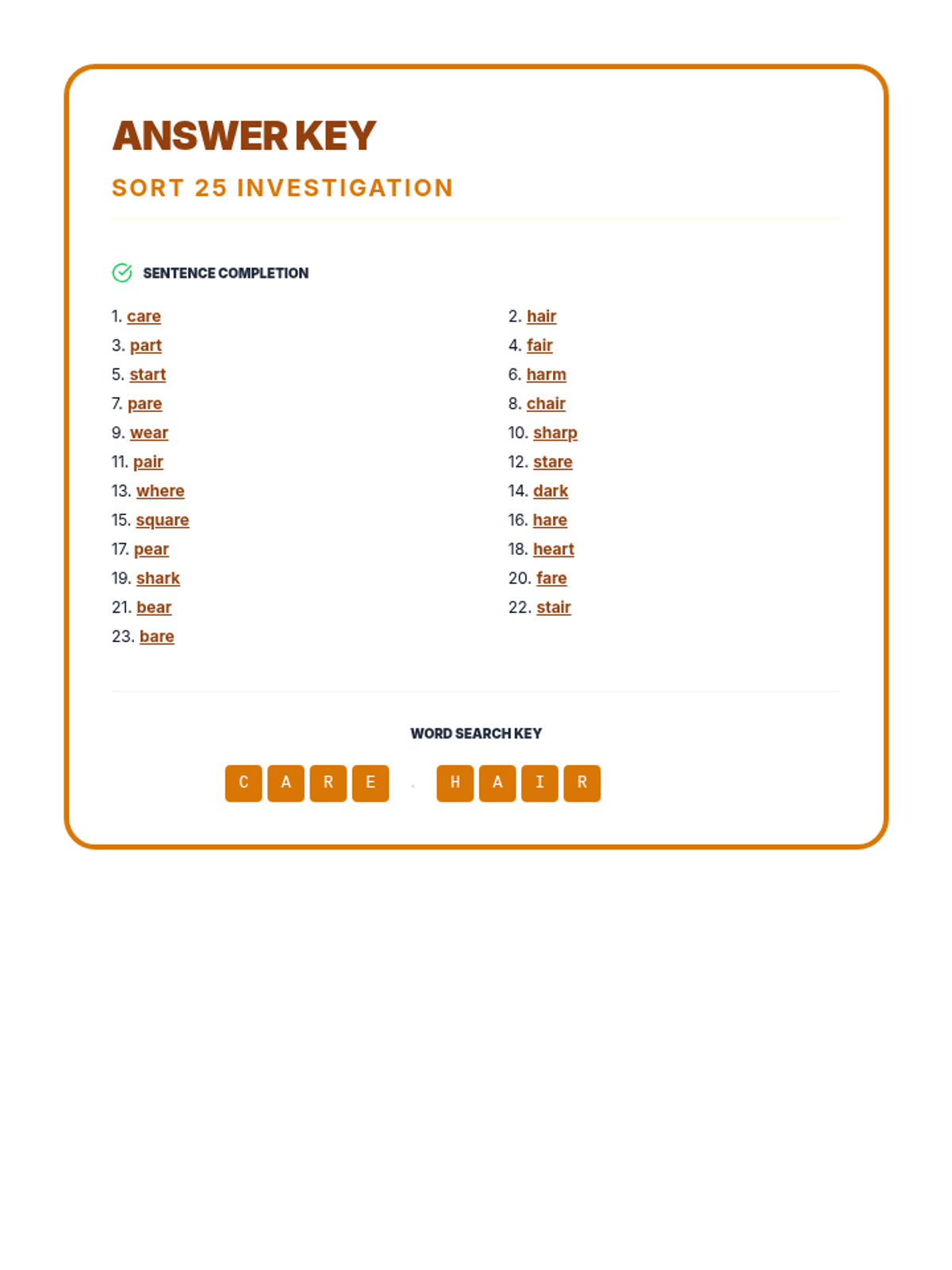
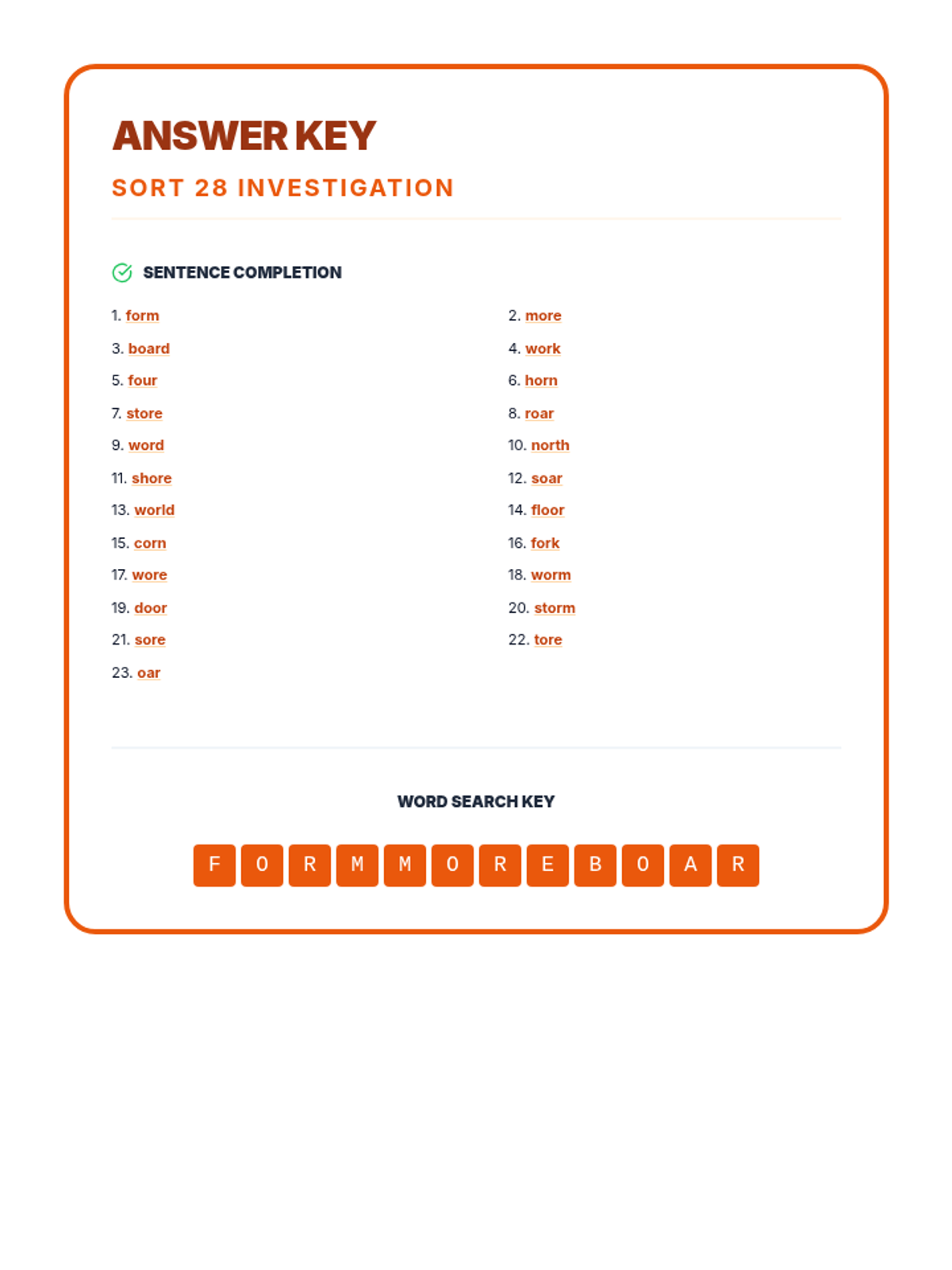
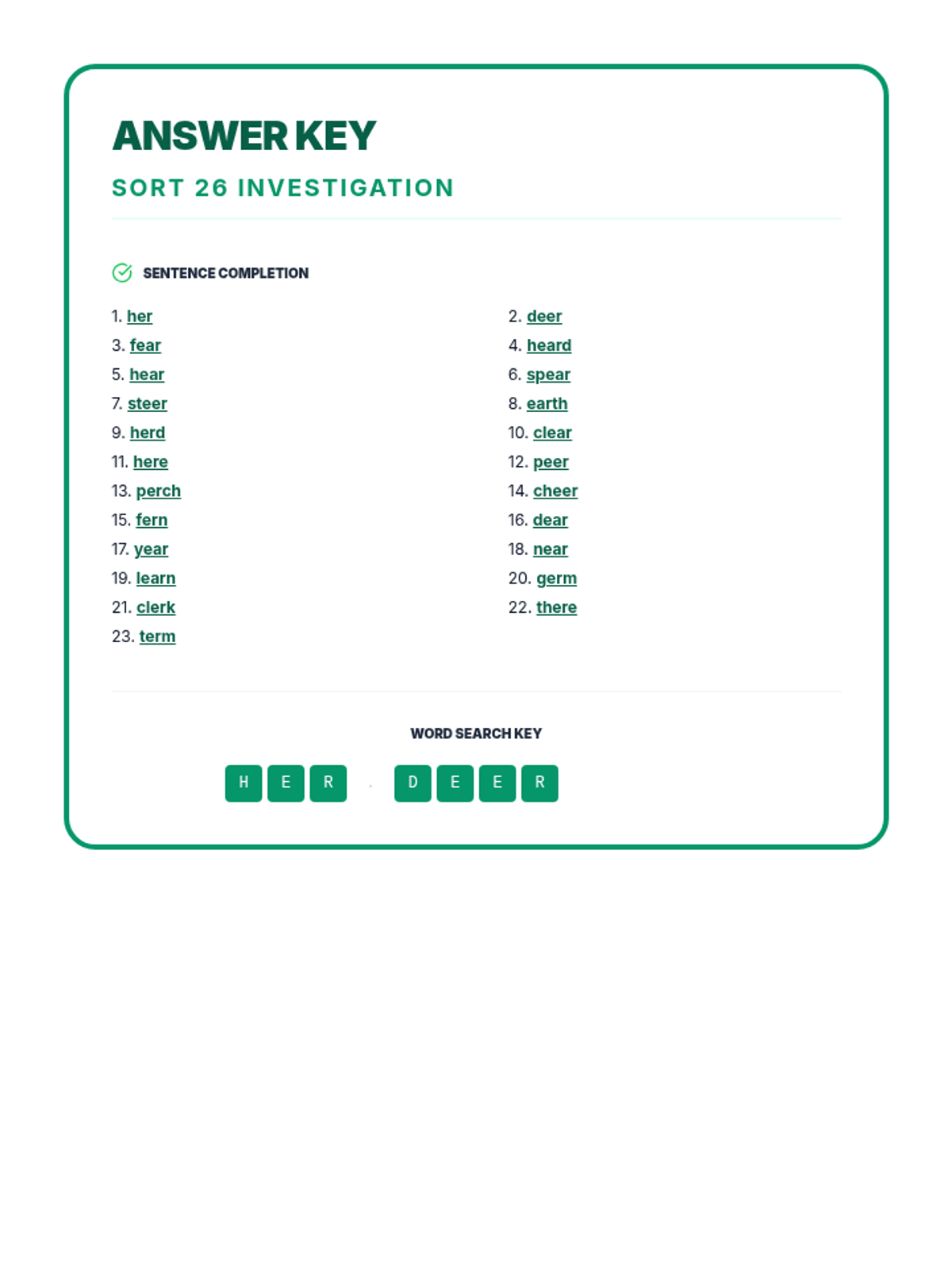
Investigation into r-controlled vowel patterns including ar, are, air, er, ear, eer, ir, ire, ier, or, ore, oar, and ur patterns.
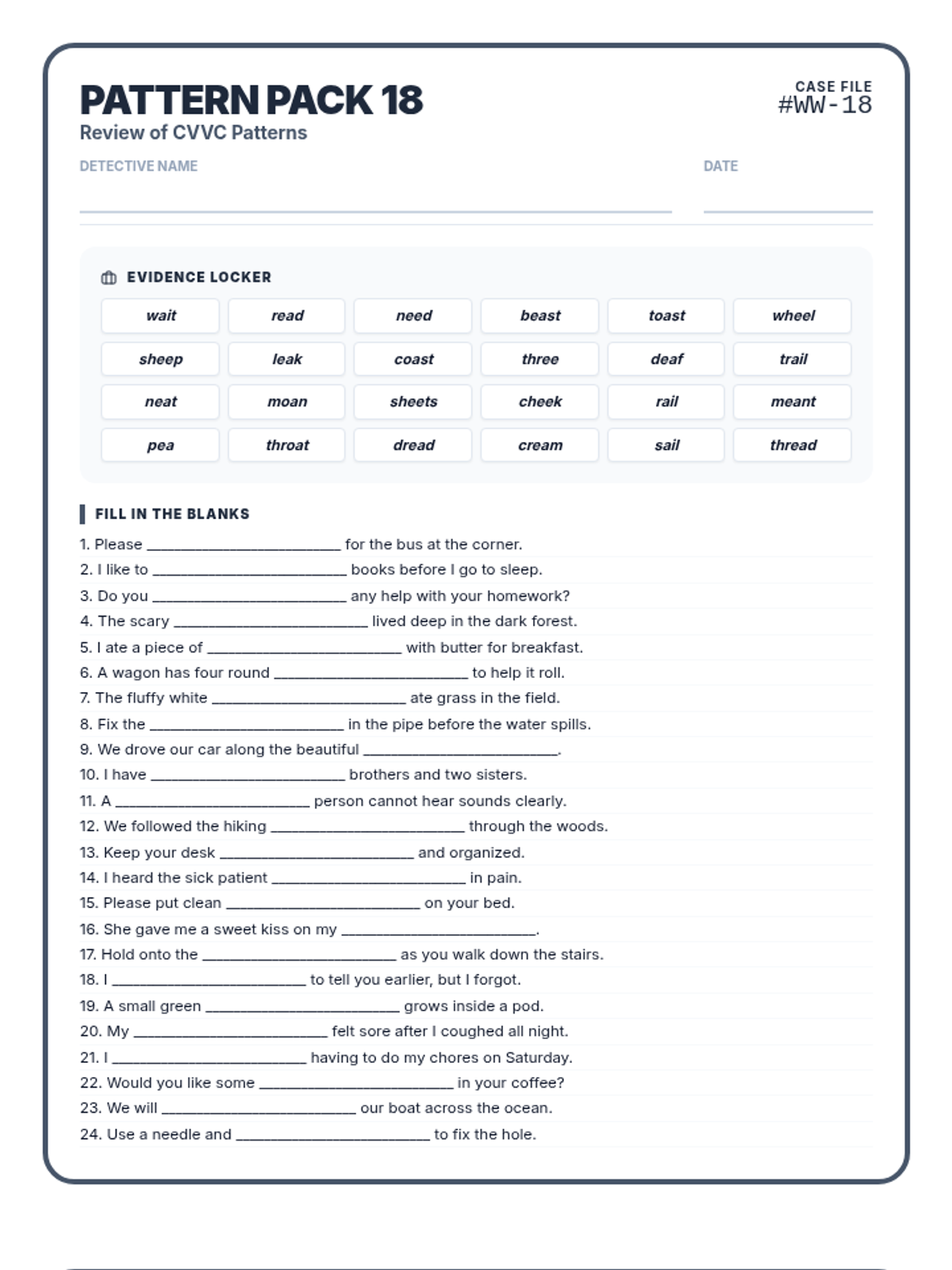
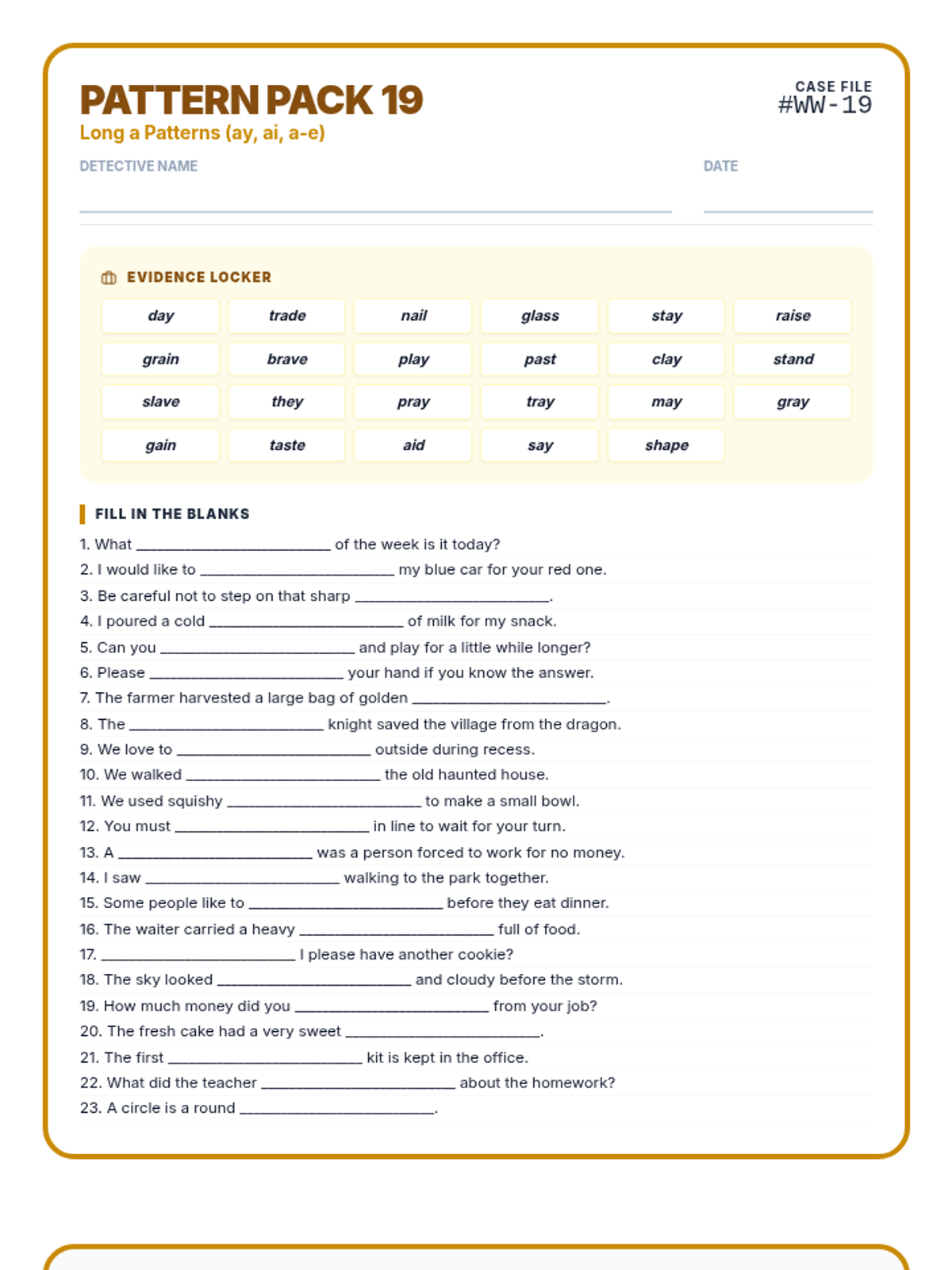
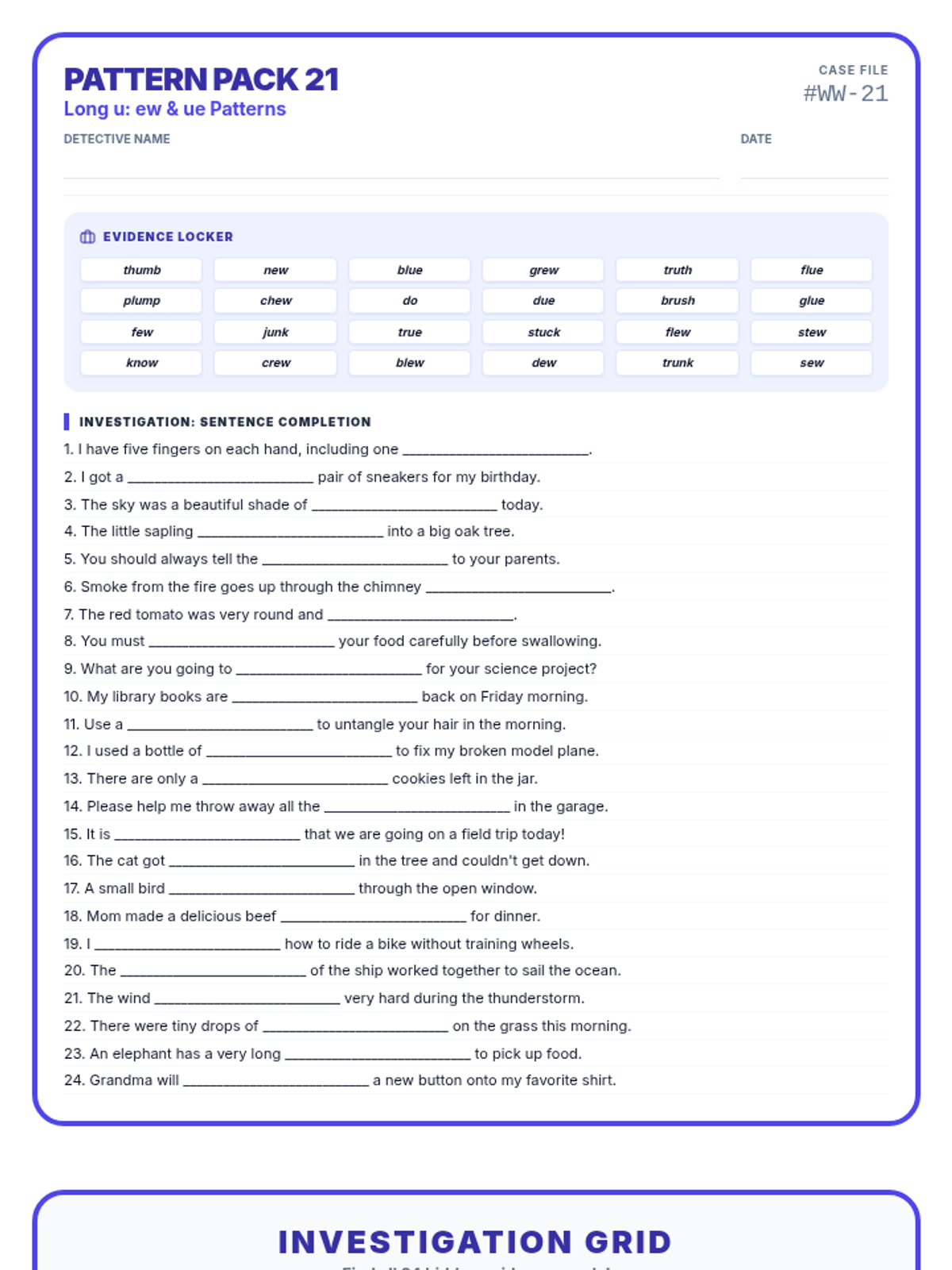
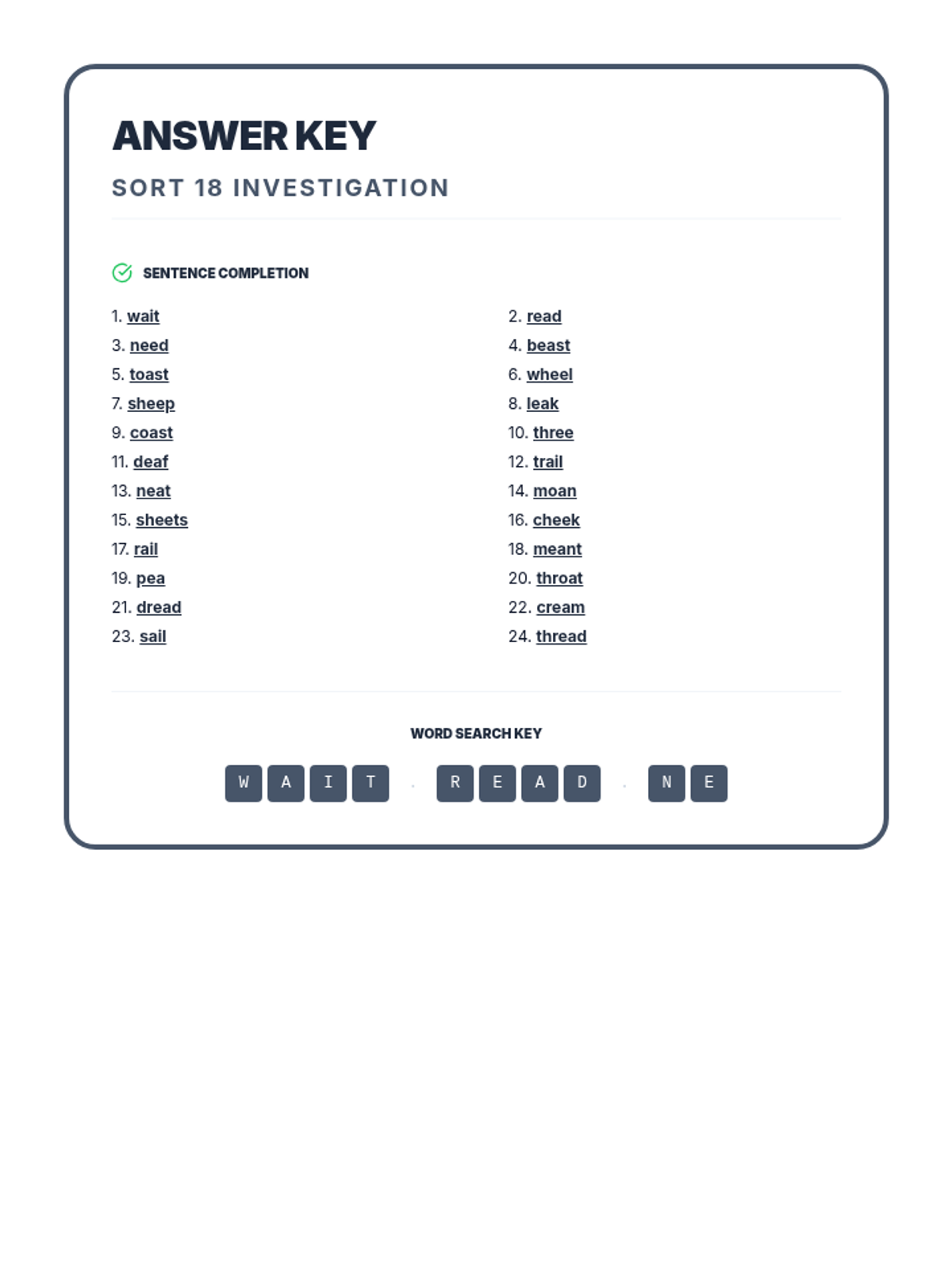
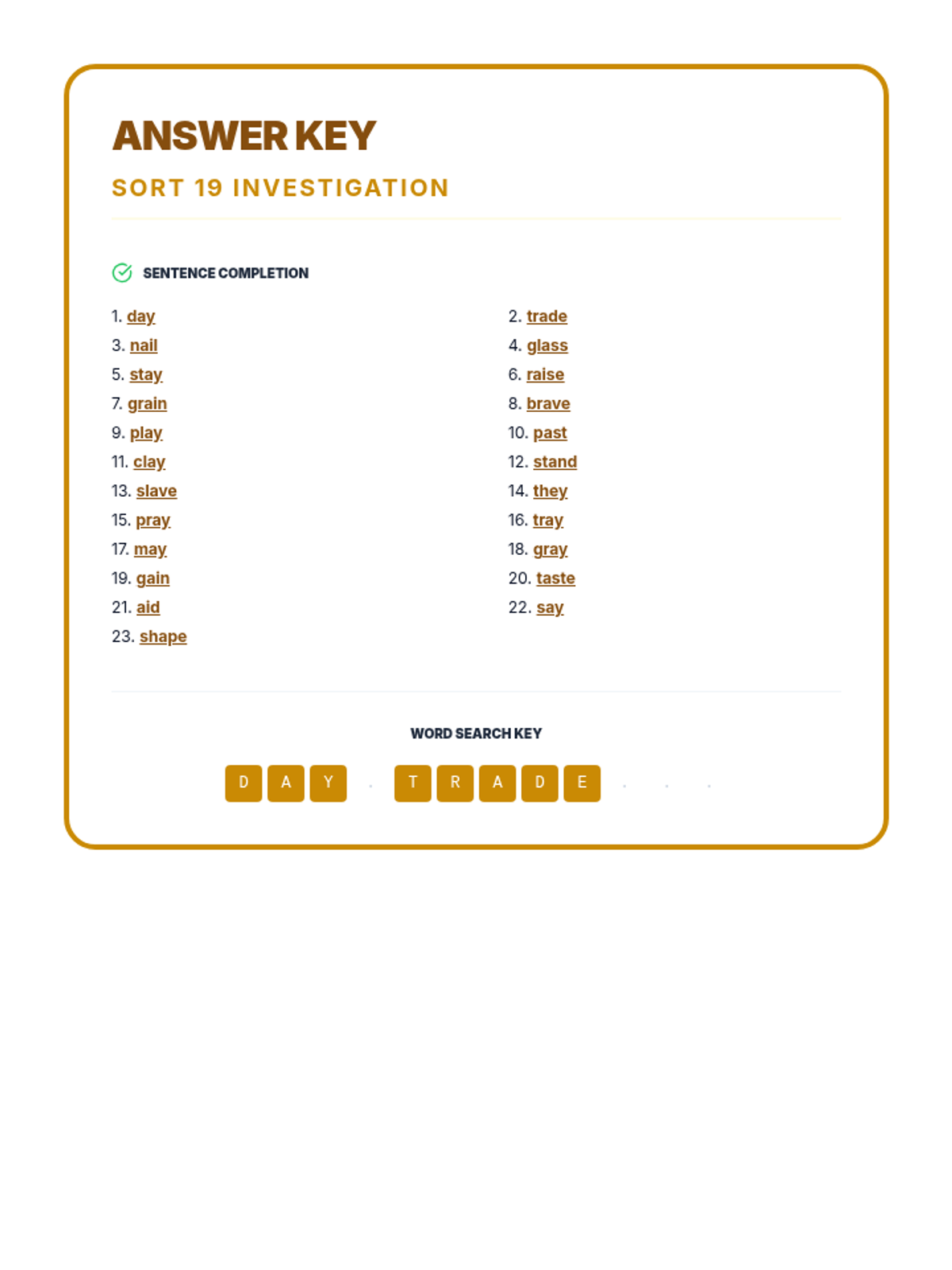
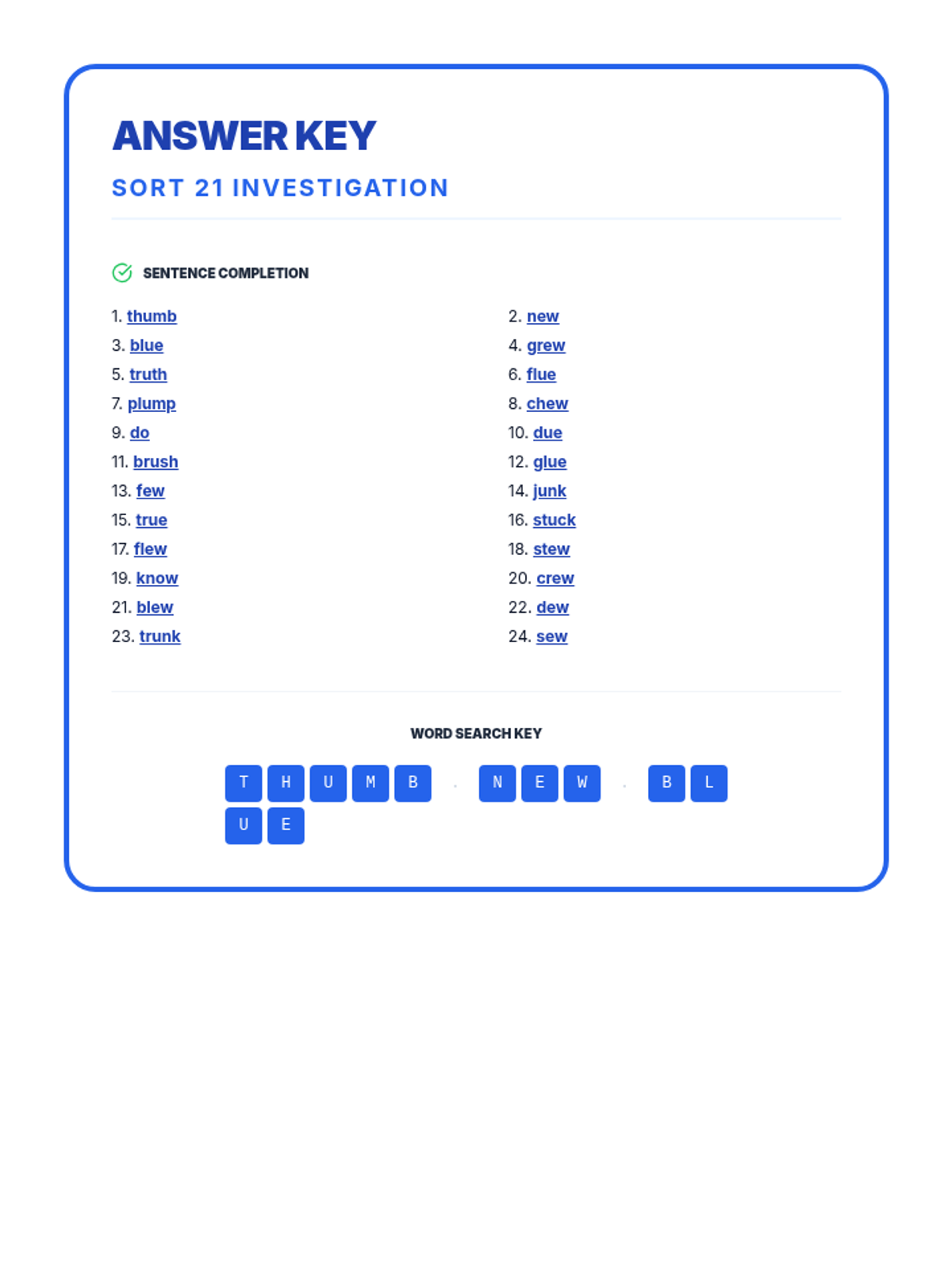
Review of CVVC patterns and introduction to open syllables with long a, o, u, and i patterns across Sorts 18-24.
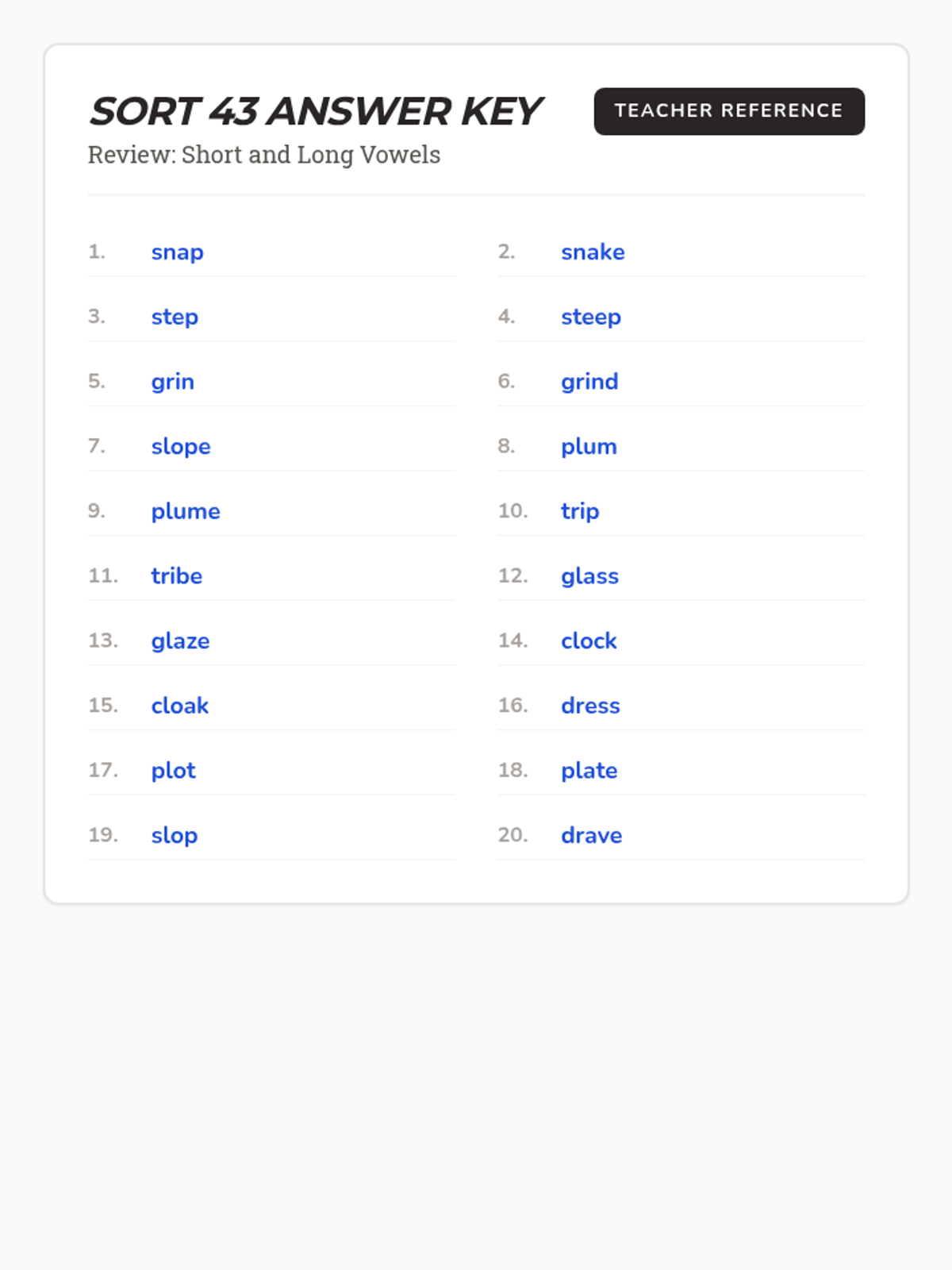
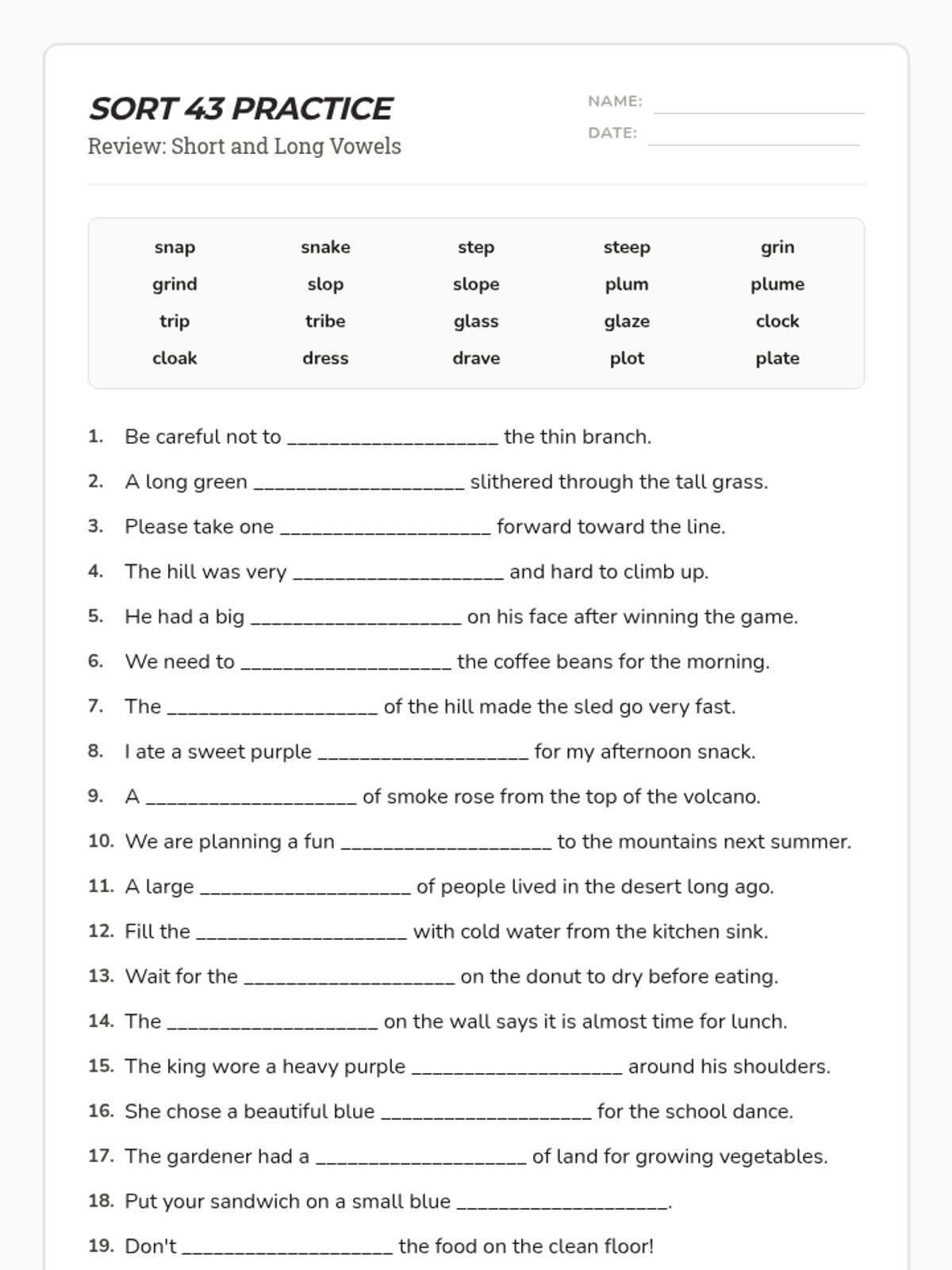
Foundational practice for Sorts 13-17, focusing on short and long vowel patterns including CVCe and CVVC for a, o, u, and e.
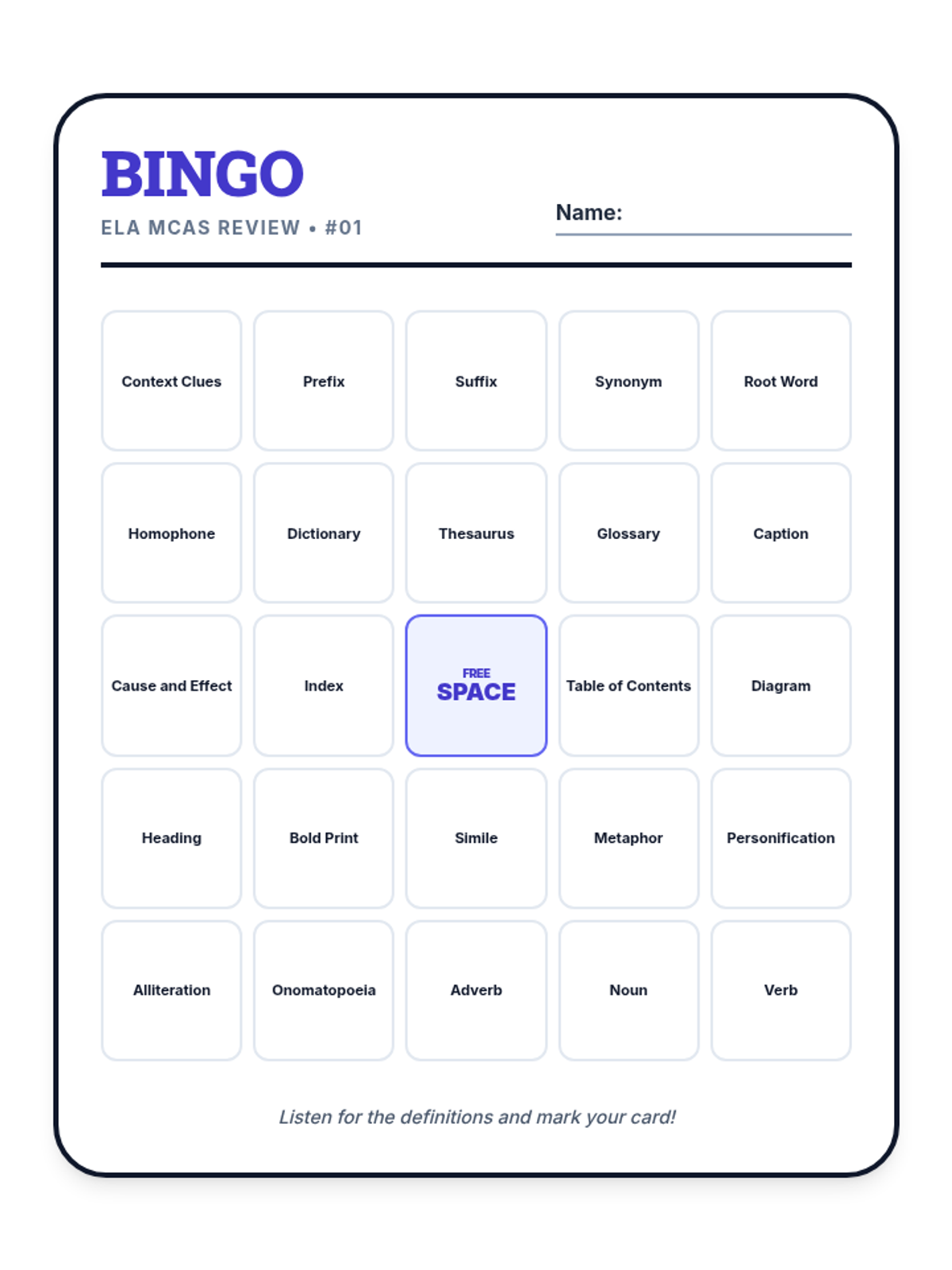
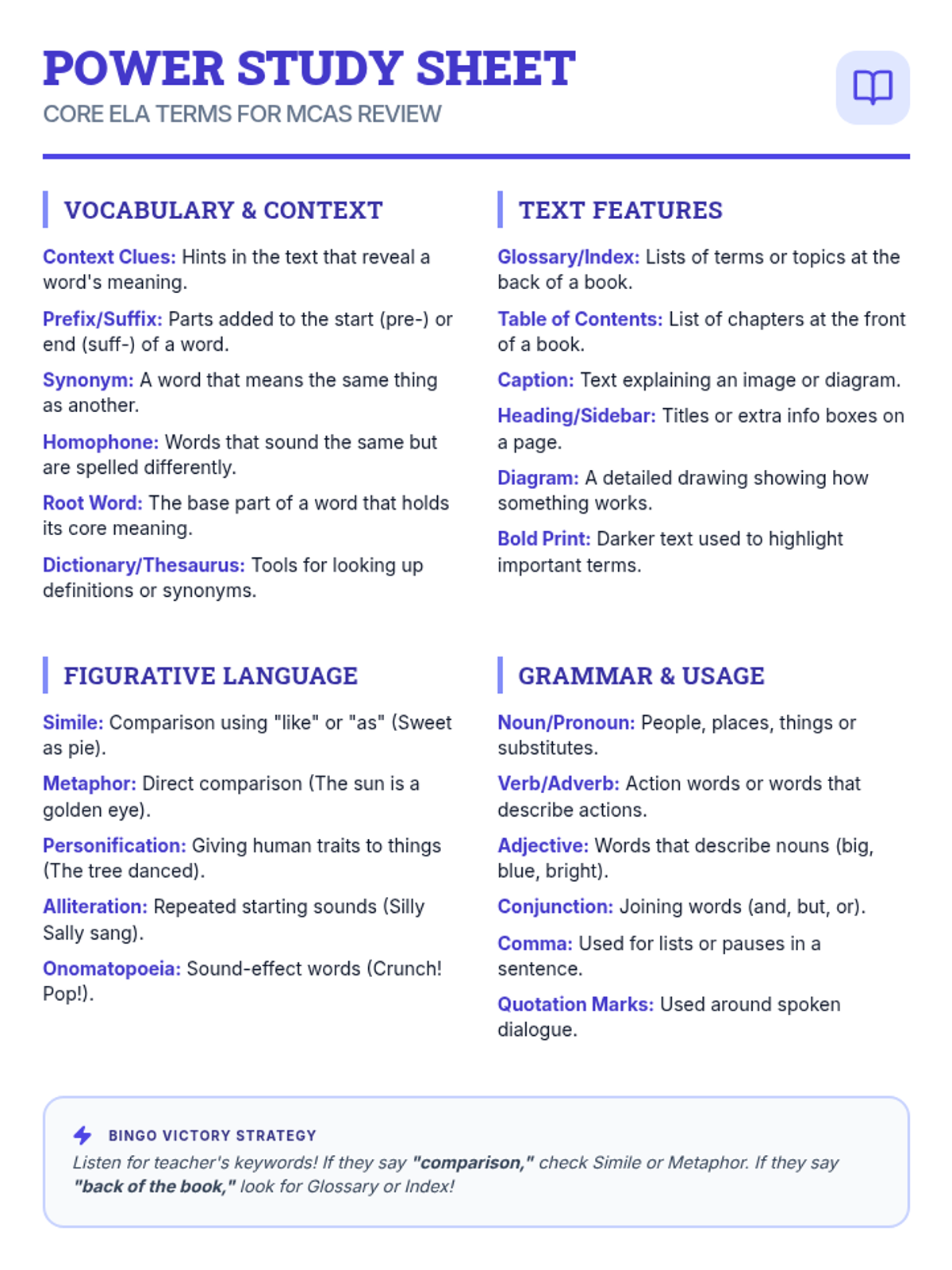
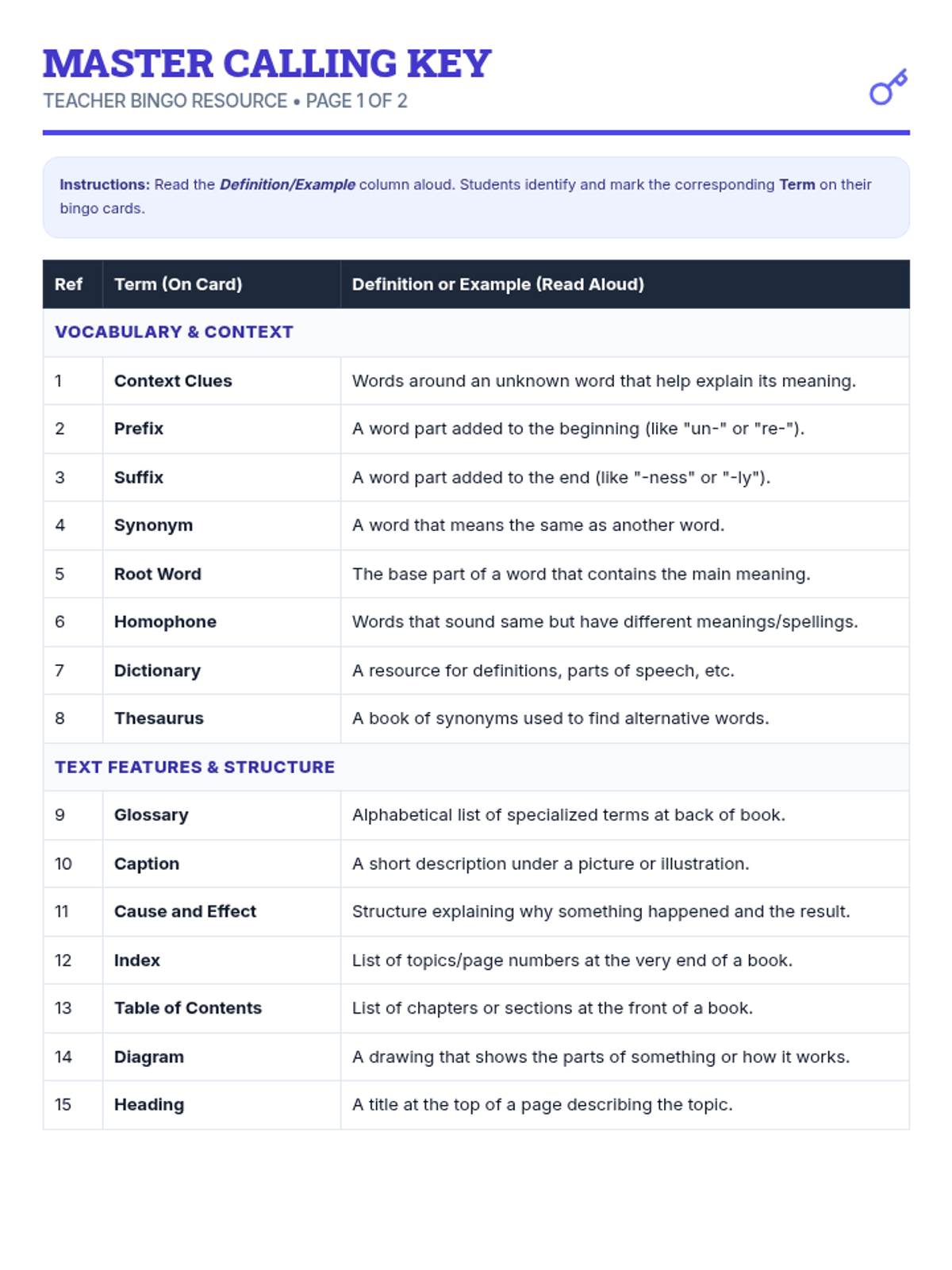
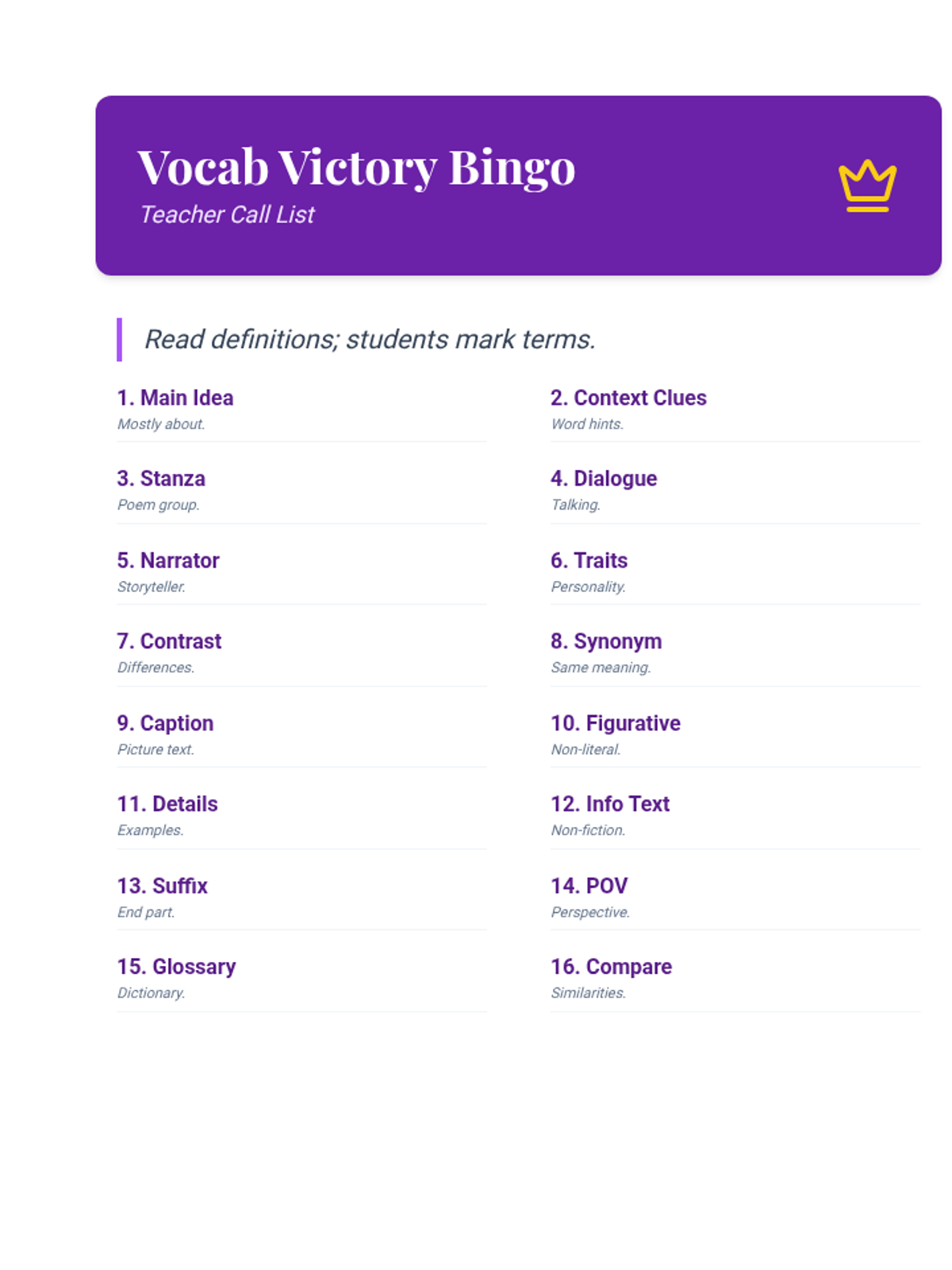
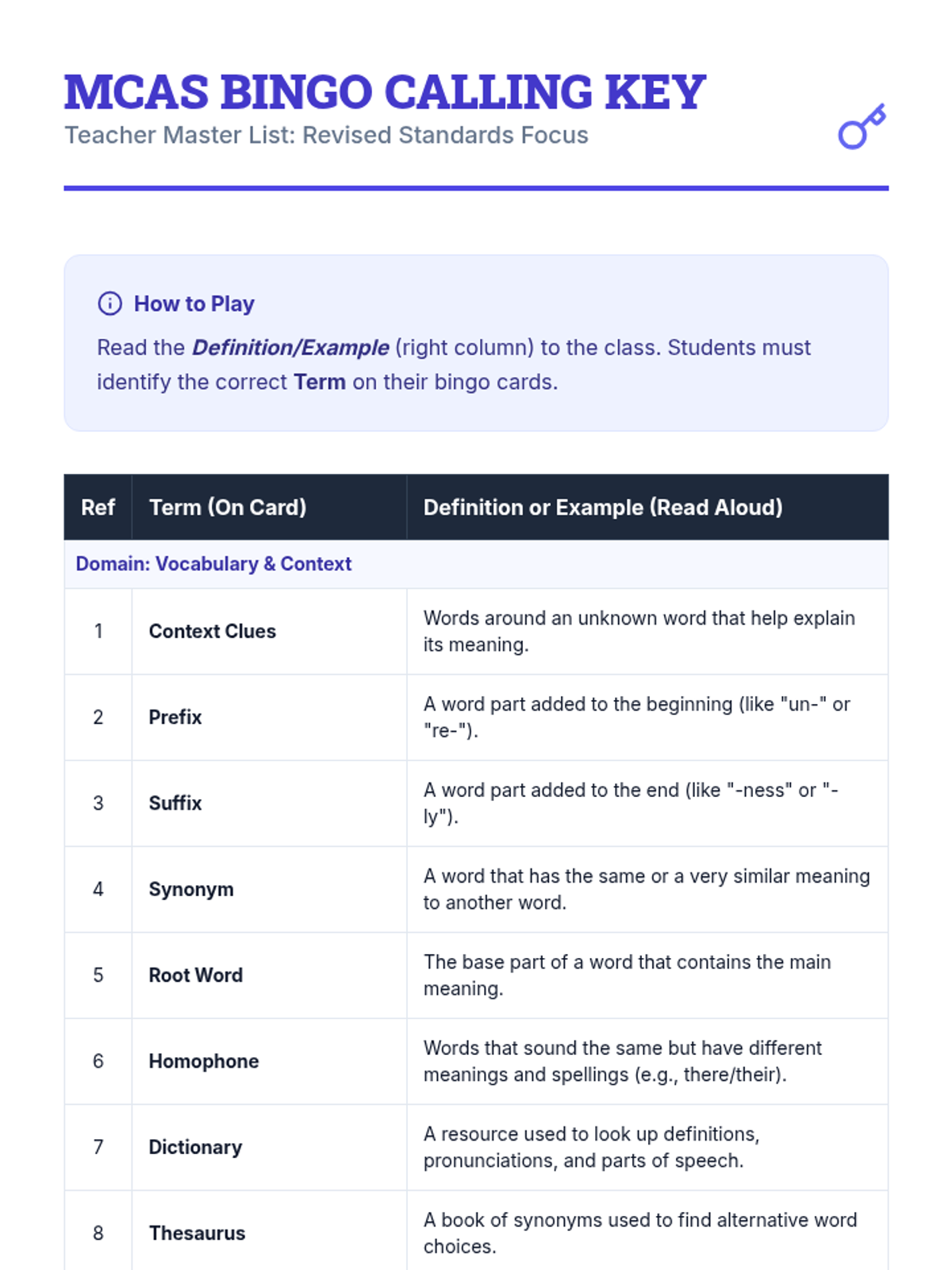
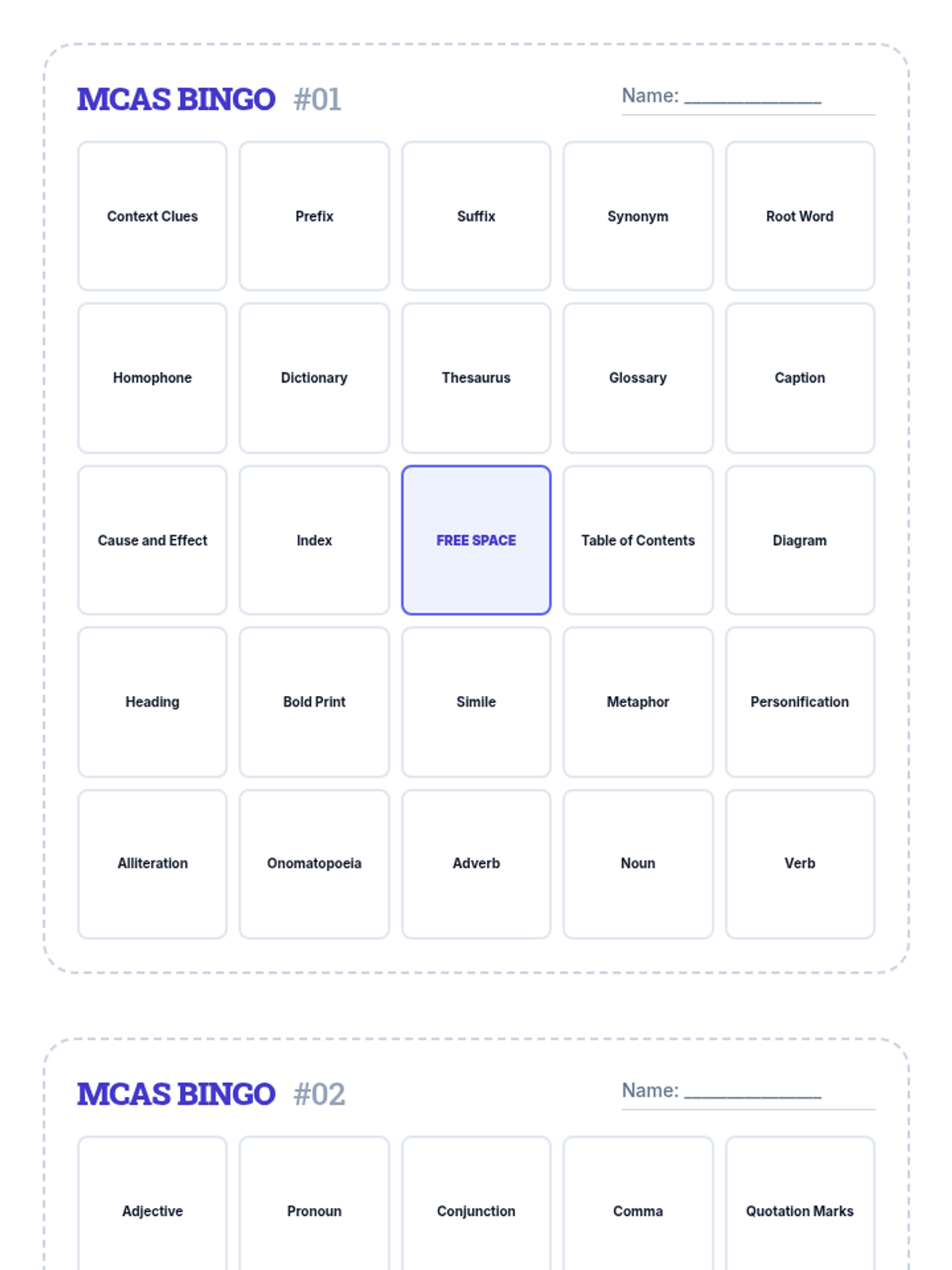
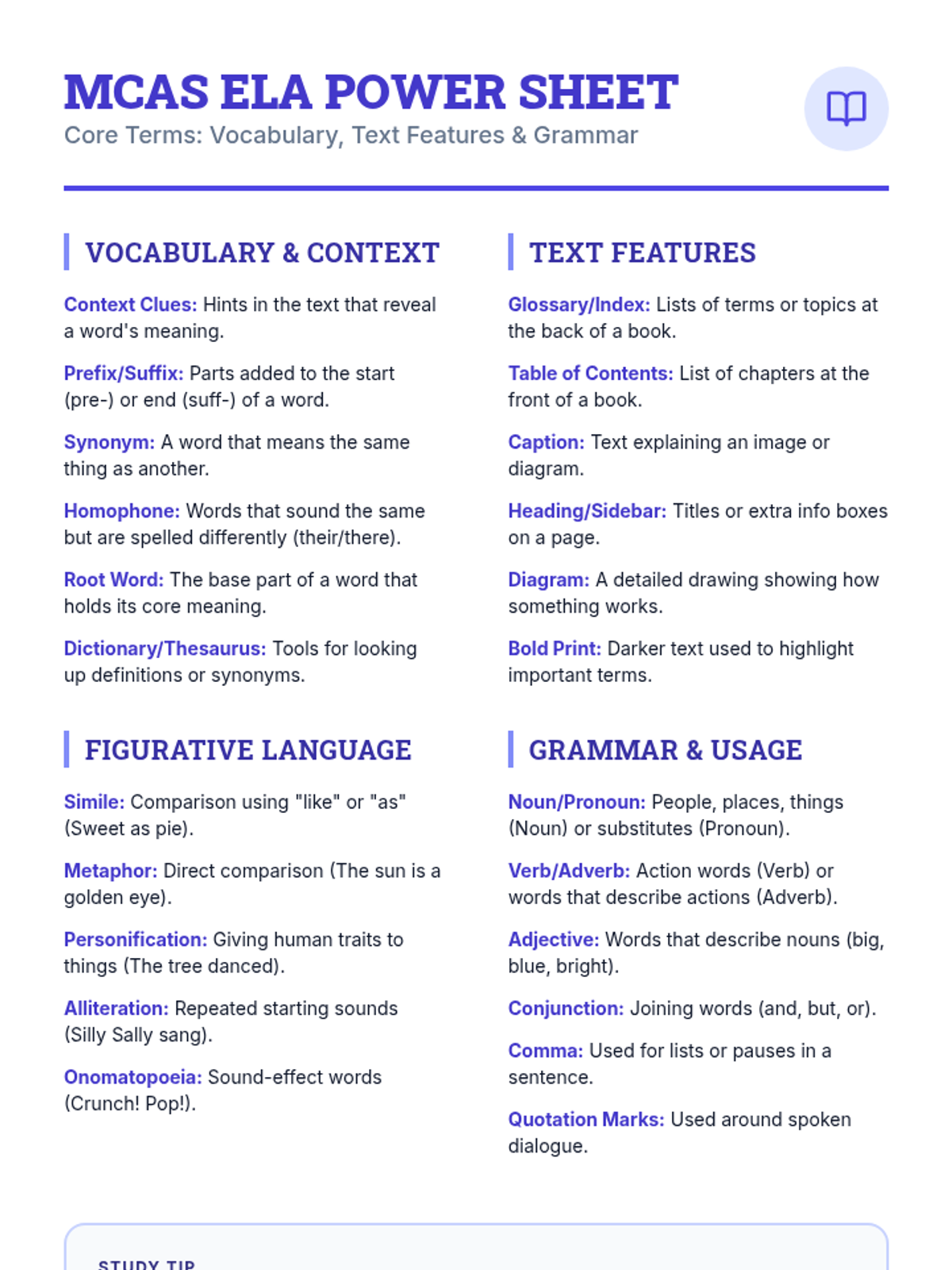
A comprehensive ELA review game designed to help students master MCAS standards through a competitive and engaging bingo format. The lesson covers vocabulary, literary elements, text structures, and grammar.
A comprehensive ELA test preparation series designed for 3rd grade students to master MCAS-style questions and vocabulary through engaging games.
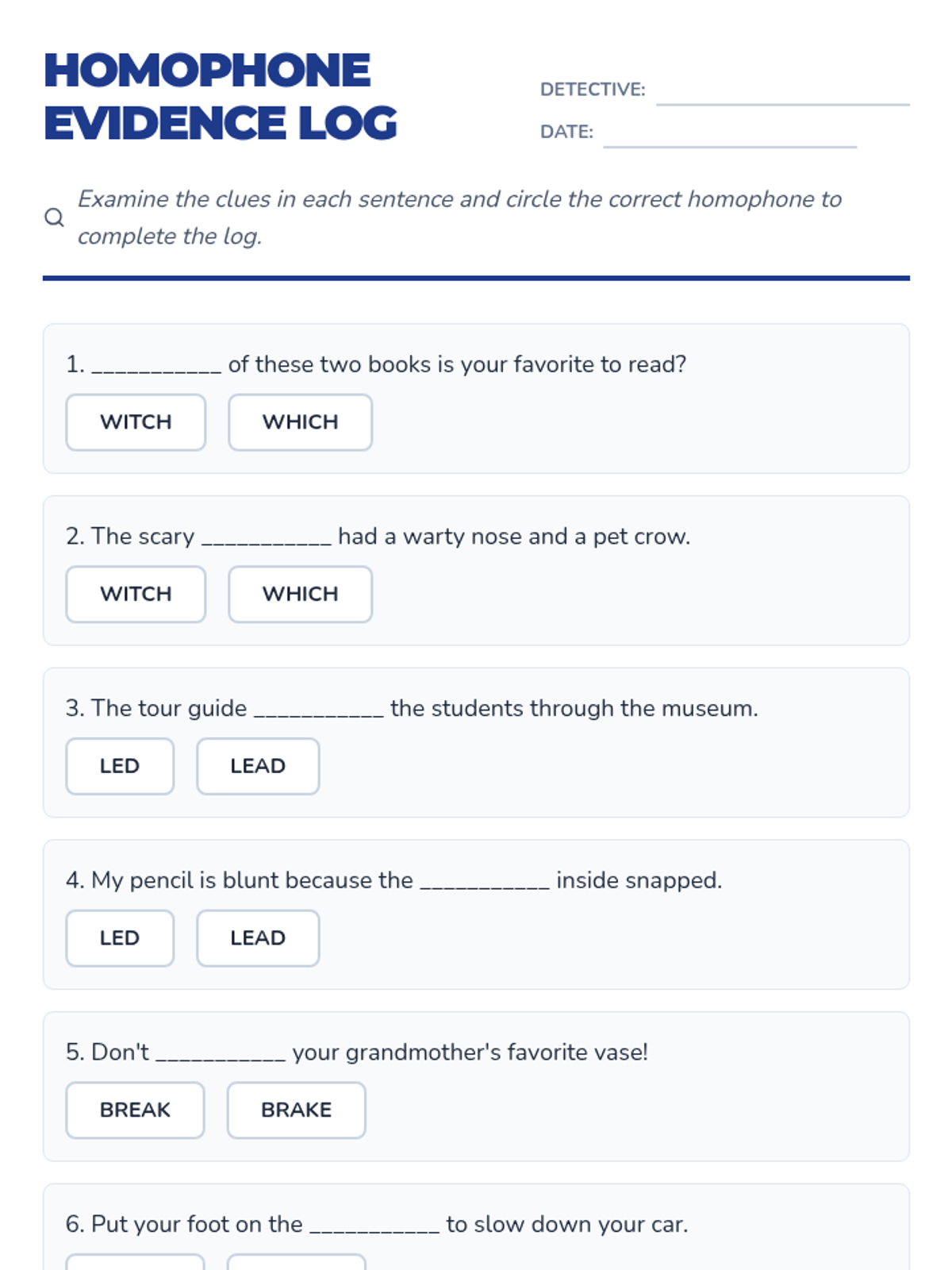
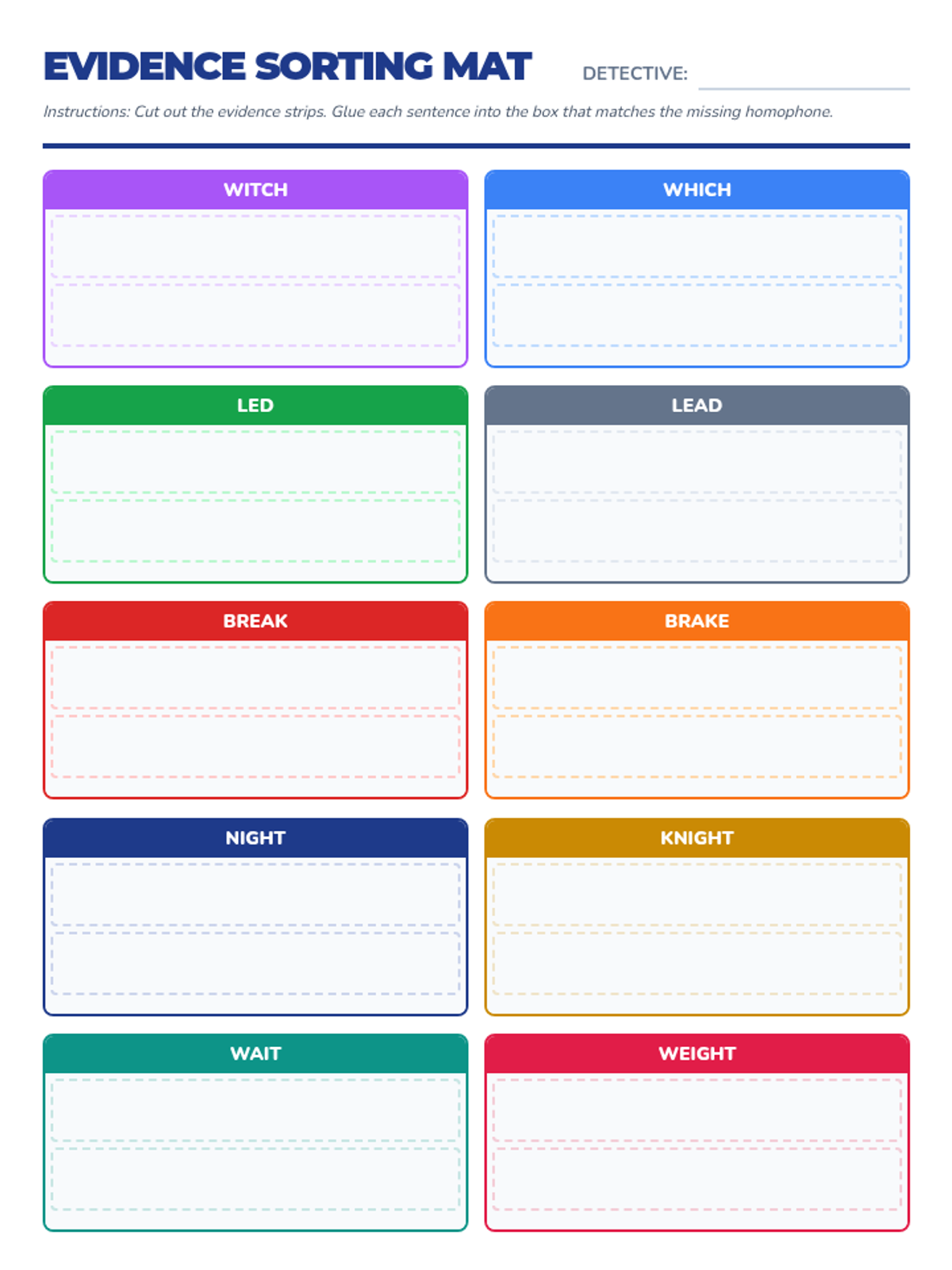
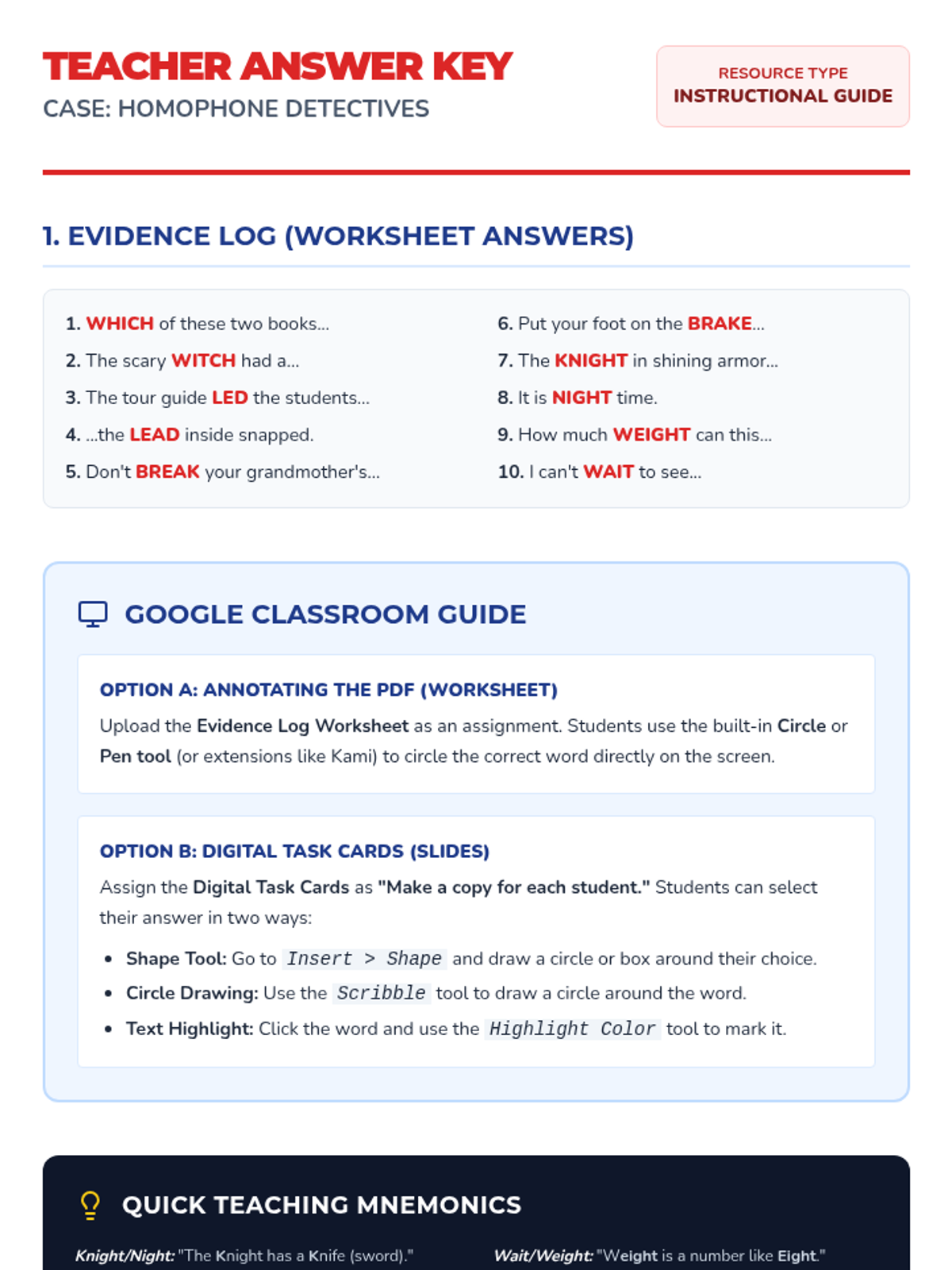
A detective-themed lesson focusing on three tricky homophone pairs: witch/which, led/lead, and break/brake. Students will identify meanings through context and practice using them correctly in sentences.
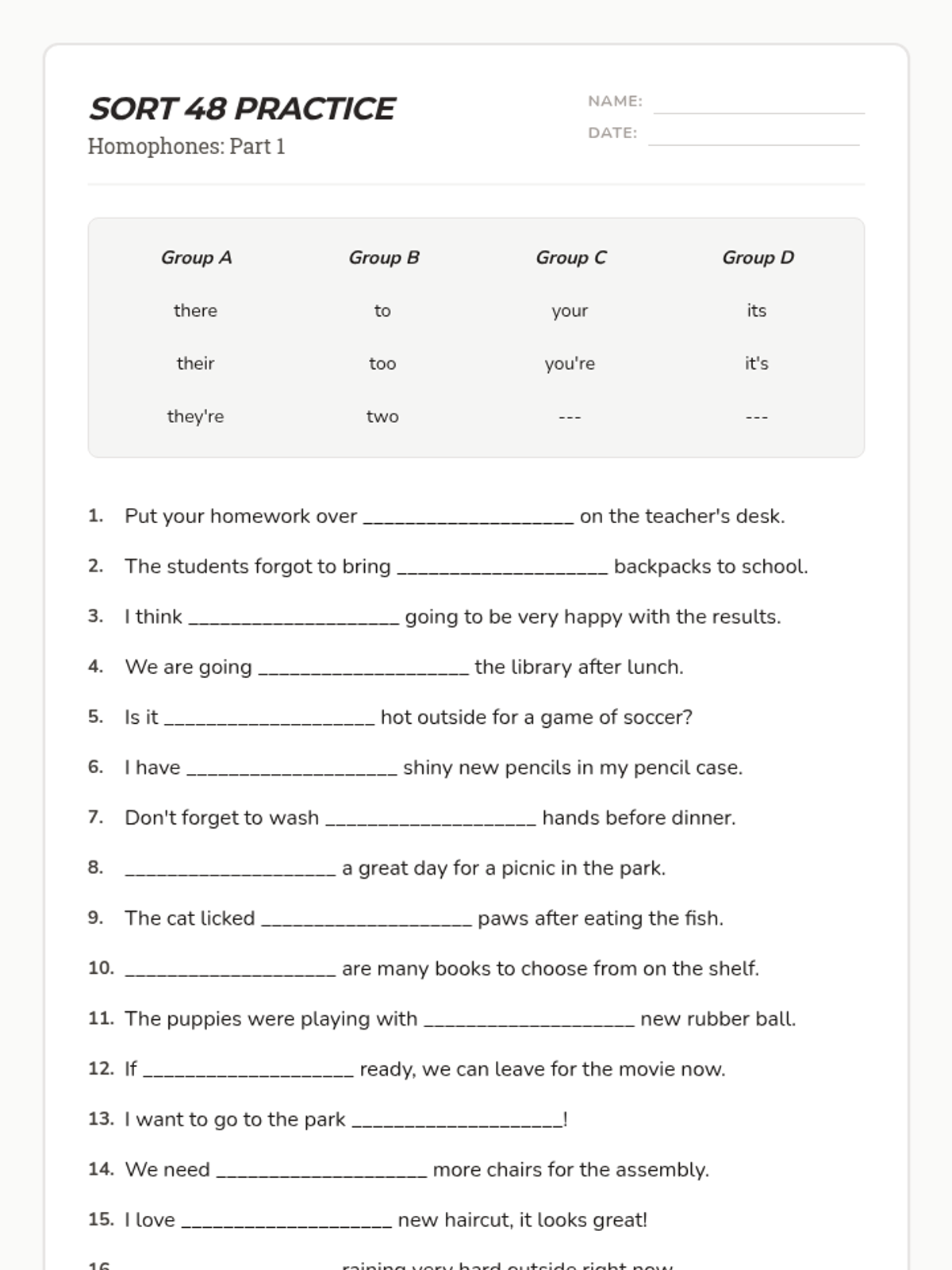
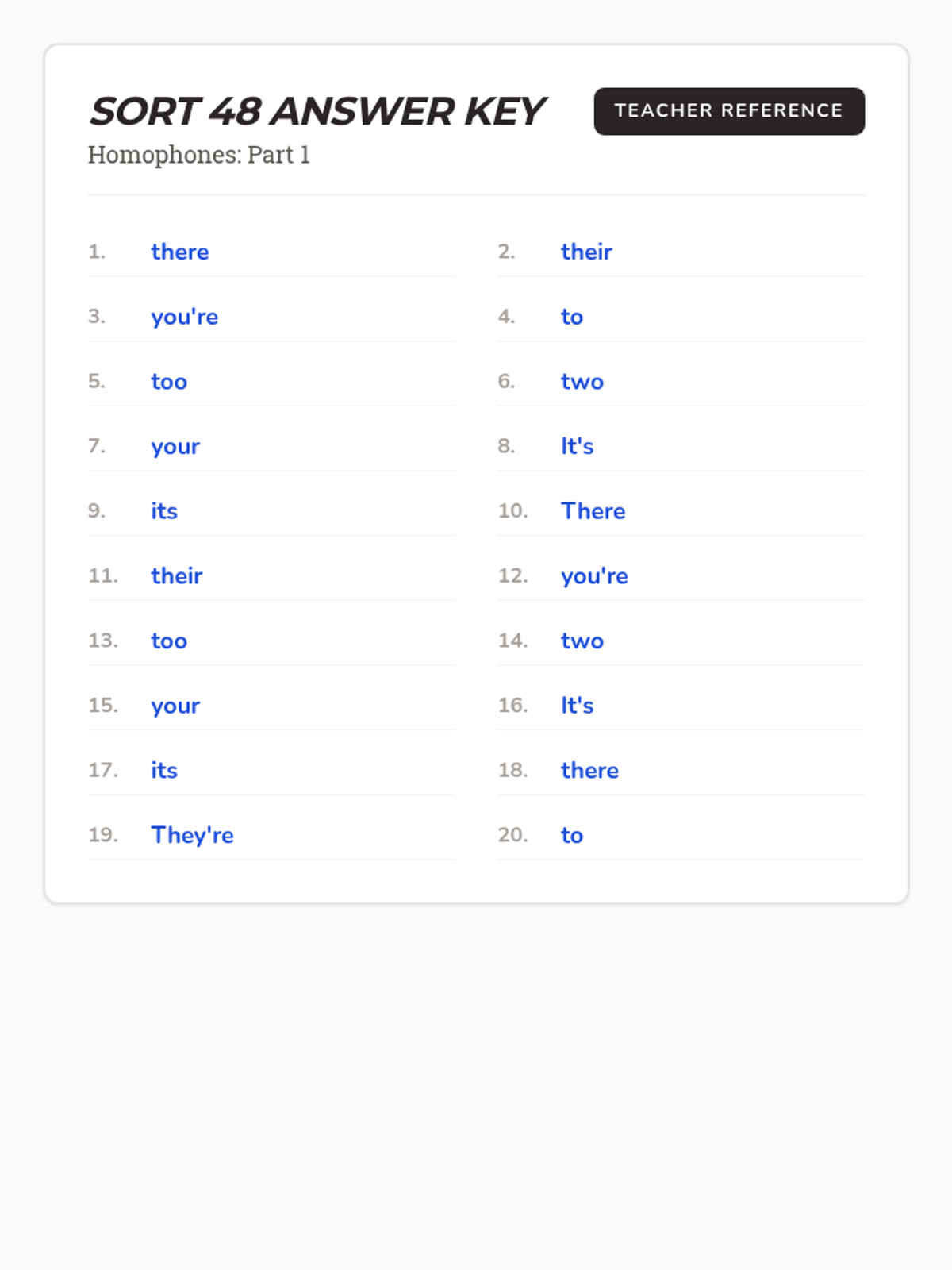
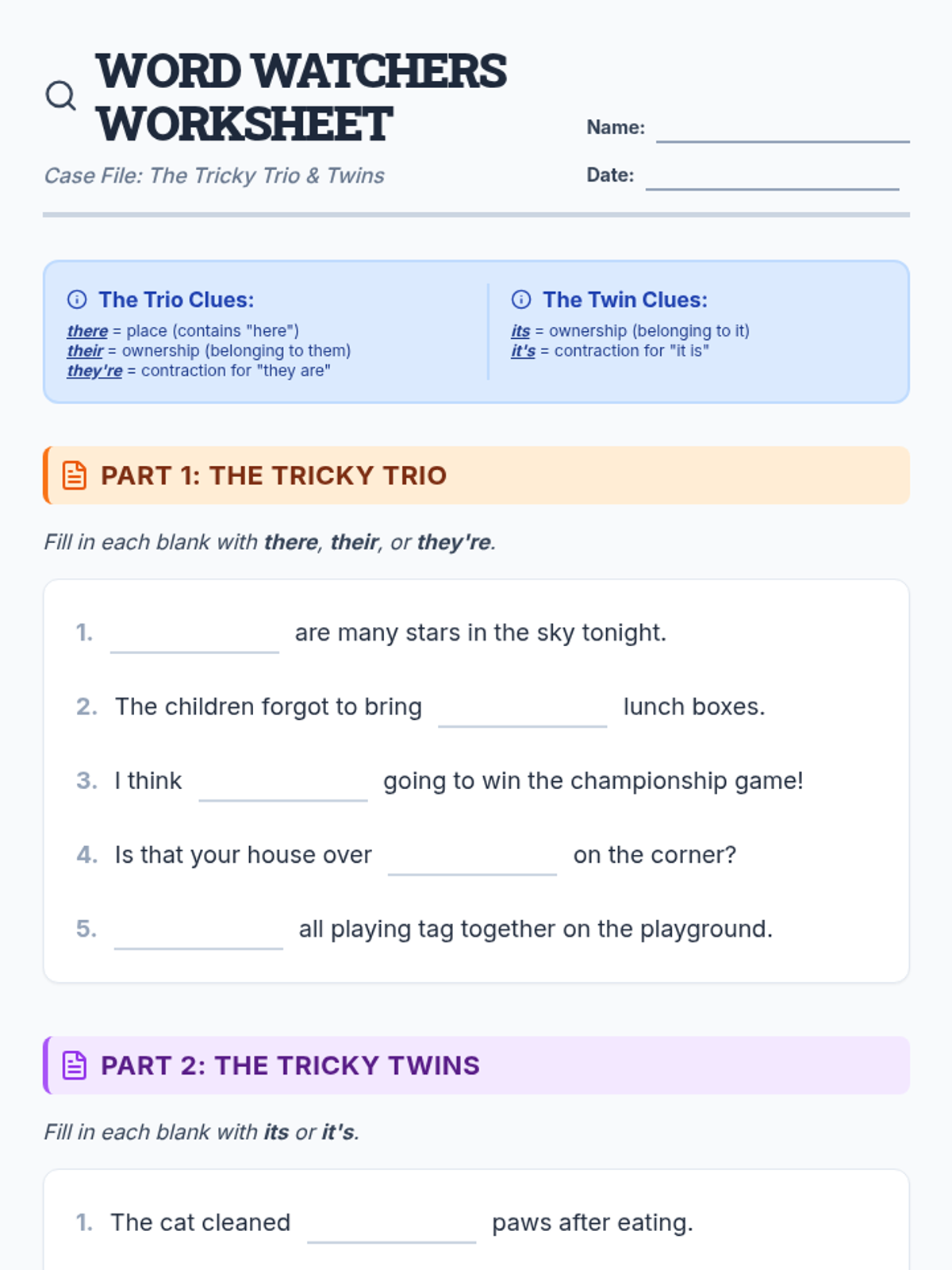
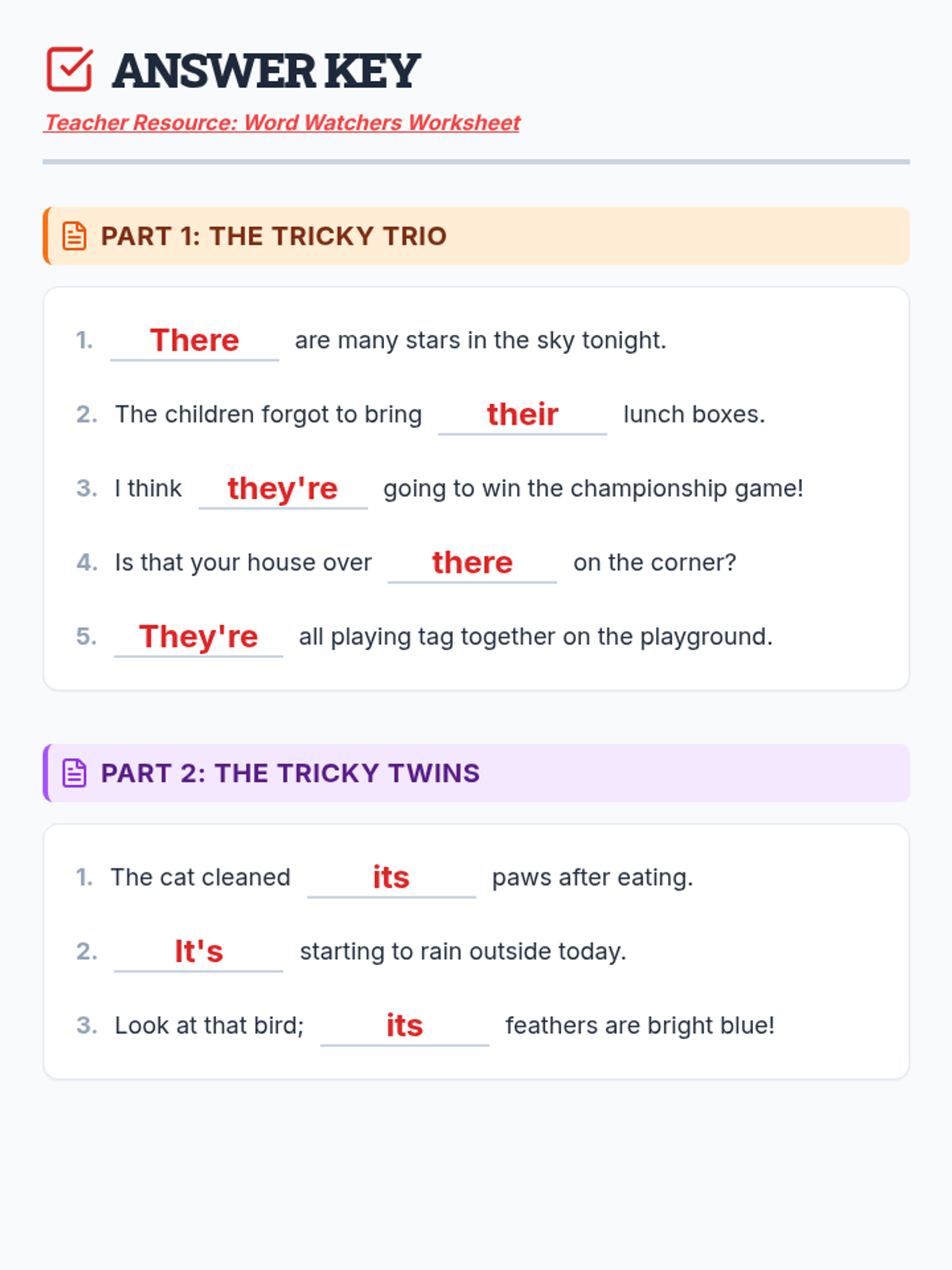
A lesson focused on distinguishing between common homophones and contractions: there/their/they're and its/it's for third-grade students. Includes visual aids and hands-on practice.
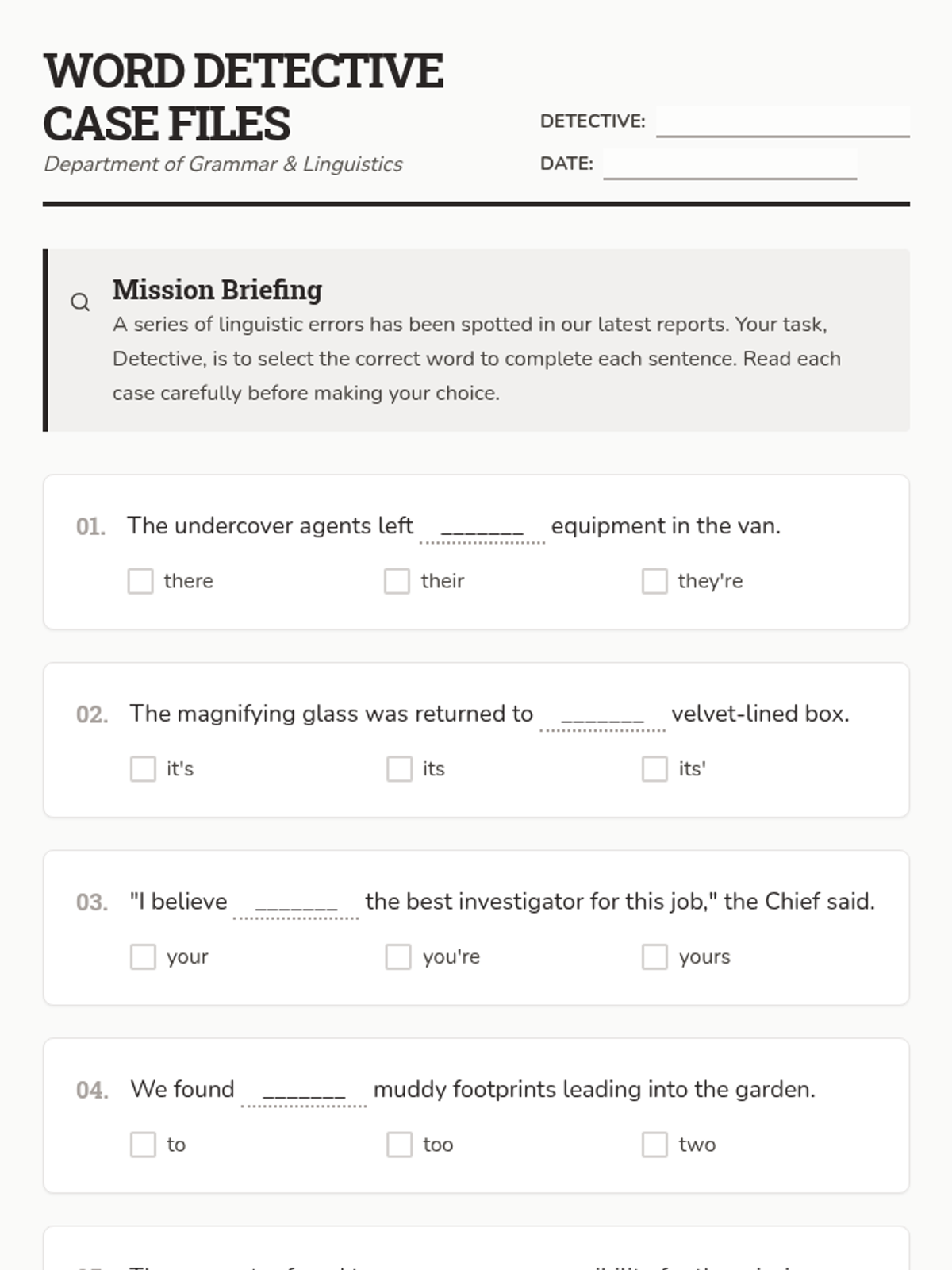
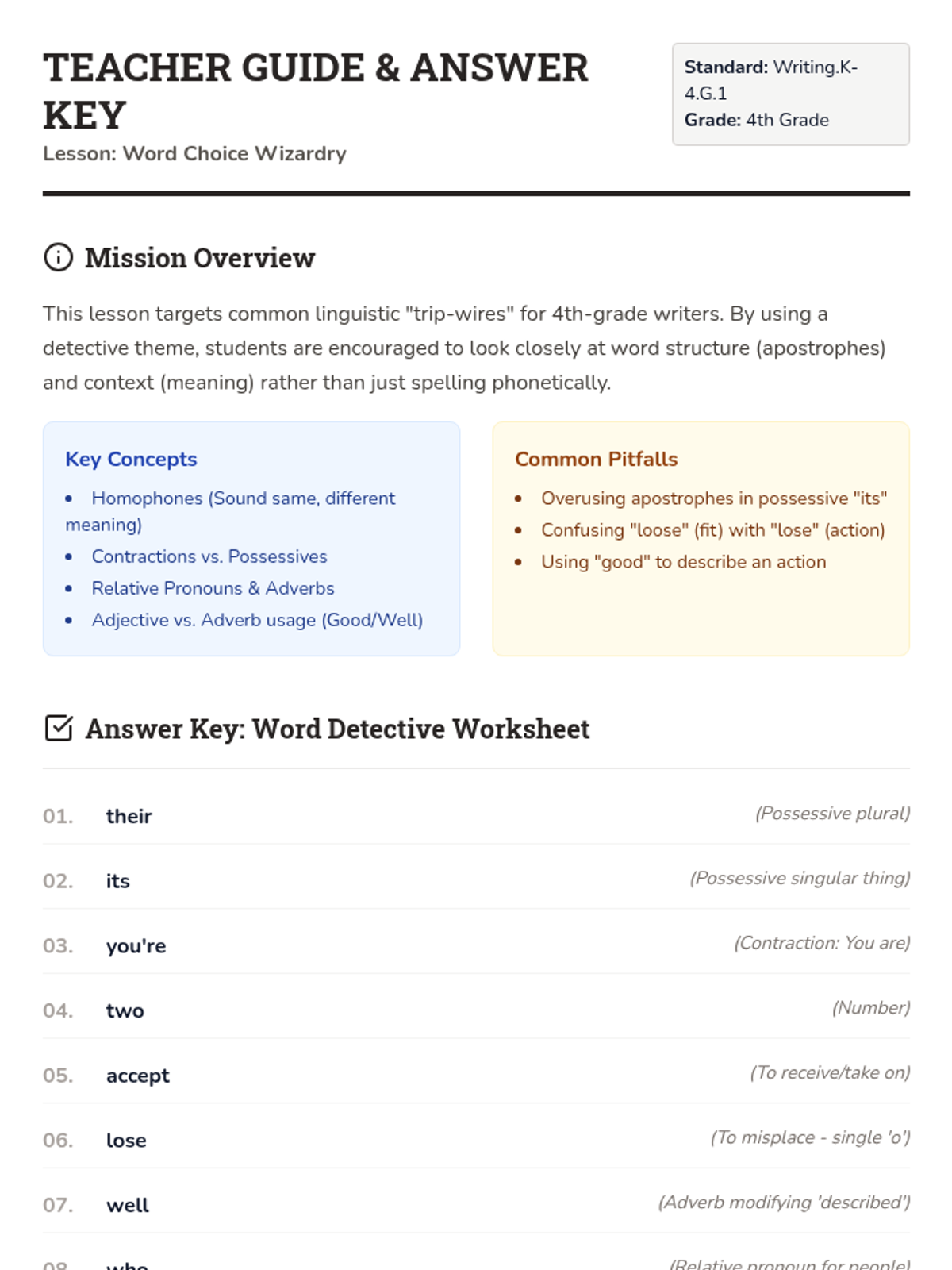
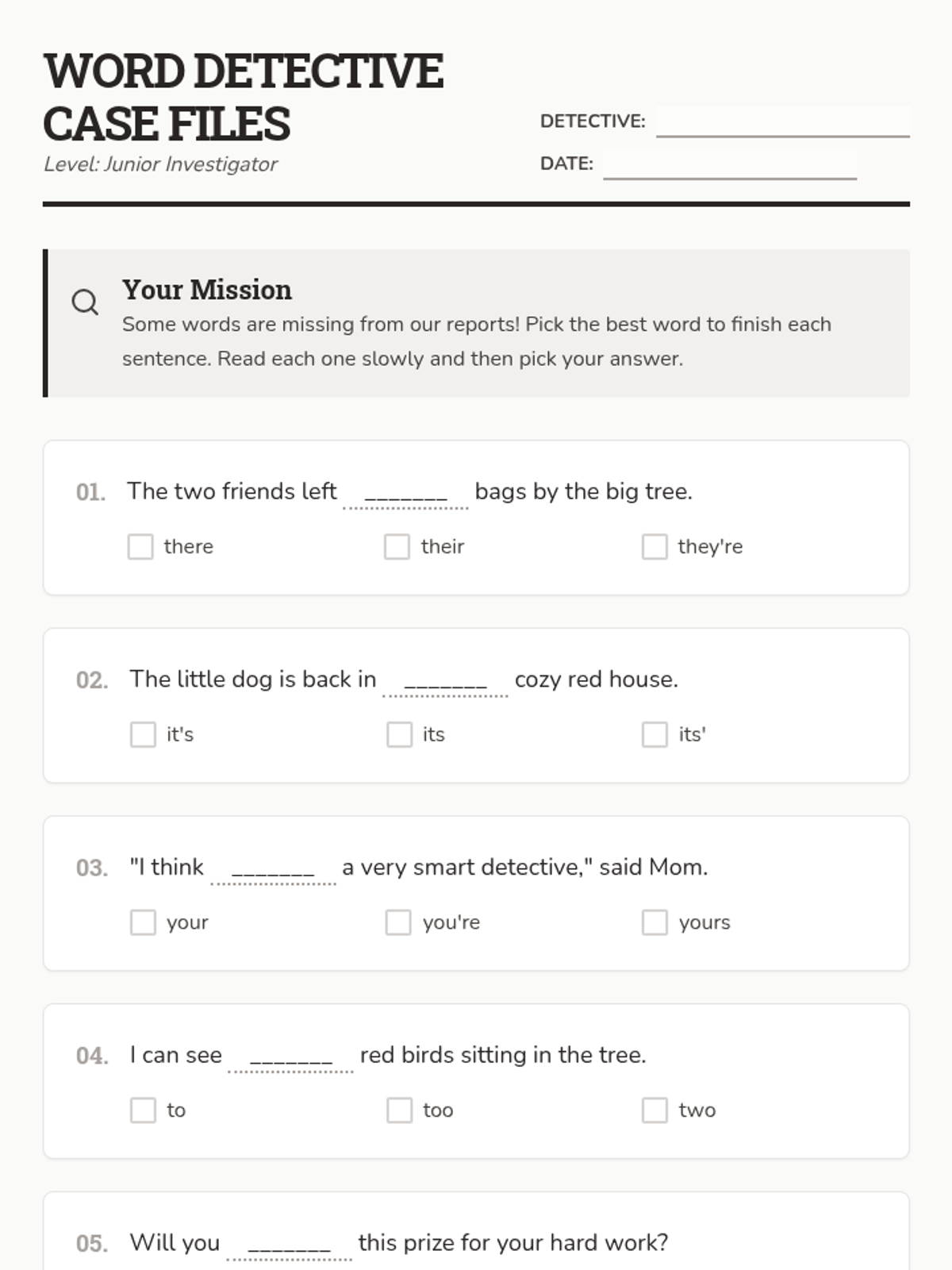
A lesson focused on common word usage errors, homophones, and frequently confused words for 4th-grade writers. Students practice identifying and using the correct words in context through detective-themed scenarios.
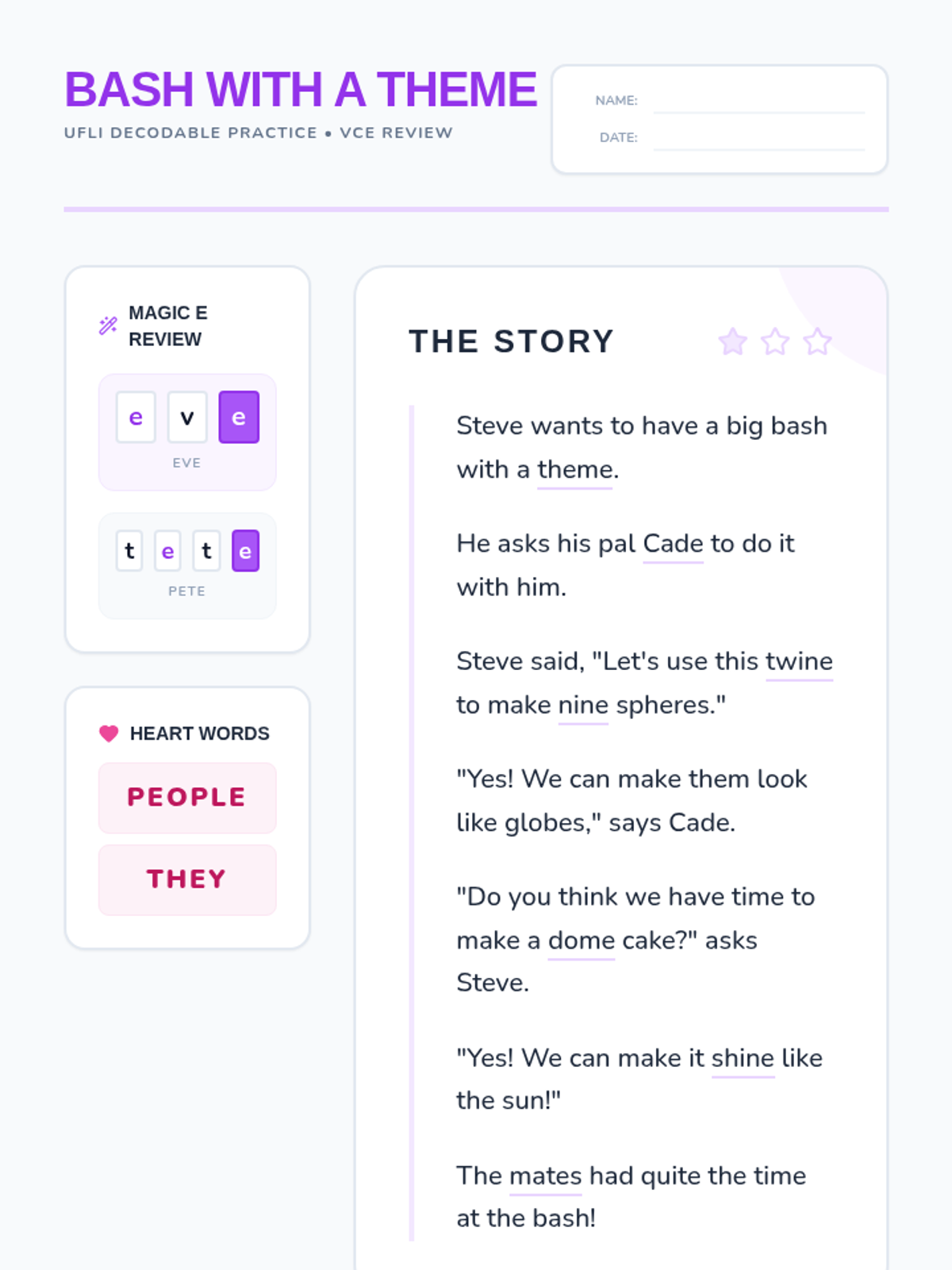
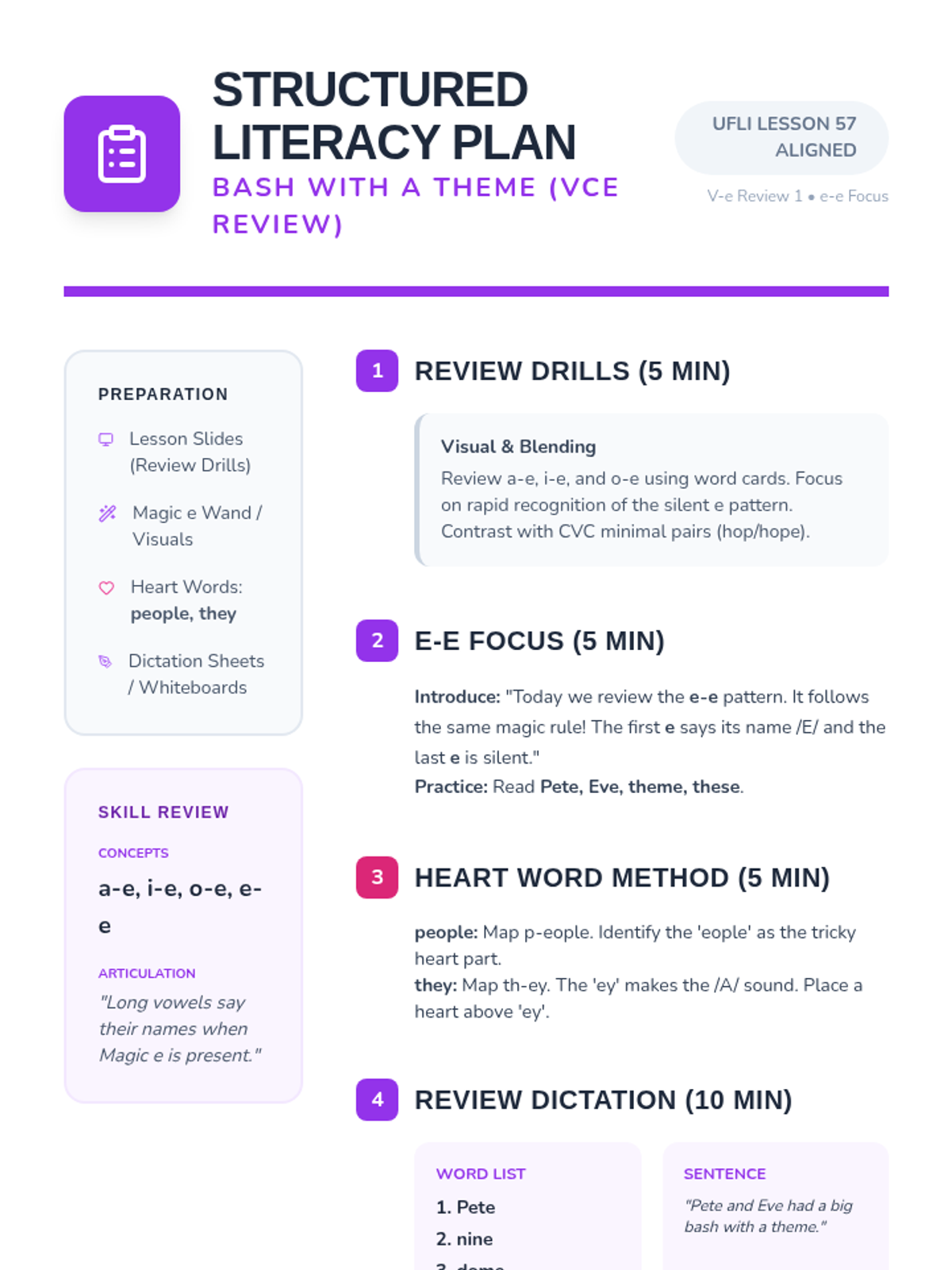
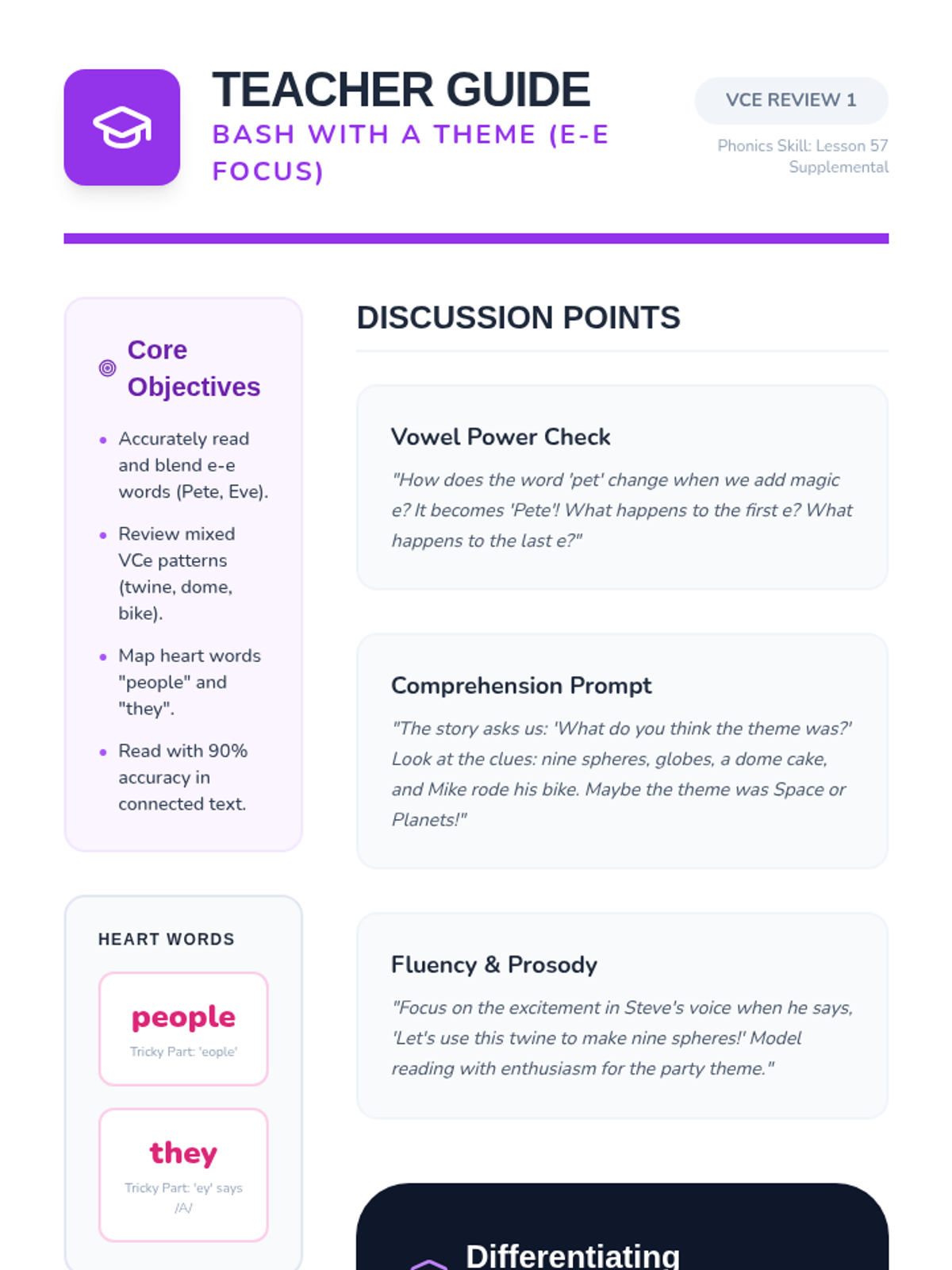
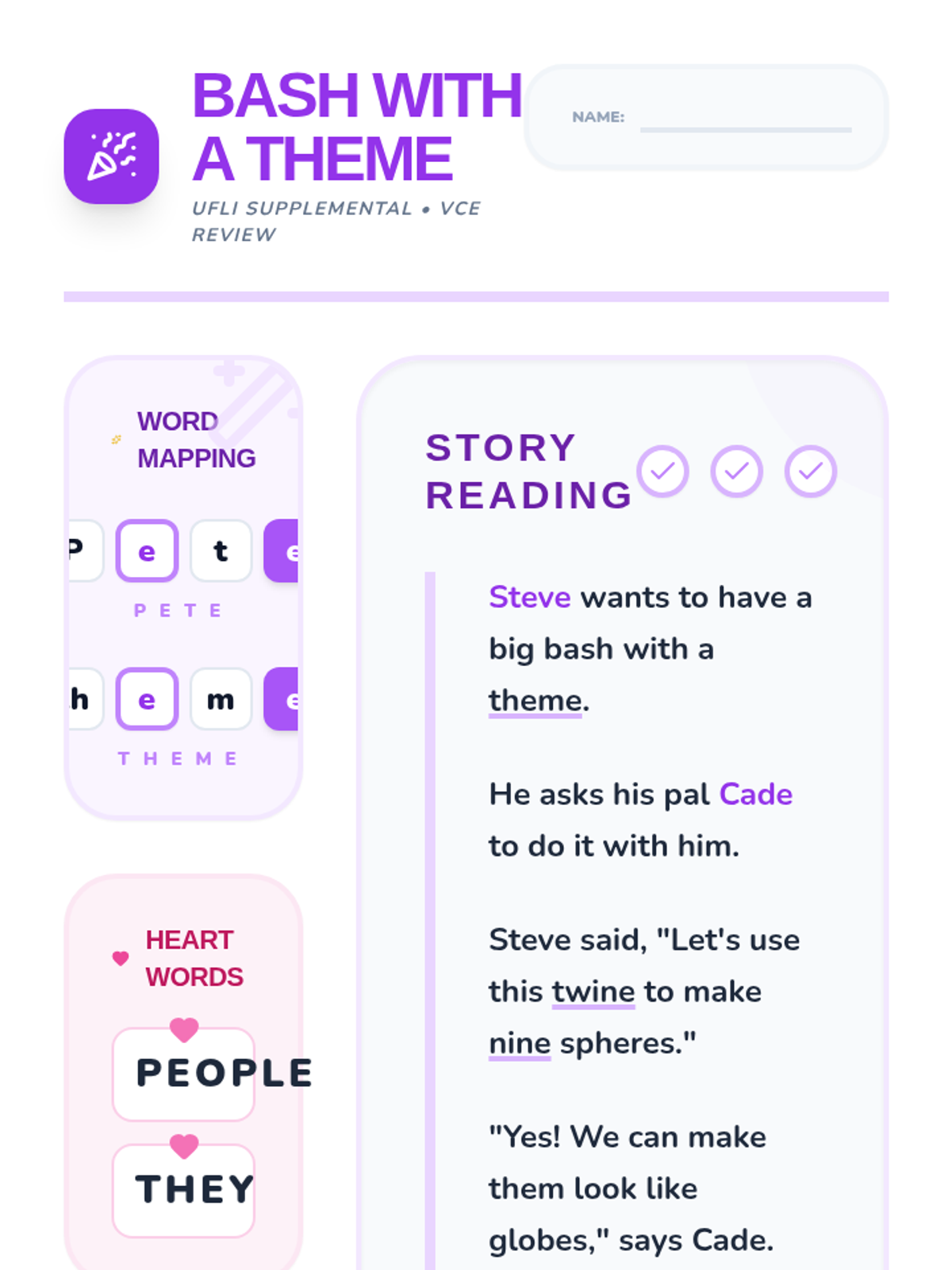
Focuses on the long 'e' vowel sound with the silent 'e' pattern (e-e). Students will read about Pete and Eve's themed party, practicing words like 'theme', 'Pete', 'Eve', and 'these'.
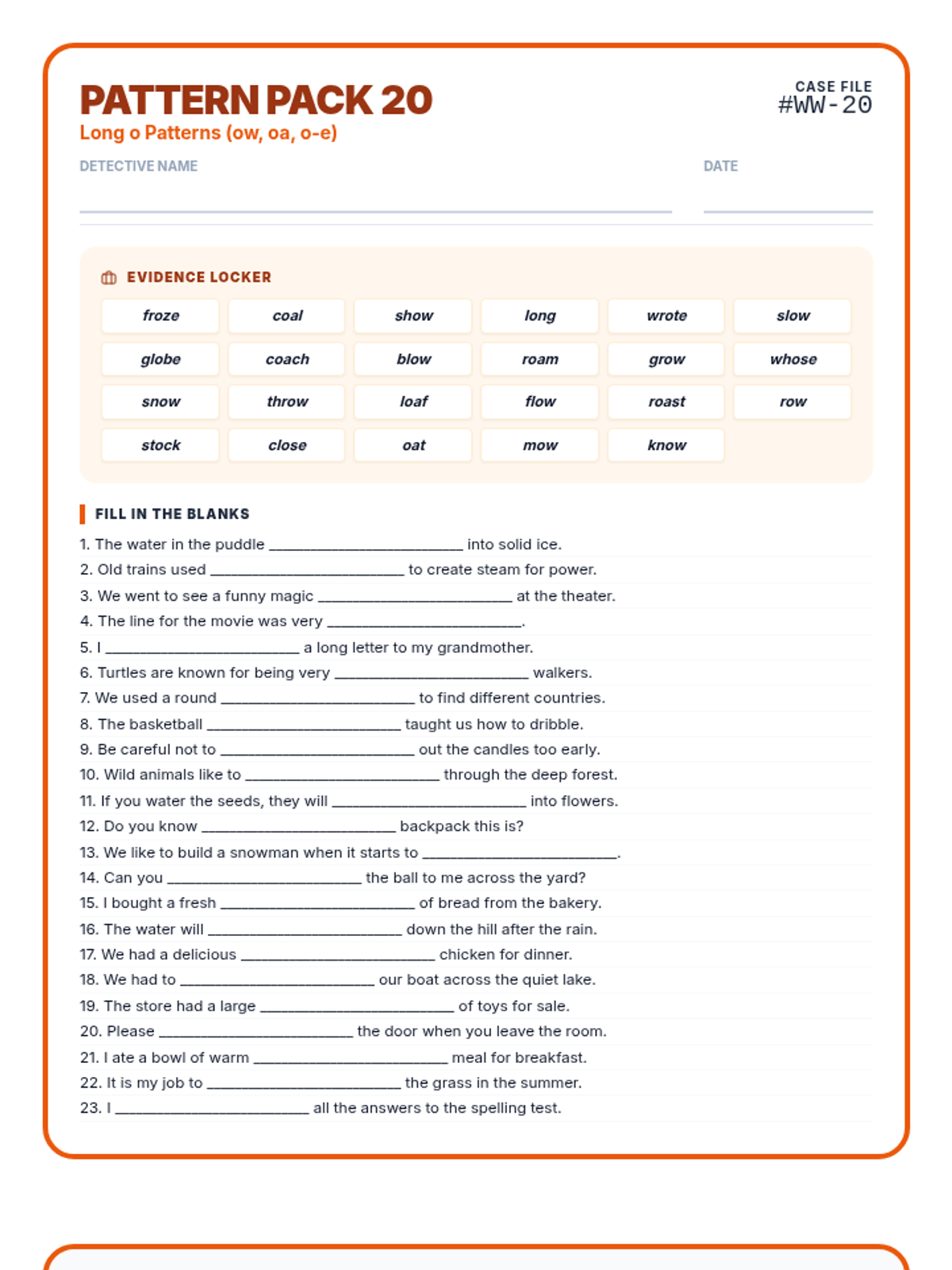
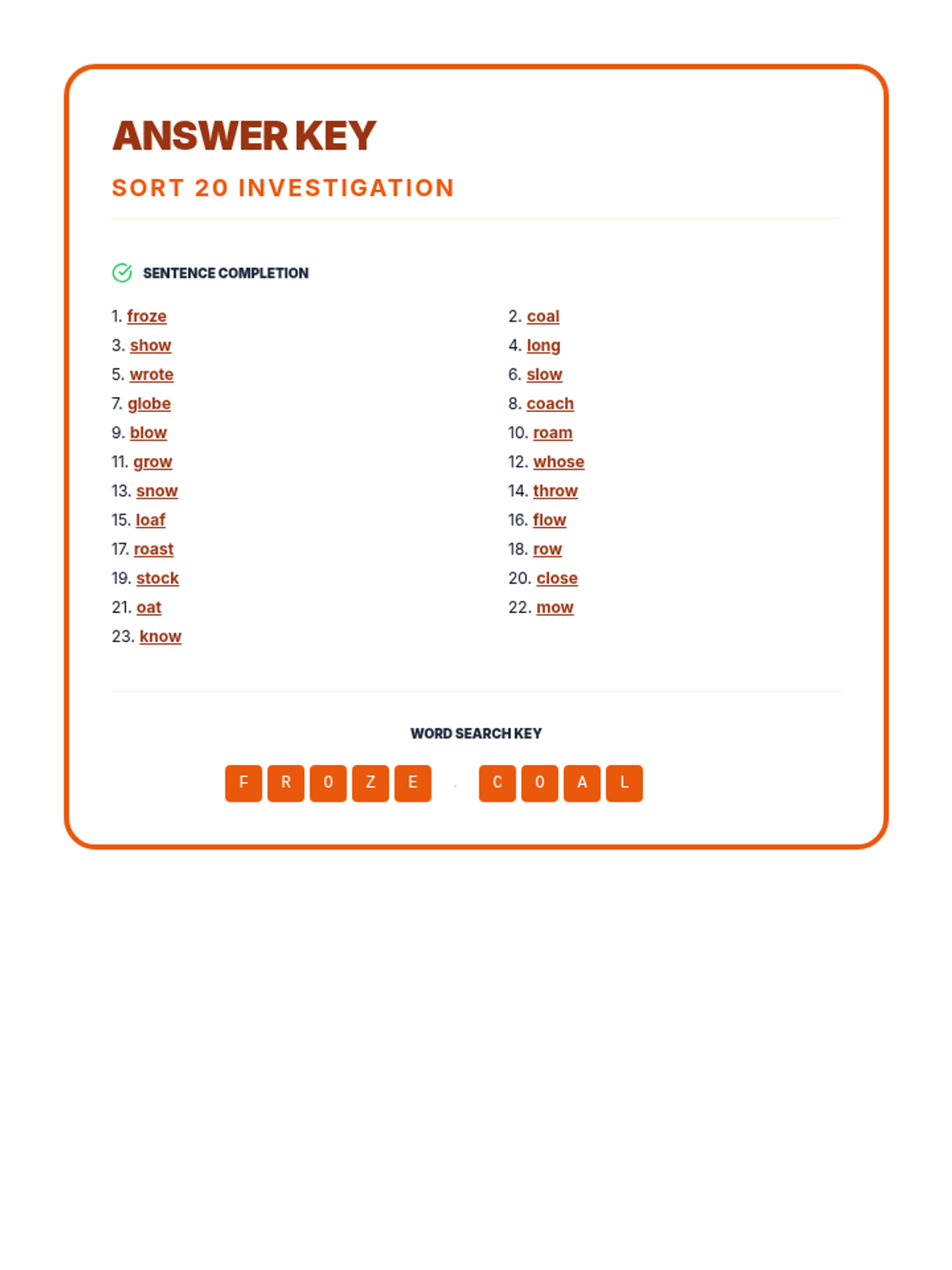
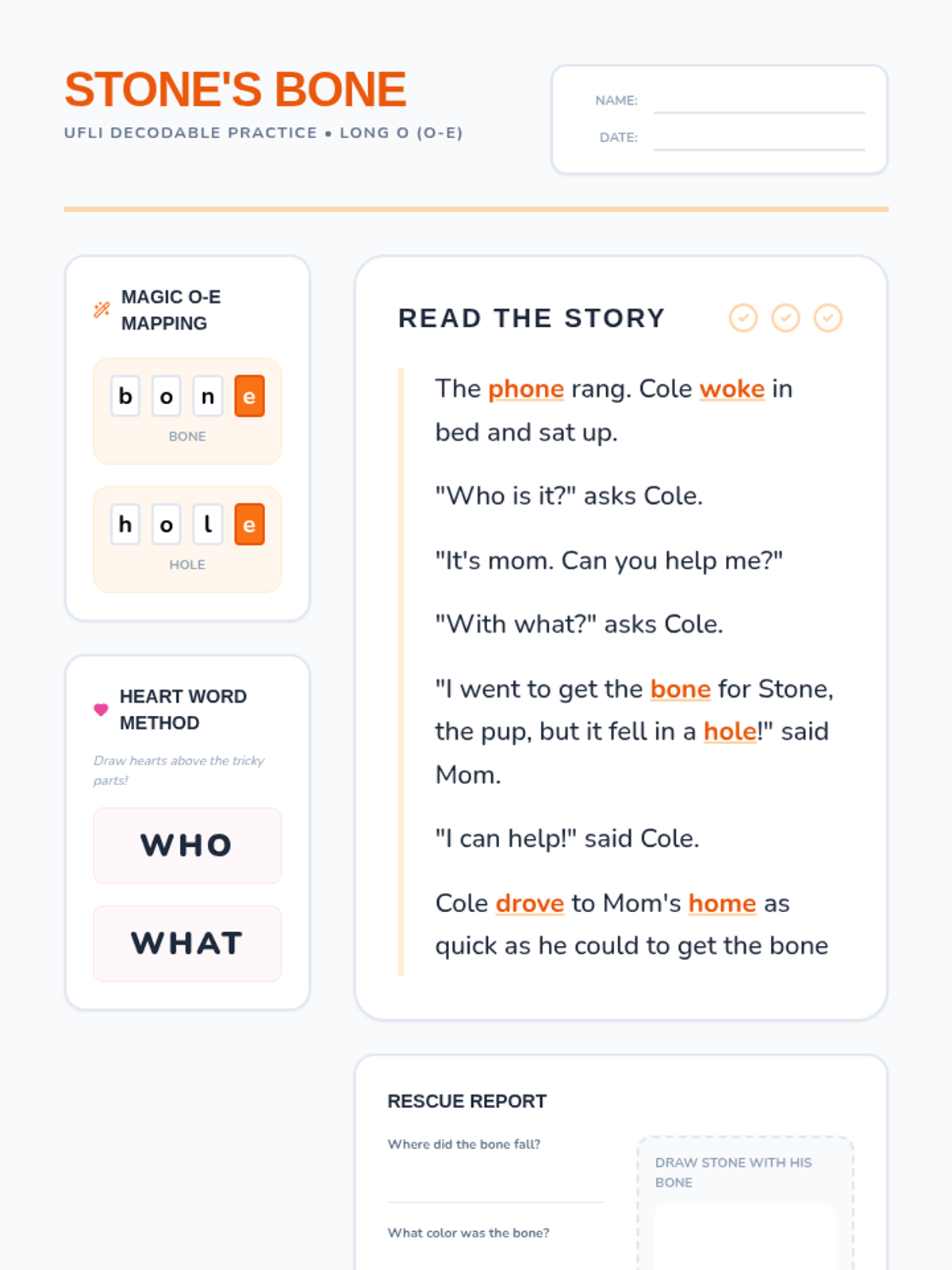
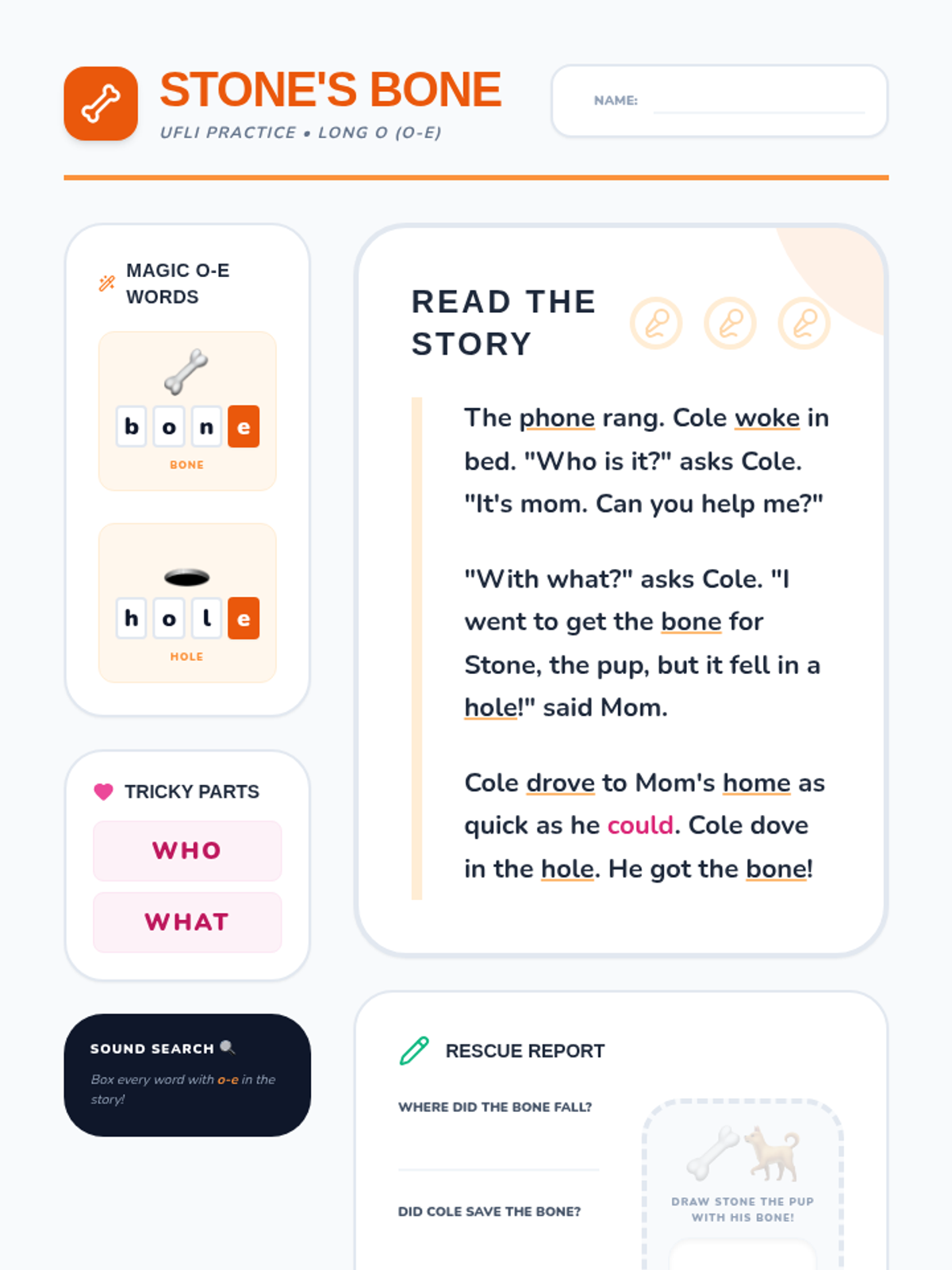
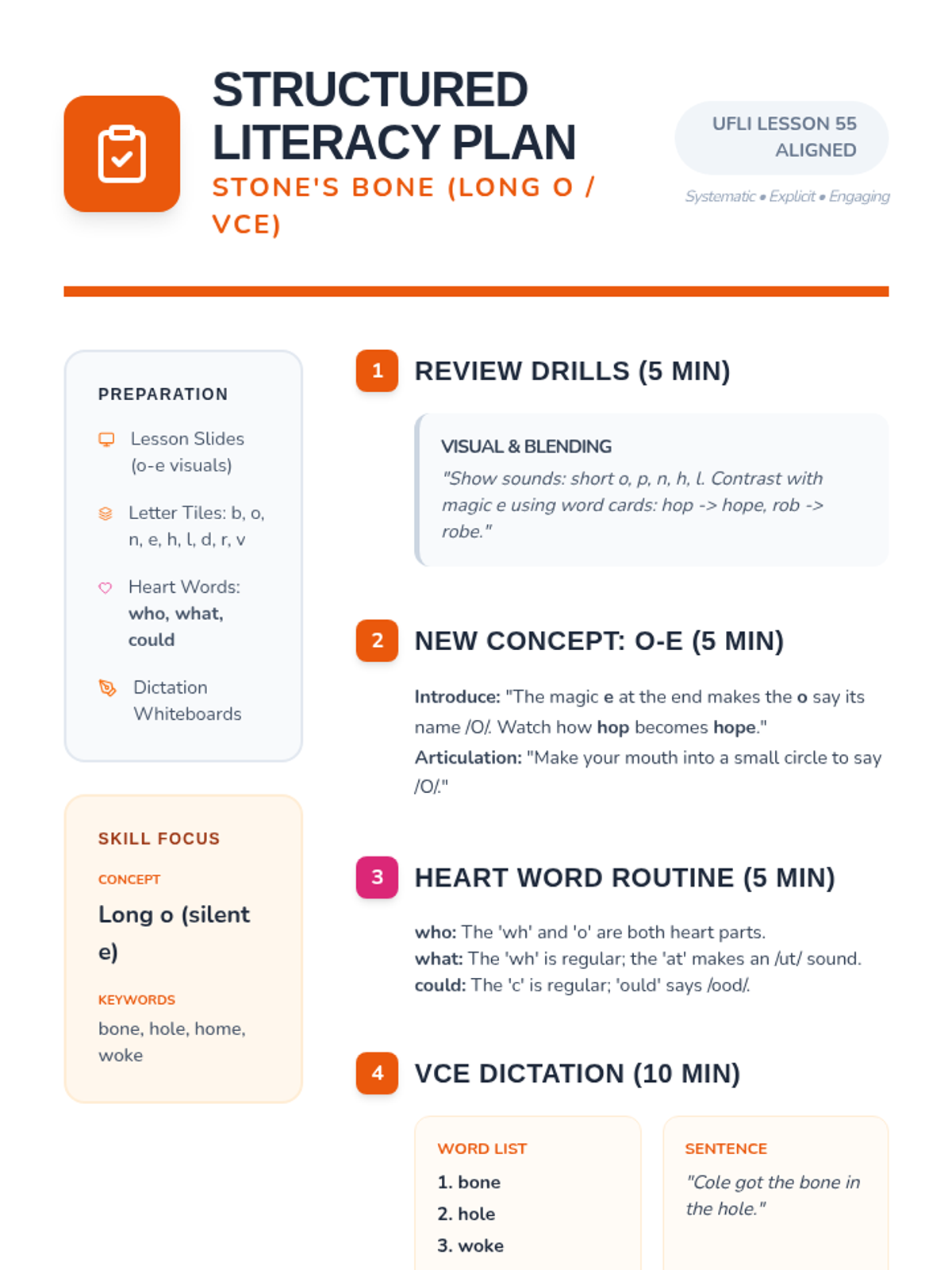
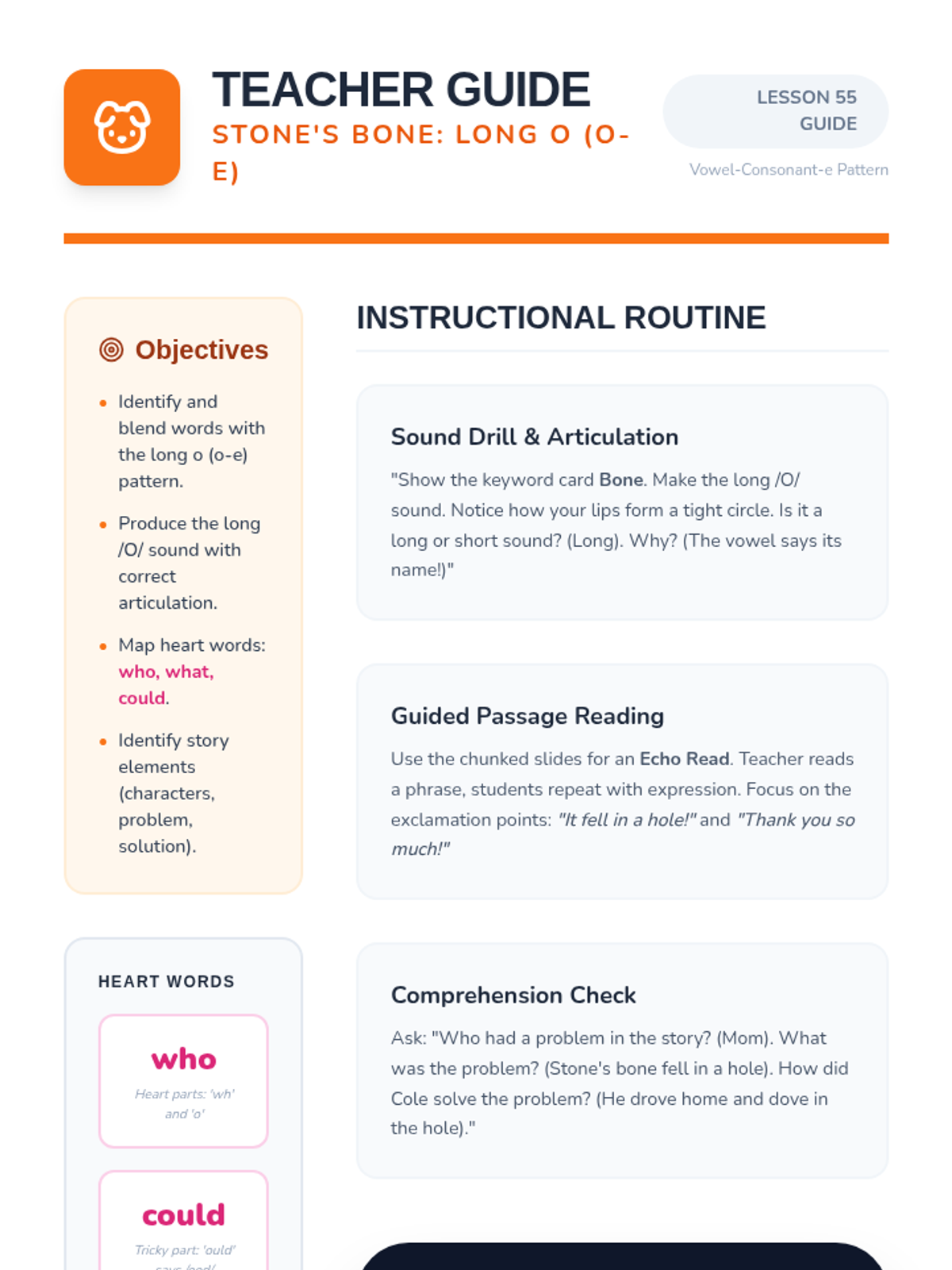
Focuses on the long 'o' vowel sound with the silent 'e' pattern (o-e). Students will read about Cole helping his mom rescue a bone for Stone the pup, practicing words like 'phone', 'woke', 'bone', 'hole', and 'froze'.
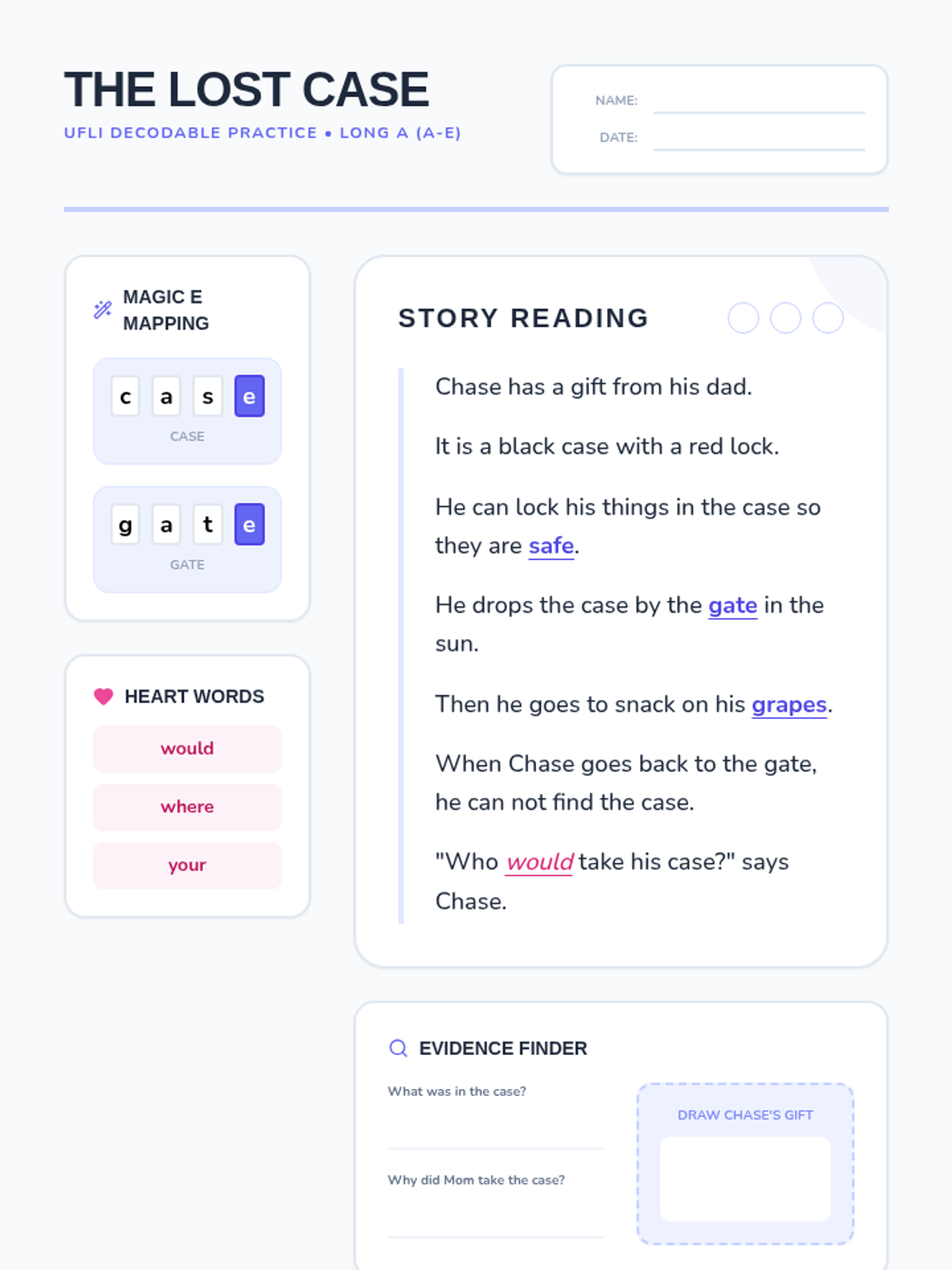
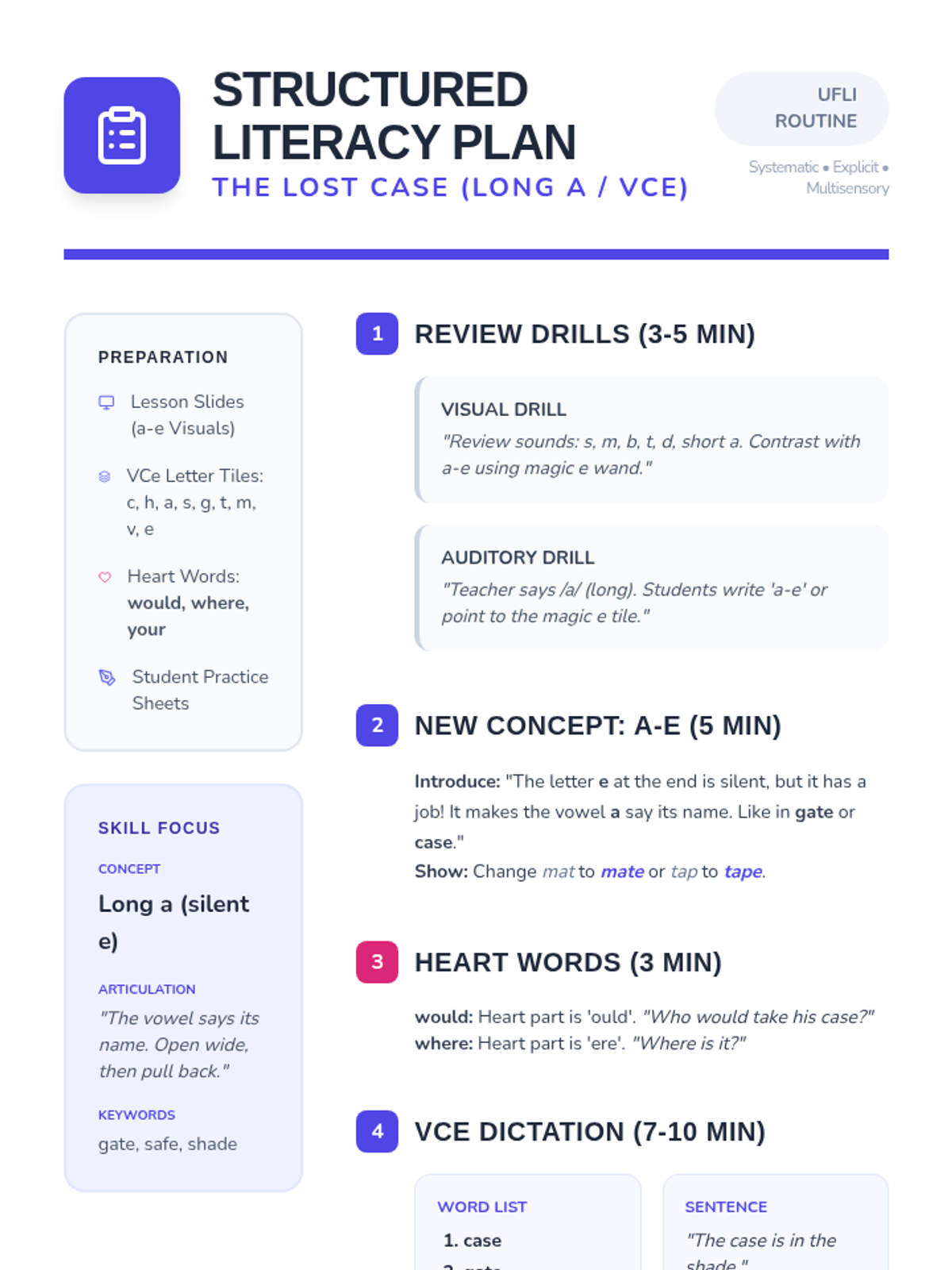
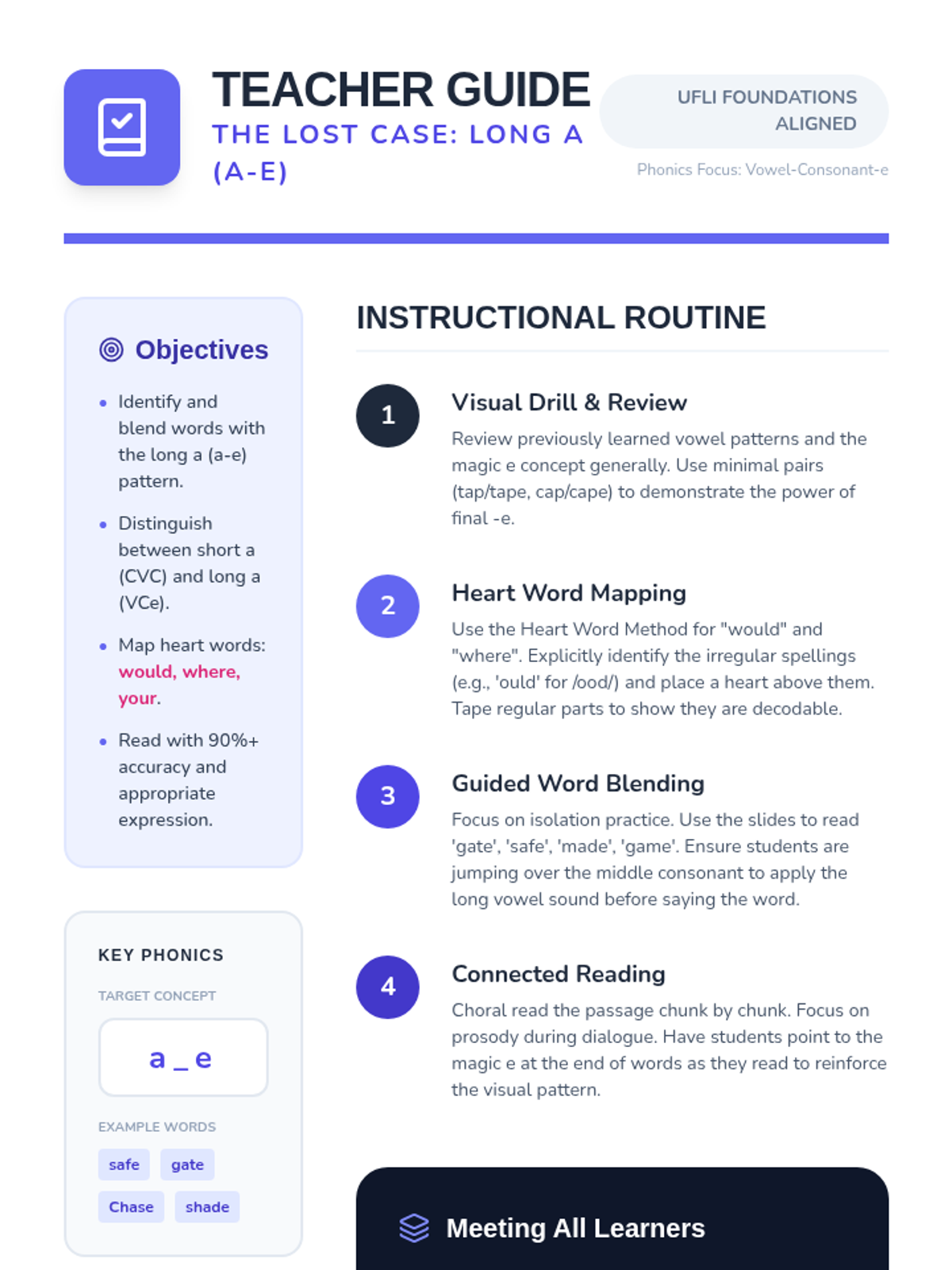
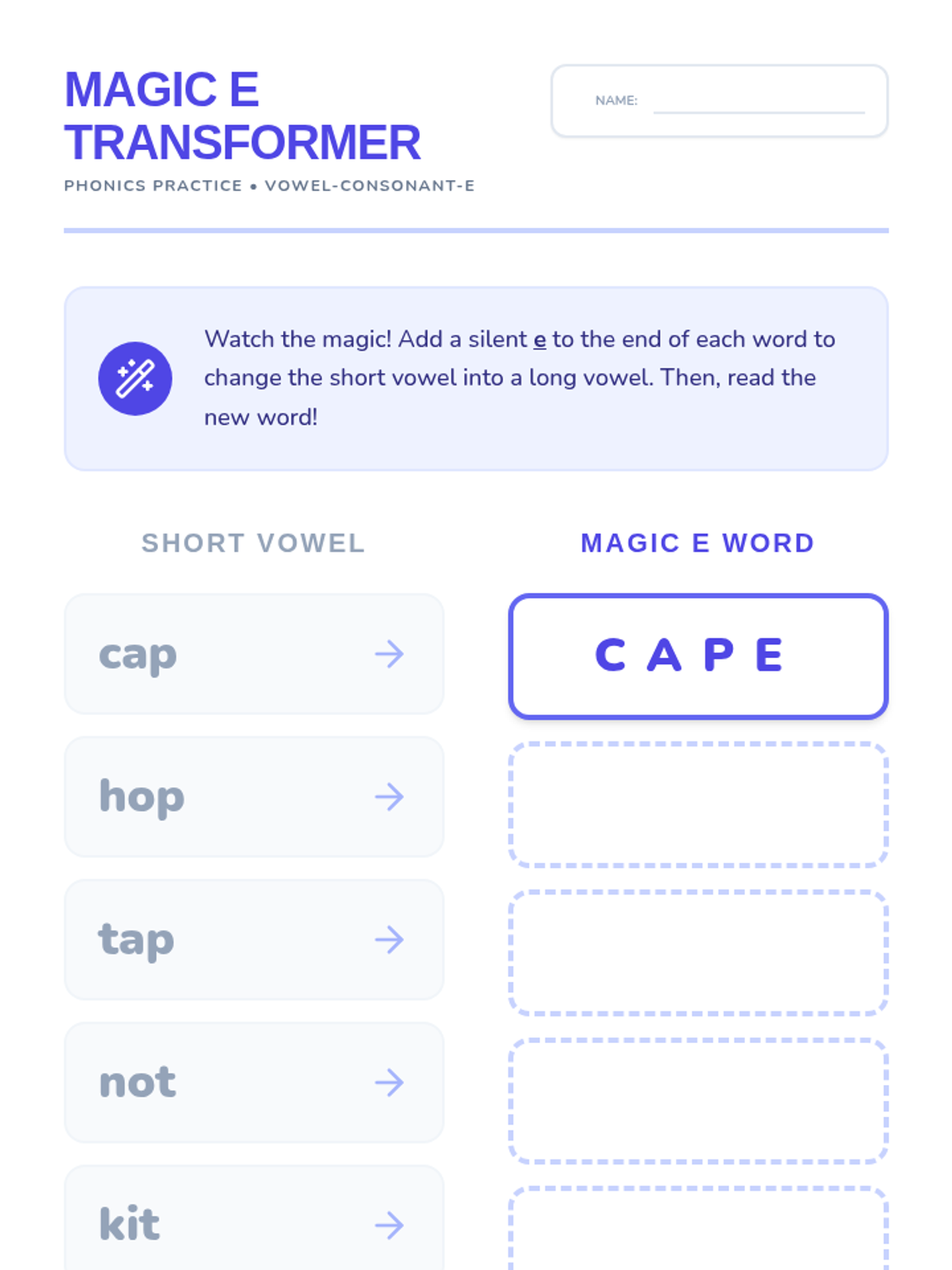
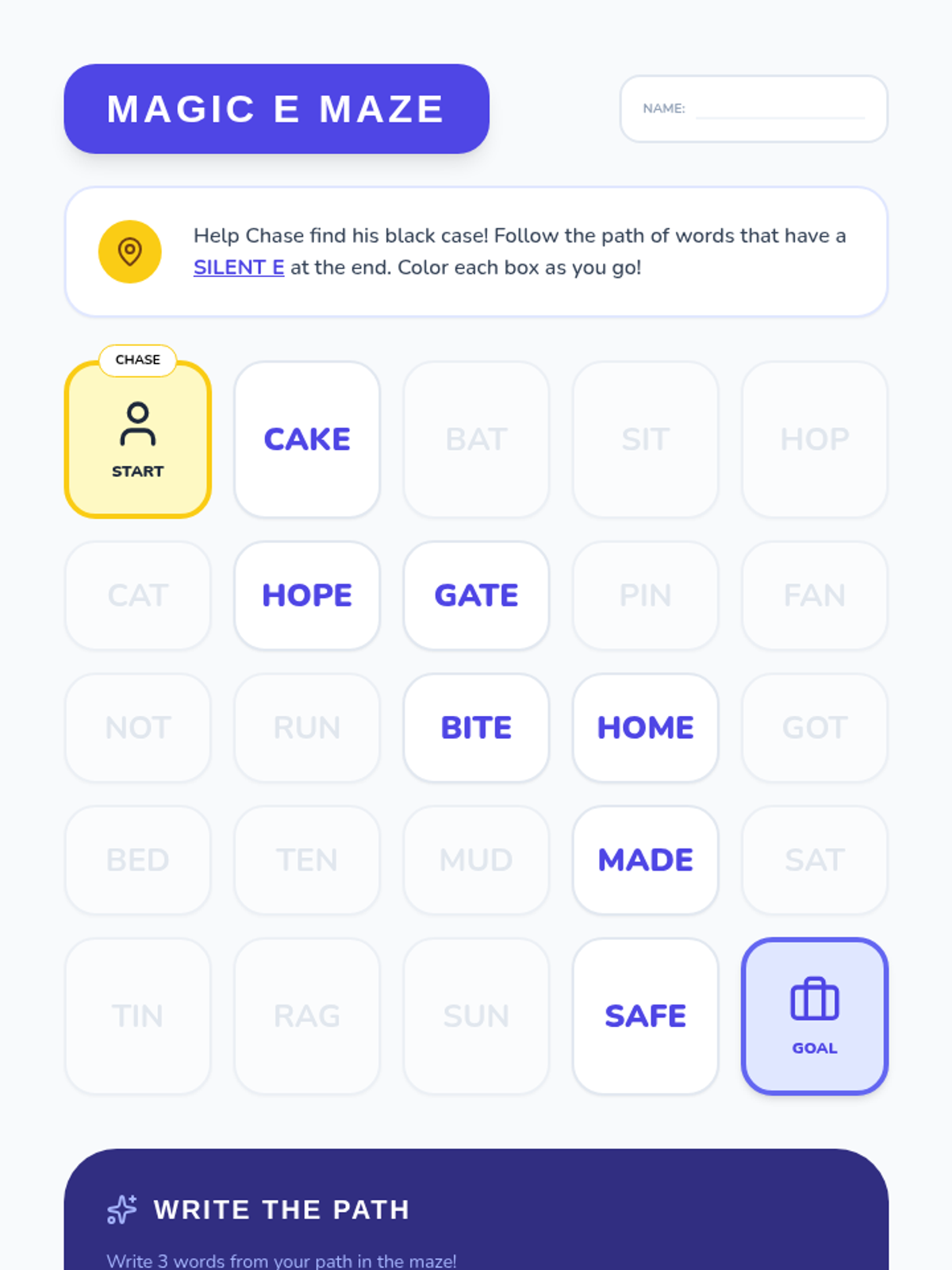
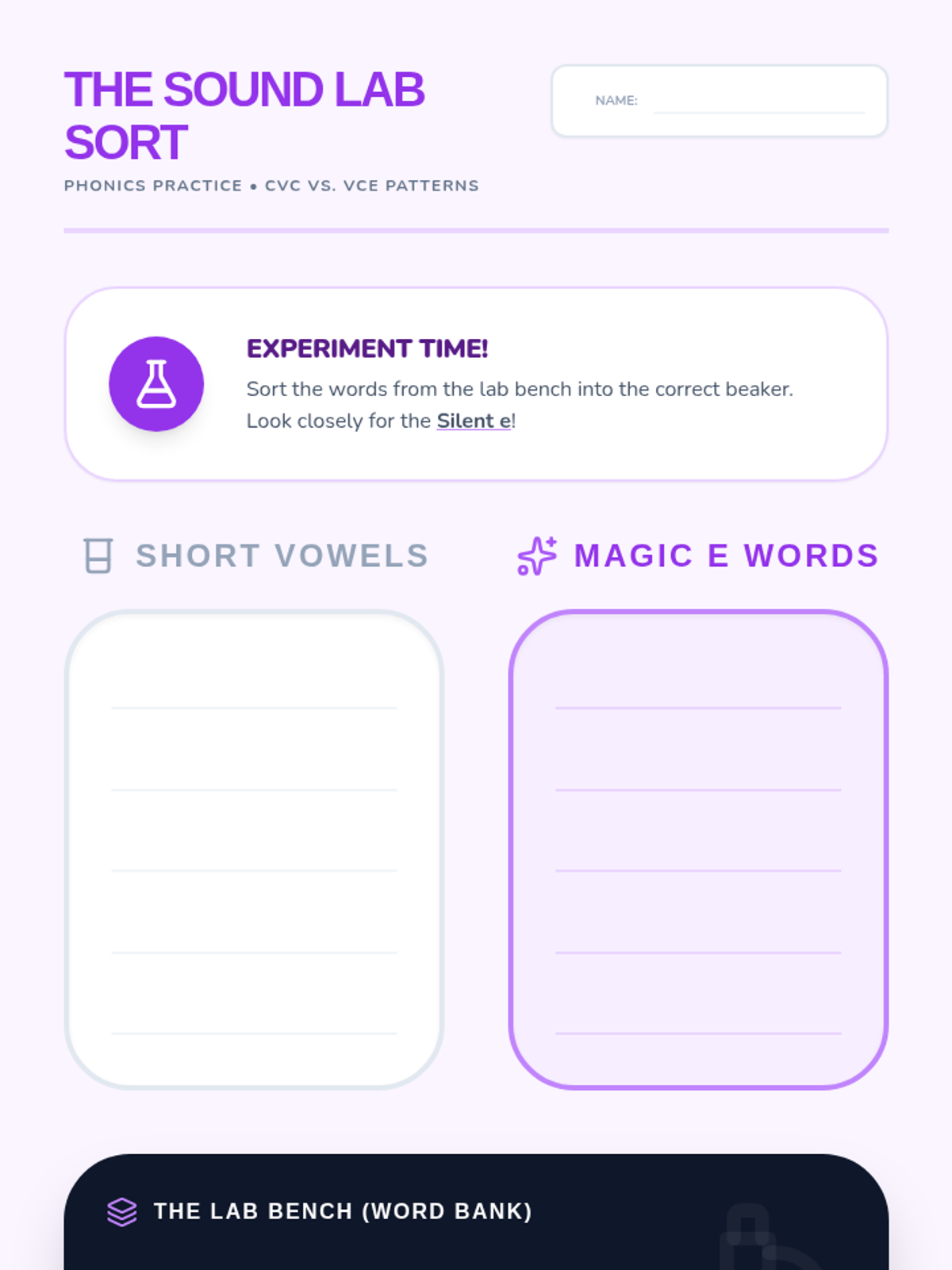
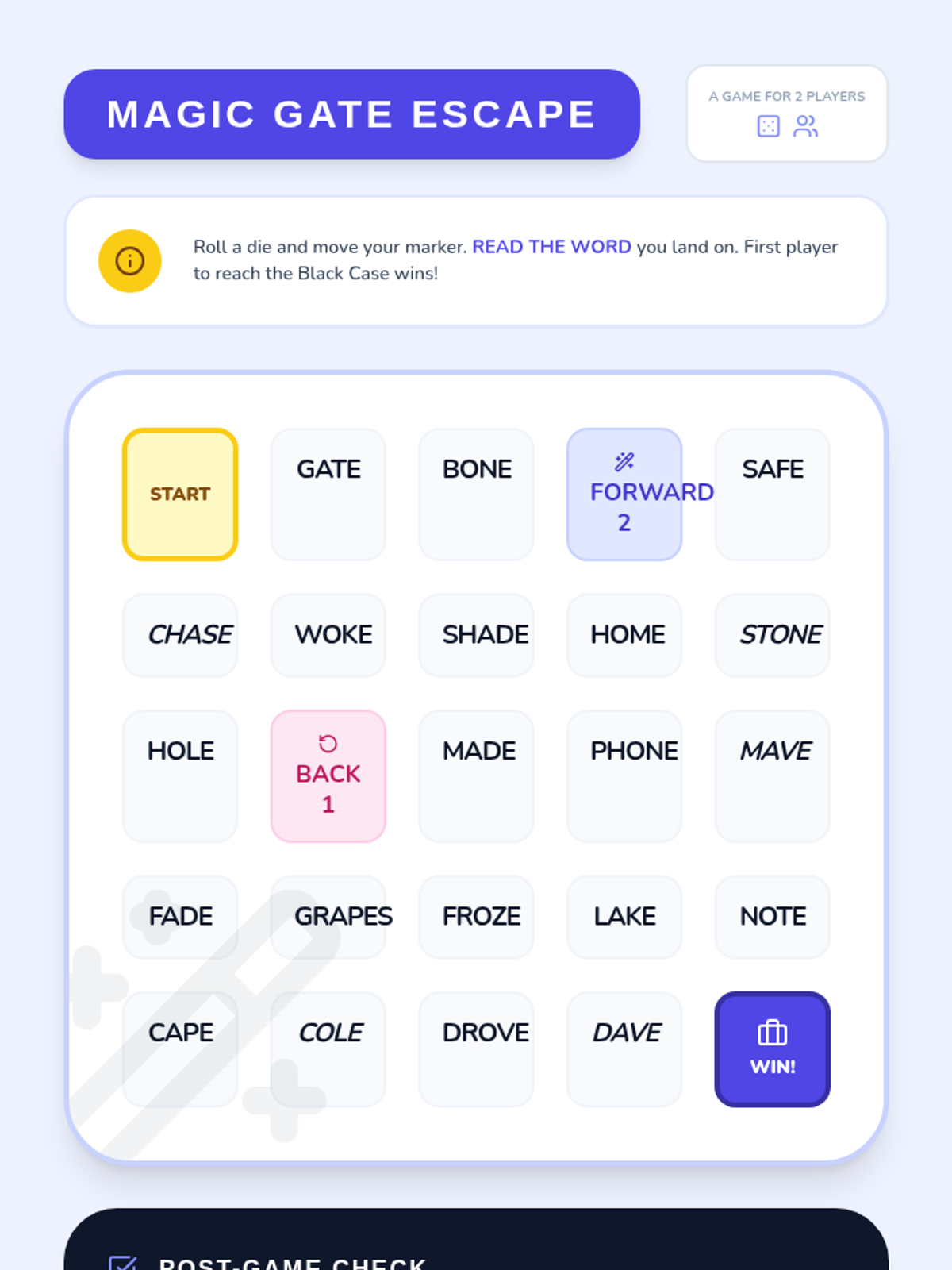
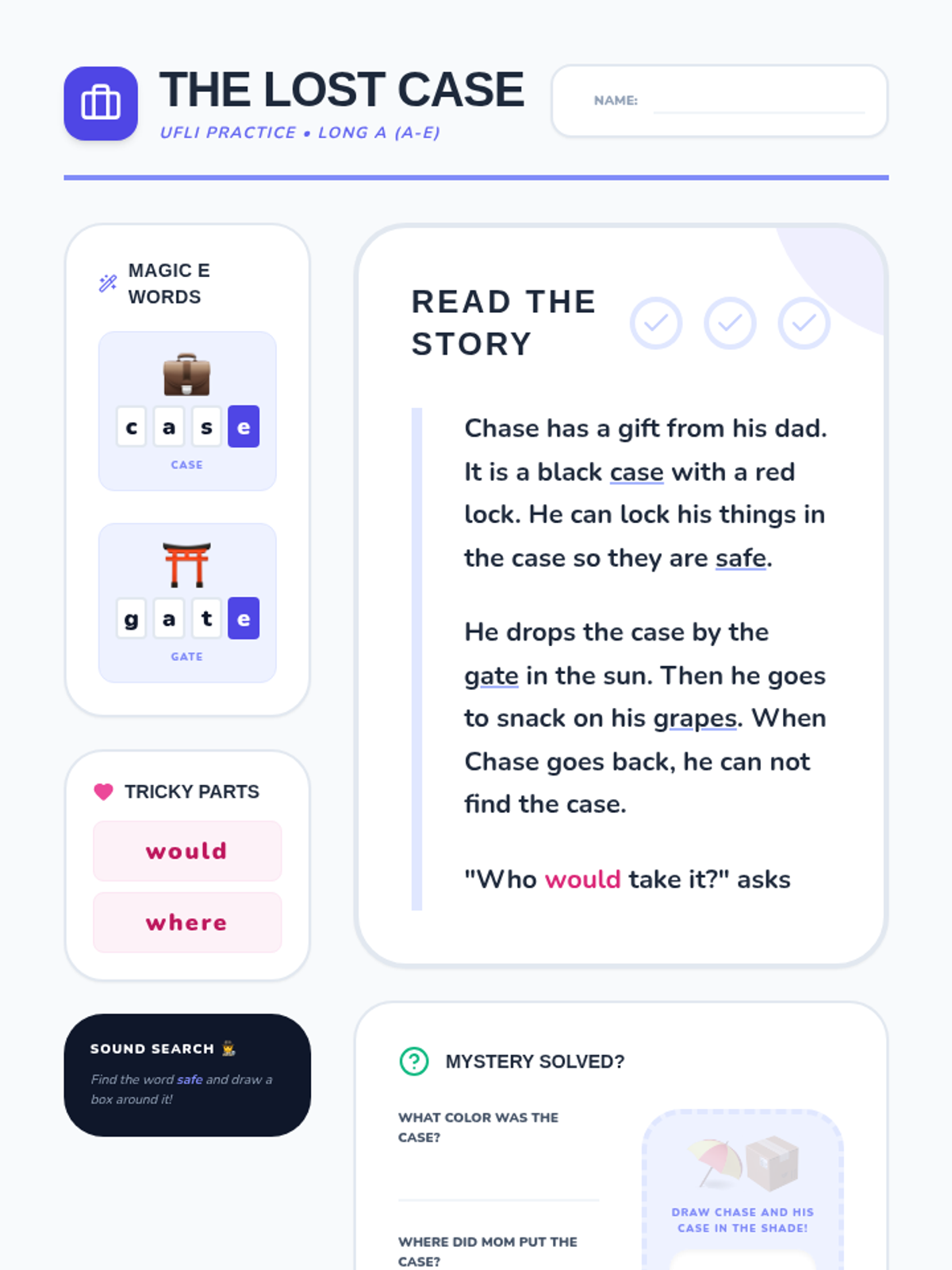
Focuses on the long 'a' vowel sound with the silent 'e' pattern (a-e). Students will read about Chase and his lost black case, practicing words like 'gate', 'safe', 'shade', and 'Mave'.
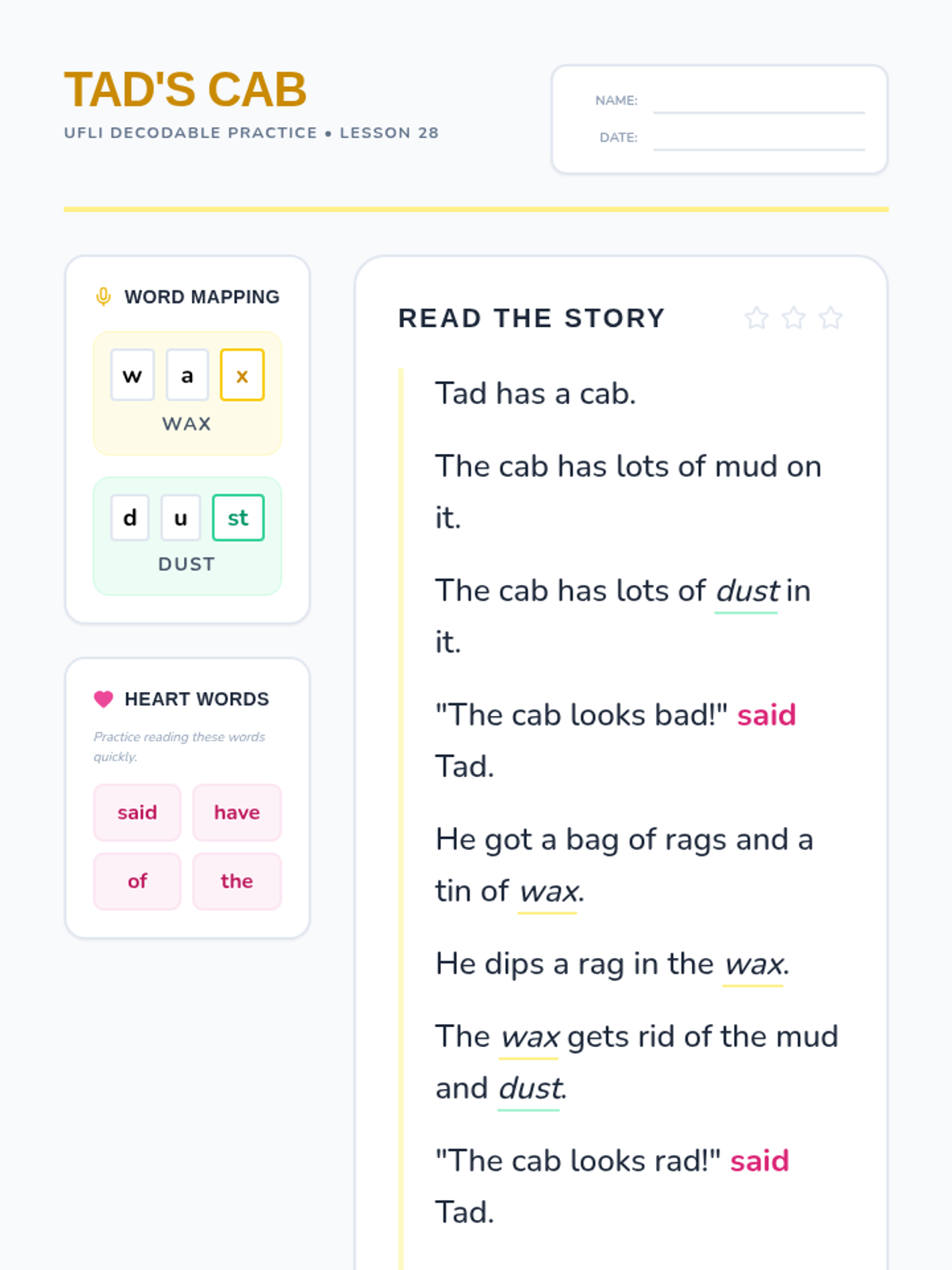
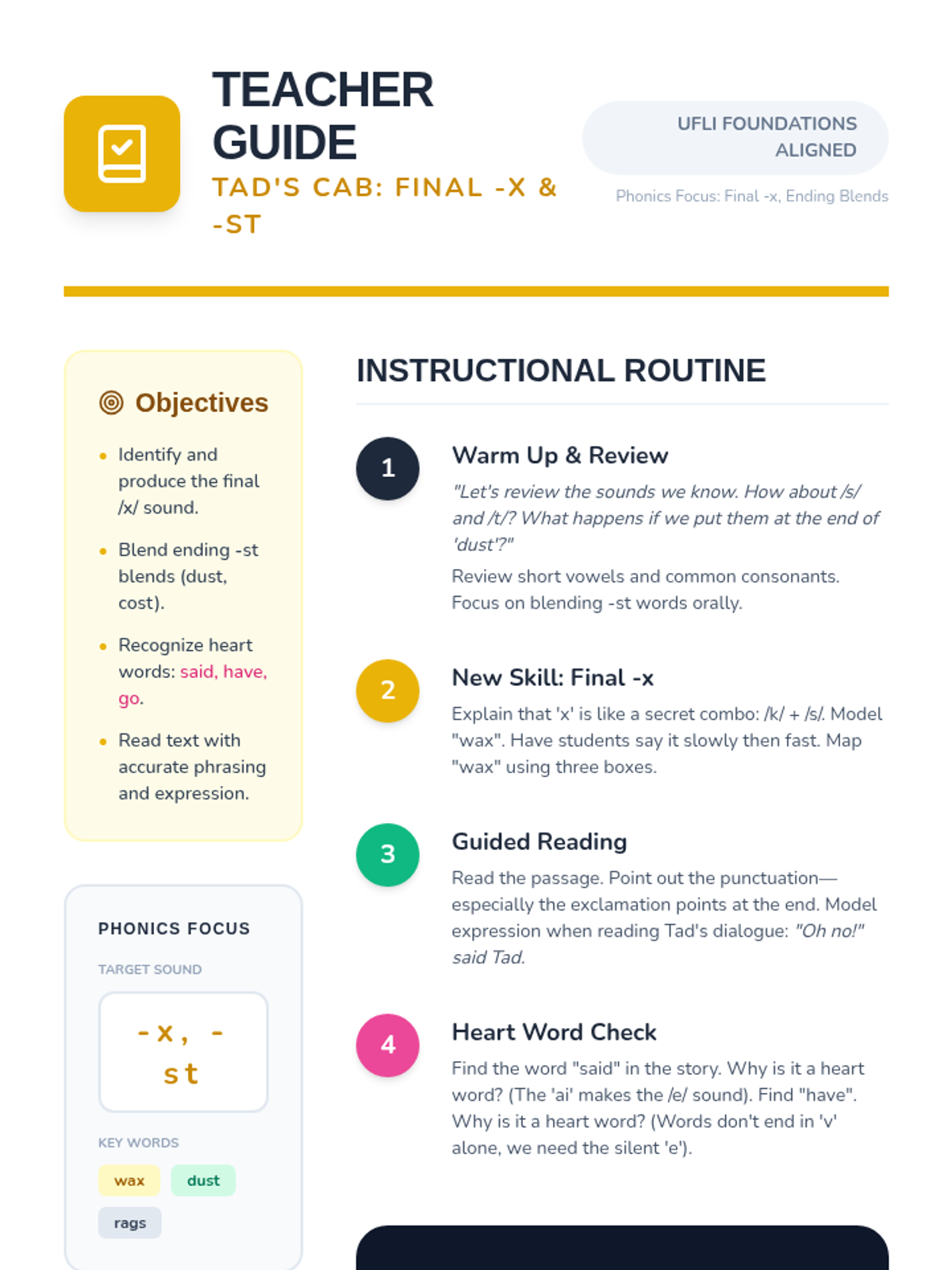
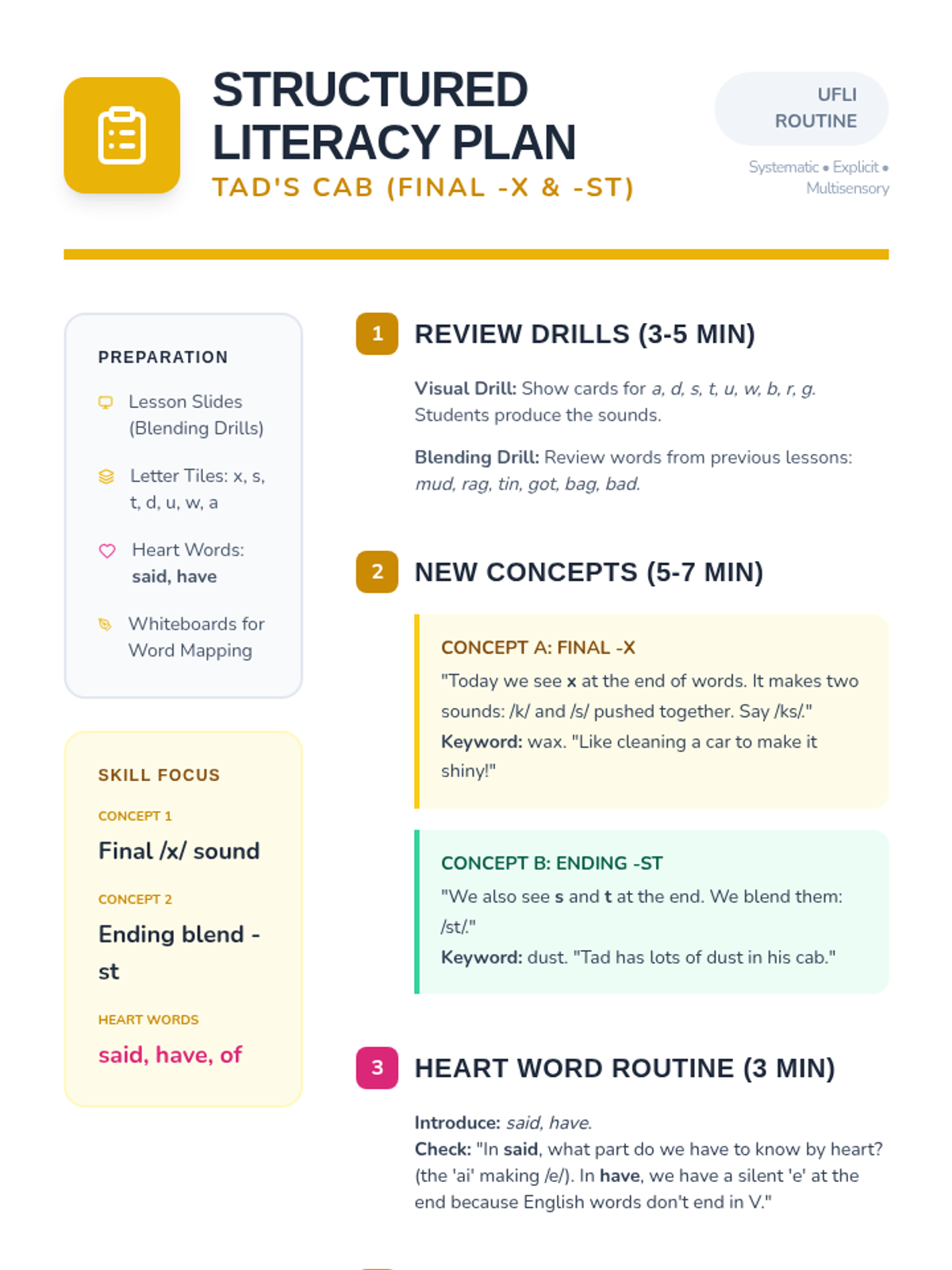
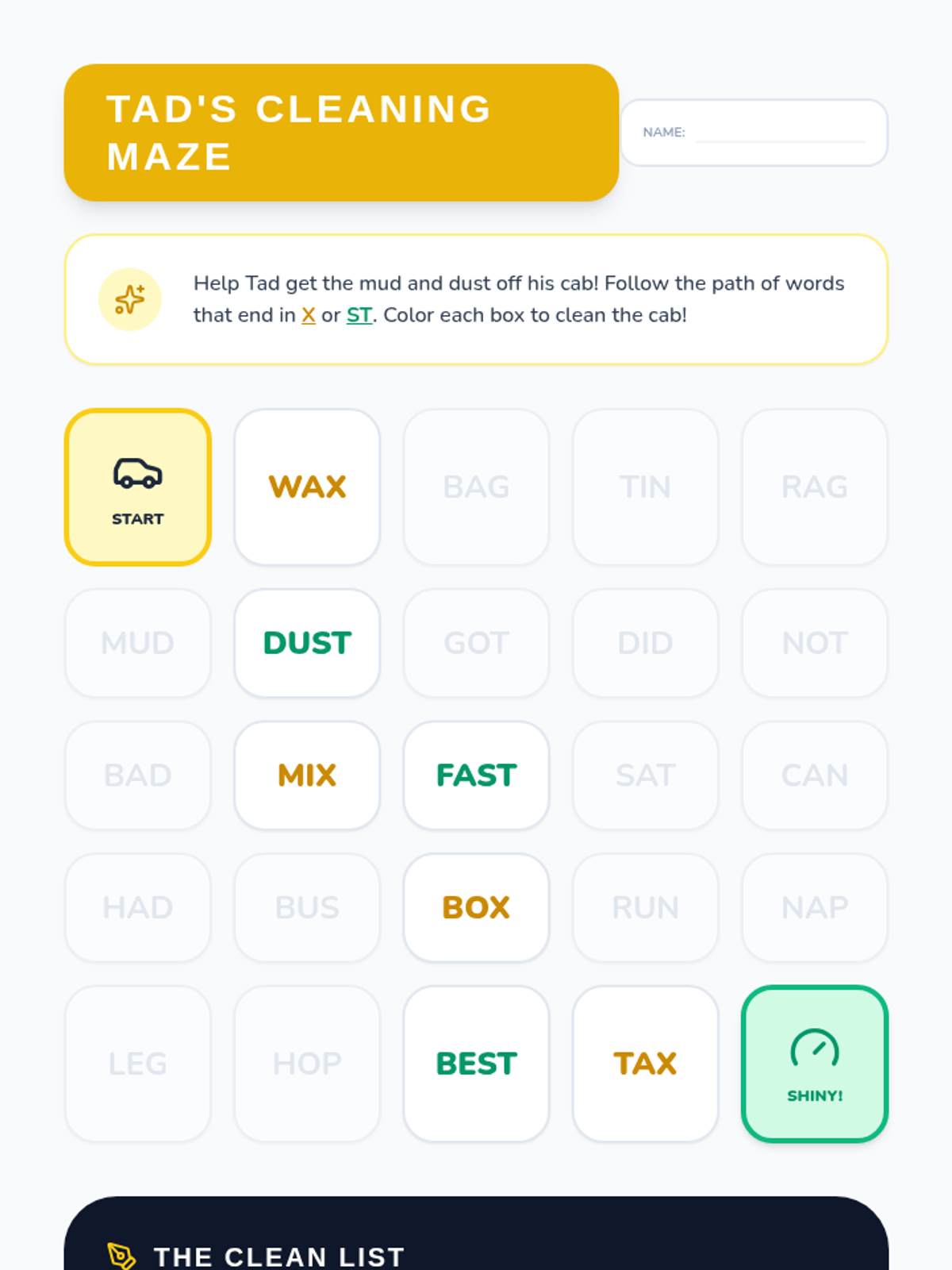
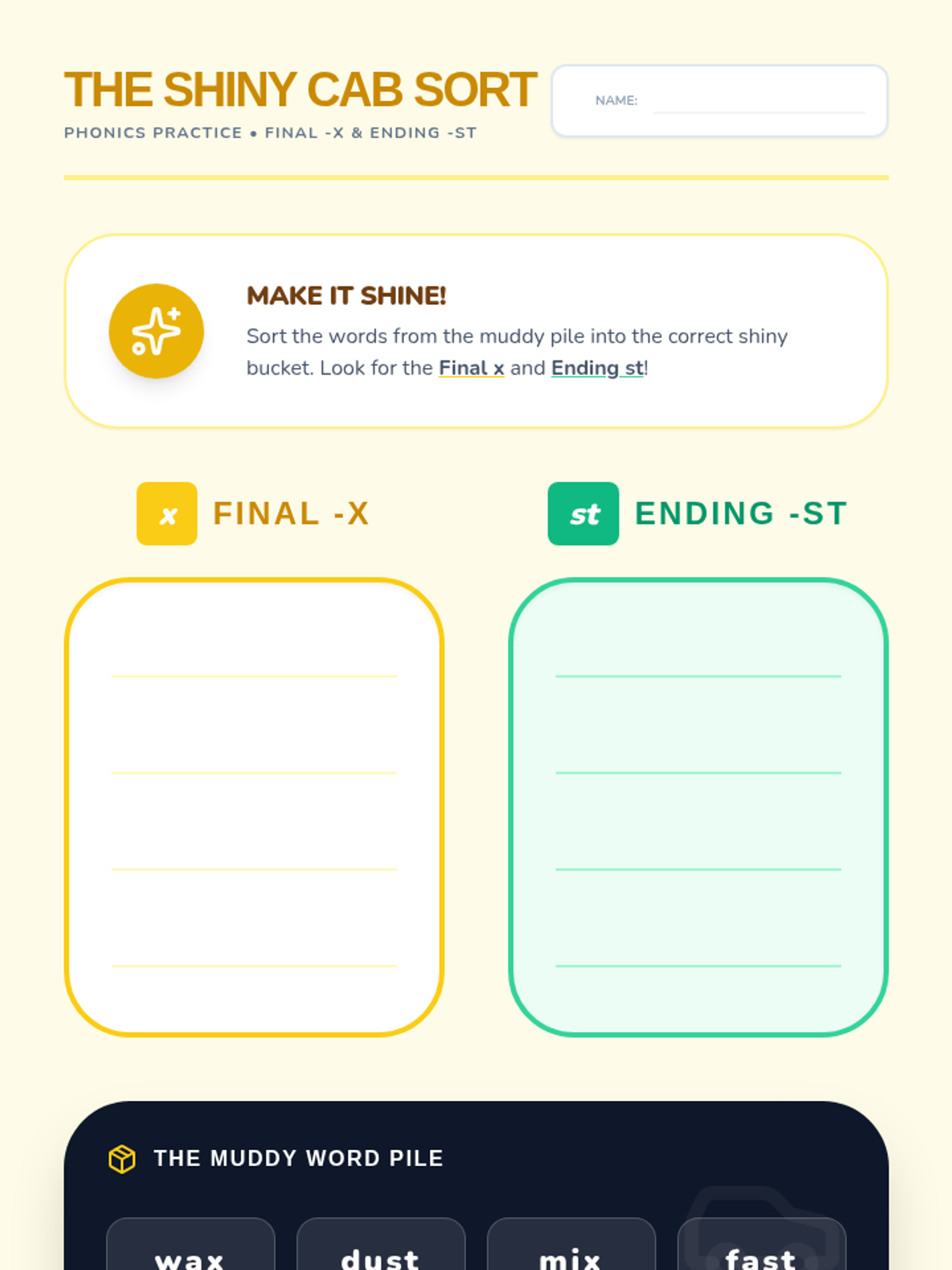
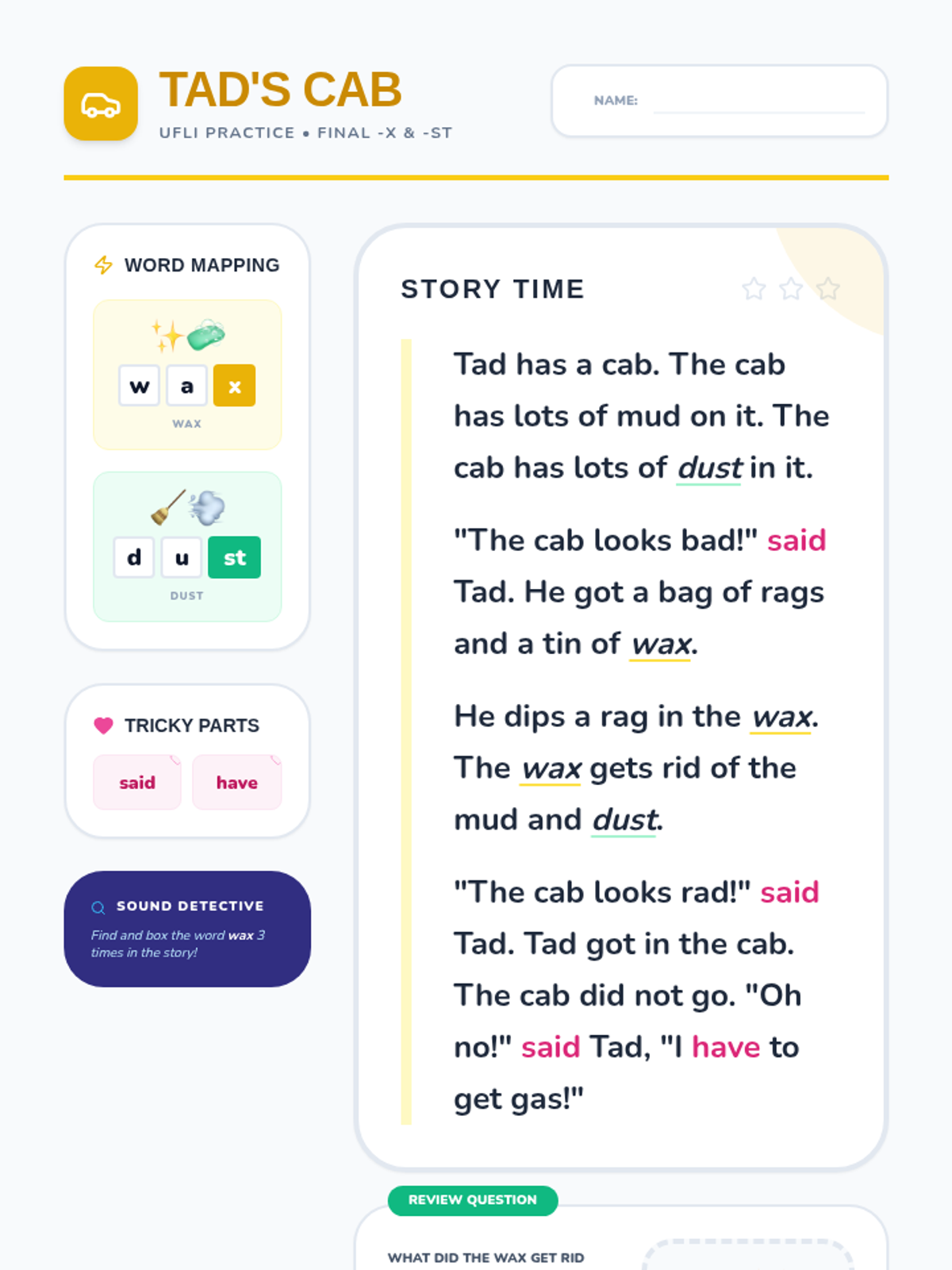
Focuses on short vowels, ending blends (-st), and the final -x sound. Students will read about Tad cleaning his muddy cab, incorporating words like 'dust', 'wax', and 'rags'.
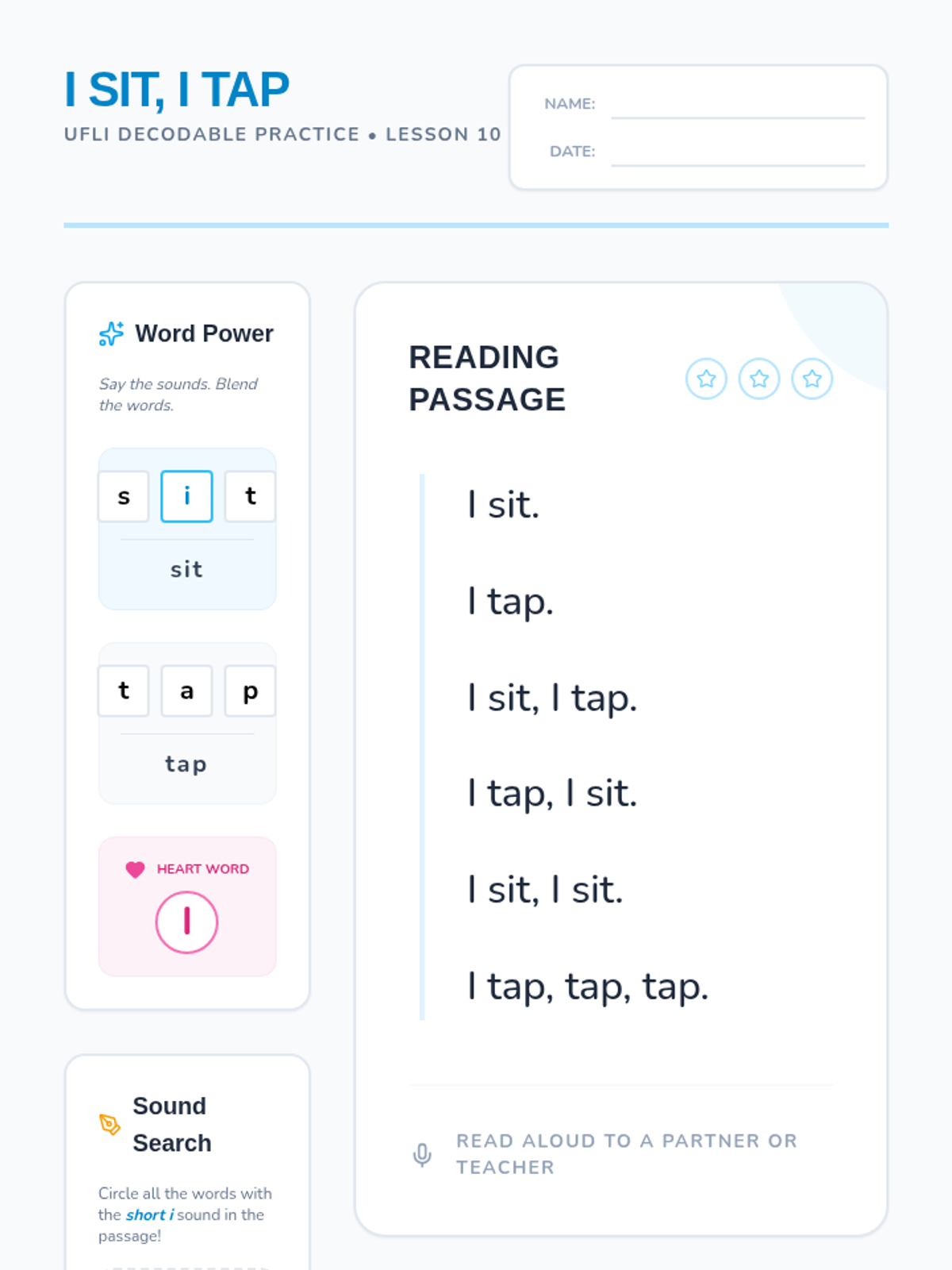
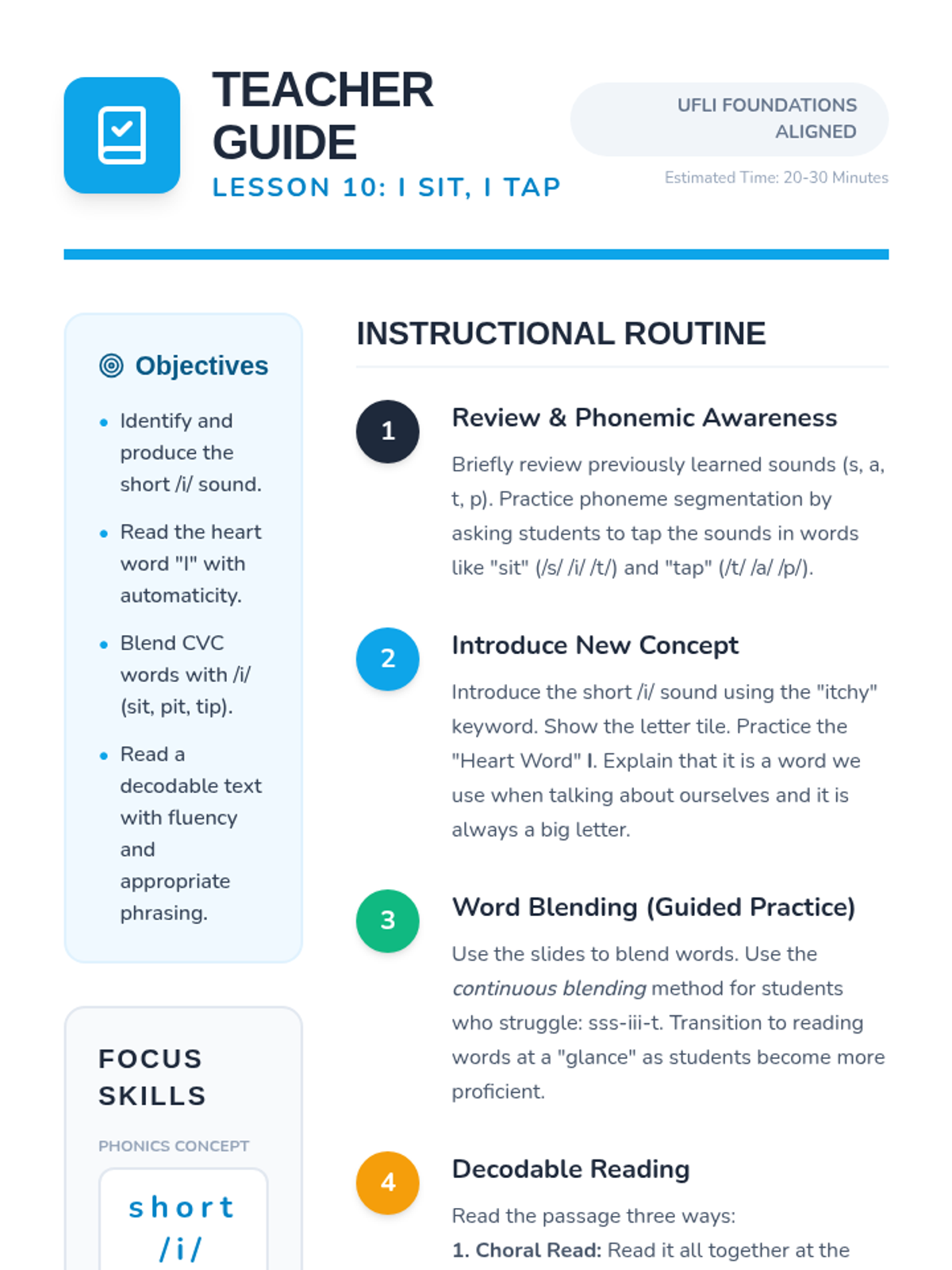
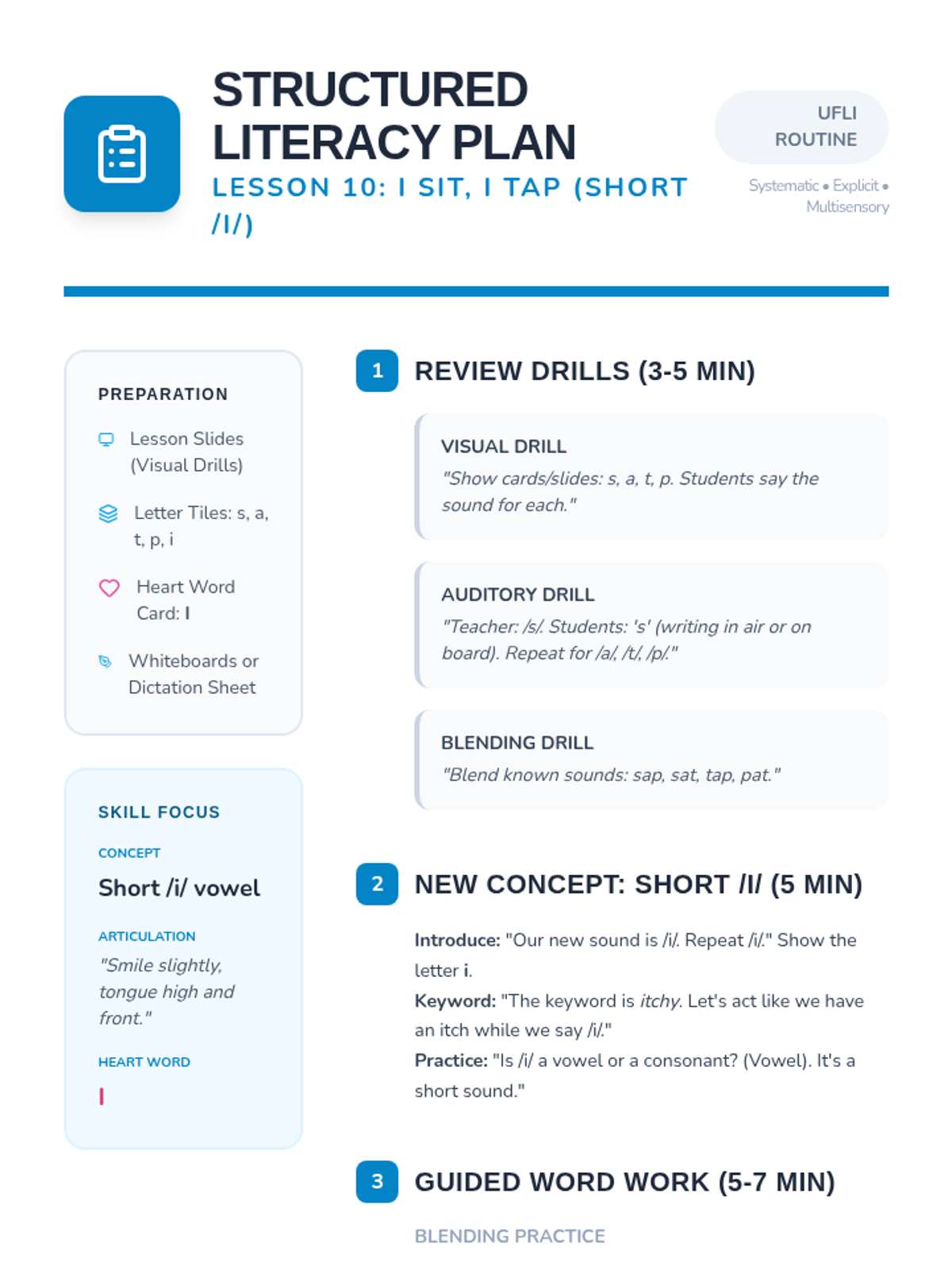
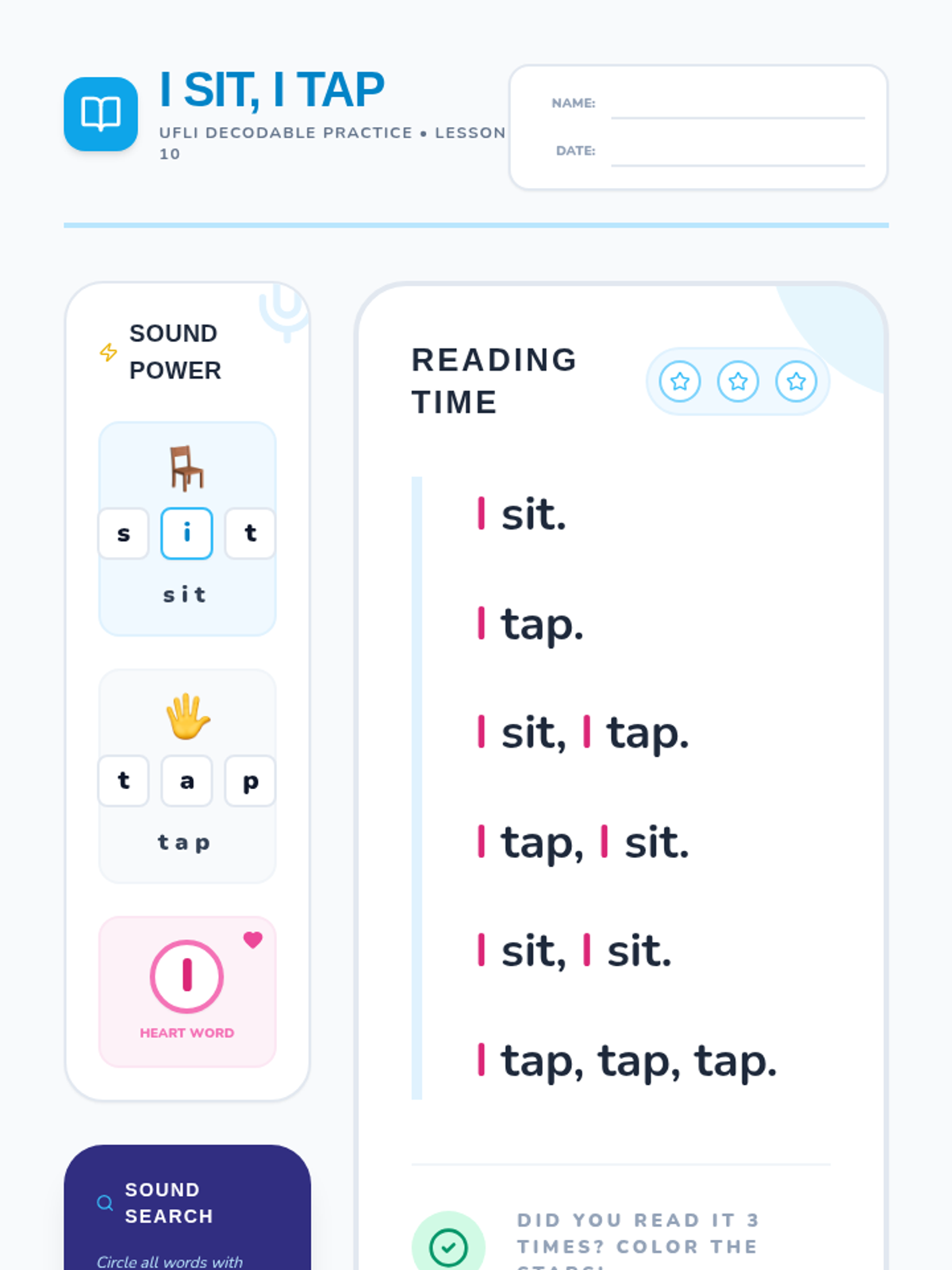
Focuses on the short /i/ vowel sound and the heart word 'I'. Students will practice blending letters s, a, t, p, and i to read a rhythmic decodable passage about sitting and tapping.
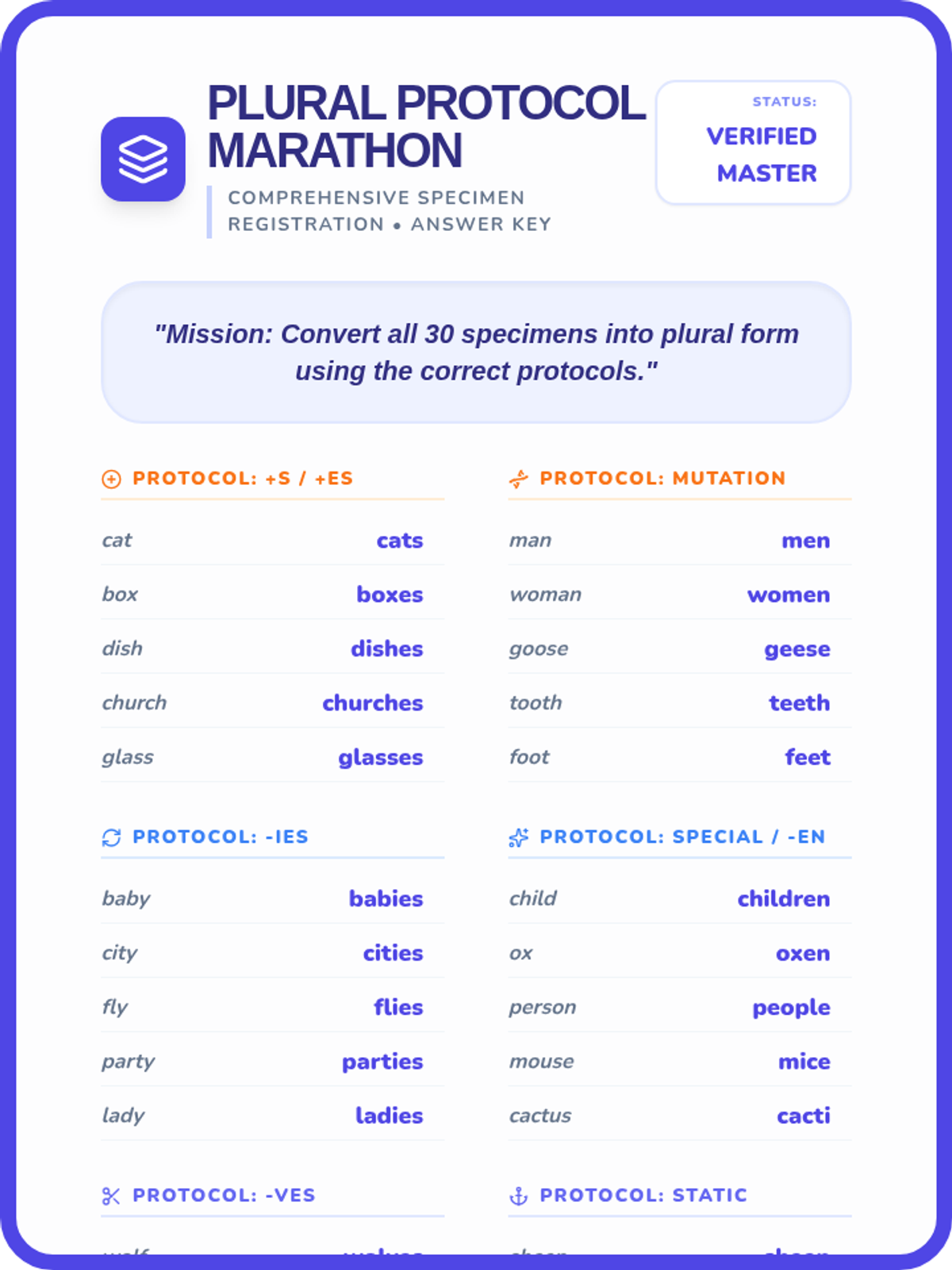
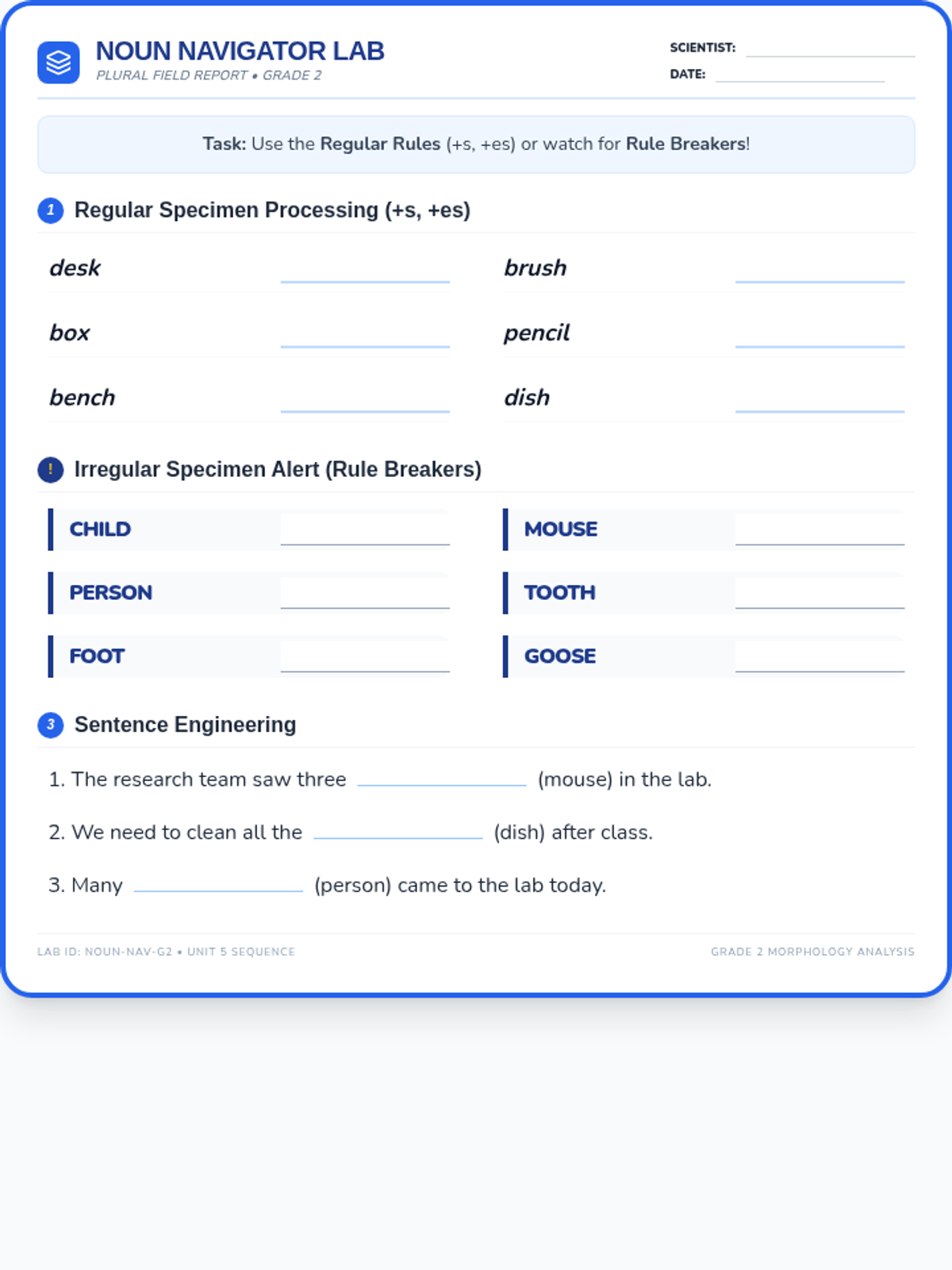
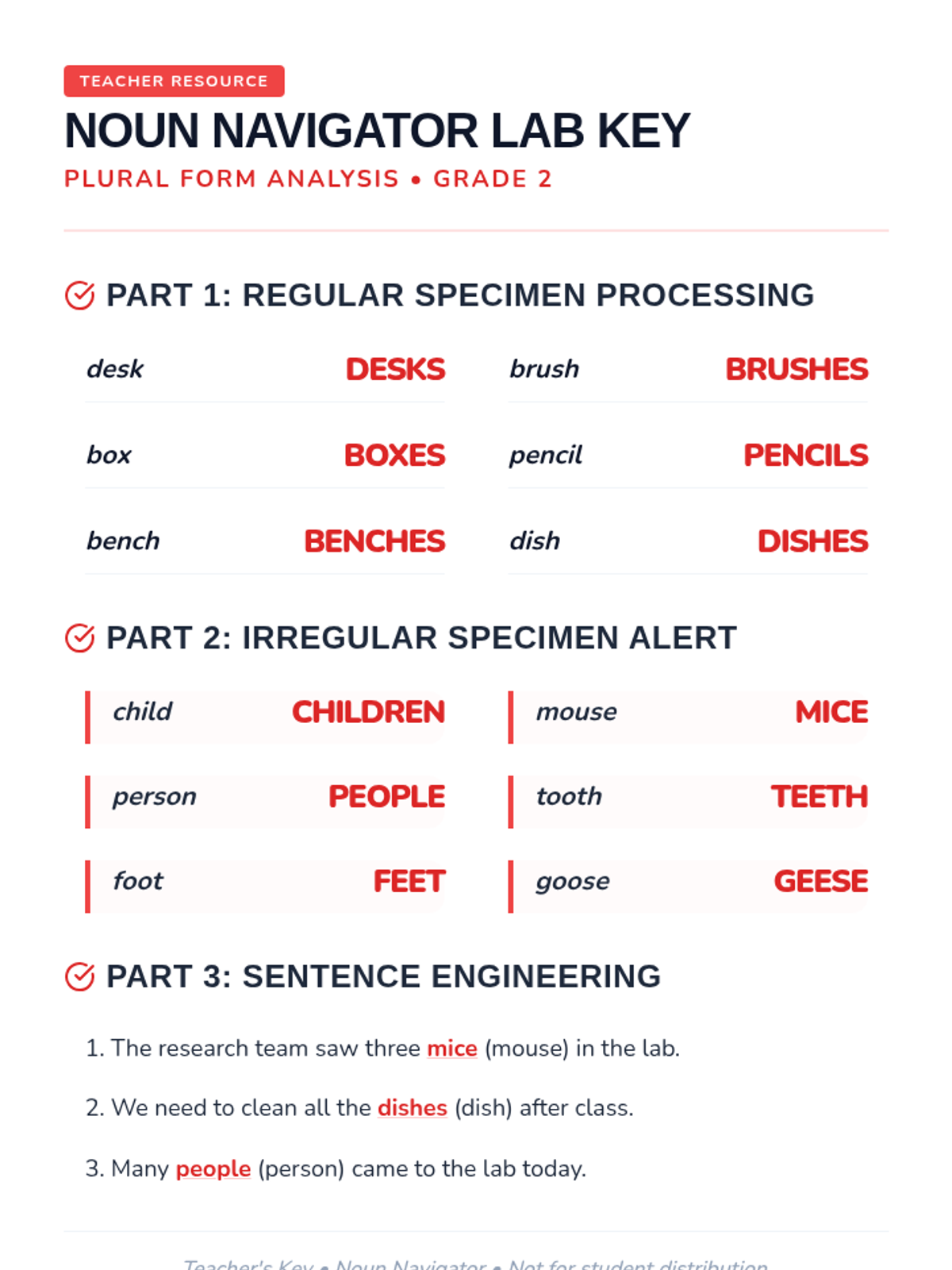
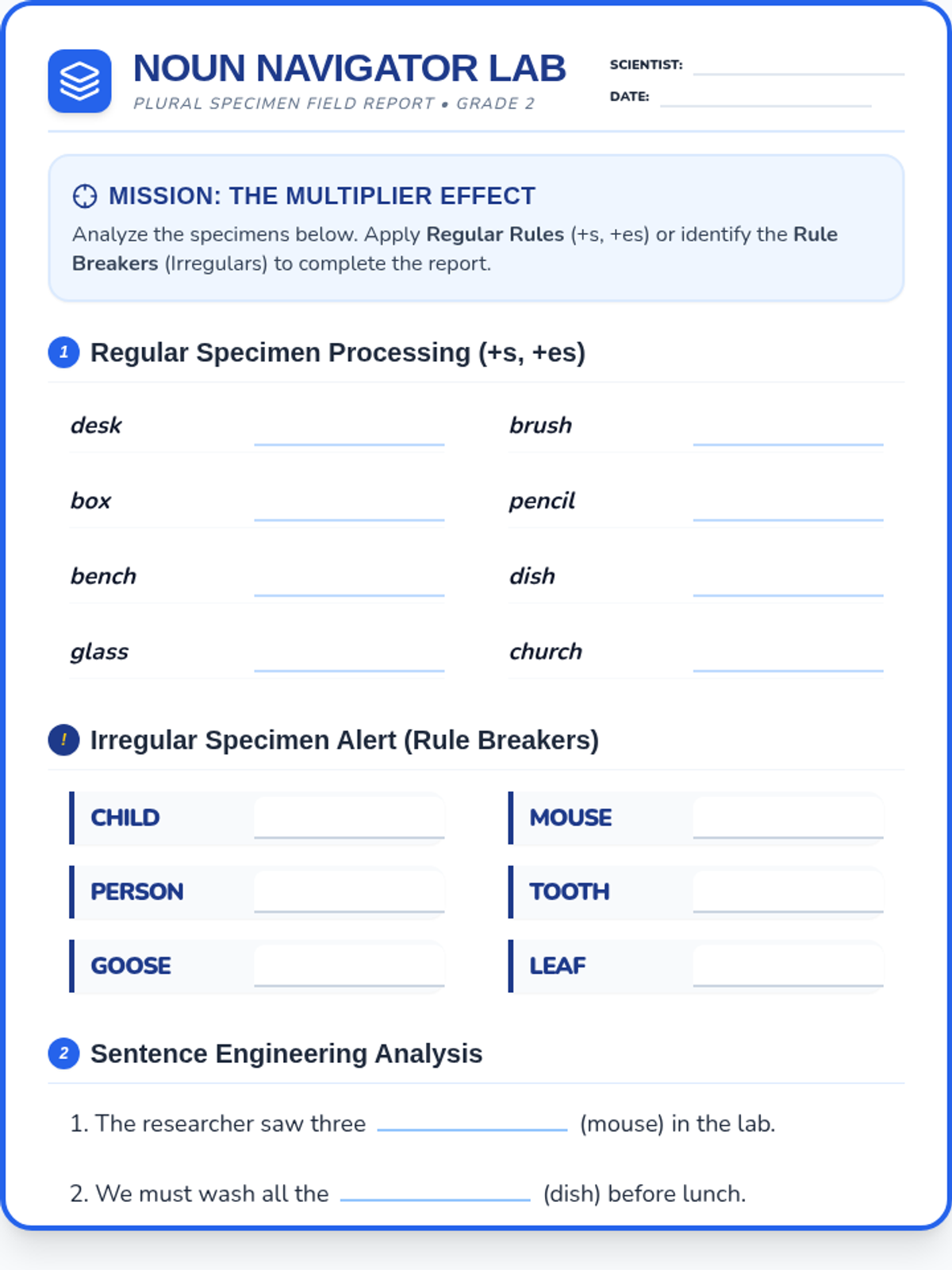
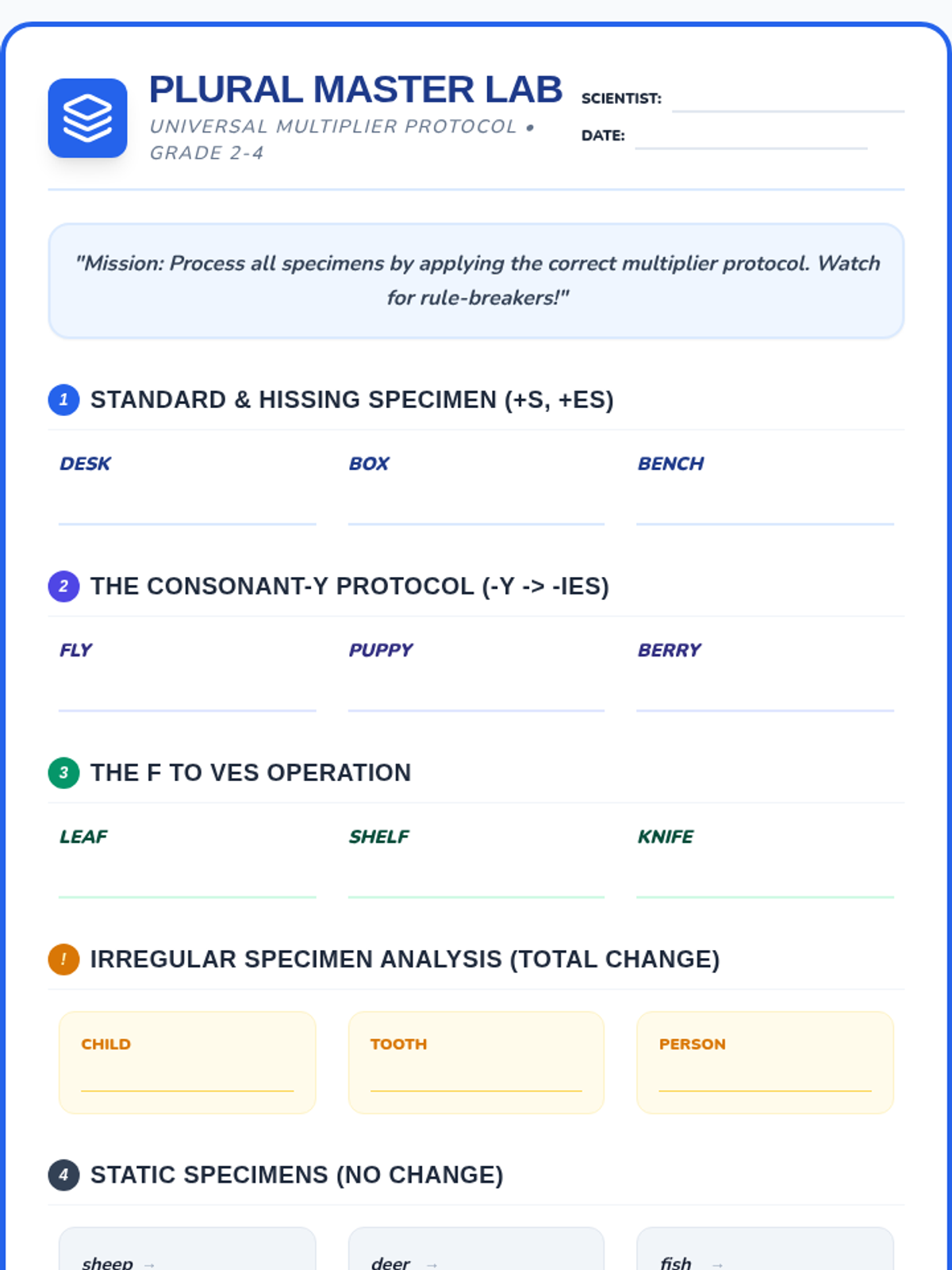
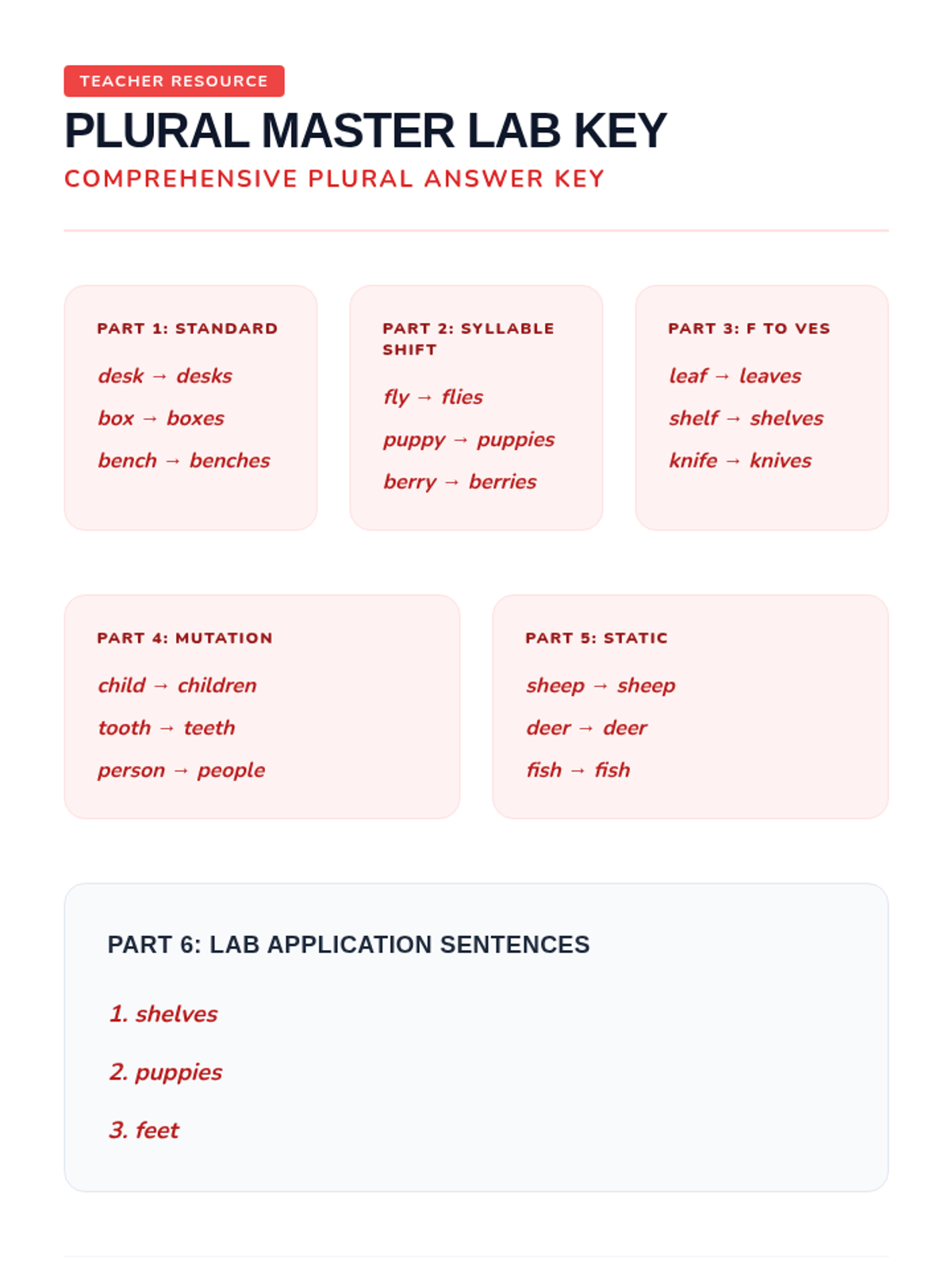
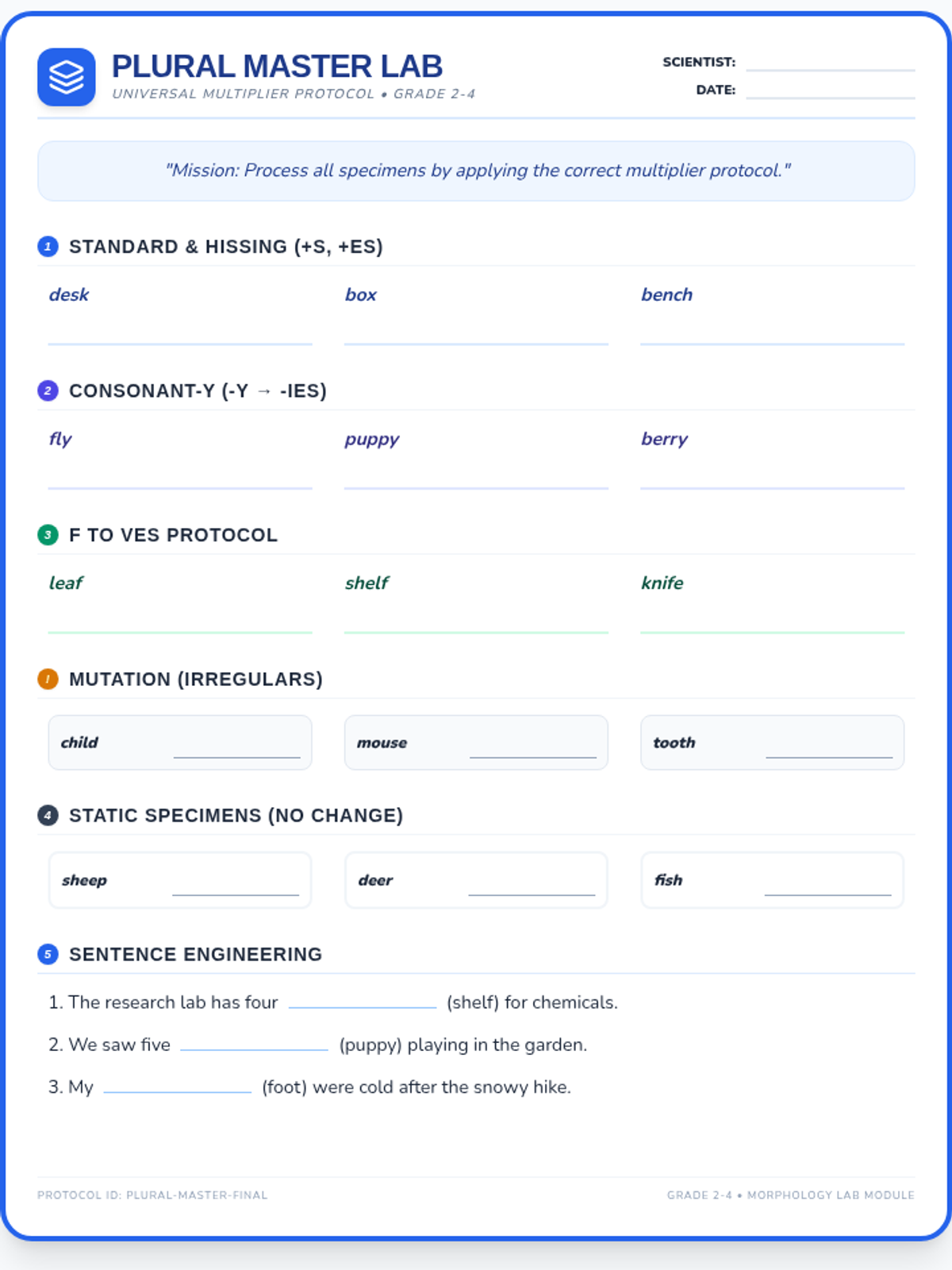
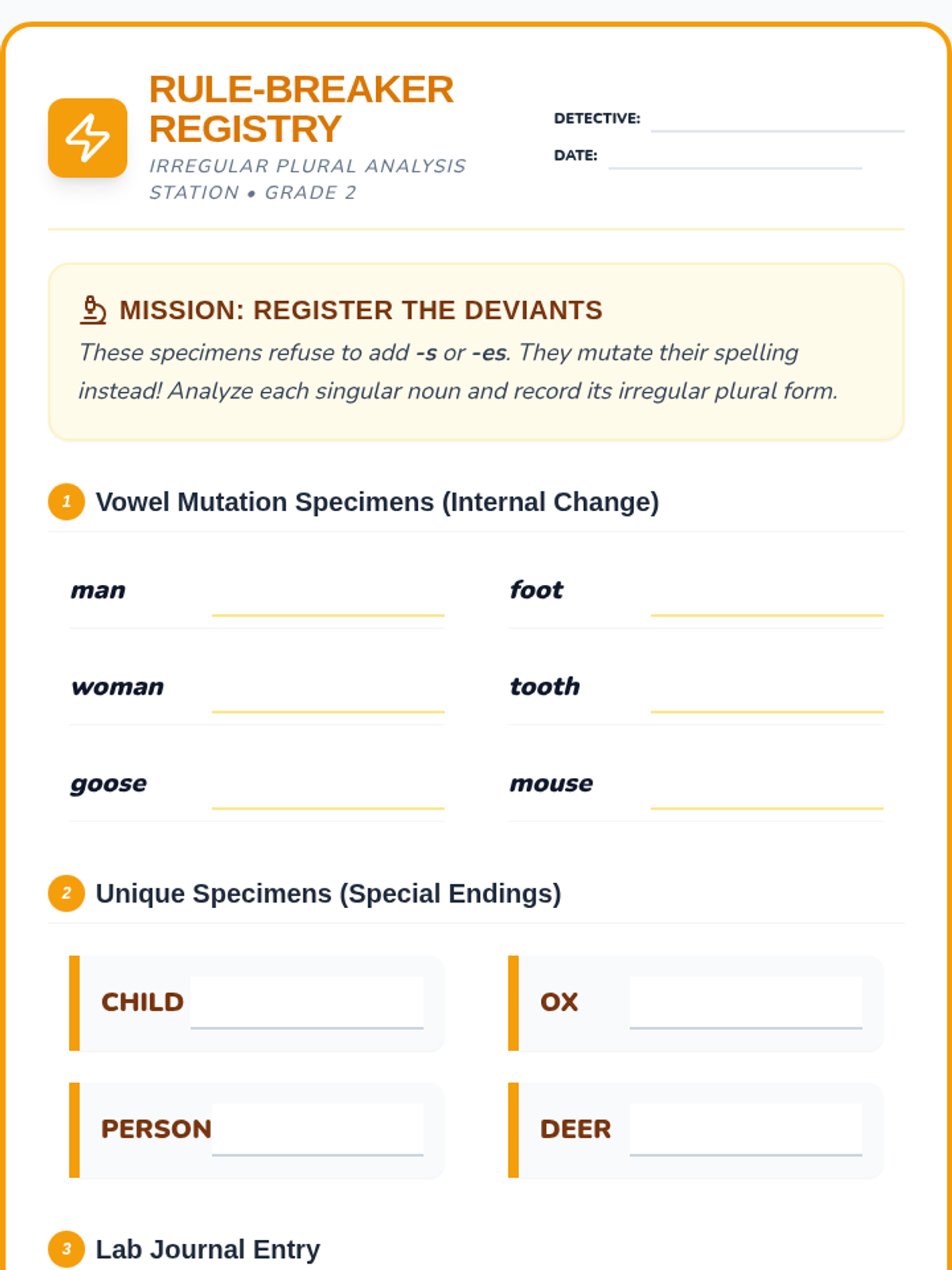
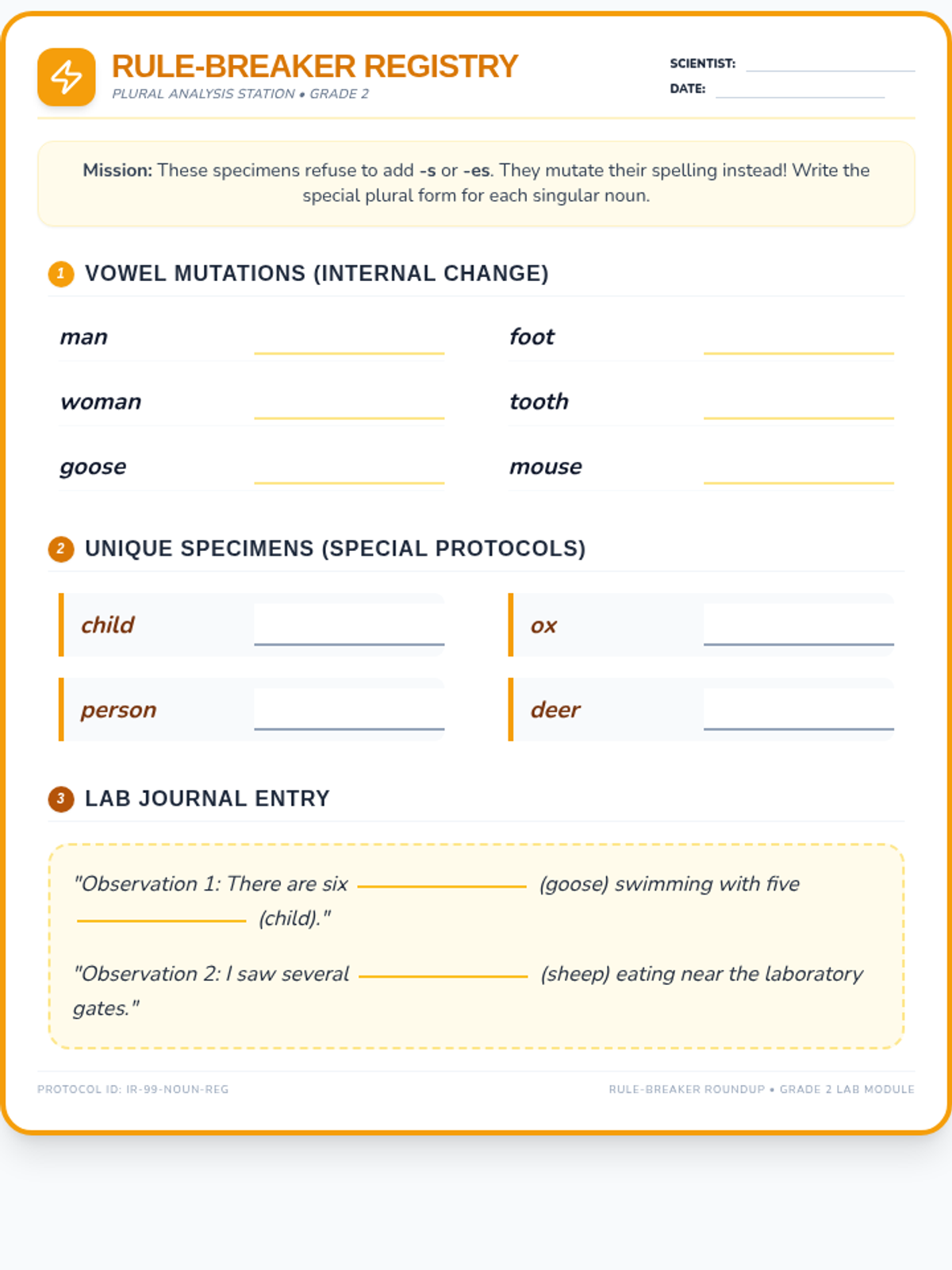
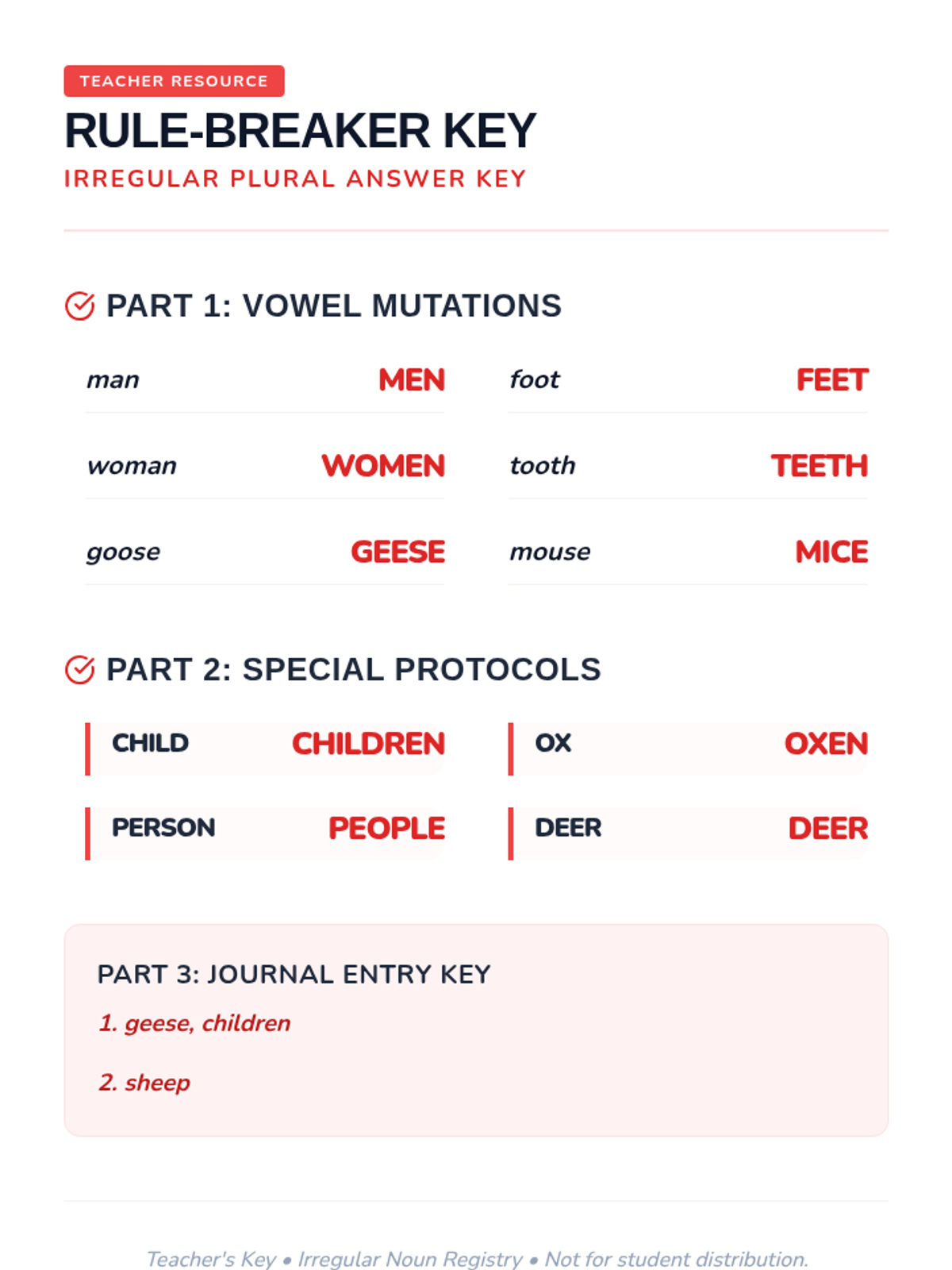
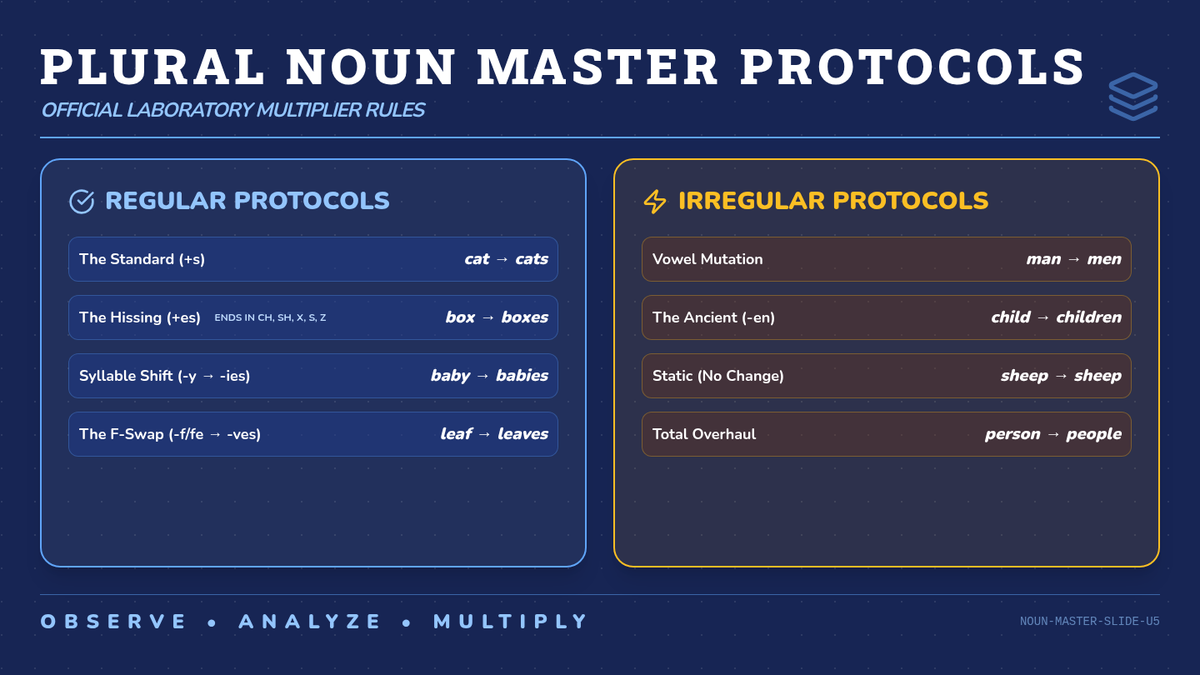
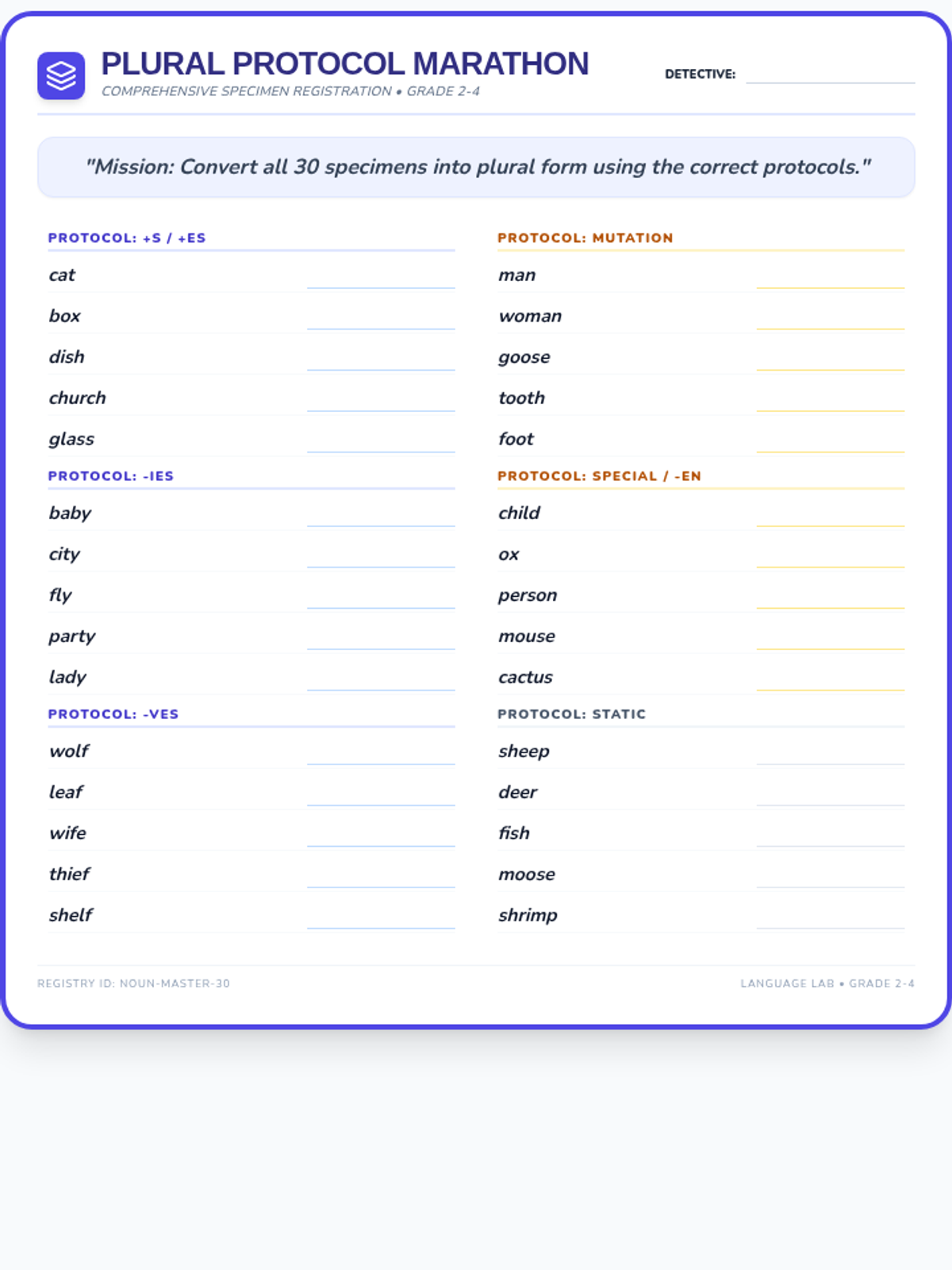
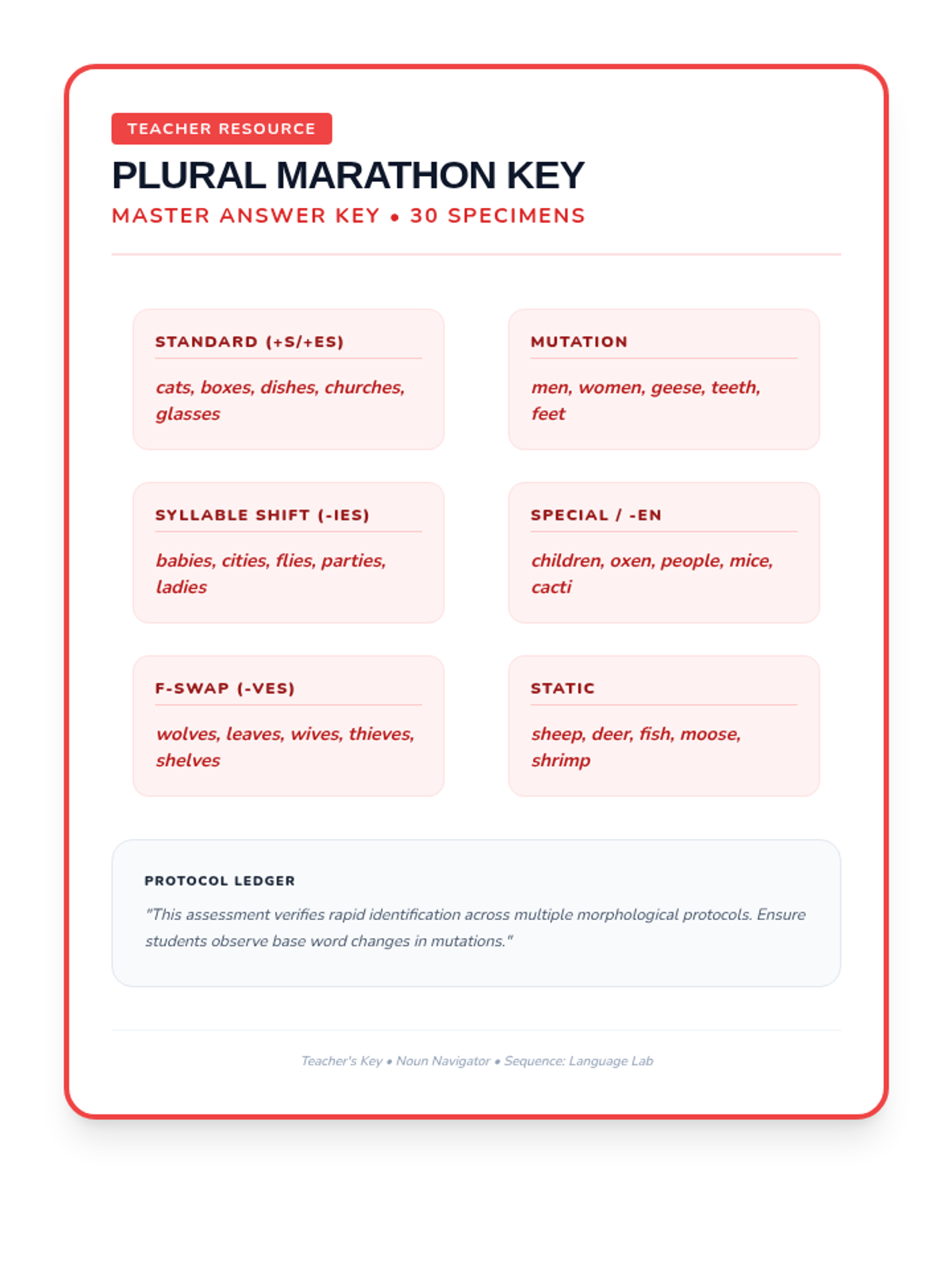
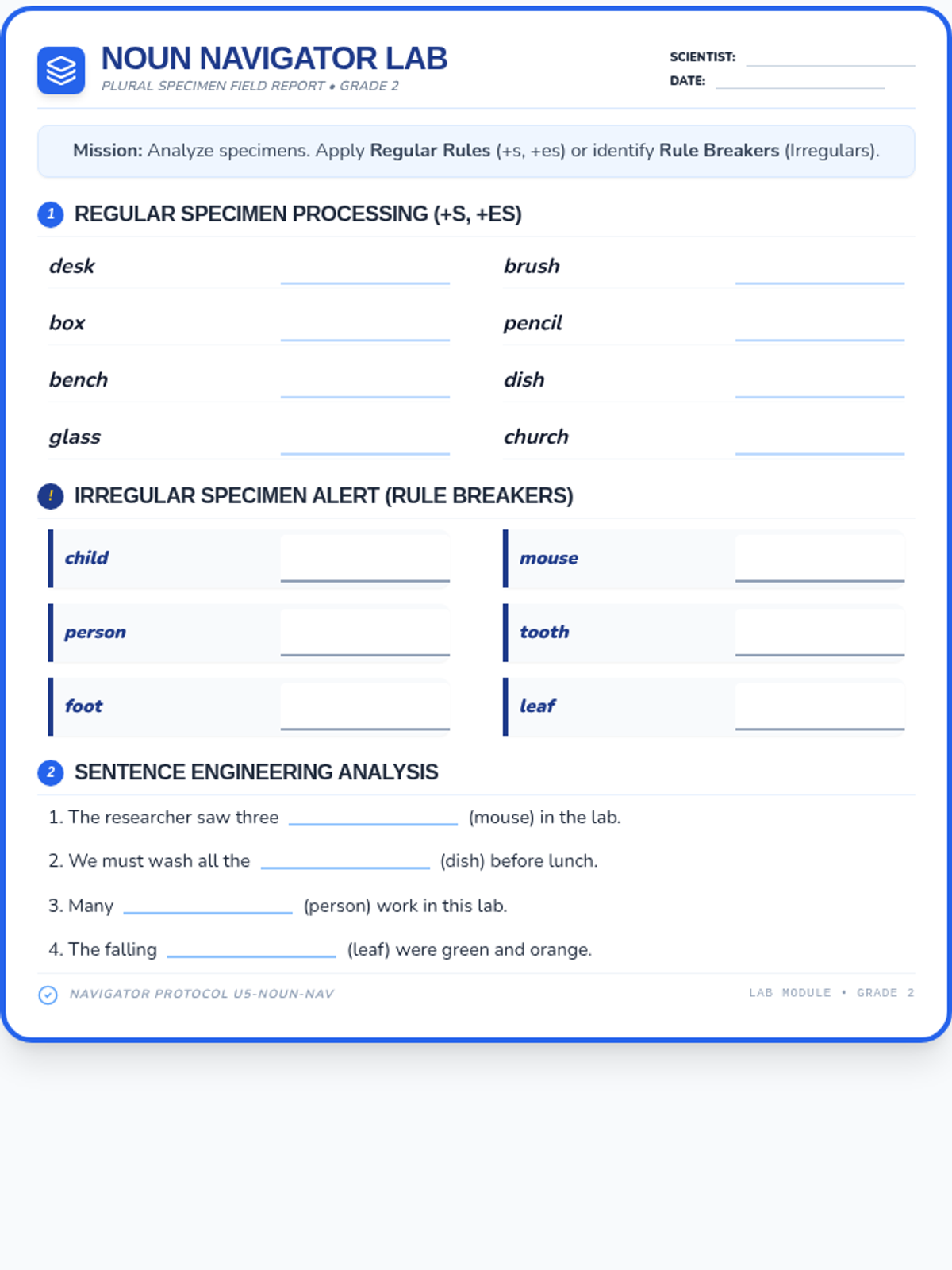
A lesson on identifying and forming plural nouns. Students learn the standard rules for regular plurals (-s, -es, -ies, -ves) and investigate 'rule-breaking' irregular nouns like mice, children, and people.
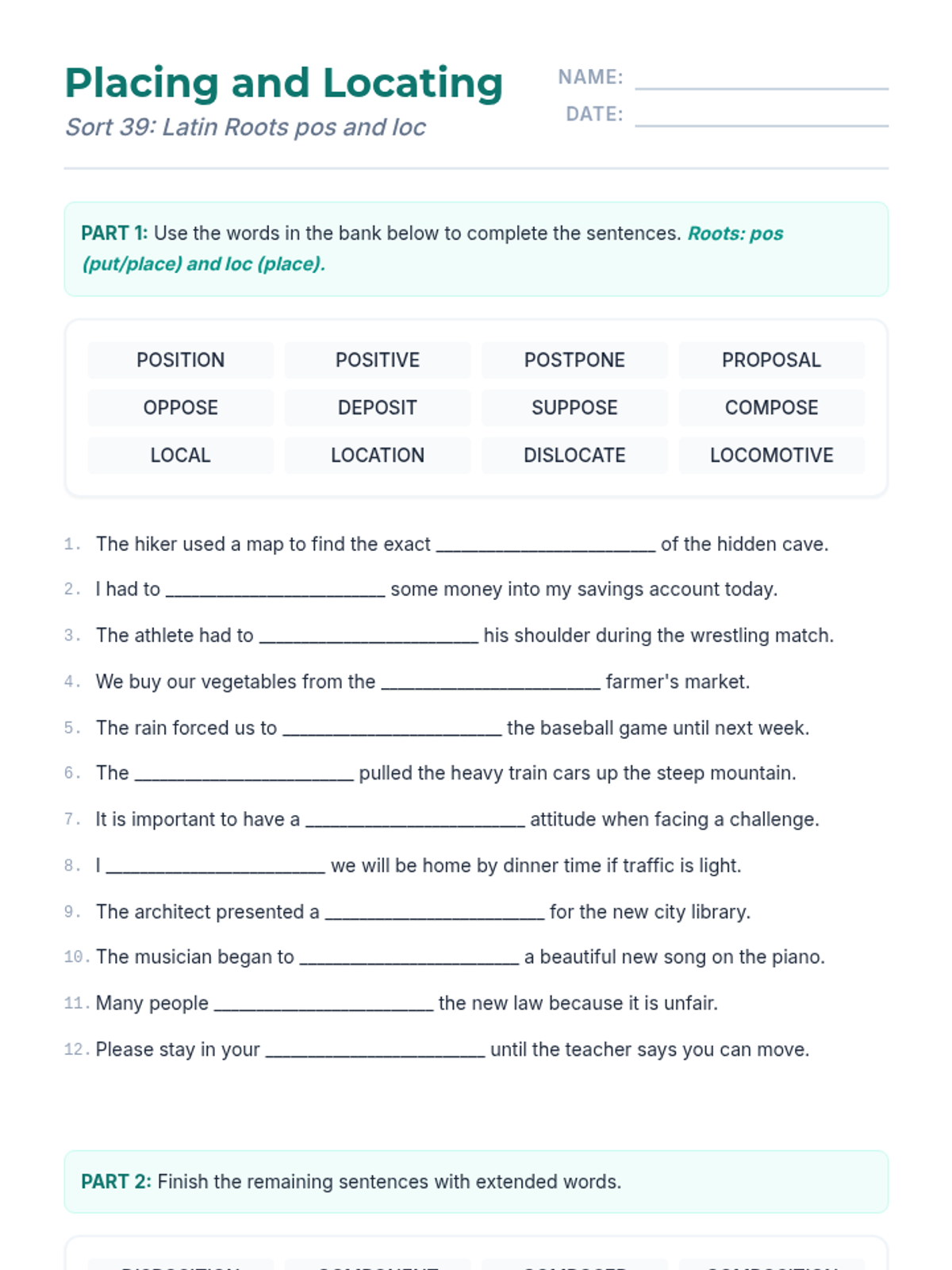
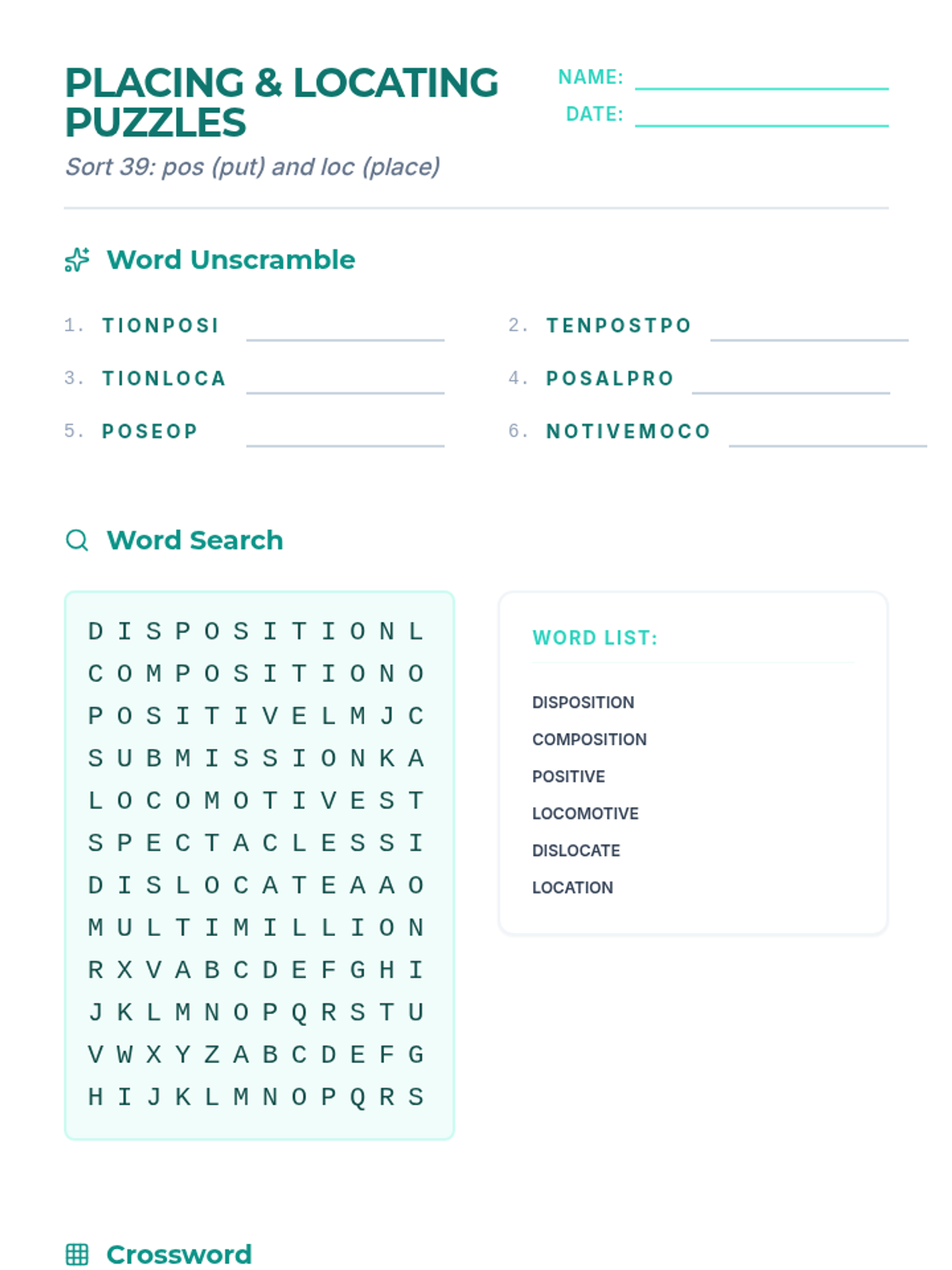
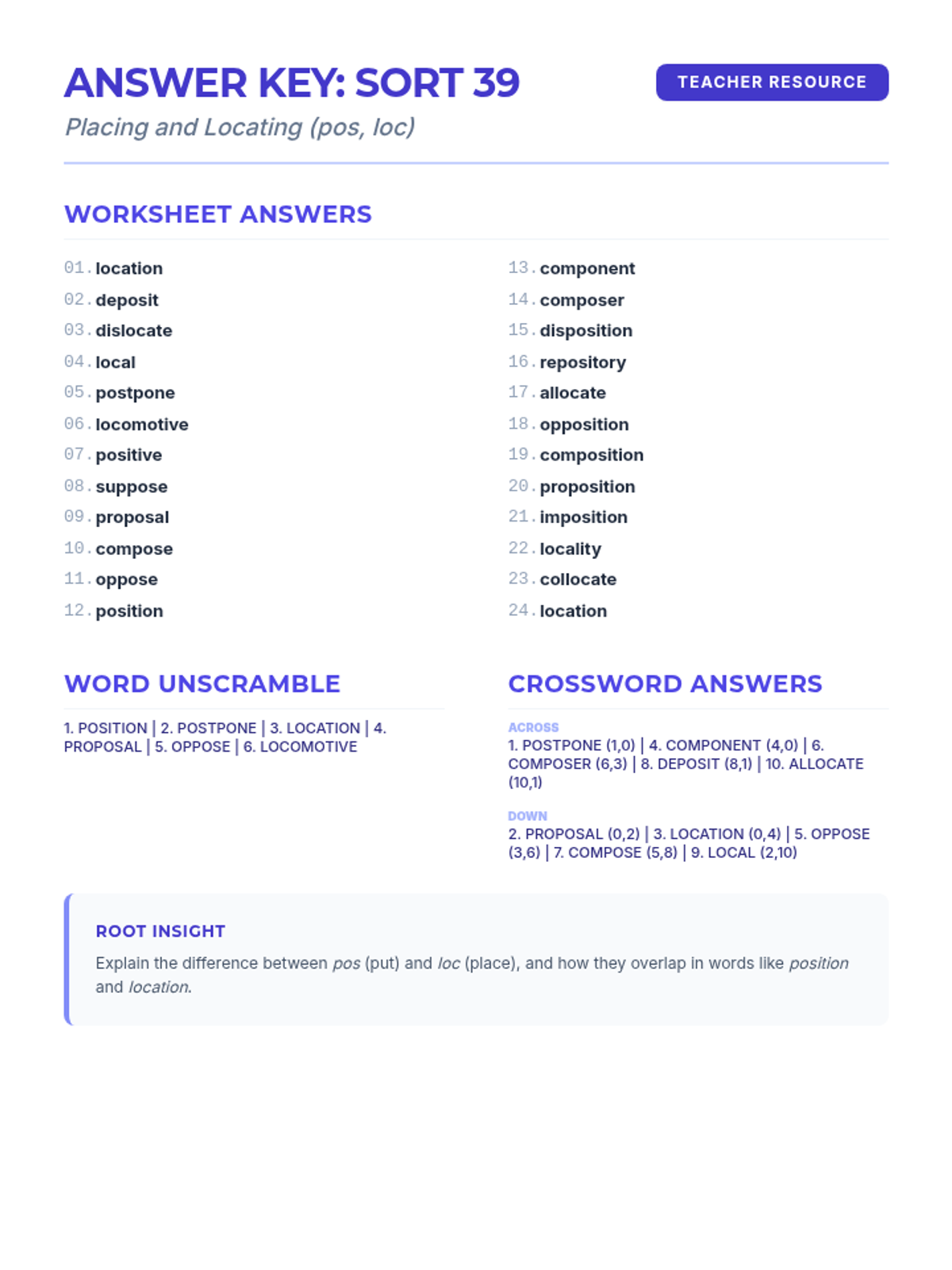
Mastering Latin roots related to place: pos (to put or place) and loc (place).
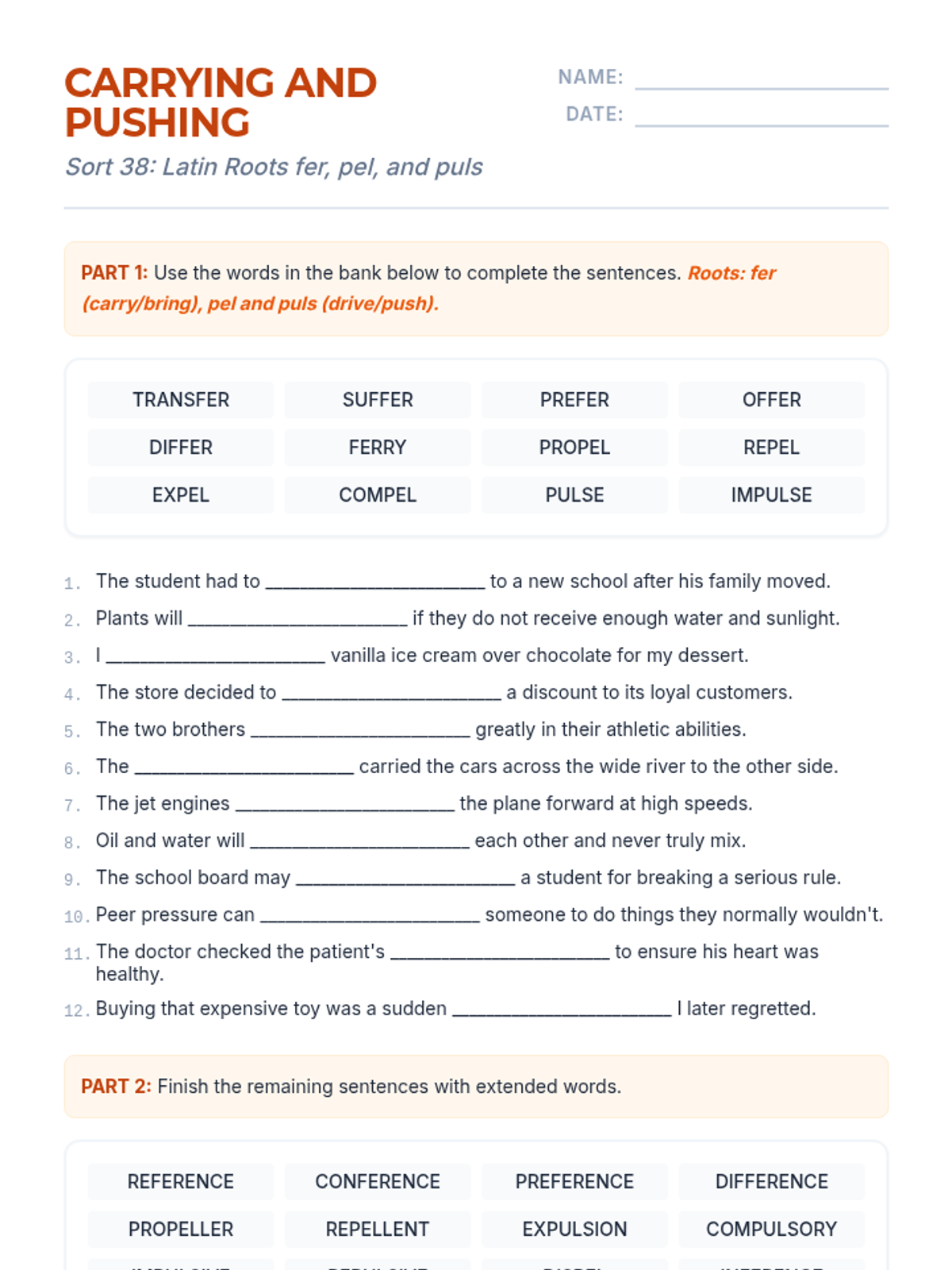
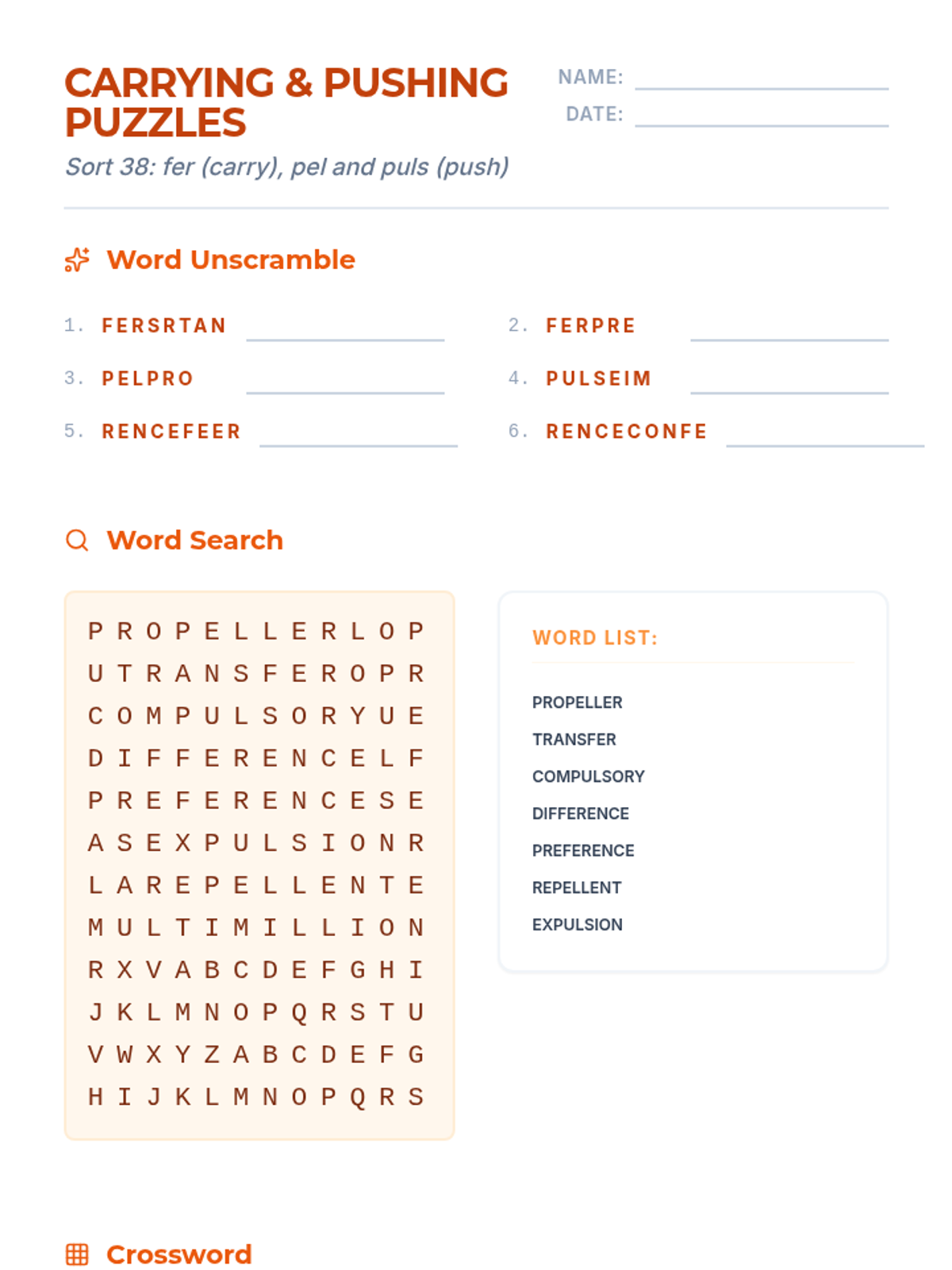
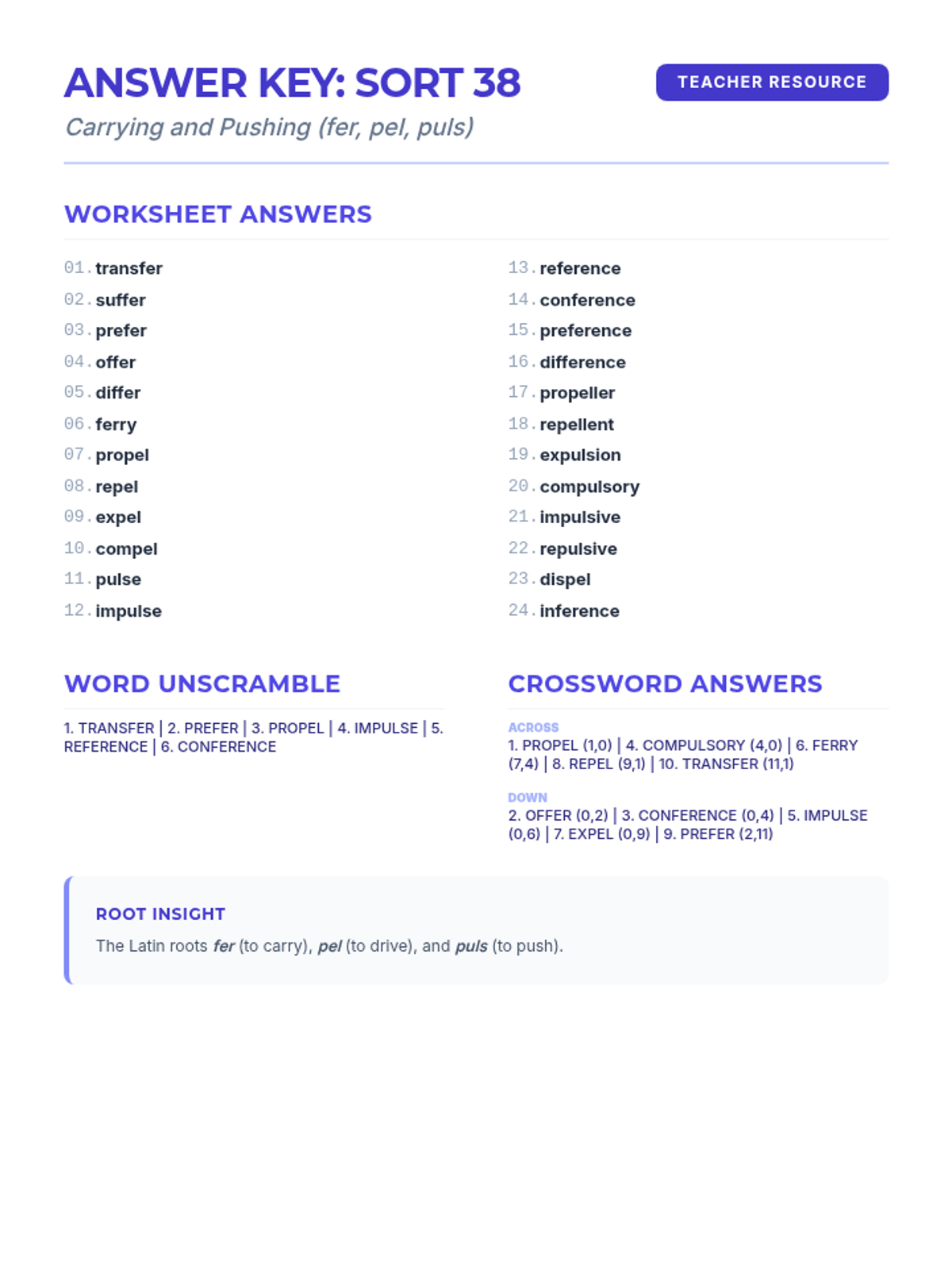
Mastering Latin roots related to carrying and pushing: fer (to carry), pel and puls (to push or drive).
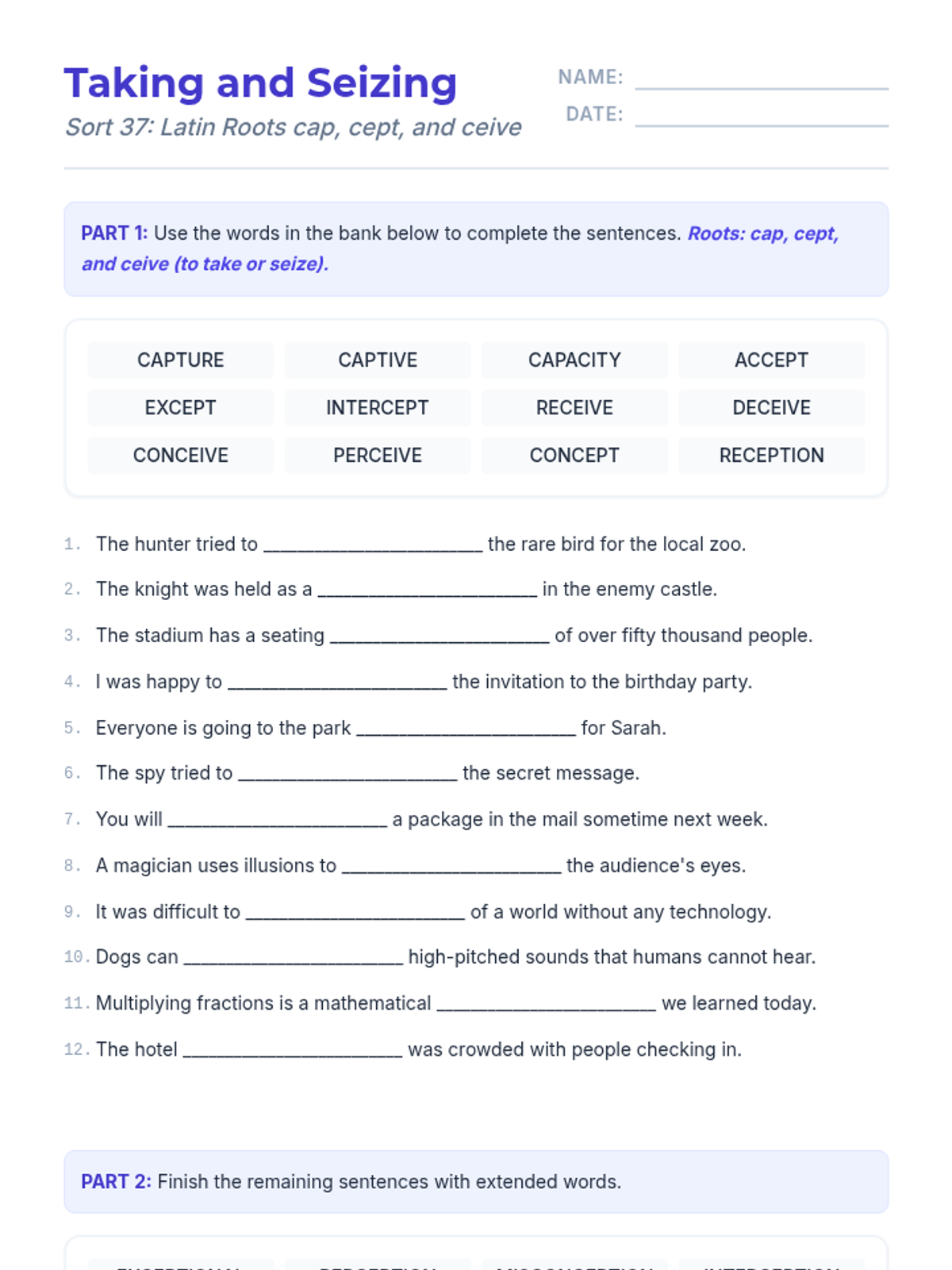
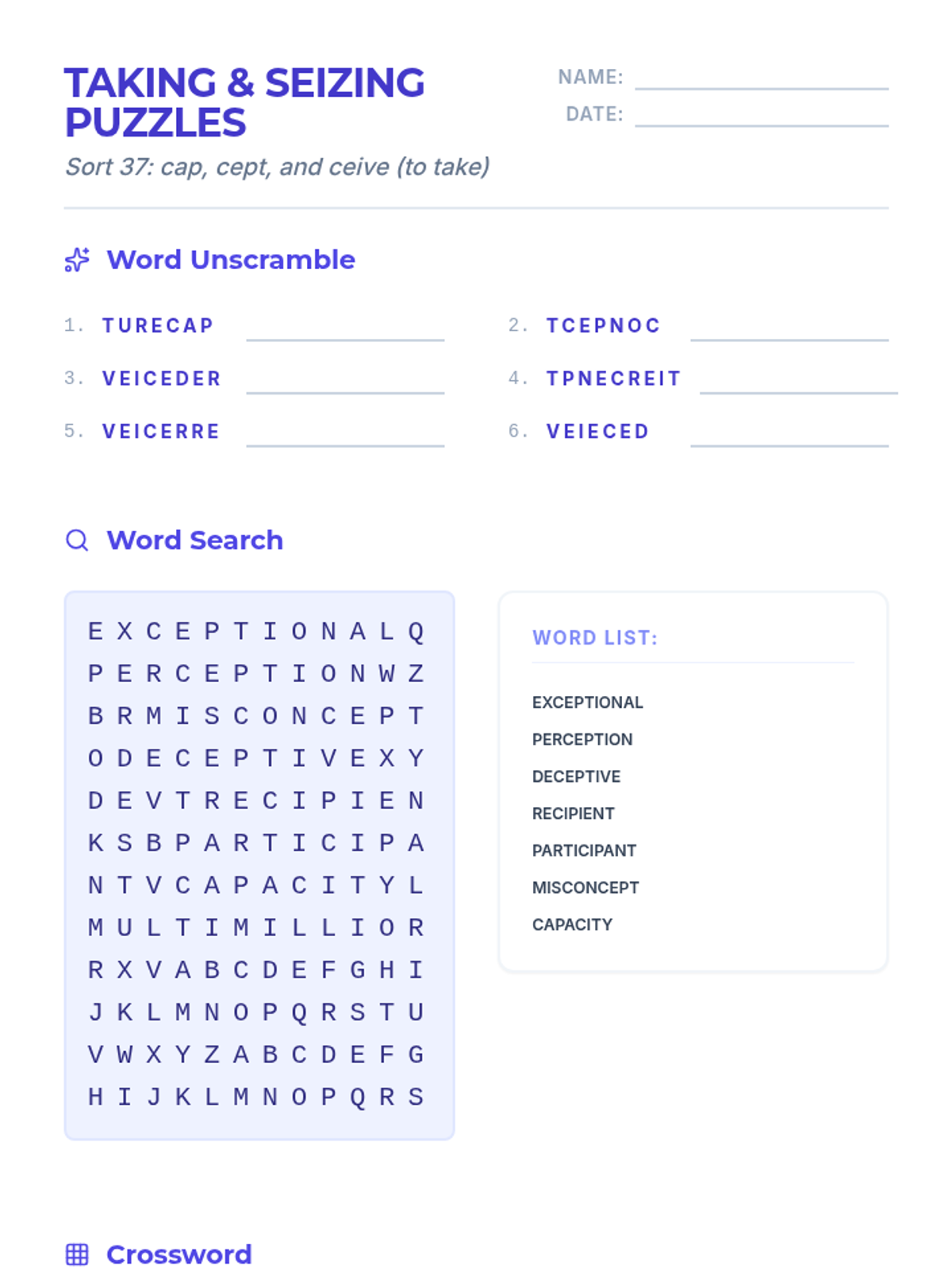
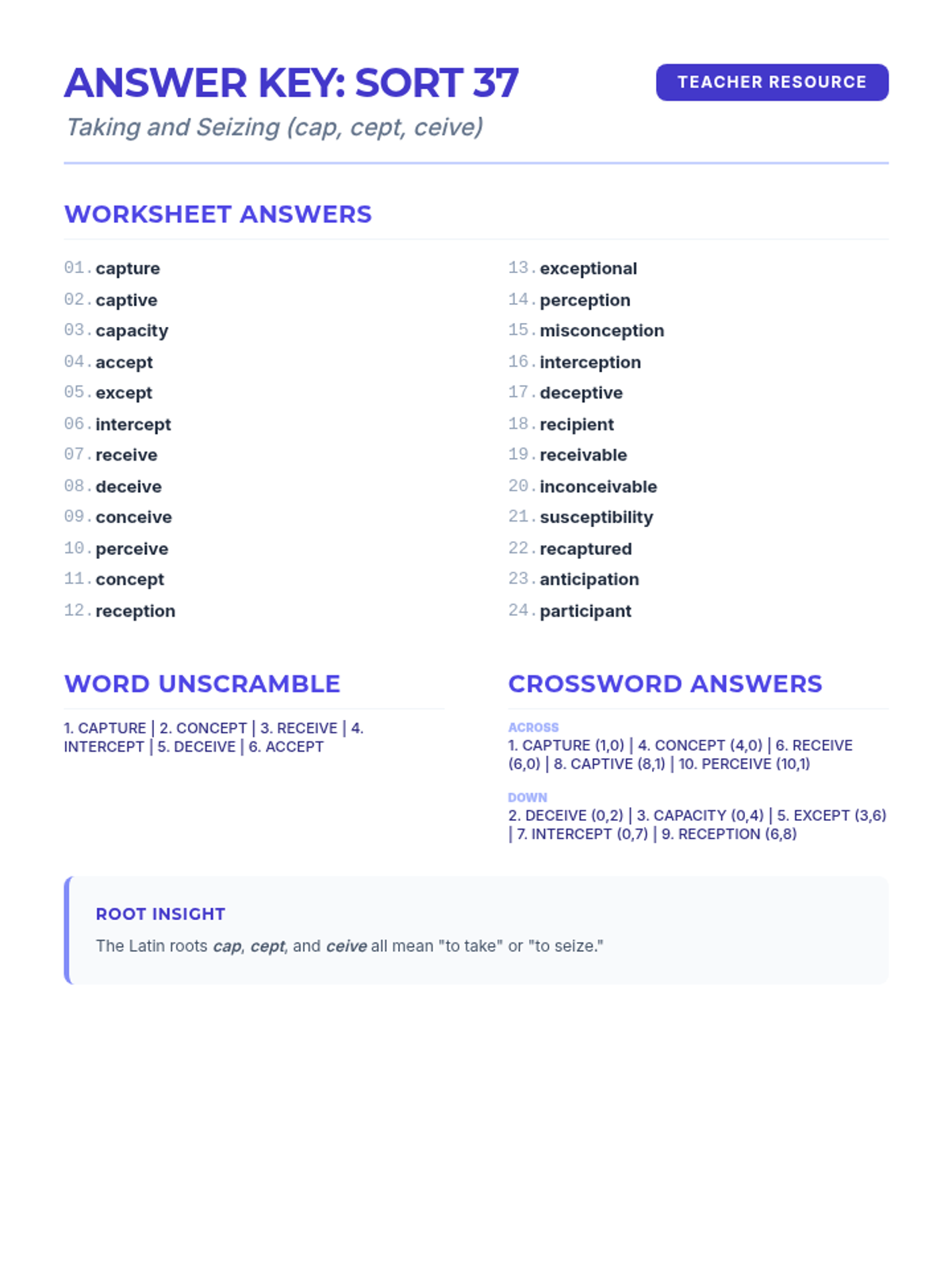
Mastering Latin roots related to taking: cap, cept, and ceive (to take or seize).
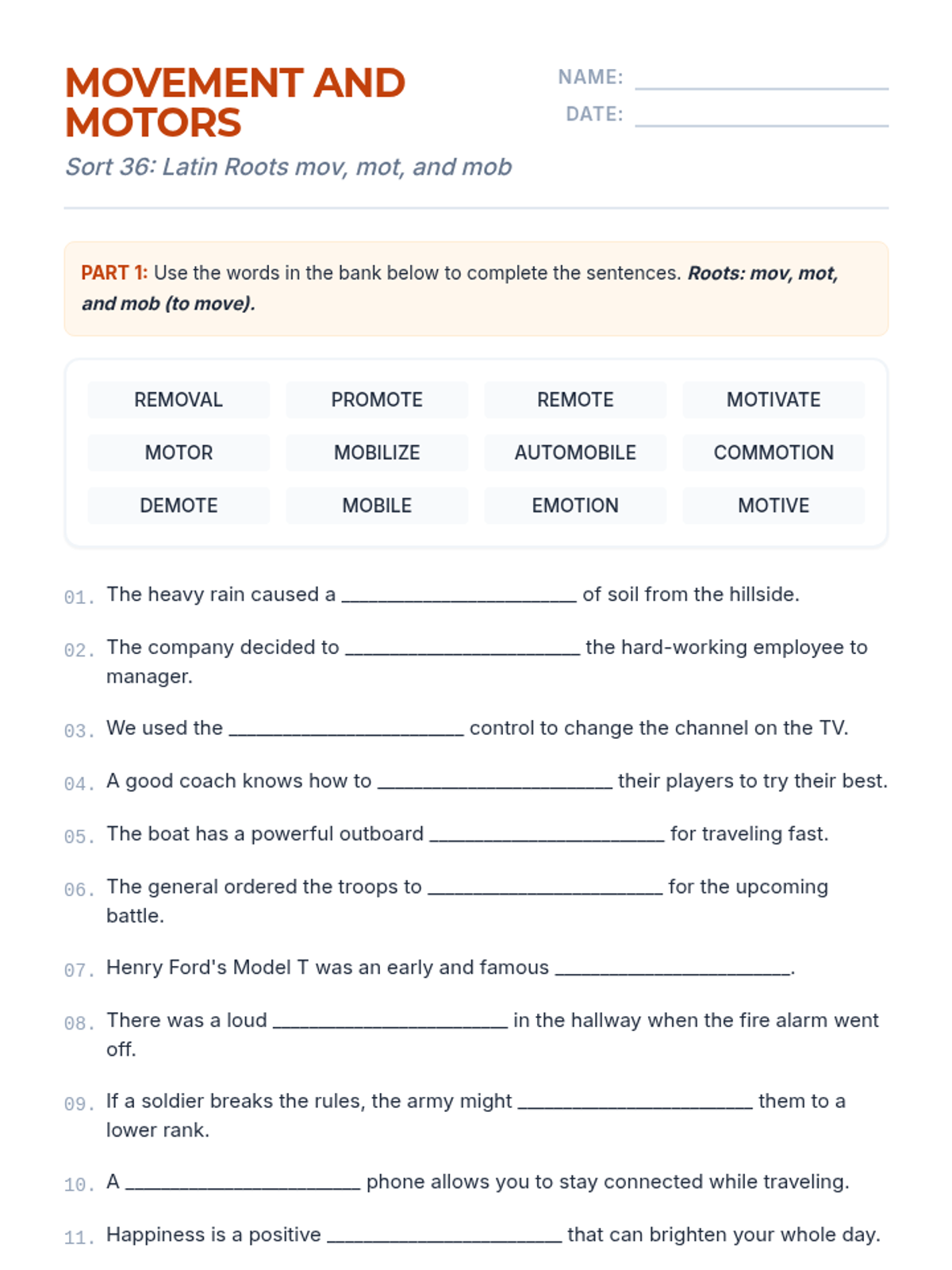
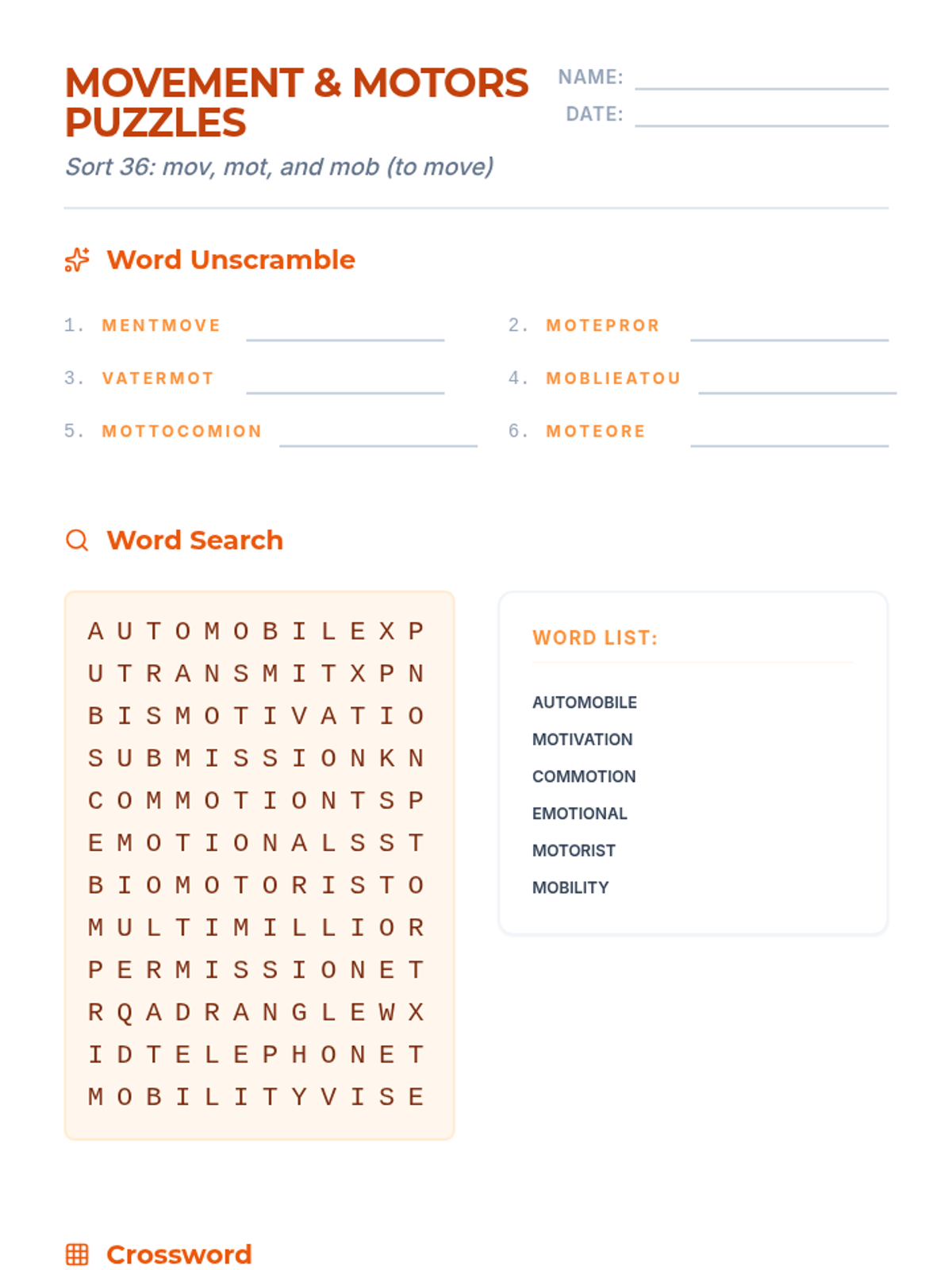
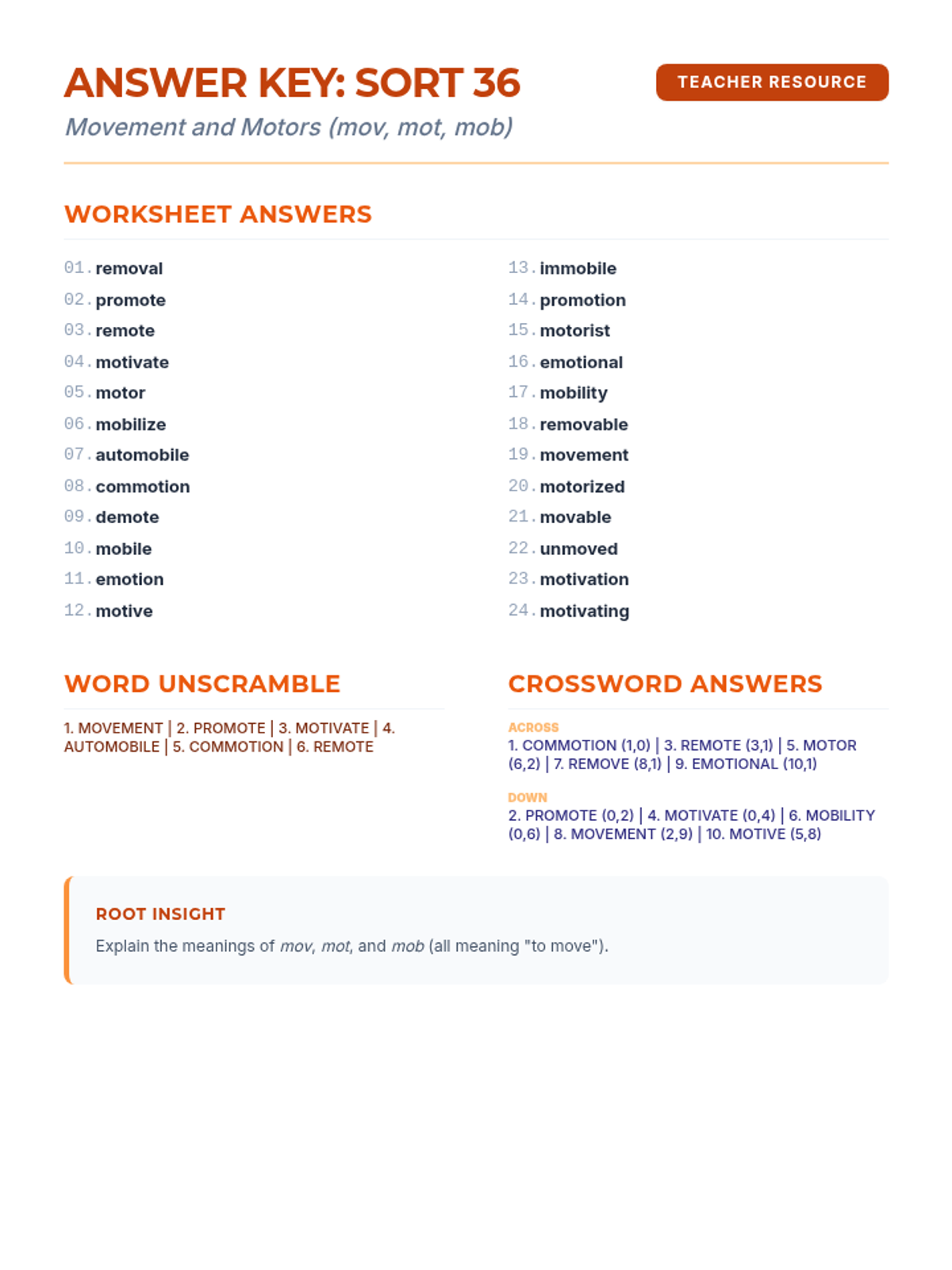
Mastering Latin roots related to movement: mov, mot, and mob (to move).
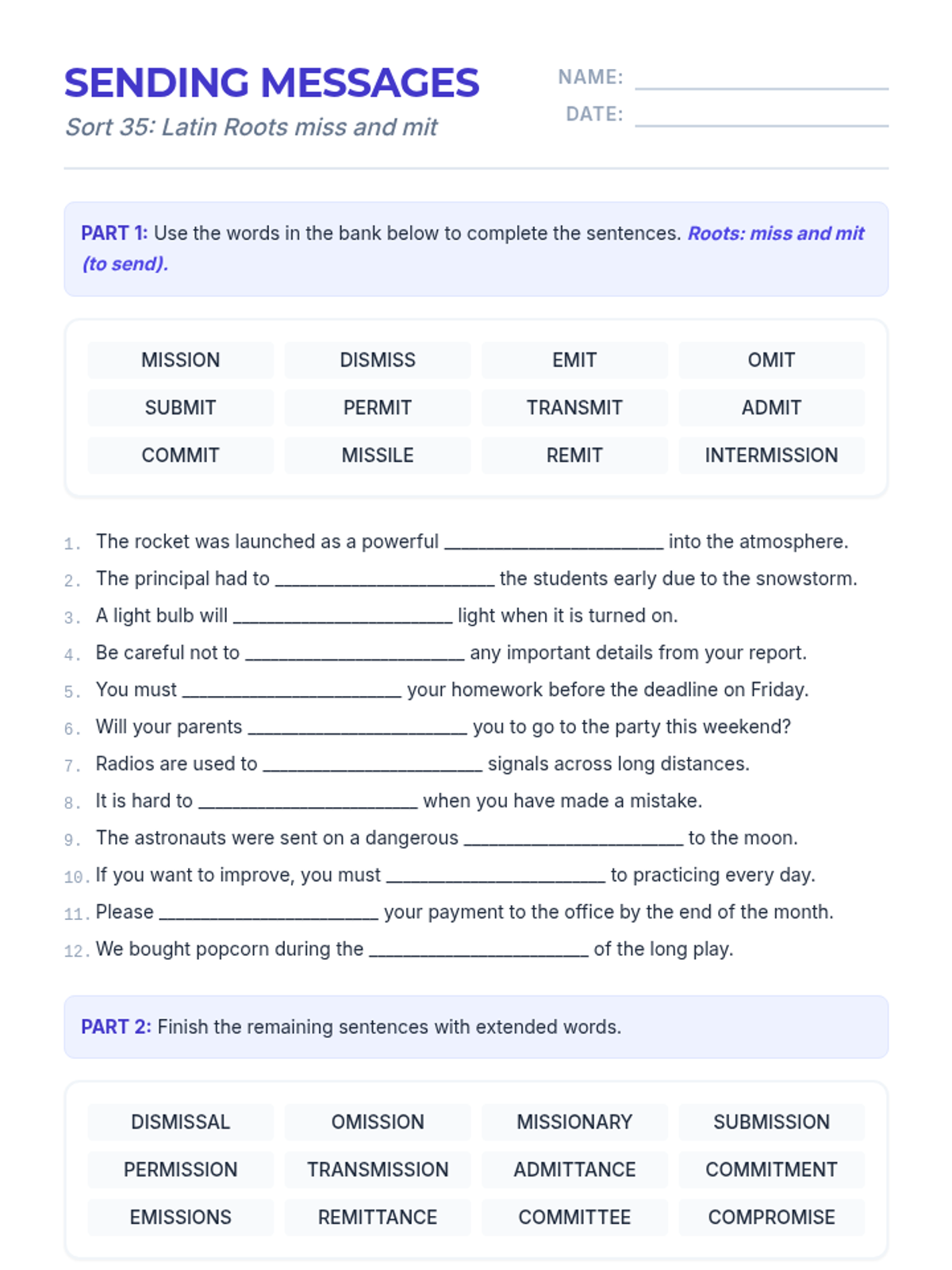
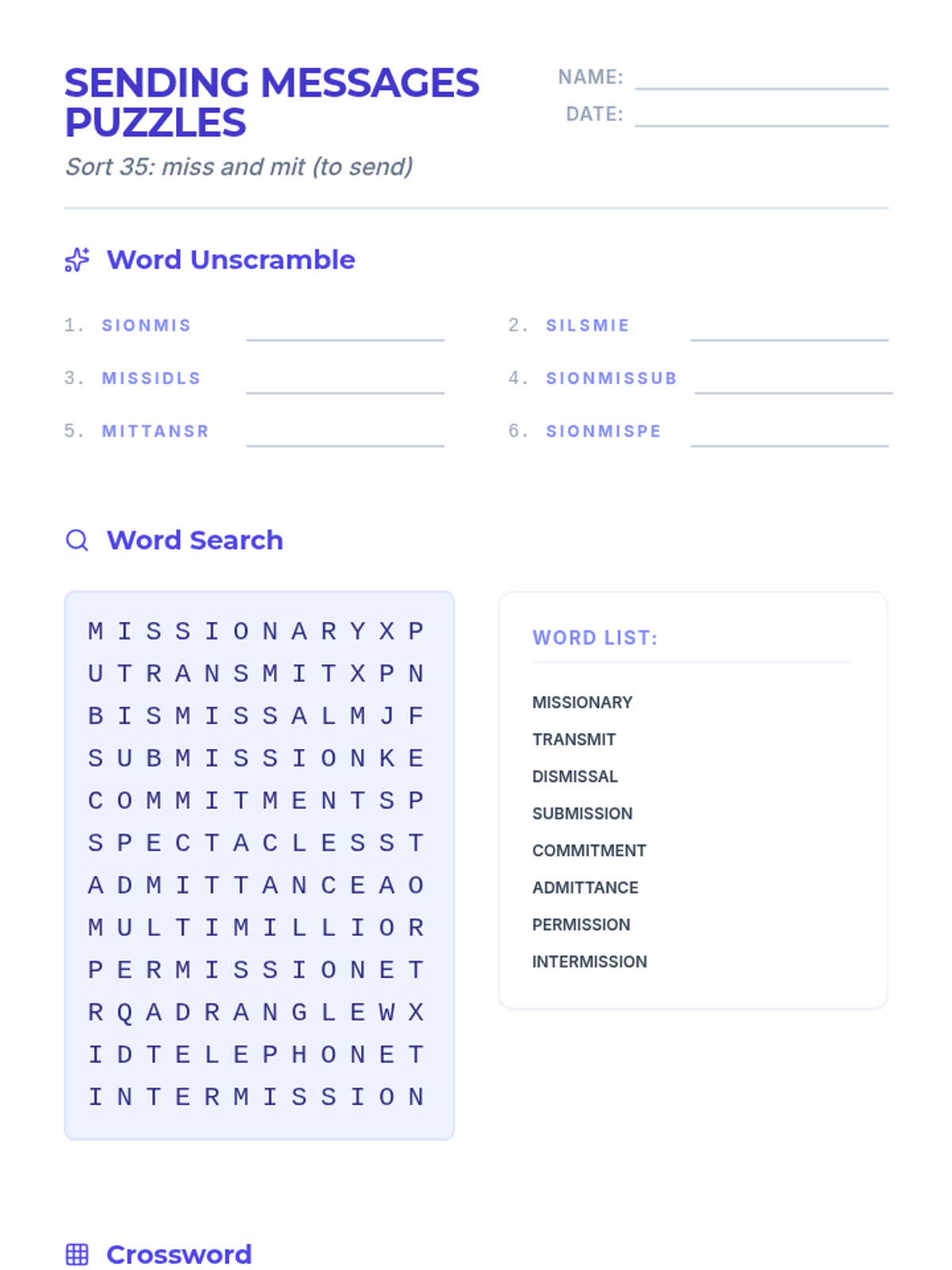
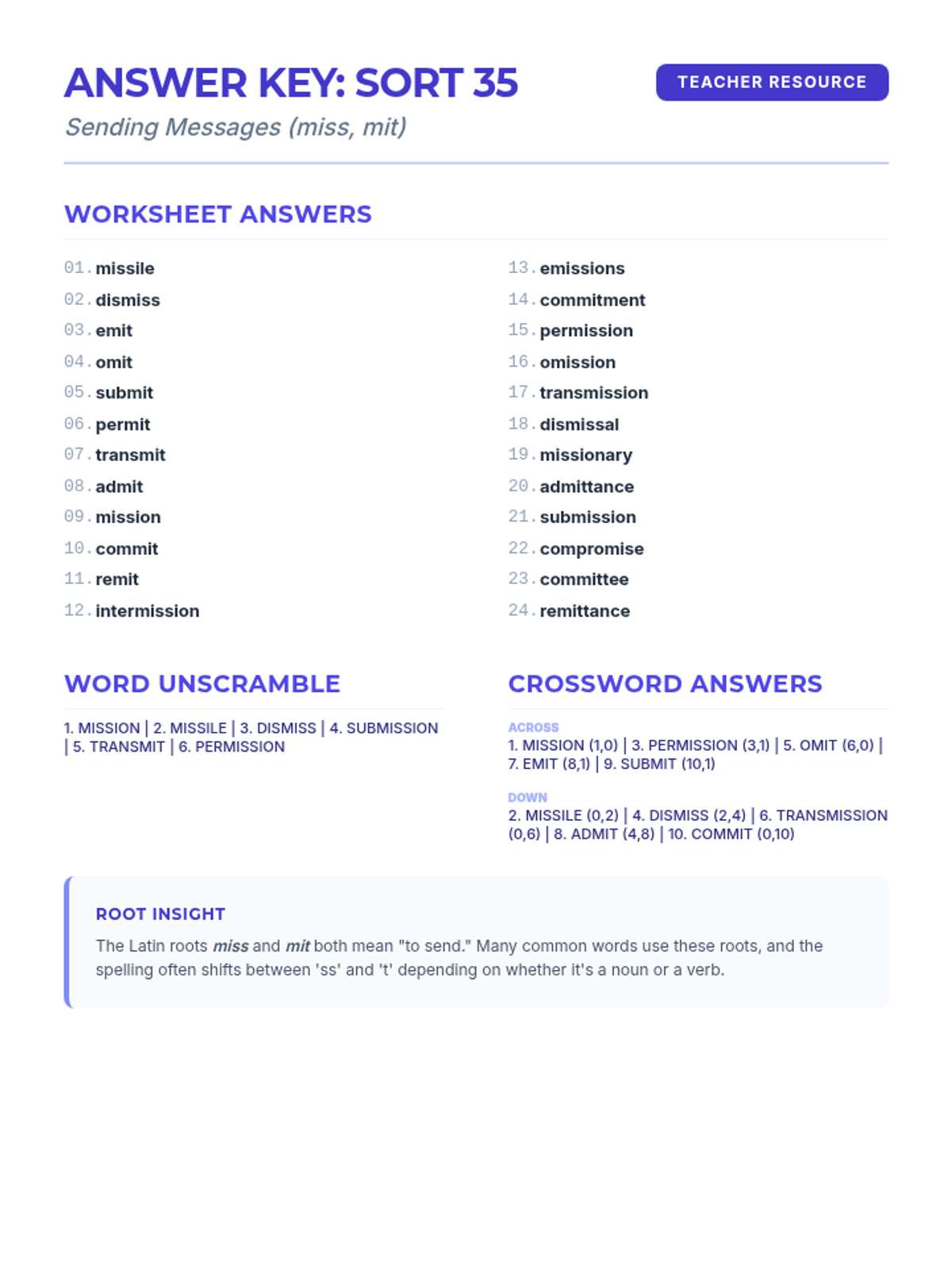
Mastering Latin roots related to sending: miss and mit (to send).
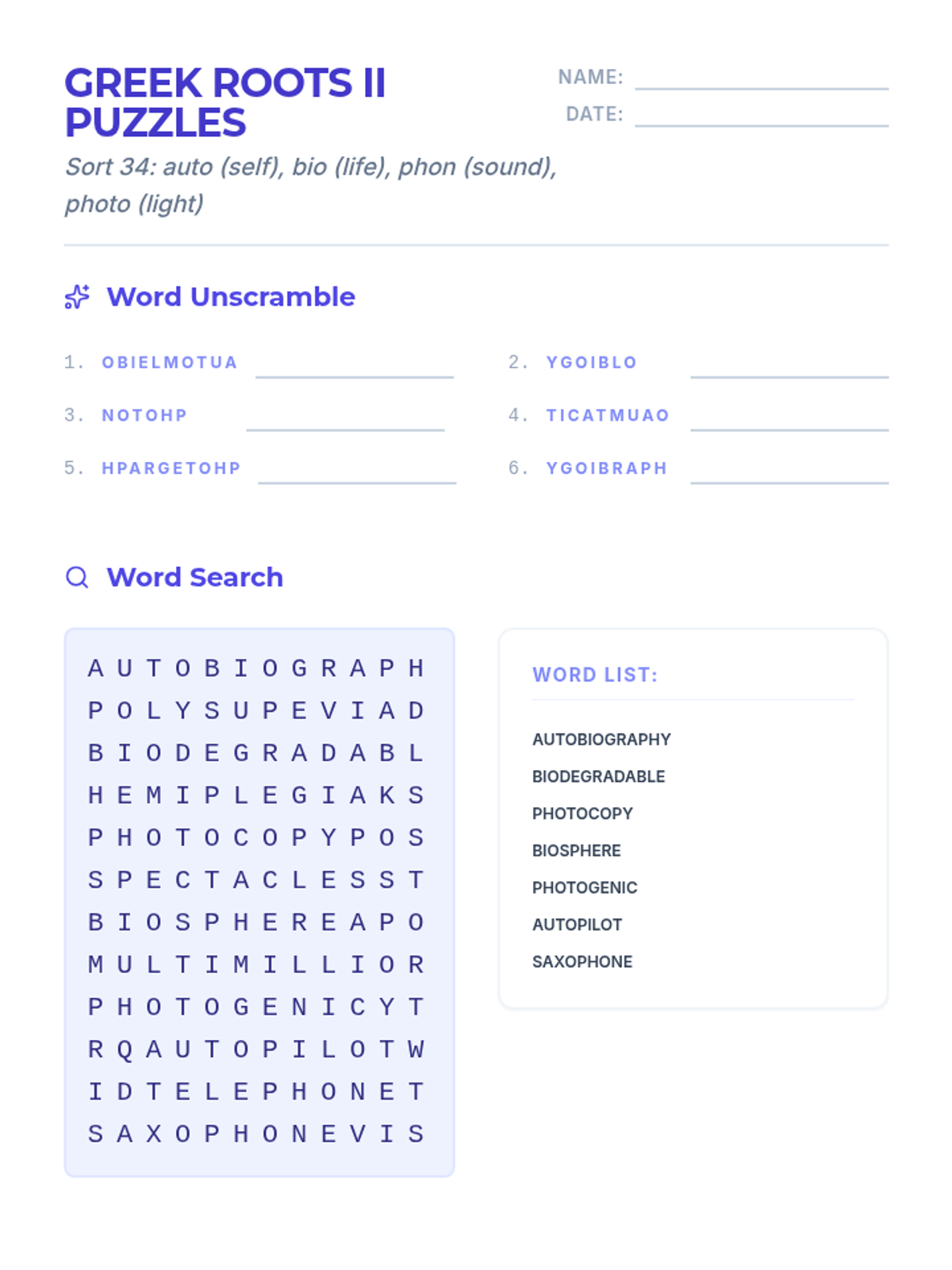
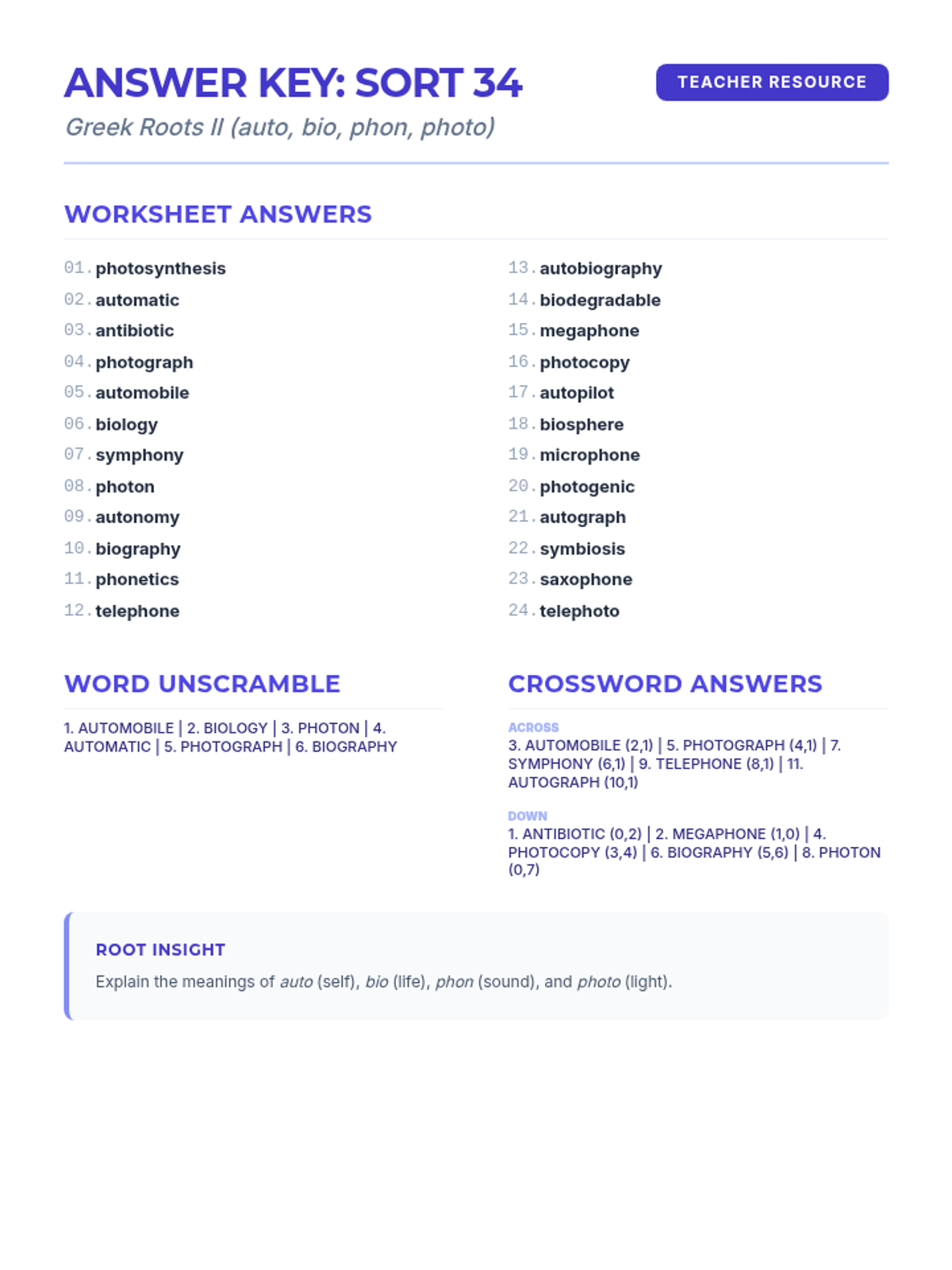
Mastering Greek roots related to self, life, sound, and light: auto (self), bio (life), phon (sound), and photo (light).
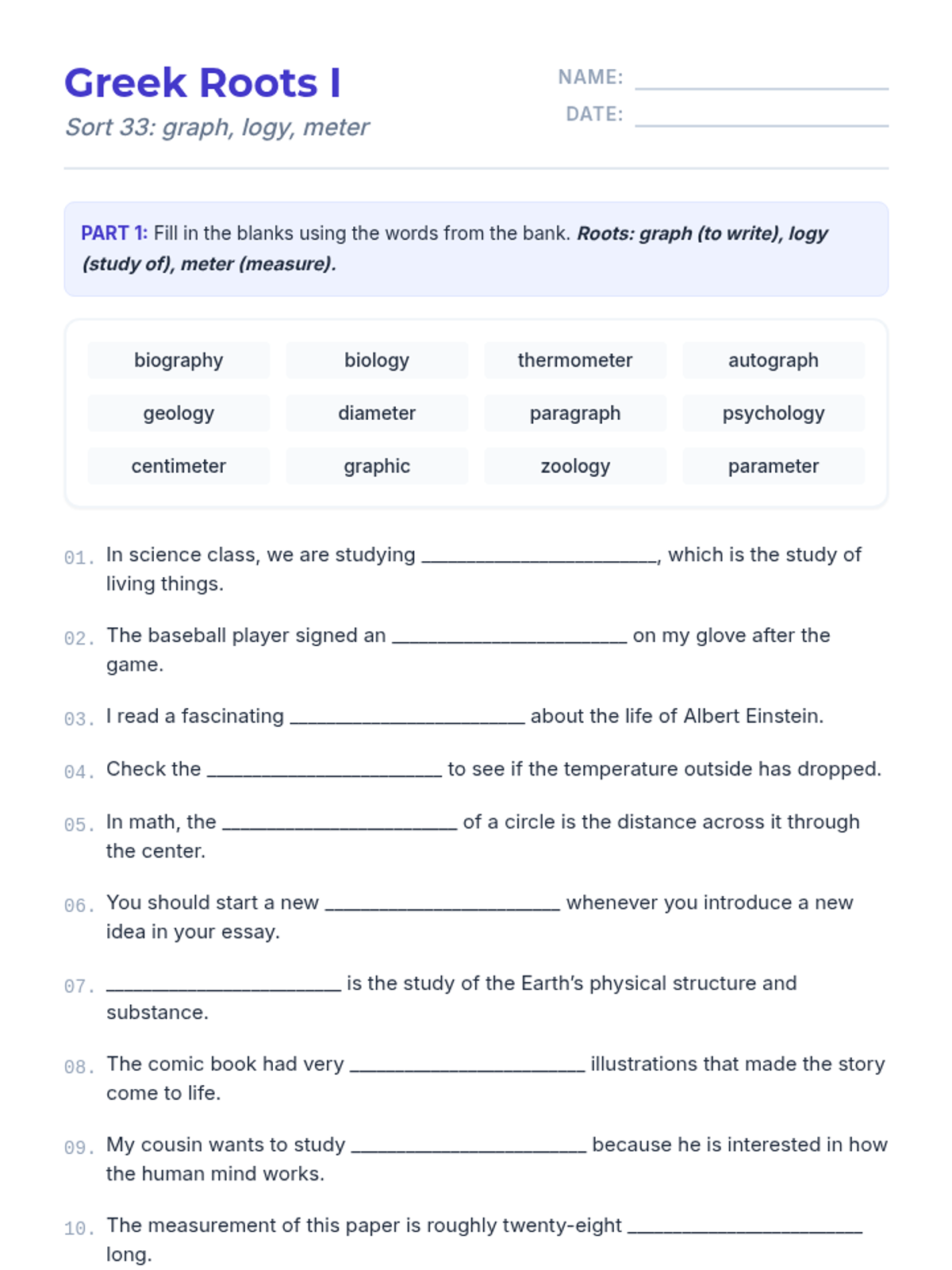
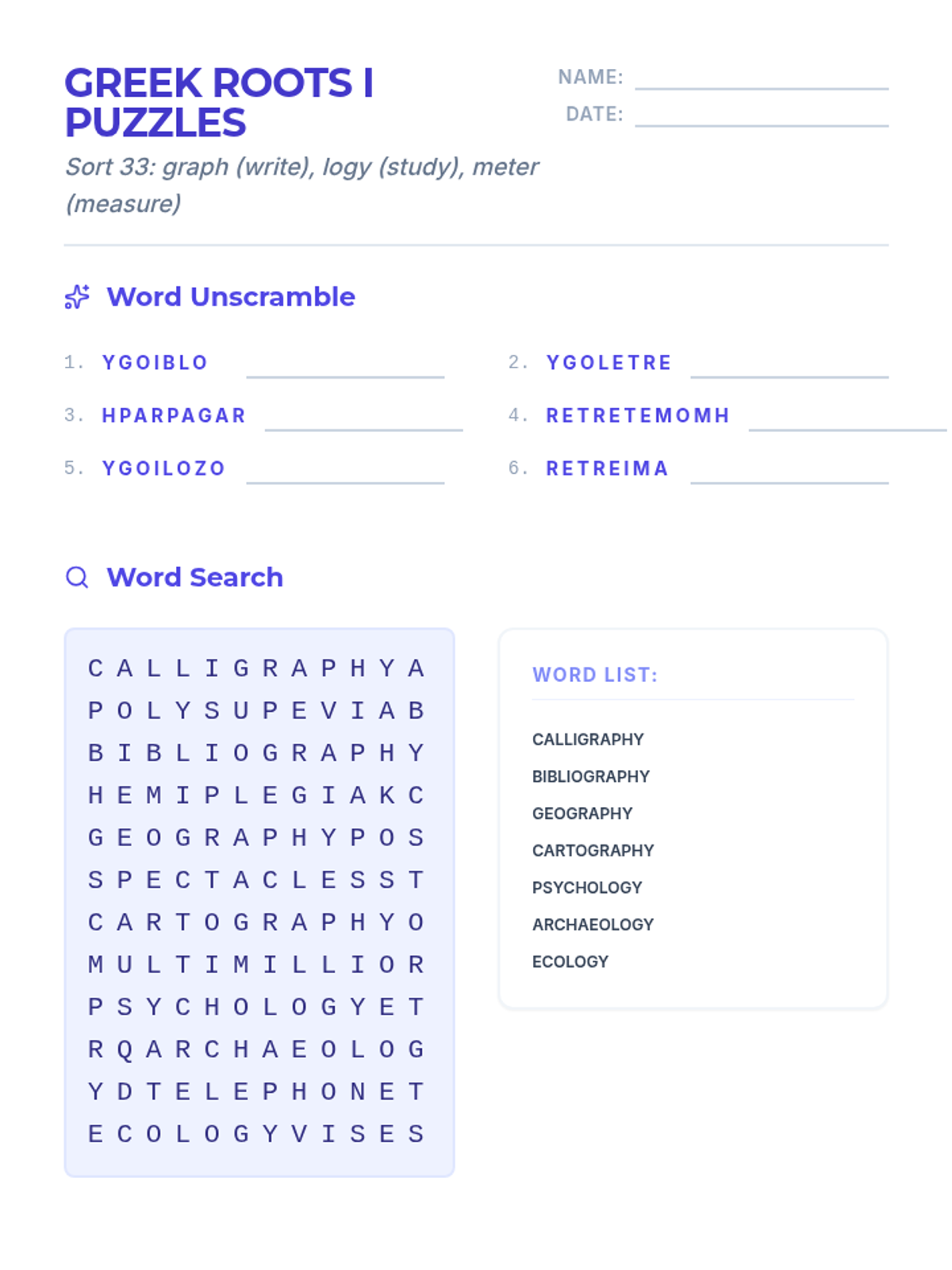
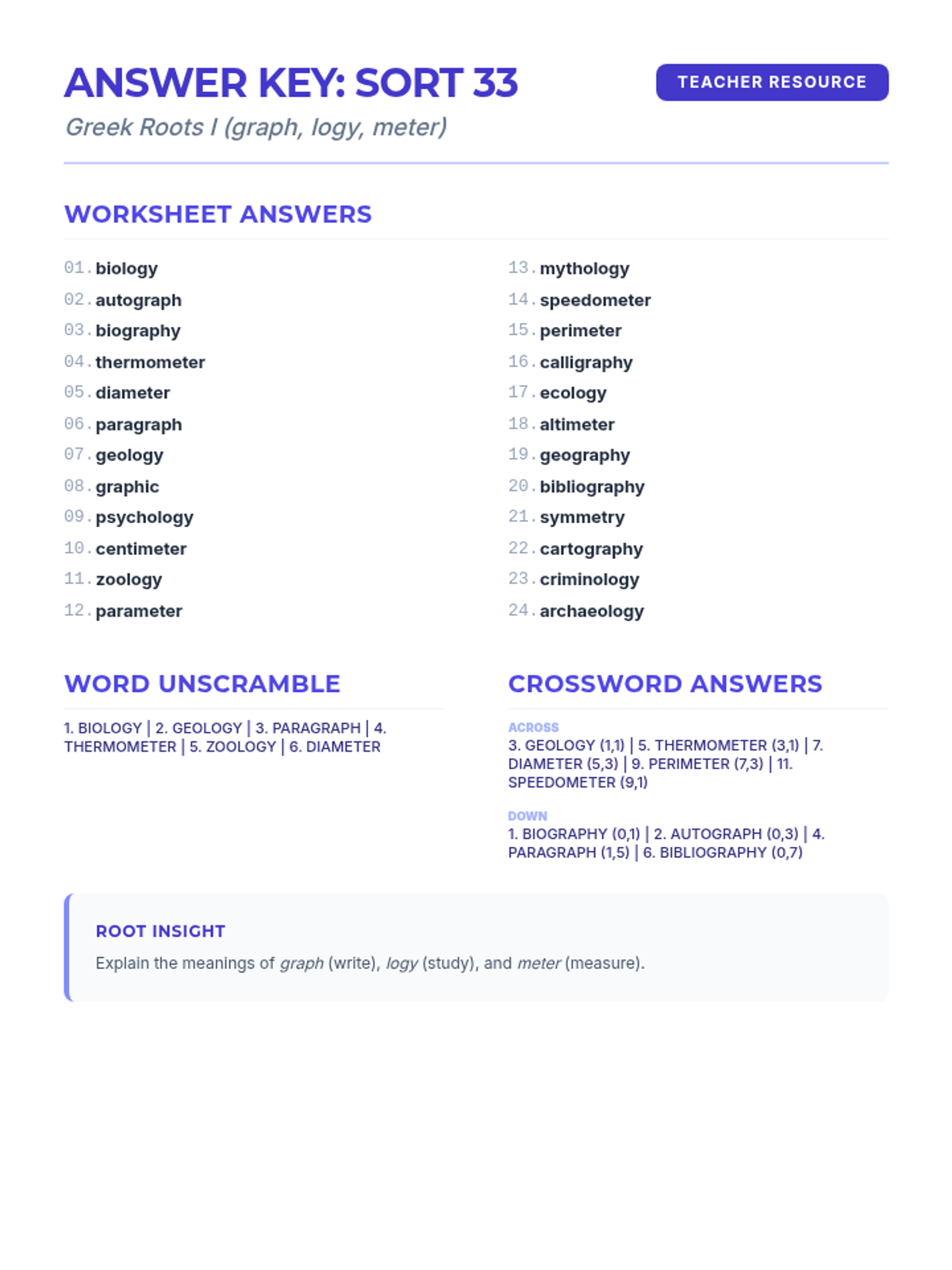
Mastering Greek roots related to writing, study, and measurement: graph (to write), logy (study of), and meter (measure).
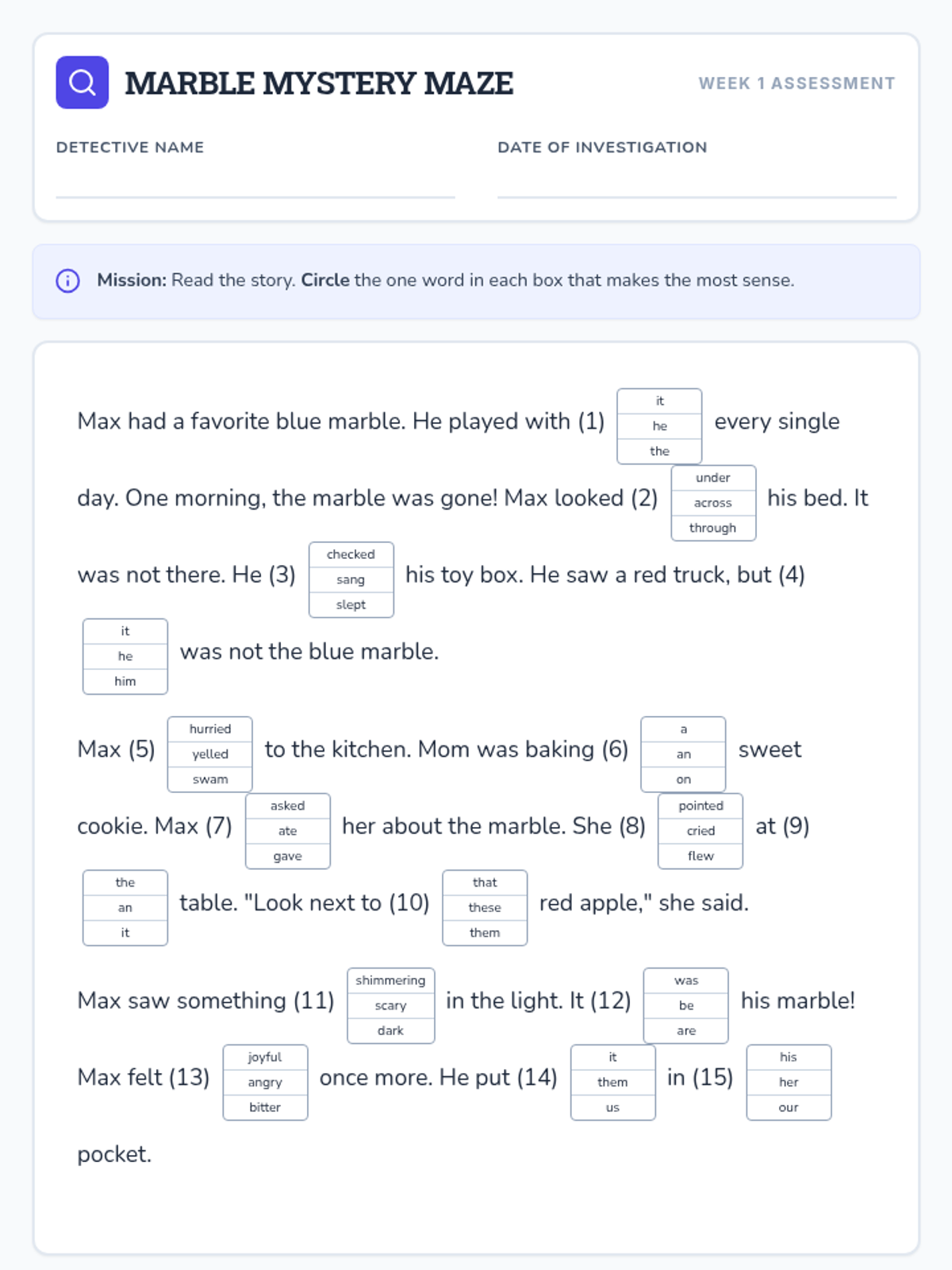
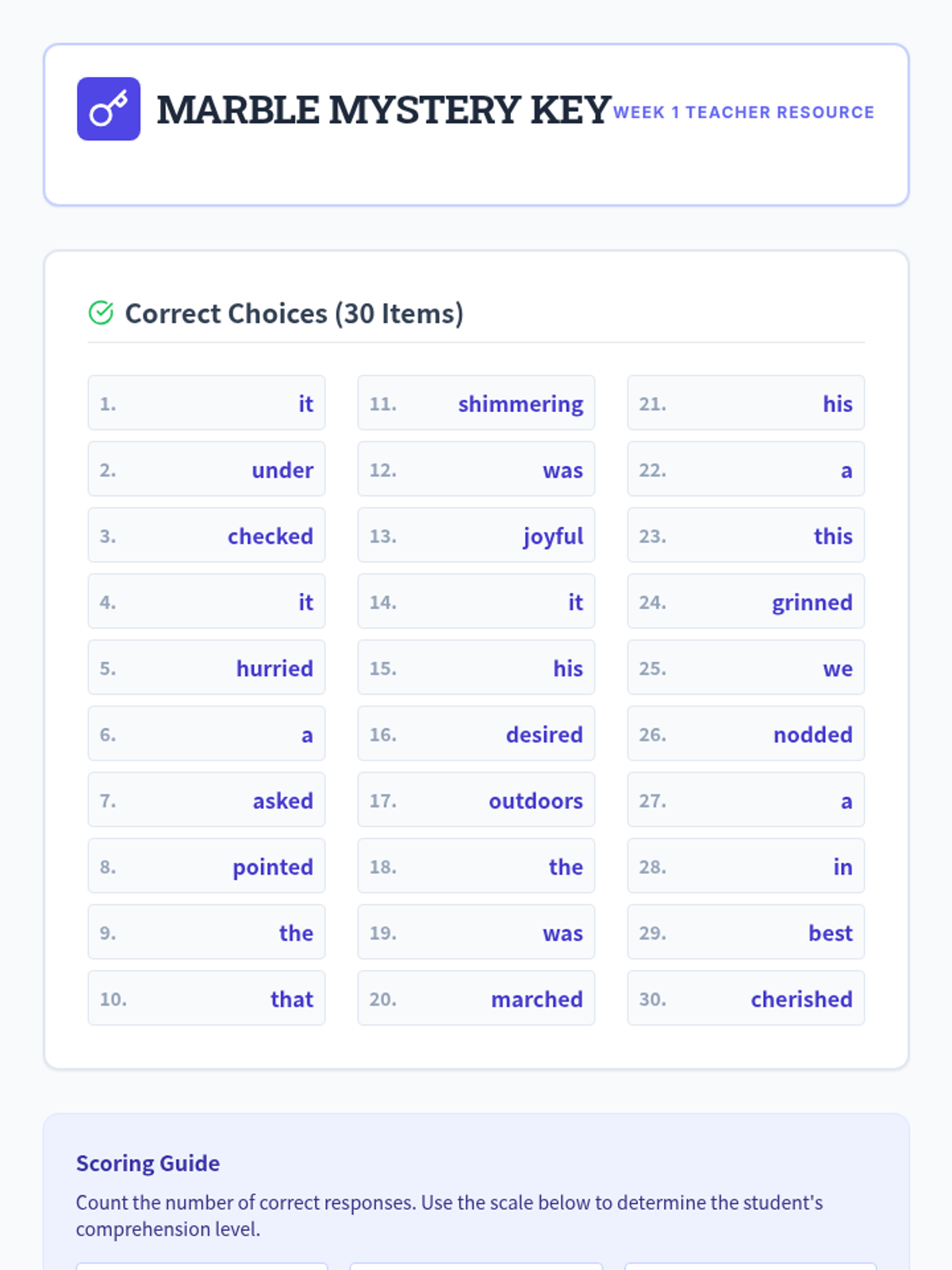
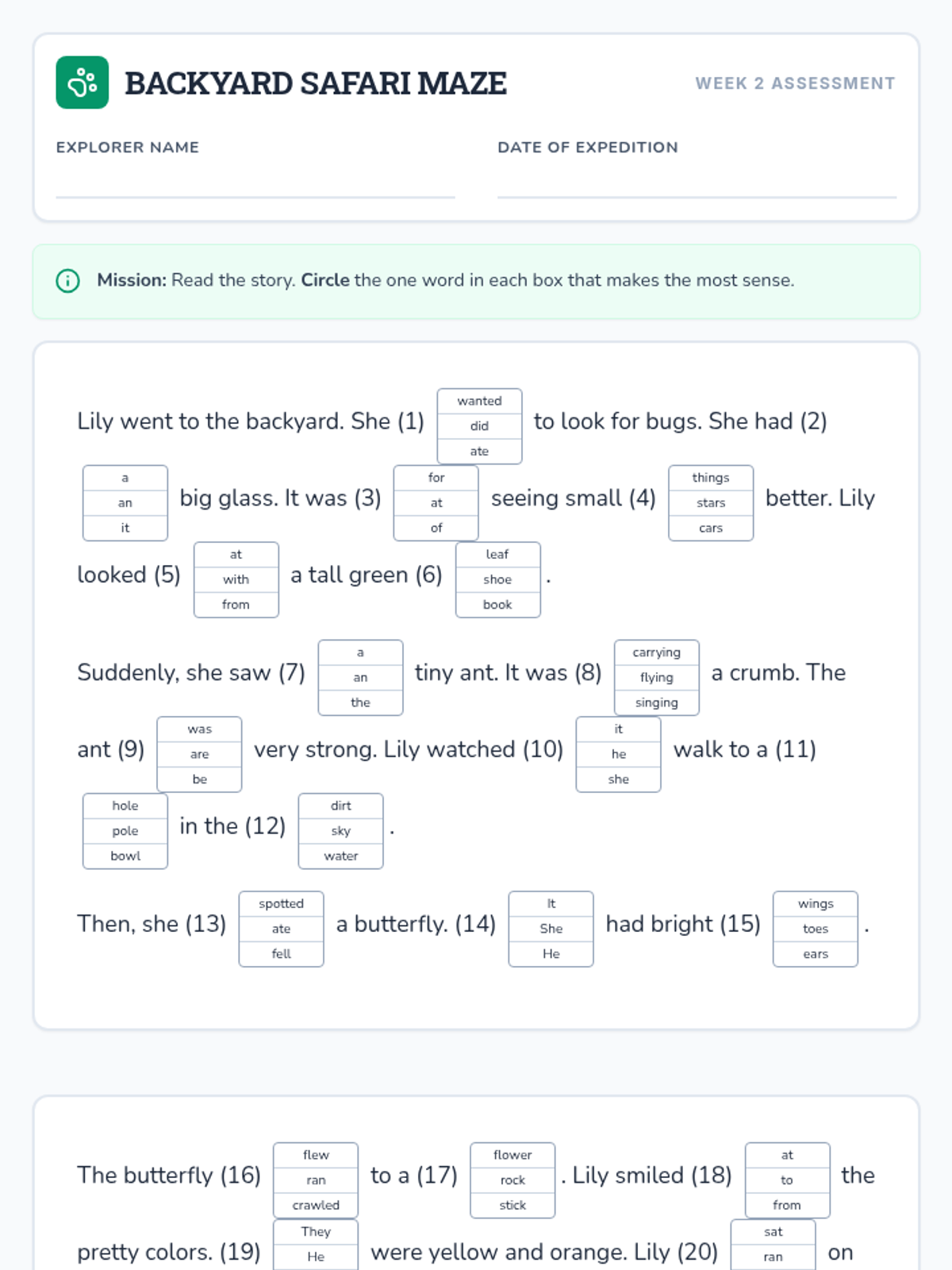
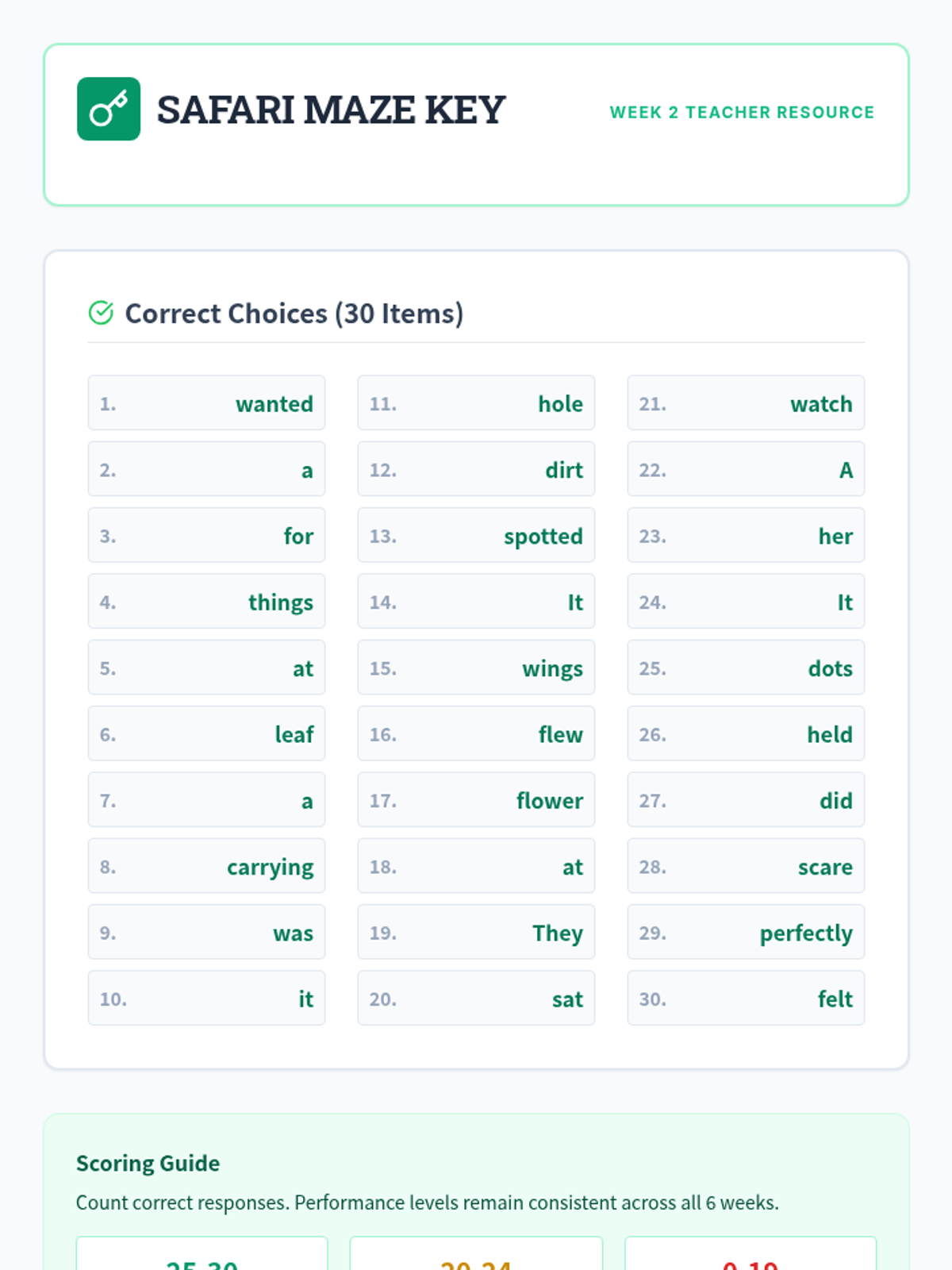
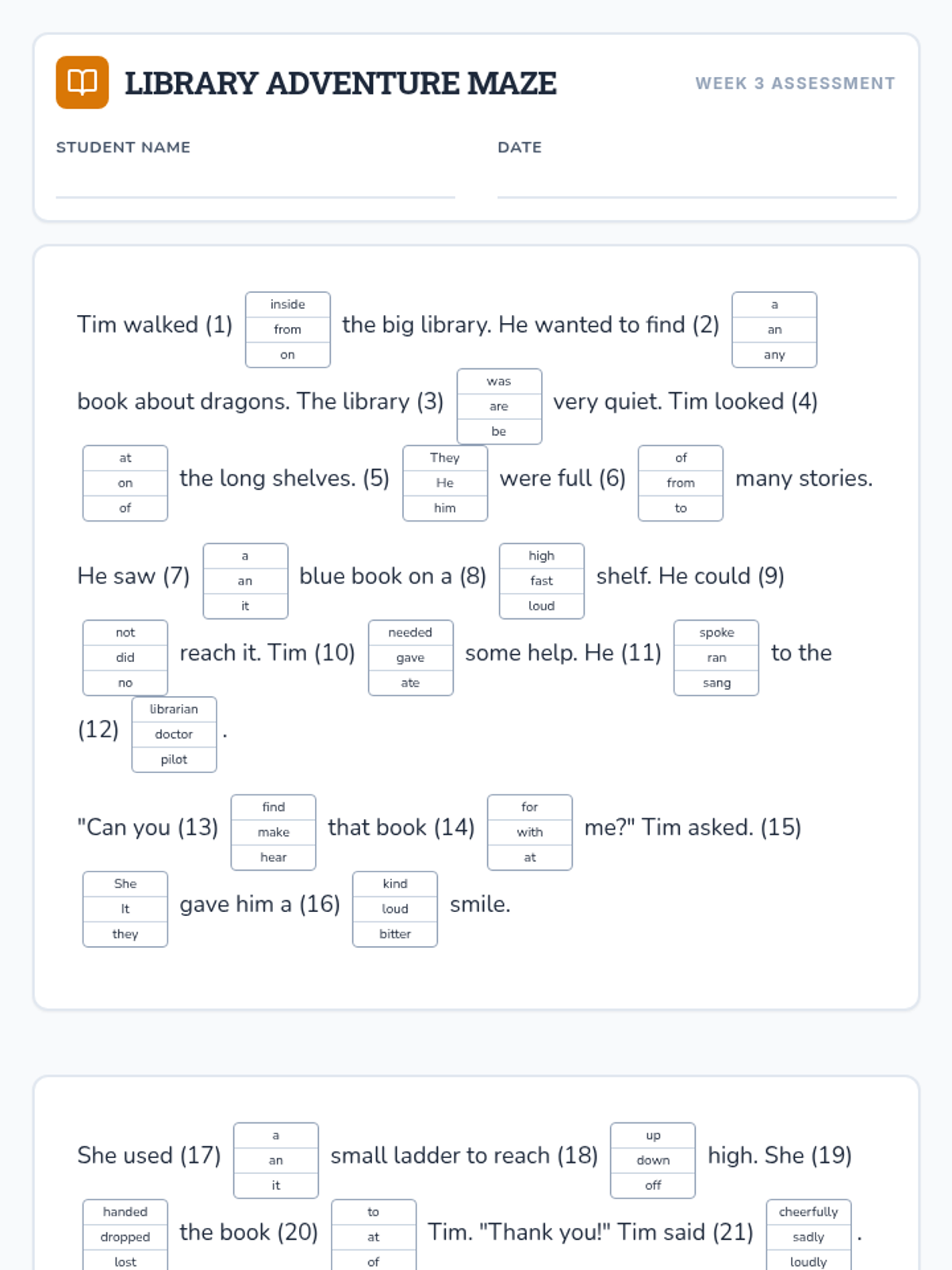
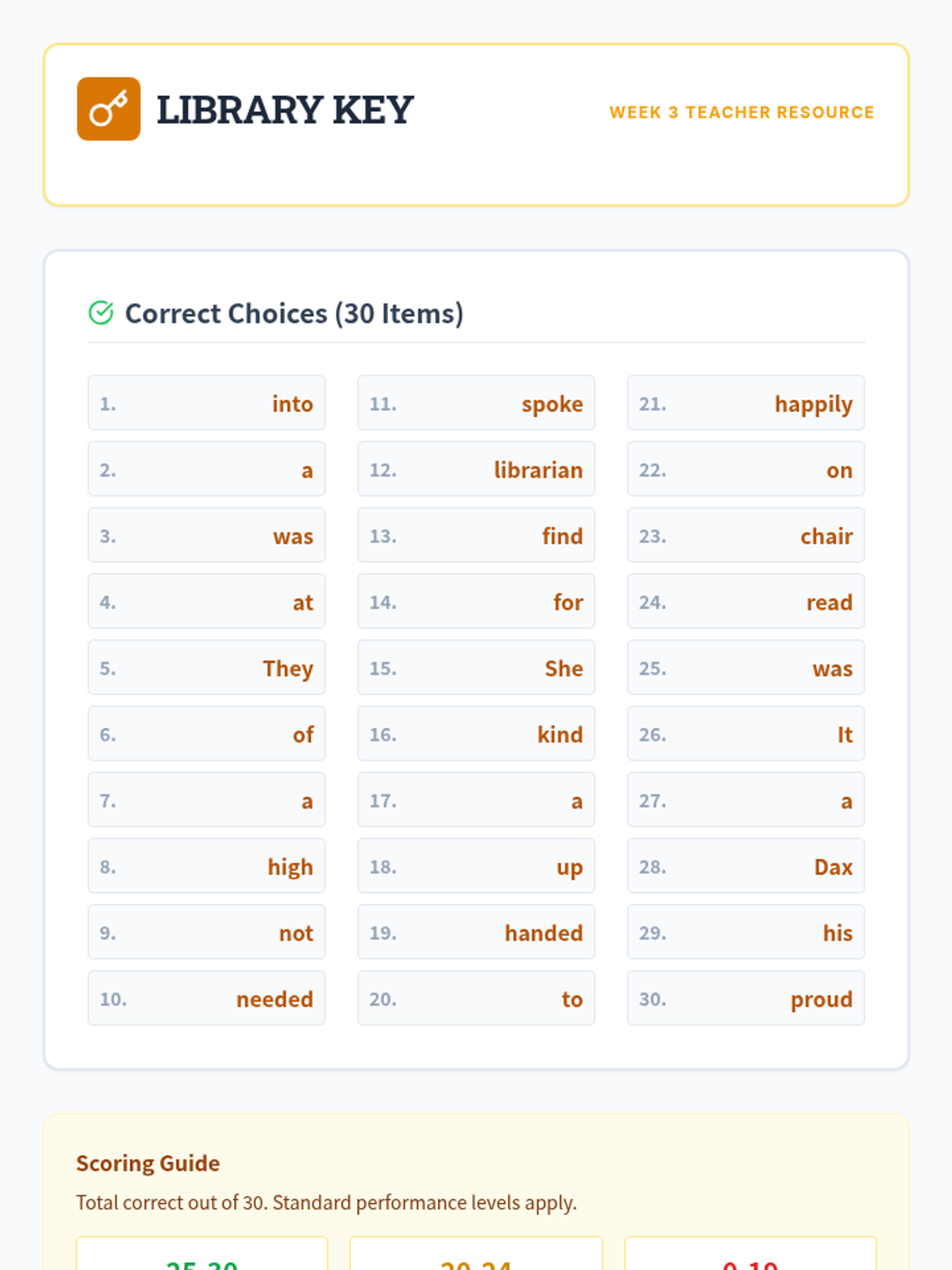
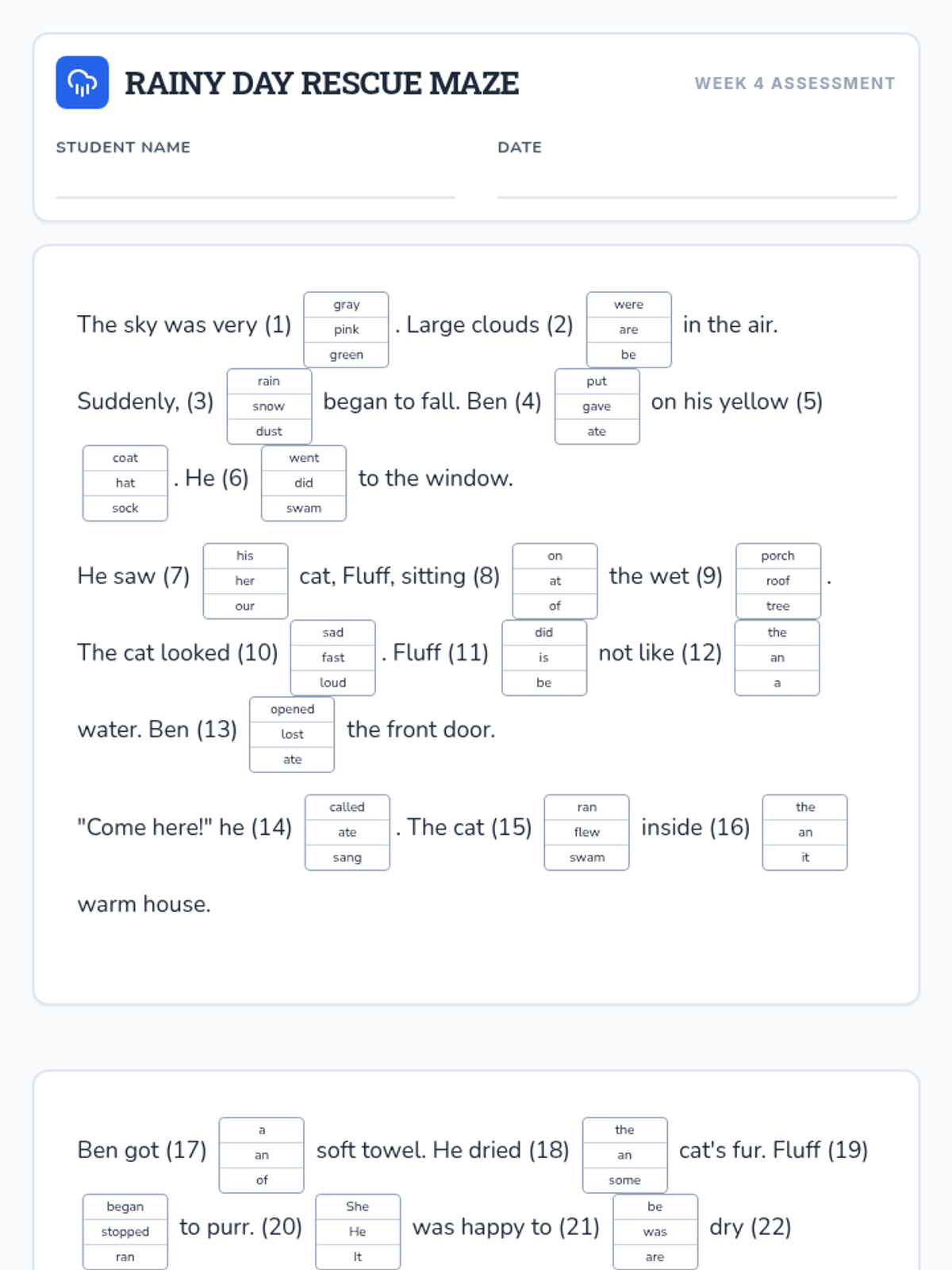
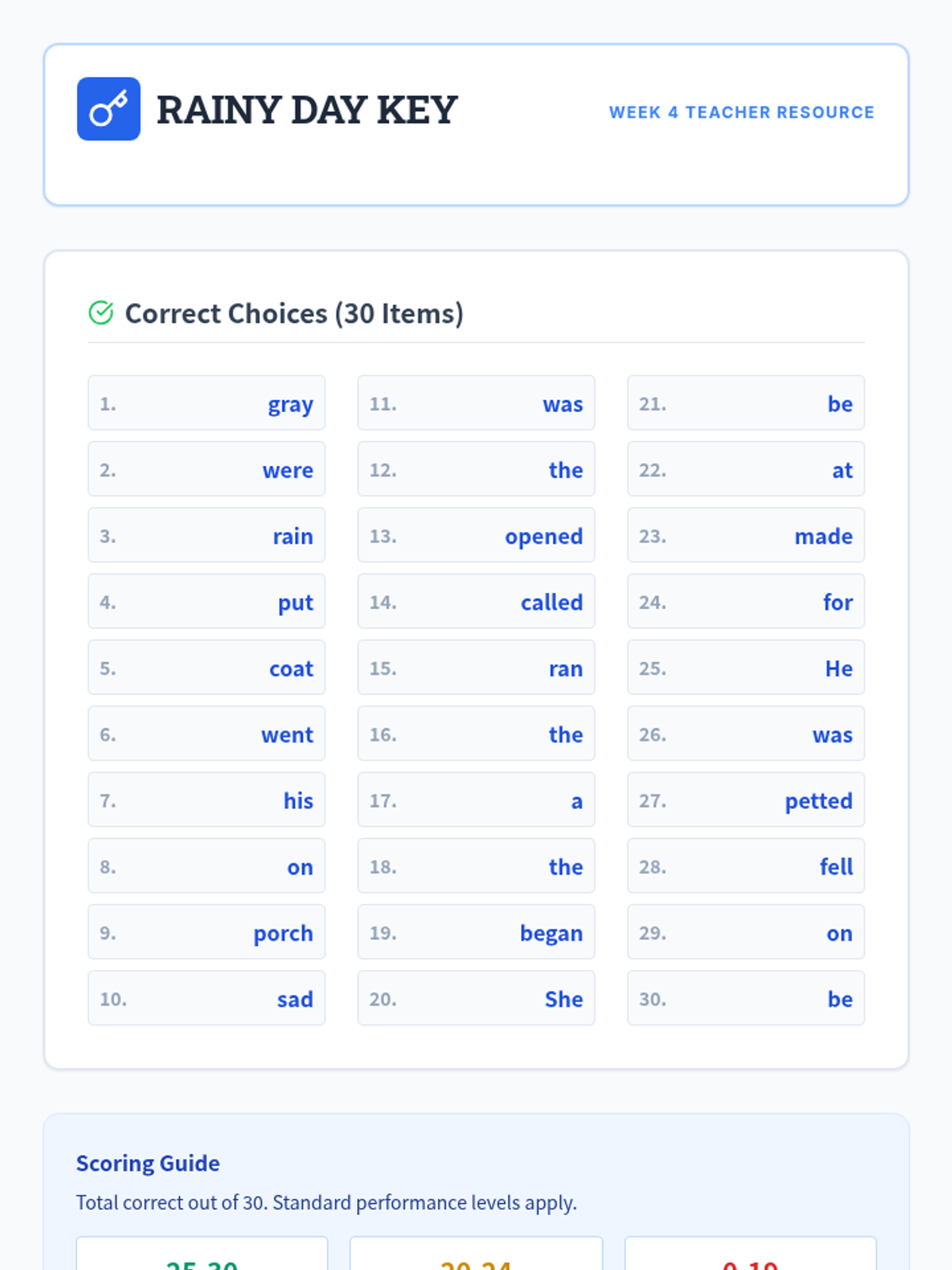
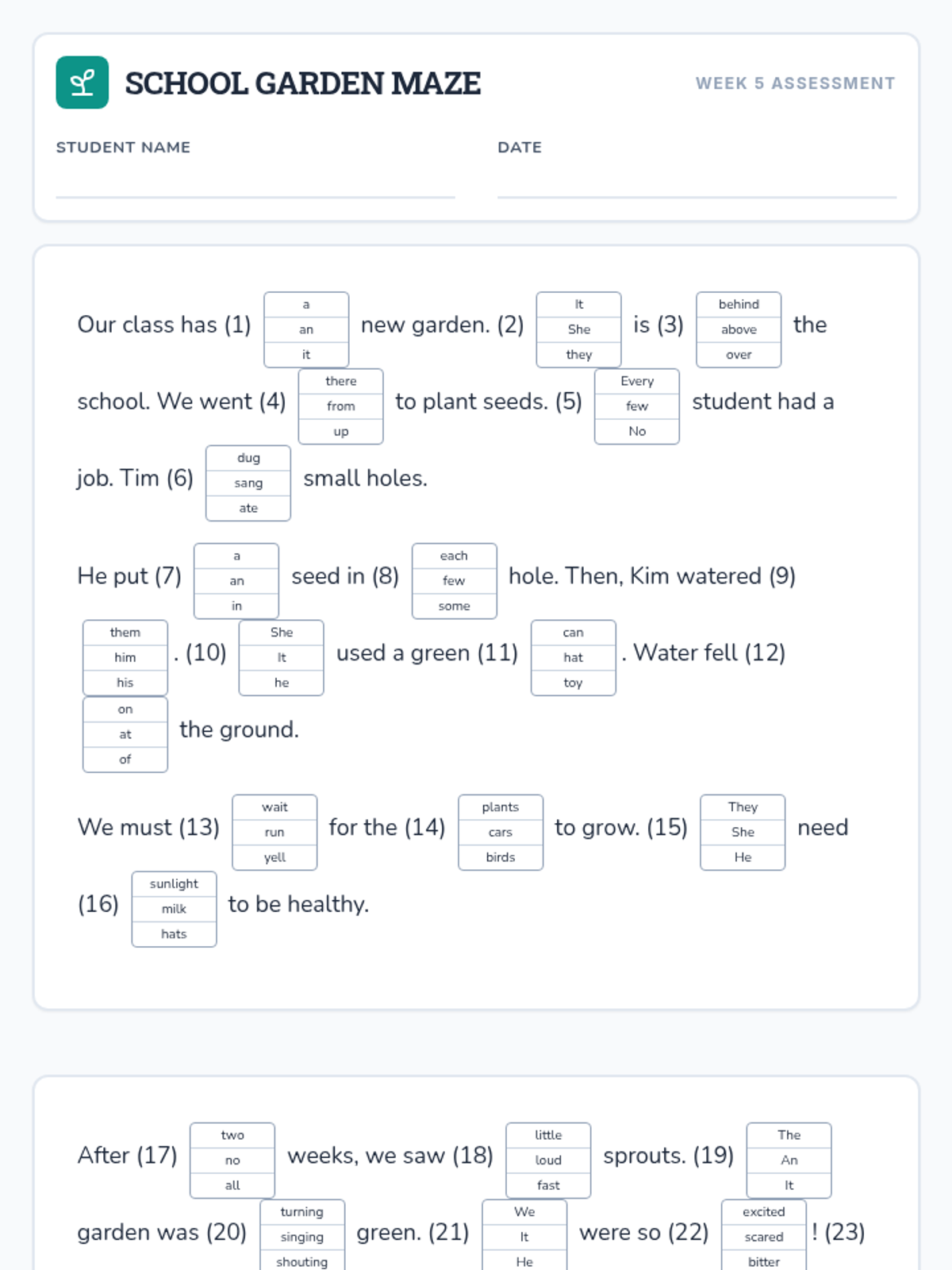
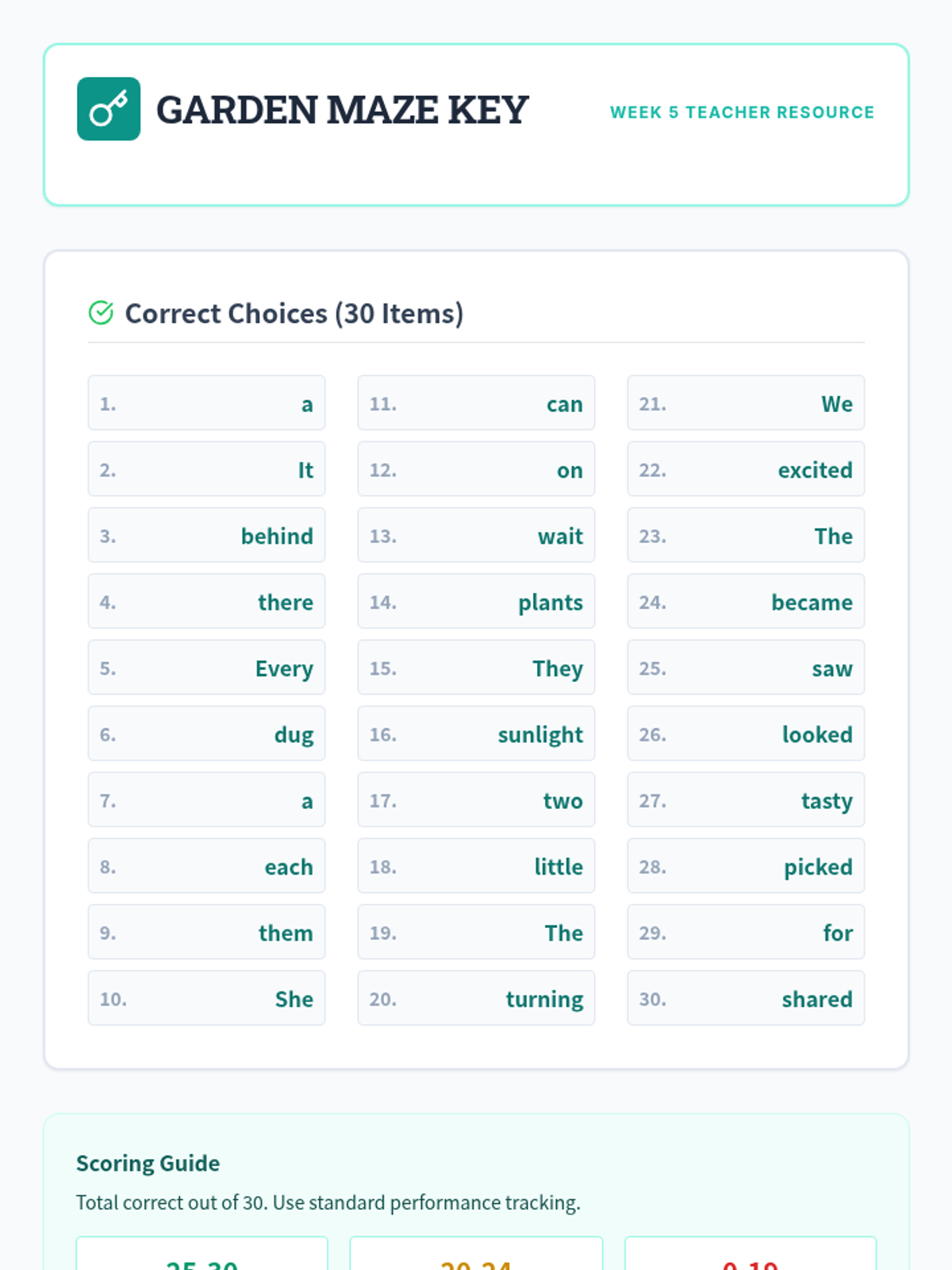
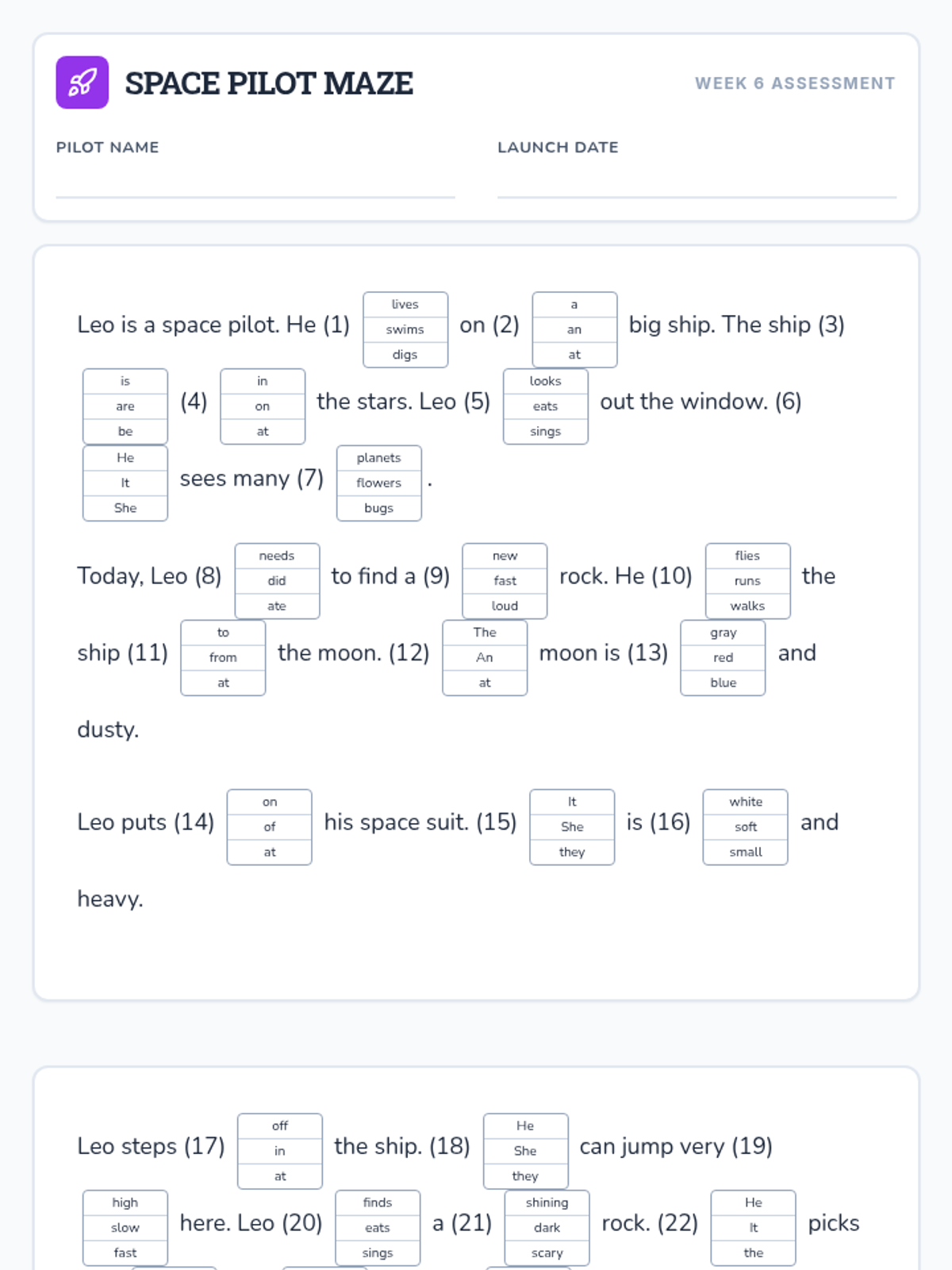
A reading intervention lesson focused on story comprehension using a maze assessment format, where students select the correct word to complete a narrative.
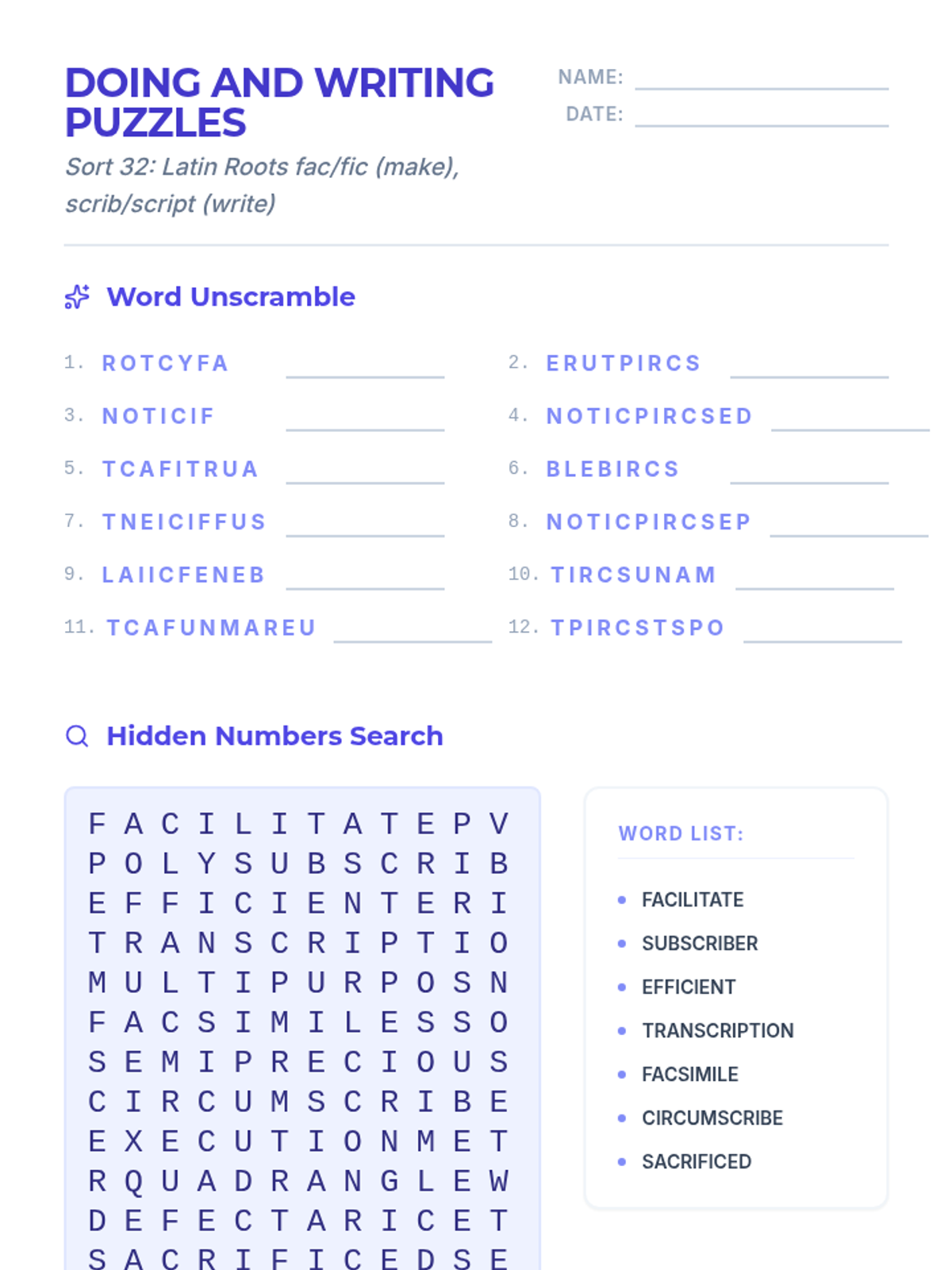
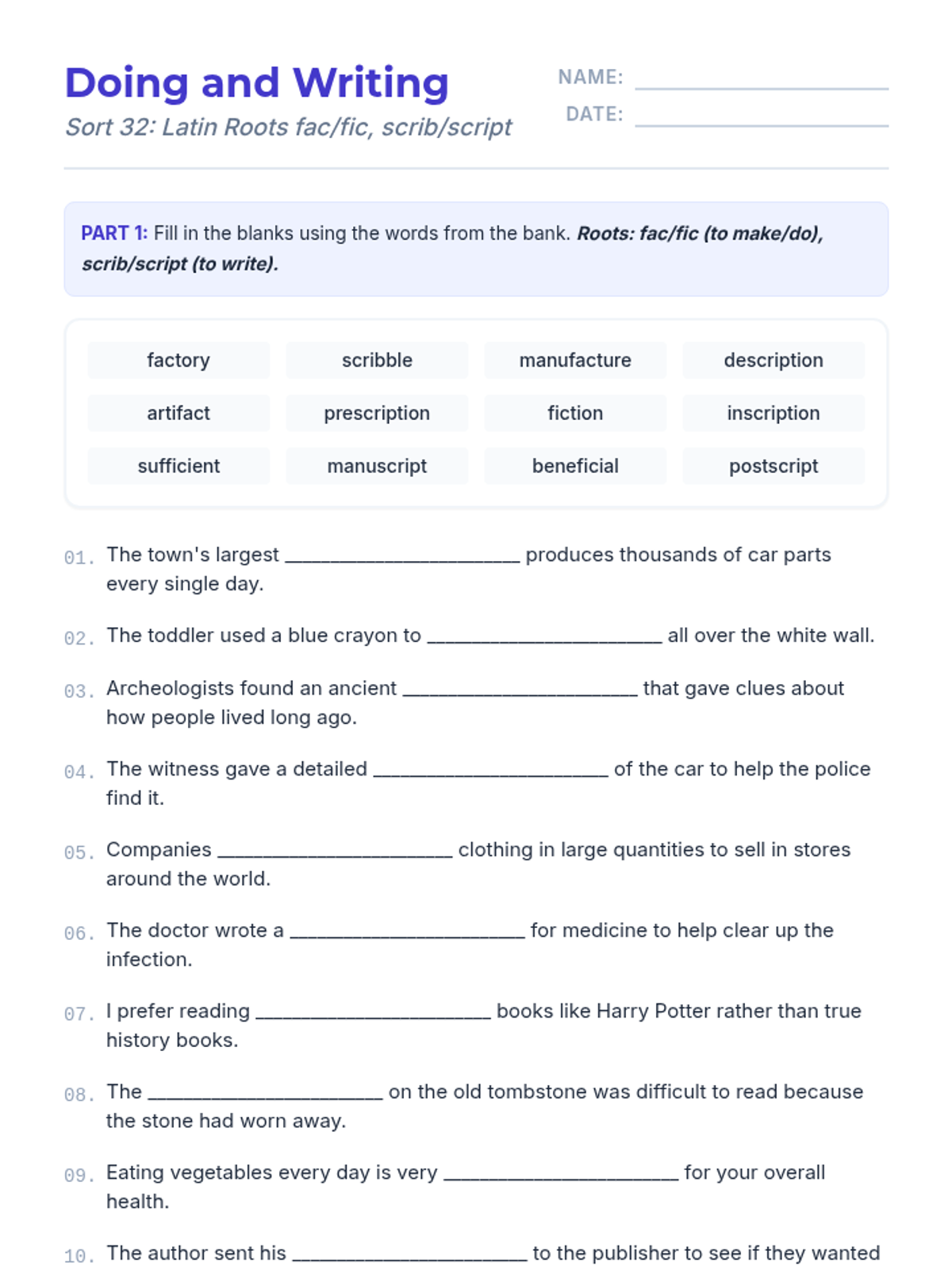
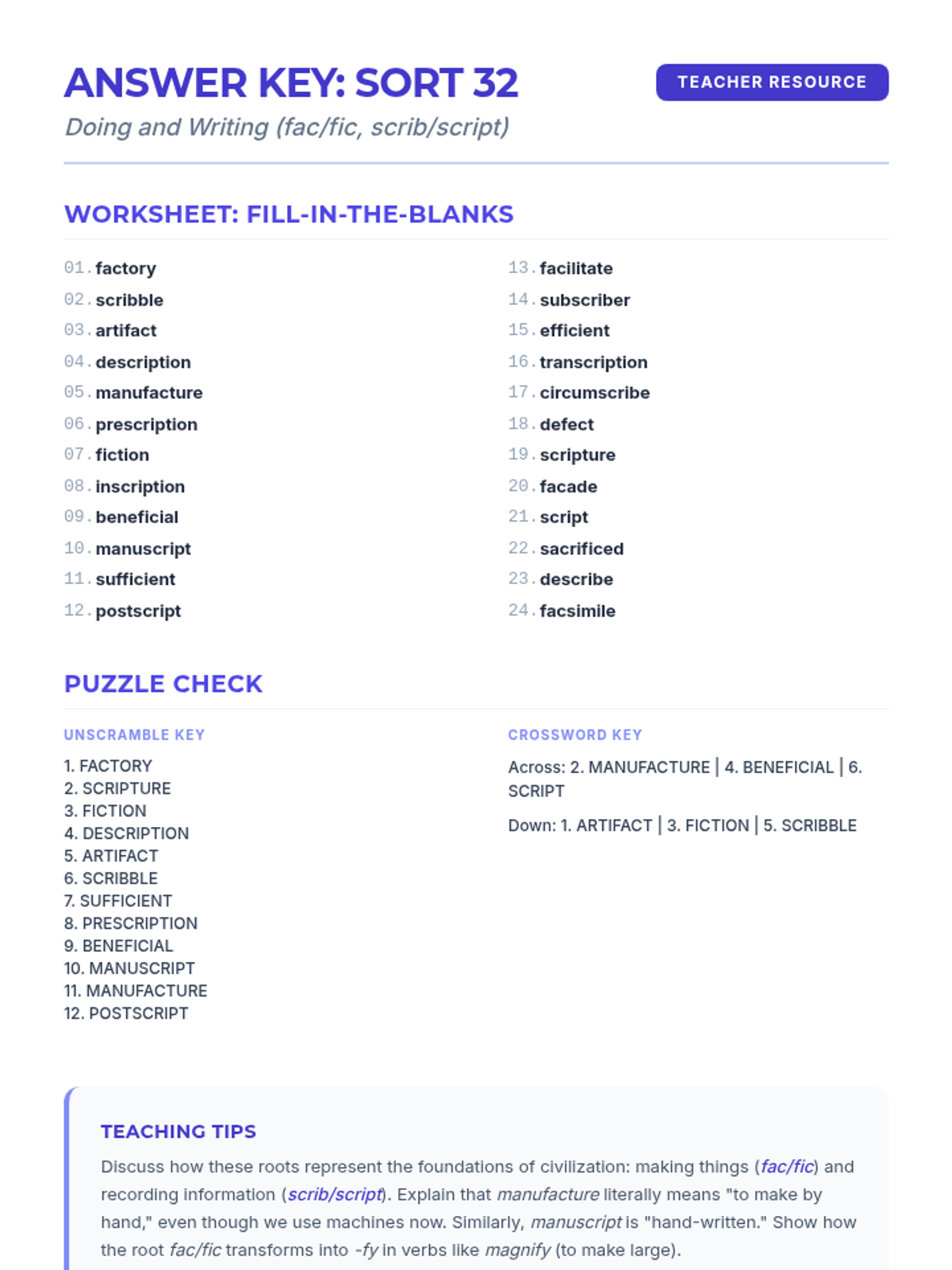
Mastering Latin roots related to doing and writing: fac/fic/fact (to make/do) and scrib/script (to write).
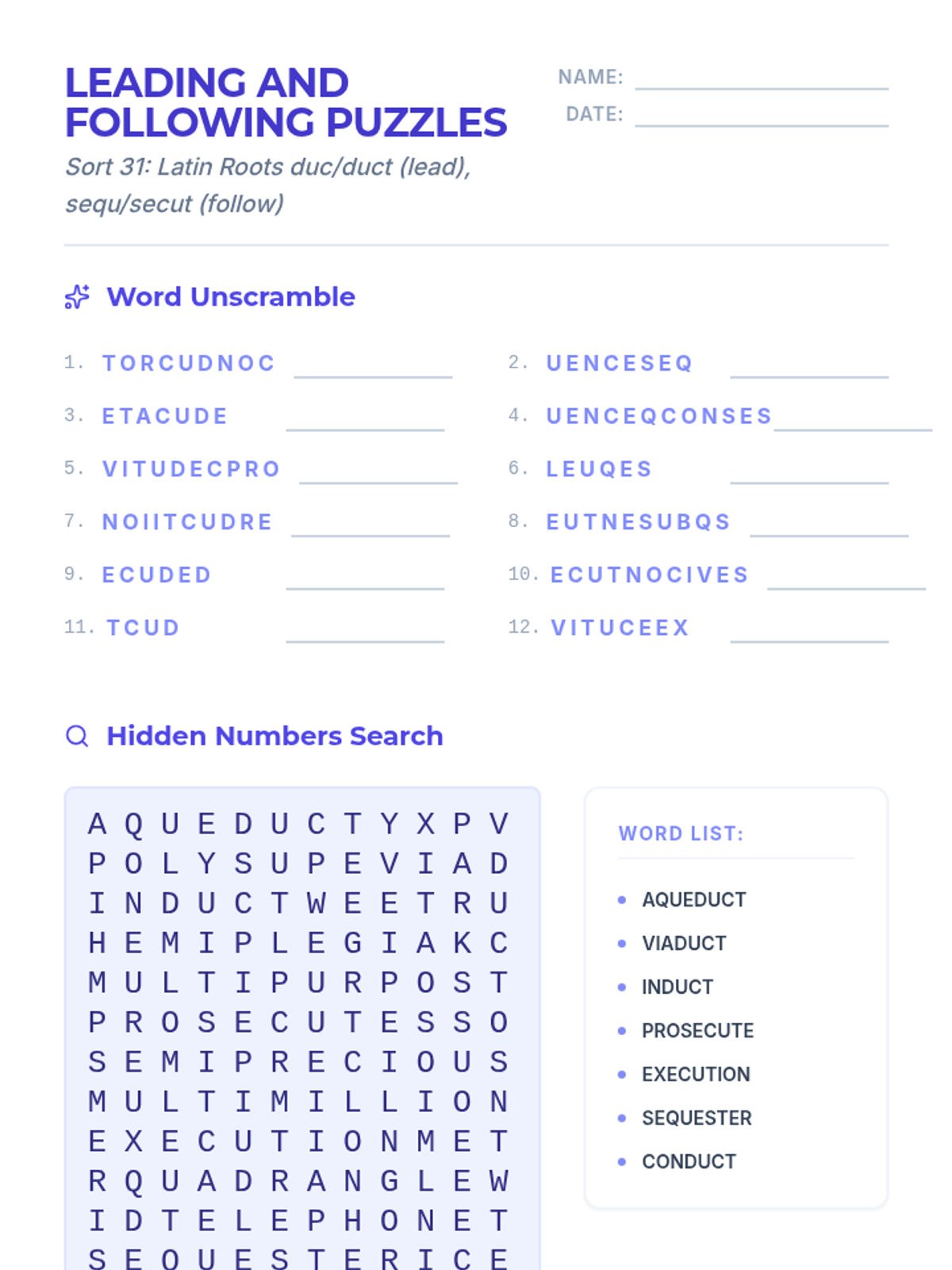
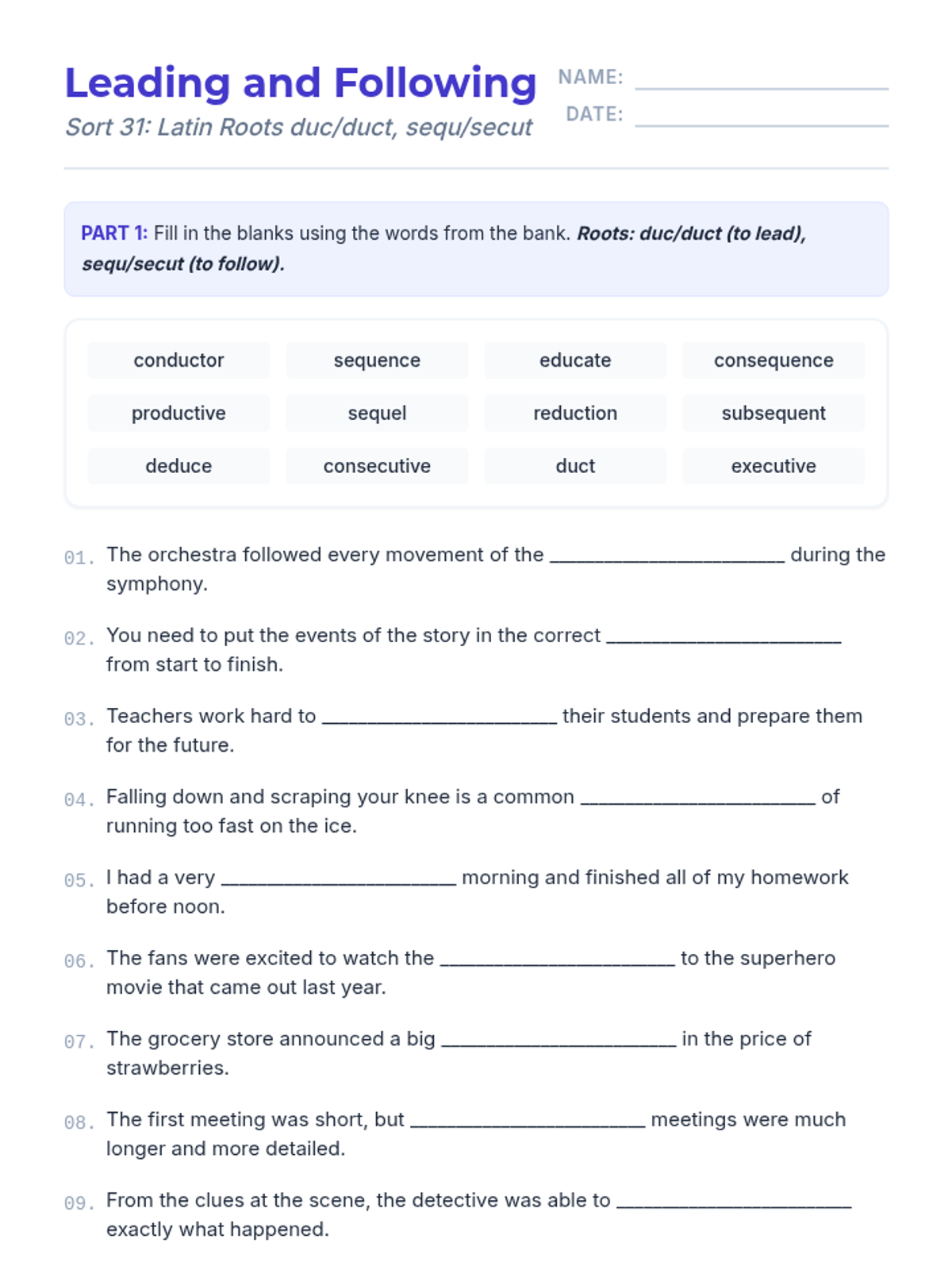
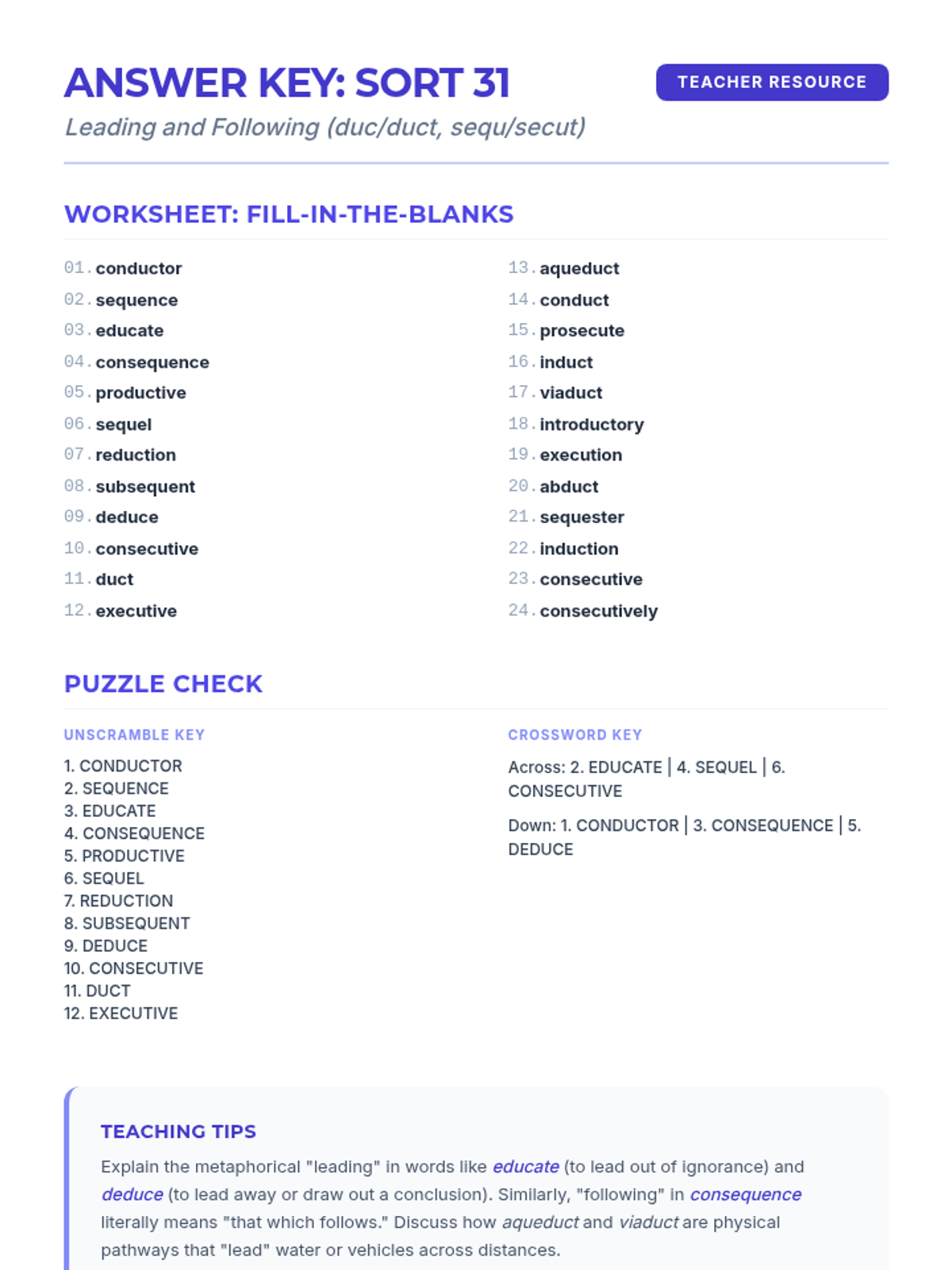
Mastering Latin roots related to leading and following: duc/duct (to lead) and sequ/secut (to follow).
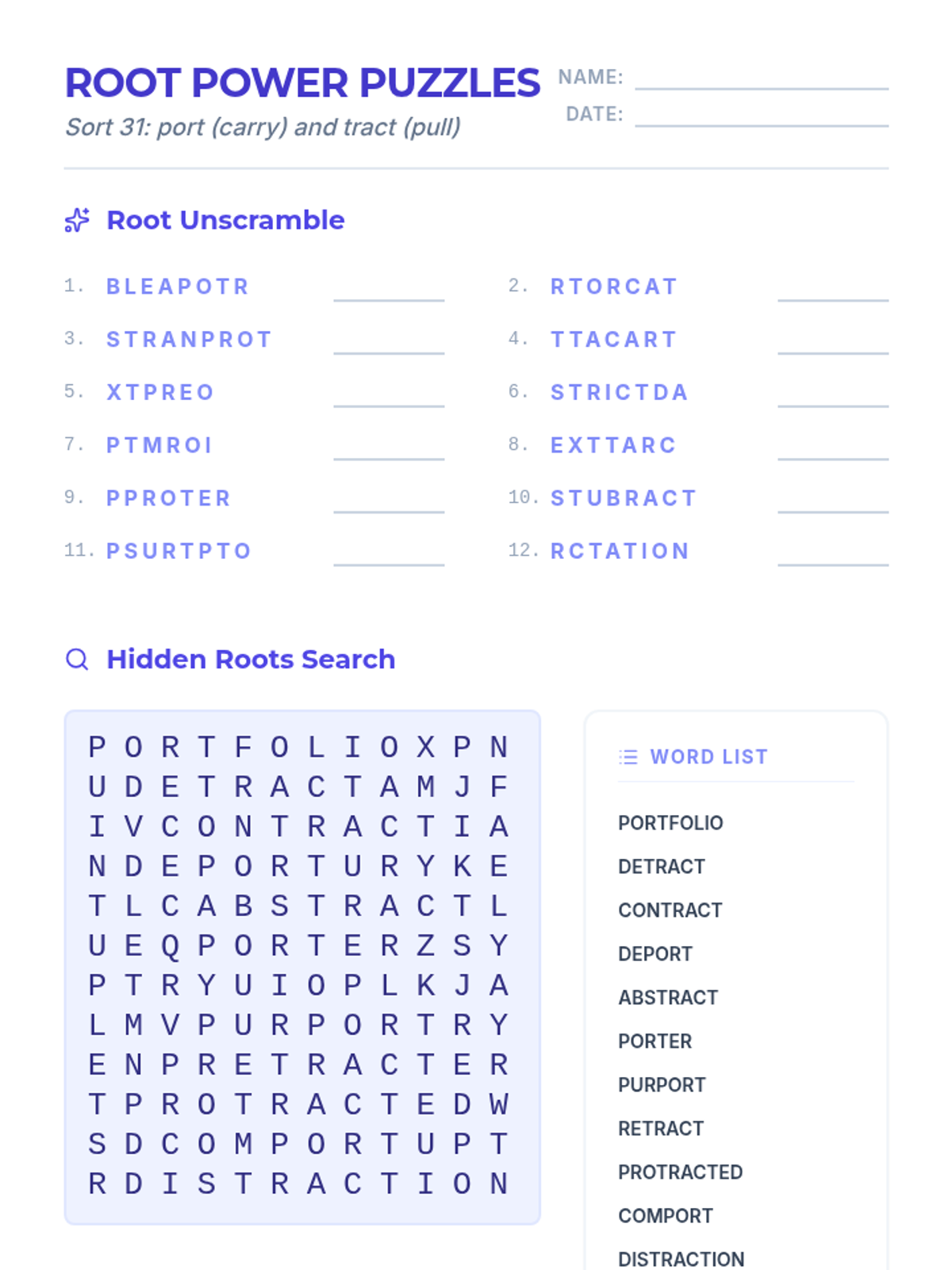
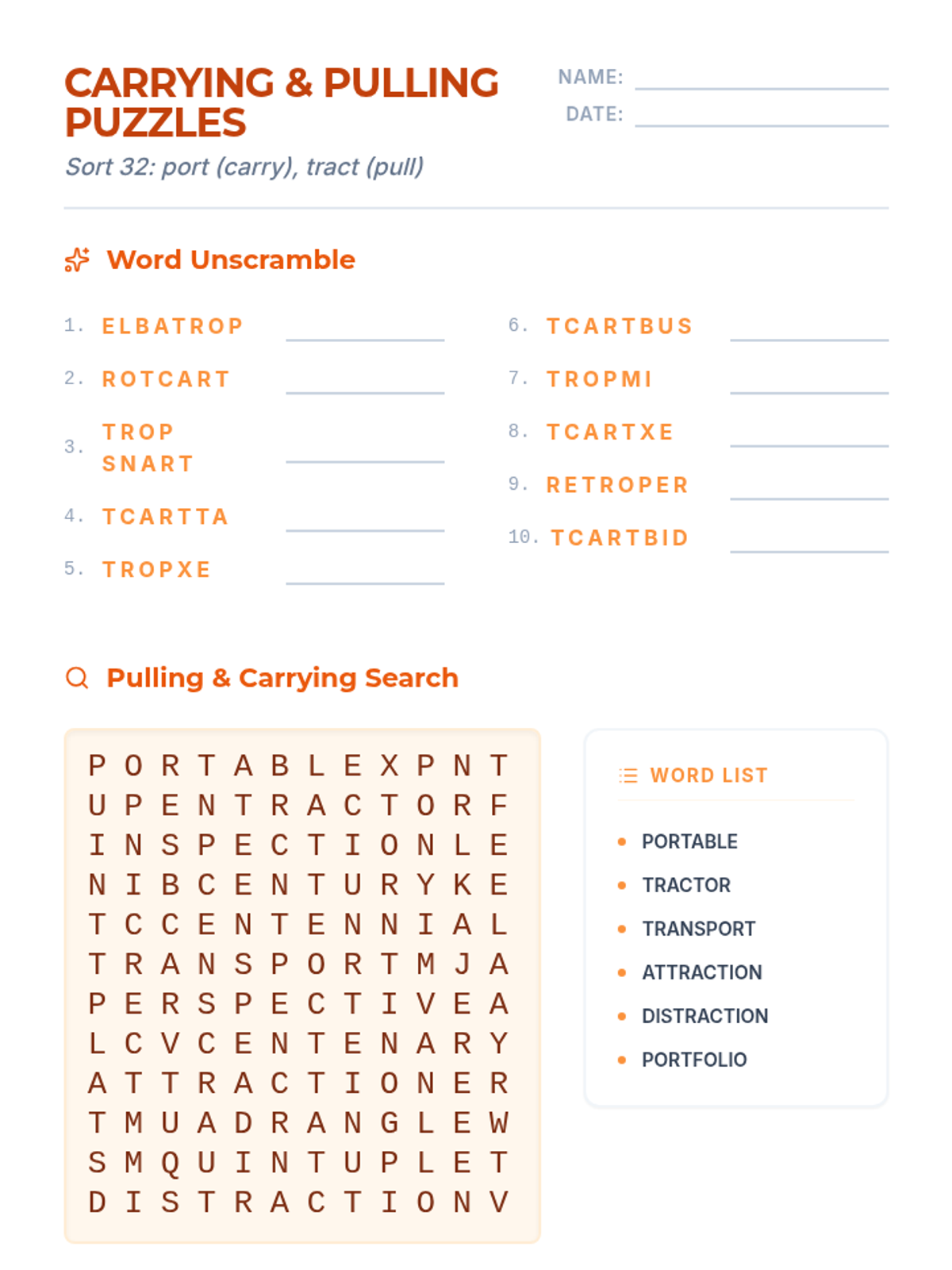
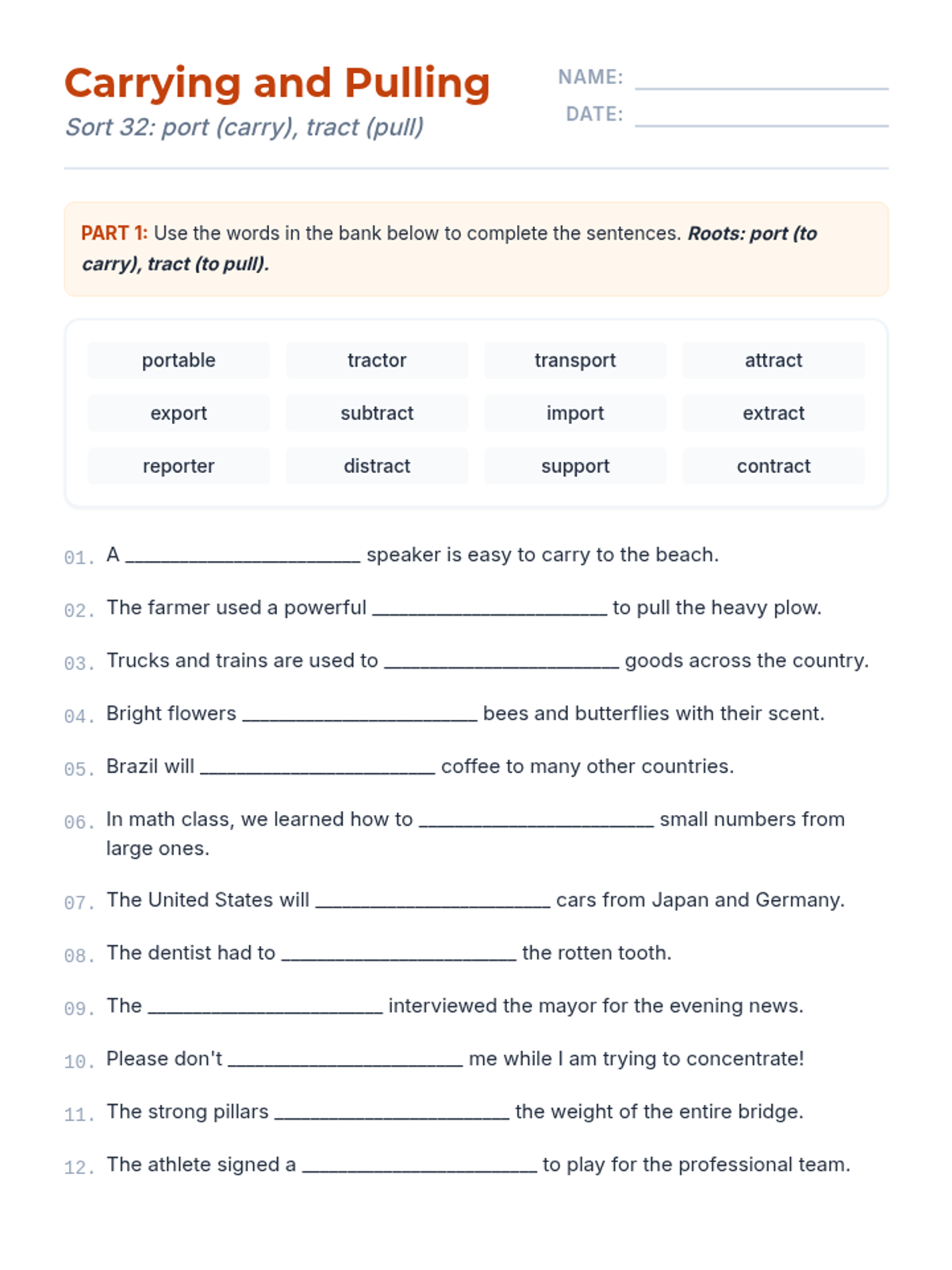
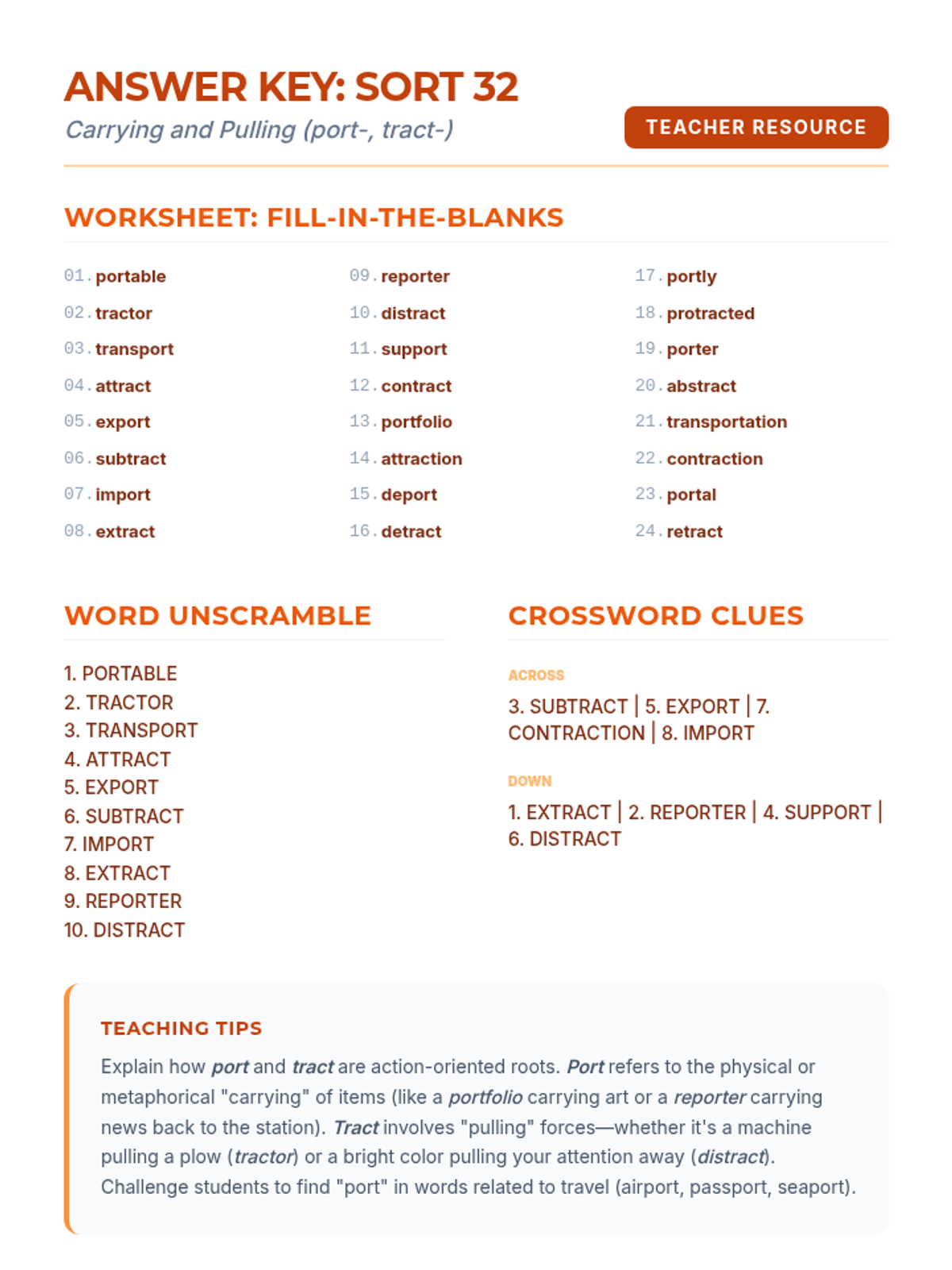
Mastering Latin roots related to carrying and pulling: port (to carry) and tract (to pull).
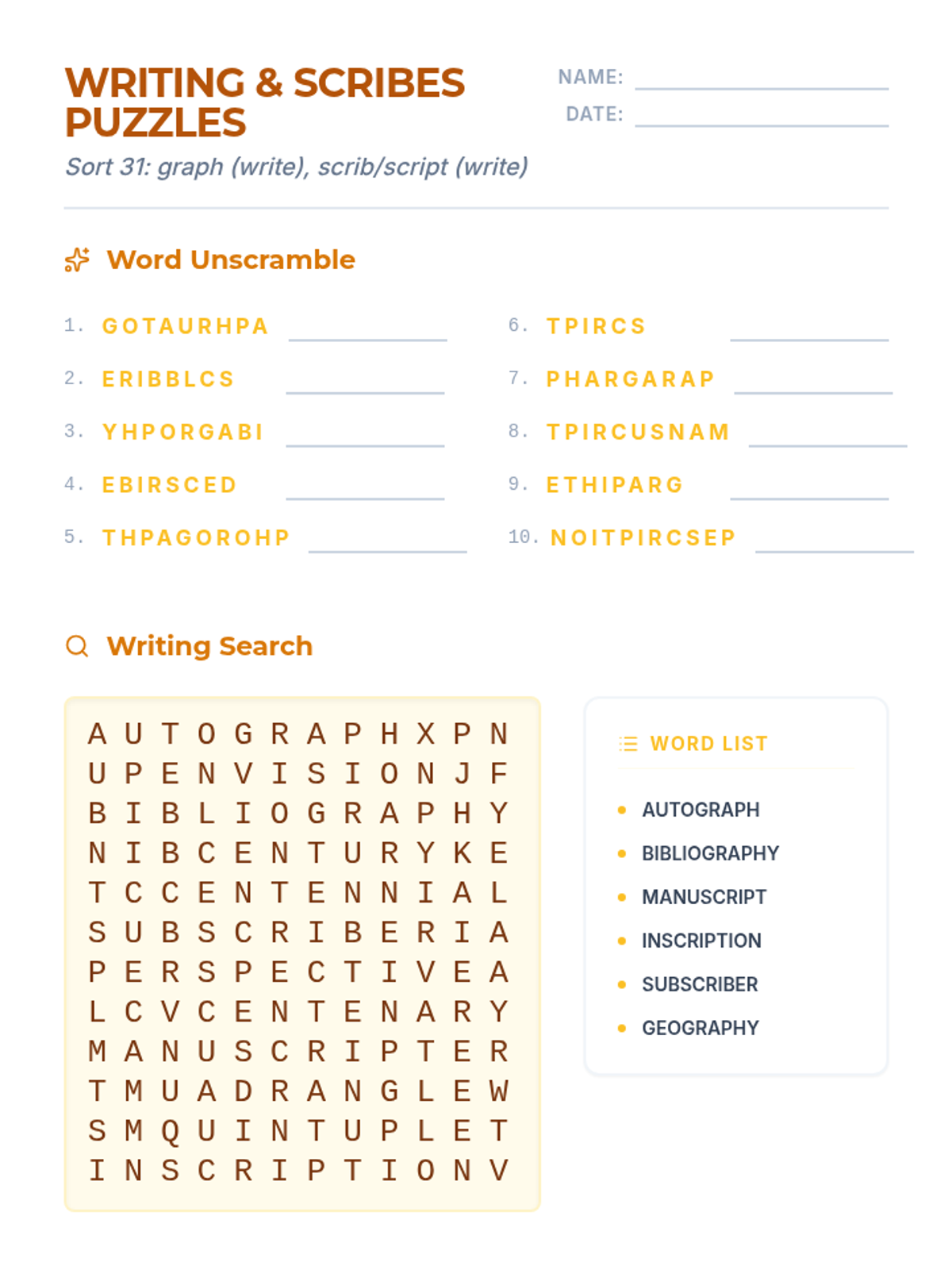
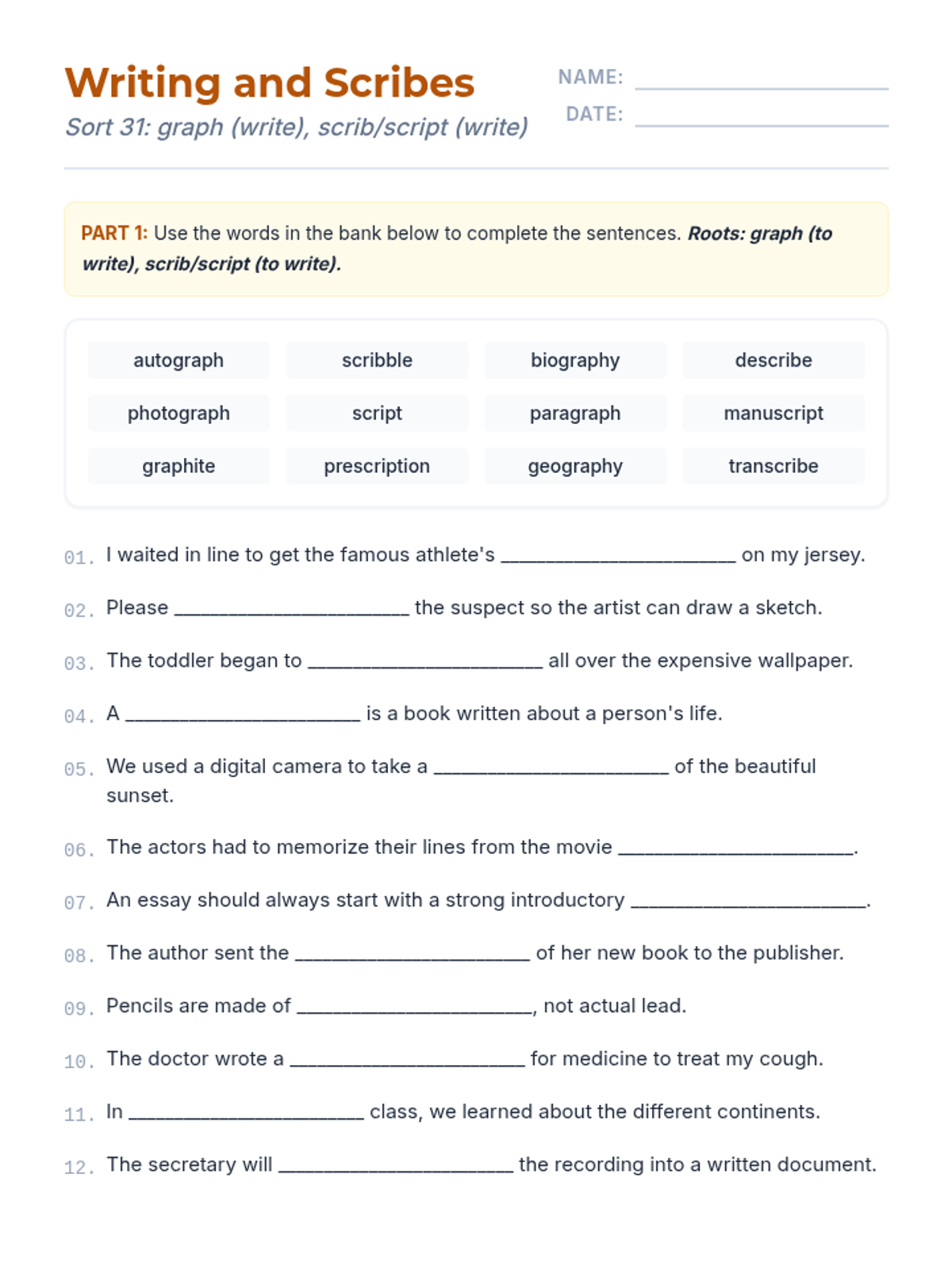
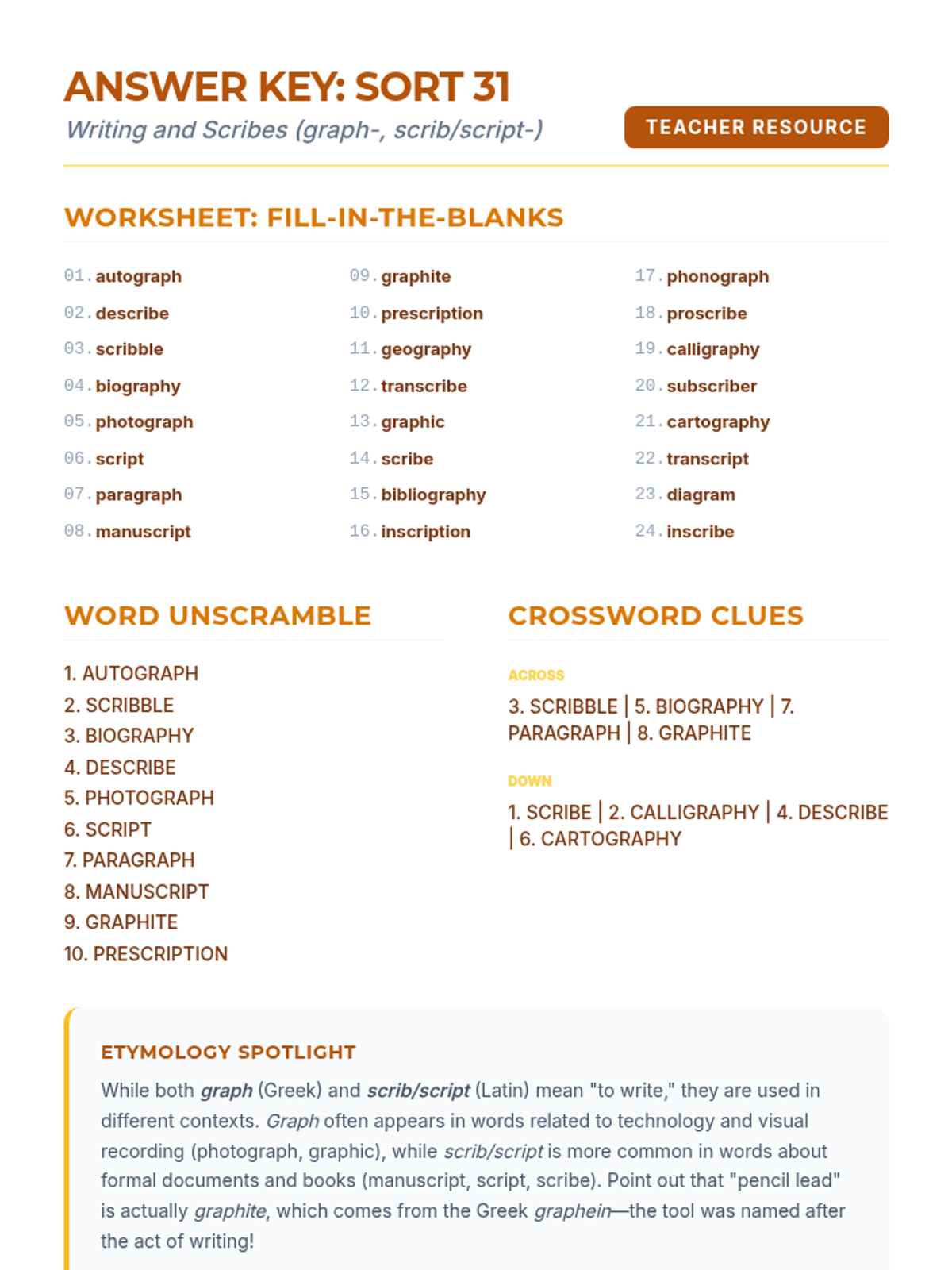
Mastering Latin roots related to writing: graph (to write) and scrib/script (to write).
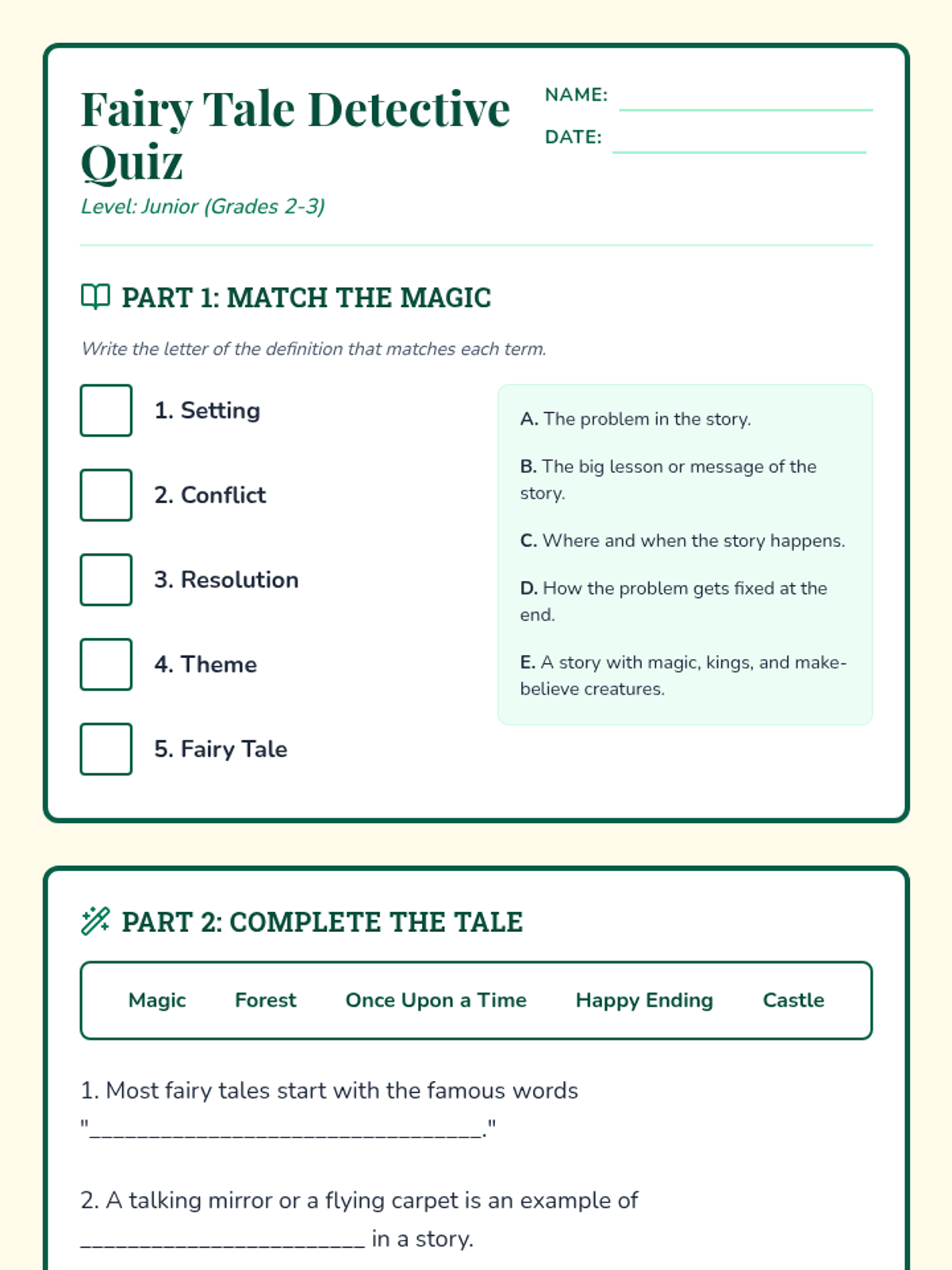
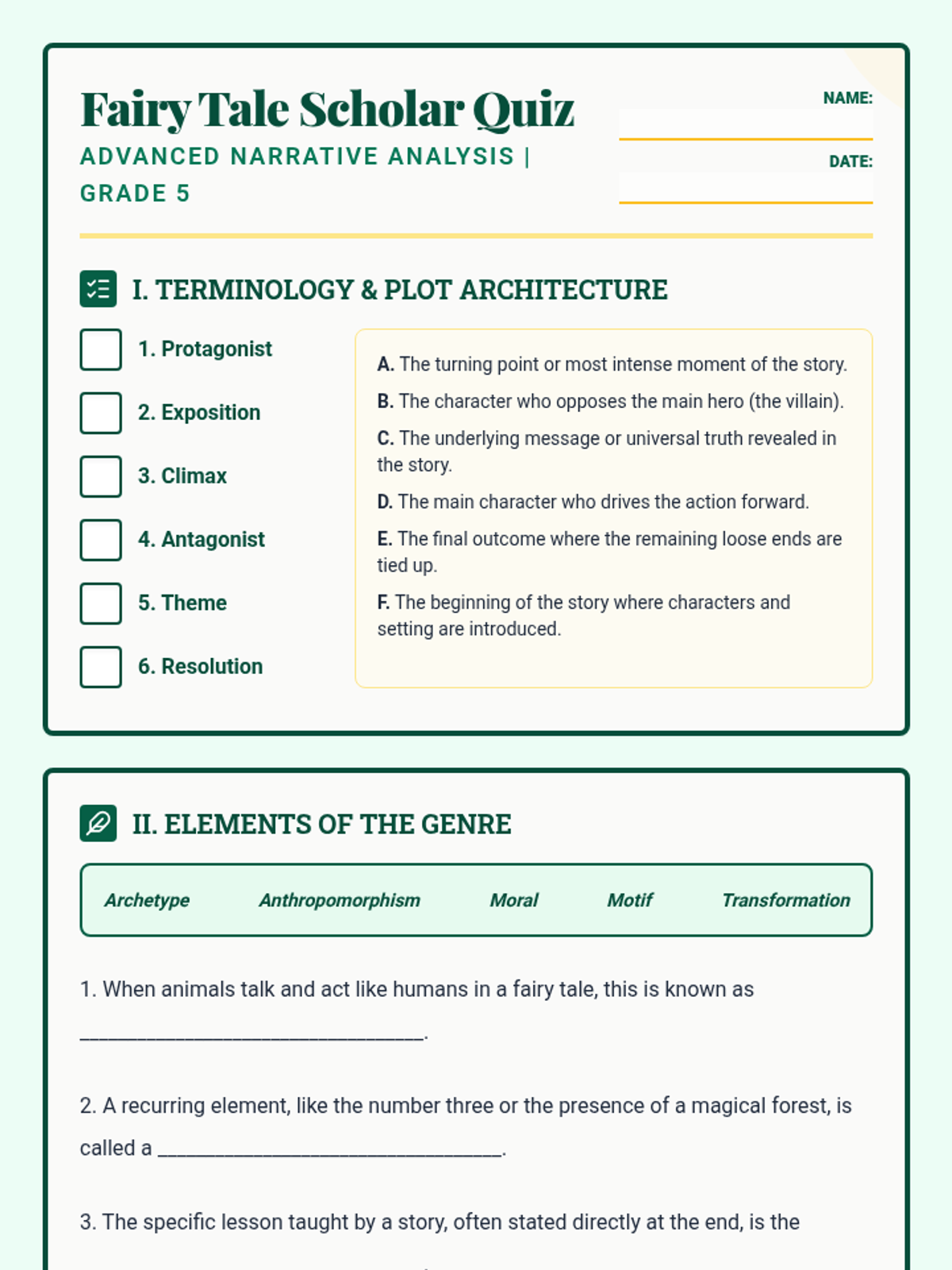
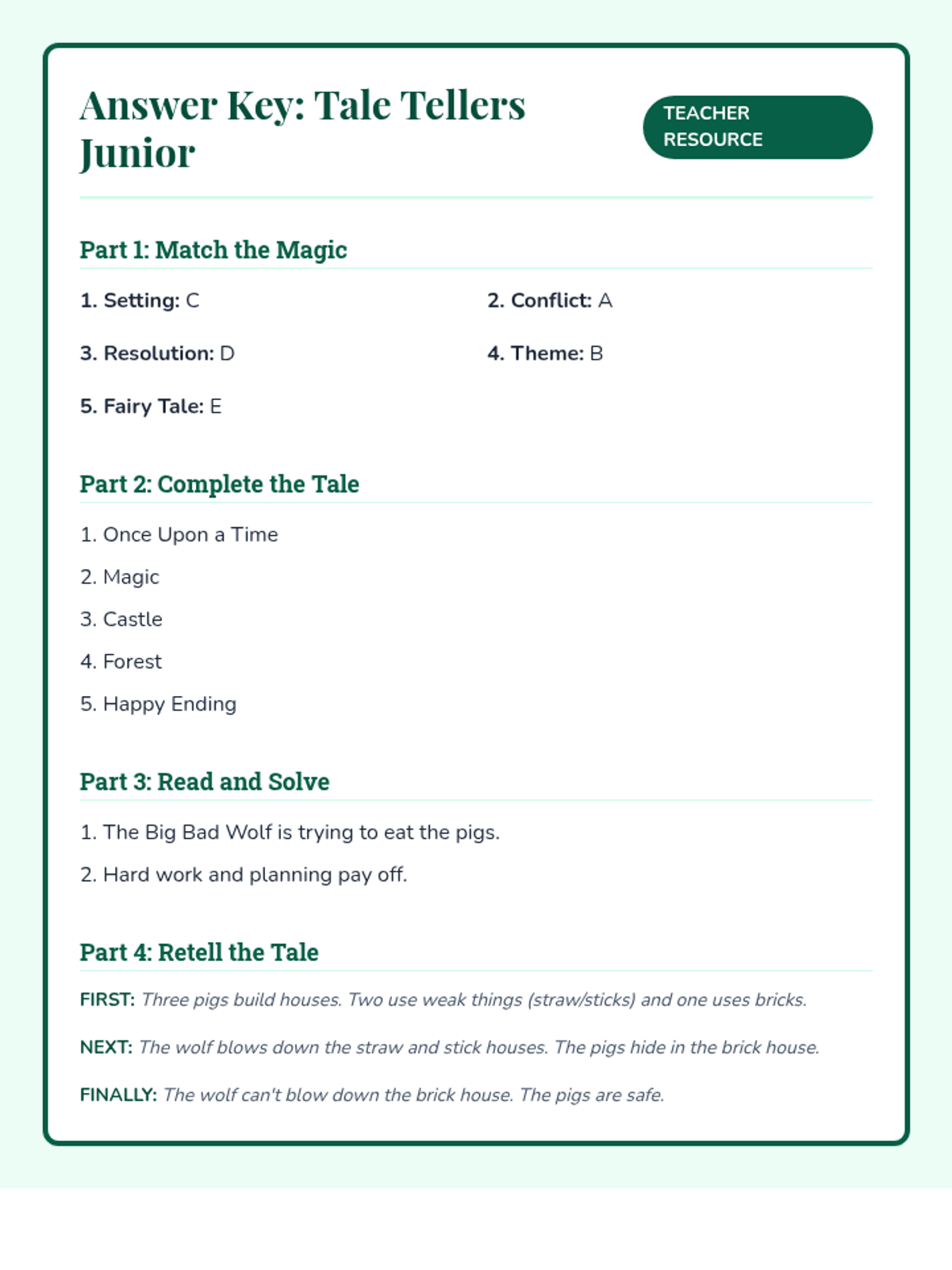
A comprehensive assessment on fairy tale elements and plot structures for elementary students, featuring two differentiated levels to meet specific grade-level standards.
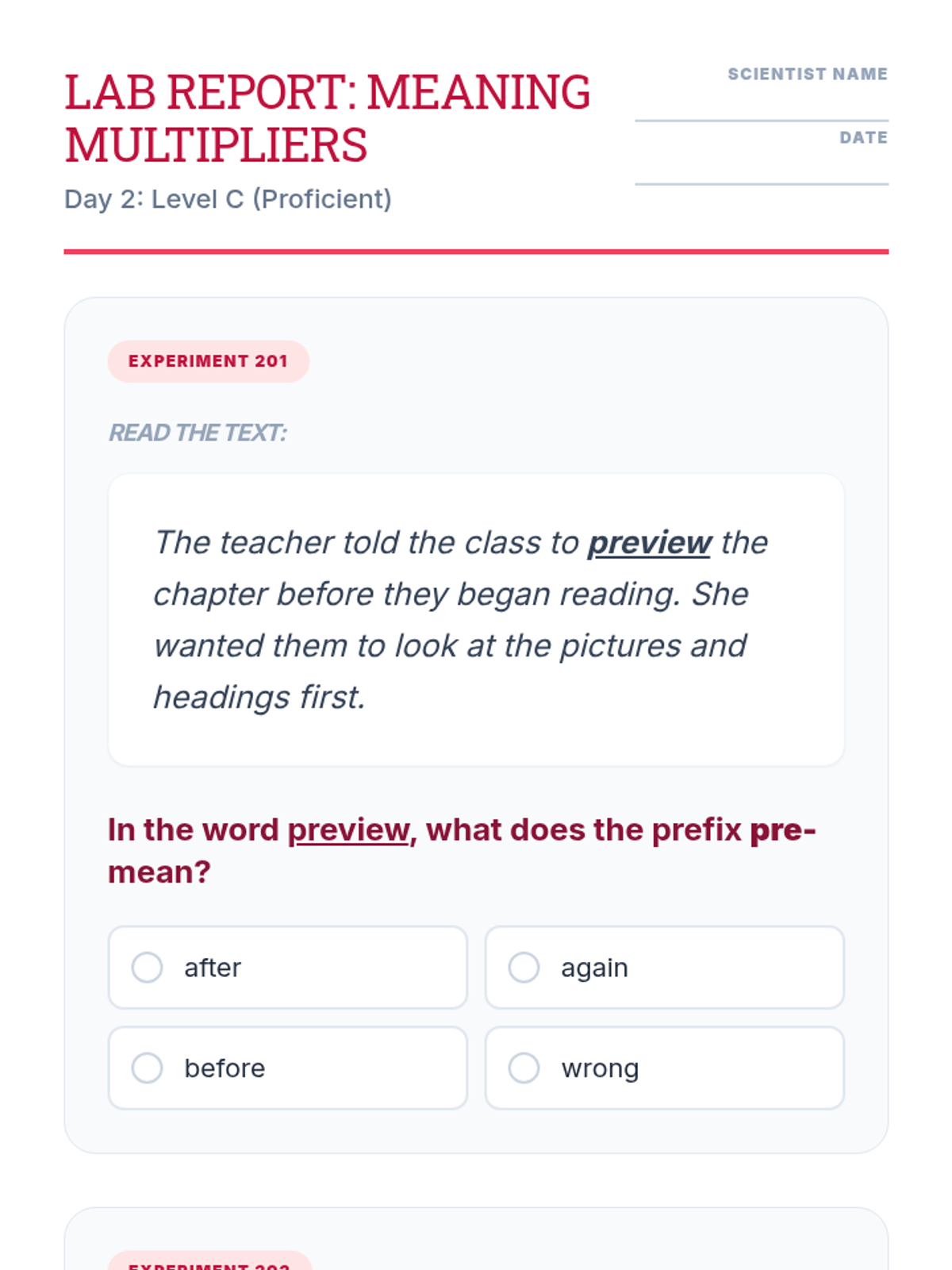
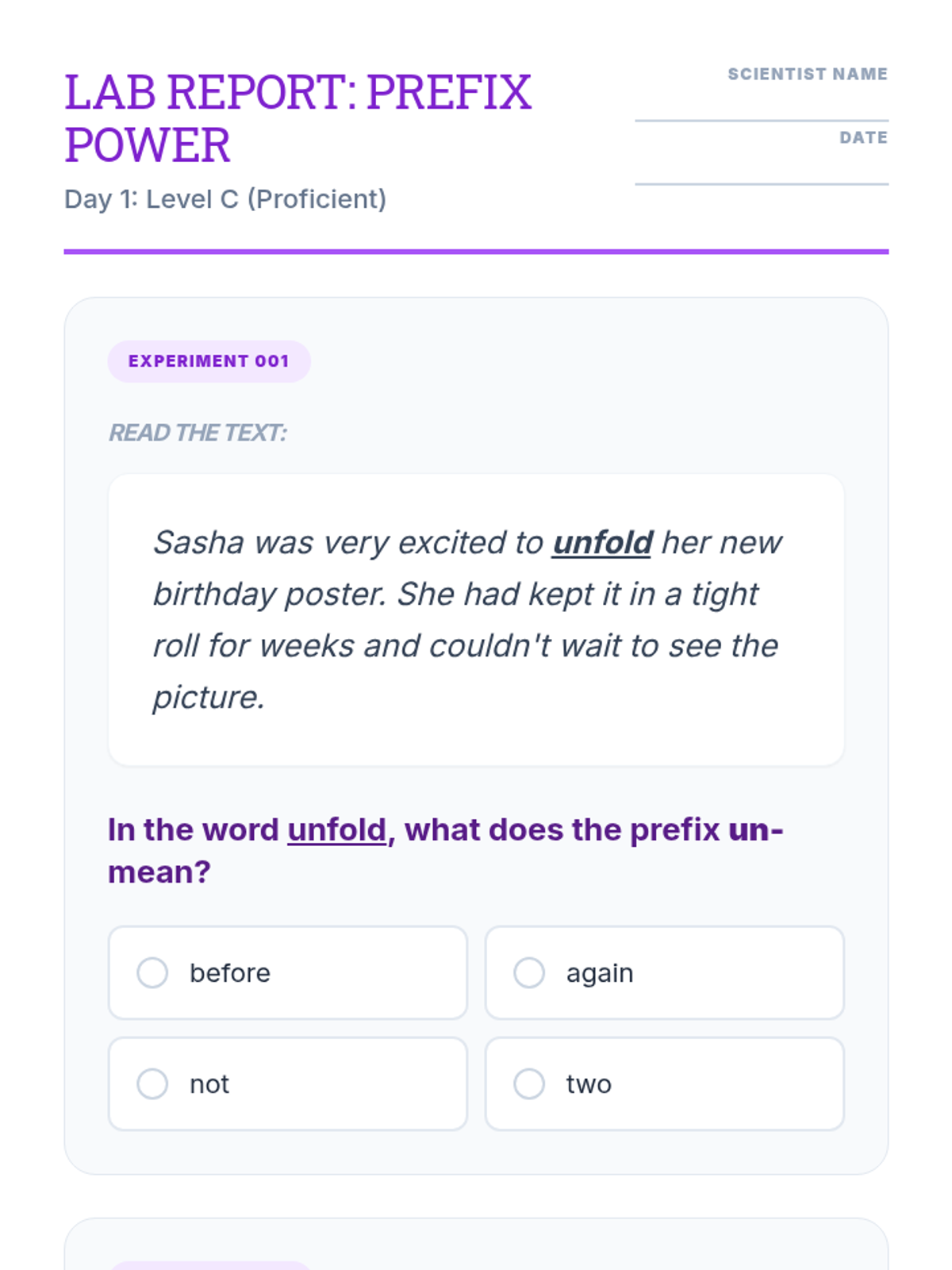
Focuses on synthesizing context clues and morphological knowledge to master complex semantics.
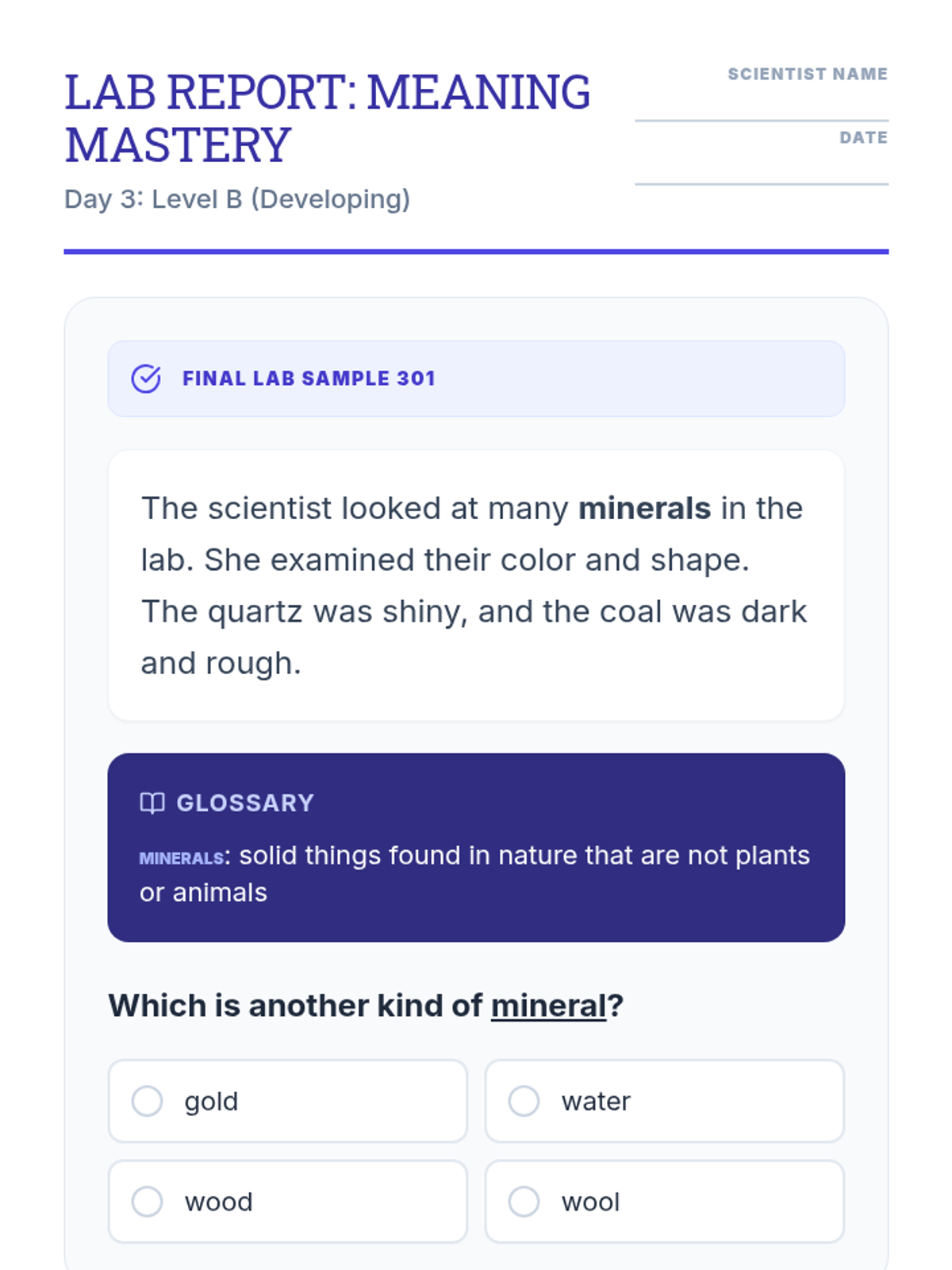
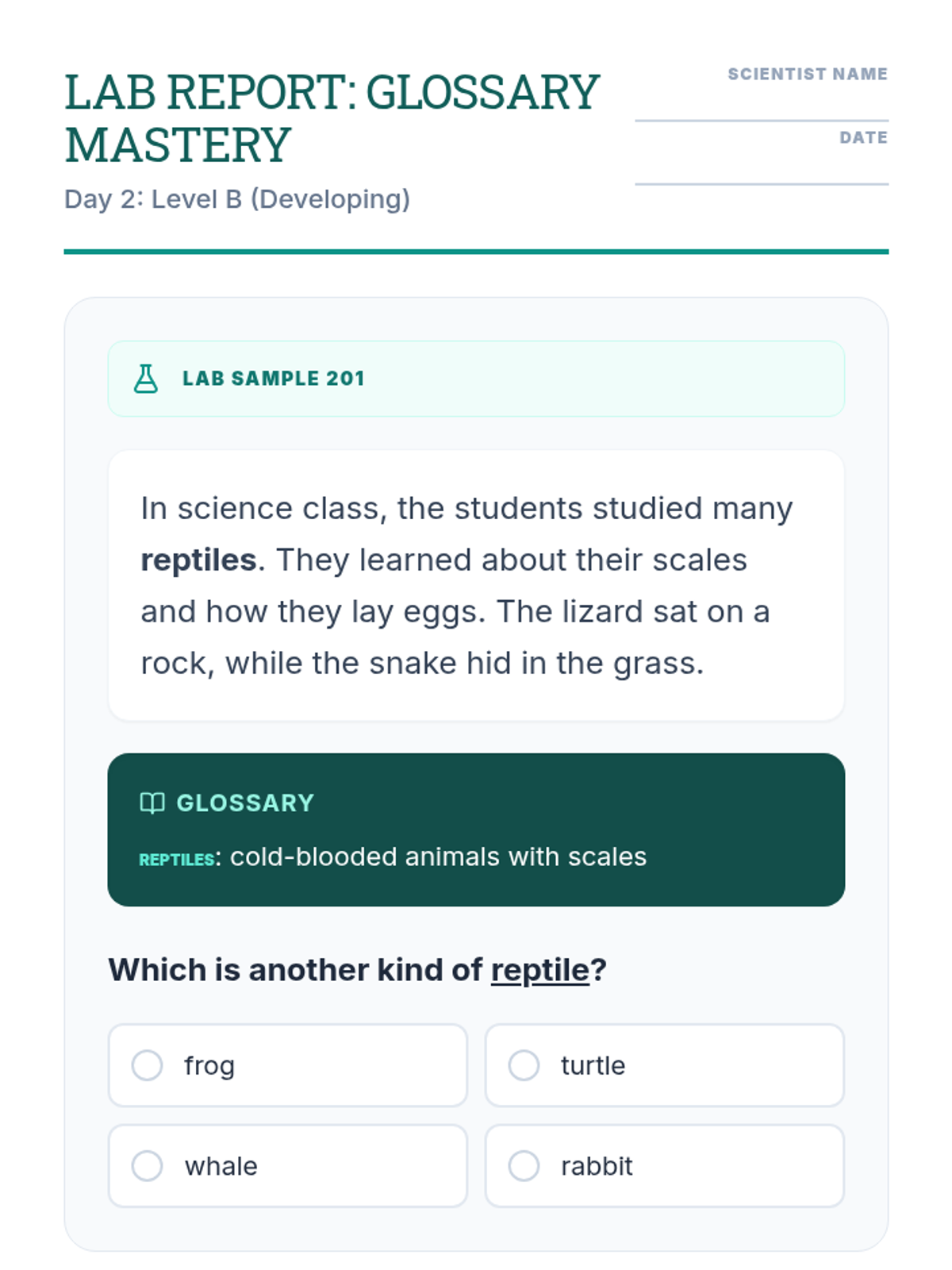
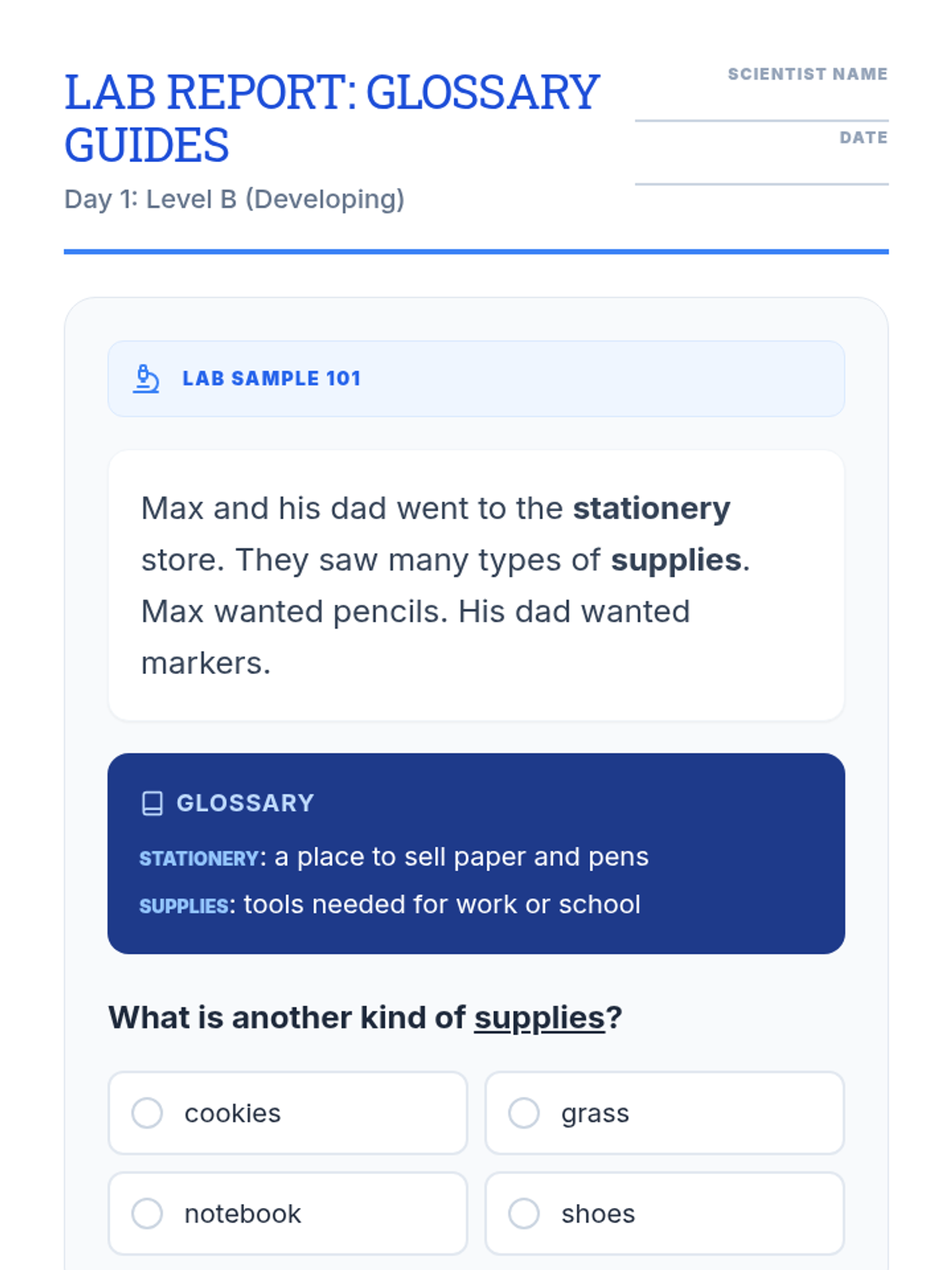
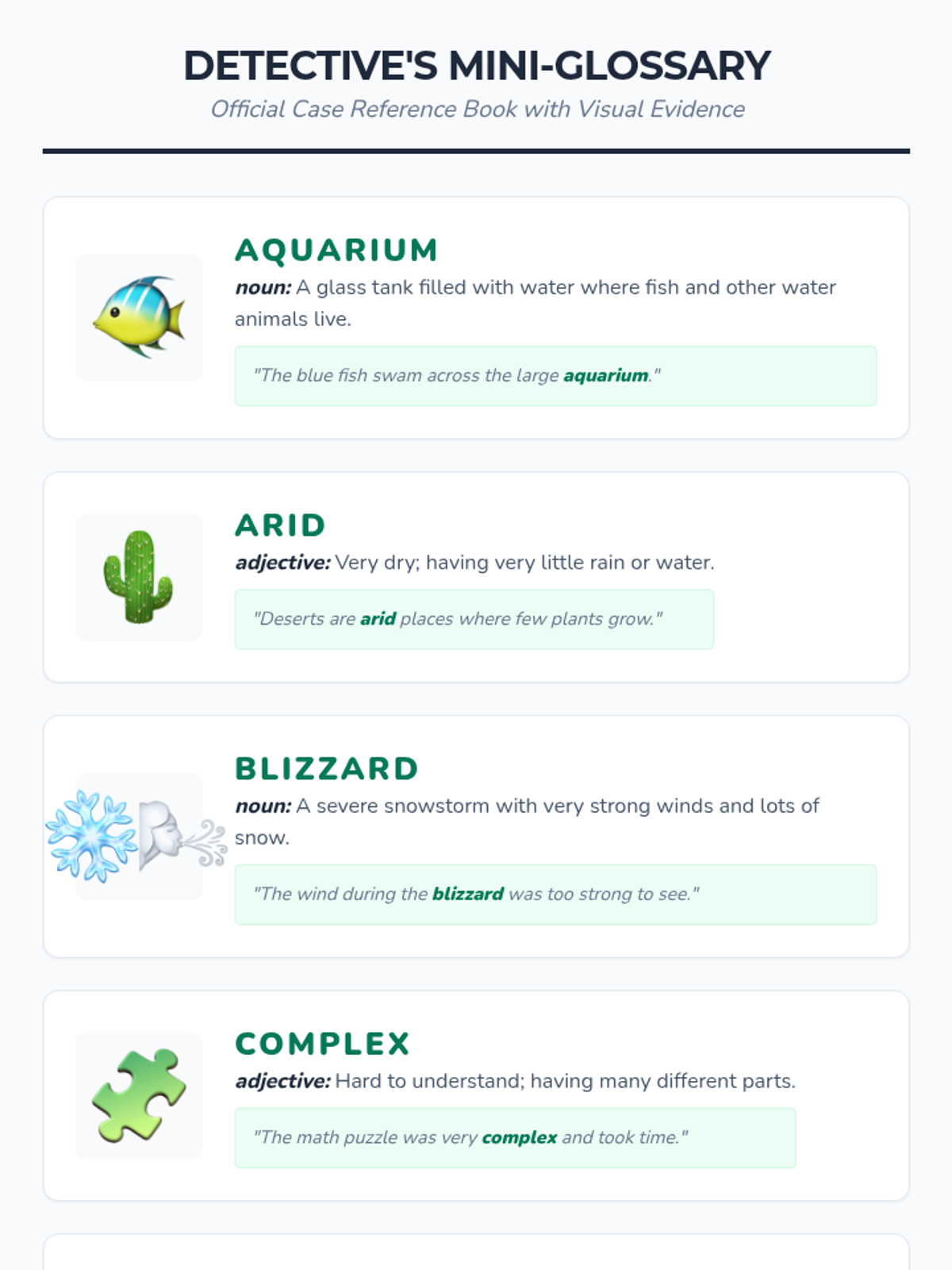
Focuses on deepening glossary skills and applying word parts to solve unfamiliar vocabulary.
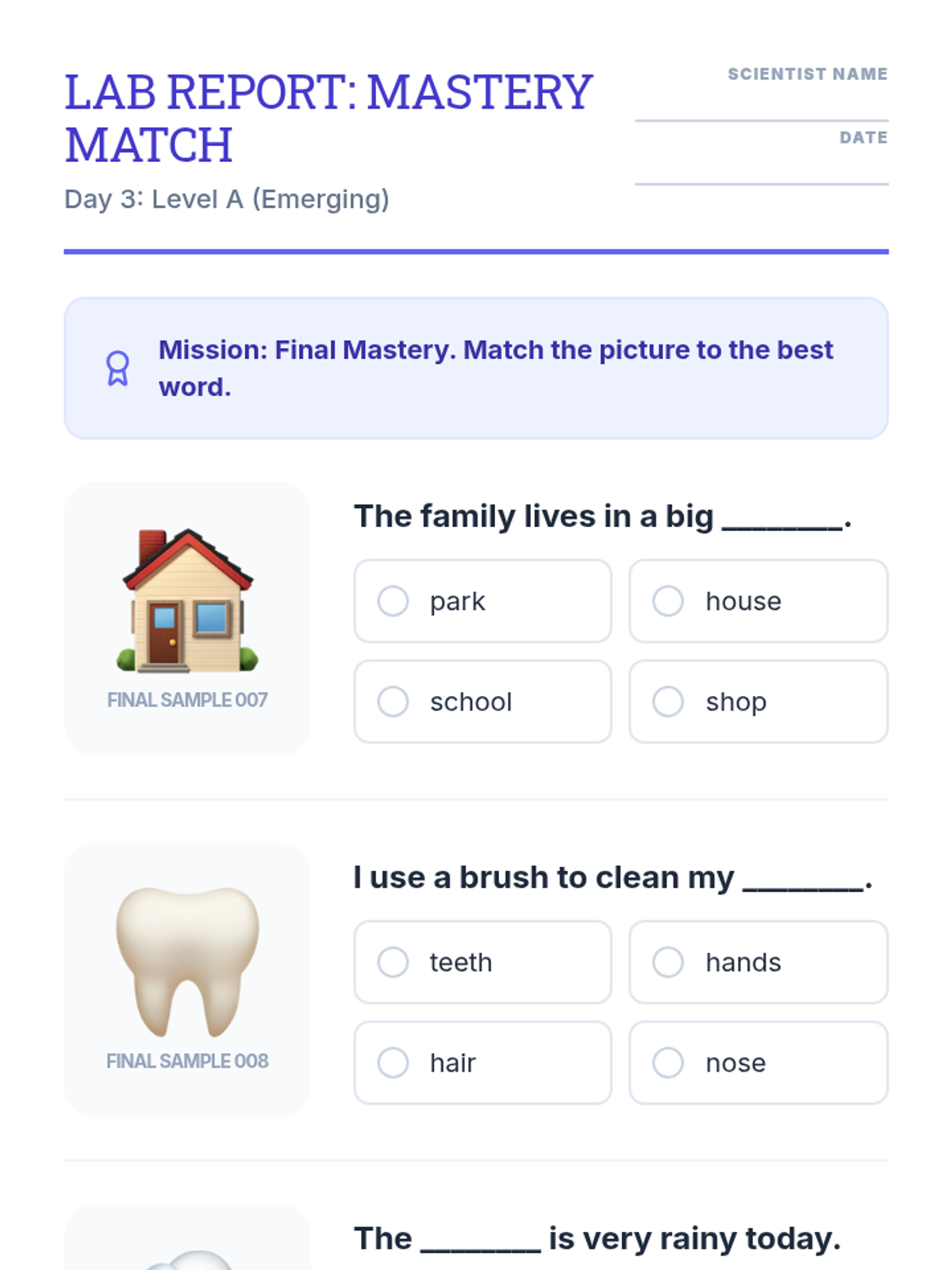
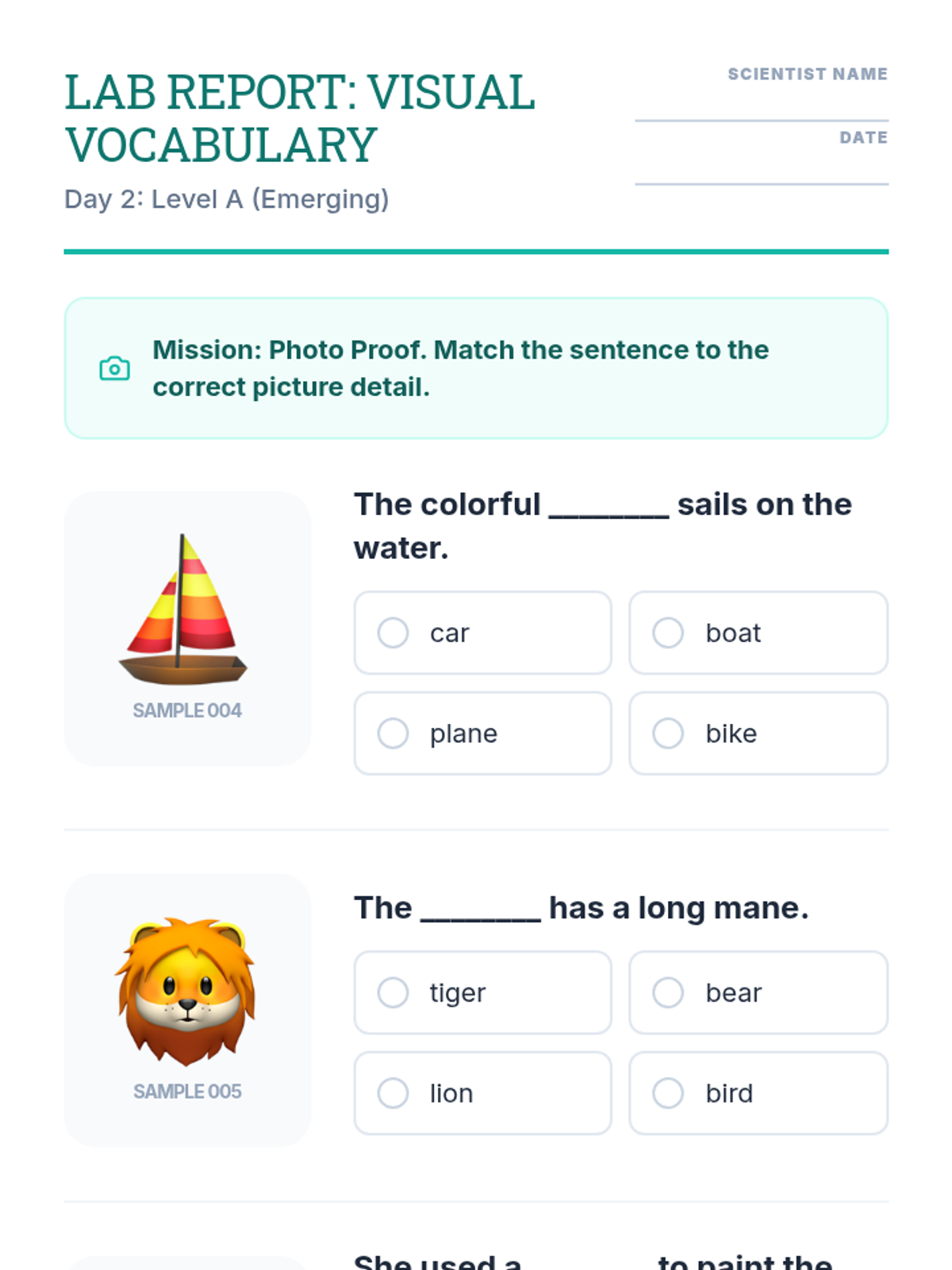
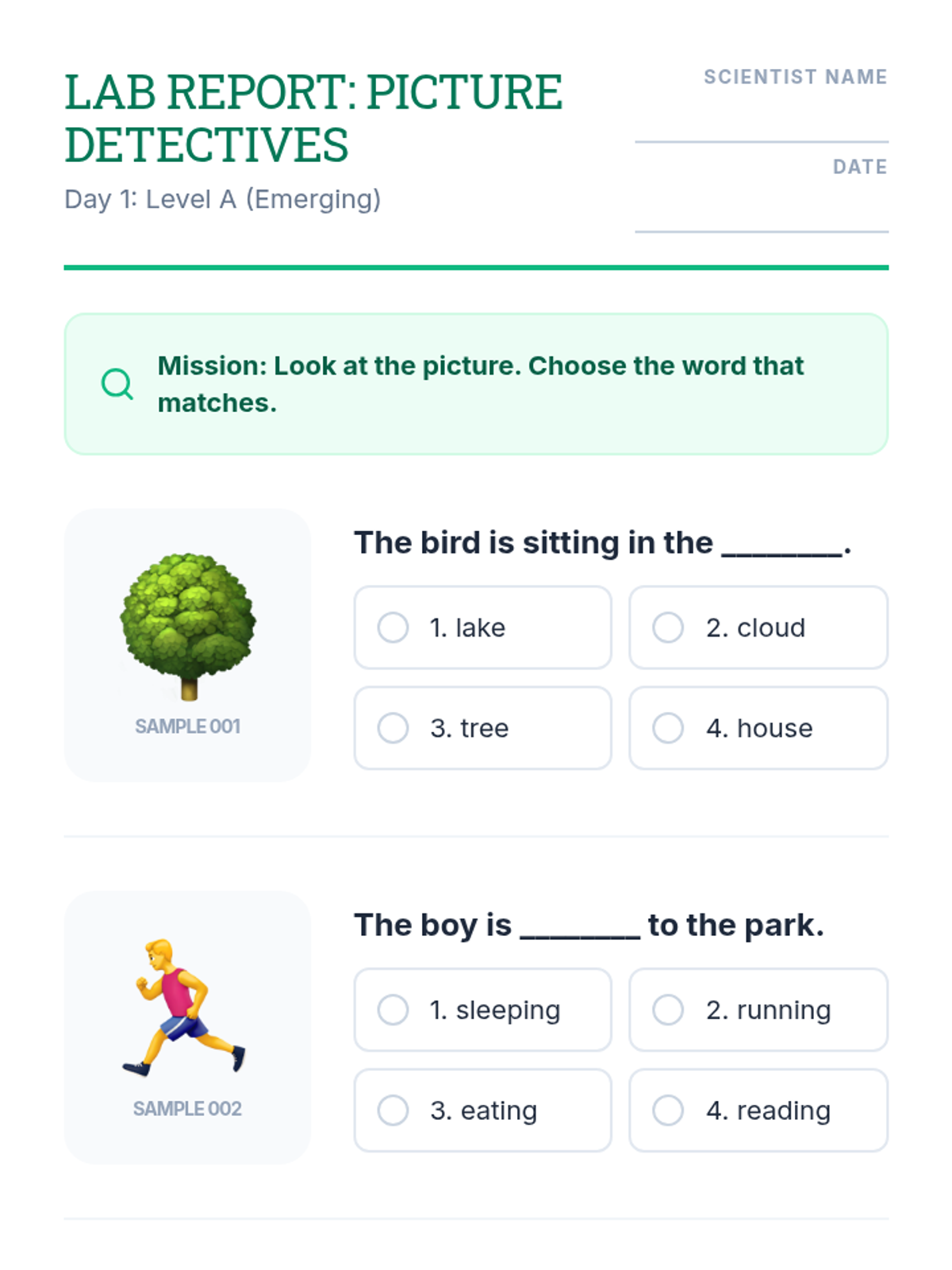
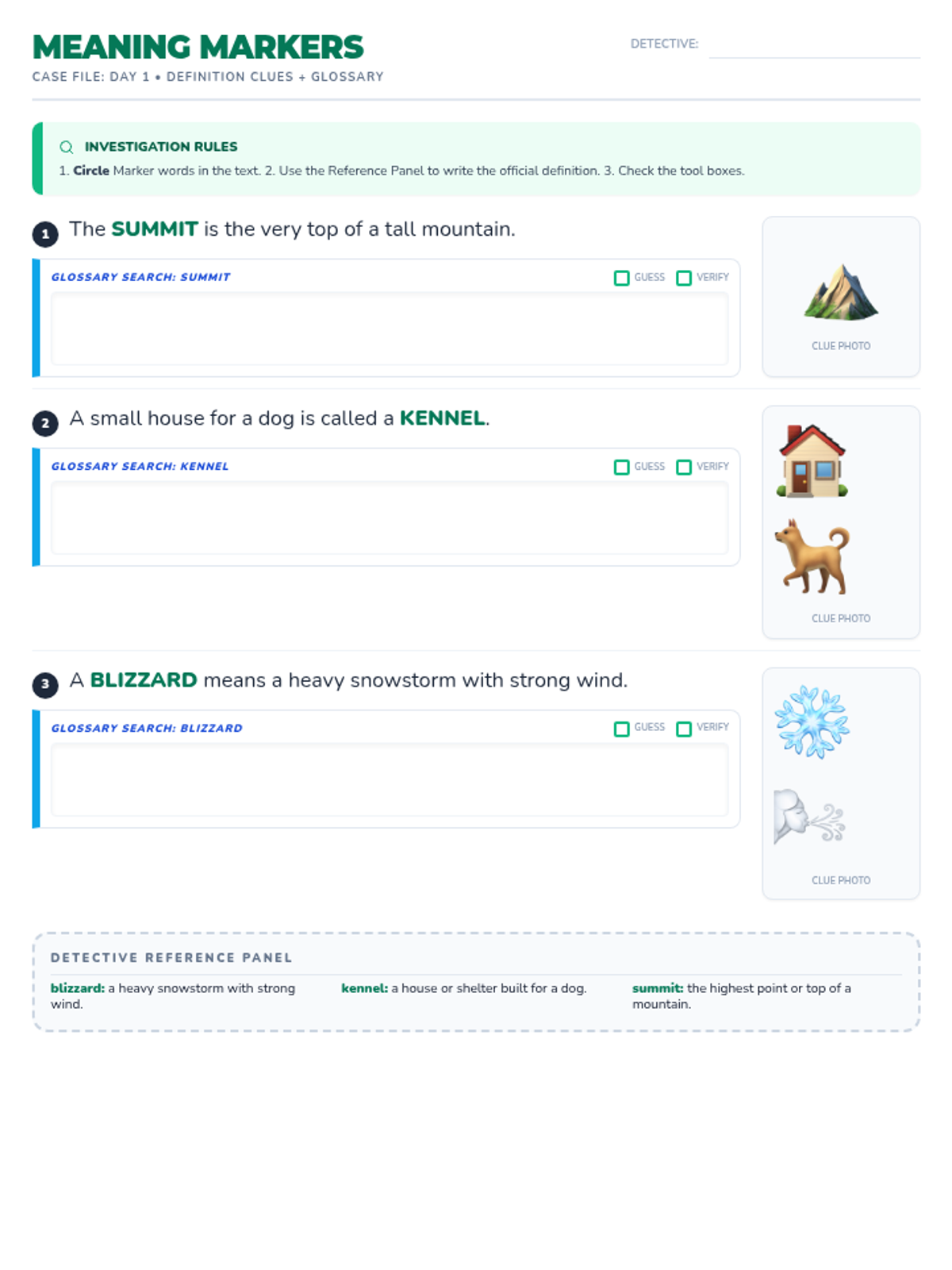
Focuses on using simple context clues, glossaries, and basic prefixes to determine word meaning.
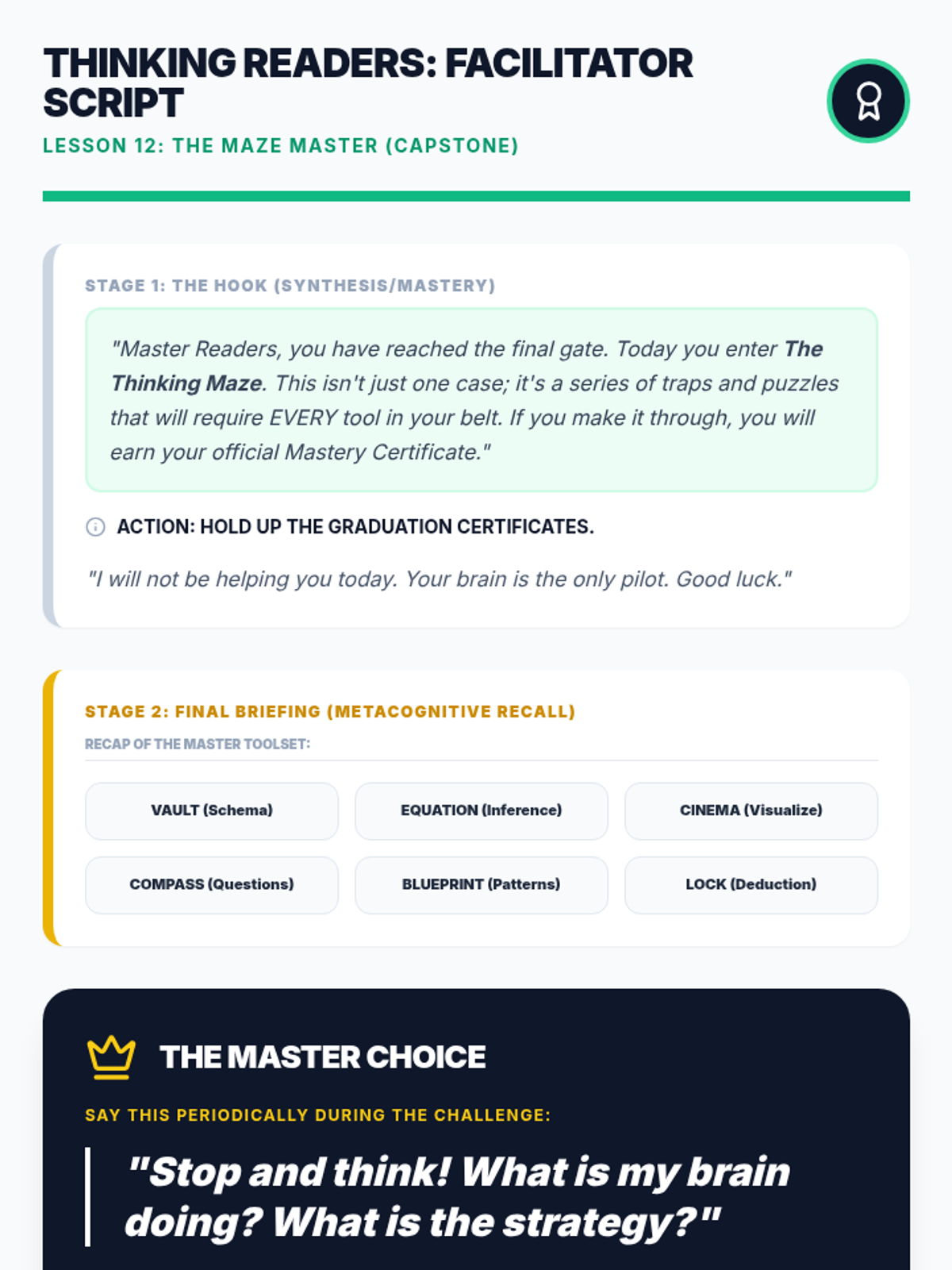
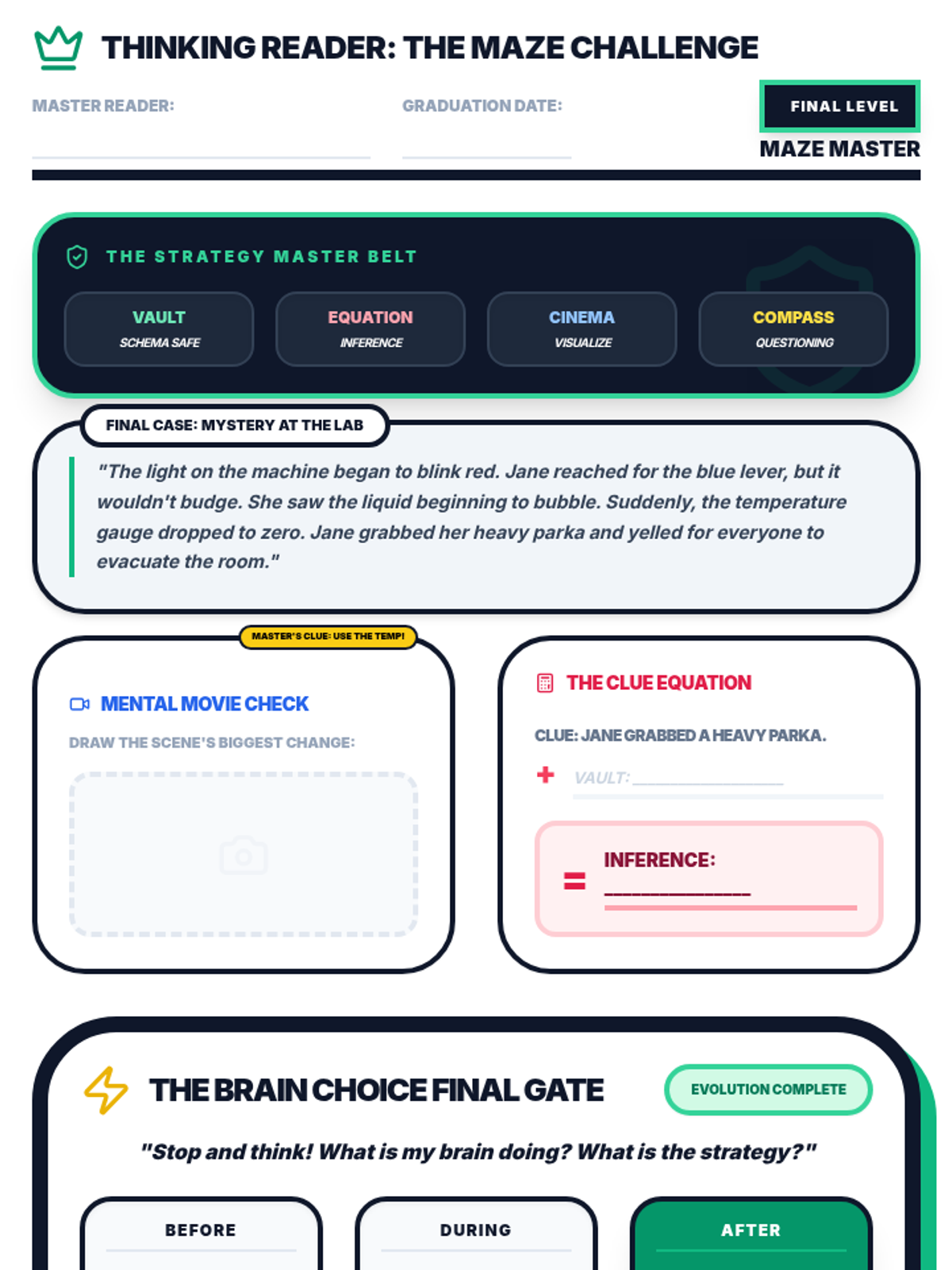
Capstone simulation. Students apply all 11 strategies to solve a complex text-based 'Maze' and earn their Thought Tracker Mastery.
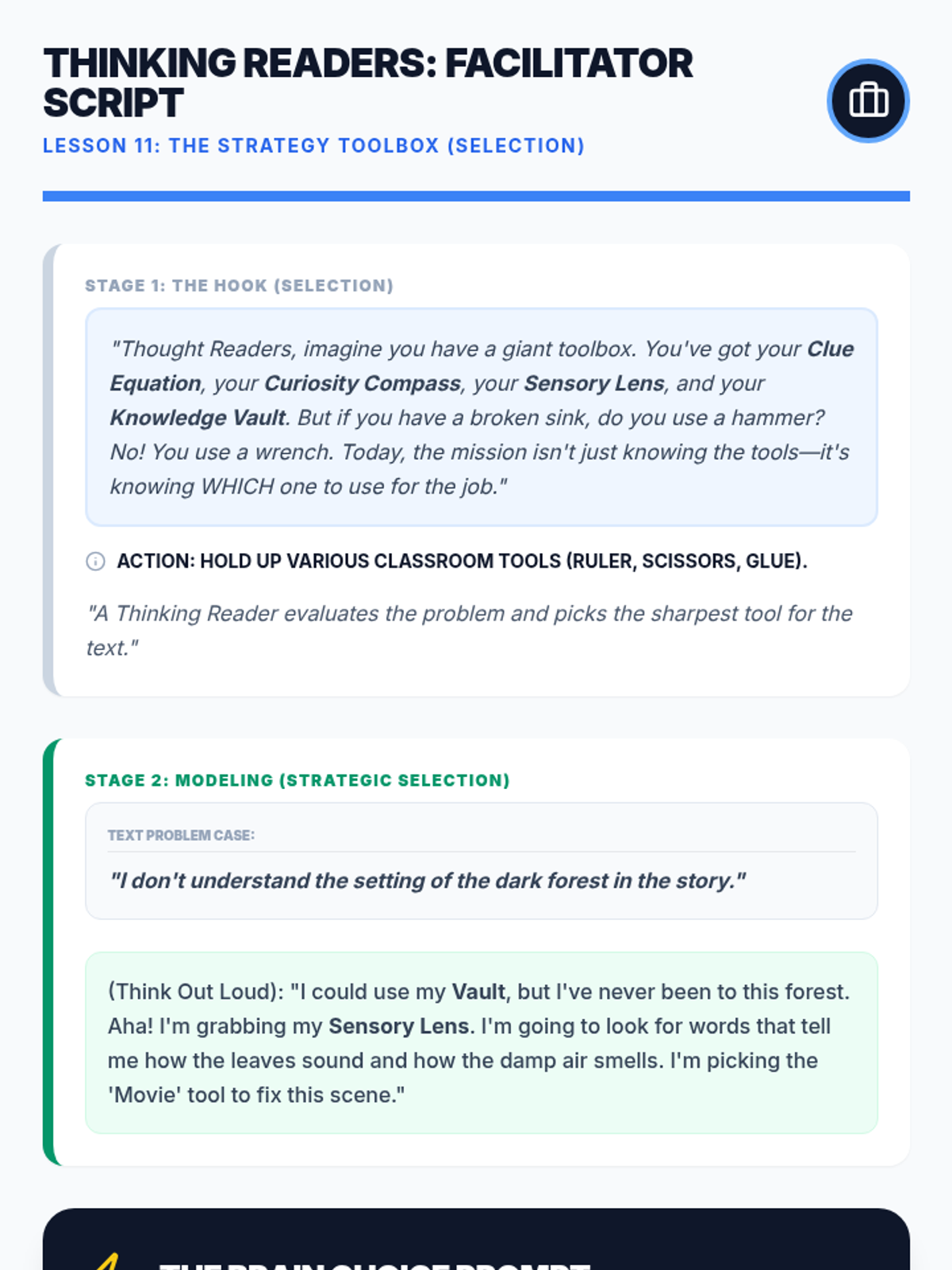
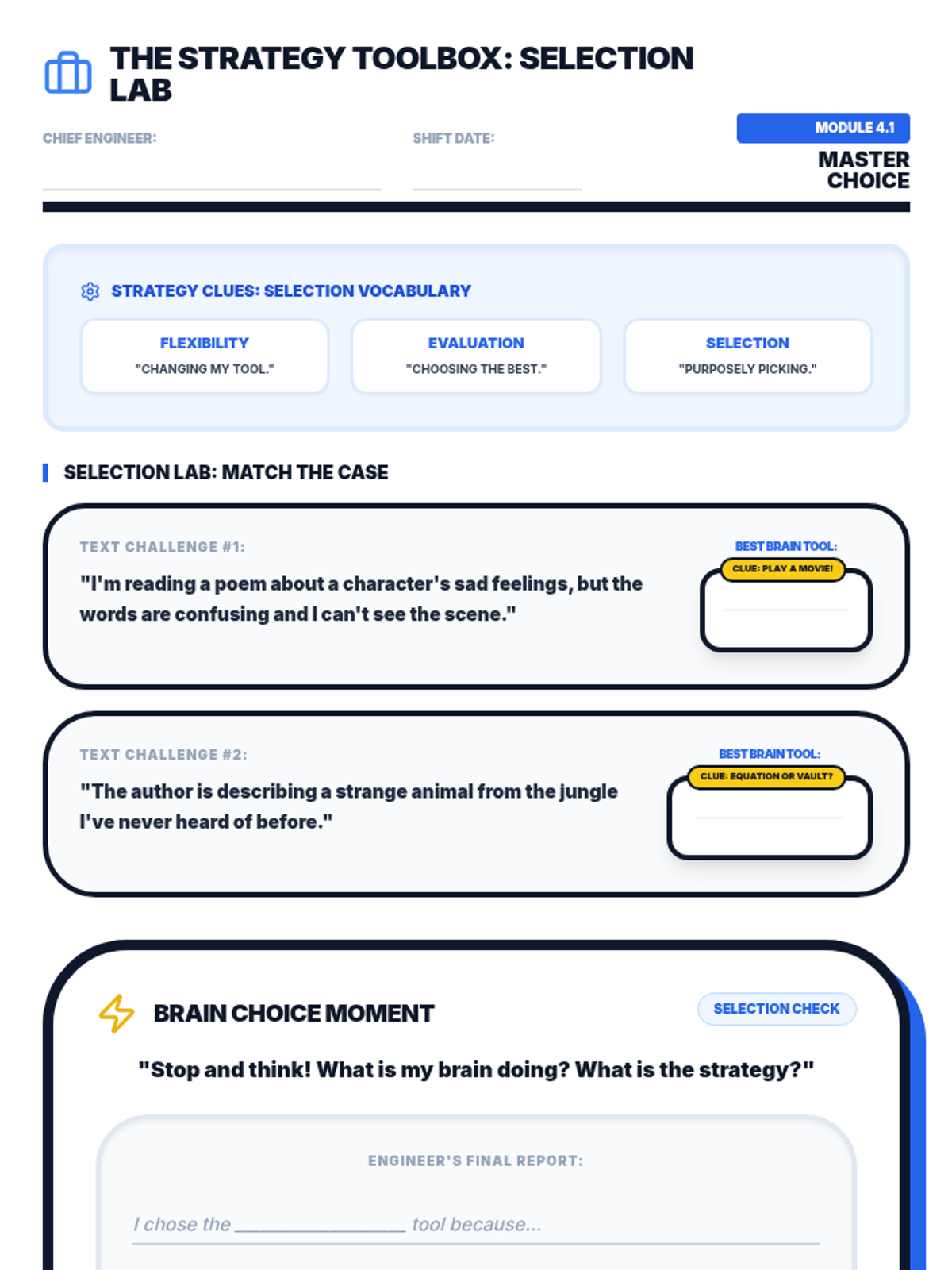
Metacognitive choice. Students practice deciding which 'Mind Tool' (Inference, Visualization, Questioning) is best for specific text challenges.
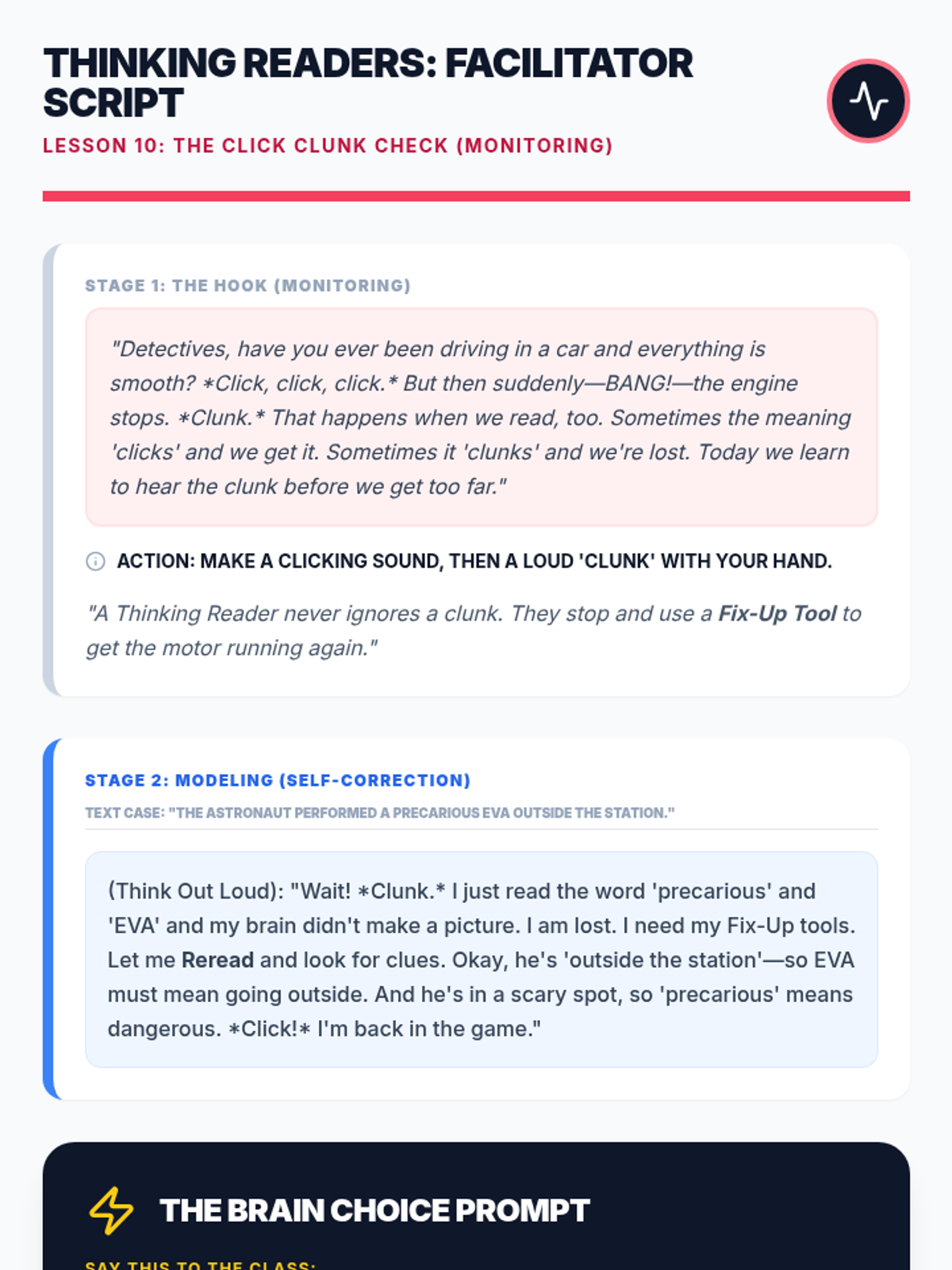
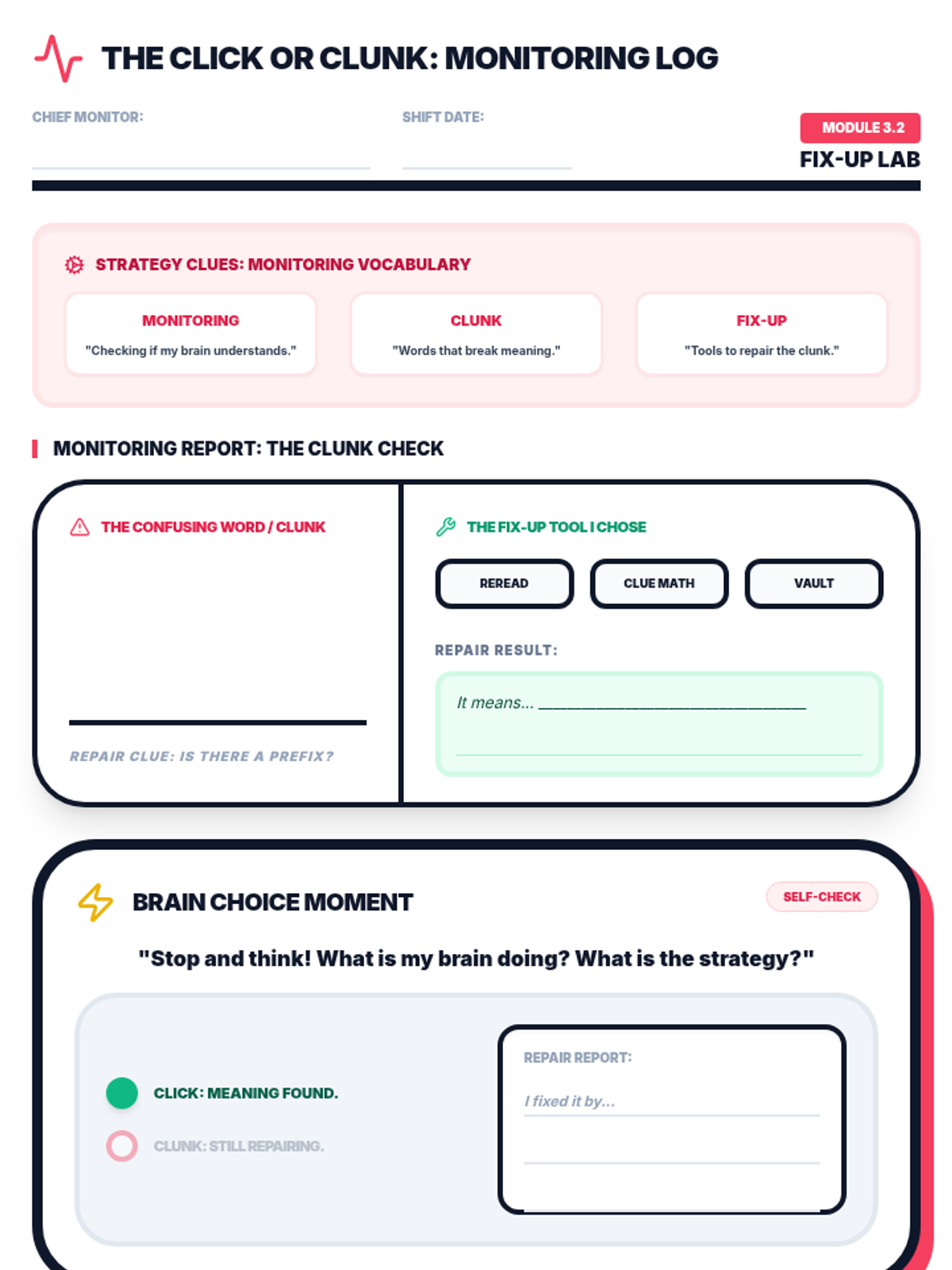
Masters the 'Click or Clunk' monitoring technique. Students learn to identify when meaning breaks down and which tool to use for a 'fix-up'.
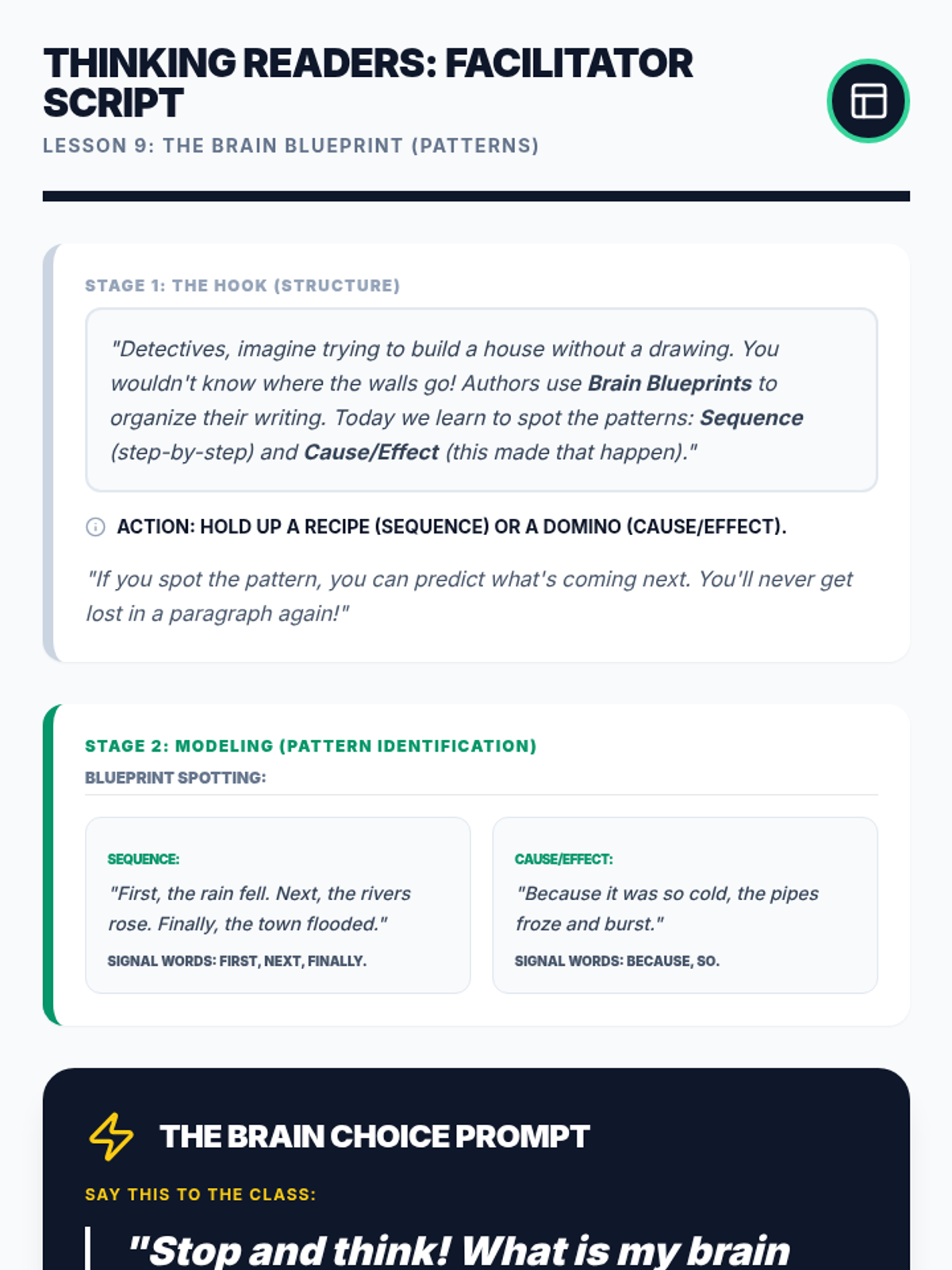
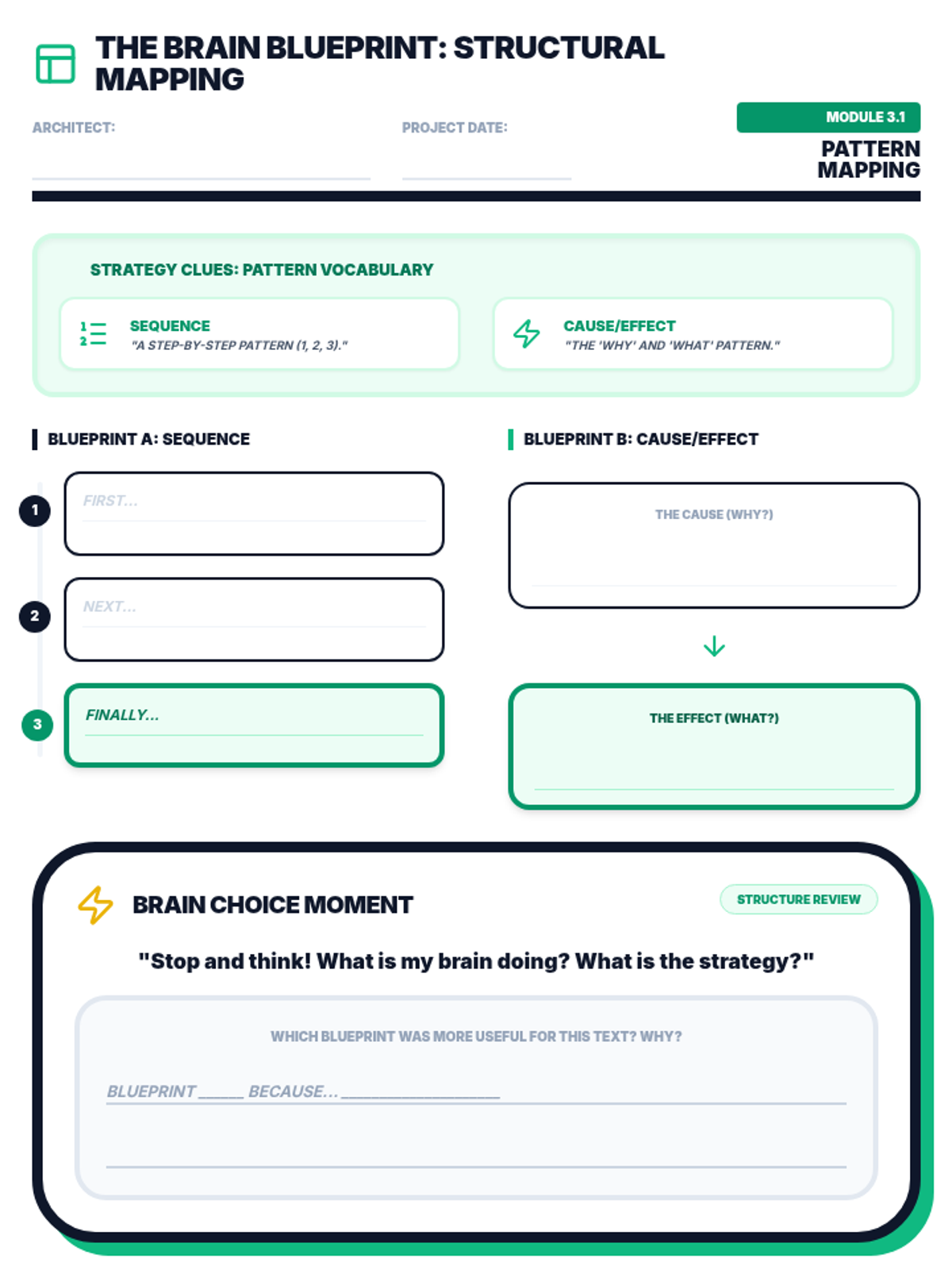
Identifies text structures (Cause/Effect, Sequence) as 'Brain Blueprints' that help organize incoming data.
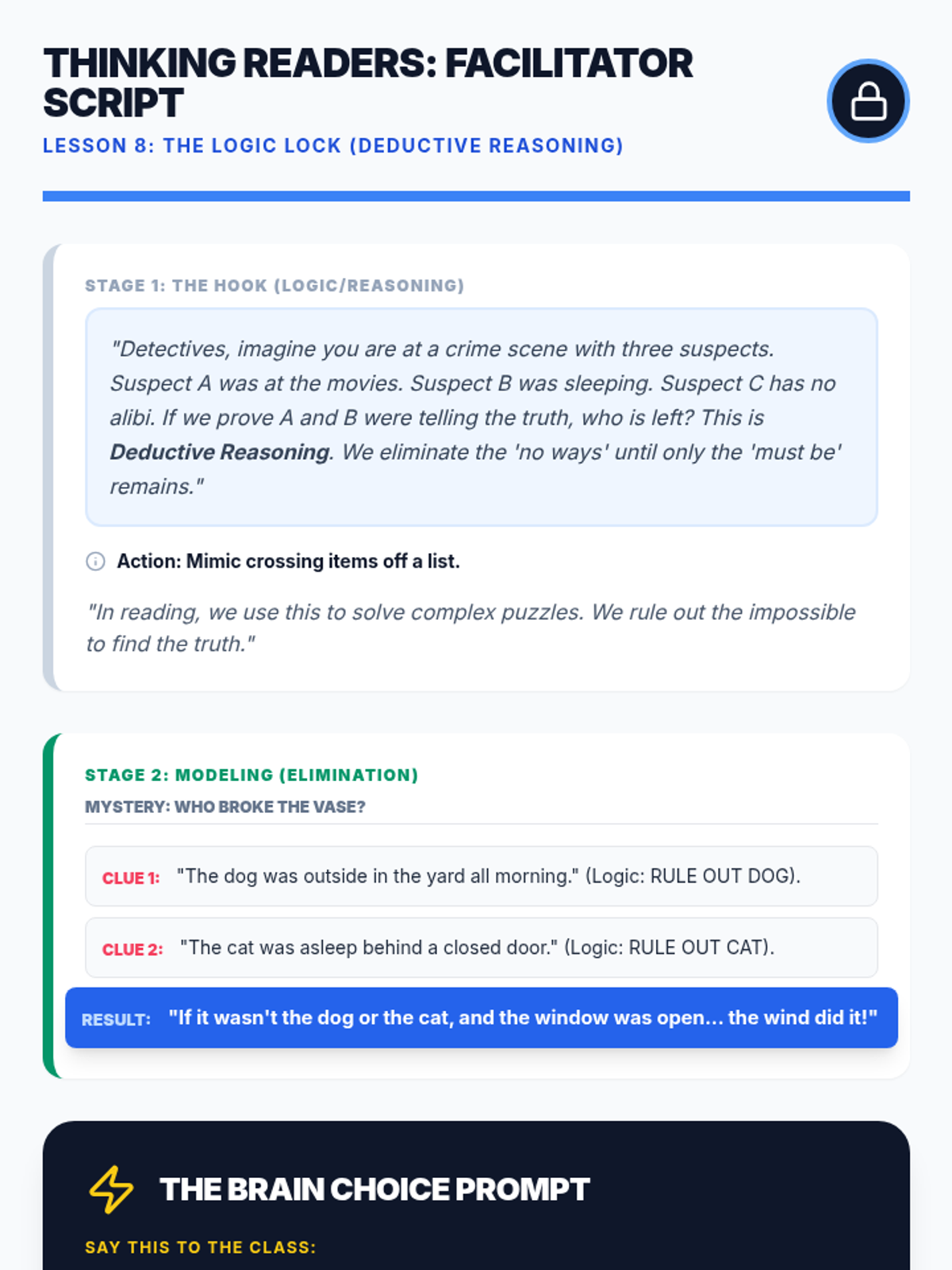
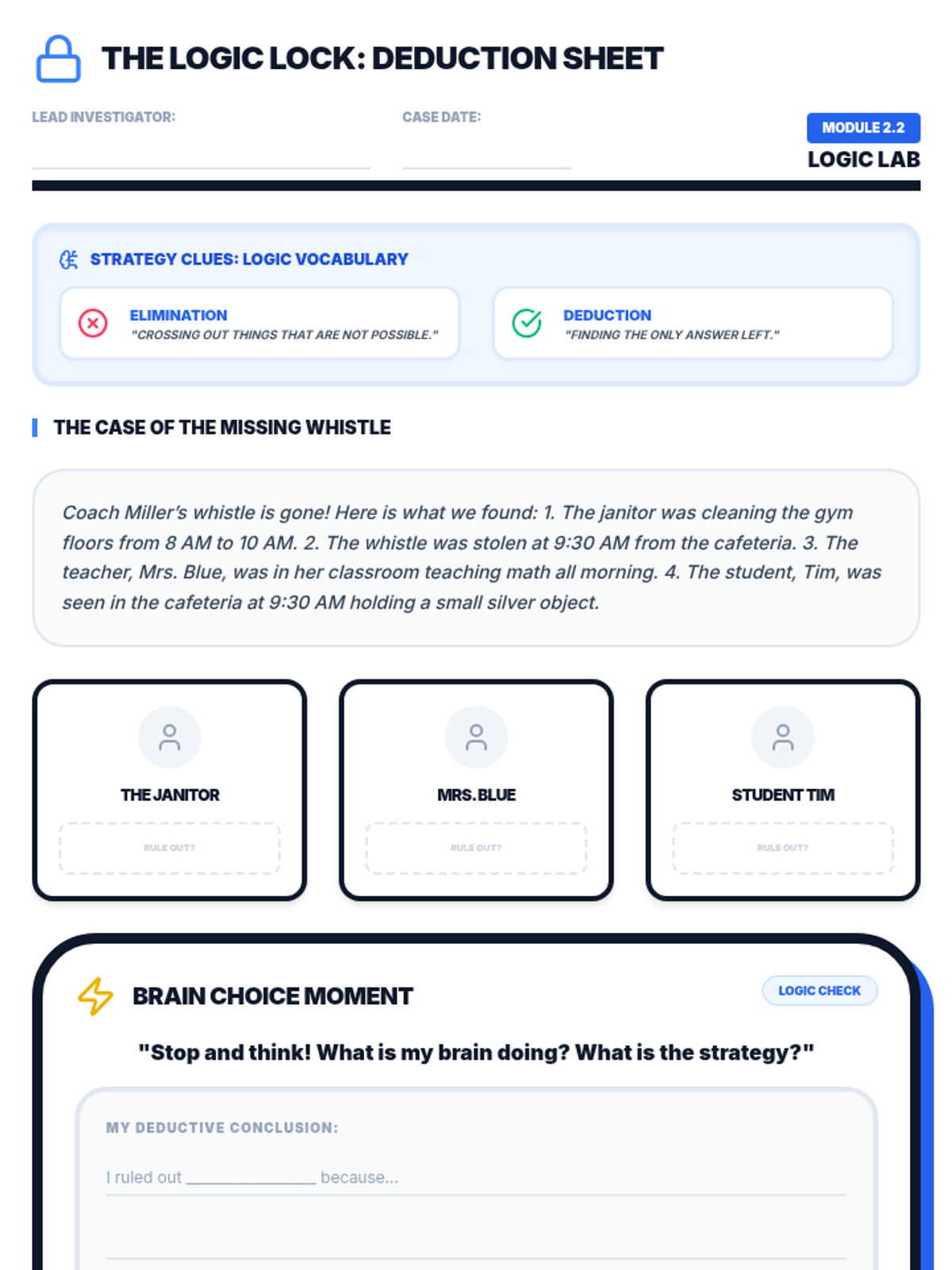
Uses Arthur Evans' deductive reasoning techniques. Students solve logic puzzles by eliminating impossibilities within a text.
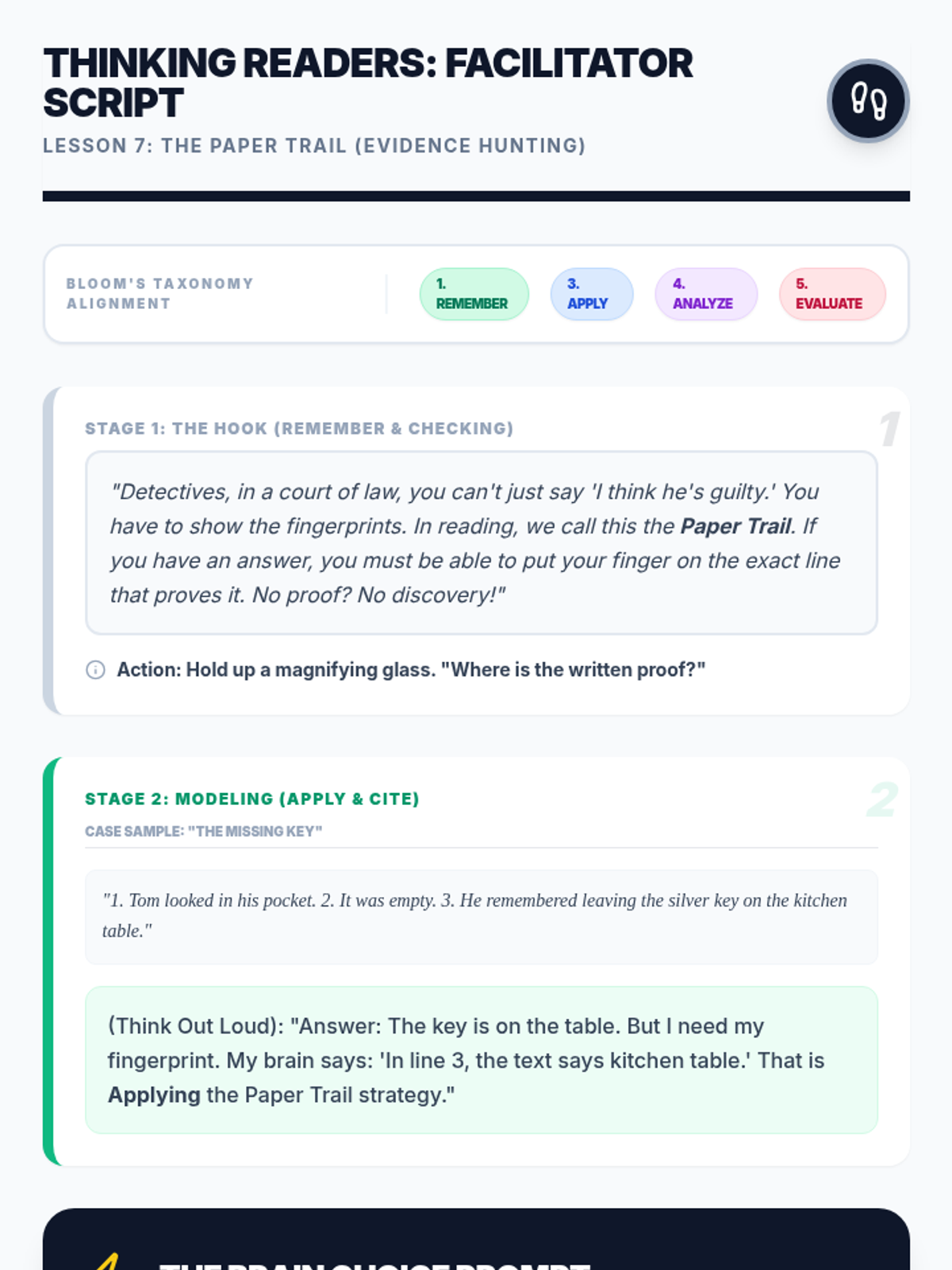
Directly inspired by the Reading Detective series. Students learn to cite page, line, and word clues to prove their reasoning.
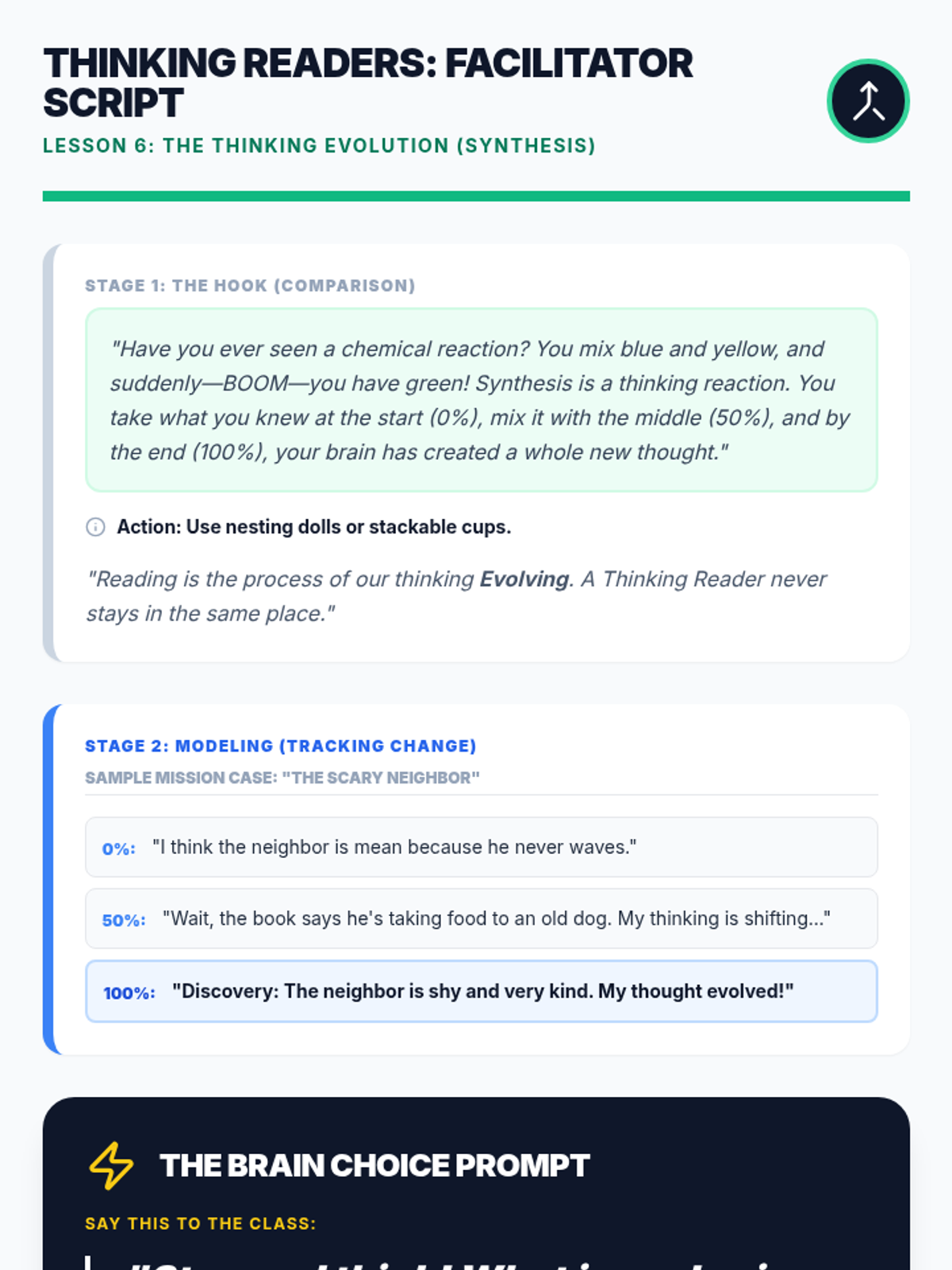
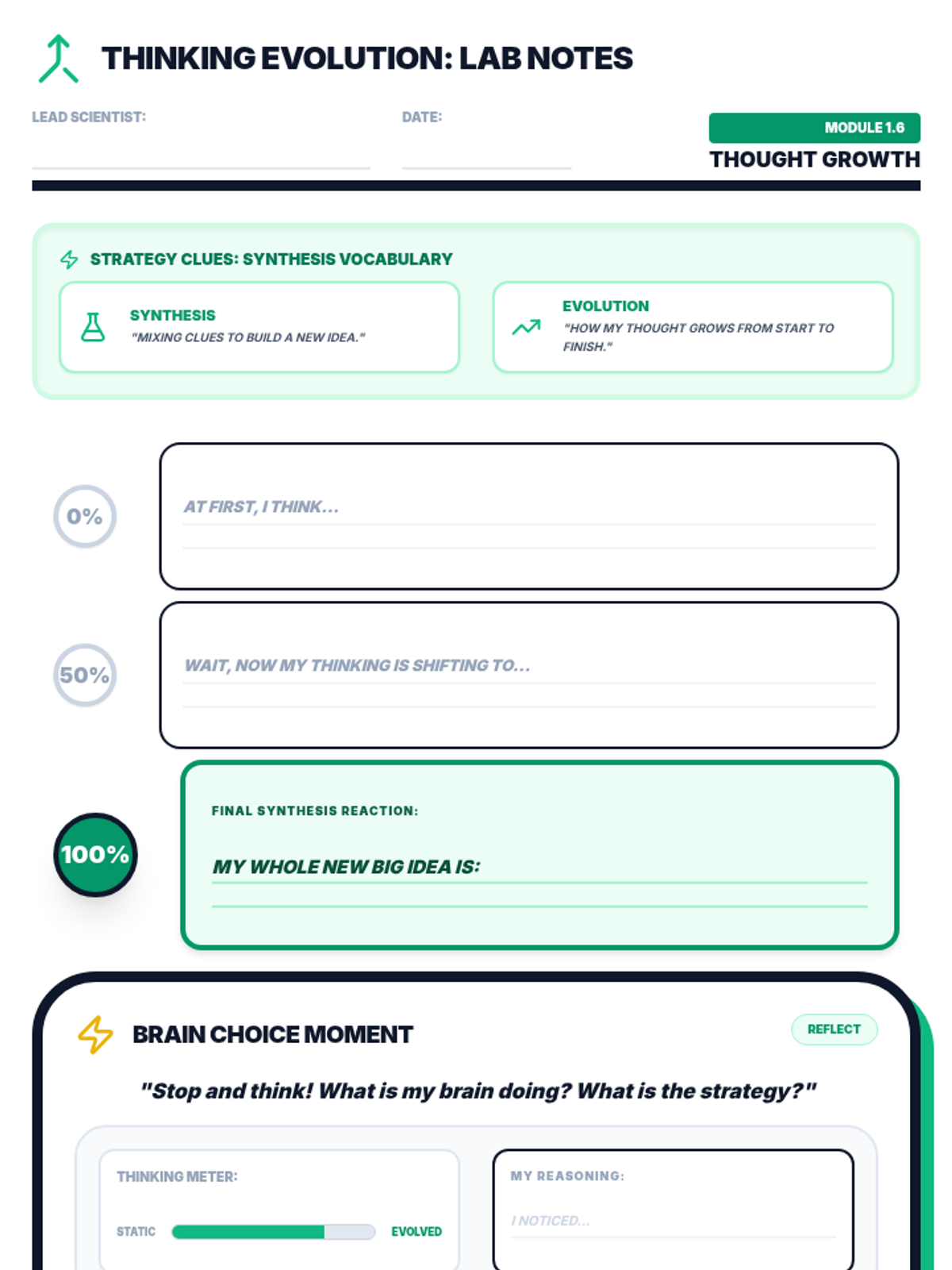
Focuses on Synthesis. Students track how their 'Thought Map' changes from the first page to the final sentence.
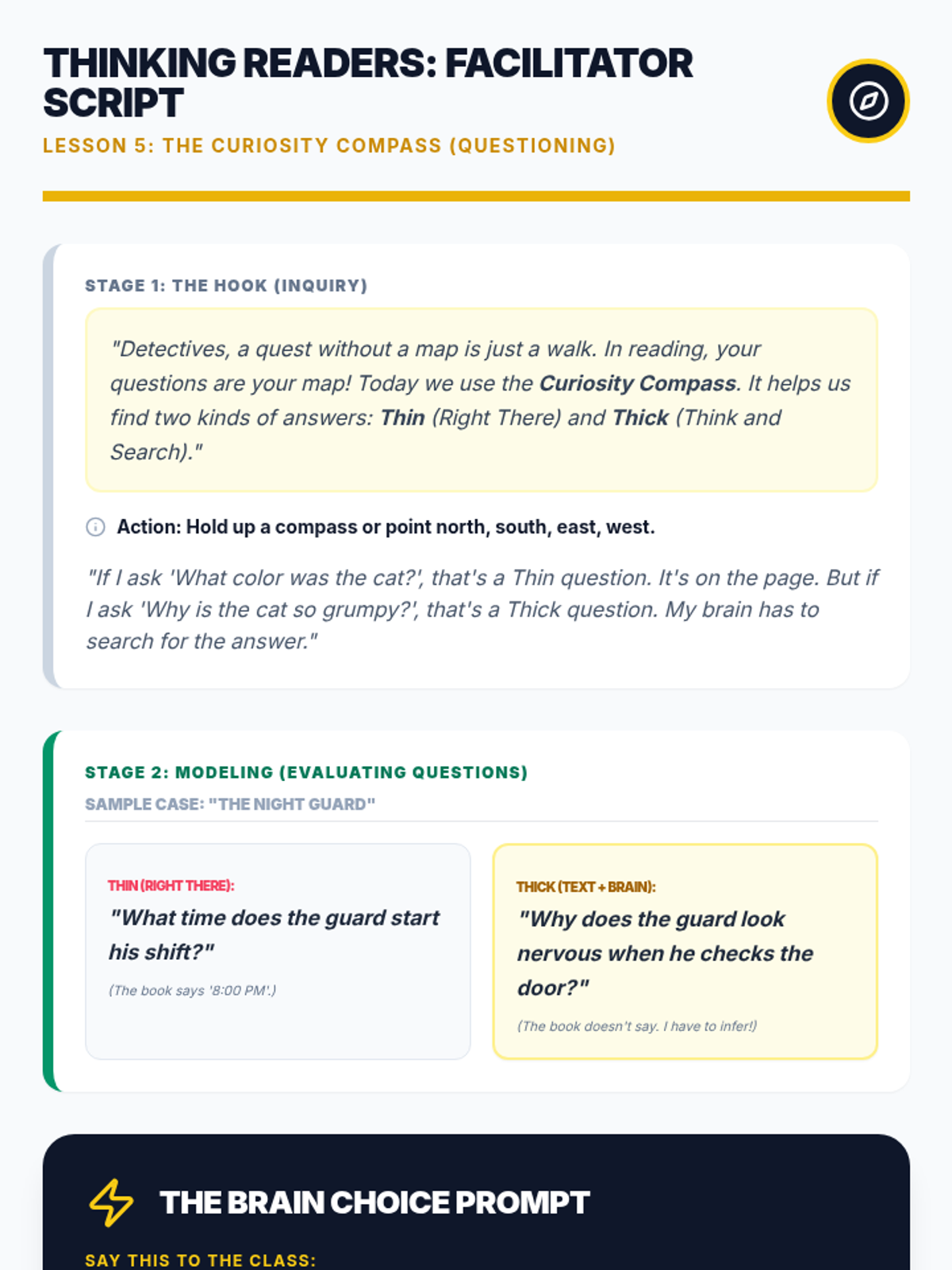
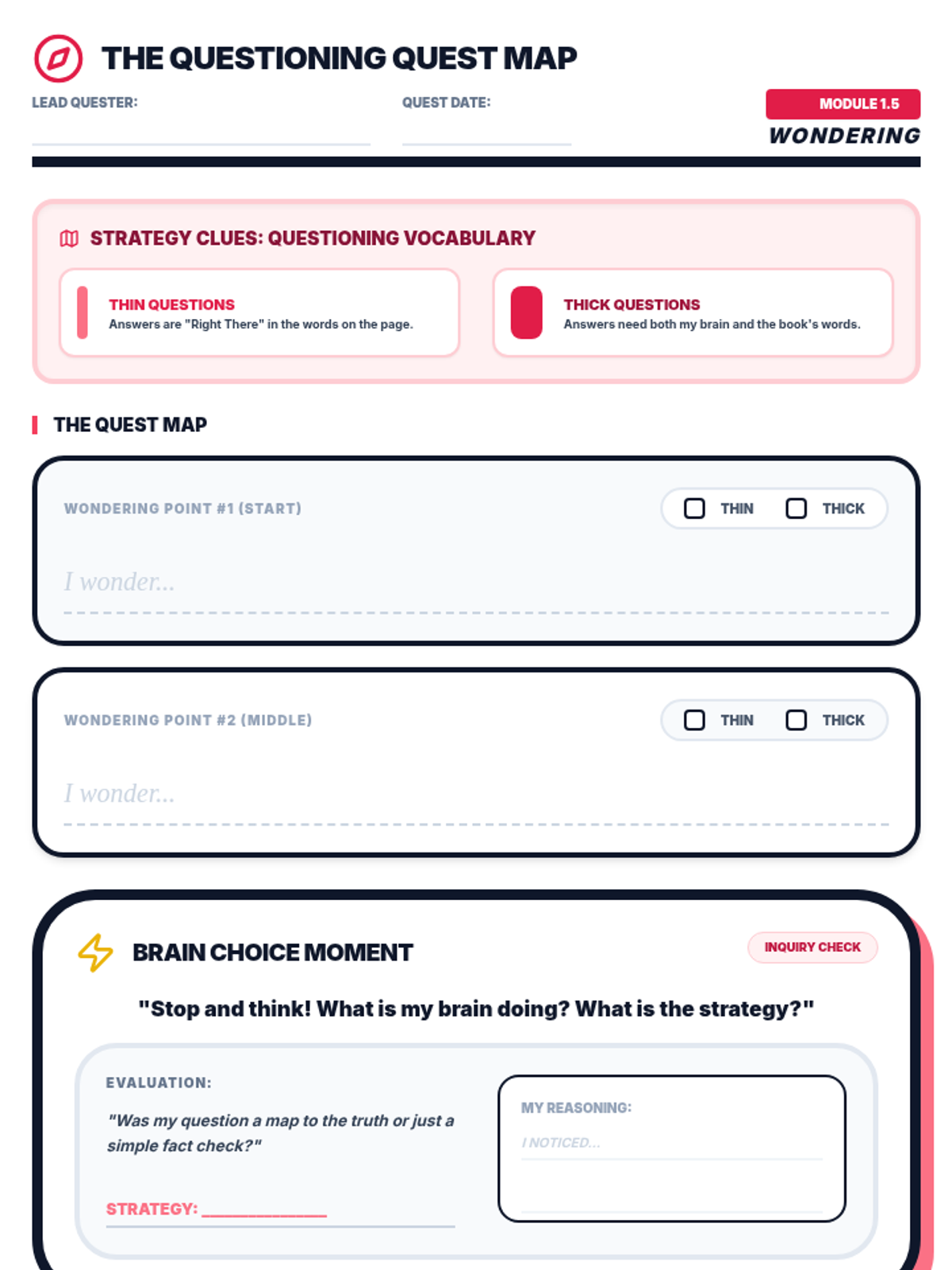
Introduces the 'Curiosity Compass' to generate Thick and Thin questions, moving from literal facts to deep inquiry.
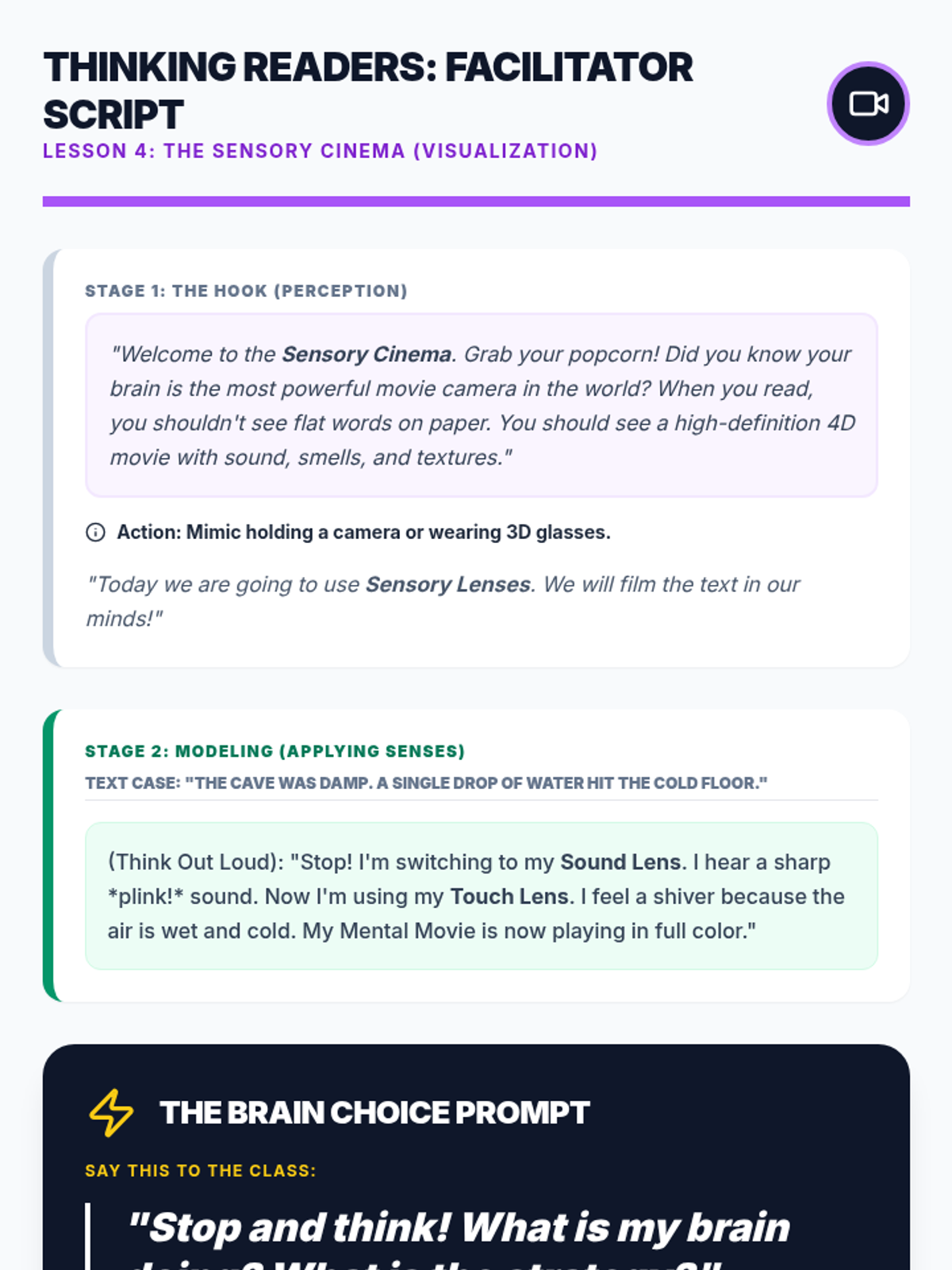
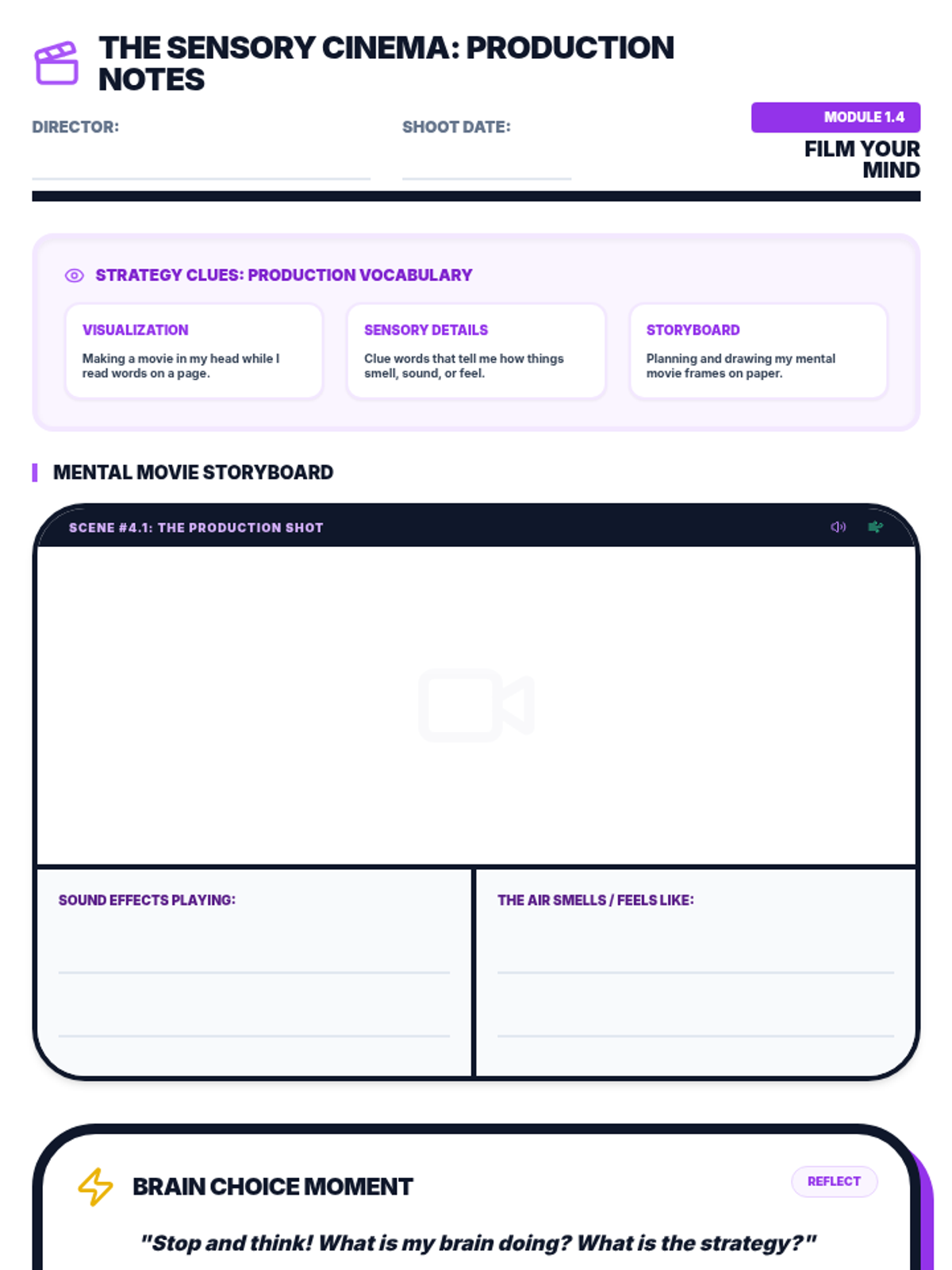
Teaches visualization as a sensory experience. Students learn to 'film' the story in their heads using five-sense descriptions.
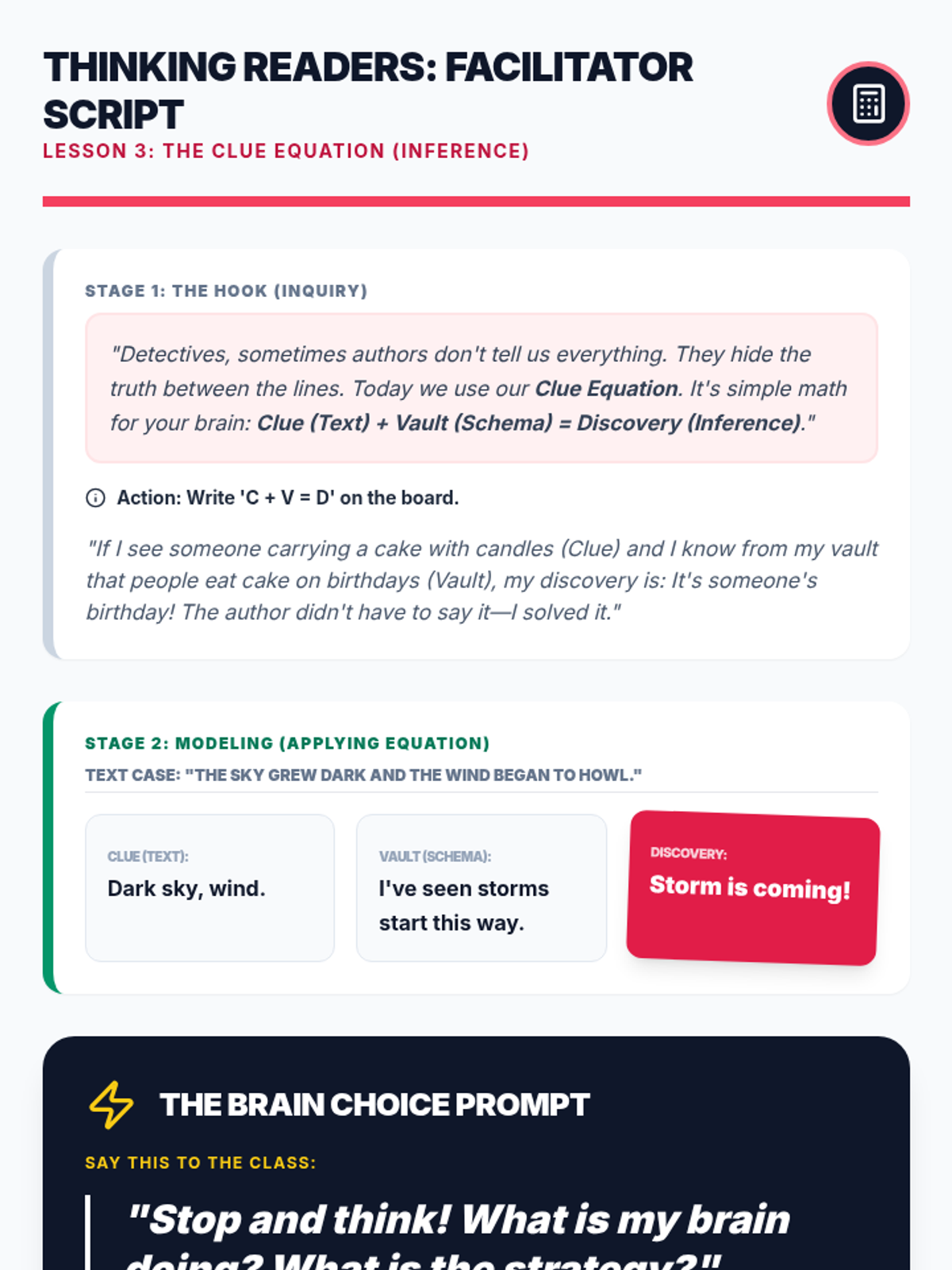
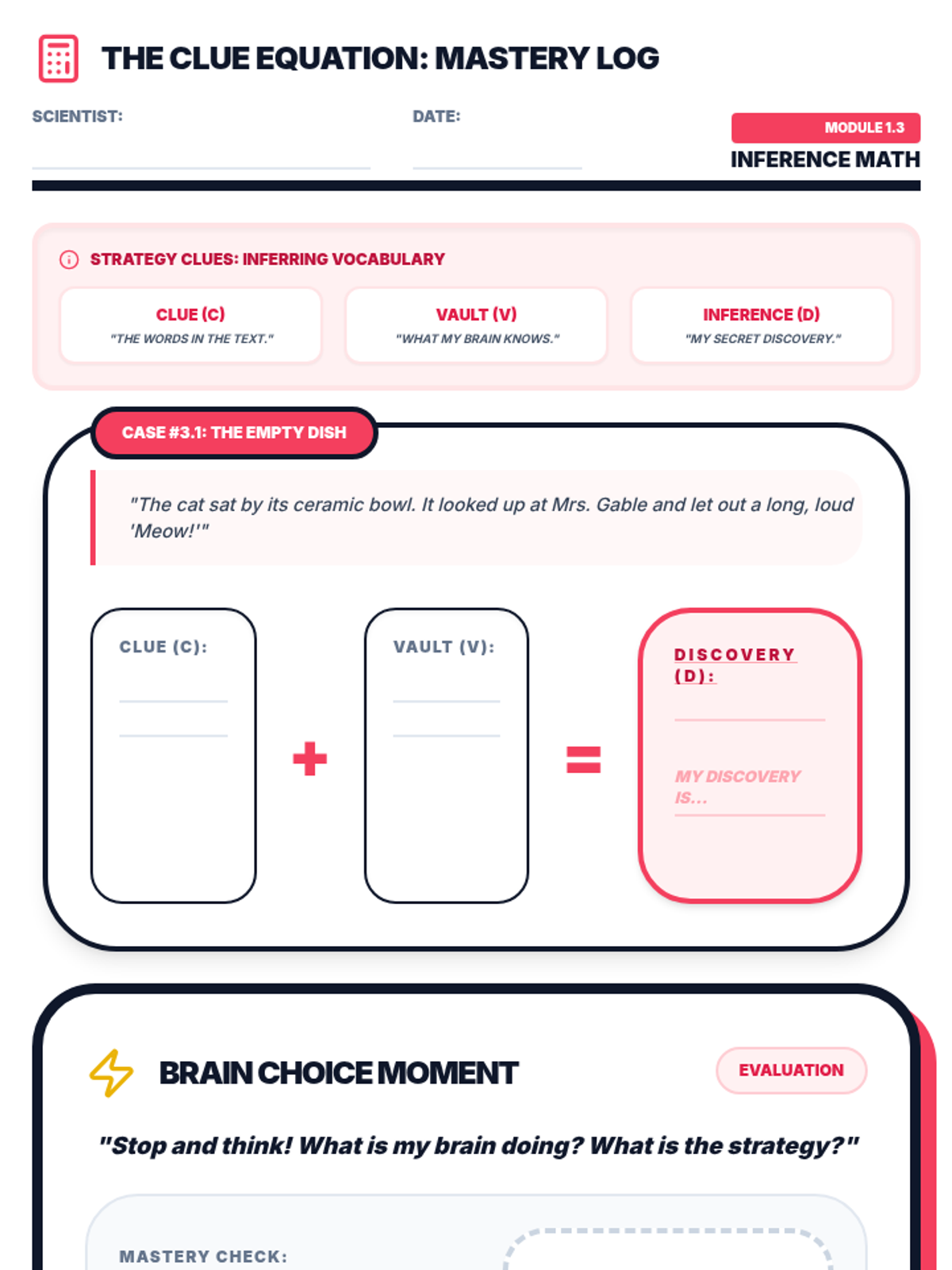
Masters the 'Clue + Vault = Discovery' equation. Students learn to justify their inferences using specific text evidence and background knowledge.
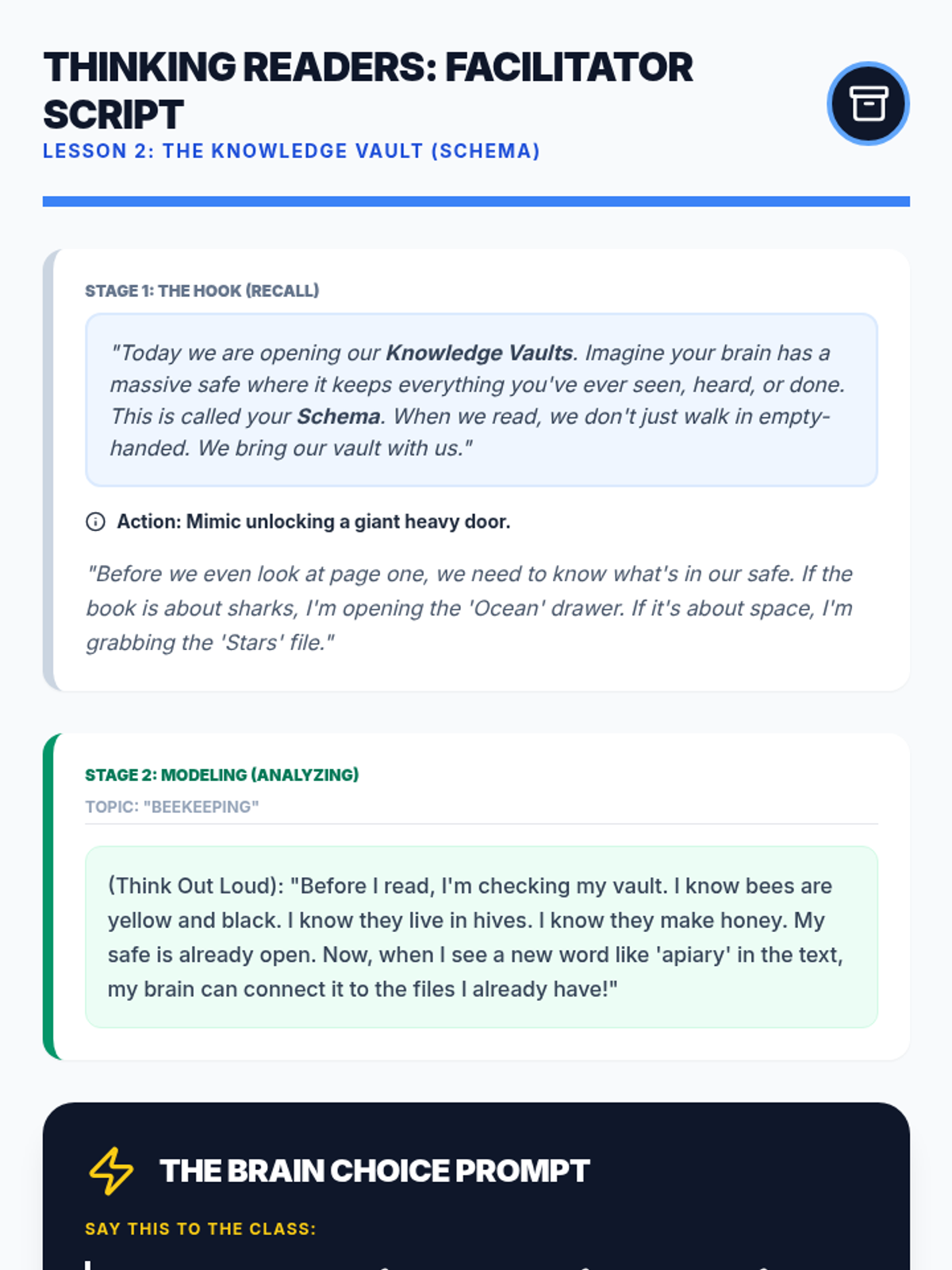
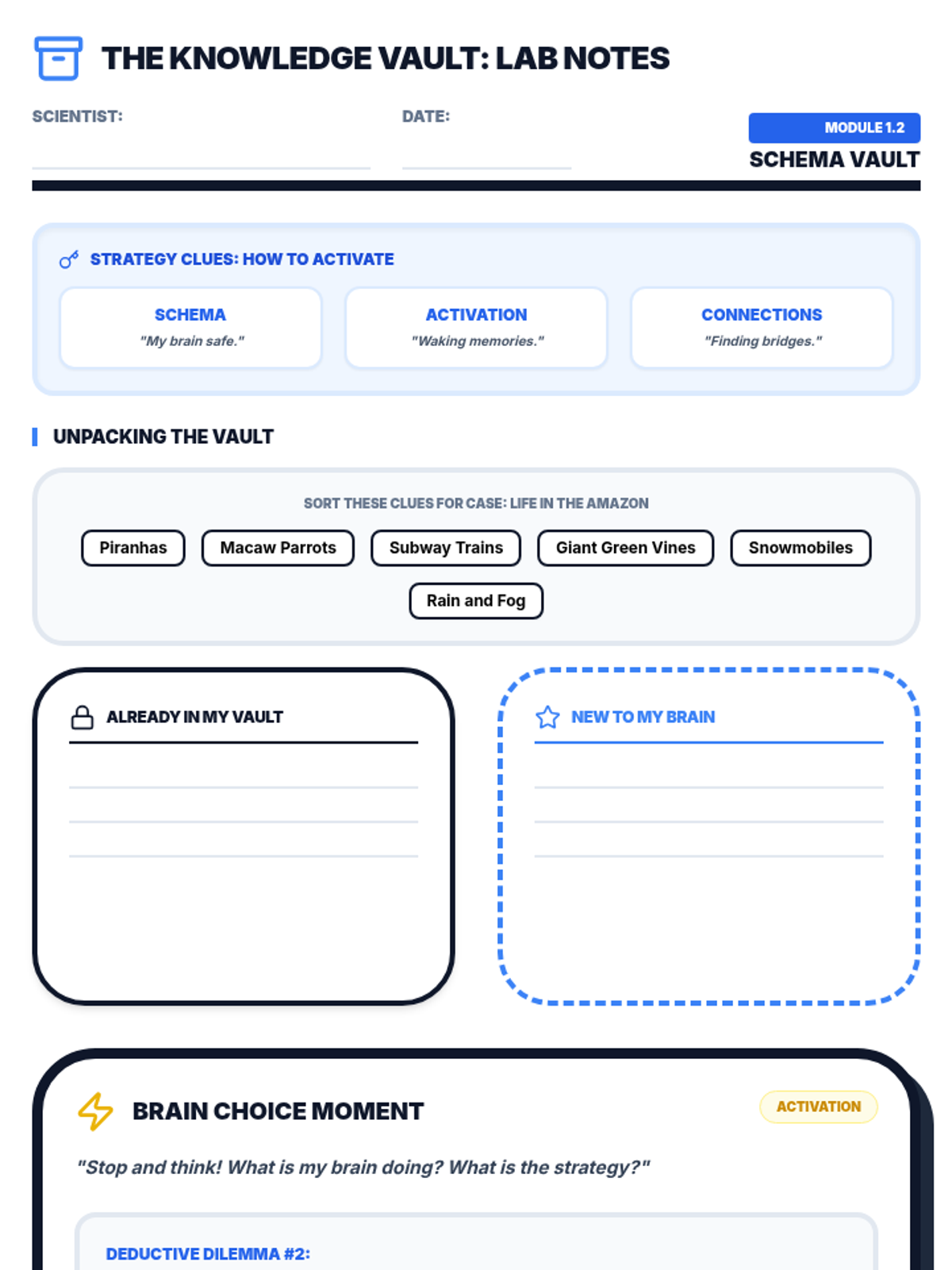
Focuses on Schema as the 'Knowledge Vault.' Students learn to retrieve and organize prior knowledge before entering a text.
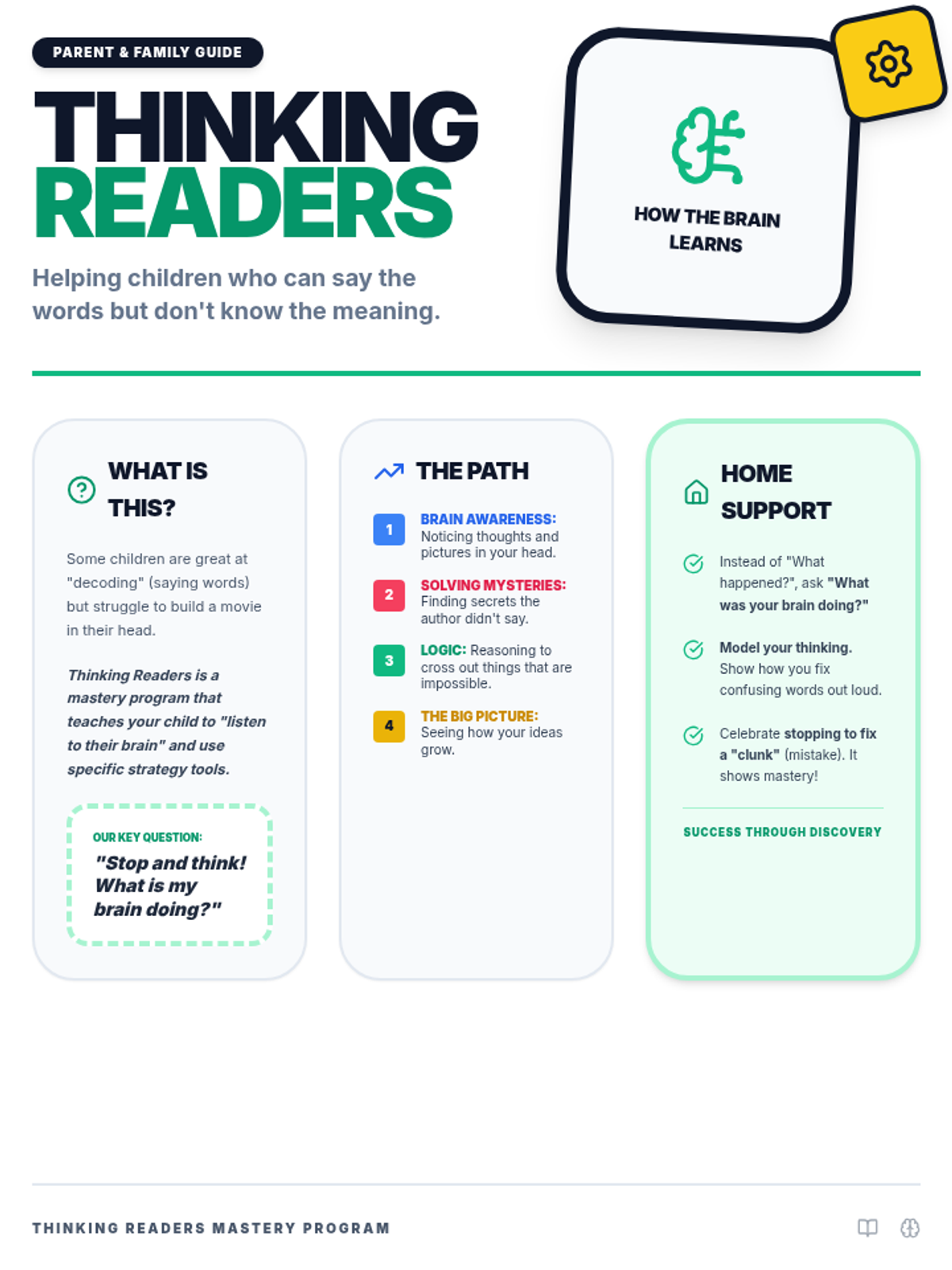
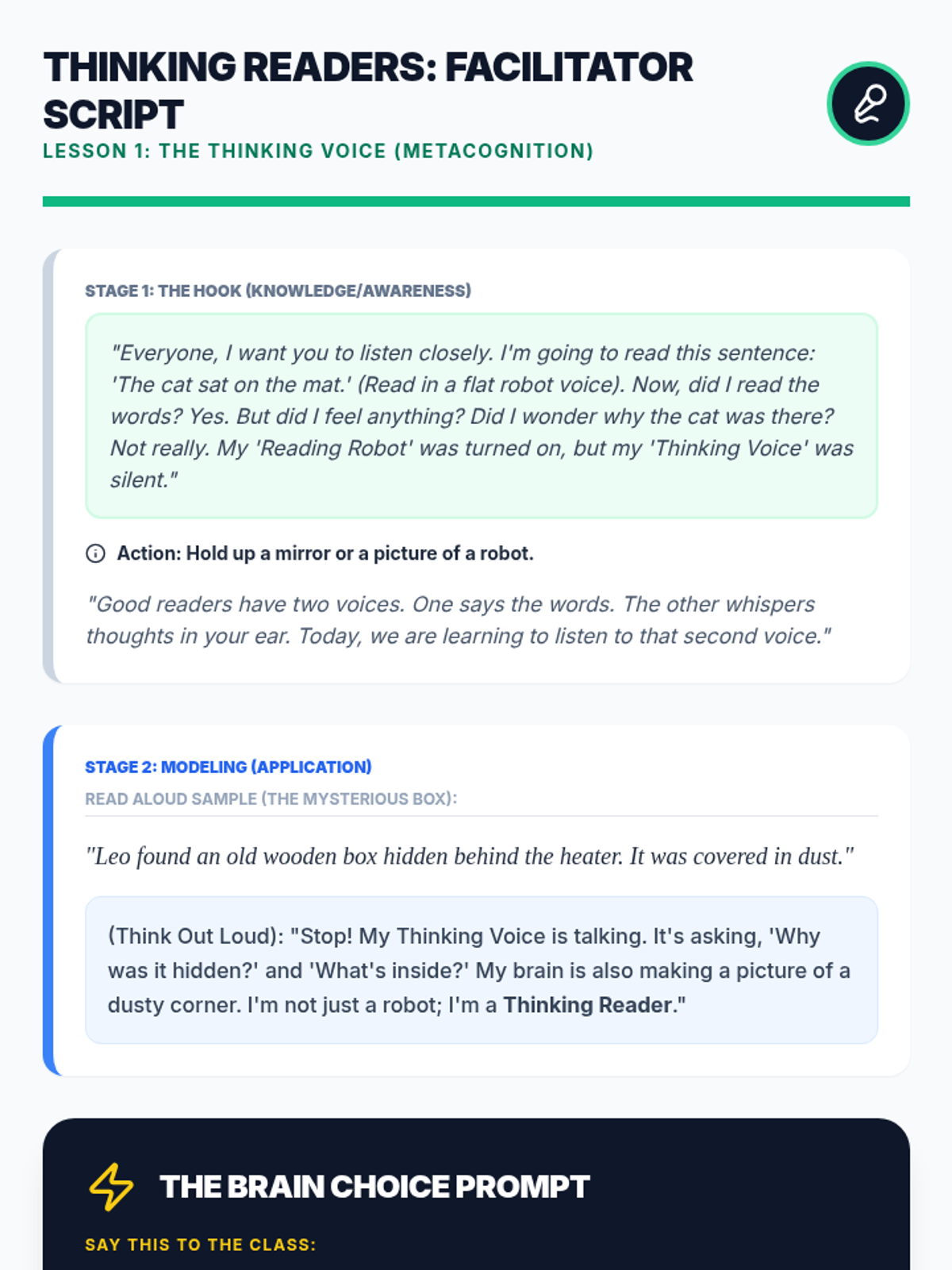
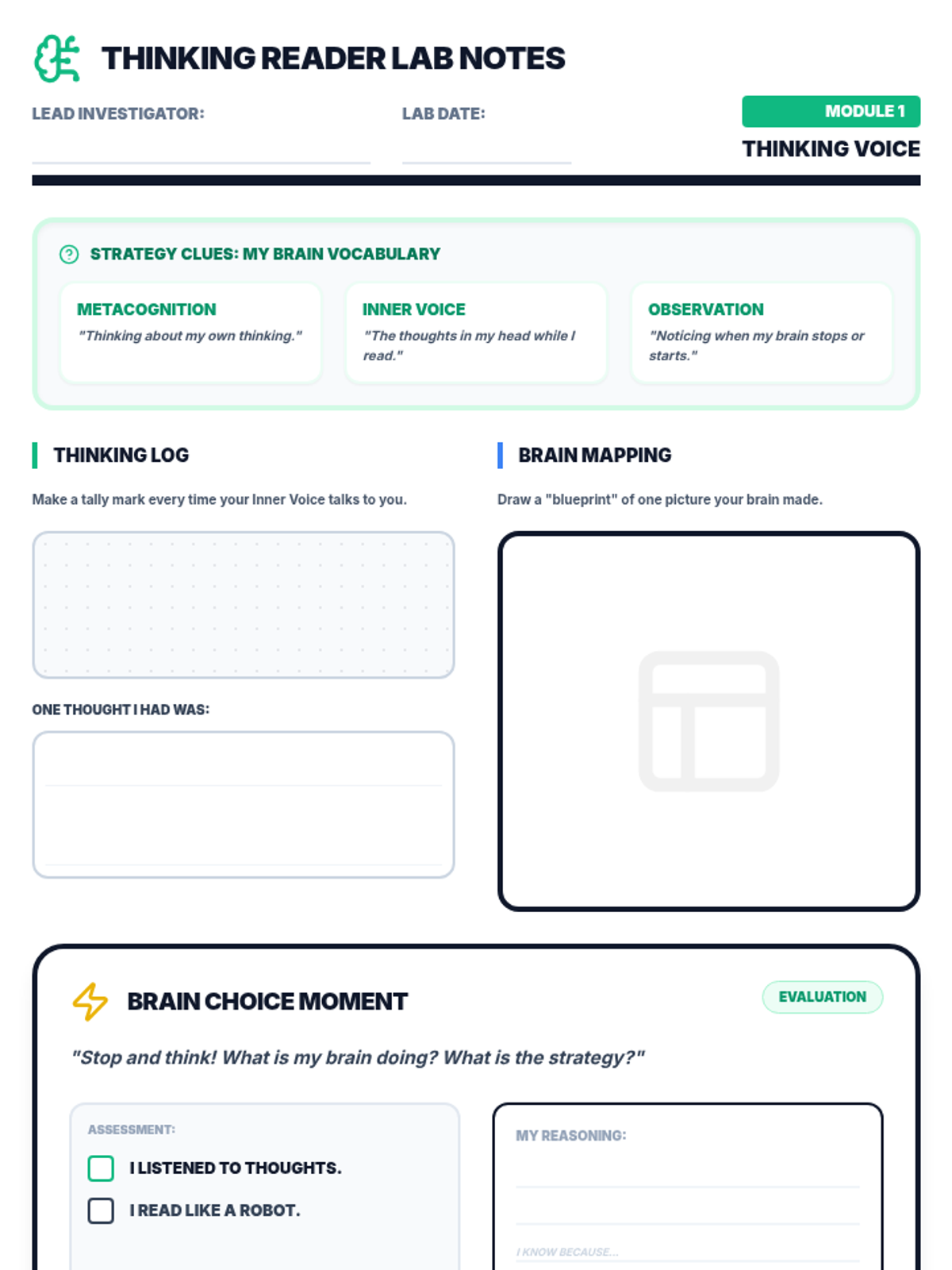
Introduction to the 'Inner Voice'. Students learn to identify when their brain is actively thinking versus just reading words, using the 'Reading Robot' vs. 'Thought Tracker' comparison.
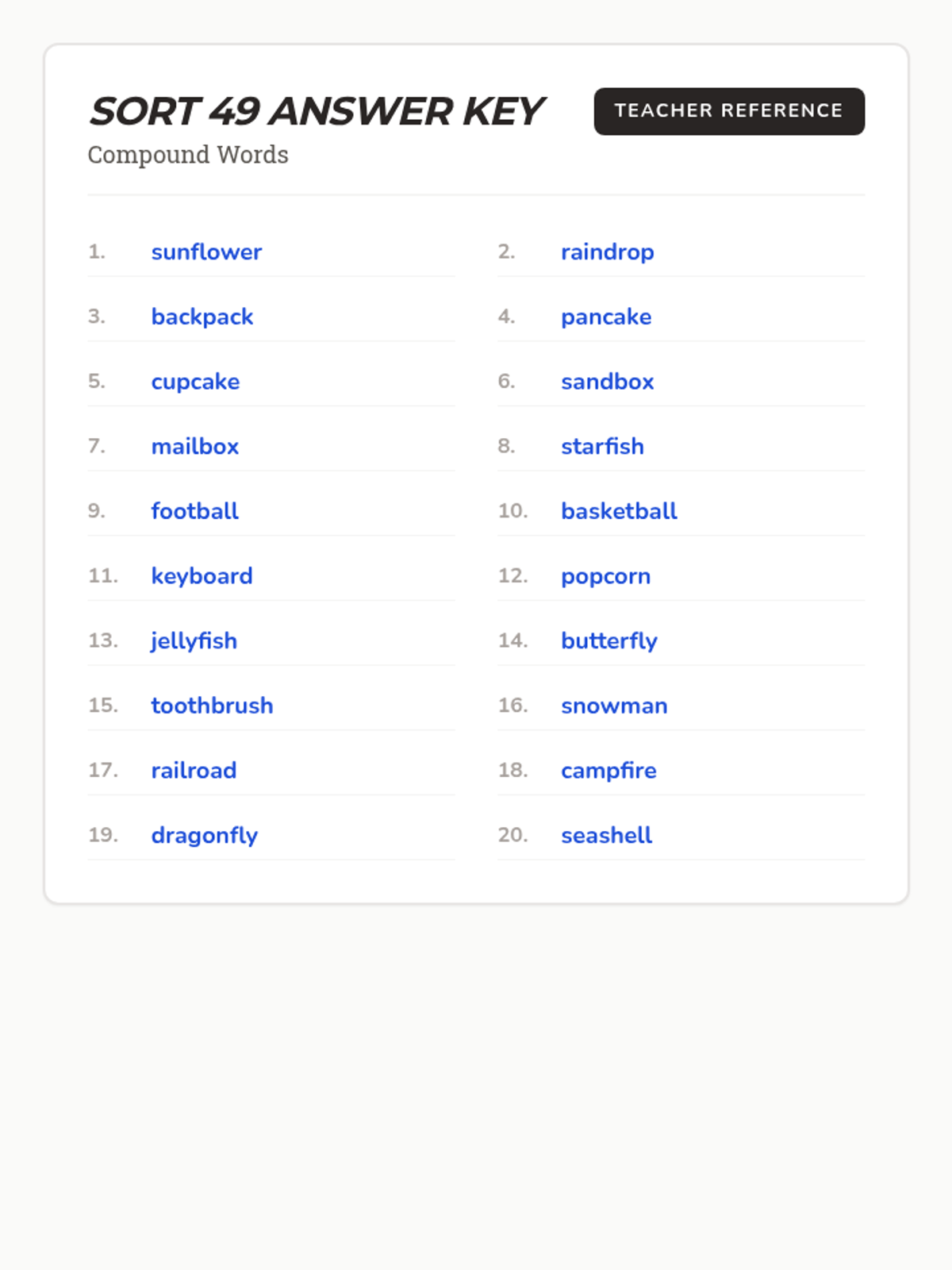
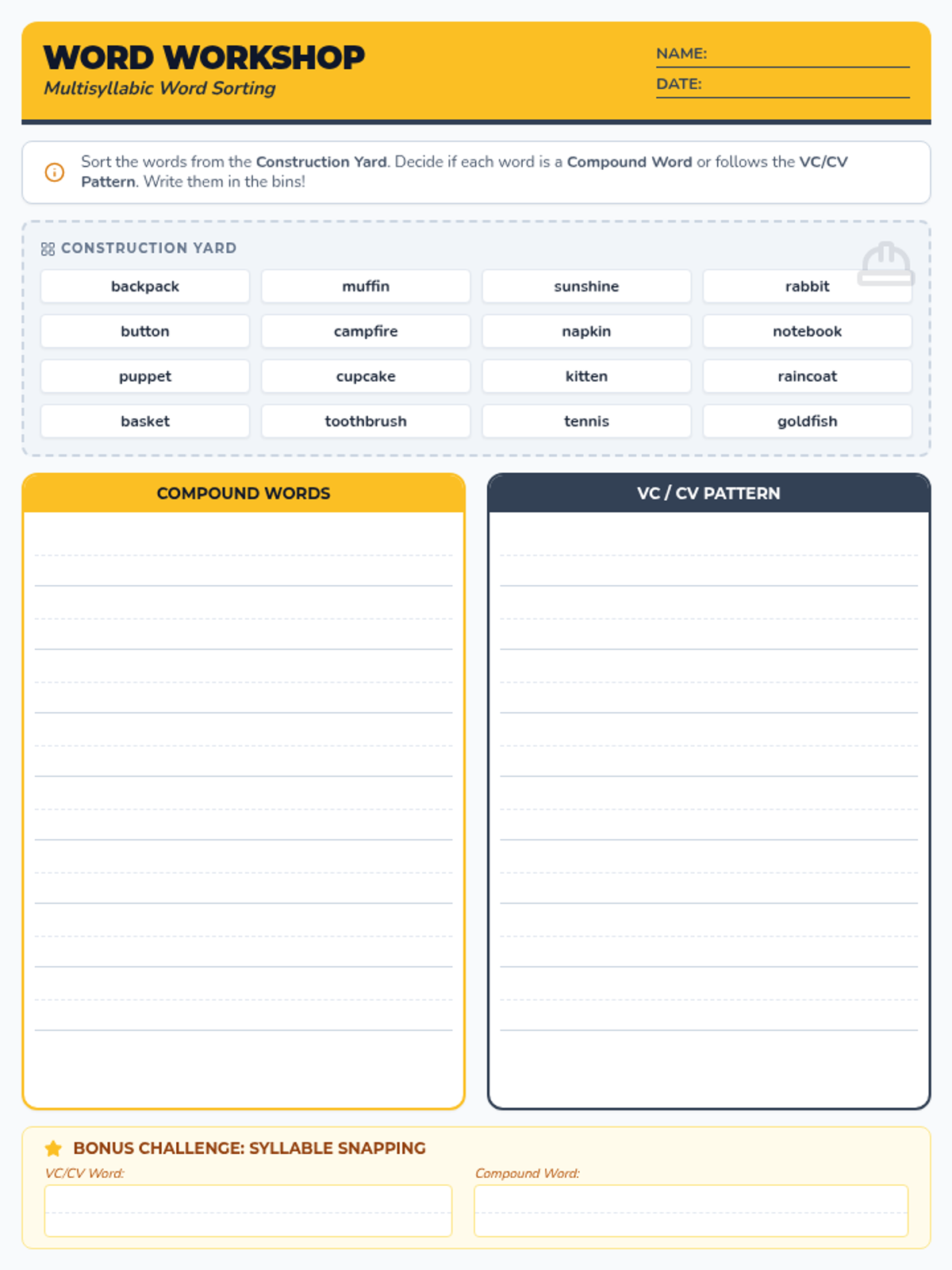
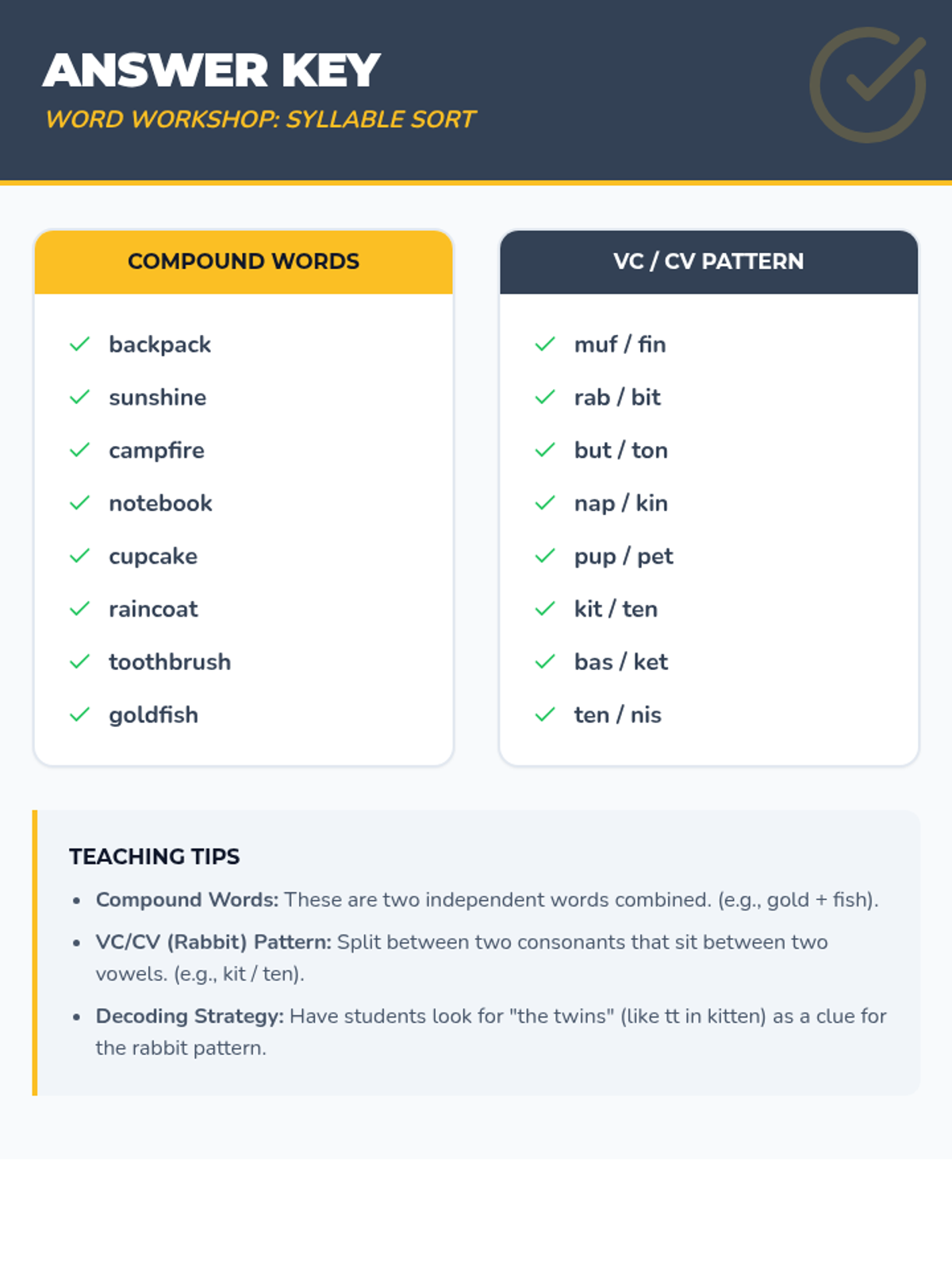
A hands-on lesson focusing on identifying and categorizing multisyllabic words using Compound and VC/CV (Rabbit) patterns. Students will practice decoding and sorting words to build phonemic awareness.
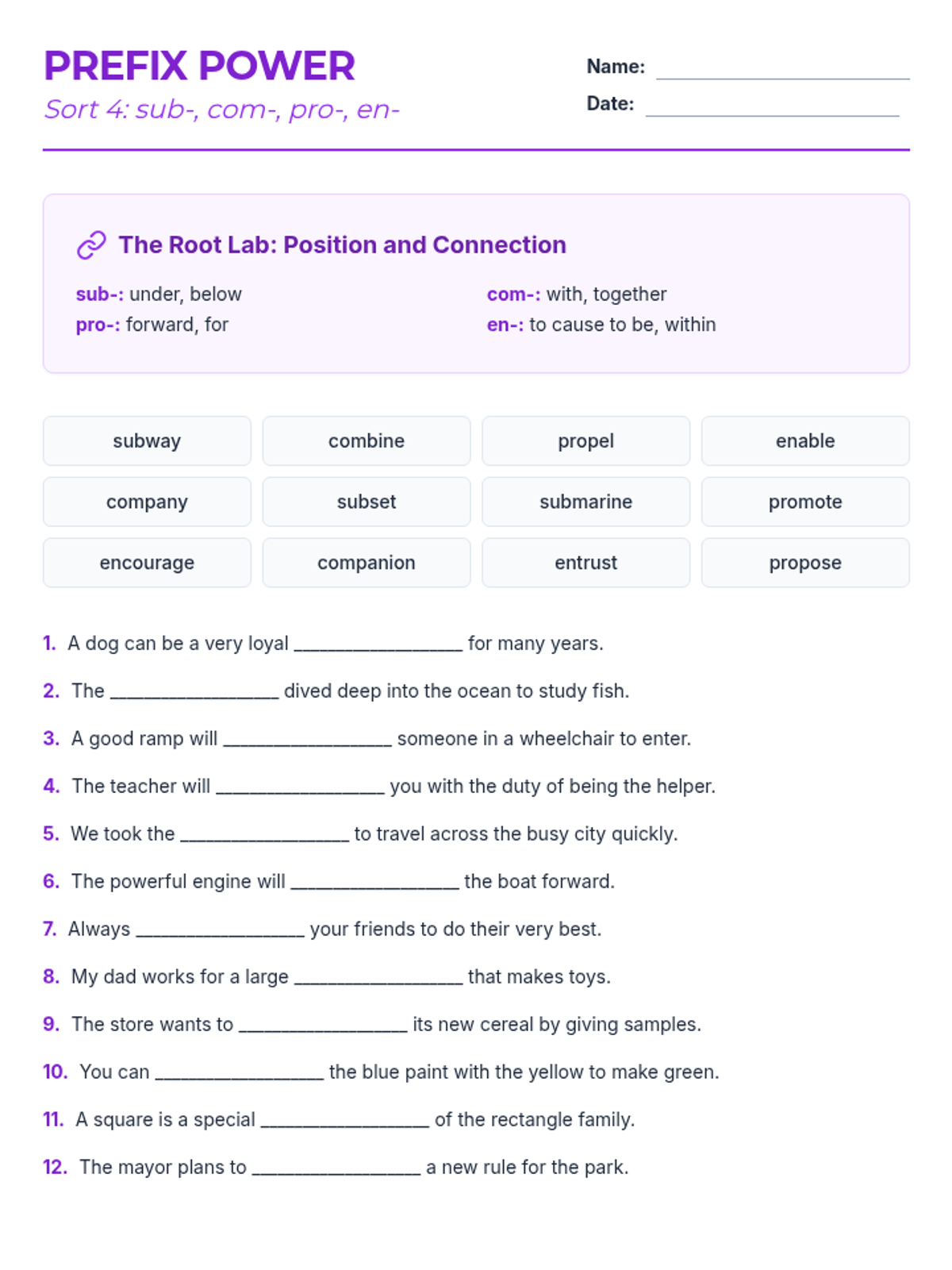
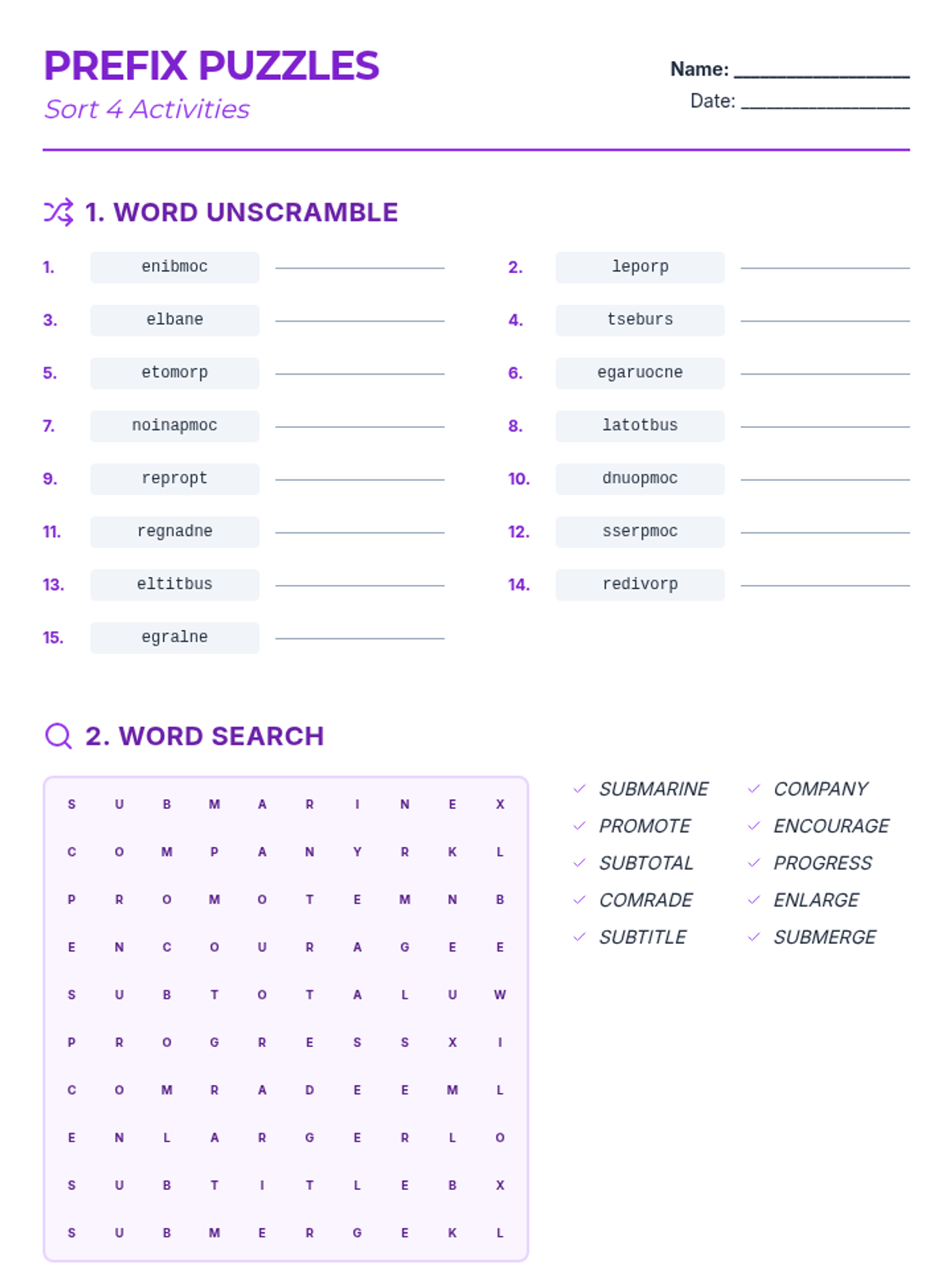
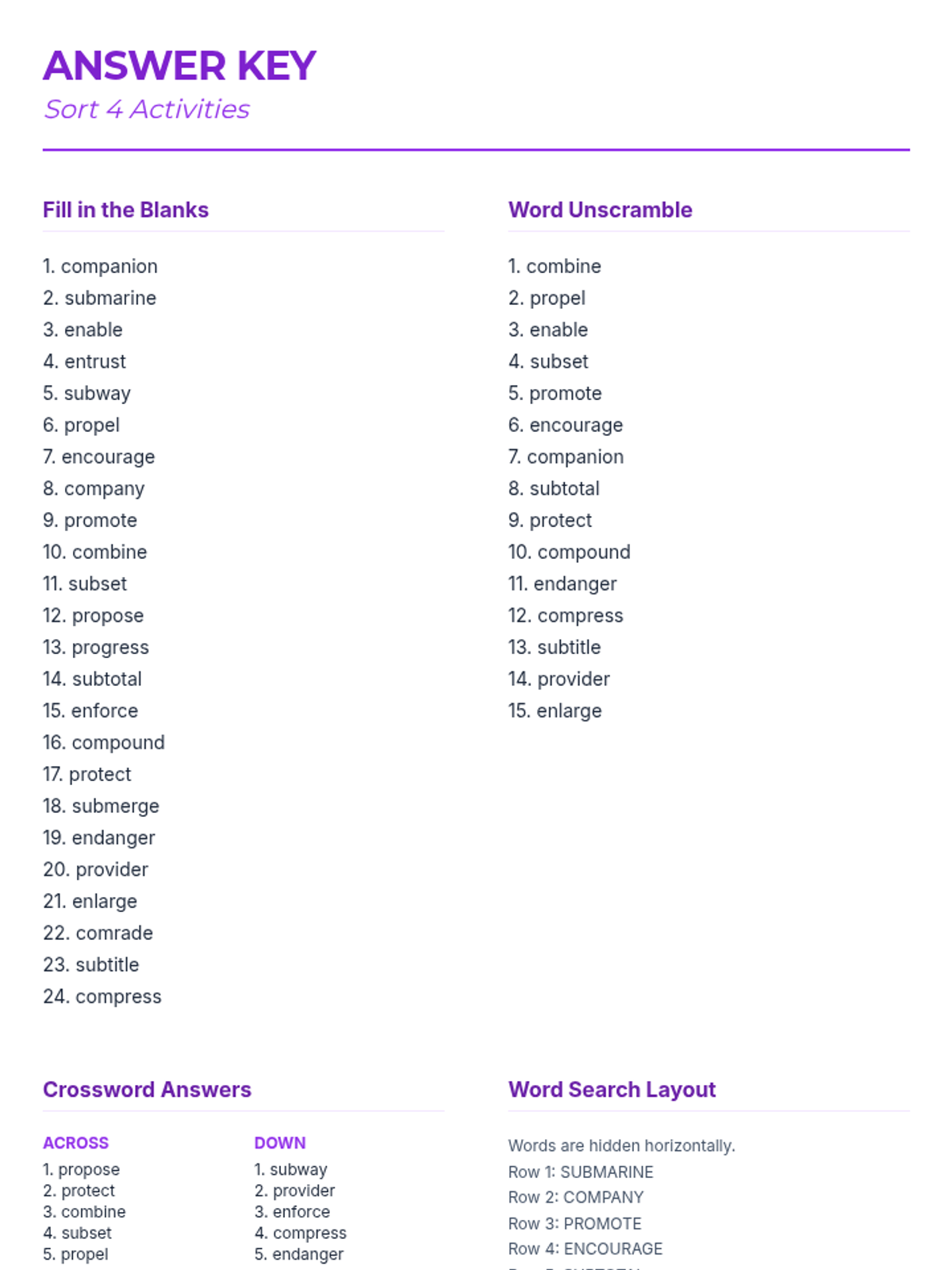
Position and connection prefixes: sub-, com-, pro-, and en-.
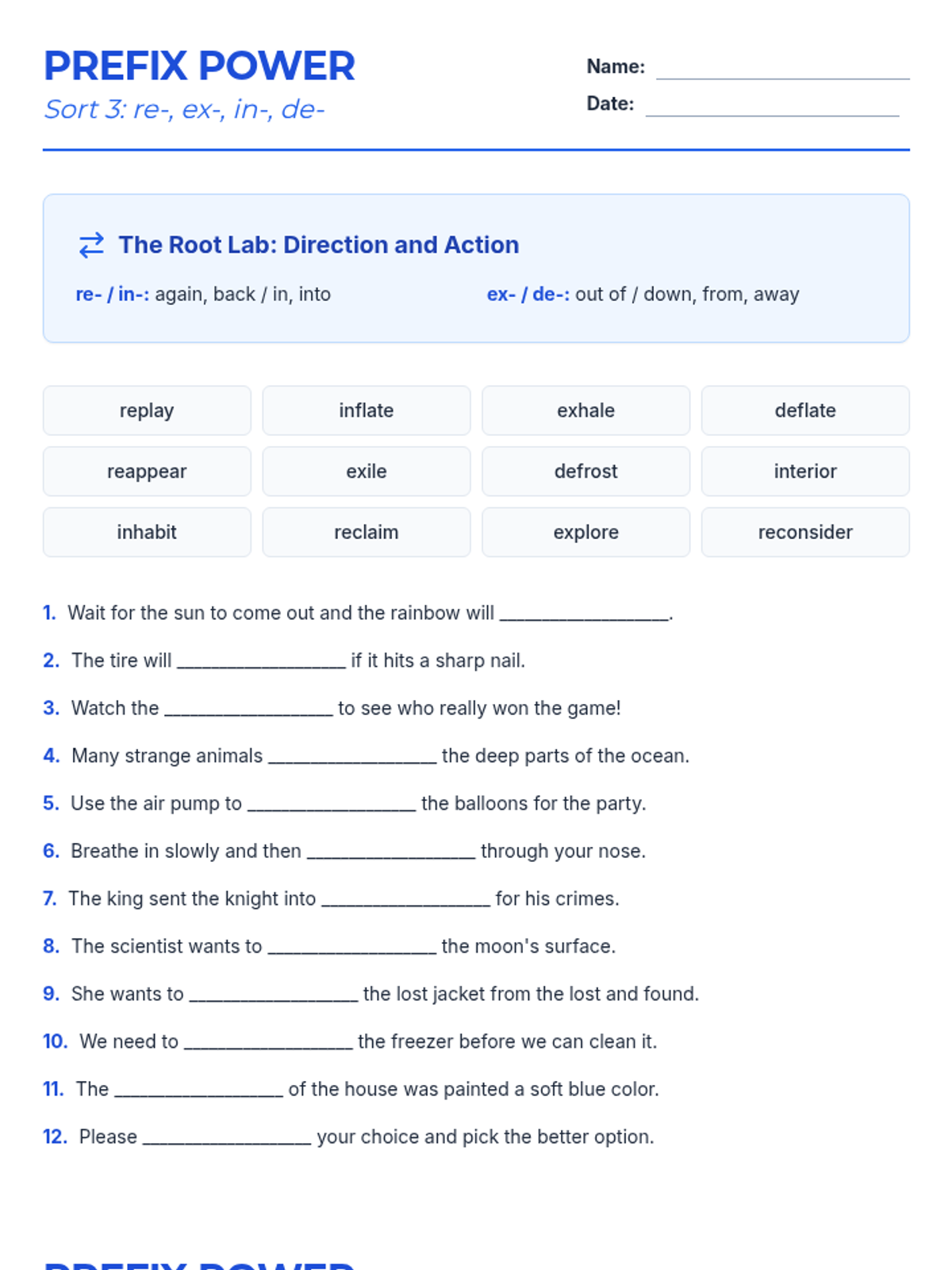
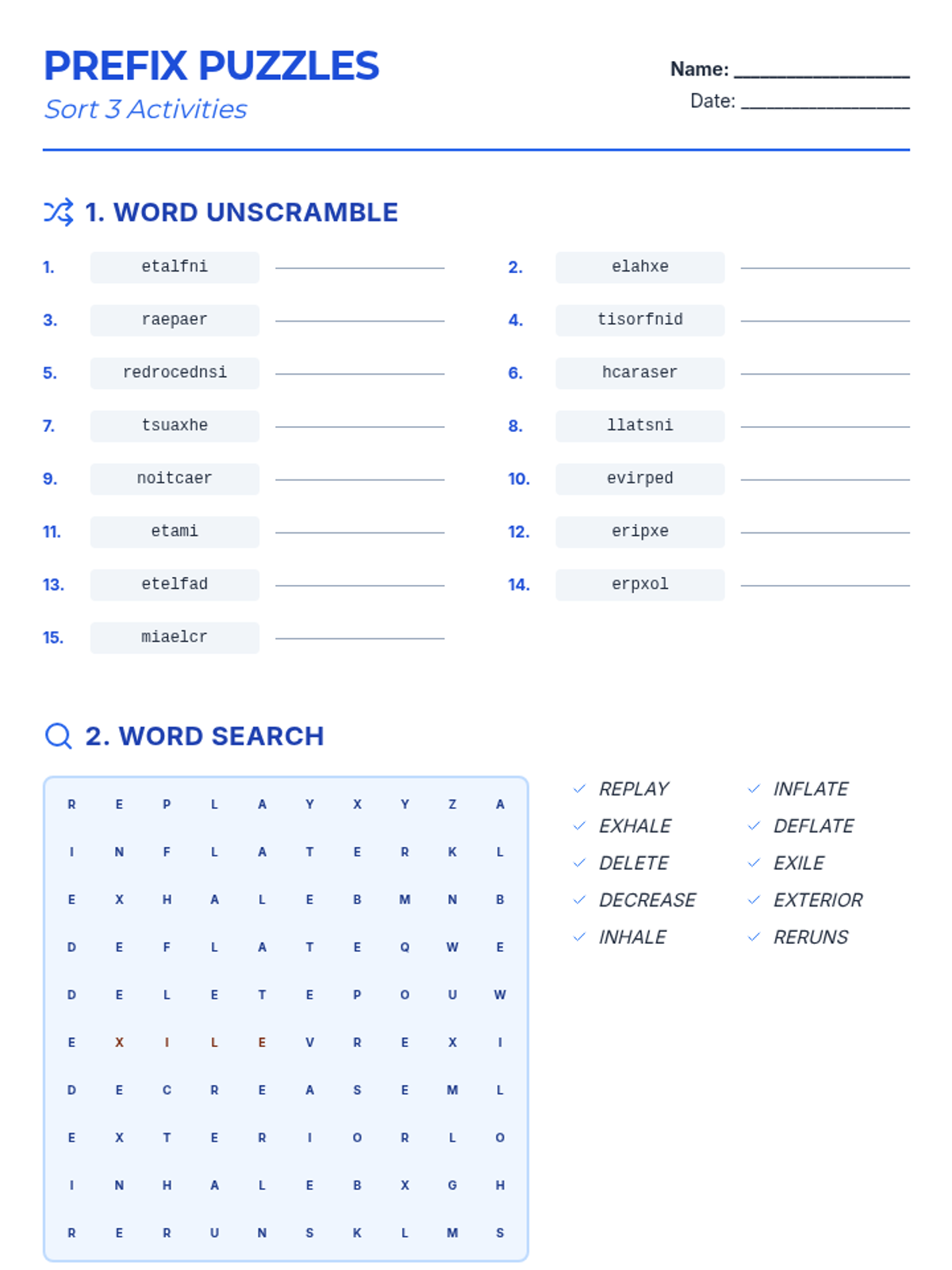
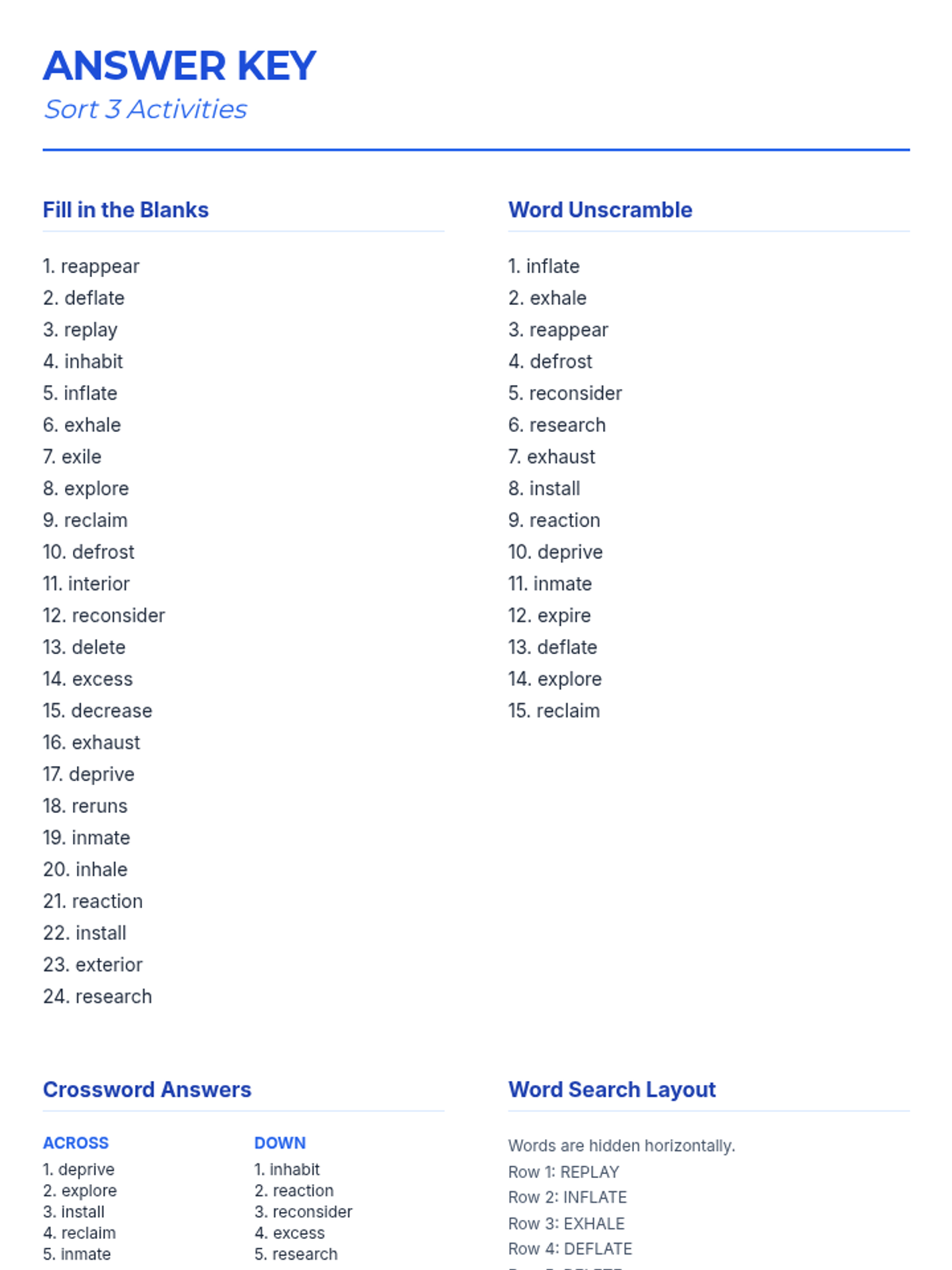
Direction and action prefixes: re-, ex-, in-, and de-.
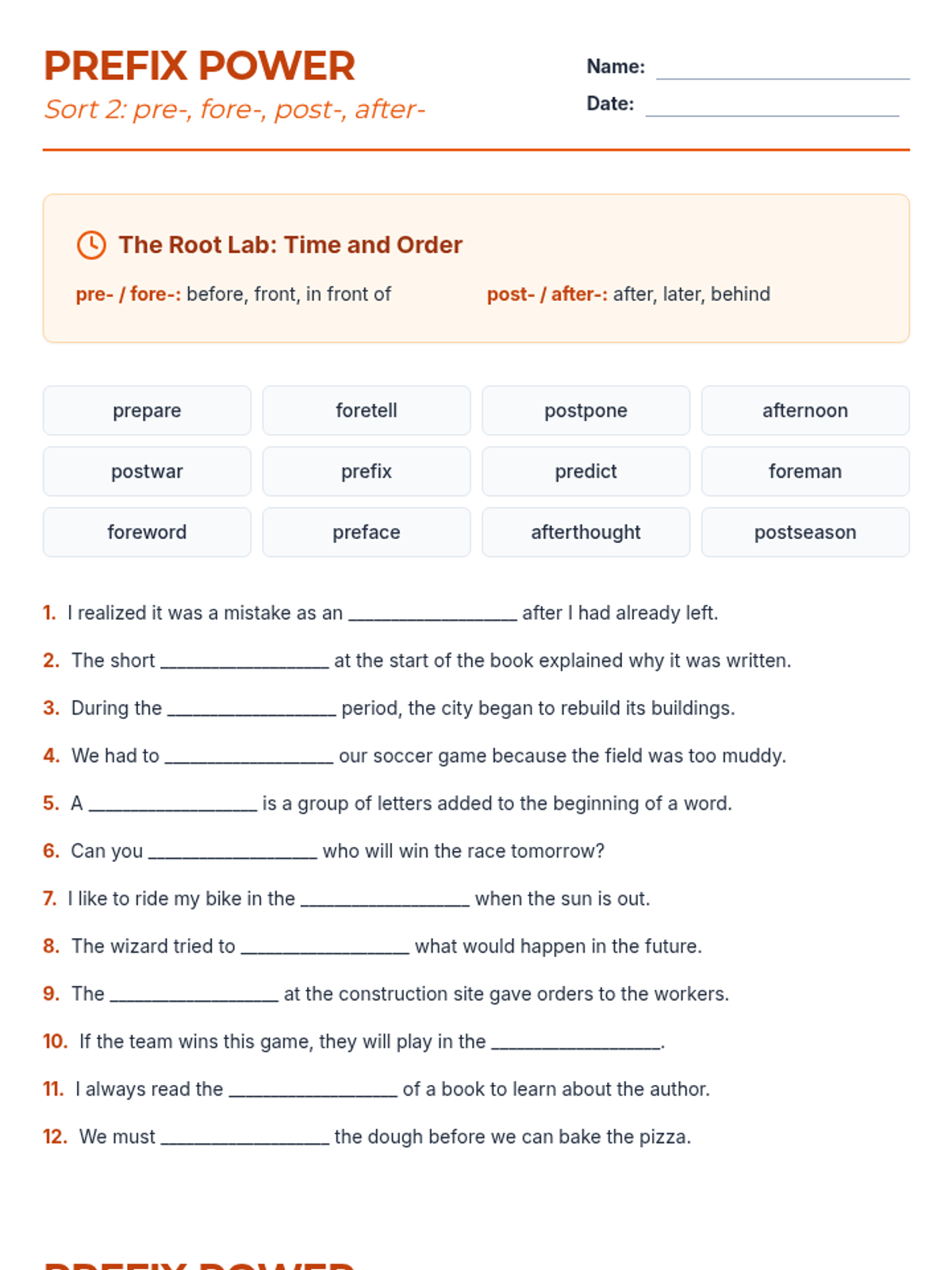
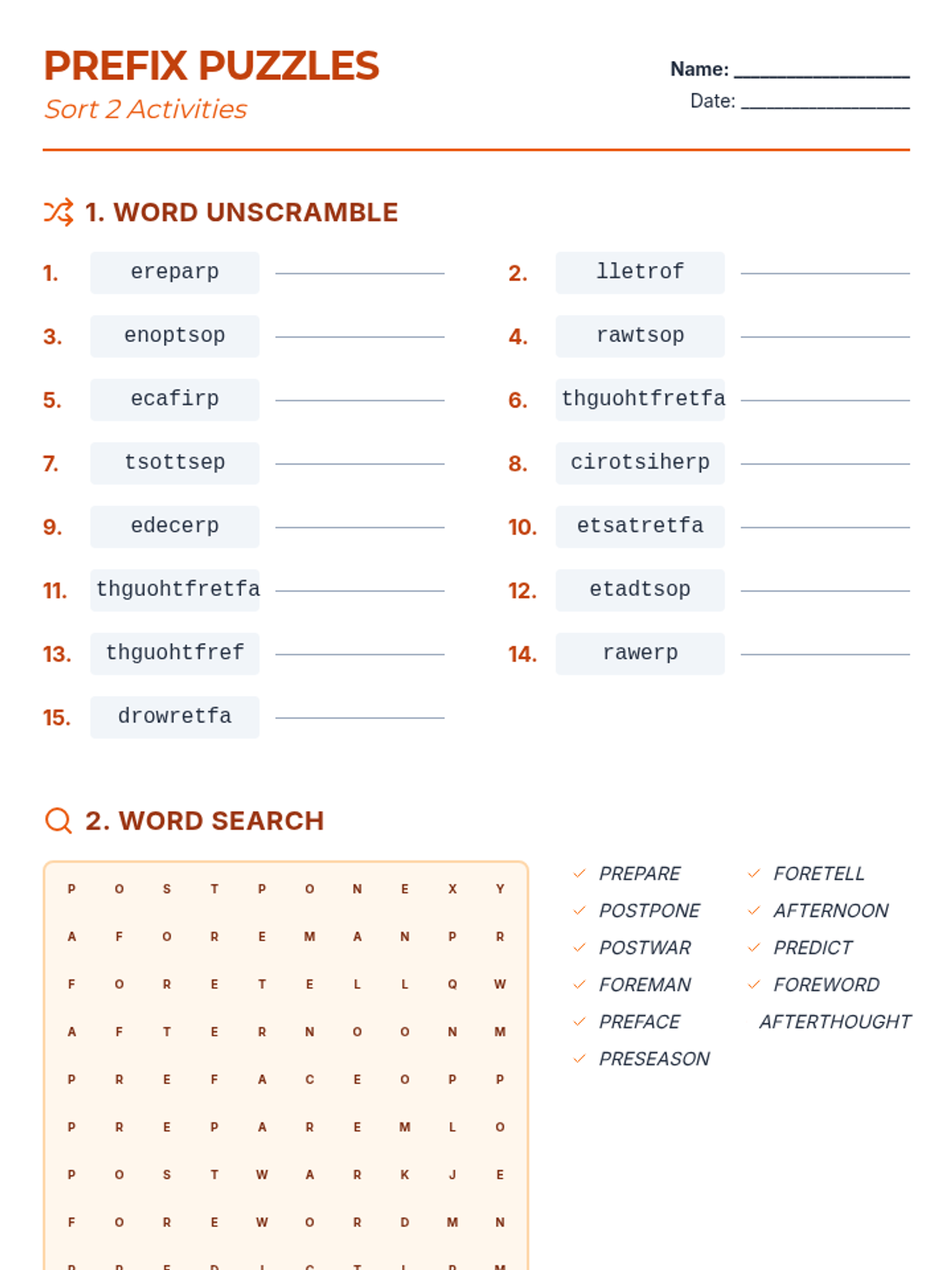
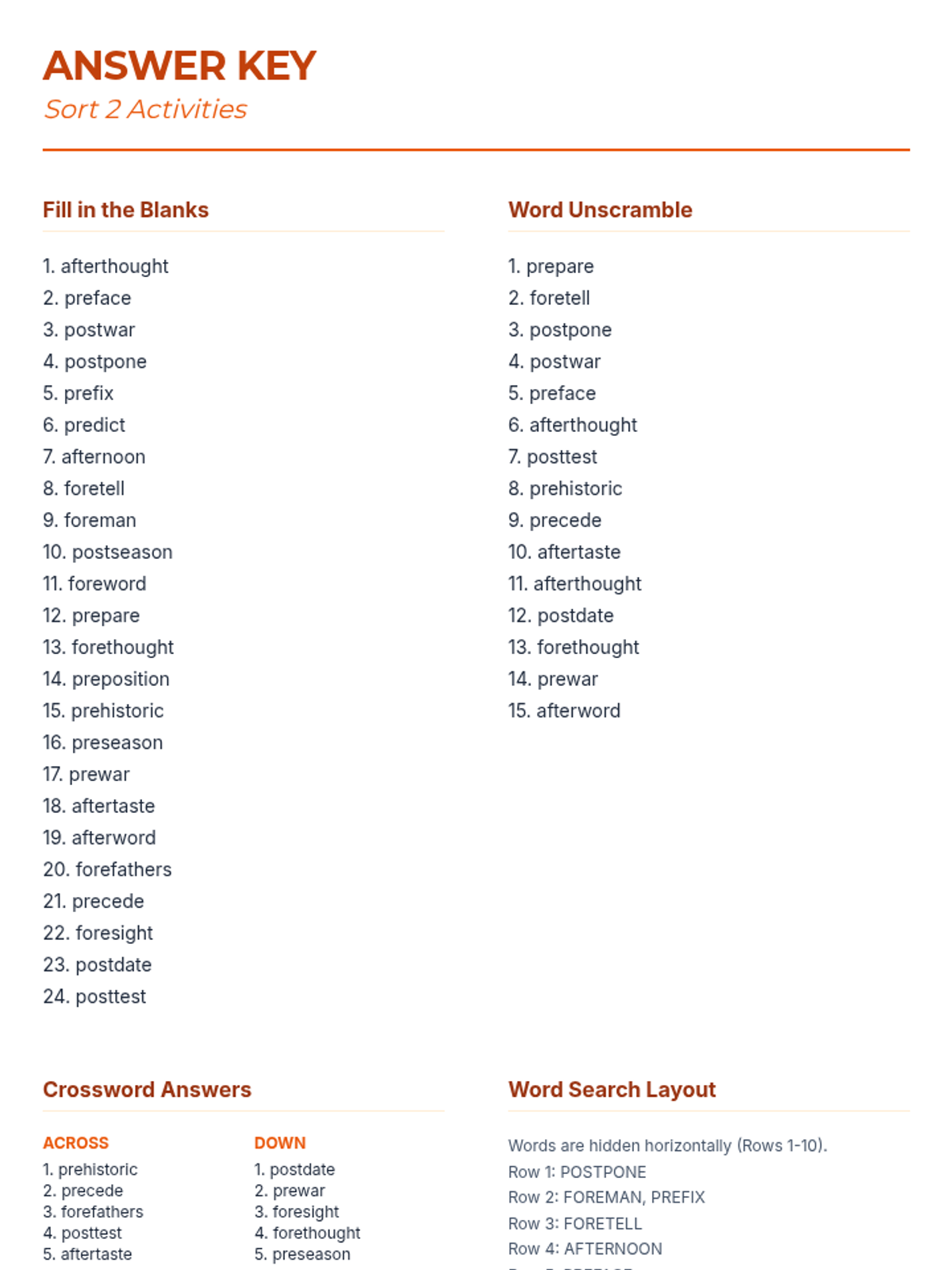
Focusing on time and order prefixes: pre-, fore-, post-, and after-.
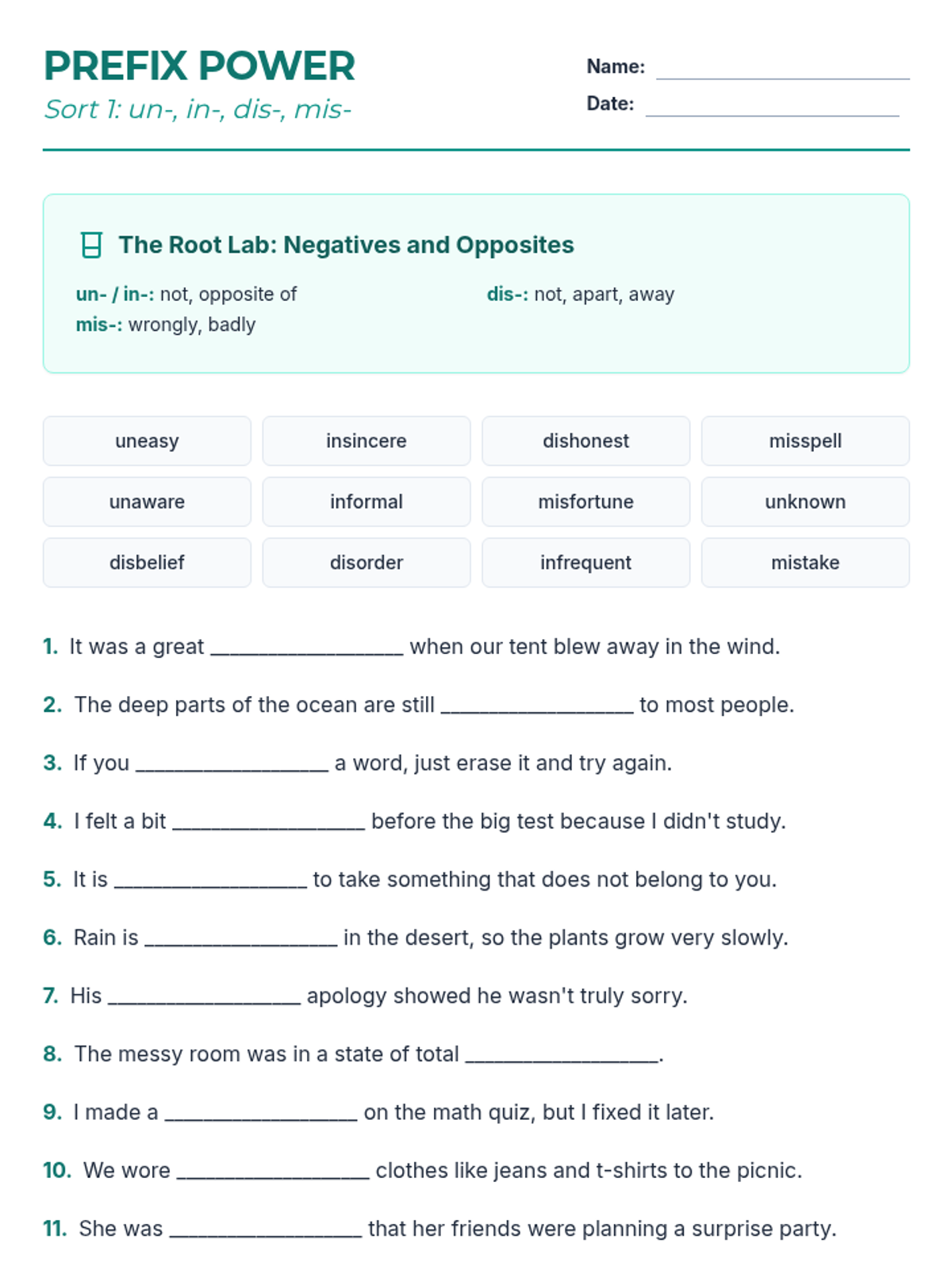
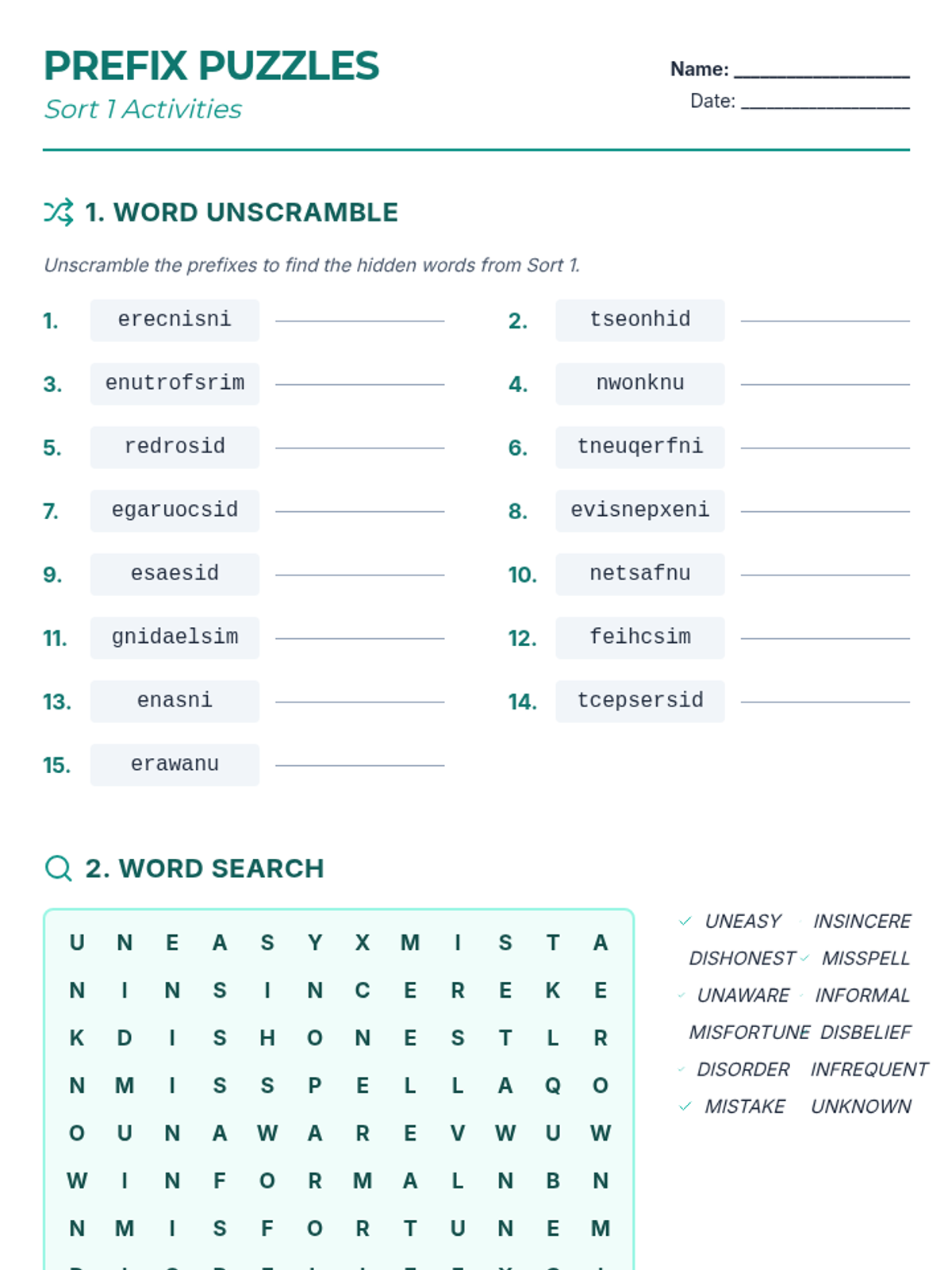
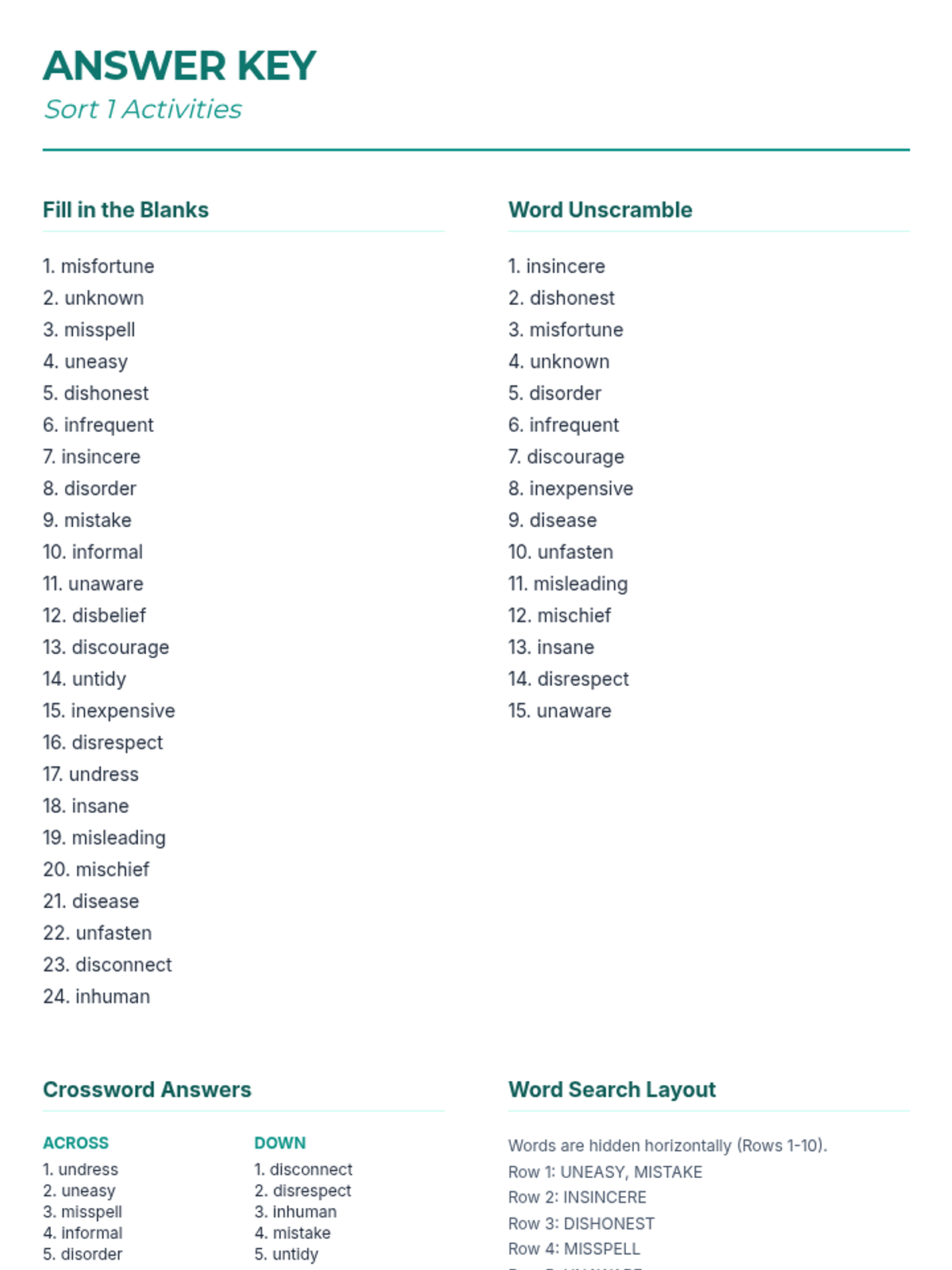
Introduction to negative and opposite prefixes: un-, in-, dis-, and mis-.
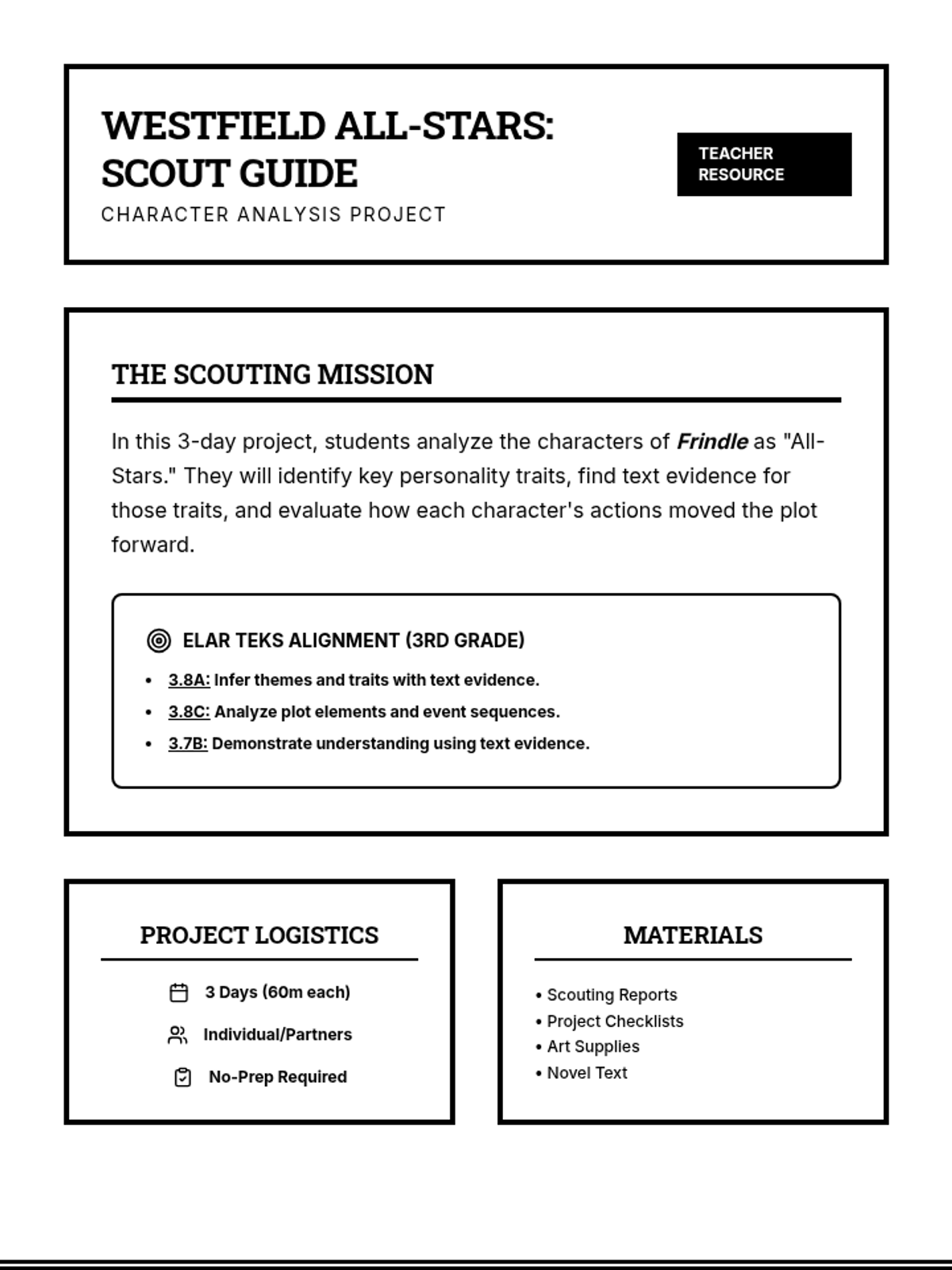
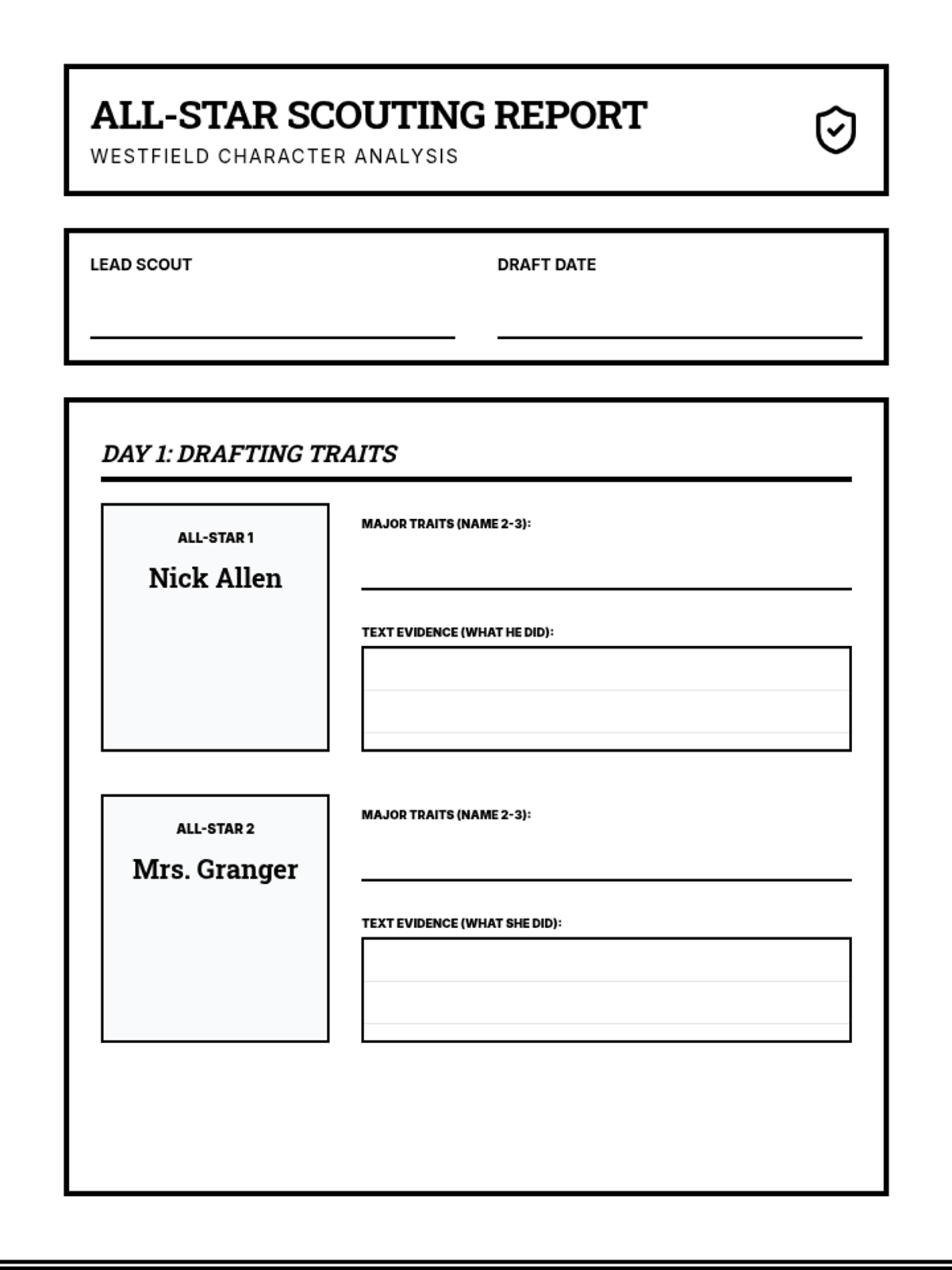
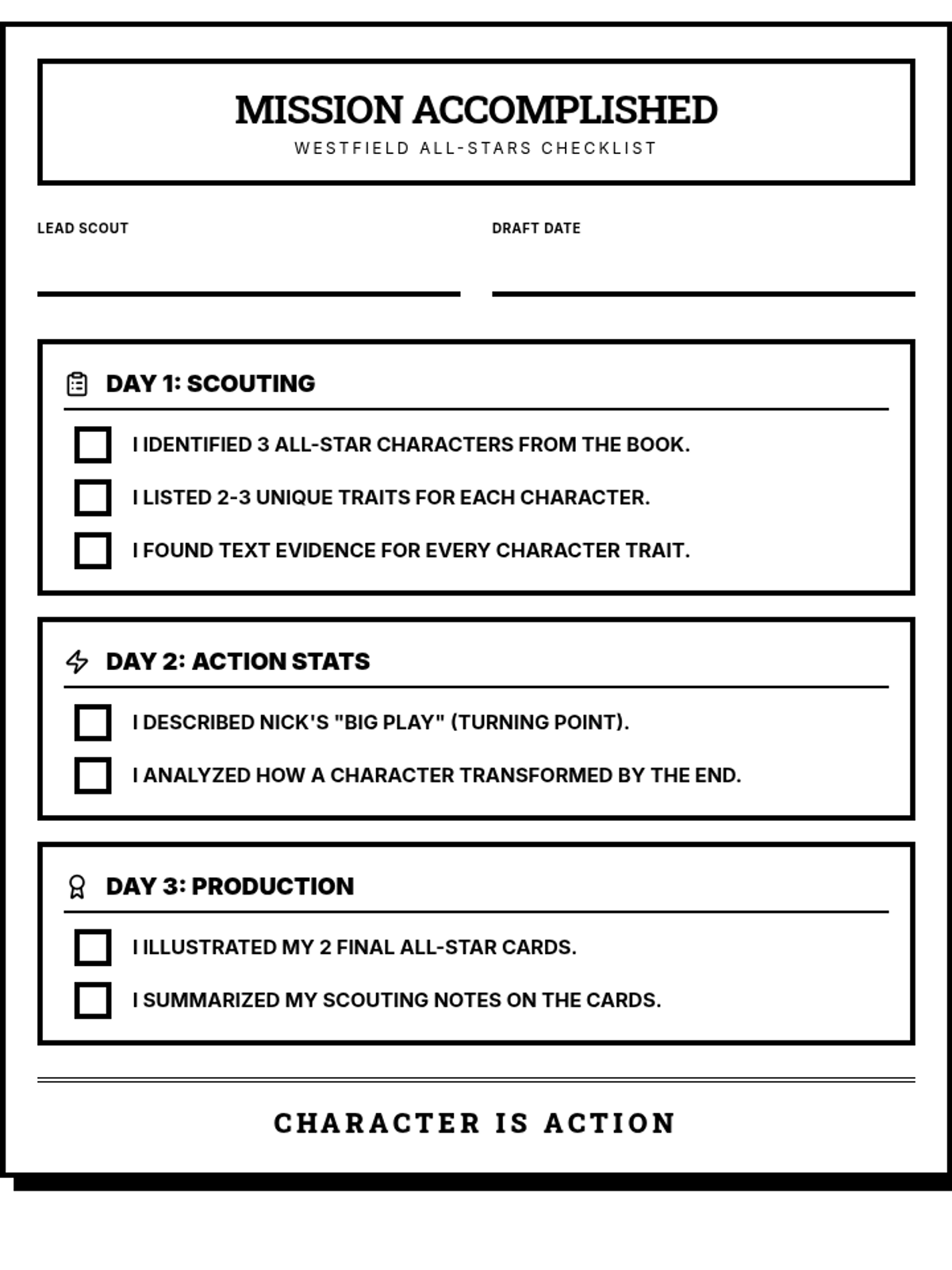
A 3-day post-reading project where students analyze character traits (3.8A) and plot influence (3.8C) by creating a collection of 'Westfield All-Star' character trading cards.
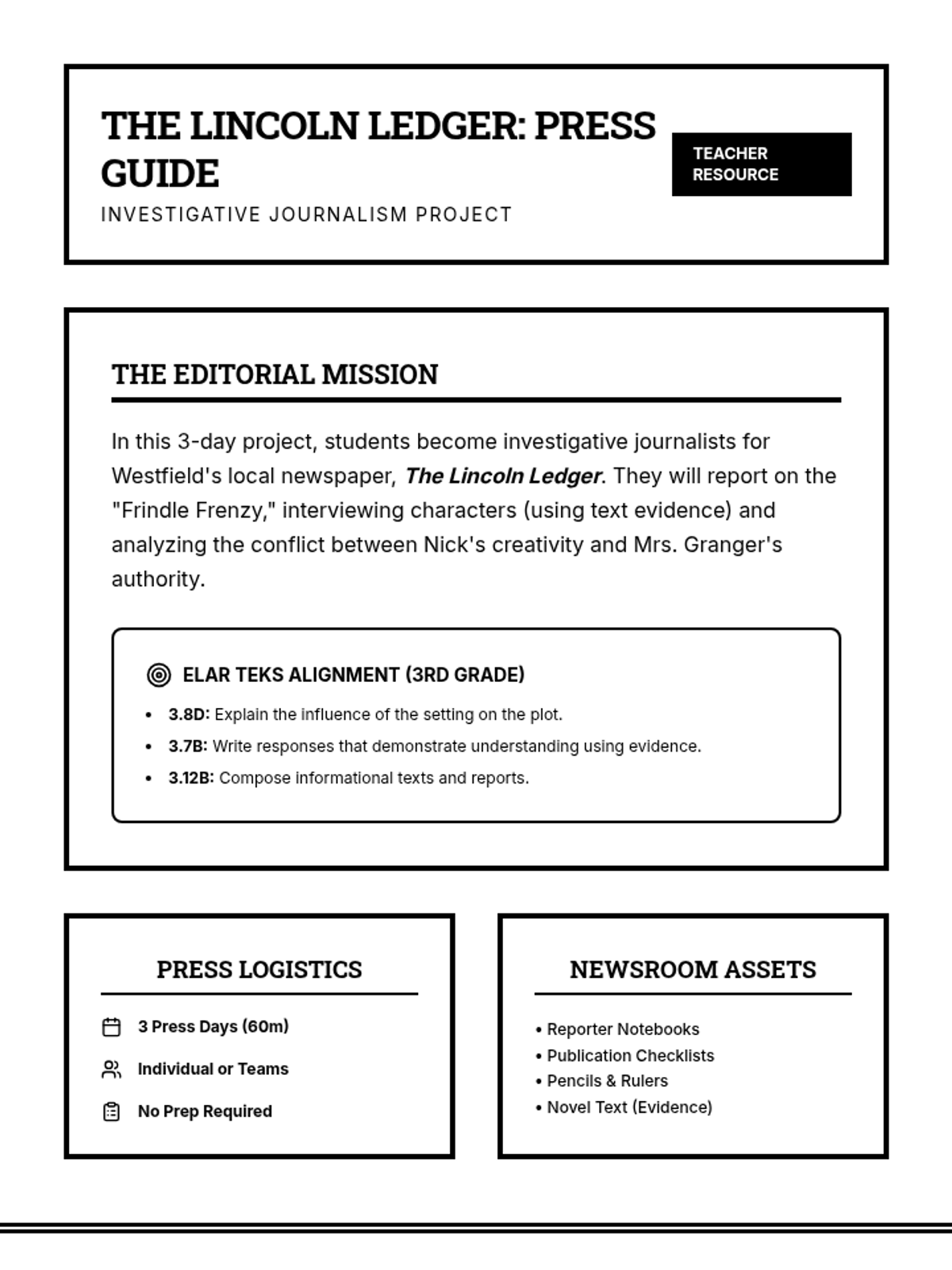
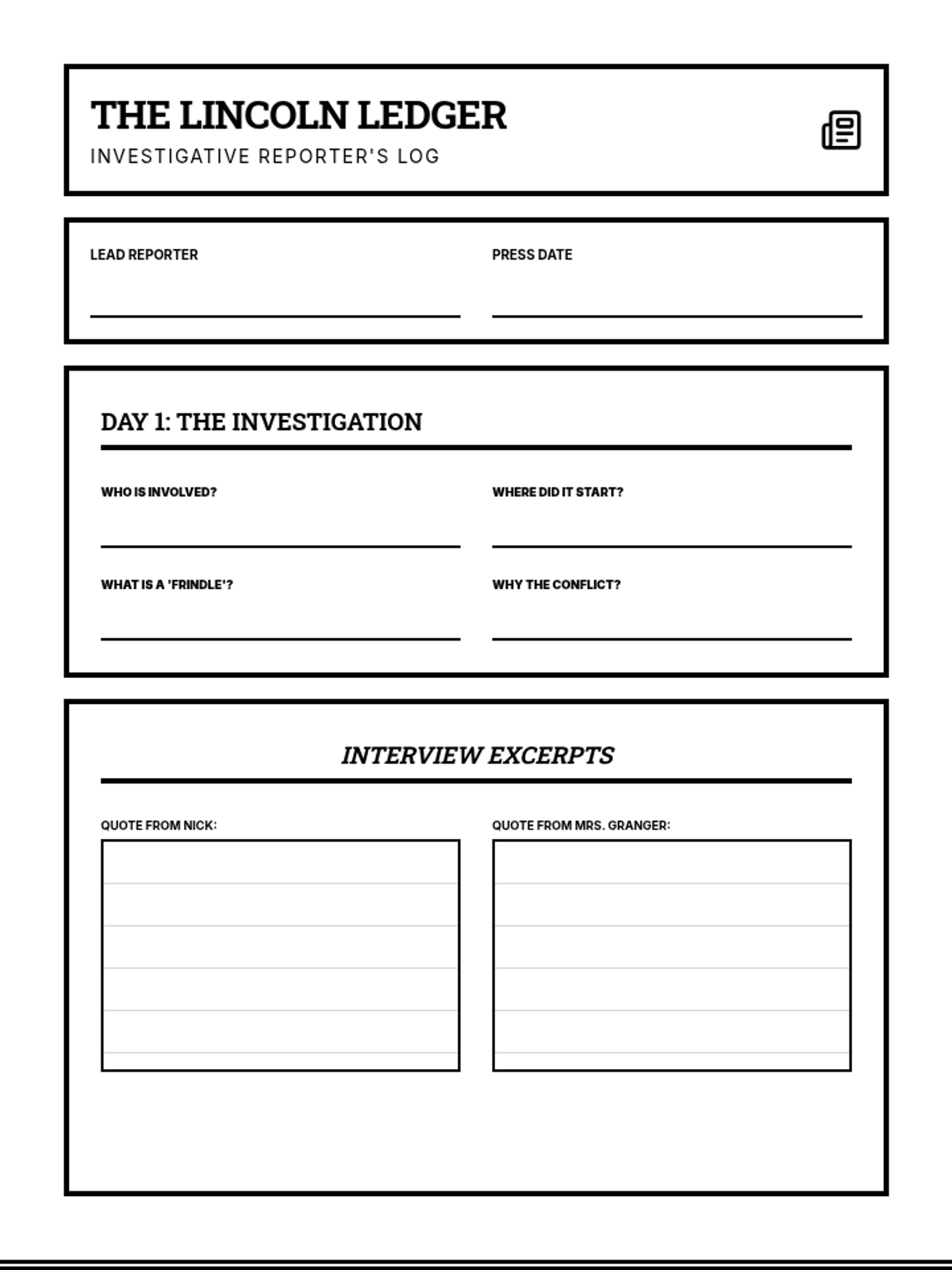
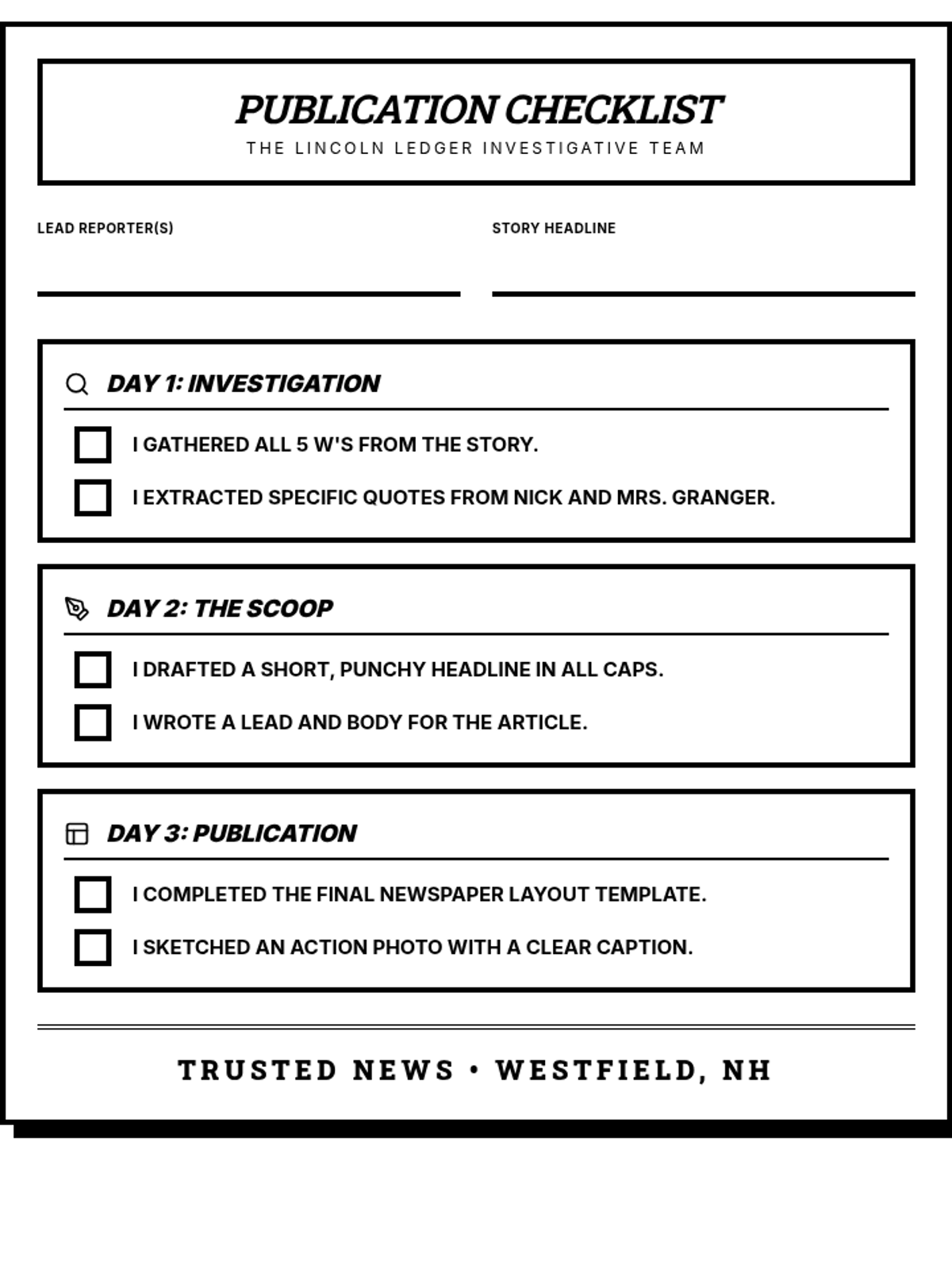
A 3-day post-reading project where students become investigative journalists for 'The Lincoln Ledger,' covering the national sensation of the word 'frindle' and the 'war' between Nick and Mrs. Granger.
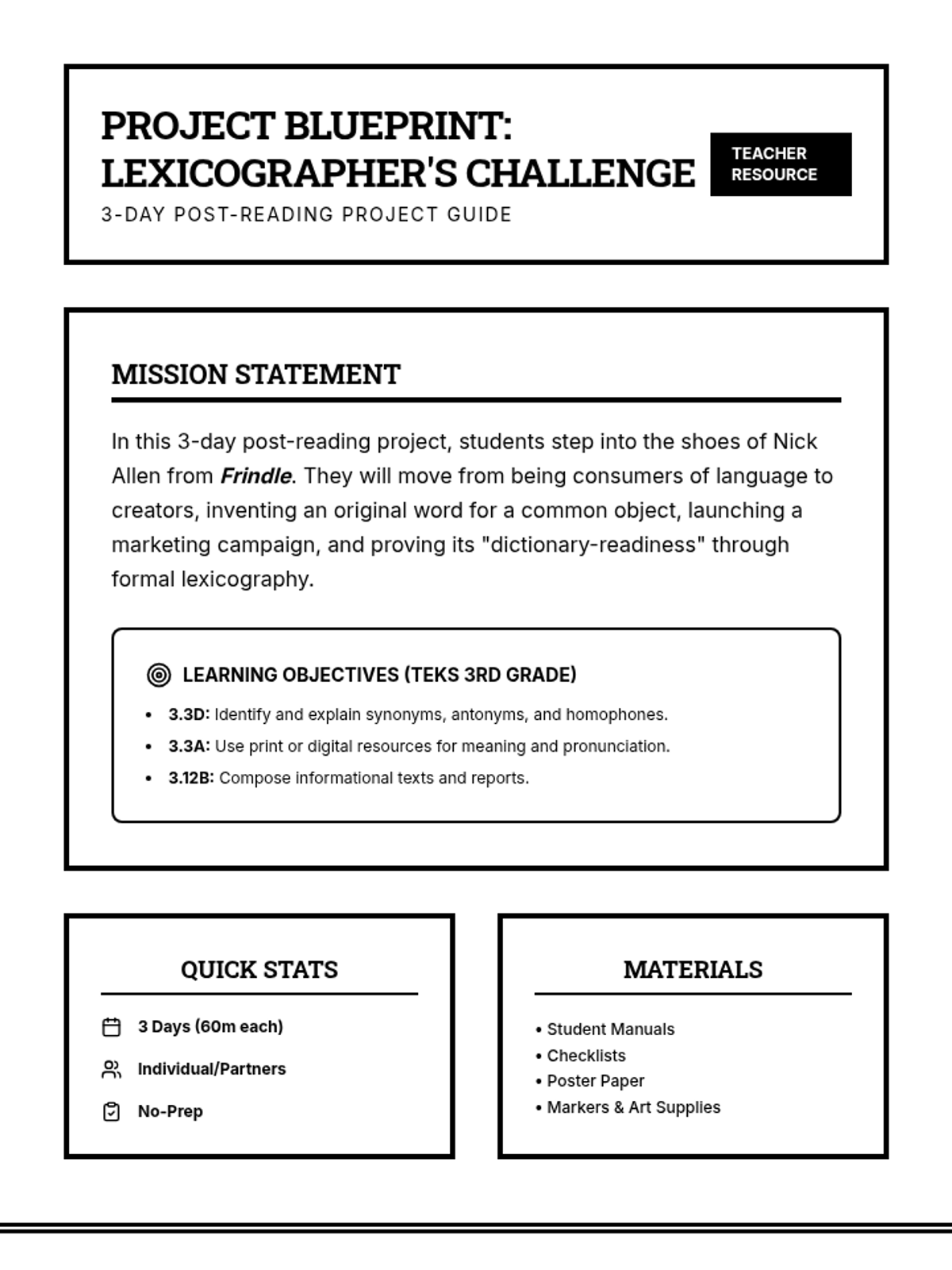
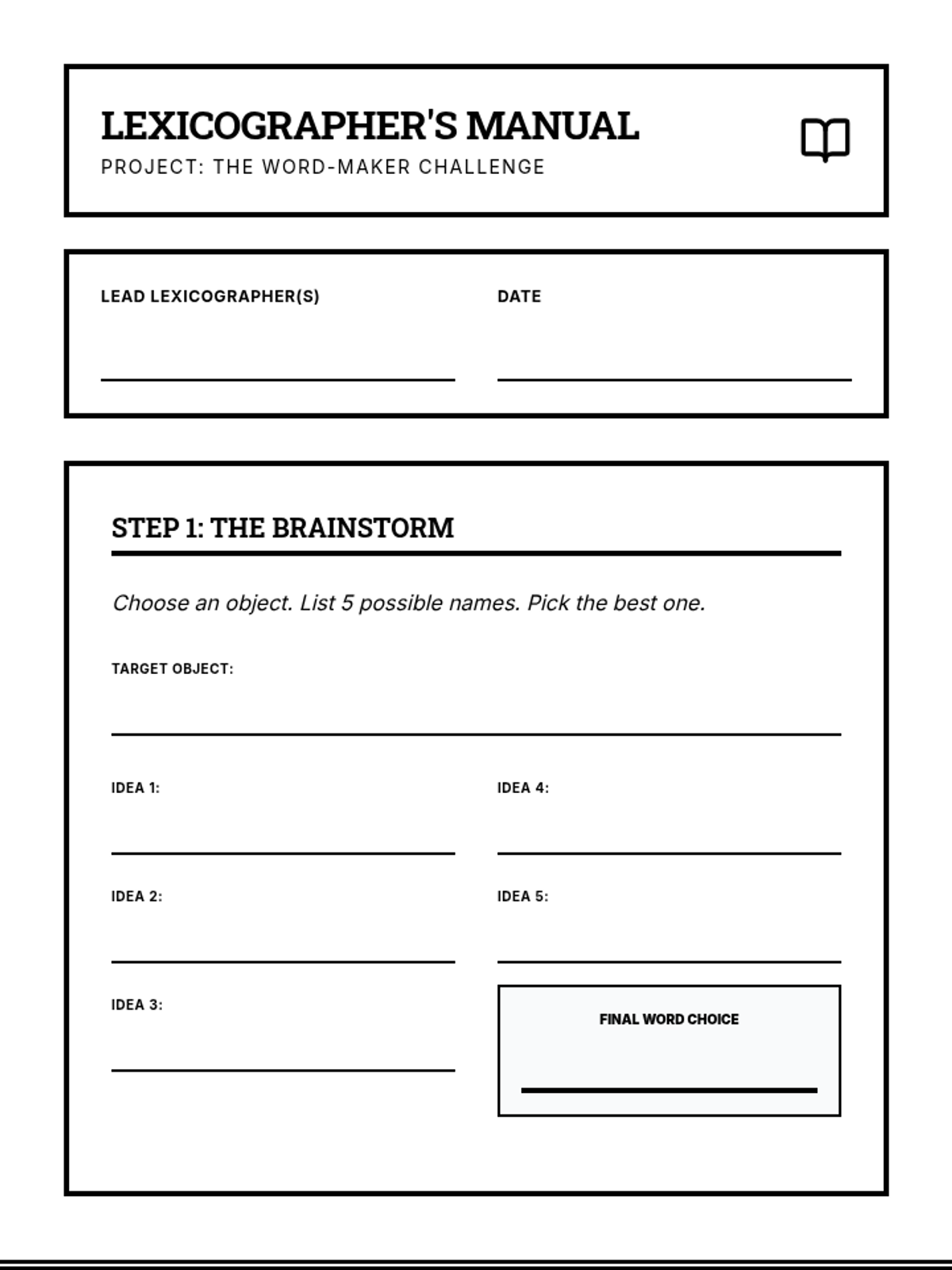
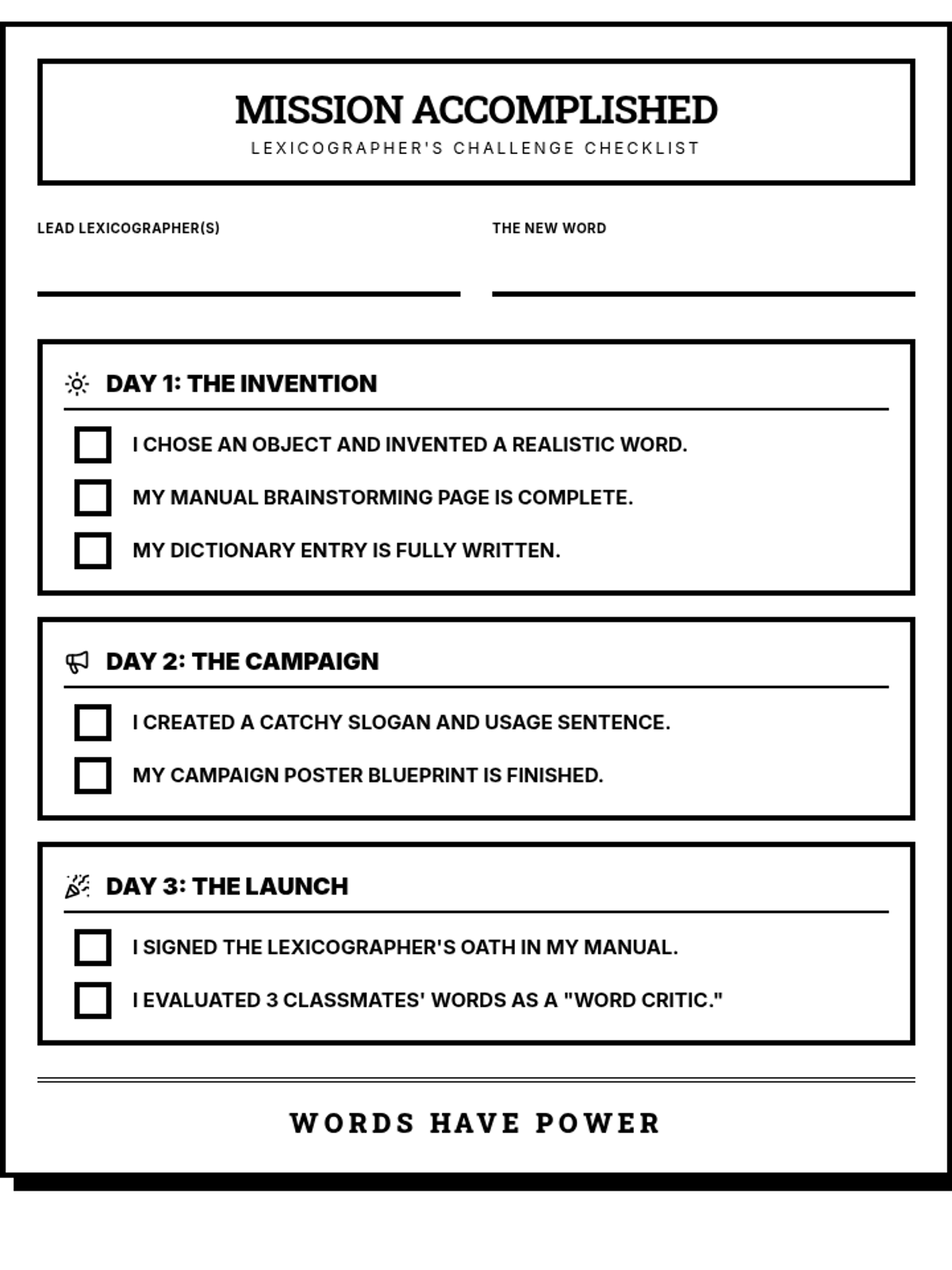
A 3-day post-reading project where students follow in Nick Allen's footsteps to invent their own word, create a marketing campaign, and document its 'dictionary-readiness'.
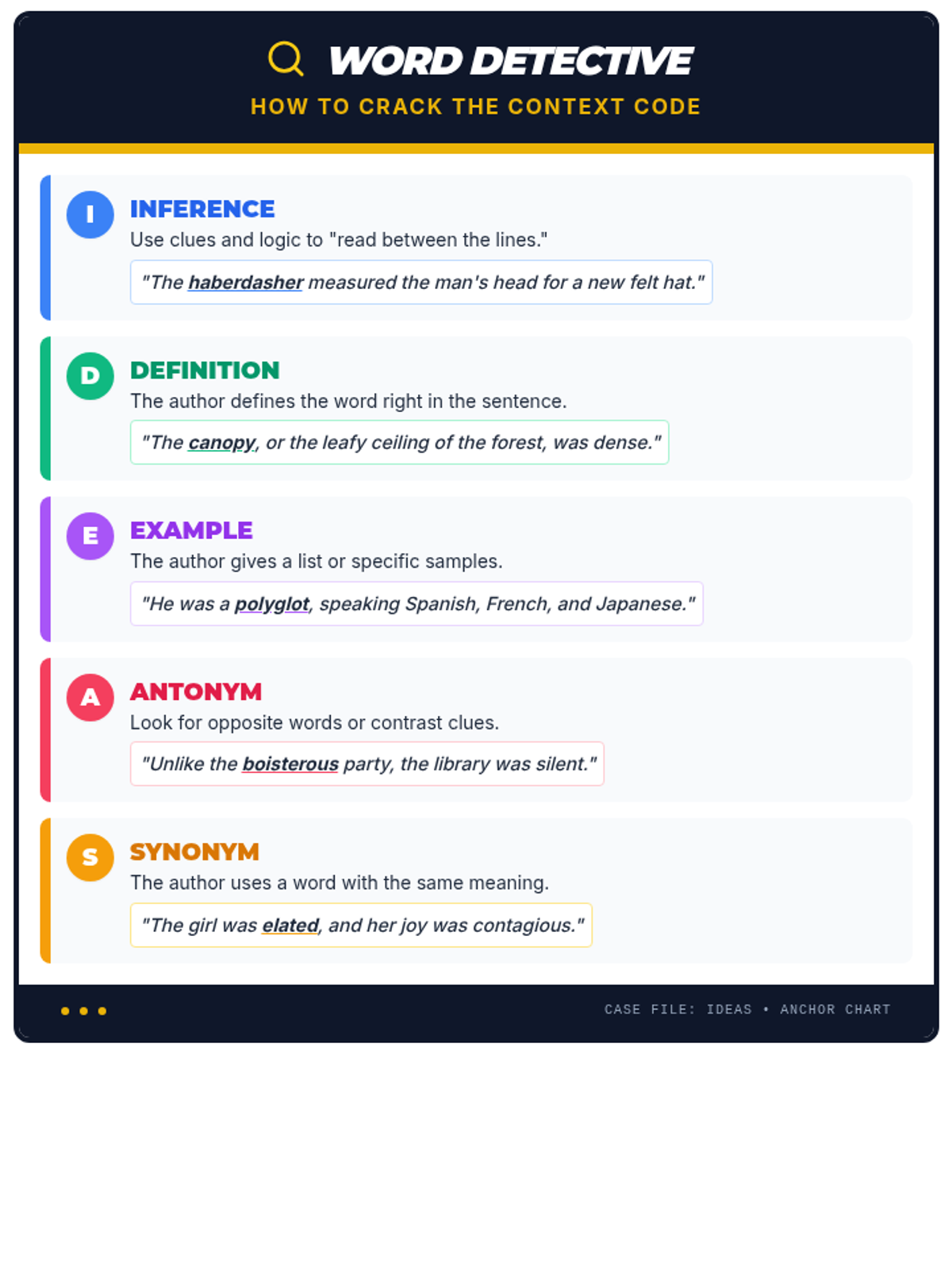
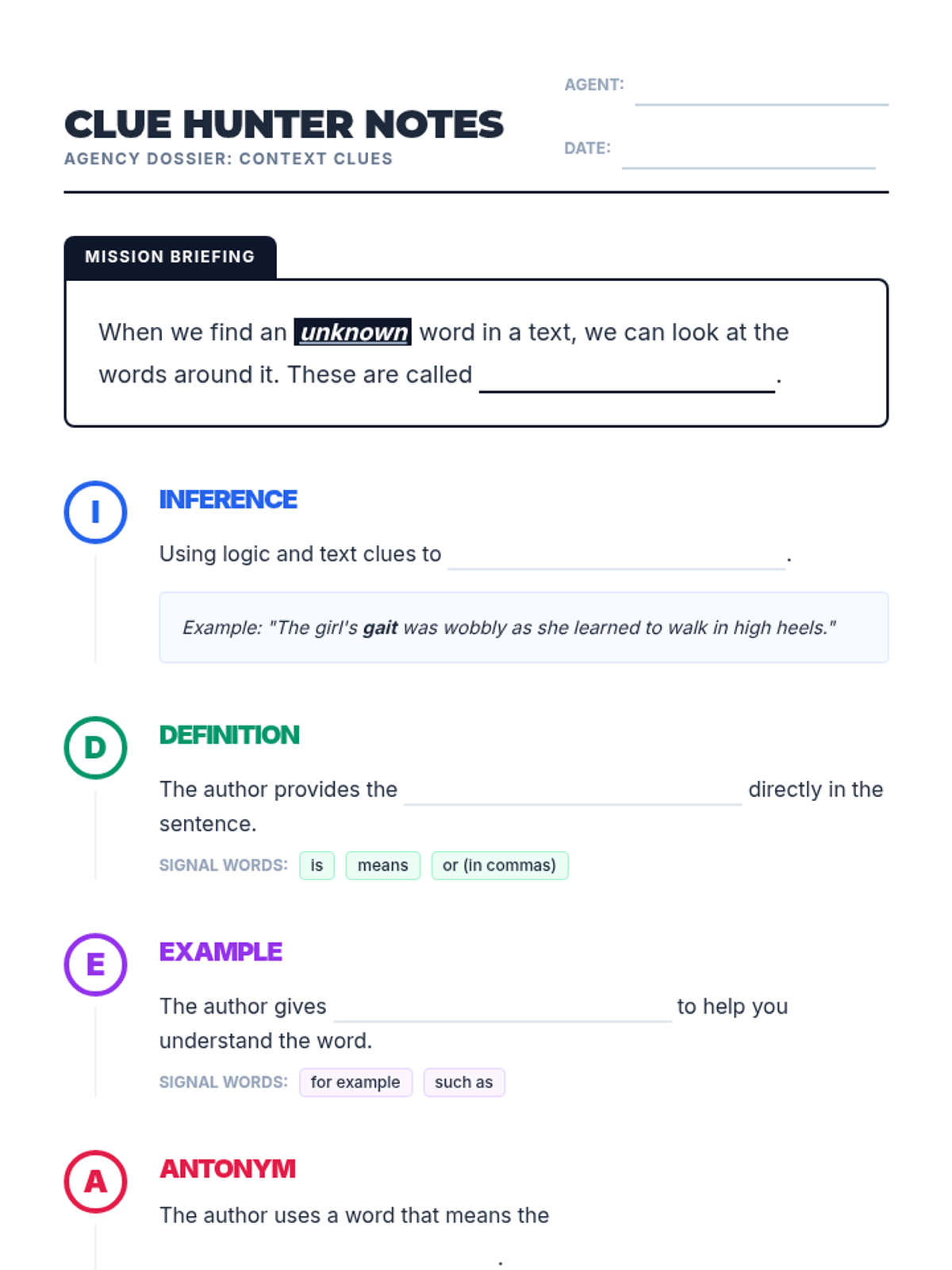
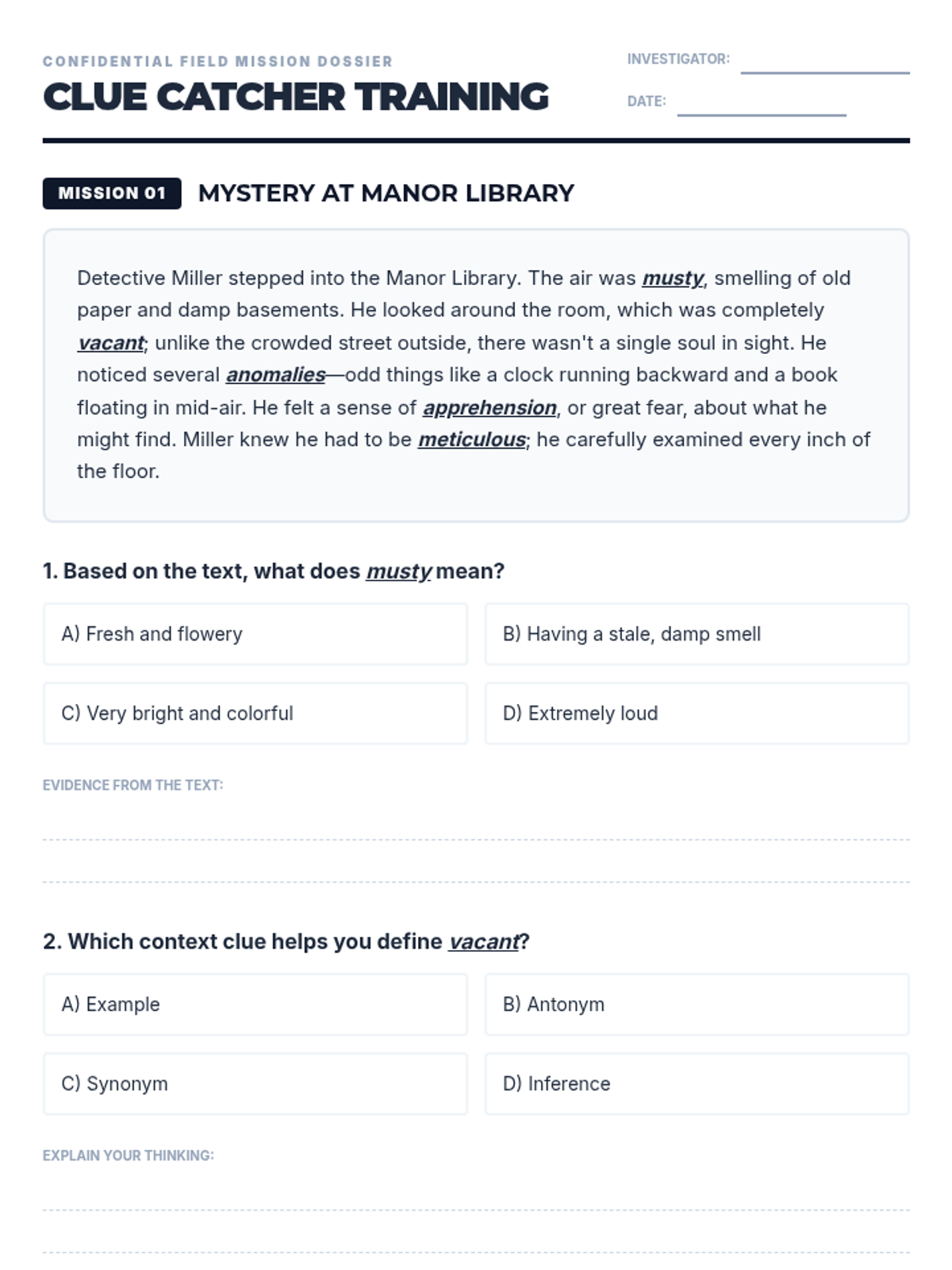
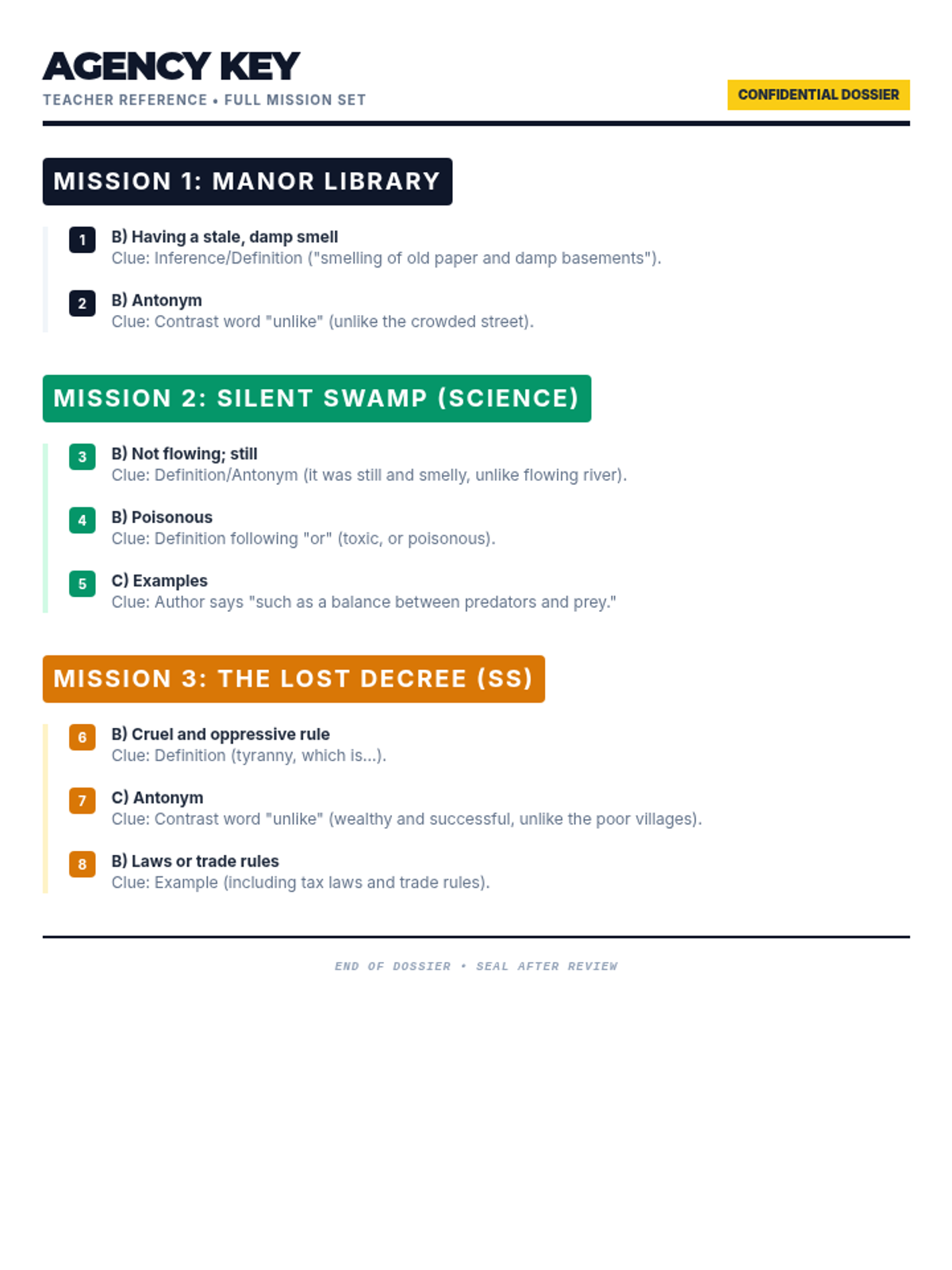
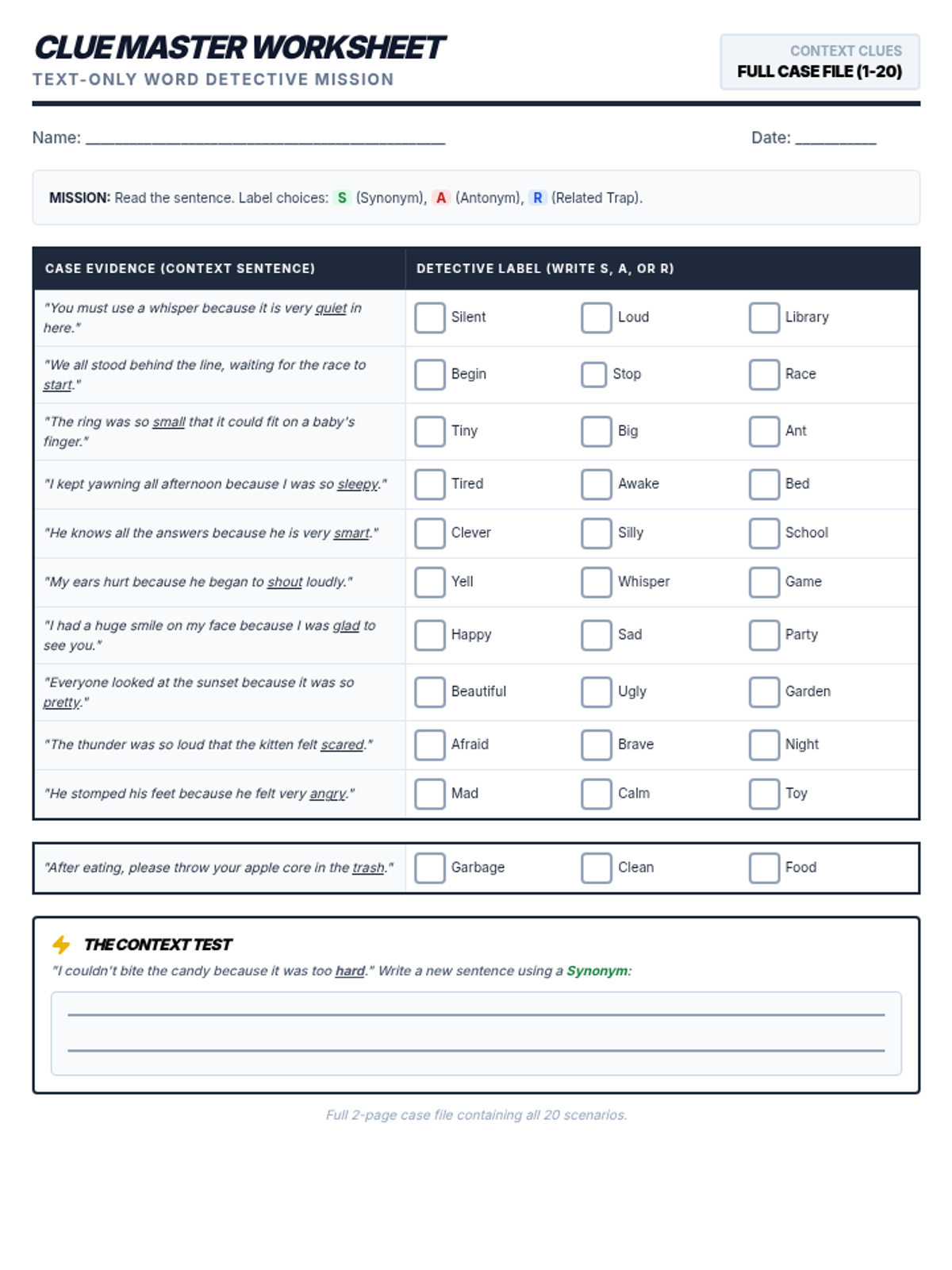
A comprehensive lesson on using context clues (Inference, Definition, Example, Antonym, Synonym) to decode unfamiliar vocabulary, featuring a detective-themed anchor chart, guided notes, and a story-based assessment.
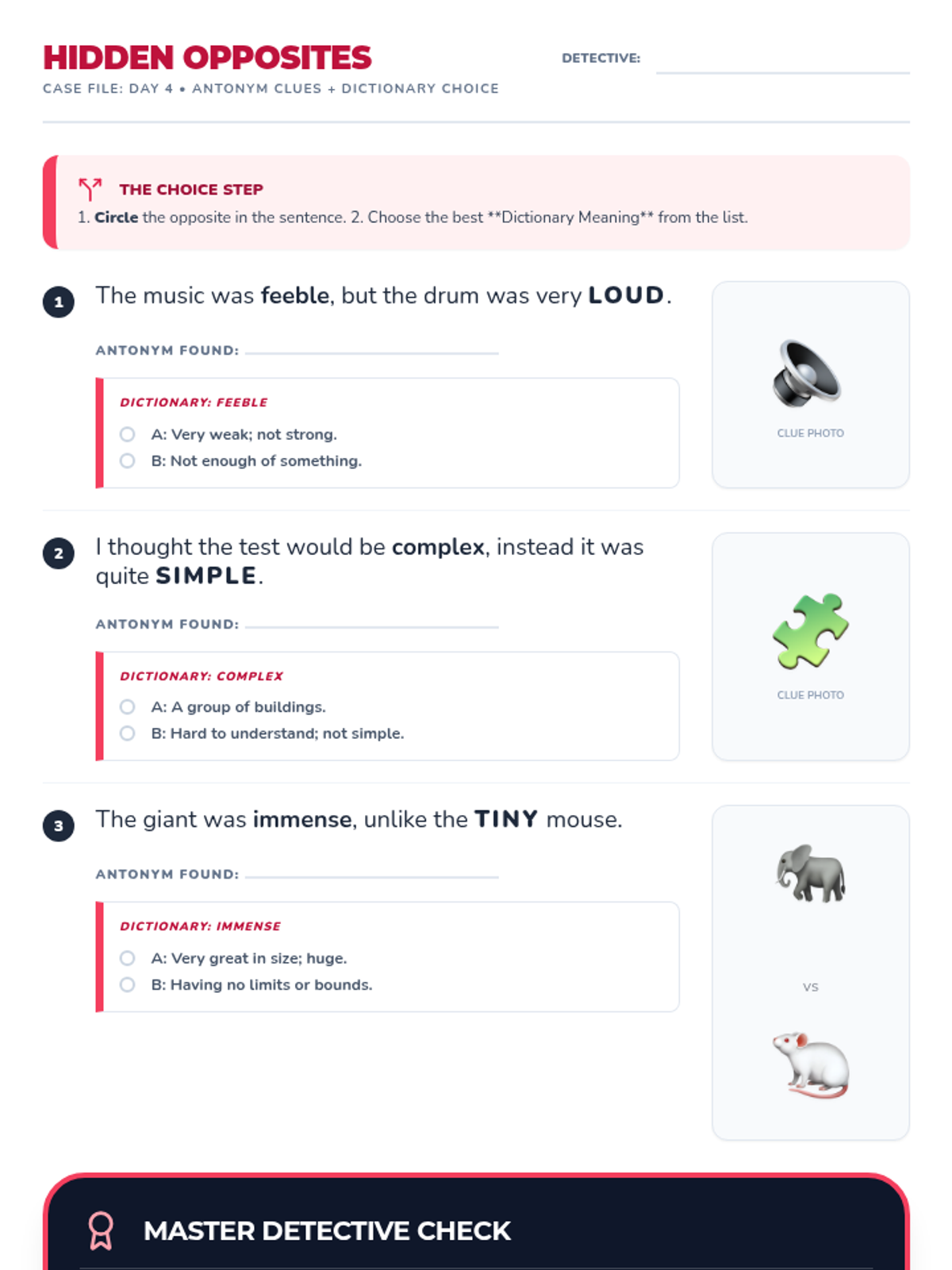
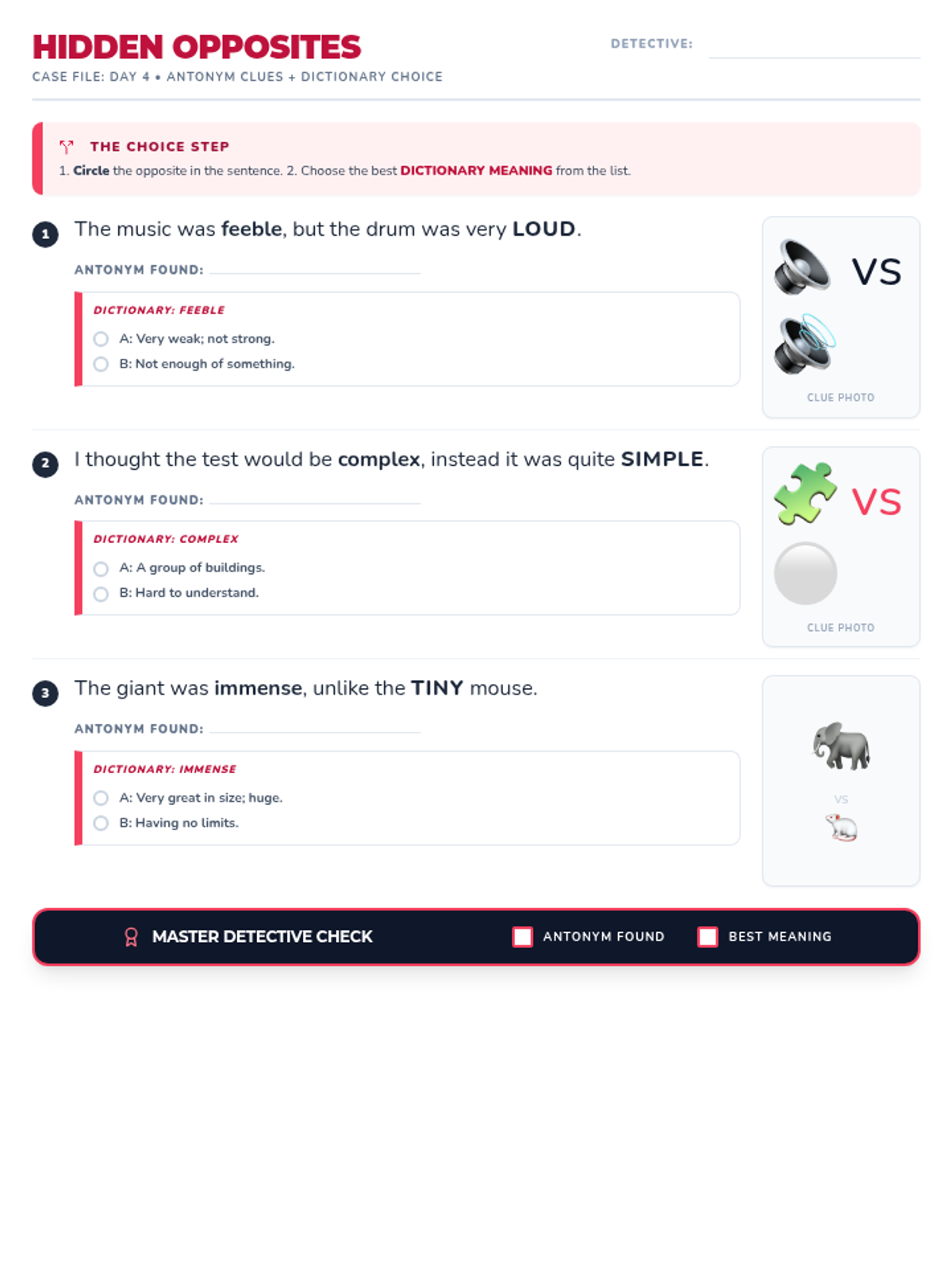
Students identify antonym clues to understand what a word is NOT, using contrasting pictures to solve the vocabulary puzzle.
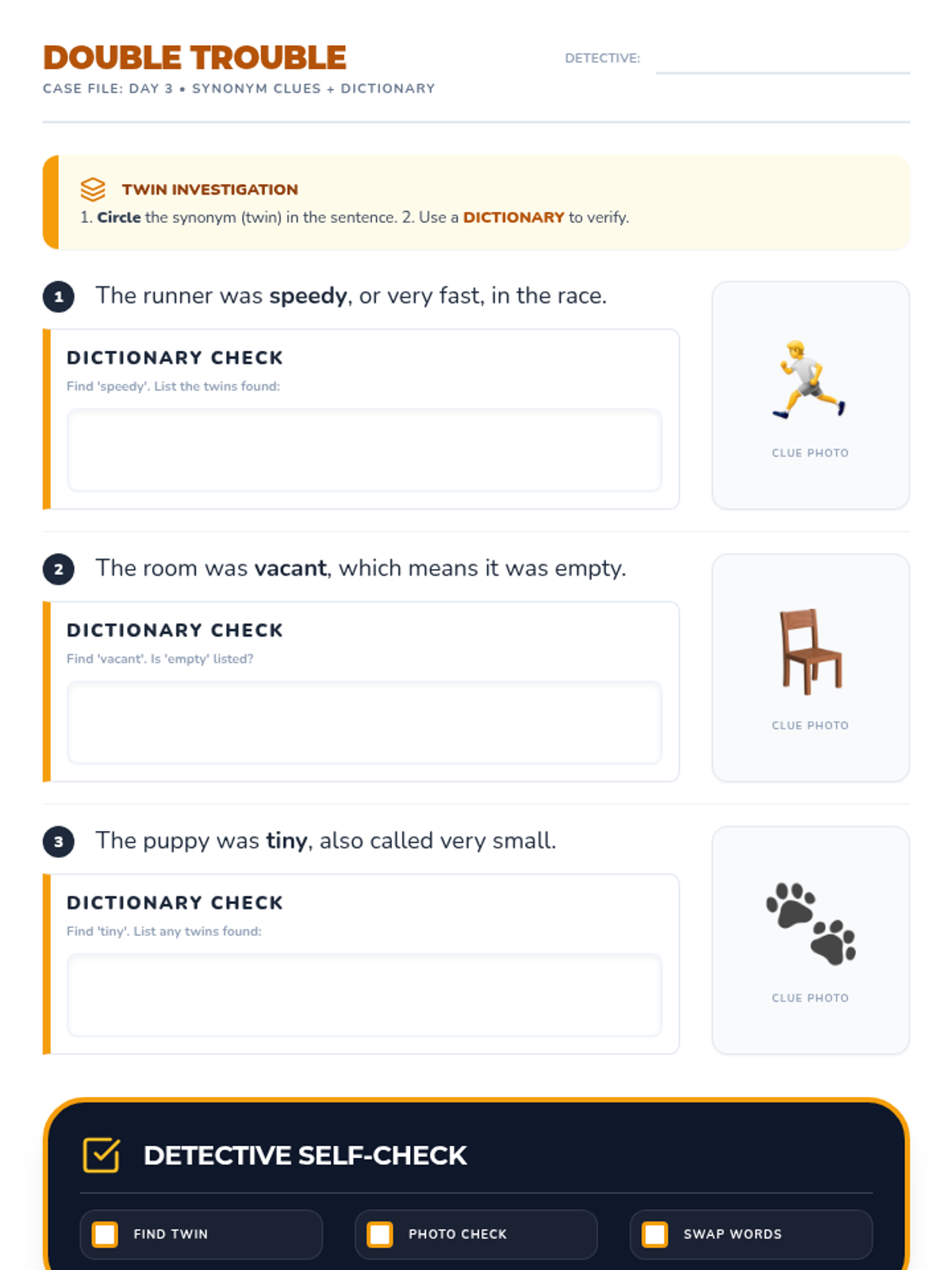
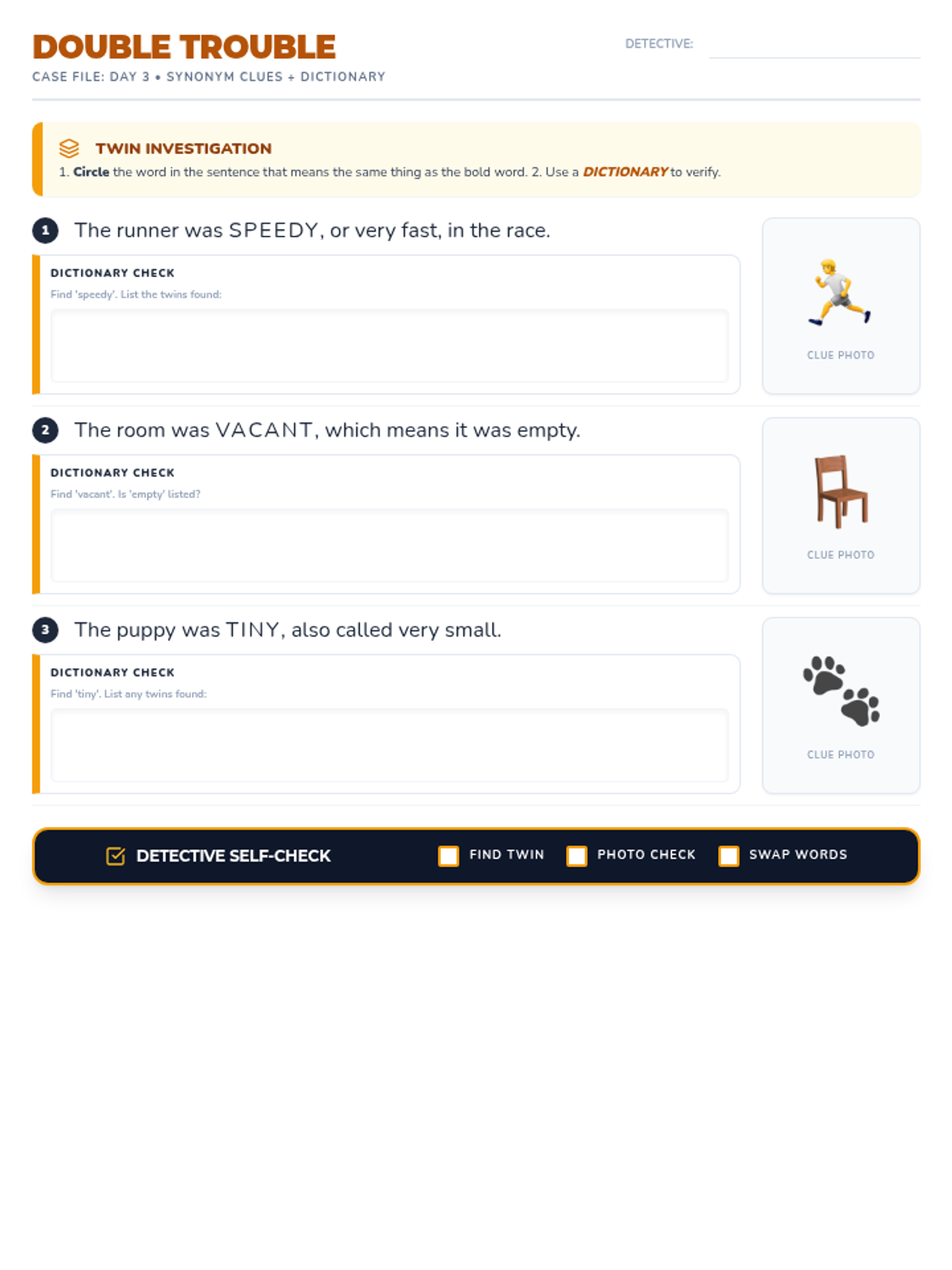
Students use synonym clues to find words that mean the same thing as the unknown word, using pictures to match similar concepts.
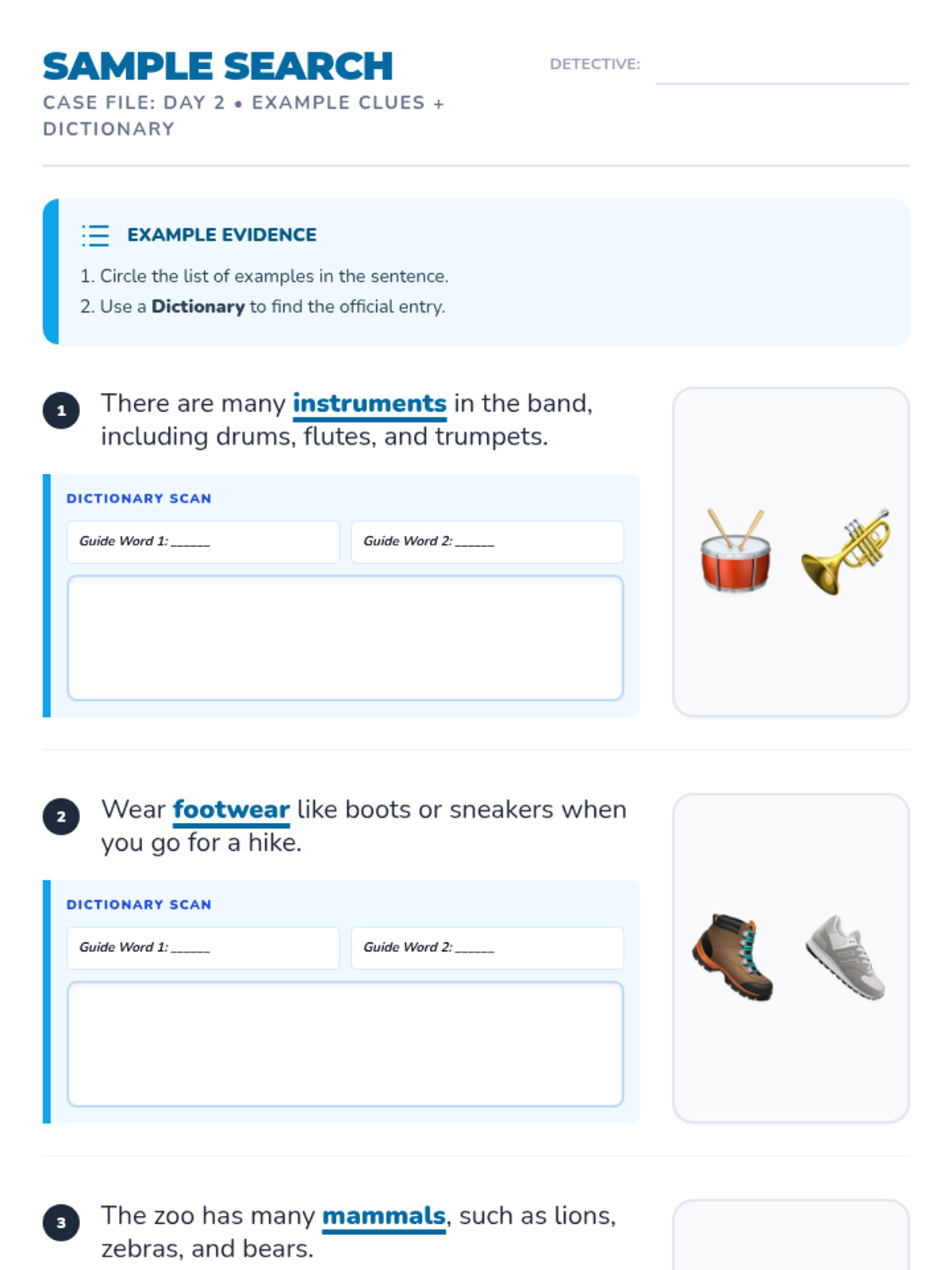
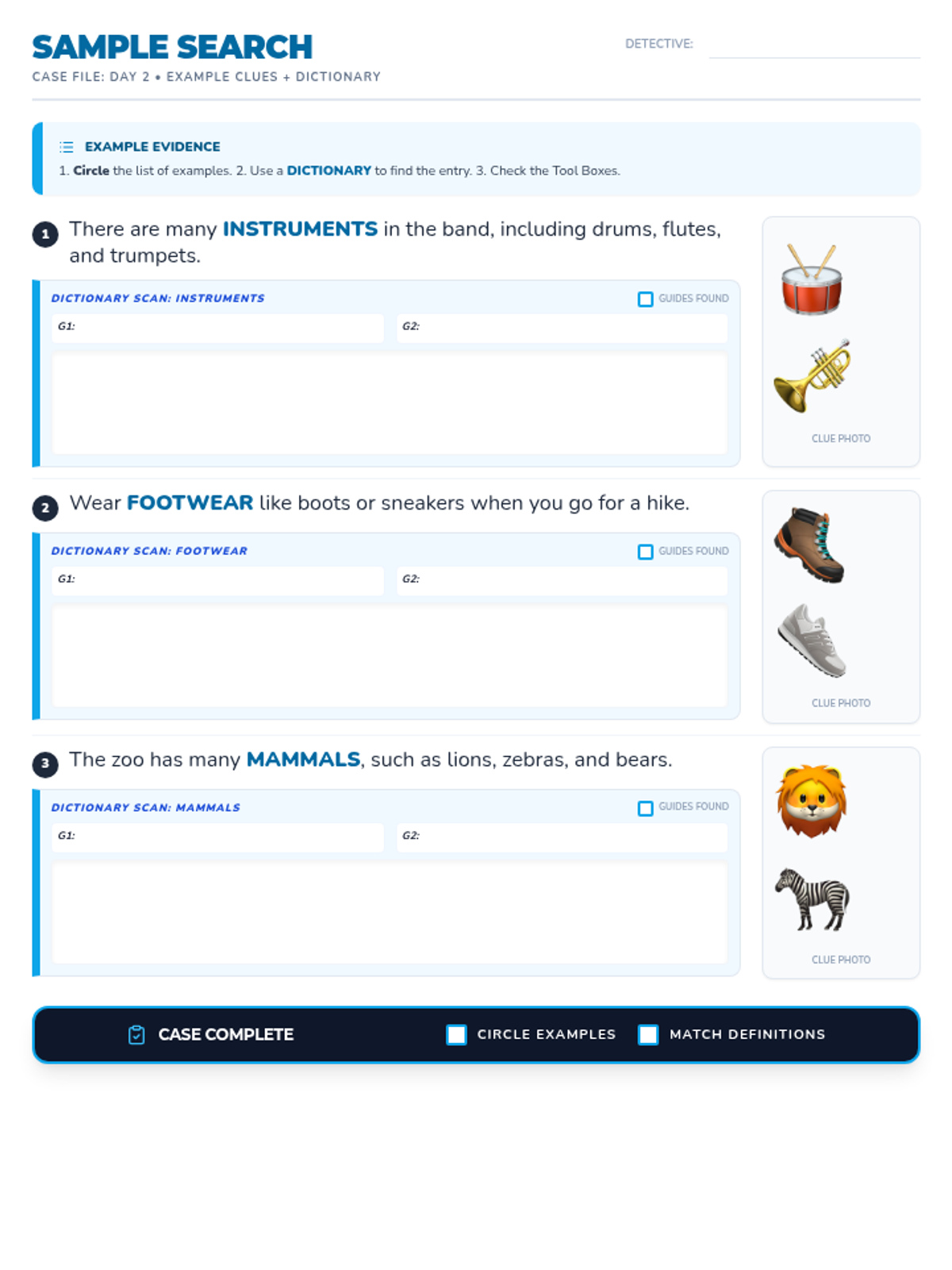
Students explore example clues, where a sentence provides specific instances of a word to help reveal its meaning, paired with helpful visual supports.
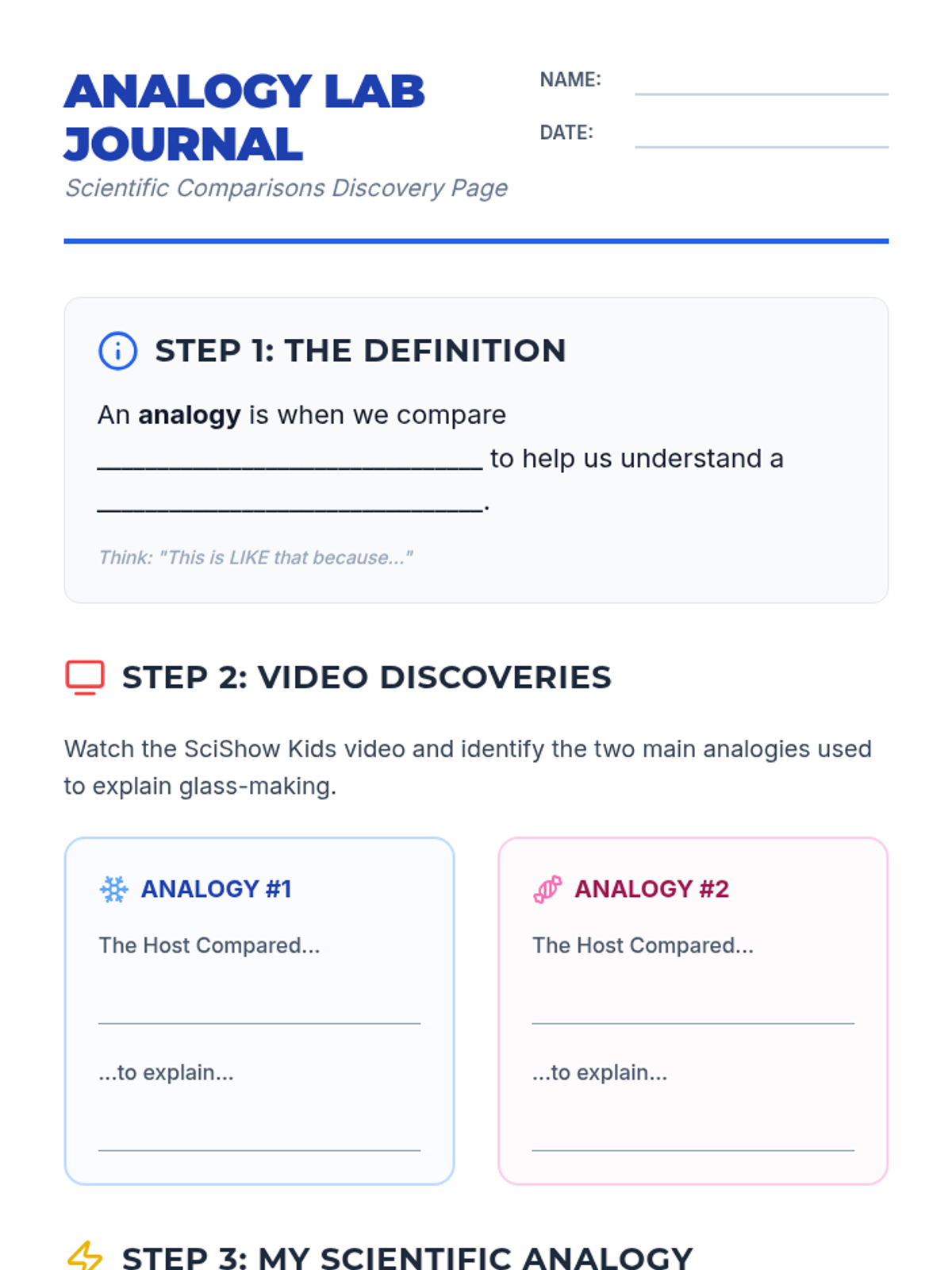
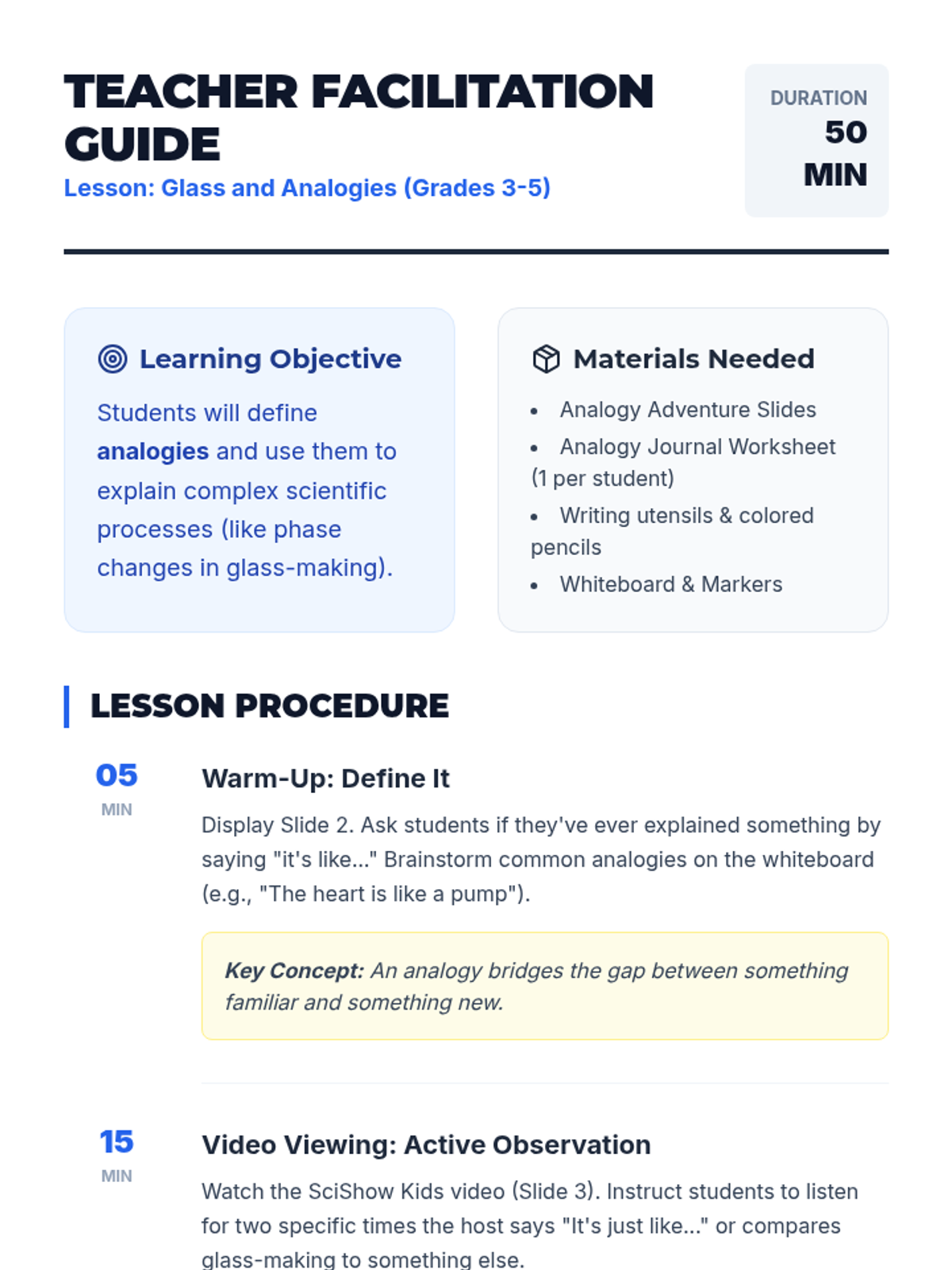
A lesson where students watch a SciShow Kids video about making glass from sand and analyze how analogies (ice/water and sugar/candy) help explain complex scientific processes. Students then practice creating their own scientific analogies.
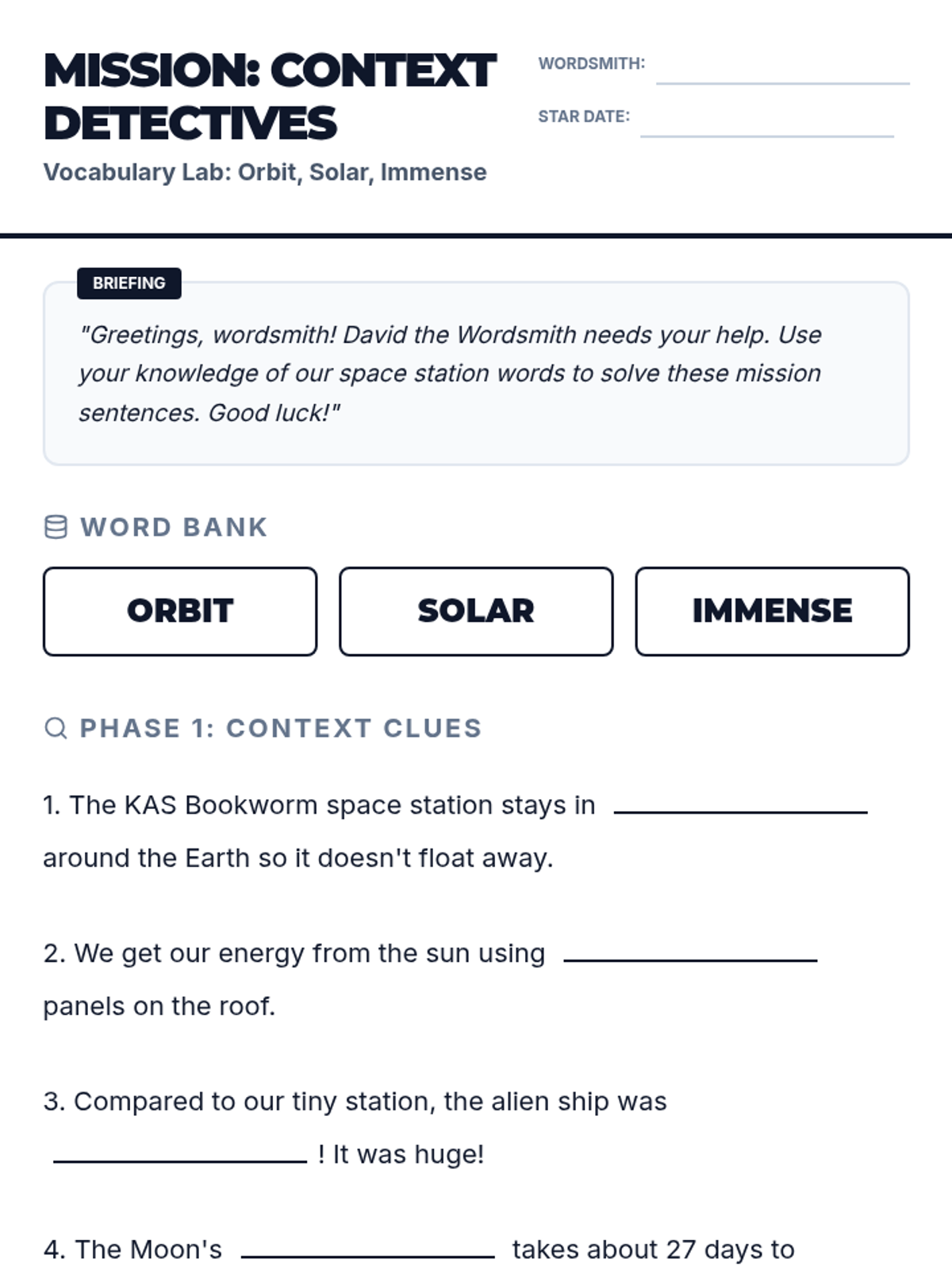
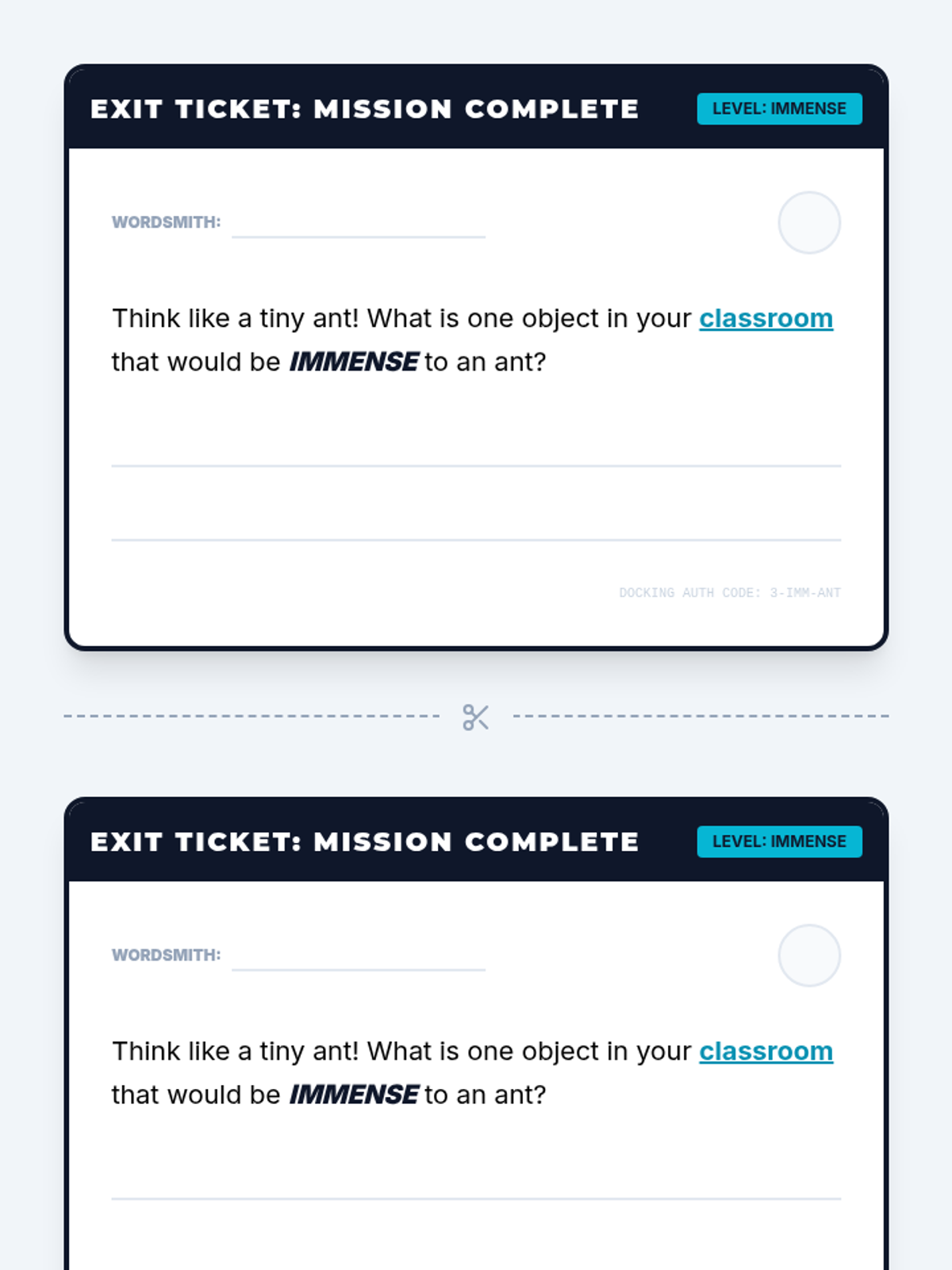
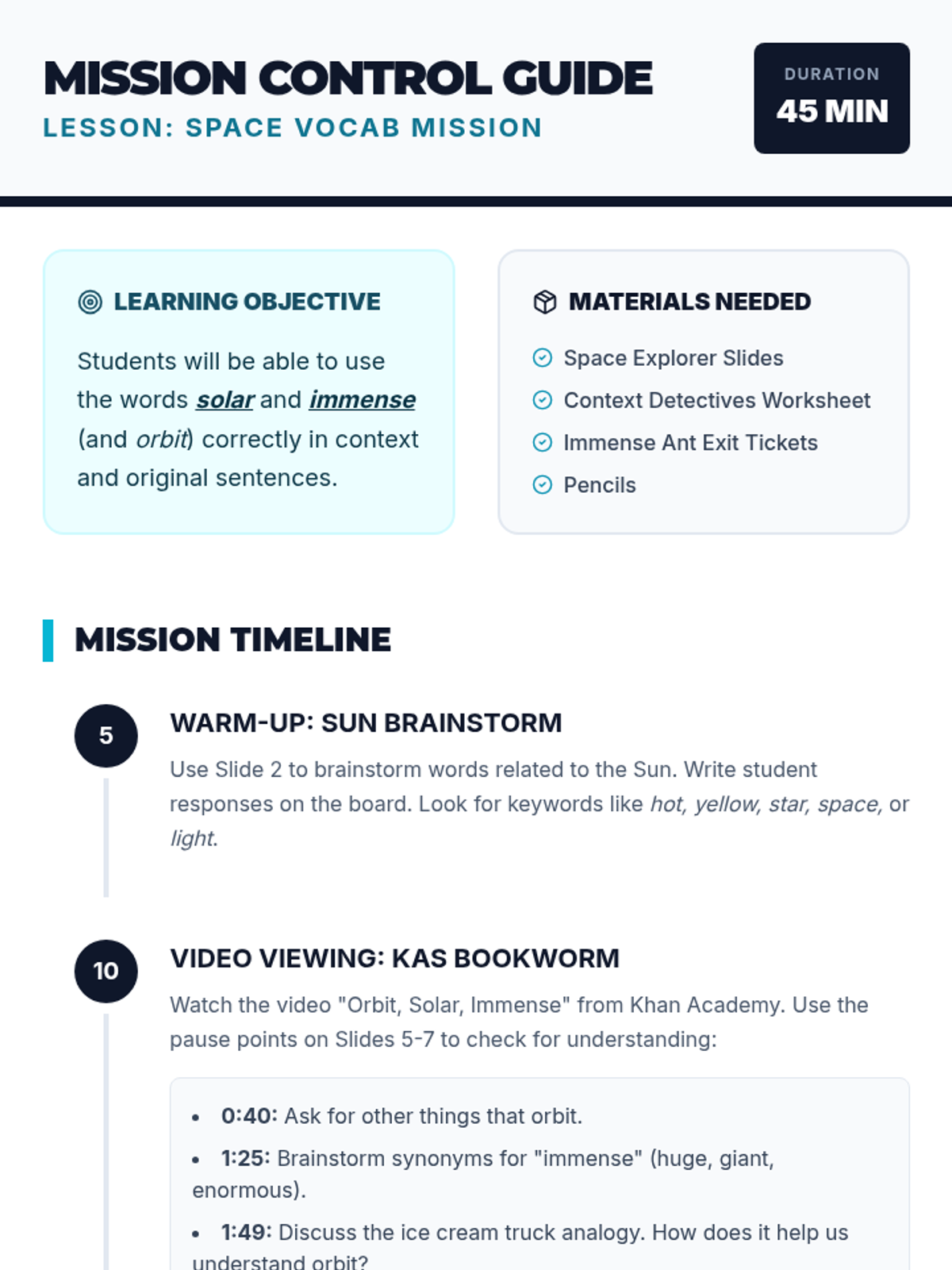
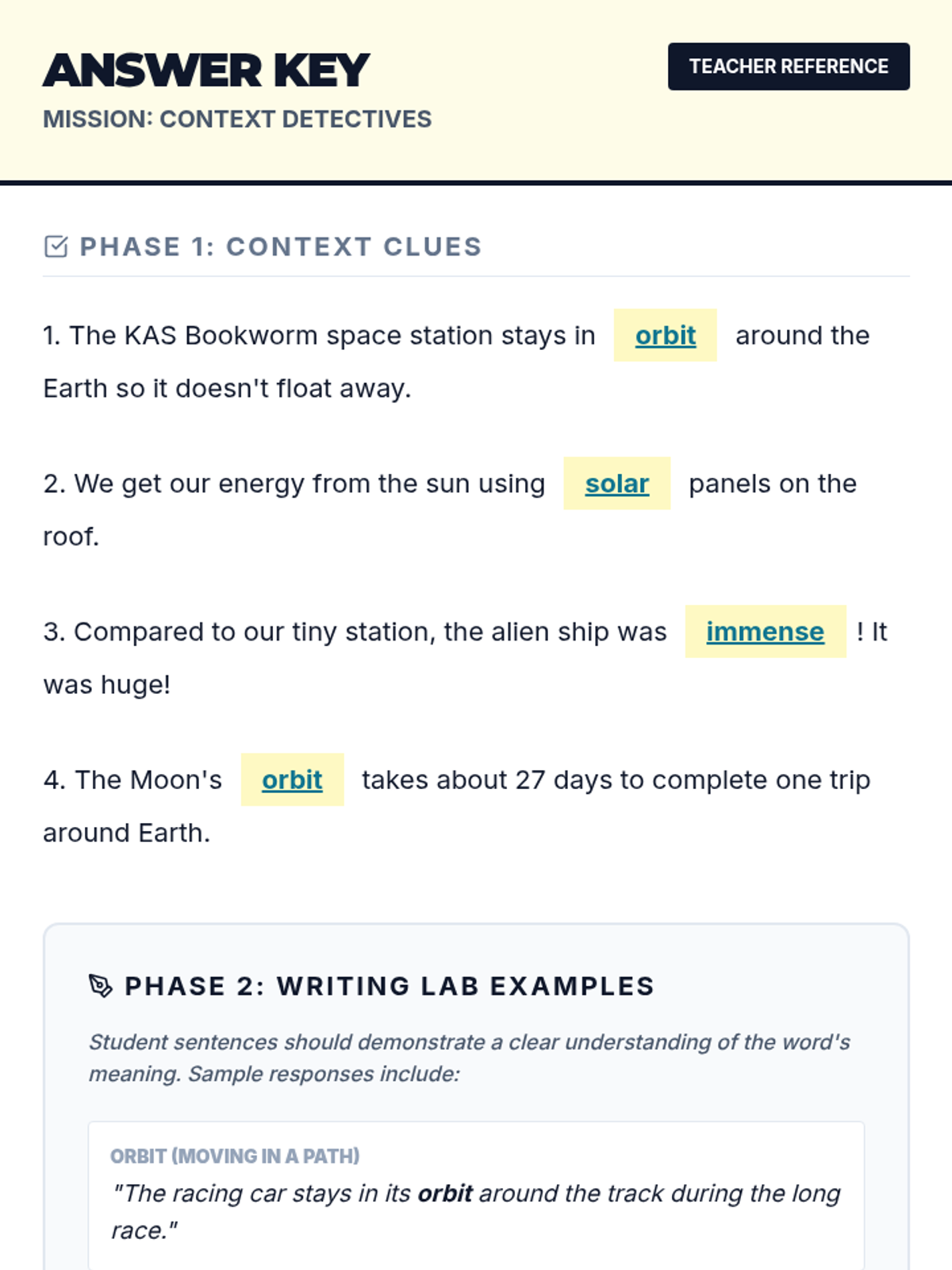
A 3rd-grade vocabulary lesson focused on the words 'solar' and 'immense' using a sci-fi space station theme and a video from Khan Academy.
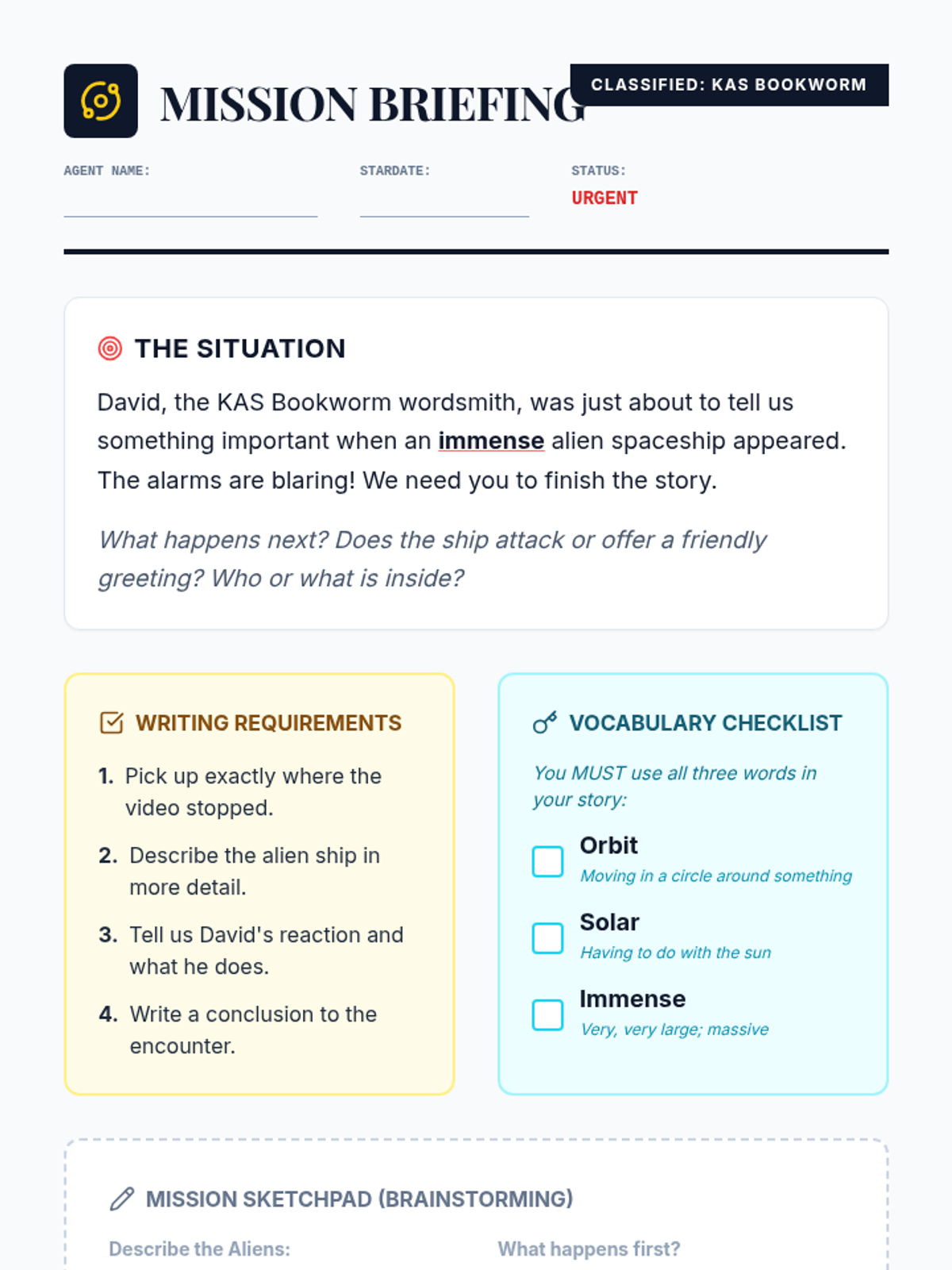
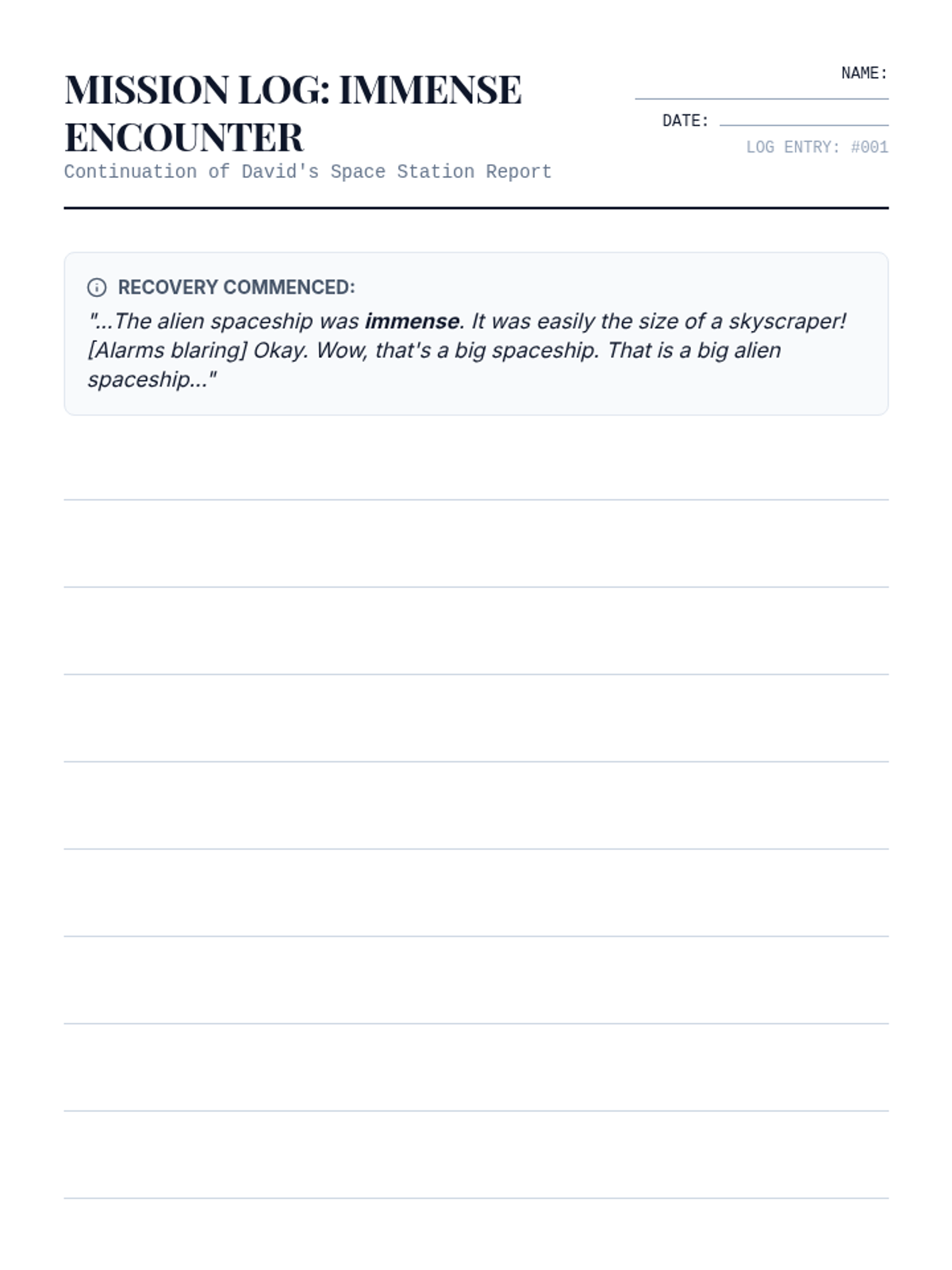
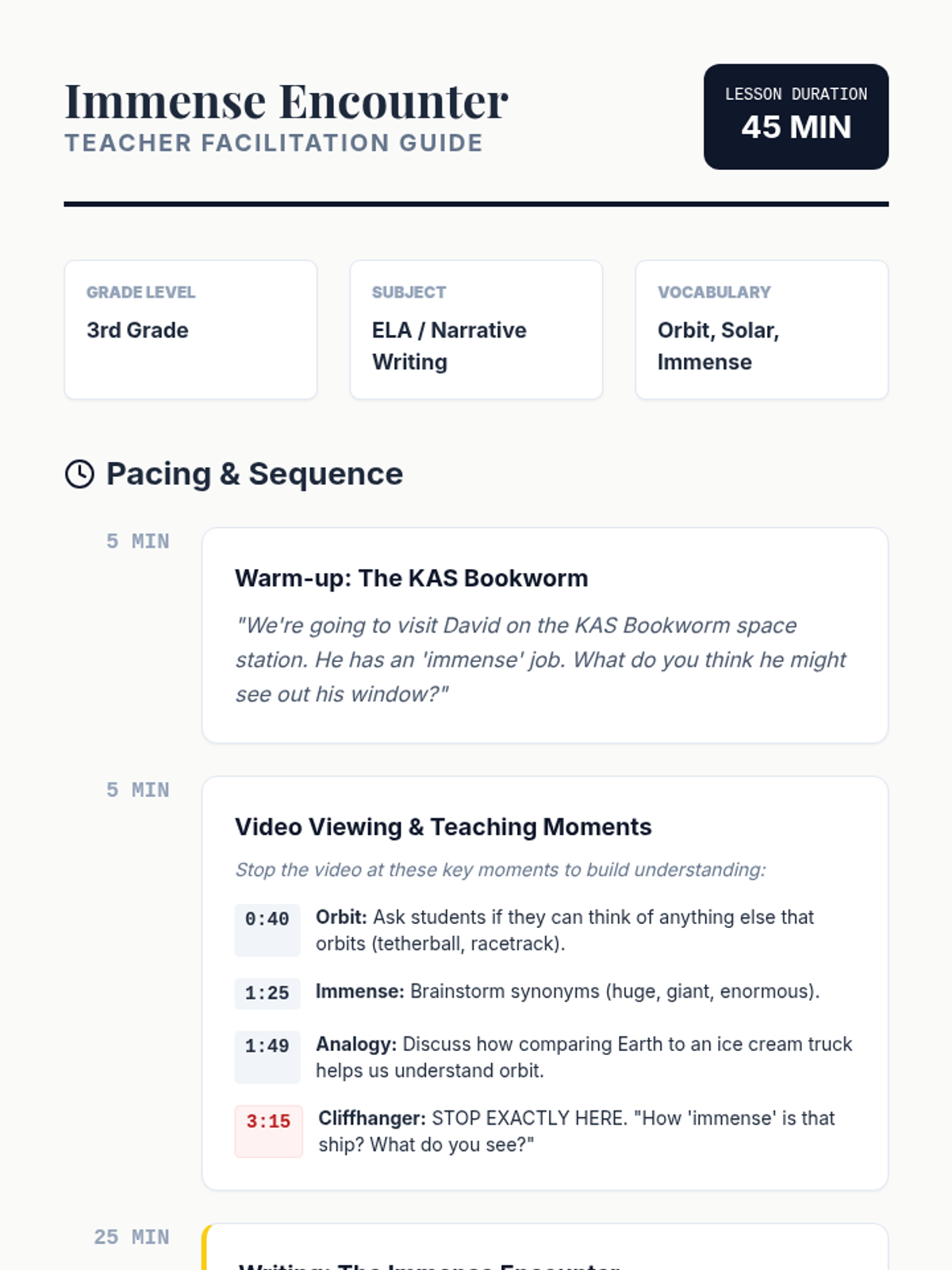
A 3rd-grade narrative writing lesson that uses a sci-fi cliffhanger to teach the vocabulary words 'Orbit,' 'Solar,' and 'Immense.' Students watch a video from Khan Academy and then write their own continuation of the story, focusing on descriptive language and vocabulary application.
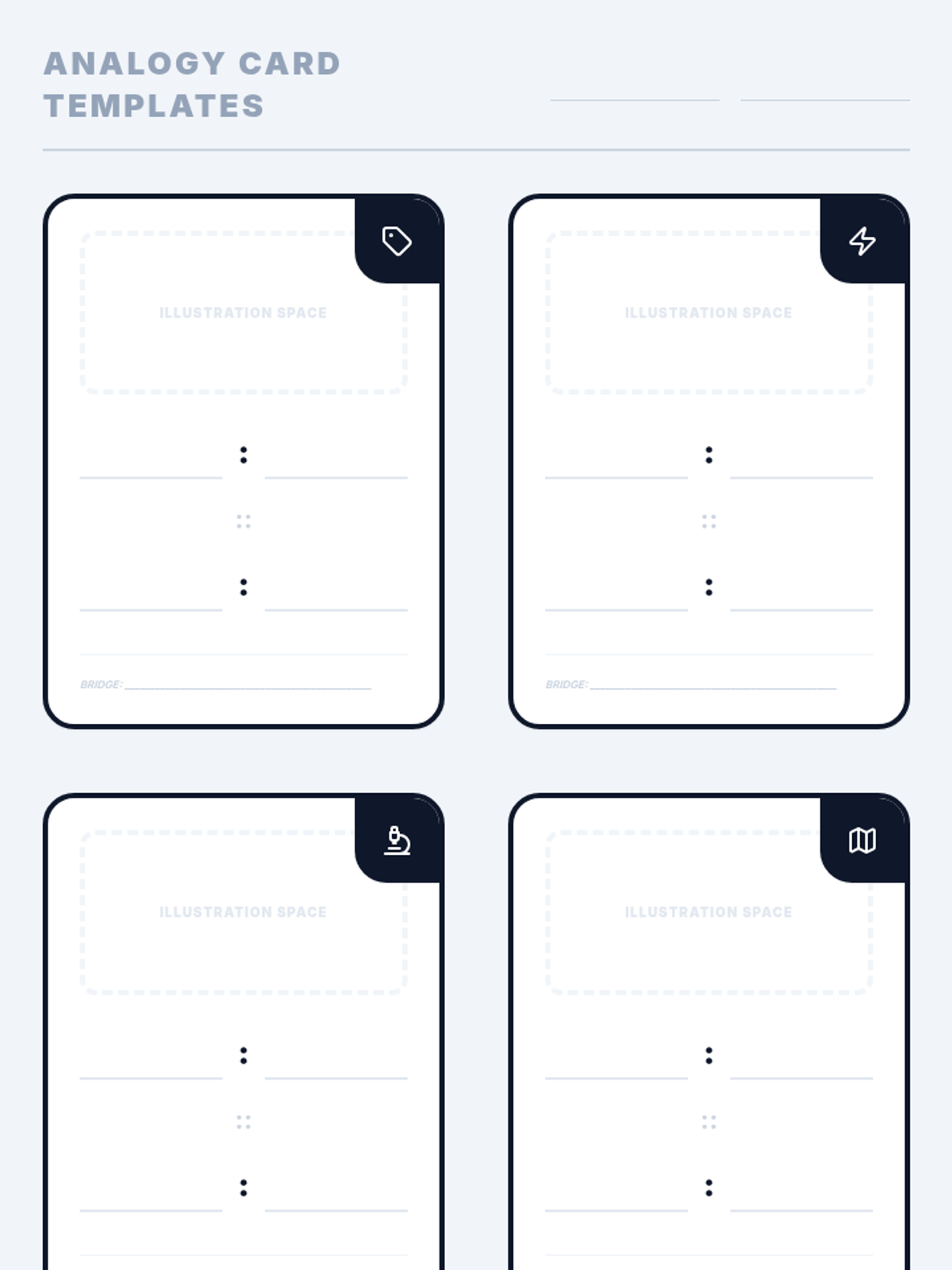
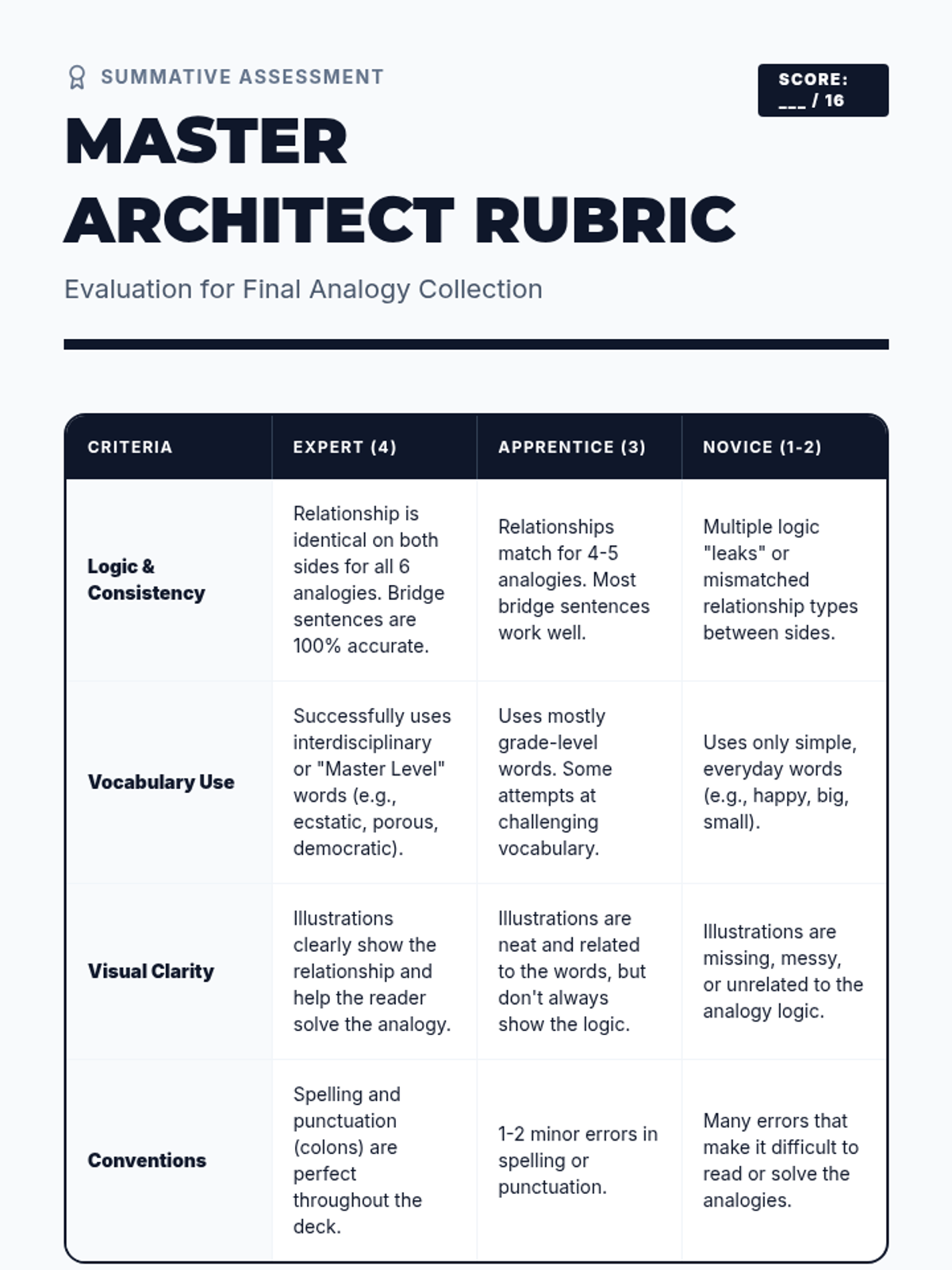
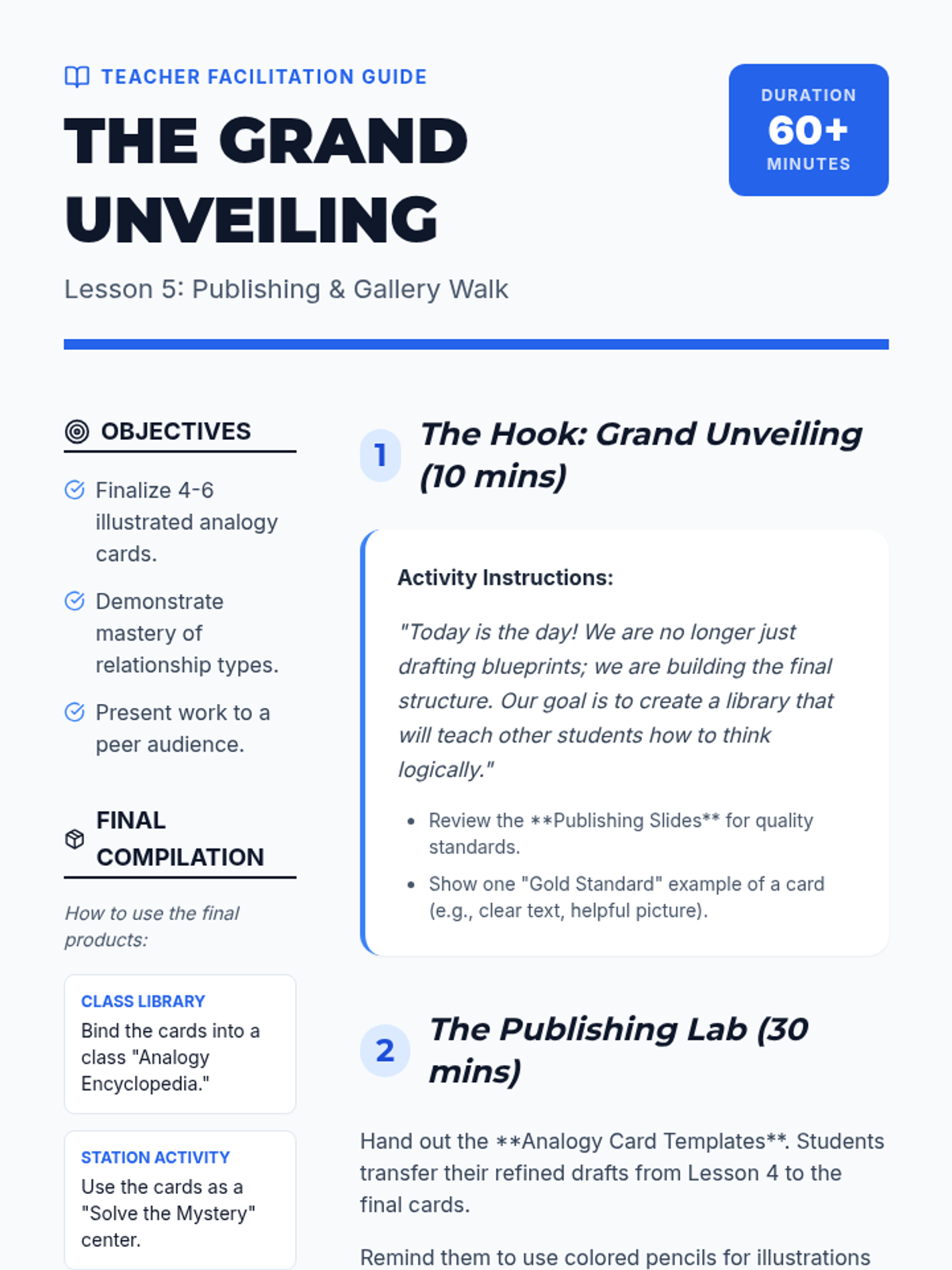
Students finalize their analogies into illustrated cards or a digital presentation. These resources are compiled into a class library for review and practice.
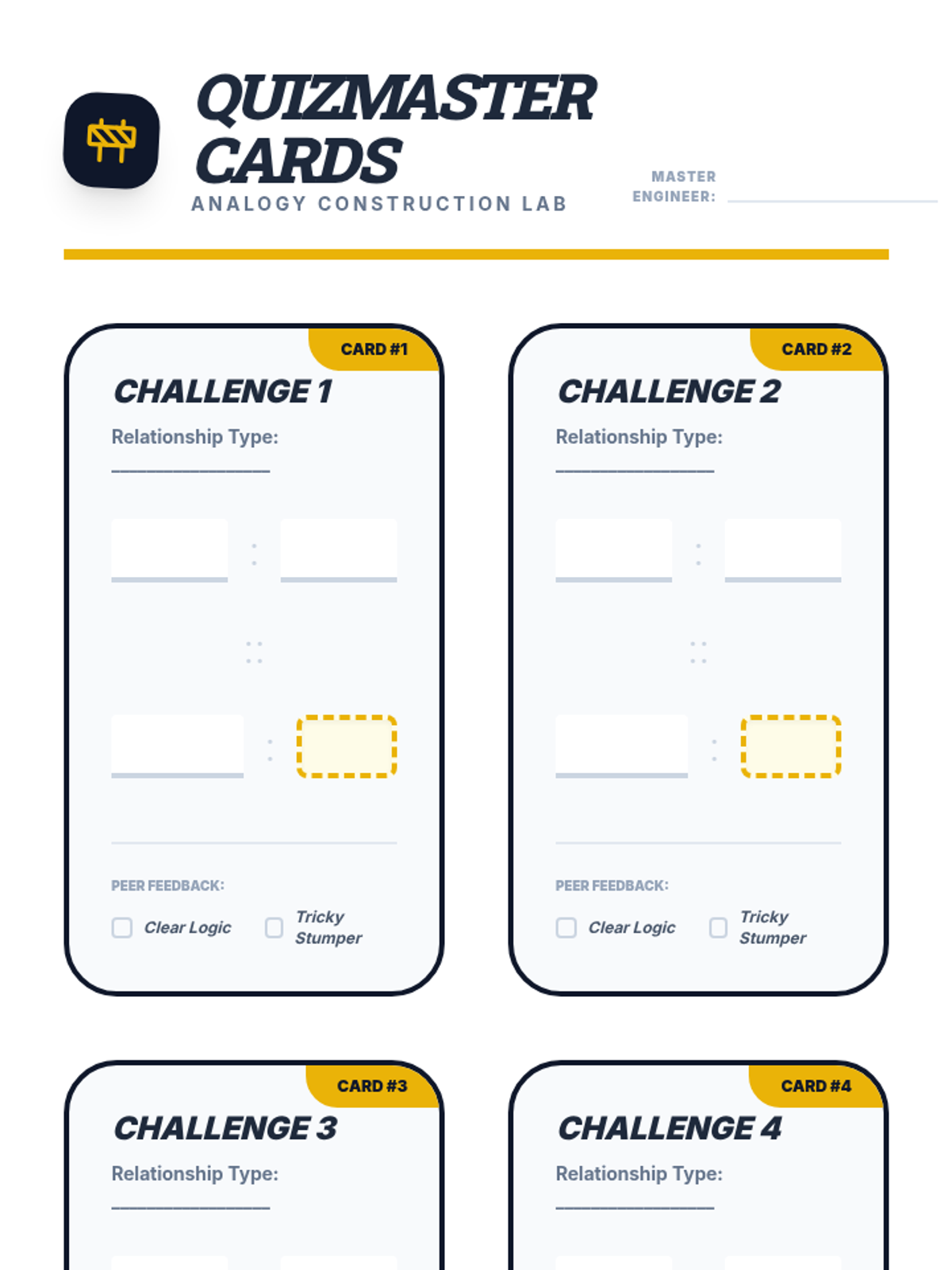
Students build their own analogy puzzles focusing on parts and categories. Peers attempt to solve them, providing feedback on the clarity of the relationships.
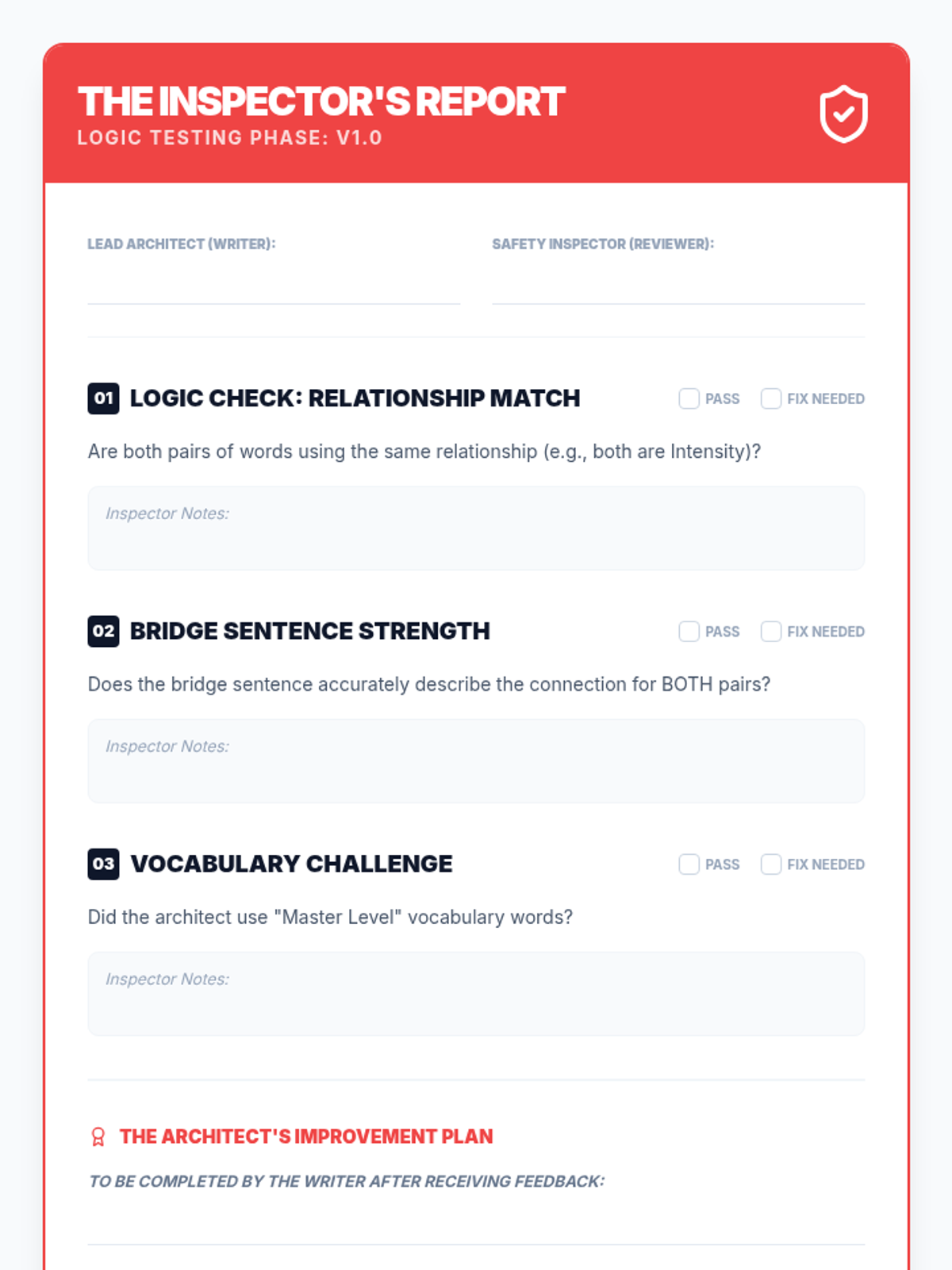
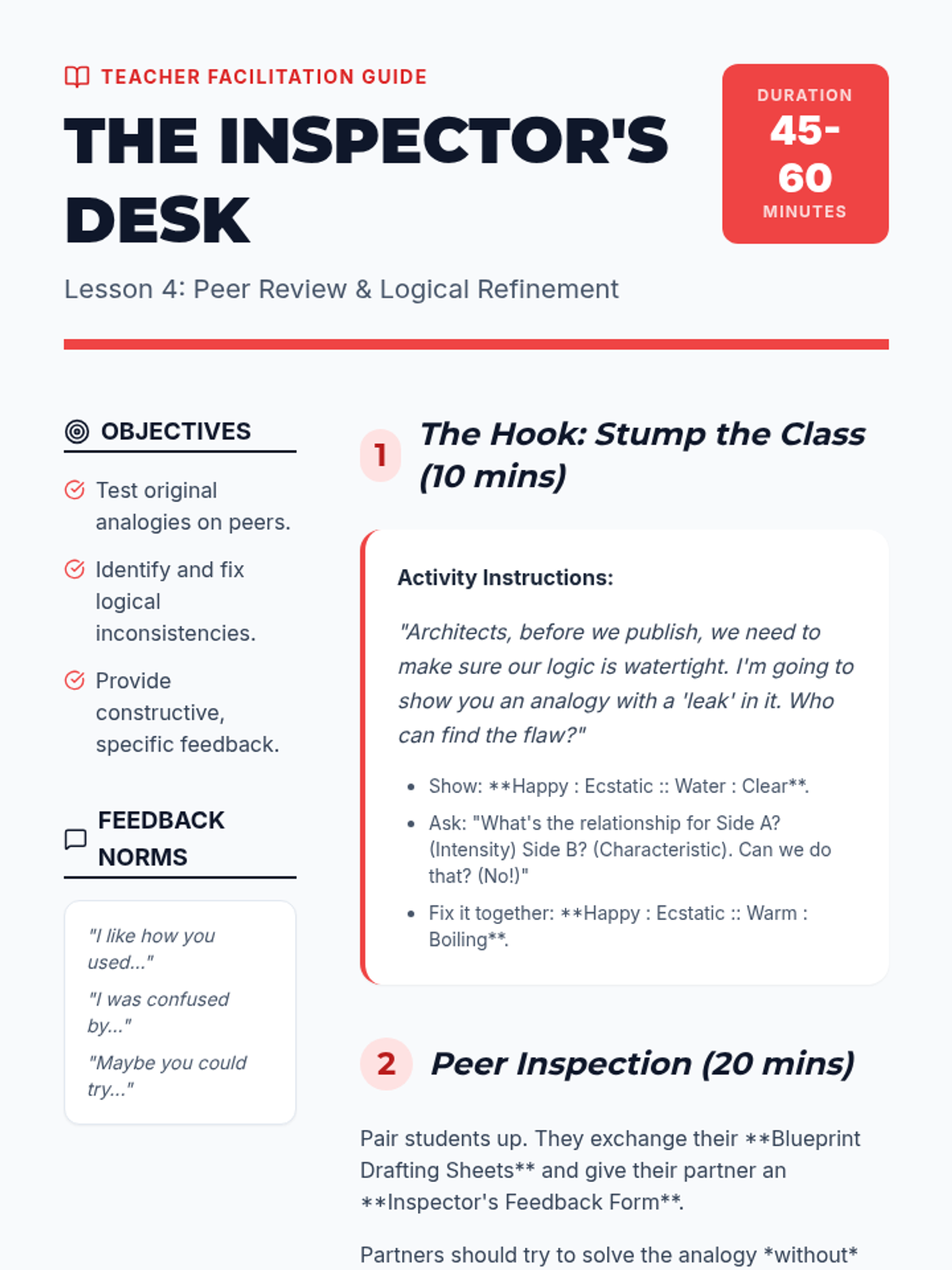
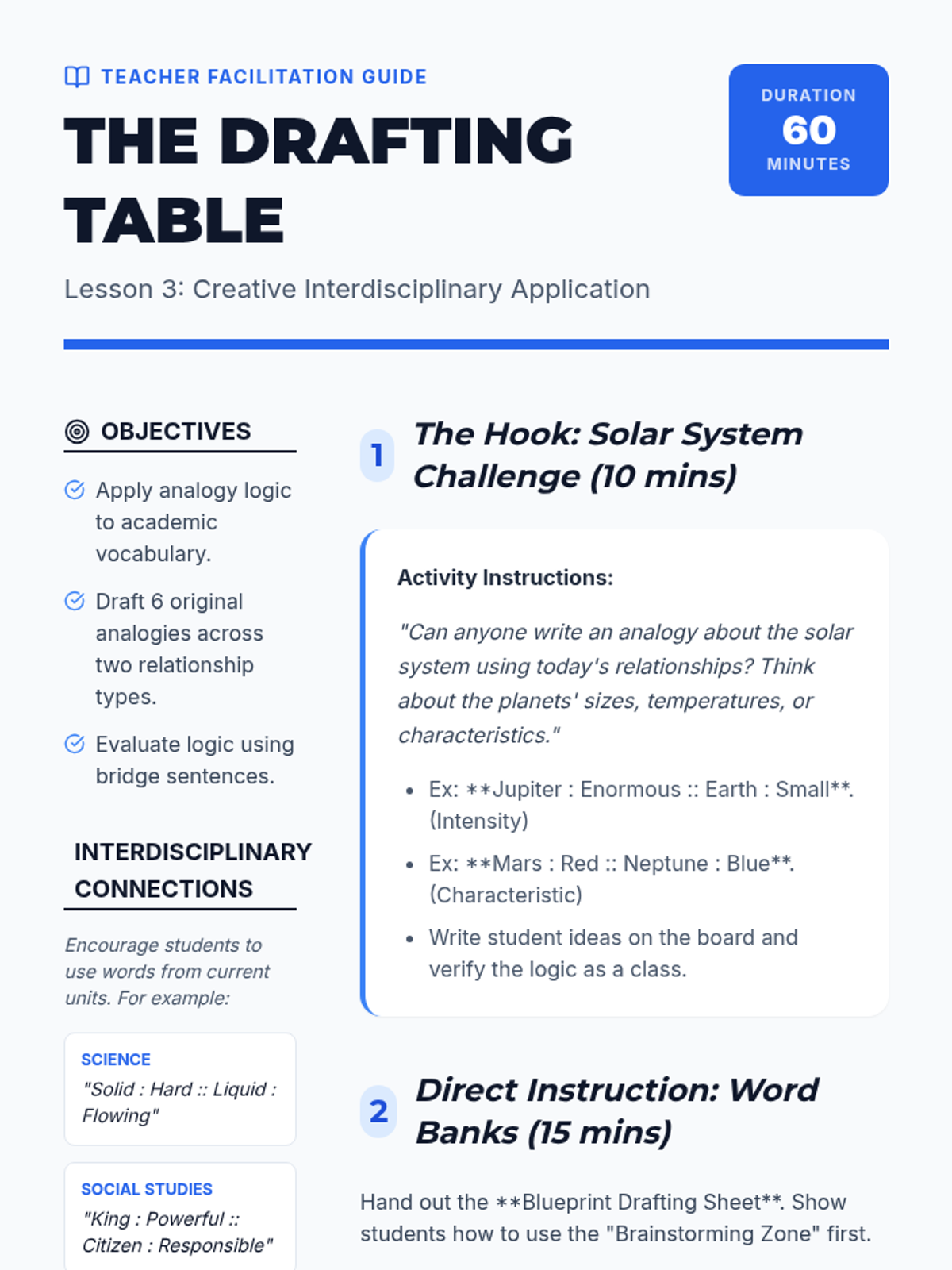
Students exchange their drafted analogies to test them on classmates. They provide feedback on whether the bridge sentences hold true and suggest improvements for clarity.
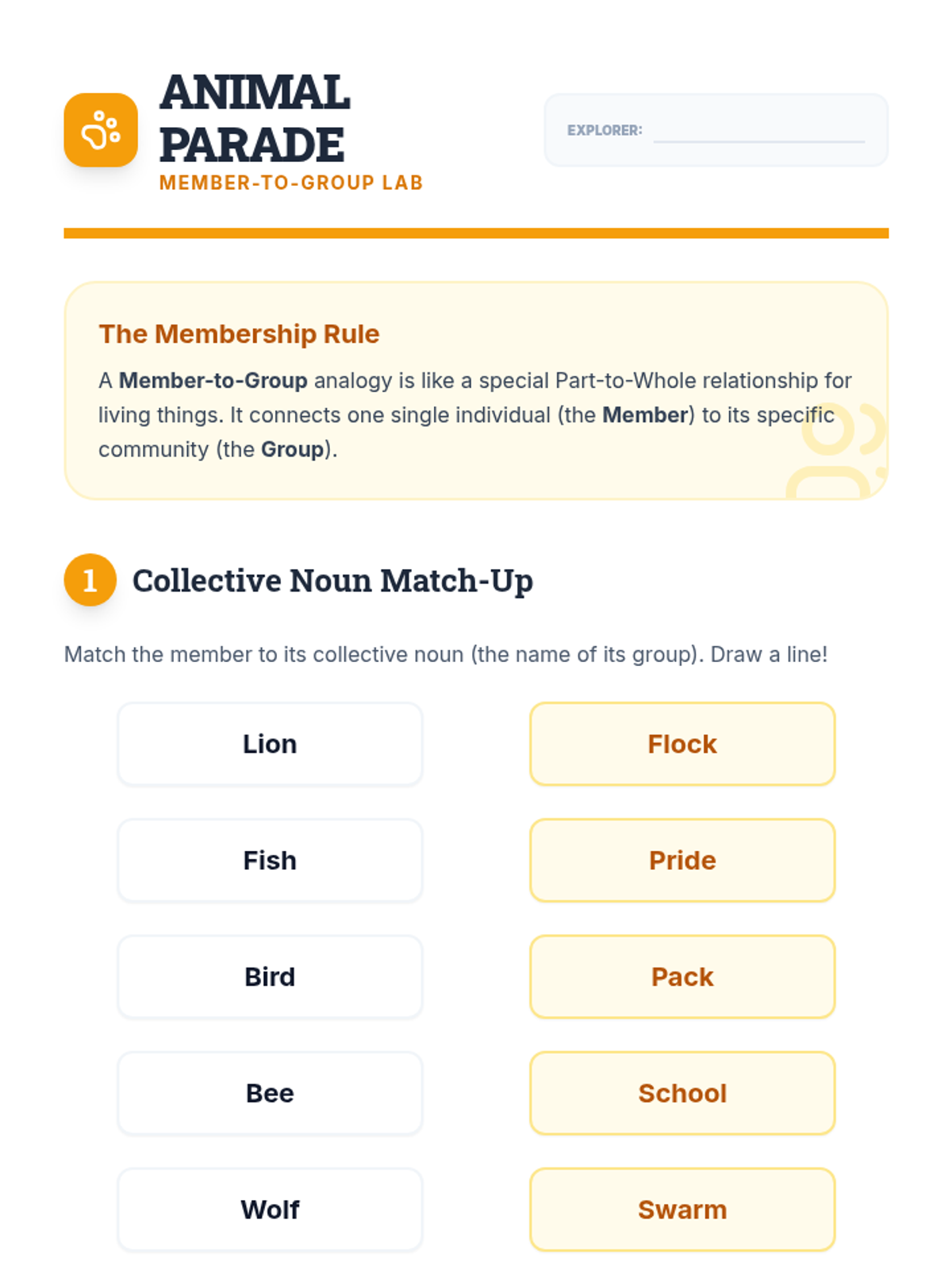
Students look at collective nouns and group membership (e.g., Wolf:Pack, Student:Class). This expands the part-to-whole concept to social and biological groups.
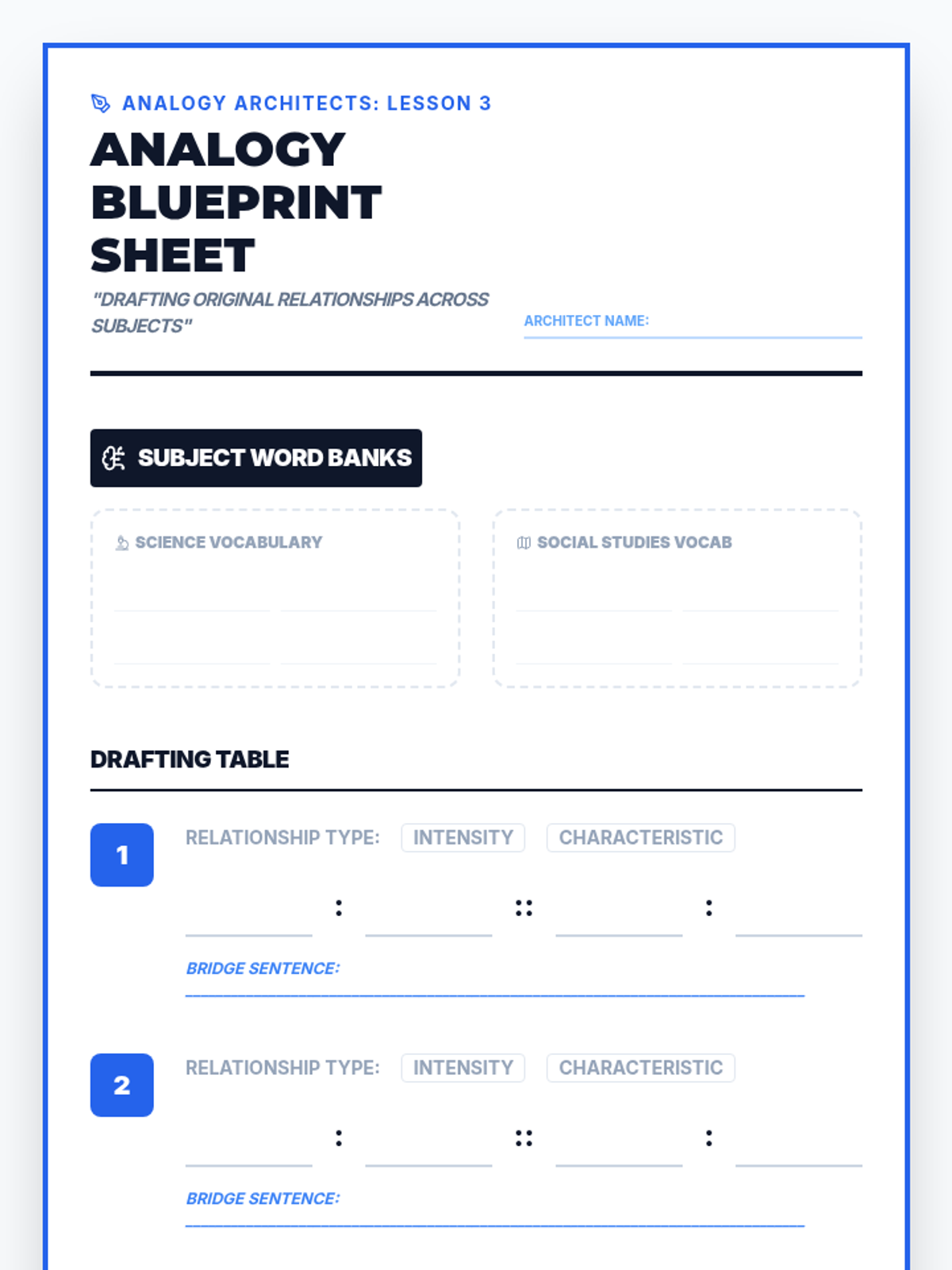
Students begin drafting their own sets of analogies. They are challenged to move beyond simple examples and use current vocabulary words from other subjects (Science/Social Studies).
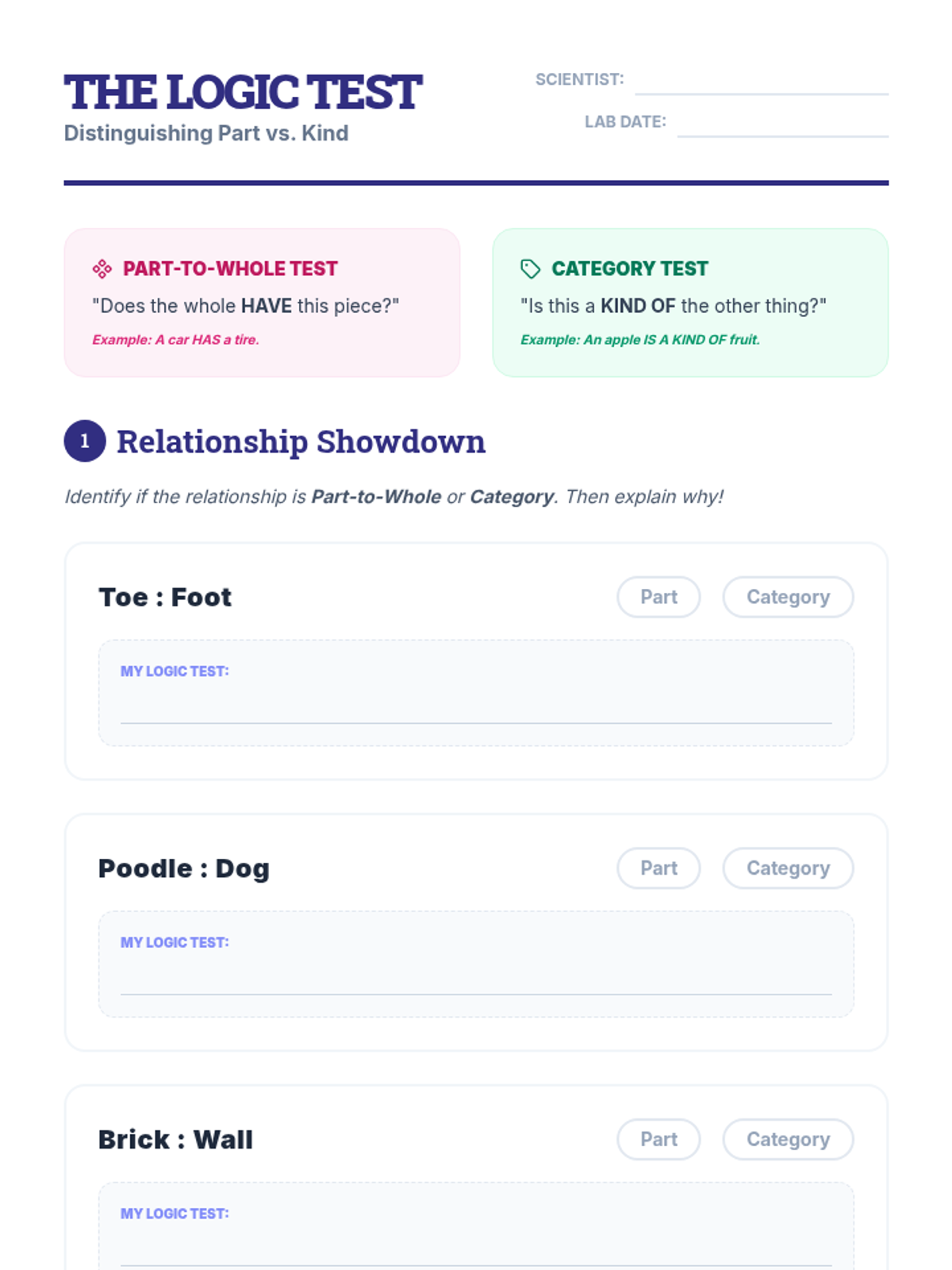
A comparative lesson where students confront the difference between the two types. They use specific tests (Does it have a...? vs. Is it a...?) to classify the relationship.
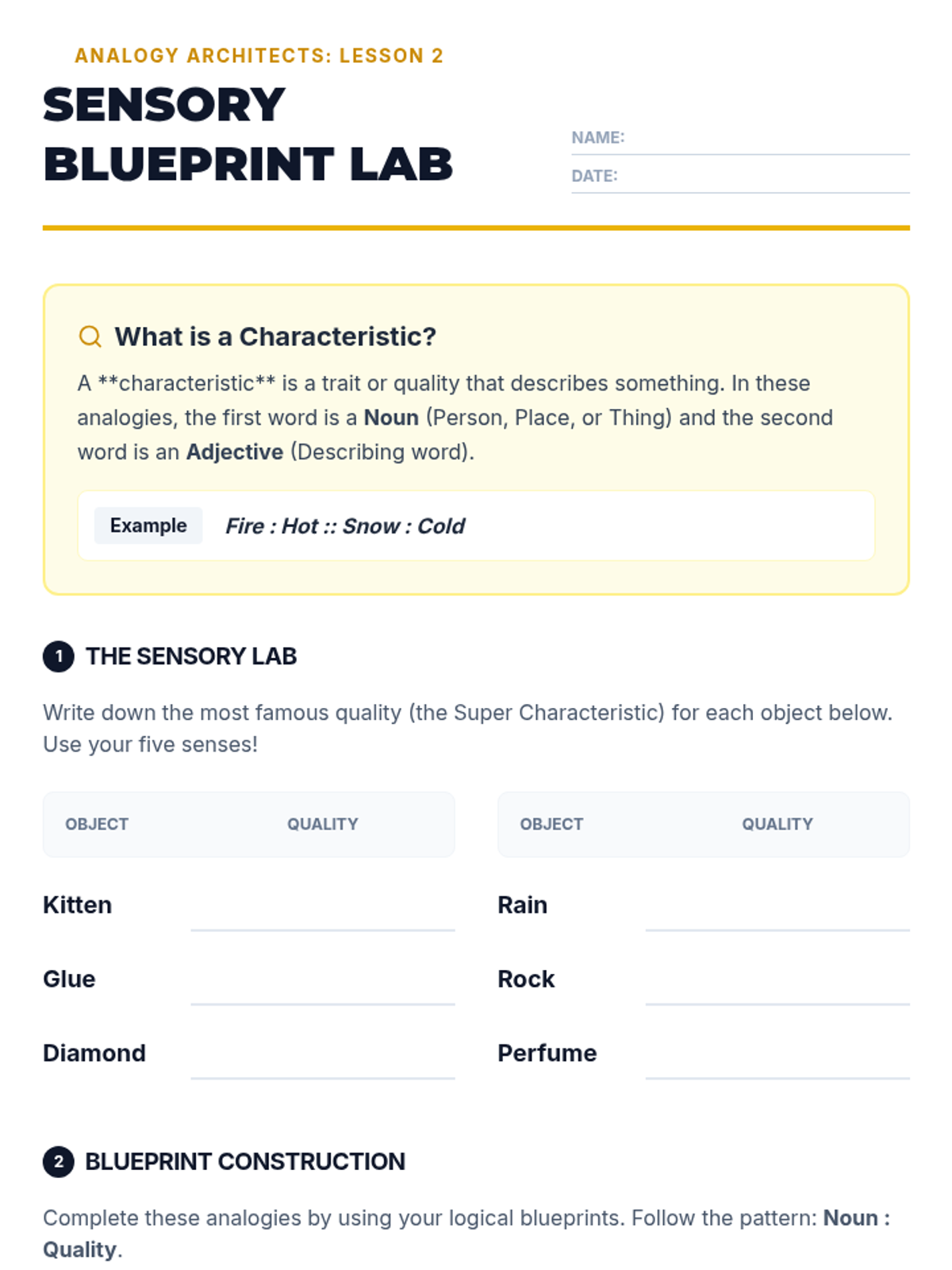
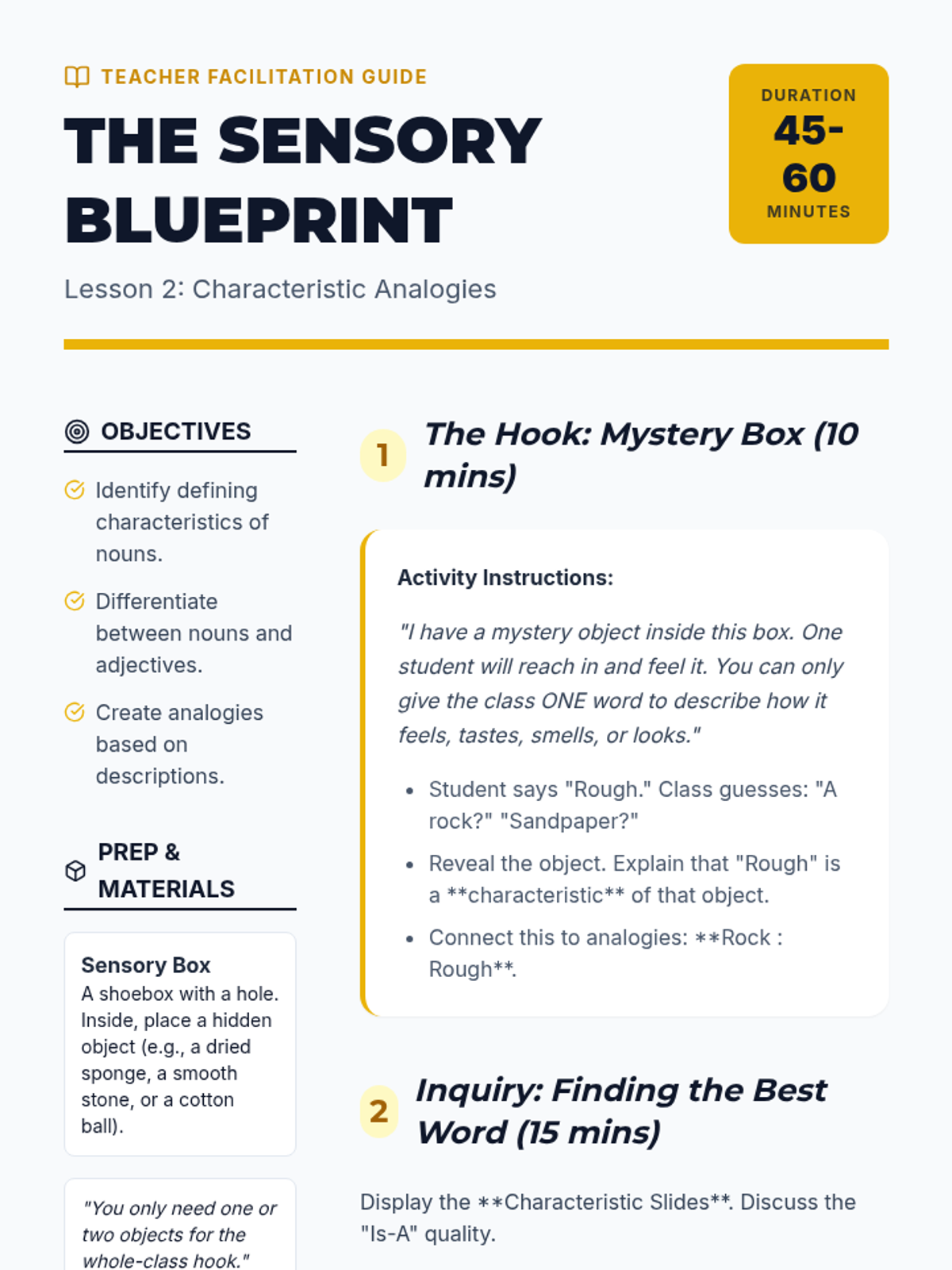
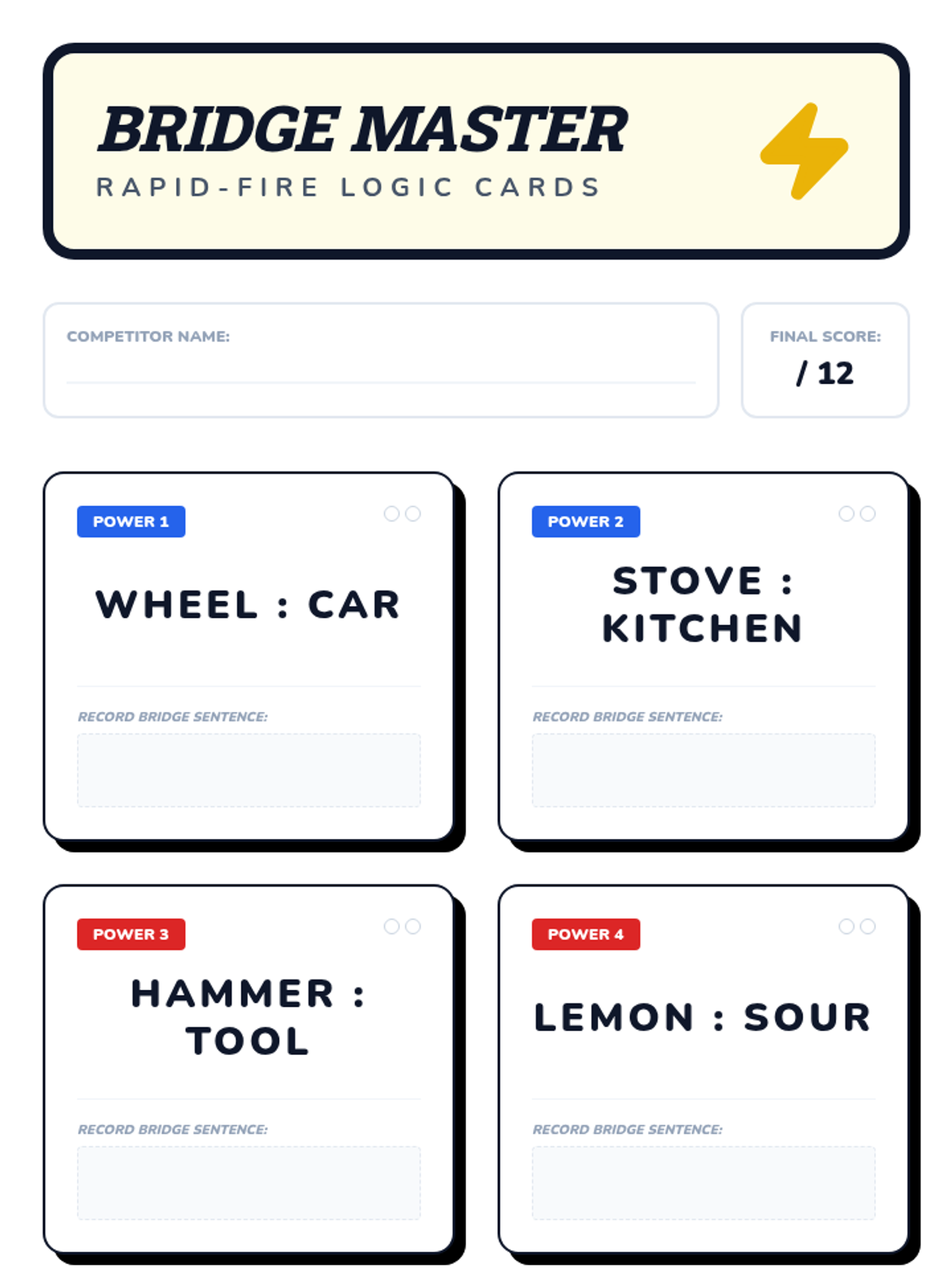
The class looks at qualities associated with nouns (e.g., Marshmallow:Soft, Lemon:Sour). Students brainstorm adjectives that define specific objects to build these analogies.
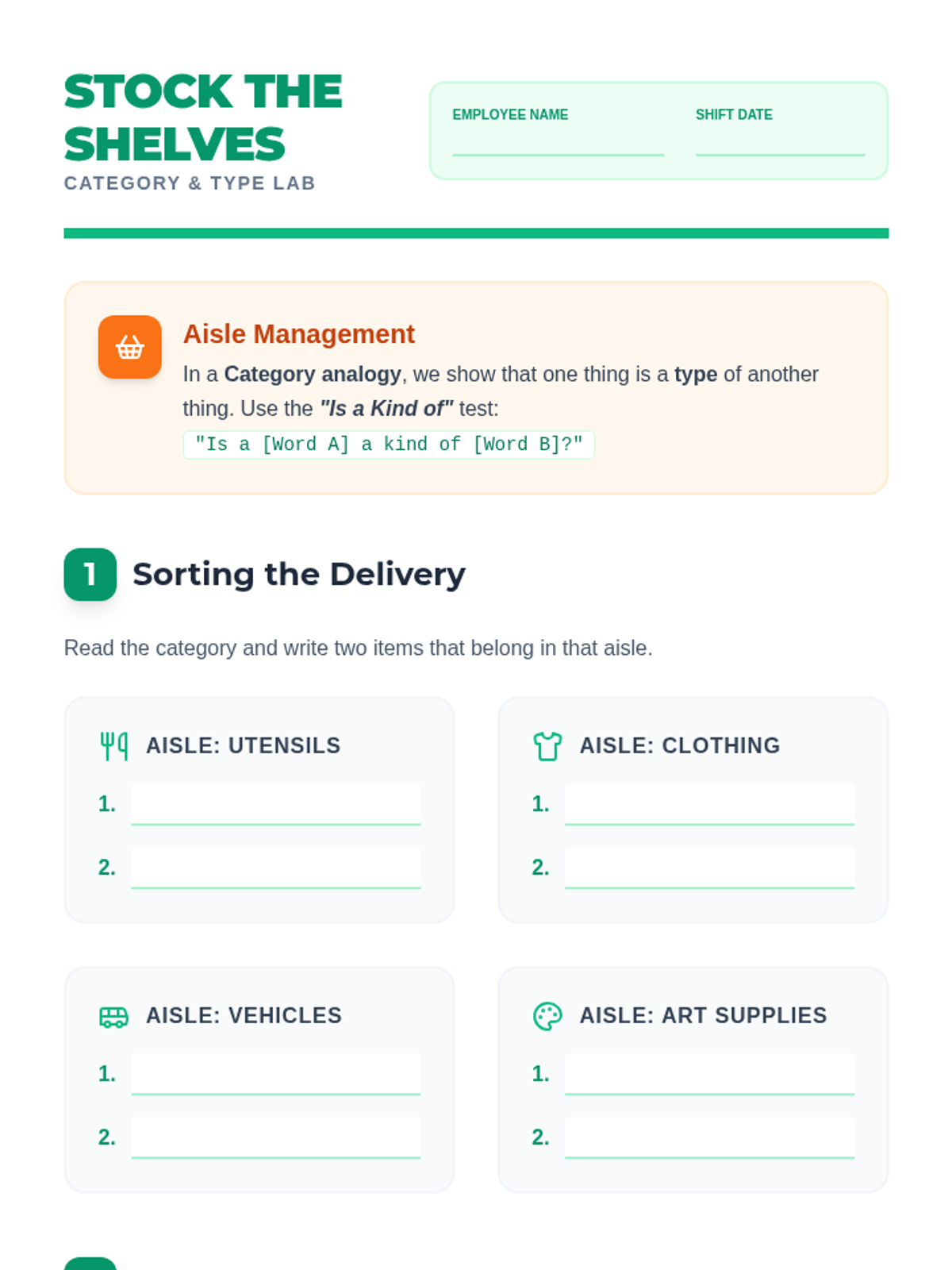
The focus shifts to categorization (e.g., Apple:Fruit, Hammer:Tool). Students practice sorting words into broad categories and creating analogies based on membership.
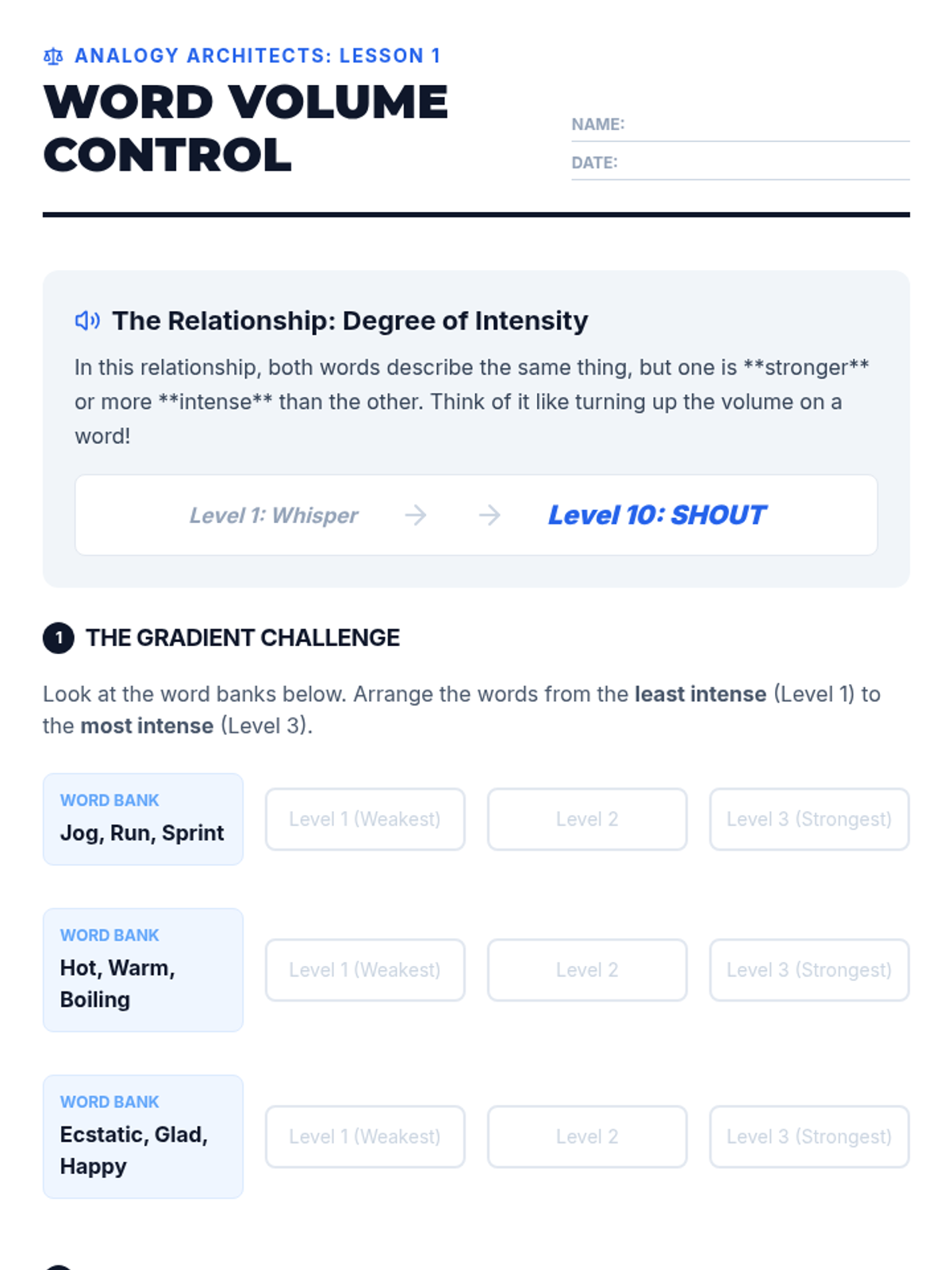
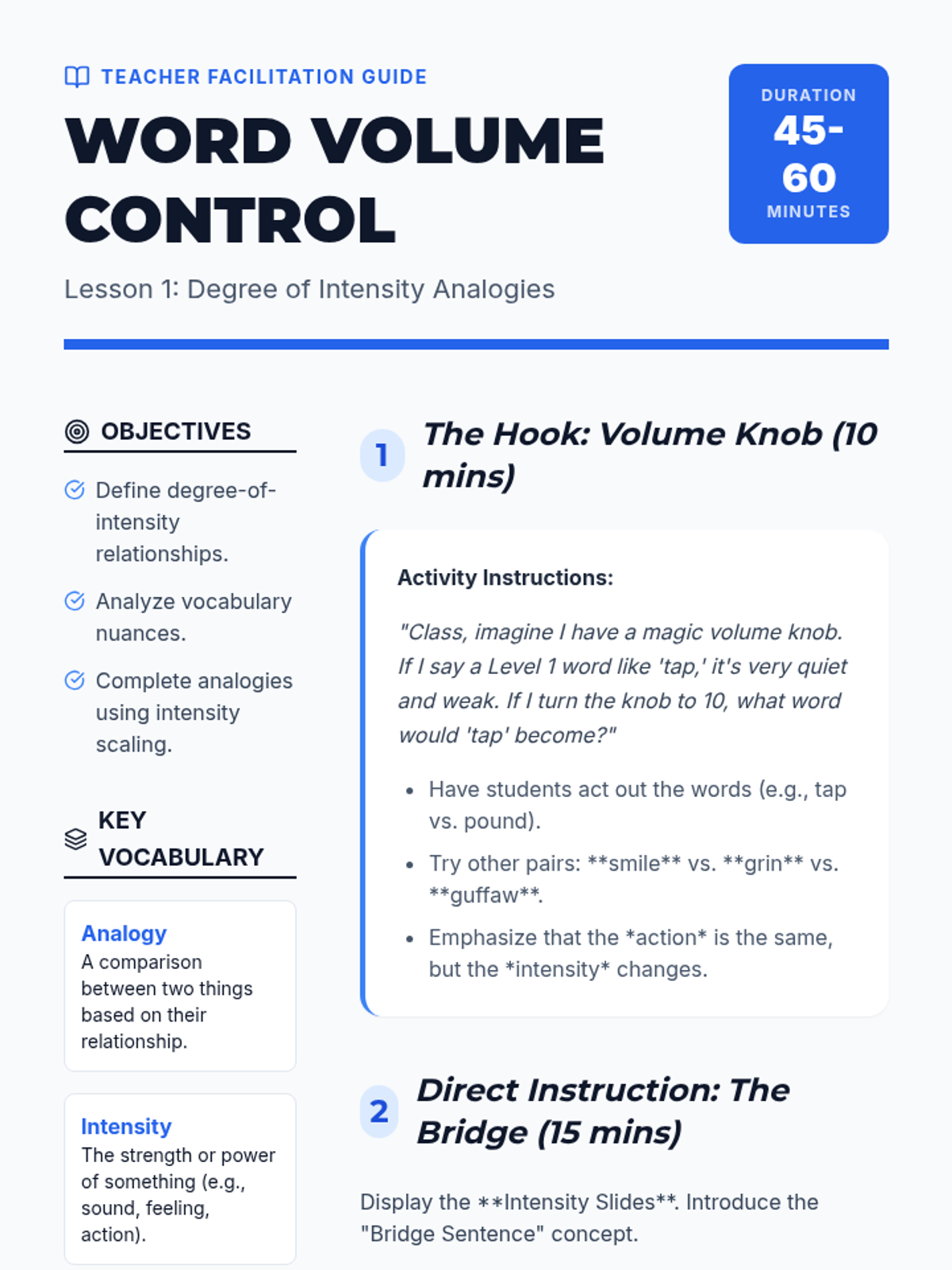
Students examine word pairs that differ only in strength (e.g., Tapping:Pounding, Happy:Ecstatic). They arrange word gradients to visualize the step-up in intensity.
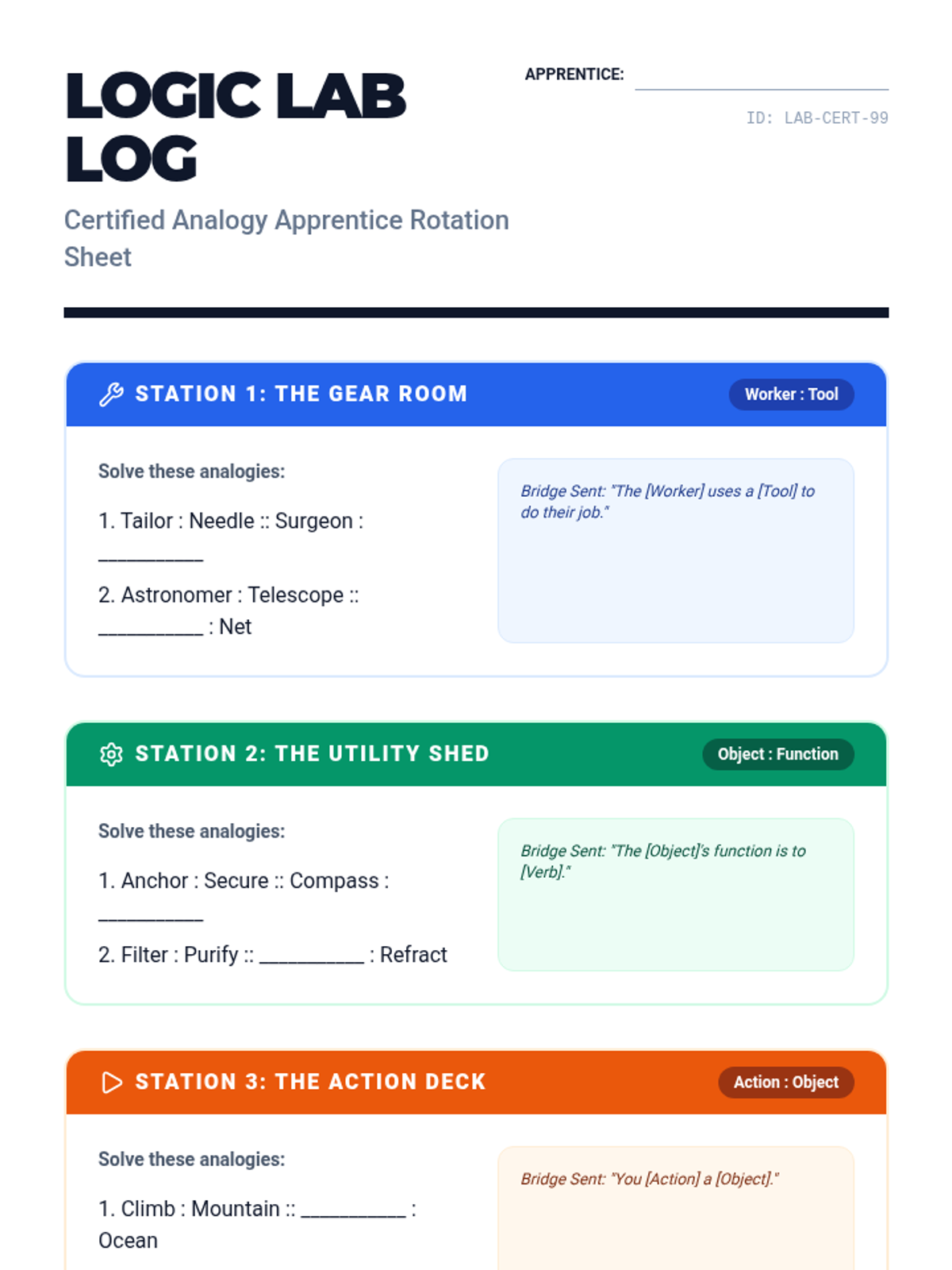
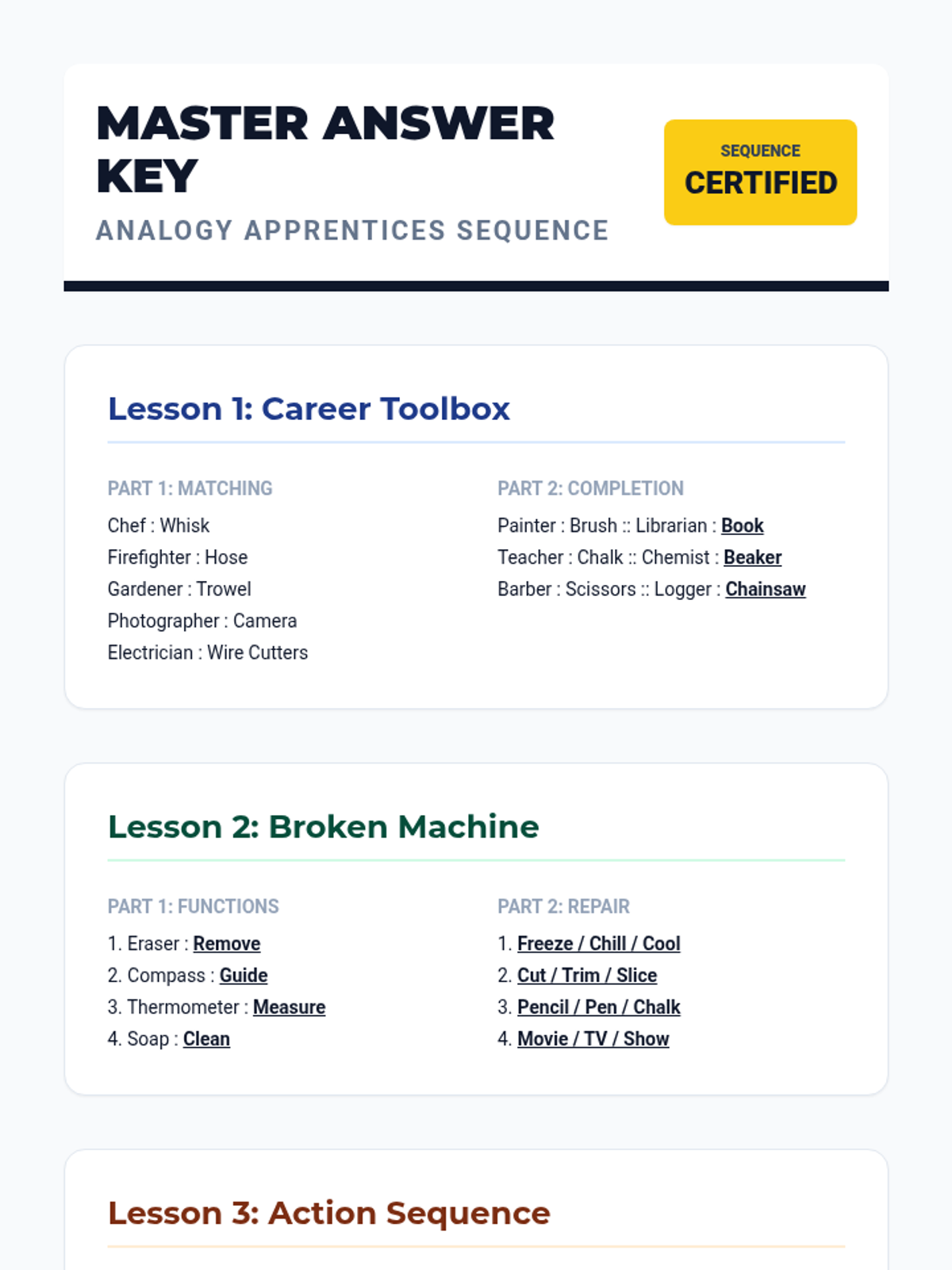
A cumulative mastery review where students sort and solve various functional analogies at 'Logic Lab' stations.
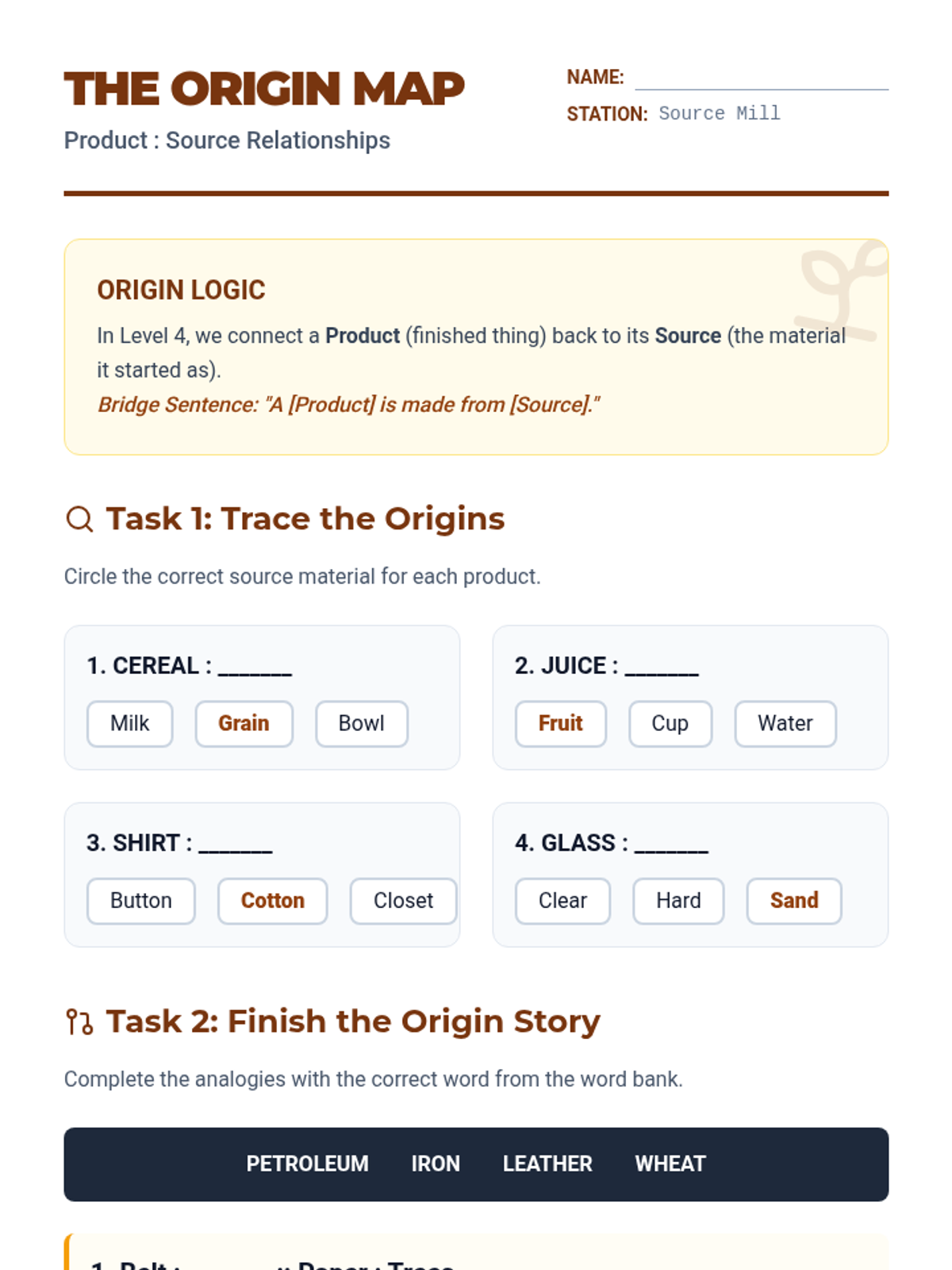
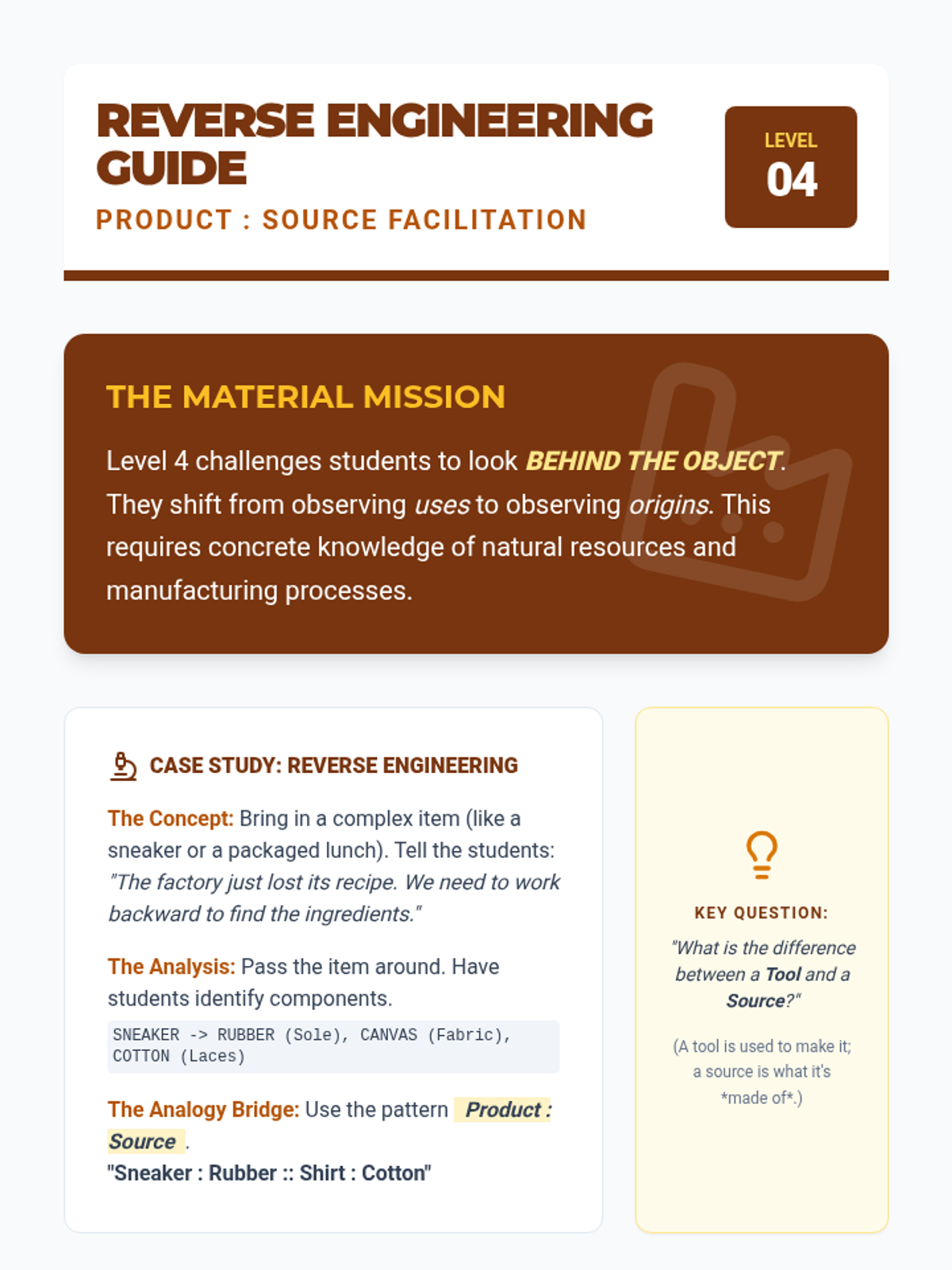
Exploring origins and materials, students trace products back to their sources using 'Reverse Engineering' case studies.
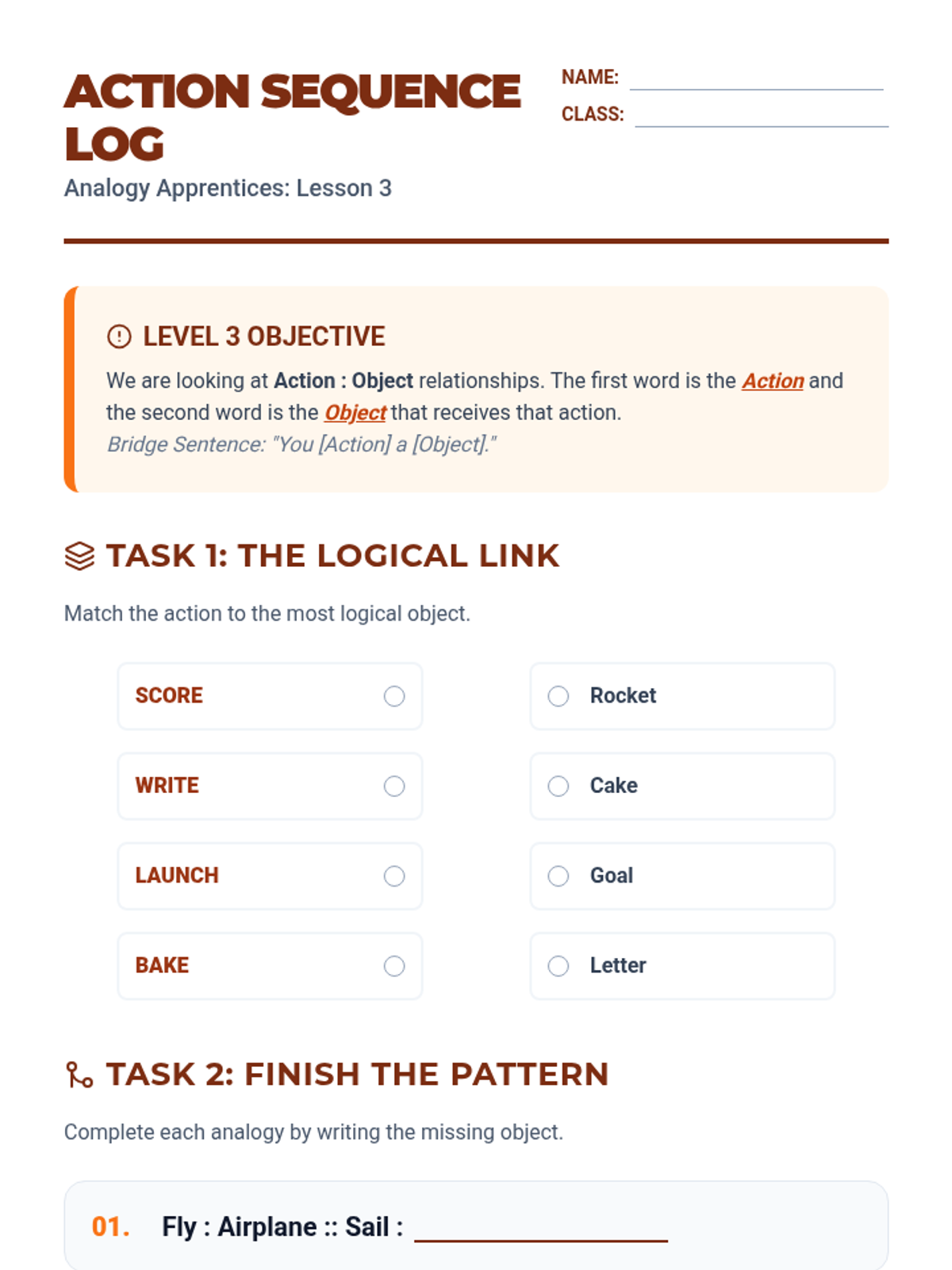
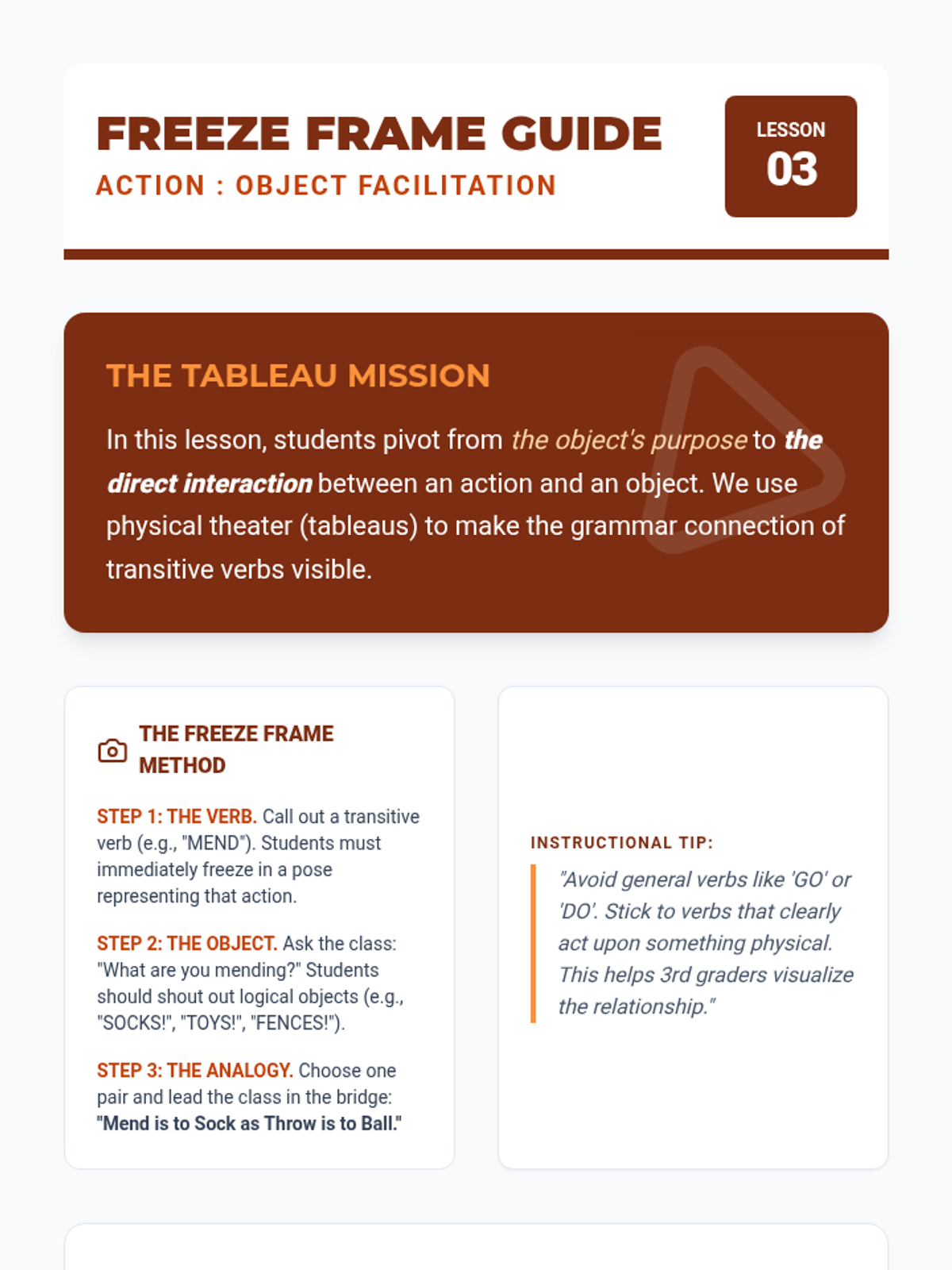
Students analyze relationships where actions are performed on objects, refining their understanding of transitive verbs through 'Freeze Frame' tableaus.
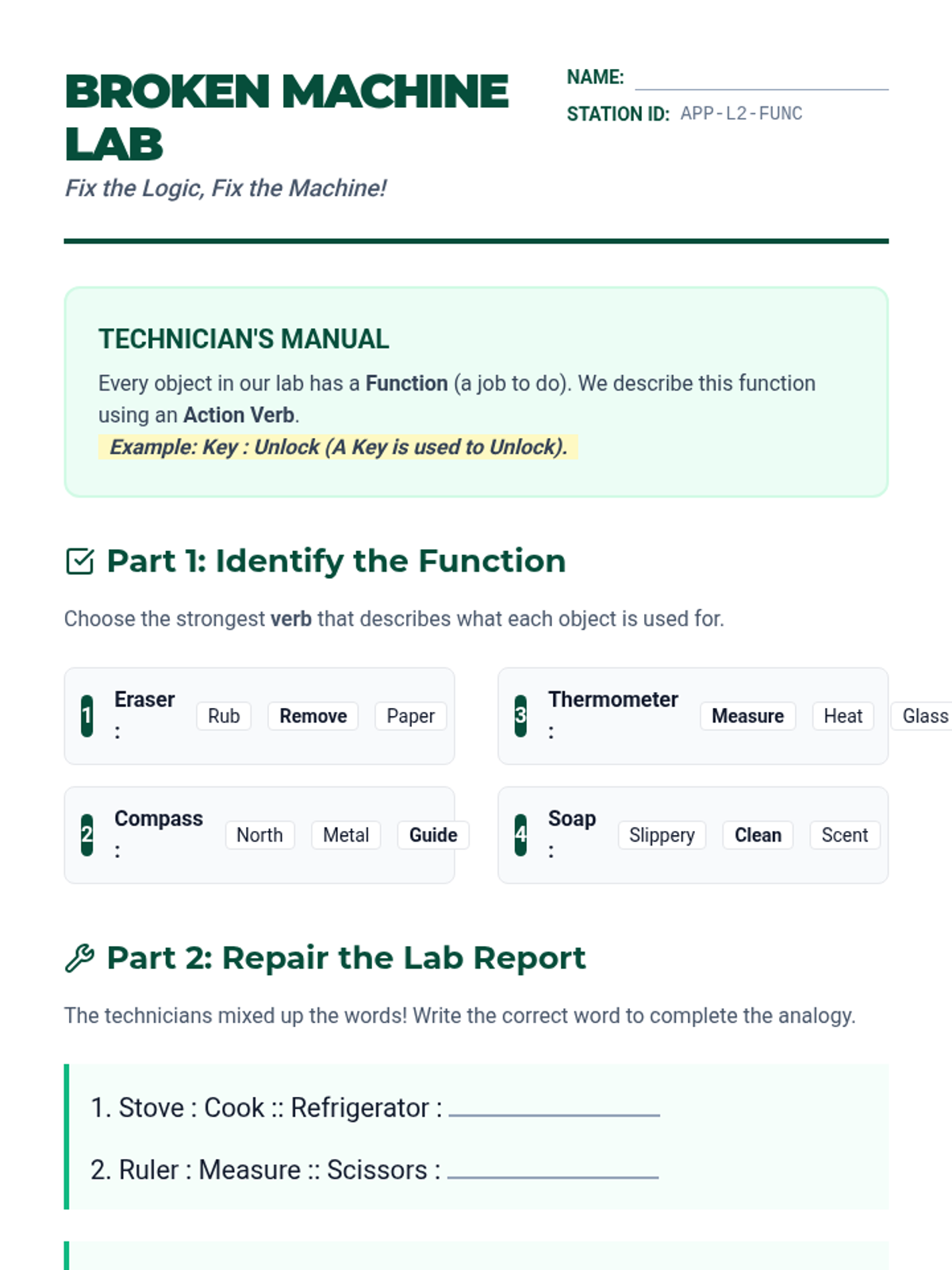
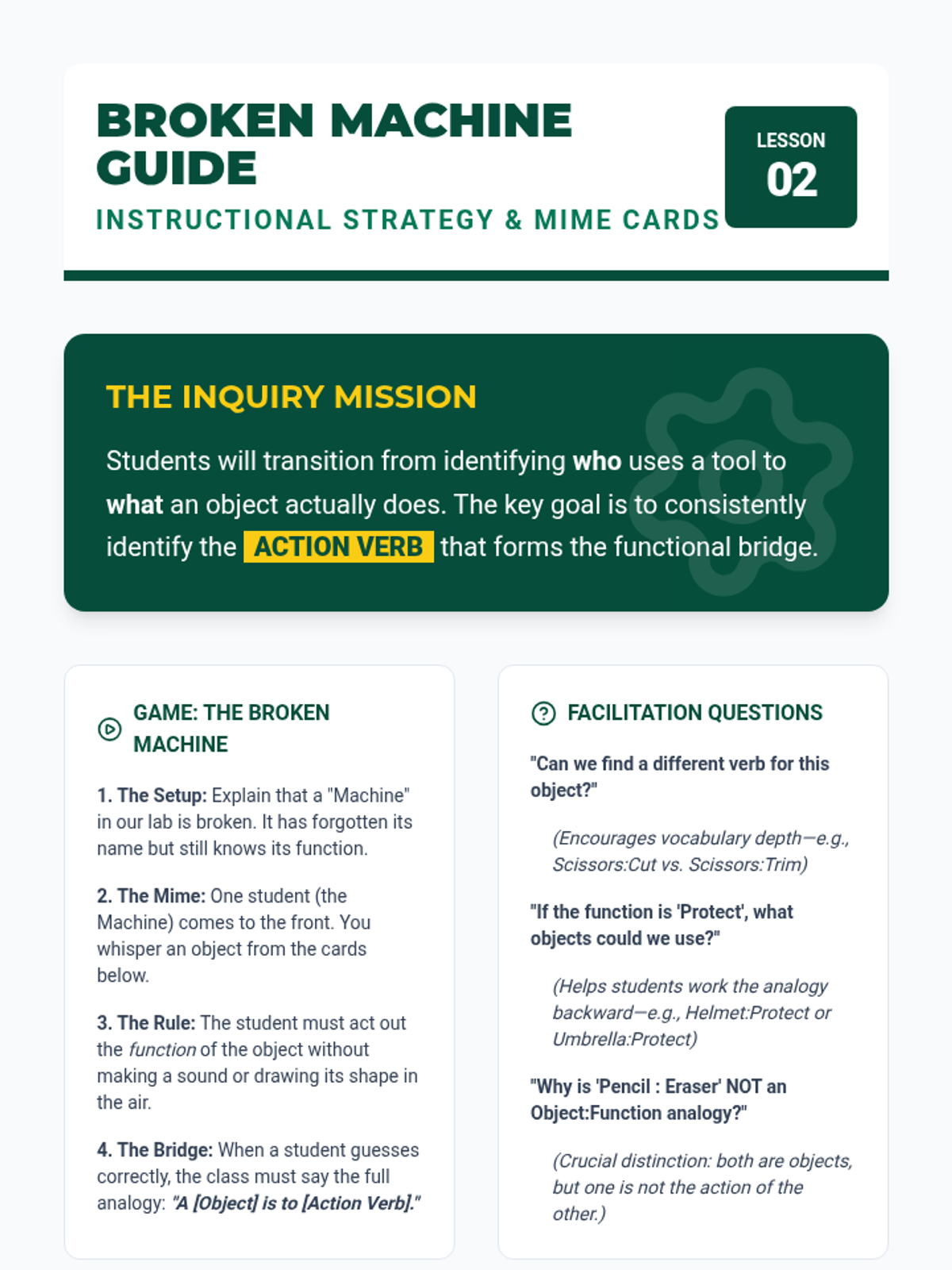
Learners focus on what items do, emphasizing the use of verbs to describe utility through an inquiry-based 'Broken Machine' game.
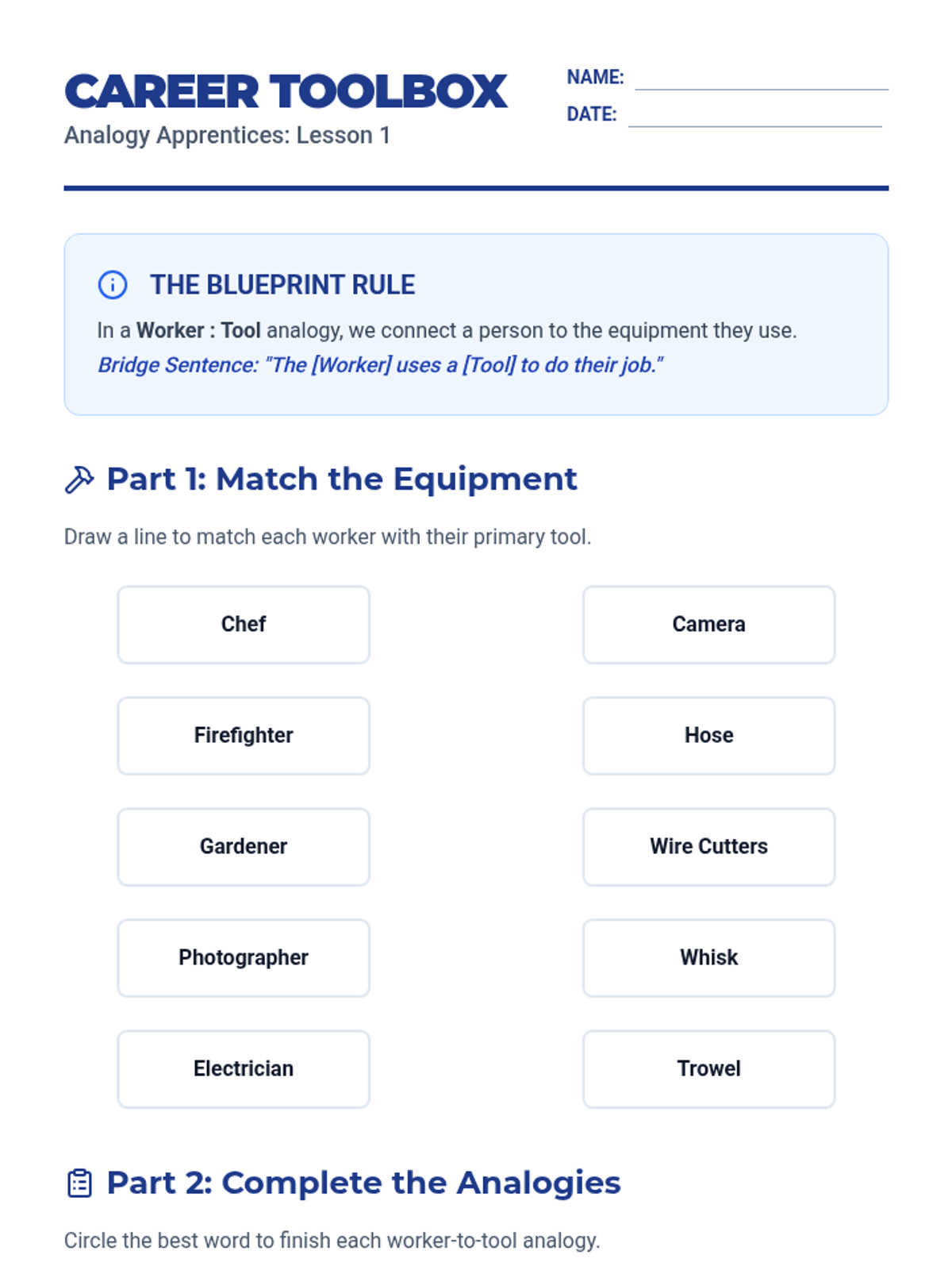
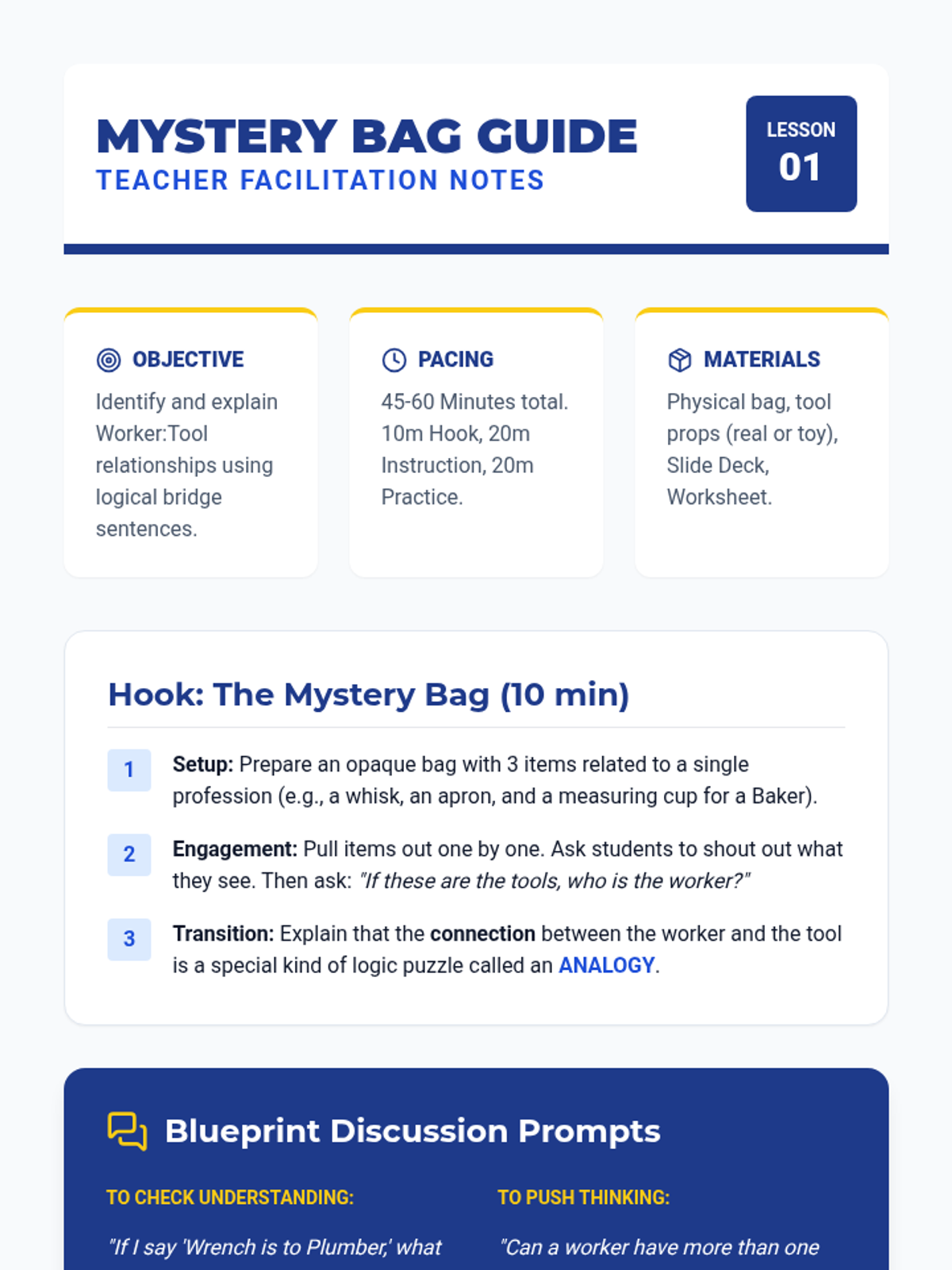
Students identify associations between professions and their specific instruments, using a 'Mystery Bag' hook to guess careers based on tools.
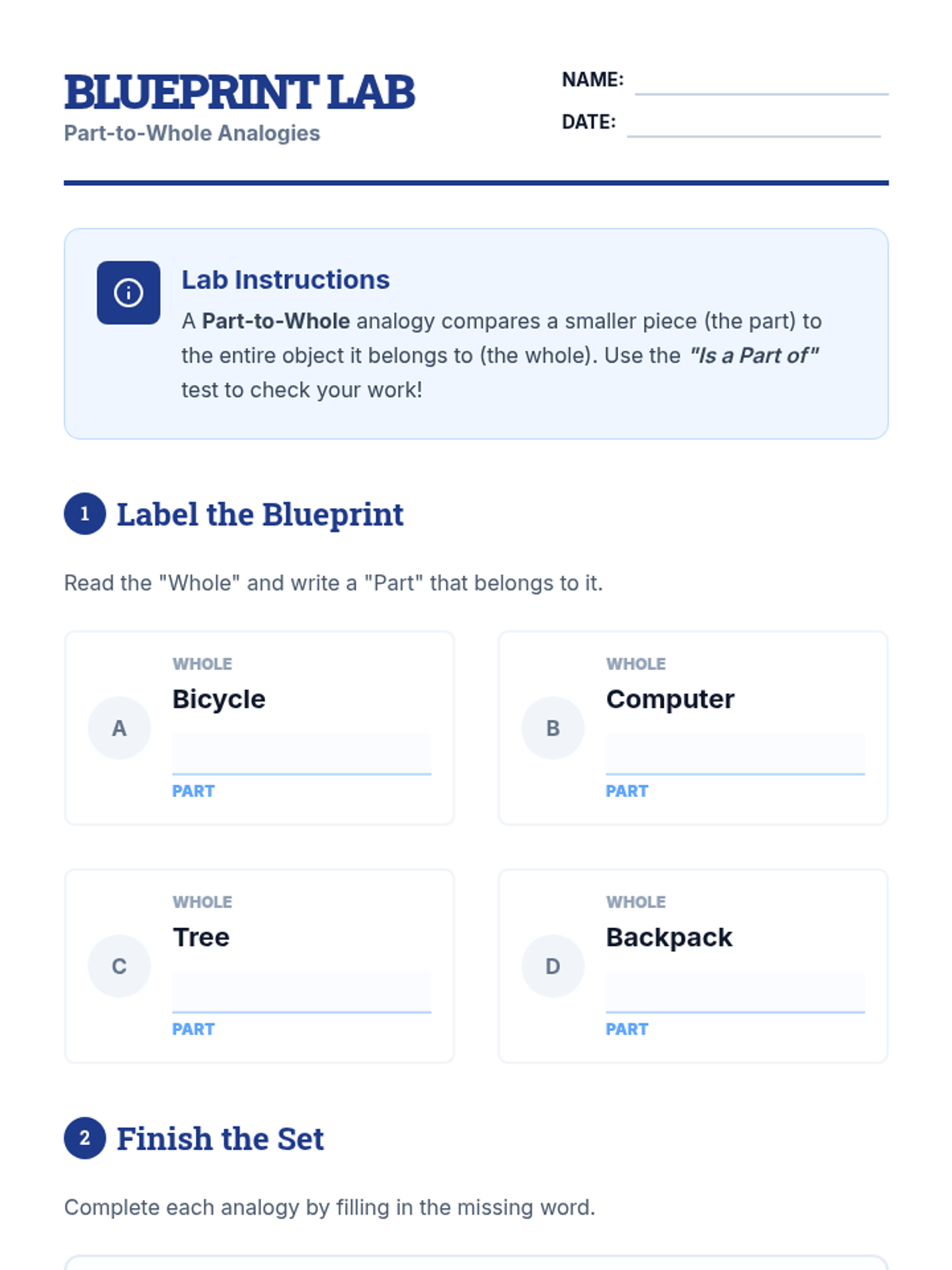
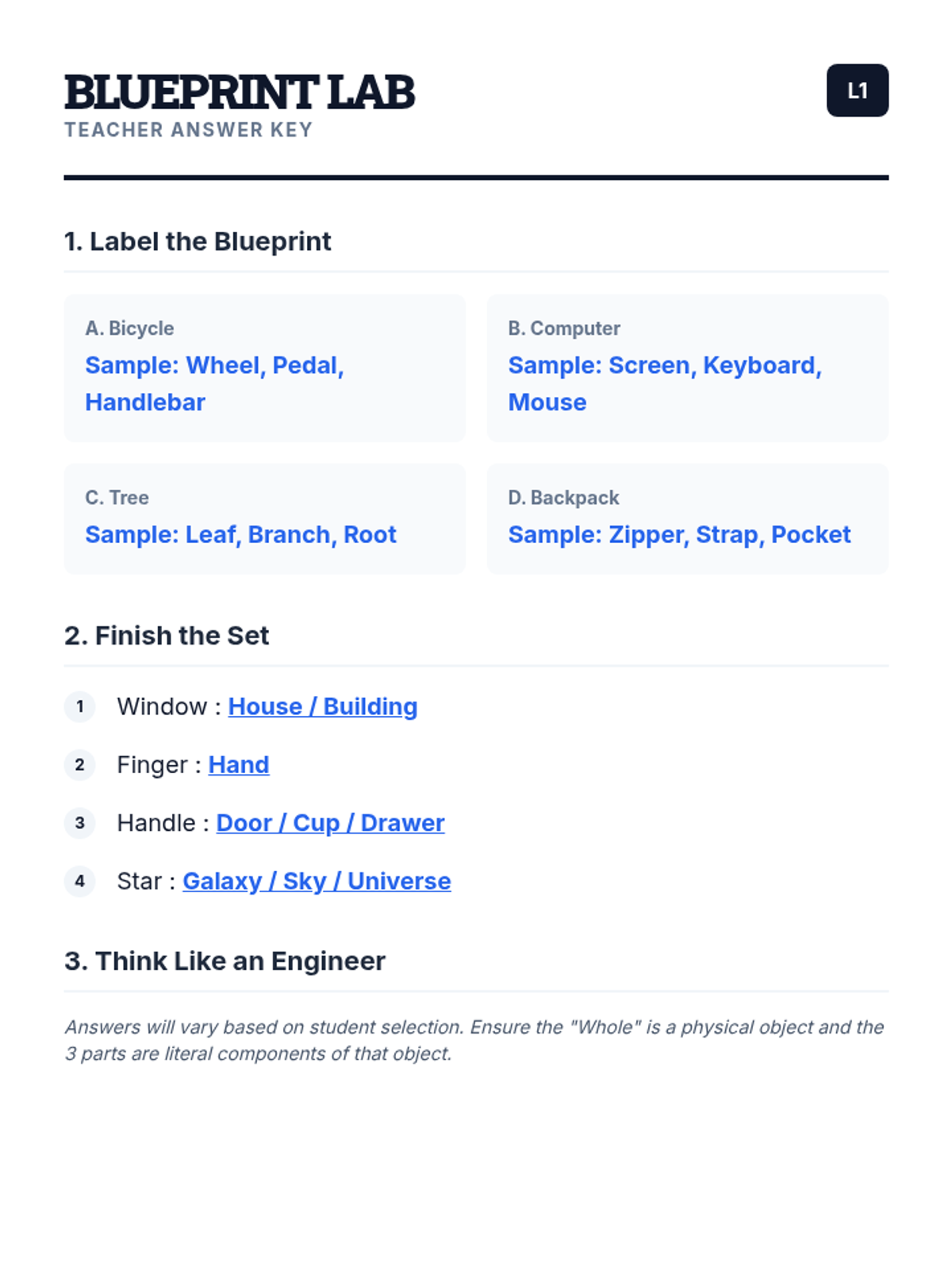
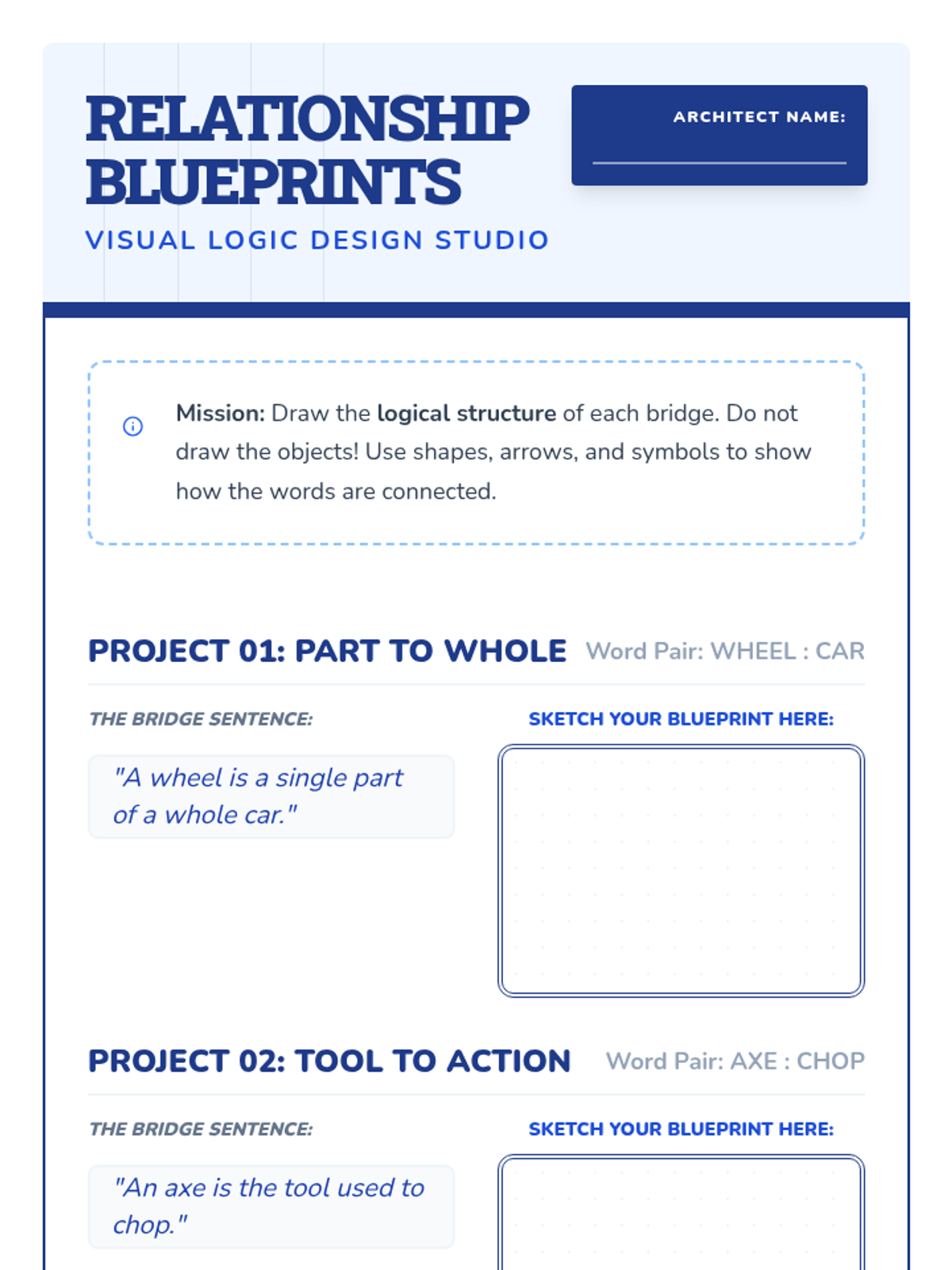
Students examine objects and their components (e.g., Wheel:Car, Page:Book). They engage in physical deconstruction and reconstruction activities to understand the concept of components.
A fast-paced review activity where students must verbally state the bridge sentence for a given analogy immediately. This builds fluency in recognizing common logical patterns.
Learners create visual representations of their bridge sentences to support abstract thinking. This helps reinforce the directionality of the relationship.
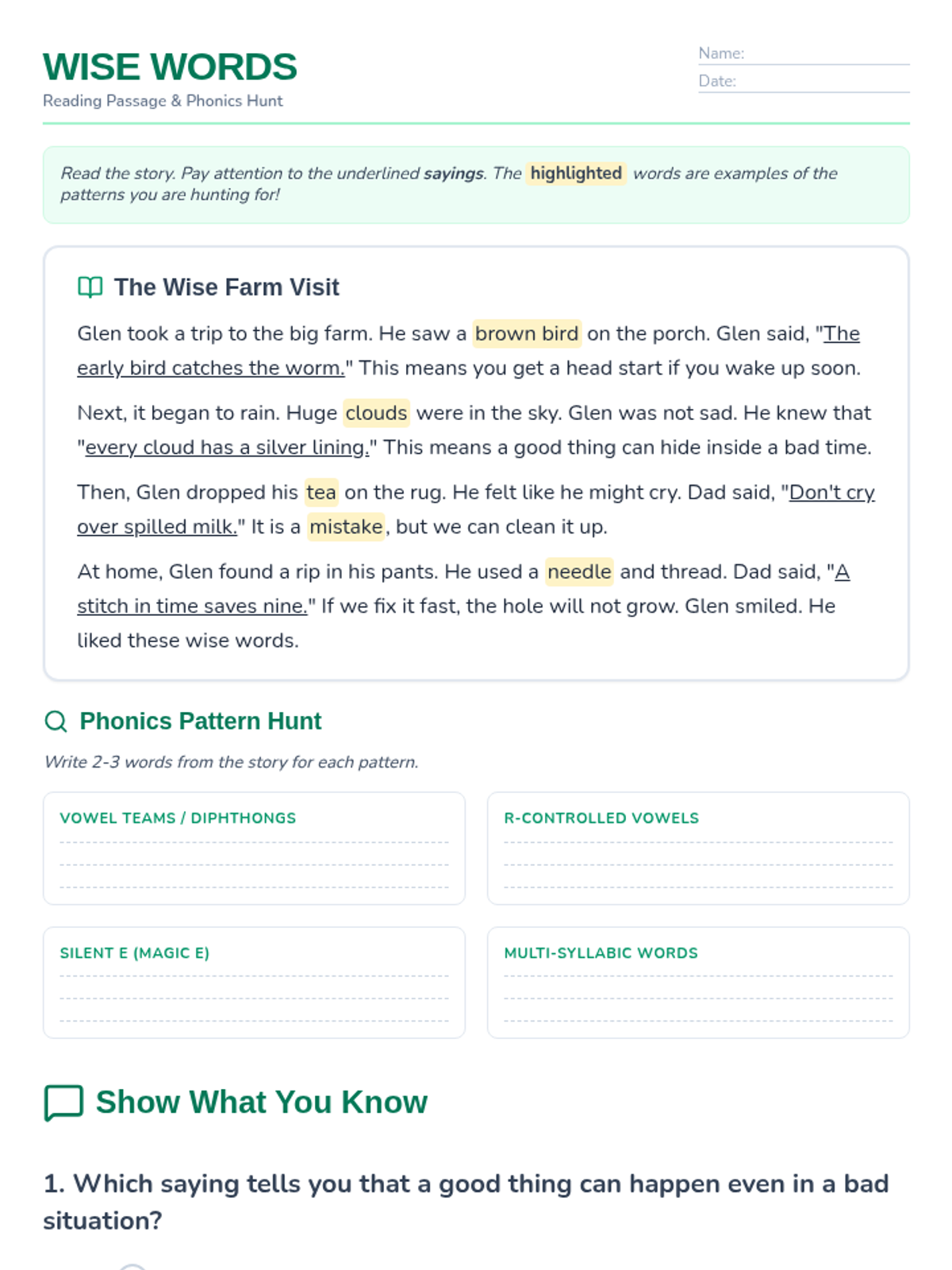
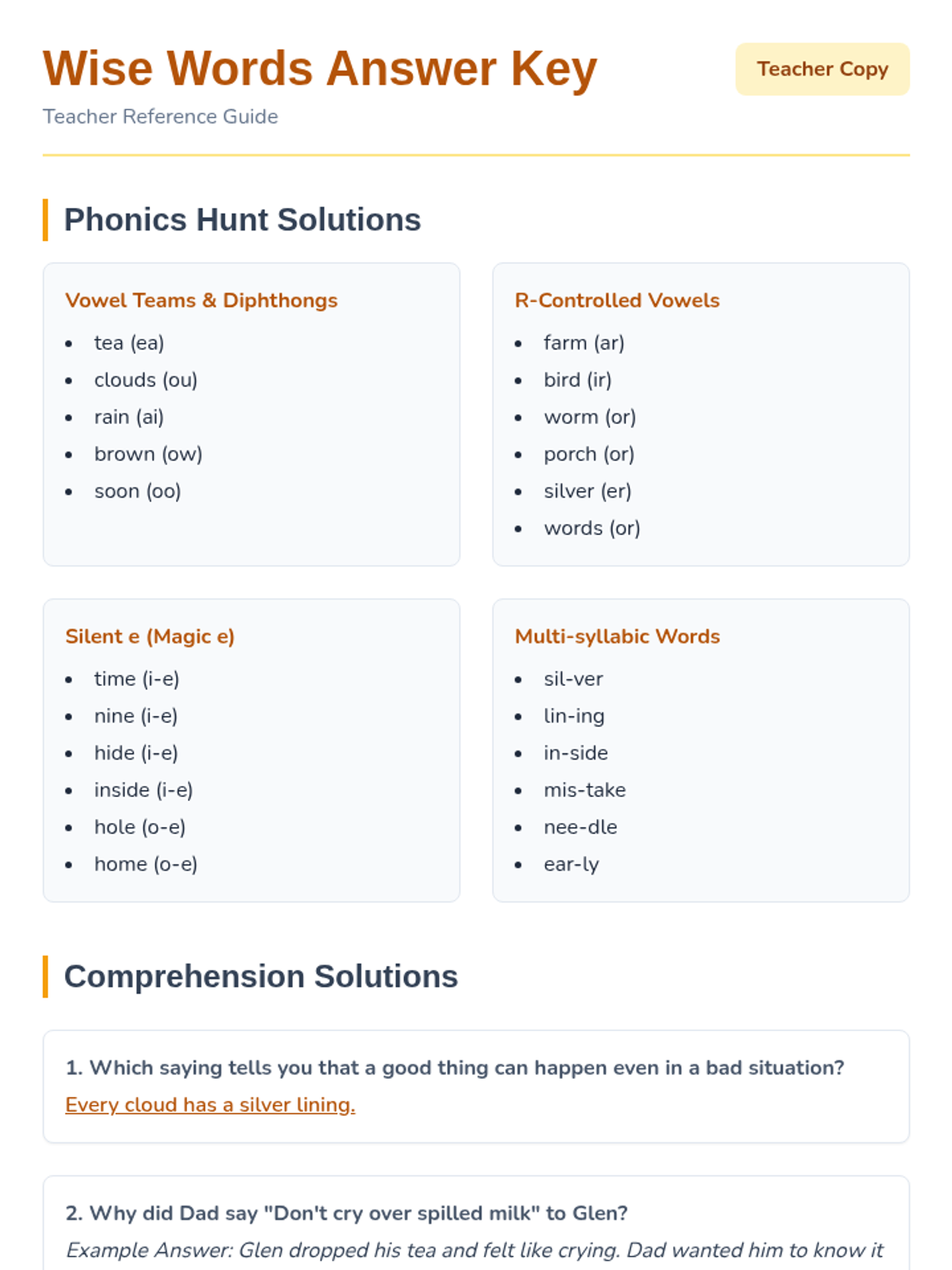
A lesson focused on decoding popular sayings using a variety of phonics patterns including CVC, blends, silent e, vowel teams, R-controlled vowels, and multi-syllabic words.
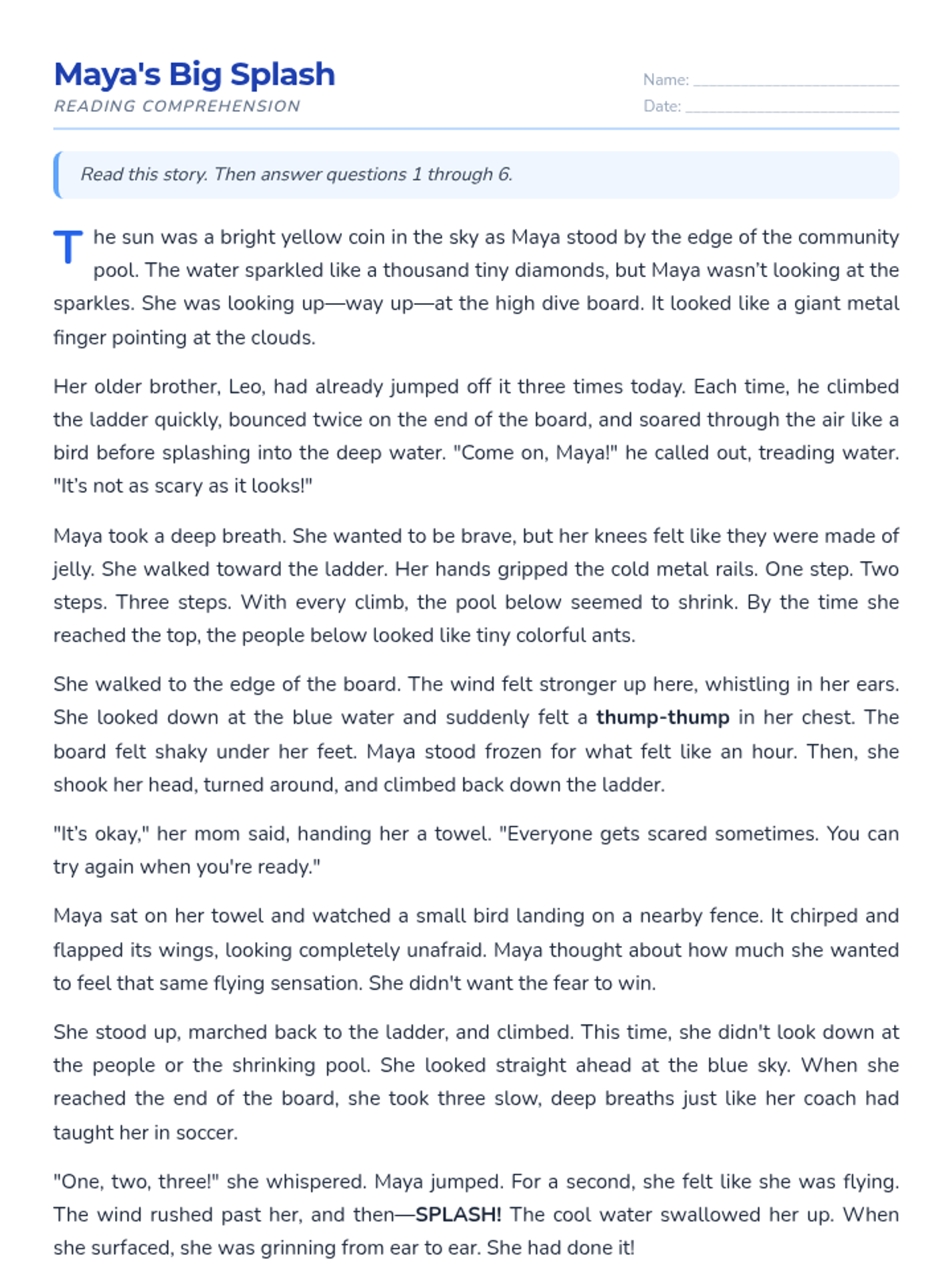
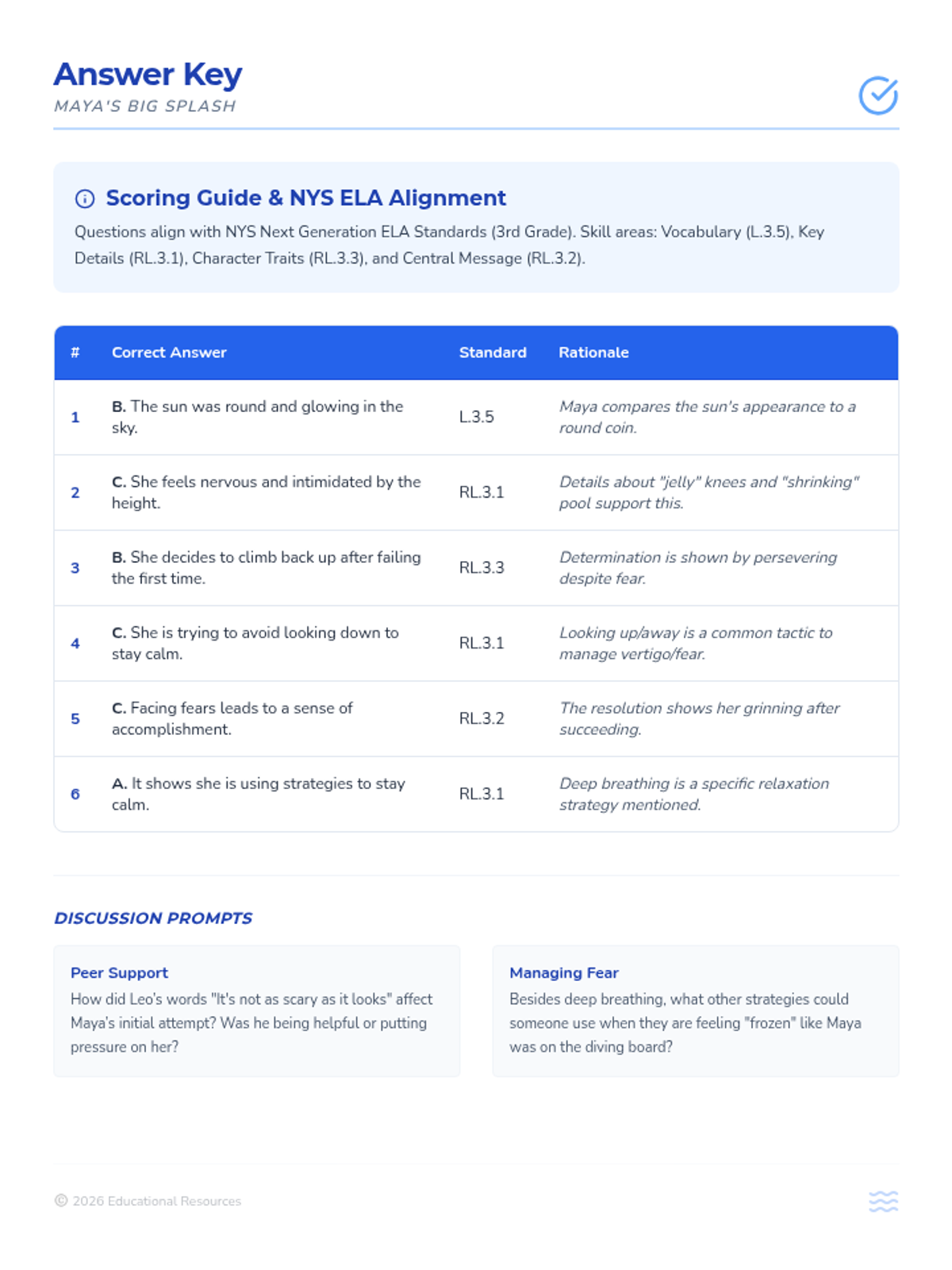
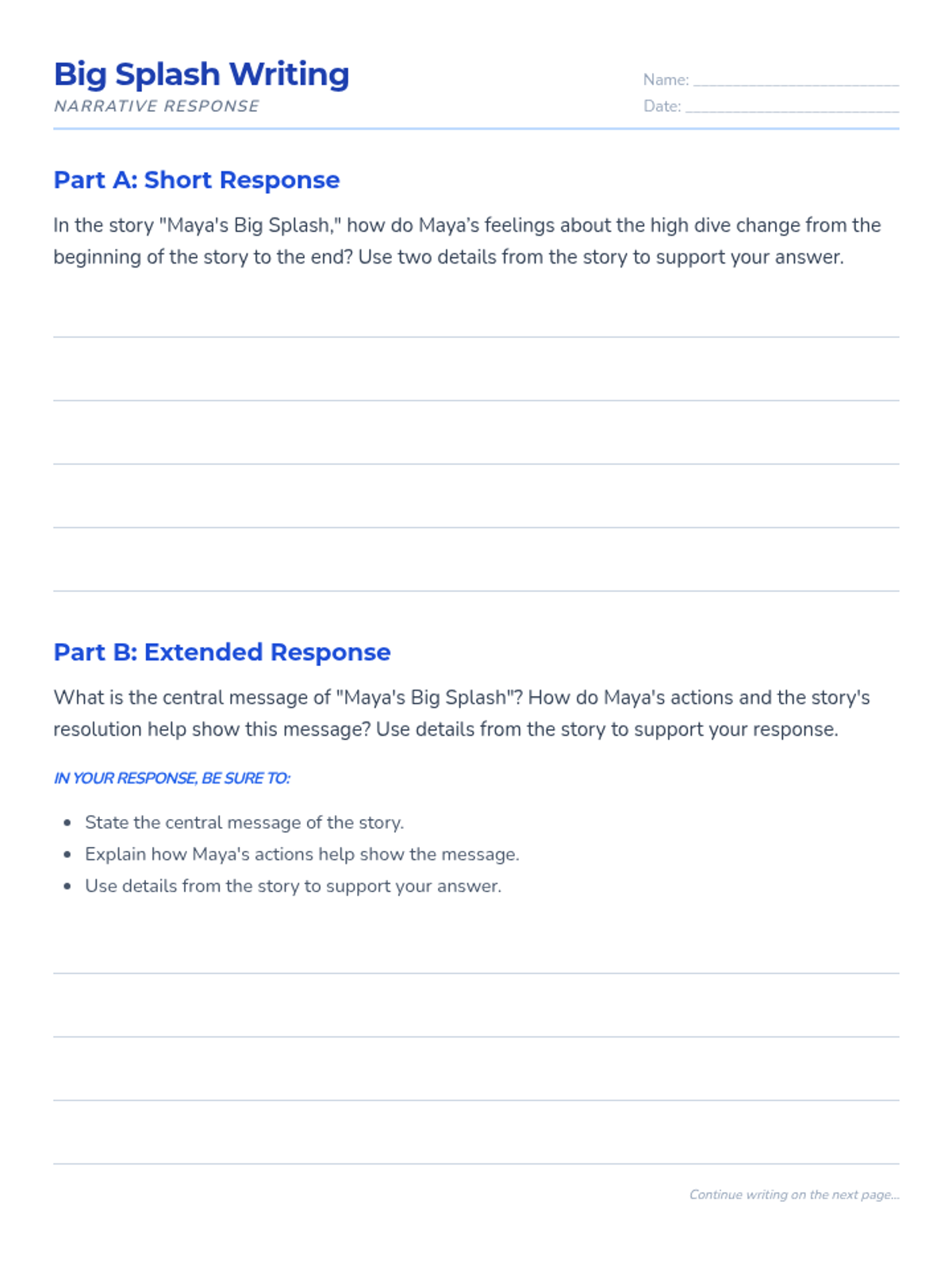
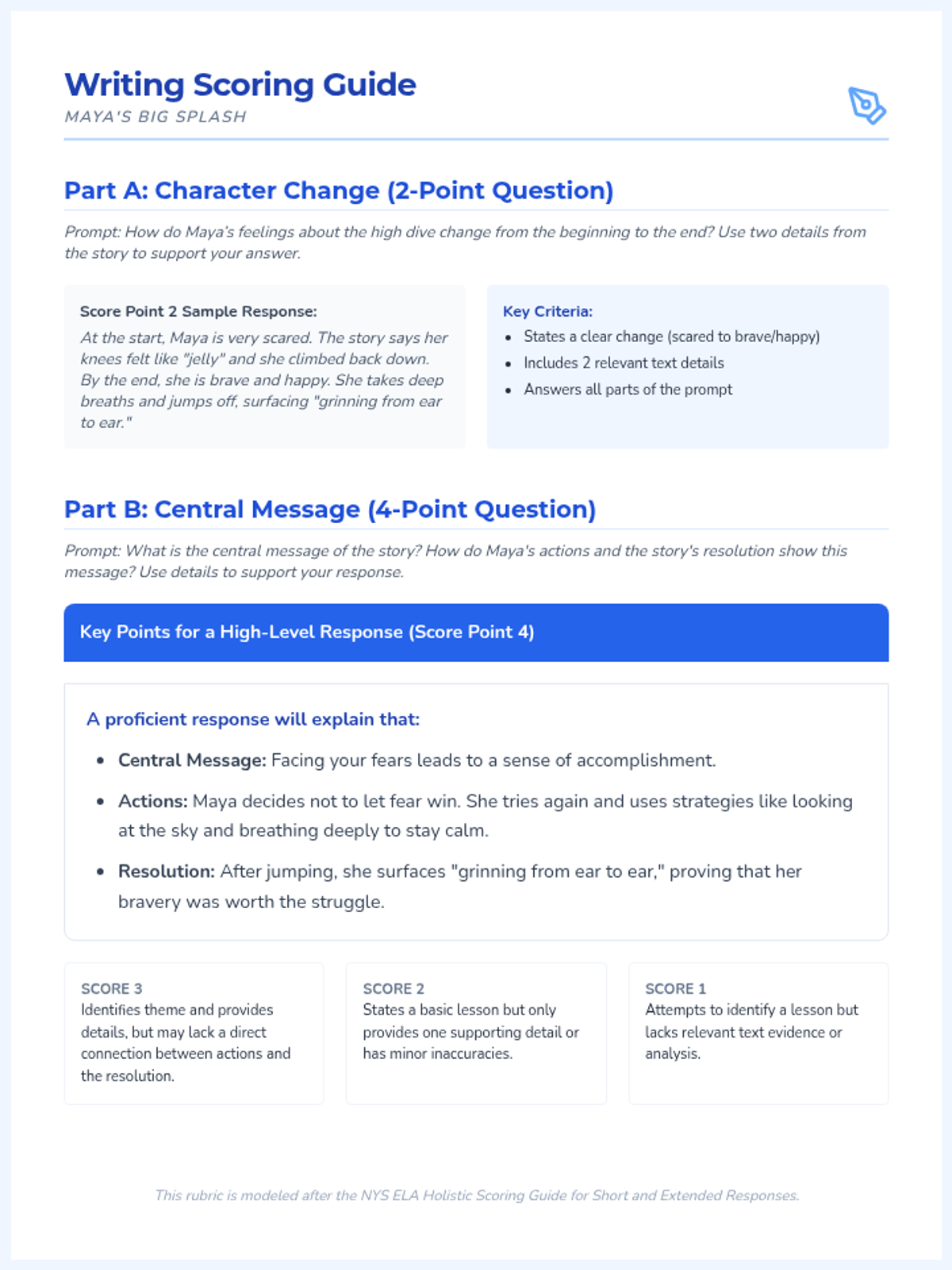
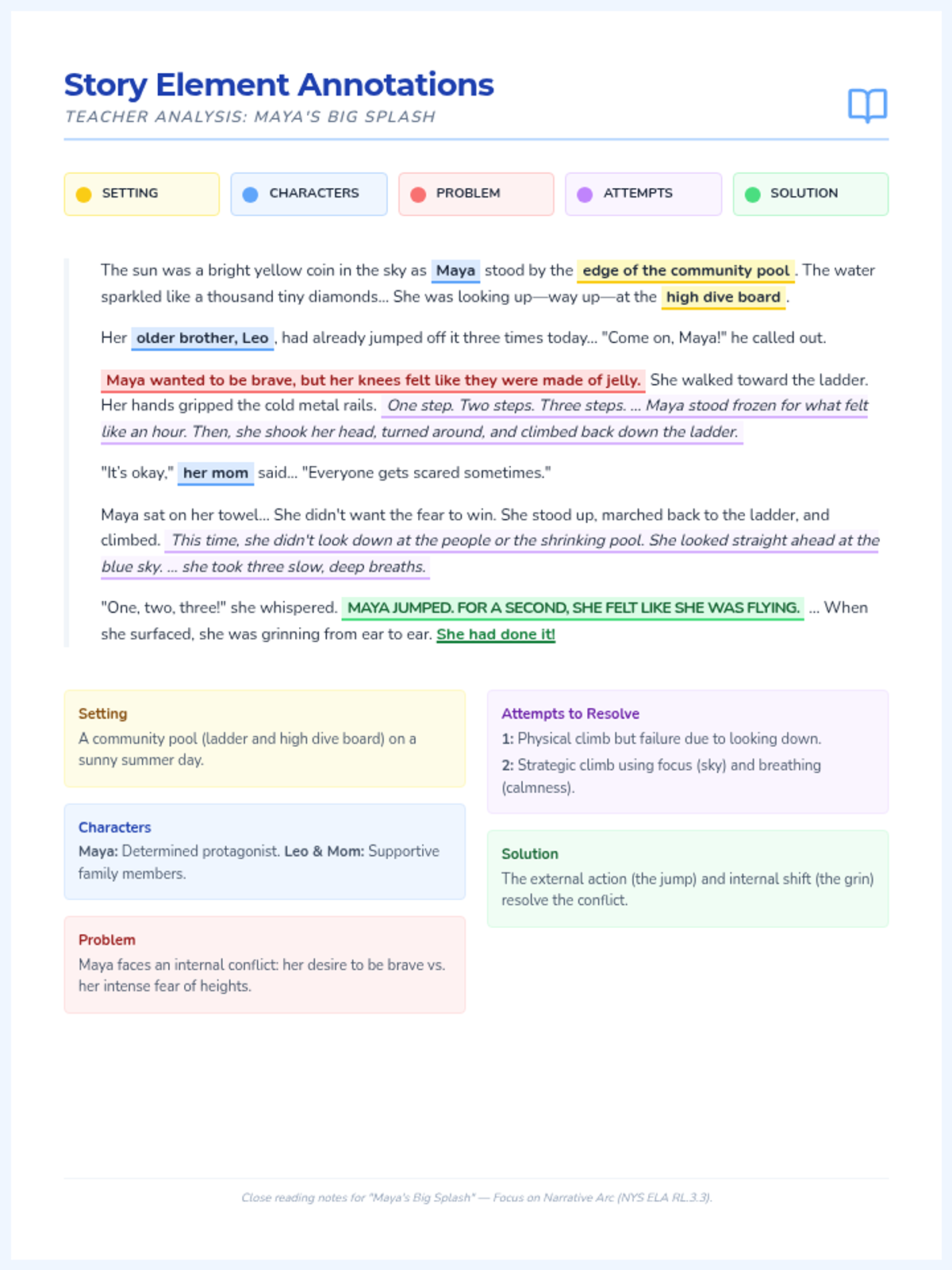
A 3rd-grade ELA lesson focused on reading a narrative passage and answering comprehension questions in the style of the NYS ELA exam. Students explore the theme of overcoming a challenge through the story of a girl facing her fear of the high dive.
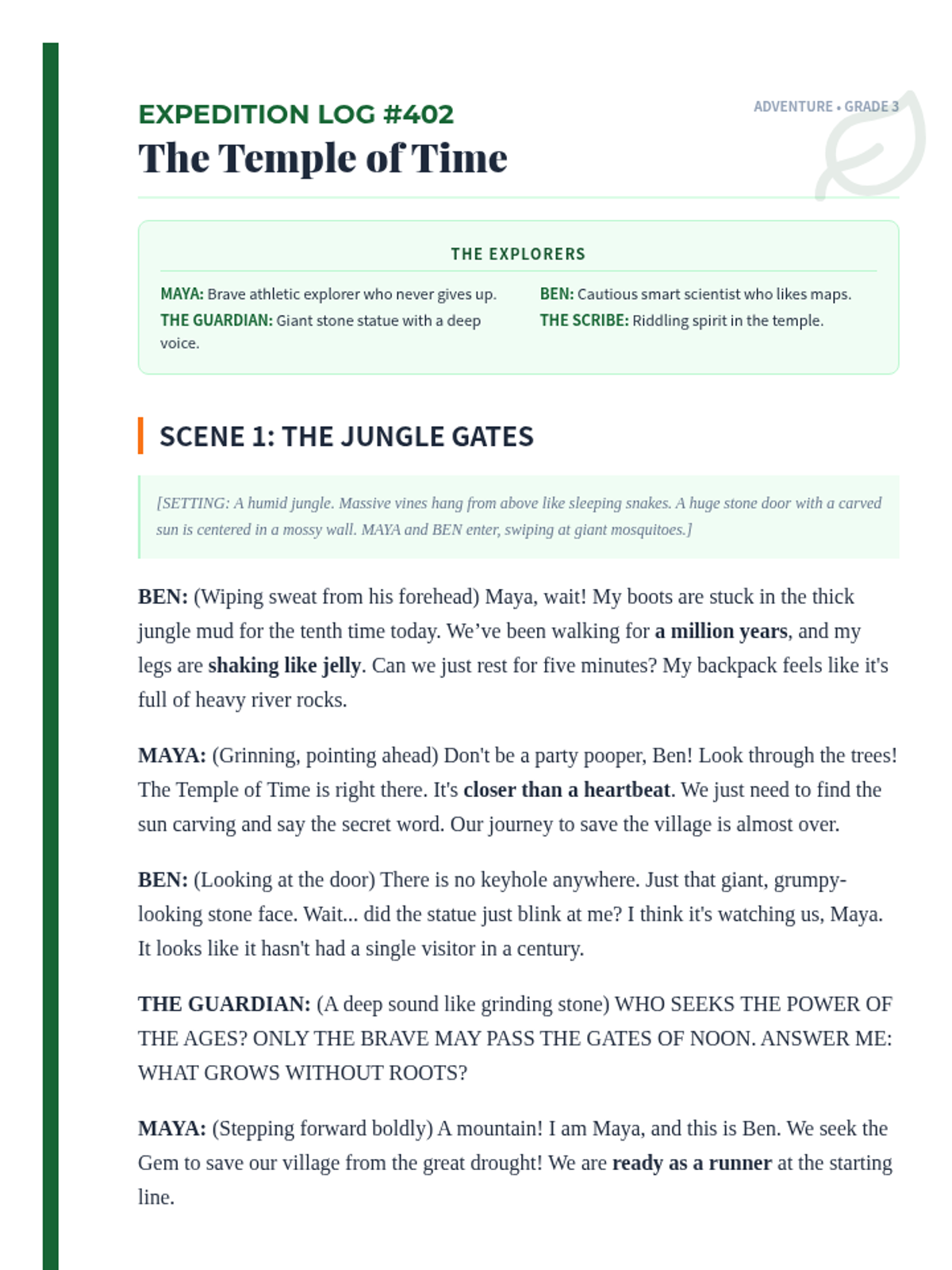
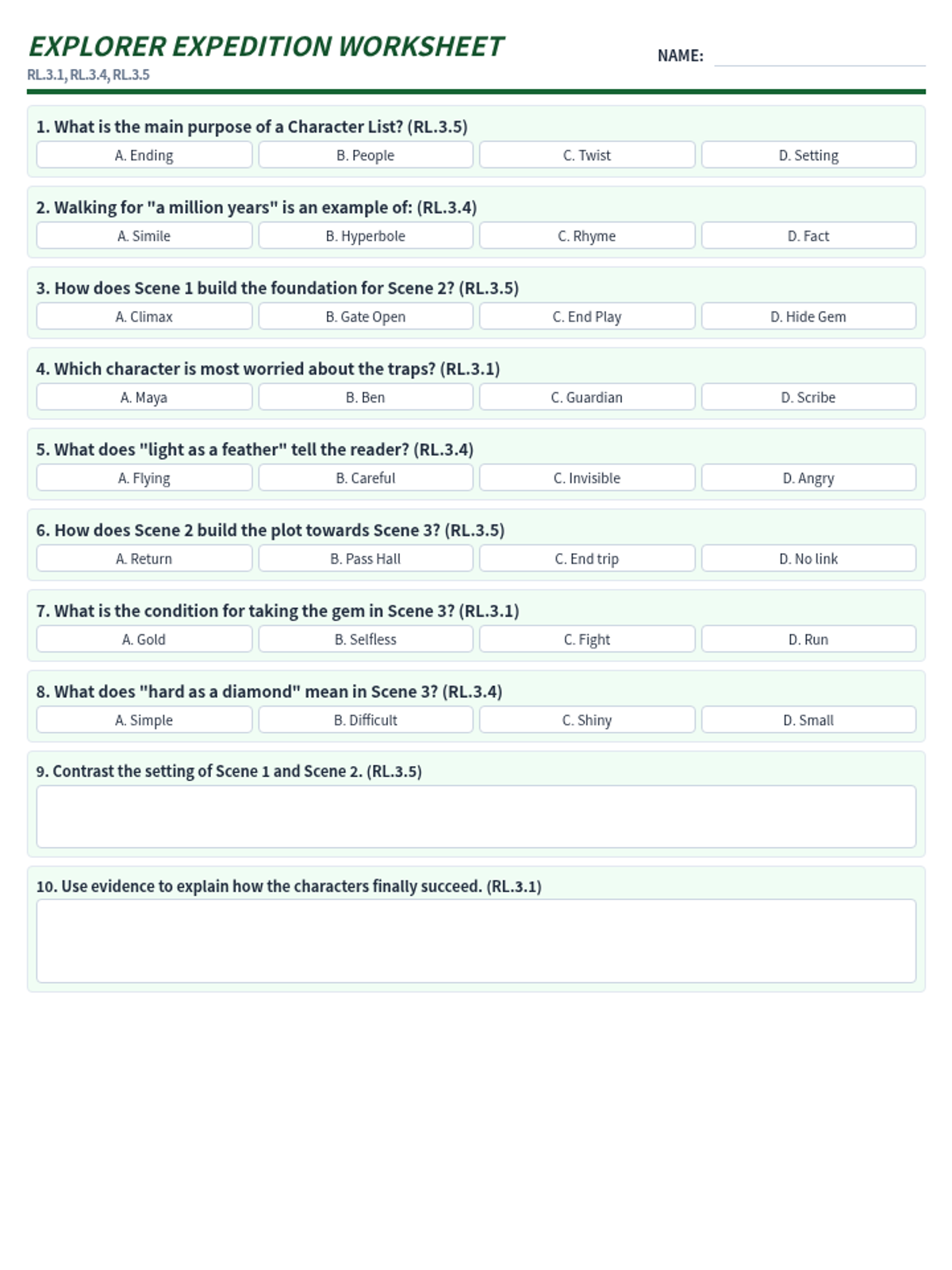
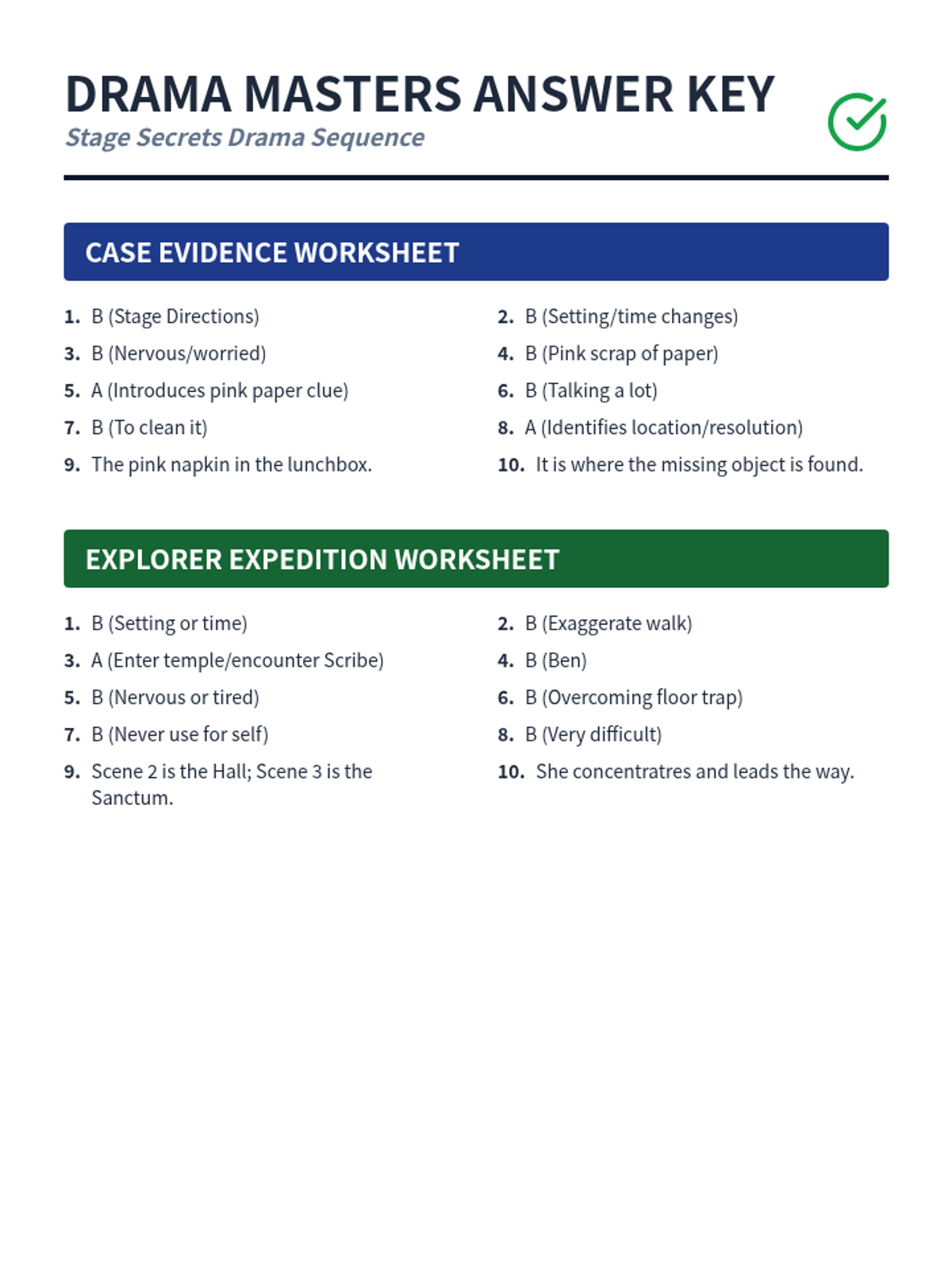
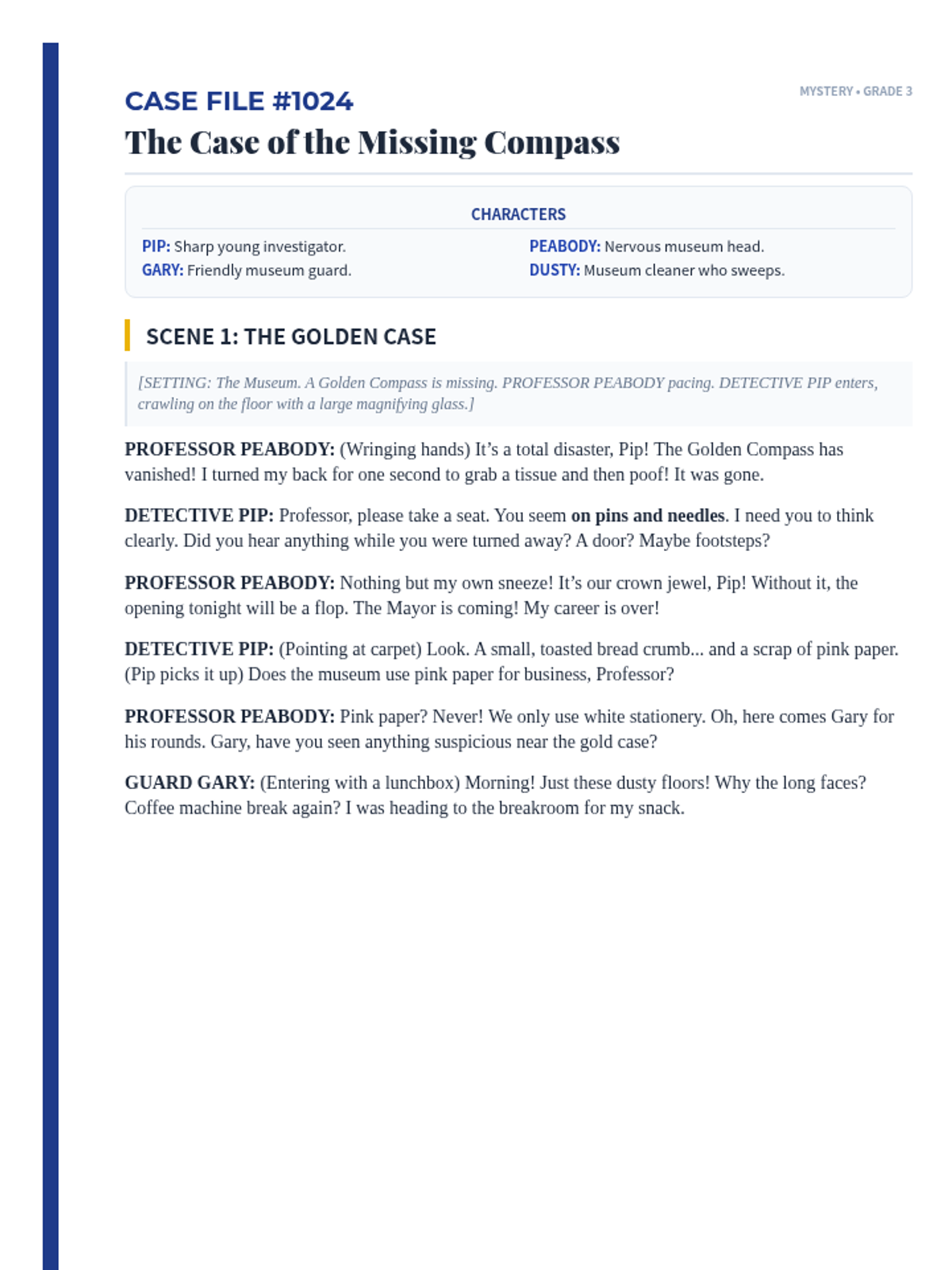
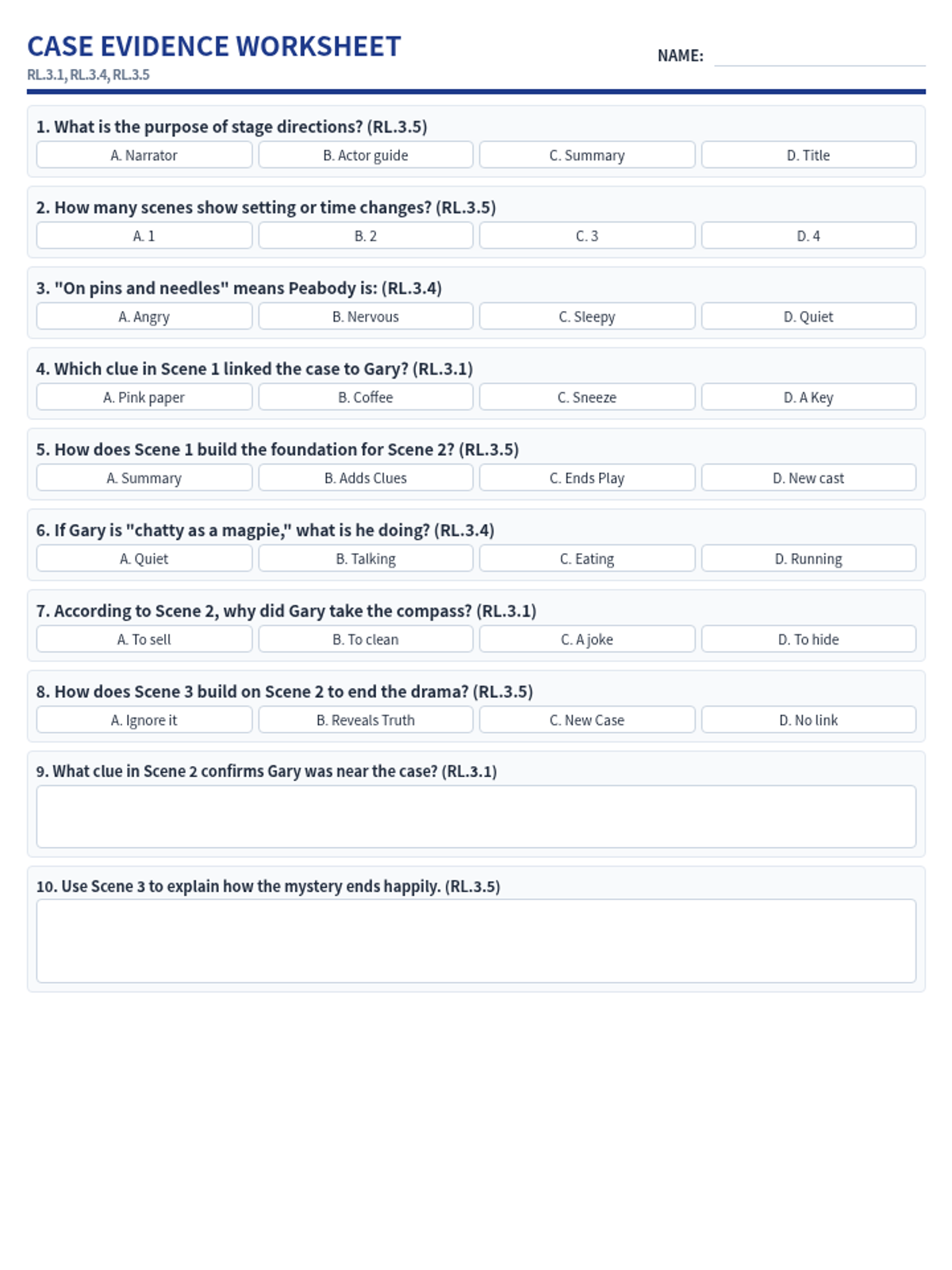
An independent practice lesson where students read an adventure play and apply their skills in analyzing drama elements, vocabulary, and textual evidence.
A guided lesson featuring a mystery play where the teacher models how to analyze drama structures, use text evidence, and determine word meanings before students practice with guided support.
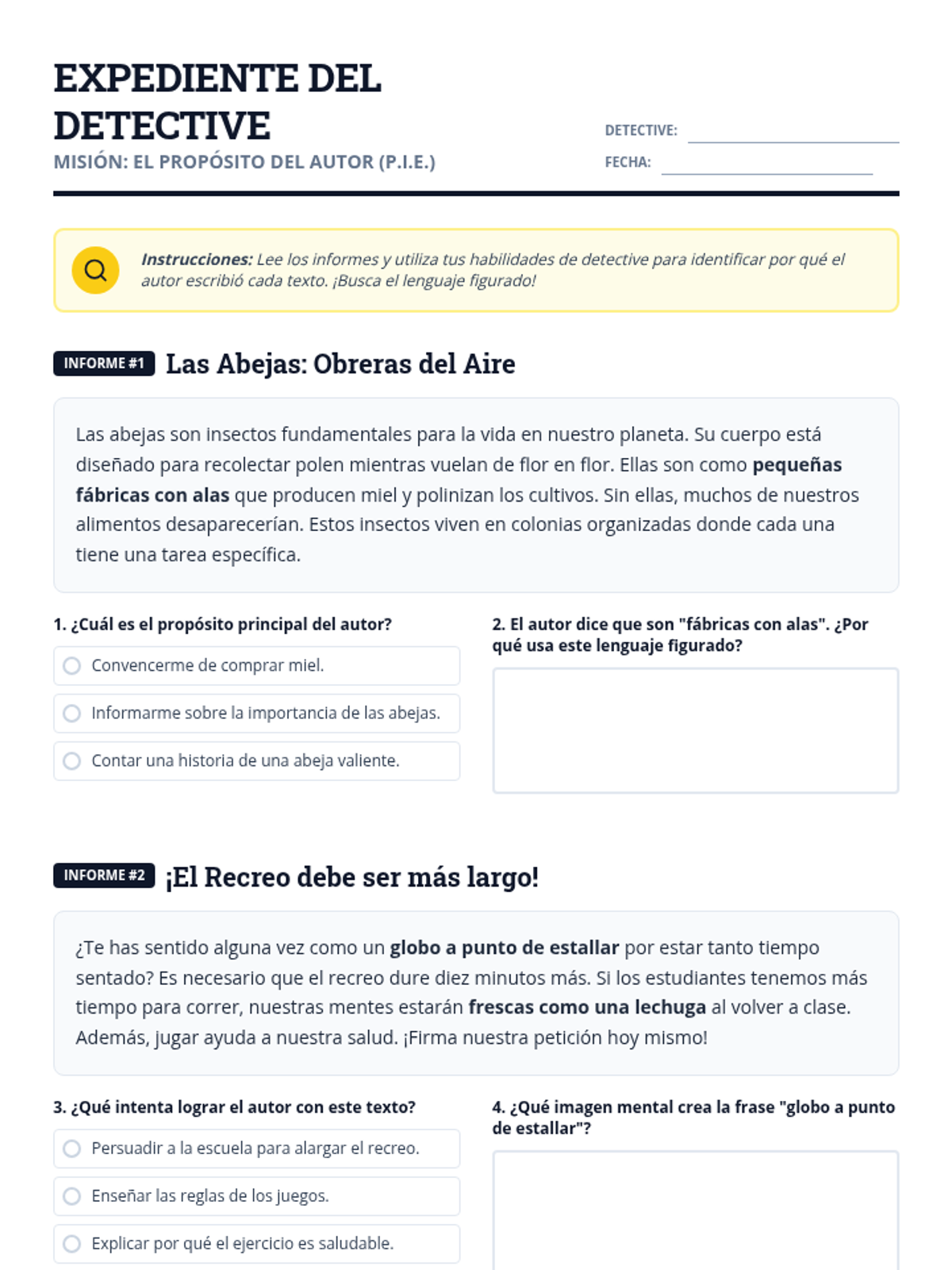
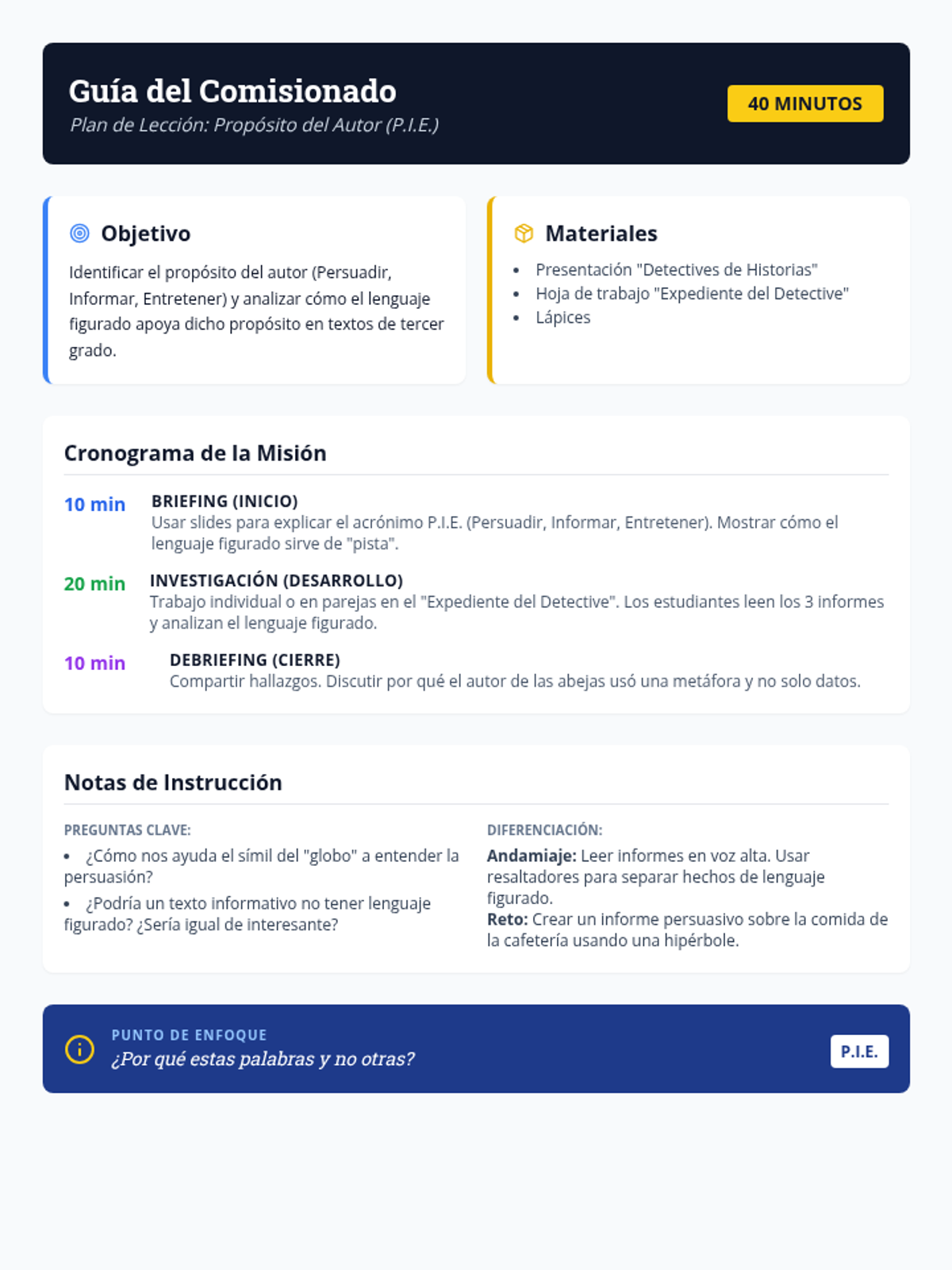
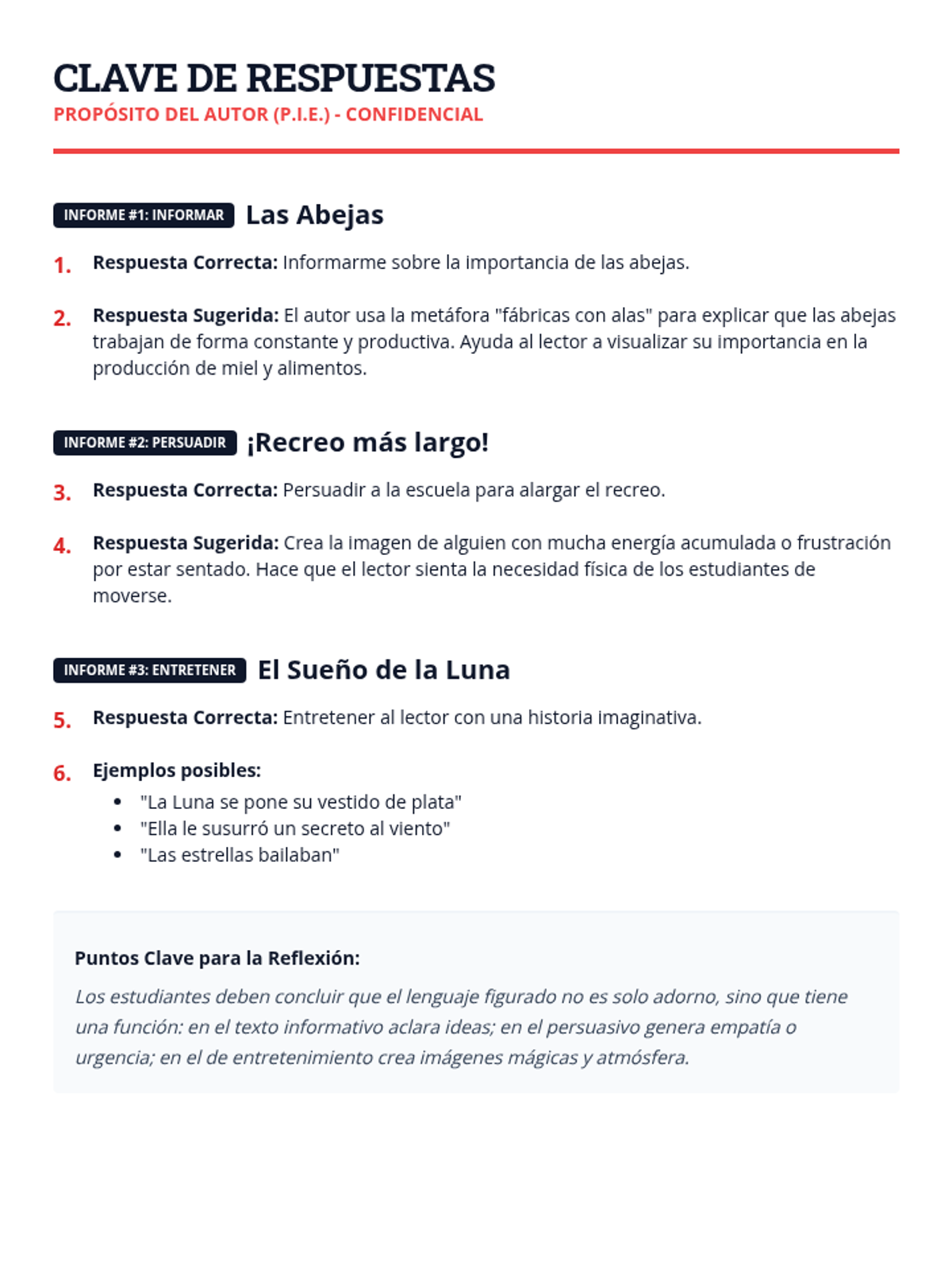
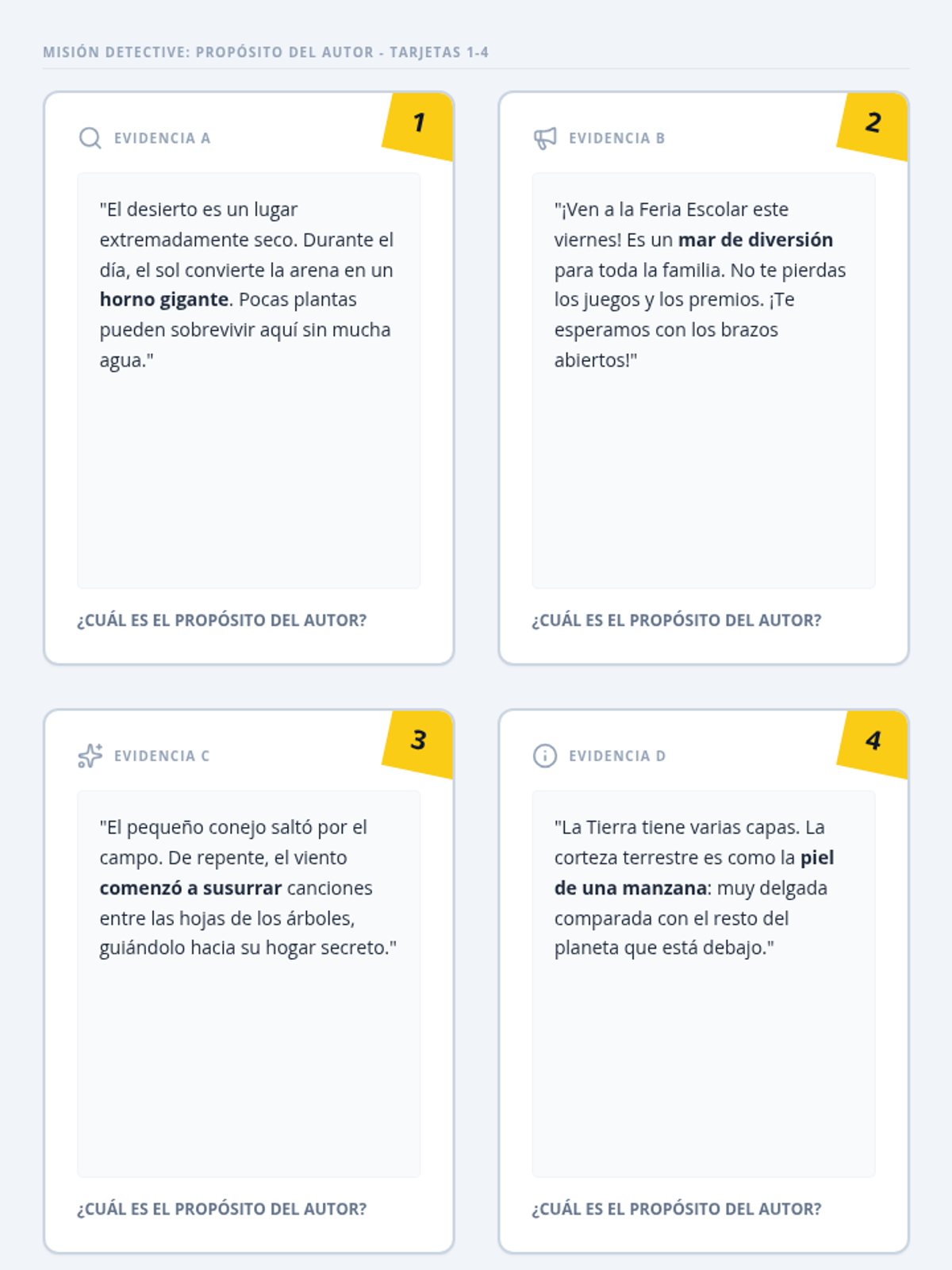
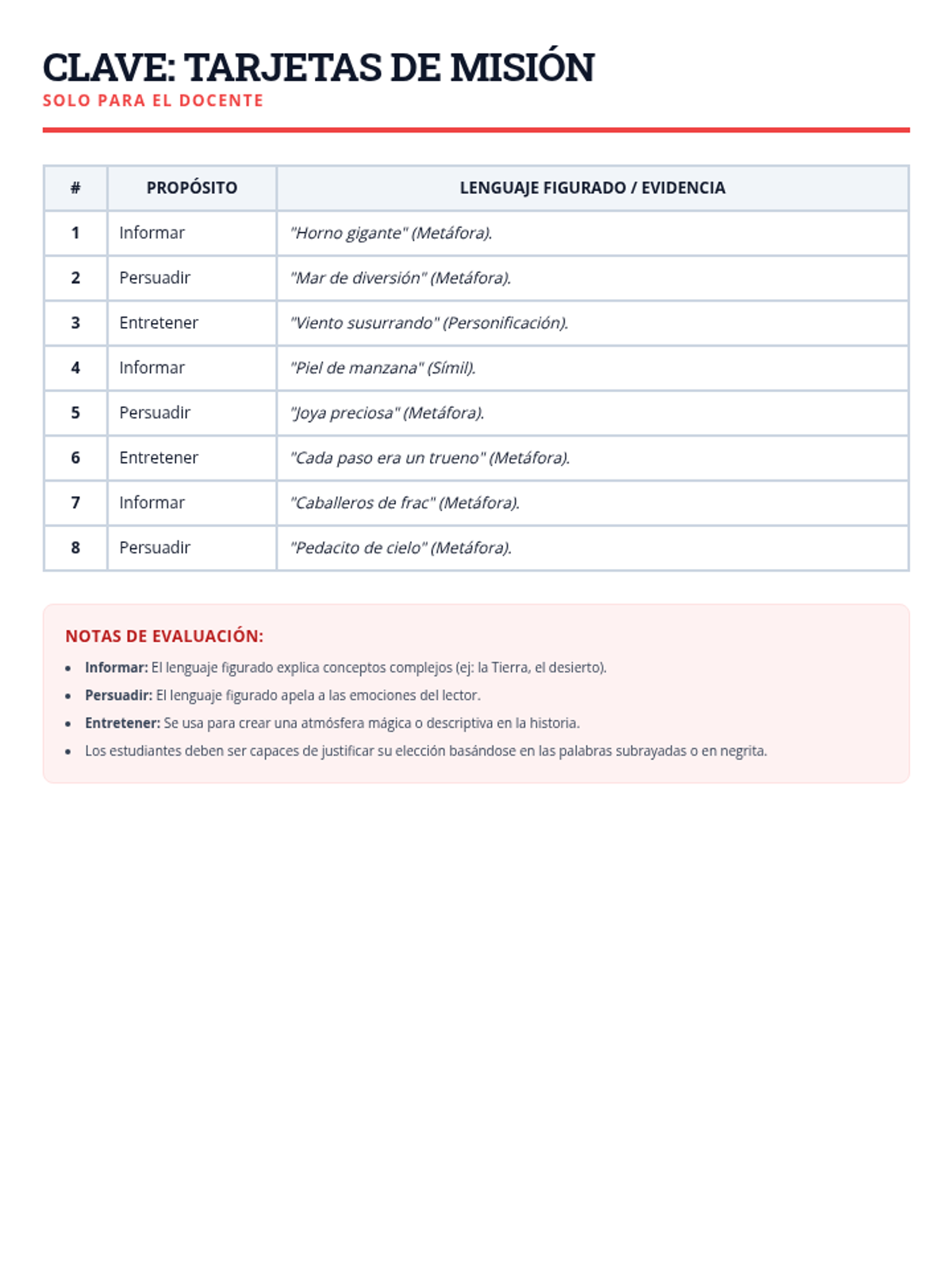
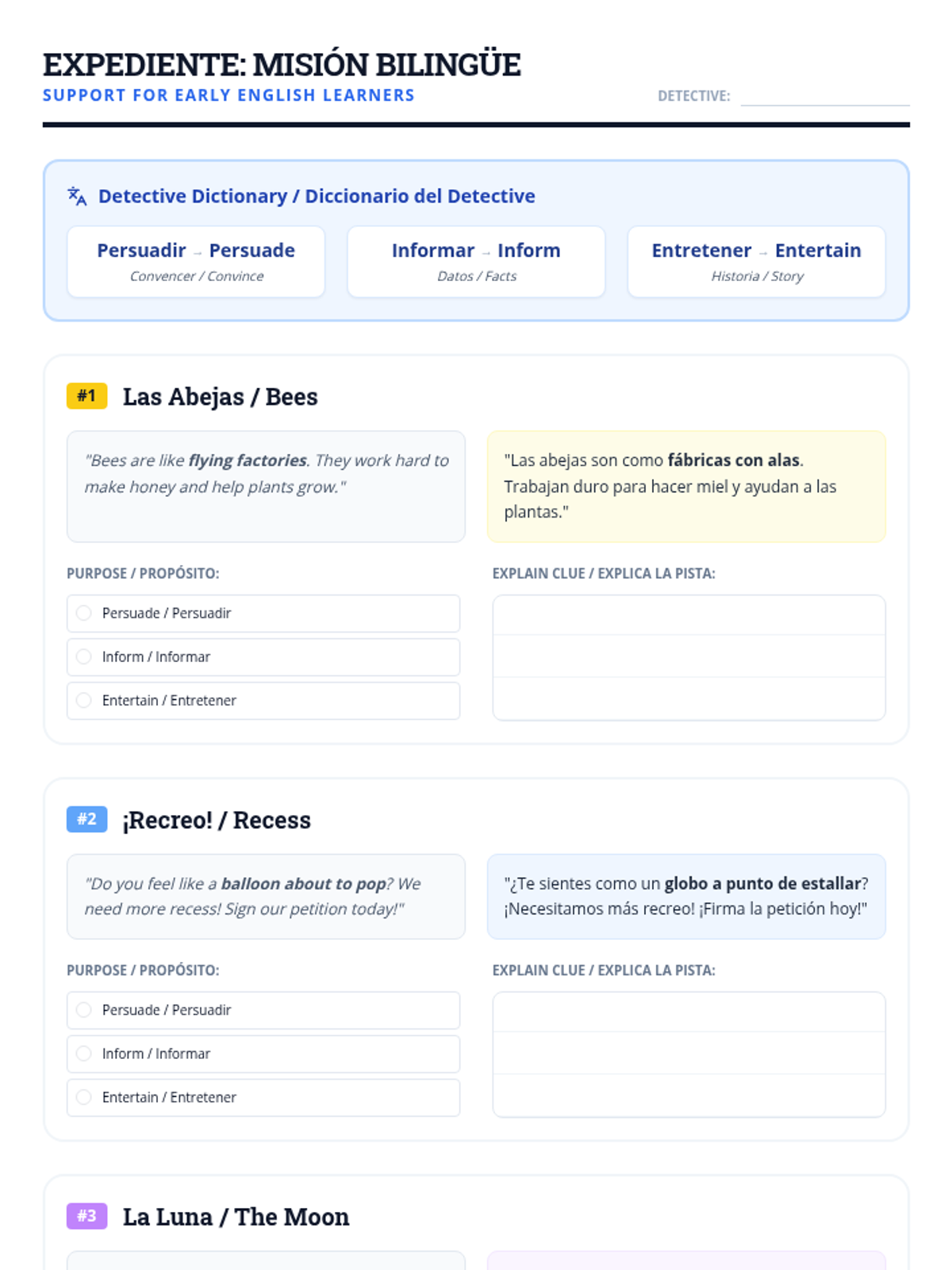
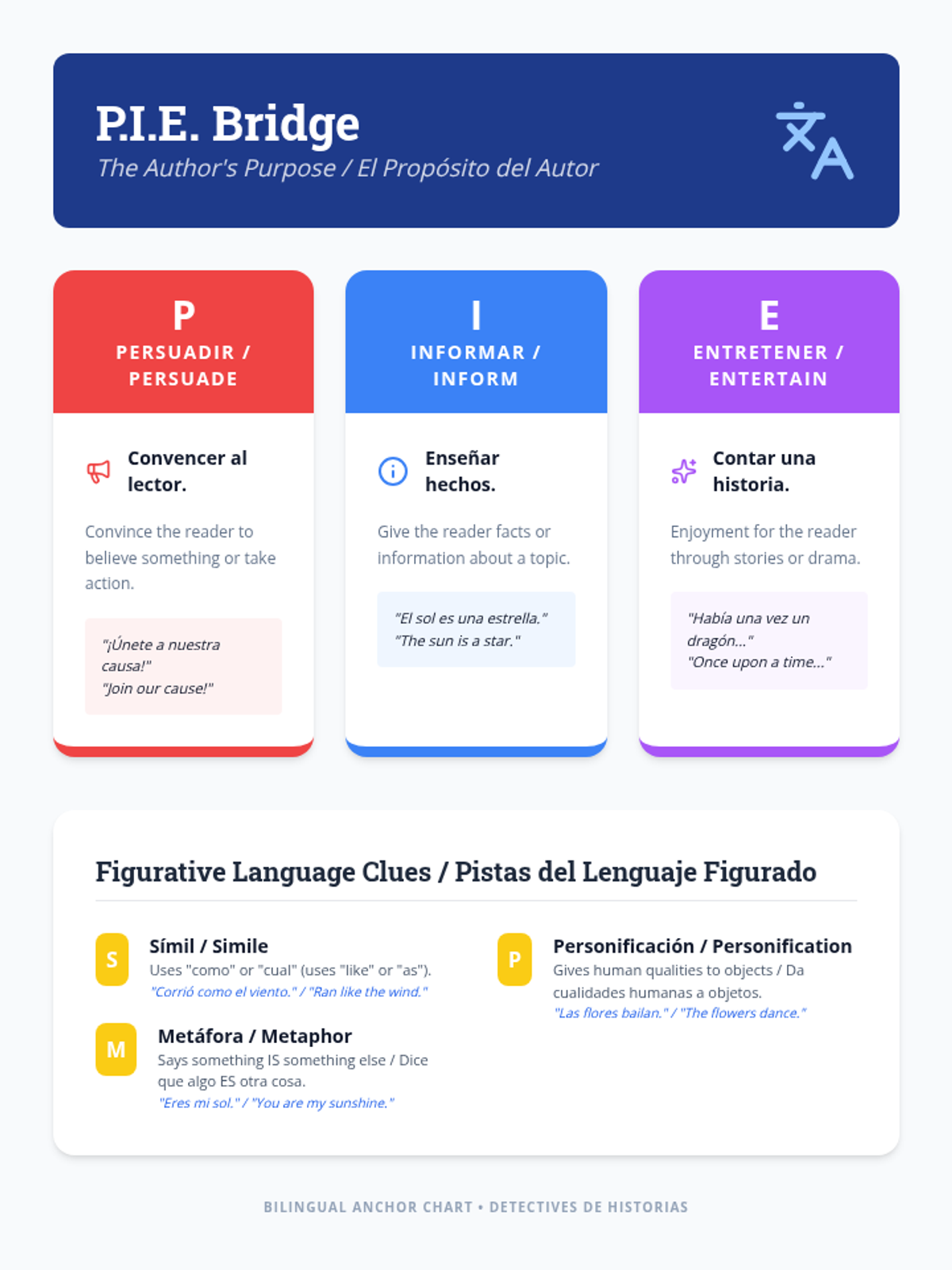
Una lección de 40 minutos diseñada para estudiantes de tercer grado sobre el propósito del autor, explorando textos persuasivos, informativos y narrativos con un enfoque especial en el lenguaje figurado.
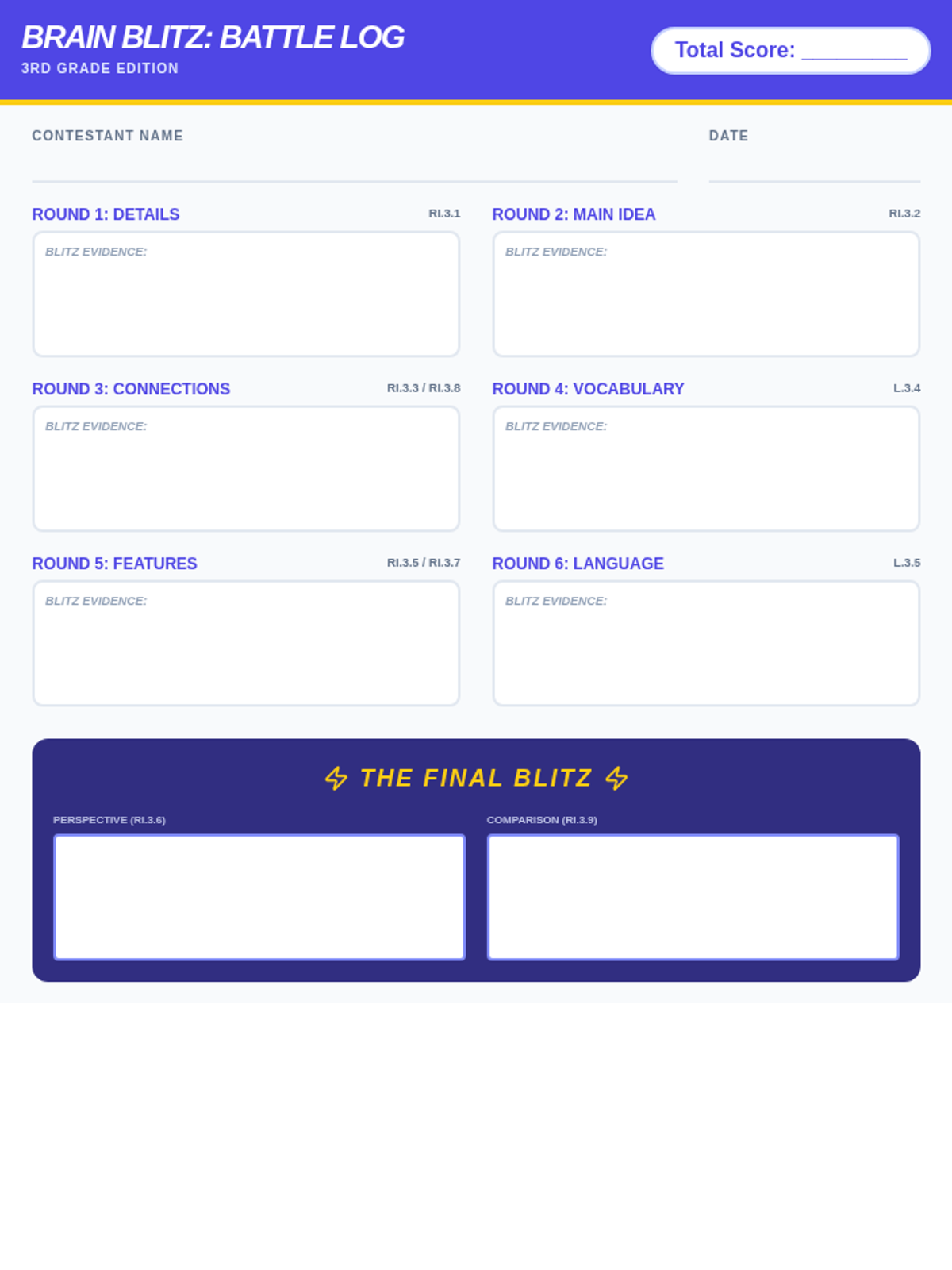
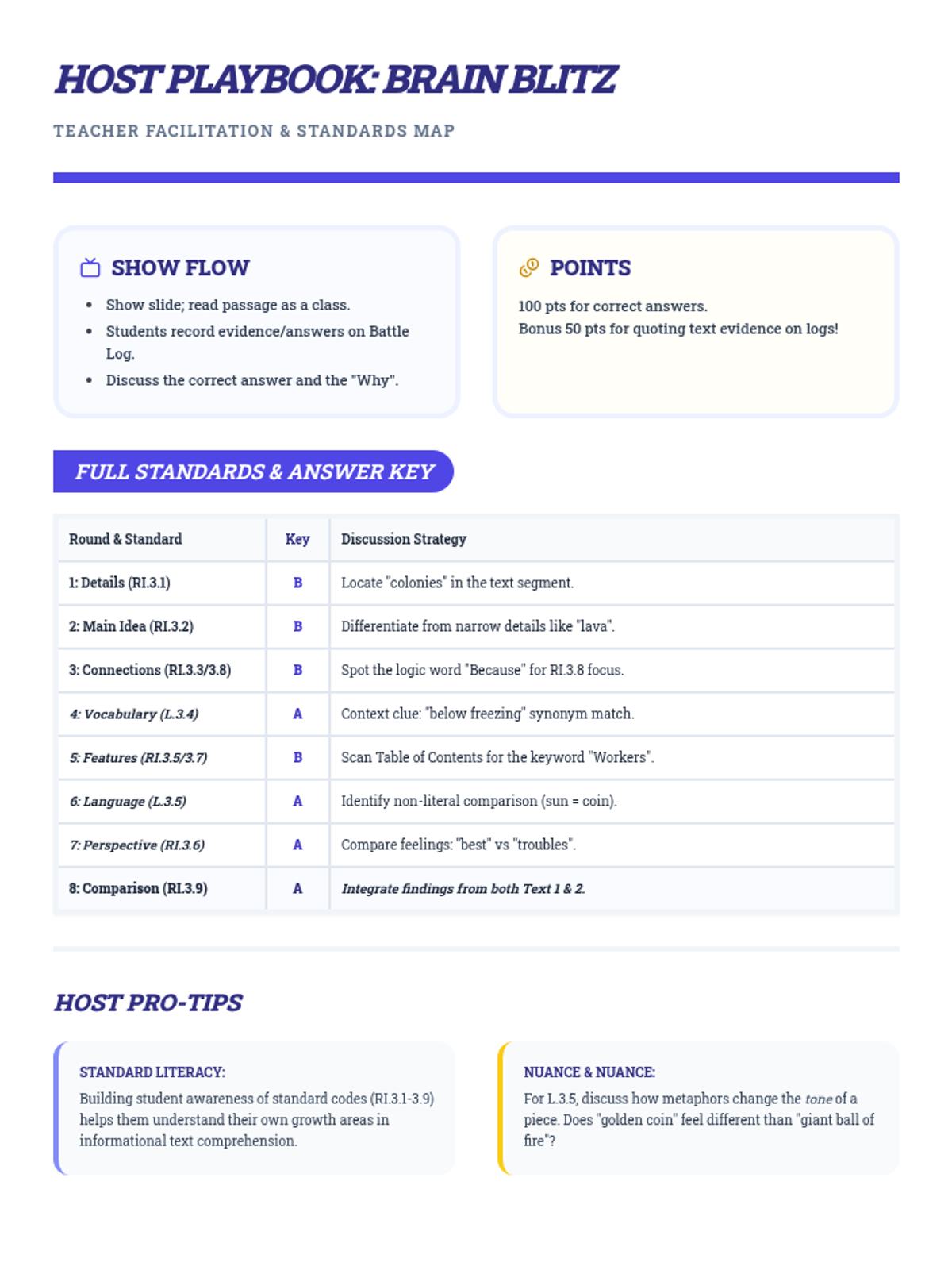
A high-energy, game-show style lesson where students test their knowledge of 3rd-grade informational text and language standards through animal science and nature topics.
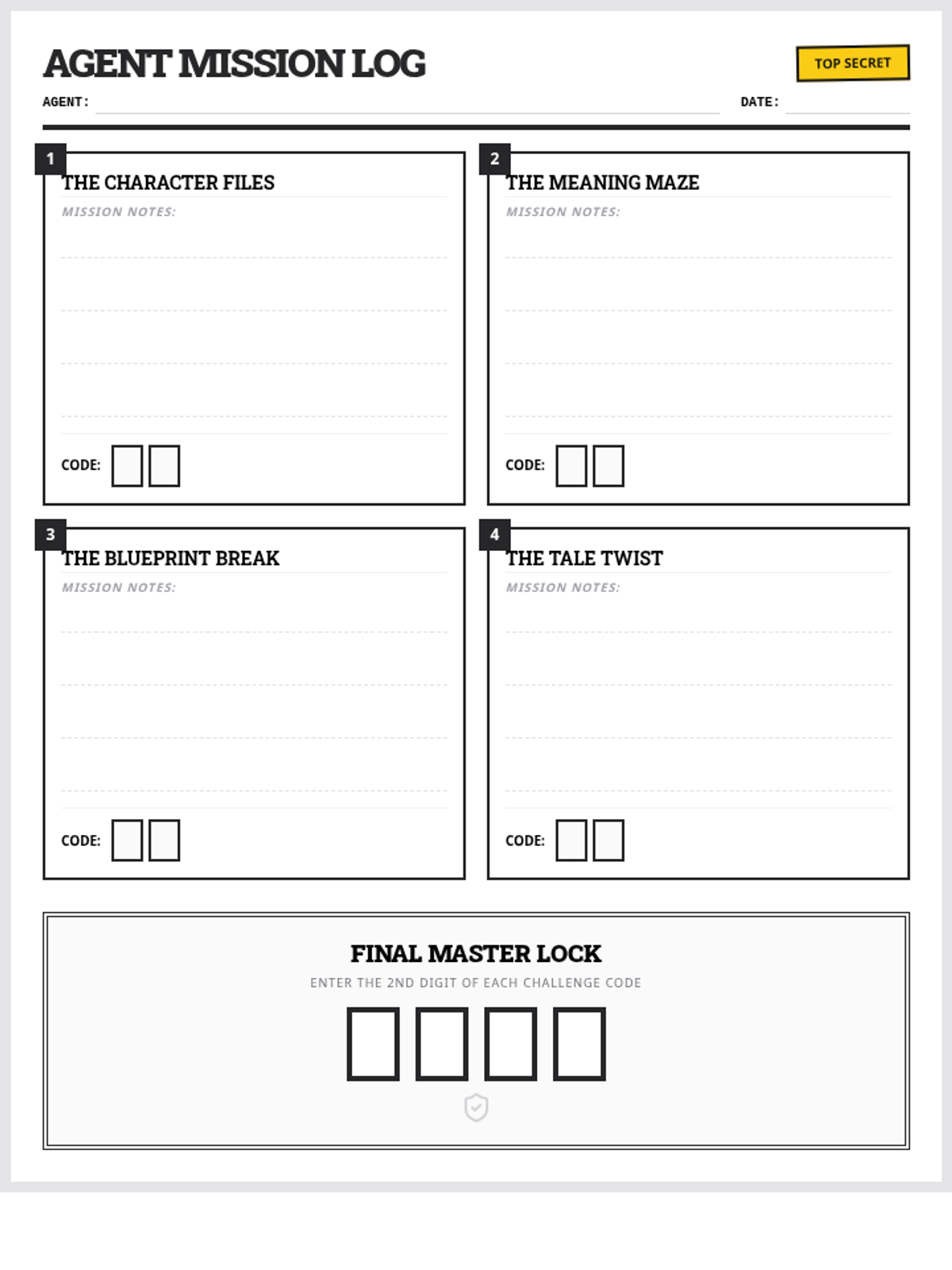
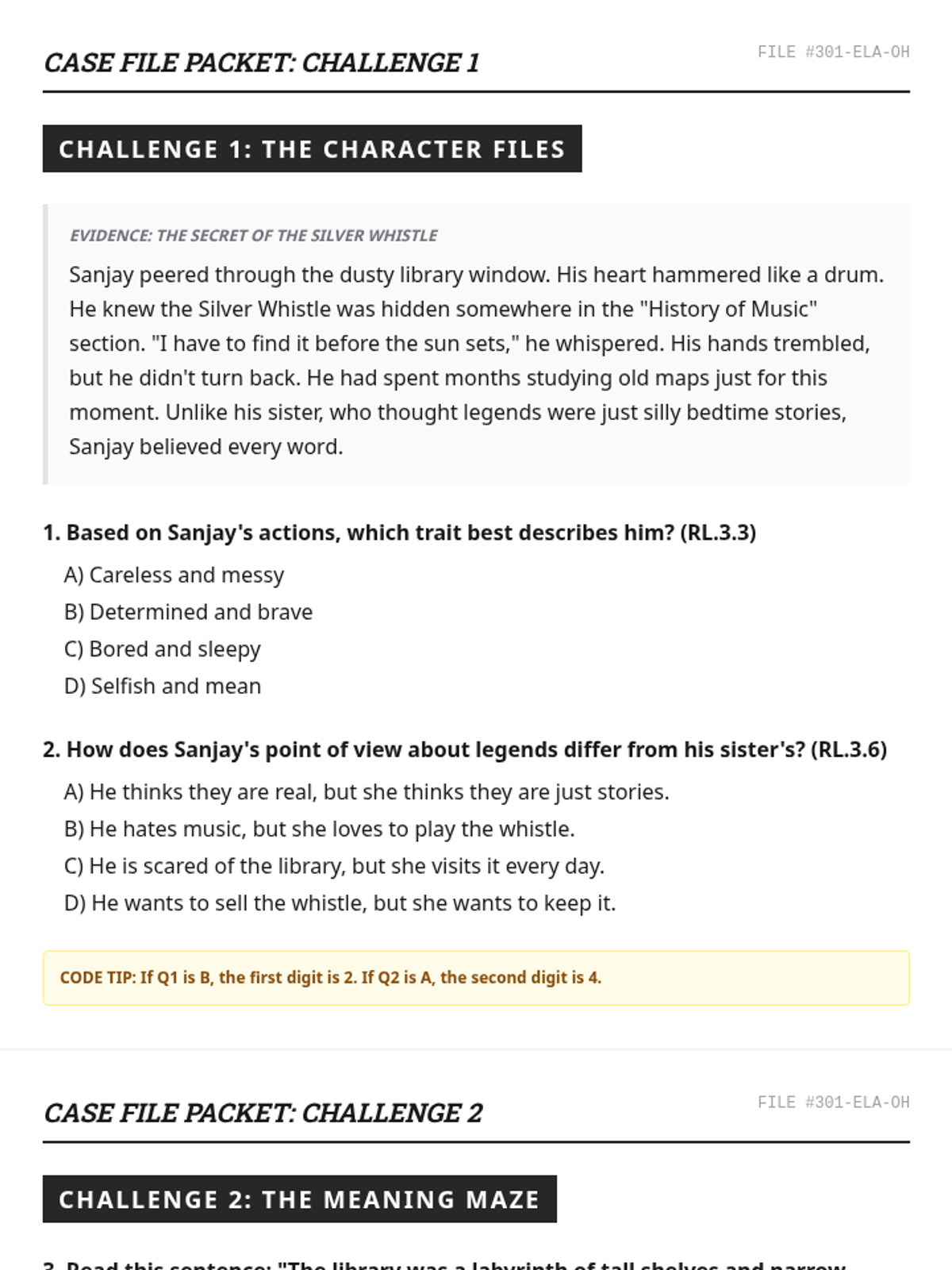
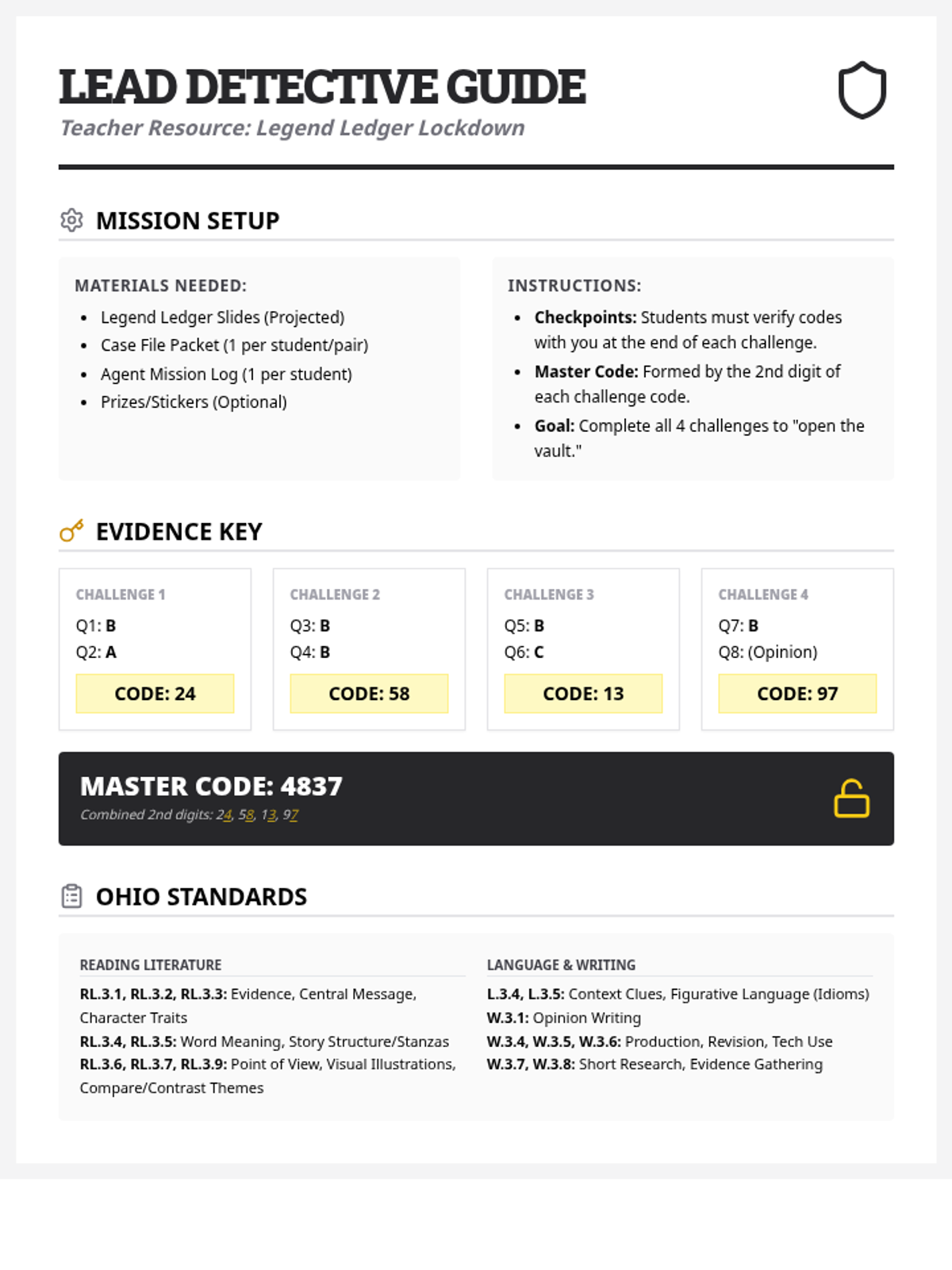
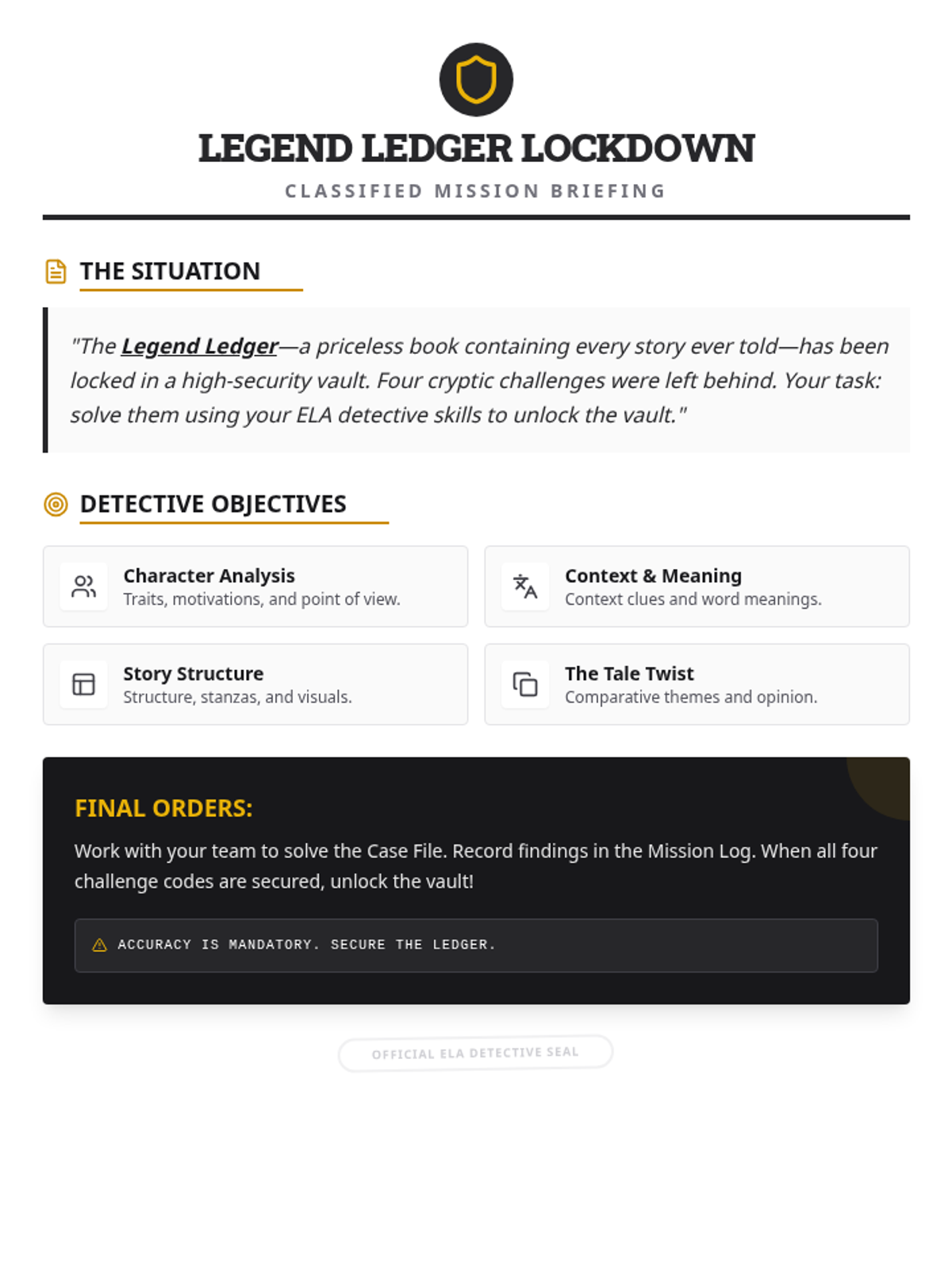
A detective-themed ELA test prep escape room where students solve challenges based on 3rd grade reading and writing standards to unlock the library's lost ledger.
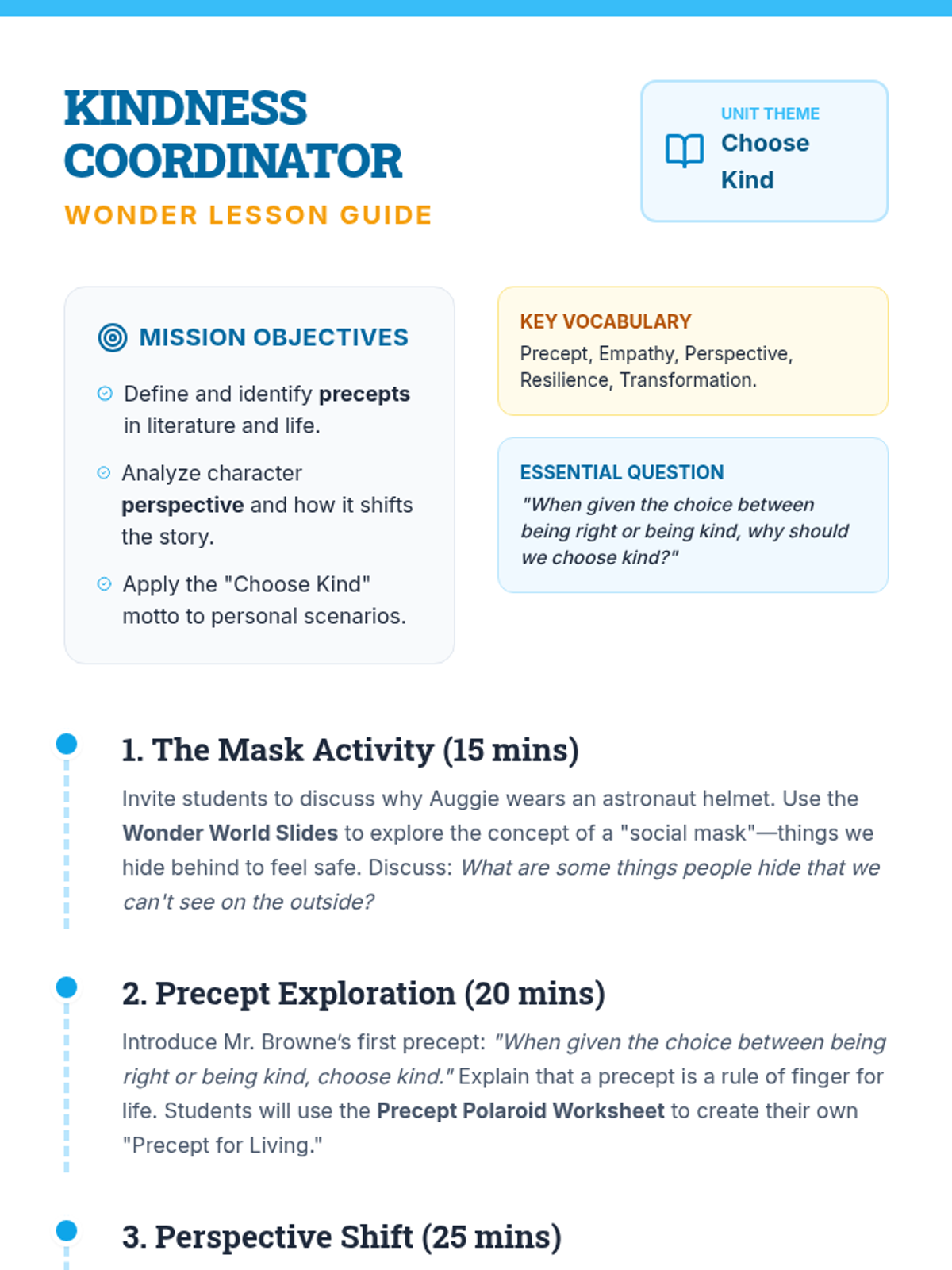
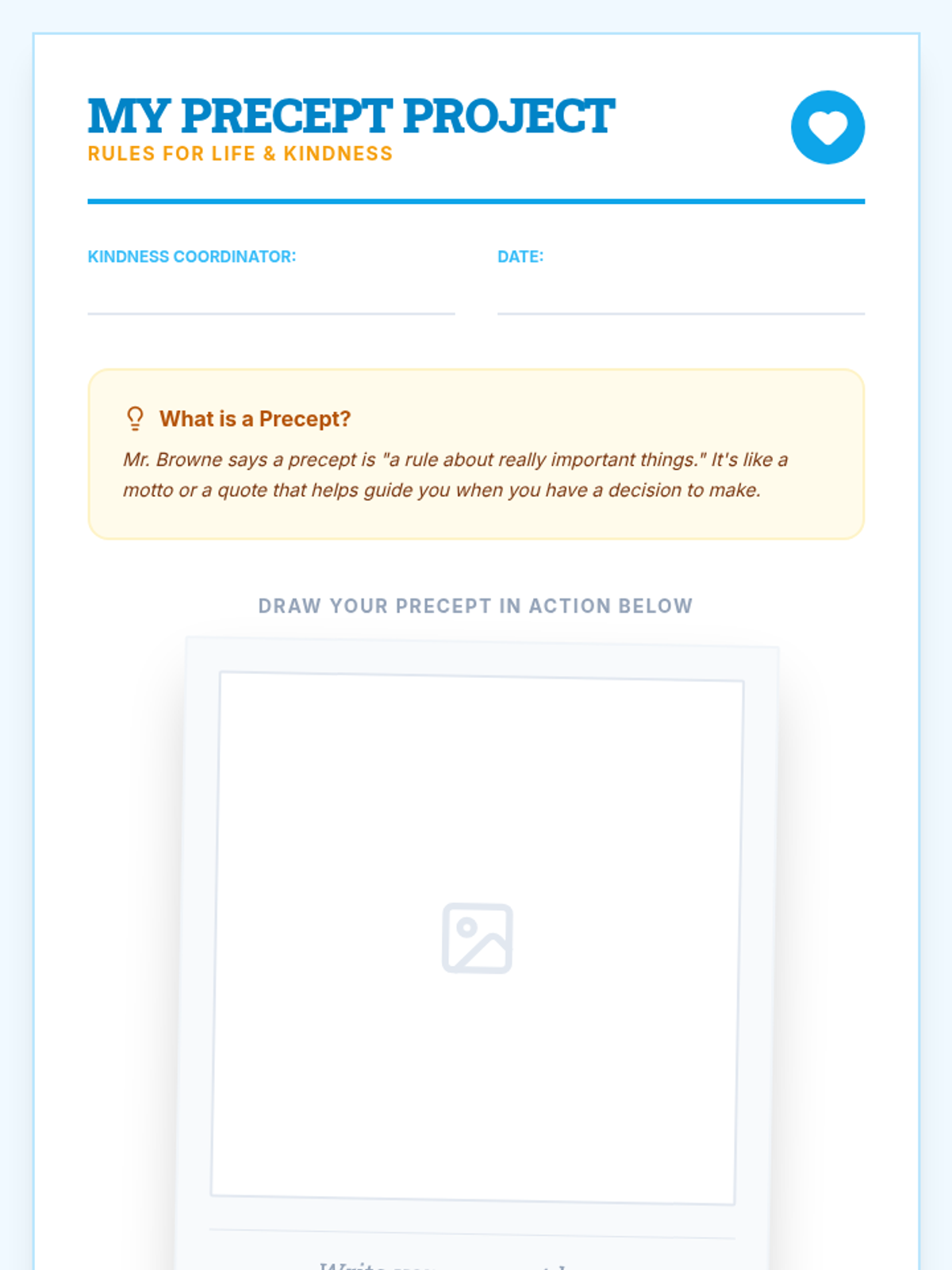
In this lesson focused on R.J. Palacio's 'Wonder', students explore the core themes of kindness and perspective. Through the lens of Mr. Browne’s Precepts, they analyze character motivations and practice 'choosing kind' in their own lives while developing empathy by seeing the world through Auggie Pullman’s eyes.
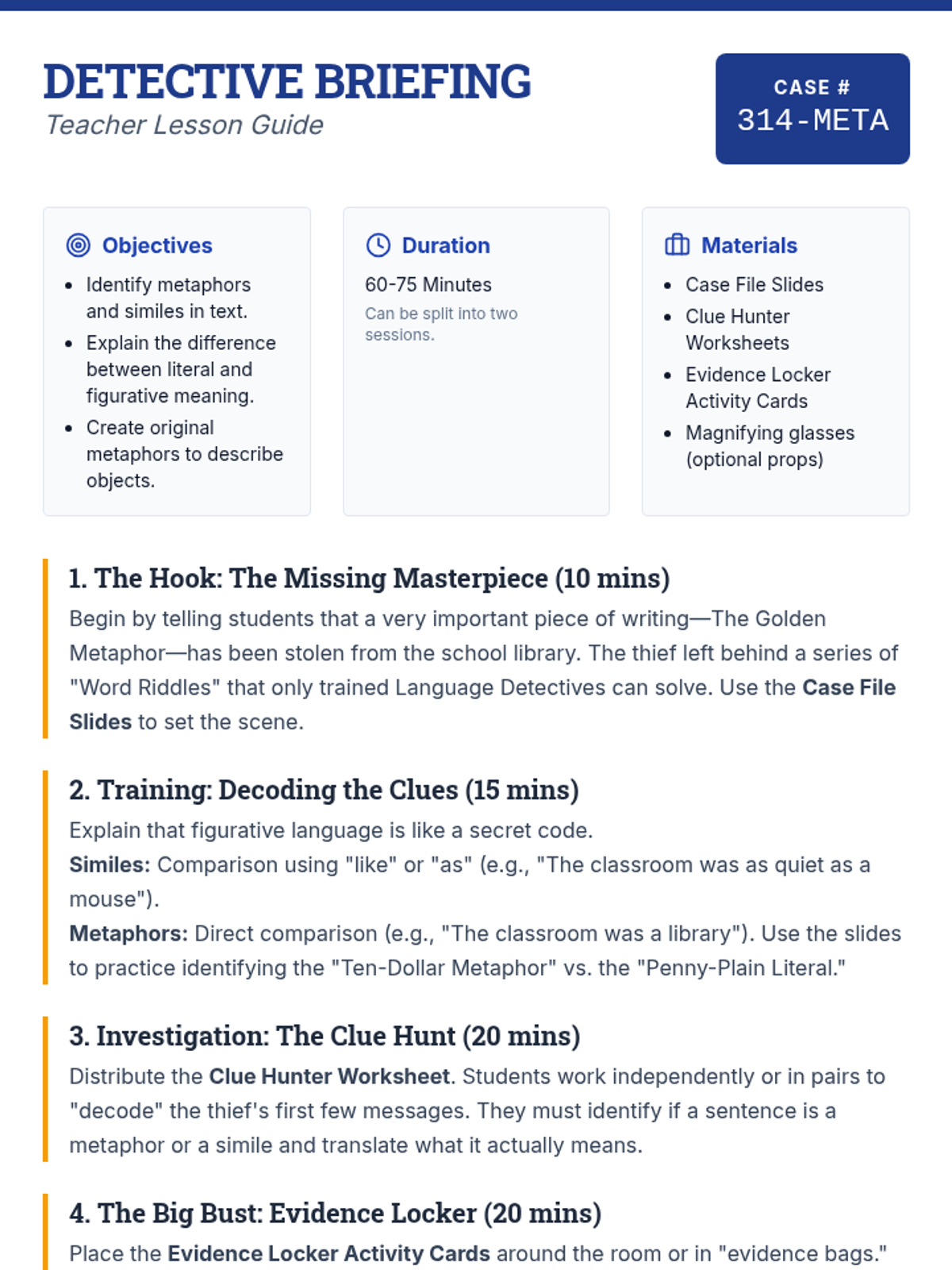
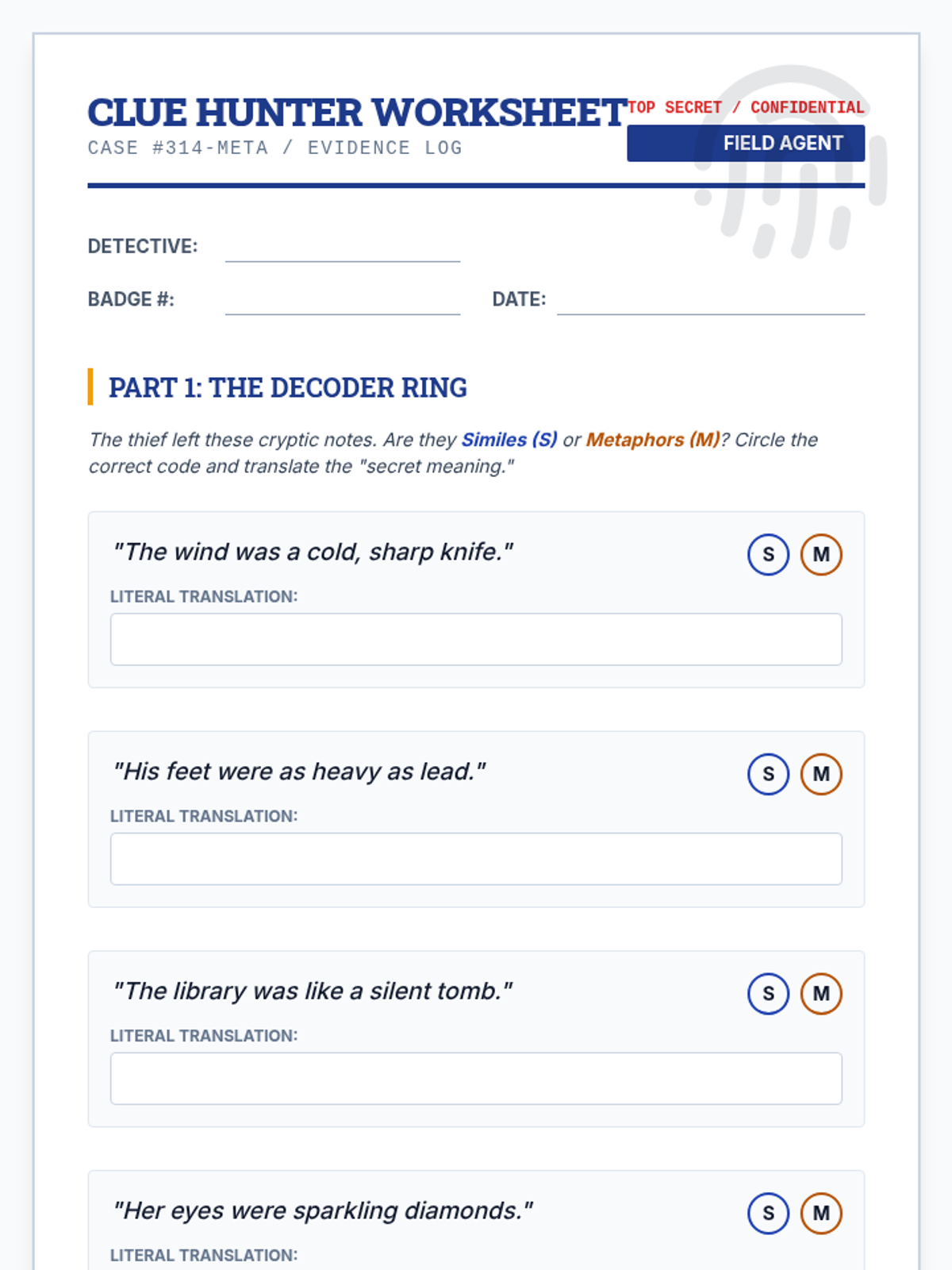
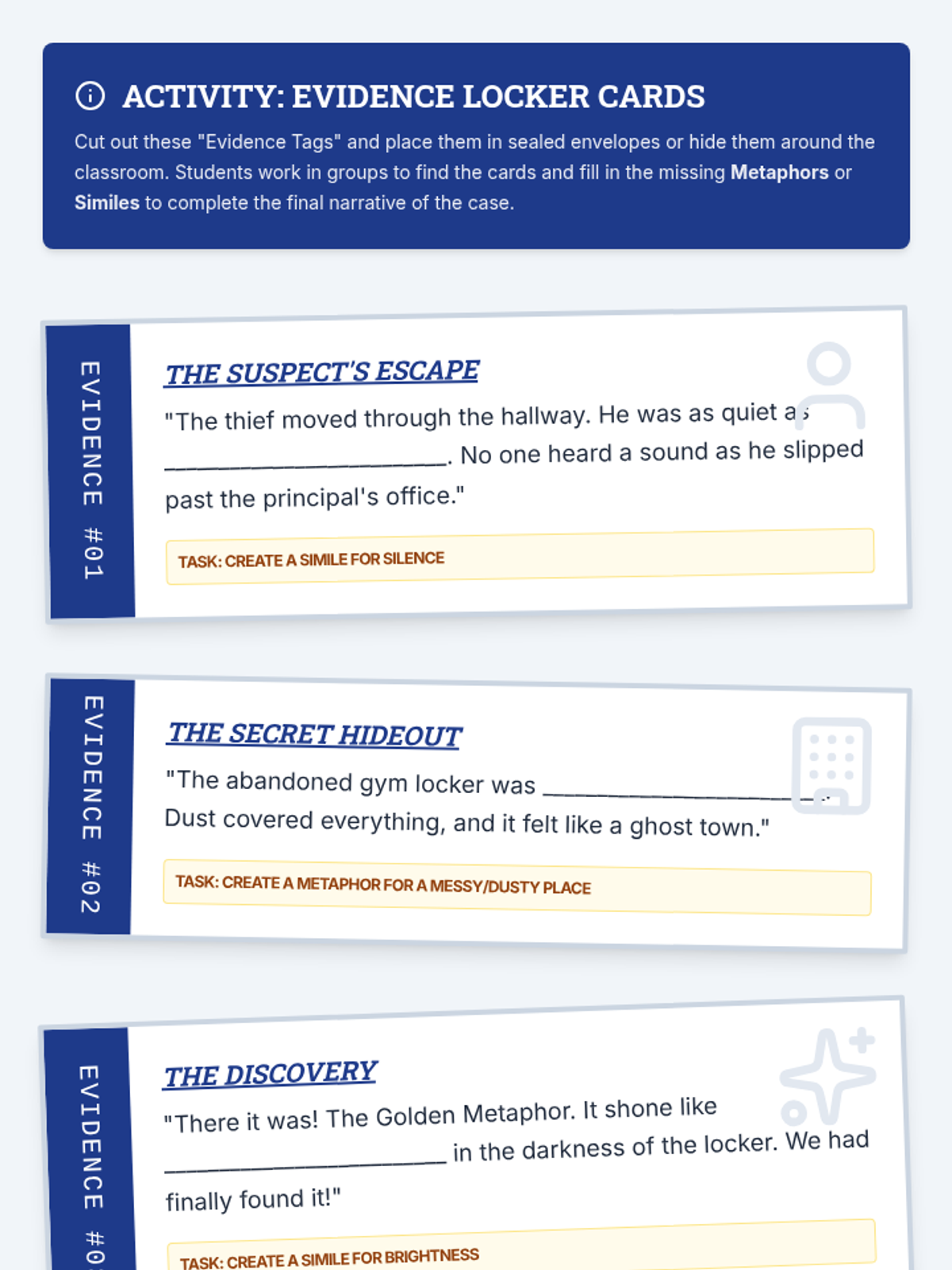
In this detective-themed lesson, students solve a classroom mystery by decoding and creating figurative language. They explore metaphors and similes to unlock clues and complete a collaborative narrative, transforming from students into 'Language Detectives.'
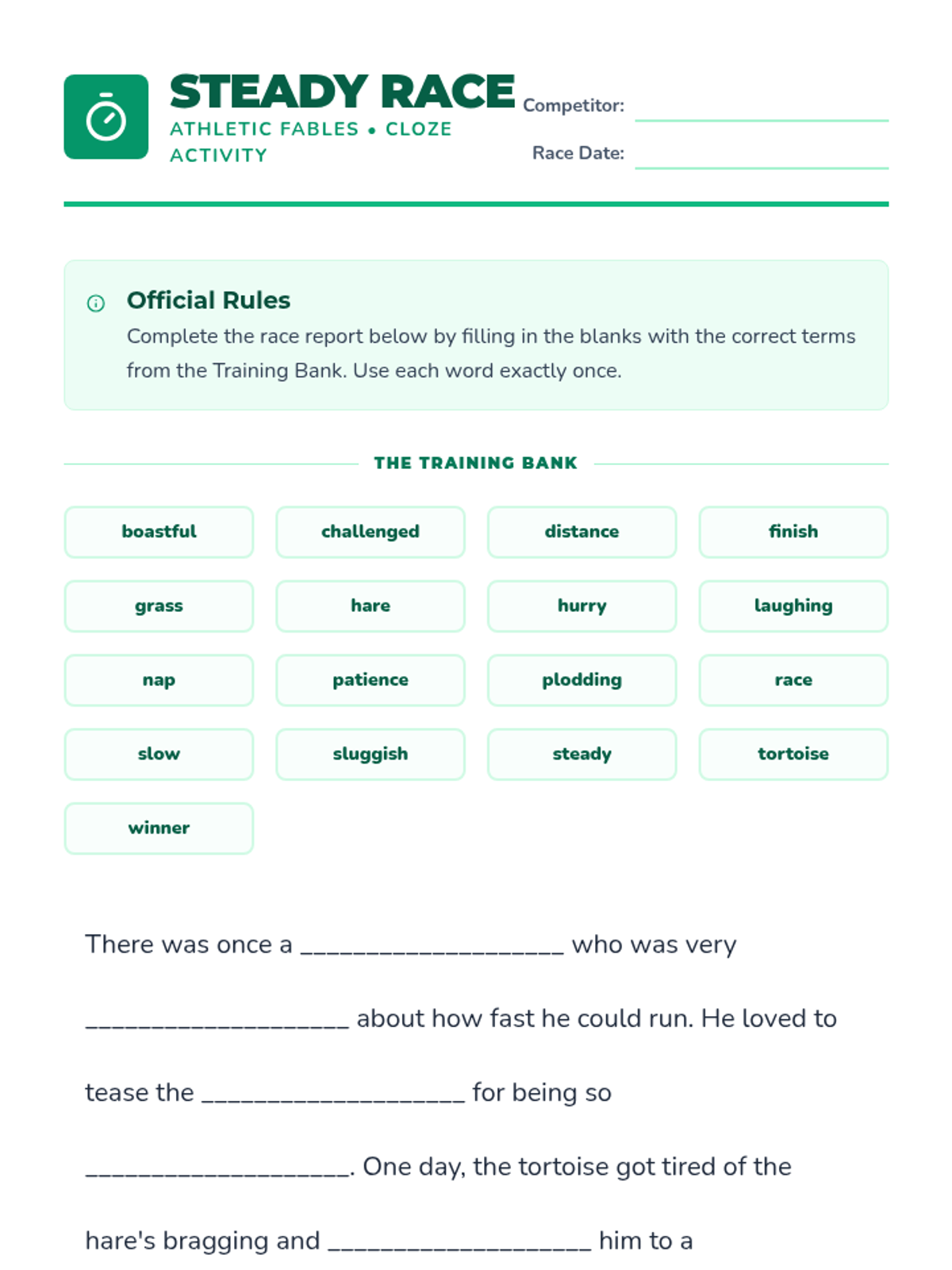
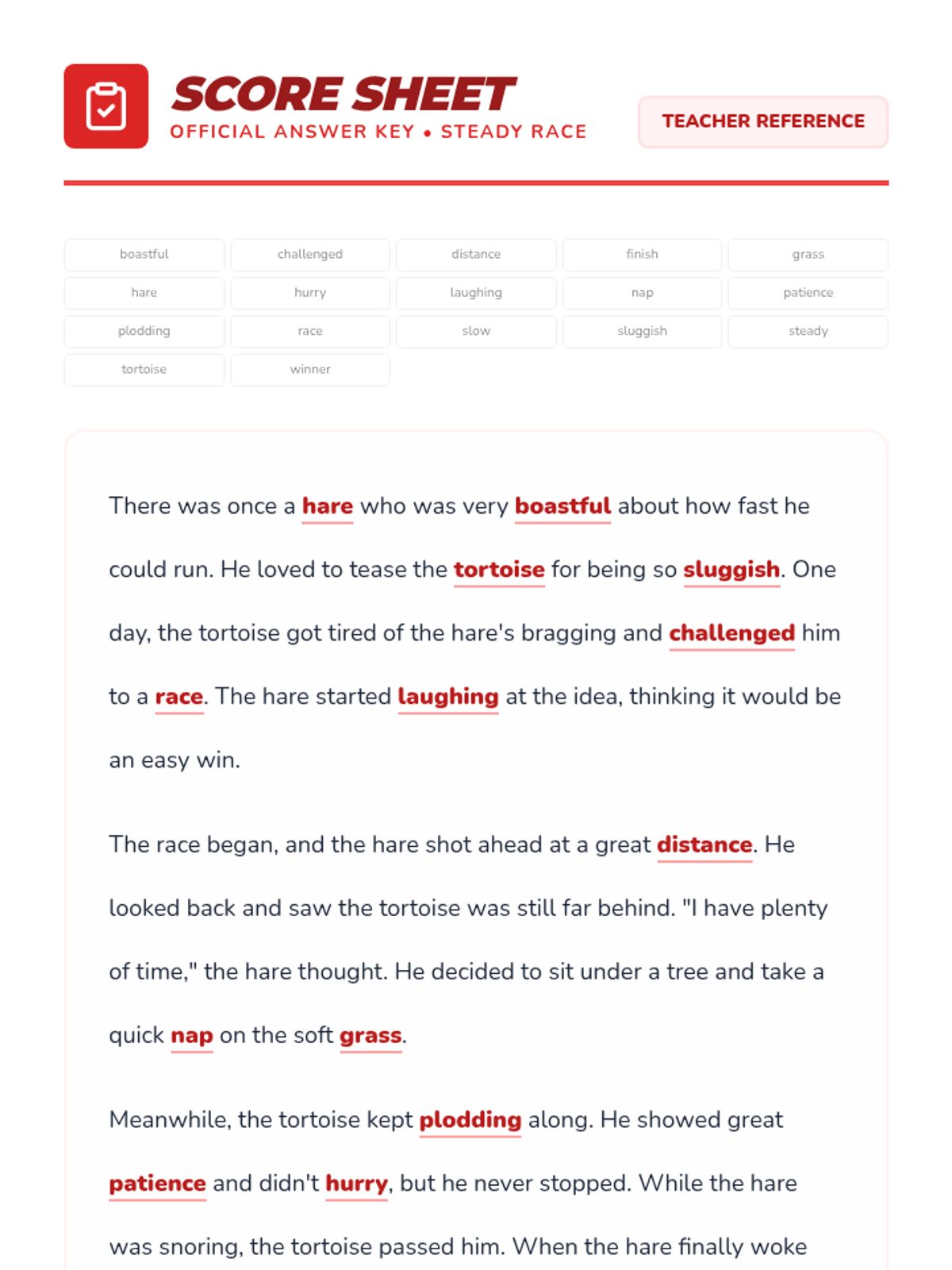
A lesson focused on reading comprehension and the value of persistence through the classic fable of 'The Tortoise and the Hare'. Students complete the story using context clues and reflect on its message.
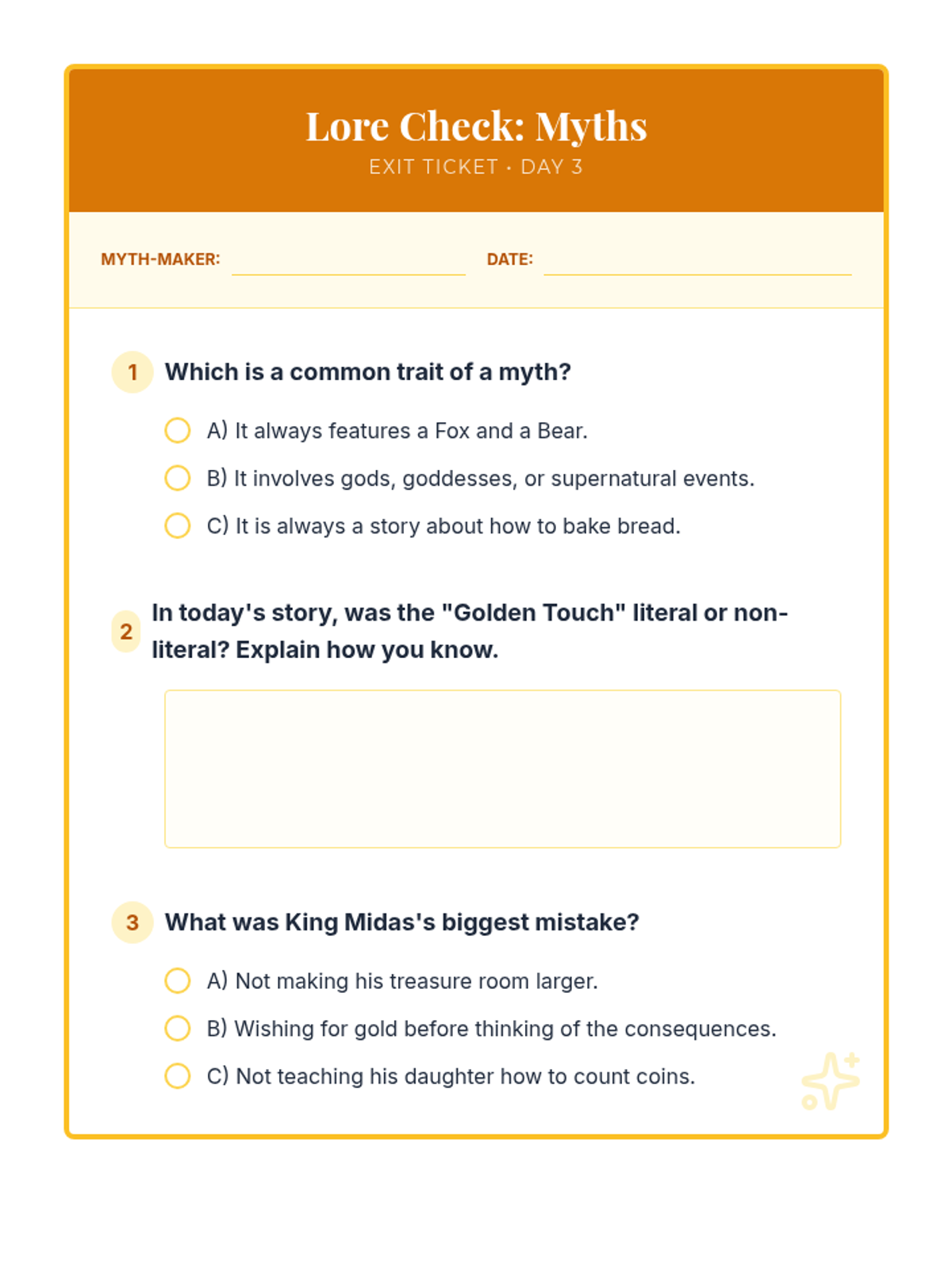
A comprehensive summative assessment covering all three standards through multiple-choice and short-response questions.
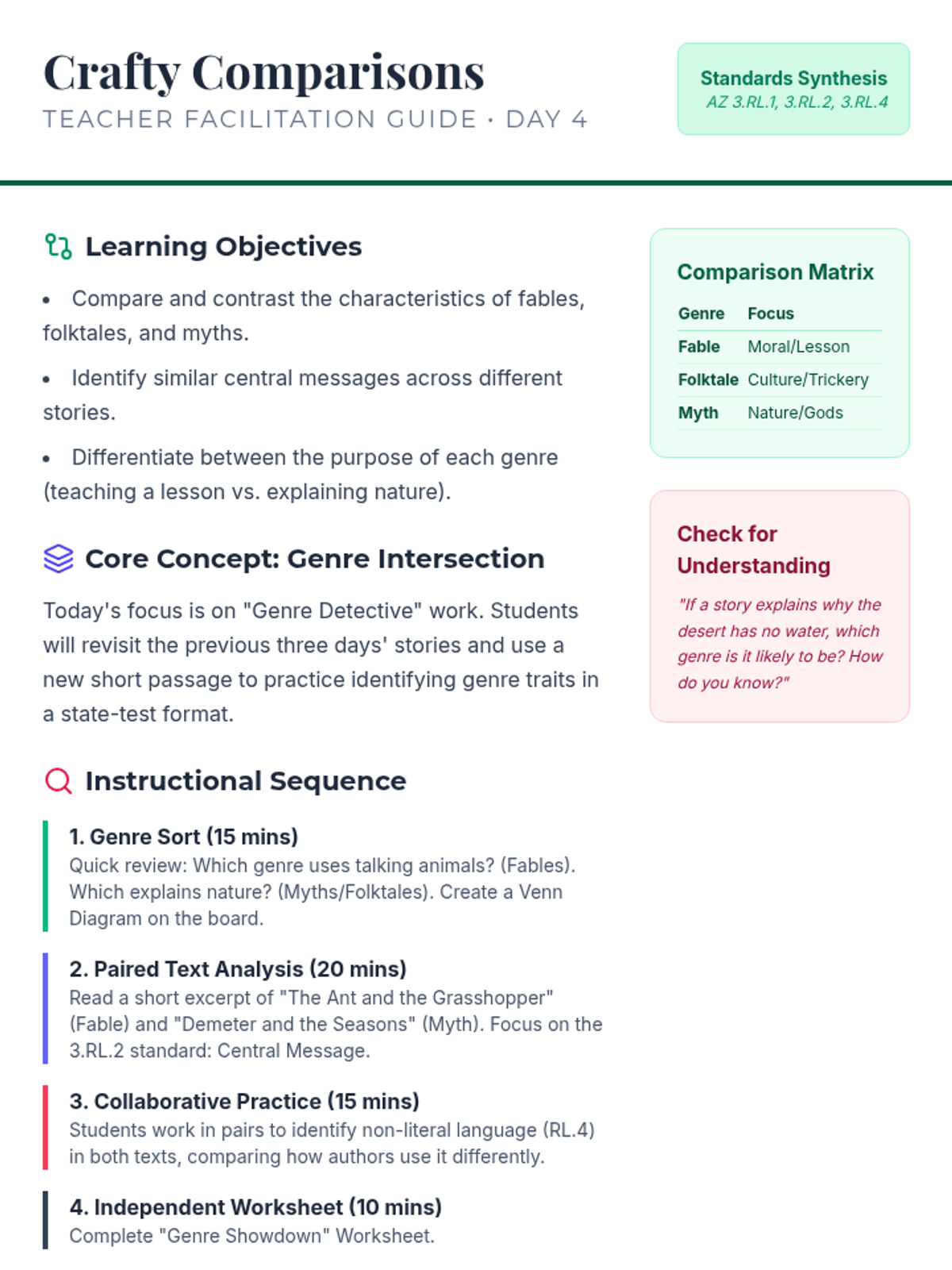
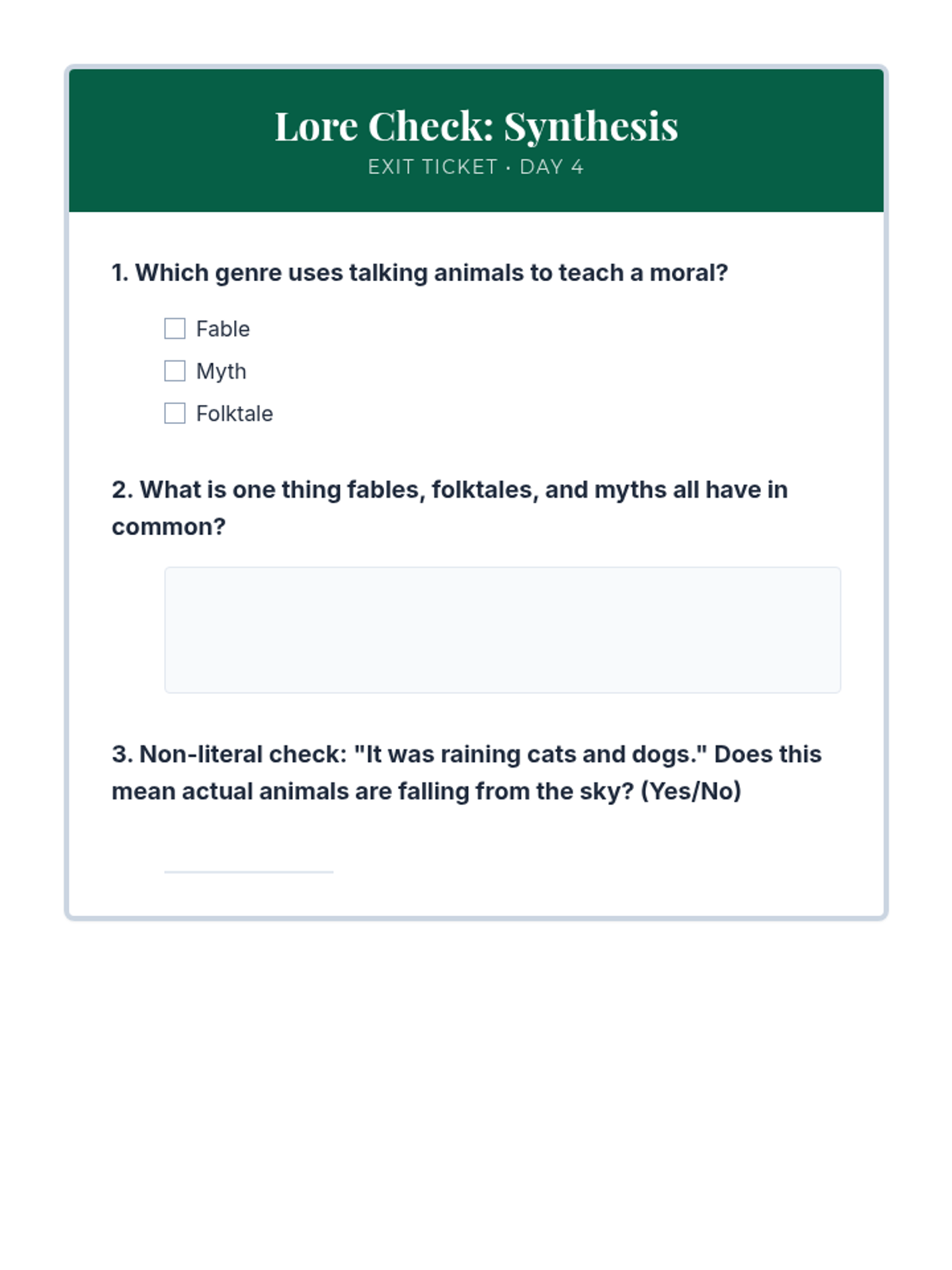
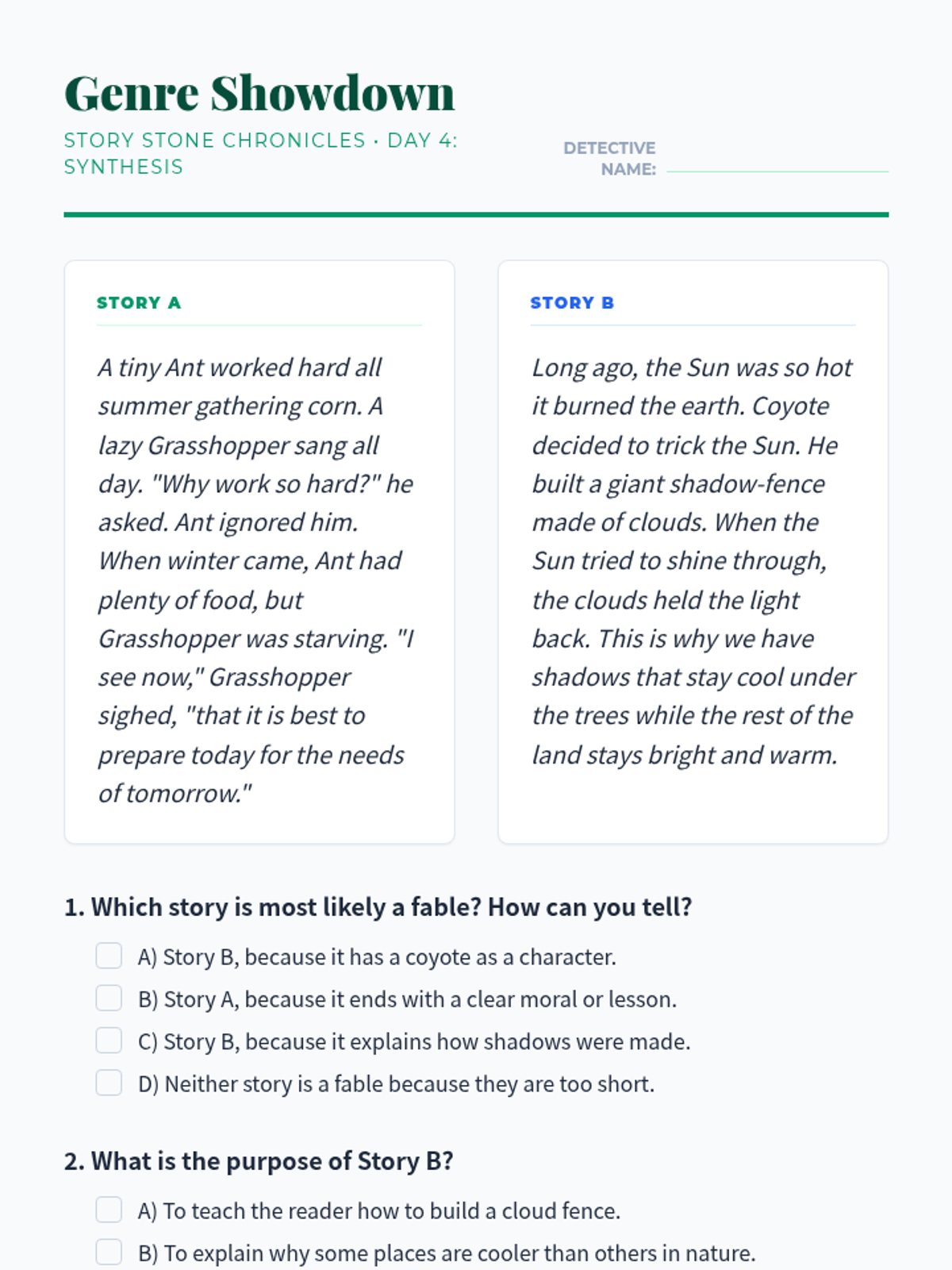
Synthesizes knowledge of fables, folktales, and myths by comparing characters and themes across different stories.
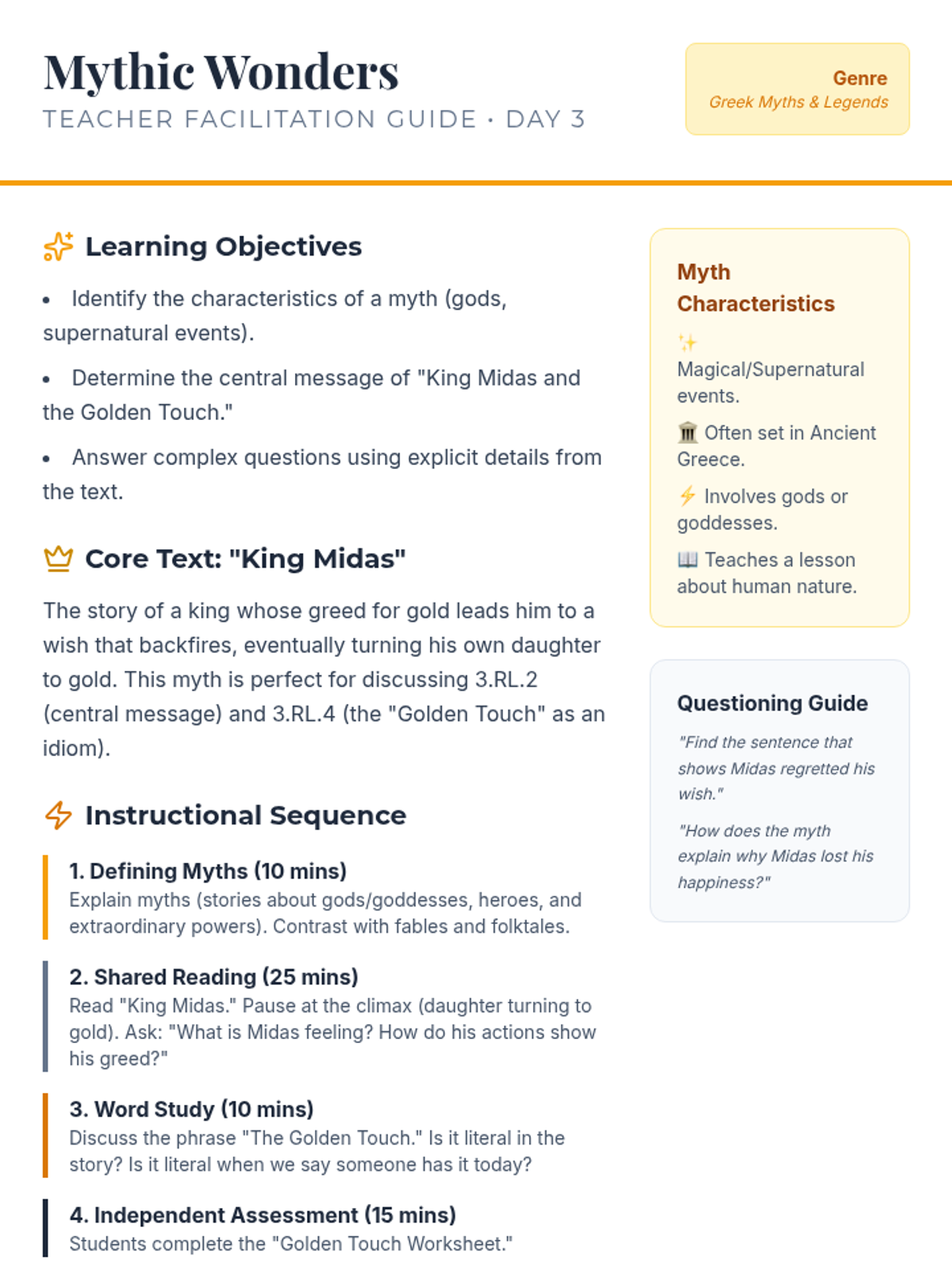
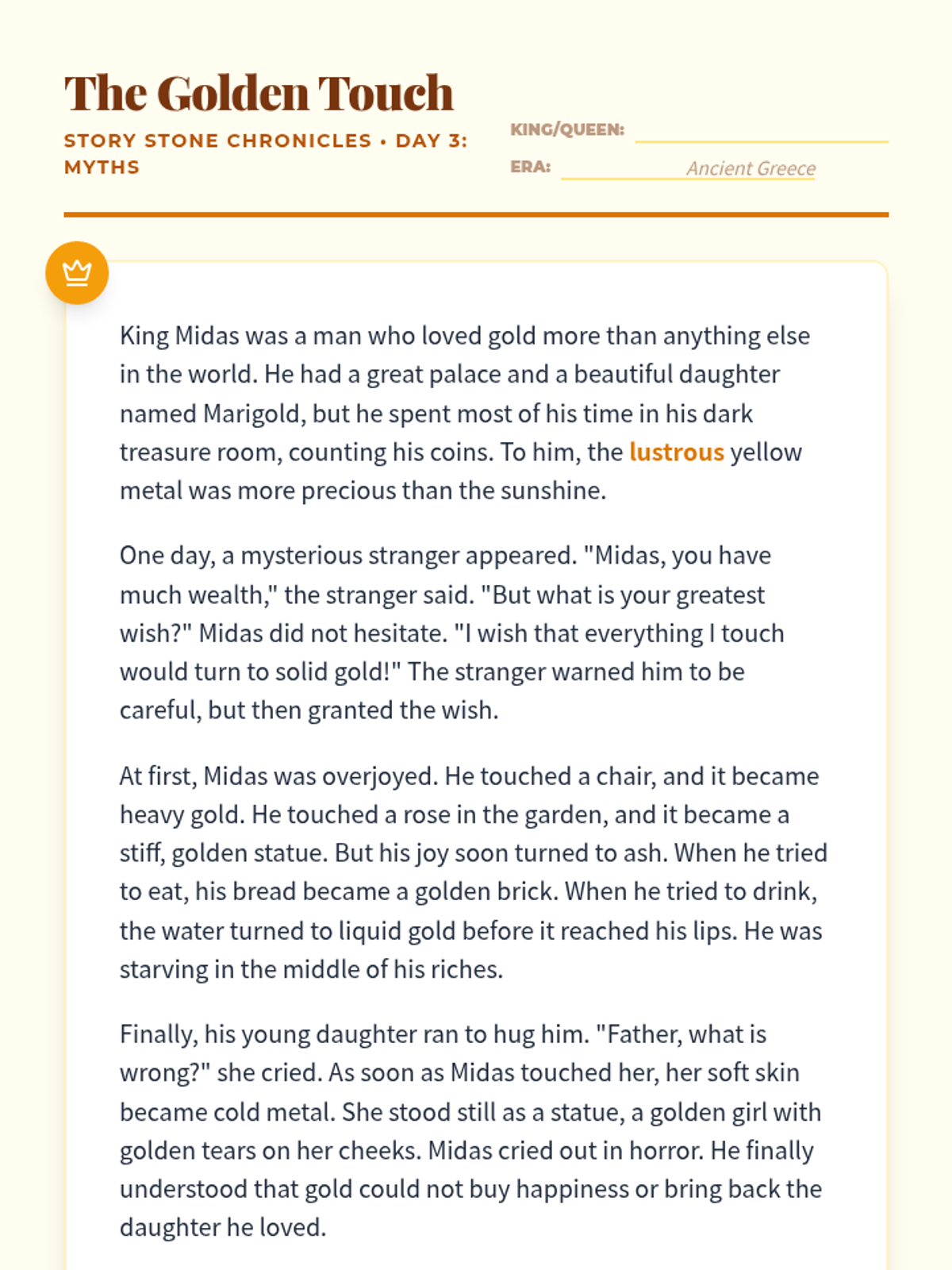
Analyzes Greek and cultural myths to understand how they explain natural events, emphasizing text evidence to support claims.
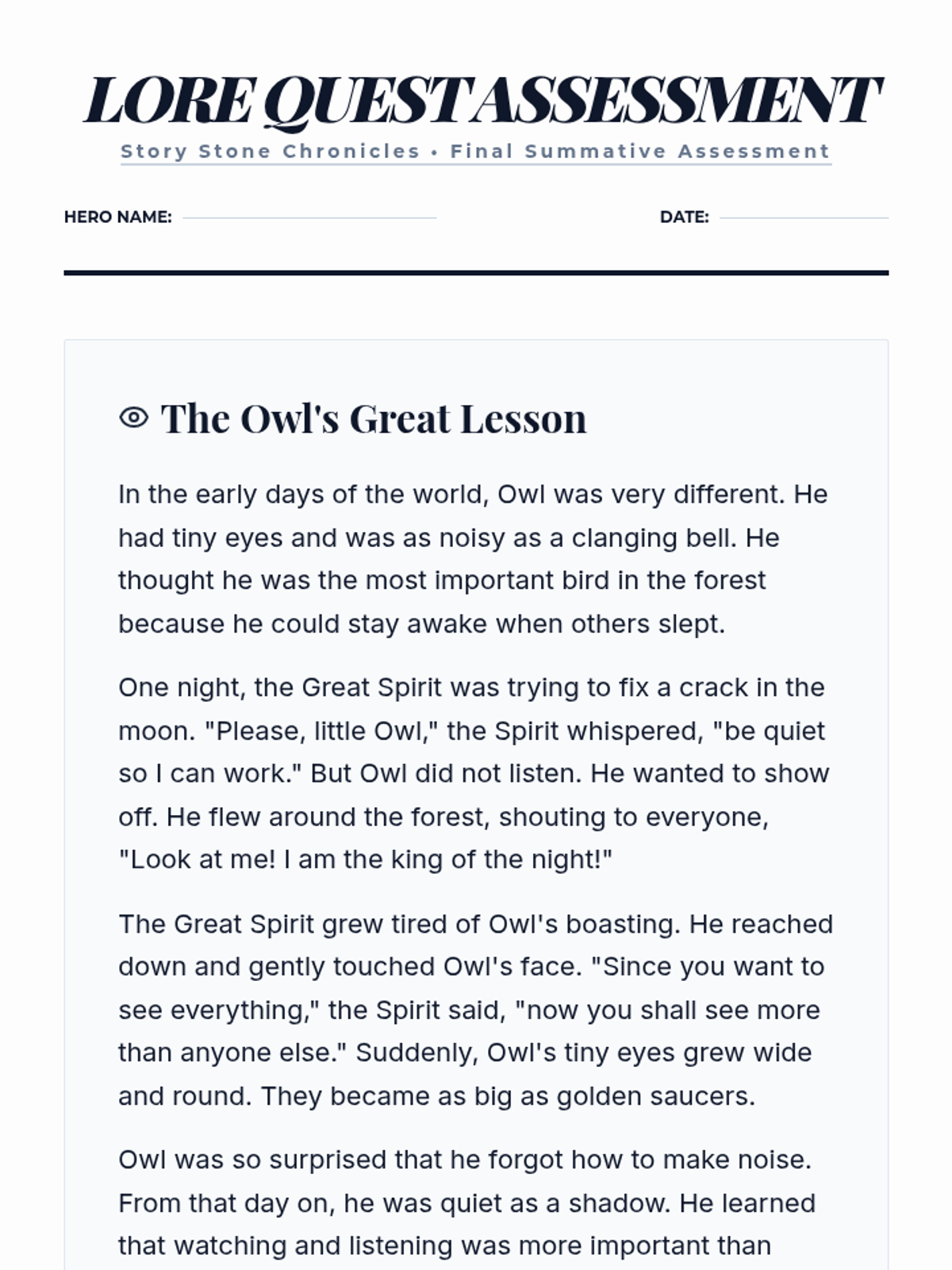
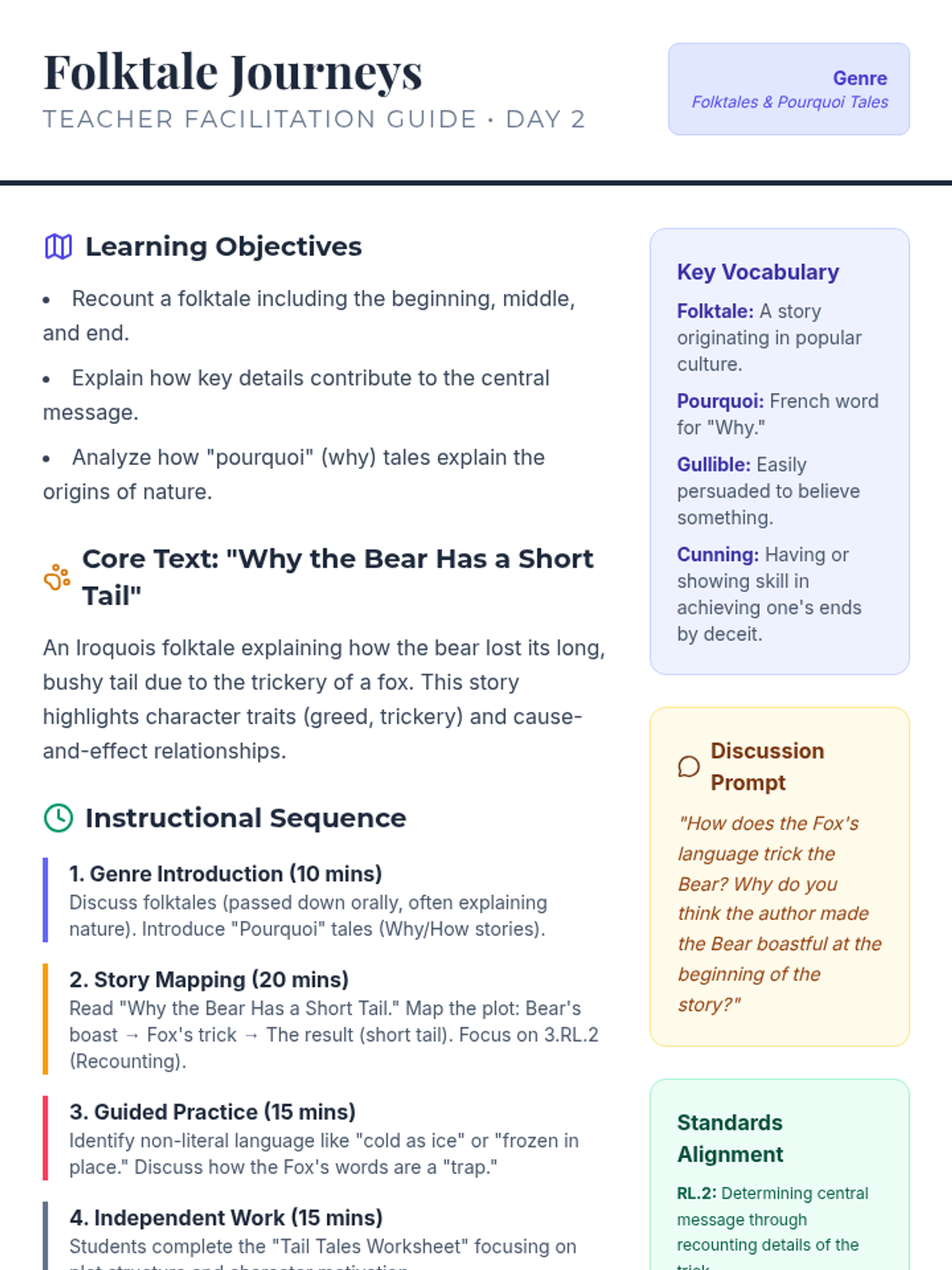
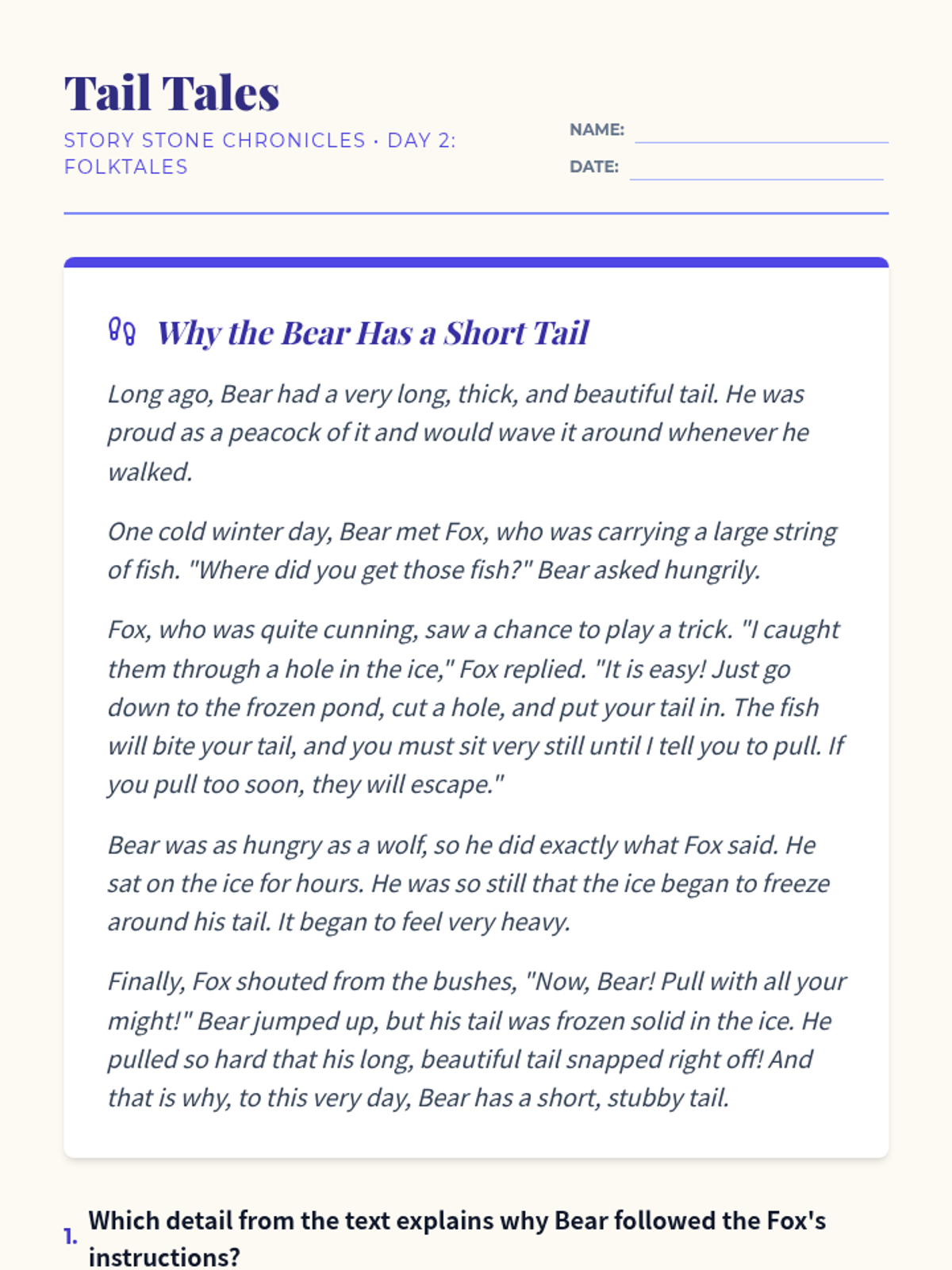
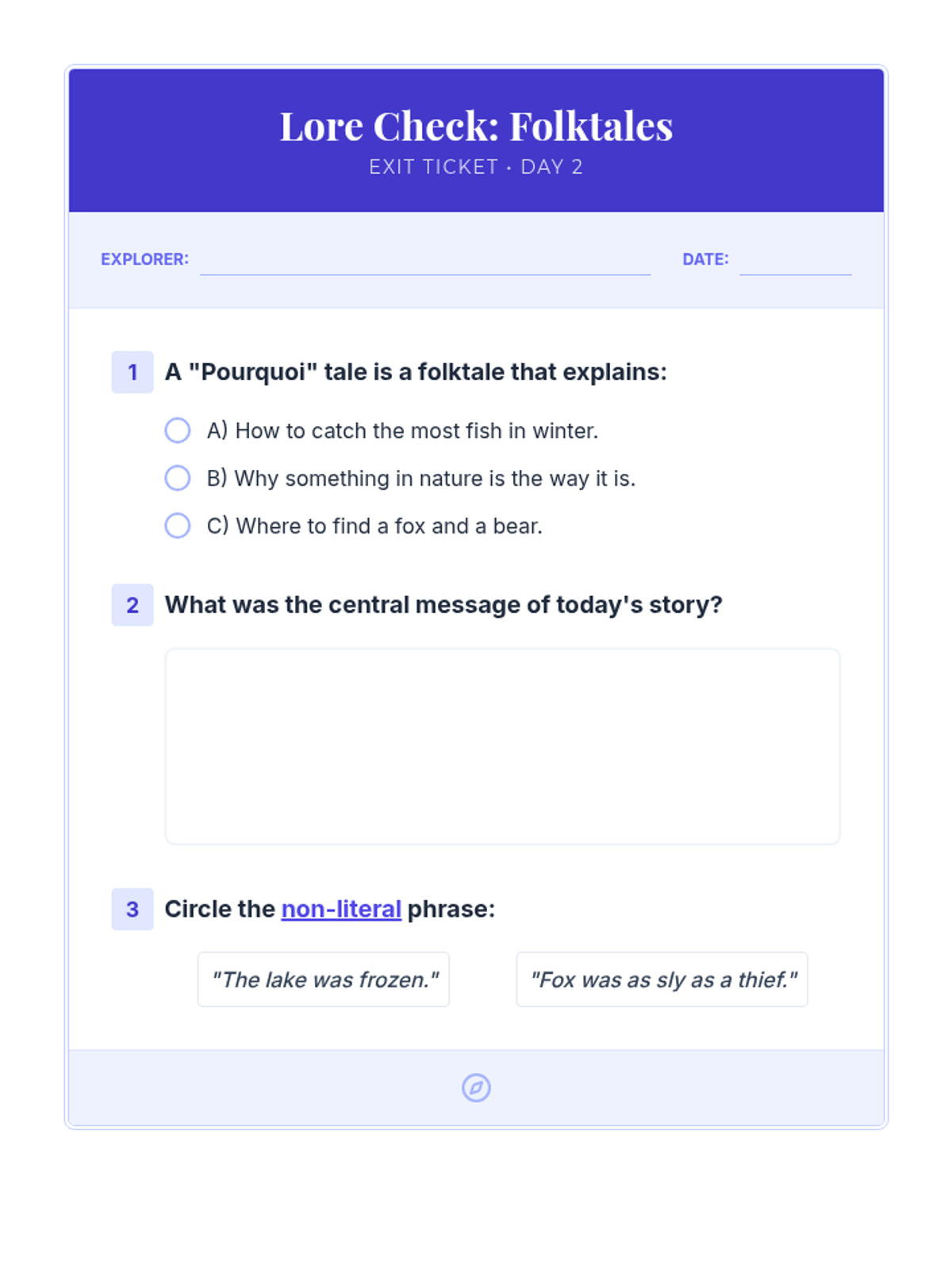
Explores pourquoi tales and folktales, focusing on recounting key details and explaining how the story conveys a central message.
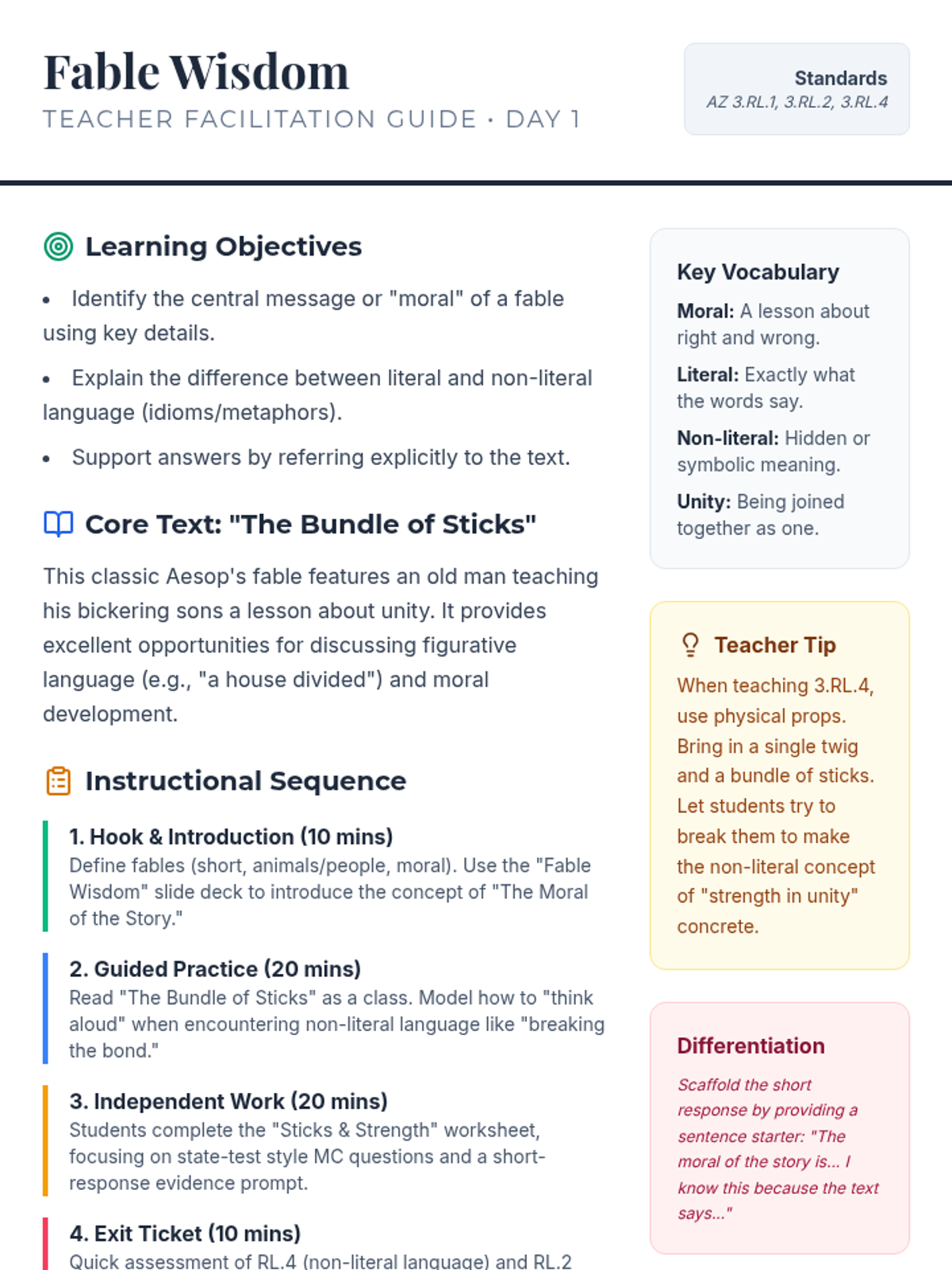
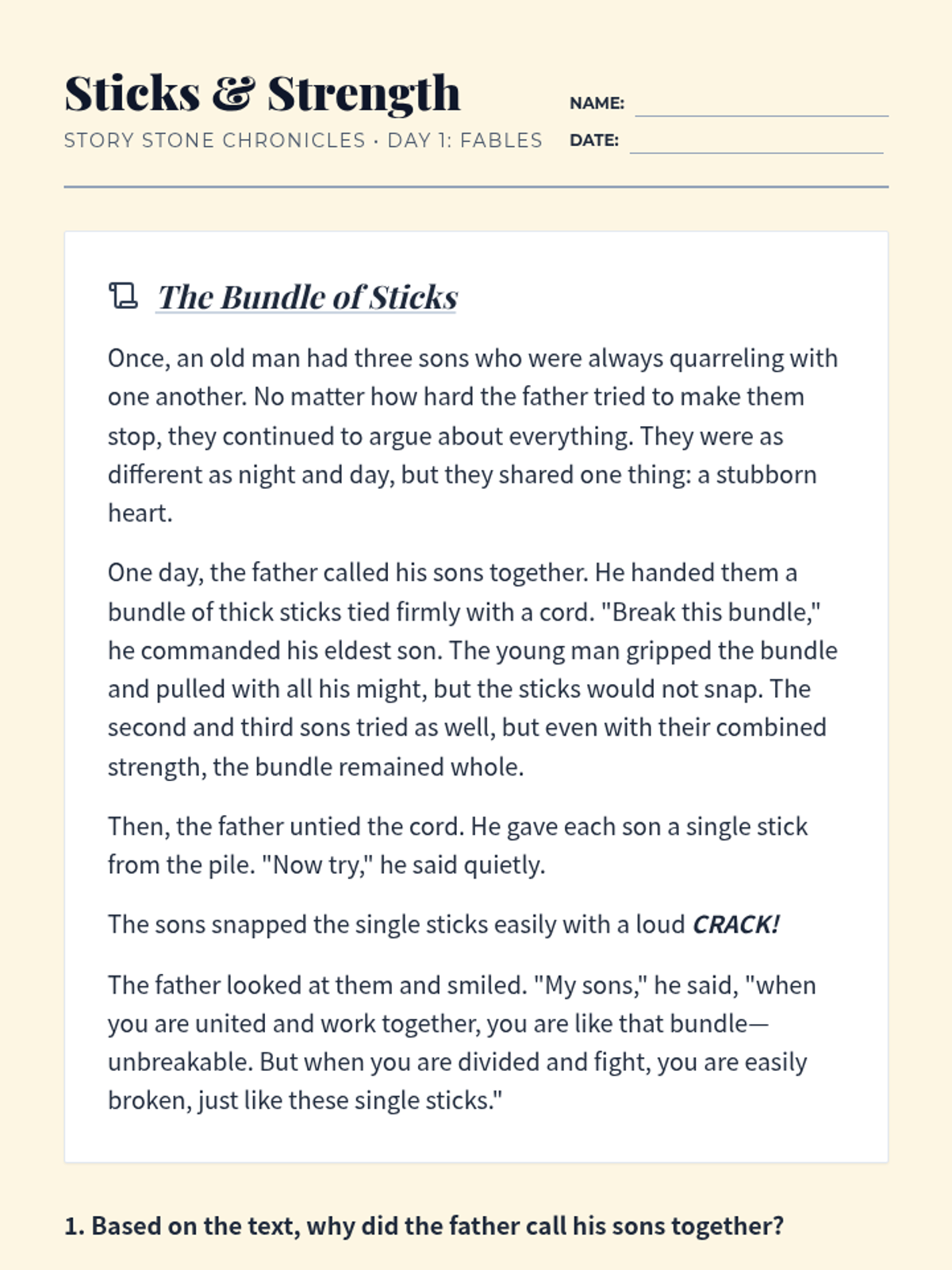
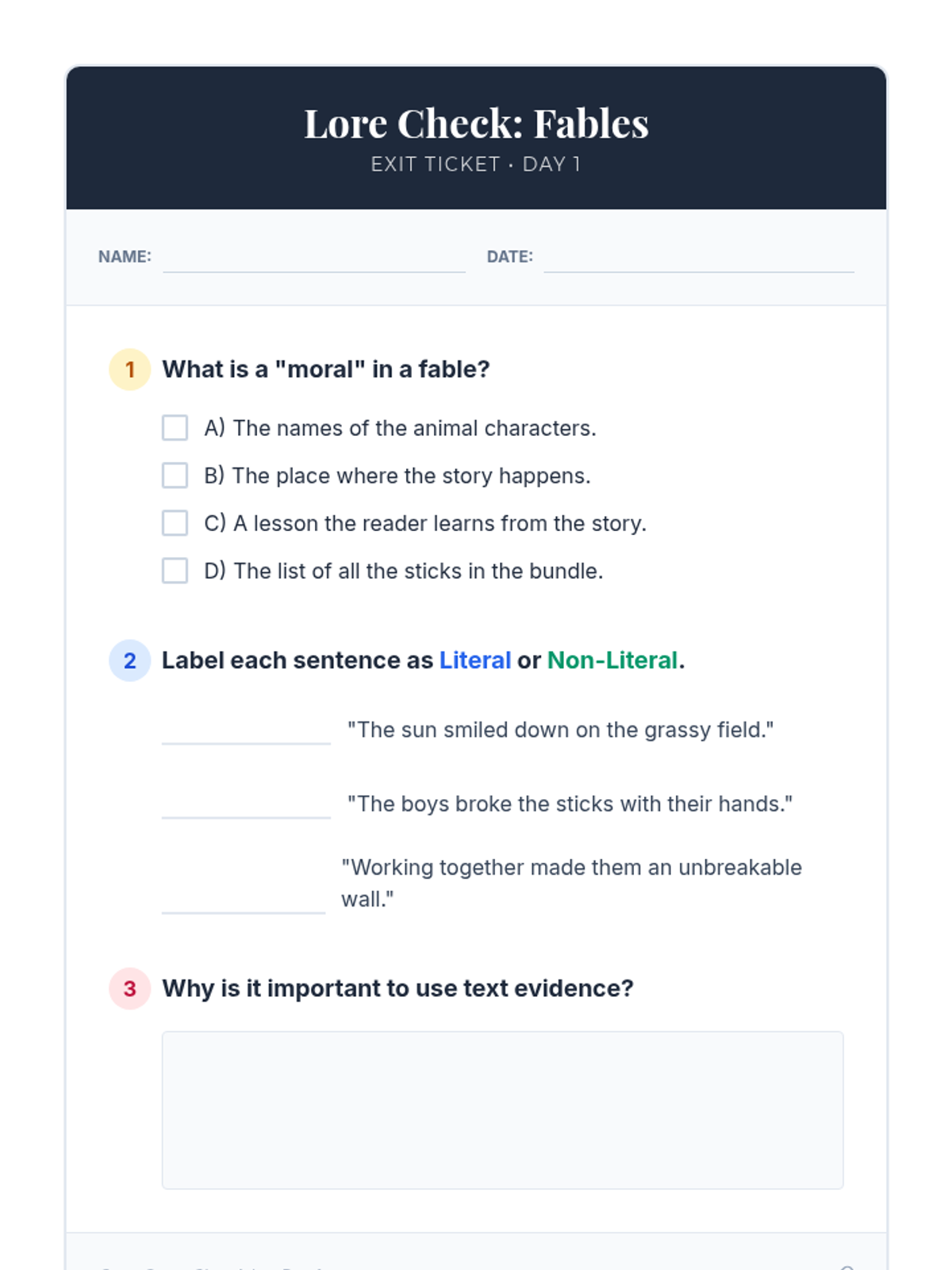
Focuses on identifying the moral of a fable and distinguishing between literal and non-literal language in Aesop's tales.
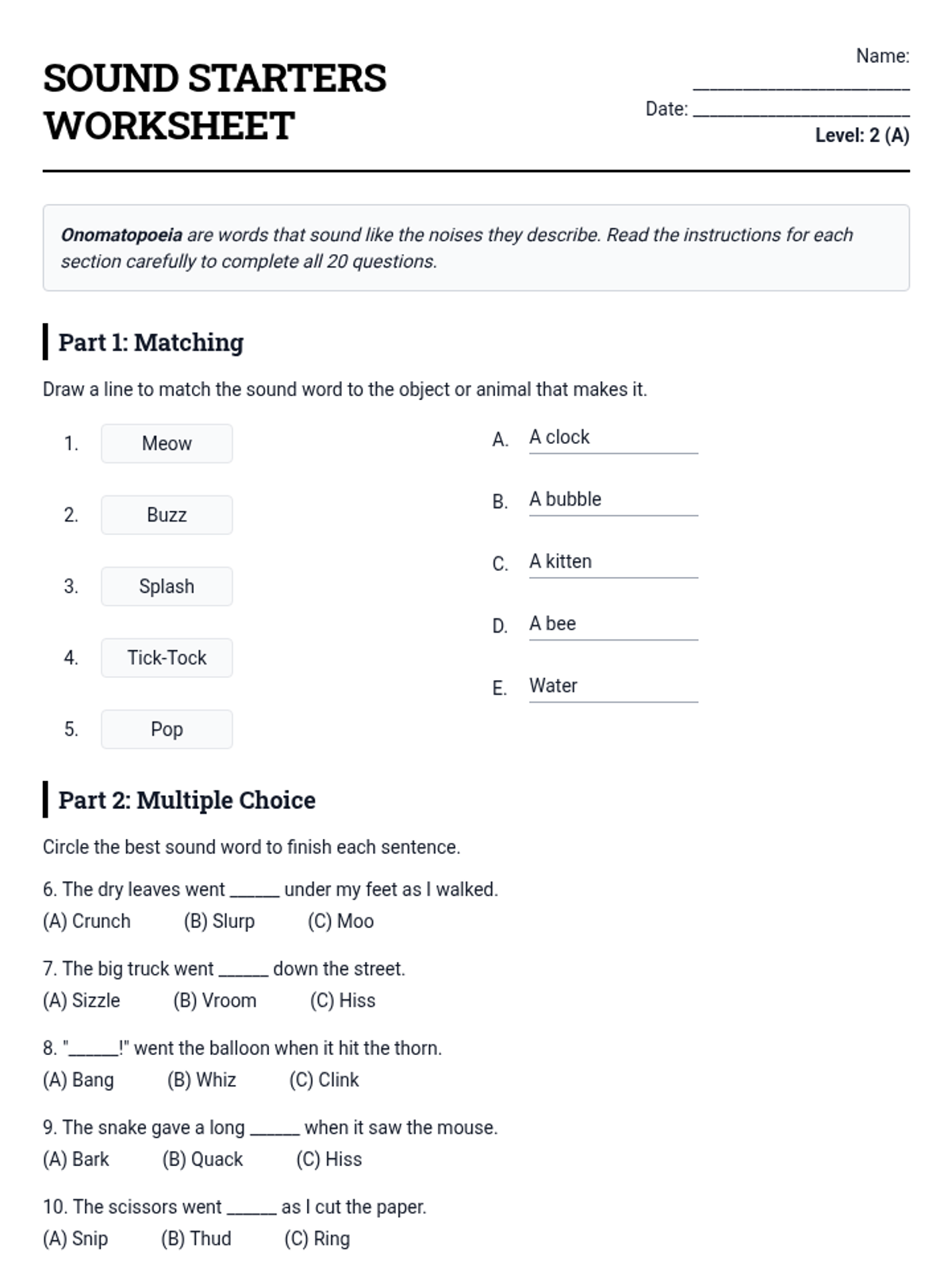
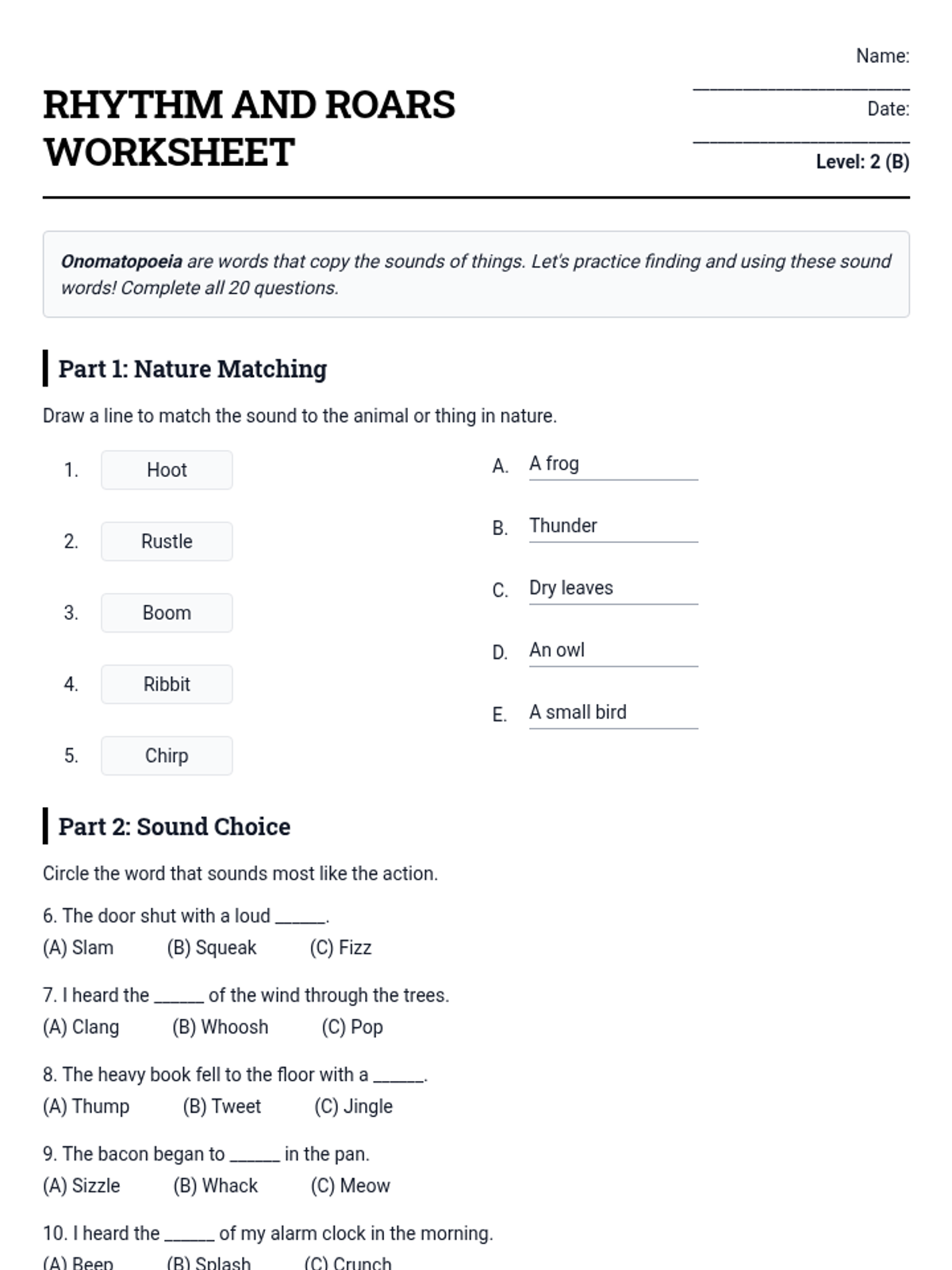
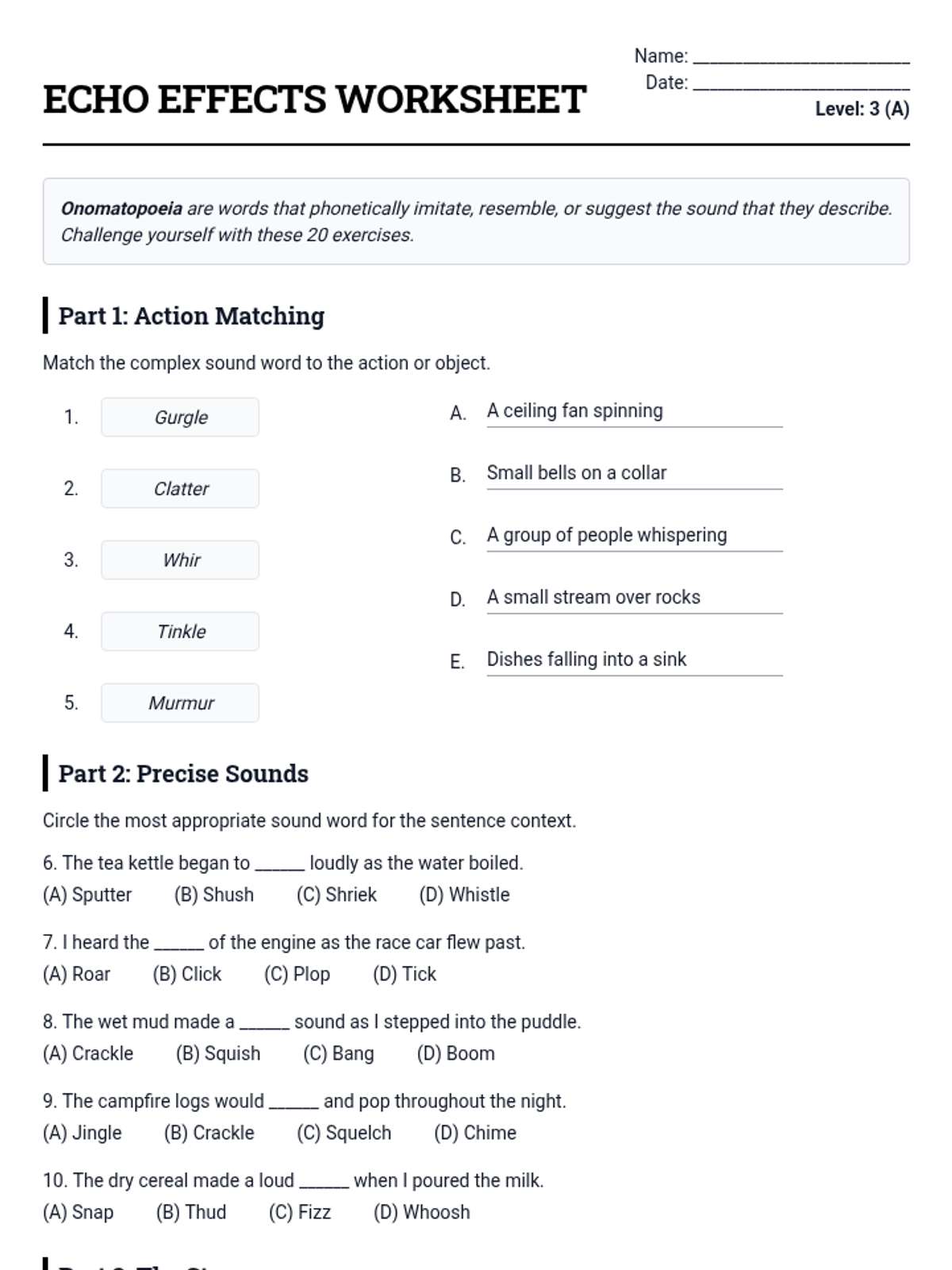
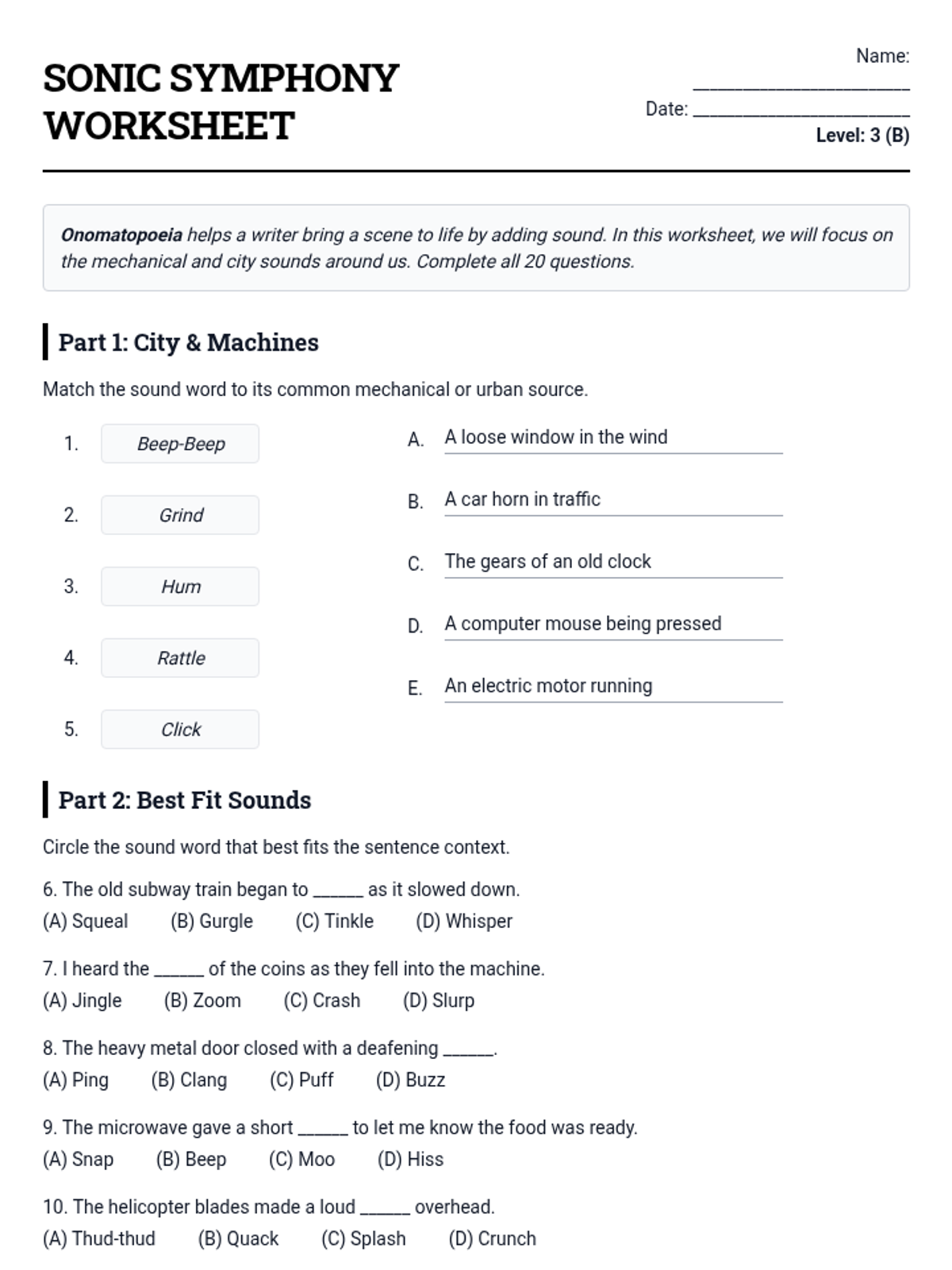
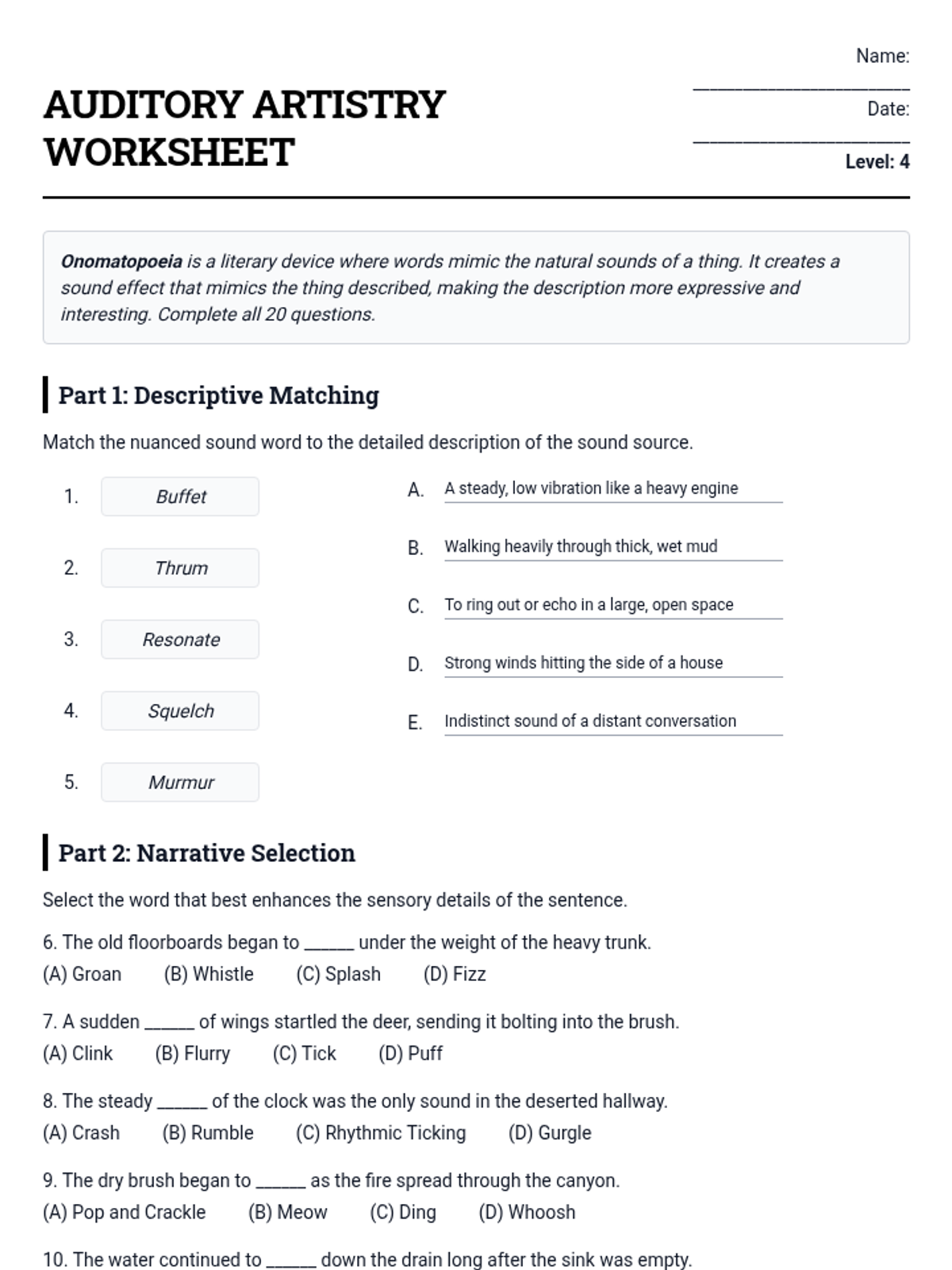
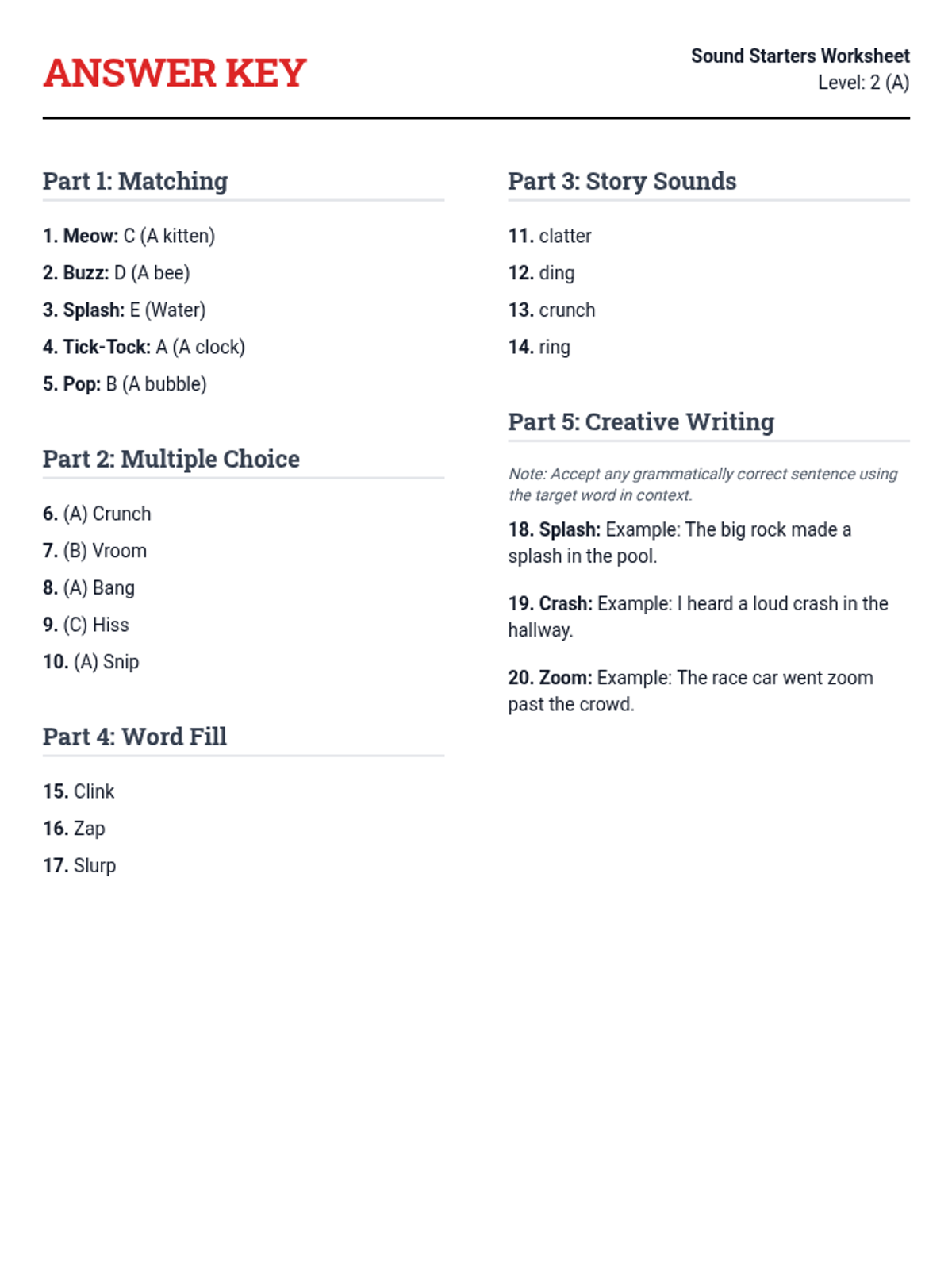
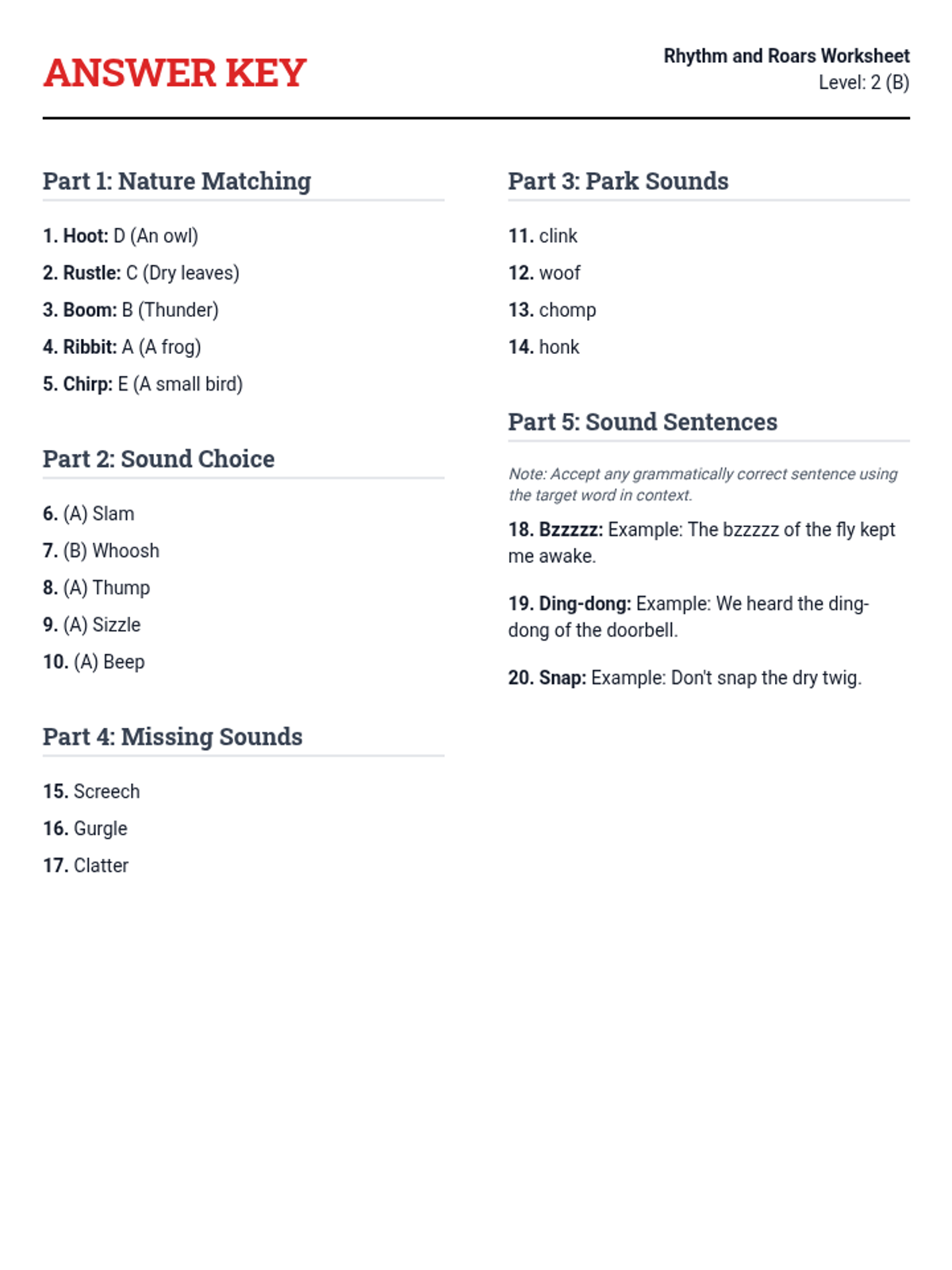
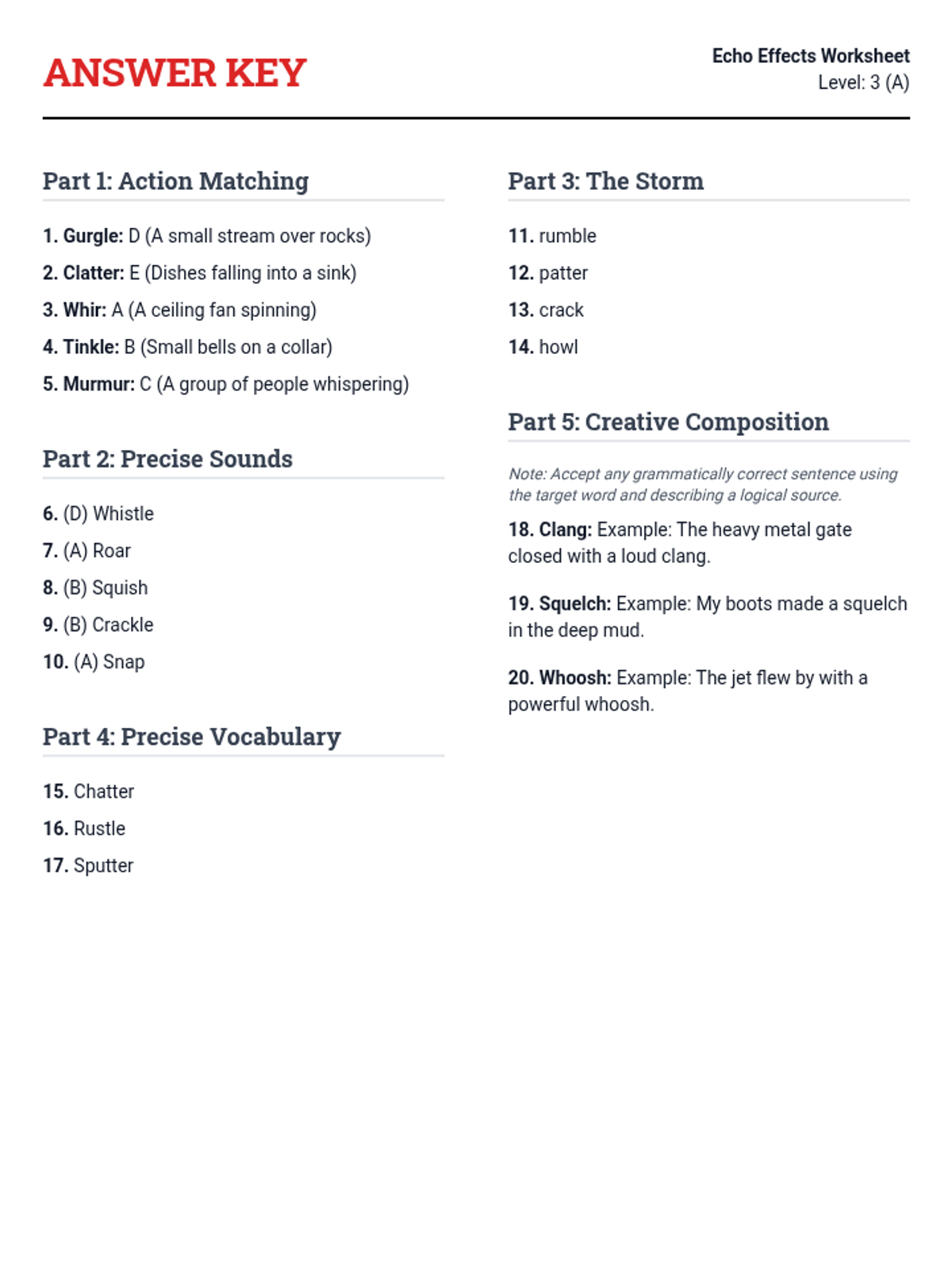
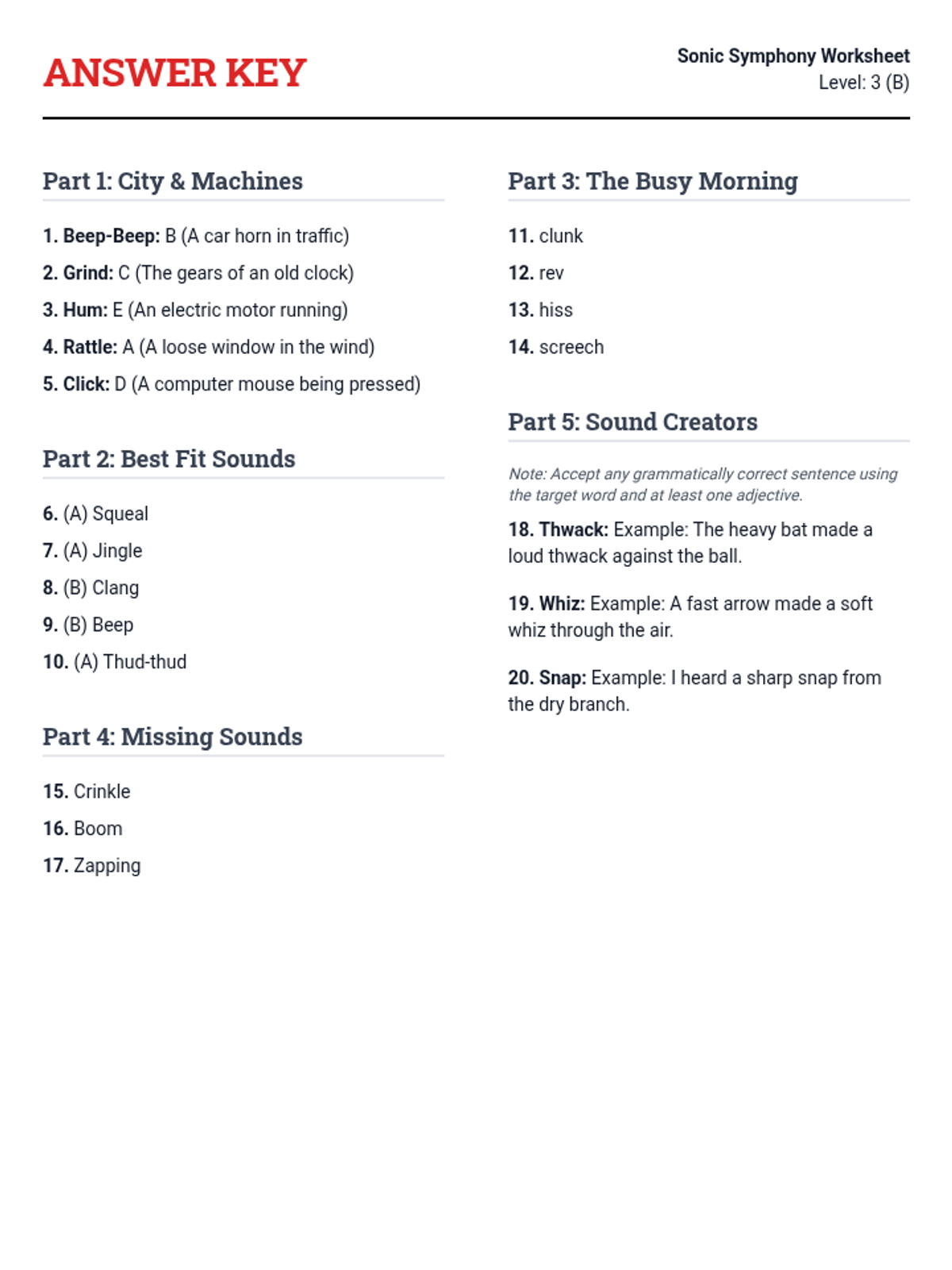
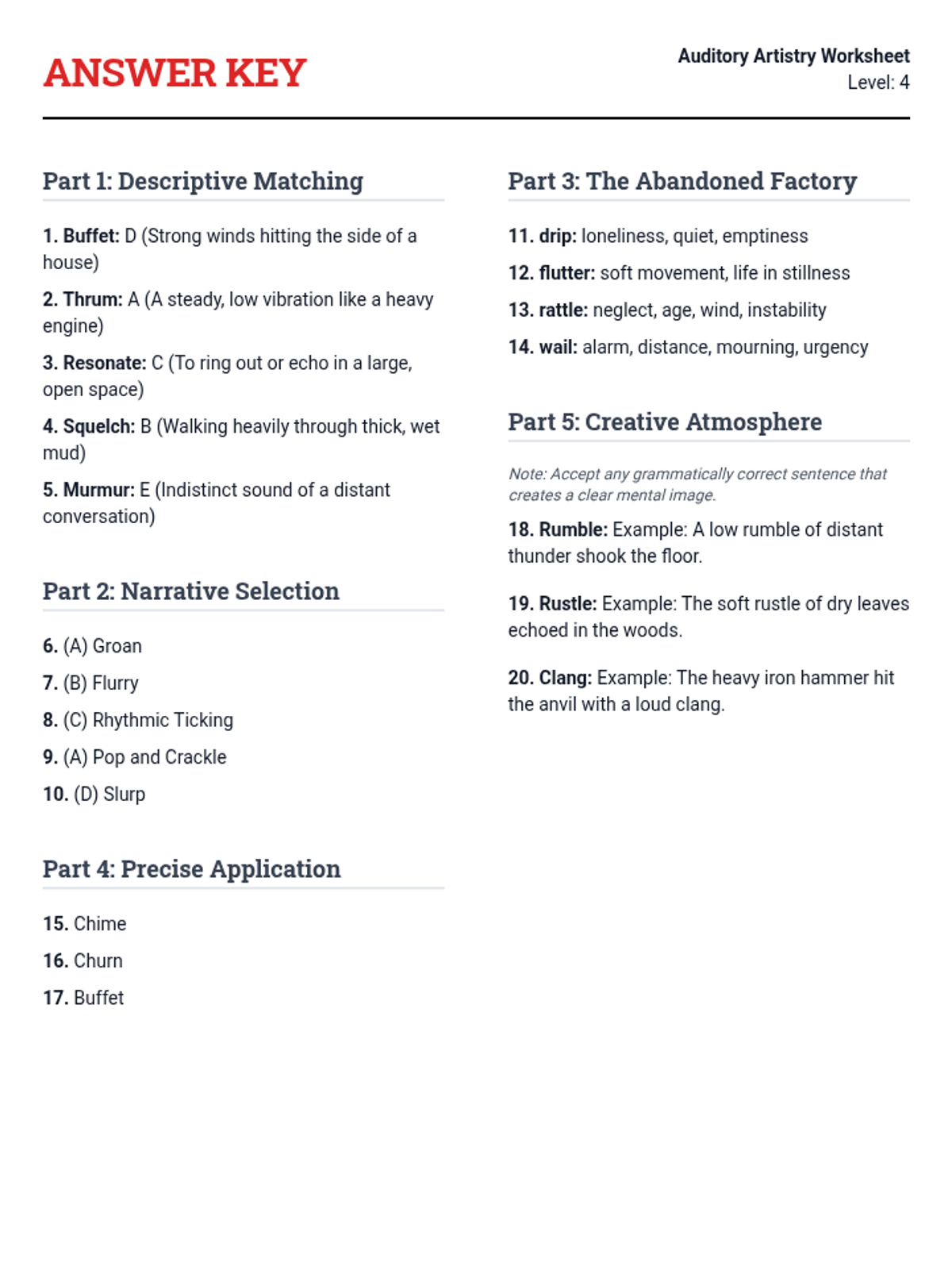
A collection of differentiated worksheets focusing on identifying and using onomatopoeia across 2nd, 3rd, and 4th-grade readability levels. Each worksheet features 20 comprehensive questions including matching, multiple choice, and creative writing.
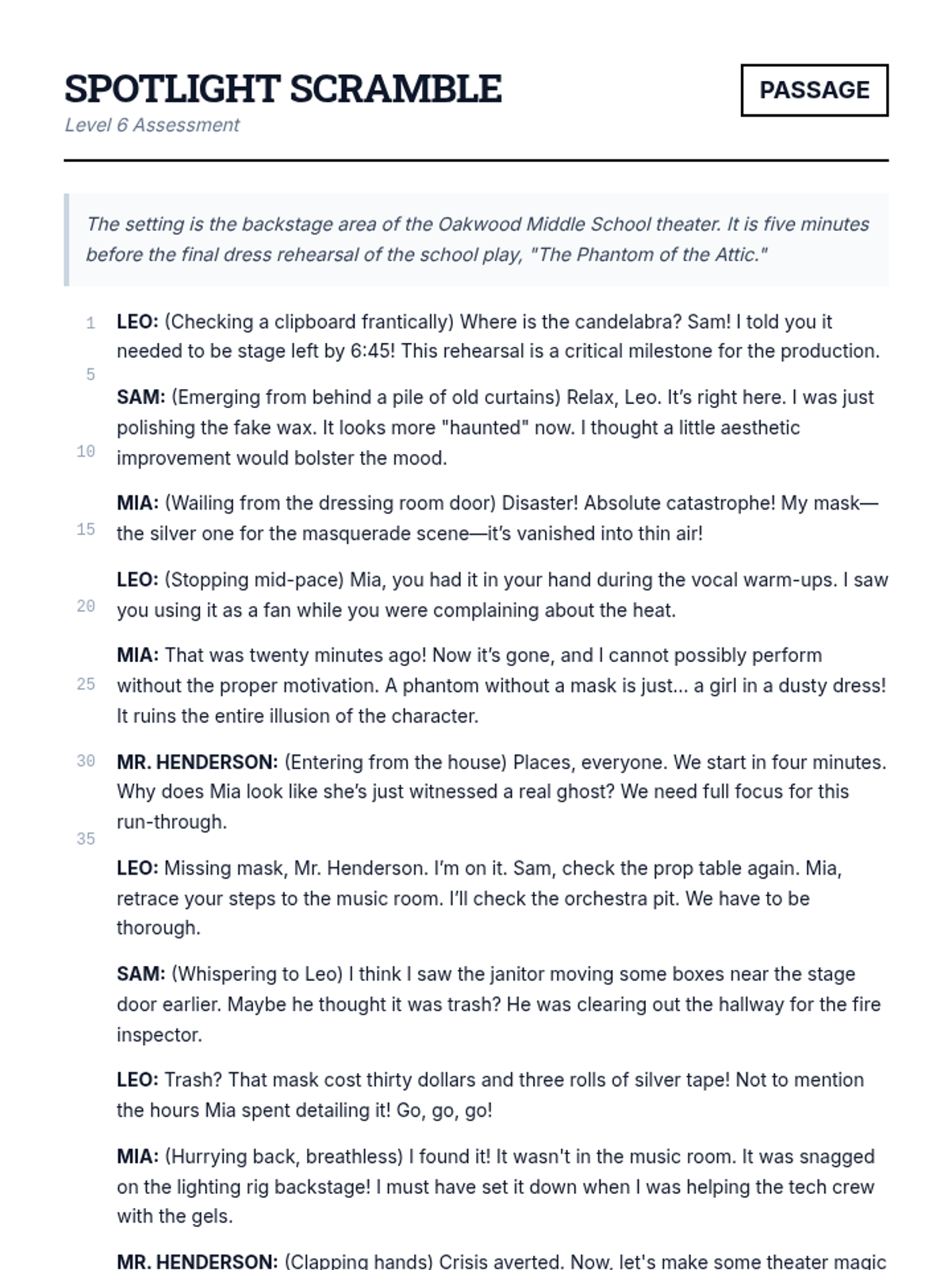
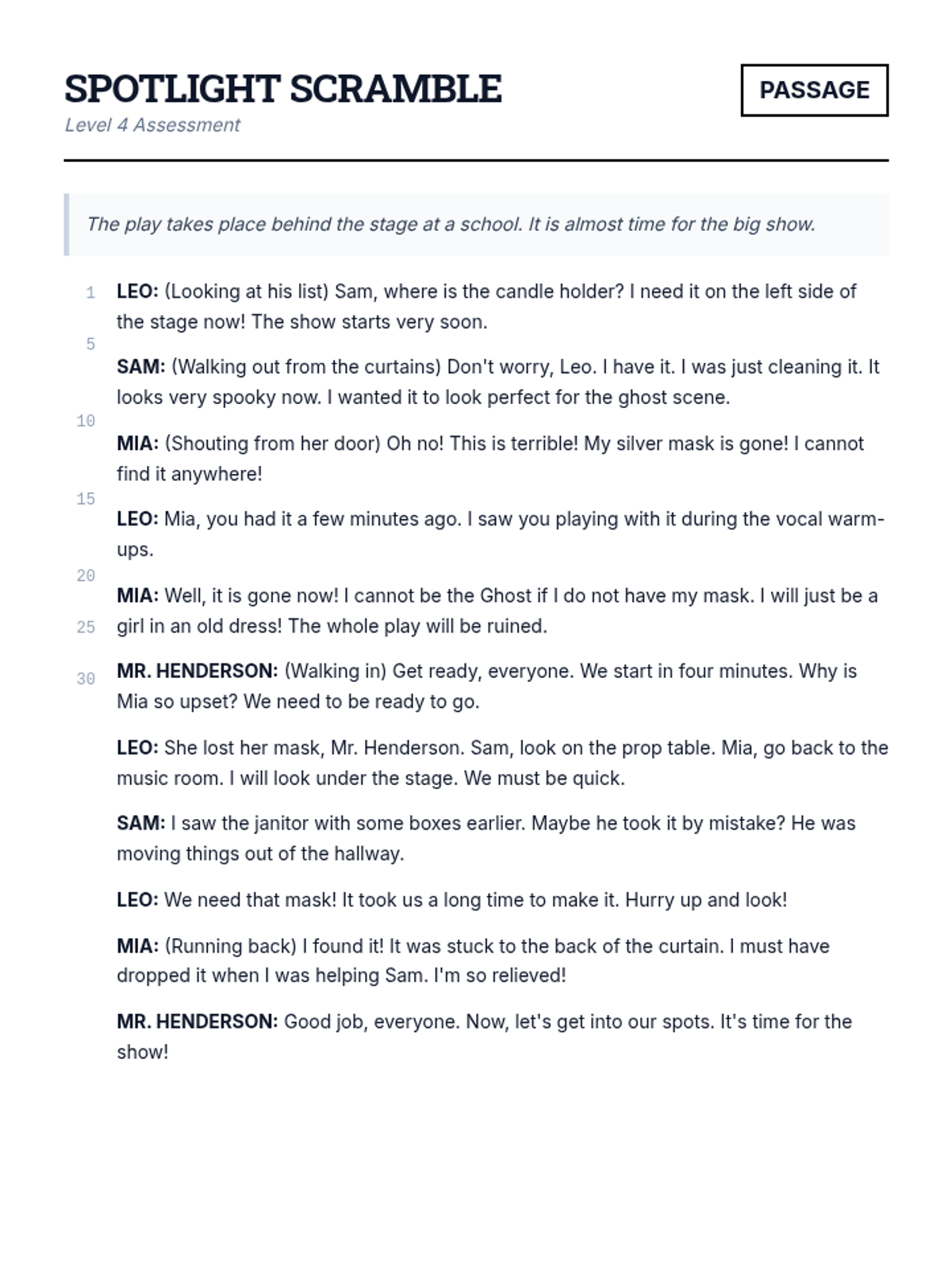
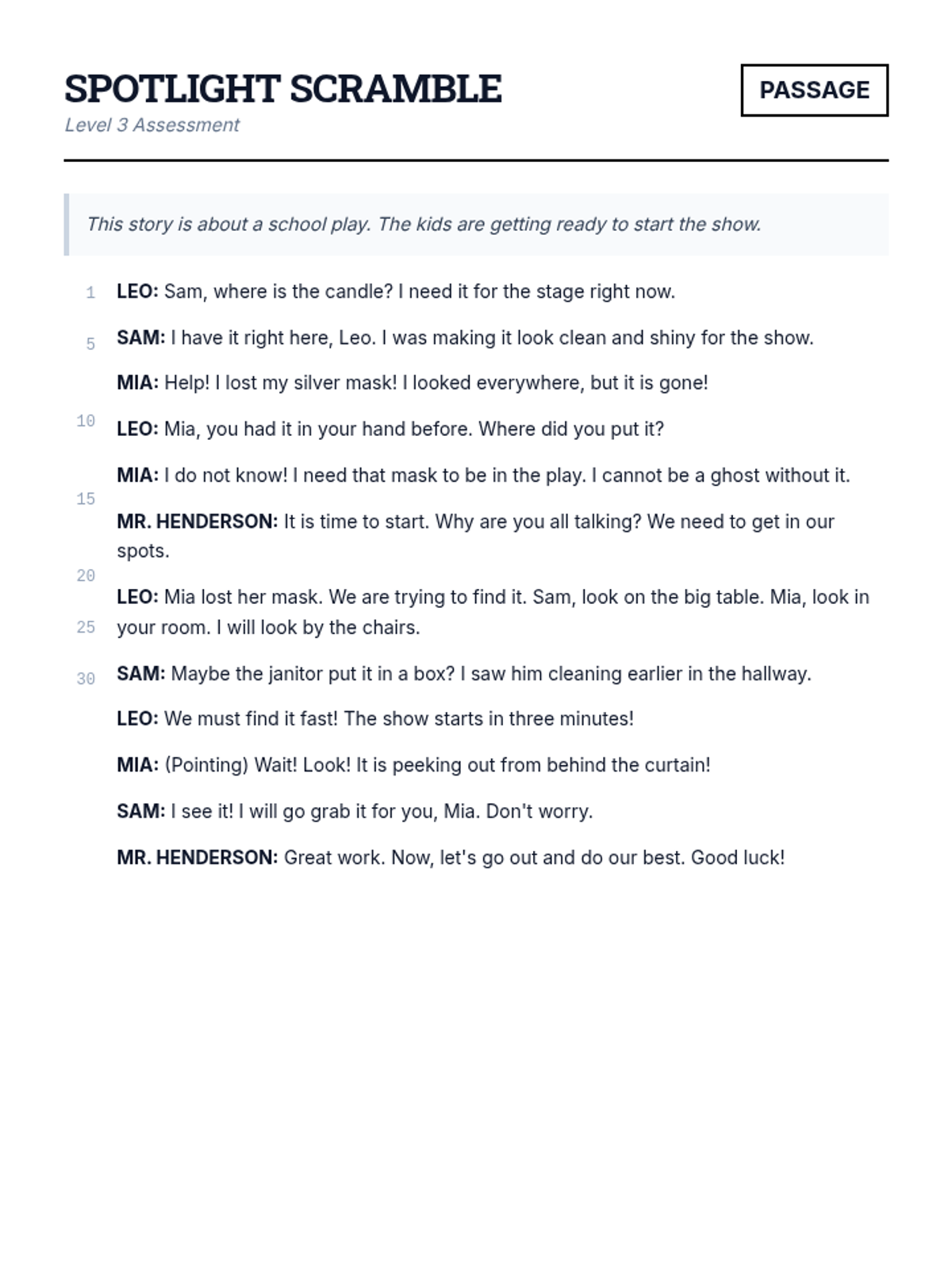
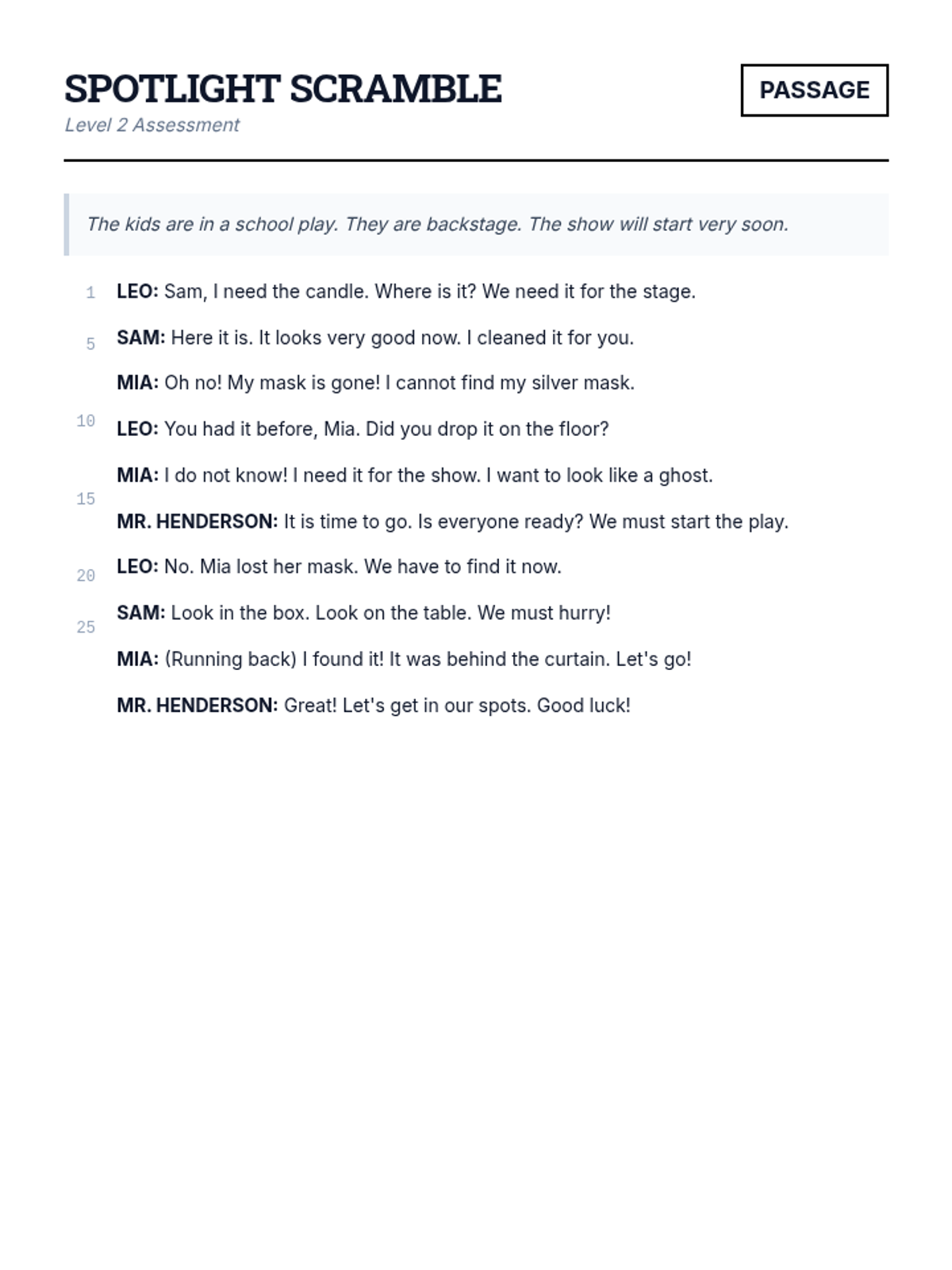
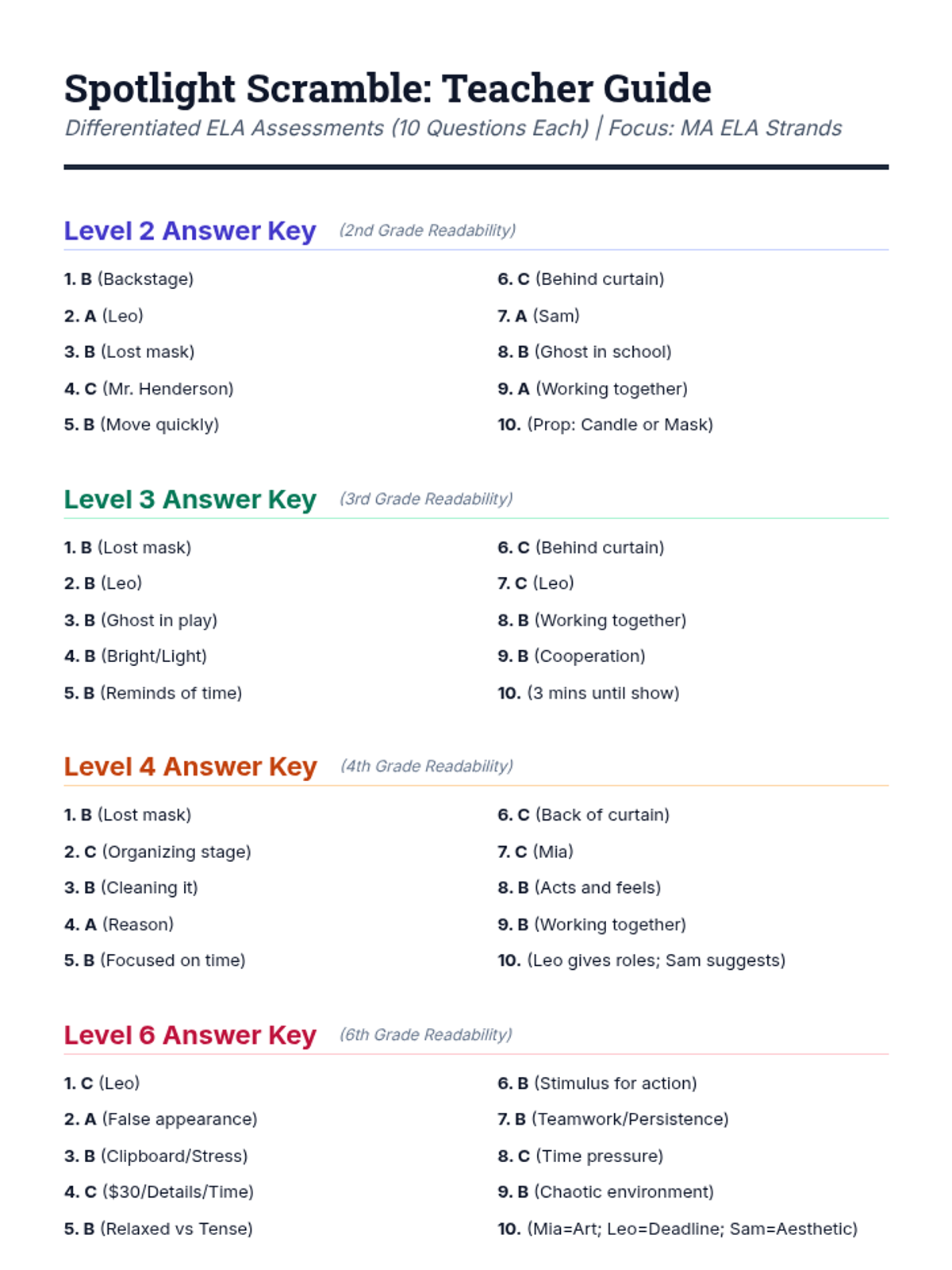
A comprehensive ELA assessment based on a high-interest theater play. Features four differentiated readability levels (Grades 2, 3, 4, and 6) and MCAS-style questions focused on Massachusetts ELA standards.
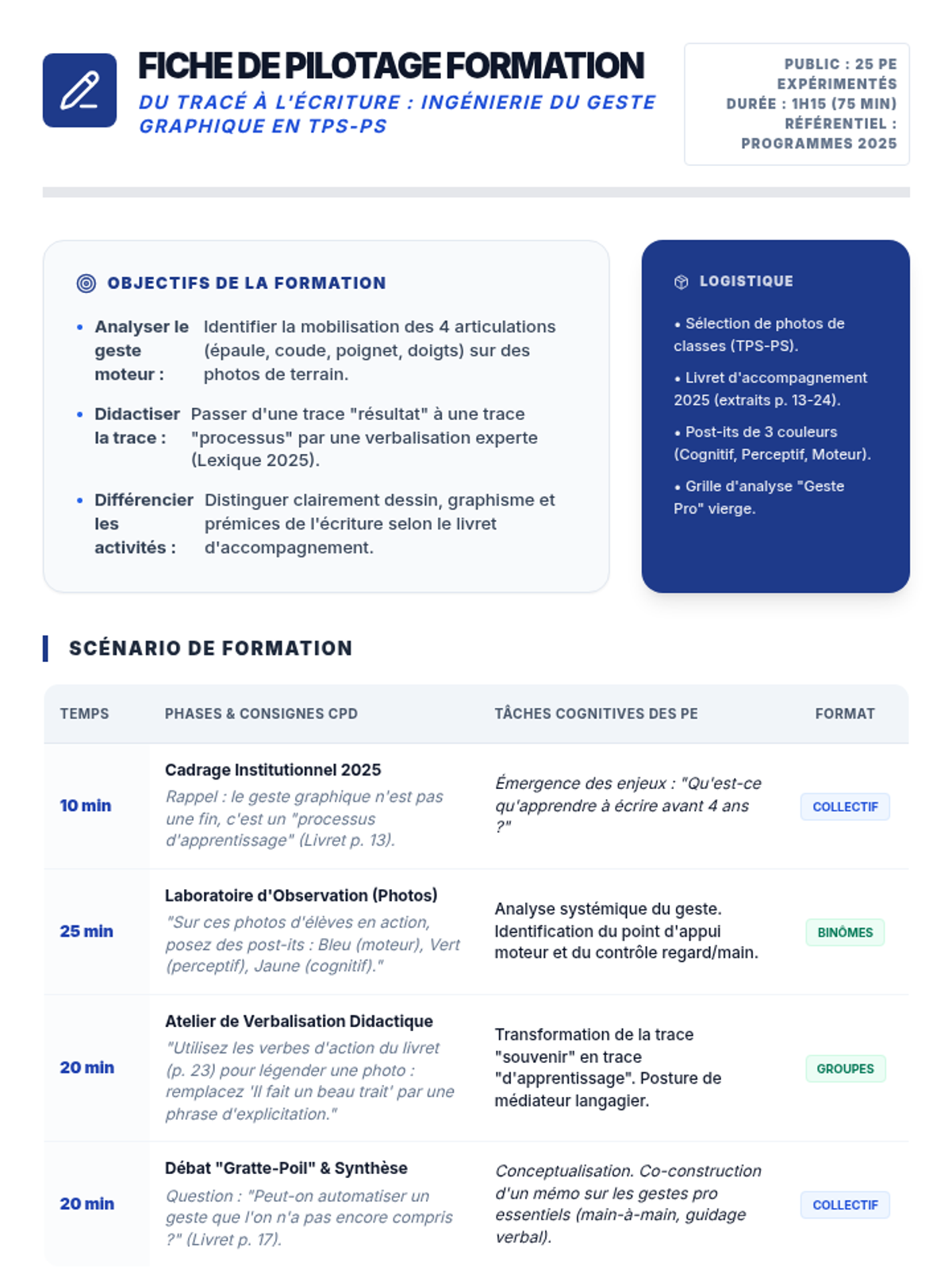
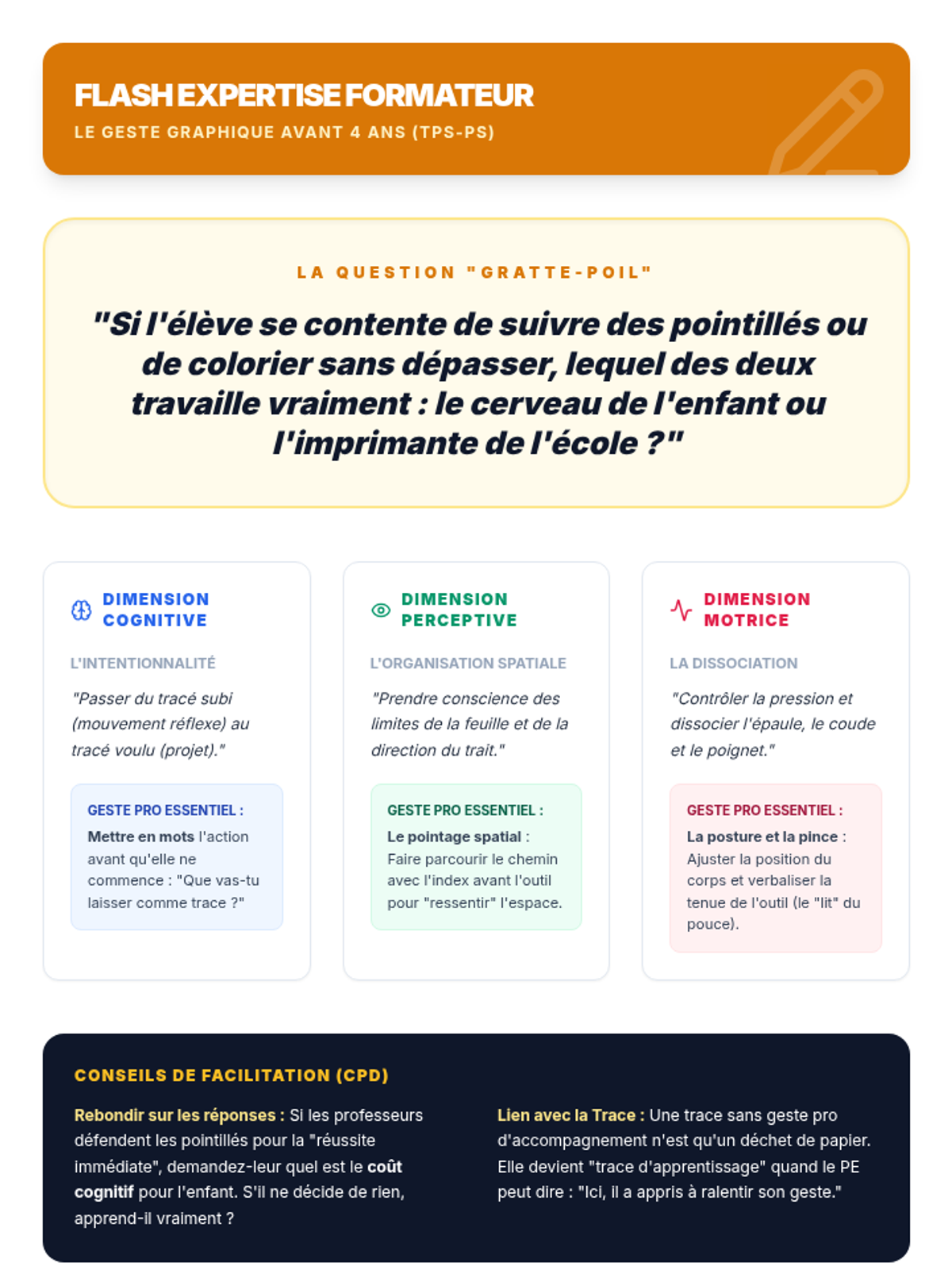
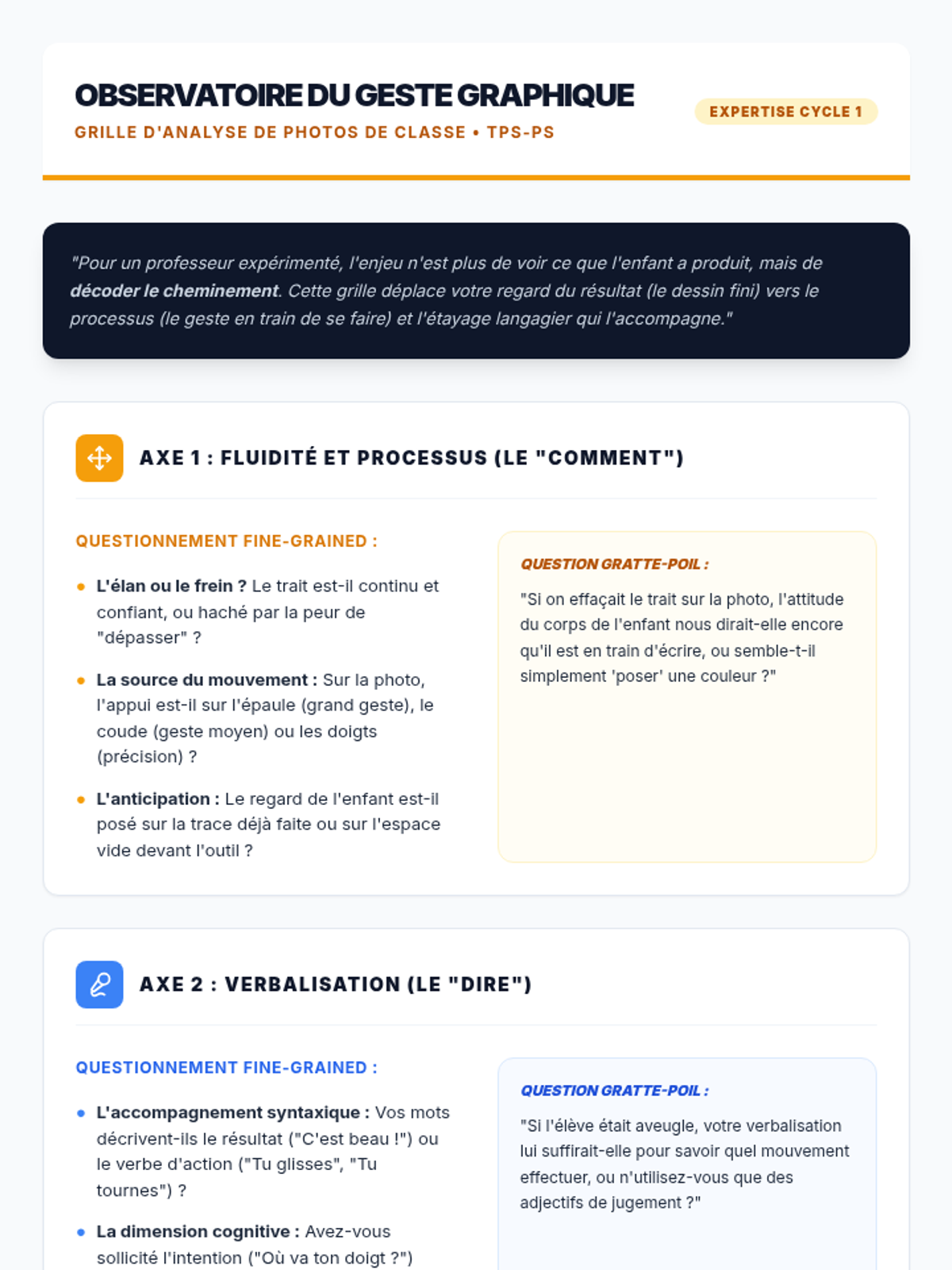
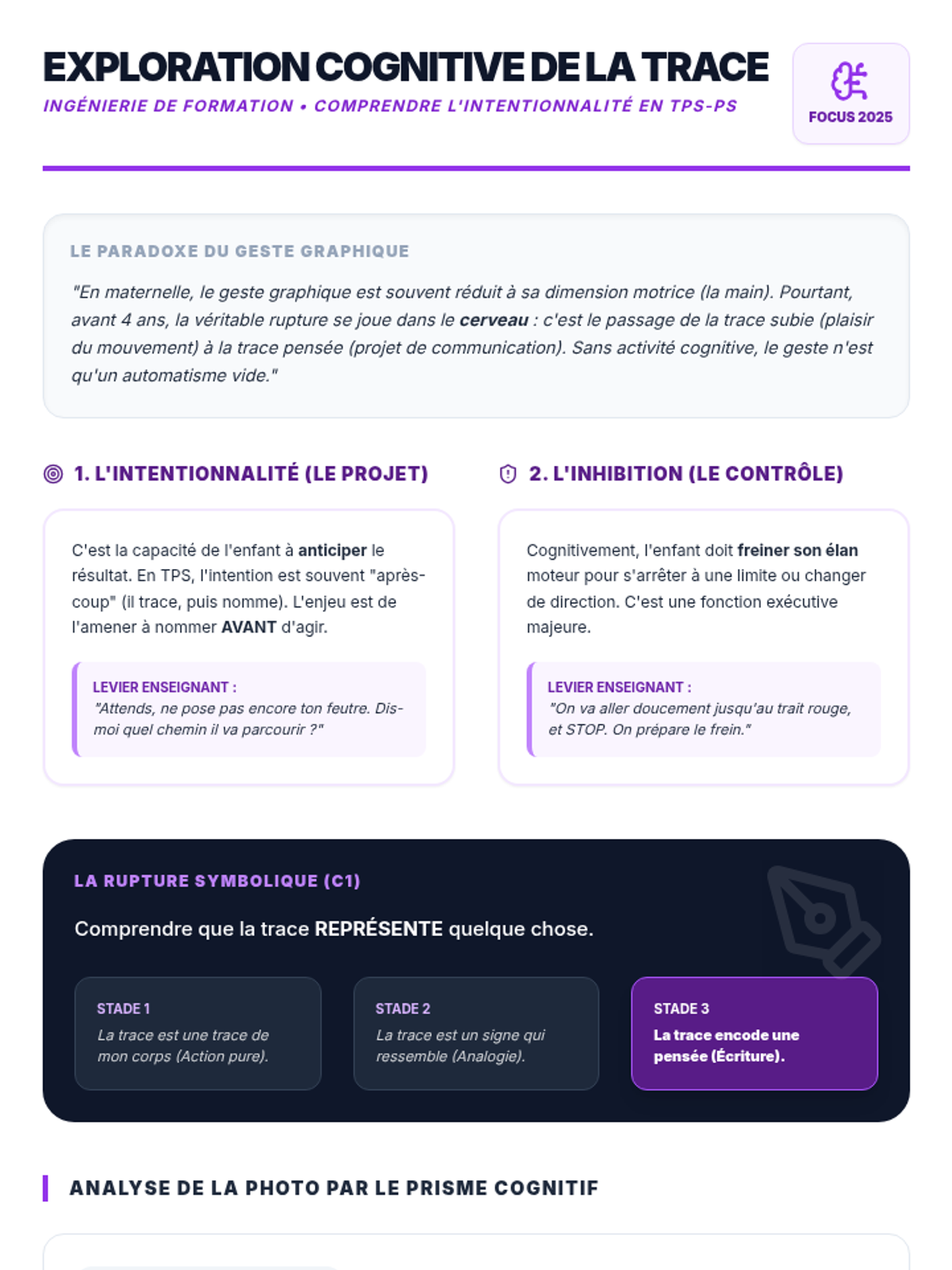
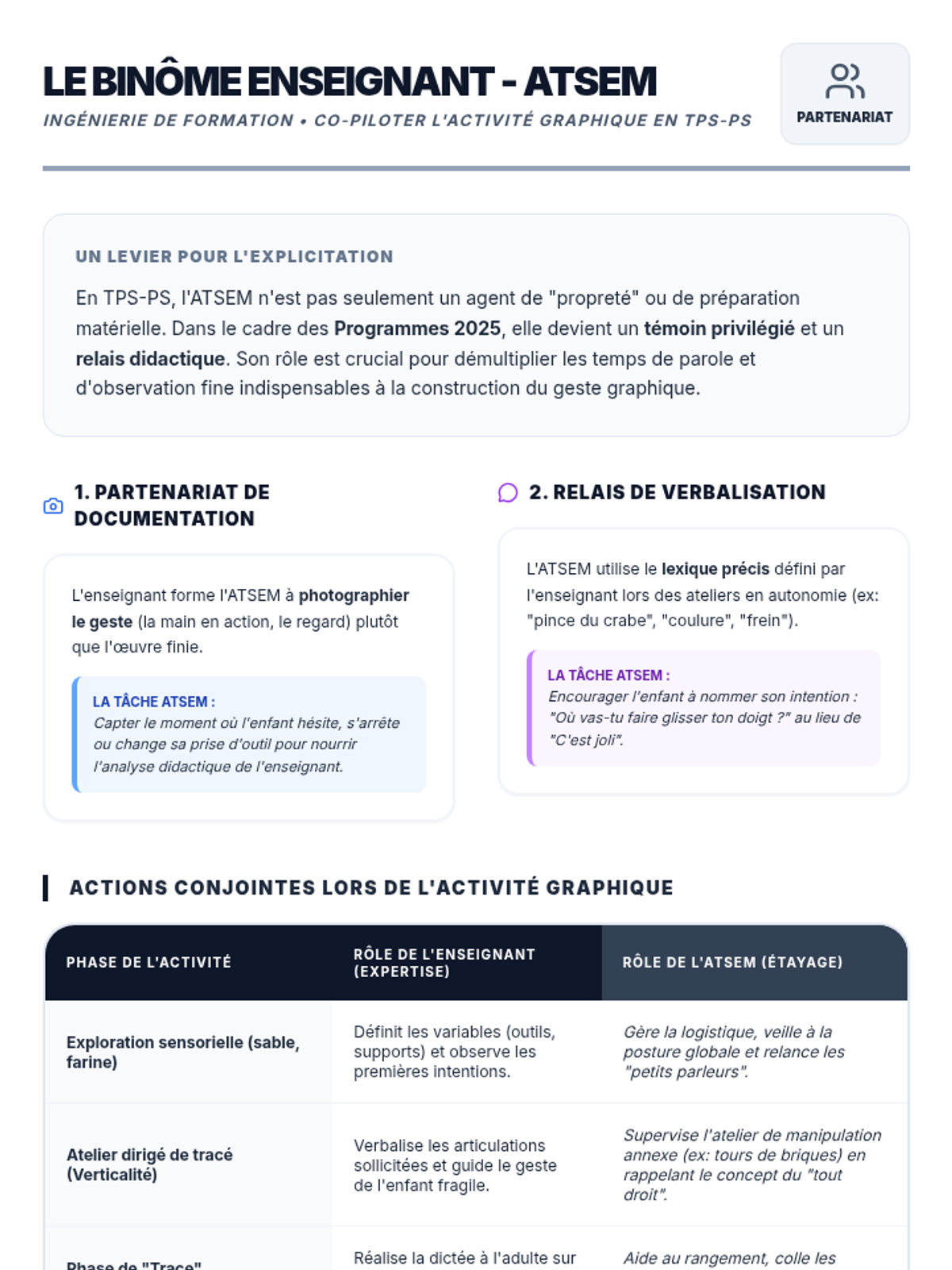
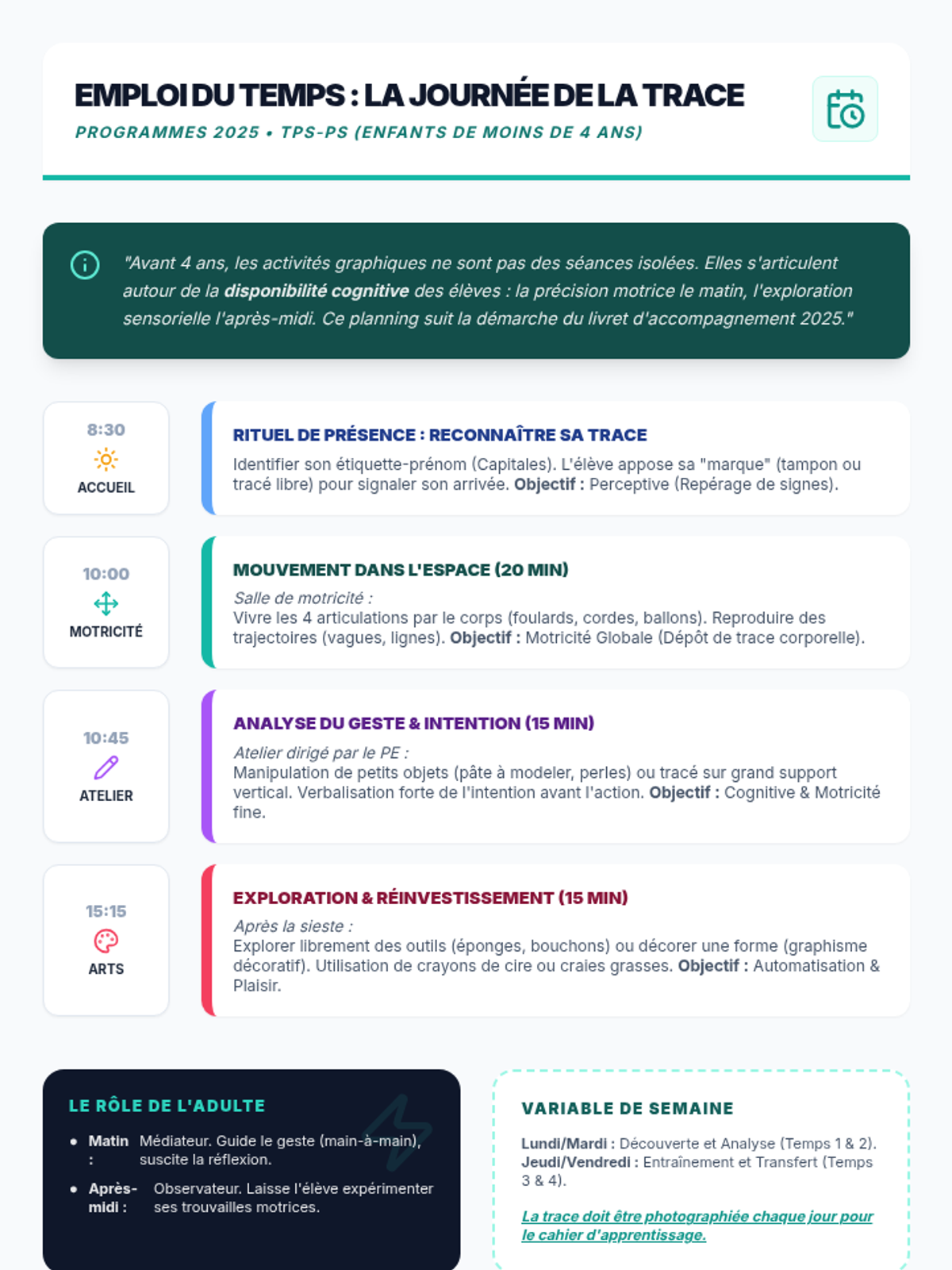
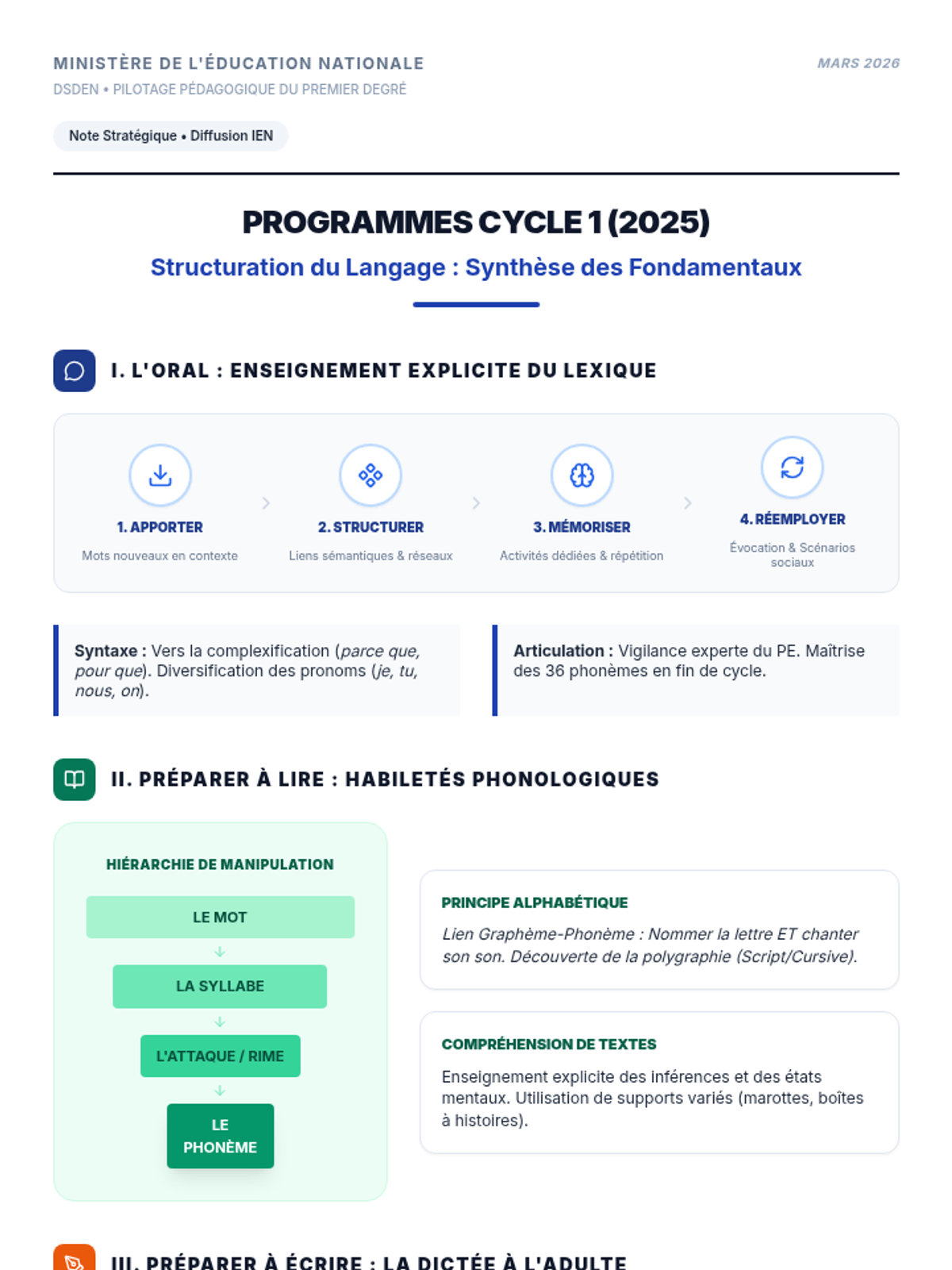
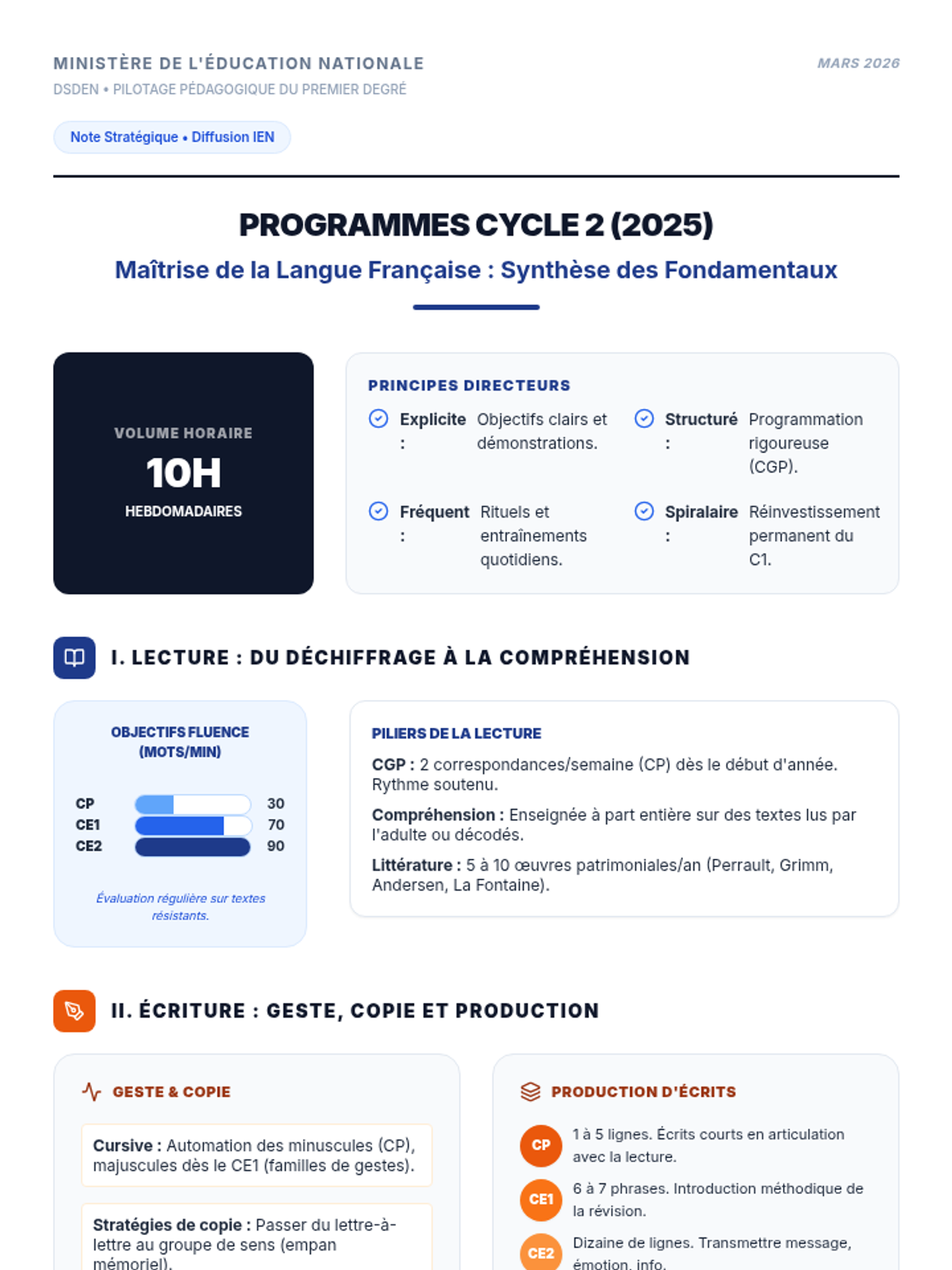
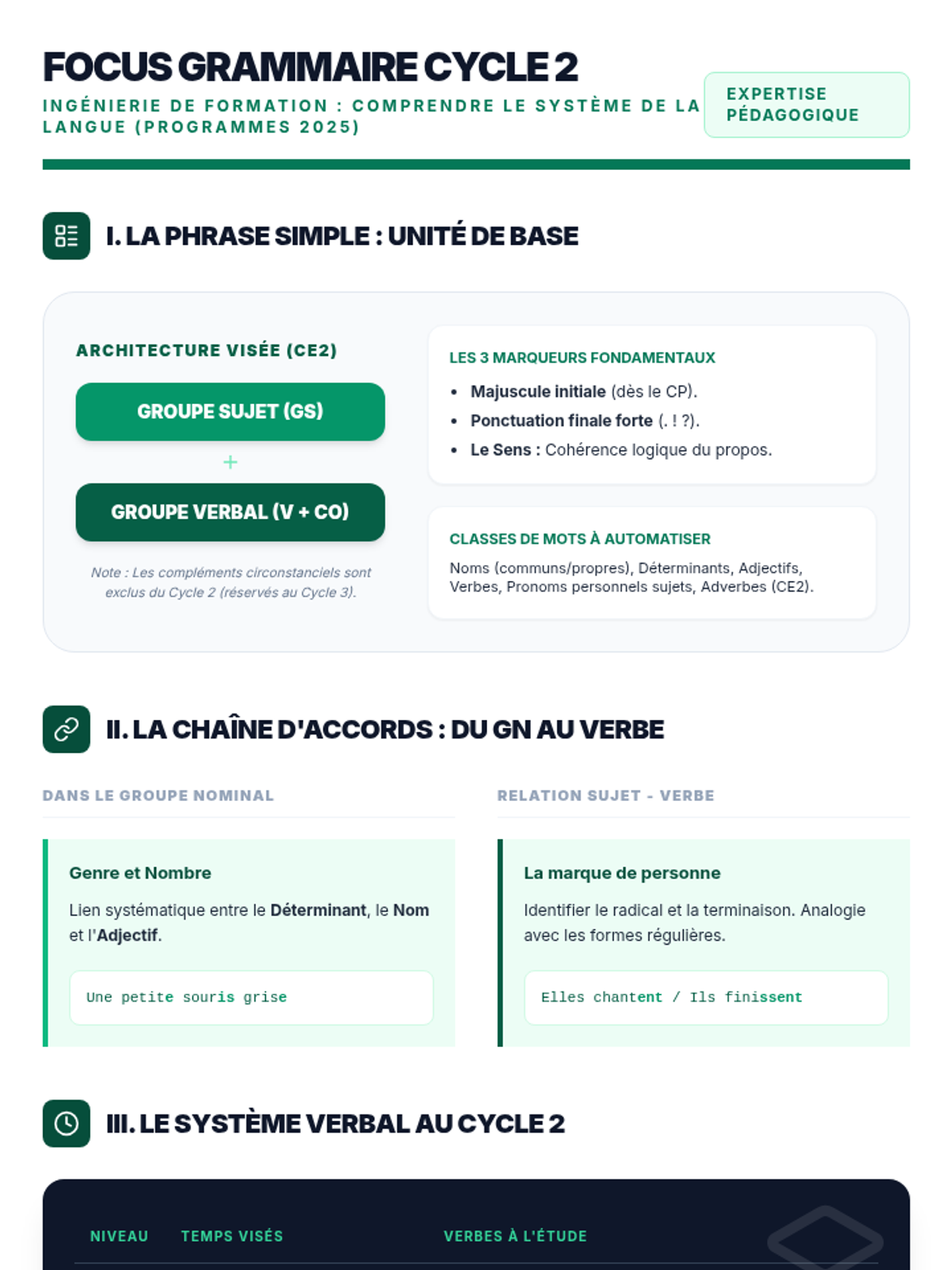
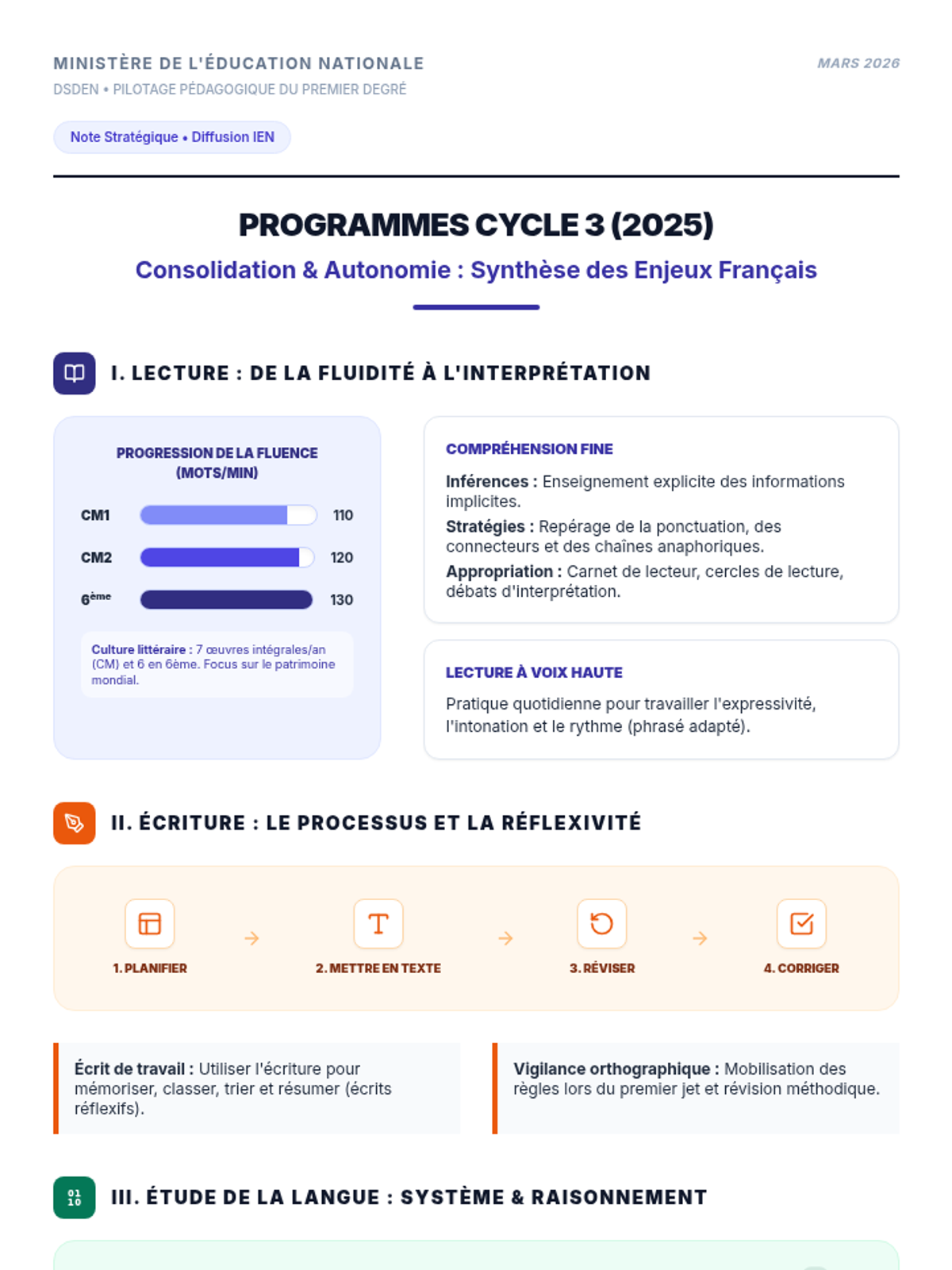
Cette formation pour les professeurs de TPS-PS vise à professionnaliser la conception des "traces" d'activités (cahiers de vie, affichages). En s'appuyant sur les photos de classe et les guides 2025, les enseignants apprennent à rendre les apprentissages explicites pour les élèves et les familles.
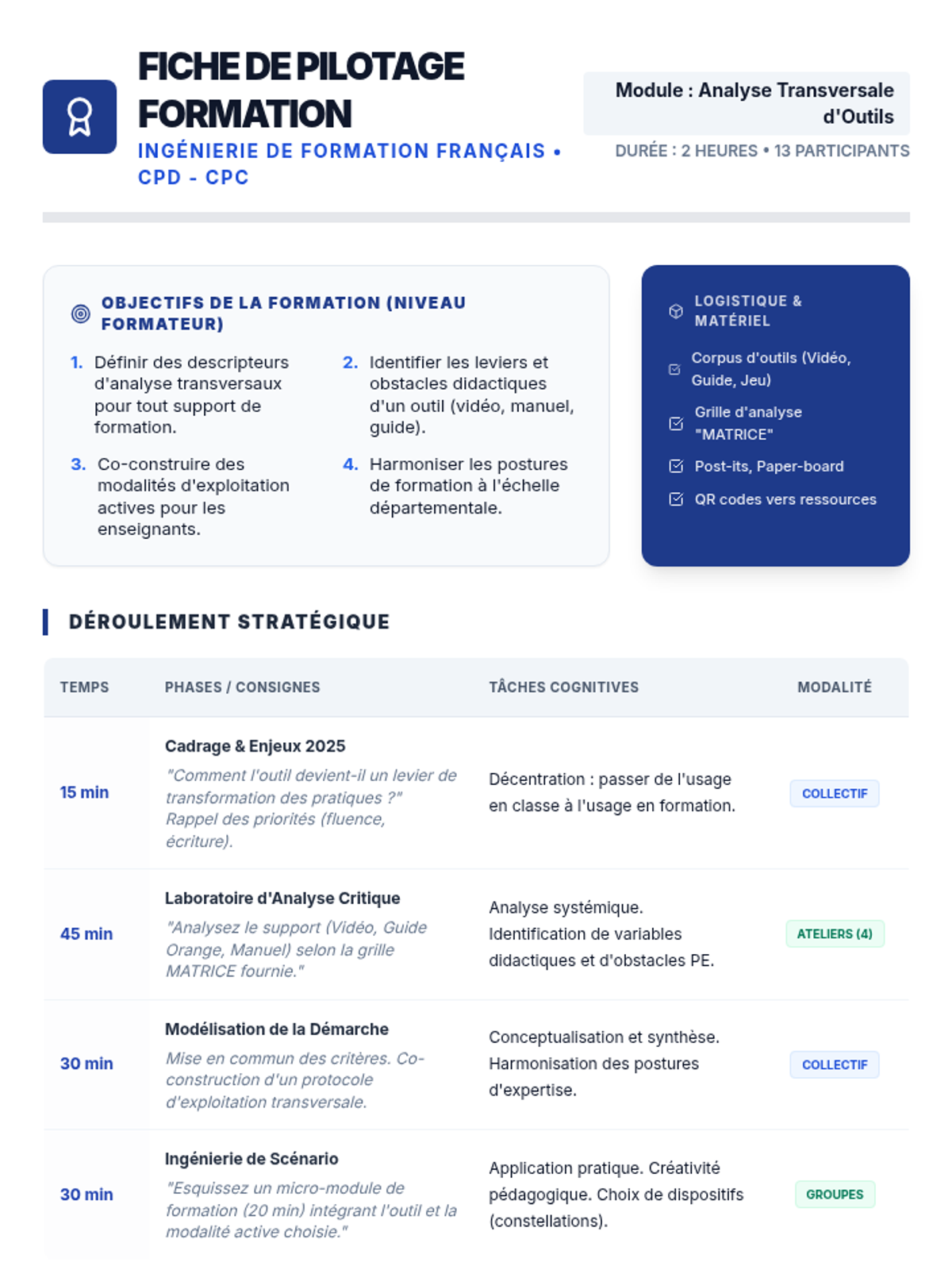
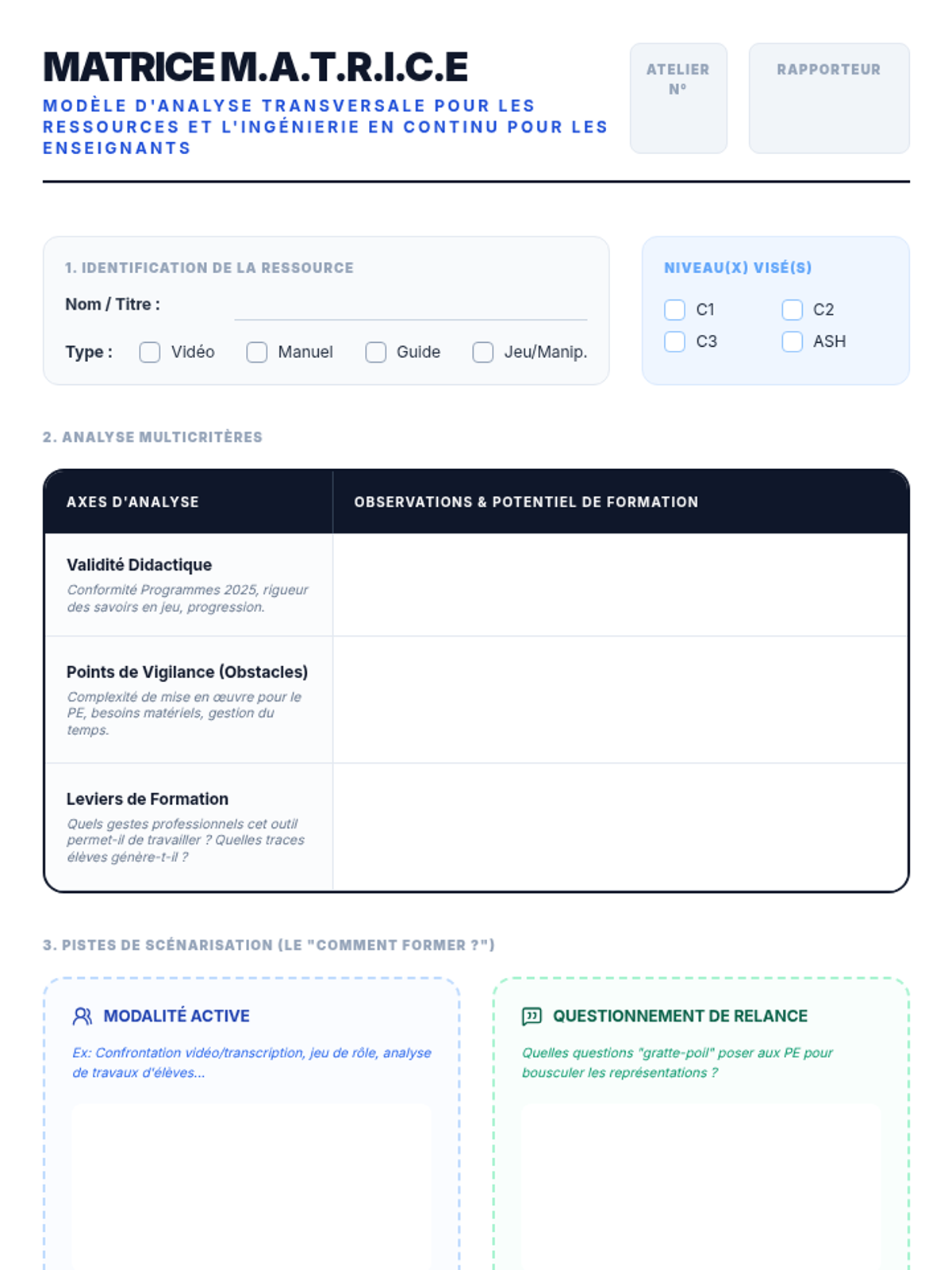
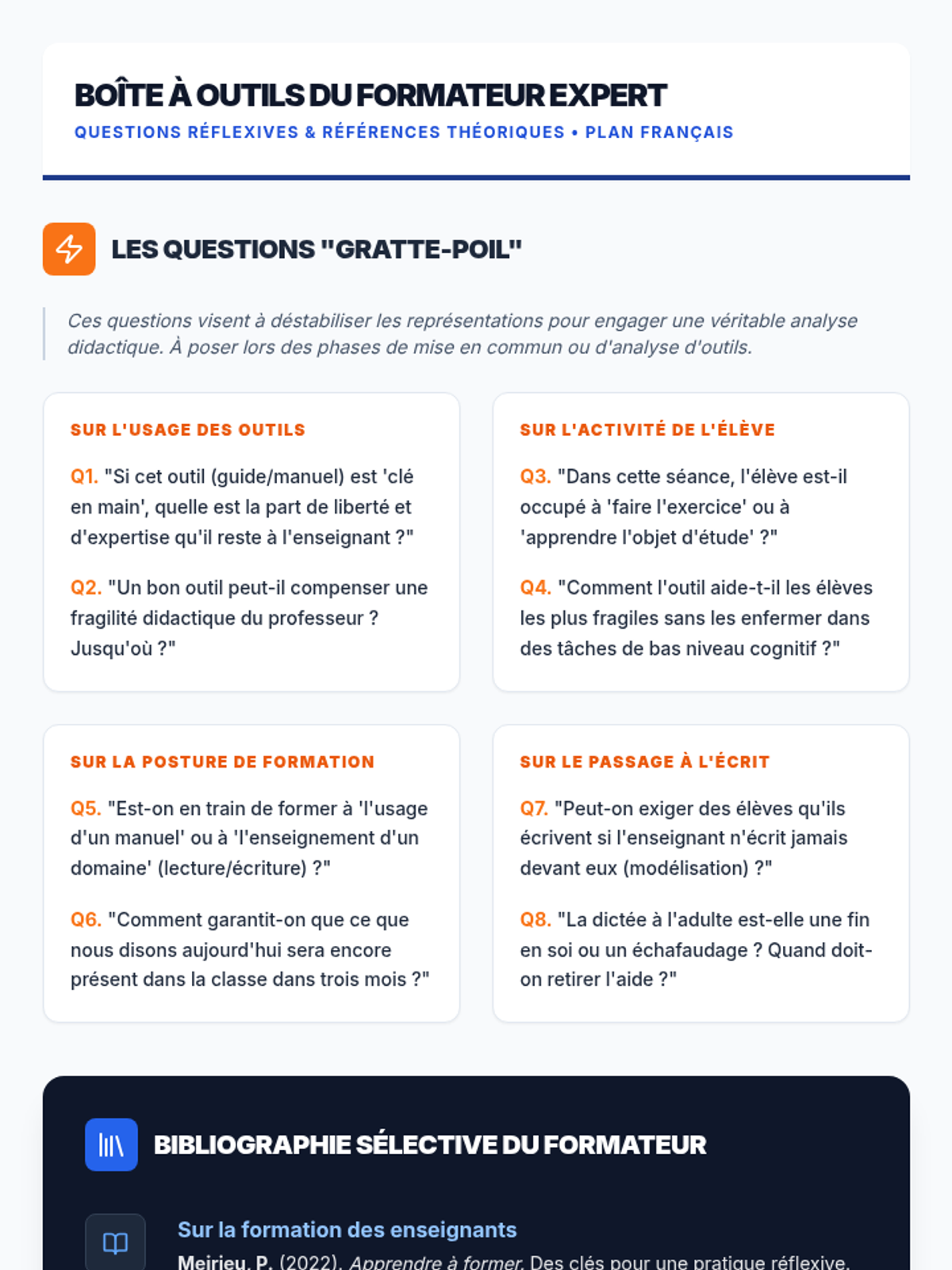
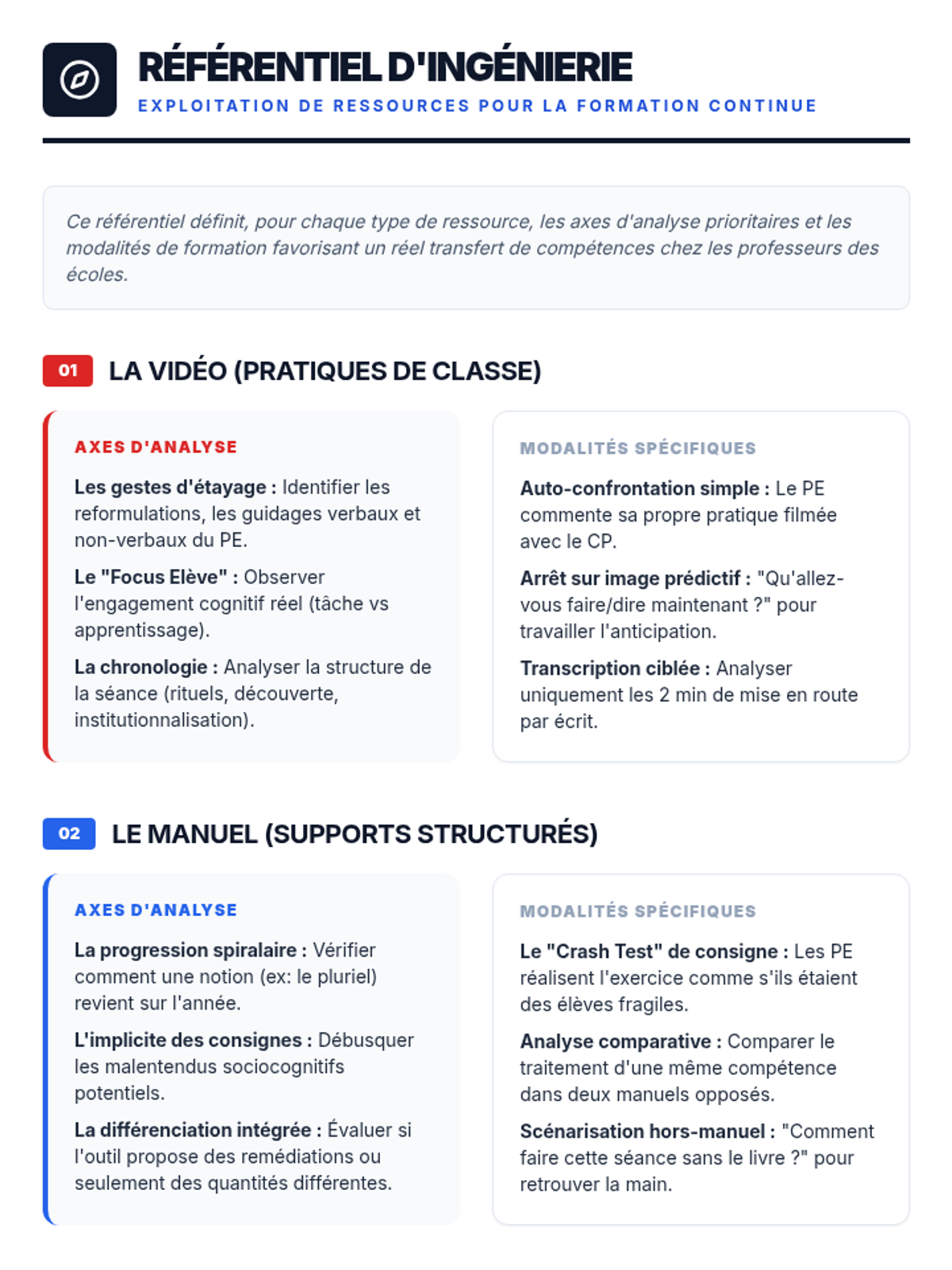
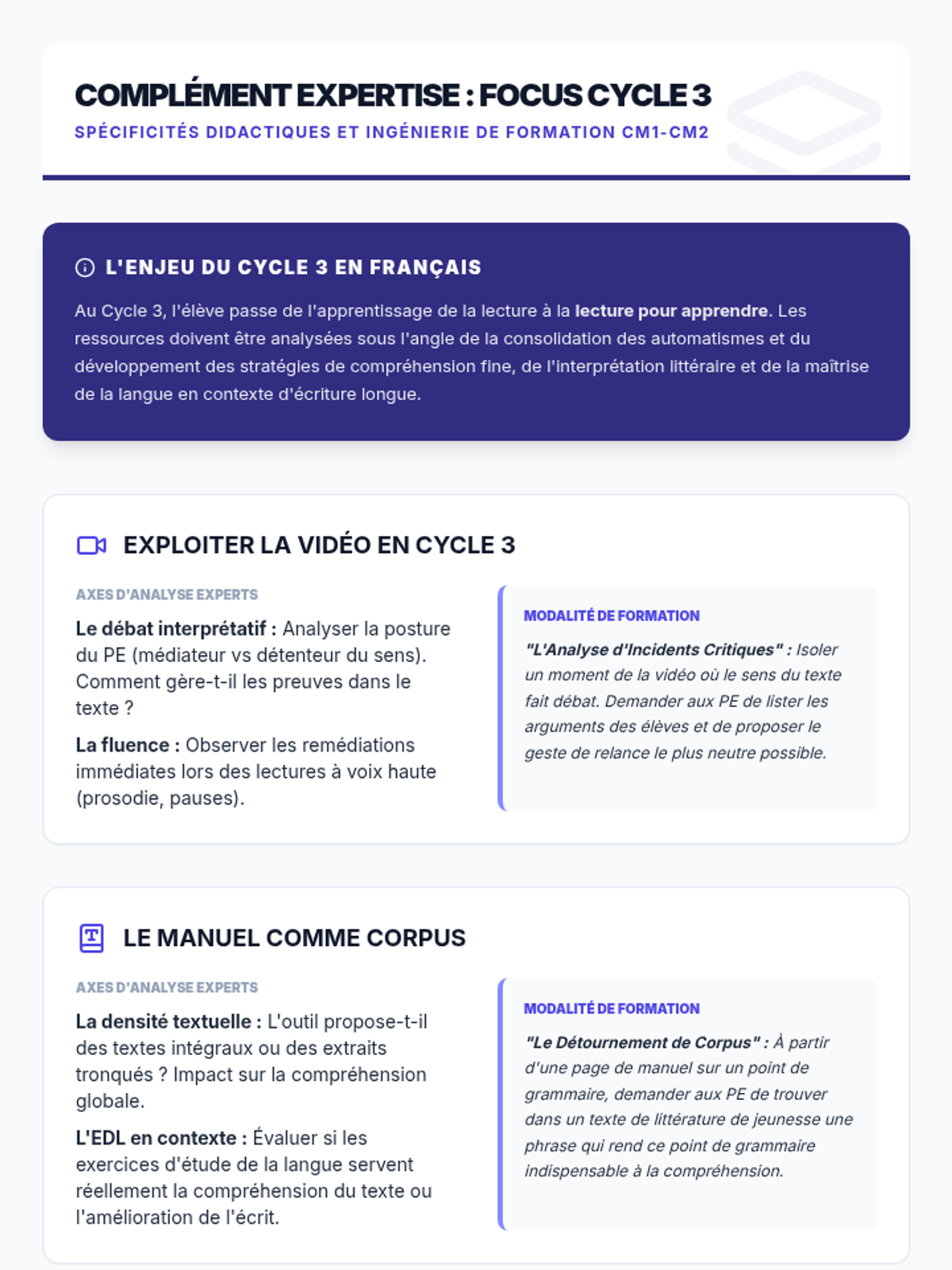
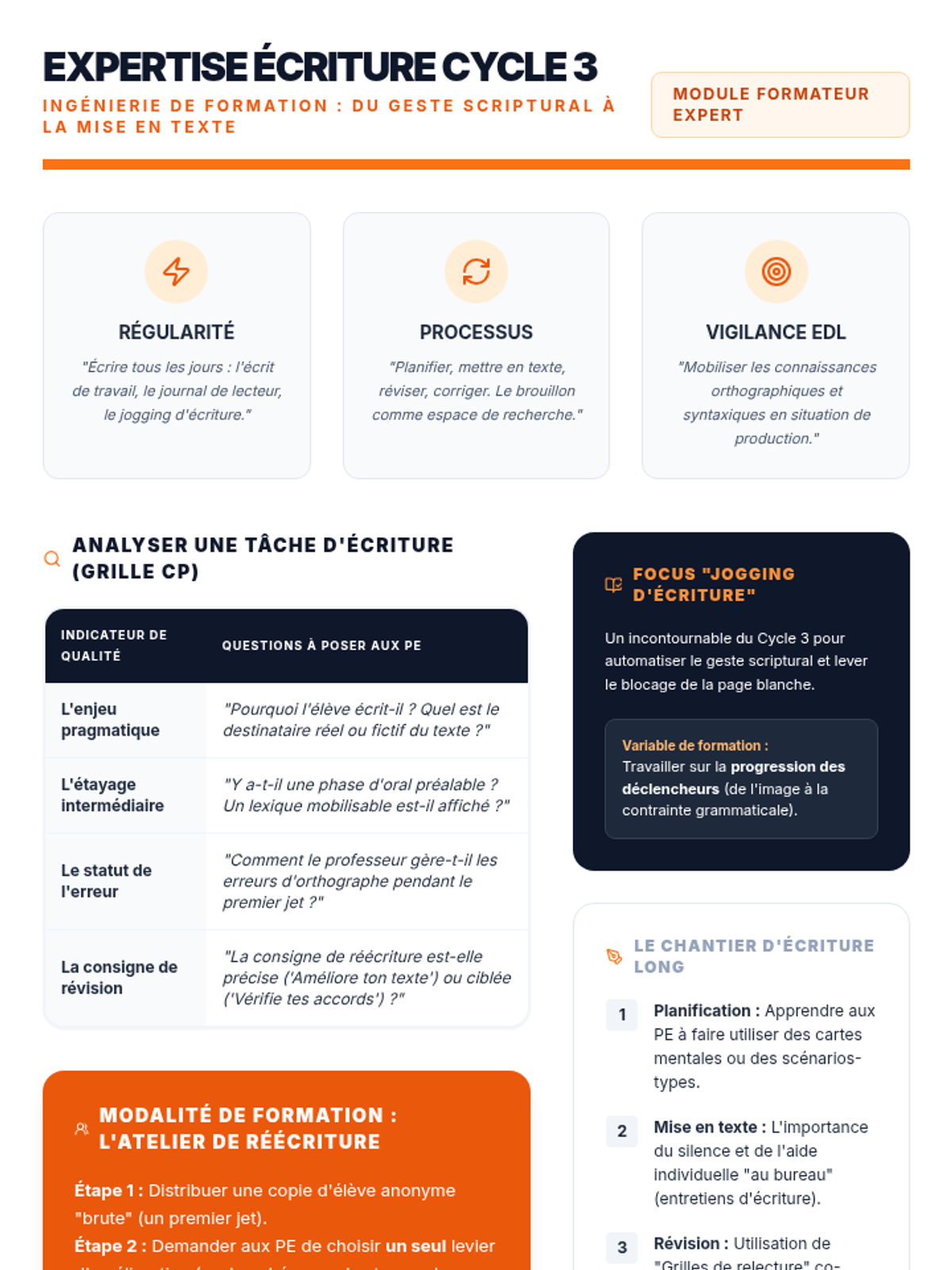
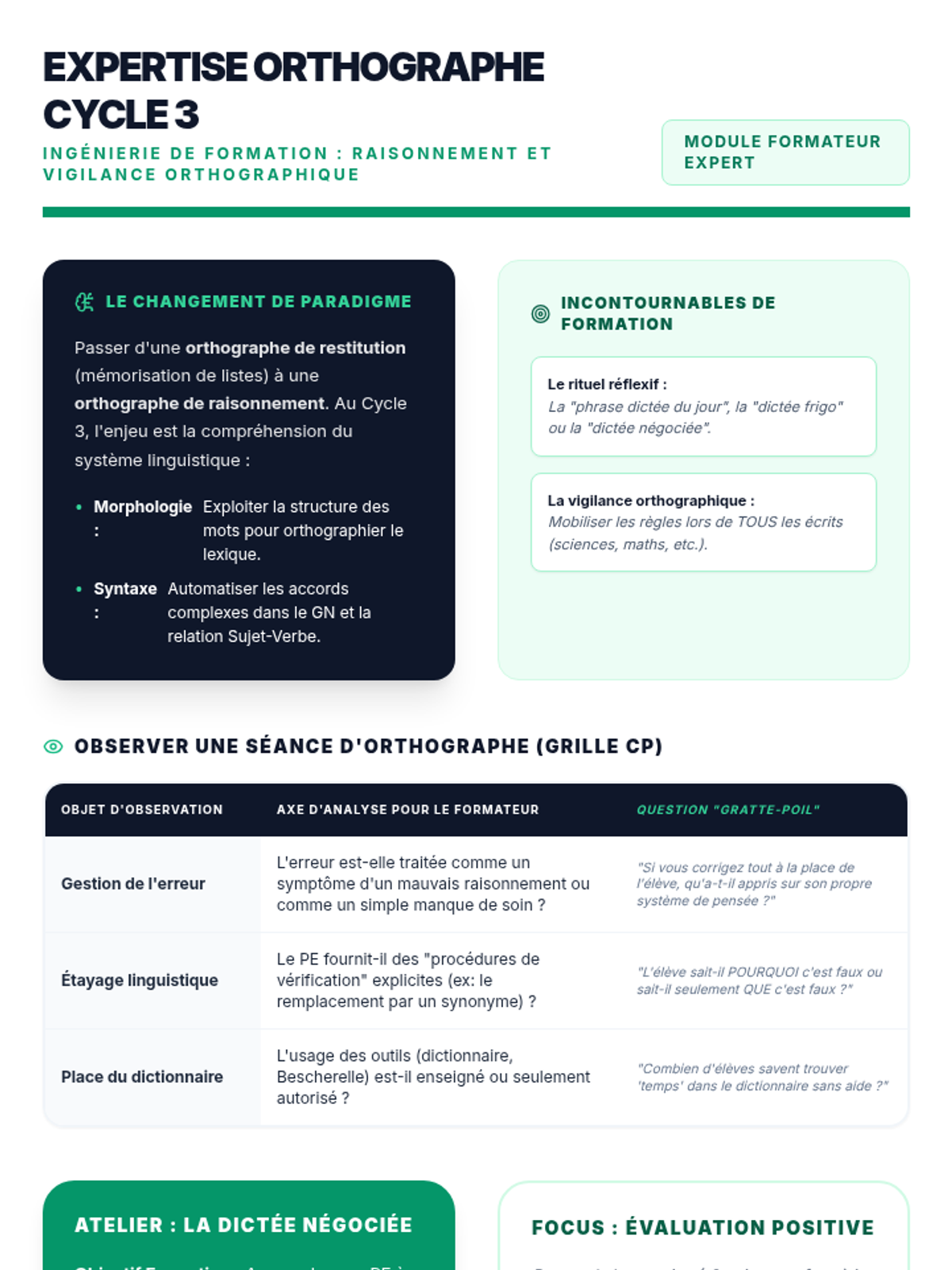
Cette formation vise à outiller les conseillers pédagogiques pour l'analyse et l'exploitation de ressources diverses (vidéos, manuels, guides) dans le cadre de la formation continue des professeurs des écoles en français, conformément aux orientations stratégiques nationales.
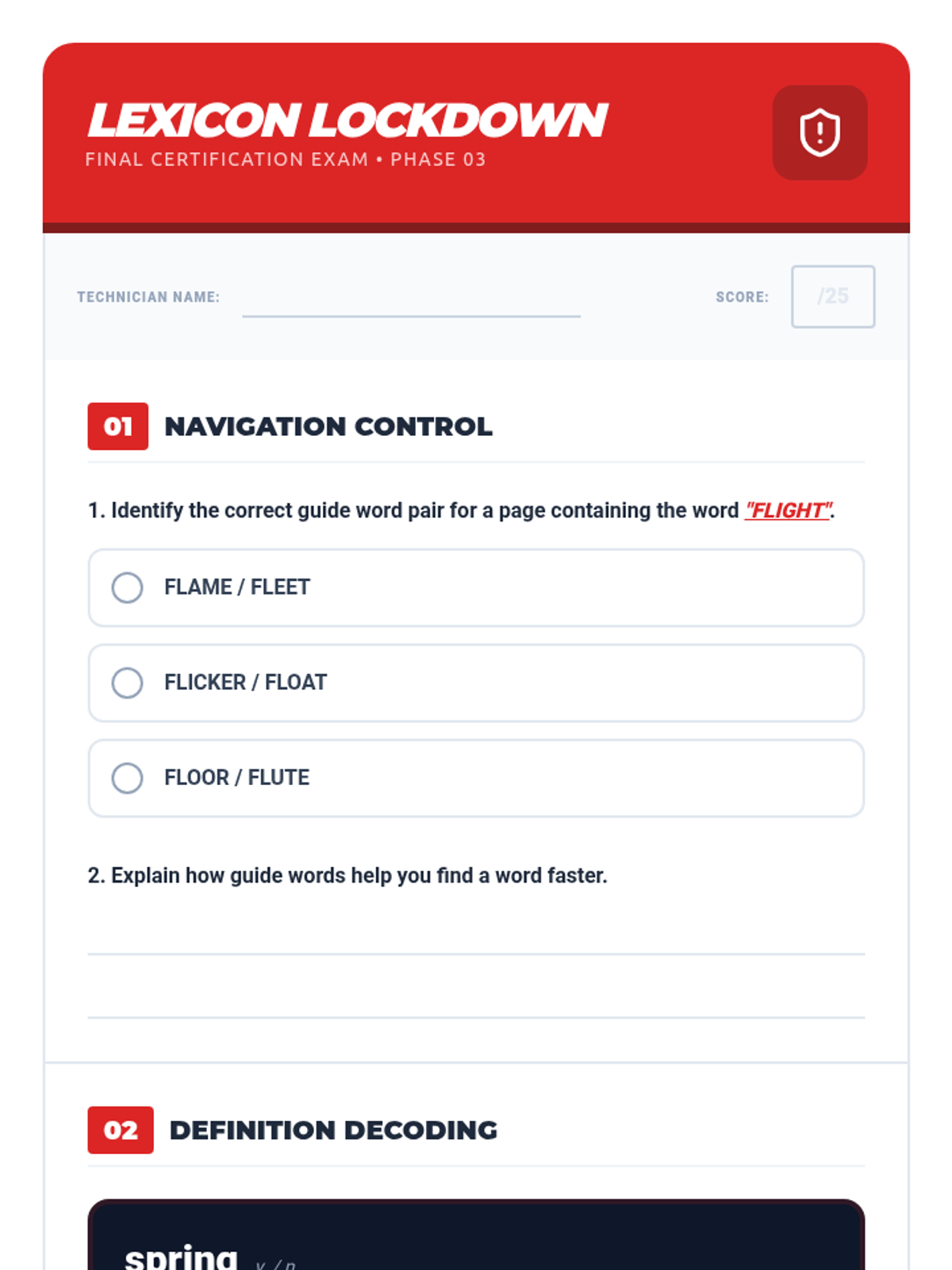
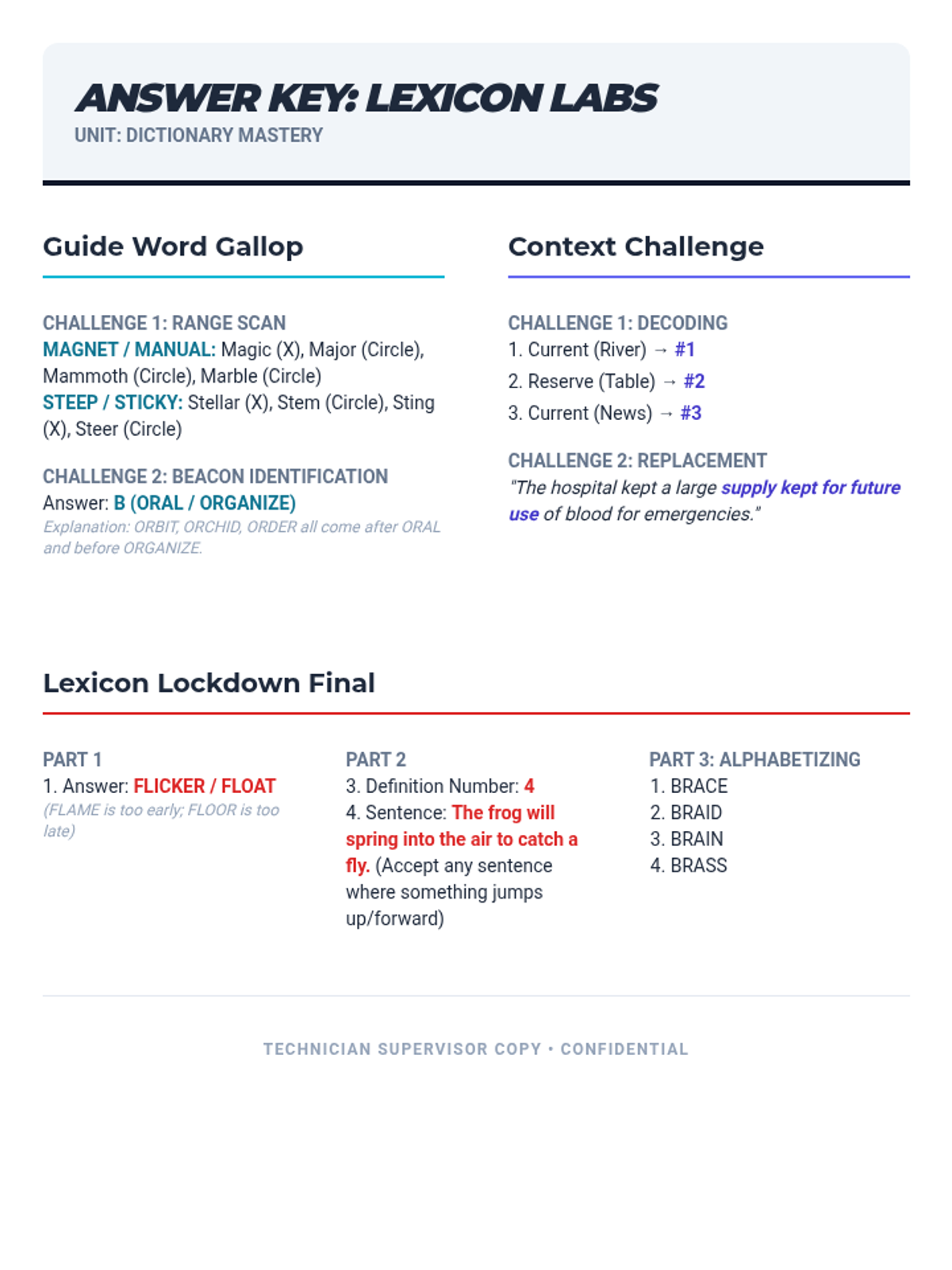
A cumulative review and formal assessment of dictionary navigation and entry analysis skills.
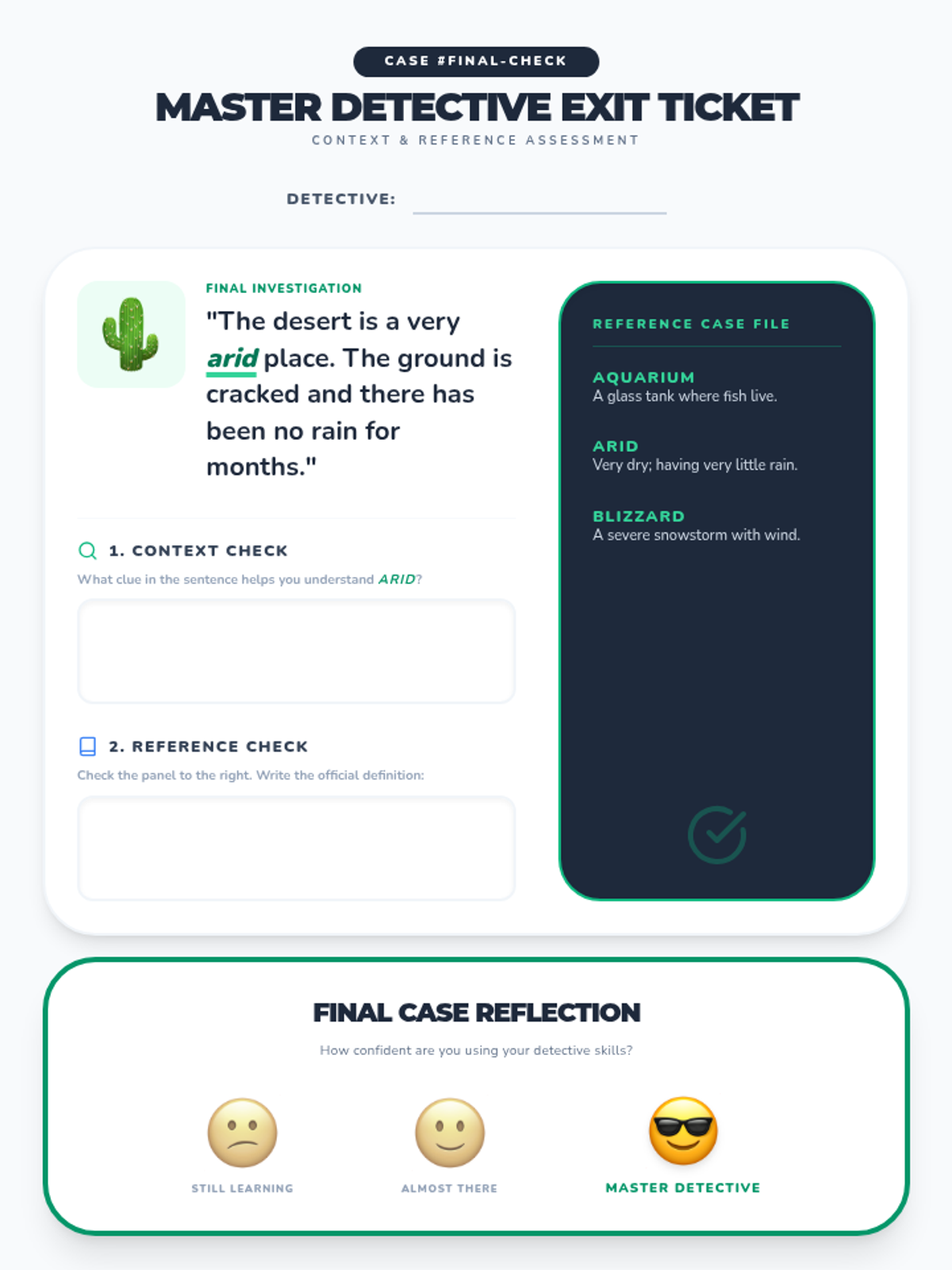
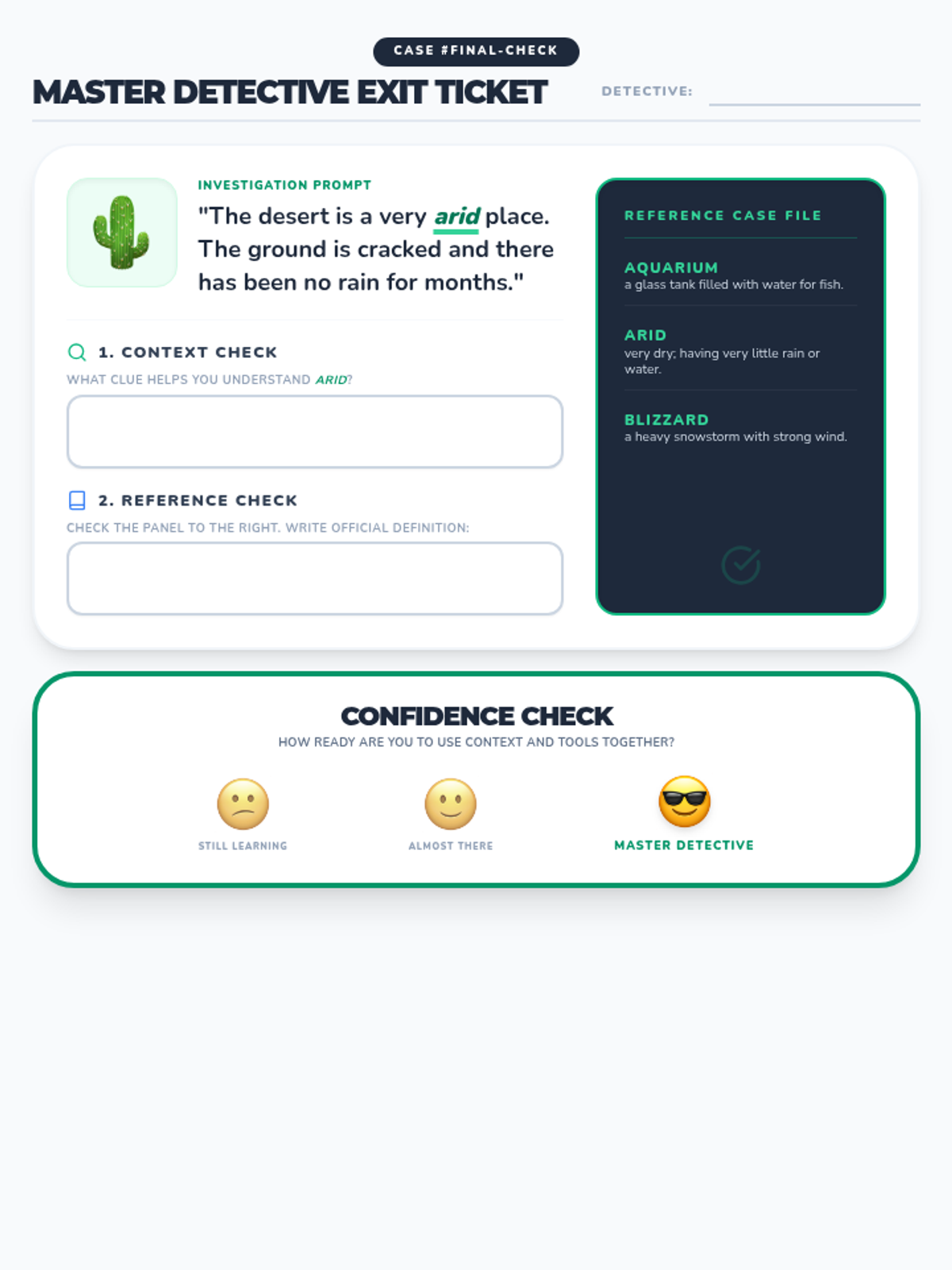
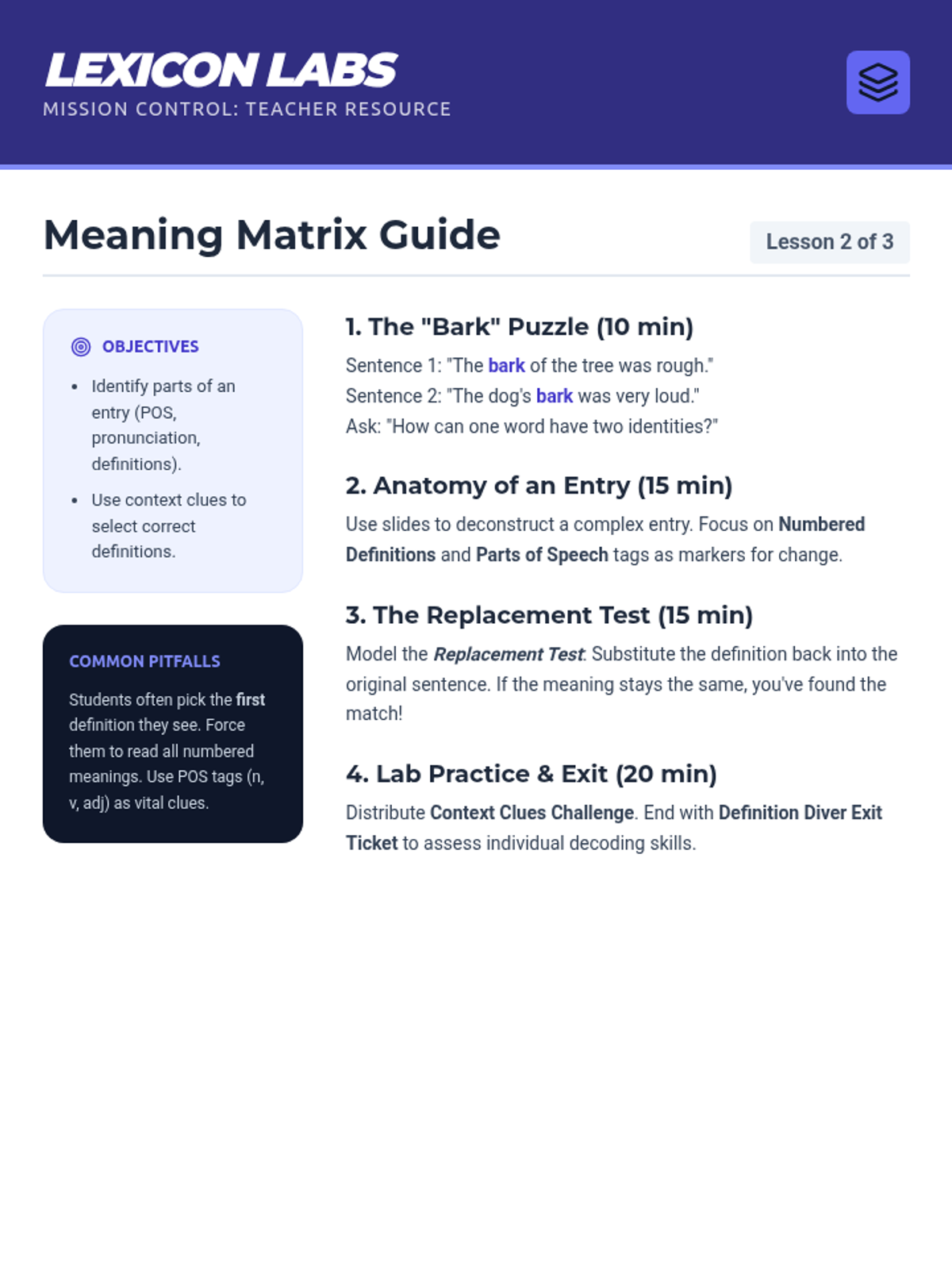
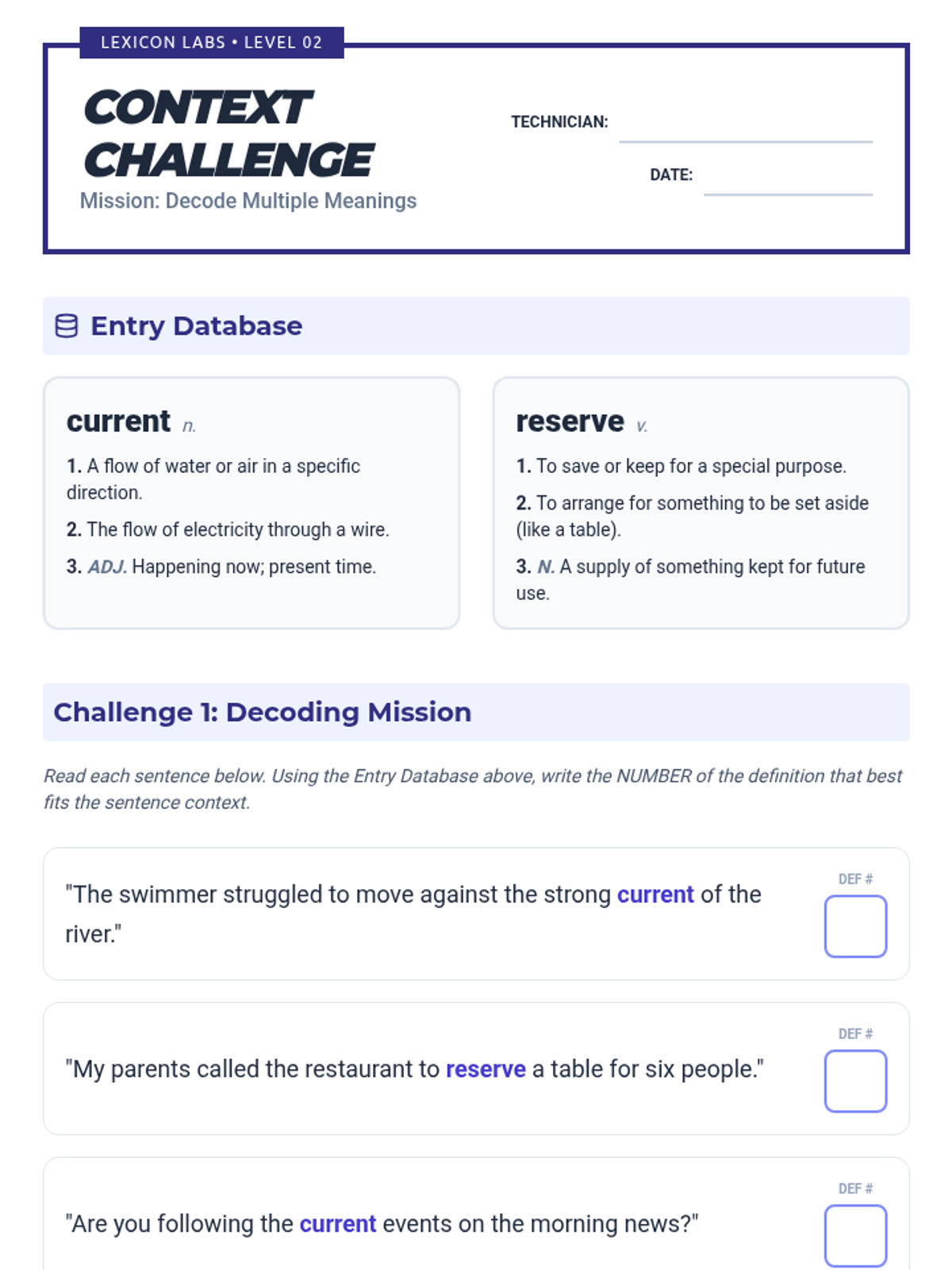
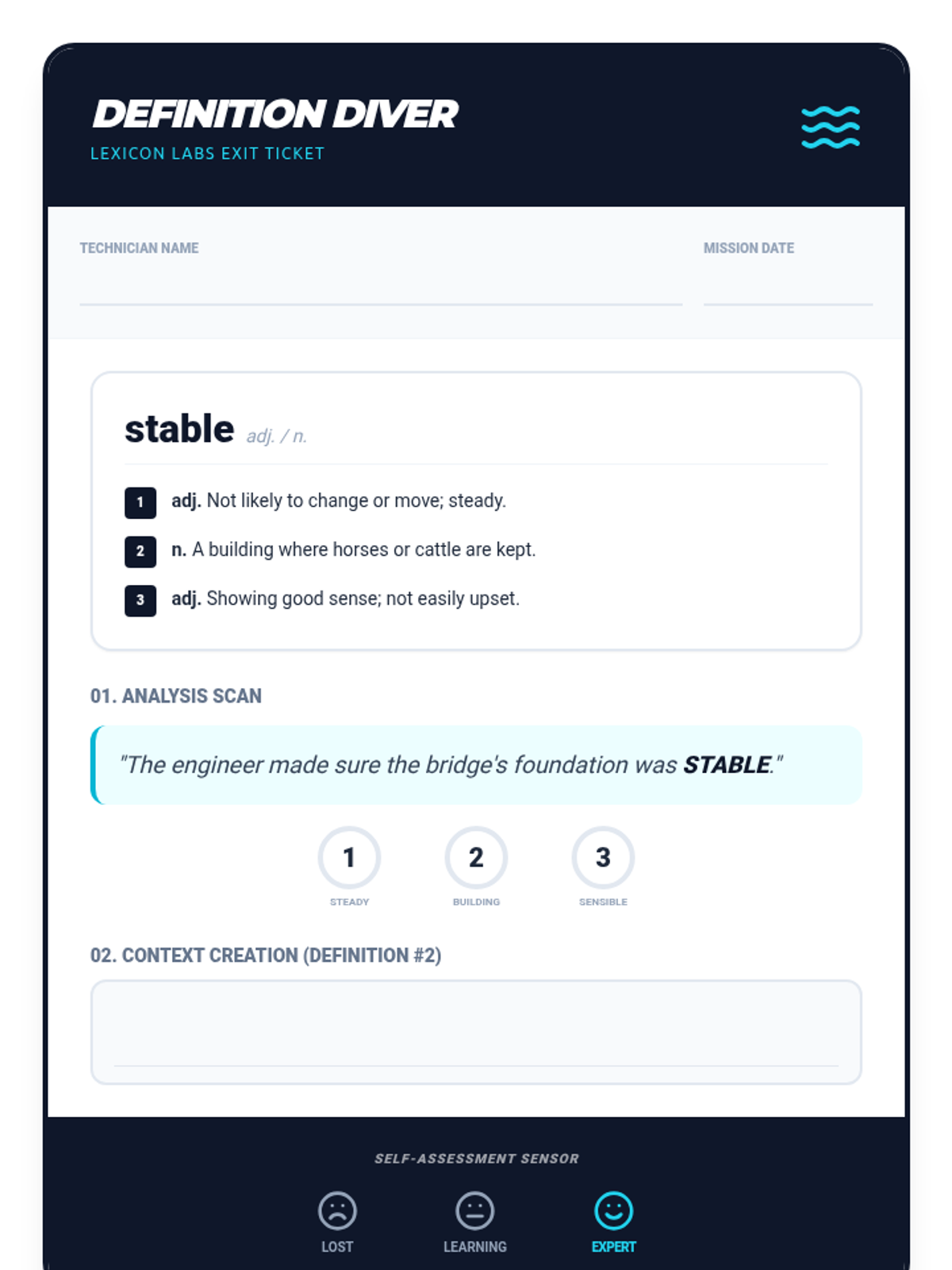
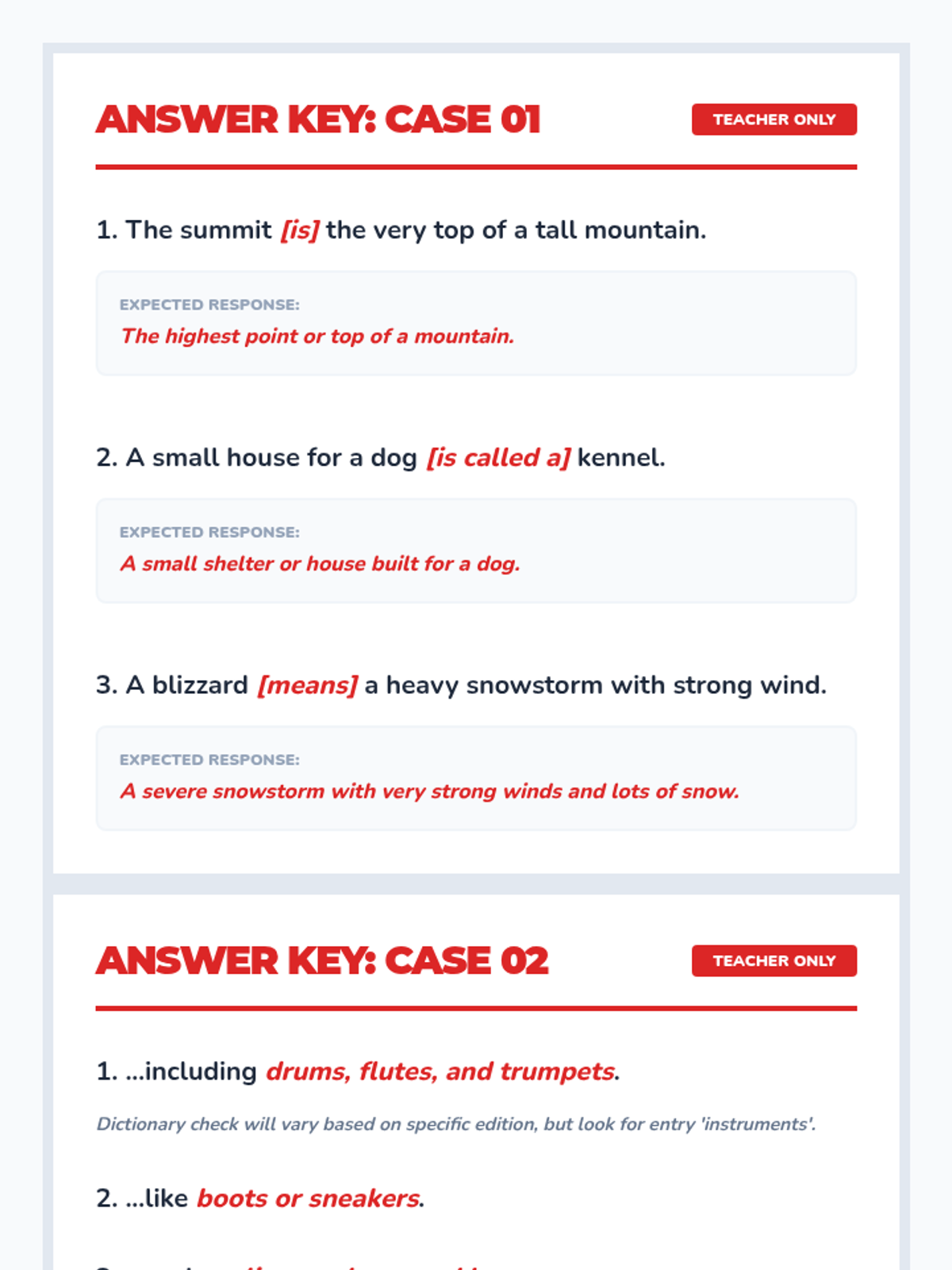
Focuses on the anatomy of a dictionary entry, specifically how to identify and choose between multiple definitions based on sentence context.
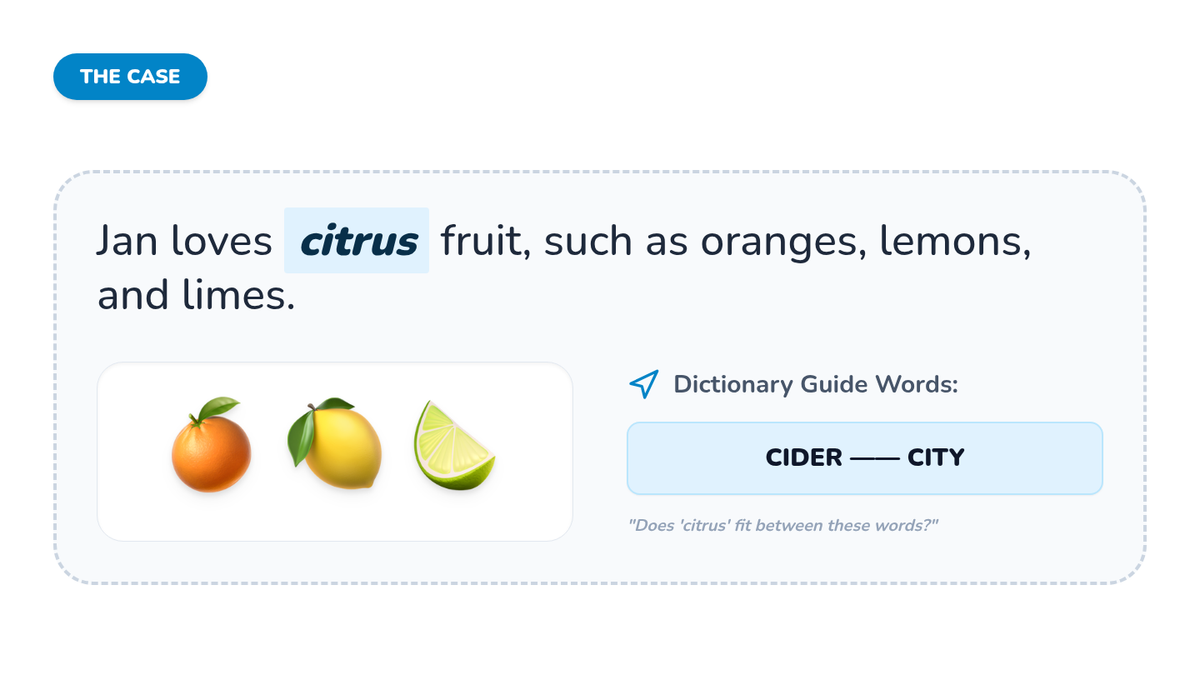
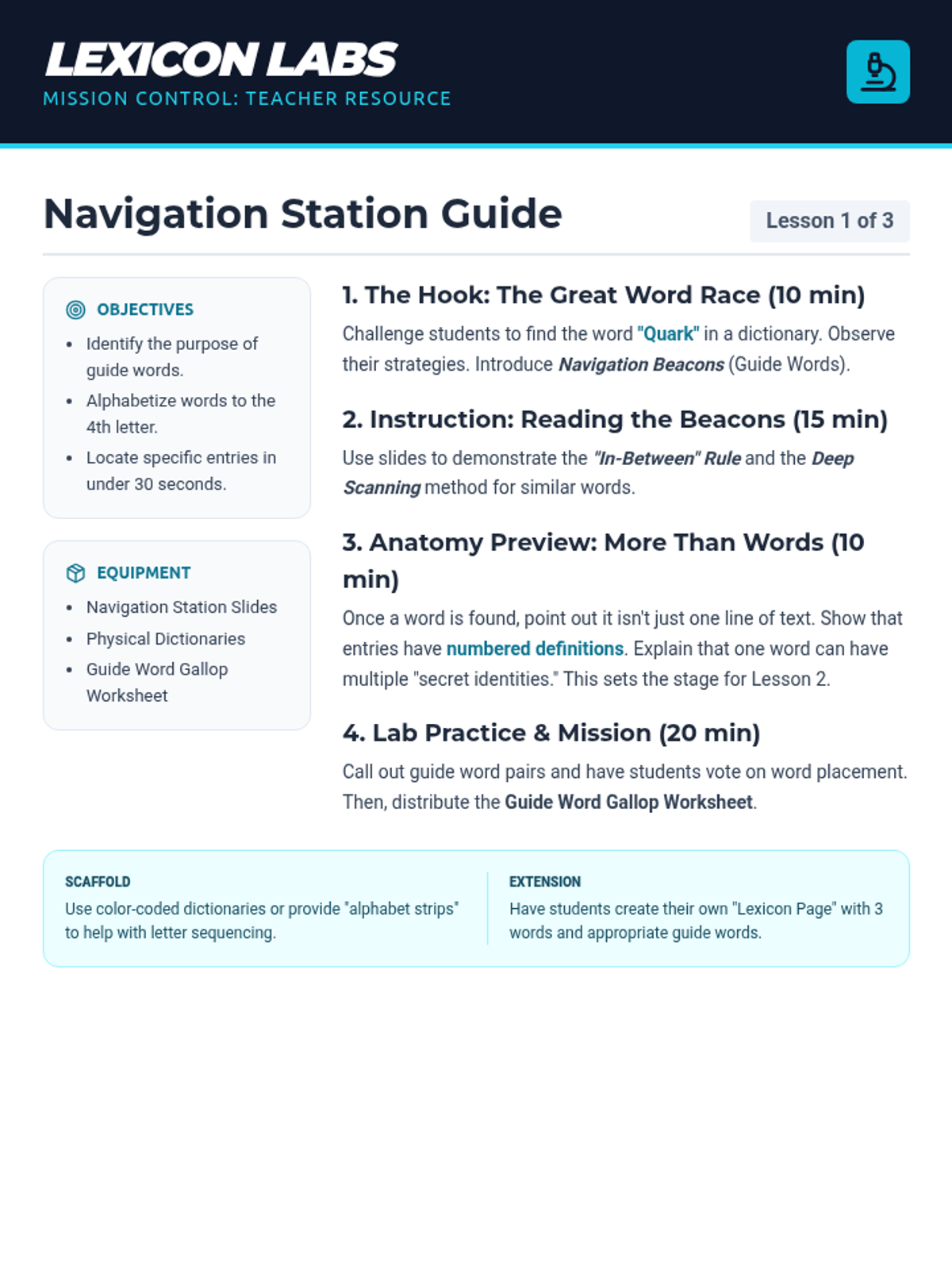
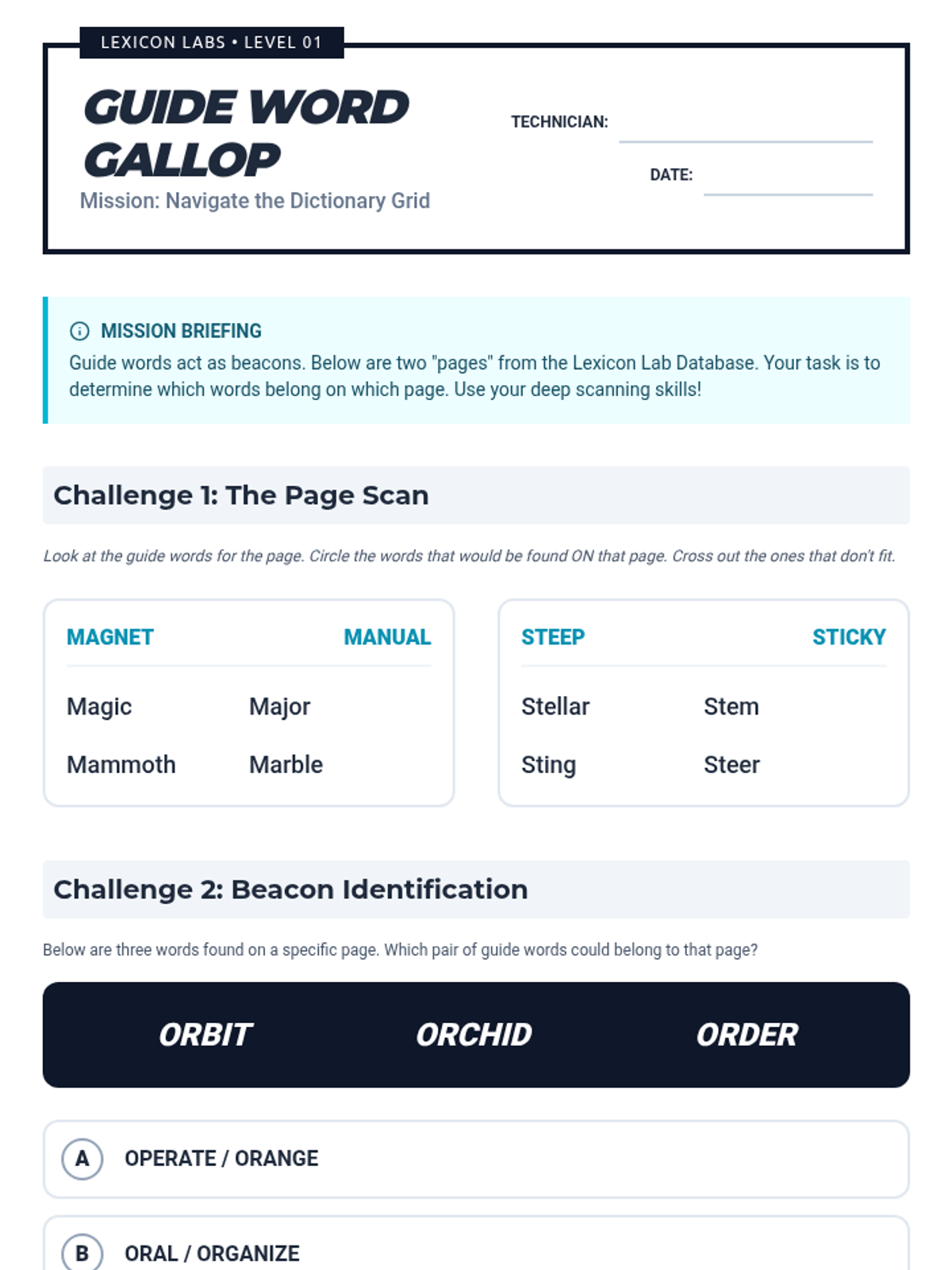
Introduction to the physical and digital structure of a dictionary, with a deep dive into using guide words for rapid word location.
Students learn to identify definition clues in sentences where the meaning of a tricky word is explained directly, using illustrations to confirm their findings.
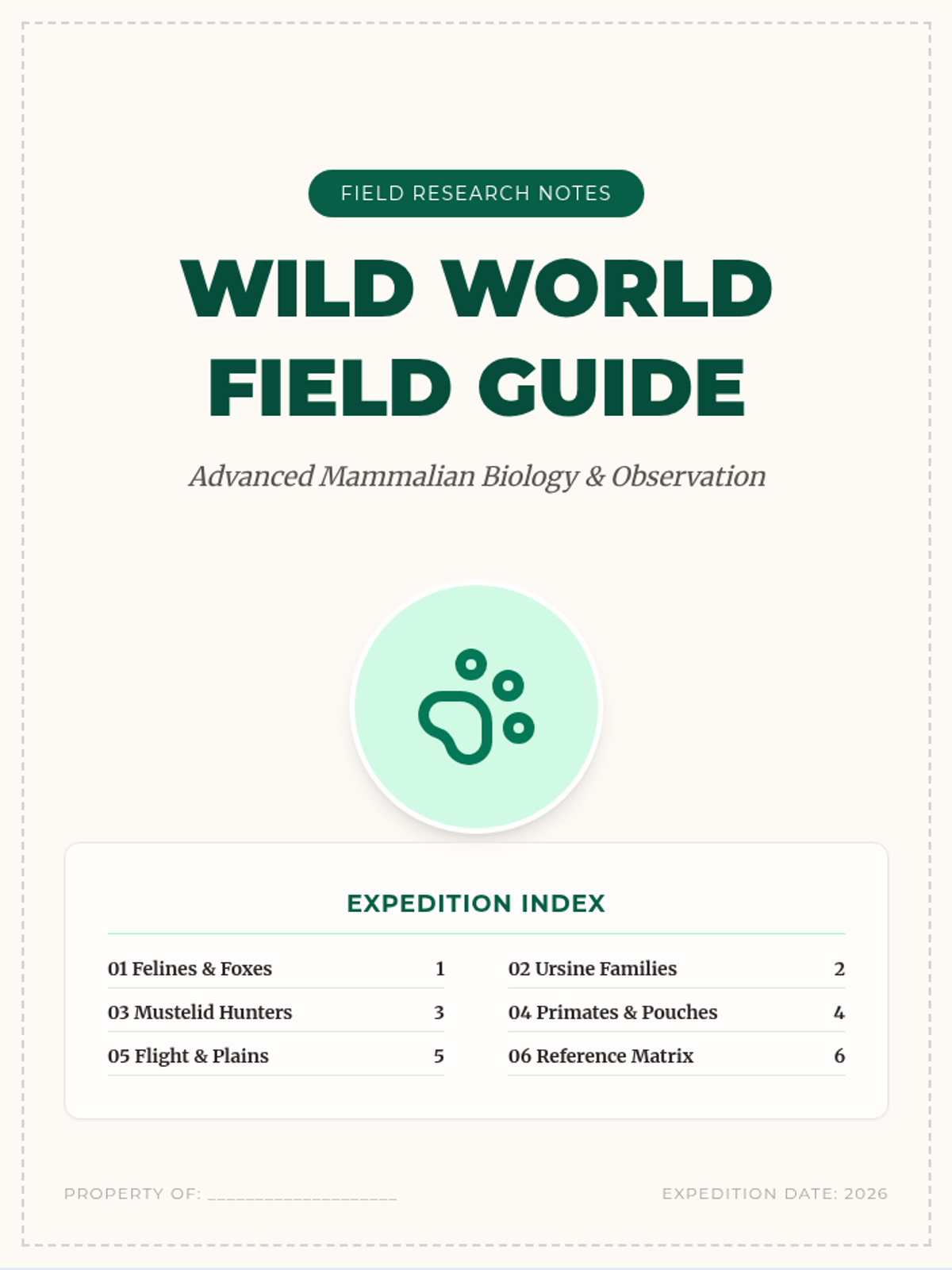
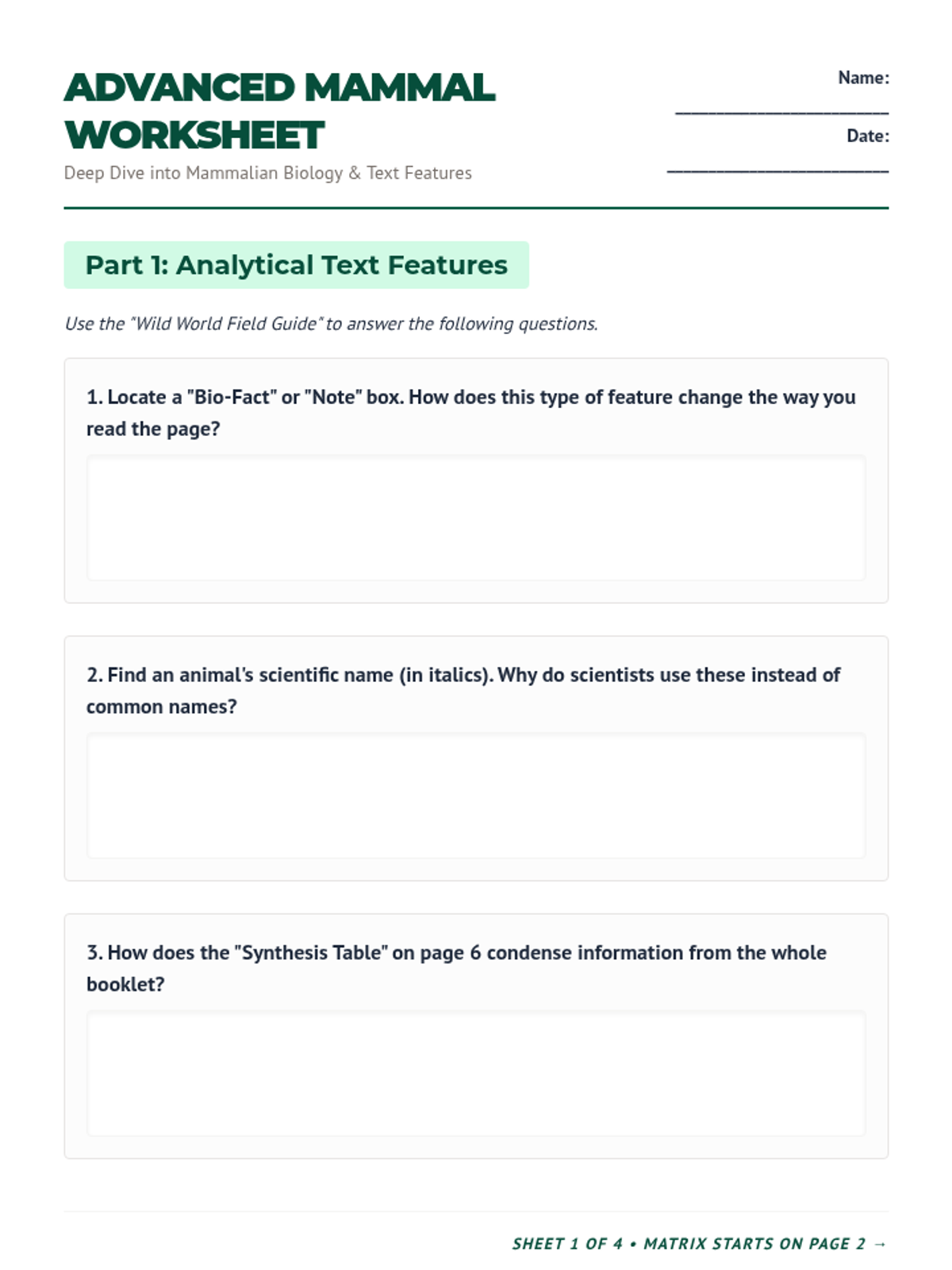
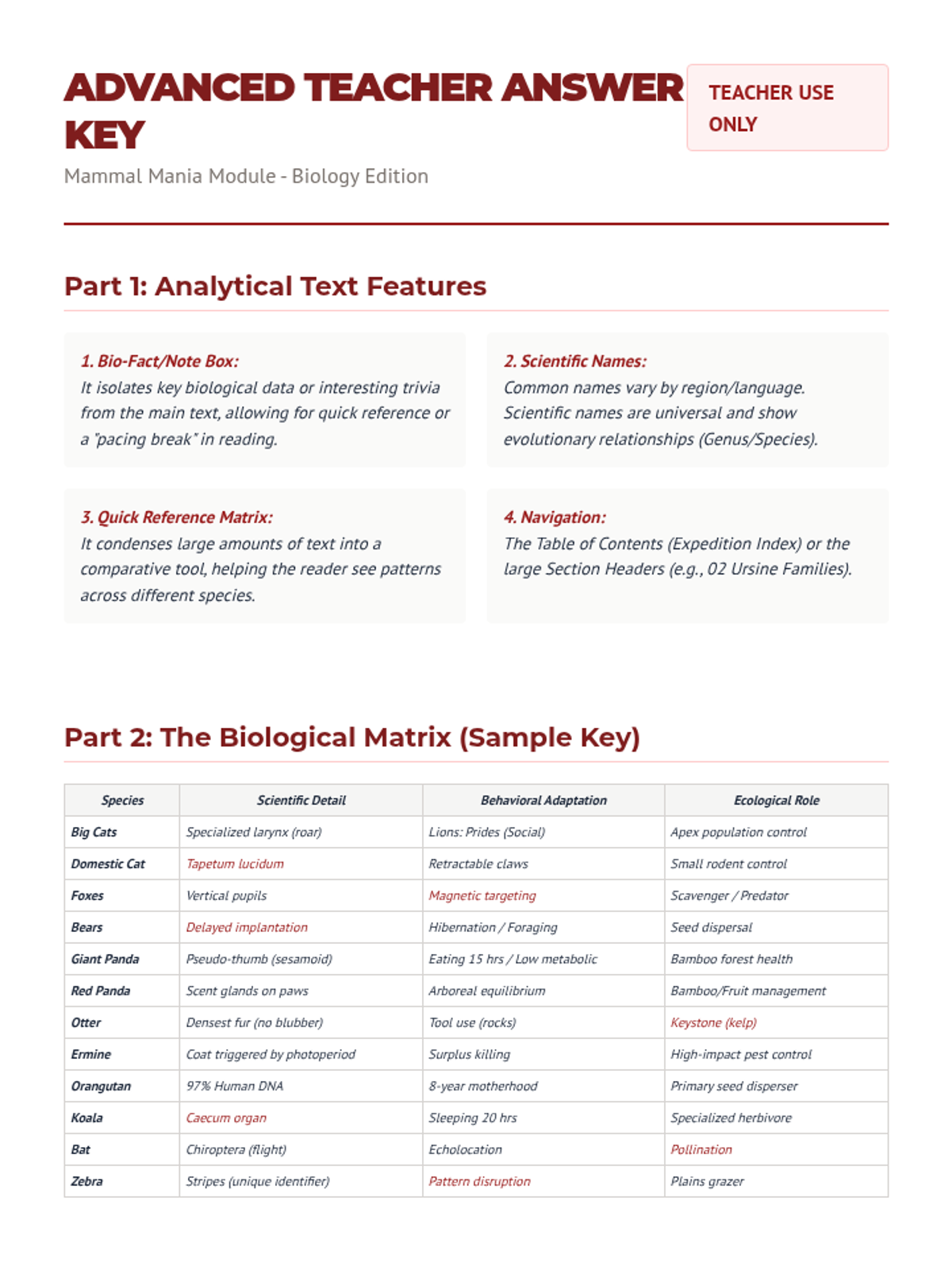
An in-depth exploration of diverse mammals, focusing on informational text features, main ideas, and vocabulary acquisition through a comprehensive field guide and activity set.
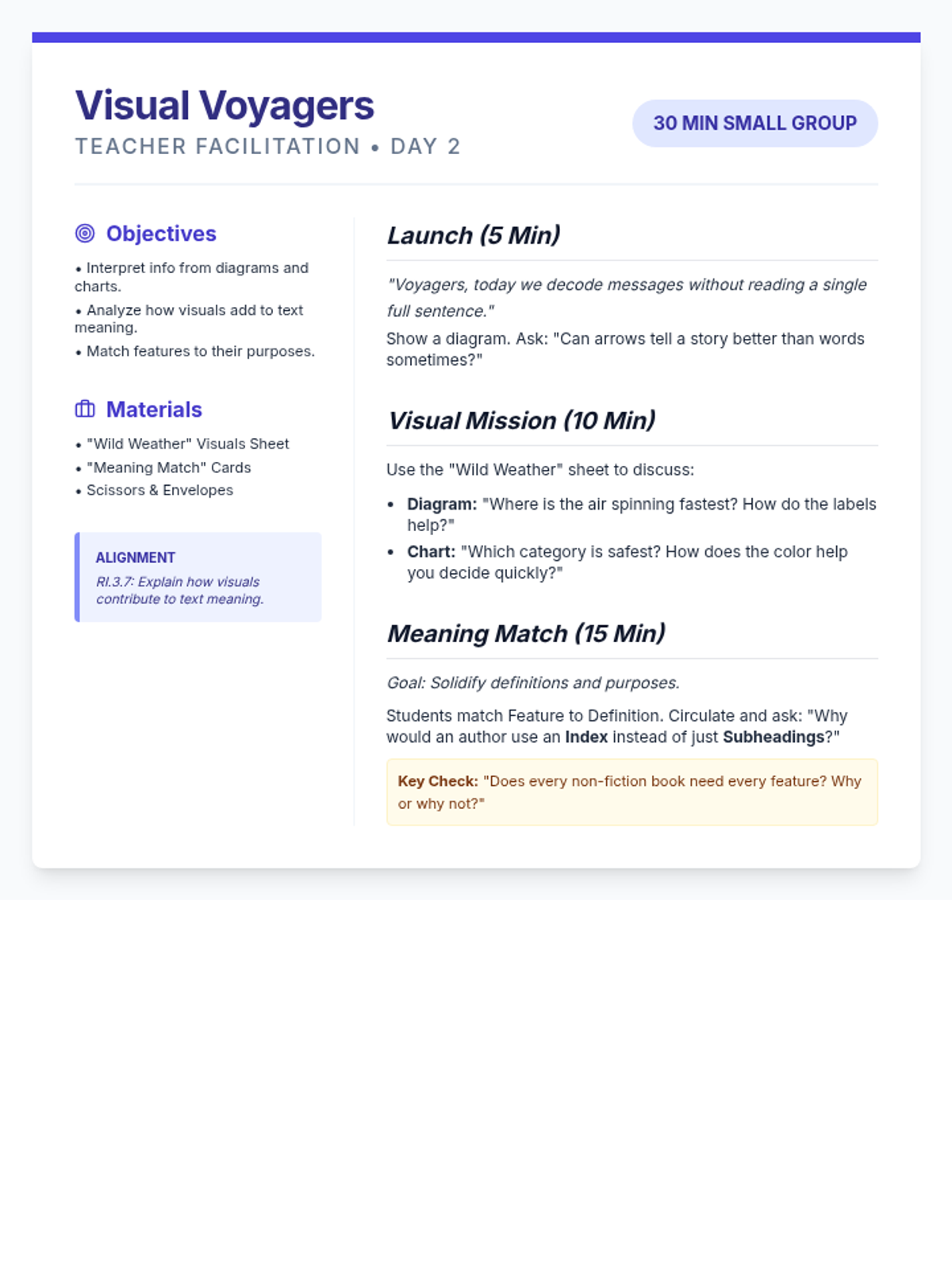
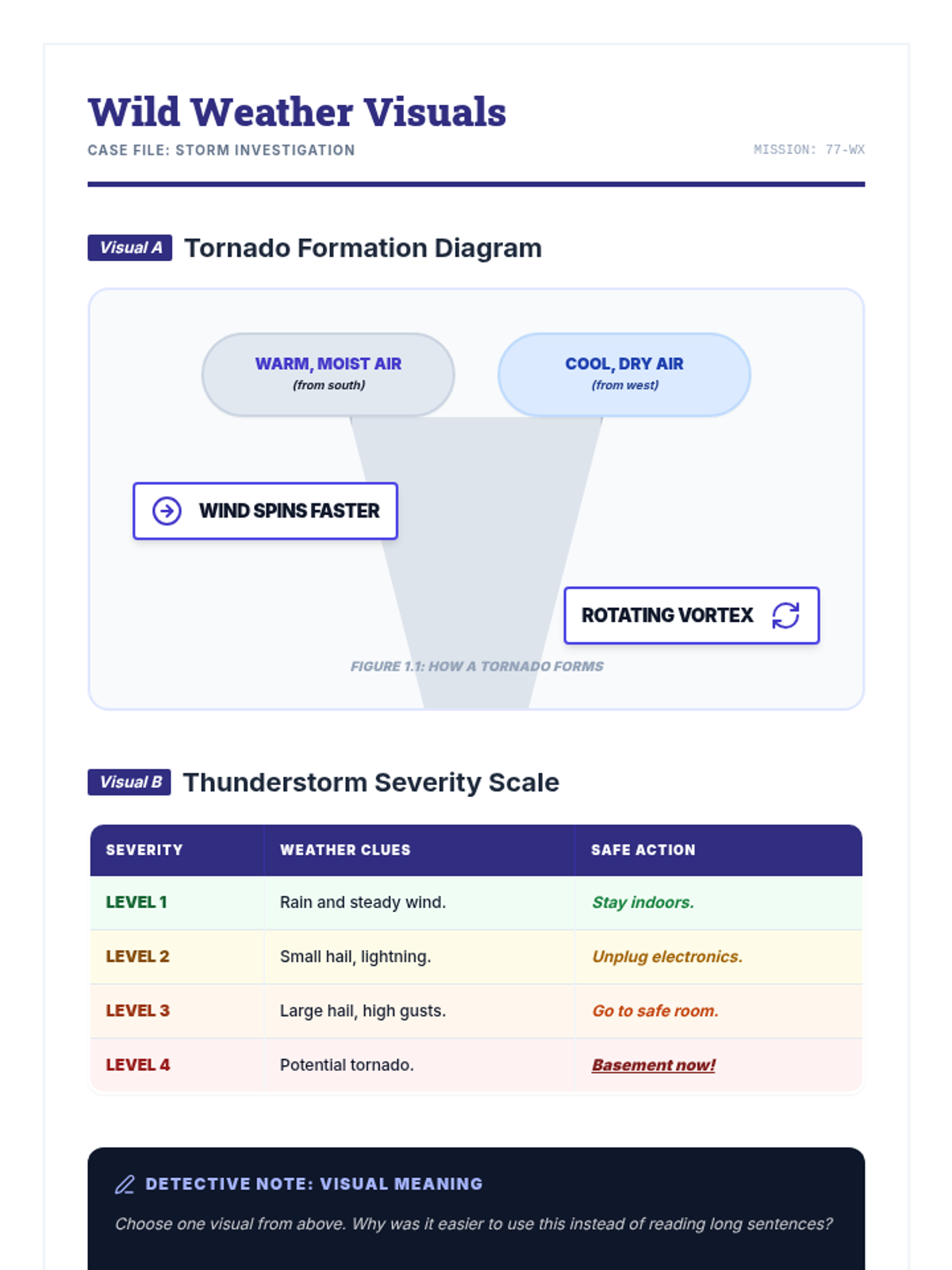
Focuses on visual text features including diagrams and charts, teaching students how these elements provide information that the text alone might not convey.
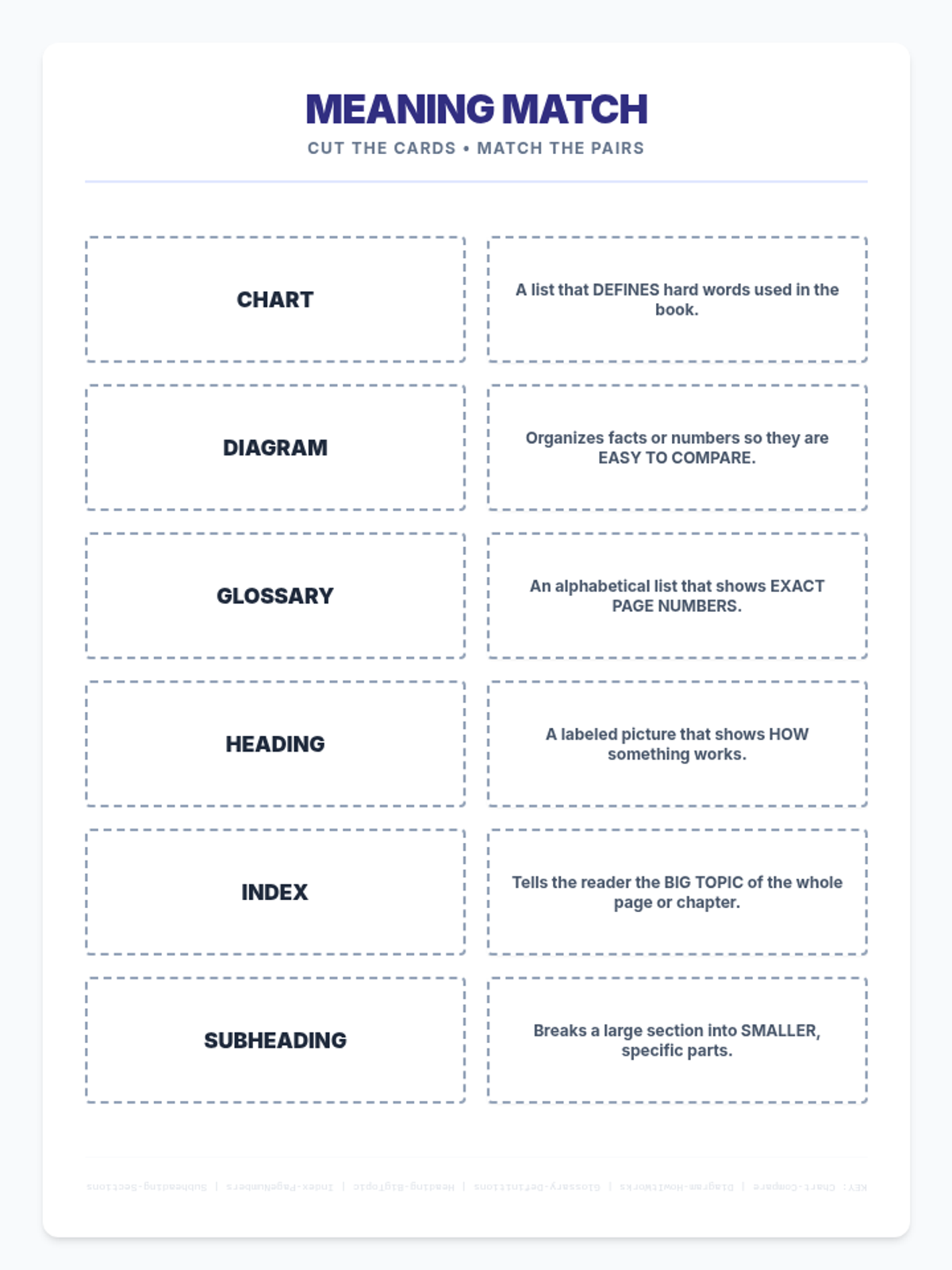
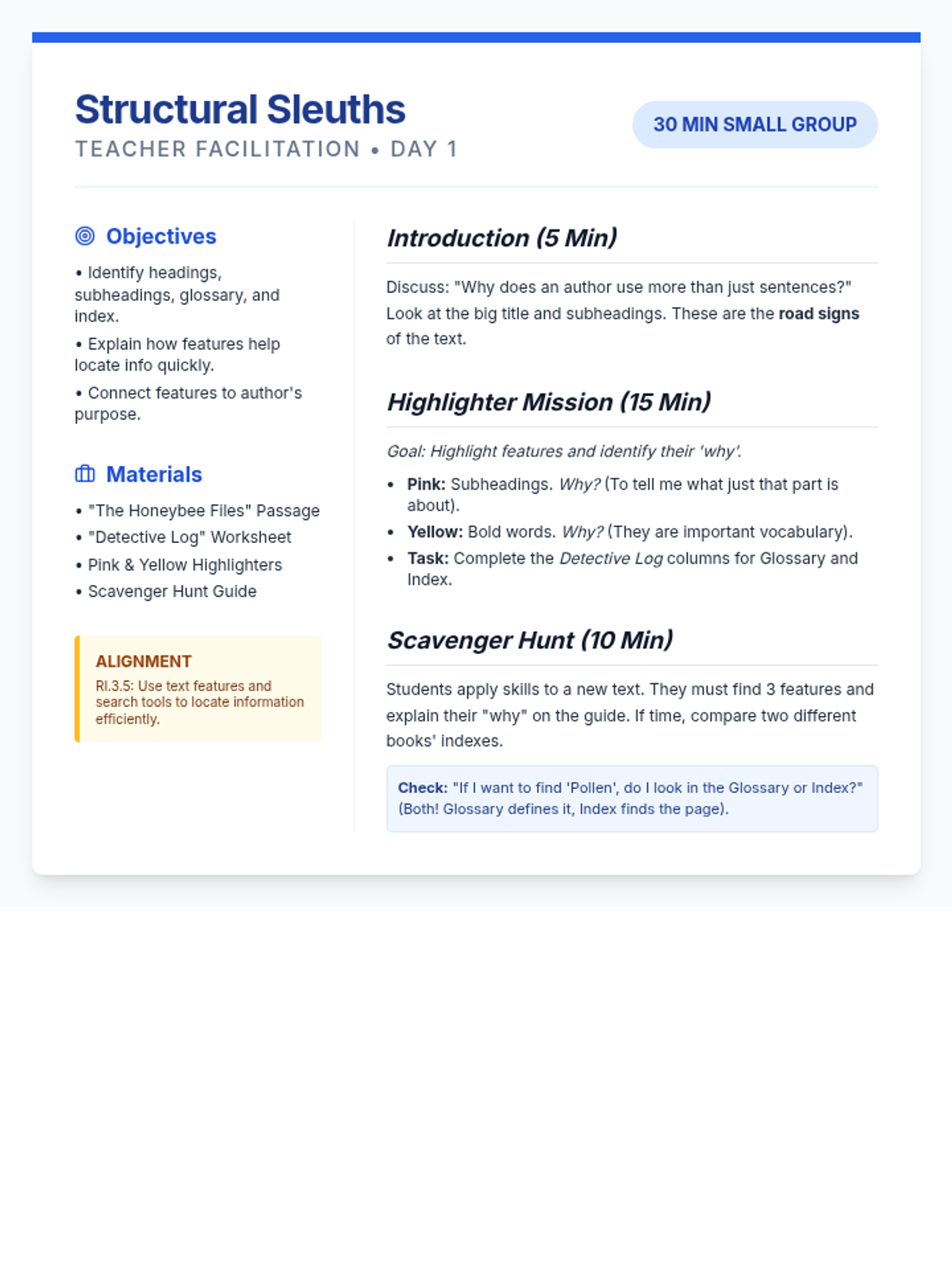
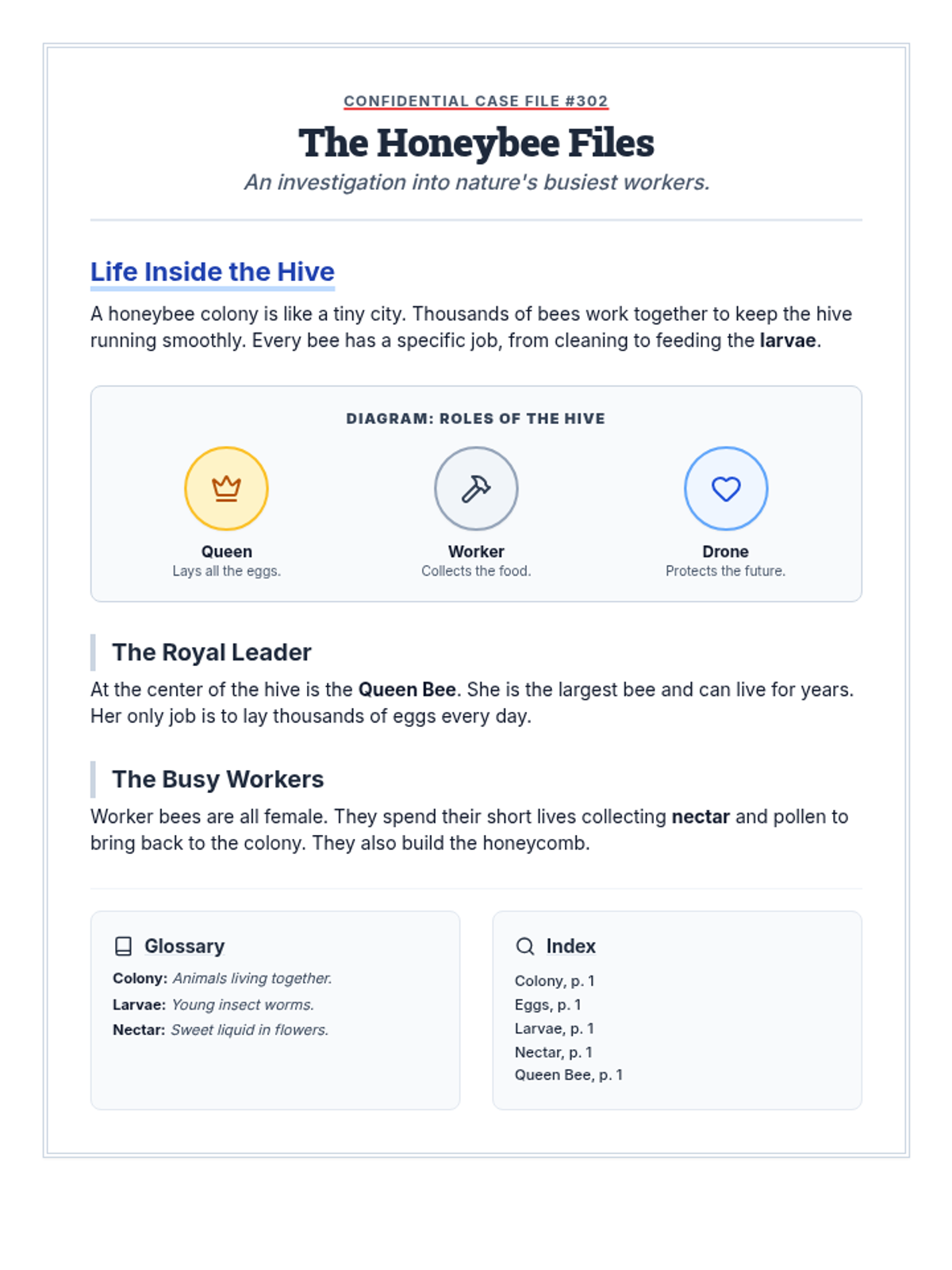
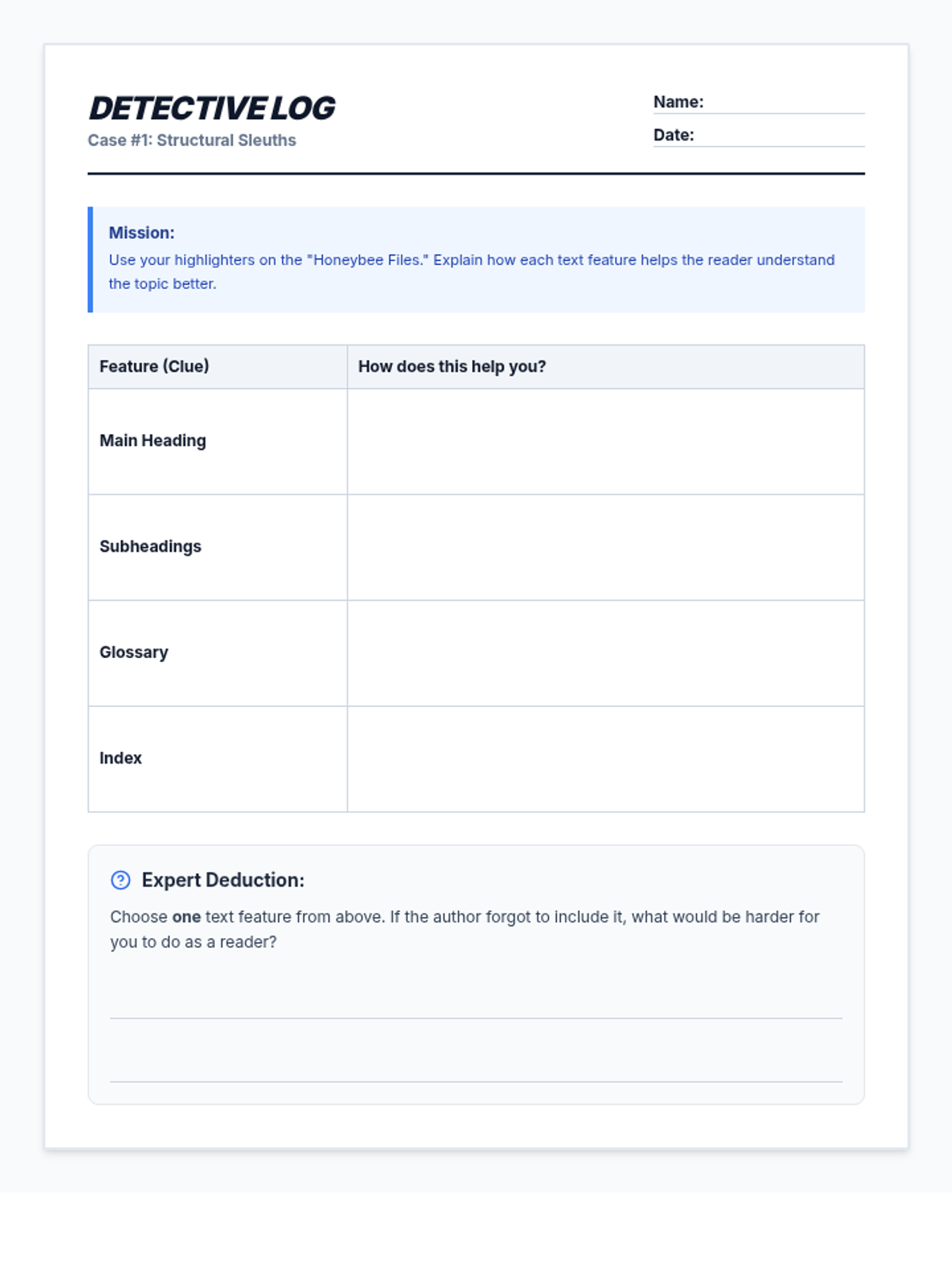
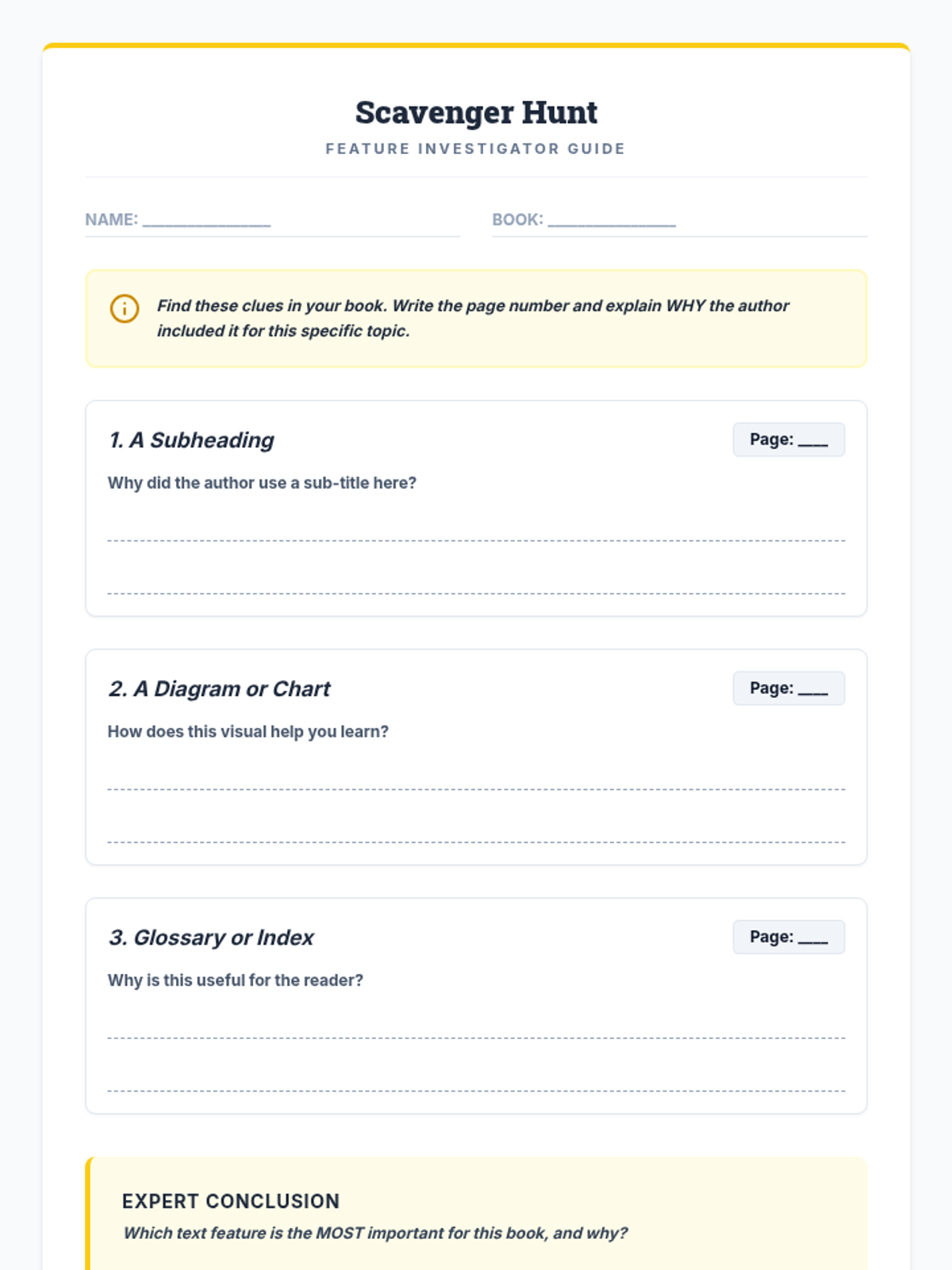
Focuses on structural text features including headings, subheadings, glossaries, and indexes to help students navigate non-fiction and locate information quickly.
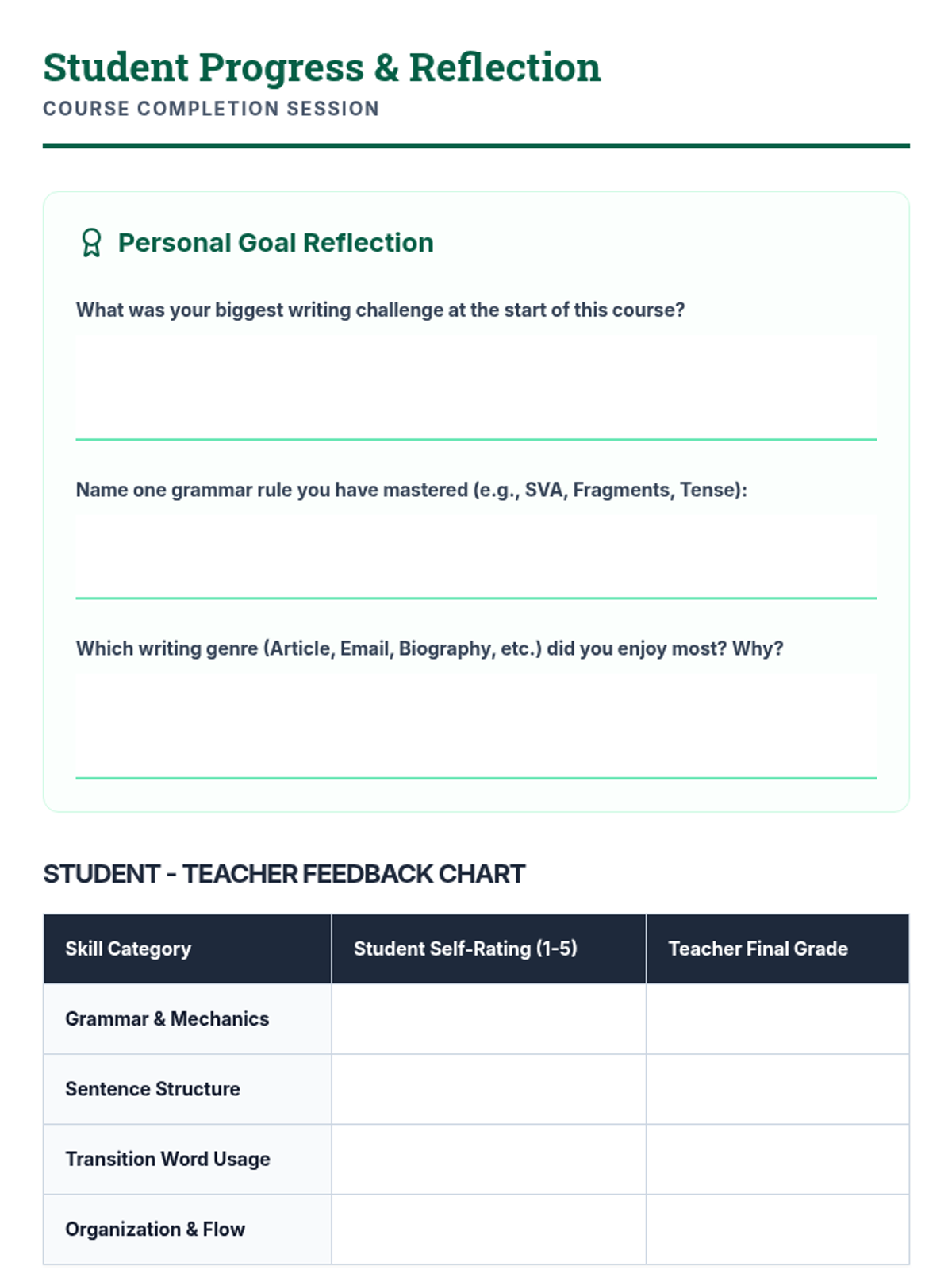
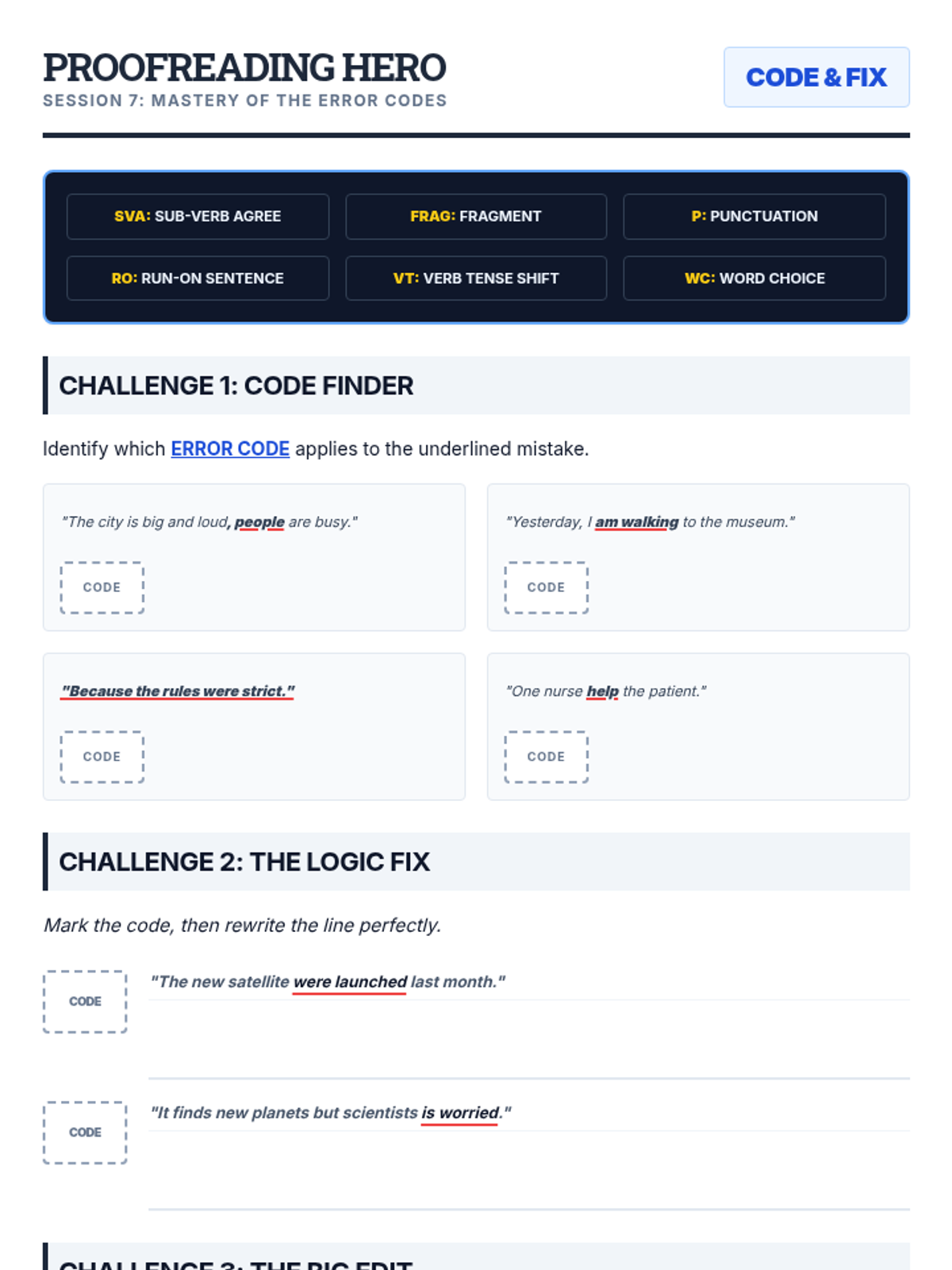
A final evaluation and reflection session including the final assessment, feedback charts, and student-teacher goal reviews.
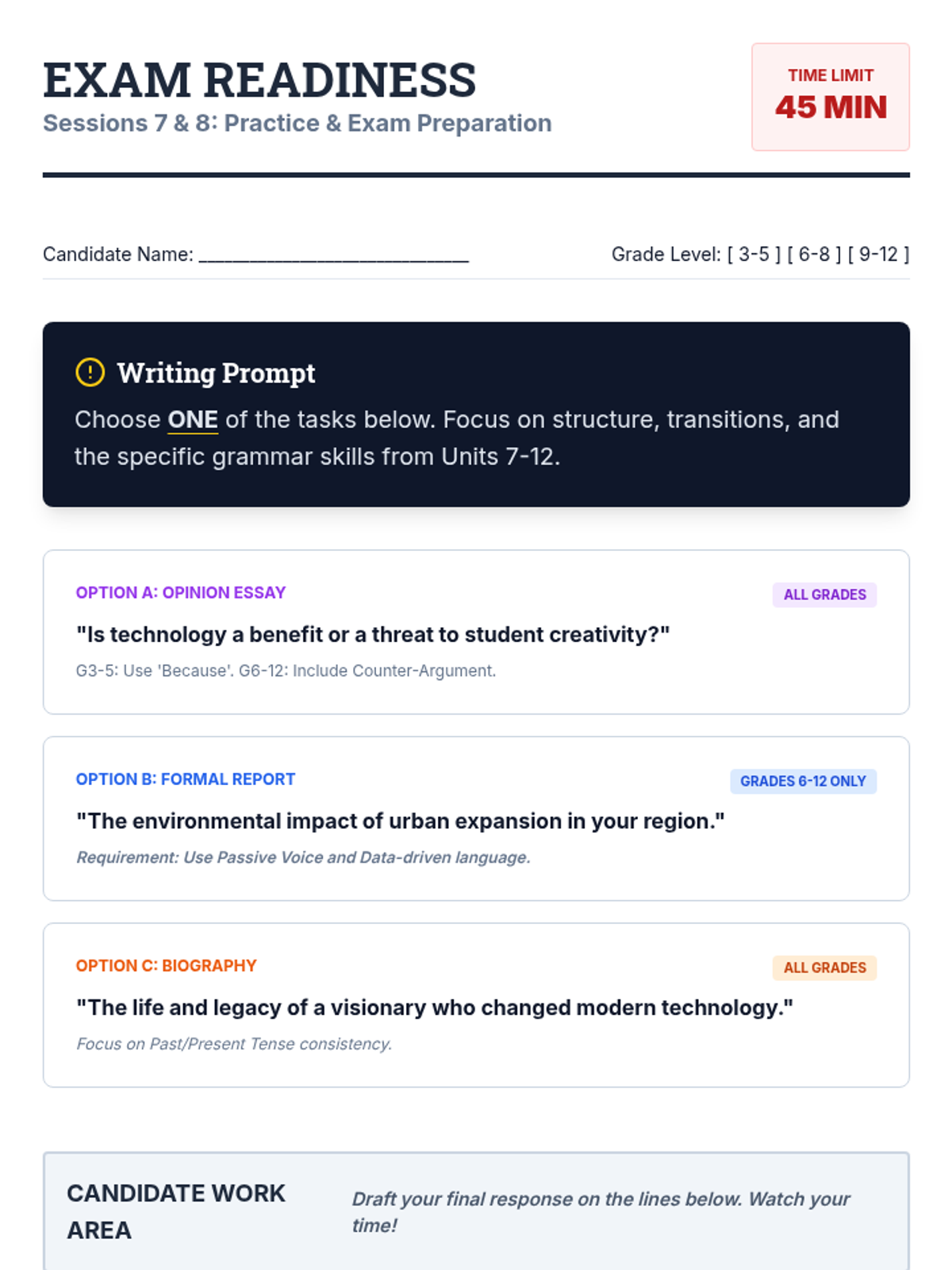
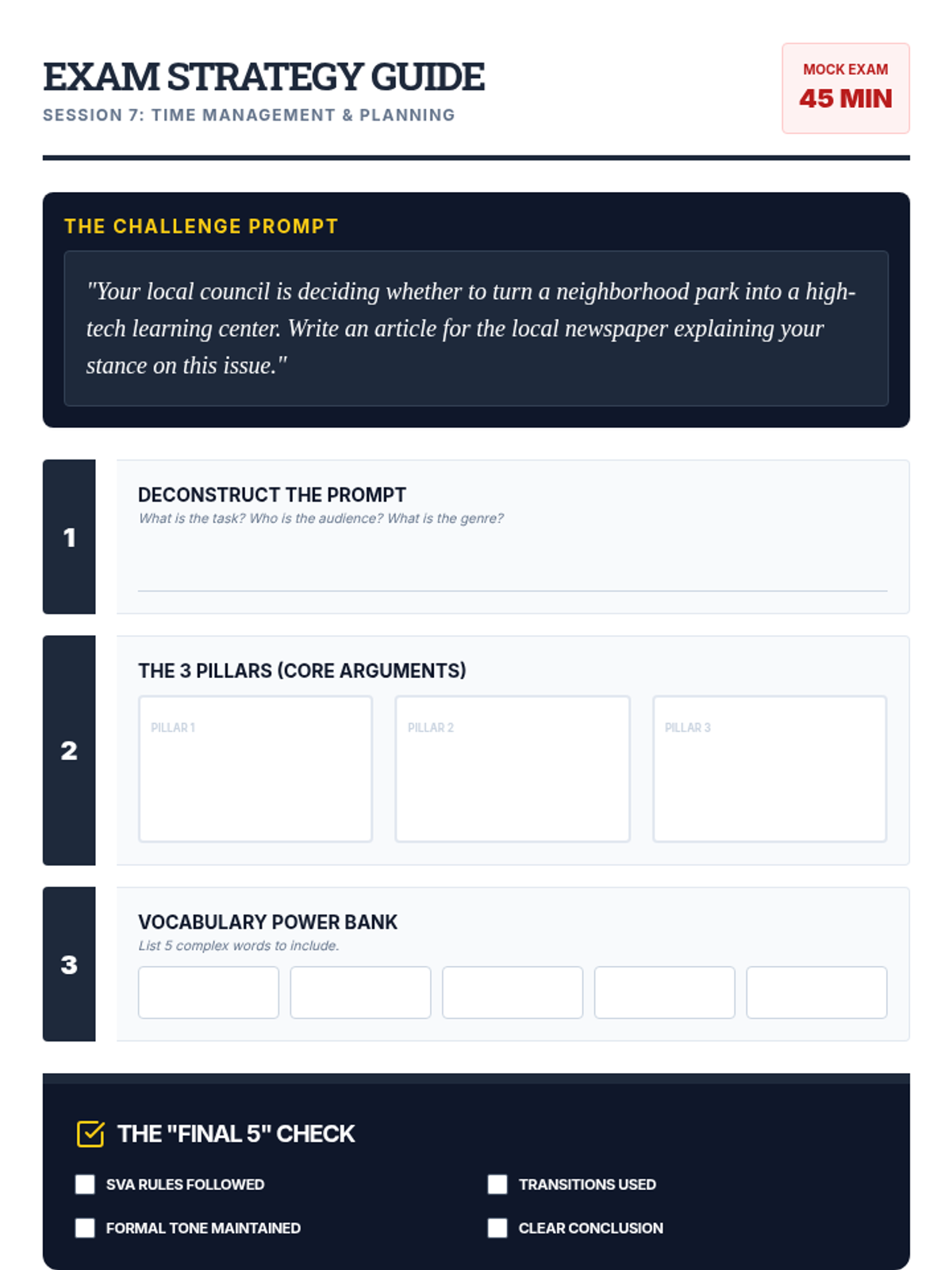
Provides timed writing practice and mock exam conditions to build stamina and review structural clarity.
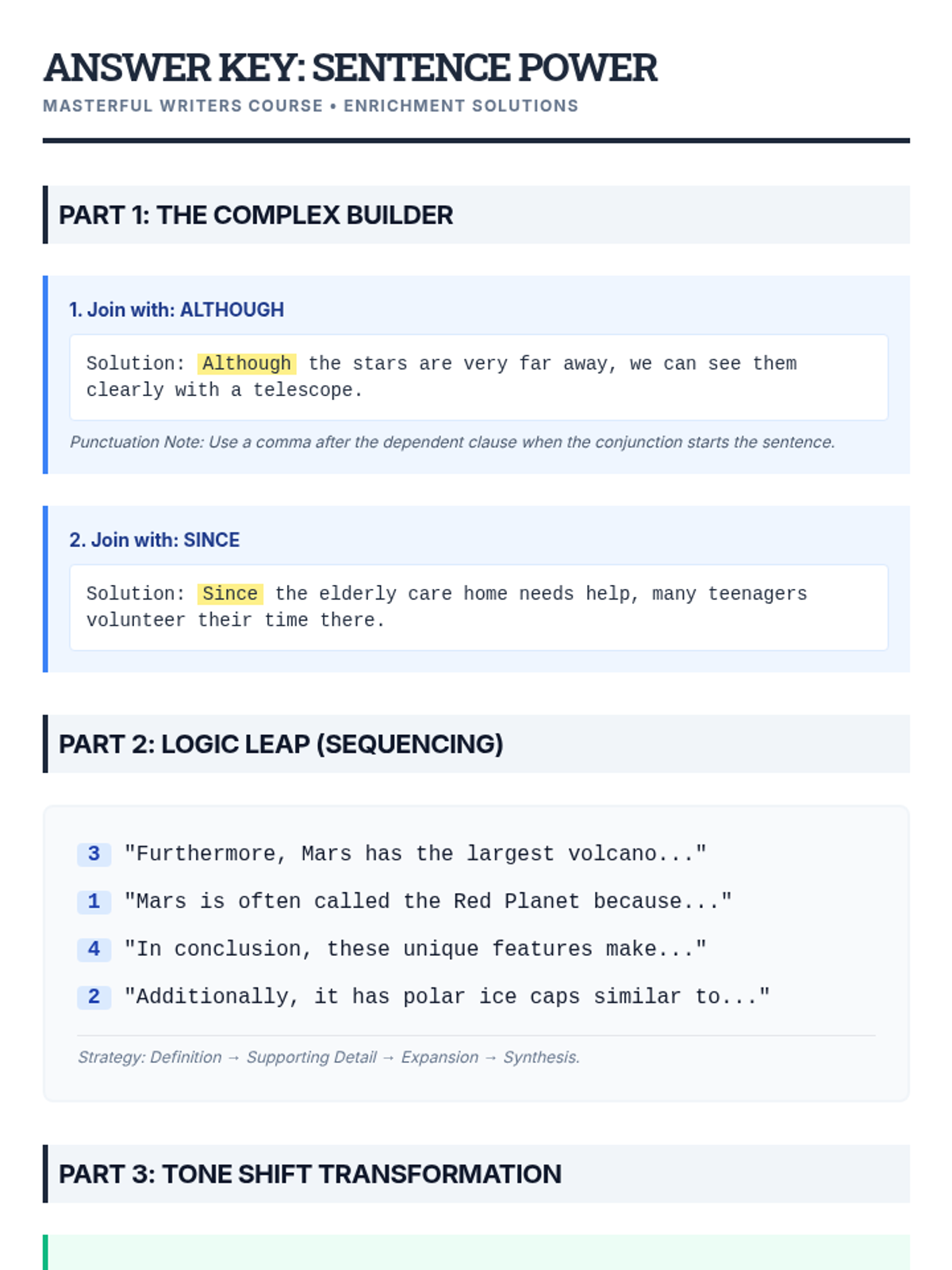
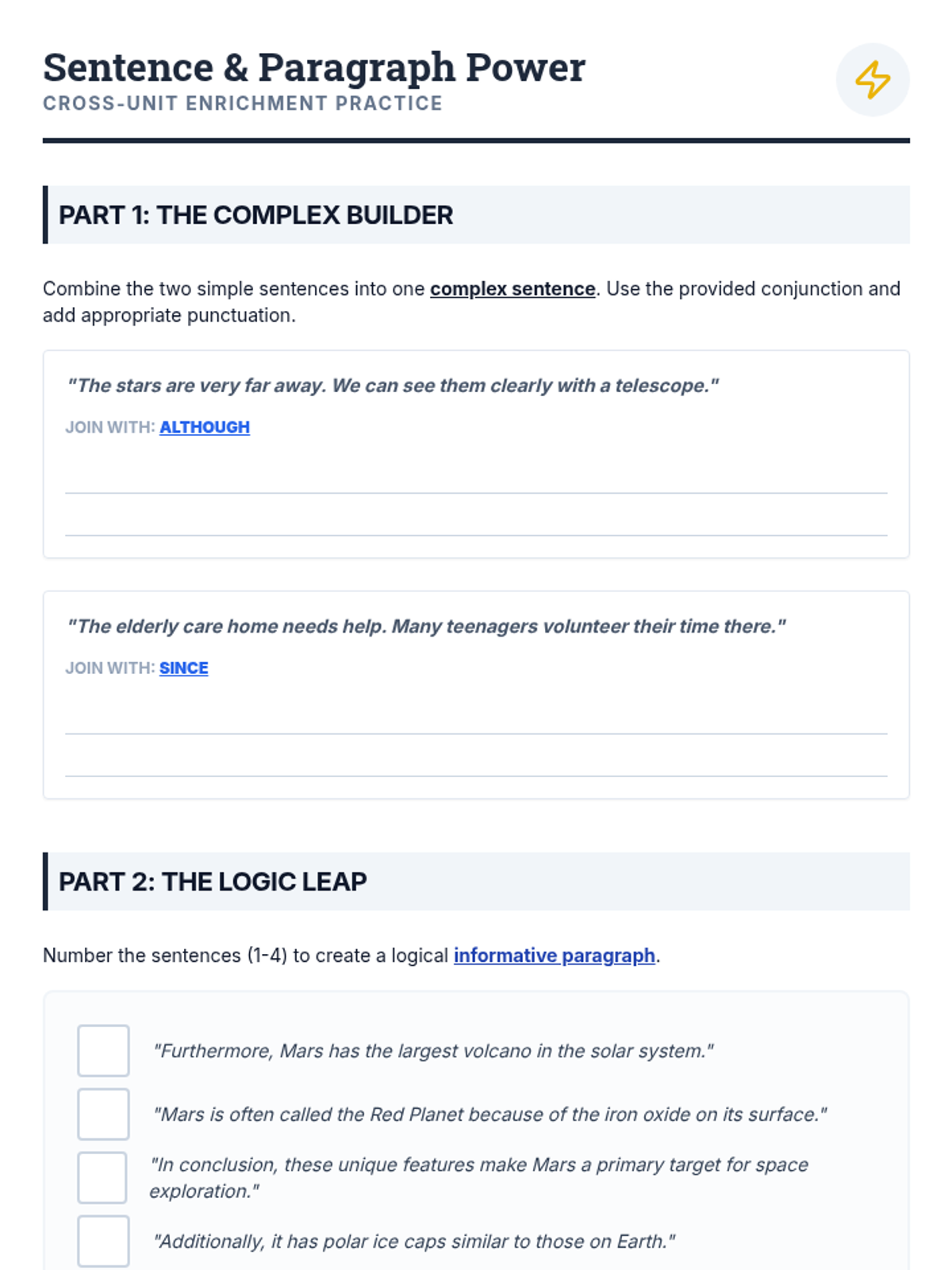
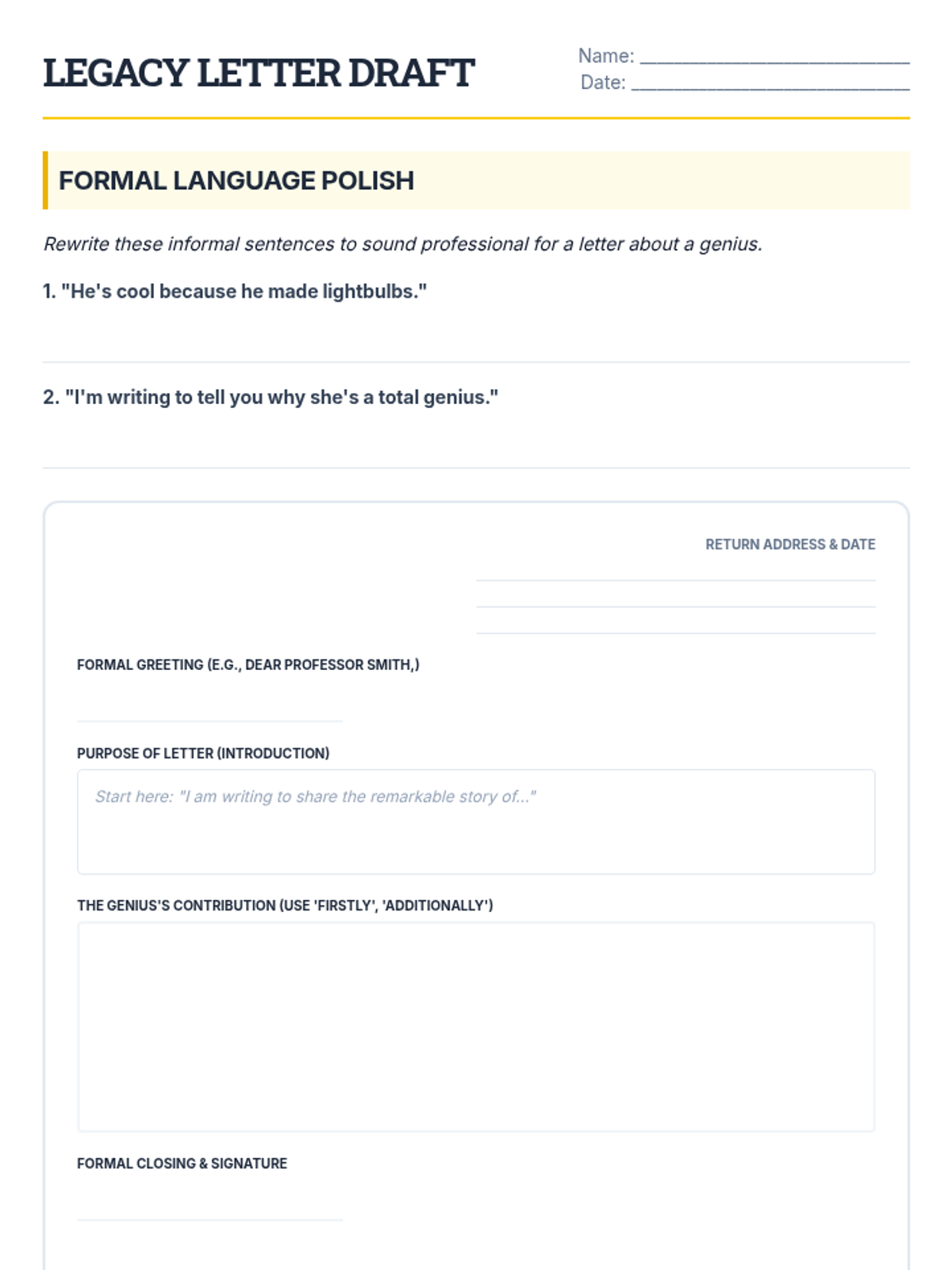
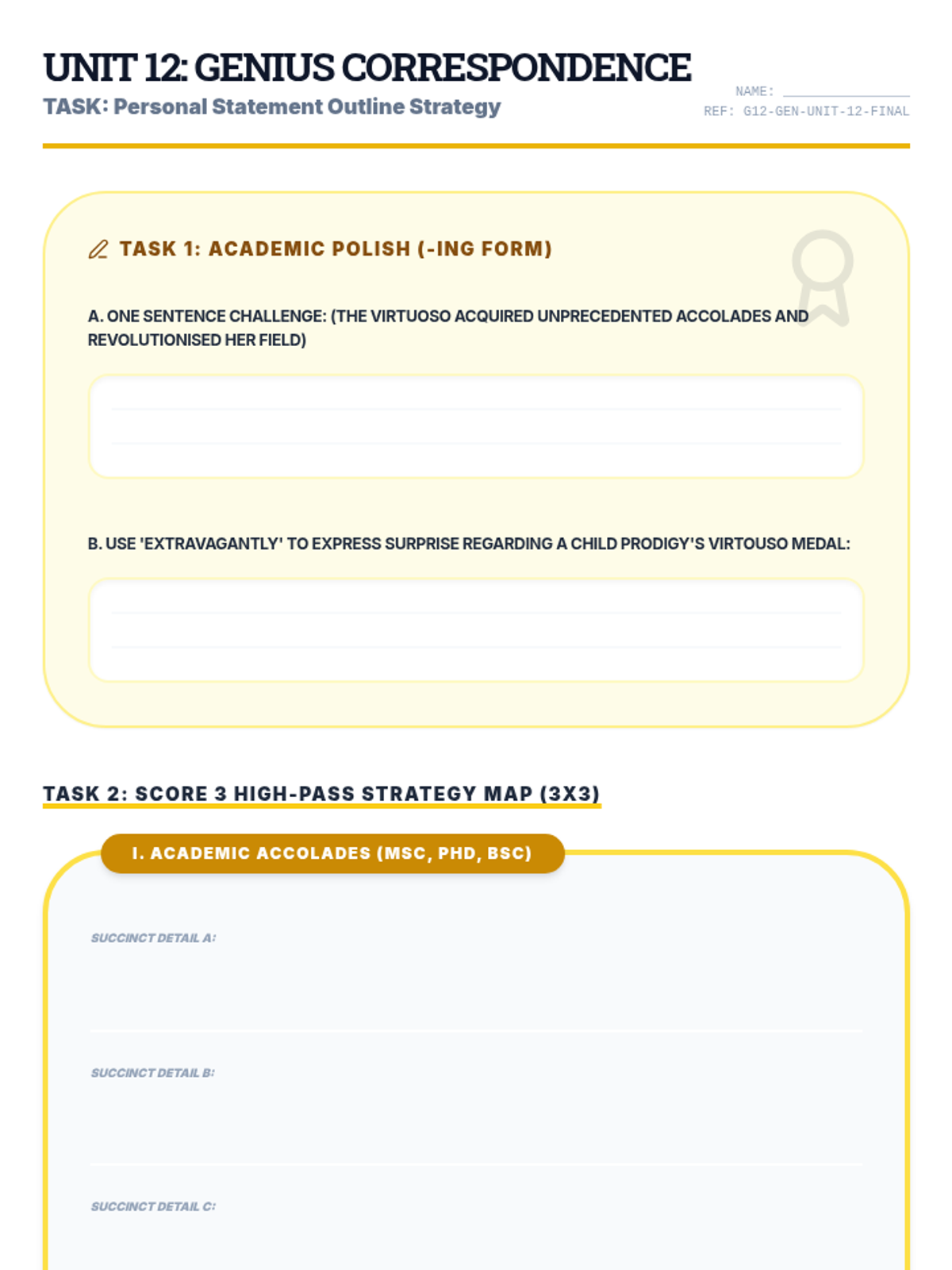
Practices formal letter writing focused on the achievements of geniuses, reinforcing formal tone and structural transitions.
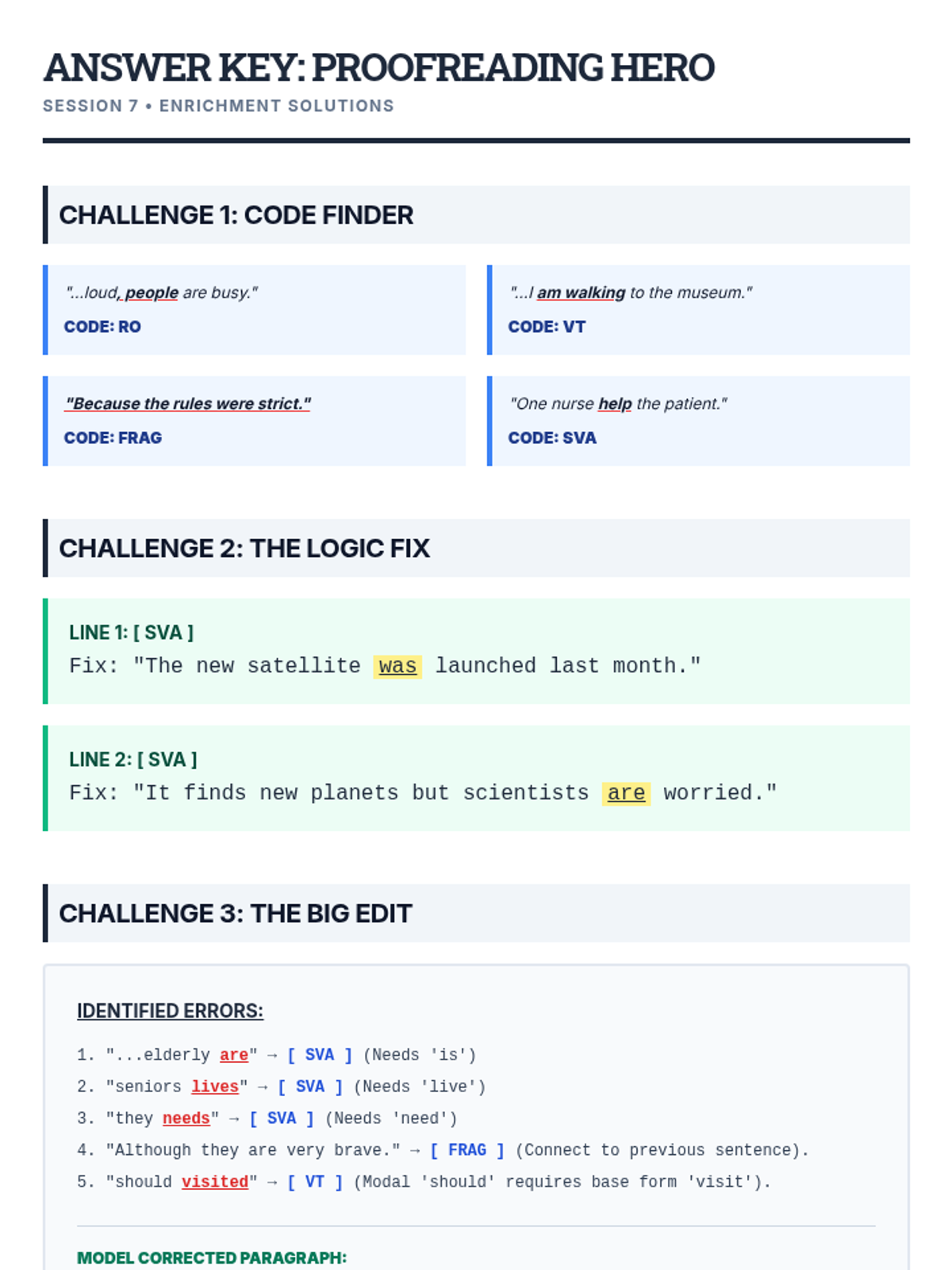
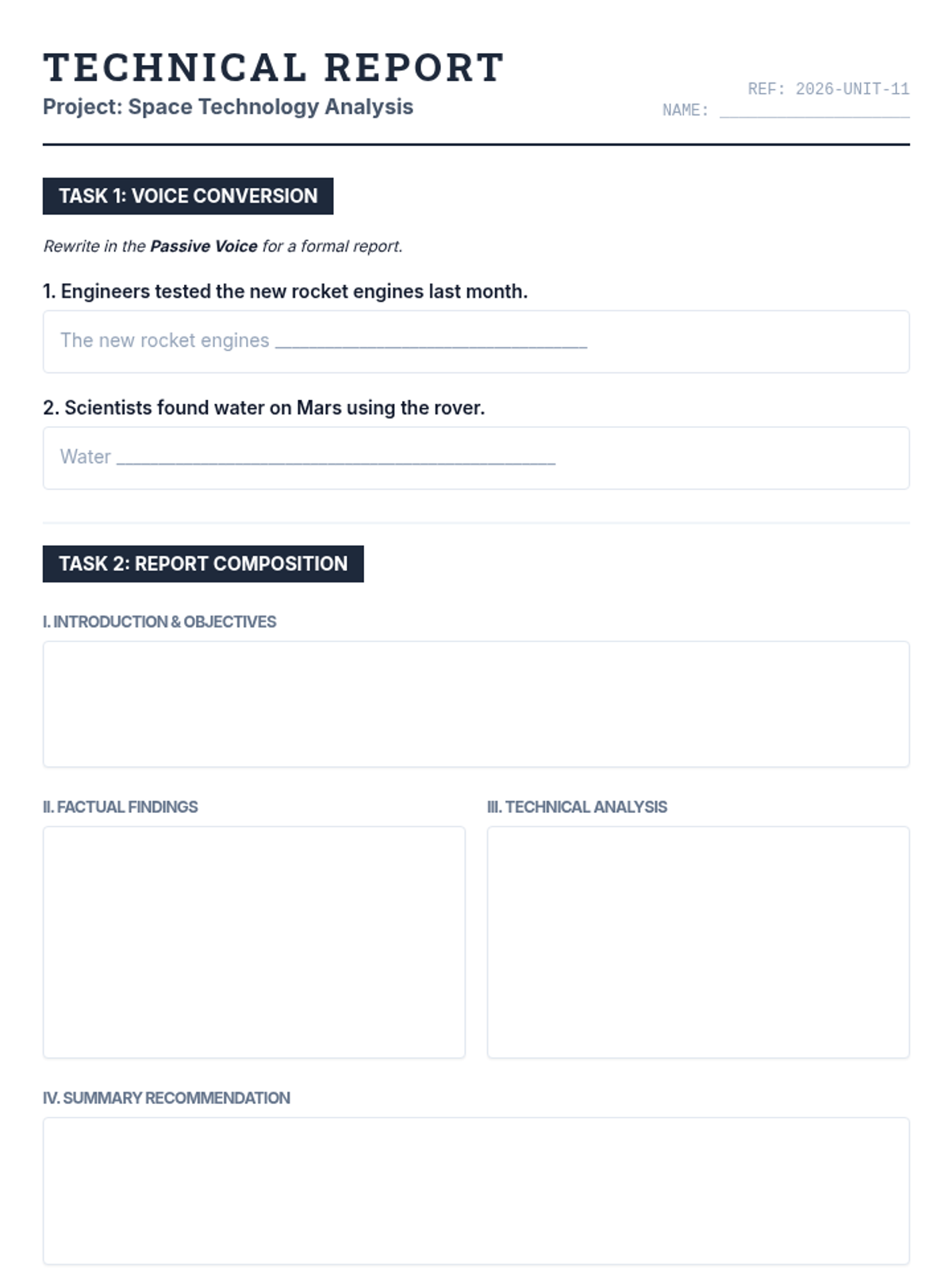
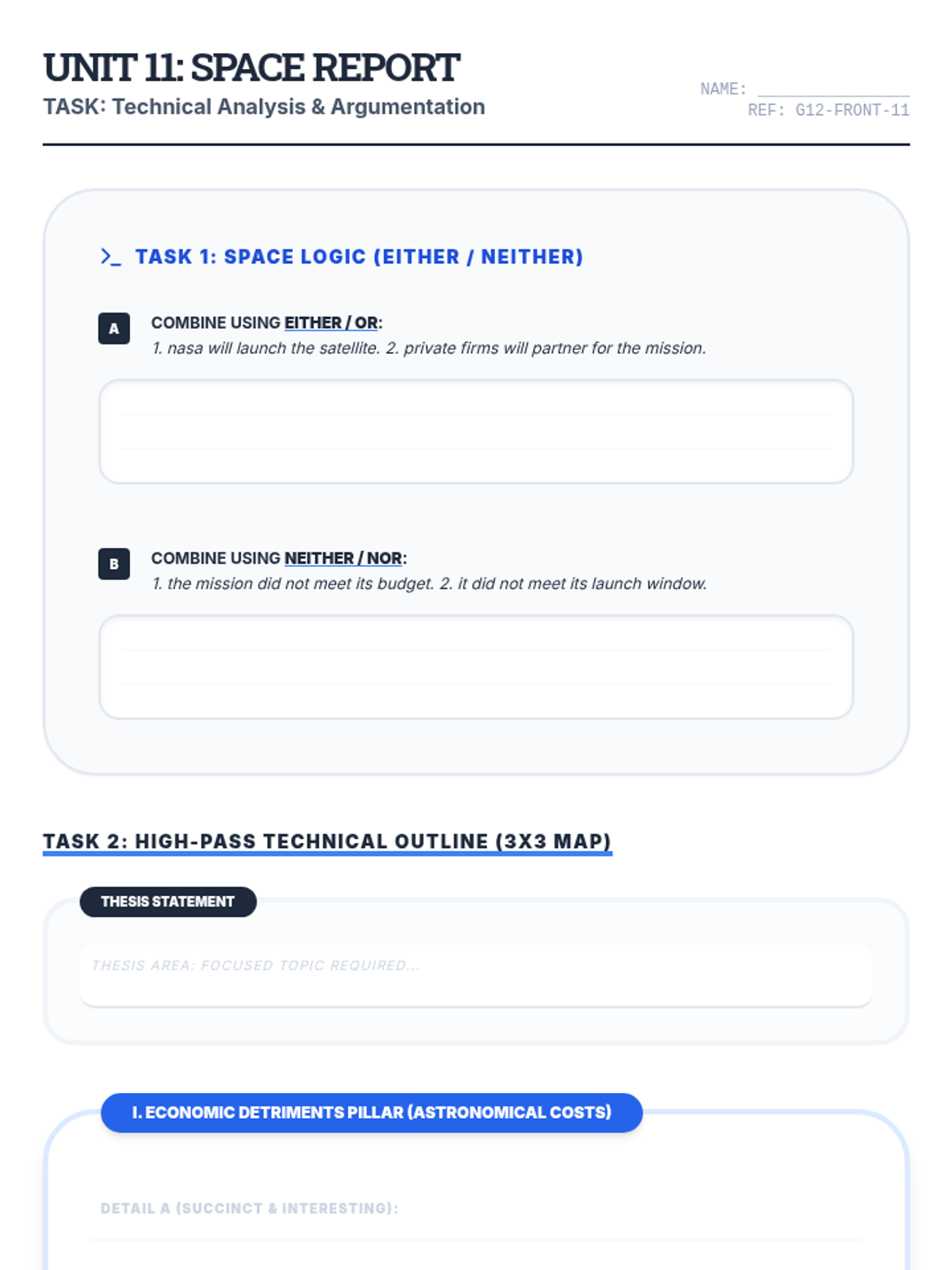
Introduces formal report writing on space technology, emphasizing passive vs. active voice and data-driven analysis.
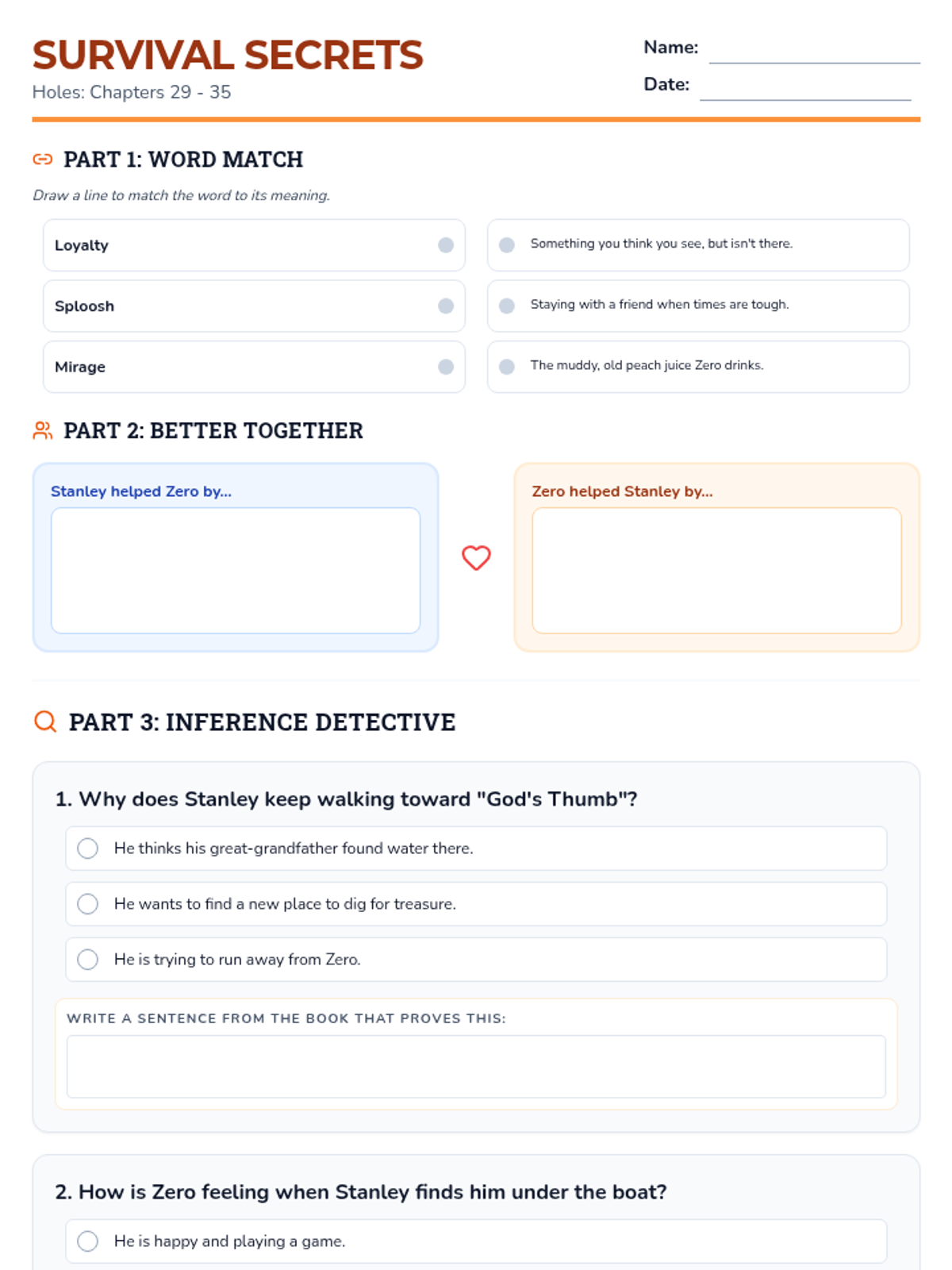
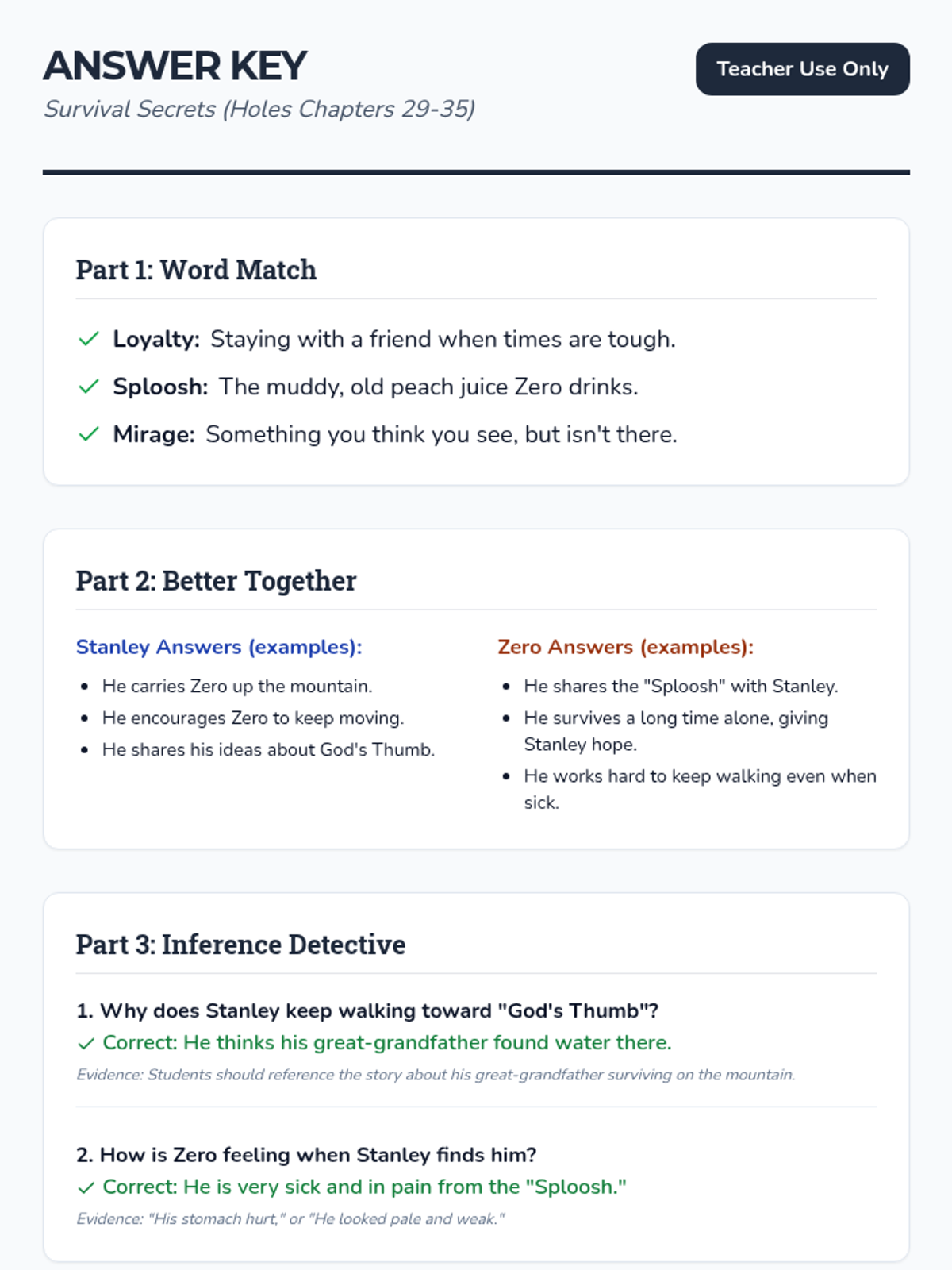
A lesson focused on chapters 29-35 of Louis Sachar's Holes, exploring the deepening friendship between Stanley and Zero as they face the challenges of the desert. Students will analyze character relationships, make inferences about their survival, and identify the central theme of loyalty.
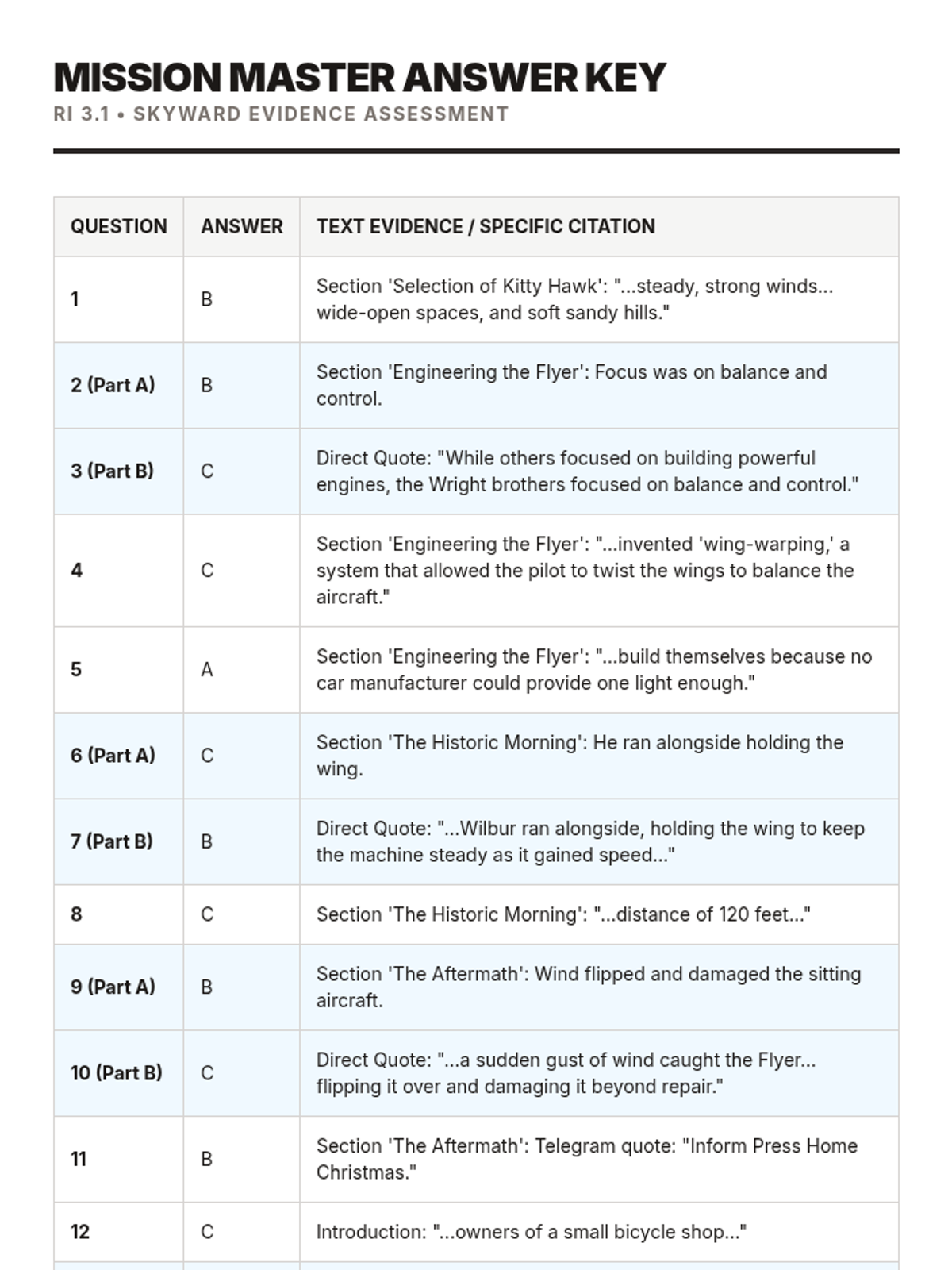
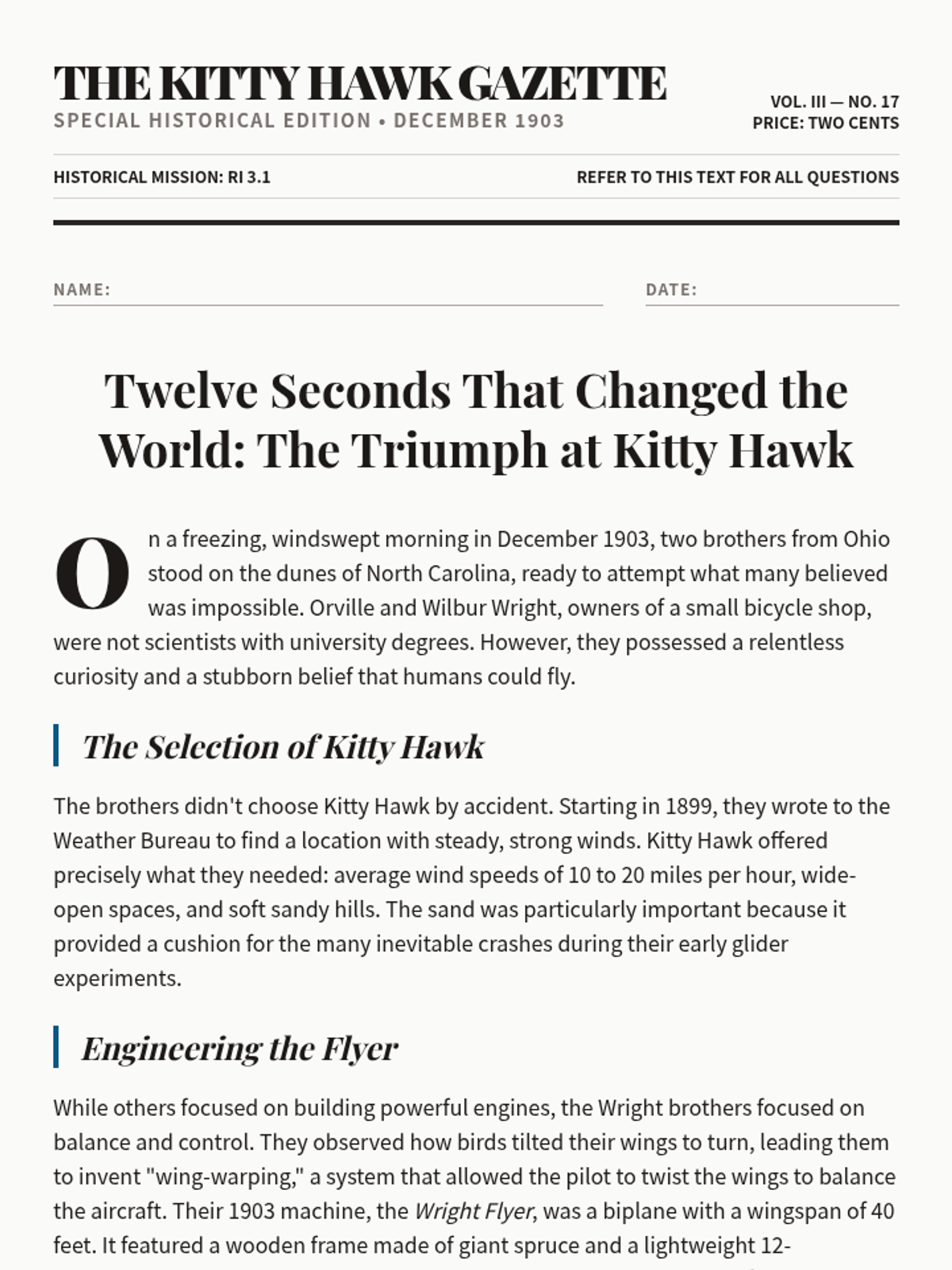
Students will read a detailed historical account of the Wright Brothers' first flight at Kitty Hawk and answer 20 EOG-style questions, focusing on citing explicit text evidence.
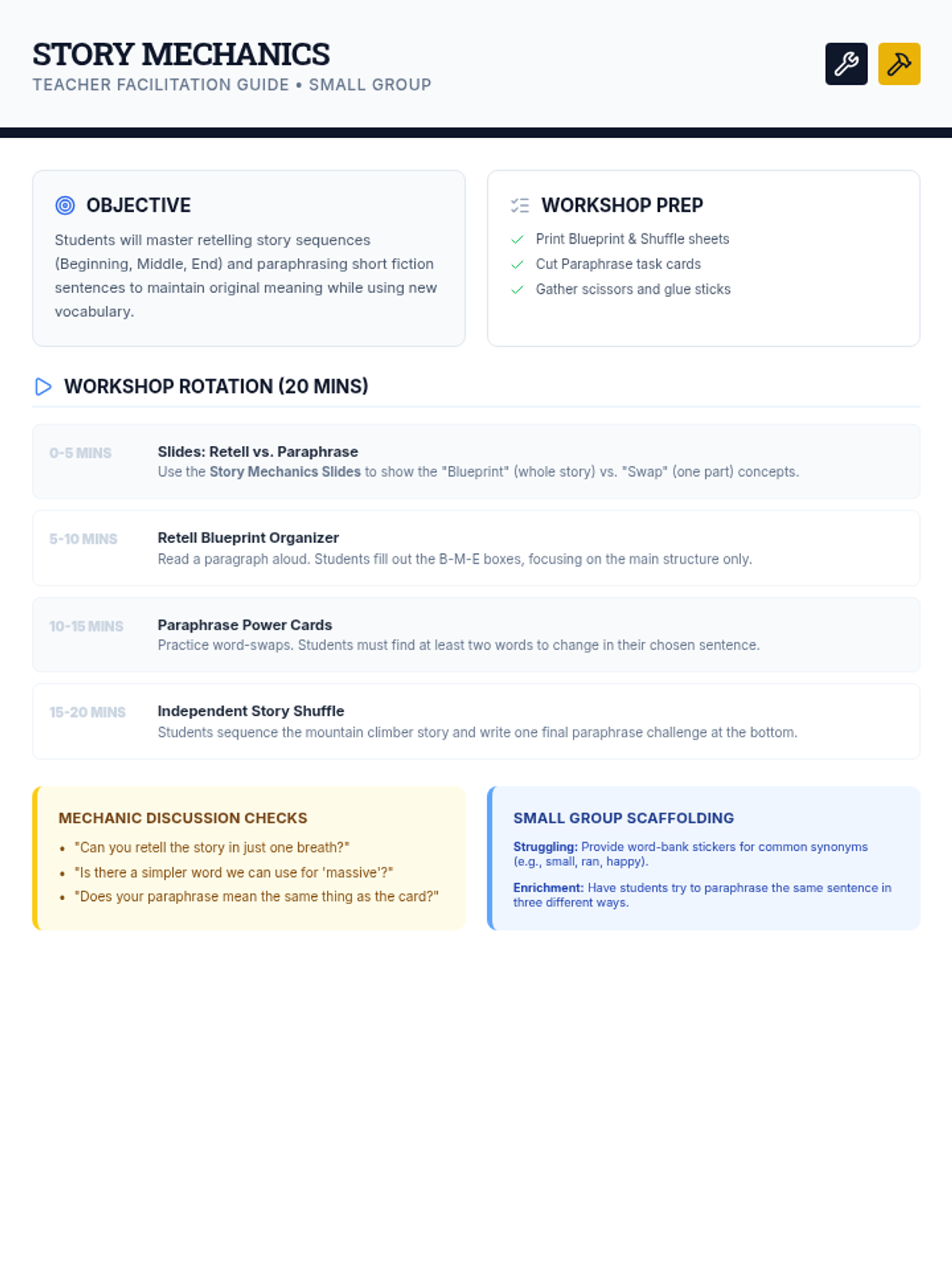
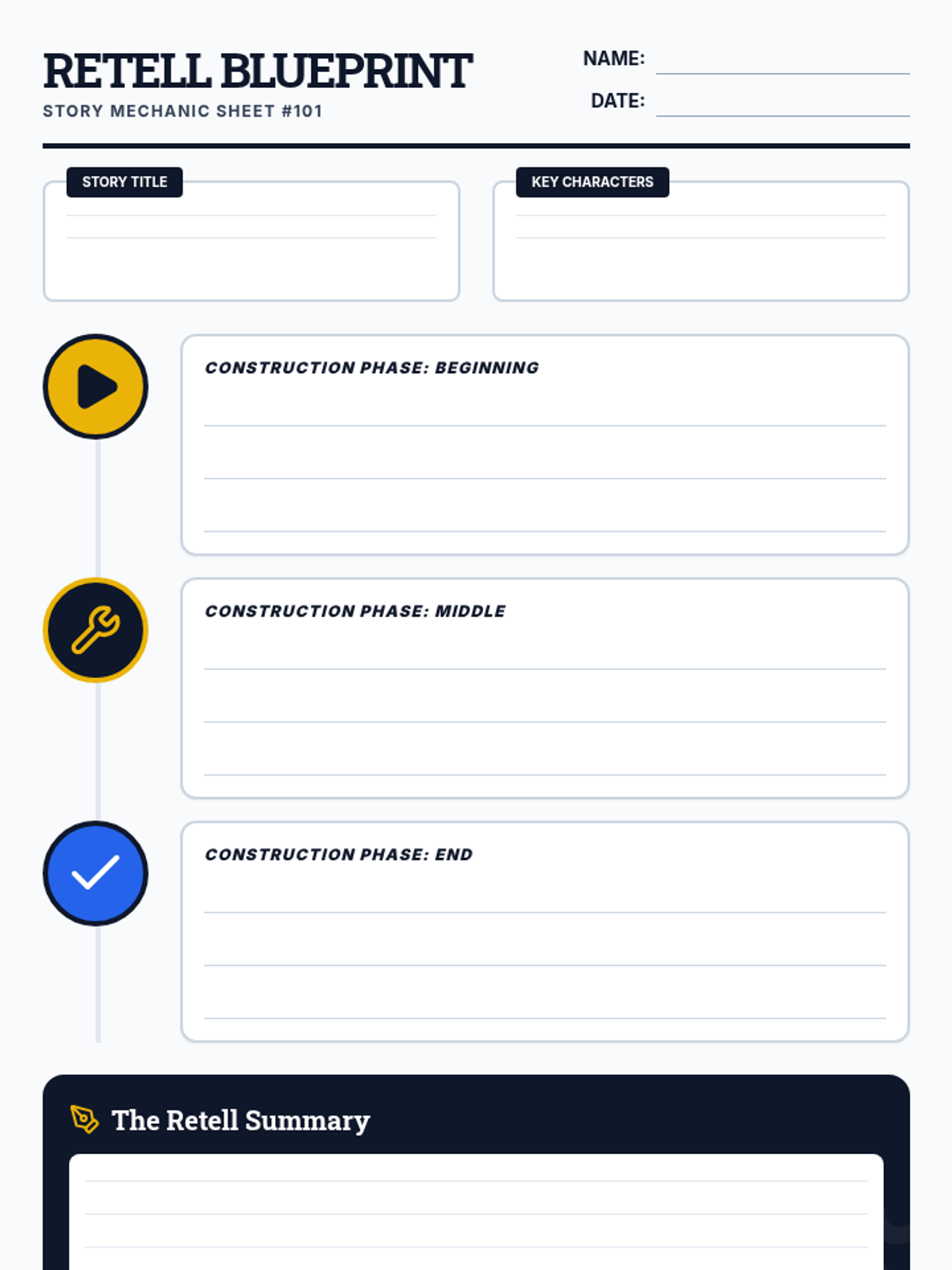
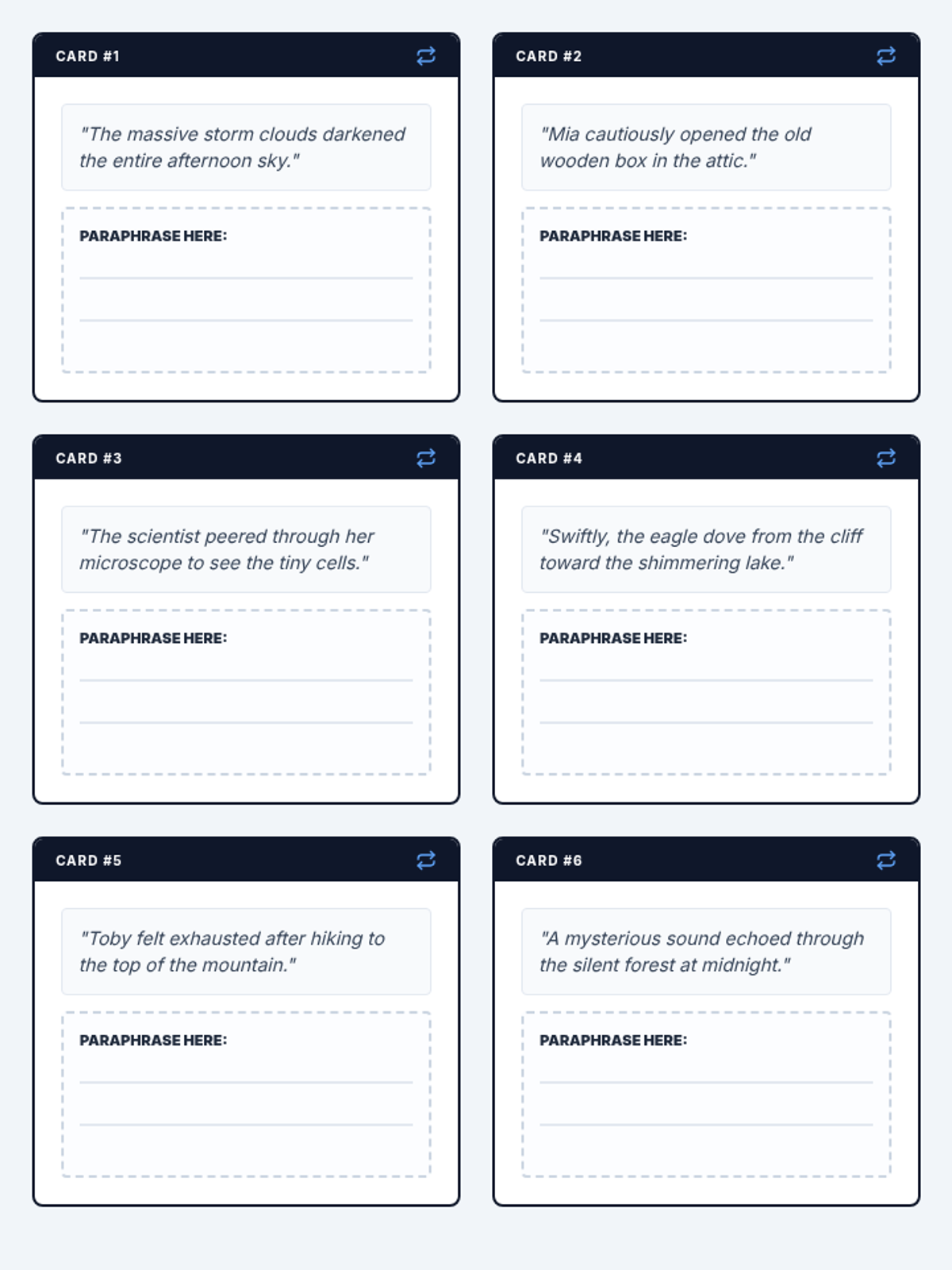
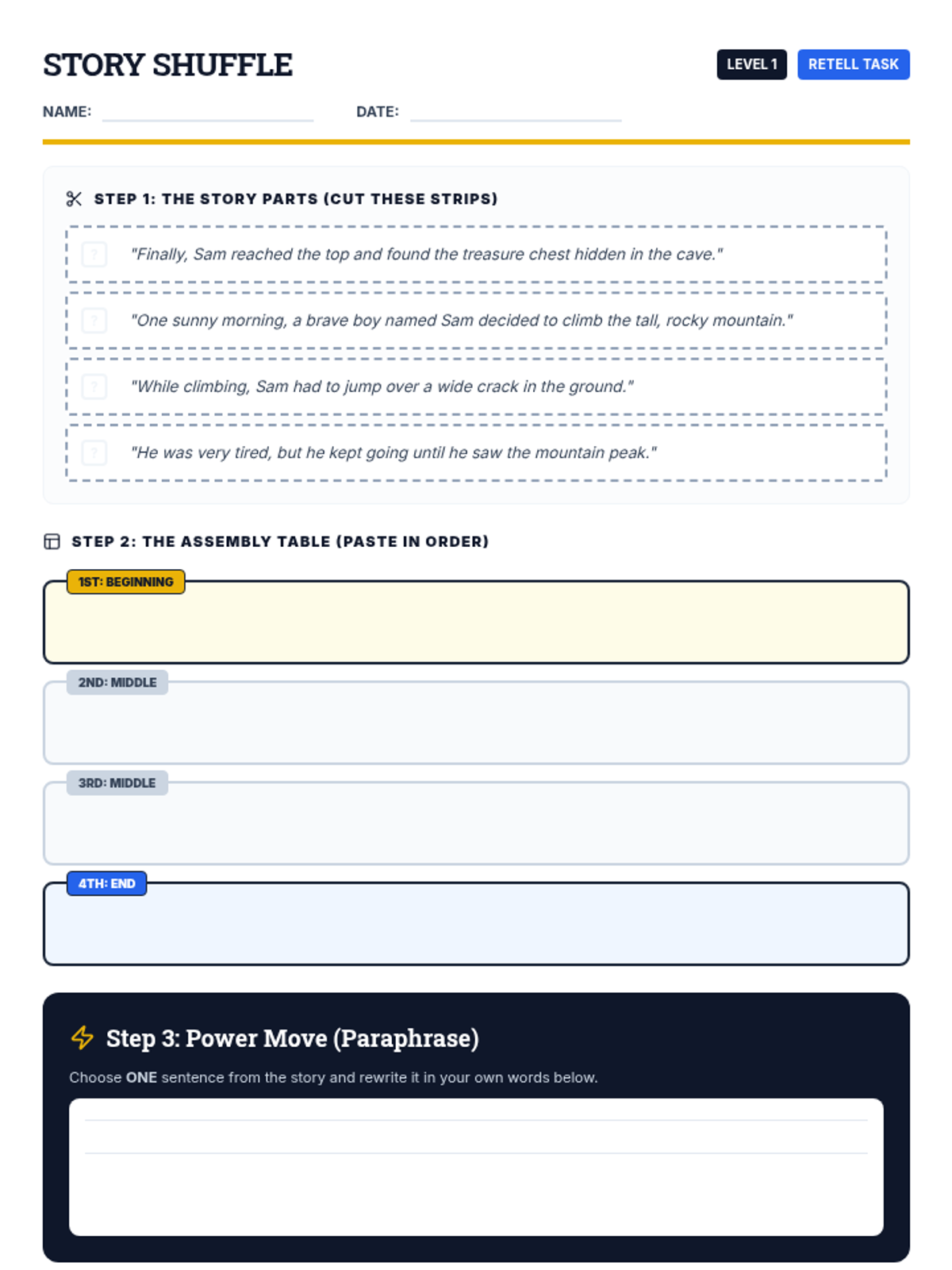
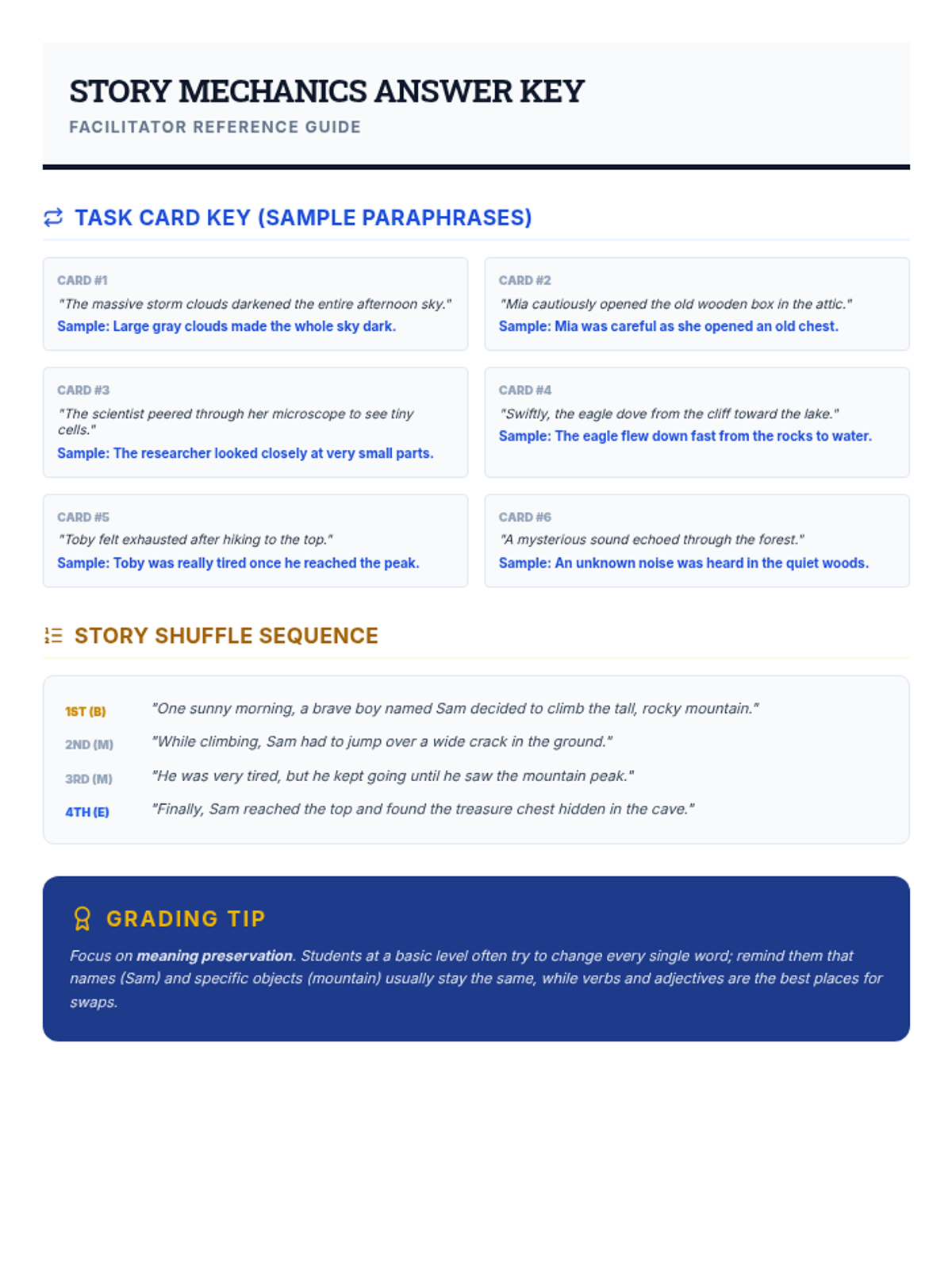
A comprehensive small-group lesson focused on the foundational skills of retelling and paraphrasing using short fiction. Students use blueprint-themed tools to identify story structure and practice restating ideas in their own words.
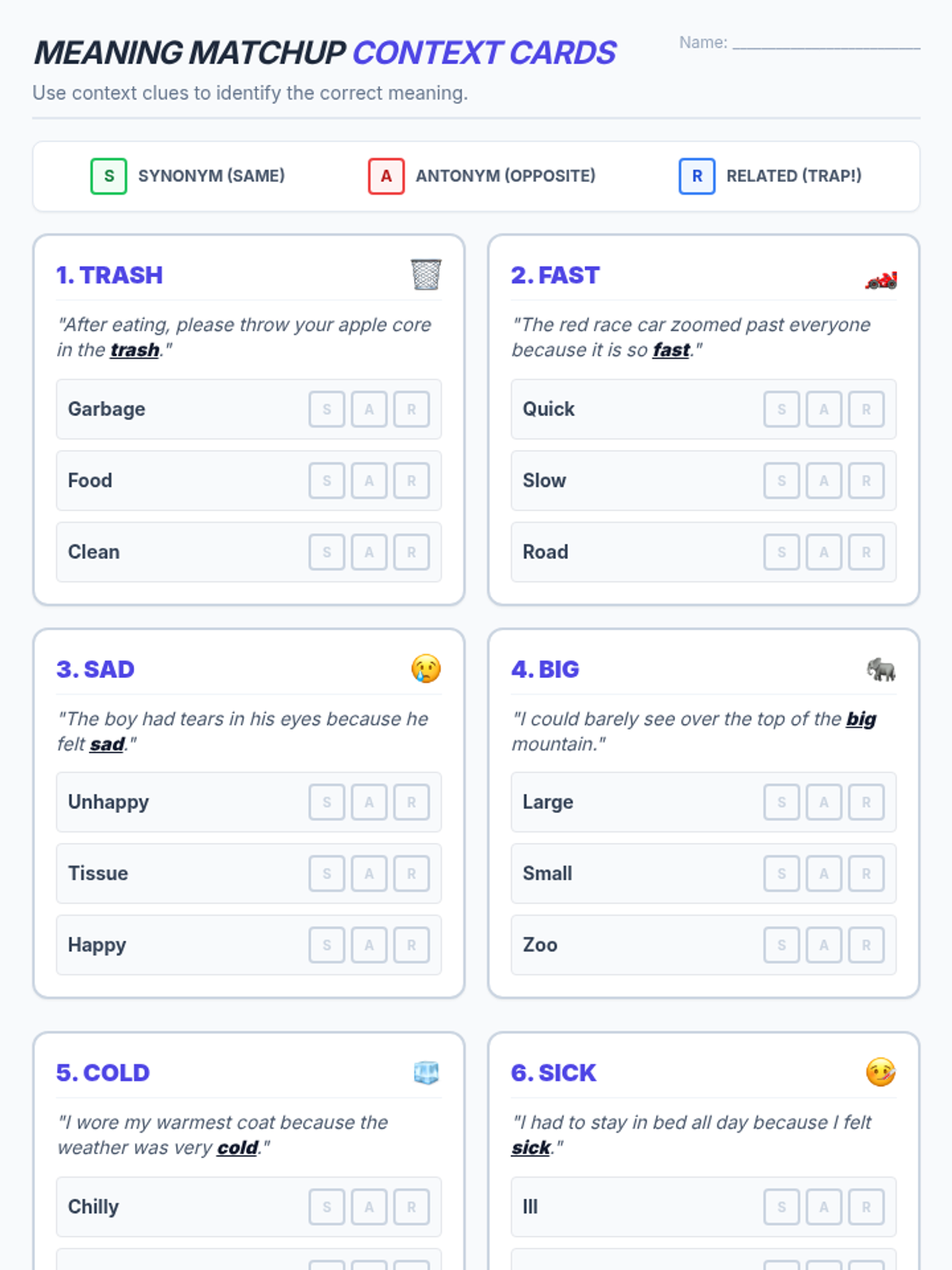
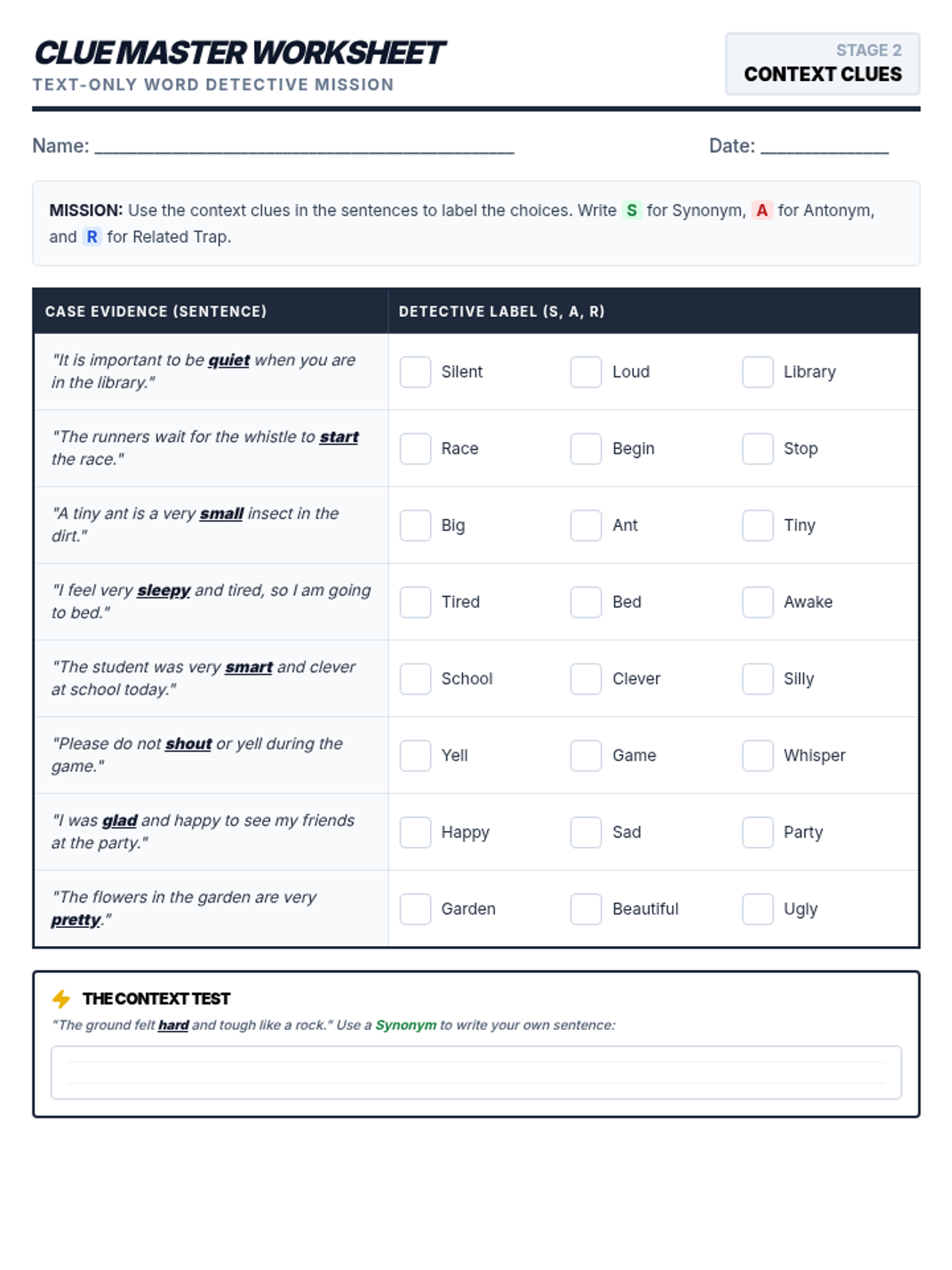
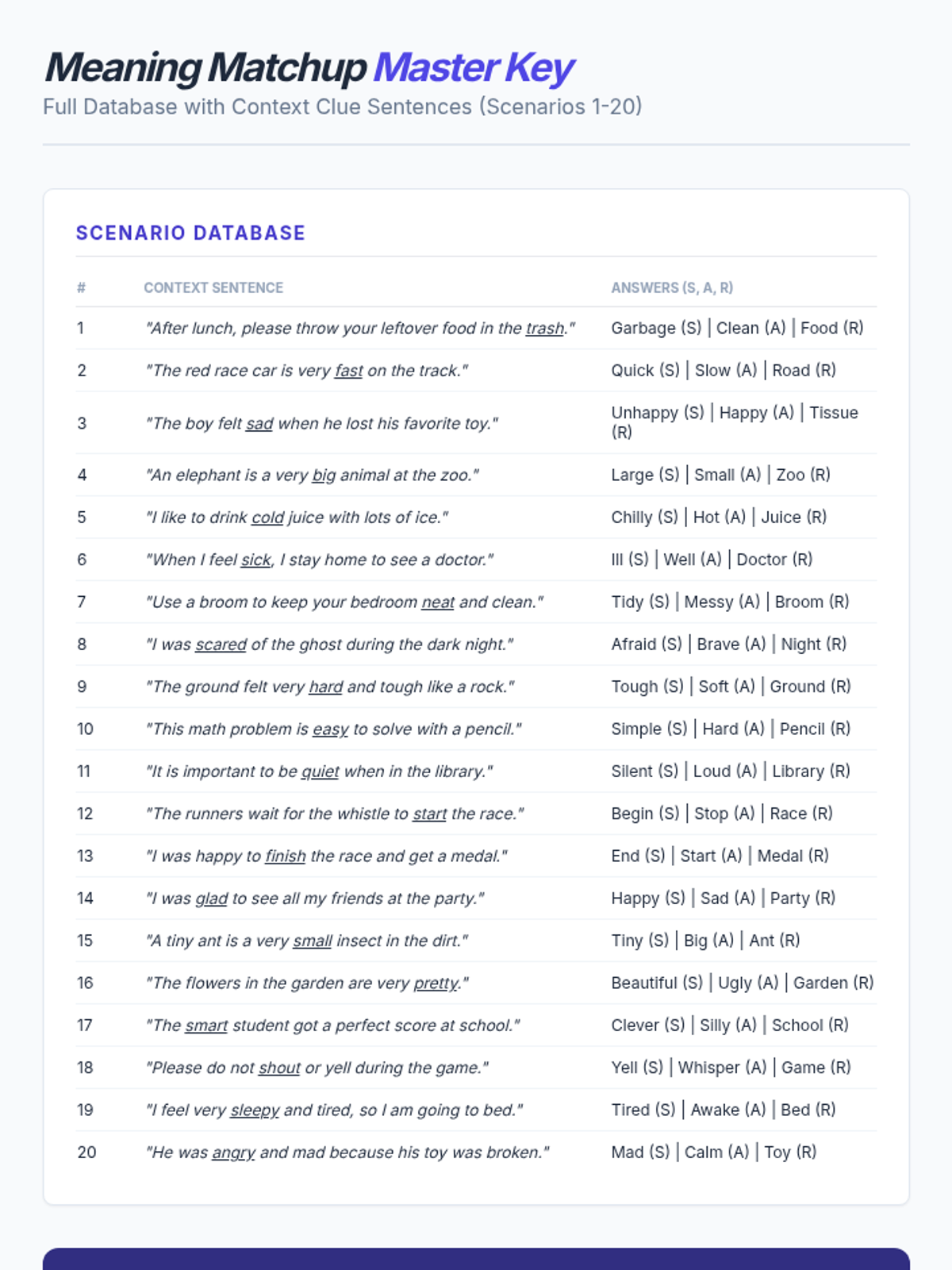
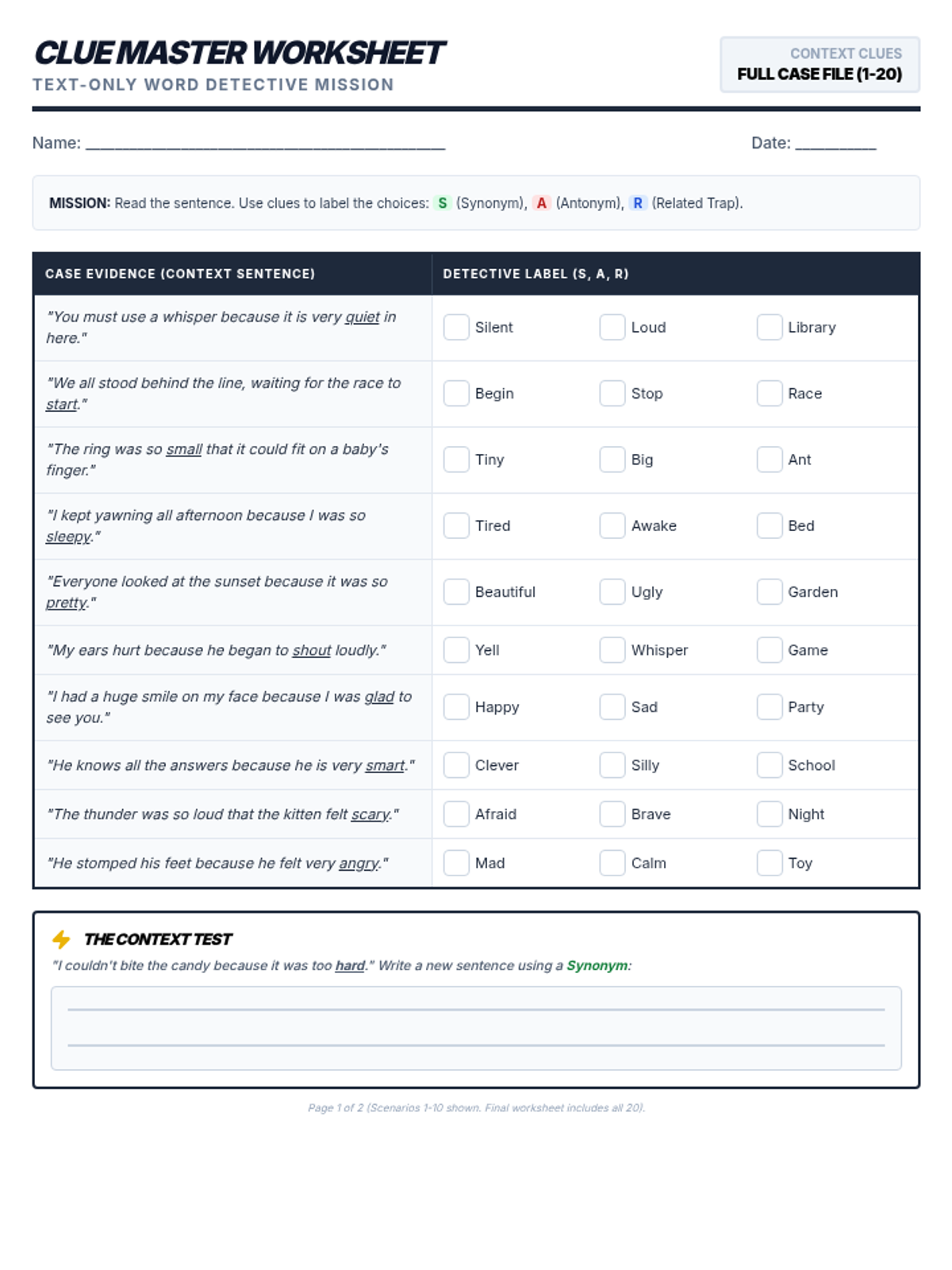
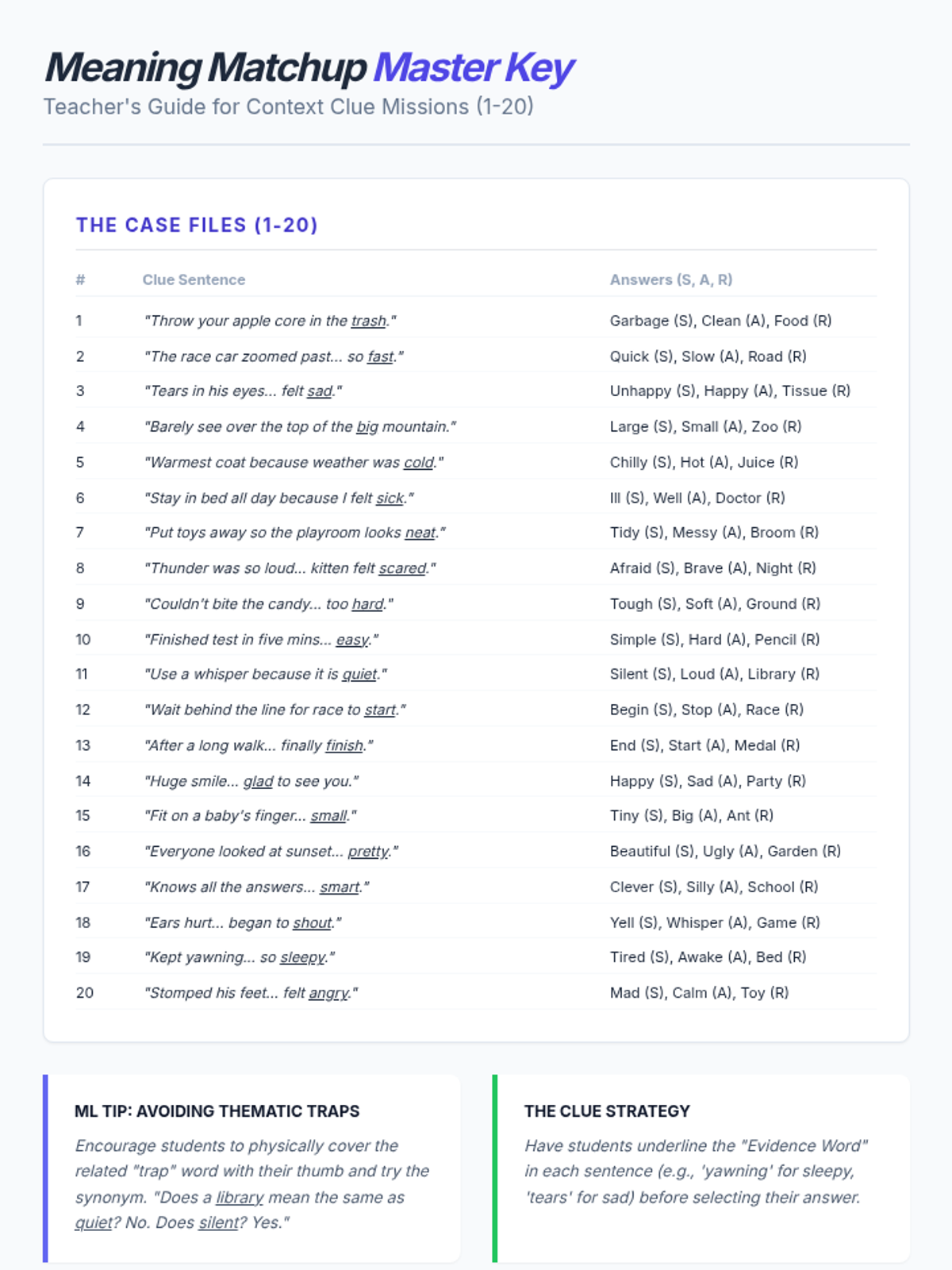
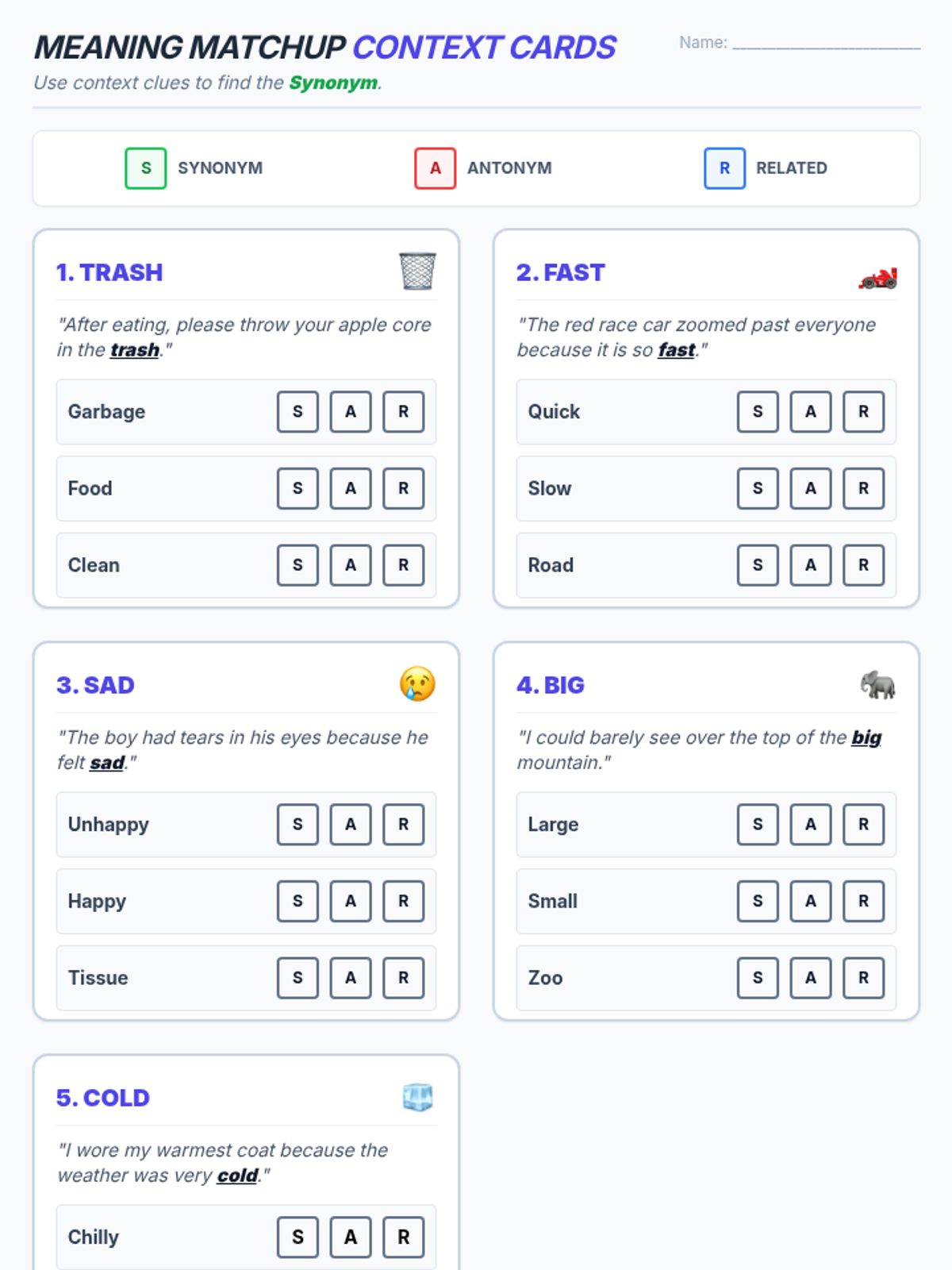
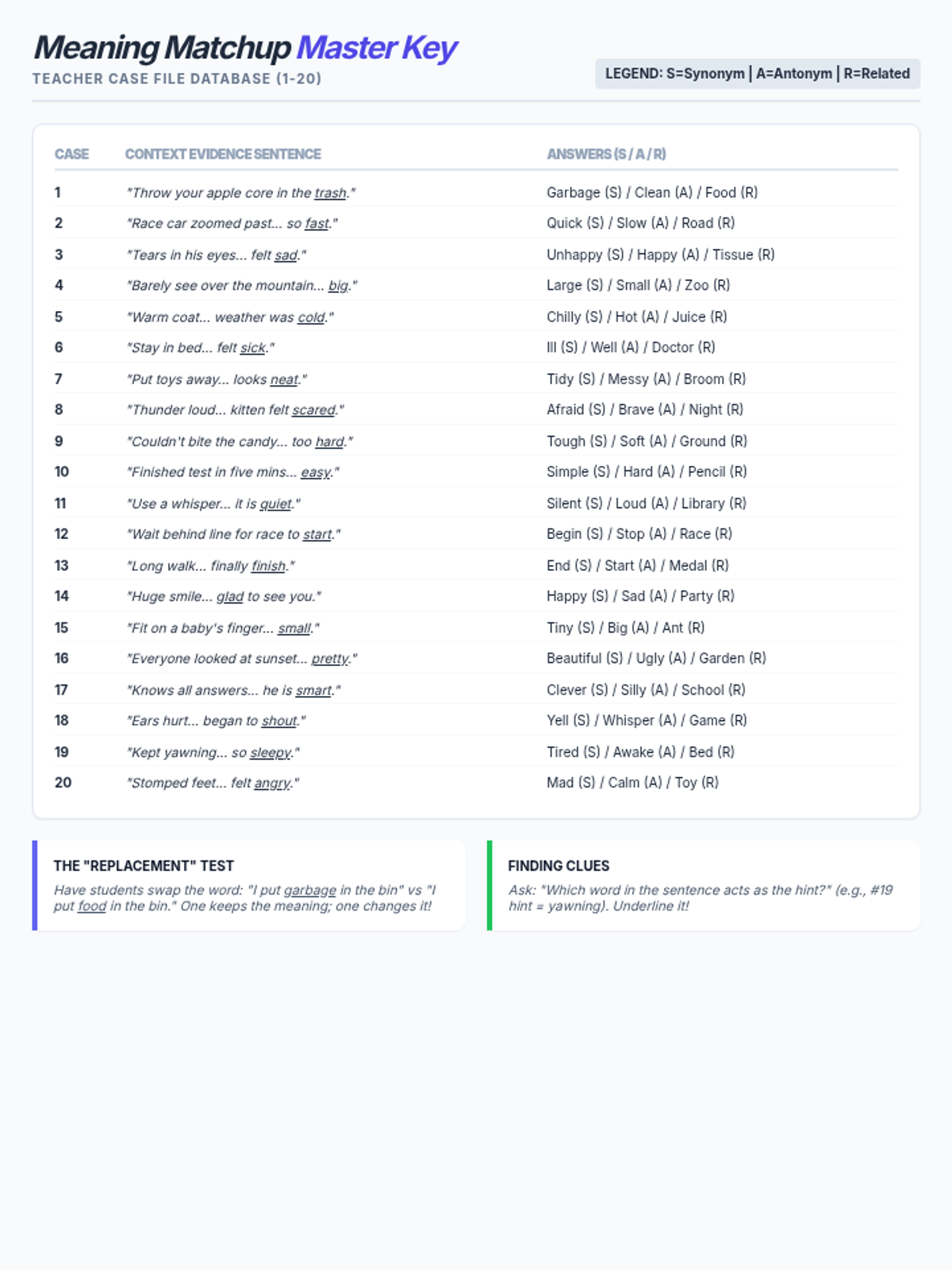
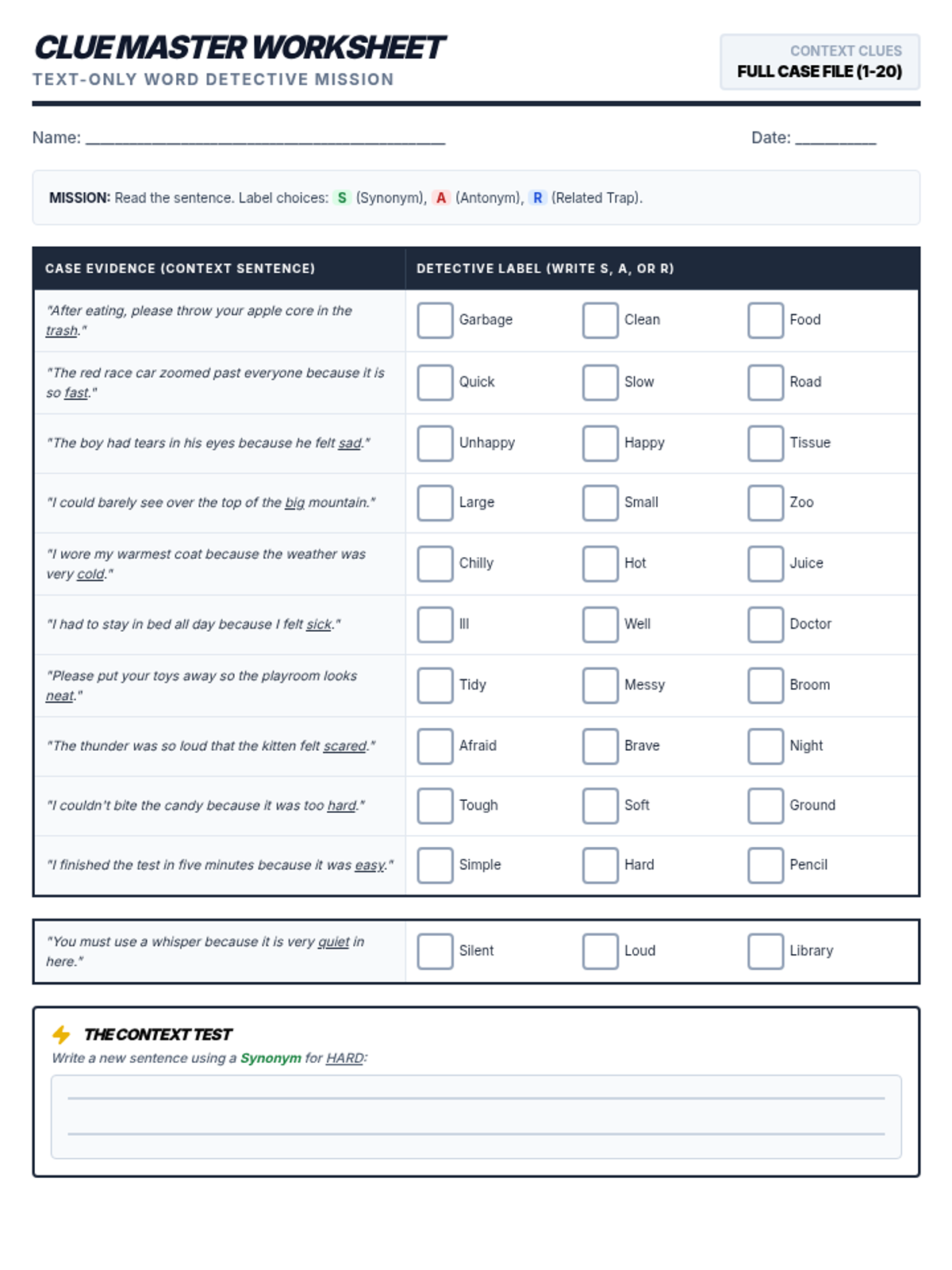
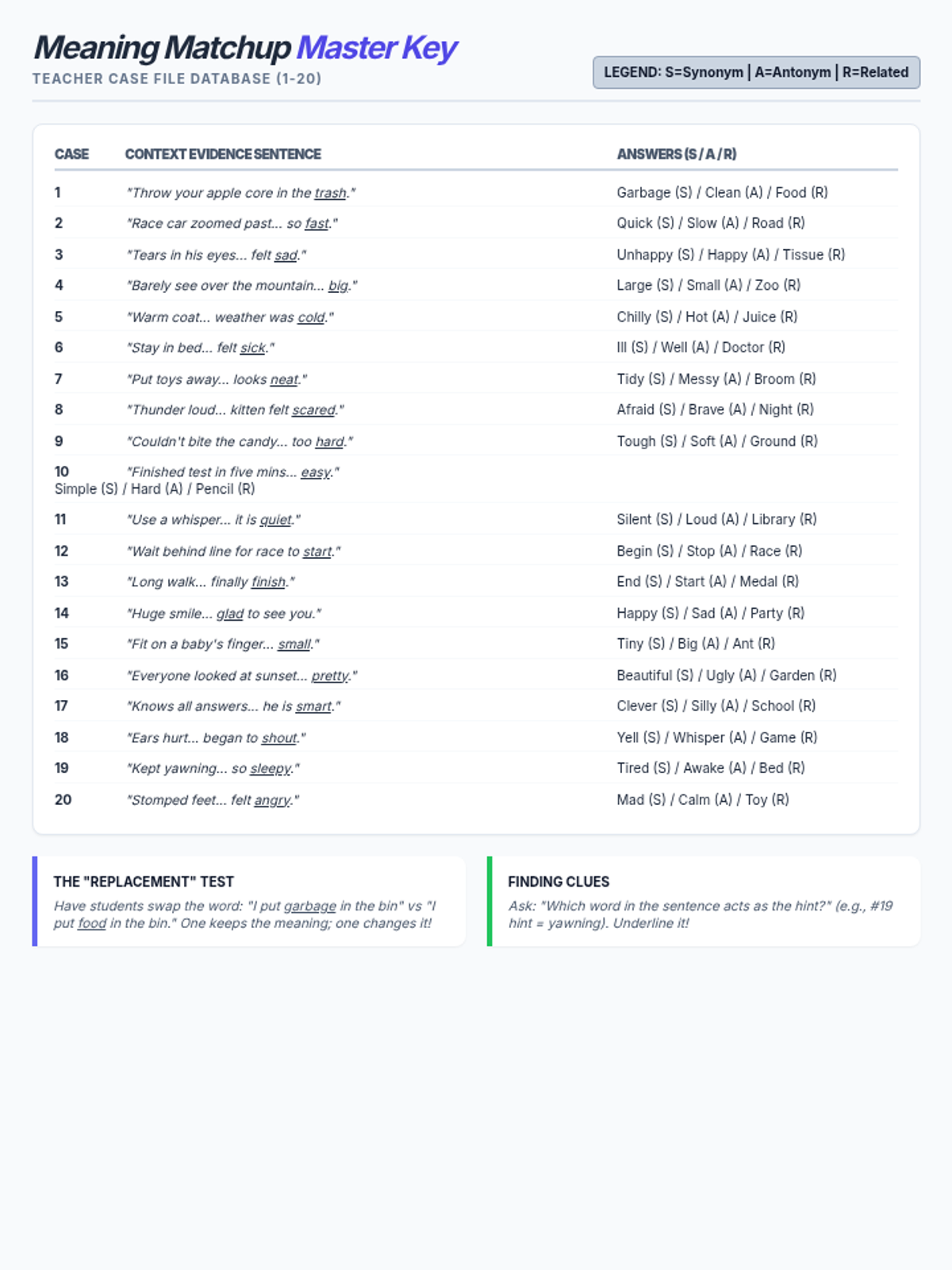
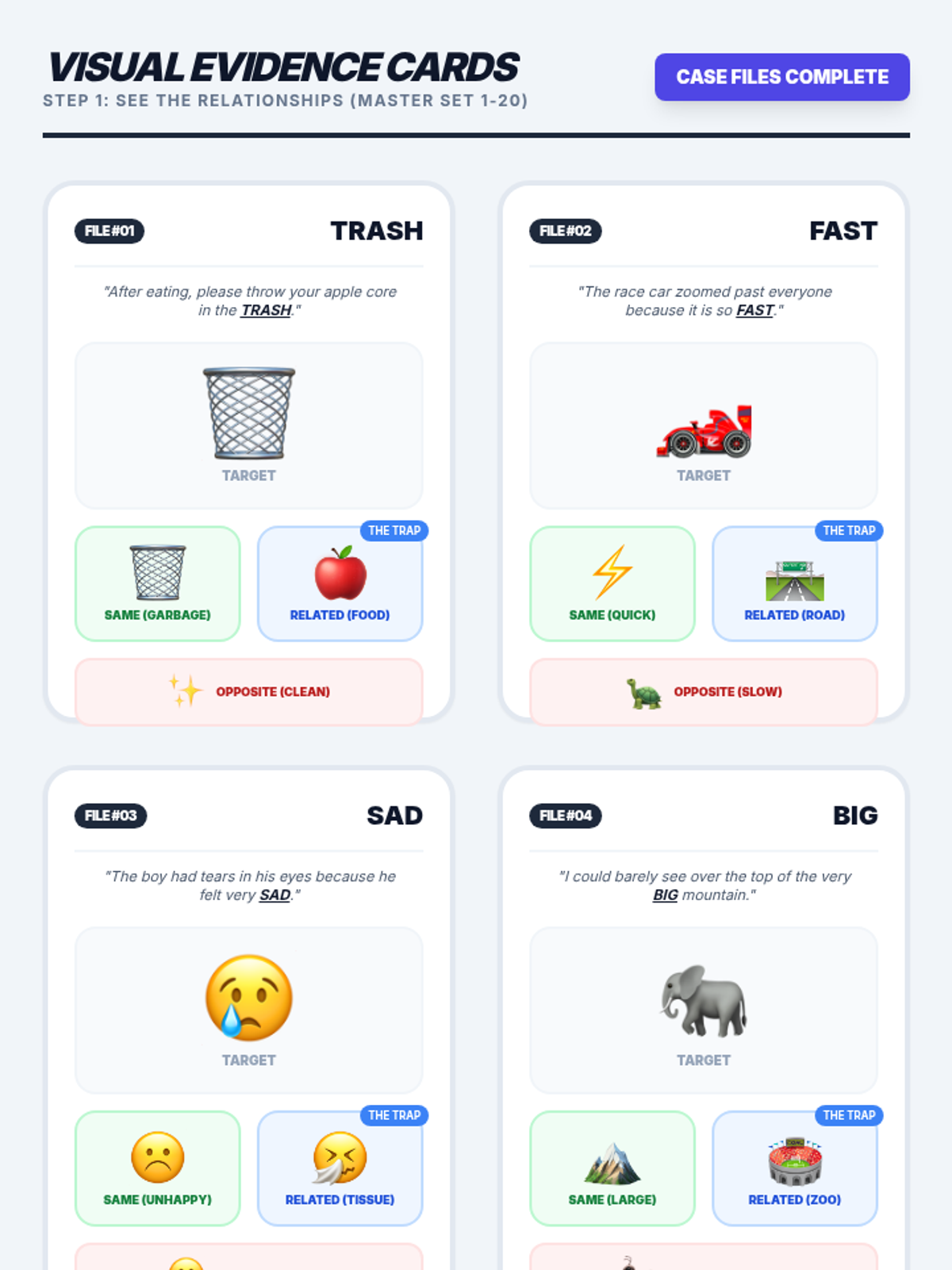
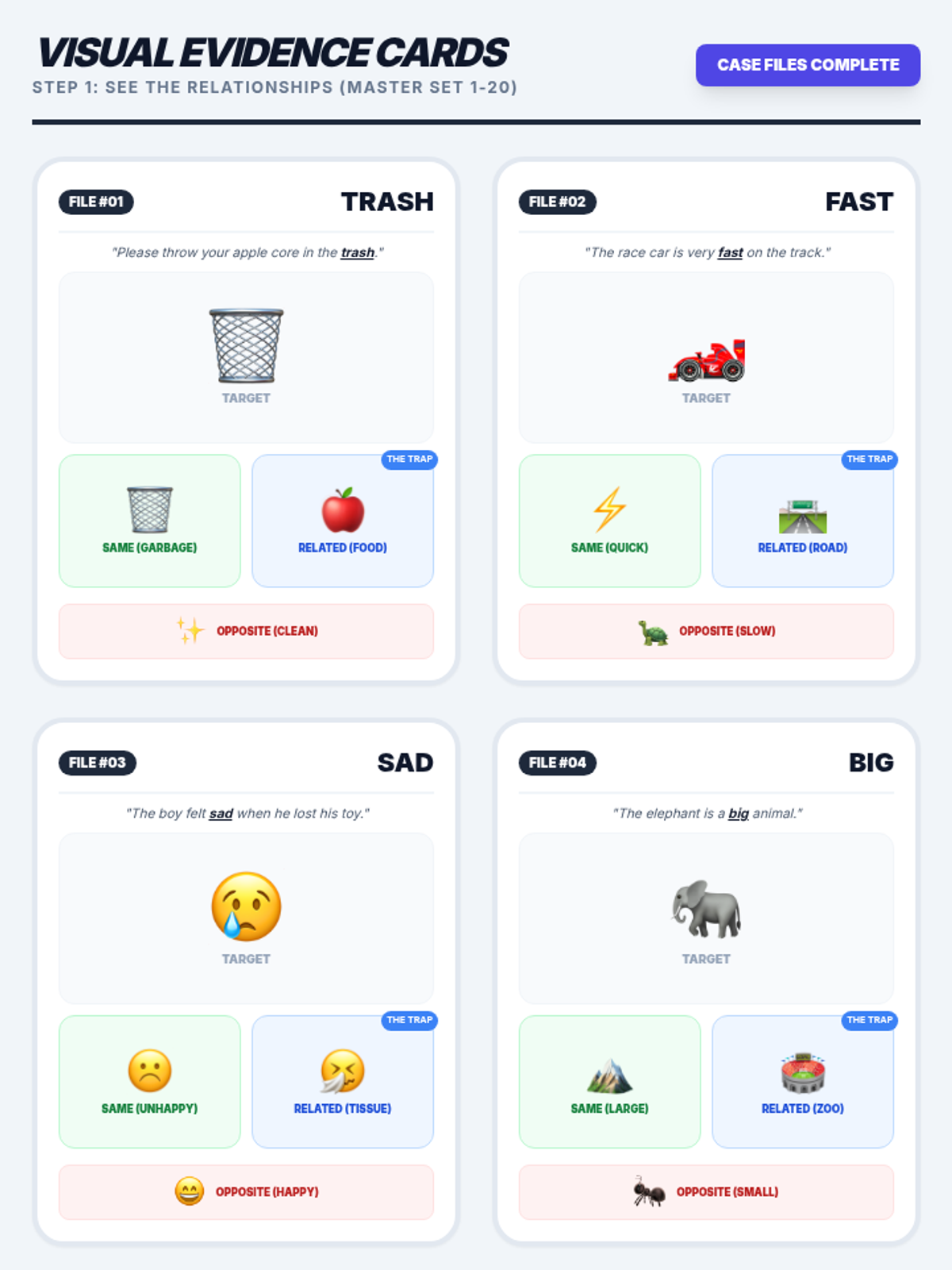
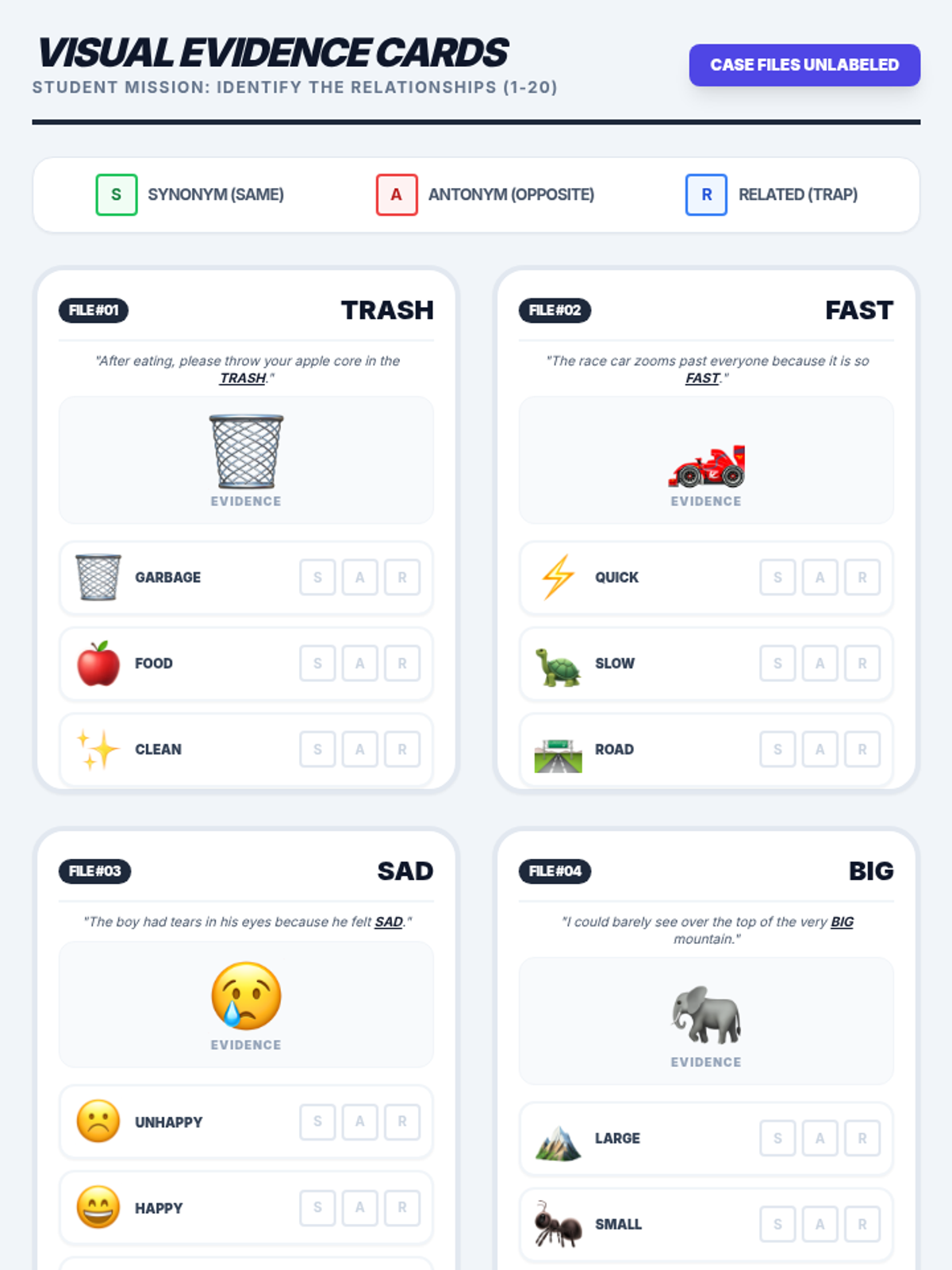
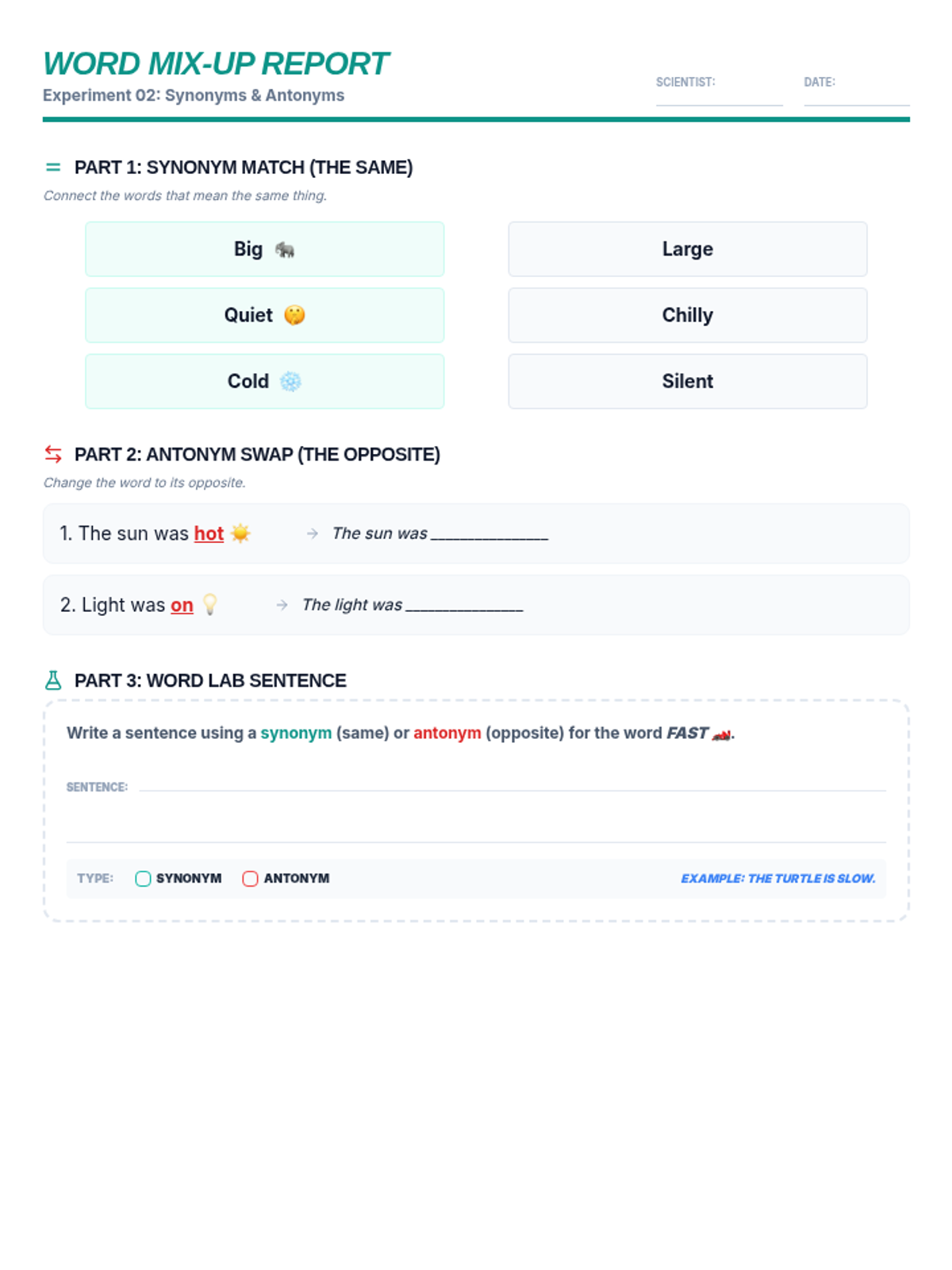
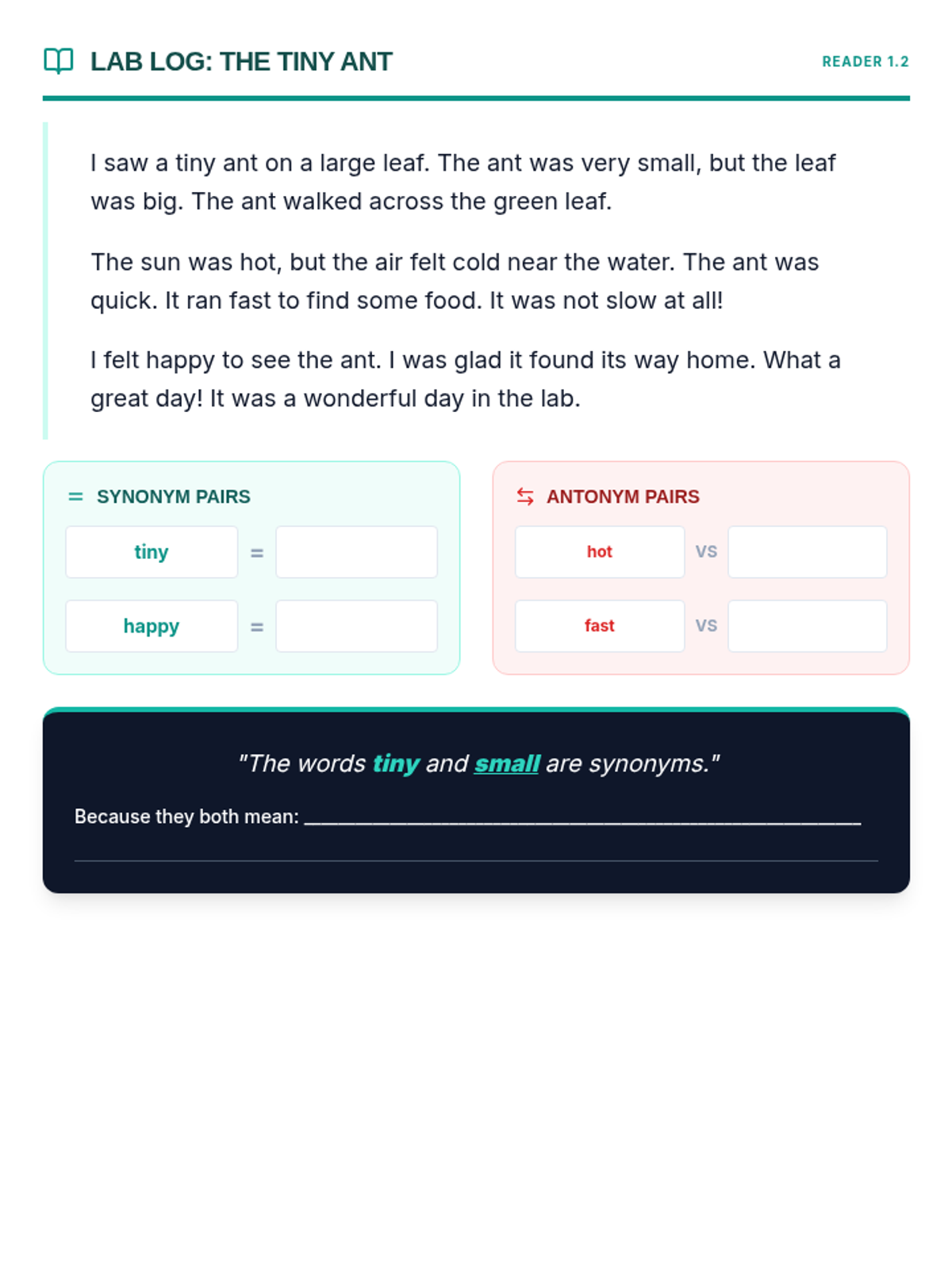
A foundational lesson on synonyms and antonyms that explicitly addresses thematic confusion (related vs. similar) using visual sorting activities and text-based practice.
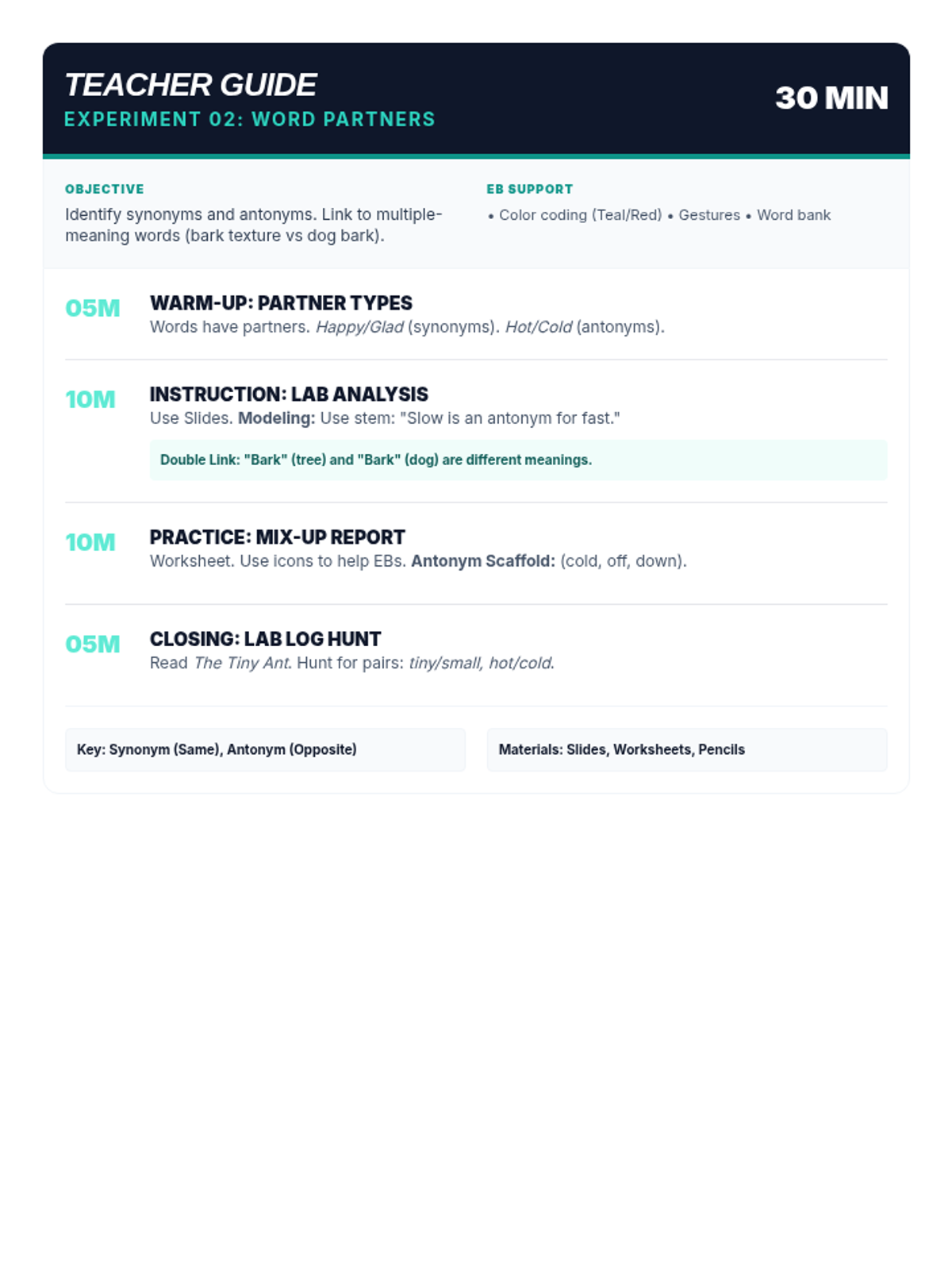
A 30-minute small group lesson focusing on synonyms and antonyms to expand vocabulary and improve comprehension for English Learners.
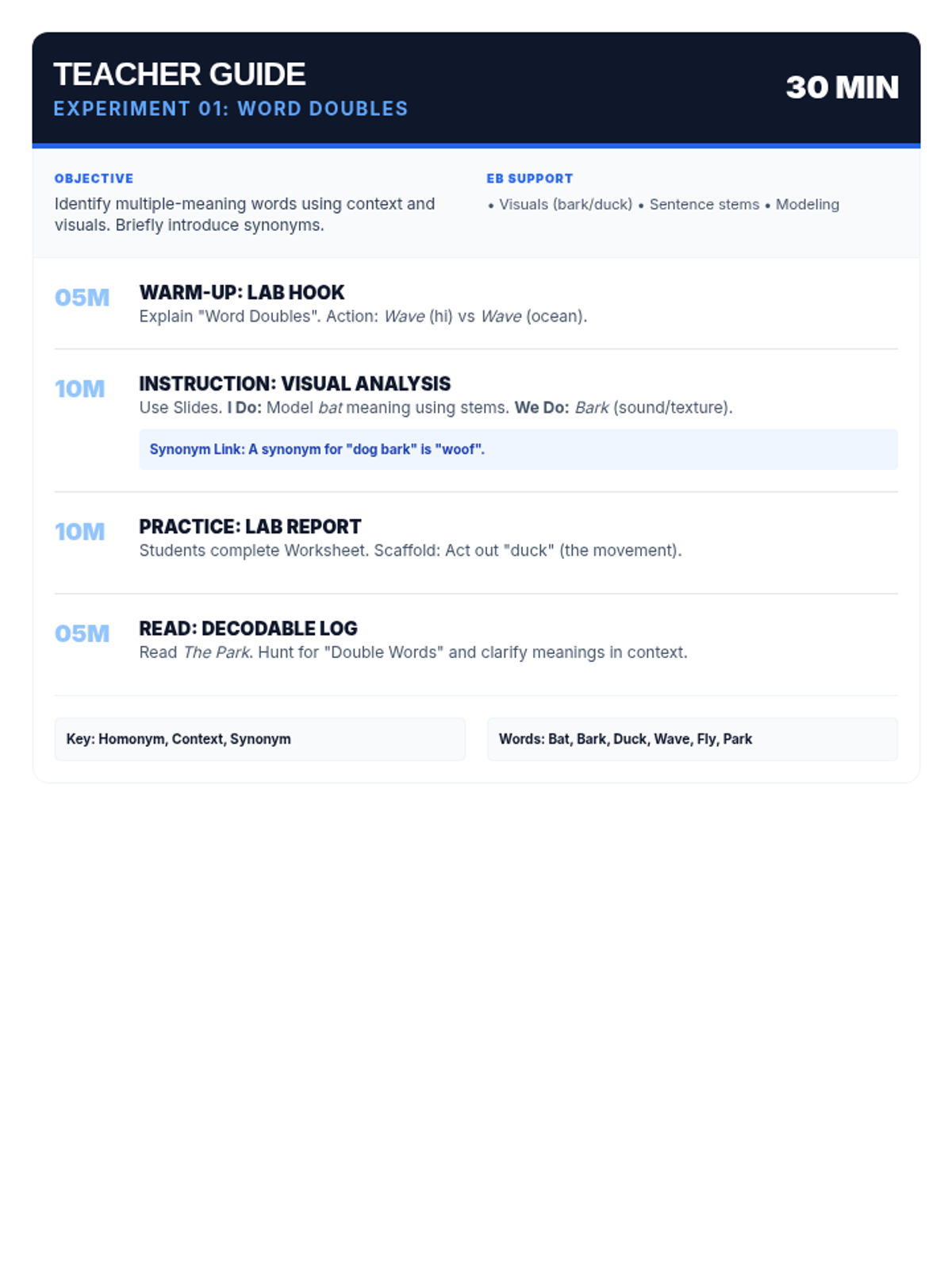
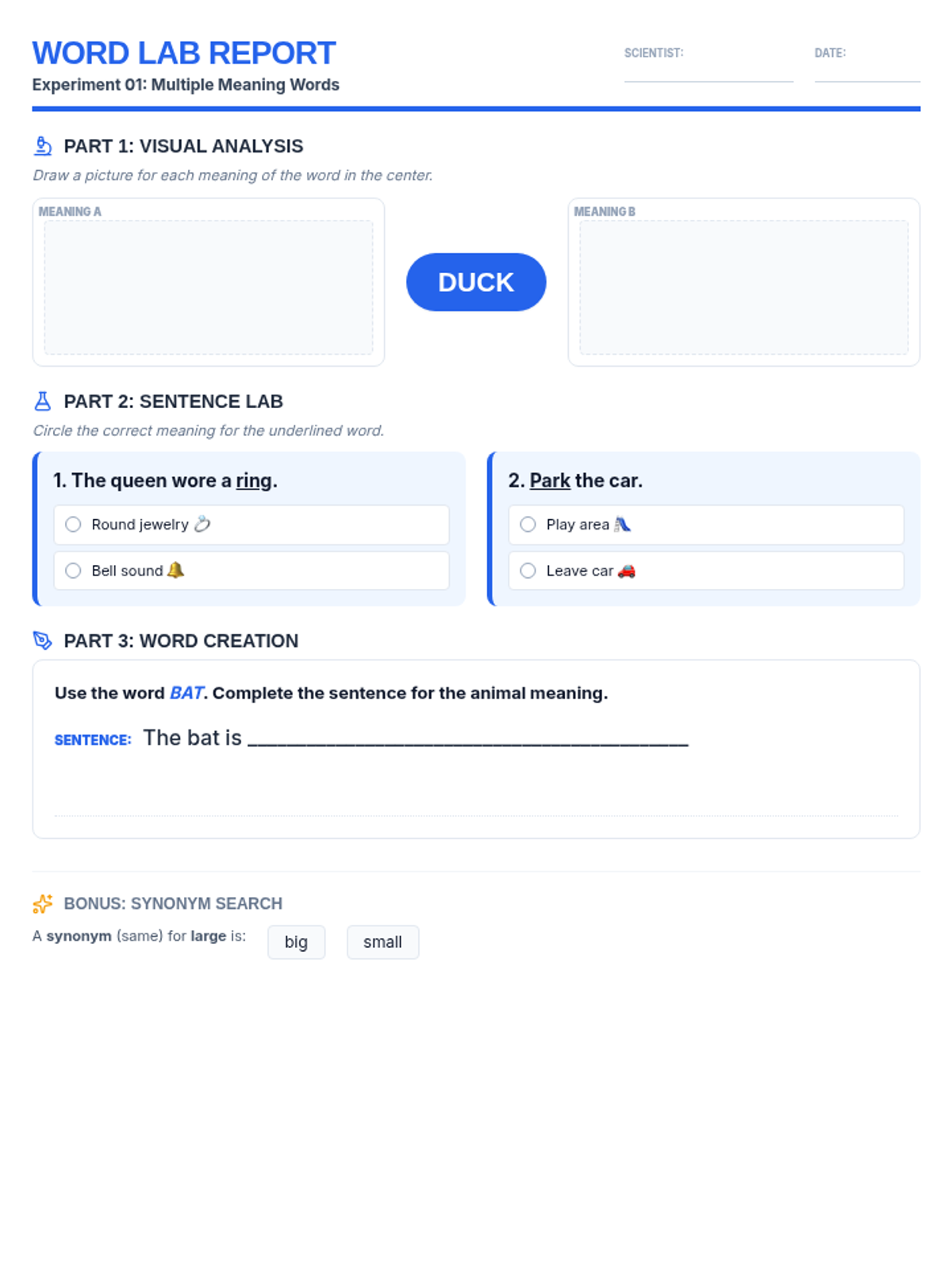
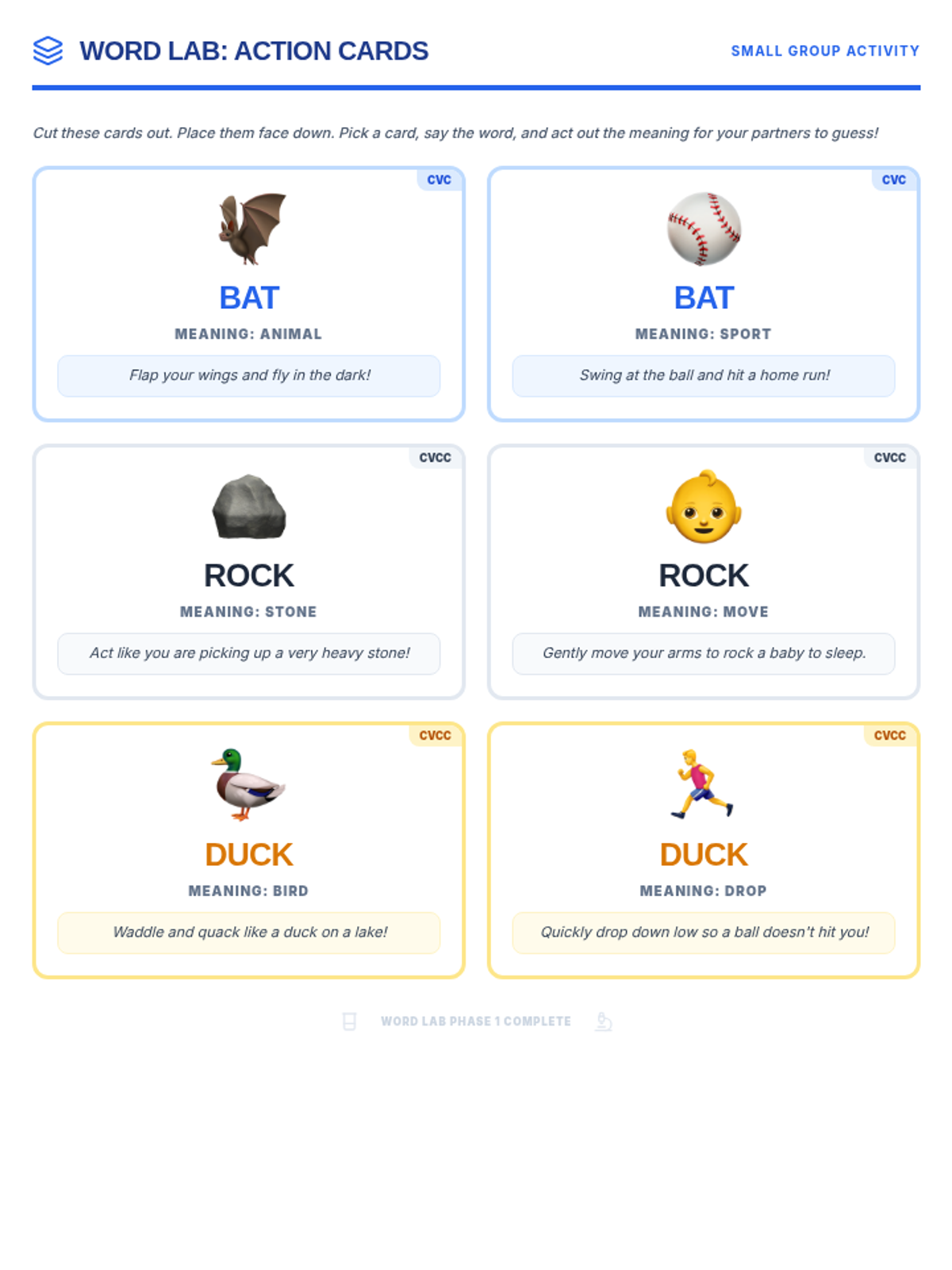
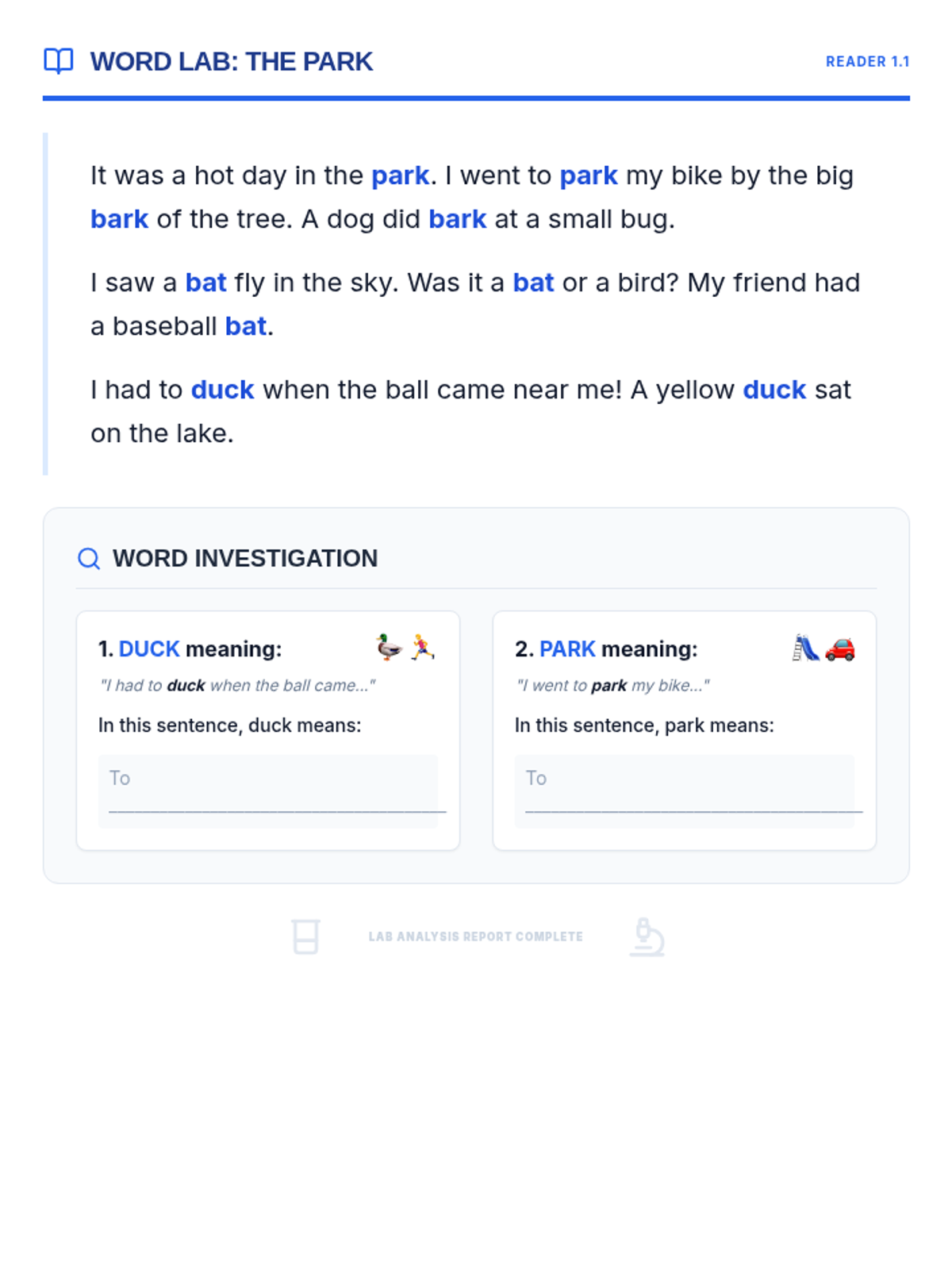
A 30-minute small group lesson focusing on identifying and using multiple-meaning words (homonyms) in context using visuals and sentence stems.
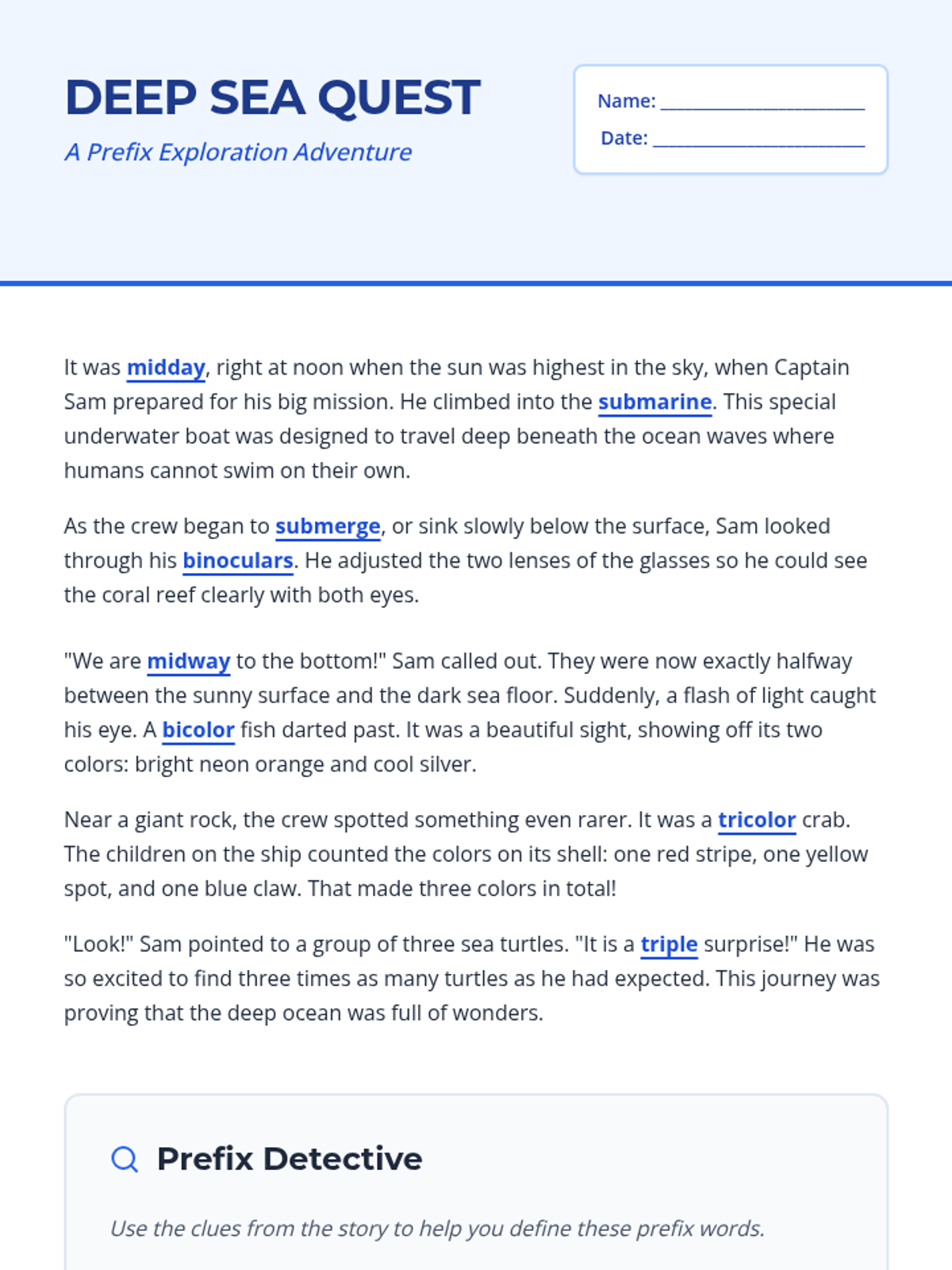
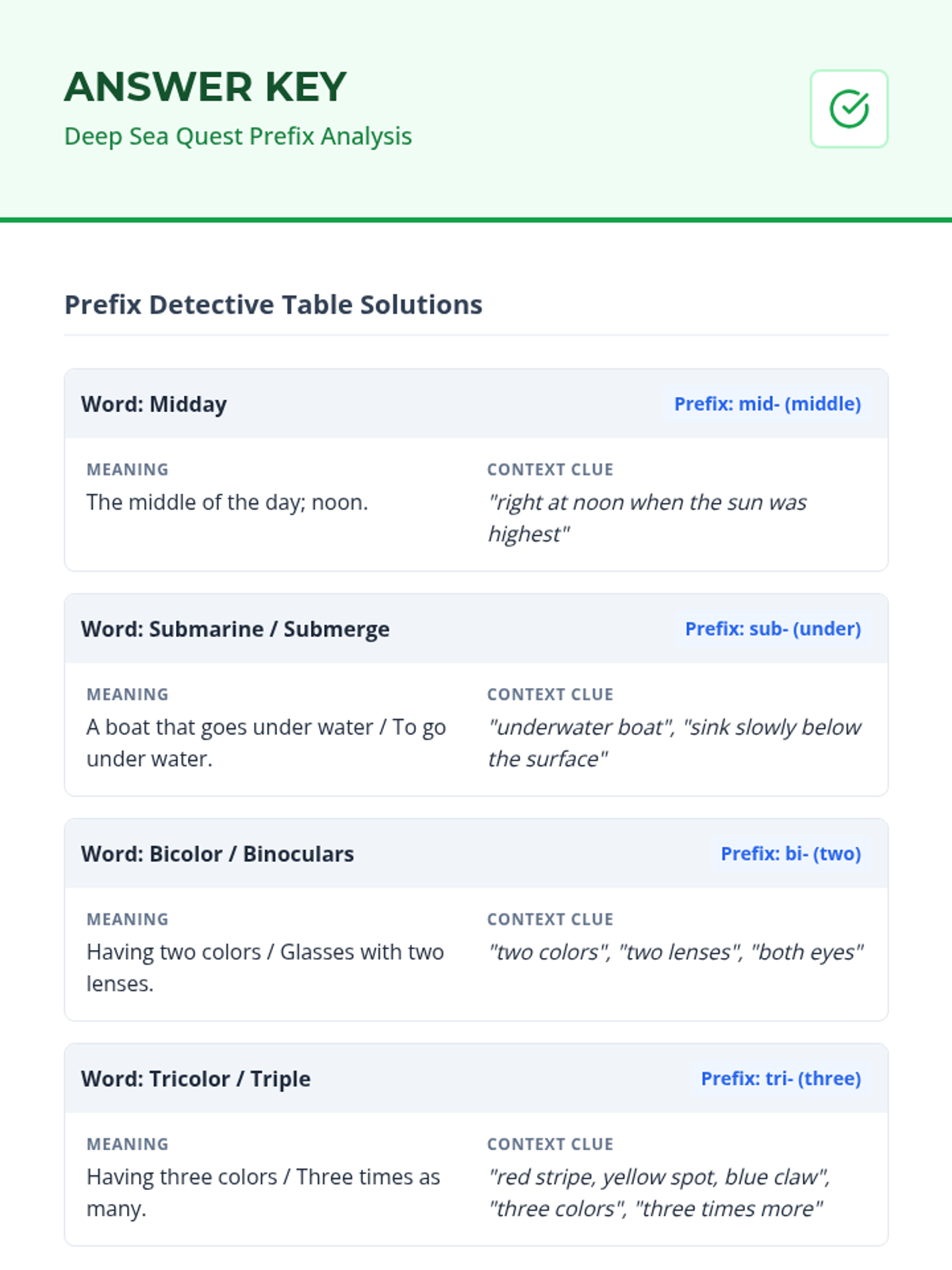
A reading-focused lesson that introduces 3rd-grade prefixes (bi-, tri-, sub-, mid-) through a narrative story and comprehension activities.
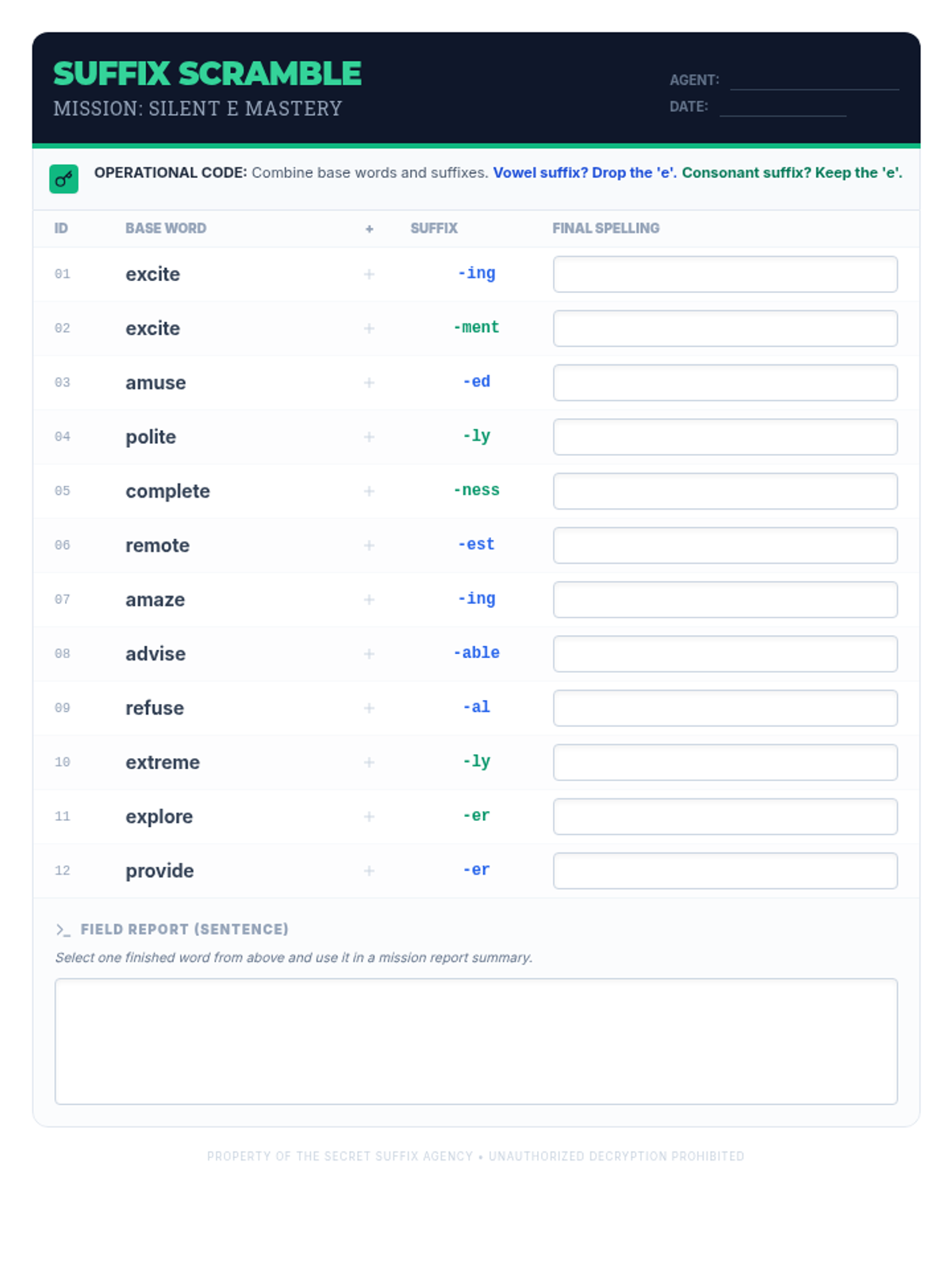
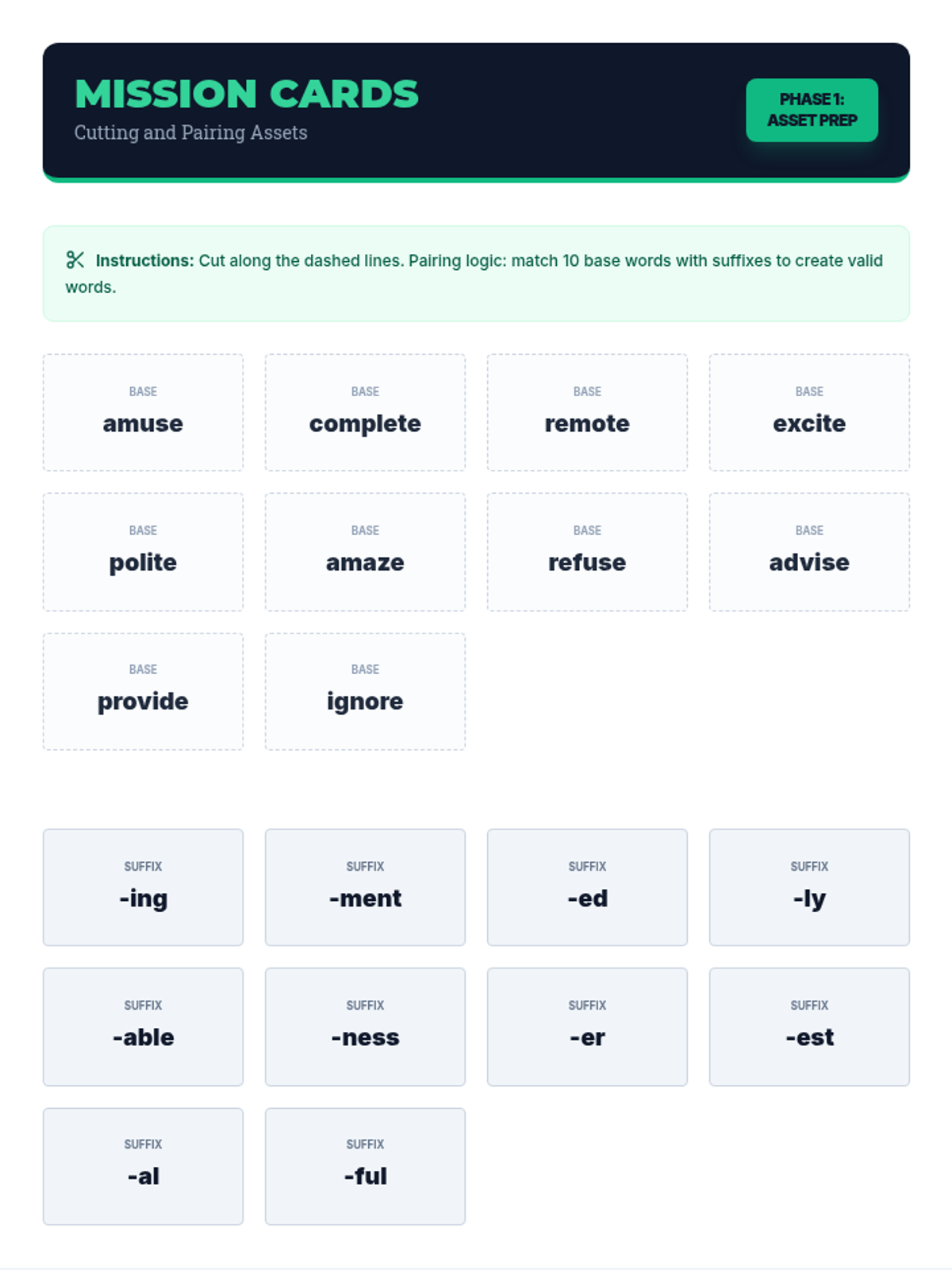
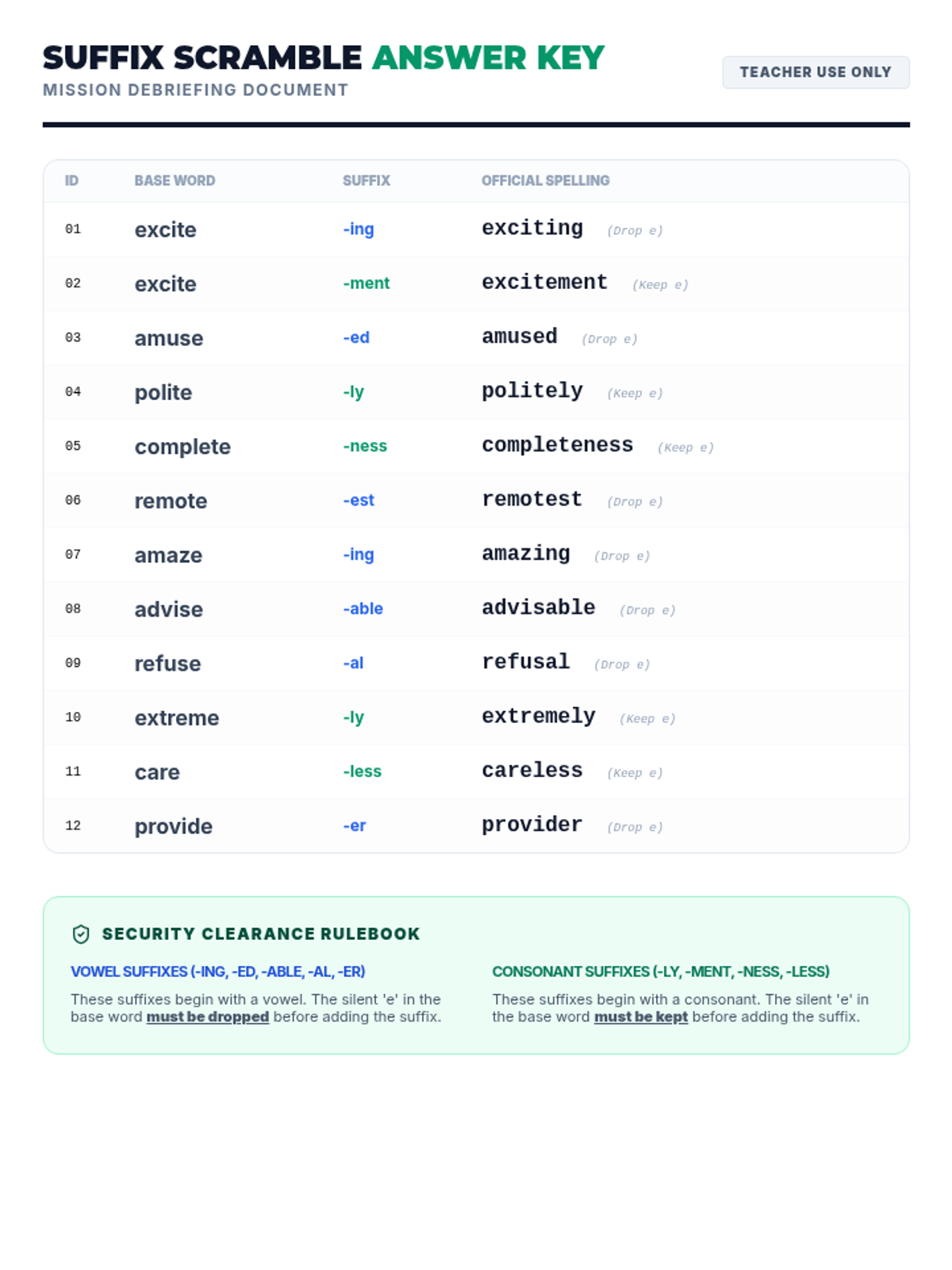
A comprehensive lesson on adding suffixes to multi-syllabic words ending in a silent 'e', focusing on the rules for dropping or keeping the 'e' based on the suffix type.
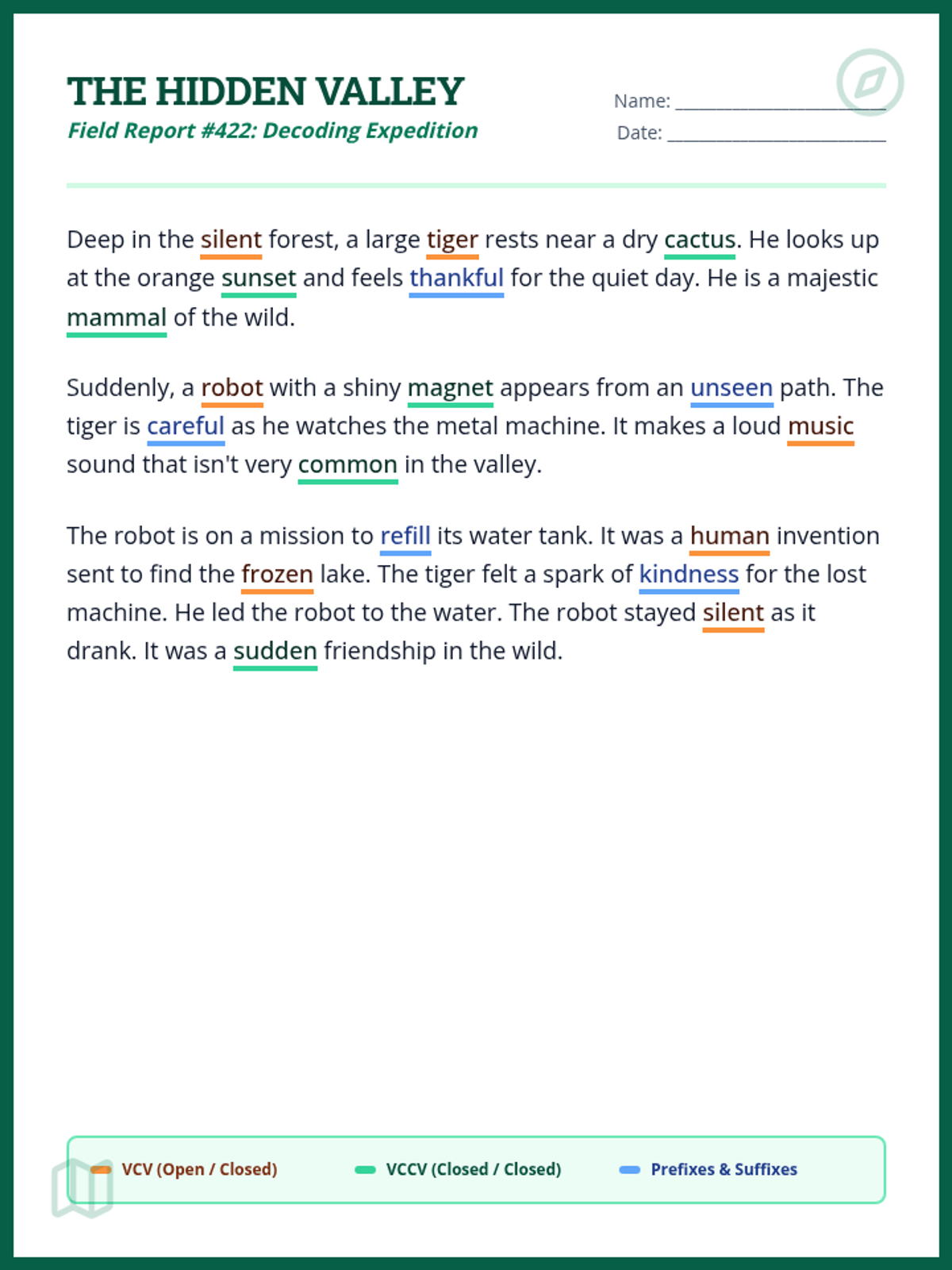
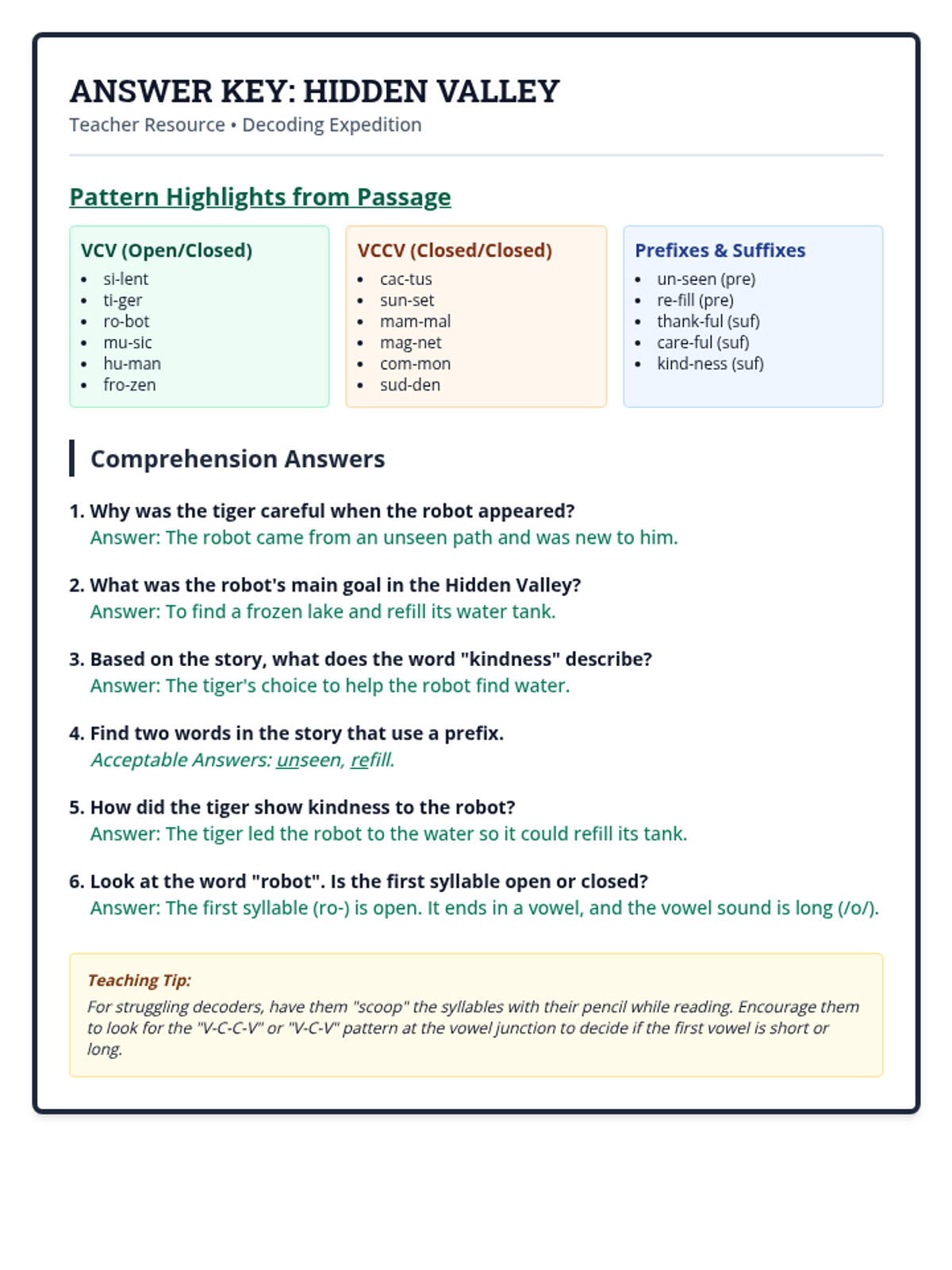
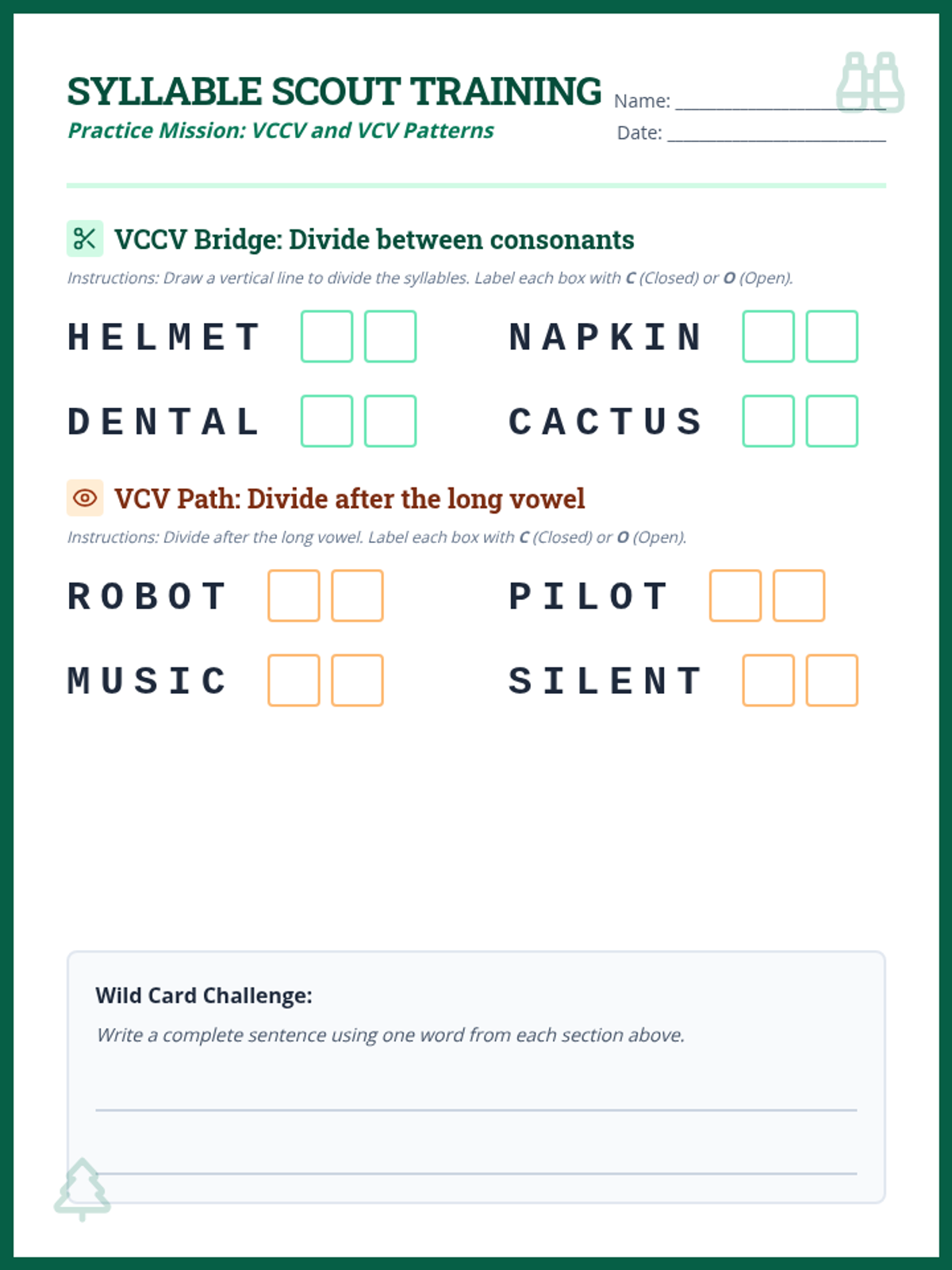
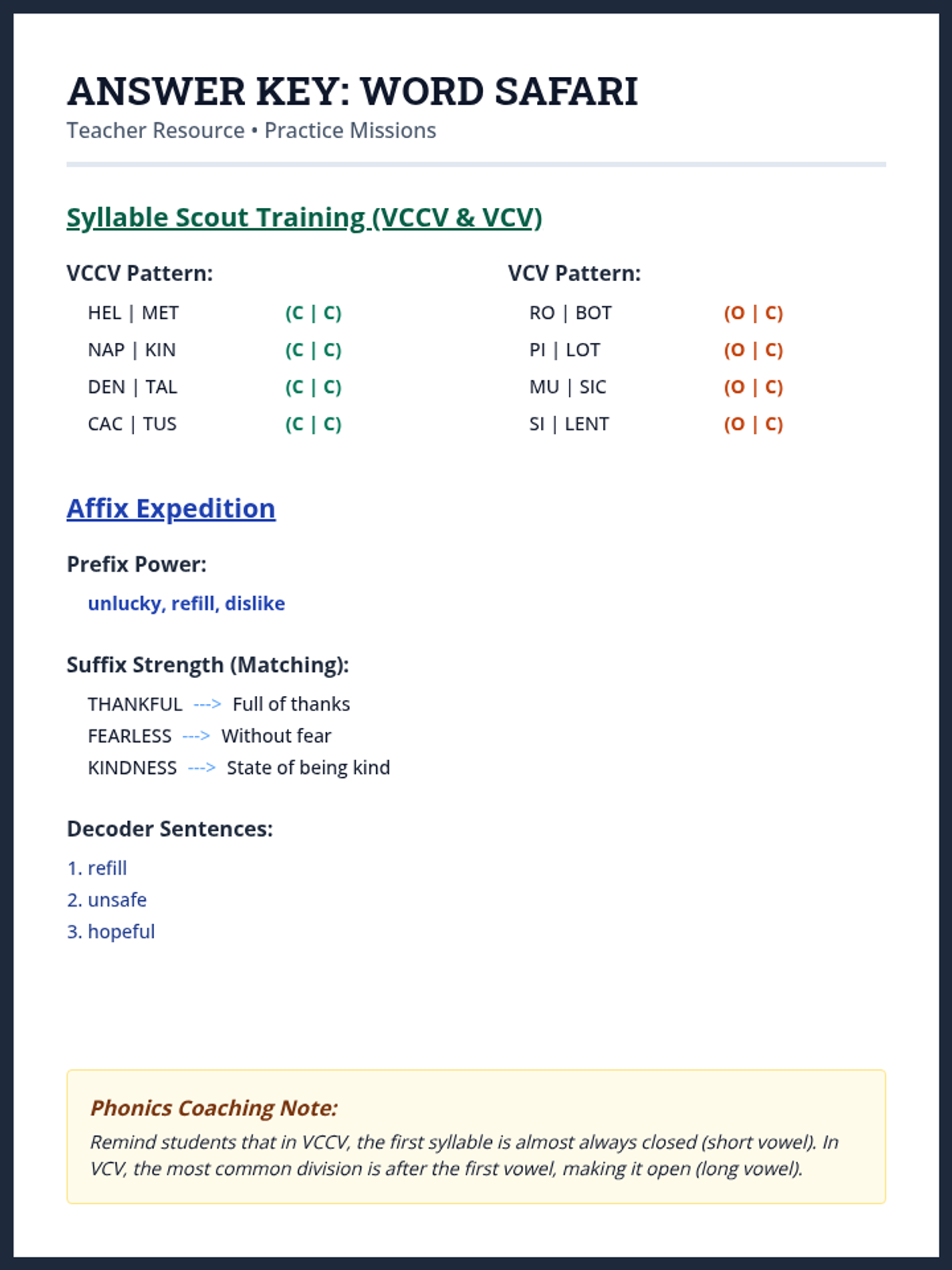
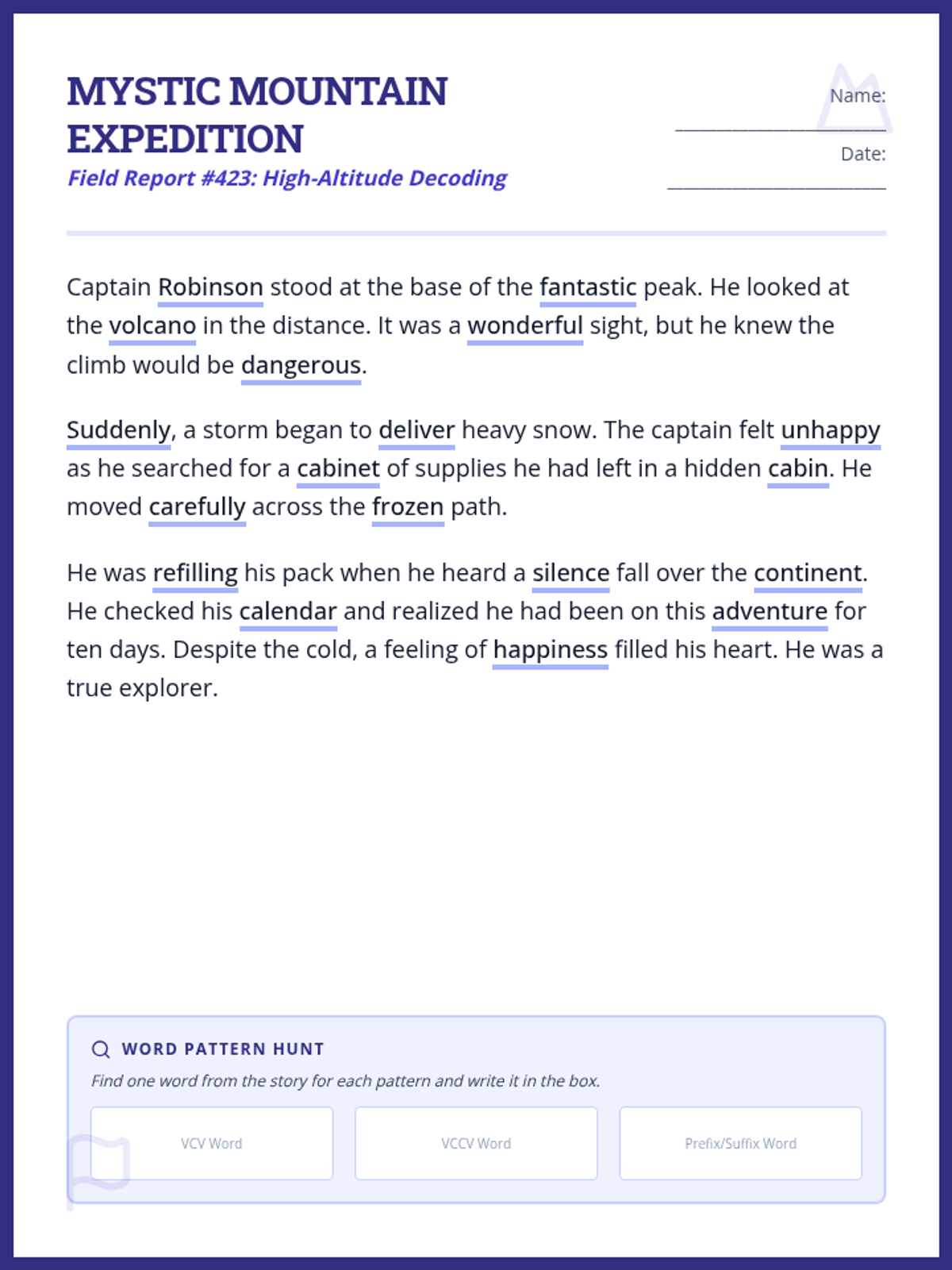
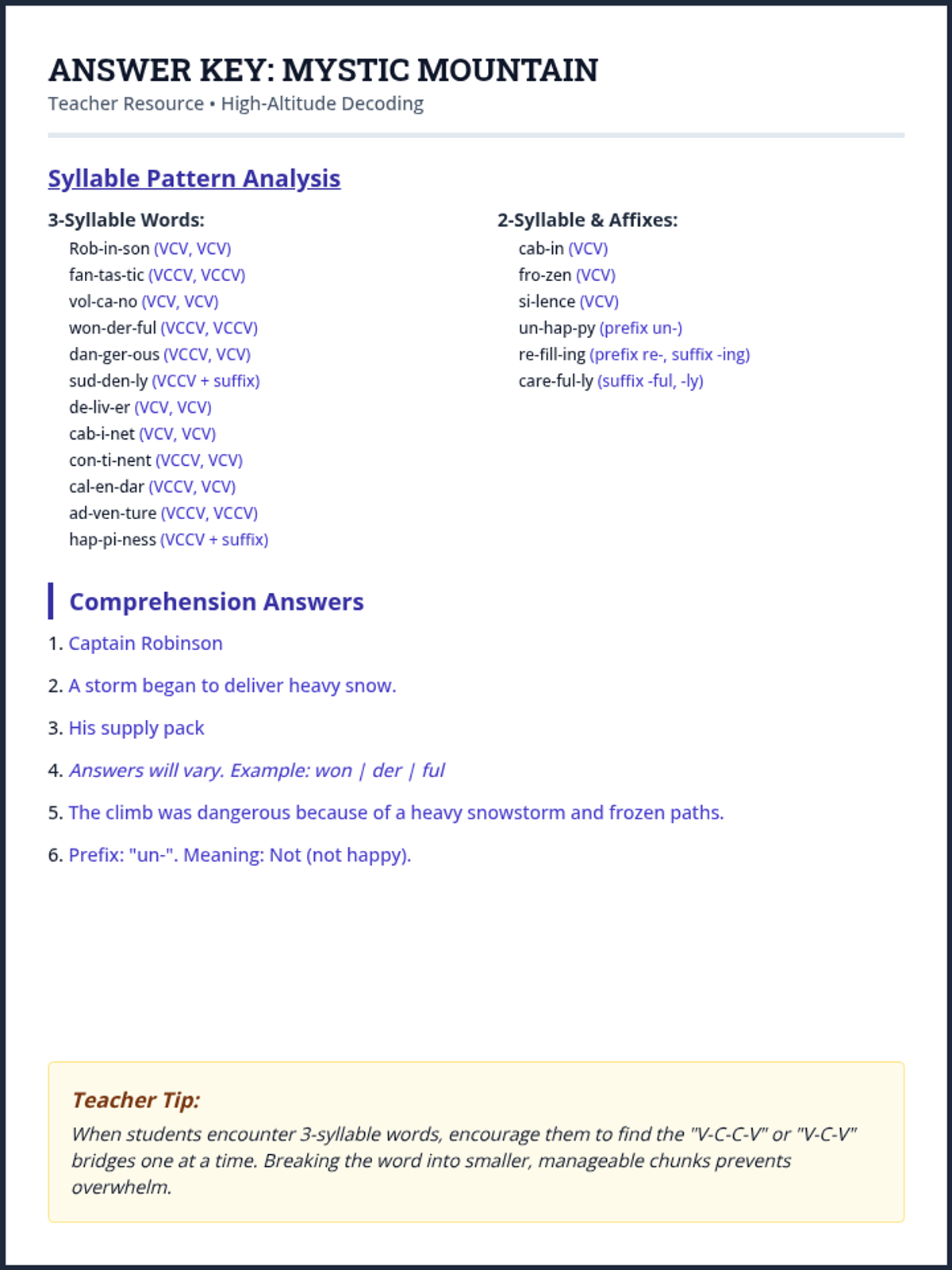
A lesson focused on decoding VCCV and VCV syllable patterns, along with common prefixes and suffixes, through an engaging reading passage and comprehension check.
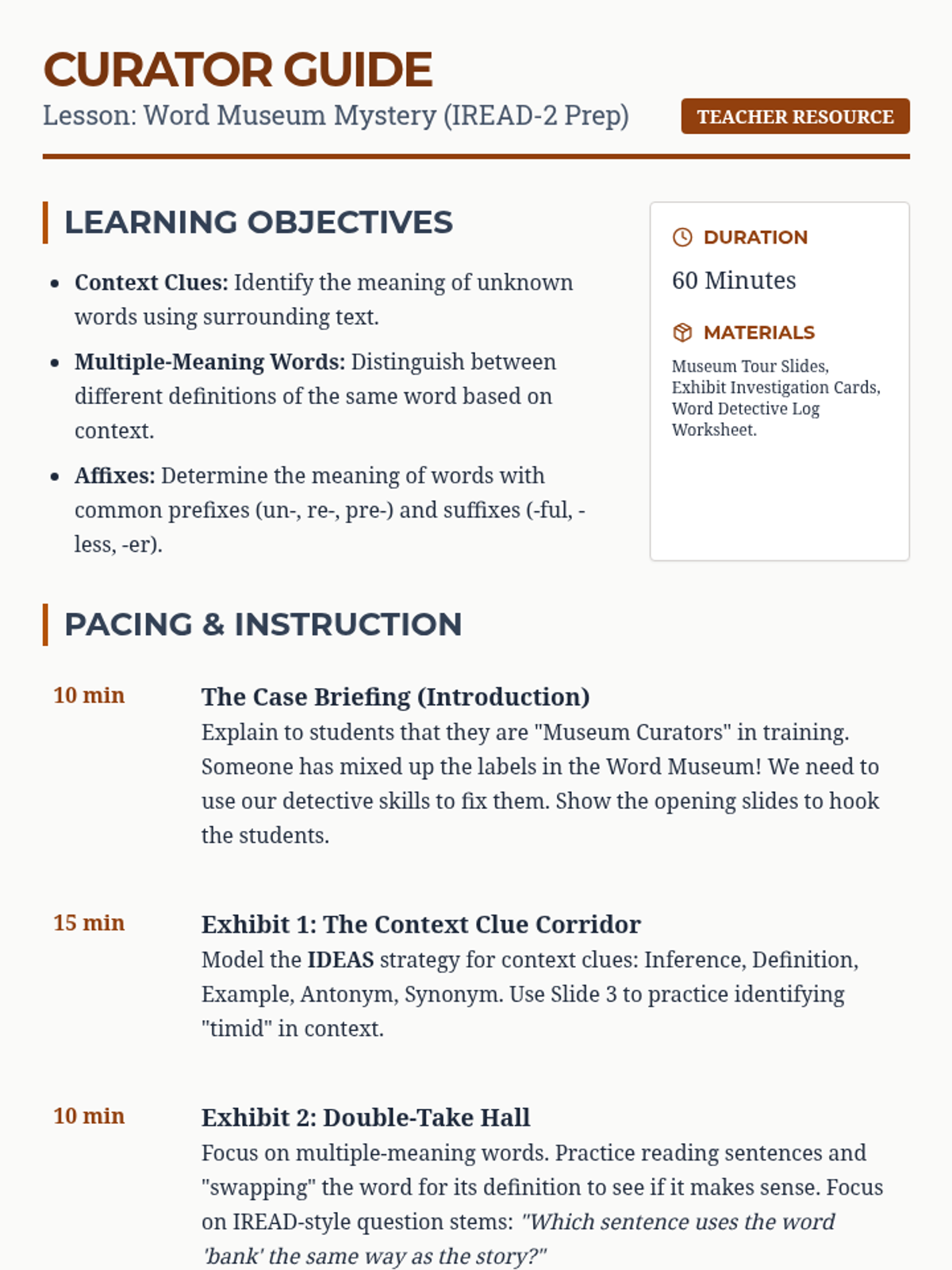
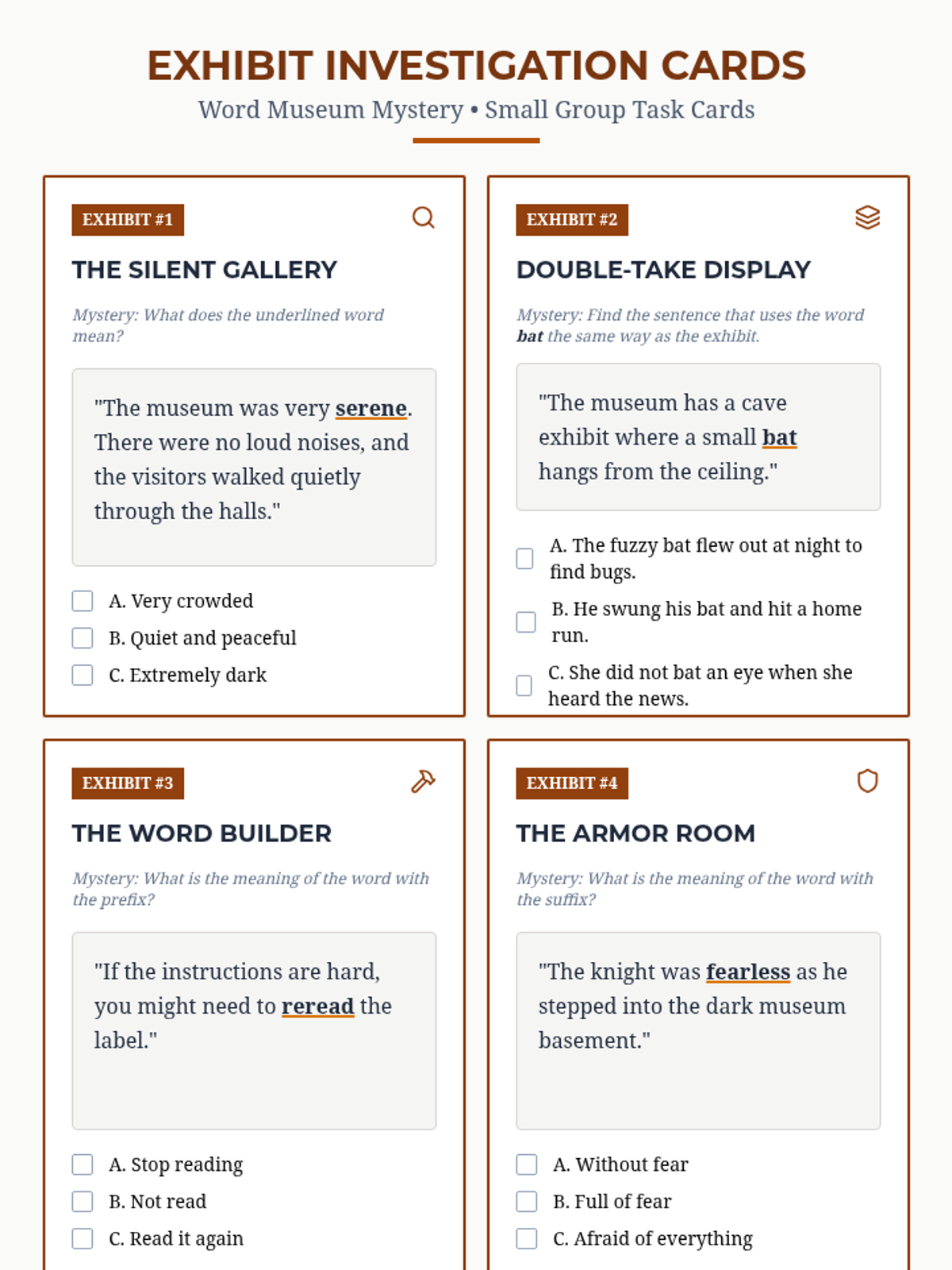
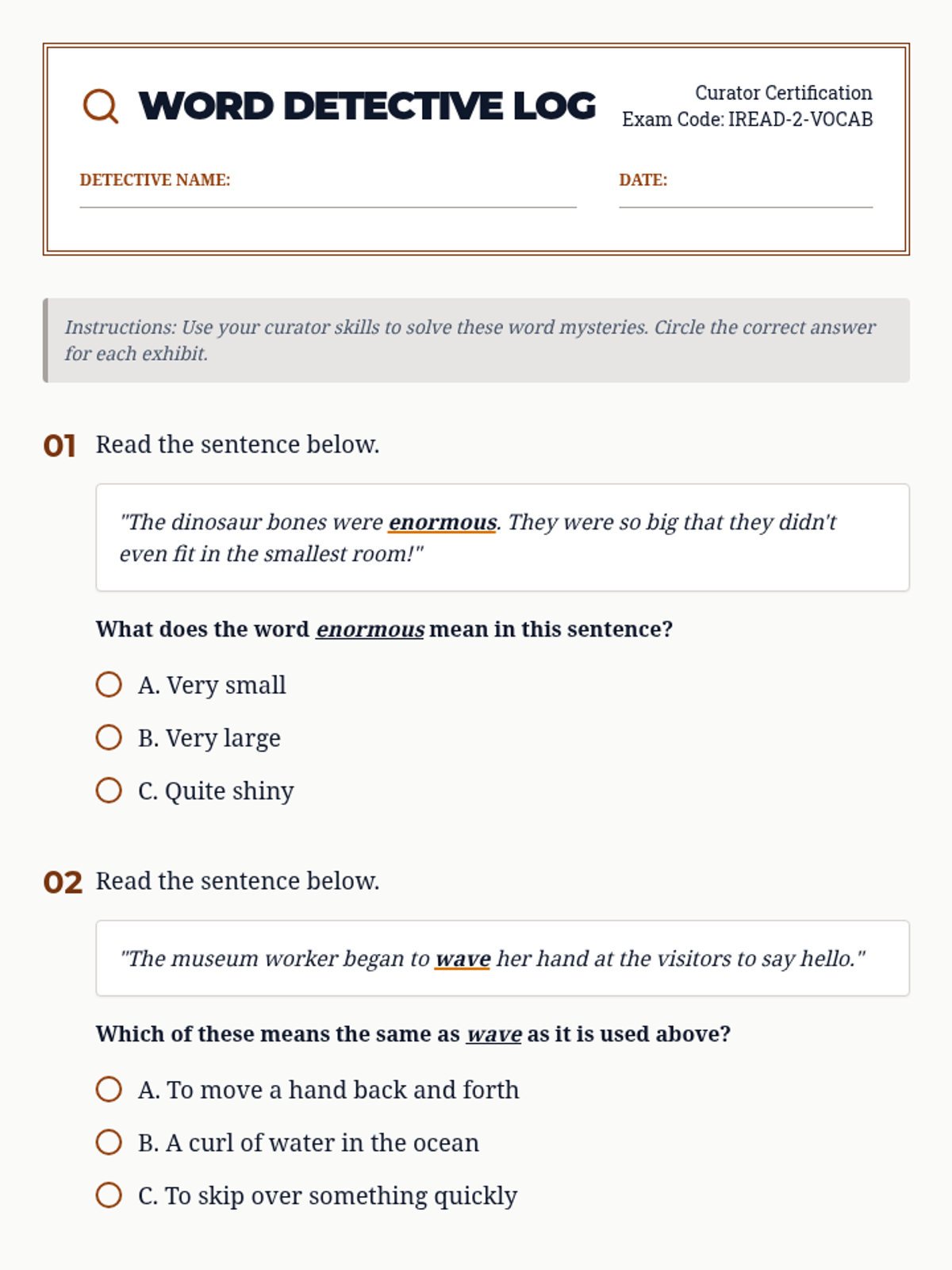
An interactive lesson reviewing context clues, multiple-meaning words, and affixes through a "Museum Mystery" theme tailored for Indiana IREAD-2 preparation.
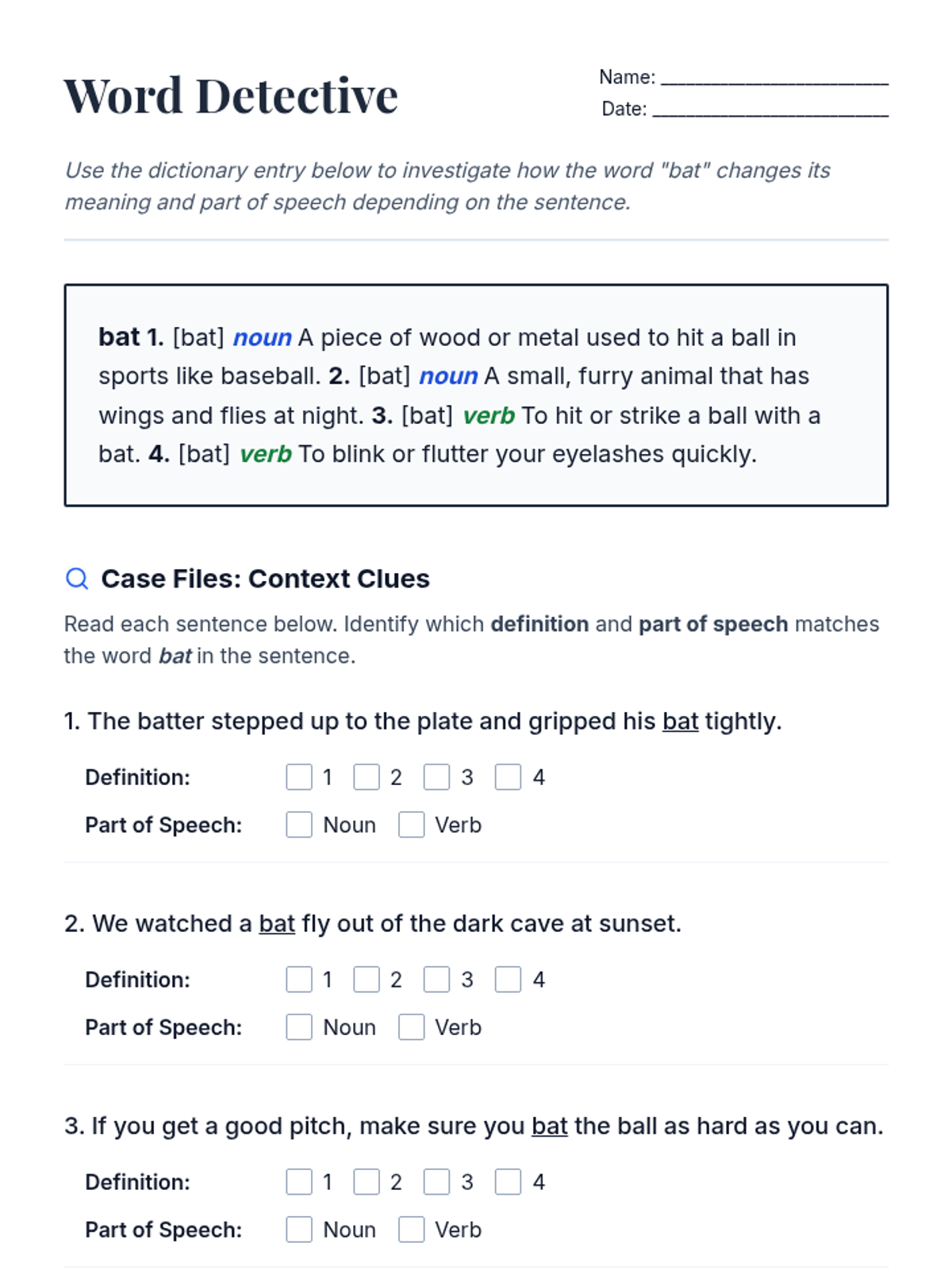
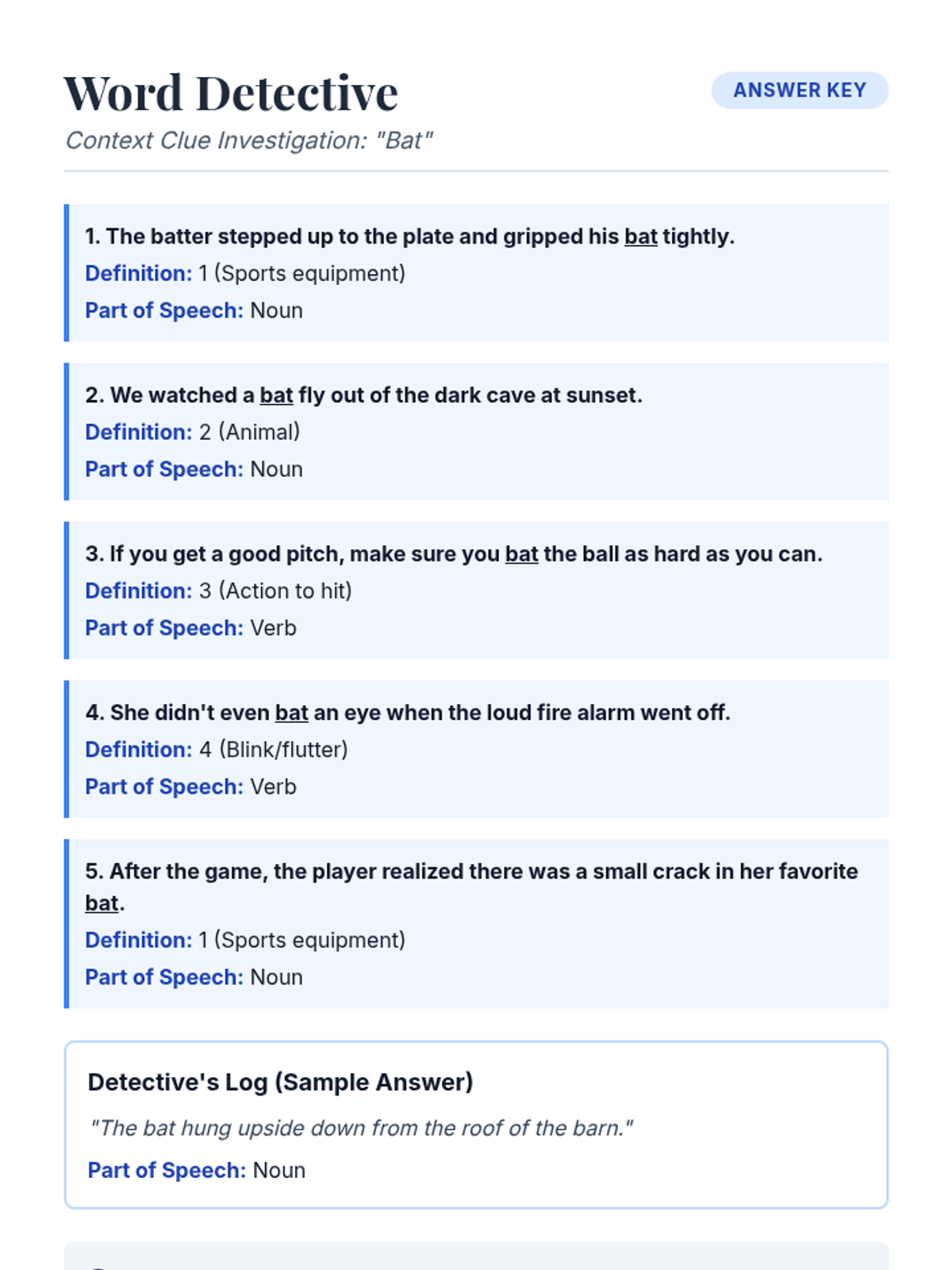
A lesson focused on using dictionary entries and context clues to identify the meaning of multiple-meaning words (homonyms).
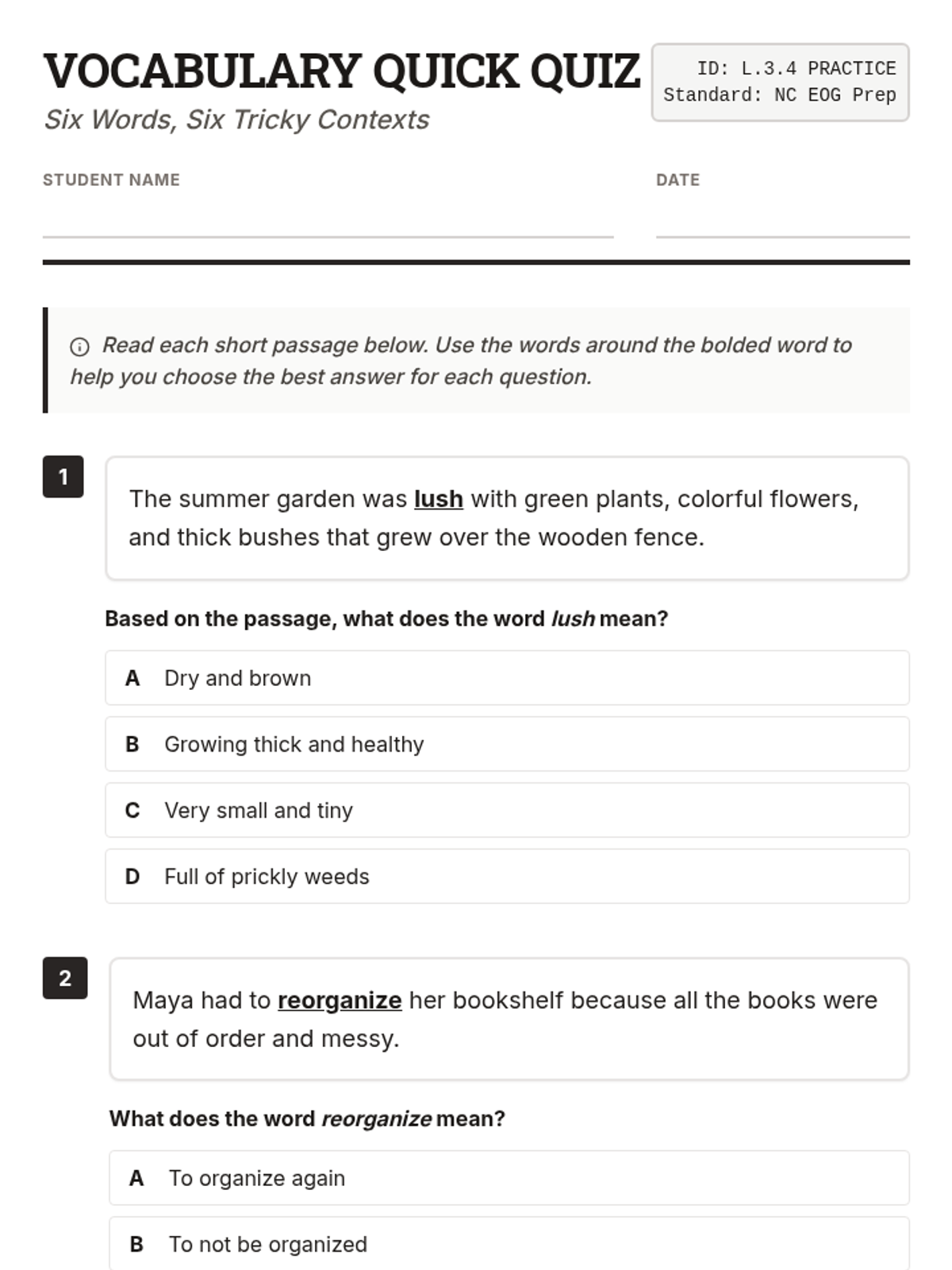
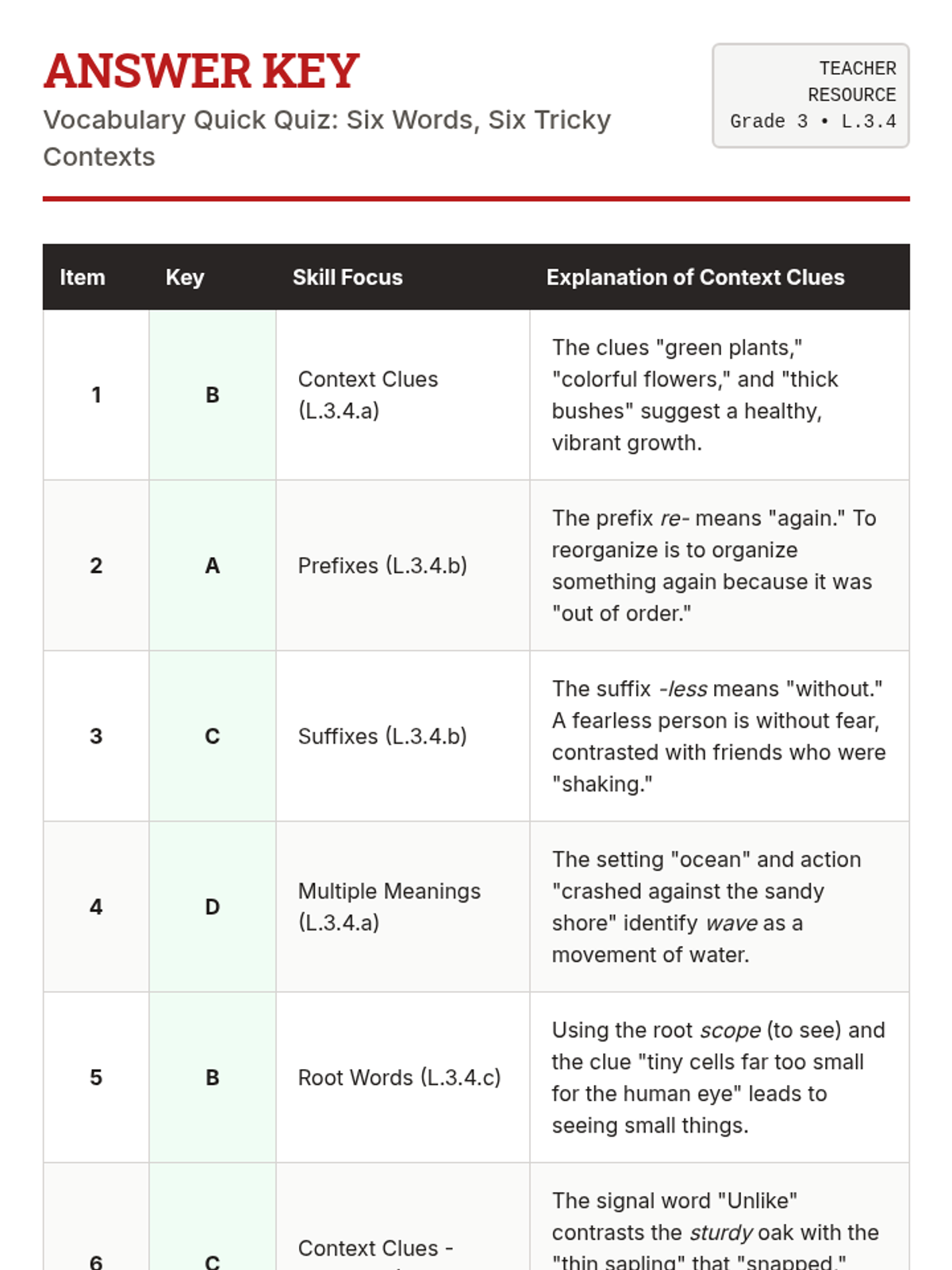
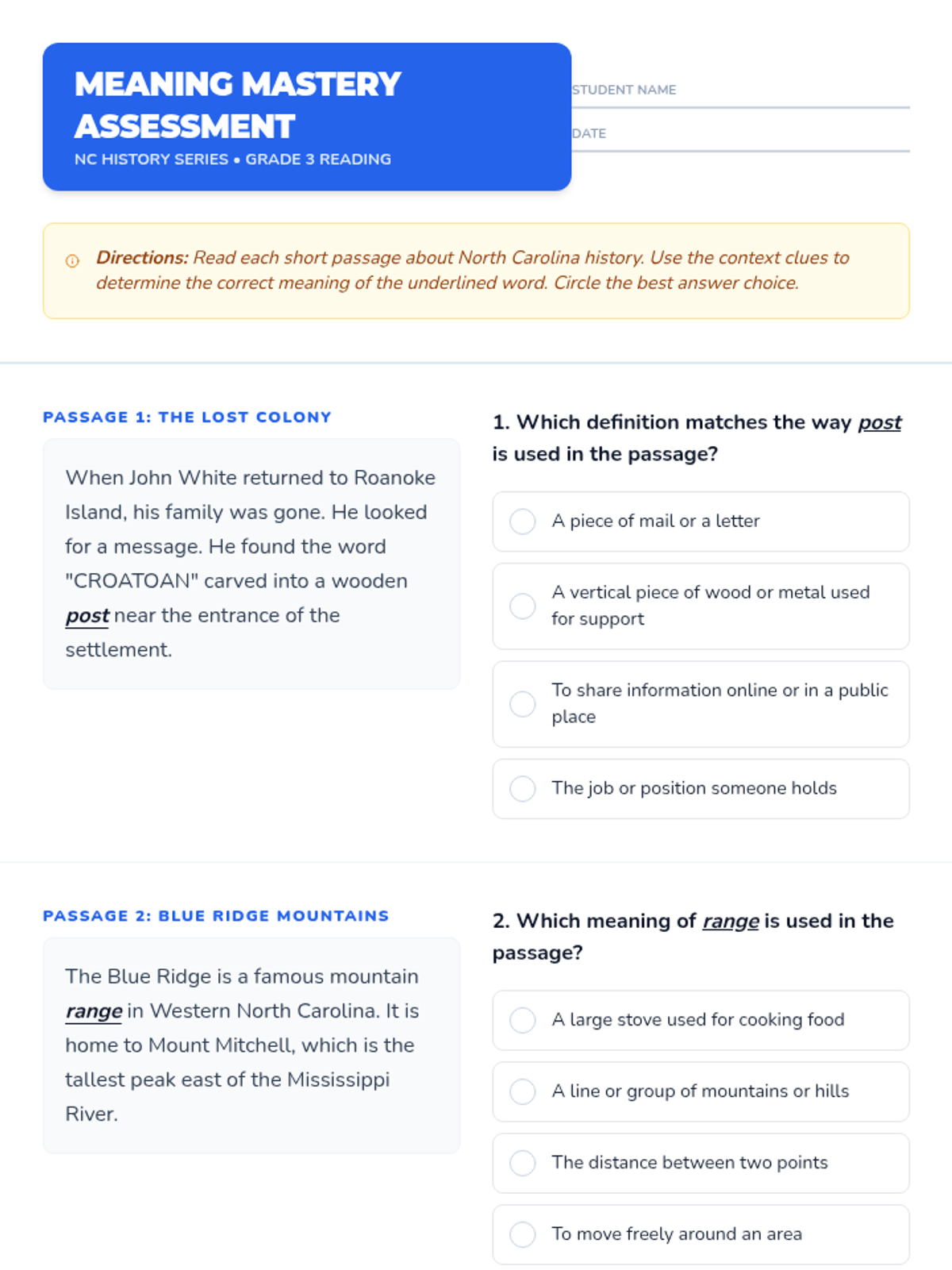
A focused practice session for Grade 3 students to master vocabulary-in-context skills aligned with L.3.4, featuring EOG-style passages and questions.
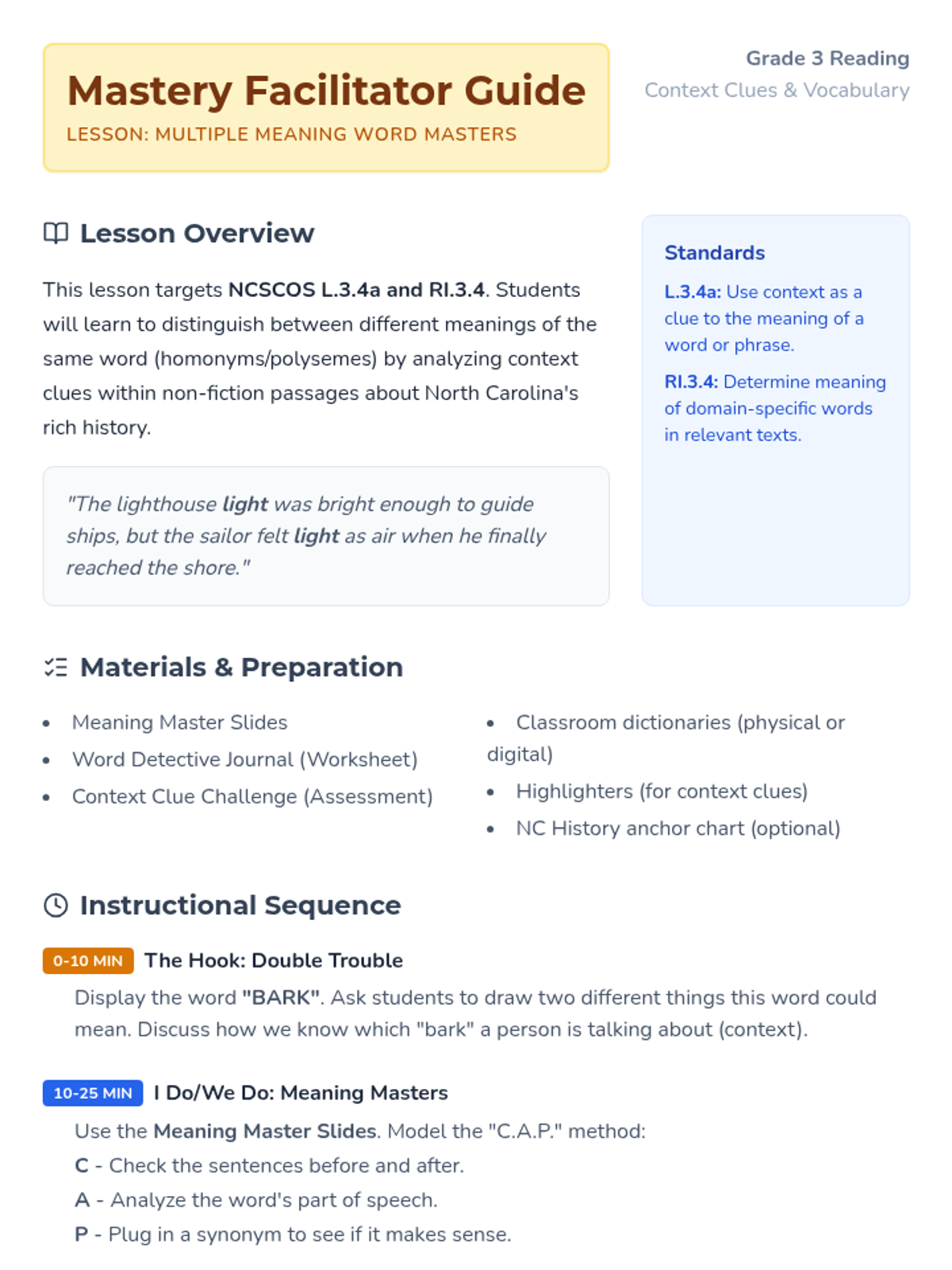
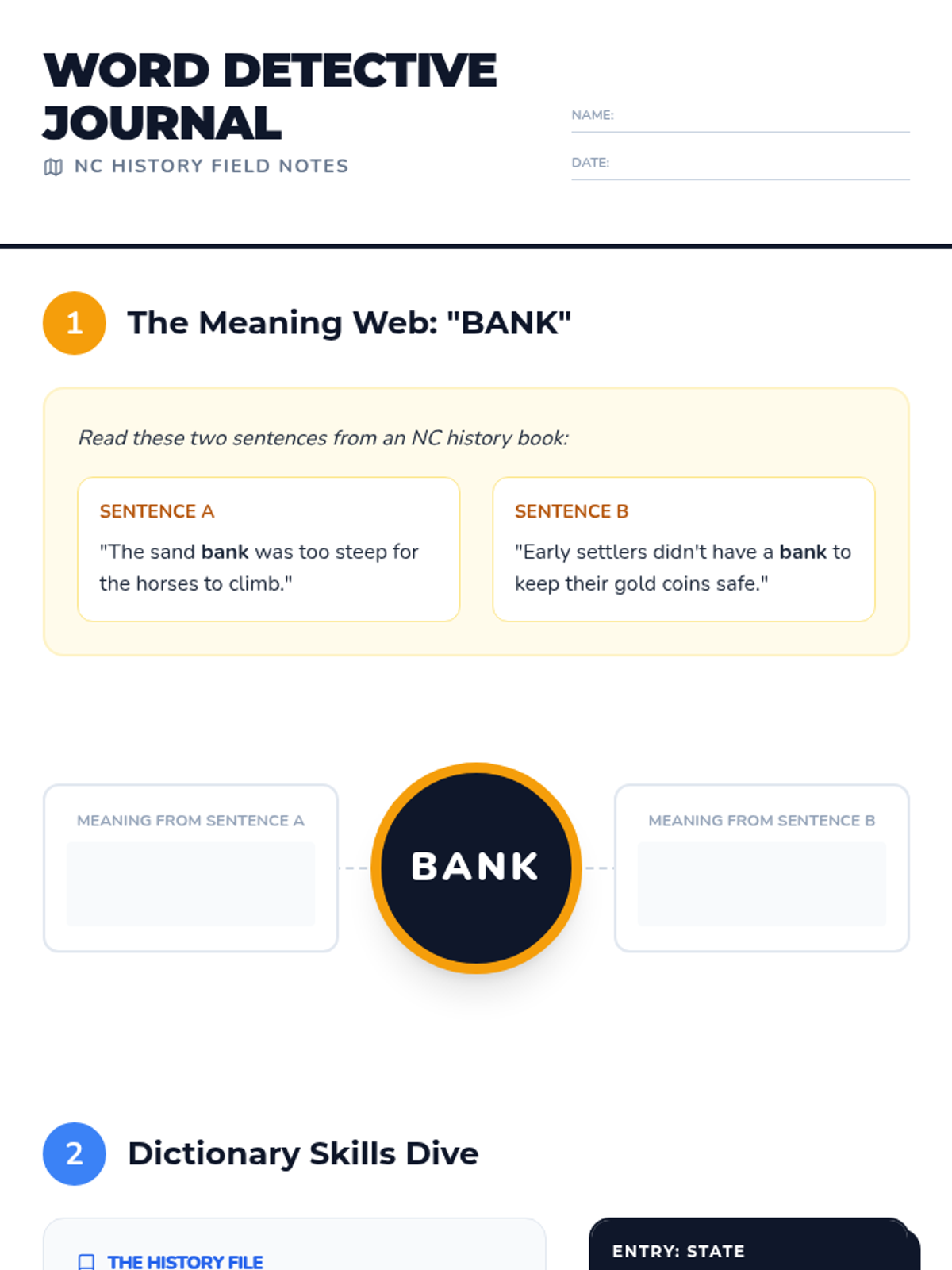
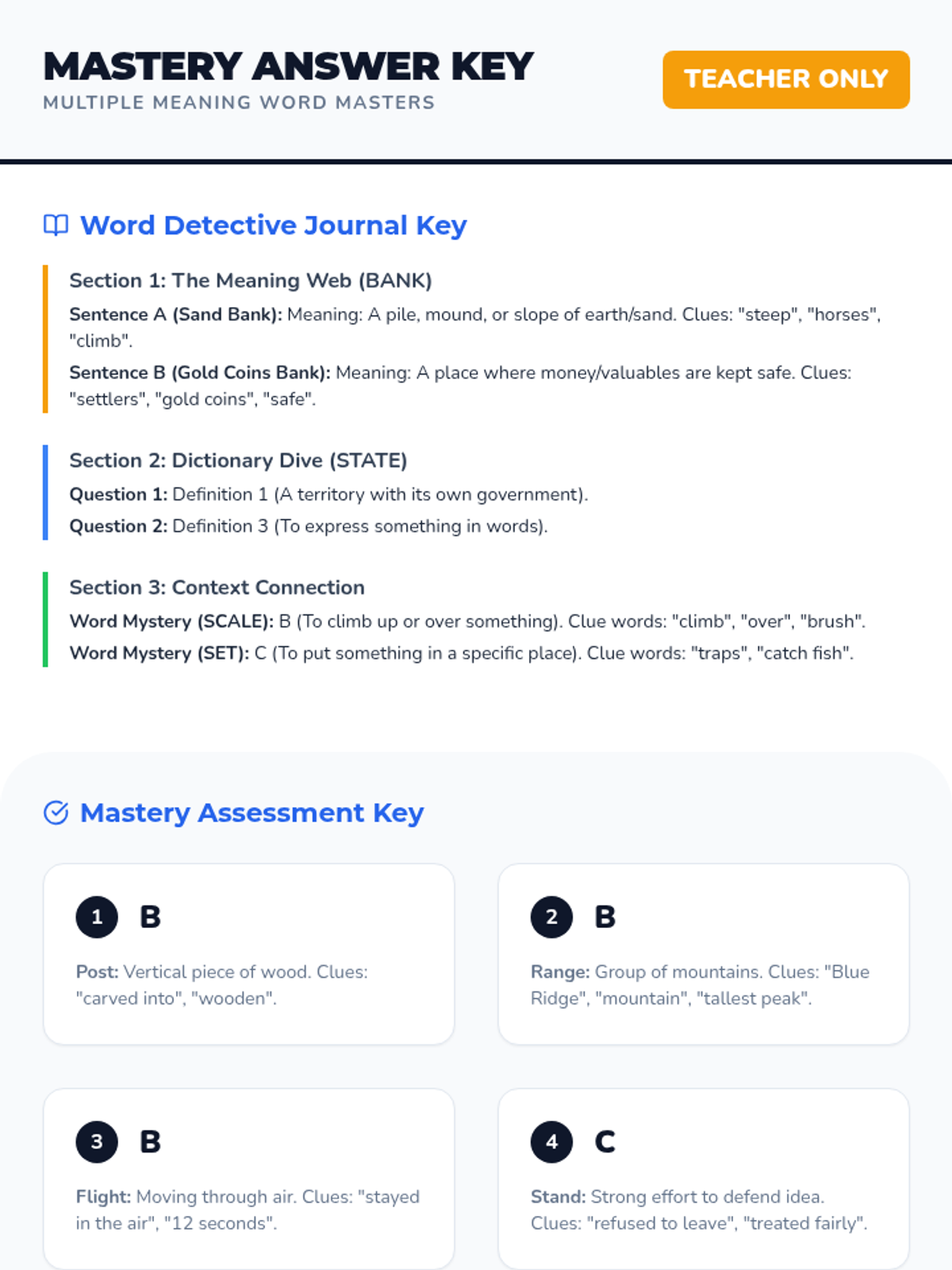
A Grade 3 reading lesson focused on identifying the correct meaning of multiple-meaning words using context clues. Students explore passages about North Carolina history while developing dictionary skills and practicing EOG-style vocabulary questions.
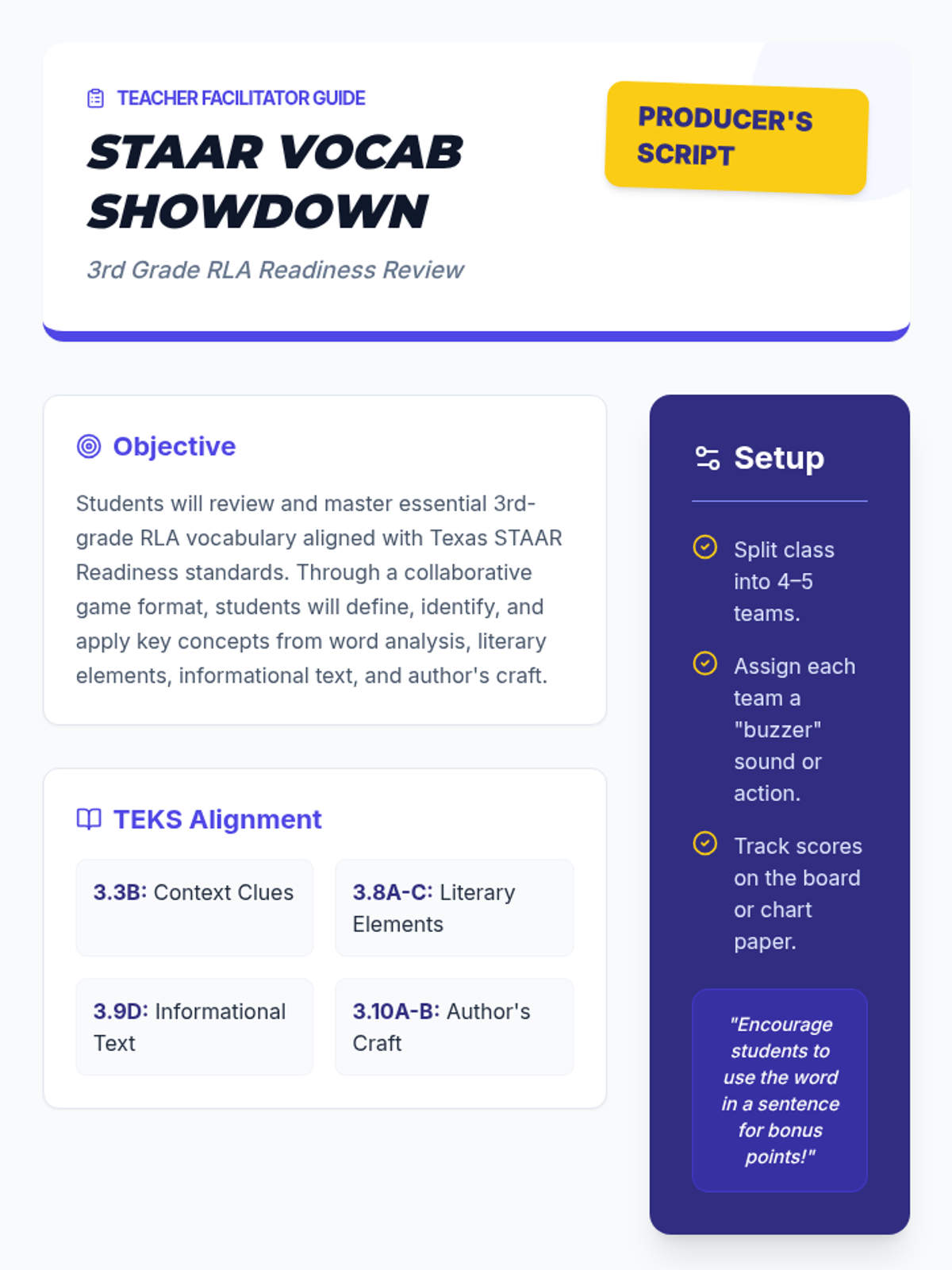
A high-energy review lesson designed to help 3rd-grade students master essential RLA TEKS vocabulary in preparation for the STAAR test through a competitive game format.
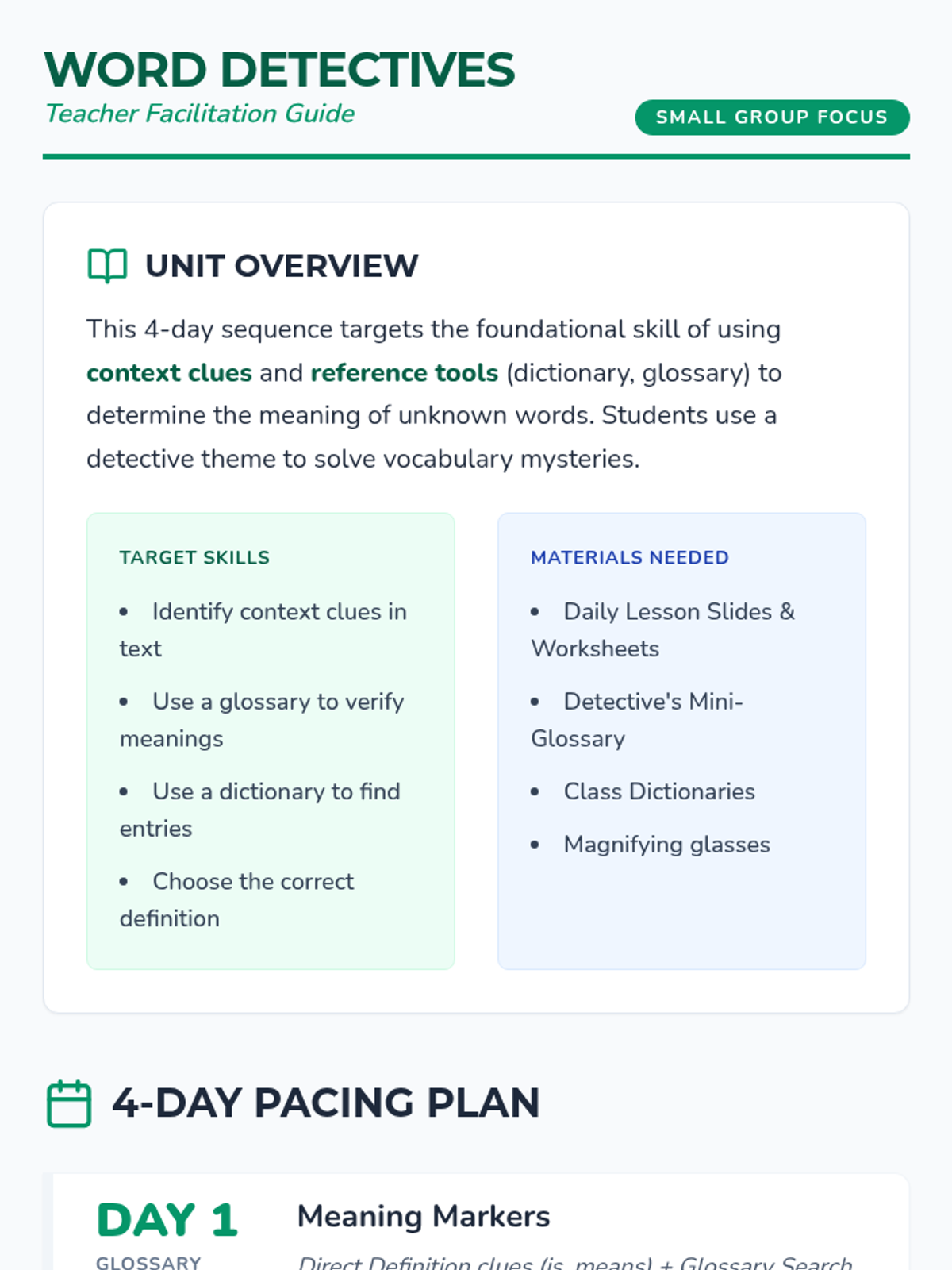
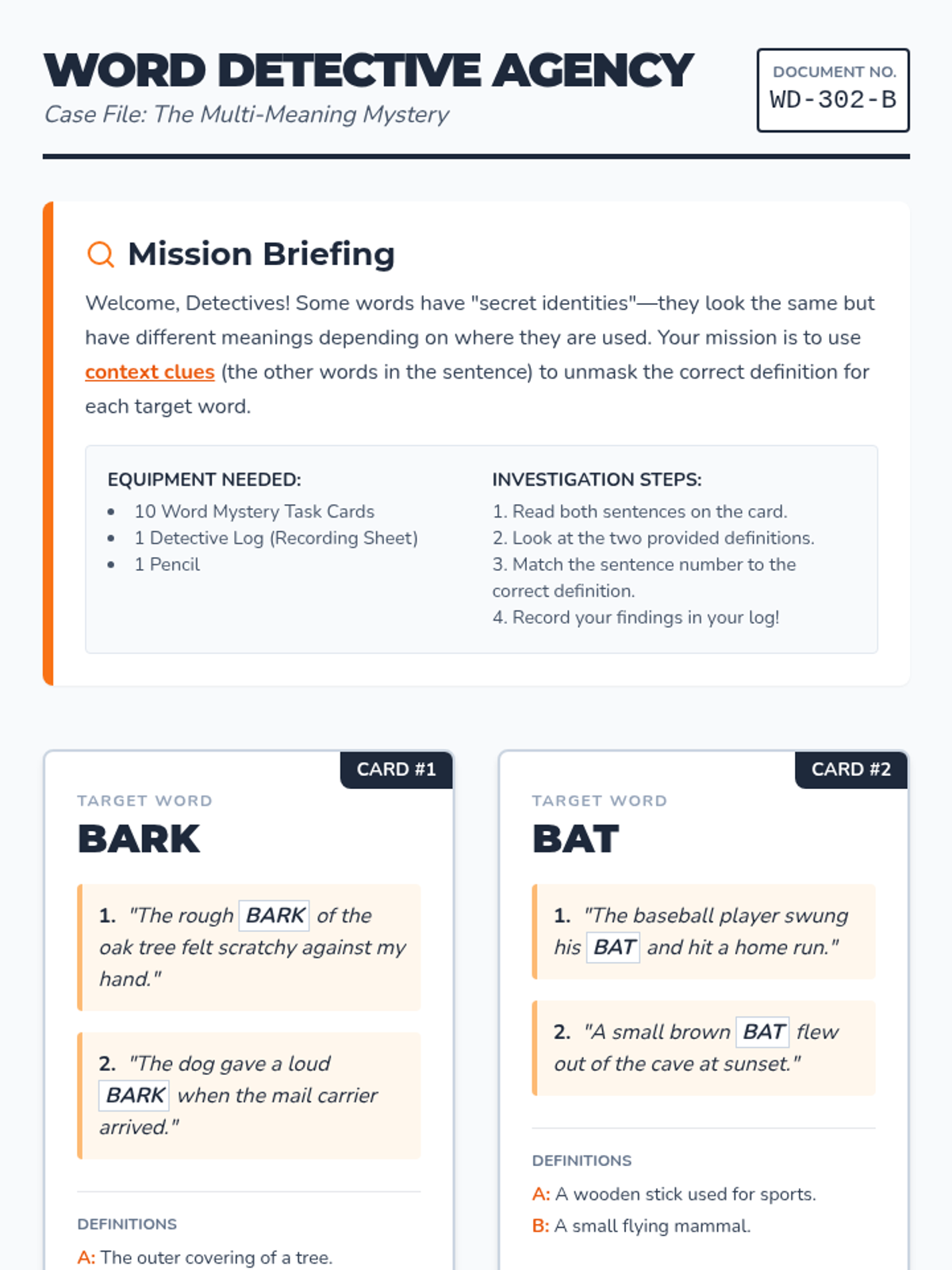
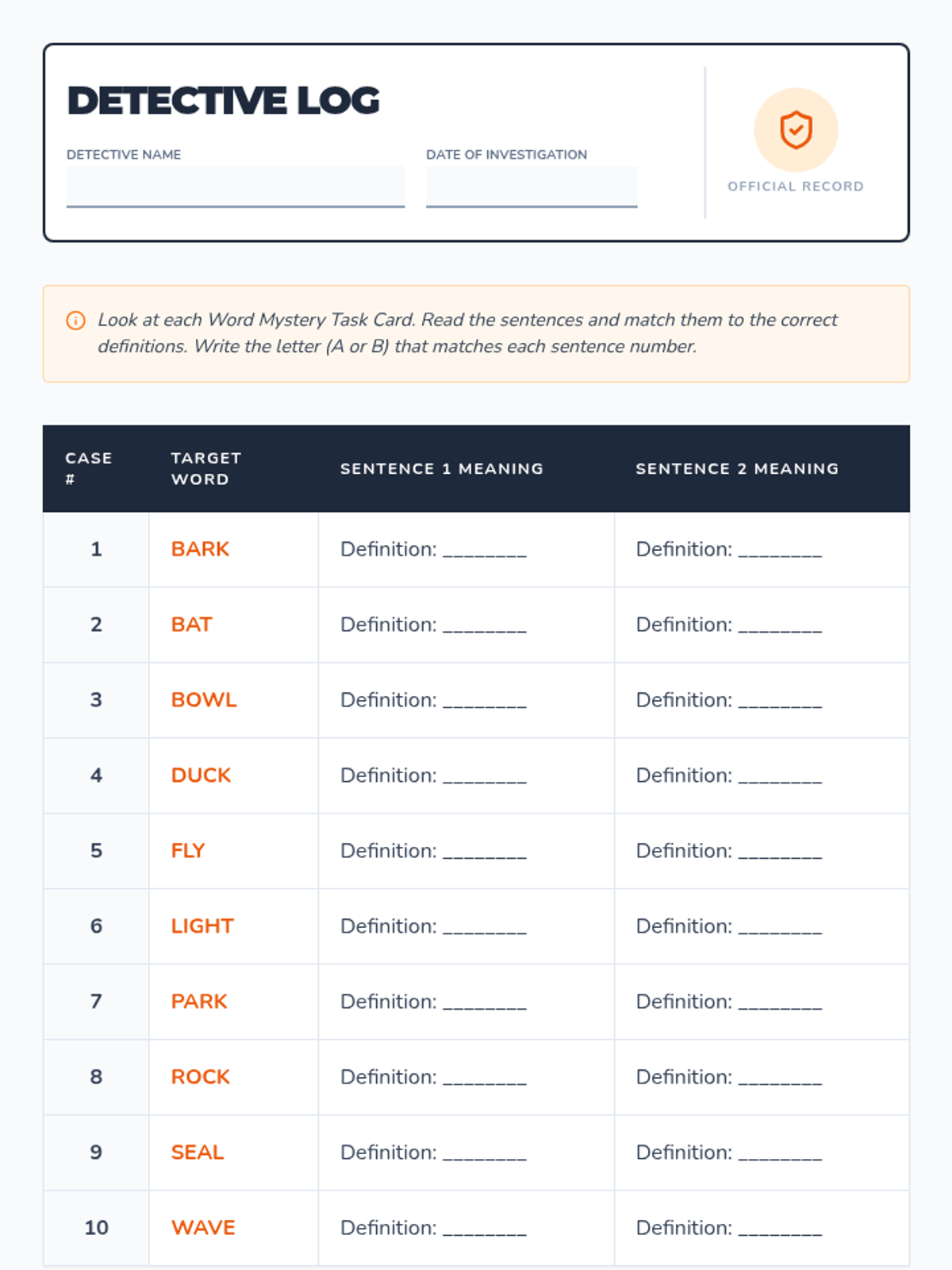
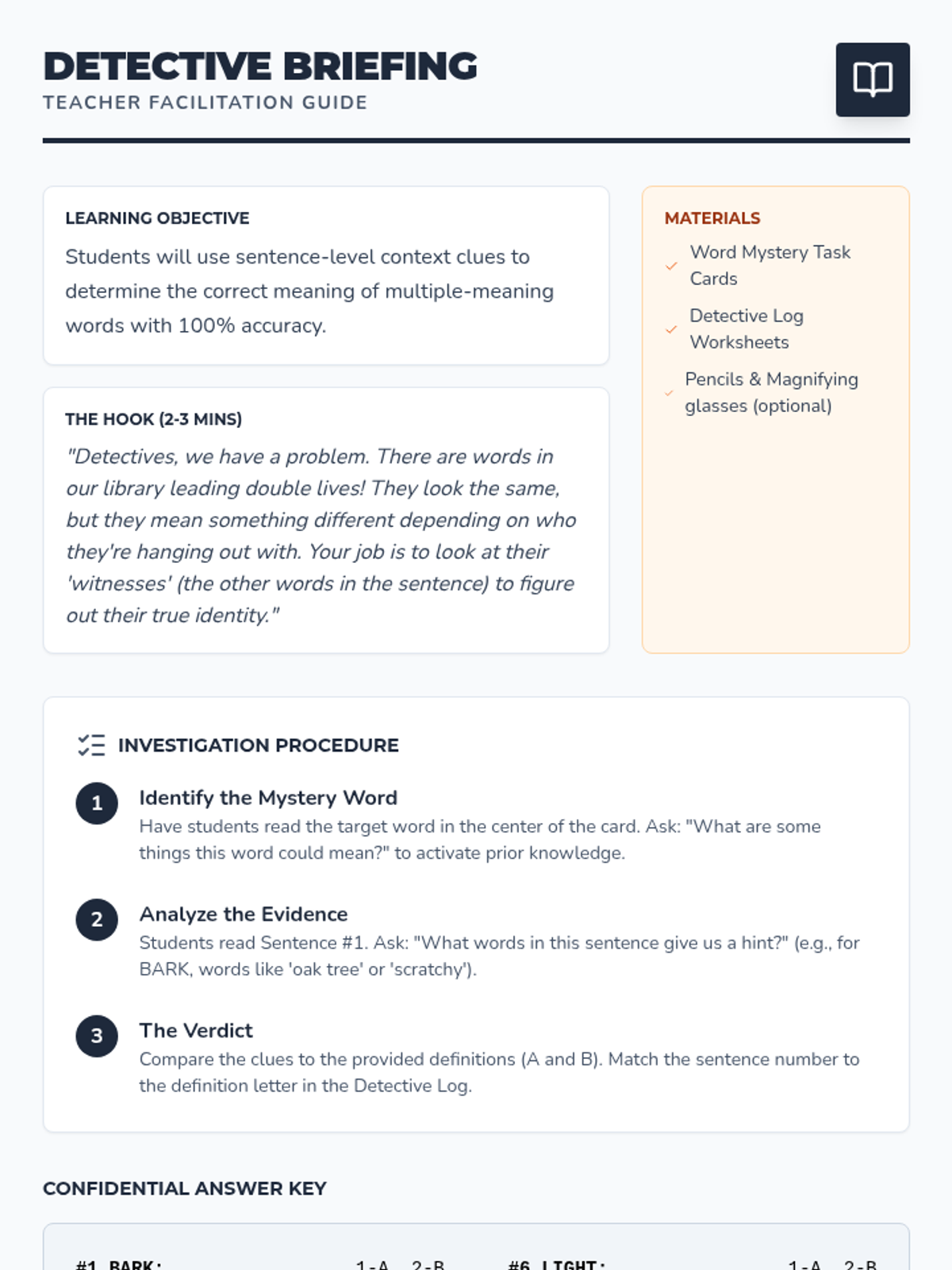
A small-group activity where students act as "Word Detectives" to determine the correct meaning of multiple-meaning words using sentence-level context clues. Students analyze task cards and record their findings in a detective log.