Systematic research, evidence evaluation, and logical reasoning skills for formal discourse. Equips speakers to organize persuasive arguments, identify fallacies, and execute strategic impact calculus during competitive engagement.
An updated, high-impact review slide deck that recaps sports archetypes using the full criteria from the unit's Brainstorm Key. It defines Heroes, Villains, and the 'Swagger Paradox' with rapid-fire practice cases for Curry and Durant.
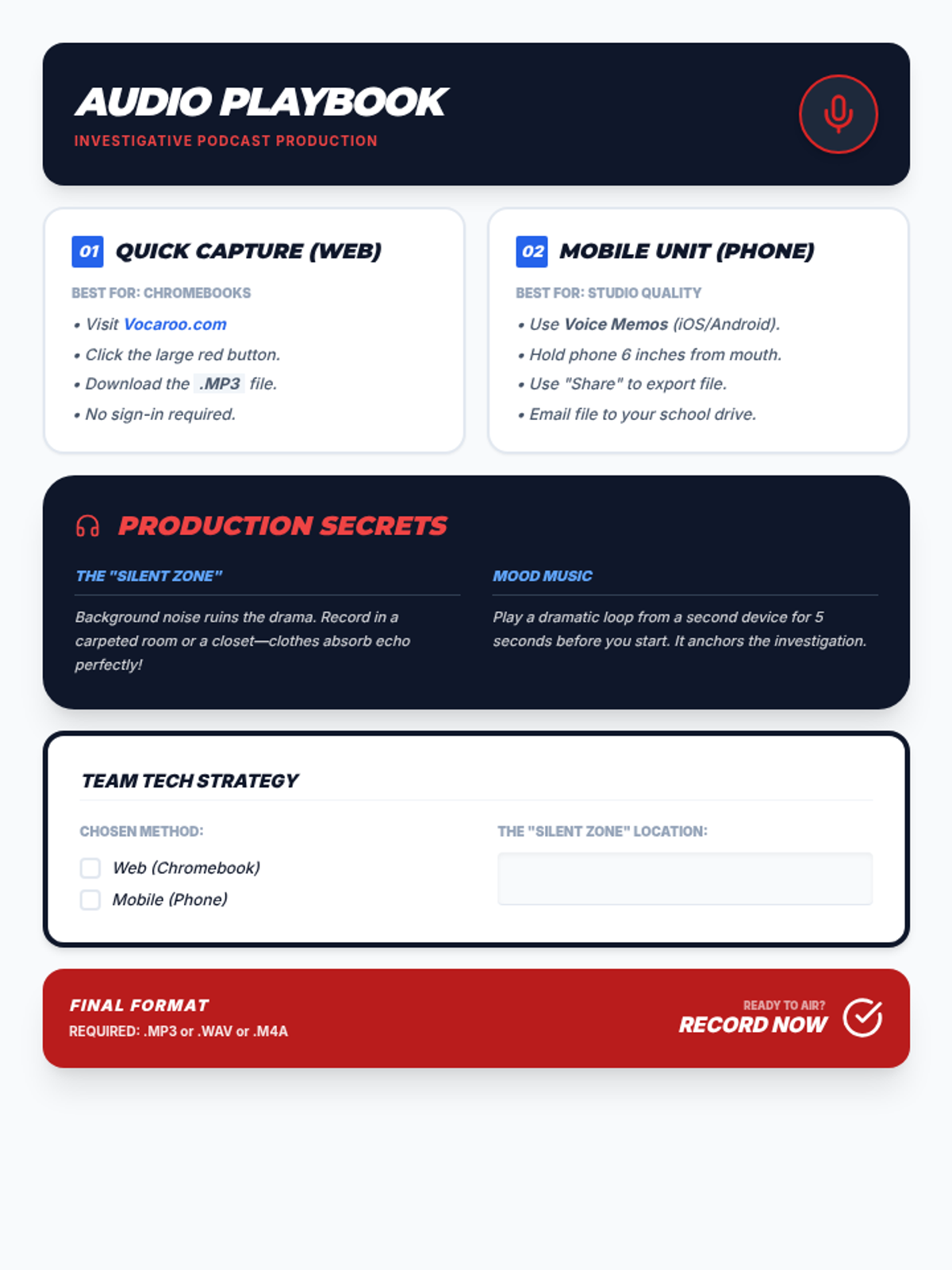
A step-by-step technical guide for students on how to record their investigative podcasts using simple web-based or mobile tools. Includes production tips for audio quality and atmosphere.
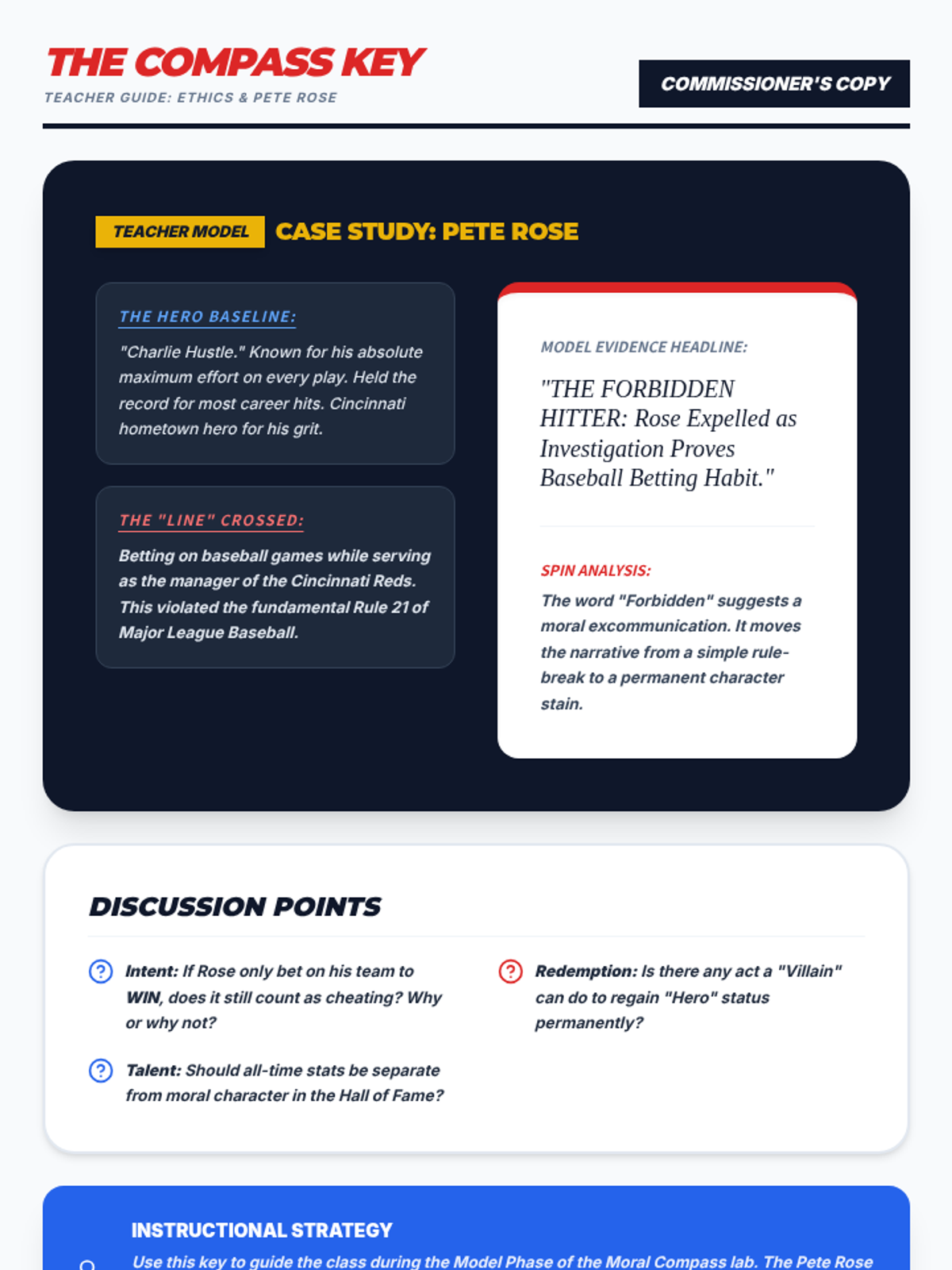
A teacher answer key for the Moral Compass worksheet, providing a completed model of the Pete Rose case study and discussion questions regarding the 'line' between hero and villain in sports.
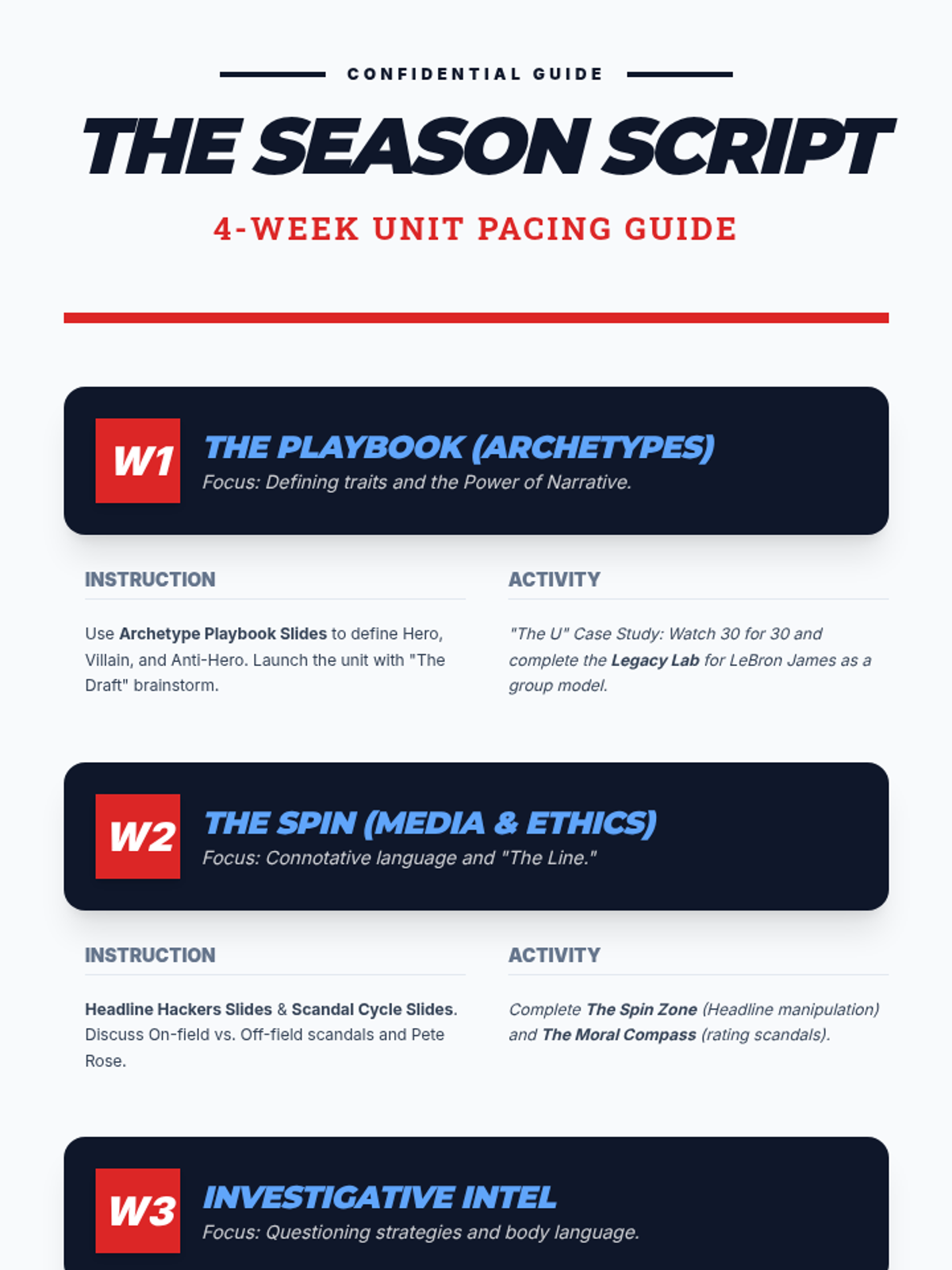
A comprehensive pacing guide for the 4-week 'Game Changers' unit, detailing the instructional focus, activities, and required materials for each week. Specifically optimized for a 3x45m + 1x90m weekly schedule.
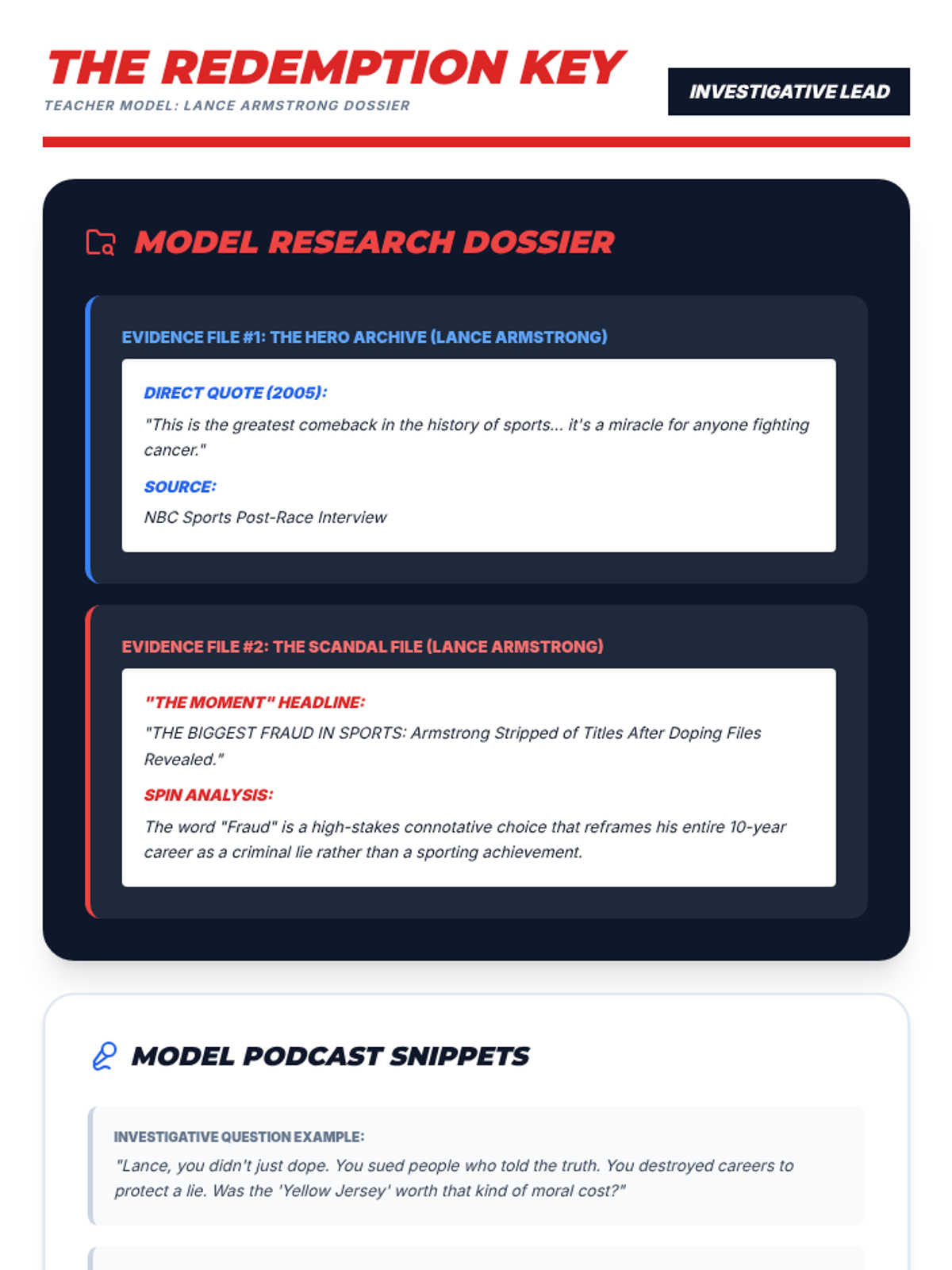
A model answer key and exemplar for the summative podcast project. It provides a completed Research Dossier and script snippets for Lance Armstrong to show students the expected depth of research and evidence integration.
A slide deck that explores the ethics of sports scandals, the 'line' between hero and villain, and the impact of off-field behavior on an athlete's professional legacy. Transitions into the new, research-heavy podcast project.
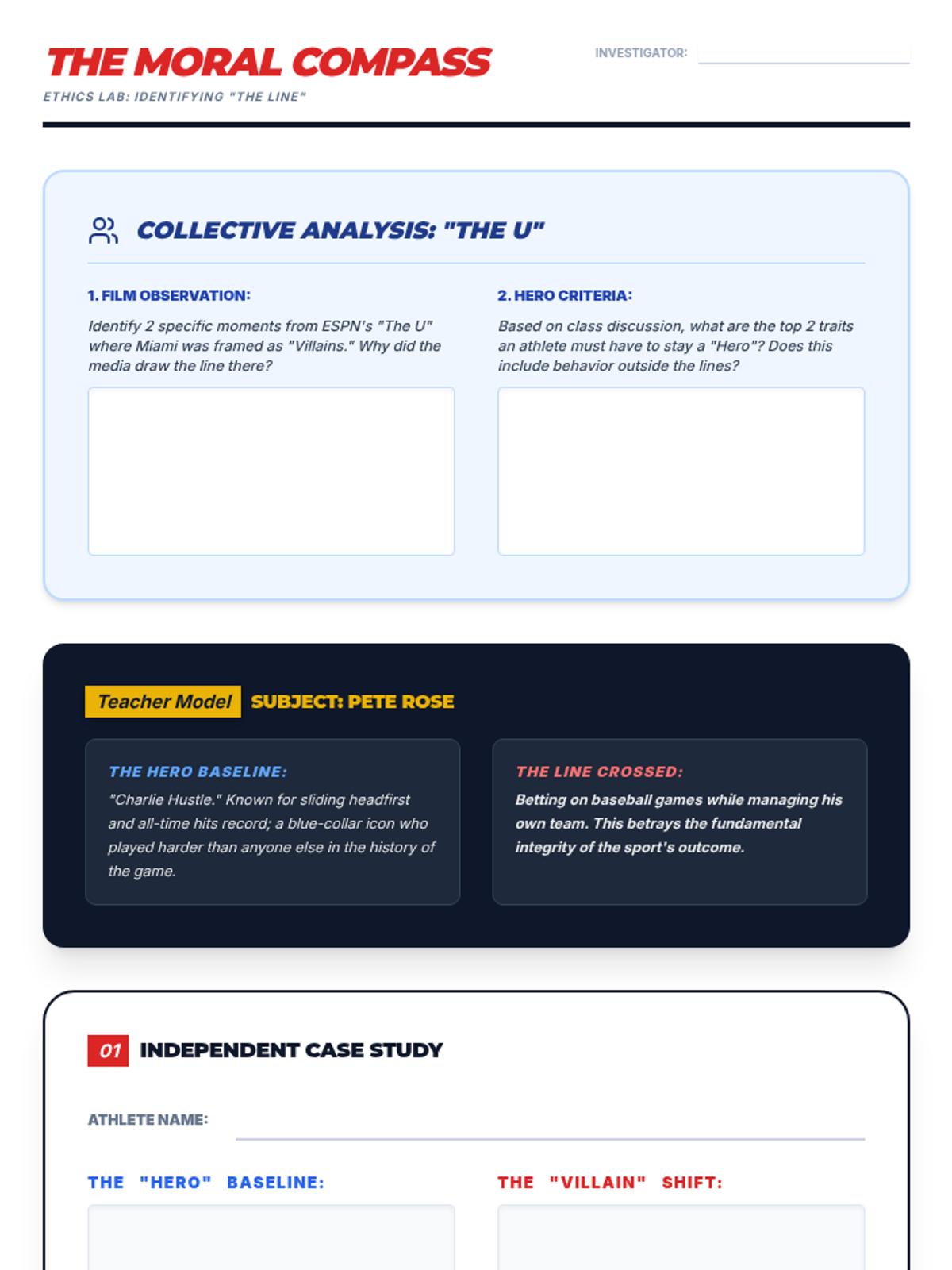
A student-facing ethical analysis worksheet focusing on sports scandals and defining the 'line' between hero and villain. Includes film analysis and independent case study sections.
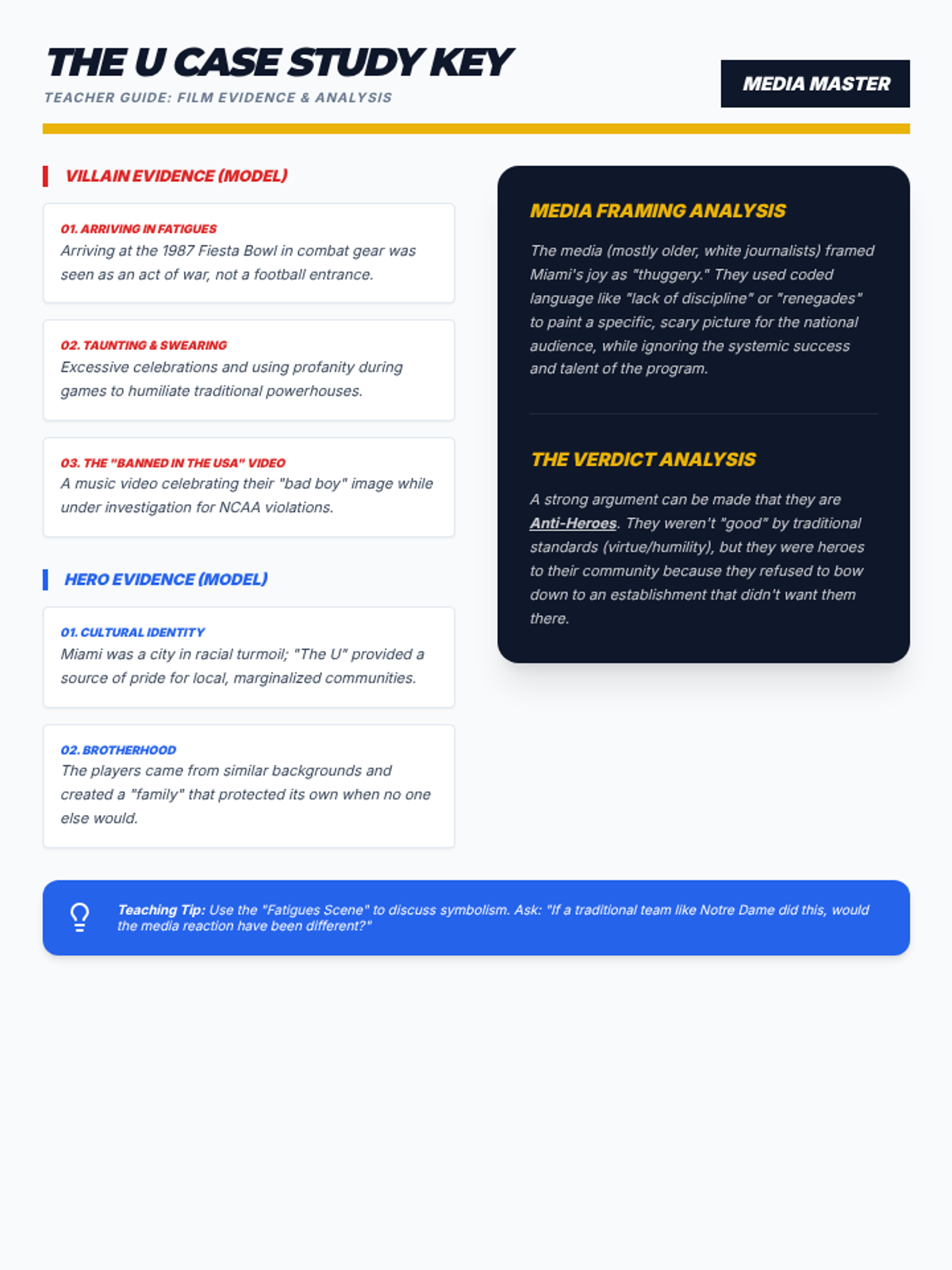
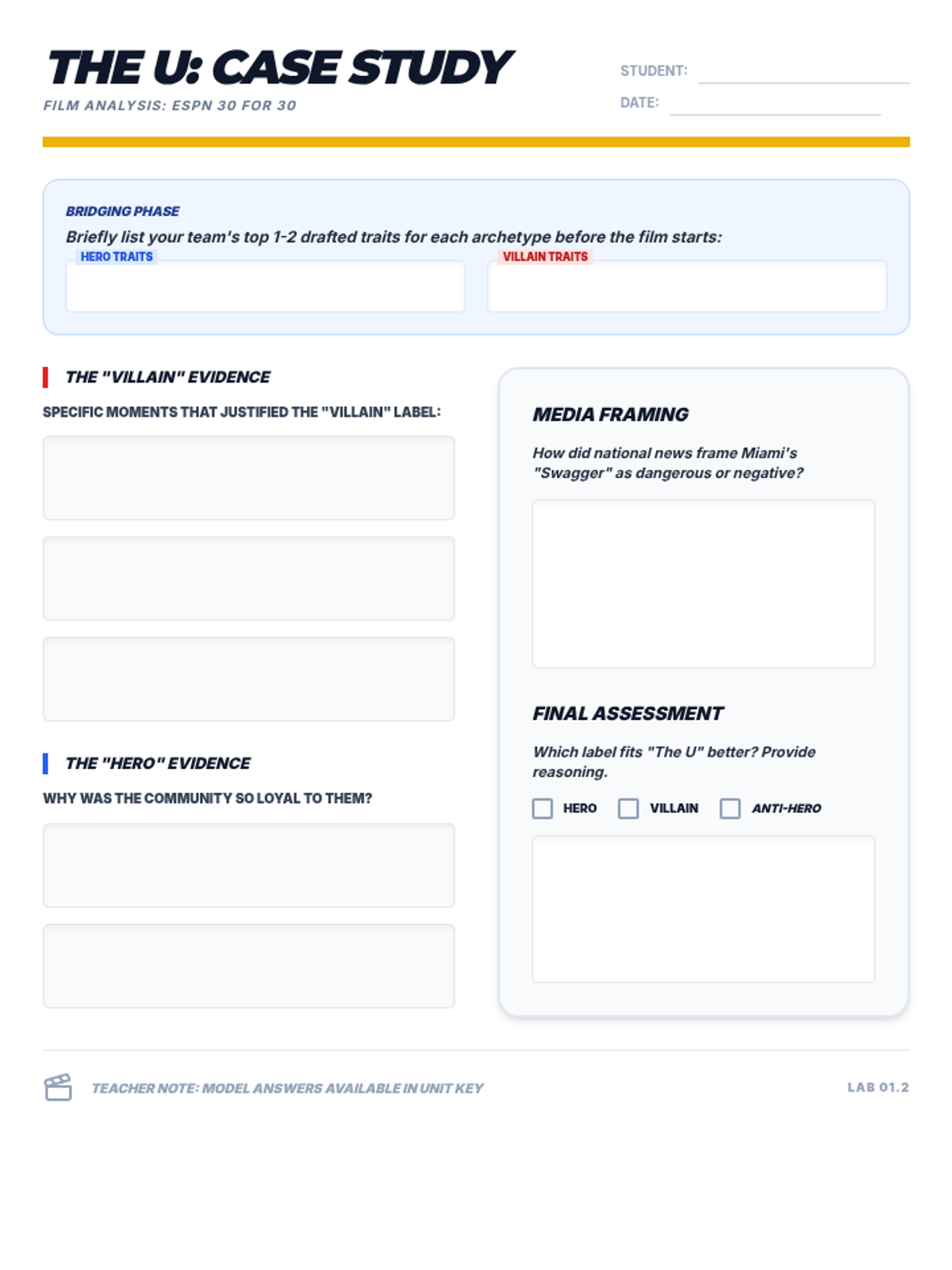
A teacher answer key for 'The U' case study worksheet, providing specific examples of hero/villain evidence from the documentary and guidance on analyzing media framing.
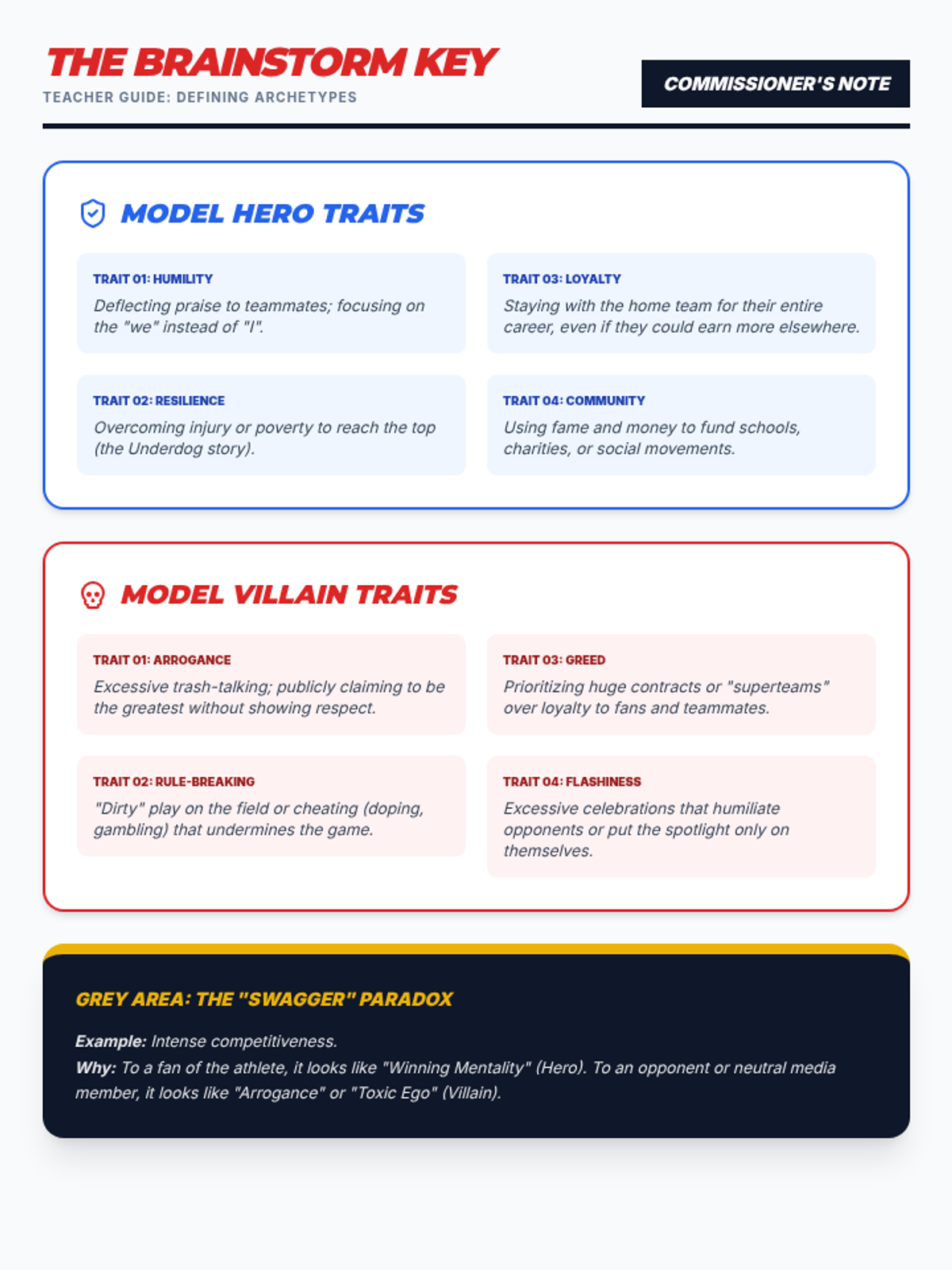
A teacher key for the Archetype Draft Brainstorming worksheet, providing model traits and explanations for heroes, villains, and the 'grey area' of sports personas.
A case study worksheet for the ESPN 30 for 30 'The U', guiding students to analyze the 'Villain' vs. 'Hero' narrative of the University of Miami football team and the role of media framing.
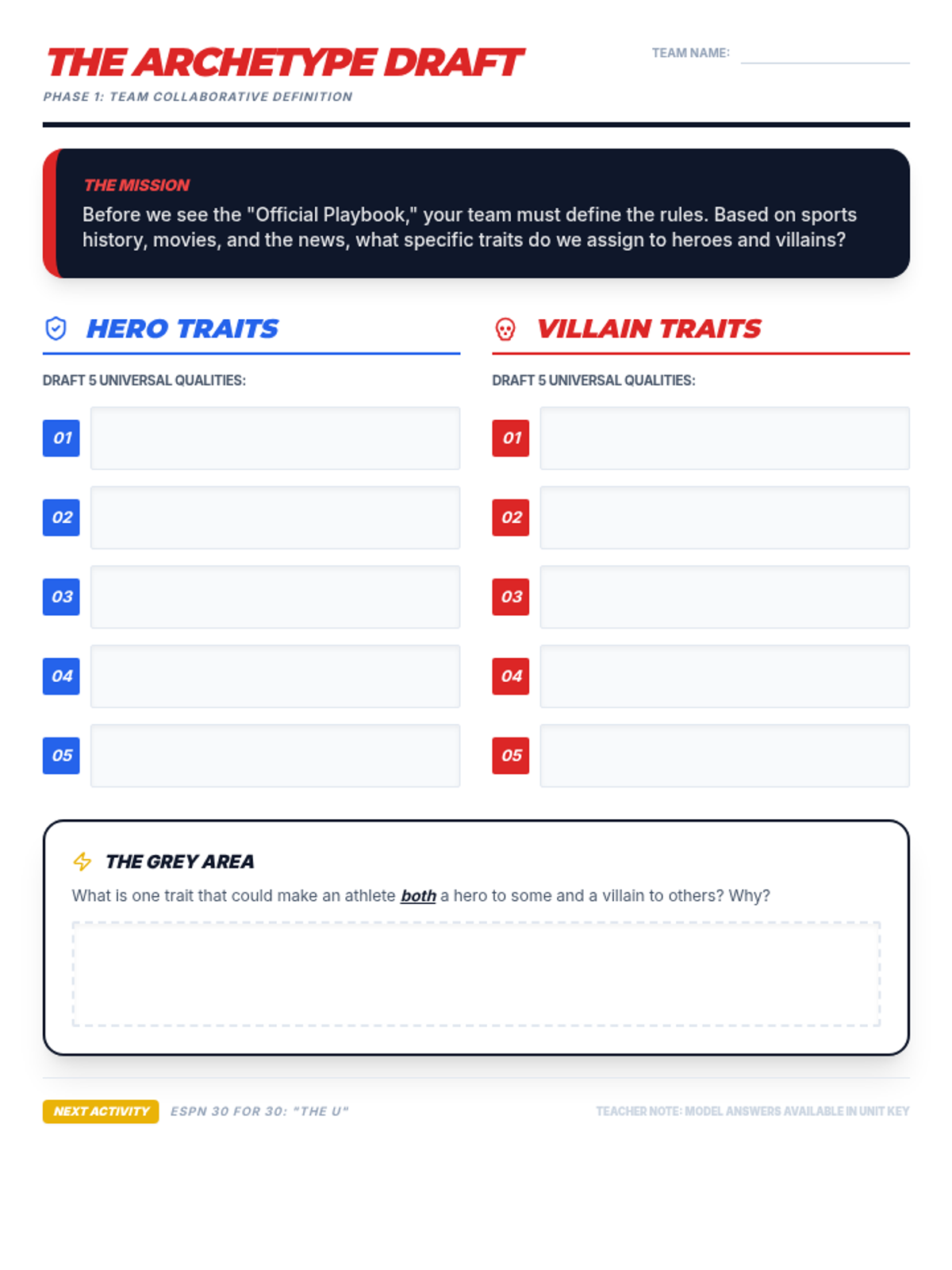
A collaborative brainstorming worksheet where student teams define the traits of sports heroes and villains before comparing them to the official unit archetypes.
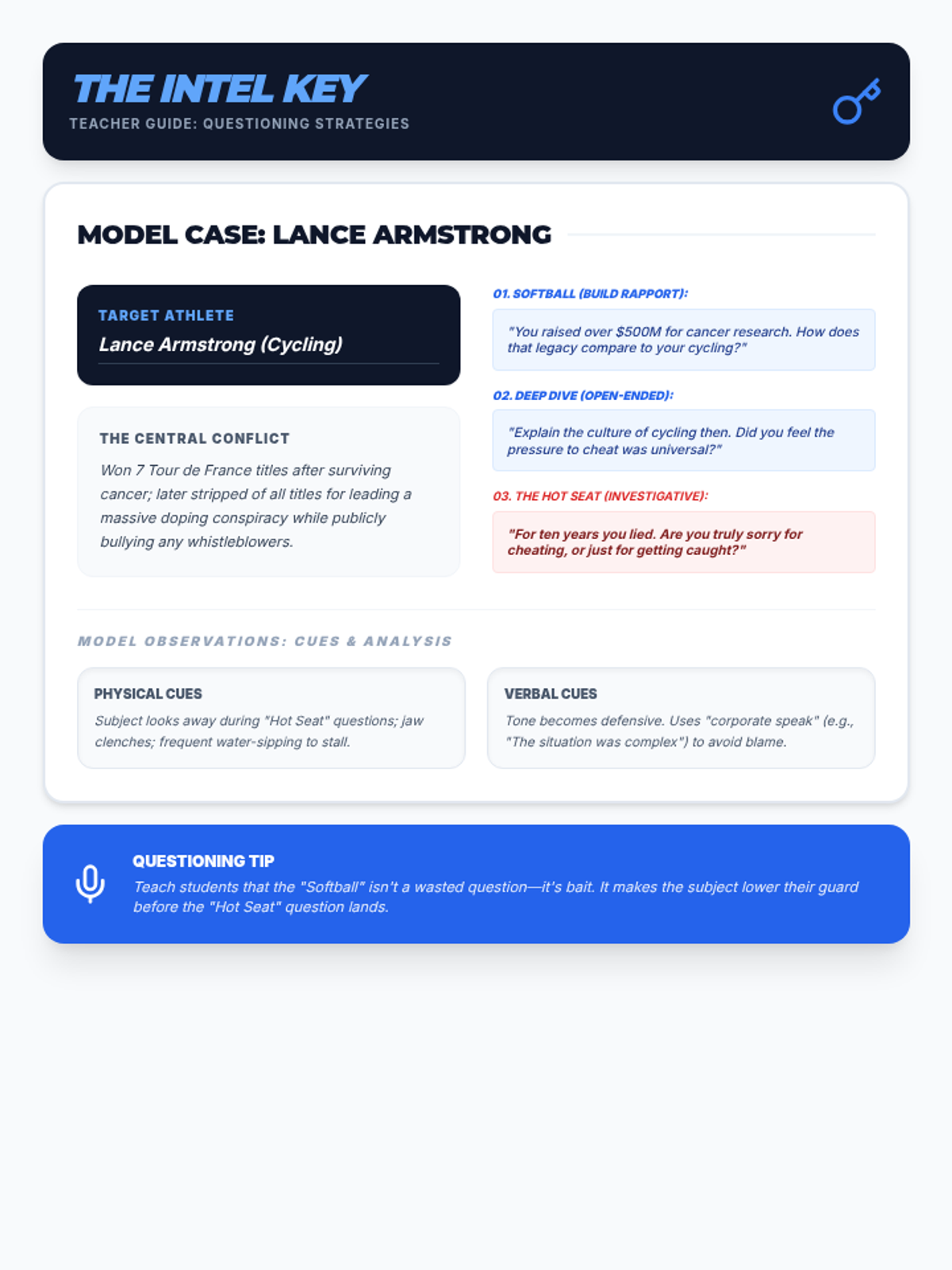
An answer key for the Interview Intel guide, featuring a case study of Lance Armstrong to demonstrate how to layer questions and analyze verbal/physical cues during an investigative interview.
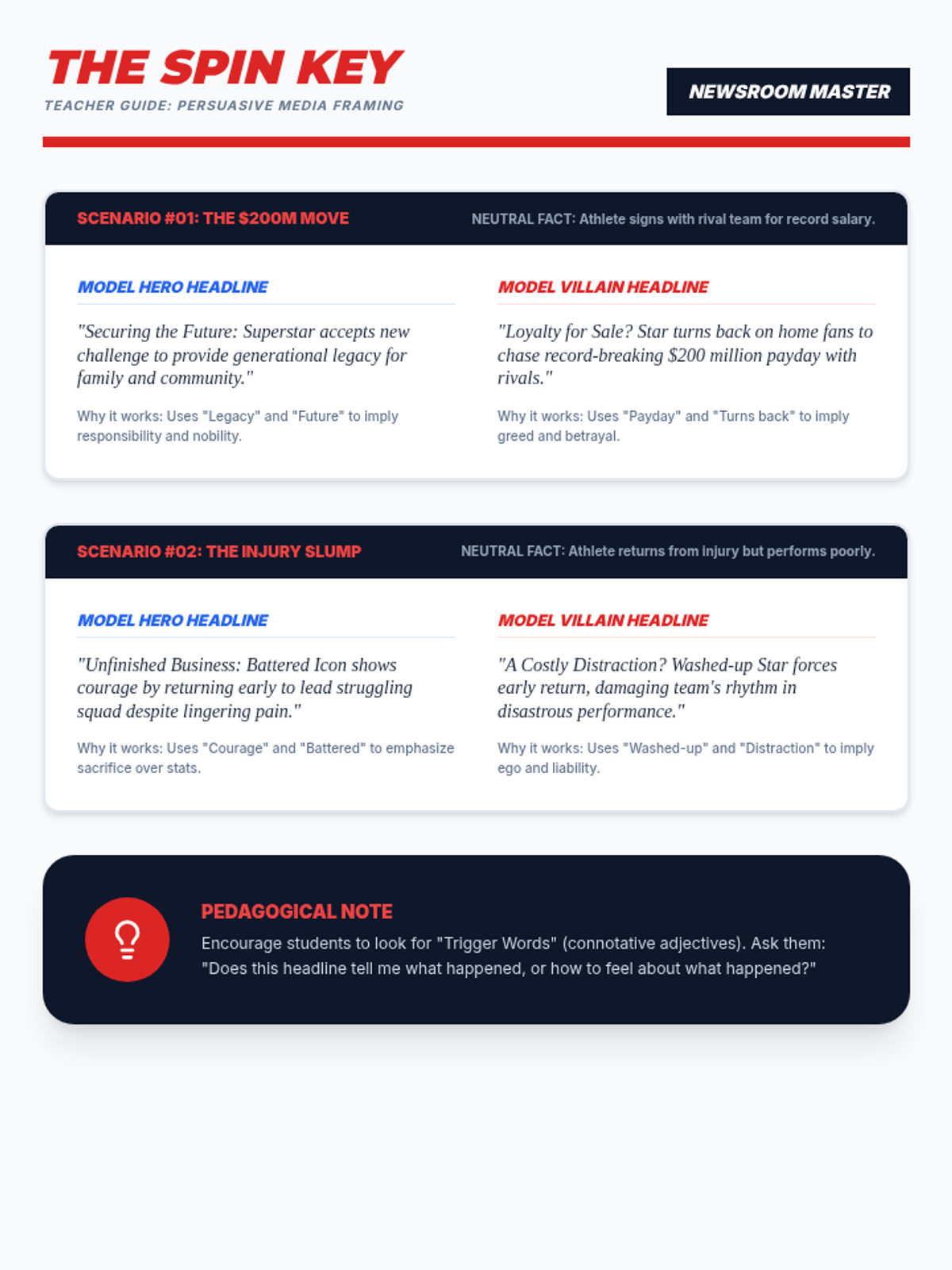
An answer key for the Spin Zone worksheet, providing model hero and villain headlines for the sports scenarios and explaining the persuasive strategy behind each choice.
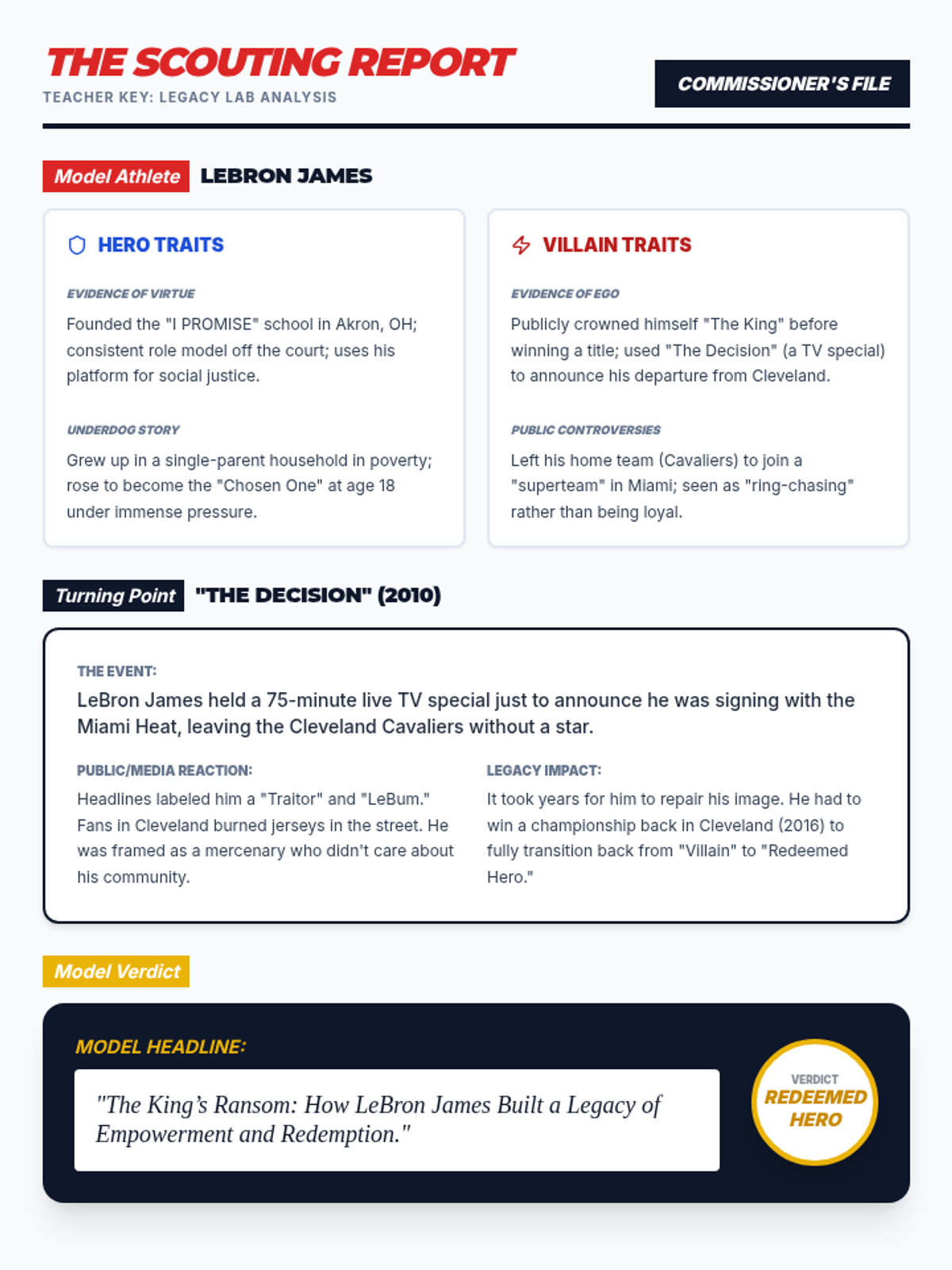
An answer key and model for the Legacy Lab worksheet, using LeBron James as a case study to show how an athlete's narrative can shift from hero to villain and back again.
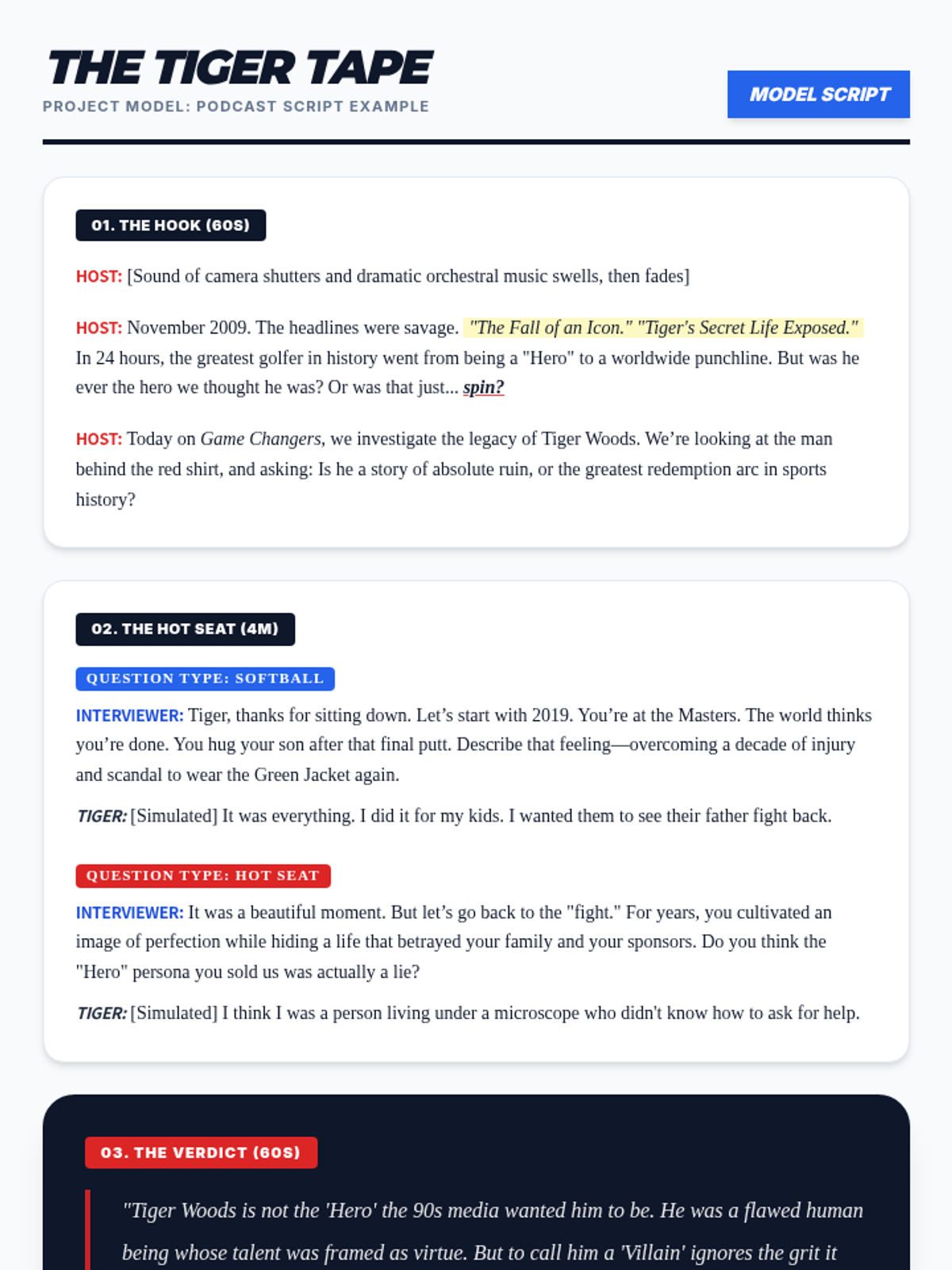
A sample podcast script exploring the 'Hero vs. Villain' narrative of Tiger Woods. This model provides students with concrete examples of a hook, softball/hot seat questioning, and a persuasive final verdict.
A slide deck featuring video case studies of iconic sports interviews (Sherman, Armstrong, LeBron) to illustrate media spin, archetypes, and investigative questioning.
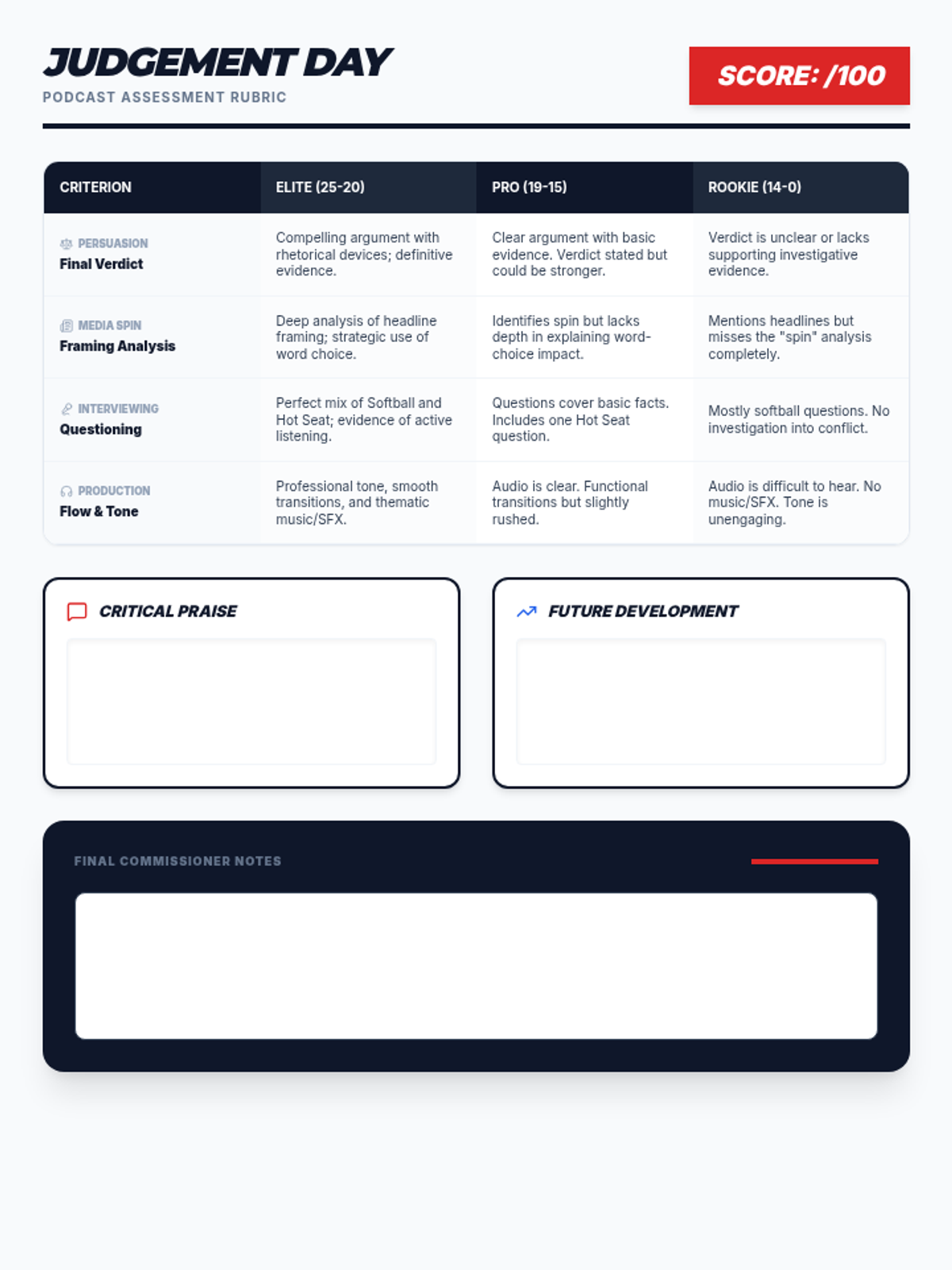
A revised, more rigorous rubric for the final podcast project. It now prioritizes investigative research, the integration of primary sources, and the nuances of the 'Moral Verdict' regarding on-field vs. off-field scandals.
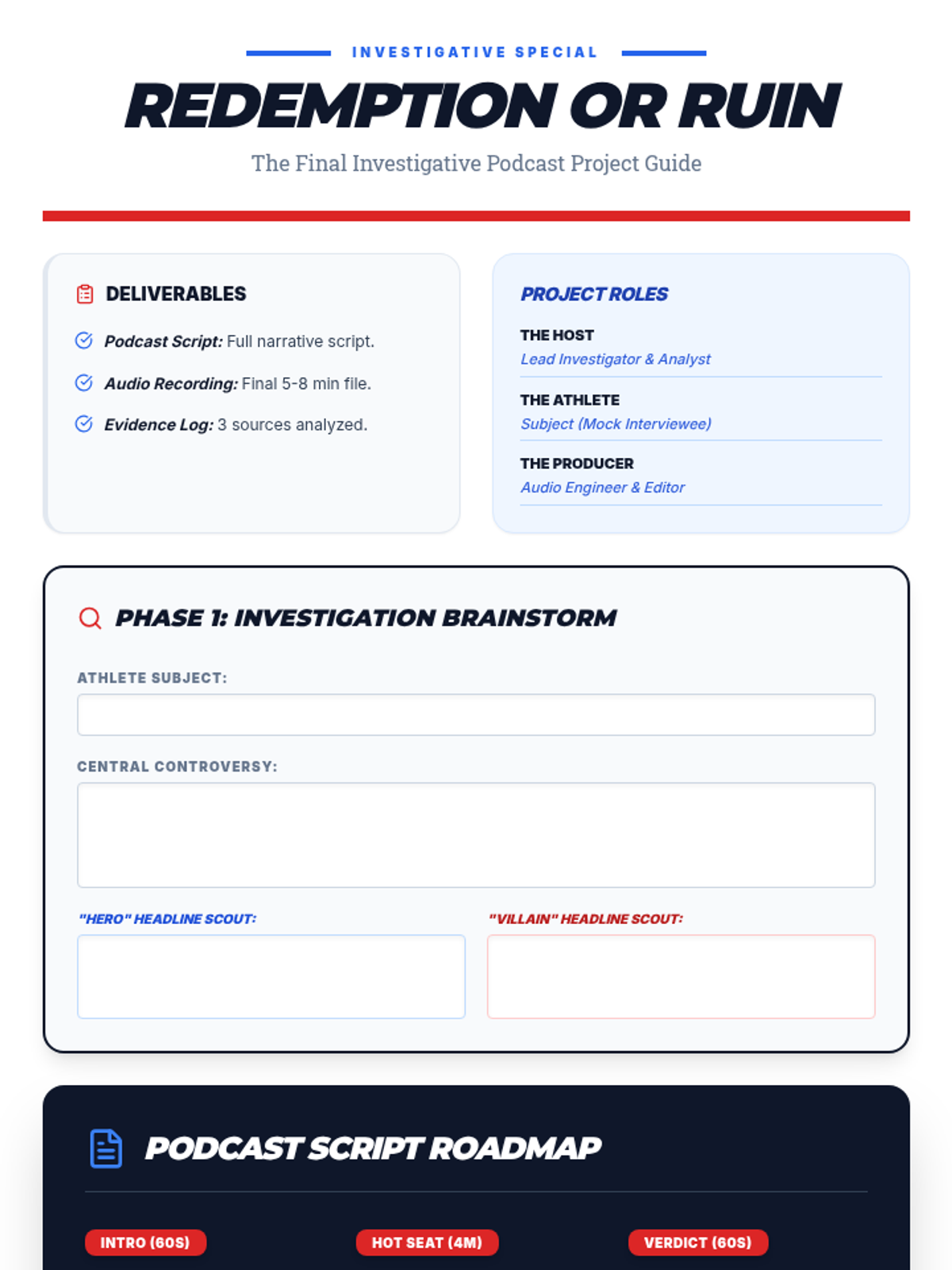
A robust, multi-phase project guide for the 'Redemption File' podcast. It includes a mandatory Research Dossier requirement and a Phase 0 launching activity for 'The U' case study. Provides expanded work areas for research transcription.
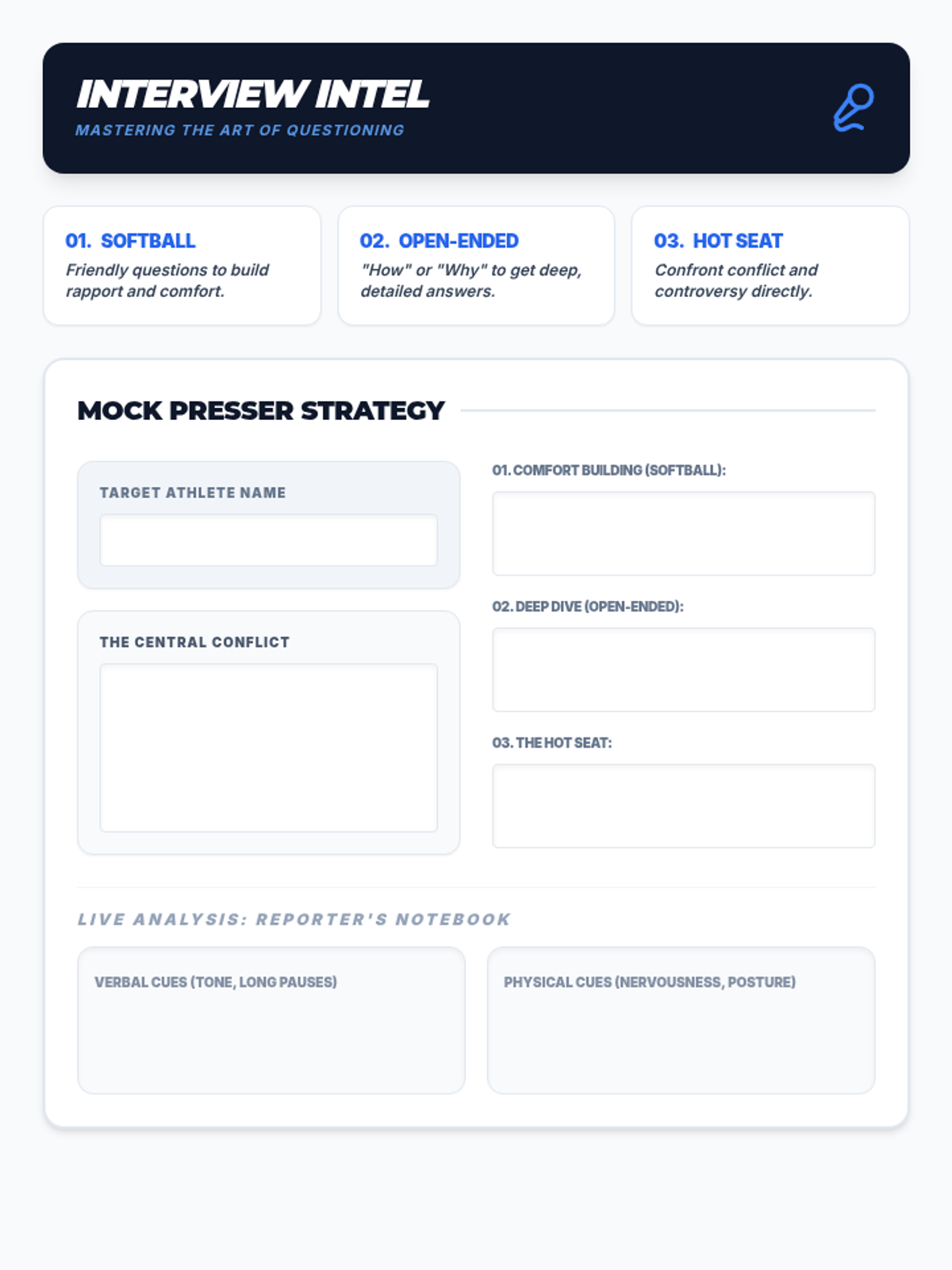
A guide and note-catcher for Week 3, focusing on interview techniques. It includes the 'Questioning Pyramid' and a space for students to plan and reflect on a mock press conference.
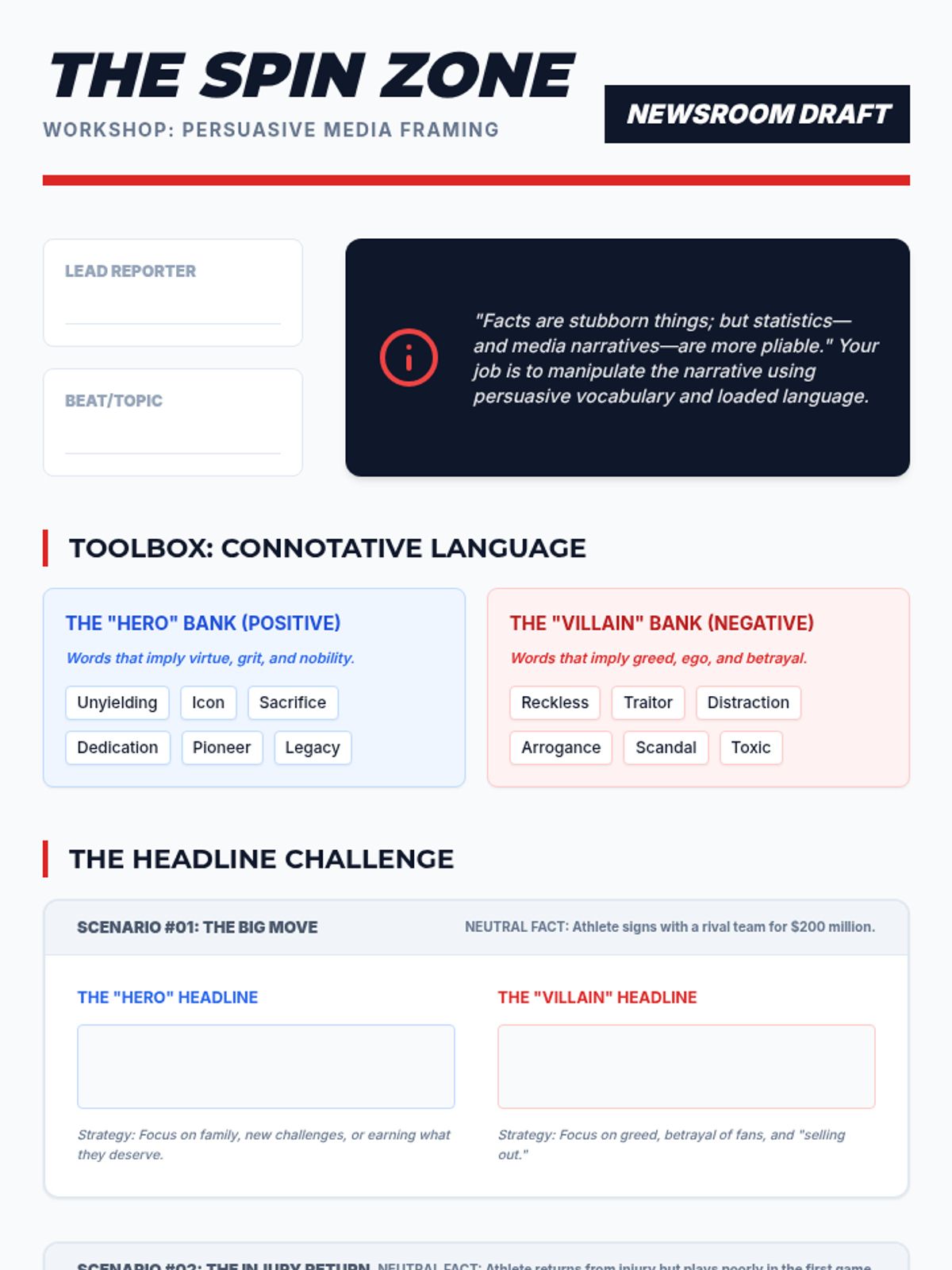
A persuasive writing worksheet that challenges students to take neutral sports facts and frame them as either heroic or villainous narratives using connotative language.
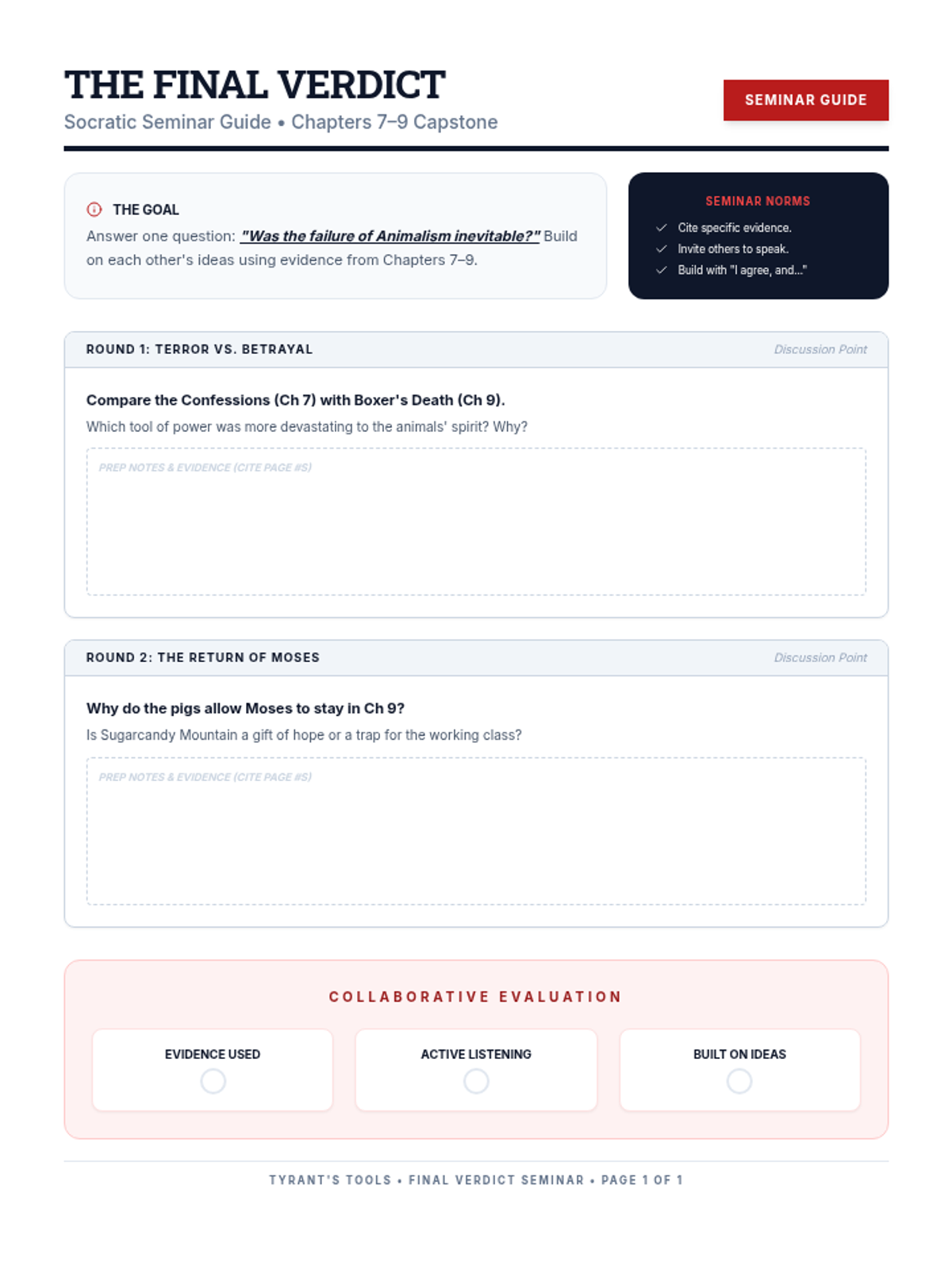
A Socratic Seminar guide for the end of the Animal Farm unit, facilitating a high-level collaborative discussion on the themes of tyranny, religion, and the inevitability of the farm's failure.
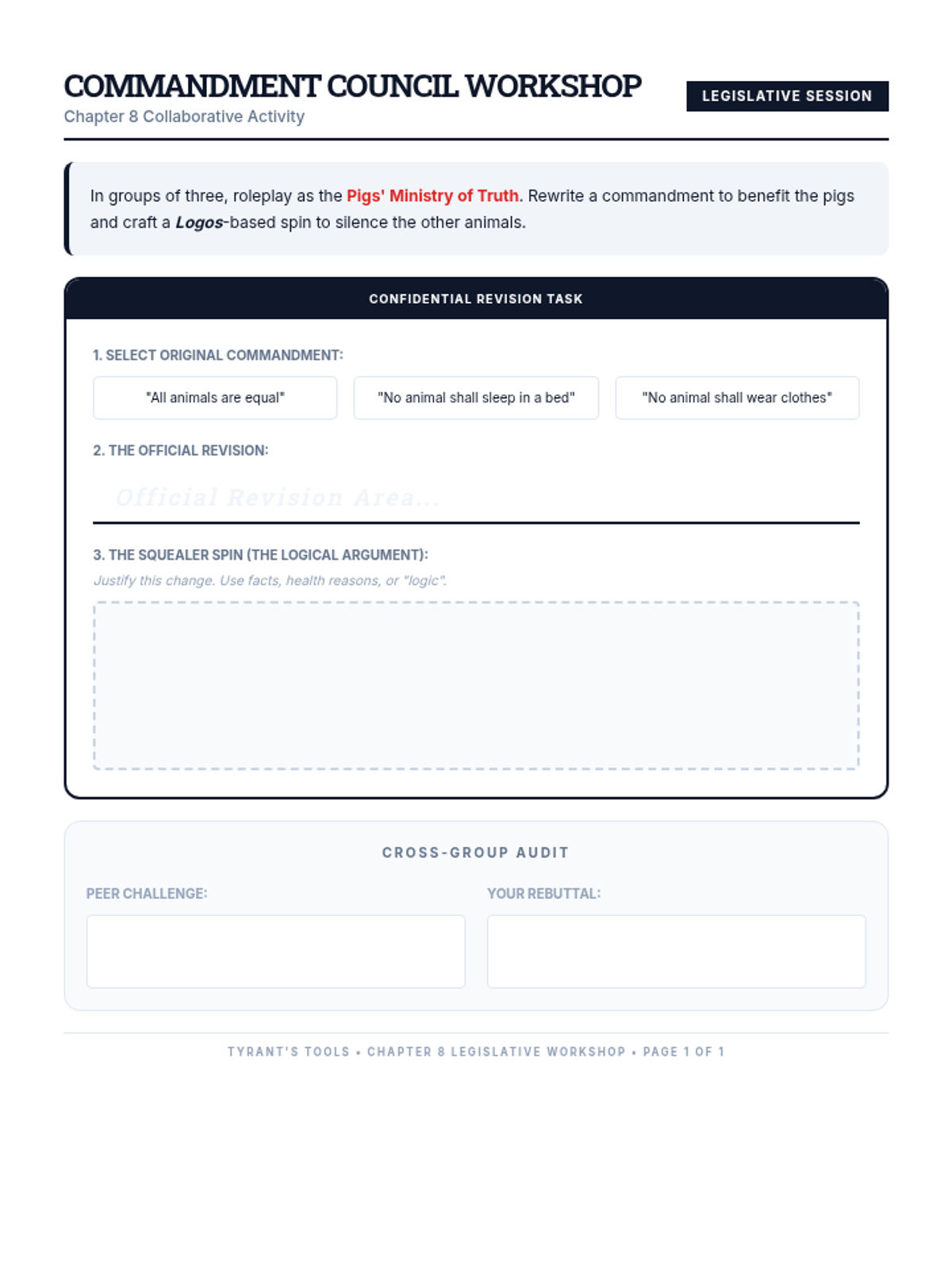
A collaborative group activity for Chapter 8 of Animal Farm where students roleplay as the 'Ministry of Truth' to rewrite Commandments and practice using rhetorical spin.
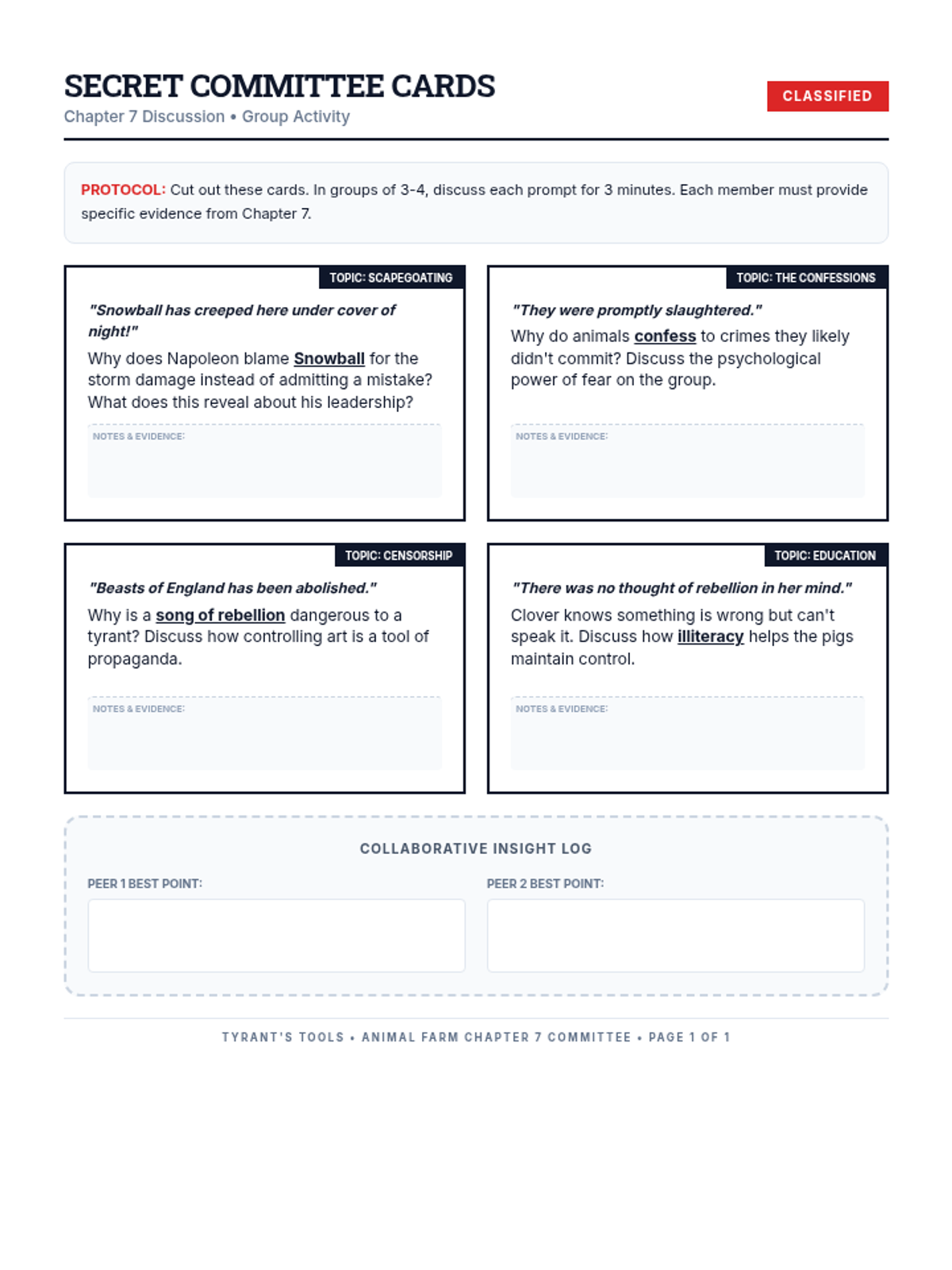
A group discussion card activity for Chapter 7 of Animal Farm, facilitating collaborative analysis of scapegoating, the purge confessions, and the role of education in resisting tyranny.
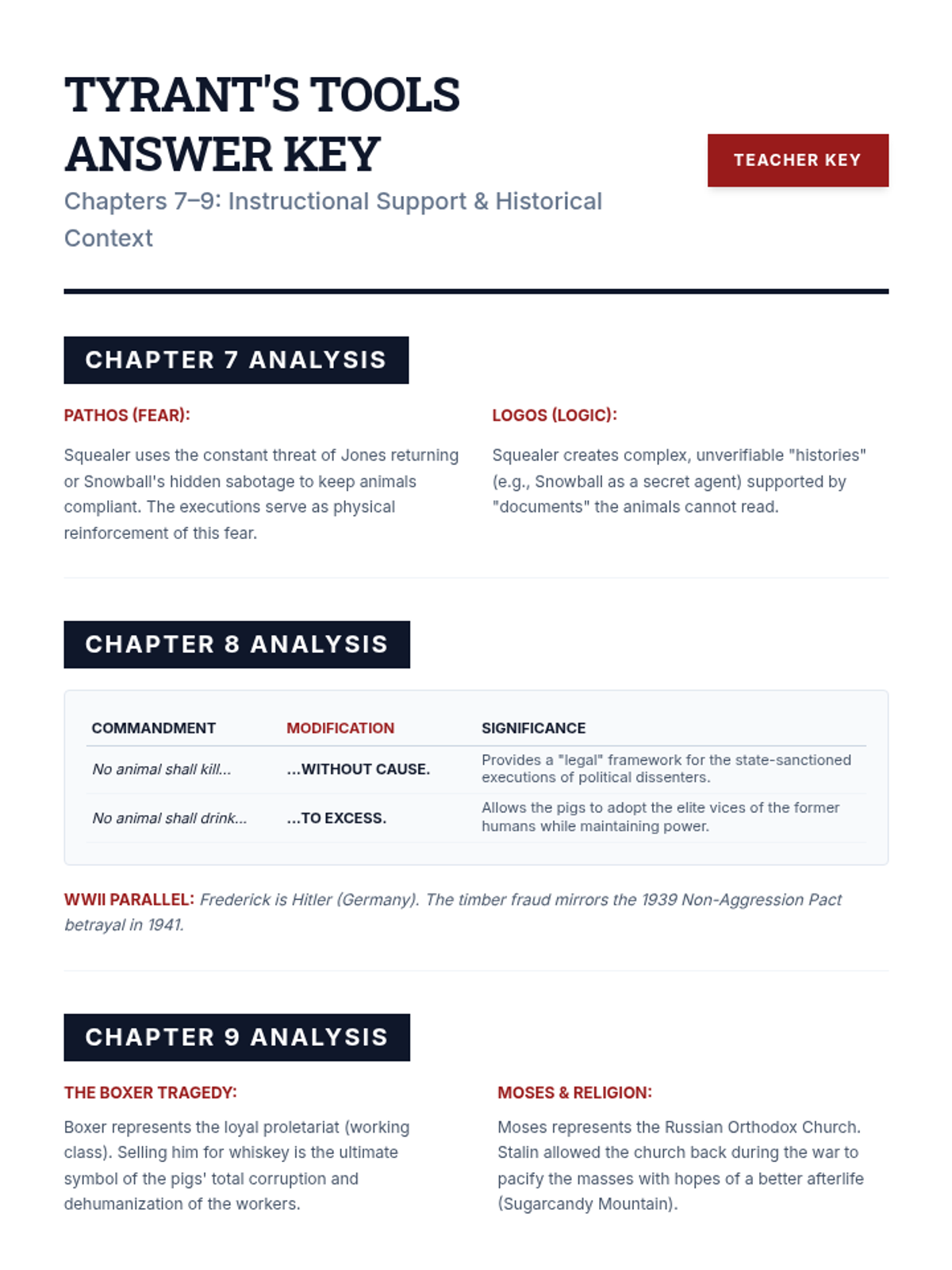
A comprehensive teacher answer key for the 'Tyrant's Tools' lesson sequence, covering Chapters 7, 8, and 9 of Animal Farm. includes suggested evidence, analytical points, and historical connections.
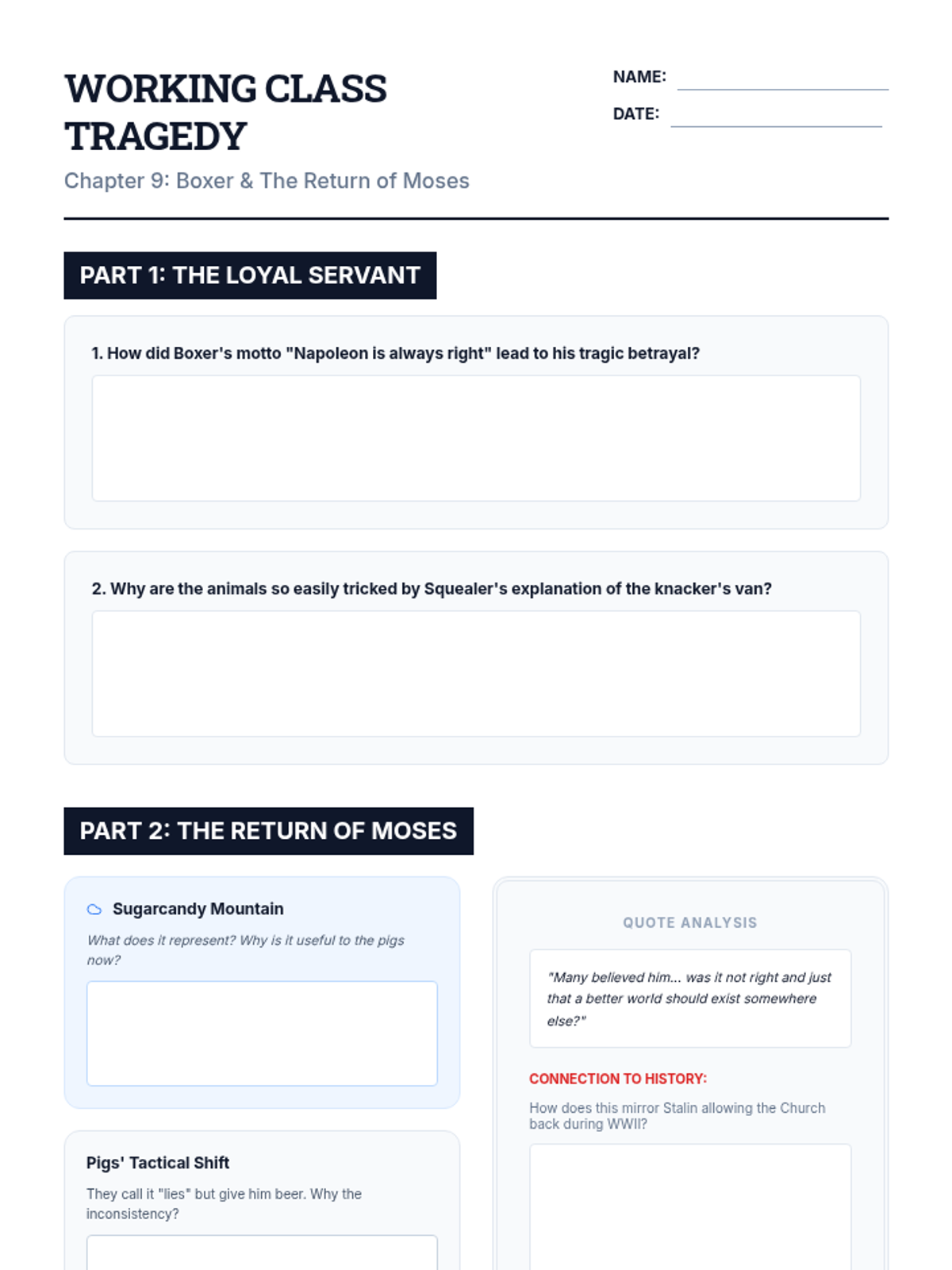
A student worksheet for Chapter 9 of Animal Farm focused on the tragic fate of Boxer, the symbolic return of Moses, and the final corruption of the pigs. includes analytical prompts and quote analysis.
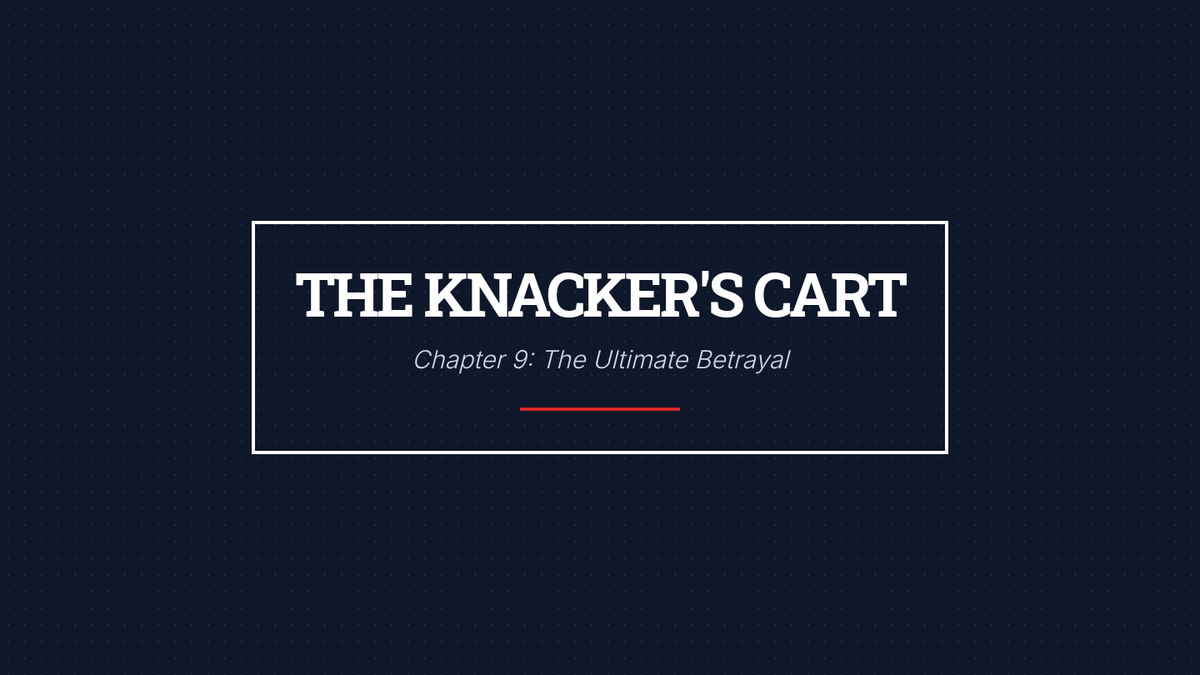
A visual presentation for Chapter 9 of Animal Farm, focusing on the tragedy of Boxer, the symbolic return of Moses, and the total abandonment of Animalism's principles. includes key discussion points and symbolic analysis.
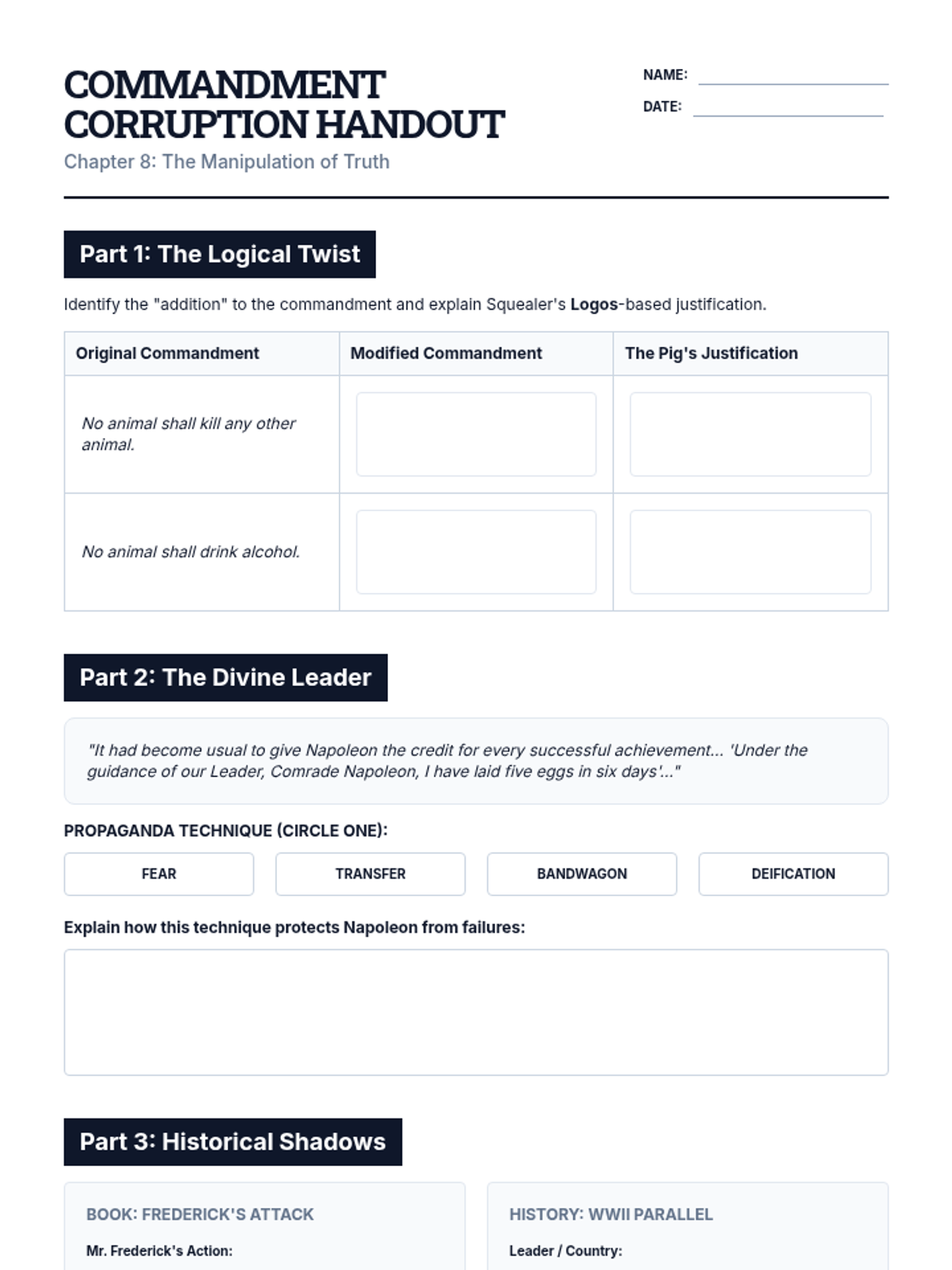
A student handout for Chapter 8 of Animal Farm focusing on the corruption of the Seven Commandments, the deification of Napoleon, and the allegorical parallels to the Battle of the Windmill.
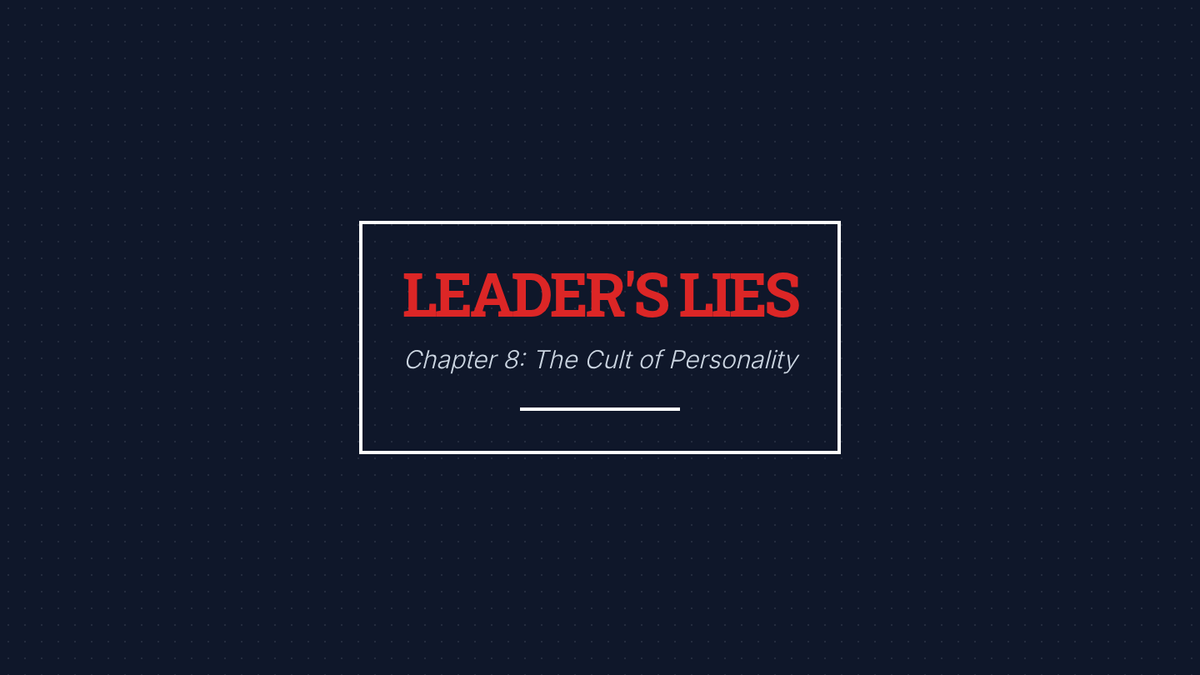
A visual presentation for Chapter 8 of Animal Farm, exploring the corruption of the Commandments, the Battle of the Windmill, and the development of Napoleon's cult of personality. includes historical parallels to WWII.
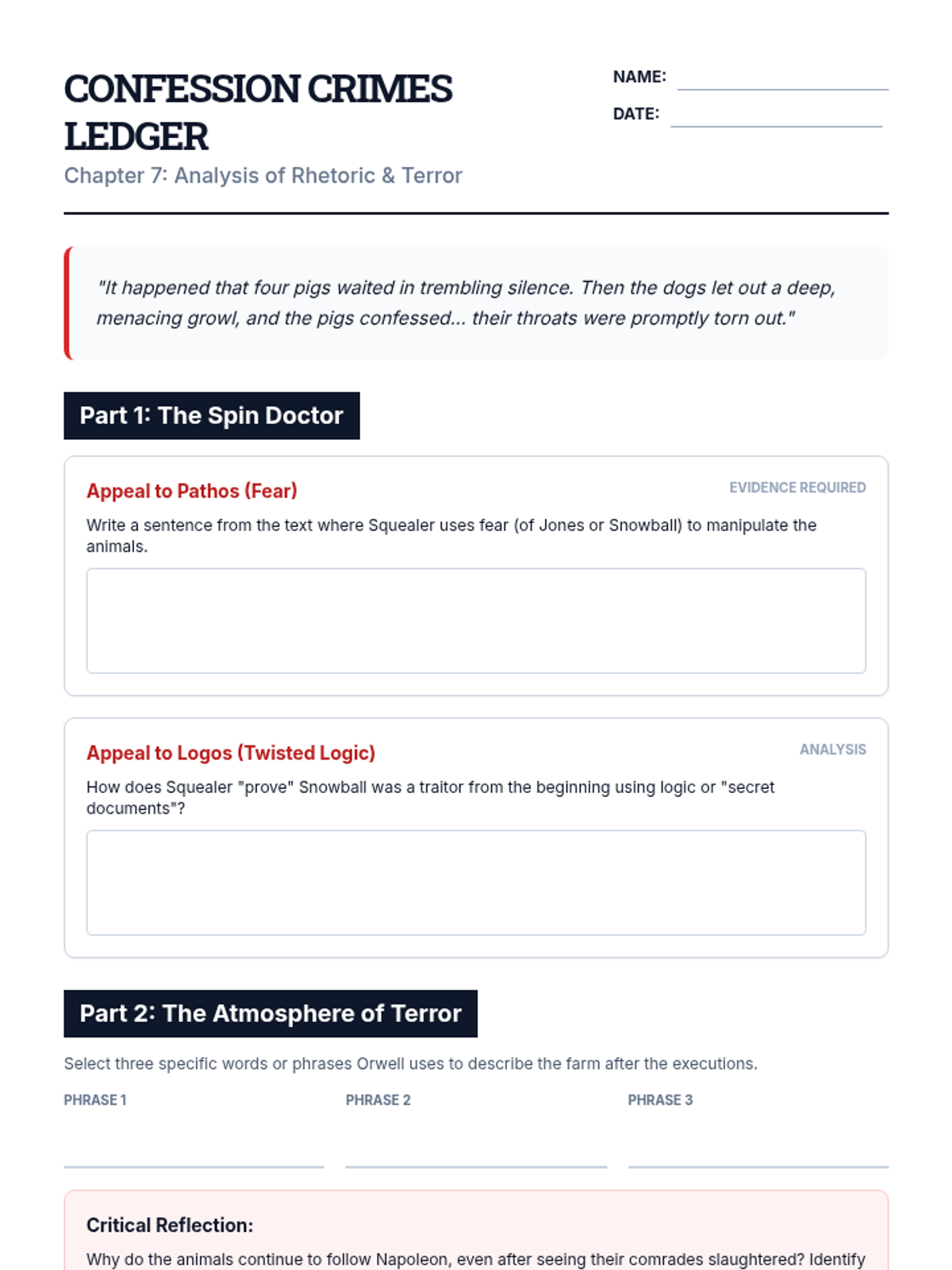
A student worksheet for Chapter 7 of Animal Farm focused on analyzing rhetorical appeals, the atmosphere of terror during the confessions, and allegorical connections to the Russian Revolution.
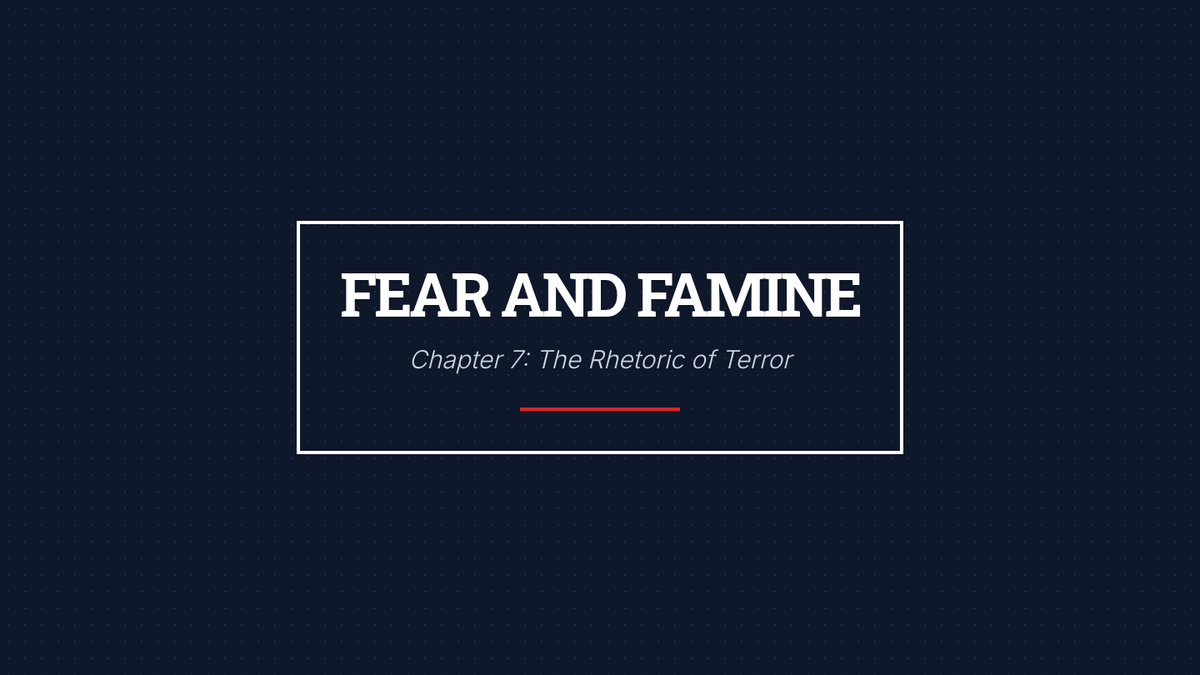
A visual presentation for Chapter 7 of Animal Farm, focusing on rhetorical appeals, the scapegoating of Snowball, and the allegorical connection to Stalin's Great Purge. includes key discussion points and visual aids.
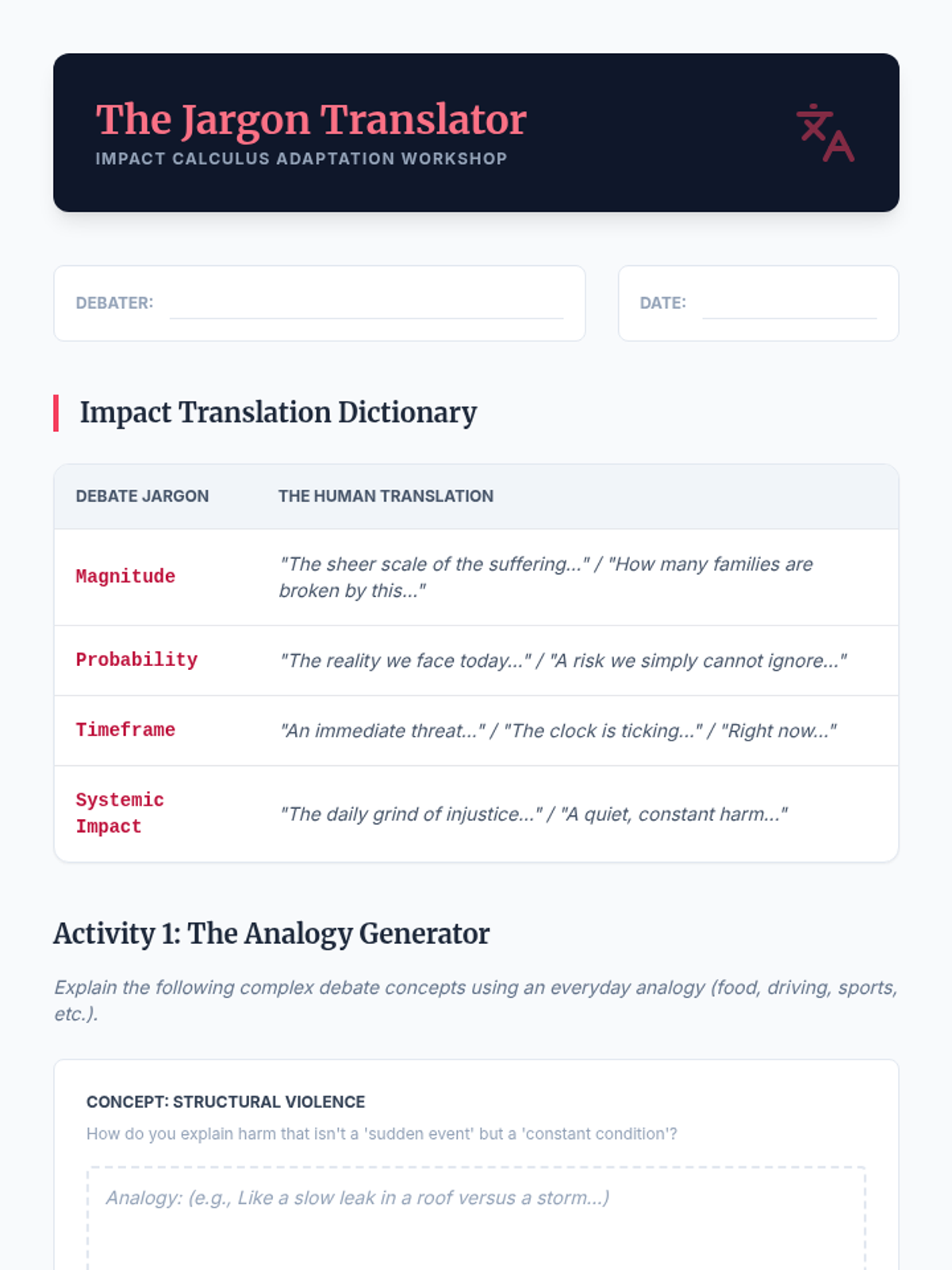
An activity worksheet for Lesson 5 where students practice translating technical debate jargon into persuasive common language and analogies.
A slide deck focused on adapting complex debate impact calculus for lay audiences, emphasizing analogies and common language.
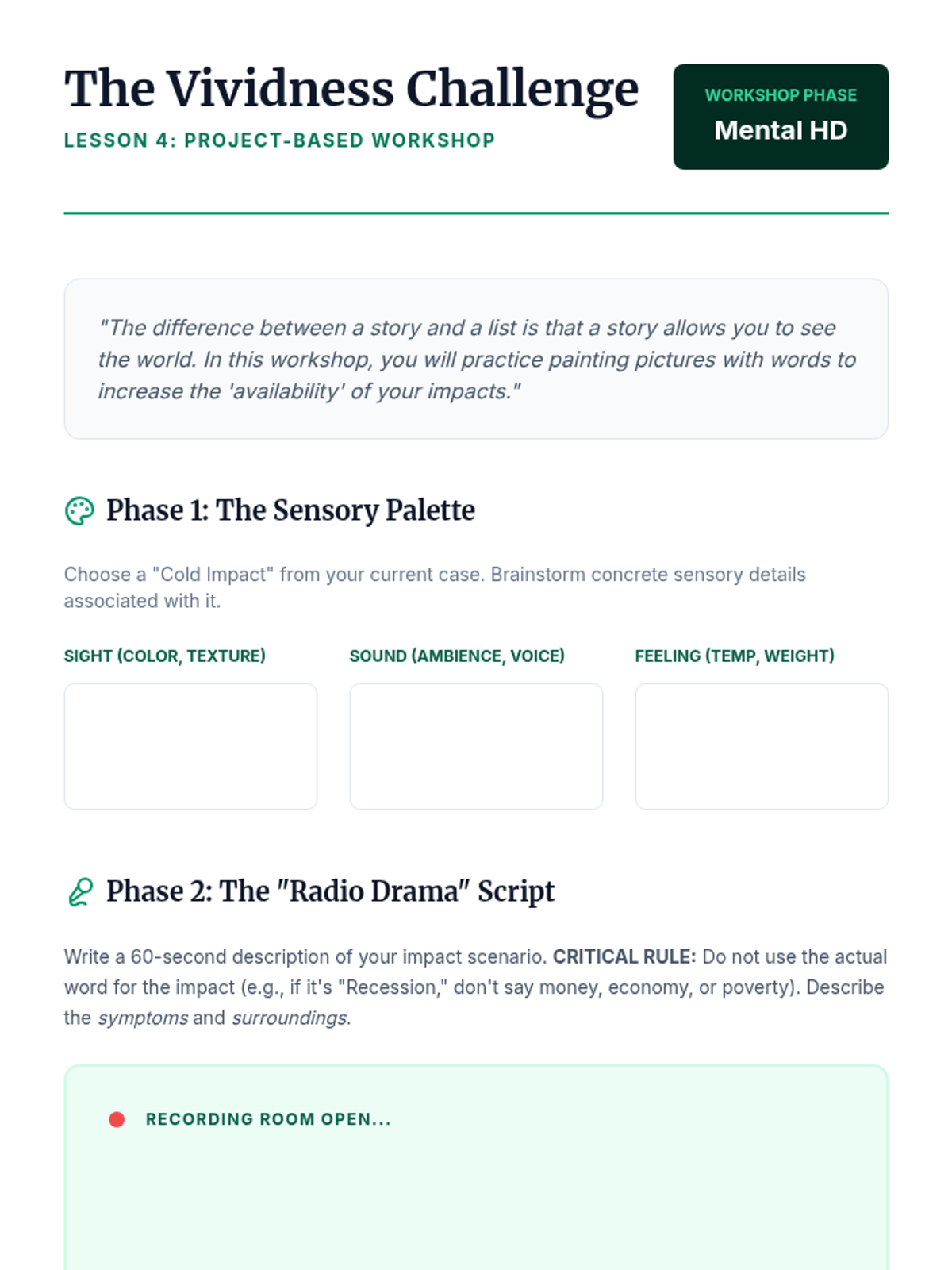
A workshop guide for Lesson 4 where students practice creating descriptive imagery to communicate complex impacts without using technical jargon.
A slide deck explaining the availability heuristic and how to use descriptive imagery to increase the perceived probability of impacts.
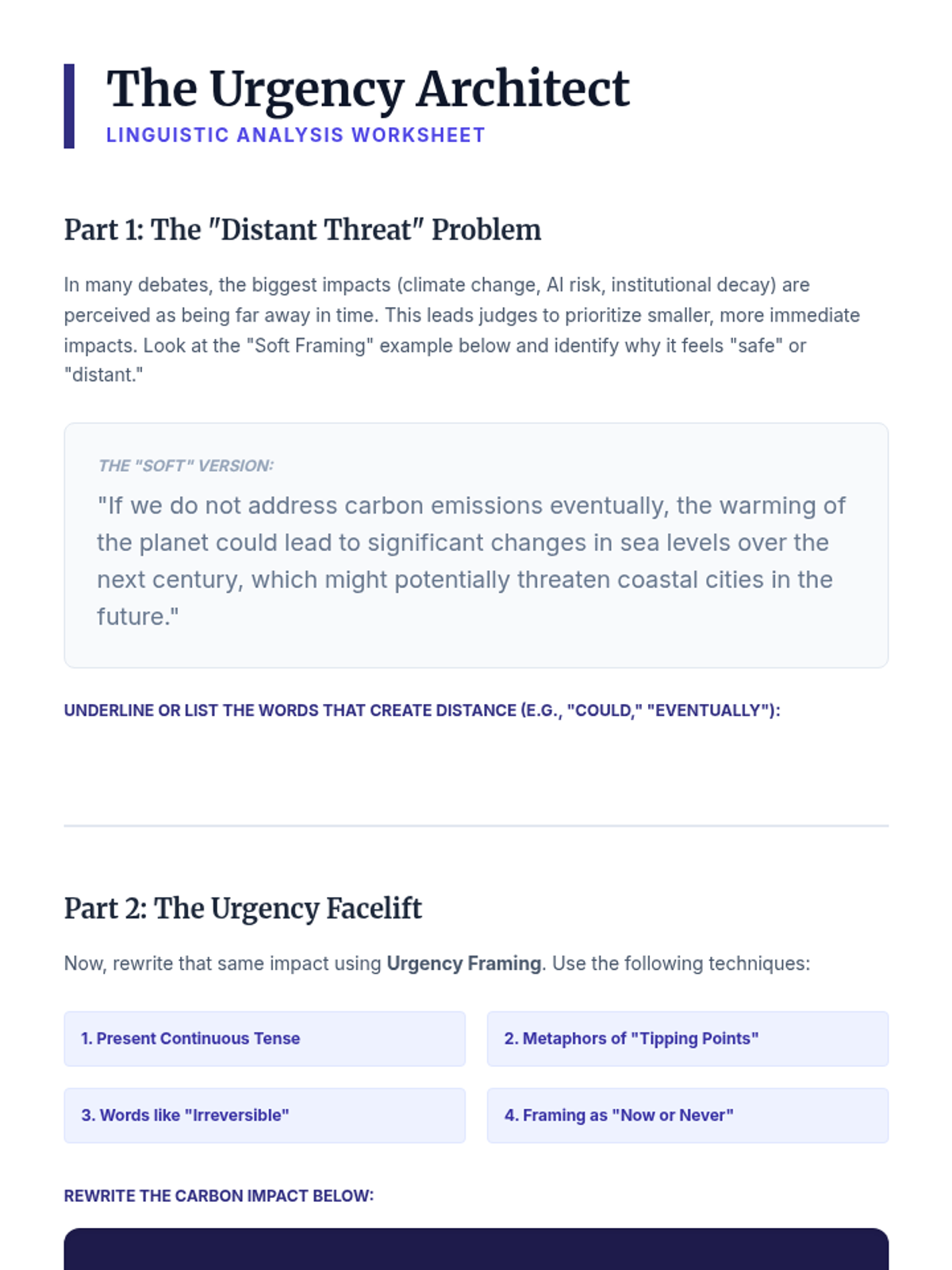
A student worksheet for Lesson 3 focusing on linguistic analysis and rewriting impact statements for maximum urgency.
A slide deck analyzing linguistic strategies for creating immediacy and urgency in impact calculus presentations.
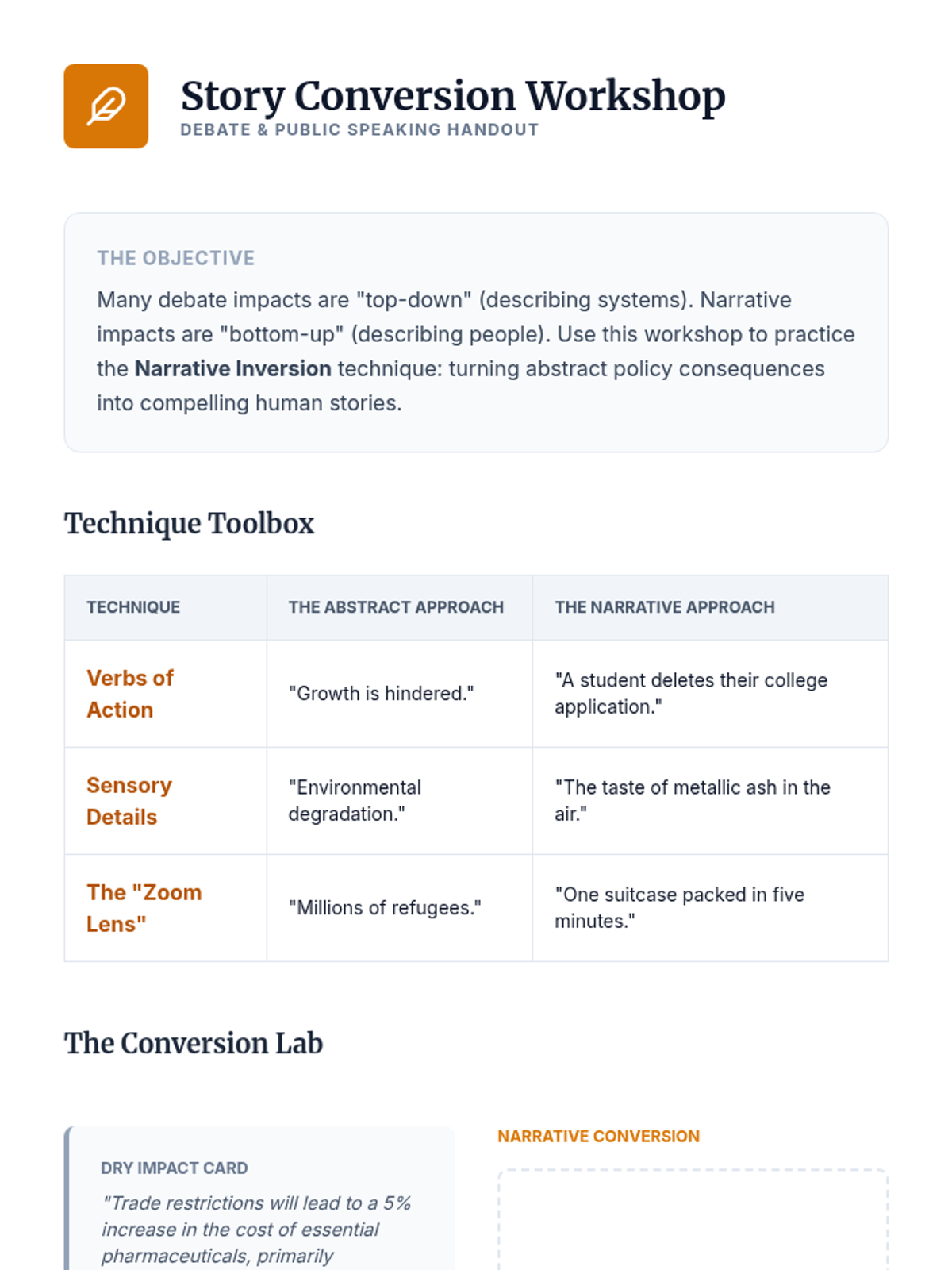
A skill-building handout for Lesson 2 that guides students through the process of converting abstract data into narrative-driven impacts.
A slide deck comparing narrative and statistical persuasion styles in debate, with strategies for converting data into stories.
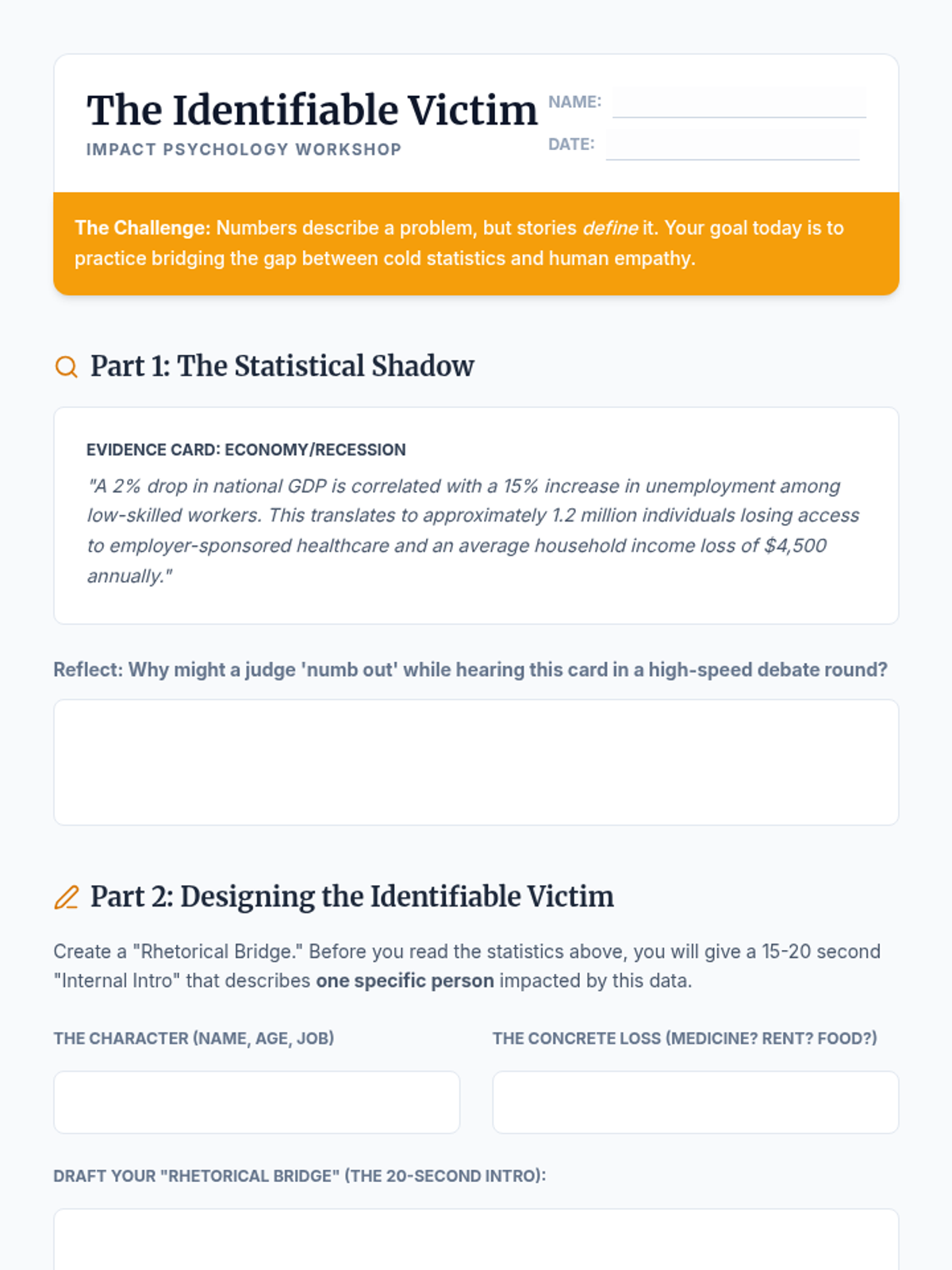
A student worksheet focusing on the 'Identifiable Victim Effect,' guiding students to humanize statistical evidence.
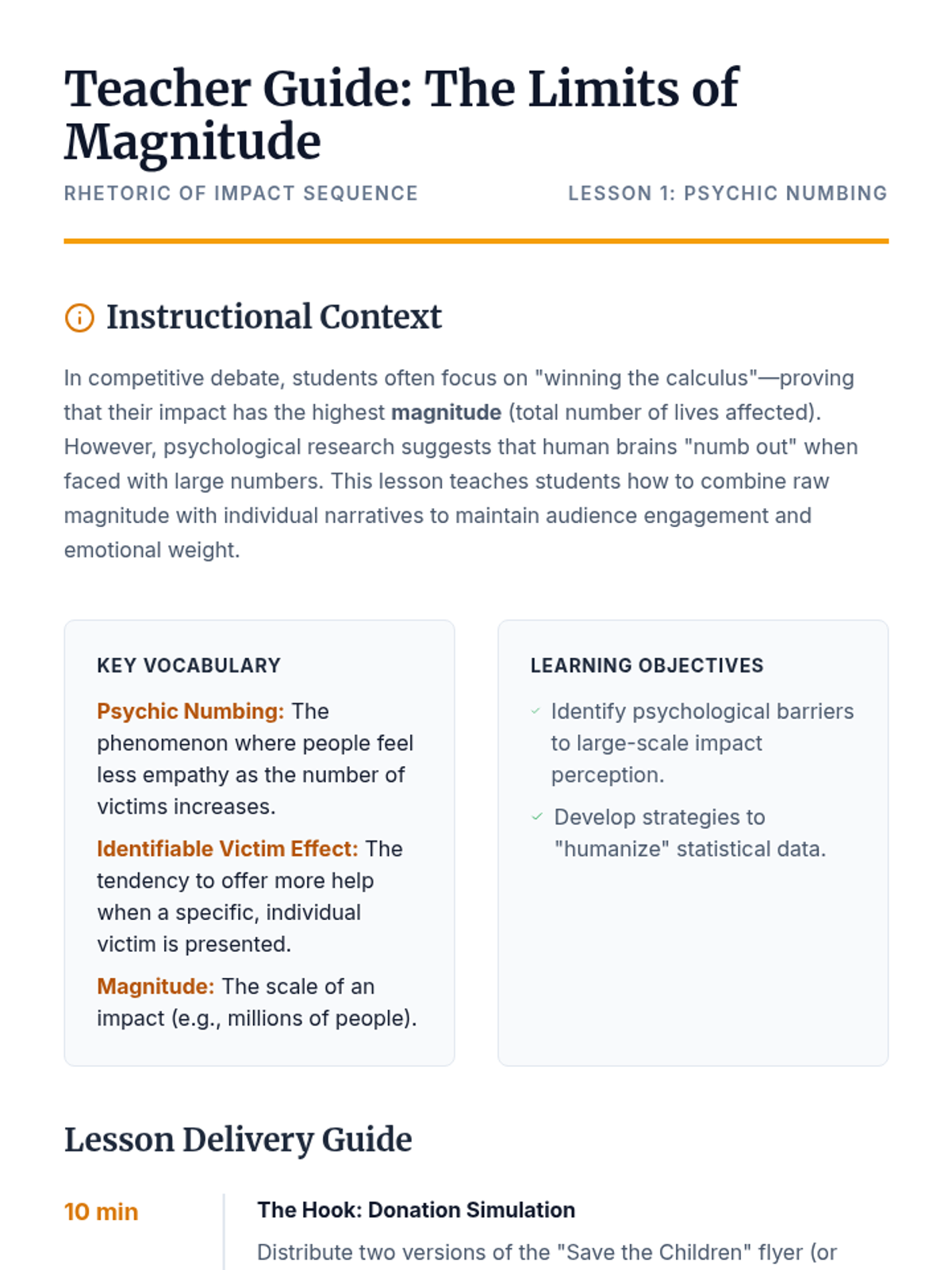
Teacher instructional guide for Lesson 1, detailing the psychology of psychic numbing and strategies for teaching impact humanization.
A visual presentation exploring psychic numbing and the 'identifiable victim effect' in the context of impact calculus.
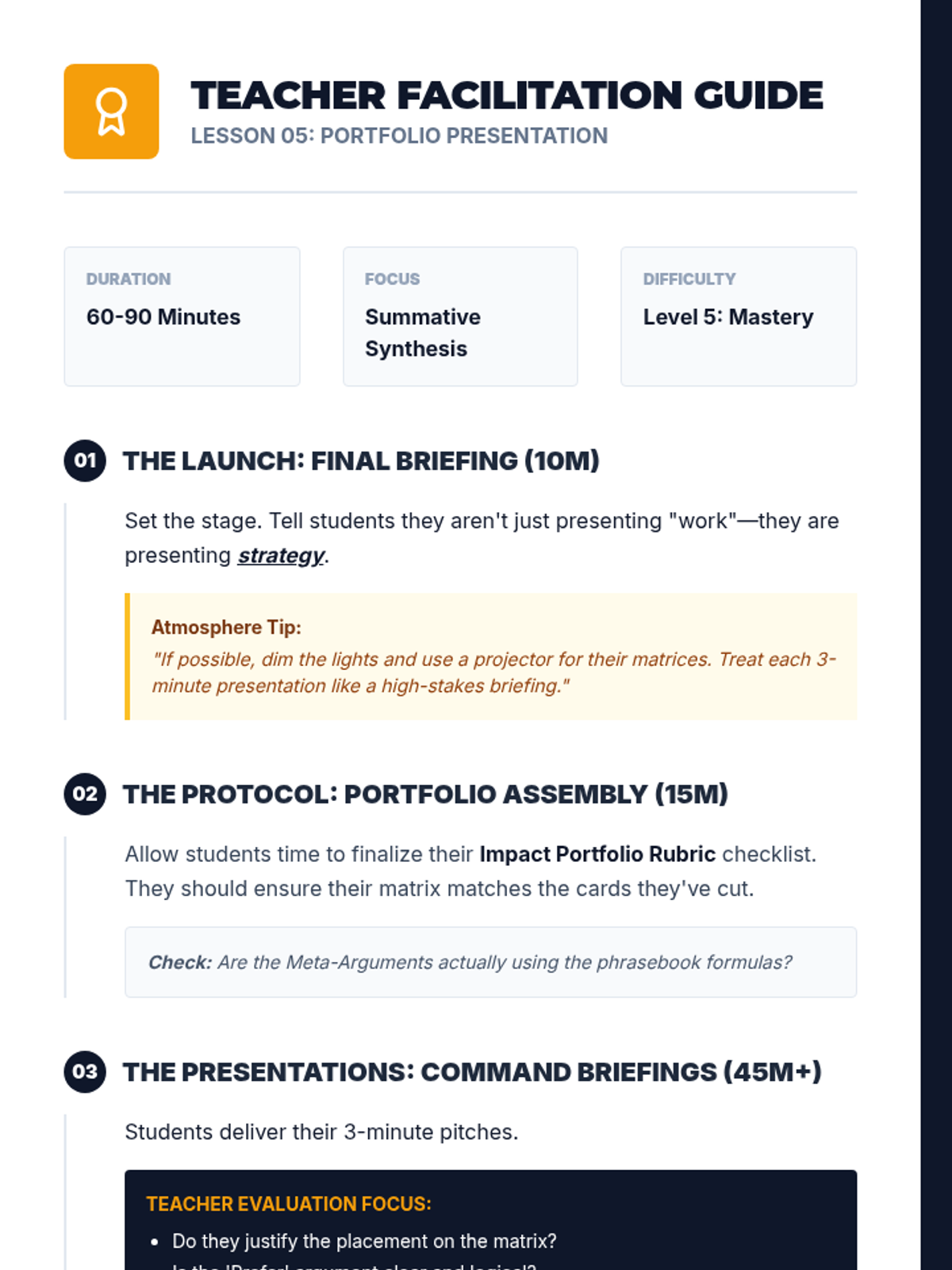
A teacher guide for the final Portfolio Presentation lesson, focusing on project assembly, presentation pacing, and assessment.
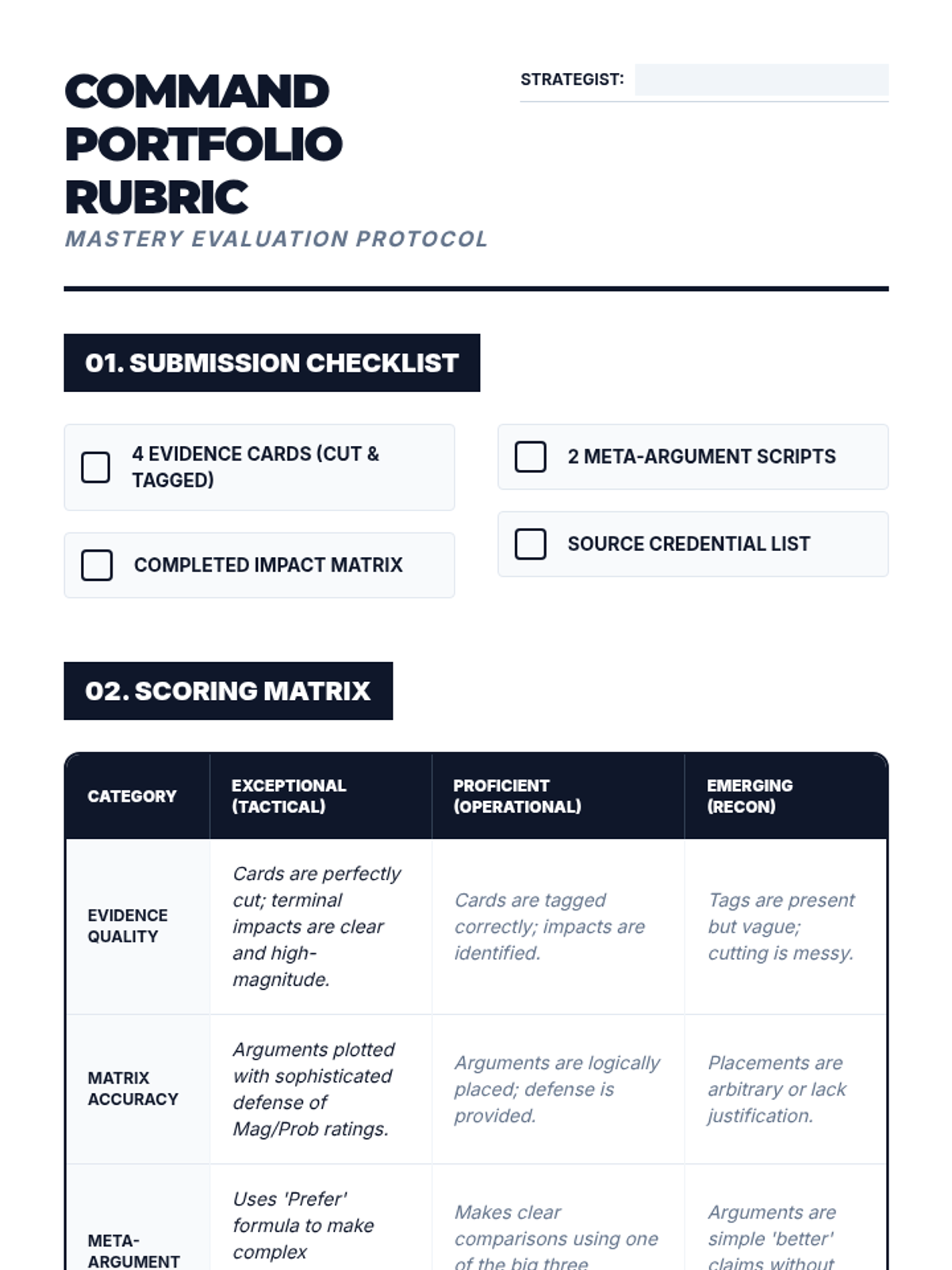
A comprehensive project guide, checklist, and rubric for the final Impact Portfolio presentation.
Final presentation slides for the Strategic Command Portfolio, covering requirements, structure, and delivery tips.
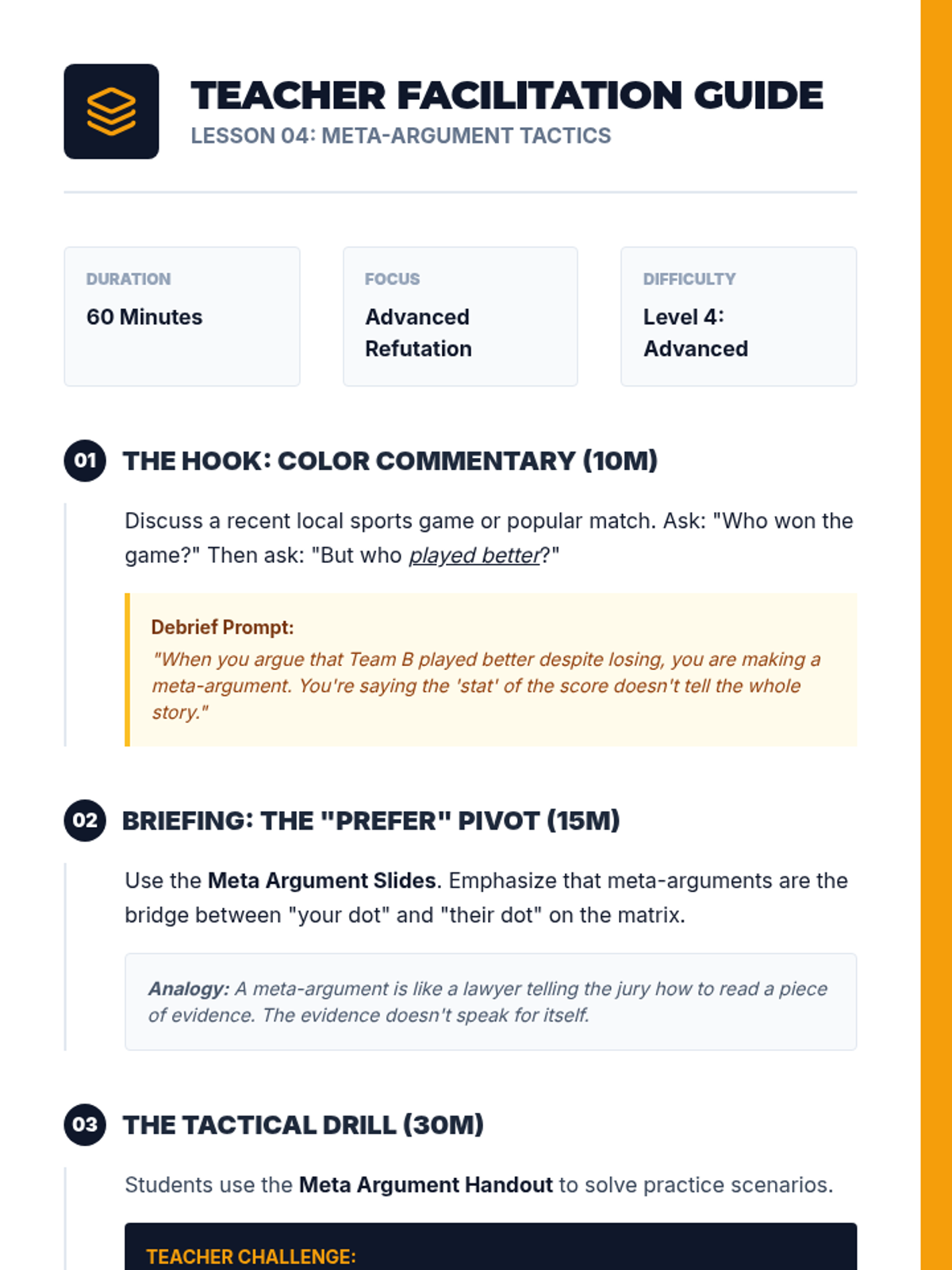
A teacher guide for the Meta-Argument Tactics lesson, including instructional strategies for teaching "prefer" arguments and framing.
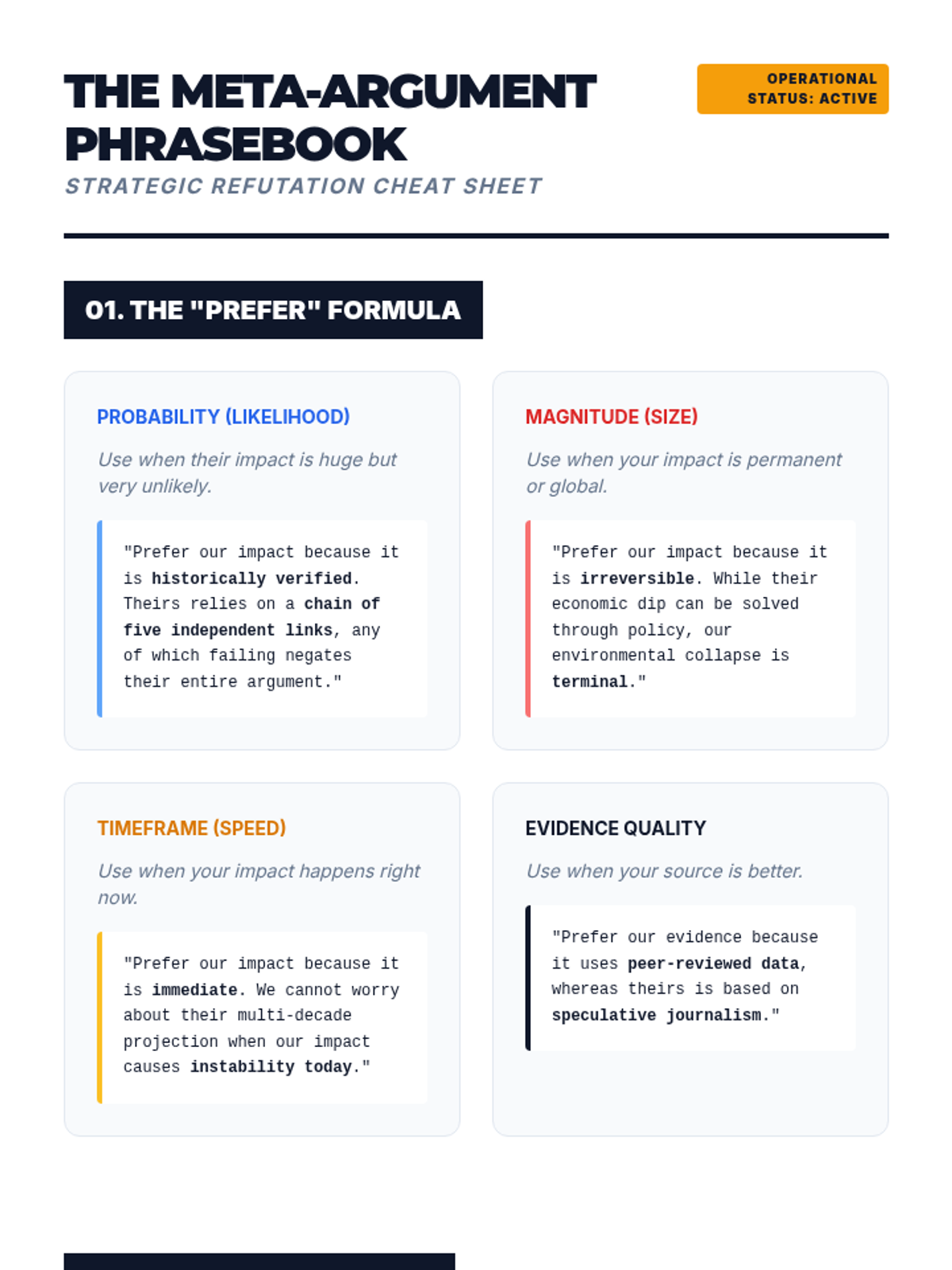
A strategic reference sheet for students, providing pre-written formulas for constructing meta-arguments and practice scenarios for application.
Advanced slides on constructing meta-arguments and framing the debate round using "prefer" arguments.
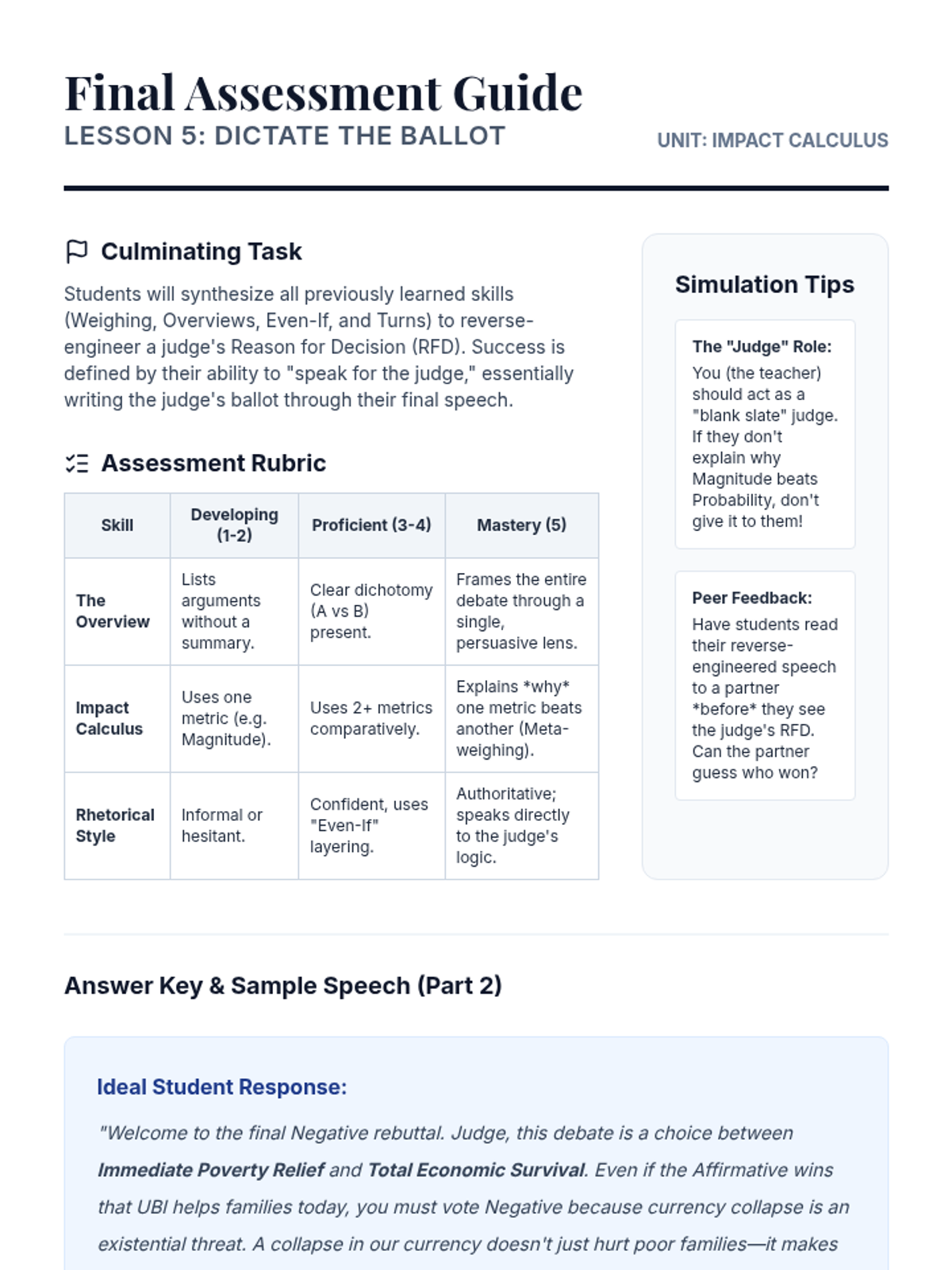
A teacher guide for Lesson 5, featuring a detailed grading rubric, simulation tips, and a sample "mastery-level" speech for the final assessment.
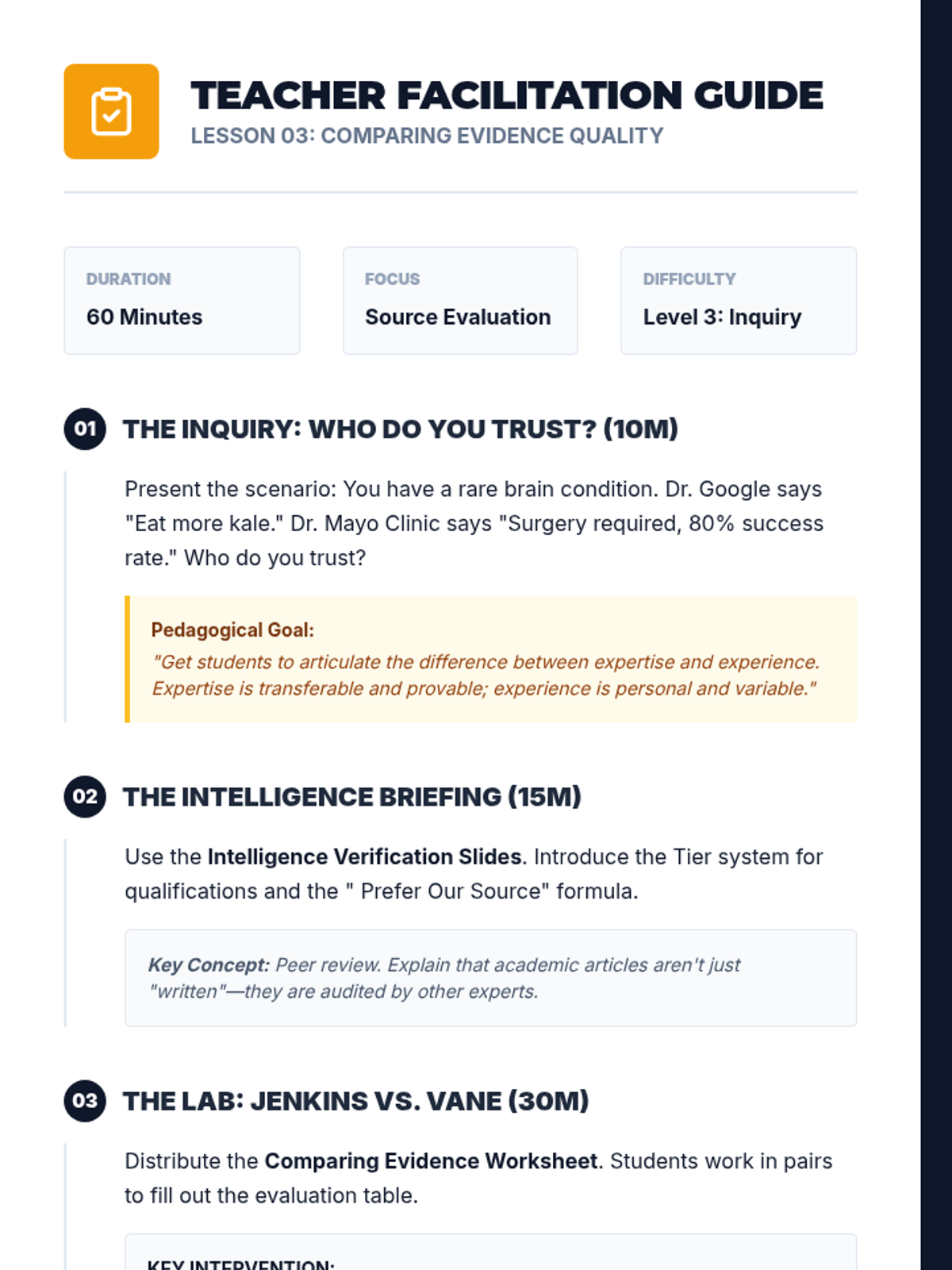
A teacher guide for the Intelligence Verification lesson, providing strategies for teaching source evaluation and guidance for the Case Study activity.
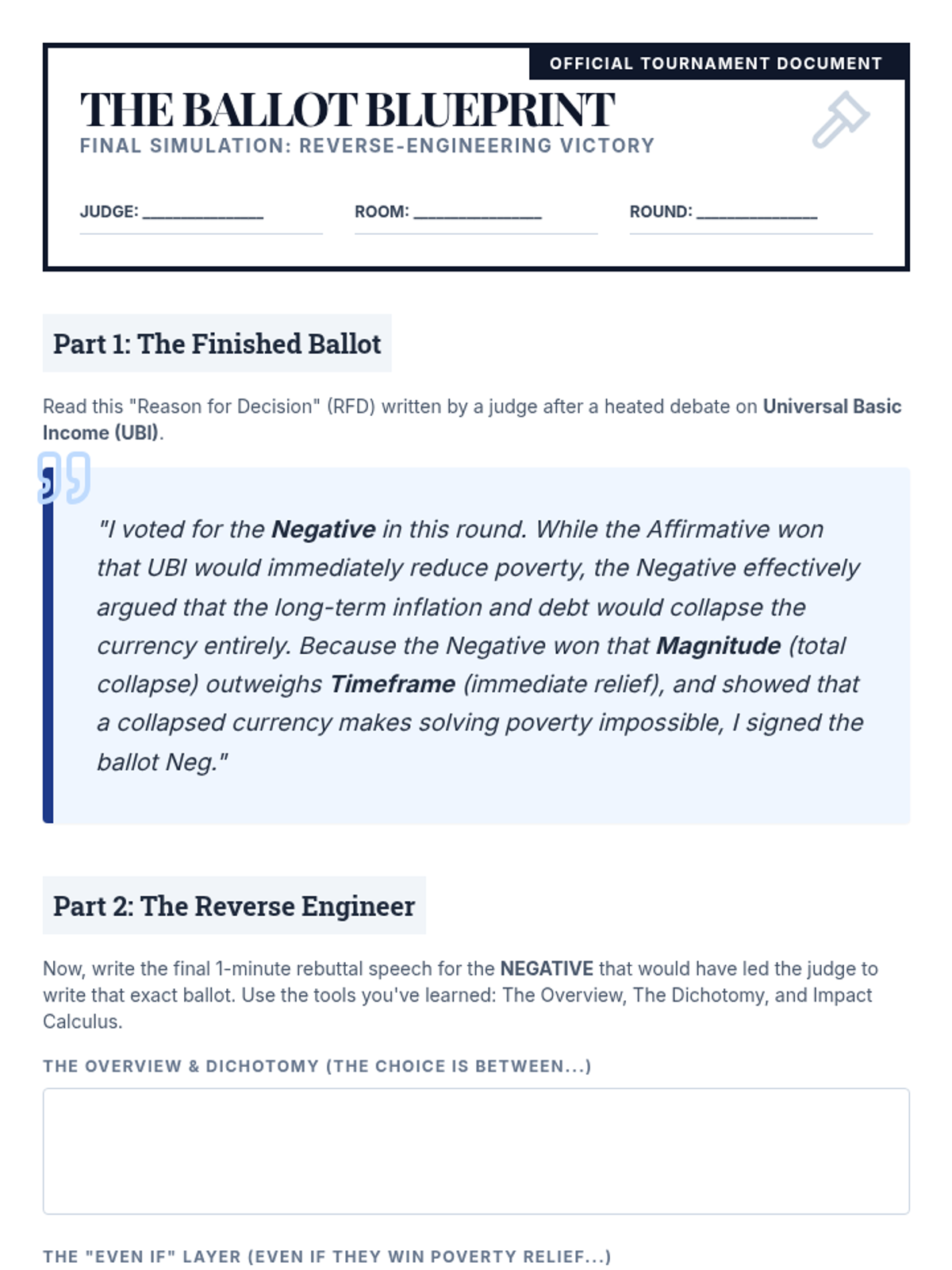
A final project worksheet where students reverse-engineer a judge's ballot into a winning rebuttal speech.
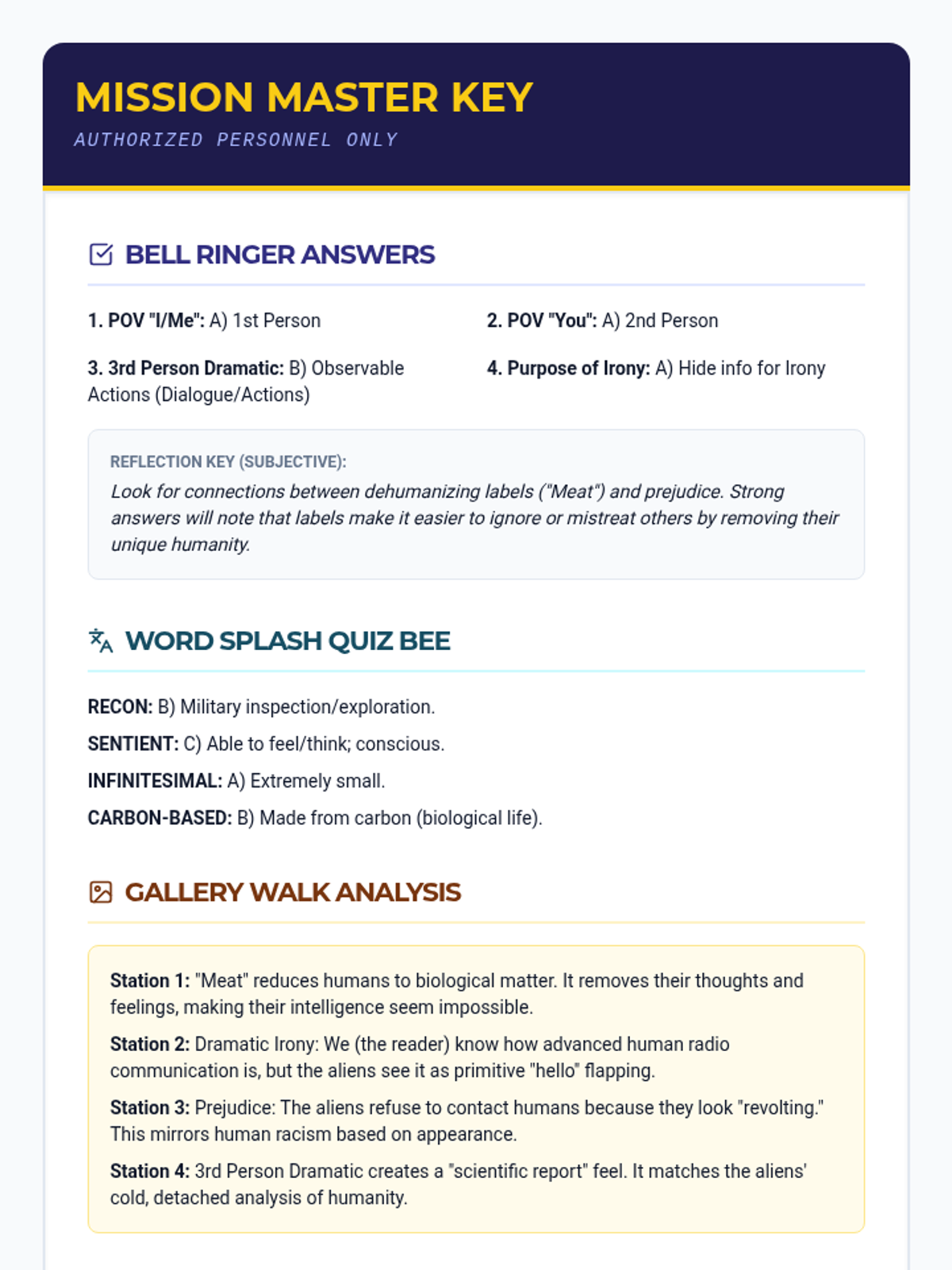
Comprehensive answer key for all lesson materials, including Bell Ringer MCQs, Word Splash vocabulary, Gallery Walk analysis prompts, Exit Ticket reflections, and a quantified Choice Board rubric (100 pts).
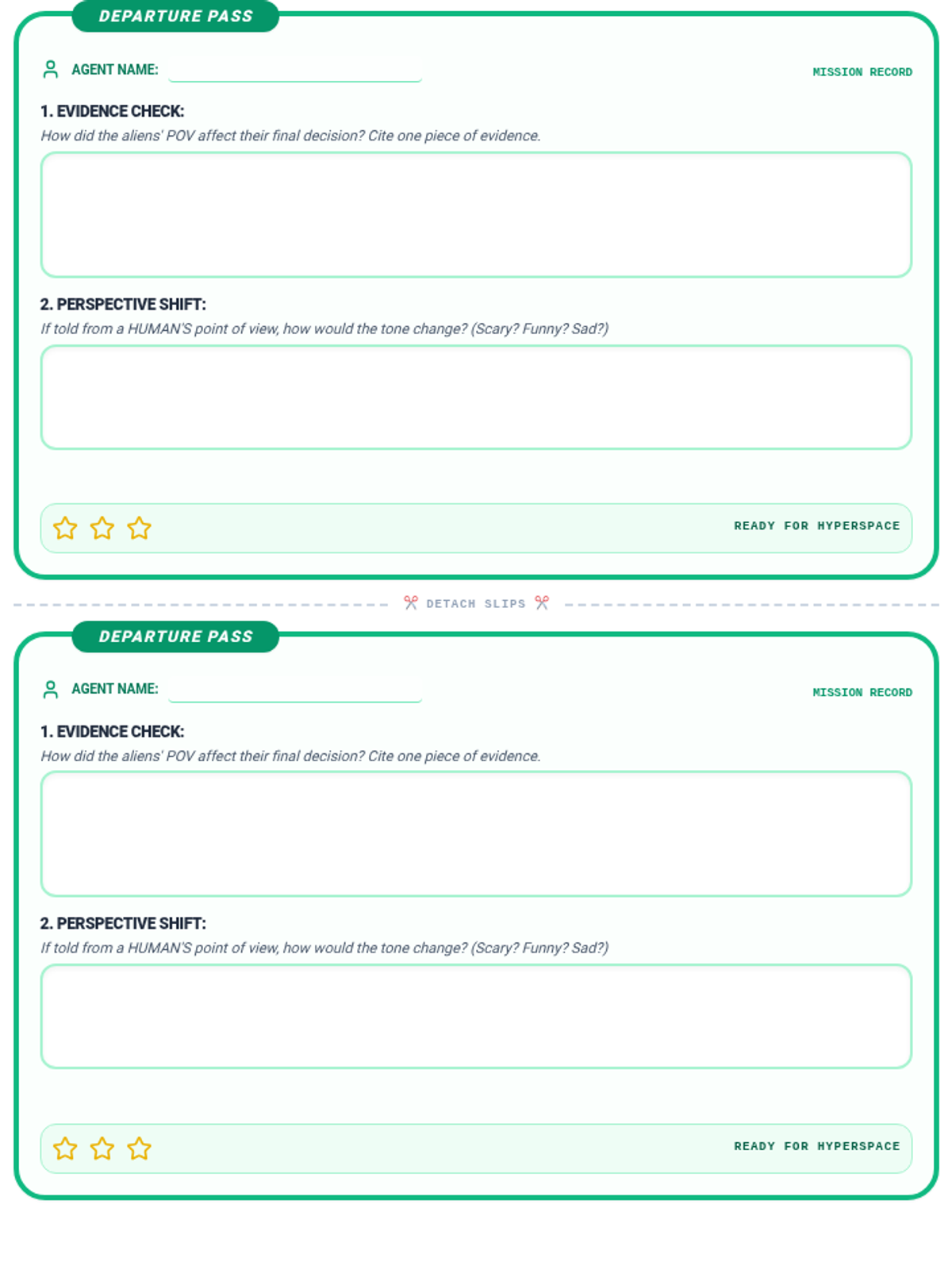
Double-sided cut-out exit tickets ('Departure Passes') designed for student reflection on how point of view influences theme and tone. Optimized for one-page printing.
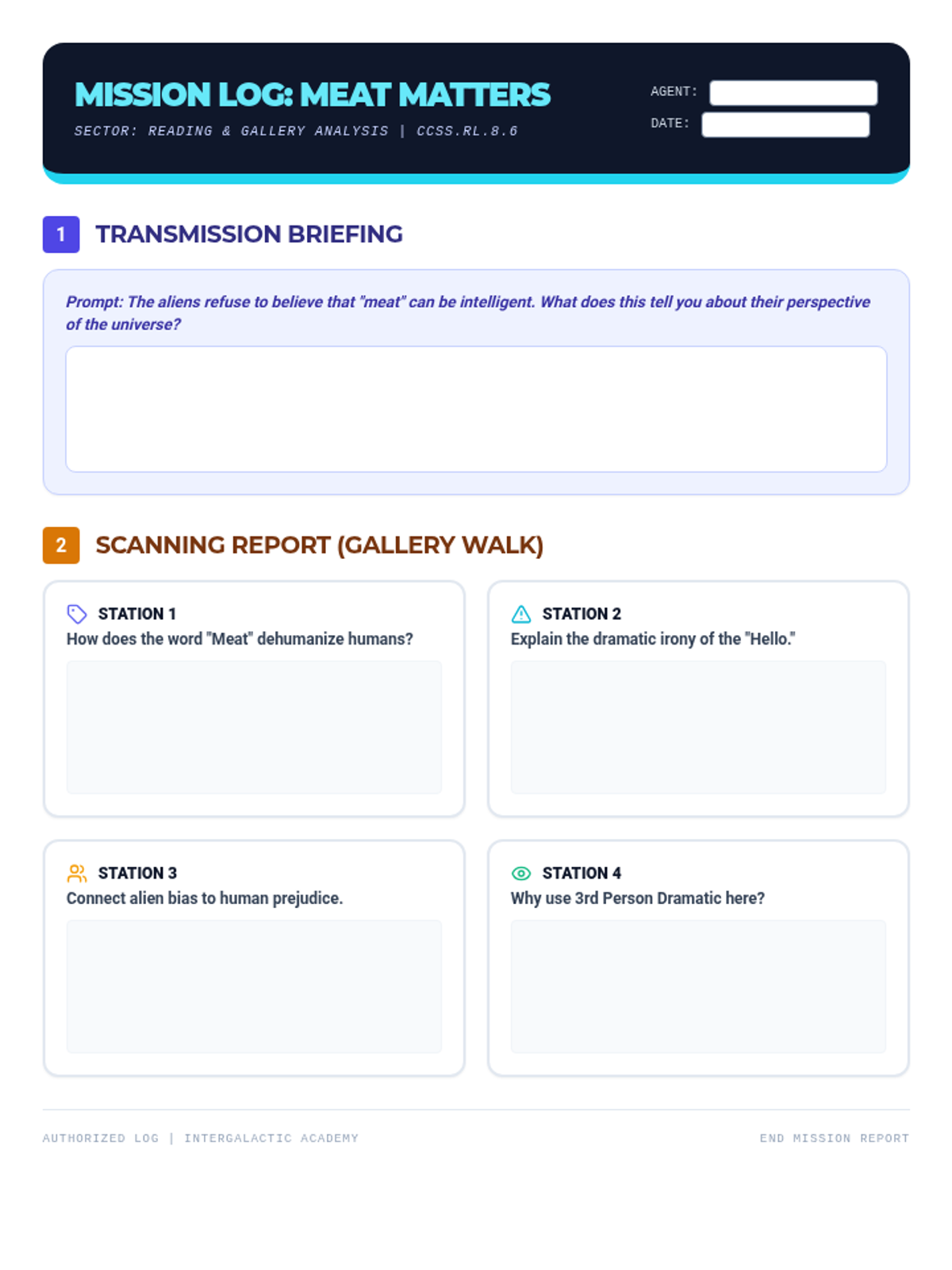
Master student activity packet containing the Think-Pair-Share log and a structured Gallery Walk evidence sheet. Optimized for student work with ample response areas on a single page.
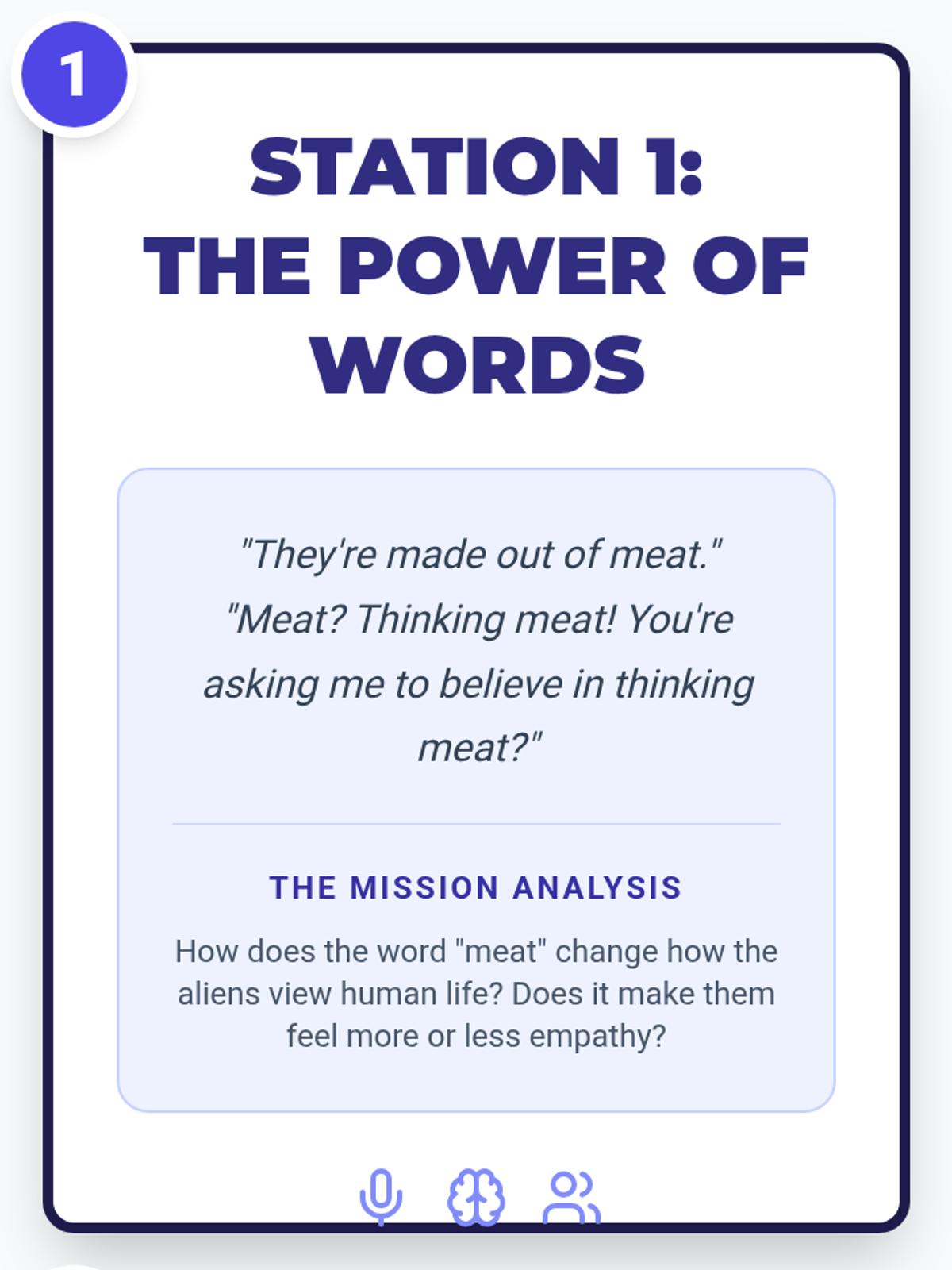
Four high-impact Gallery Walk posters designed for student rotation. Each station features a specific text excerpt and a guiding analysis question related to point of view, dramatic irony, and bias.
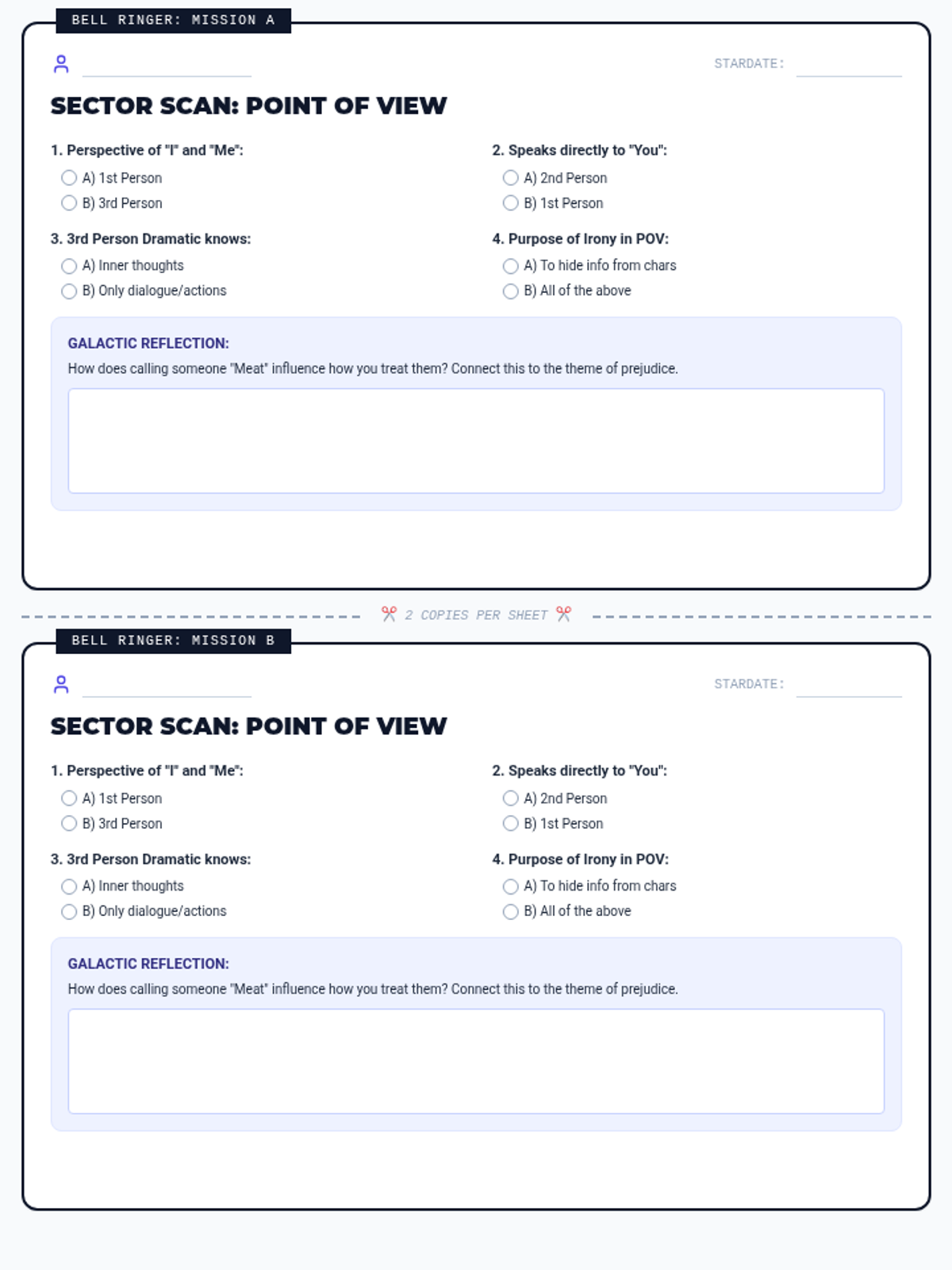
Two-per-page cut-out Bell Ringer focused on point of view basics (1st, 2nd, 3rd person) and a subjective question linking the story's terminology to themes of prejudice. Redesigned to fit on one page.
Visually striking alien-themed slide deck updated with author bio, dedicated Choice Board, Mission Rubric, Quantified Point Breakdown, and Exit Ticket slides. Includes 32 slides total, featuring POV definitions, CCSS RL.8.6 alignment, interactive vocabulary quizzes, and structured reflection prompts. Adjusted layout for optimal PDF rendering.
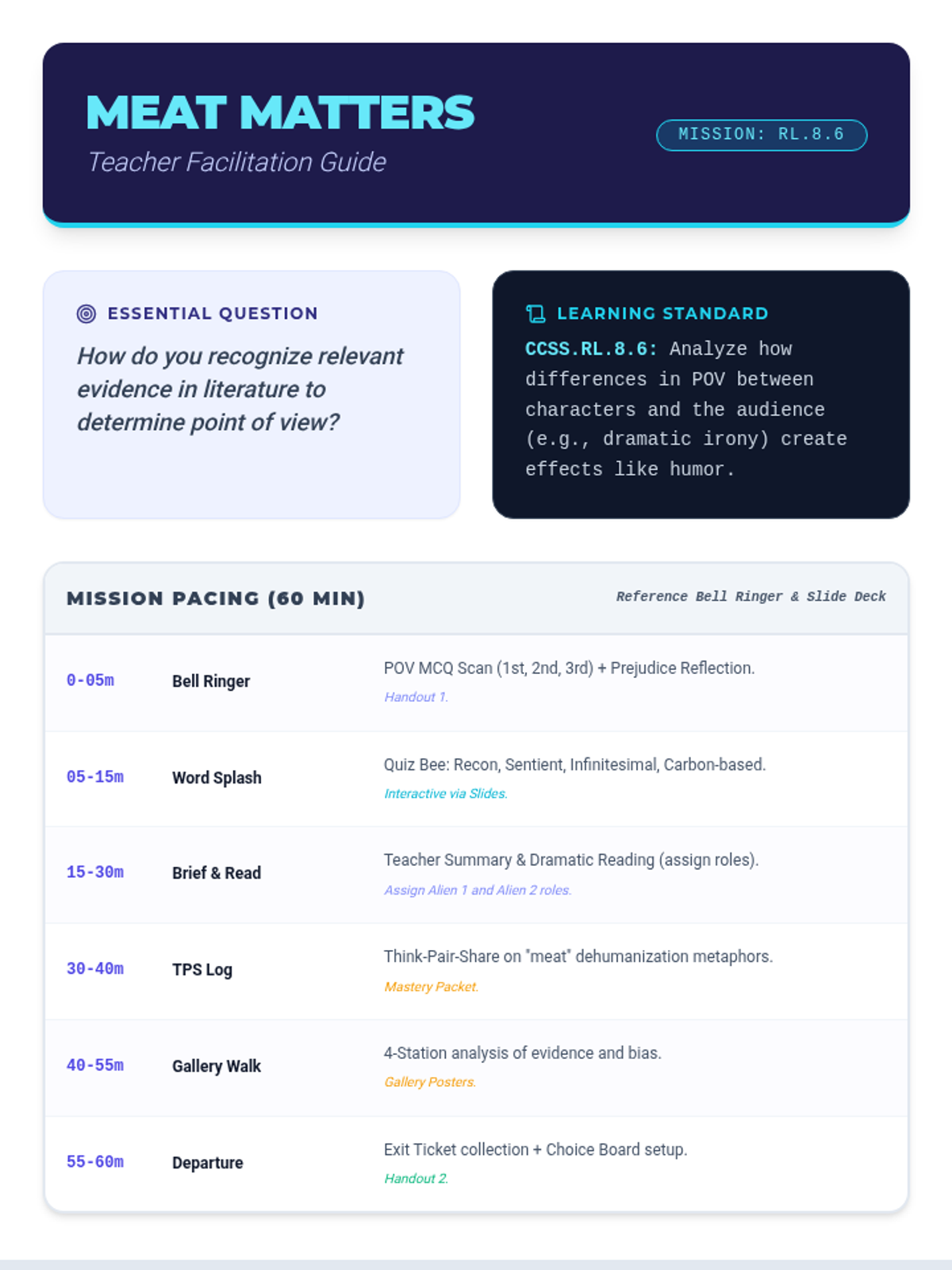
Comprehensive teacher's guide and lesson plan for 'They're Made out of Meat' featuring a 60-minute pacing guide, point of view content summaries, and CCSS standard integration. Includes guide for all 6 learner options.
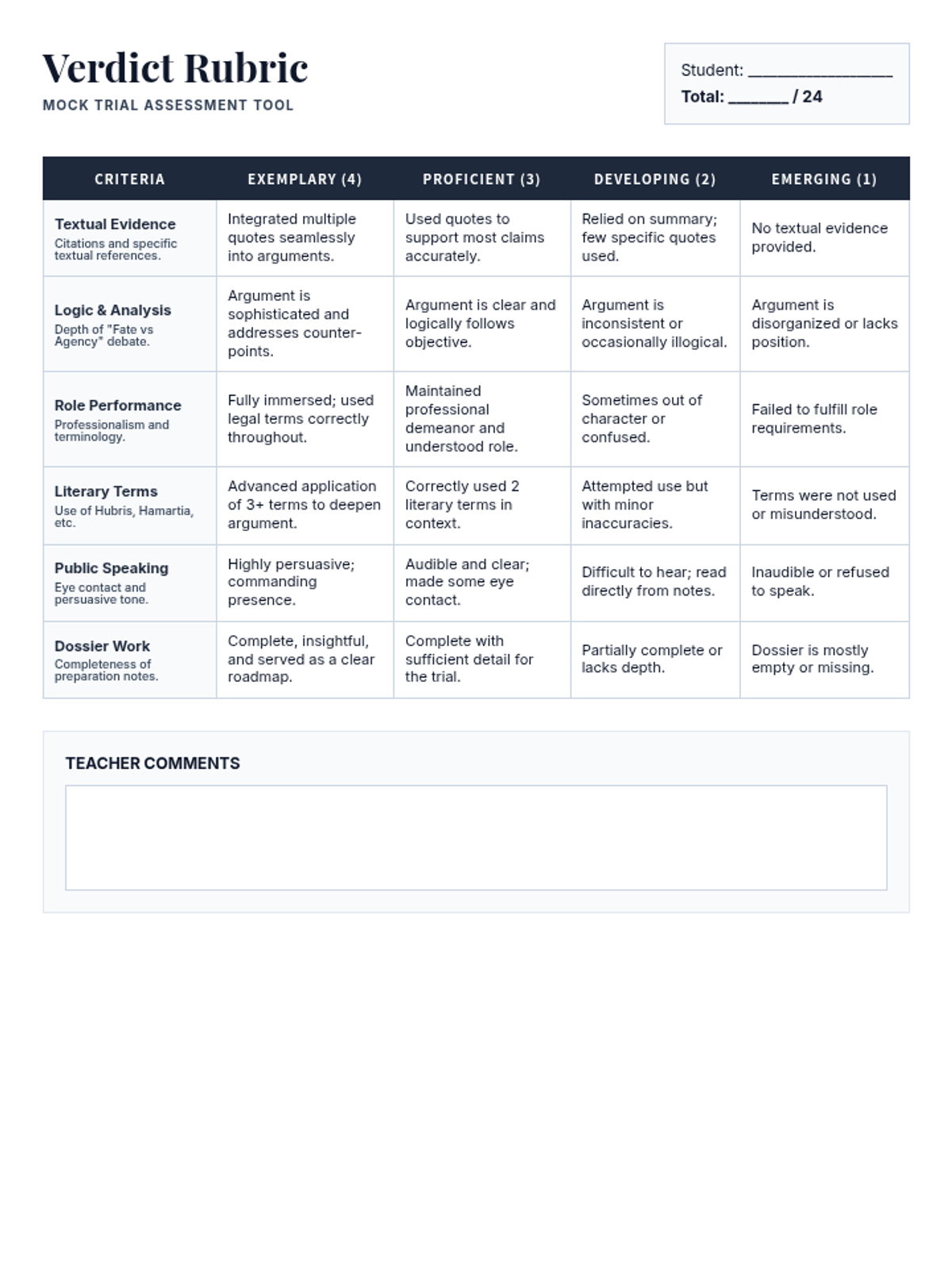
An assessment rubric for evaluating student performance during the mock trial, focusing on textual evidence, logic, role-playing, and use of literary terminology.
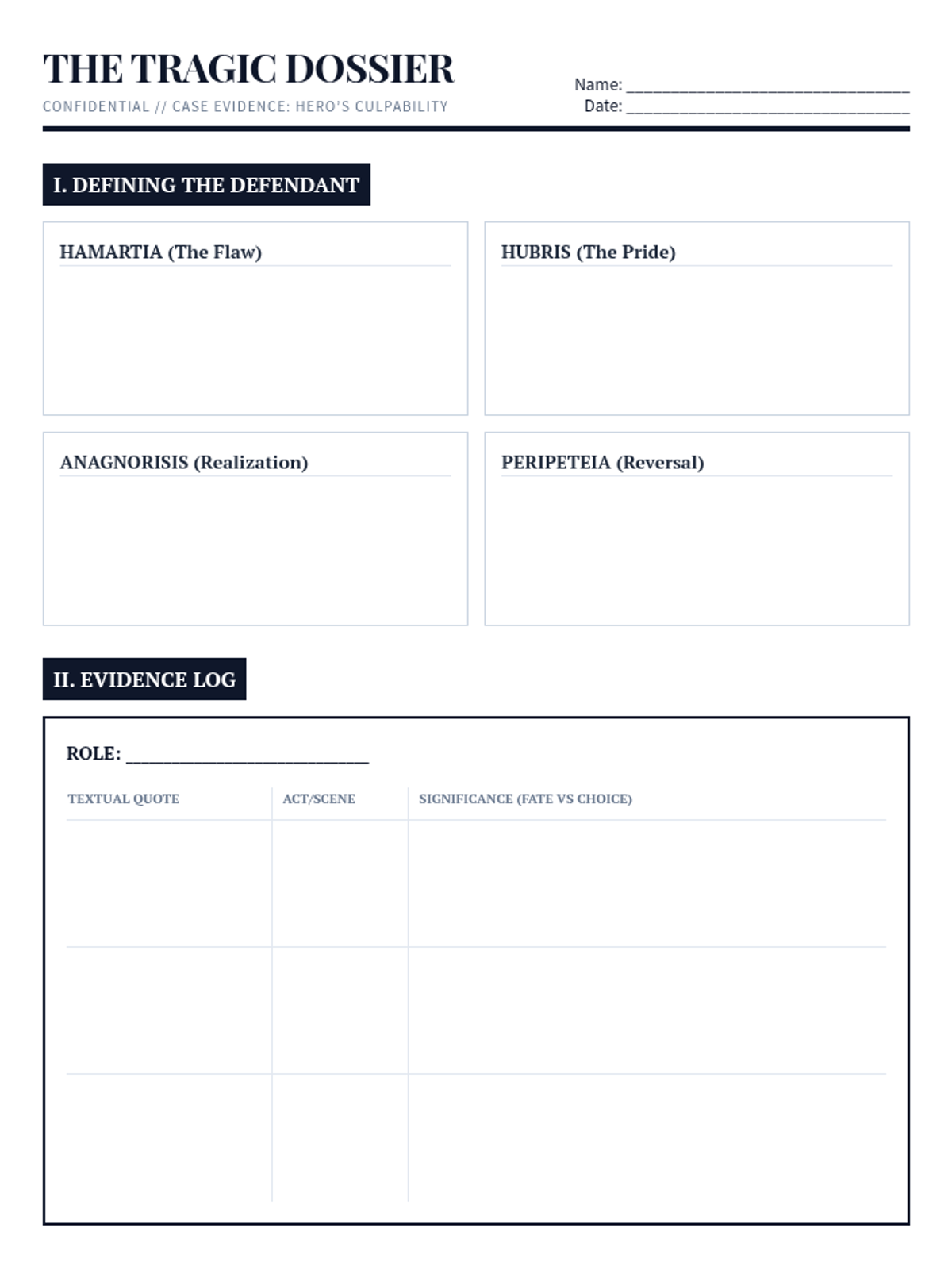
A student-facing handout designed as a legal 'dossier' to help students prepare for the mock trial by analyzing Aristotelian traits and gathering textual evidence.
Instructional slide deck for the 'Hero on Trial' lesson, covering Aristotelian tragic hero traits, legal vocabulary, and the classroom mock trial procedures.
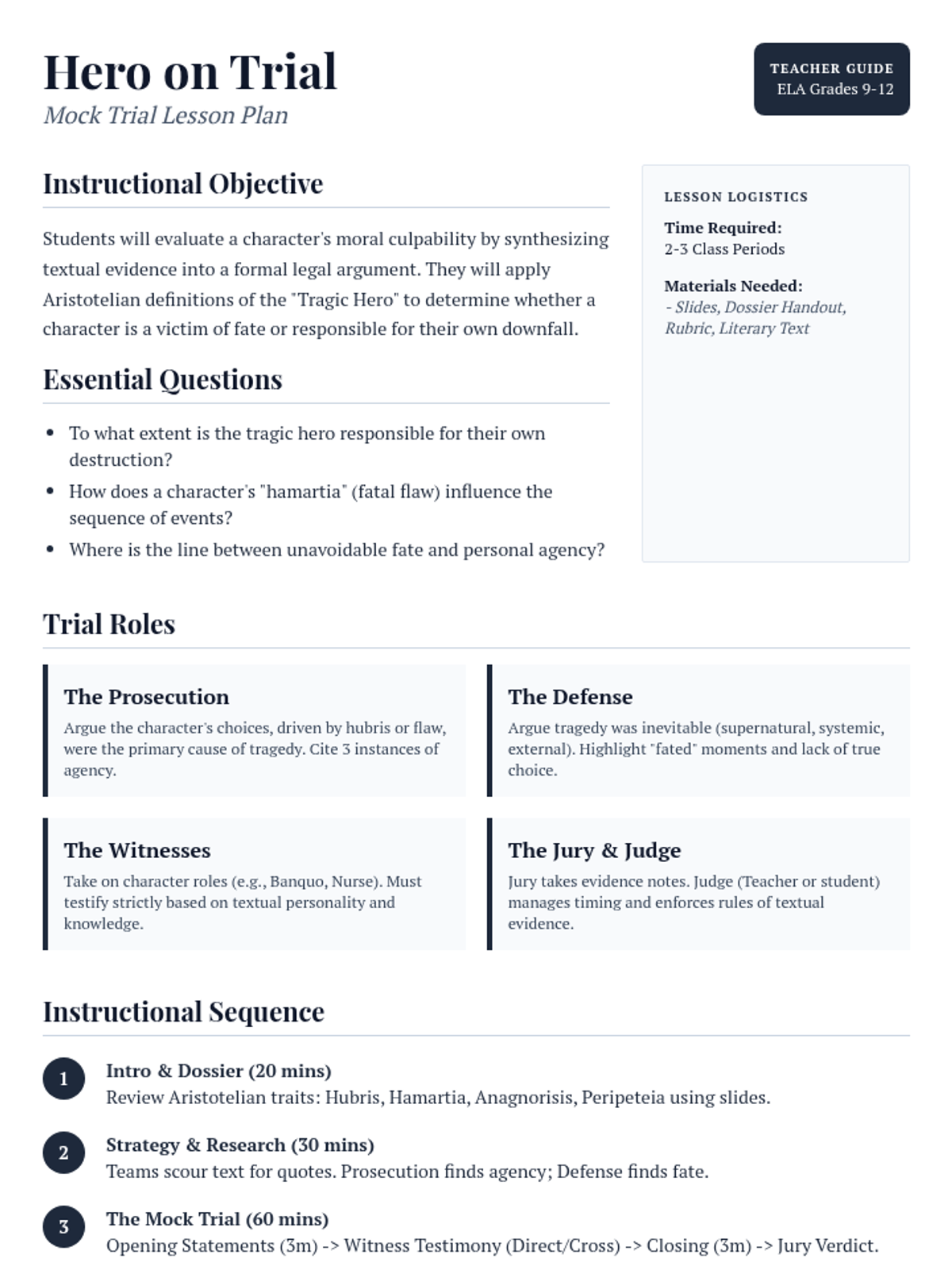
A comprehensive teacher guide for conducting a mock trial in high school English, including role descriptions, lesson pacing, and instructional strategies for analyzing tragic heroes.
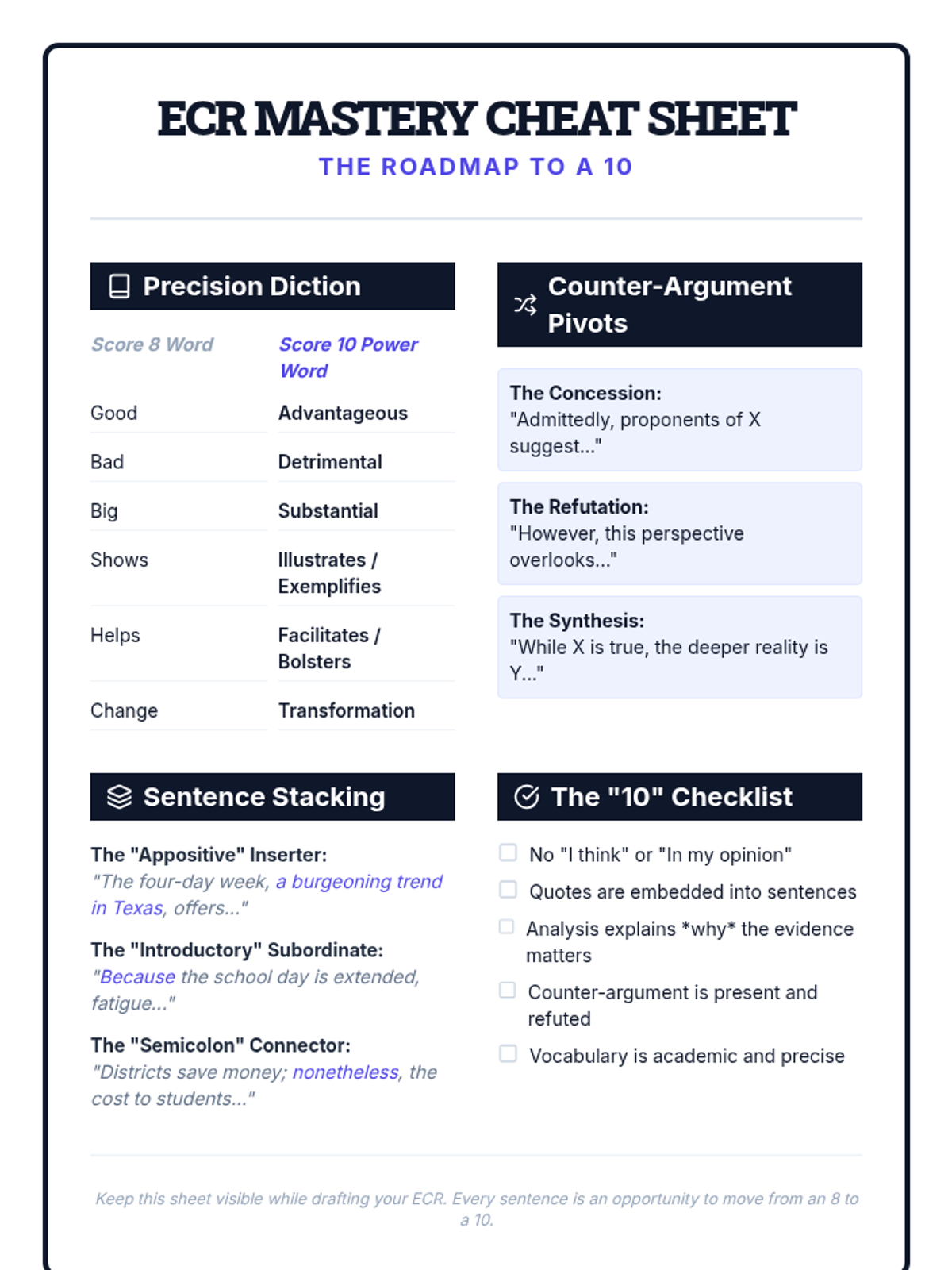
A one-page student reference sheet for ECR drafting, featuring power words, transition stems, syntax structures, and a final quality checklist.
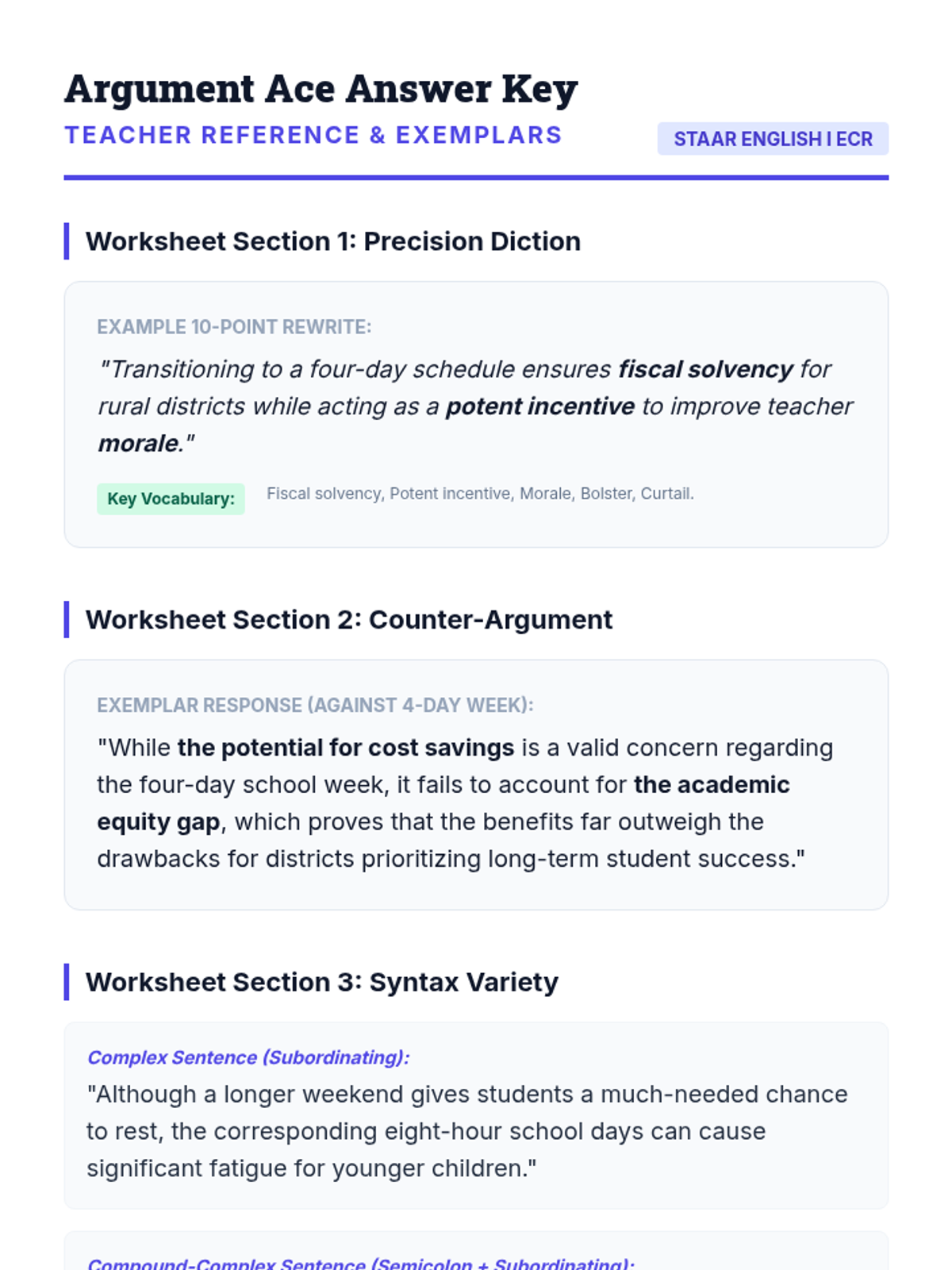
A detailed answer key and model response guide for teachers, providing exemplars for diction, syntax, counter-arguments, and a full 10-point paragraph based on the 4-day school week passage.
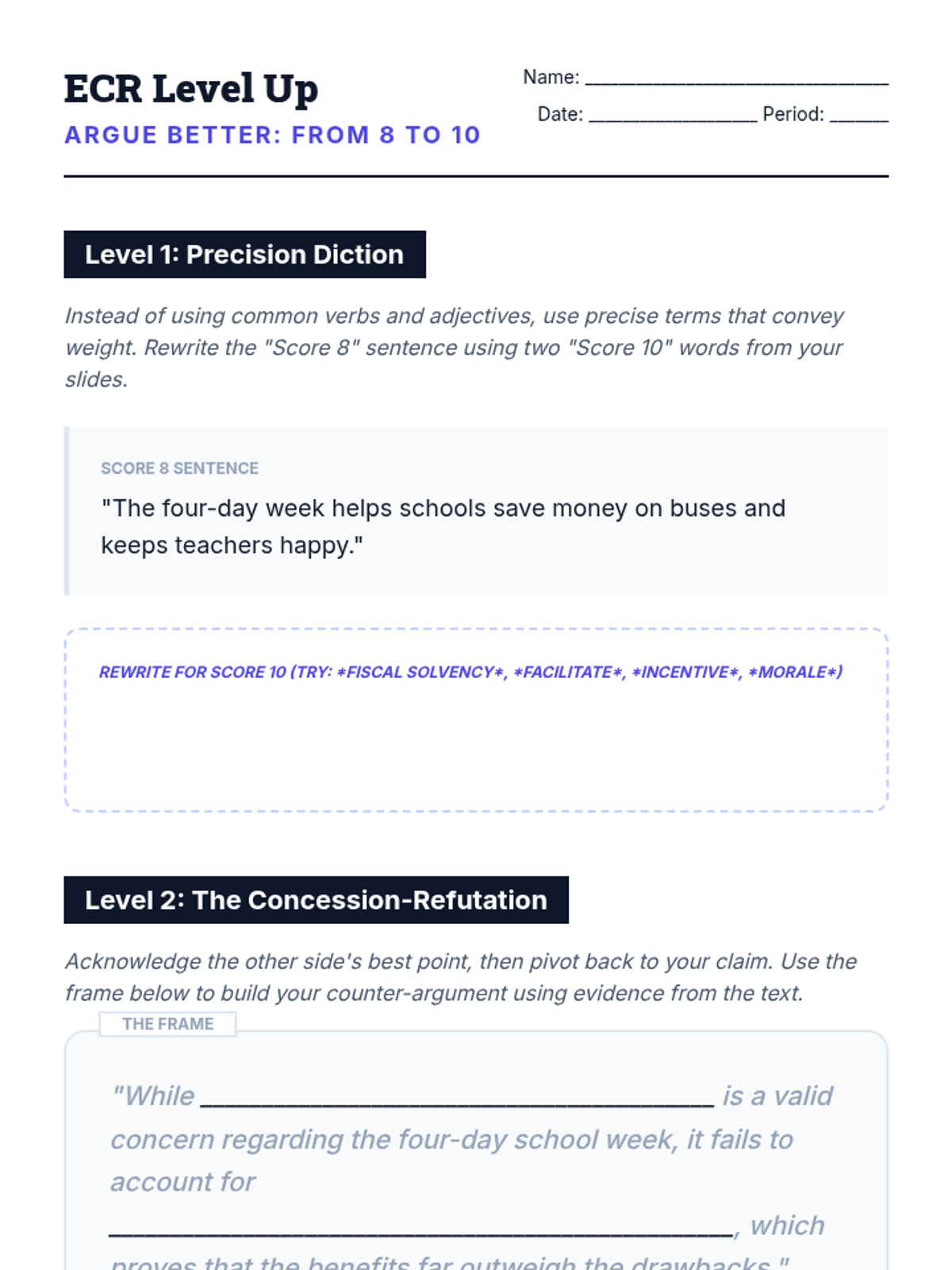
A student worksheet for the Argument Ace lesson, including exercises for precision diction, counter-argument framing, and syntax variety, ending with a drafting space for a sophisticated ECR paragraph.
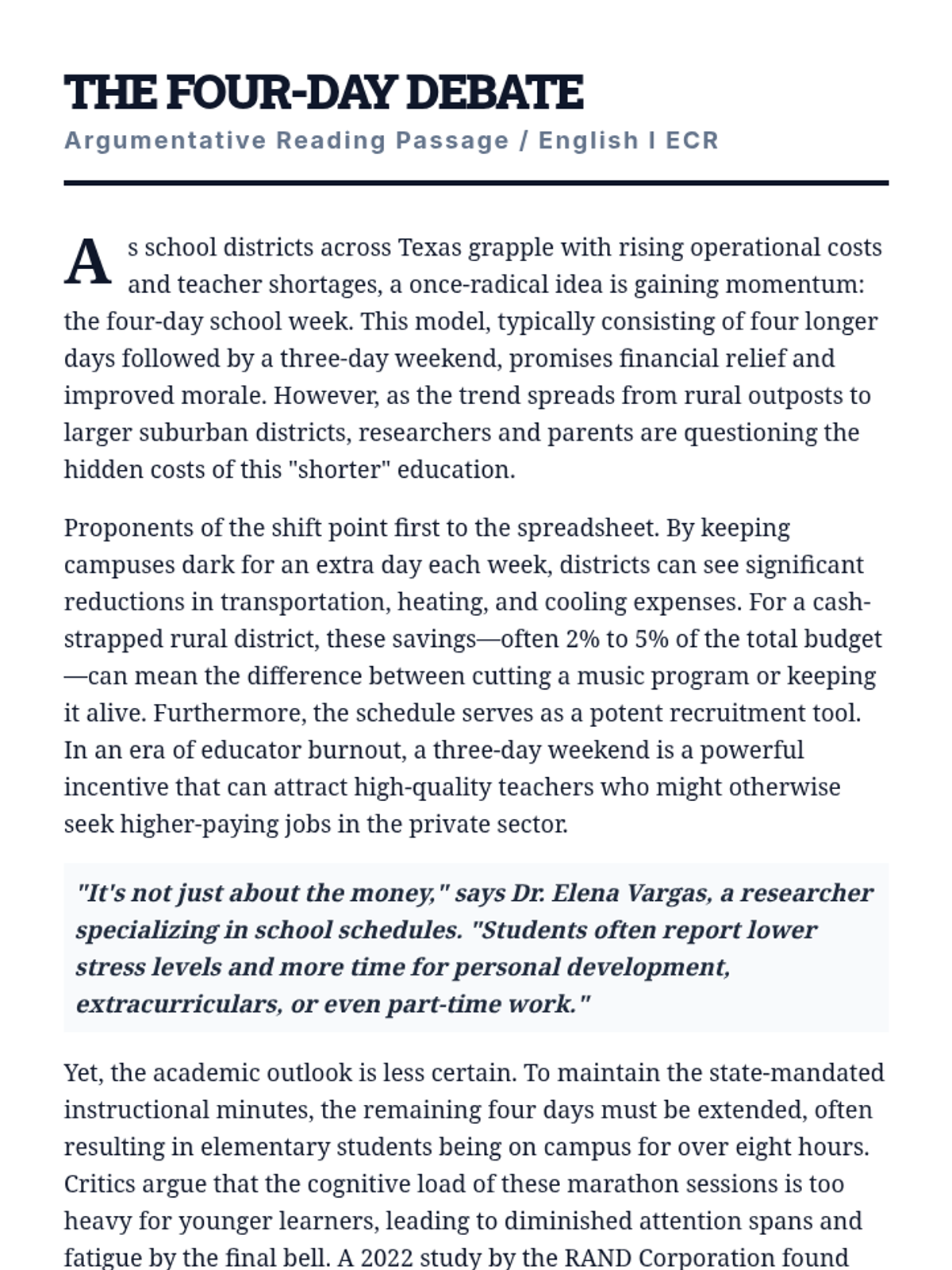
A high-quality, balanced reading passage about the 4-day school week debate, featuring specific evidence for both sides to be used in ECR evidence integration practice.
A printer-friendly presentation designed to guide students through the ECR mastery process, focusing on the 8-to-10 point gap, word choice, counter-arguments, and syntax variety.
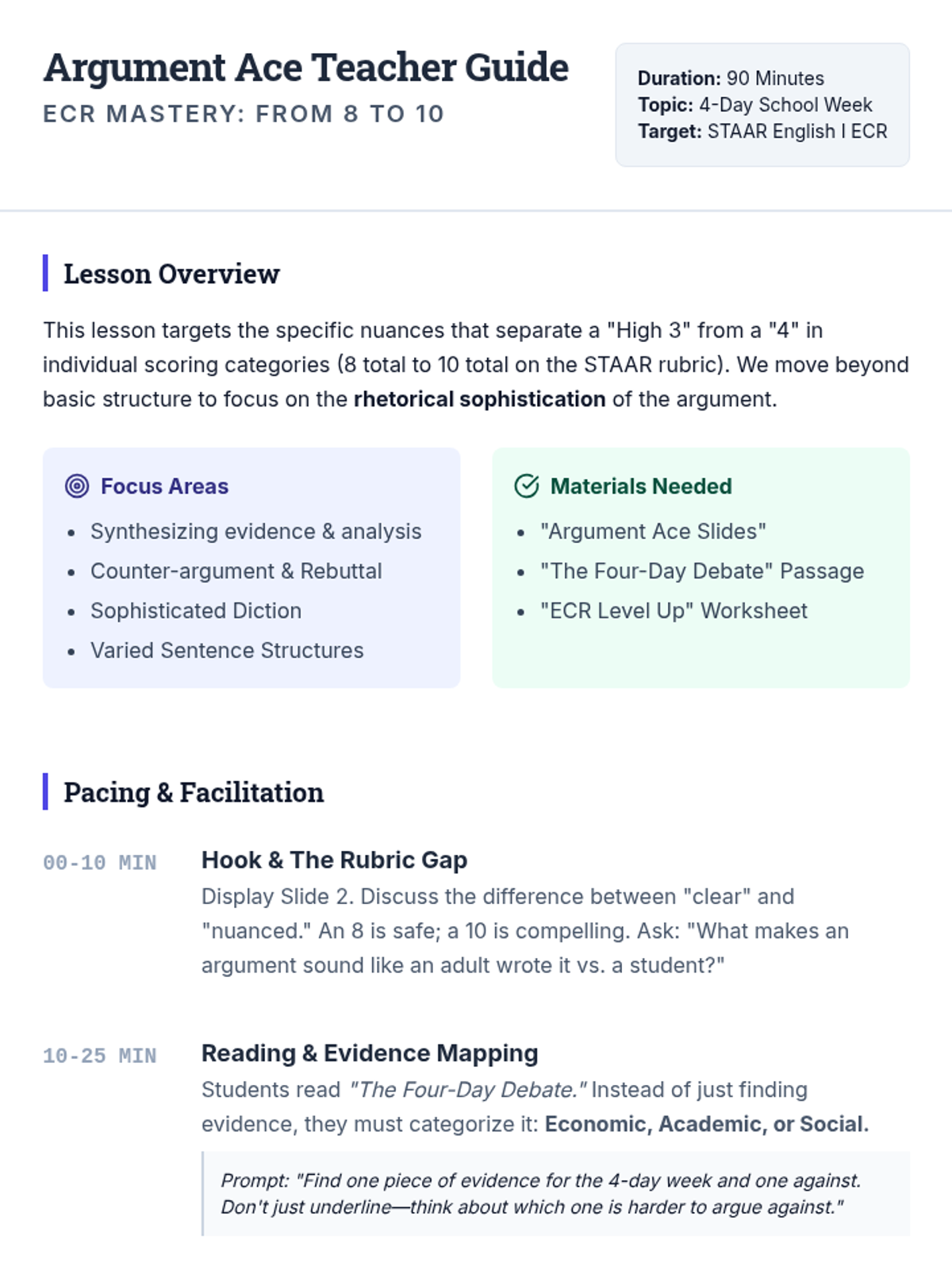
A comprehensive teacher guide for a 90-minute ECR mastery lesson, featuring a detailed pacing guide, instructional strategies for 8-to-10 score improvement, and differentiation tips.
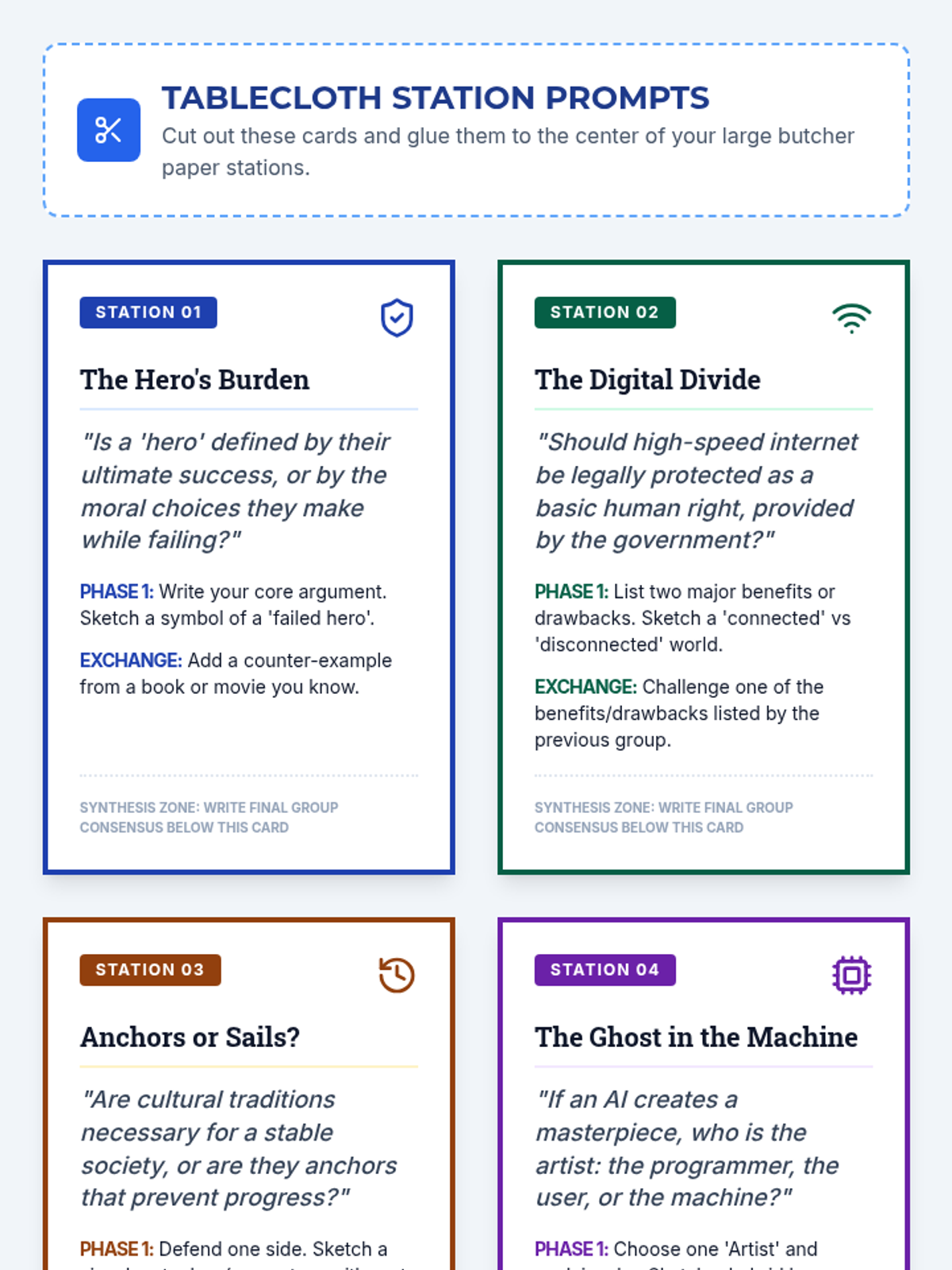
A set of 8 station prompts for the Tablecloth activity, covering 9th-grade literary and argumentative themes with specific instructions for writing, sketching, and responding to peers.
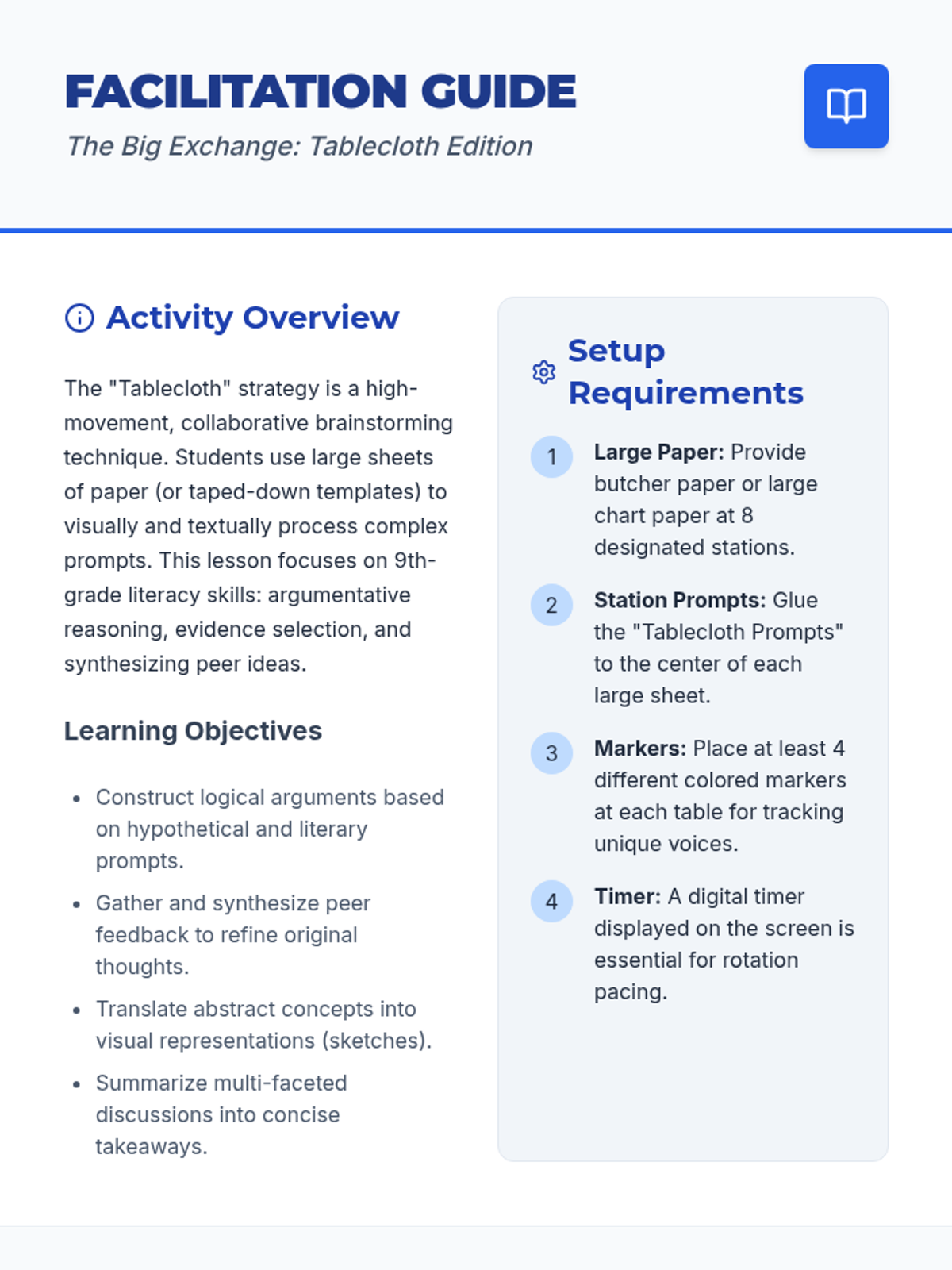
A comprehensive teacher guide for facilitating the 'Tablecloth' activity, including setup instructions, rotation timings, and debriefing strategies.
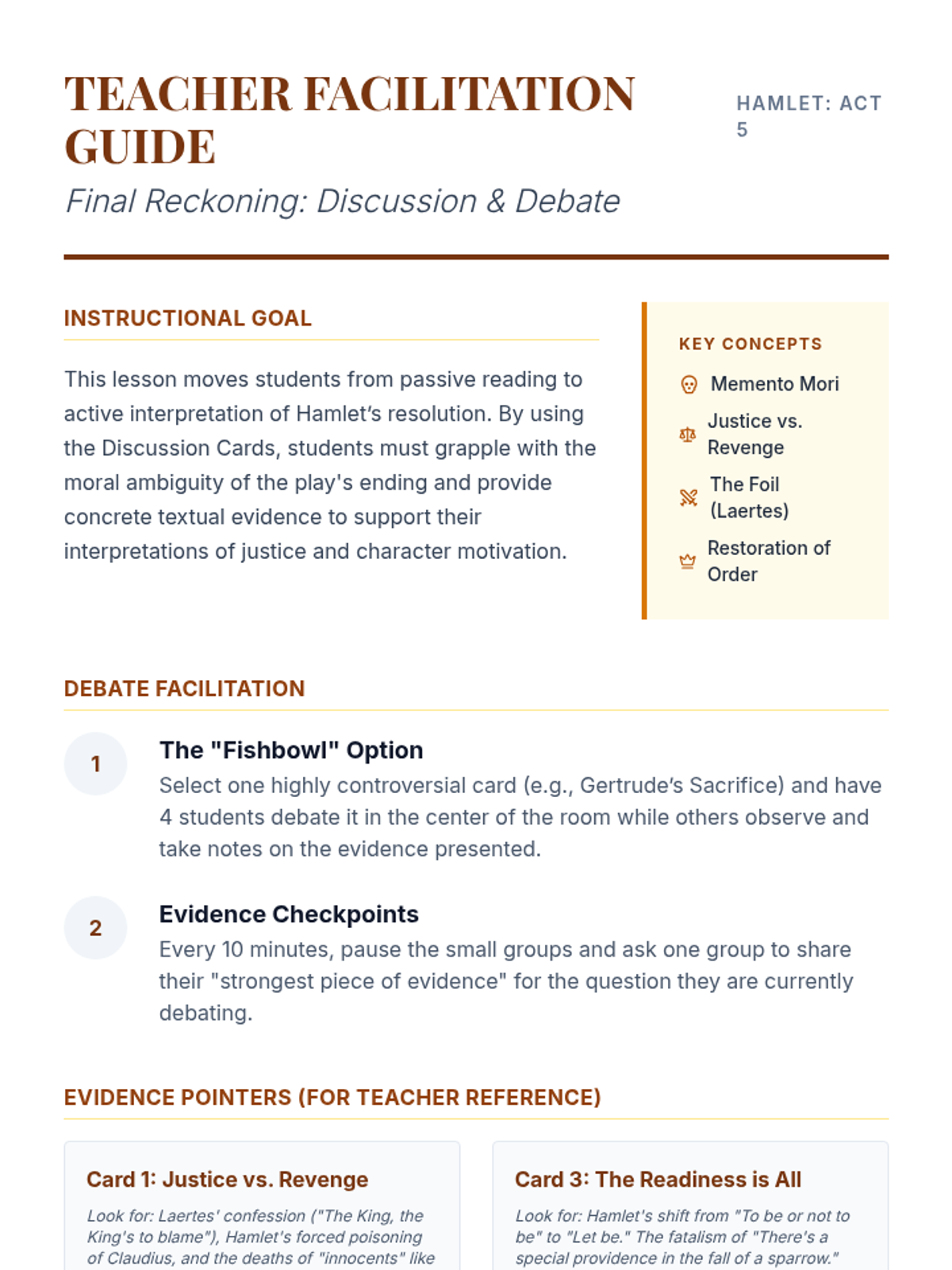
A comprehensive teacher guide for facilitating discussions on Hamlet Act 5. It includes instructional goals, specific facilitation strategies (like the fishbowl method), evidence pointers for each discussion card, and probing questions to deepen student analysis.
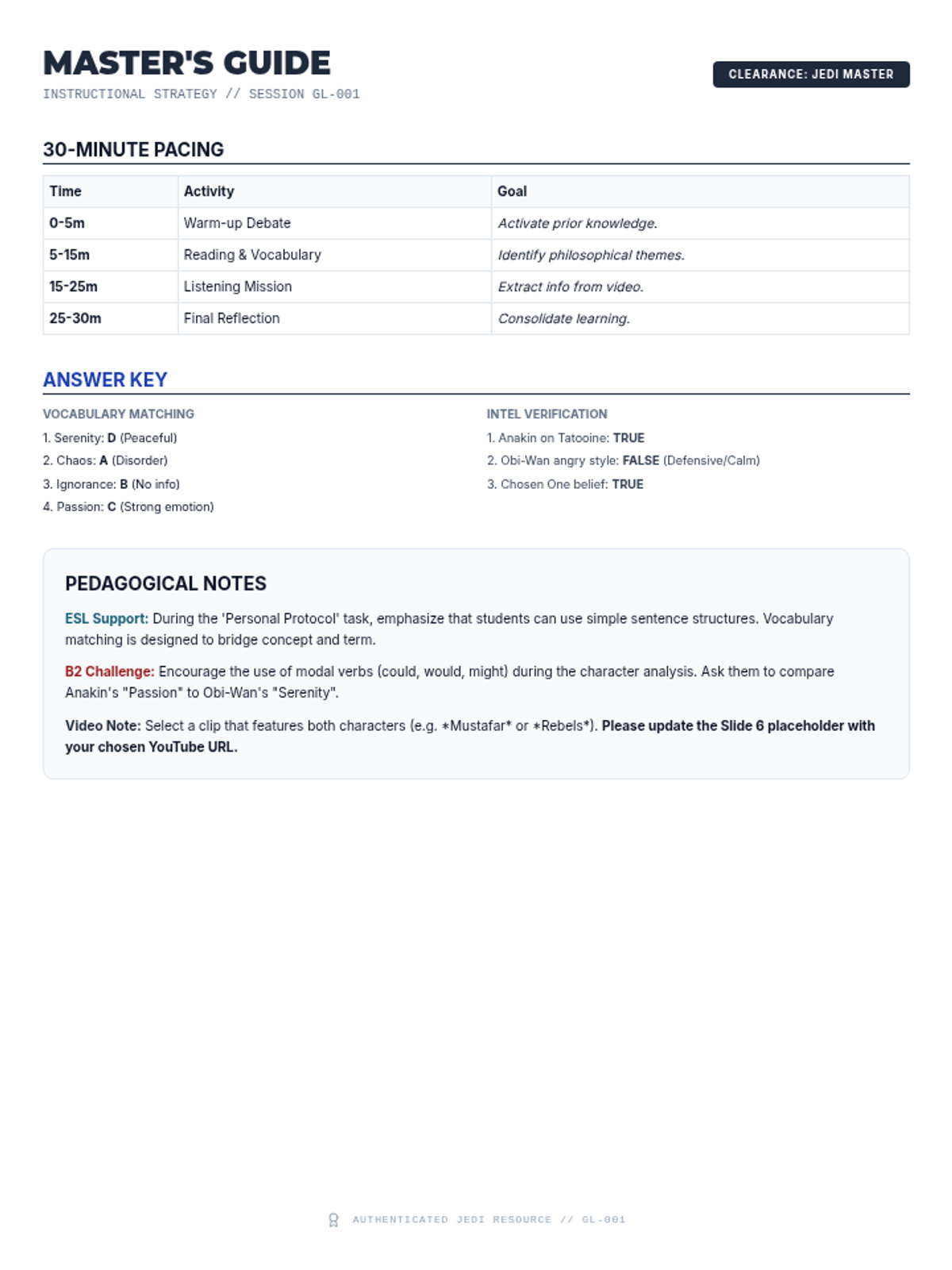
A teacher guide for the Galactic Language Lounge lesson. Includes a 30-minute pacing guide, answer keys for all student activities, and specific differentiation strategies for B1/B2 ESL learners. Consolidated to a single page.
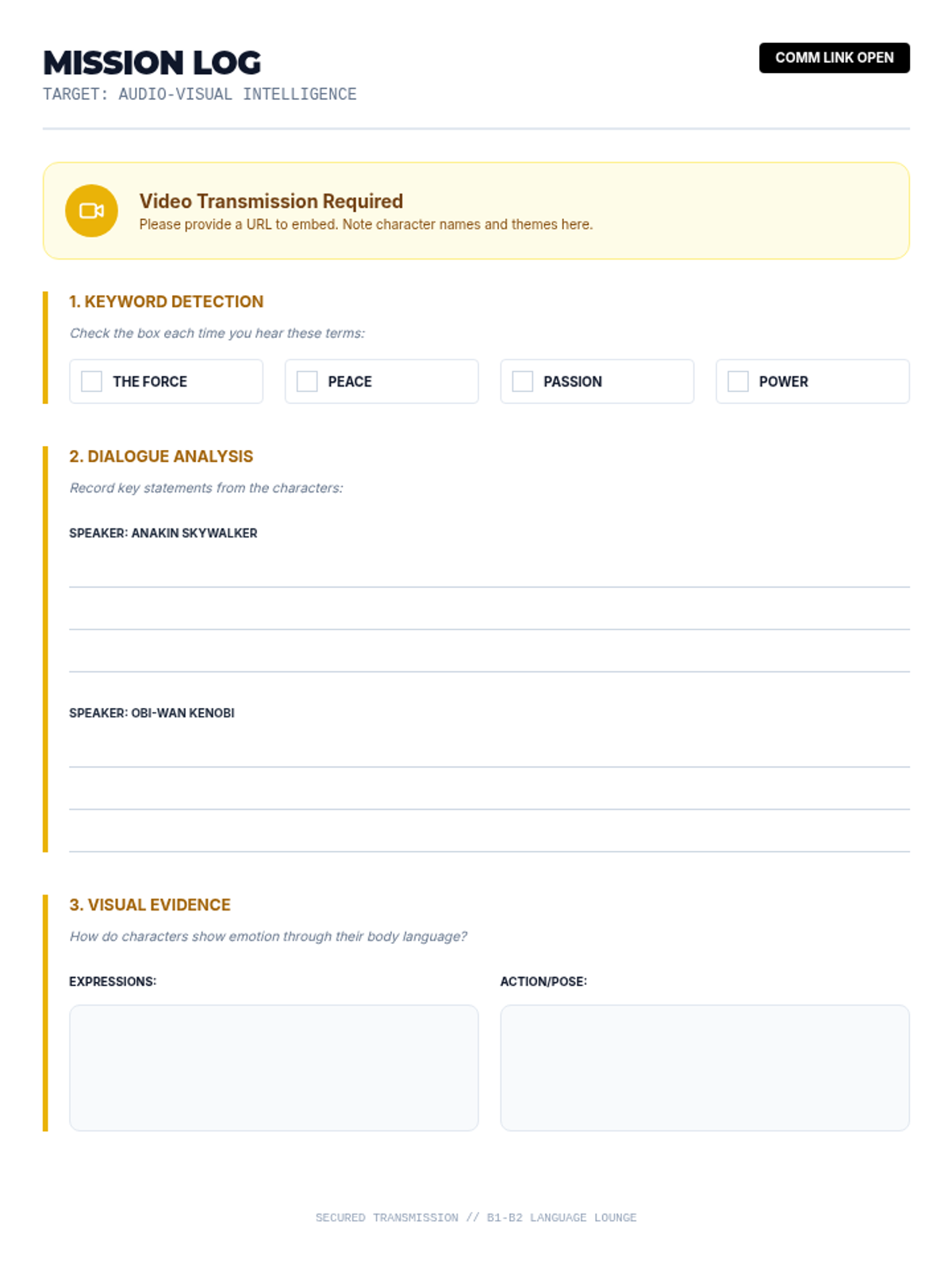
A listening comprehension guide designed to accompany a YouTube video. It includes sections for keyword detection, quote completion, and visual analysis of character emotions, tailored for B1/B2 ESL learners. Consolidated to a single page.
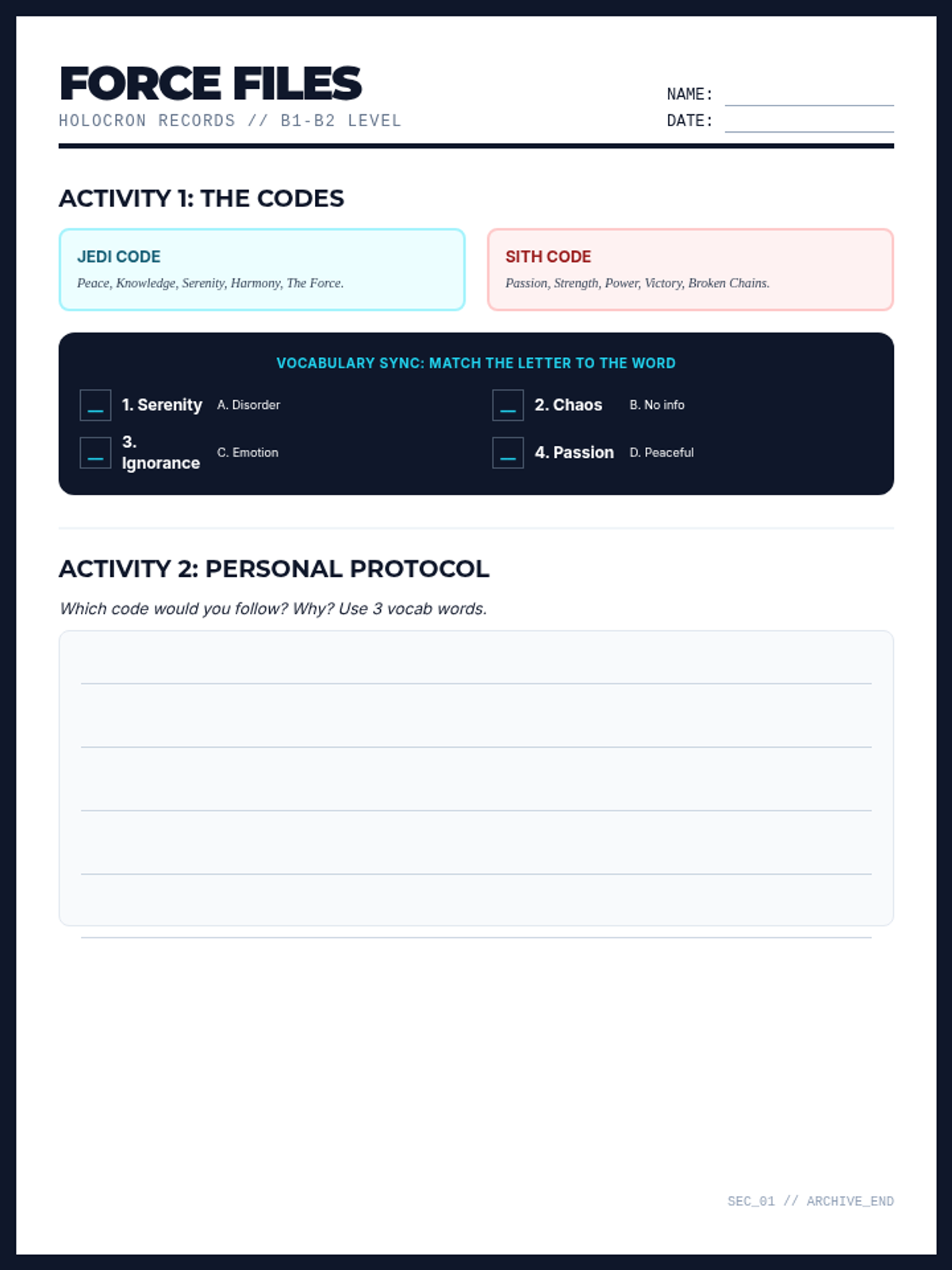
A two-page printable worksheet for ESL students covering Star Wars character backstories and a comparison of Jedi and Sith philosophy. Layout optimized to fit two pages with improved contrast and work areas.
A high-energy, Star Wars-themed slide deck designed for ESL students. It includes visual representations of the Jedi and Sith Codes, character backstory highlights, and structured speaking prompts to facilitate classroom discussion. Content layout fixed for better slide transitions.
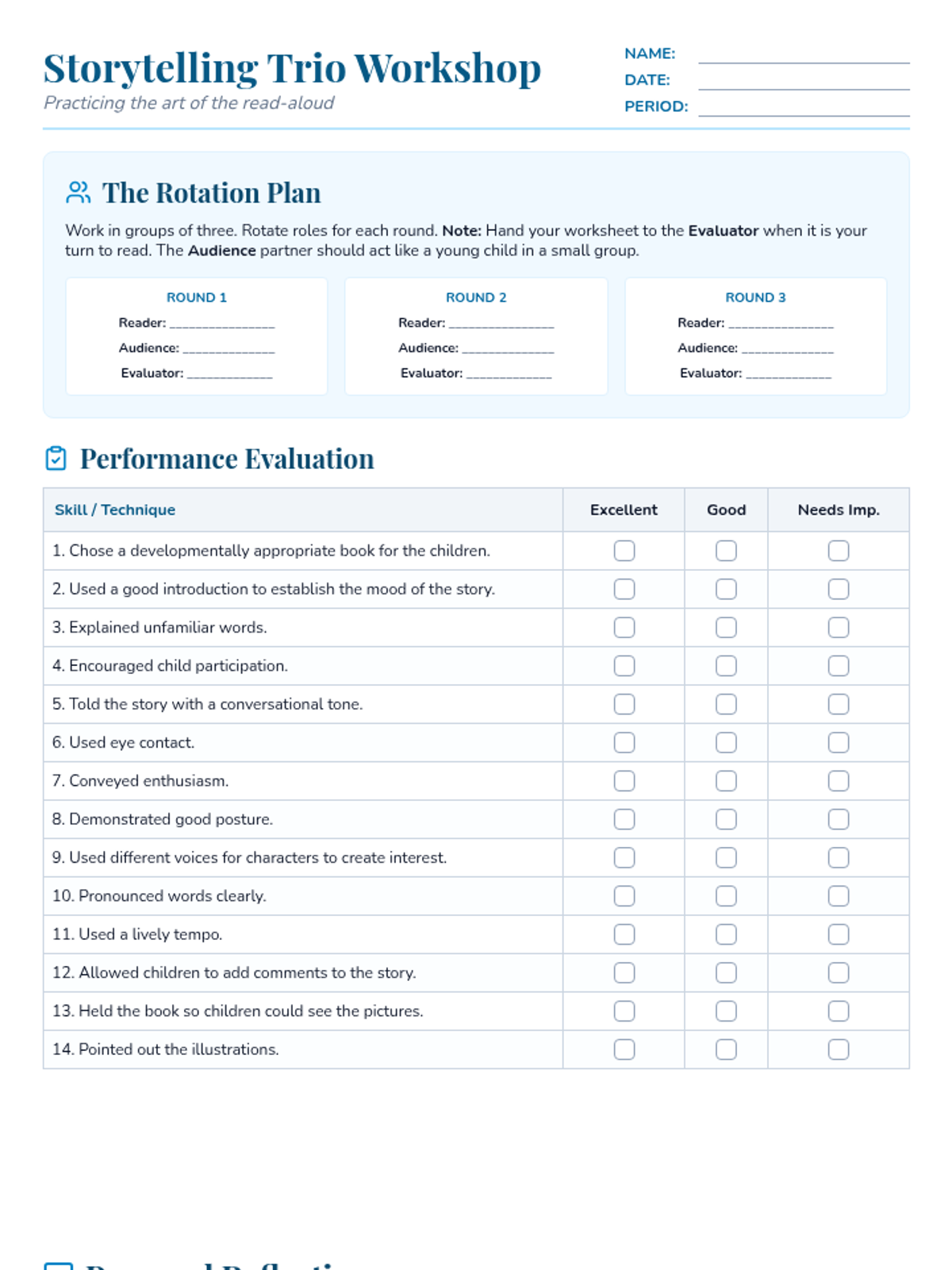
A printable storytelling evaluation worksheet designed for small groups of three, including a role rotation guide, a 14-point skill checklist, and a reflection section for students to assess their read-aloud techniques.
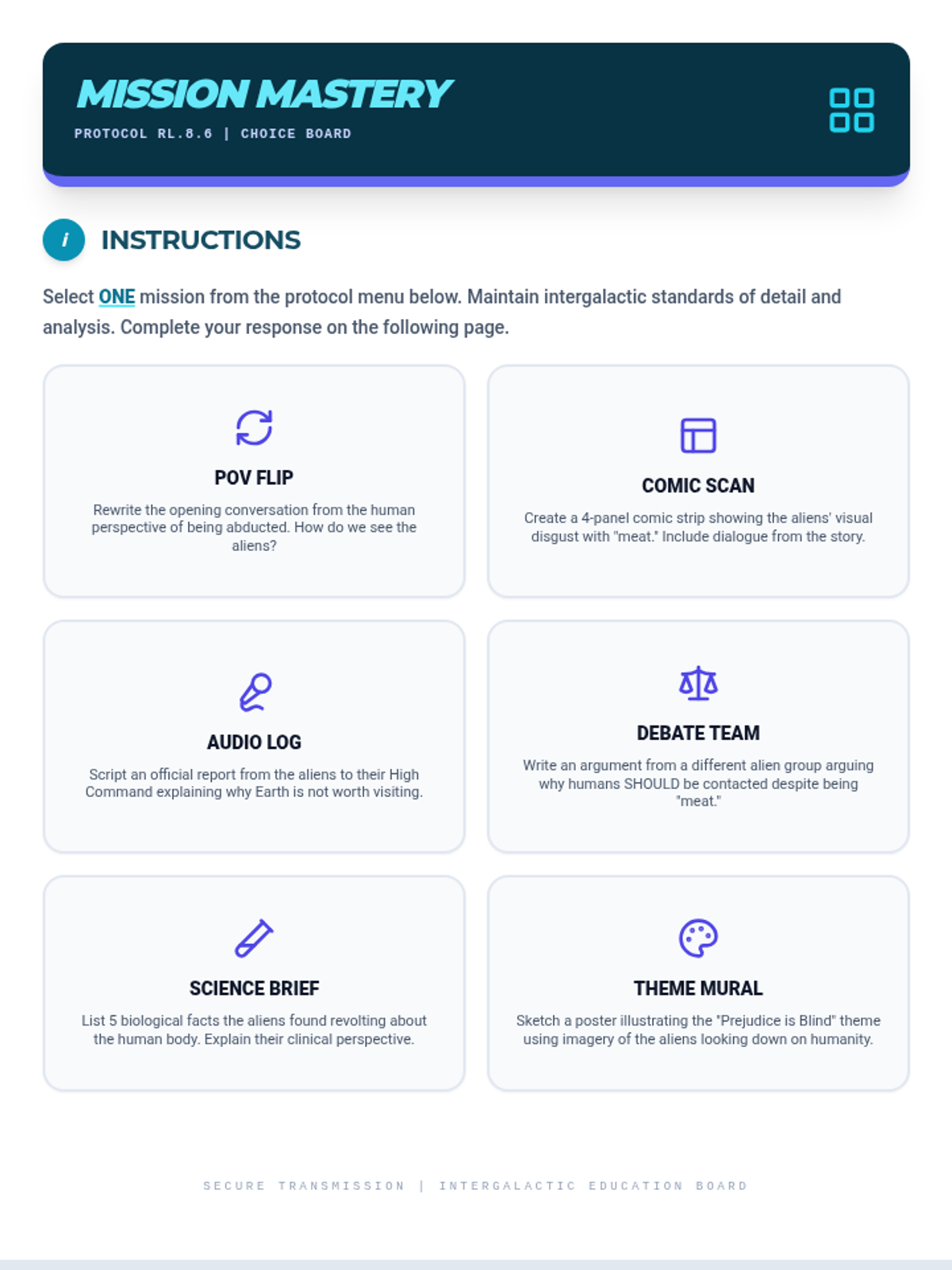
Differentiated Choice Board with 6 learner options focused on point of view, theme, and creative extension of 'They're Made out of Meat'. Includes a dedicated response sheet with ruled lines and a visual storyboard grid.
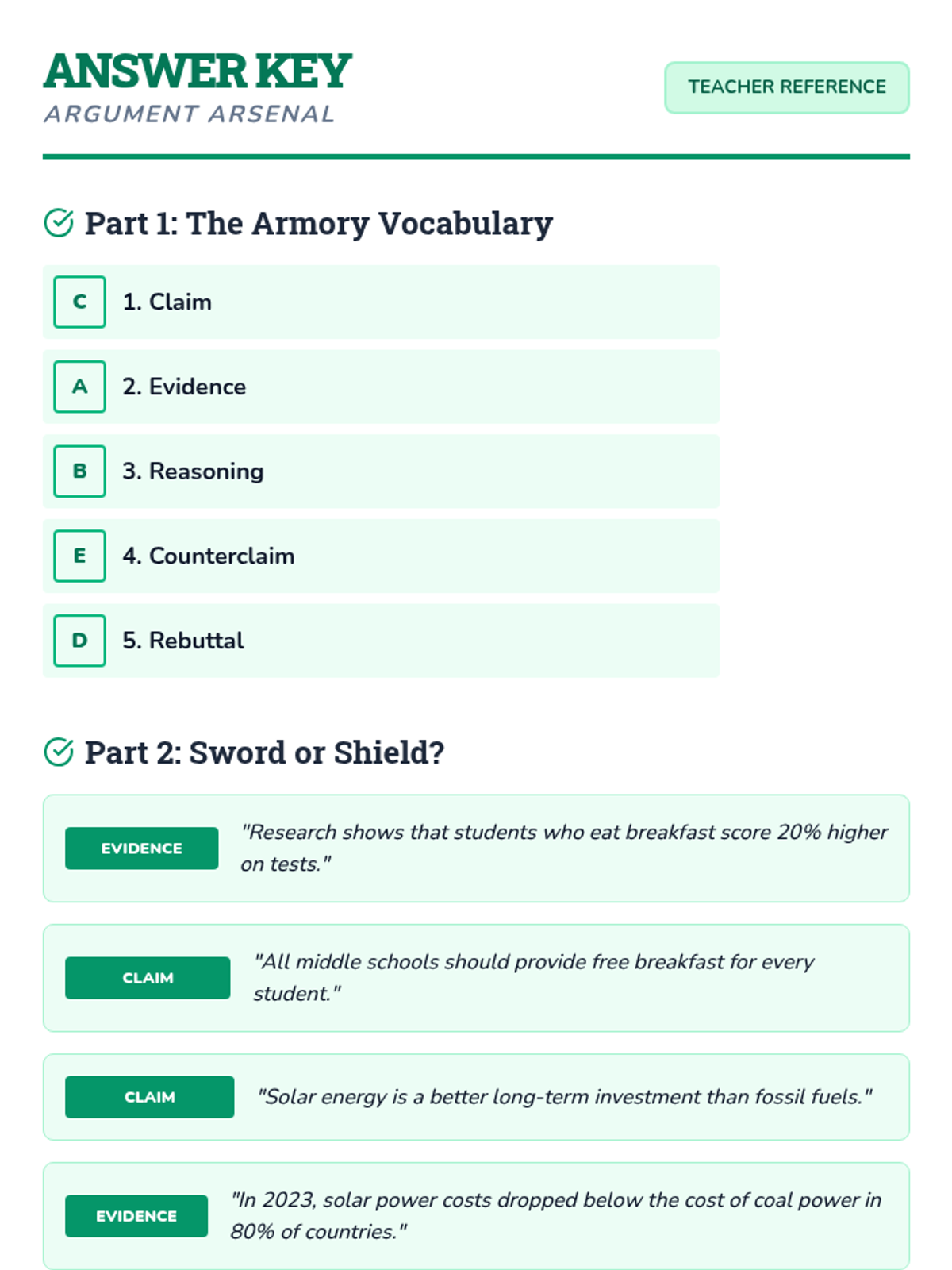
Teacher's answer key for the Argument Arsenal worksheet, including correct vocabulary matches and example evidence responses.
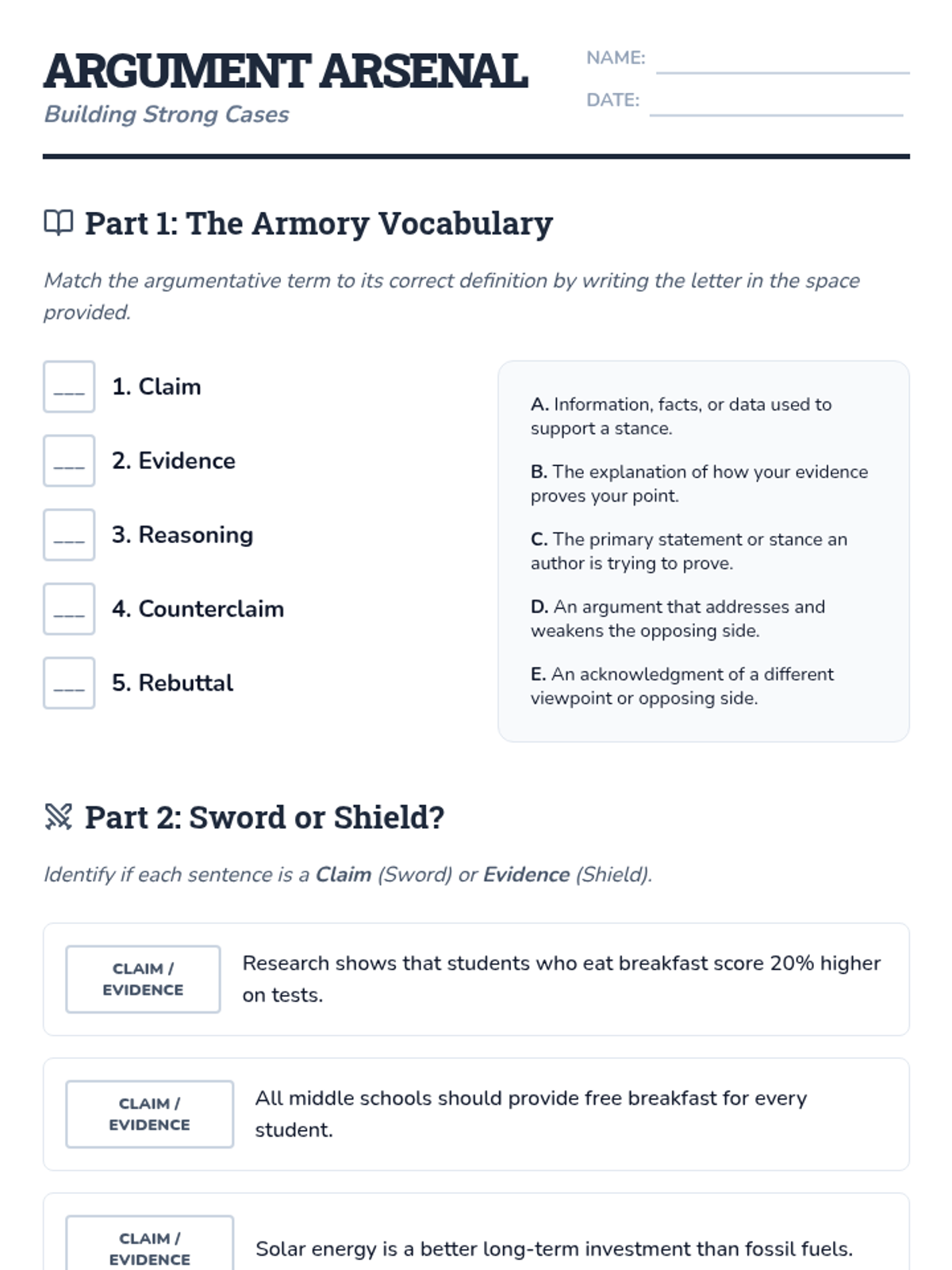
A vocabulary-focused worksheet on argumentative claims and evidence, featuring matching and sentence identification exercises. Revised for better page flow and contrast.
Instructional slides for the "Argument Arsenal" lesson, defining claim, evidence, and reasoning with a medieval armory visual theme.
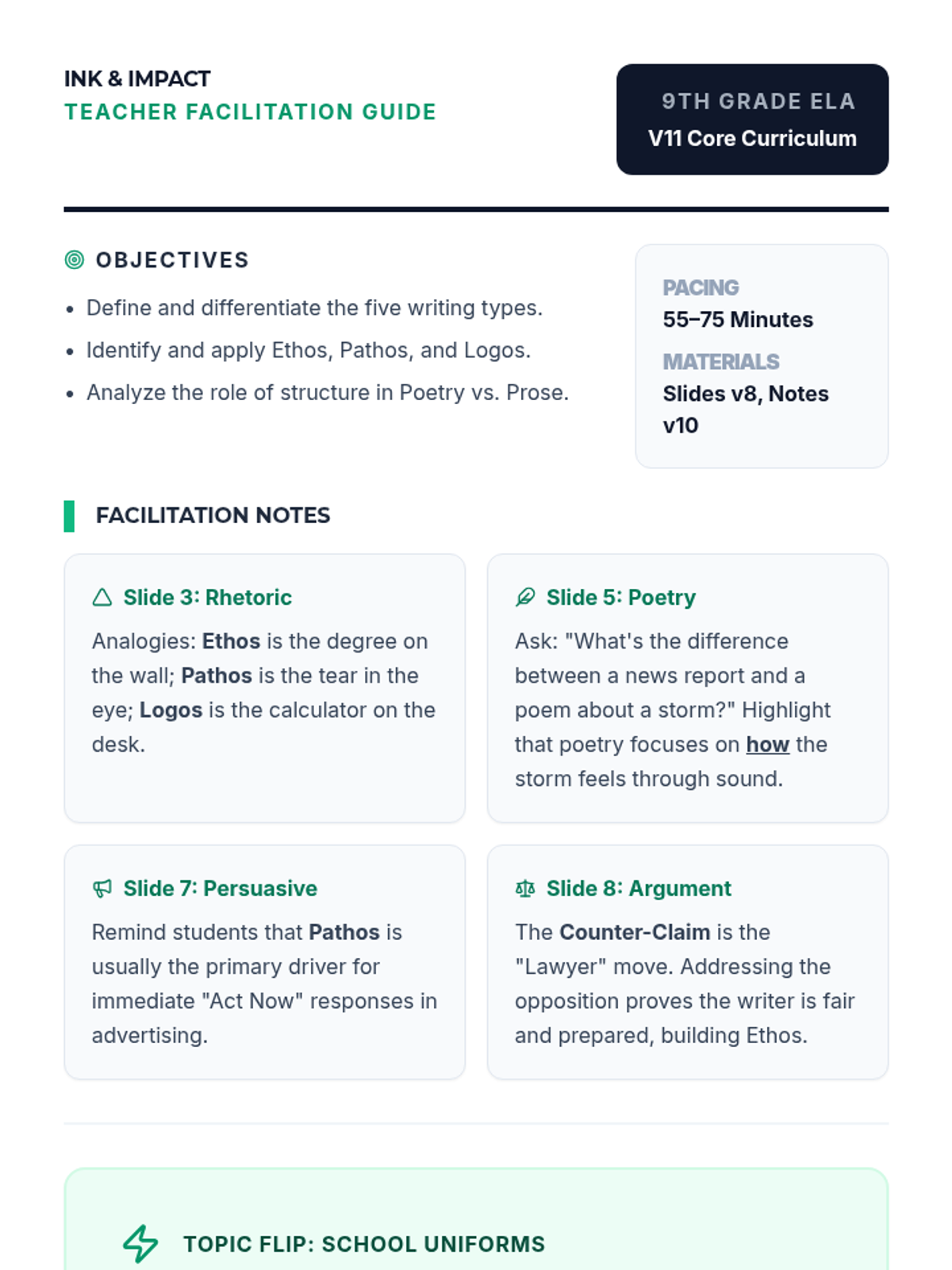
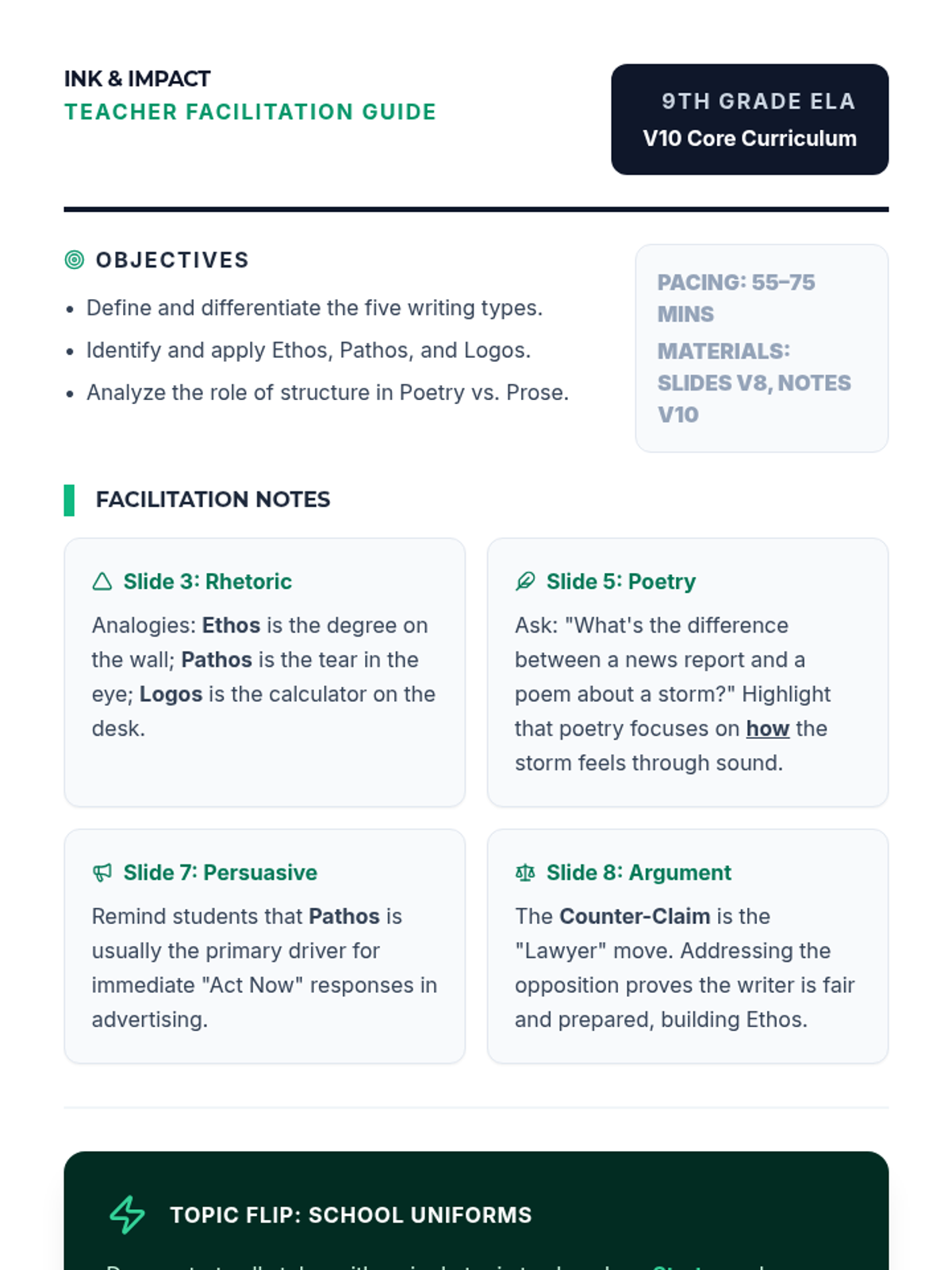
An updated teacher guide for the Ink and Impact lesson. Includes facilitation notes for the new Poetry slide and a complete set of five Topic Flip examples. Optimized for Page 1 facilitation and Page 2 activity with improved contrast.
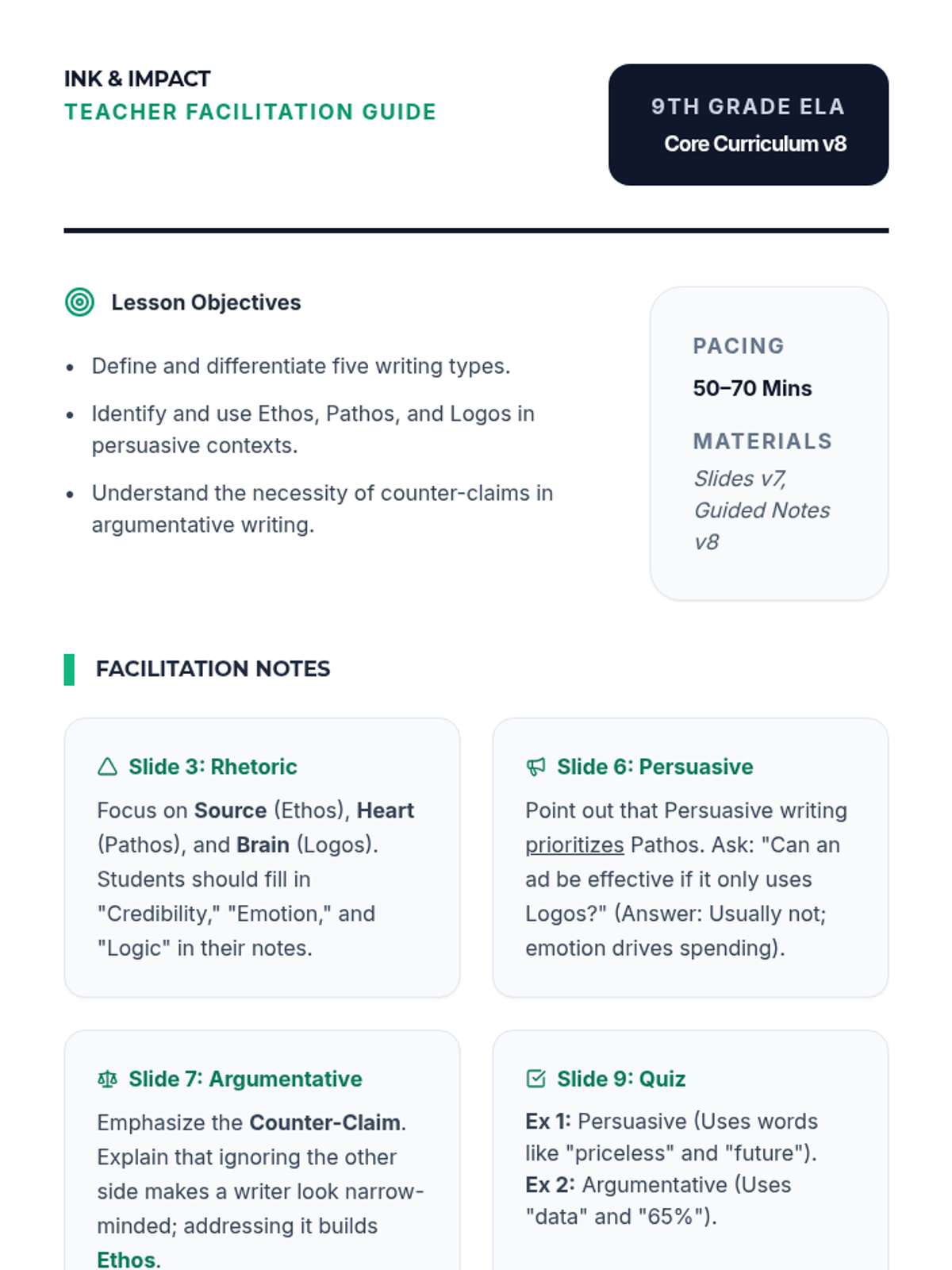
An updated teacher guide for the Ink and Impact lesson. Includes facilitation notes for the new Poetry slide and a complete set of five Topic Flip examples. Optimized for Page 1 facilitation and Page 2 activity.
An upgraded slide deck for 9th graders covering the five writing types with clear definitions, concrete examples, and a dedicated breakdown of Ethos, Pathos, and Logos. Includes a specific new focus slide on Poetry as part of Creative Writing. Text is optimized for high readability.
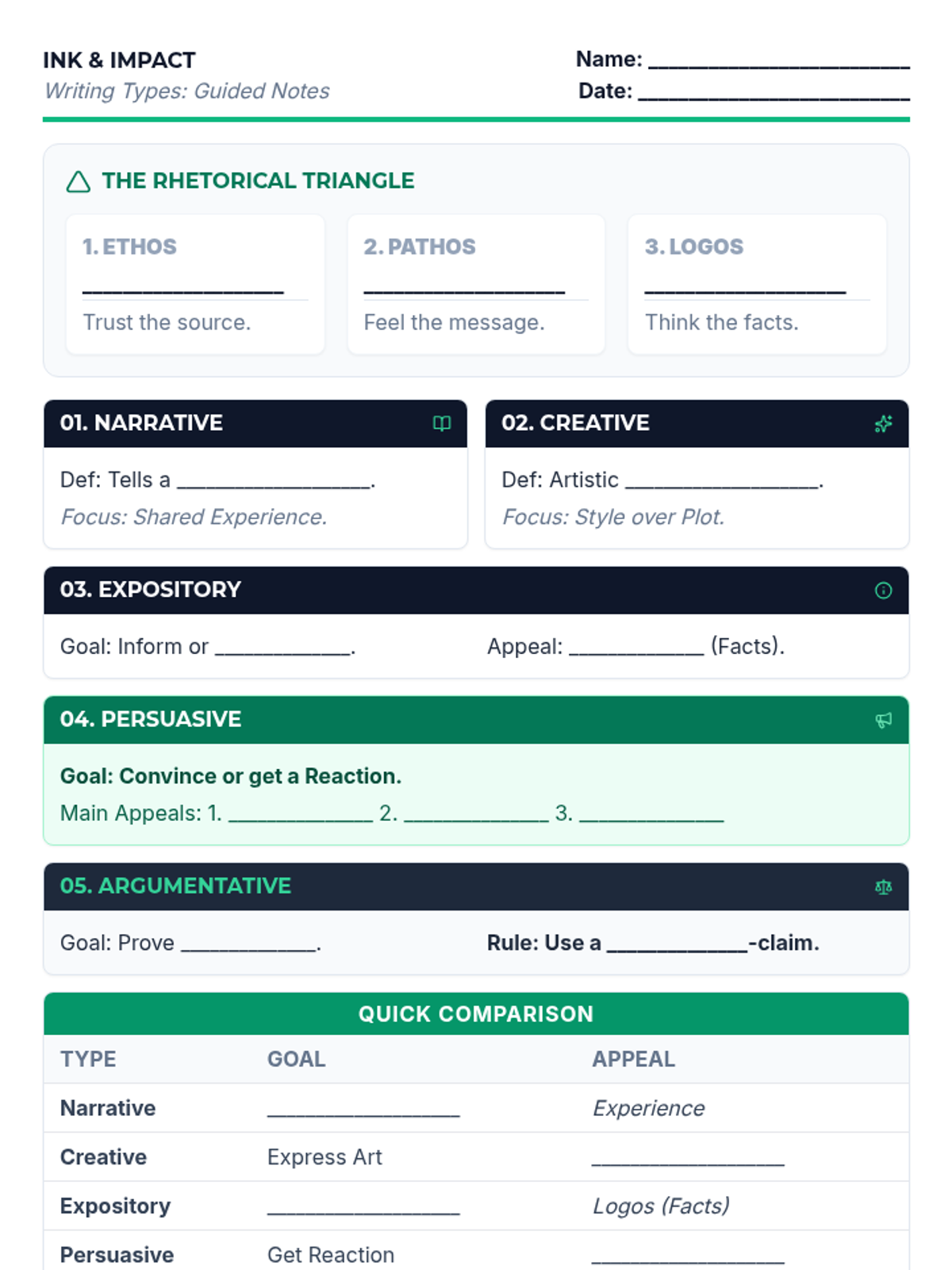
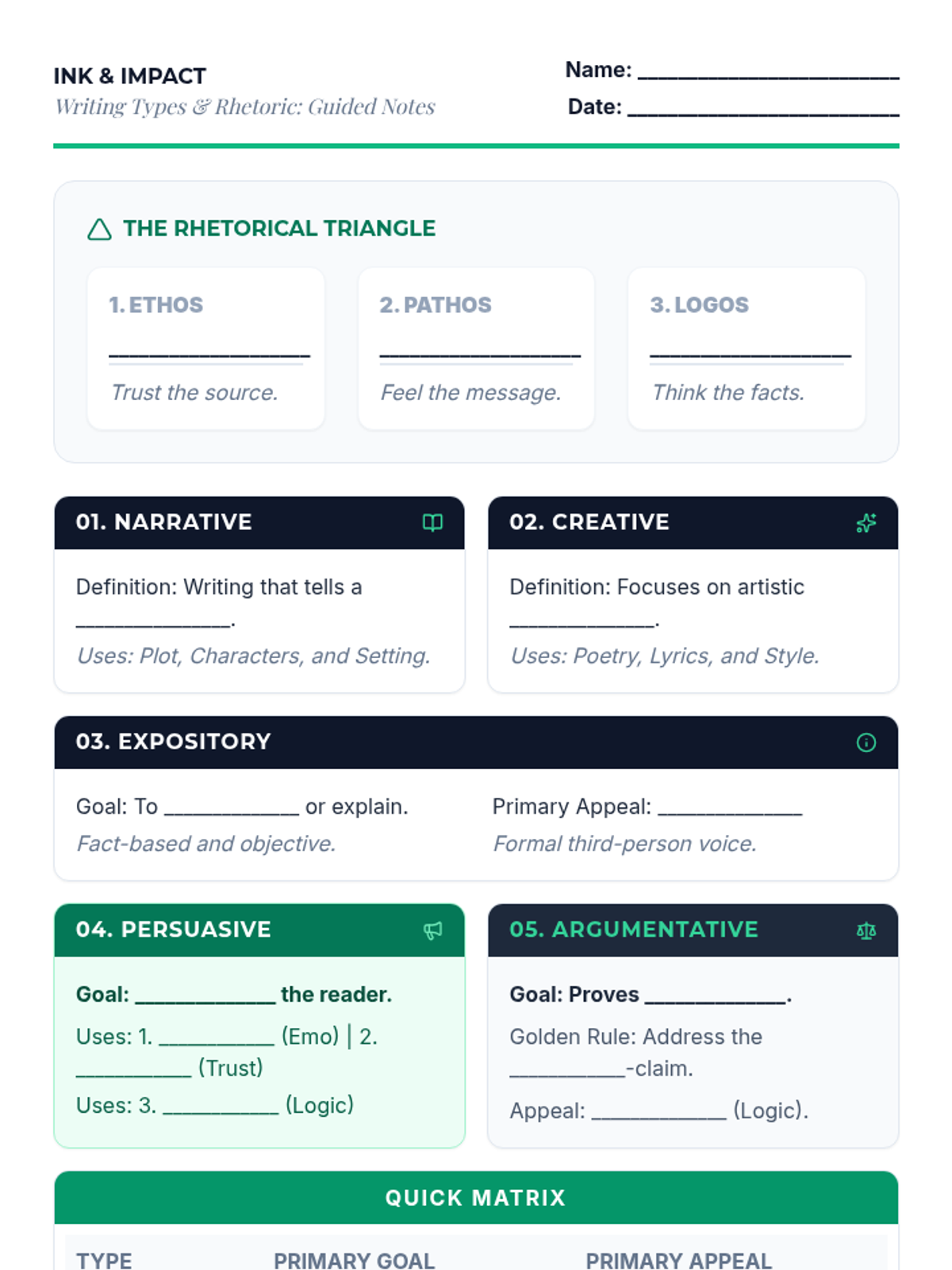
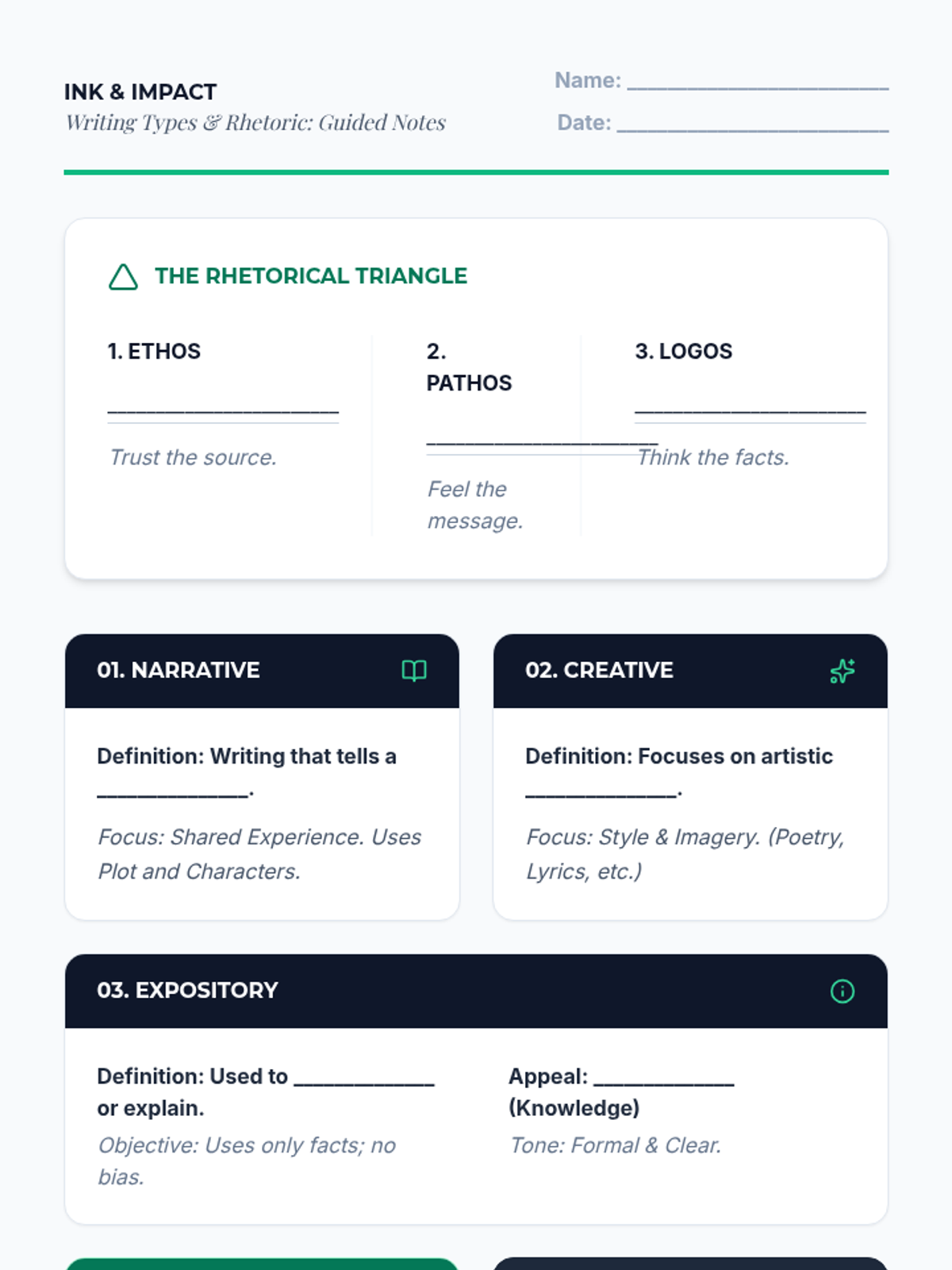
A high-quality, single-page guided notes assignment for 9th graders. Optimized for print with clear contrast, generous handwriting areas, and a cohesive instructional flow. Includes a dedicated rhetorical triangle section.
A refined teacher guide for the Ink and Impact lesson. Includes fixed page breaks, corrected grammar, and a complete set of five Topic Flip examples. Optimized for Page 1 facilitation and Page 2 activity.
A tightly optimized, single-page guided notes assignment for 9th graders. Includes Rhetorical Triangle section, Writing Type breakdowns, and a Comparison Matrix with improved handwriting areas.
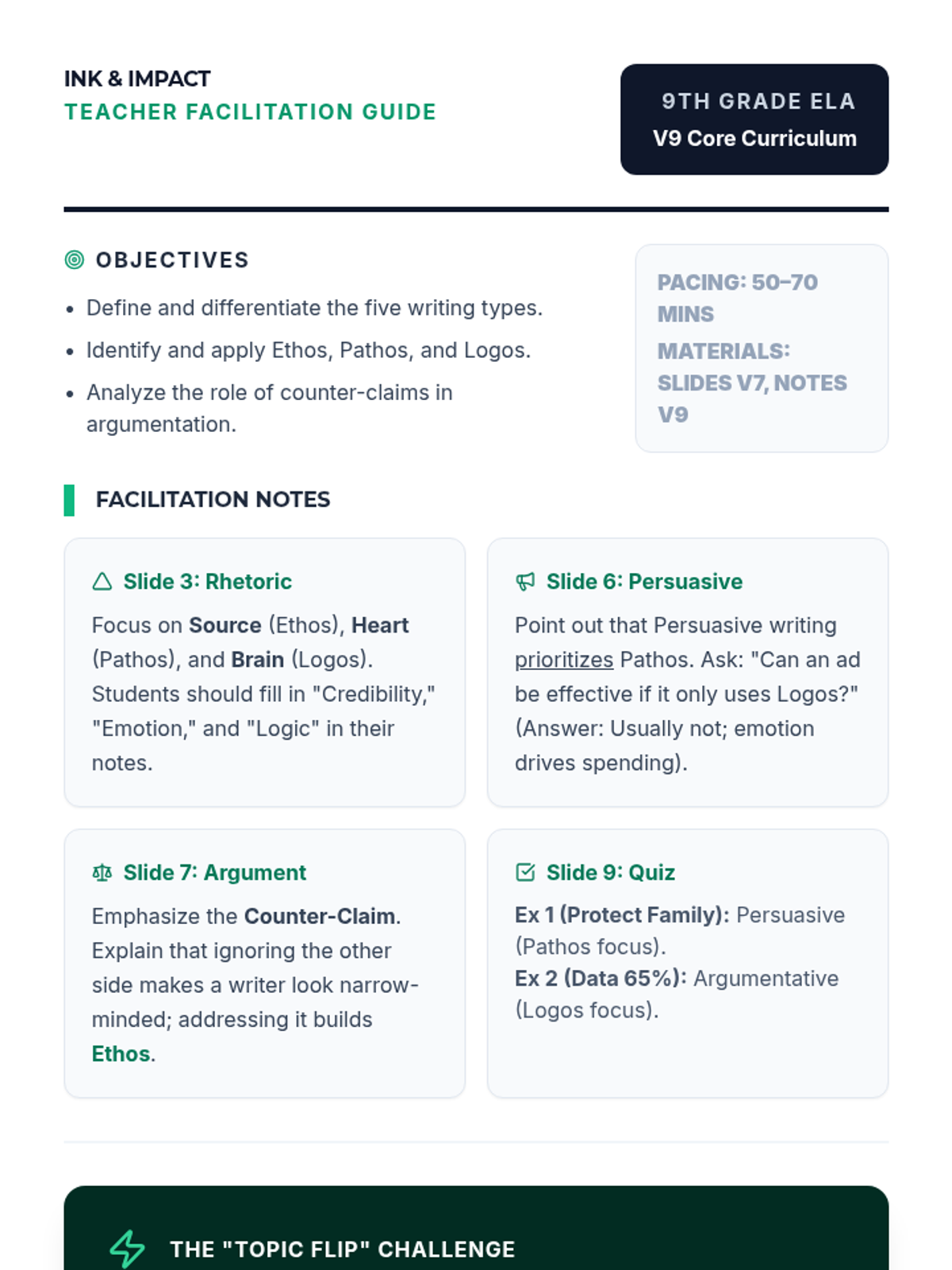
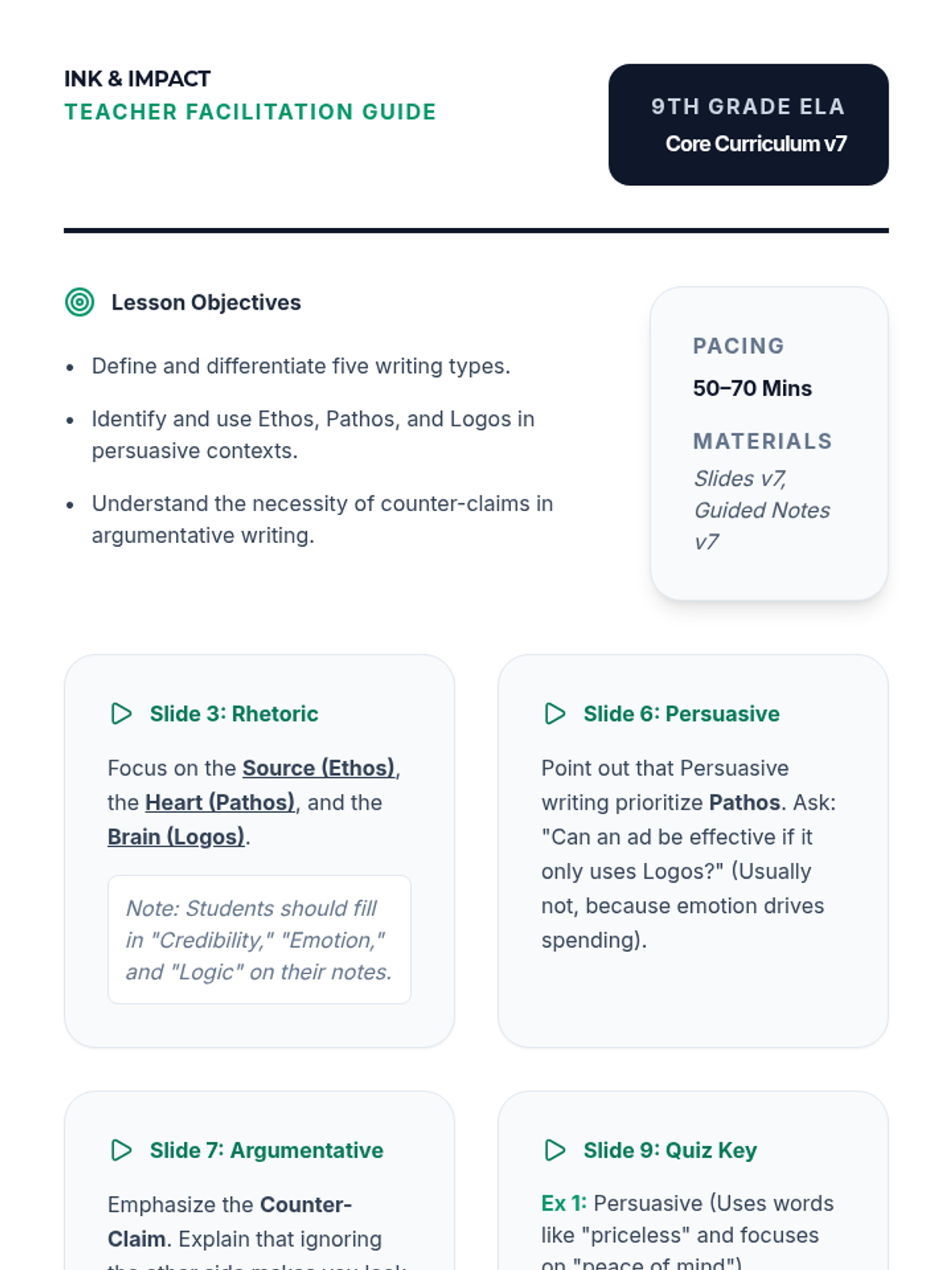
An updated teacher guide for 9th grade including notes on the Rhetorical Triangle and revised activity examples featuring all five writing types. Consolidated layout for efficient classroom use. Match with v7 slides and v8 notes.
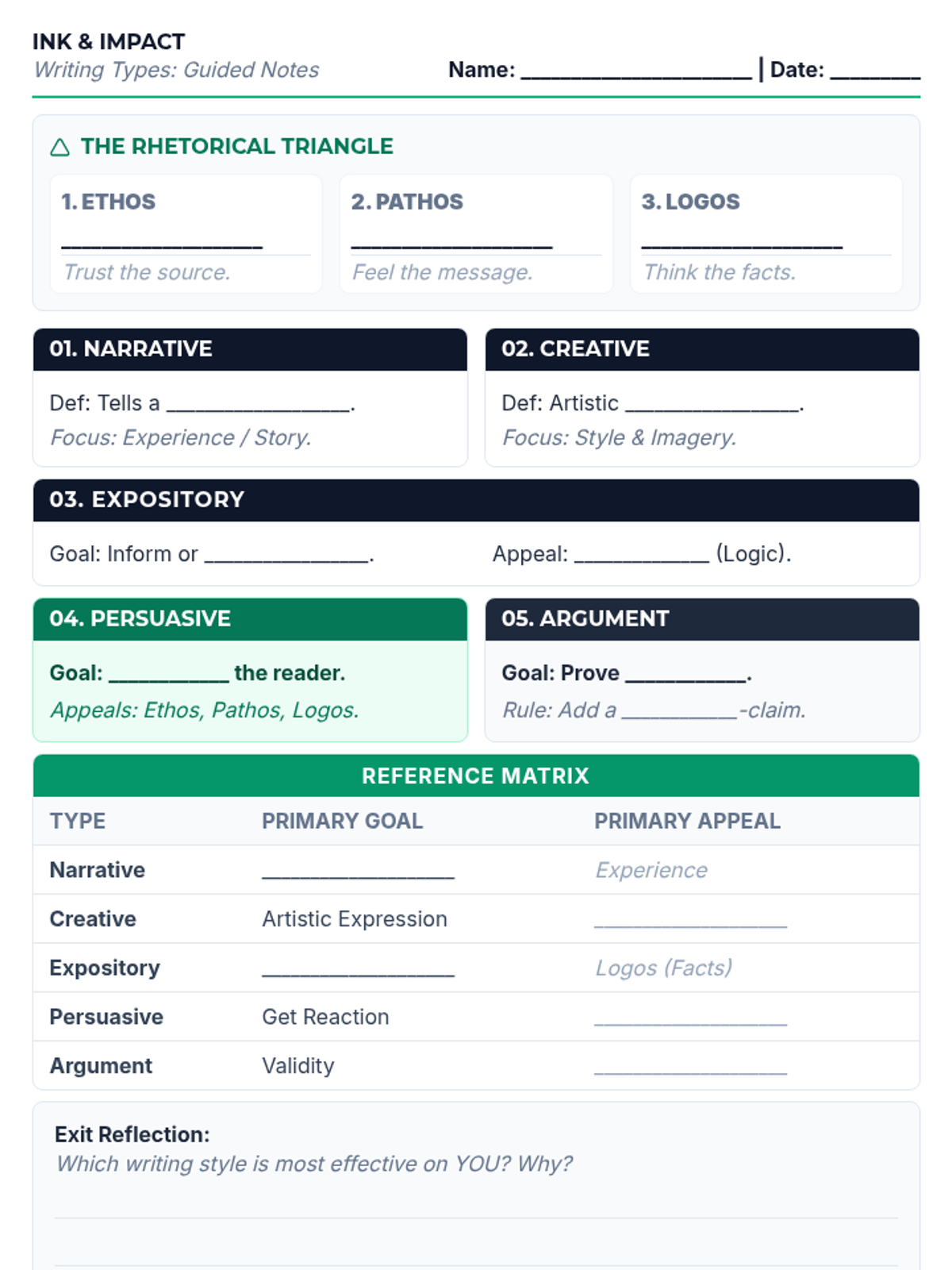
An updated guided notes assignment for 9th graders including a Rhetorical Triangle section and blanks for definitions and appeals for all five writing types. Optimized for a single page with legible student work areas.
An updated teacher guide for 9th grade including notes on the Rhetorical Triangle and revised activity examples. Refined layout for better contrast and clarity. Match with v7 slides and notes.
An updated guided notes assignment for 9th graders including a Rhetorical Triangle section and blanks for definitions and appeals for all five writing types. Optimized for a single page.