Cultural identity, community development, and public policy through the lens of creative practice. Addresses arts advocacy strategies and integrates interdisciplinary connections across social and professional sectors.
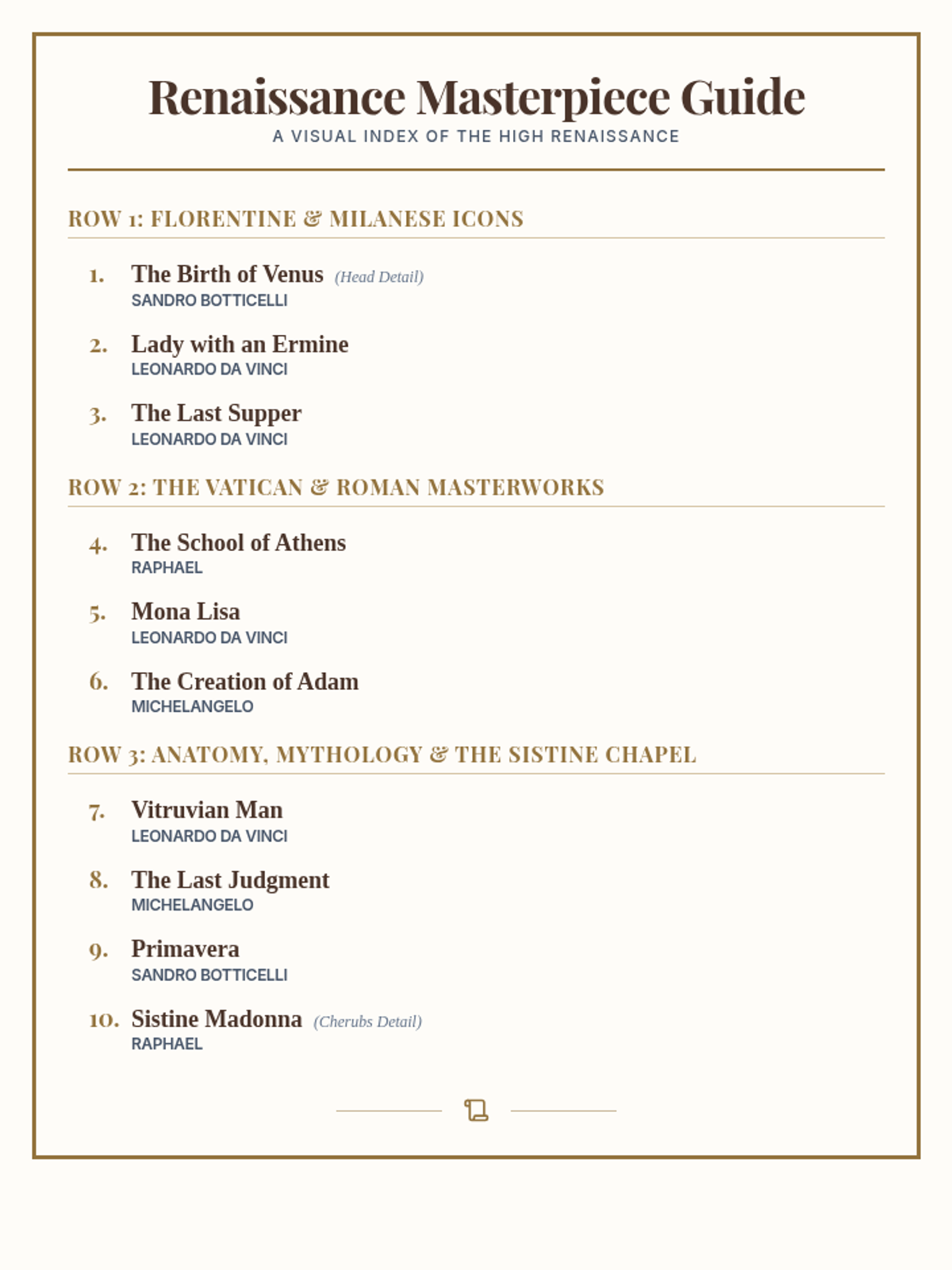
A comprehensive reference guide listing 10 Renaissance masterpieces by row, including the painting name and artist. This document features an elegant, museum-inspired design with gold accents and classical typography.
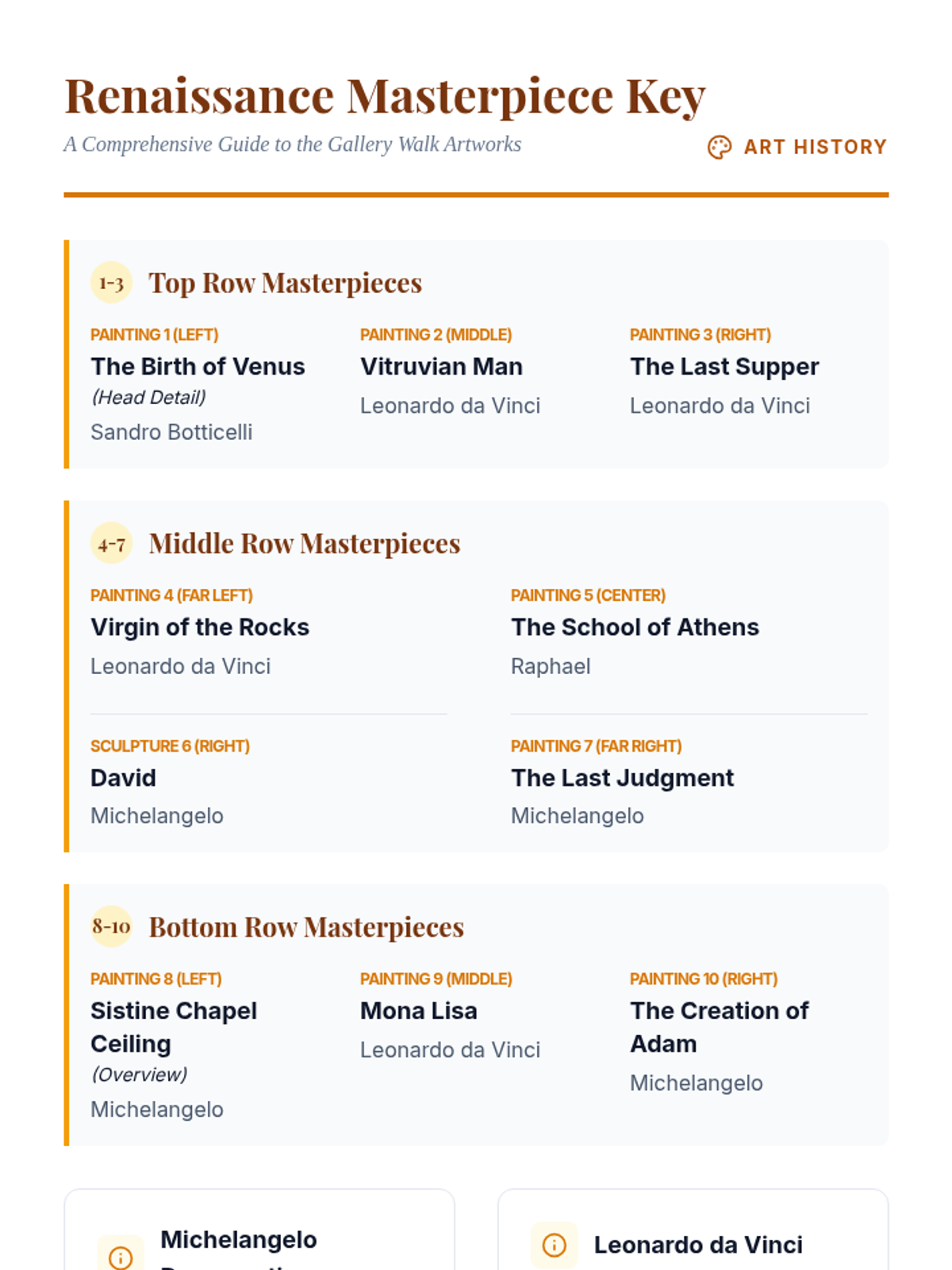
A comprehensive identification guide for the Renaissance Gallery Walk artworks, providing names and artists for each of the 10 featured masterpieces in a clean, professional layout.
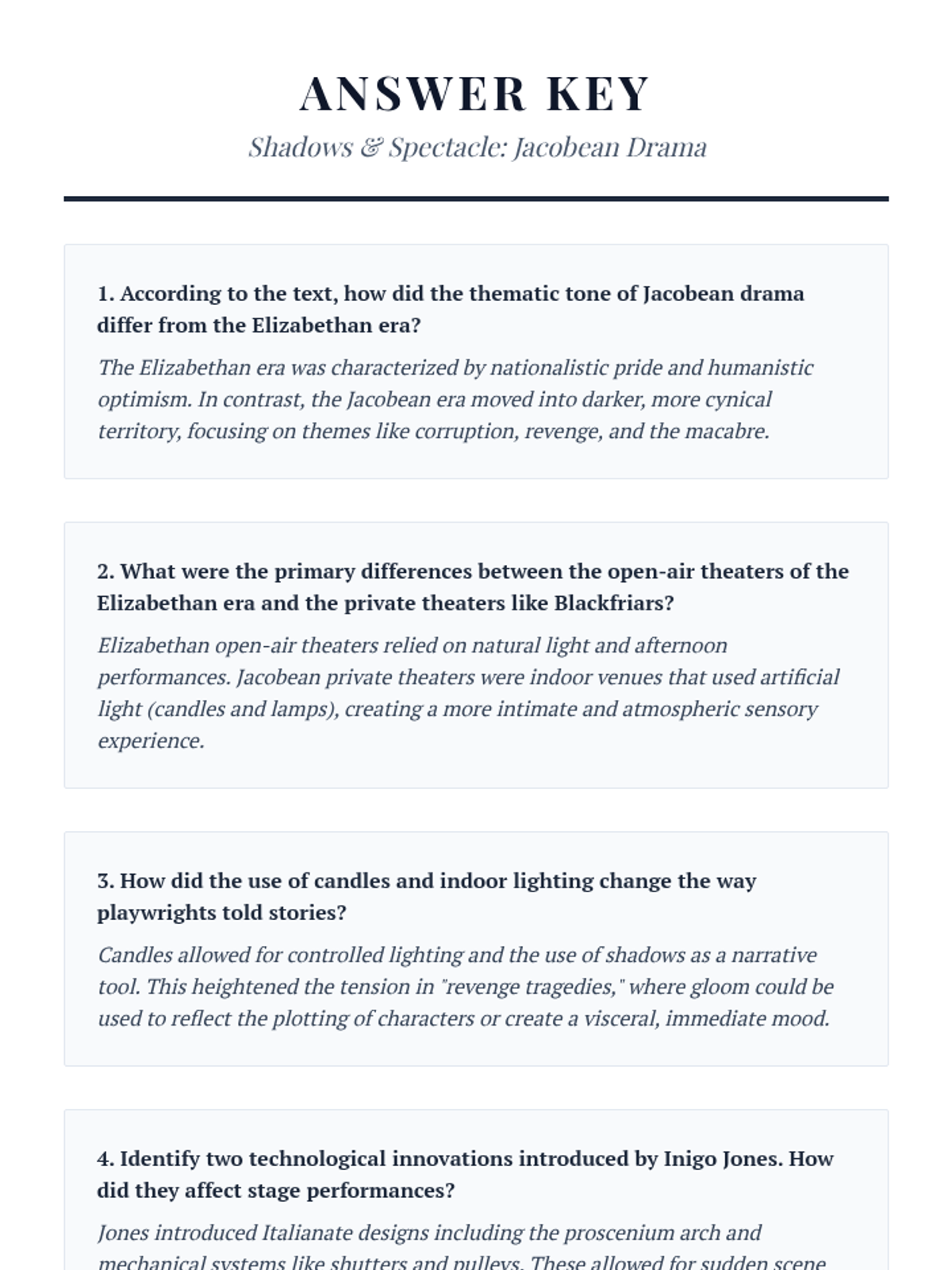
The answer key for the Shadows and Spectacle handout, providing suggested responses for the comprehension questions.
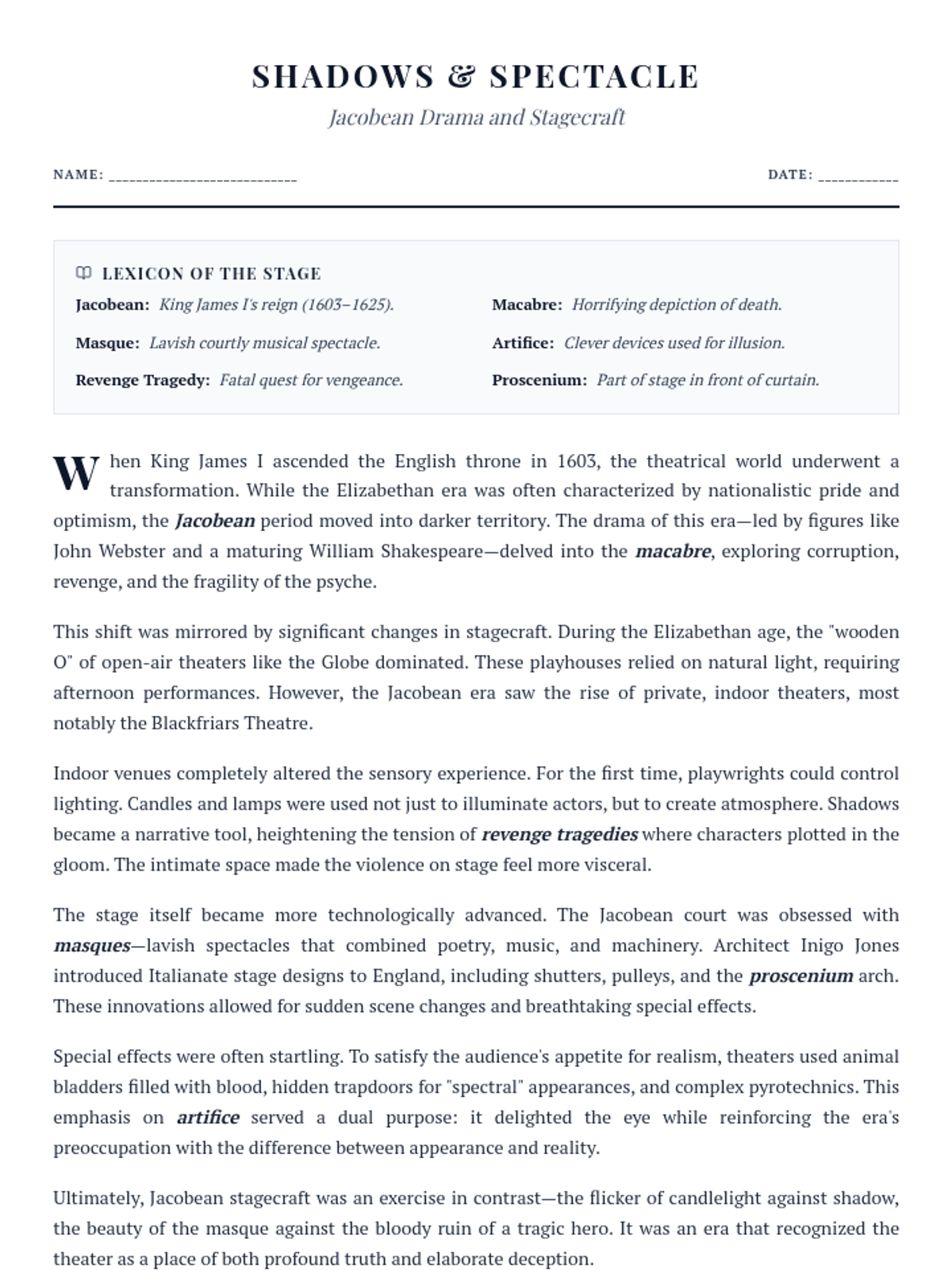
A printable handout featuring an article on Jacobean drama and stagecraft, including a vocabulary bank and five comprehension questions for independent student work.
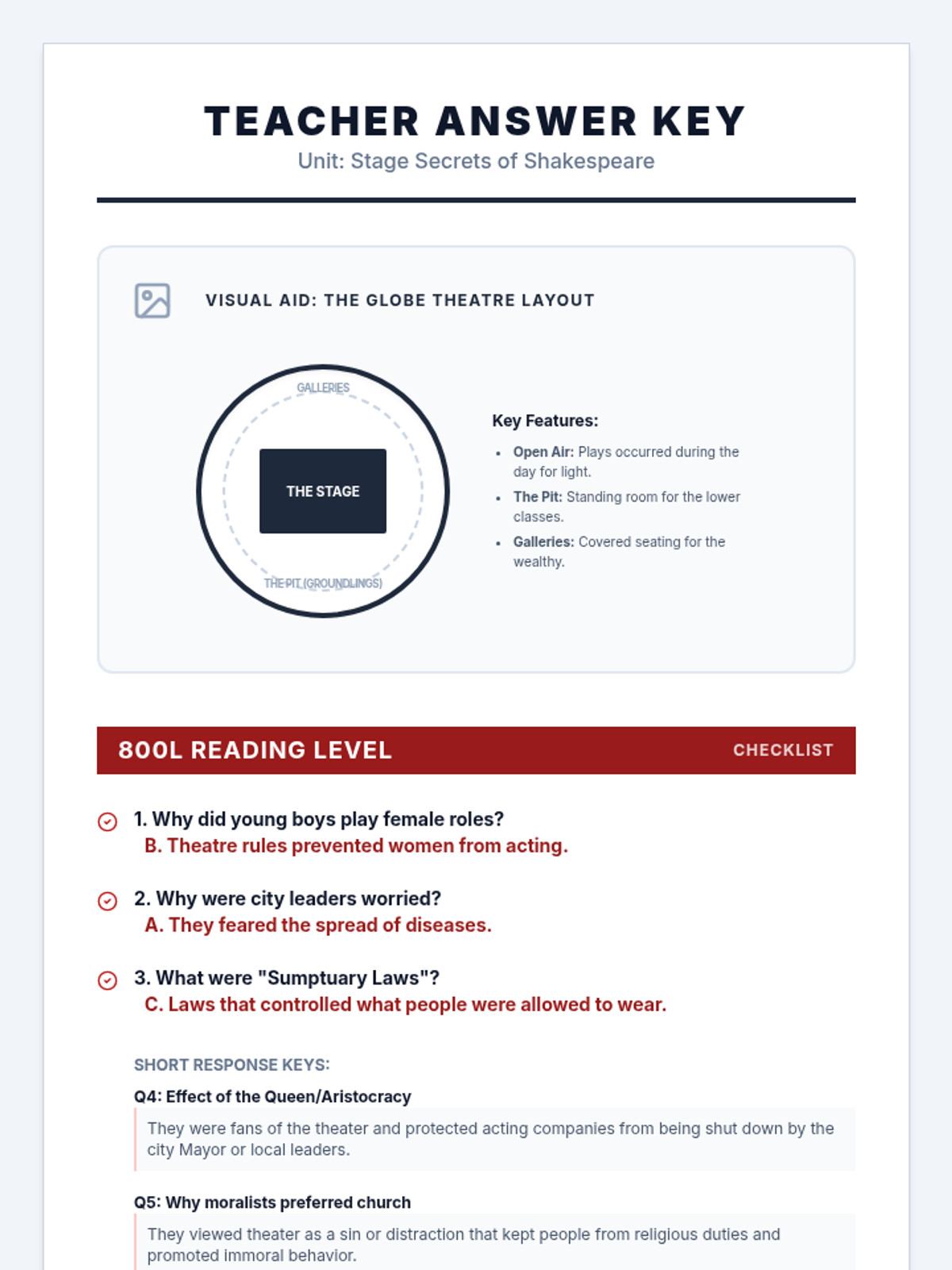
A comprehensive answer key and teacher resource guide for the Stage Secrets reading passages. Includes answers for both 800L and 500L Lexile versions, along with instructional tips and discussion prompts.
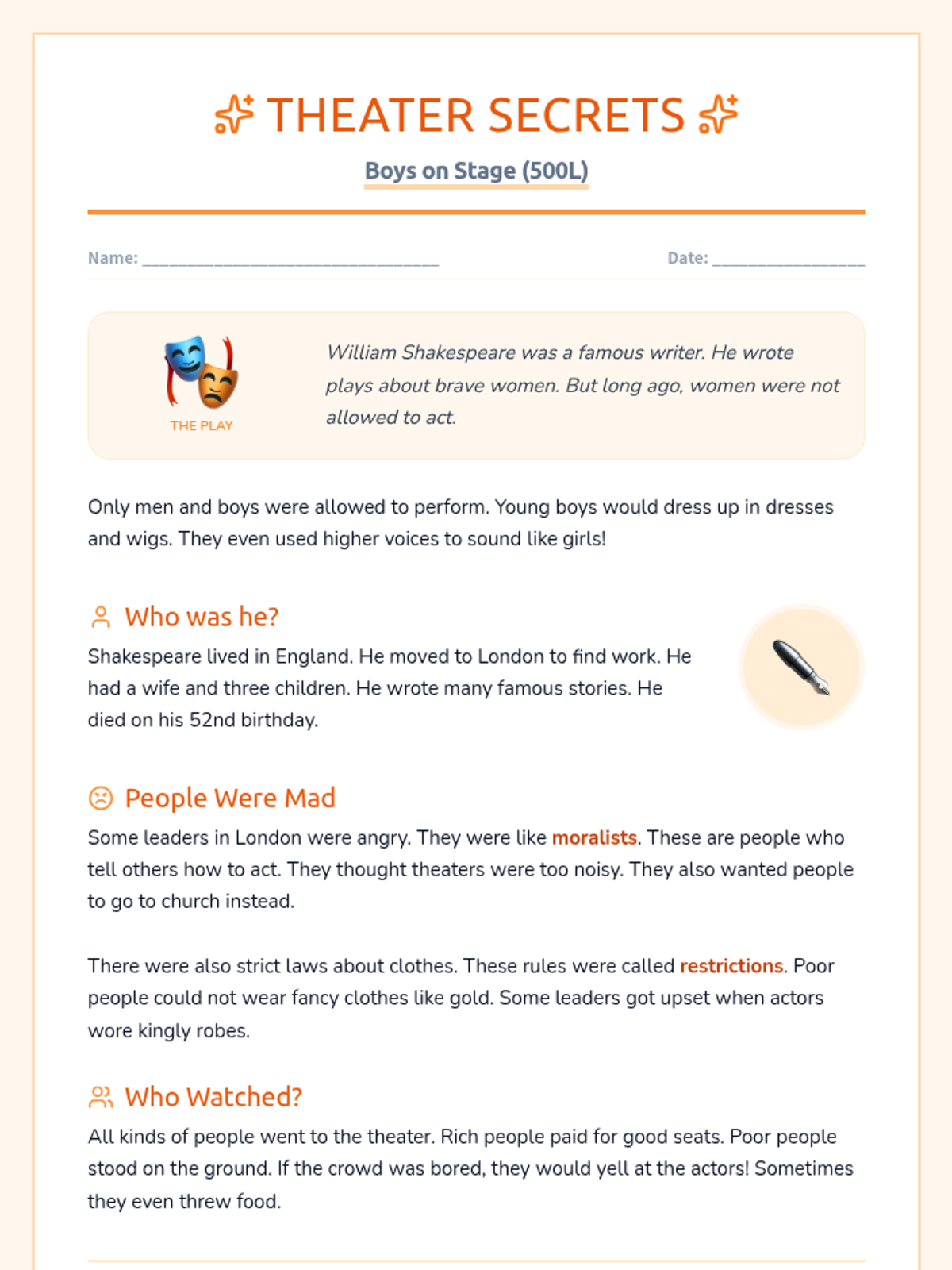
A simplified reading passage and comprehension questions about Shakespearean theater, leveled to a 500L Lexile. Includes a visual-heavy layout with simplified vocabulary definitions for early readers or English language learners.
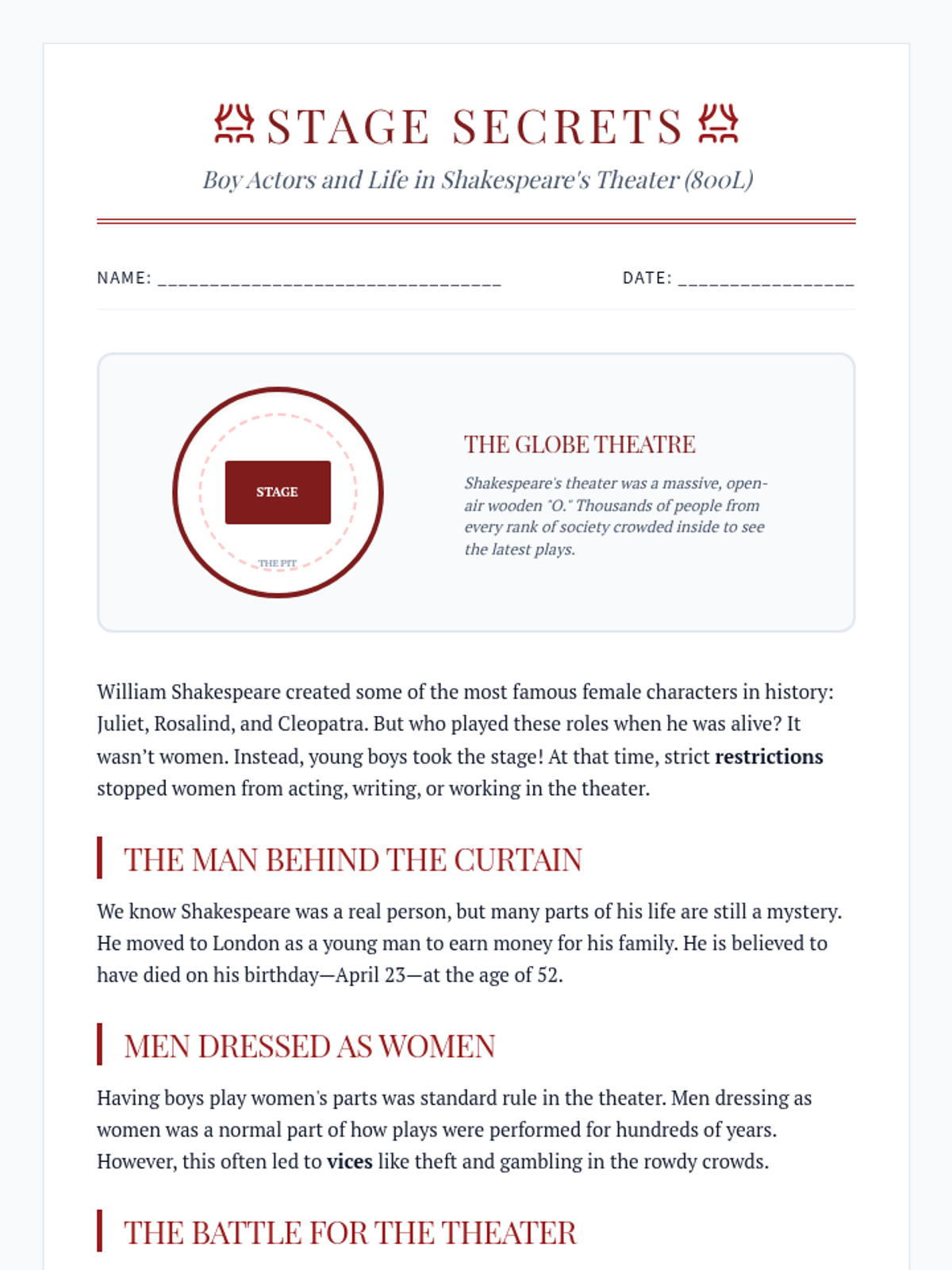
A reading passage and comprehension questions about Shakespearean theater and boy actors, leveled to an 800L Lexile. The material explores the historical context of performance, social opposition, and the diverse audience of the era.
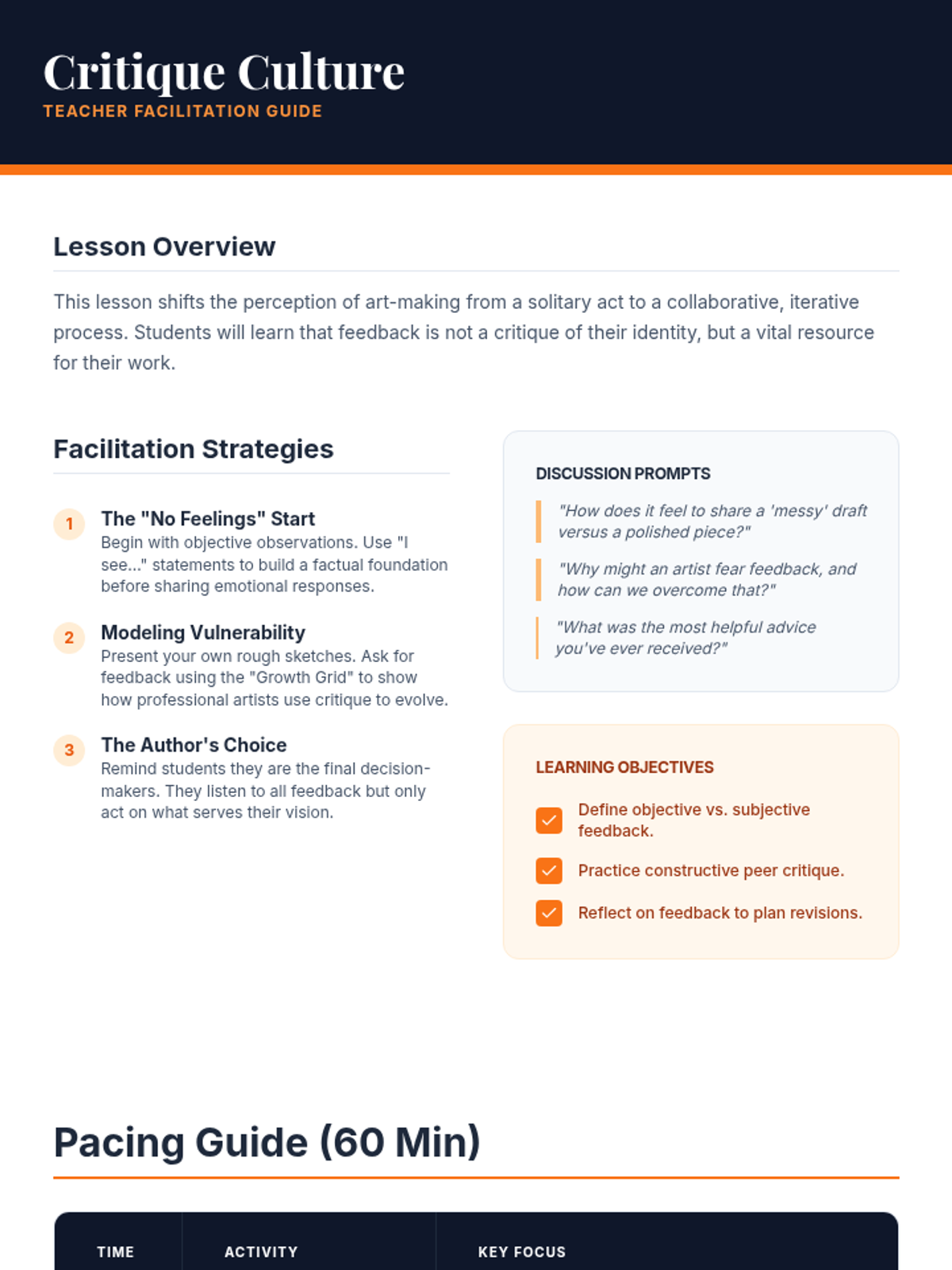
A comprehensive guide for teachers to facilitate art critiques, including discussion prompts, learning objectives, and a 60-minute pacing guide.
A presentation deck introducing the concept of peer feedback in contemporary art, including a placeholder for a specific video and key critical vocabulary.
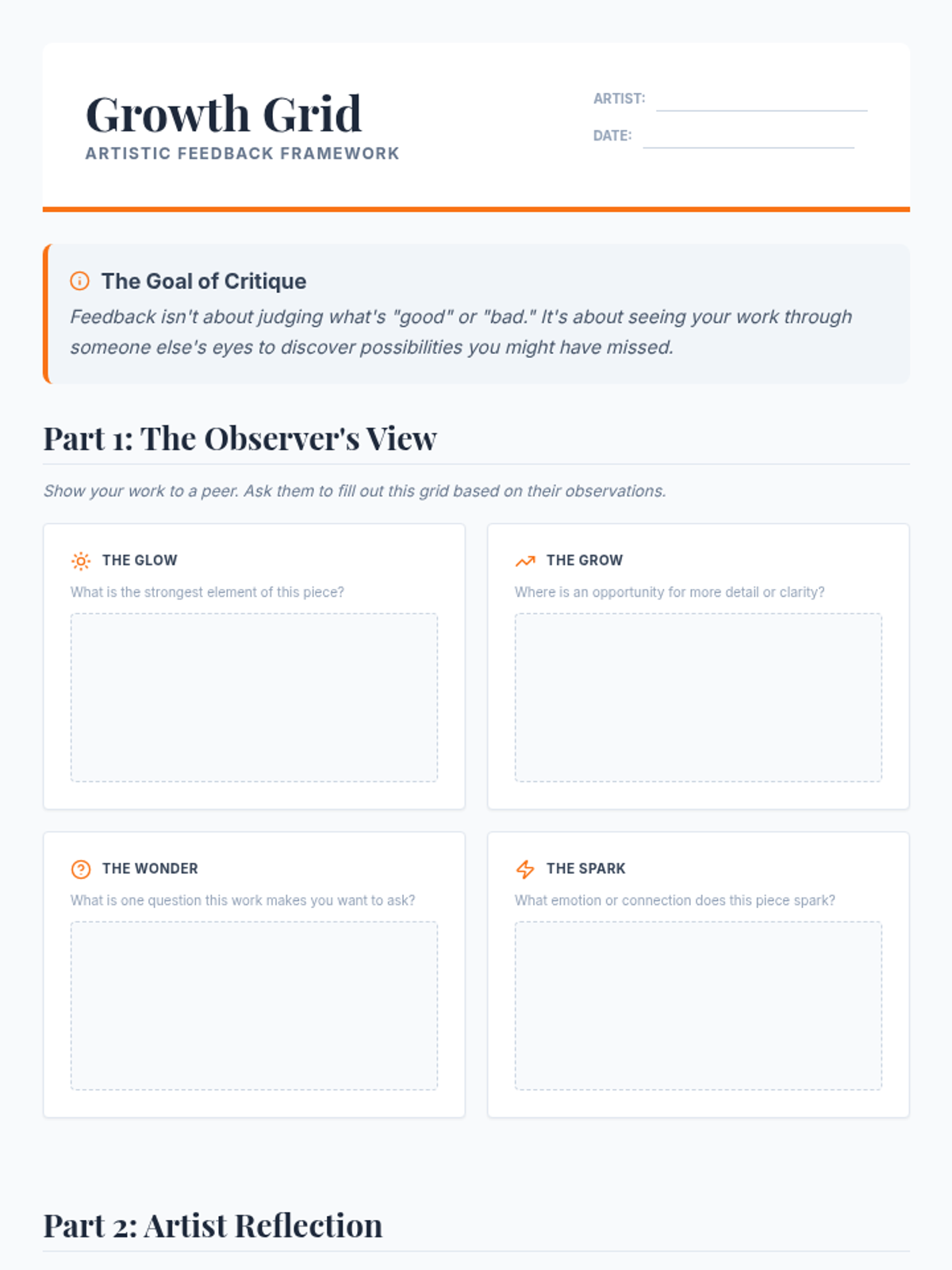
A structured feedback worksheet for art students to use during peer critiques, featuring sections for observations (glows, grows, wonders) and artist reflection.
Visual presentation slides for the final comprehension quiz of Hoot, featuring the resolution of the story and final reflections. Revised for uniform styling and high contrast.
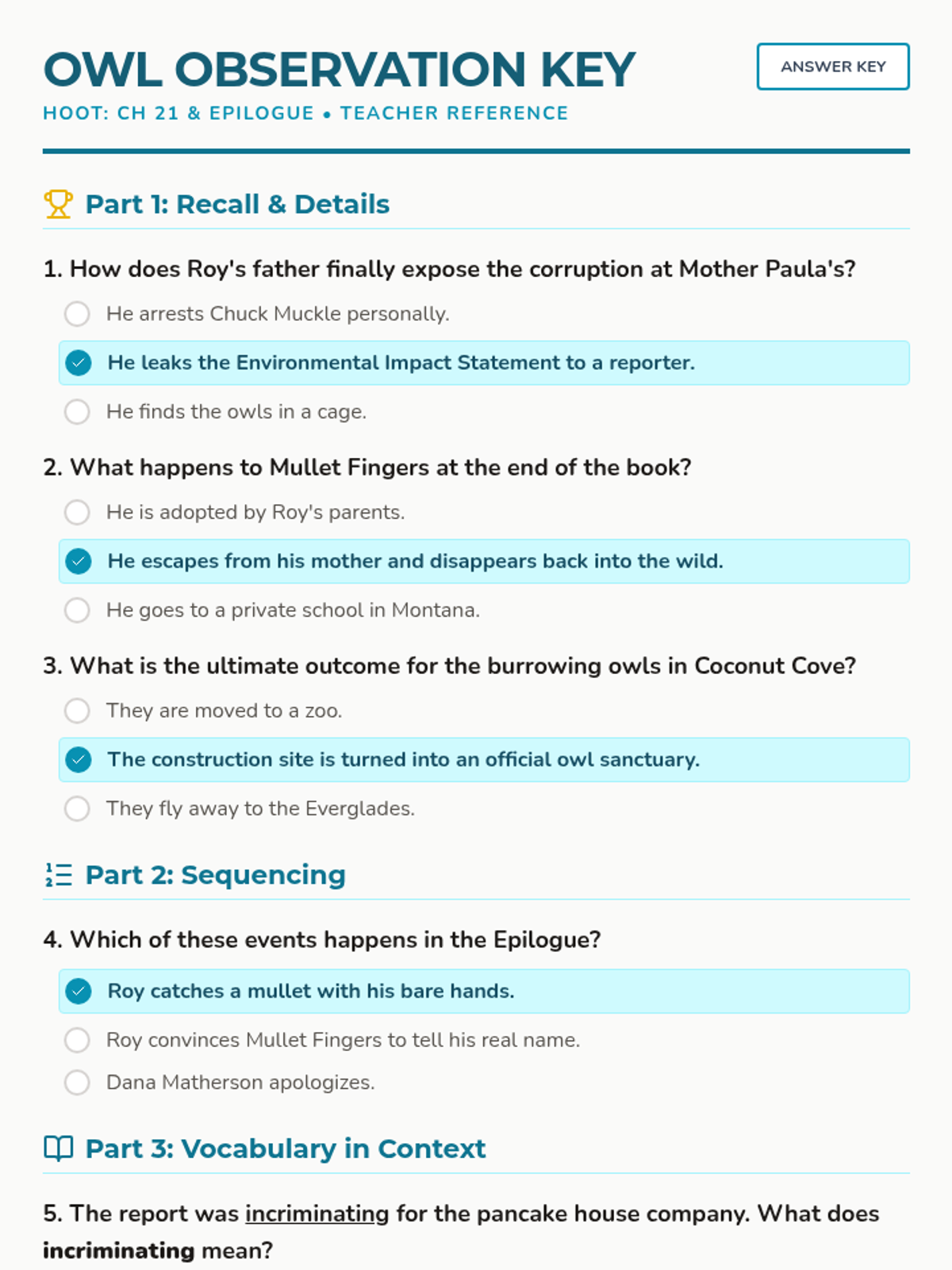
Teacher answer key for the final comprehension quiz of Hoot, covering Chapter 21 and the Epilogue. Correct answers are clearly highlighted with high contrast.
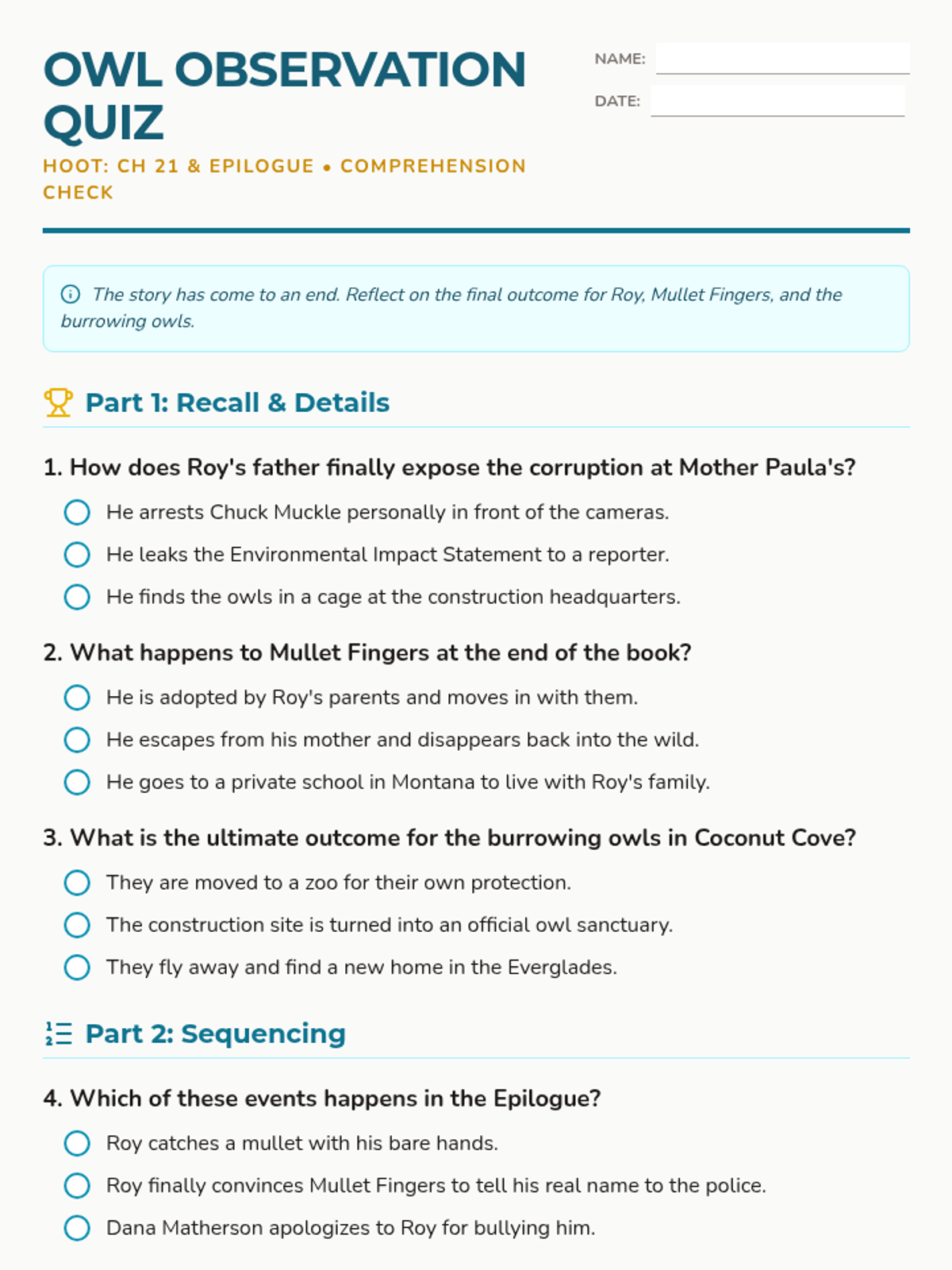
A clean, 3-option multiple choice comprehension quiz for the final chapter and epilogue of Hoot, covering the resolution of the conflict and the fate of the characters.
Visual presentation slides for the Hoot Chapters 19 & 20 comprehension quiz, featuring the protest, Chuck Muckle's reaction, and the appearance of the owl. Revised for uniform styling and high contrast.
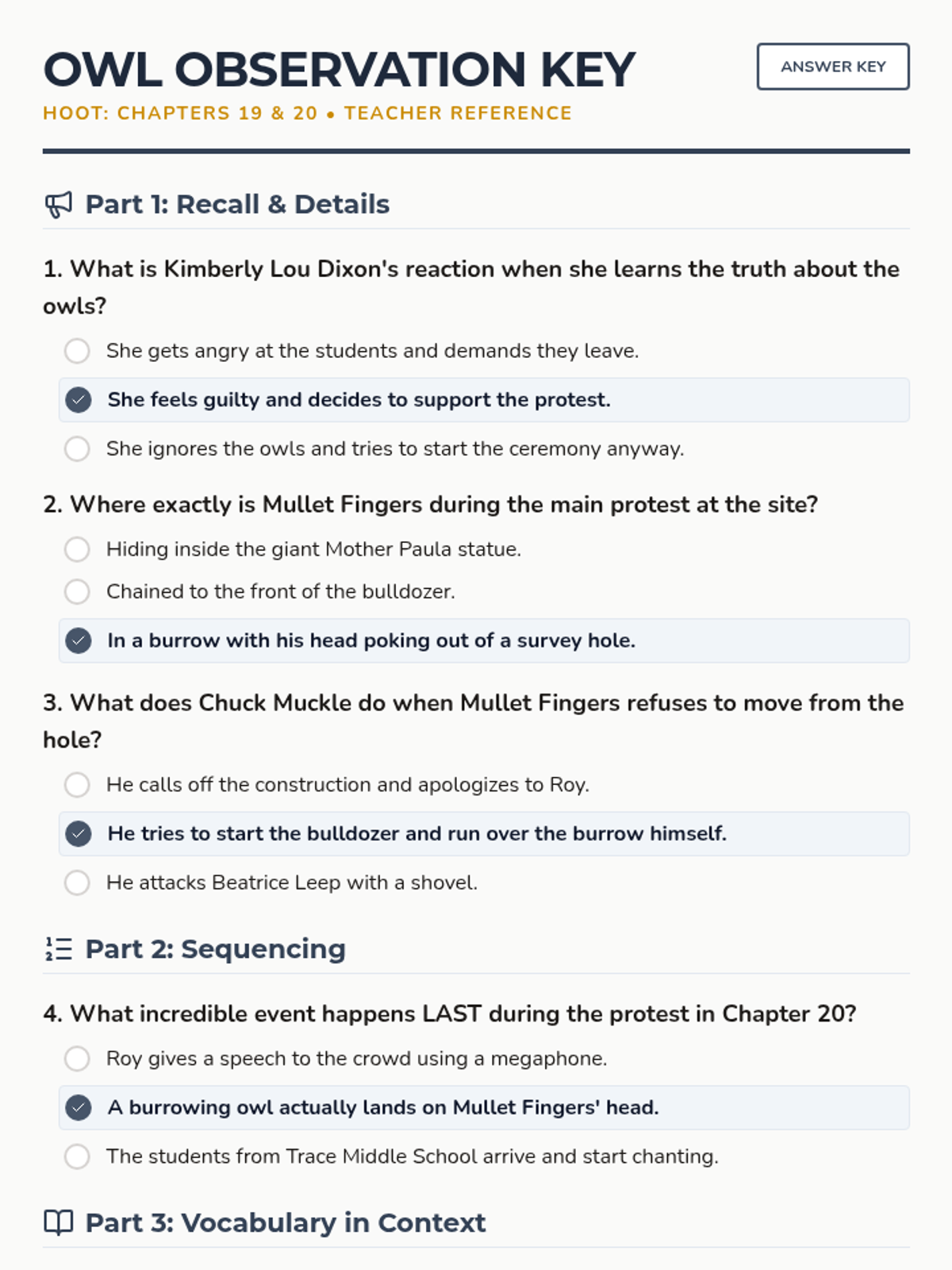
Teacher answer key for the Hoot Chapters 19 & 20 comprehension quiz. Correct answers are clearly highlighted for quick grading. Revised for better layout and high contrast.
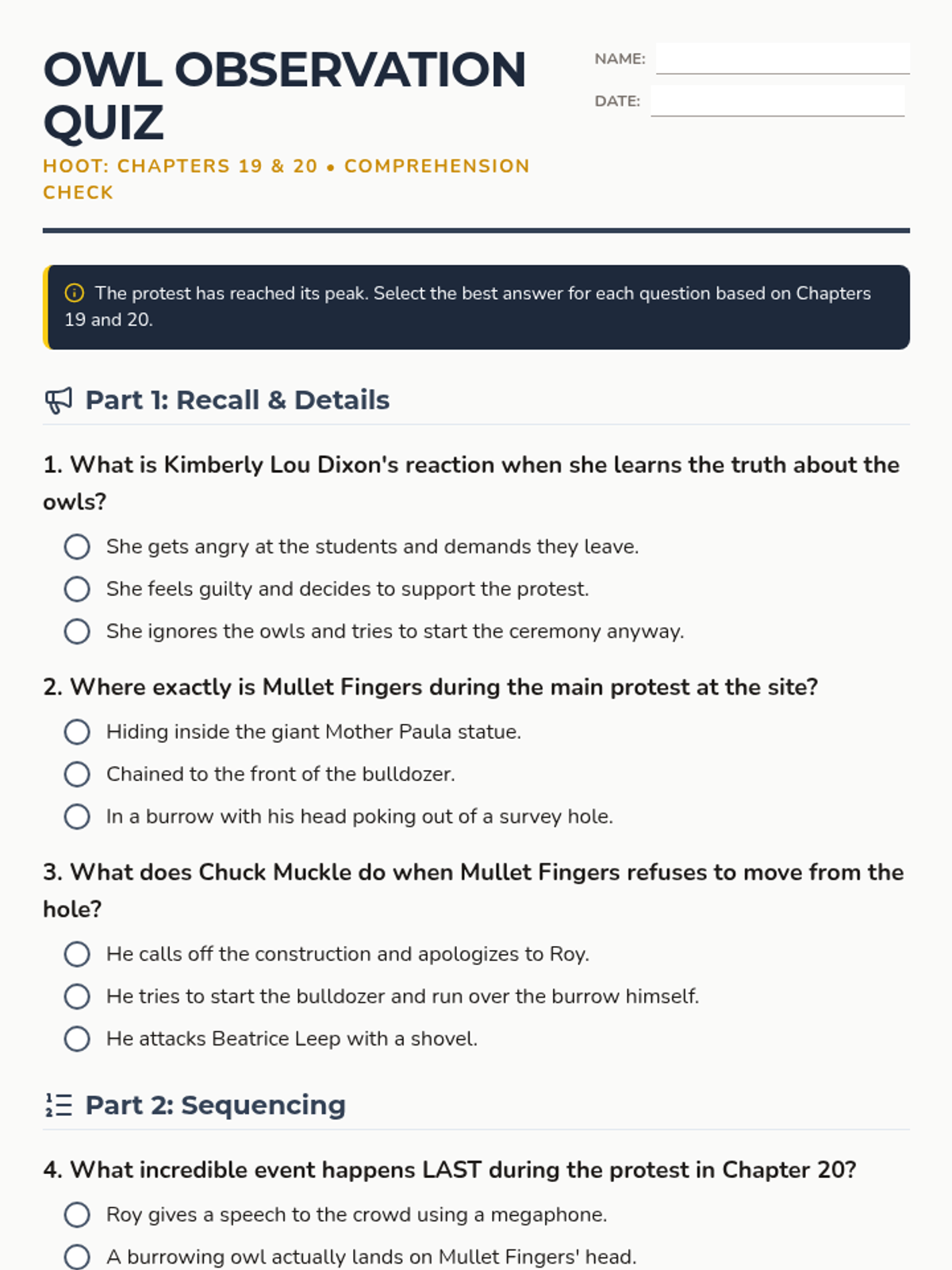
A clean, 3-option multiple choice comprehension quiz for Hoot Chapters 19 & 20, focusing on the protest, Chuck Muckle's reaction, and the appearance of the owl.
Visual presentation slides for the Hoot Chapter 18 comprehension quiz, featuring Roy's father's discovery and key vocabulary.
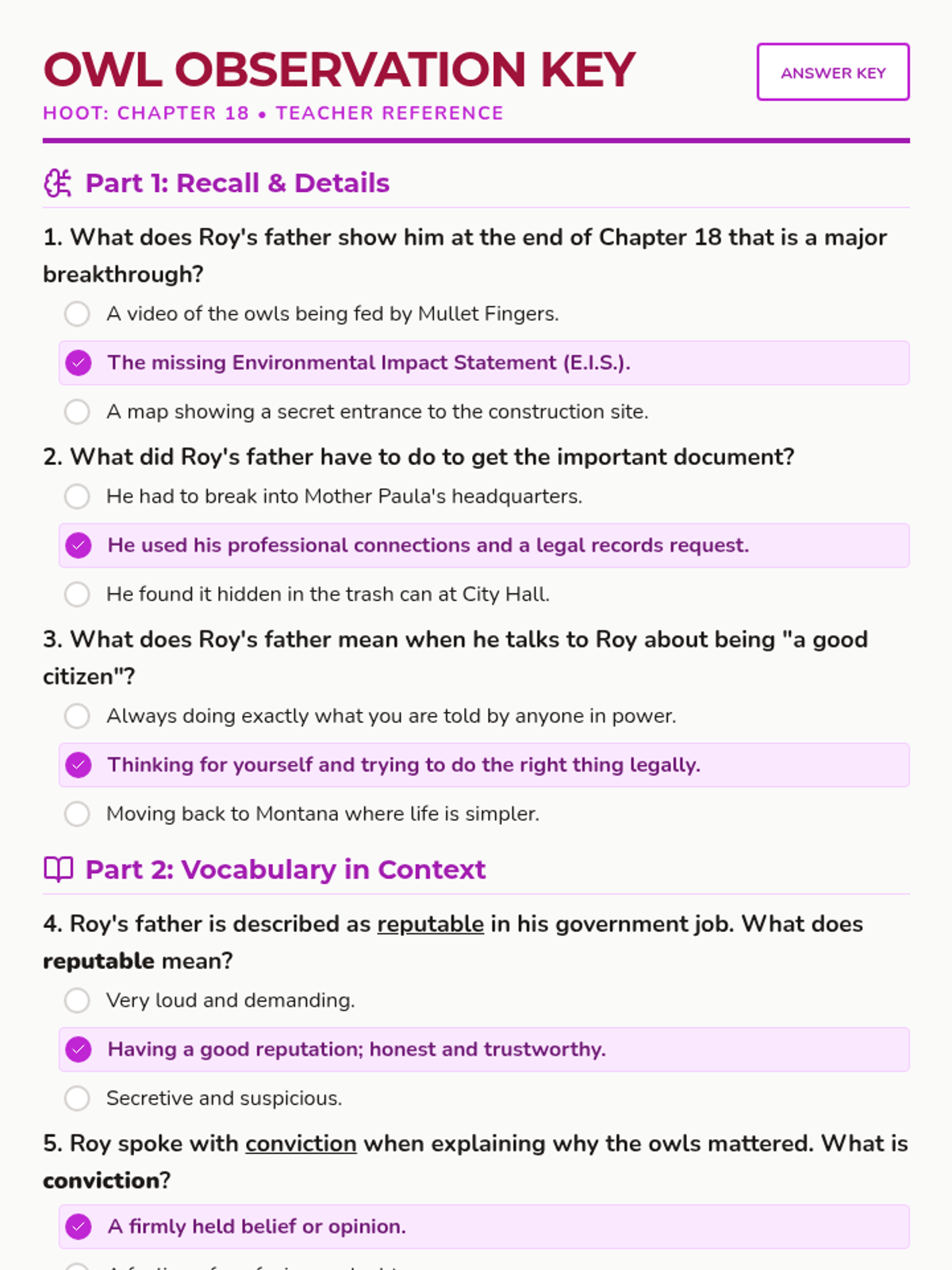
Teacher answer key for the Hoot Chapter 18 comprehension quiz. Correct answers are clearly highlighted for quick grading. Revised for better page breaks.
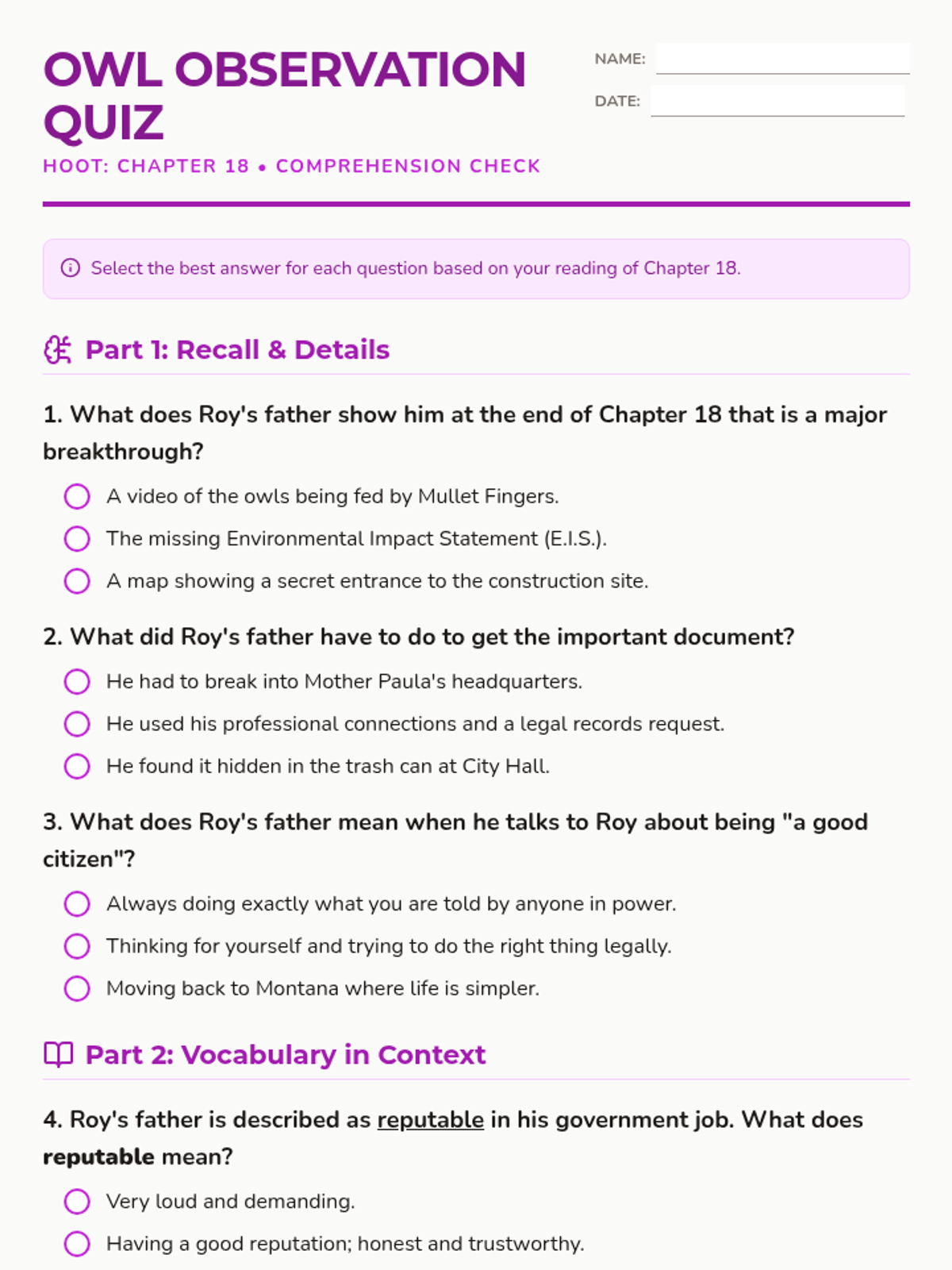
A clean, 3-option multiple choice comprehension quiz for Hoot Chapter 18, focusing on Roy's father's discovery and the theme of citizenship. Revised for better page breaks.
Visual presentation slides for the Hoot Chapters 16 & 17 comprehension quiz, featuring Roy's research, the missing E.I.S., and key vocabulary.
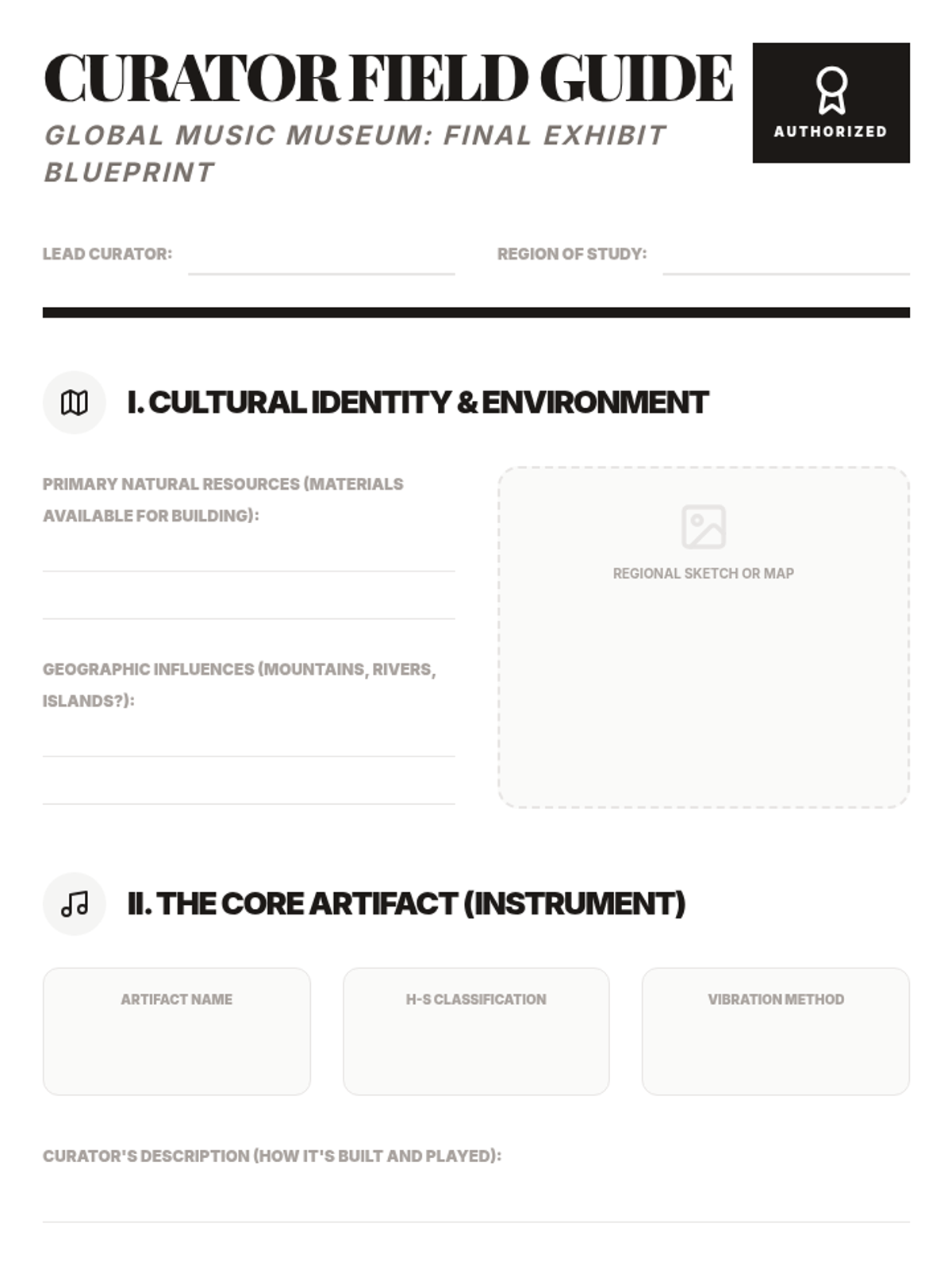
Student exhibit planner and research guide for the final Music Museum project. Guides students through cultural research, instrument classification, and visual exhibit design.
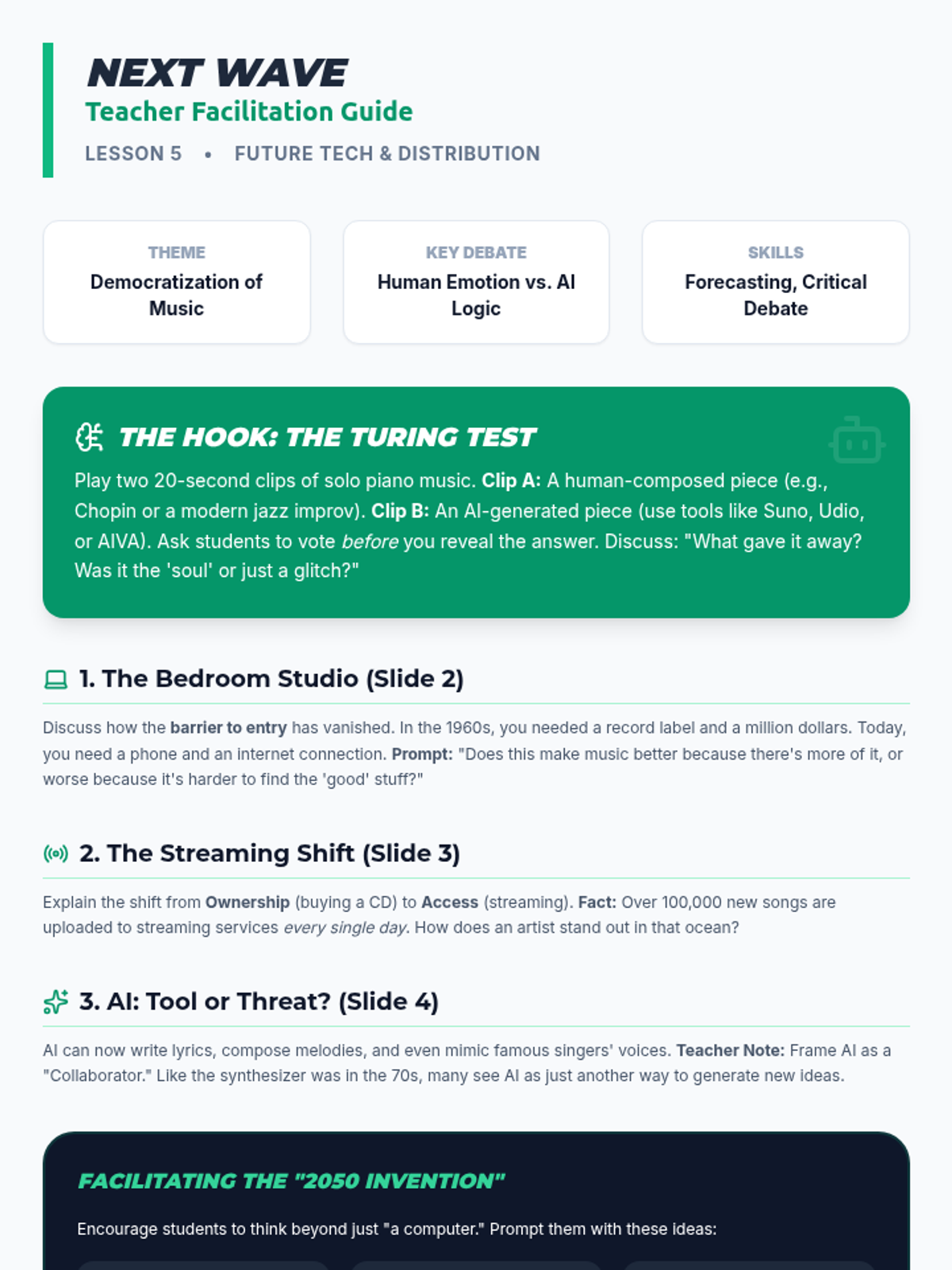
A teacher facilitation guide for Lesson 5, including "Turing Test" clip suggestions, discussion prompts for streaming culture, and ideas for the futuristic instrument design project.
Final project slide deck for Lesson 5, guiding students through the process of designing a "Music Museum" exhibit. Sets the stage for their role as curators and outlines the specific requirements for their final presentation.
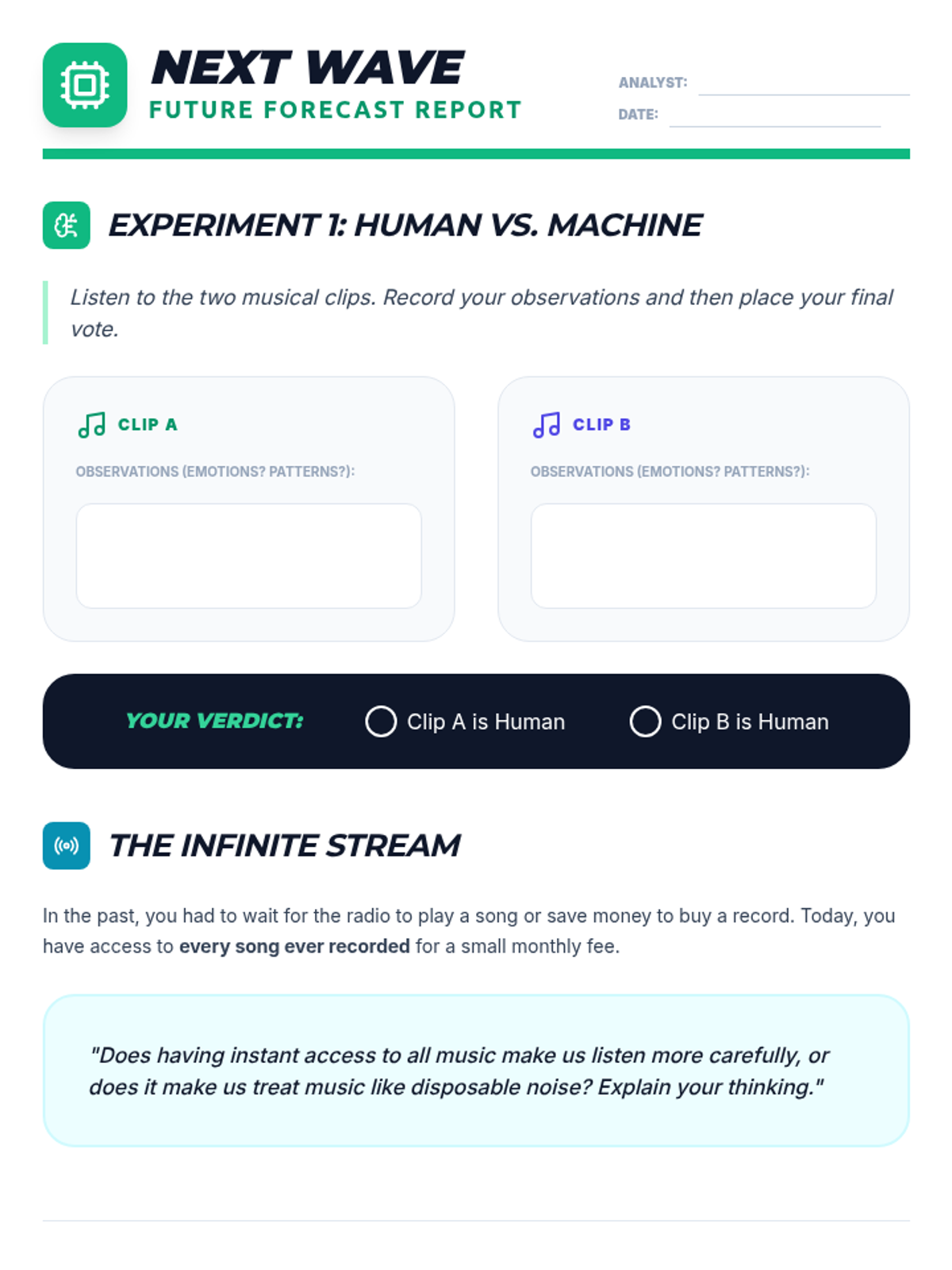
A student worksheet for Lesson 5, featuring a "Turing Test" listening log, a reflection on streaming culture, and a creative project to design a futuristic musical instrument.
A visual presentation for Lesson 5, exploring bedroom production, streaming culture, and the rise of AI in music composition.
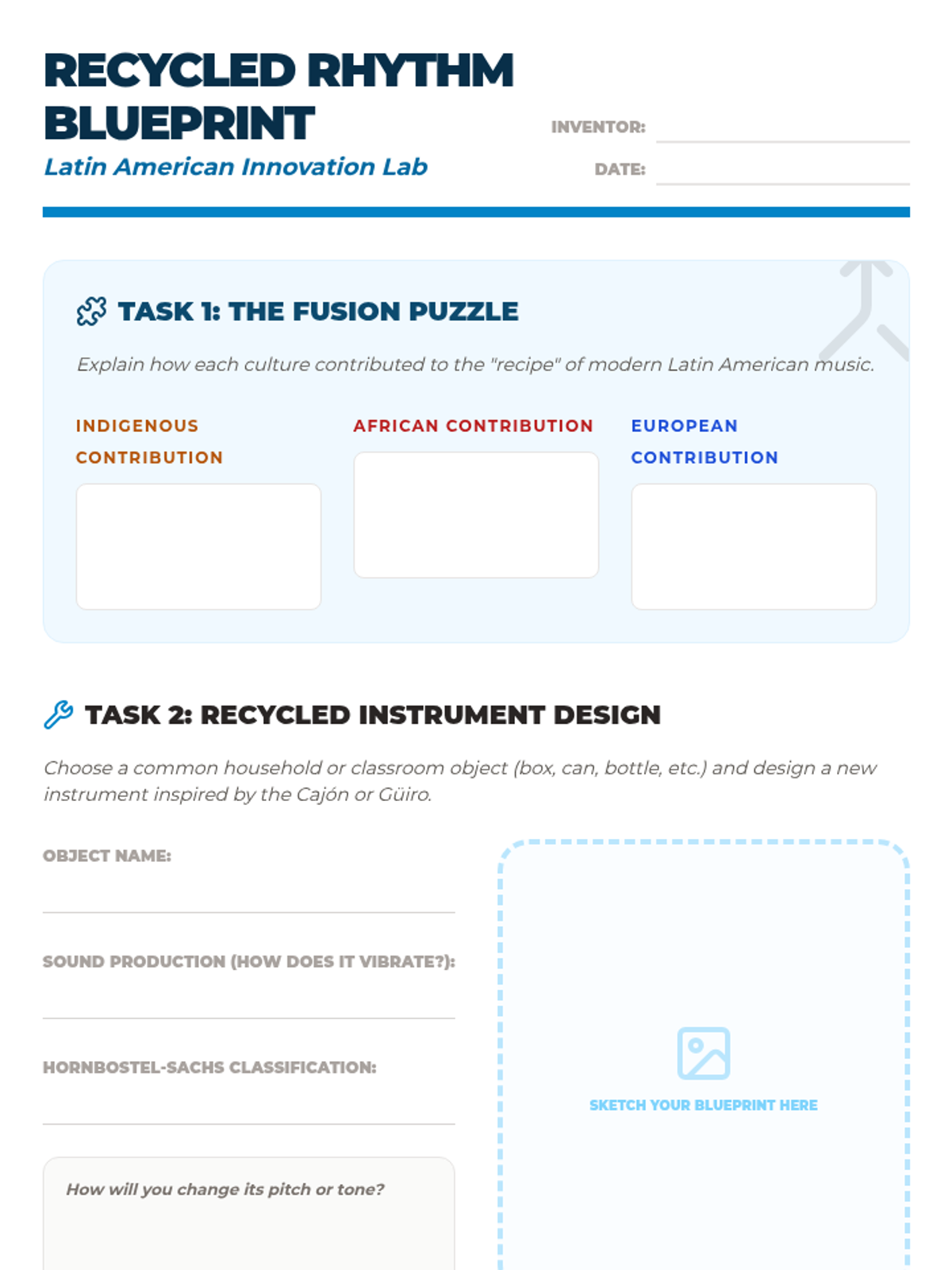
Student worksheet for Lesson 4 focusing on the fusion of musical influences, recycled instrument design, and the structural importance of the Clave rhythm.
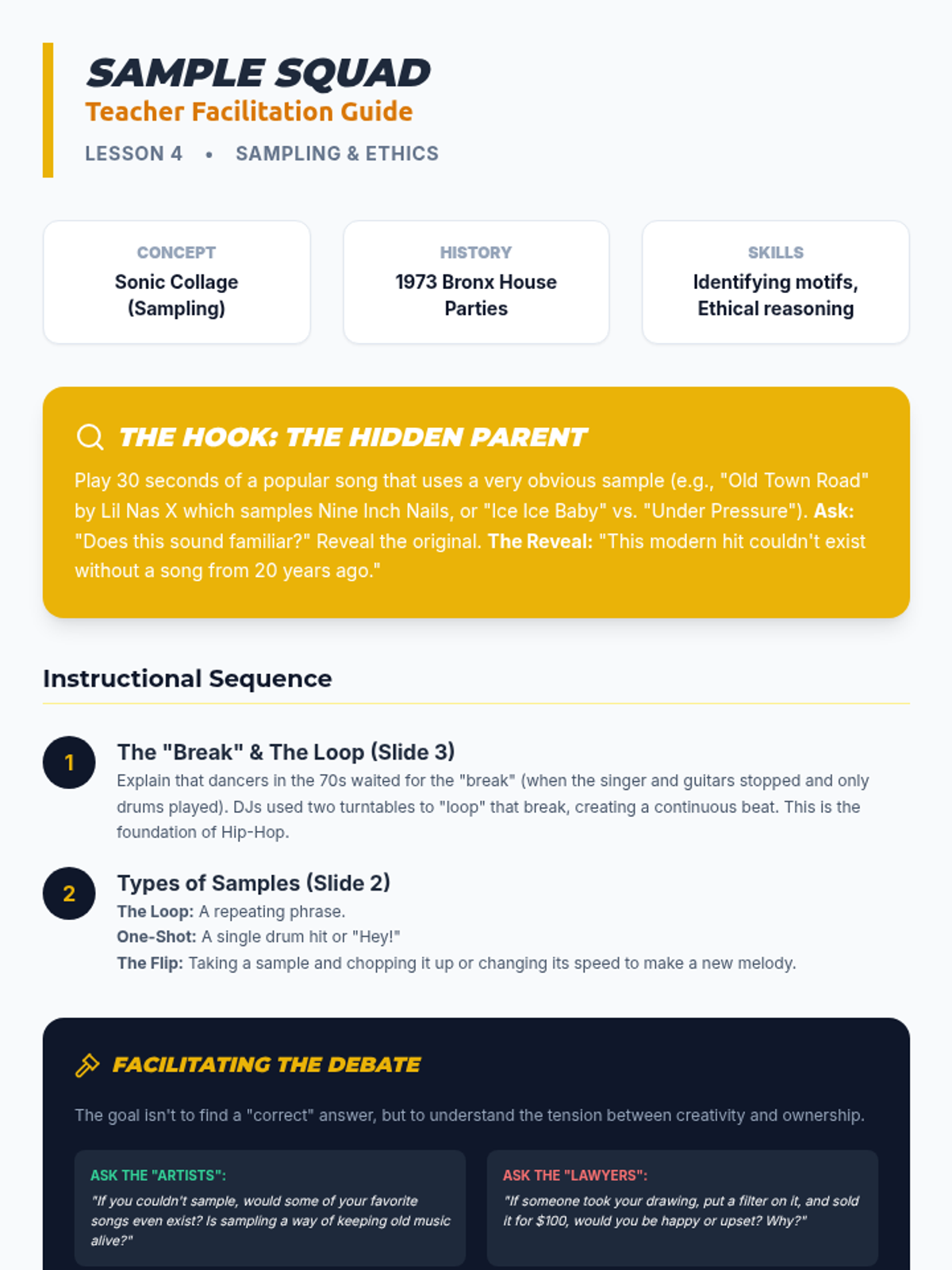
A teacher facilitation guide for Lesson 4, detailing the history of the "break," types of sampling, and a framework for facilitating a classroom debate on the ethics of music ownership.
Visual presentation for Lesson 4 focusing on the fusion of musical influences in Latin America, the Son Clave rhythm, and instruments made from recycled materials like the Cajón.
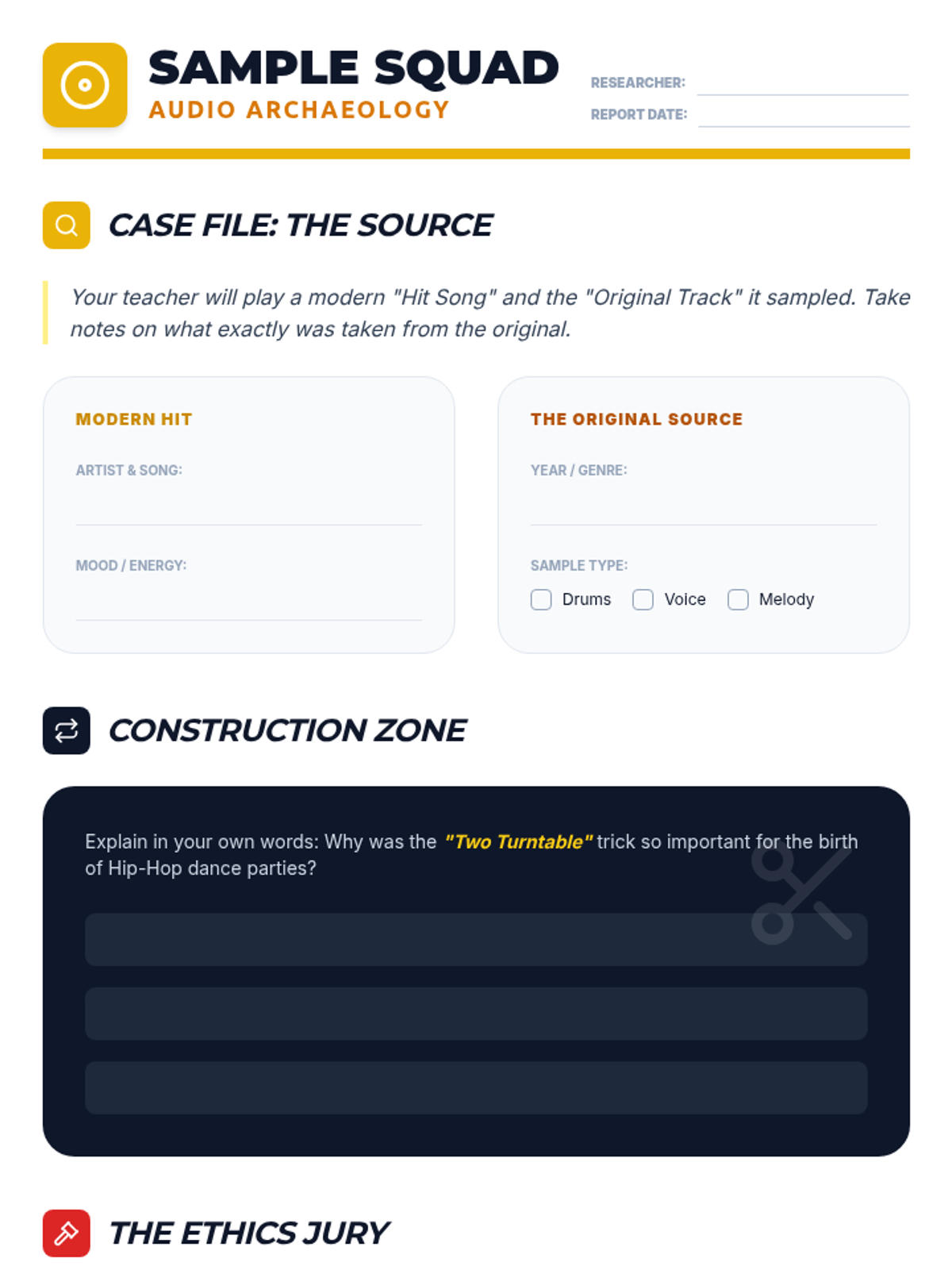
A student worksheet for Lesson 4, including a "Sample Detective" log, a question on the origins of Hip-Hop turntablism, and a mock-trial ethics activity on sampling.
A visual presentation for Lesson 4, covering the origins of Hip-Hop, the definition of sampling, and the ethical/legal debates surrounding repurposed audio.
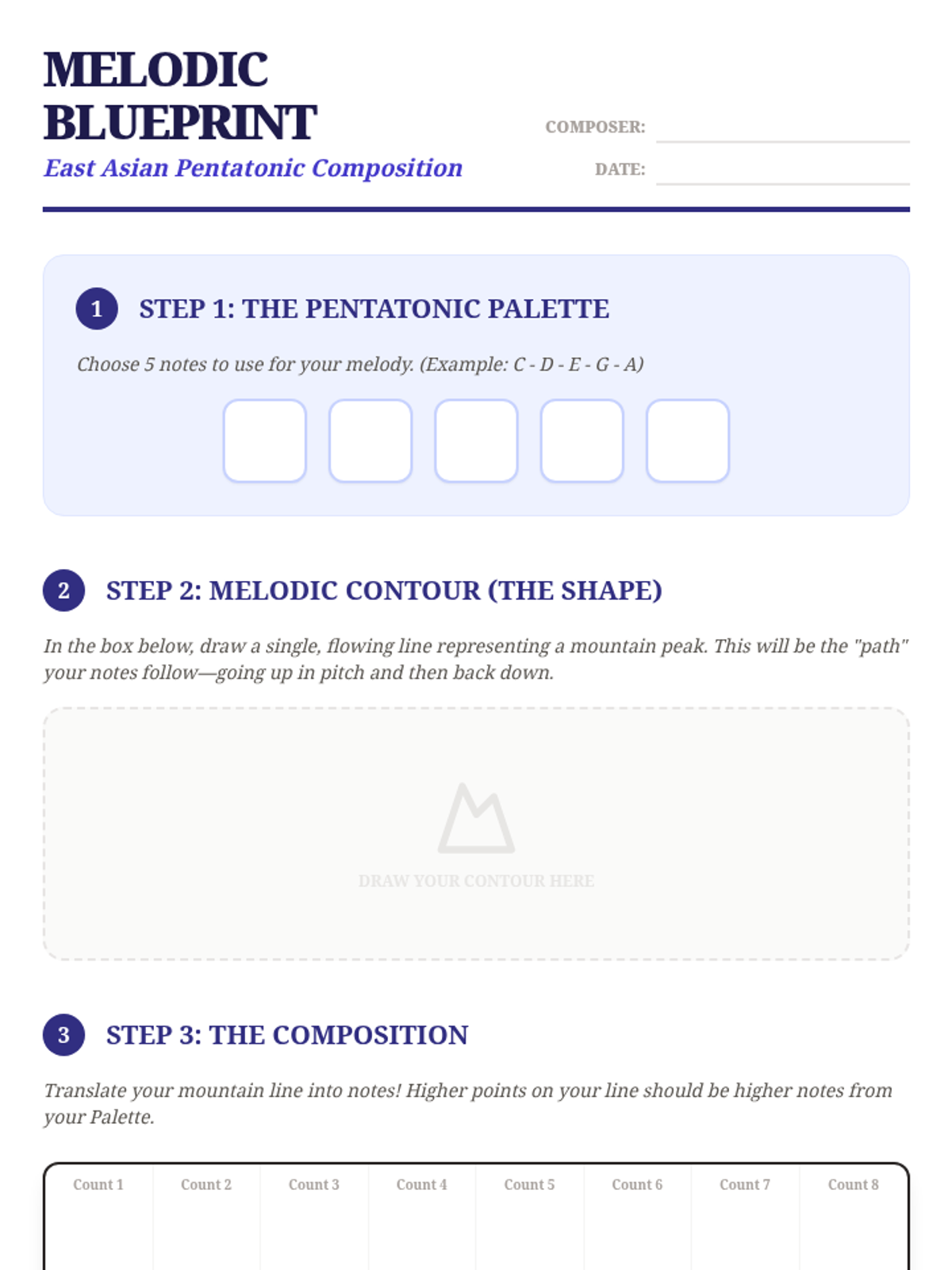
Student worksheet for Lesson 3 focusing on pentatonic composition, melodic contour, and the philosophical connection to nature and silence.
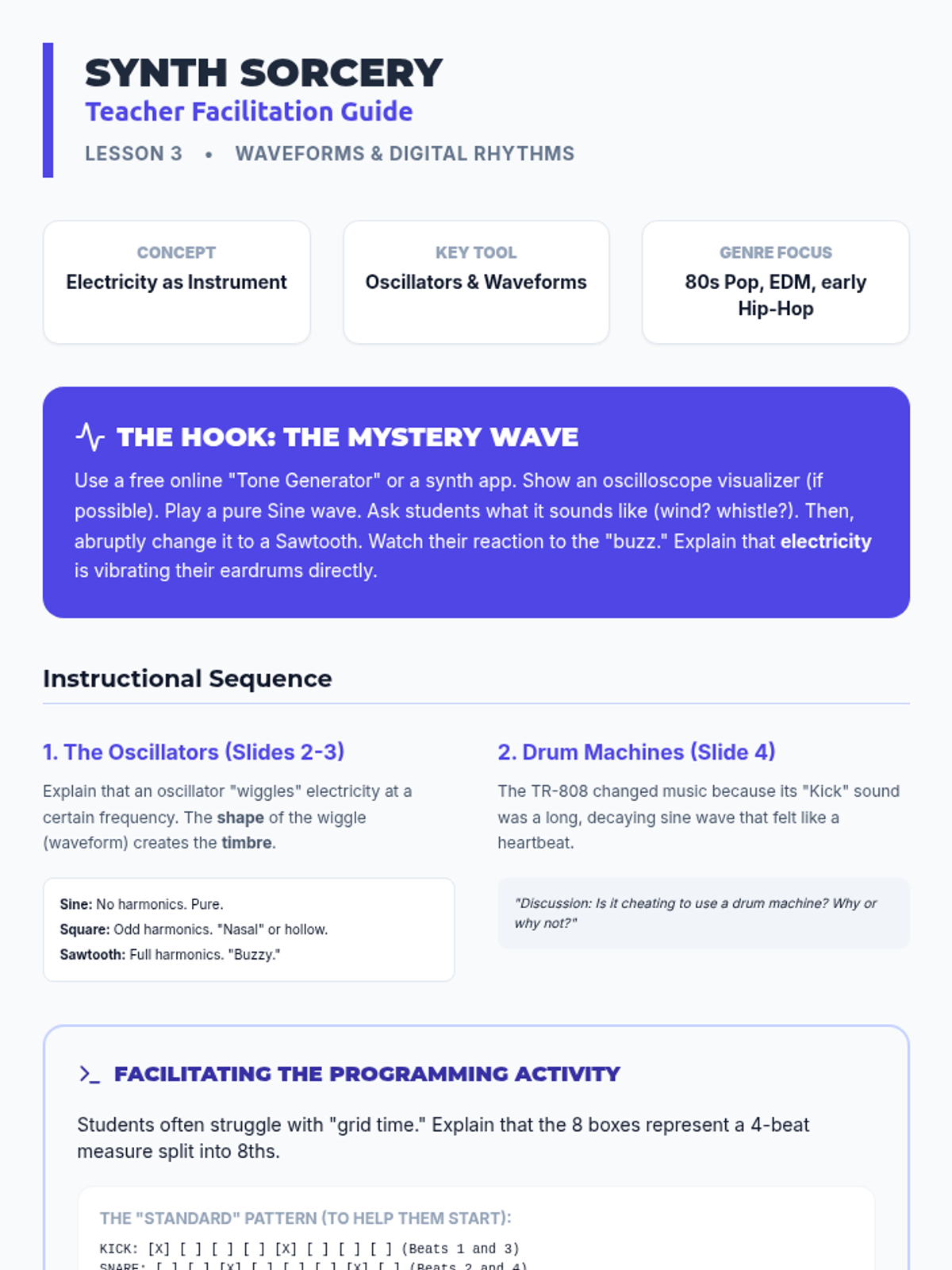
A teacher facilitation guide for Lesson 3, covering waveform physics, drum machine programming, and suggestions for online synth tools to use with 5th-grade students.
Visual presentation for Lesson 3 focusing on the pentatonic scale, East Asian musical philosophy, and instruments like the Guzheng and Shakuhachi.
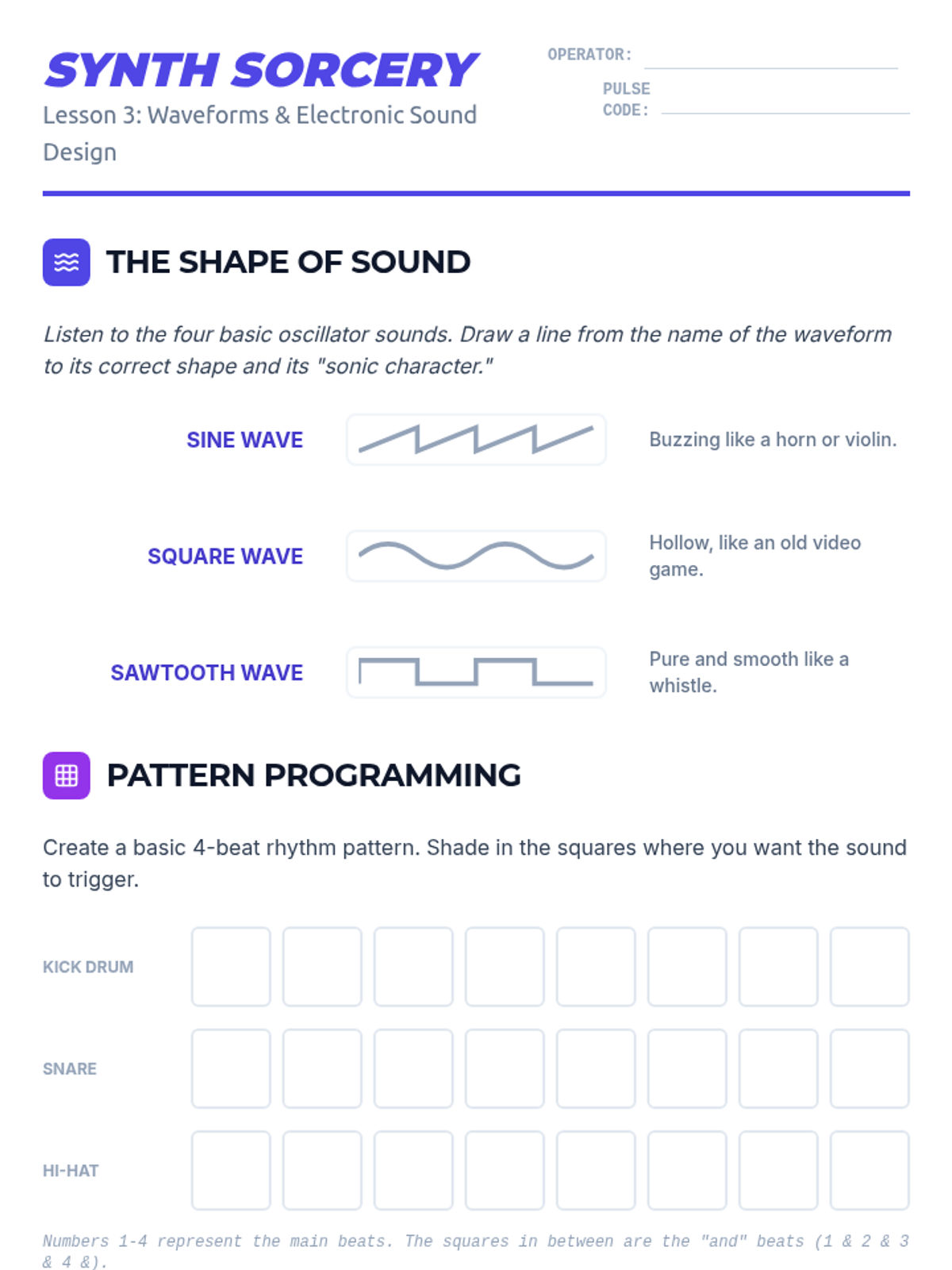
A student worksheet for Lesson 3, featuring waveform matching, a drum machine pattern grid, and a creative sound design reflection prompt.
A visual presentation for Lesson 3, exploring synthesizers, drum machines, and the basic physics of sound waves (waveforms) as used in electronic music.
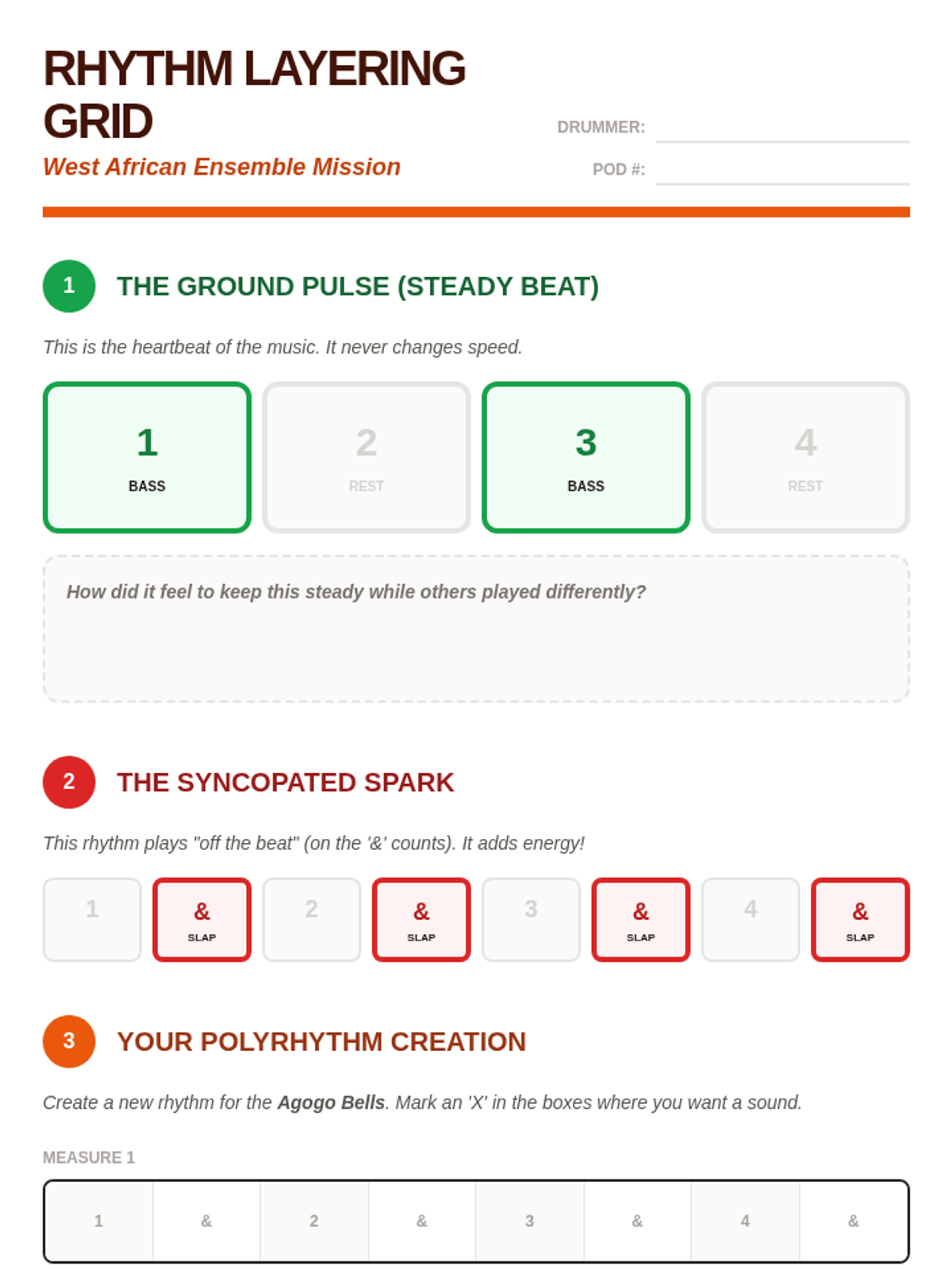
Student worksheet for Lesson 2 focusing on layering rhythms and composing a polyrhythm pattern using a grid notation system.
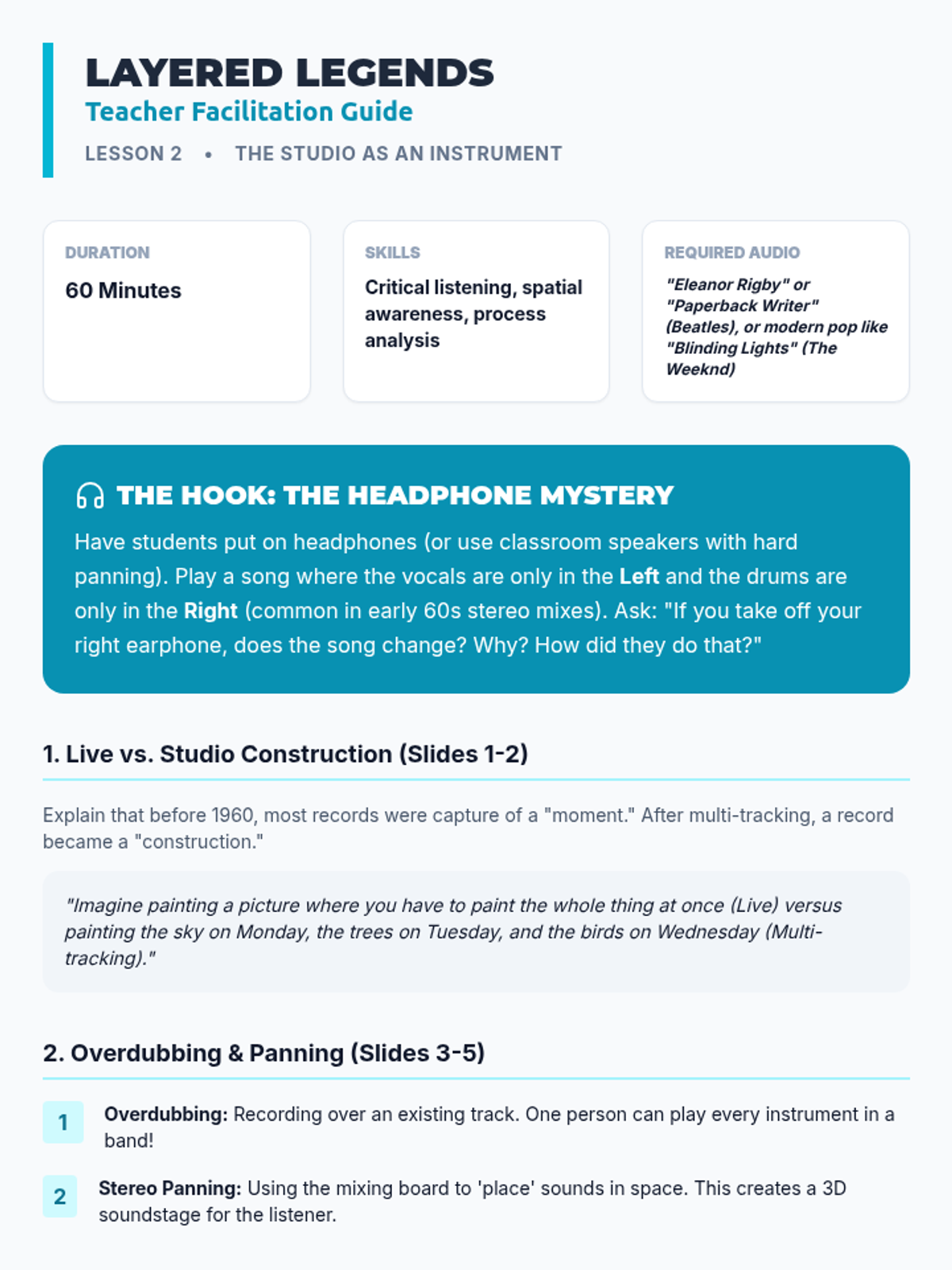
A teacher facilitation guide for Lesson 2, including the "Headphone Mystery" hook, key concepts of overdubbing and panning, and a guided listening plan for the "Layer Detective" activity.
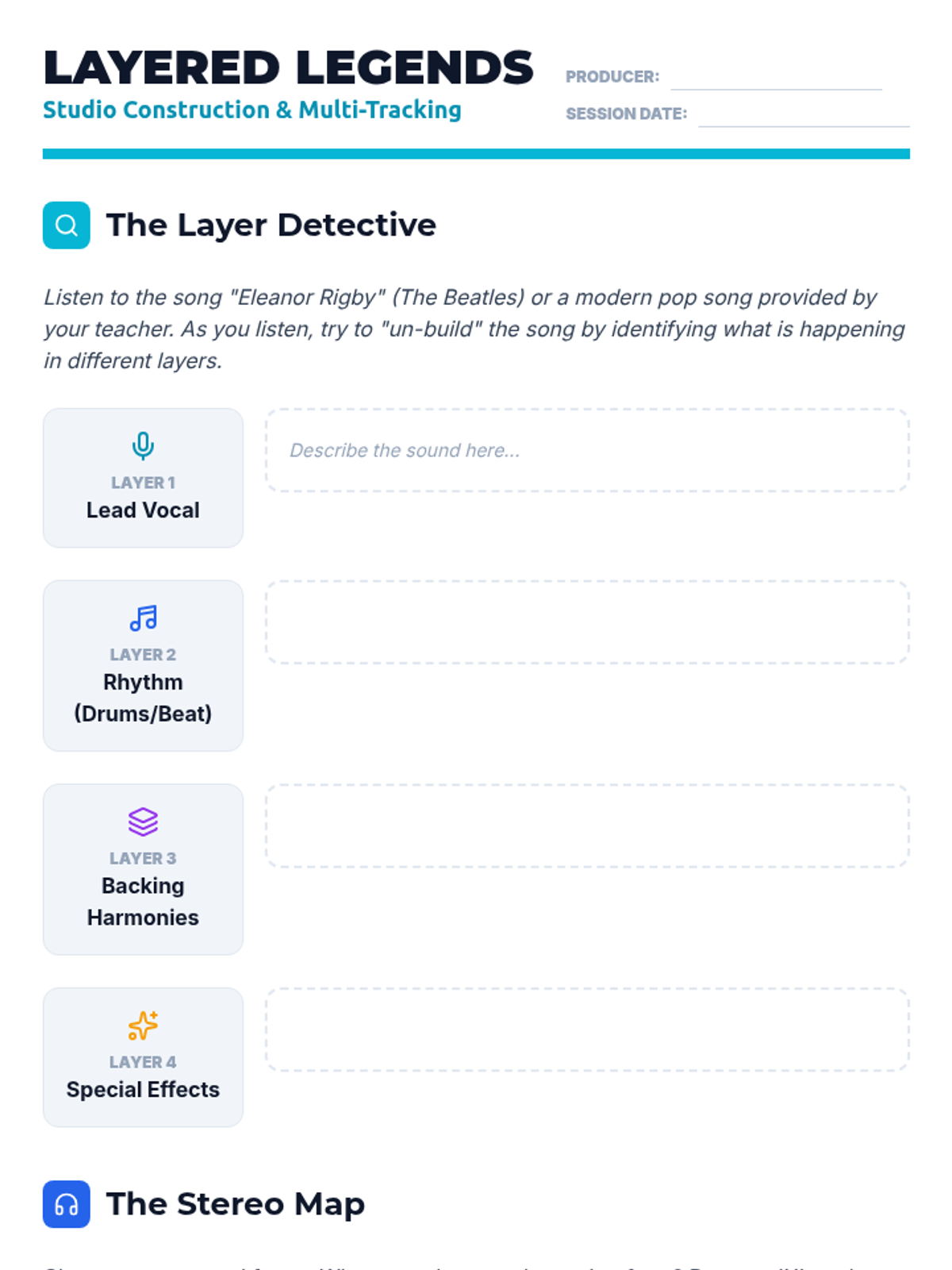
A student activity sheet for Lesson 2 where students act as "Layer Detectives," identifying multi-track elements and mapping stereo panning in a recorded song.
Visual presentation for Lesson 2 focusing on West African polyrhythms, music as communication, and the technique of the djembe drum. Includes interactive rhythm challenges.
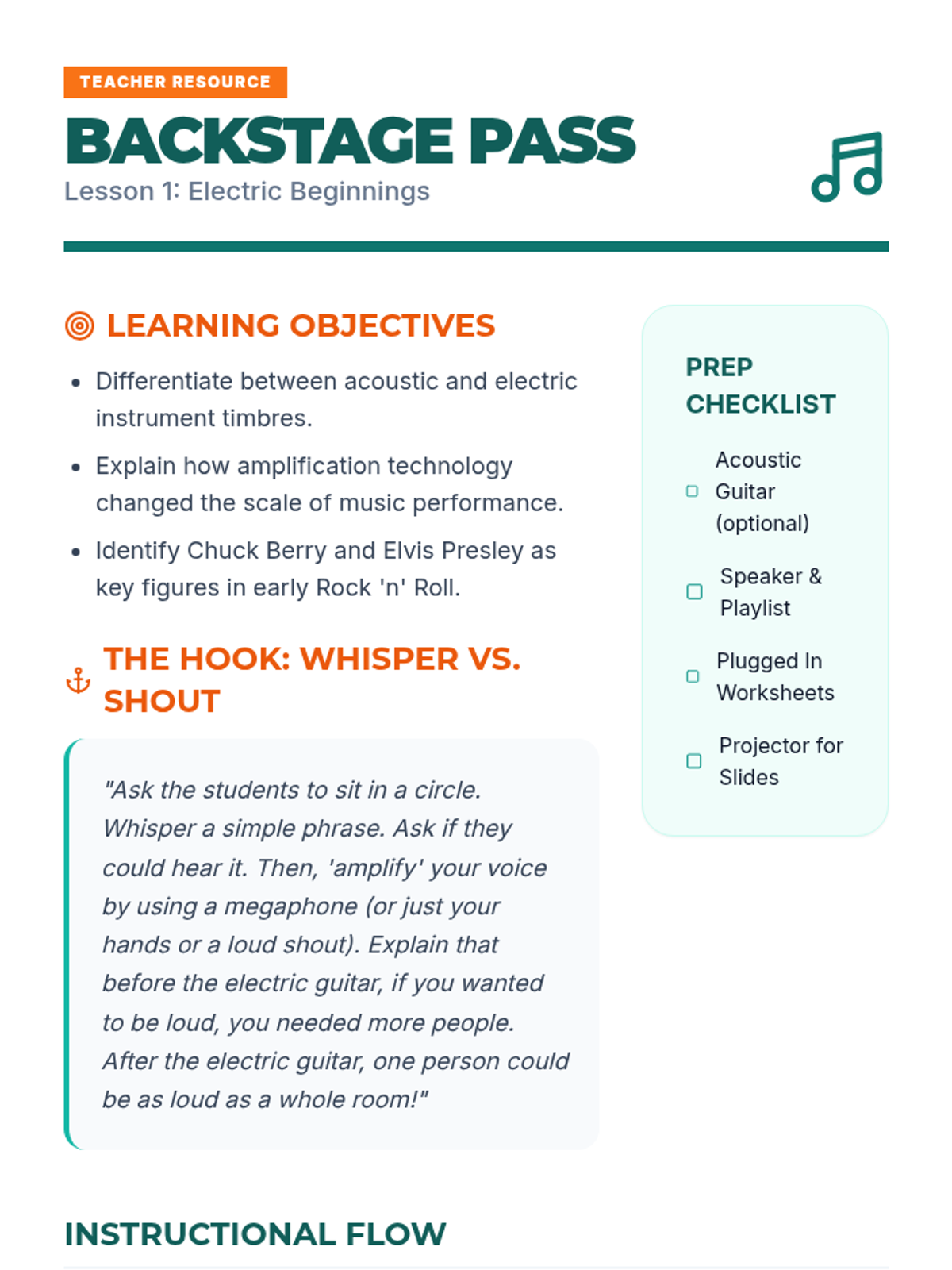
Teacher guide for the first lesson, including learning objectives, a "Whisper vs. Shout" hook, lesson flow, and discussion prompts.
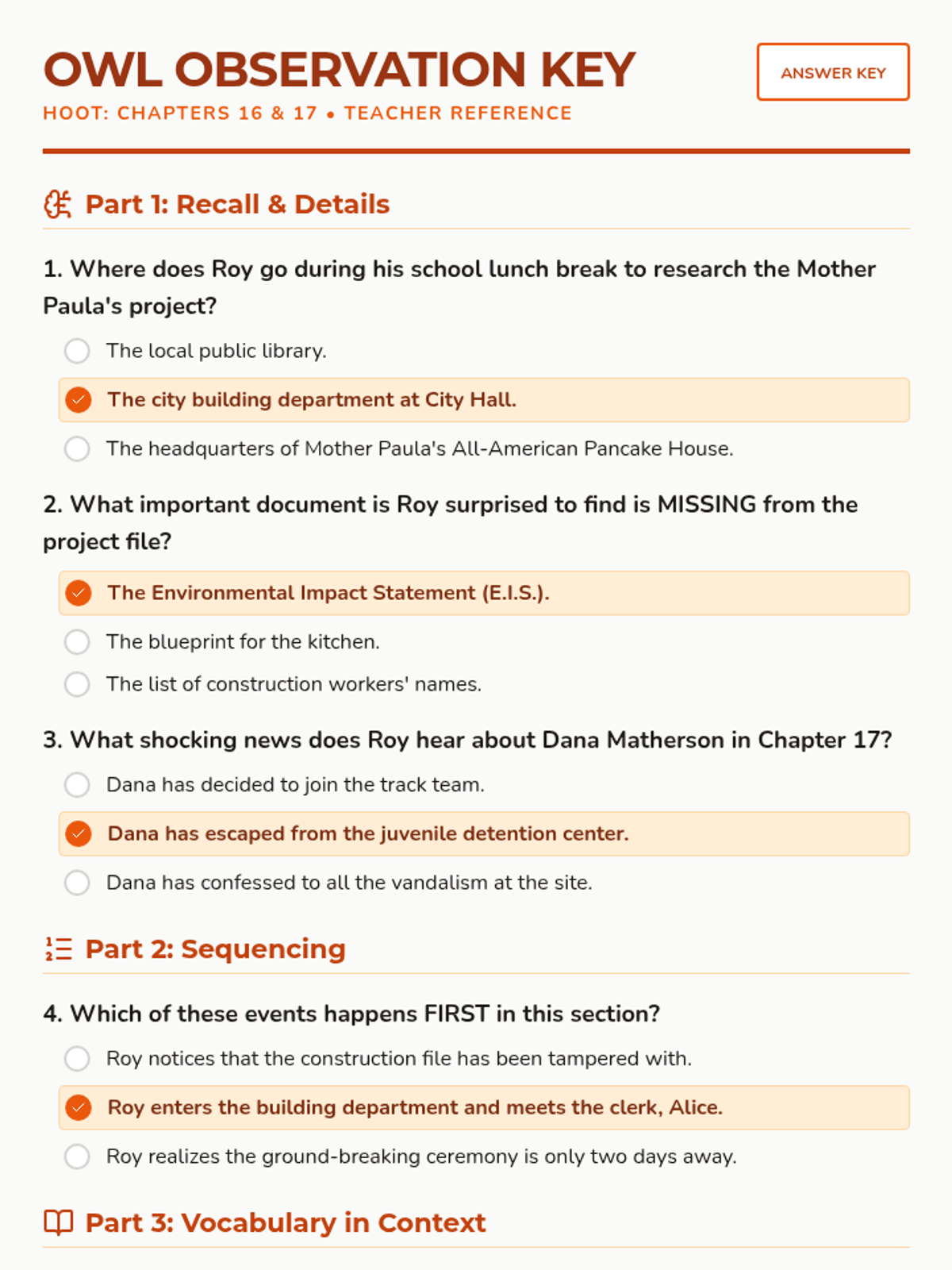
Teacher answer key for the Hoot Chapters 16 & 17 comprehension quiz. Correct answers are clearly highlighted for quick grading.
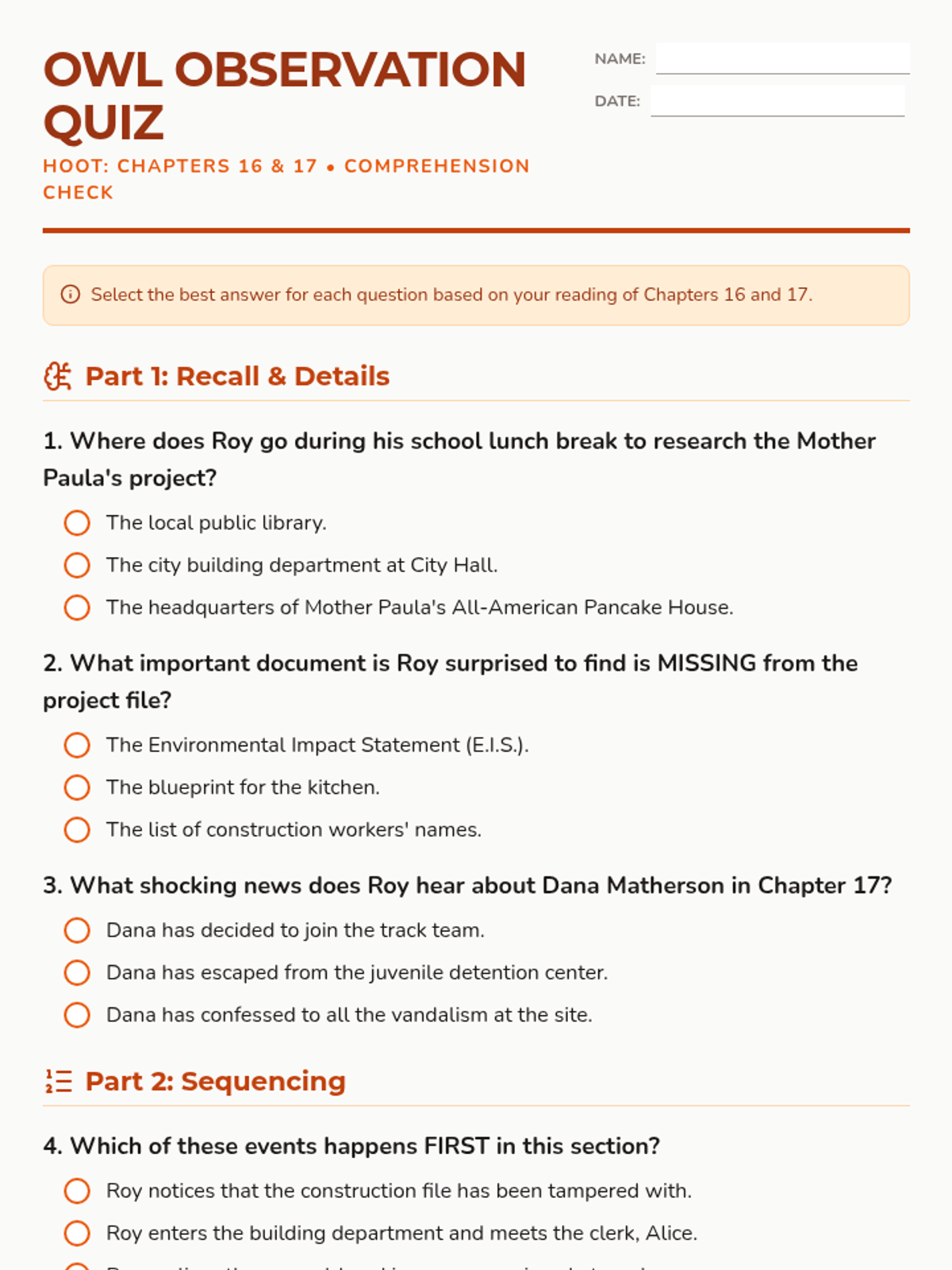
A clean, 3-option multiple choice comprehension quiz for Hoot Chapters 16 & 17, focusing on Roy's research at city hall, the missing E.I.S., and key vocabulary.
Visual presentation slides for the Hoot Chapter 15 comprehension quiz, featuring Roy's morning visit, his mother's advice, and key vocabulary.
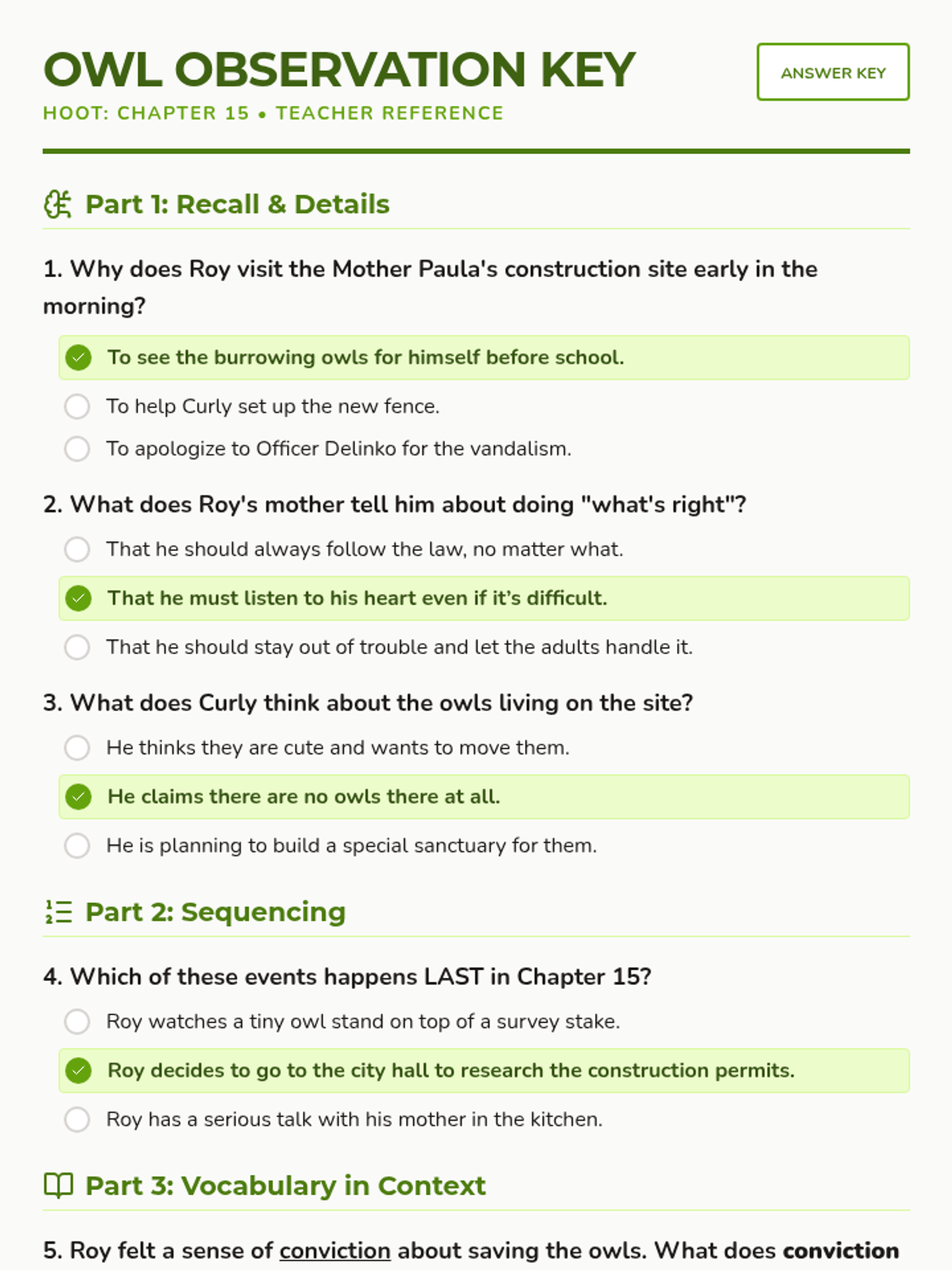
Teacher answer key for the Hoot Chapter 15 comprehension quiz. Correct answers are clearly highlighted for quick grading. Revised for better contrast and page breaks.
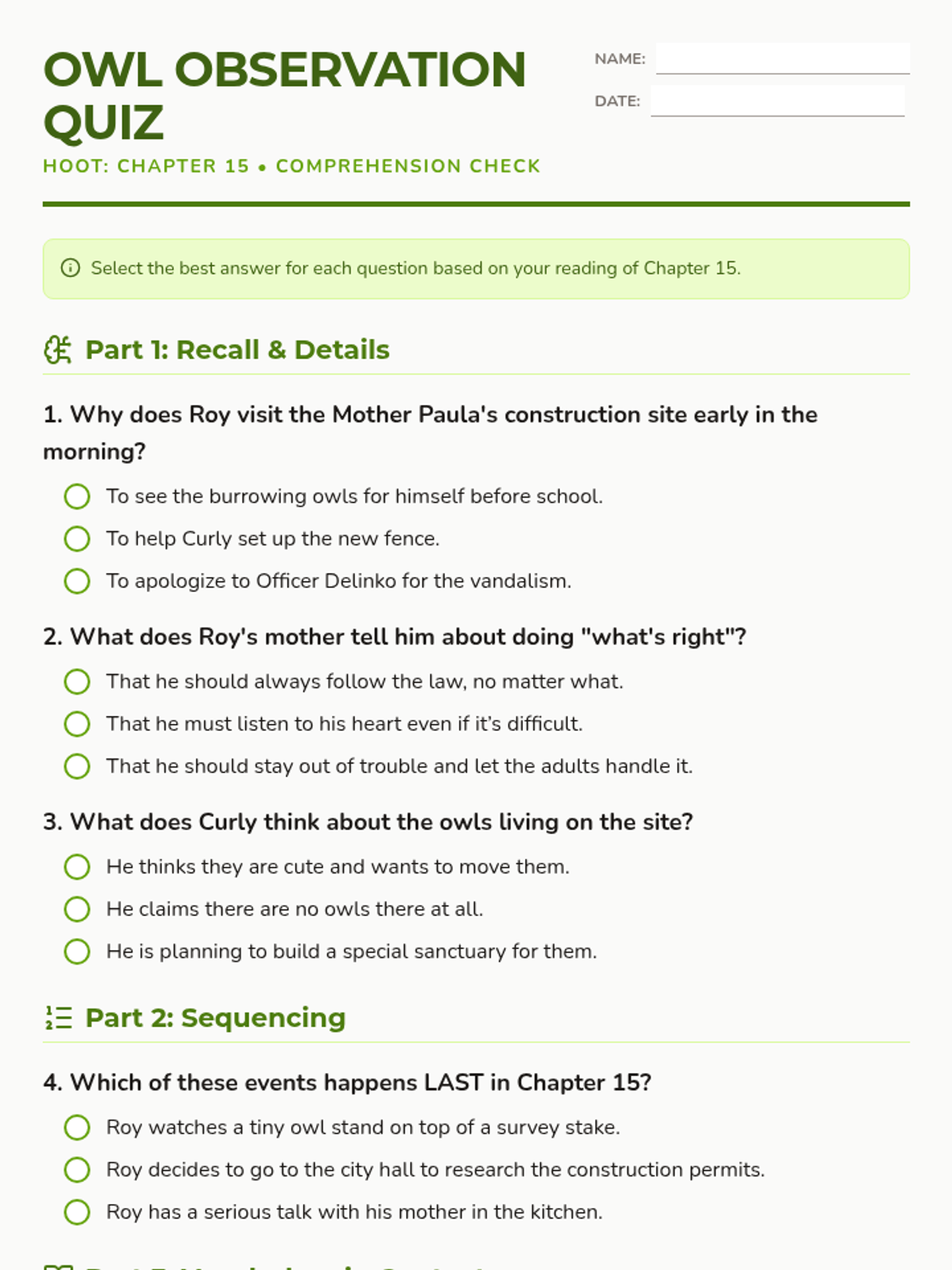
A clean, 3-option multiple choice comprehension quiz for Hoot Chapter 15, focusing on Roy's morning visit to the site, his mother's advice, and key vocabulary.
Visual presentation slides for the Hoot Chapters 13 & 14 comprehension quiz, featuring Mullet Fingers' real name, Roy's trick on Dana, and key vocabulary. Revised for uniform styling.
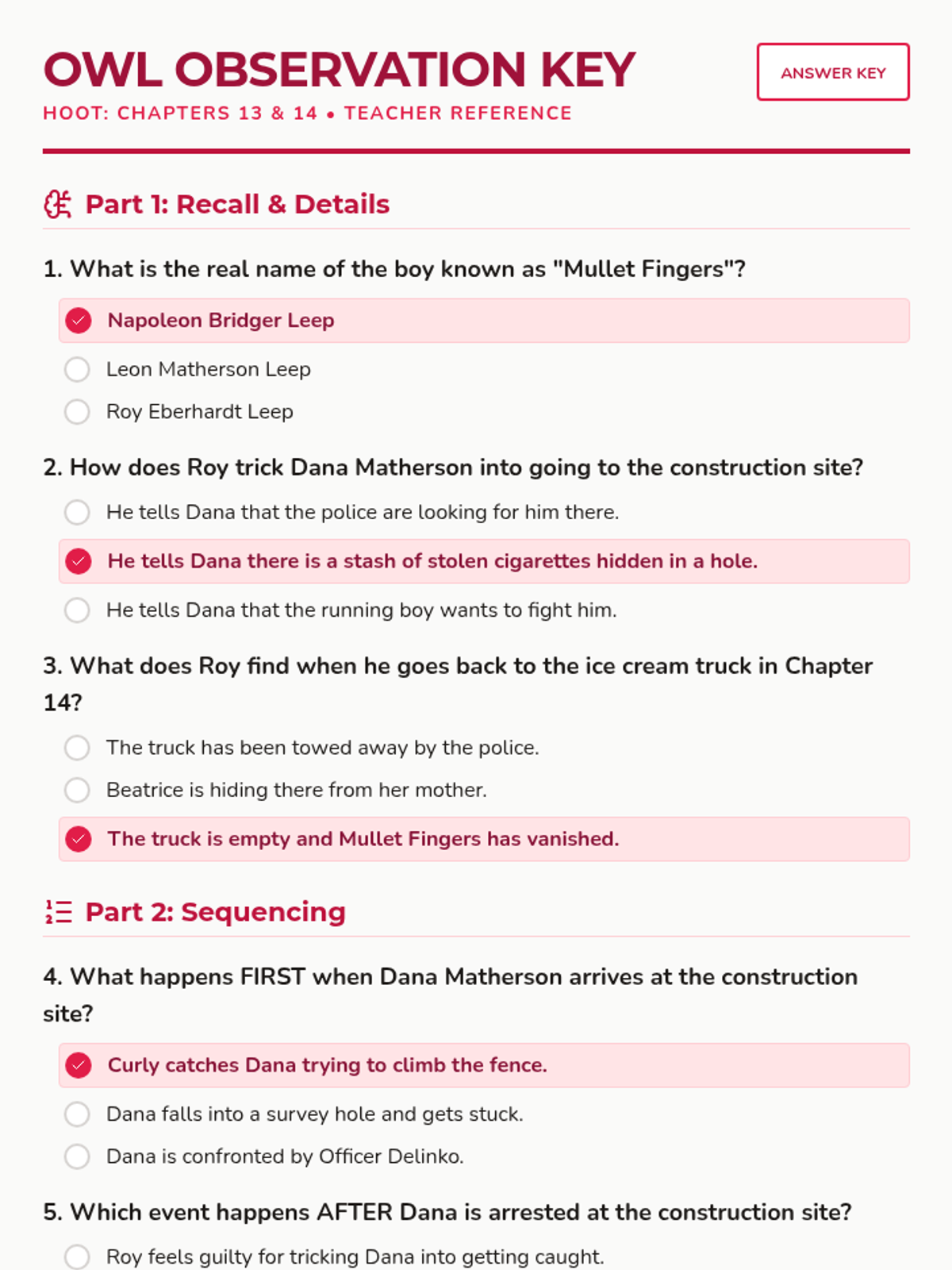
Teacher answer key for the Hoot Chapters 13 & 14 comprehension quiz. Correct answers are clearly highlighted for quick grading. Revised for better contrast and page breaks.
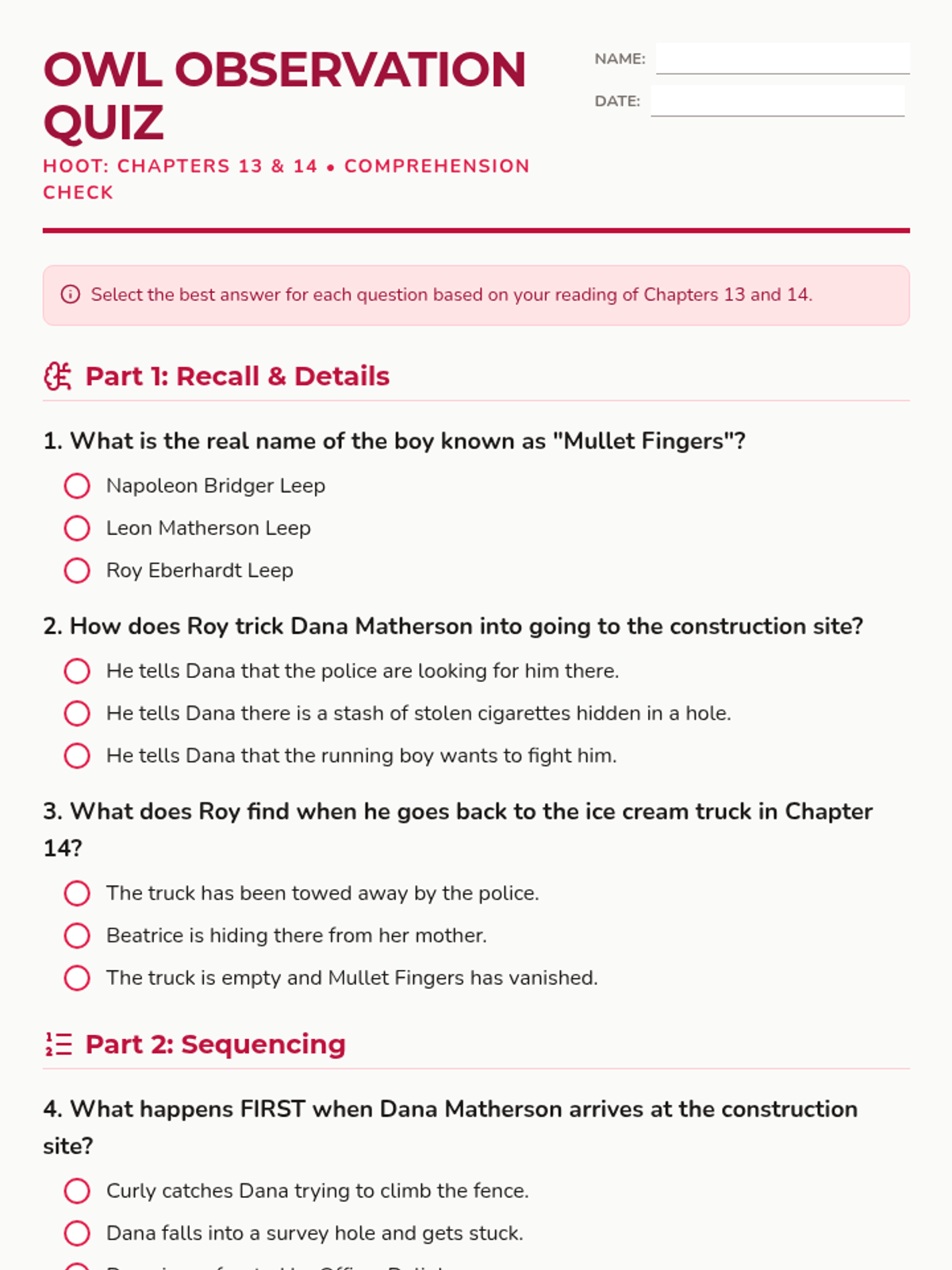
A clean, 3-option multiple choice comprehension quiz for Hoot Chapters 13 & 14, focusing on Mullet Fingers' real name, Roy's trick on Dana, and key vocabulary.
Visual presentation slides for the Hoot Chapters 11 & 12 comprehension quiz, focusing on Roy's talk with his father, the meatballs, and Beatrice. Revised for uniform styling.
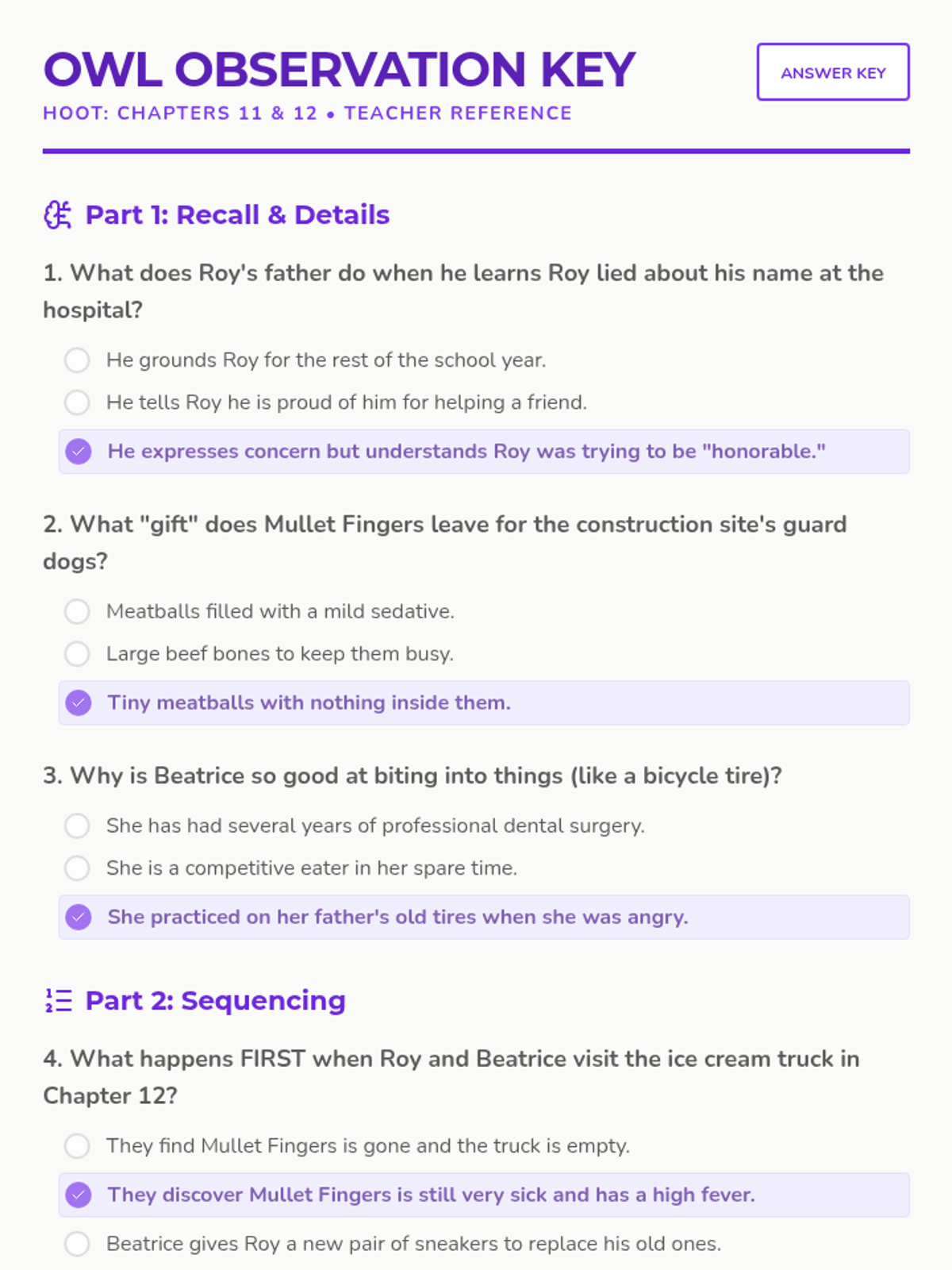
Teacher answer key for the Hoot Chapters 11 & 12 comprehension quiz. Correct answers are clearly highlighted for quick grading.