Fundamental techniques for drawing, painting, sculpture, and photography alongside modern digital design principles. Analyzes historical artistic movements while building skills in printmaking and graphic media.
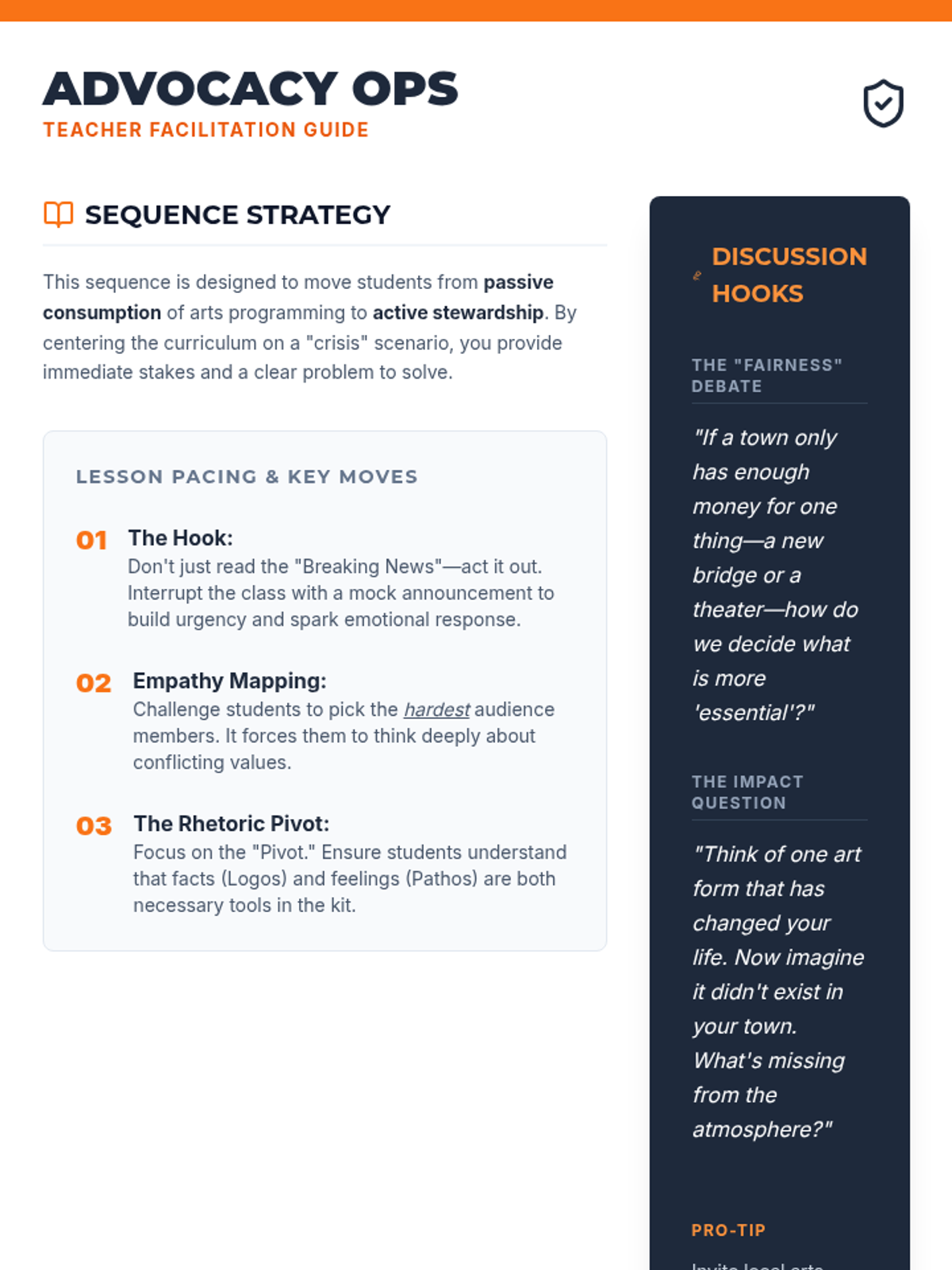
A comprehensive teacher guide for facilitating the 5-lesson advocacy sequence, updated with larger fonts and clearer sections.
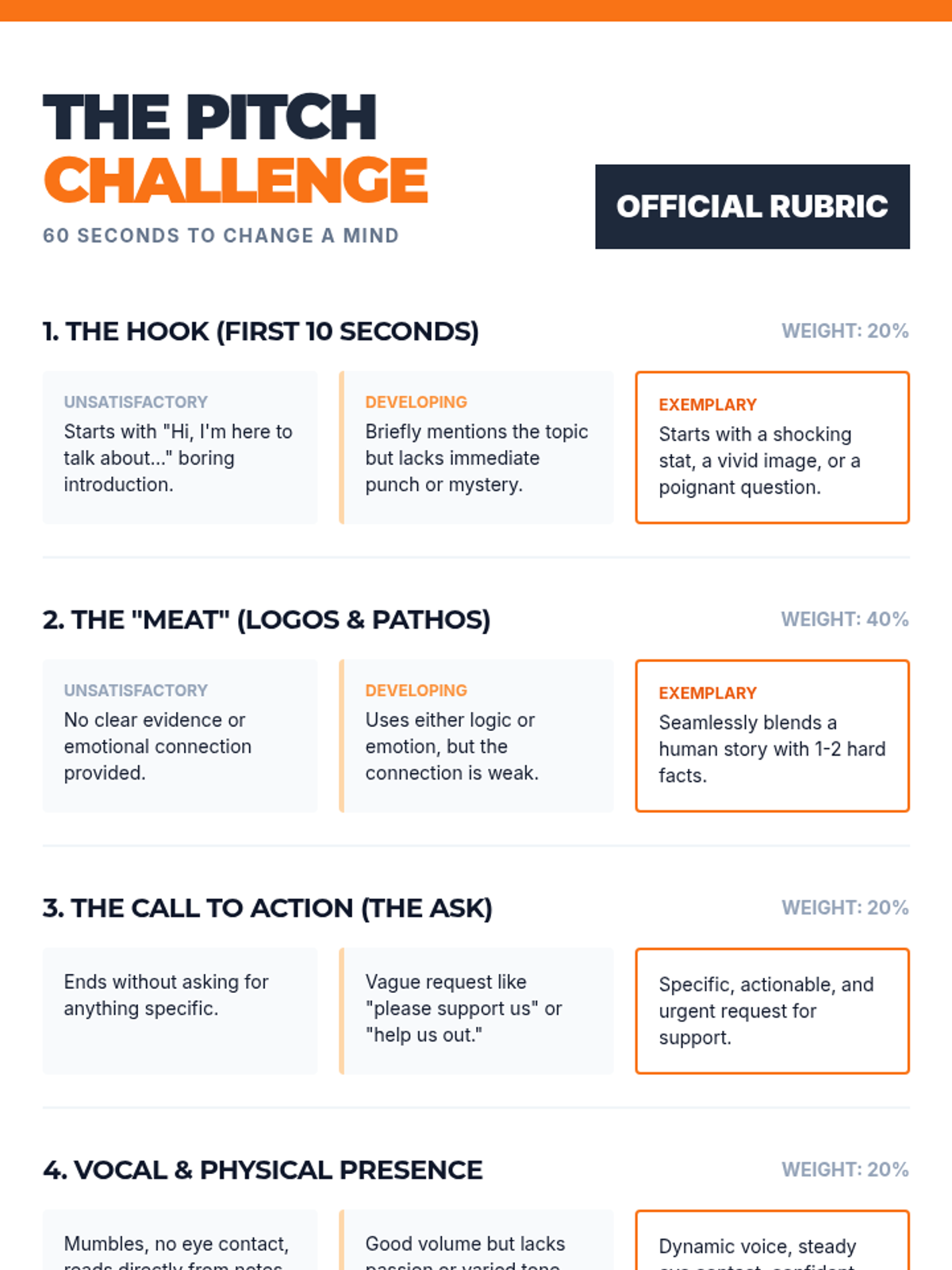
A 2-page rubric and reflection form for the final "Elevator Pitch" presentation, including peer feedback sections. Updated for better font legibility.
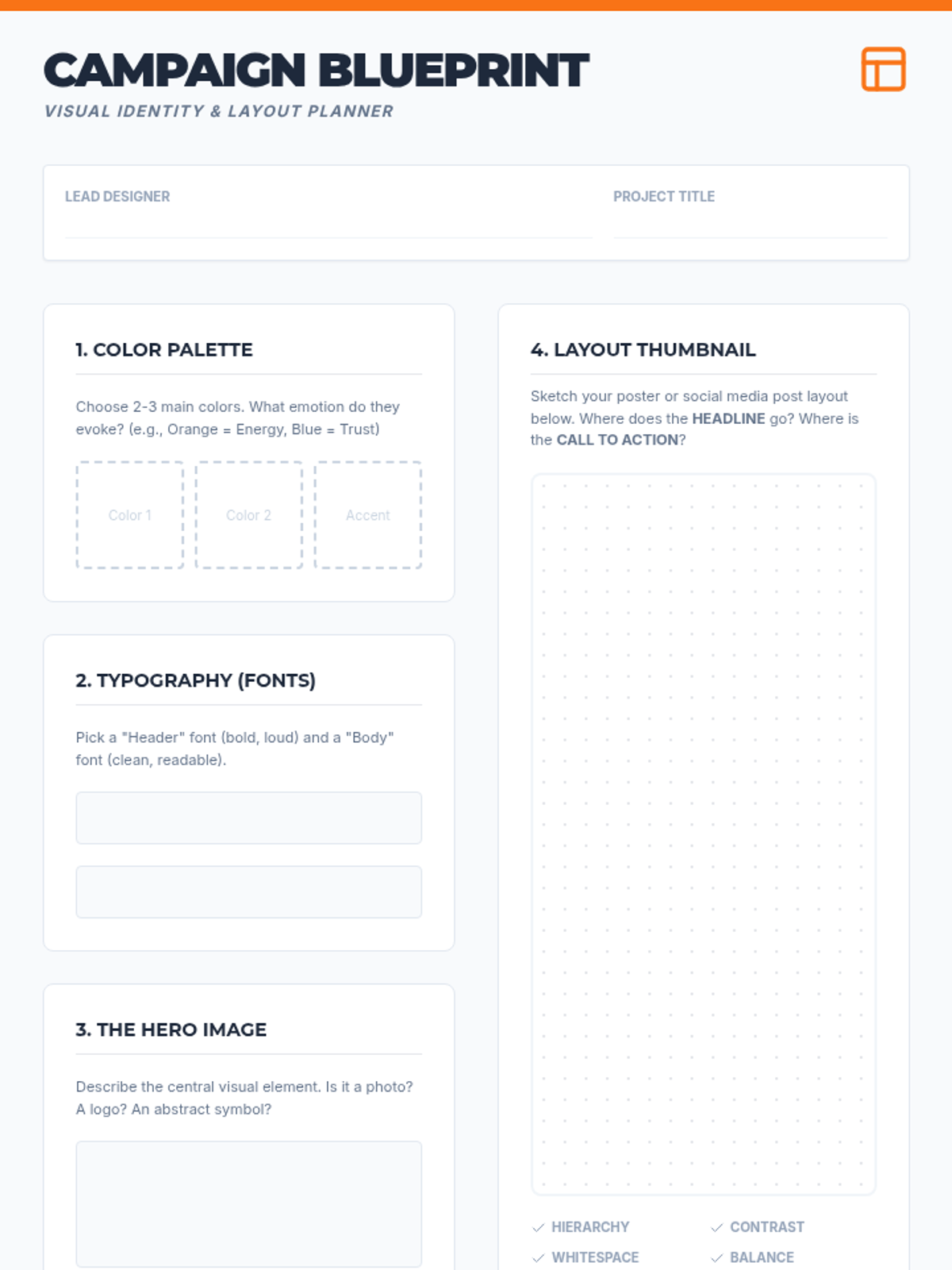
A campaign blueprint worksheet for planning visual elements like color, fonts, and layout for advocacy materials.
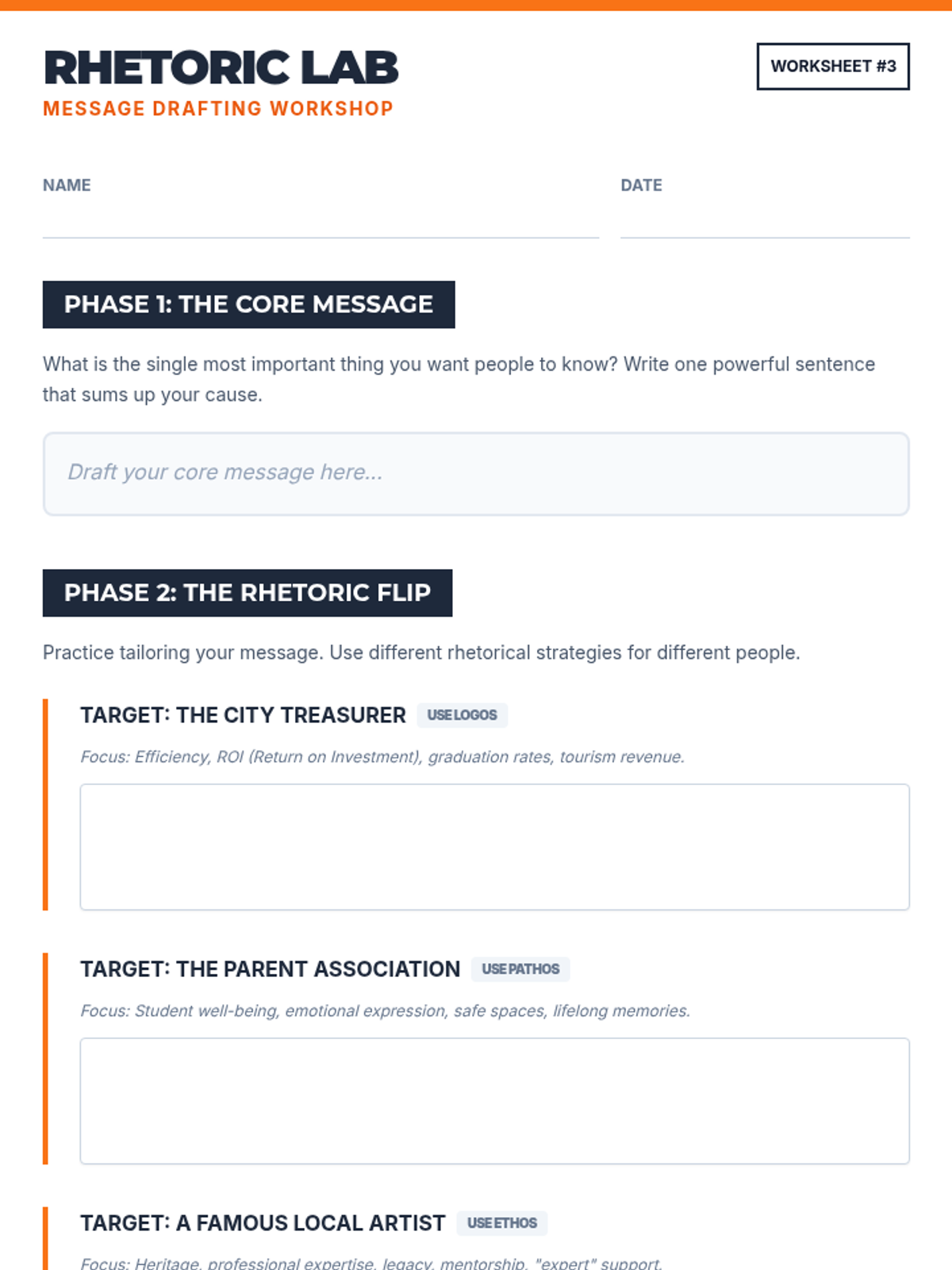
A drafting worksheet where students practice writing for different audiences using Logos, Pathos, and Ethos.
Slides for Lesson 3 focusing on rhetorical strategies (Logos, Pathos, Ethos) applied specifically to arts advocacy messaging.
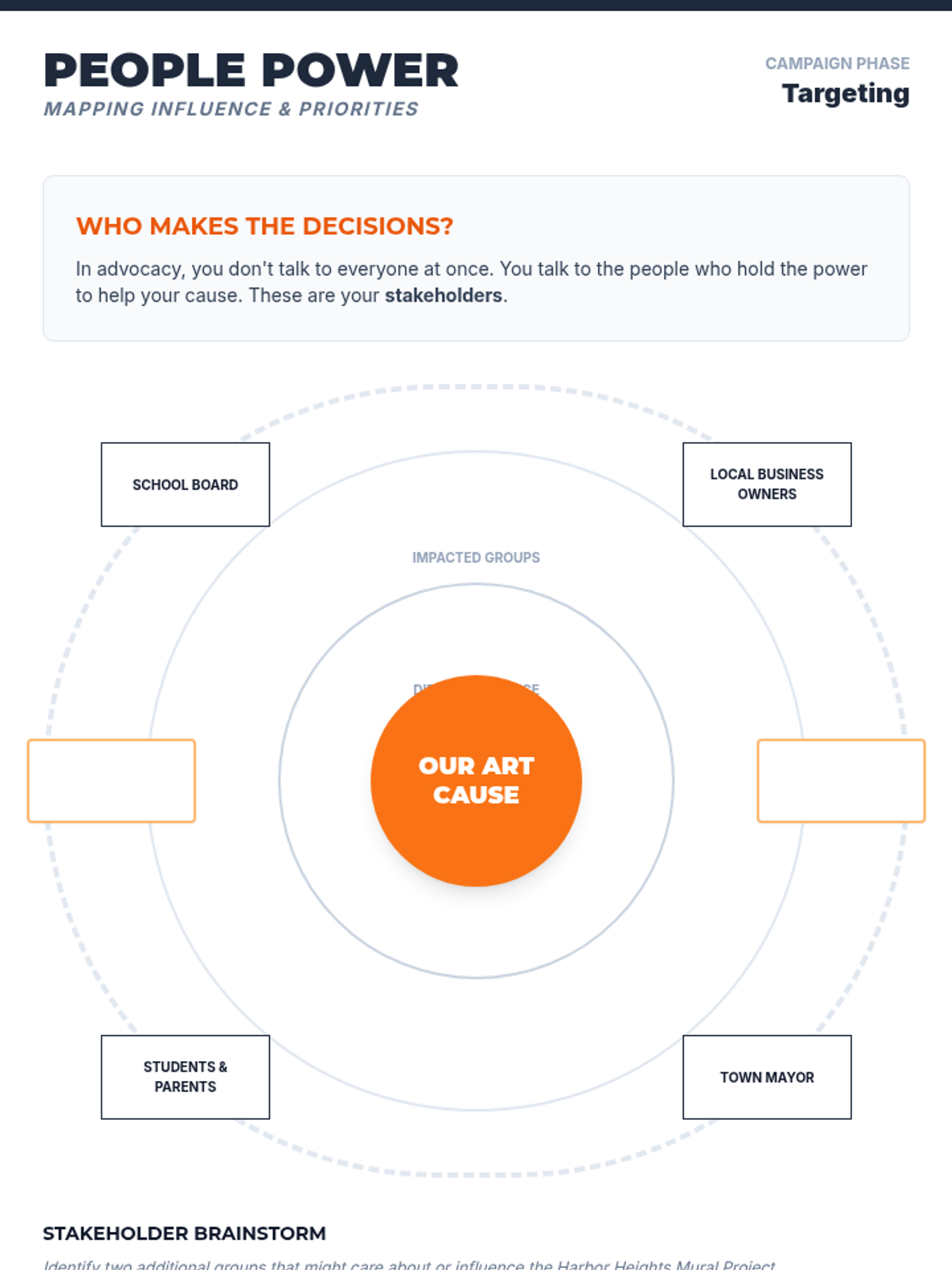
A 2-page student handout for stakeholder mapping and empathy mapping, helping students understand different audience perspectives.
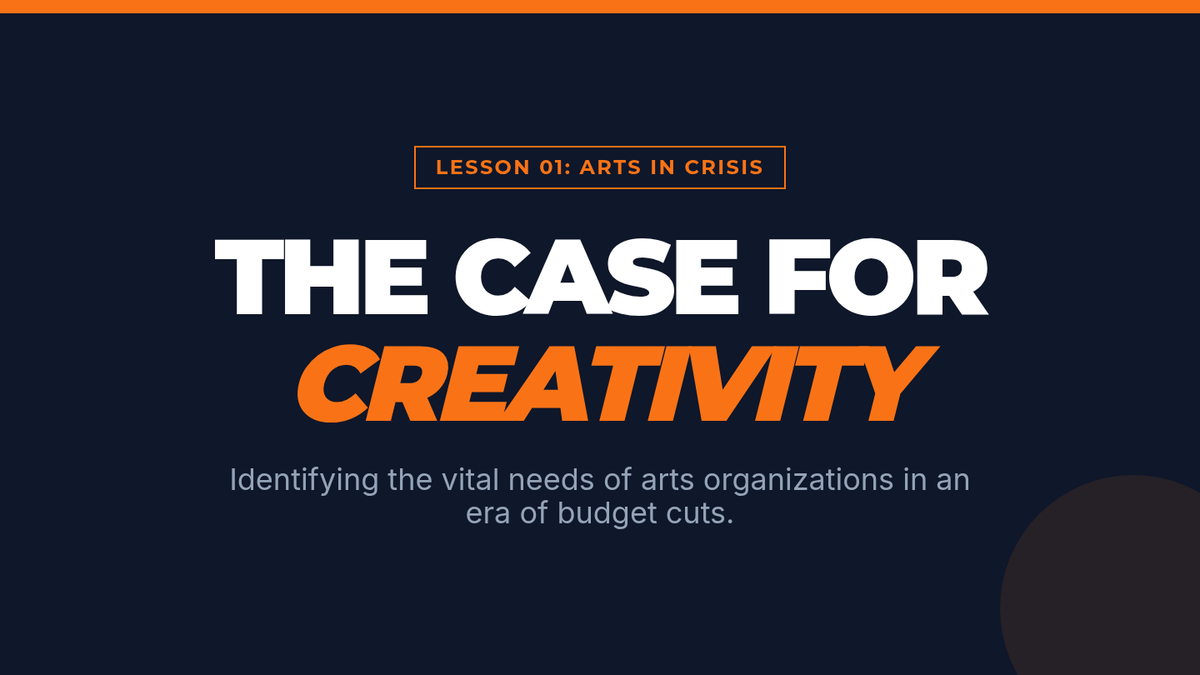
Instructional slides for Lesson 1, introducing the concept of arts advocacy and the "Needs Matrix" through a crisis scenario. Updated for improved readability.
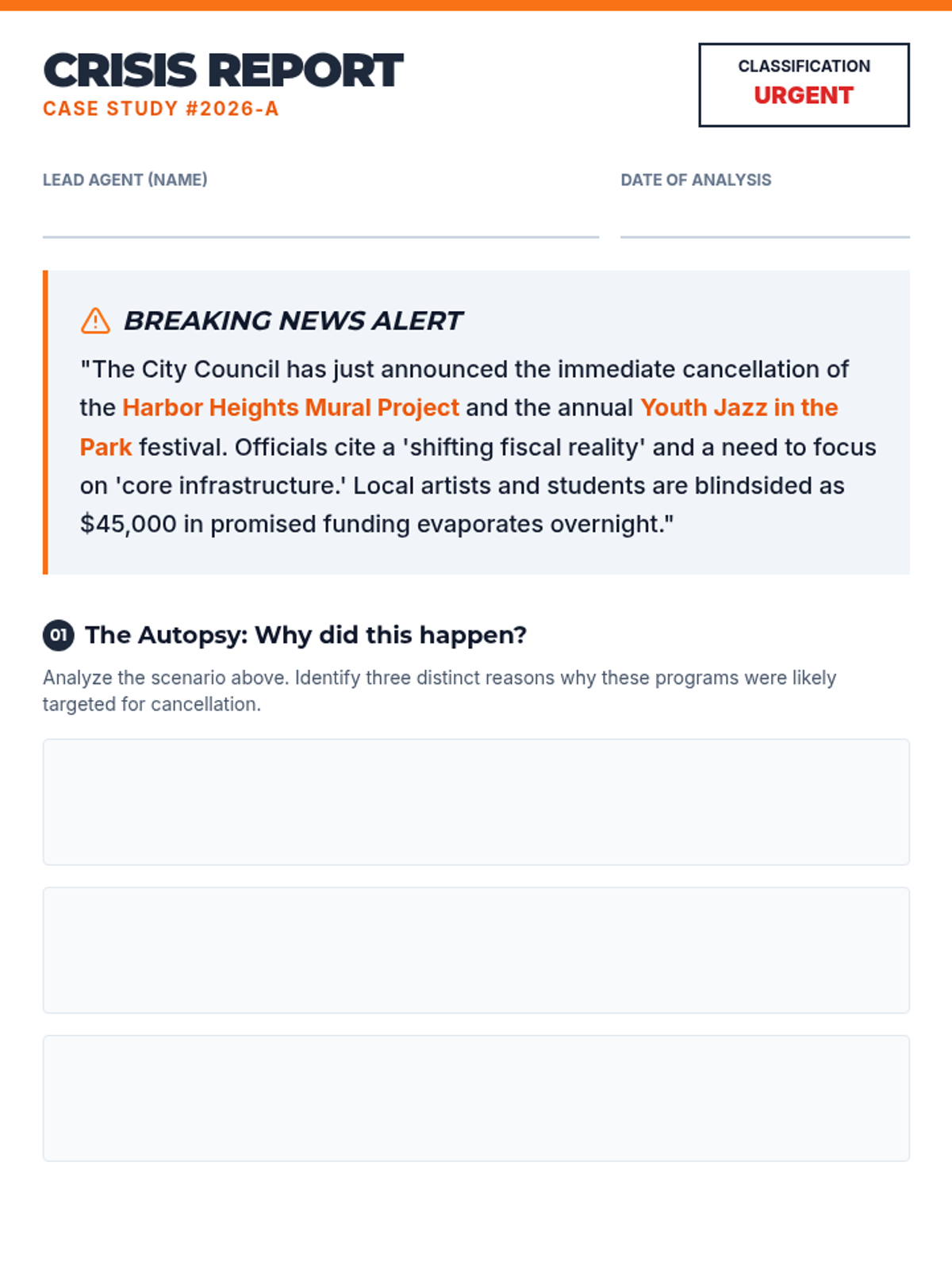
A 2-page student worksheet that uses a "Crisis Report" theme to analyze why arts organizations fail and what specific needs they have.
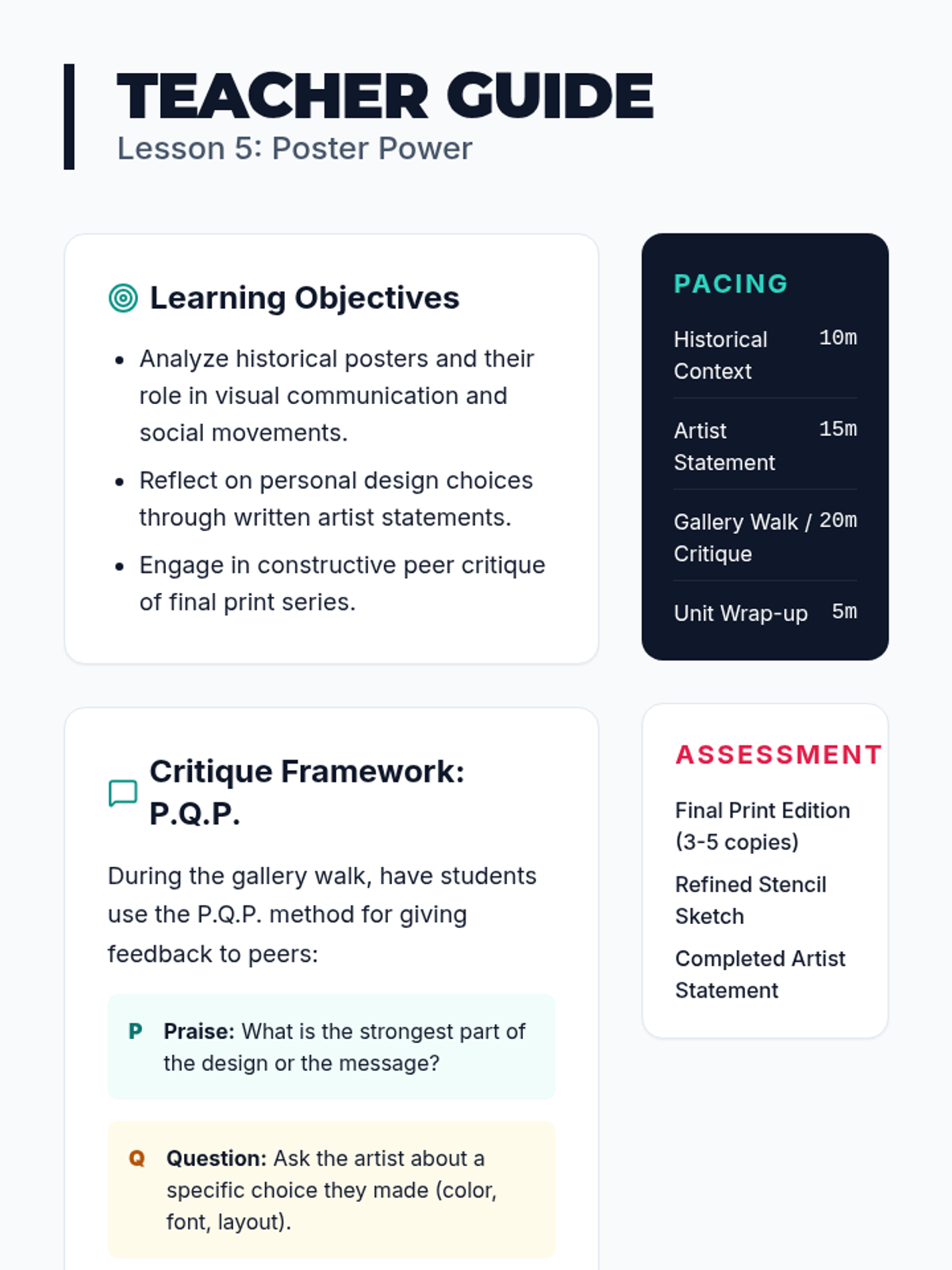
A teacher guide for Lesson 5, including lesson objectives, thumbnailing strategies, and tips for simplifying designs for the screen printing process.
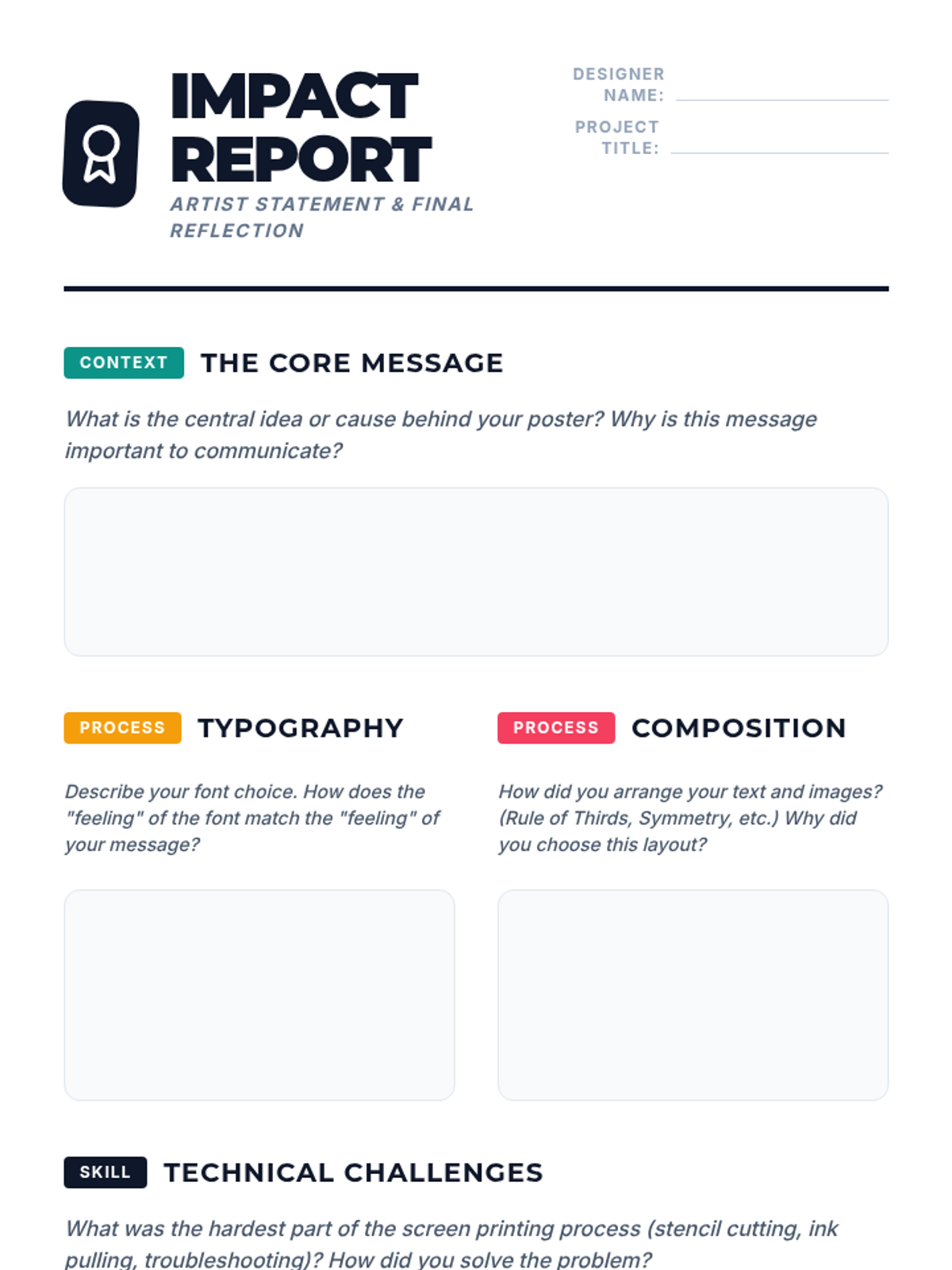
A structured worksheet for students to reflect on their design choices and the impact of their message.
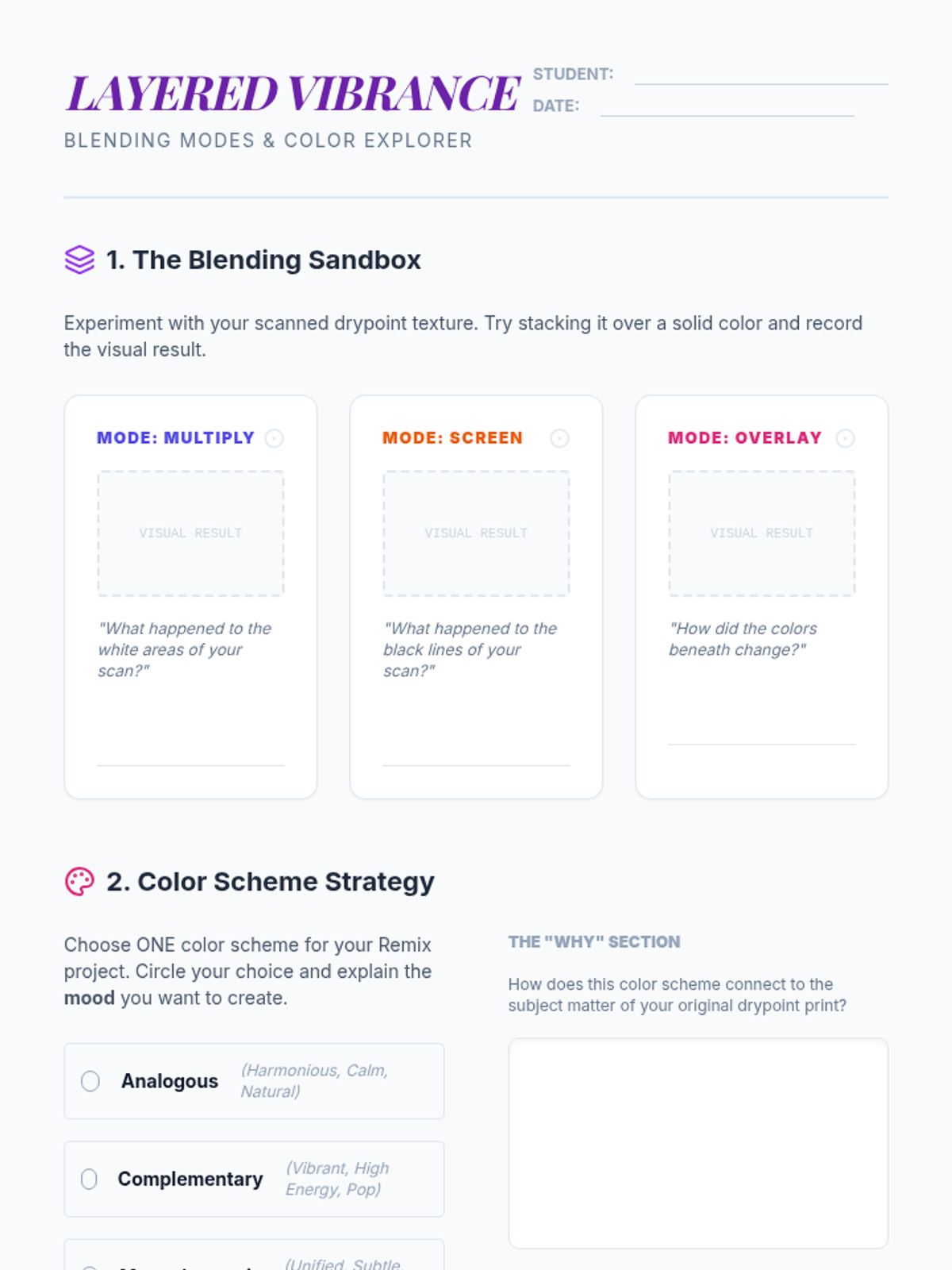
An activity sheet for students to experiment with and document the effects of digital blending modes and plan their color theory strategy.
Lesson slides covering the history of posters, visual communication analysis, and artist statement guidance.
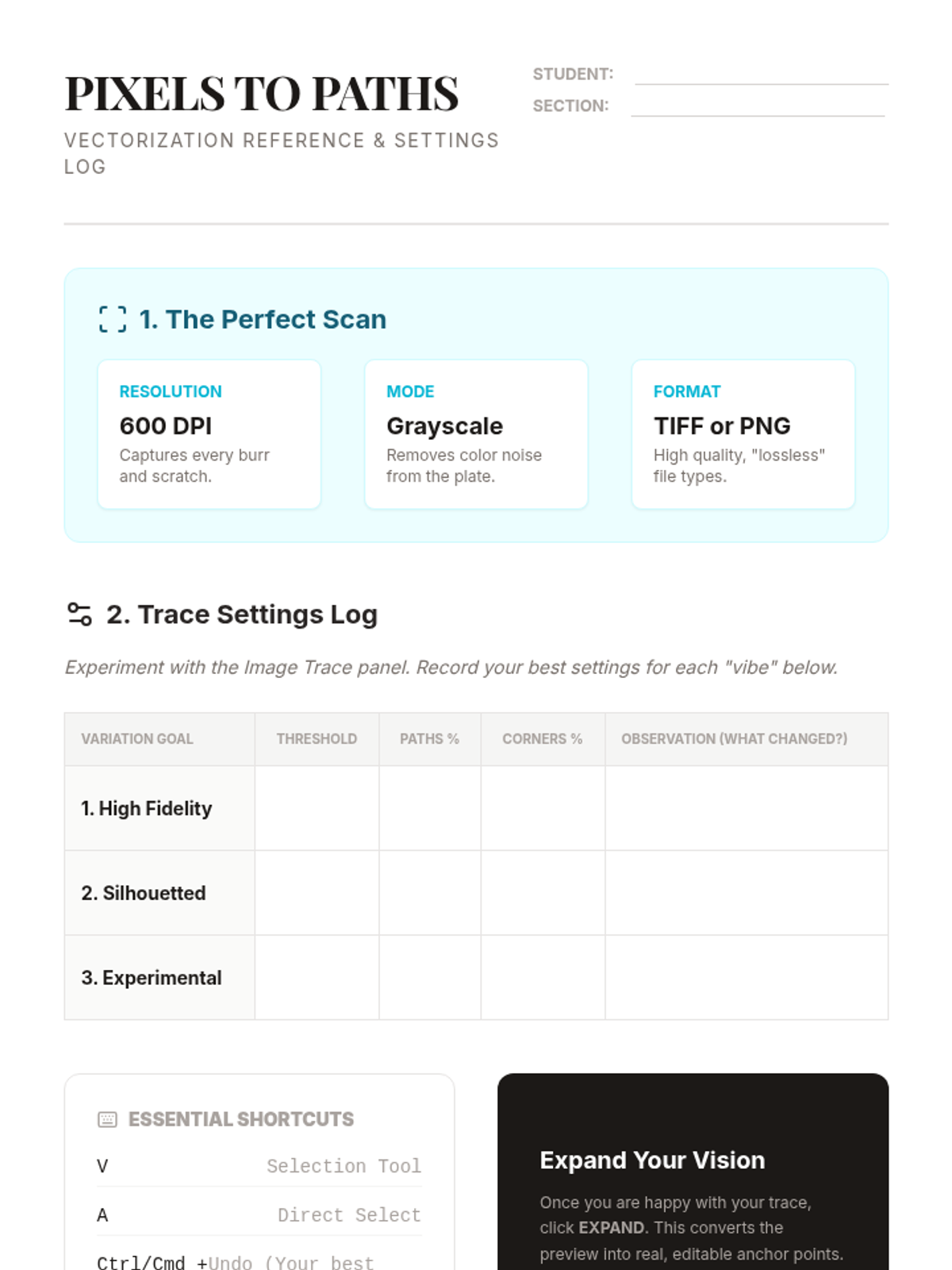
A technical reference and activity sheet for students to log their scanning specs and Image Trace settings during the digitization phase.
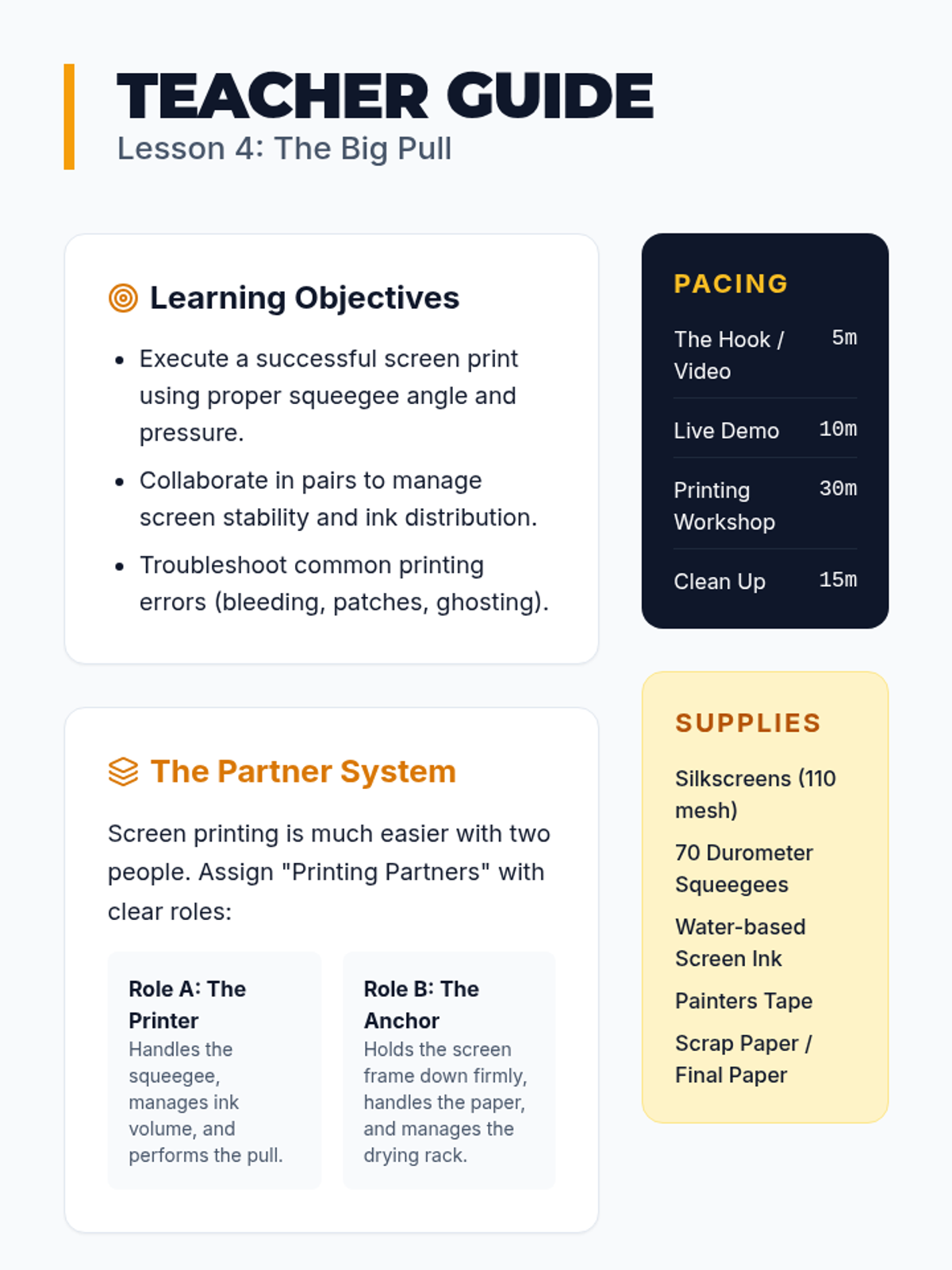
A teacher guide for Lesson 4, including learning objectives, thumbnailing strategies, and tips for simplifying designs for the screen printing process.
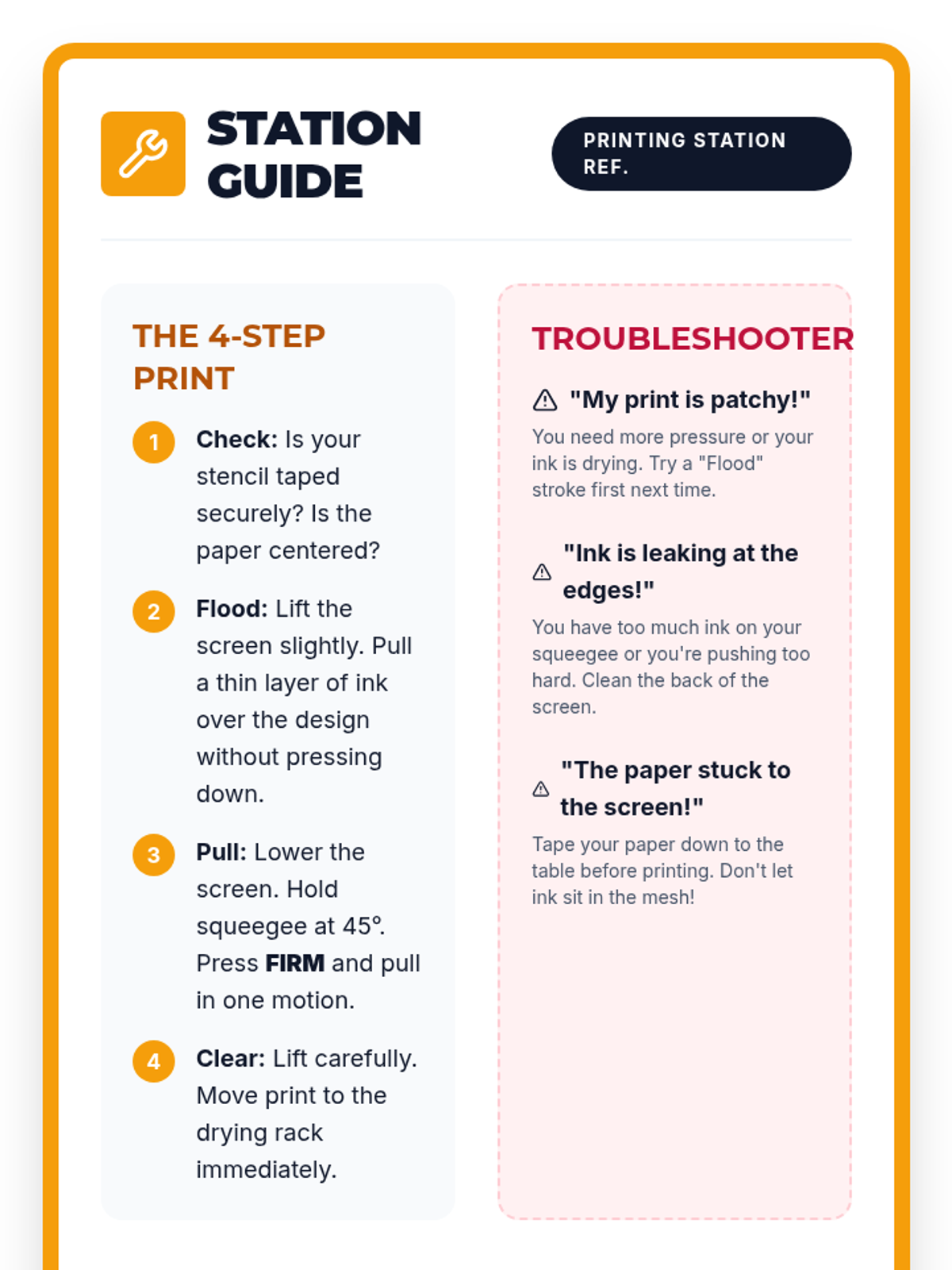
A quick reference guide for students to have at their printing stations, covering the printing steps and troubleshooting common issues.
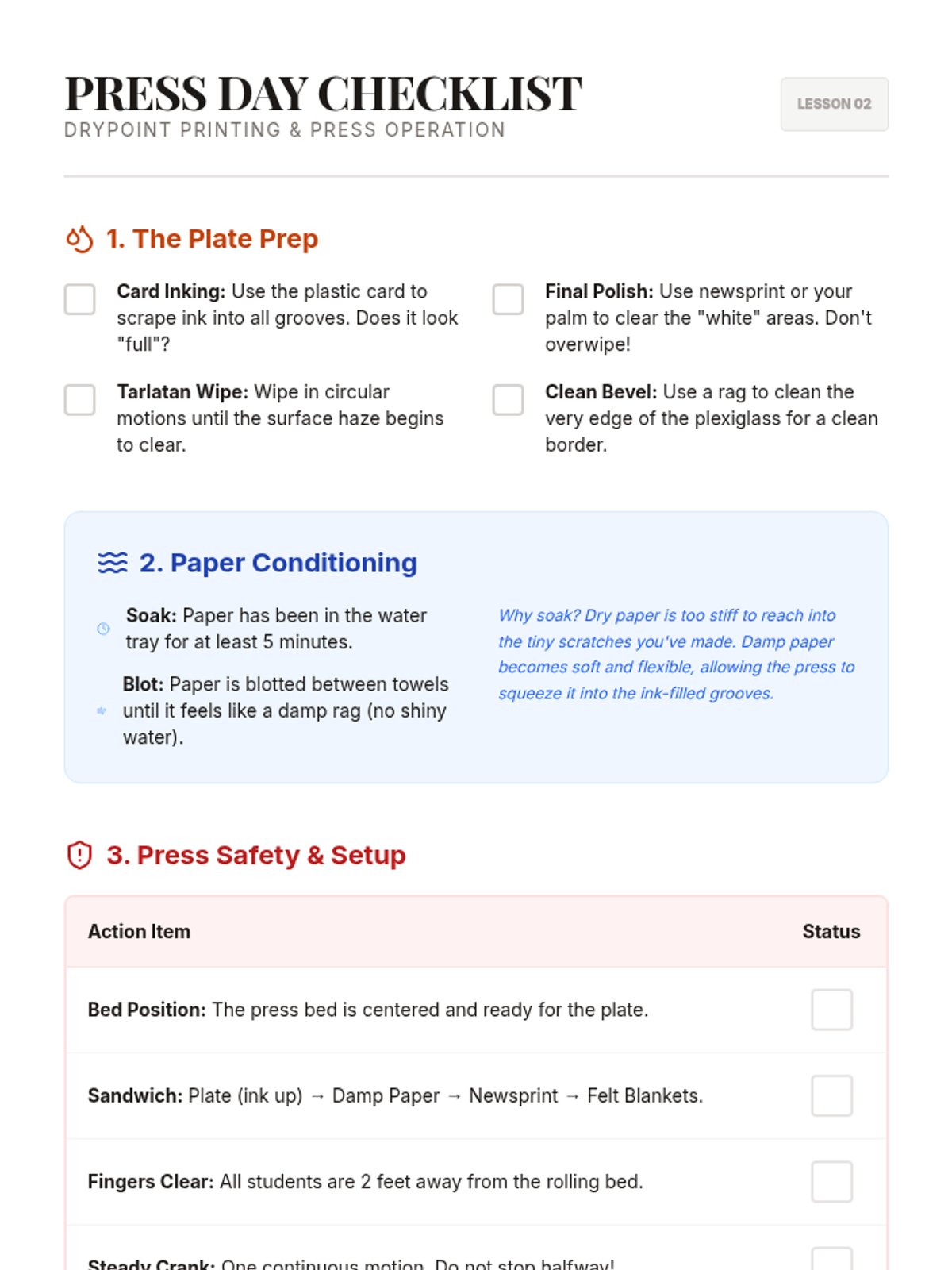
A safety and process checklist for students to use during the physical printing phase, covering inking, paper soaking, and press operation.
Lesson slides covering the anatomy of a screen, the pull (angle, pressure, speed), and common printing errors (bleeding, ghosting).
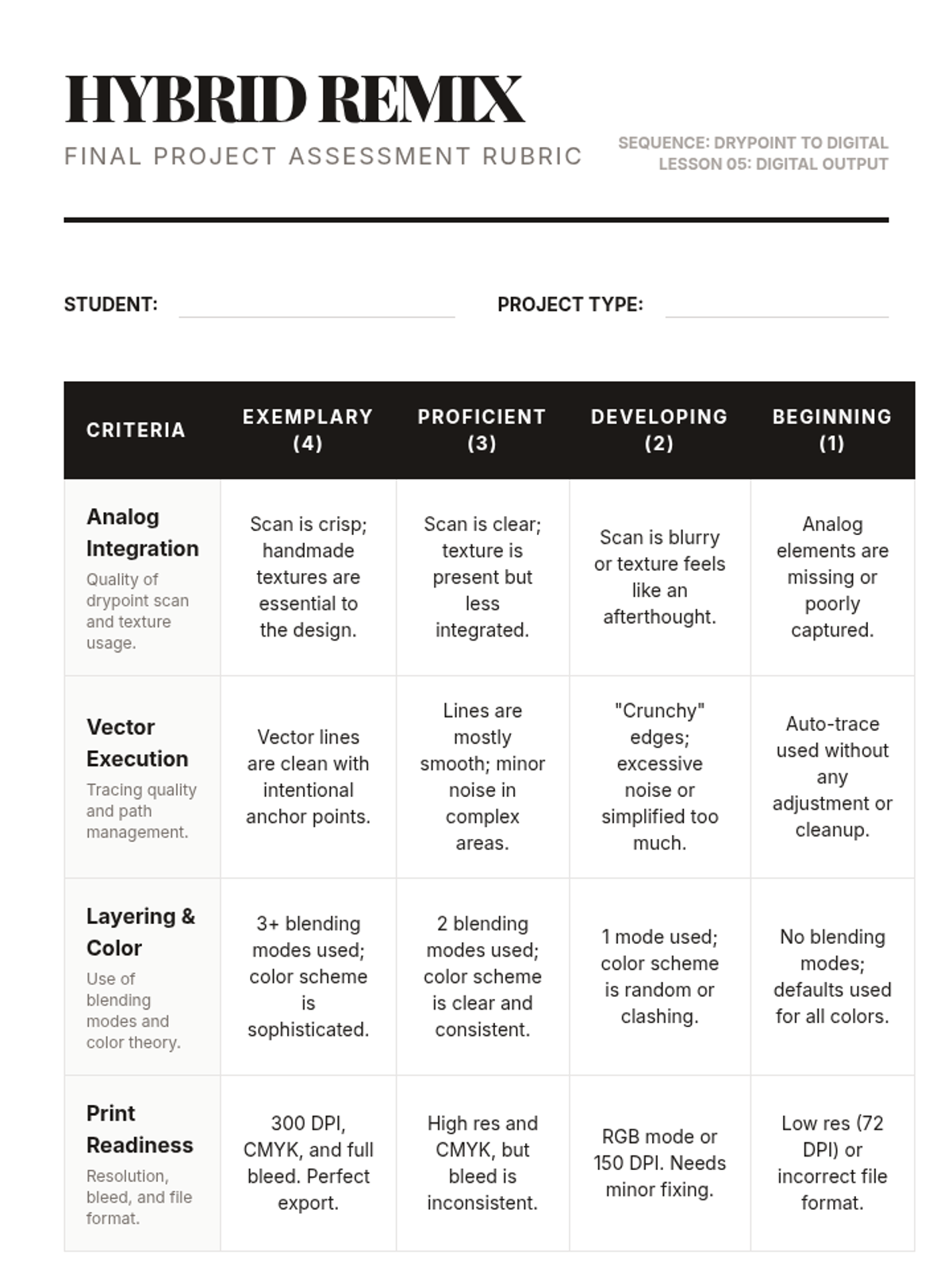
An assessment rubric for the final Hybrid Remix project, covering analog integration, vector execution, color/layering, and technical print readiness.
A teacher guide for Lesson 3, including lesson objectives, thumbnailing strategies, and tips for simplifying designs for the screen printing process.
Visual presentation for Lesson 5 covering the final layout project requirements, print preparation (resolution, CMYK, bleed), and file export formats.
Visual presentation for Lesson 4 covering digital layering modes (multiply, overlay, screen) and color theory schemes for graphic design.
Visual presentation for Lesson 3 covering the power of vector graphics, high-resolution scanning techniques, and the use of Image Trace in design software.
Visual presentation for Lesson 2 covering the card inking method, tarlatan wiping technique, and the importance of pressure and damp paper in the printing process.
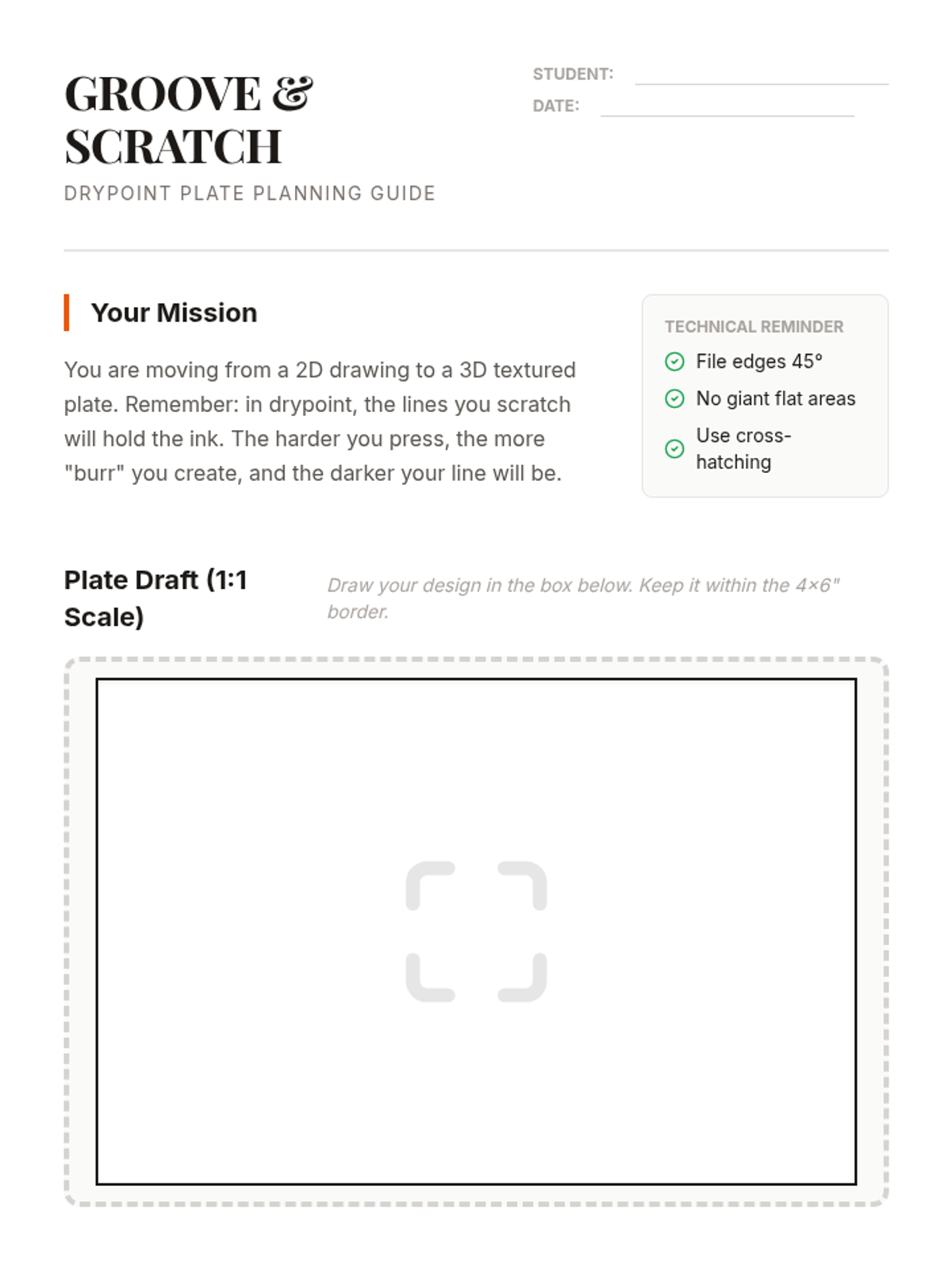
A planning sheet for students to draft their 4x6 drypoint plate designs, including a 1:1 scale drawing area and a mark-making strategy checklist.
Visual presentation introducing the concepts of intaglio vs relief, the drypoint process, and line weight techniques. Includes diagrams and historical context for 7th grade students.
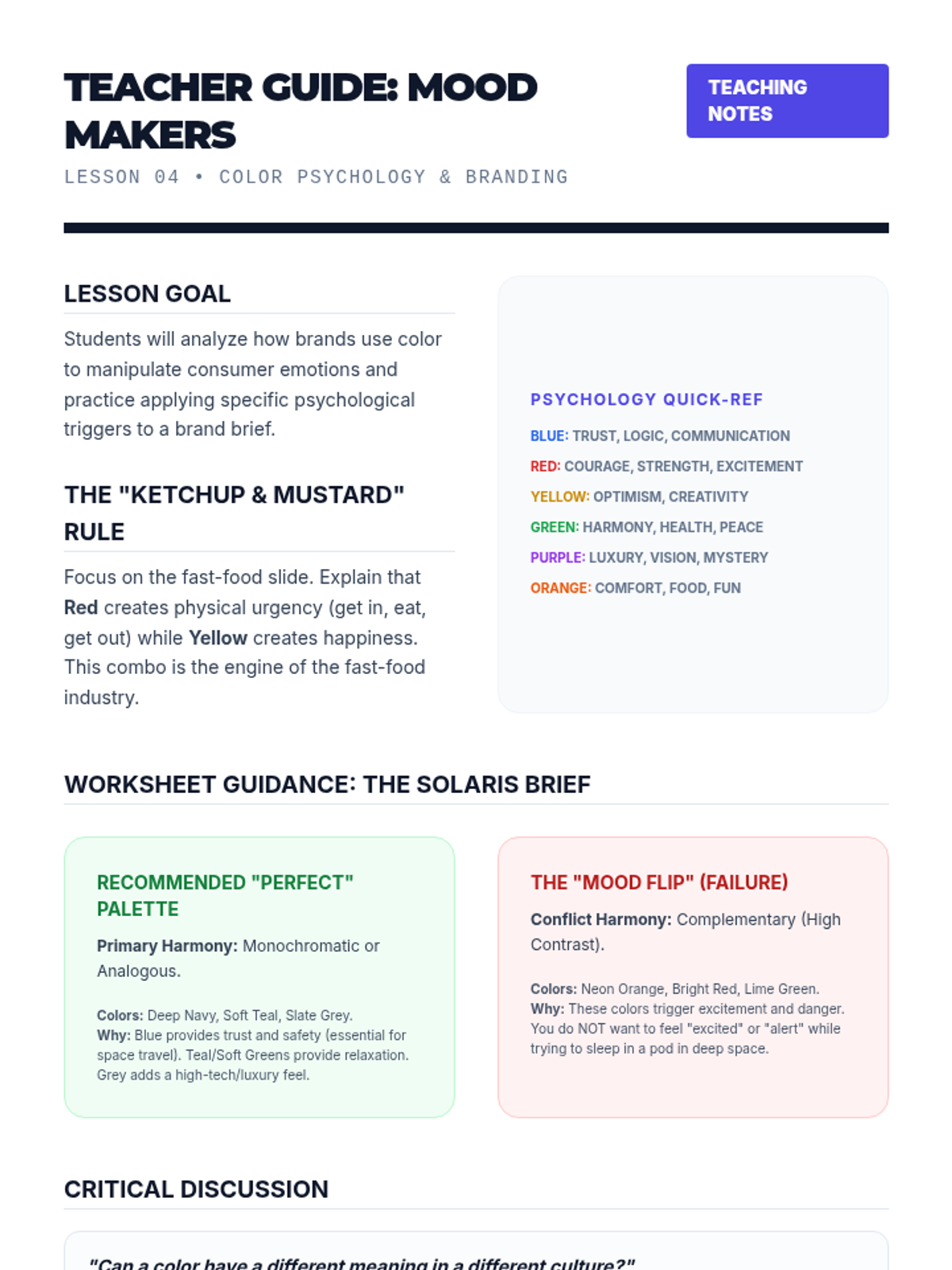
Teacher instructional guide for Lesson 4, covering color psychology associations, worksheet guidance for the Solaris brief, and cultural context notes.
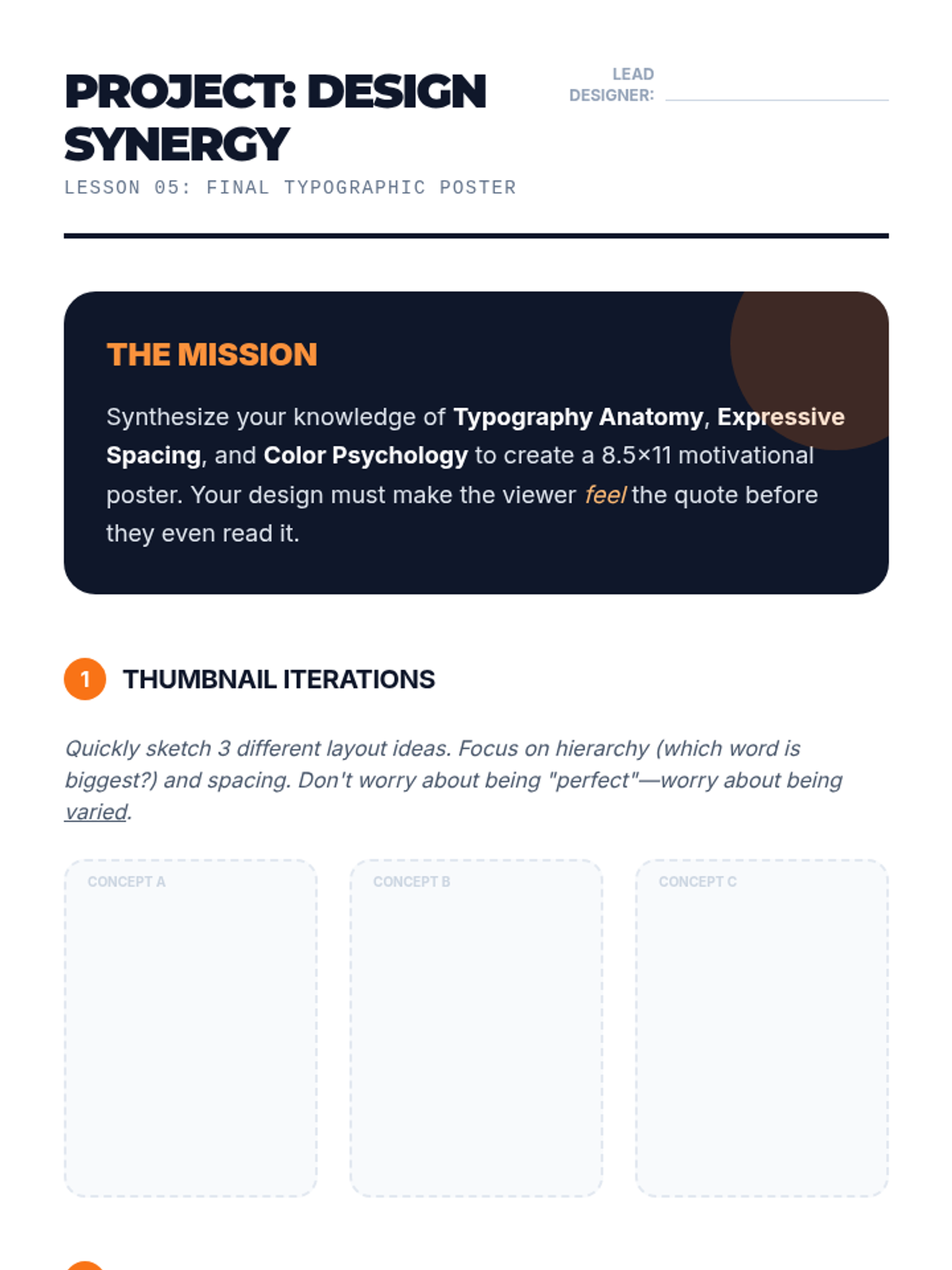
Student project guide and reflection sheet for the final motivational quote poster. Includes space for thumbnail sketches, a design justification section, and a grading rubric.
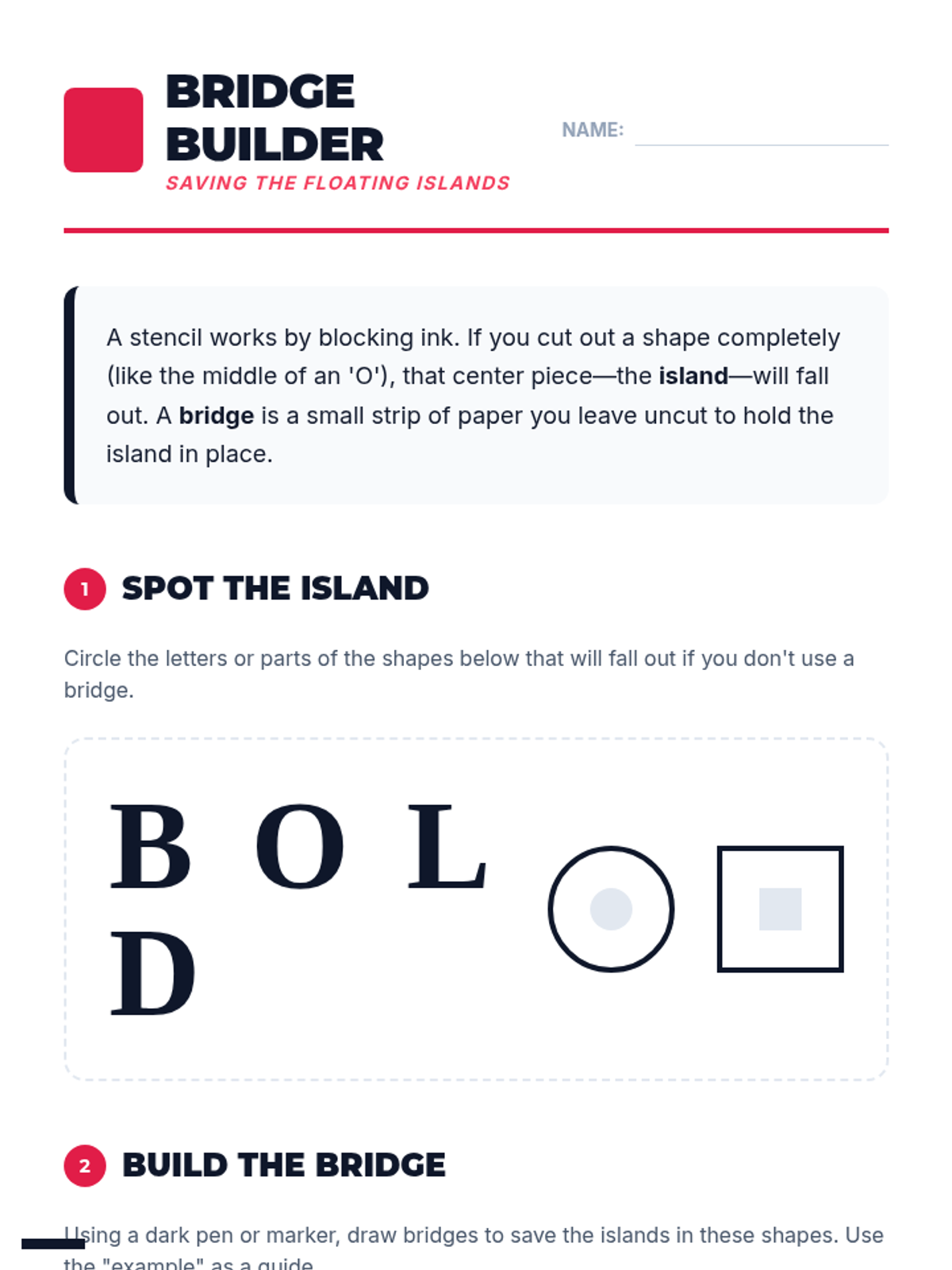
A worksheet where students practice drawing "bridges" on letters and shapes to prevent "islands" from falling out of their stencils.
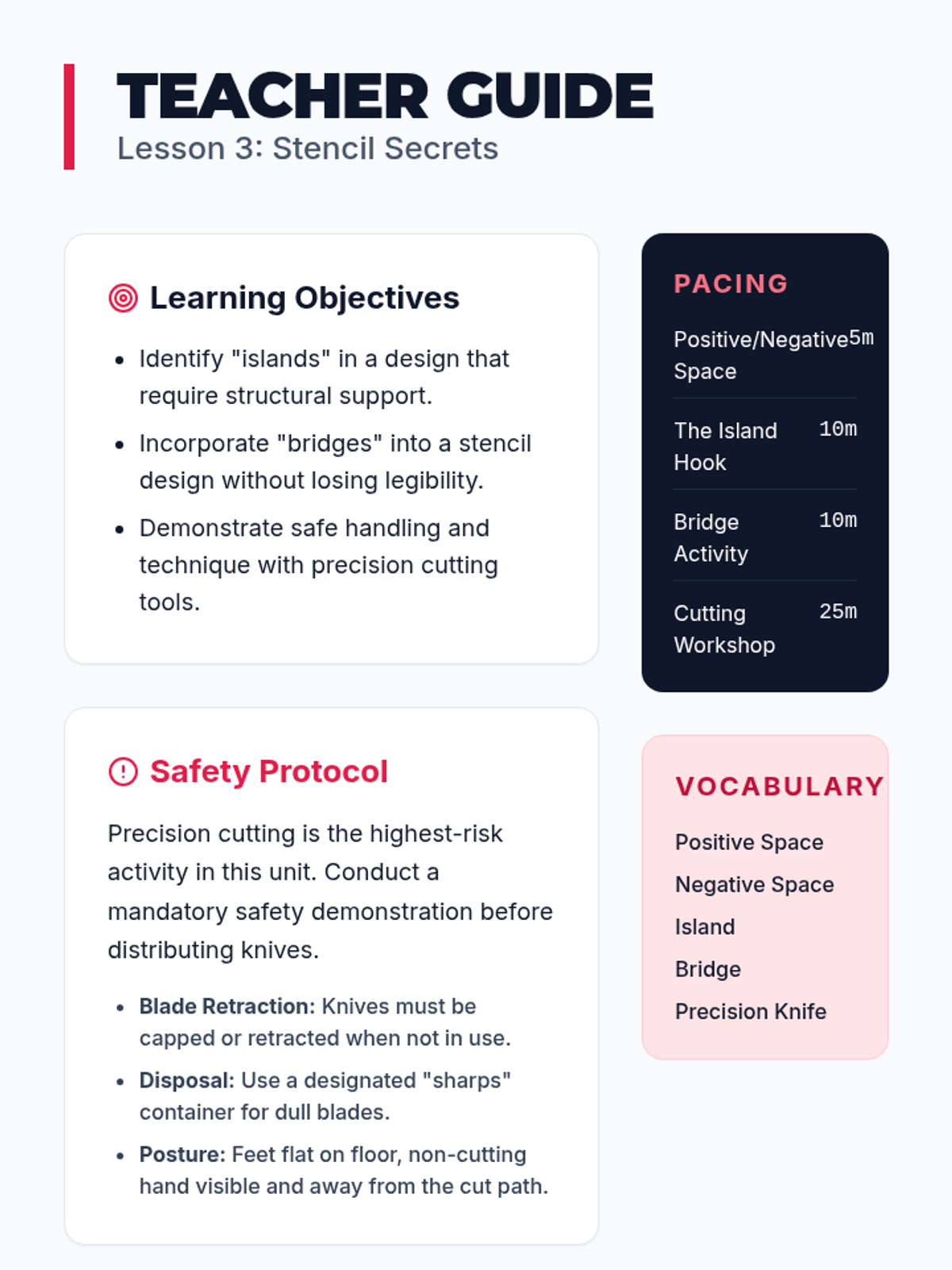
Lesson slides covering positive vs. negative space, the "Island" problem (how to use bridges), and safety with precision cutting tools.
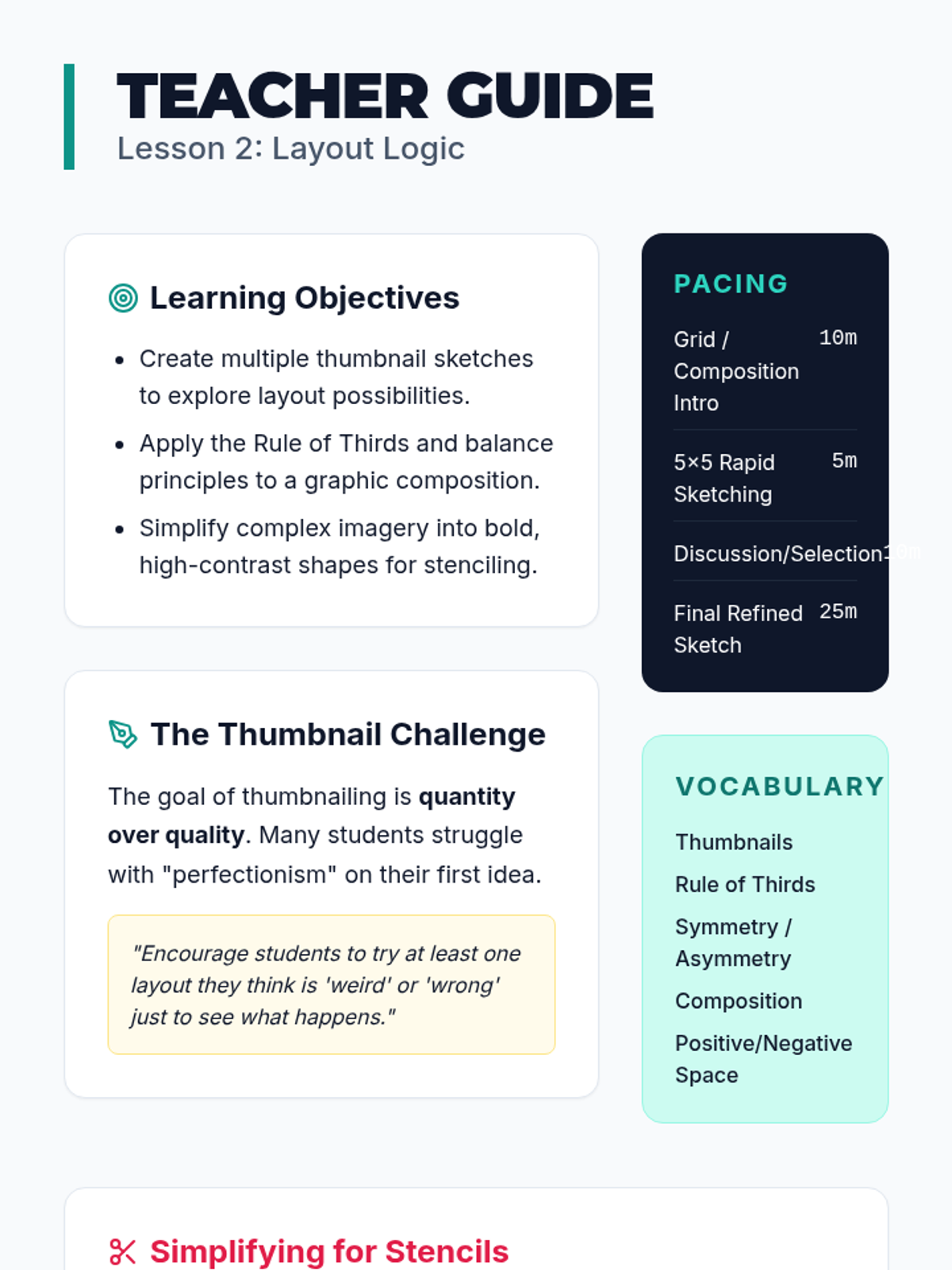
A teacher guide for Lesson 2, including lesson objectives, thumbnailing strategies, and tips for simplifying designs for the screen printing process.
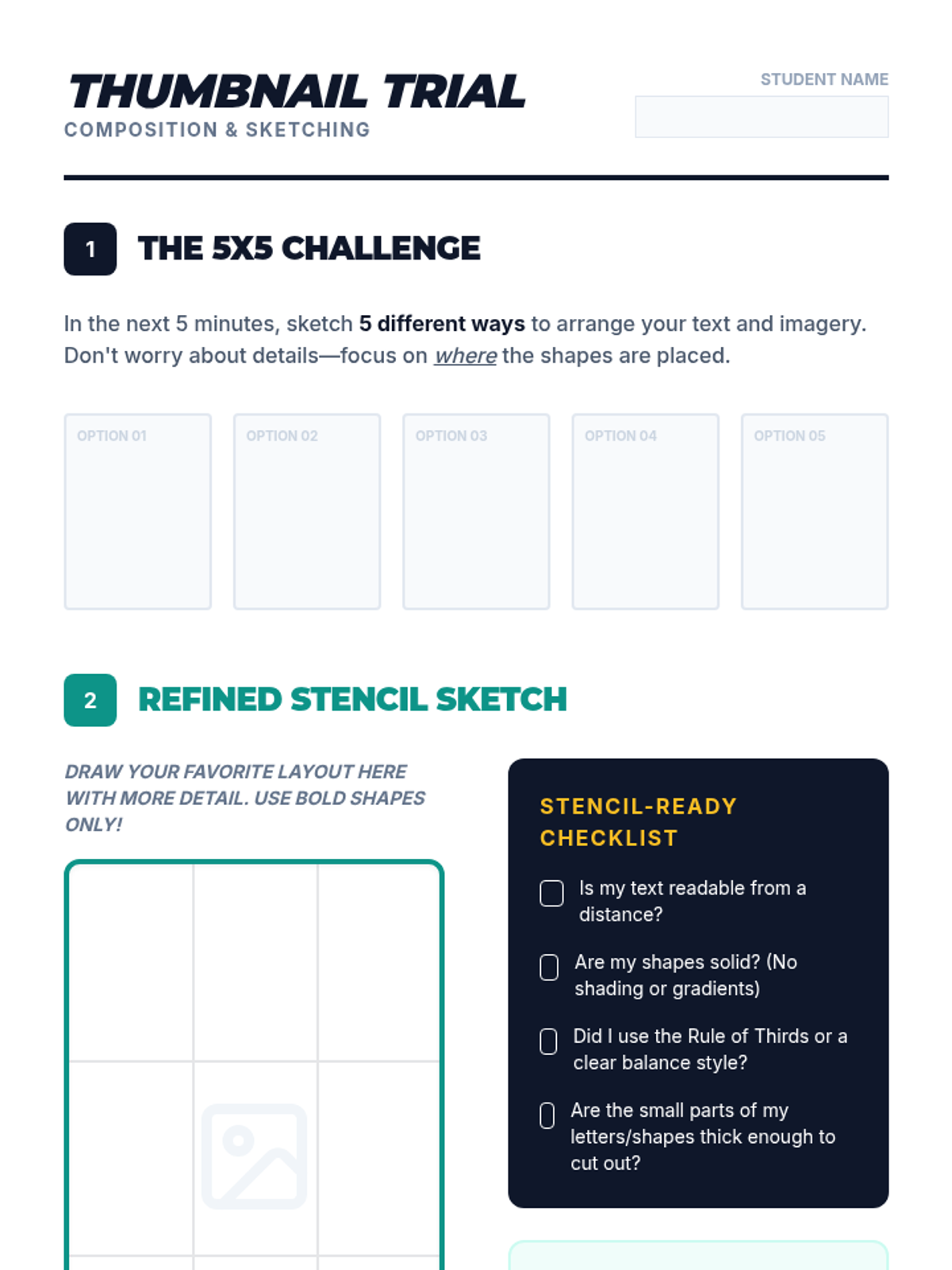
A sketching template for students to practice rapid-fire layout design (thumbnails) and then refine their final chosen concept into a stencil-ready format.
Lesson slides covering composition principles (Rule of Thirds, Balance), the thumbnail sketching challenge, and advice on simplifying designs for stencils.
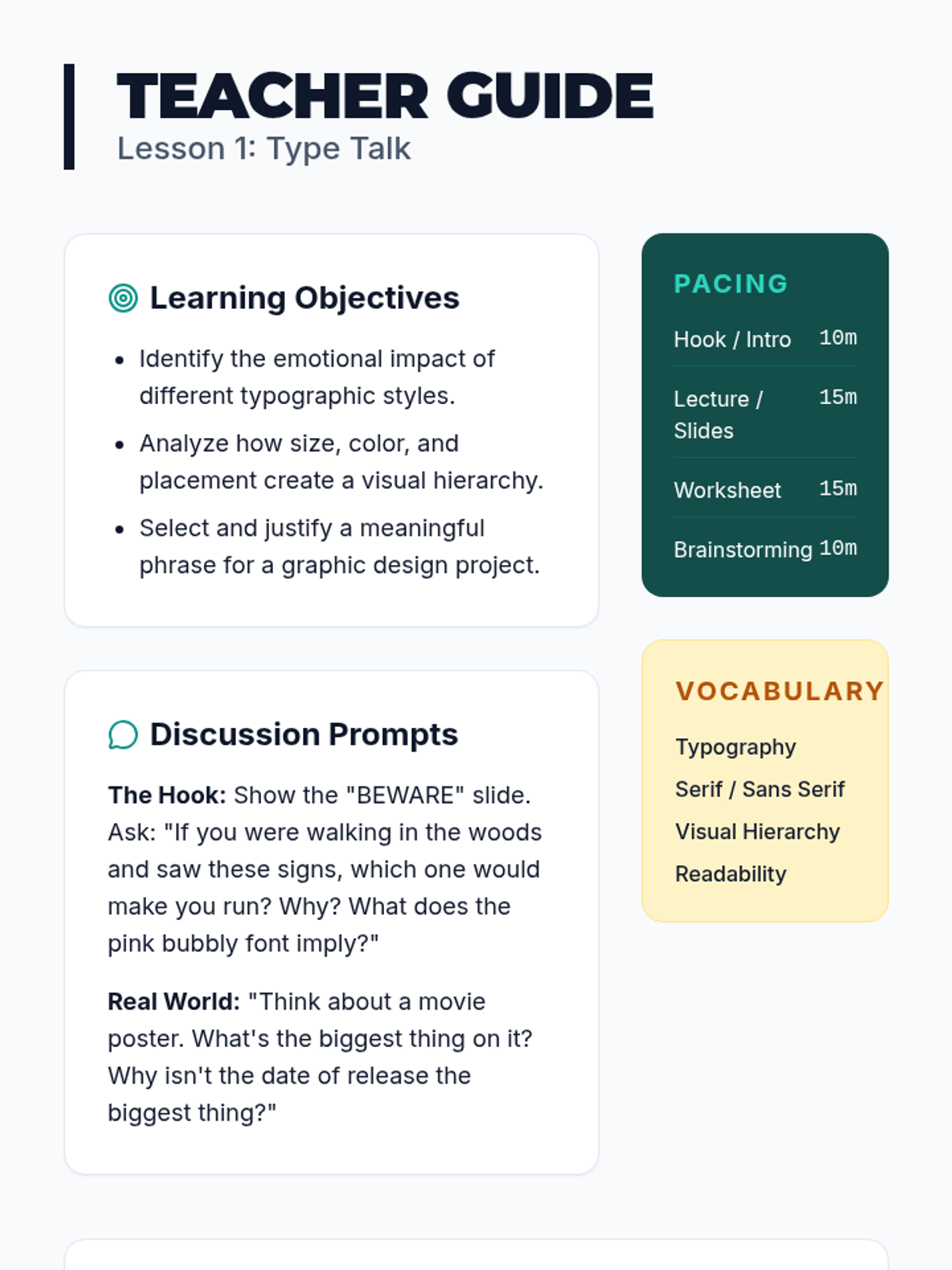
A teacher guide for Lesson 1, including learning objectives, discussion prompts, pacing, and an answer key for the student worksheet.
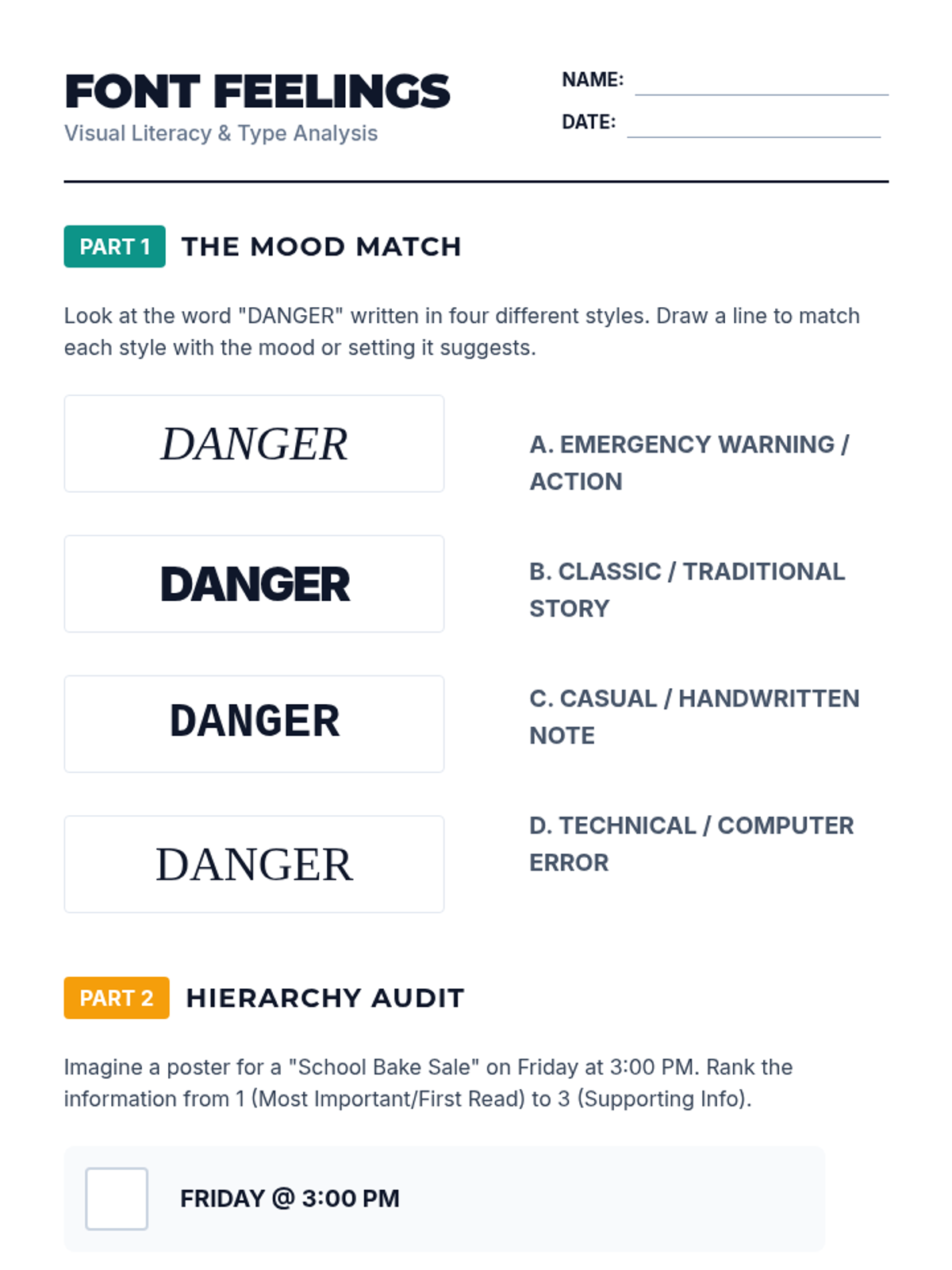
A student worksheet for analyzing font styles, understanding visual hierarchy, and brainstorming their project message.
Introductory slides for the unit covering typography basics, font styles, and the concept of visual hierarchy.
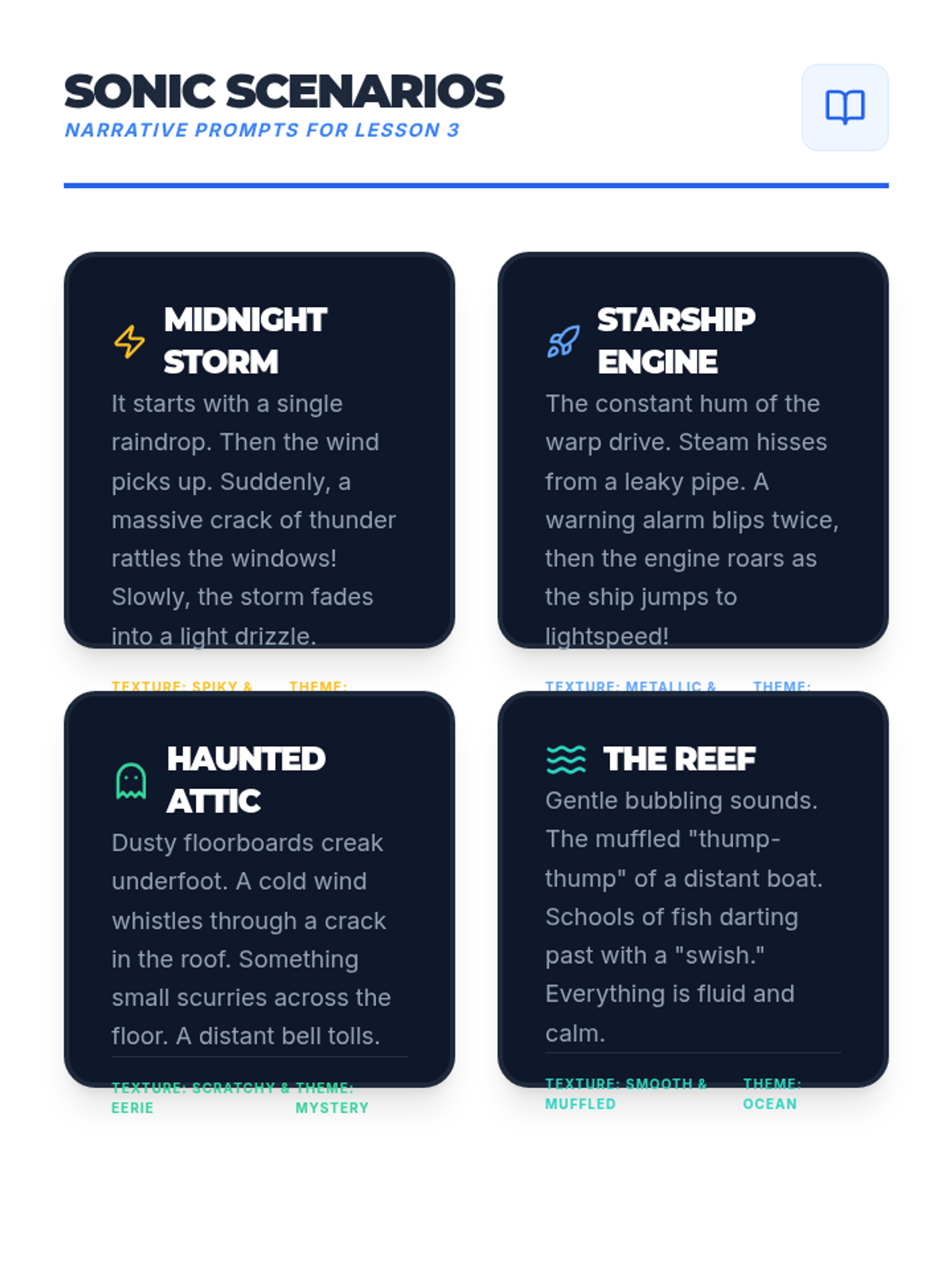
Narrative scenario cards for Lesson 3. Students choose one of these environmental prompts to inspire their graphic score composition.
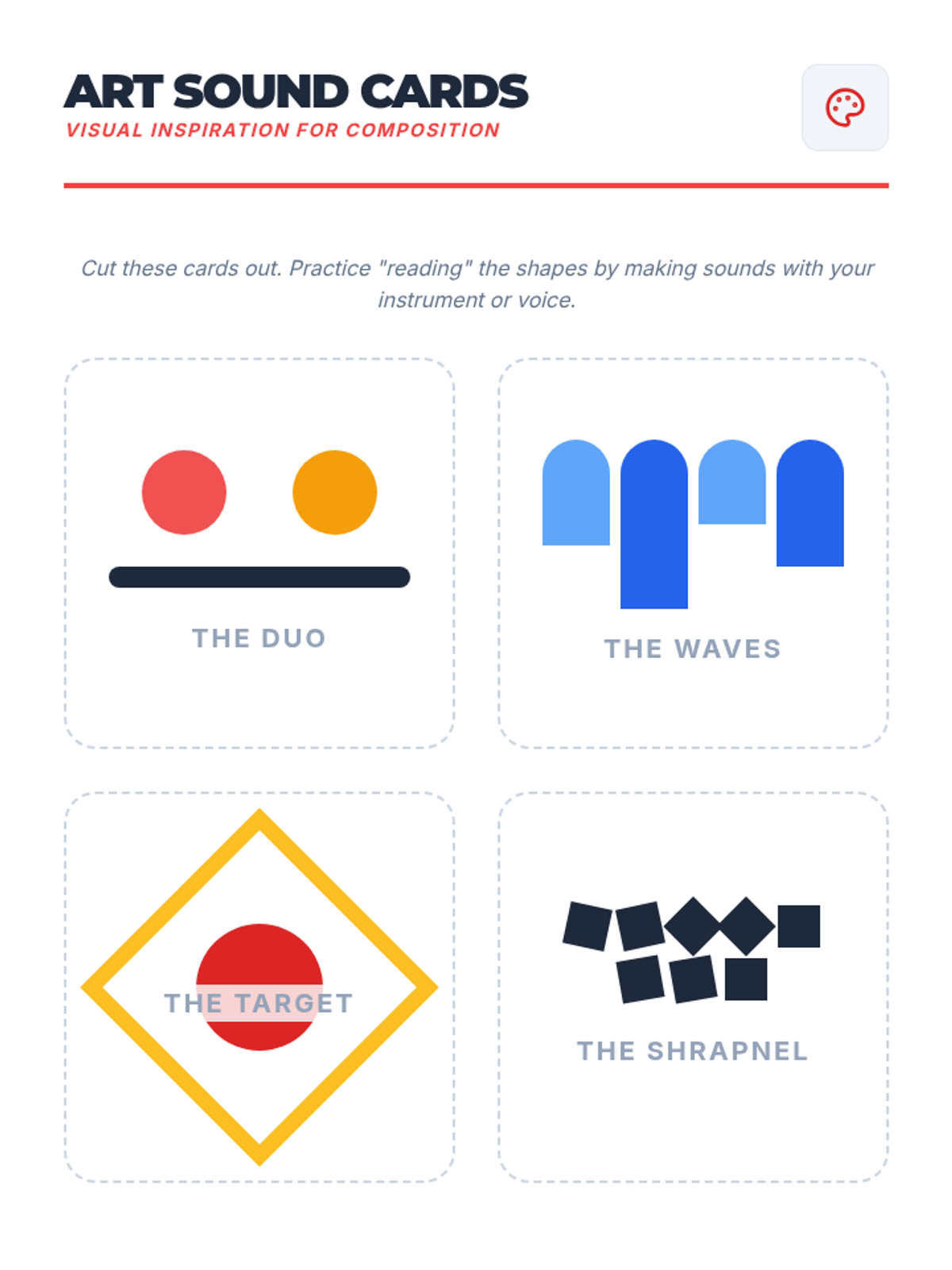
Set of visual inspiration cards for Lesson 2. Students use these to practice translating abstract shapes and patterns into sound before creating their own legend.
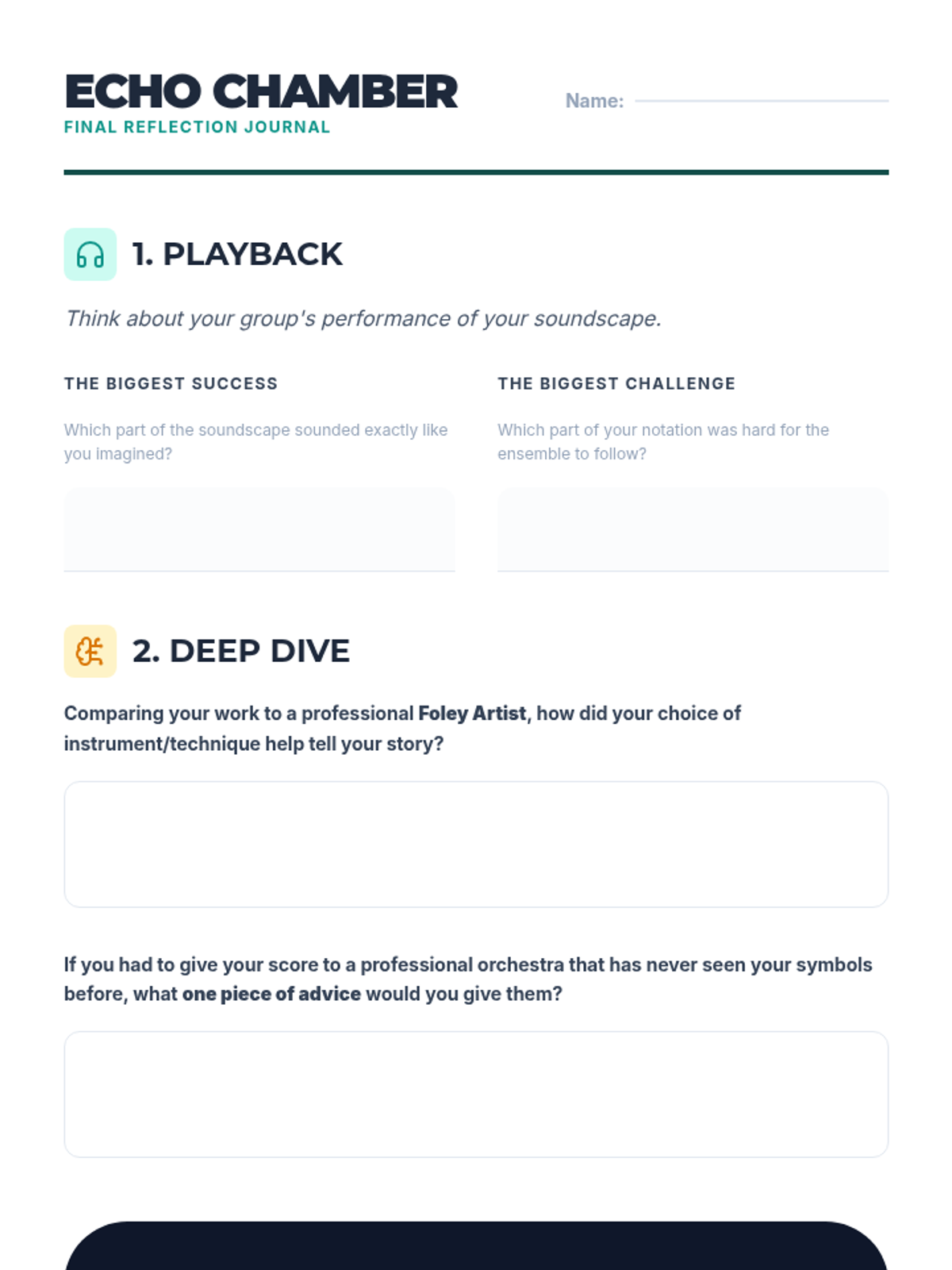
Final reflection worksheet for Lesson 5. Students analyze their performance, compare their work to professional Foley artistry, and answer the sequence's essential question.
Slide deck for Lesson 5: Echo Chamber. Covers the final reflection on graphic notation, comparison to professional Foley artistry, and a debrief on the advantages/limitations of this notation style.
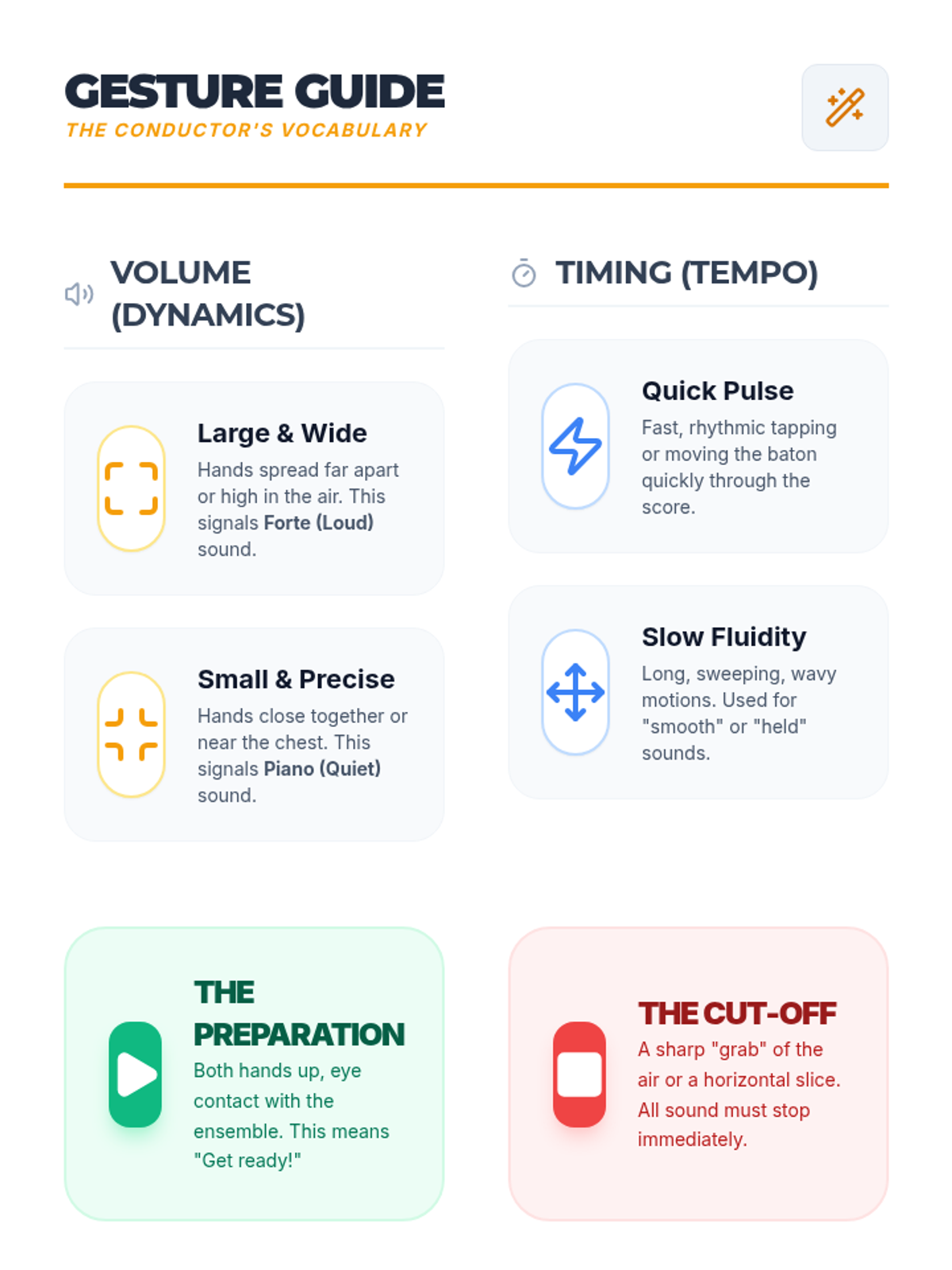
Visual reference guide for students illustrating essential conducting gestures for volume, tempo, and cues. Great for use during Lesson 4 rehearsals.
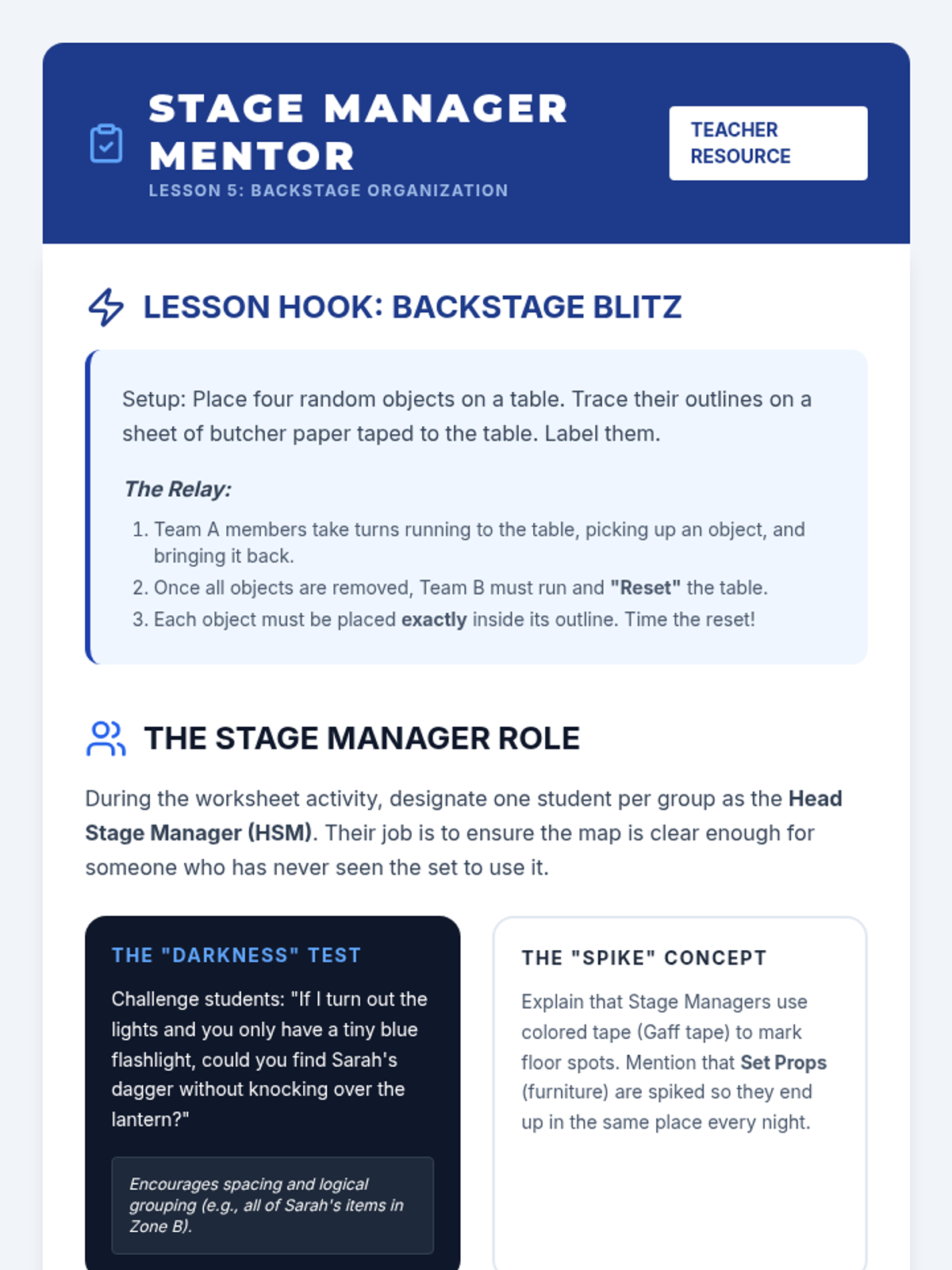
Teacher guide for Lesson 5: Backstage Organization and Prop Tables. Includes relay race hook instructions, "darkness test" simulation tips, and a unit reflection guide.
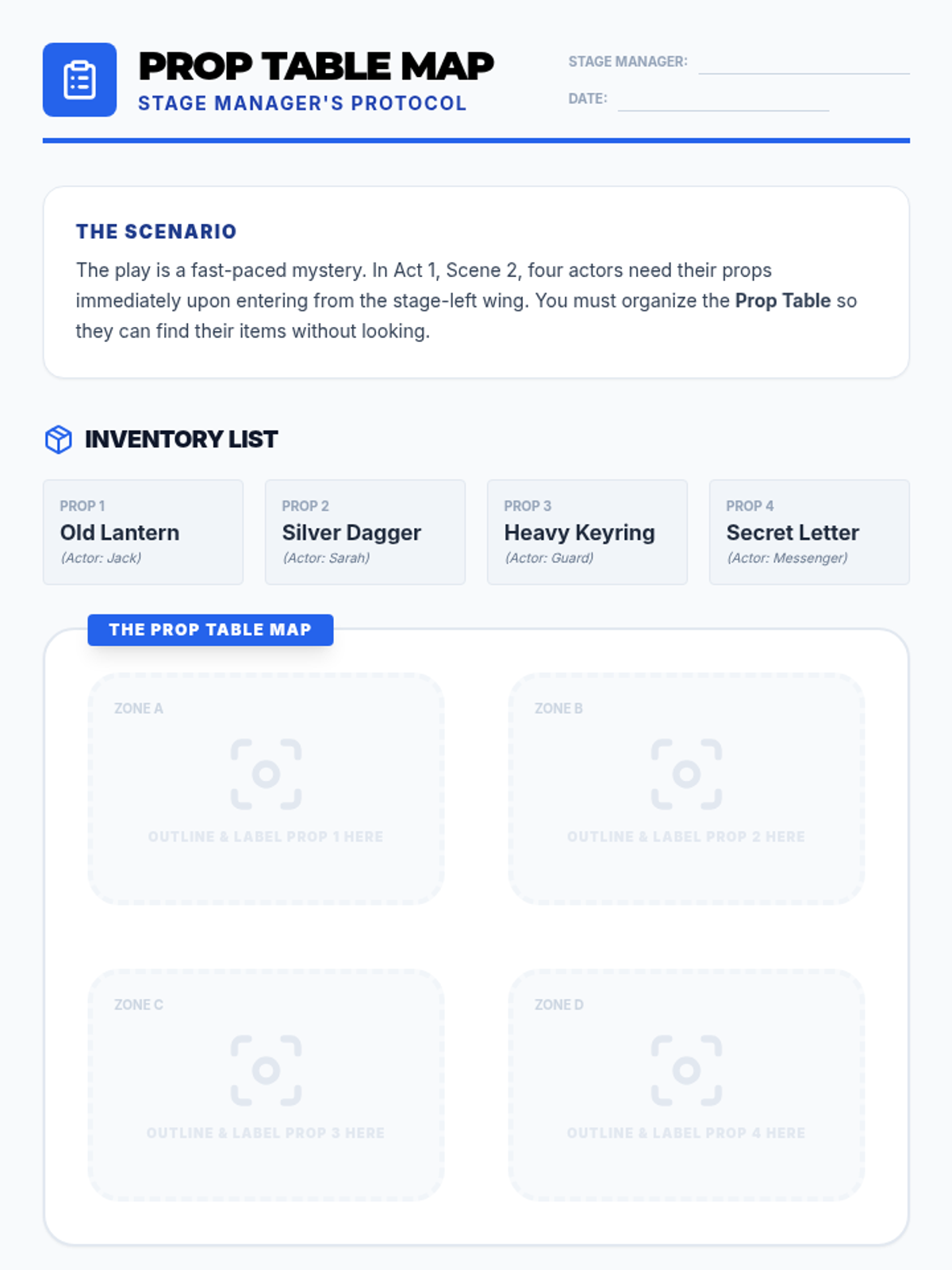
Student worksheet for Lesson 5: Stage Management organization. Features a prop table mapping activity for a specific scene.
Educational slide deck for Lesson 5: Backstage Organization and Prop Tables. Covers the importance of organization, prop table setup, and the concept of "spiking" furniture.
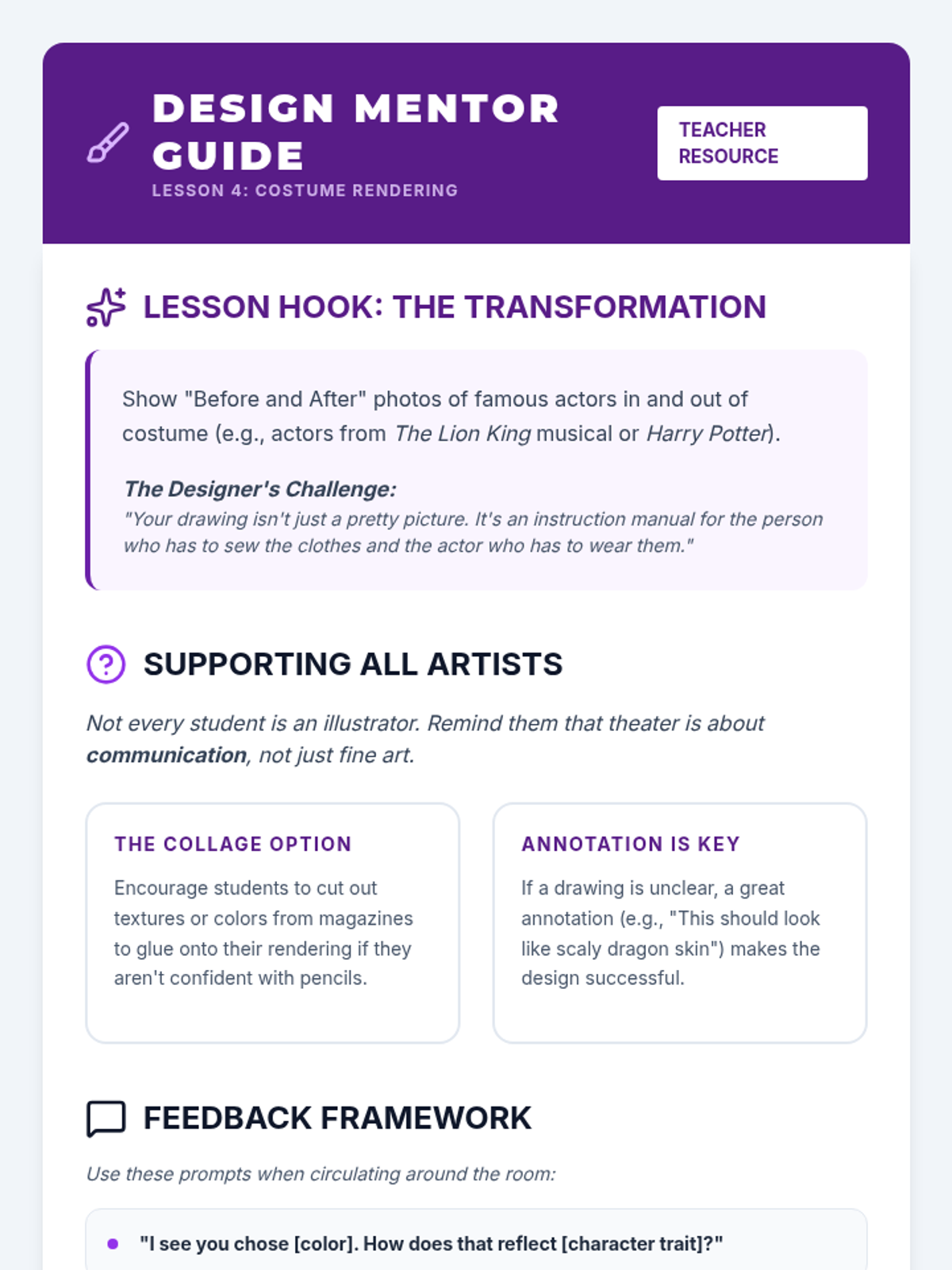
Teacher guide for Lesson 4: Costume Rendering and Collage. Includes instructions for the "Transformation" hook, artistic support strategies for varied skill levels, and feedback prompts for student designs.
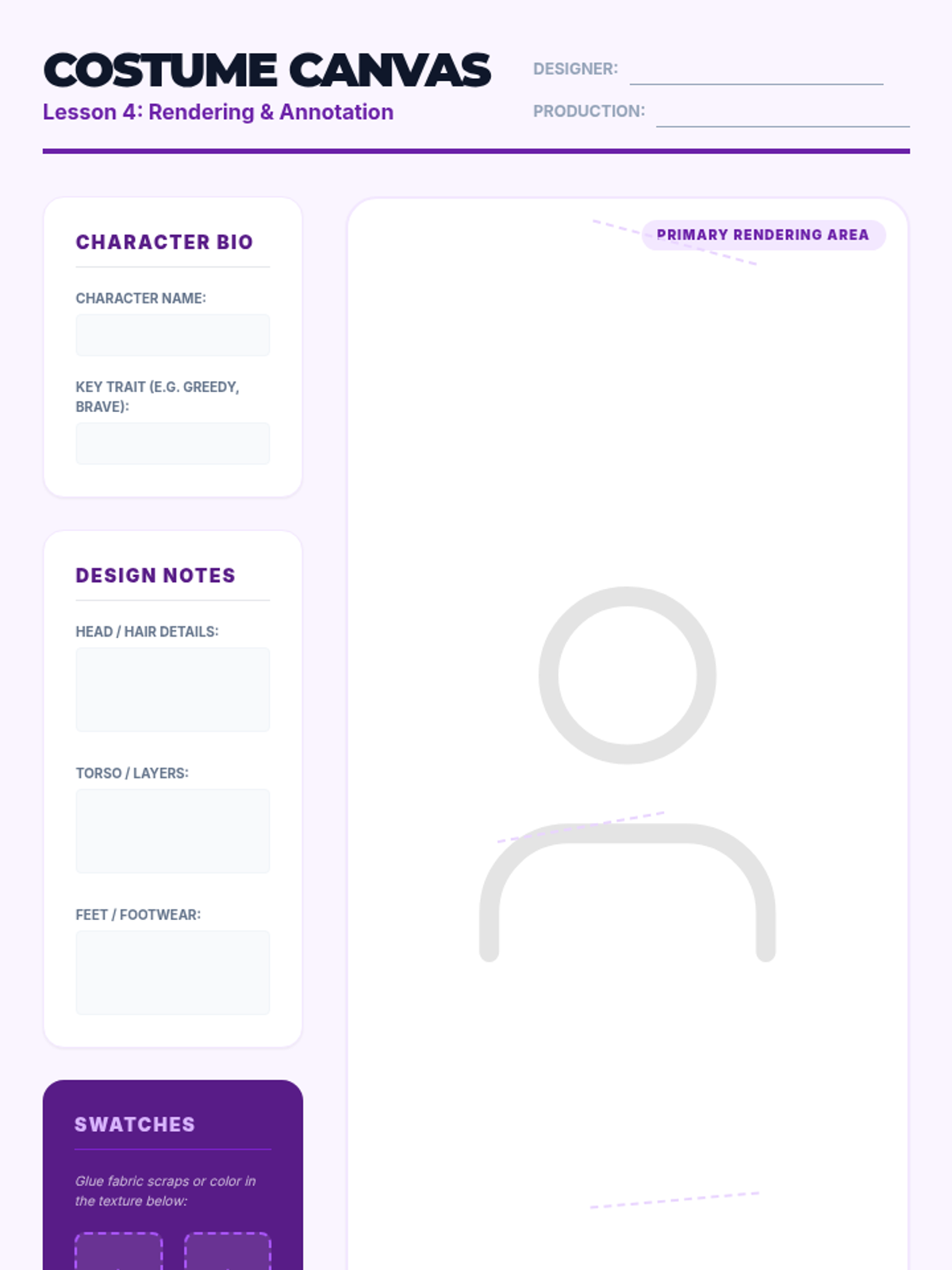
Student worksheet for Lesson 4: Creating a costume rendering. Includes space for character bio, design notes, swatches, and a large drawing area.
Educational slide deck for Lesson 4: Costume Rendering and Collage. Covers the components of a professional rendering (sketch, swatches, annotations) and the importance of visual storytelling.
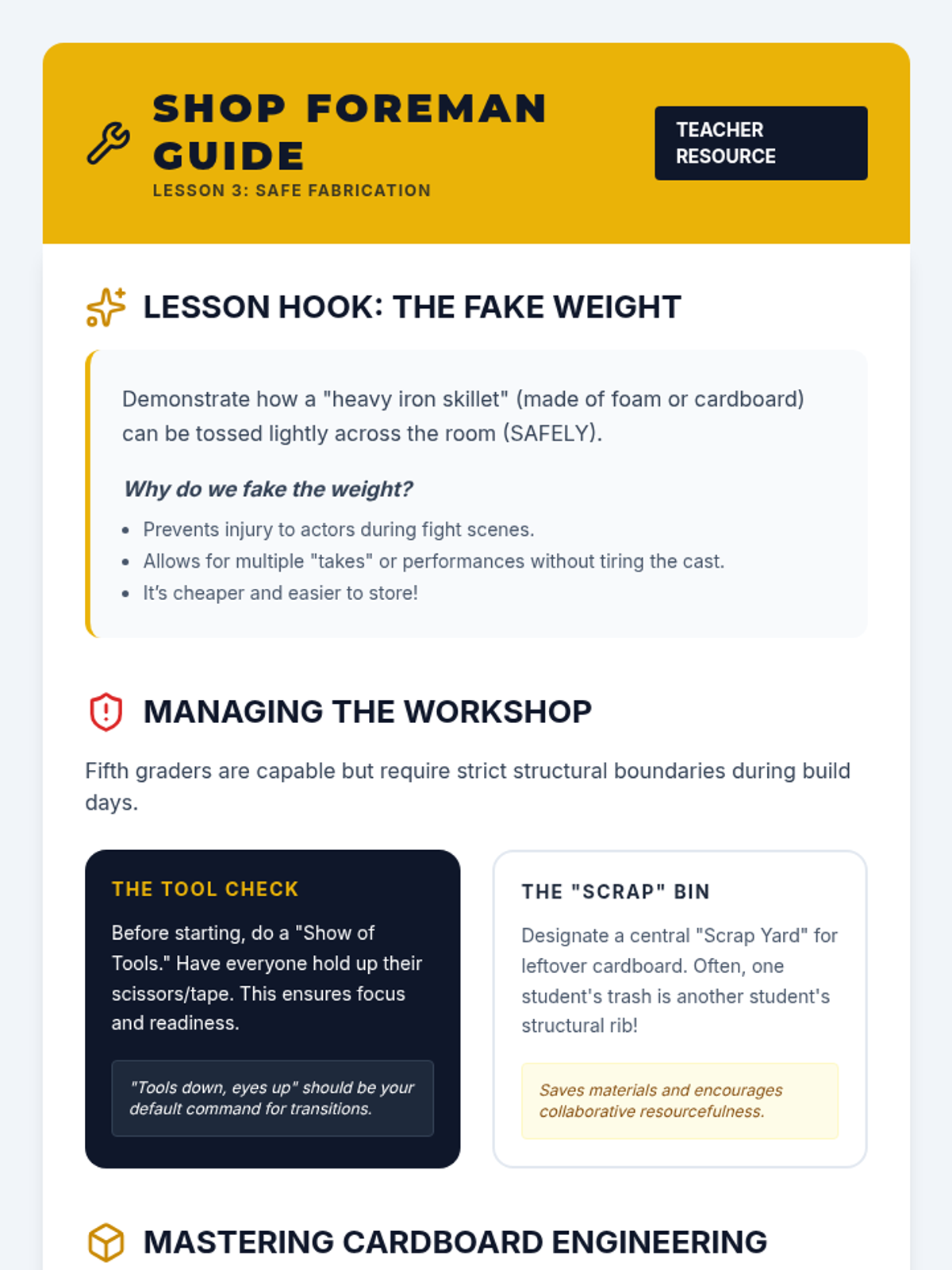
Teacher guide for Lesson 3: Safe Prop Fabrication. Includes fabrication tips, workshop safety protocols, and supply list suggestions.
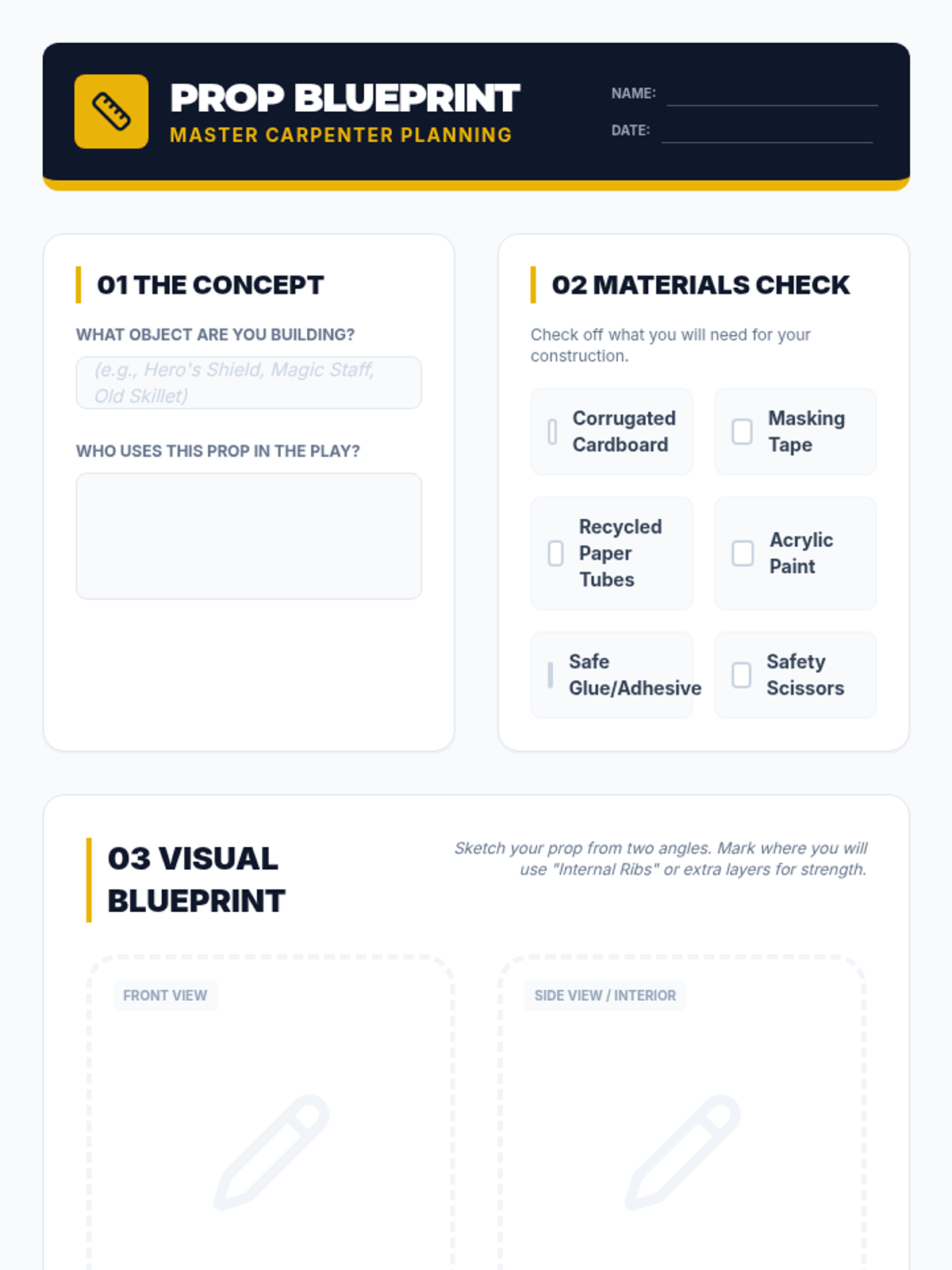
Student worksheet for Lesson 3: Planning the fabrication of a safe hand prop using cardboard and recycled materials. Includes a sketch area and materials checklist.
Educational slide deck for Lesson 3: Safe Prop Fabrication. Covers lightweight material benefits, workshop safety rules, and cardboard engineering techniques.
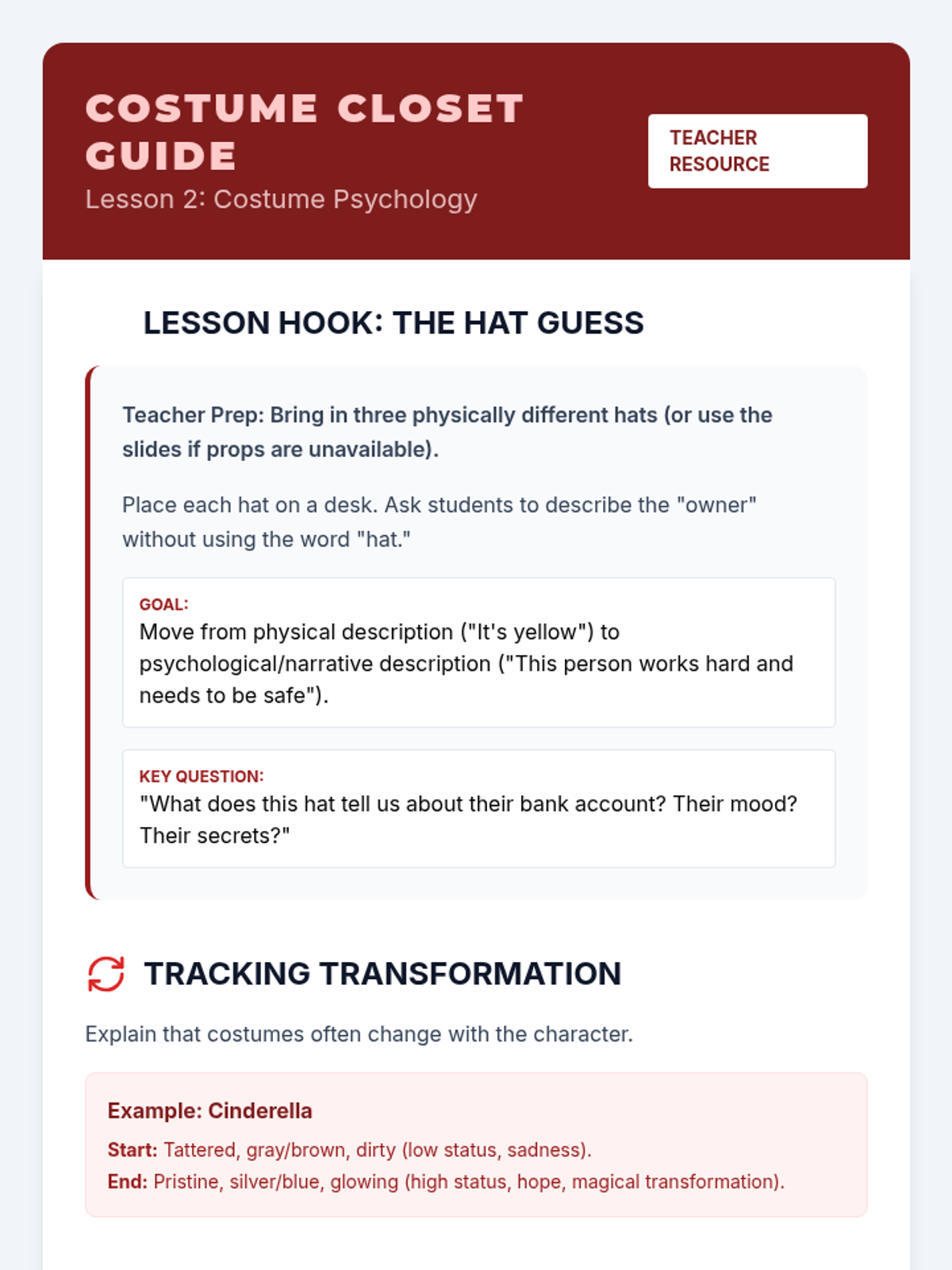
Teacher guide for Lesson 2: Costume Psychology. Includes instructions for the hat hook activity, examples of character costume transformations, and discussion points for the student worksheet.
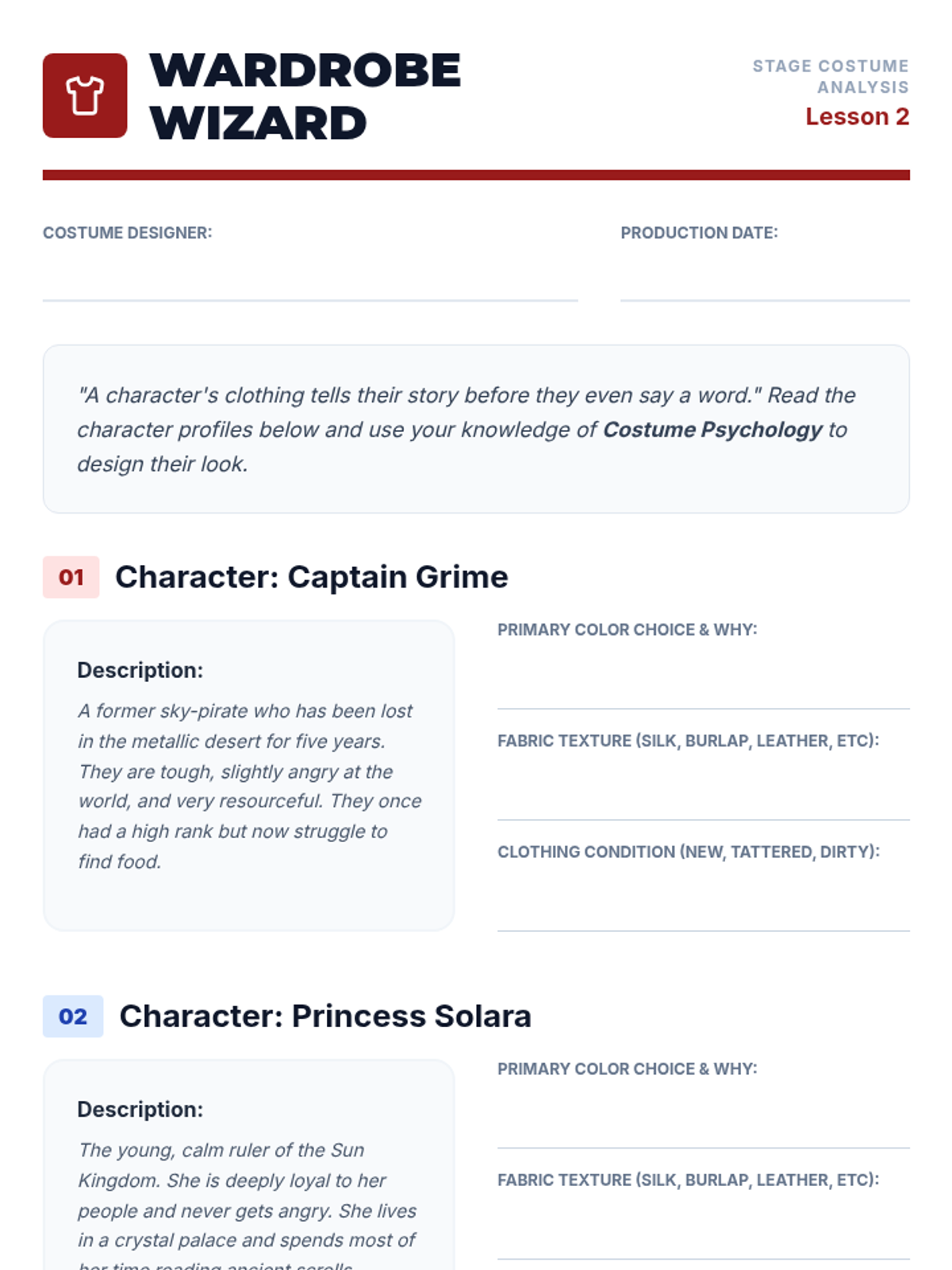
Student worksheet for Lesson 2: Analyzing character traits and selecting appropriate costume elements (color, texture, condition) based on psychology.
Educational slide deck for Lesson 2: Costume Psychology. Covers the emotional impact of color, texture, and clothing condition on character interpretation.
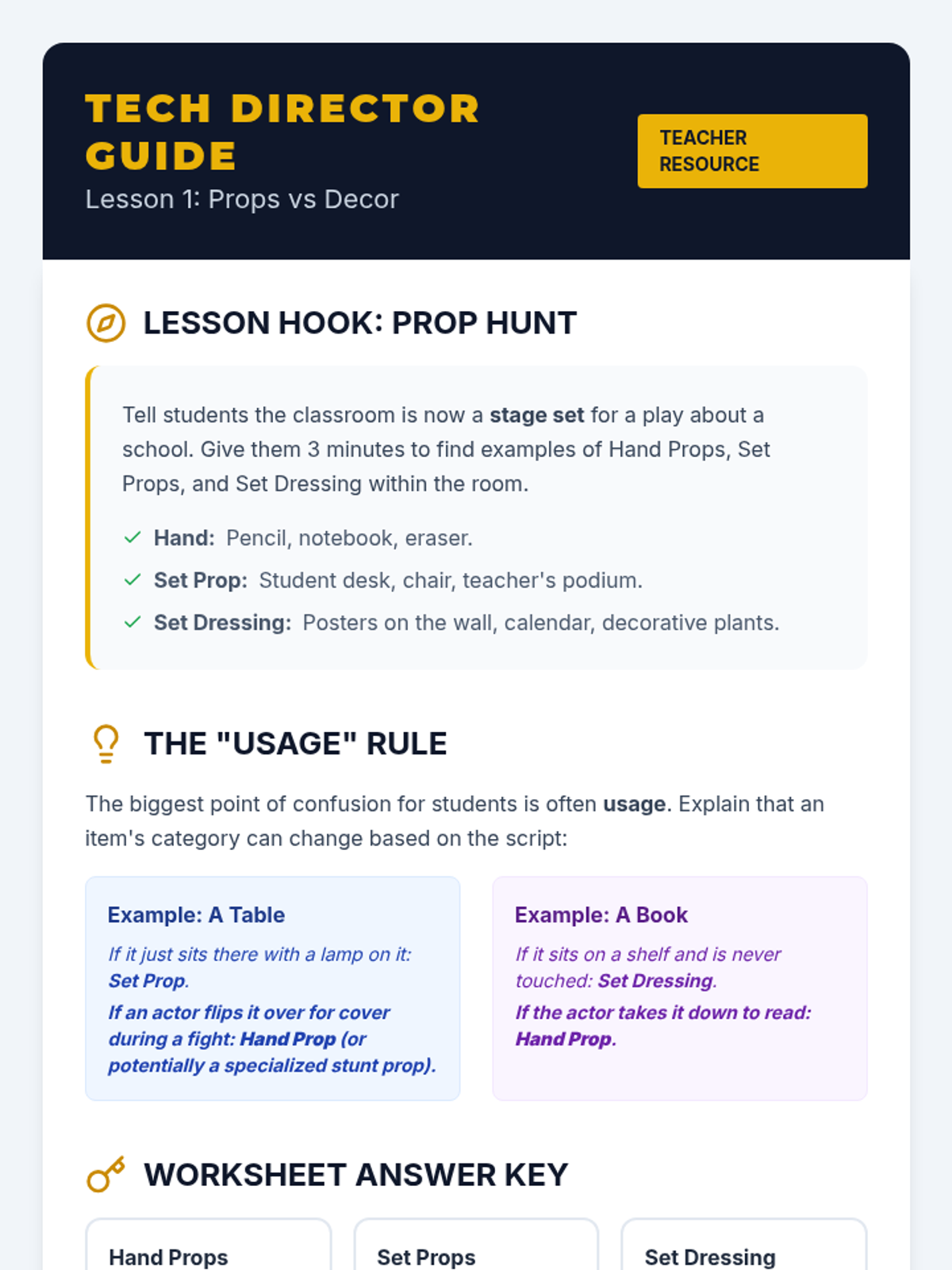
Teacher guide for Lesson 1: Props vs Decor. Includes activity instructions for the Prop Hunt hook, key concept explanations, and a worksheet answer key.
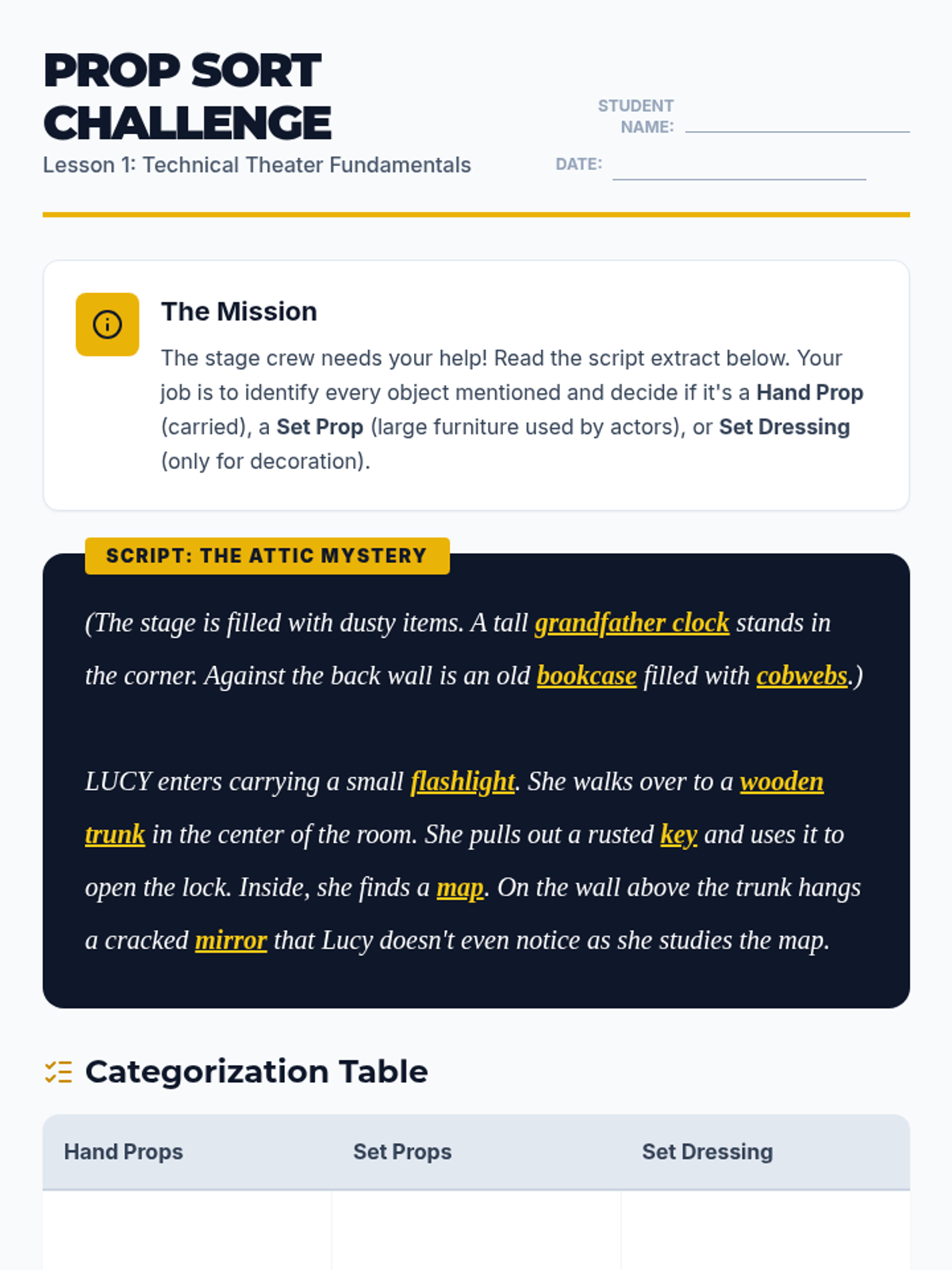
Student worksheet for Lesson 1: Identifying and categorizing props and set dressing from a script. Features a script analysis and a categorization table.
Educational slide deck for Lesson 1: Distinguishing Props and Set Dressing. Includes definitions of Hand Props, Set Props, and Set Dressing with visual examples and a script analysis exercise.
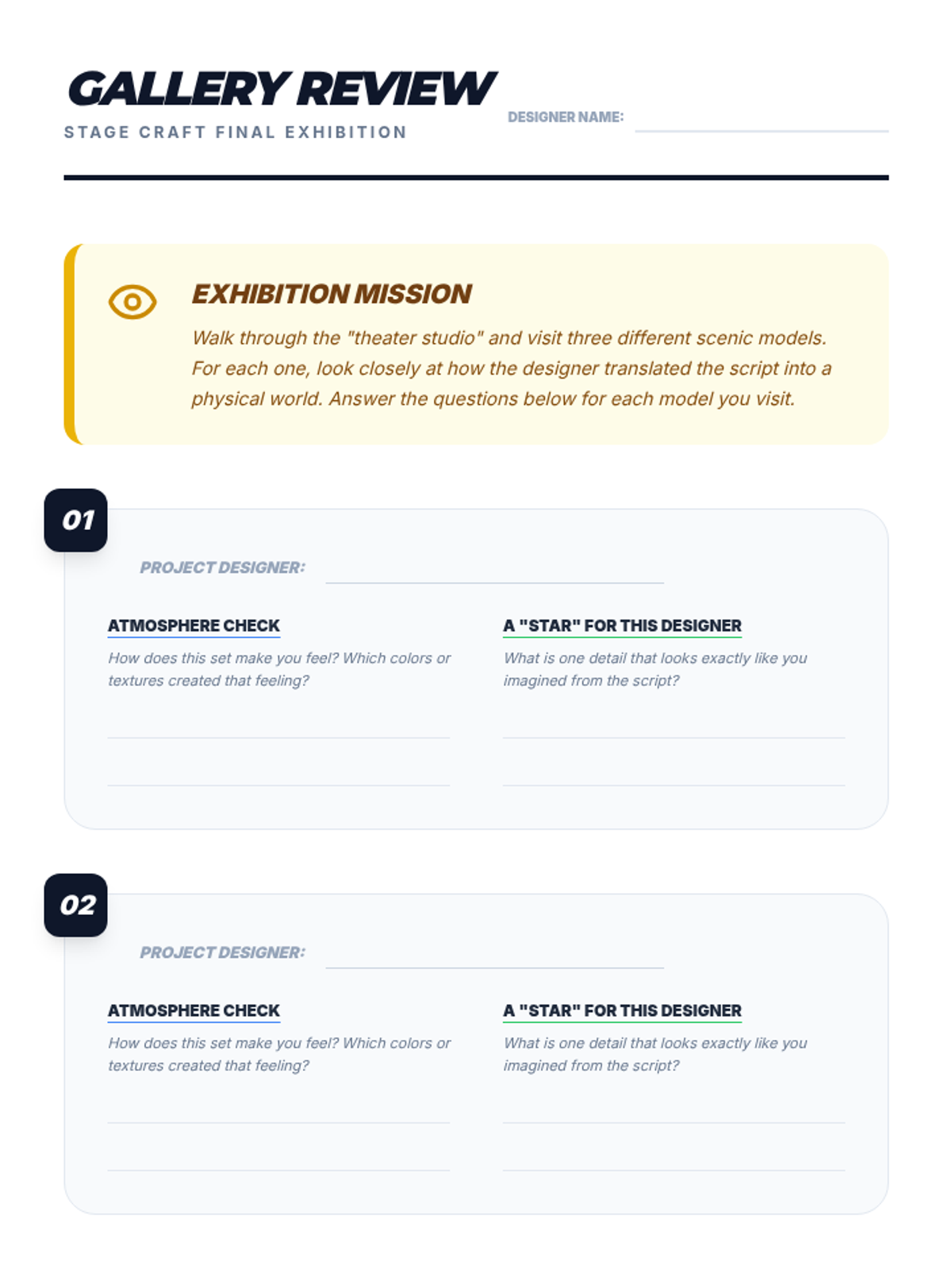
Student review sheet for the gallery walk. Provides spaces for peer evaluation of atmosphere and script requirements, plus a final self-reflection on the design process.
Instructional slides for the "Detail Designers" lesson. Covers set dressing techniques (furniture and texture) and instructions for the final gallery walk and critique process. Updated for improved legibility and font consistency.
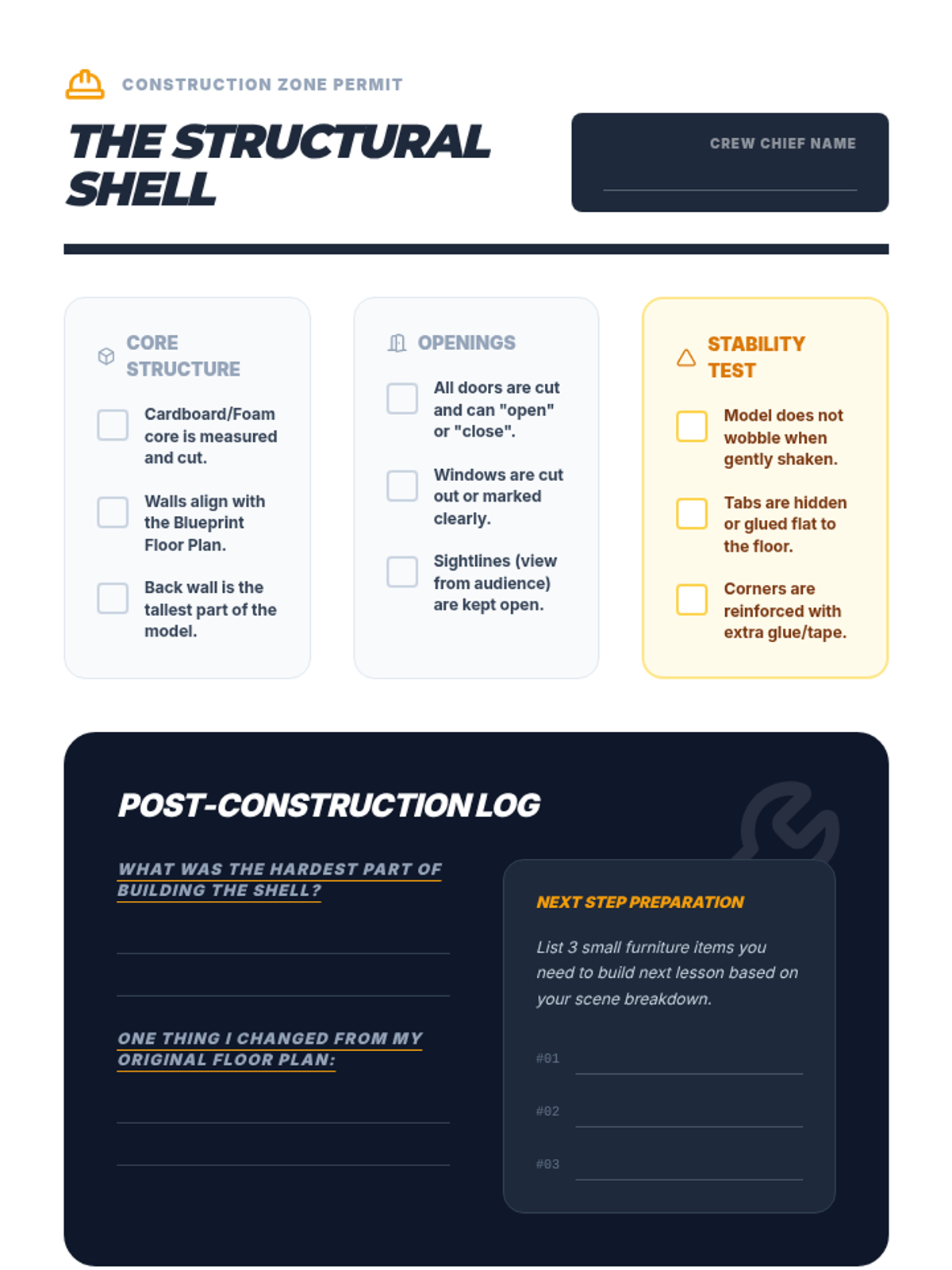
A student self-assessment checklist and reflection log for the model construction phase. Focuses on structural integrity, alignment with the floor plan, and technical details like door/window placement.
Instructional slides for the "Box Builders" lesson. Covers the definition of a maquette, basic cardboard engineering techniques like tabs and corner locks, and the step-by-step process of building walls from a floor plan. Updated for improved legibility and font consistency.
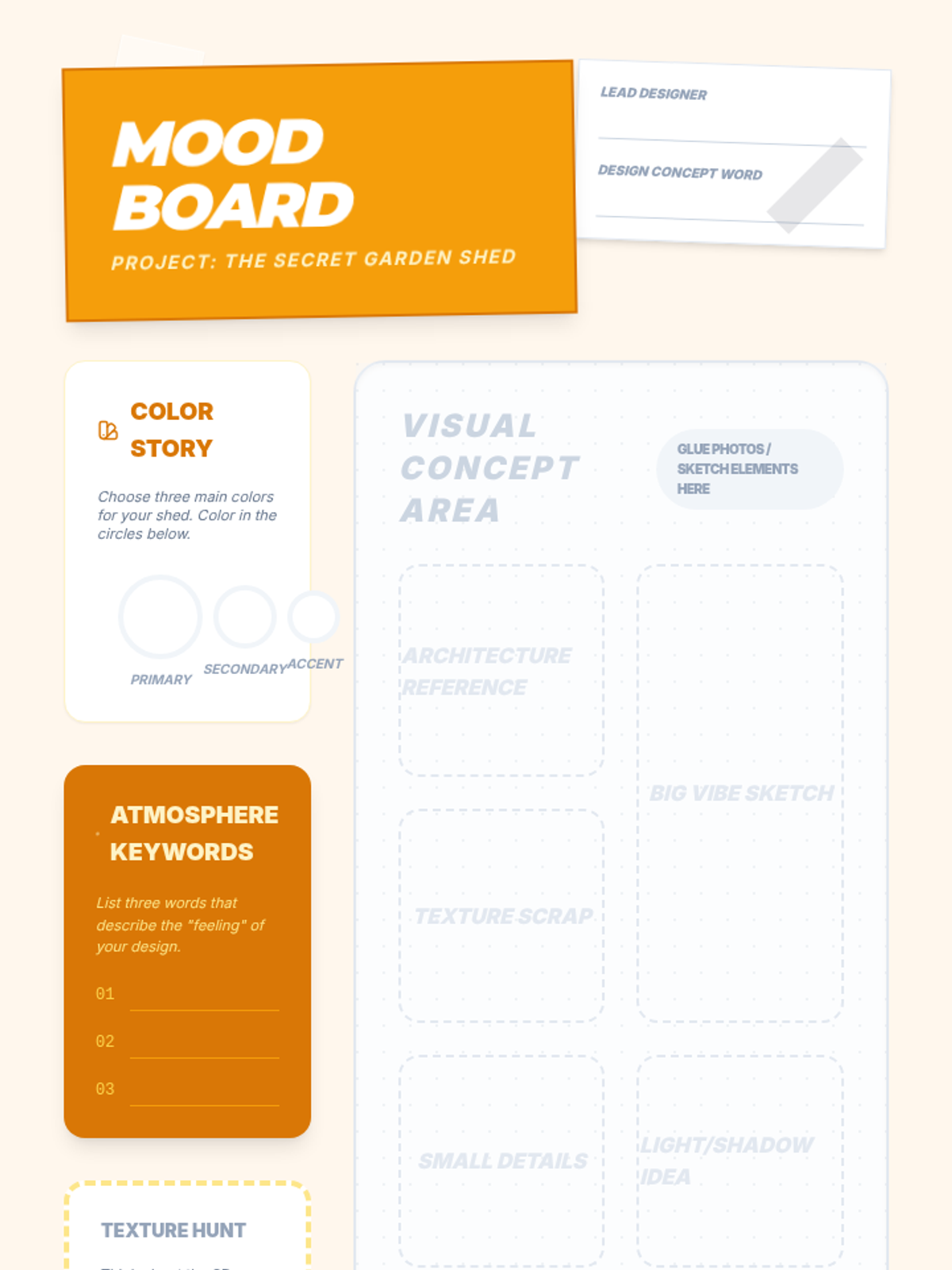
Student mood board worksheet for creating a design concept. Includes areas for color swatches, adjectives, material selection, and a large collage space for sketches and reference images.
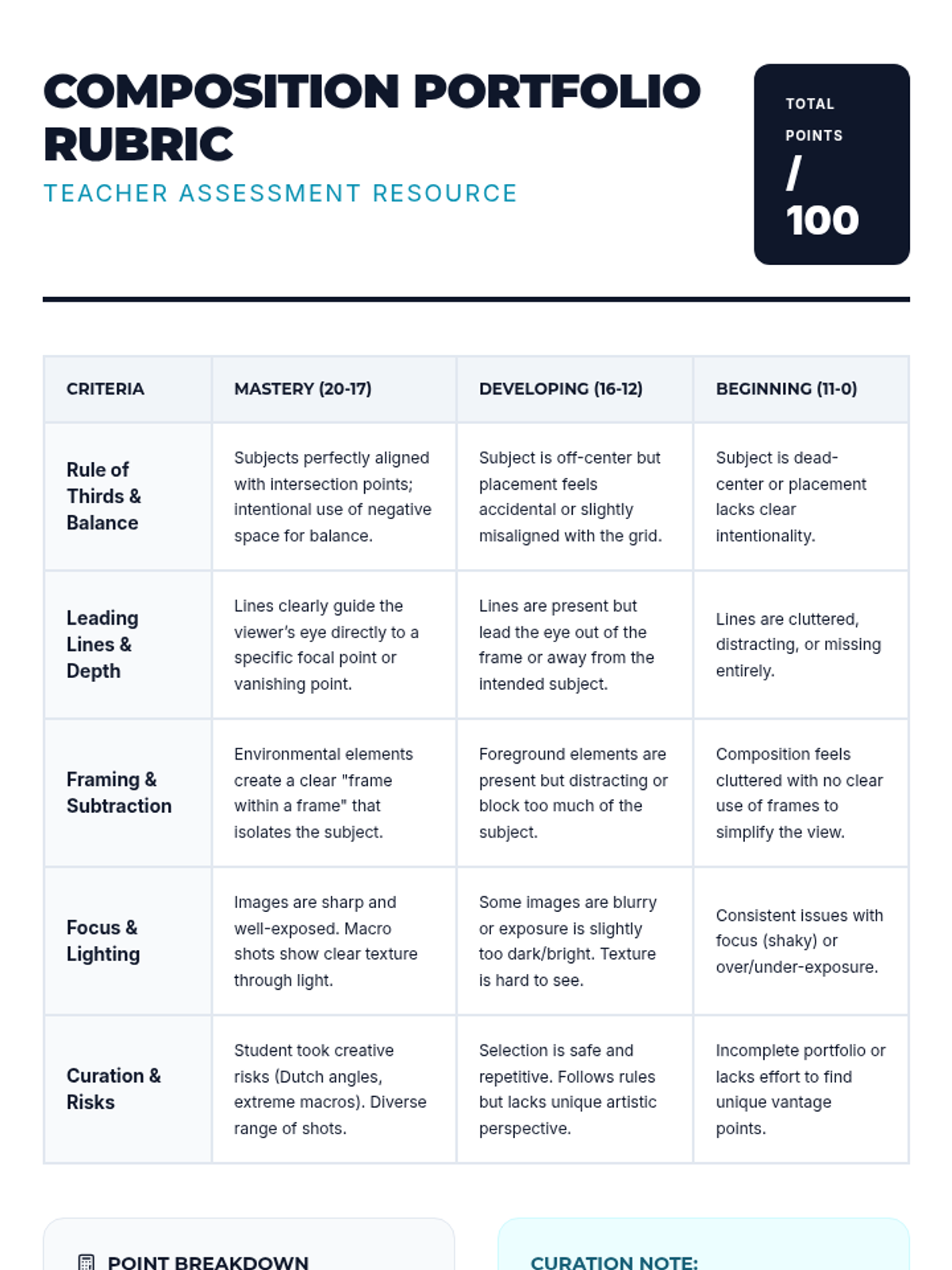
A comprehensive grading rubric for the final photography portfolio. It includes criteria for the Rule of Thirds, leading lines, framing, technical quality, and creative risk-taking, along with peer critique prompts.
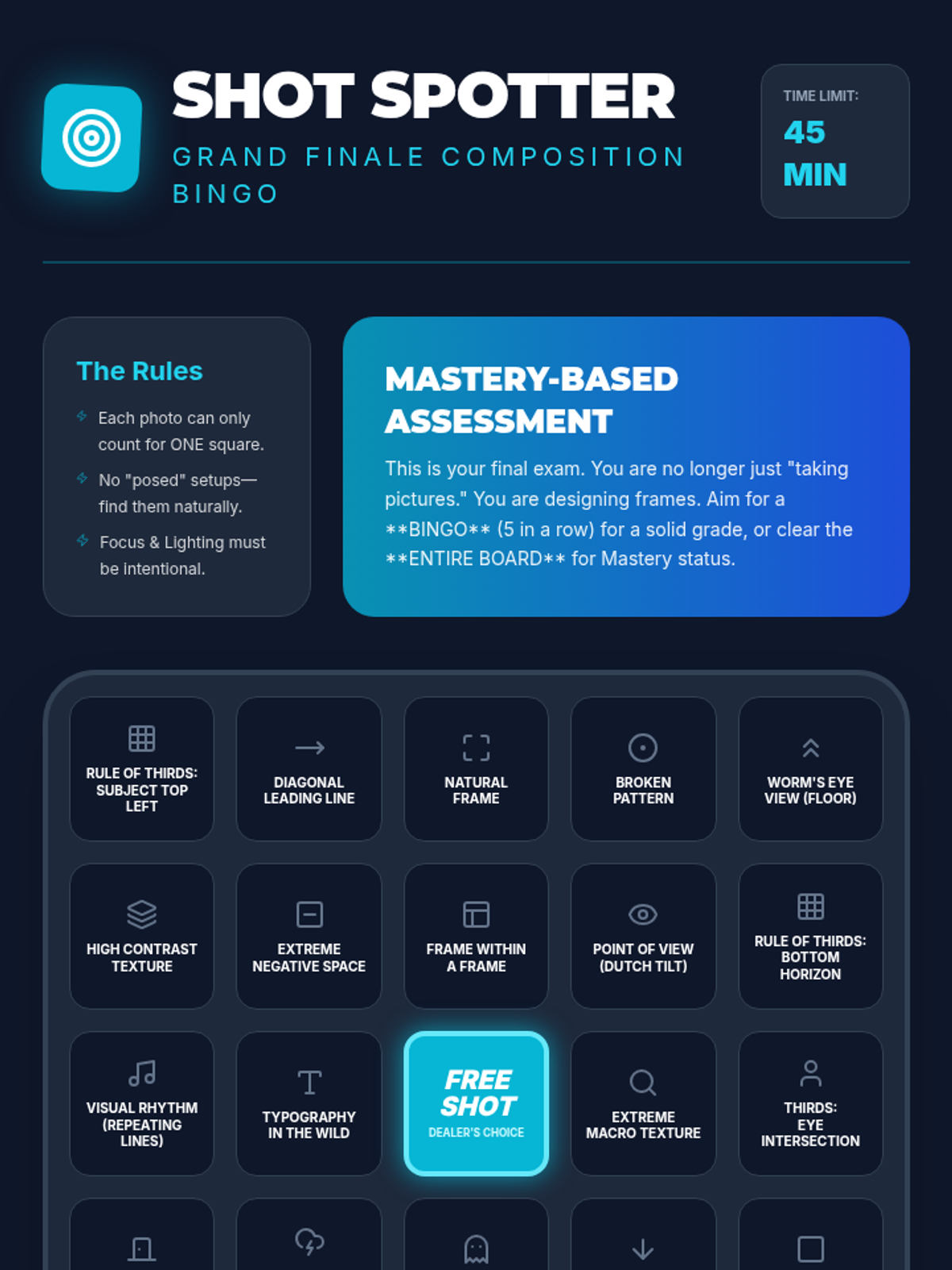
A gamified "BINGO" scavenger hunt worksheet for the final assessment. Students must capture original photographs representing various composition techniques (Thirds, Leading Lines, Framing, Macro, etc.) within a time limit.
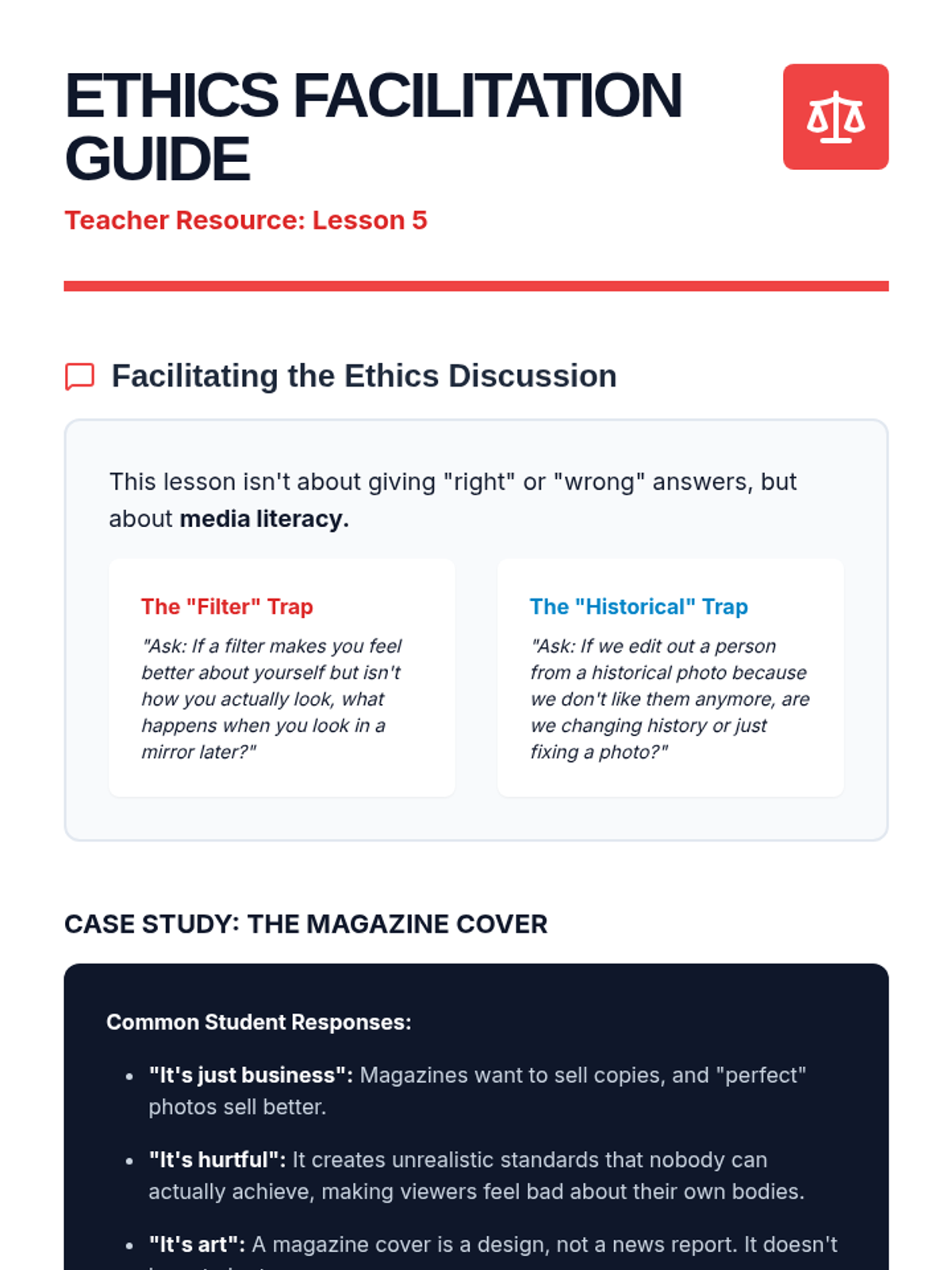
Facilitation guide for the ethics discussion in Lesson 5, including case study talking points and a detailed rubric for the final project.
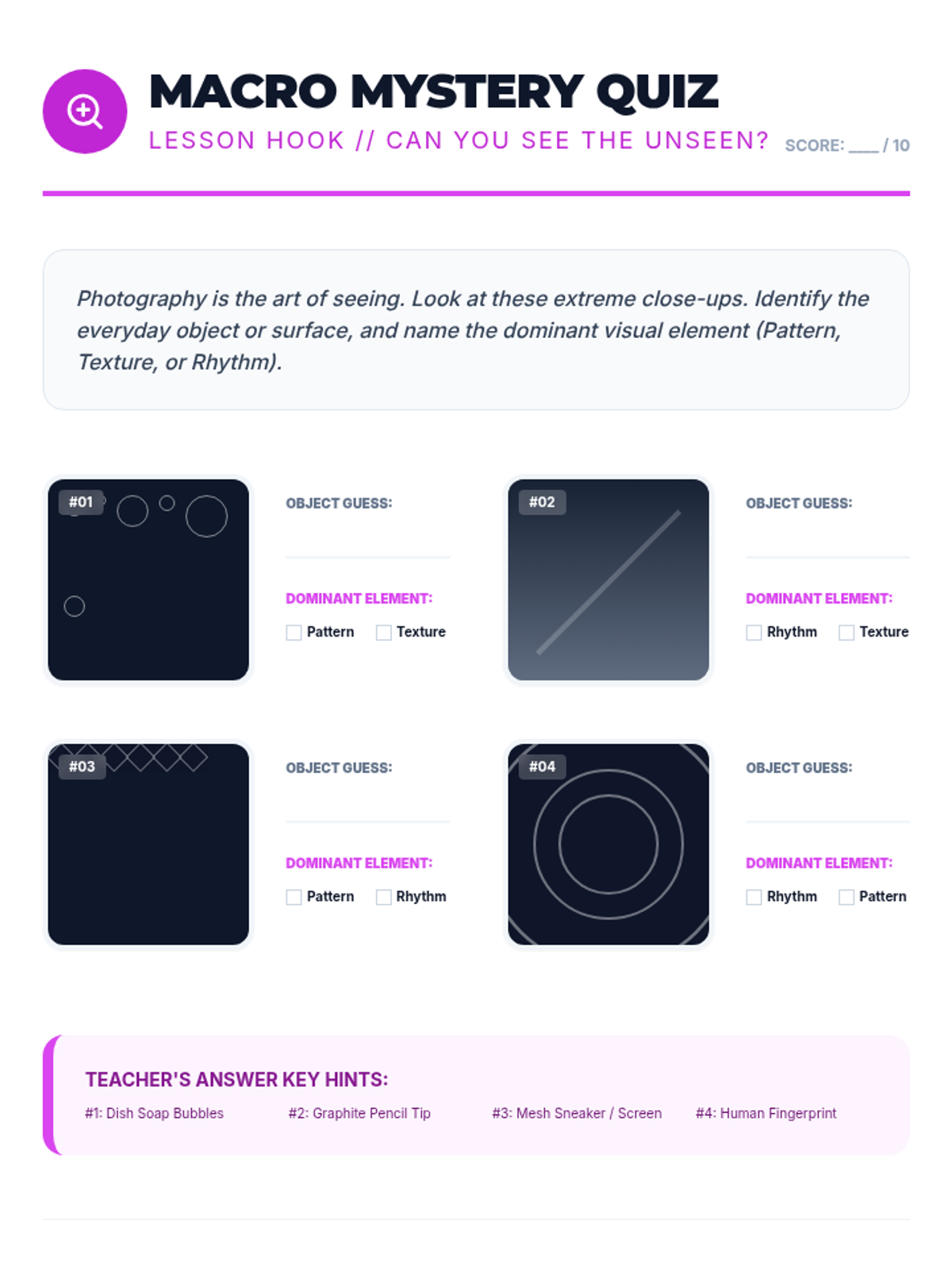
A macro-photography mystery quiz and activity log. Students guess everyday objects from extreme close-up visual hints and then capture their own abstract textures and patterns.
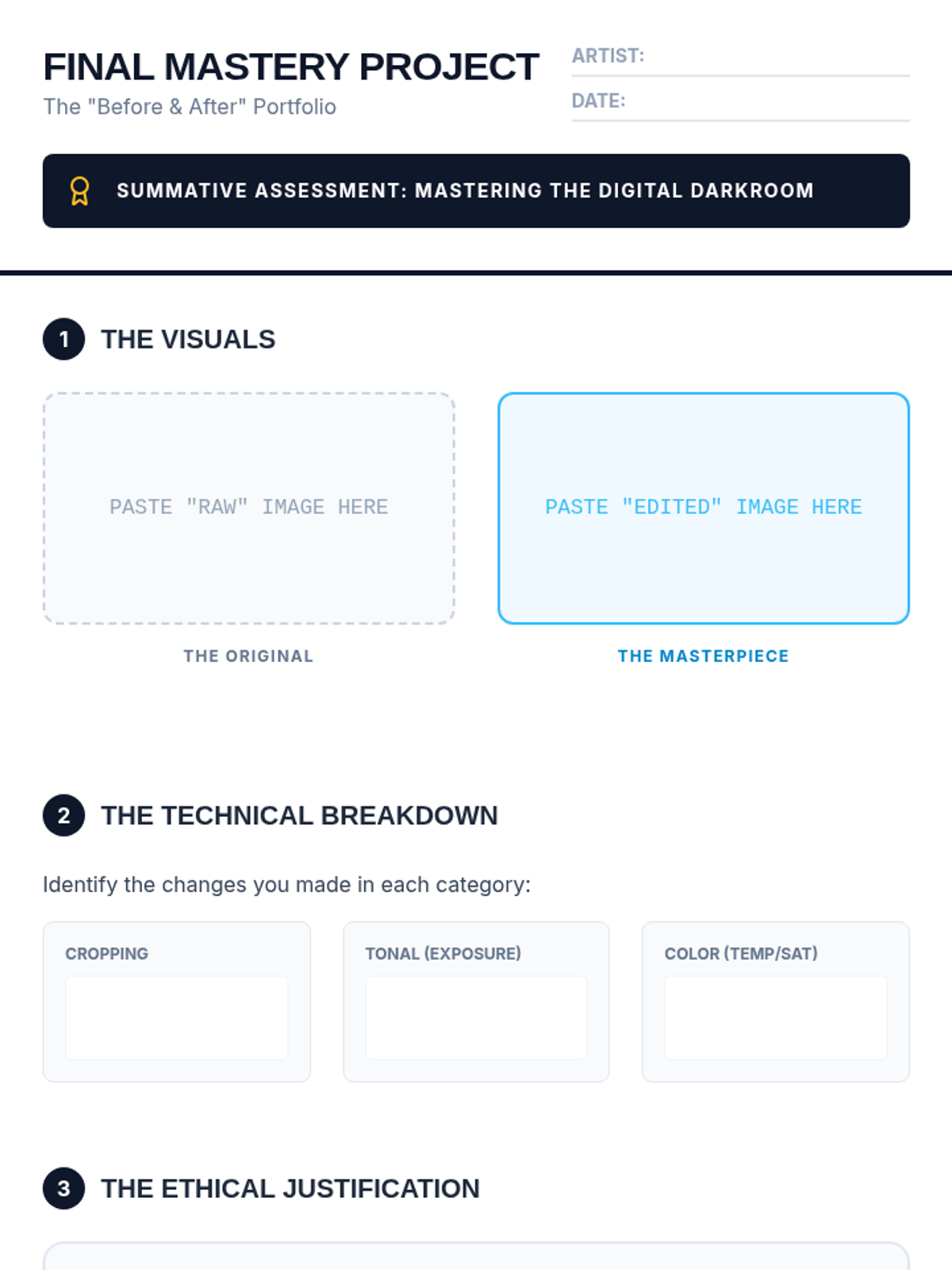
Final mastery project document where students present a 'before and after' image, detail their technical changes, and provide an ethical justification for their edits.
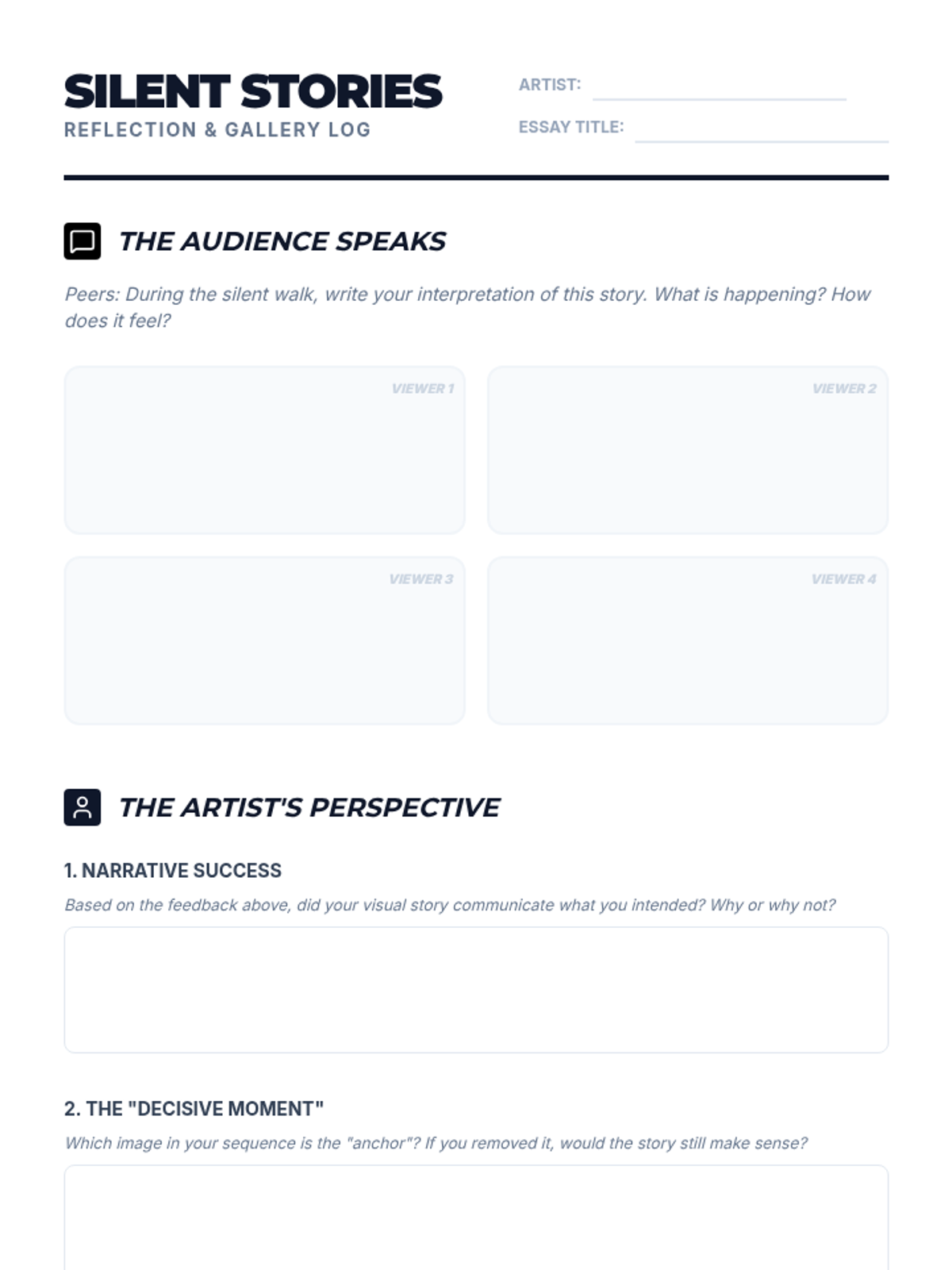
A final reflection and gallery walk document where students collect peer interpretations of their work and conduct a formal self-critique of their narrative and technical growth.
Lesson 5 slides on editing ethics, defining the boundary between enhancement and distortion, and introducing the final project requirements.
A presentation deck exploring pattern, texture, and rhythm. It uses a "Macro Mystery" hook to introduce abstract photography, defines repetition vs. rhythm, and provides tips for side-lighting to enhance texture.
A visual presentation for Lesson 5 focusing on the final presentation, minimalist captions, the silent gallery walk protocol, and self-critique.
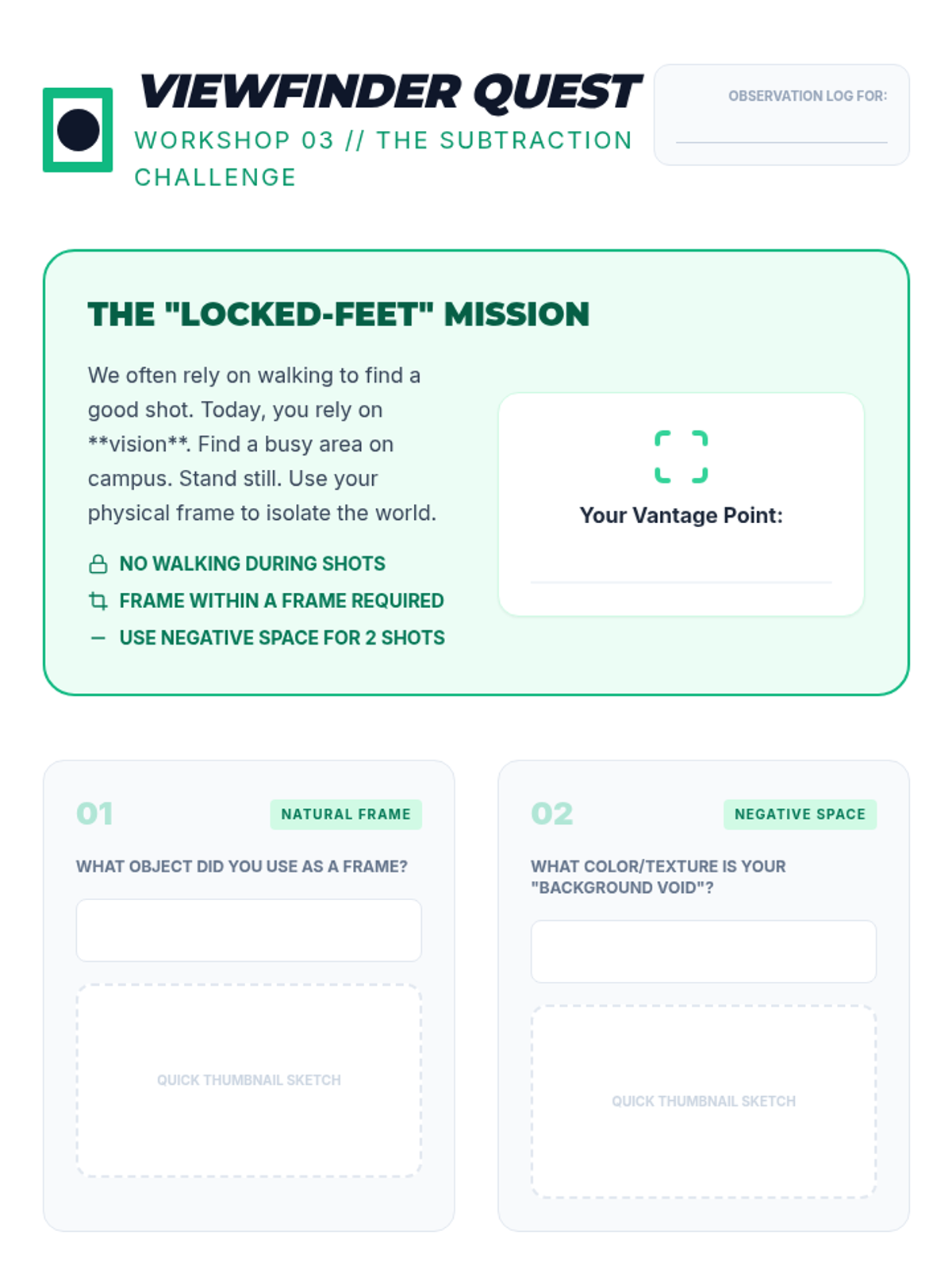
A handout for the "Viewfinder Quest" activity. Students use physical frames to isolate compositions from a single standing position, documenting their findings with sketches and reflections on subtraction.
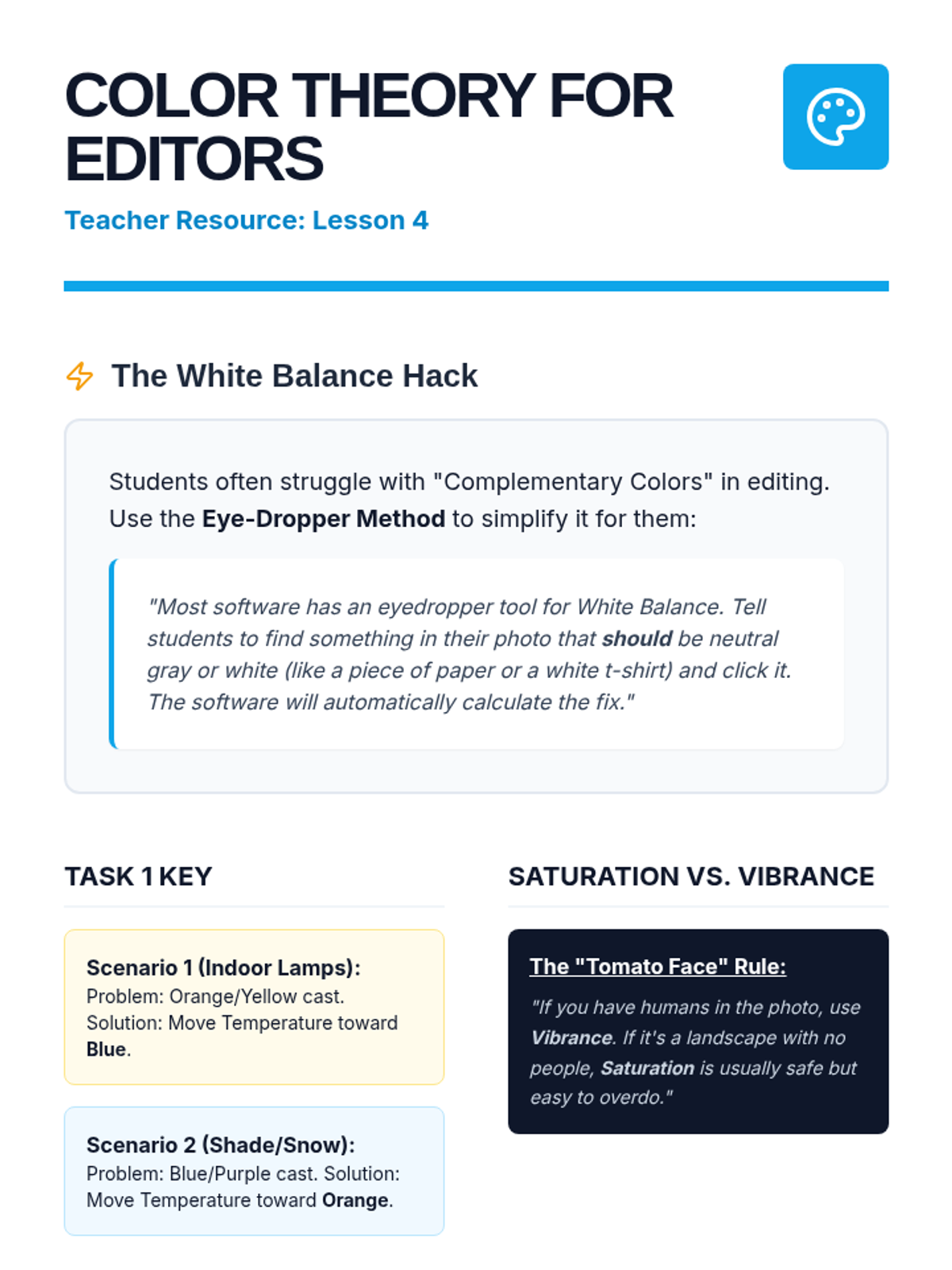
Teacher's cheat sheet for color correction, featuring the white balance 'hack', diagnosis keys, and discussion prompts for black and white photography.
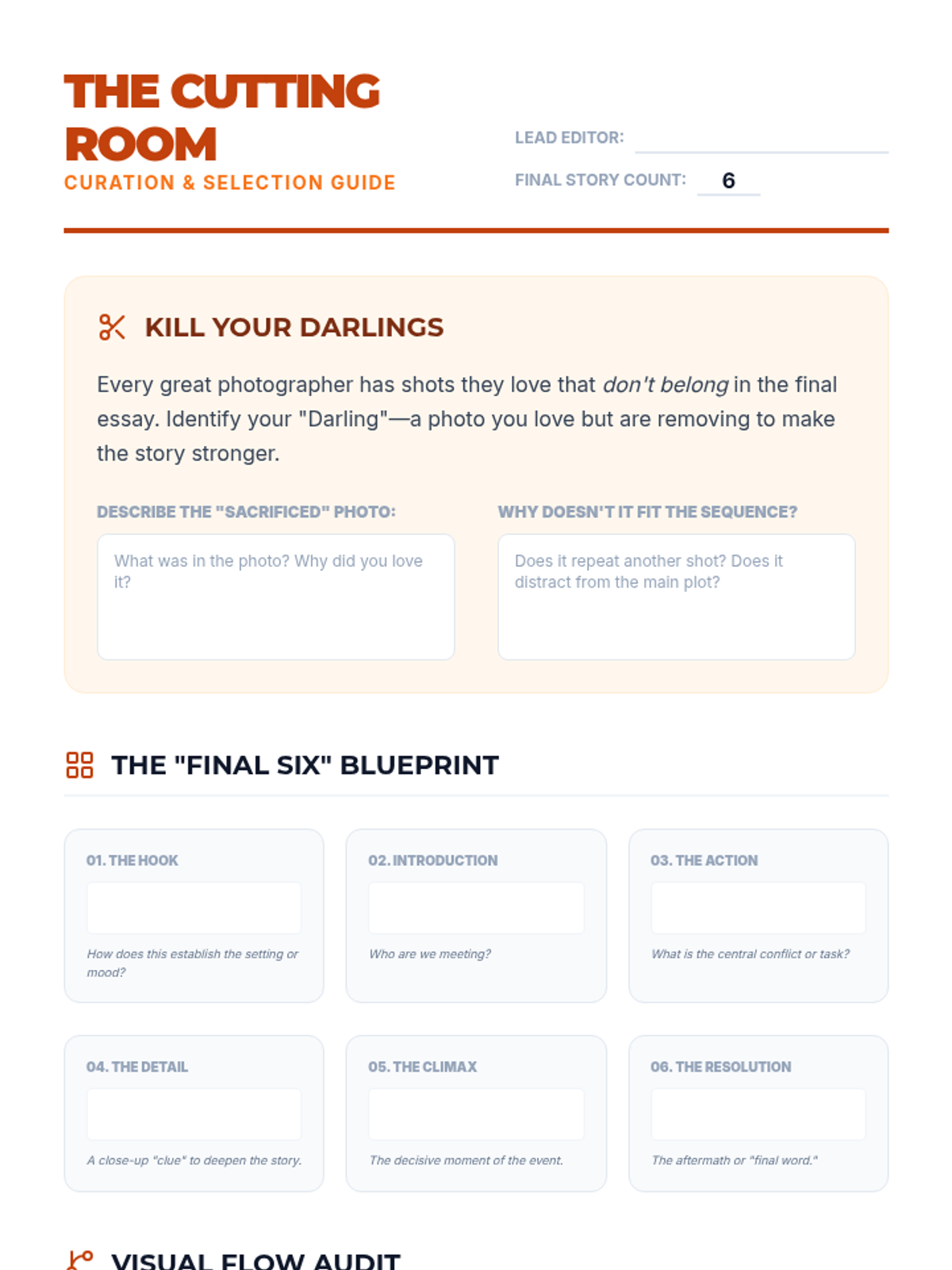
A curation worksheet that helps students identify their redundant 'darling' shots, plan their final 6-image sequence using a narrative framework, and audit their work for visual variety.
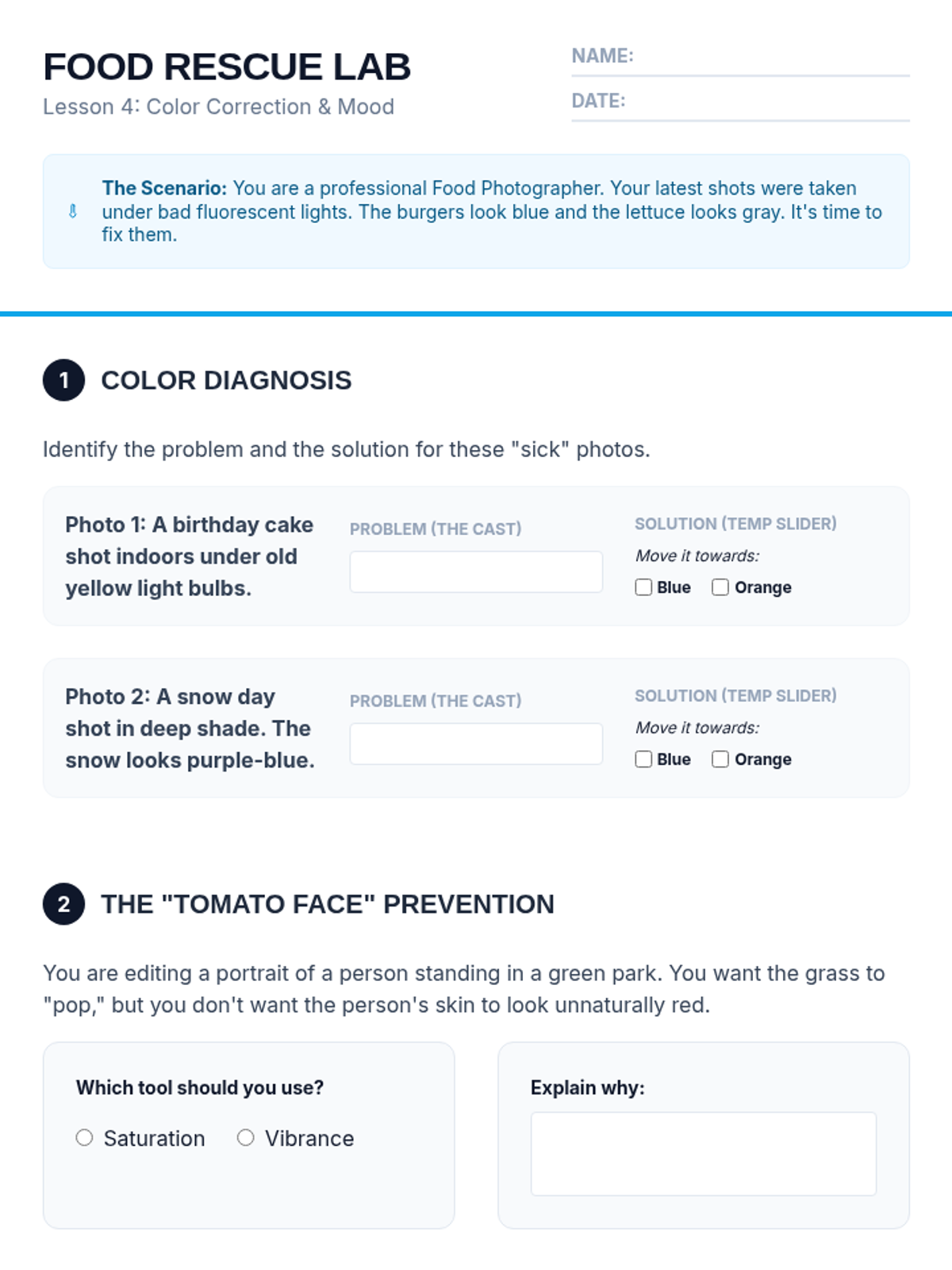
A student worksheet for diagnosing color temperature issues and deciding between saturation, vibrance, and black-and-white editing techniques.
A presentation about framing and negative space. It explains how to use environmental elements to enclose subjects and how negative space creates emotional impact, introducing the "Locked-Feet Challenge."
Lesson 4 slides on color correction, covering white balance, temperature scales, saturation versus vibrance, and the artistic use of desaturation.
A visual presentation for Lesson 4 focusing on the principles of curation, visual flow, and the 'Kill Your Darlings' concept of removing redundant images.
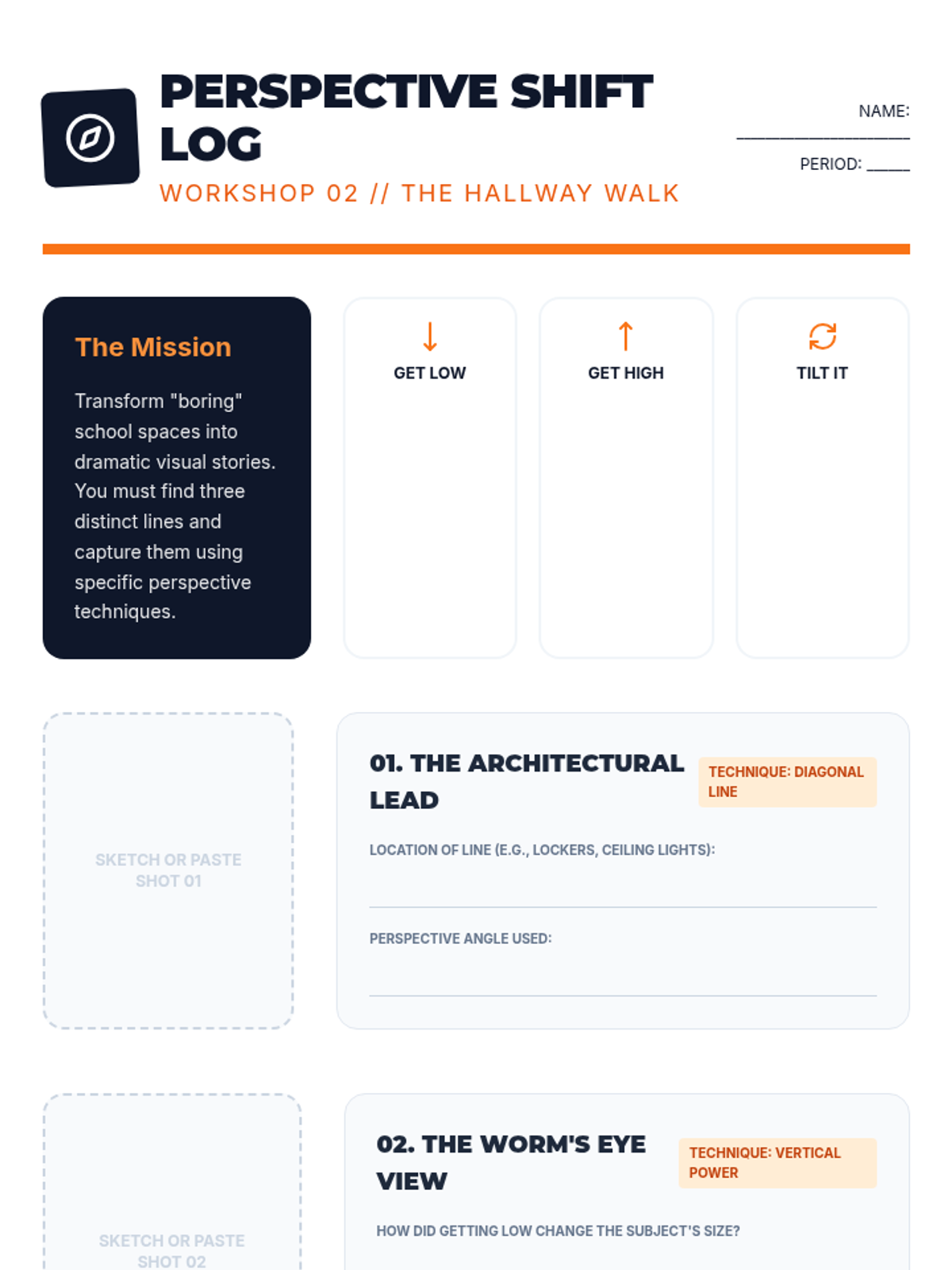
A log for students to document their photography walk. It includes sections for architectural leading lines, worm's-eye views, and dutch angles, with space for sketches and reflections on emotional impact.
A presentation deck covering leading lines and perspective. It defines horizontal, vertical, and diagonal lines, explains camera angles (worm's eye, bird's eye, dutch), and sets up a "Line Hunt" activity.
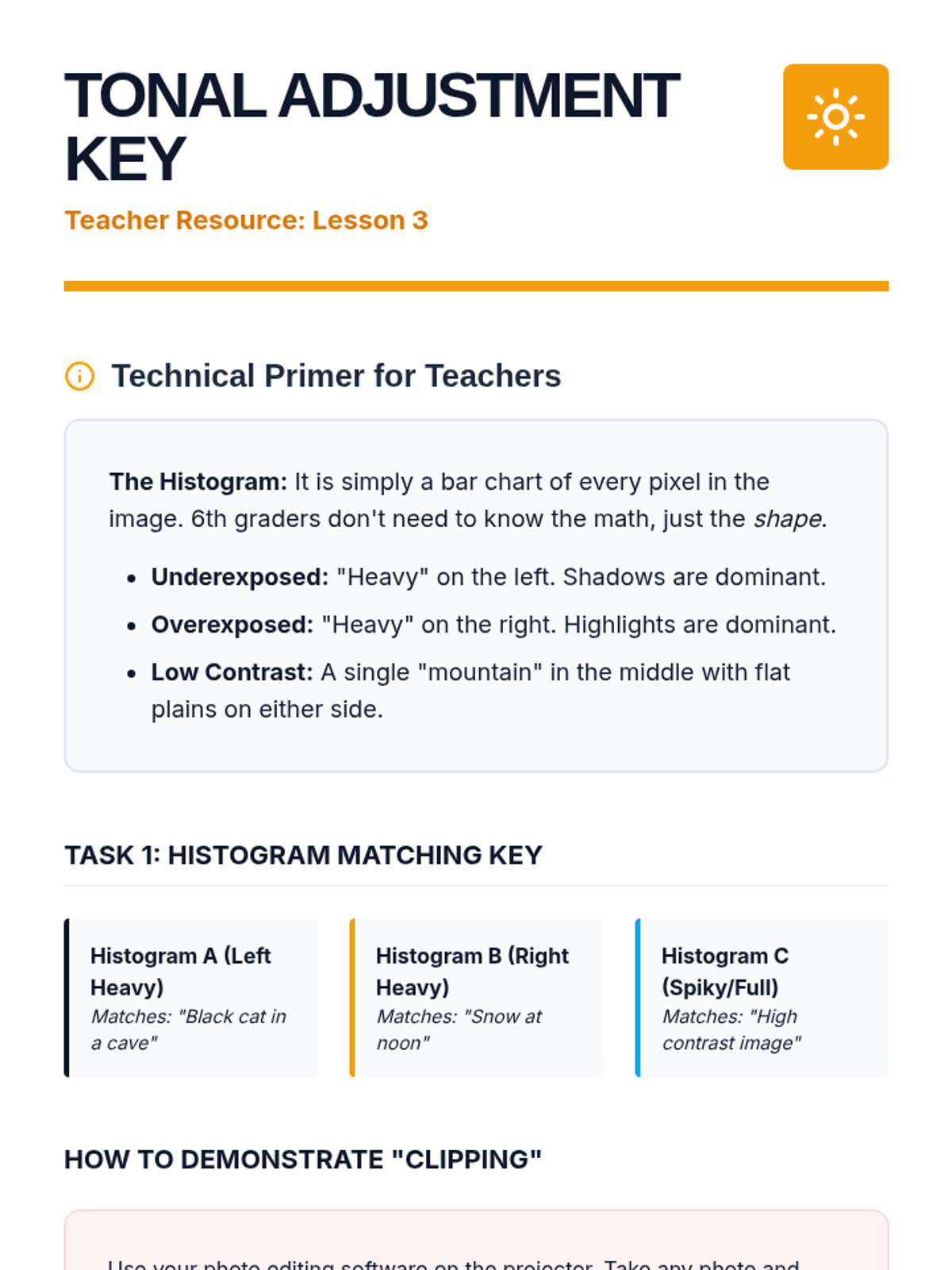
Teacher reference guide for histograms and tonal adjustments, including a key for the student worksheet and demonstration tips.
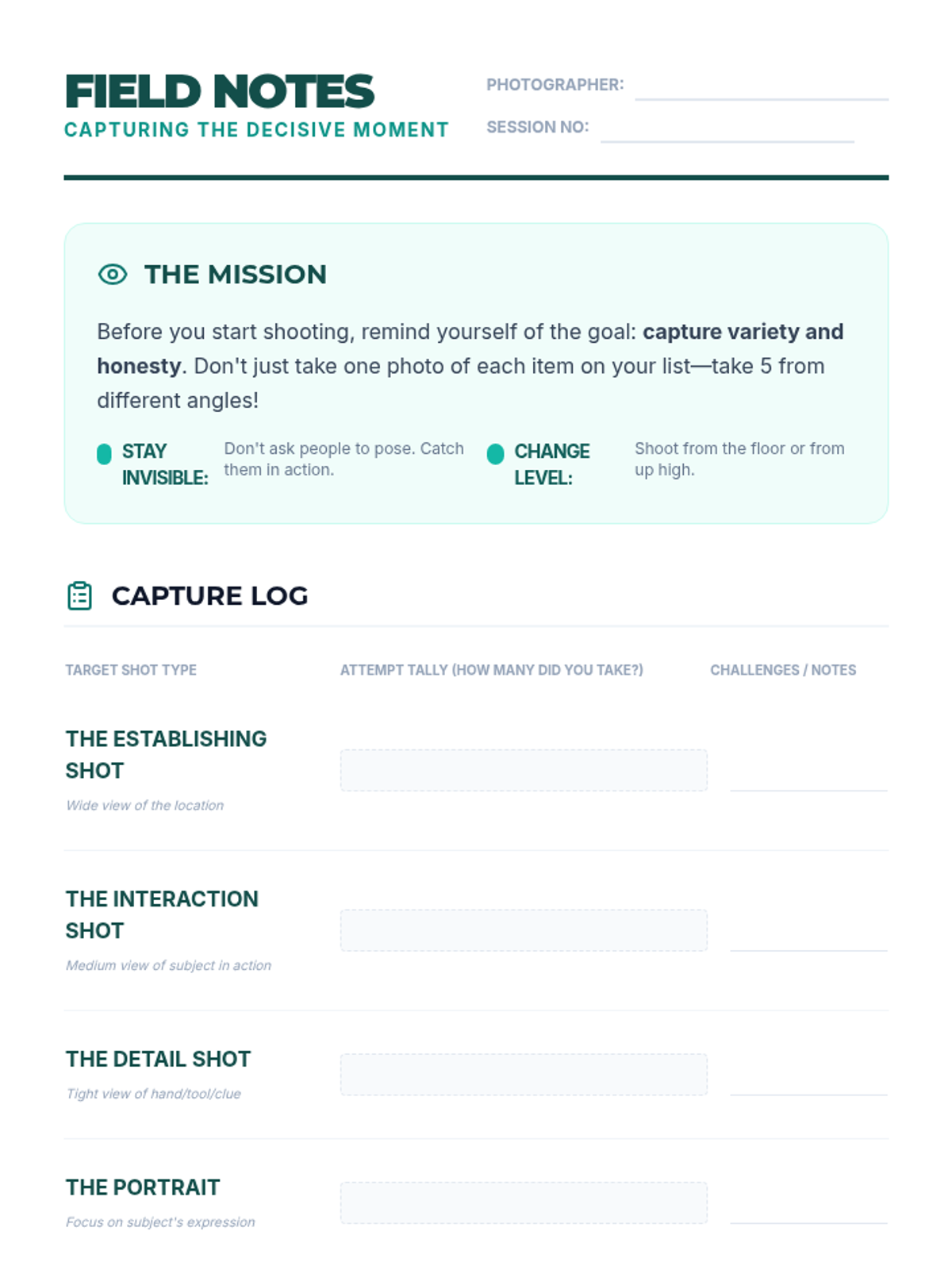
A field notes document for students to use while shooting, featuring a capture log for different shot types and a reflection space for their 'clue' scavenger hunt shot.
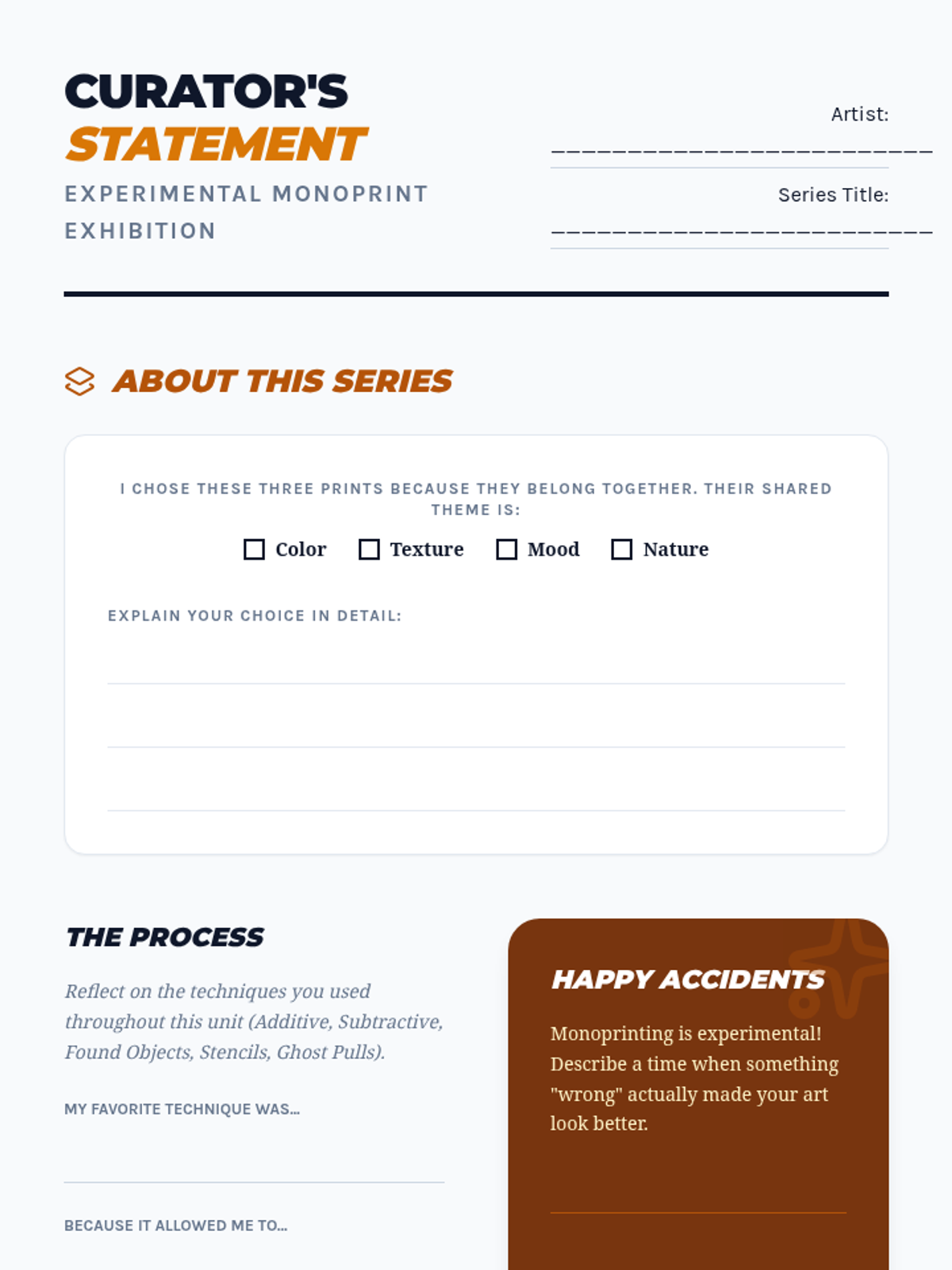
A student activity sheet for the final lesson. Guides students through selecting their best work, writing a curator's statement, and reflecting on their experimental process and 'happy accidents'.
Visual presentation for students on the final stage of the sequence: curation and exhibition. Explains how to group work by theme, add finishing touches like trimming and mounting, and write an artist statement.
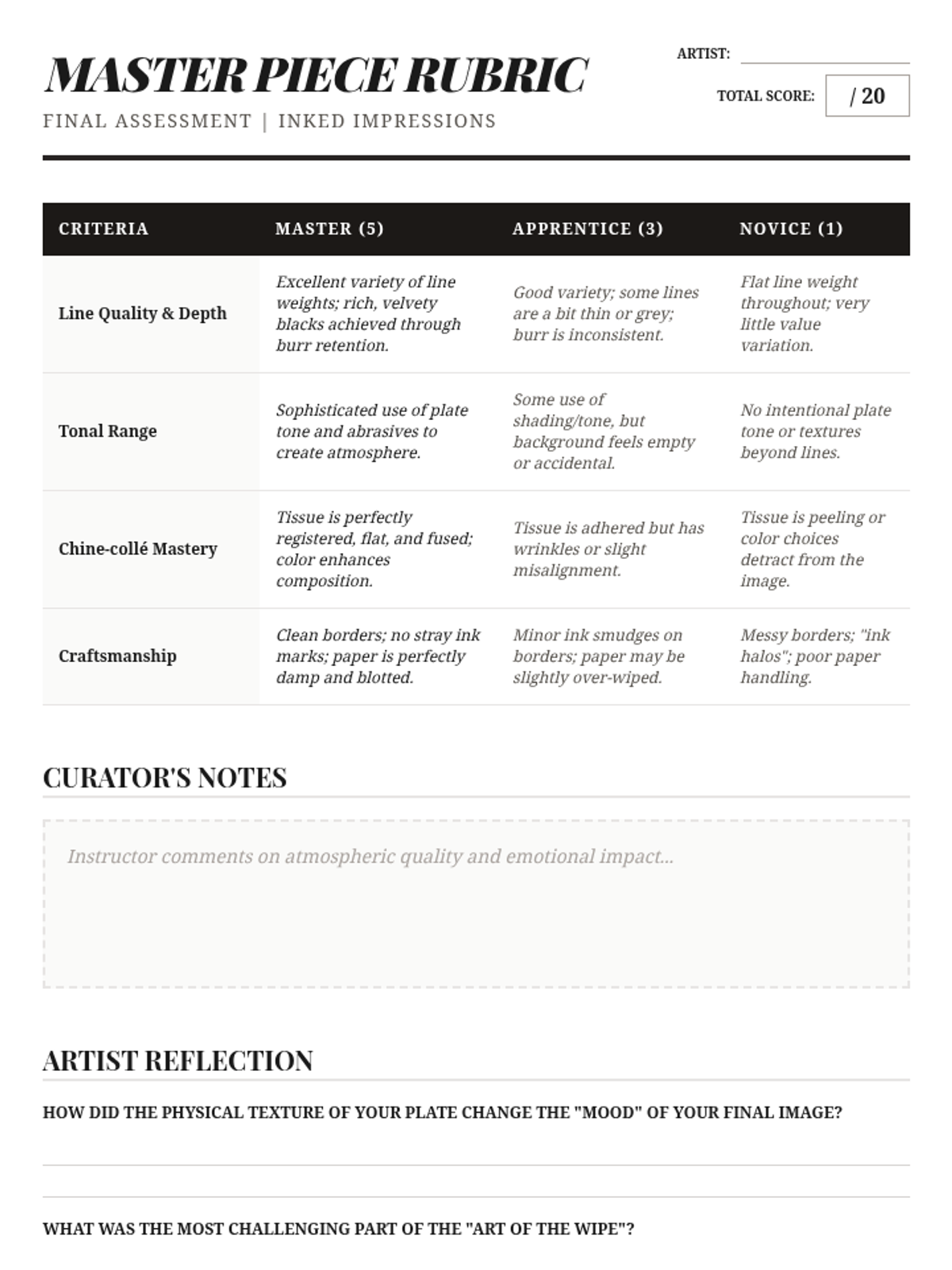
The final assessment rubric for the drypoint etching project, evaluating line quality, tonal range, chine-collé application, and craftsmanship.
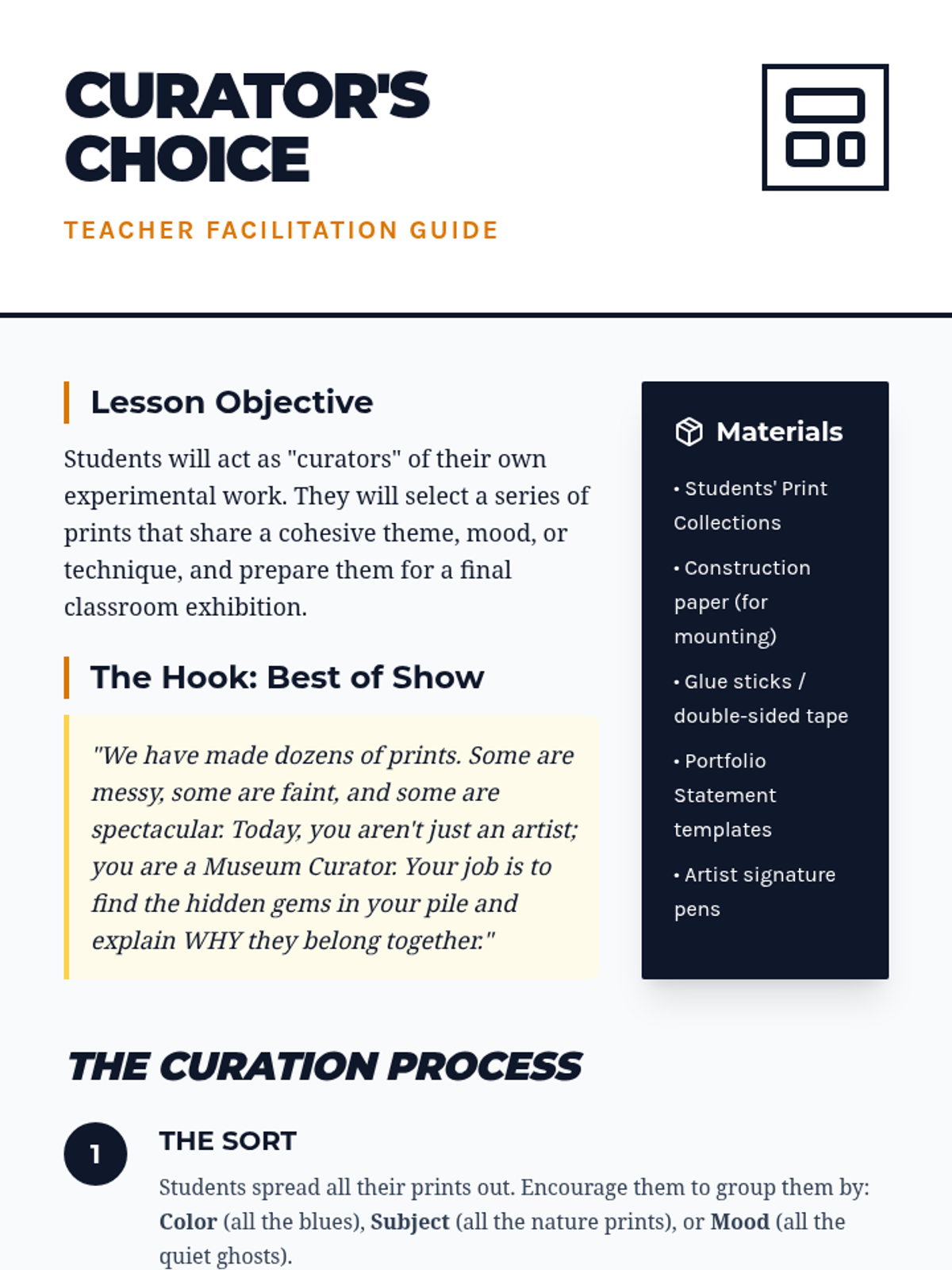
Teacher guide for the final lesson on composition and portfolio selection. Focuses on the curation process, writing artist statements, and facilitating a classroom gallery walk.
Final slide deck for Lesson 5, introducing chine-collé as a method for adding color and mixed media elements to drypoint prints.
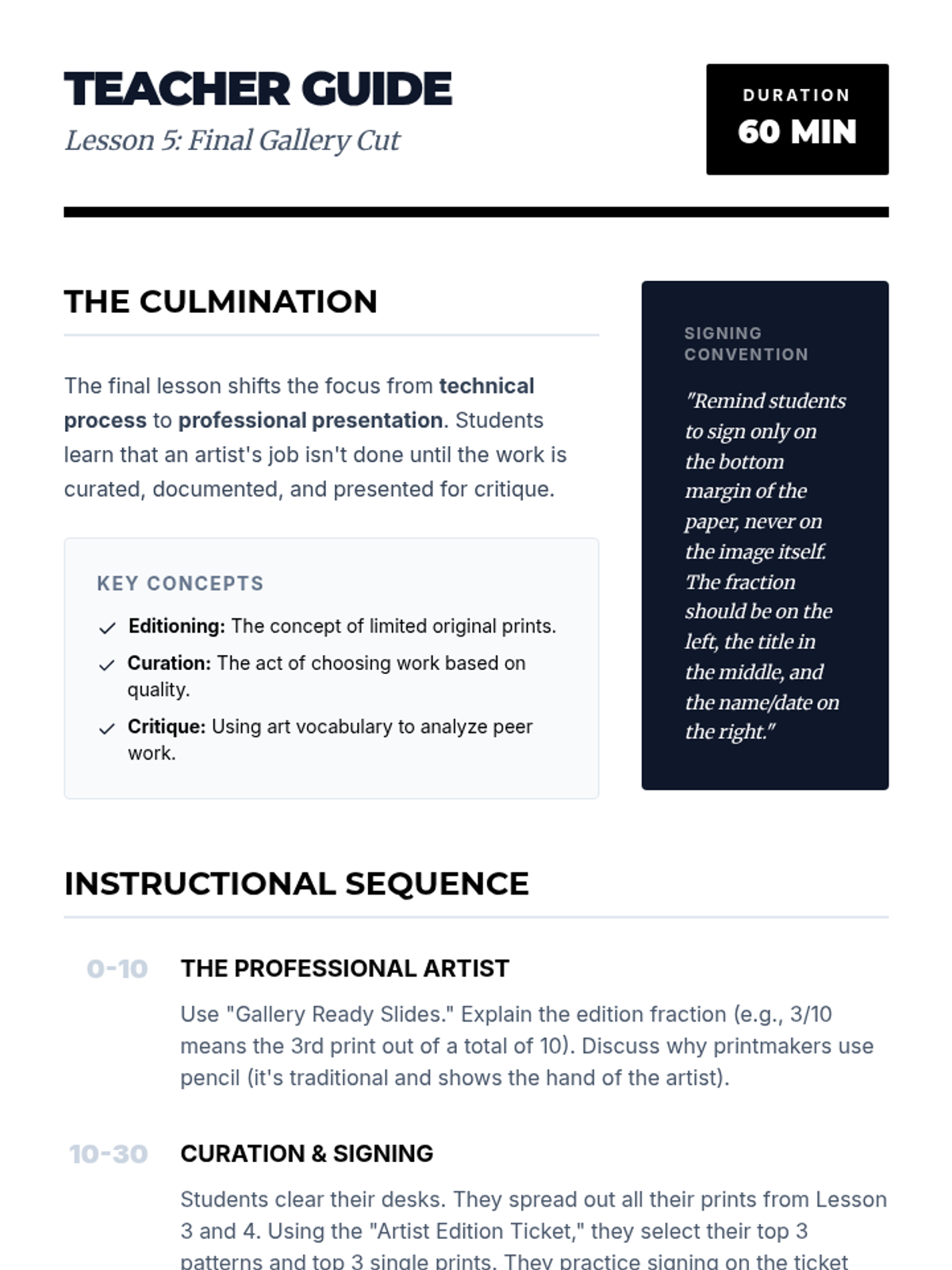
Teacher guide for Lesson 5, providing instructions for the curation process, print signing conventions, and facilitating a peer gallery walk.
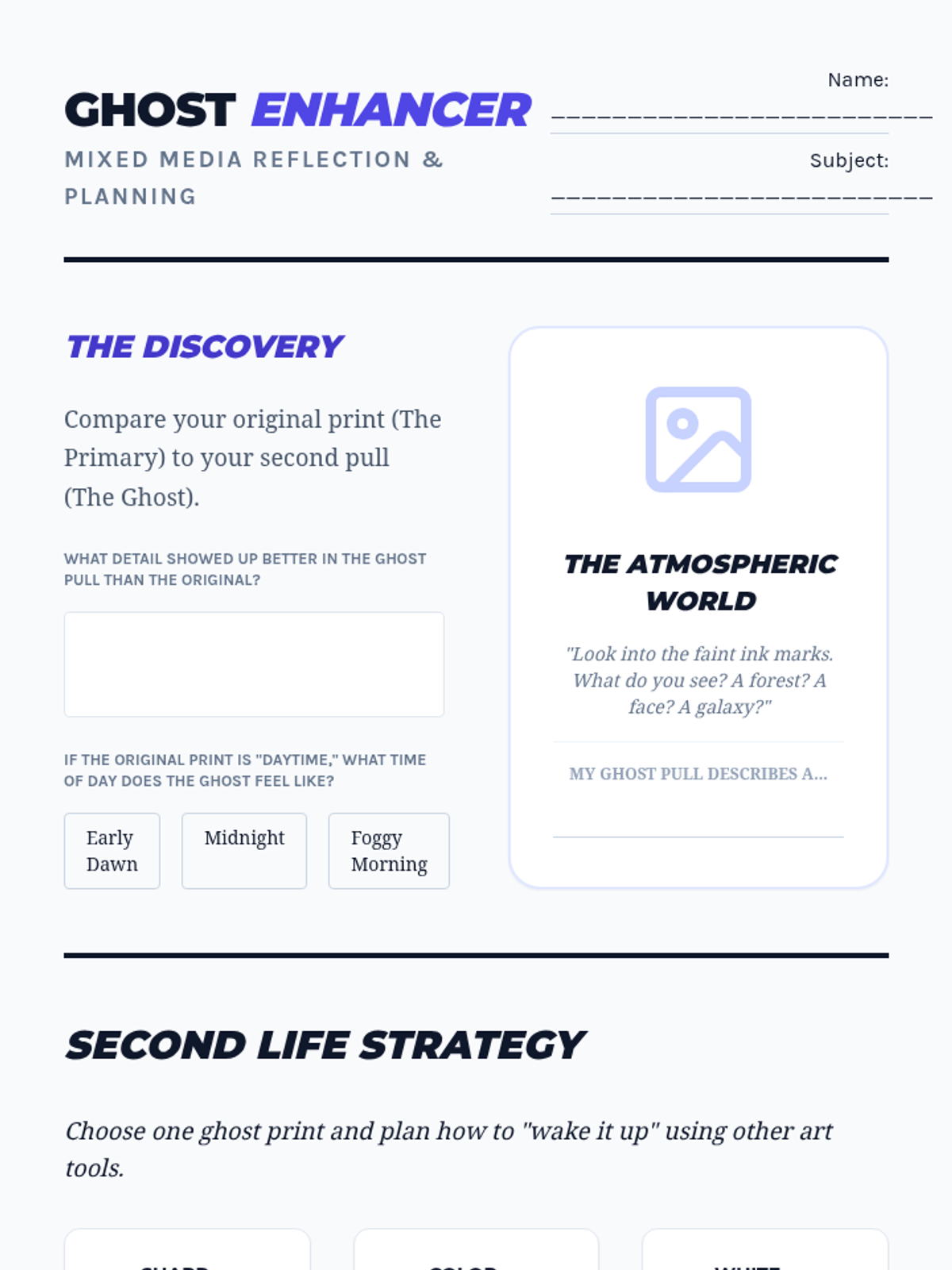
A student reflection and planning sheet for Lesson 4. Helps students analyze ghost prints and strategize mixed-media additions to enhance atmospheric images.
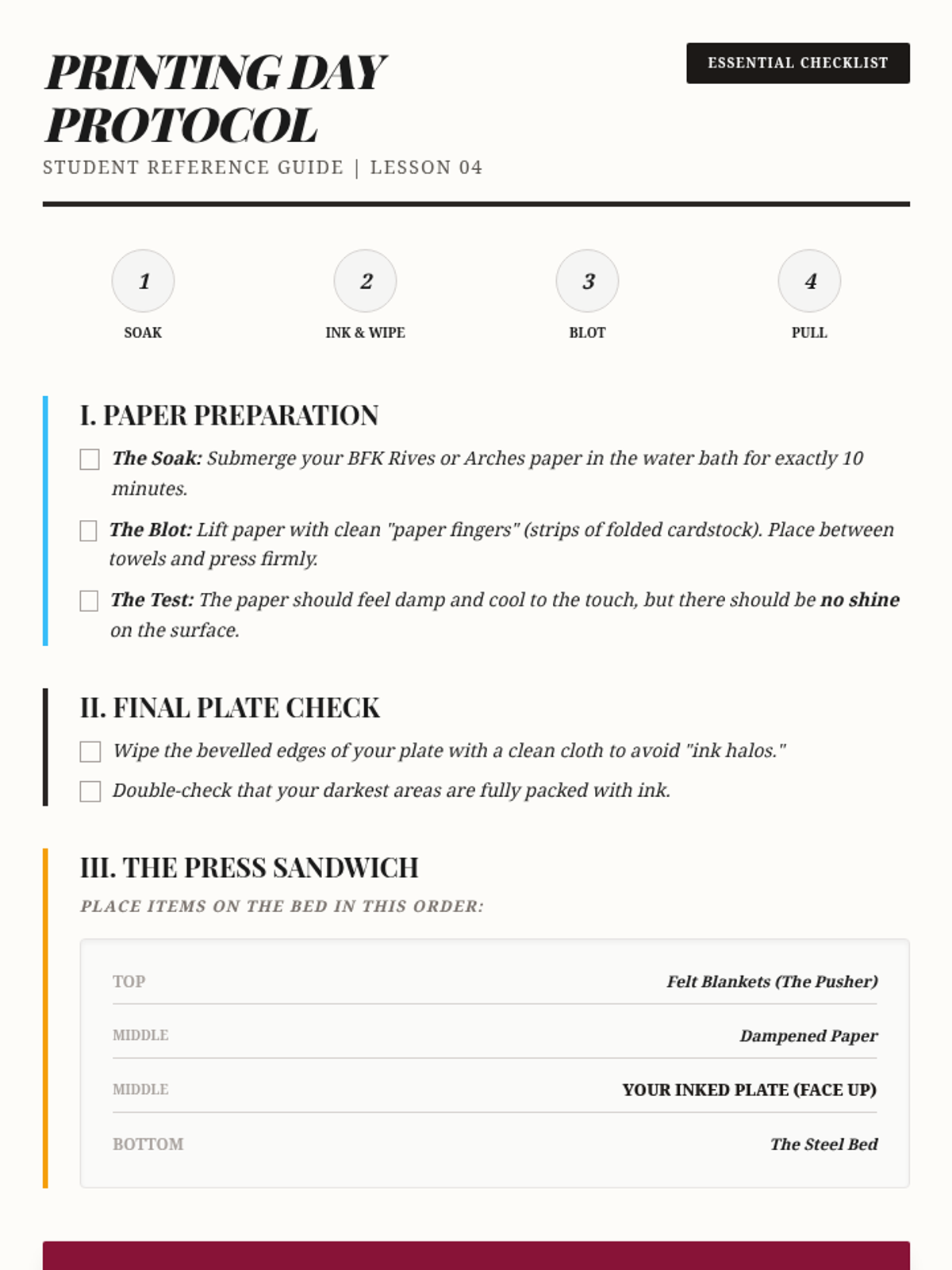
A student procedure guide for "Printing Day," covering paper soaking/blotting, final plate checks, and the specific order for the press sandwich.
Slides for Lesson 4 explaining why paper must be damp for intaglio, the anatomy of the etching press, and the specific order of the "printing sandwich."
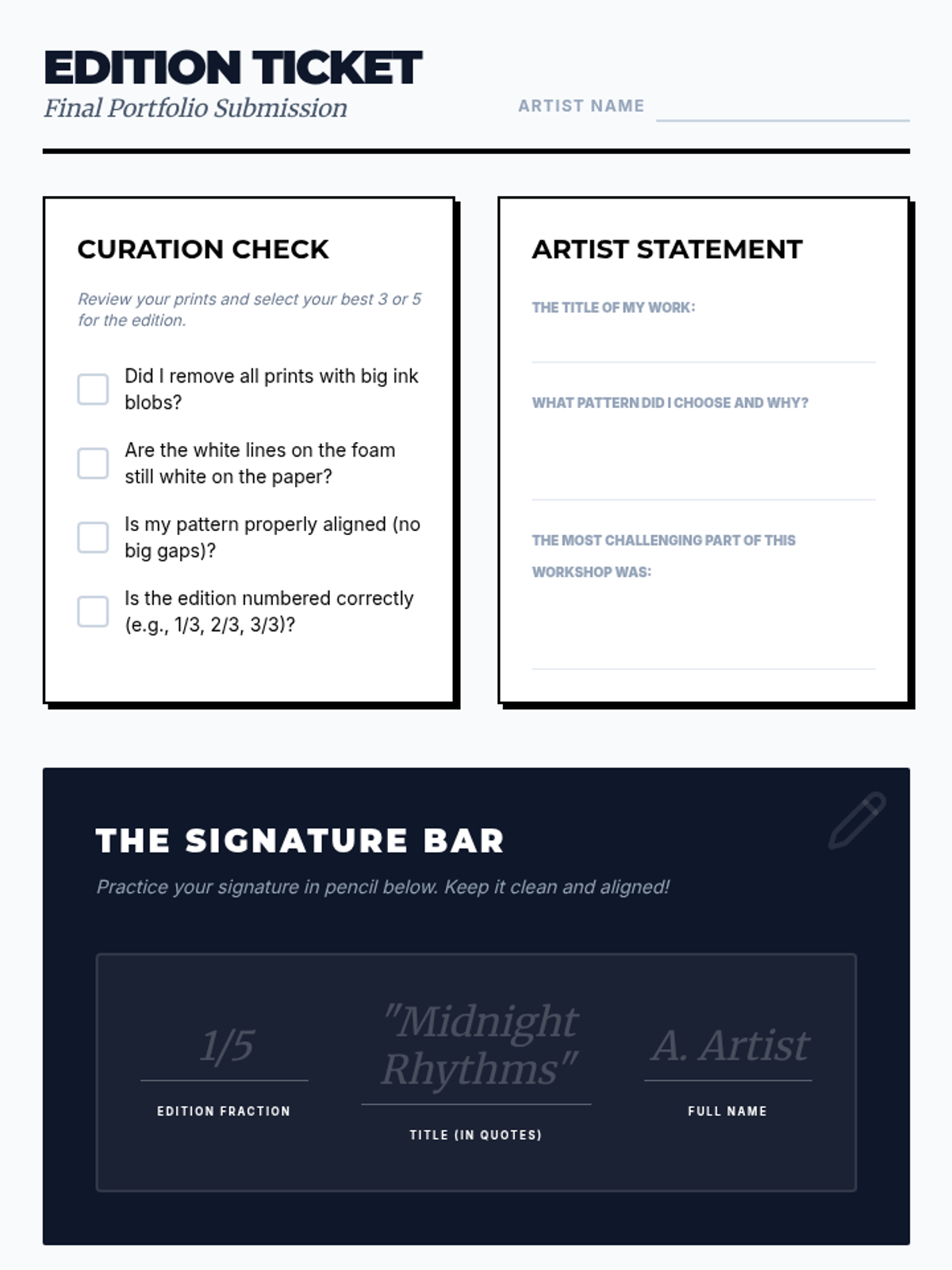
A student reflection and signing guide for the final lesson. Includes a curation checklist, artist statement prompts, and practice signing area.
Visual presentation for students on ghost printing. Explains the concept of residual ink, pressure techniques for second pulls, and how to use faint images as mixed-media backgrounds.
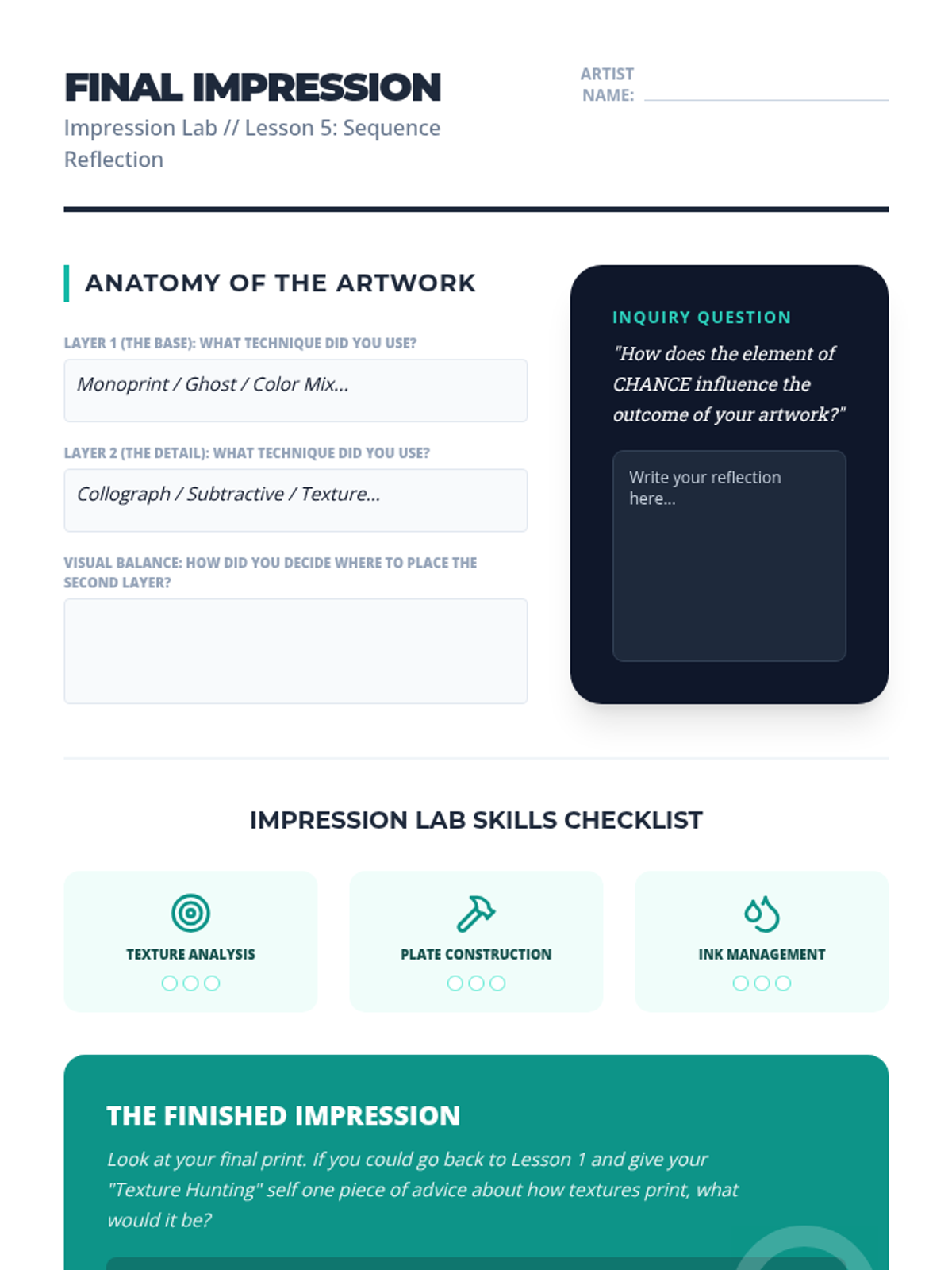
Final reflection worksheet for Lesson 5, helping students analyze the layering process and self-assess their skills across the entire printmaking sequence.
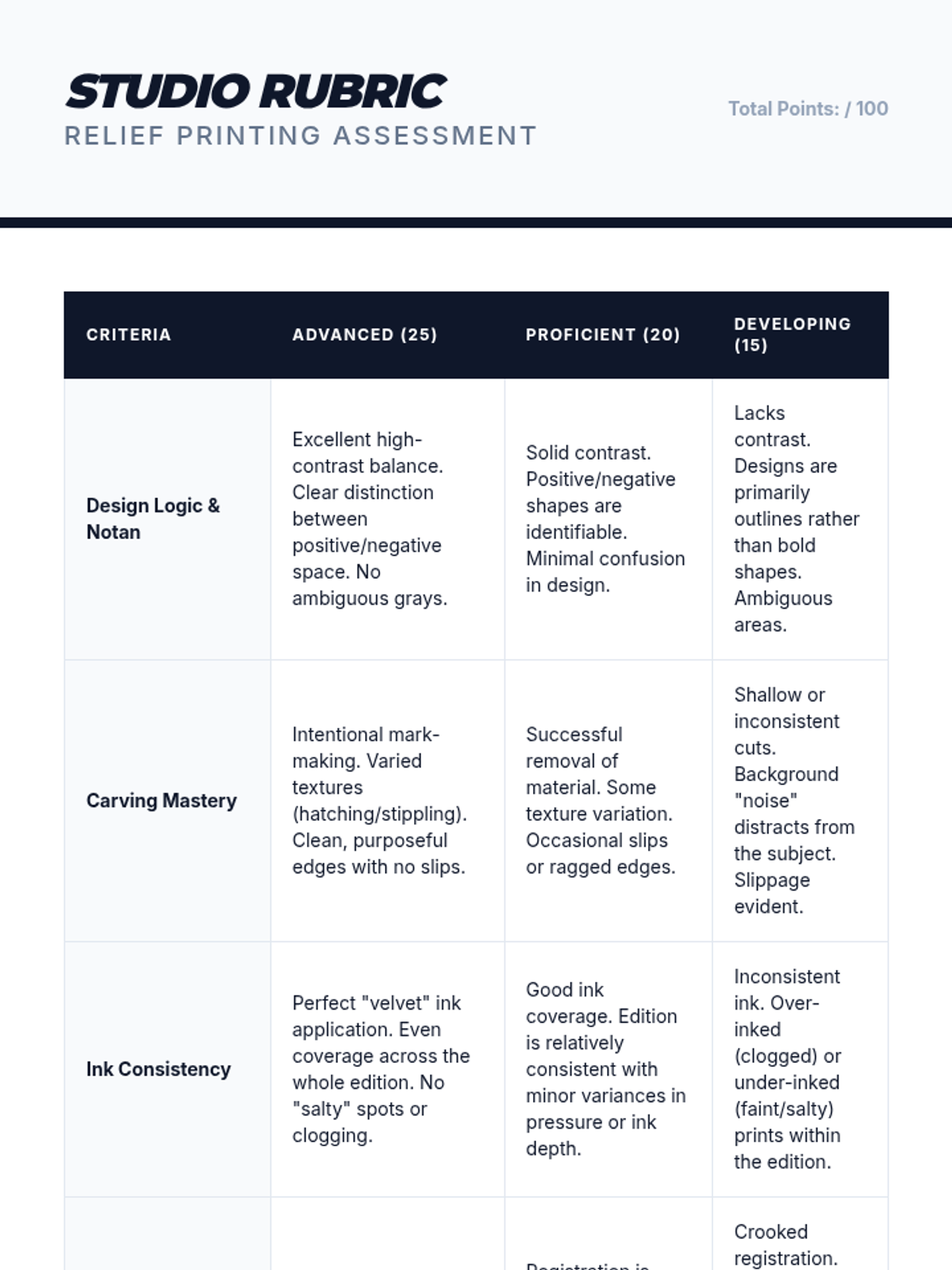
A professional assessment rubric for the Relief Printing project, evaluating students on design logic, carving mastery, inking consistency, and editioning standards.
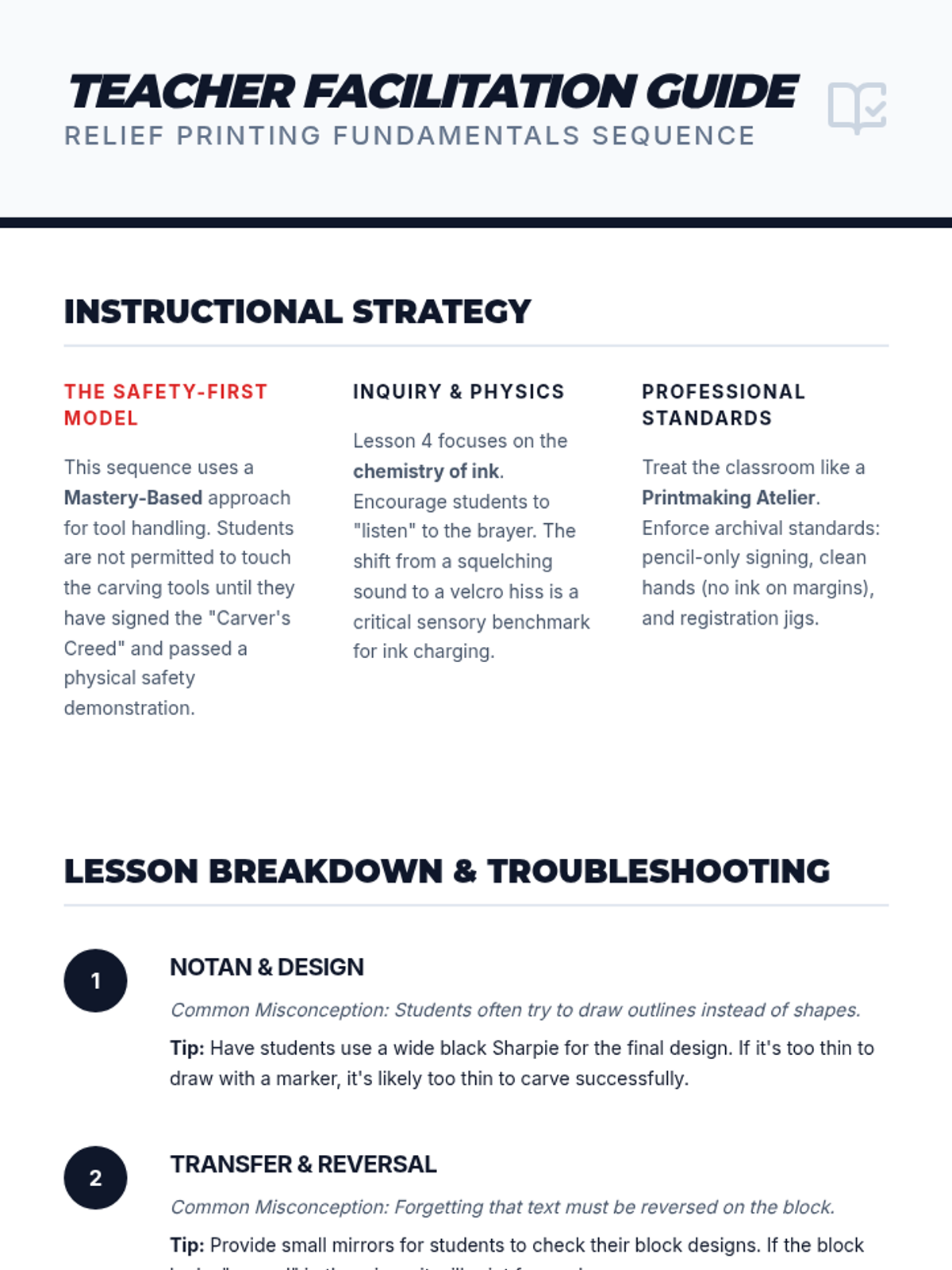
A comprehensive guide for instructors covering pedagogical strategies, lesson-by-lesson troubleshooting, and a master supply list for the Relief Printing sequence.
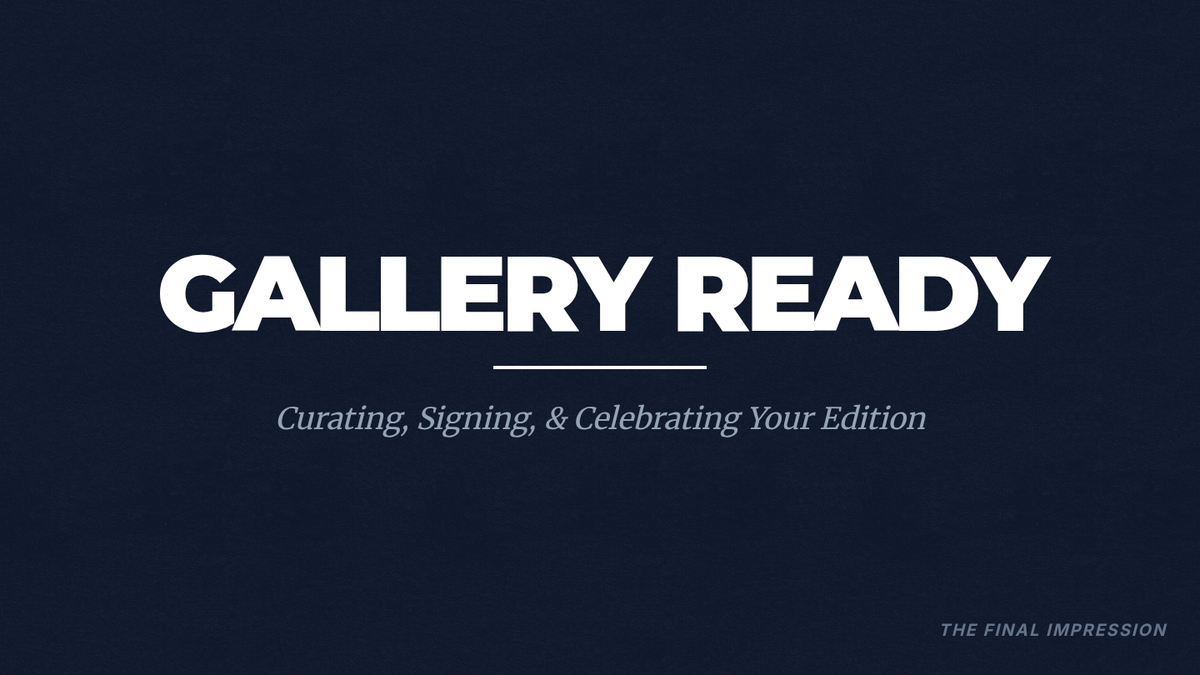
Slides for Lesson 5 covering signing prints, numbering editions, and conducting a peer critique.
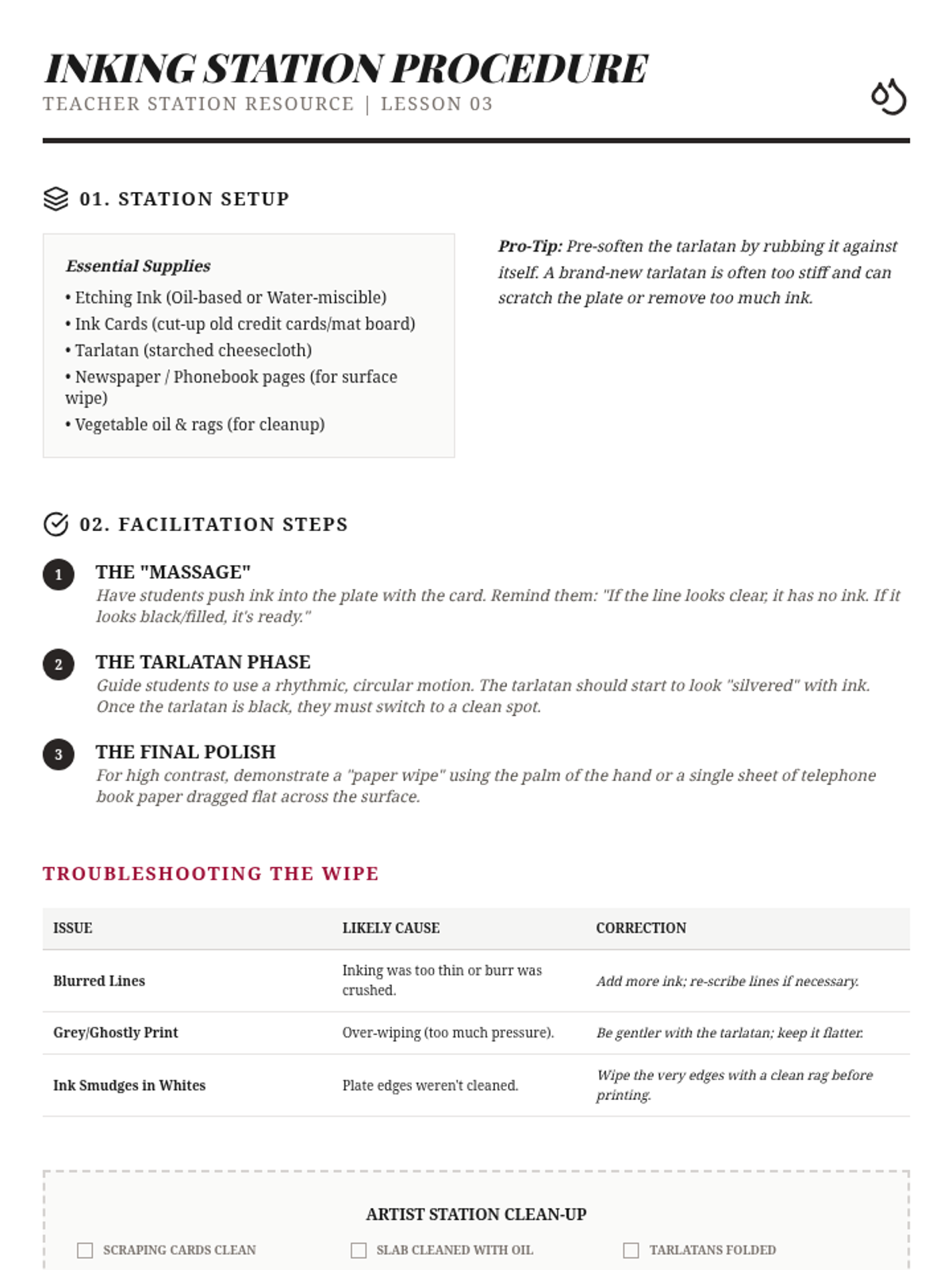
A teacher resource for managing the inking and wiping station, including setup guides, step-by-step facilitation, and a troubleshooting table for common printing issues.
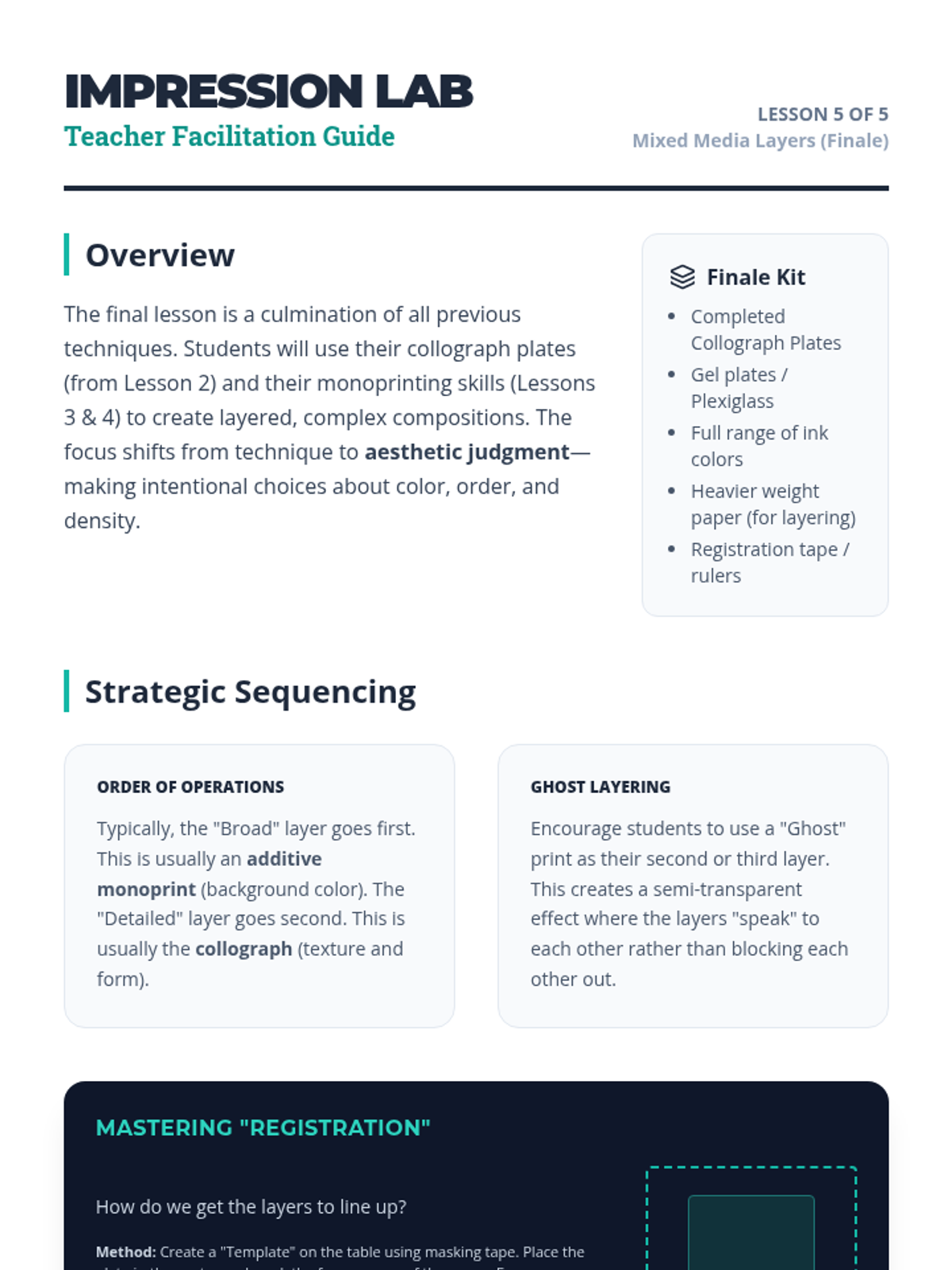
Final teacher guide for Lesson 5, focusing on layered composition strategies, the technical process of registration (alignment), and prompting student reflection on "chance."
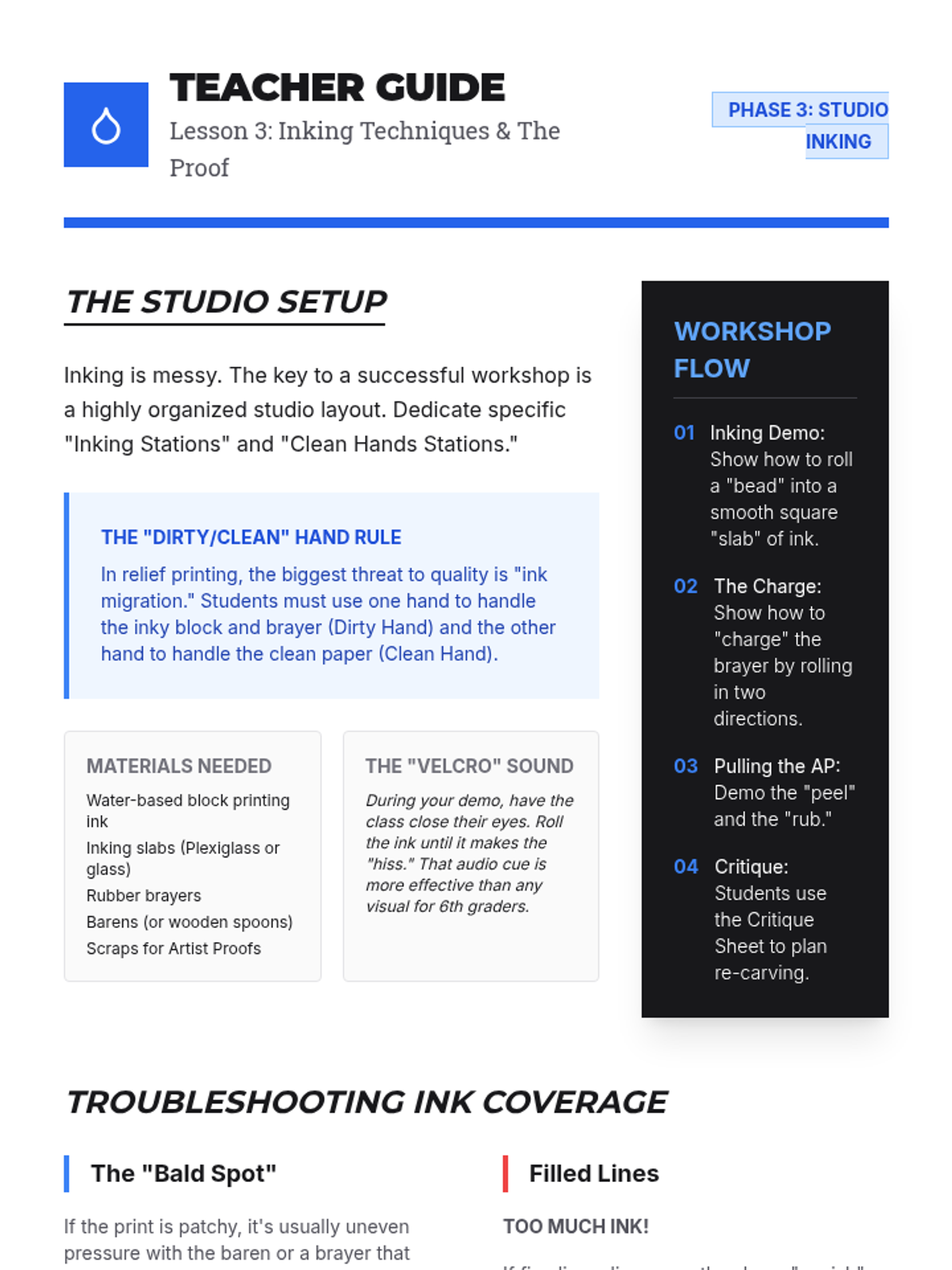
Teacher guidance for Lesson 3, including instructional strategies for managing ink application, studio setup, and evaluating Artist Proofs (APs).
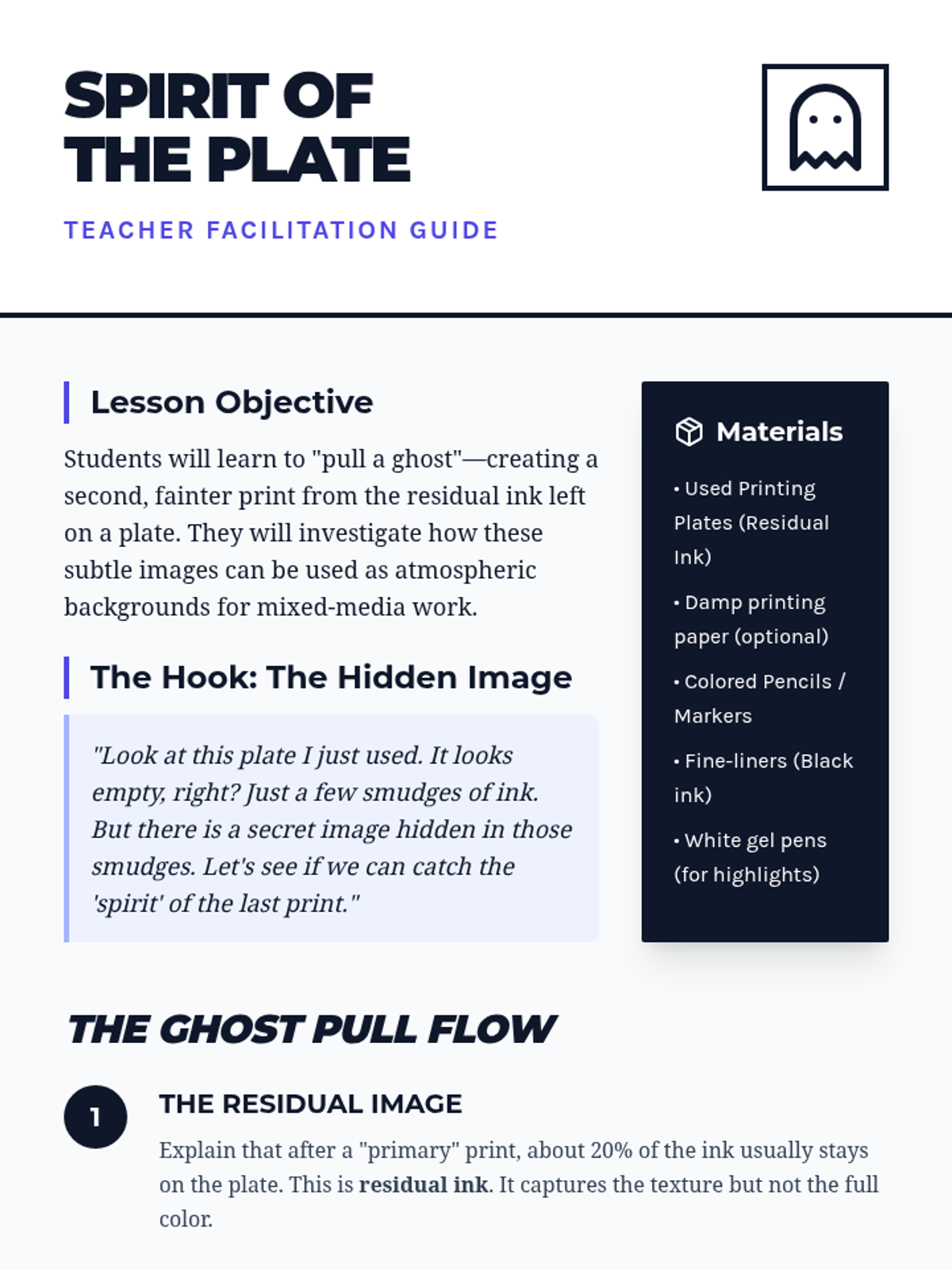
Teacher guide for Lesson 4 on ghost prints and residual ink. Includes techniques for pulling second prints and strategies for mixed-media enhancement of faint images.
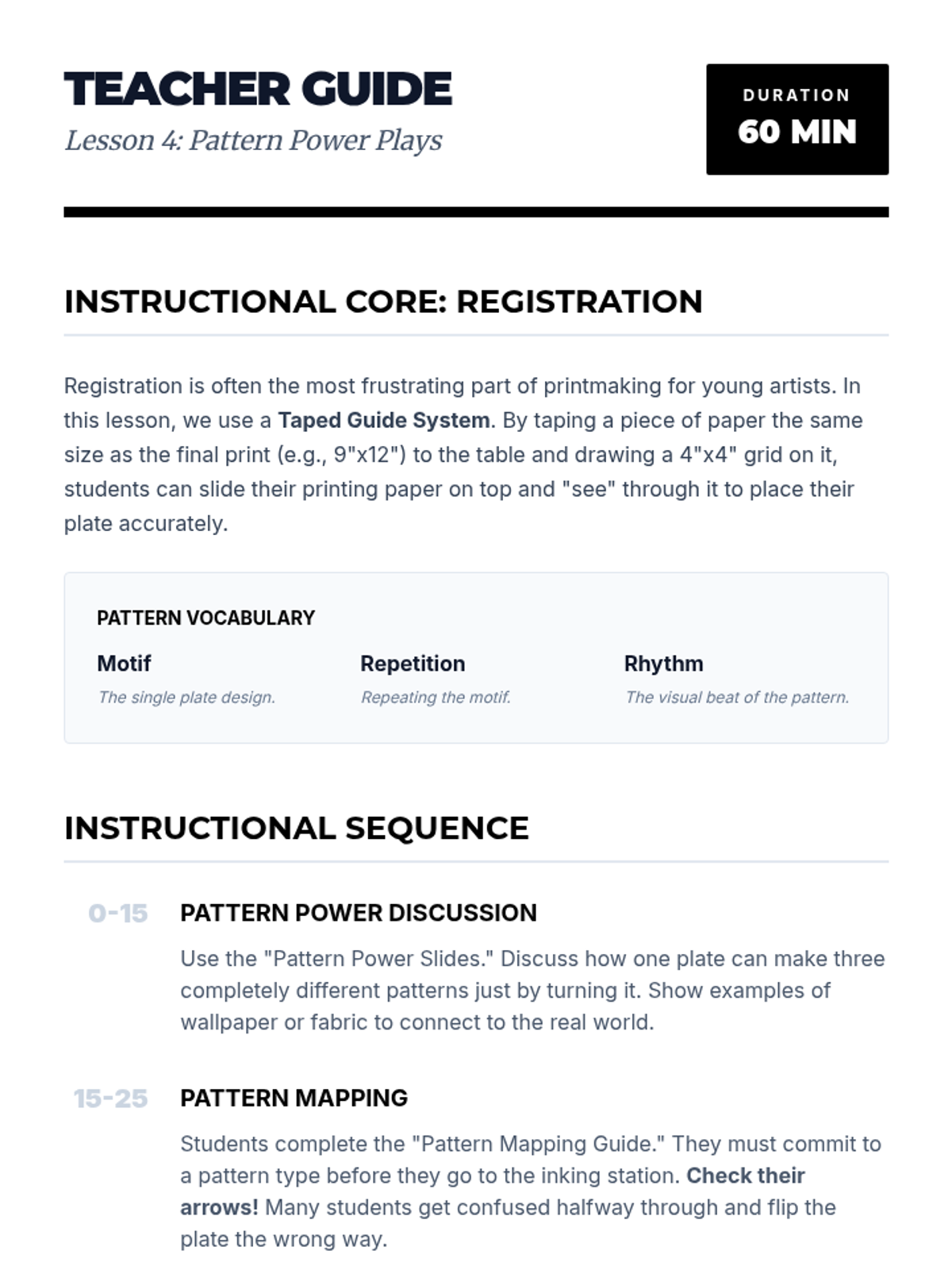
Teacher guide for Lesson 4, providing registration techniques, pattern vocabulary, and instructional pacing.