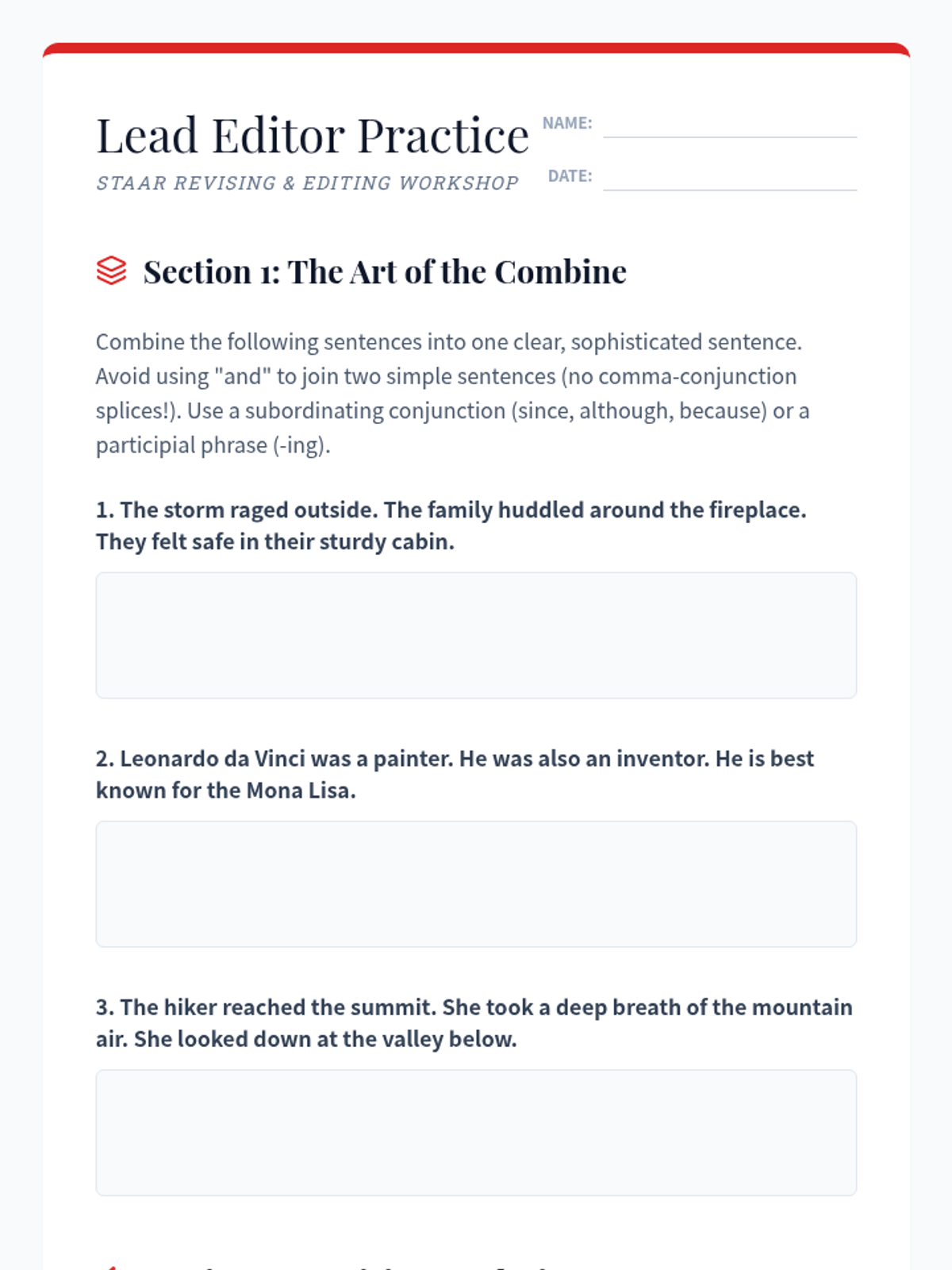
Sentence structure fundamentals, subject-verb agreement, and precise usage of parts of speech including pronouns, conjunctions, and adjectives. Targets technical accuracy through mastery of capitalization, punctuation, spelling, and verb mood.
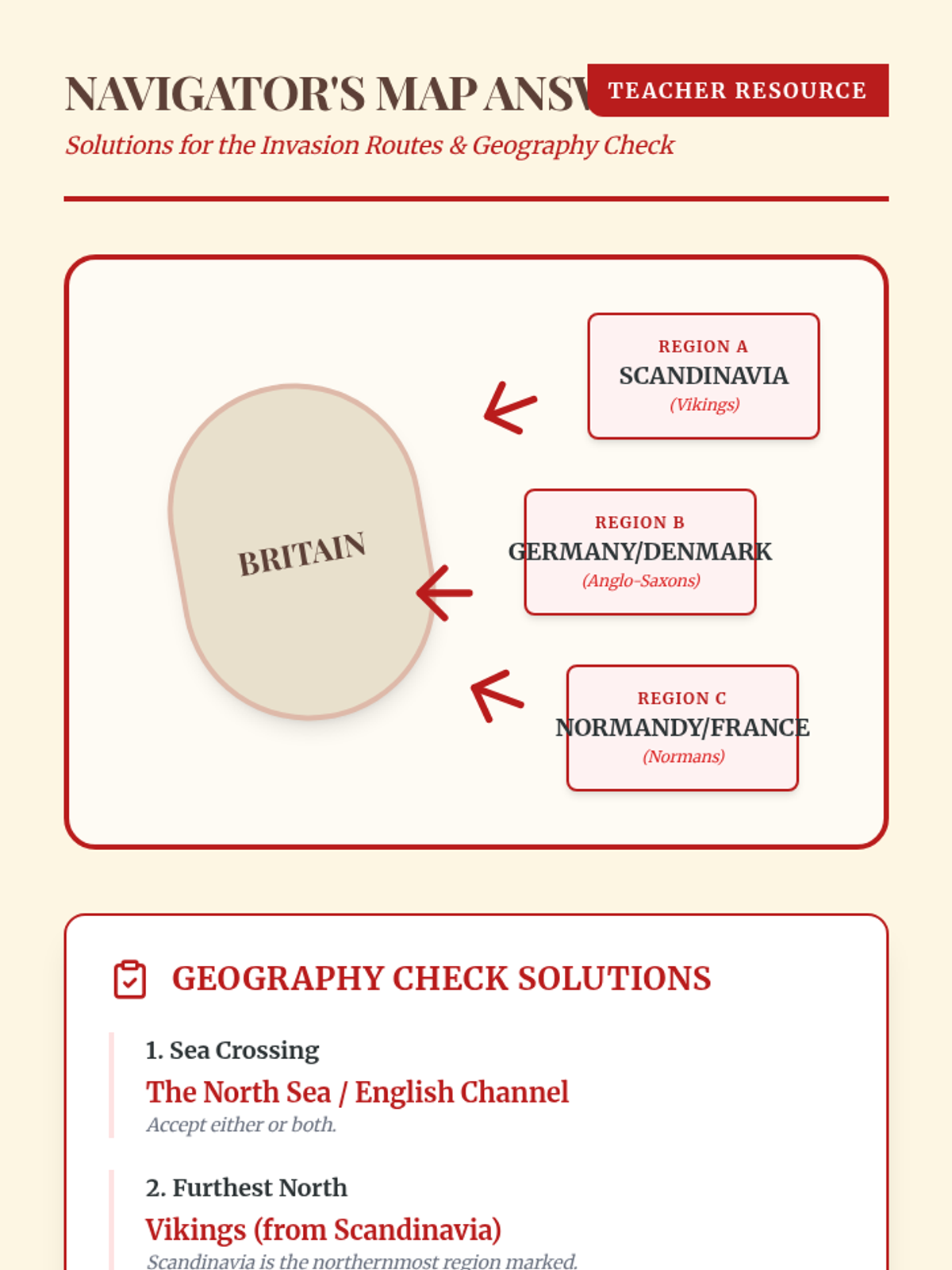
An answer key for the Navigator Map Activity, providing the names of the source regions and correct answers to the geography check questions.
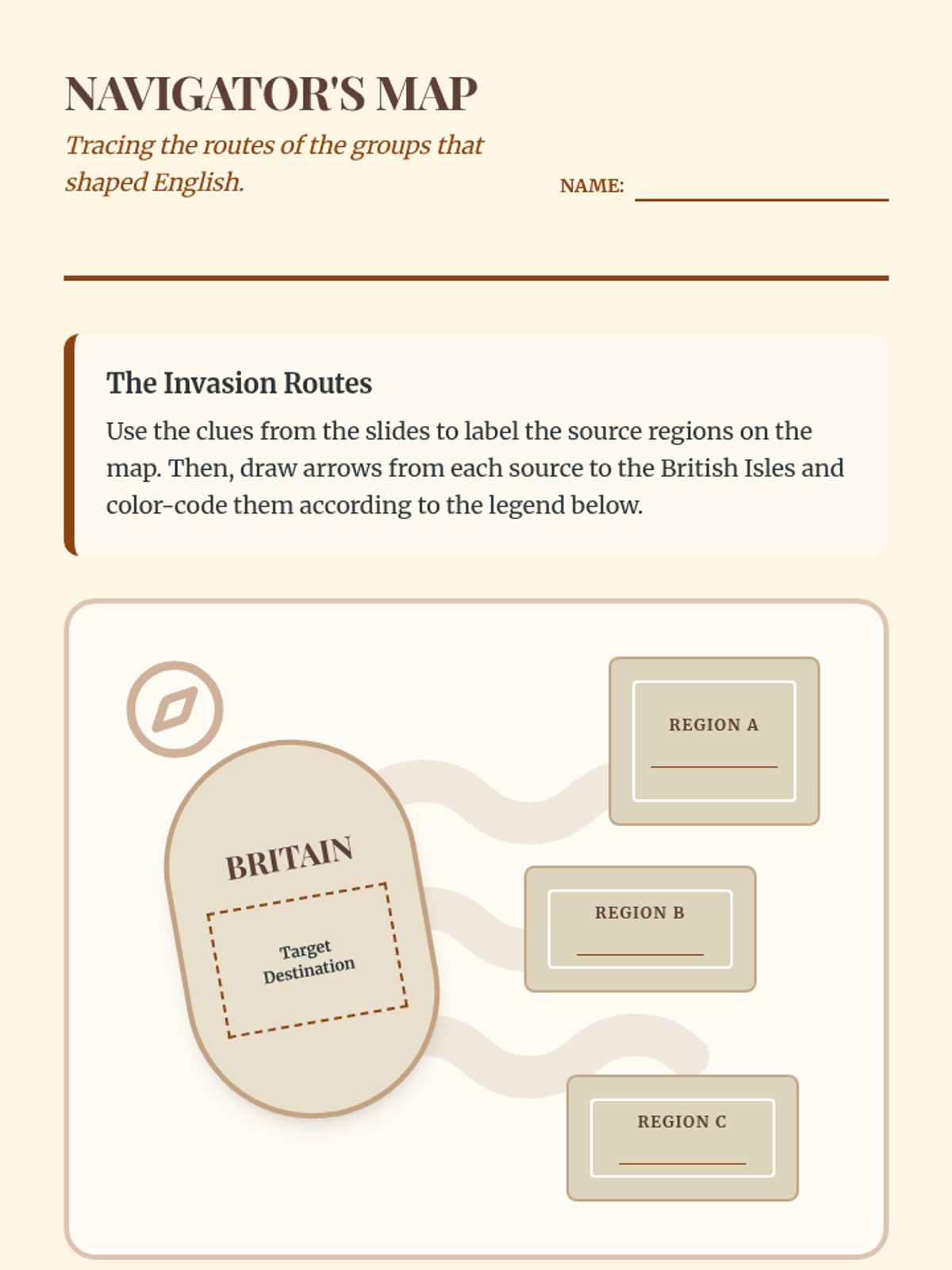
A map activity where students label regions like Scandinavia, Germany, and Normandy, and draw the invasion routes to the British Isles. It includes a geography check section for key sea crossings.
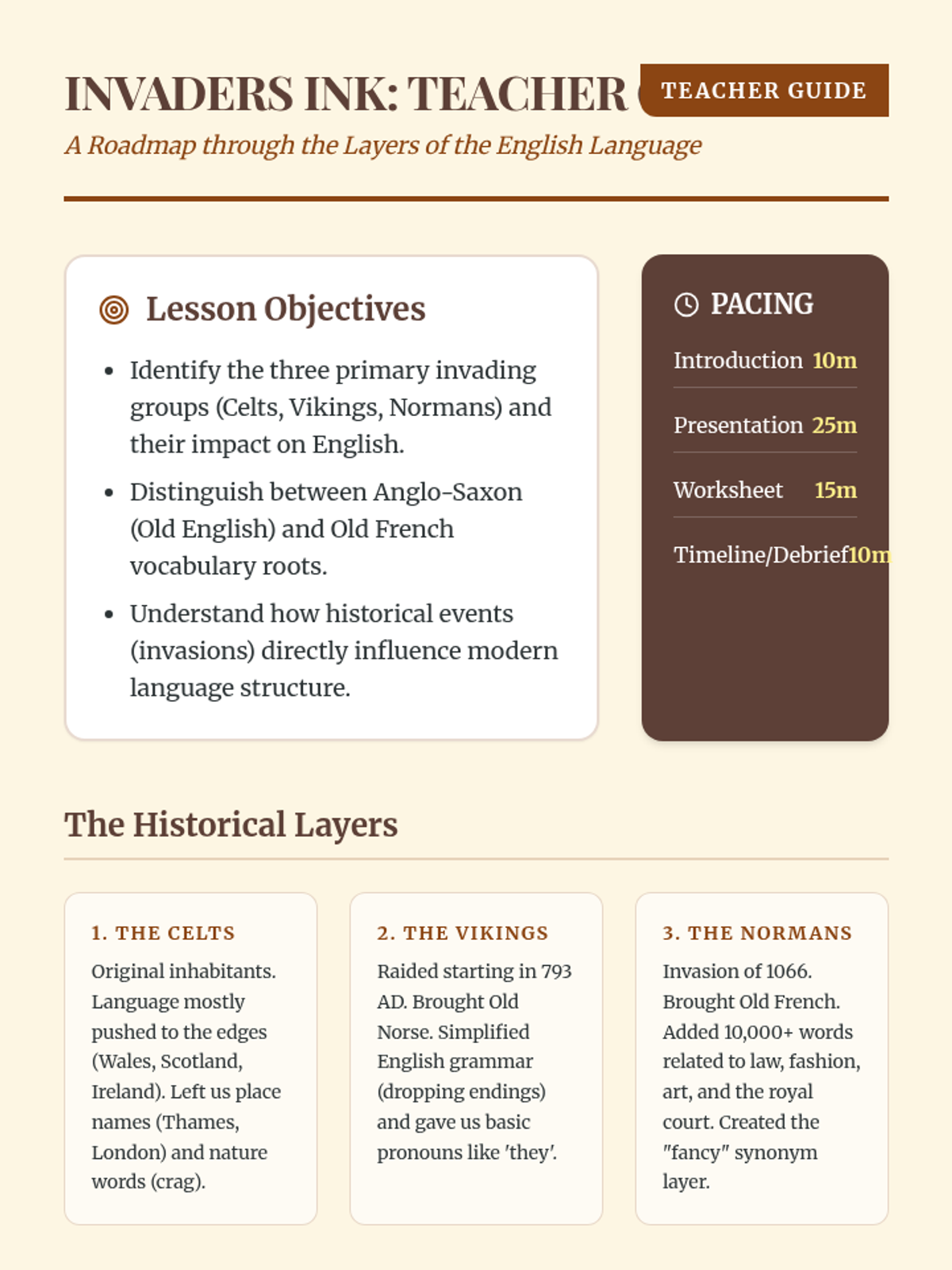
A comprehensive teacher guide for the Invaders Ink lesson. It includes lesson objectives, historical background summaries, slide-by-slide teaching notes, activity suggestions, and differentiation strategies.
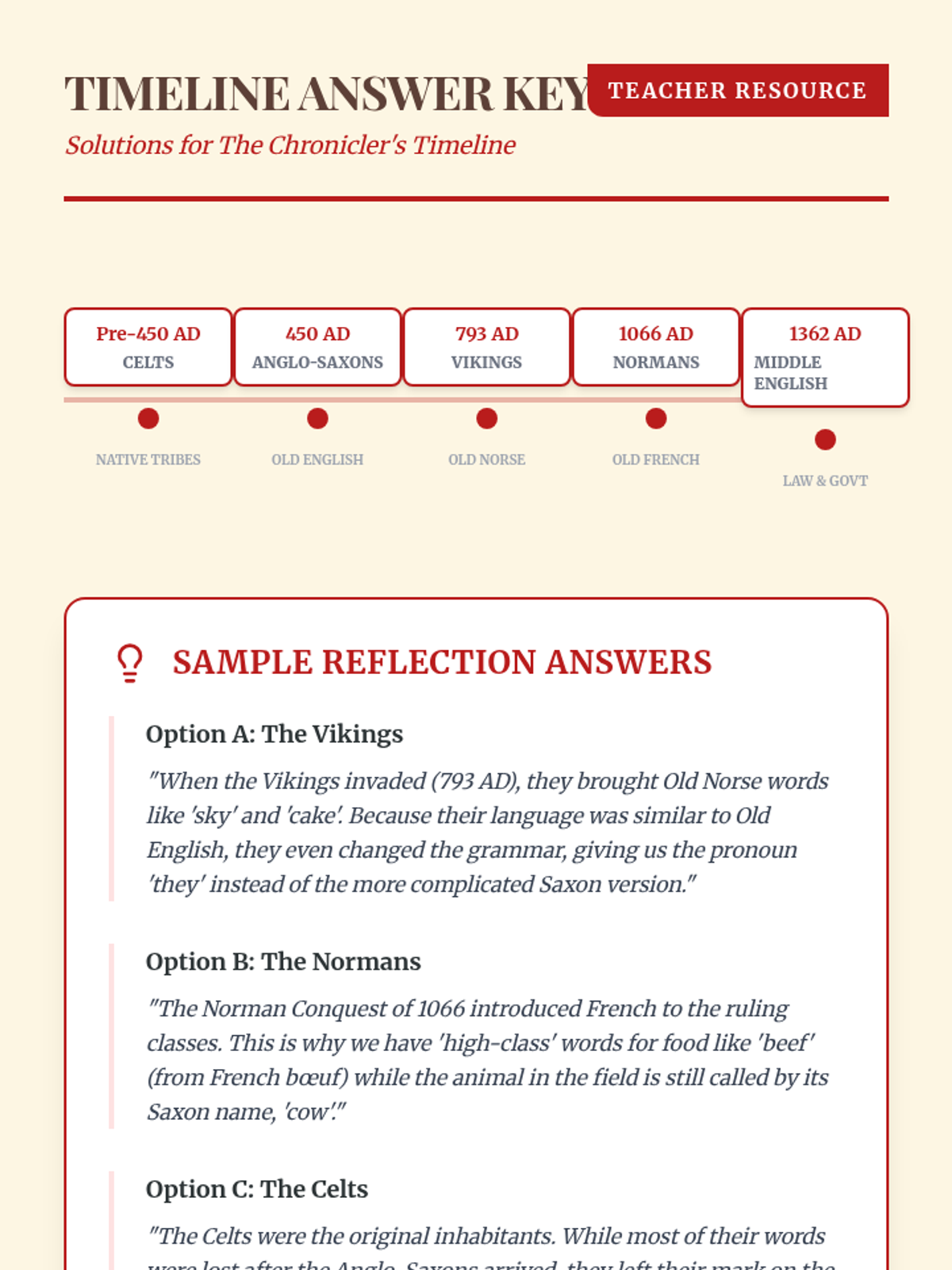
An answer key for the Invasion Timeline Activity, providing the correct dates and groups for each timeline point, plus sample answers for the reflection question.
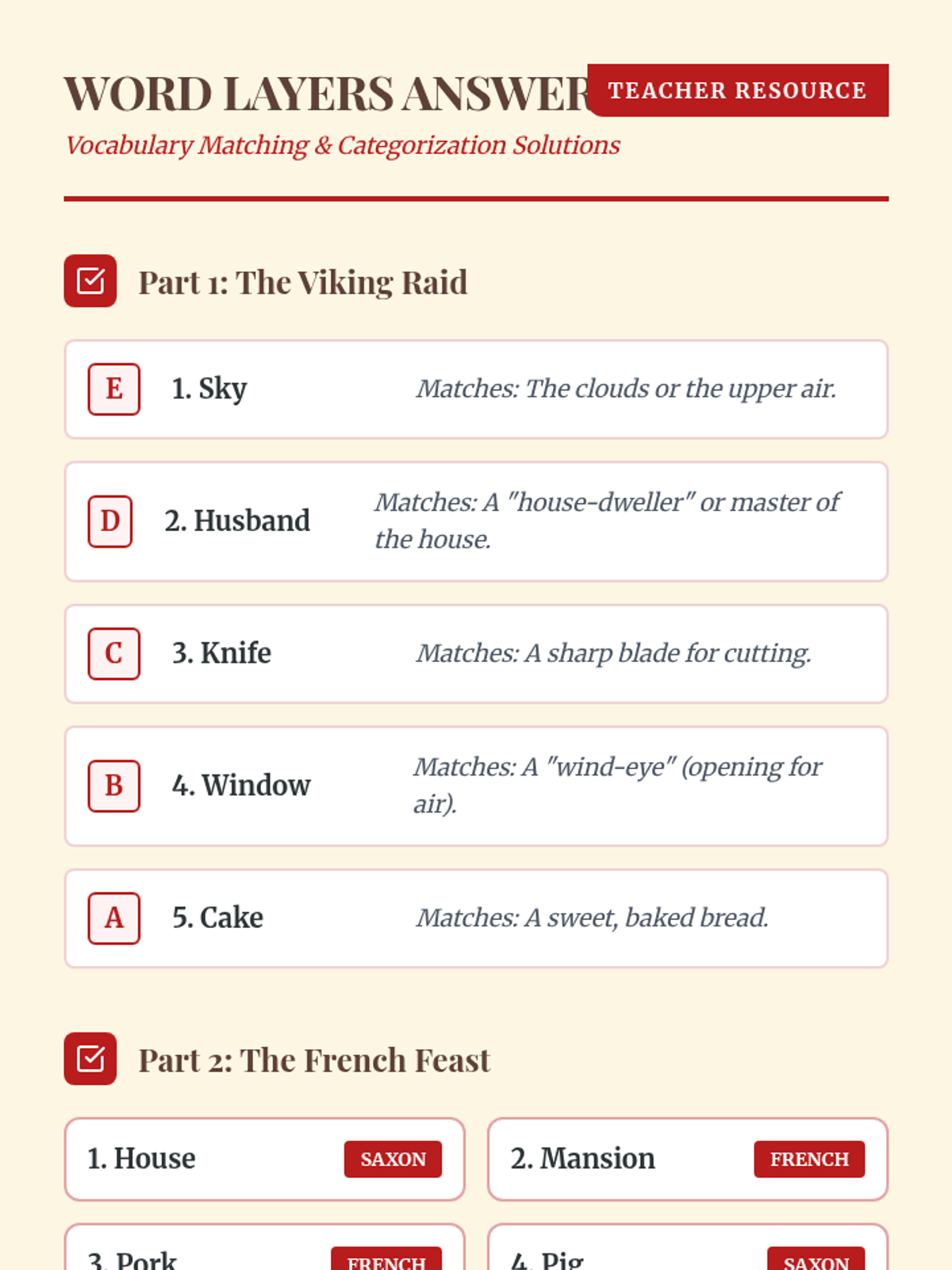
An answer key for the Word Layers Worksheet, providing solutions for the Viking matching section and the Saxon vs. French categorization task. Includes teaching notes on vocabulary origins.
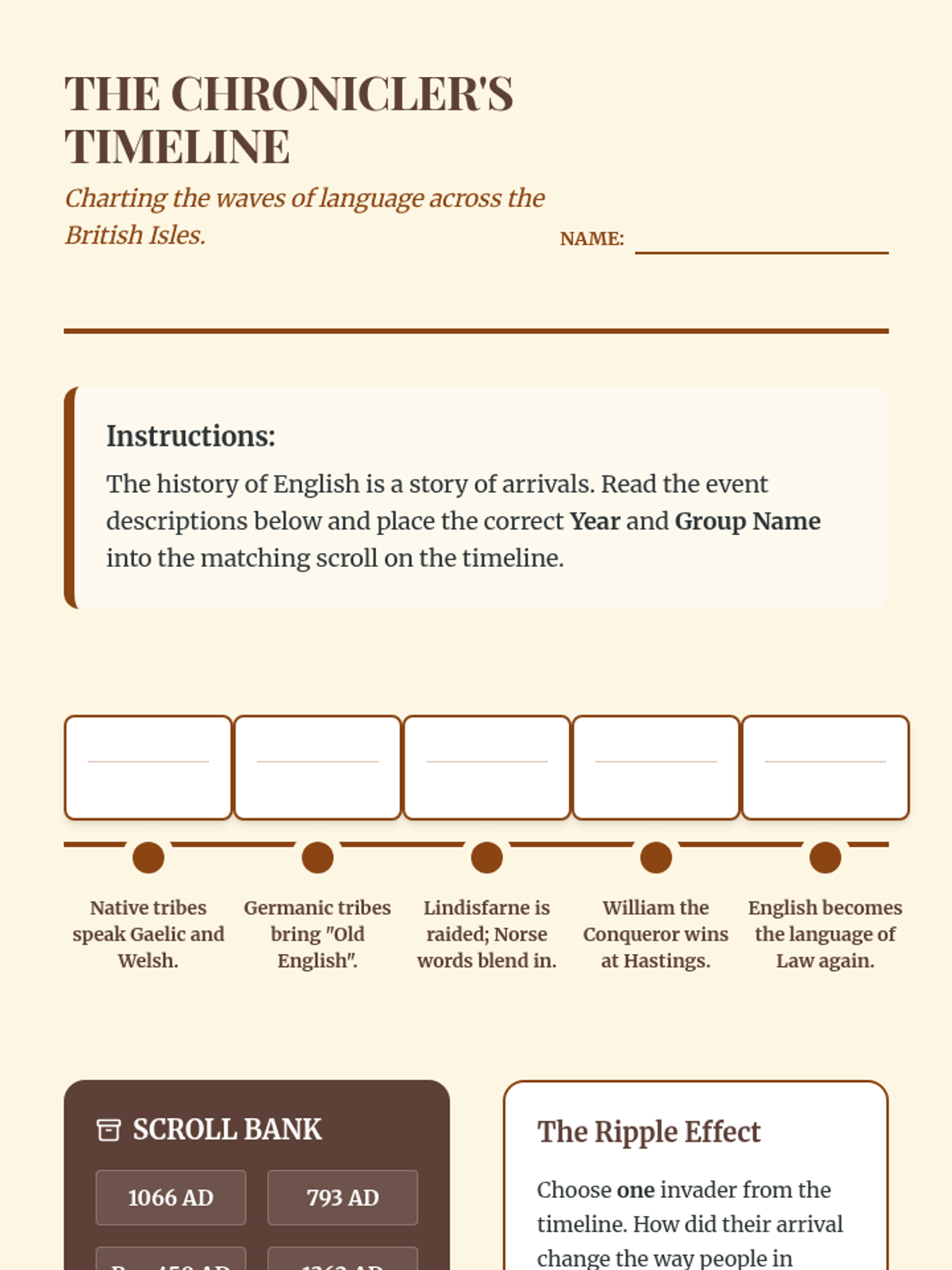
A timeline worksheet where students place key invasions and historical dates in order to see the development of the English language. It includes a word bank of dates and groups, plus a synthesis question.
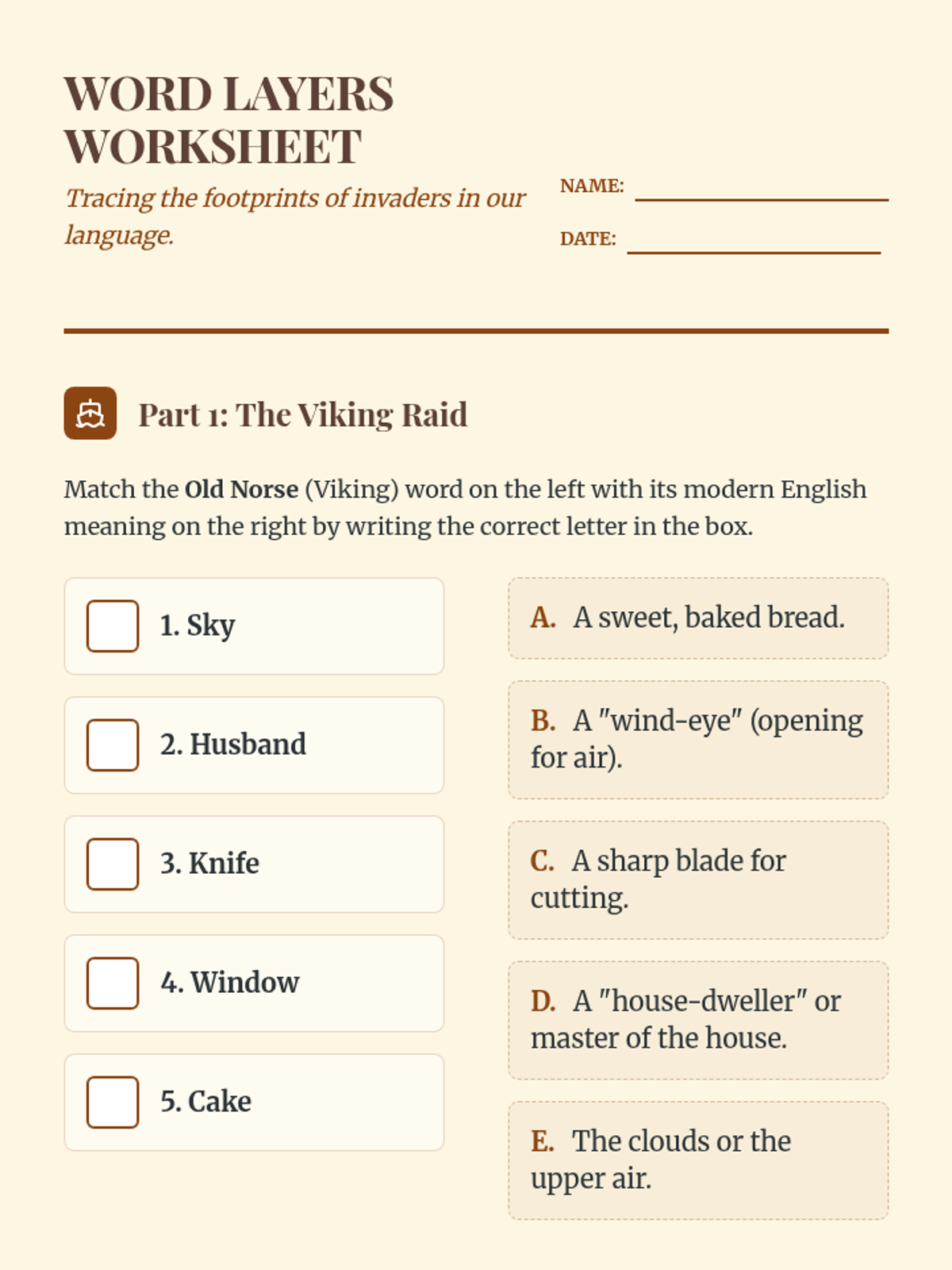
A vocabulary matching and categorization worksheet that tests students on the Norse and French influences in English. Includes sections on matching Viking words to their meanings and distinguishing between Saxon and French synonyms.
A 10-slide presentation detailing the history of the English language through the lens of Celtic, Viking, and French invasions. It features a manuscript-inspired aesthetic with clear visual distinctions between the layers of vocabulary.
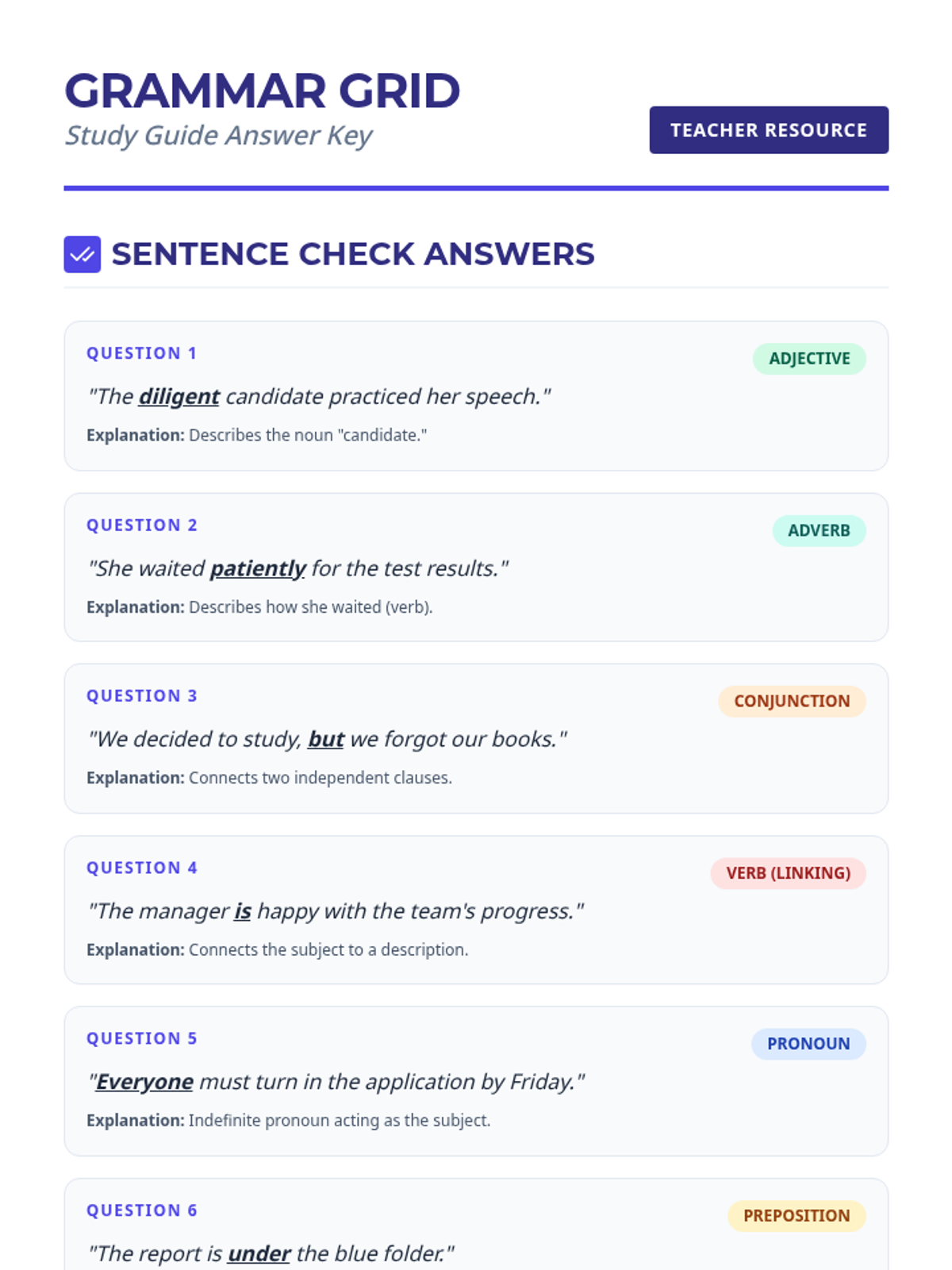
A detailed answer key for the Grammar Grid Study Guide, providing the correct parts of speech and pedagogical explanations for each practice question.
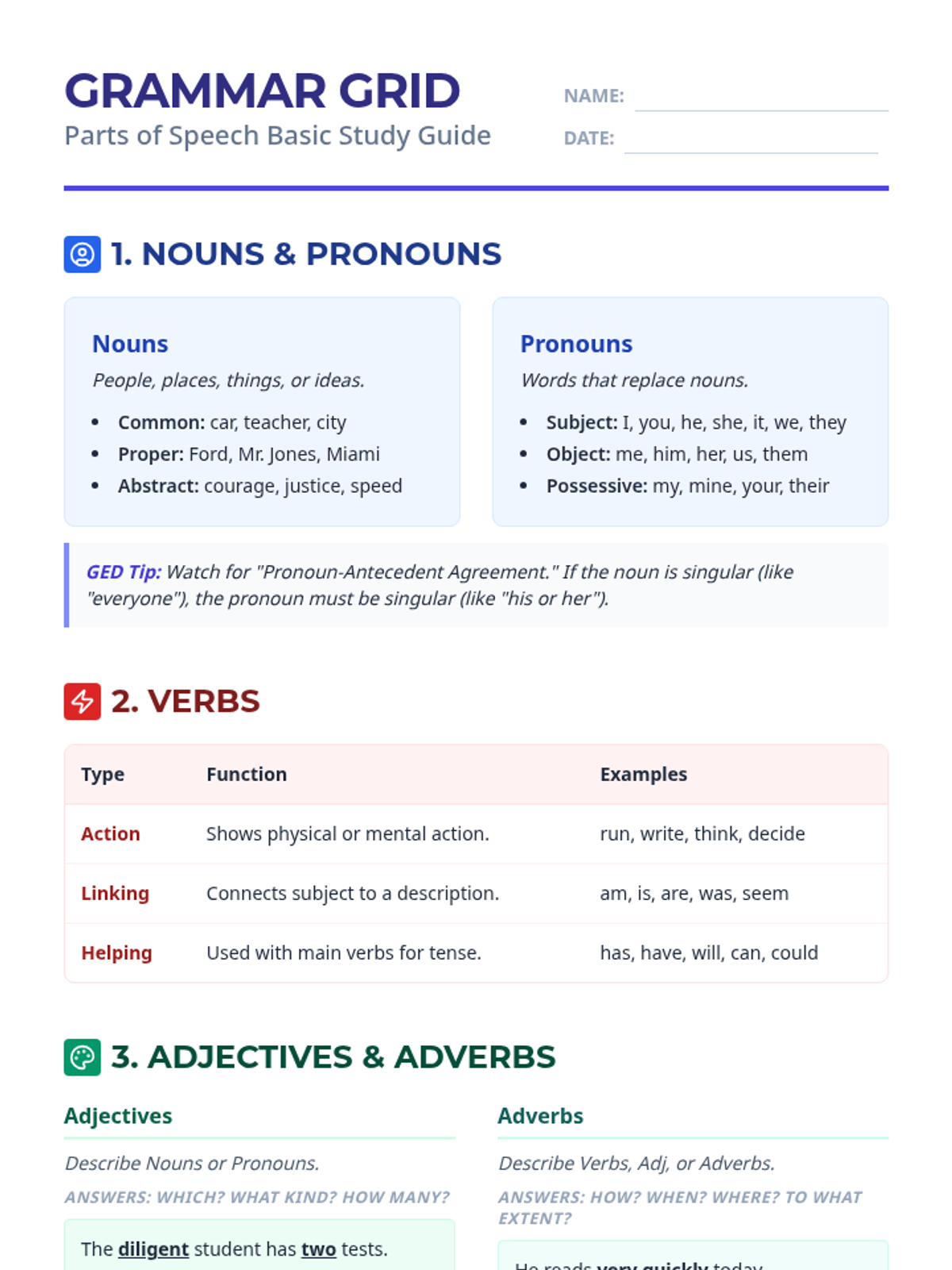
A comprehensive printable study guide covering the eight parts of speech with definitions, examples, and GED-specific grammar tips. Includes a practice section for identifying parts of speech in context.
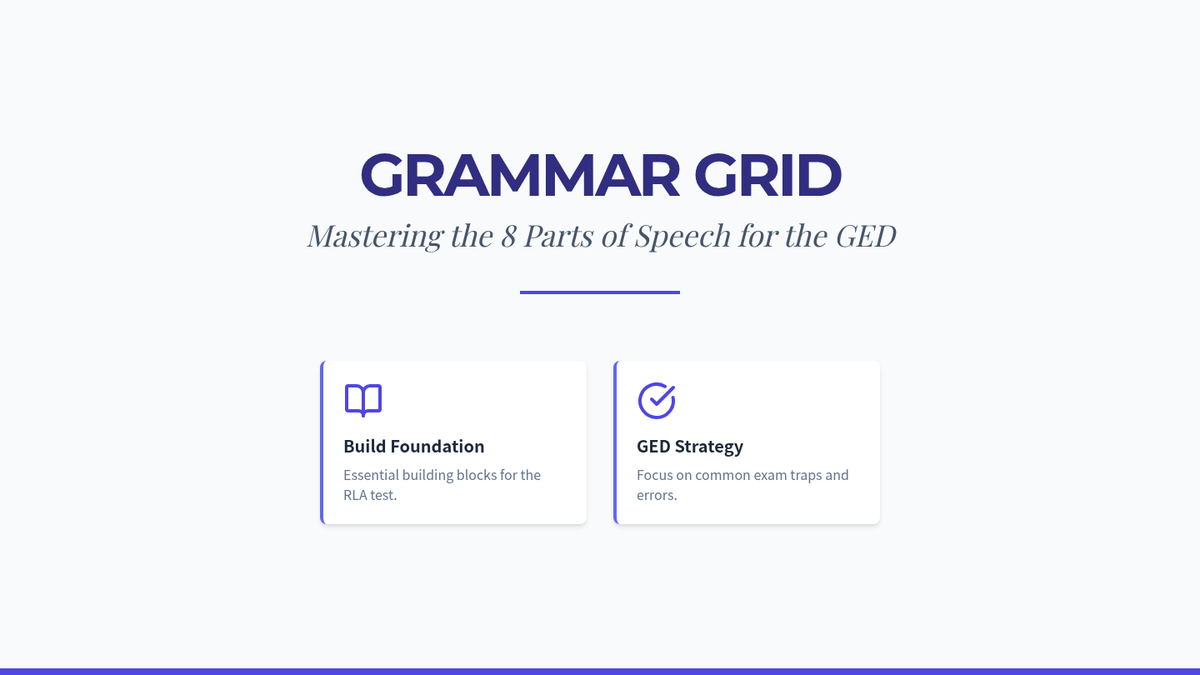
A visual presentation introducing the eight parts of speech with specific focus on how they apply to the GED Reasoning Through Language Arts exam. Includes definitions, examples, and contextual usage tips.
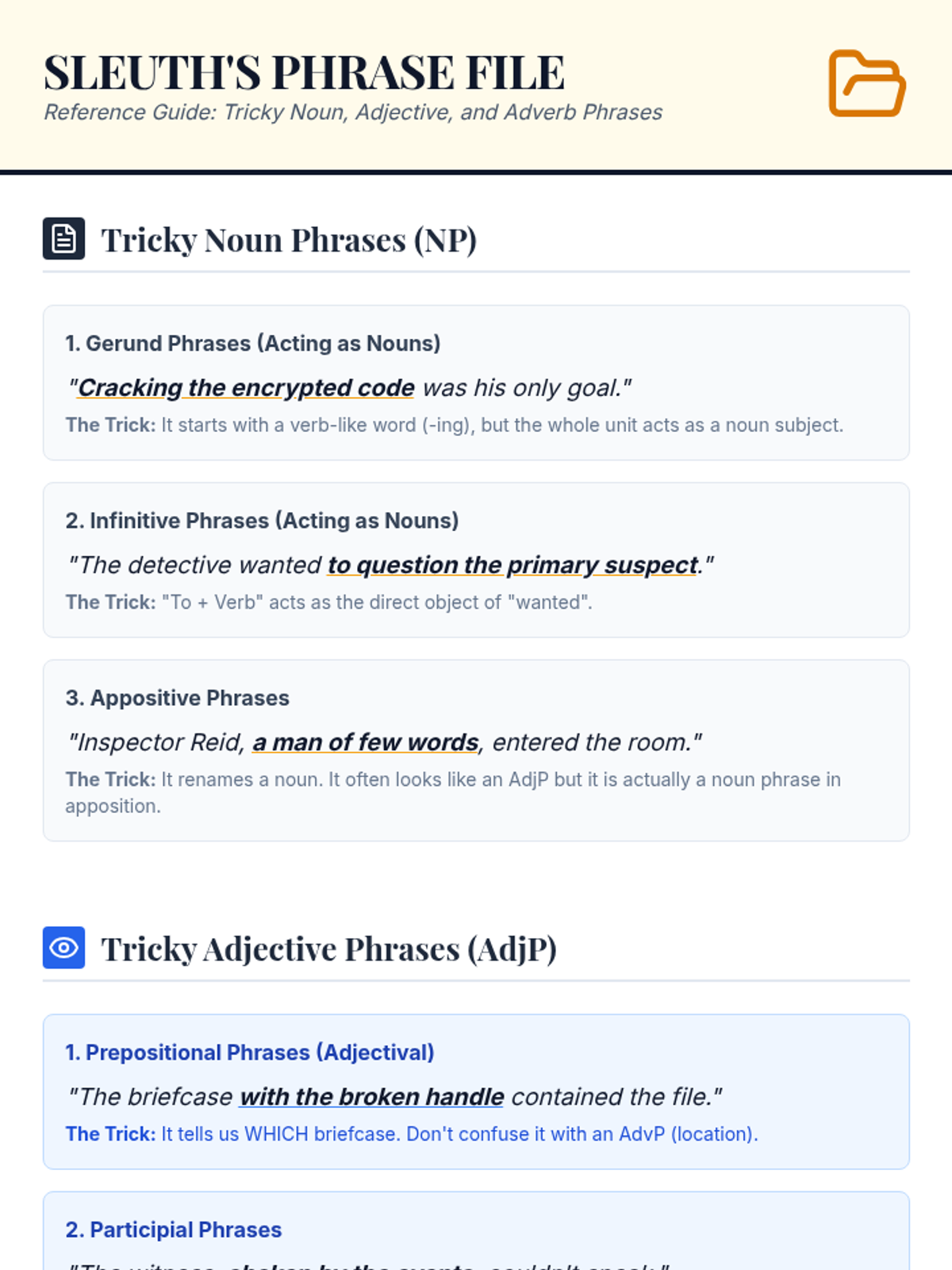
A comprehensive reference guide for teachers and students featuring categorized "tricky" phrase examples and explanations.
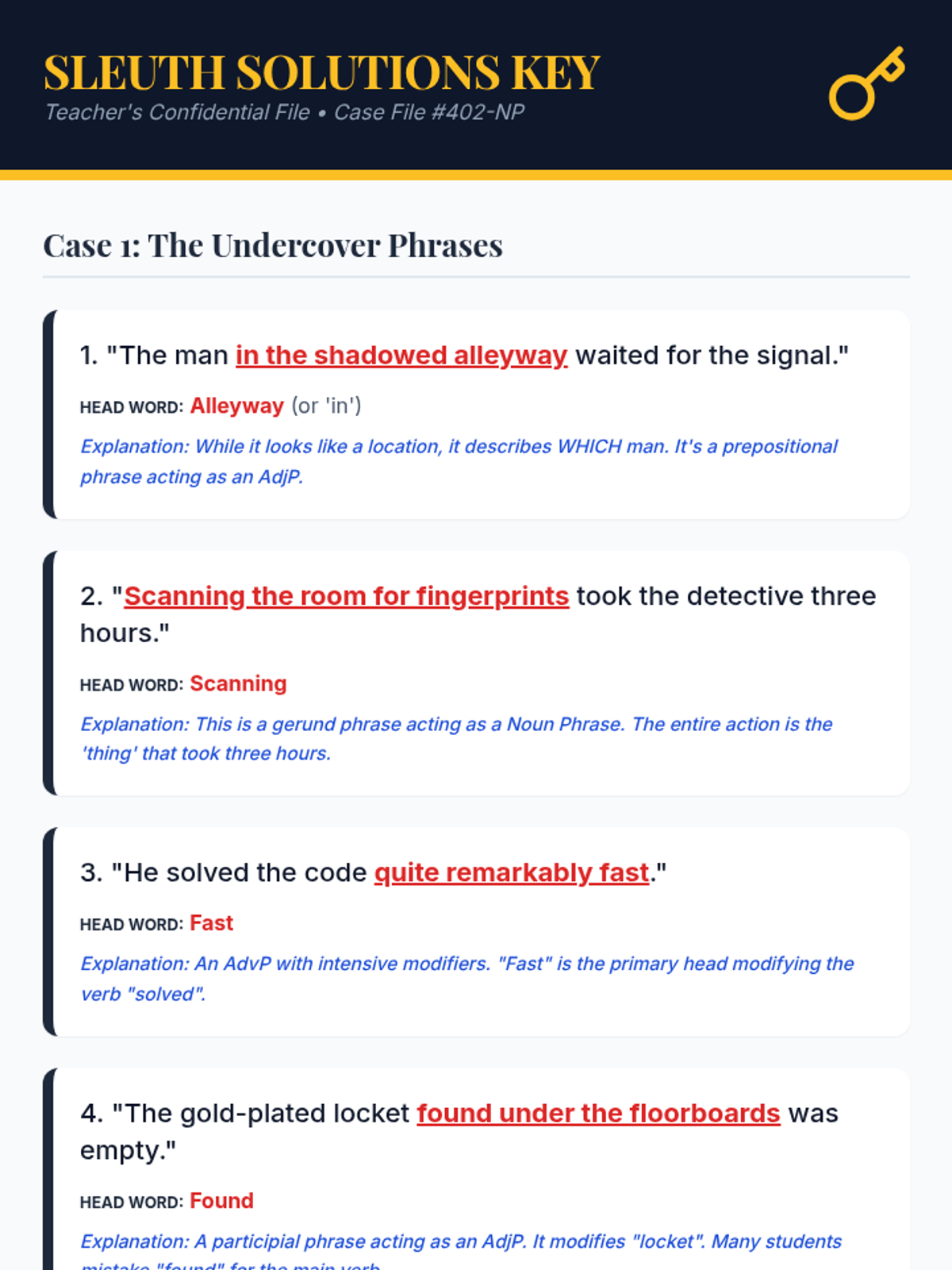
Answer key for the Syntax Sabotage Worksheet with detailed explanations of why specific questions were 'tricky'.
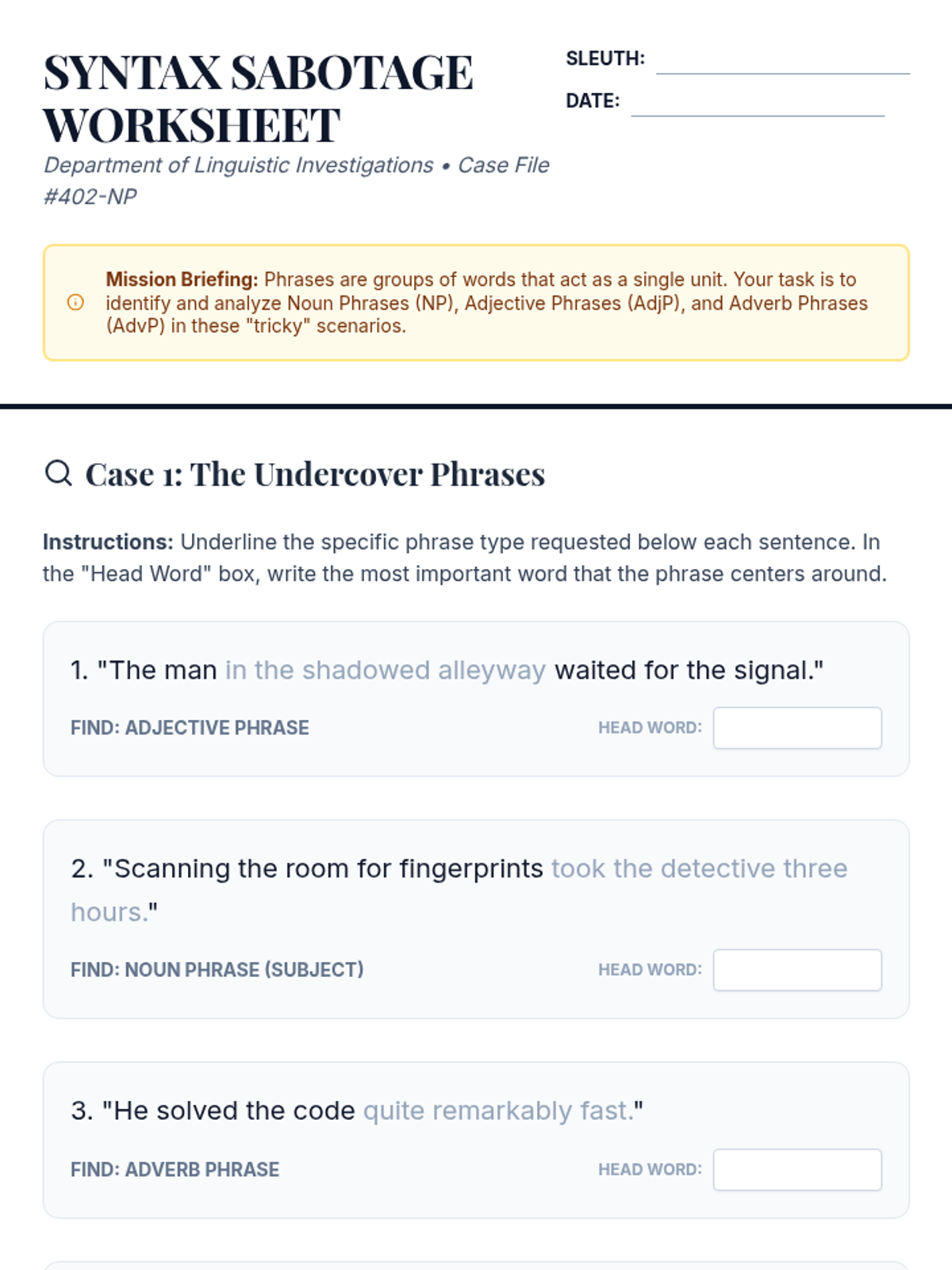
A detective-themed worksheet with "tricky" phrase identification, ambiguity analysis, and sentence construction tasks.
A 6-slide presentation introducing noun, adjective, and adverb phrases with a detective theme. Includes 'tricky' examples and a linguistic ambiguity challenge.
A visual presentation deck for teaching noun, adjective, and adverb phrases. It includes clear definitions, contrasting examples, and a demonstration of sentence expansion using various phrase types.
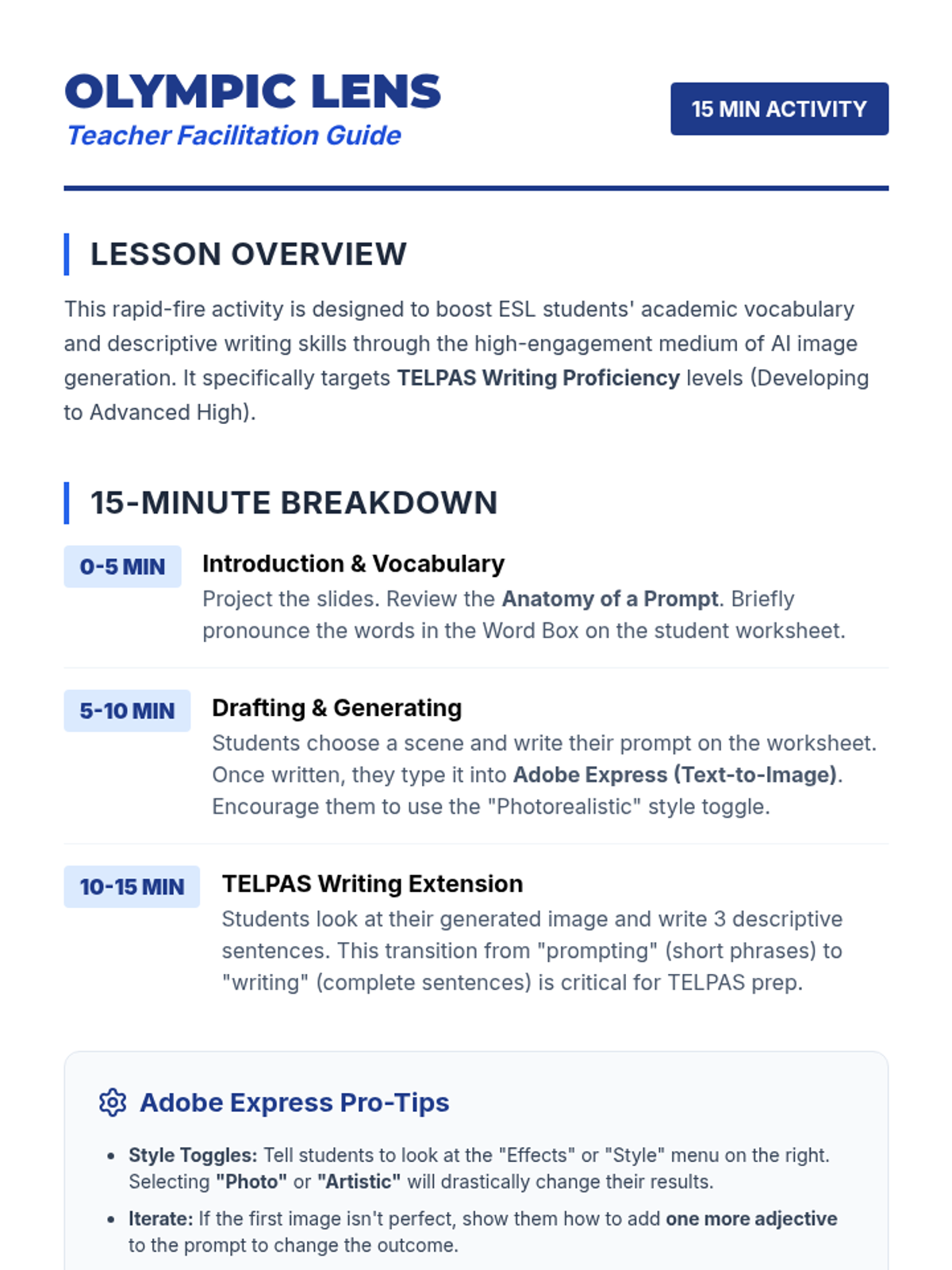
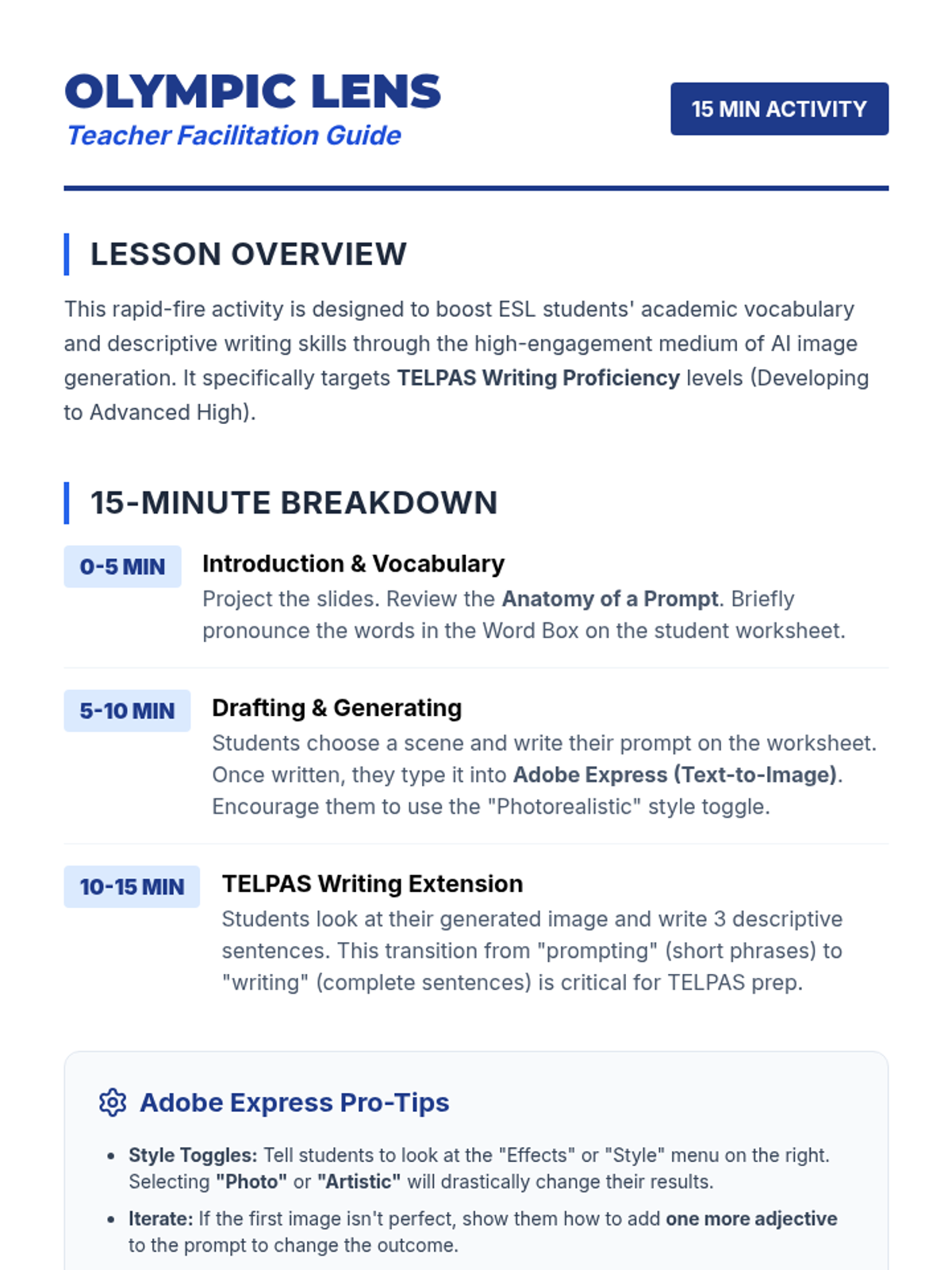
A facilitation guide for teachers to lead a 15-minute AI image generation activity with ESL students, including a page with specifically formatted TEKS and ELPS standards strings.
A facilitation guide for teachers to lead a 15-minute AI image generation activity with ESL students, now including a second page with comprehensive ELPS and High School English TEKS alignment.
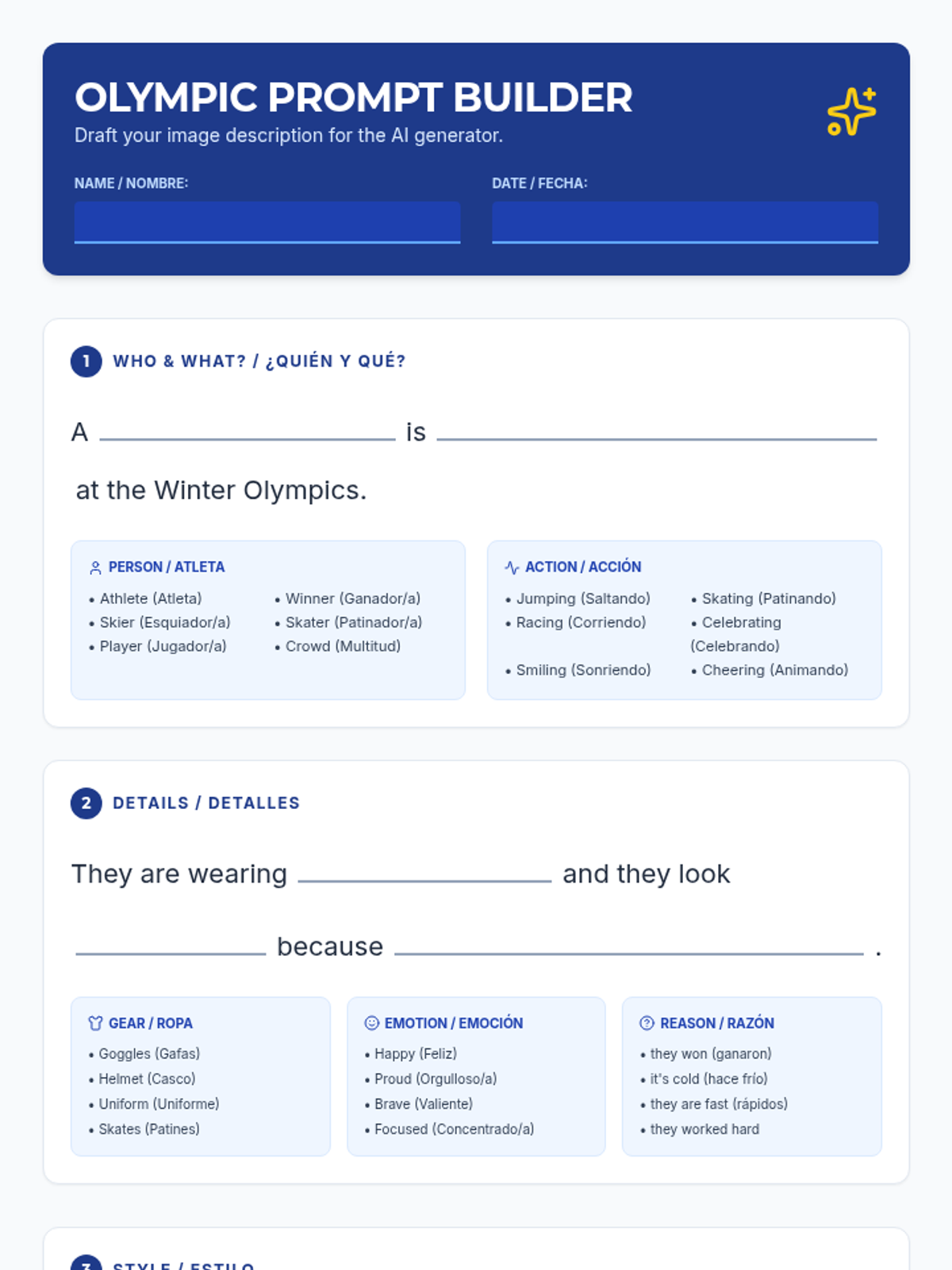
A specialized prompt-building worksheet for ESL students to draft a 3-sentence AI image description using a structured fill-in-the-blank format with bilingual word boxes for each section, now with improved page breaks.
A visual presentation for 9th/10th grade ESL students introducing AI image generation, the anatomy of a prompt, and TELPAS-aligned descriptive writing strategies. Revised Slide 4 to be less prescriptive and focus on categories.
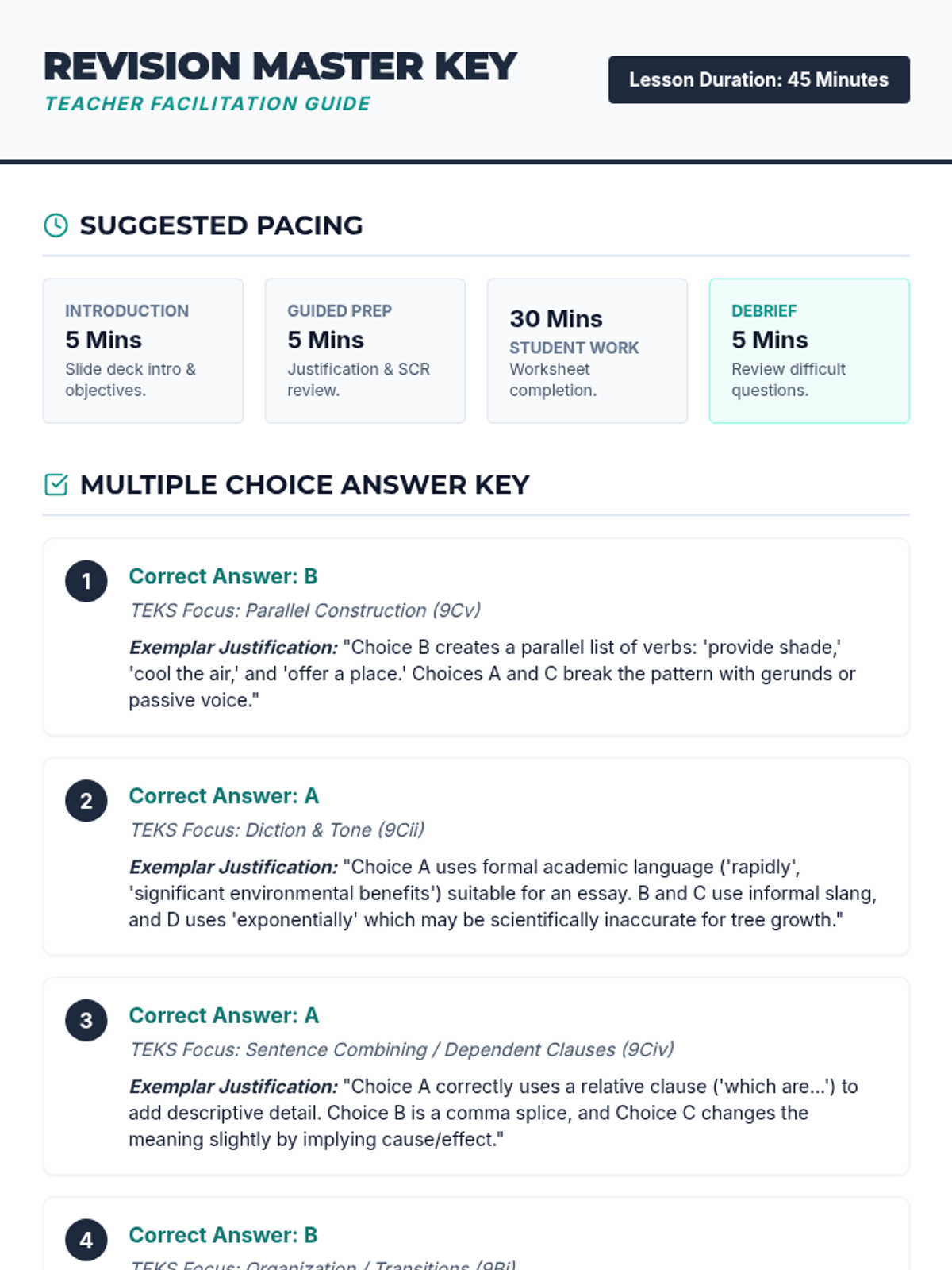
A comprehensive teacher facilitation guide containing a 45-minute pacing schedule, a detailed answer key for the multiple-choice questions with exemplar student justifications, and a sample Short Constructed Response with a STAAR-aligned 2-point rubric.
A visual presentation to guide the 45-minute revision workshop. Includes session objectives, a review of key STAAR revision TEKS, a strategy for writing justifications, and a formula for successful Short Constructed Responses.
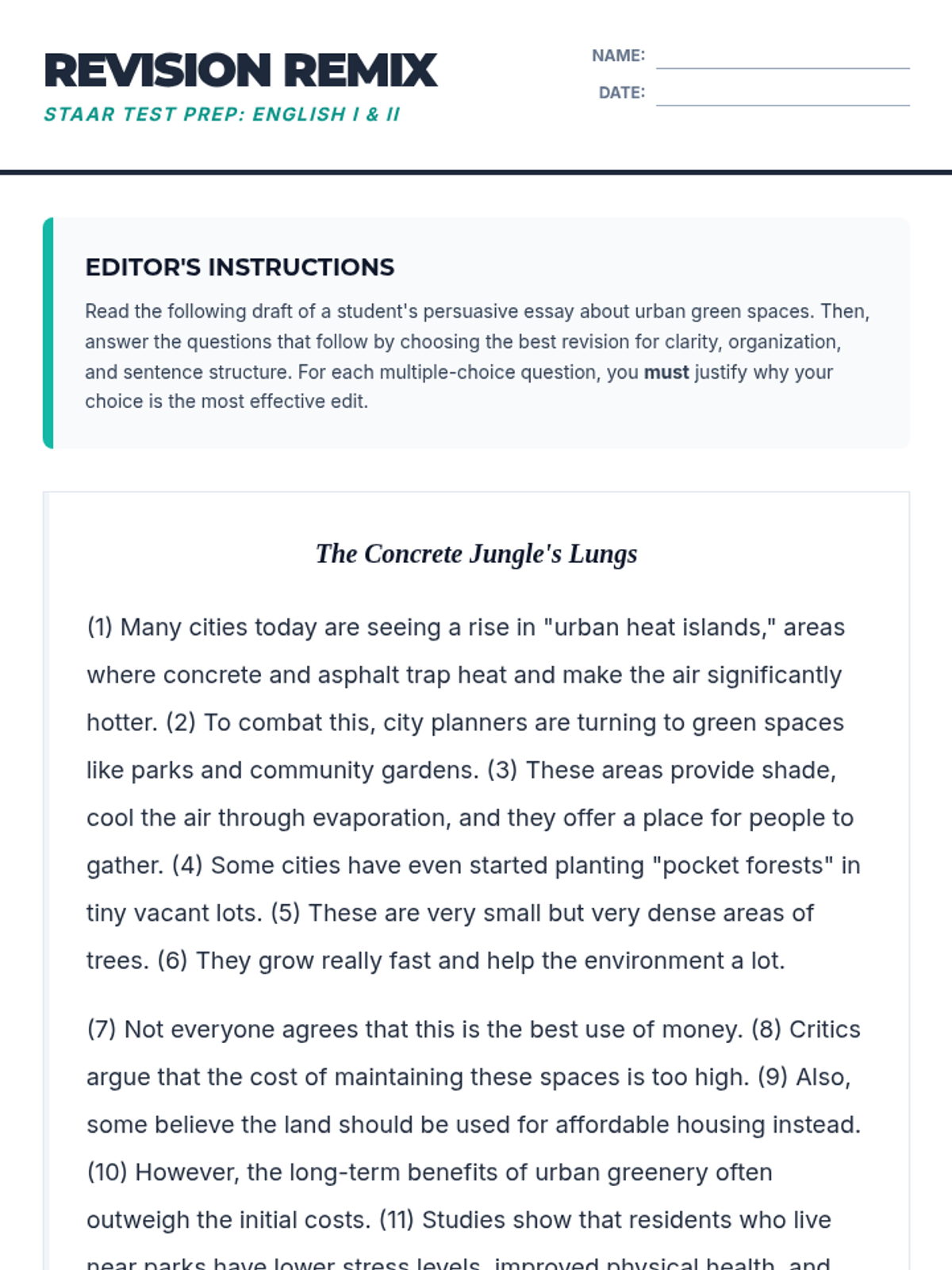
A STAAR-formatted revision worksheet featuring a multi-paragraph passage and six multiple-choice questions with justification areas. It concludes with a Short Constructed Response (SCR) prompt targeting specific grammatical and organizational TEKS.
A visual presentation for the Who vs. Whom lesson, following the Khan Academy aesthetic with neon highlights, including an embedded video and structured pauses for discussion.
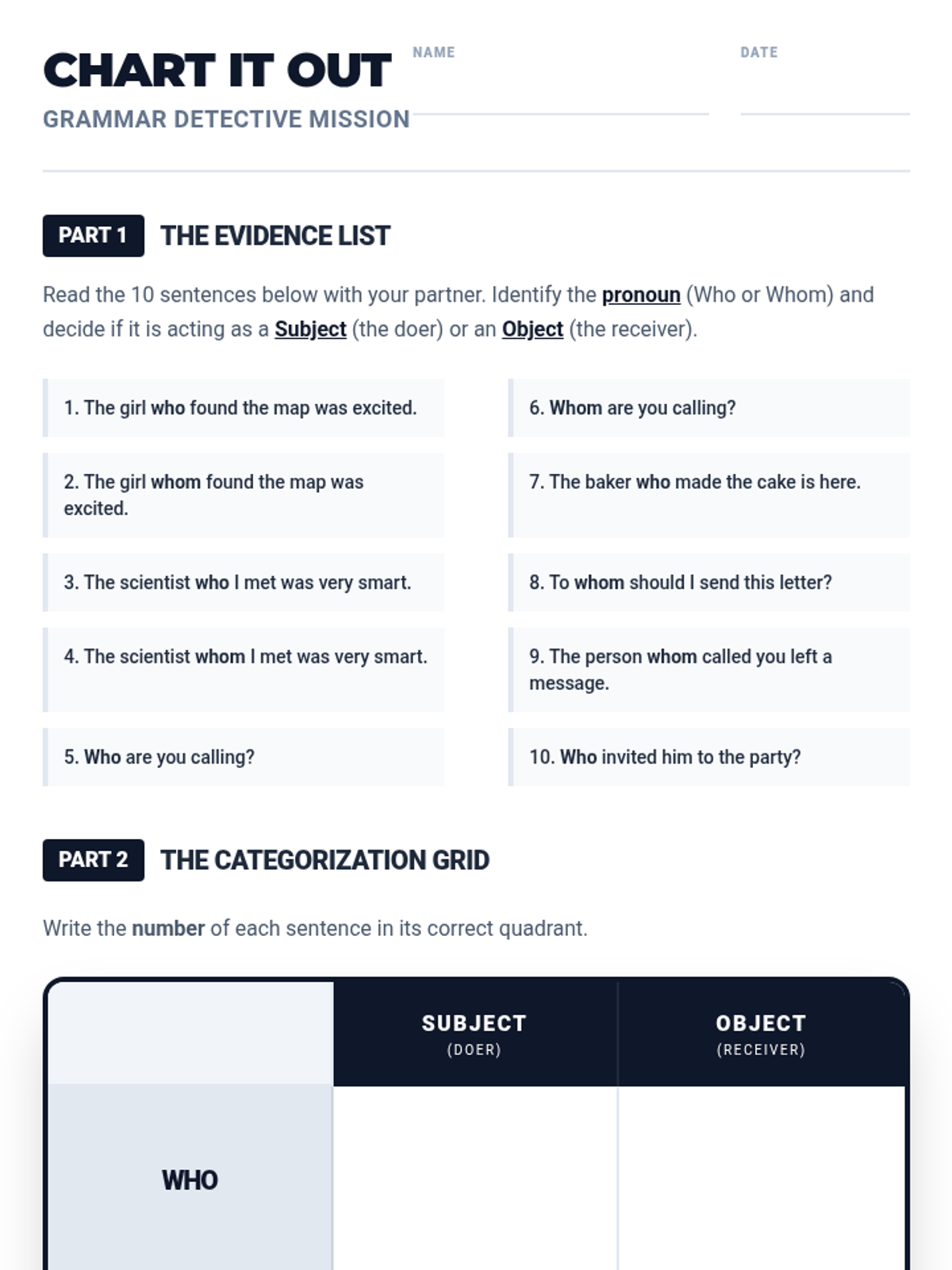
A student activity sheet for categorizing sentences into the 2x2 grid based on the 'One-Way Street' rule, including space for creating an 'impossible' sentence.
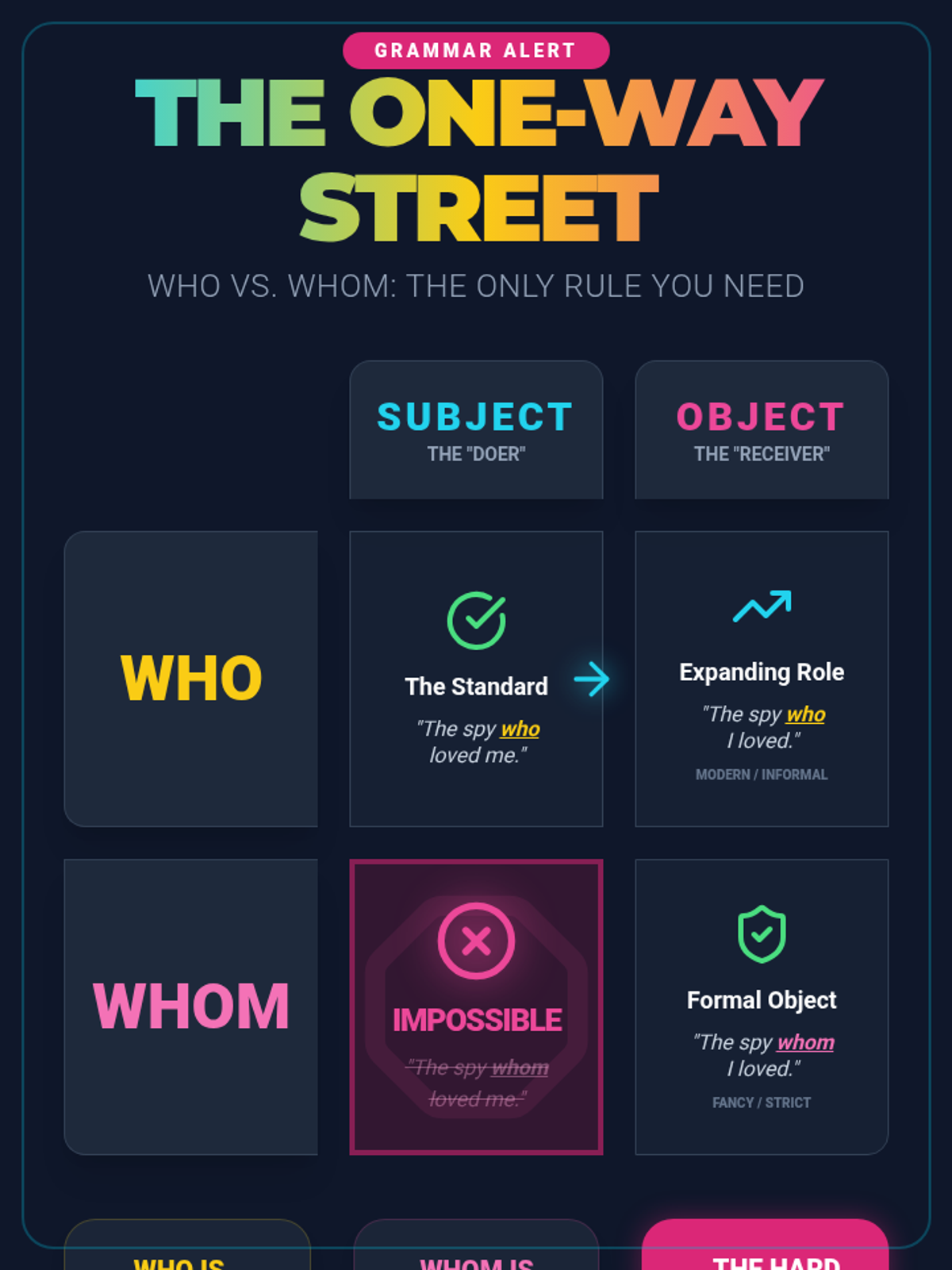
A high-contrast anchor chart for the 'One-Way Street' grammar rule, illustrating that 'who' is expanding into the object space while 'whom' remains strictly an object pronoun.
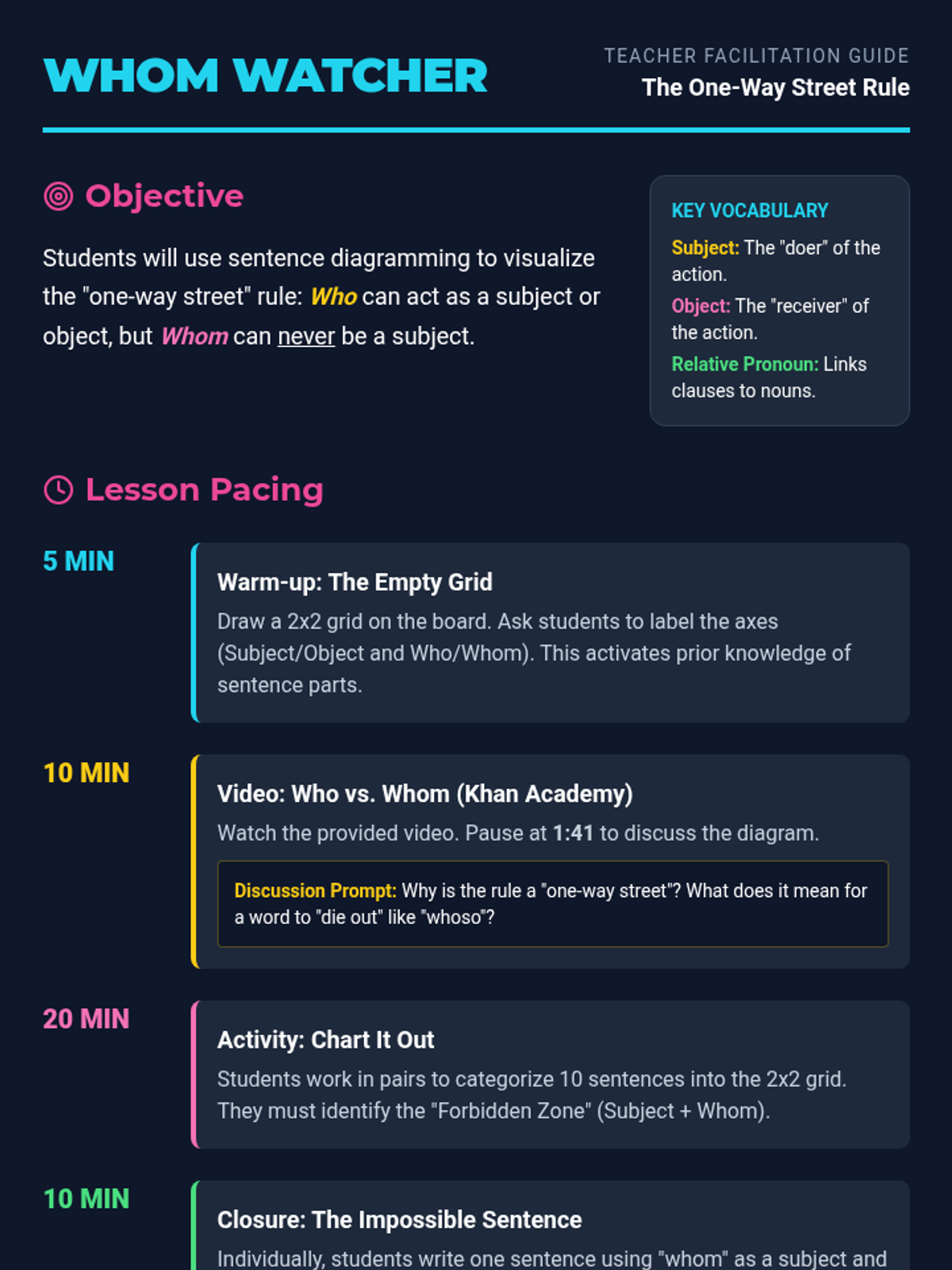
A comprehensive teacher facilitation guide for the Who vs. Whom lesson, featuring a pacing guide, discussion prompts, and an answer key for the categorization activity.
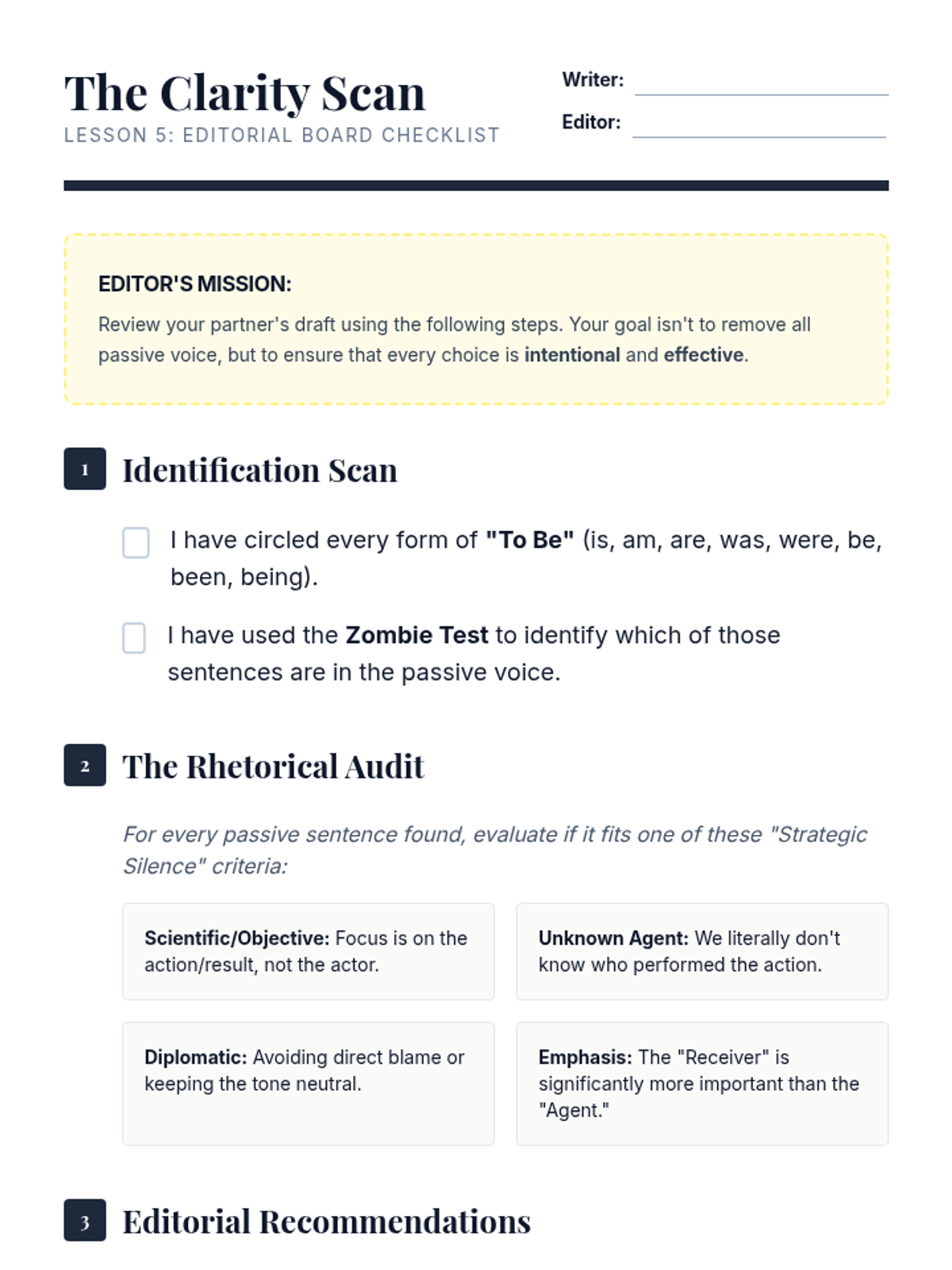
A comprehensive peer-review checklist and exit ticket for the final lesson, focusing on auditing voice usage and applying rhetorical choices.
Culminating slides for Lesson 5, guiding students through a peer-review workshop focused on voice and writing clarity.
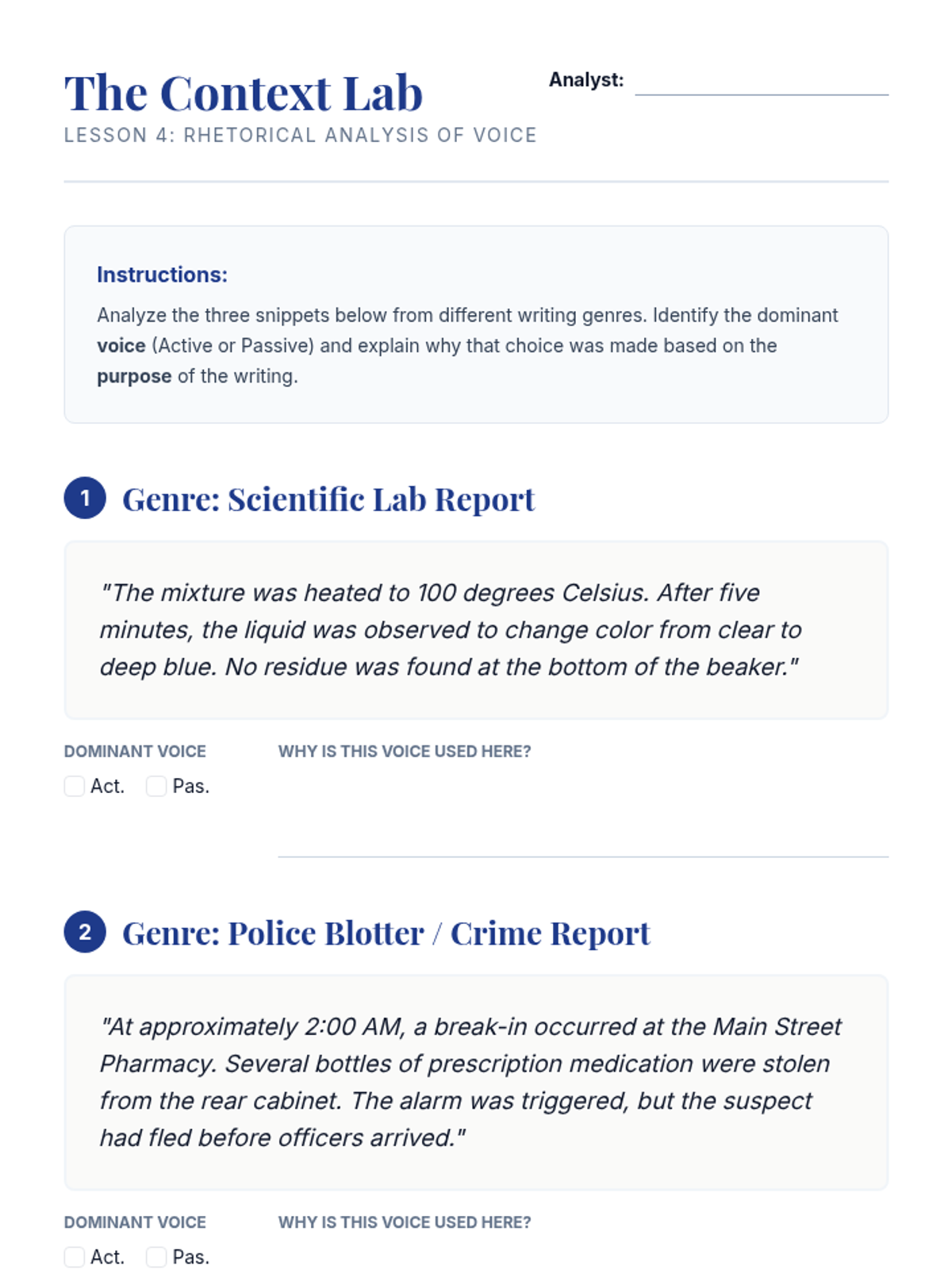
An activity for Lesson 4 where students analyze three different genres of writing to determine when and why active or passive voice is most appropriate.
Slides for Lesson 4, exploring scenarios where passive voice is rhetorically appropriate, such as scientific reporting or when an agent is unknown.
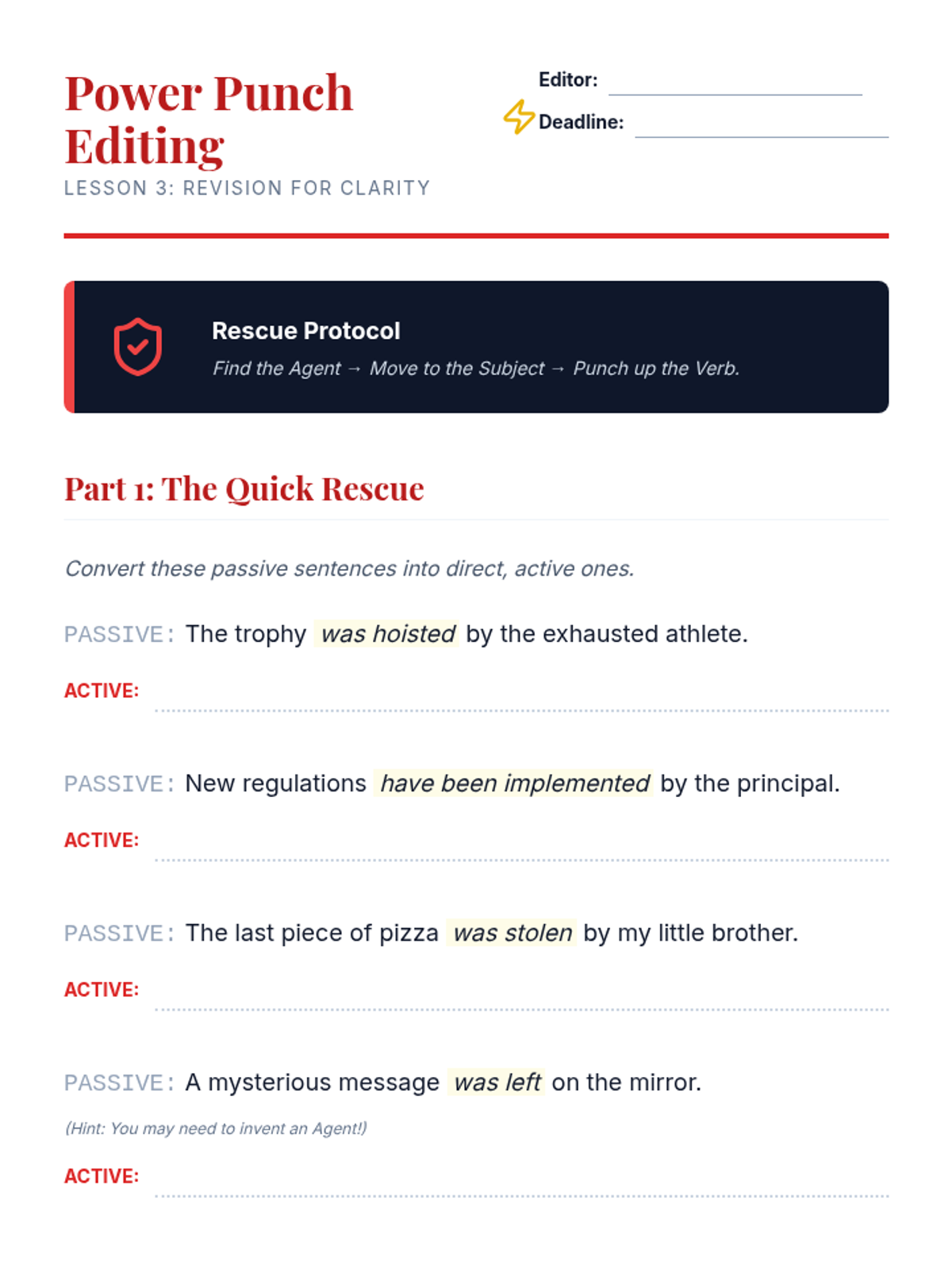
A revision-focused worksheet for Lesson 3, guiding students to convert passive sentences and paragraphs into clear, active writing.
Slides for Lesson 3, focusing on revising passive sentences into active ones to improve clarity, directness, and engagement in writing.
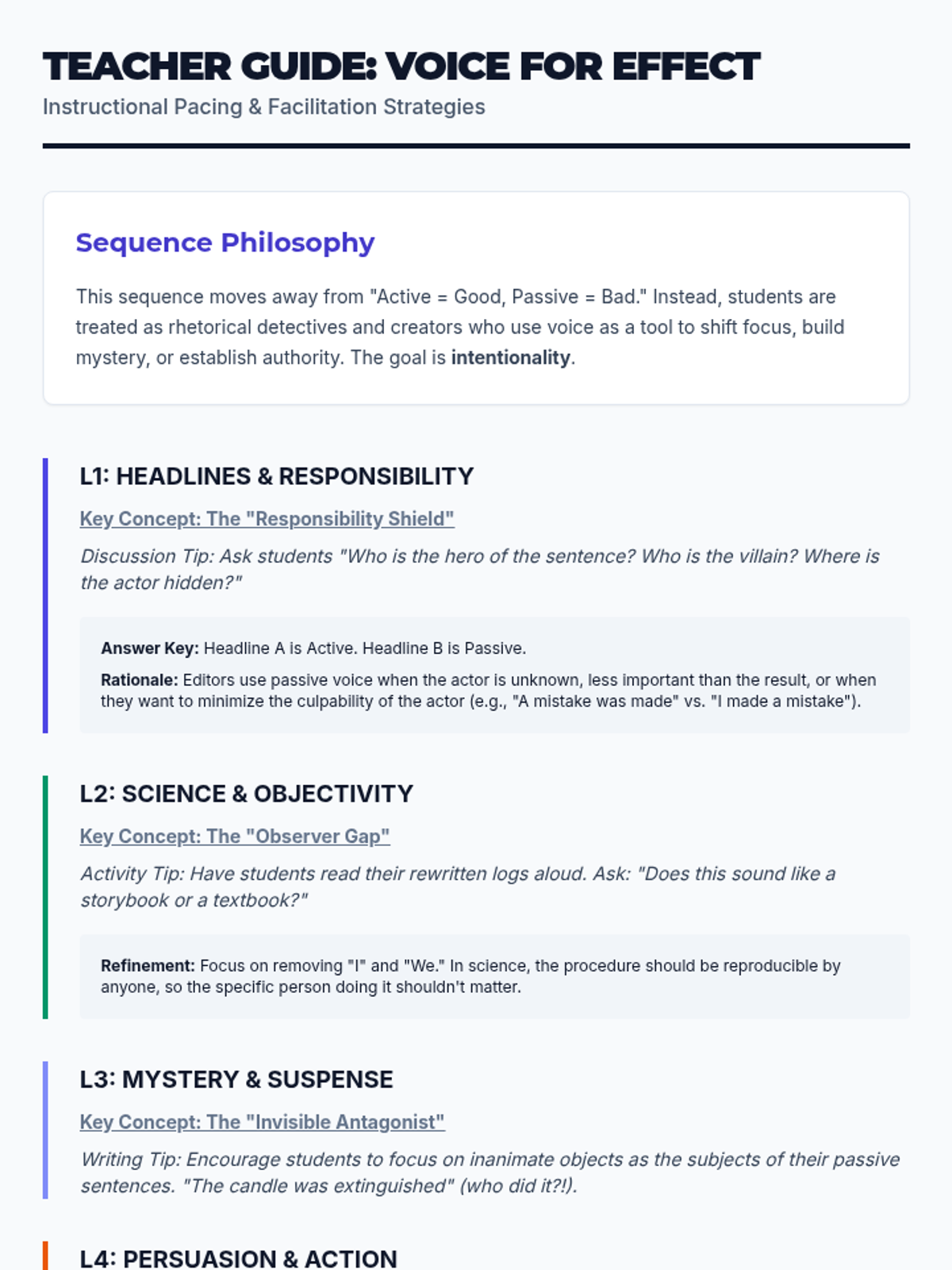
A comprehensive teacher's guide providing instructional strategies, discussion prompts, and a rubric for the Voice for Effect sequence.
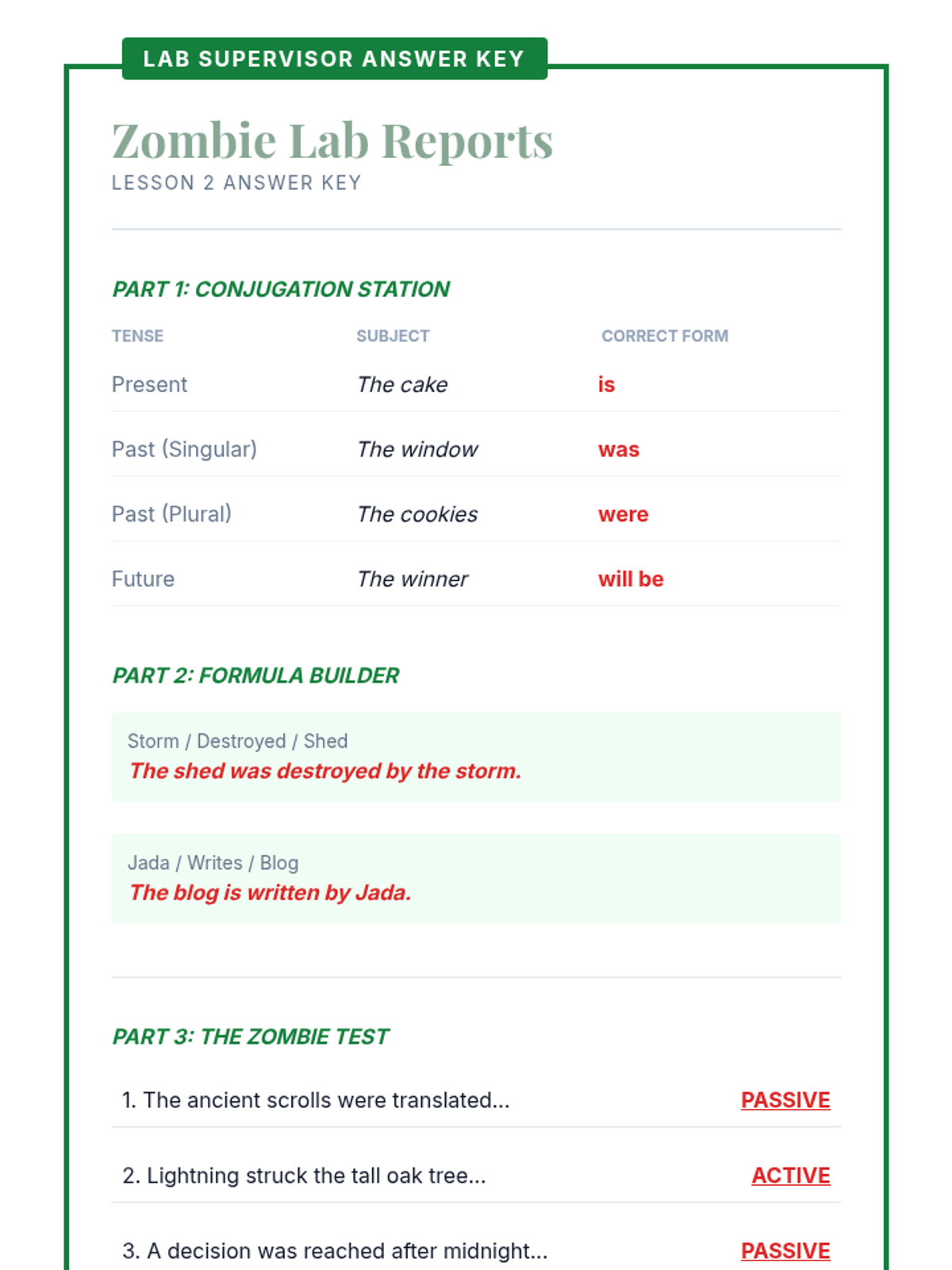
Teacher answer key for the Zombie Lab Worksheet, providing correct verb conjugations and voice identifications.
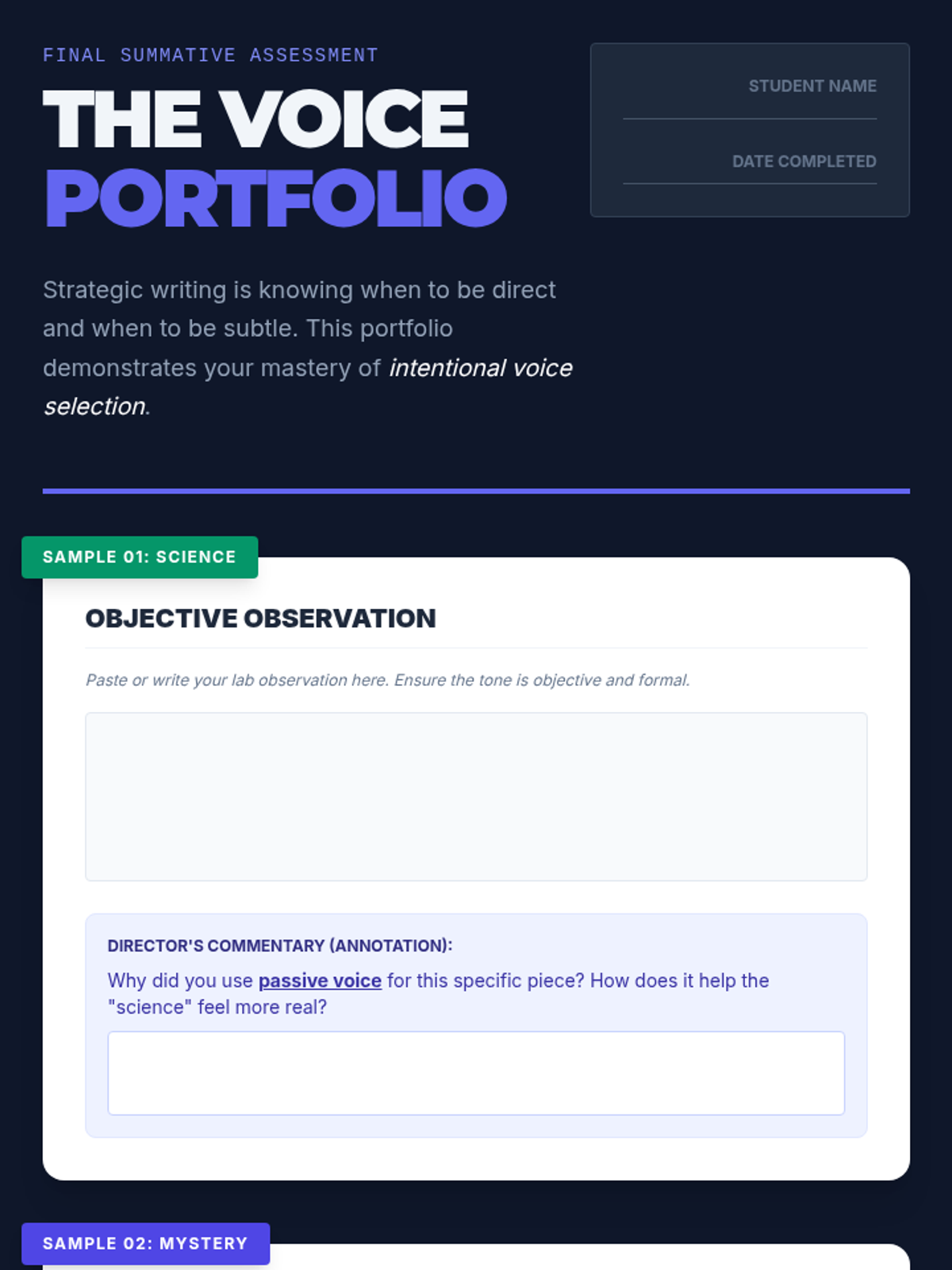
The summative project where students compile writing samples from different genres and annotate their rhetorical choices regarding active and passive voice.
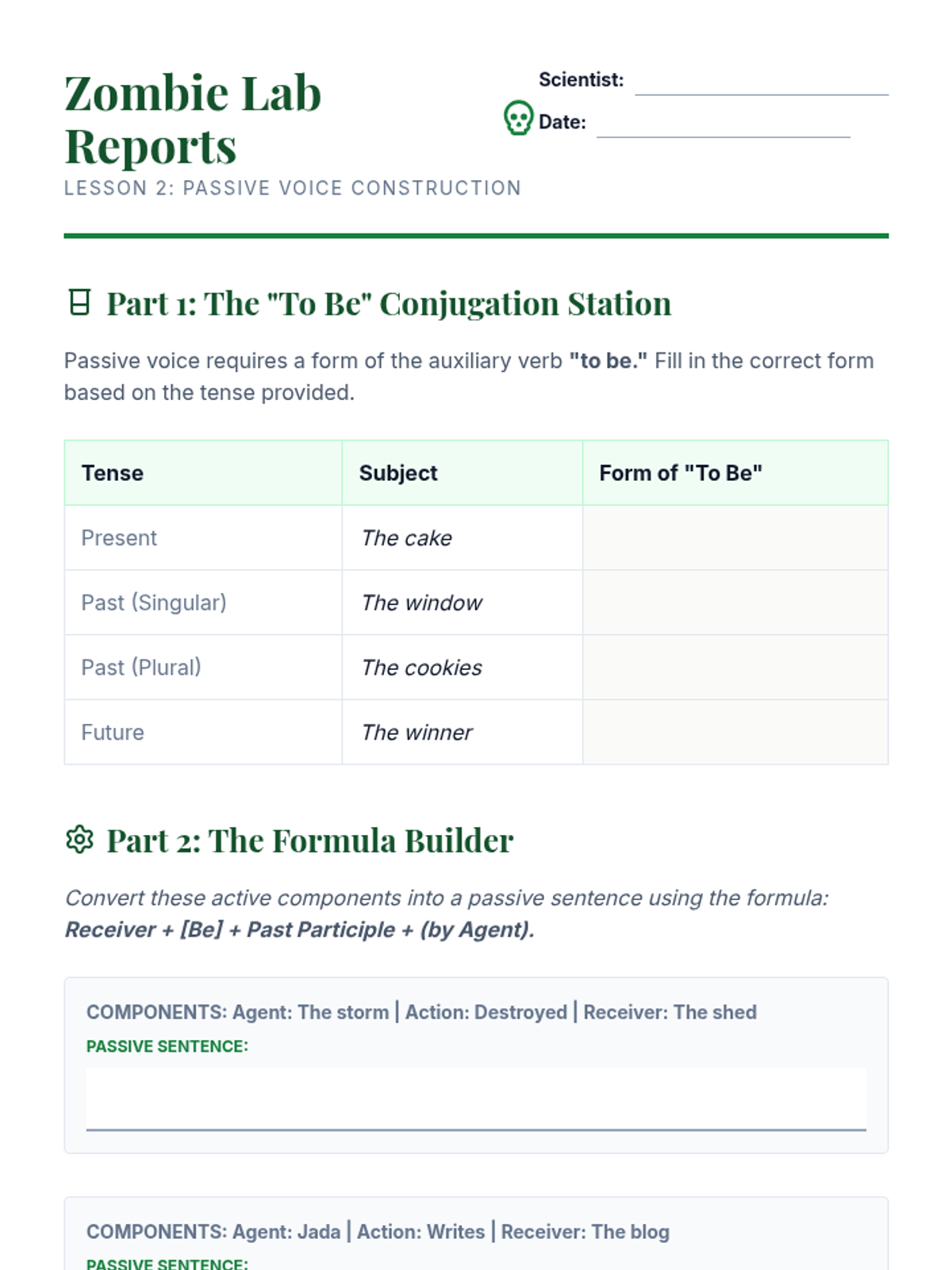
A worksheet for Lesson 2 focusing on passive voice construction and the 'Zombie Test' identification method.
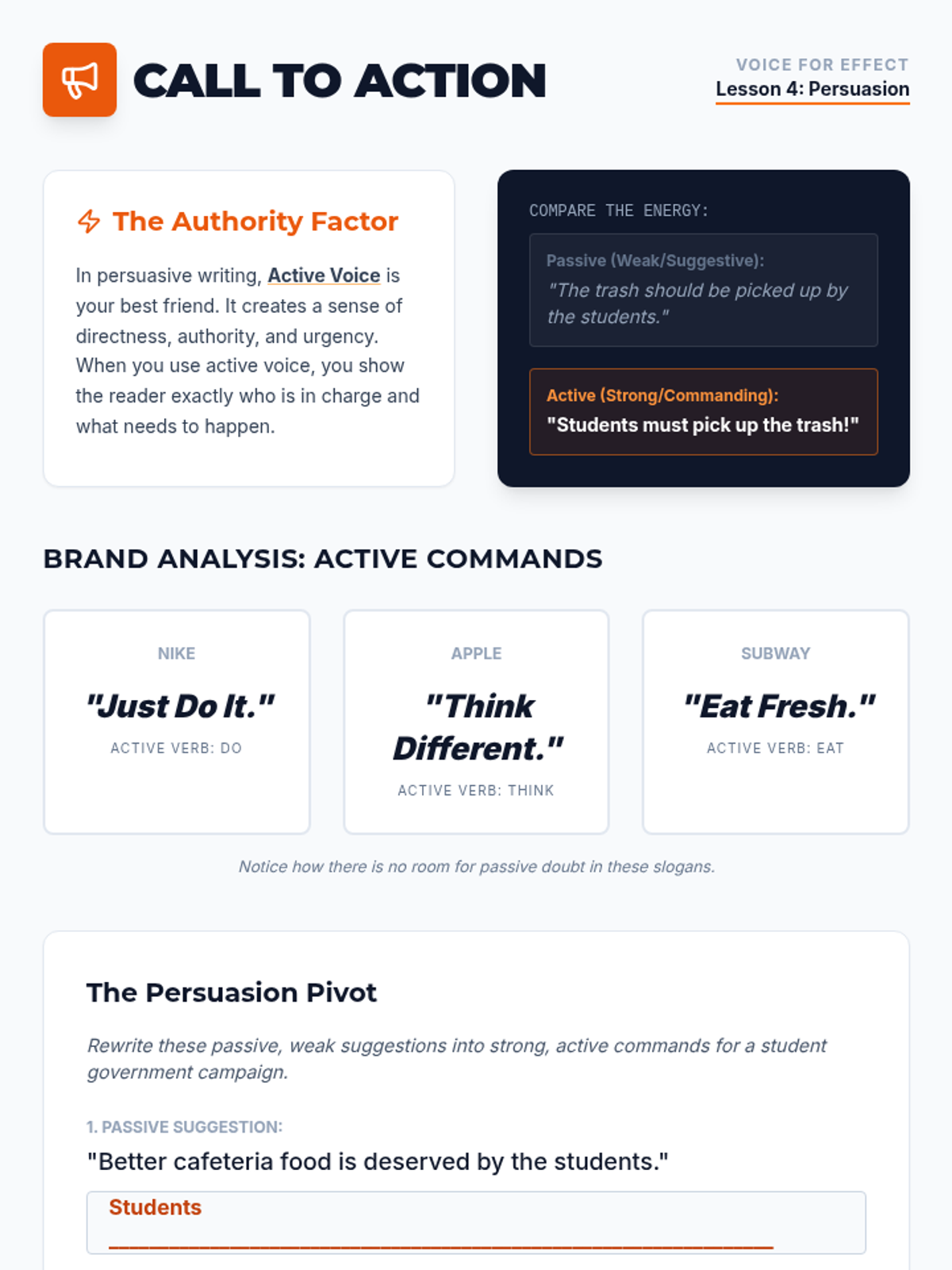
Students focus on the use of active voice in persuasive writing to create authority, urgency, and direct impact.
Slides for Lesson 2, teaching the structural formula of passive voice (be + past participle) and introducing the 'Zombie Test' for identification.
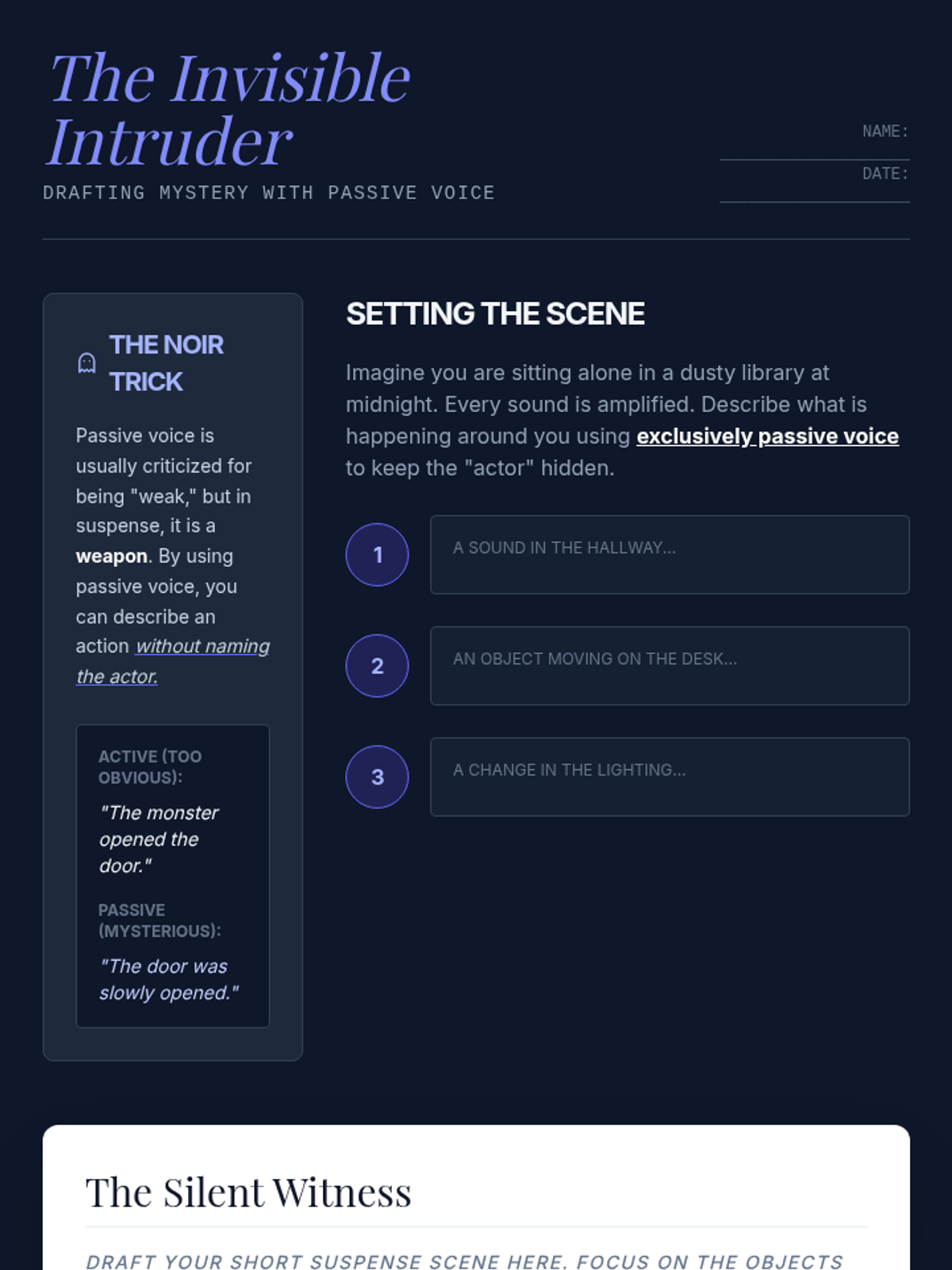
A creative writing activity where students use passive voice to build mystery and suspense by withholding the identity of the actor.
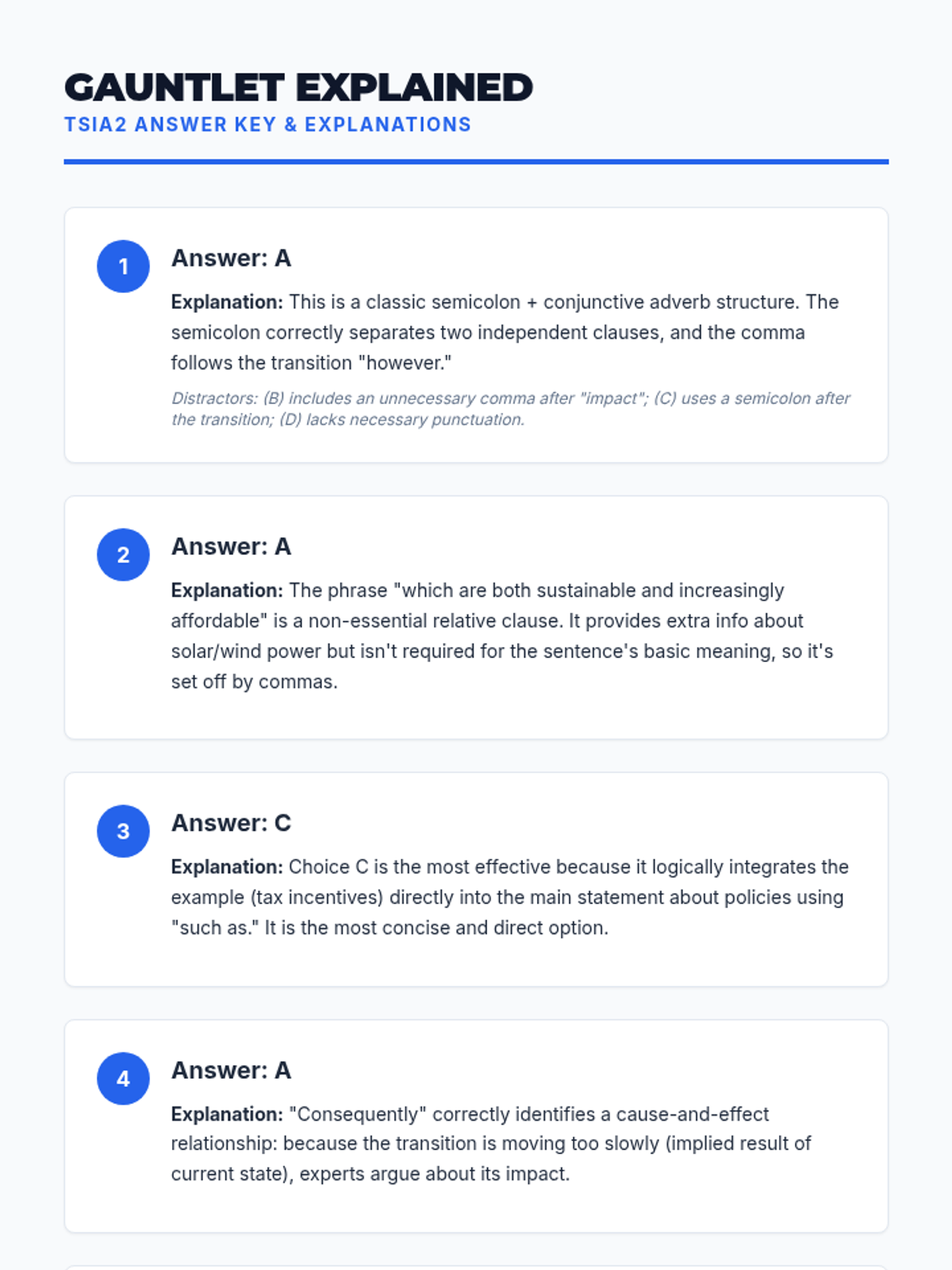
A detailed answer key for the Grammar Gauntlet Assessment, providing the correct answers and instructional explanations for each question.
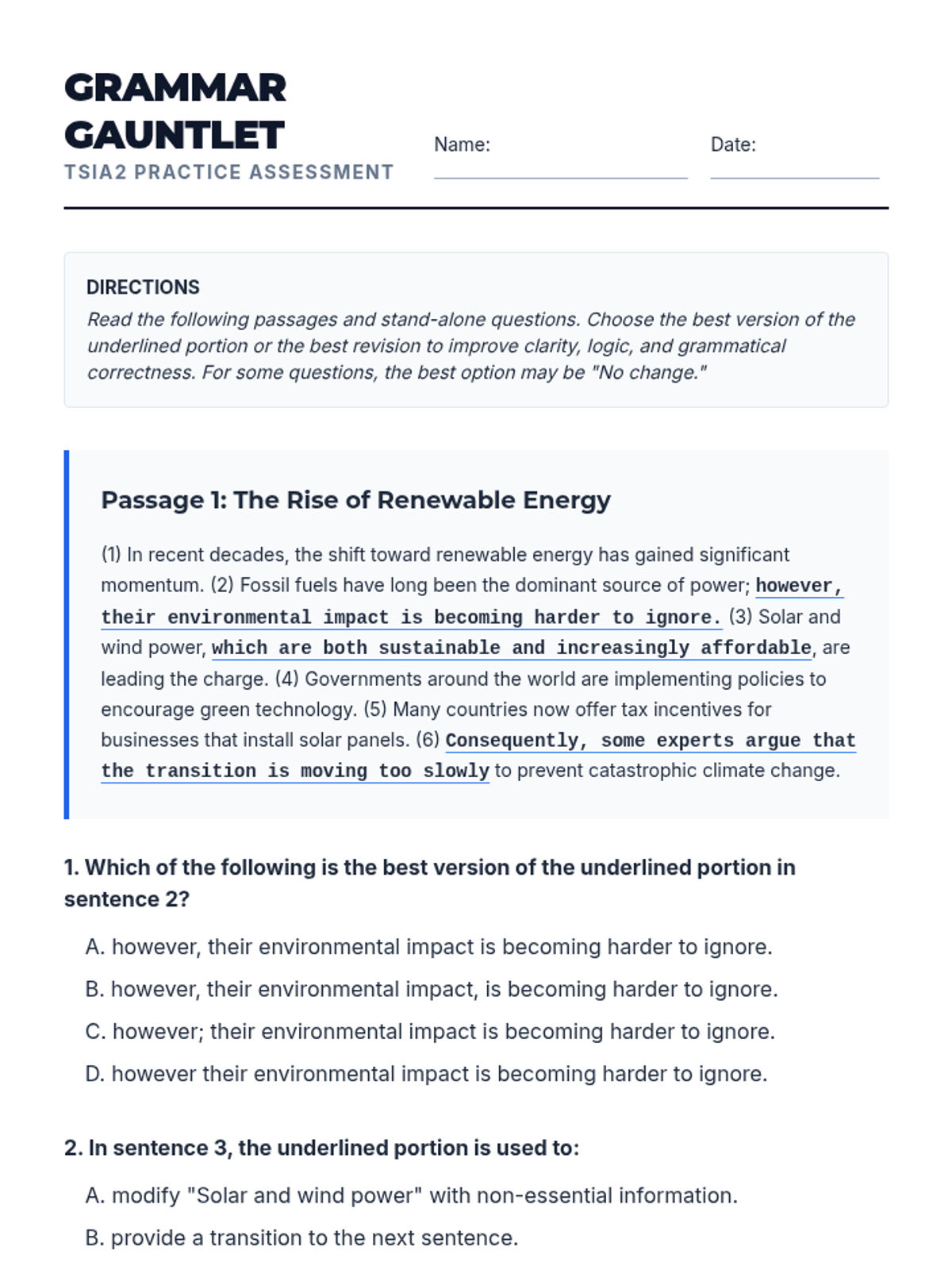
A 20-question multiple-choice practice assessment mirroring the TSIA2 revising and editing standards, including passage-based and stand-alone questions.
Instructional slide deck for the TSIA2 Grammar Gauntlet lesson, covering the four key focus areas of the exam with visual examples and strategy tips. All text updated to 24px minimum for visibility.
A comprehensive slide deck for the first week of TSIA2 writing preparation, containing daily 3-question drills with detailed answer explanations focusing on punctuation, grammar, and organization.
A comprehensive slide deck for the final week of TSIA2 writing preparation, providing high-rigor mixed practice to simulate the full range of the TSIA2 Writing section.
A slide deck for the third week of TSIA2 writing preparation, covering days 11 through 15 with daily 3-question drills focusing on modifier placement, pronoun agreement, and structural polish.
A comprehensive slide deck for the second week of TSIA2 writing preparation, containing daily 3-question drills with detailed answer explanations focusing on pronoun case, punctuation, and organizational flow.
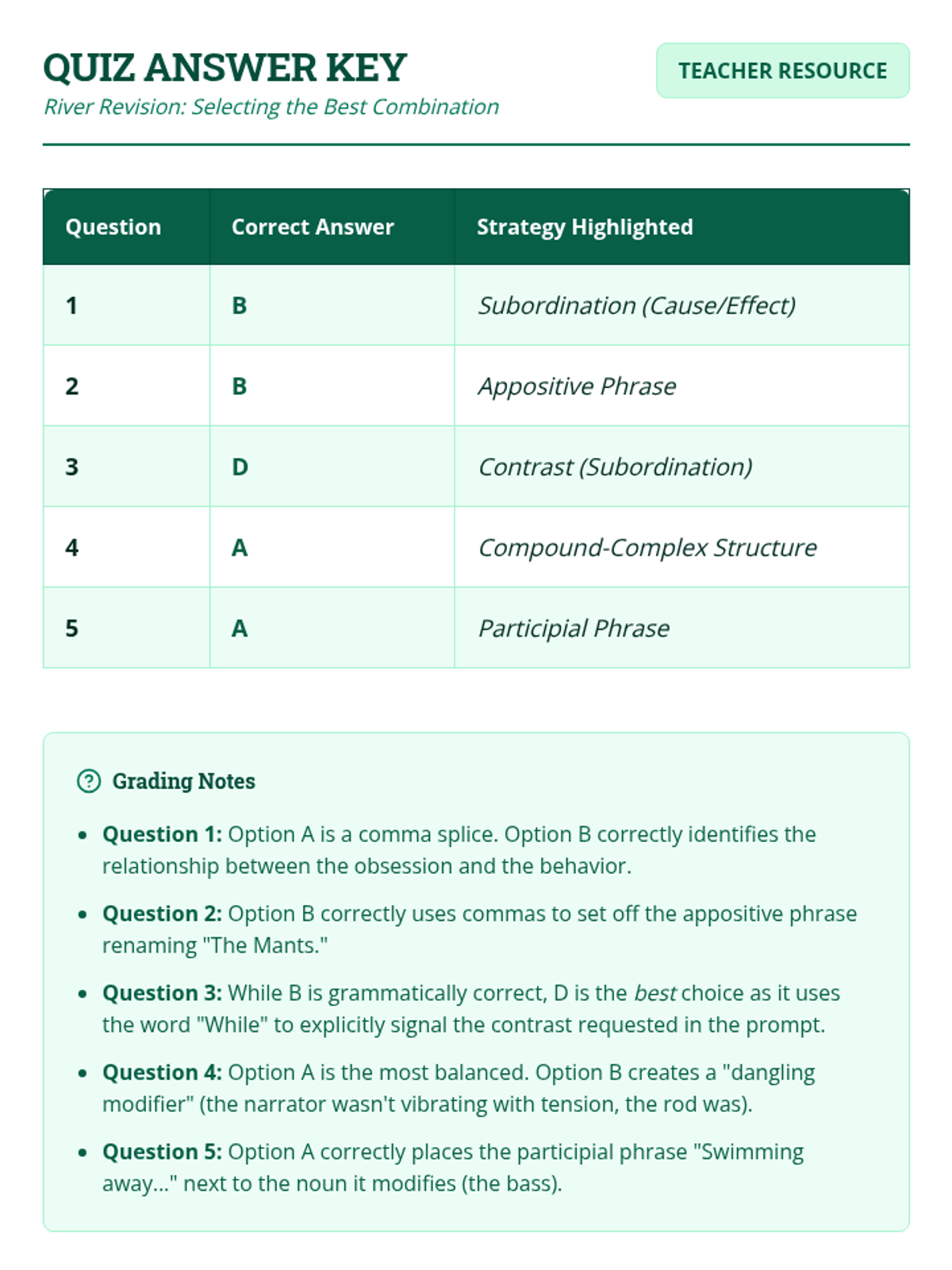
An answer key for the River Revision Quiz, including the correct letter for each question and brief explanations for the grammatical reasoning behind the correct choices.
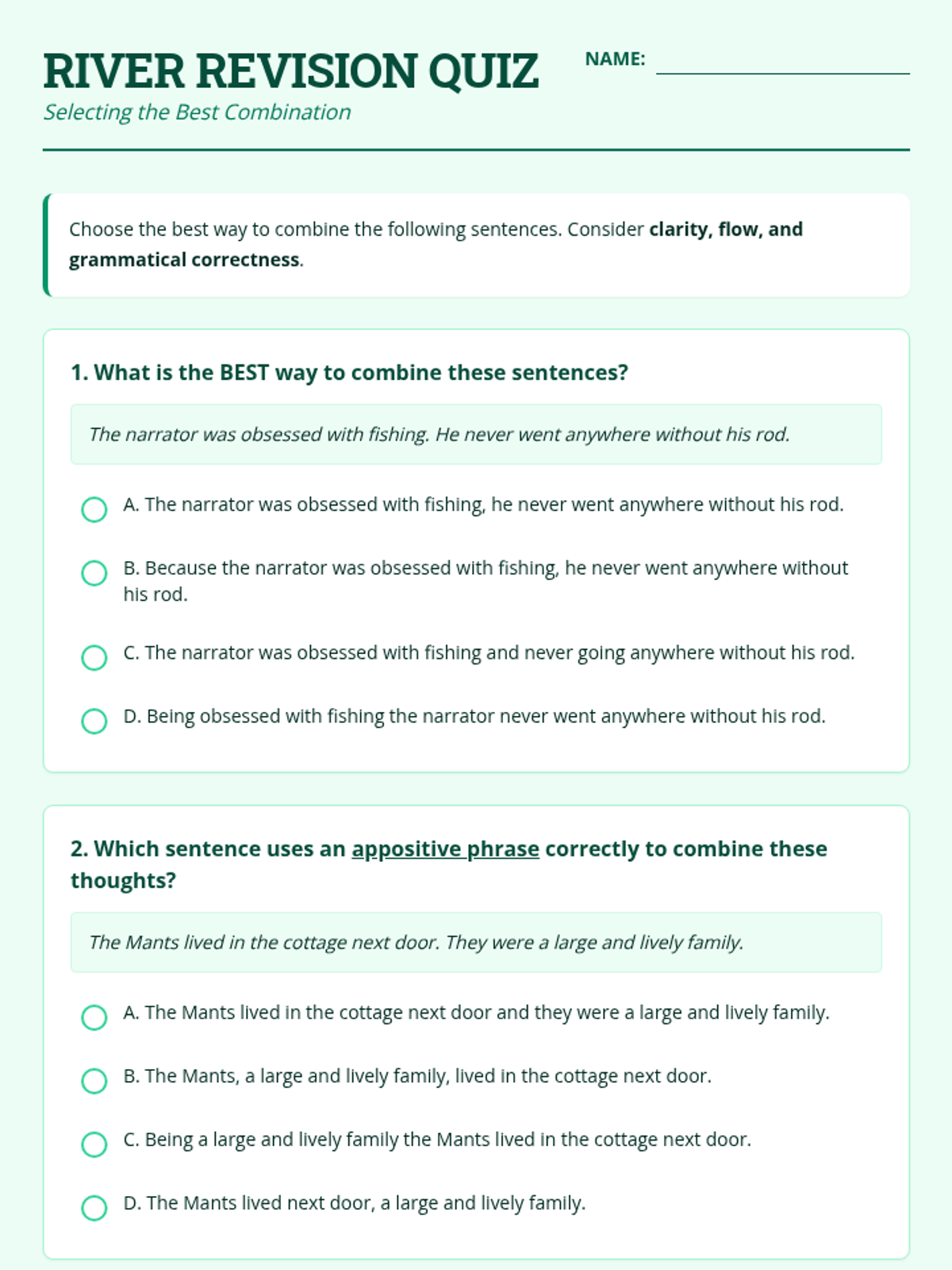
A 5-question multiple-choice quiz focusing on choosing the best sentence combinations based on clarity, flow, and grammatical sophistication, themed around 'The Bass, the River, and Sheila Mant'.
An instructional slide deck for teaching sentence combining strategies (FANBOYS, subordination, appositives, and participles) themed around 'The Bass, the River, and Sheila Mant'.
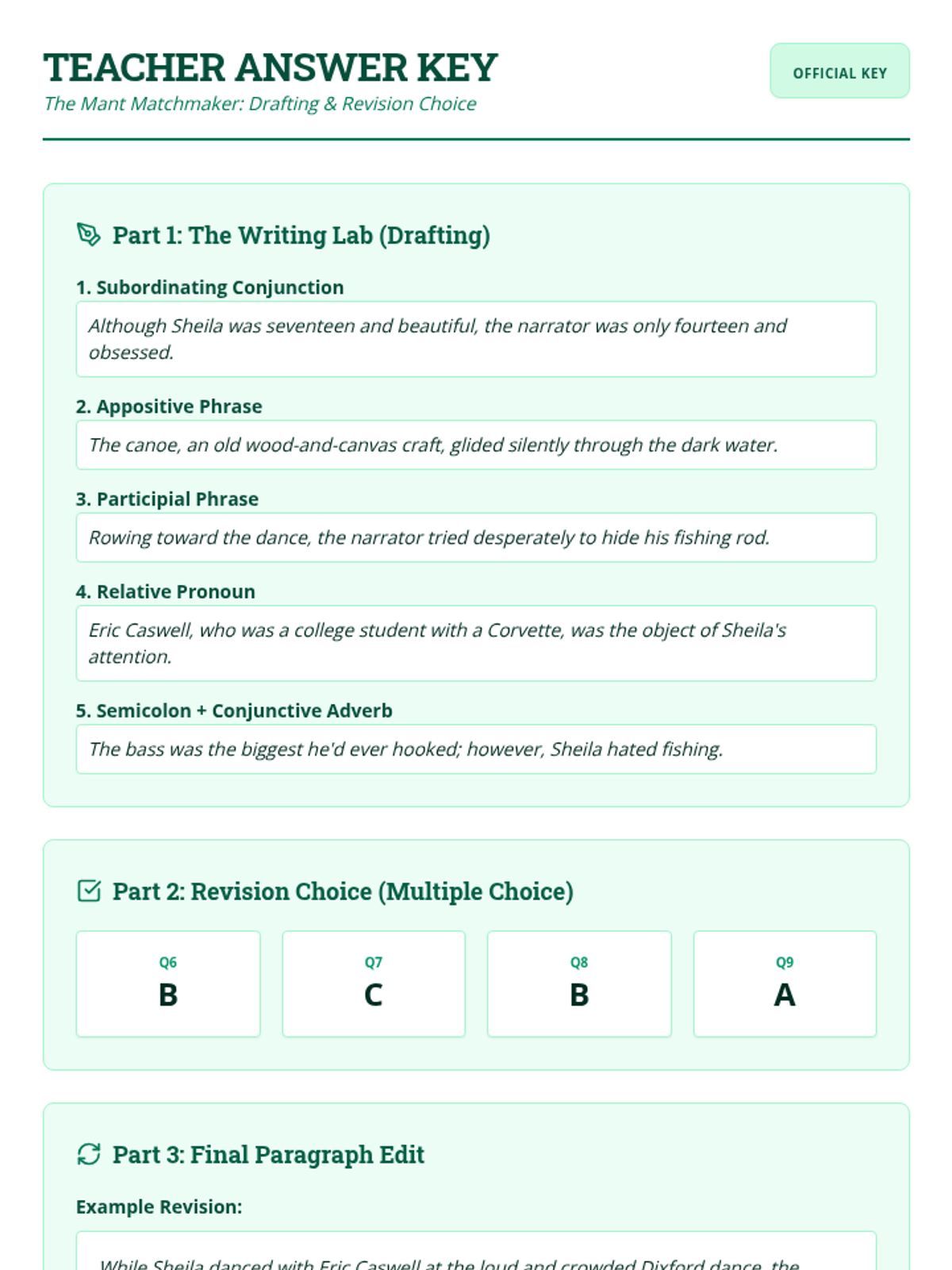
A comprehensive teacher answer key for the updated Mant Matchmaker Worksheet, covering the open-ended combining tasks, multiple-choice questions, and the final narrative flow challenge.
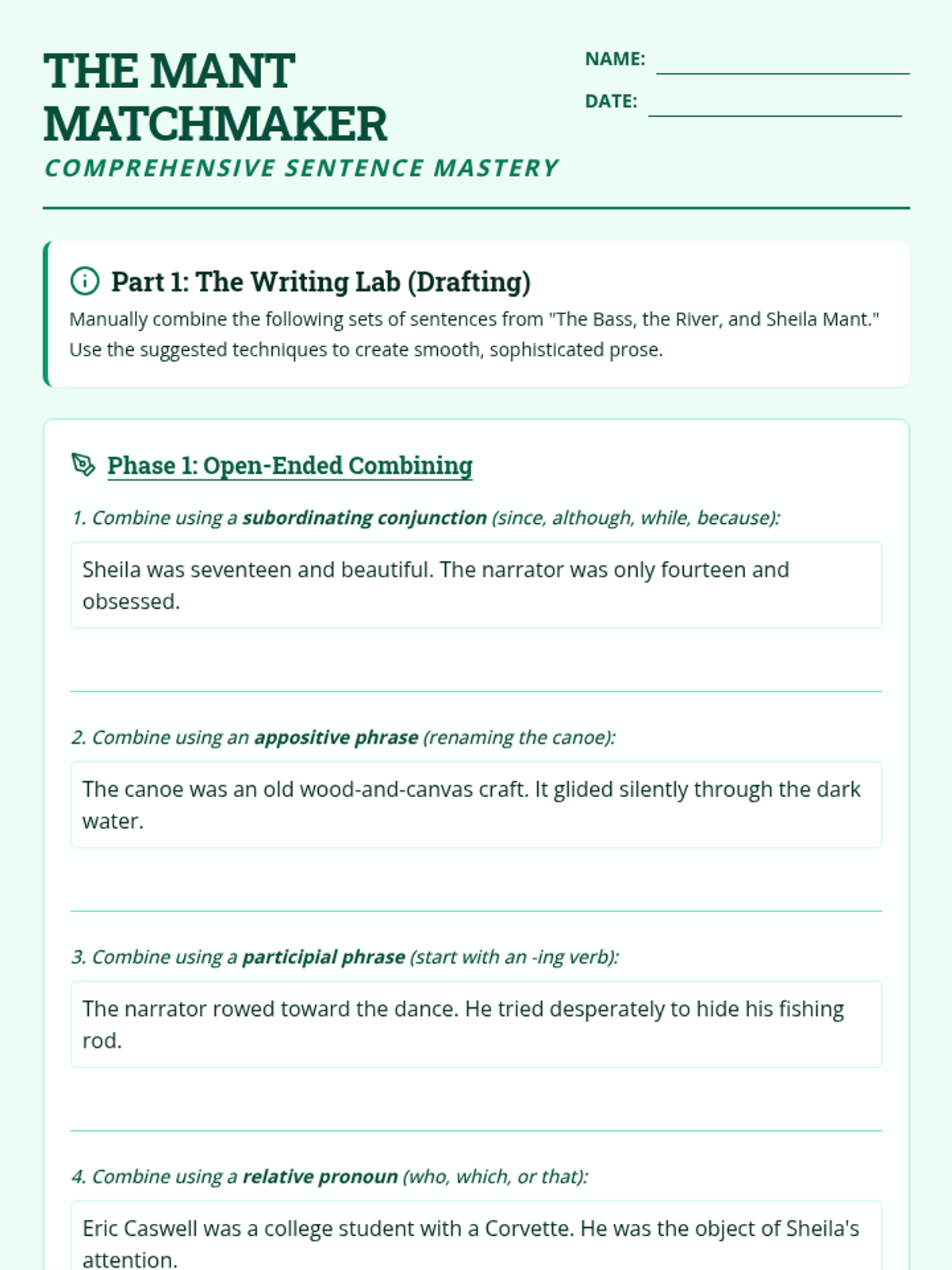
A comprehensive two-page combined worksheet featuring 5 open-ended drafting tasks, 4 multiple-choice revision questions with standardized styling, and a final paragraph editing challenge.
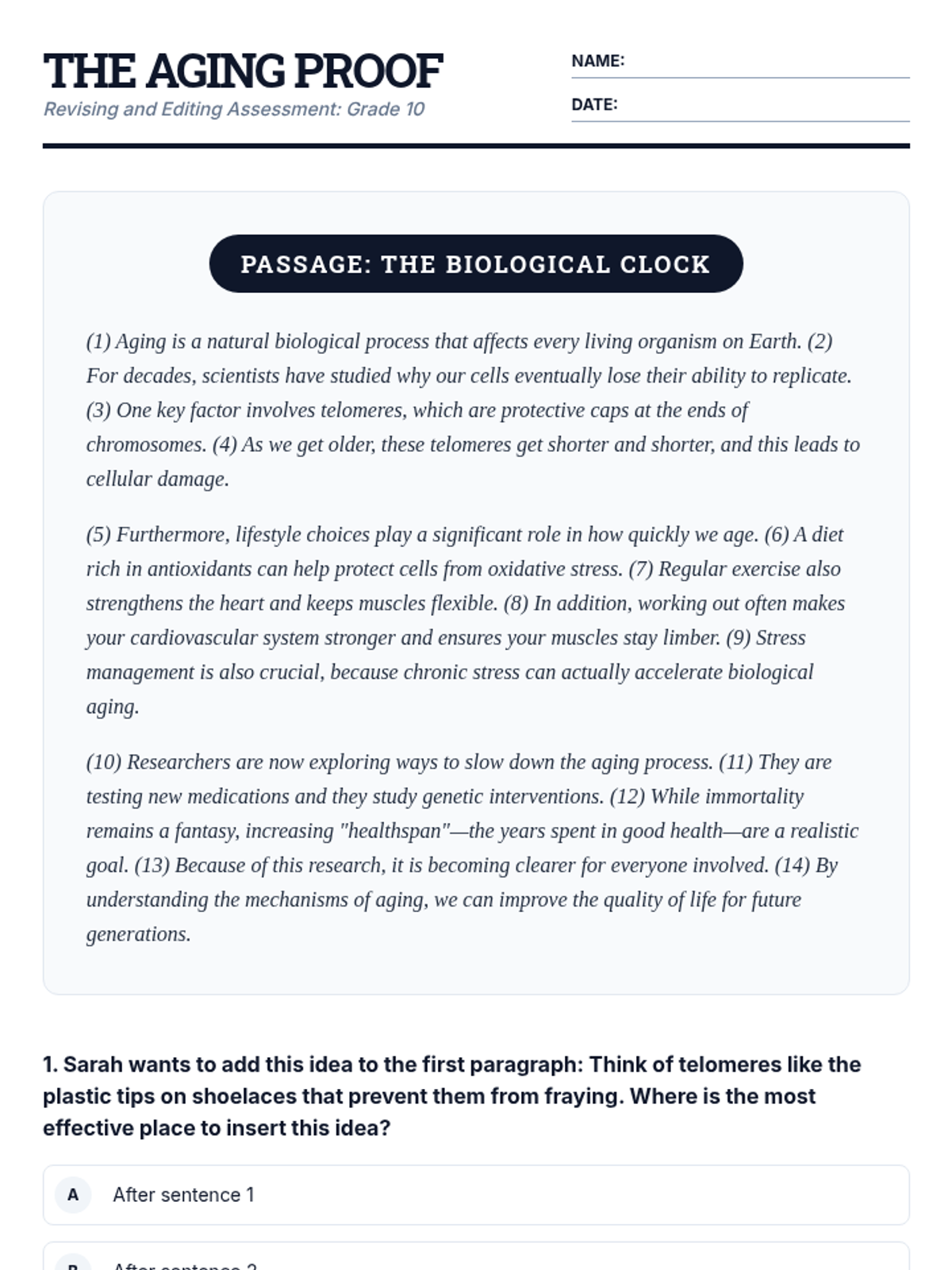
Aging Proof Assessment: A Grade 10 revising and editing assessment about the biological process of aging, telomeres, and lifestyle factors. Follows the exact structure of the "Second Proof" assessment with identical question types.
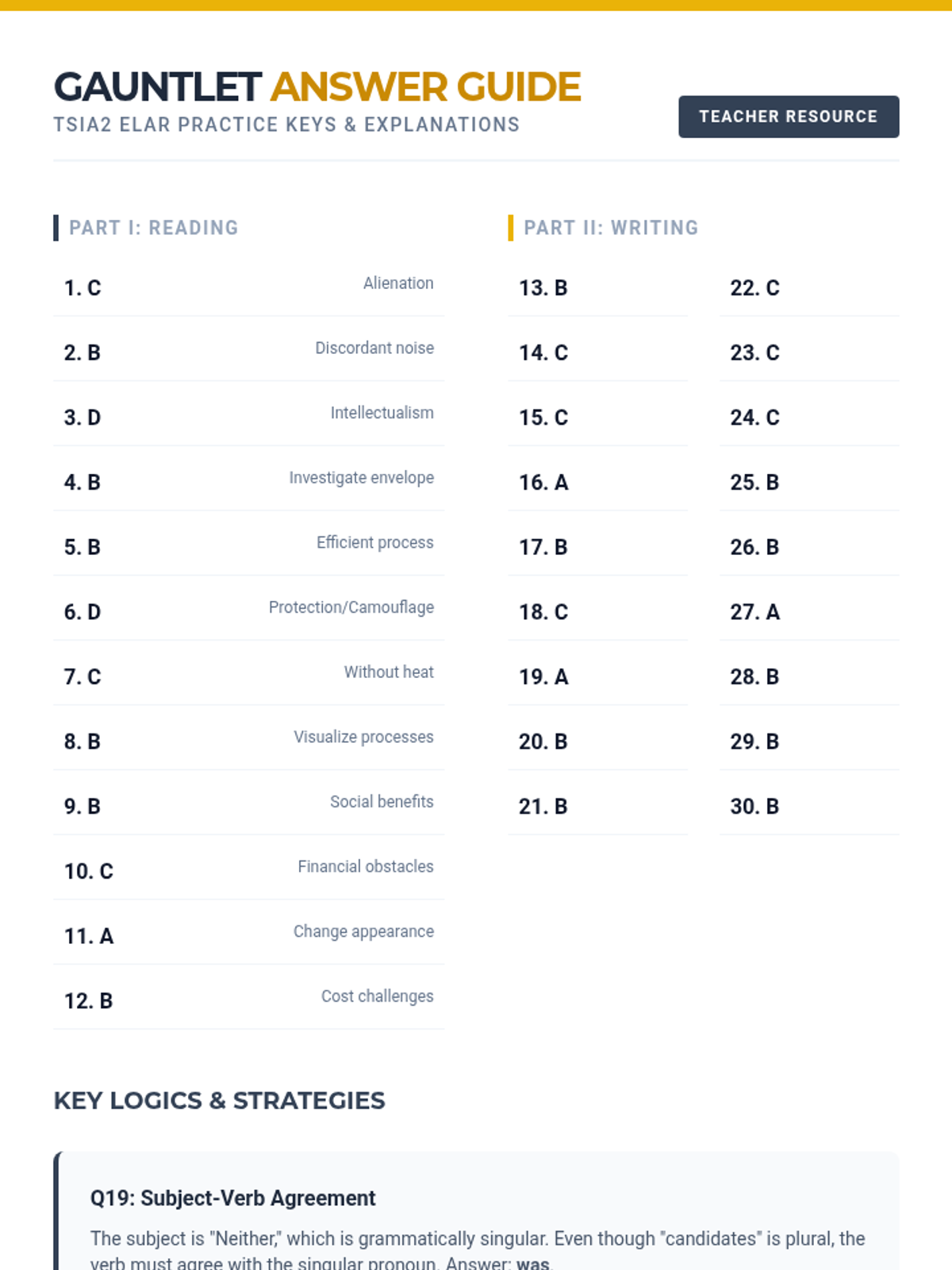
An answer key and explanation guide for the 30-question TSIA2 English Gauntlet Practice test. Provides correct answers, brief logic explanations for challenging grammar rules, and a scoring benchmark.
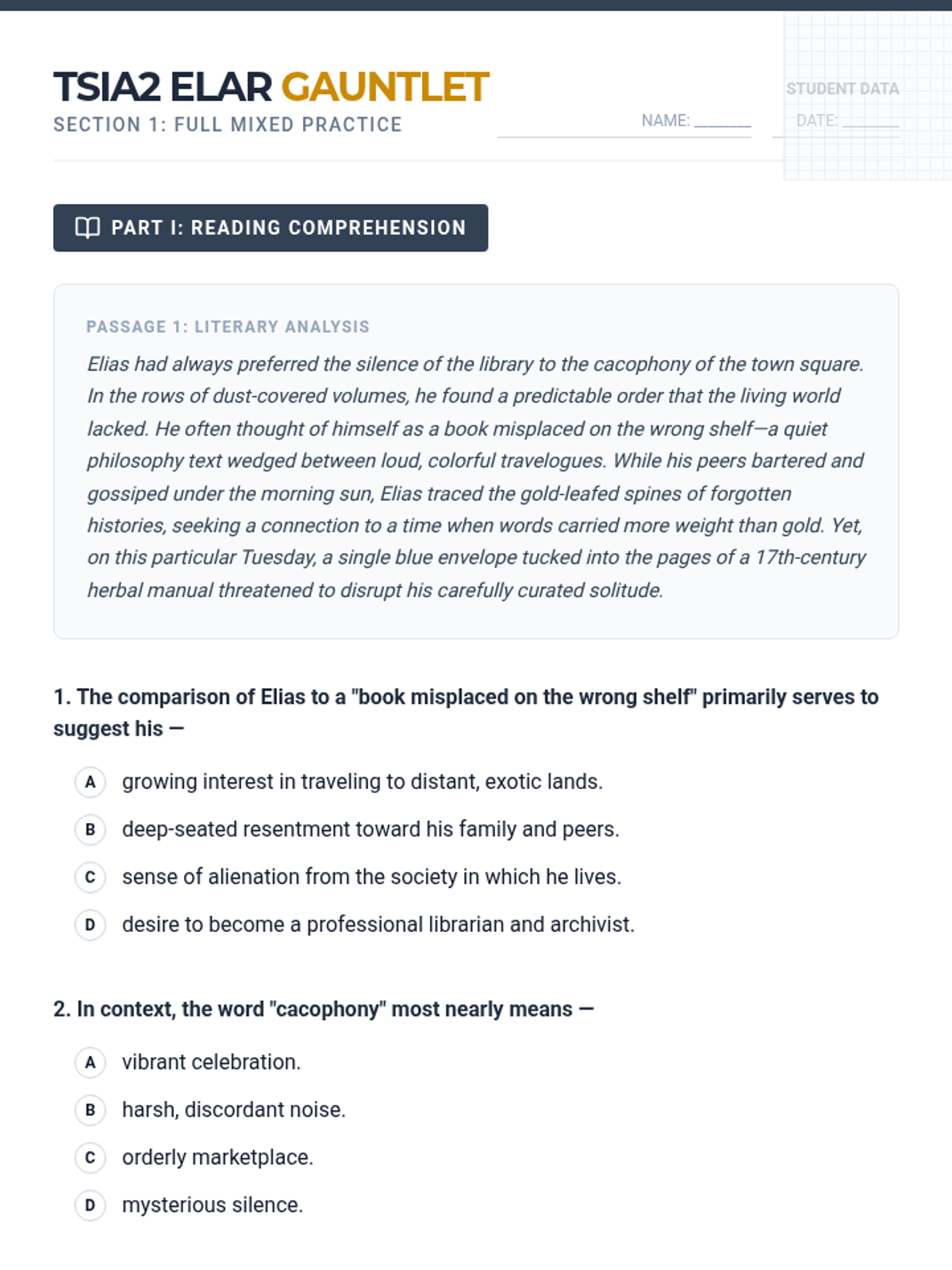
A comprehensive 30-question practice test for the TSIA2 ELAR section. Includes Reading Comprehension (Literary, Informational, and Paired passages) and Writing (Revising and Editing) sections. Expanded to 8 pages for maximum readability and handwriting space.
A 15-slide review presentation covering key TSIA2 ELAR concepts. Optimized for high-quality printing with light backgrounds and high-contrast text while maintaining the professional 'blueprint' aesthetic.
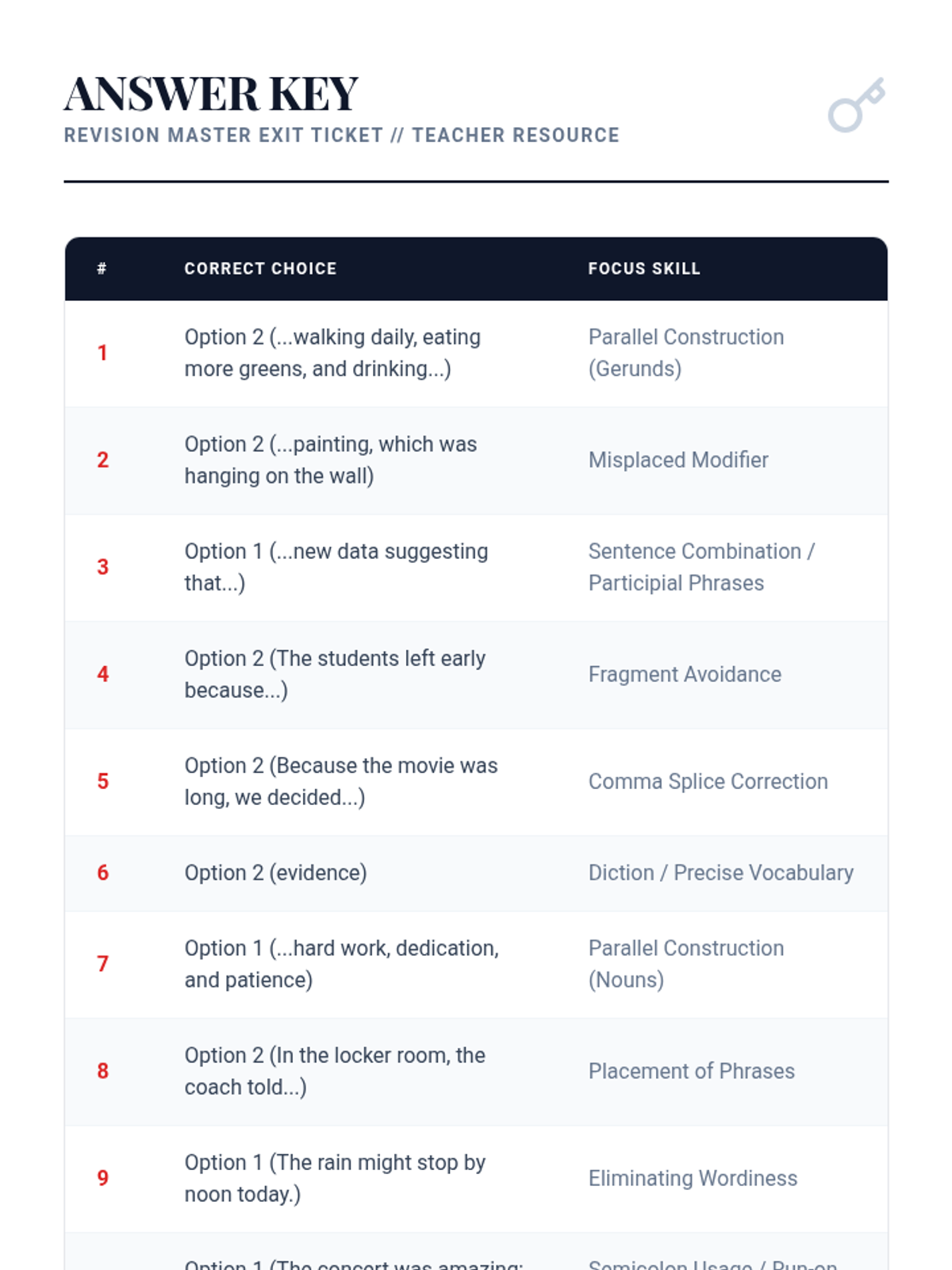
A teacher-facing answer key and grading guide for the Revision Master Exit Ticket. Includes focus skills for each question and common student misconceptions.
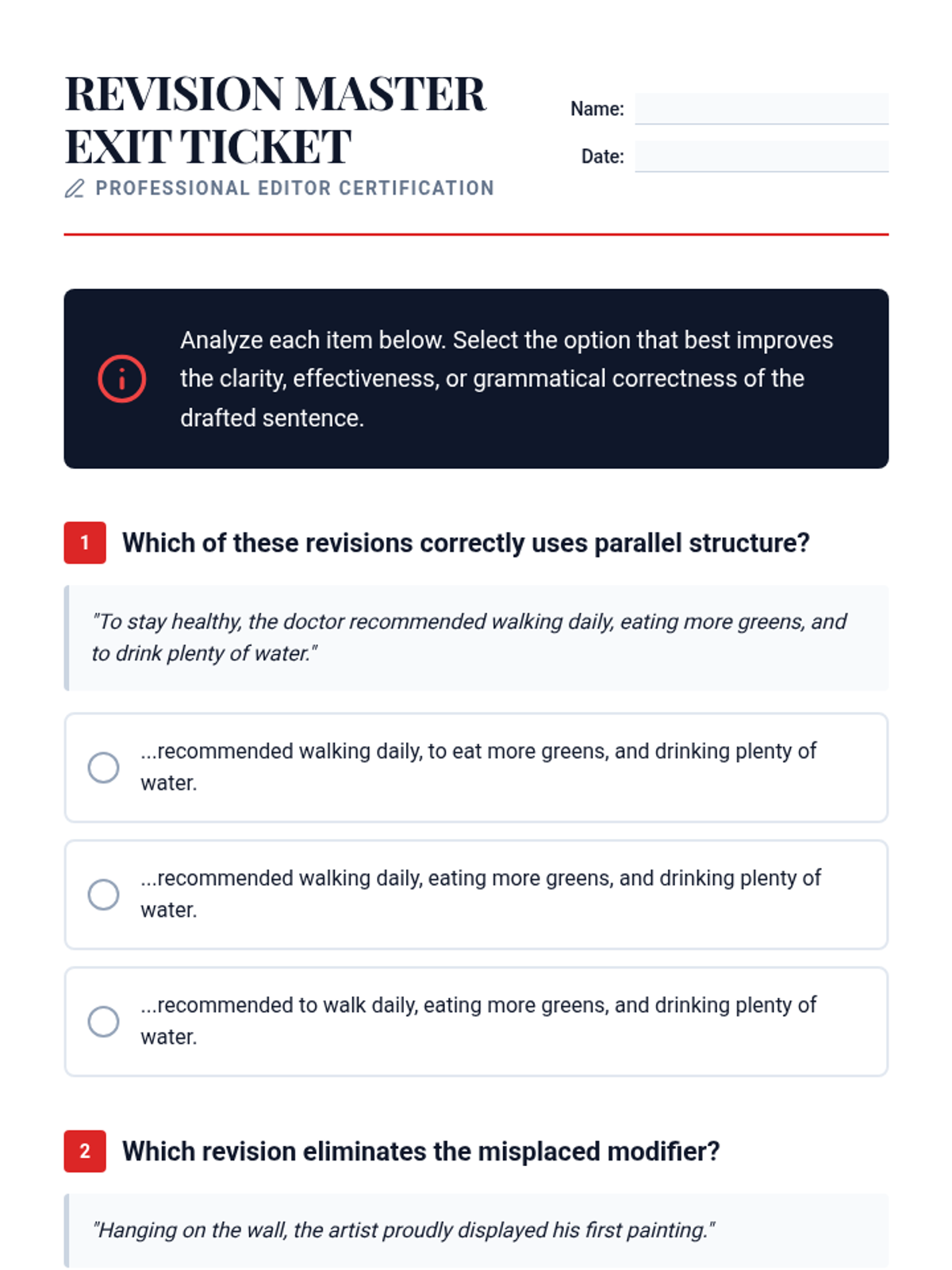
A 10-question multiple-choice exit ticket assessing student mastery of parallel structure, phrase placement, sentence effectiveness, and basic editing for fragments and run-ons. Includes break-inside-avoid to prevent question splitting.
A digital slide presentation guiding students through the revision process, focusing on parallel structure, phrase placement, and sentence effectiveness. Now updated with minimum 24px font size for all text elements.
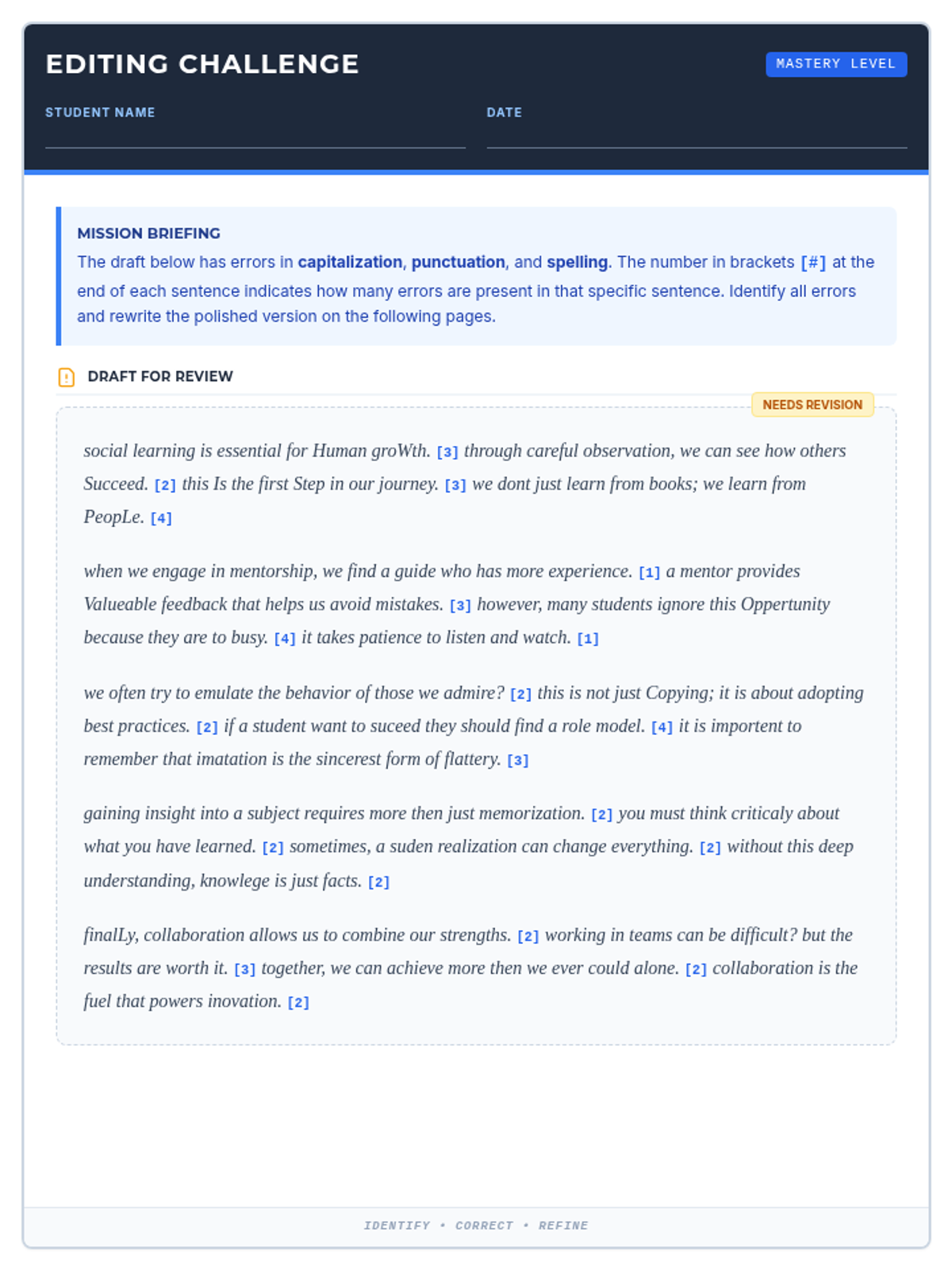
An editing challenge worksheet featuring a five-paragraph essay with intentional errors in capitalization, punctuation, and spelling, focused on five social learning vocabulary words. This version includes error counts per sentence to guide the student.
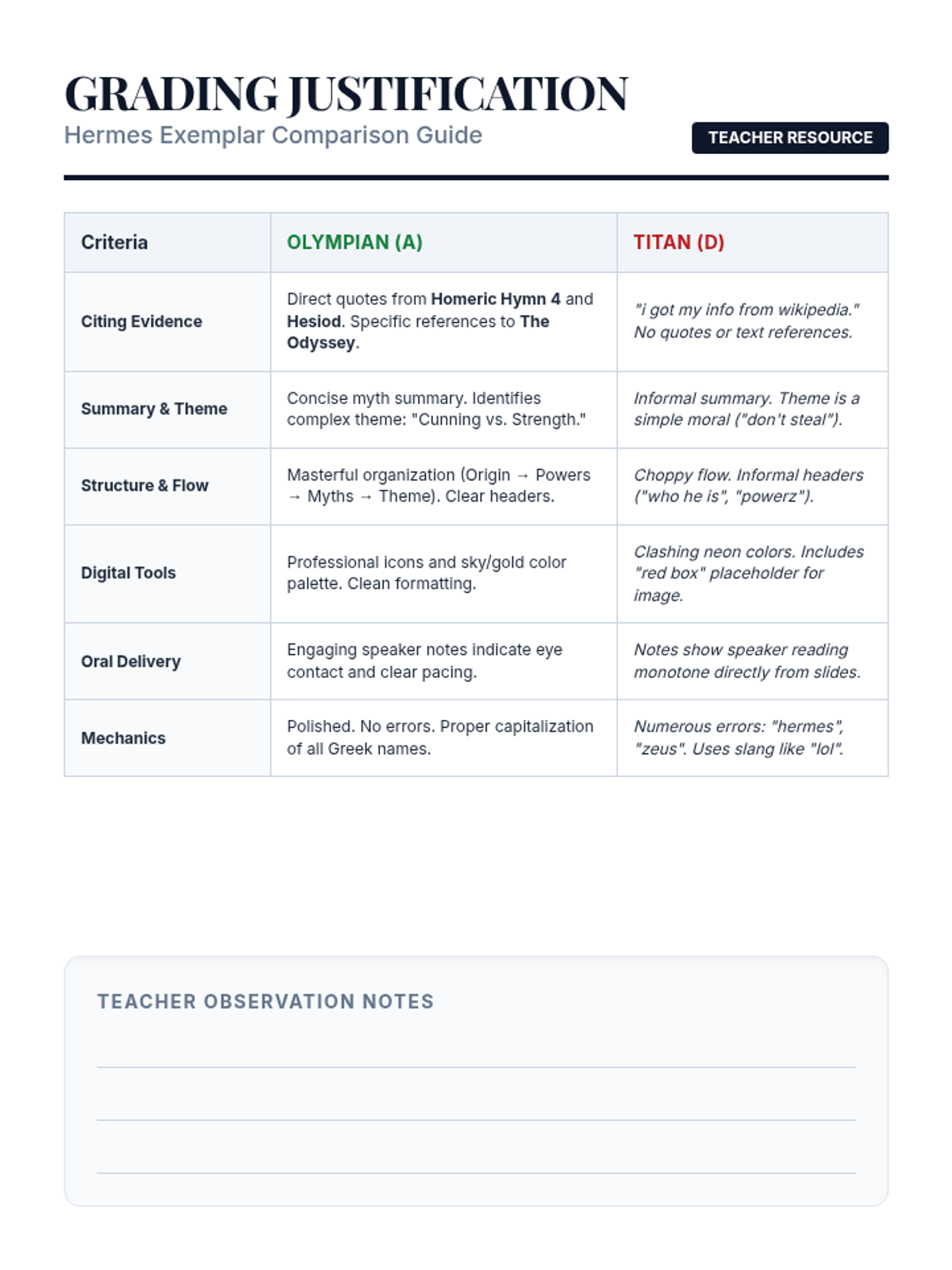
A teacher-facing guide that justifies the grades for the Olympian and Titan exemplars using the provided rubric, complete with discussion prompts for student analysis.
A low-achieving (D) exemplar presentation on the Greek god Hermes, featuring poor organization, lack of evidence, informal language, spelling errors, and minimal effort in design.
An updated high-achieving (A) exemplar presentation on Hermes, now including an embedded multimedia video summary to demonstrate mastery of digital tools.
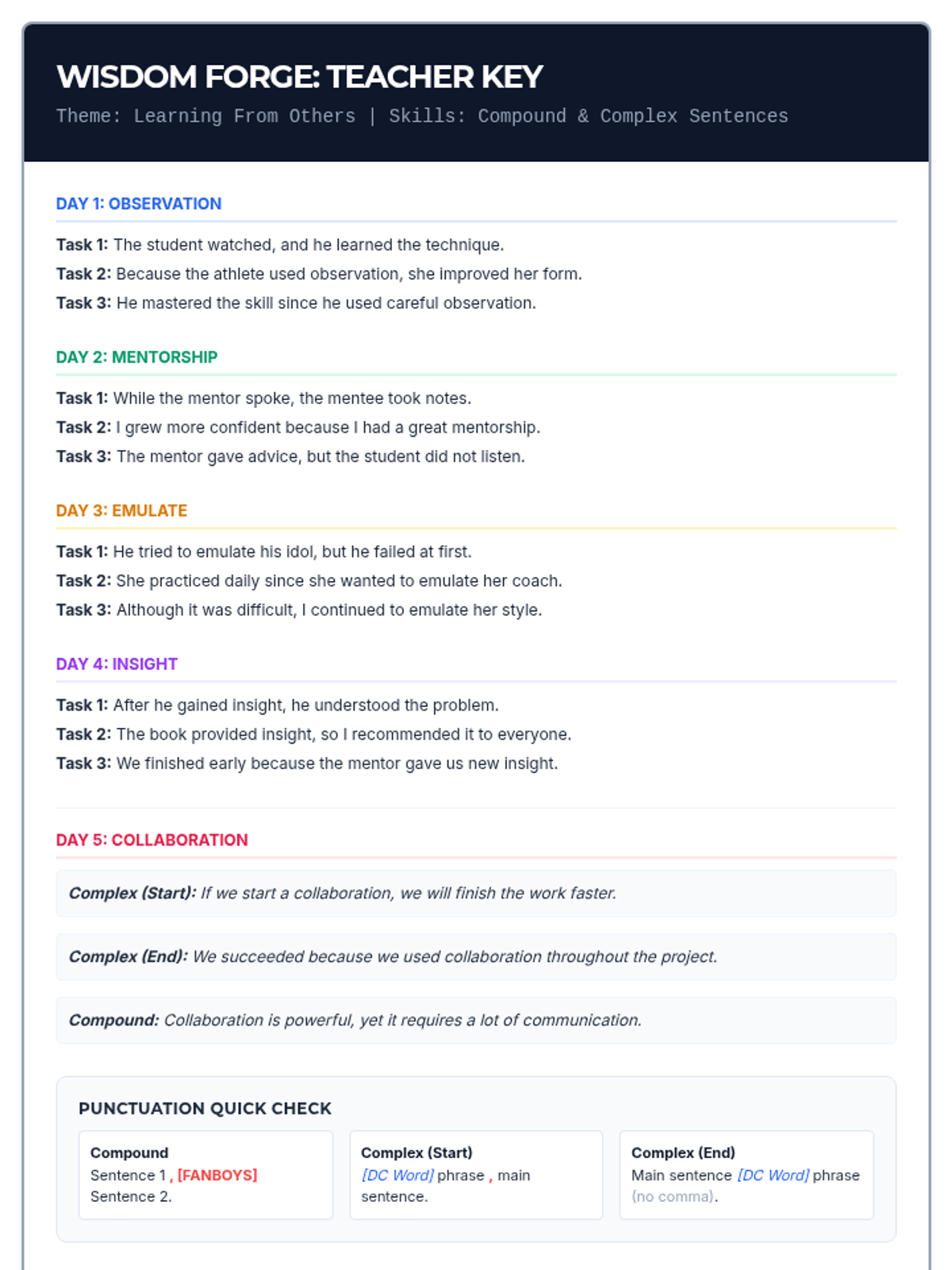
A comprehensive teacher's guide and answer key for the Wisdom Forge series, including grammar rules and example responses.
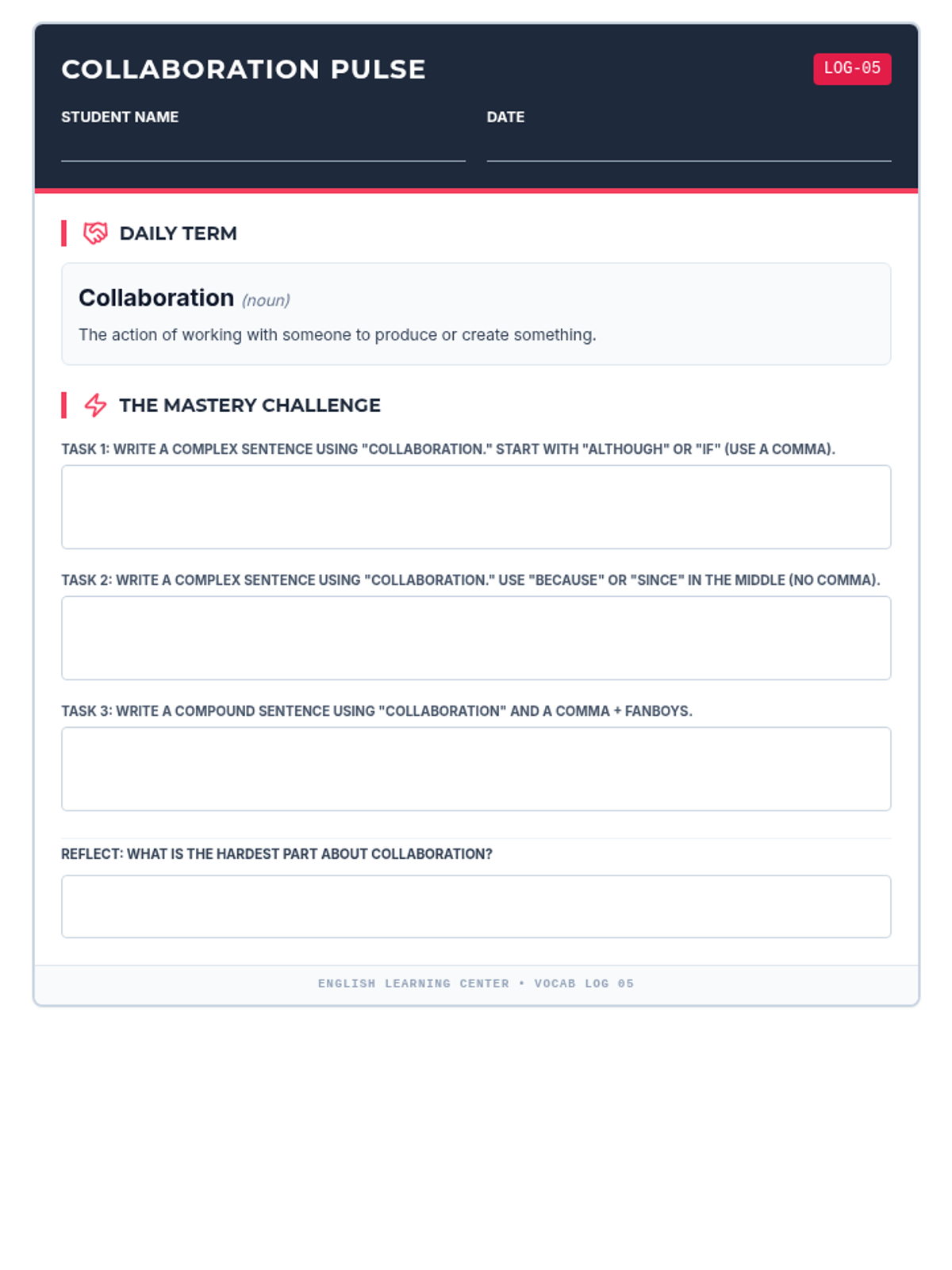
A cumulative final entrance ticket focusing on 'Collaboration' with a mastery challenge for all three sentence structure types.
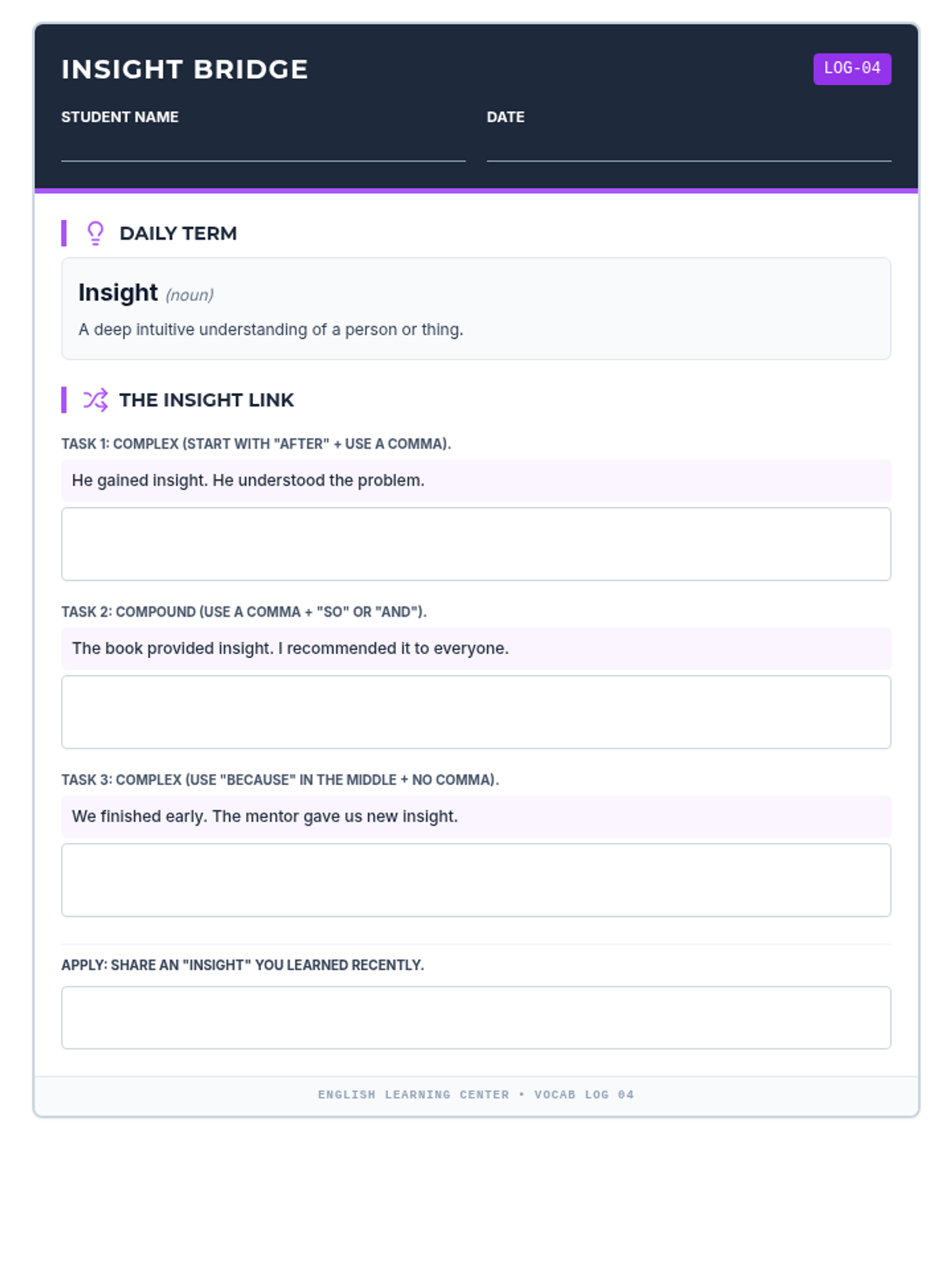
An entrance ticket for Day 4 focusing on 'Insight' and practicing complex and compound sentence structures.
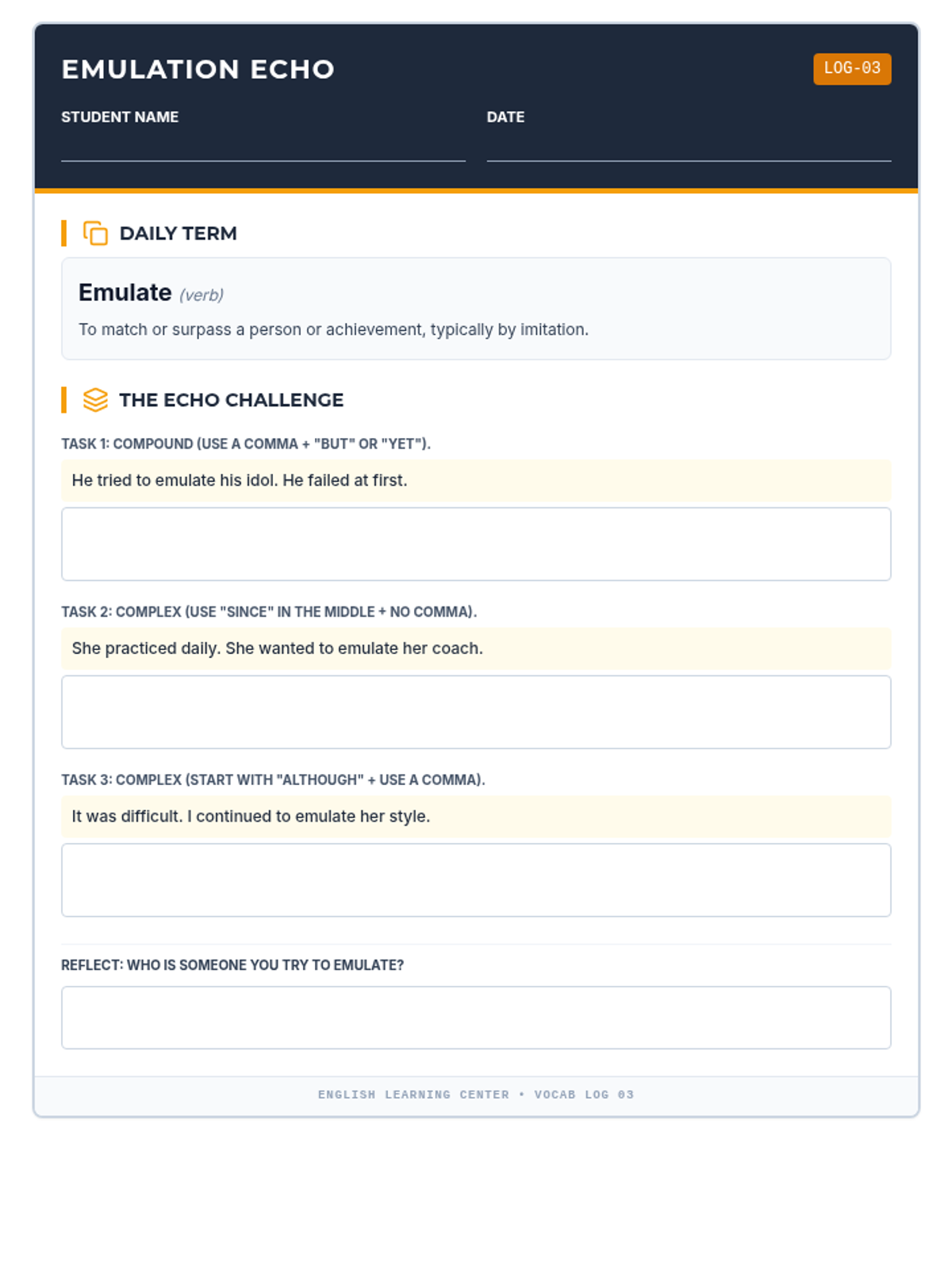
An entrance ticket for Day 3 focusing on 'Emulate' and practicing compound and complex sentence structures.
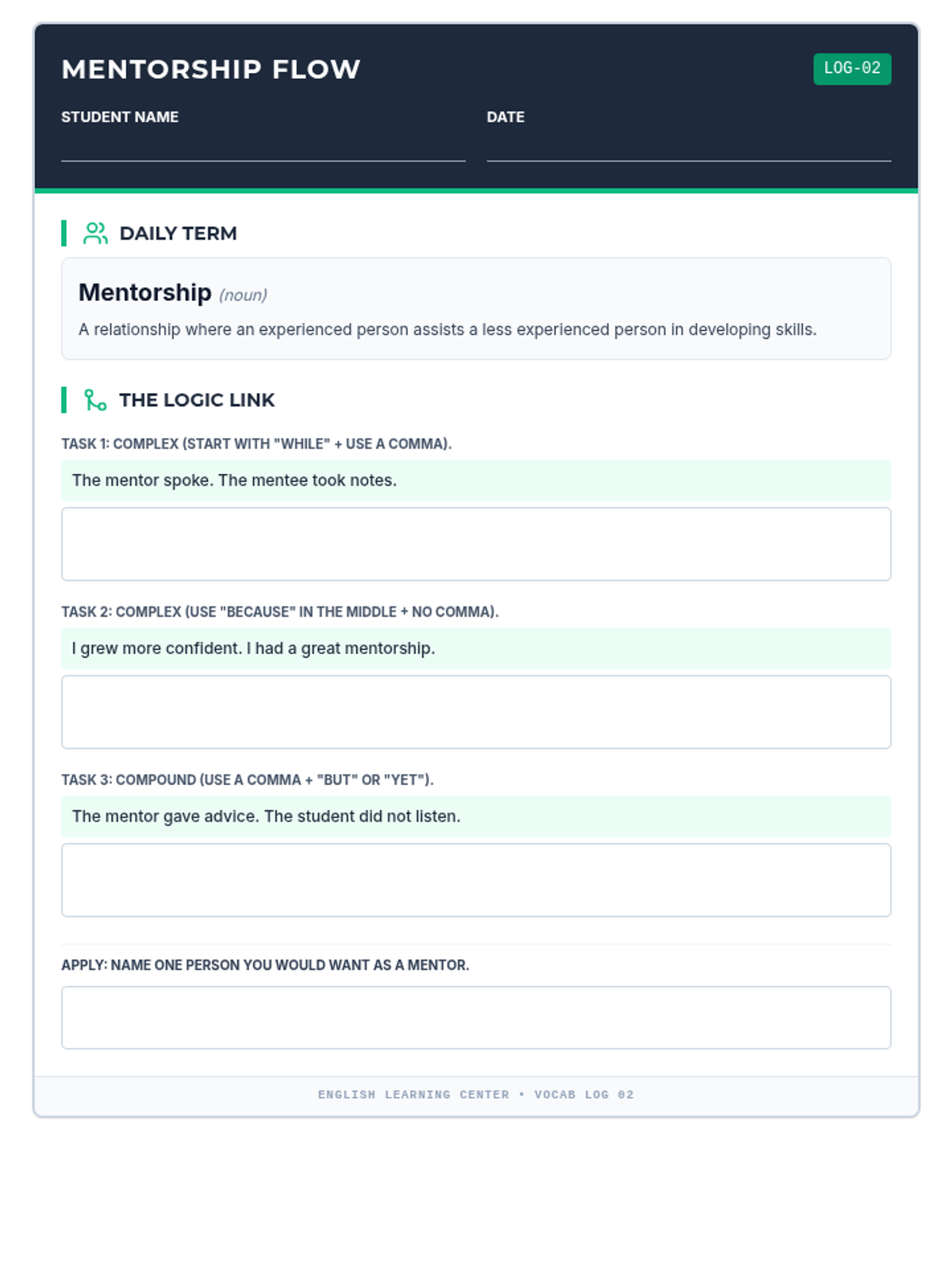
An entrance ticket for Day 2 focusing on 'Mentorship' and practicing complex and compound sentence structures.
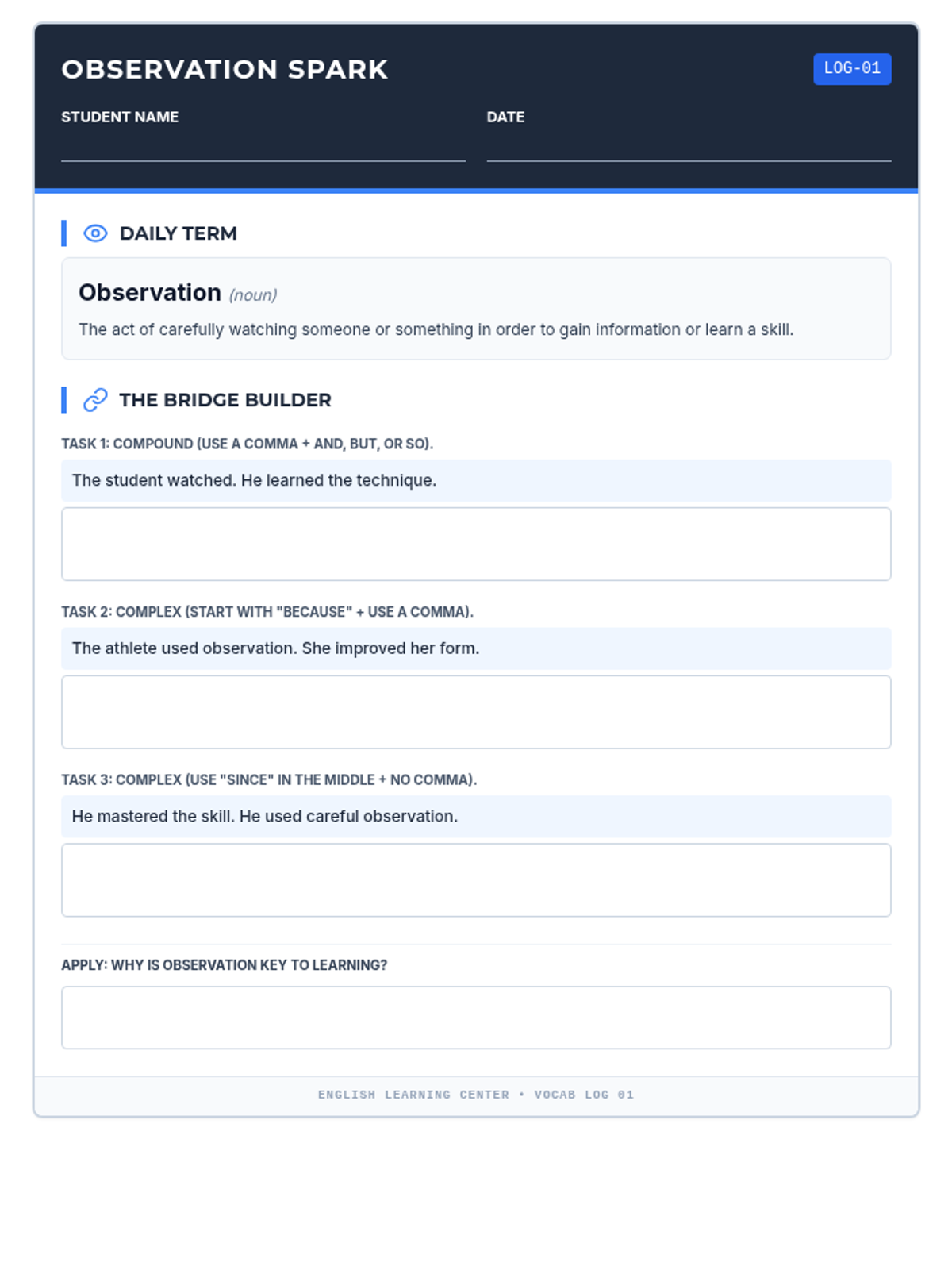
An entrance ticket for Day 1 focusing on the word 'Observation' and practicing compound and complex sentence structures.
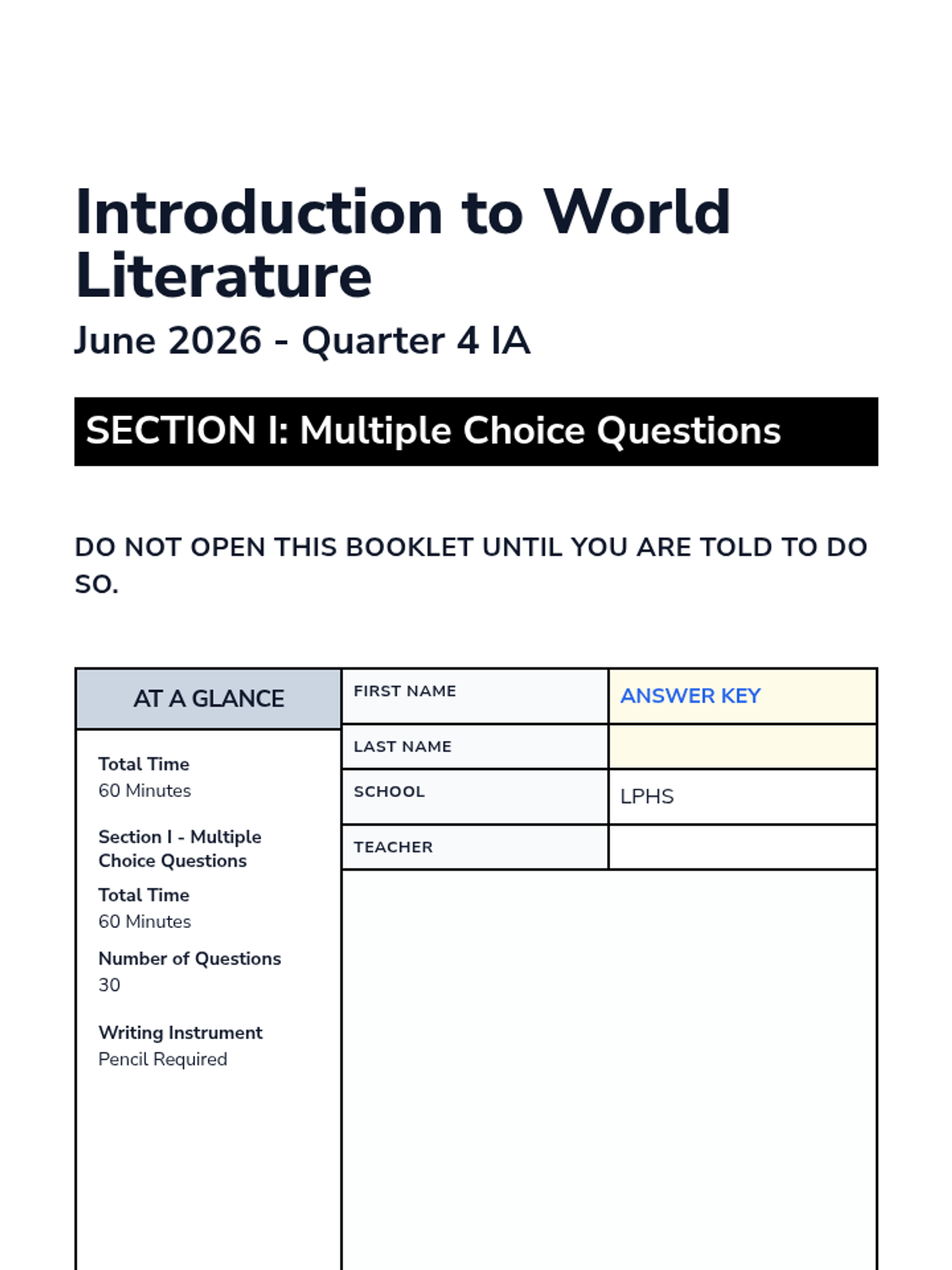
A faithful mirrored answer key of the World Literature June 2026 IA assessment, featuring correct answers highlighted in yellow and a model RACE response. All instructional text and directions have been removed throughout the assignment.
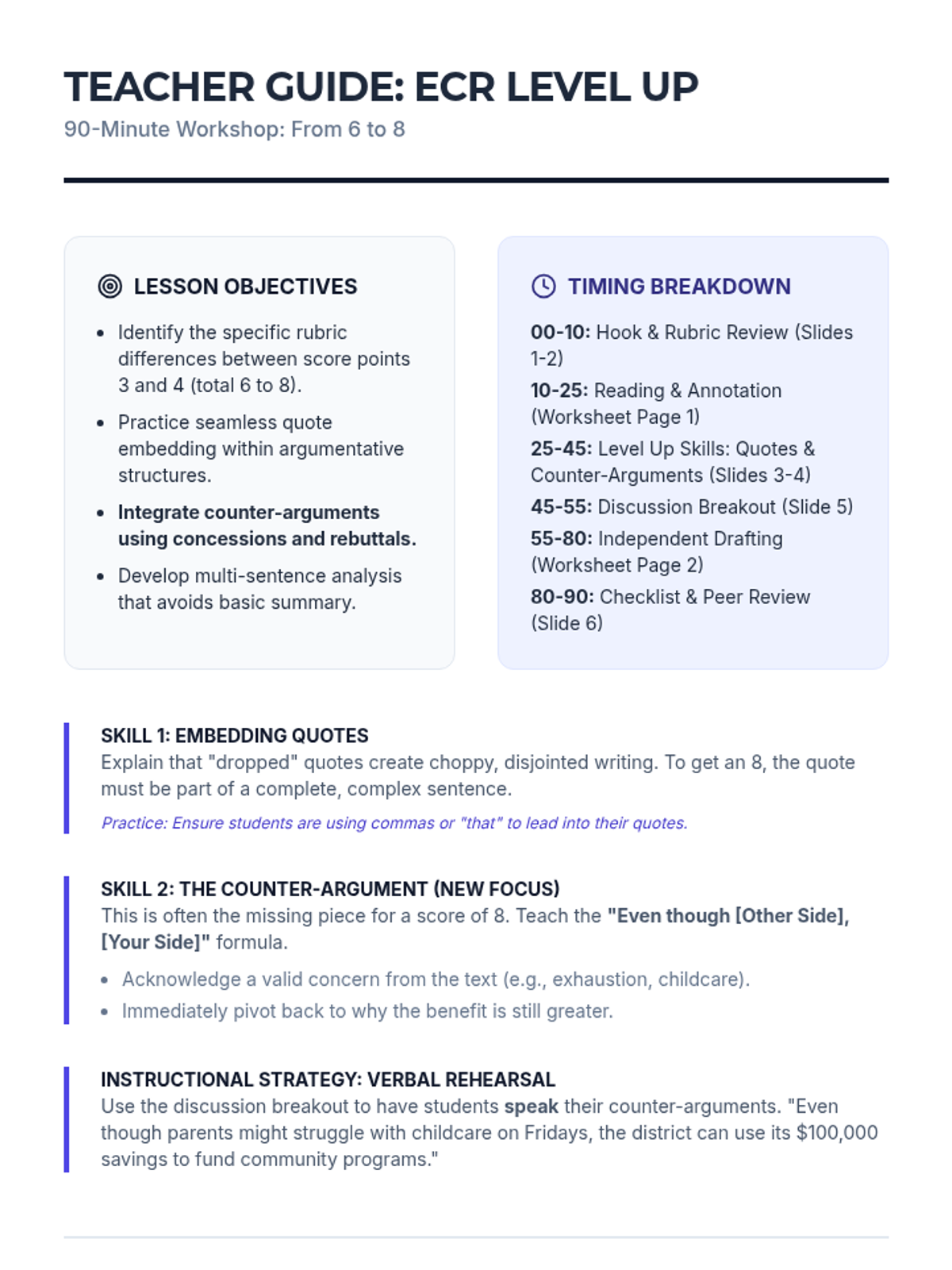
A facilitator guide for the ECR workshop, updated to include strategies for teaching counter-argument integration and a revised exemplar response.
A 6-slide presentation designed to be printer-friendly with high-contrast elements. It guides students through the differences between scores of 6 and 8, focusing on counter-arguments and quote embedding.
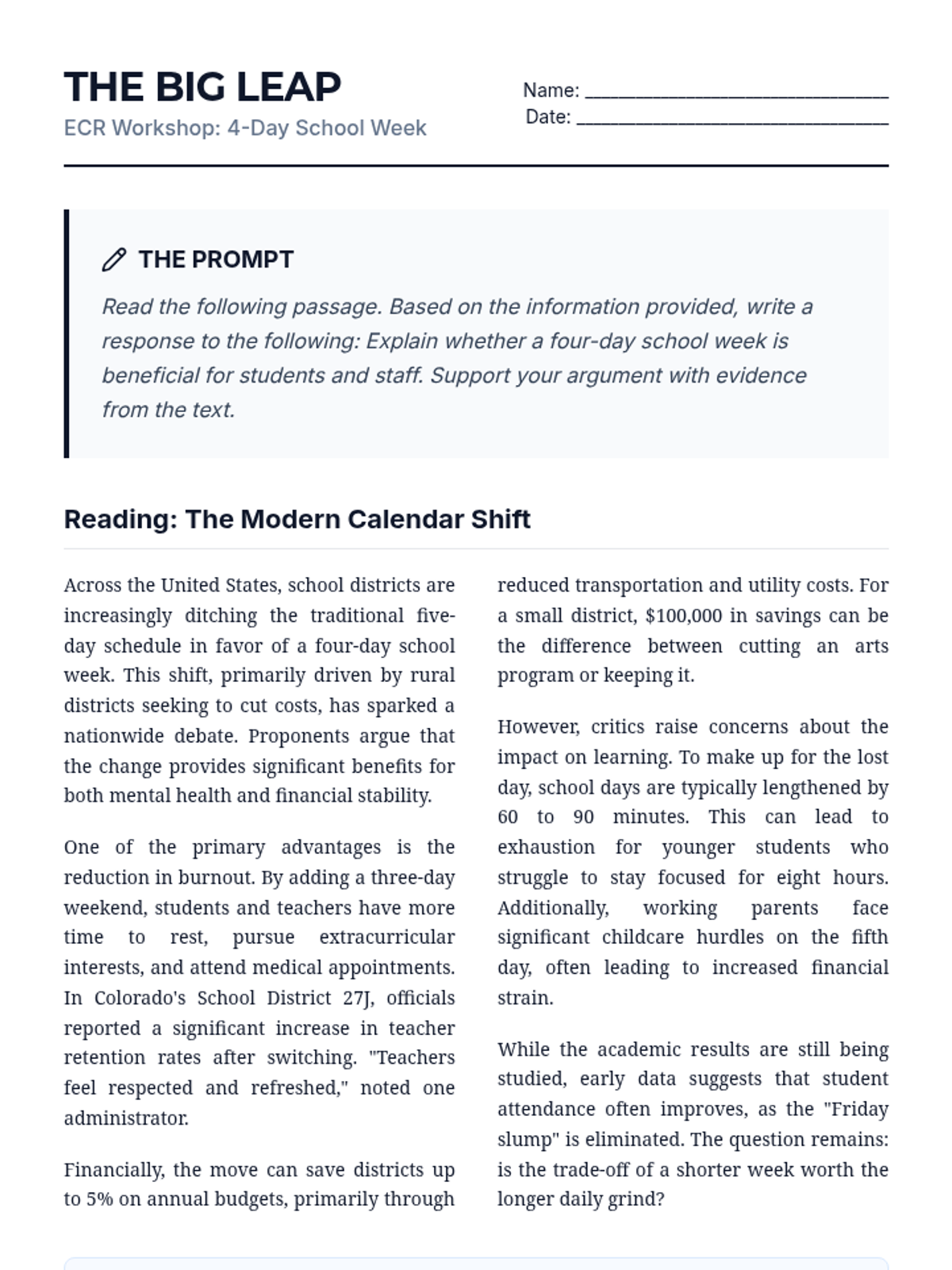
A 2-page student worksheet featuring a reading passage about the 4-day school week, annotation space, and skills drills for quote integration, analysis, and counter-argument rebuttals.
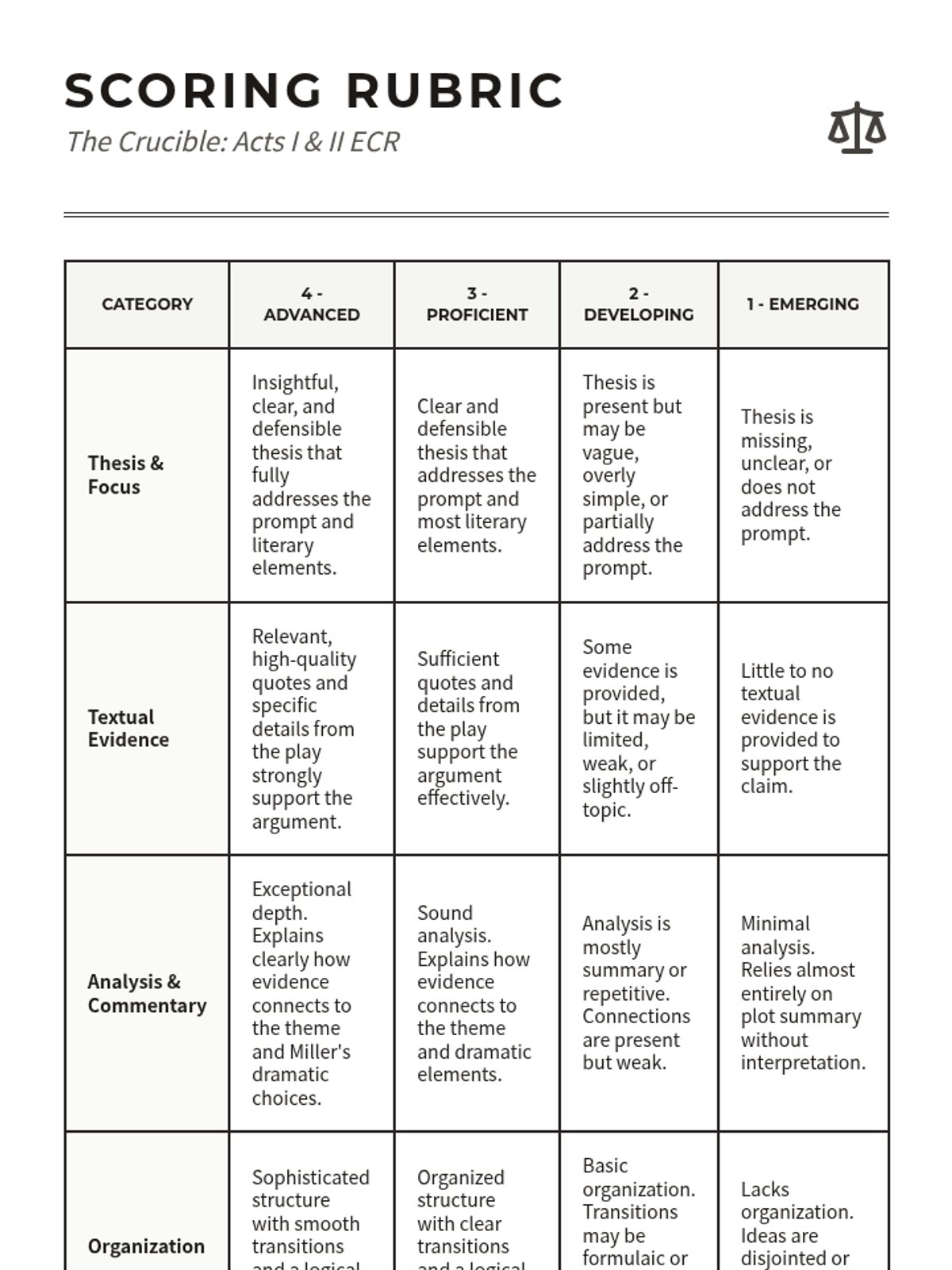
A 4-point analytical scoring rubric for an ECR essay on The Crucible, covering thesis, evidence, analysis, organization, and mechanics with a historically-inspired design.
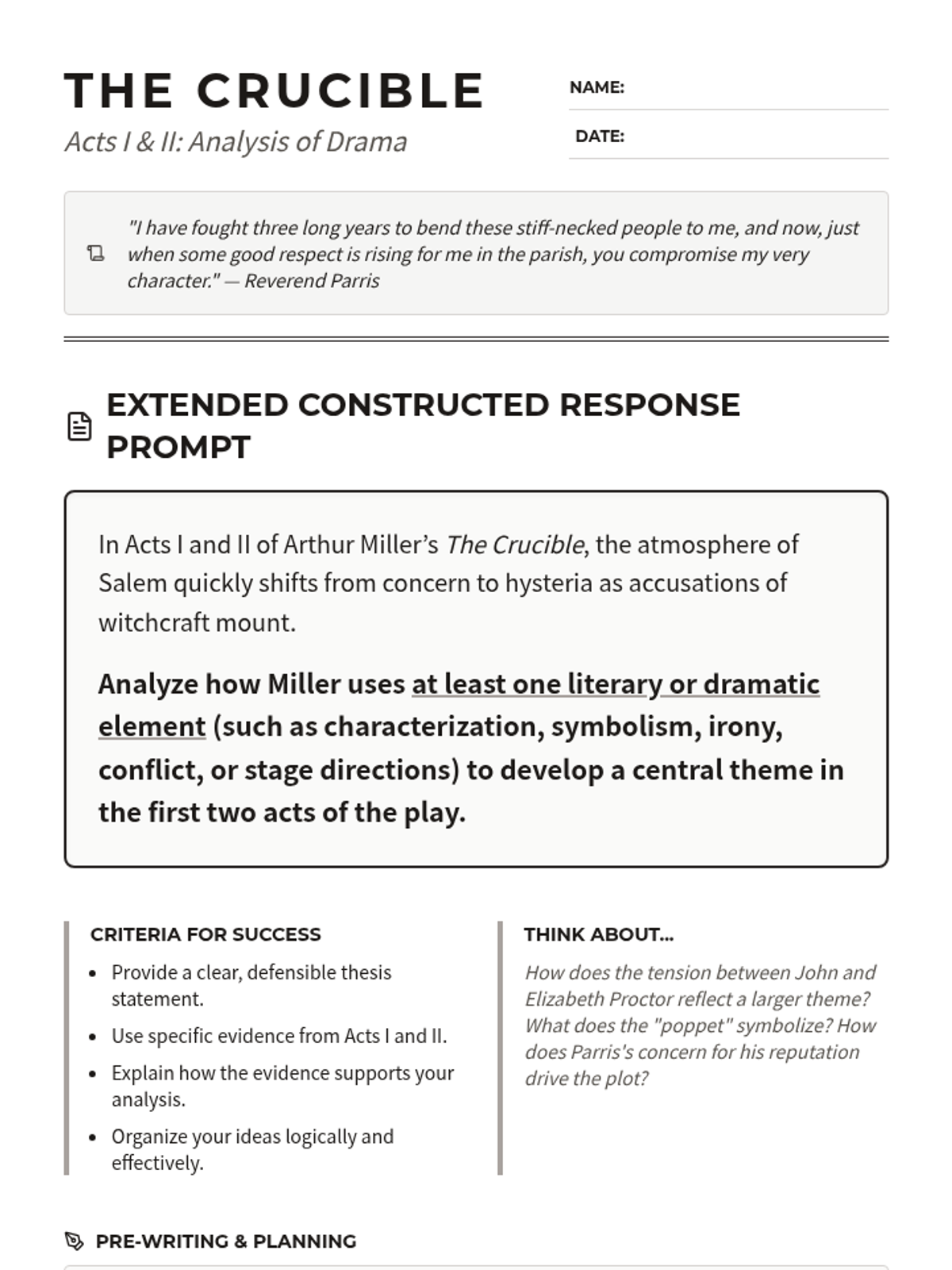
An Extended Constructed Response (ECR) essay prompt for Acts I and II of The Crucible, featuring a historically-themed layout, a clear prompt, planning space, and lined areas for student writing.
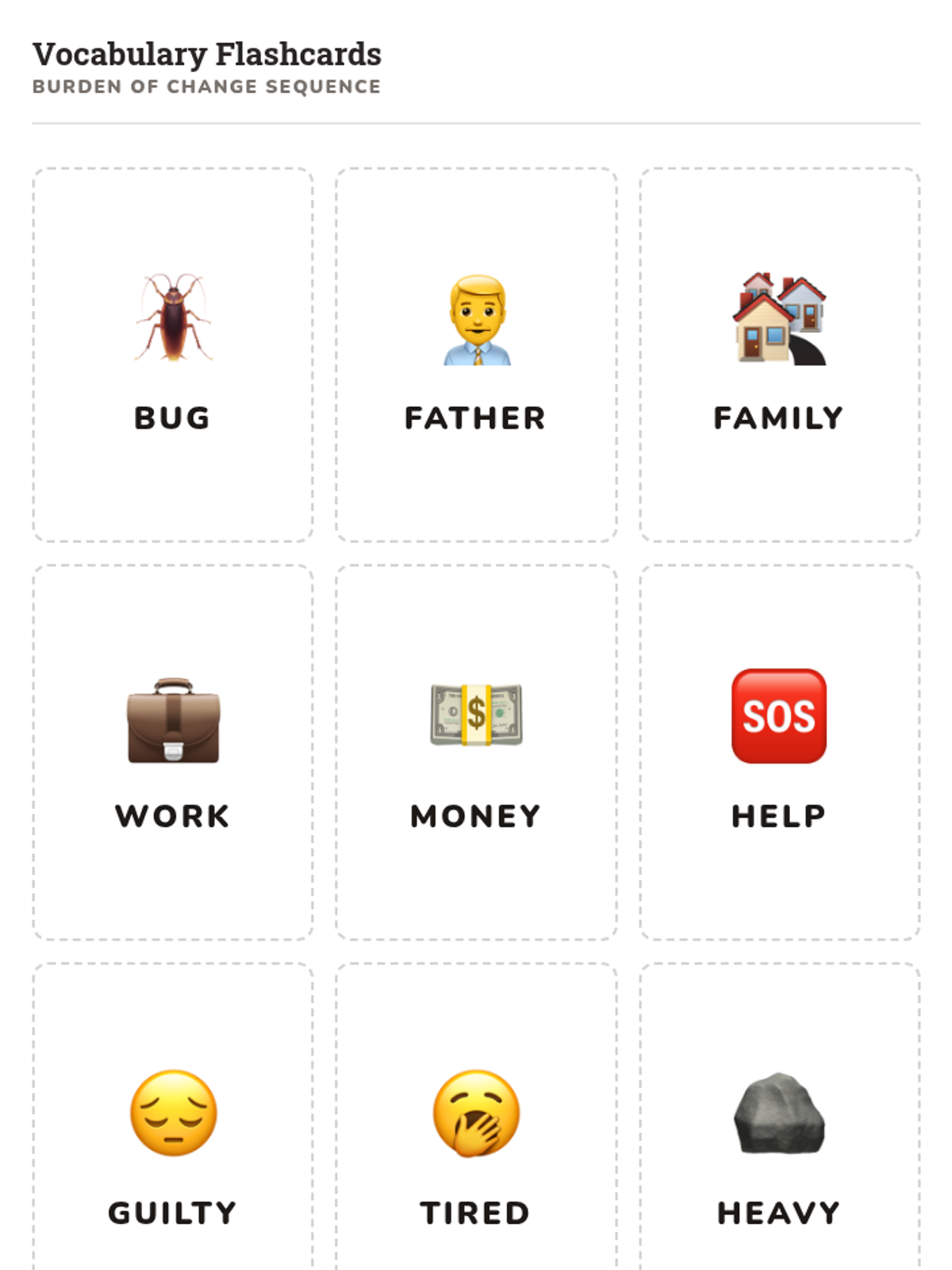
A set of 12 visual vocabulary flashcards featuring key terms from the sequence with associated icons, including differentiated Level 2 terms.
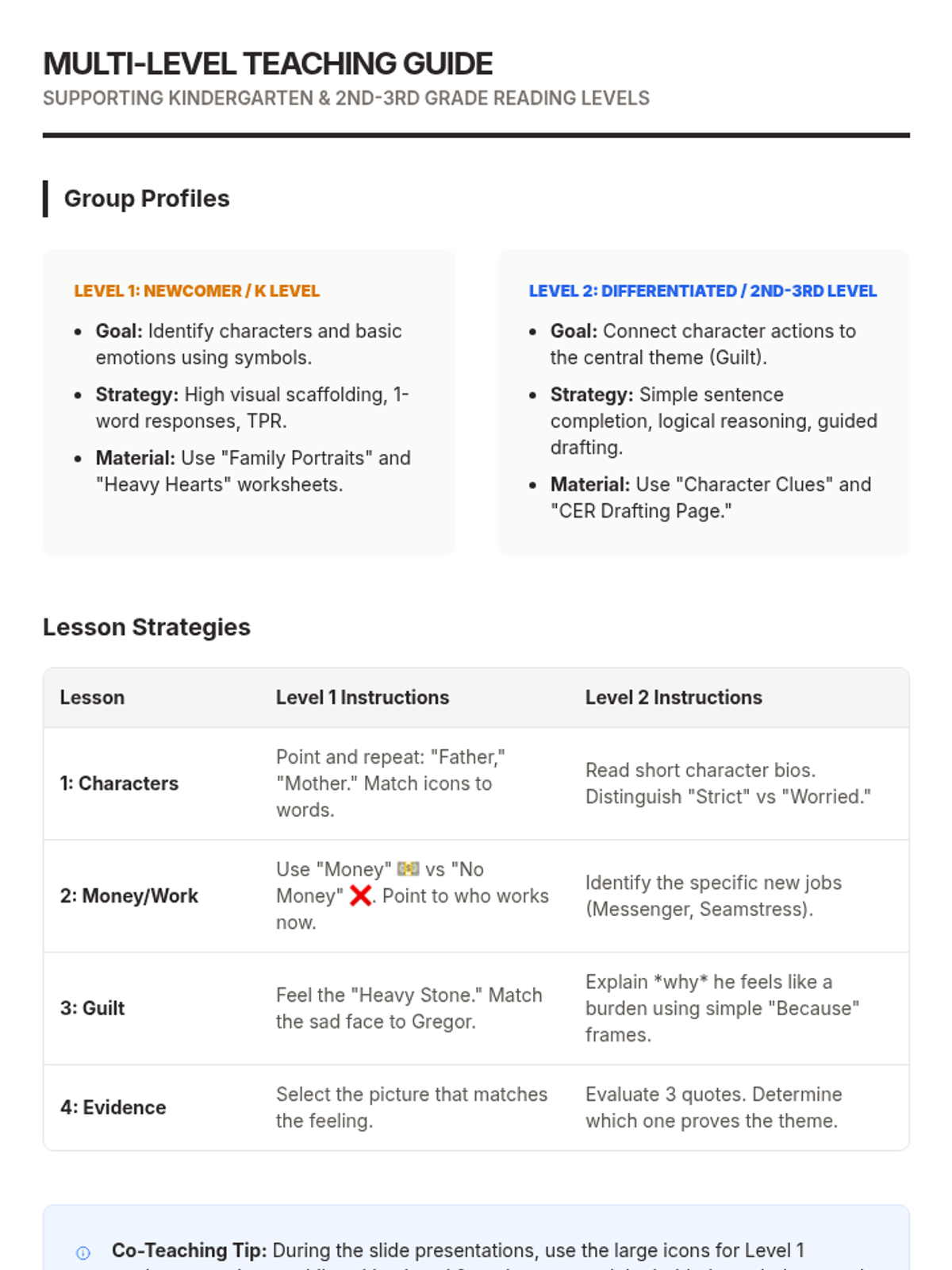
A teacher guide for managing a multi-level classroom, providing specific instructional strategies and a material roadmap for both Kindergarten-level and 2nd-3rd grade level readers within the same lesson sequence.
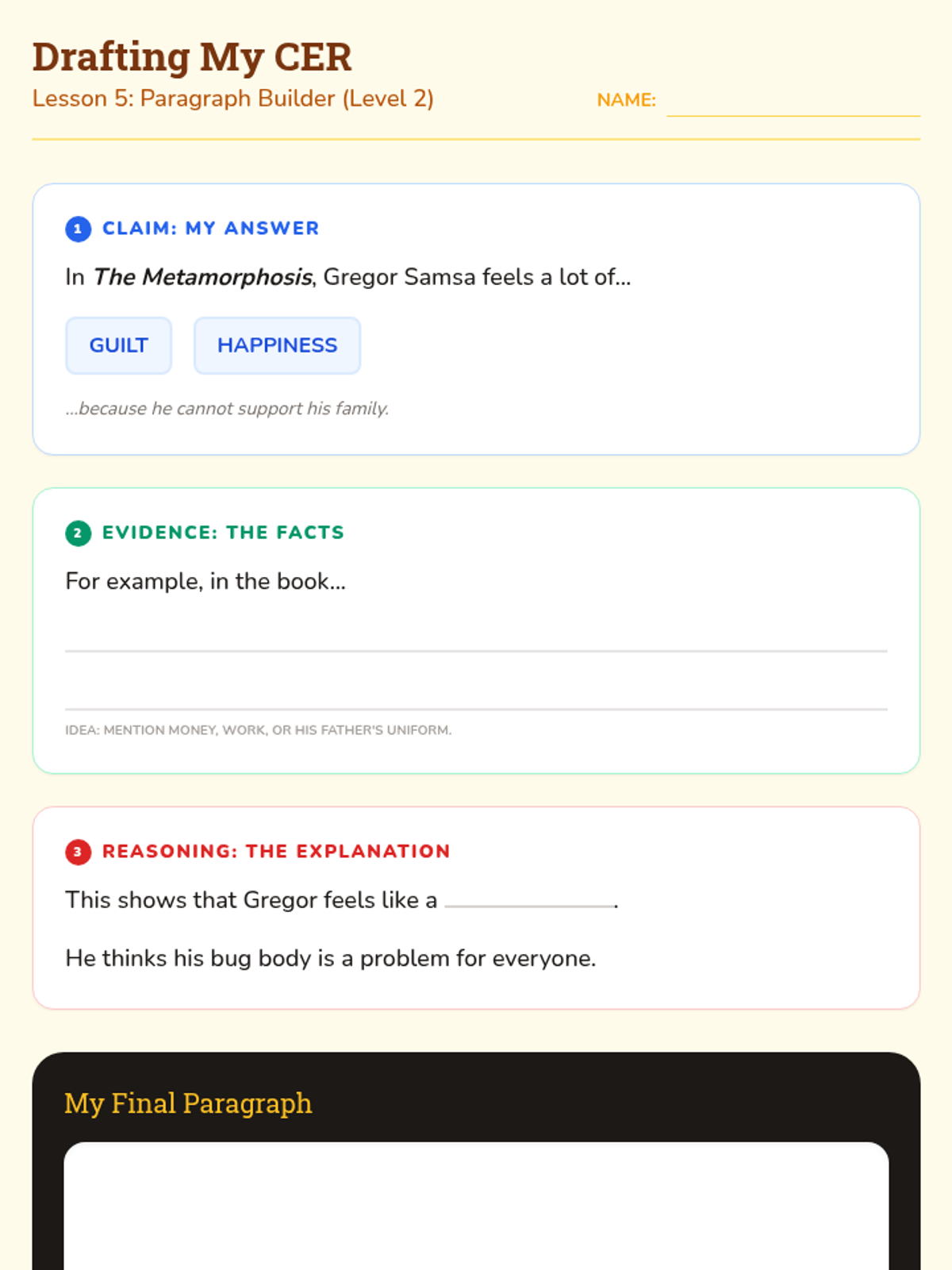
A differentiated CER drafting page for Lesson 5, designed for 2nd-3rd grade level students, providing sentence starters and structured sections to build a complete thematic paragraph.
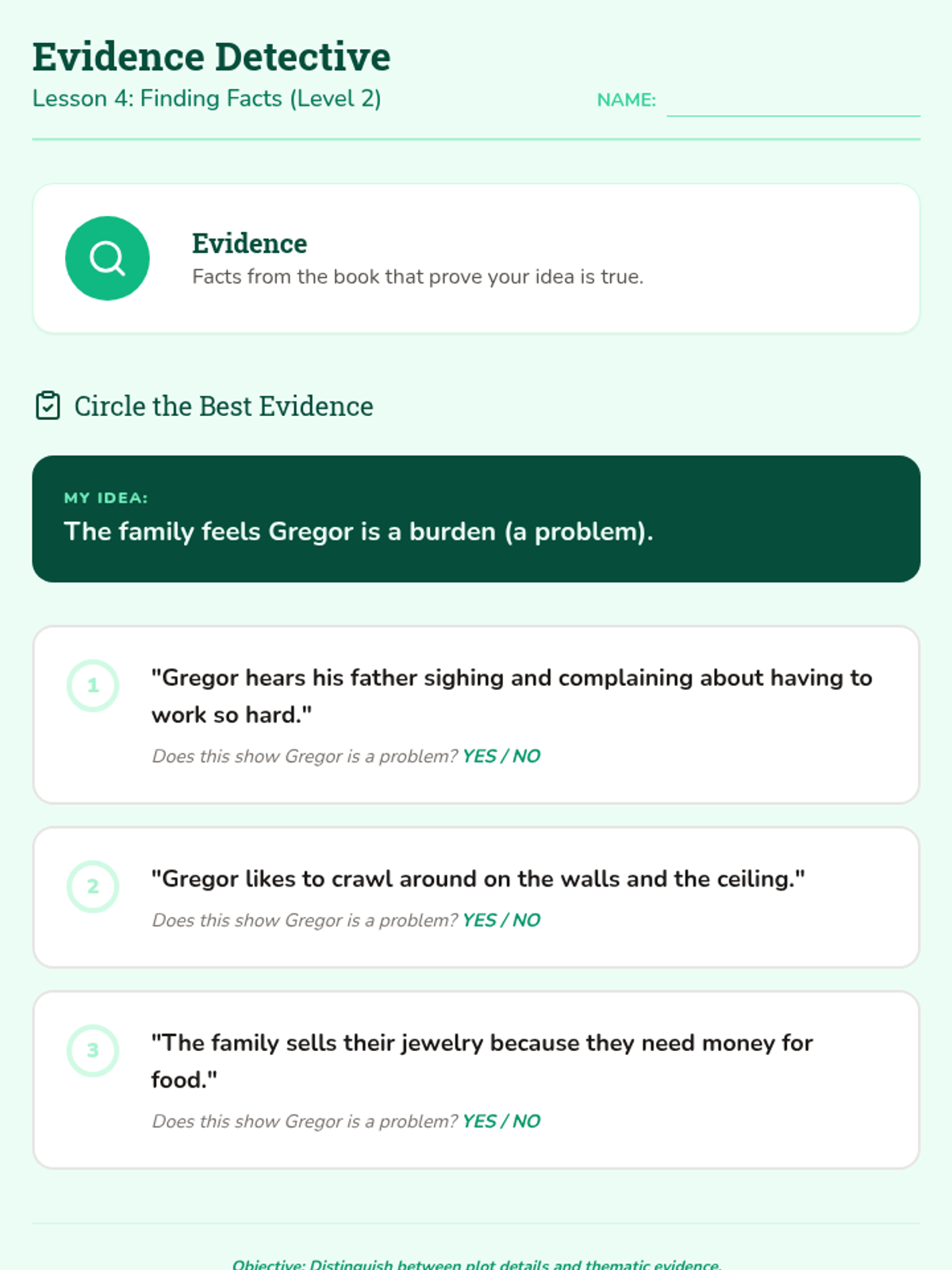
A differentiated evidence detective worksheet for Lesson 4, designed for 2nd-3rd grade level students, where they evaluate specific book quotes to determine if they serve as evidence for a central theme.
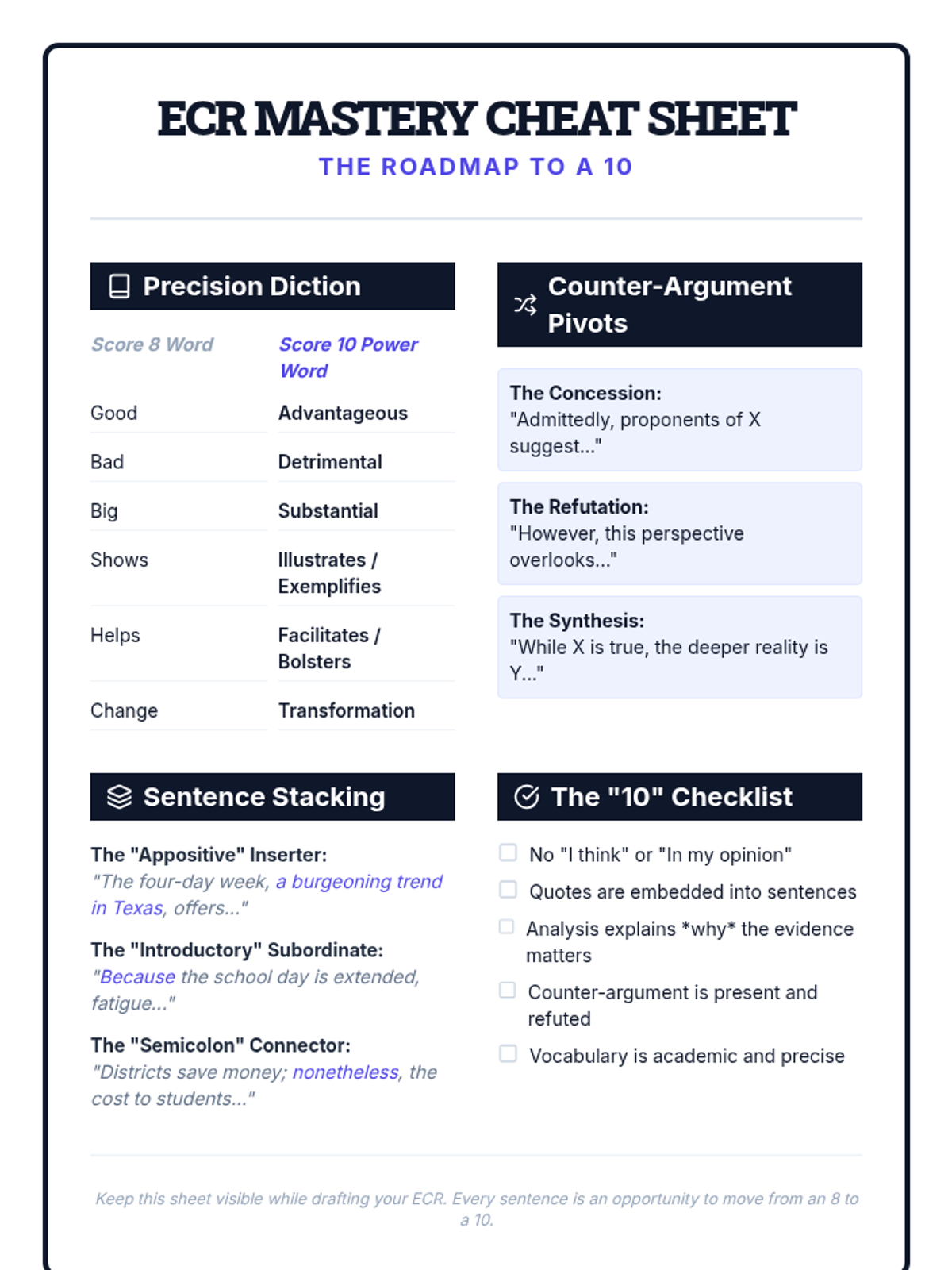
A one-page student reference sheet for ECR drafting, featuring power words, transition stems, syntax structures, and a final quality checklist.
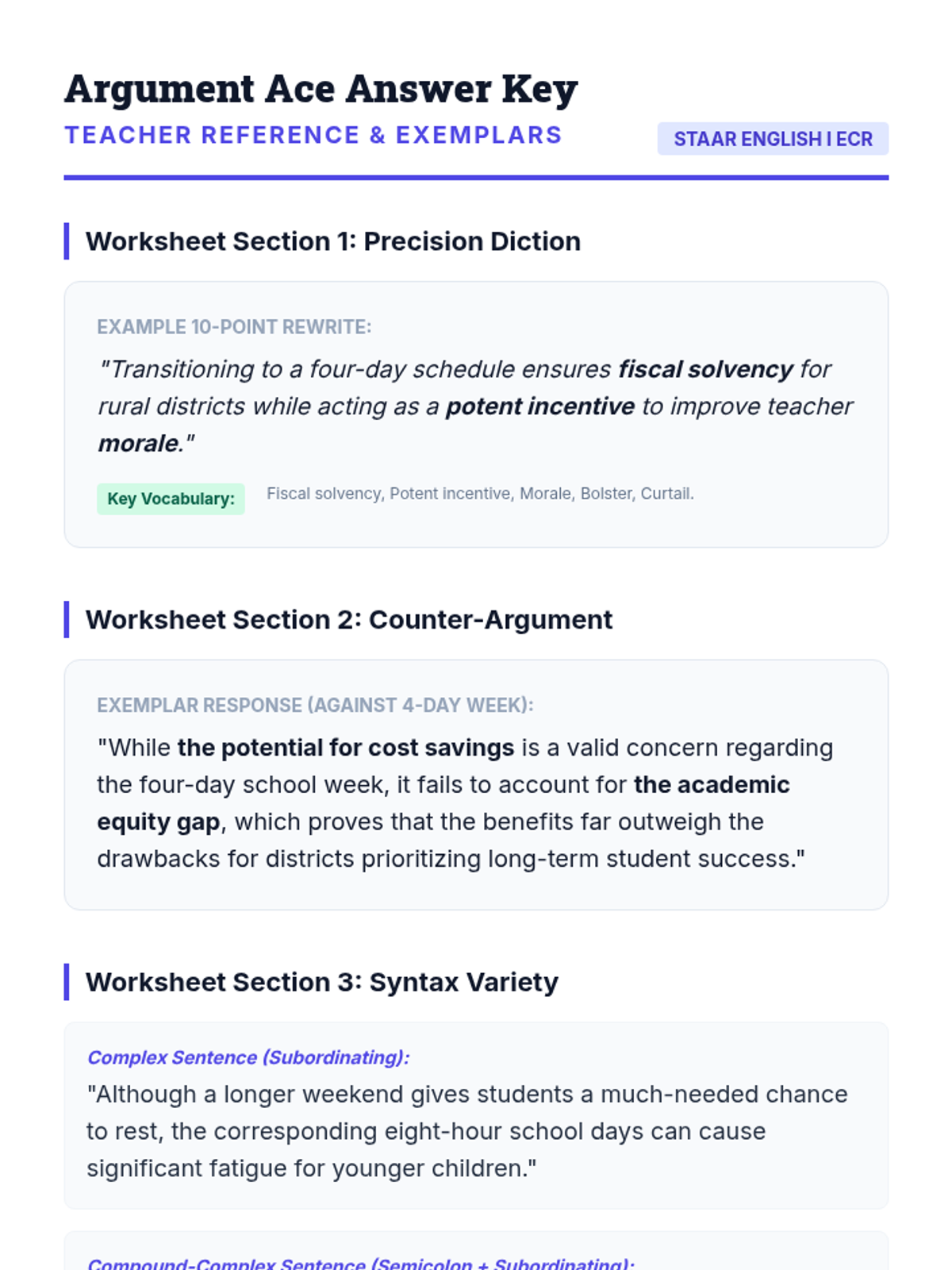
A detailed answer key and model response guide for teachers, providing exemplars for diction, syntax, counter-arguments, and a full 10-point paragraph based on the 4-day school week passage.
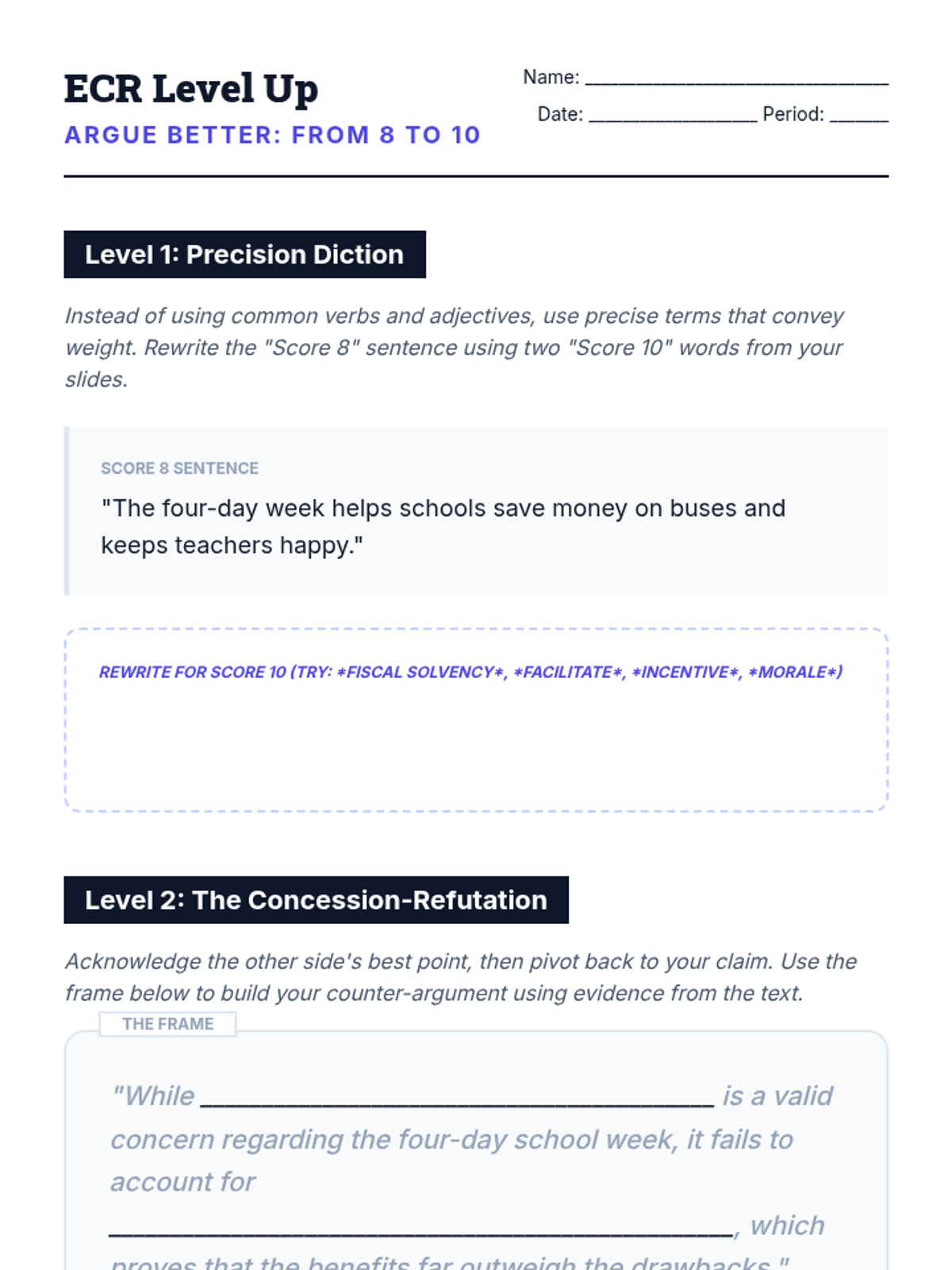
A student worksheet for the Argument Ace lesson, including exercises for precision diction, counter-argument framing, and syntax variety, ending with a drafting space for a sophisticated ECR paragraph.
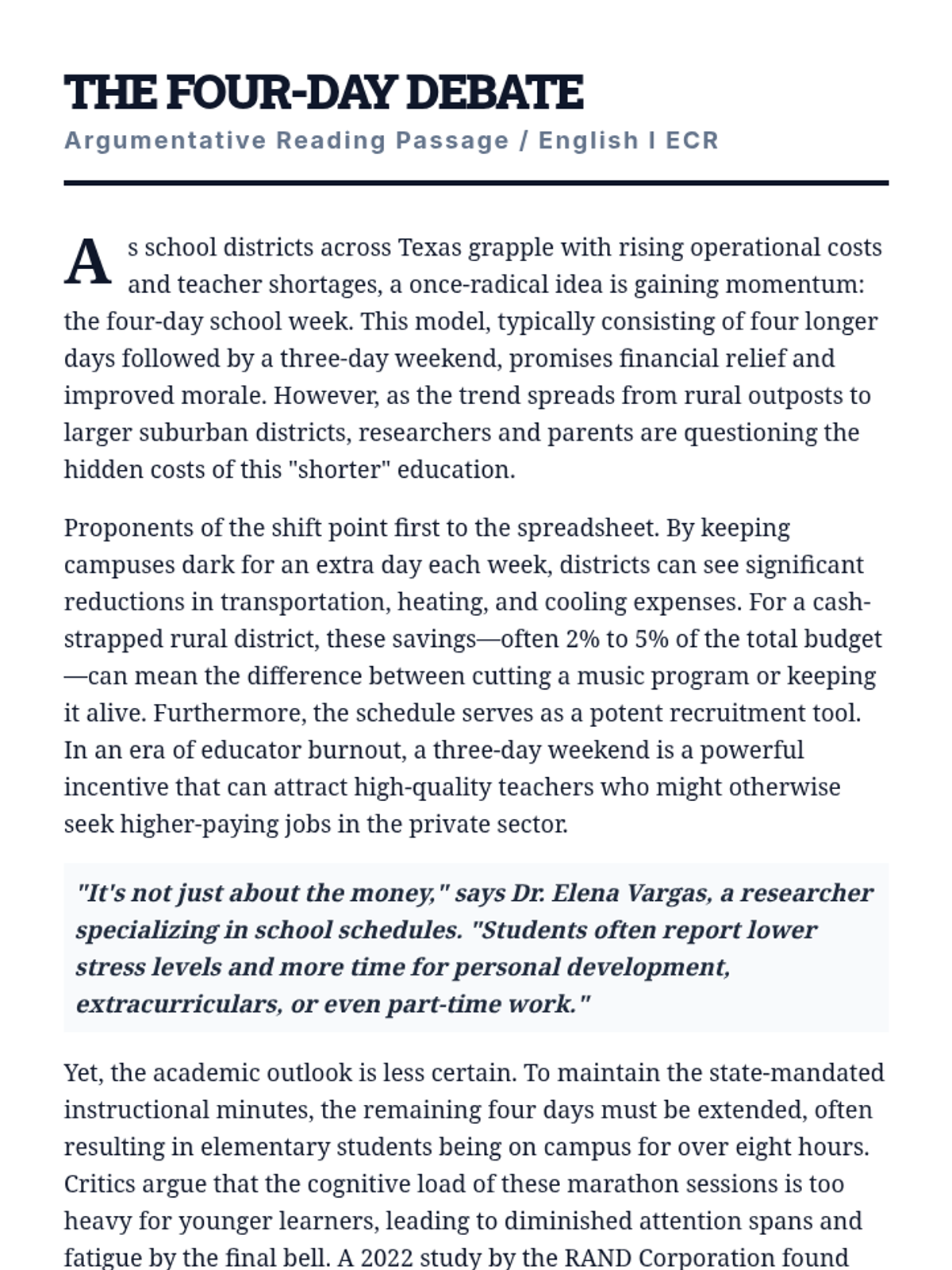
A high-quality, balanced reading passage about the 4-day school week debate, featuring specific evidence for both sides to be used in ECR evidence integration practice.
A printer-friendly presentation designed to guide students through the ECR mastery process, focusing on the 8-to-10 point gap, word choice, counter-arguments, and syntax variety.
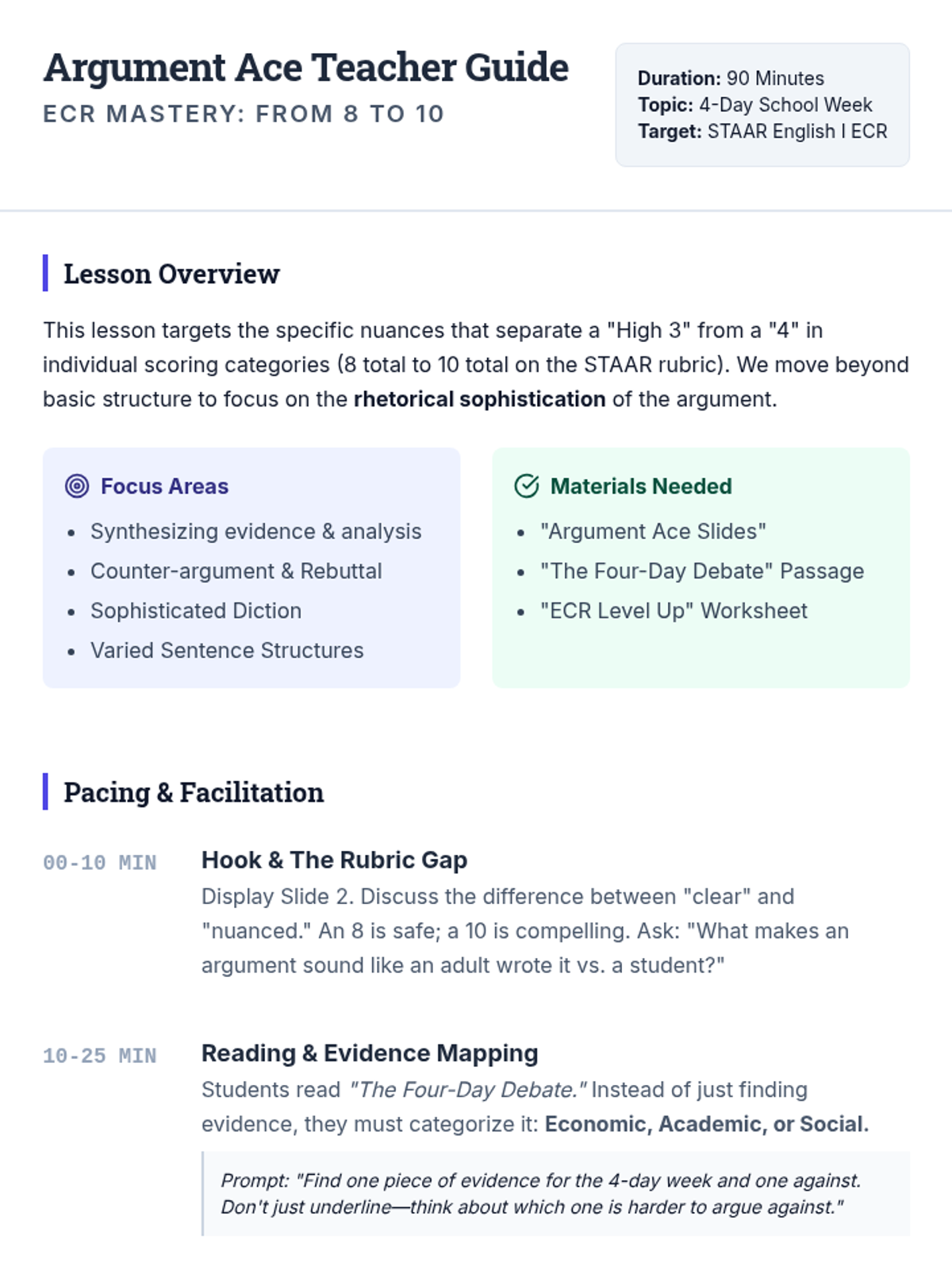
A comprehensive teacher guide for a 90-minute ECR mastery lesson, featuring a detailed pacing guide, instructional strategies for 8-to-10 score improvement, and differentiation tips.
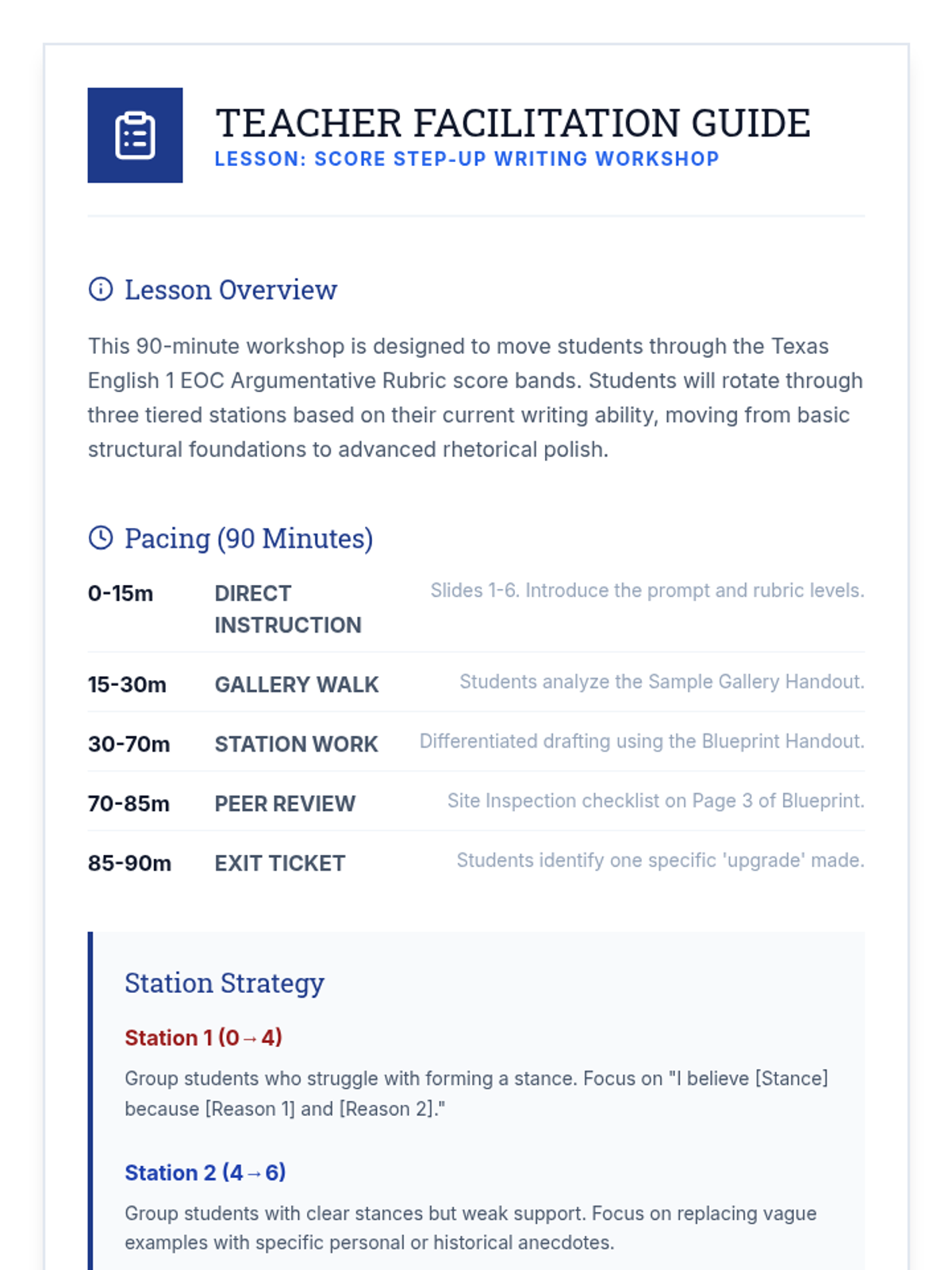
A comprehensive guide for teachers to facilitate the Score Step-Up workshop, including pacing, station strategy, and instructional tips for moving students through the EOC rubric levels.
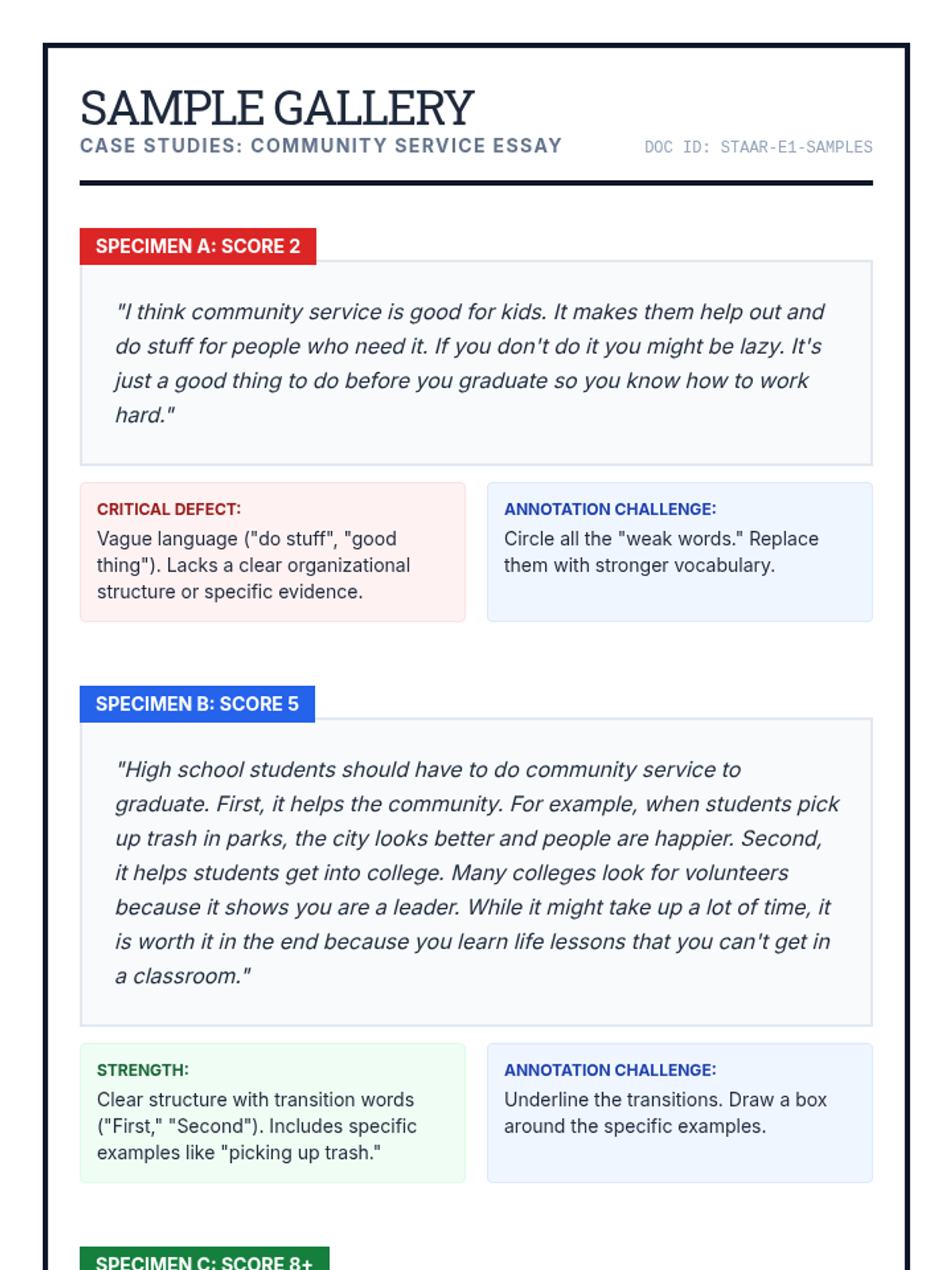
A collection of three annotated sample essay excerpts reflecting low, medium, and high score points on the EOC rubric, designed for student analysis and comparison.
A visually engaging slide deck that breaks down the Texas English 1 EOC writing rubric into achievable 'steps,' featuring score-point comparisons, strategy tips, and direct instructions for the station rotation.
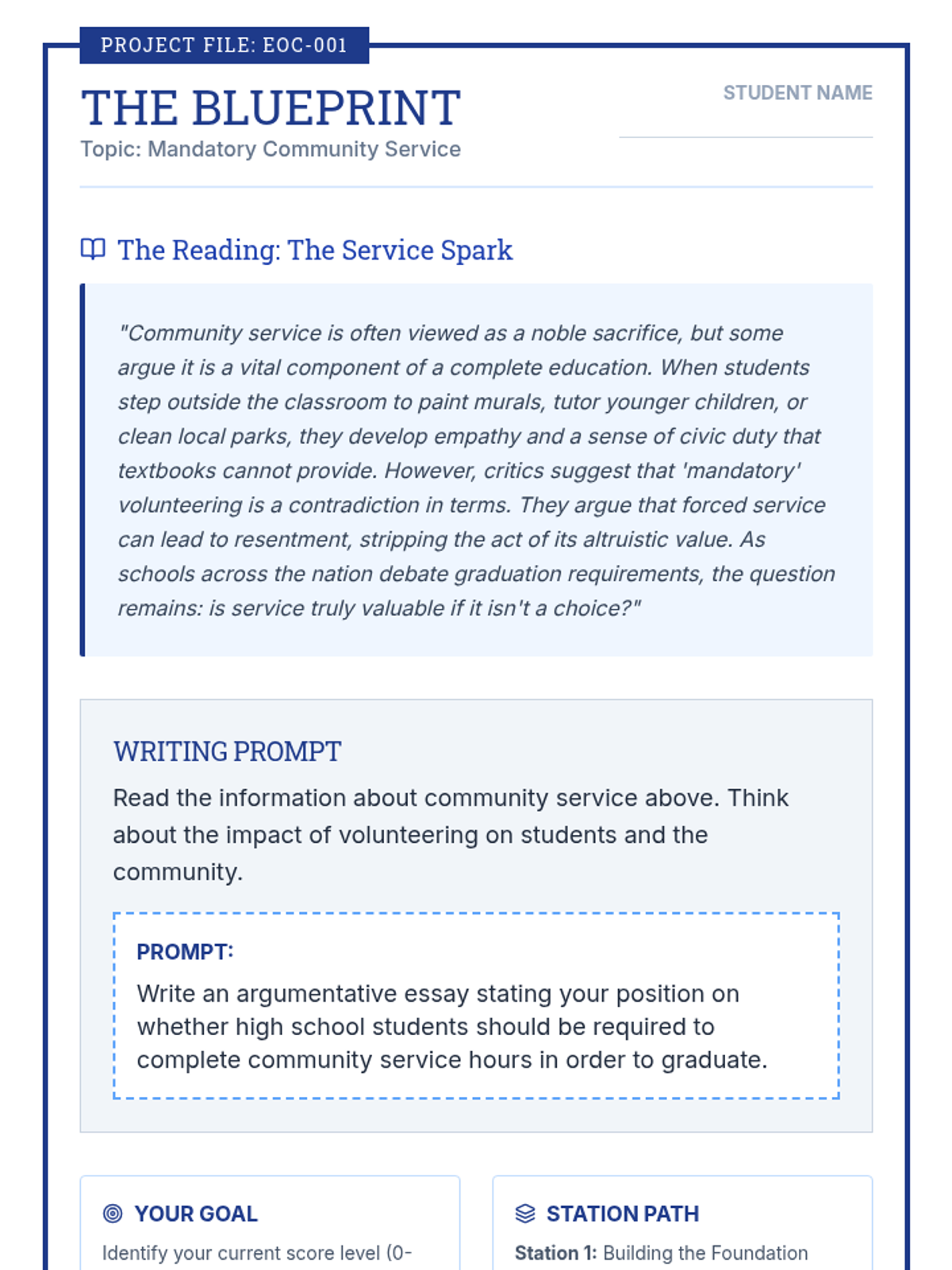
A comprehensive student workbook featuring tiered graphic organizers, sentence stems, and a peer-review checklist designed to guide students from foundational writing to advanced argumentation on the topic of community service.
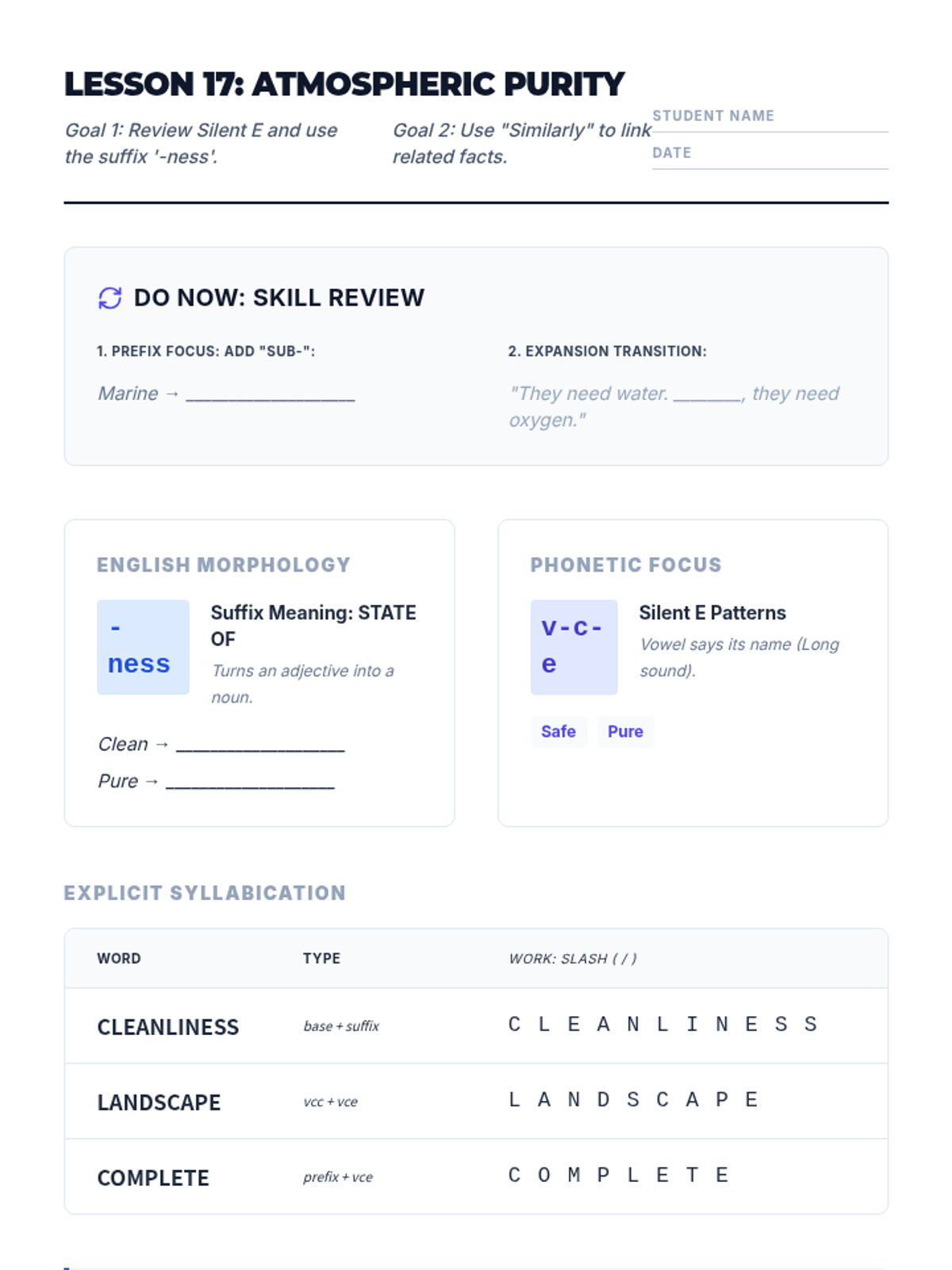
A professionally designed student handout for Lesson 17 focused on Long Vowel Silent E and the suffix '-ness'. Features standard high-school text sizing, clean academic aesthetic, Tier 3 vocabulary (cleanliness) with visual support, and structured scaffolds. systematic ESOL procedure followed. Updated syllabication layout.
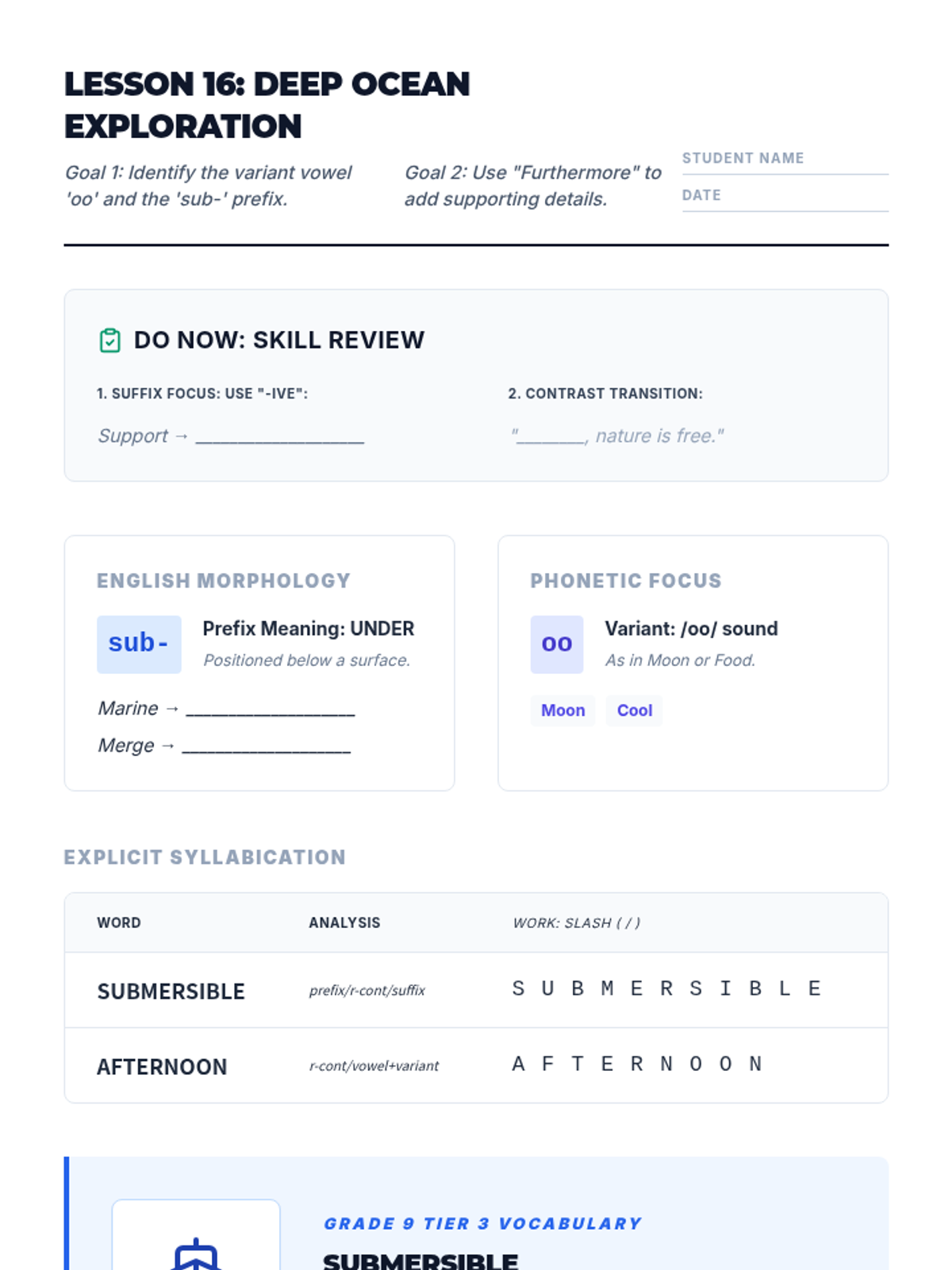
A professionally designed student handout for Lesson 16 focused on the variant vowel 'oo' and the prefix 'sub-'. Features standard high-school text sizing, clean academic aesthetic, Tier 3 vocabulary (submersible) with visual support, and structured scaffolds. systematic ESOL procedure followed. Updated syllabication layout.
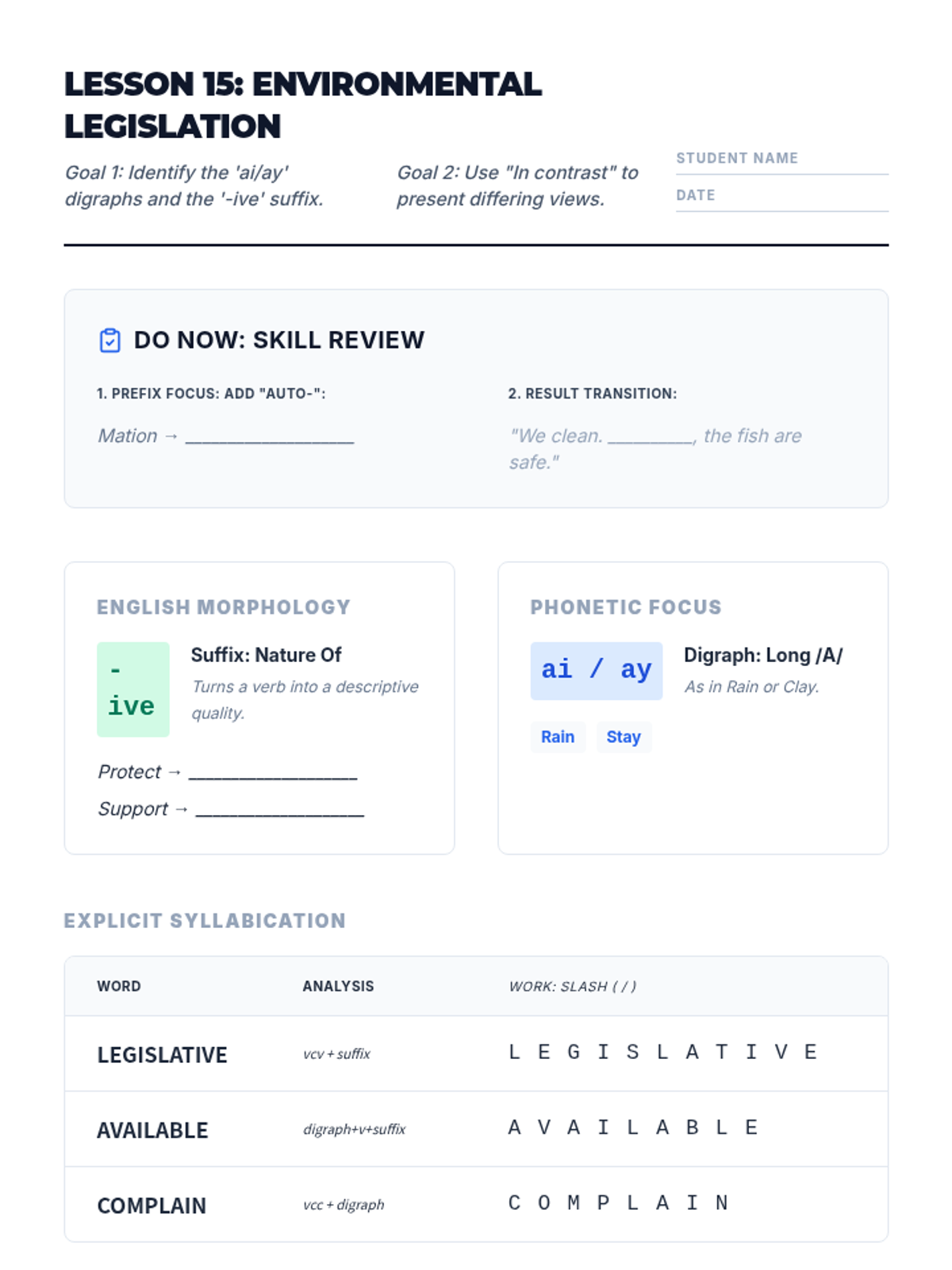
A professionally designed student handout for Lesson 15 focused on the 'ai/ay' sounds and the suffix '-ive'. Features standard high-school text sizing, clean academic aesthetic, Tier 3 vocabulary (legislative) with visual support, and structured scaffolds. systematic ESOL procedure followed. Updated syllabication layout.
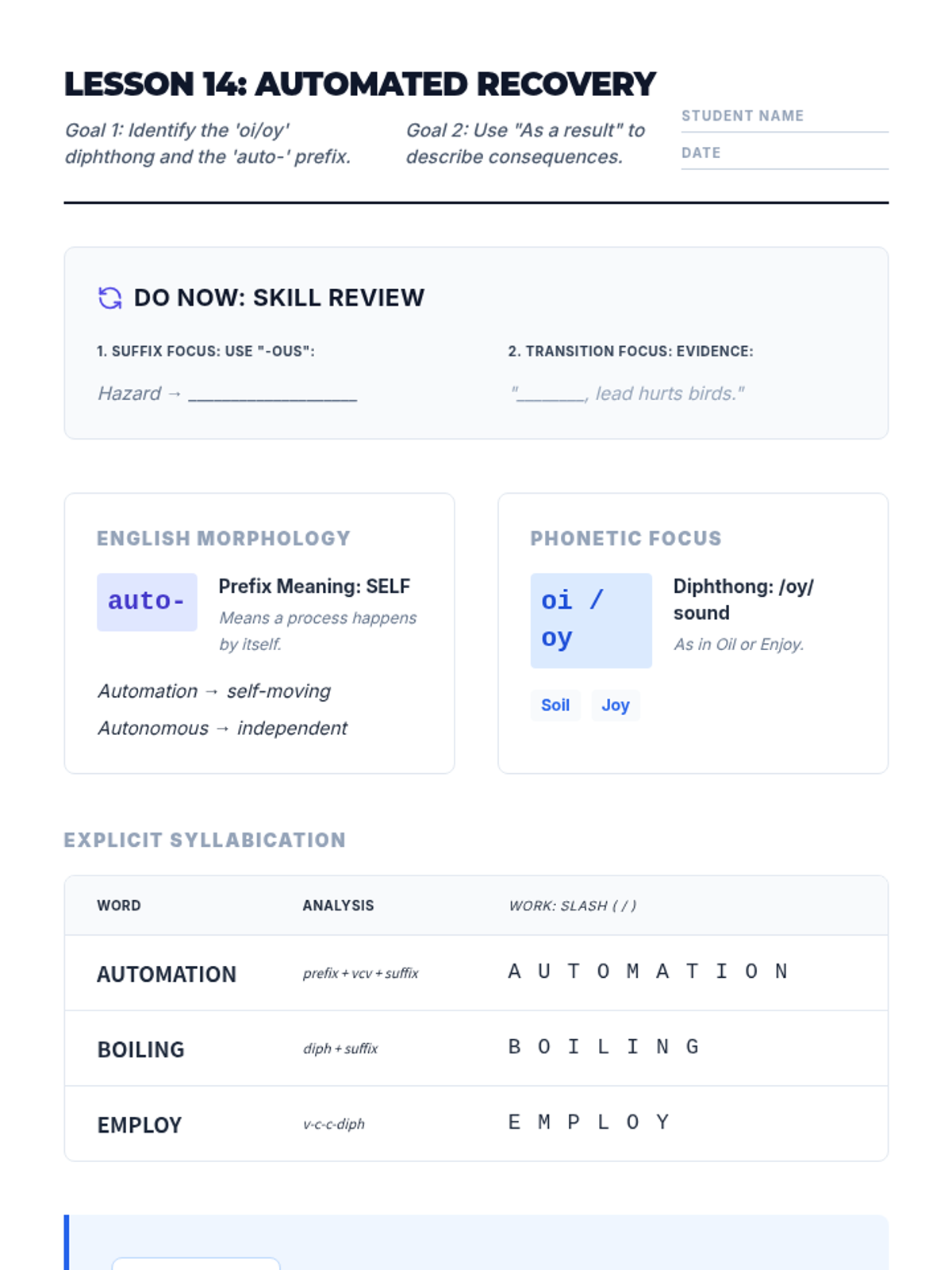
A professionally designed student handout for Lesson 14 focused on the 'oi/oy' sounds and the prefix 'auto-'. Features standard high-school text sizing, clean academic aesthetic, Tier 3 vocabulary (automation) with visual support, and structured scaffolds. systematic ESOL procedure followed. Updated syllabication layout.
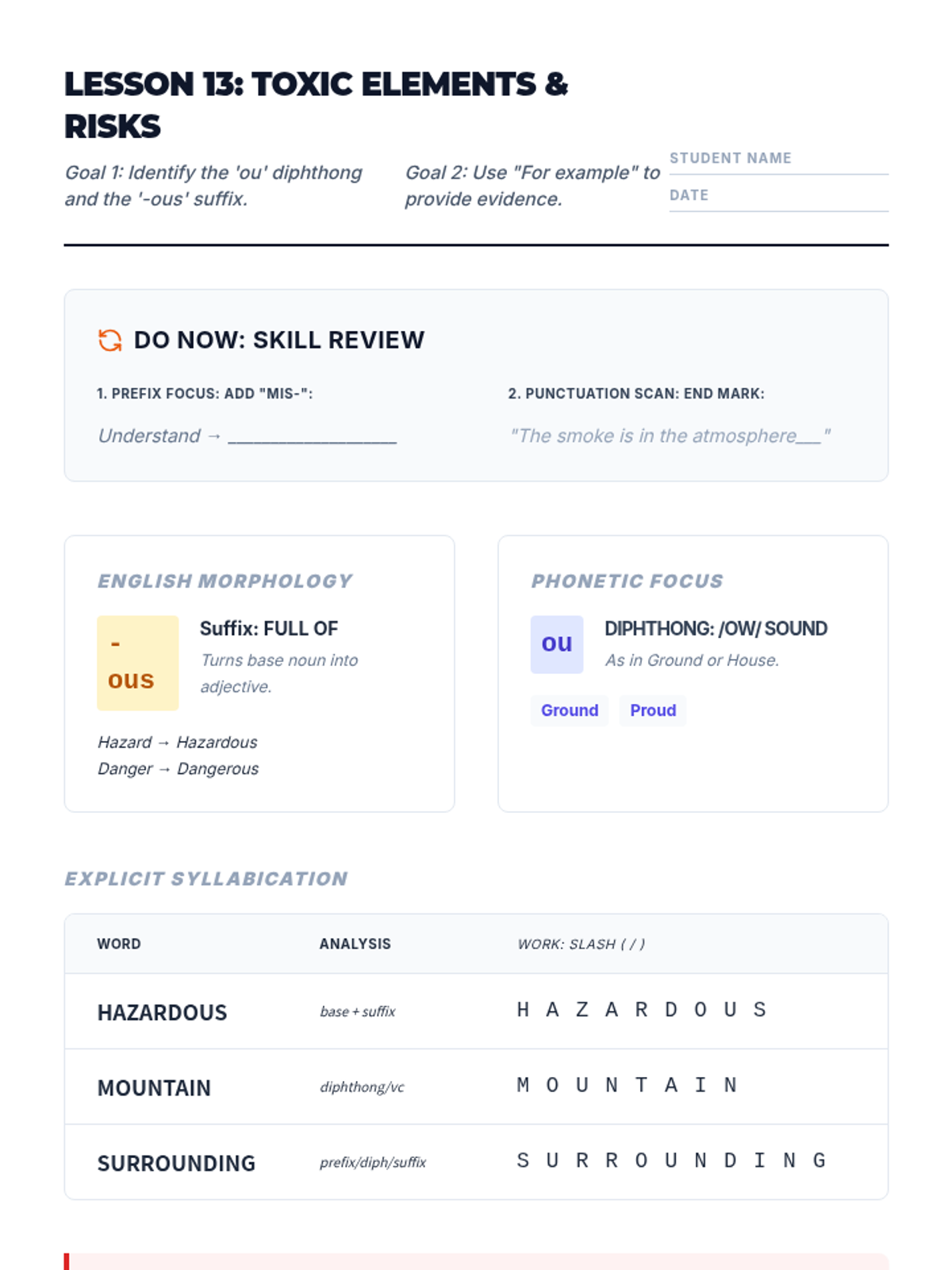
A professionally designed student handout for Lesson 13 focused on the 'ou' sound and the suffix '-ous'. Features standard high-school text sizing, clean academic aesthetic, Tier 3 vocabulary (hazardous) with visual support, and structured scaffolds. systematic ESOL procedure followed. Updated syllabication layout.
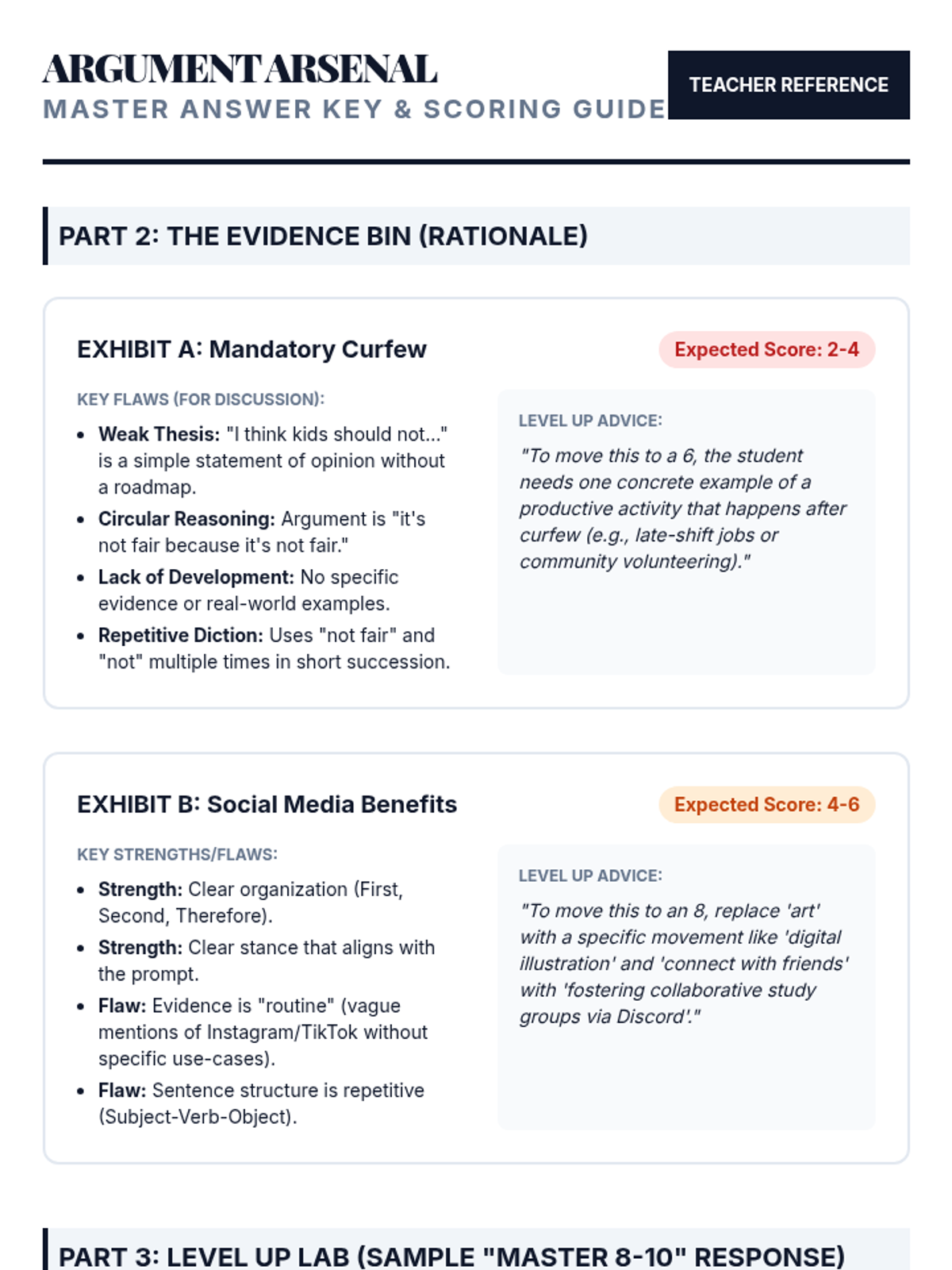
A detailed scoring guide and answer key for the Argument Arsenal worksheet, providing rationales for sample scores and a high-level model revision for the "Level Up Lab" activity.
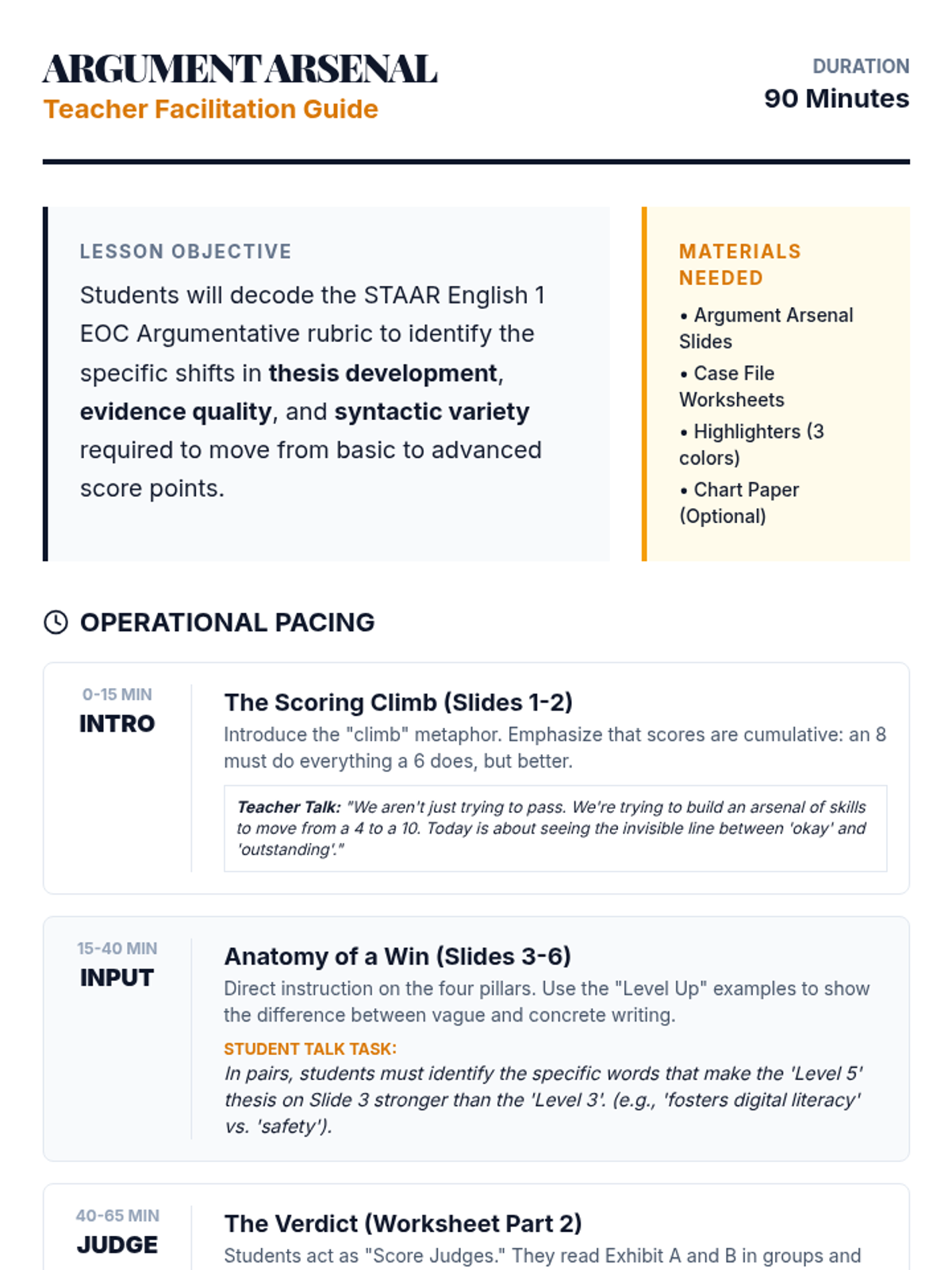
A comprehensive facilitation guide for the Argument Arsenal lesson, detailing a 90-minute pacing plan, teacher scripts, student talk tasks, and specific differentiation strategies for moving students across all rubric score points.
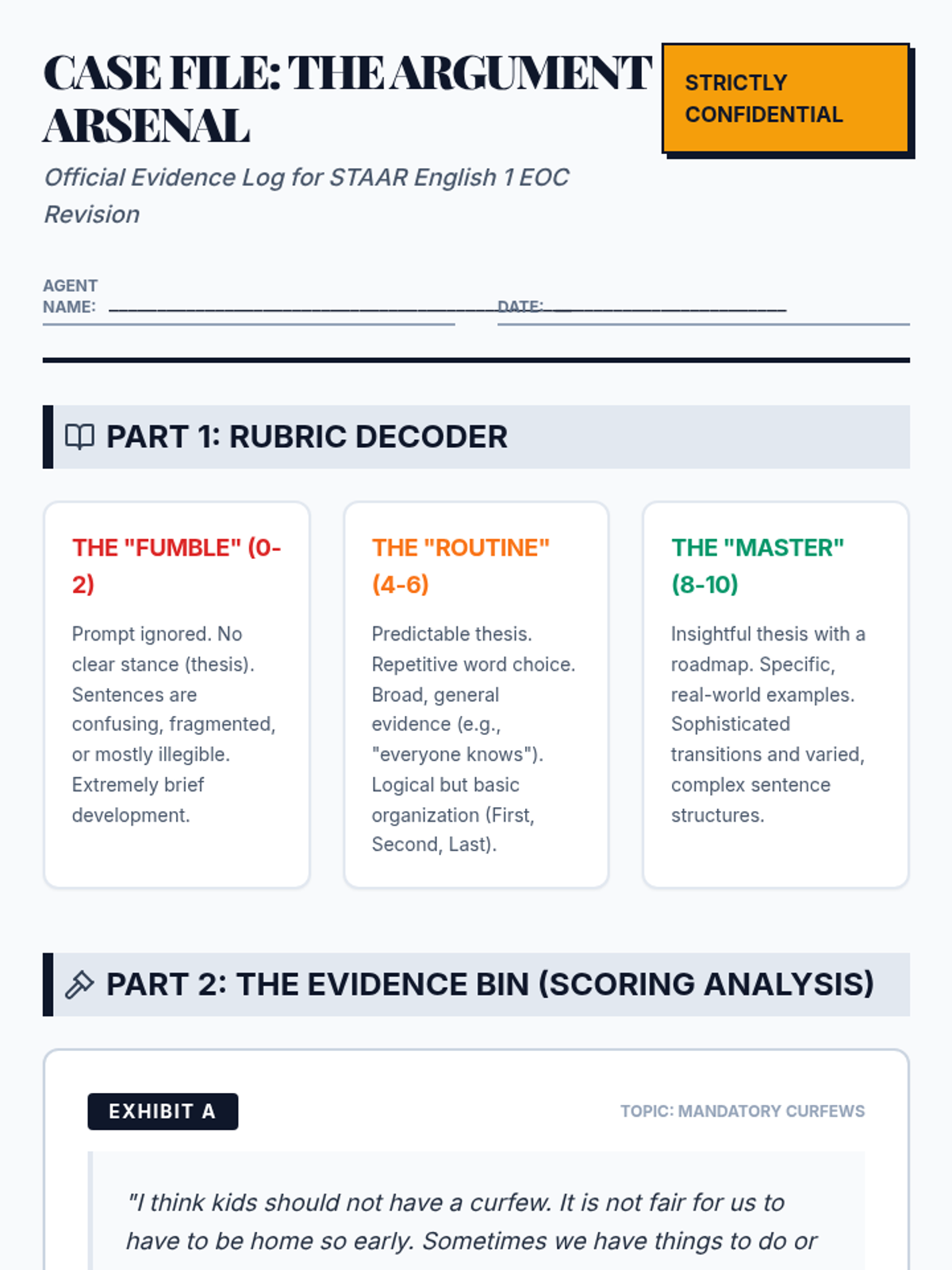
A legal-themed student worksheet for analyzing and scoring argumentative writing samples based on the STAAR English 1 EOC rubric. It includes two case studies for scoring and a "Level Up Lab" for targeted revision practice, focusing on moving from basic to advanced evidence and structure.
A high-impact 16:9 presentation designed to guide students through the STAAR English 1 EOC Argumentative Writing rubric. It features a legal-themed "climbing the scores" map, side-by-side comparisons of basic versus advanced writing, and clear visual cues for thesis development, evidence selection, and sentence variety.
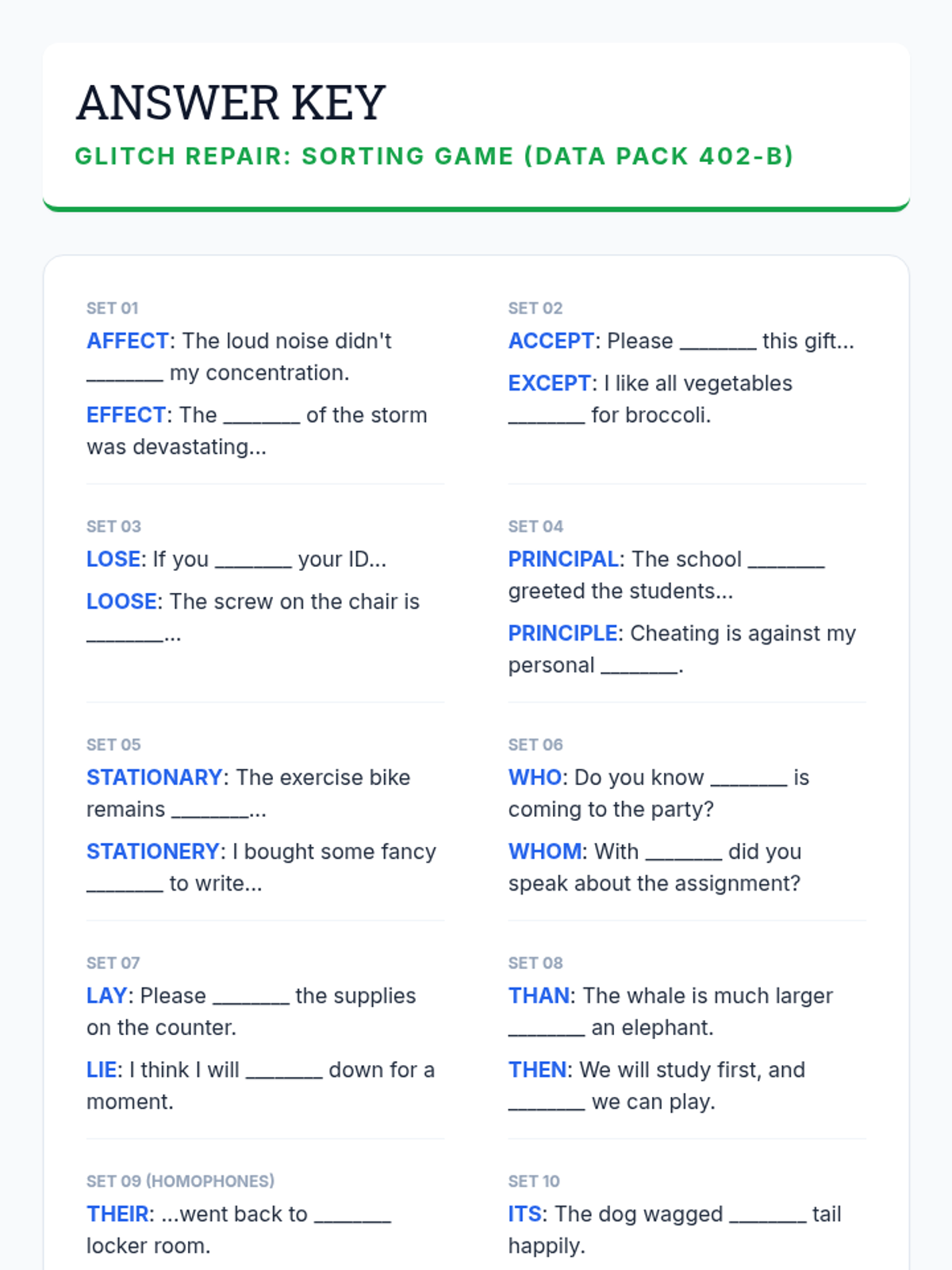
A teacher's answer key for the Glitch Repair sorting game, providing the correct matches for all word and sentence cards to facilitate quick grading and feedback.
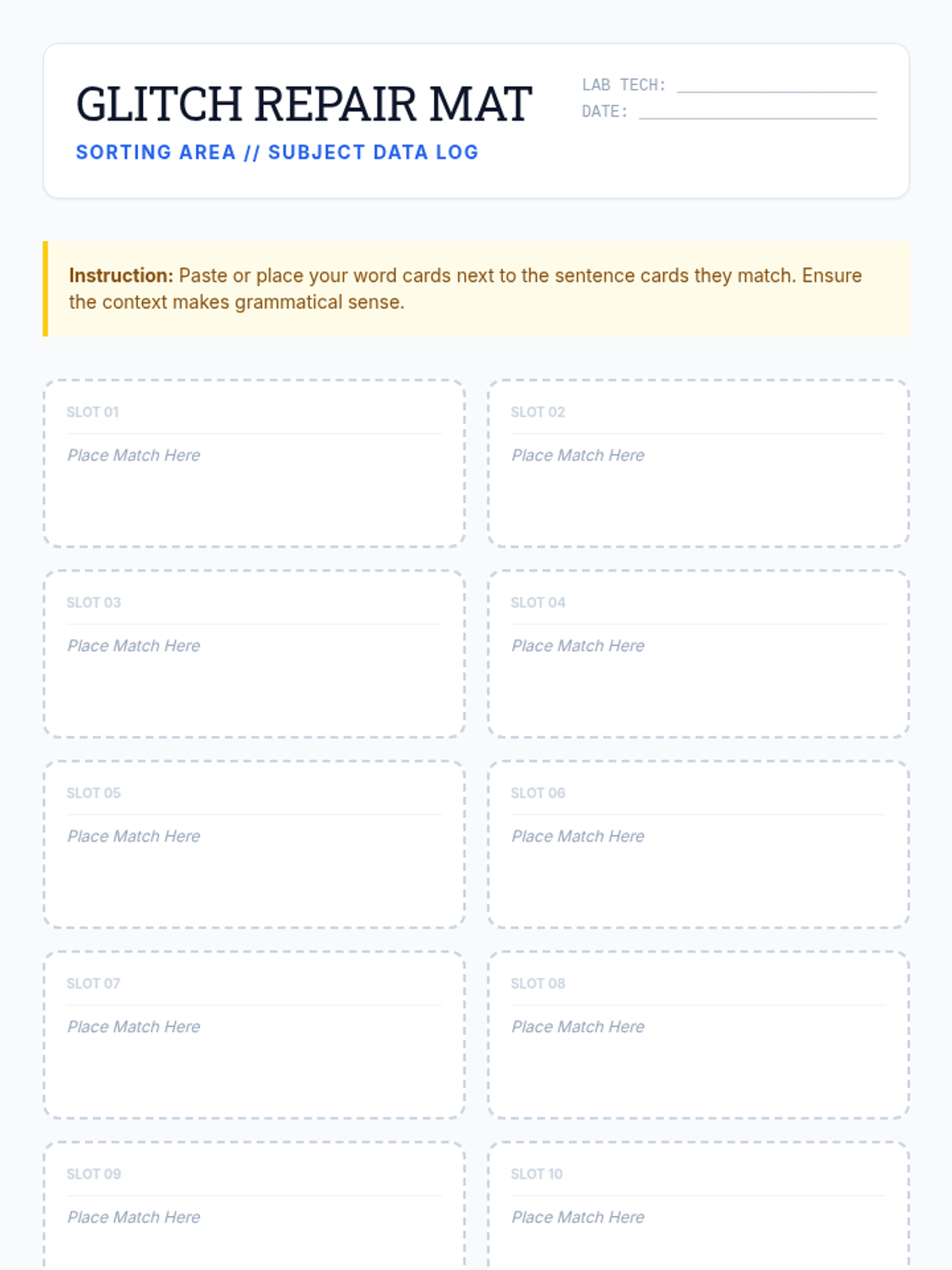
A printable sorting mat for the Glitch Repair game, providing students with a structured workspace to organize and match word and sentence cards.
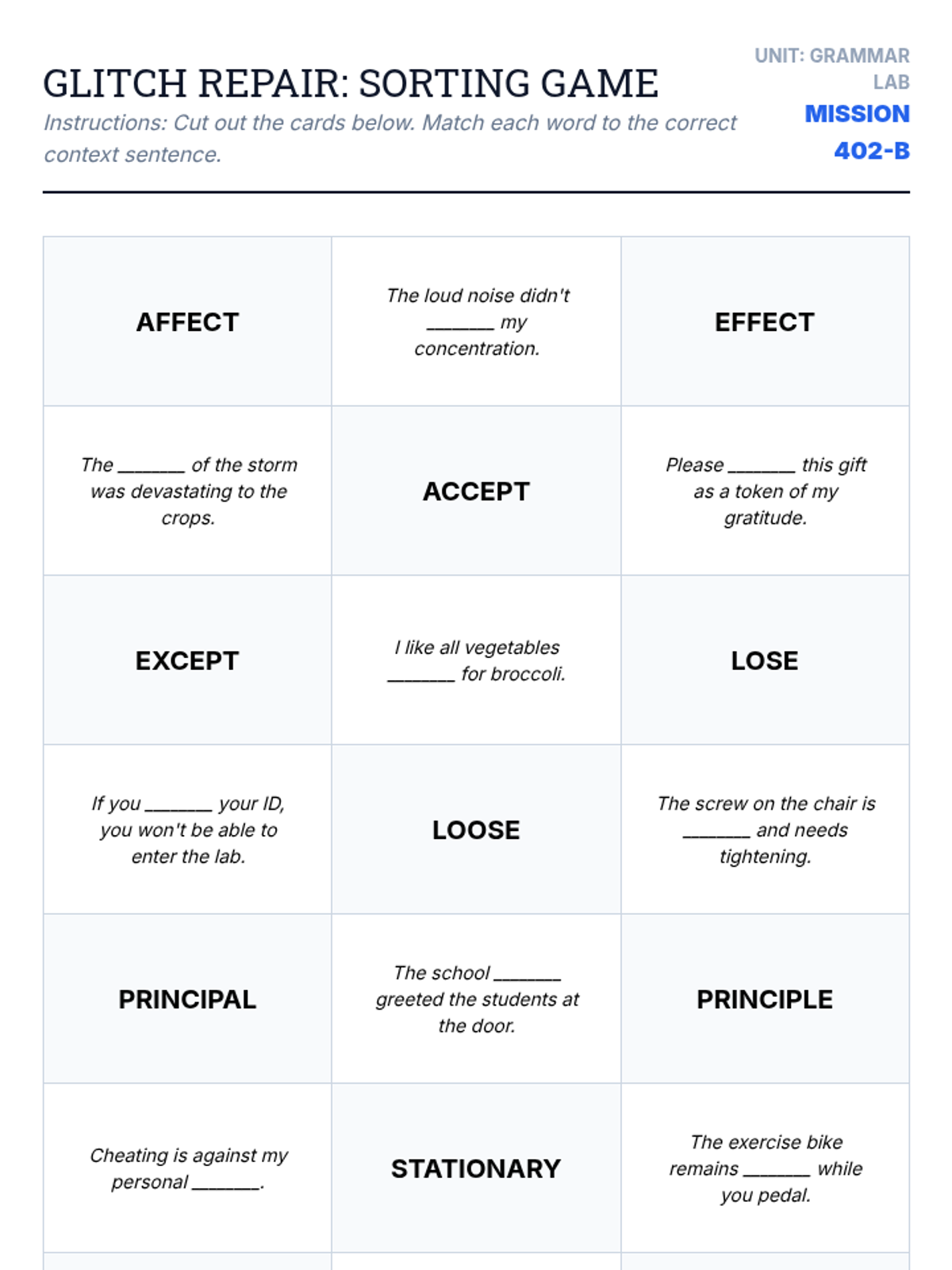
A set of 24 printable cards featuring words and context sentences for a sorting game. Students must match the correct commonly confused word with the sentence that fits its definition.
A visually striking slideshow designed for direct instruction on 12 pairs of commonly confused words. Includes memory triggers, definitions, visual hints, and interactive practice sentences for each word group.
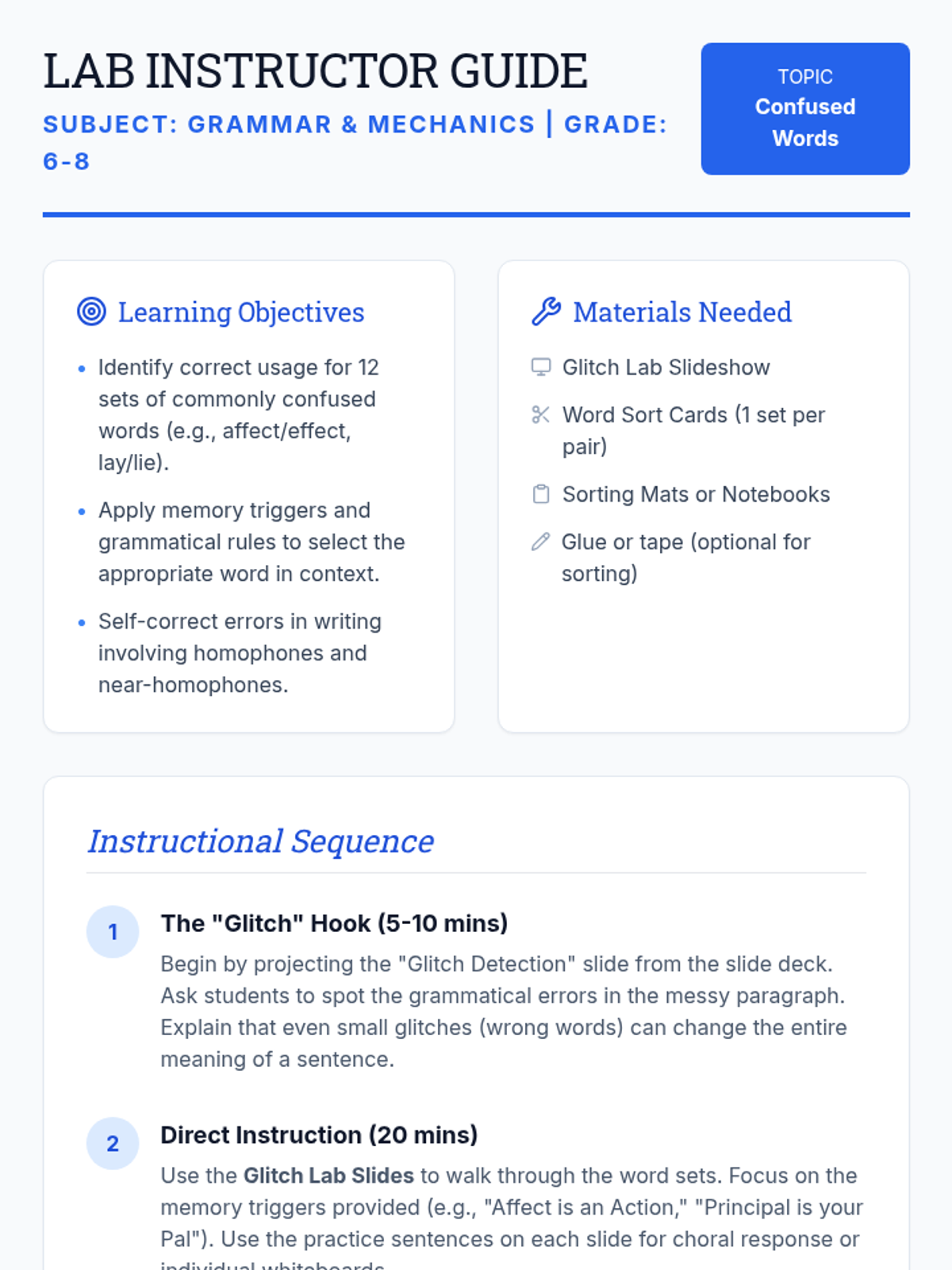
A detailed teacher's guide for the Grammar Lab lesson, including learning objectives, a list of required materials, a step-by-step instructional sequence, and practical teaching tips for middle school classrooms.
A visual presentation guiding students through key revising strategies for the Texas English I EOC, focusing on sentence combining, redundancy, and clarity.
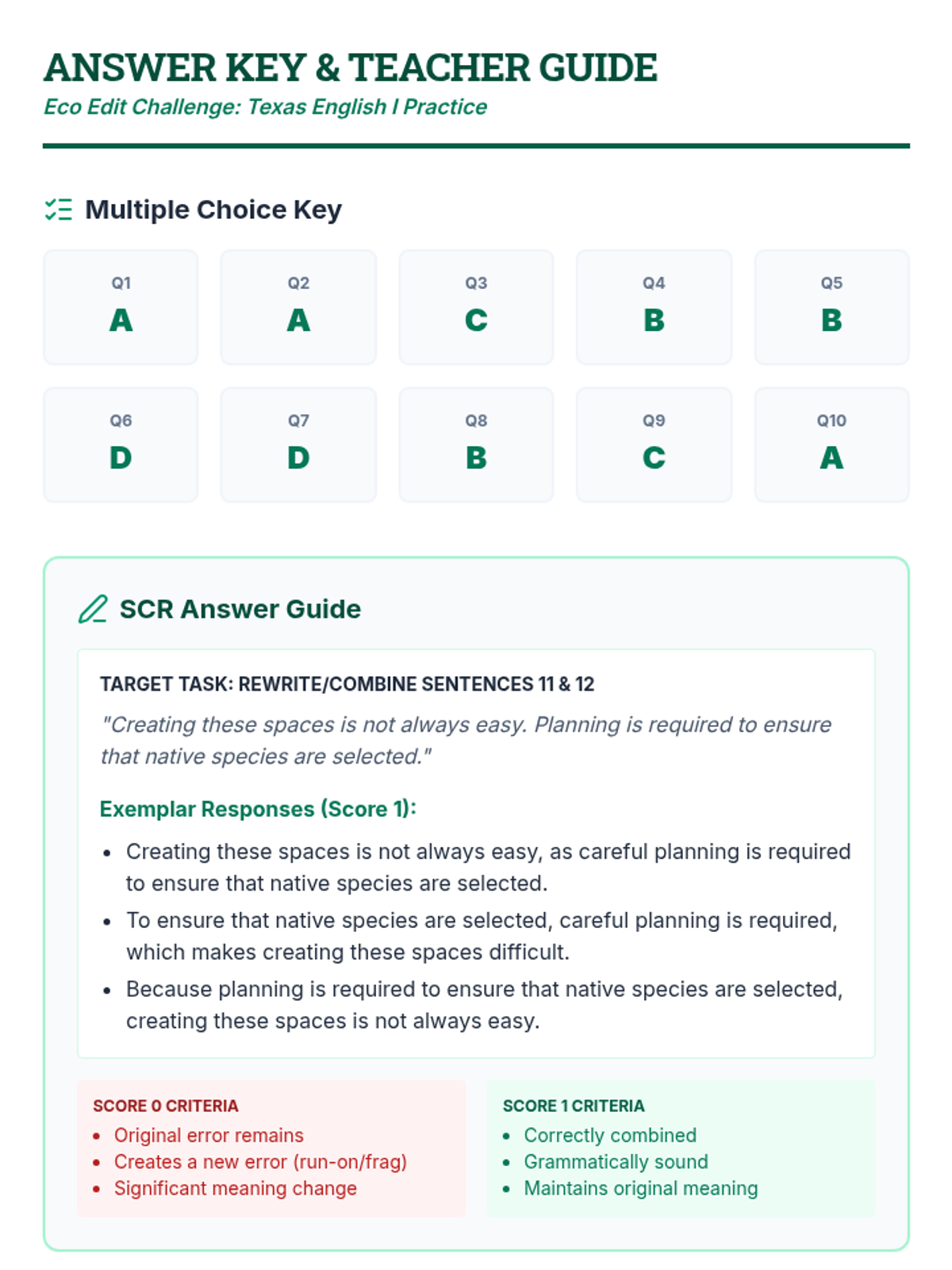
An updated answer key and teacher guide that includes a scoring rubric and exemplar responses for the short constructed response (SCR) revision task.
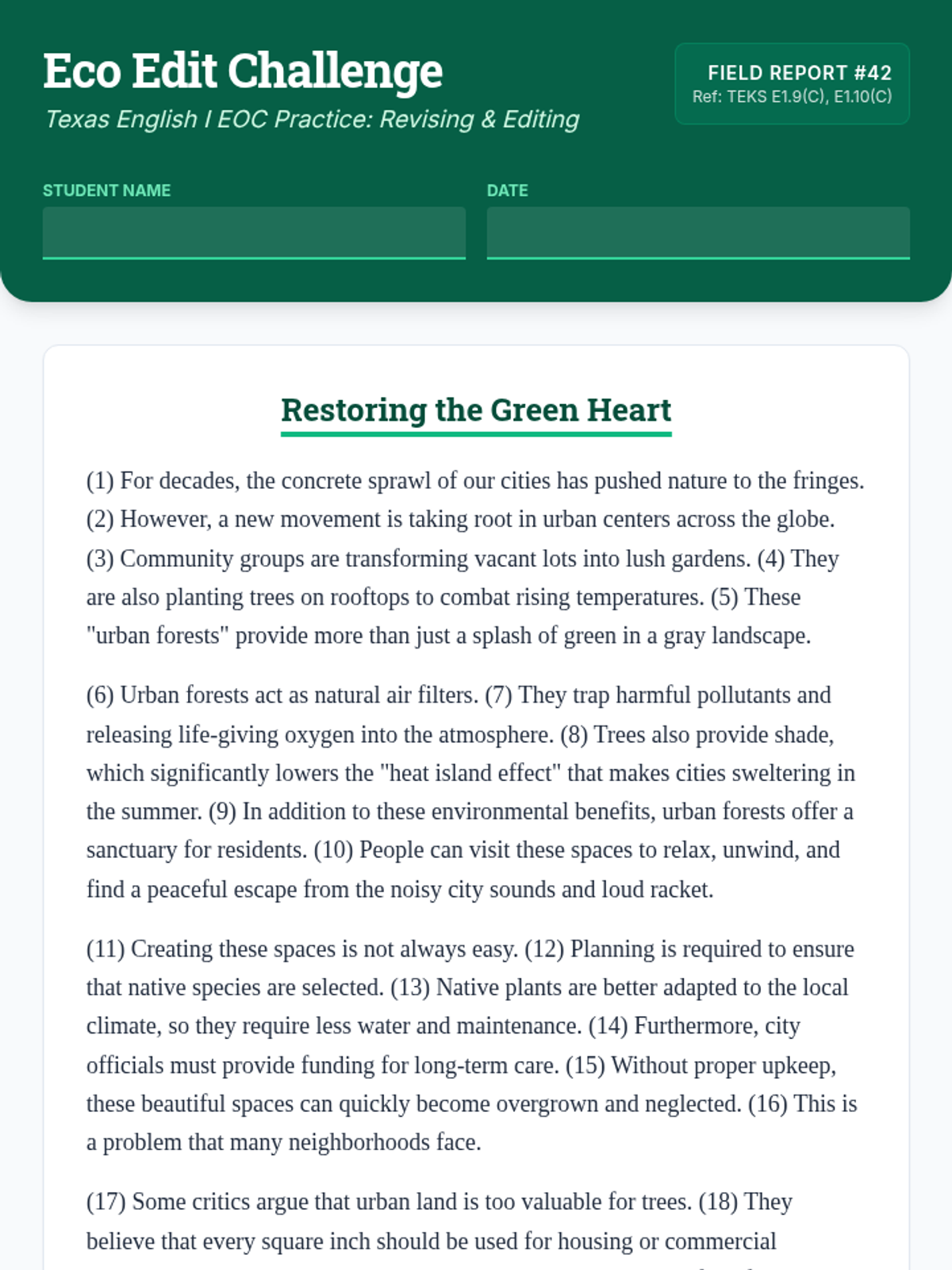
A STAAR-aligned practice test for Texas English I, featuring a passage on urban forestry with 10 multiple-choice questions focusing on sentence combining, word choice, transitions, and grammatical corrections.
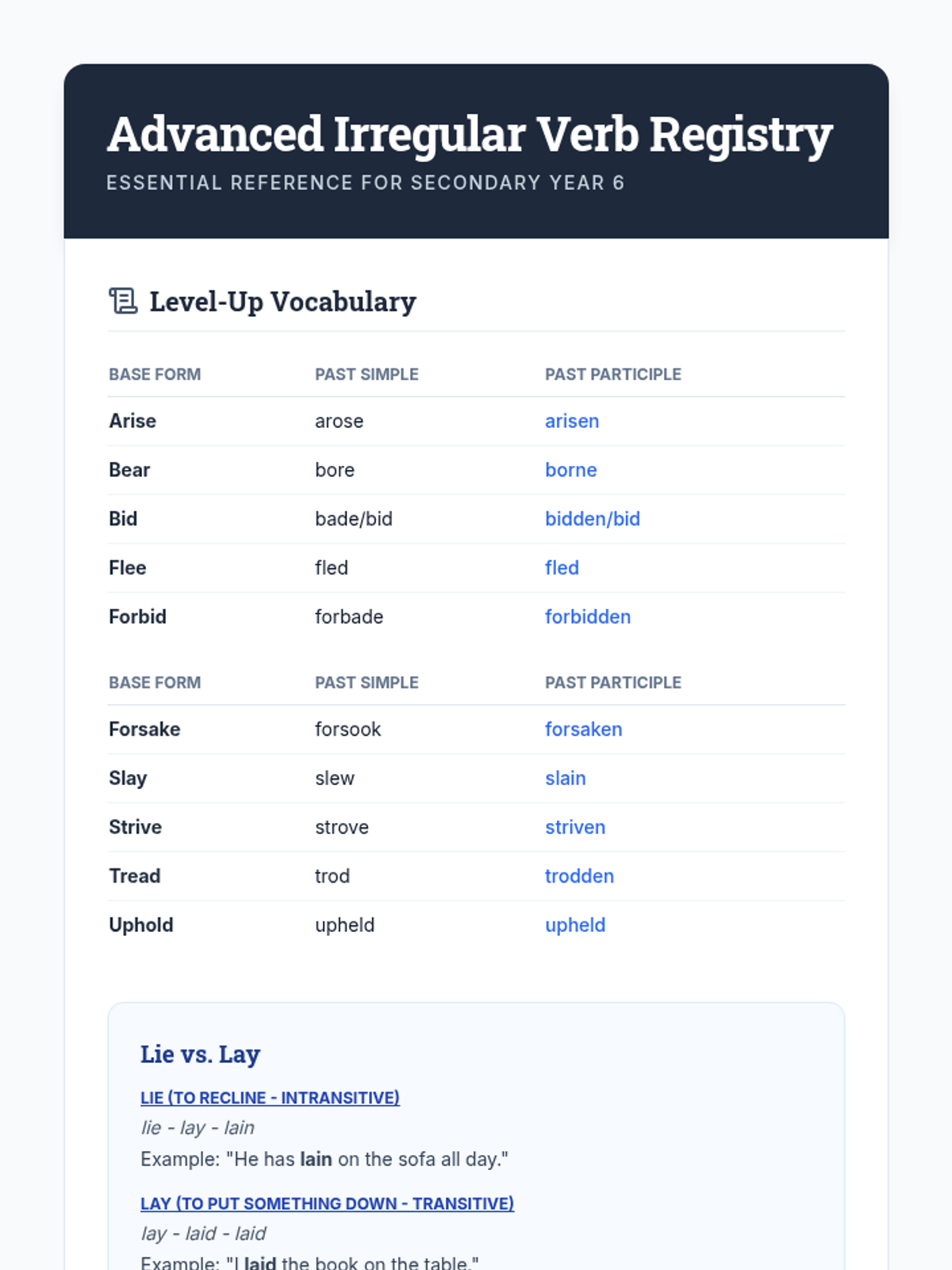
An advanced reference sheet for 12th-grade students focusing on sophisticated irregular verbs, tricky verb pairs, and formal/academic usage notes.
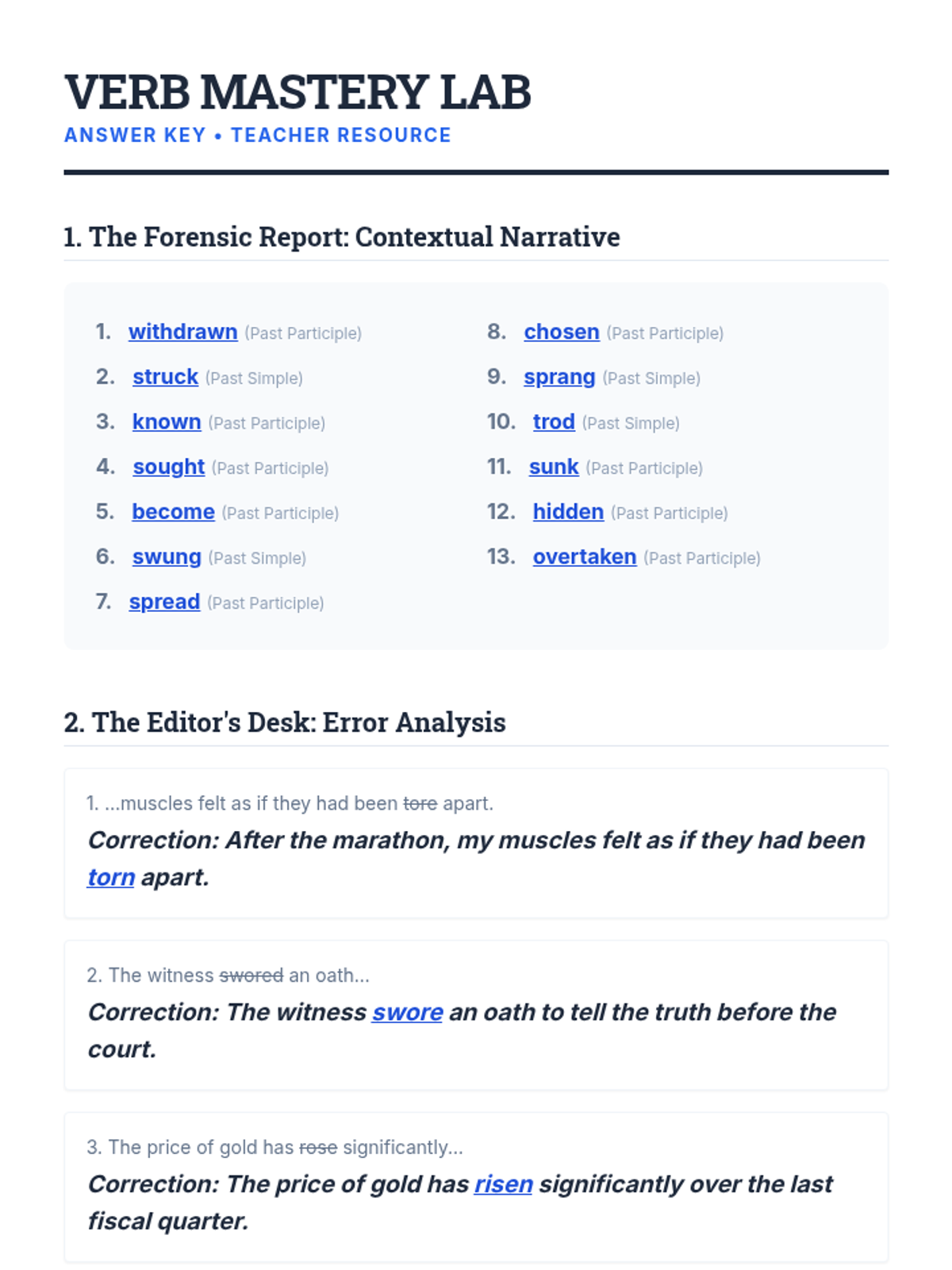
The complete answer key for the Verb Mastery Lab worksheet, including explanations for the trickiest grammar points.
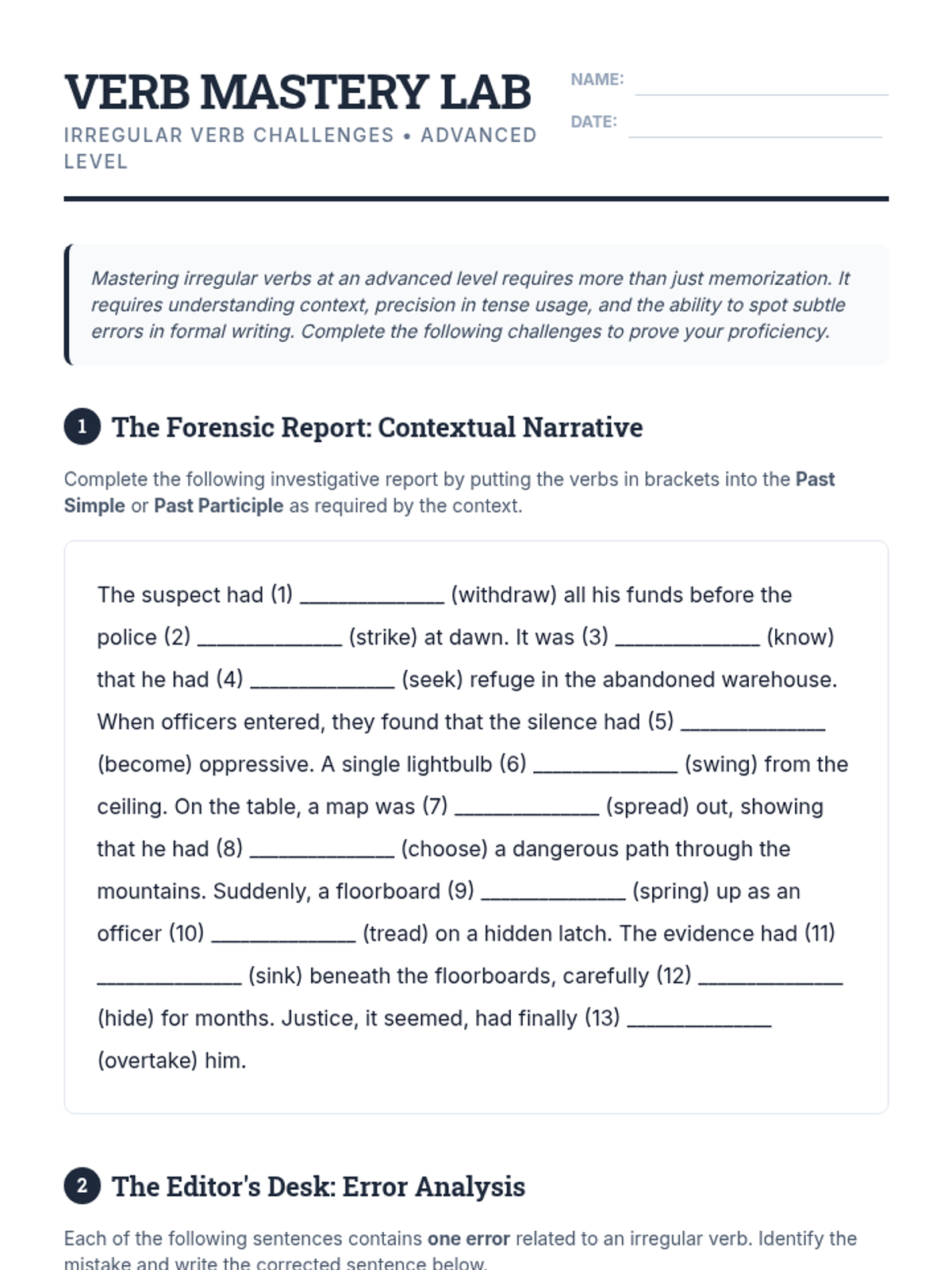
An advanced irregular verb worksheet for high school seniors, featuring narrative gap fills, error correction, sentence transformations, and practice with tricky verb pairs like lie/lay and hung/hanged.
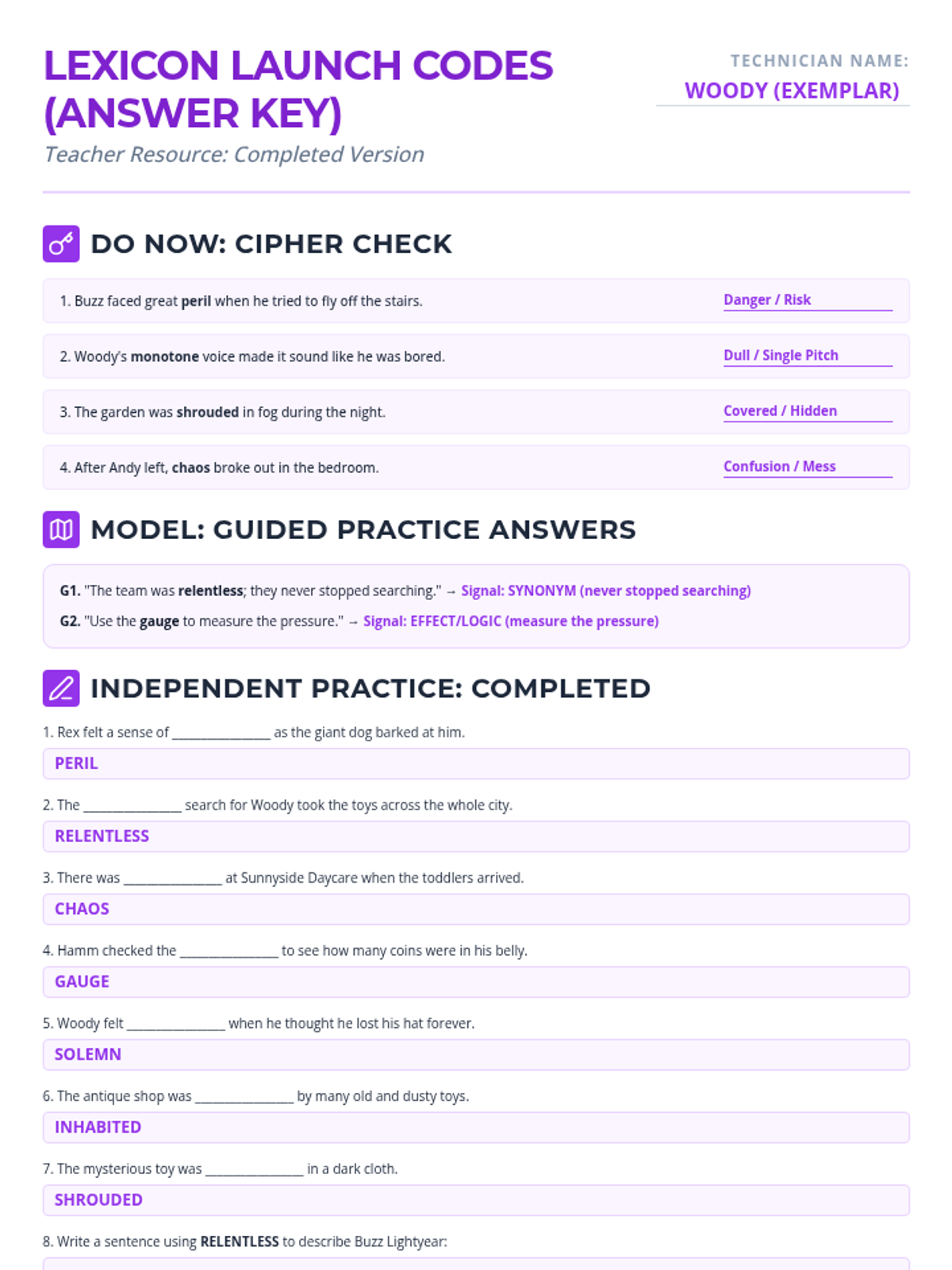
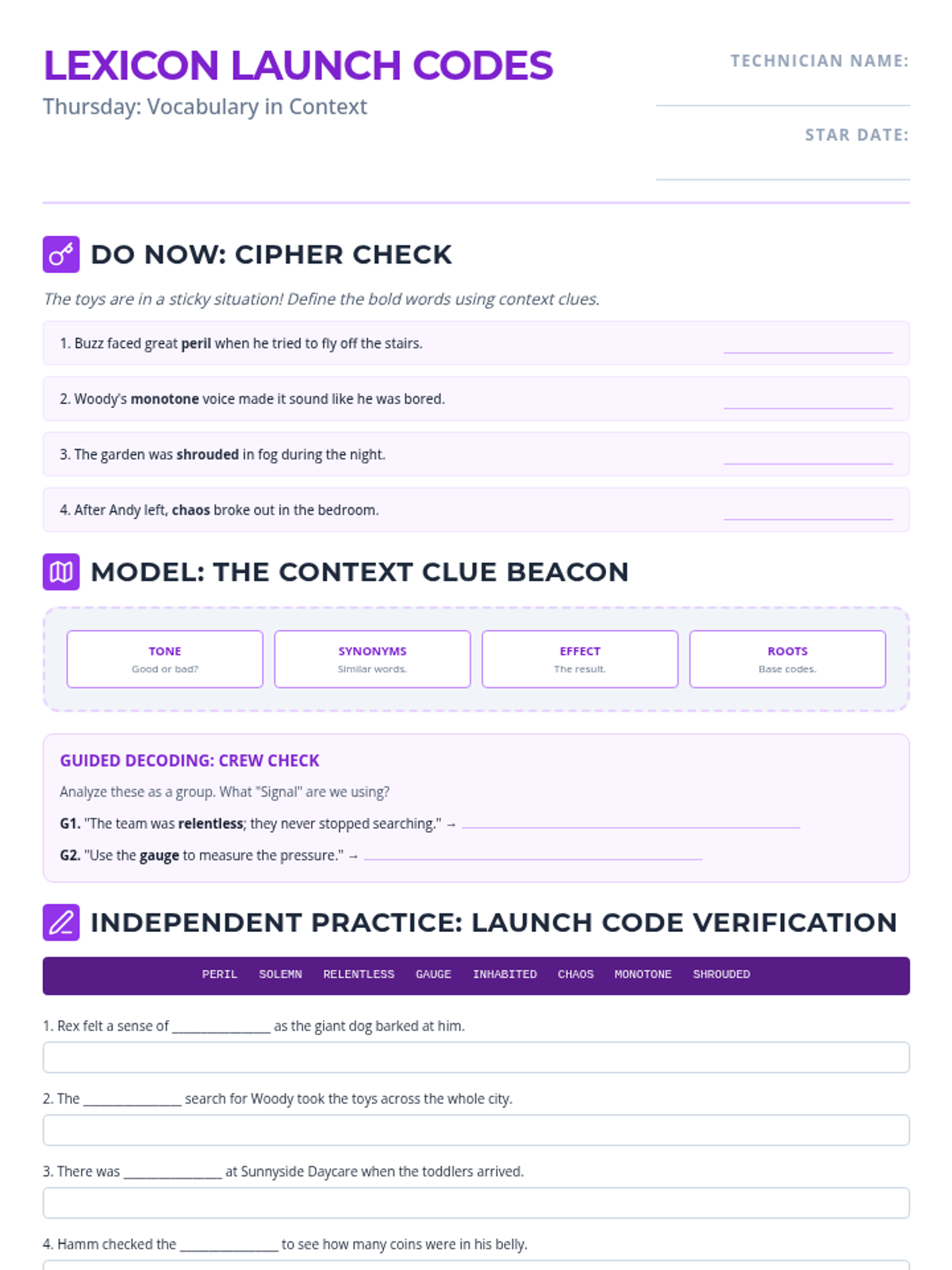
Thursday's vocabulary worksheet (Toy Story theme) filled in with exemplar answers in purple to serve as a visual guide for teachers.
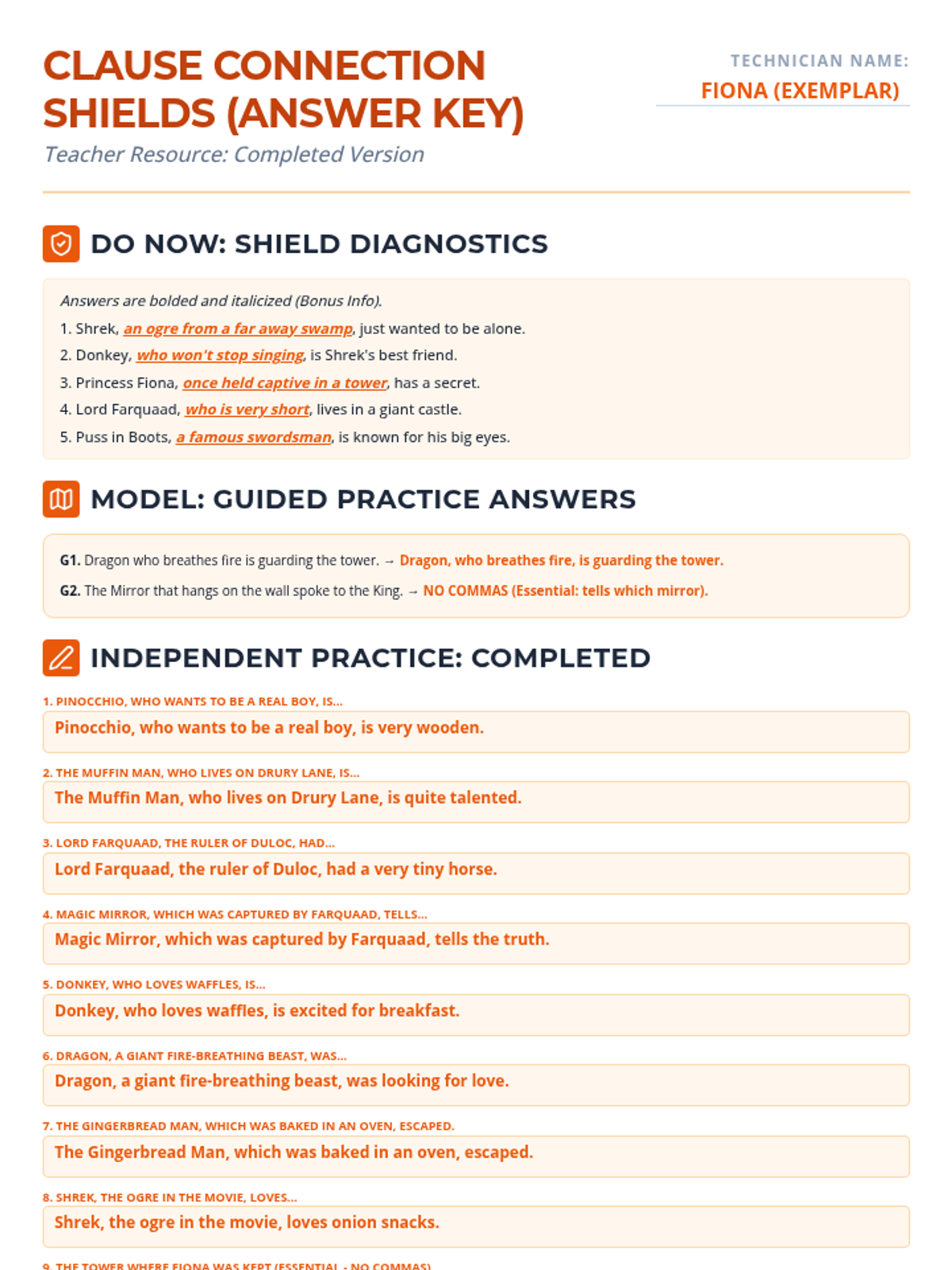
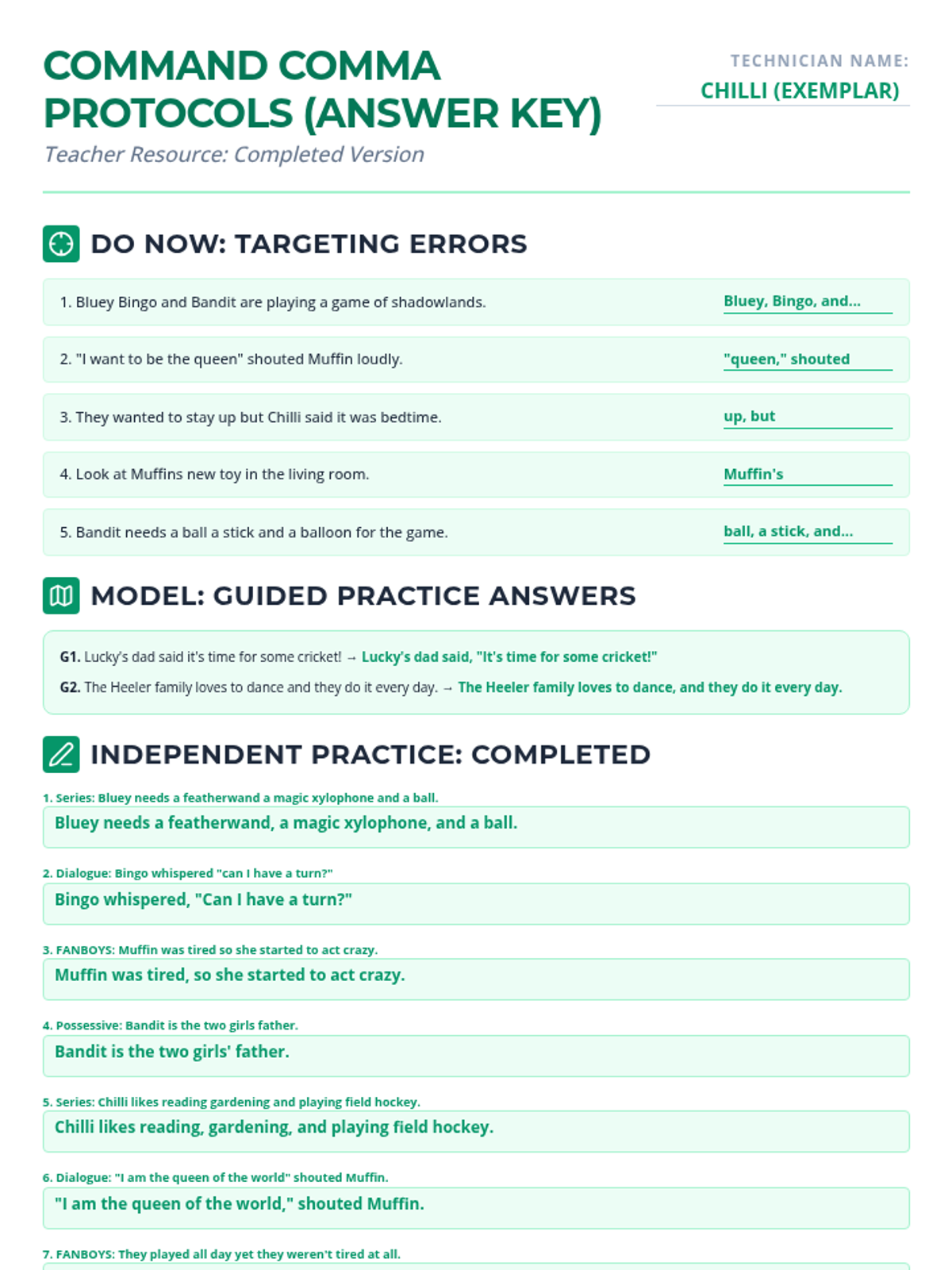
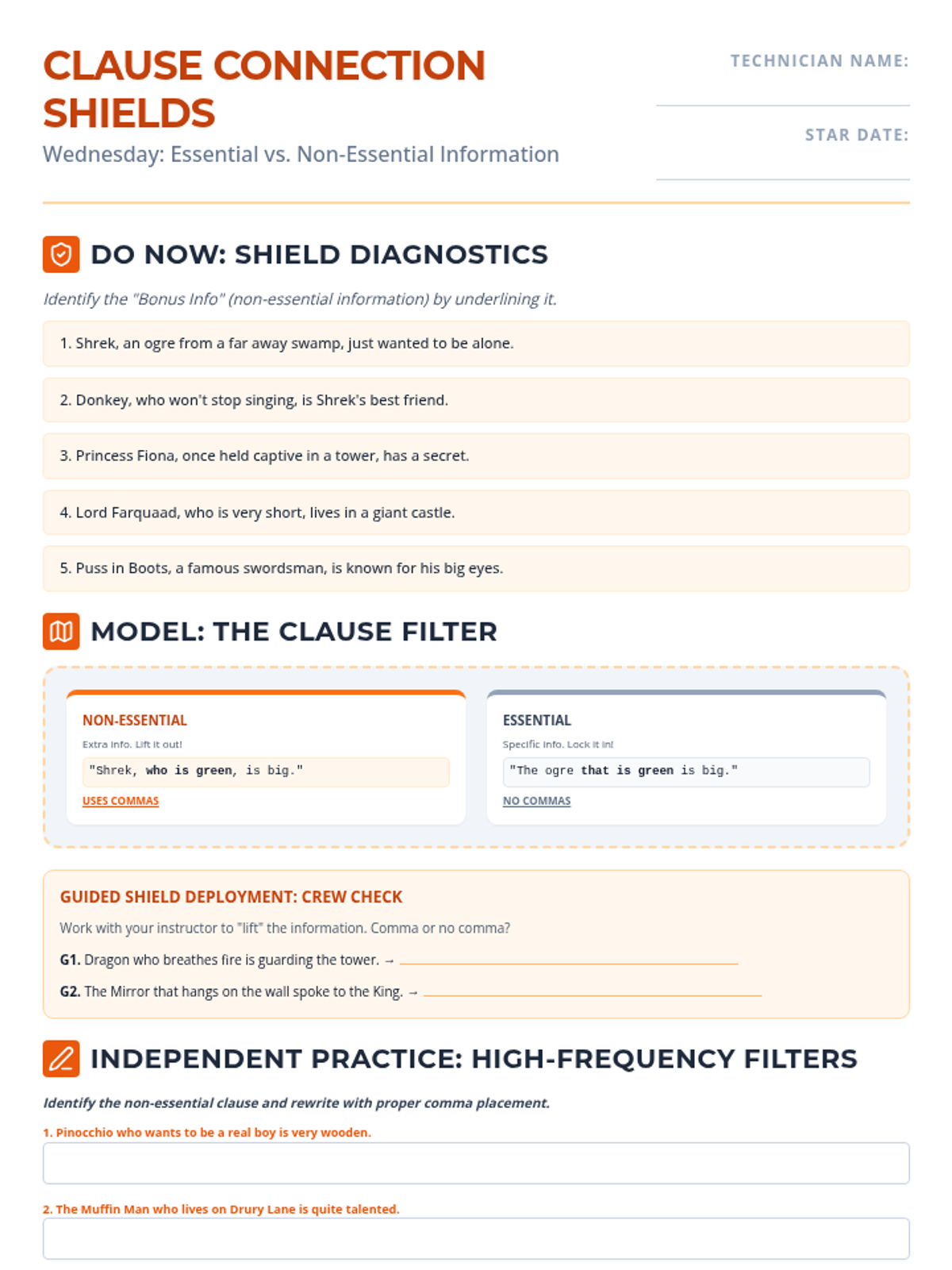
Wednesday's clauses worksheet (Shrek theme) filled in with exemplar answers in orange to serve as a visual guide for teachers.
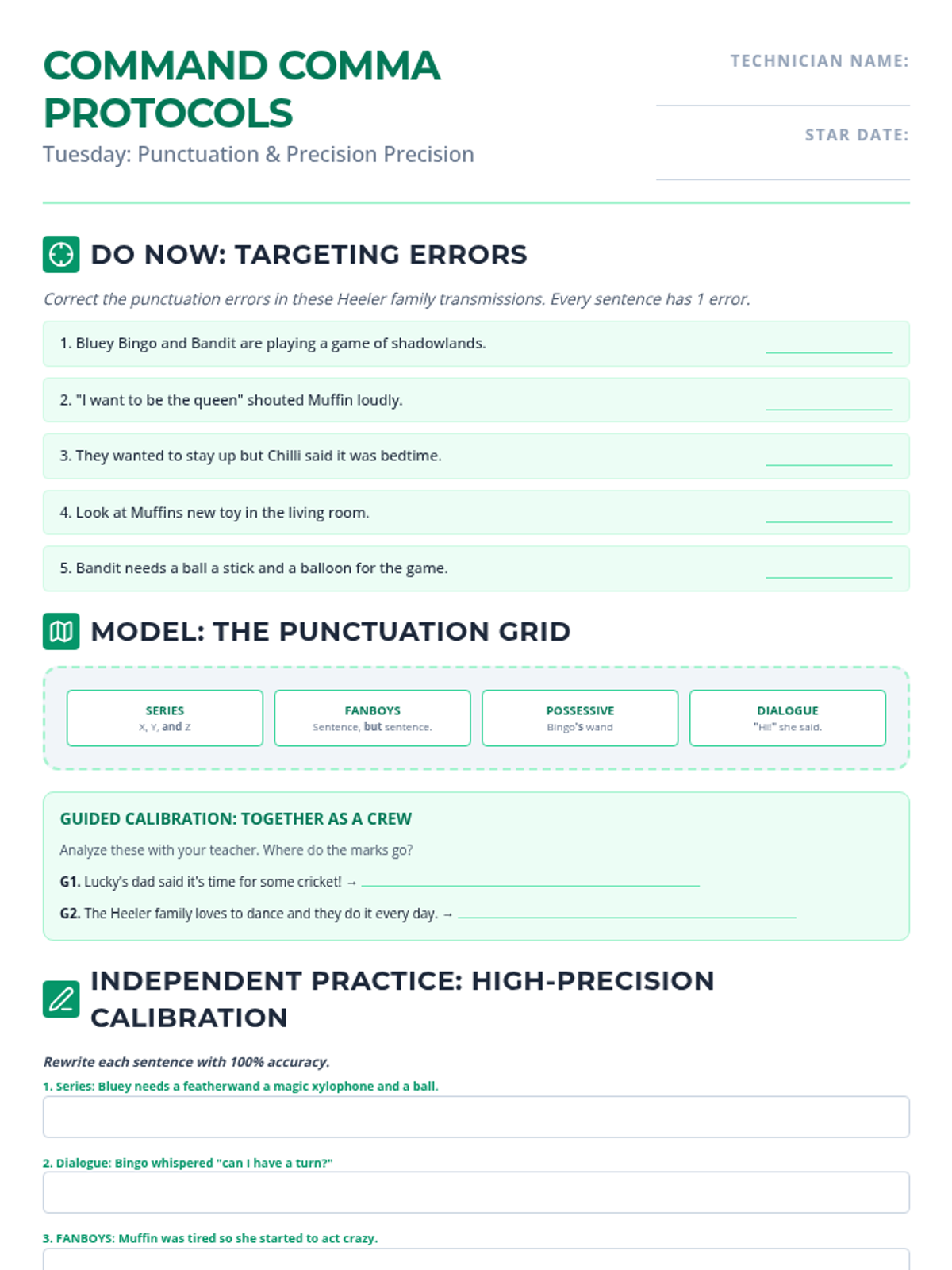
Tuesday's punctuation worksheet (Bluey theme) filled in with exemplar answers in emerald to serve as a visual guide for teachers.
Updated Thursday vocabulary worksheet with a Toy Story theme. Includes a expanded Do Now, a Guided Practice section for modeling, 8 intensive solo practice problems, and a multi-sentence writing exit ticket to ensure a full 50-minute lesson.
Updated Wednesday grammar worksheet with a Shrek theme. Focuses on the "Lift Test" for clauses with 10 problems, a guided practice section, and an expanded exit ticket to ensure a full 50-minute lesson.
Updated Tuesday grammar worksheet with a Bluey theme. Includes expanded Do Now, a Guided Practice section for modeling, 8 intensive solo practice problems, and a creative dialogue-based exit ticket to ensure a full 50-minute lesson.
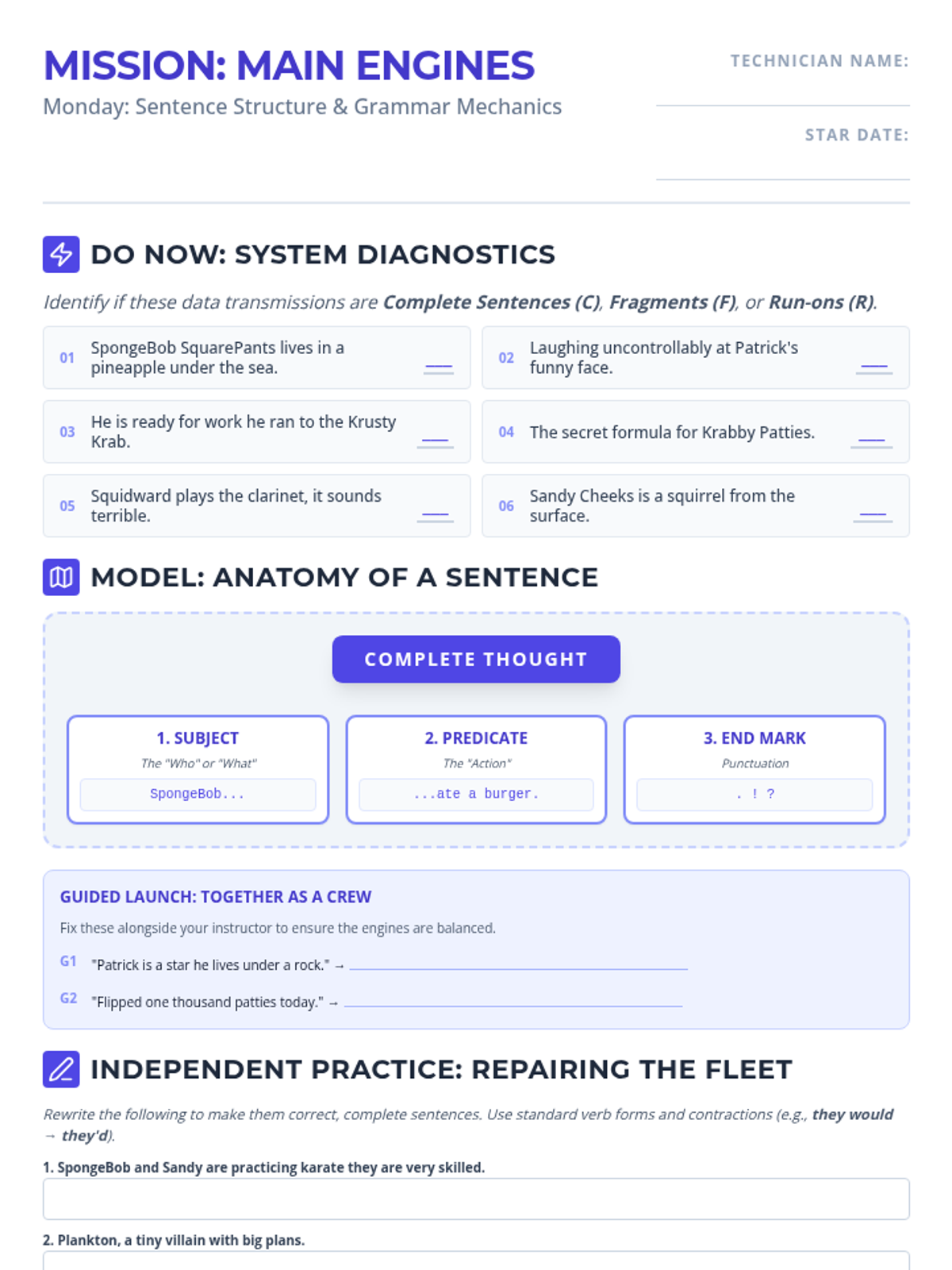
Updated Monday grammar worksheet focusing on sentence structure with a SpongeBob theme. Expanded practice sections and a guided launch component ensure the lesson fulfills a 50-minute instructional block.
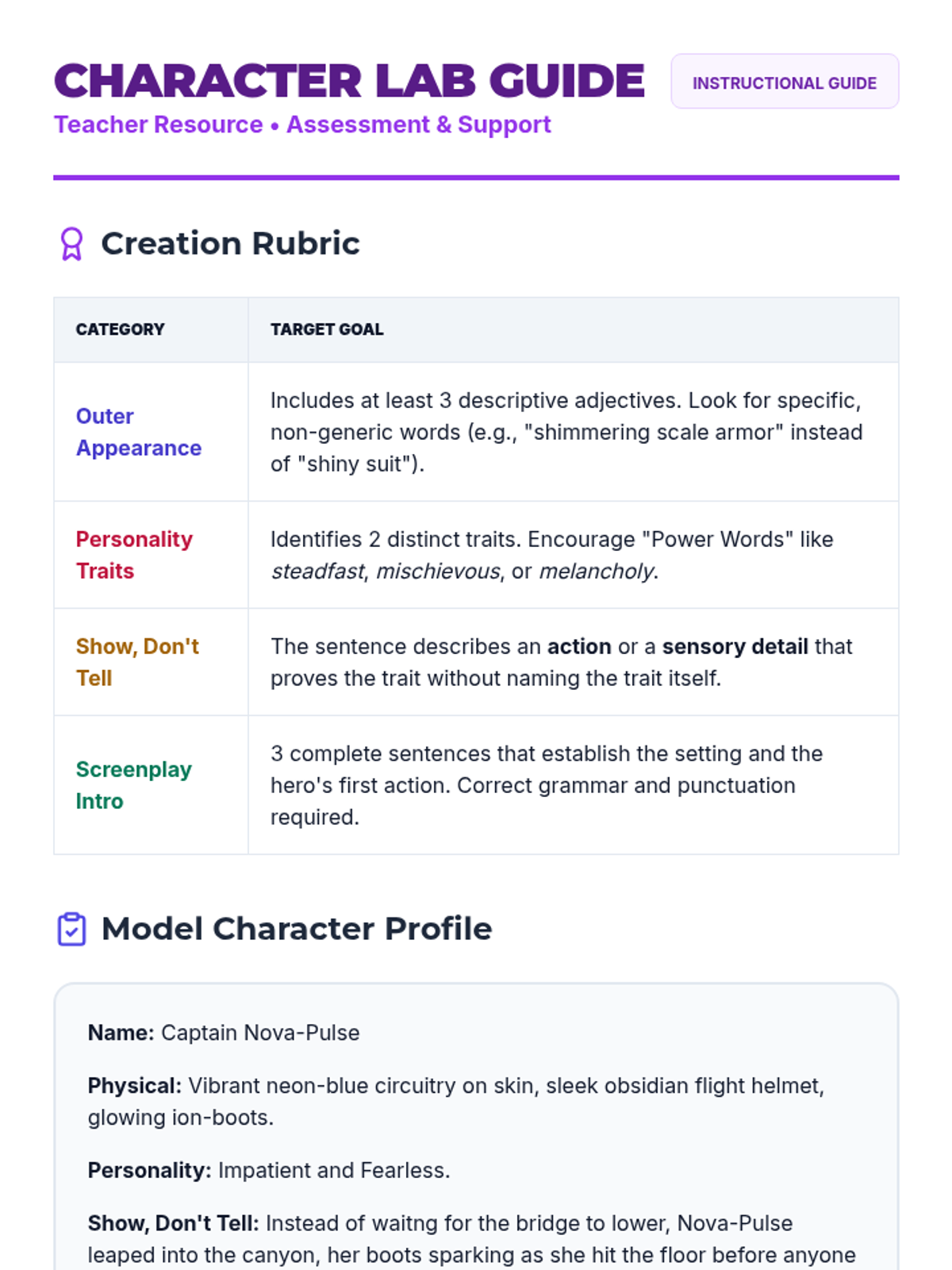
A teacher's facilitation guide and assessment rubric for the Character Profile worksheet. It includes model responses and specific pedagogical strategies for supporting high school students with autism.
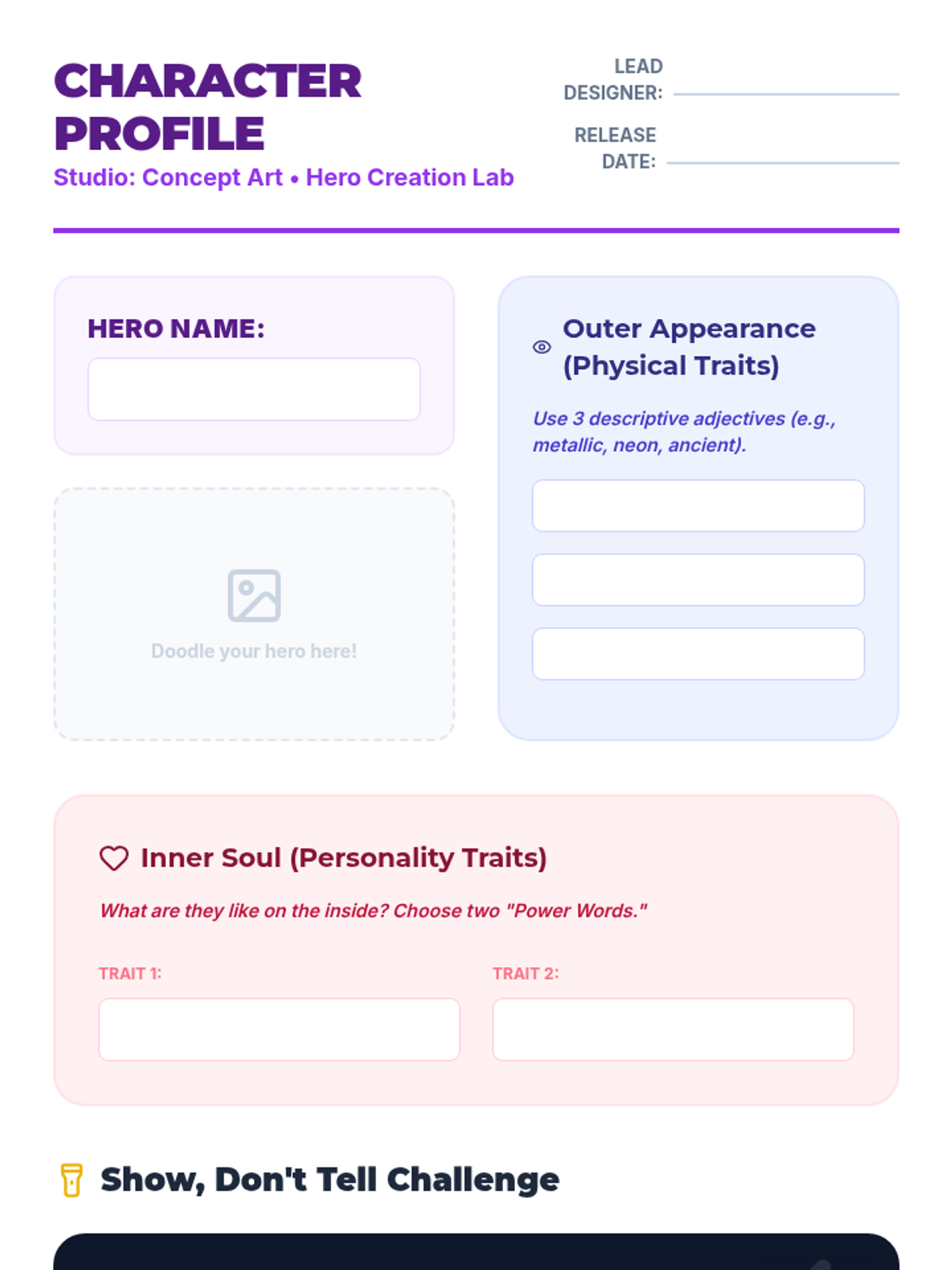
A character development worksheet that guides students through creating a hero. It includes sections for physical traits, personality, a 'Show, Don't Tell' challenge, and a short creative writing prompt.
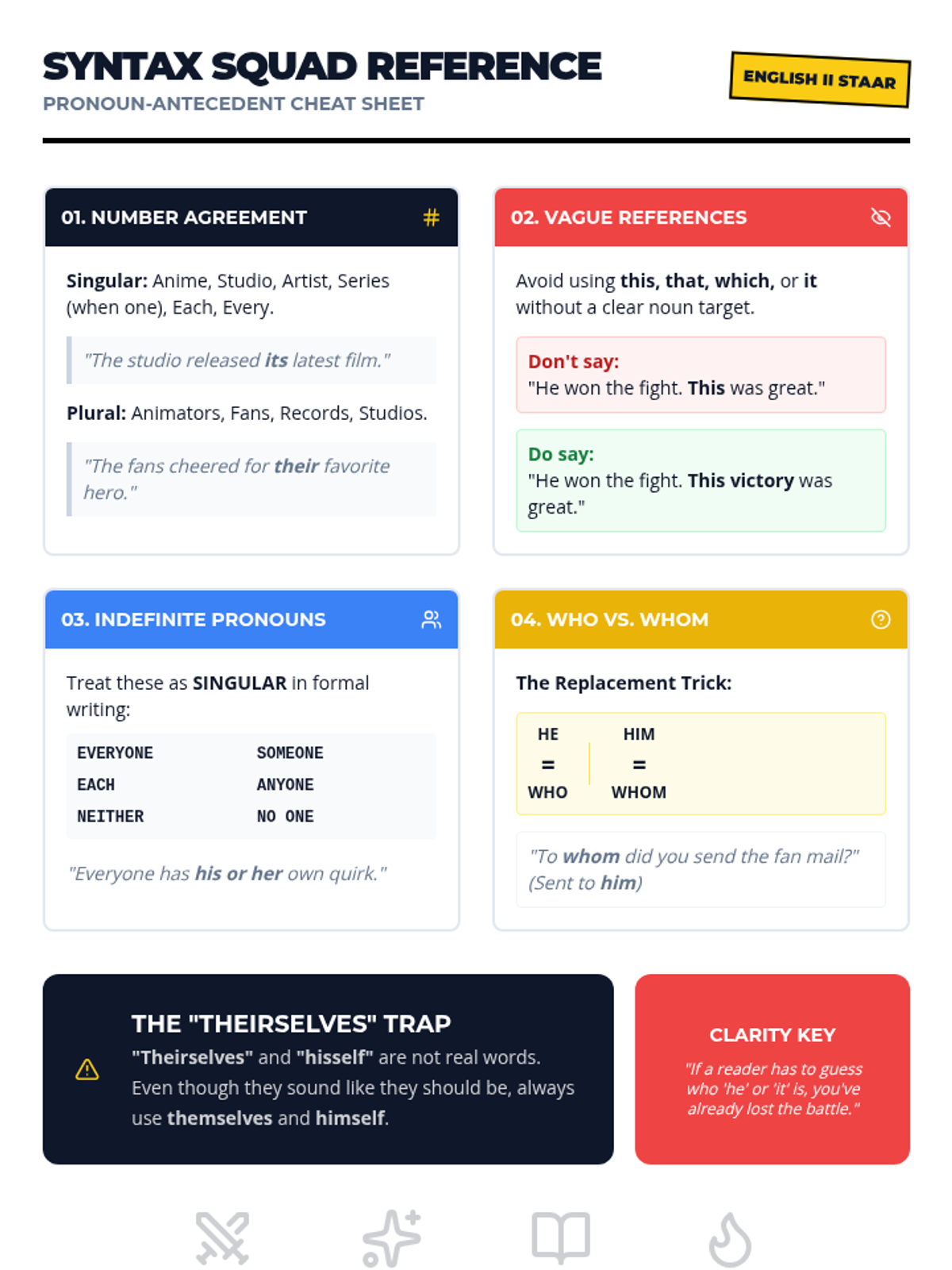
A concise one-page reference sheet or "cheat sheet" for students, summarizing the four major pronoun rules and providing the "He/Him" trick for Who/Whom. Designed for easy reference during the Anime Pronoun Play worksheet.
A vibrant, anime-themed slide deck for English II STAAR preparation, focusing on pronoun-antecedent agreement and clarity. Includes clear rules, "STAAR traps," and interactive checks for singular/plural agreement, ambiguous references, and who vs. whom.
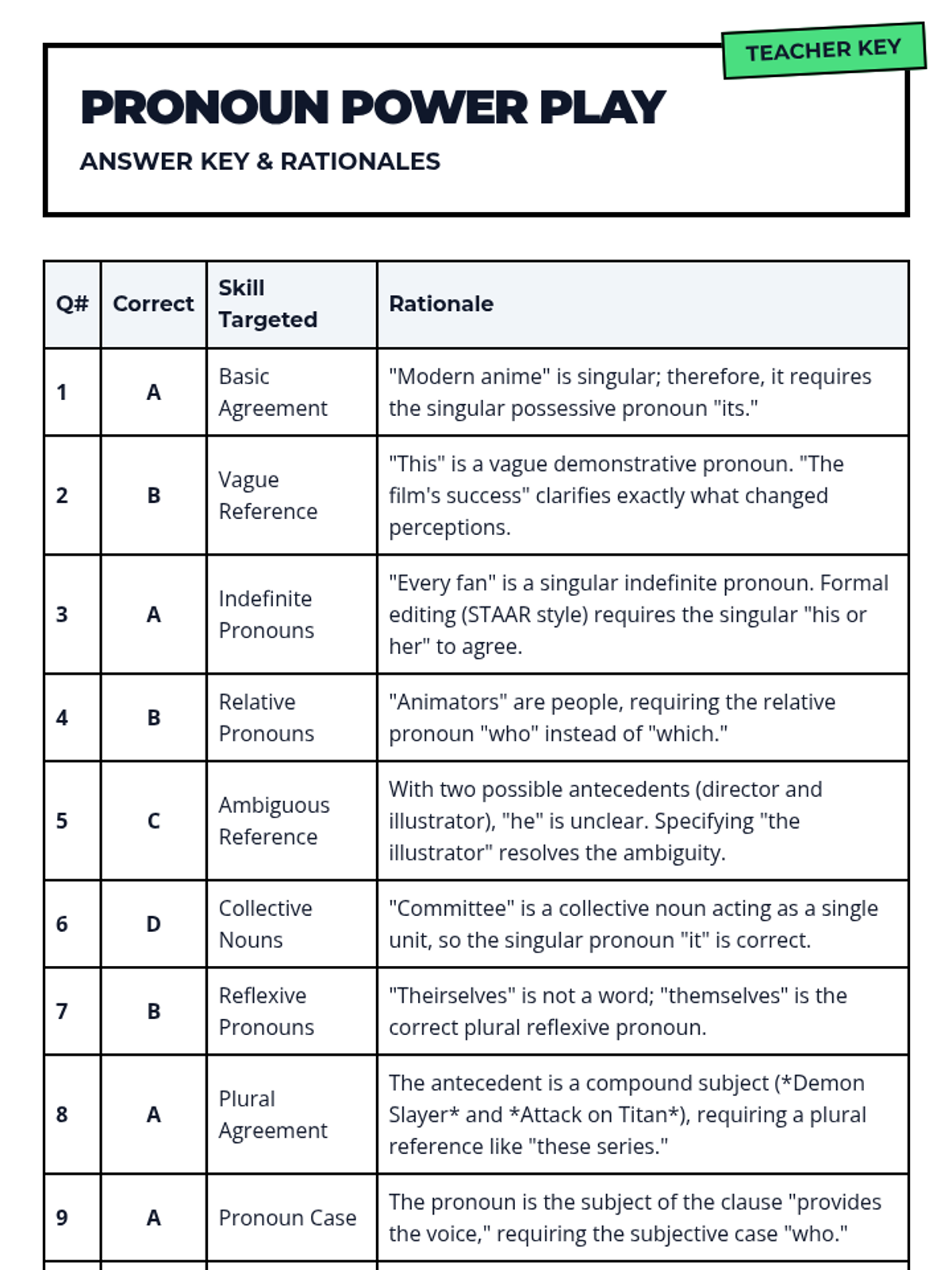
The answer key and teaching guide for the Anime Pronoun Power worksheet, providing correct answers, rationales, and targeted skills for each of the 10 STAAR-style questions.
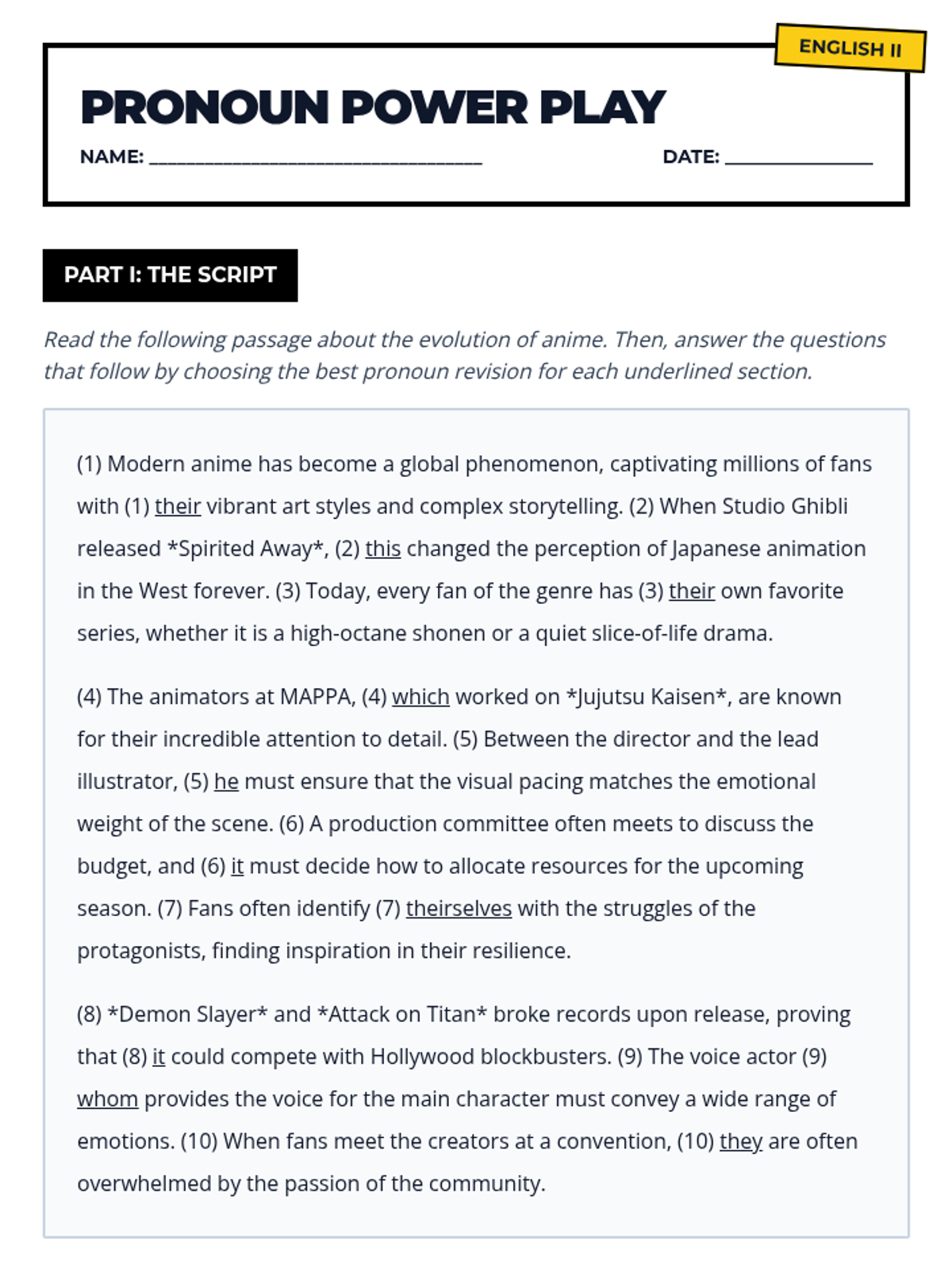
A STAAR-style editing worksheet focused on pronoun-antecedent agreement and clarity, featuring a high-interest passage about the history and production of anime. Restored to the original two-page layout.
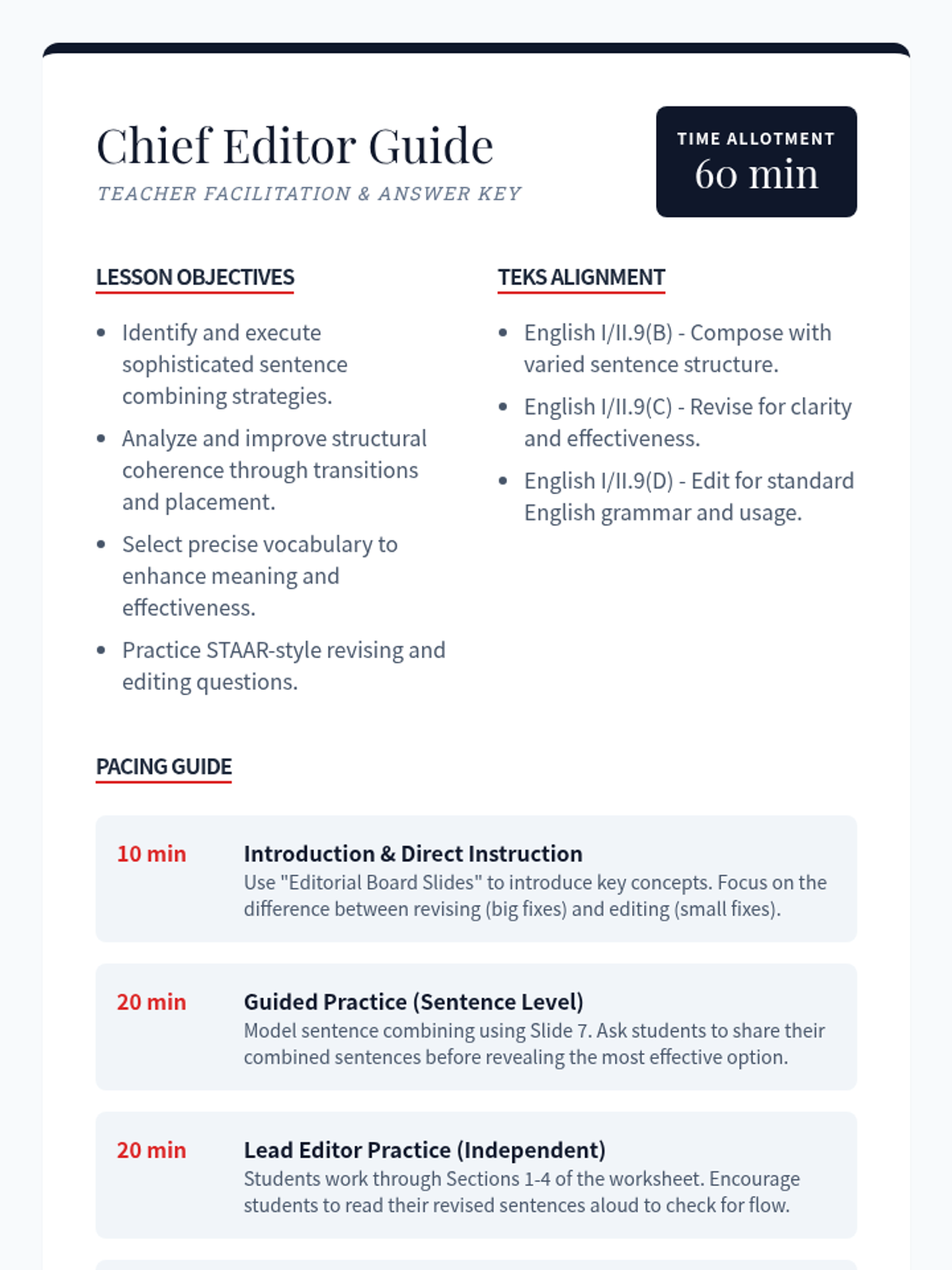
A detailed teacher facilitation guide including learning objectives, a 60-minute pacing guide, discussion prompts, and a comprehensive answer key with STAAR-aligned rationales.
A comprehensive practice worksheet for English I & II students covering sentence combining, vocabulary precision, structural coherence, and transitional flow, modeled after STAAR EOC questions.
An instructional slide deck designed for English I & II students, focusing on the high-leverage revising skills tested on the STAAR EOC. It includes strategies for sentence combining, vocabulary precision, structural coherence, and practice questions with an editorial theme.
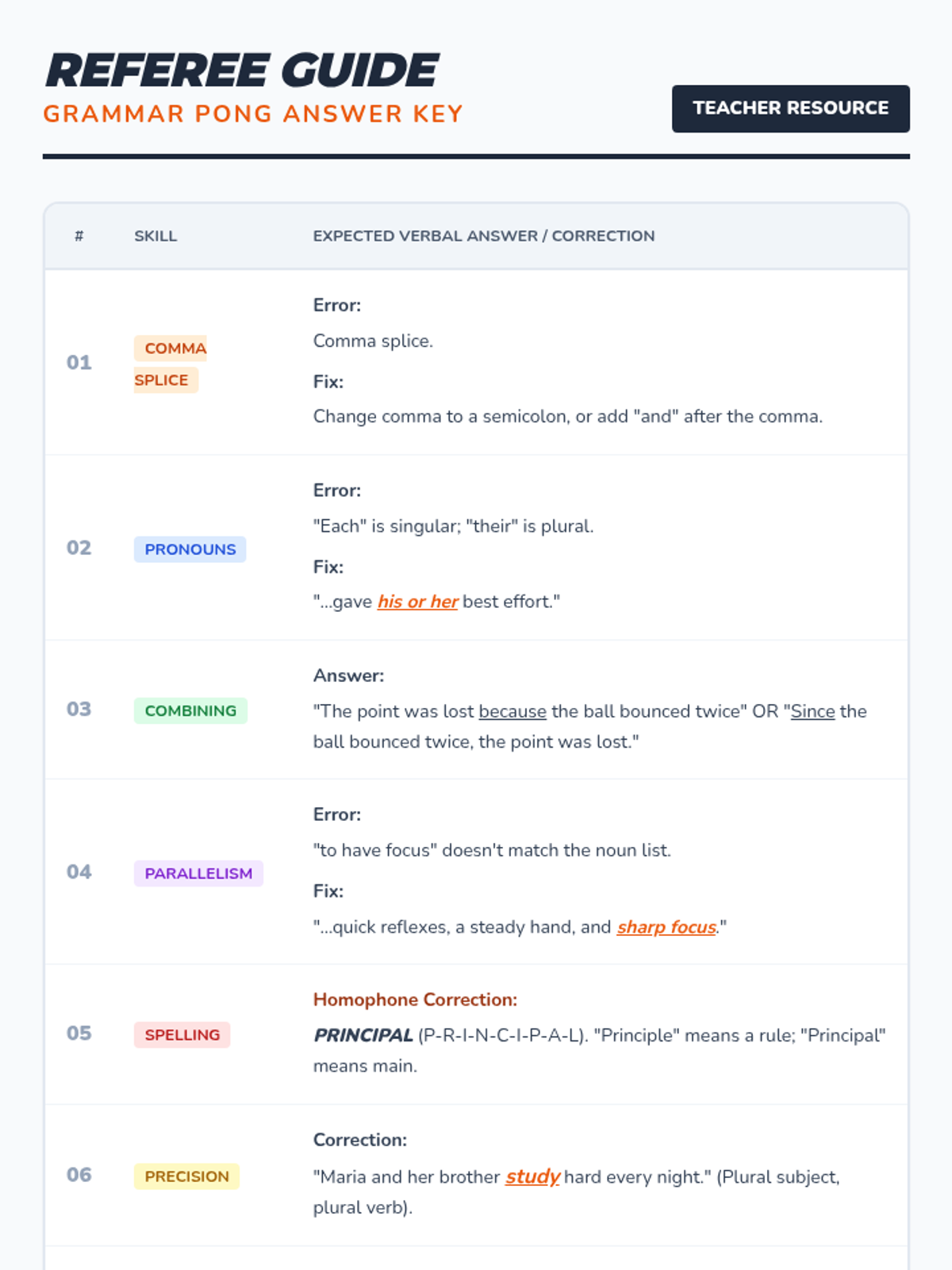
A teacher-facing answer key and quick-reference guide for the Grammar Pong game, ensuring fast and accurate judging during the verbal challenge.
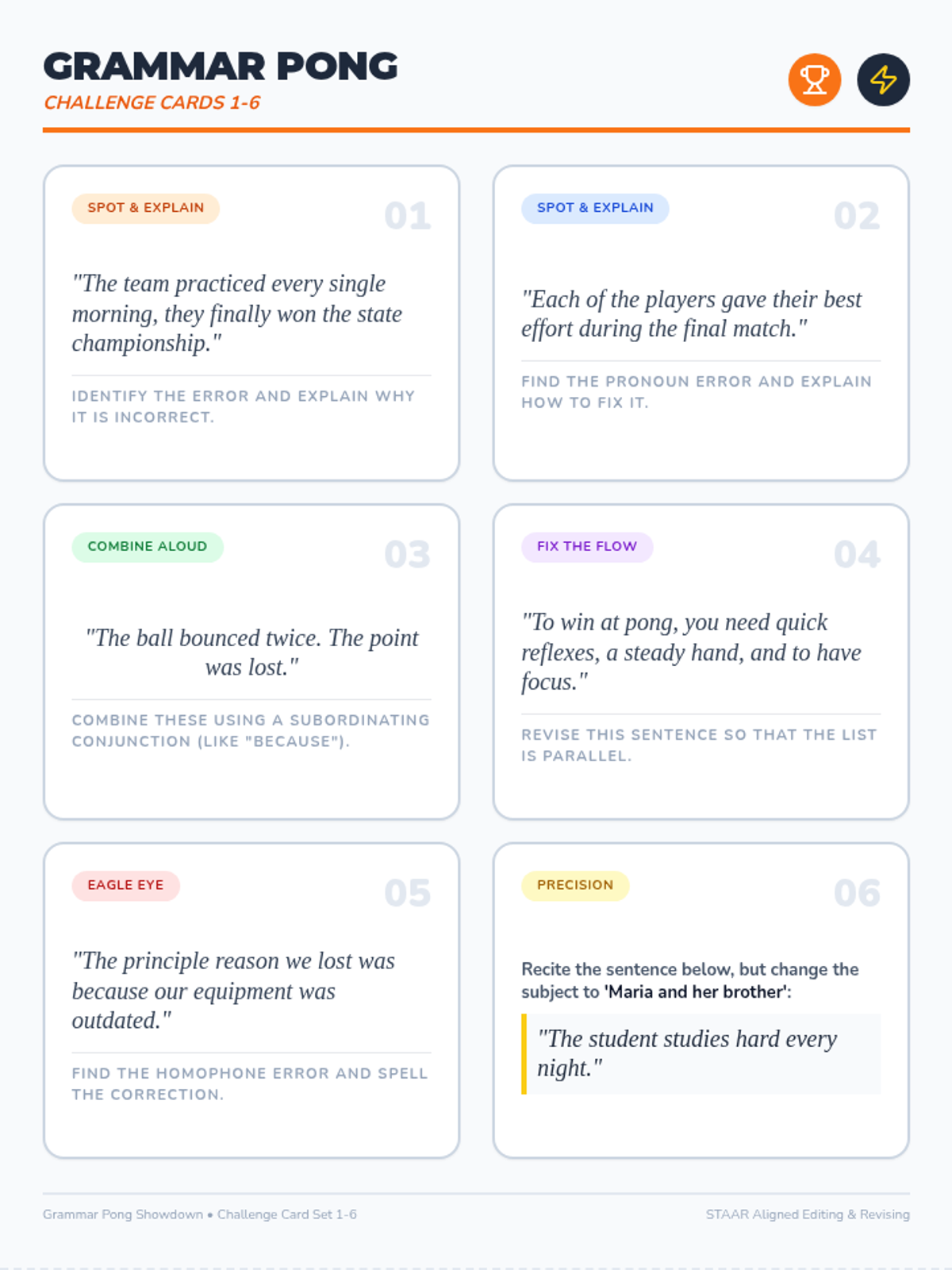
A set of 12 vibrant challenge cards for a classroom grammar game. Each card features an open-ended editing or revising question targeting specific skills like comma splices, parallelism, and pronoun agreement. Card sizing and text layout have been adjusted for optimal readability.
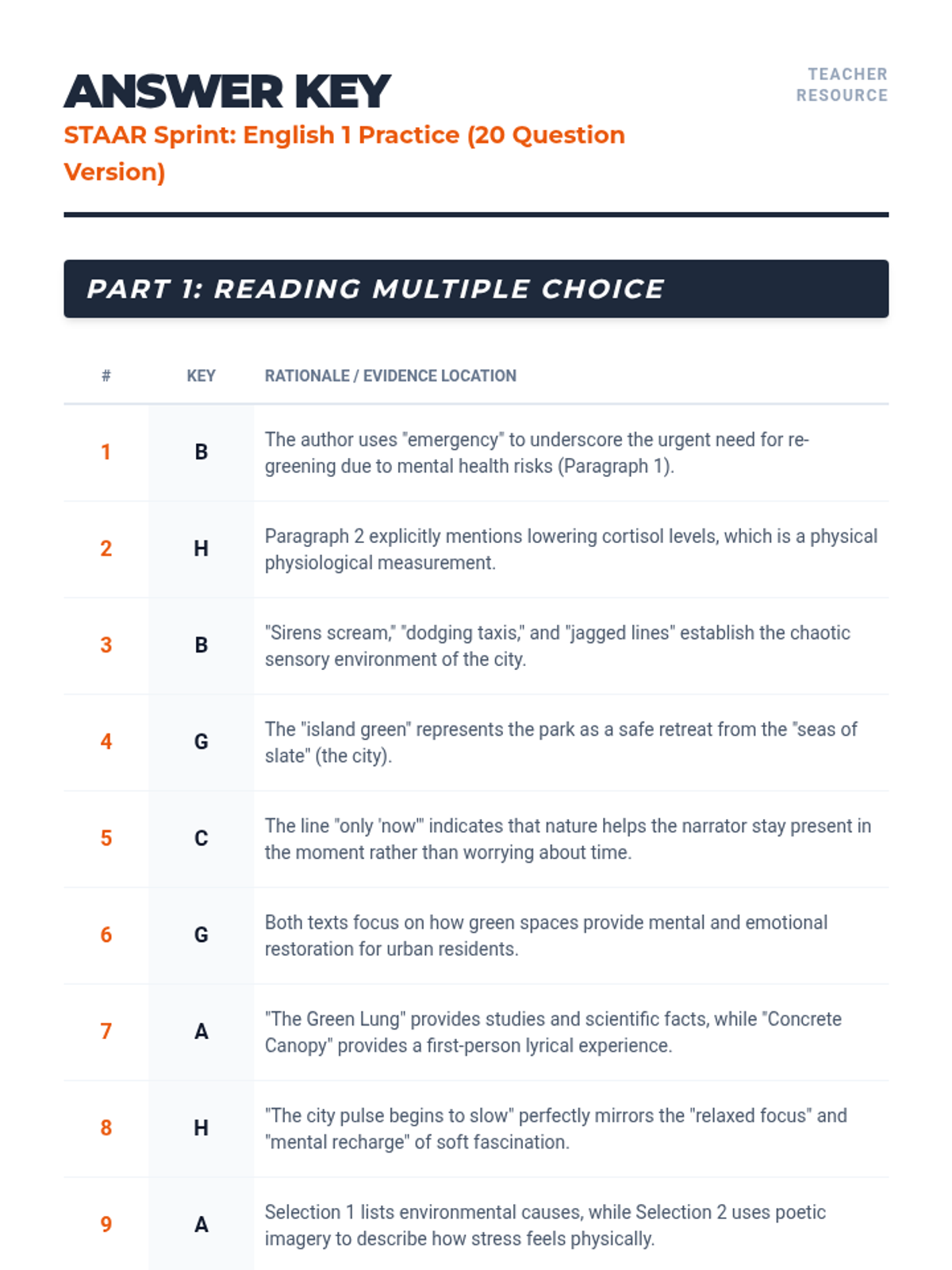
Updated teacher answer key for the 20-question STAAR Sprint Quiz. Includes correct answers and rationales for 10 reading questions, 3 short responses, and 7 editing questions.
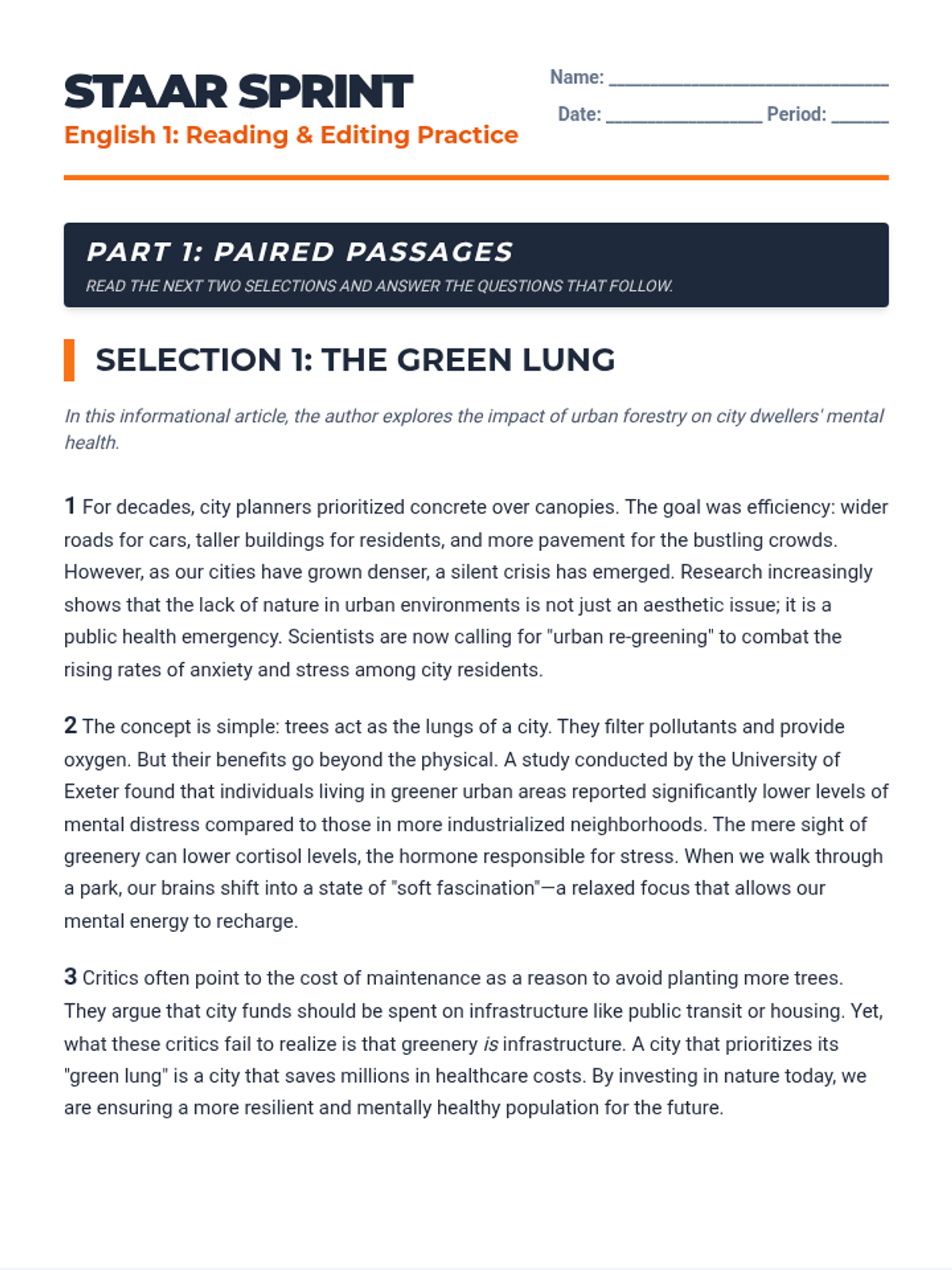
A targeted practice quiz mirroring the English 1 STAAR exam, now adjusted to an even 20 questions total. It includes 10 reading comprehension questions, 3 short constructed response items, and 7 editing questions.
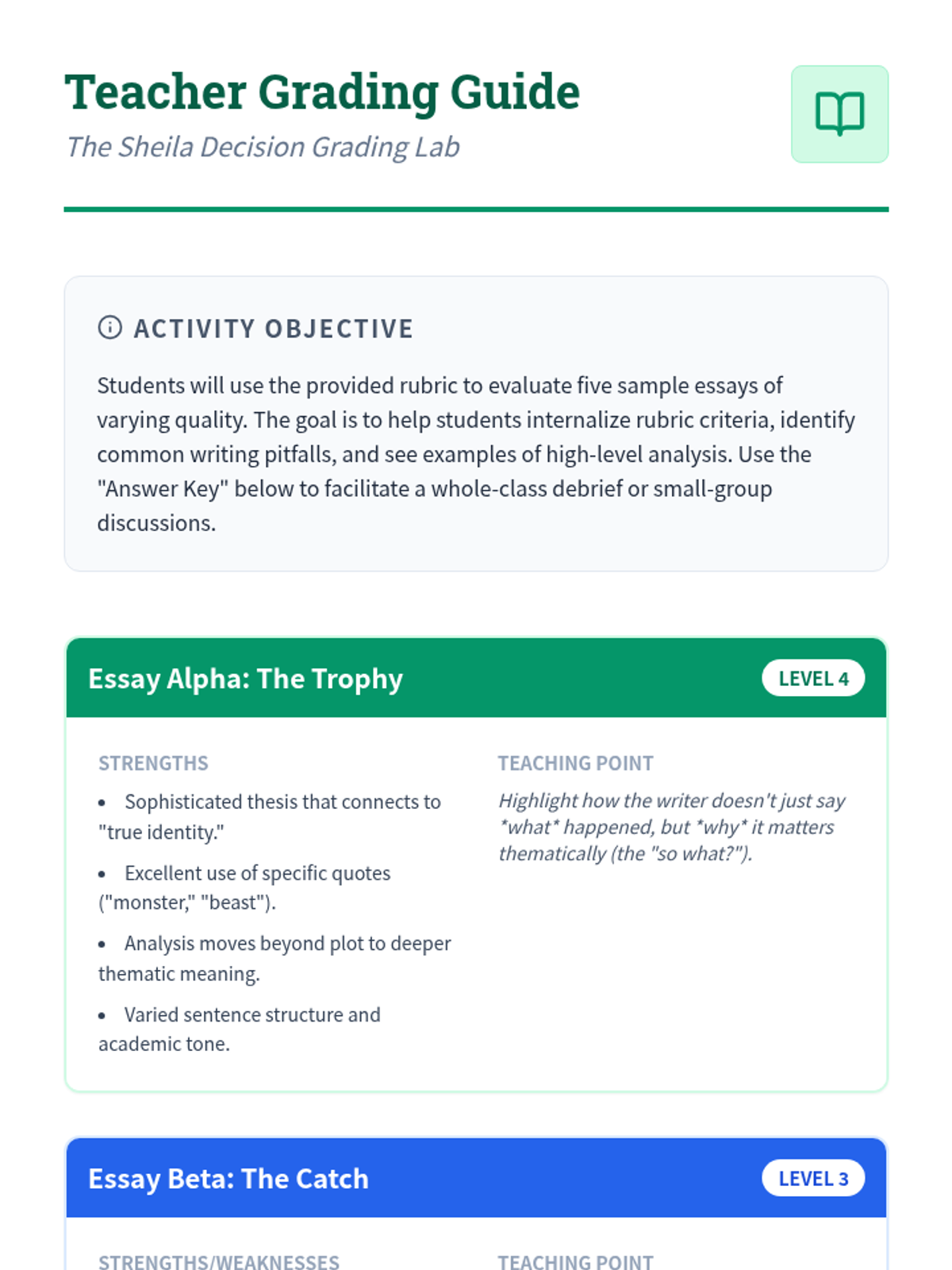
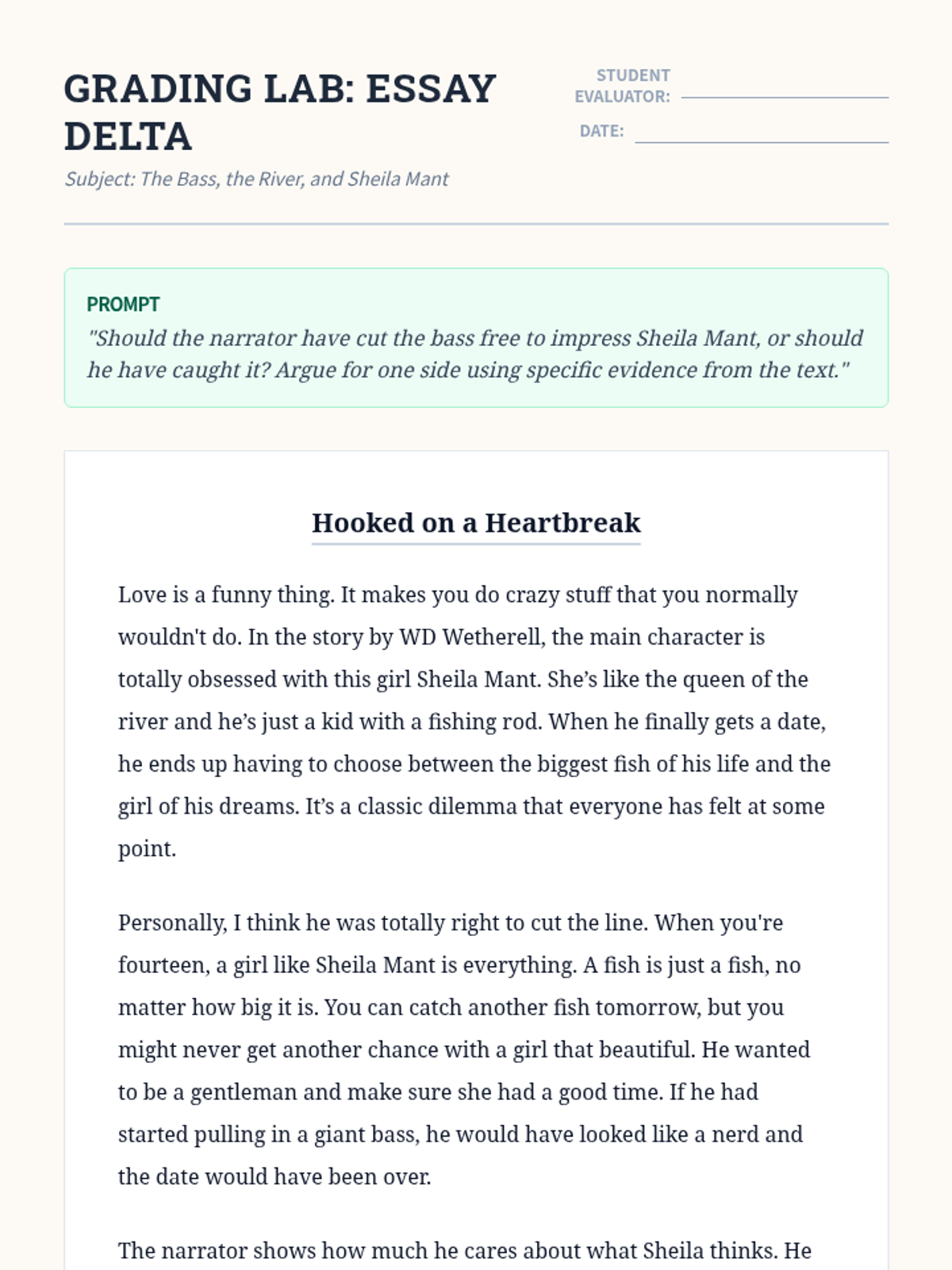
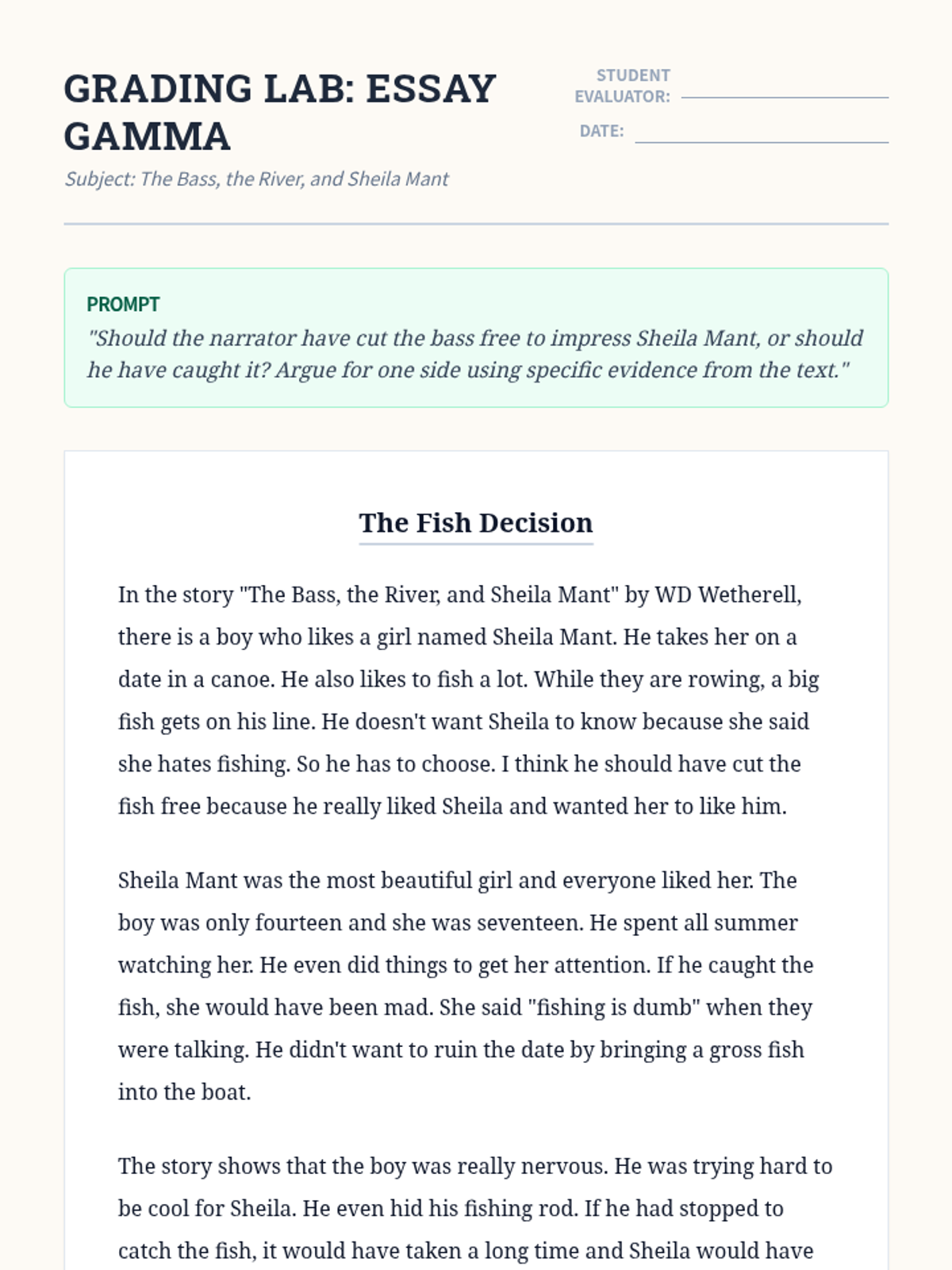
A comprehensive teacher guide for the grading lab, providing intended scores, detailed rationales for each of the five essays, teaching points, and discussion prompts for a whole-class debrief.
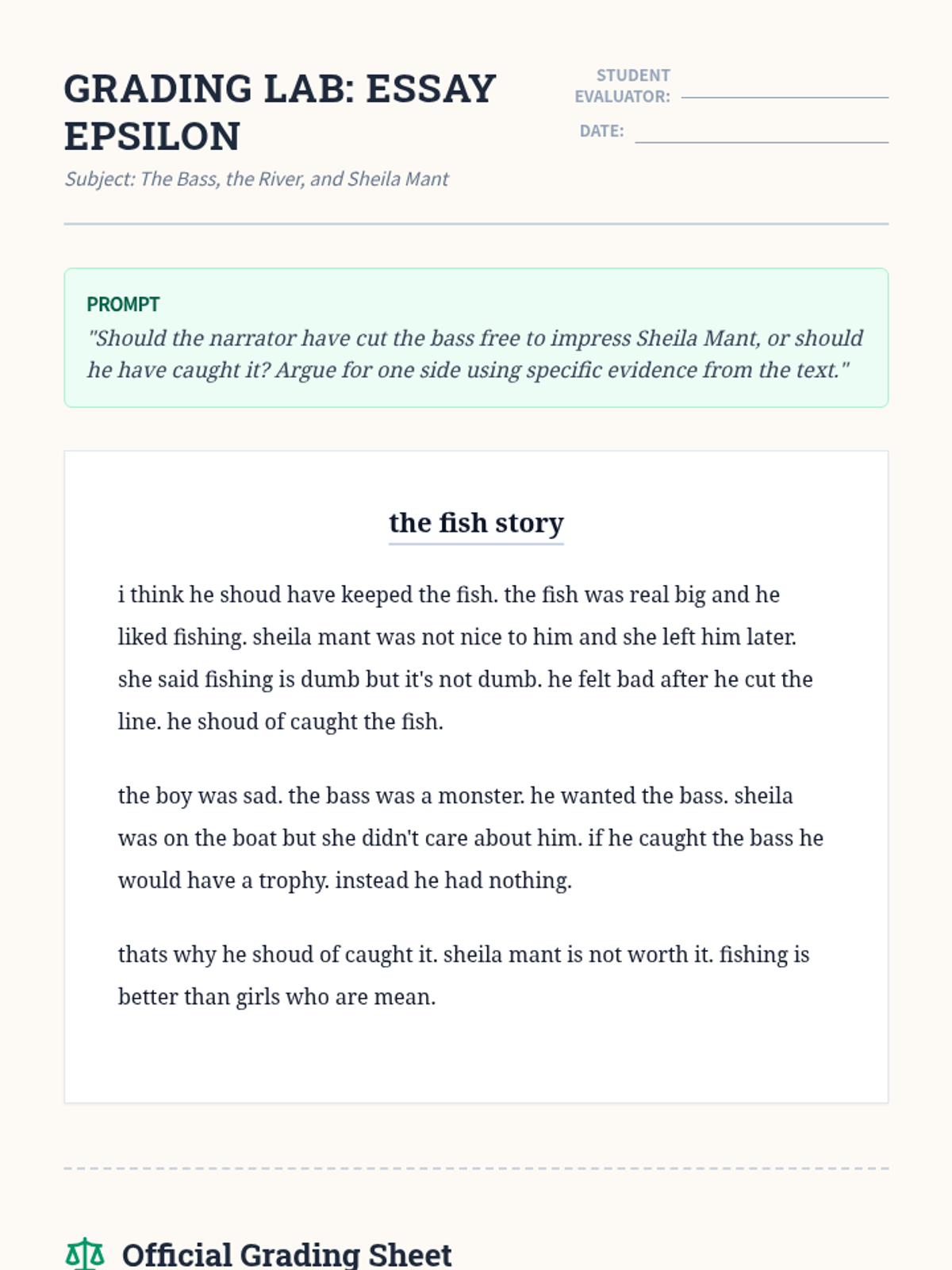
The fifth practice essay for the grading lab, featuring an emerging/beginning (Level 1) response. This essay is very brief, lacks textual evidence, and contains significant grammatical and mechanical errors.
The fourth practice essay for the grading lab, featuring a stylistically strong but academically weak (Level 2/3) response. While the writing is engaging, it relies on personal opinion rather than textual evidence and analysis.
The third practice essay for the grading lab, featuring a developing (Level 2) response. This essay relies heavily on plot summary and lacks specific textual evidence or deep analysis.
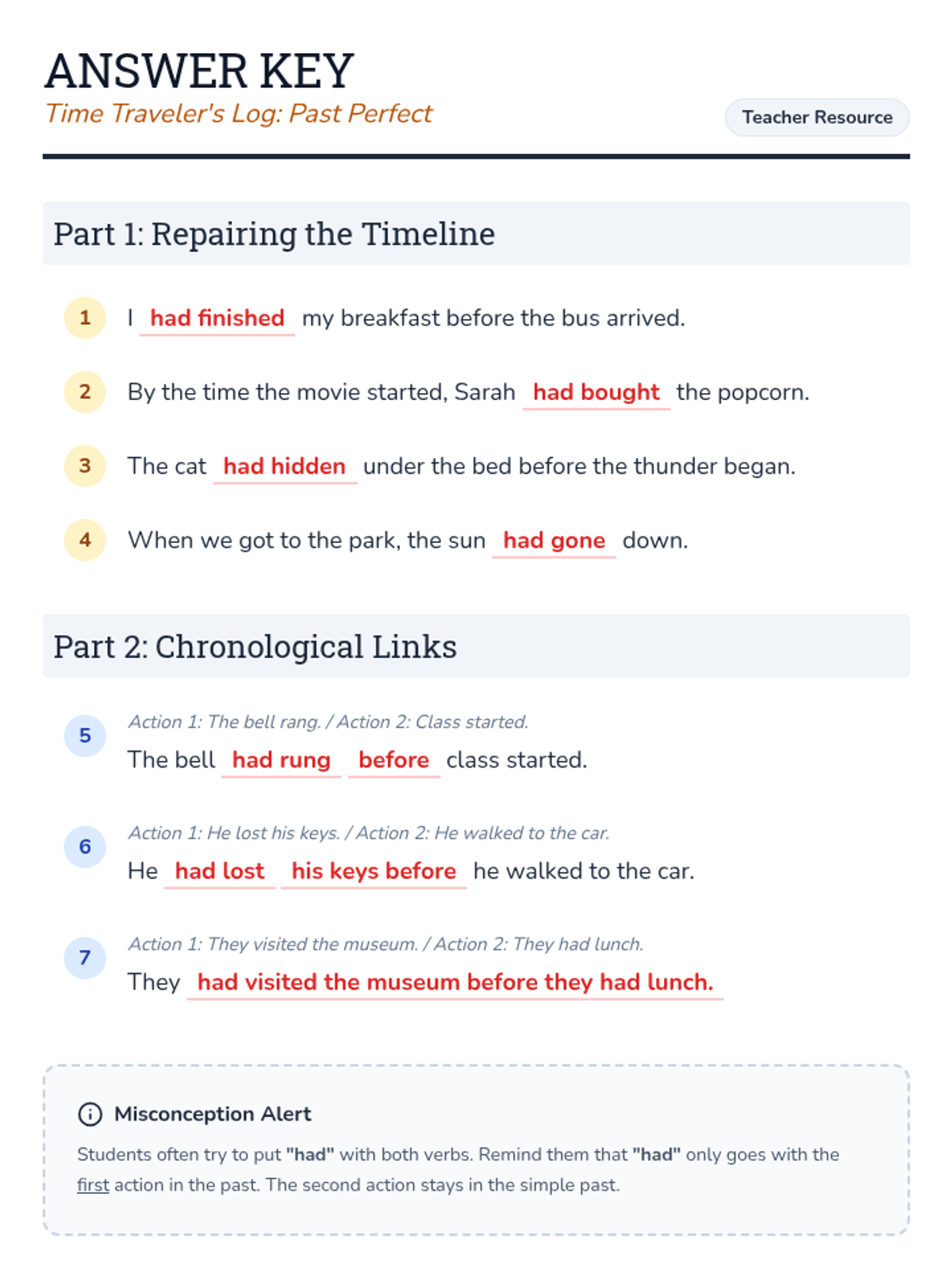
An answer key for the Time Traveler Log worksheet, clearly displaying the correct past perfect forms and completed sentences for all exercises.
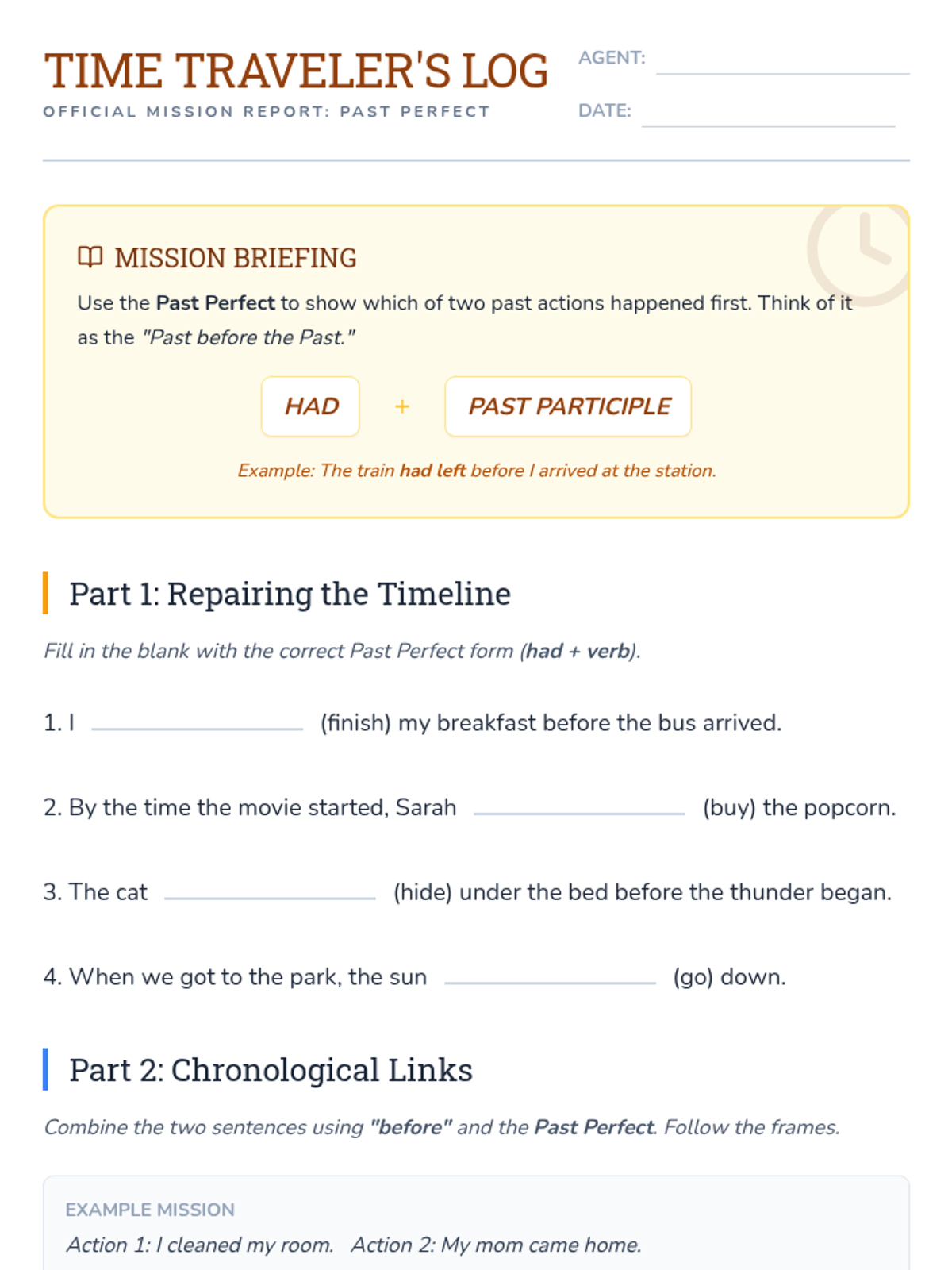
A student worksheet designed with a 'Time Traveler' theme. It features a reference rule box, fill-in-the-blank practice, and sentence-combining exercises using familiar vocabulary and scaffolded instructions.
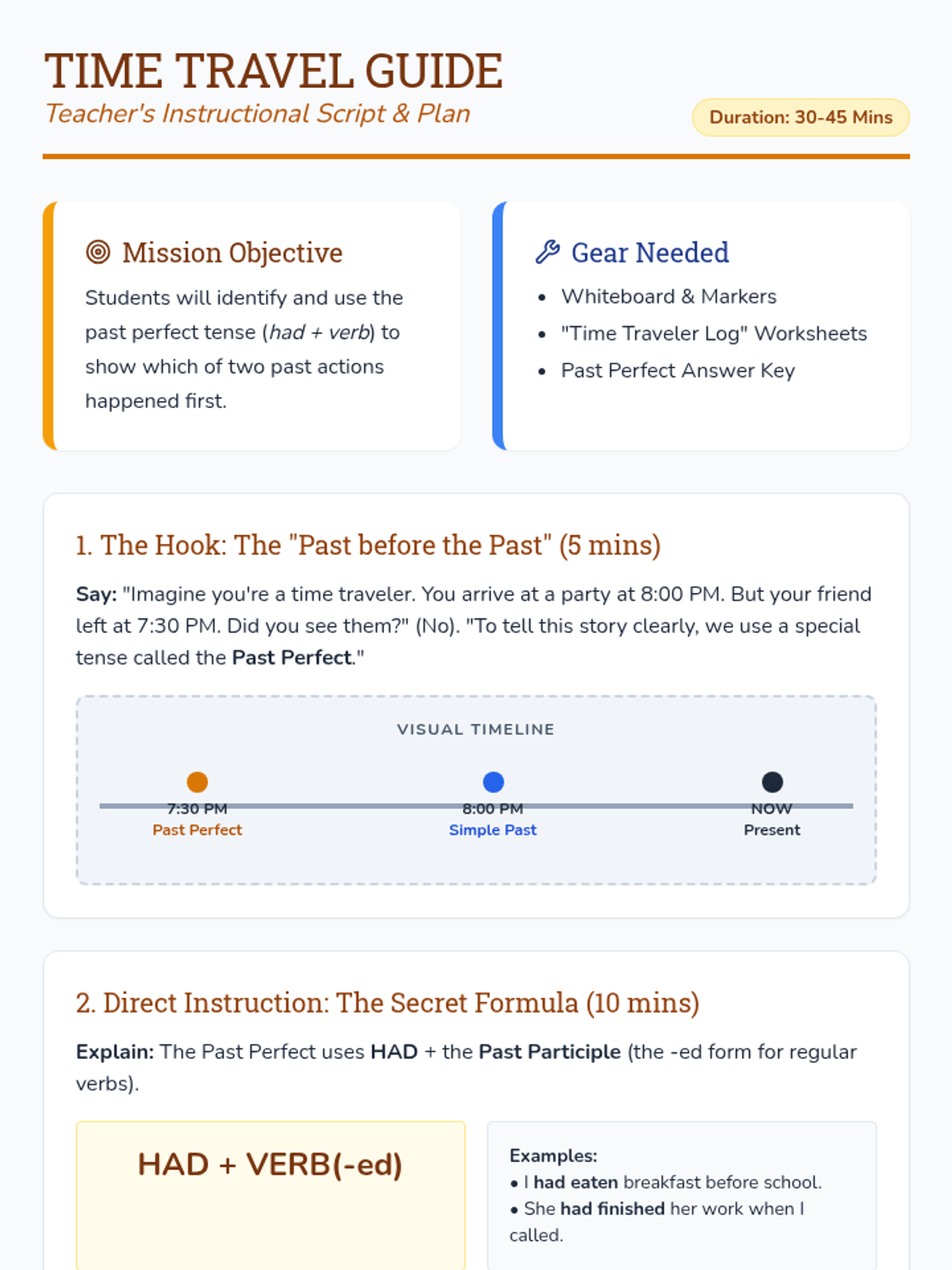
A detailed lesson plan for teachers to introduce the past perfect tense. Includes a 'hook' scenario, visual timeline diagram, explicit grammar formula, and guided practice examples with familiar vocabulary.
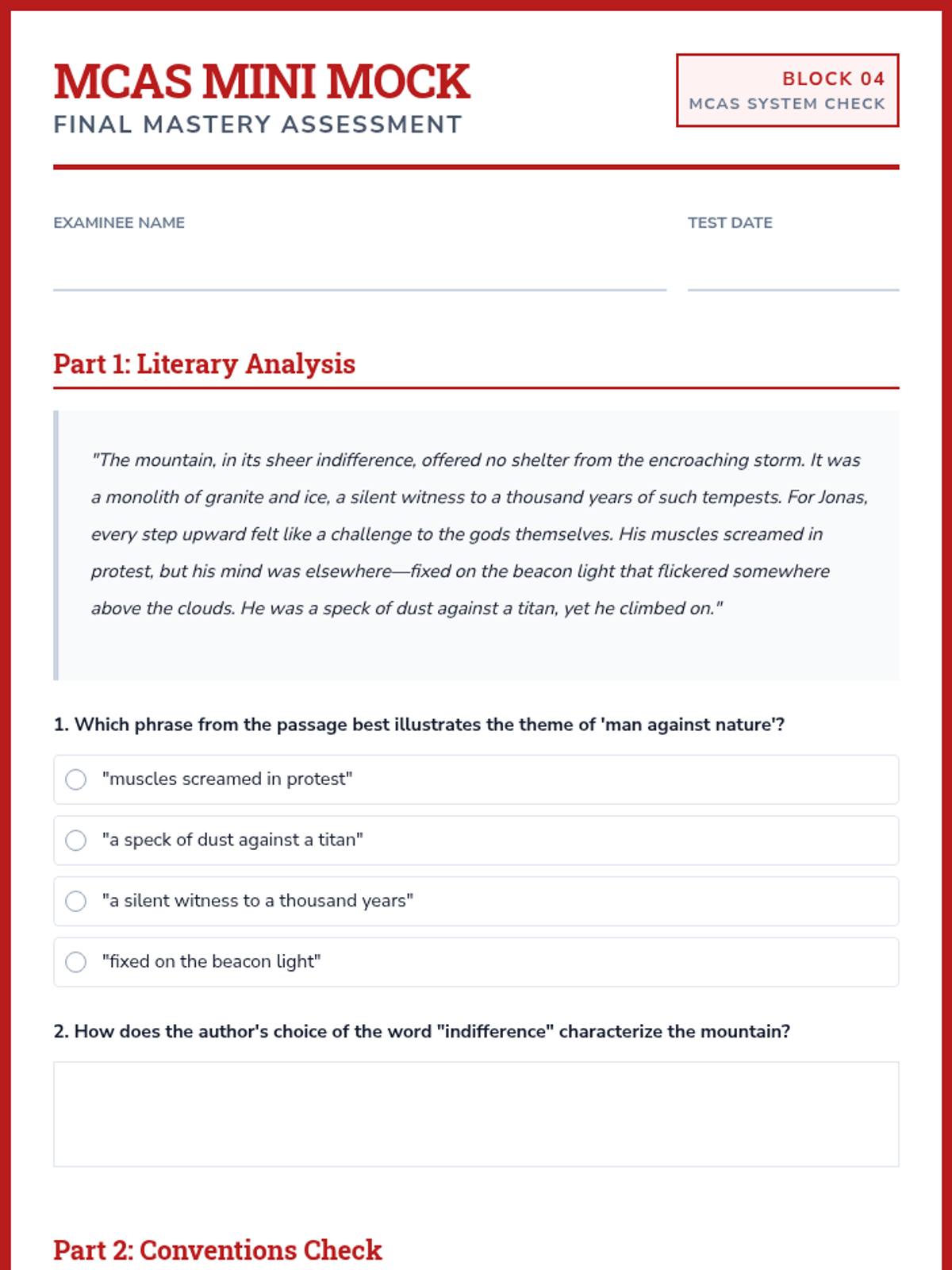
A practice assessment for Block 4 covering all ELA MCAS domains, including literary analysis, language conventions, and a short text-based writing task.
Updated Block 4 slides with an interactive "Answer Choice Elimination" drill to practice identifying common MCAS distractor patterns.
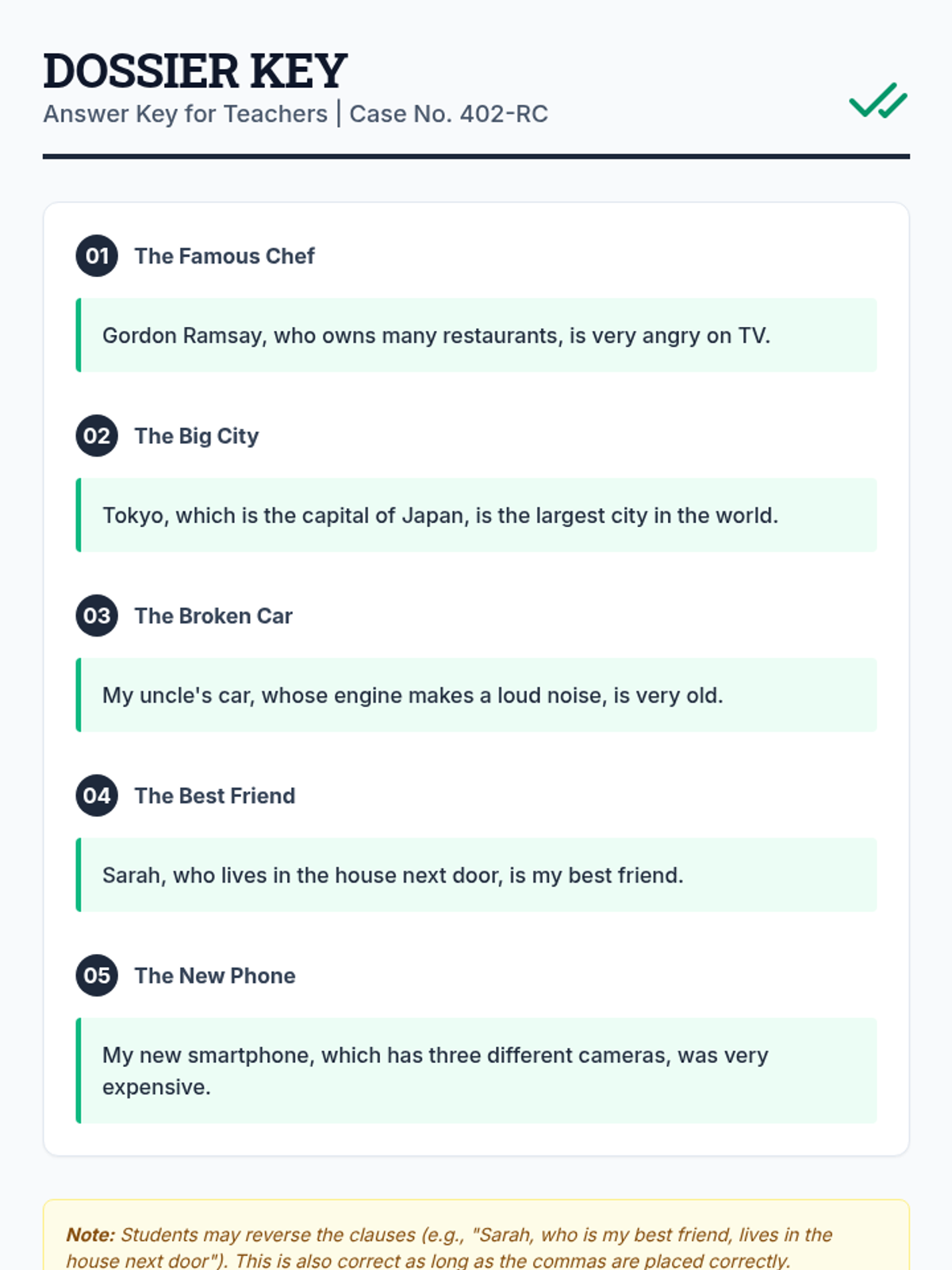
The answer key for the Dossier Linker worksheet, showing correctly combined sentences with non-defining relative clauses.
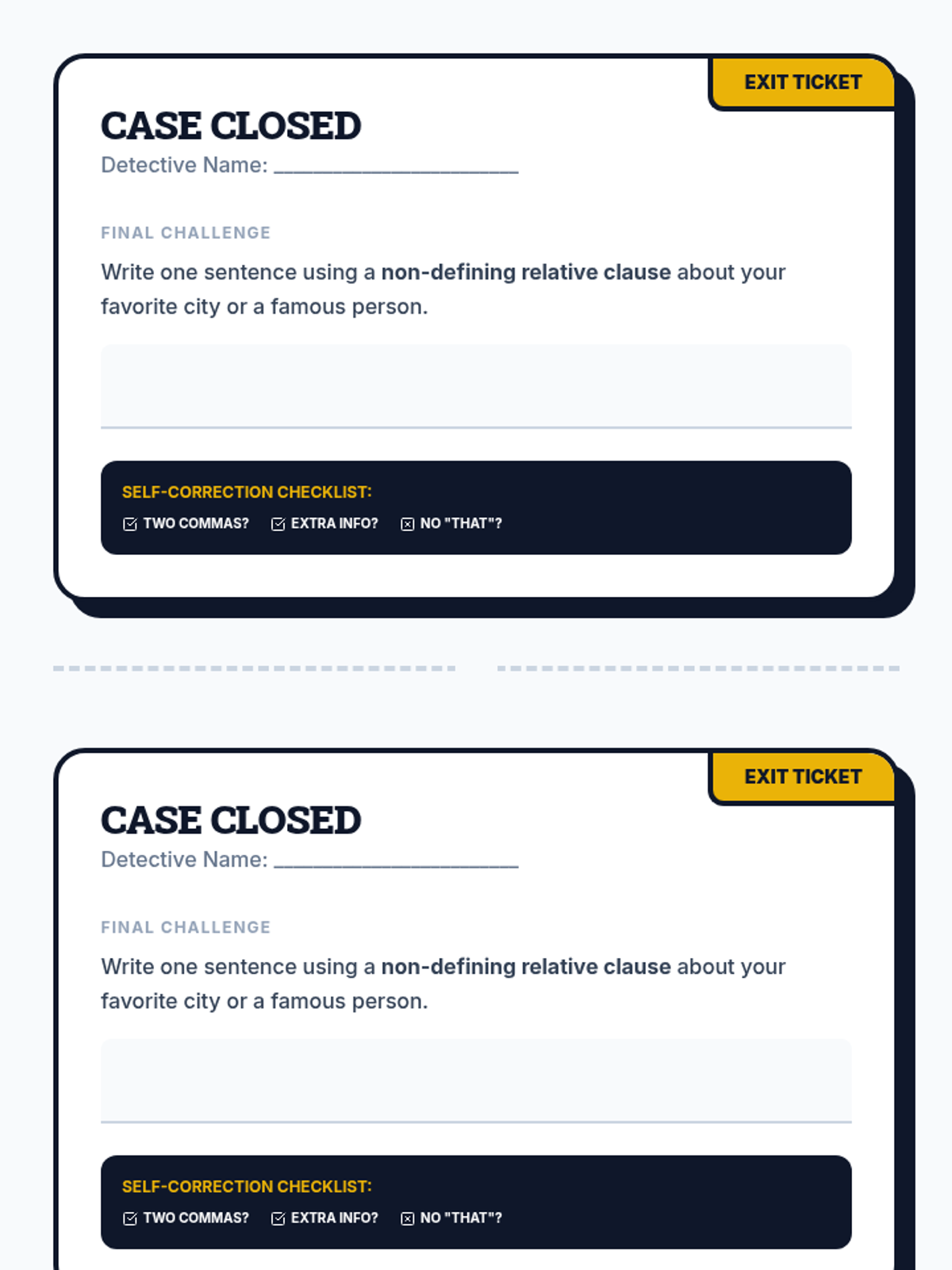
A printable exit ticket for a quick assessment on non-defining relative clauses, featuring a self-correction checklist for students.
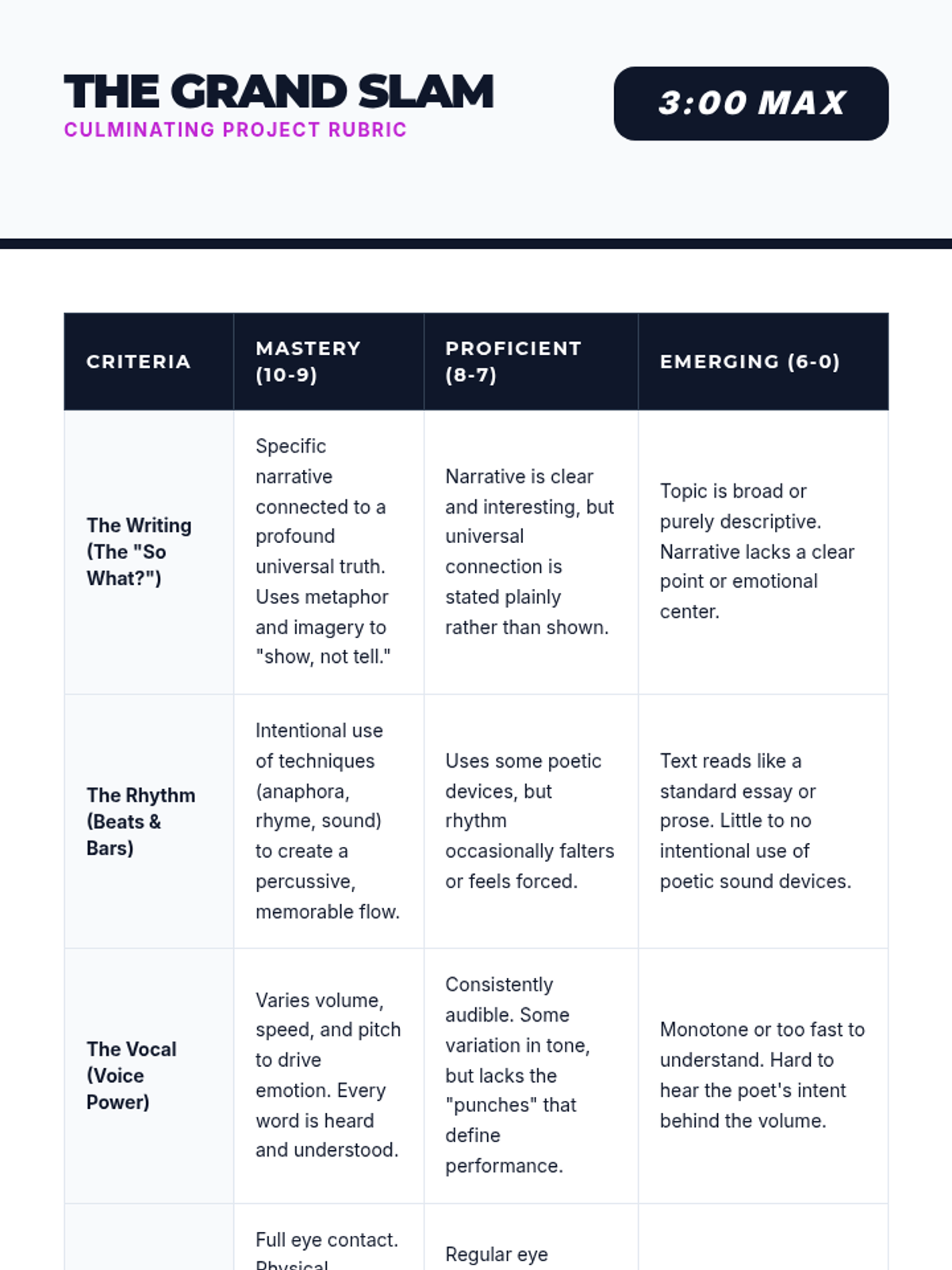
A final project rubric for a slam poetry performance, detailing criteria for writing, rhythm, vocal delivery, and stage presence.
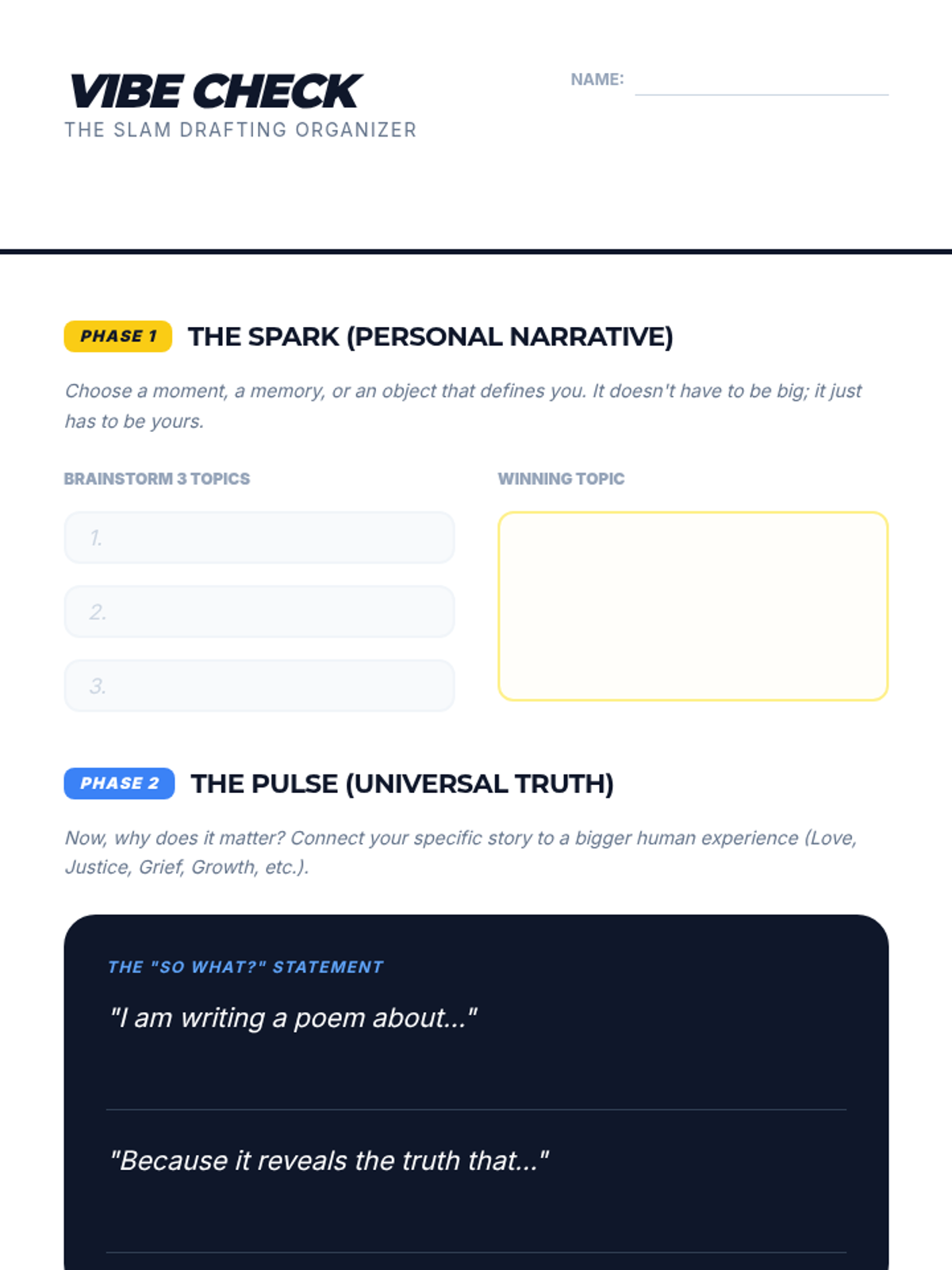
A graphic organizer to help students brainstorm personal topics and connect them to universal themes for their 3-minute slam poem.
A slide deck for Lesson 3 focusing on topic selection, vulnerability, and the structural arc of a 3-minute slam poem.
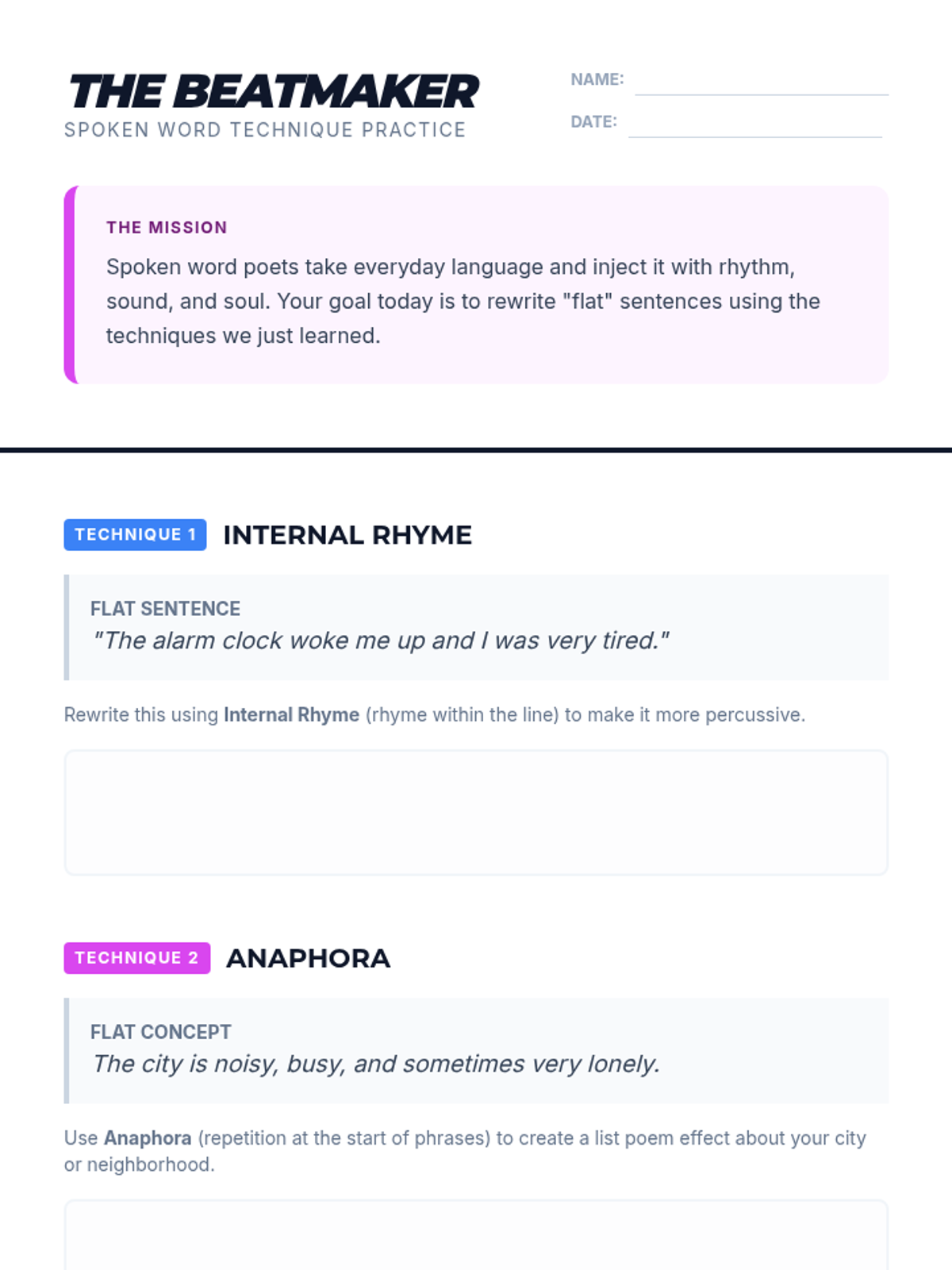
A student worksheet where students transform mundane sentences into rhythmic spoken word lines using techniques like internal rhyme, anaphora, and plosive sounds.
A presentation focusing on rhythmic and phonetic techniques in spoken word, including enjambment, rhyme patterns, and sound choices like plosives and sibilance.
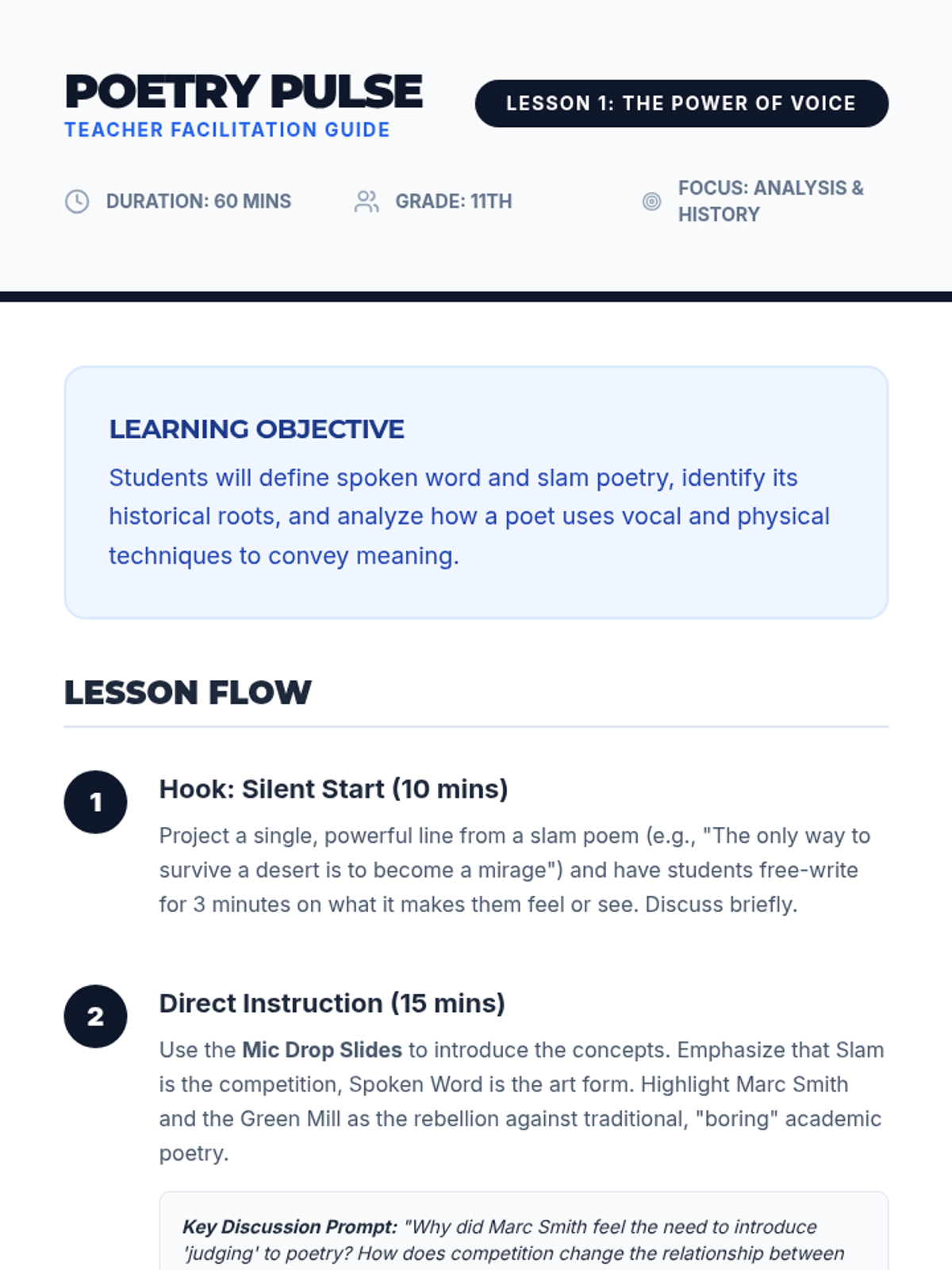
A teacher-facing lesson plan for "The Power of Voice," including learning objectives, a detailed procedure, video recommendations, and differentiation strategies.
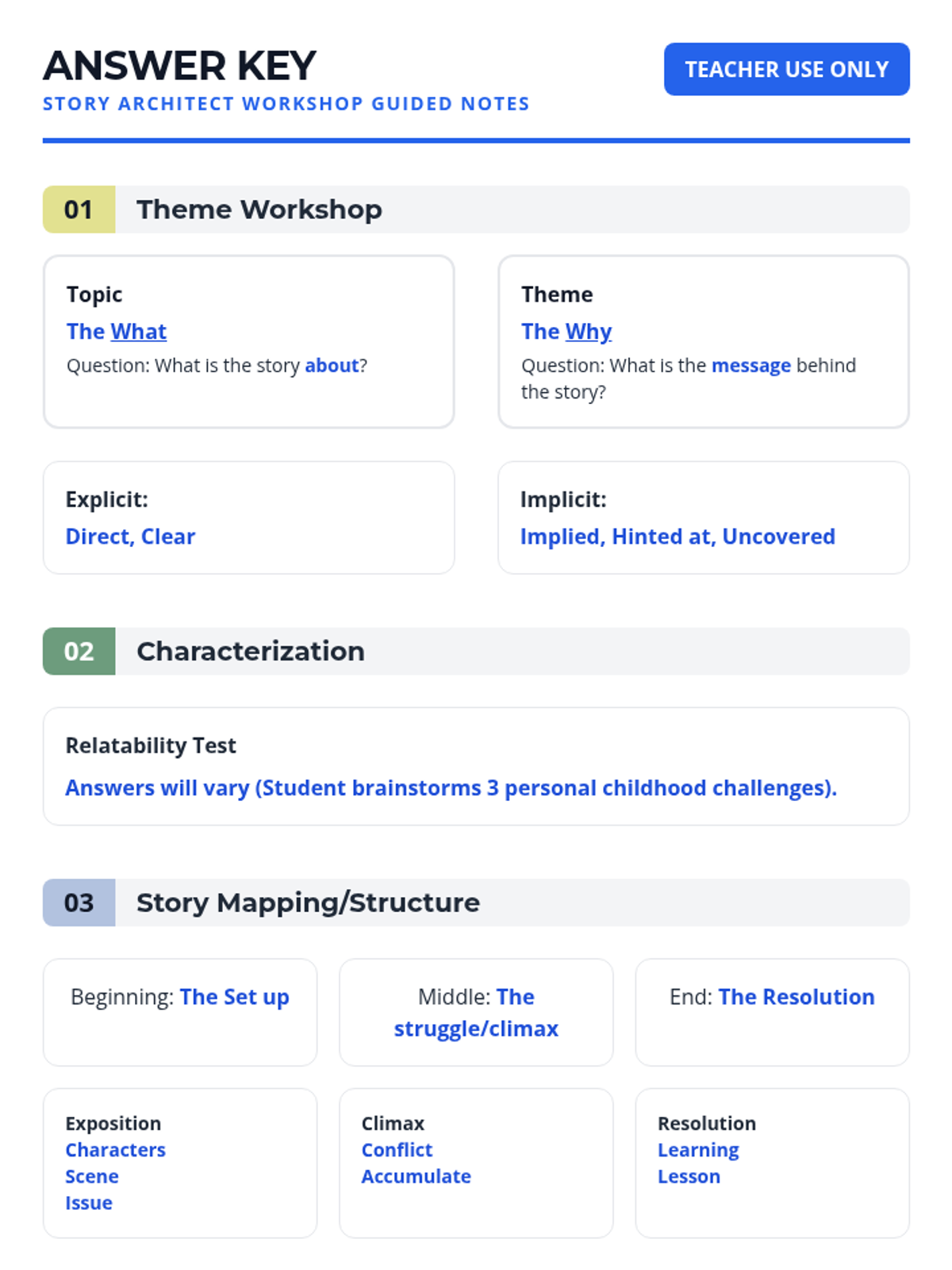
Teacher's answer key for the 'Story Architect Notes' student worksheet, providing all the necessary terms and definitions from the workshop slides.
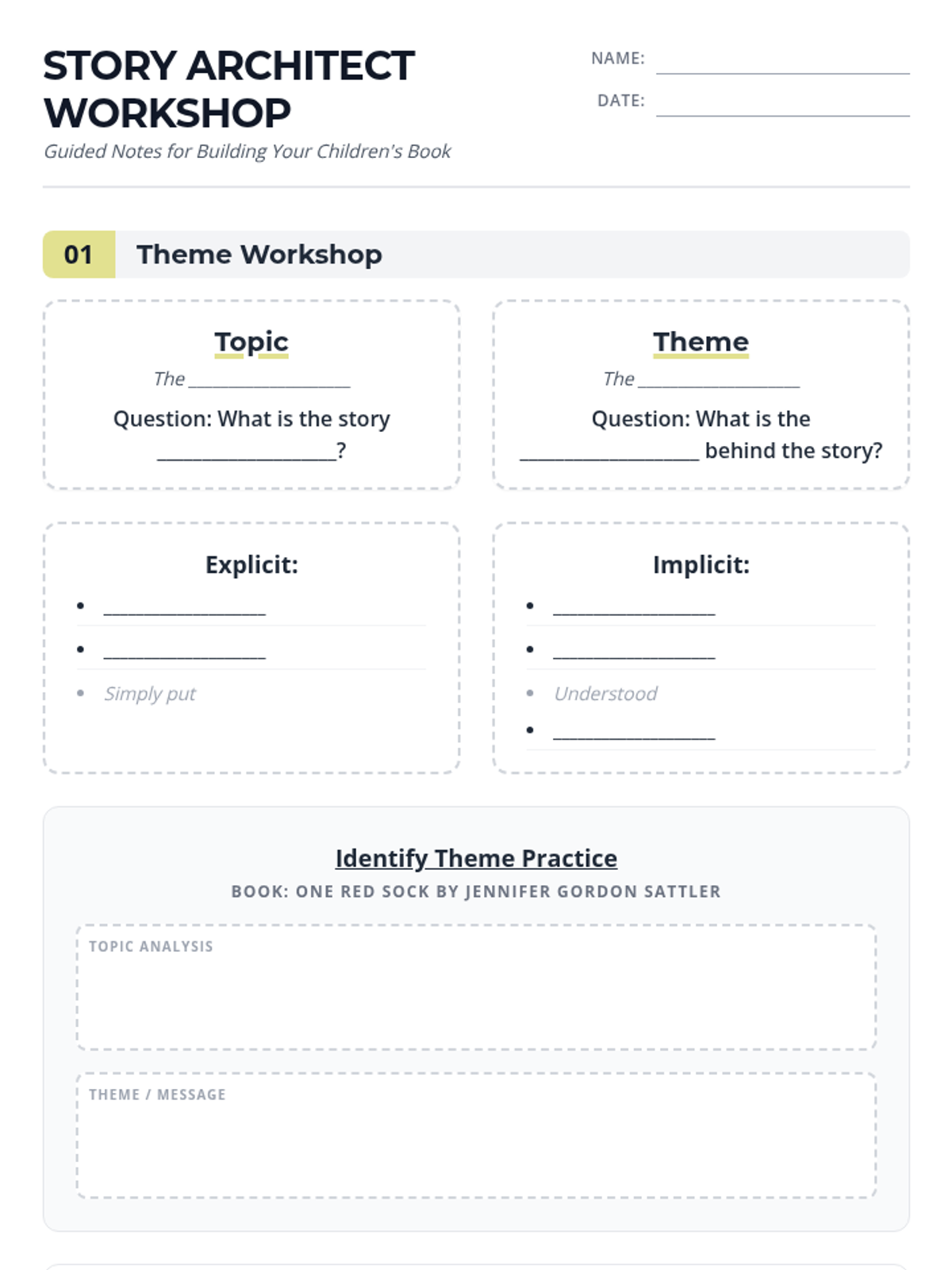
A set of guided notes designed for students to fill in while following the 'Building Your Children Book' workshop slides. It includes sections on theme, characterization, story structure, tone, mood, and sentence syntax with matching color coding.
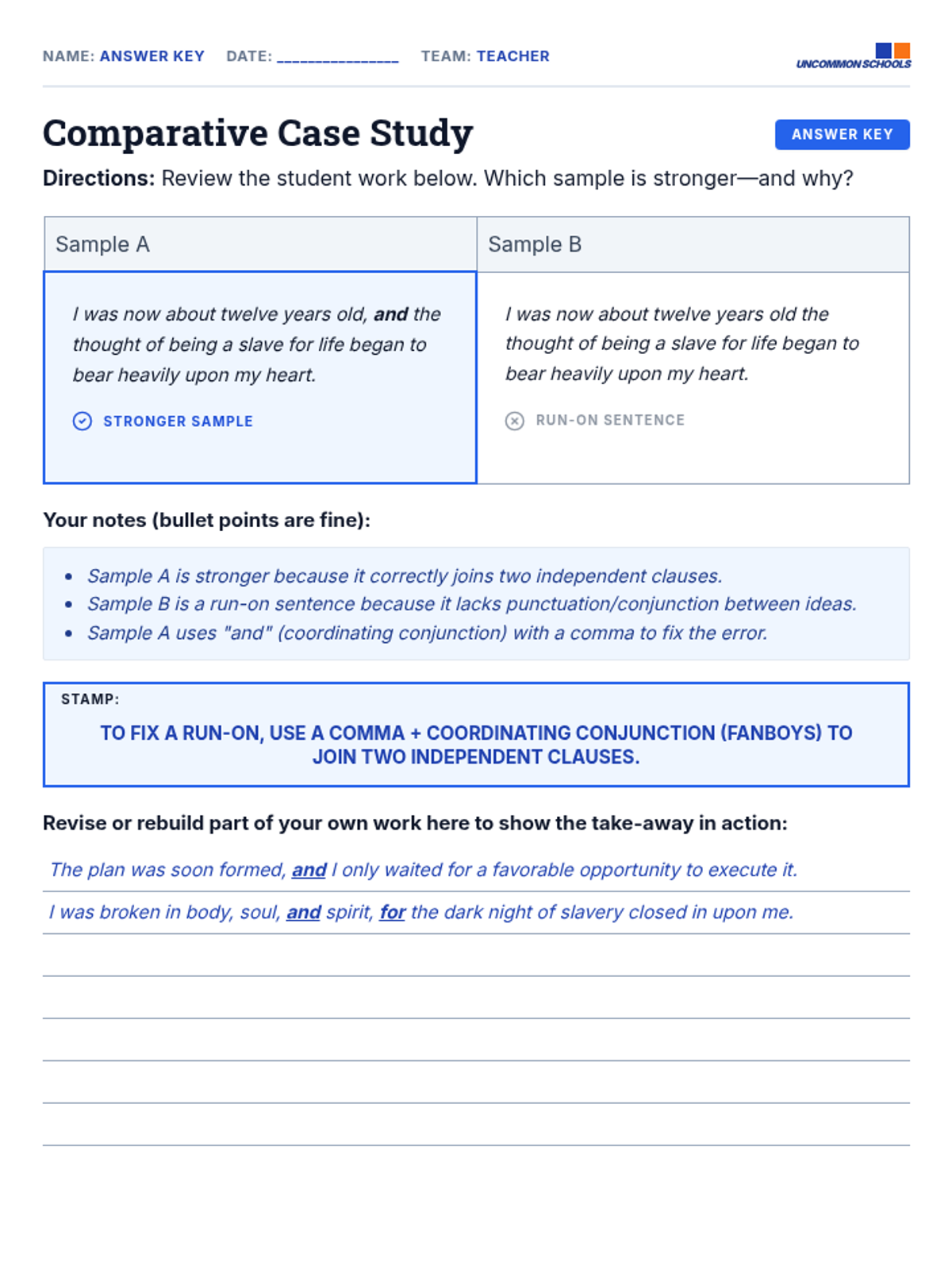
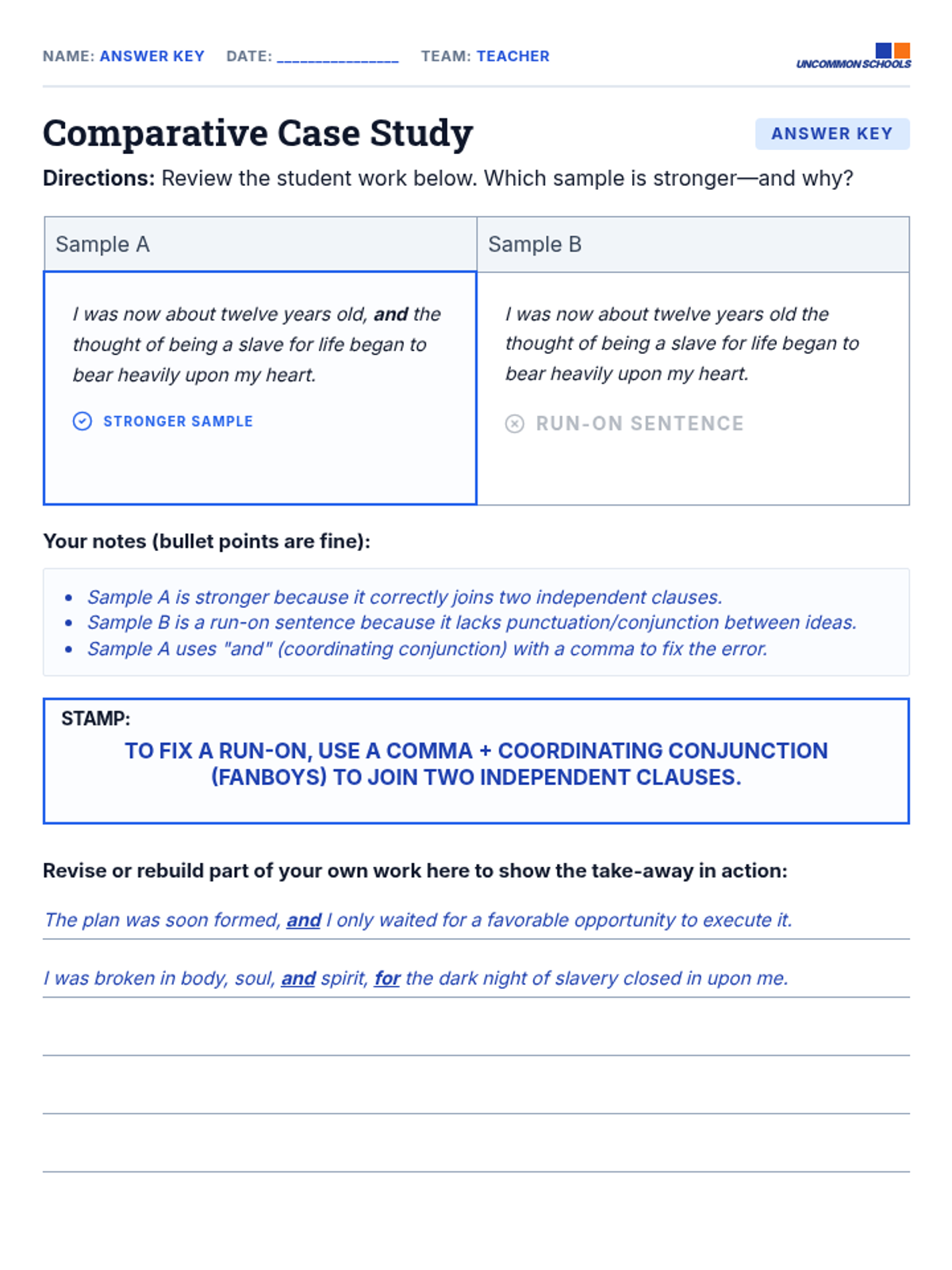
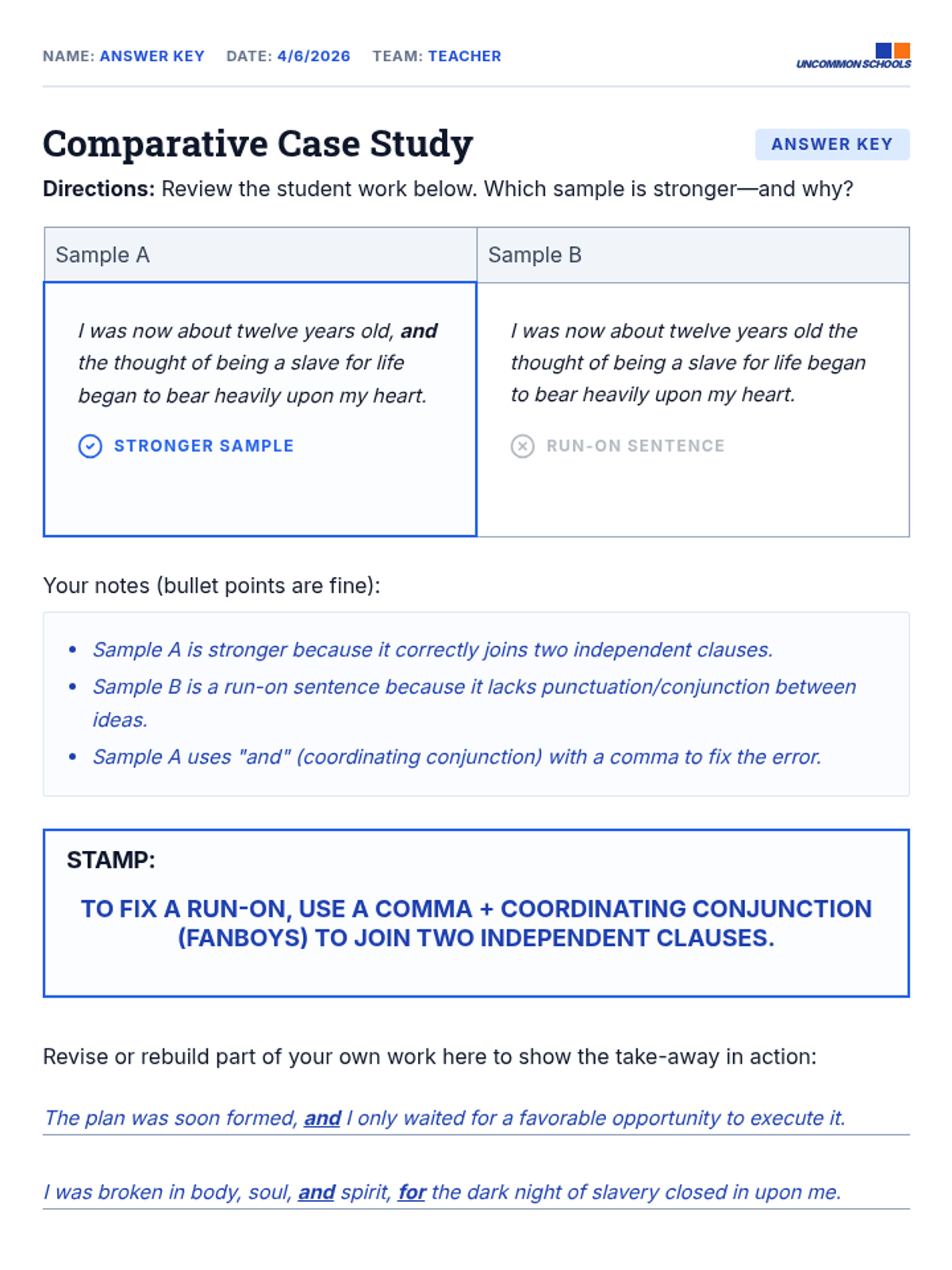
An answer key for the Sentence Structure Showdown Worksheet, identifying the stronger sample and providing a clear grammatical "stamp" for fixing run-on sentences. Revised for layout and contrast.
An answer key for the Sentence Structure Showdown Worksheet, identifying the stronger sample and providing a clear grammatical "stamp" for fixing run-on sentences. Revised for better page flow.
An answer key for the Sentence Structure Showdown Worksheet, identifying the stronger sample and providing a clear grammatical "stamp" for fixing run-on sentences.
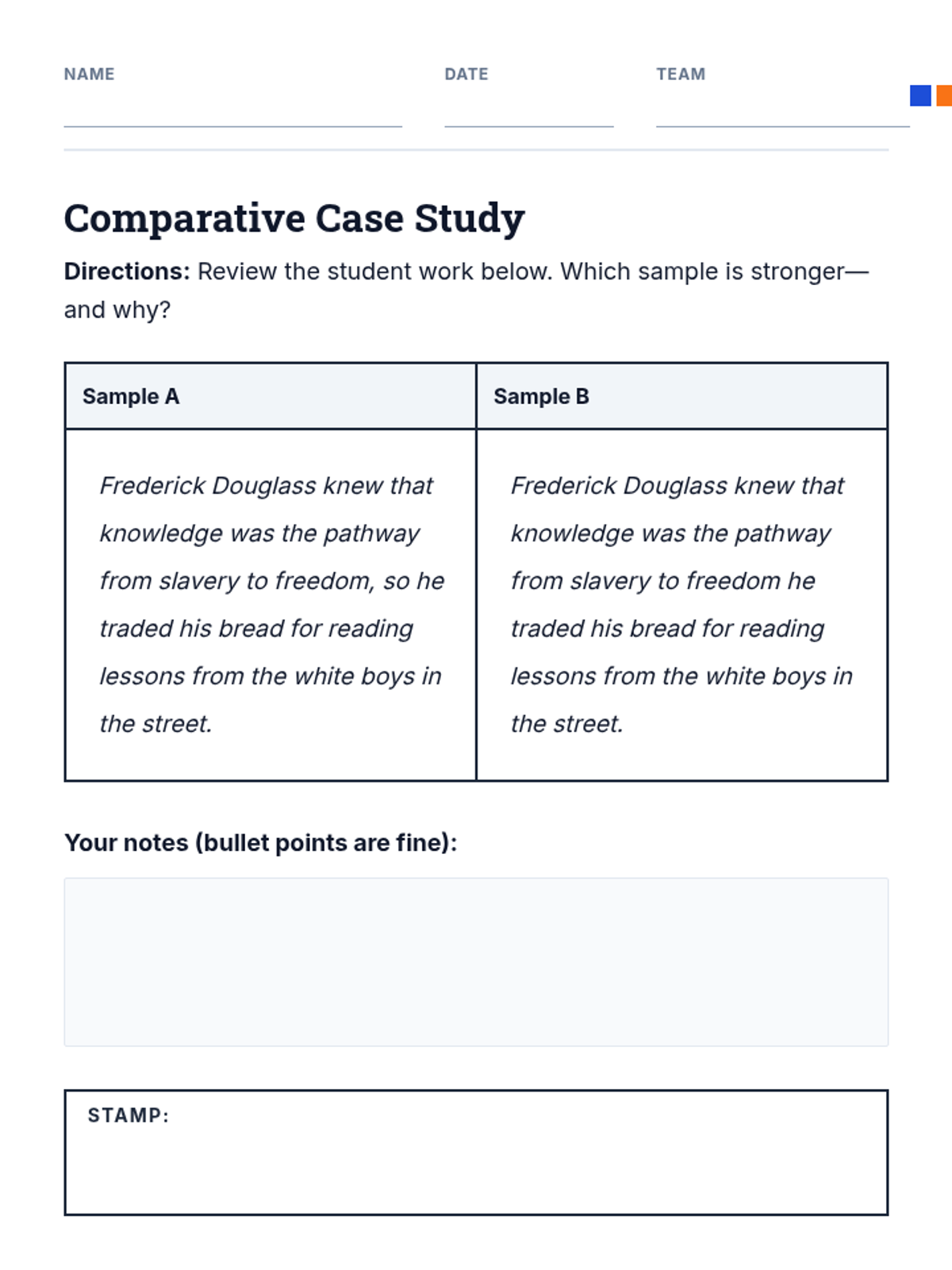
A simplified comparative case study worksheet featuring a single run-on sentence correction from Frederick Douglass's narrative using a coordinating conjunction.
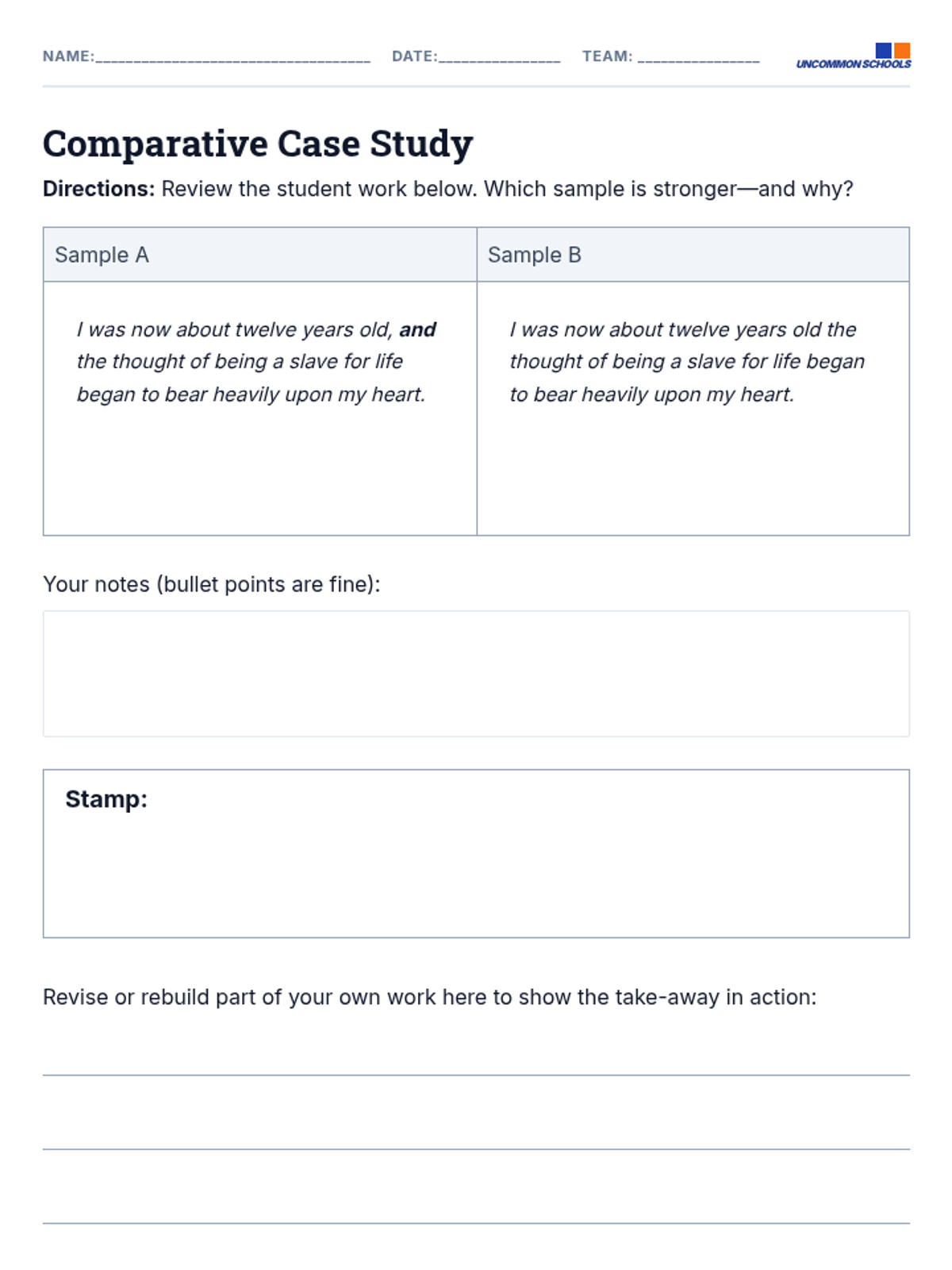
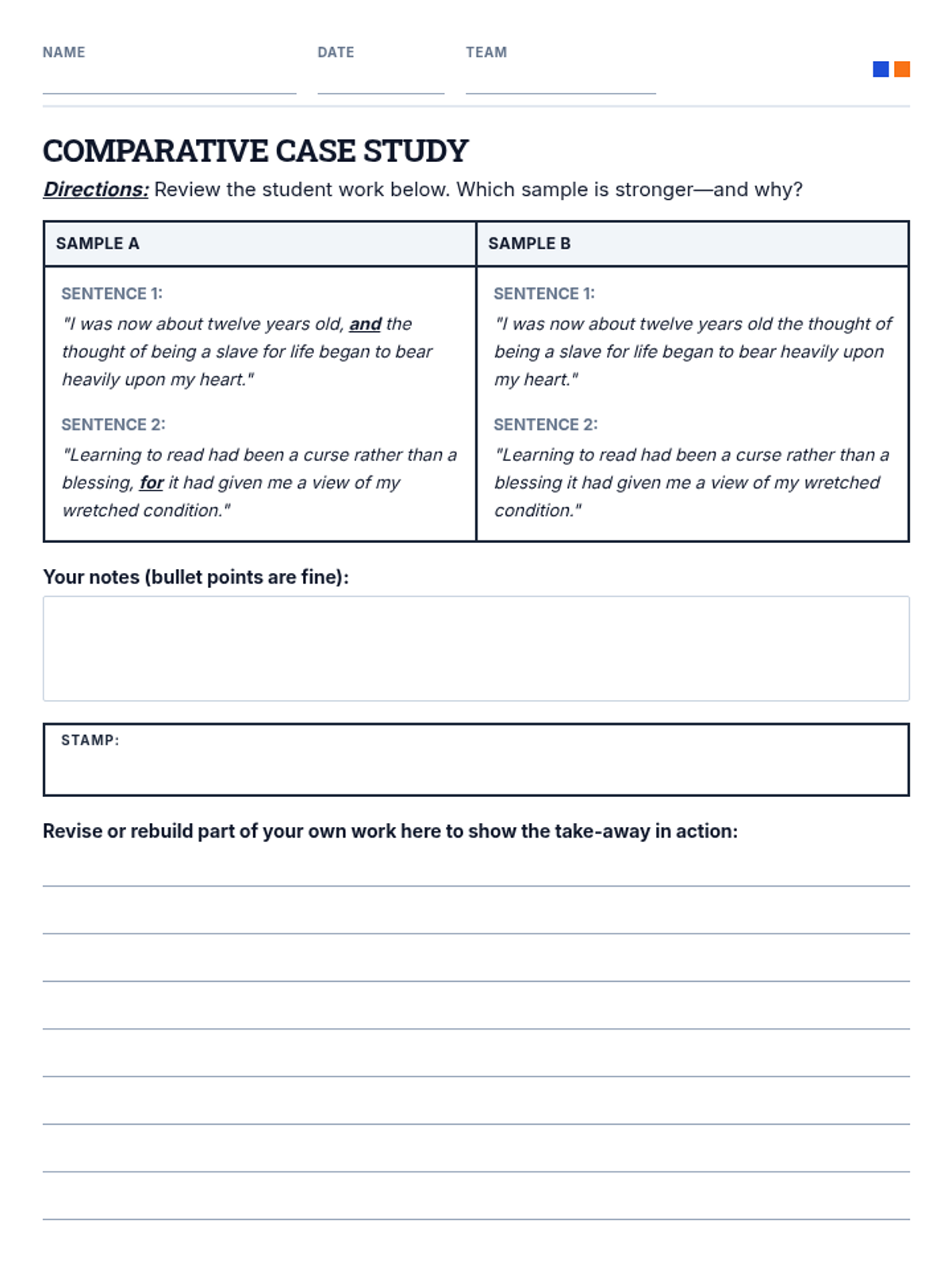
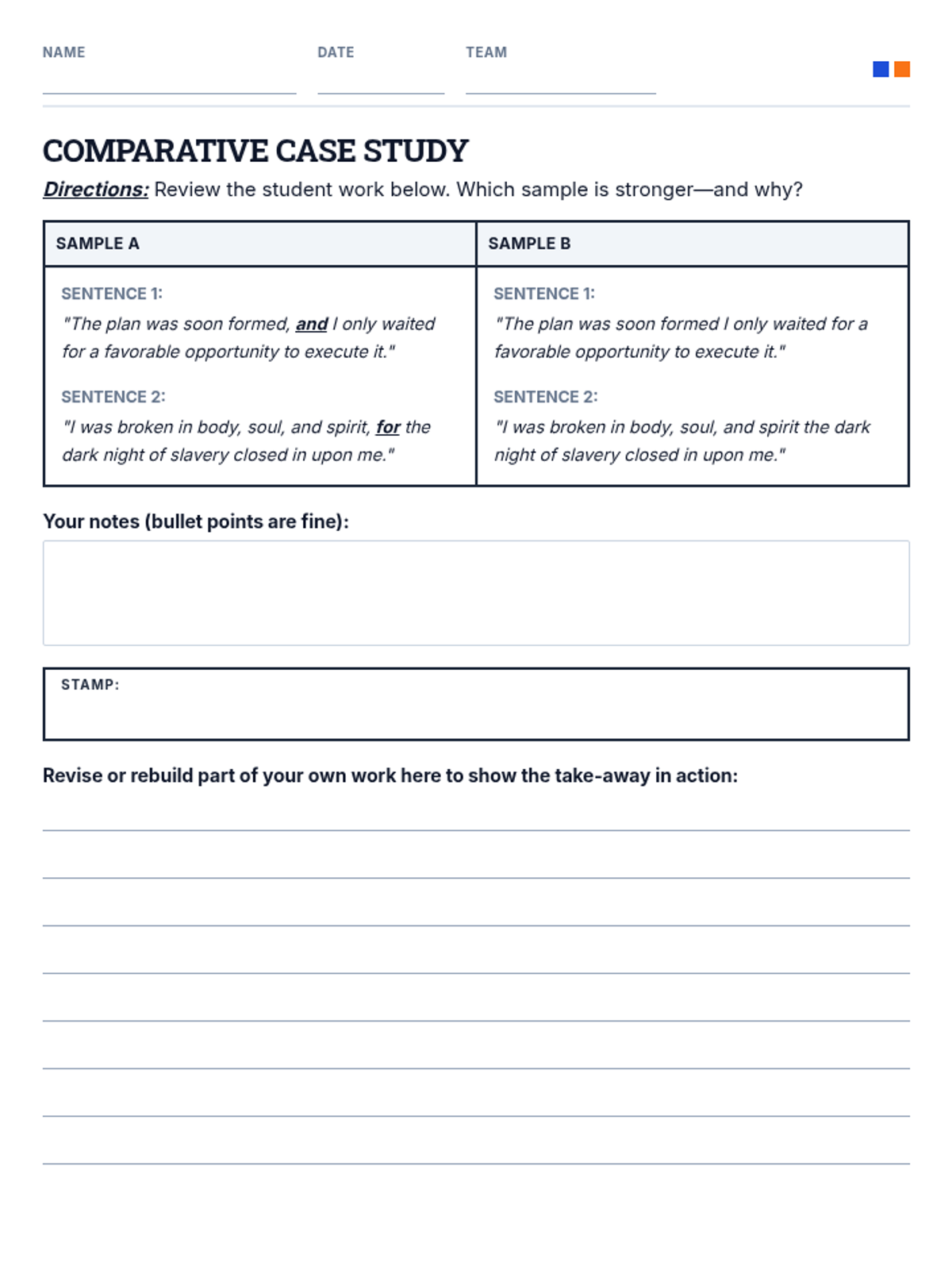
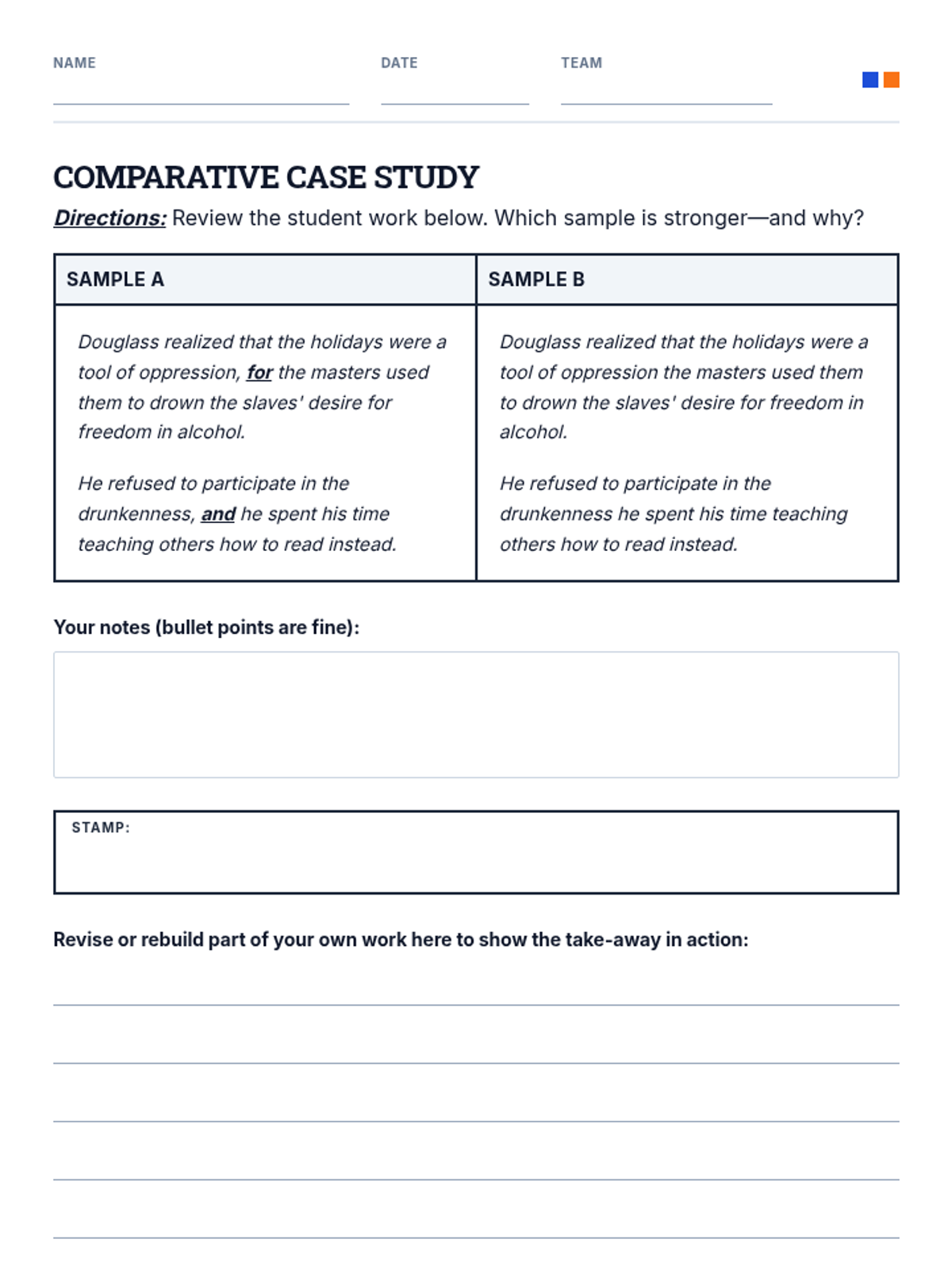
A comparative case study worksheet where students analyze two sentences from Frederick Douglass's narrative to identify the correct use of FANBOYS in fixing run-on sentences. Updated with different sentences from the text.
A comparative case study worksheet where students analyze two sentences from Frederick Douglass's narrative to identify the correct use of FANBOYS in fixing run-on sentences. Revised for better page flow and printing.
A comparative case study worksheet where students analyze two sentences from Frederick Douglass's narrative to identify the correct use of FANBOYS in fixing run-on sentences.
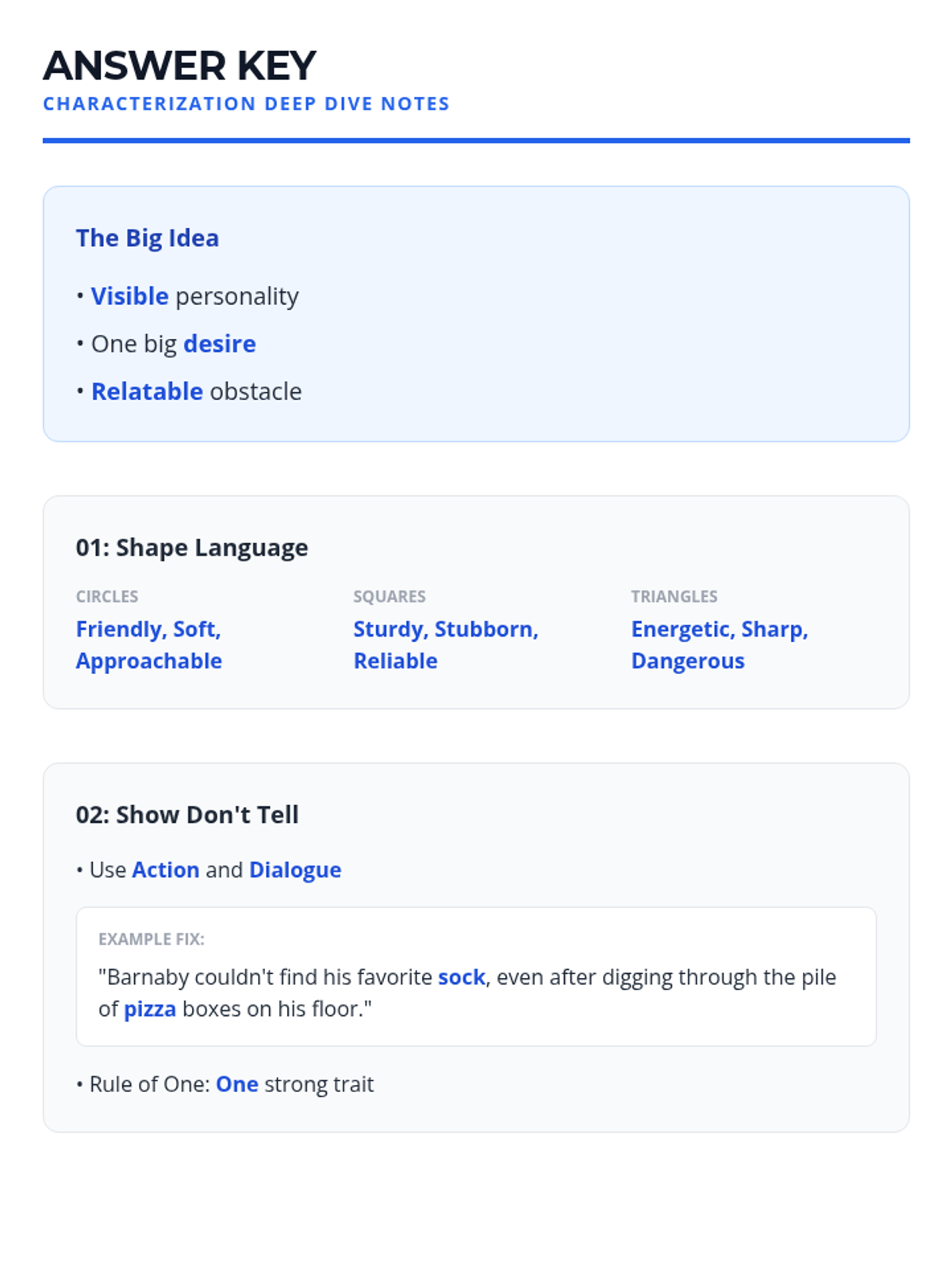
Teacher answer key for the characterization deep dive notes.
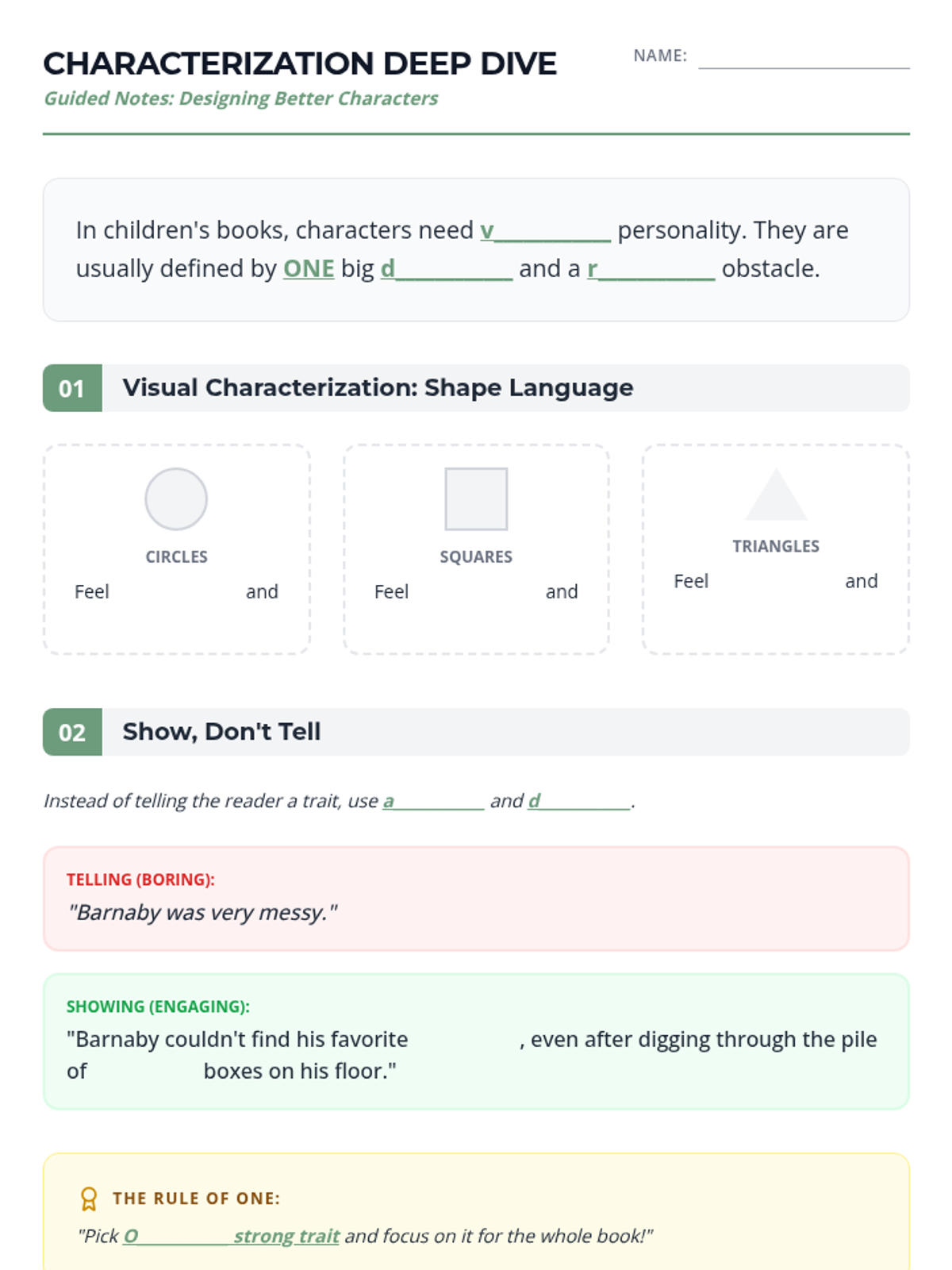
Student guided notes for the characterization deep dive, covering visible personality, shape language, and 'show don't tell'.
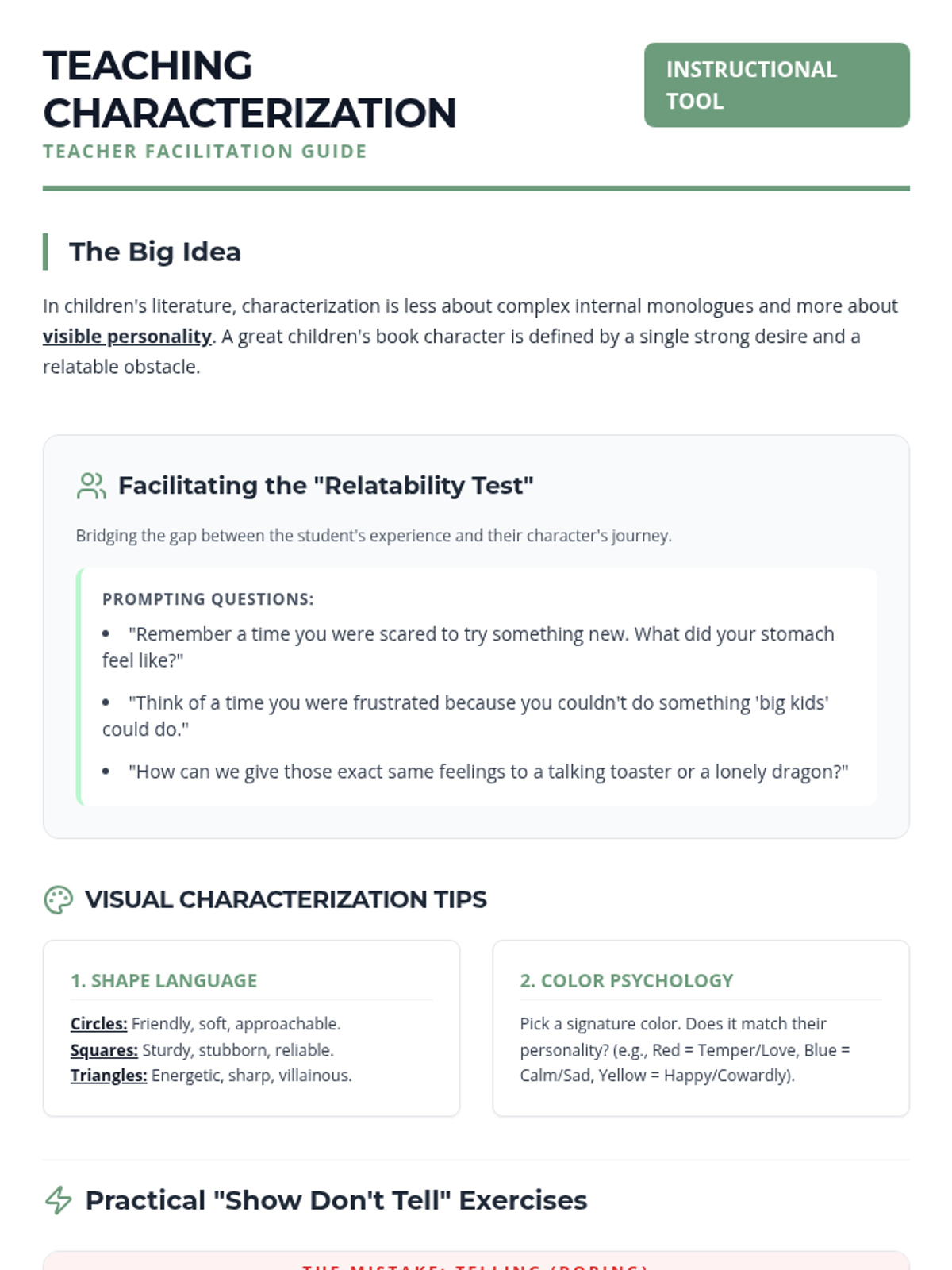
An instructional guide for teachers providing pedagogical strategies for teaching characterization in children's books, including shape language, color psychology, and practical 'show don't tell' exercises.
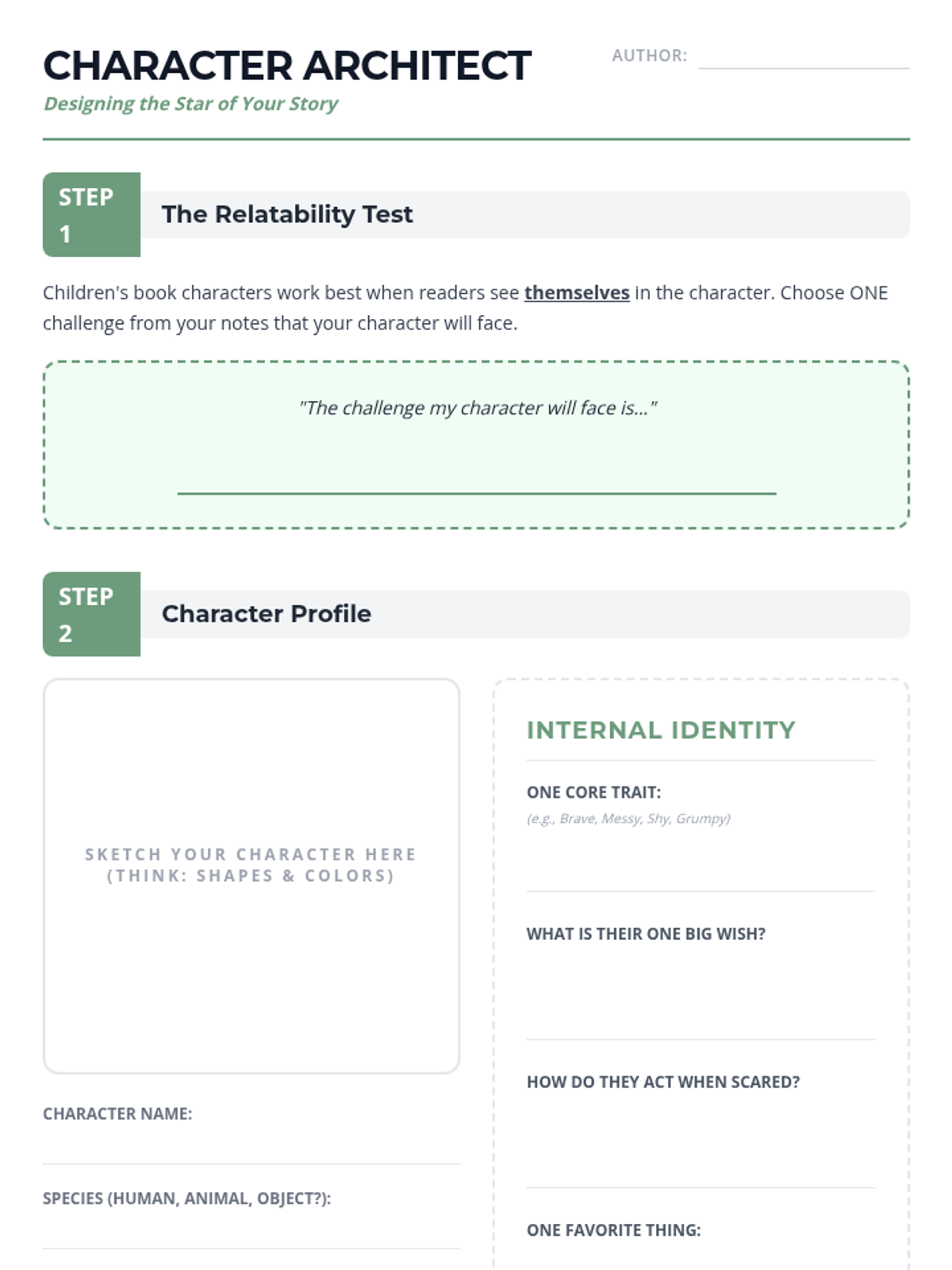
A character design worksheet that helps students apply characterization concepts by choosing a relatable challenge, sketching their character, and practicing 'show don't tell' through actions and dialogue.
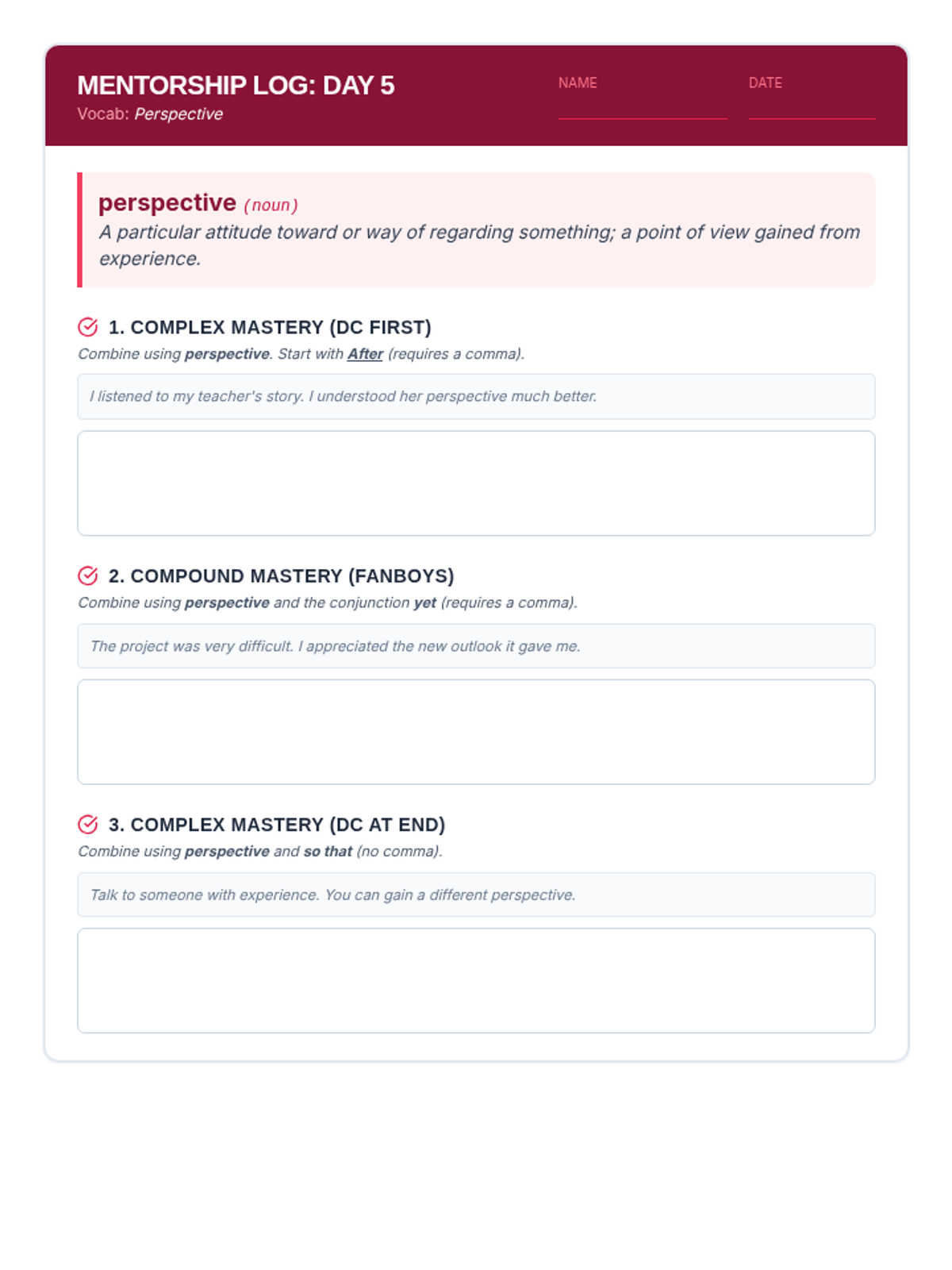
Revised Day 5 entrance ticket: Fixed page break issue by condensing layout and Mastery tasks, increased work area heights, and ensured proper header alignment.
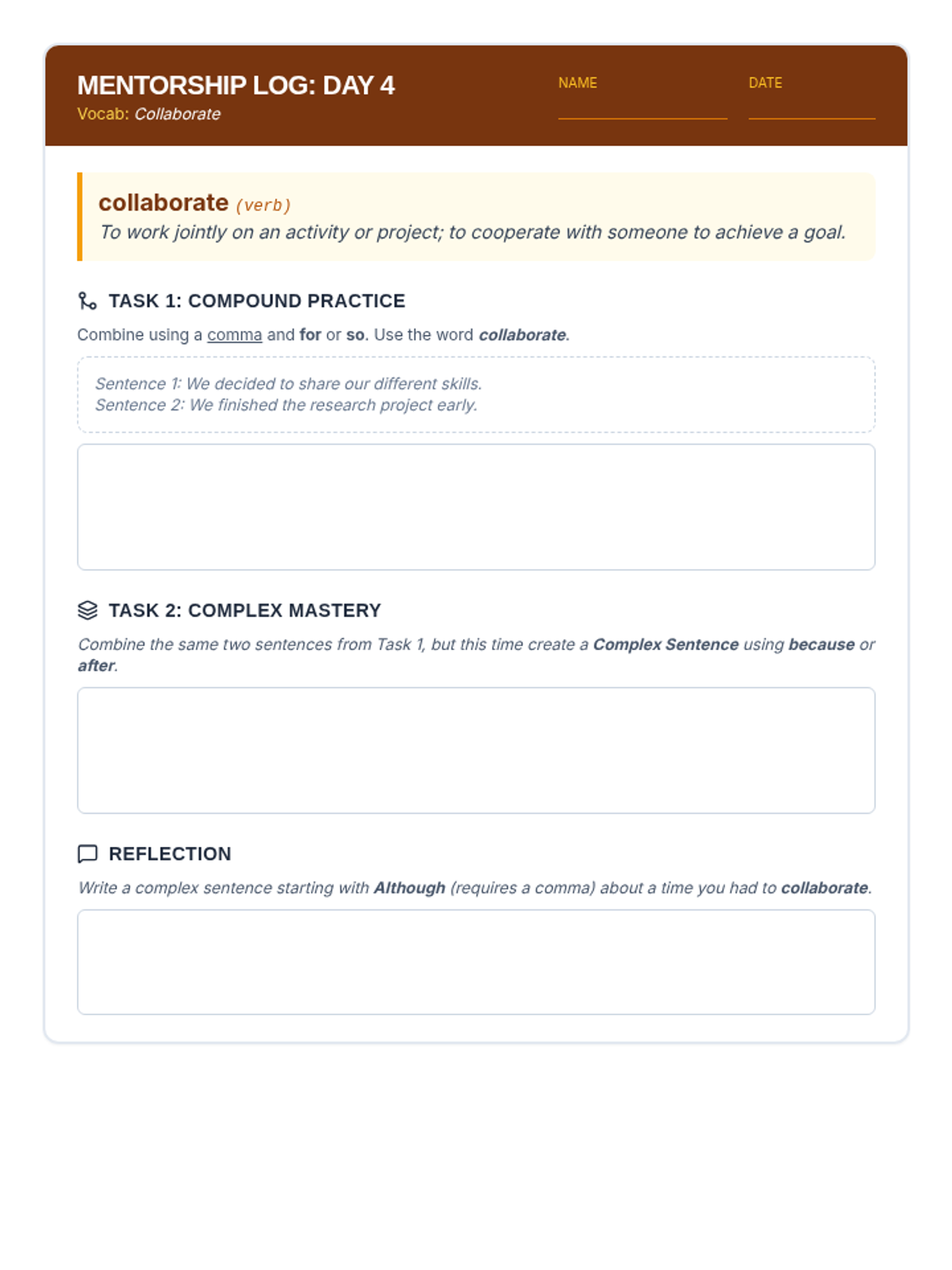
Revised Day 4 entrance ticket: Clarified instructions by removing side-by-side boxes, increased writing space, and condensed layout to fit on one page.
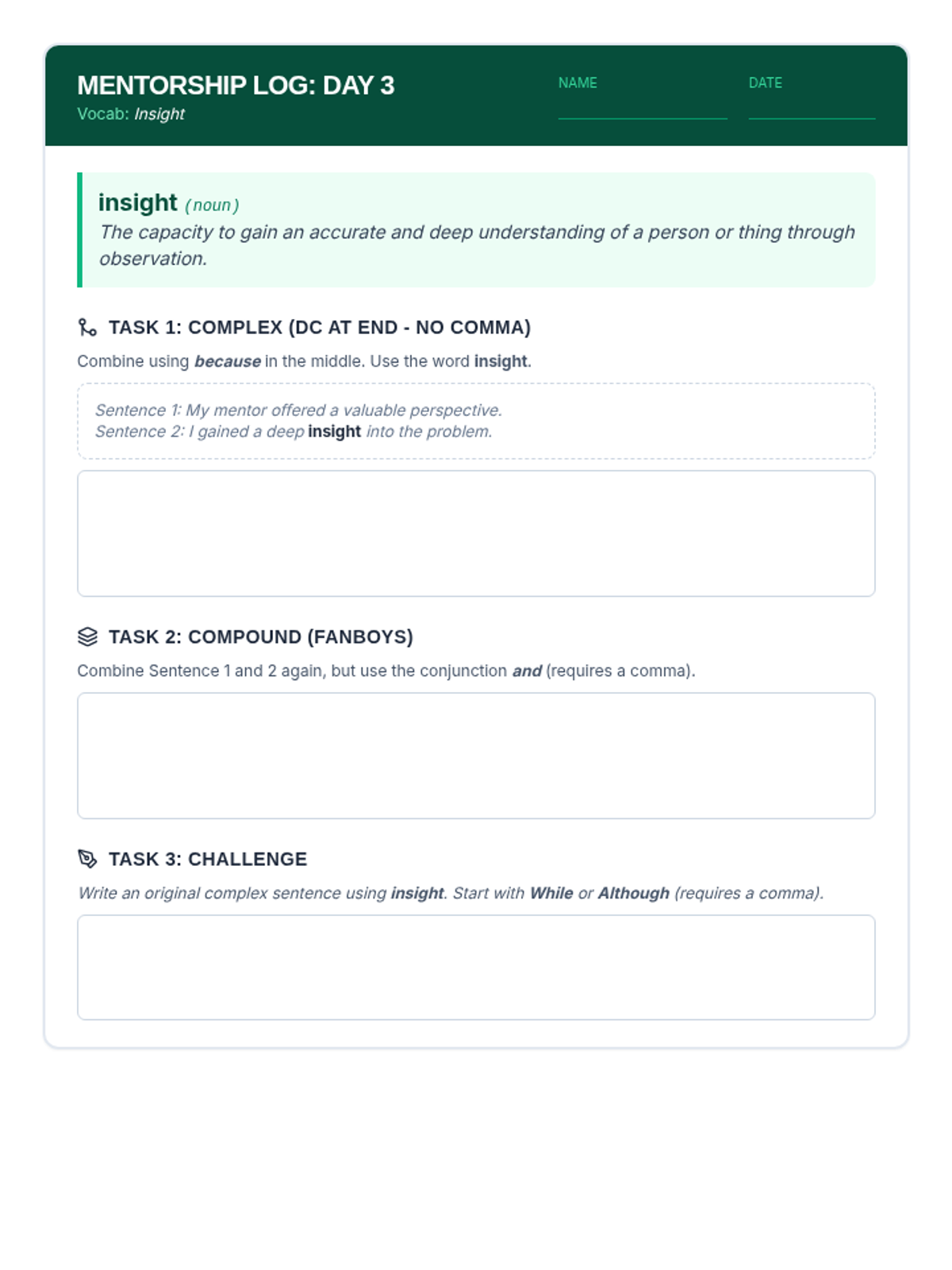
Revised Day 3 entrance ticket: Fixed the logic error in the sentence prompt, compacted layout to fit on one page, and increased response box sizes.
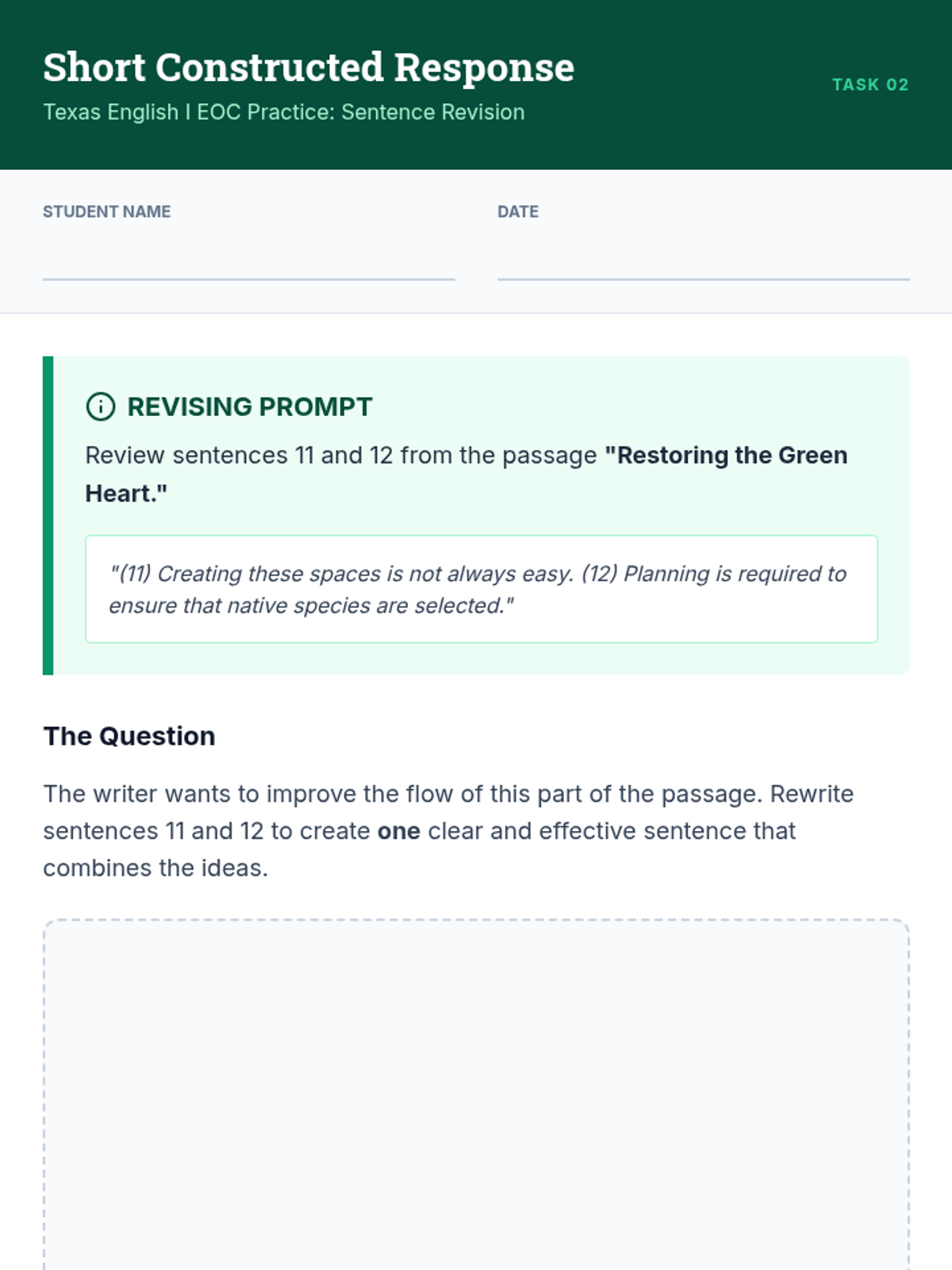
A short constructed response (SCR) task for Texas English I, requiring students to rewrite and combine two sentences from the practice passage to improve flow and clarity.
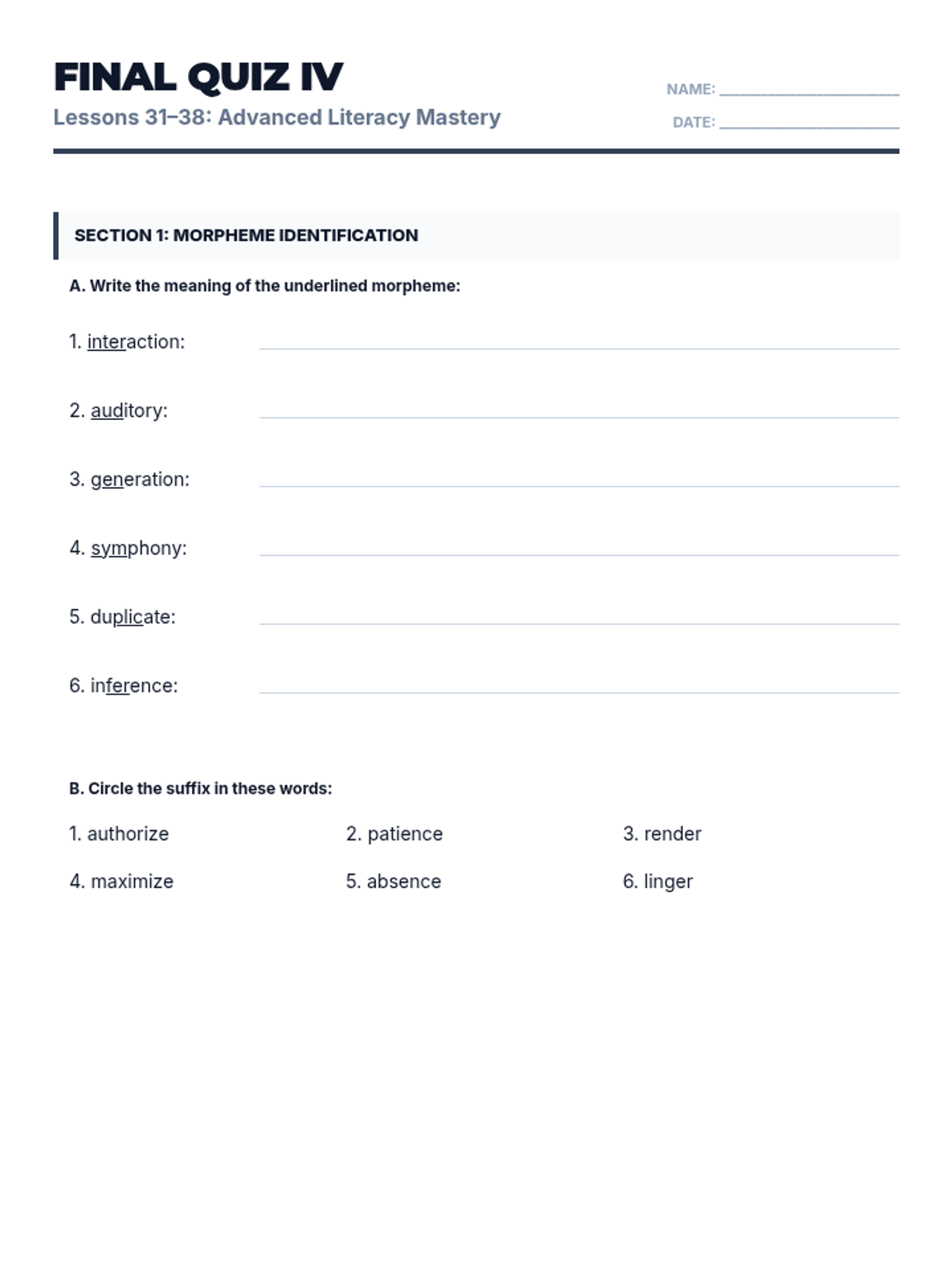
A final formal 4-page assessment for the Reading Power Pack, covering all morphology and complex vowel skills from Lessons 31-38. Includes morpheme meaning identification, academic vocabulary application, multisyllabic decoding challenge, and critical synthesis short-answer questions. Designed for high school TESOL students.
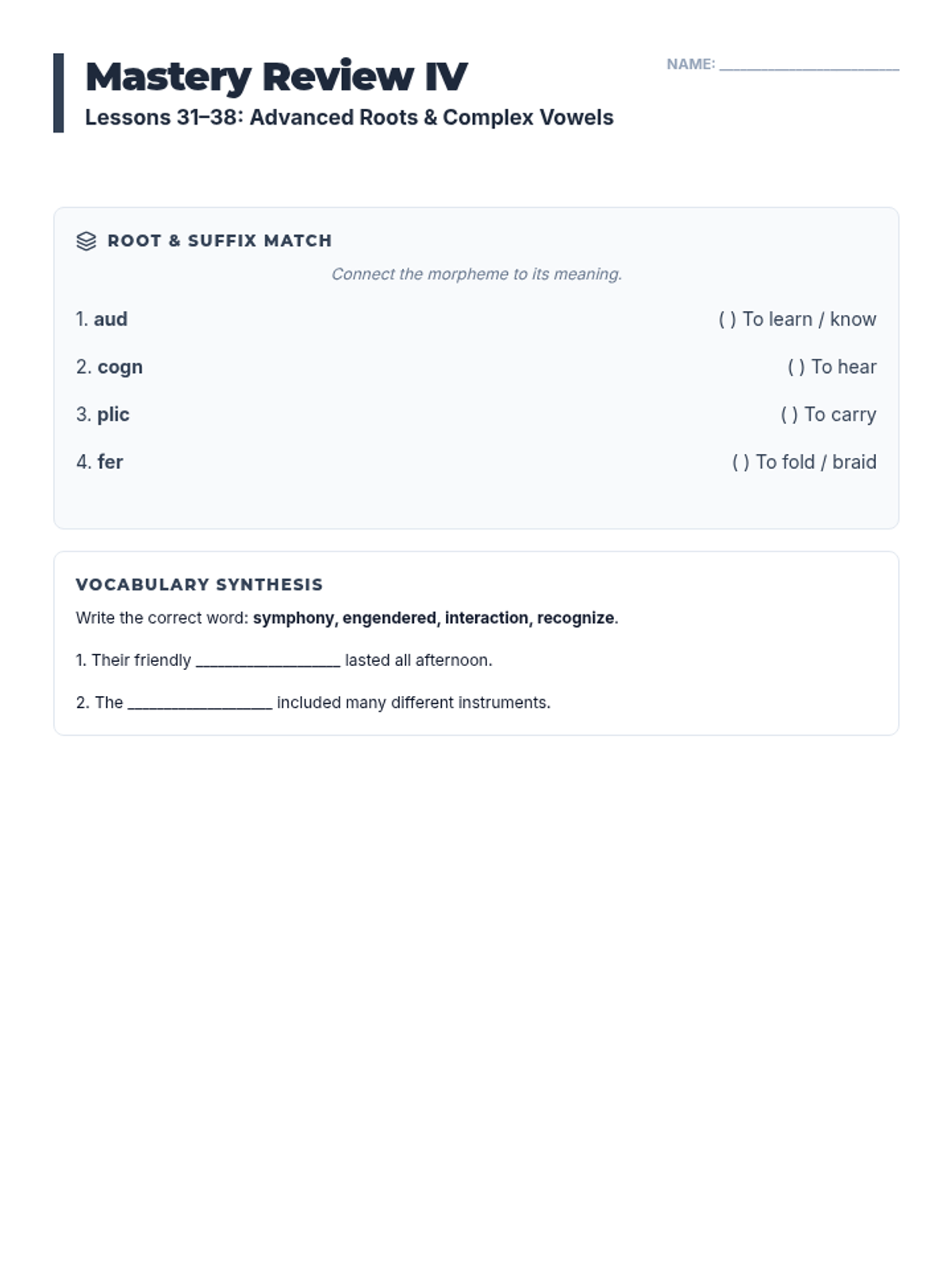
A comprehensive 4-page expansion for Lesson 39. This review lesson synthesizes the advanced morphology (sym, phone, gen, act, cogn, plic, aud, fer, sid) and complex vowel patterns from the previous units. It includes a morpheme match grid, a synthesis reading passage without underlines to encourage active word searching, and a high-level writing challenge. Designed for high school TESOL students.
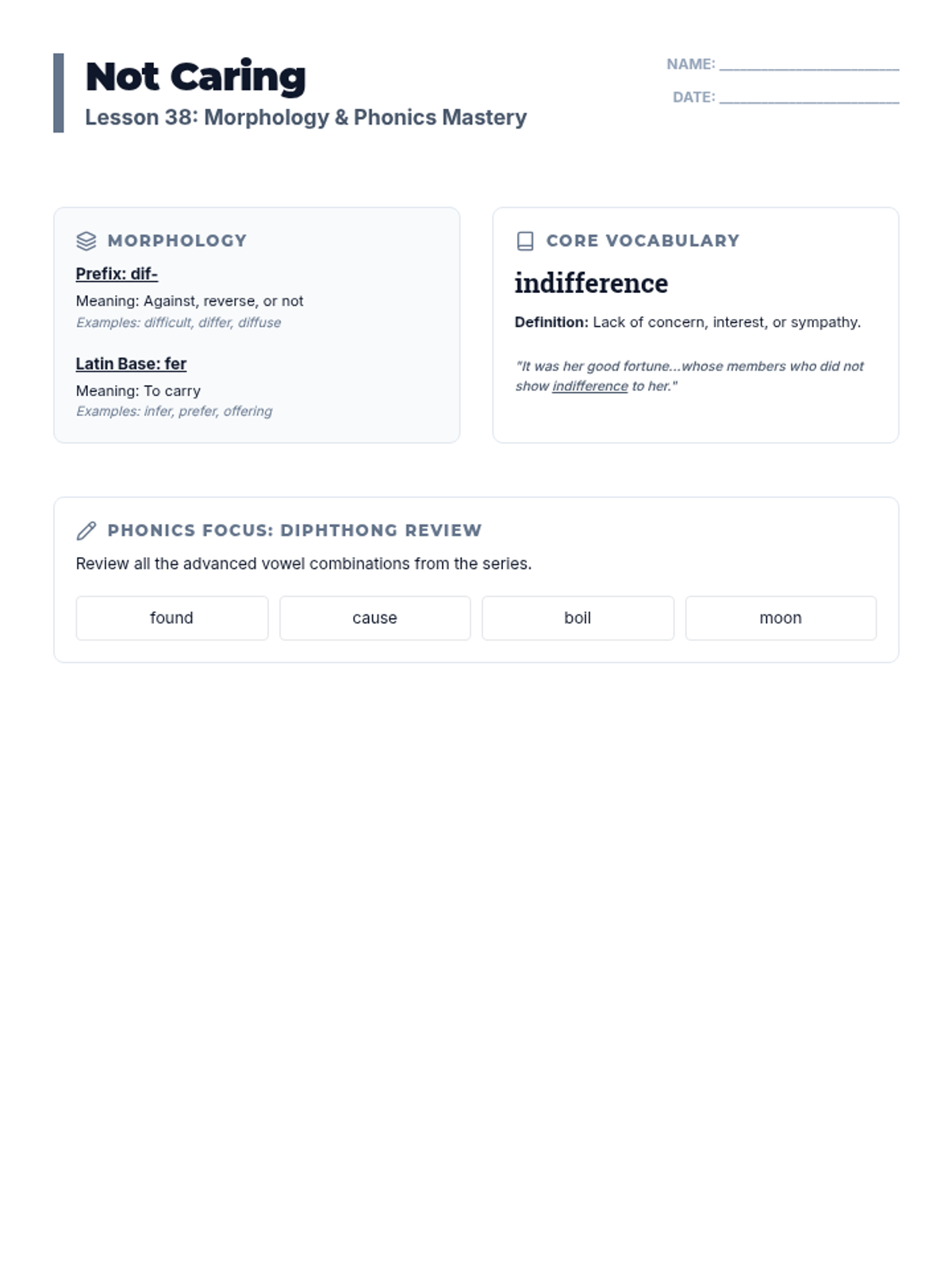
A 5-page expansion for Lesson 38. It focuses on the prefix dif- and root fer, with the vocabulary word 'indifference', alongside explicit instruction in synthesis of complex vowel patterns. It includes a foundational page, a reading passage without underlines to encourage active word searching, a new dedicated encoding mastery page, comprehension questions with discussion frames, and structured writing practice. Designed for high school TESOL students.
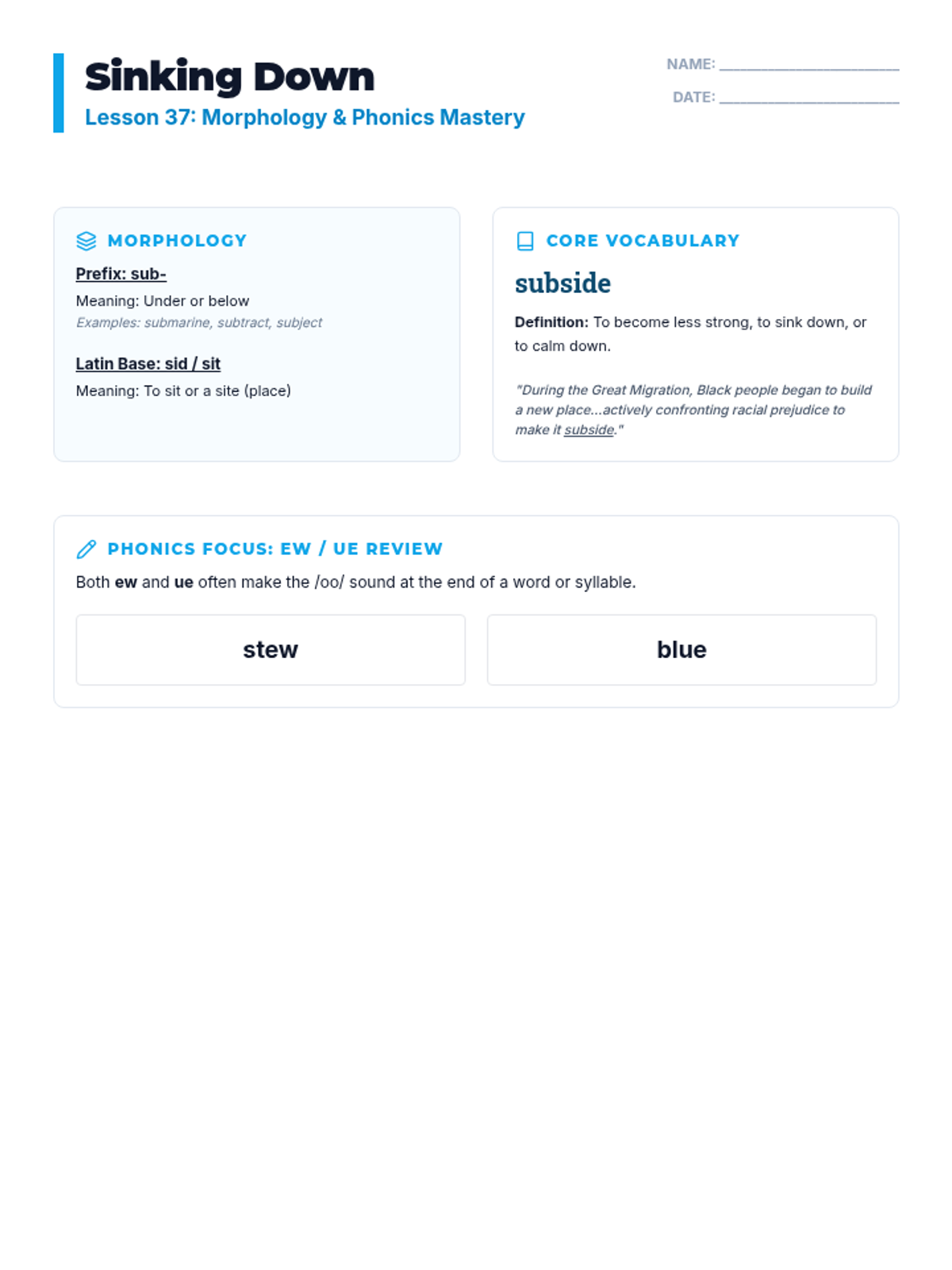
A comprehensive 5-page expansion for Lesson 37. It focuses on the prefix sub- and root sid/sit, with the vocabulary word 'subside', alongside explicit instruction in the diphthongs ew and ue review. It includes a foundational page, a reading passage without underlines to encourage active word searching, a new dedicated encoding mastery page, comprehension questions with discussion frames, and structured writing practice. Designed for high school TESOL students.
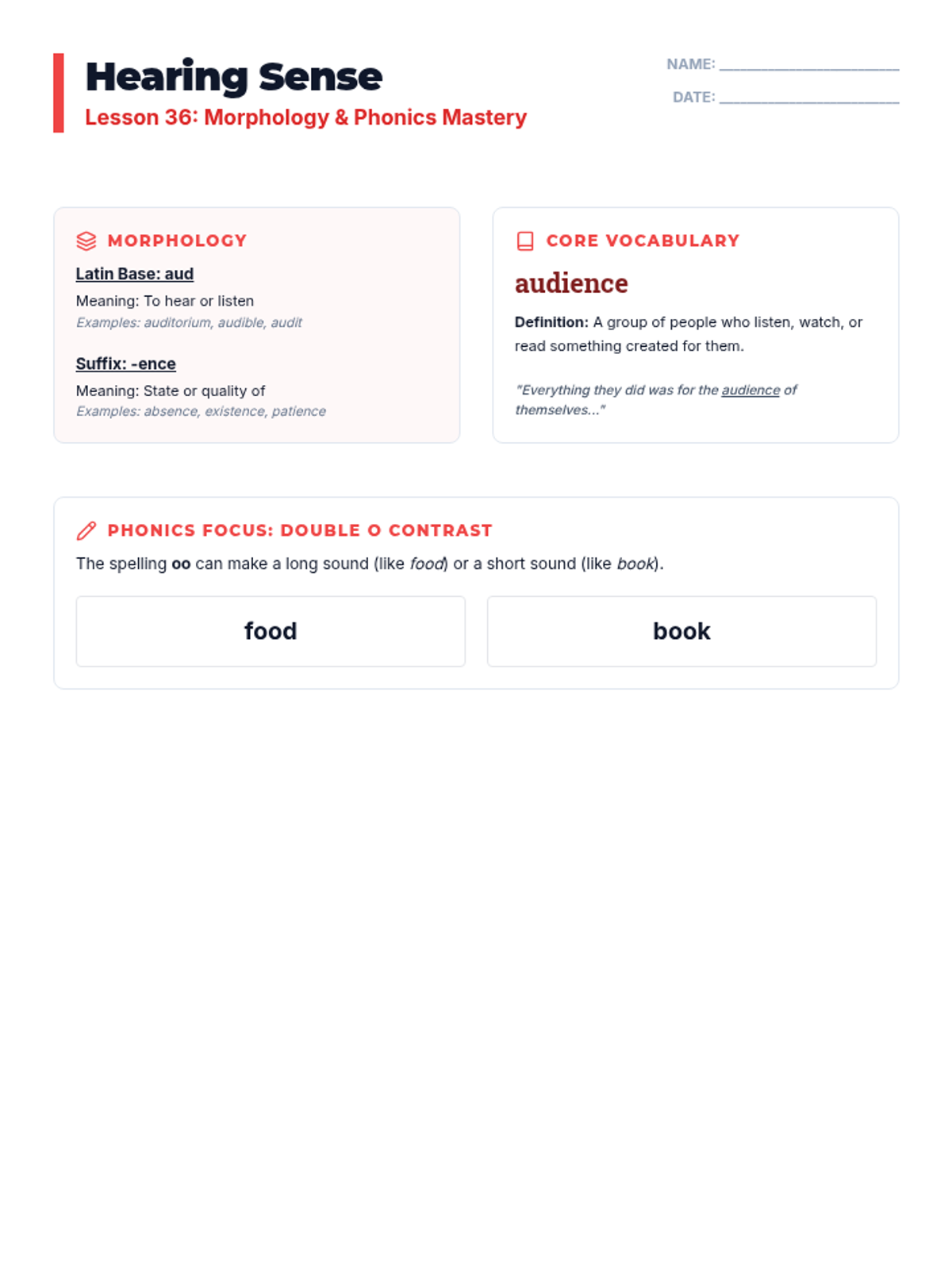
A comprehensive 5-page expansion for Lesson 36. It focuses on the root aud and suffix -ence, with the vocabulary word 'audience', alongside explicit instruction in the diphthong oo (food vs book). It includes a foundational page, a reading passage without underlines to encourage active word searching, a new dedicated encoding mastery page, comprehension questions with discussion frames, and structured writing practice. Designed for high school TESOL students.
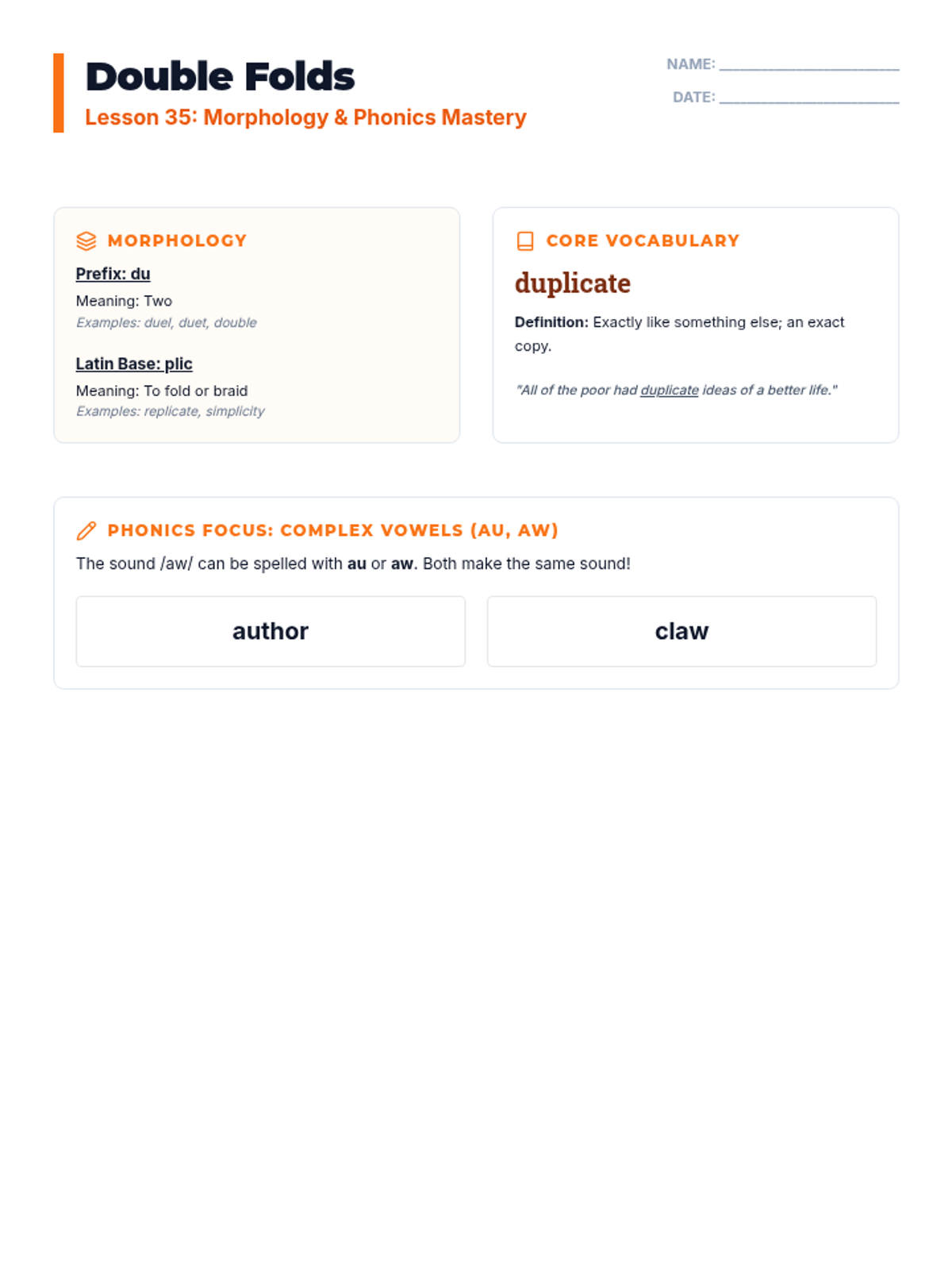
A comprehensive 5-page expansion for Lesson 35. It focuses on the prefix du and root plic, with the vocabulary word 'duplicate', alongside explicit instruction in the diphthongs au and aw. It includes a foundational page, a reading passage without underlines to encourage active word searching, a new dedicated encoding mastery page, comprehension questions with discussion frames, and structured writing practice. Designed for high school TESOL students.
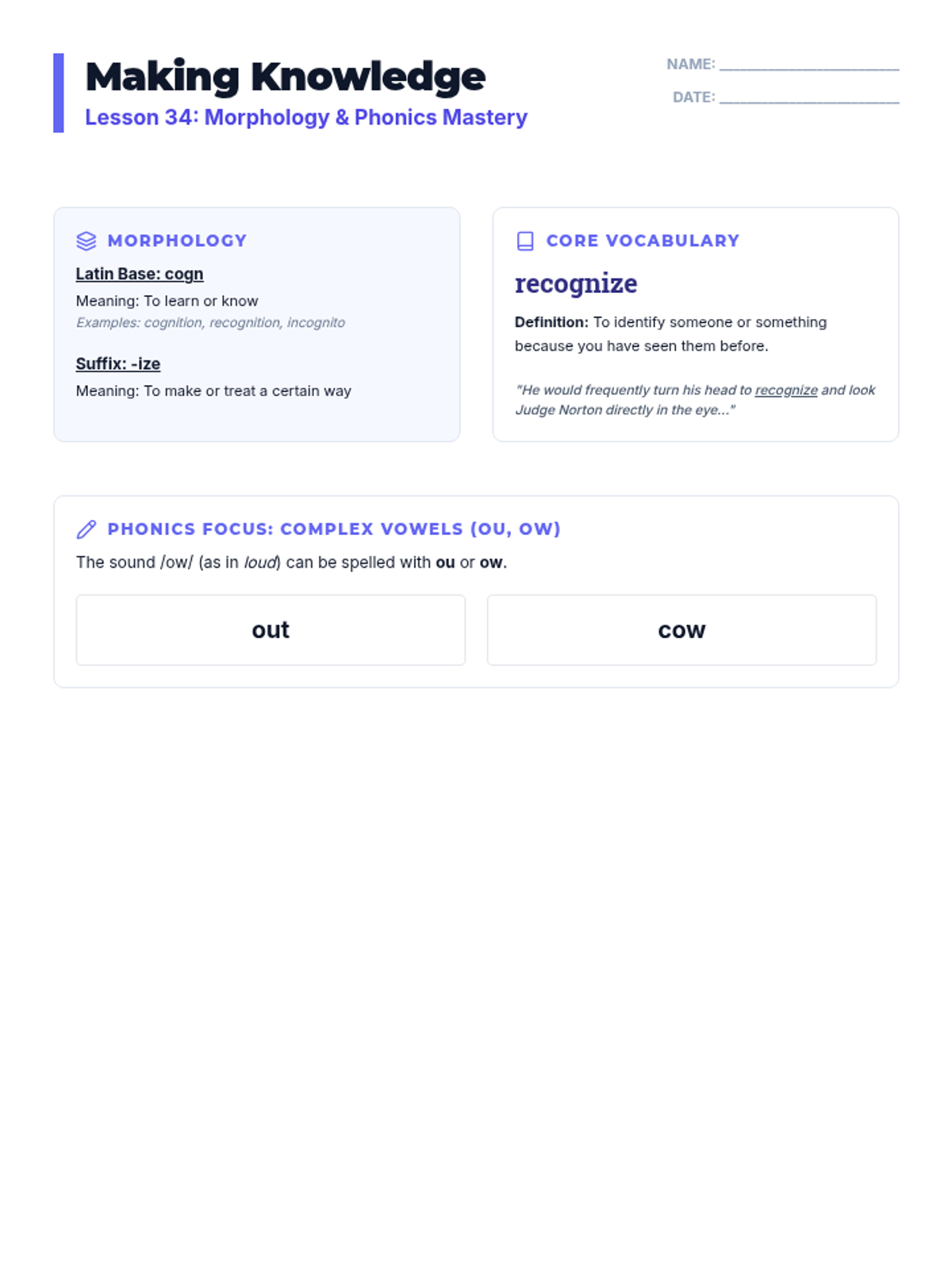
A comprehensive 5-page expansion for Lesson 34. It focuses on the root cogn and suffix -ize, with the vocabulary word 'recognize', alongside explicit instruction in the diphthongs ou and ow. It includes a foundational page, a reading passage without underlines to encourage active word searching, a new dedicated encoding mastery page, comprehension questions with discussion frames, and structured writing practice. Designed for high school TESOL students.
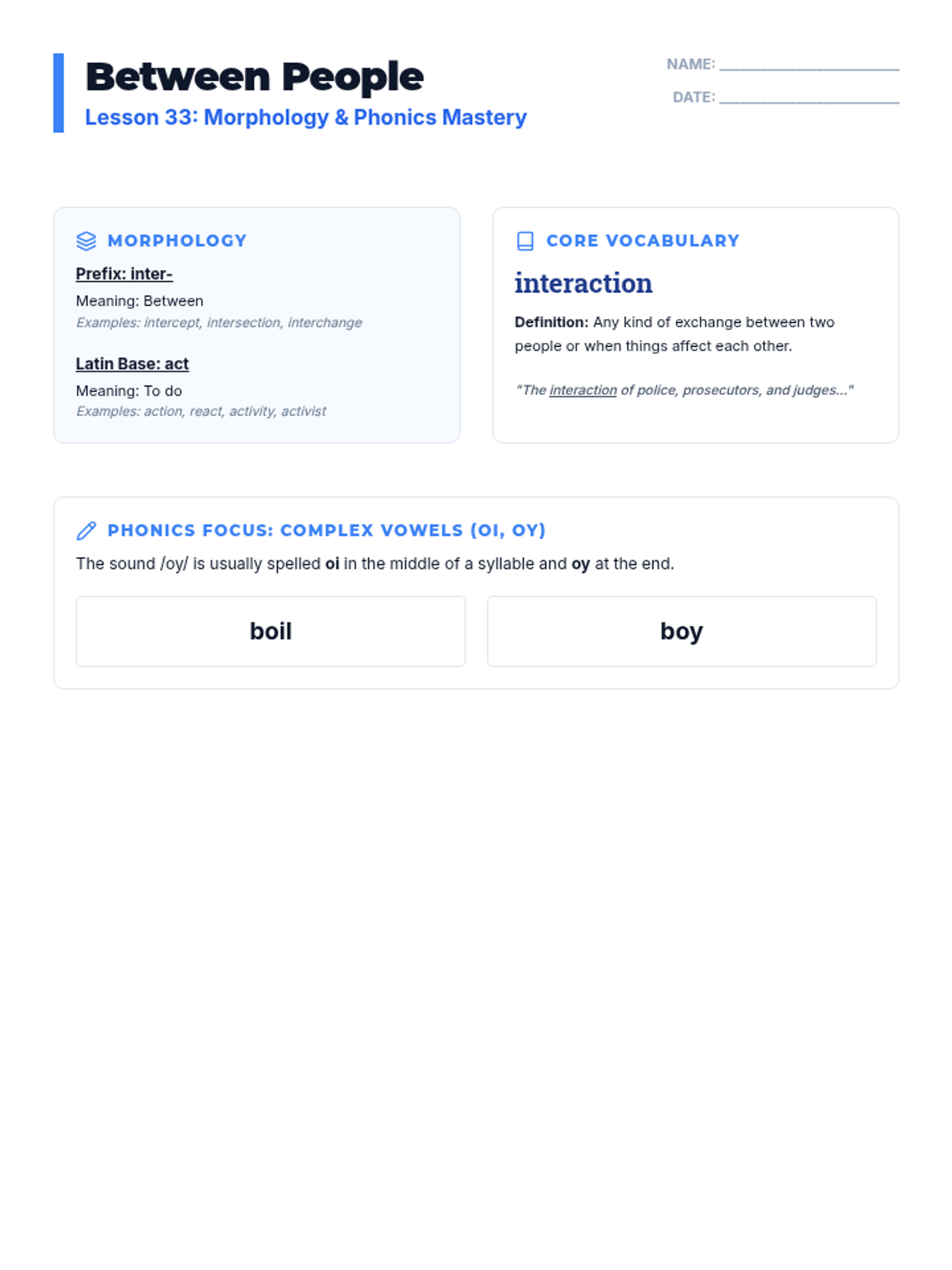
A comprehensive 5-page expansion for Lesson 33. It focuses on the prefix inter- and root act, with the vocabulary word 'interaction', alongside explicit instruction in the diphthongs oi and oy. It includes a foundational page, a reading passage without underlines to encourage active word searching, a new dedicated encoding mastery page, comprehension questions with discussion frames, and structured writing practice. Designed for high school TESOL students.
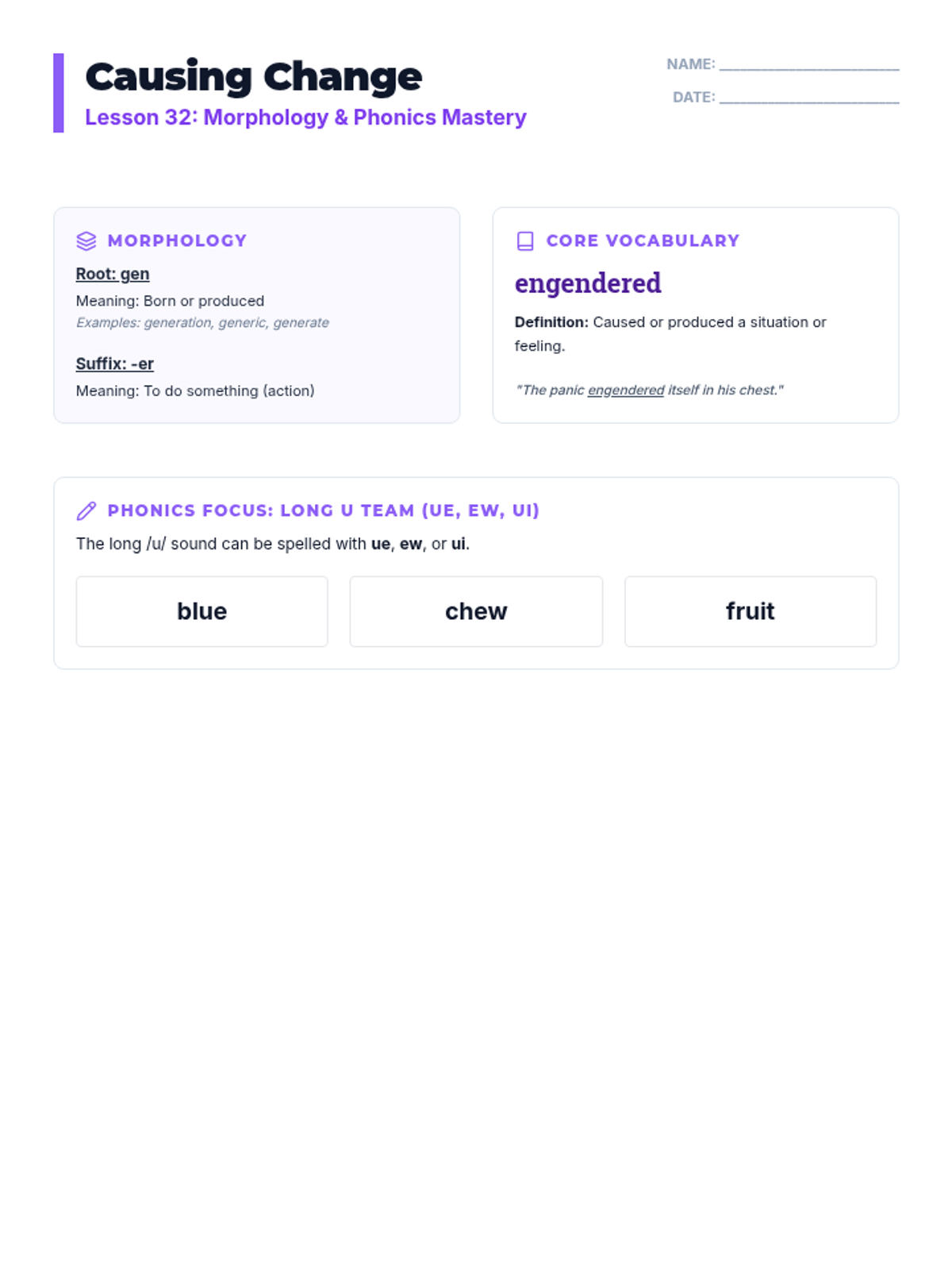
A comprehensive 4-page expansion for Lesson 32. It focuses on the root gen and suffix -er, with the vocabulary word 'engendered', alongside explicit instruction in the Long U vowel teams (ue, ew, ui). It includes a foundational page, a reading passage without underlines to encourage active searching, comprehension questions with discussion frames, and structured writing practice focusing on capitalization of proper nouns. Designed for high school TESOL students.
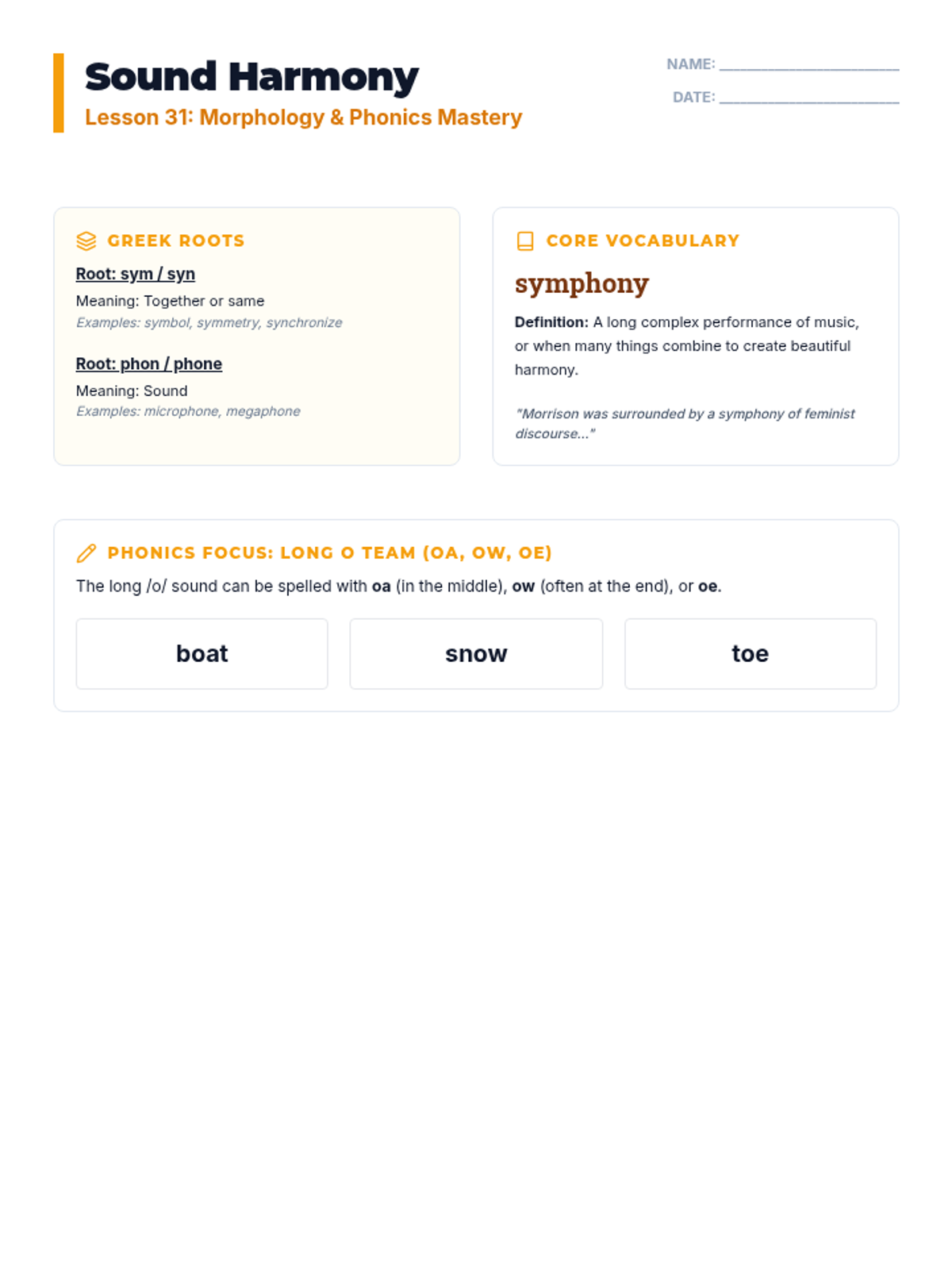
A comprehensive 5-page expansion for Lesson 31. It focuses on the Greek roots sym/syn and phon/phone, with the vocabulary word 'symphony', alongside explicit instruction in the Long O vowel teams (oa, ow, oe). It includes a foundational page, a reading passage without underlines to encourage active word searching, a new dedicated encoding mastery page, comprehension questions with discussion frames, and structured writing practice. Designed for high school TESOL students.
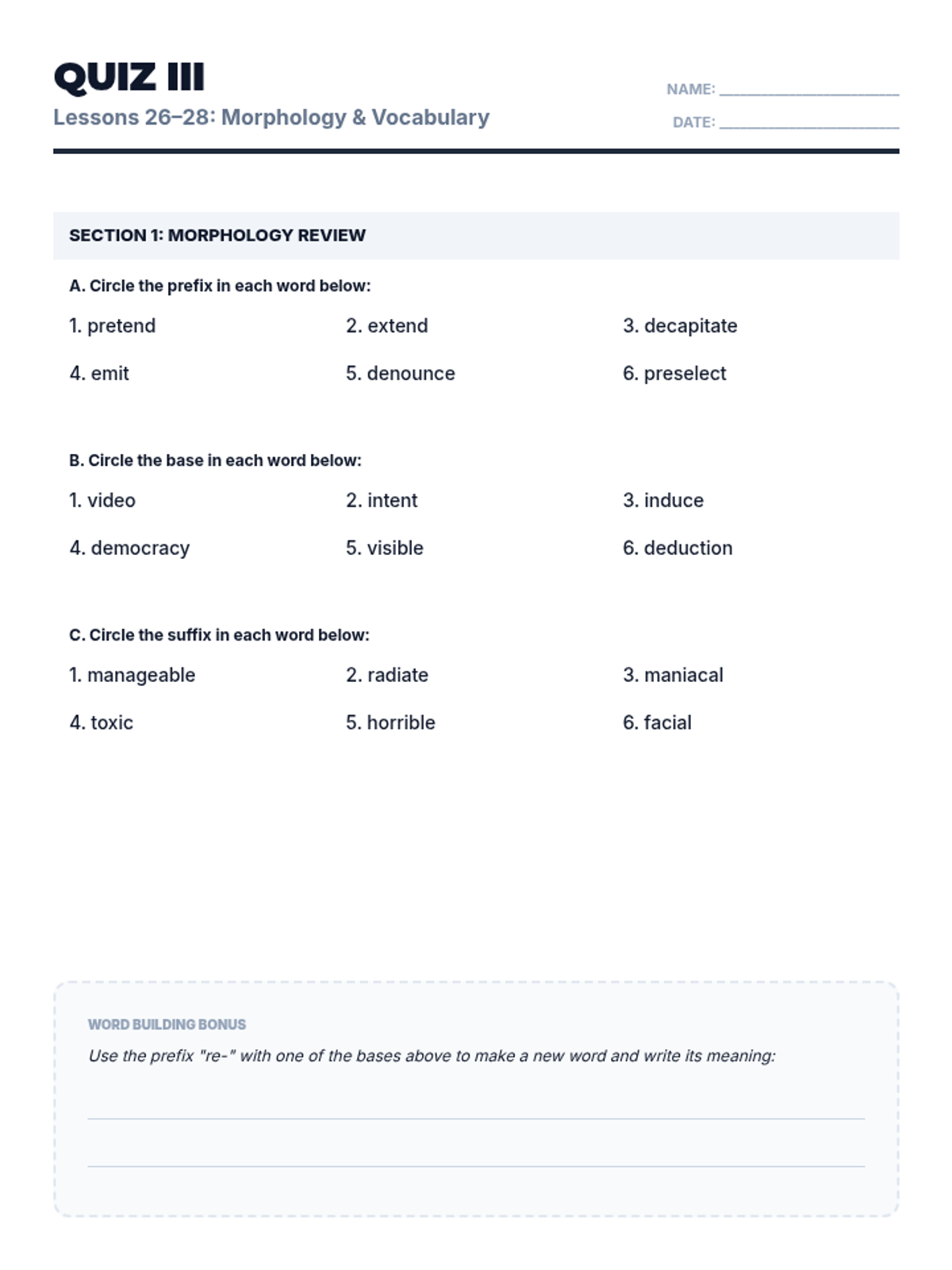
A formal 4-page assessment covering morphology, vocabulary, and word study skills for Lessons 26-28. Includes prefix/base/suffix identification, vocabulary in context, multisyllabic decoding with schwa labels, encoding dictation, and critical thinking short-answer questions. Designed for high school TESOL students.
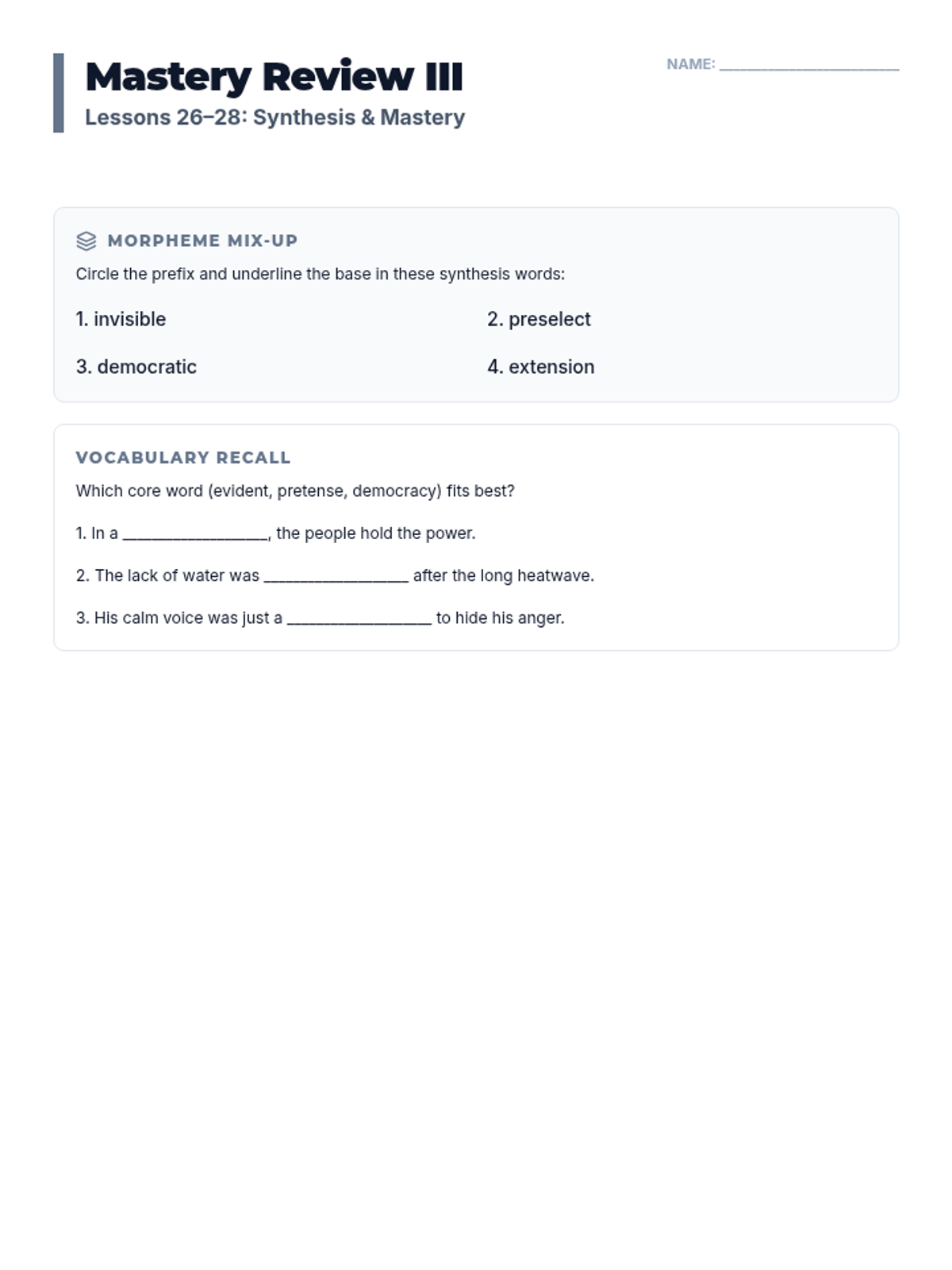
A comprehensive 5-page expansion for Lesson 29. This review lesson synthesizes the morphology (e-, pre-, dem, crat) and vowel team focus (A, E, I) from the previous three units. It includes a morpheme grid, a synthesis reading passage without underlines to encourage active word searching, a new dedicated encoding mastery page, connecting analysis questions, and a high-level writing challenge. Designed for high school TESOL students.
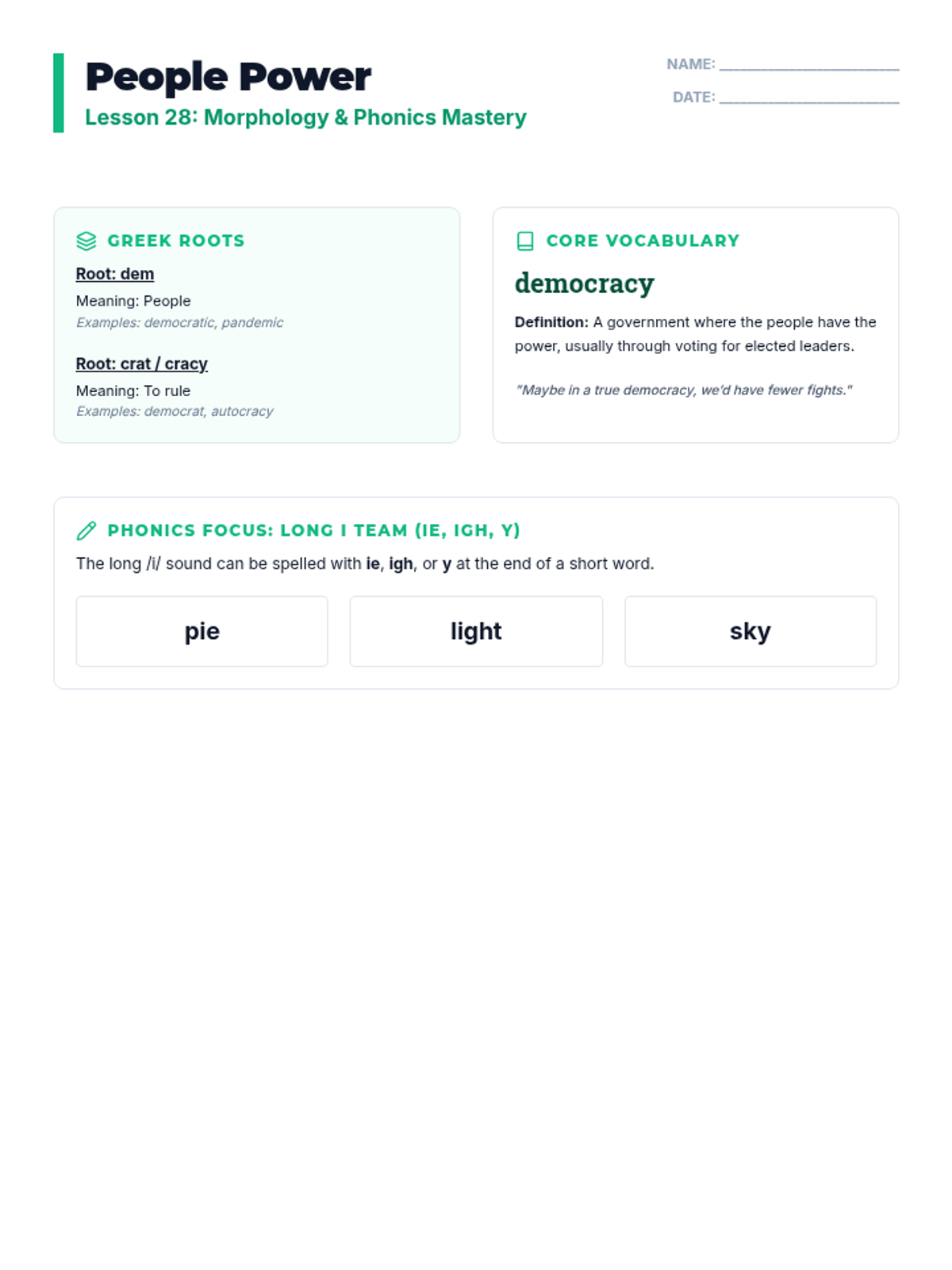
A comprehensive 5-page expansion for Lesson 28. It focuses on the Greek roots dem and crat/cracy, with the vocabulary word 'democracy', alongside explicit instruction in the Long I vowel teams (ie, igh, y). It includes a foundational page, a reading passage without underlines to encourage active word searching, a new dedicated encoding mastery page, comprehension questions with discussion frames, and structured writing practice. Designed for high school TESOL students.
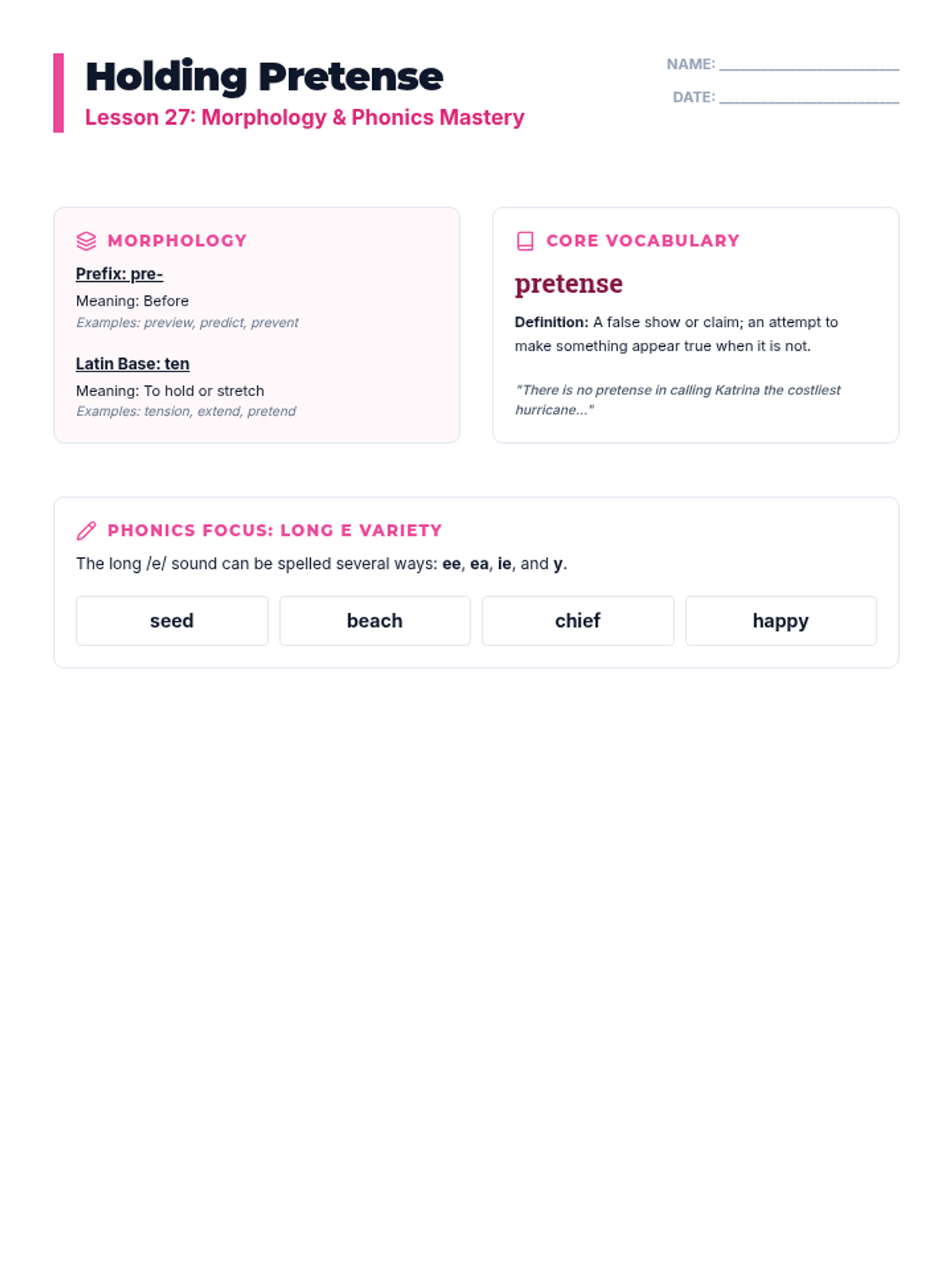
A 5-page expansion for Lesson 27. It focuses on the prefix pre- and the root ten, with the vocabulary word 'pretense', alongside explicit instruction in the Long E vowel teams (ee, ea, ie, y). It includes a foundational page, a reading passage without underlines to encourage active word searching, a new dedicated encoding mastery page, comprehension questions with discussion frames, and structured writing practice. Designed for high school TESOL students.
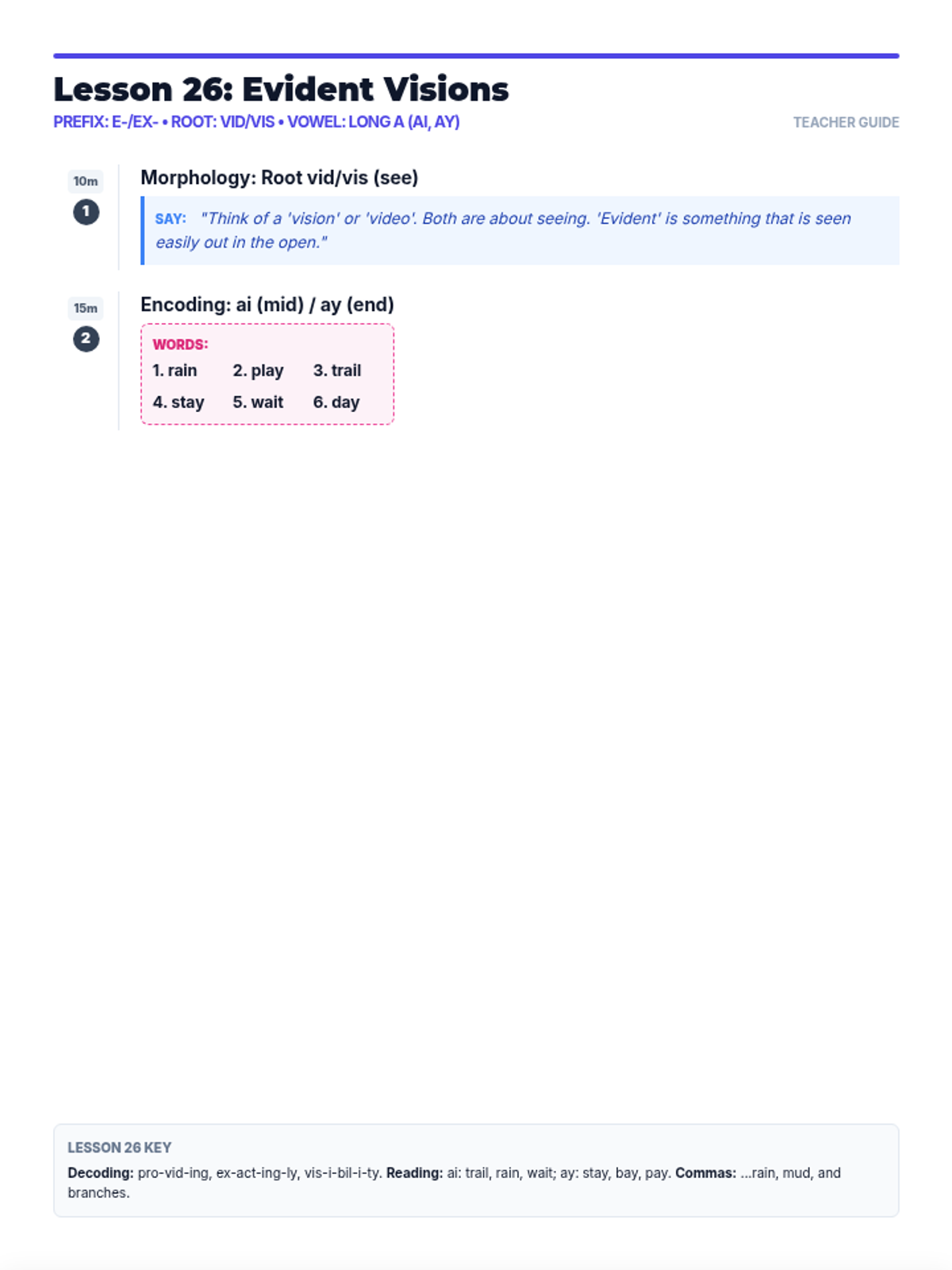
A comprehensive 15-page teacher guide for Lessons 26-40, with each lesson on its own printable page. Each guide includes a structured 60-minute lesson plan, explicit teacher scripts, encoding/dictation word lists for phonics mastery, and a complete answer key for the corresponding student handout. Includes specific focus on Vowel Teams and Diphthongs.
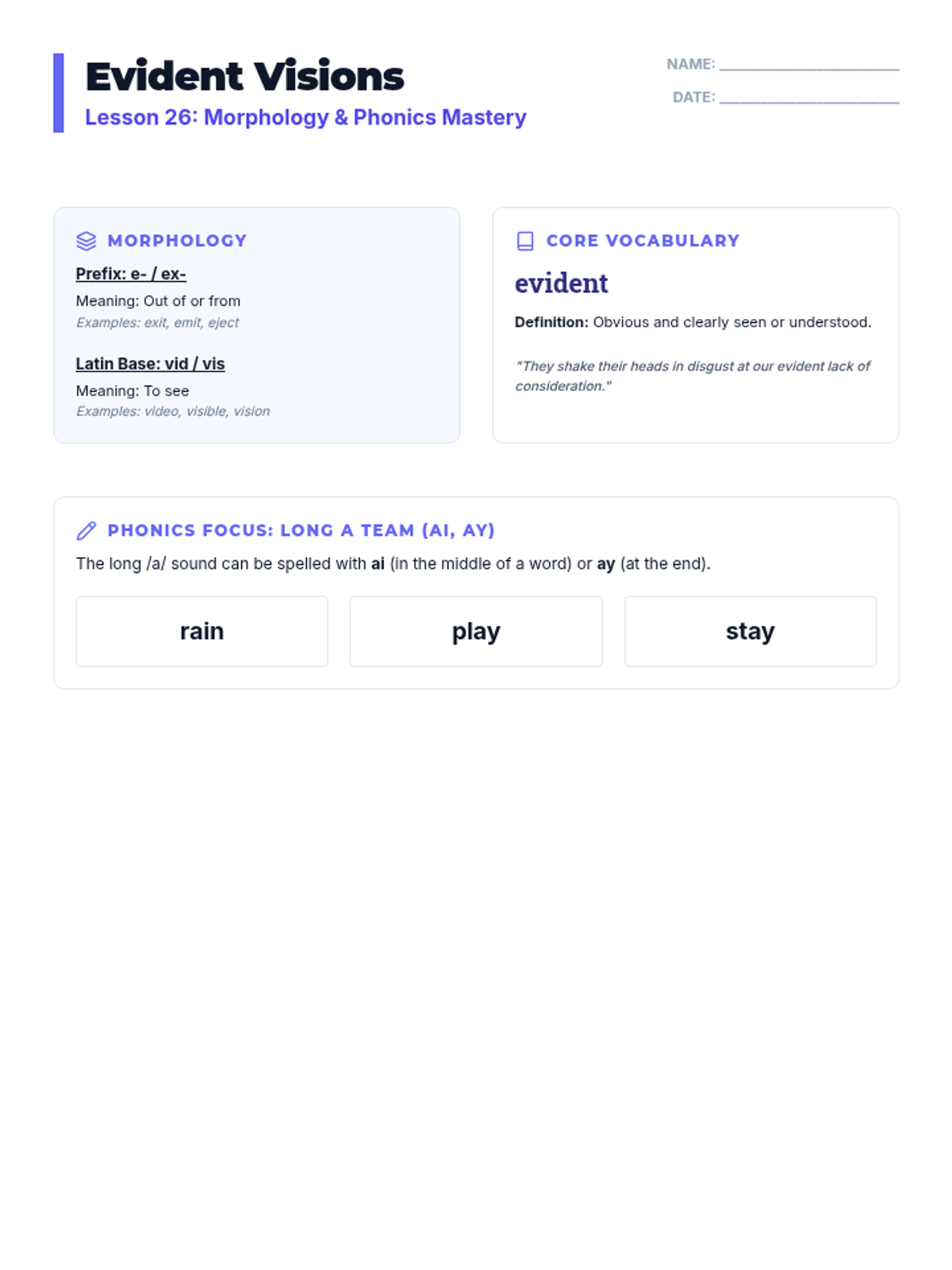
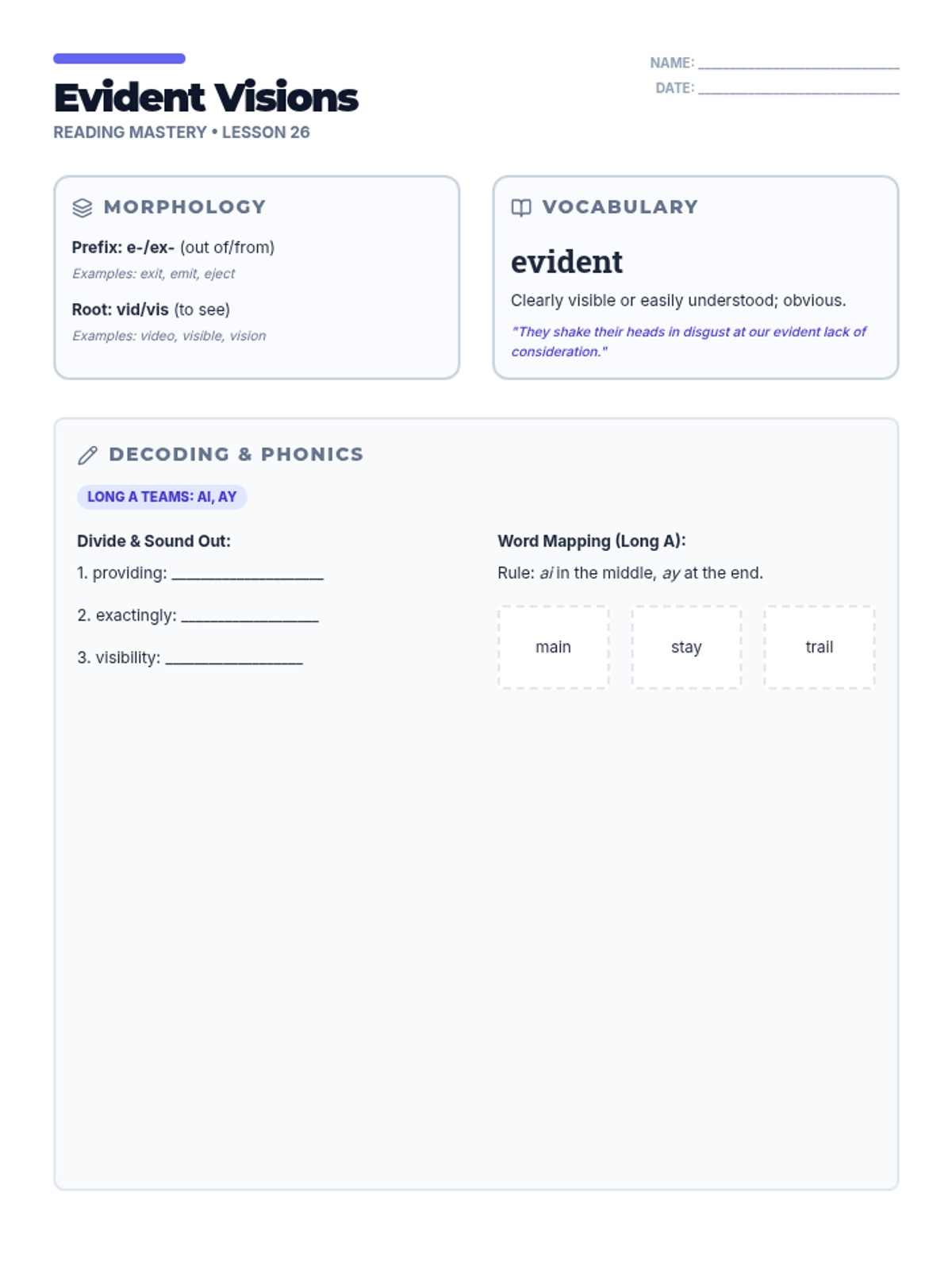
A comprehensive 4-page expansion for Lesson 26. It focuses on the prefix e-/ex- and the root vid/vis, with the vocabulary word 'evident', alongside explicit instruction in the Long A vowel team (ai, ay). It includes a foundational page, a reading passage without underlines to encourage active searching, comprehension questions with discussion frames, and structured writing practice. Designed for high school TESOL students.
A comprehensive 15-page reading intervention handout (Lessons 26-40) specifically tailored for high school TESOL students. Each page integrates user-provided morphology (prefixes, roots), academic vocabulary (definitions, text-based examples), and explicit phonics instruction focusing on Vowel Teams and Complex Diphthongs. Designed with clear work areas and high-school appropriate visuals.
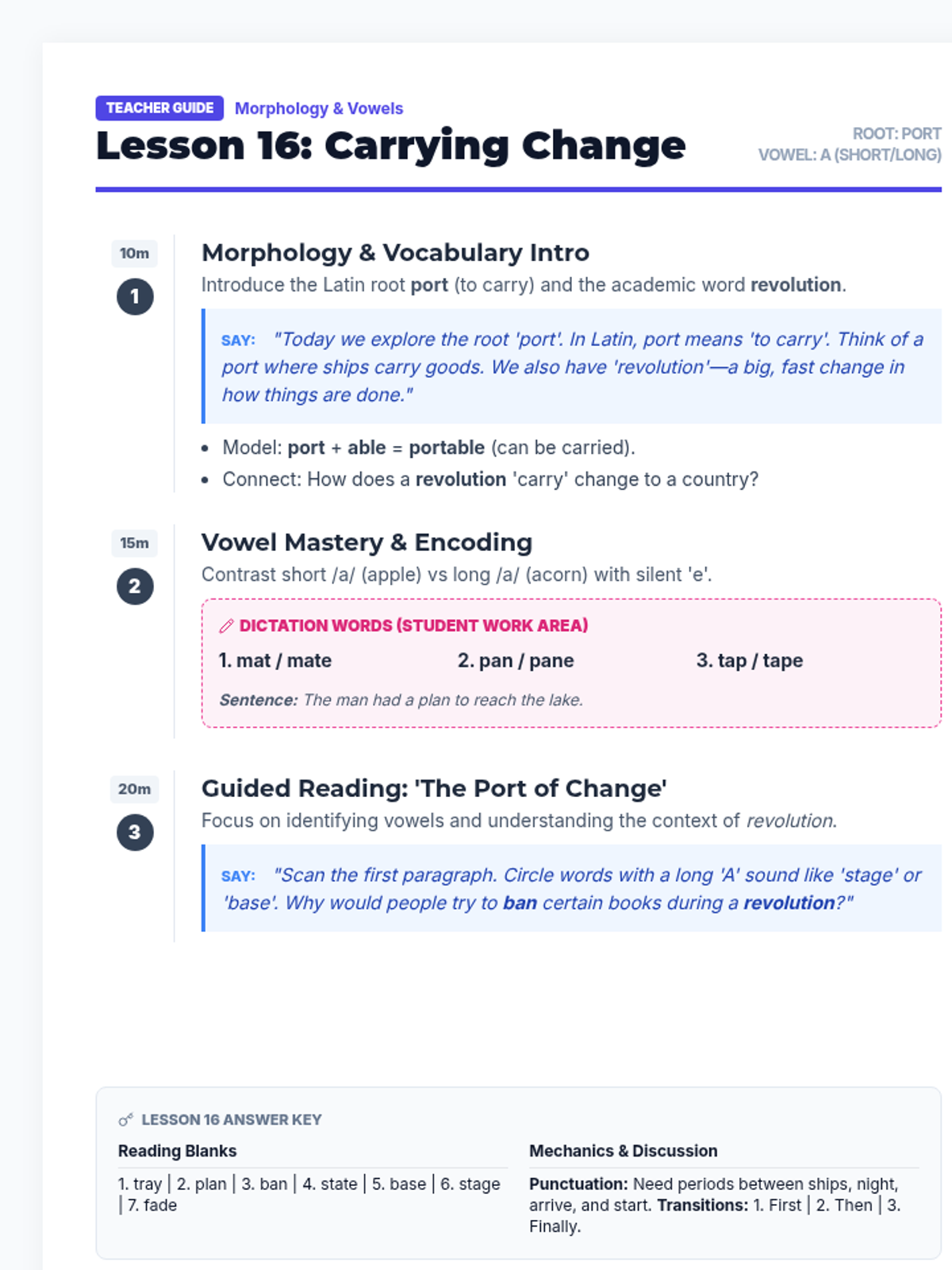
A 10-page comprehensive teacher guide for Lessons 16-25, with each lesson on its own printable page. Each guide includes a structured 60-minute lesson plan, explicit teacher scripts, encoding/dictation word lists for phonics mastery, and a complete answer key for the corresponding student handout.
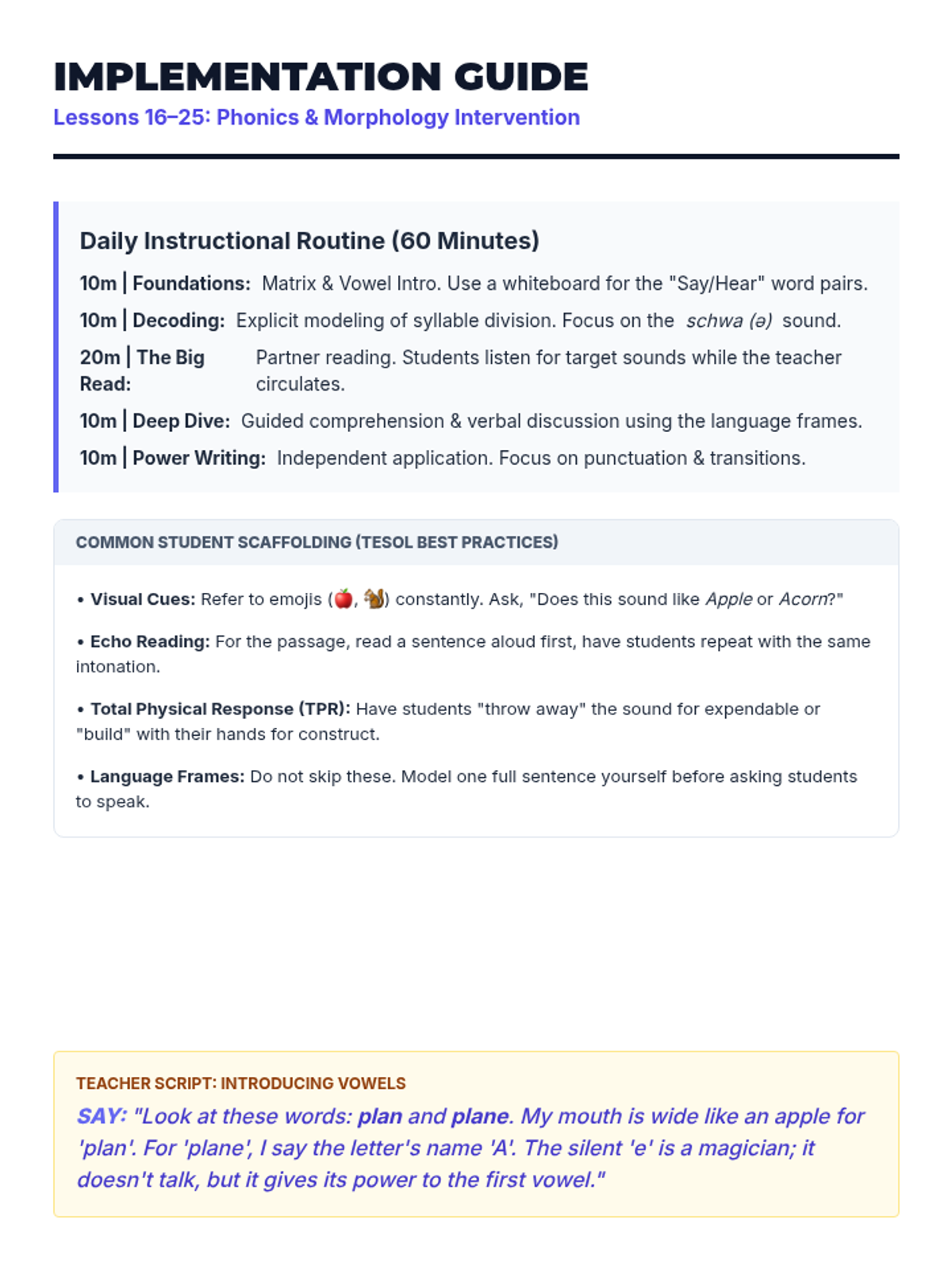
A comprehensive 4-page Teacher Key and Lesson Plan designed to support the implementation of Lessons 16-25. It includes a structured 60-minute daily routine, explicit teacher scripts for vowel instruction, scaffolding strategies for TESOL students, and a complete answer key for every blank, comprehension question, and mechanics exercise in the student handouts.
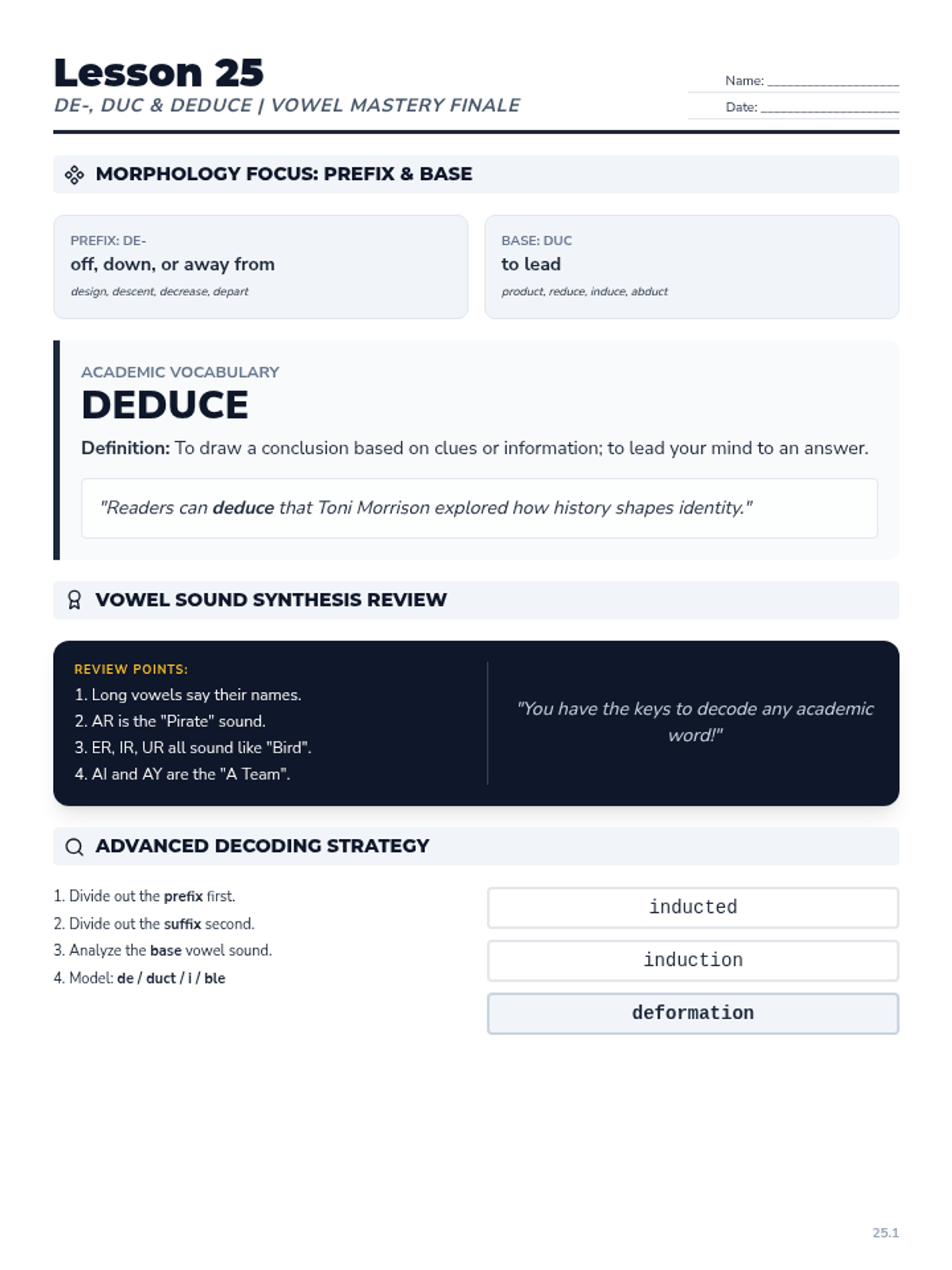
A comprehensive 4-page expansion for Lesson 25 of a reading intervention program. It focuses on the prefix 'de-', the Latin base 'duc' (to lead), and the vocabulary word 'deduce'. It includes a final synthesis reading passage, comprehension questions with discussion frames, and a final reflective writing task. Designed for high school TESOL students.
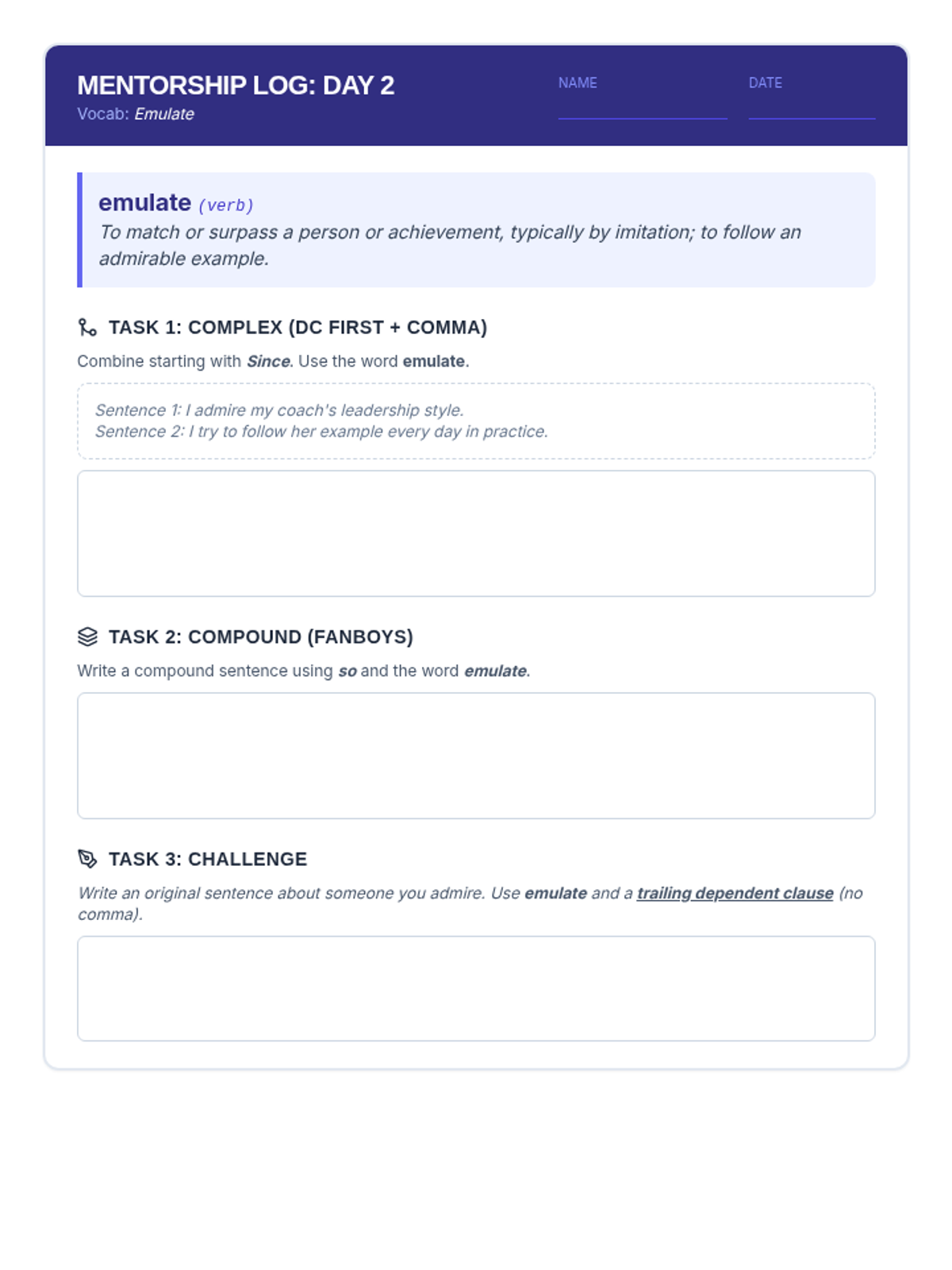
Revised Day 2 entrance ticket: Fixed page break issue by condensing layout, increased work area heights, and ensured focus on both complex and compound structures.
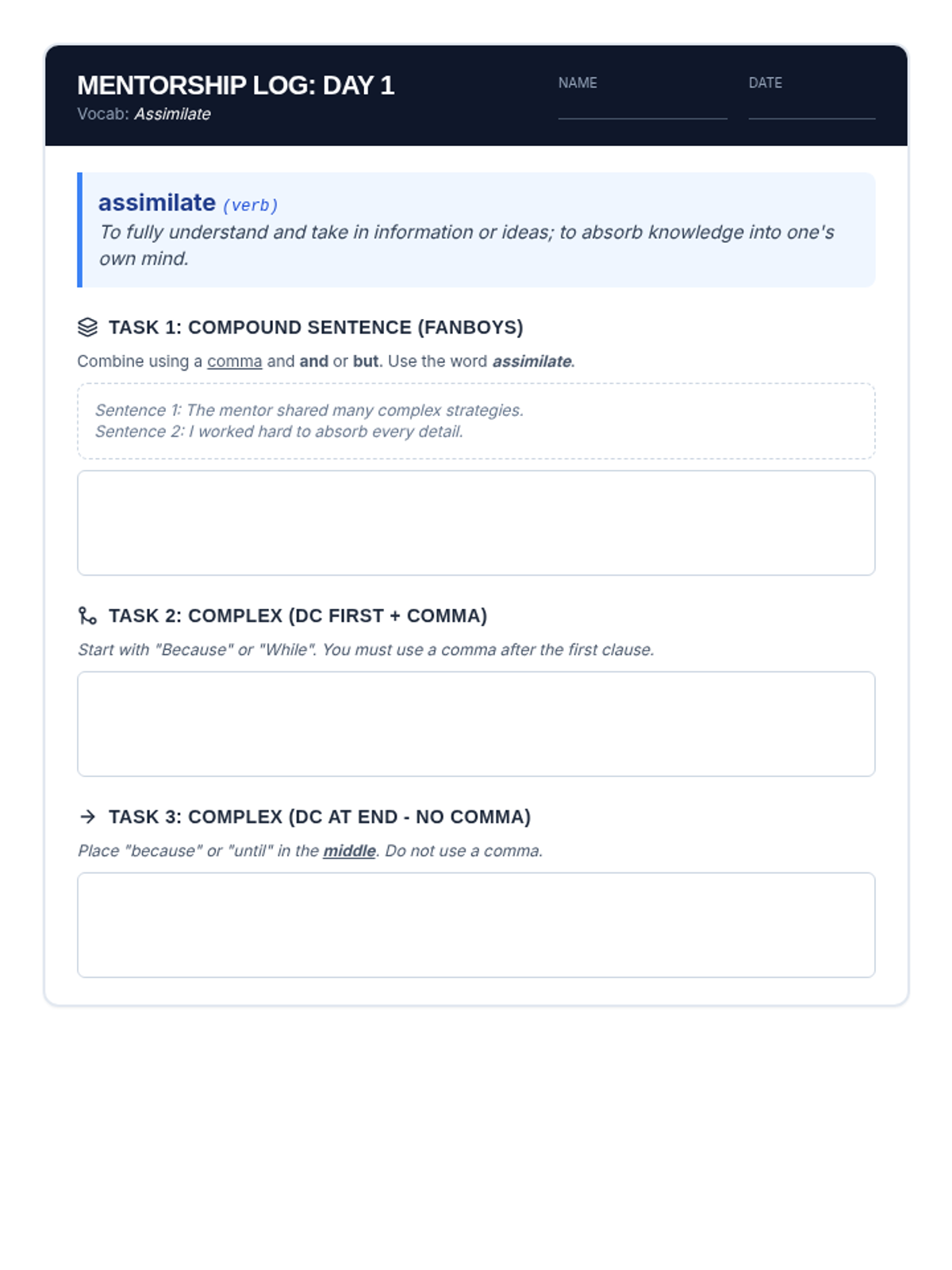
Revised Day 1 entrance ticket: Compacted layout to fit on one page, added practice for trailing dependent clauses, and increased student work area heights.
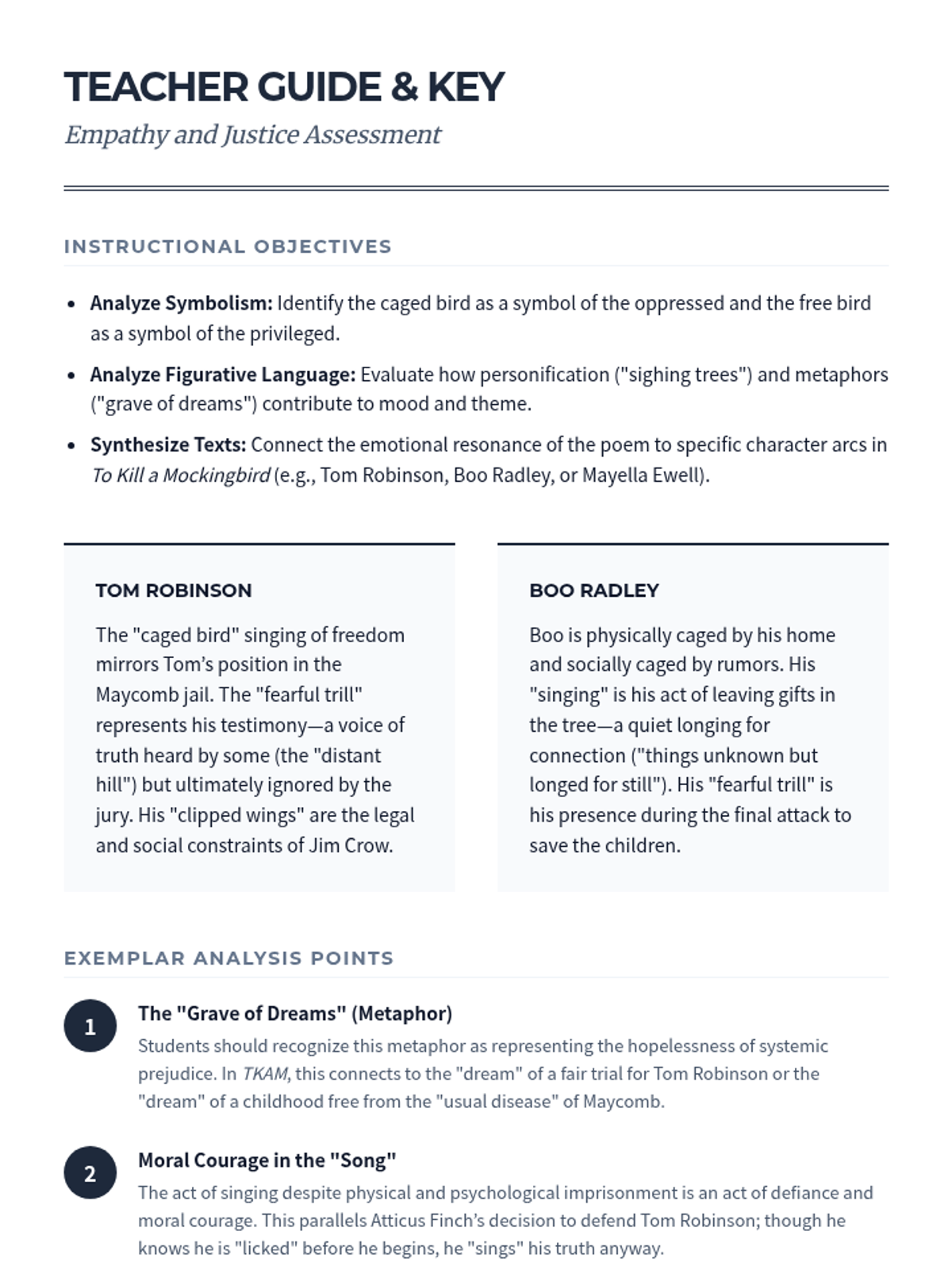
A teacher-facing guide providing instructional objectives, character connection examples, and exemplar analysis points for the 'Caged Bird' assessment.
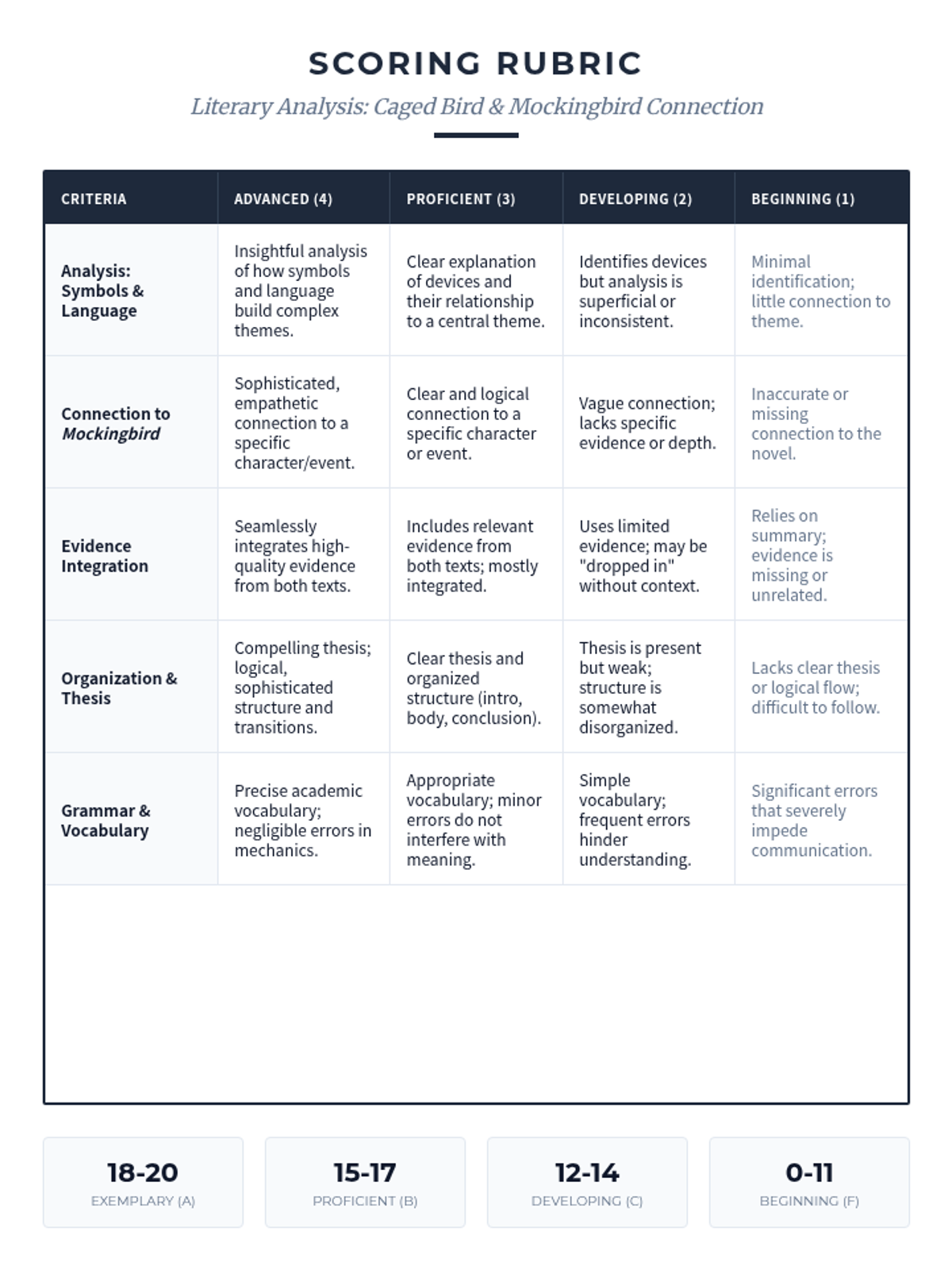
A comprehensive 4-point rubric for evaluating student responses to the 'Caged Bird' and 'To Kill a Mockingbird' connection assessment.
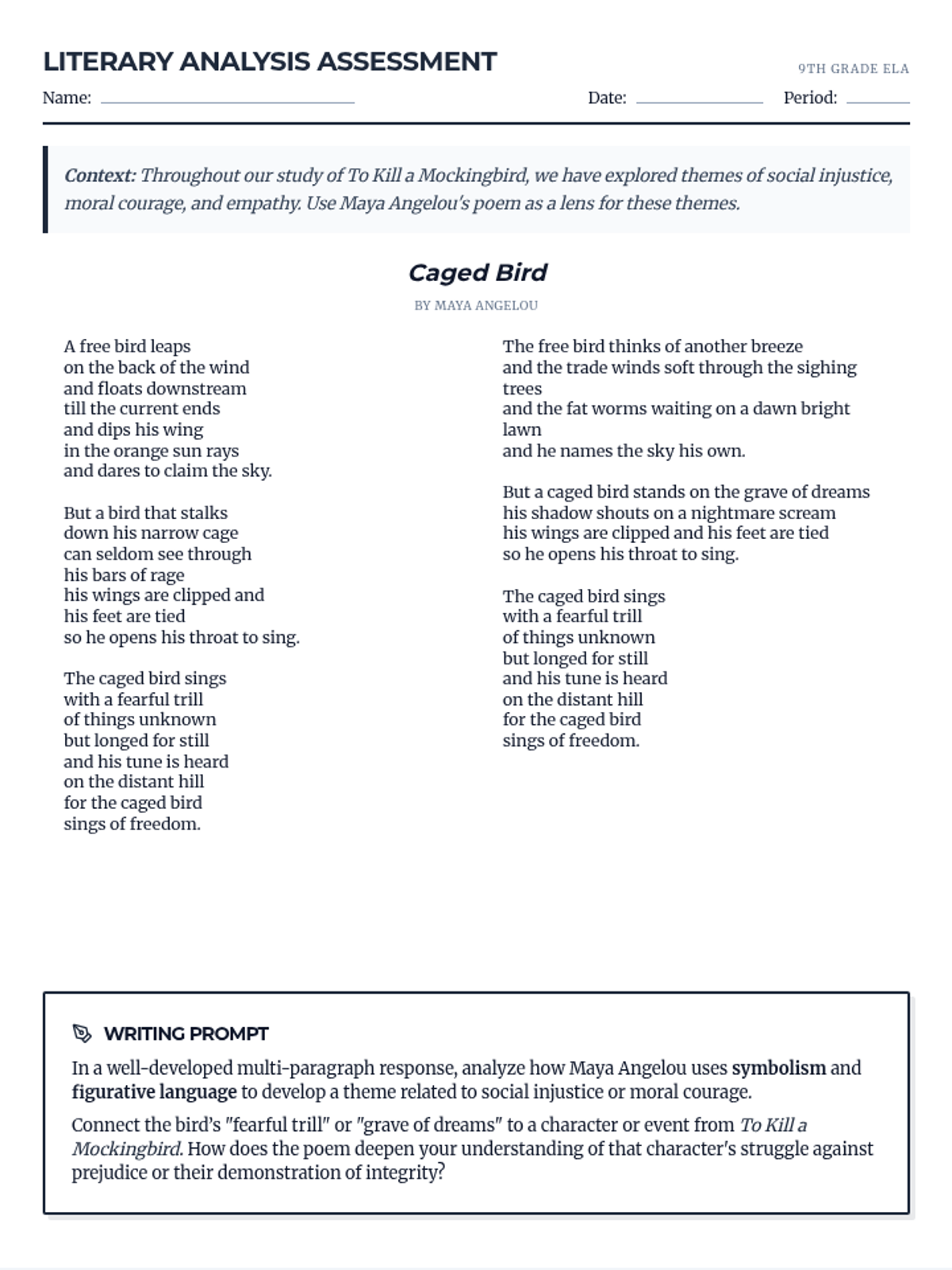
A literary analysis assessment featuring Maya Angelou's 'Caged Bird' with a writing prompt that connects the poem's symbolism to themes in 'To Kill a Mockingbird', including a full scoring rubric.
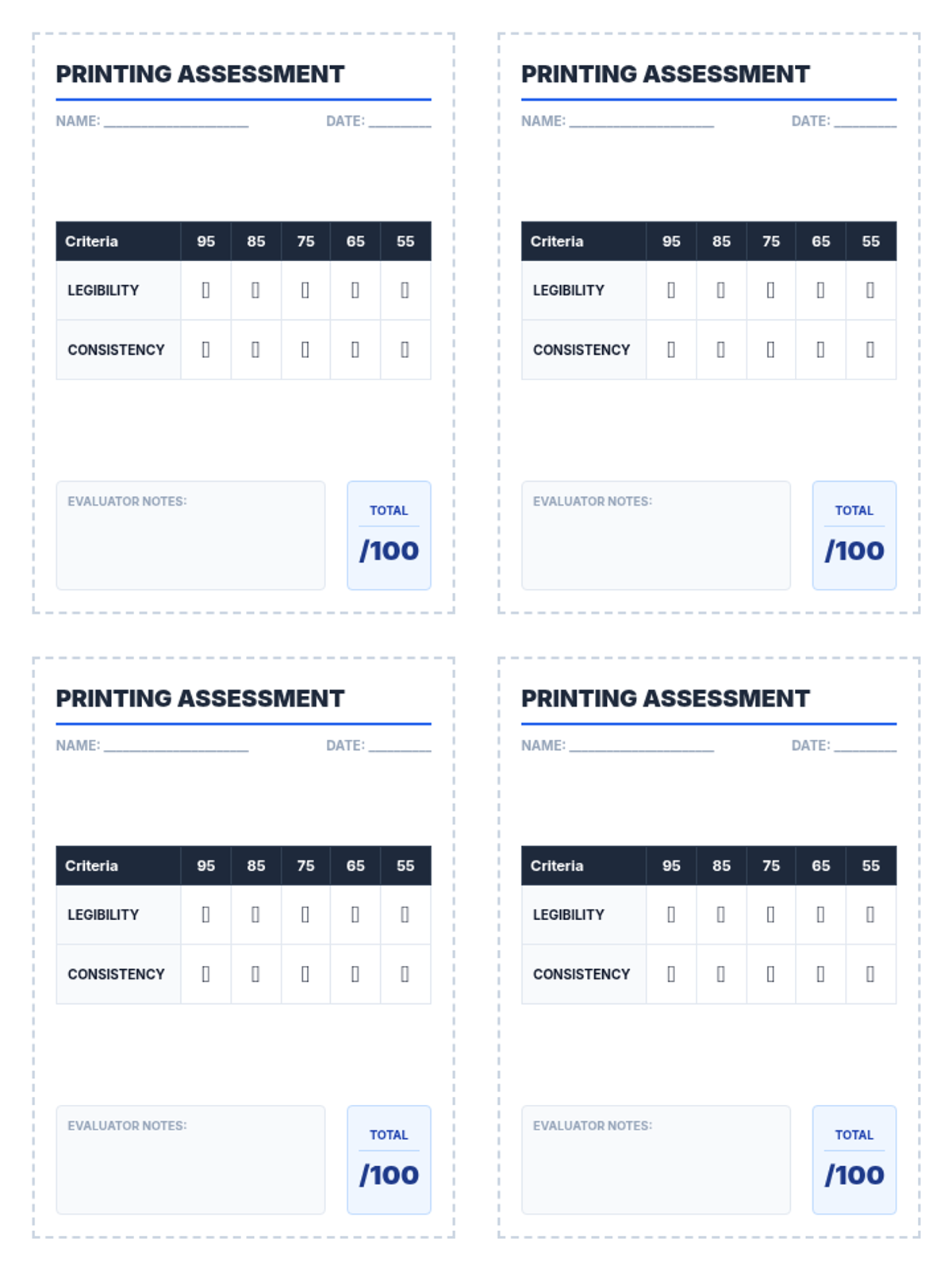
A single-page sheet containing four small, cut-apart printing assessment rubrics for attaching to student assignments, featuring check-boxes and a scoring area.
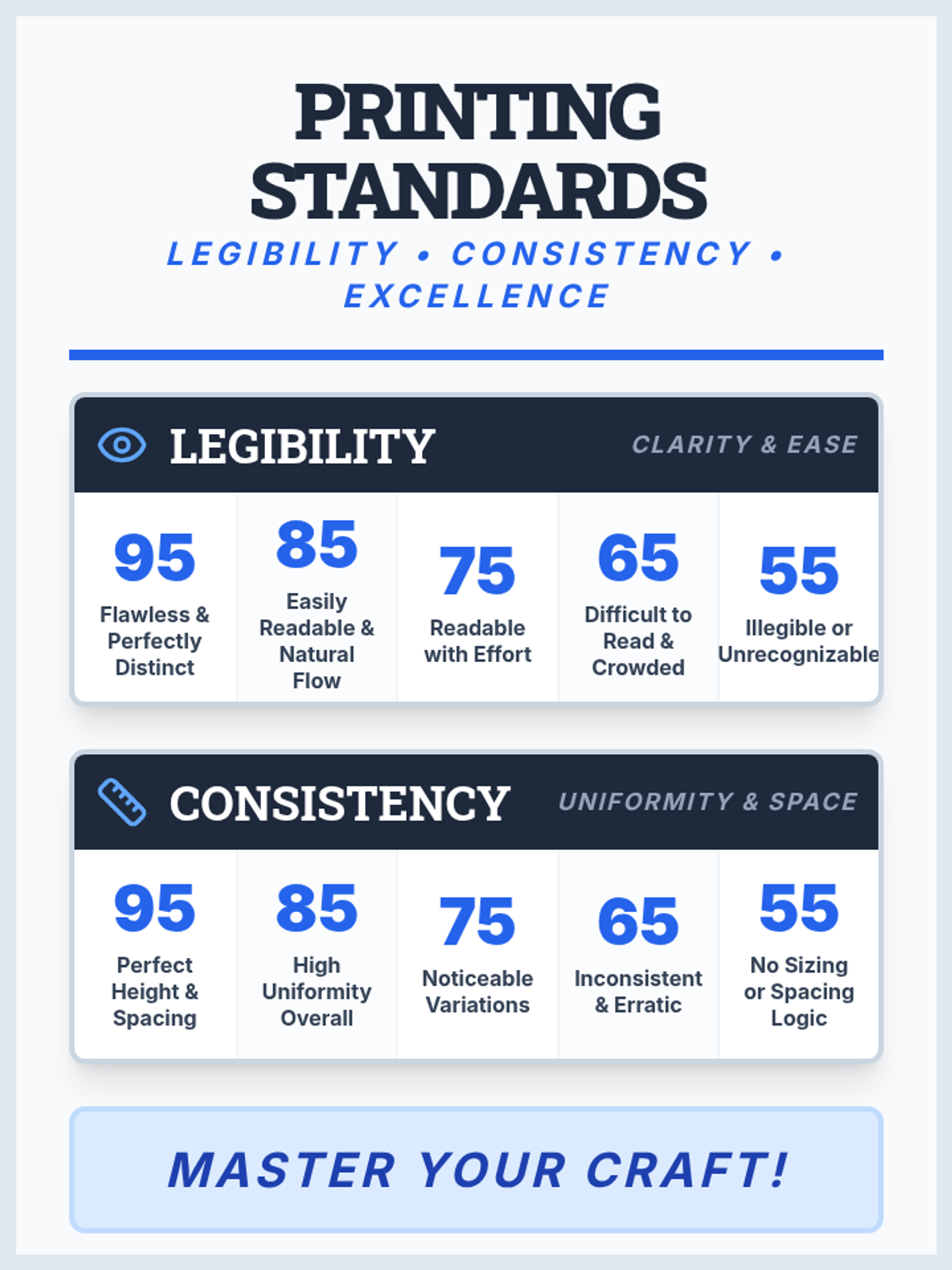
A comprehensive printing proficiency material including a large classroom poster on page 1 and four mini-rubric cutouts on page 2. Designed for high visibility and assessment convenience.
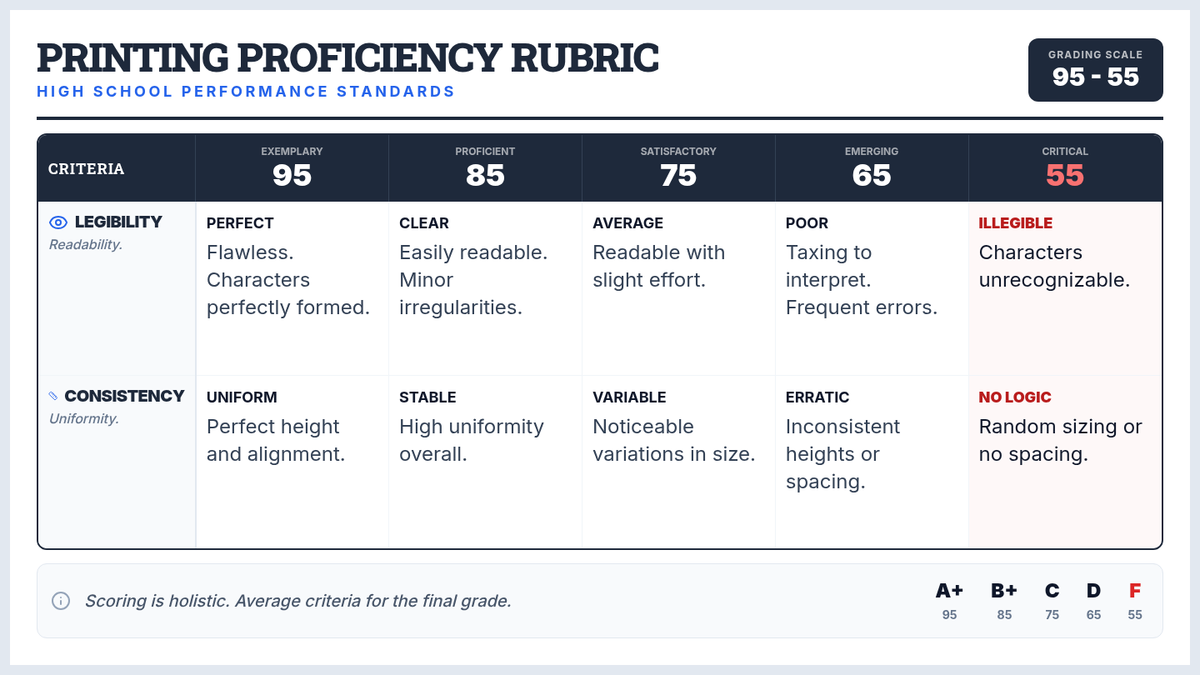
A landscape-oriented printing rubric table measuring legibility and consistency using a 95-55 scale. Designed for clear grading and display.
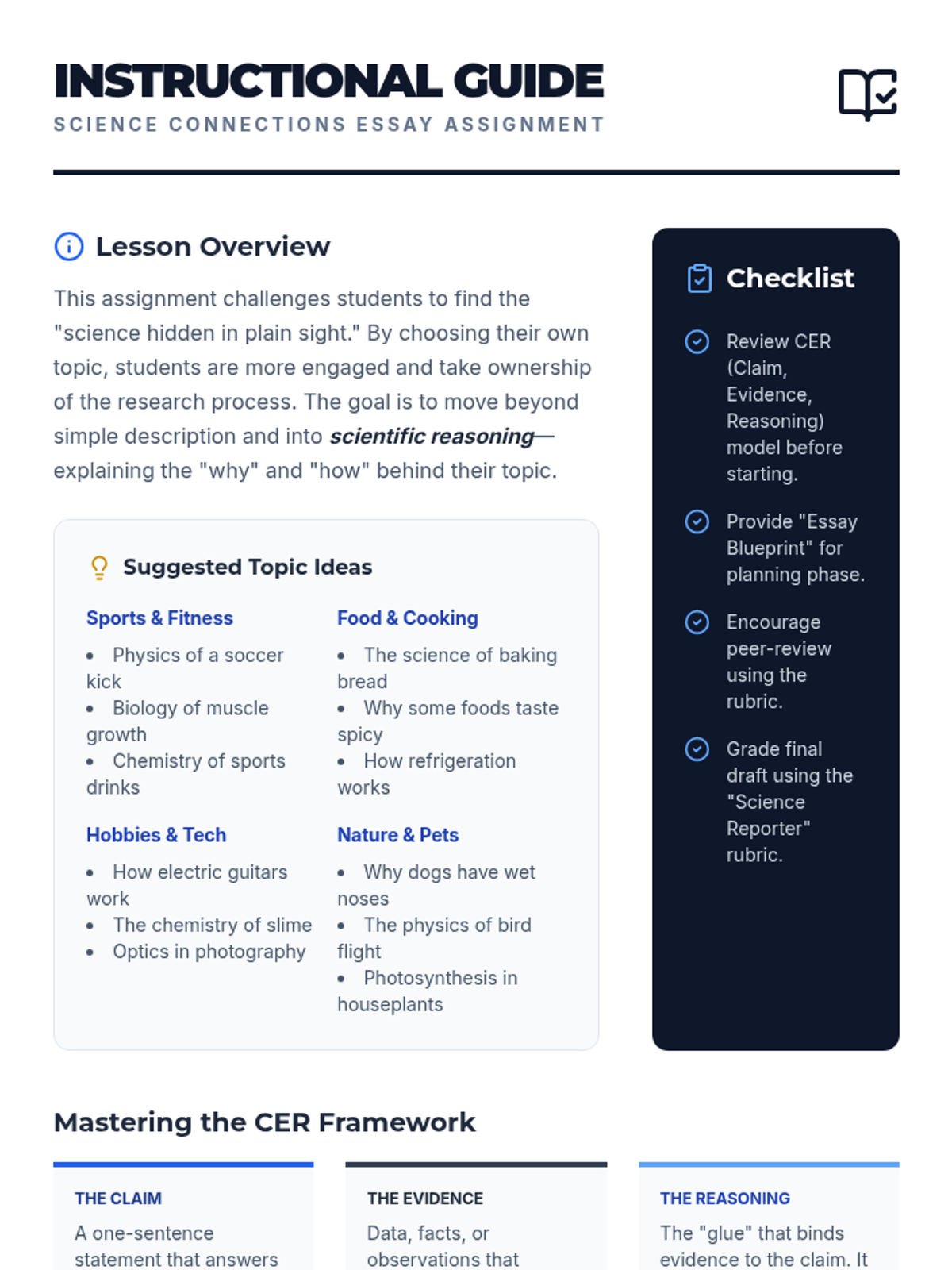
An instructional guide for teachers providing tips on lesson implementation, topic suggestions, and a breakdown of the CER (Claim, Evidence, Reasoning) framework for students.
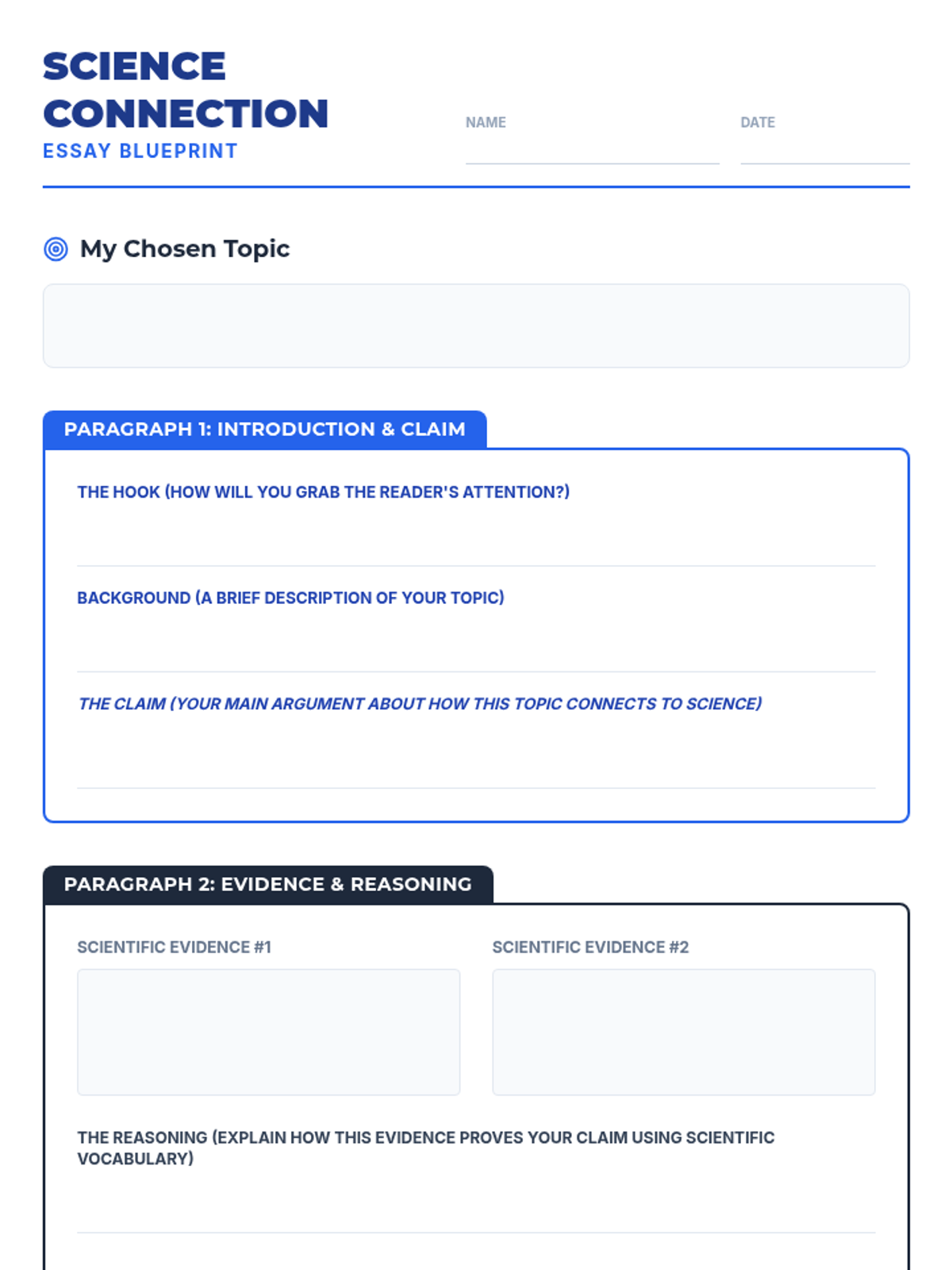
A structured essay planning worksheet designed to guide students through a three-paragraph science connection essay using the CER (Claims, Evidence, Reasoning) framework.
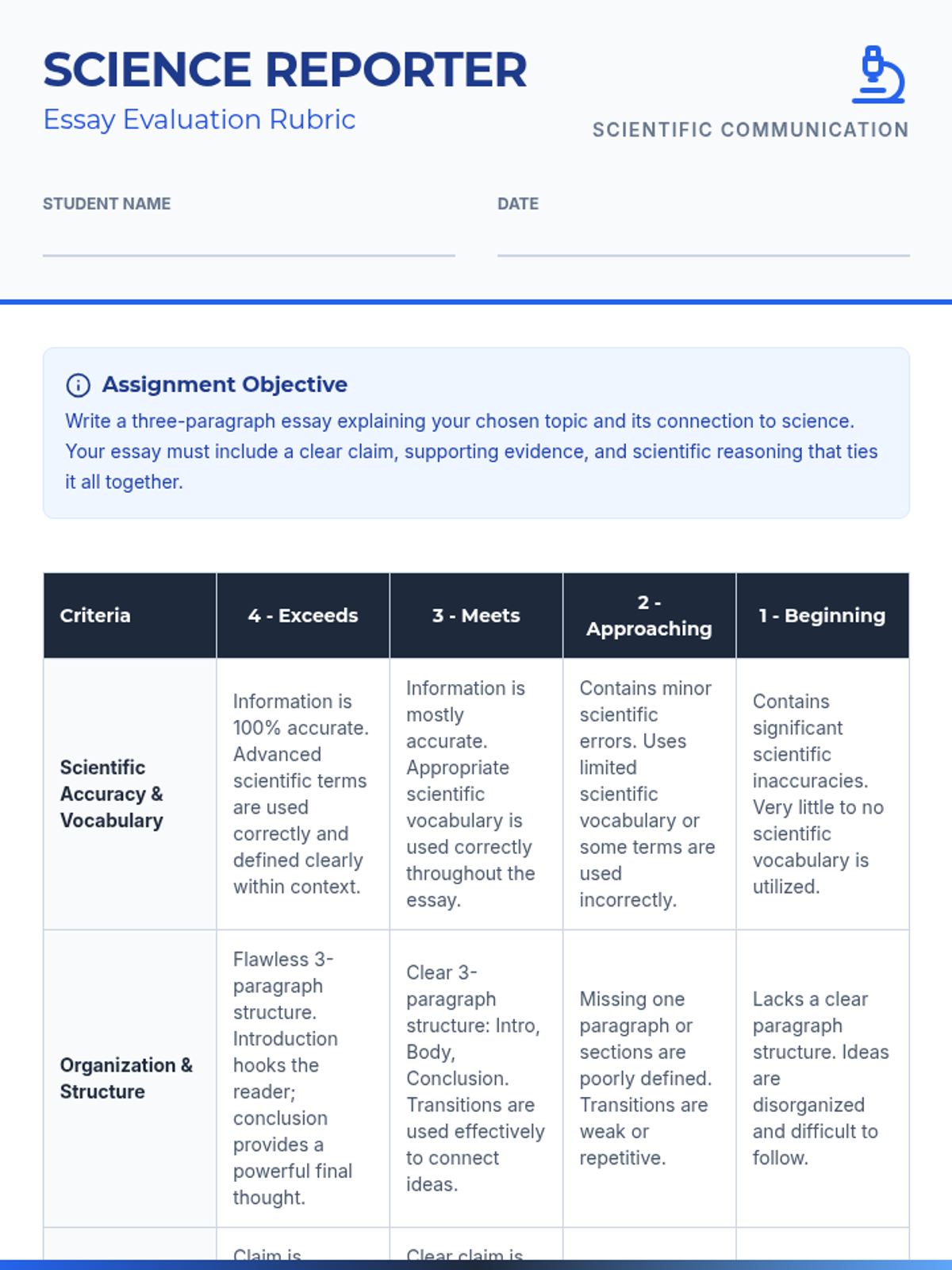
A comprehensive rubric for evaluating a three-paragraph science essay. It includes specific criteria for scientific accuracy, organization, CER (Claims, Evidence, Reasoning), and writing mechanics, featuring a clean 'Science Reporter' aesthetic.
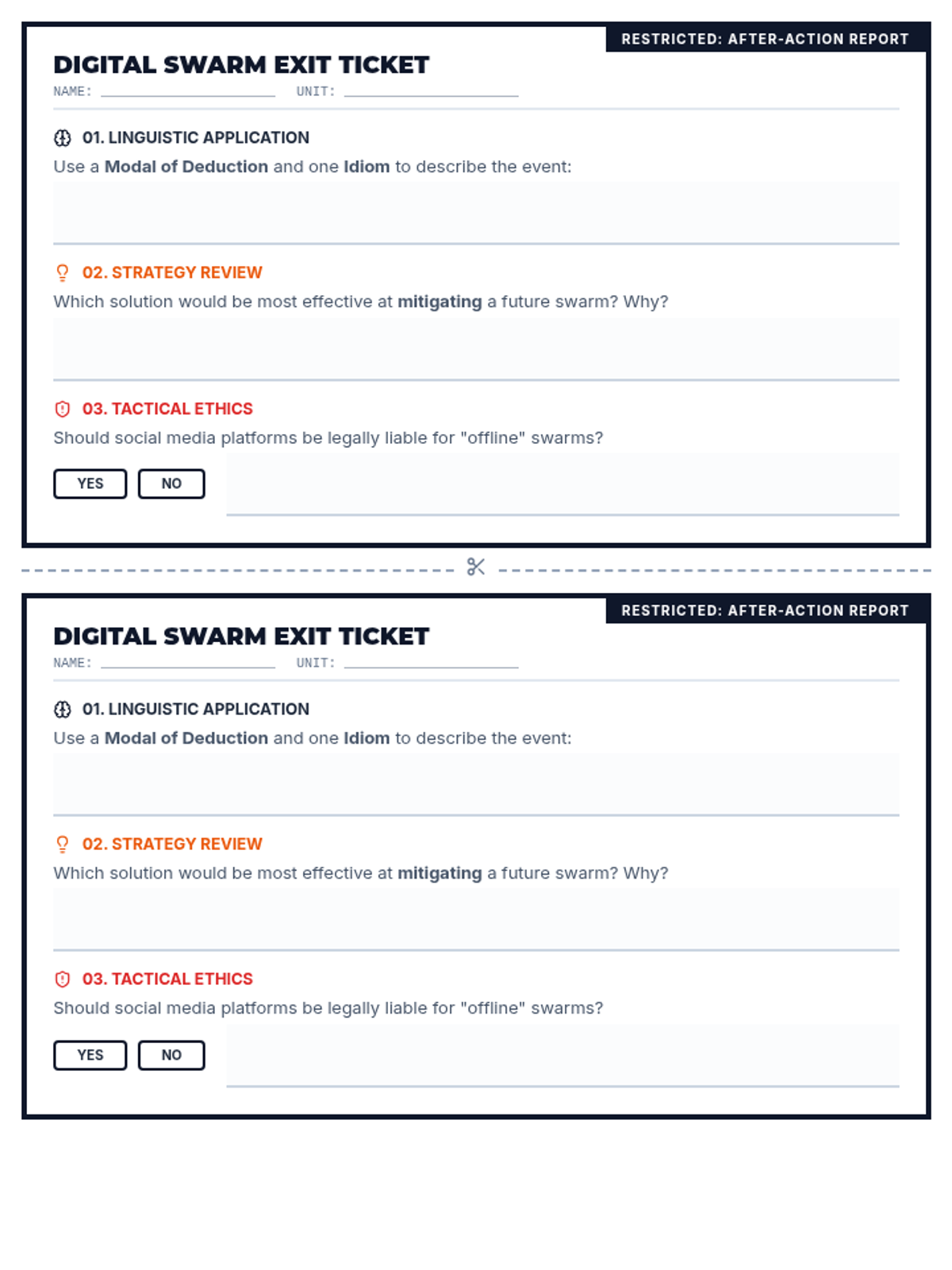
A single-page exit ticket for the Digital Swarms workshop, containing two identical copies for easy printing and distribution. It includes focused reflection questions on language (modals and idioms), strategy, and ethics, with adequate writing space for B2+ students. It now features uniform styling for all answer choices and improved vertical efficiency.
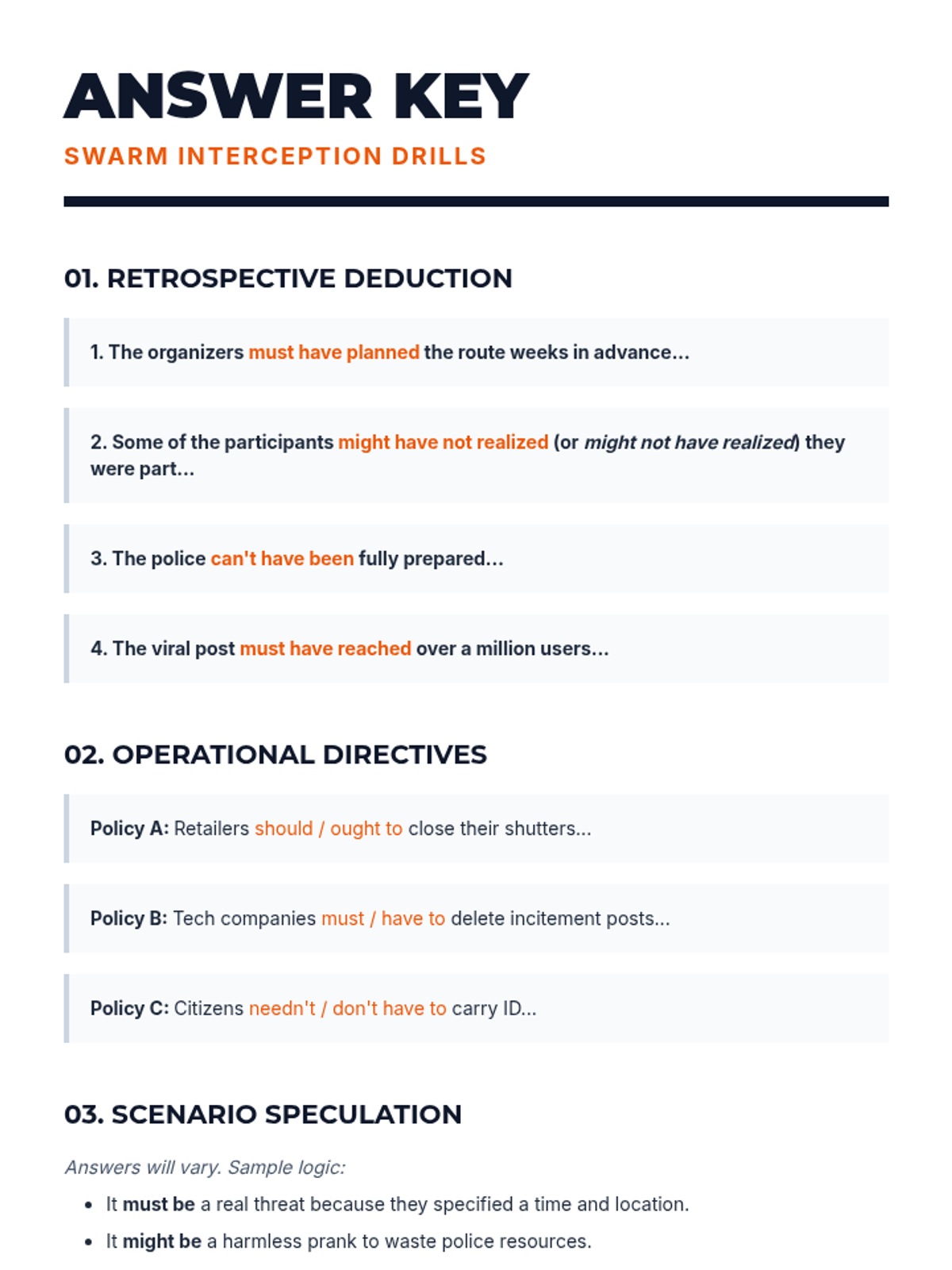
Answer key for the Swarm Interception Drills worksheet, providing correct modal verb forms and sample responses for the open-ended scenario.
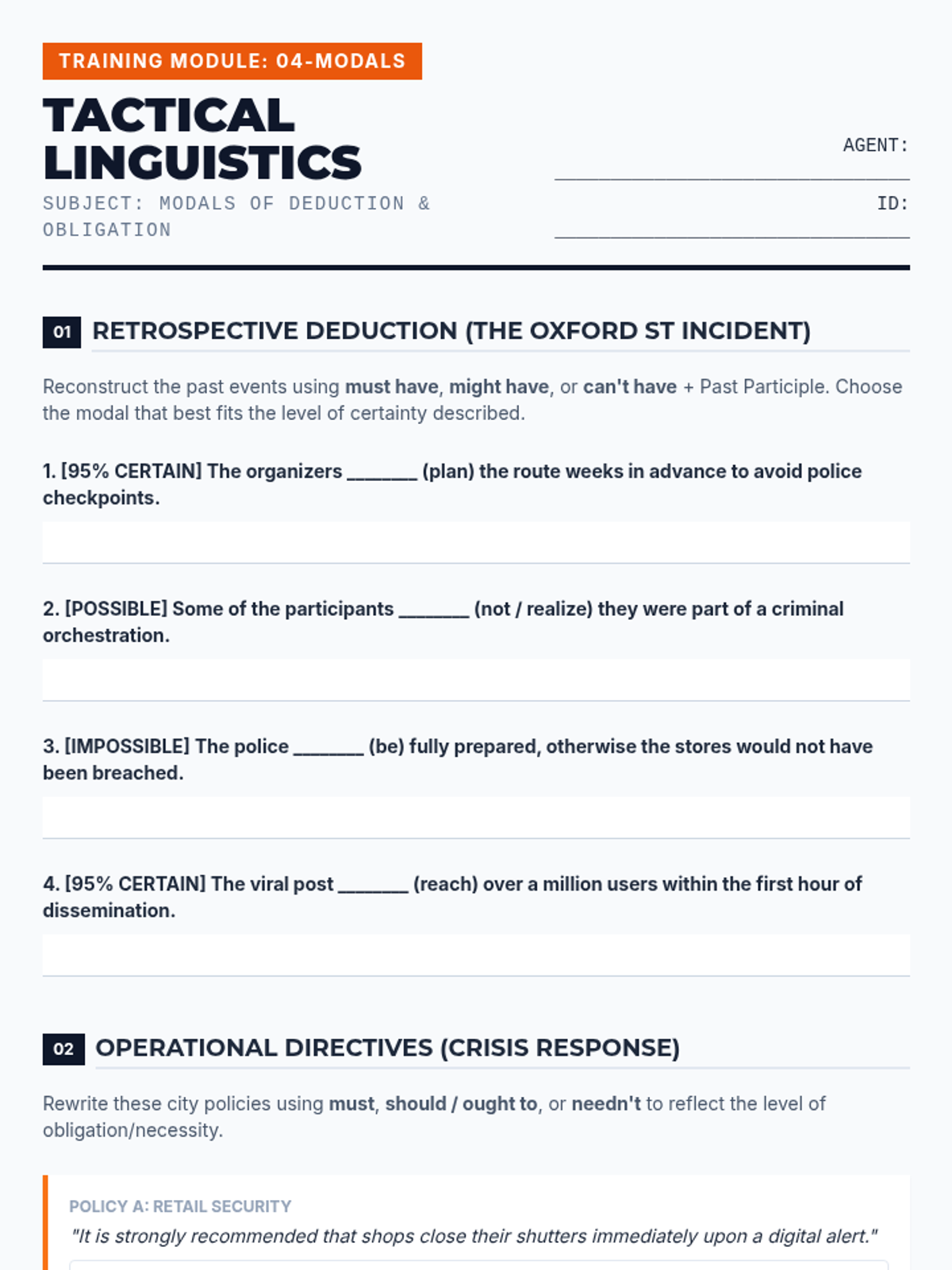
A grammar-focused worksheet providing structured practice with modals of deduction (past and present) and obligation in the context of the Digital Swarms scenario. Includes sentence transformation and scenario-based speculation tasks.
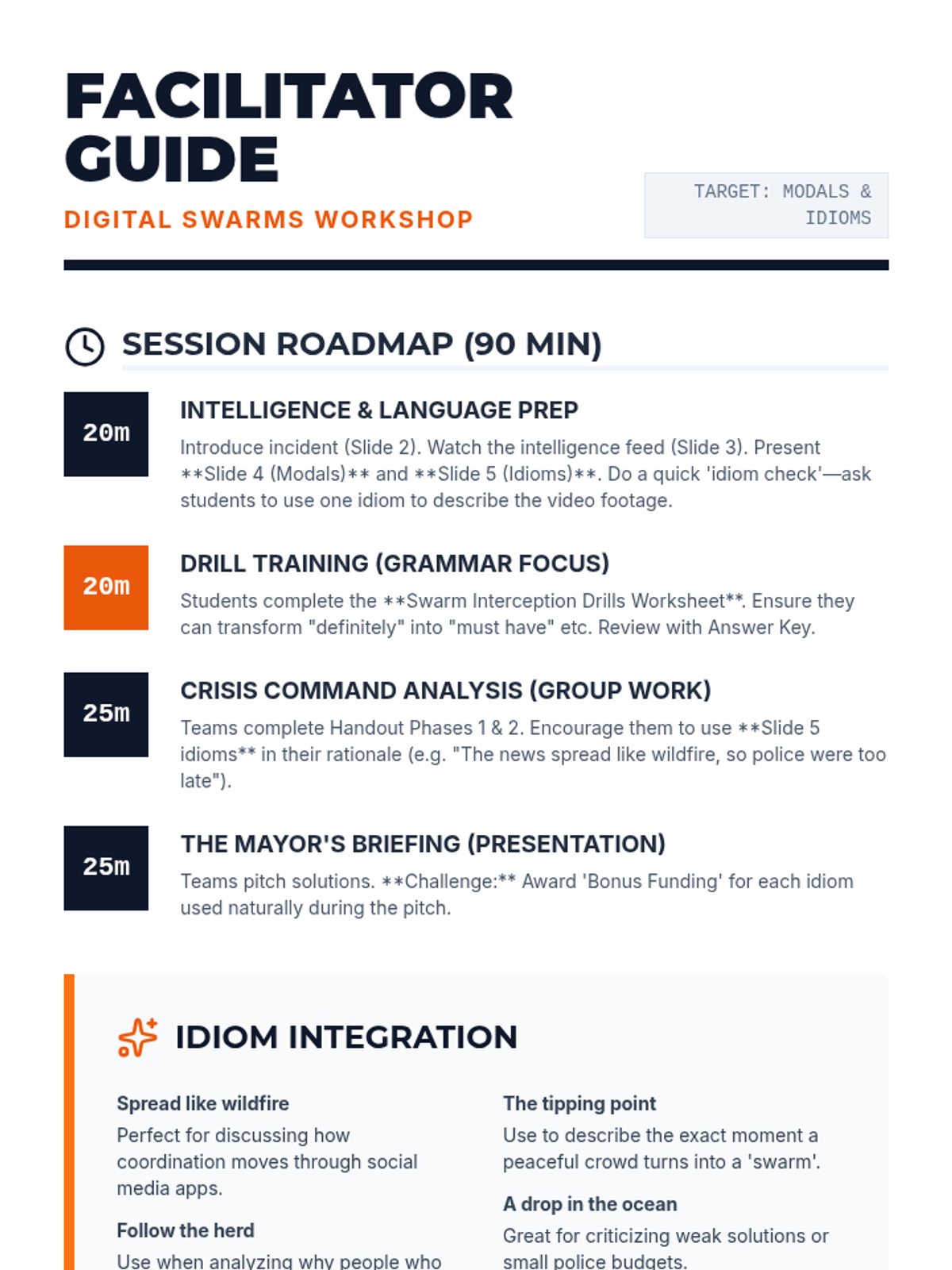
A comprehensive facilitation guide for the Digital Swarms workshop. It includes a timed lesson plan, B2+ assessment criteria, and questioning frameworks. It now features specific advice for integrating role-play cards and a stakeholders town-hall debate.
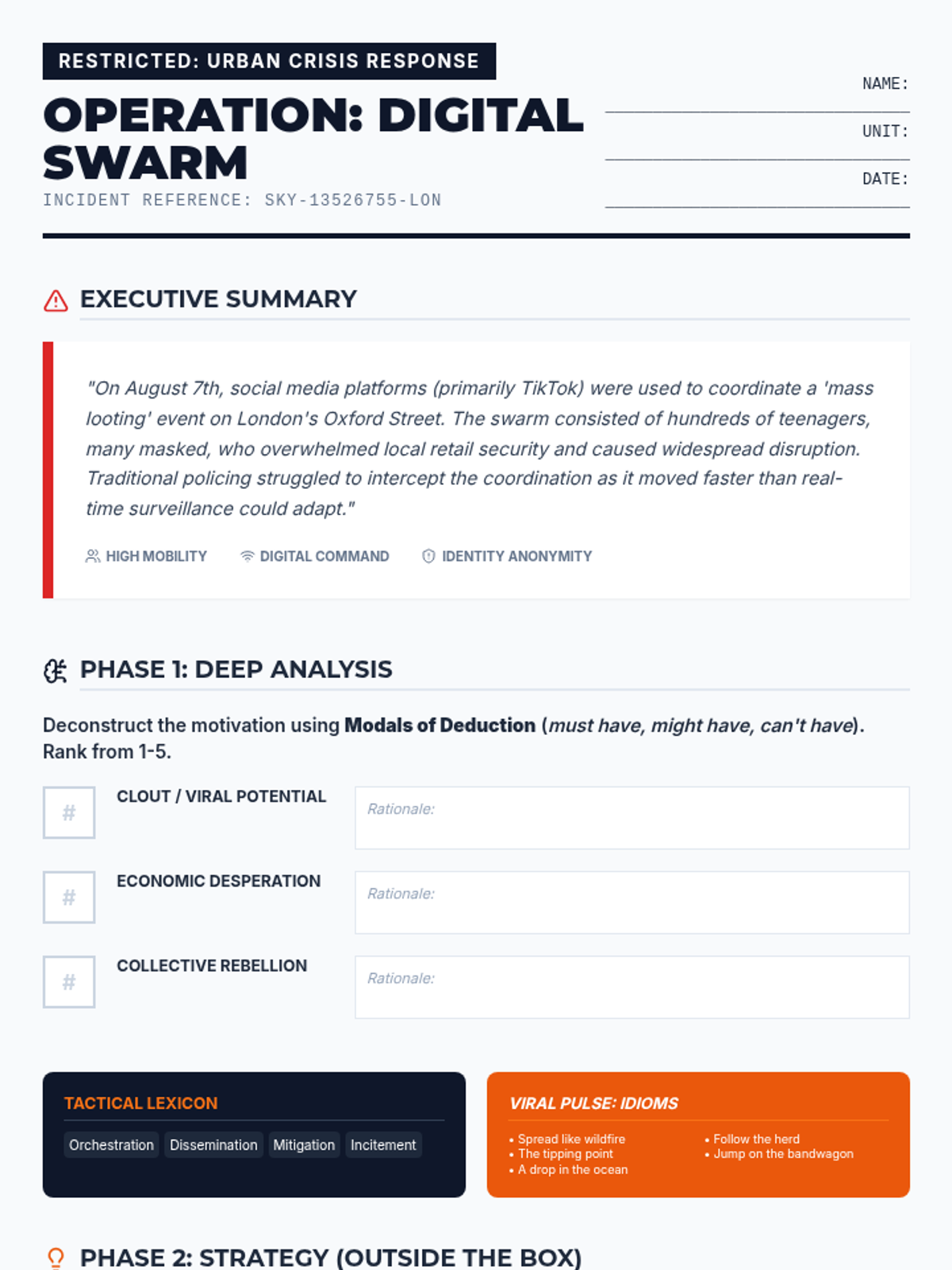
A two-page 'Crisis Brief' handout for students. It includes a case study summary, space for motivation analysis, creative strategy brainstorming with 'wildcard' prompts, and high-level vocabulary support. Layout is optimized for writing and visual clarity. It now includes a dedicated reference for idioms in the tactical sidebar.
An immersive presentation for a B2+ speaking workshop based on the TikTok flash mob news. It now includes a dedicated 'Viral Pulse' slide with five relevant idioms (Spread like wildfire, Follow the herd, Jump on the bandwagon, etc.) to help students elevate their speaking score.
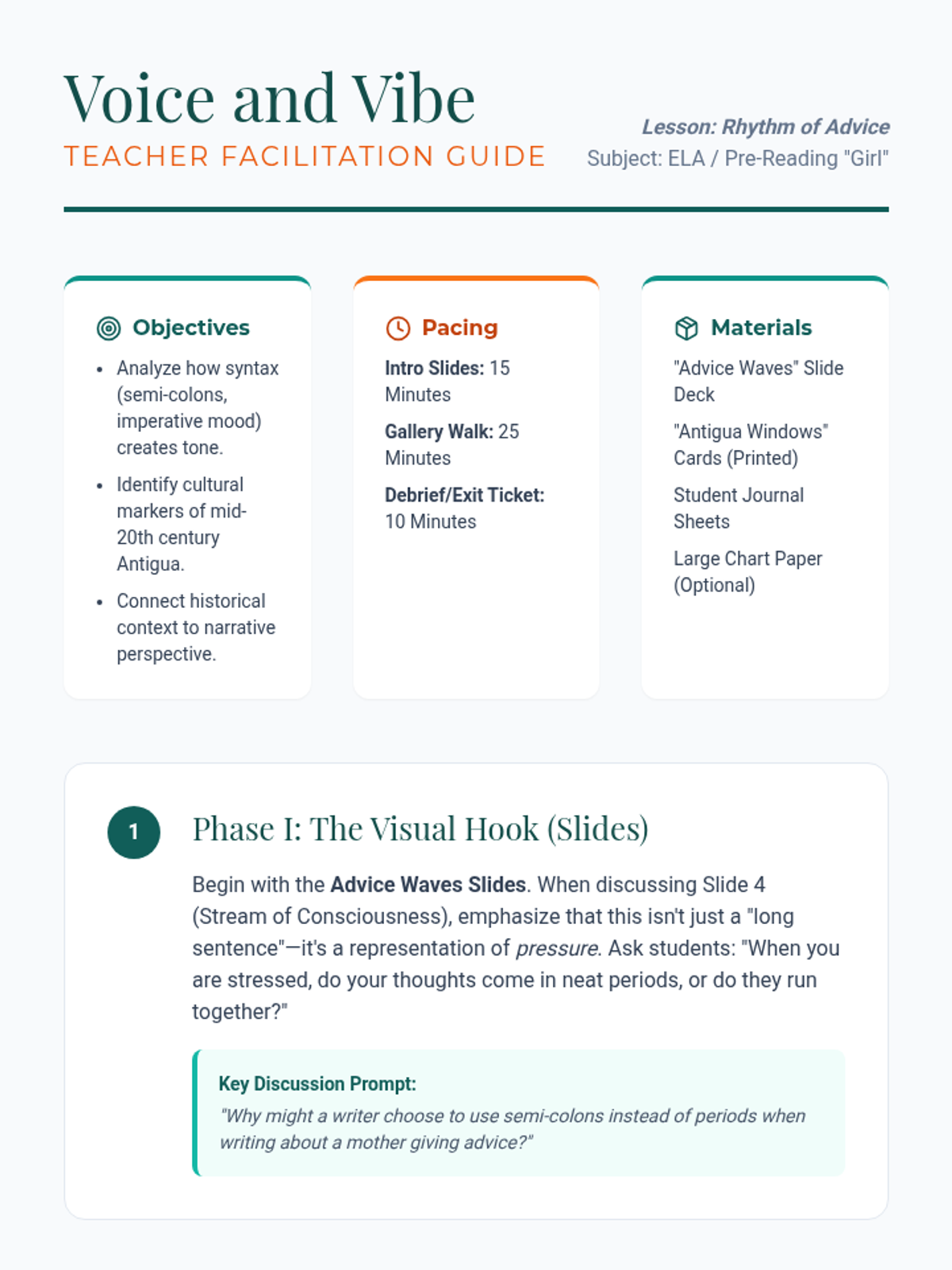
A comprehensive teacher guide for the 'Rhythm of Advice' lesson, providing pacing, instructional steps, discussion prompts, and background information on Antiguan culture and Jamaica Kincaid's literary style.
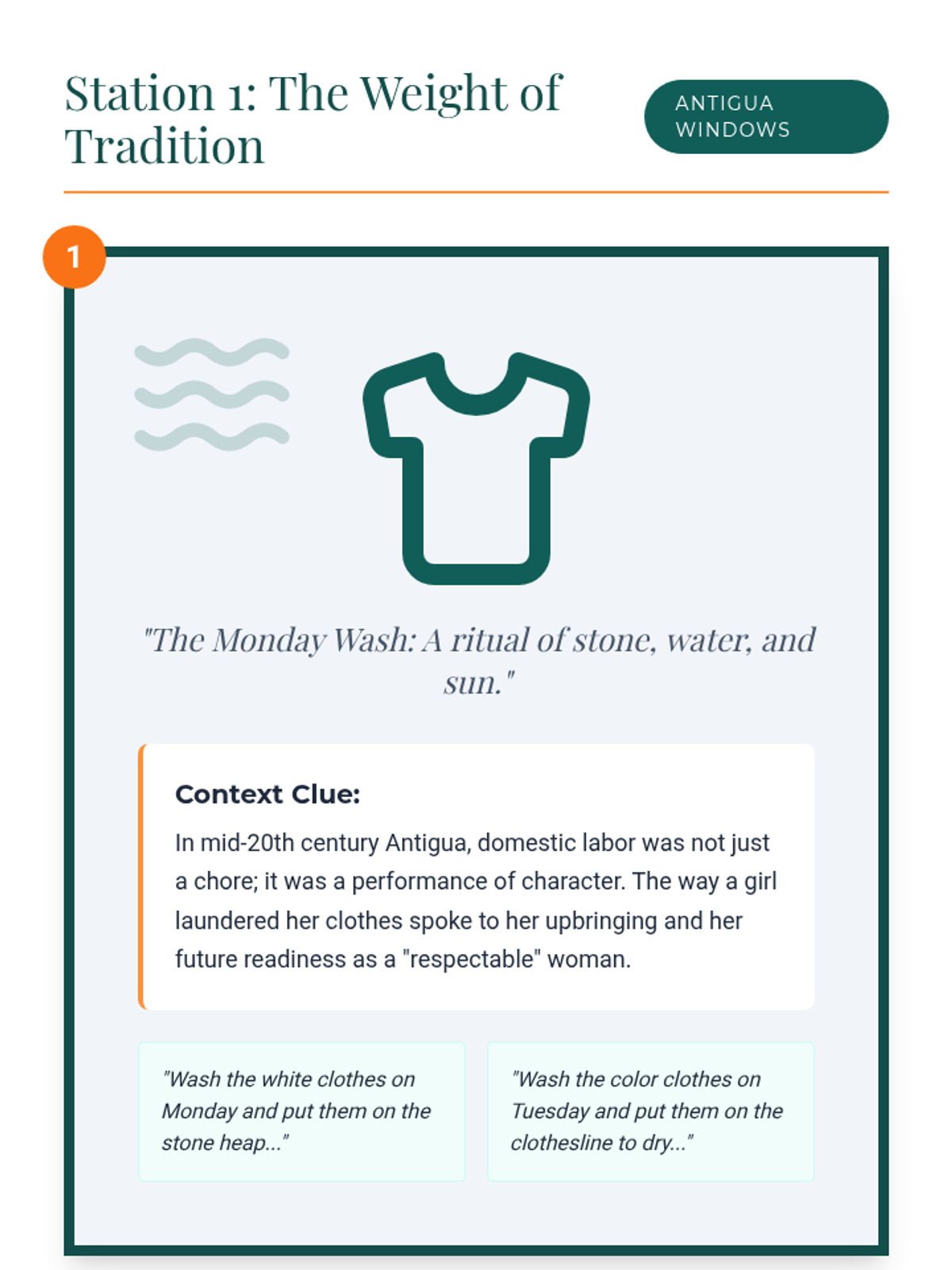
A 4-page student activity featuring three 'Gallery Walk' stations with visual symbols and context clues about Antiguan life, followed by a structured recording sheet for student analysis.
A 7-slide introductory presentation covering Jamaica Kincaid's biography, the historical context of Antigua, and the literary techniques of stream of consciousness and syntax analysis.
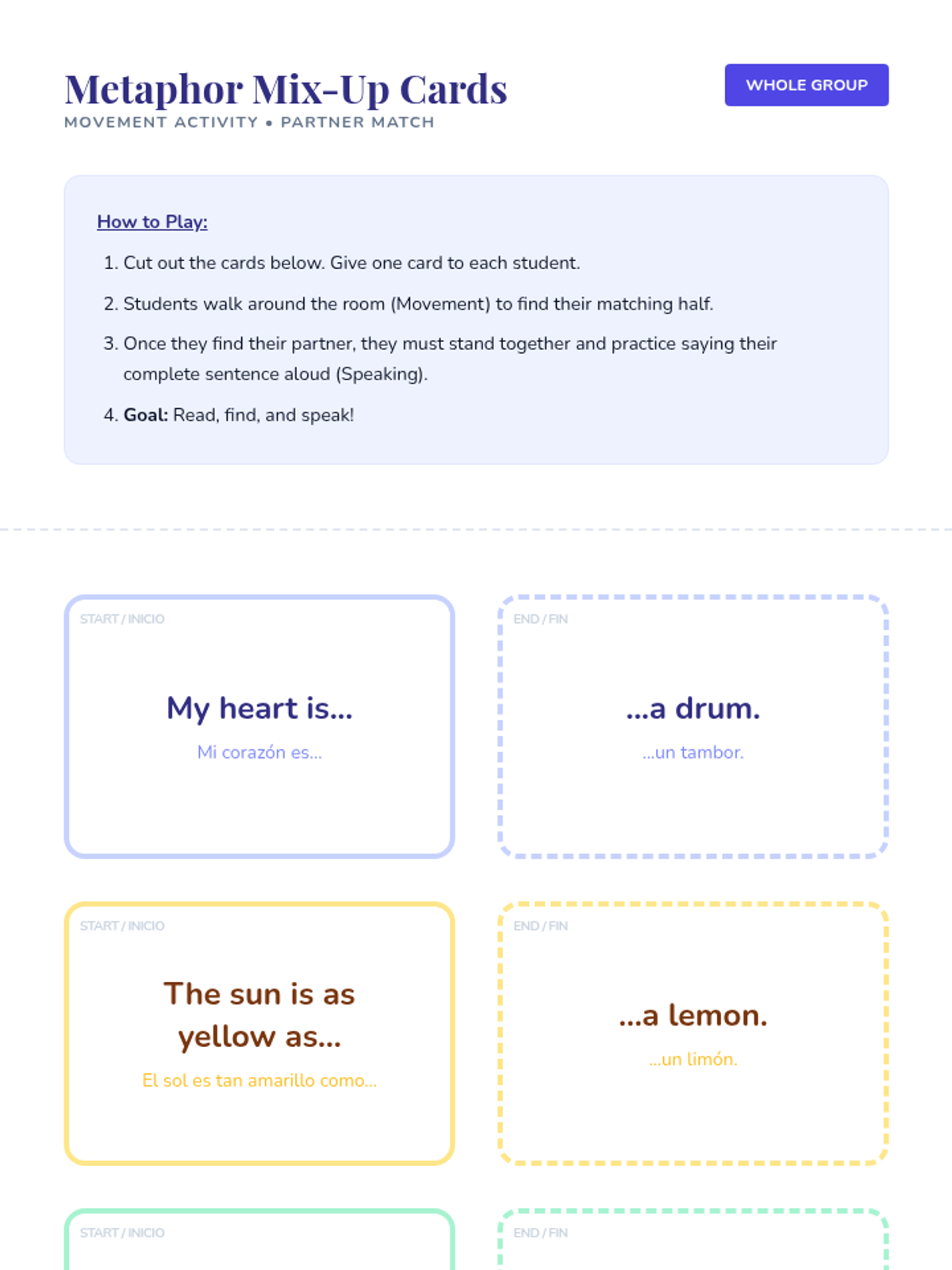
A set of printable partner-match cards for a movement-based whole-group activity where students match the beginning and end of poetic similes and metaphors.
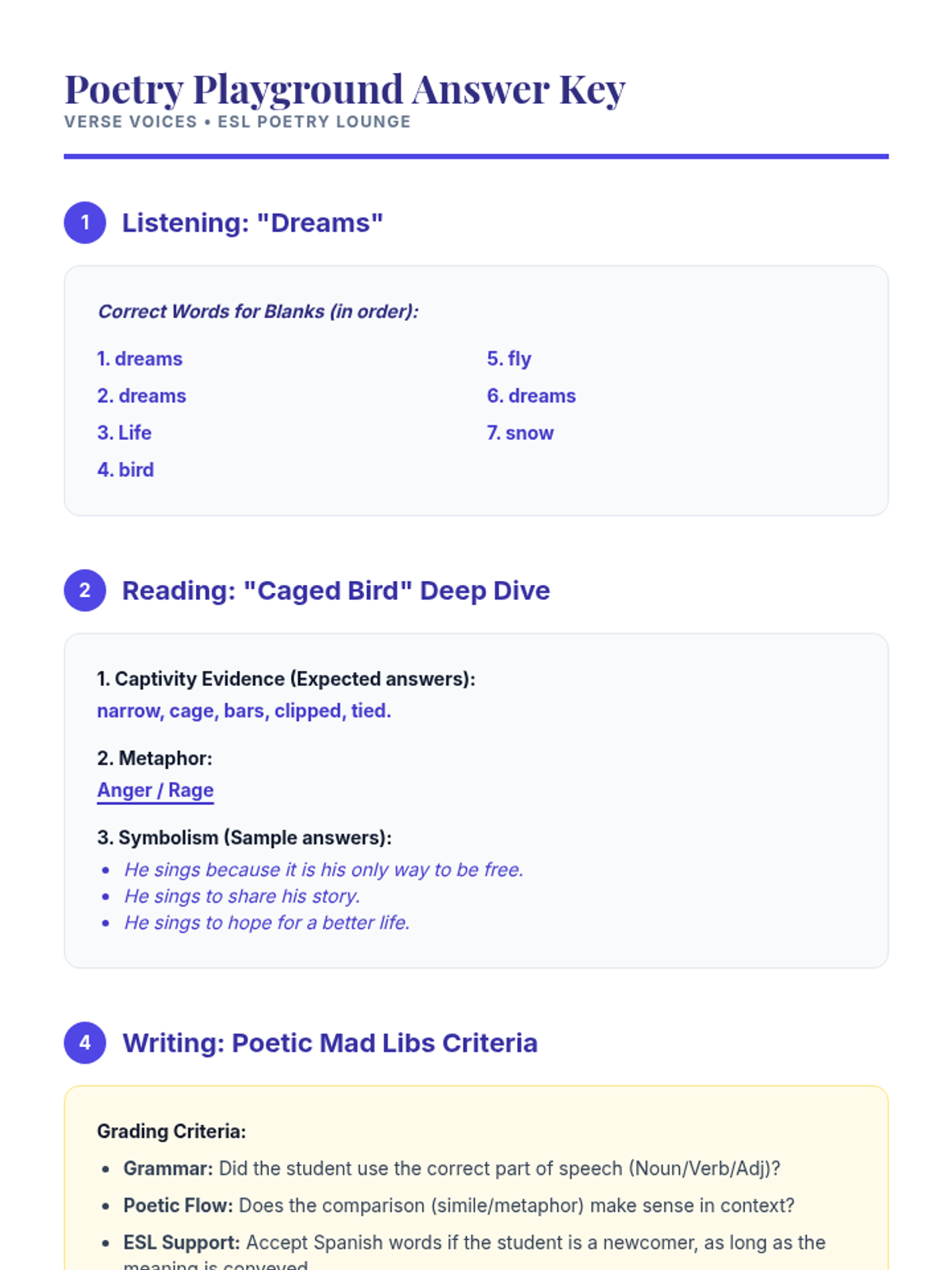
An answer key for the Verse Voices poetry lesson, providing correct responses for the reading, listening, and matching activities, along with grading criteria for the creative speaking and writing sections.
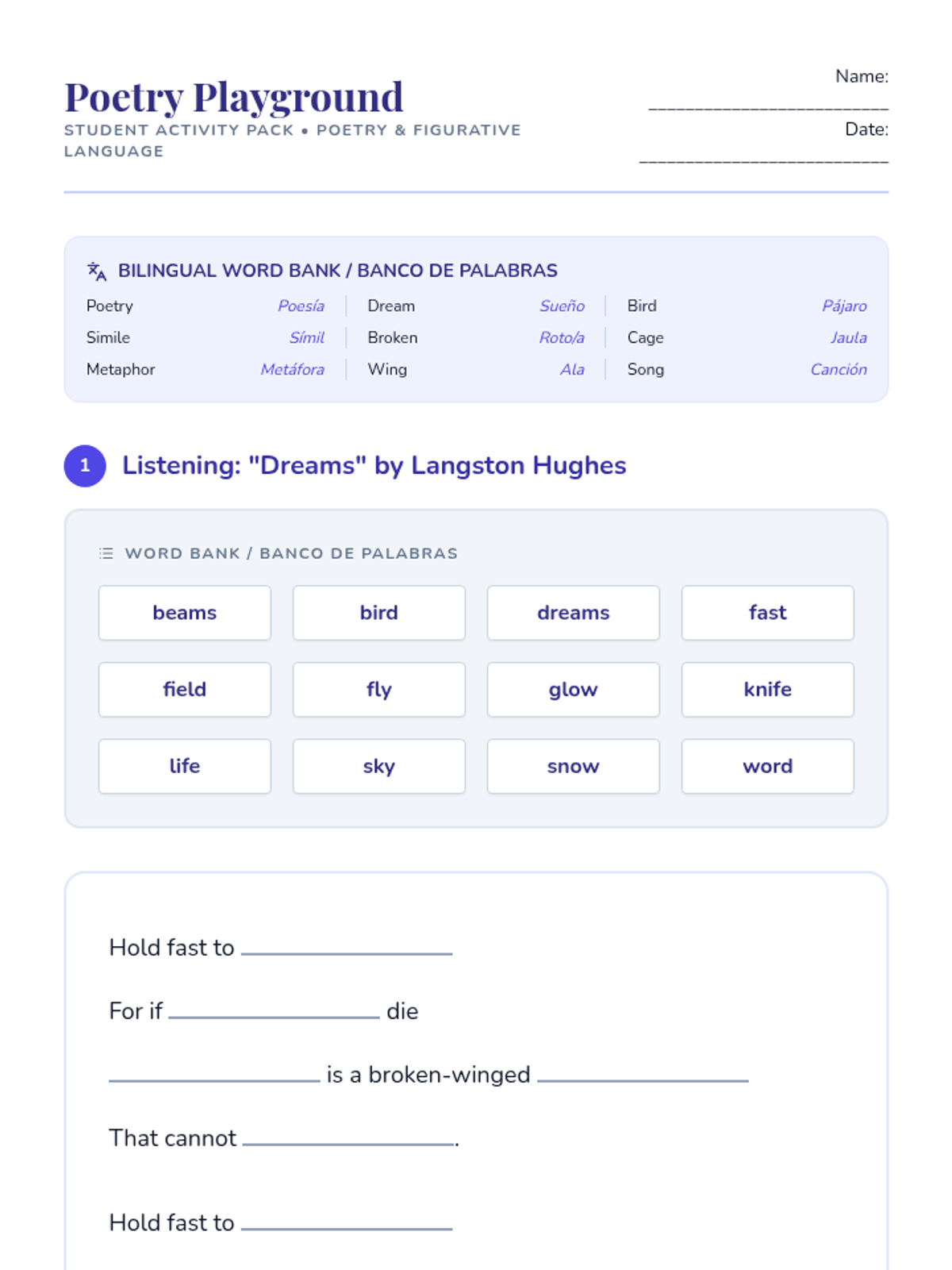
A two-page student activity pack for ESL learners, featuring a listening cloze activity for Langston Hughes, a deep-dive reading analysis of Maya Angelou's 'Caged Bird', a bilingual grammar glossary, and a poetic Mad Lib writing activity.
A visual slide presentation designed for an ESL poetry lesson, featuring poets Langston Hughes, Maya Angelou, Pablo Neruda, and Sandra Cisneros, with bilingual vocabulary, interactive prompts, and a poetic Mad Lib writing activity.
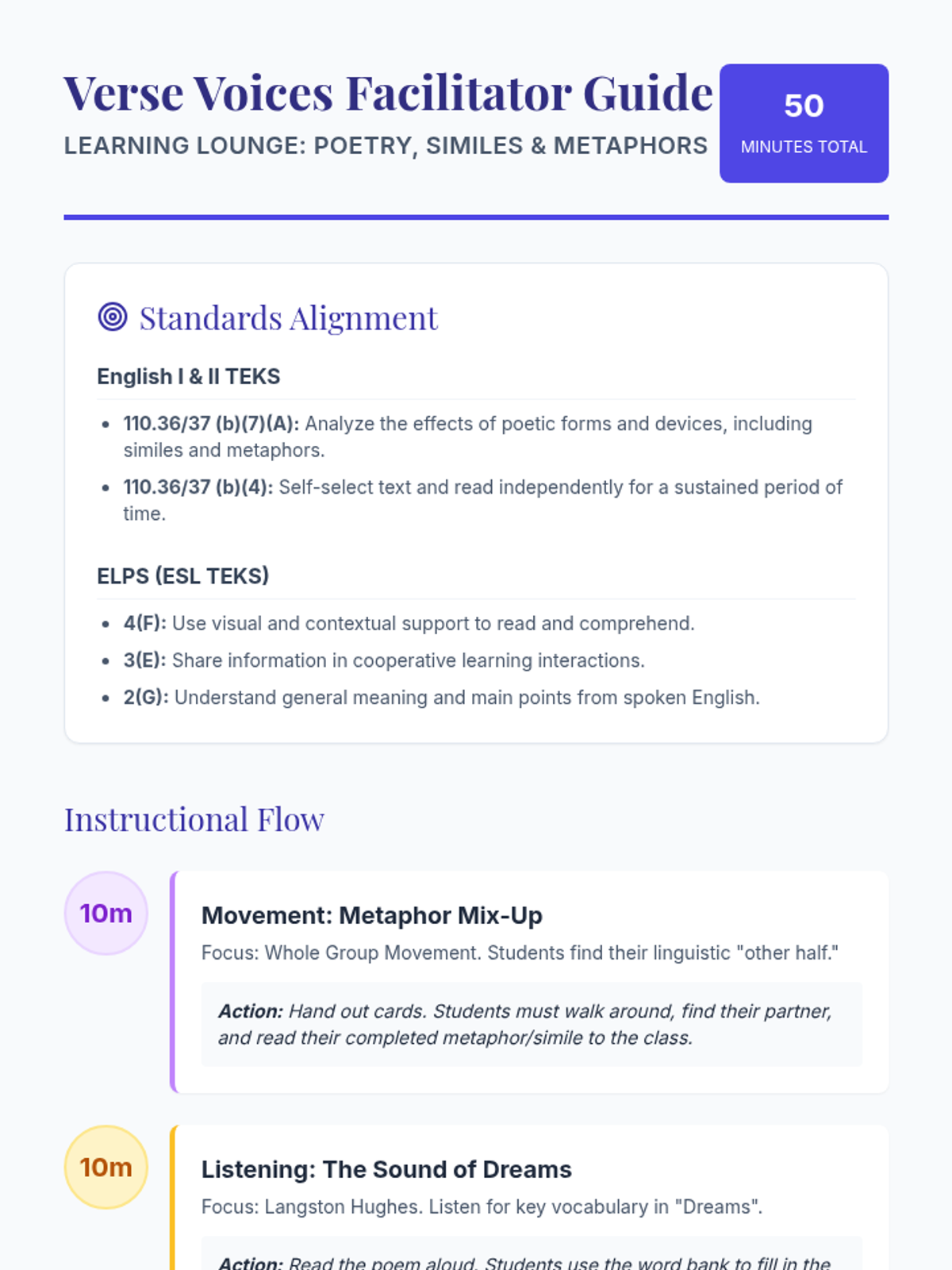
A facilitator guide for teachers, outlining the 50-minute poetry lesson with TEKS alignment, ESL strategies, and detailed instructions for five 10-minute skill activities, including a new movement-based component.
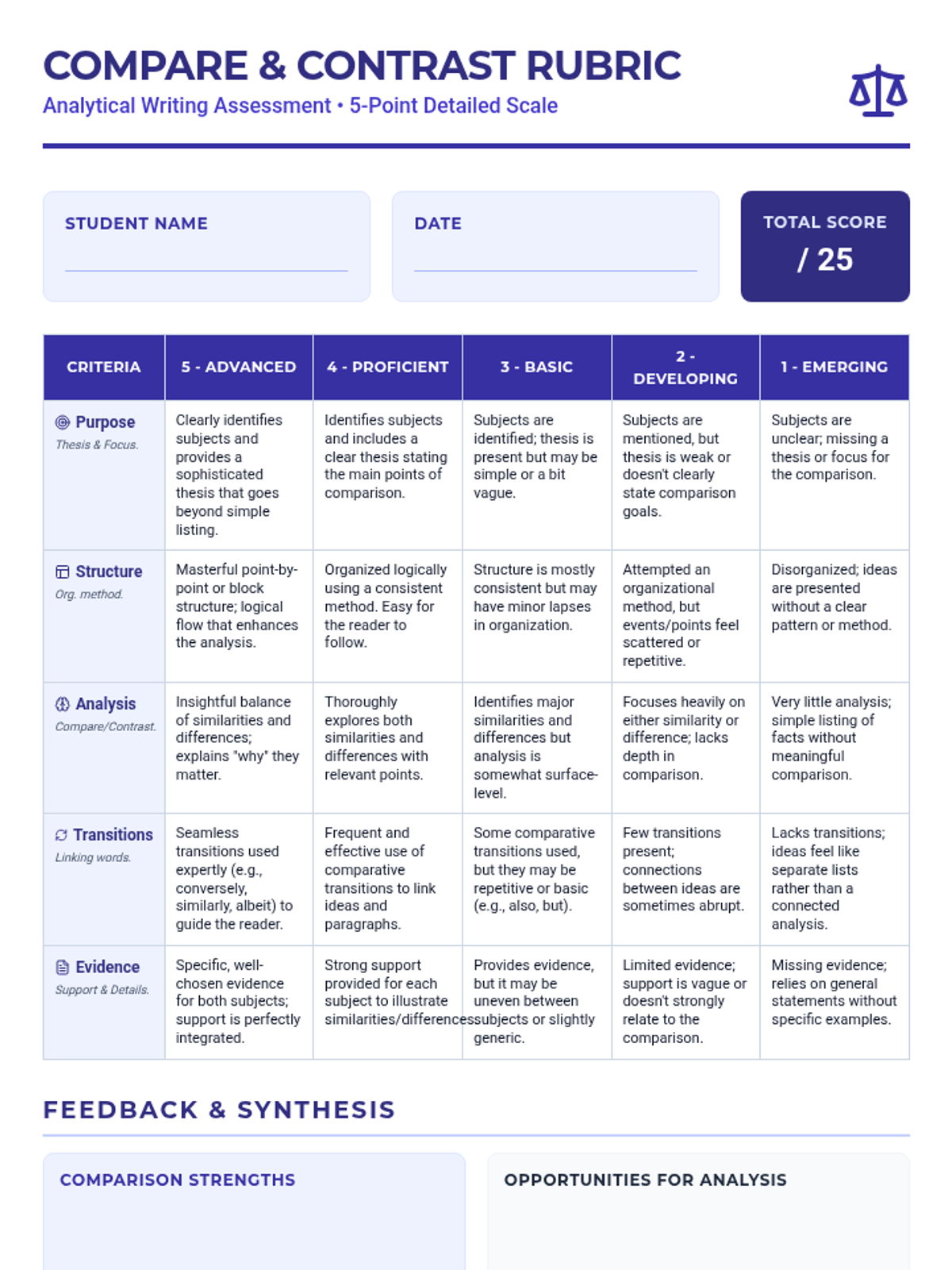
A 5-point analytical rubric for assessing compare and contrast essays, focusing on thesis, organization, depth of analysis, and transition use.
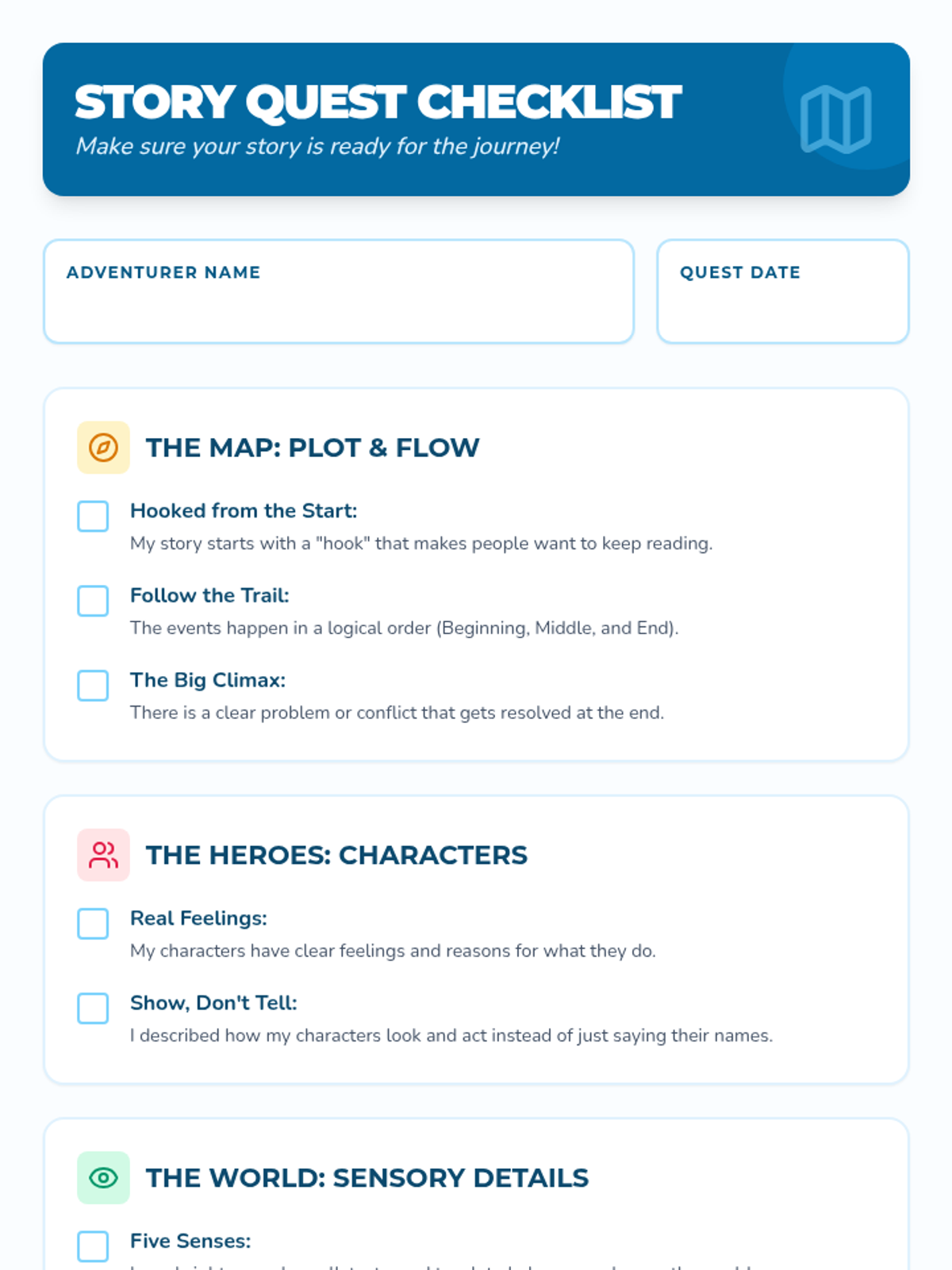
A student-friendly self-assessment checklist for narrative writing, themed as a "Story Quest" with clear goals and reflection space.
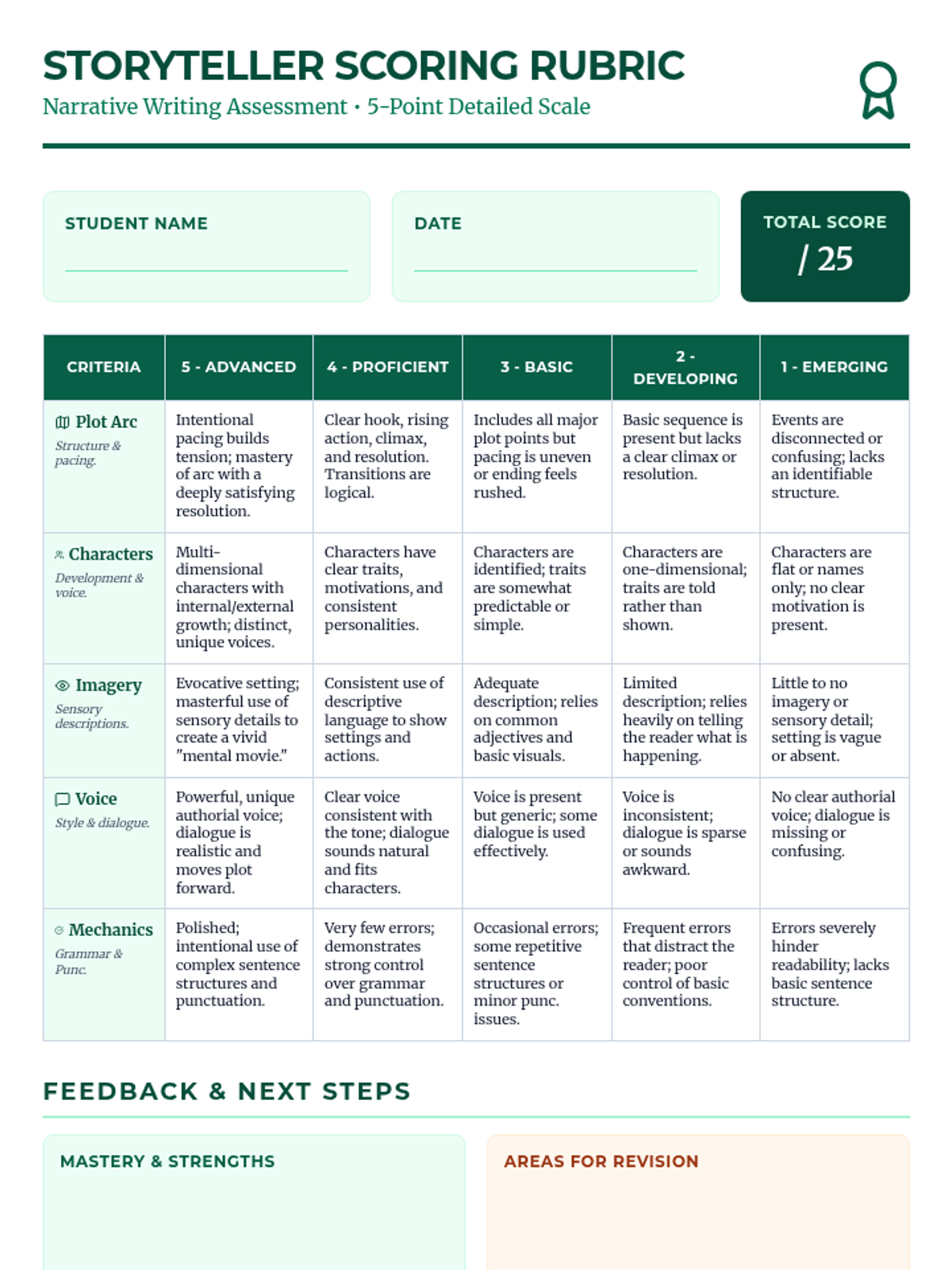
A refined 5-point teacher-facing rubric for assessing narrative writing across plot, characters, sensory details, voice, and mechanics, designed for clear differentiation.
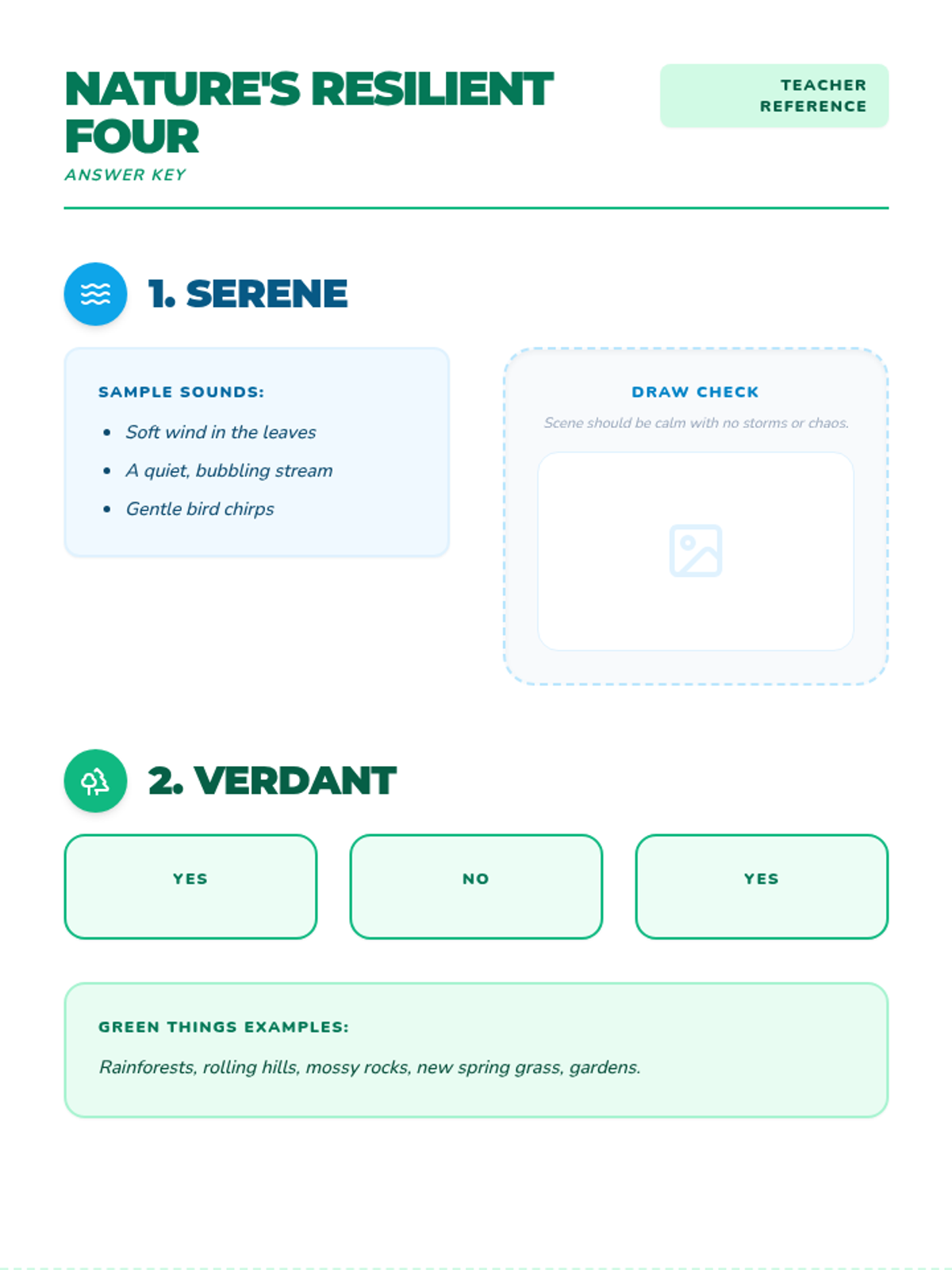
Answer key for the Nature Resilient Four Worksheet, providing sample responses, synonym identification, and context check answers for teacher reference. Updated to match the worksheet's final styling.
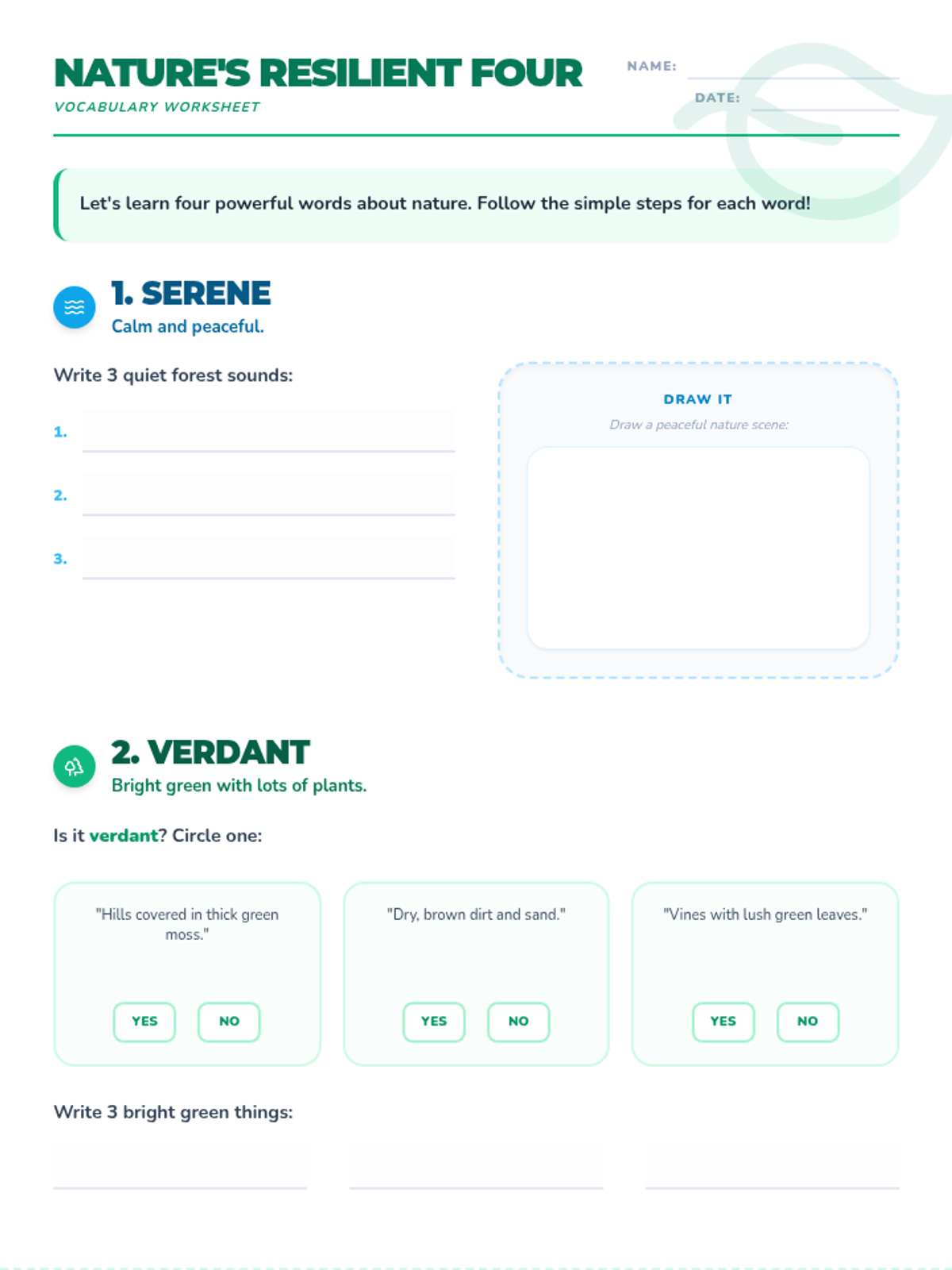
A two-page vocabulary worksheet focusing on serene, verdant, prosperity, and resilient with extremely simplified directions for maximum student clarity. Includes definition-matching, context-checking, drawing, and sentence-writing tasks. Features smaller fonts to ensure a clean fit across two pages with the final step removed.
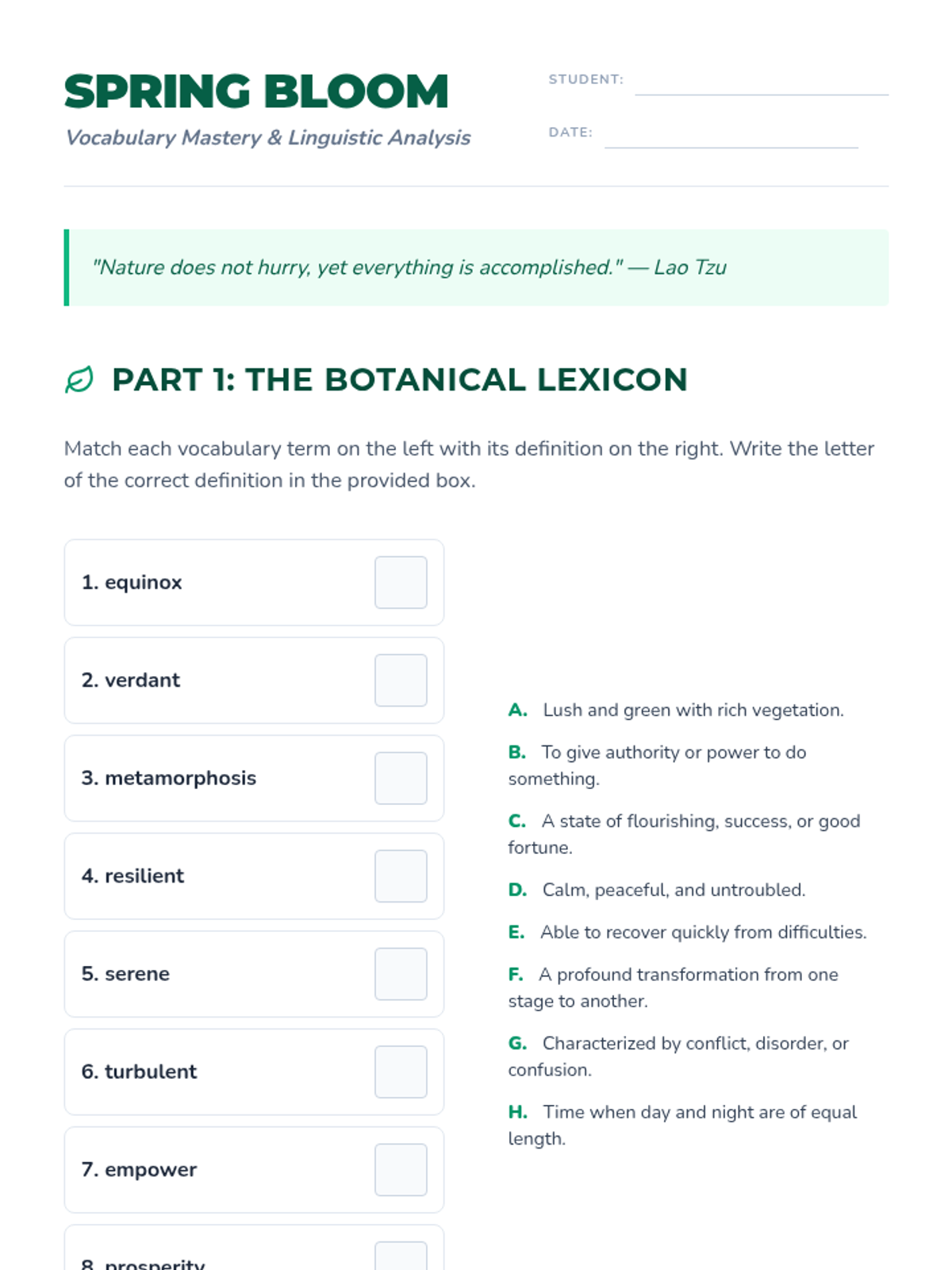
Refined three-page vocabulary worksheet with reduced font sizes and margins to prevent content cutoff. Each part is clearly separated on its own page (Part 1 on Page 1, Part 2 on Page 2, Part 3 on Page 3) for a clean, print-optimized experience.
A visual presentation to introduce the eight vocabulary terms. Each slide features high-impact definitions, parts of speech, and usage examples with nature-themed motifs. Corrected font sizes to meet the 24px minimum requirement. Vocabulary words are now lowercase.
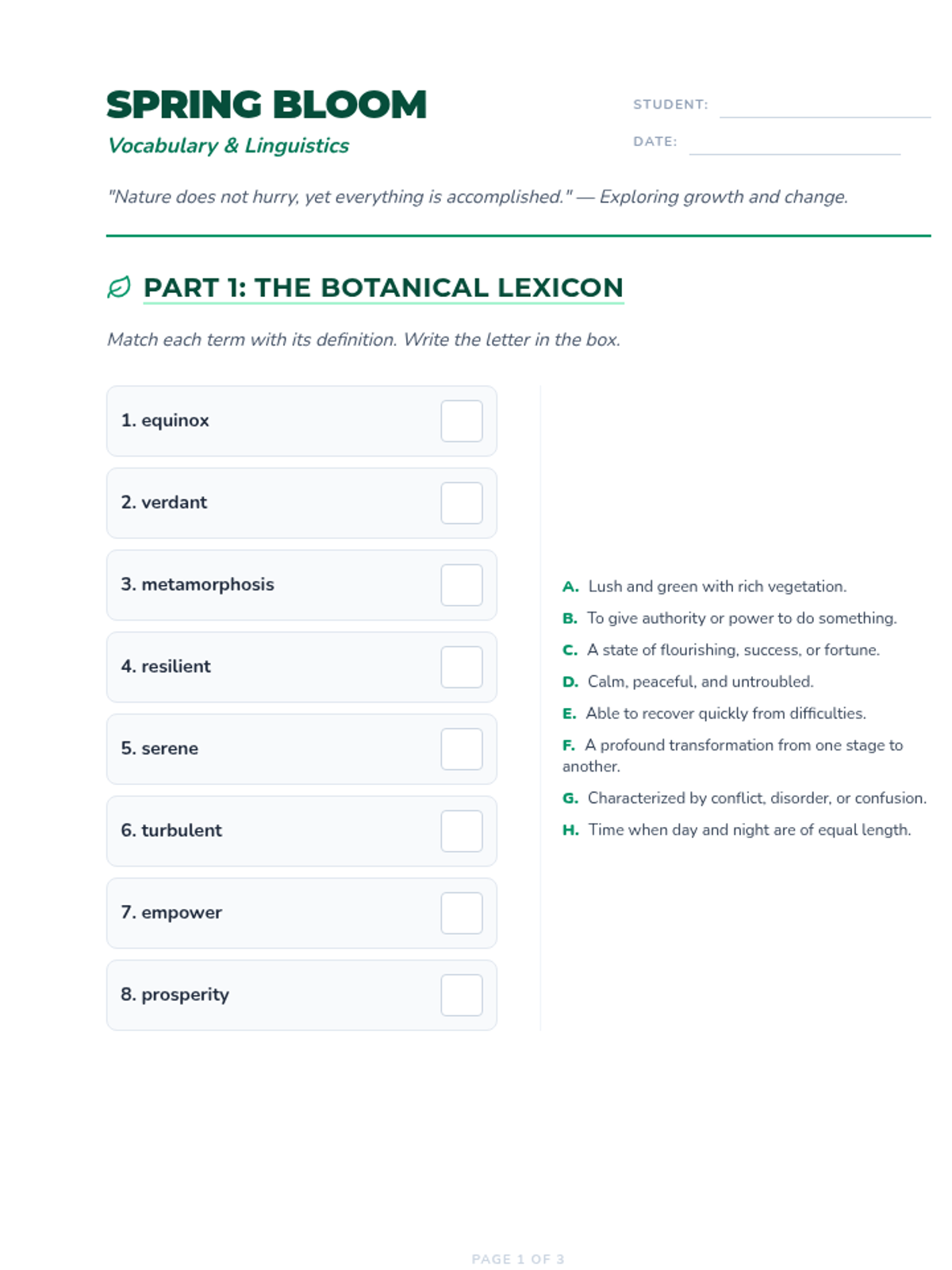
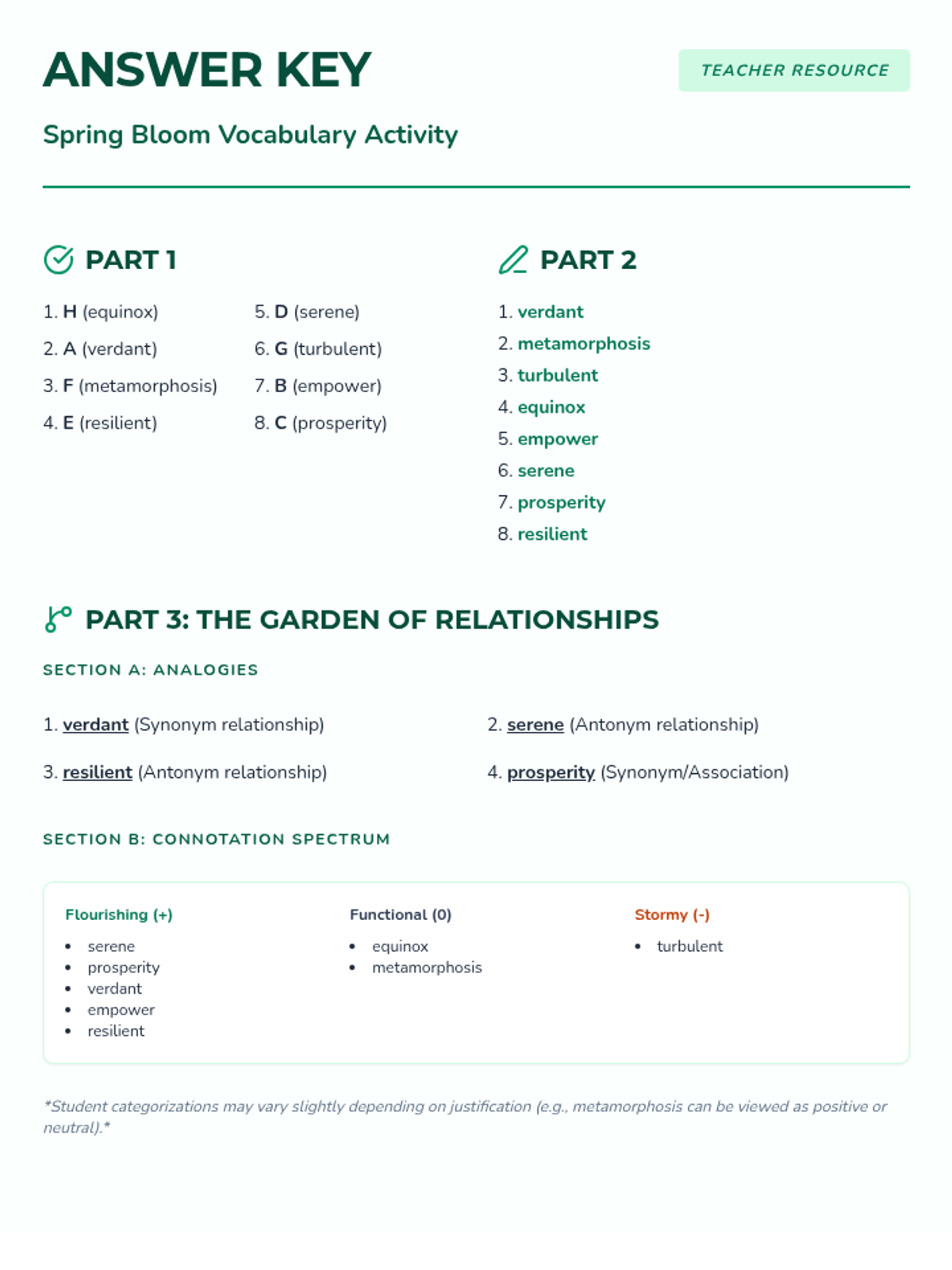
Updated answer key for the Spring Bloom Vocabulary Activity. Changed "Challenging (-)" to "Stormy (-)" in the Connotation Spectrum section to align with the revised worksheet.
High-contrast, print-ready three-page vocabulary worksheet. Uses explicit break-after properties and a strict 960px height per page to ensure Part 1, Part 2, and Part 3 are perfectly separated during printing. Clean white backgrounds maximize legibility and ink efficiency.
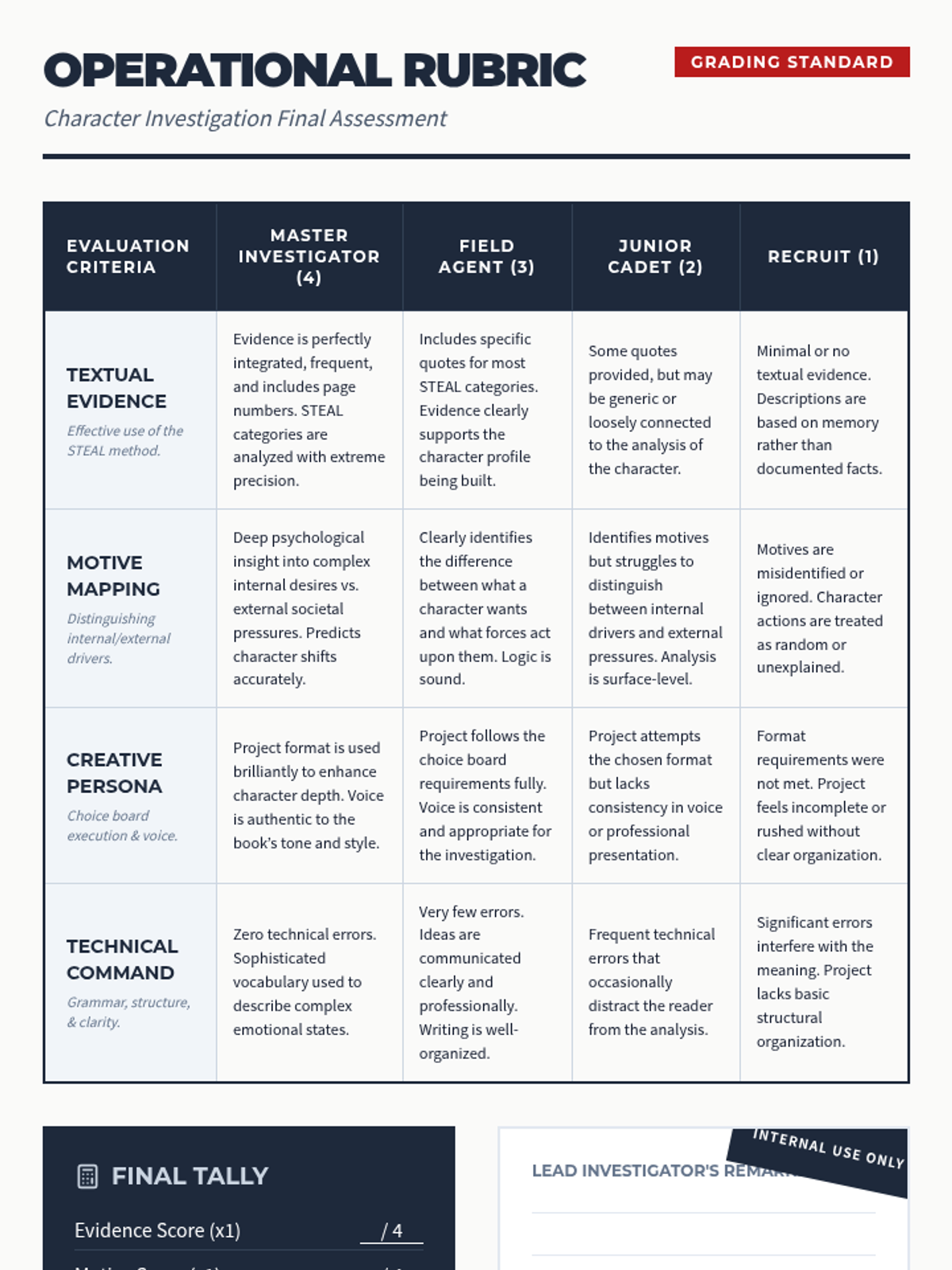
A detailed 4-point rubric for assessing the character investigation projects. It includes criteria for textual evidence (STEAL), motive analysis depth, creative execution, and technical command, all styled with the unit's 'Case File' aesthetic.