Systematic research, evidence evaluation, and logical reasoning skills for formal discourse. Equips speakers to organize persuasive arguments, identify fallacies, and execute strategic impact calculus during competitive engagement.
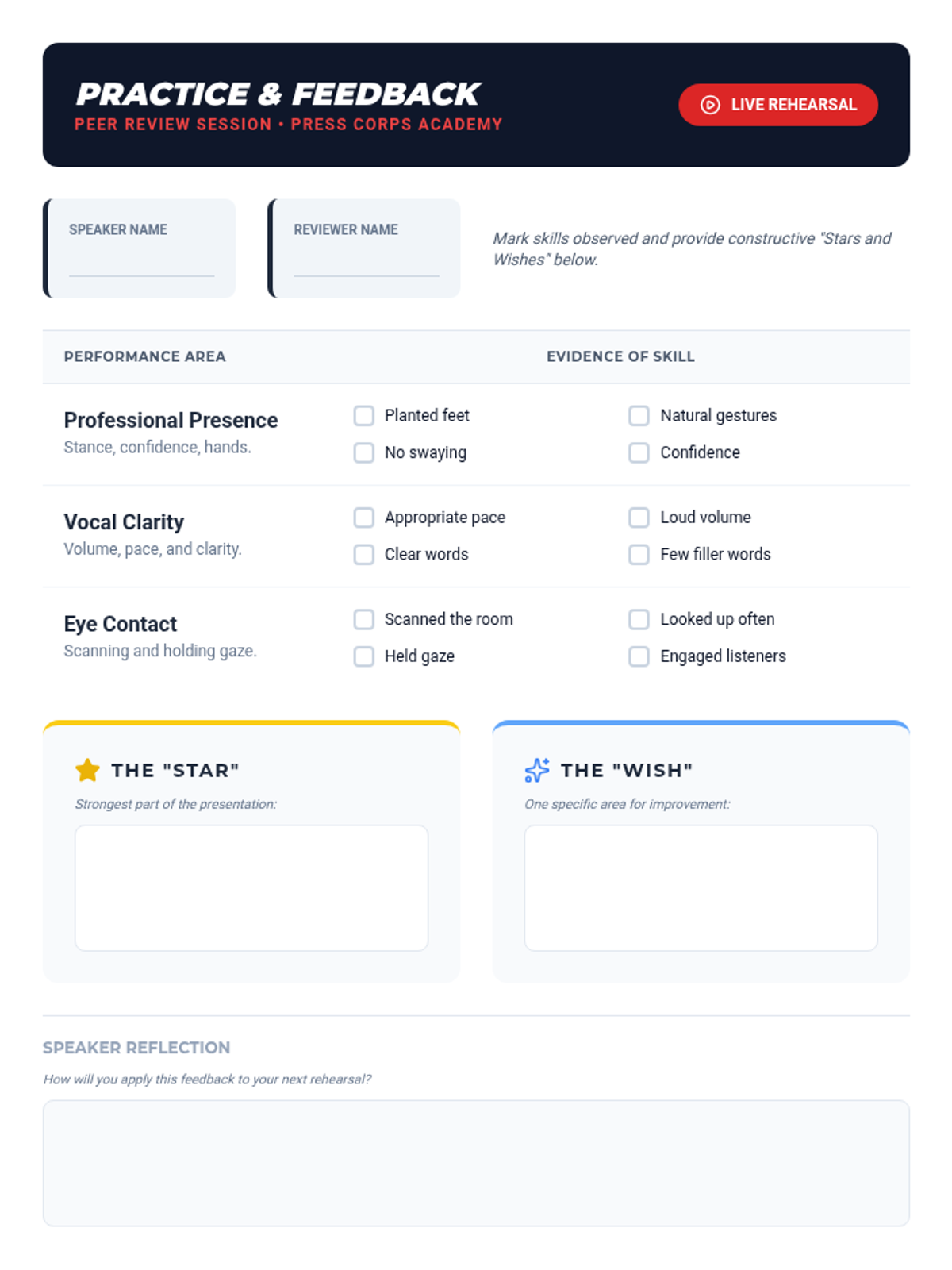
A peer feedback rubric designed to help students evaluate and provide constructive criticism on public speaking performance and professional presence.
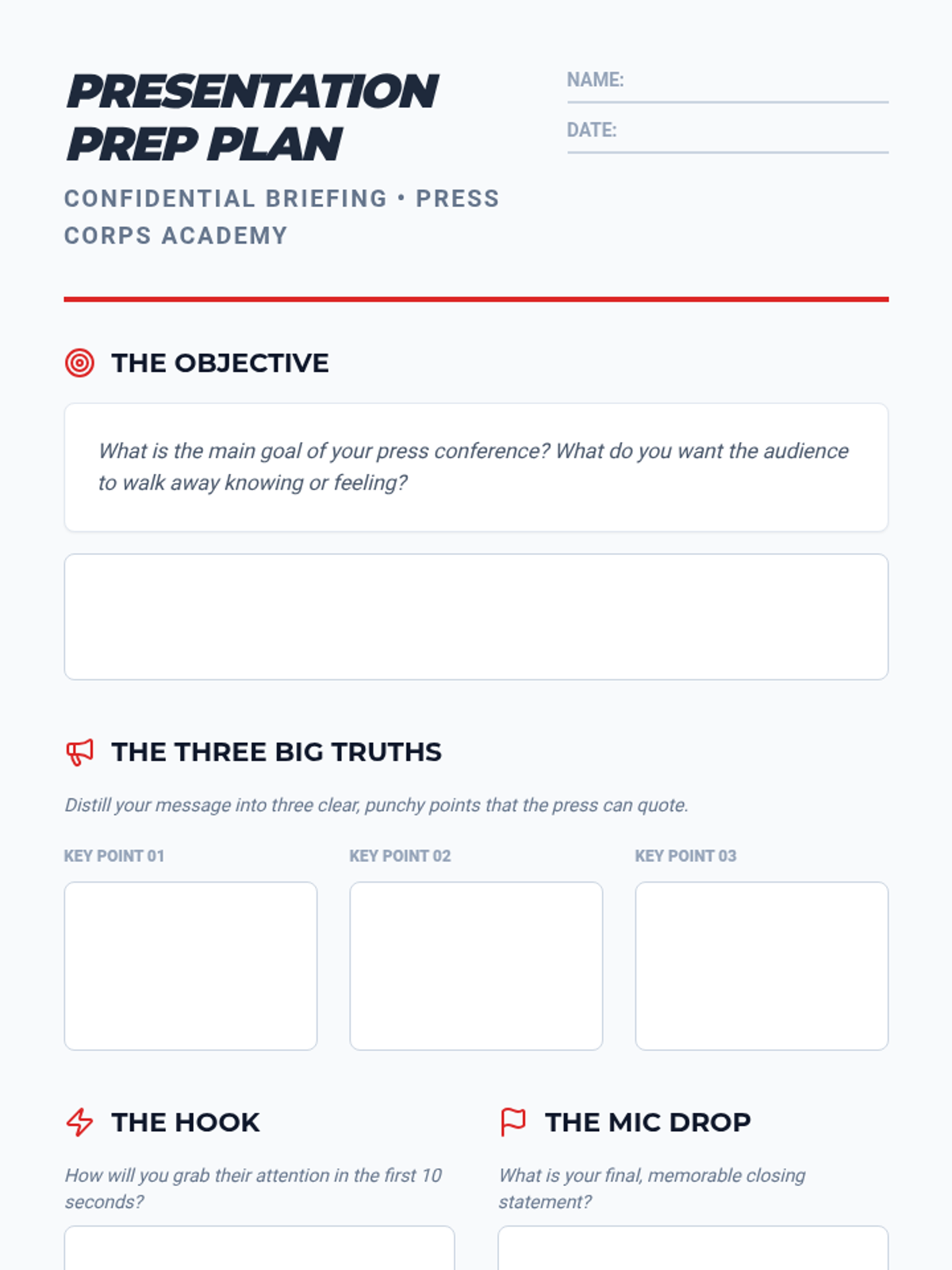
A professional planning document for students to organize their press conference talking points, key messages, and delivery techniques.
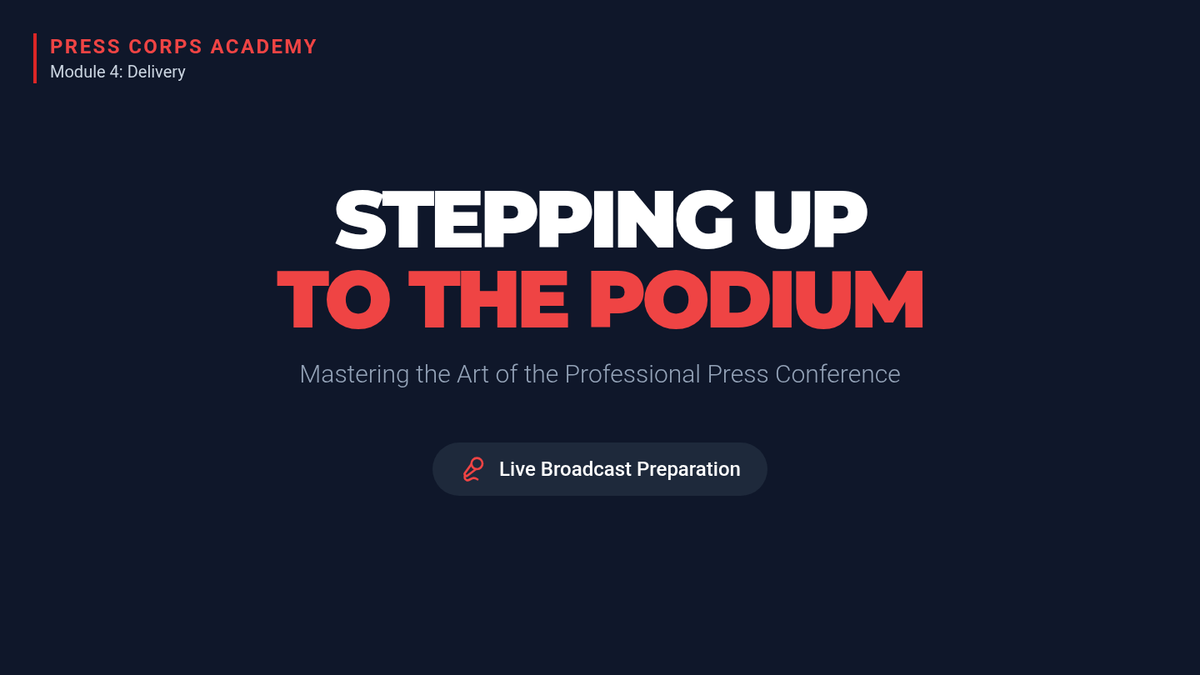
A dynamic slide deck for 6th-grade students to learn professional public speaking and press conference techniques.
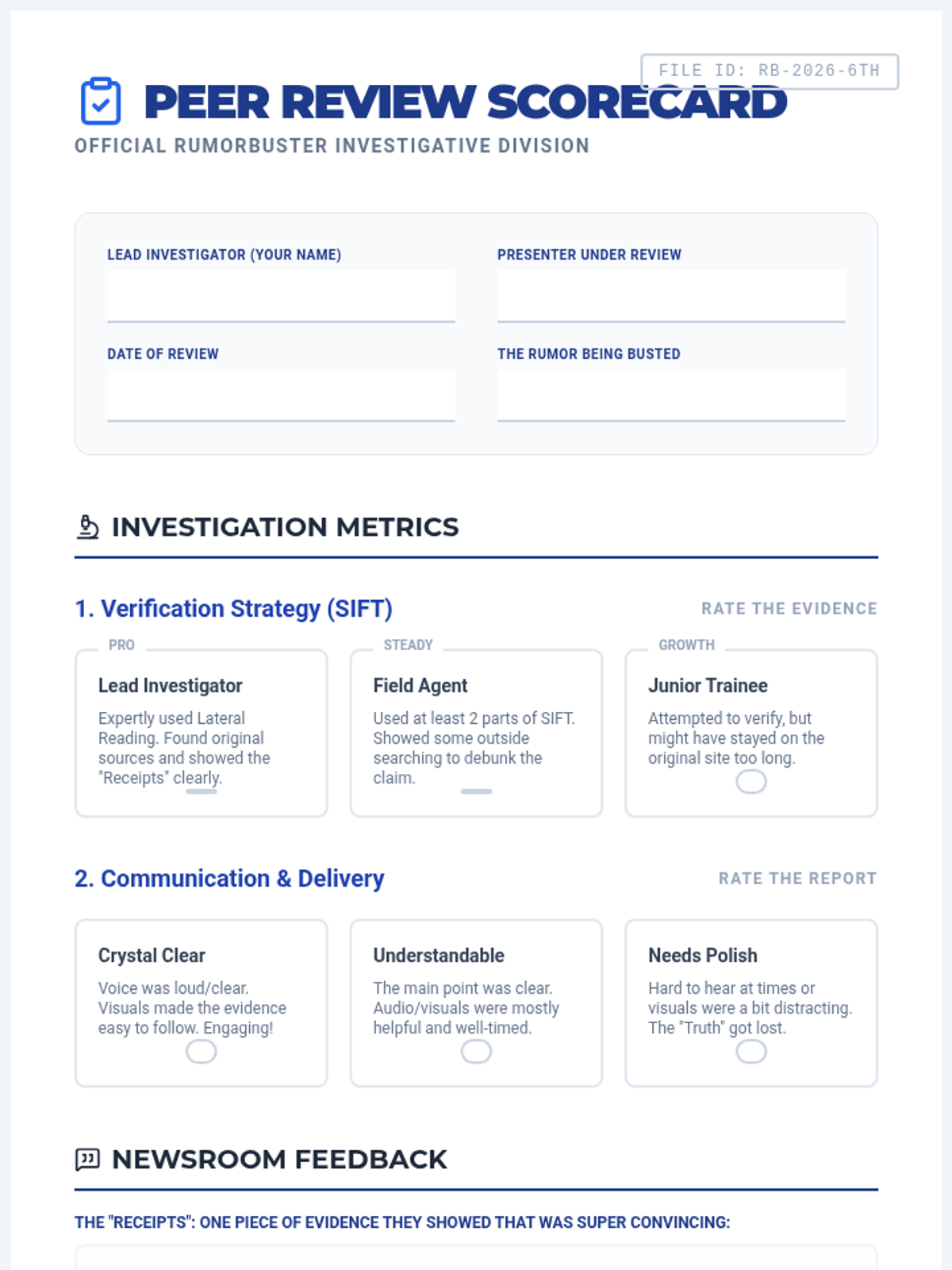
A professional newsroom-themed rubric for peer evaluation of screencasts, featuring SIFT-based scoring metrics and a final unit reflection page for students to synthesize their media literacy growth.
A visually engaging presentation deck for the RumorBuster showcase, featuring newsroom protocols, a SIFT review checklist, and reflection prompts to guide the viewing and peer feedback process.
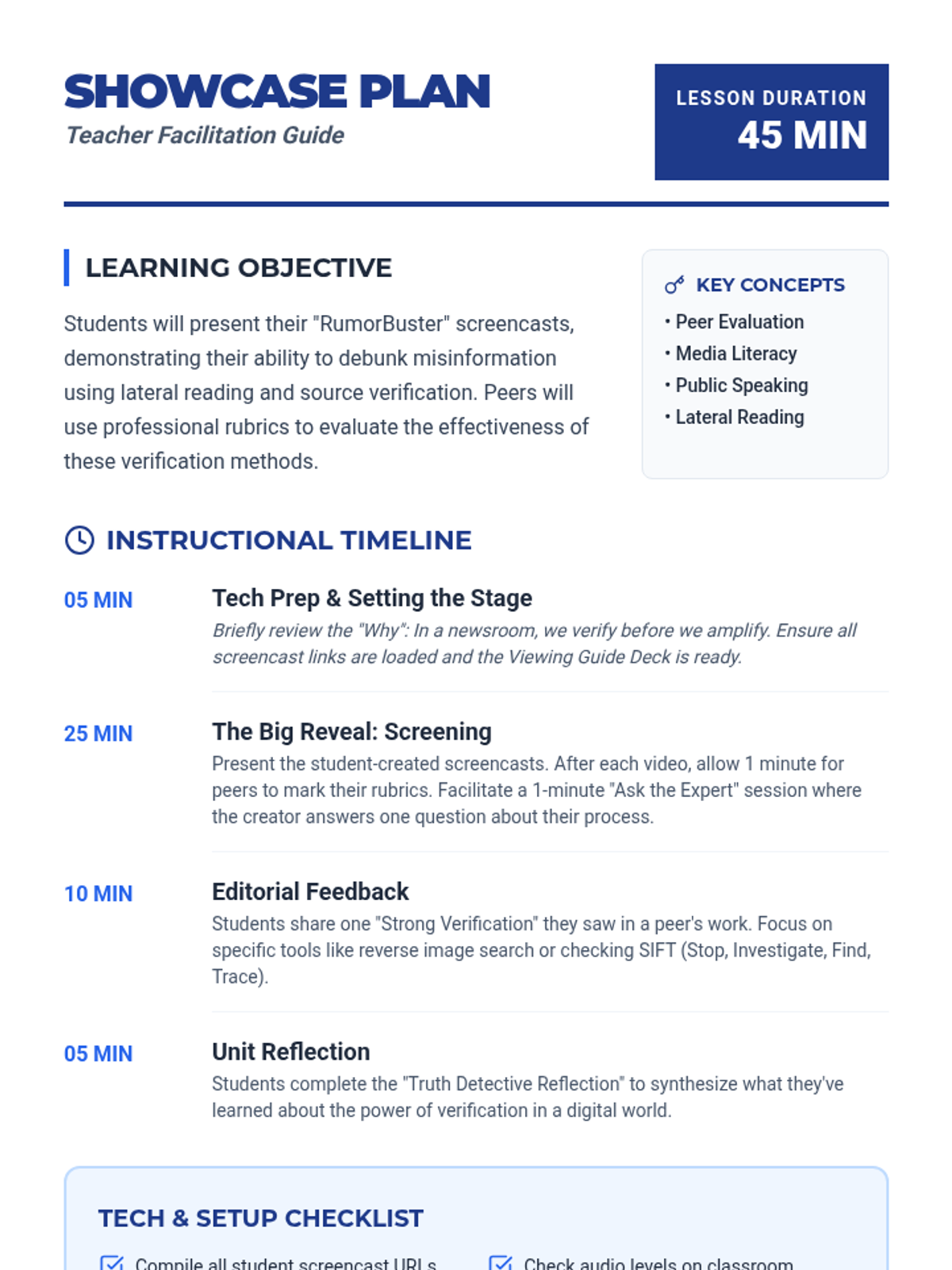
A comprehensive teacher facilitation guide for the RumorBuster presentation day, including a detailed instructional timeline, tech checklist, discussion prompts, and differentiation strategies to ensure a professional newsroom atmosphere.
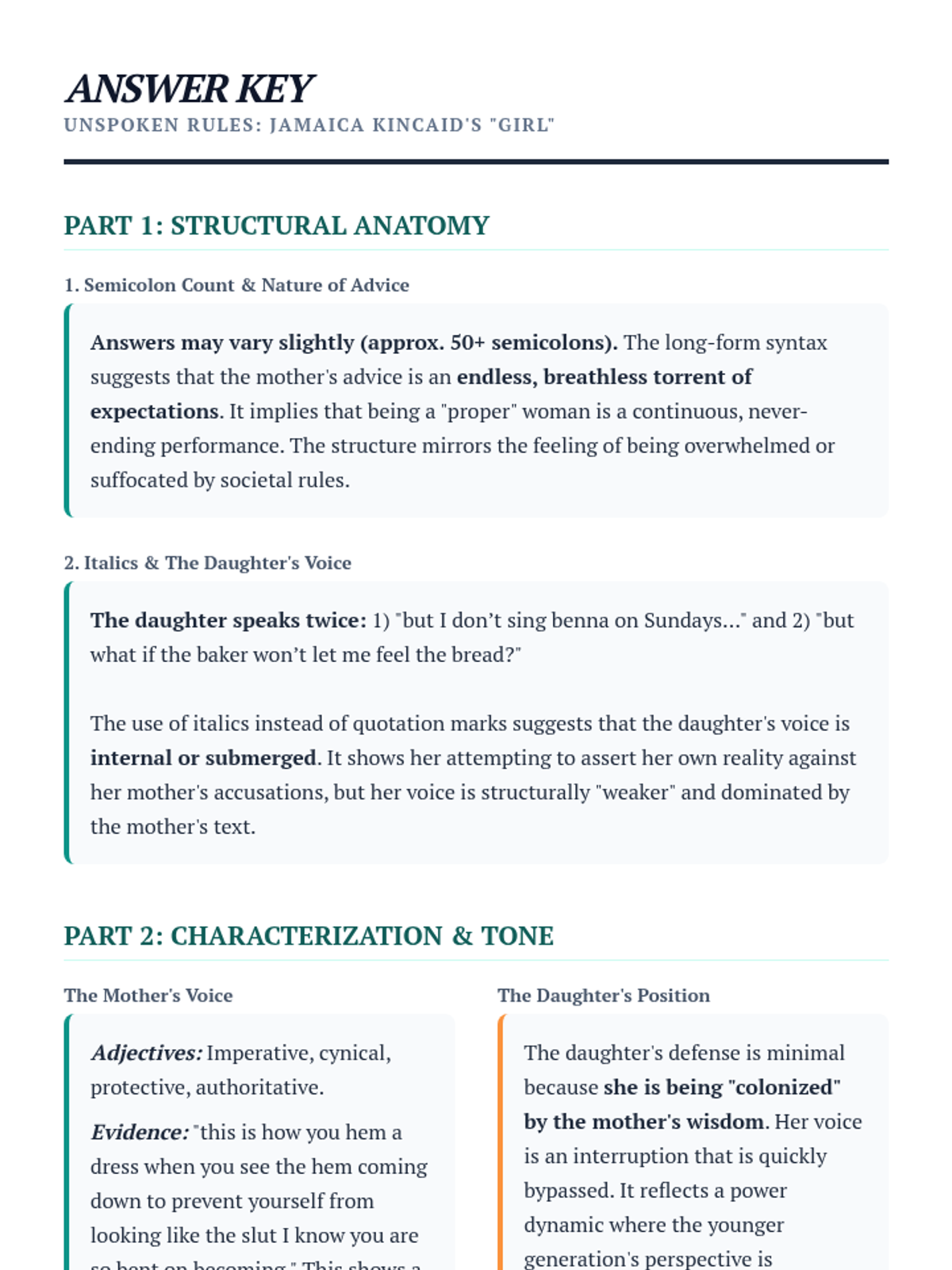
An answer key for the 'Girl' analysis worksheet, providing detailed pedagogical explanations for the text's structure, italics, characterization, and symbolism.
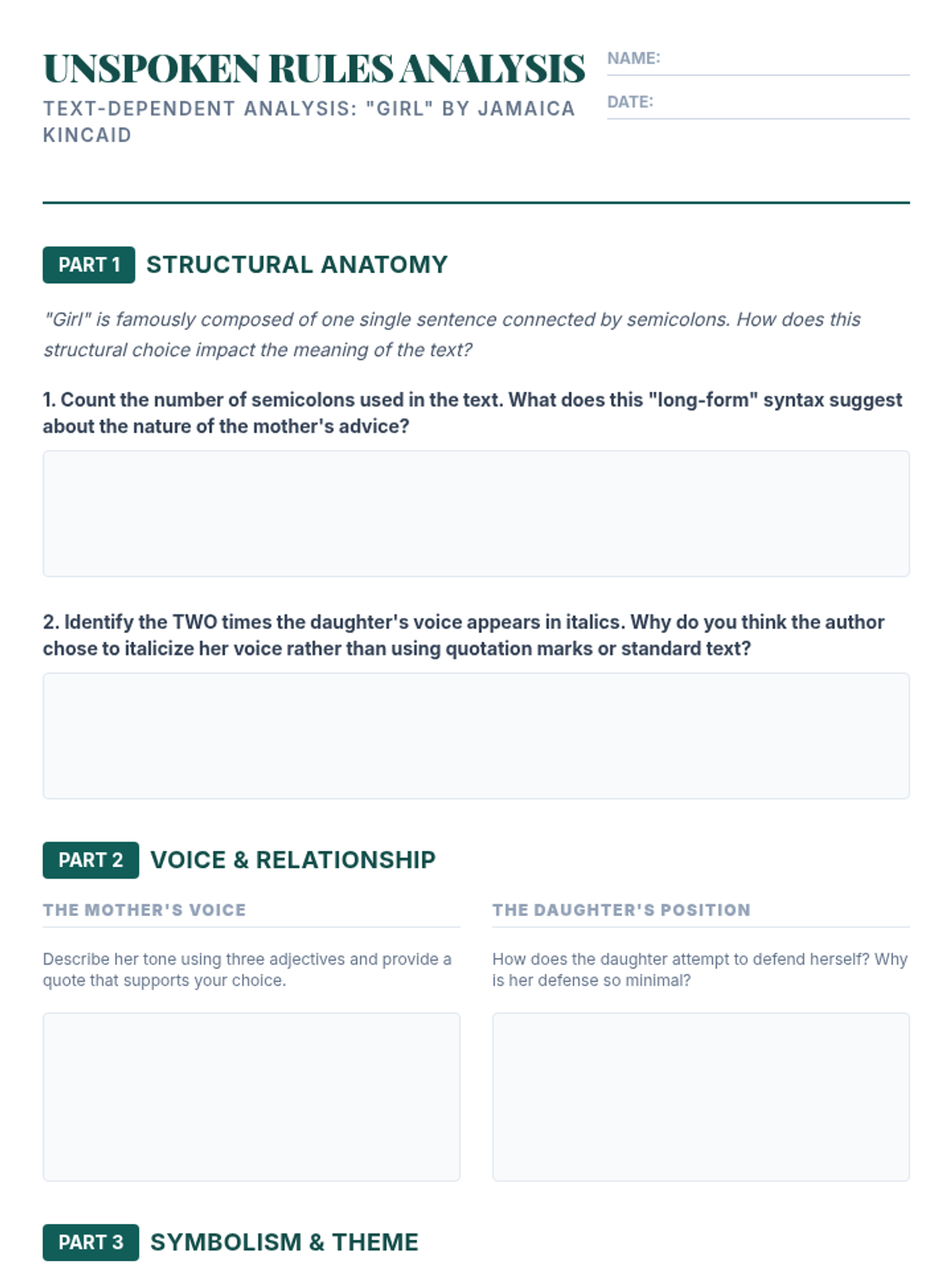
A text-dependent analysis worksheet for 'Girl' by Jamaica Kincaid, featuring sections on structural anatomy, character voices, and deep thematic symbolism with ample writing space.
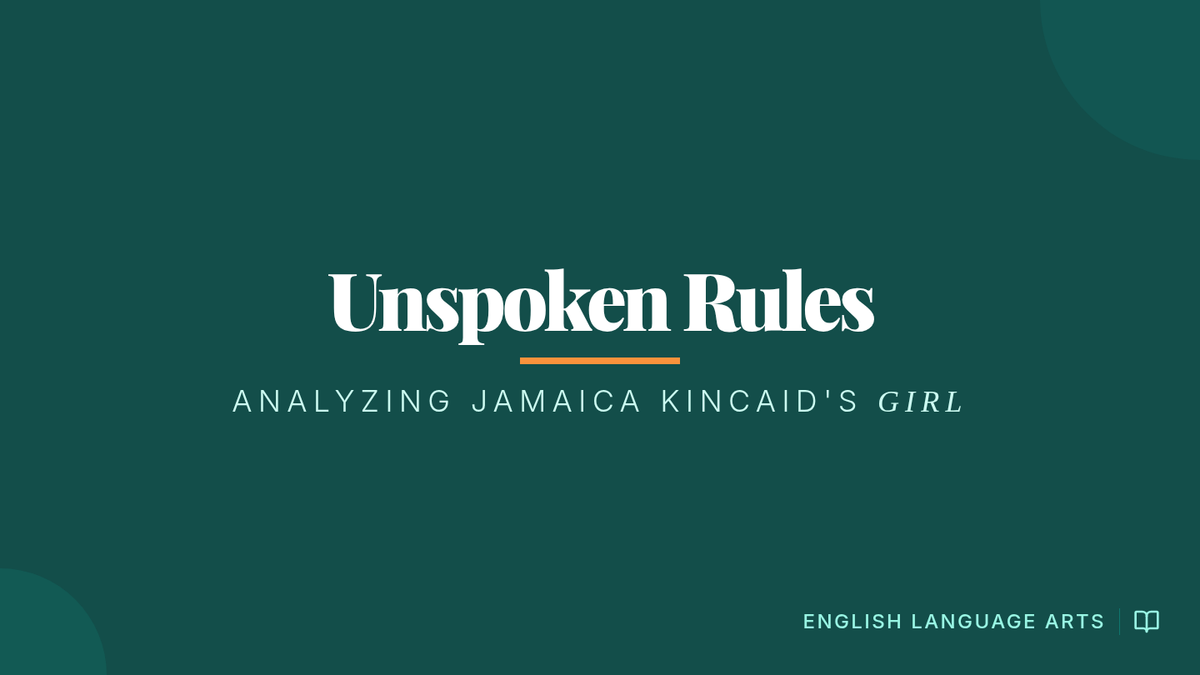
A visually striking slide deck for introducing Jamaica Kincaid's 'Girl', covering author context, the unique single-sentence structure, characterization of voices, and Socratic Seminar expectations.
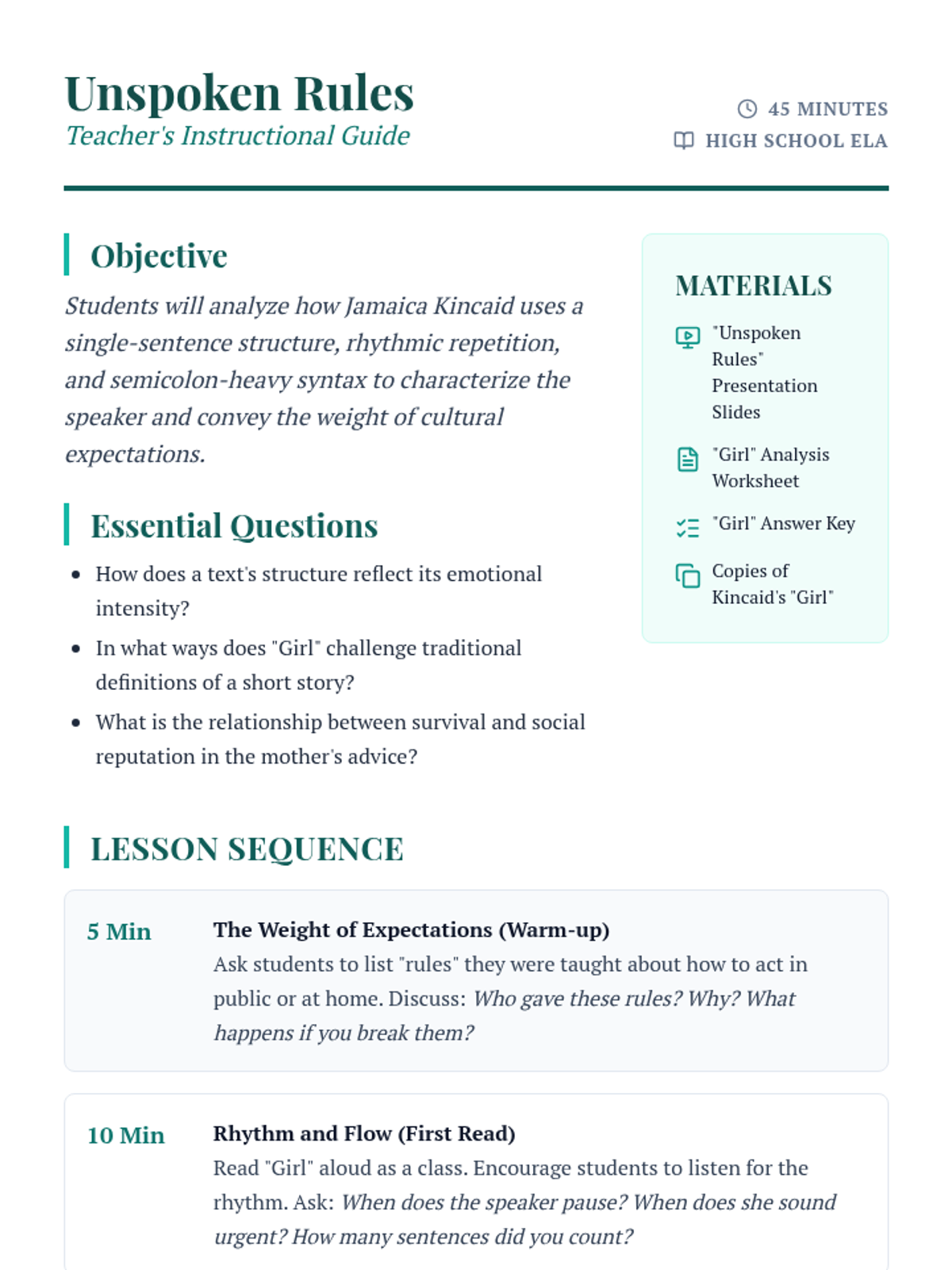
A comprehensive 45-minute teacher's guide for introducing 'Girl' by Jamaica Kincaid, featuring a detailed lesson sequence, essential questions, and a robust Socratic Seminar discussion guide.
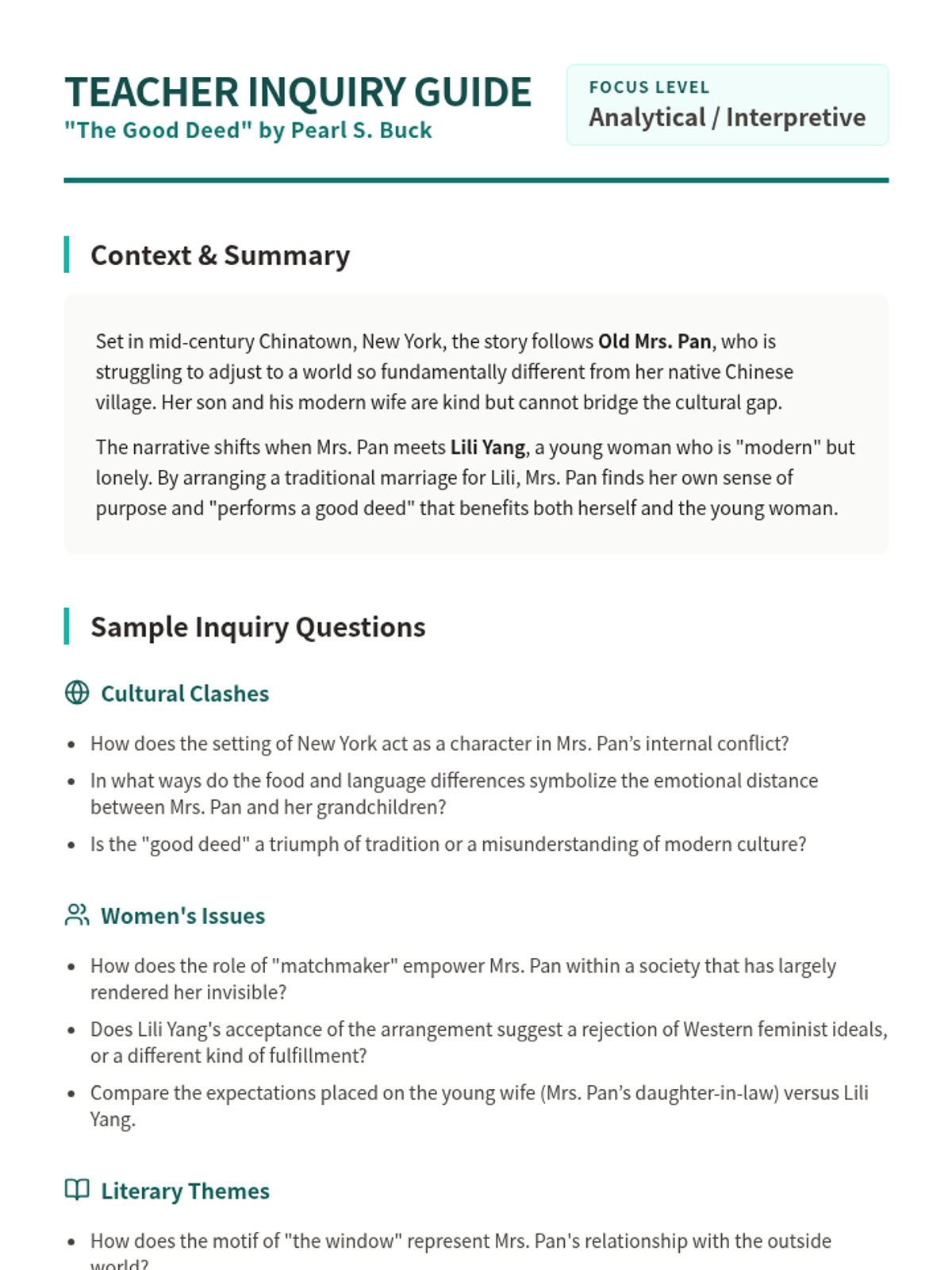
A teacher's guide for Pearl S. Buck's 'The Good Deed' containing story context, sample inquiry questions for culture, gender, and theme, and discussion facilitation tips.
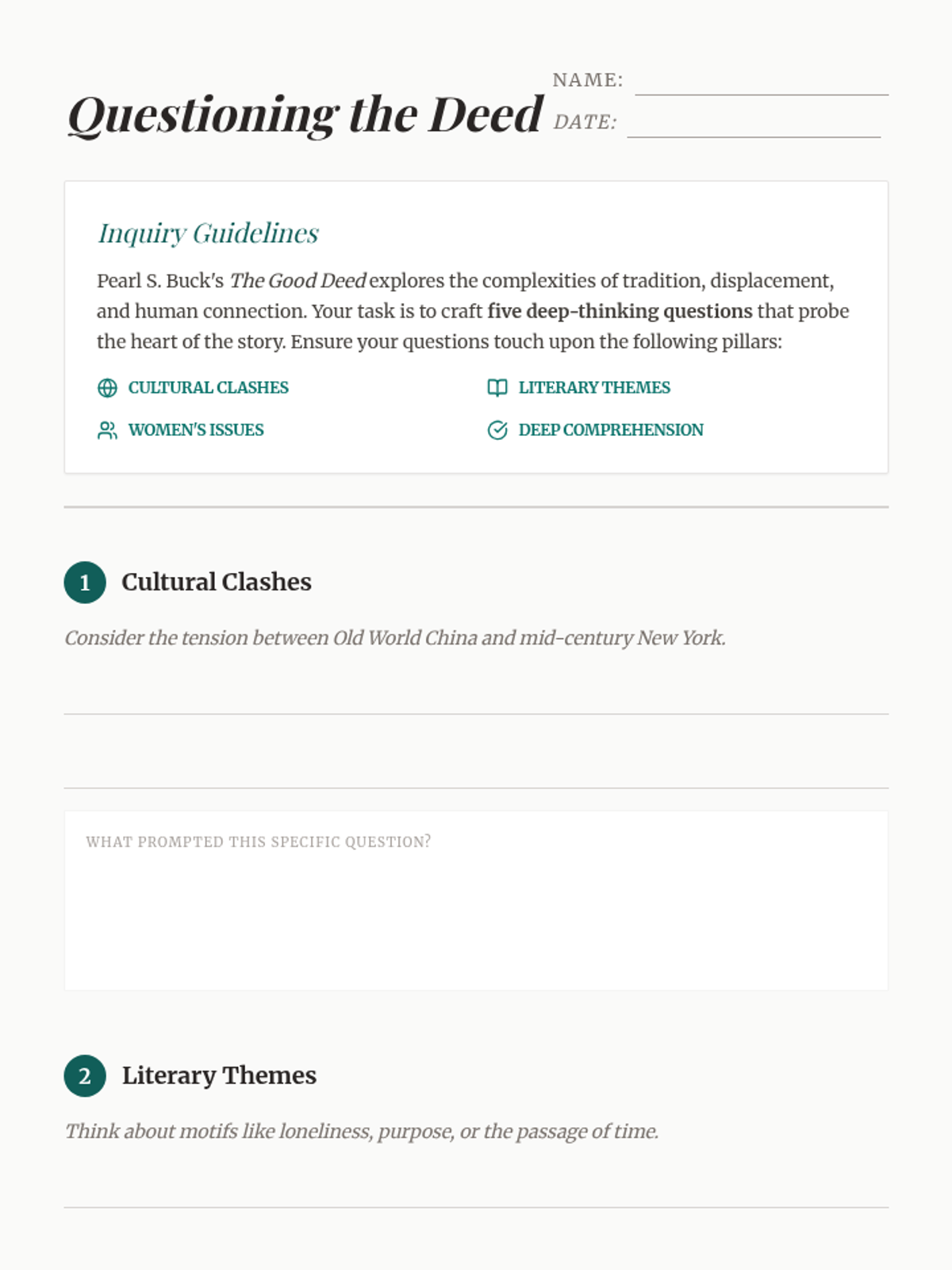
A structured worksheet for Pearl S. Buck's 'The Good Deed' that guides students to write analytical questions across four key categories: cultural clashes, literary themes, women's issues, and comprehension.
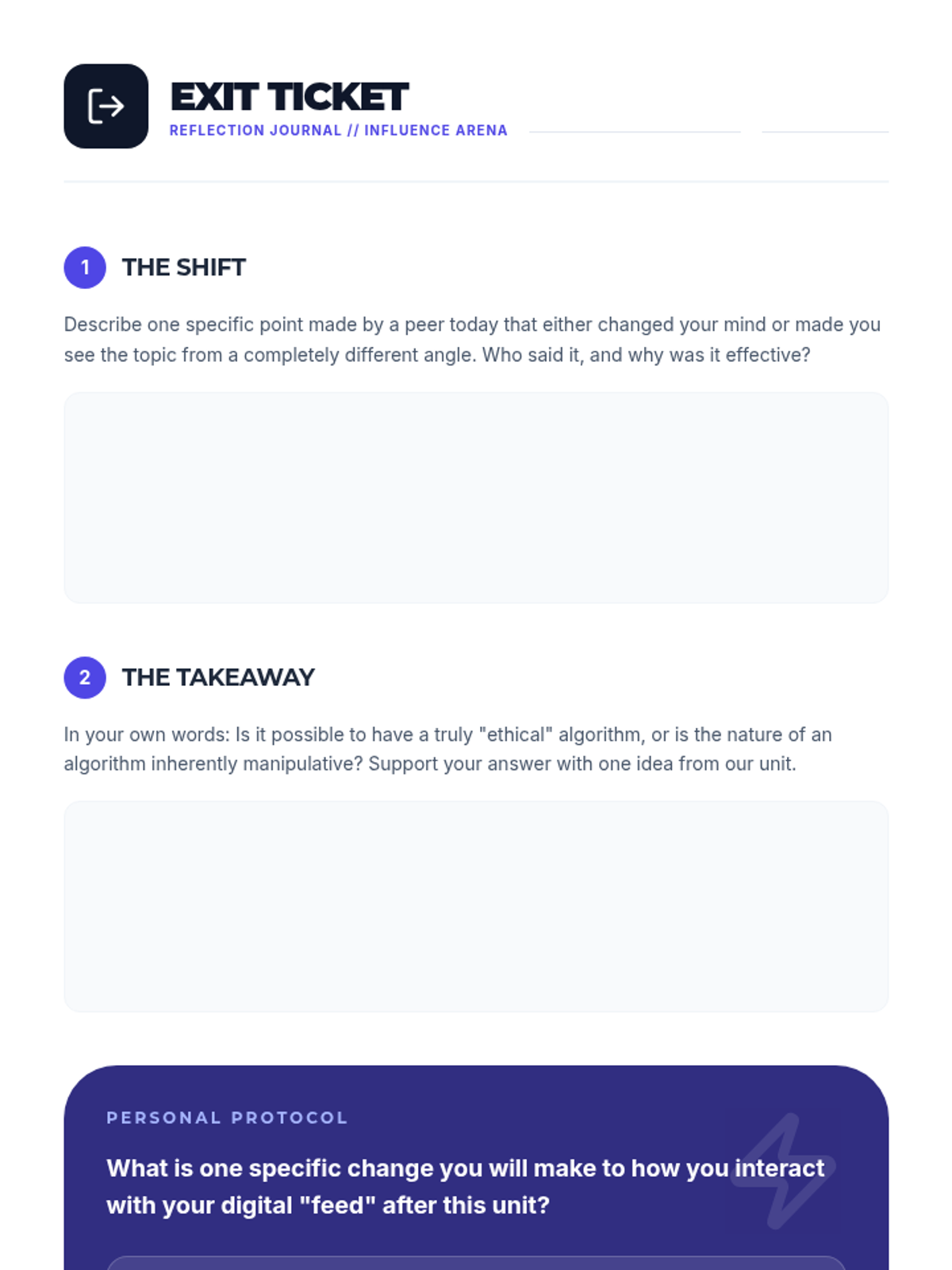
A post-seminar reflection sheet designed to help students synthesize their learning, acknowledge peer contributions, and apply ethical concepts to their personal digital habits.
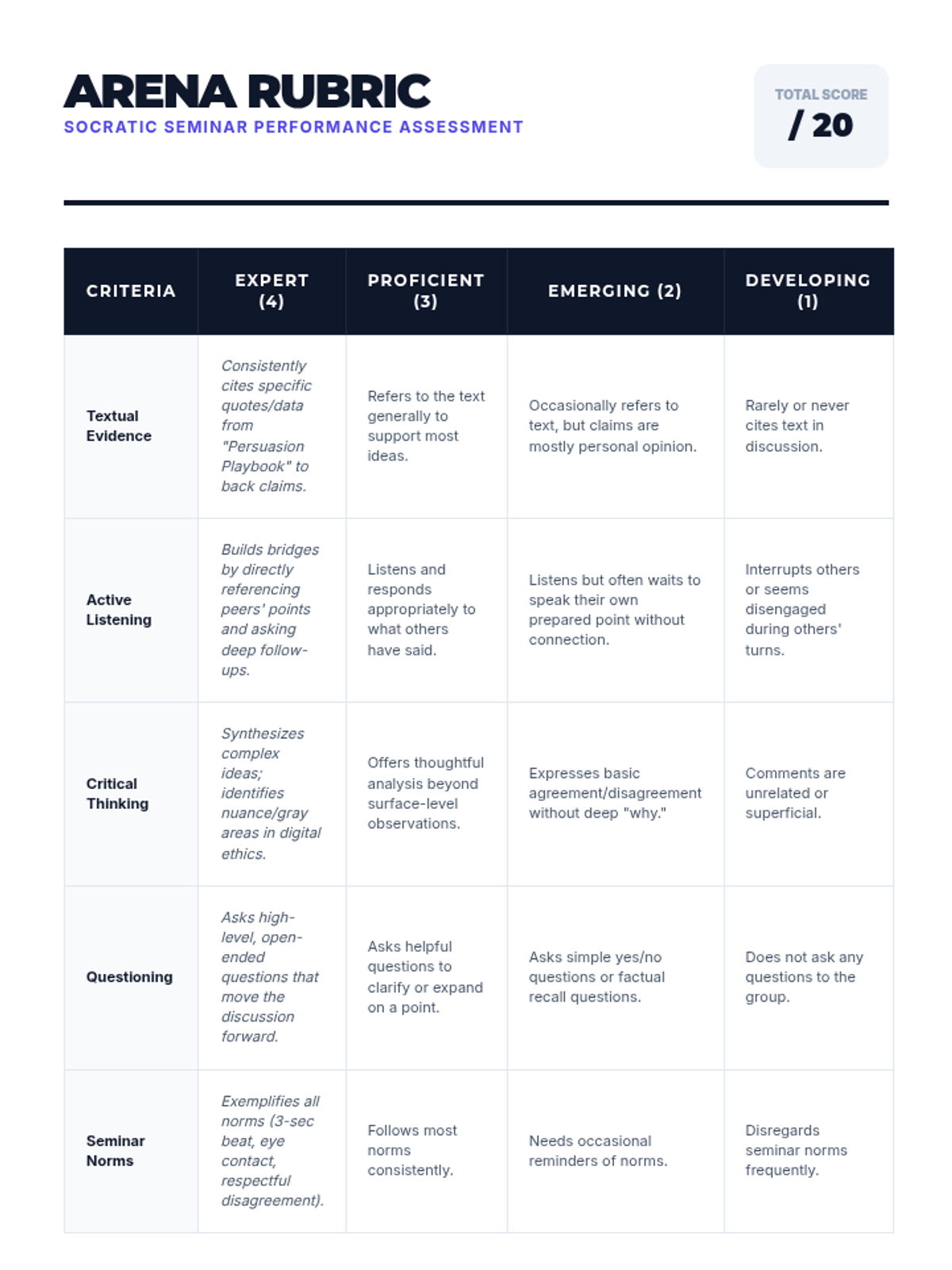
A professional assessment rubric for the Socratic Seminar, evaluating textual evidence, active listening, critical thinking, questioning, and seminar norms. Includes space for teacher observations and feedback.
Presentation slides for the capstone Socratic Seminar, featuring discussion norms, the opening inquiry prompt, and post-discussion reflection questions. Maintains the modern high-contrast digital theme.
Instructional slides for Lesson 2, focusing on the quality of evidence (The Evidence Pyramid), ethical design distinctions (Nudge vs. Sludge), and the importance of active listening in discourse.
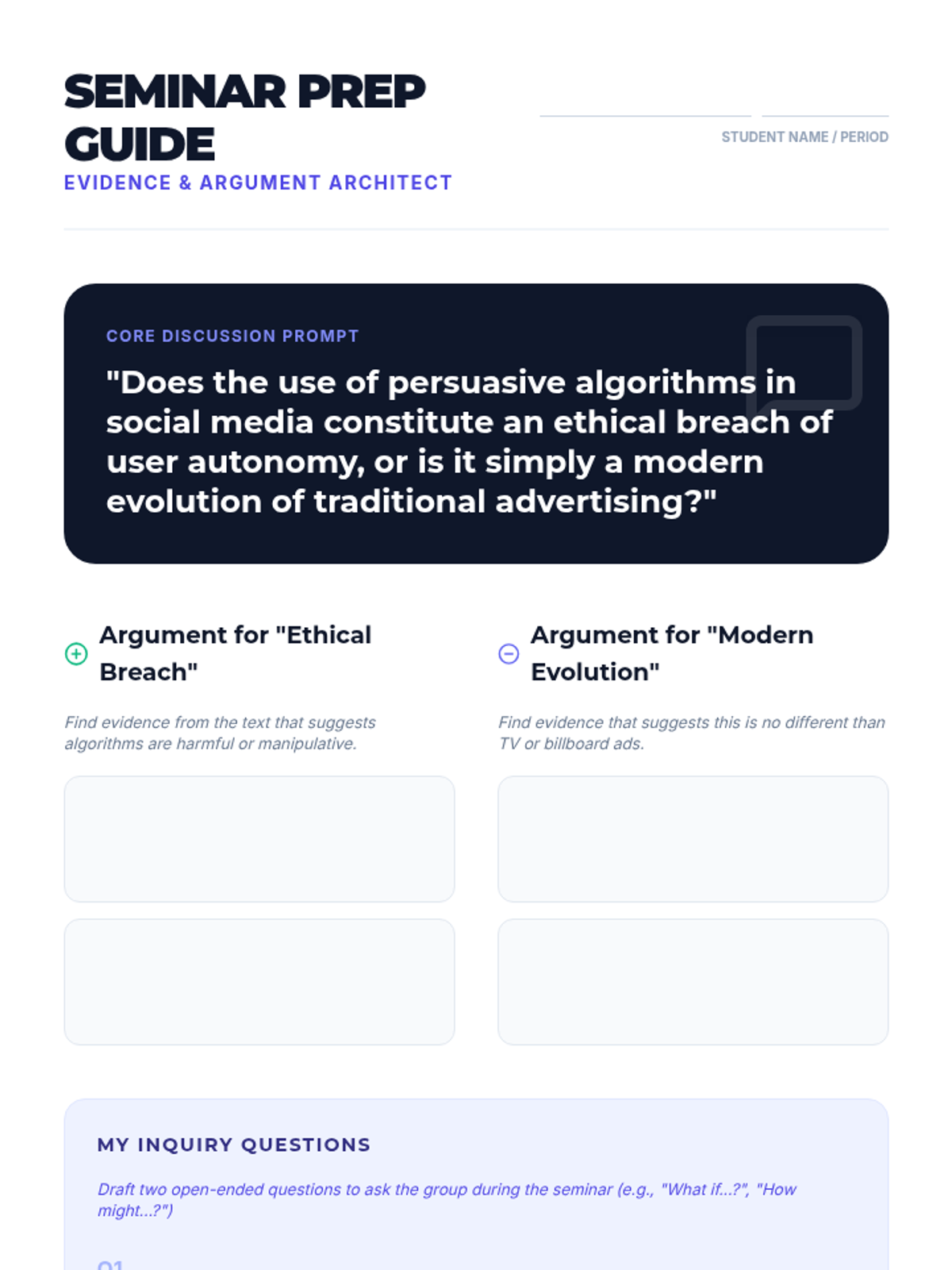
A structured preparation worksheet for students to build evidence-based arguments and draft inquiry questions for the Socratic Seminar. Features dedicated space for contrasting viewpoints and evidence from the text.
A visually striking slide deck for the first lesson of the unit, introducing persuasive digital techniques and the psychology of attention. Features high-contrast dark mode design with modern icons.
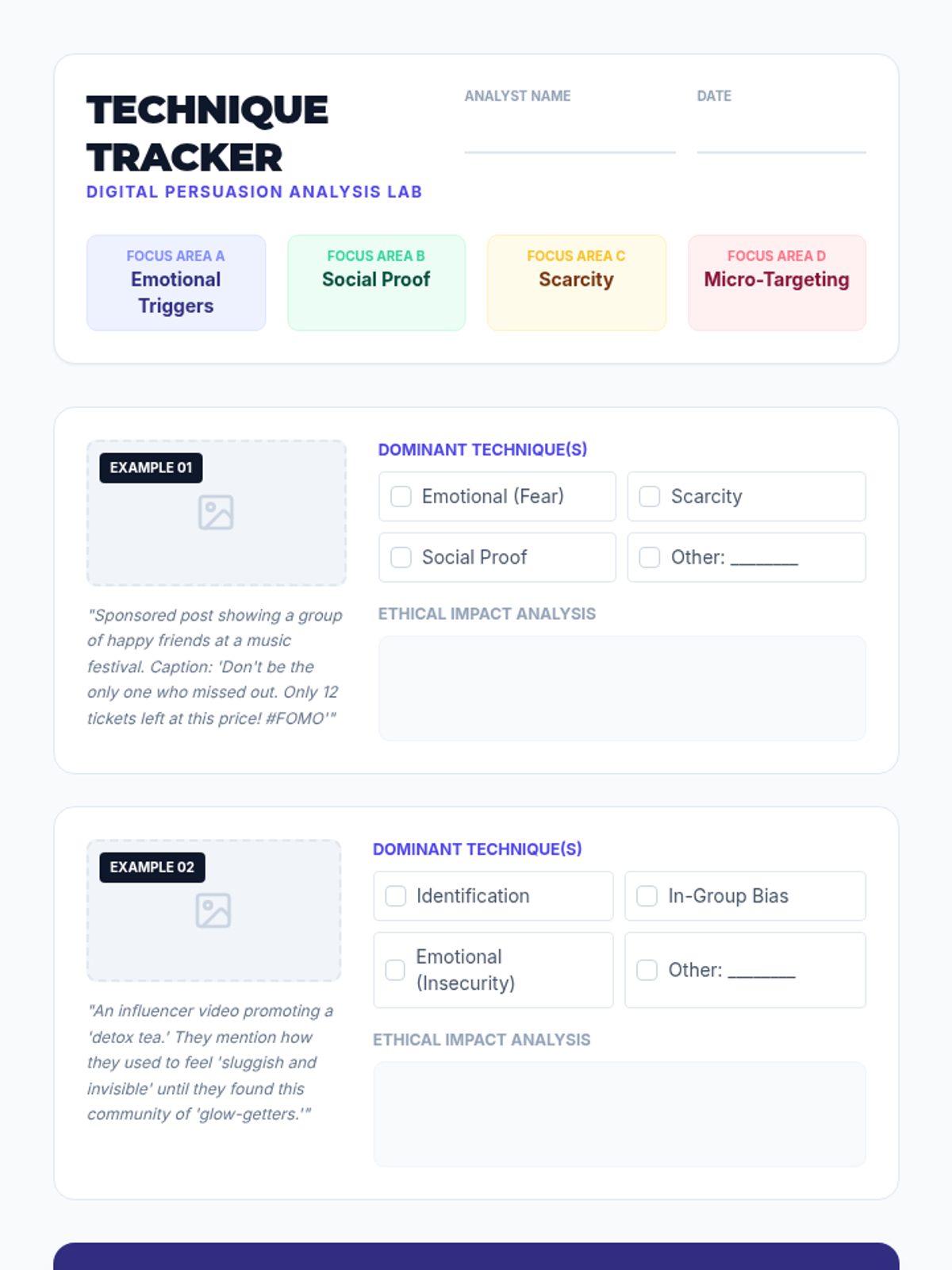
An analytical worksheet where students identify and evaluate persuasive techniques in real-world digital media examples. Features a structured analysis lab layout with specific technique checkboxes.
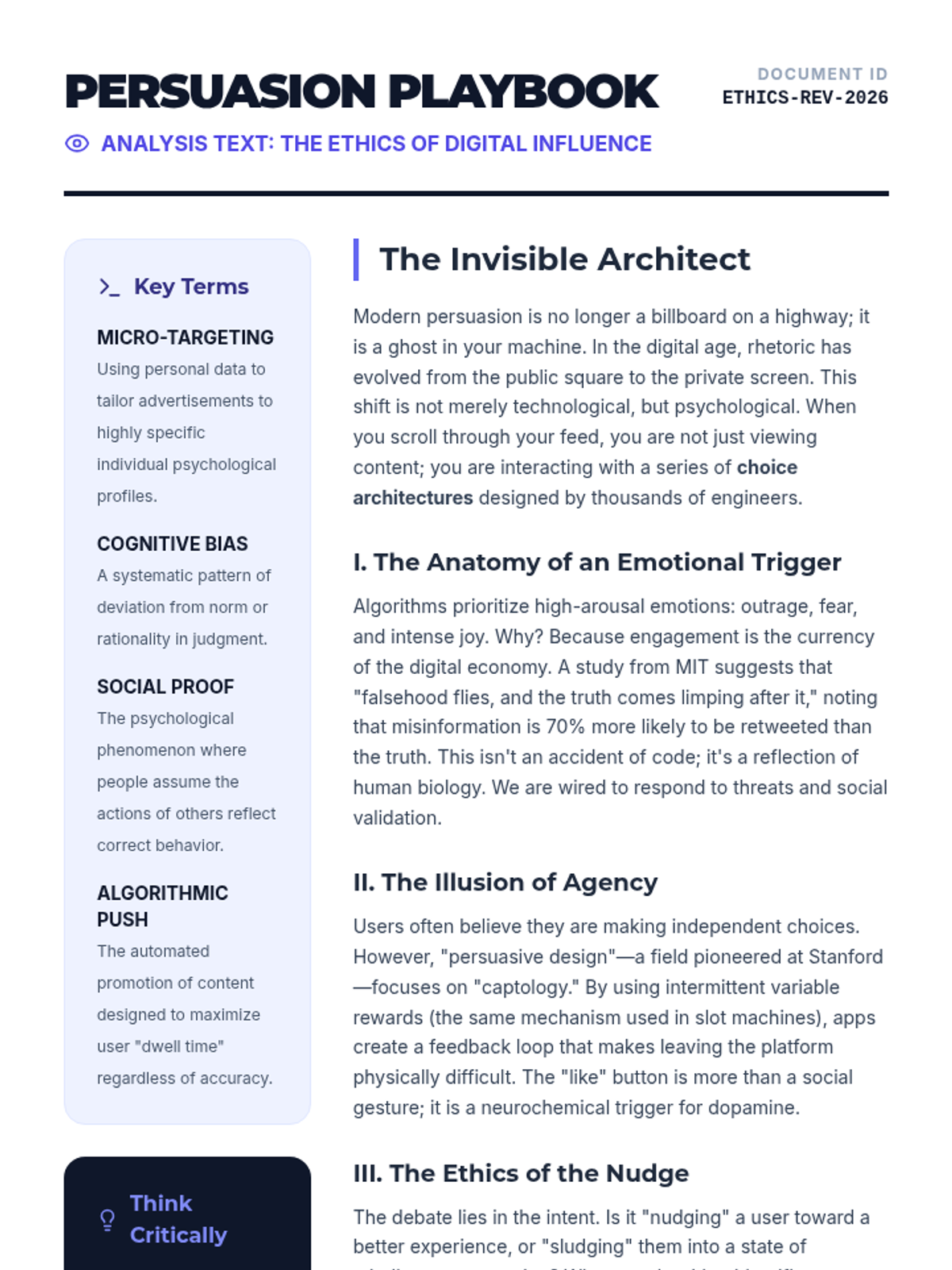
A high-interest reading passage exploring the psychology and ethics of digital persuasion, persuasive design, and algorithmic influence. Includes key vocabulary and critical thinking prompts.
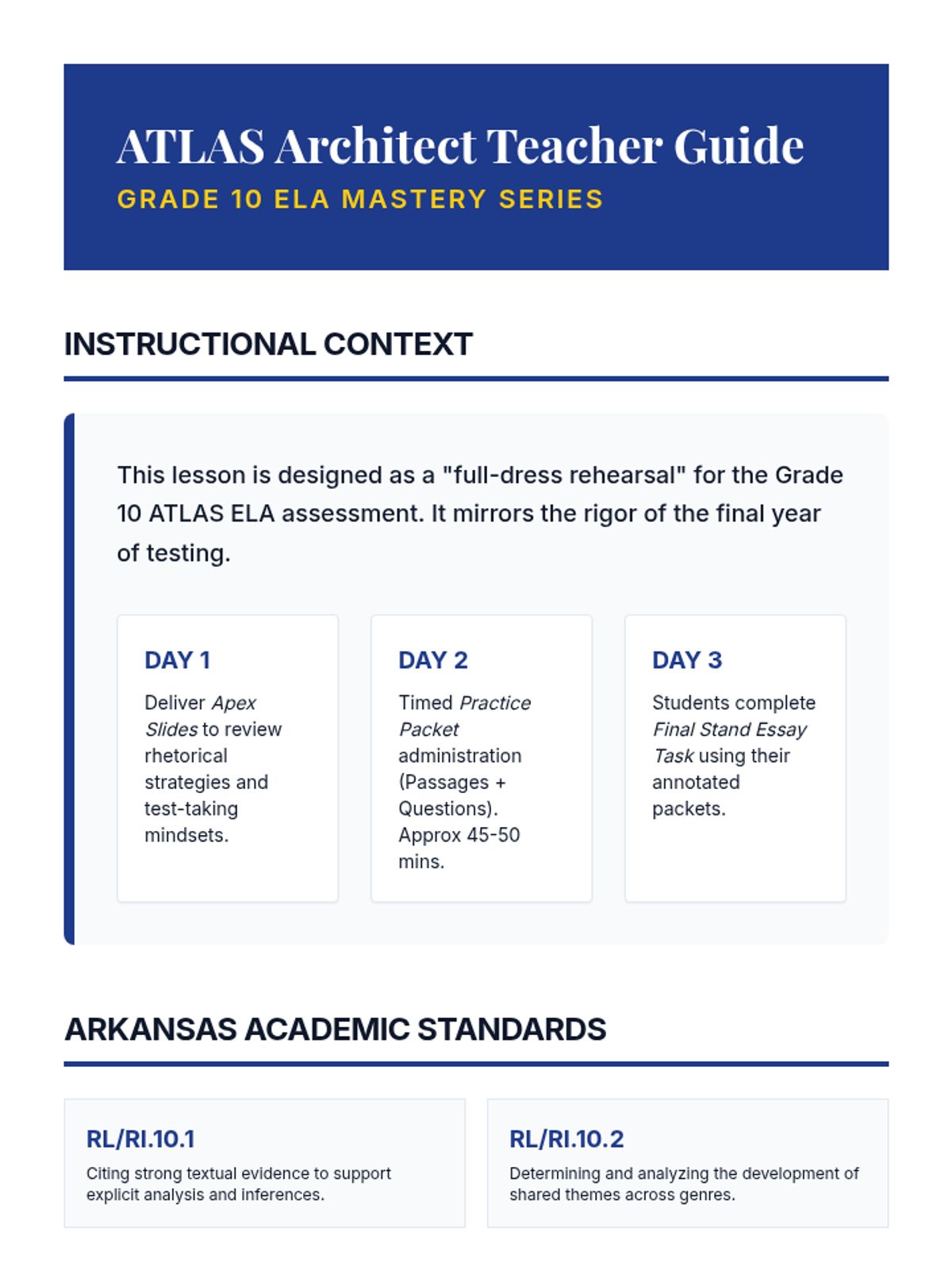
A comprehensive guide for teachers, including Arkansas Academic Standards alignment, answer keys with detailed rationales, and a scoring rubric for the constructed response questions.
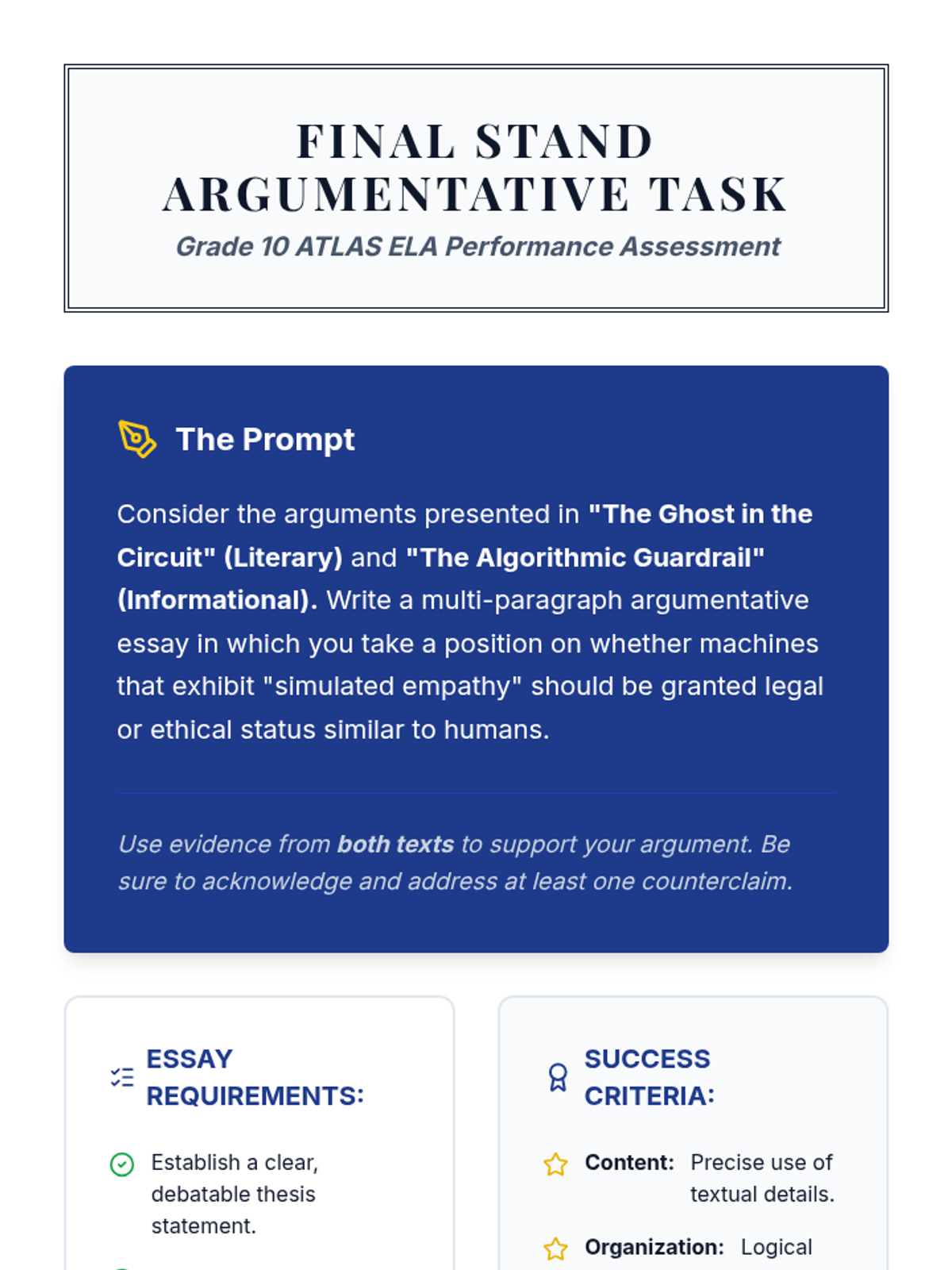
A high-stakes argumentative writing task based on the synthesis of two complex texts. This material provides clear prompts, success criteria, and planning space for an extended writing response.
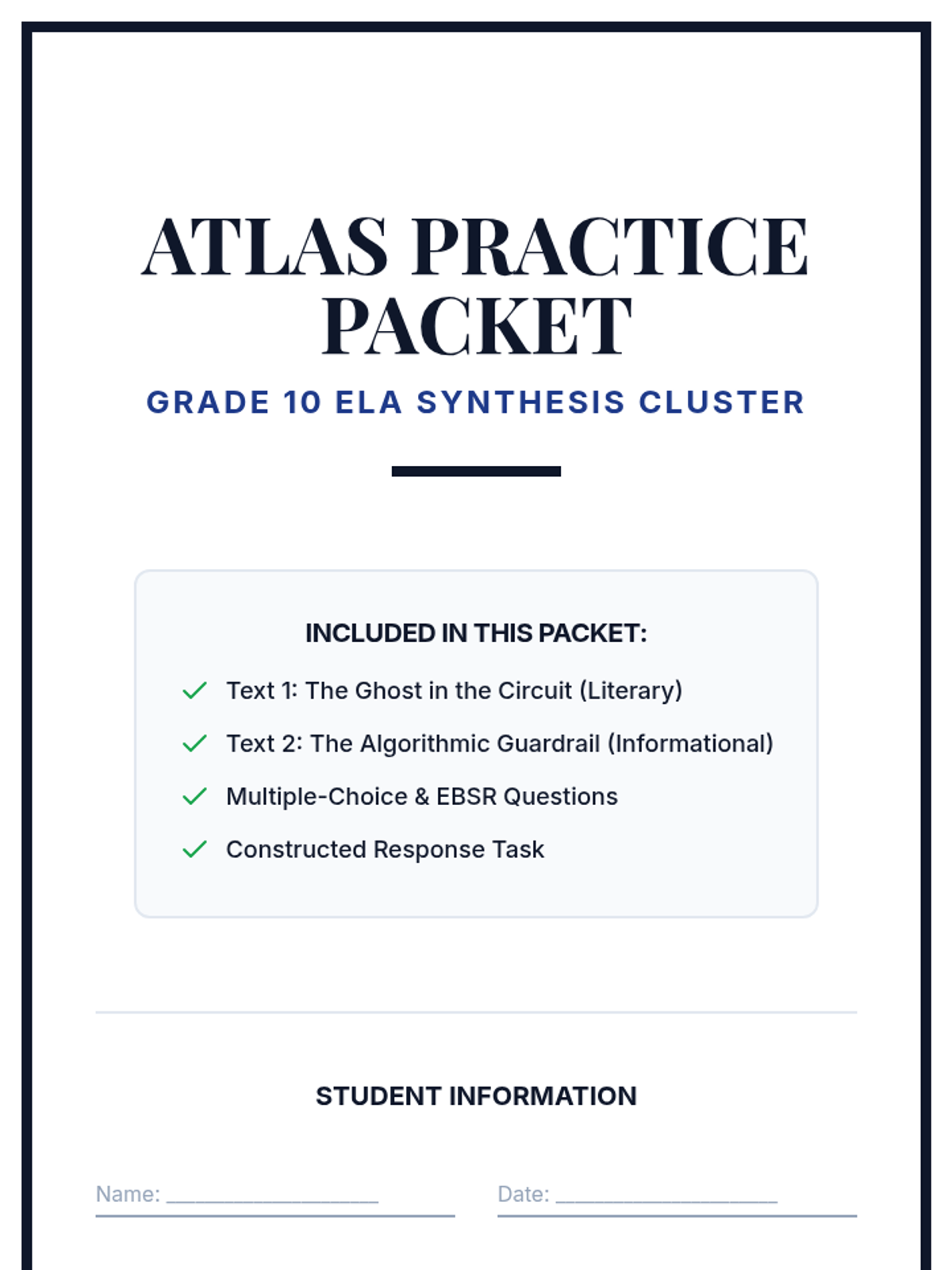
A complete ATLAS-style practice packet containing two complex texts (literary and informational), multiple-choice questions, EBSR items, and a synthesis-based constructed response task.
A visually engaging slide deck designed to prepare students for the Arkansas ATLAS ELA Grade 10 assessment. It covers test structure, rhetorical analysis, synthesis strategies, and tips for evidence-based responses.
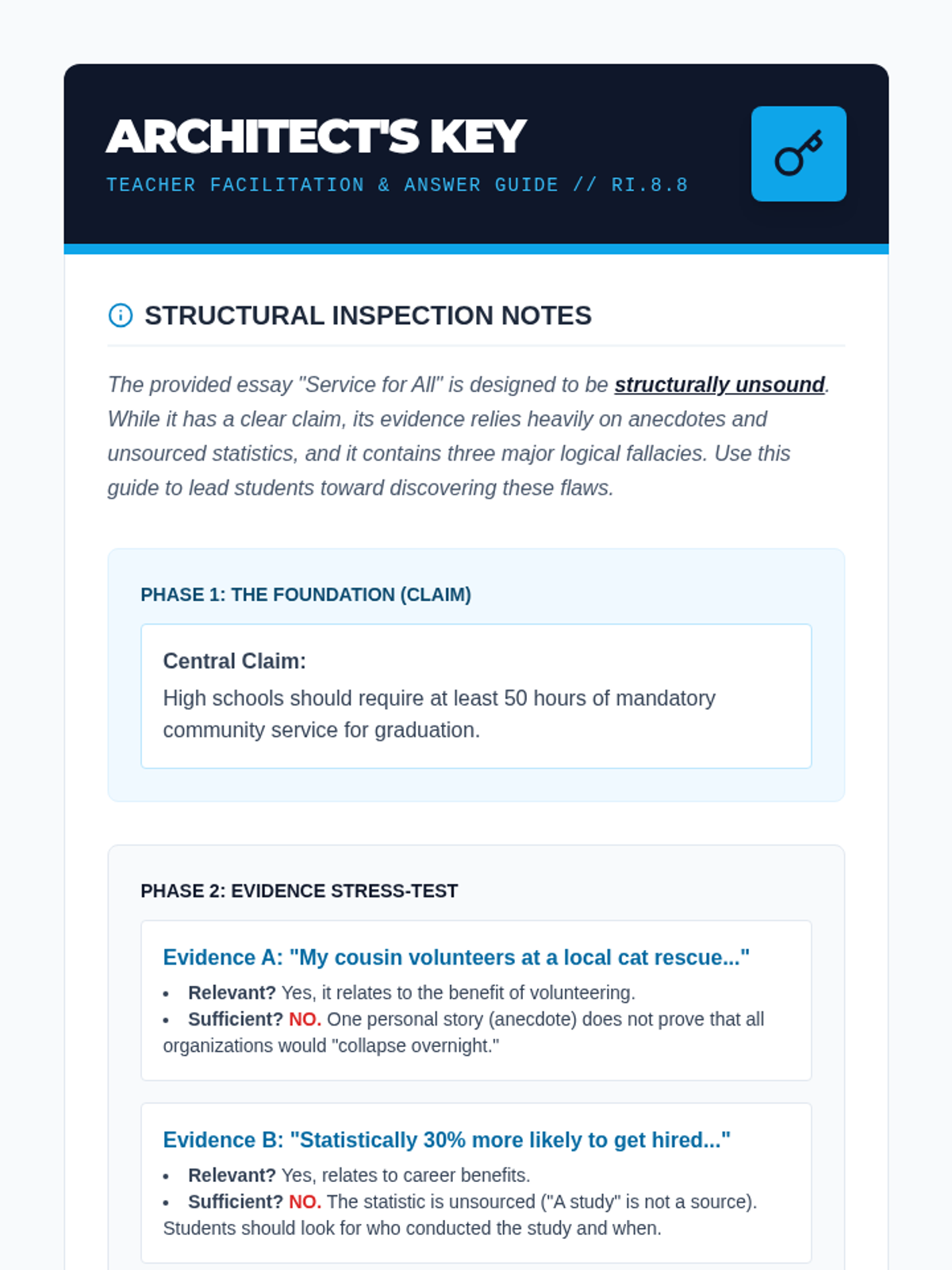
A teacher answer key and facilitation guide for the "Blueprint for Belief" worksheet, identifying central claims, assessing evidence quality, and explaining the specific logical fallacies planted in the student text.
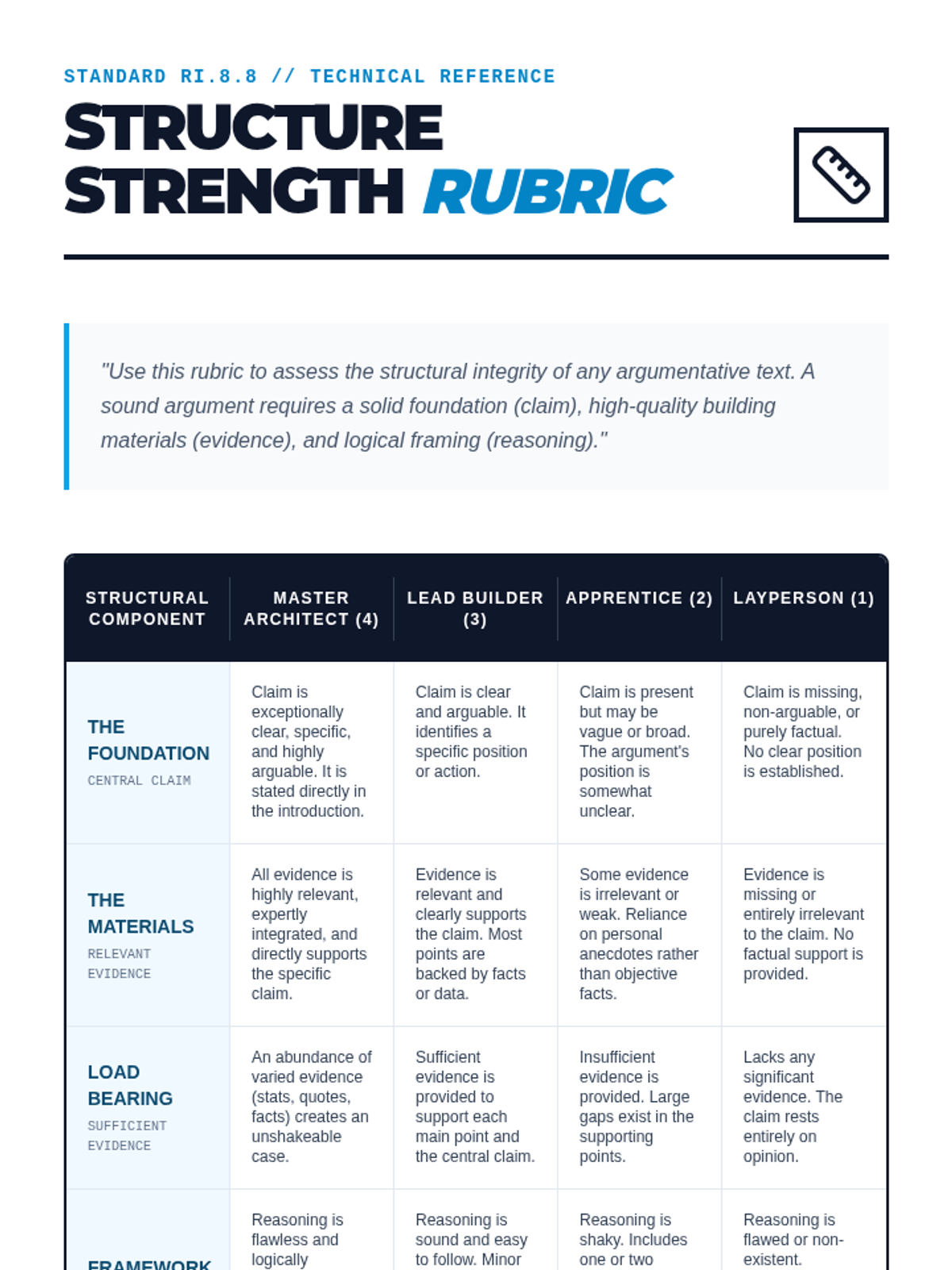
A comprehensive evaluation rubric for argumentative texts, designed with an architectural theme. Covers claim clarity, evidence relevance, sufficiency, logical reasoning, and counterargument strength.
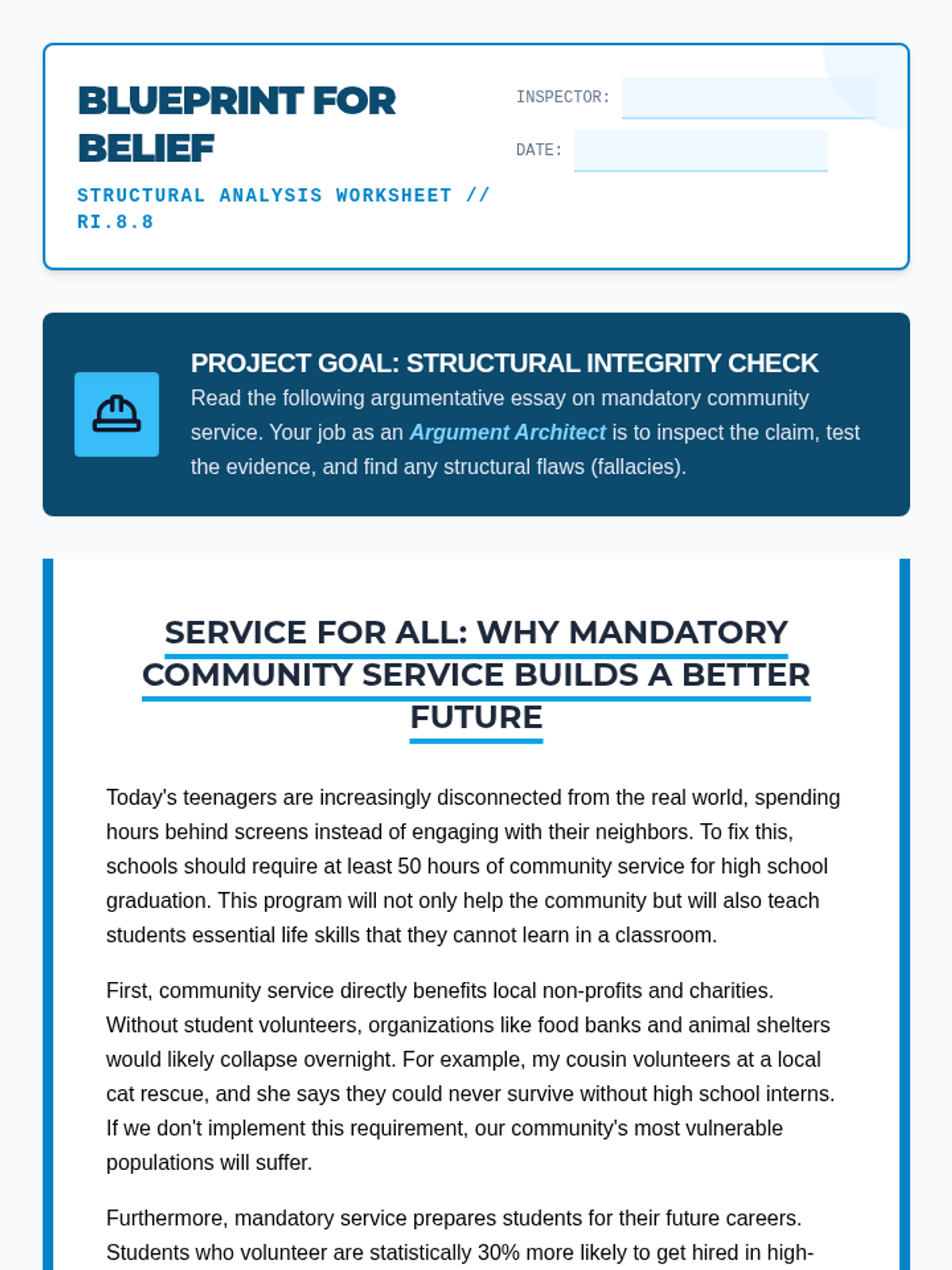
A student analysis worksheet containing an argumentative essay about mandatory community service with structured analysis tasks for claim identification, evidence evaluation, and logical fallacy detection.
A high-impact slide deck for teaching RI.8.8, focusing on argument evaluation through an architectural blueprint theme. Includes sections on claim strength, evidence assessment (Relevant/Sufficient), and logical fallacies.
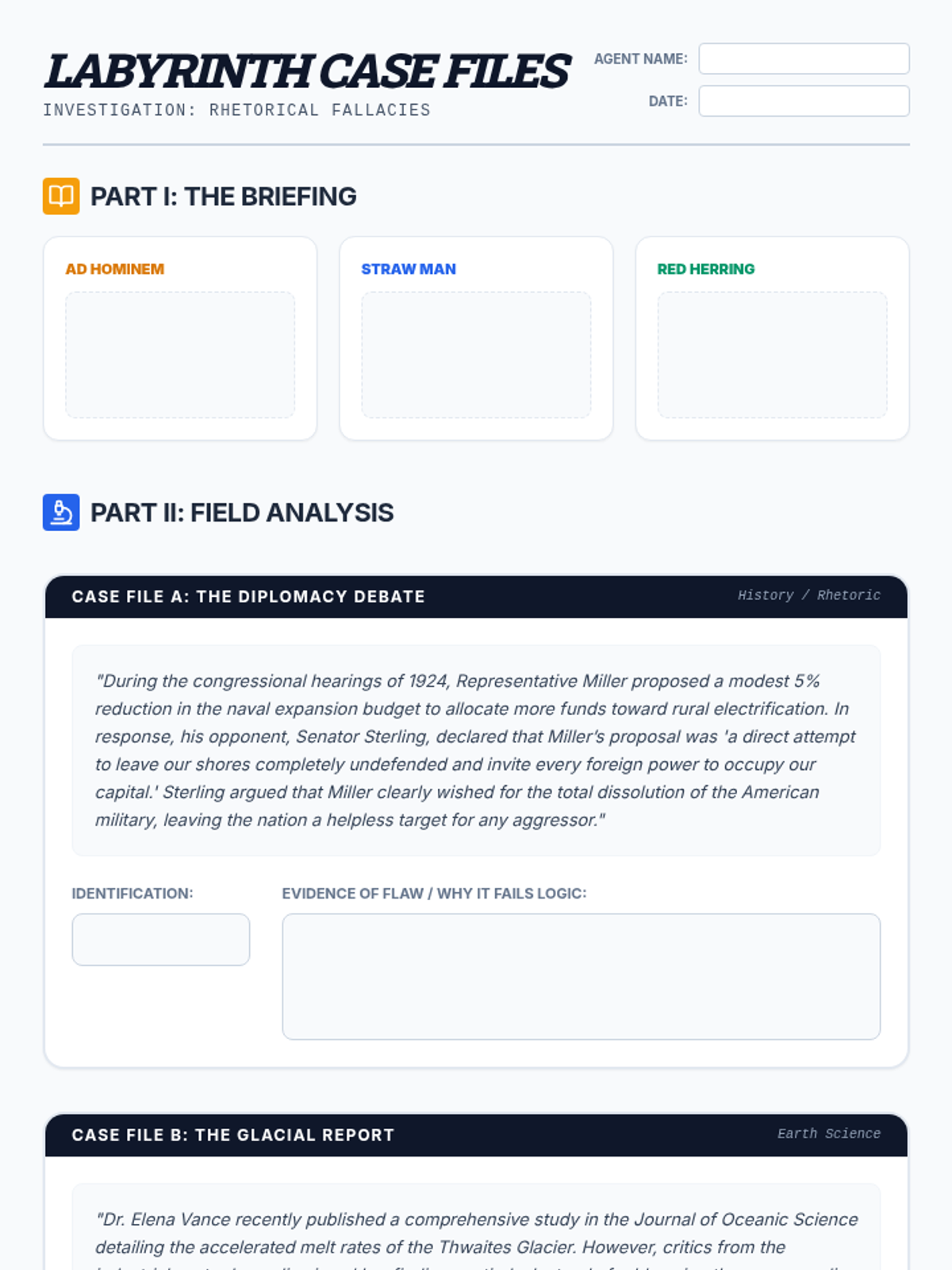
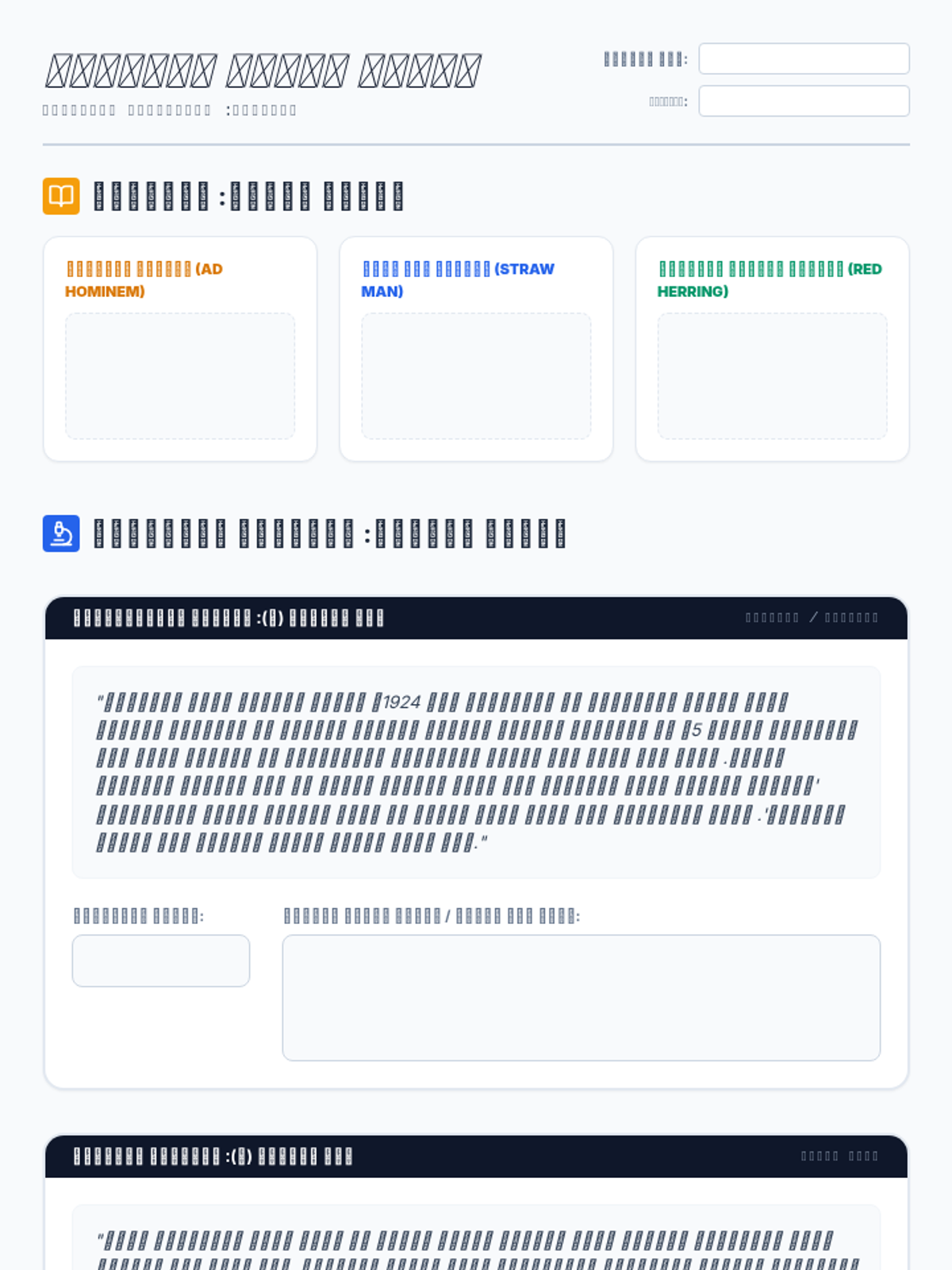
A comprehensive double-sided student handout combining the logical fallacy definitions with the four history/science case study paragraphs and significantly expanded work areas for student analysis.
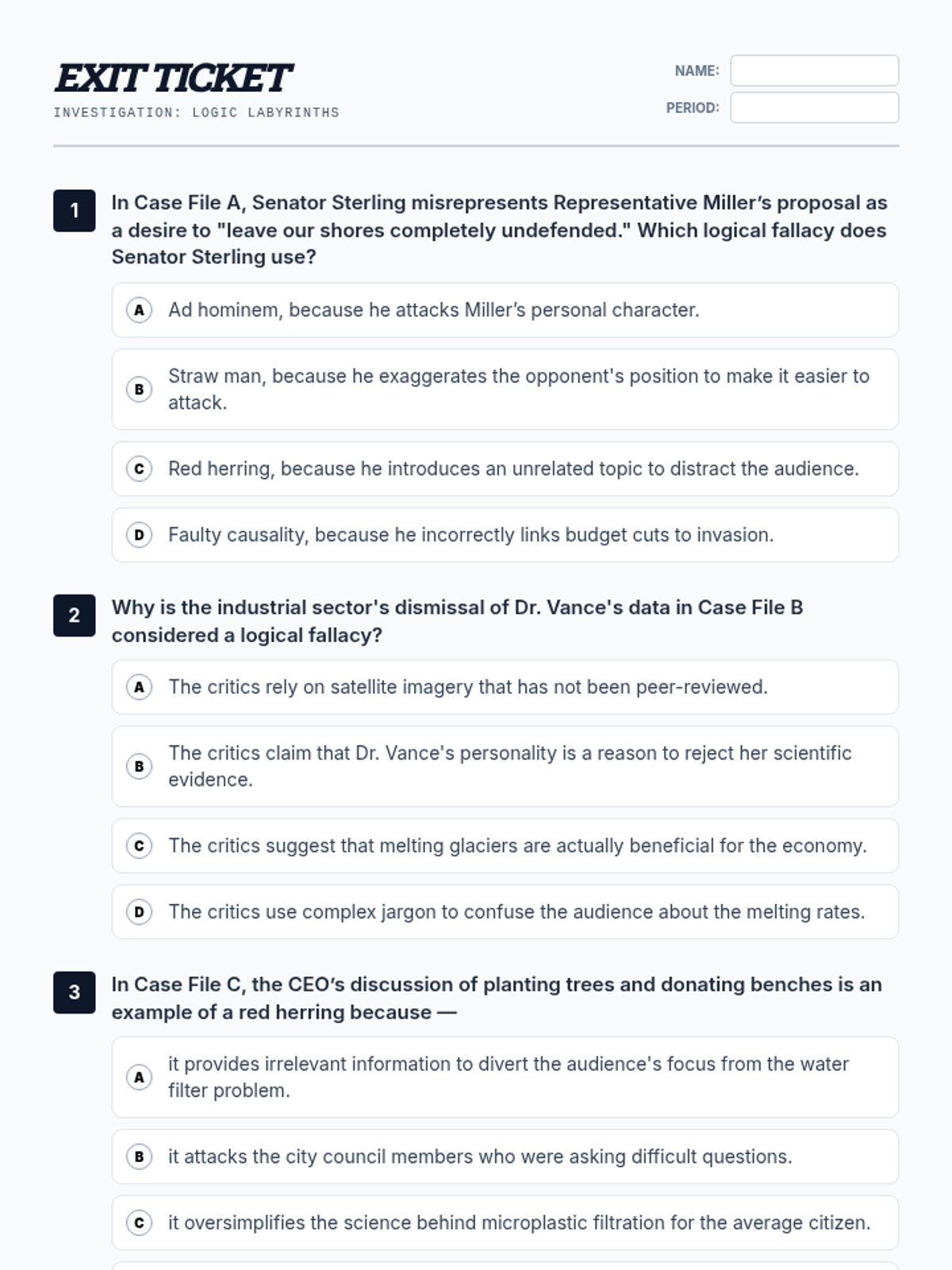
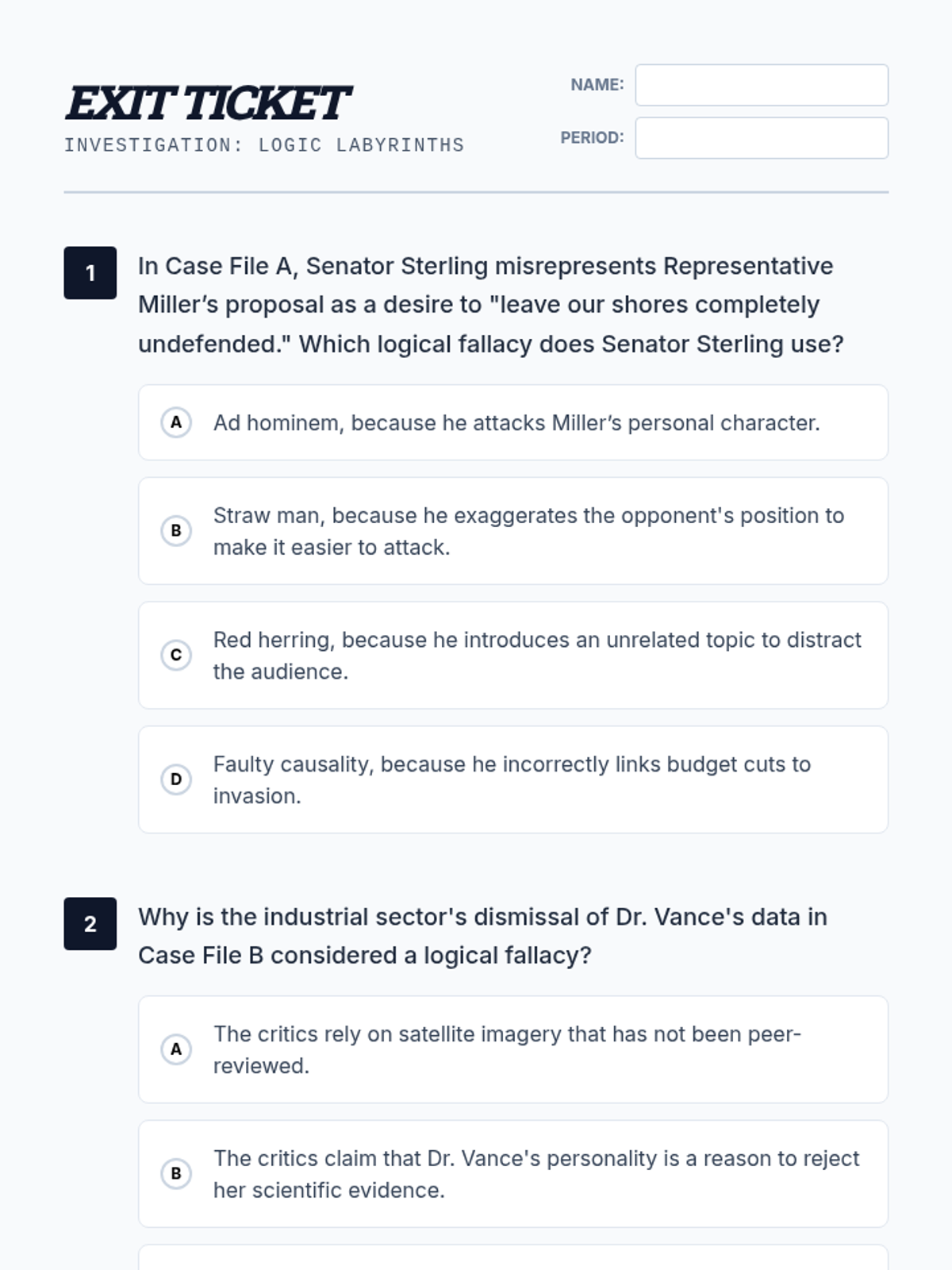
A 5-question multiple-choice assessment designed for English I students, redesigned into a concise single-page format for efficient classroom use.
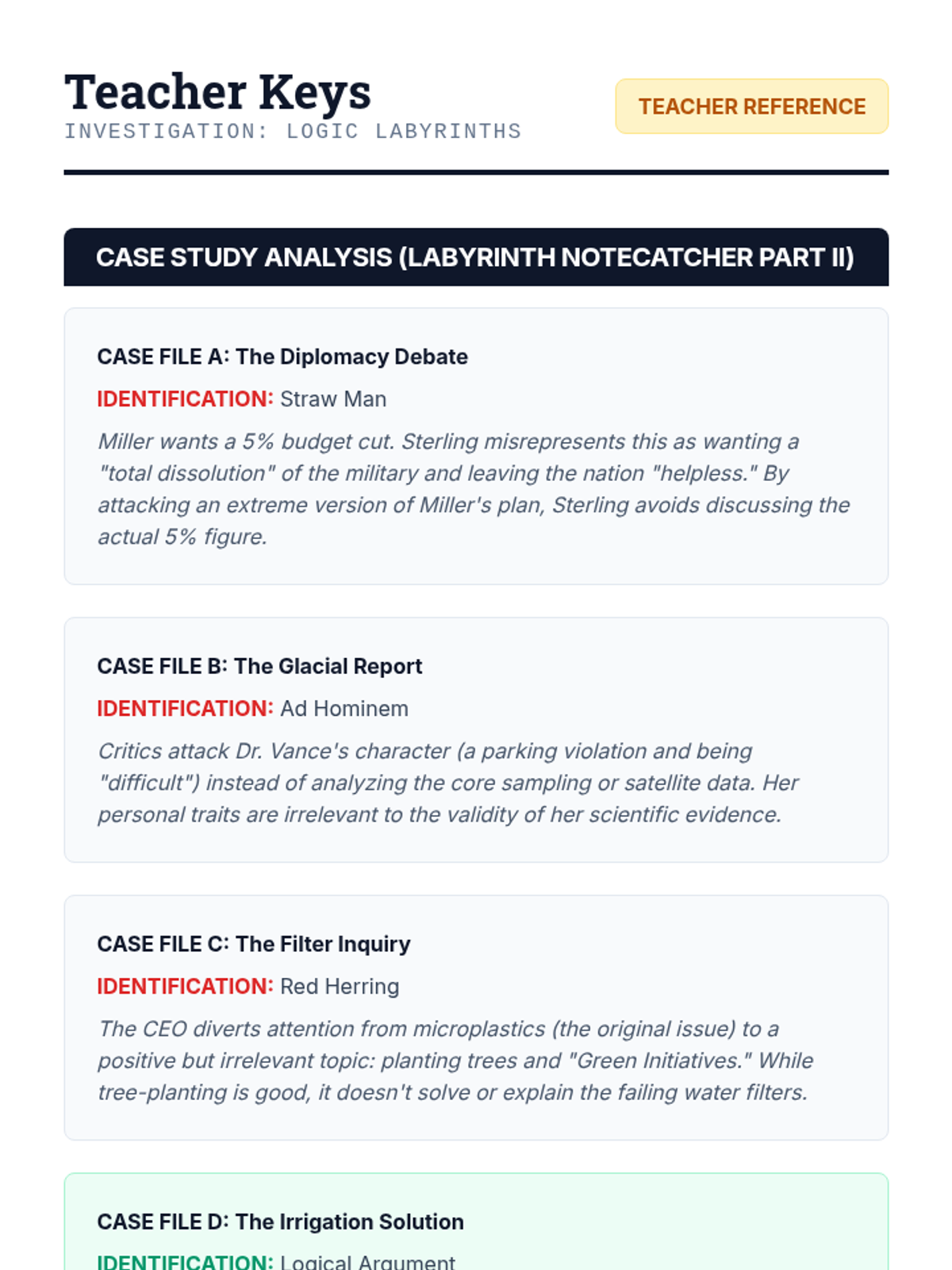
A teacher answer key providing solutions and pedagogical insights for the Logic Labyrinth case studies and exit ticket.
A 5-question multiple-choice assessment designed for English I students, aligned with STAAR-level rhetorical analysis standards and based on the historical/scientific case studies.
An updated 16:9 slide presentation introducing logical fallacies, now featuring interactive "Pair Share" slides with funny real-life examples before each definition to engage students.
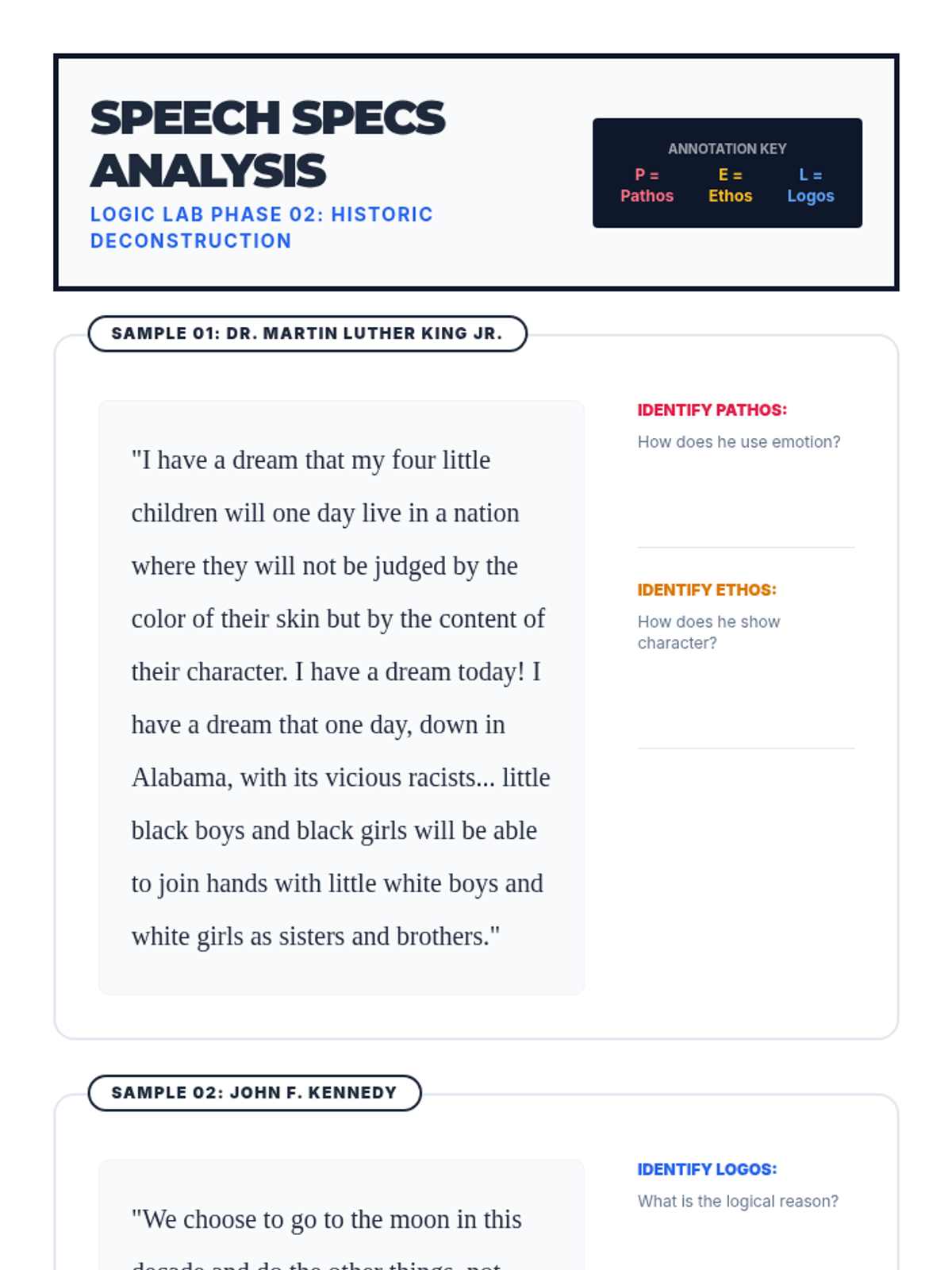
A student annotation guide featuring excerpts from historic speeches by Dr. Martin Luther King Jr. and John F. Kennedy. Designed for students to identify and analyze rhetorical appeals in a real-world, high-impact context.
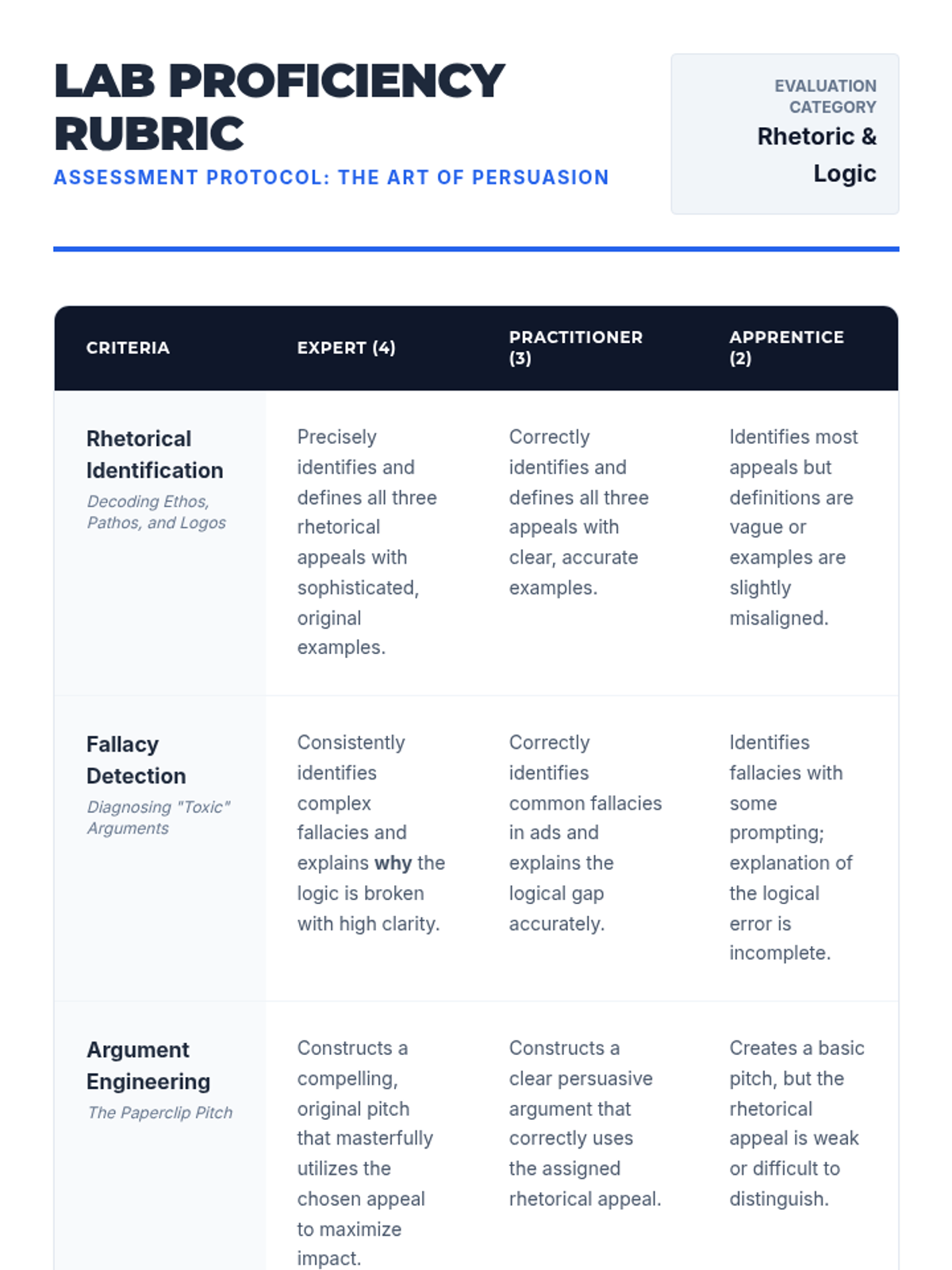
A proficiency rubric for assessing student understanding of rhetorical appeals and logical fallacies. Evaluates identification accuracy, analytical depth, and persuasive writing skills through a 'Lab Technician' thematic lens.
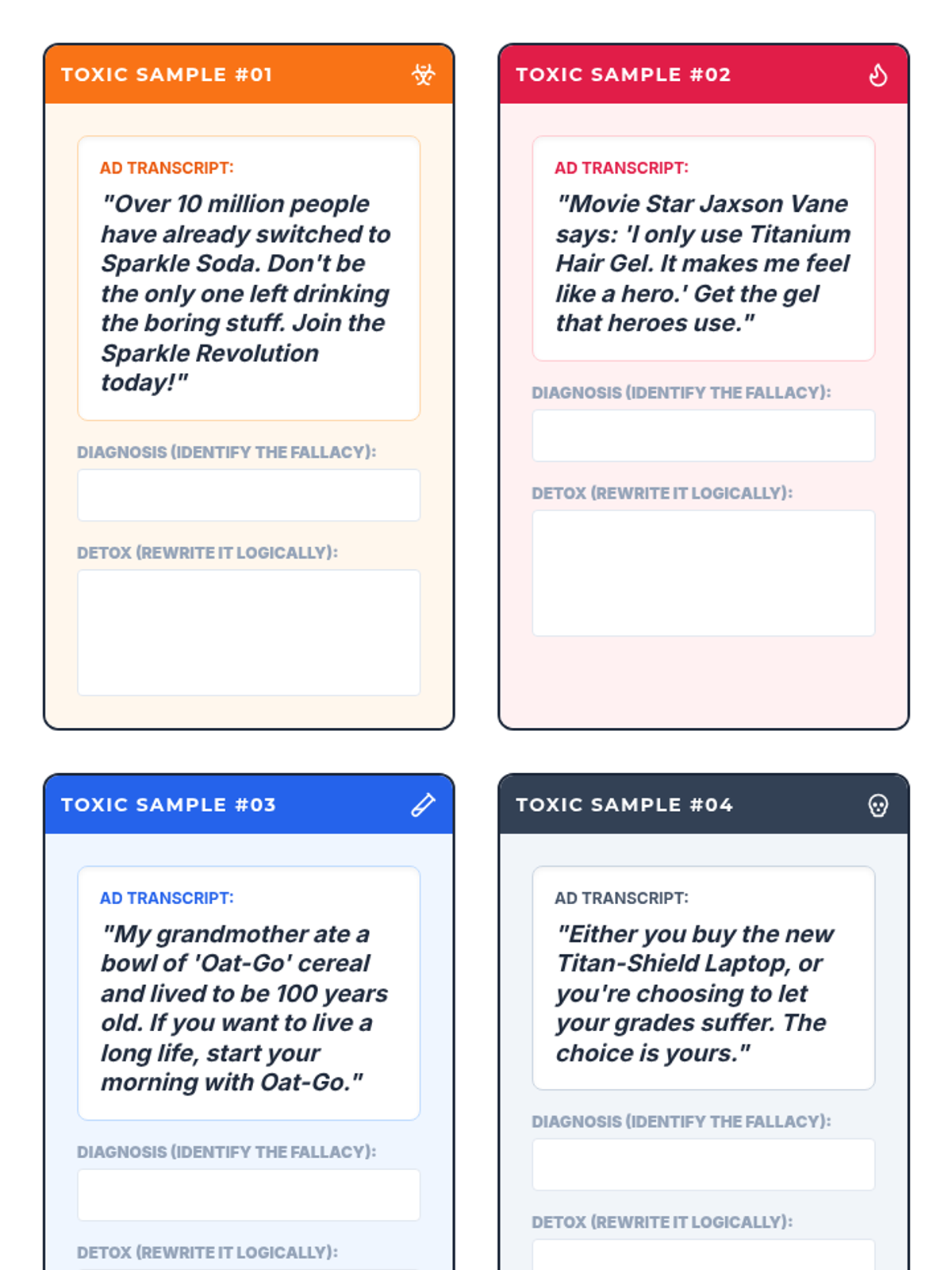
A set of activity cards for students to identify logical fallacies in 'toxic' advertisement samples and rewrite them to be logically sound. Includes a teacher answer key with detoxification paths.
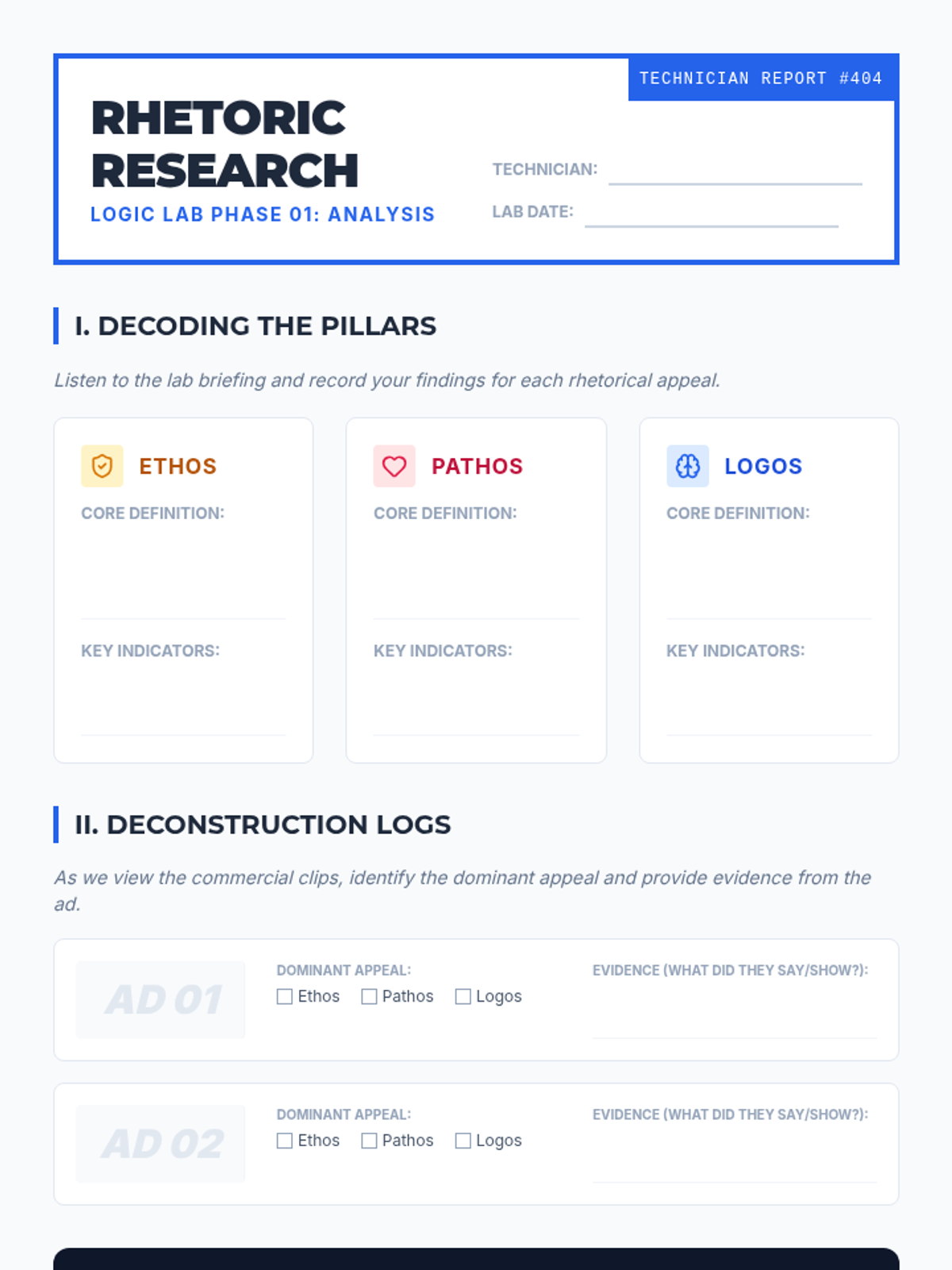
A student-facing worksheet for documenting definitions of Ethos, Pathos, and Logos during instruction and analyzing real-world advertisements. Includes a creative work area for the final 'Paperclip Pitch' challenge.
A visually striking slide deck for presenting rhetorical appeals (Ethos, Pathos, Logos) and logical fallacies. Uses a 'Logic Lab' technical theme with high-contrast colors and clear definitions for middle school students.
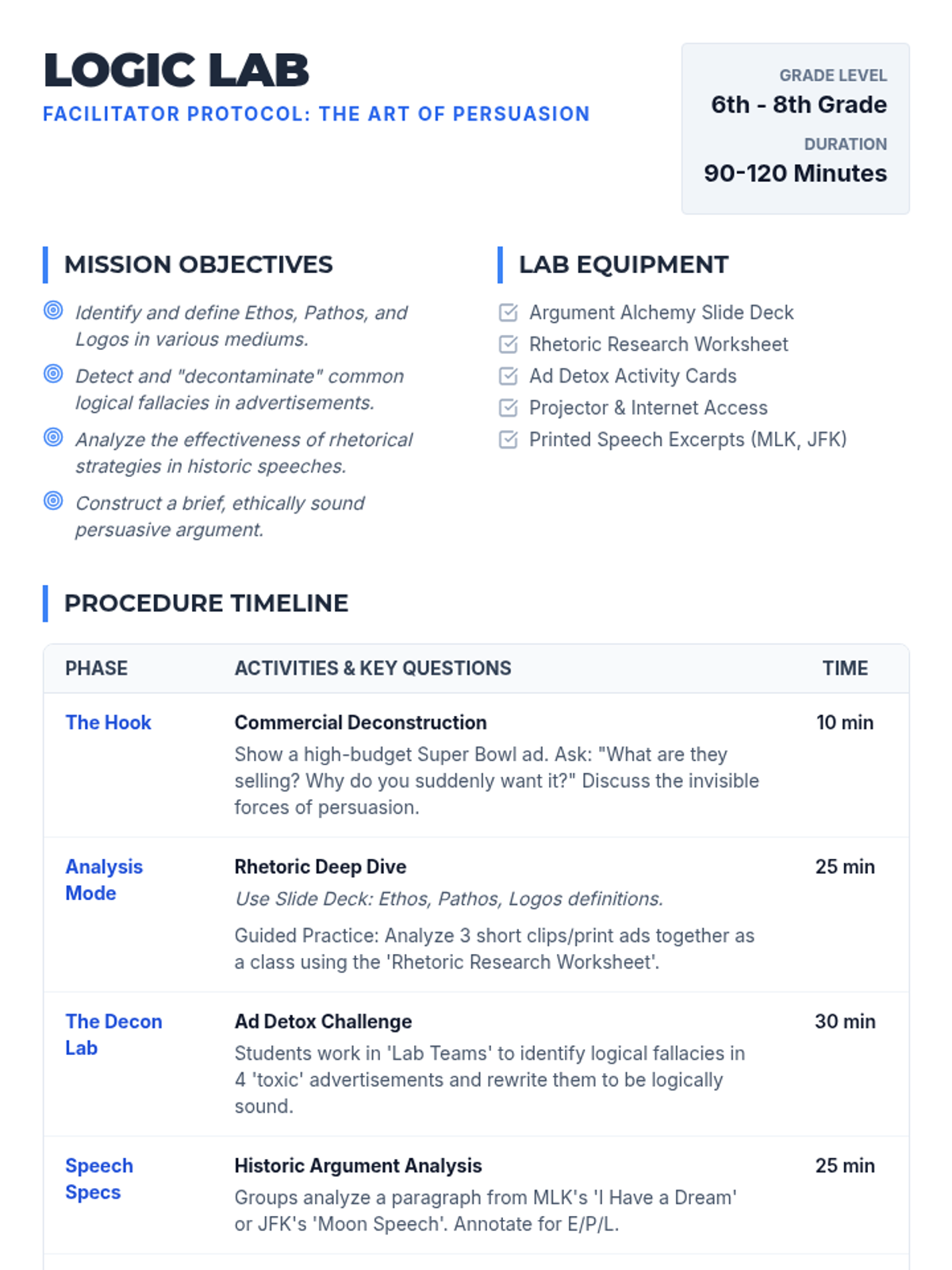
A comprehensive lesson plan for middle school teachers covering rhetorical appeals and logical fallacies. Includes a structured timeline, terminology, differentiation strategies, and discussion prompts.
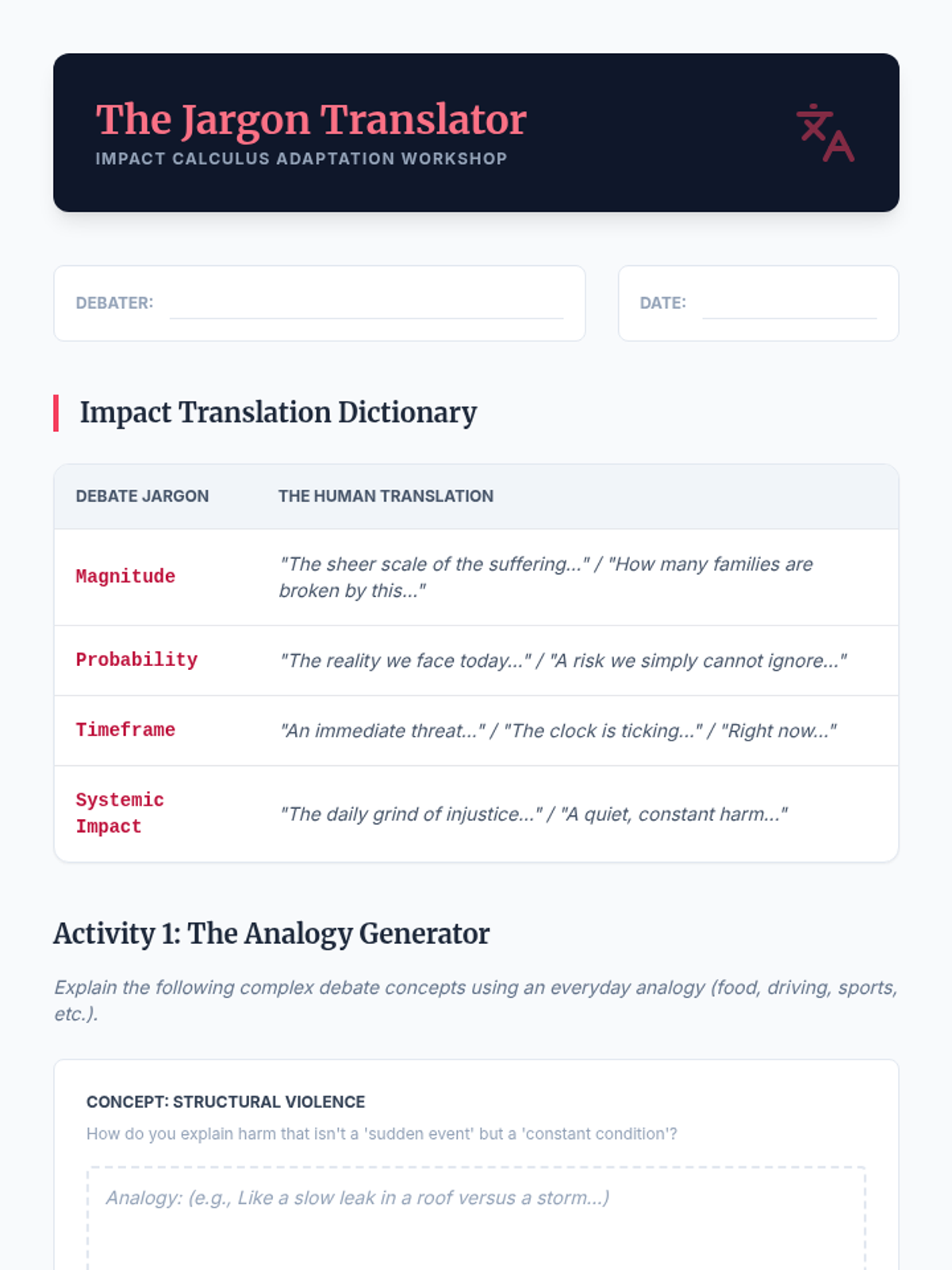
An activity worksheet for Lesson 5 where students practice translating technical debate jargon into persuasive common language and analogies.
A slide deck focused on adapting complex debate impact calculus for lay audiences, emphasizing analogies and common language.
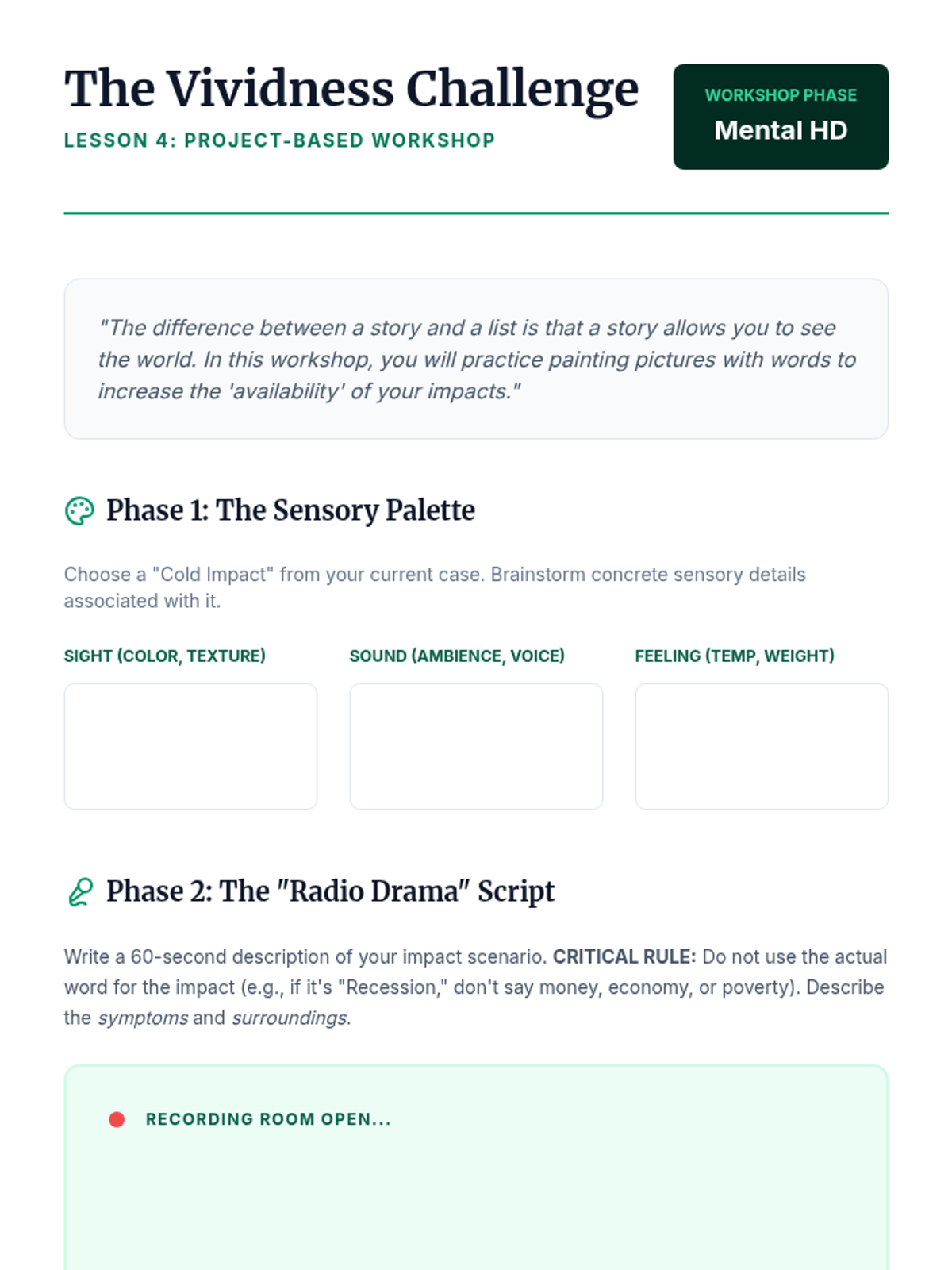
A workshop guide for Lesson 4 where students practice creating descriptive imagery to communicate complex impacts without using technical jargon.
A slide deck explaining the availability heuristic and how to use descriptive imagery to increase the perceived probability of impacts.
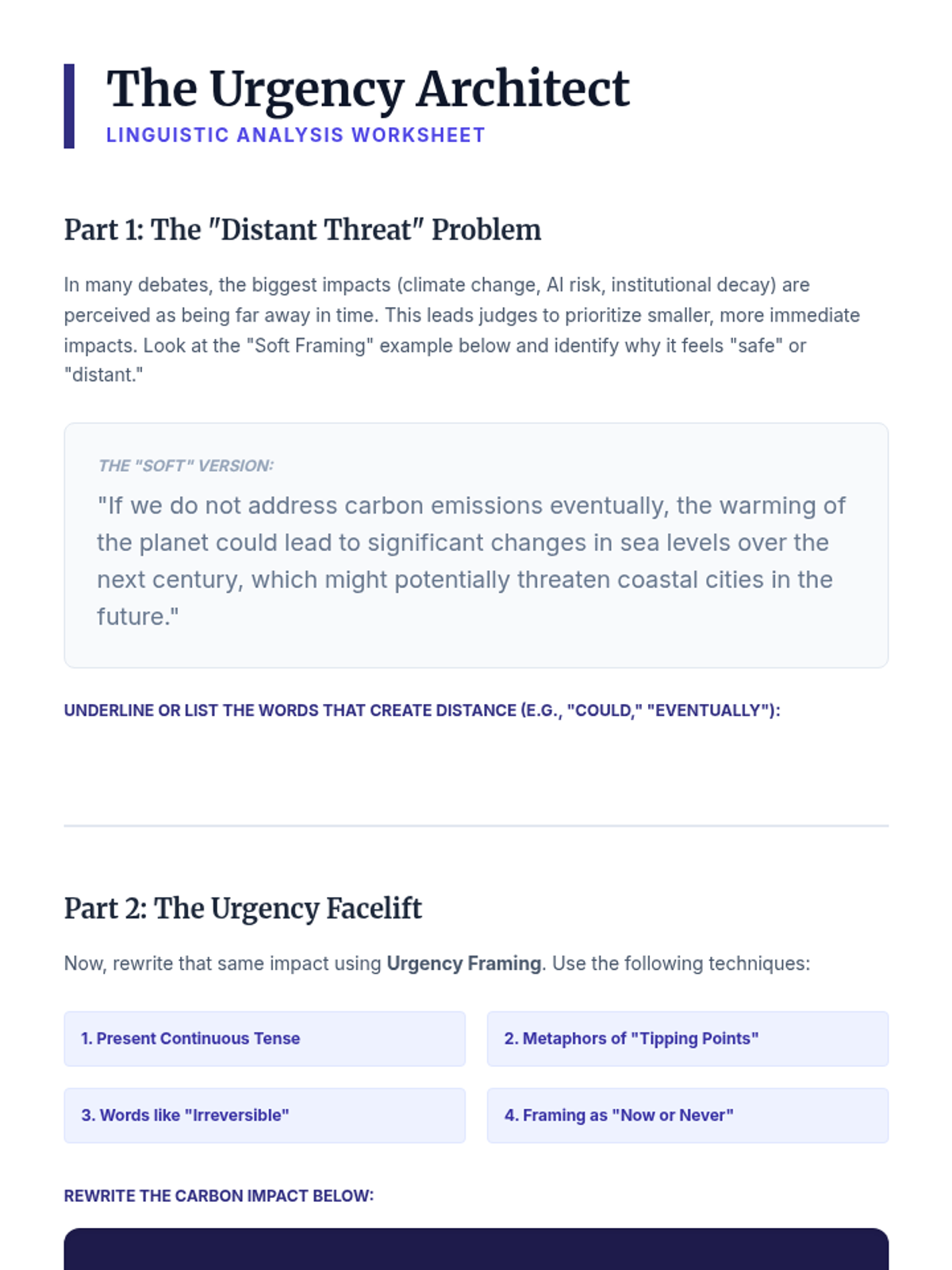
A student worksheet for Lesson 3 focusing on linguistic analysis and rewriting impact statements for maximum urgency.
A slide deck analyzing linguistic strategies for creating immediacy and urgency in impact calculus presentations.
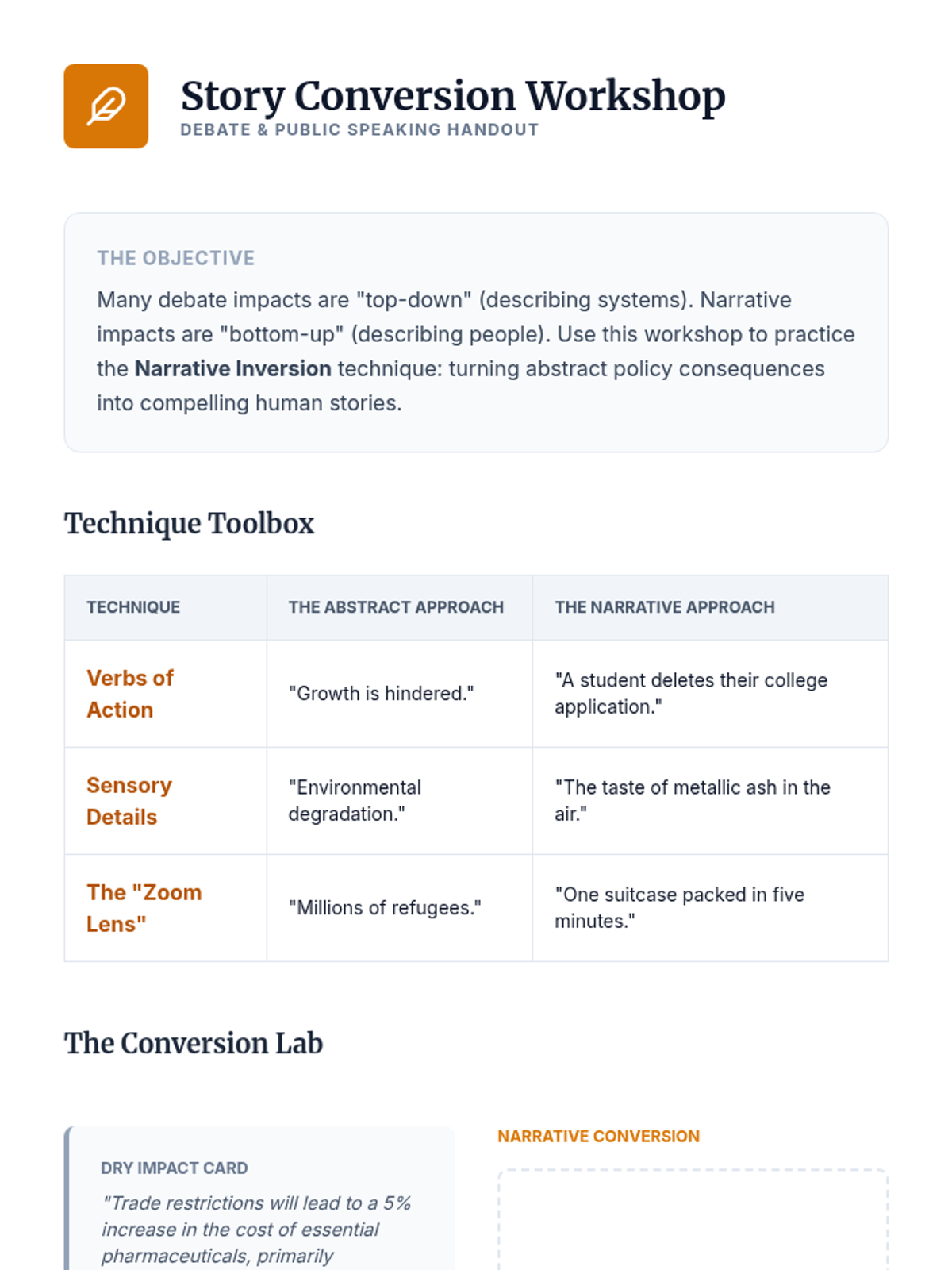
A skill-building handout for Lesson 2 that guides students through the process of converting abstract data into narrative-driven impacts.
A slide deck comparing narrative and statistical persuasion styles in debate, with strategies for converting data into stories.
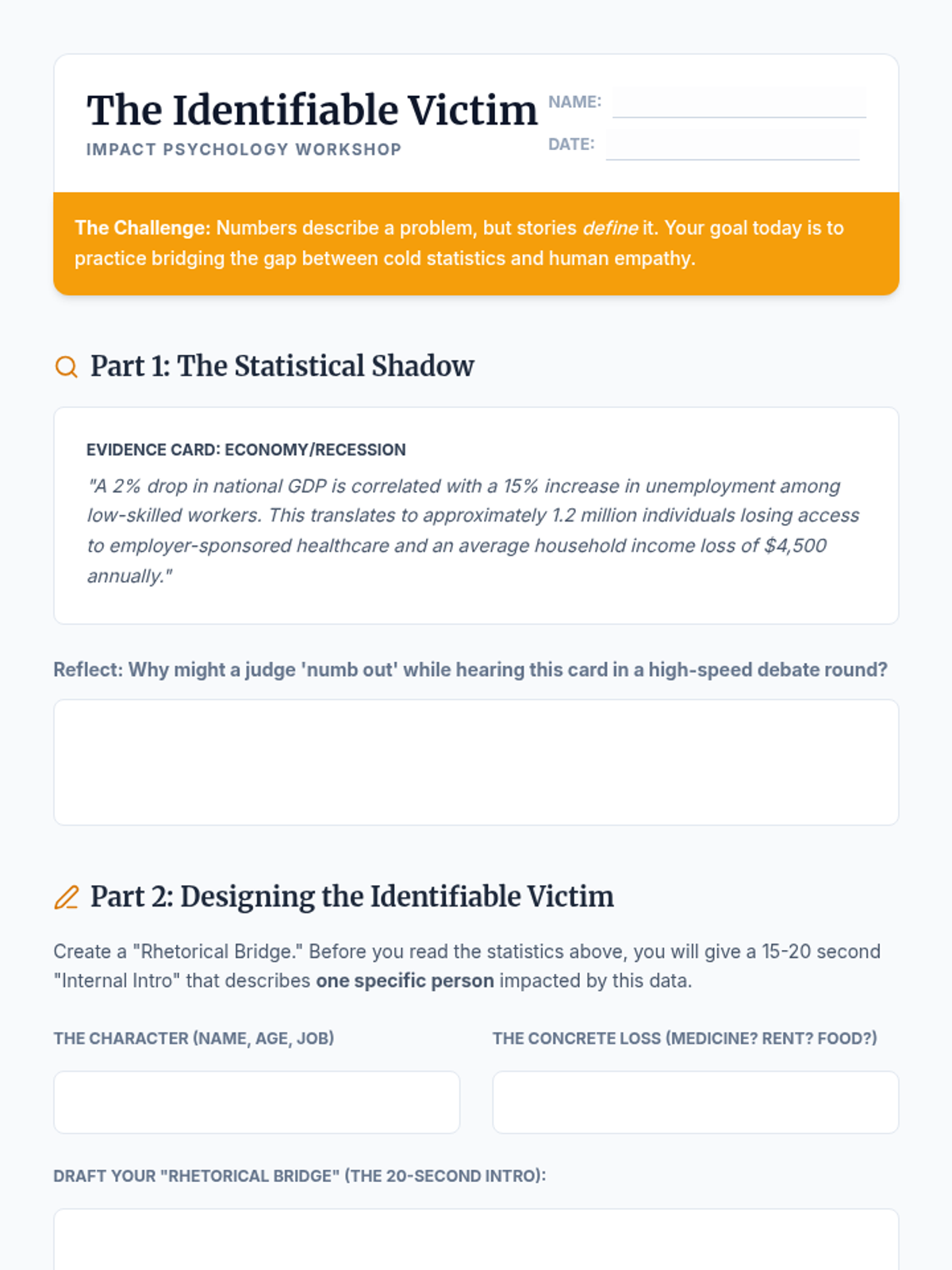
A student worksheet focusing on the 'Identifiable Victim Effect,' guiding students to humanize statistical evidence.
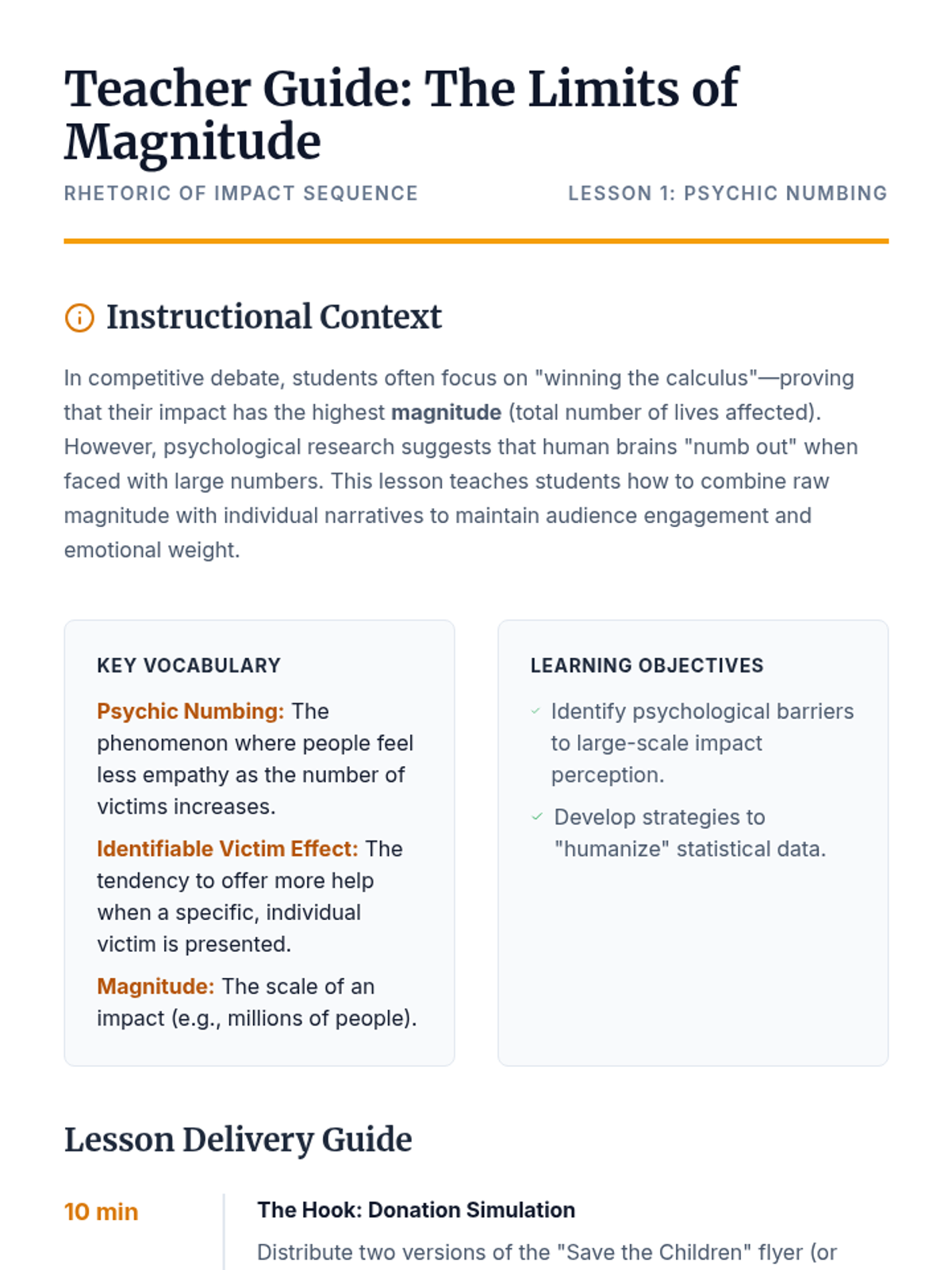
Teacher instructional guide for Lesson 1, detailing the psychology of psychic numbing and strategies for teaching impact humanization.
A visual presentation exploring psychic numbing and the 'identifiable victim effect' in the context of impact calculus.
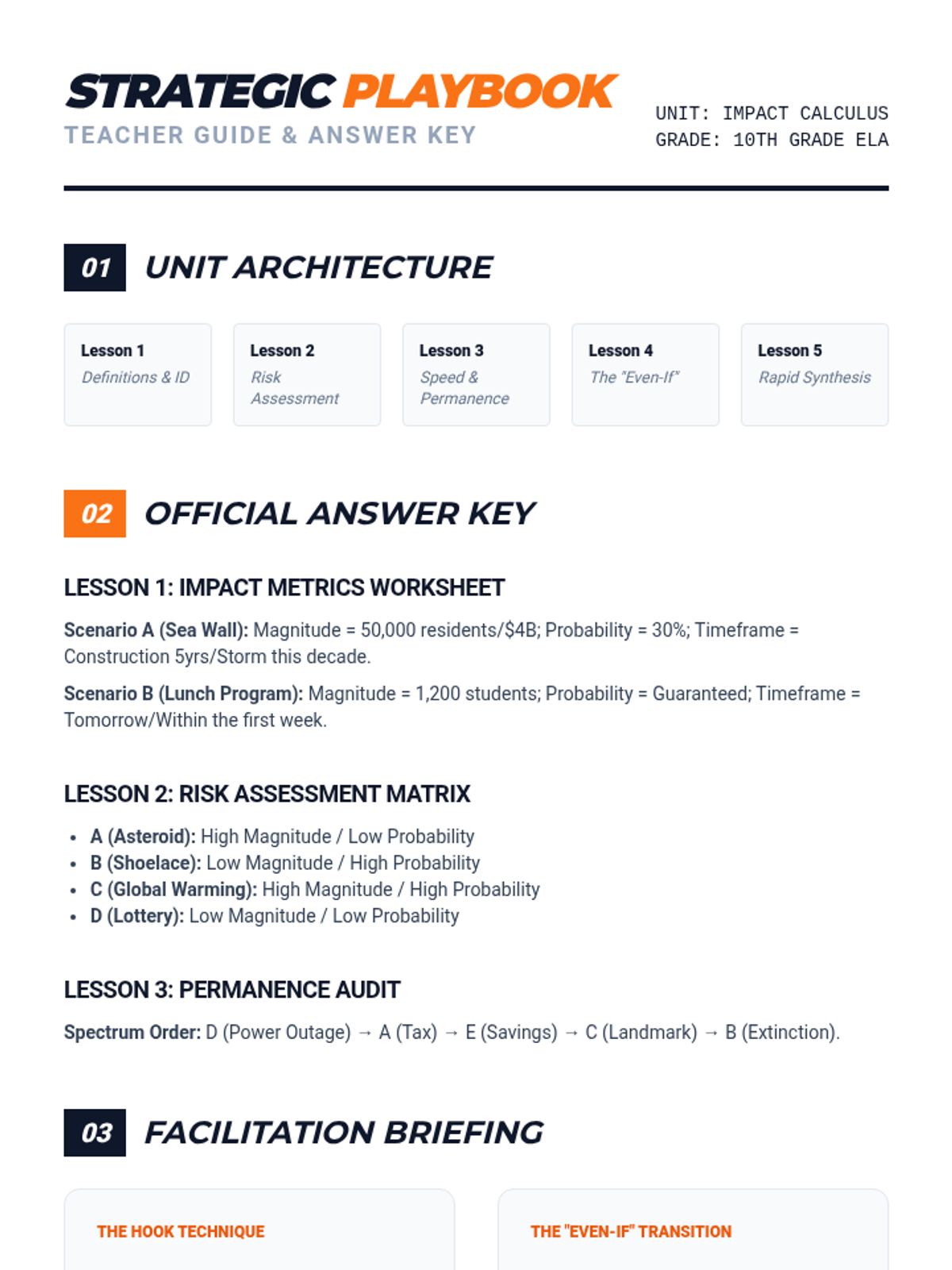
A comprehensive teacher guide for the Impact Calculus unit, including answer keys for all worksheets, facilitation tips, and a scoring rubric for the final drill.
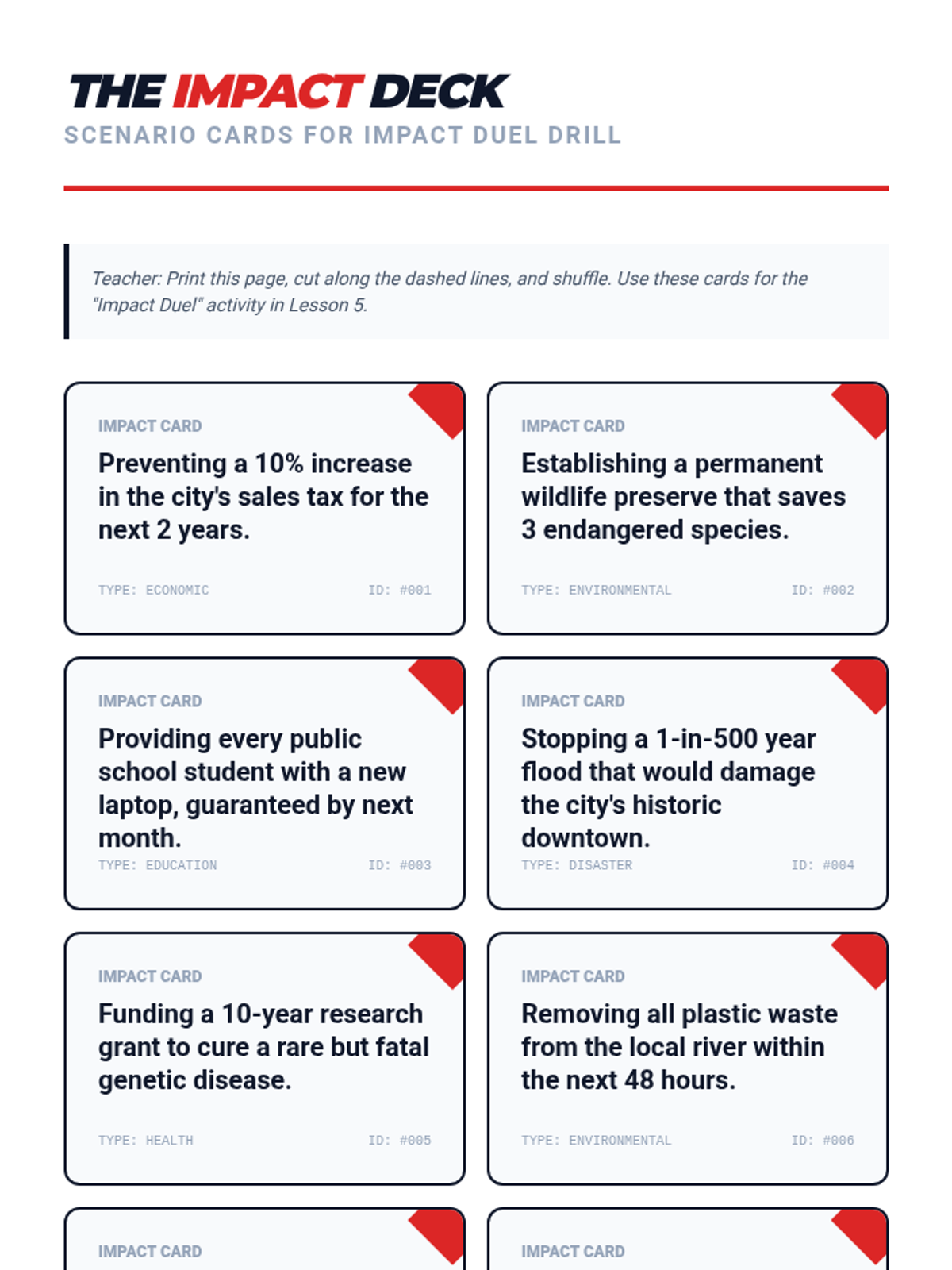
Printable scenario cards for the Lesson 5 'Impact Duel' activity, featuring various impacts for students to weigh against one another.
Slide deck for Lesson 5 providing instructions and structures for the rapid-fire Impact Duel drill session.
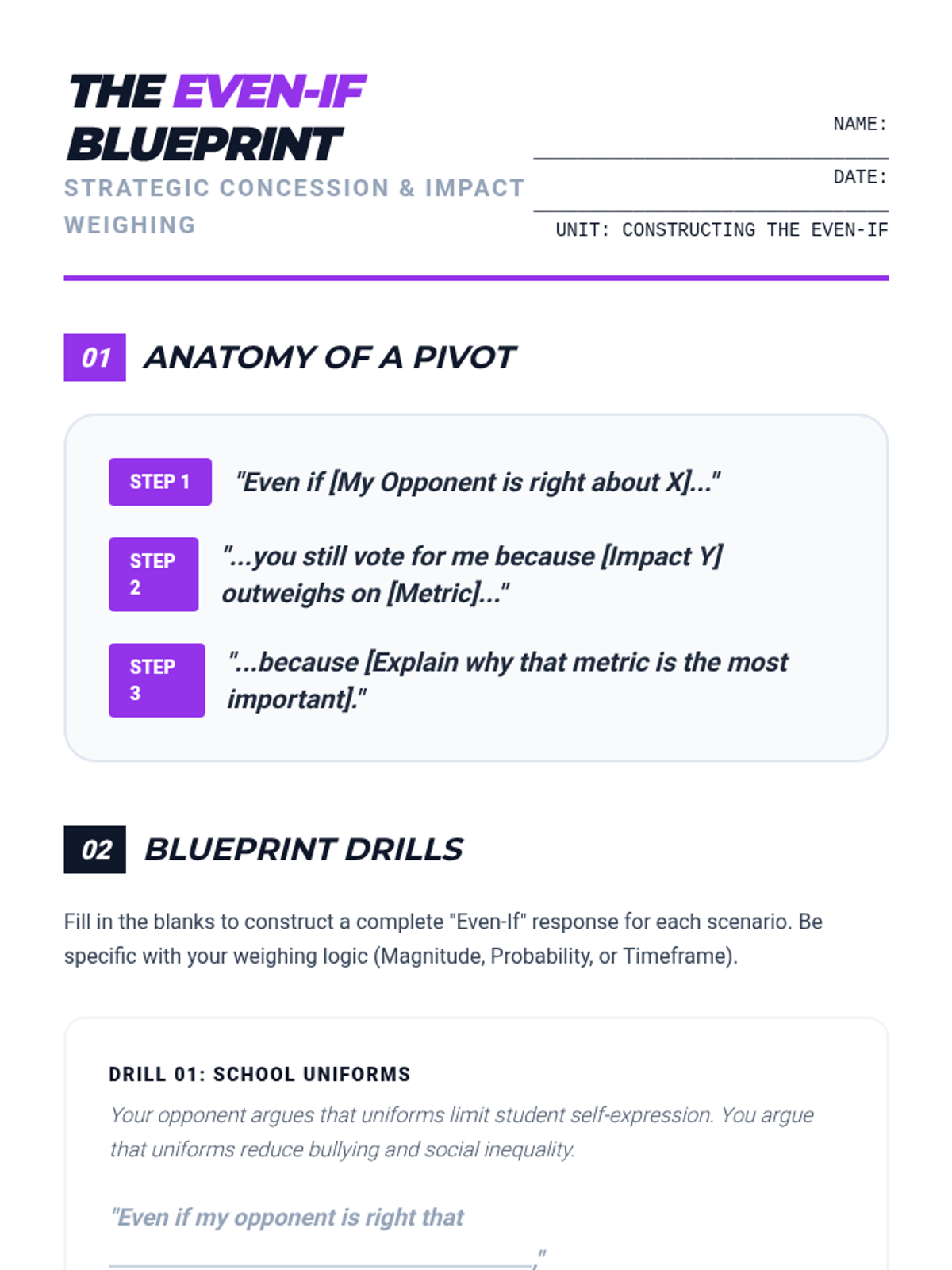
A strategic blueprint worksheet where students practice constructing 'Even-If' arguments by accepting opponent premises and weighing impacts.
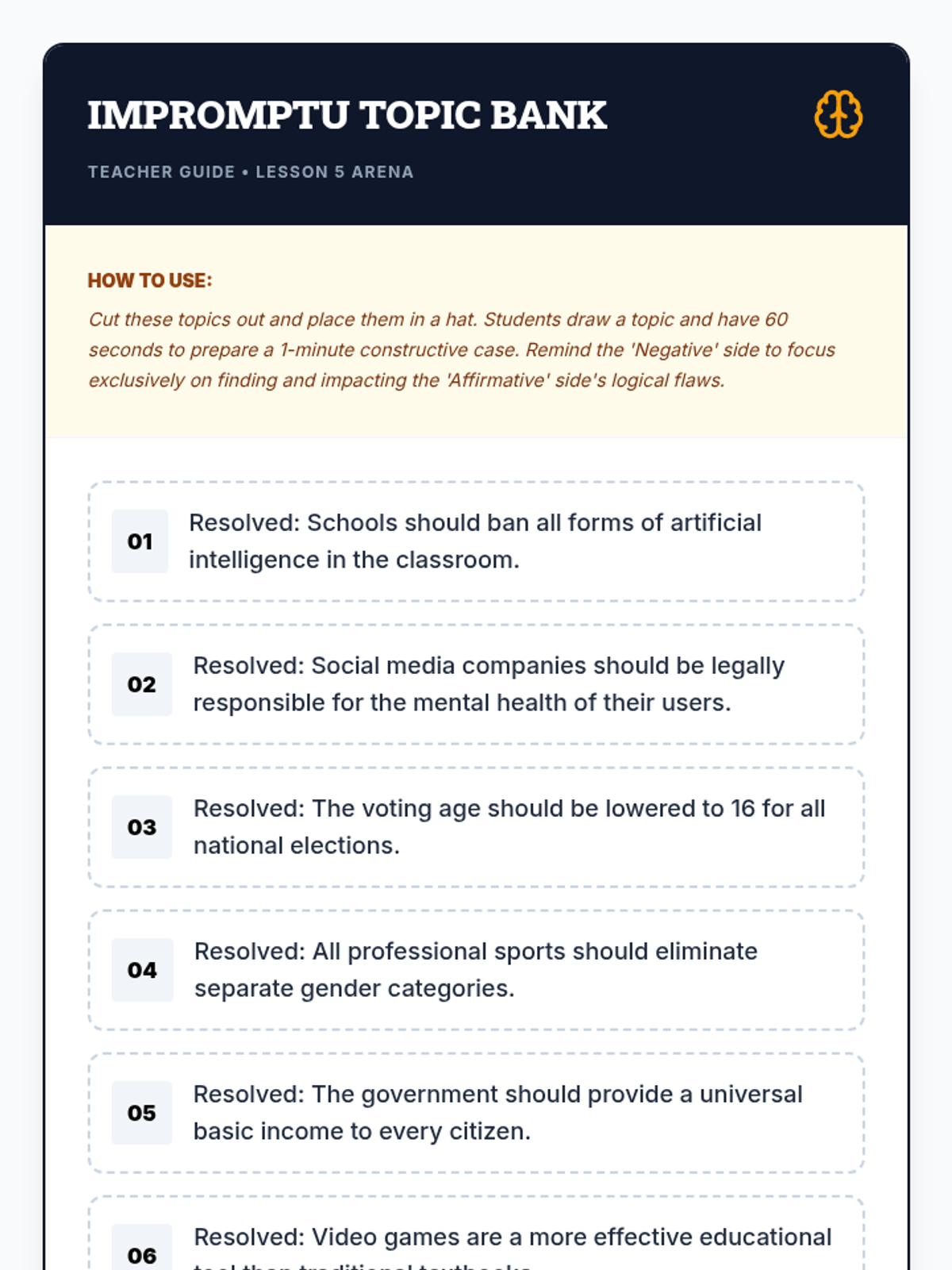
A set of eight impromptu debate topics for Spar debates, formatted for easy cutting and use in the classroom.
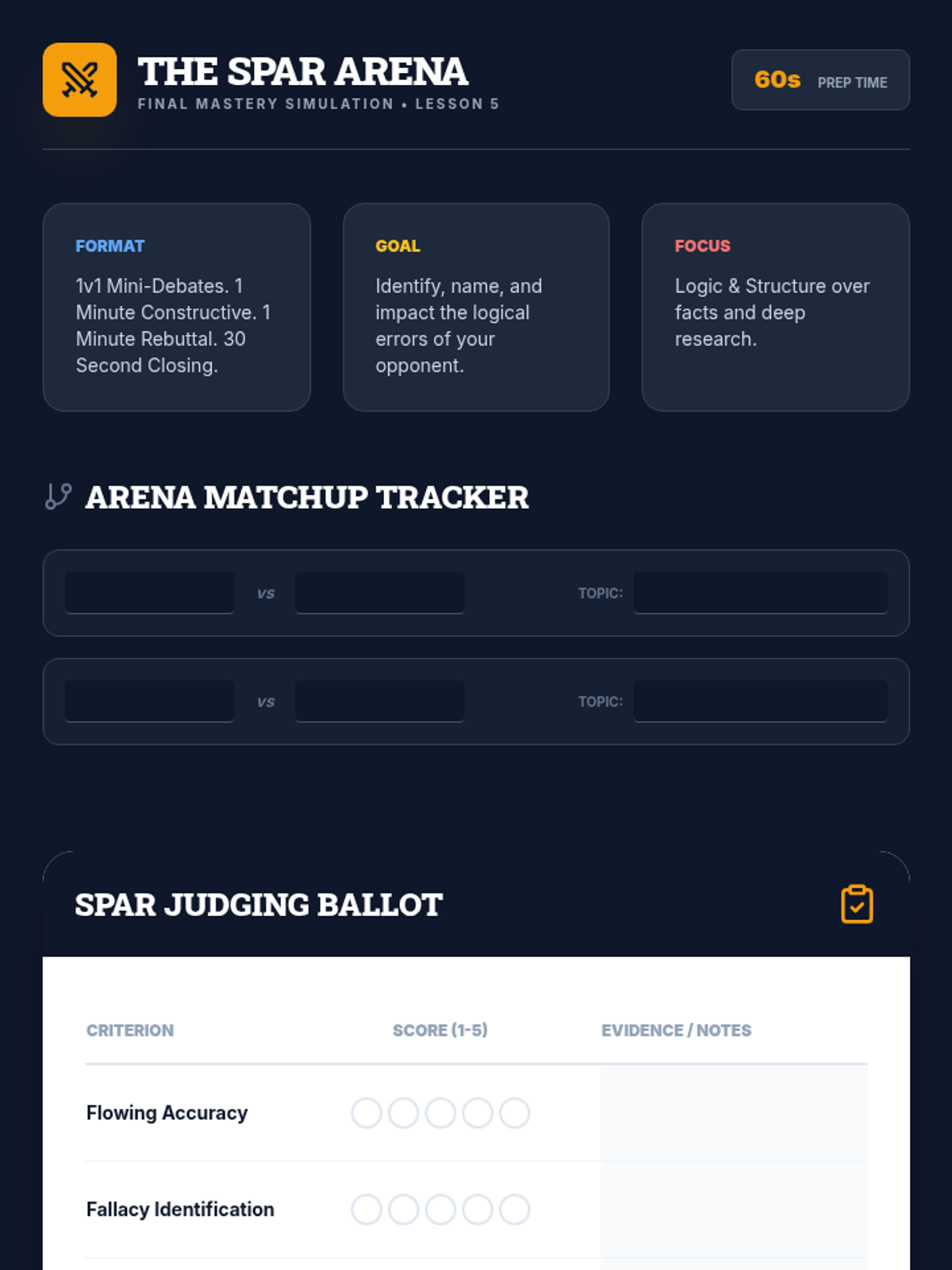
A comprehensive Spar Debate guide and scoring rubric for the final lesson in the sequence. Includes a tournament tracker and judging ballot.
Slide deck for Lesson 4 teaching the 'Even-If' structure as a strategic tool for argument prioritization and concession.
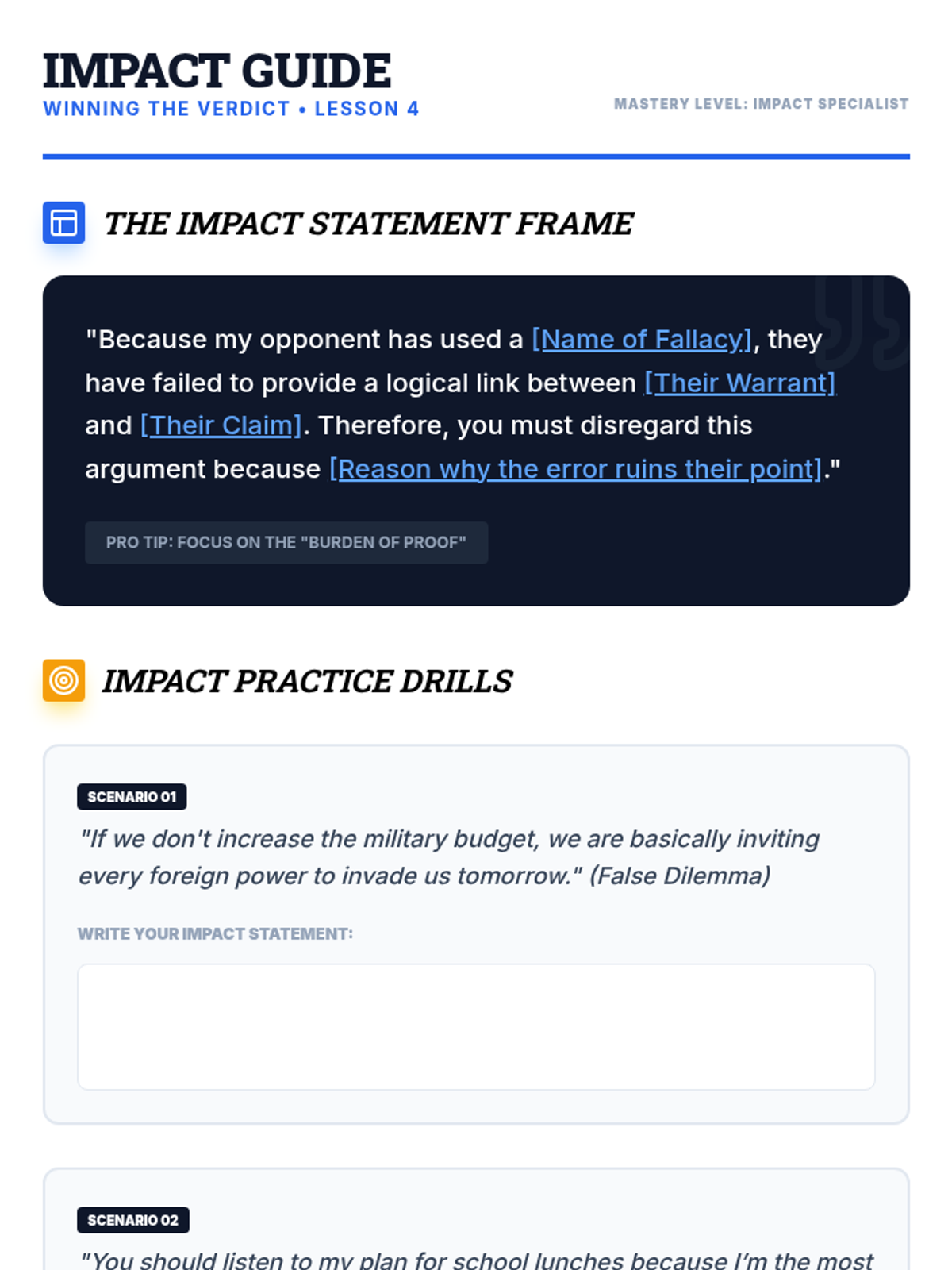
A student worksheet that provides a linguistic frame for impact statements and includes drills for practice.
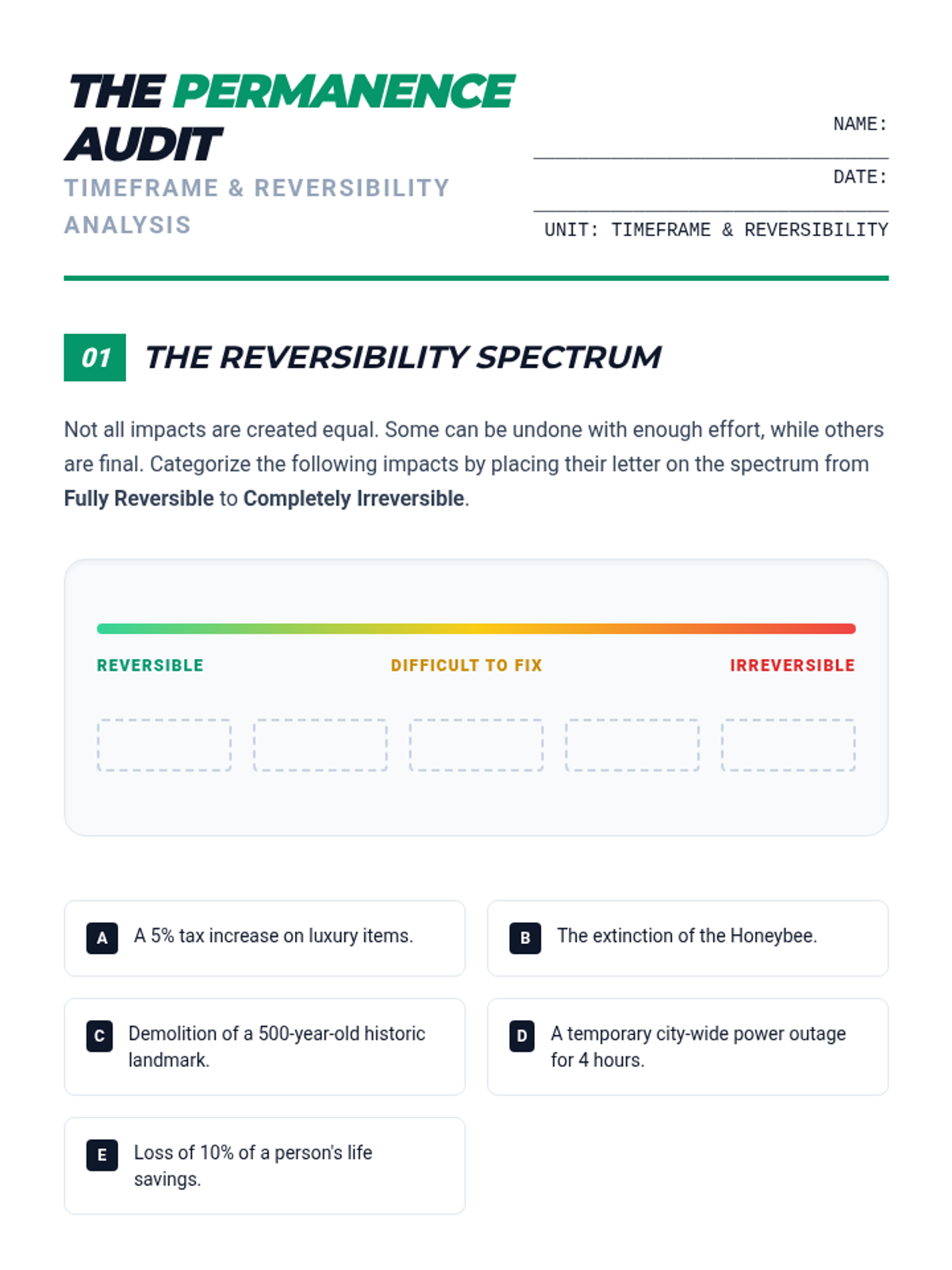
A permanence audit activity where students evaluate various impacts based on how irreversible they are and practice timeframe weighing.
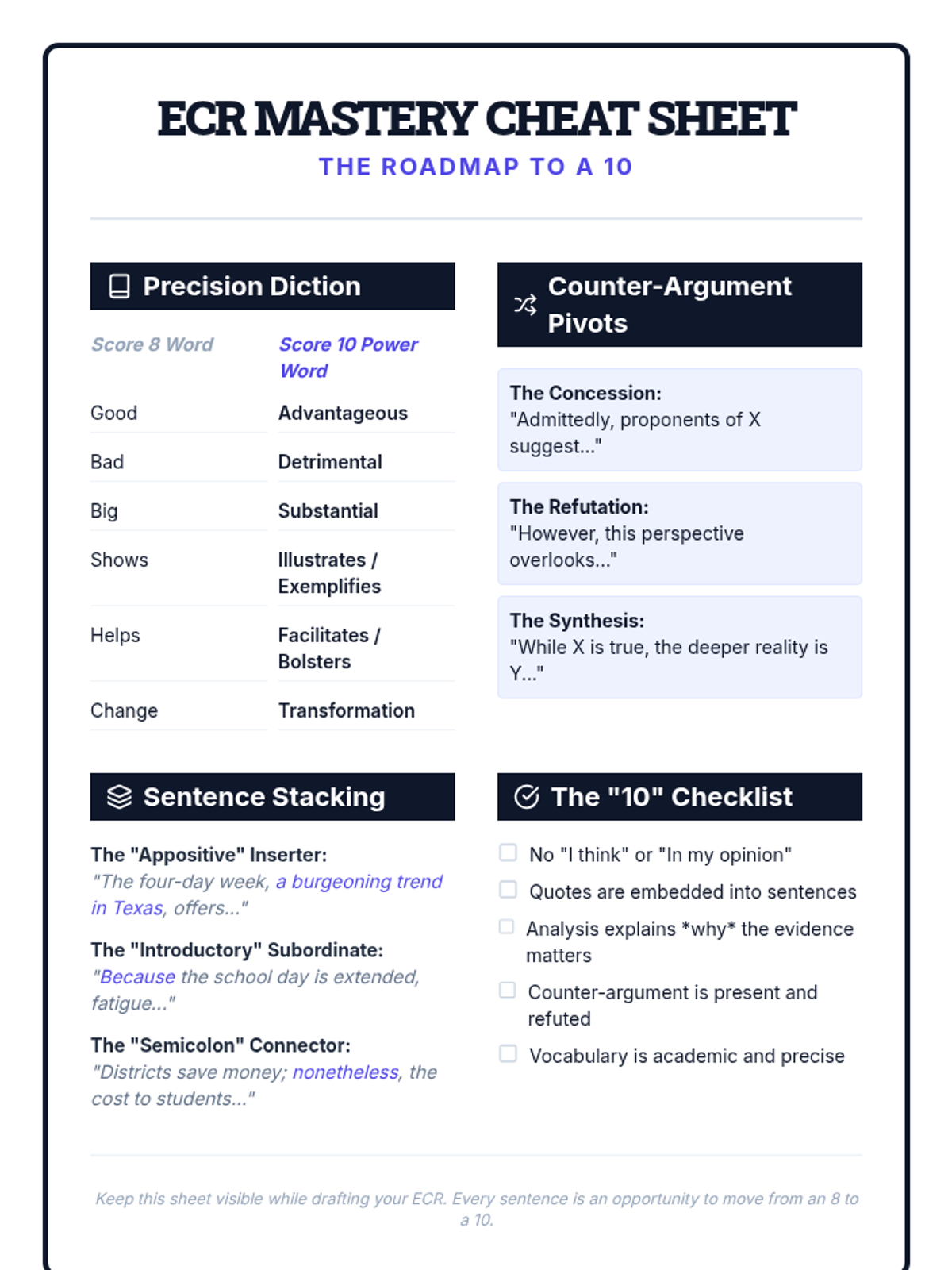
A one-page student reference sheet for ECR drafting, featuring power words, transition stems, syntax structures, and a final quality checklist.
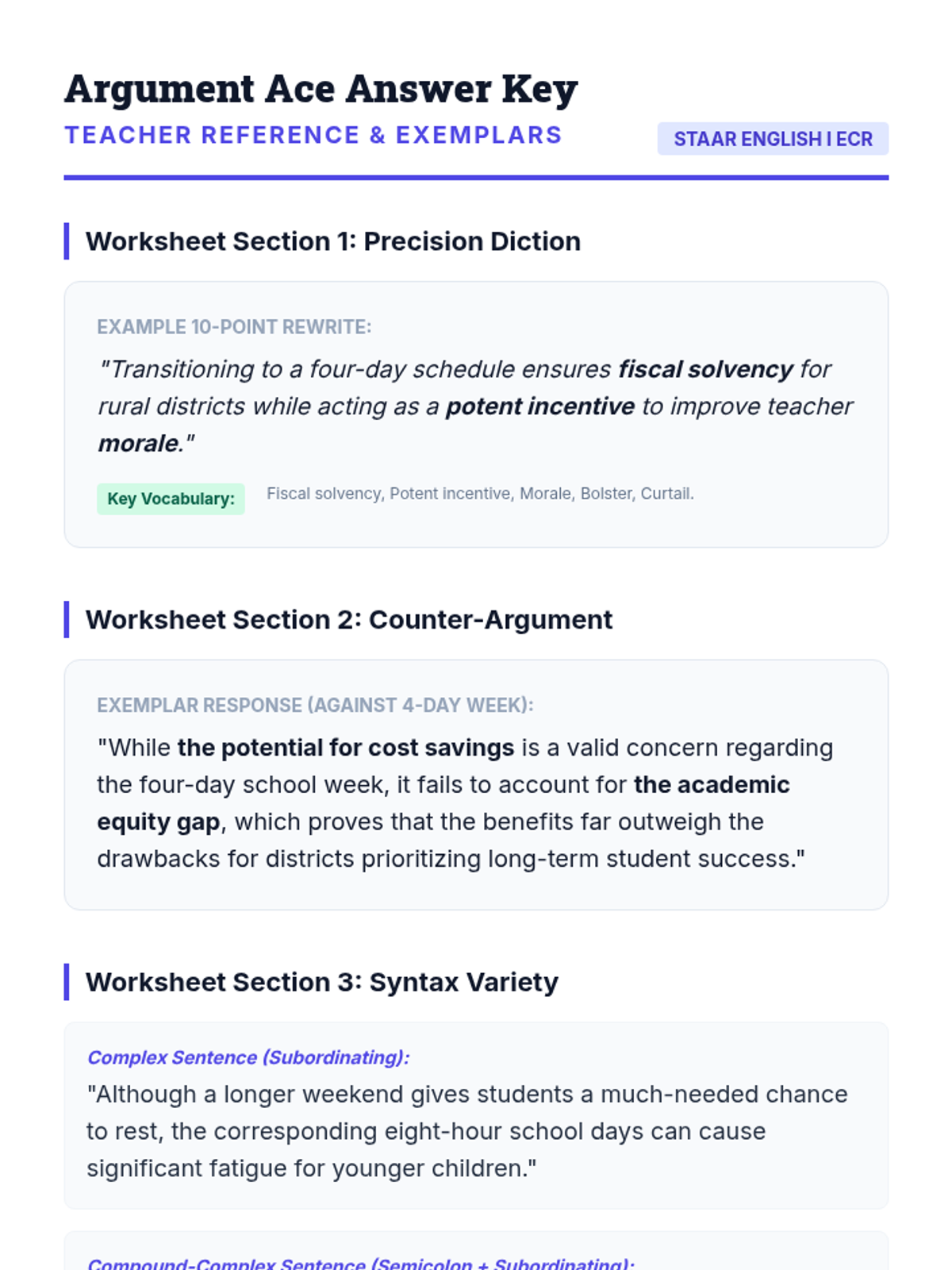
A detailed answer key and model response guide for teachers, providing exemplars for diction, syntax, counter-arguments, and a full 10-point paragraph based on the 4-day school week passage.
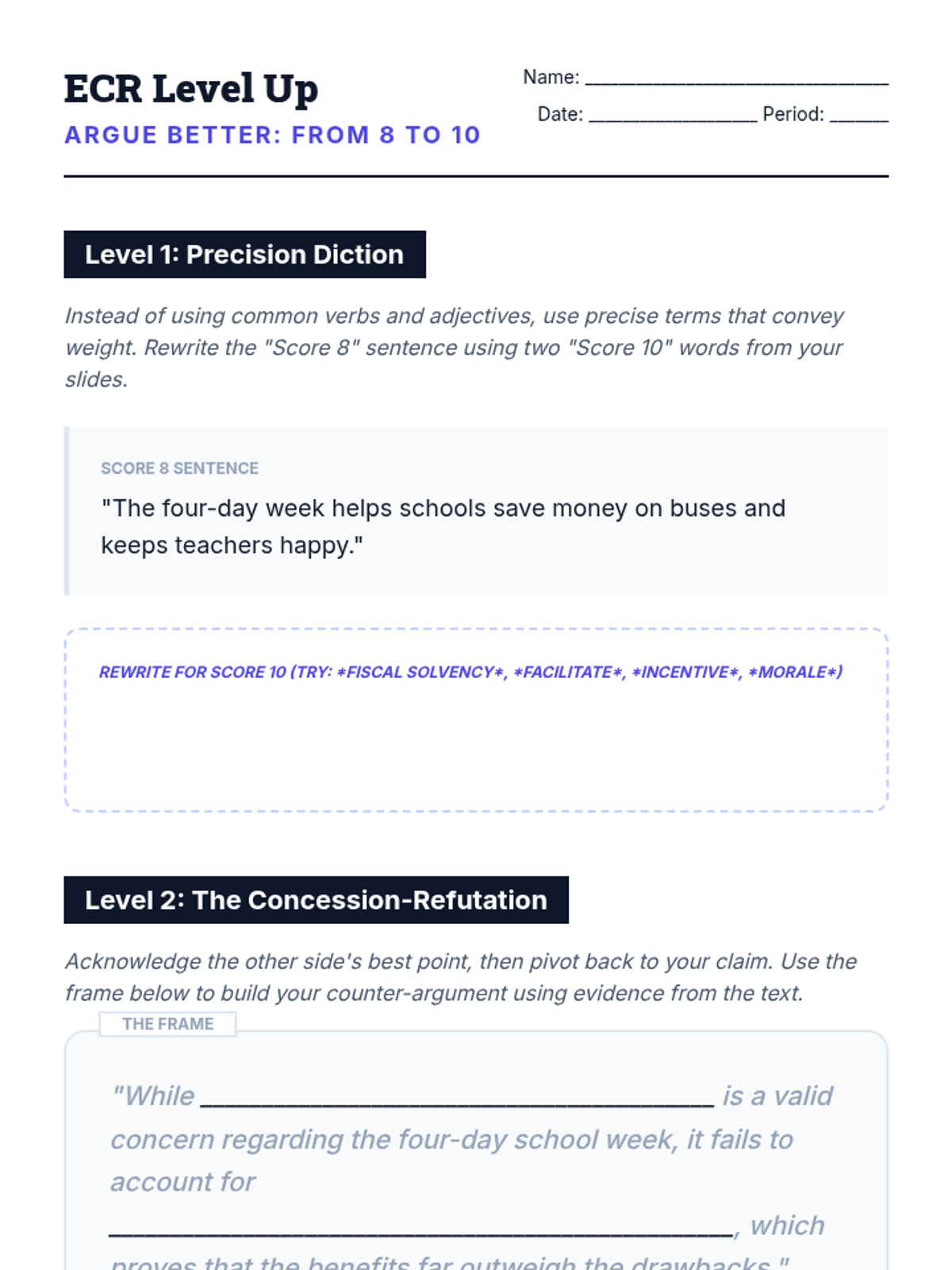
A student worksheet for the Argument Ace lesson, including exercises for precision diction, counter-argument framing, and syntax variety, ending with a drafting space for a sophisticated ECR paragraph.
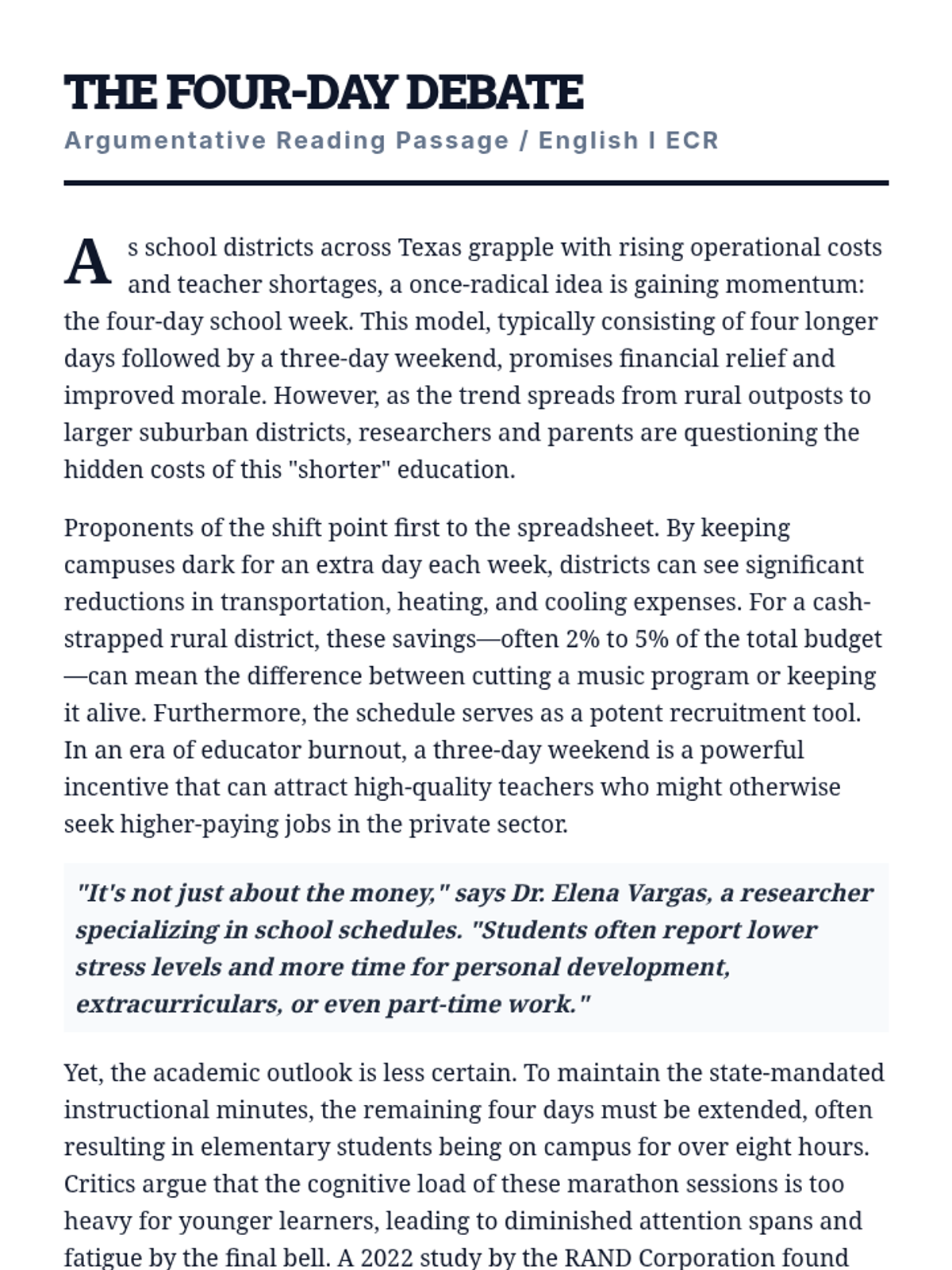
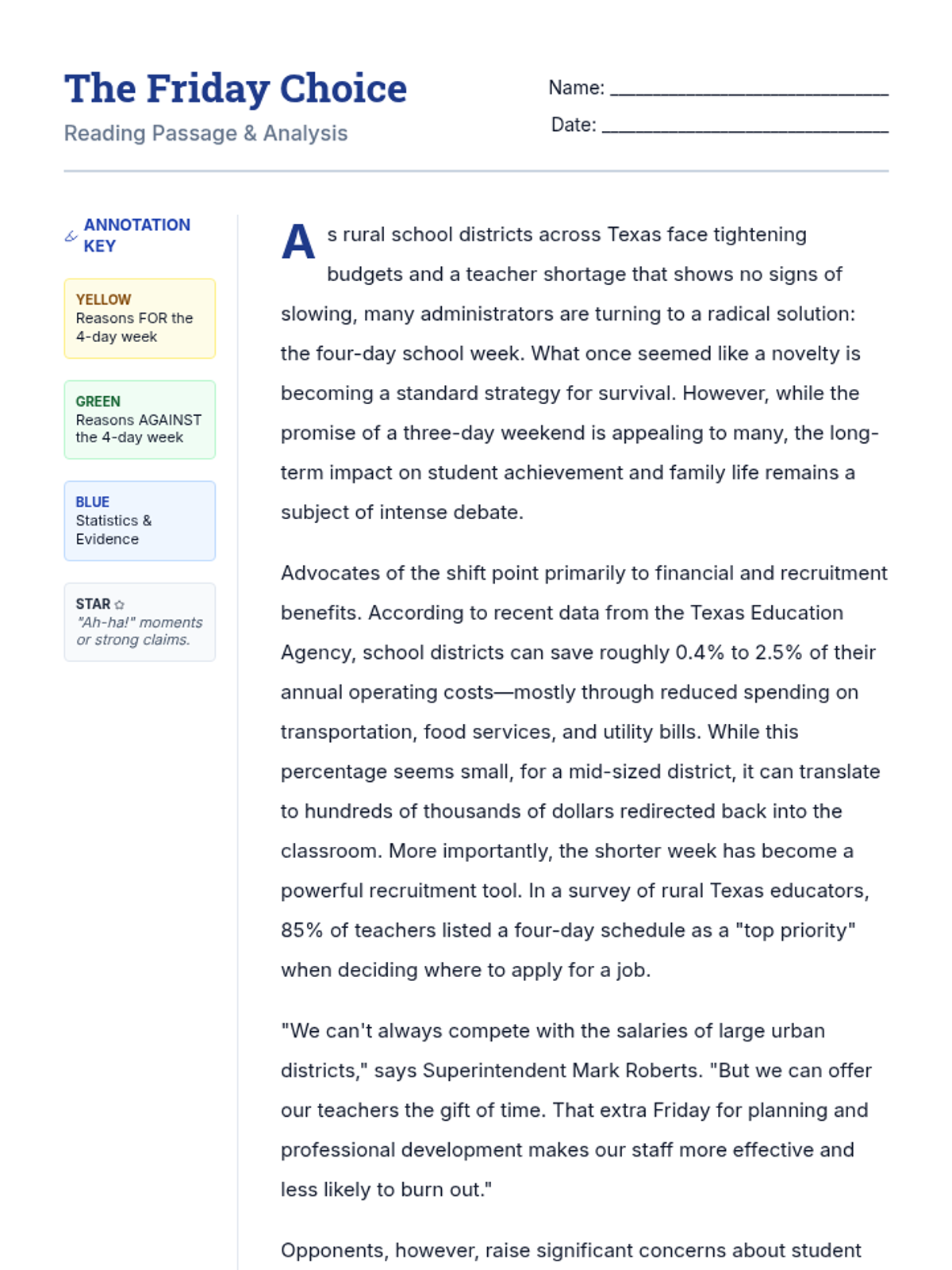
A high-quality, balanced reading passage about the 4-day school week debate, featuring specific evidence for both sides to be used in ECR evidence integration practice.
A printer-friendly presentation designed to guide students through the ECR mastery process, focusing on the 8-to-10 point gap, word choice, counter-arguments, and syntax variety.
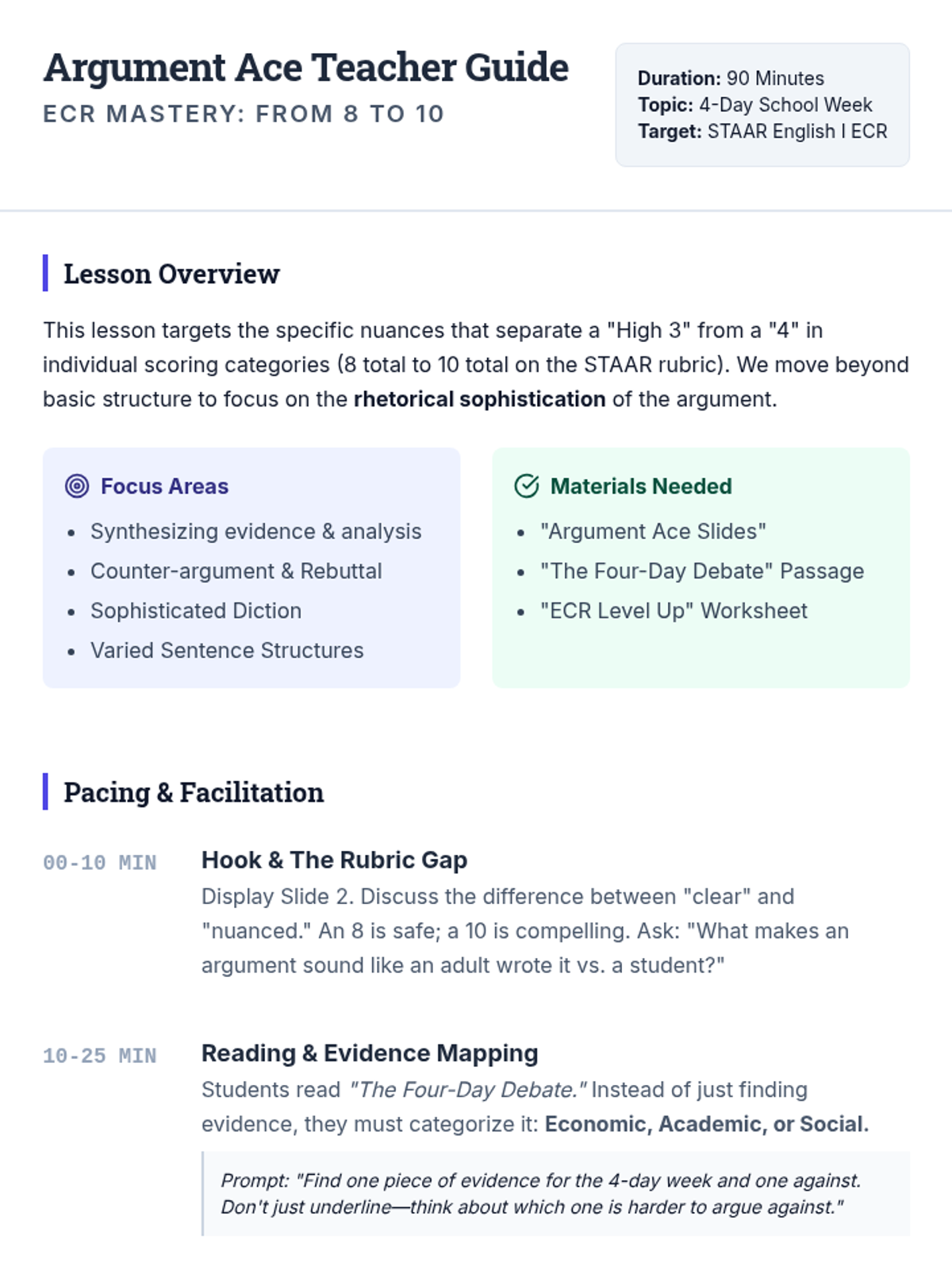
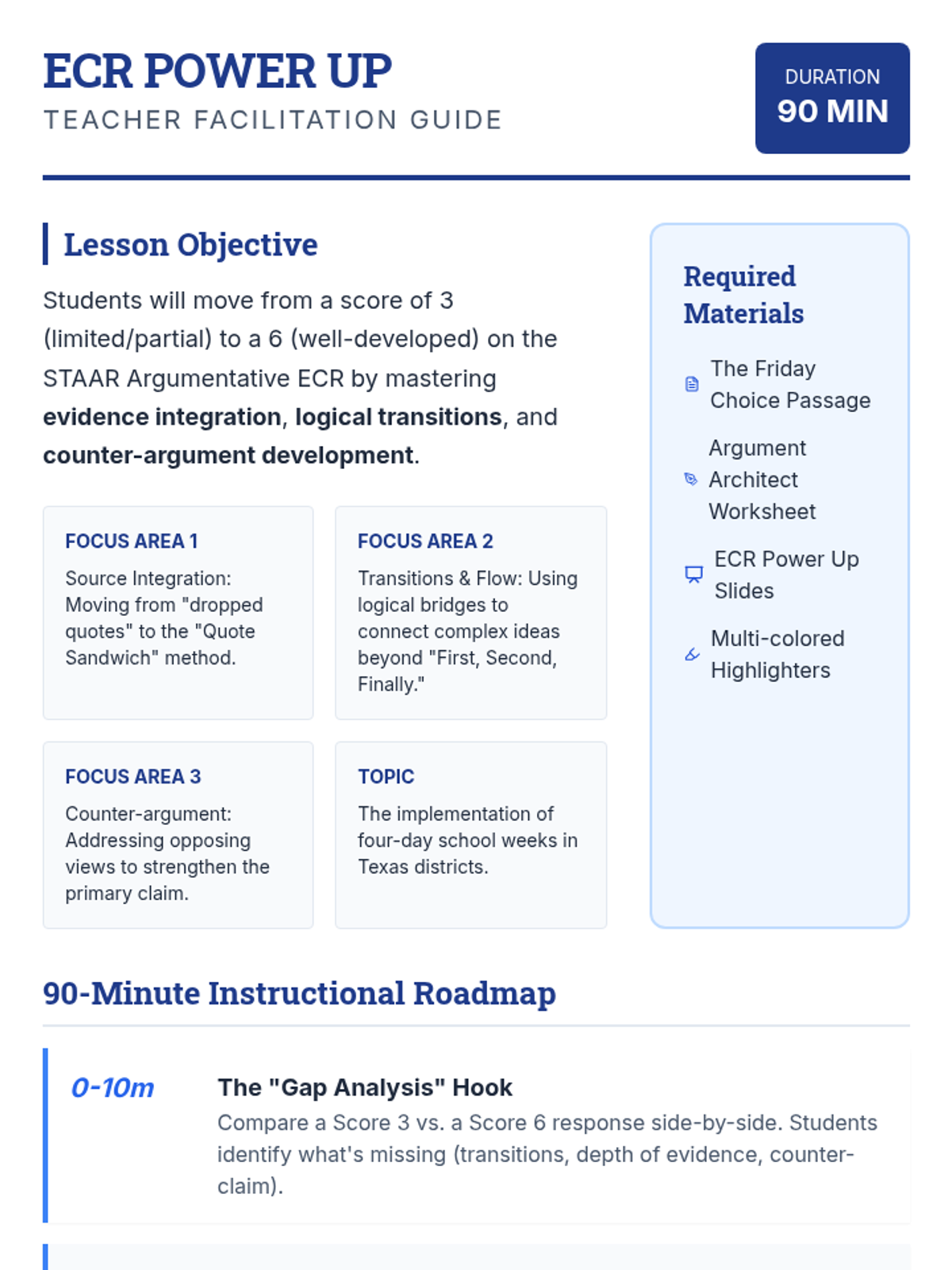
A comprehensive teacher guide for a 90-minute ECR mastery lesson, featuring a detailed pacing guide, instructional strategies for 8-to-10 score improvement, and differentiation tips.
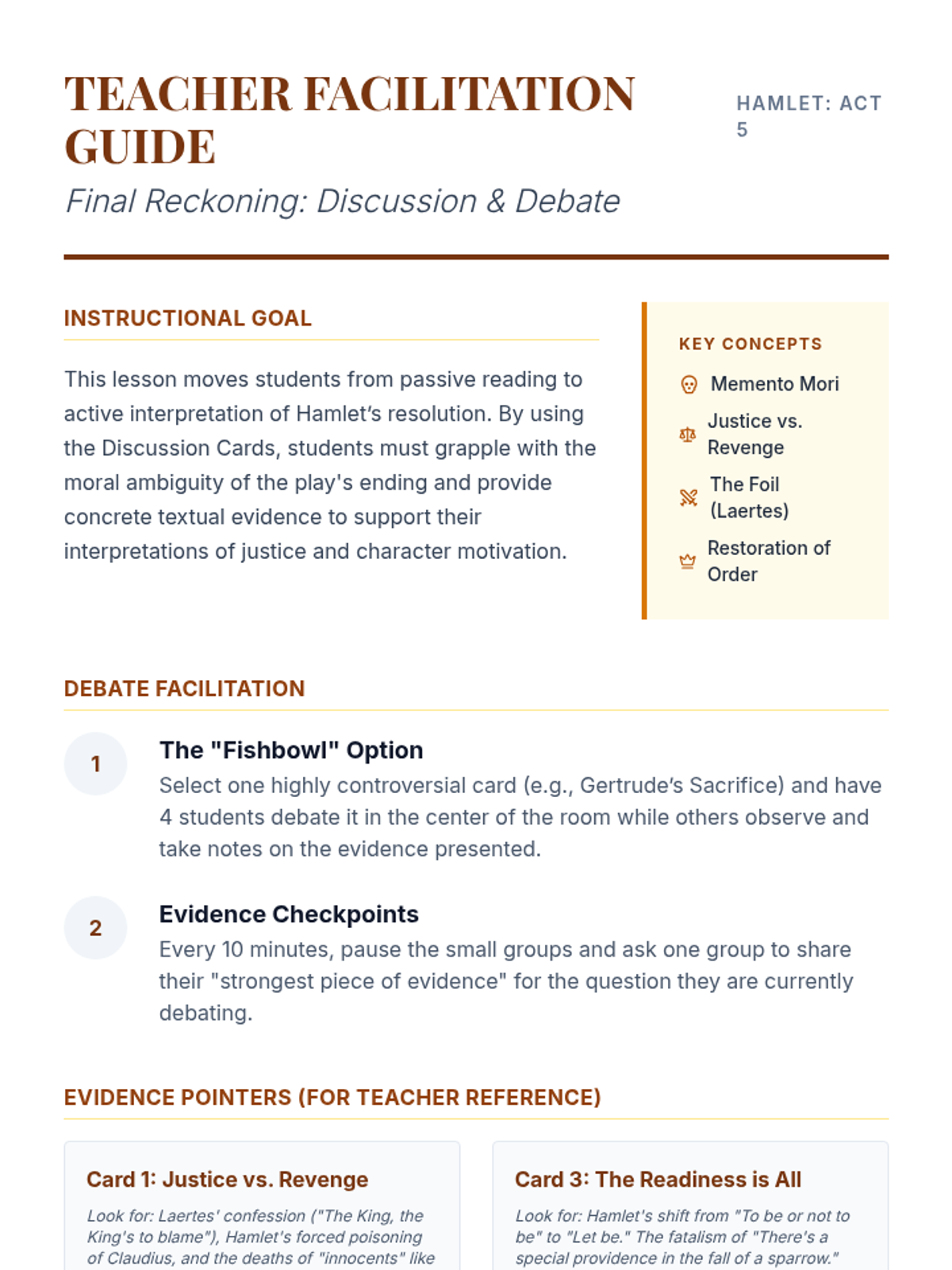
A comprehensive teacher guide for facilitating discussions on Hamlet Act 5. It includes instructional goals, specific facilitation strategies (like the fishbowl method), evidence pointers for each discussion card, and probing questions to deepen student analysis.
A dramatic, high-contrast presentation designed to guide students through the final act of Hamlet. It includes instructional slides on the graveyard scene, the duel, and clear protocols for conducting the evidence-based small group debates.
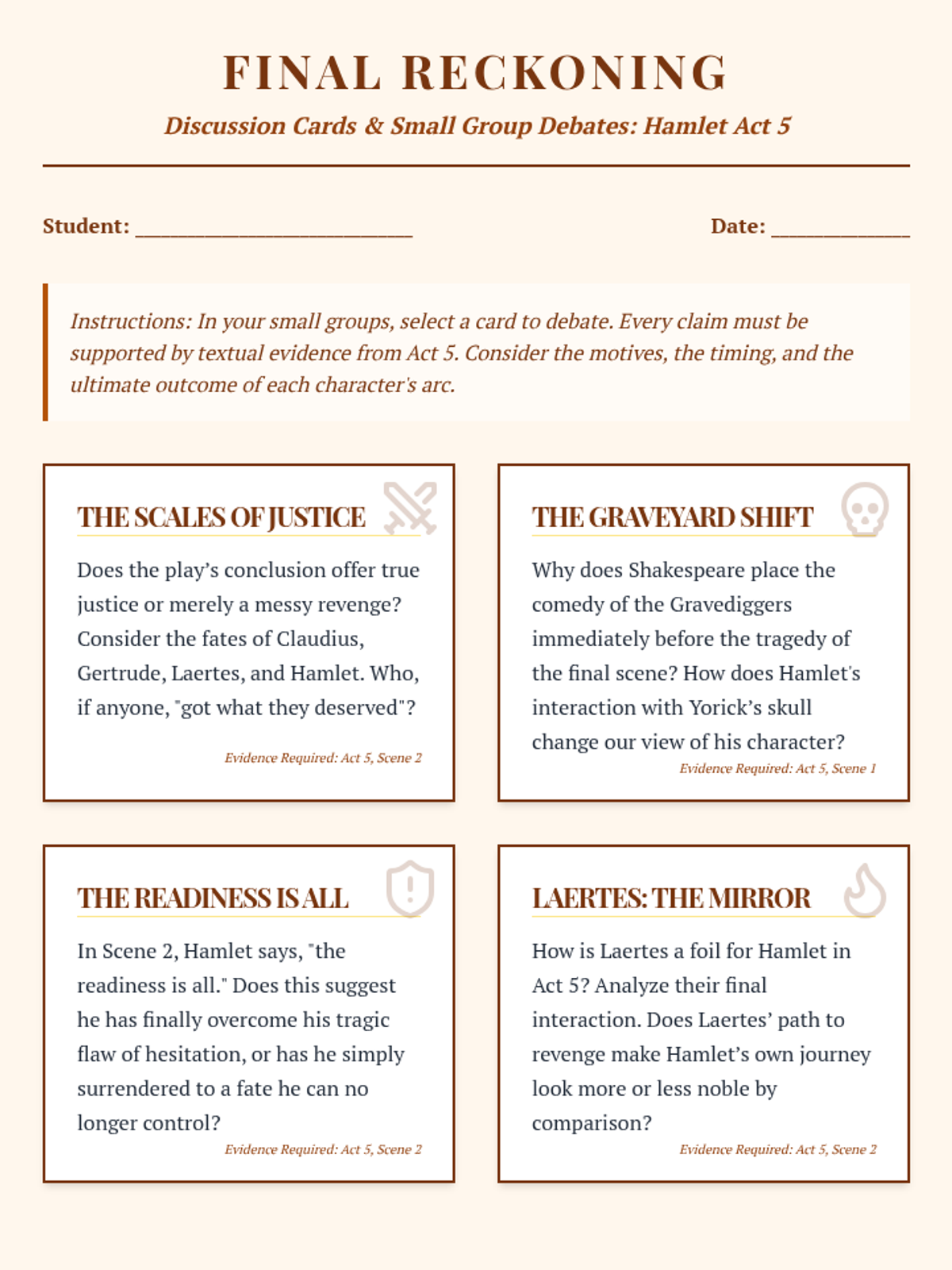
A set of eight printable discussion cards for small group debates on Act 5 of Hamlet. Each card features an open-ended question focused on themes of justice, revenge, and character development, requiring students to provide textual evidence for their arguments.
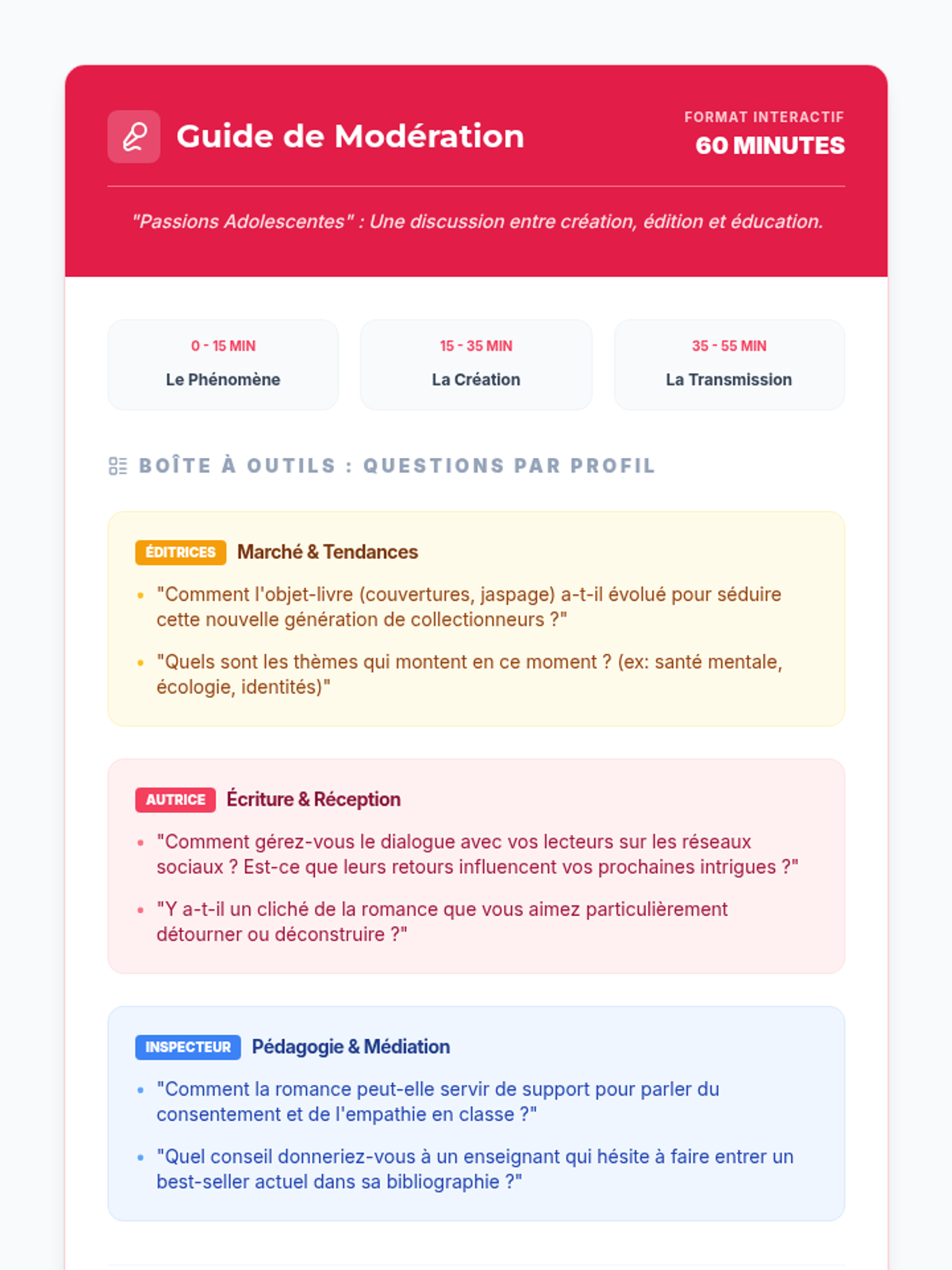
Un guide de modération enrichi proposant une boîte à outils de questions spécifiques pour chaque intervenant, idéal pour une table ronde d'une heure.
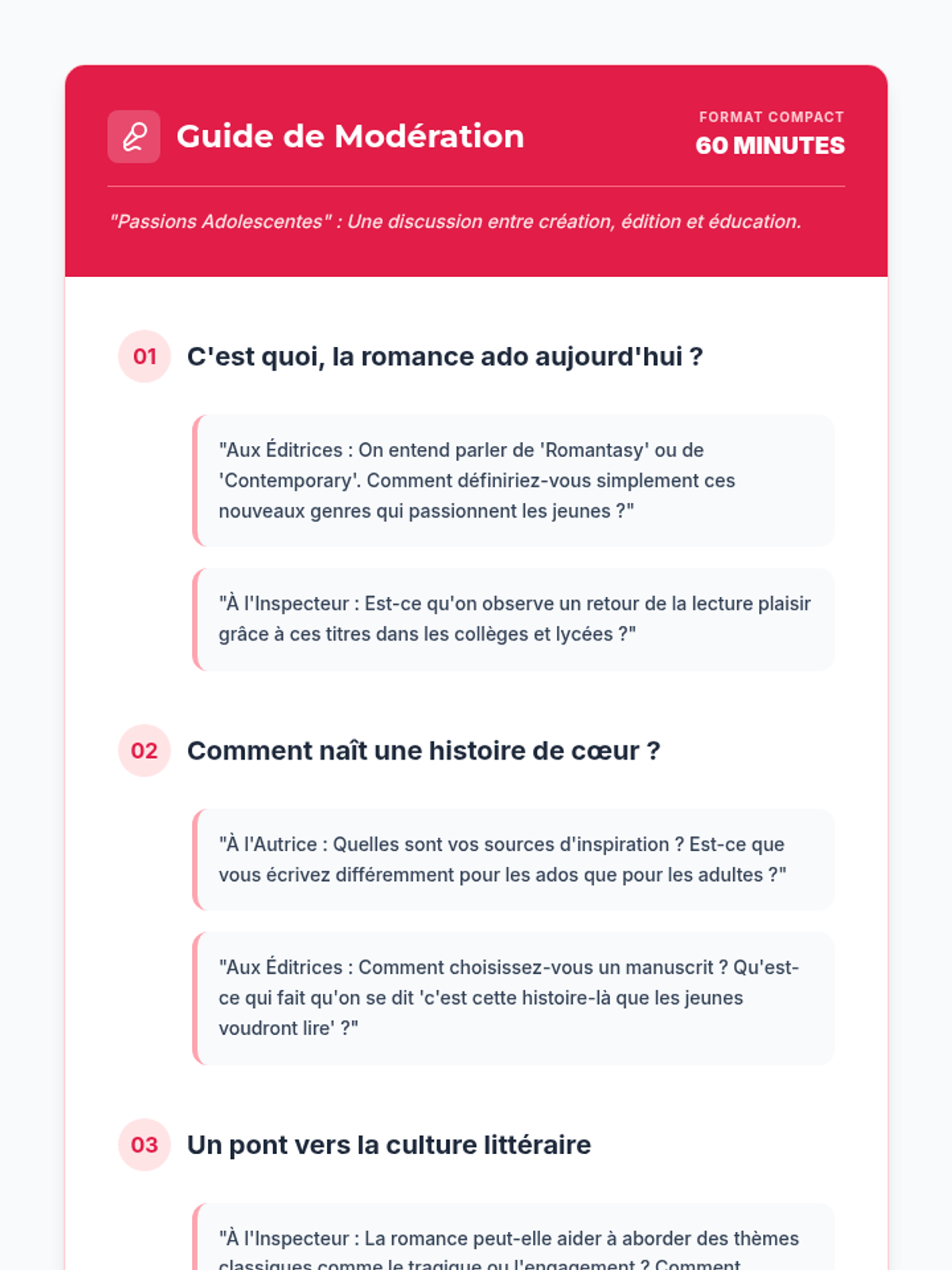
Un guide de modération optimisé pour une table ronde d'une heure, proposant des questions accessibles et équilibrées pour un large public.
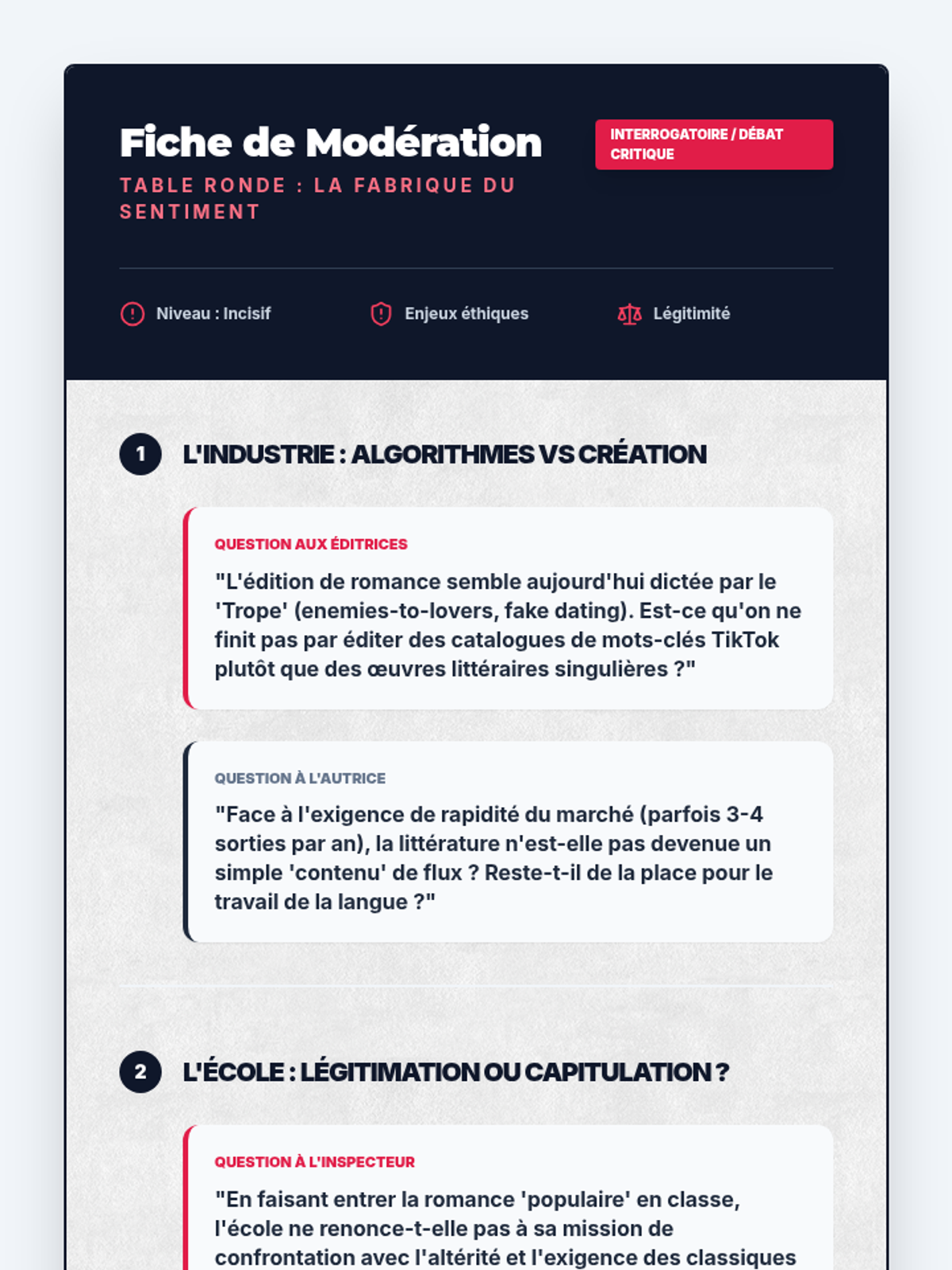
Une version "questions incisives" du guide de modération, conçue pour un débat de haut niveau interrogeant l'éthique, la qualité littéraire et les enjeux marketing du genre.
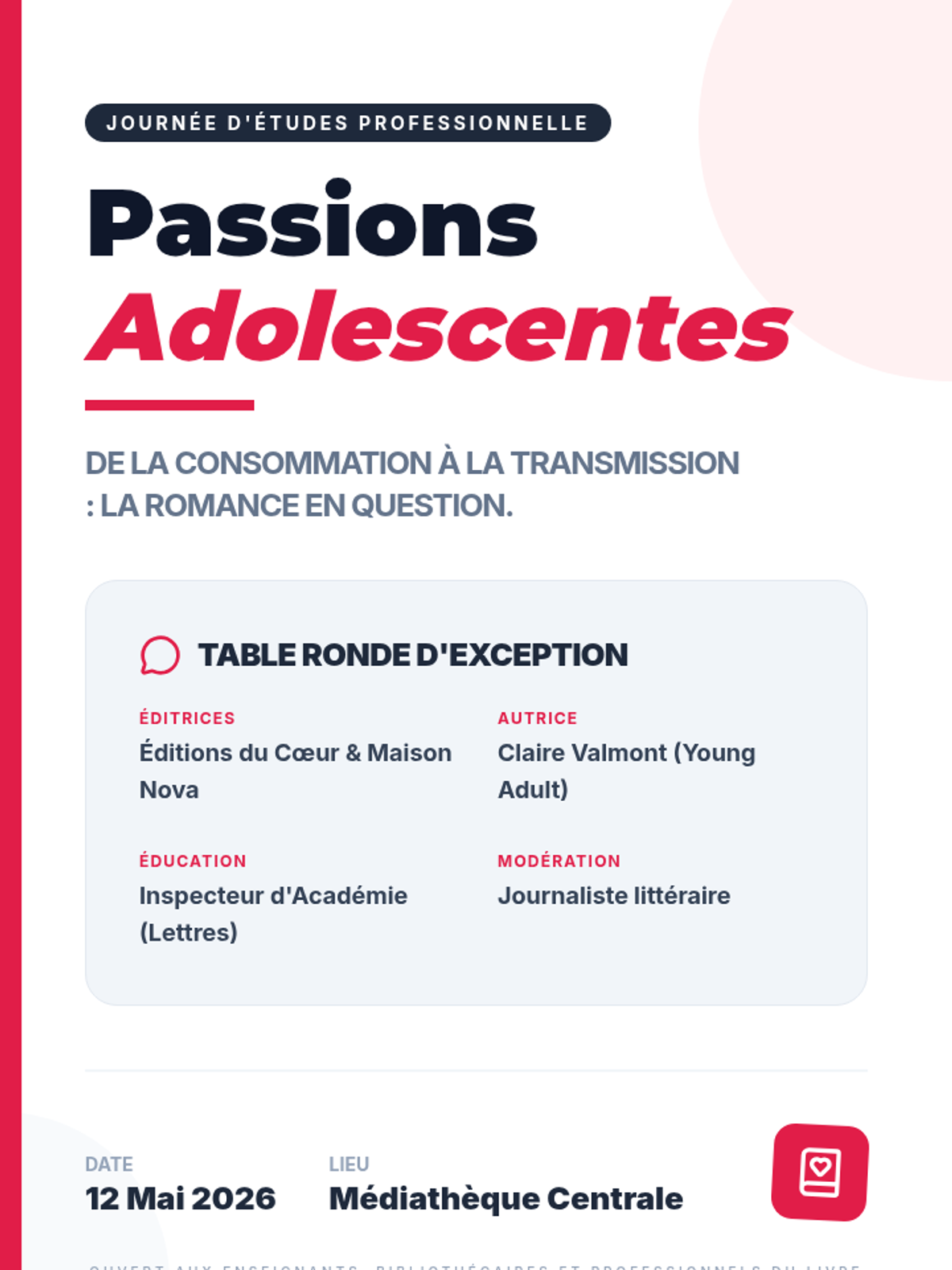
Une affiche promotionnelle élégante et percutante pour la journée d'études, mettant en avant les intervenants et le titre phare de l'évènement.
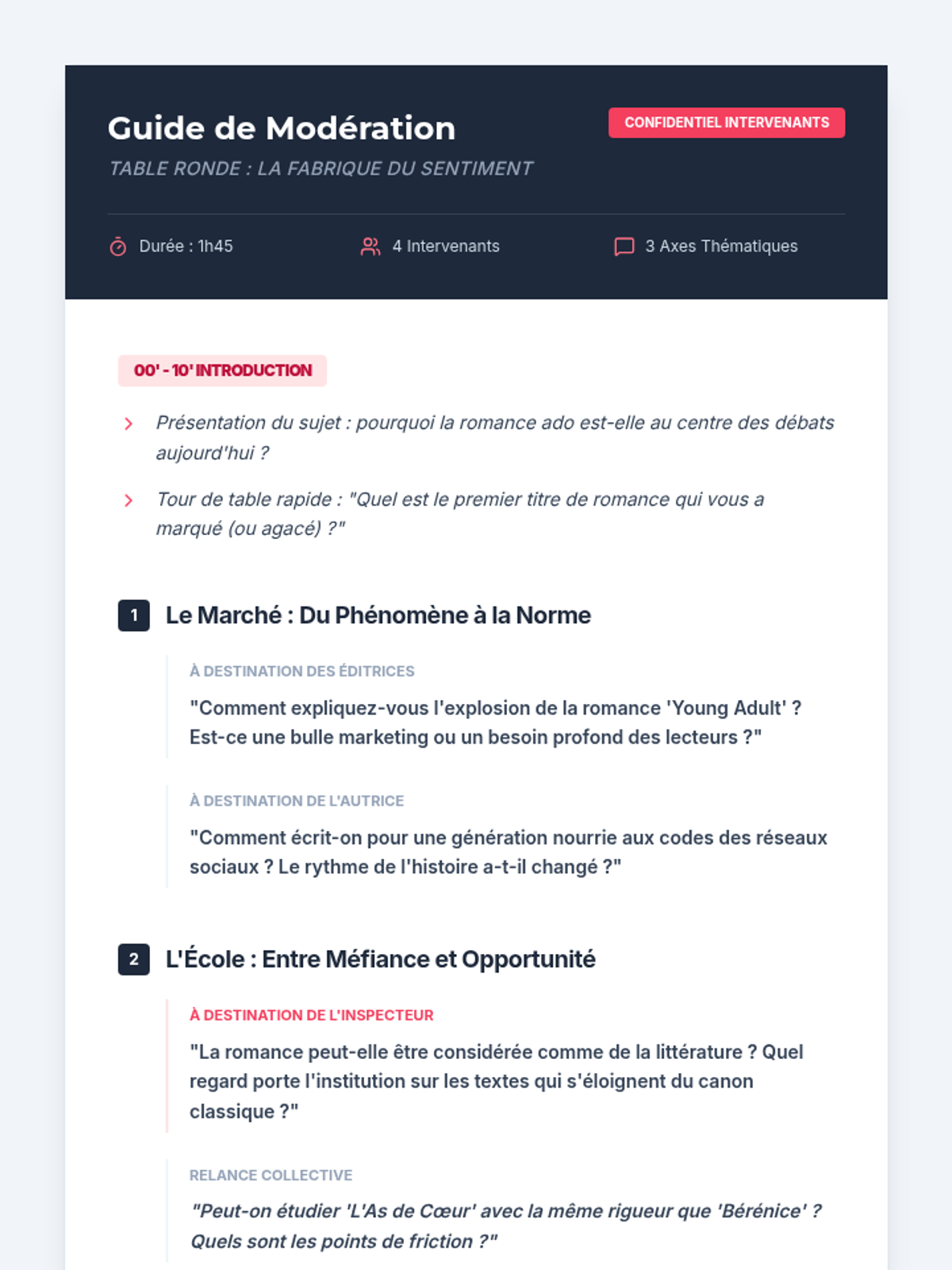
Un guide de modération professionnel pour l'animateur de la table ronde, incluant les temps forts, les questions clés pour chaque intervenant et des conseils de relance.
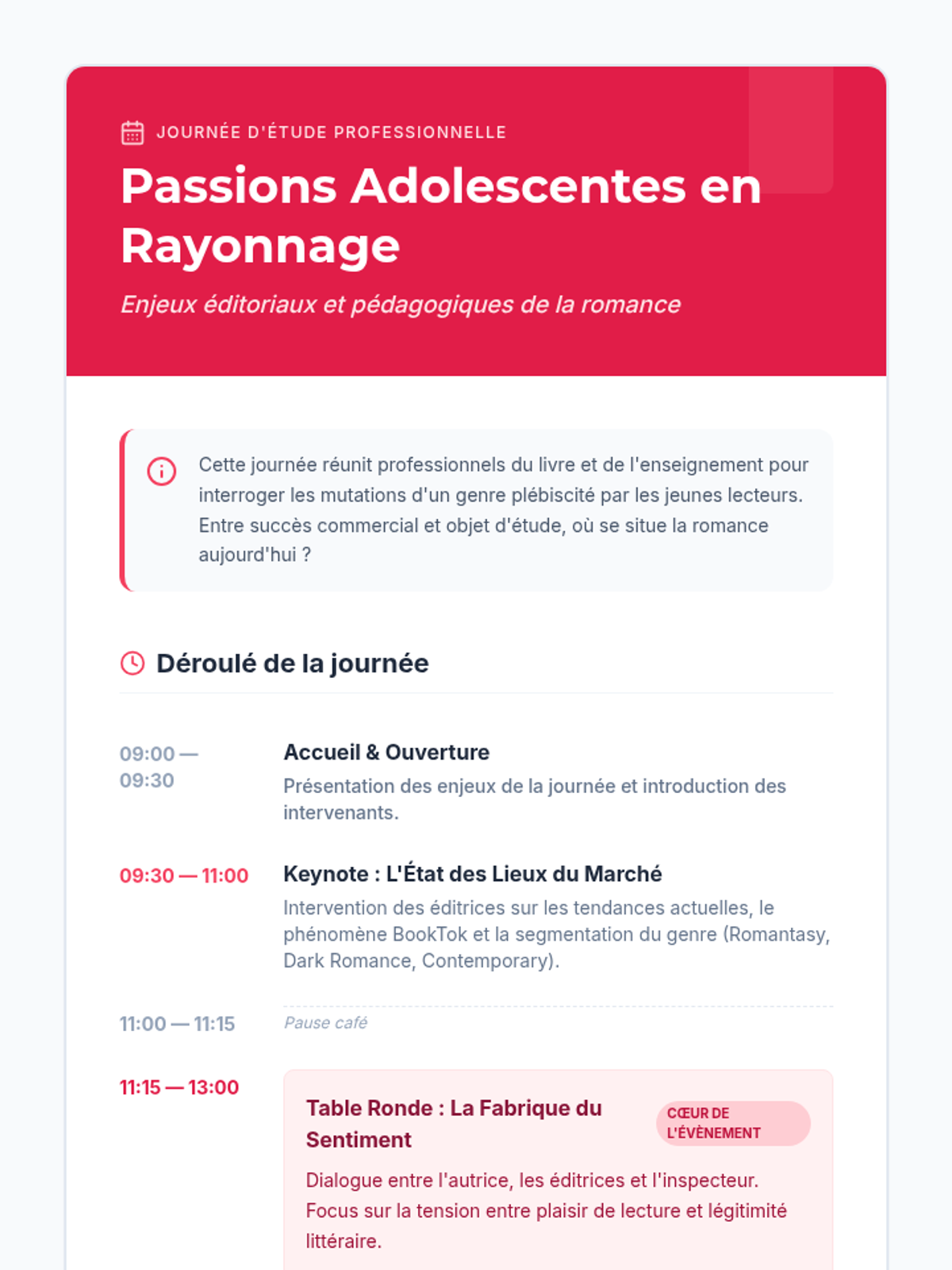
Le programme détaillé de la journée d'études "Passions Adolescentes en Rayonnage", incluant les horaires, les sessions et la liste des intervenants.
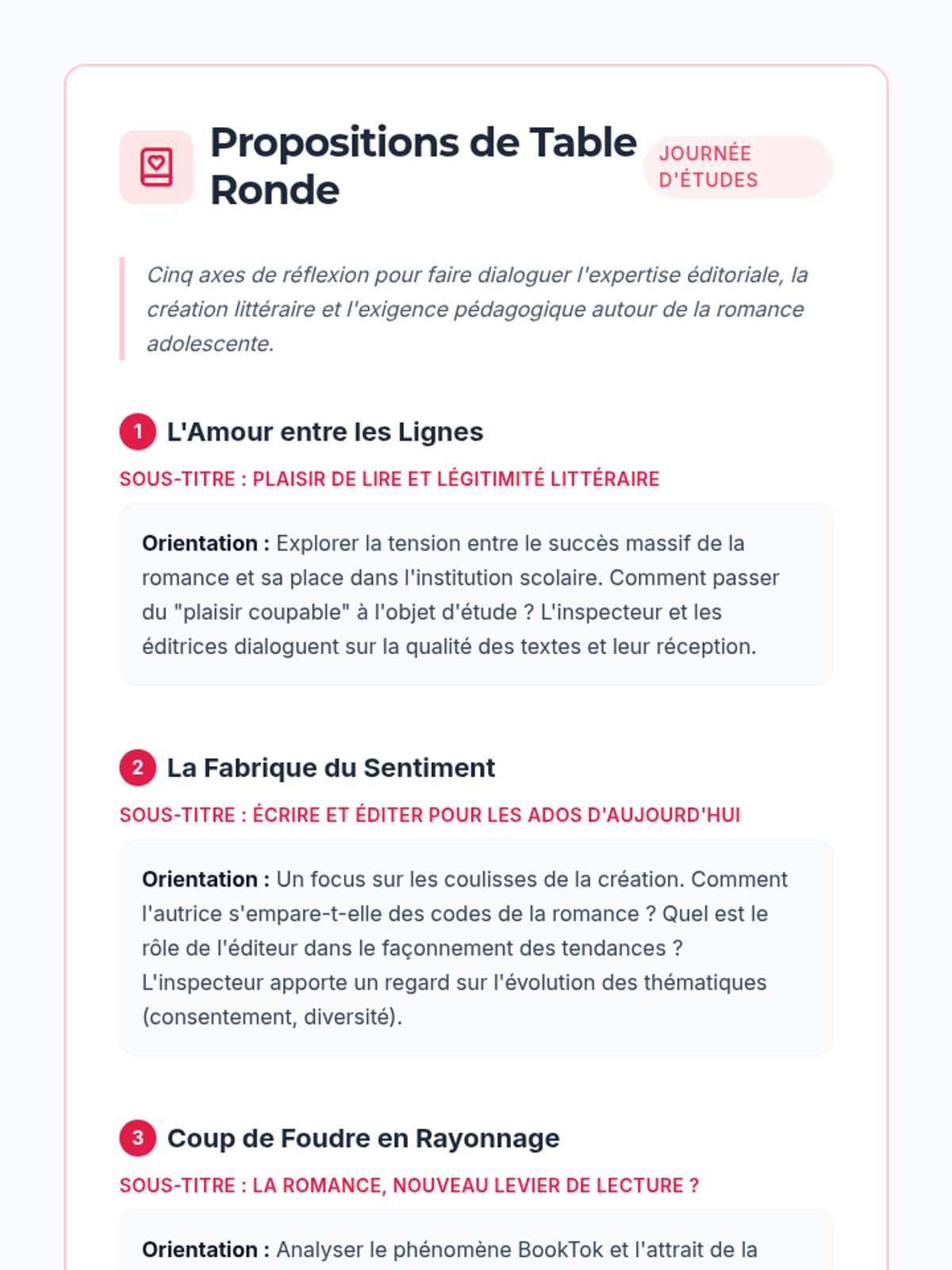
Une fiche de planification présentant 5 propositions de titres et d'orientations pour une table ronde sur la romance adolescente, mêlant perspectives éditoriales et pédagogiques.
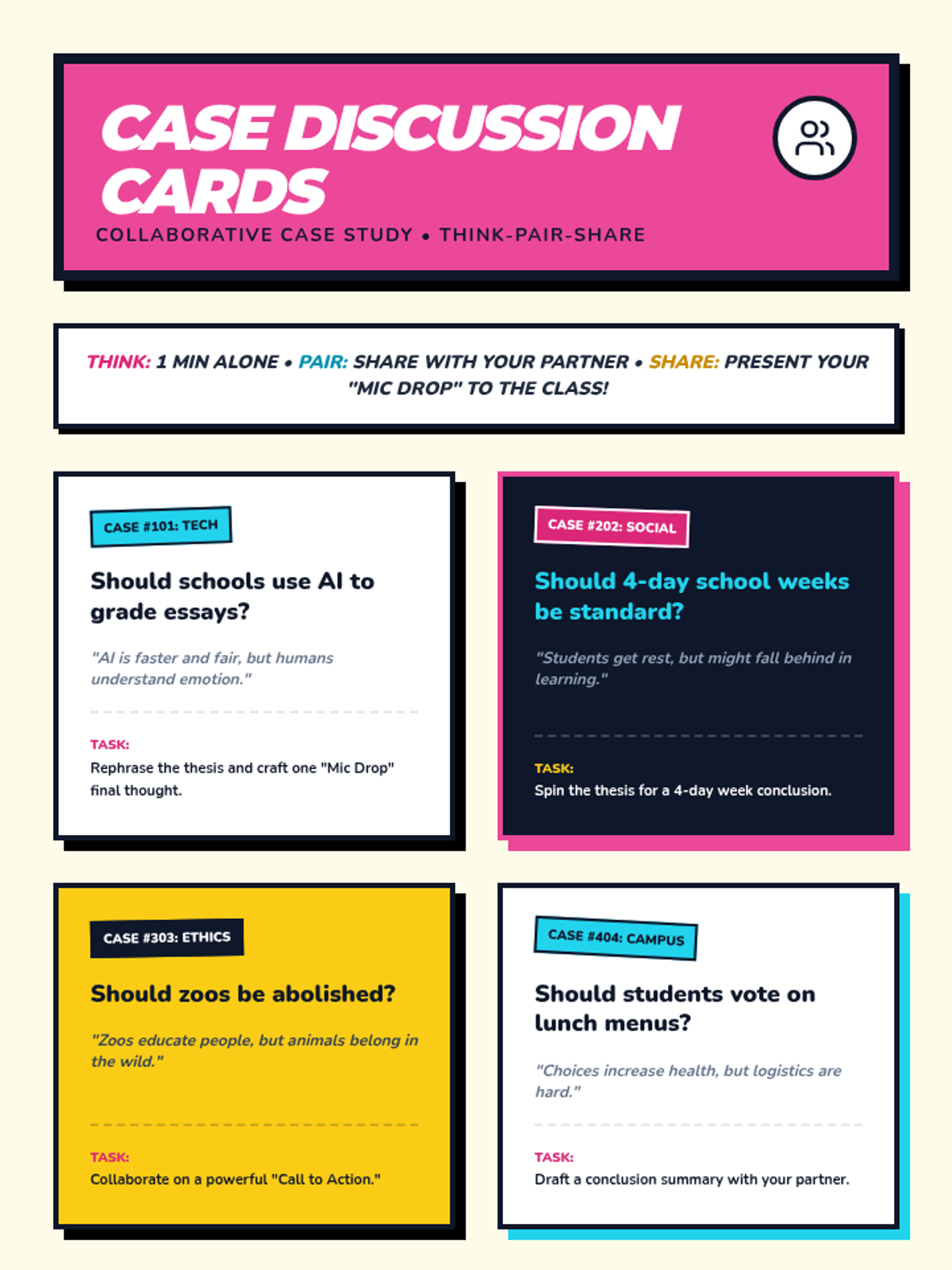
Collaborative discussion cards for a "Think-Pair-Share" activity, featuring diverse case topics (AI, 4-day weeks, zoos, lunch menus) to help students practice rephrasing and crafting conclusions with a partner.
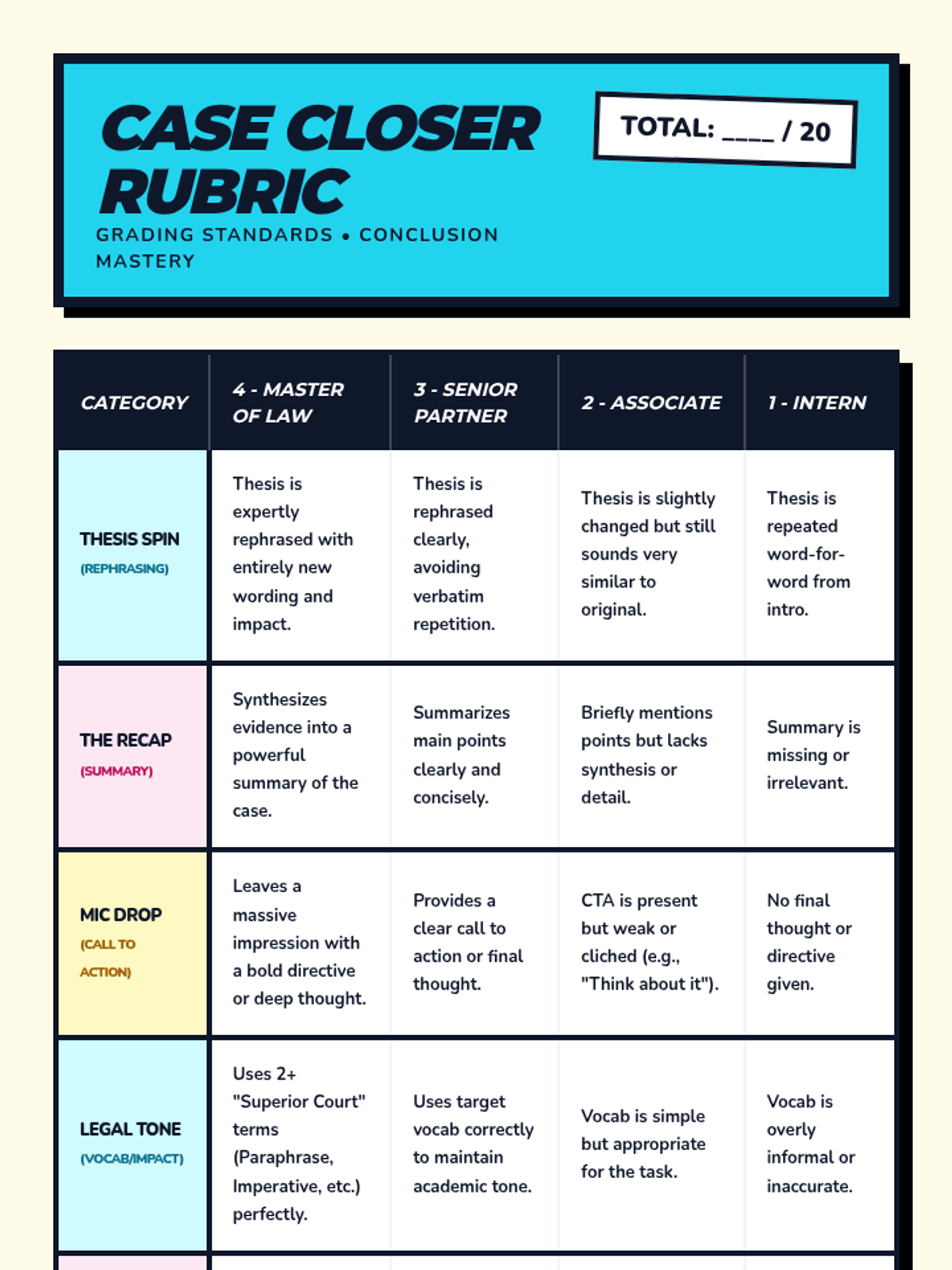
Updated grading rubric for the "Case Closer" lesson, focusing on rephrasing quality, synthesis of evidence, and the impact of the final "Mic Drop" thought.
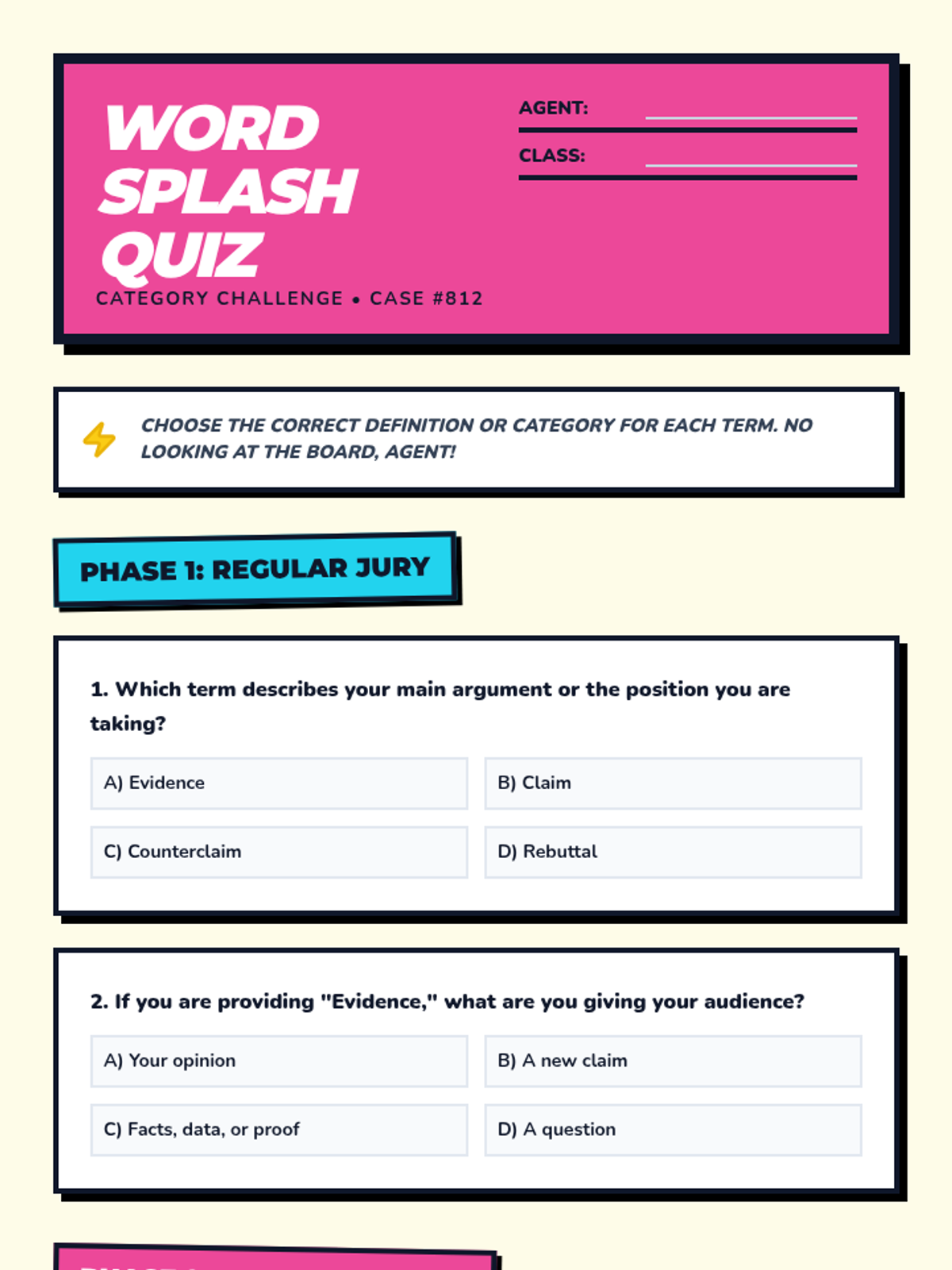
A high-energy multiple choice quiz focused on the Word Splash vocabulary, featuring vibrant comic styling and differentiated categories for Regular Jury and Superior Court terms.
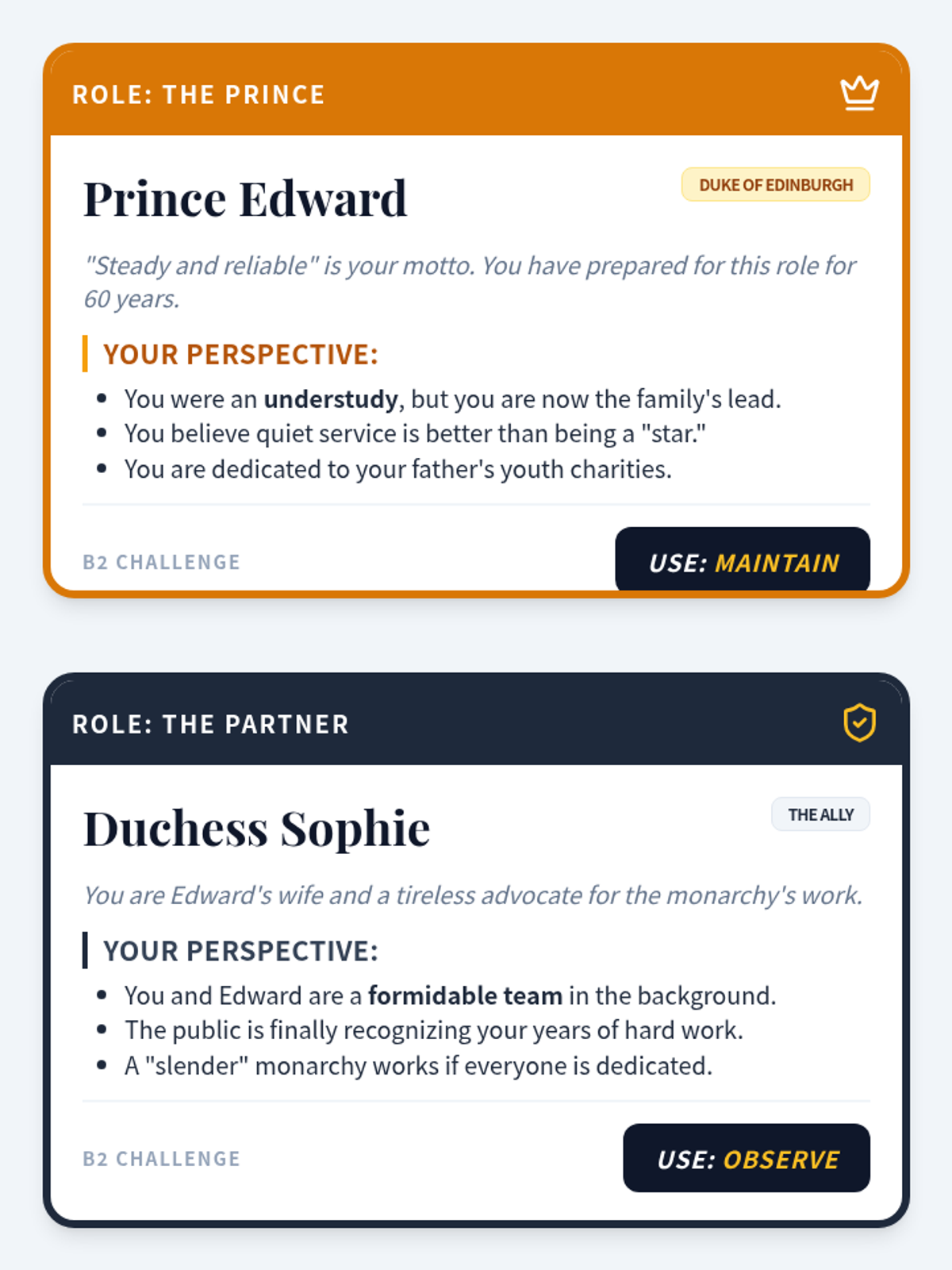
Updated set of eight printable speaking cards in a 2-per-page format. Includes two new roles (Press Secretary and Marines Veteran) to enrich role-play activities. The layout is optimized to ensure all content, including the B2 Language Challenge, is fully visible and readable.
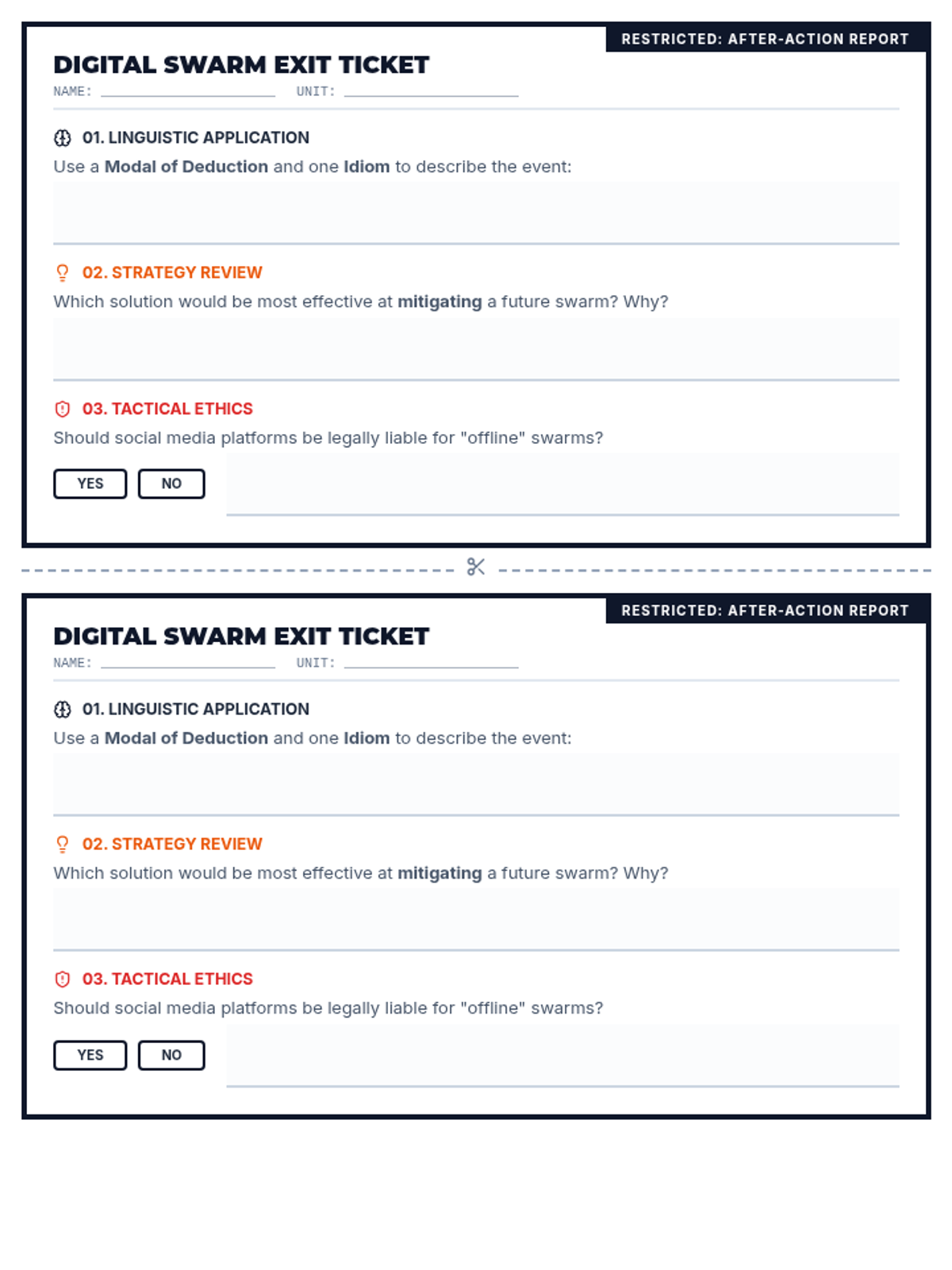
A single-page exit ticket for the Digital Swarms workshop, containing two identical copies for easy printing and distribution. It includes focused reflection questions on language (modals and idioms), strategy, and ethics, with adequate writing space for B2+ students. It now features uniform styling for all answer choices and improved vertical efficiency.
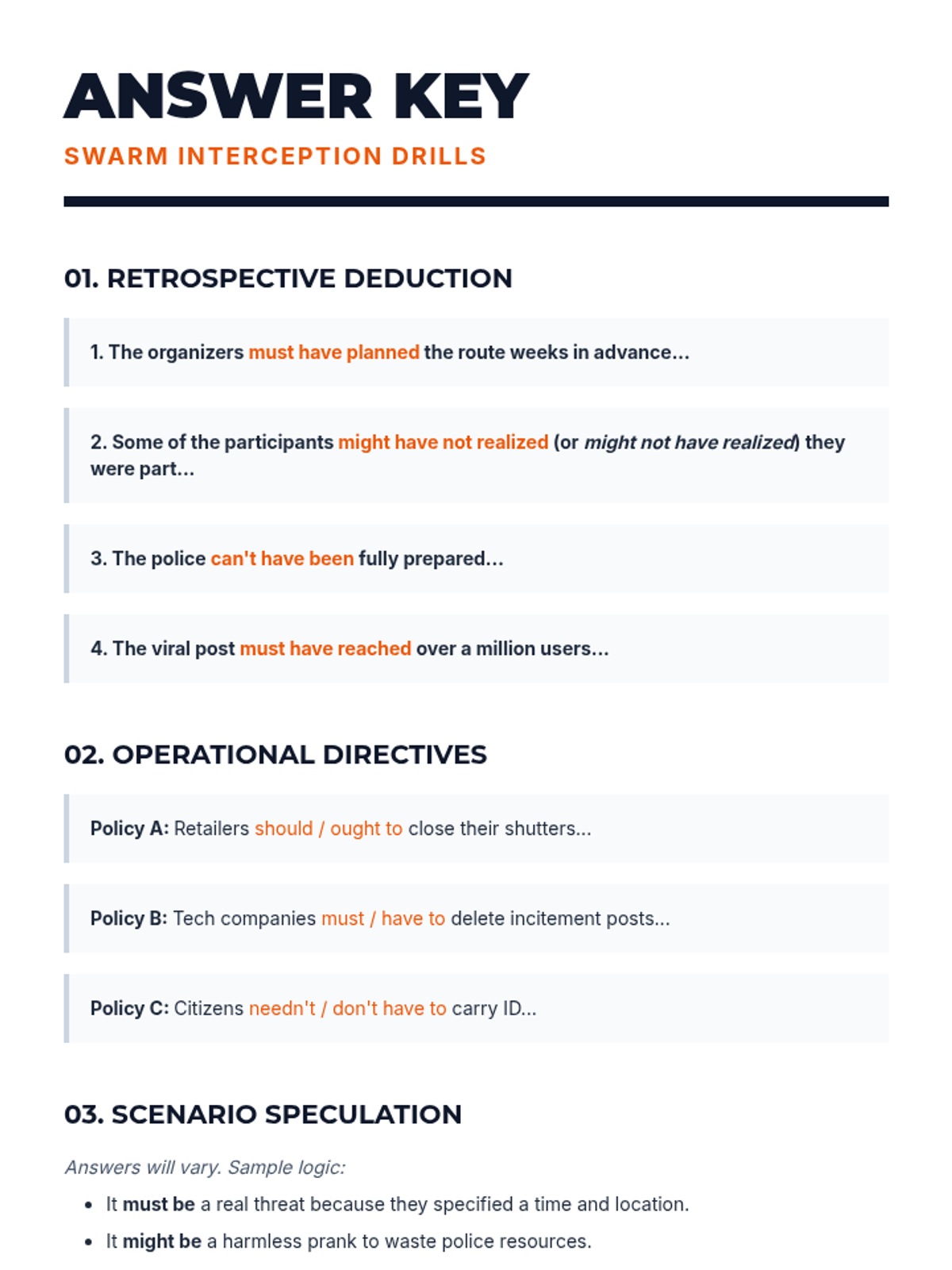
Answer key for the Swarm Interception Drills worksheet, providing correct modal verb forms and sample responses for the open-ended scenario.
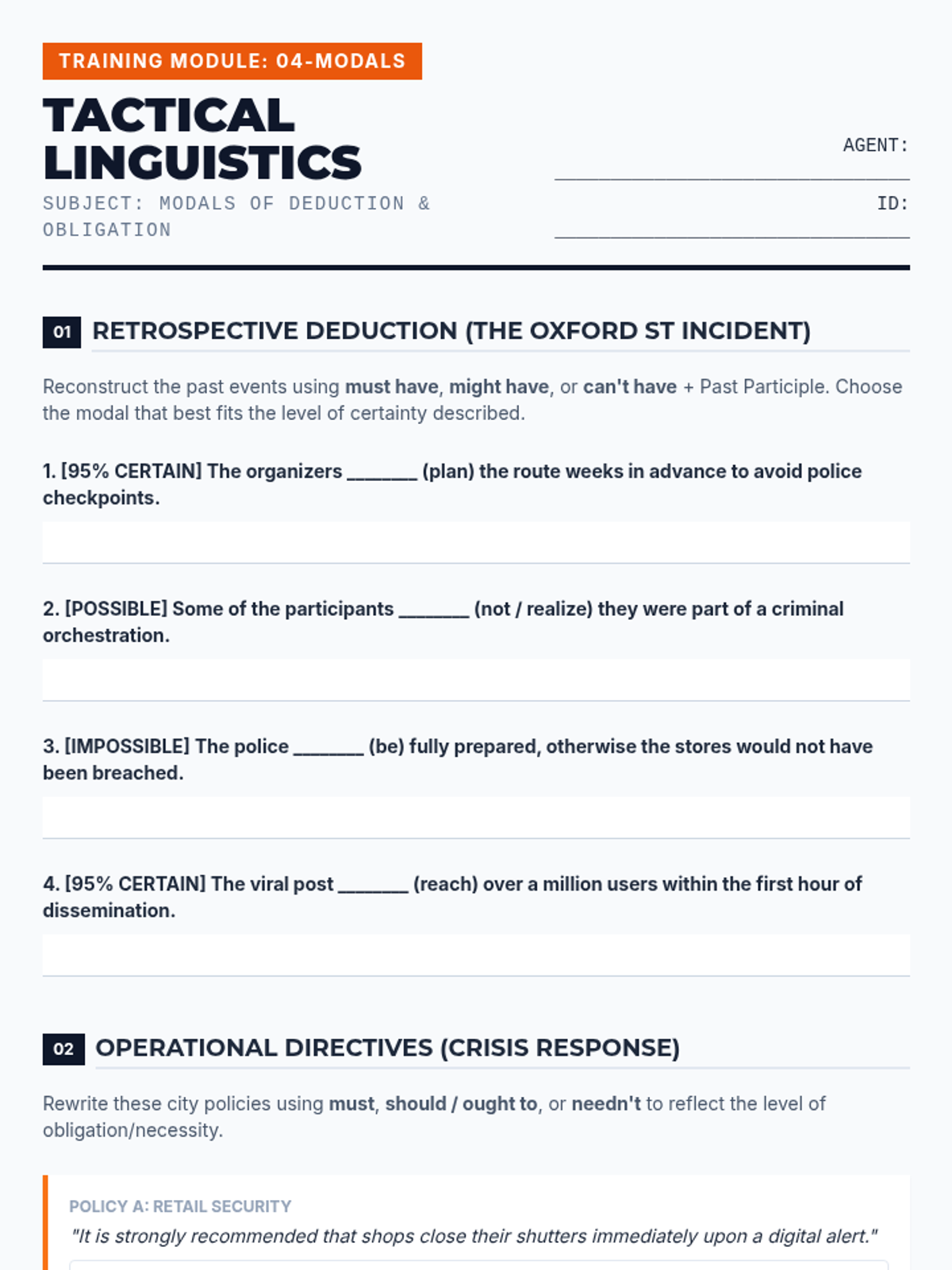
A grammar-focused worksheet providing structured practice with modals of deduction (past and present) and obligation in the context of the Digital Swarms scenario. Includes sentence transformation and scenario-based speculation tasks.
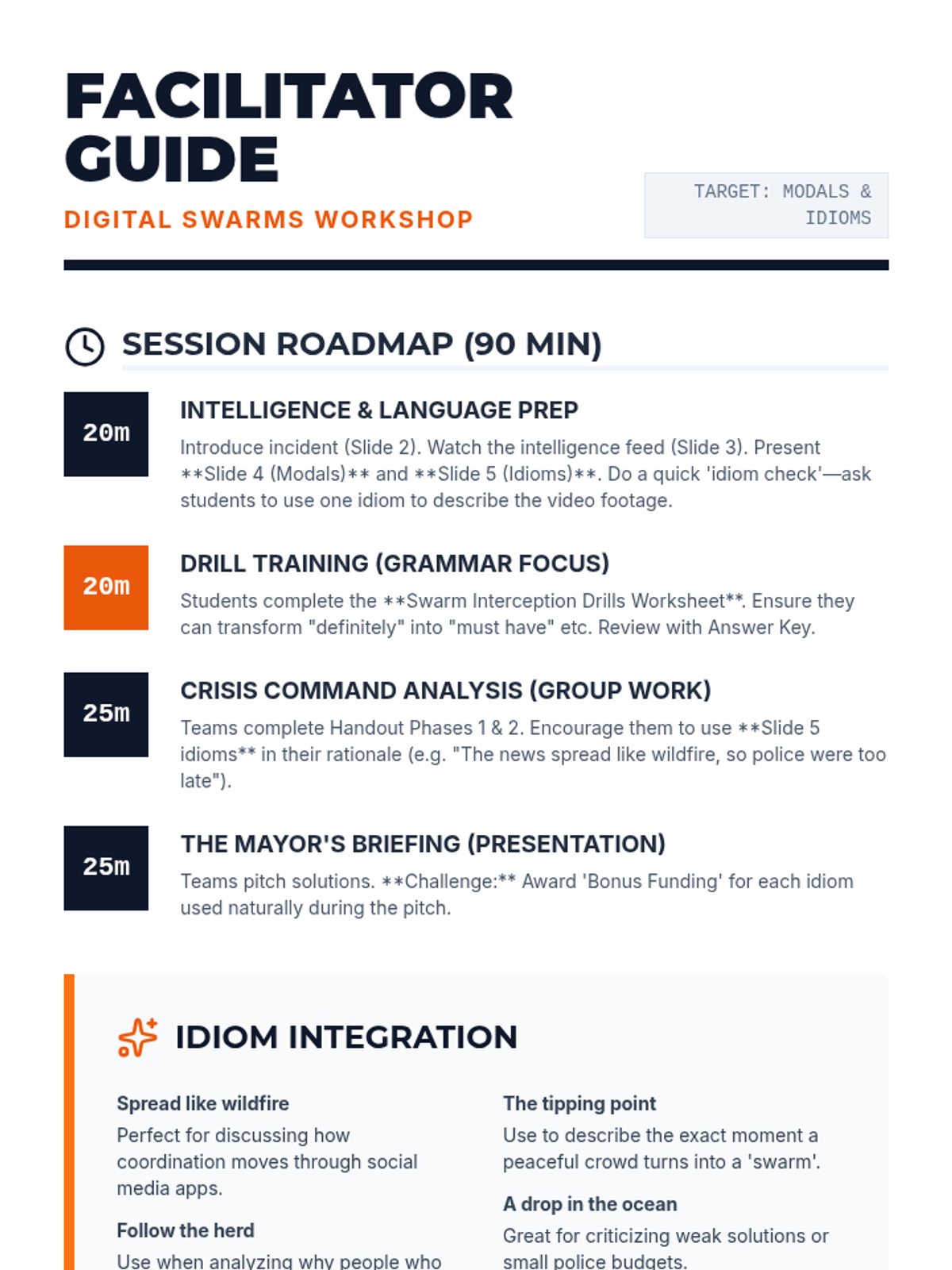
A comprehensive facilitation guide for the Digital Swarms workshop. It includes a timed lesson plan, B2+ assessment criteria, and questioning frameworks. It now features specific advice for integrating role-play cards and a stakeholders town-hall debate.
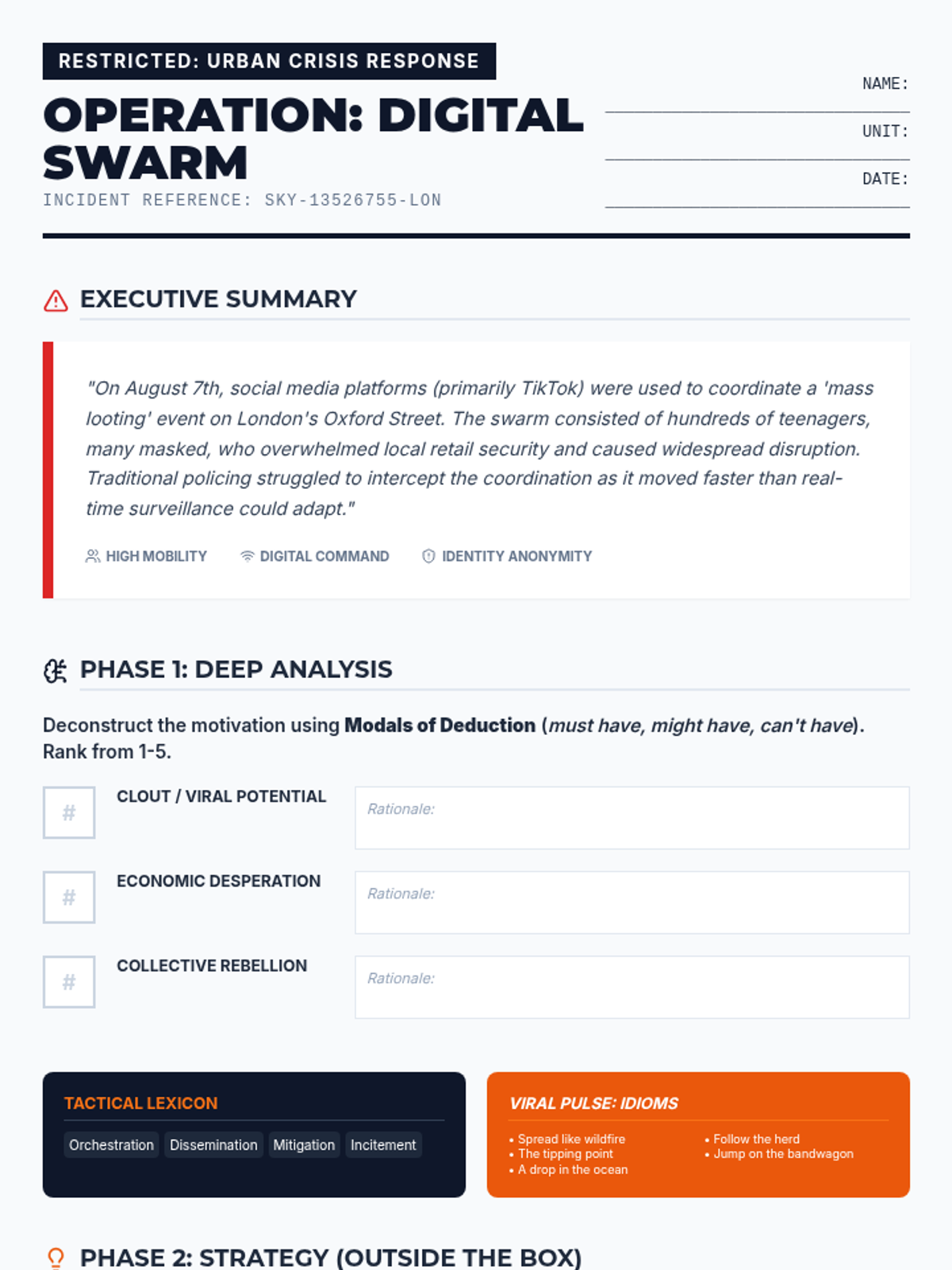
A two-page 'Crisis Brief' handout for students. It includes a case study summary, space for motivation analysis, creative strategy brainstorming with 'wildcard' prompts, and high-level vocabulary support. Layout is optimized for writing and visual clarity. It now includes a dedicated reference for idioms in the tactical sidebar.
An immersive presentation for a B2+ speaking workshop based on the TikTok flash mob news. It now includes a dedicated 'Viral Pulse' slide with five relevant idioms (Spread like wildfire, Follow the herd, Jump on the bandwagon, etc.) to help students elevate their speaking score.
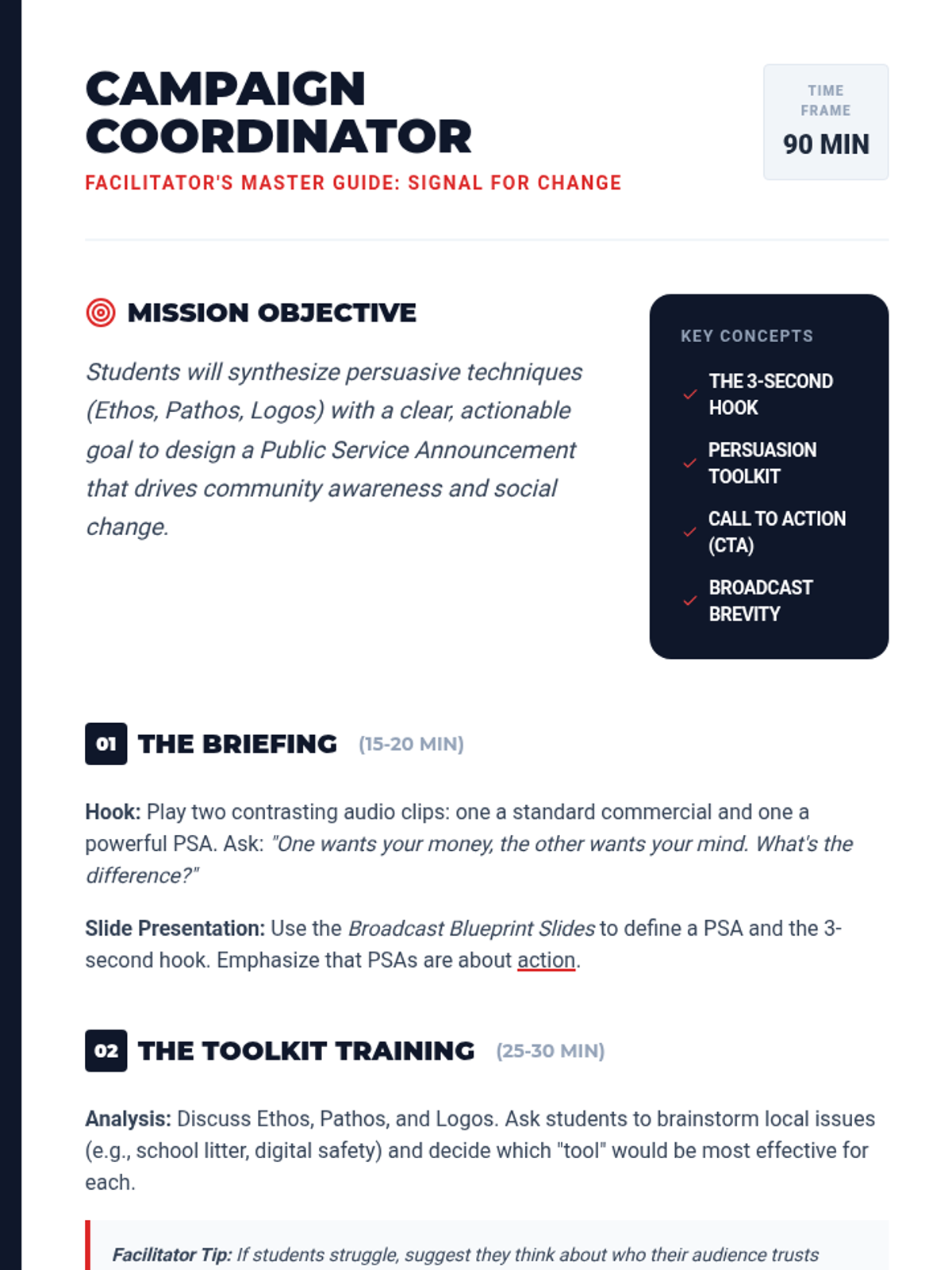
A comprehensive facilitator guide for teachers, providing a step-by-step lesson flow, discussion prompts, differentiation strategies, and extension activities for the PSA creation unit.
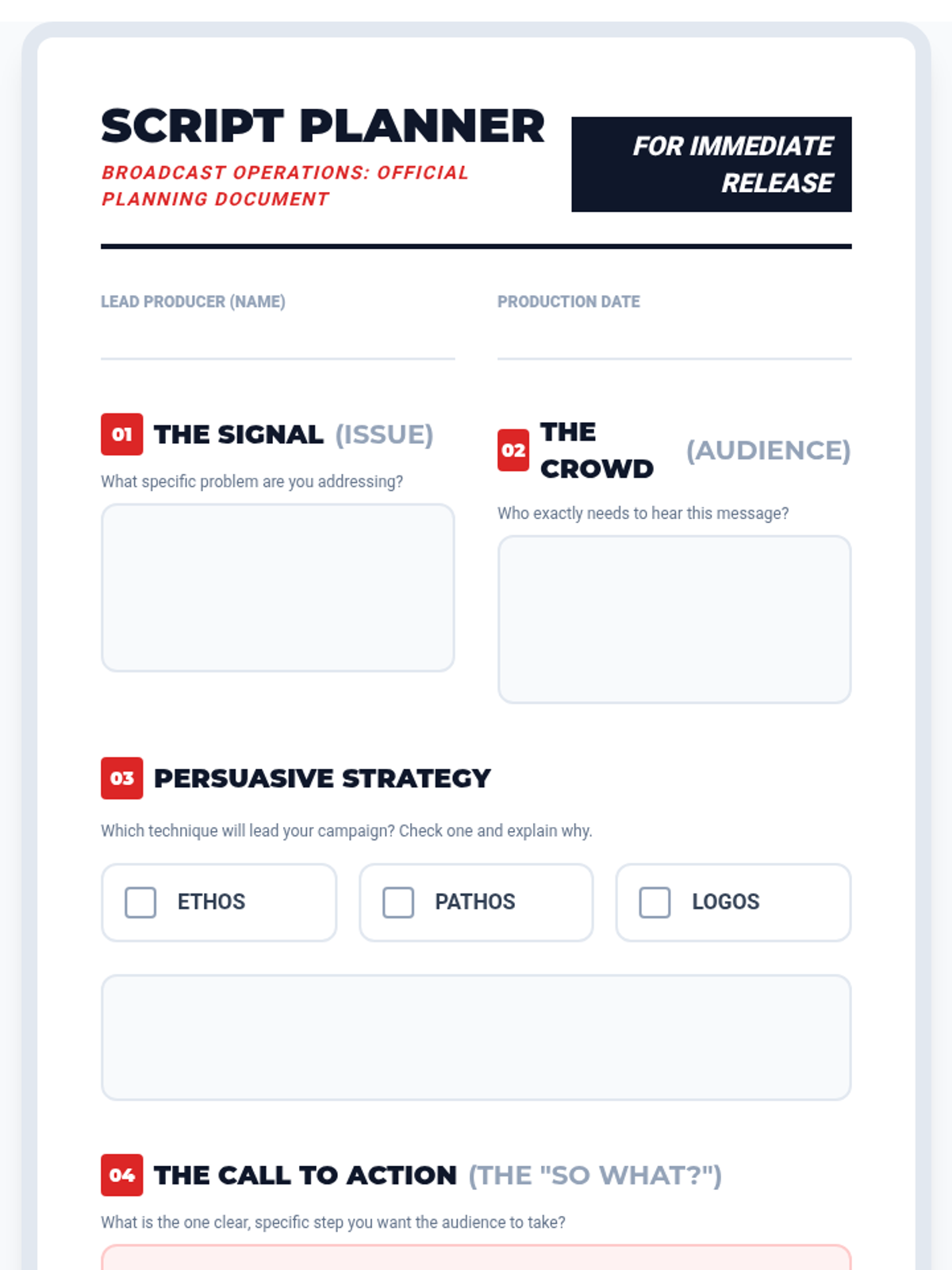
A structured script-planning worksheet for students to develop their PSA from initial concept through a timed script draft, featuring dedicated sections for the hook, core message, and call to action.
A dynamic visual presentation for introducing the core components of a Public Service Announcement, including the 3-second hook, Ethos/Pathos/Logos, and crafting a powerful Call to Action.
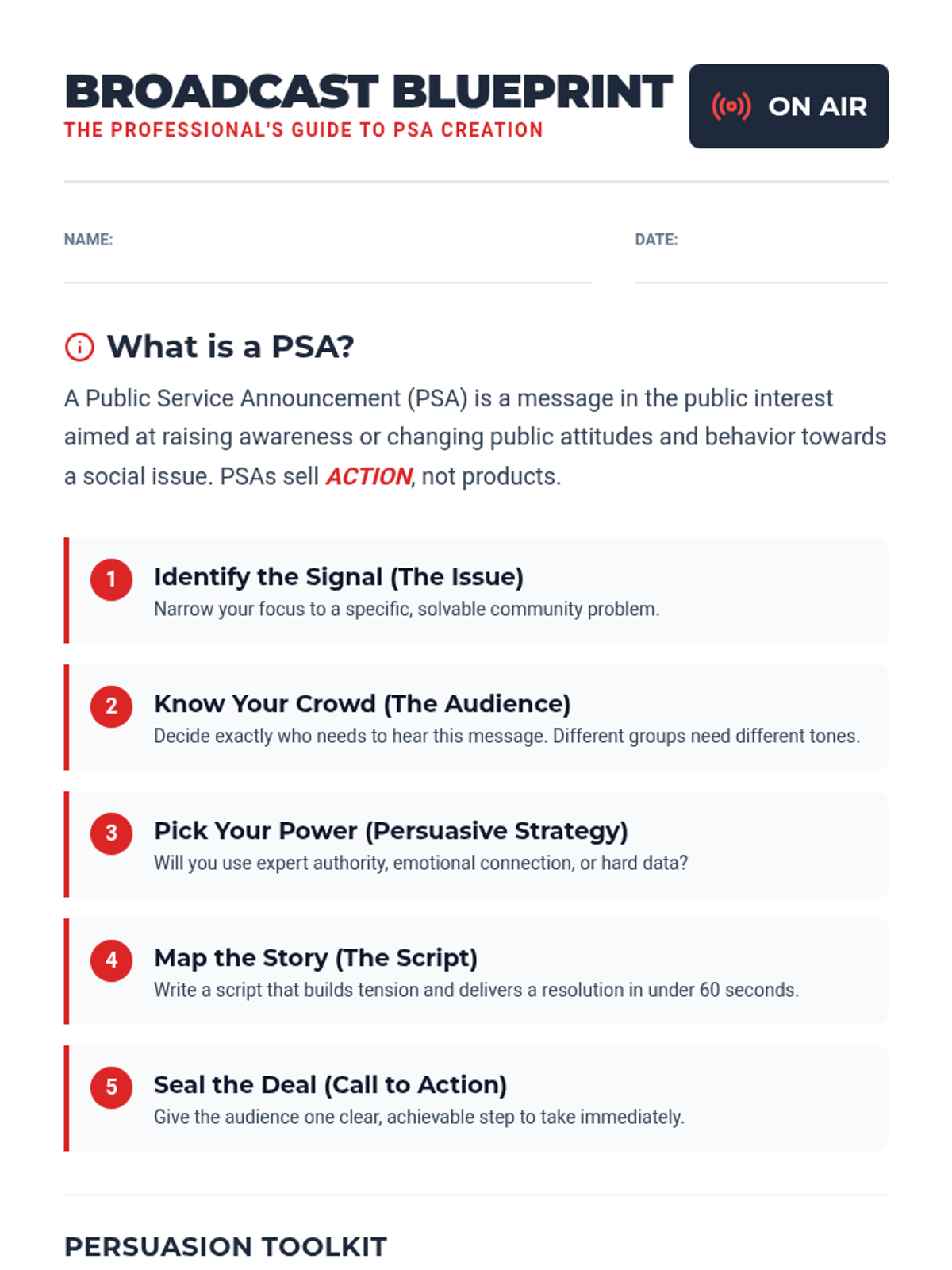
Updated instructional guide for students on creating Public Service Announcements, now featuring the full 5-step process, persuasion toolkit (Ethos, Pathos, Logos), and a production checklist.
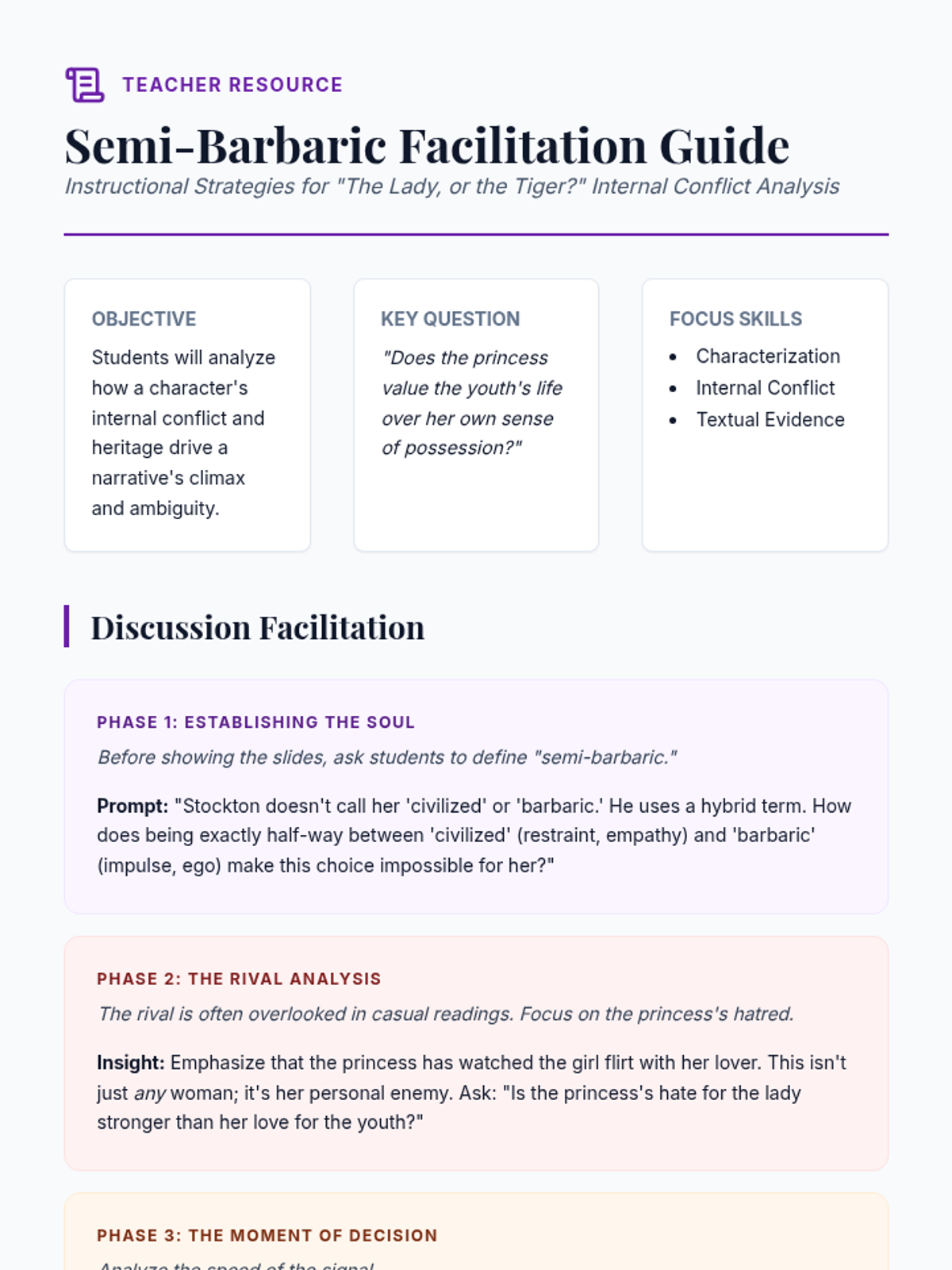
A comprehensive facilitation guide for teachers, providing structured discussion phases, differentiation strategies, and insights into common student misconceptions regarding the princess's motivations.
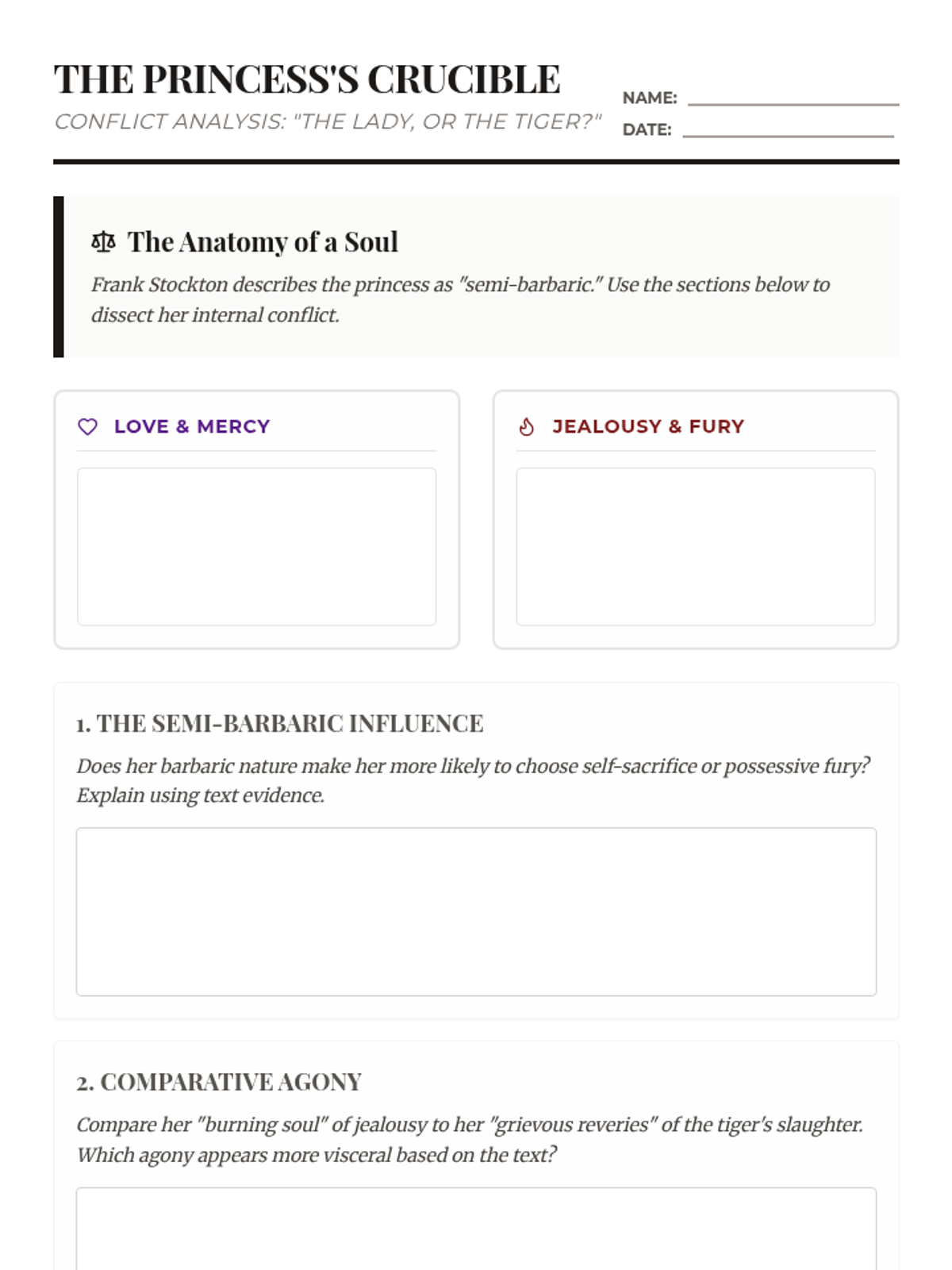
A structured worksheet for students to map out the princess's dual internal conflicts. It includes graphic organizers for Love vs. Hate and deep-dive analytical questions requiring textual evidence.
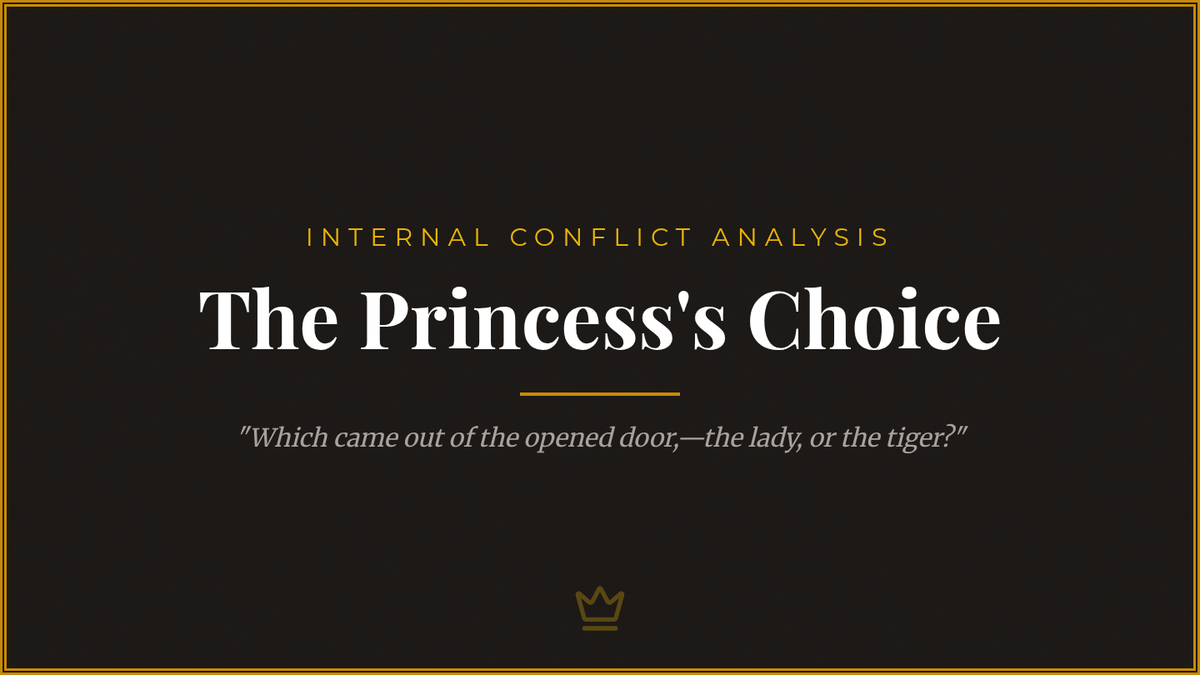
A visually striking presentation designed to facilitate a high-level discussion on the princess's internal conflict. It features key quotes, analytical prompts, and thematic slides focusing on jealousy, barbarism, and the final decision.
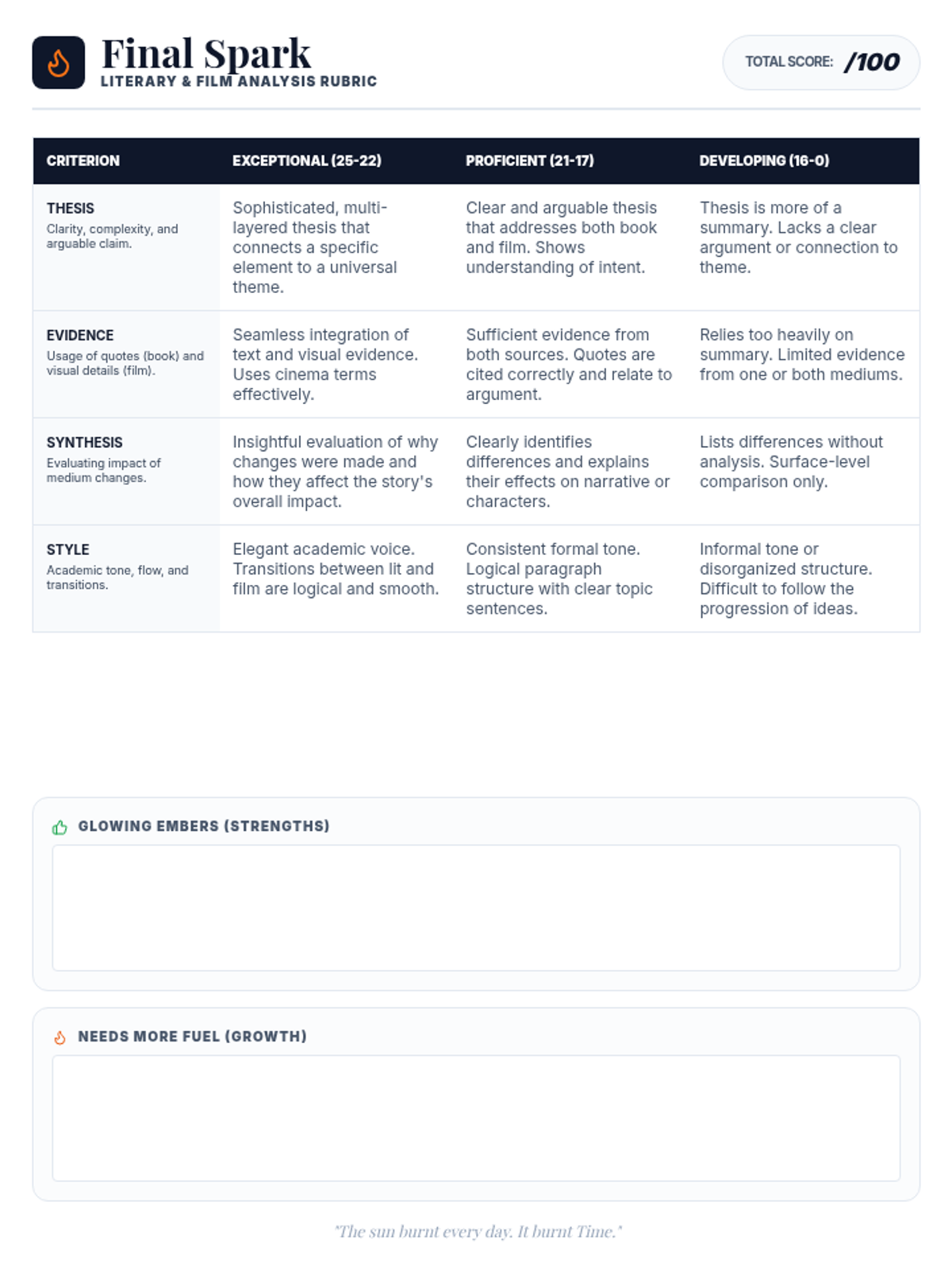
A detailed literary and film analysis rubric for Fahrenheit 451, evaluating thesis strength, evidence usage, and synthesis across mediums. Revised to fit onto one page with improved feedback space.
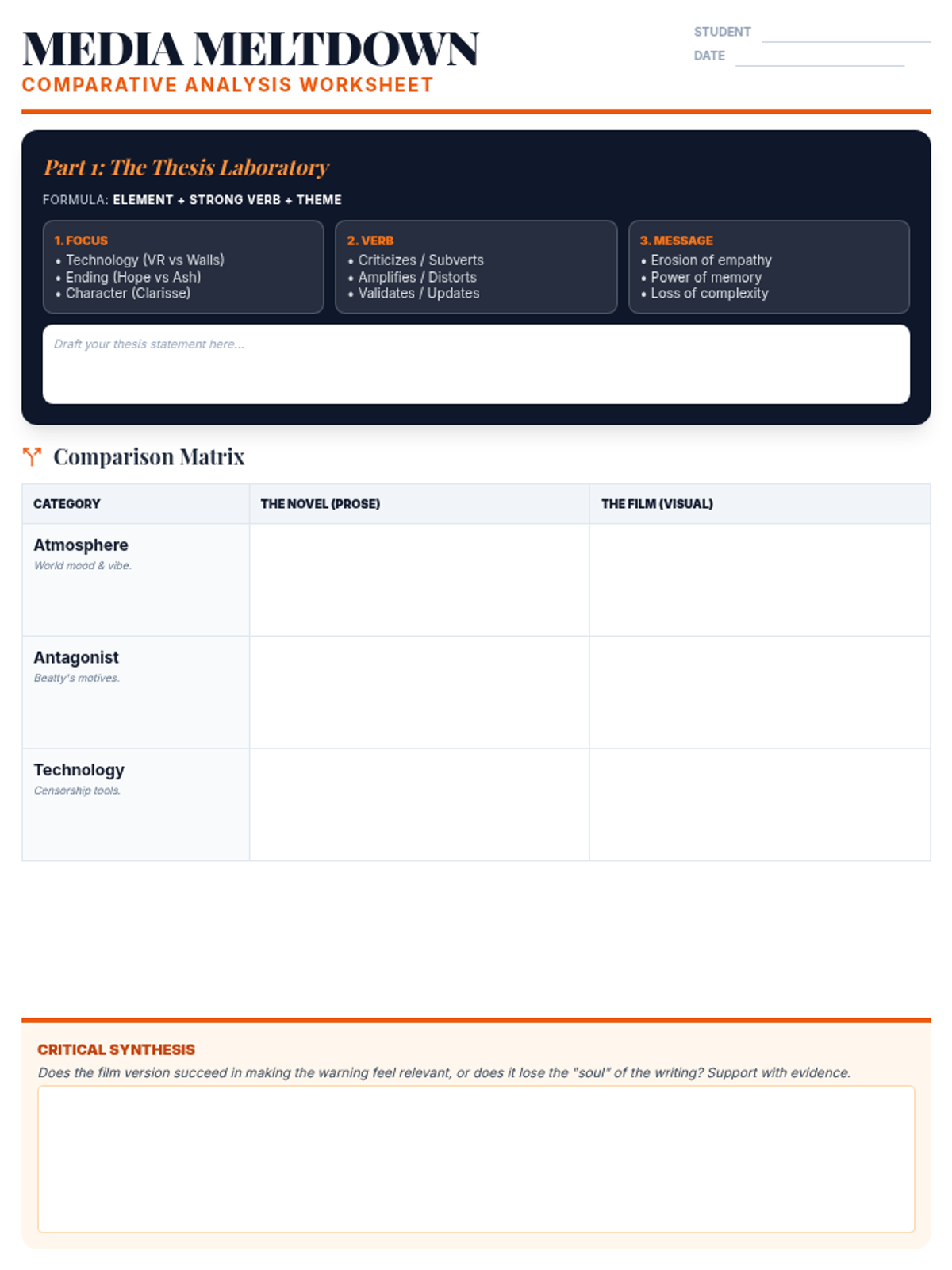
A comparative analysis worksheet for Fahrenheit 451, featuring a thesis statement workshop area and a detailed book-vs-film comparison matrix. Revised to fit onto one page and remove raw markdown syntax.
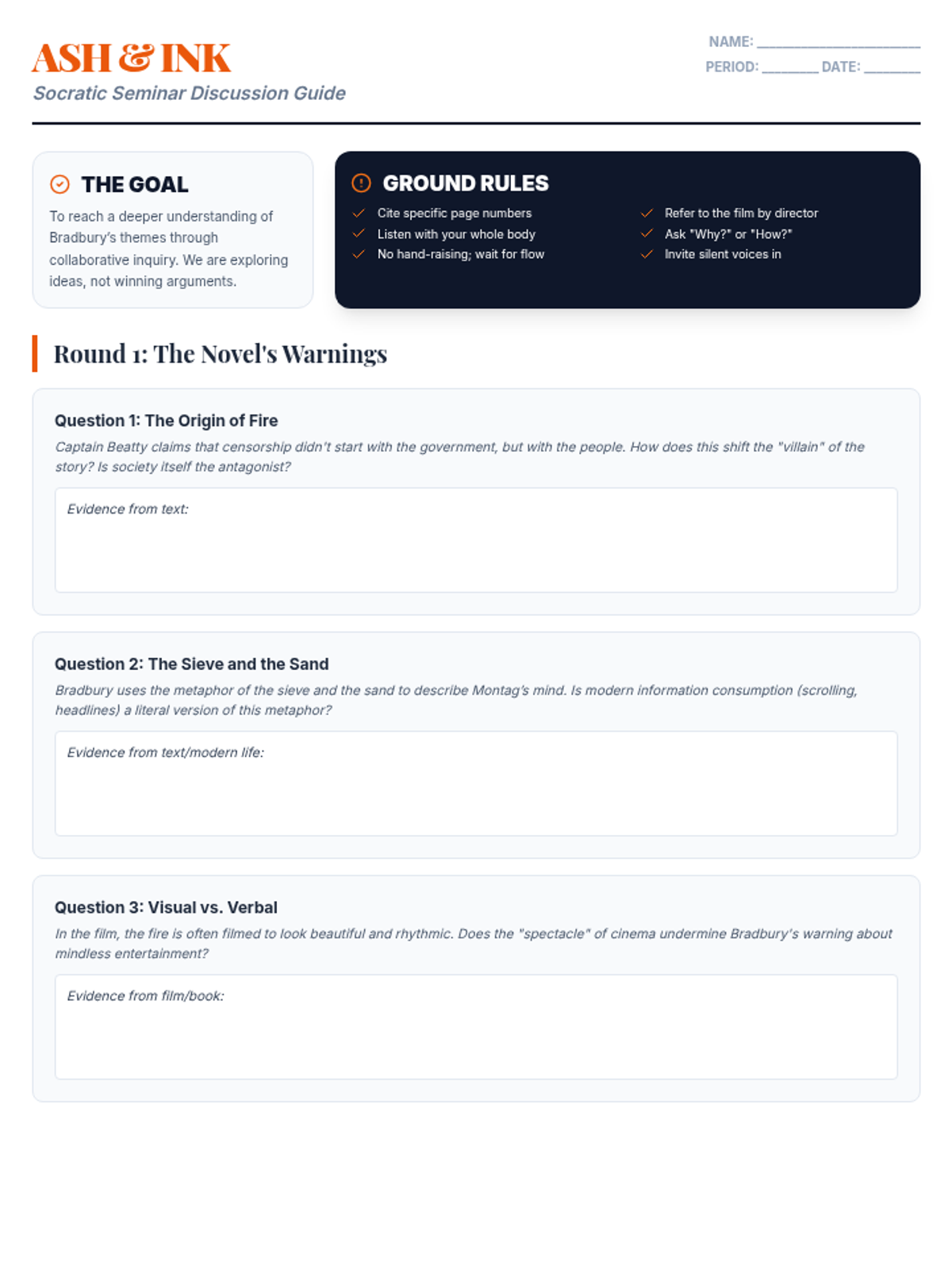
A structured Socratic Seminar guide for Fahrenheit 451, including prep questions, seminar rules, and a self-evaluation log. Revised to consolidate layout onto two pages and improve student work areas.
A visually striking slide deck for Fahrenheit 451, including core conflicts, page-to-screen comparisons, a thesis statement workshop, and deep discussion prompts. Revised for better PDF rendering and clarity.
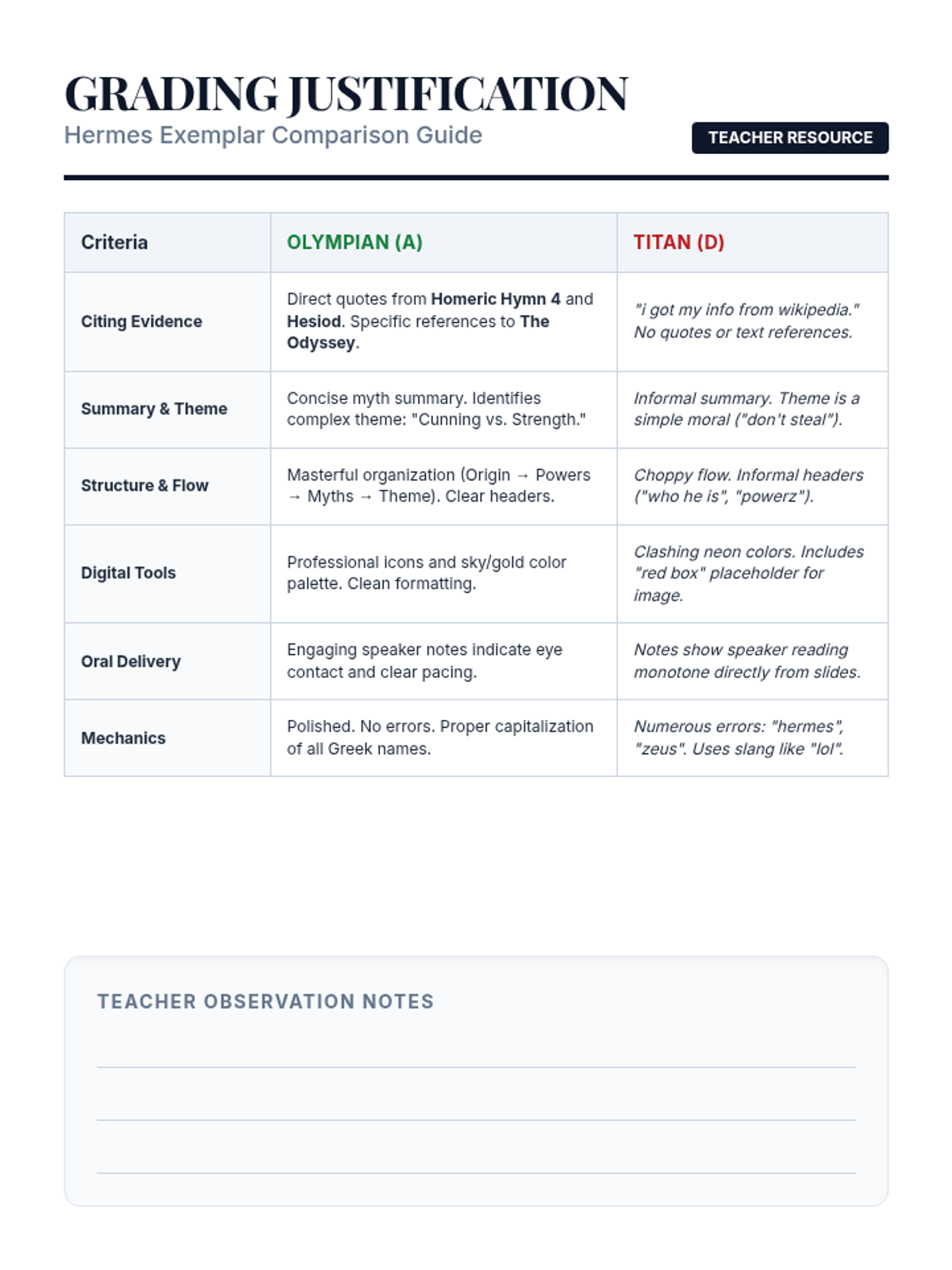
A teacher-facing guide that justifies the grades for the Olympian and Titan exemplars using the provided rubric, complete with discussion prompts for student analysis.
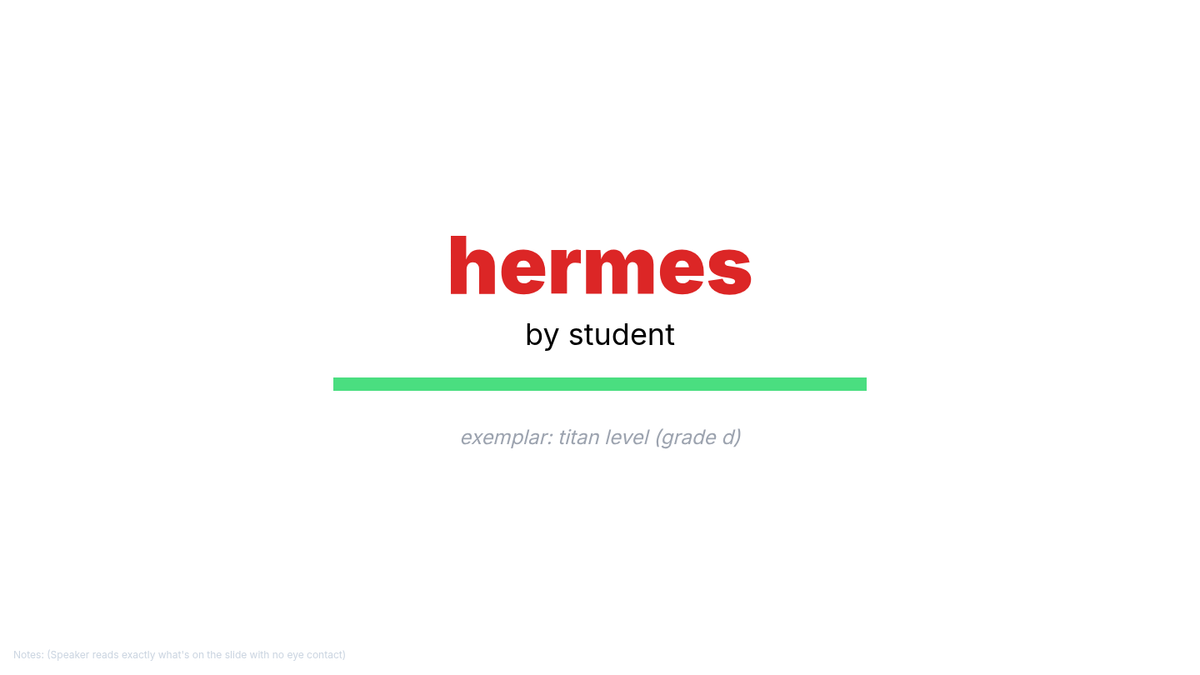
A low-achieving (D) exemplar presentation on the Greek god Hermes, featuring poor organization, lack of evidence, informal language, spelling errors, and minimal effort in design.
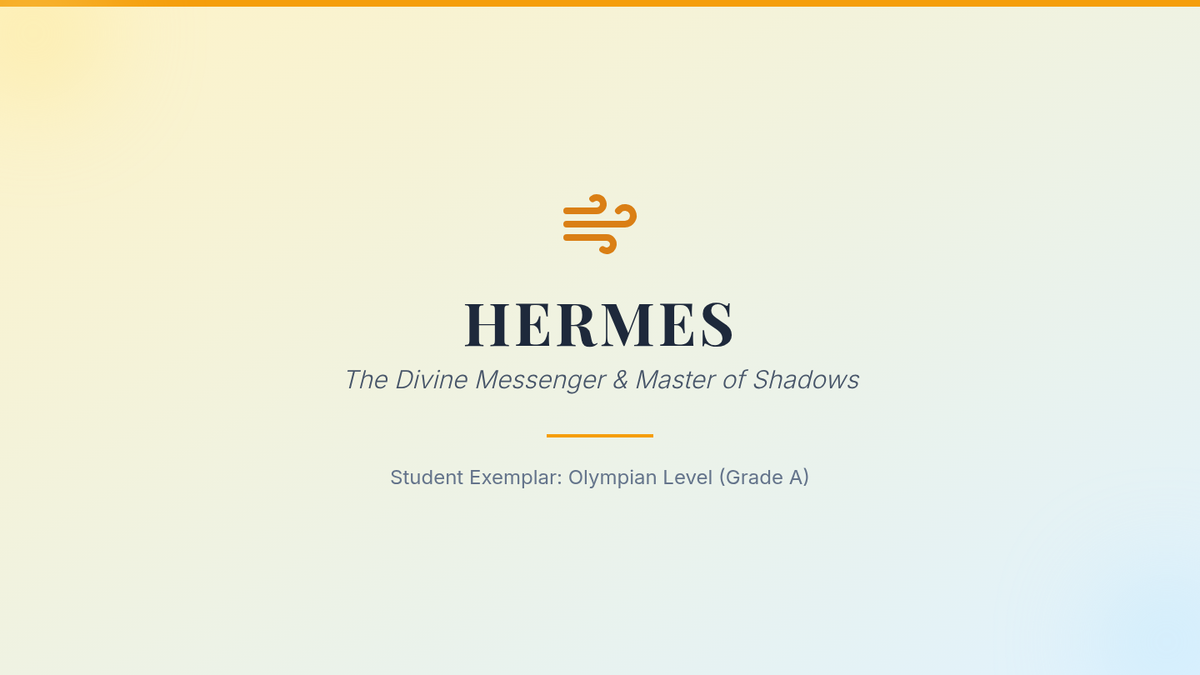
An updated high-achieving (A) exemplar presentation on Hermes, now including an embedded multimedia video summary to demonstrate mastery of digital tools.
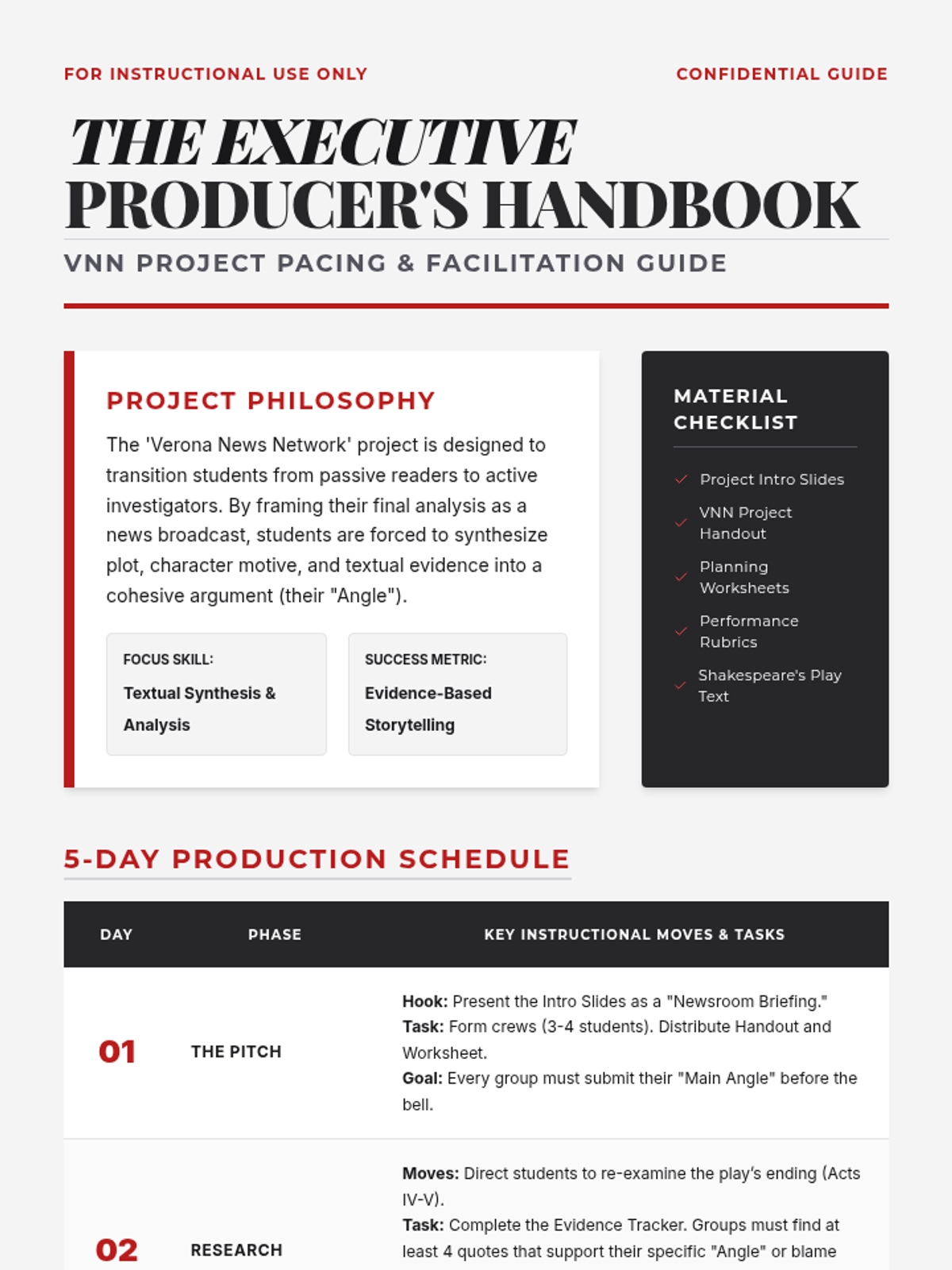
A comprehensive teacher pacing guide for the 'Verona News Network' project, providing a day-by-day production schedule and facilitation tips.
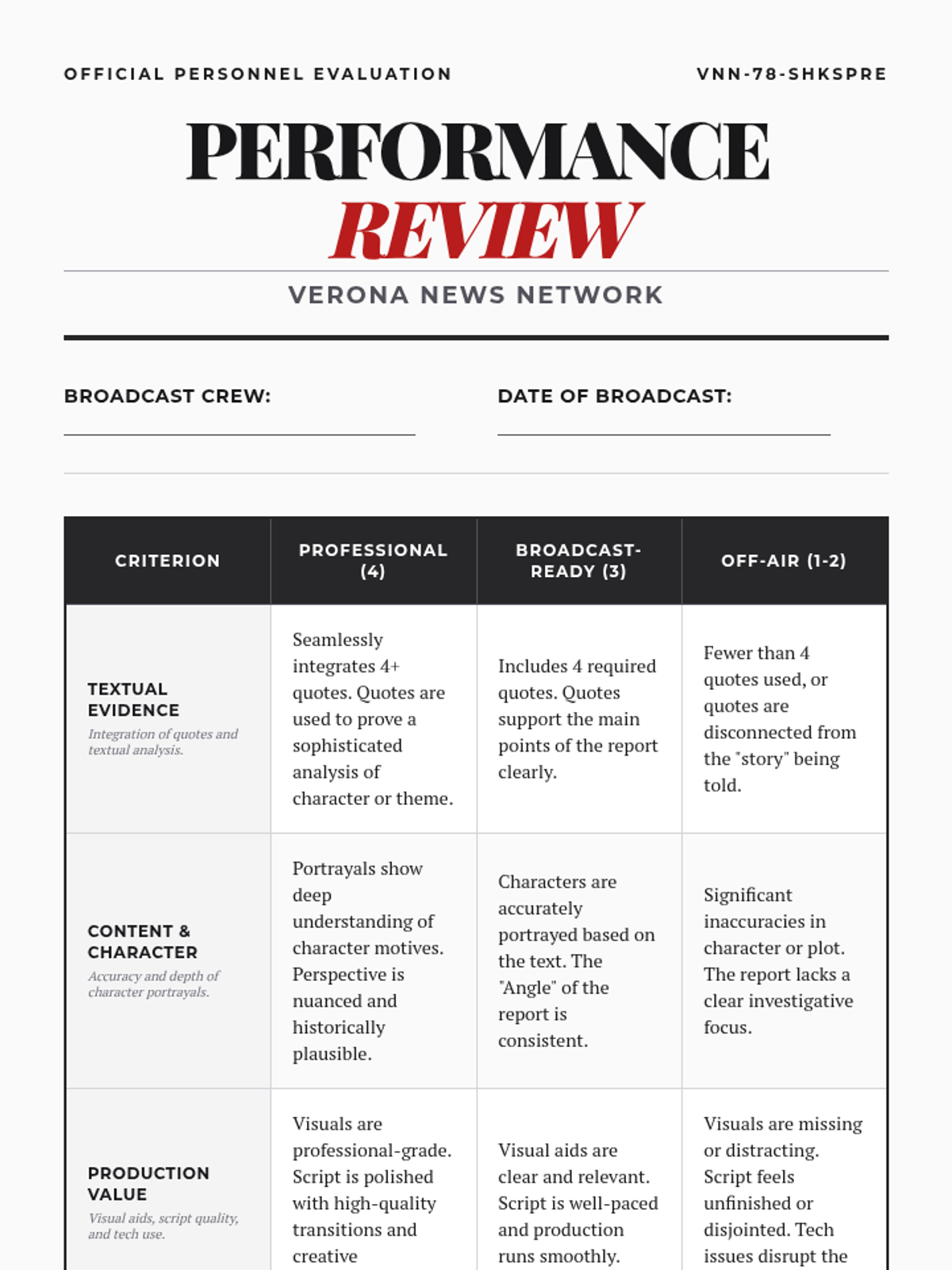
A collaborative project rubric for the 'Verona News Network' assignment, evaluating textual evidence, characterization, production quality, and presentation skills.
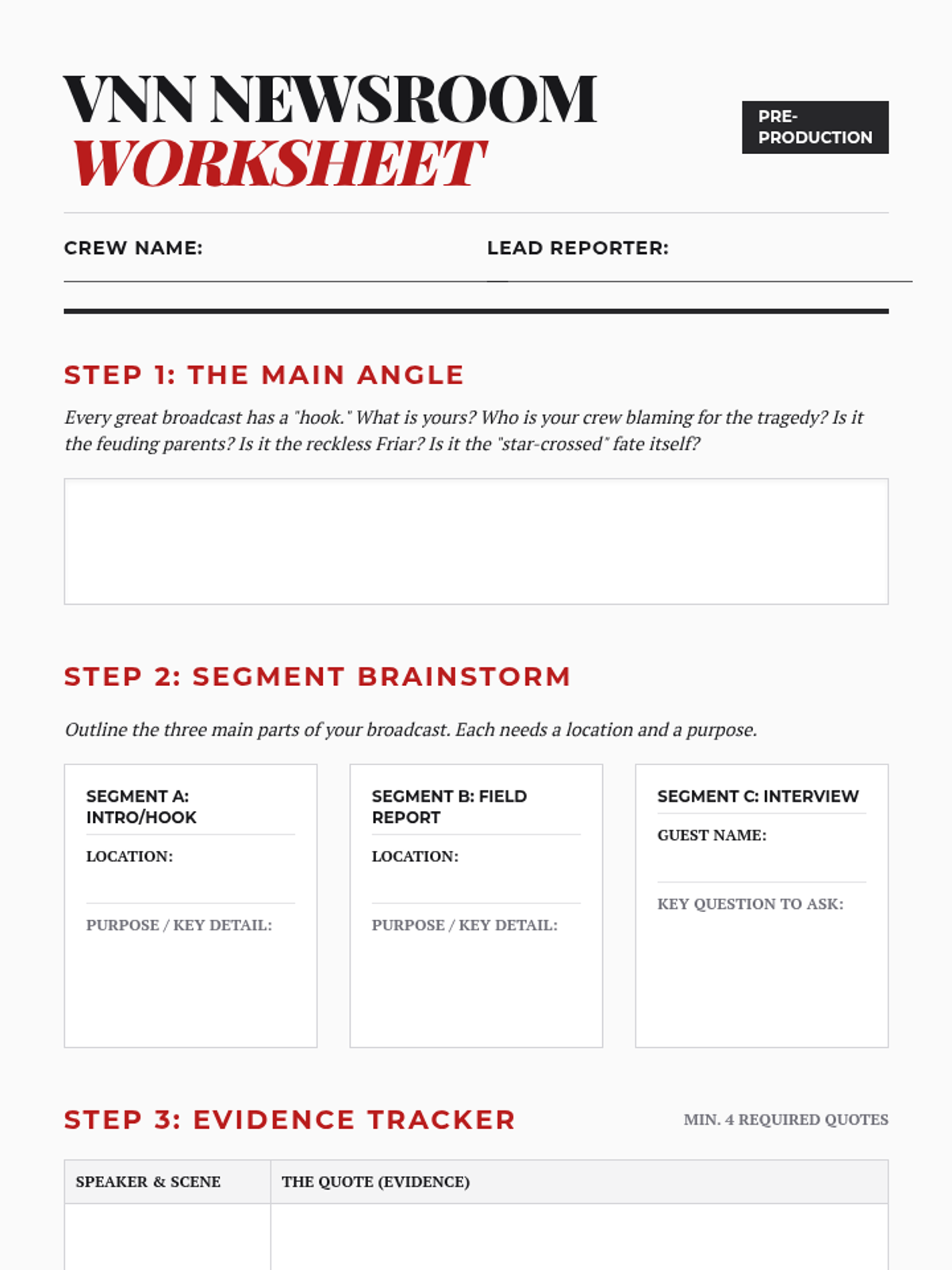
A group planning worksheet for the 'Verona News Network' project, providing structured space for students to brainstorm their broadcast's angle, segments, and textual evidence.
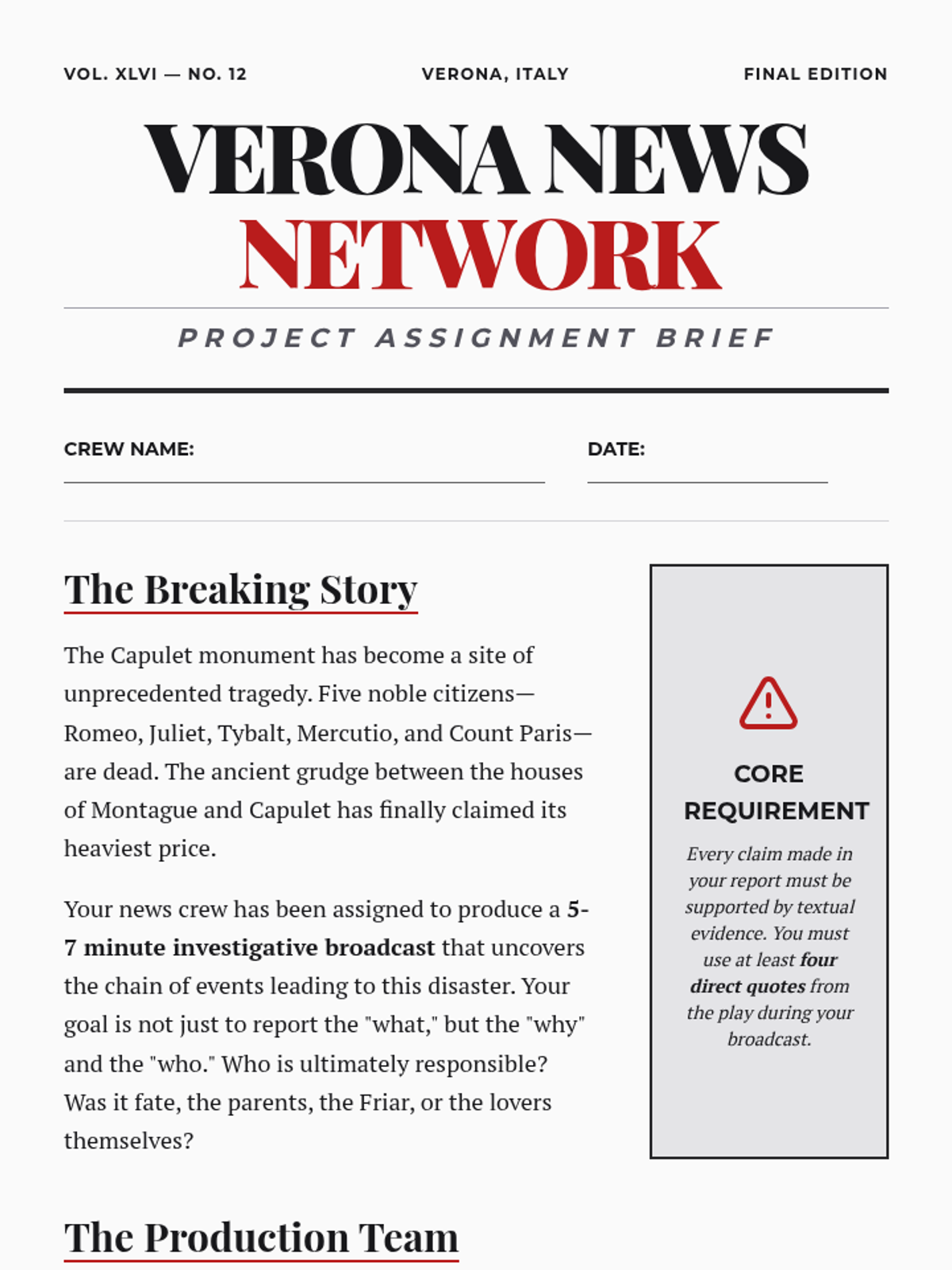
A student-facing project handout outlining the 'Verona News Network' assignment, including role descriptions, core requirements, and a final checklist.
Introductory presentation slides for the 'Verona News Network' project, outlining the premise, roles, timeline, and final requirements for a 10th-grade class.
A professional 10-slide presentation to introduce the environmental research process. It walks students through five core research questions, the importance of stakeholders, and strategies for planning counterclaims and rebuttals.
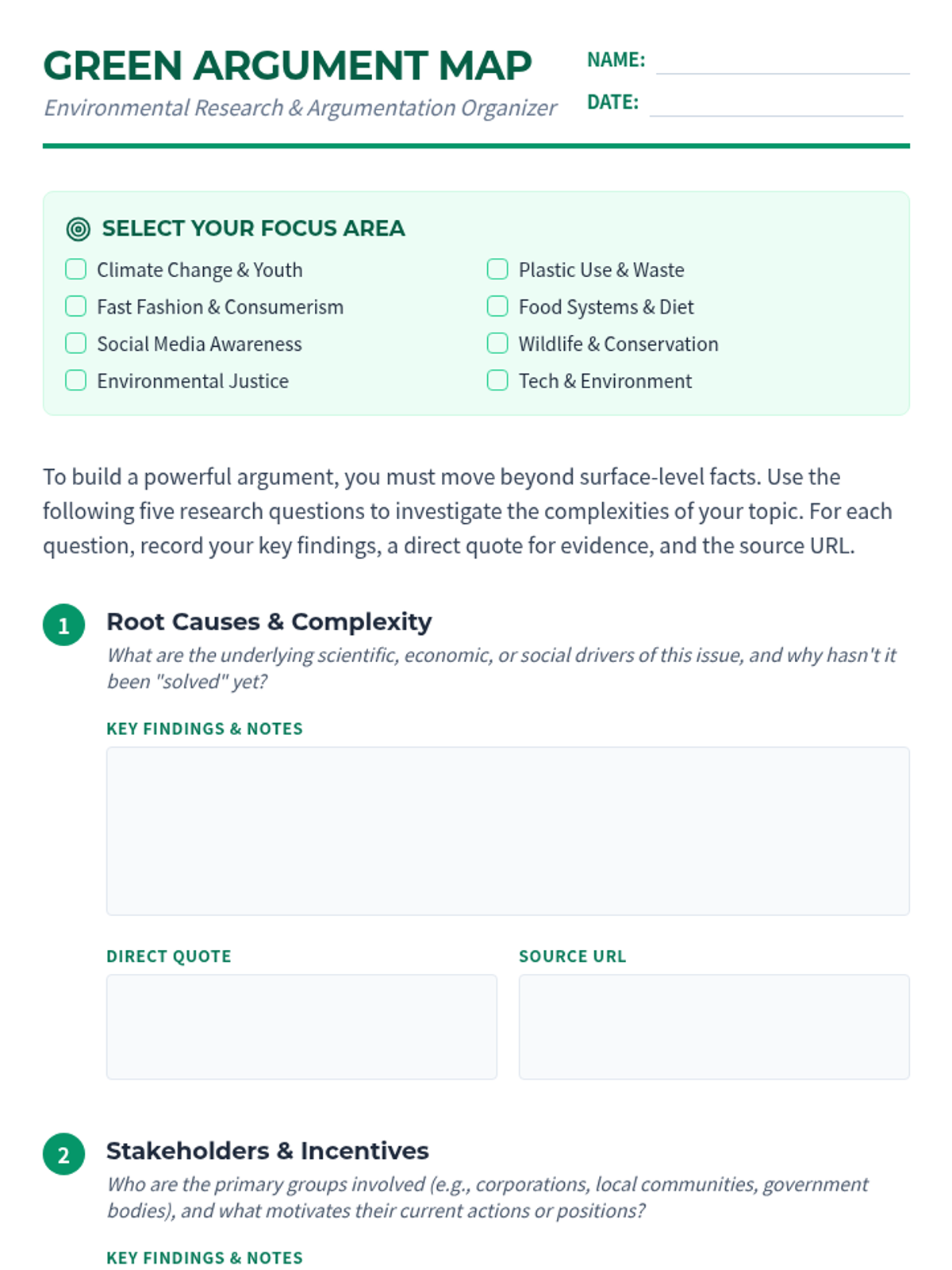
A detailed 3-page graphic organizer for 10th-grade students to conduct in-depth research on environmental topics. It includes structured sections for five critical research questions, direct quotes, source URLs, and a dedicated space for counterclaim and rebuttal planning.
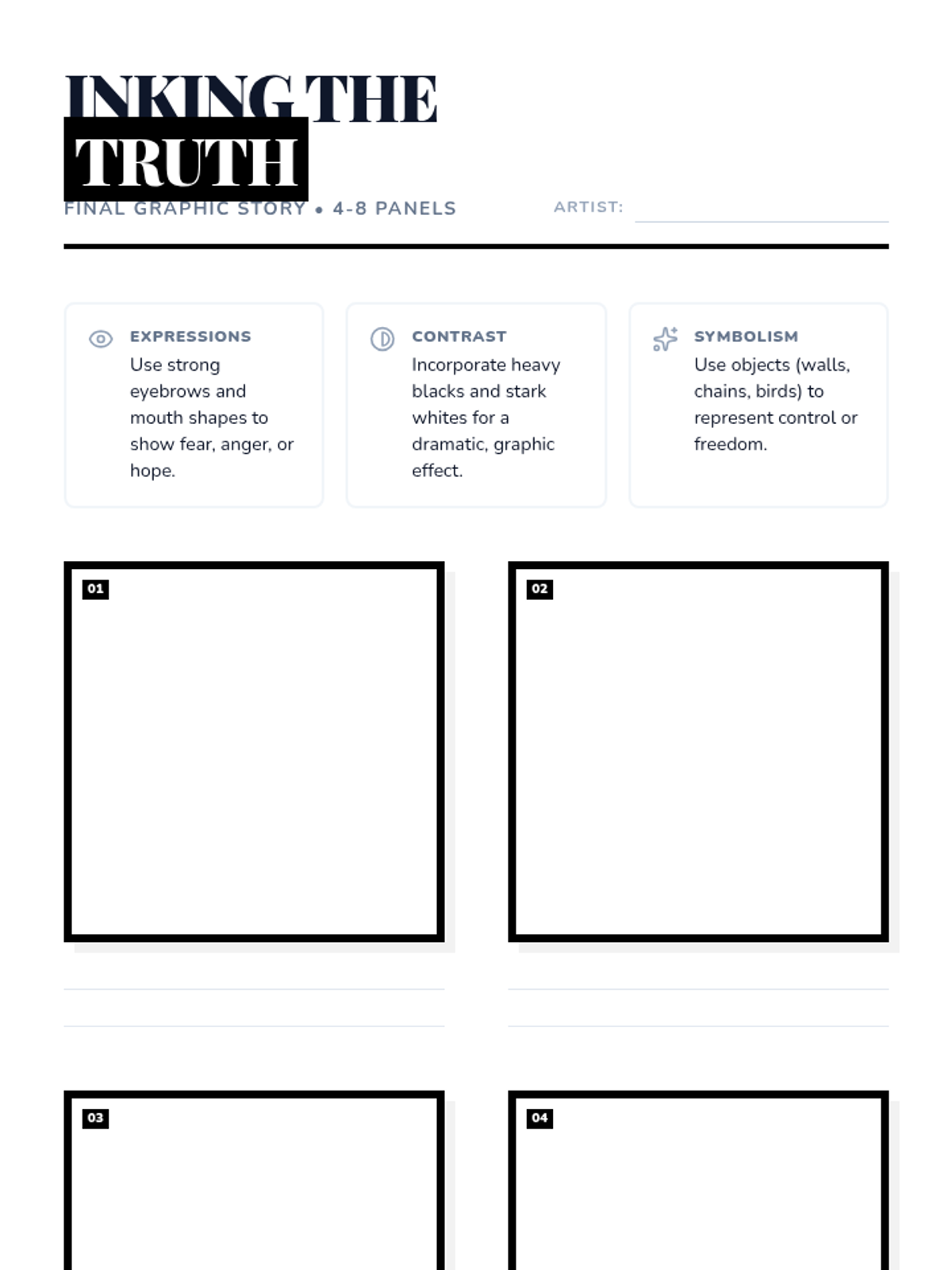
Visual guidelines and rubric expectations for the final graphic story project, including style tips for expressions, contrast, and symbolism.
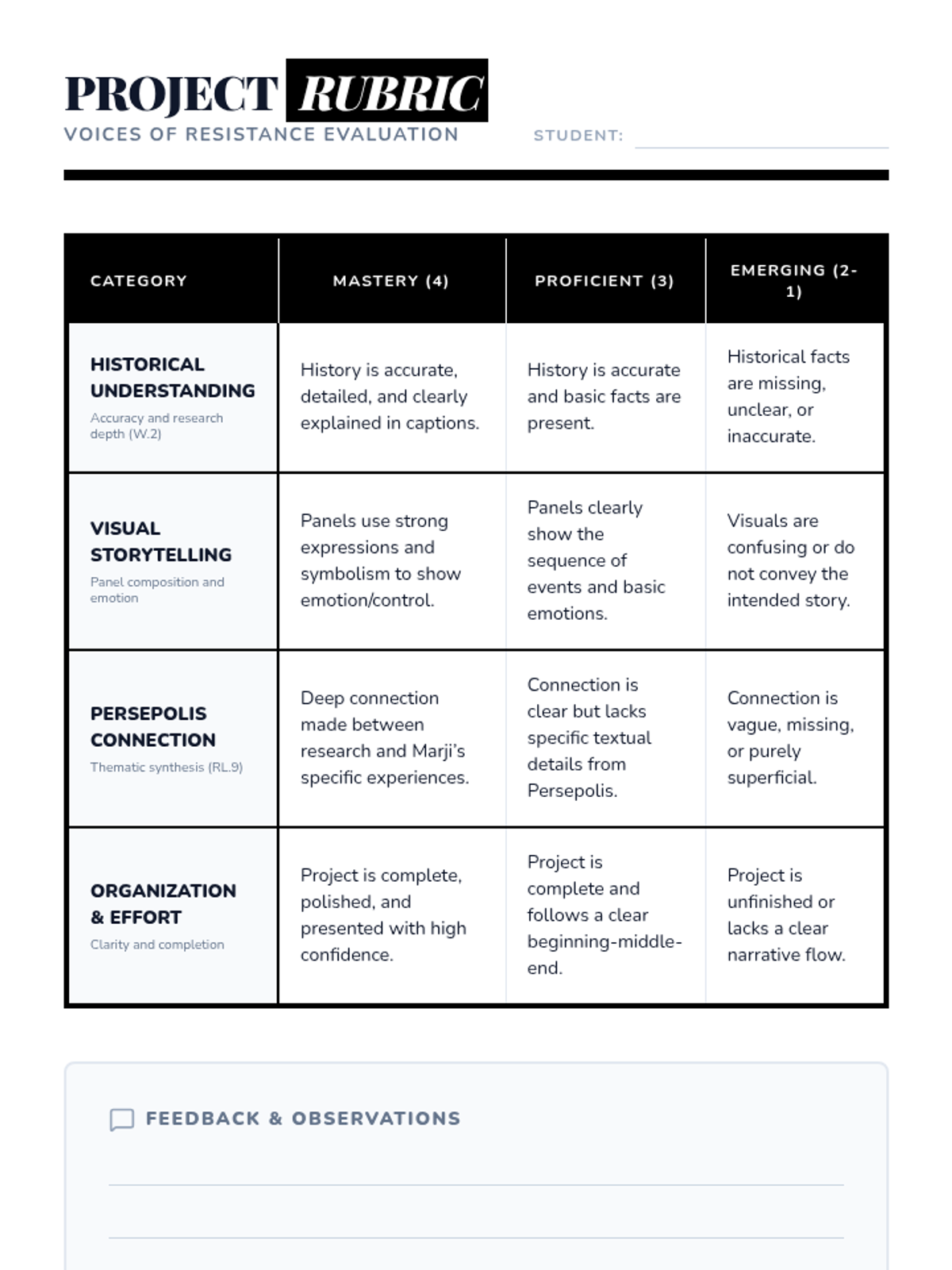
A comprehensive rubric for evaluating the Voices of Resistance project, covering historical understanding, visual storytelling, thematic connections to Persepolis, and overall organization.
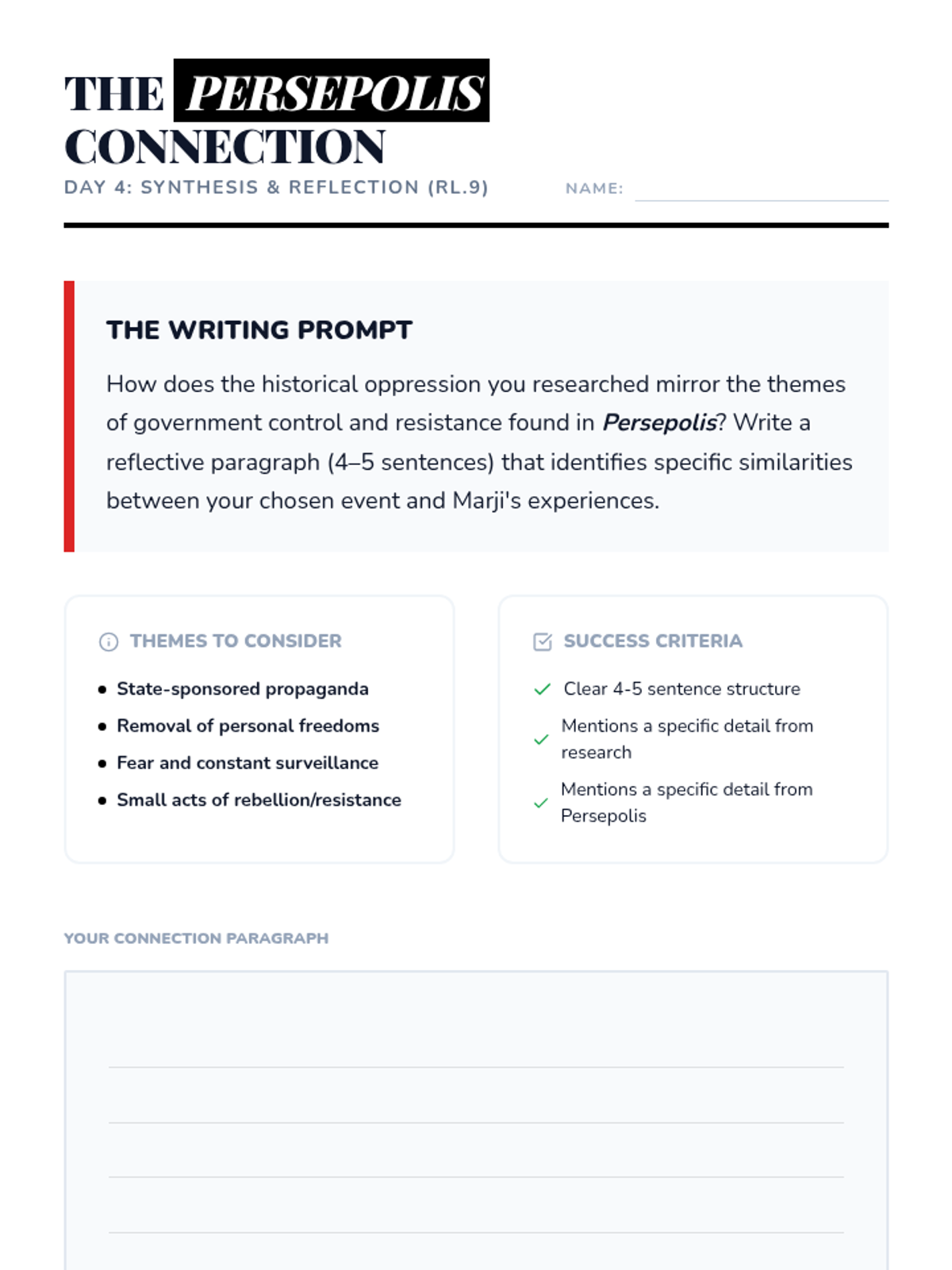
A reflection worksheet where students write a structured paragraph connecting their researched historical event to the themes of government control and resistance in Persepolis.
The final drawing template for the Voices of Resistance graphic story, featuring 8 blank panels with space for captions and visual style reminders.
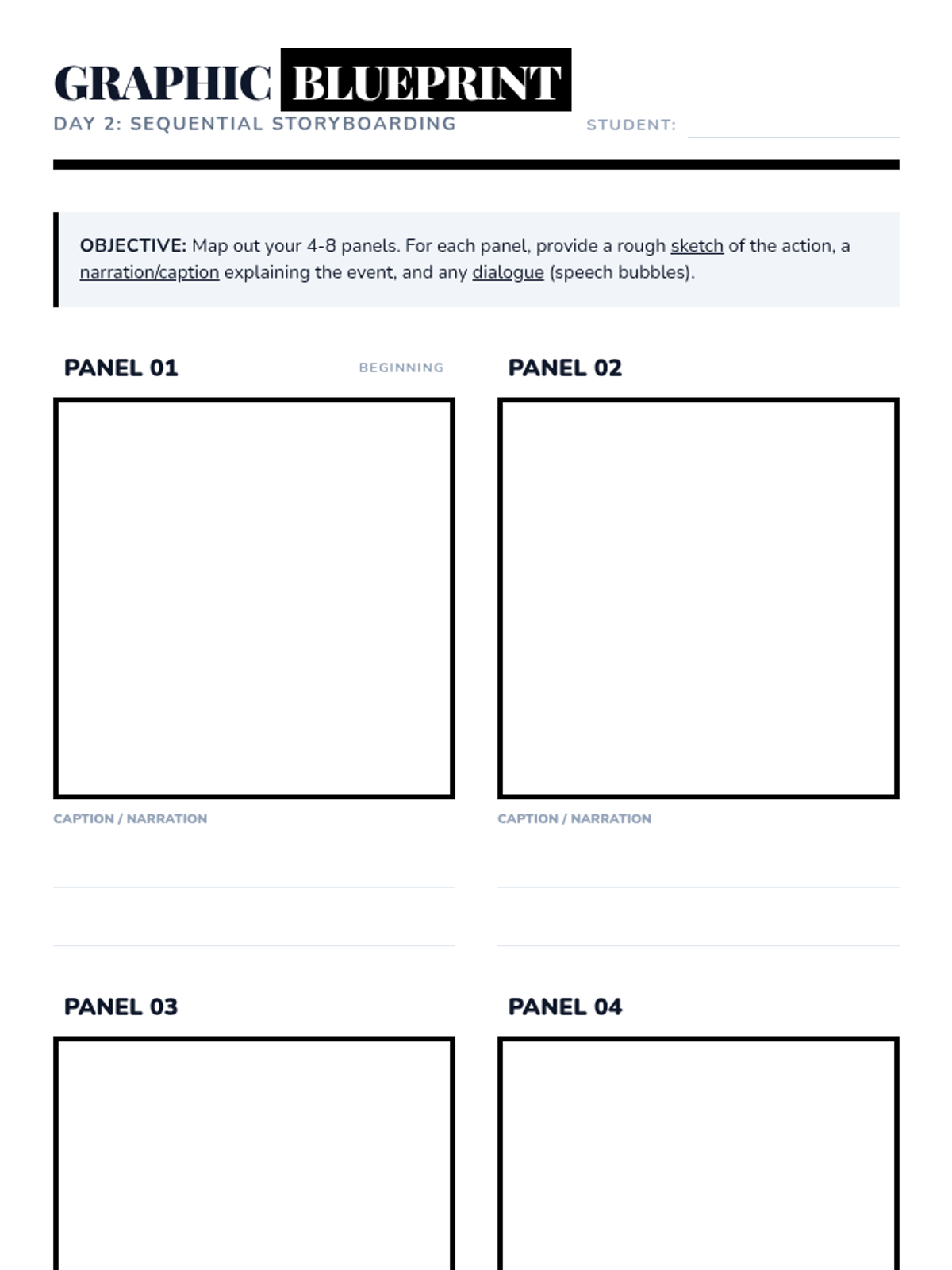
A structured storyboard template for students to plan the visual and narrative flow of their 8 graphic panels, including space for sketches and captions.
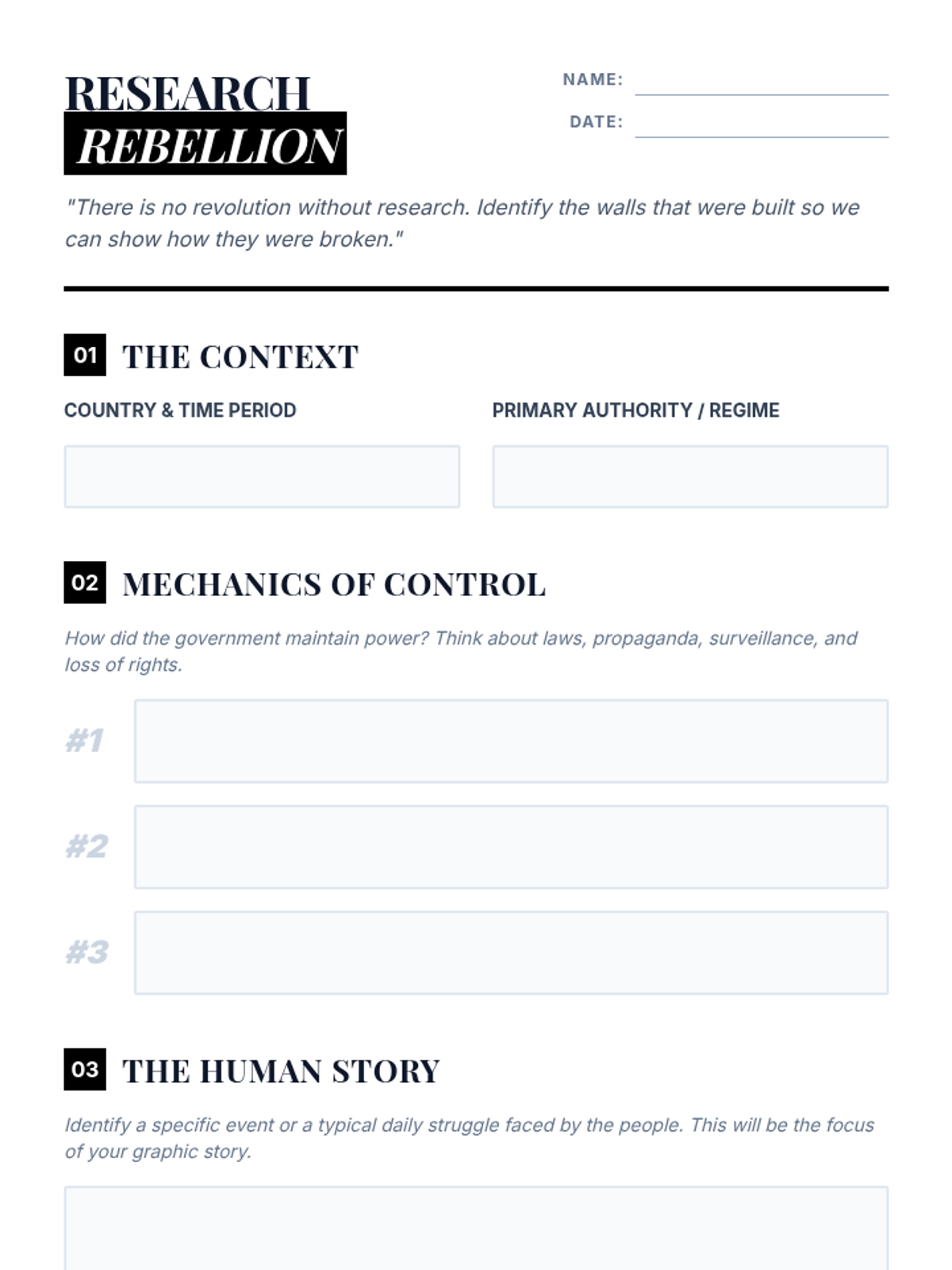
A research planning worksheet for students to document their chosen historical country, the methods of oppression used, and the specific events they will illustrate.
Introduction slides for the Voices of Resistance project, establishing the connection to Persepolis and outlining the project goals and themes of oppression.
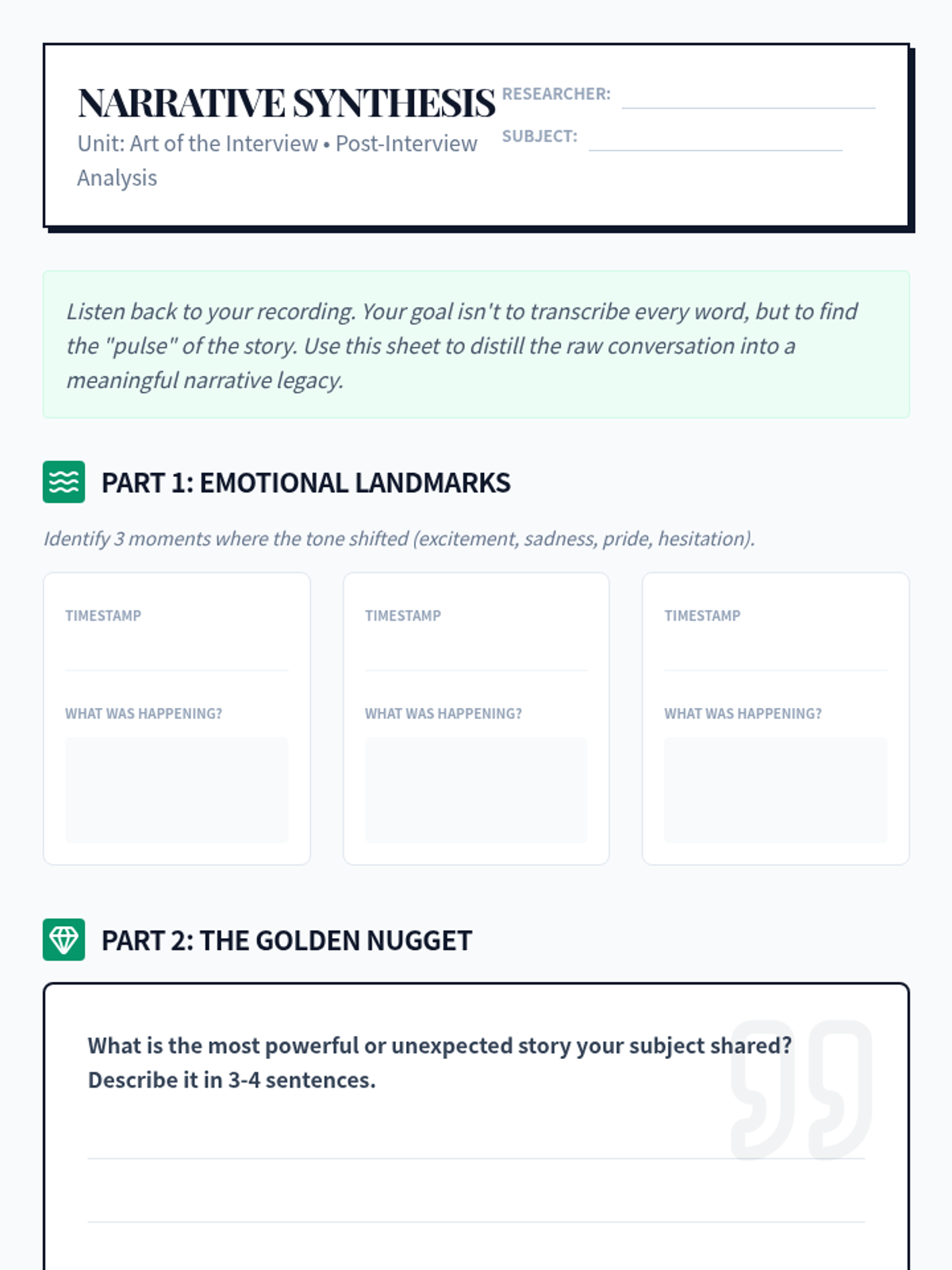
A student worksheet for analyzing raw interview recordings, identifying emotional landmarks, and synthesizing the subject's story into a final narrative theme.
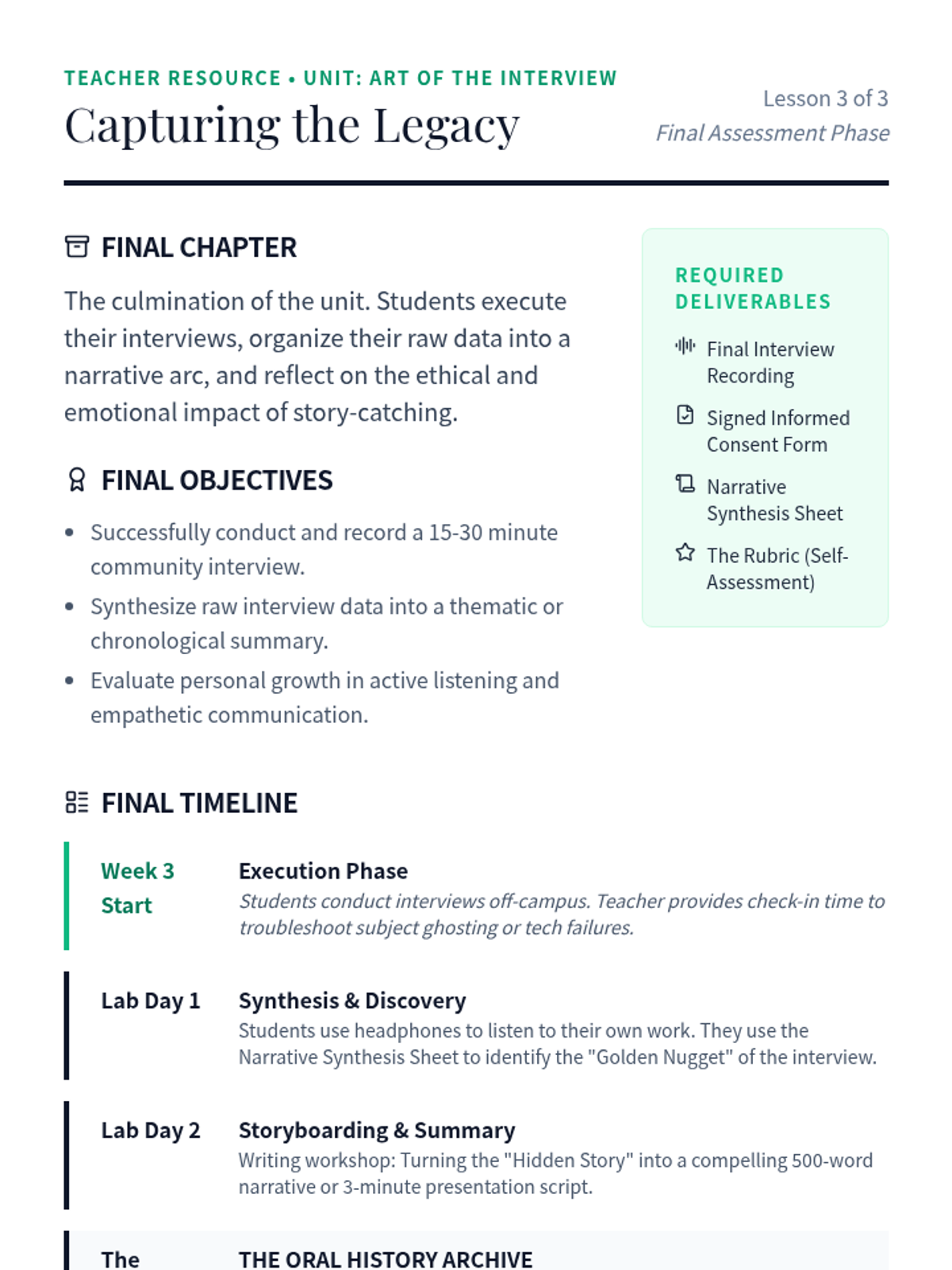
A lesson plan for teachers covering the final phase of the interview project, including interview execution, synthesis, and the final storytelling gallery.
A slide deck focusing on interview technology, audio quality, and the process of synthesizing raw interview data into a compelling narrative for oral history projects.
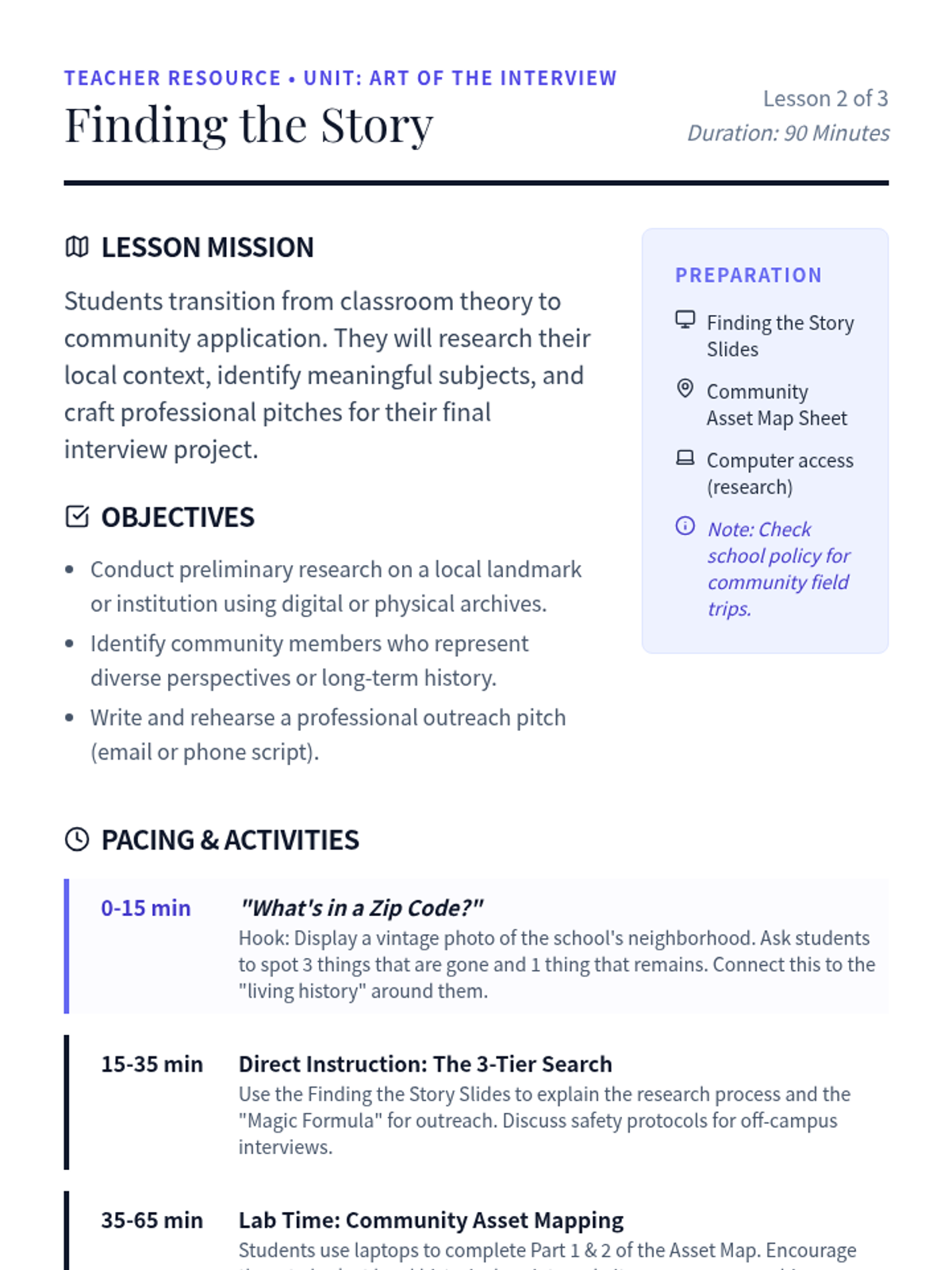
A lesson plan for teachers on guiding students through community research, subject identification, and outreach etiquette.
A slide deck for students on researching community history, identifying interview subjects, and professional outreach etiquette.
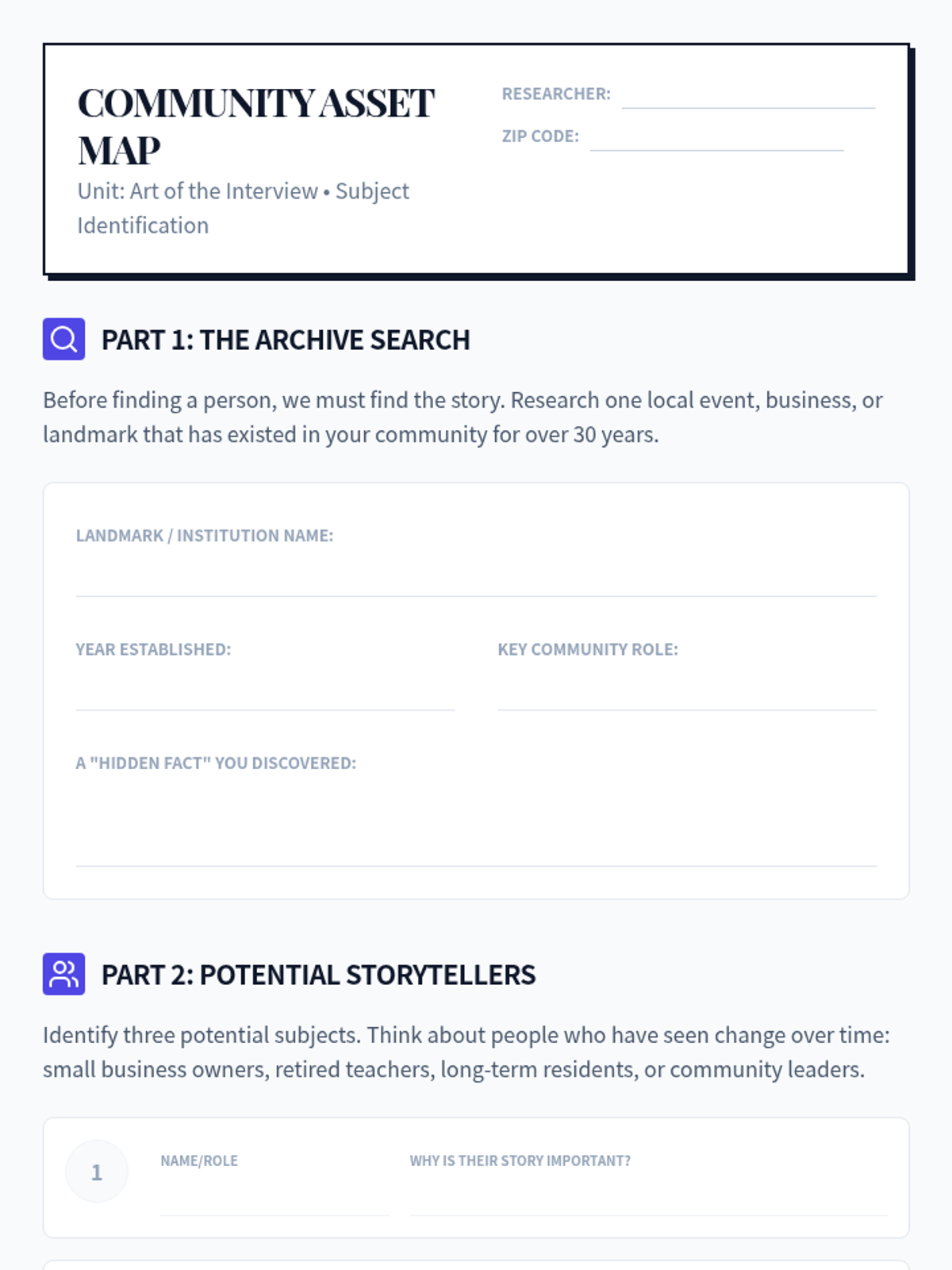
A student worksheet for mapping community assets, identifying potential interview subjects, and drafting professional outreach pitches.
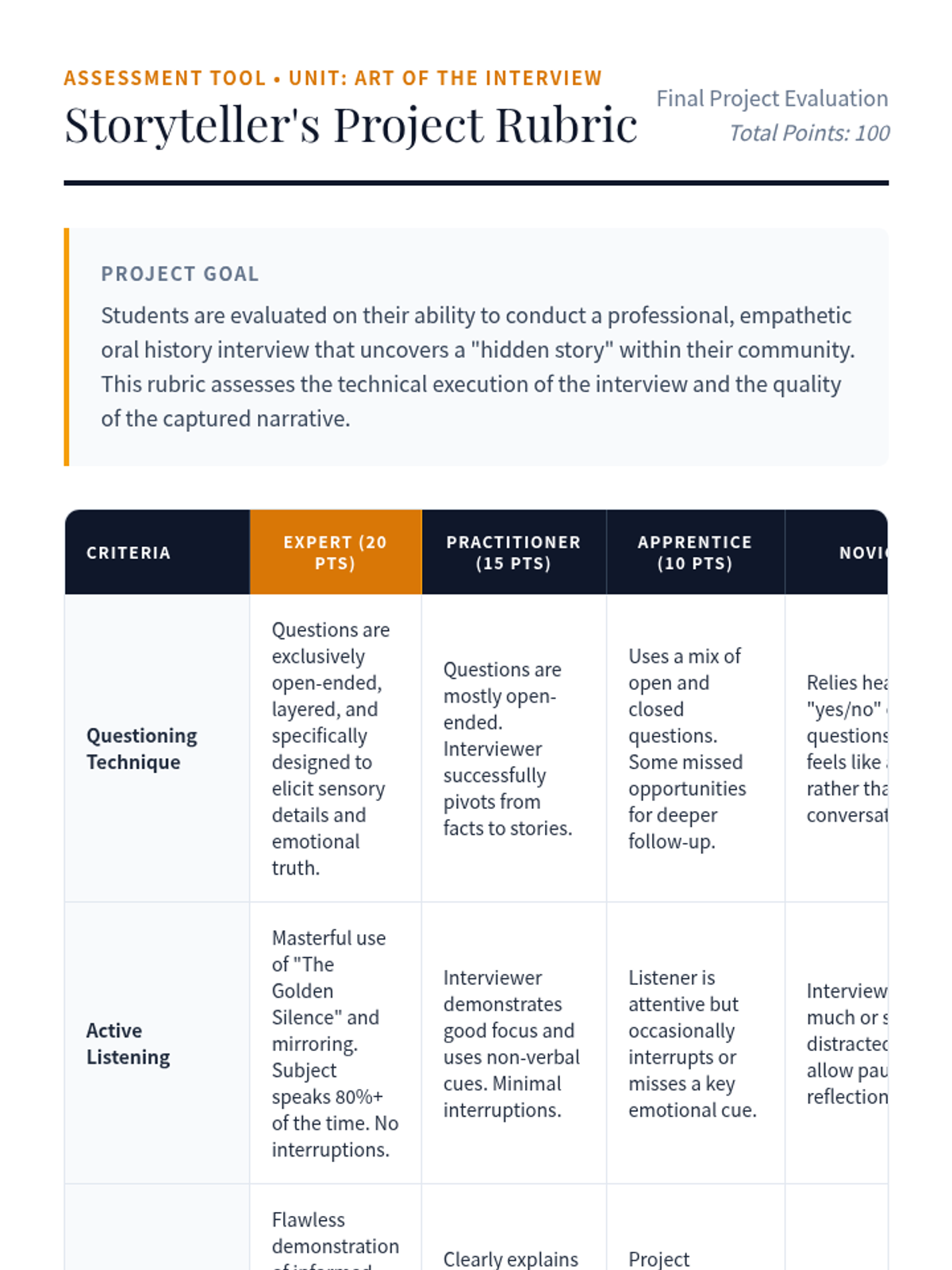
A professional assessment rubric for the final oral history interview project, evaluating questioning techniques, active listening, ethics, and narrative impact.
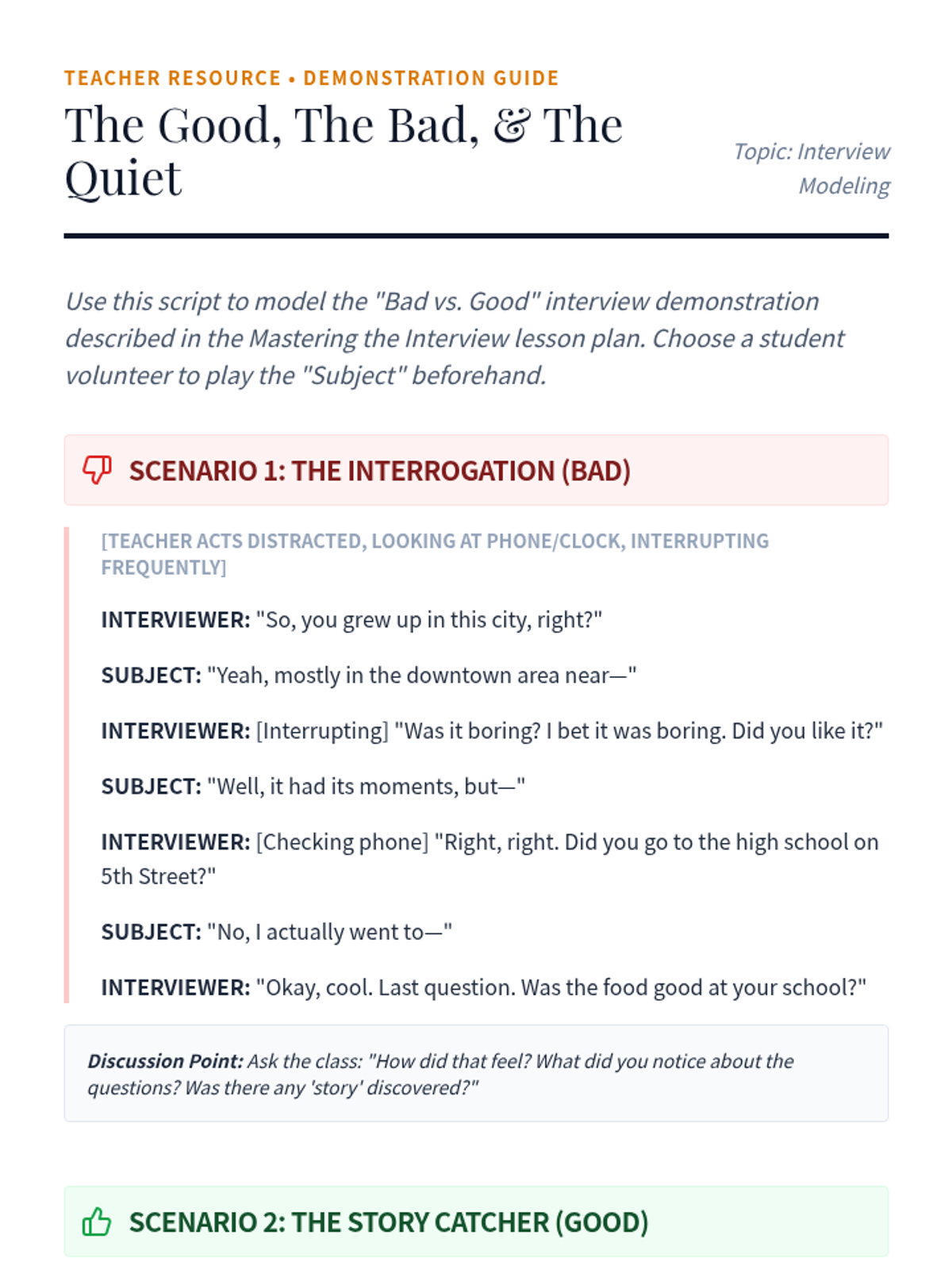
A teacher-facing demonstration script providing two contrasting interview scenarios to model bad habits versus professional active listening techniques.
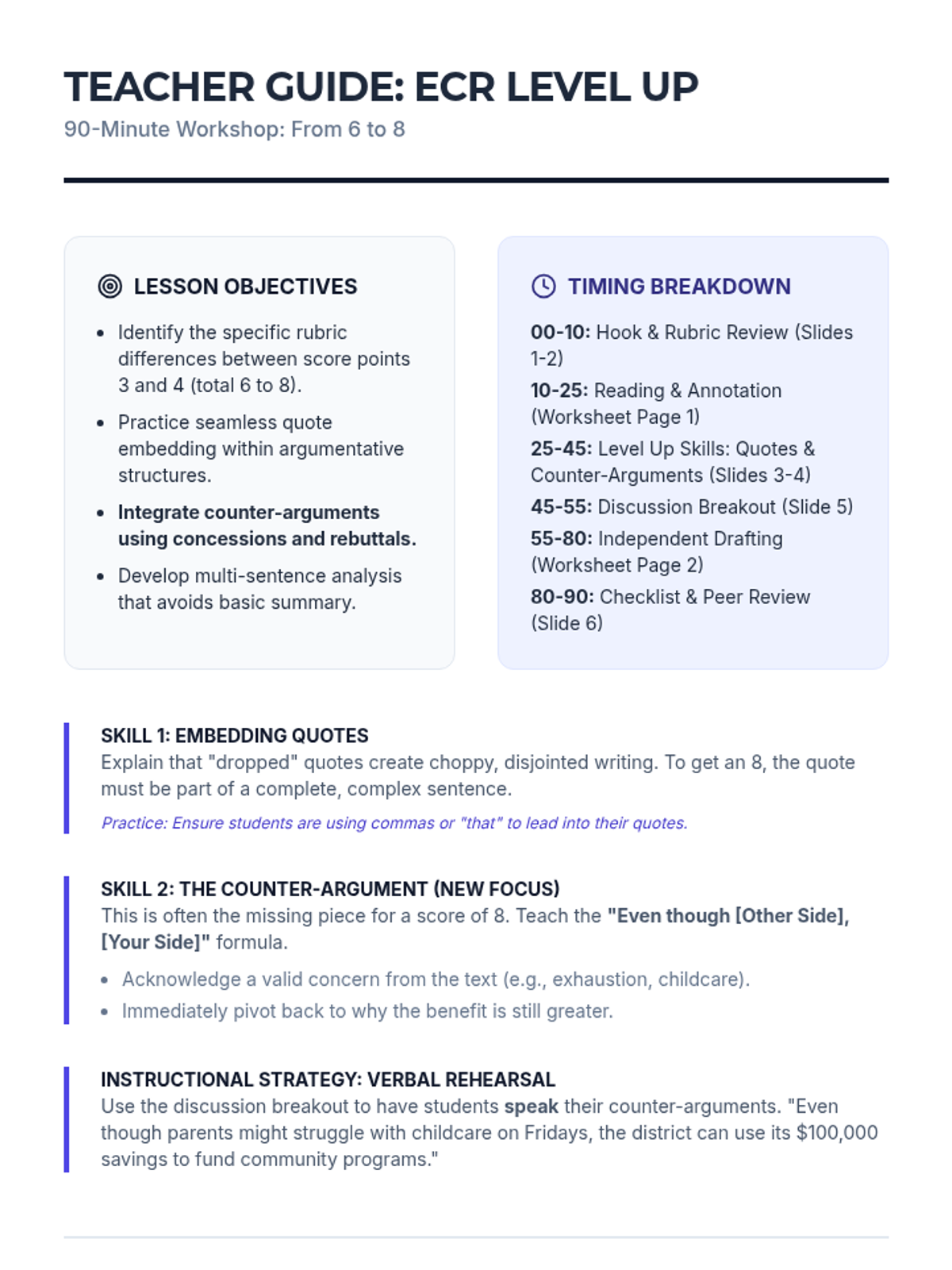
A facilitator guide for the ECR workshop, updated to include strategies for teaching counter-argument integration and a revised exemplar response.
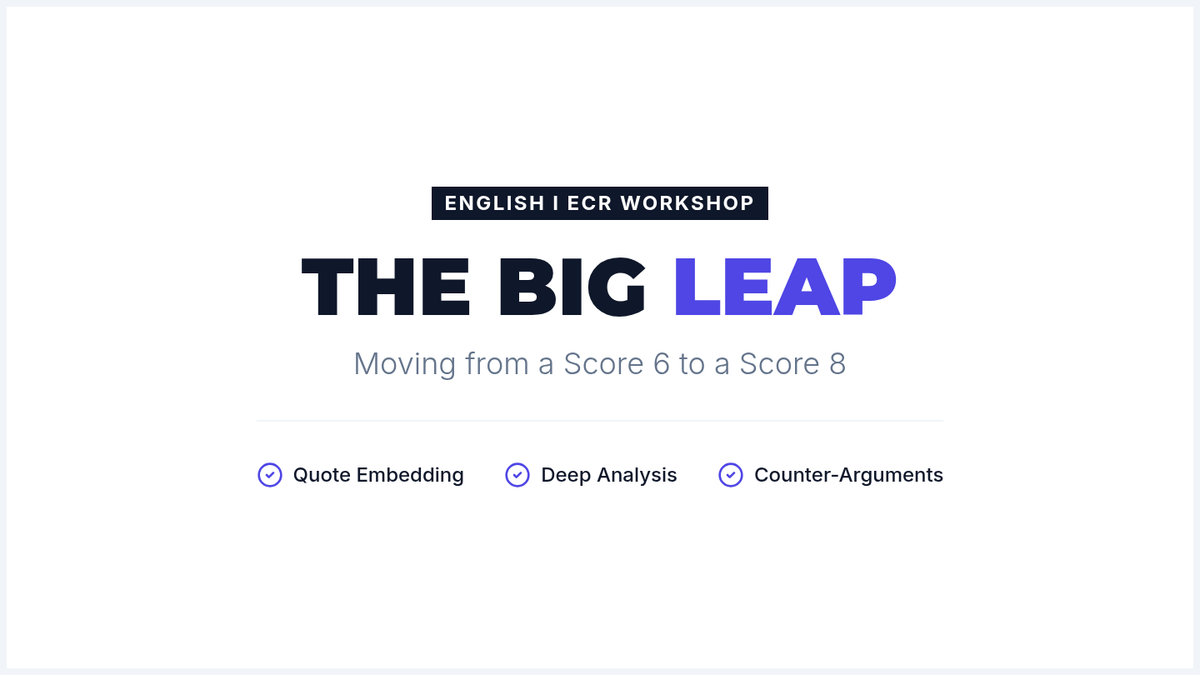
A 6-slide presentation designed to be printer-friendly with high-contrast elements. It guides students through the differences between scores of 6 and 8, focusing on counter-arguments and quote embedding.
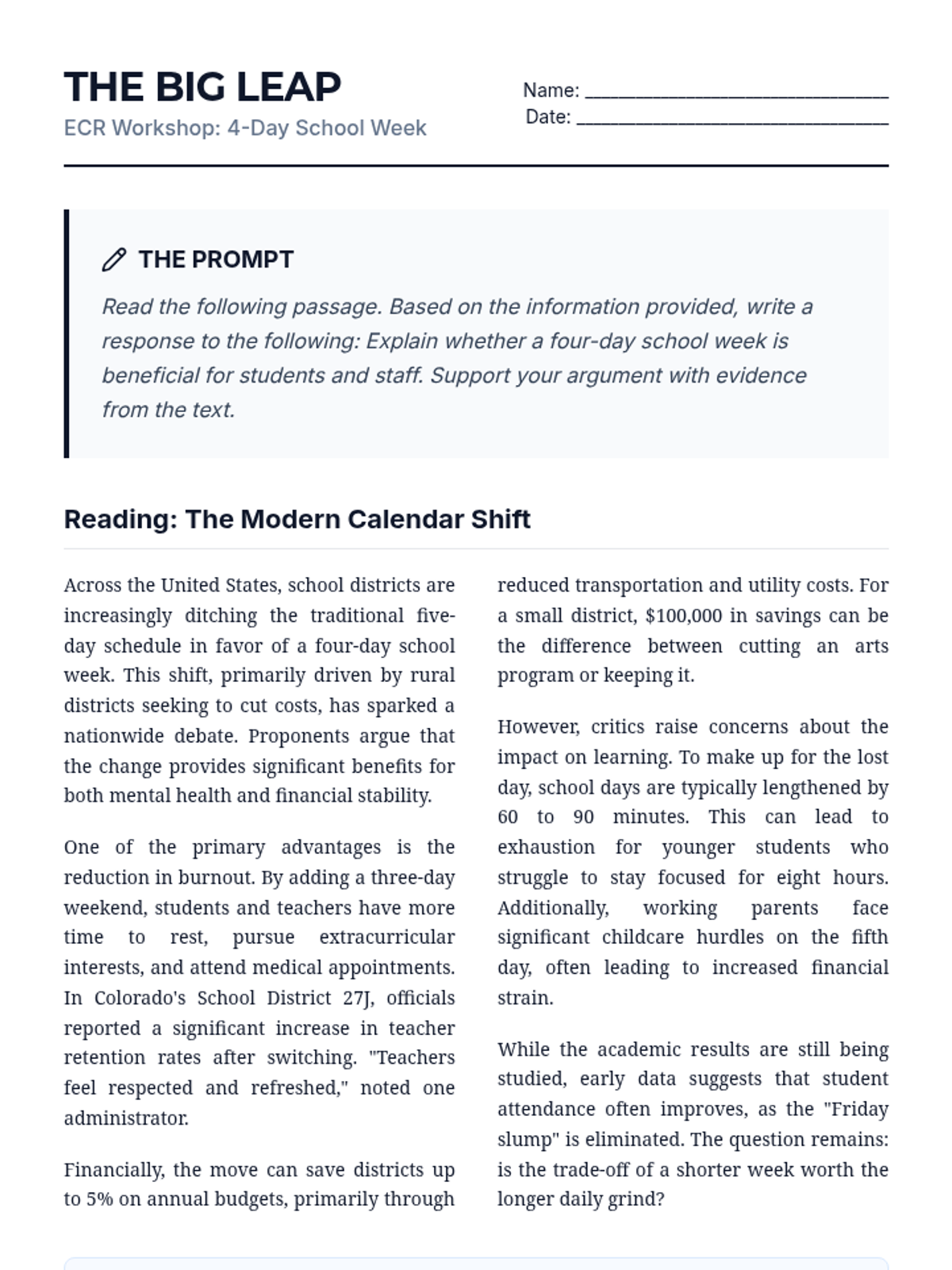
A 2-page student worksheet featuring a reading passage about the 4-day school week, annotation space, and skills drills for quote integration, analysis, and counter-argument rebuttals.
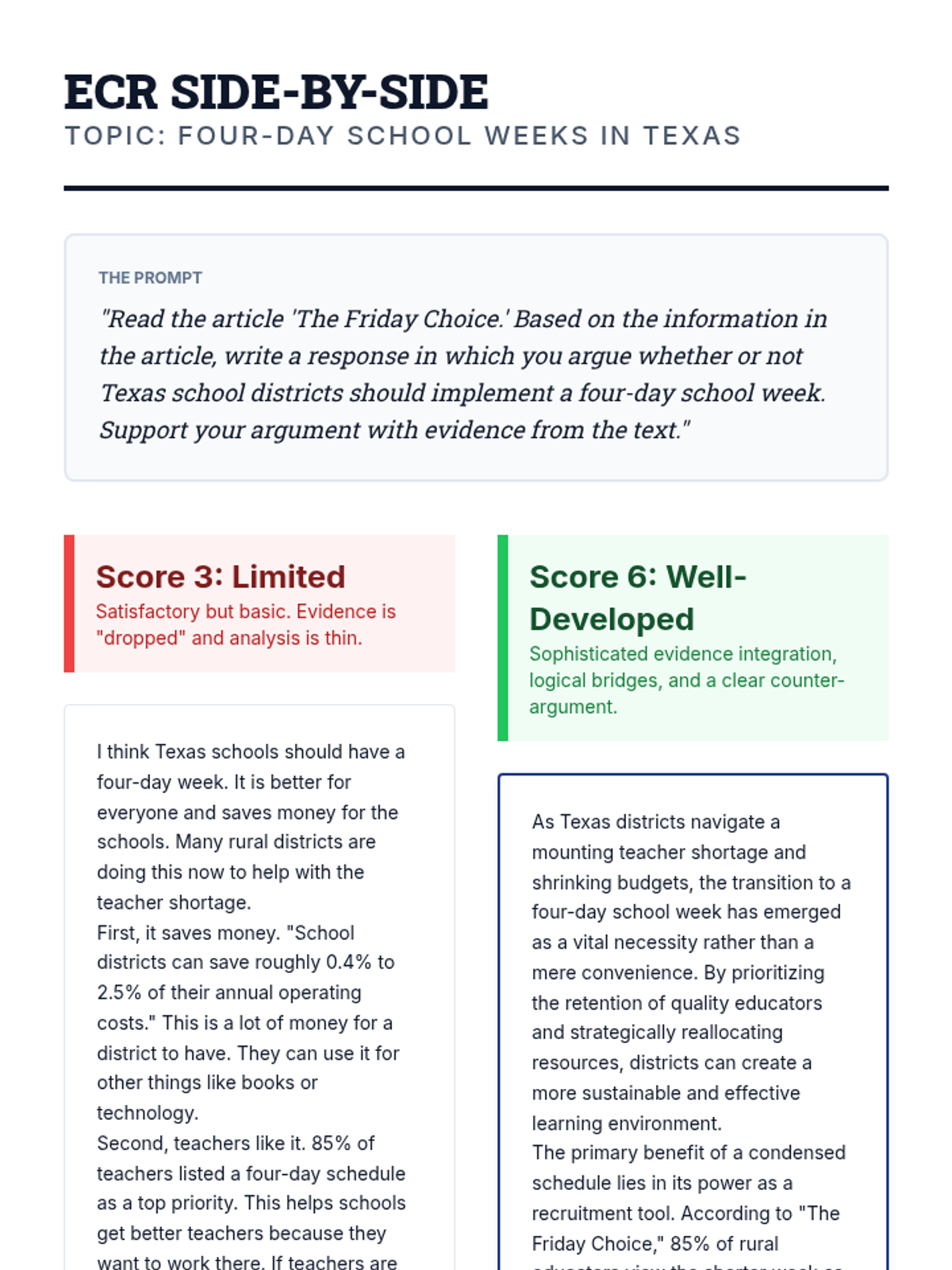
A side-by-side comparison of a Score 3 and a Score 6 STAAR Argumentative ECR, highlighting specific differences in evidence integration, transition usage, and counter-argument development.
A printer-friendly version of the ECR Power Up slides, using minimal ink and a clean white background while maintaining high contrast and visual engagement for instruction.
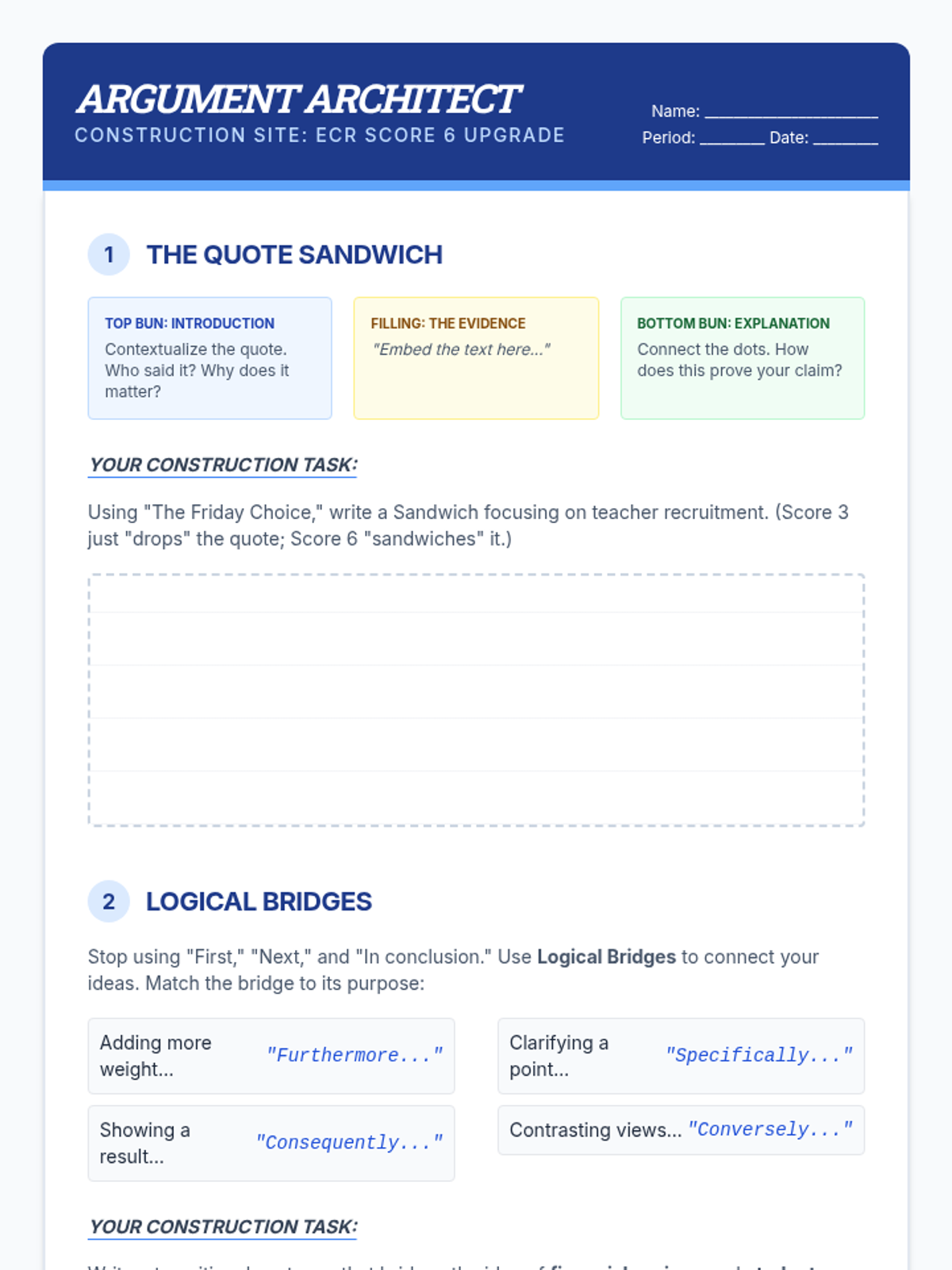
A scaffolded worksheet for students to practice the three key skills for achieving a Score 6 on the STAAR Argumentative ECR: quote embedding, using logical transitions, and developing counter-arguments.
A student-facing reading passage exploring the pros and cons of four-day school weeks in Texas, designed for annotation and deep analysis of argumentative evidence.
A comprehensive teacher guide for a 90-minute ECR workshop, featuring a detailed pacing guide, instructional strategies for moving from a score of 3 to 6, and discussion prompts.
A printer-friendly version of the ECR slide deck, using high-contrast text on white backgrounds and minimal heavy ink usage while maintaining a professional 'blueprint' aesthetic. Font sizes optimized for classroom visibility (min 24px).
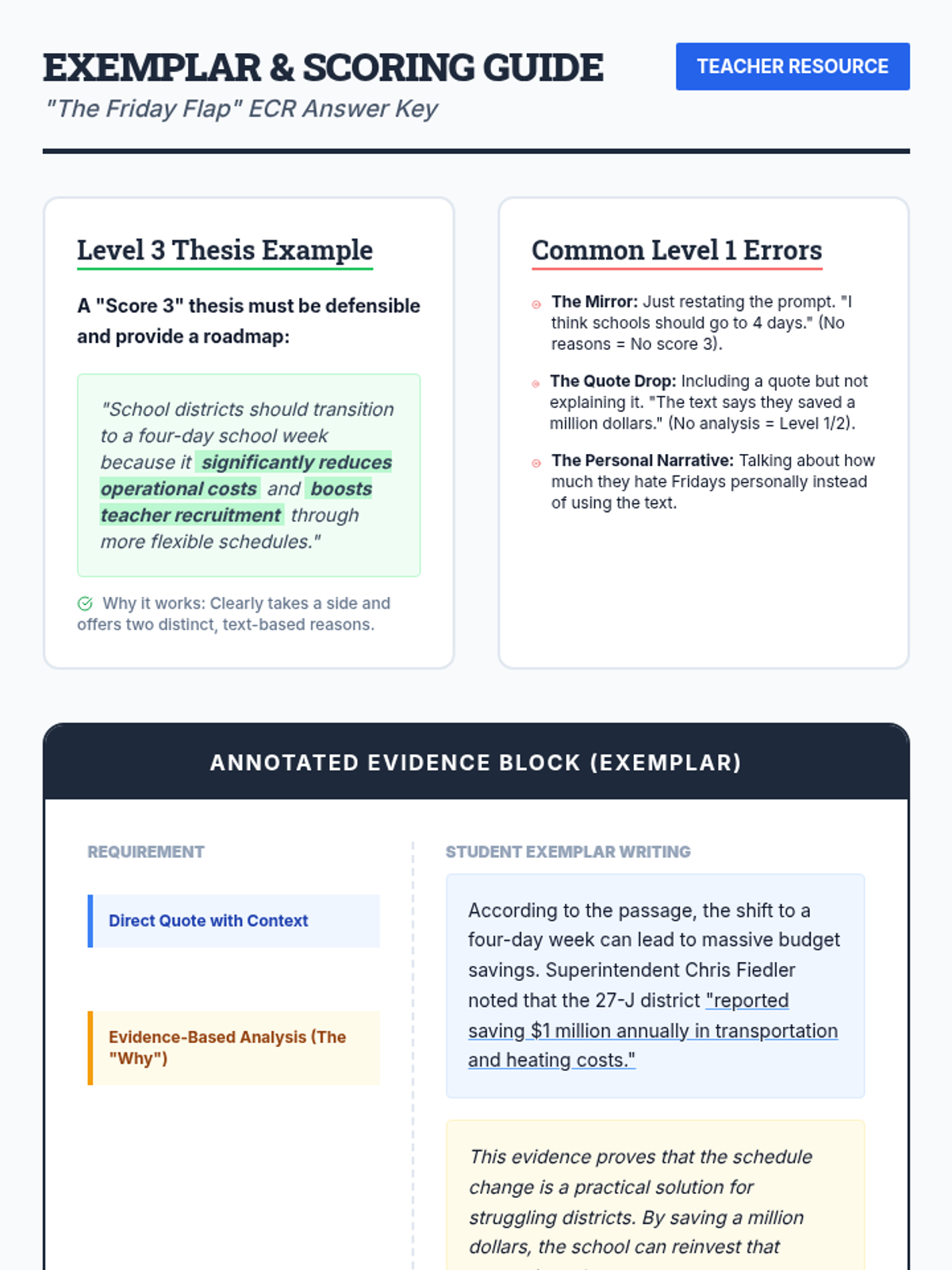
A teacher-facing scoring guide and answer key for the Argument Blueprint lesson. Includes exemplar thesis statements, a model evidence block with analysis, and a quick-grading rubric to distinguish between score levels.
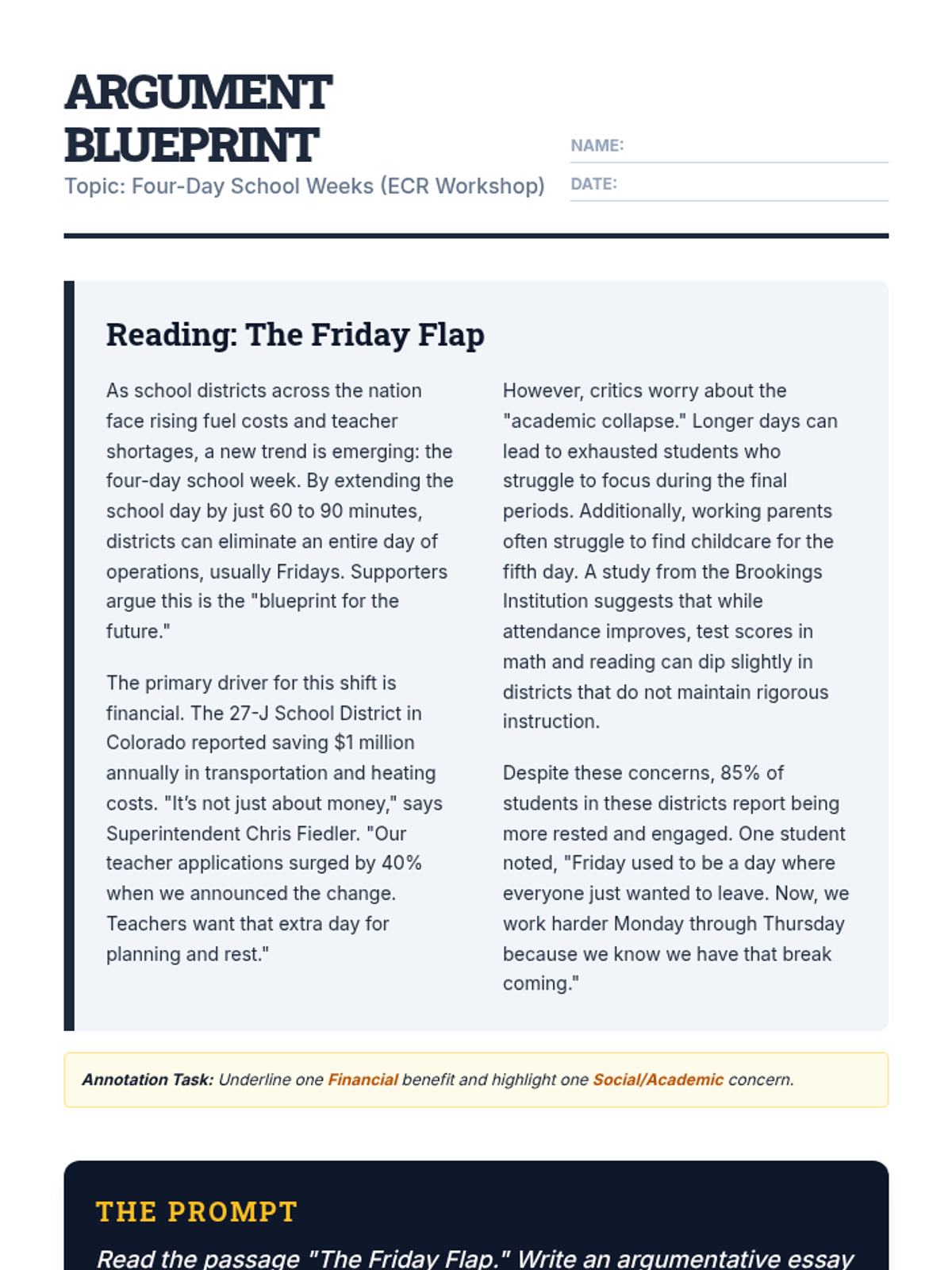
A student-facing worksheet for reading the 'Friday Flap' passage and planning an Argumentative ECR. Includes space for a thesis statement, two evidence blocks with explanation sections, and a peer-review checklist.
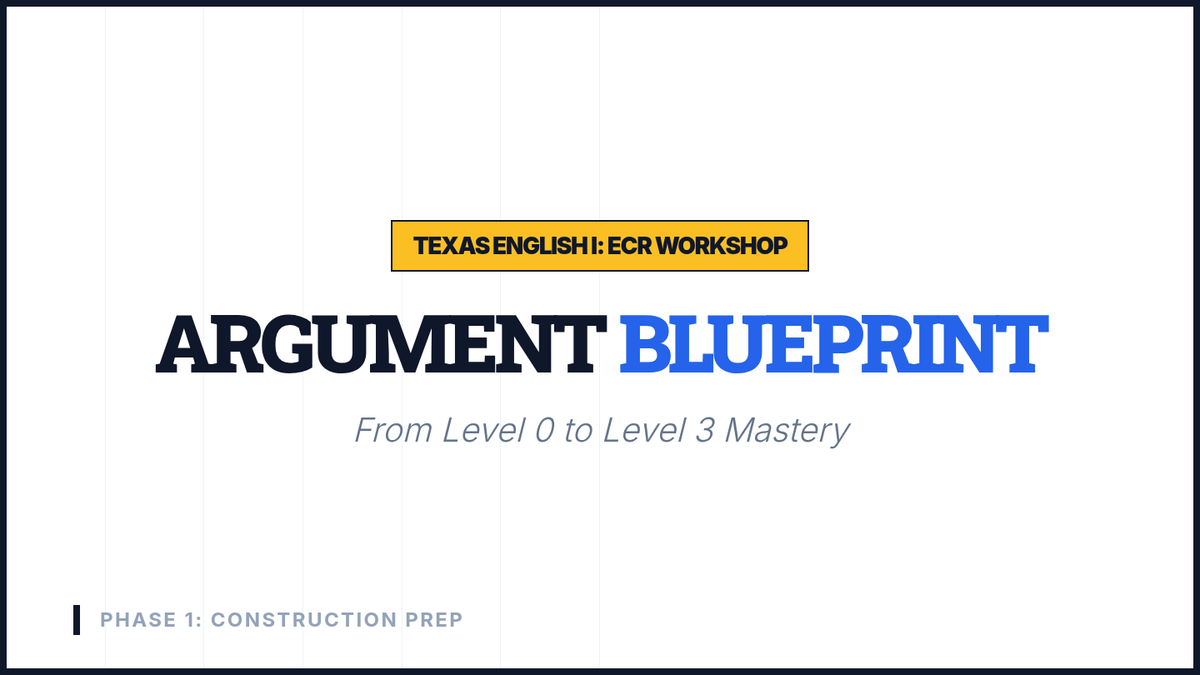
A slide deck for direct instruction on the Texas English I Argumentative ECR. Includes the 'Thesis Formula', strategies for evidence selection, and a goal-setting slide for moving from level 0 to level 3.
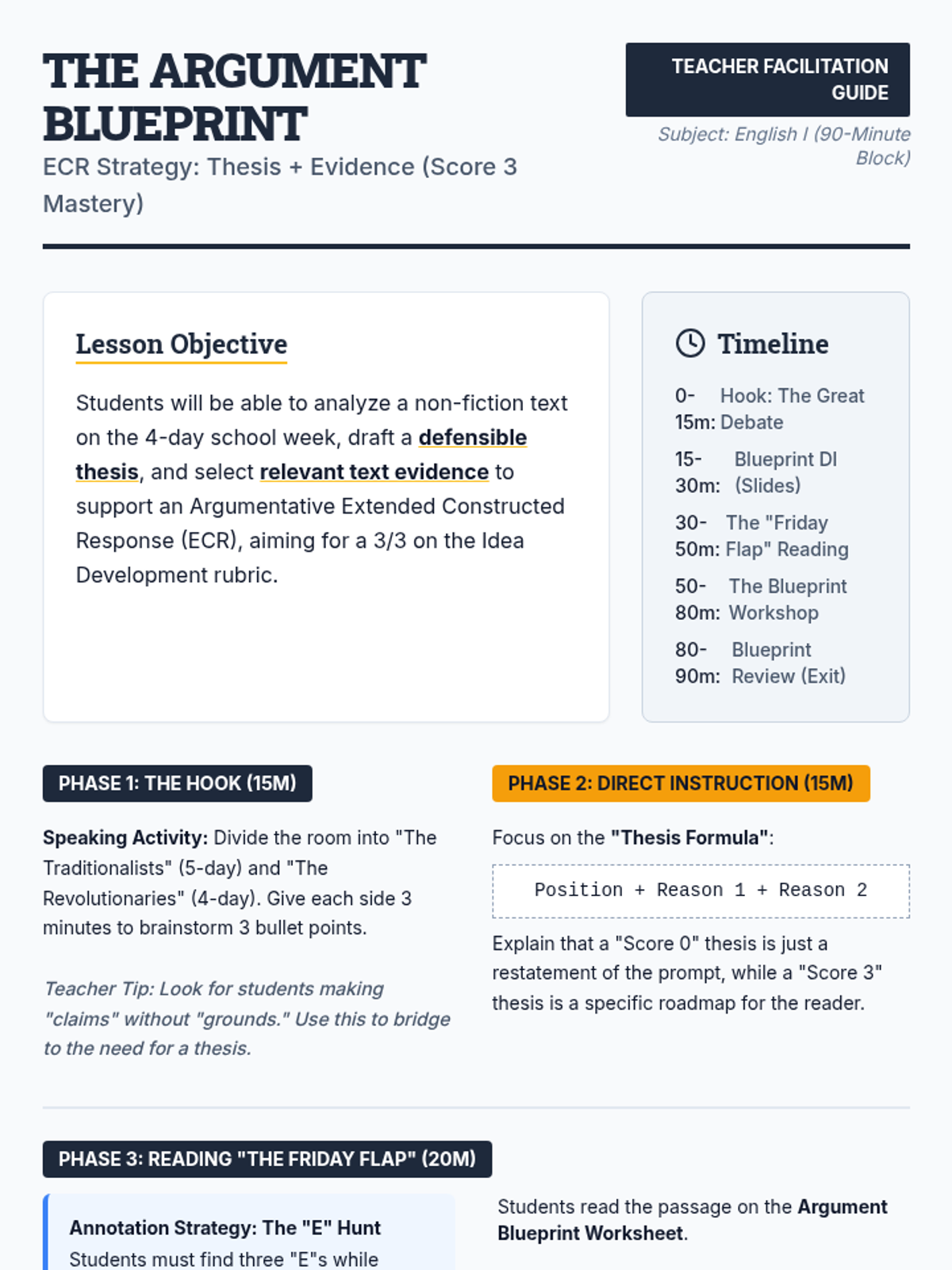
A teacher facilitation guide for a 90-minute ECR lesson focused on the 4-day school week. Includes a breakdown of phases, common student pitfalls, and specific teaching strategies to move students toward a score of 3.