Mapping relationships through notation, algebraic representations, and growth rate comparisons. Equips learners to transform functions, model contextual data, and solve exponential equations.
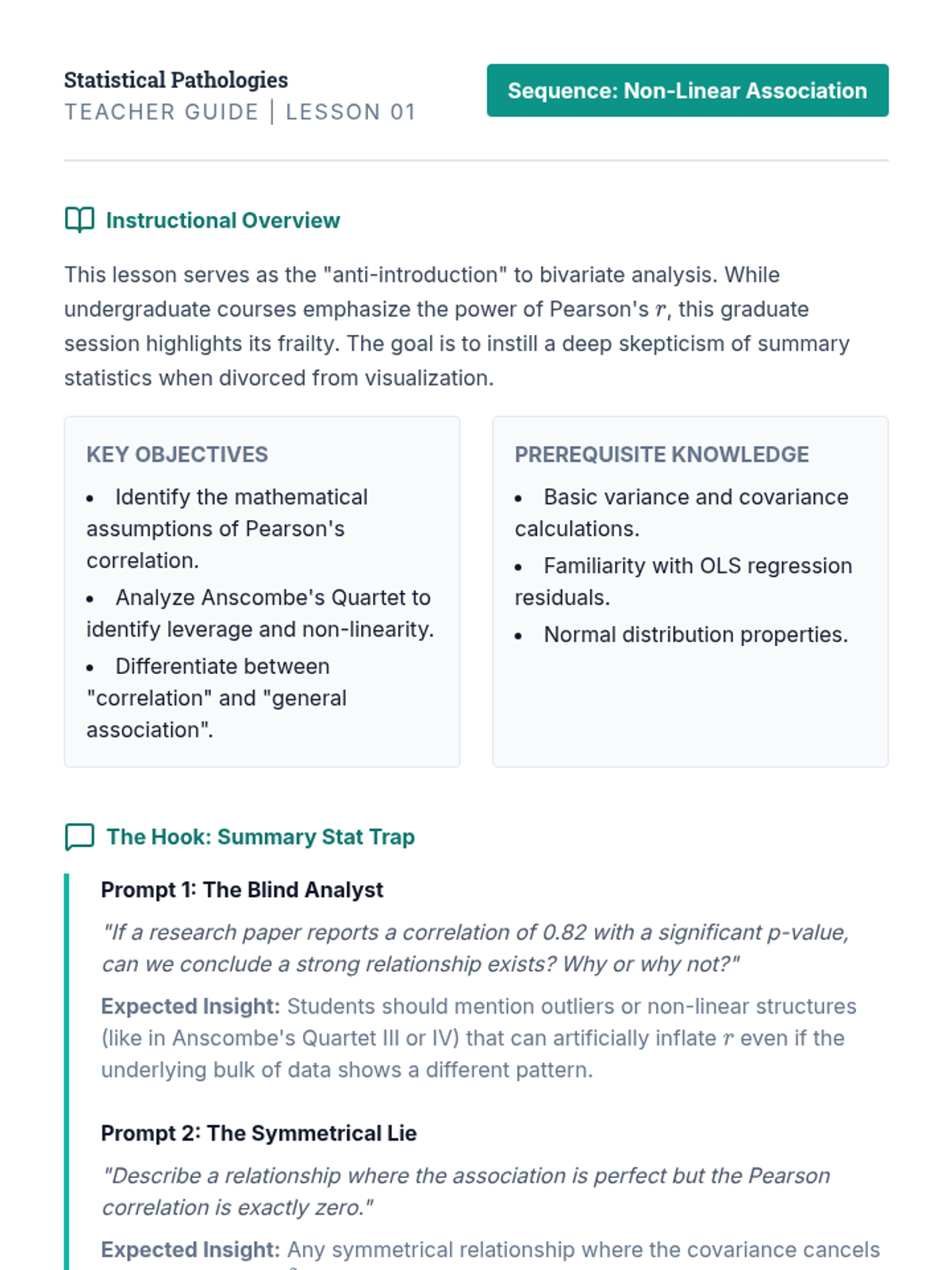
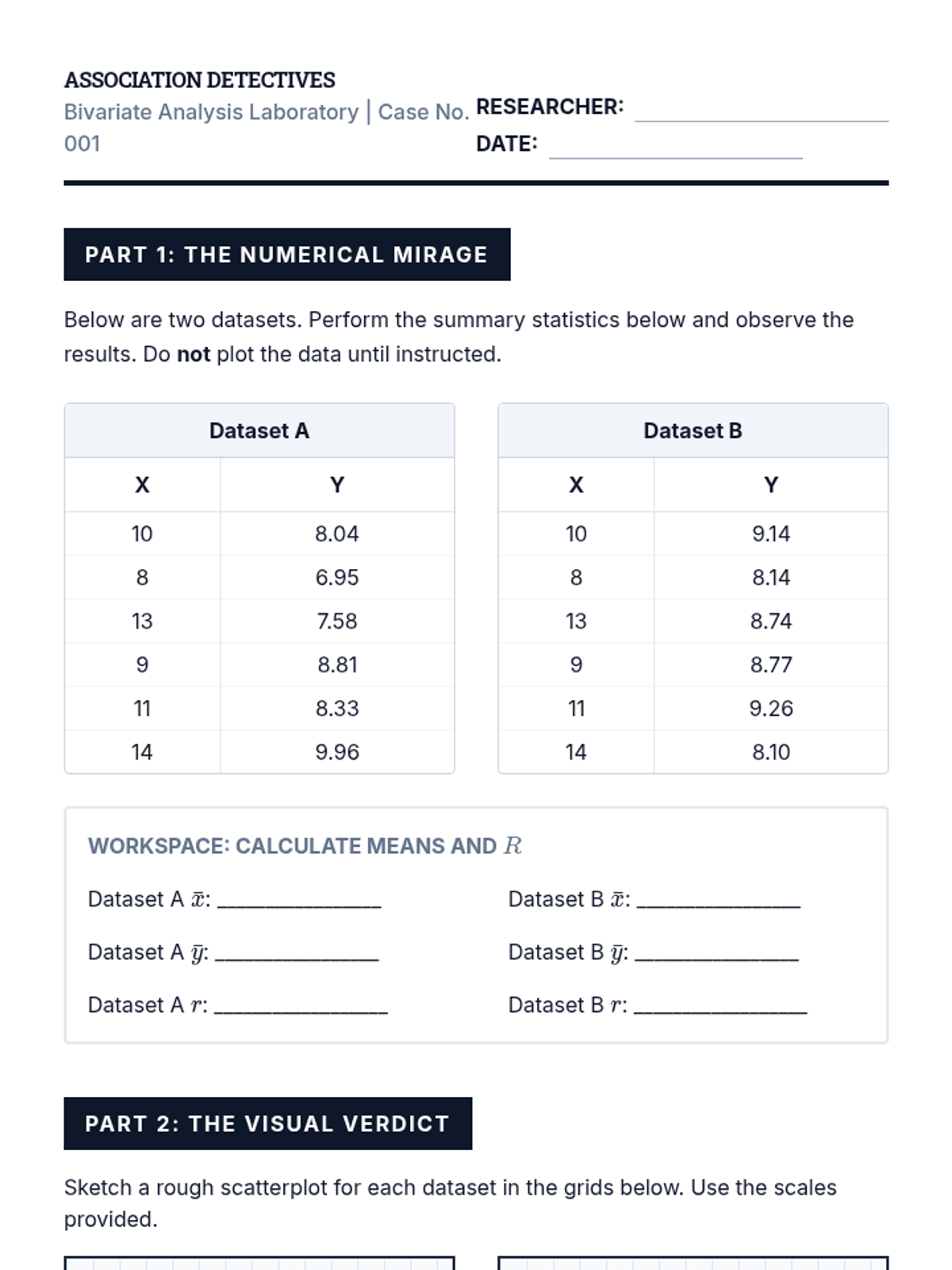
A graduate-level exploration of non-linear bivariate analysis, moving from the limitations of linear correlation to rank-based methods, local regression, and information-theoretic metrics. Students develop the skills to quantify complex dependencies in biological, financial, and environmental systems where standard assumptions fail.
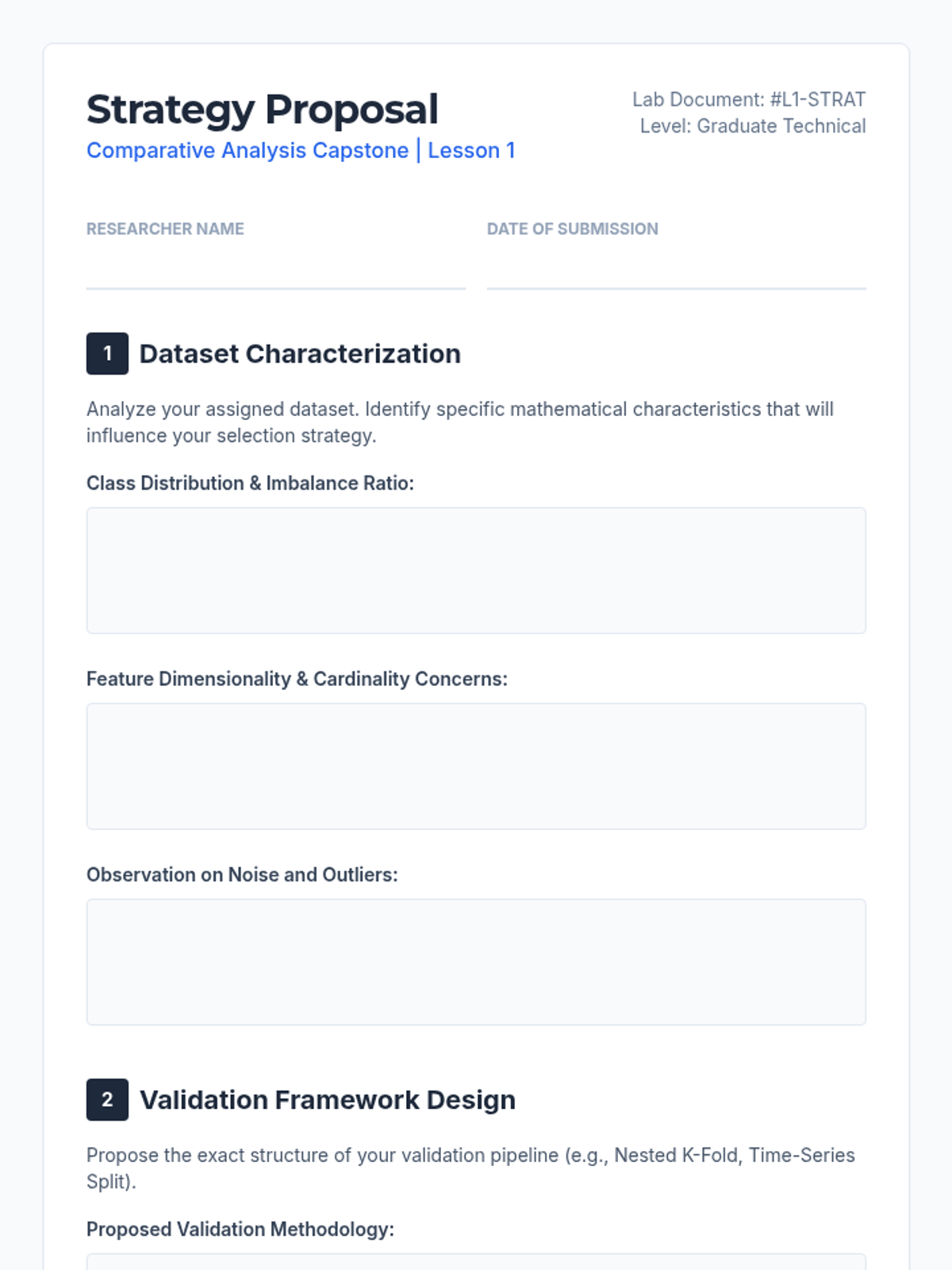
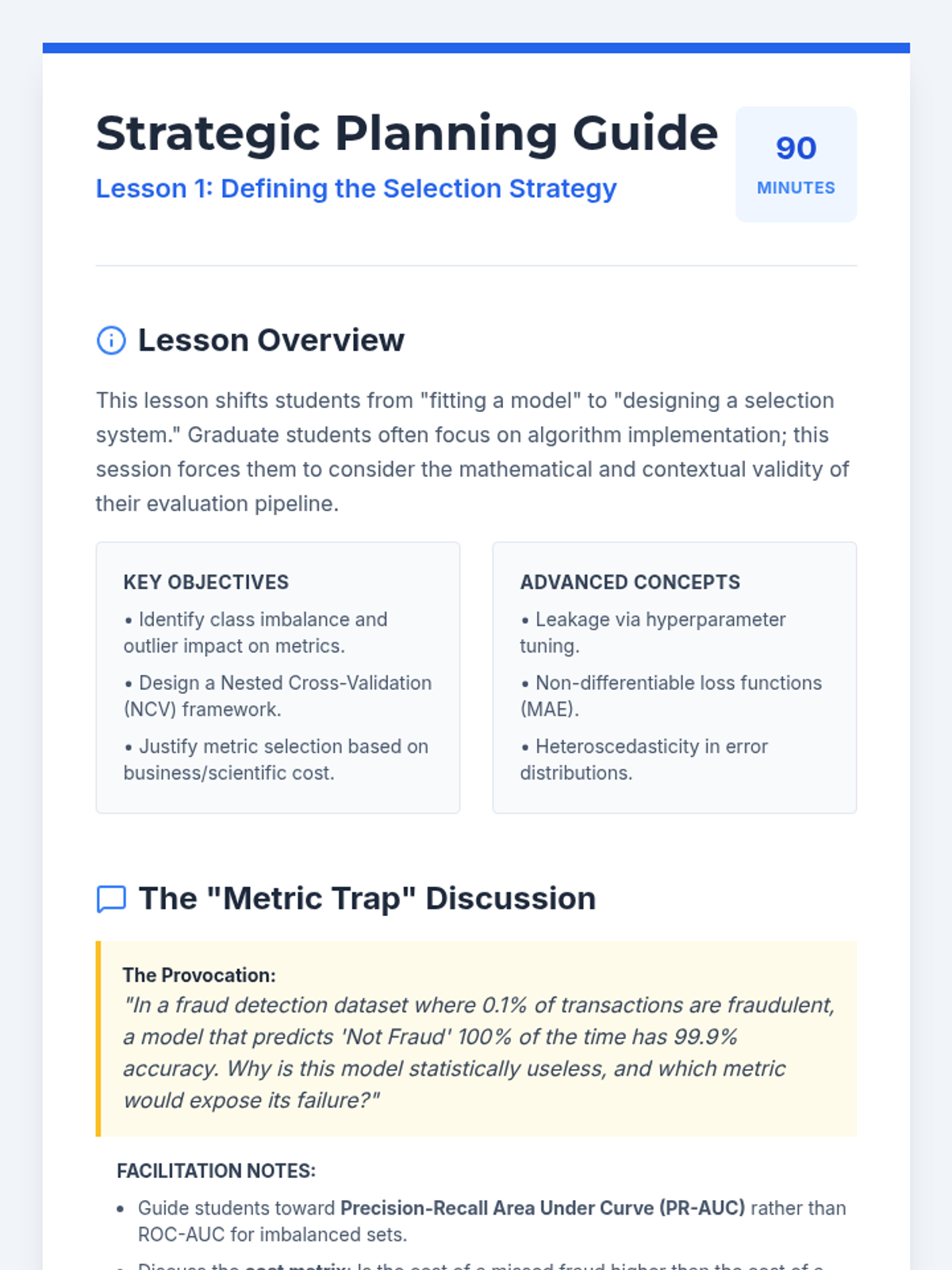
A graduate-level project-based sequence focused on the rigorous comparison and selection of mathematical models. Students progress from strategy definition and candidate generation to statistical benchmarking and stability analysis, culminating in a professional-grade technical defense.
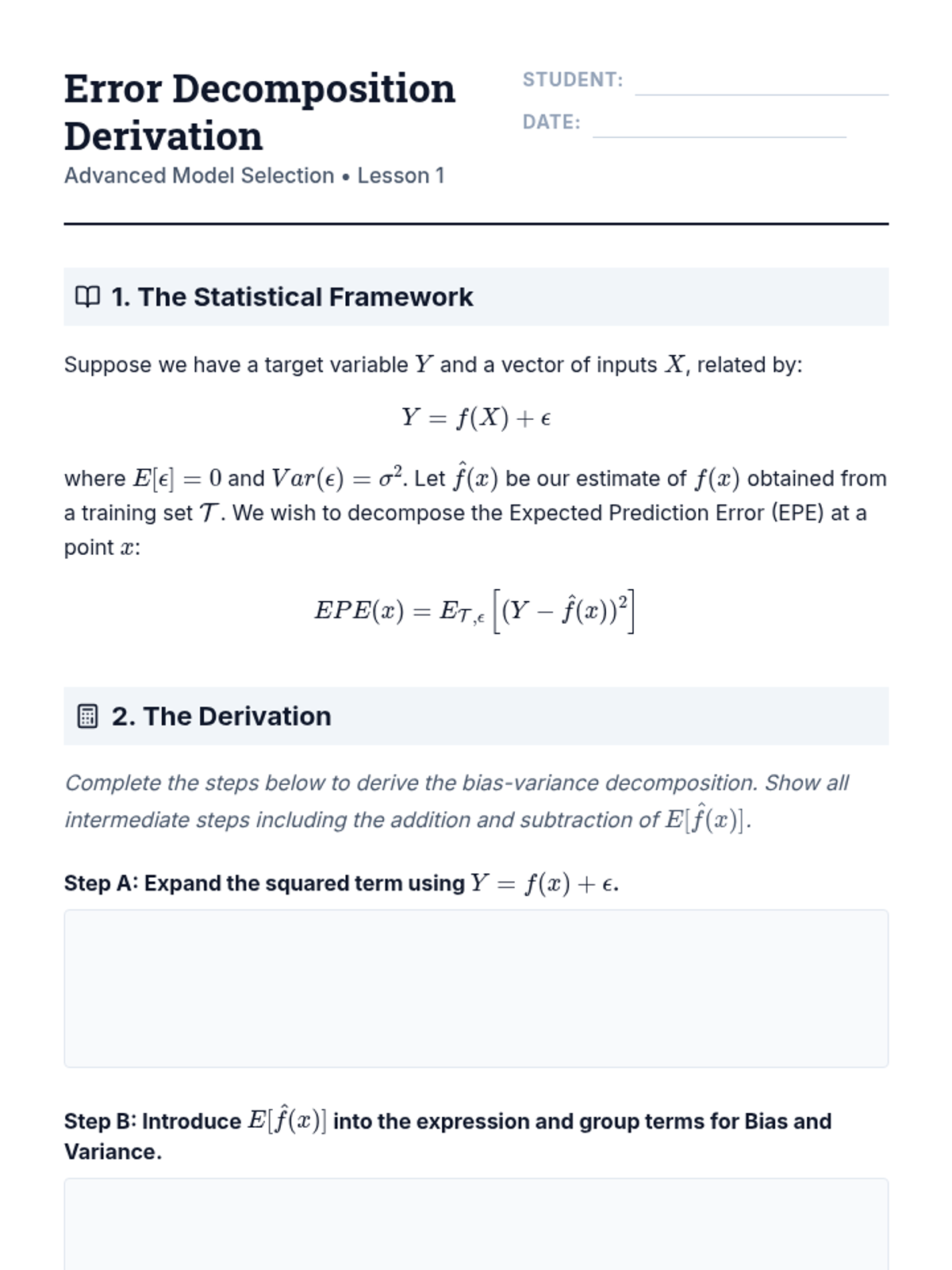
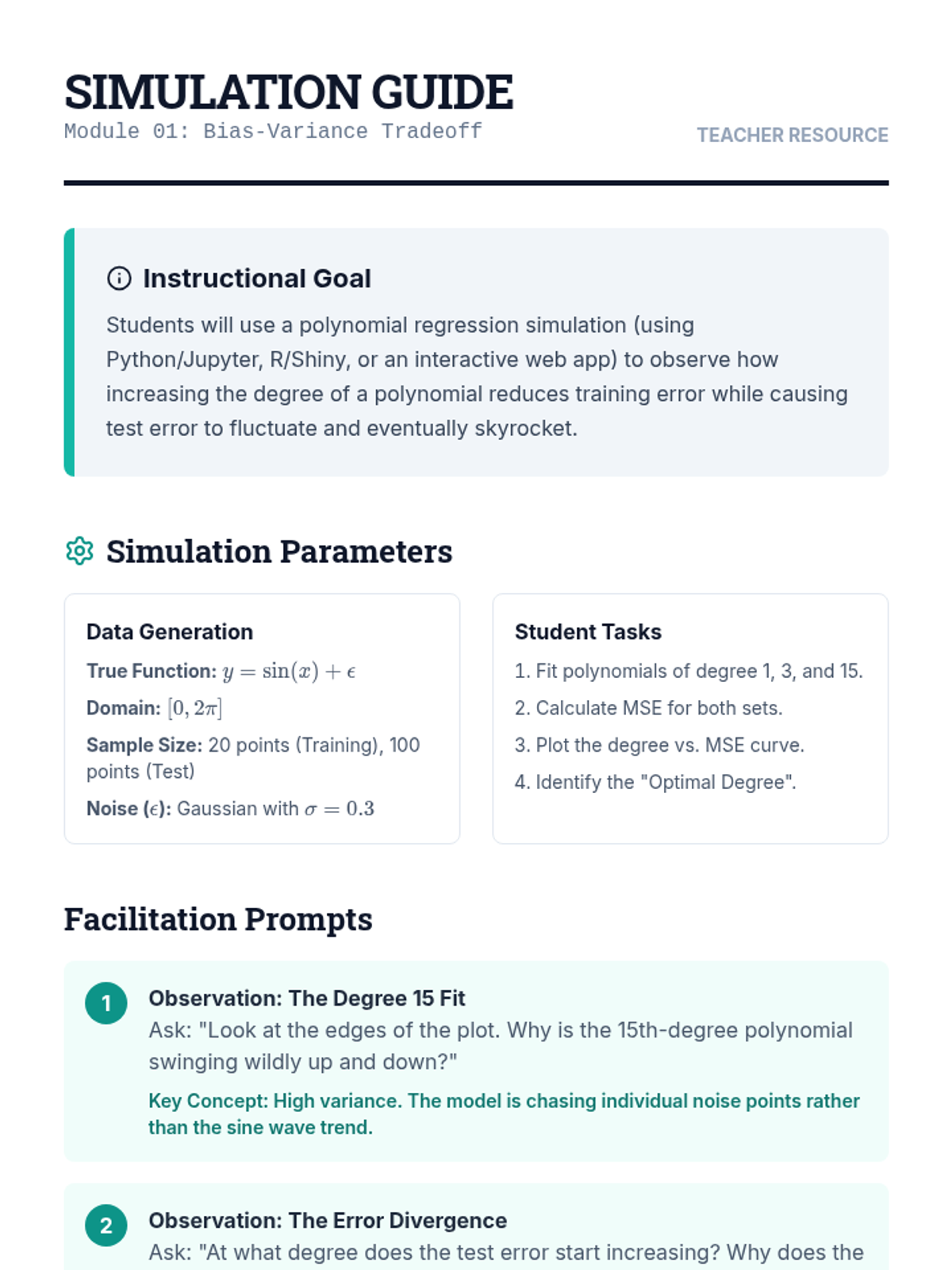
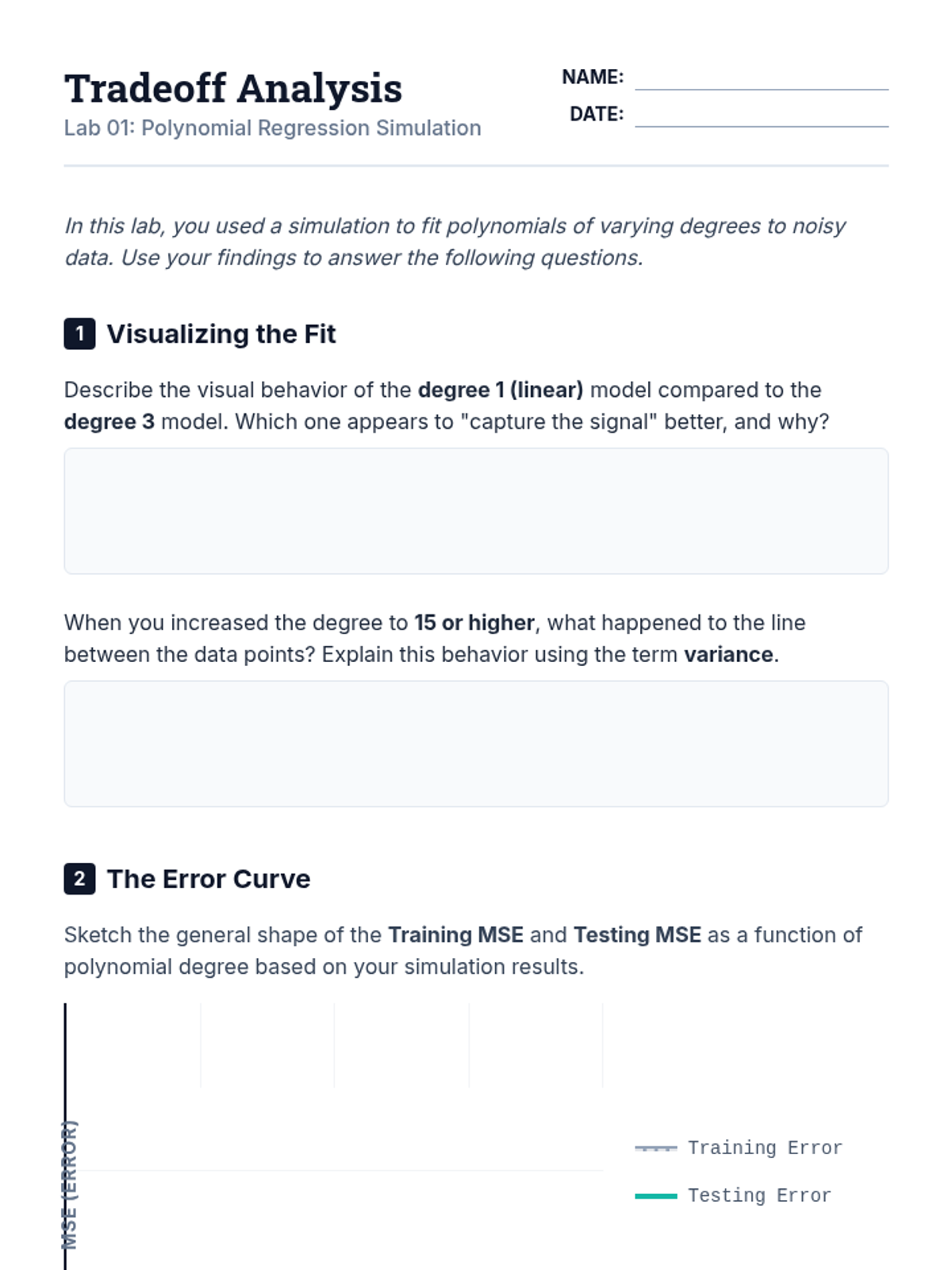
An advanced graduate-level sequence exploring the mathematical foundations of model selection, including bias-variance decomposition, information criteria (AIC/BIC), resampling methods, and high-dimensional diagnostic strategies.
This sequence guides undergraduate students through model comparison and selection, covering the bias-variance tradeoff, cross-validation methods, and information criteria (AIC/BIC). Students will learn to balance model complexity with generalization ability to select the most robust models for prediction and inference.