Essential food groups, nutrient functions, and balanced meal planning. Develops skills for interpreting nutrition labels and adopting lifelong healthy eating patterns.
Bringing it all together with a celebration of balanced meals and a 'Healthy Plate' review.
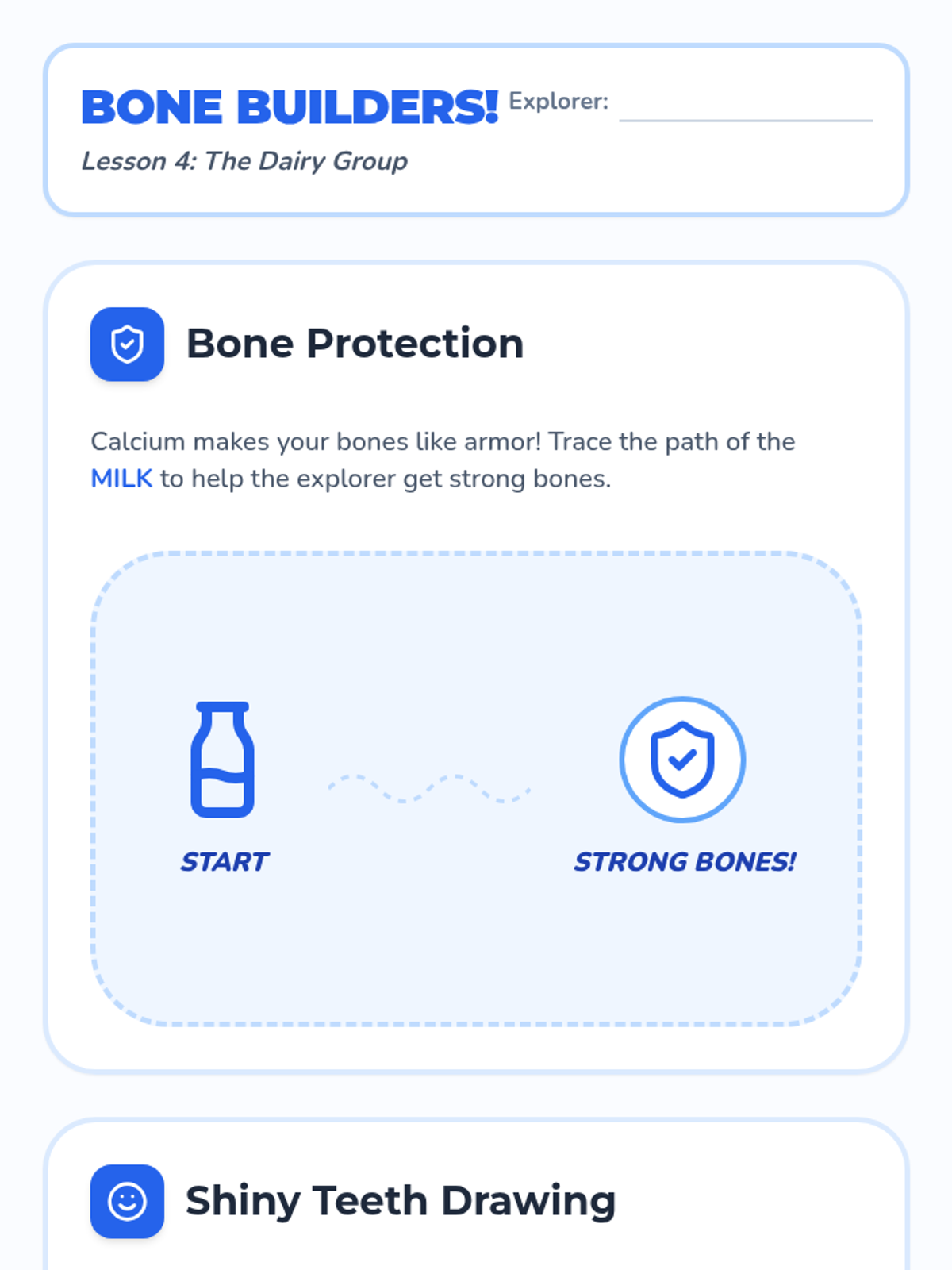
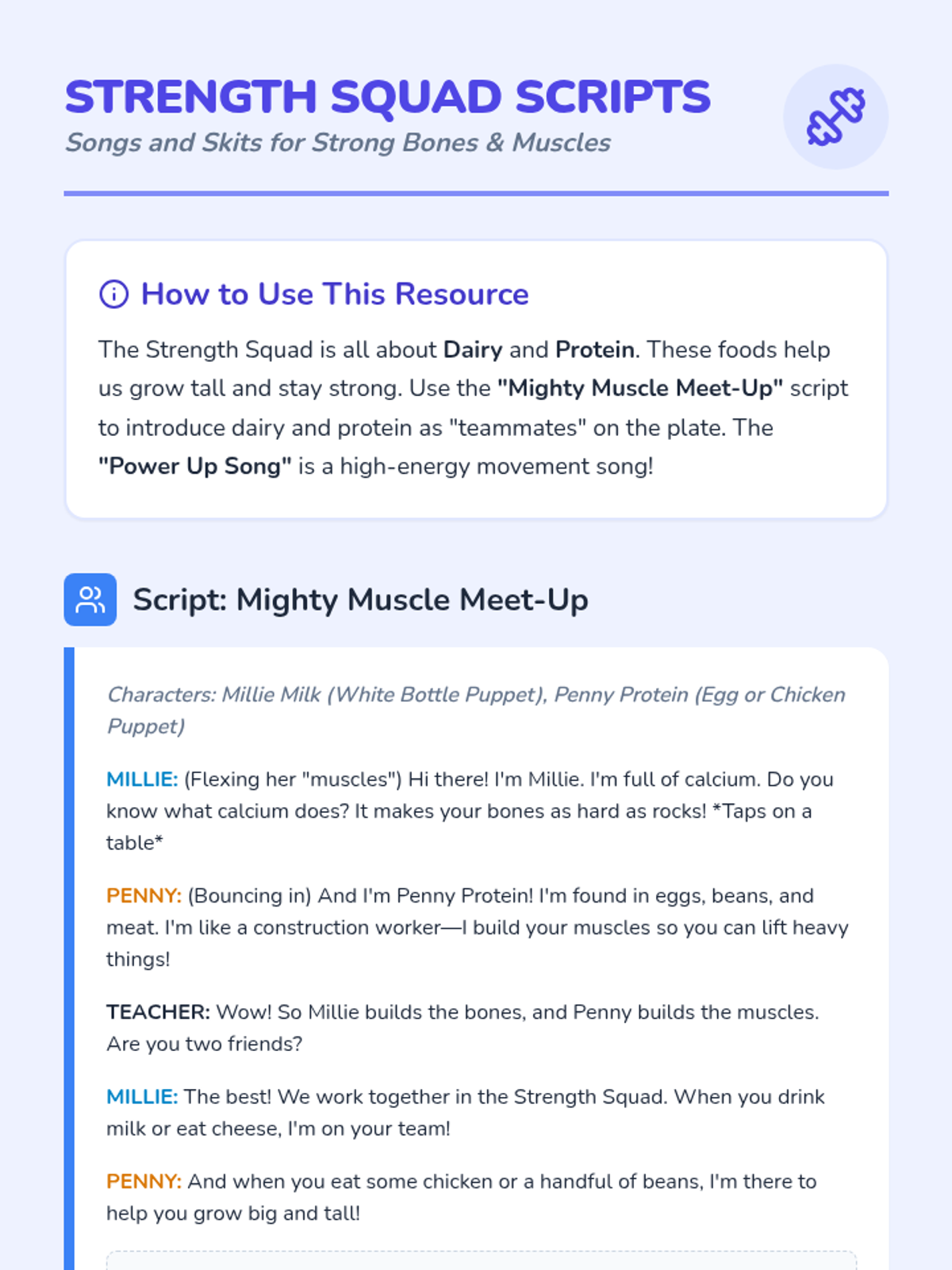
Learning about dairy products and how calcium builds strong bones and teeth.
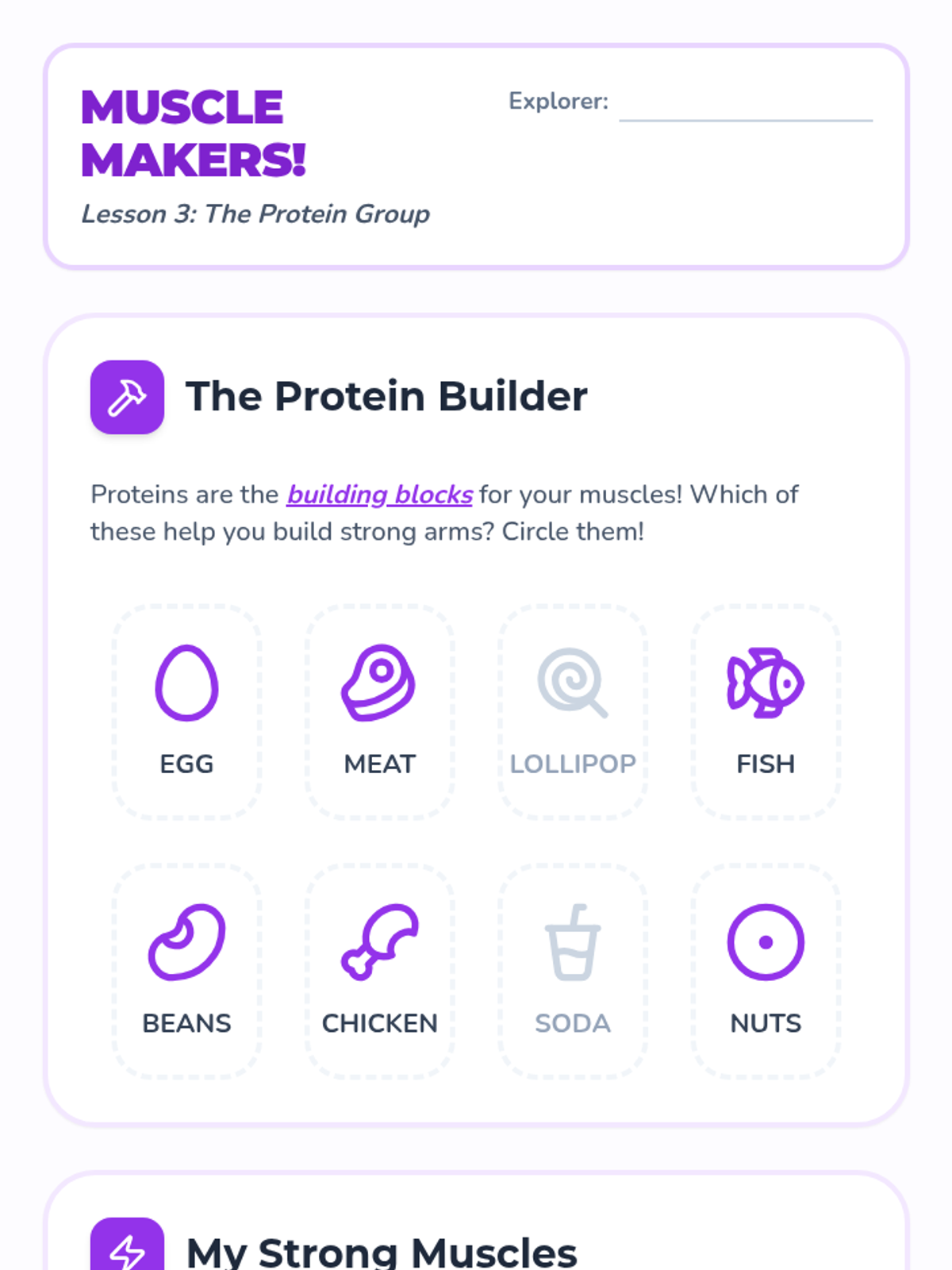
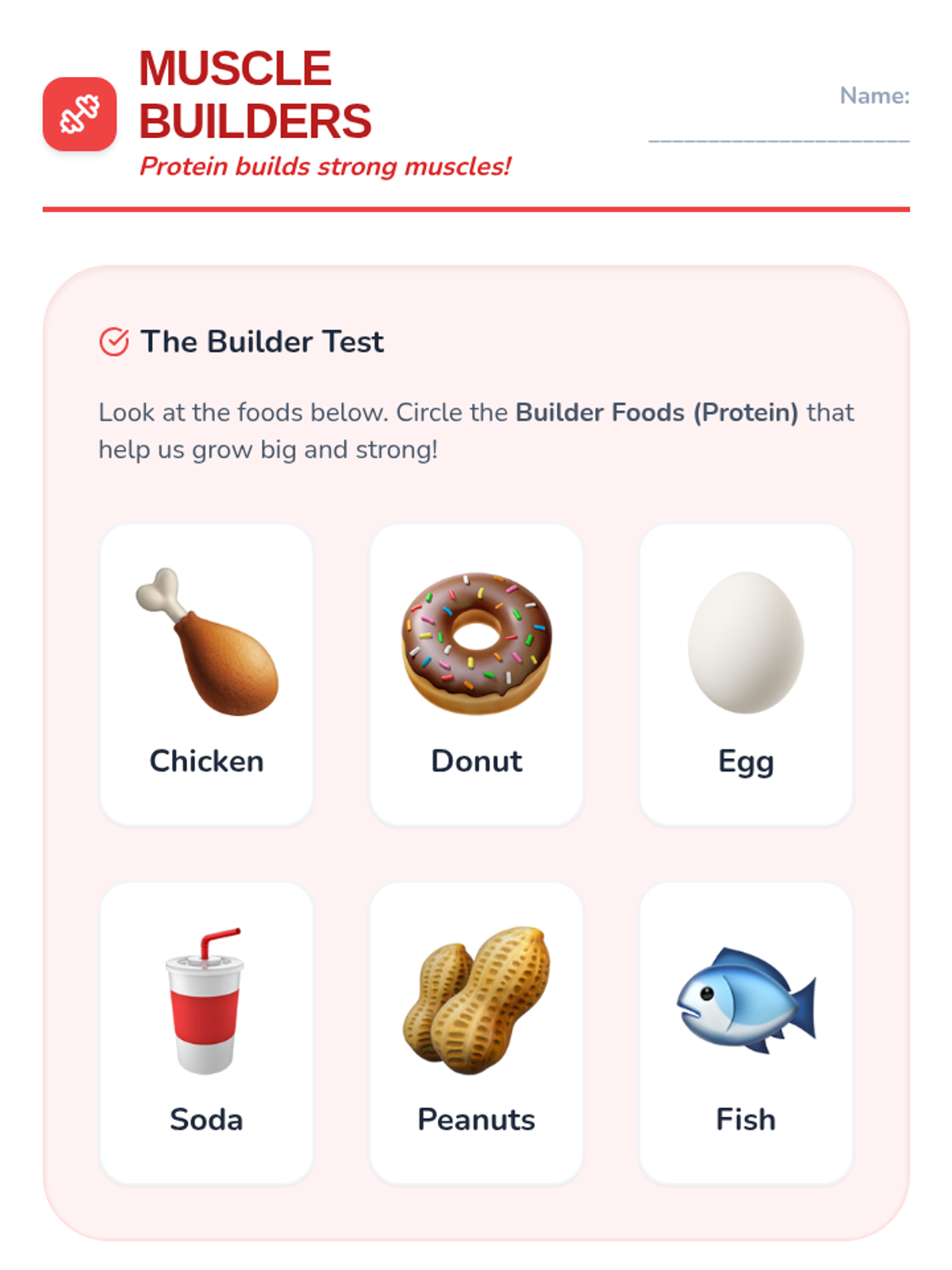
Discovering how proteins like beans, eggs, and meat help our muscles grow strong.
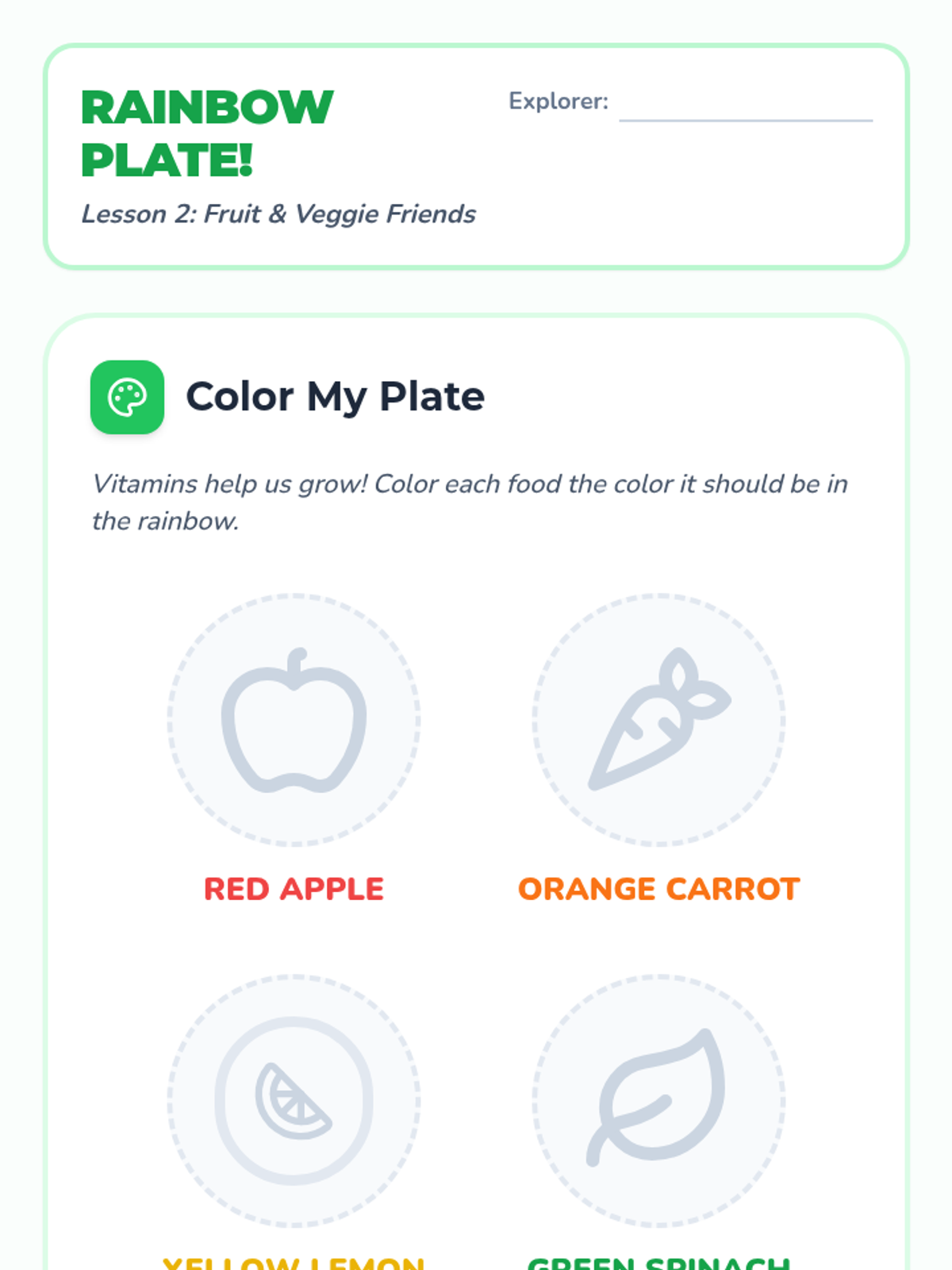
A colorful exploration of fruits and vegetables, focusing on vitamins and staying healthy.
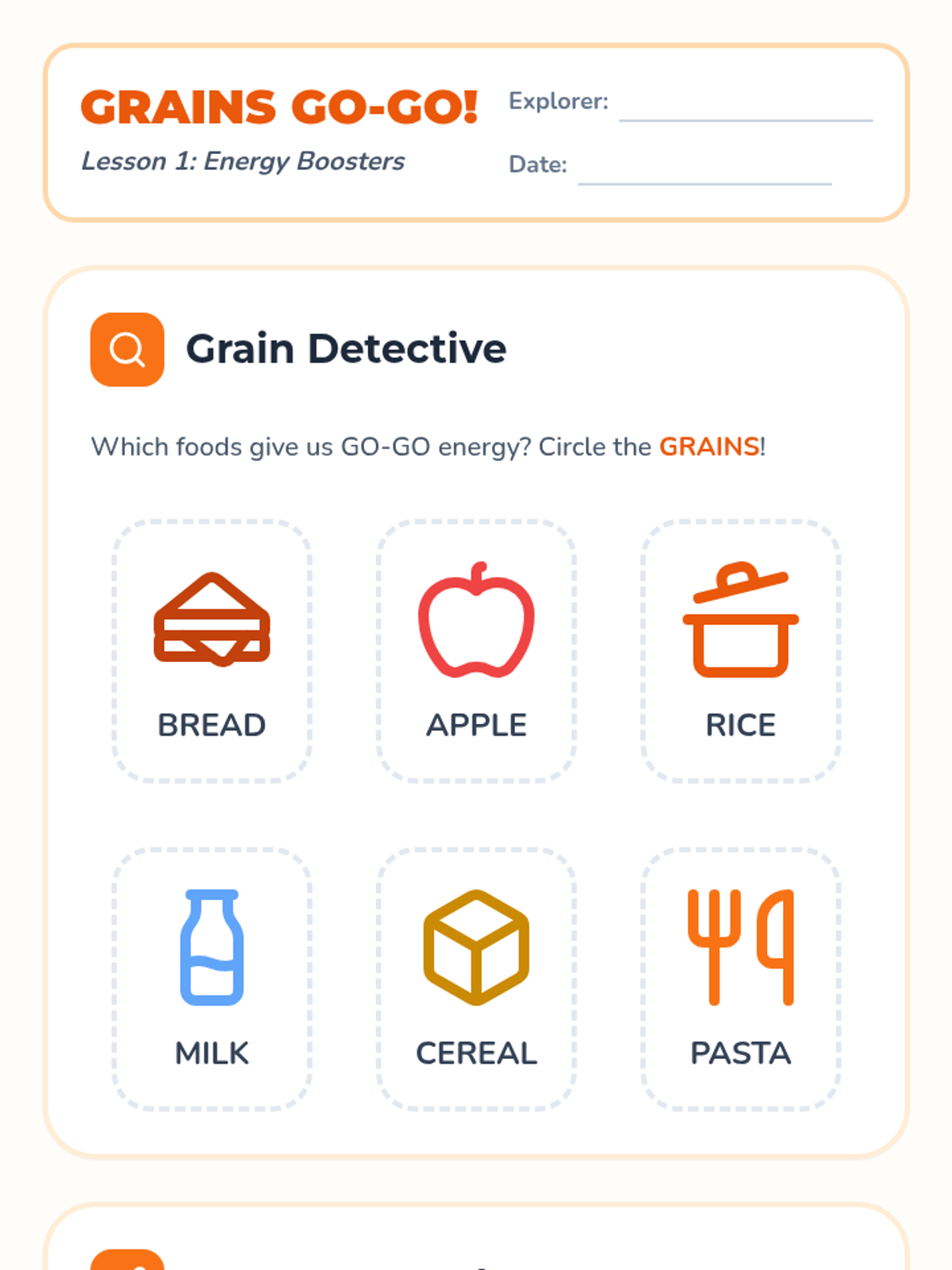
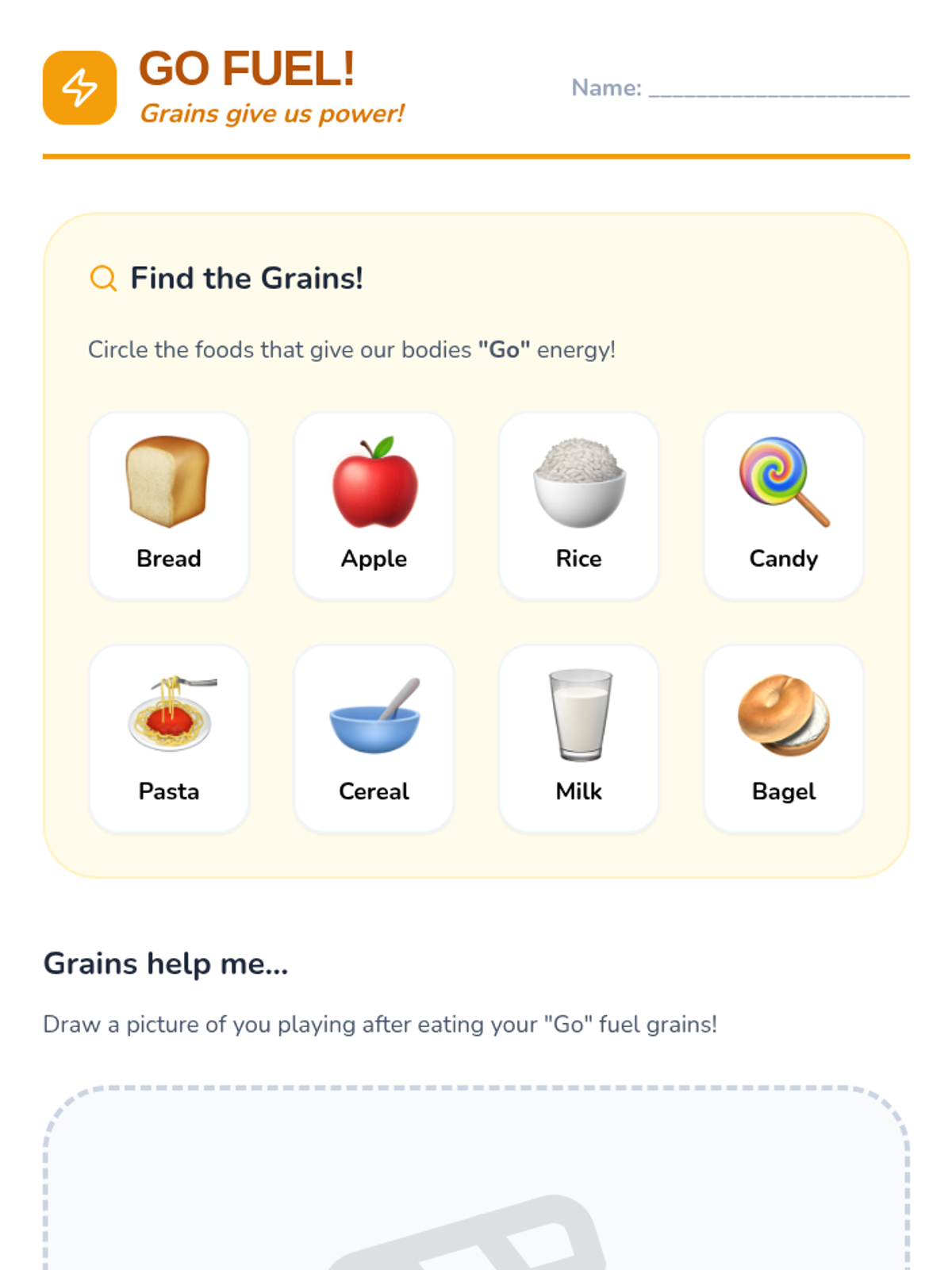
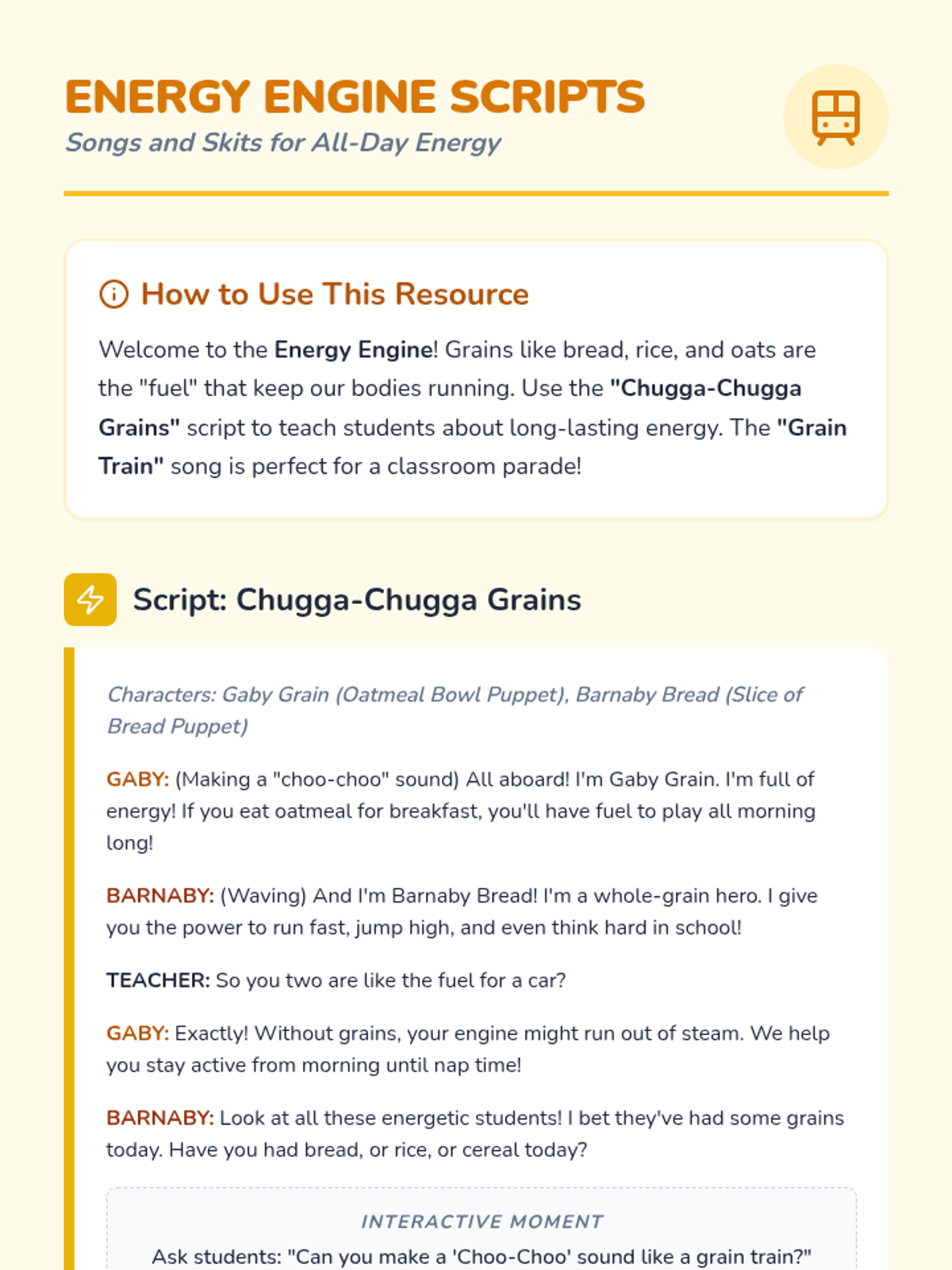
Introduction to grains as the body's 'energy fuel' through songs about oats, bread, and rice.
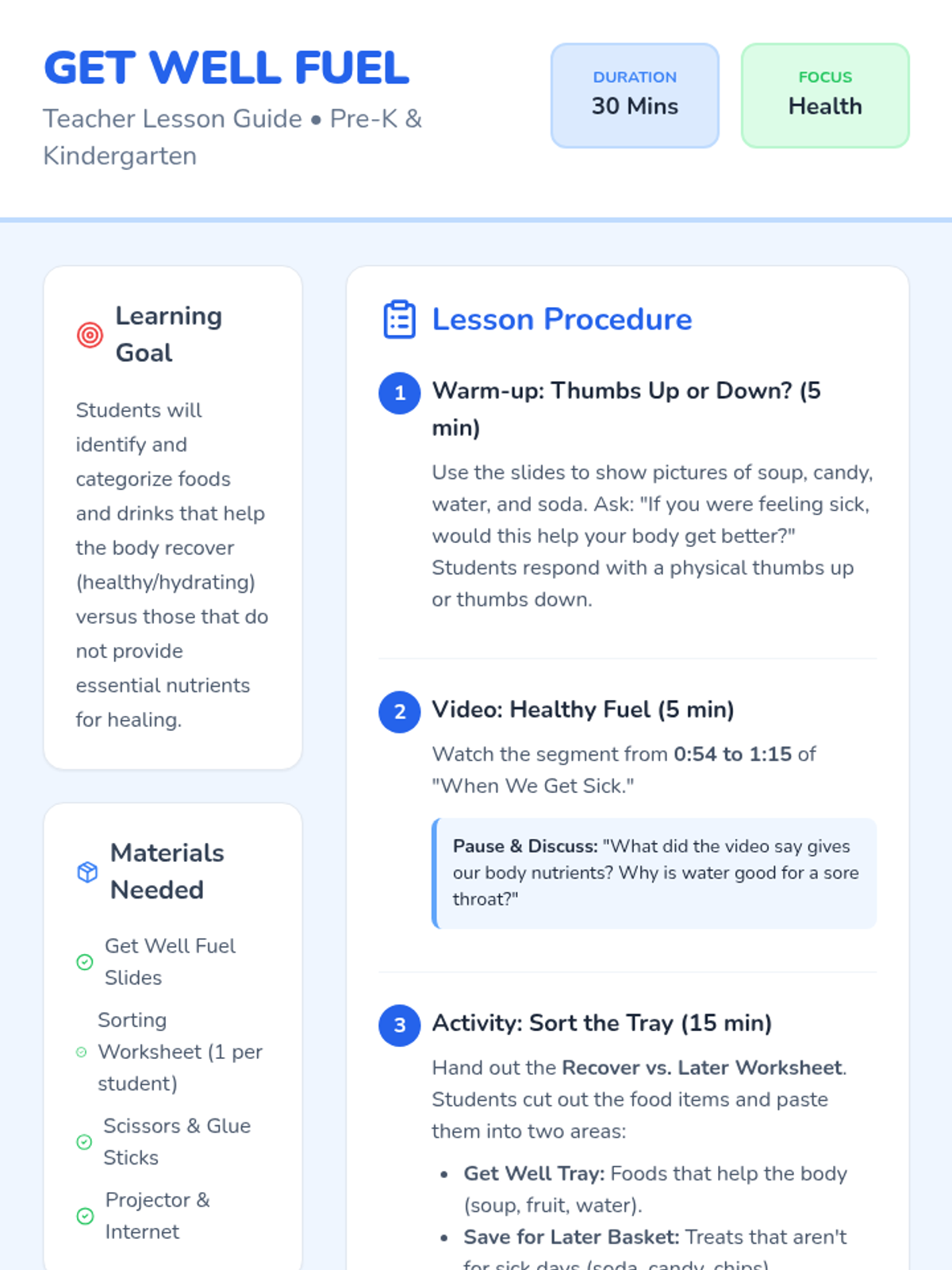
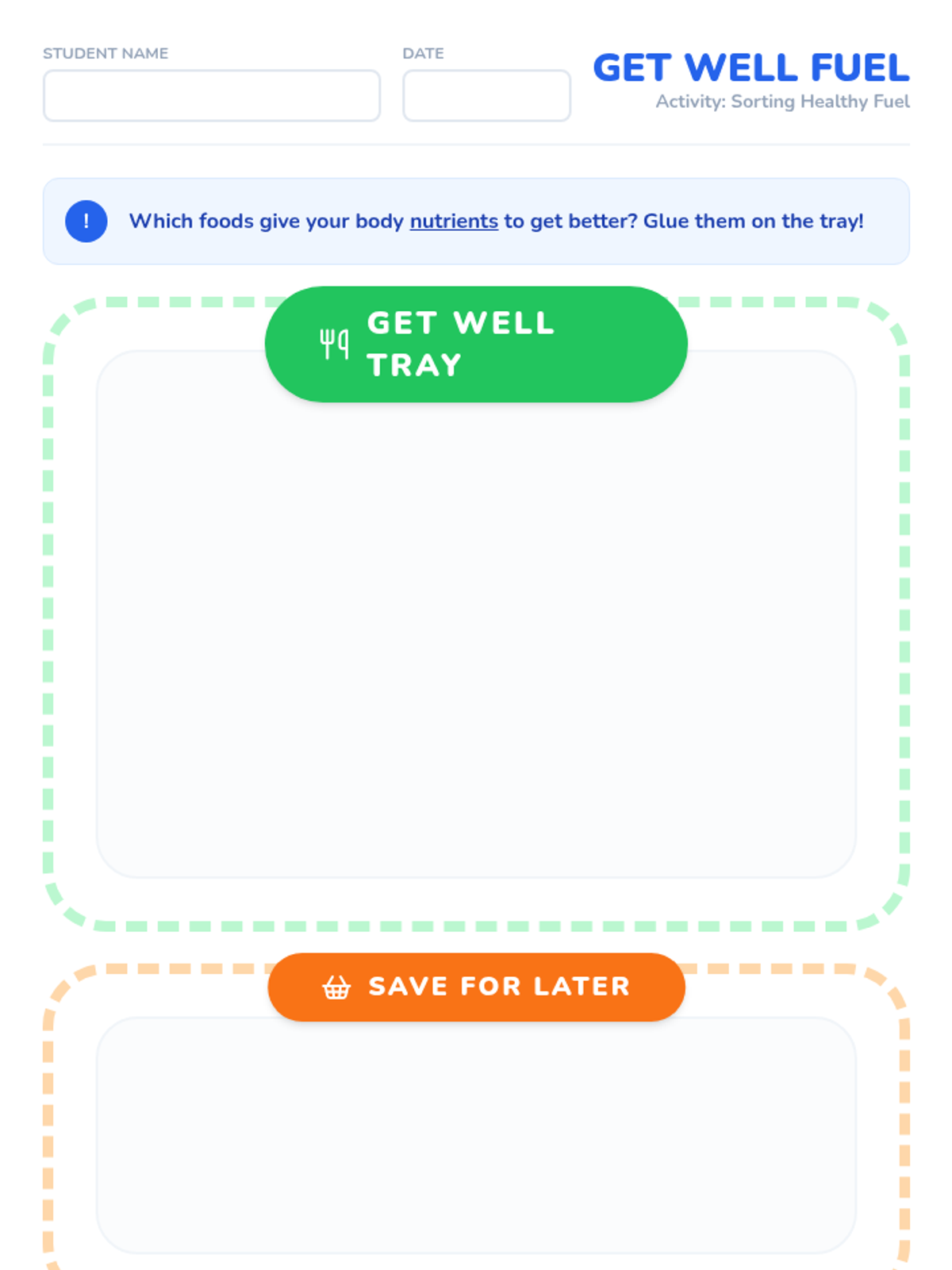
A lesson for Pre-K and Kindergarten students to identify and categorize foods and drinks that provide the nutrients and hydration needed to help the body recover from illness.
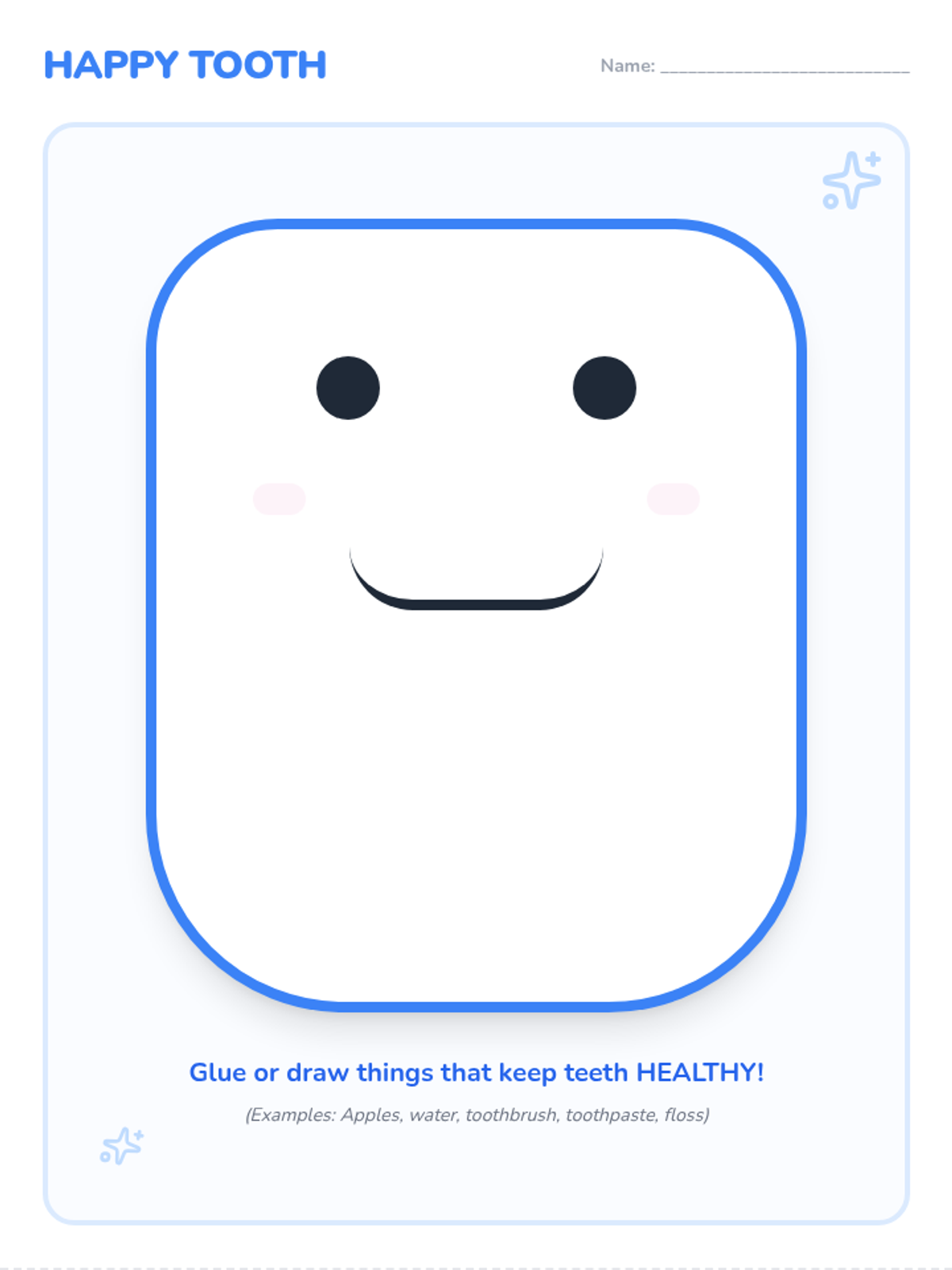
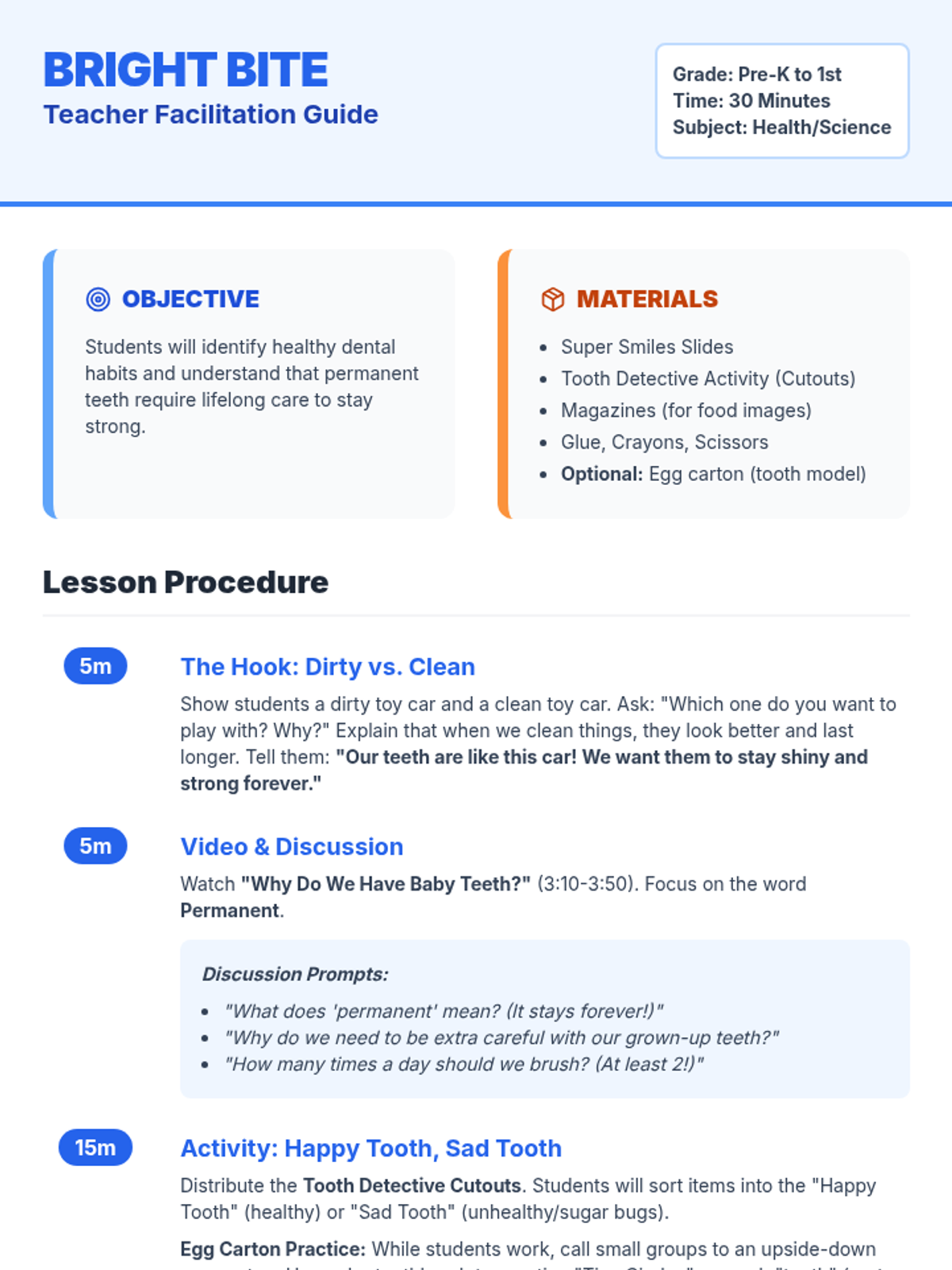
A fun, hands-on lesson for early learners about dental hygiene, focusing on the transition from baby teeth to permanent teeth and how to care for them.
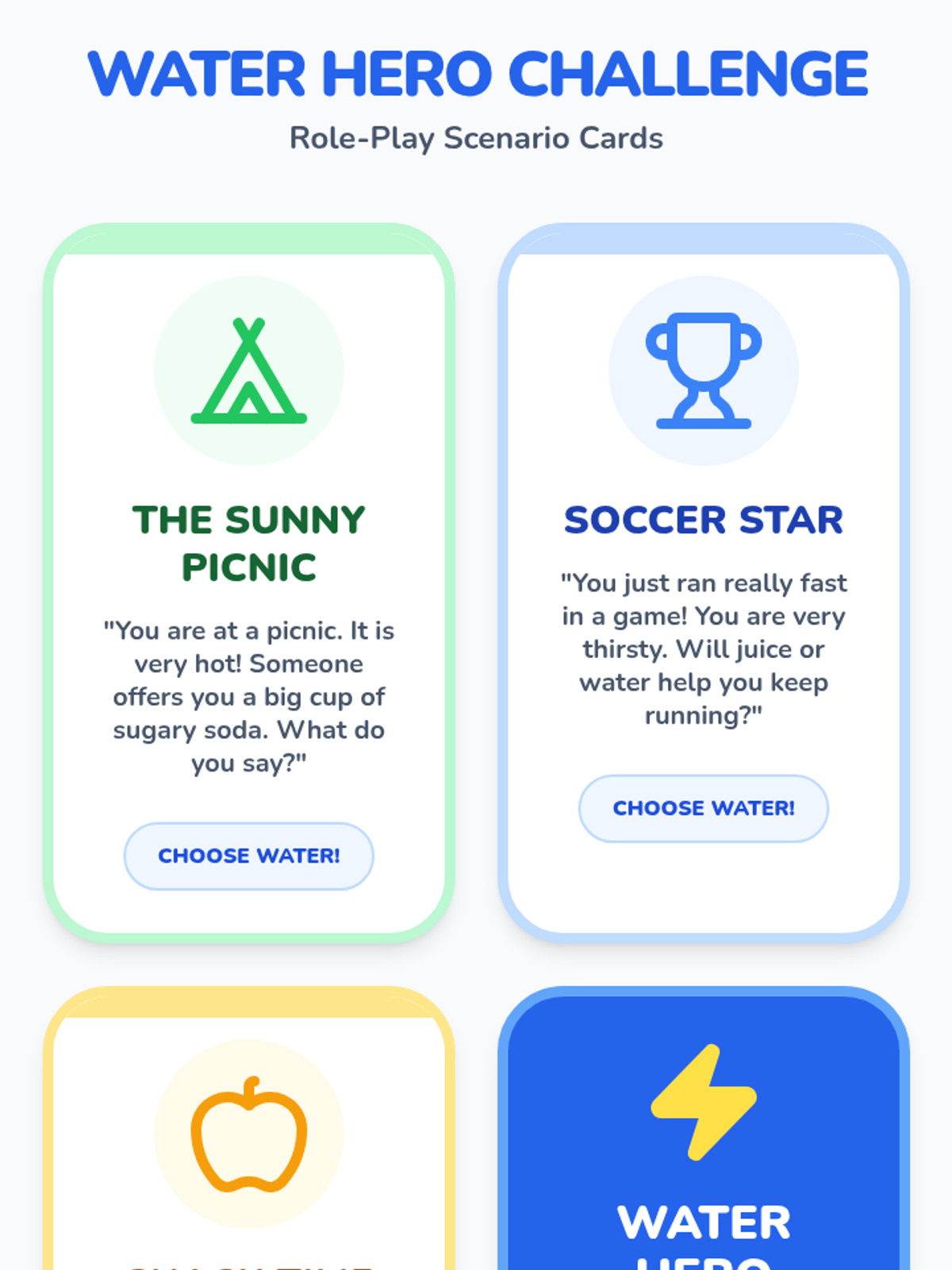
Students practice making healthy hydration choices through role-play scenarios, building the confidence to choose water in social situations.
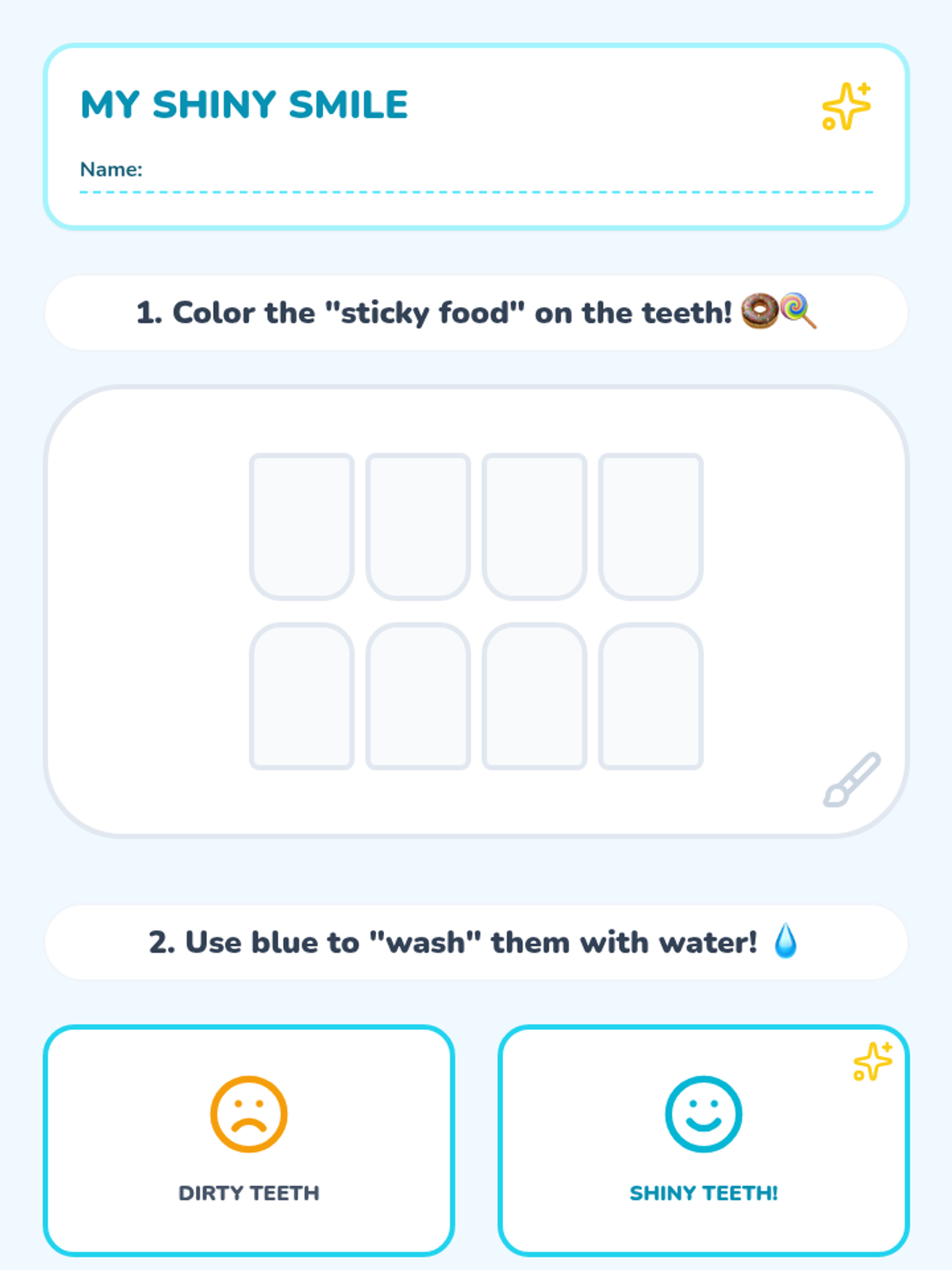
Students learn how water acts as a 'natural toothbrush' by rinsing away food particles and keeping teeth strong through a hands-on simulation.
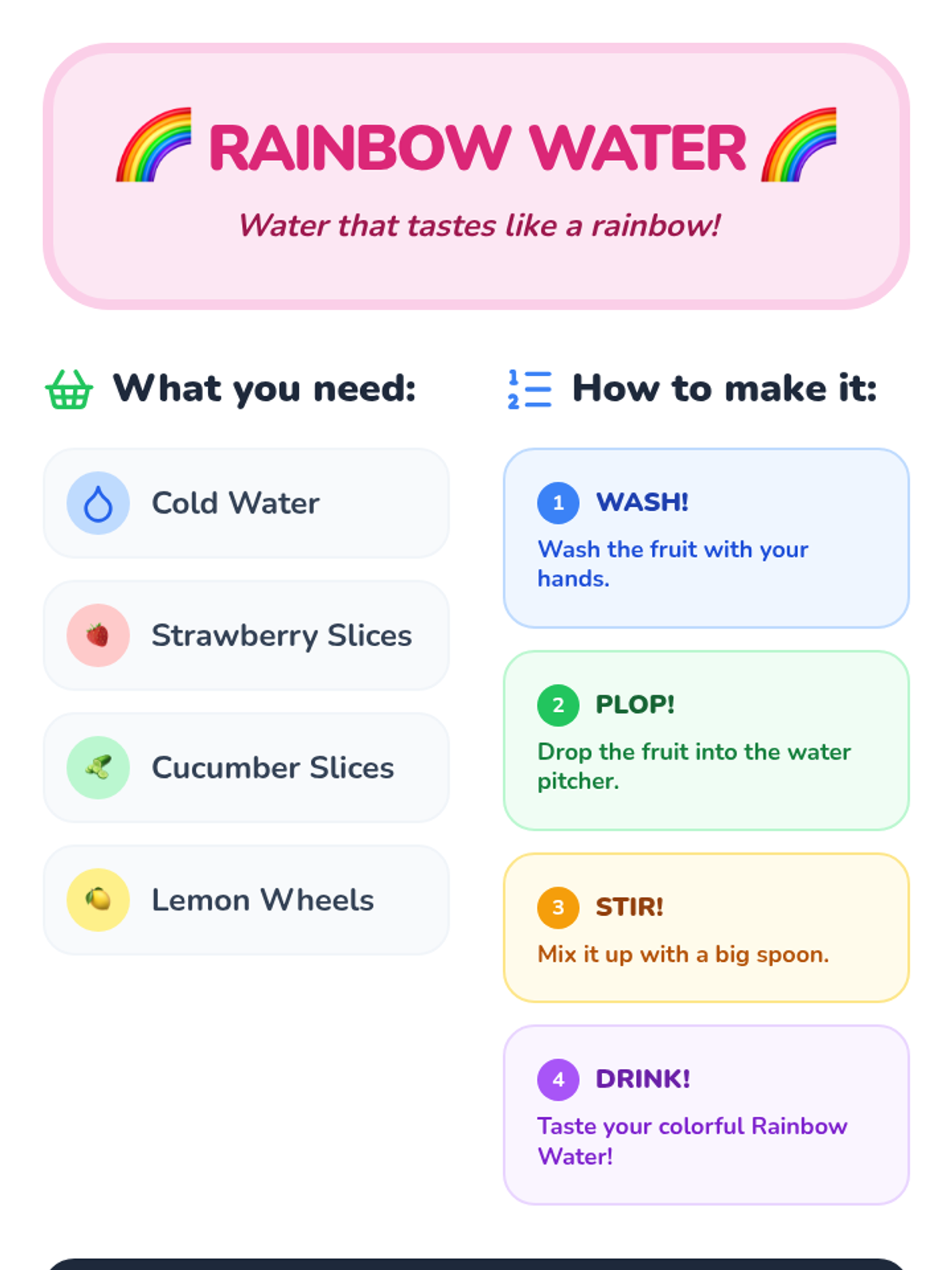
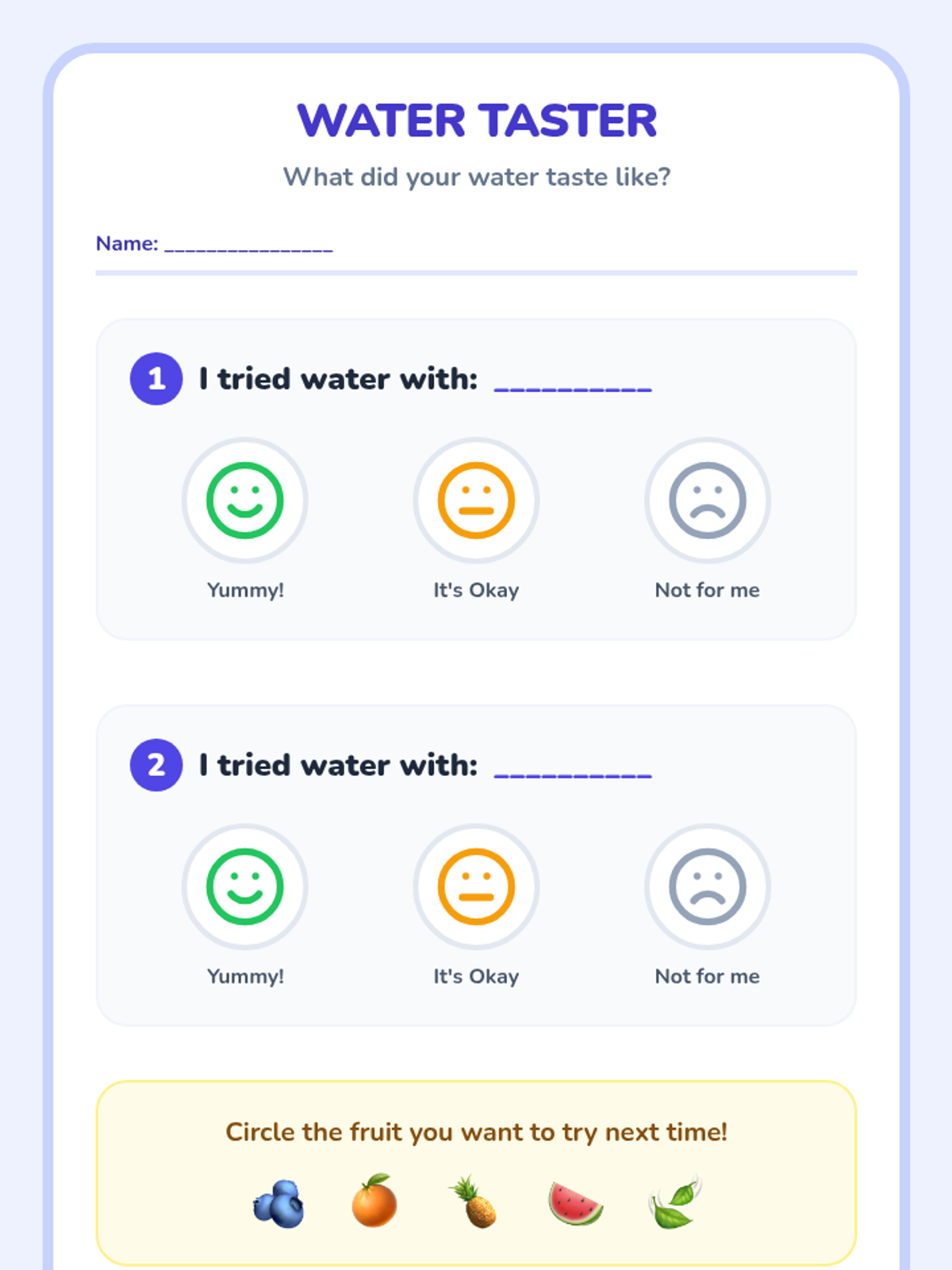
Students participate in a sensory project to create fruit-infused 'Rainbow Water', demonstrating that water can be exciting and tasty without added sugar.
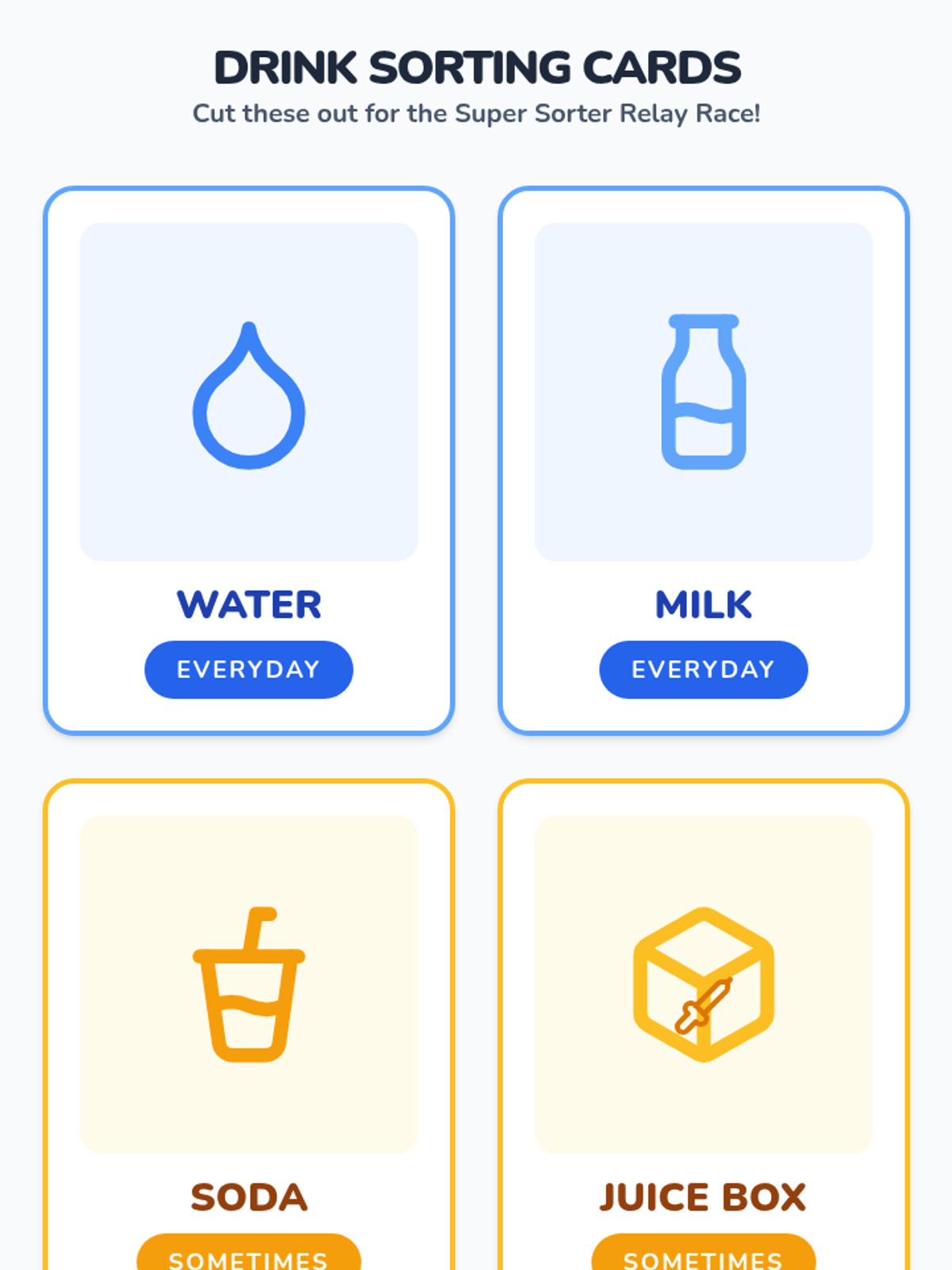
A high-energy relay race activity where students categorize different drinks into 'Everyday' (healthy) and 'Sometimes' (treats) categories.
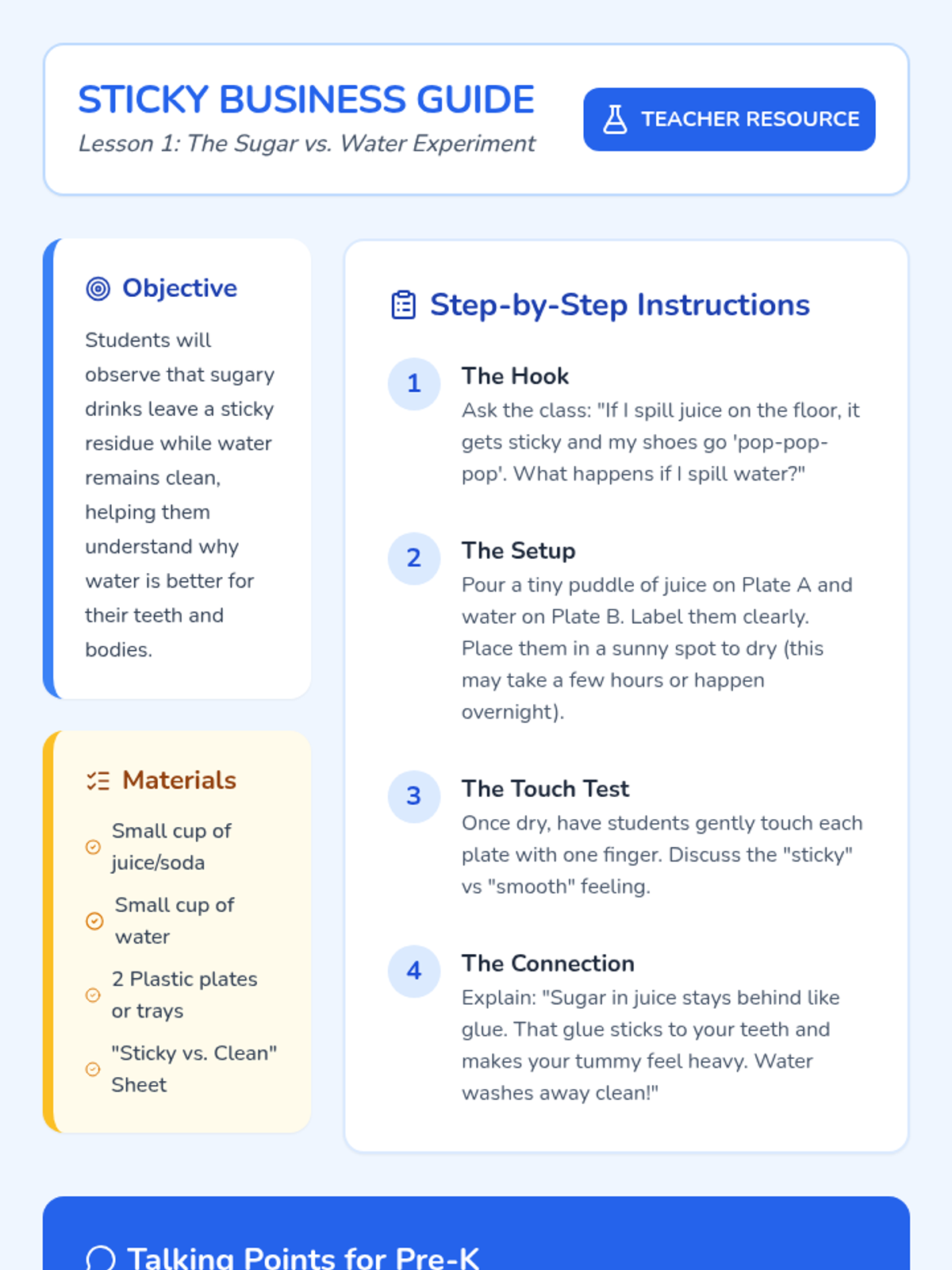
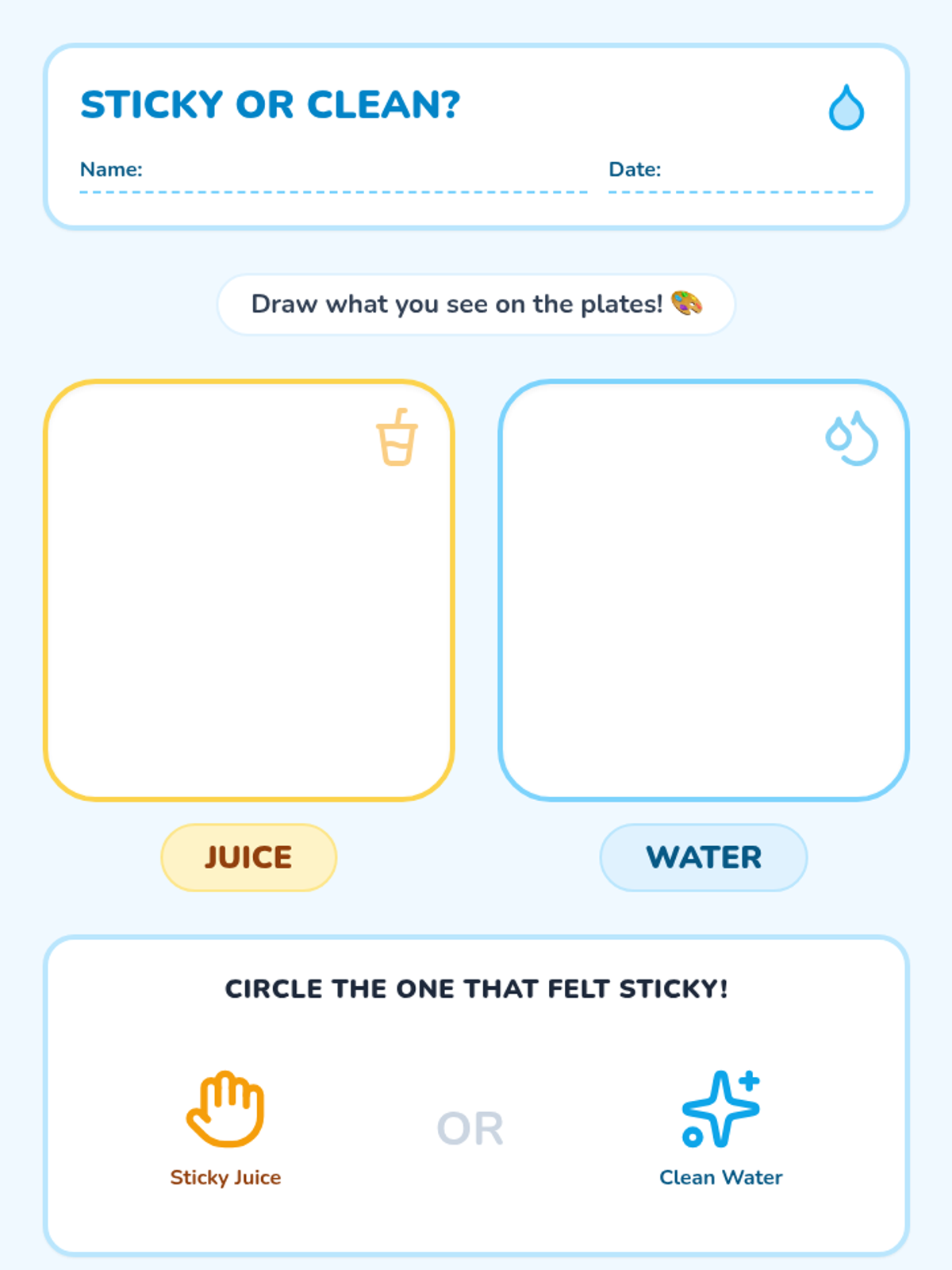
Students observe the physical difference between dried sugary drinks and dried water to understand how sugar sticks to their bodies and teeth.
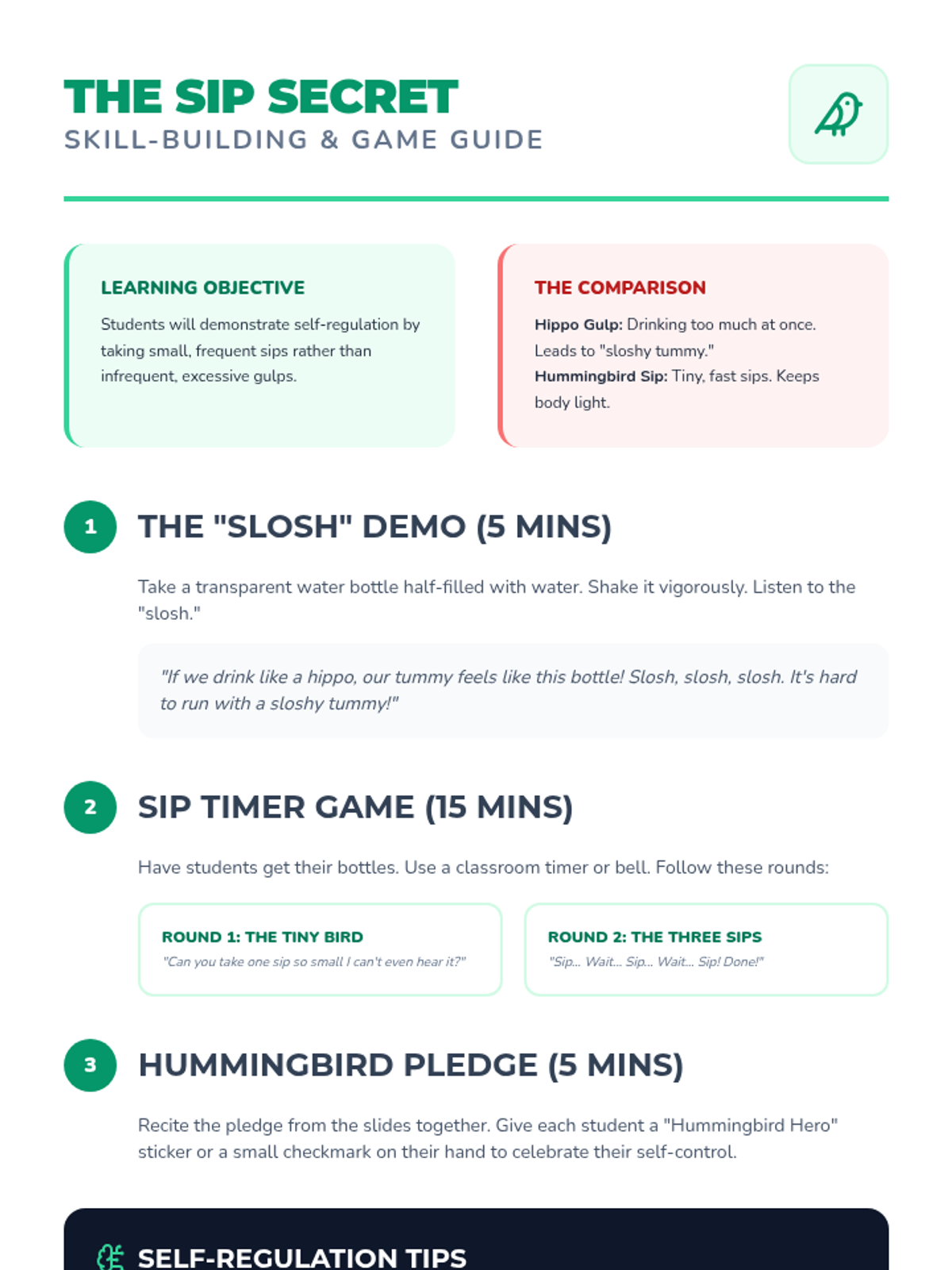
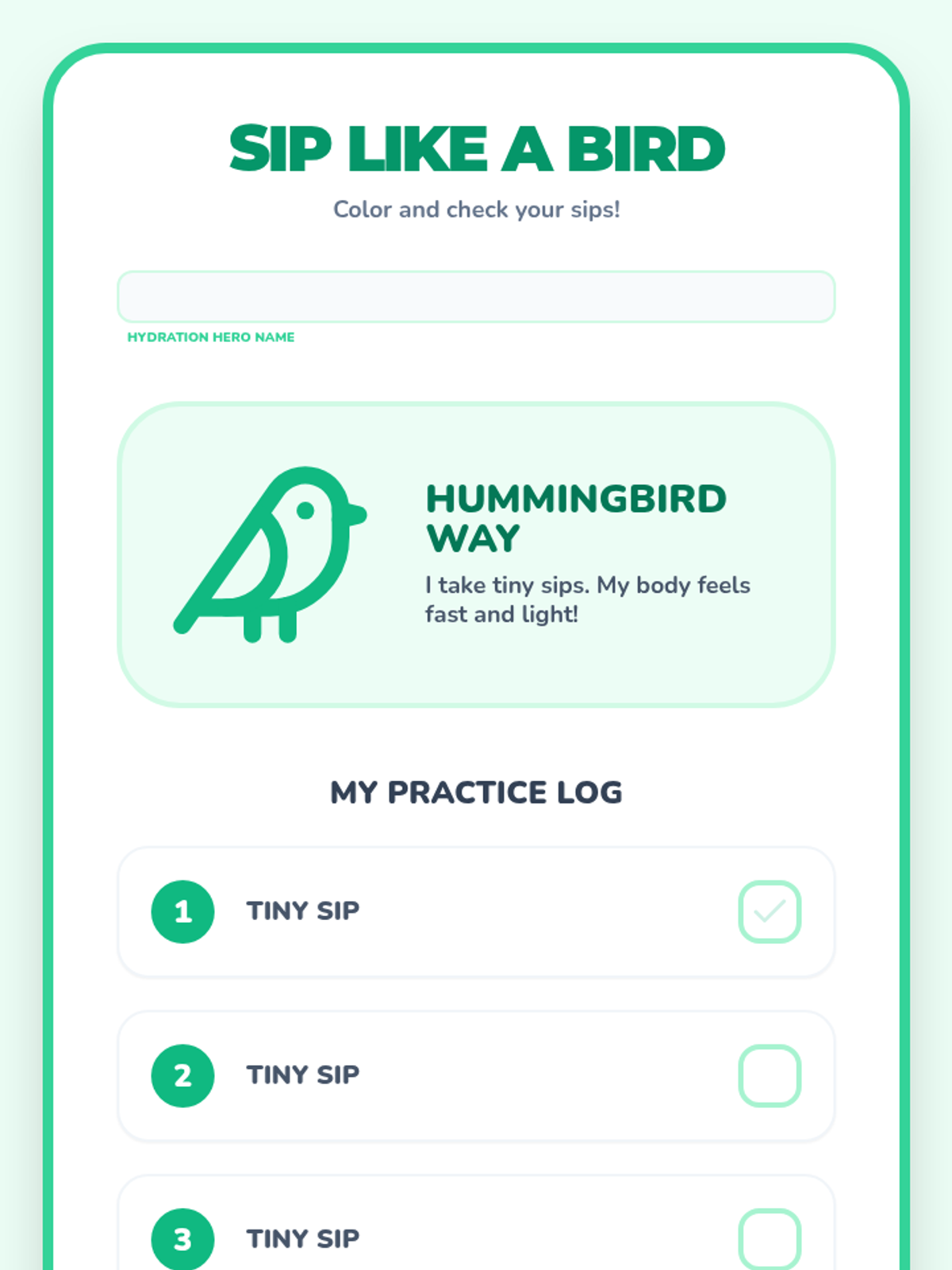
Focuses on self-regulation and drinking technique, comparing 'hummingbird sips' to 'hippo gulps' to promote steady hydration.
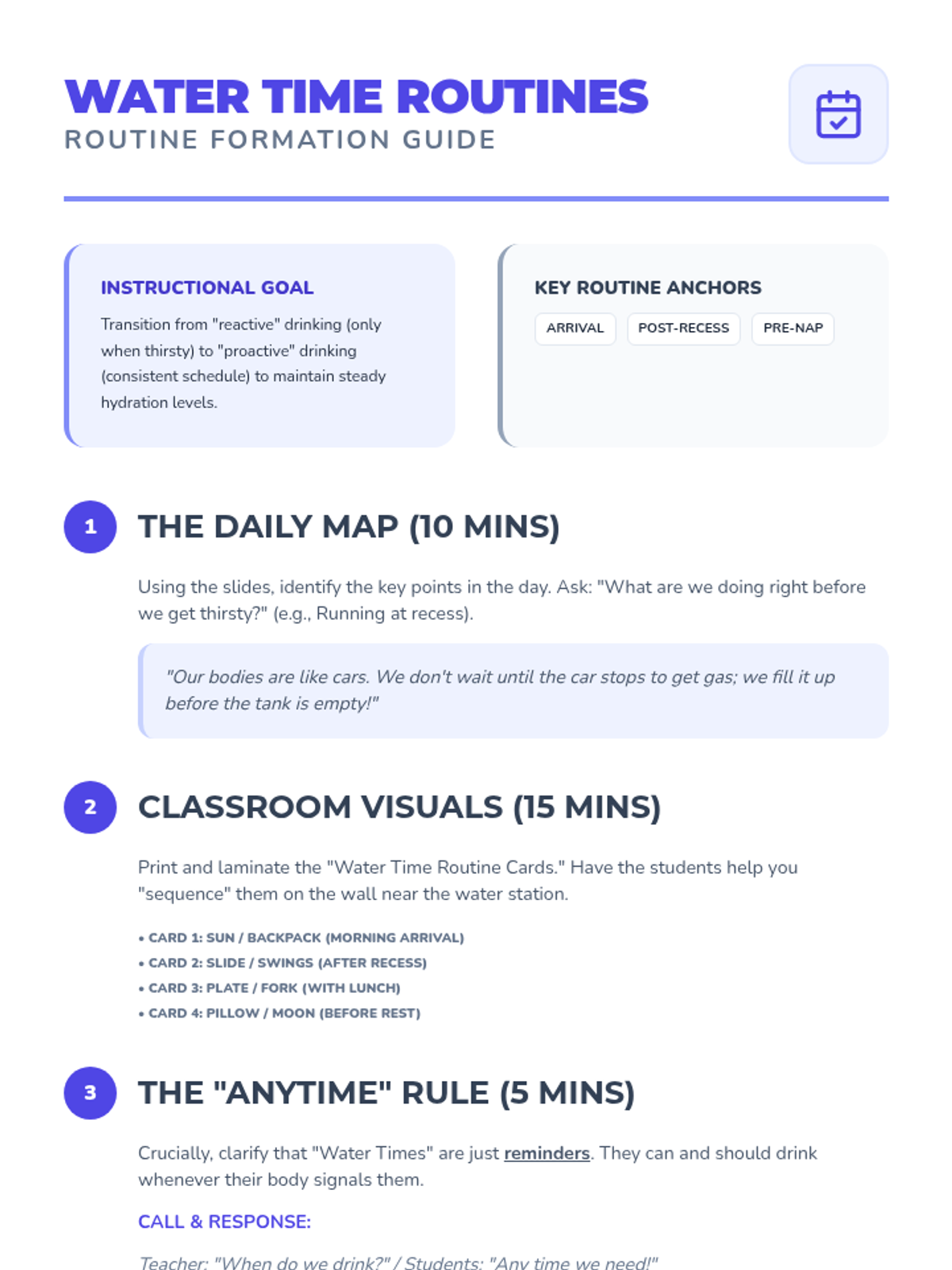
Students identify key times throughout the school day for hydration and create a visual classroom routine to support consistent drinking habits.
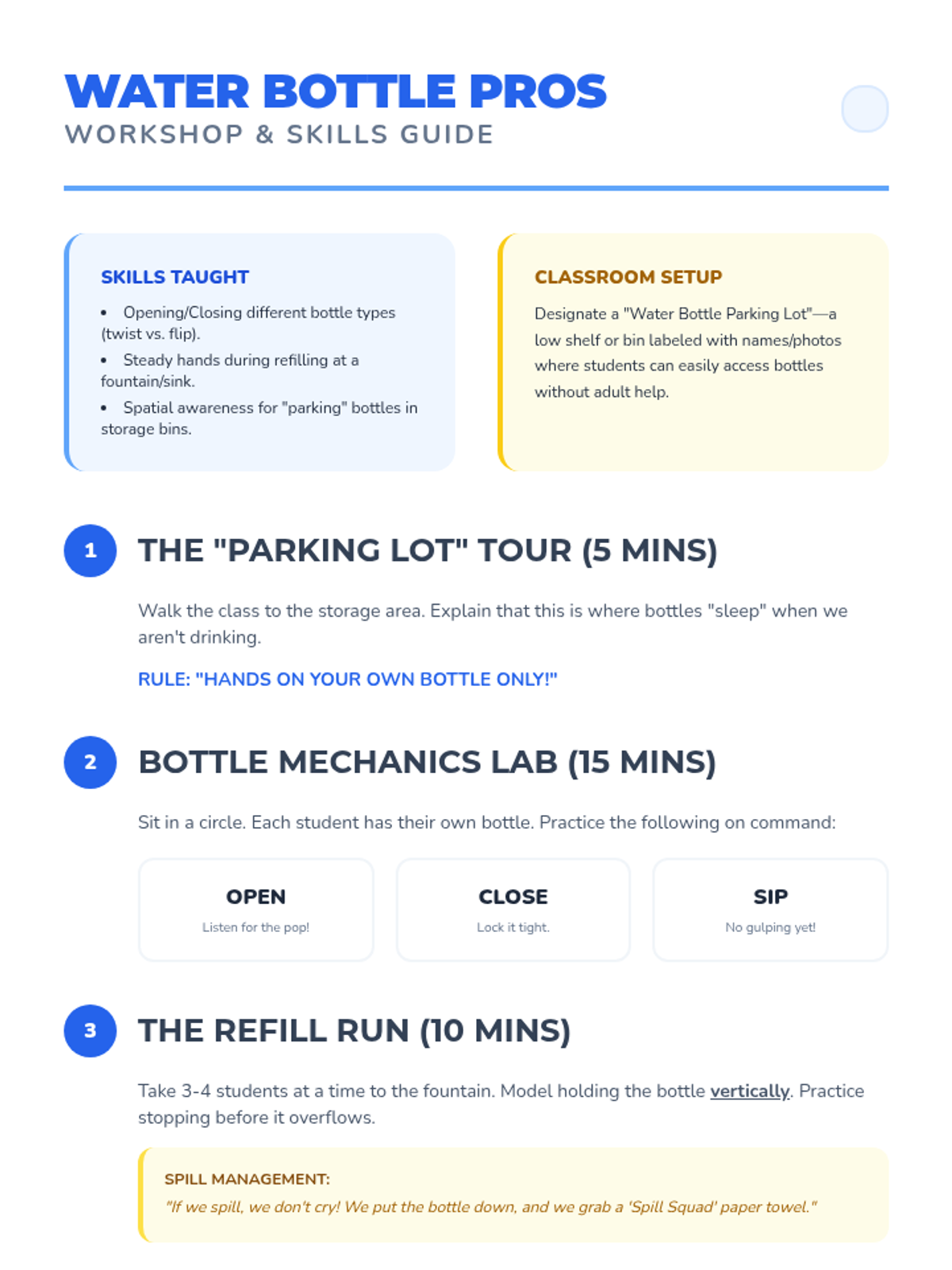
A practical skills workshop focusing on fine motor control for water bottle use and establishing classroom storage habits.
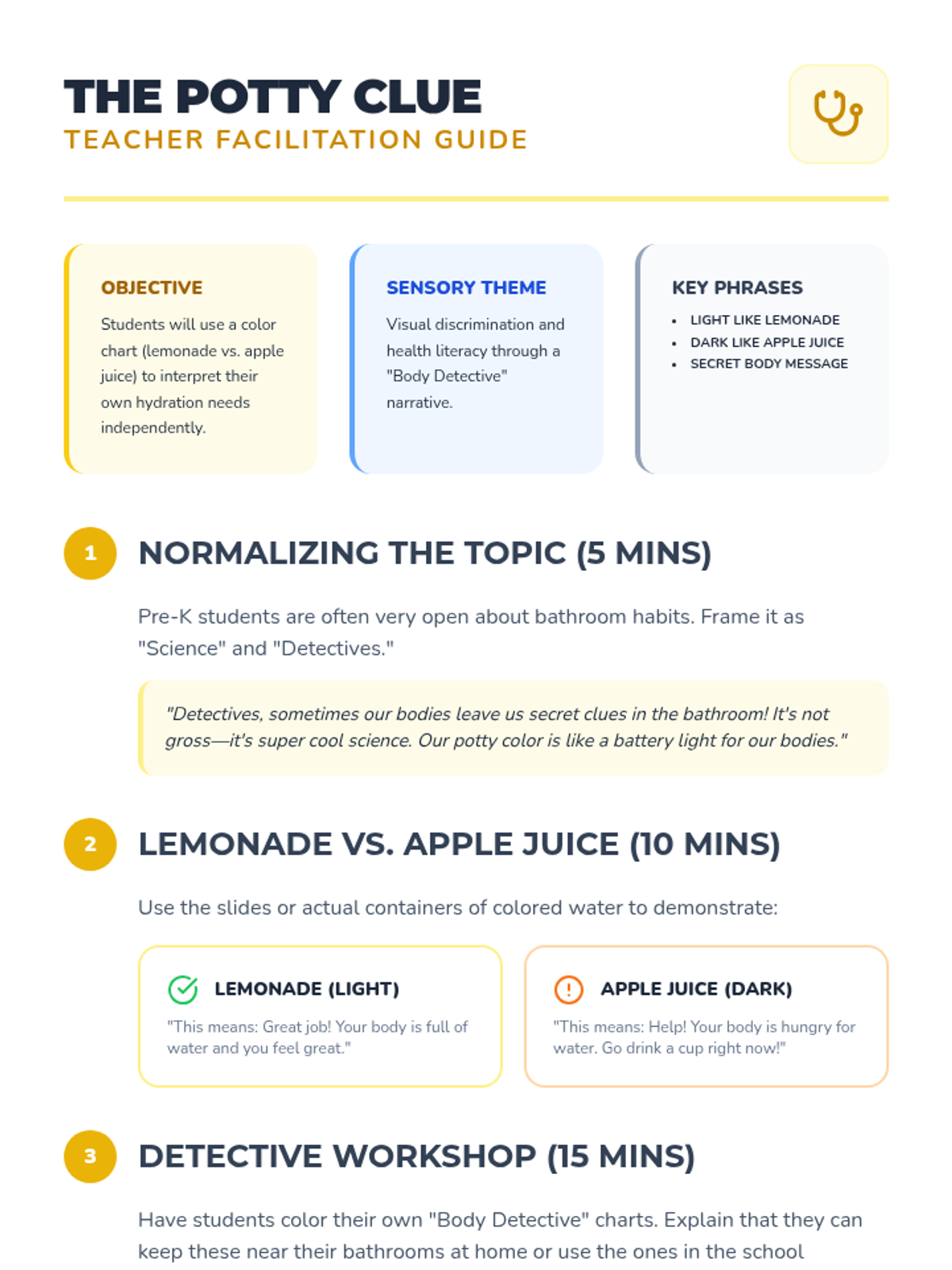
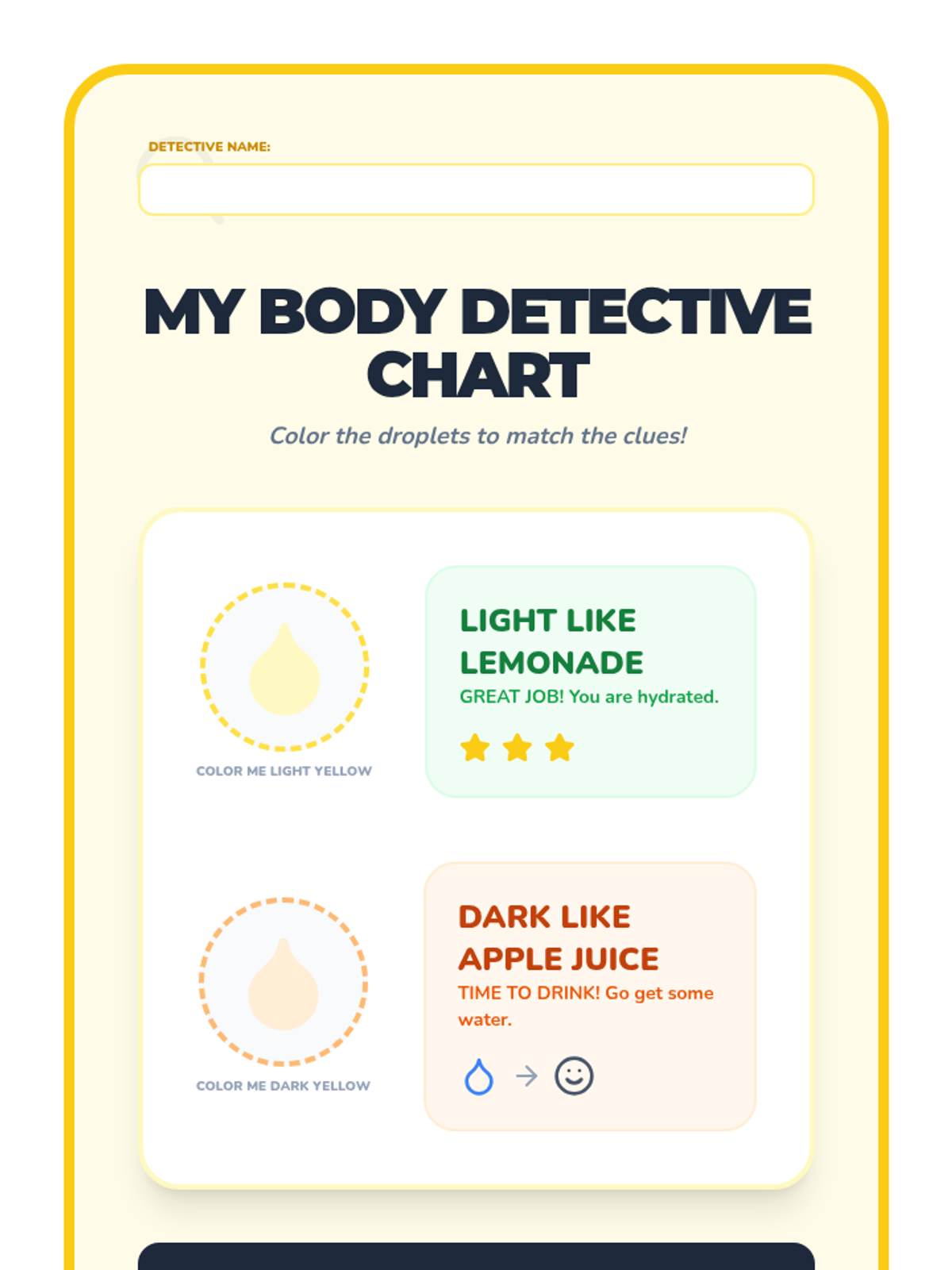
Using a simple visual comparison, students learn to use urine color as a health indicator to determine if they need to drink more water.
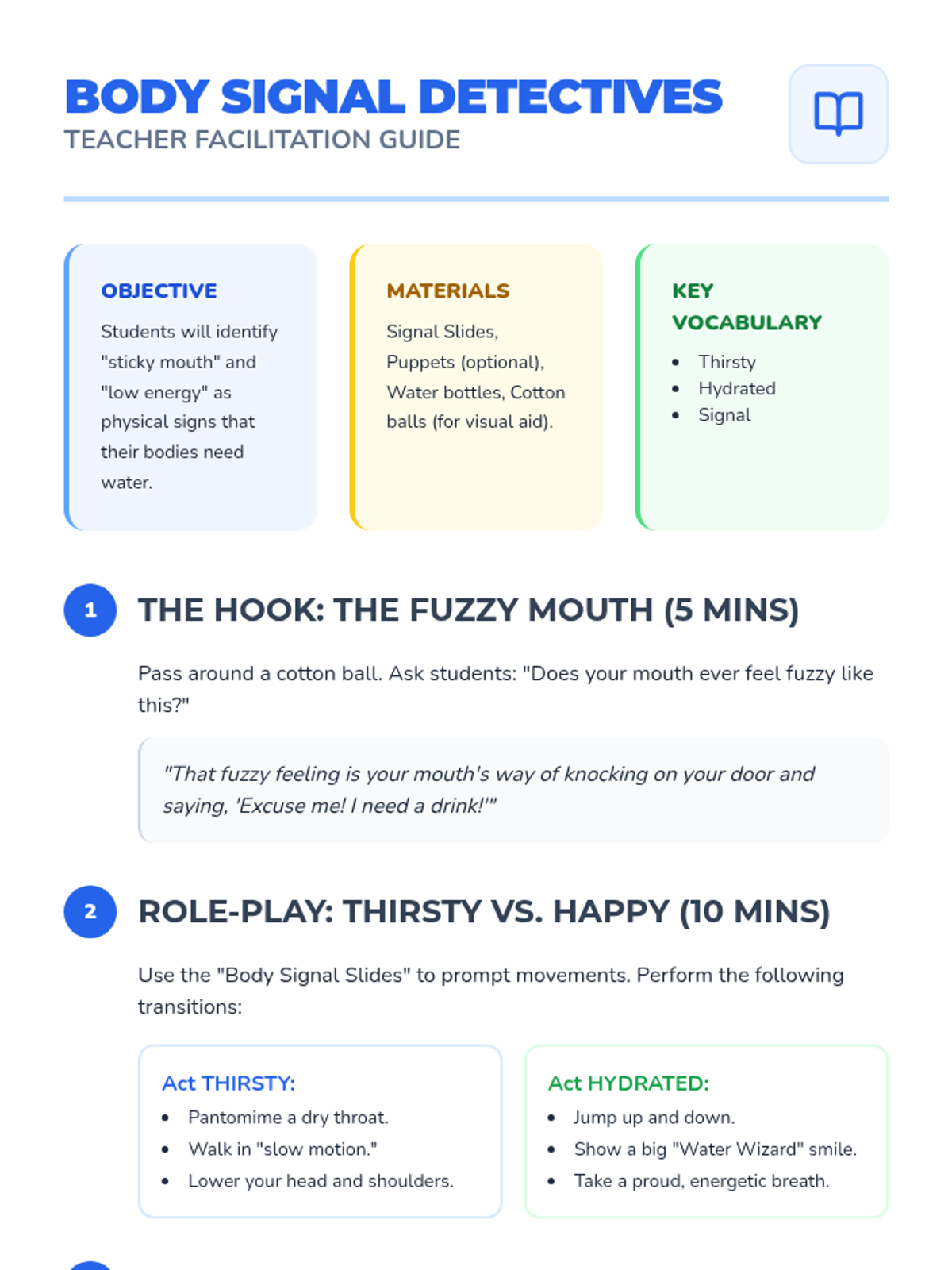
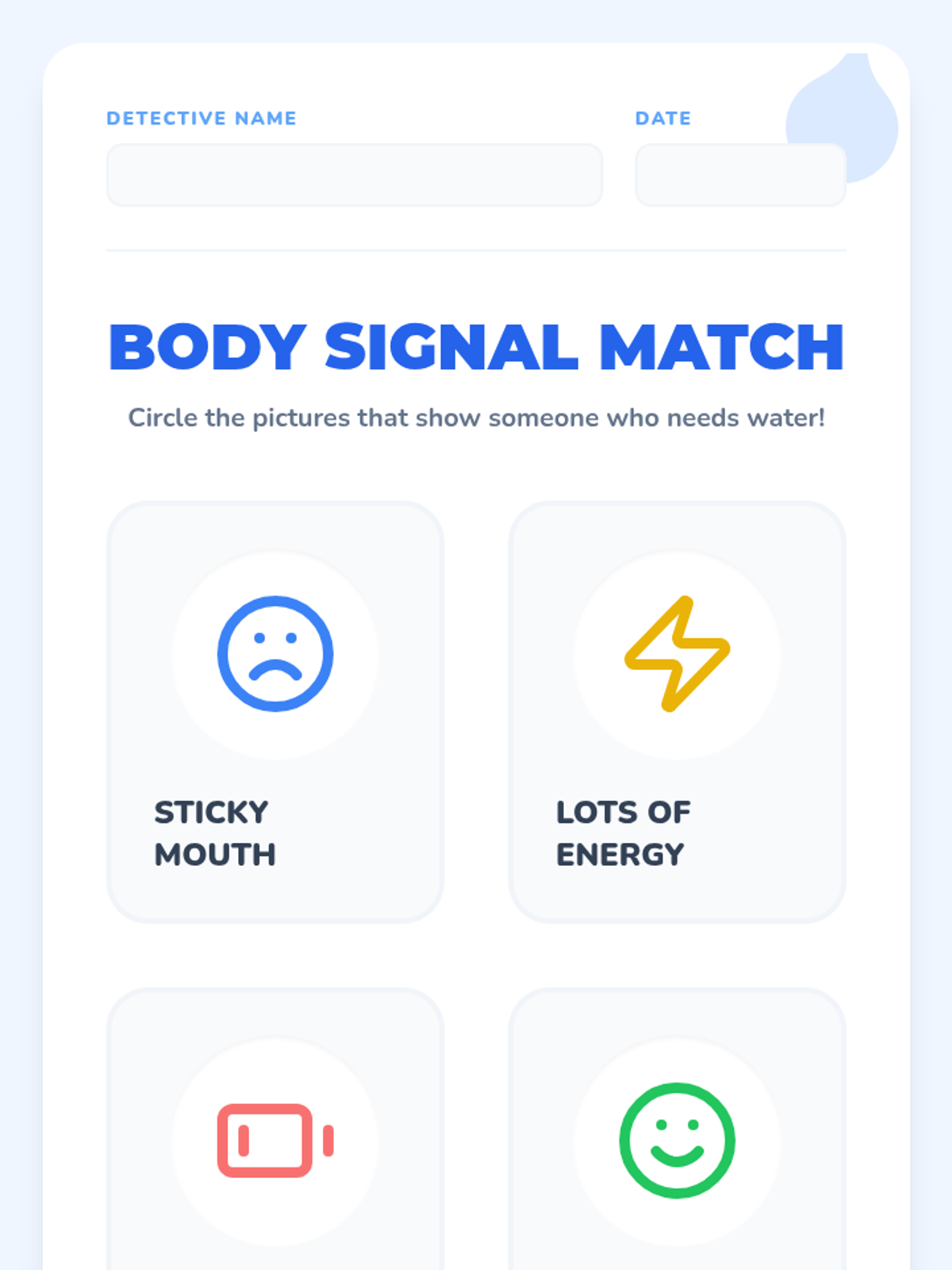
Students explore physical sensations of thirst through role-play and somatic awareness activities, learning to identify 'dry mouth' and 'low energy' as signals from their bodies.
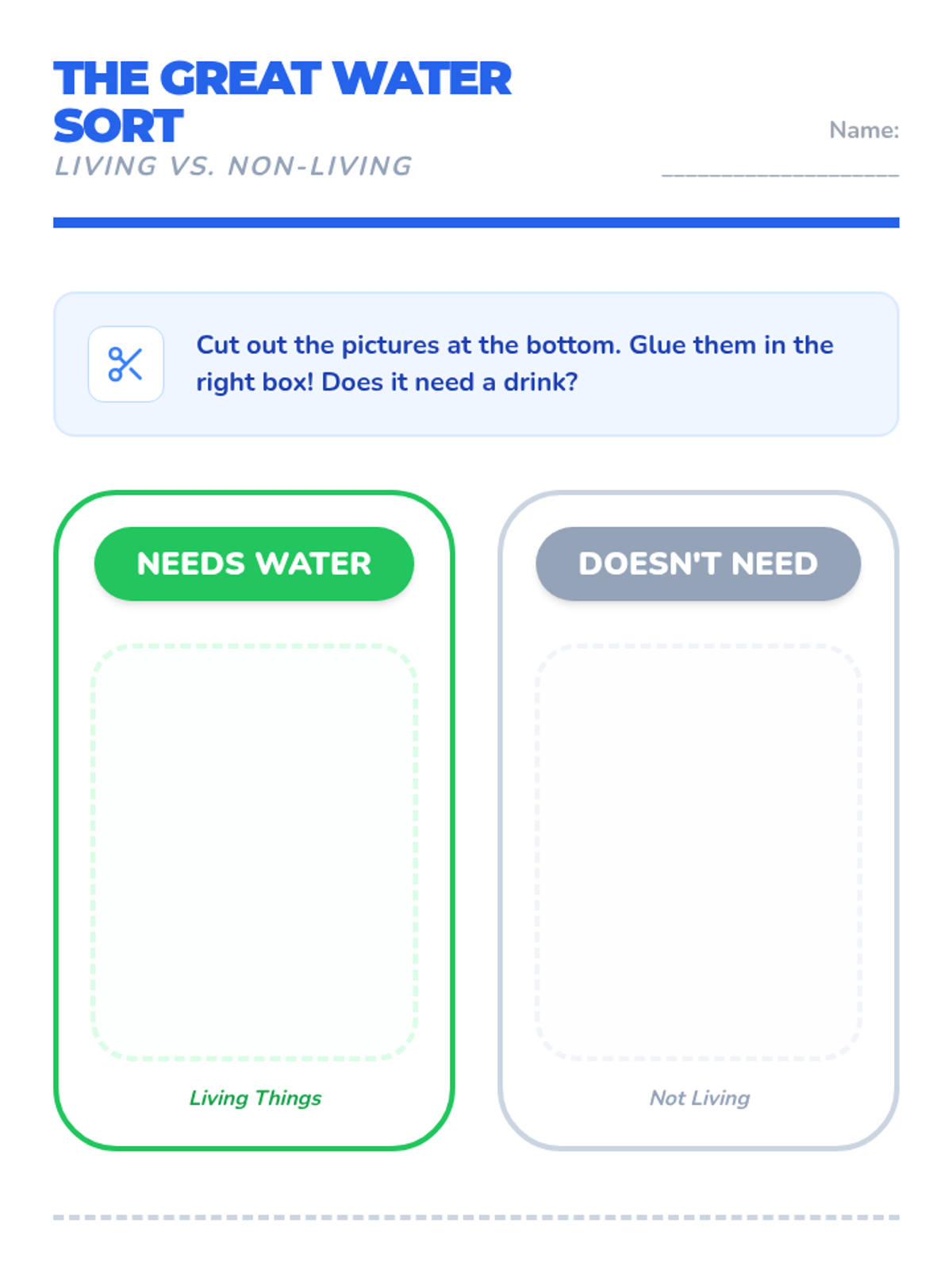
A culminating review where students categorize living and non-living things based on their need for water, celebrating their journey as Hydration Heroes.
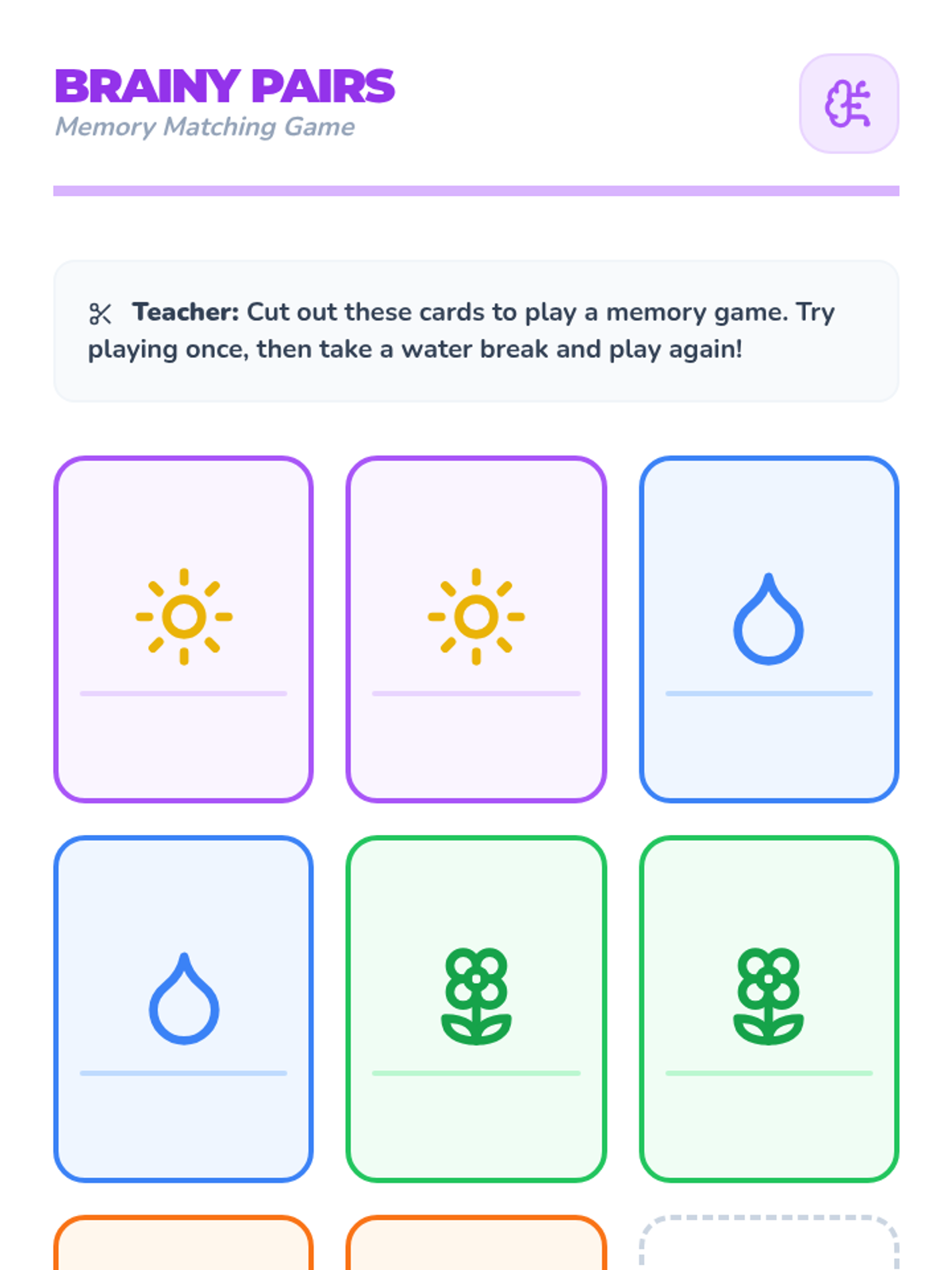
A focus on the brain's need for hydration, using memory games to show how water helps us think, focus, and learn.
Students explore how their bodies get warm during play and how water acts as a cooling system, replacing fluid lost through sweat.
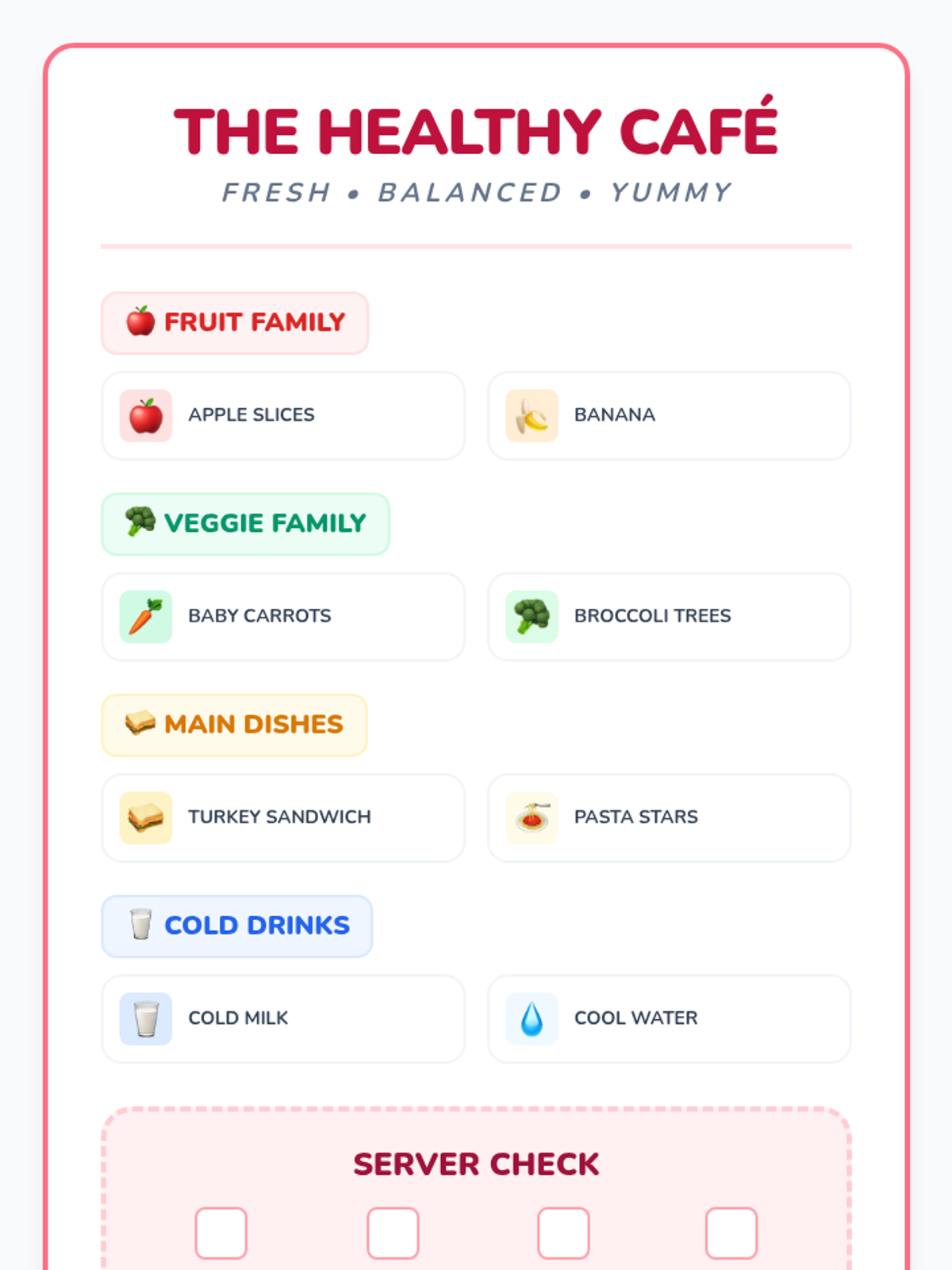
In this culminating simulation, students take on roles of servers and customers. Servers must assemble plates that meet the balanced criteria (multiple groups) based on customer orders. This reinforces all previous concepts of groups, selection, and variety in a social play context.
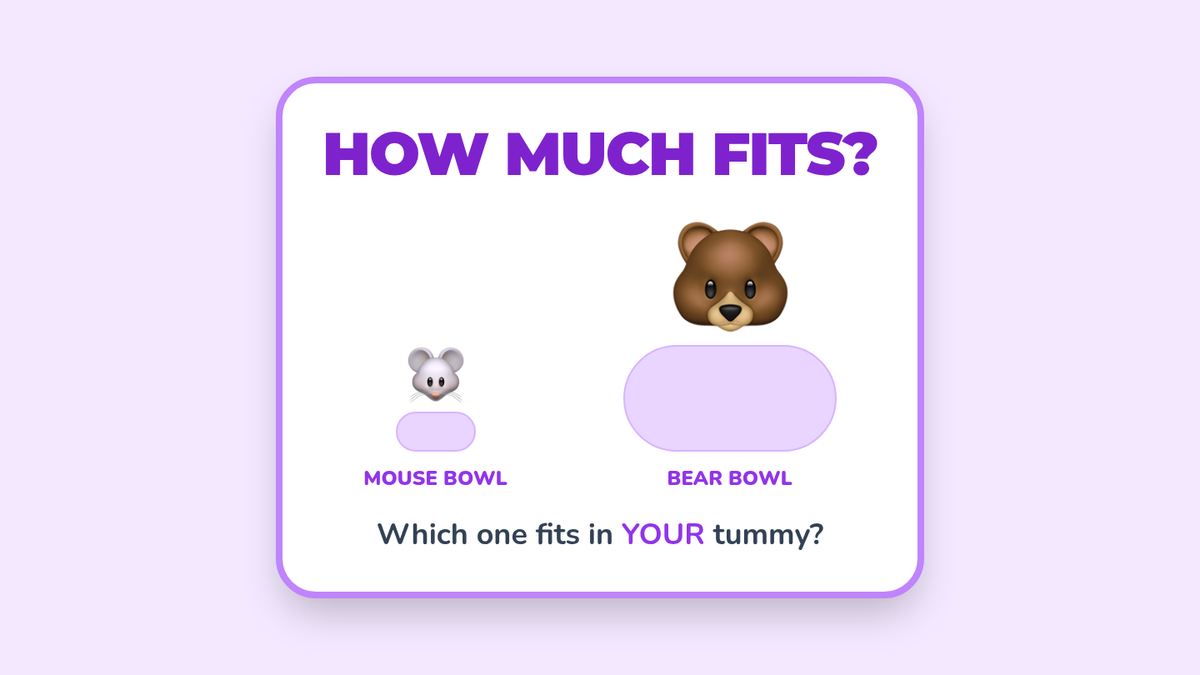
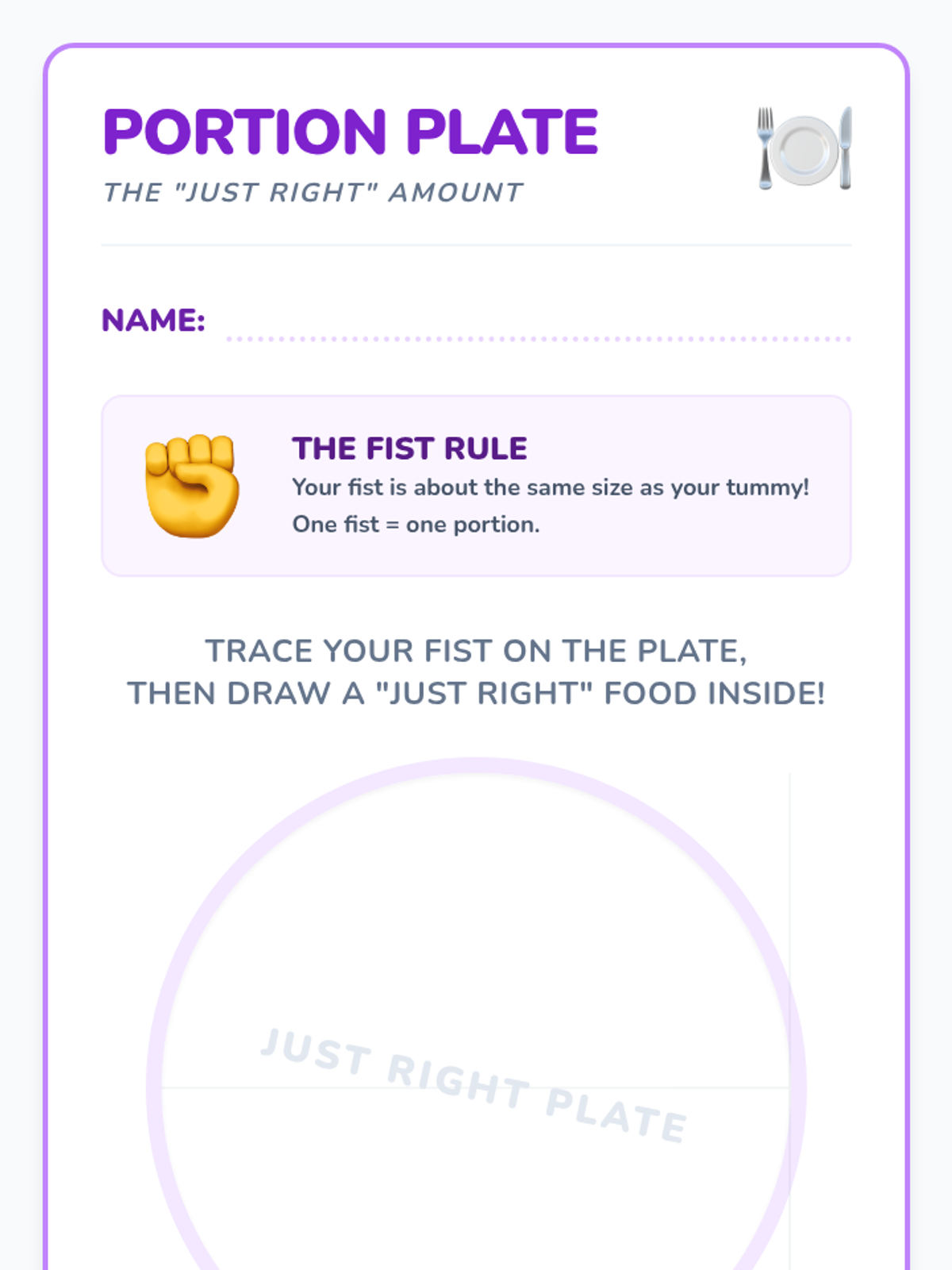
Students learn about portion control using their own hands (a fist for a serving size) to understand how much food fits in their tummy. They practice serving 'just right' amounts of play food onto plates. This introduces the concept that a balanced meal is also about amount, not just type.
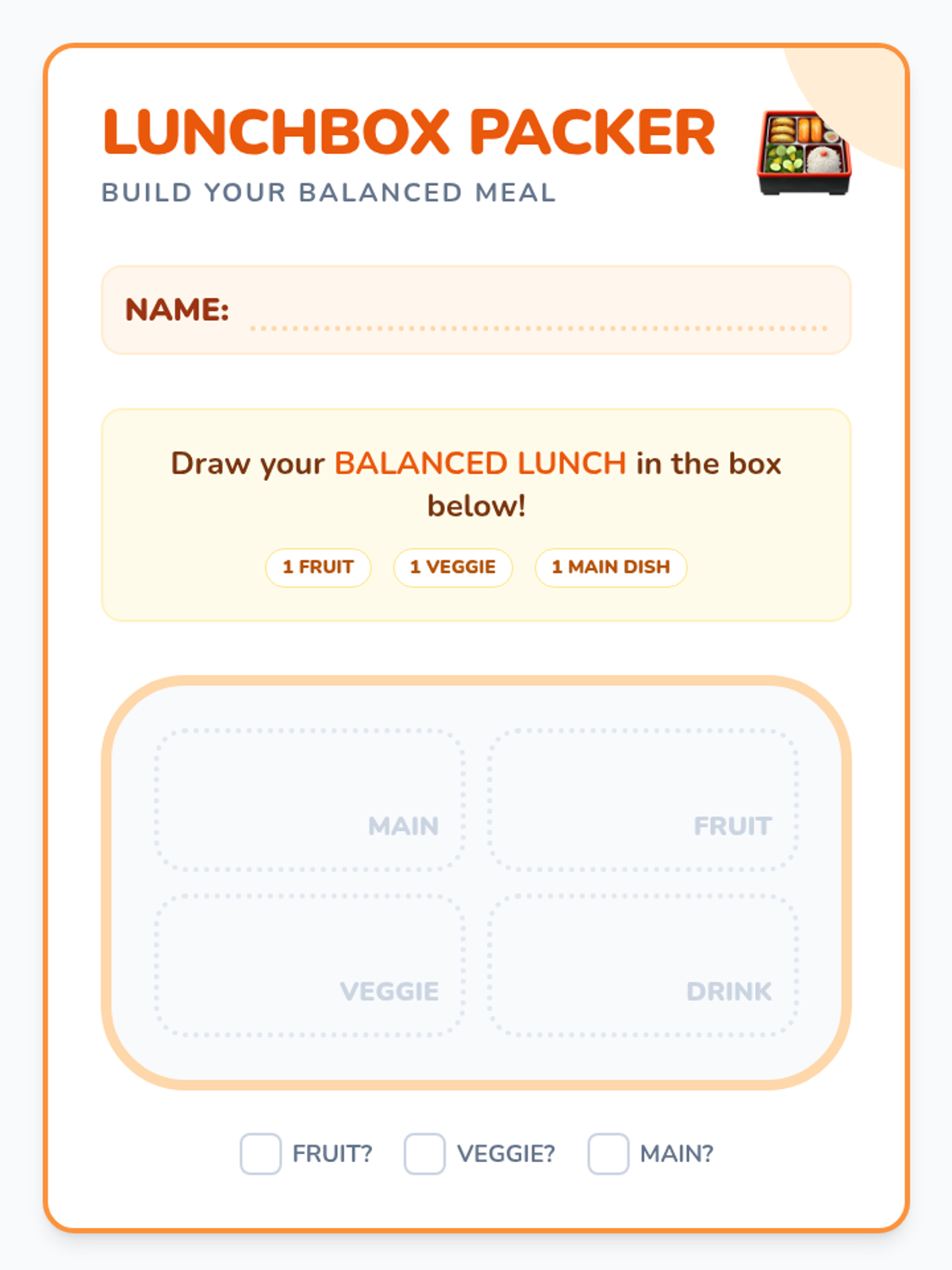
Focusing on assembly, students use felt or magnetic food pieces to pack a pretend lunchbox. The challenge is to include a fruit, a vegetable, and a main dish (grain/protein). Teachers model how to swap out 'sometime foods' (treats) for 'everyday foods' to keep the balance.
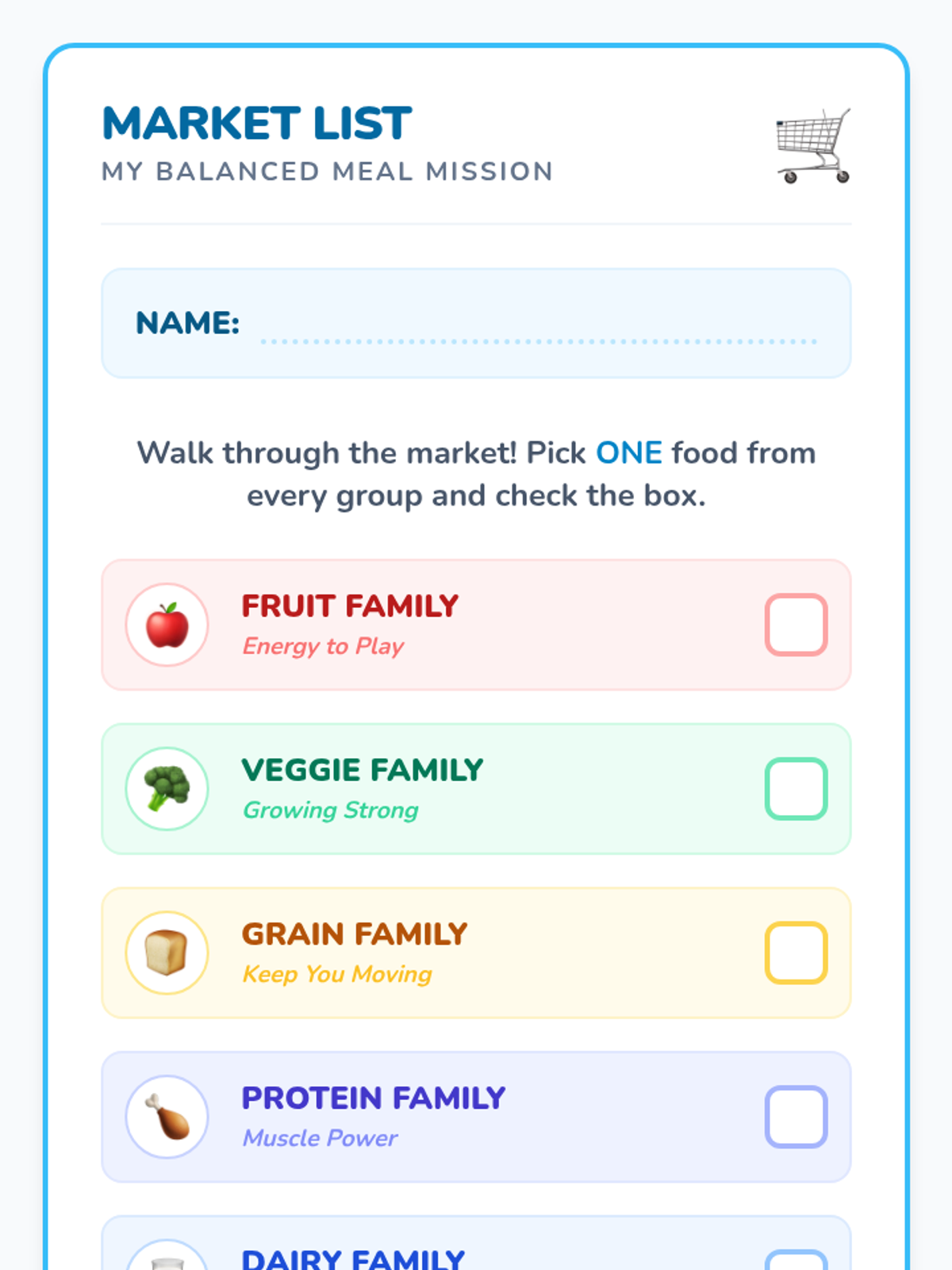
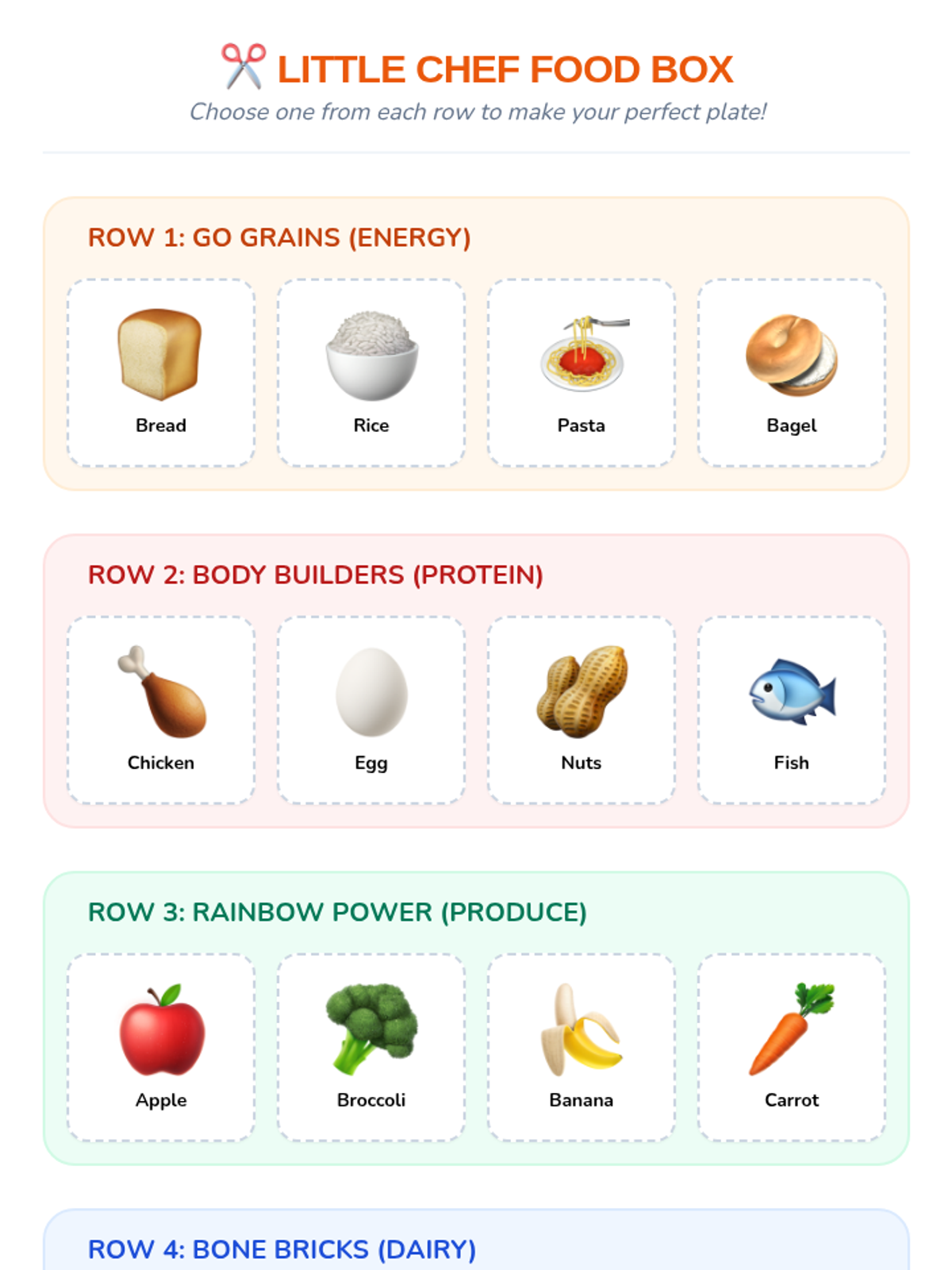
The classroom is transformed into a mini-market where students 'shop' for ingredients. They are tasked with selecting one item from specific sections to fill their basket. This simulation mimics the real-world process of selecting distinct components to create a whole meal.
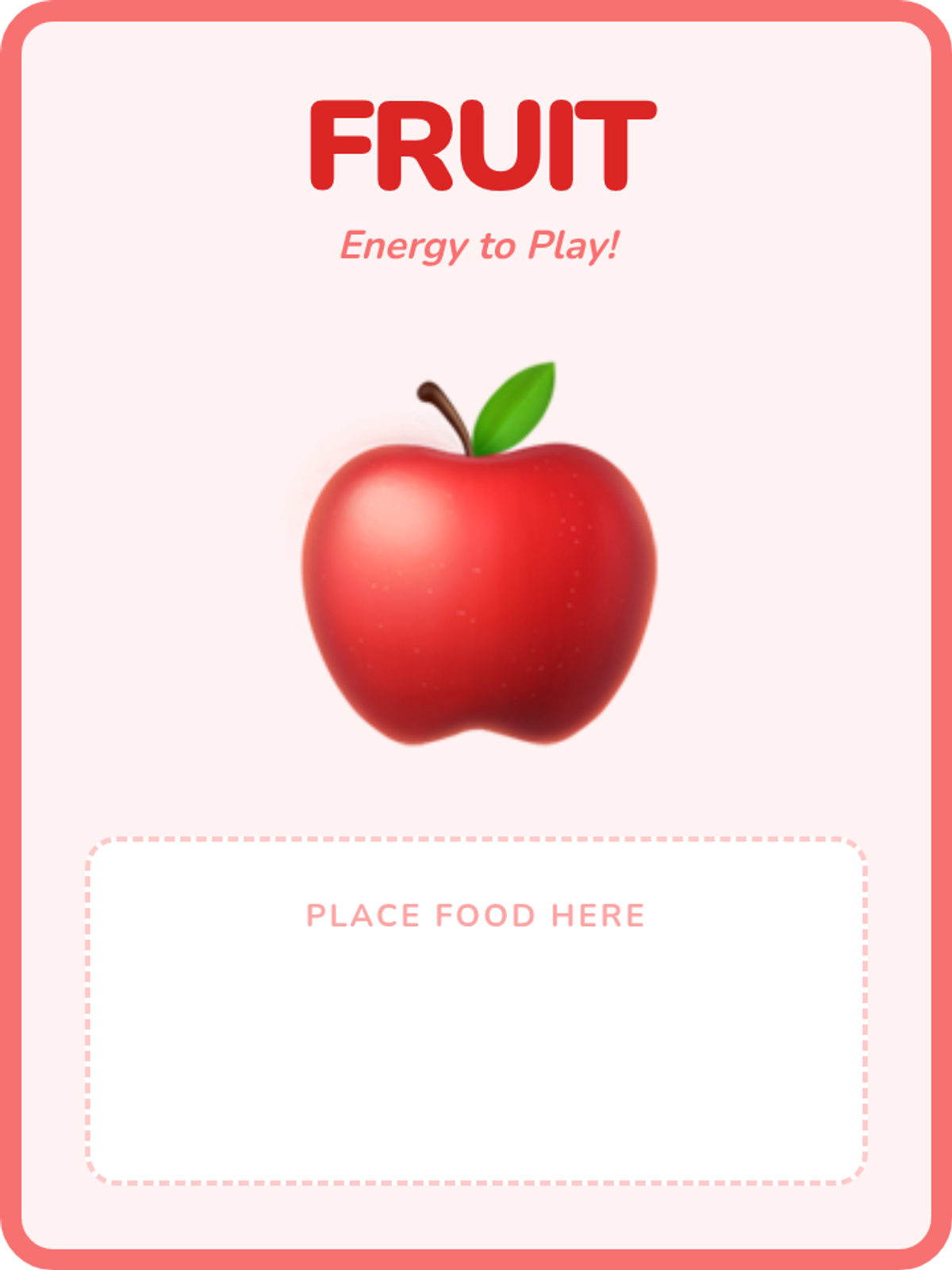
Students are introduced to the five food groups (Dairy, Grains, Protein, Fruits, Vegetables) using large iconic posters and props. They play a matching game where they physically move food items to the correct 'Home' poster.
Students present their plate collages and discuss how healthy eating makes them feel active and happy.
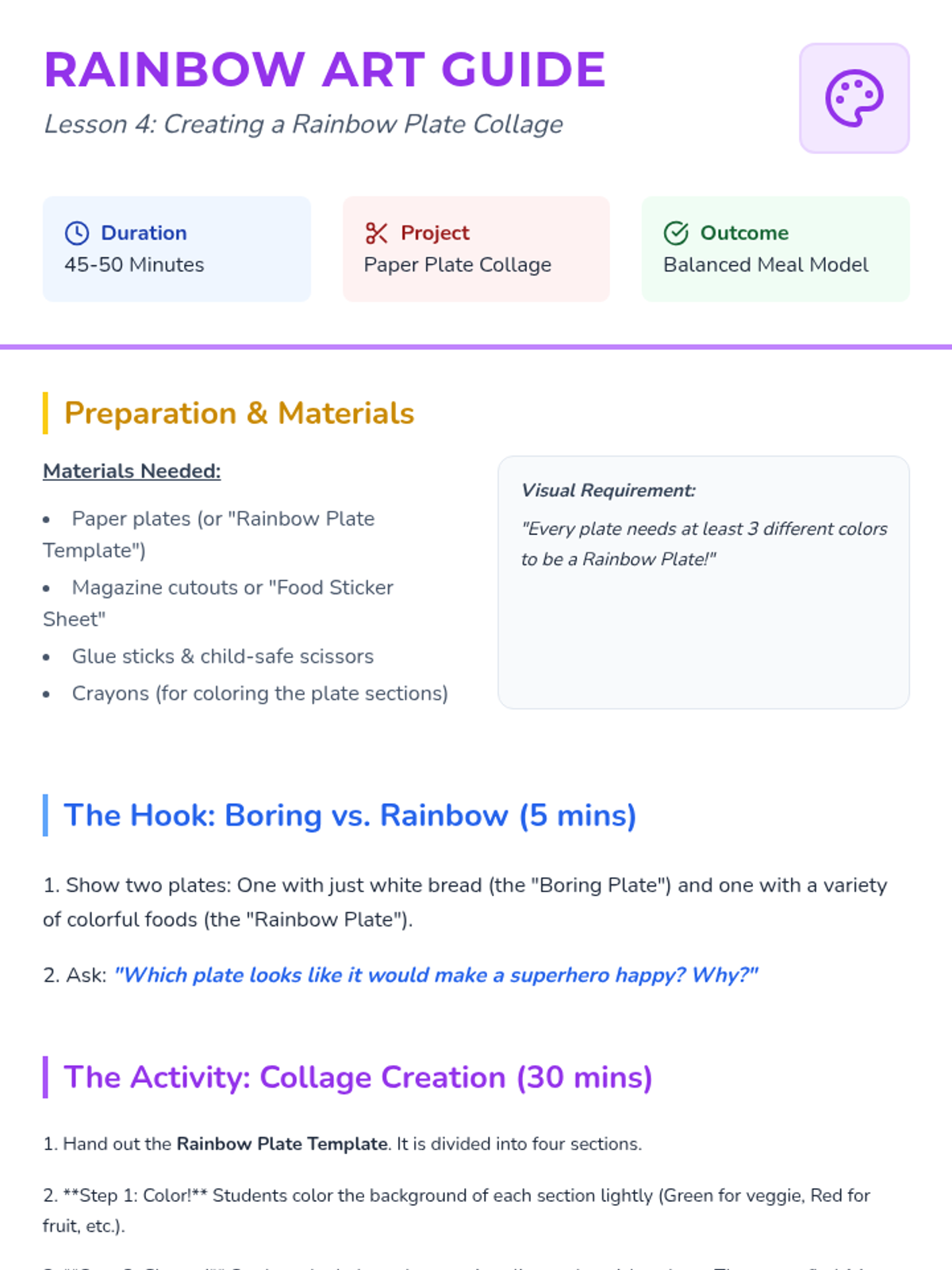
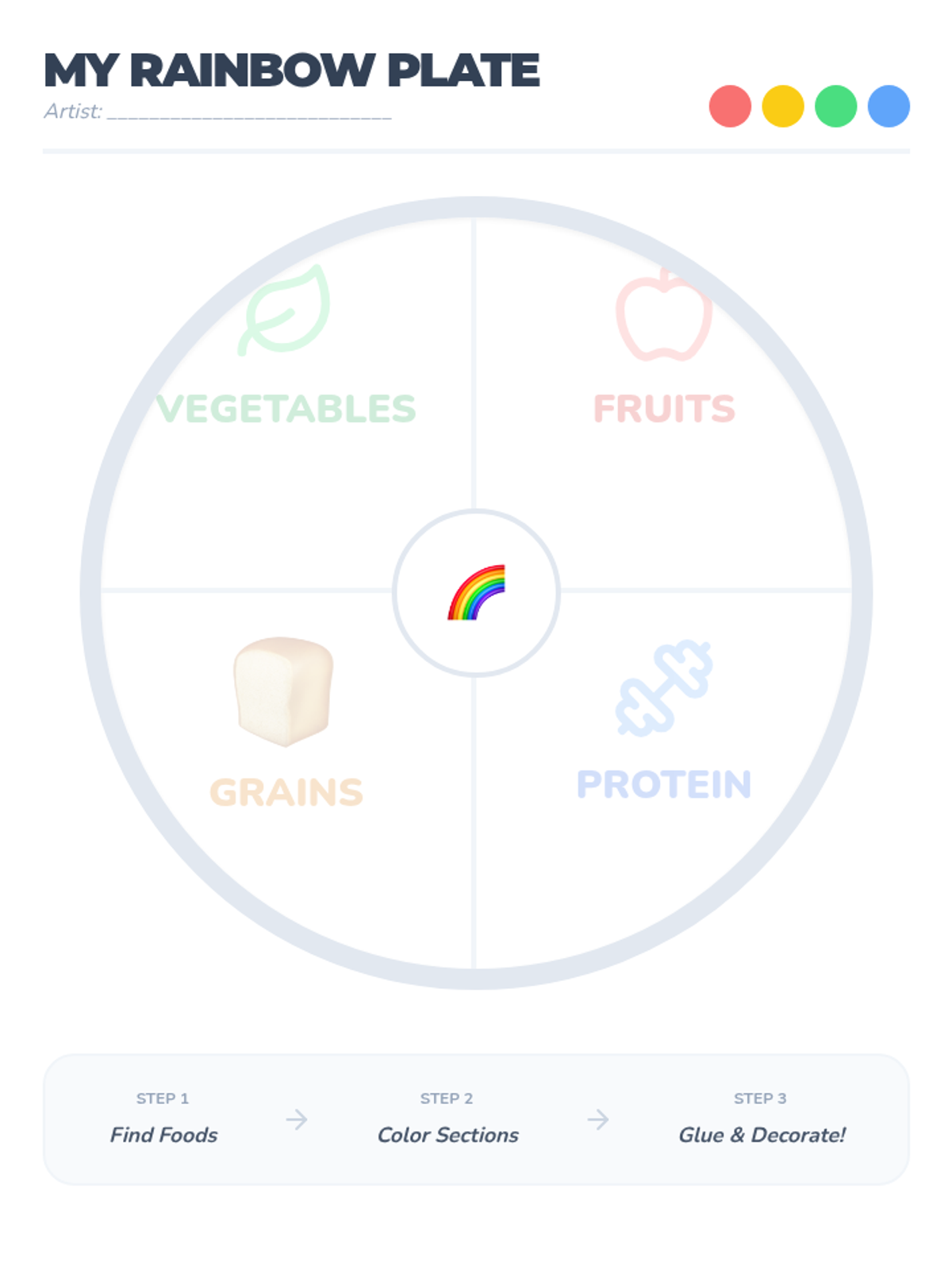
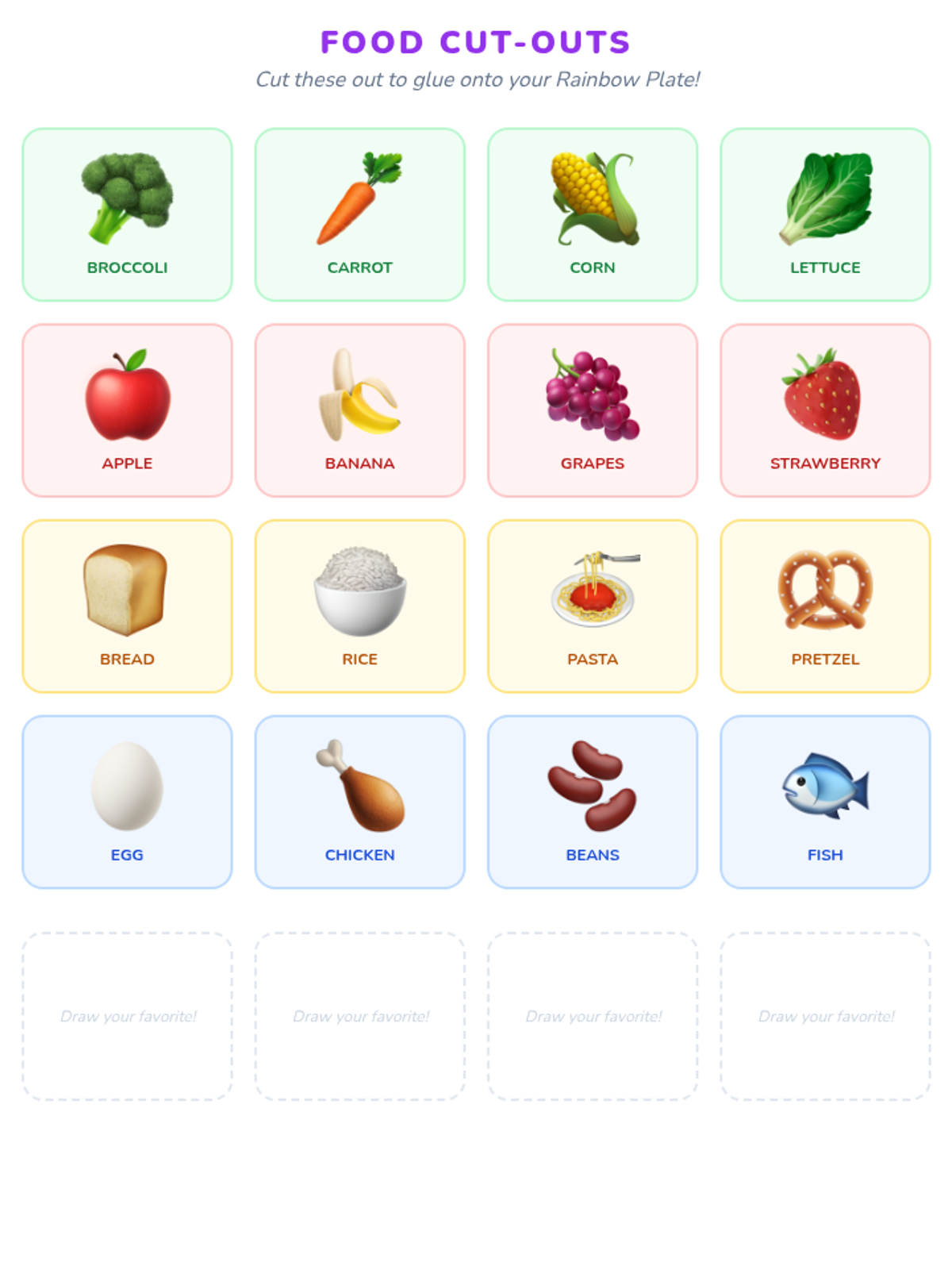
Students create a paper plate collage using different food groups to visualize a balanced 'rainbow' meal.
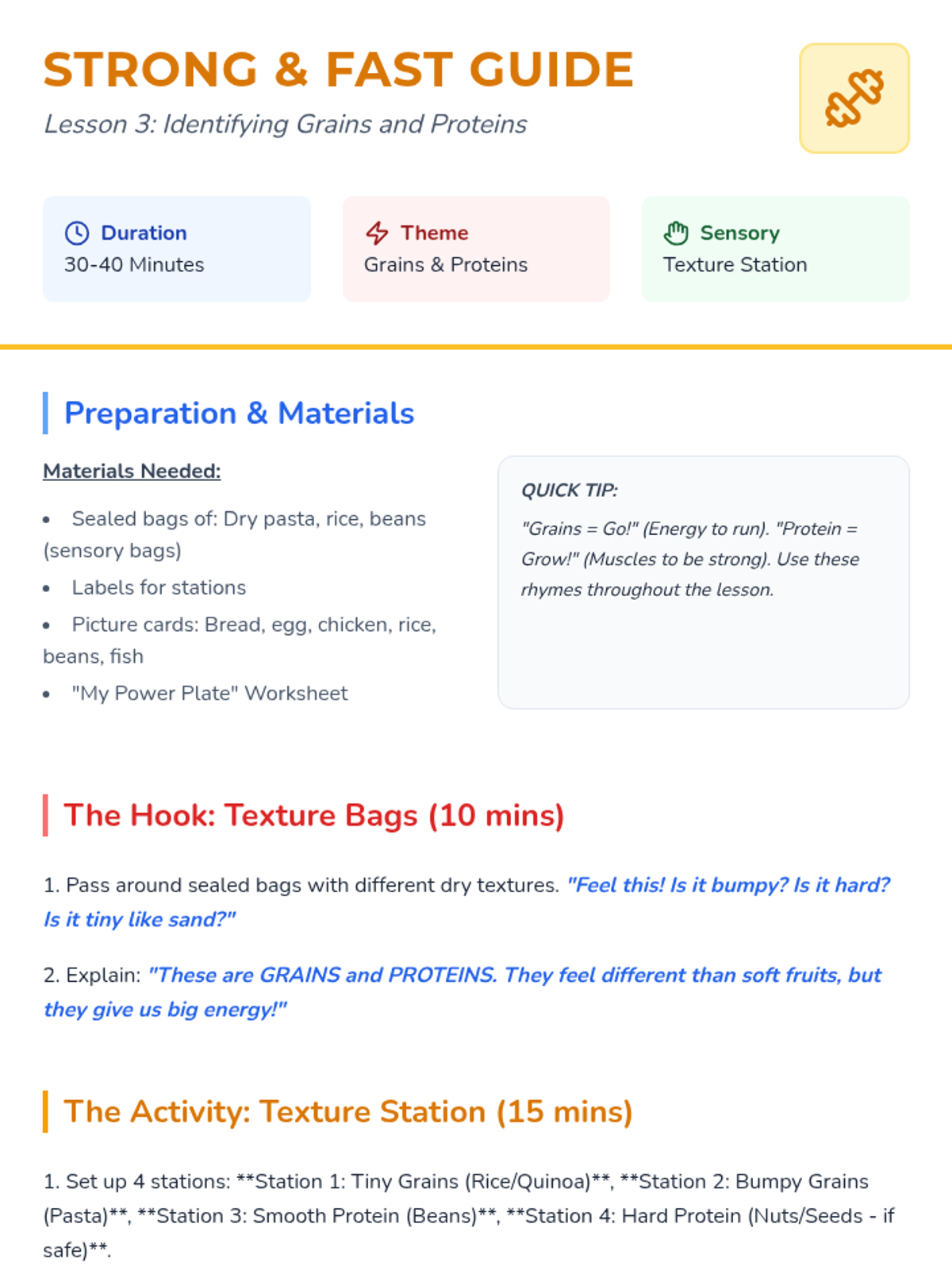
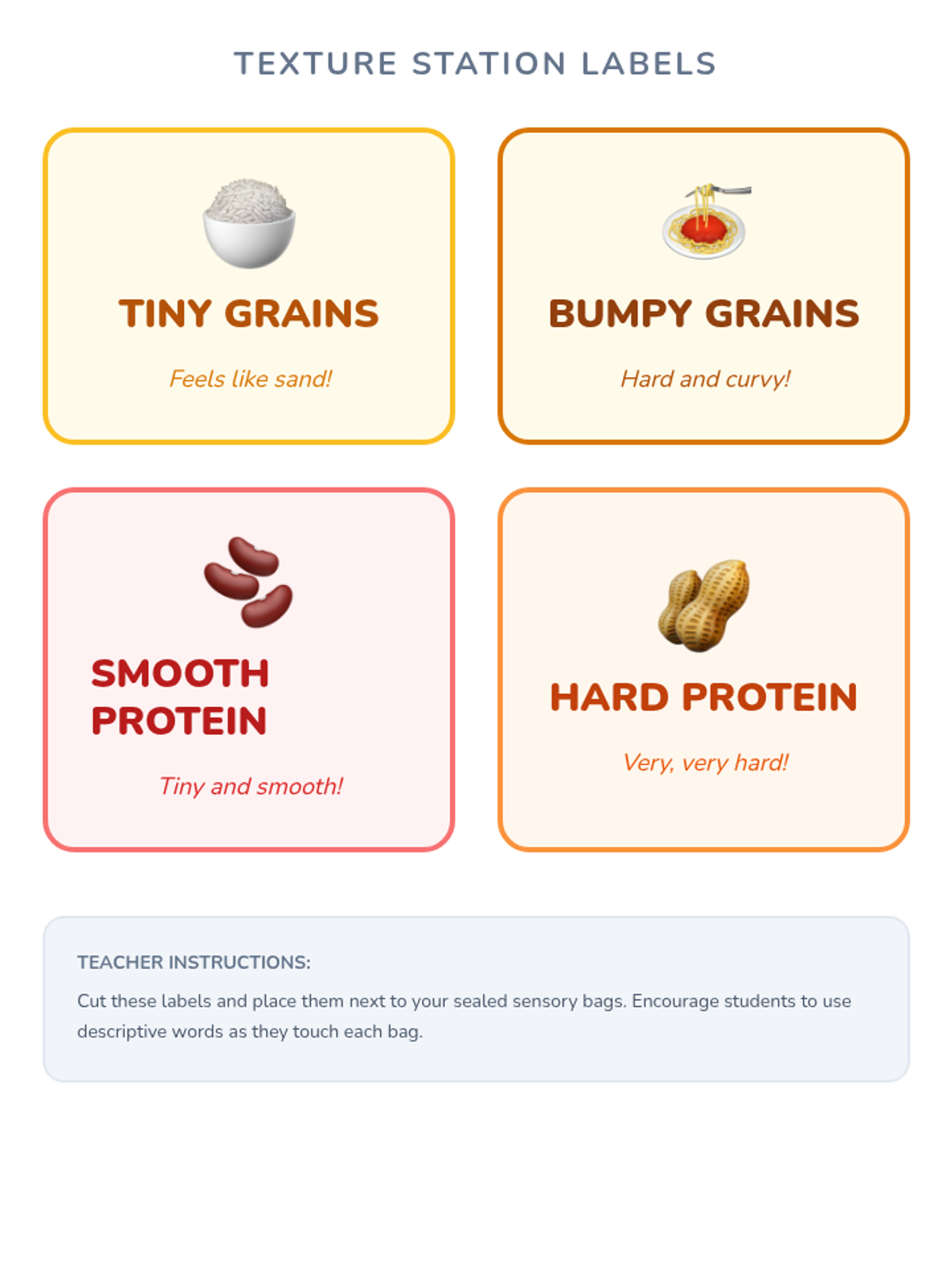
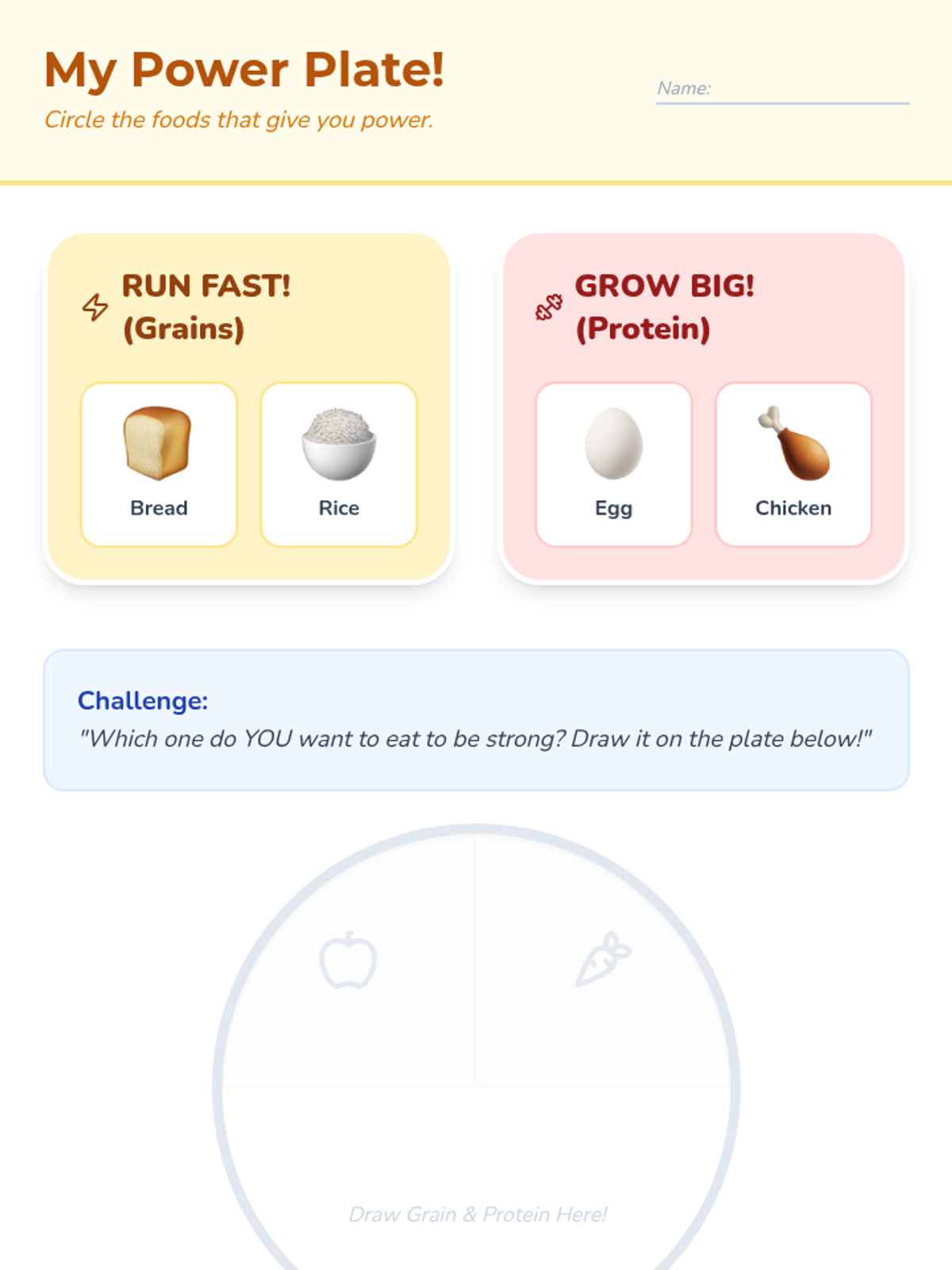
Students explore grains and proteins through texture and learn how they help them grow strong and run fast.
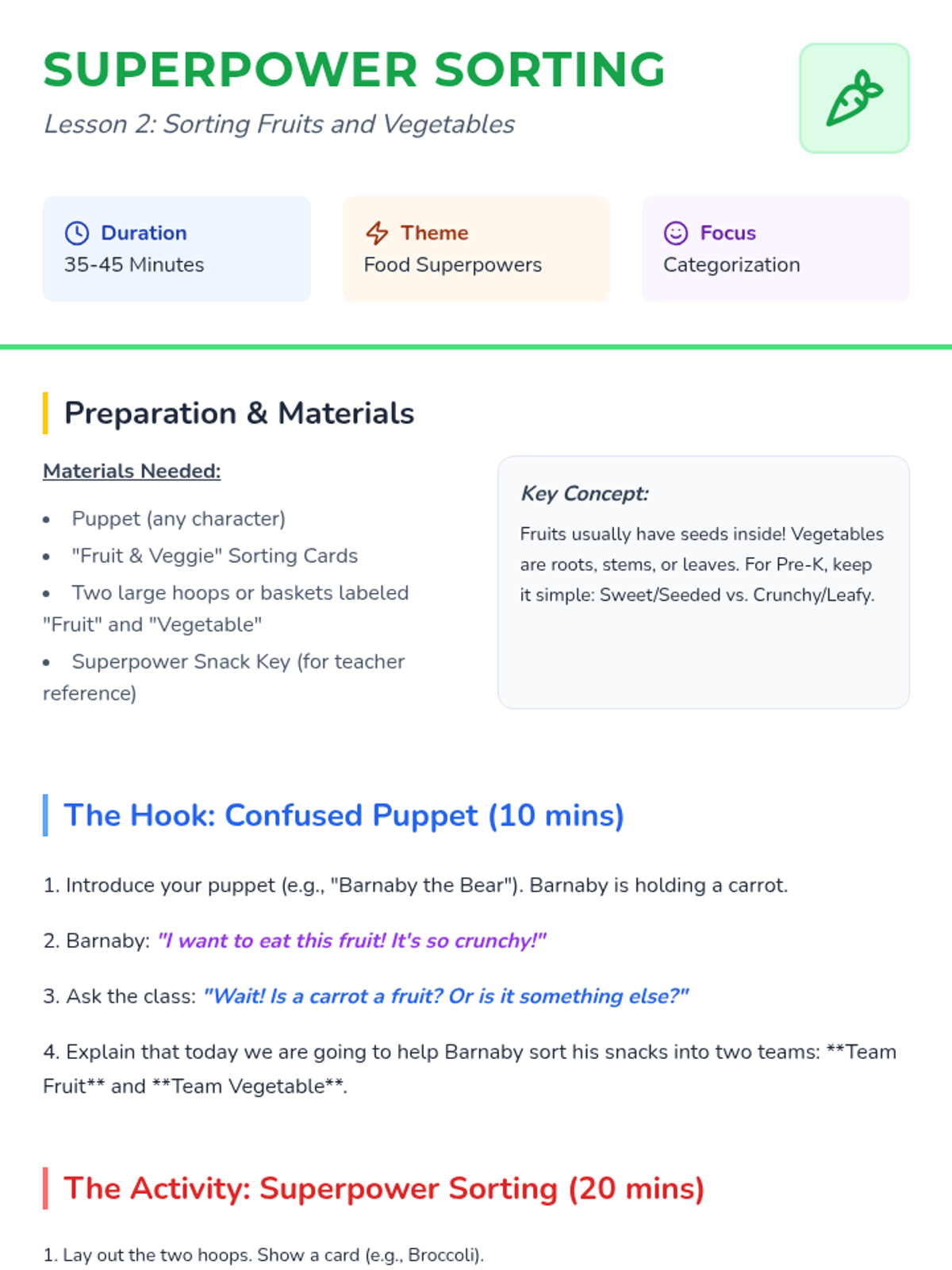
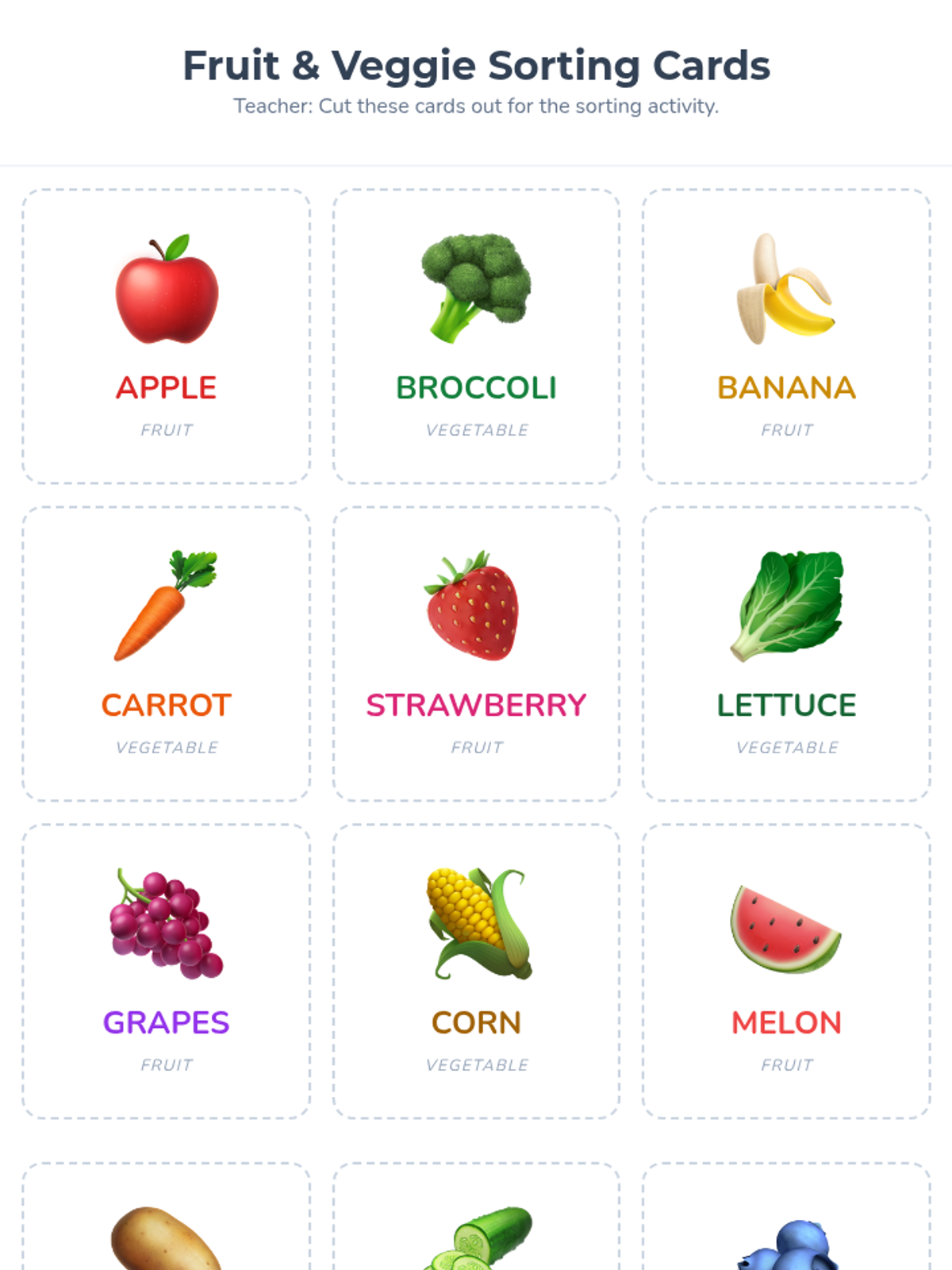
Students distinguish between fruits and vegetables and learn about their 'superpowers' like energy and vision.
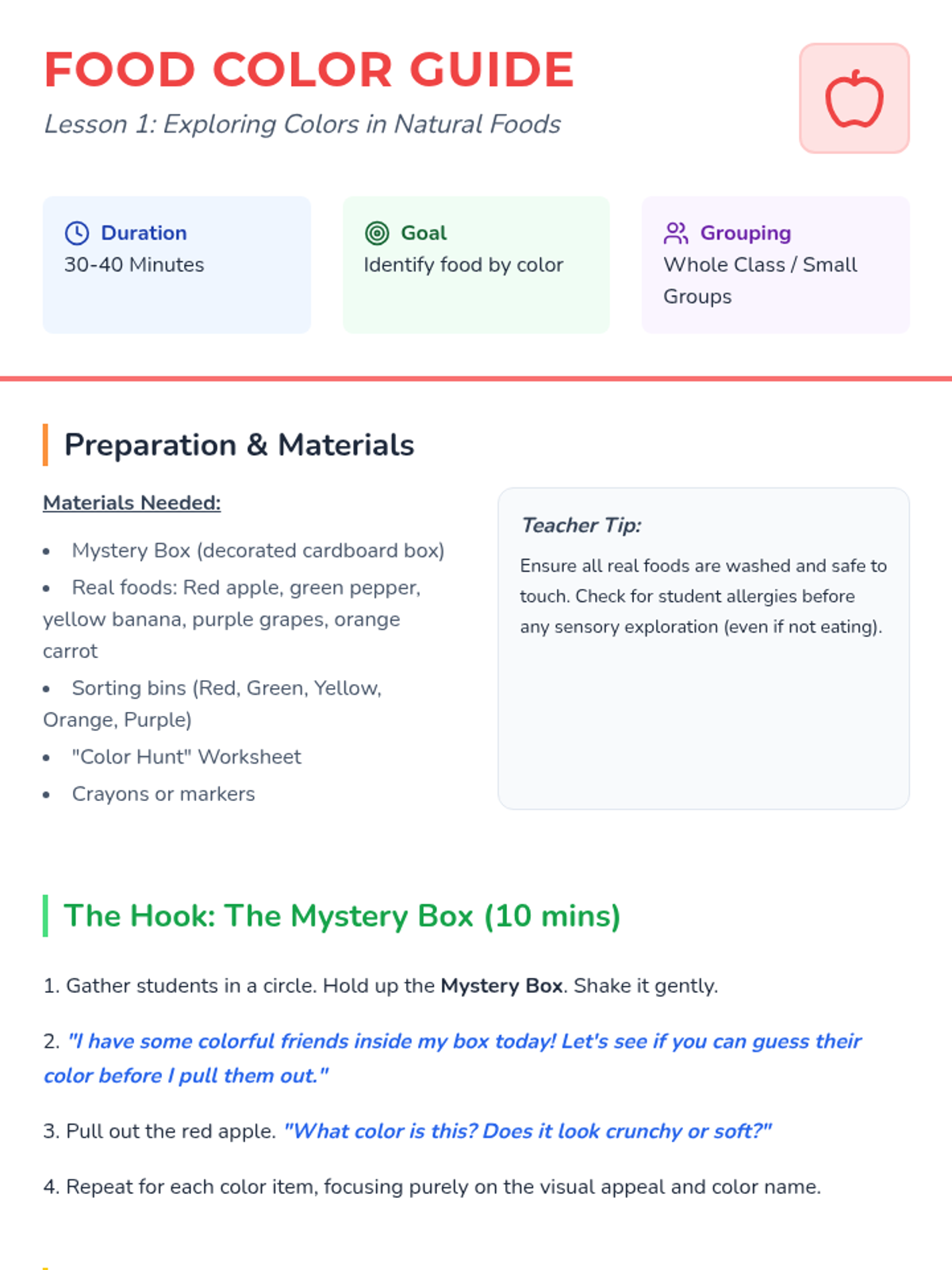
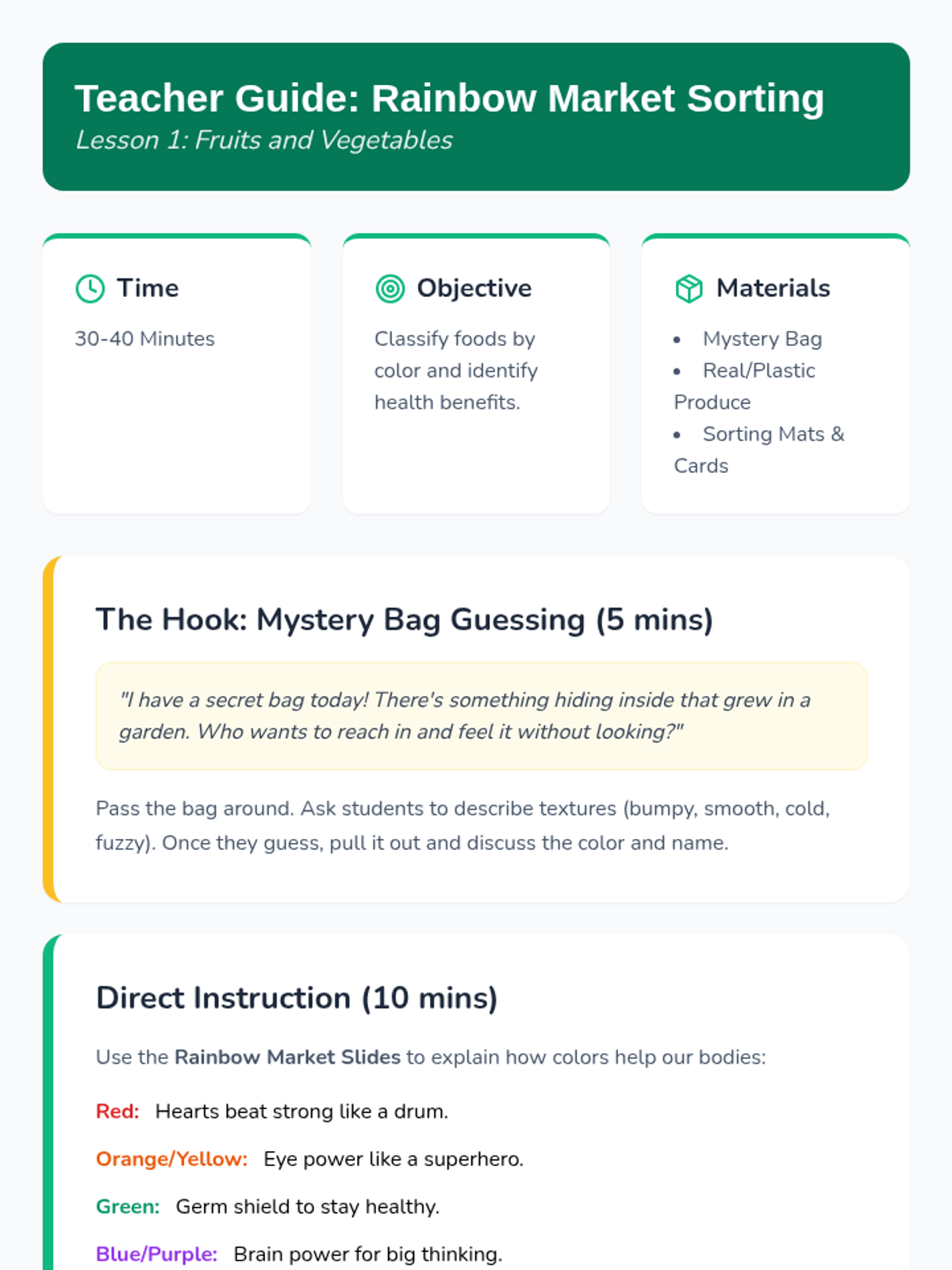
Students participate in a sensory session sorting real fruits and vegetables by color to understand dietary variety.
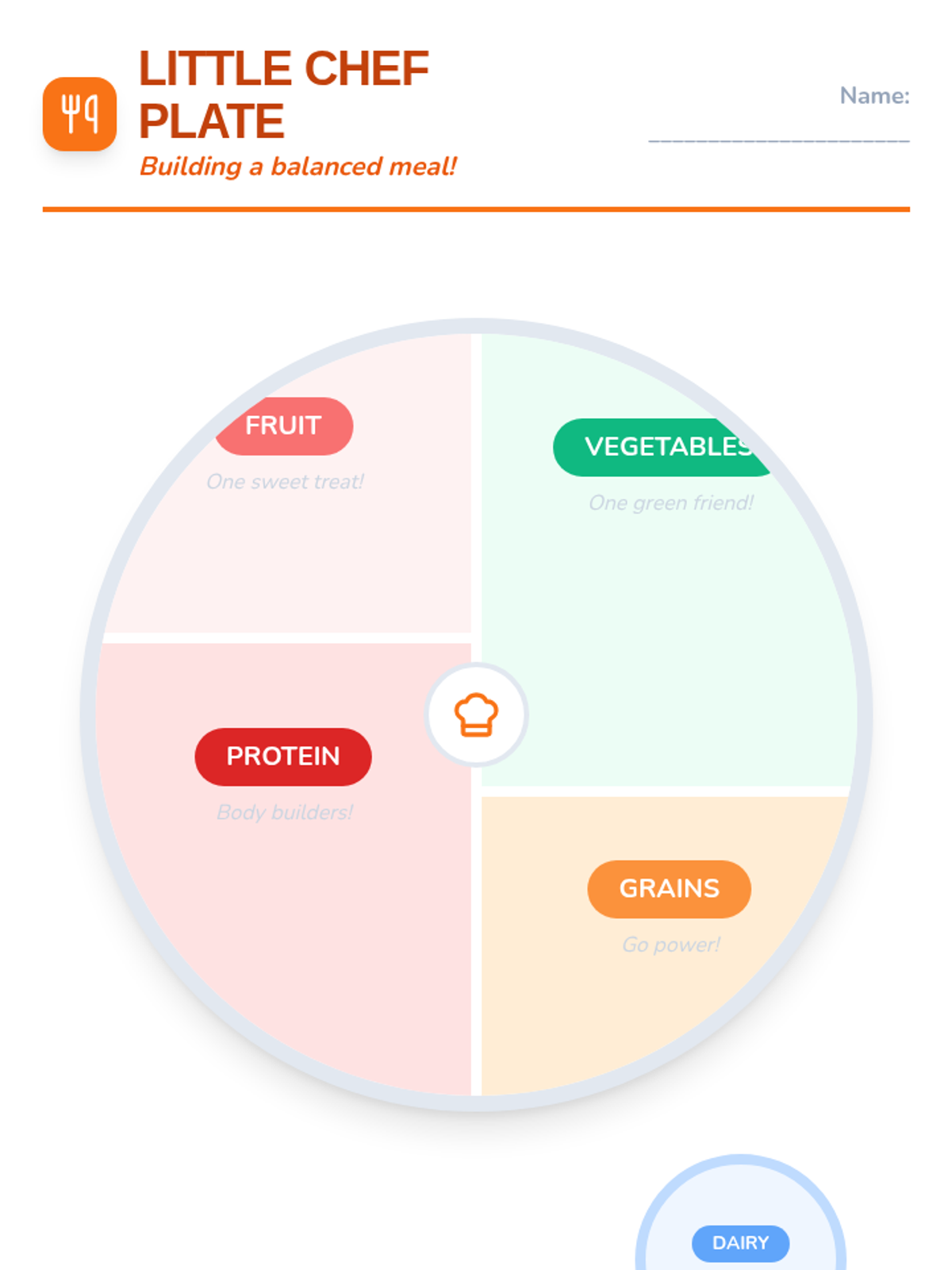
A culminating project where students assemble a balanced meal on a visual plate template.
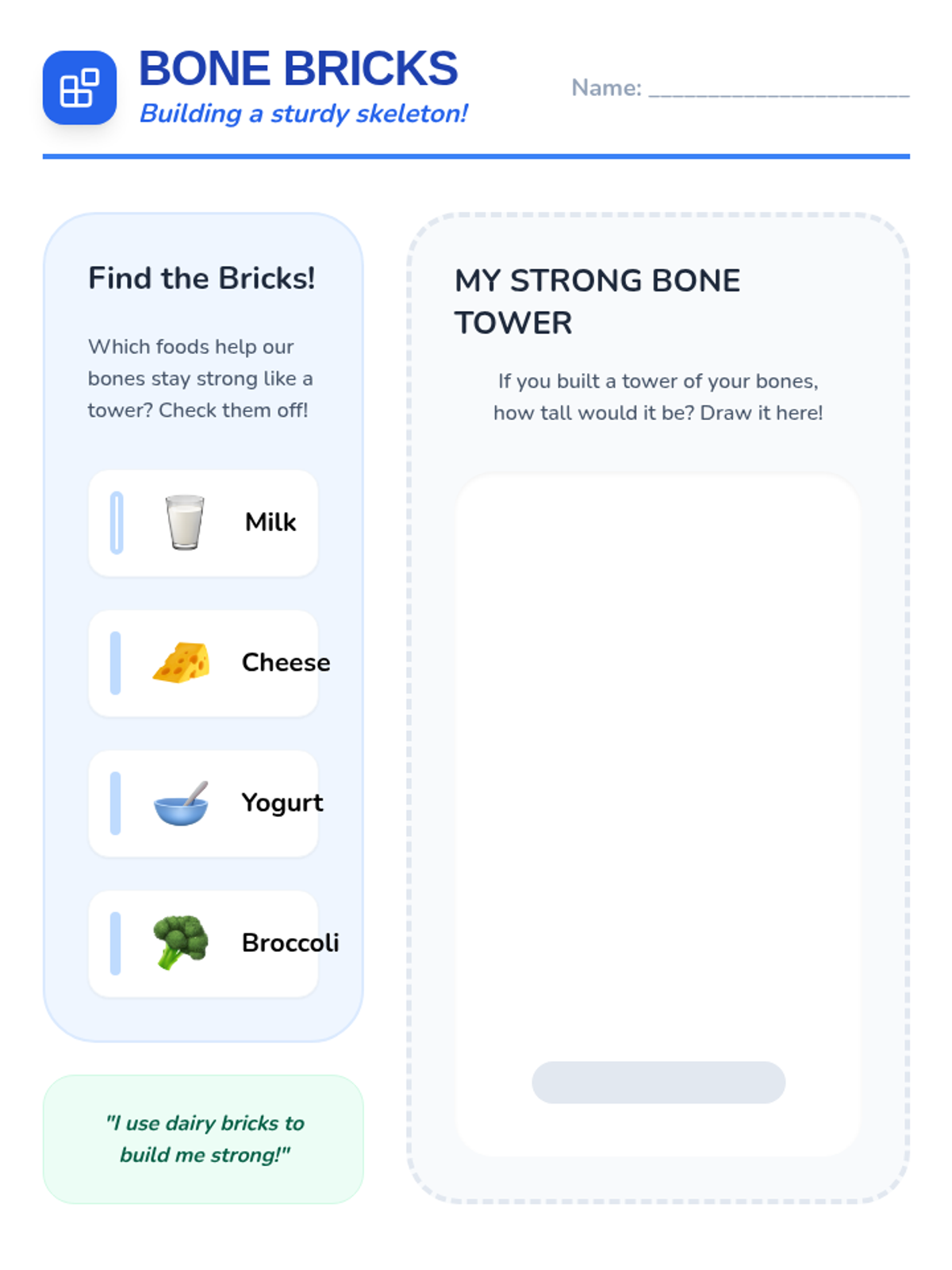
Explores dairy and calcium-rich foods as 'bricks' for strong bones using building block analogies.
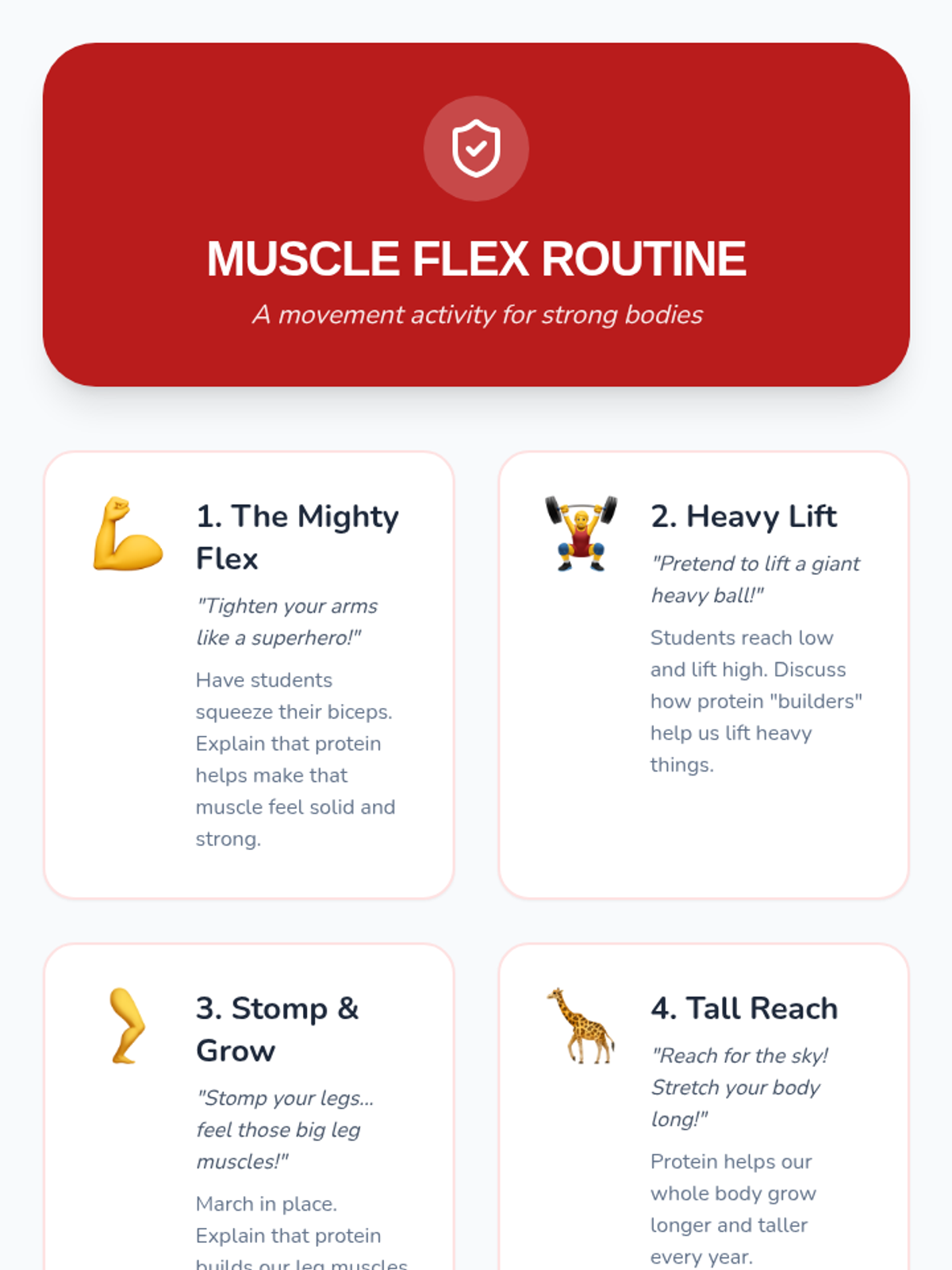
Introduces protein as the building blocks for strong muscles through role-play and identification.
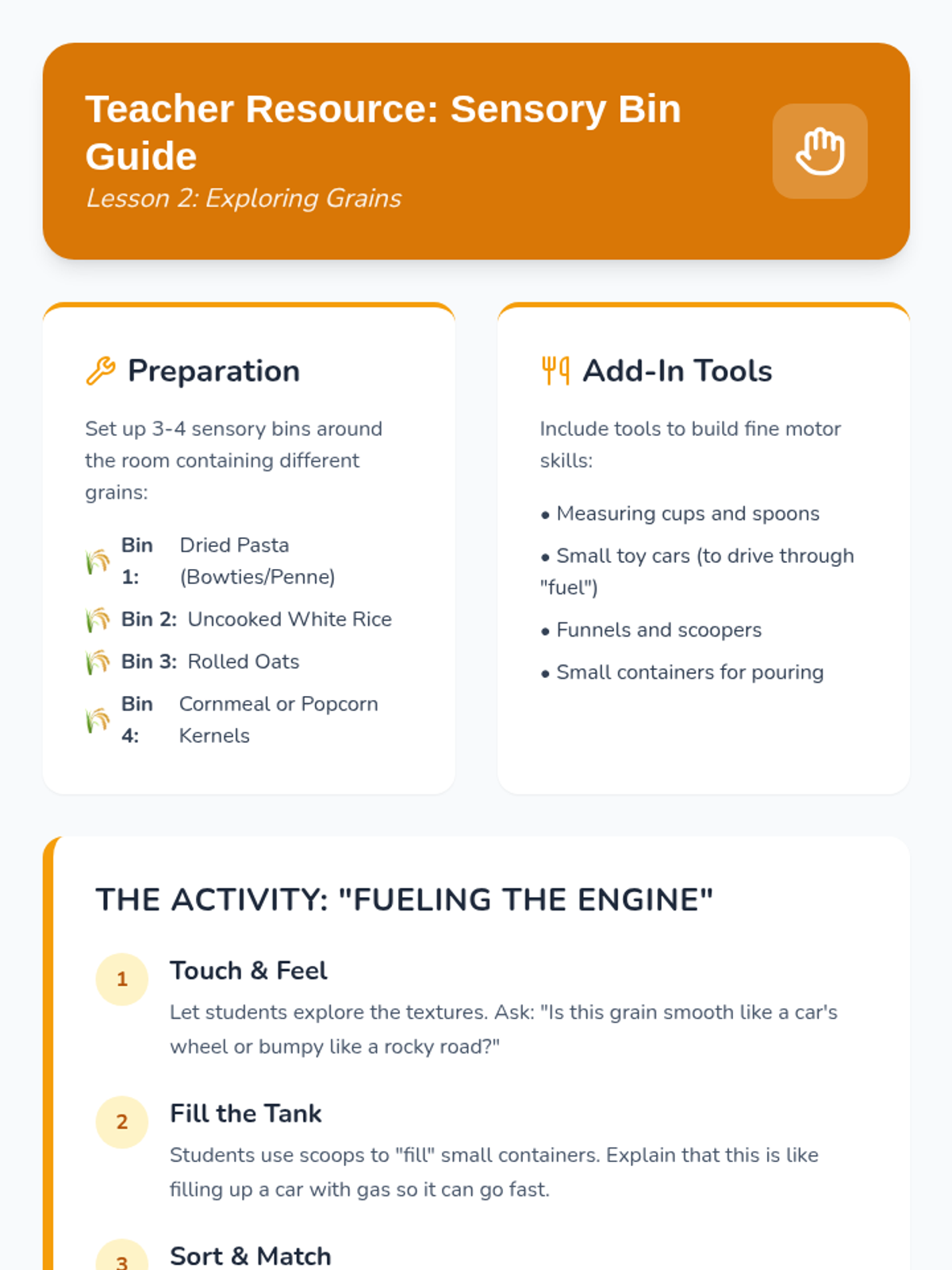
Focuses on grains as the body's 'fuel' for energy, using movement and sensory exploration.
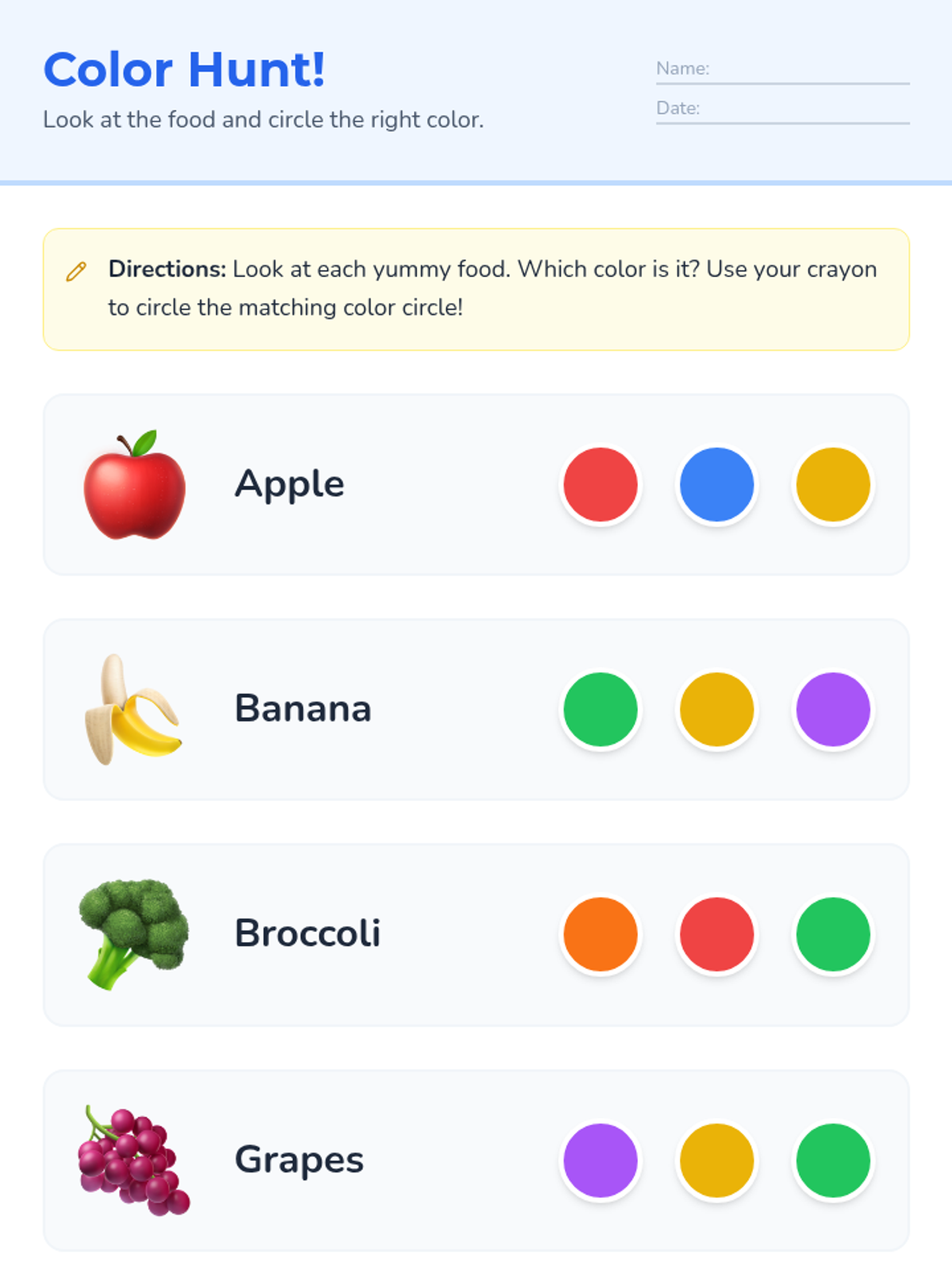
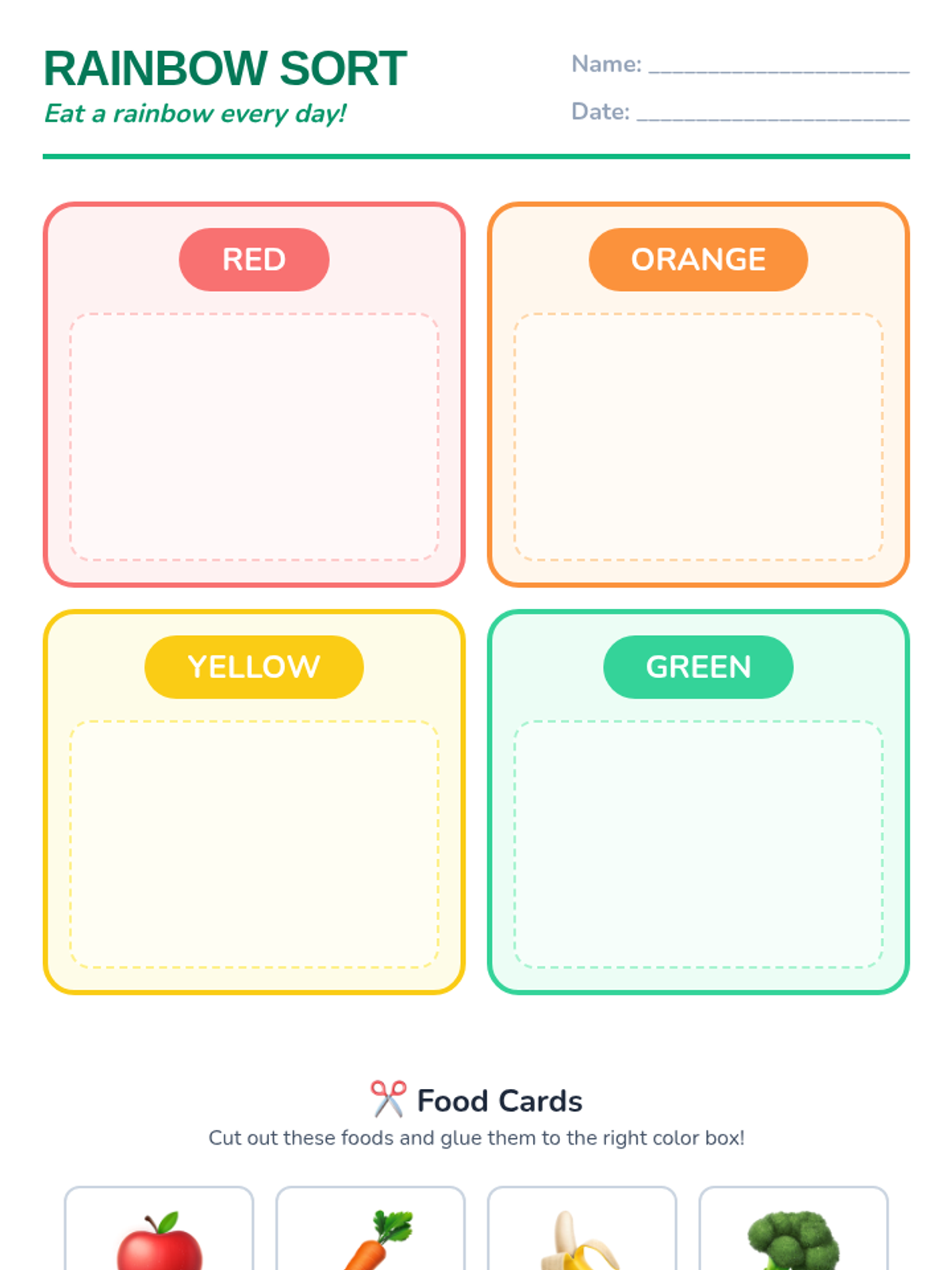
Students sort fruits and vegetables by color to understand variety and eat the rainbow for health.
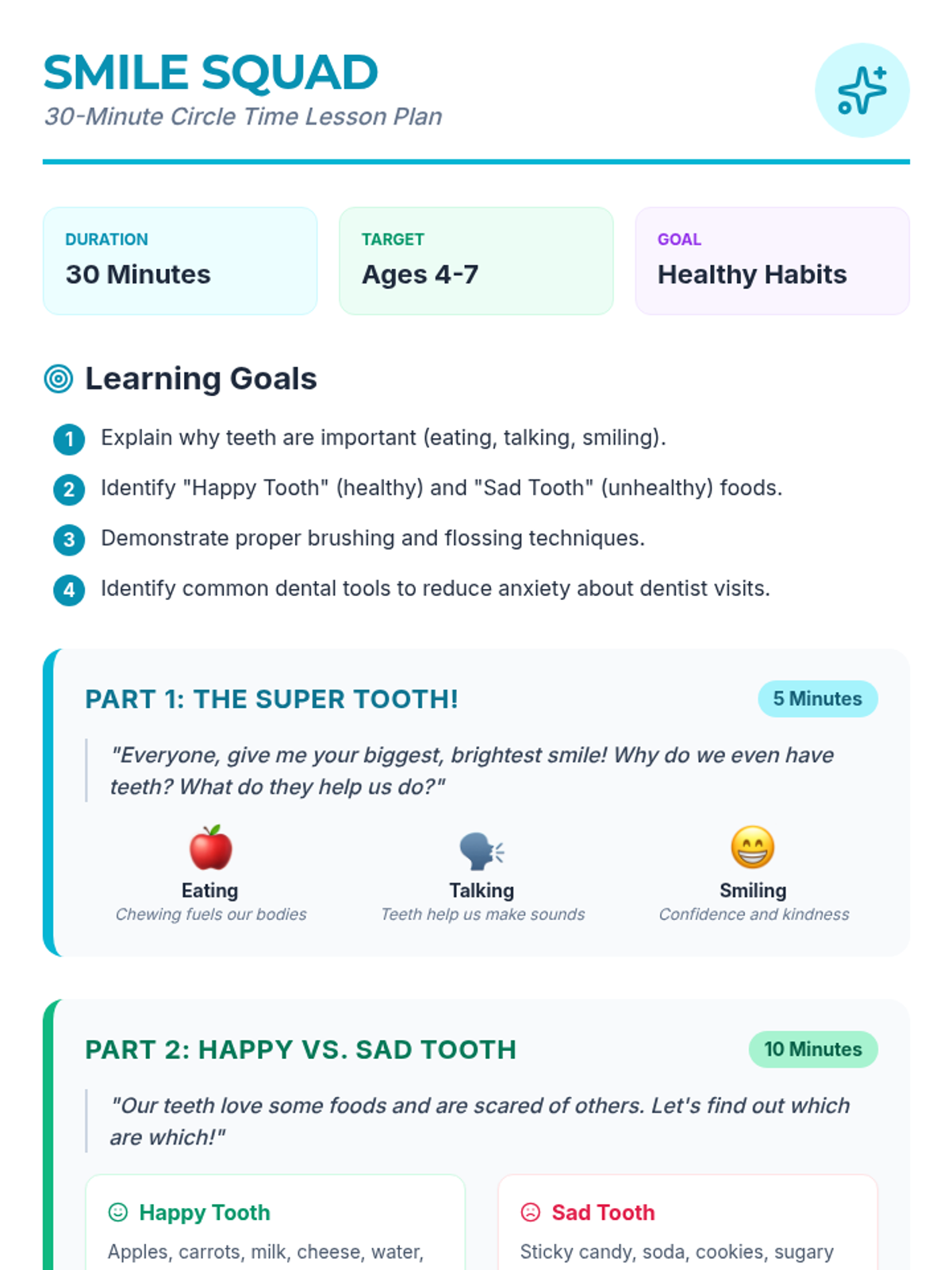
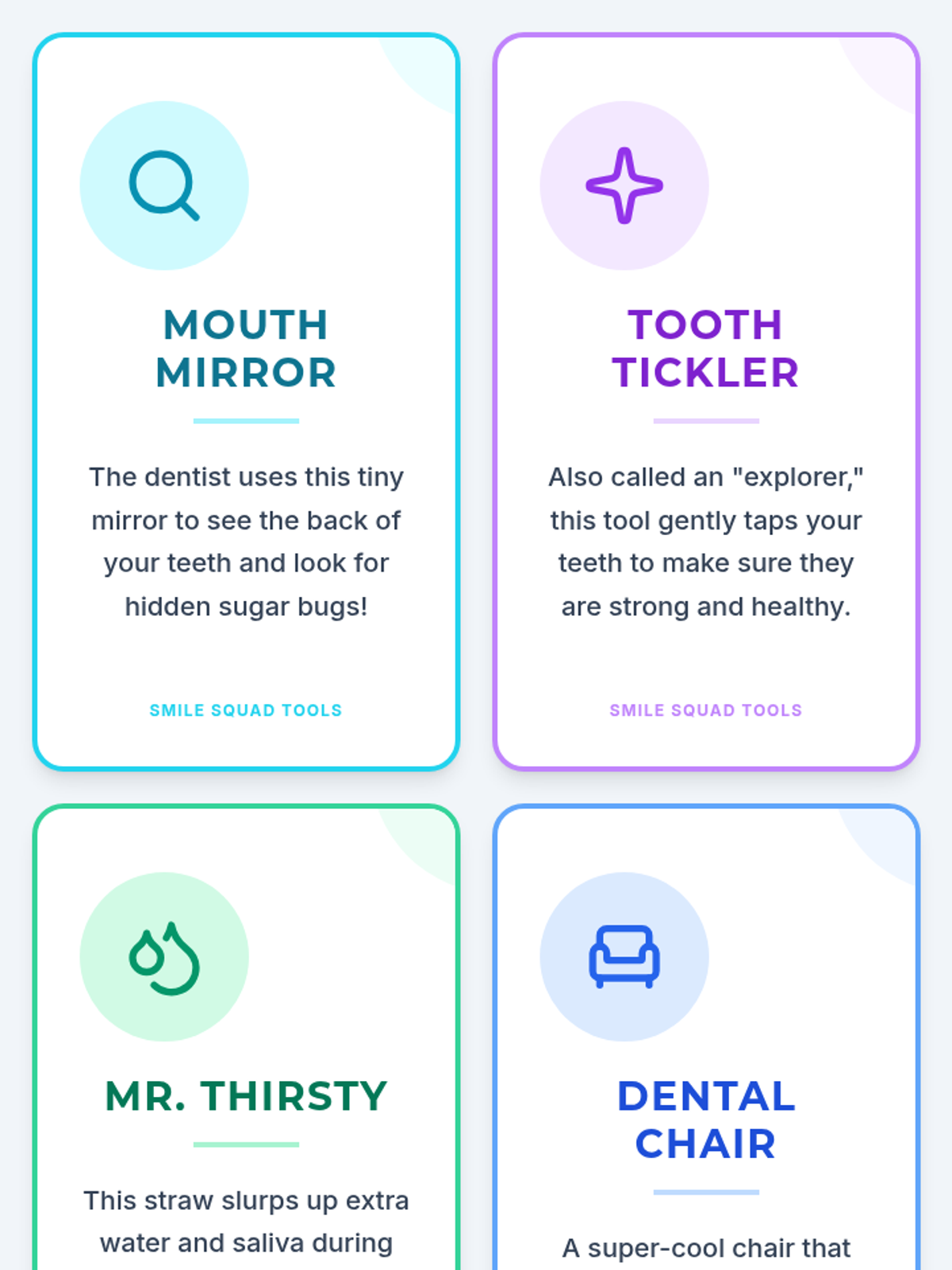
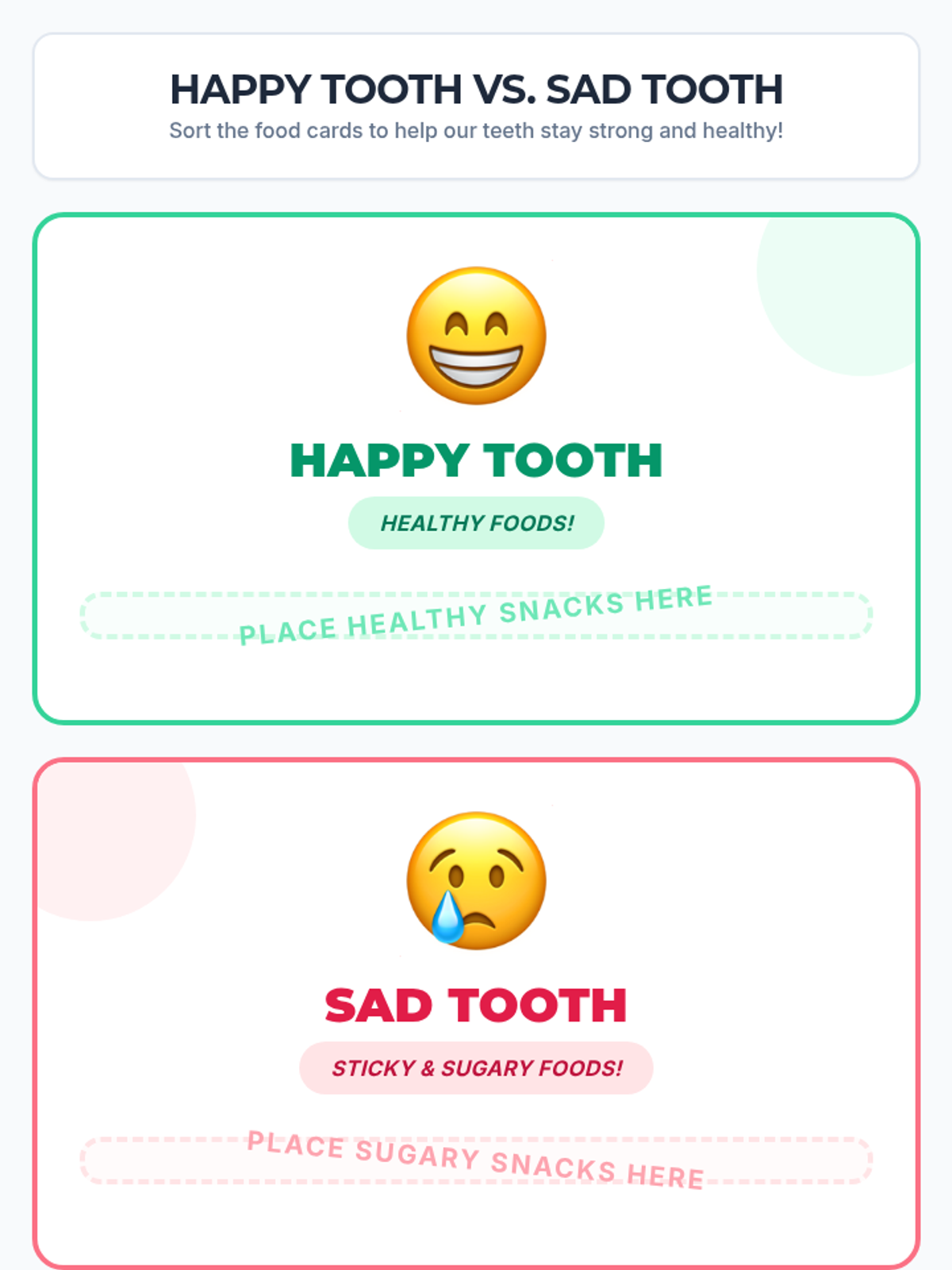
A comprehensive 30-minute circle time lesson covering dental hygiene, healthy eating habits for teeth, and what to expect during a dentist visit.
Using the analogy of a car needing gas, students learn that water is the 'fuel' that gives their bodies energy to move and play.
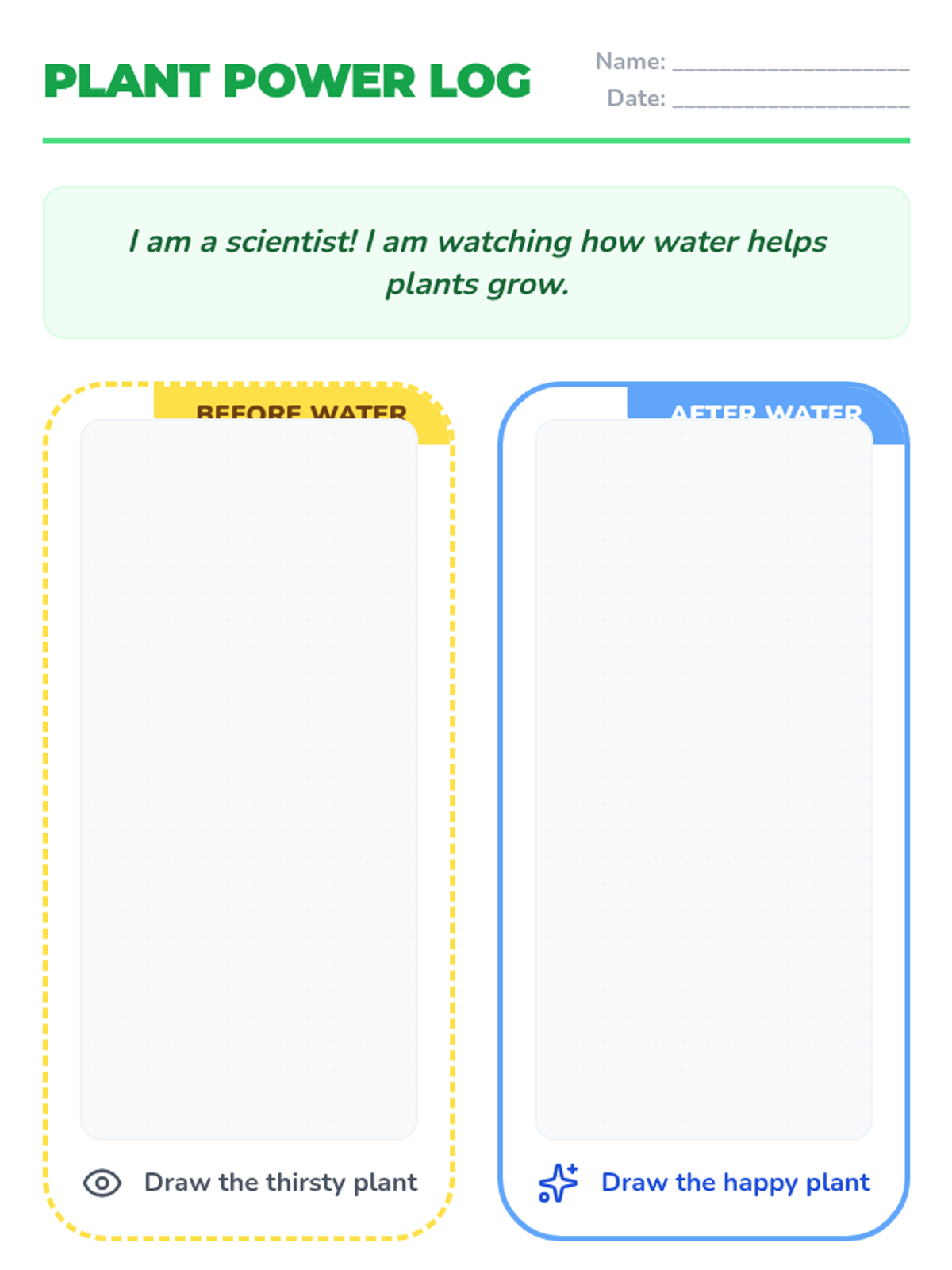
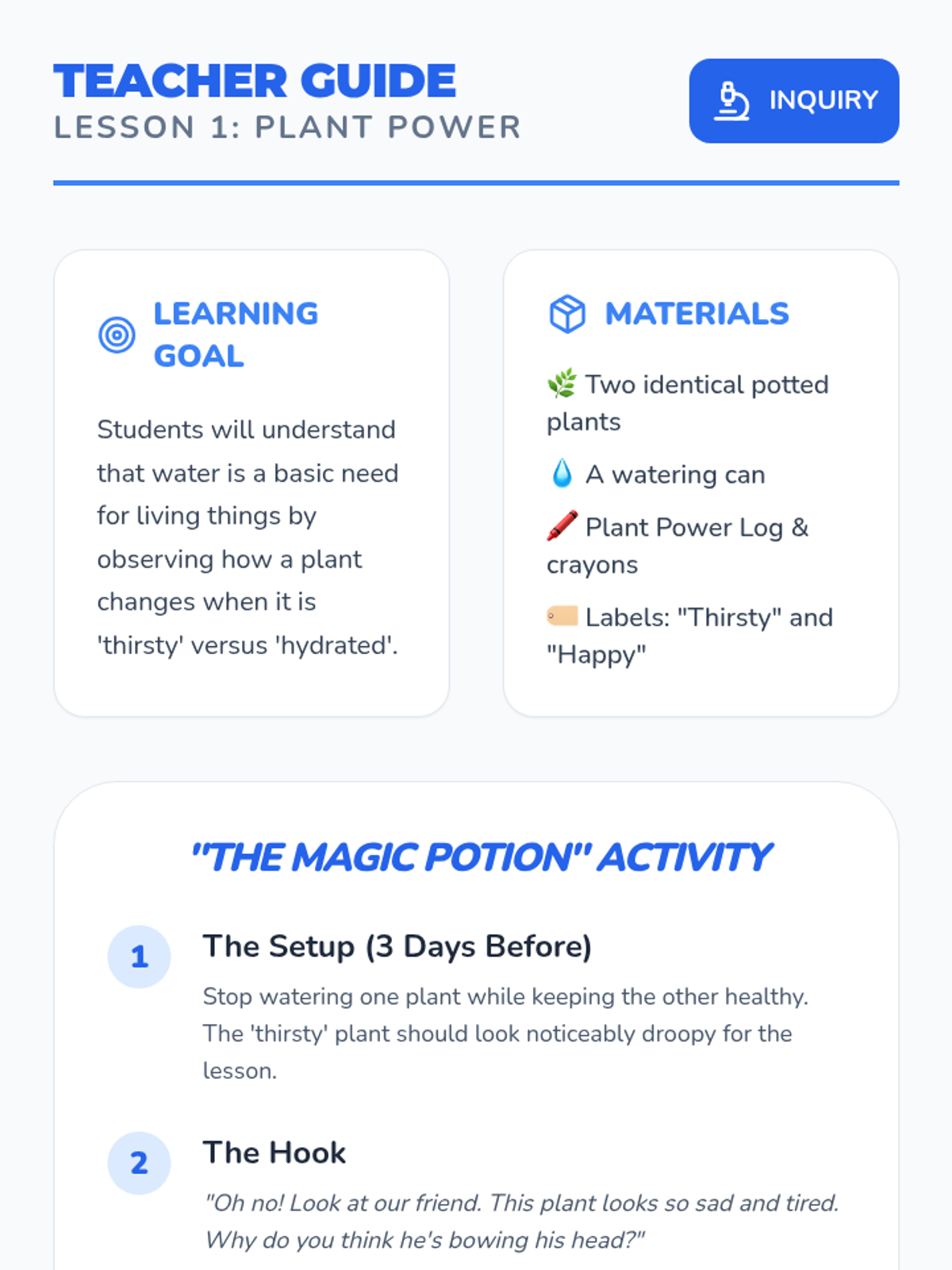
Students observe the physical effects of water on plants, learning to identify 'thirsty' versus 'hydrated' living things through direct observation and prediction.
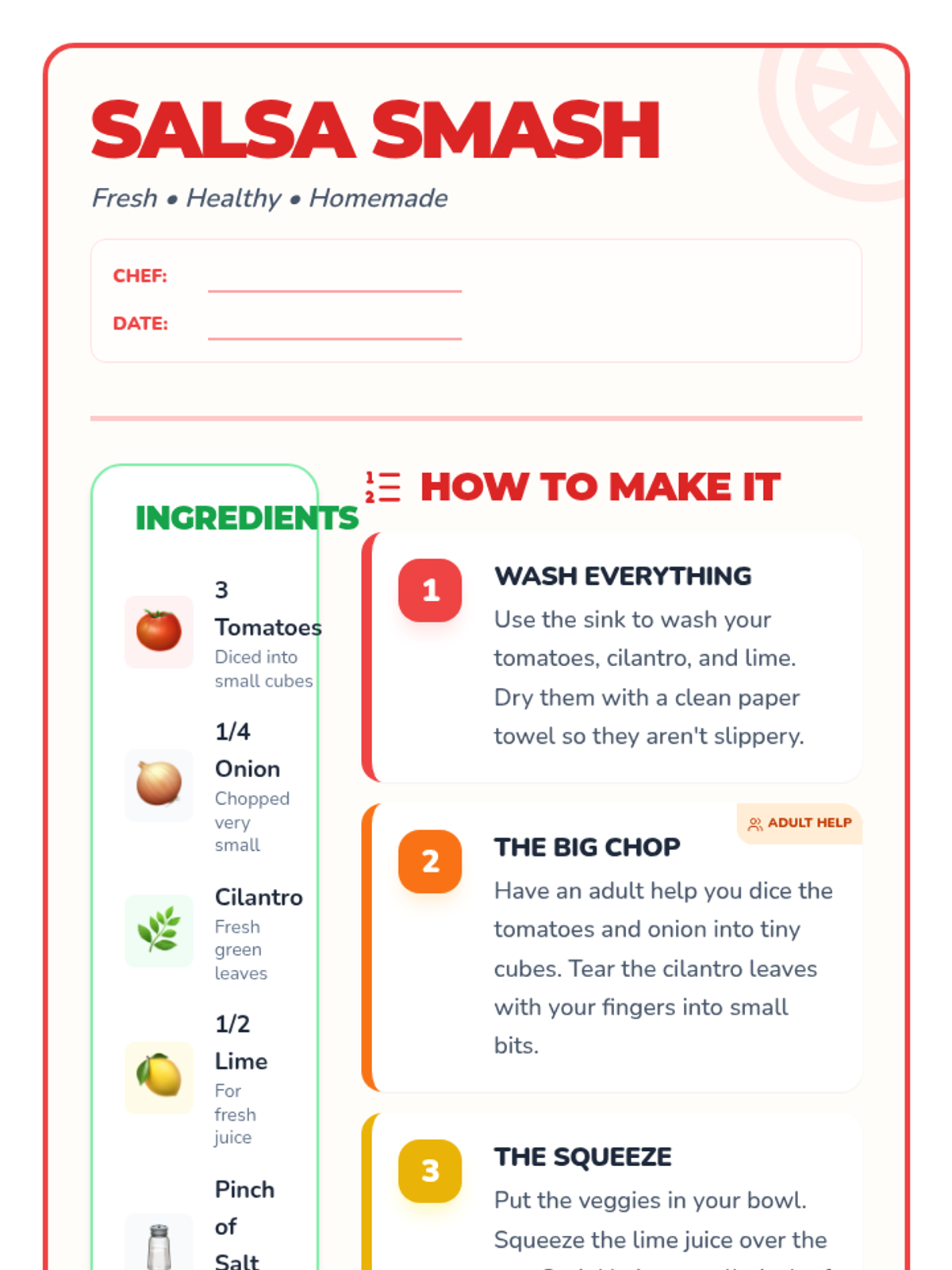
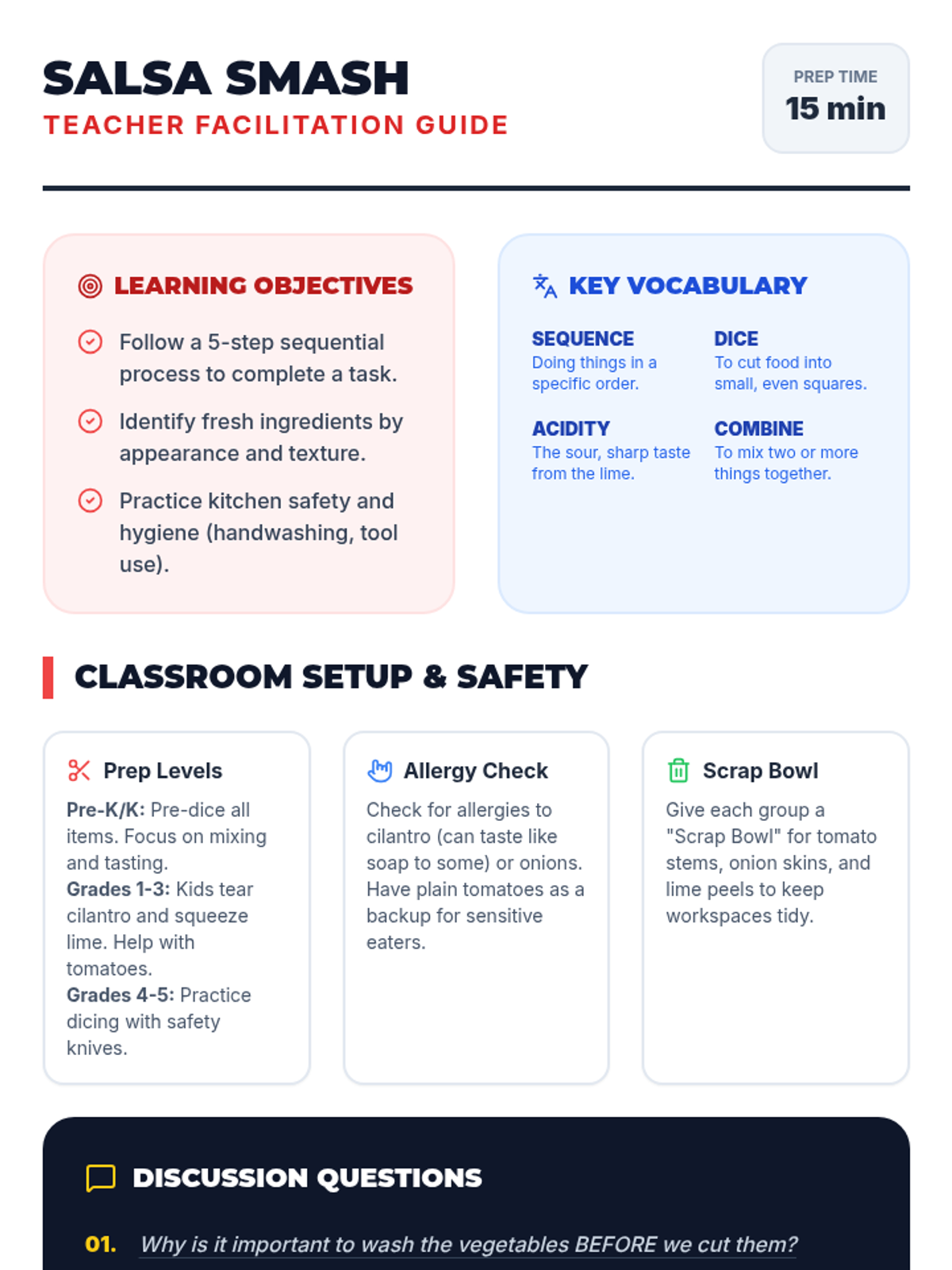
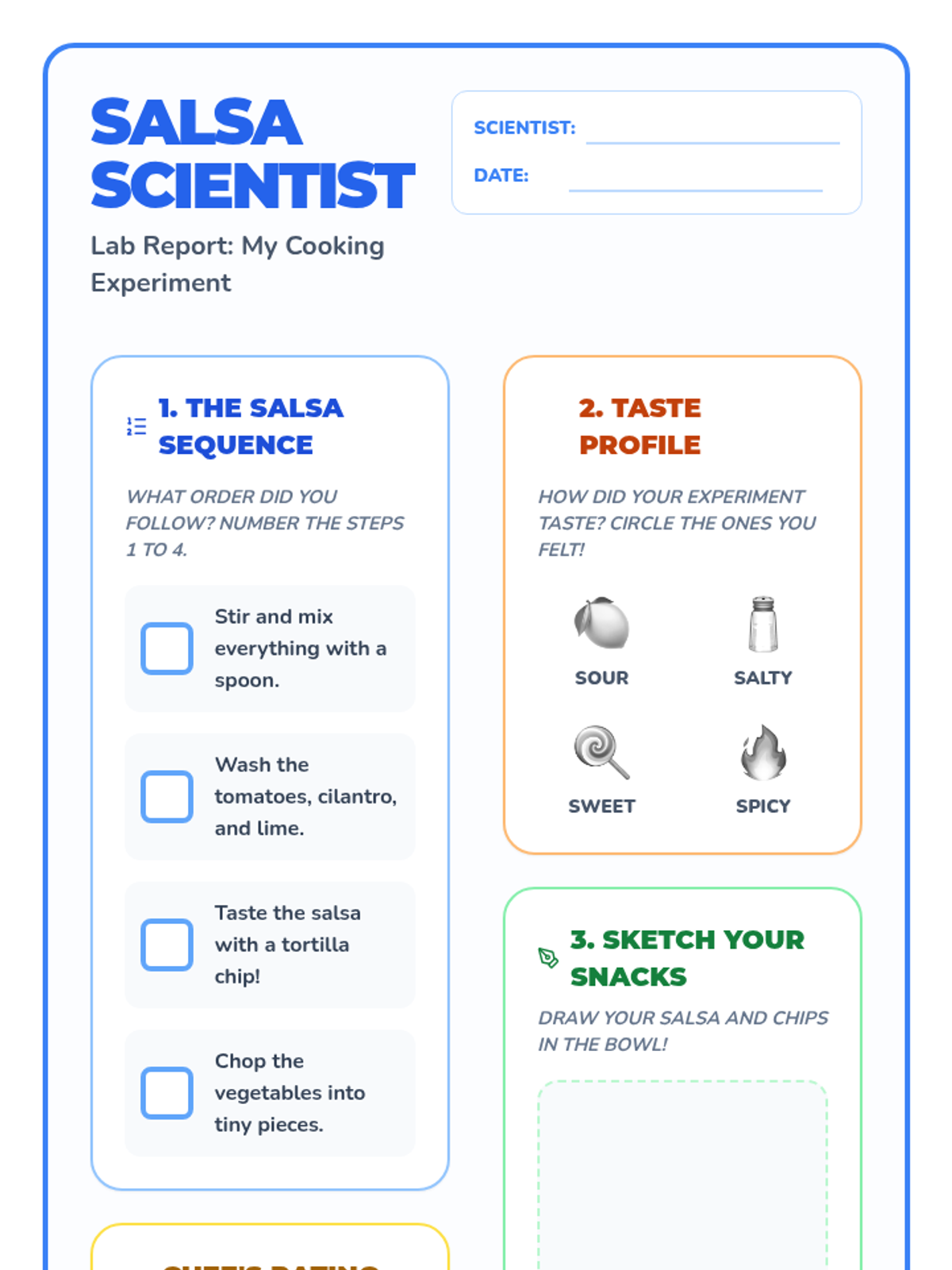
A beginner-friendly cooking lesson focused on following sequential instructions and identifying fresh ingredients while making a simple salsa.
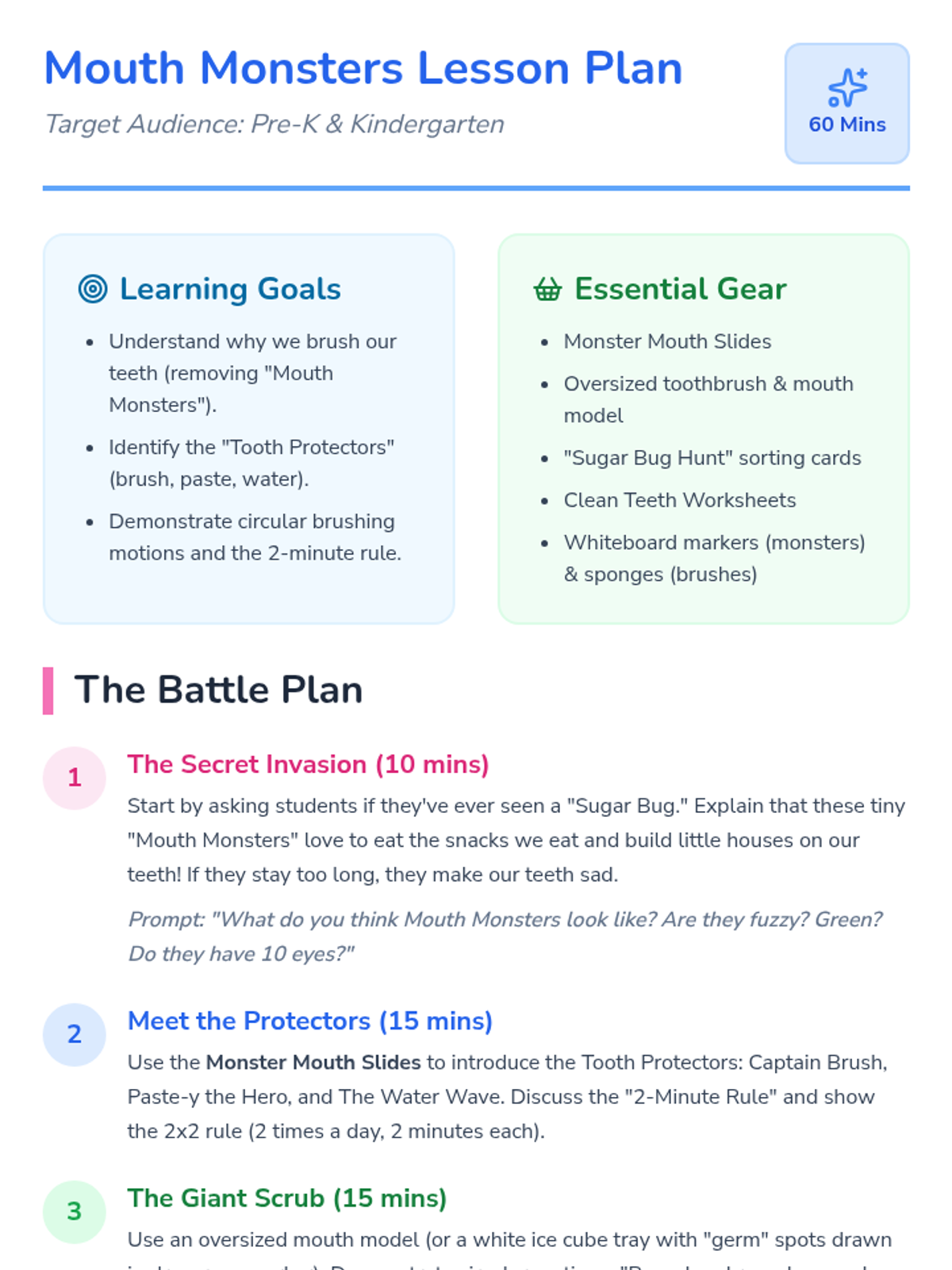
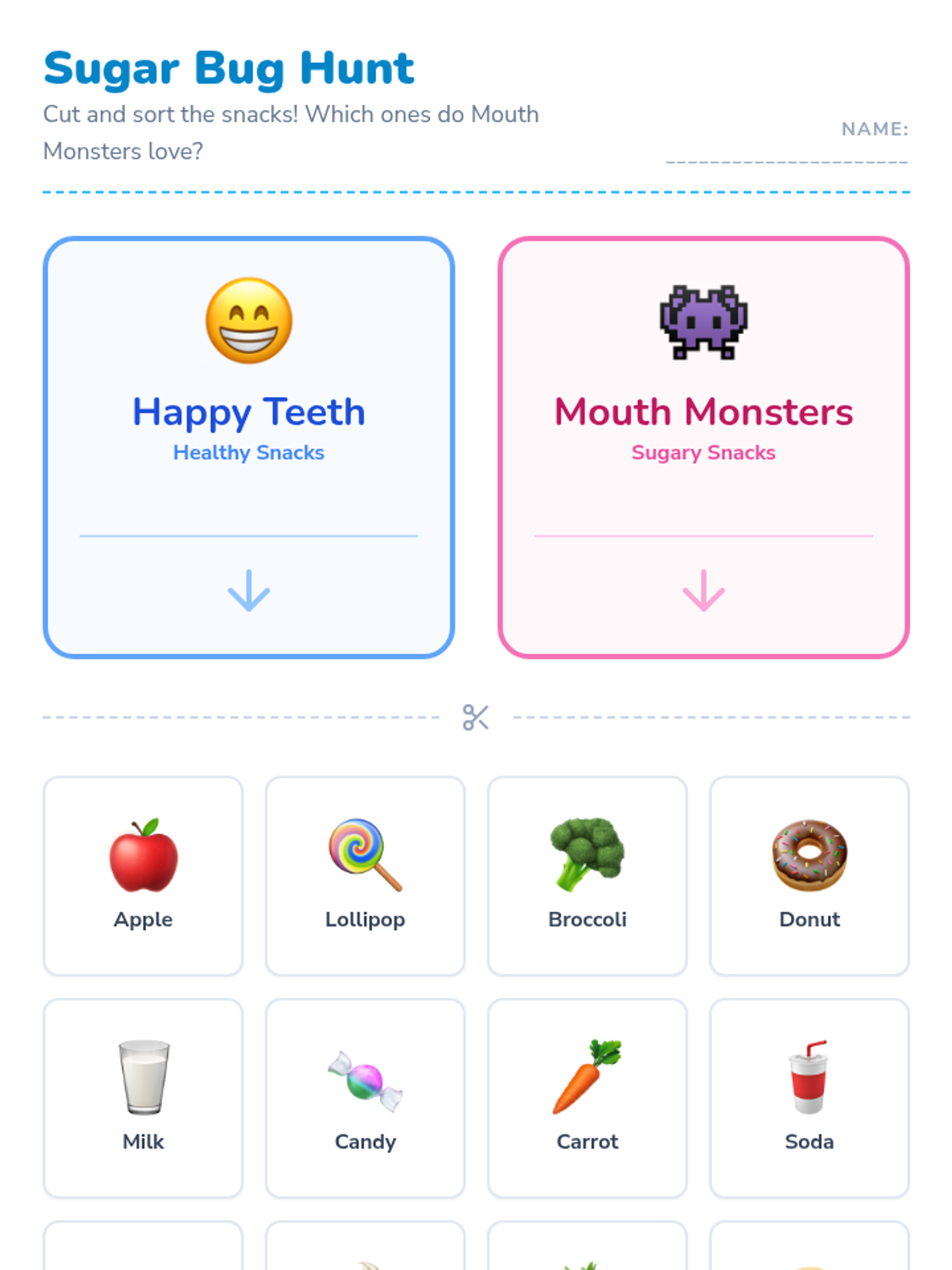
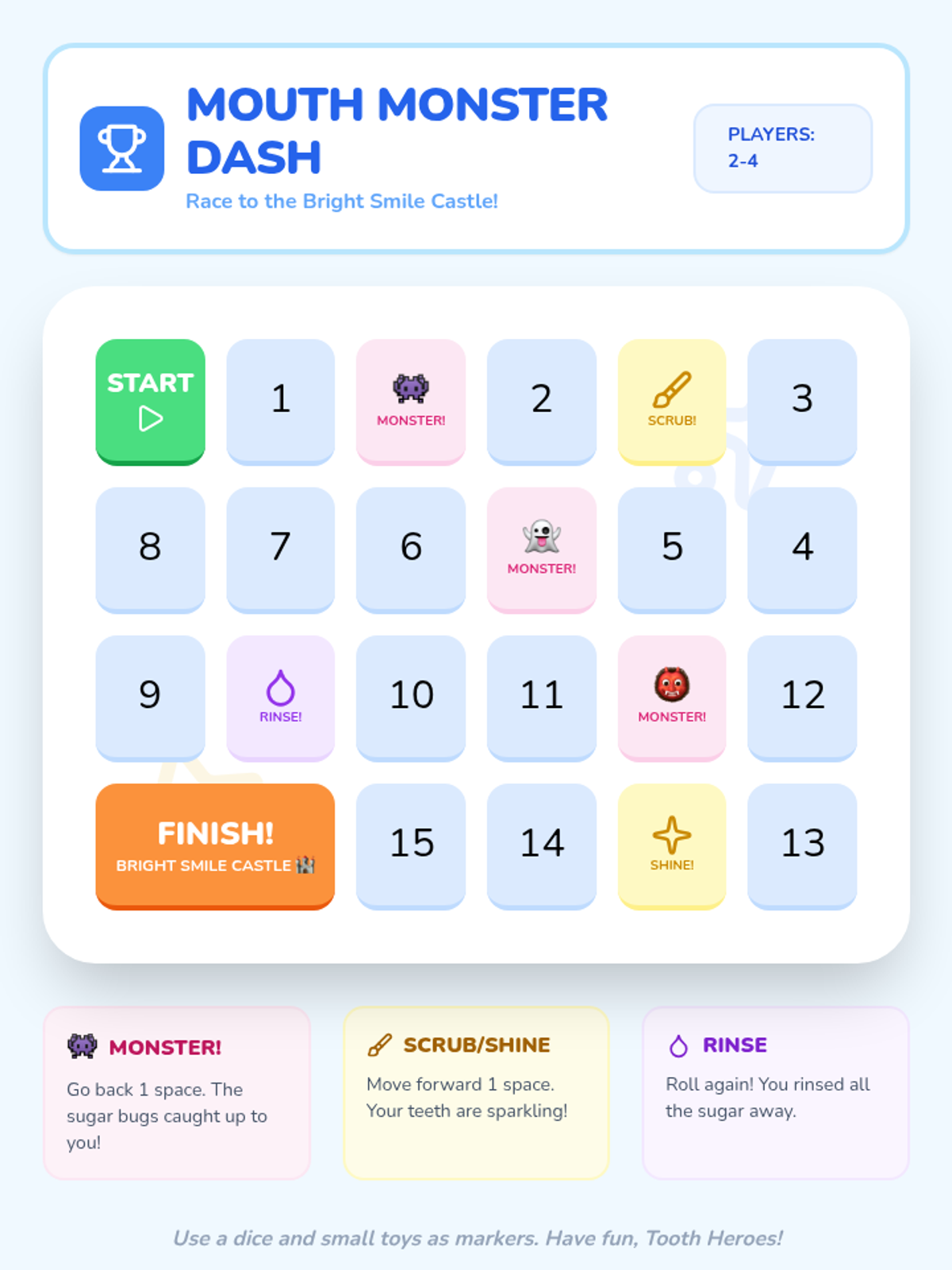
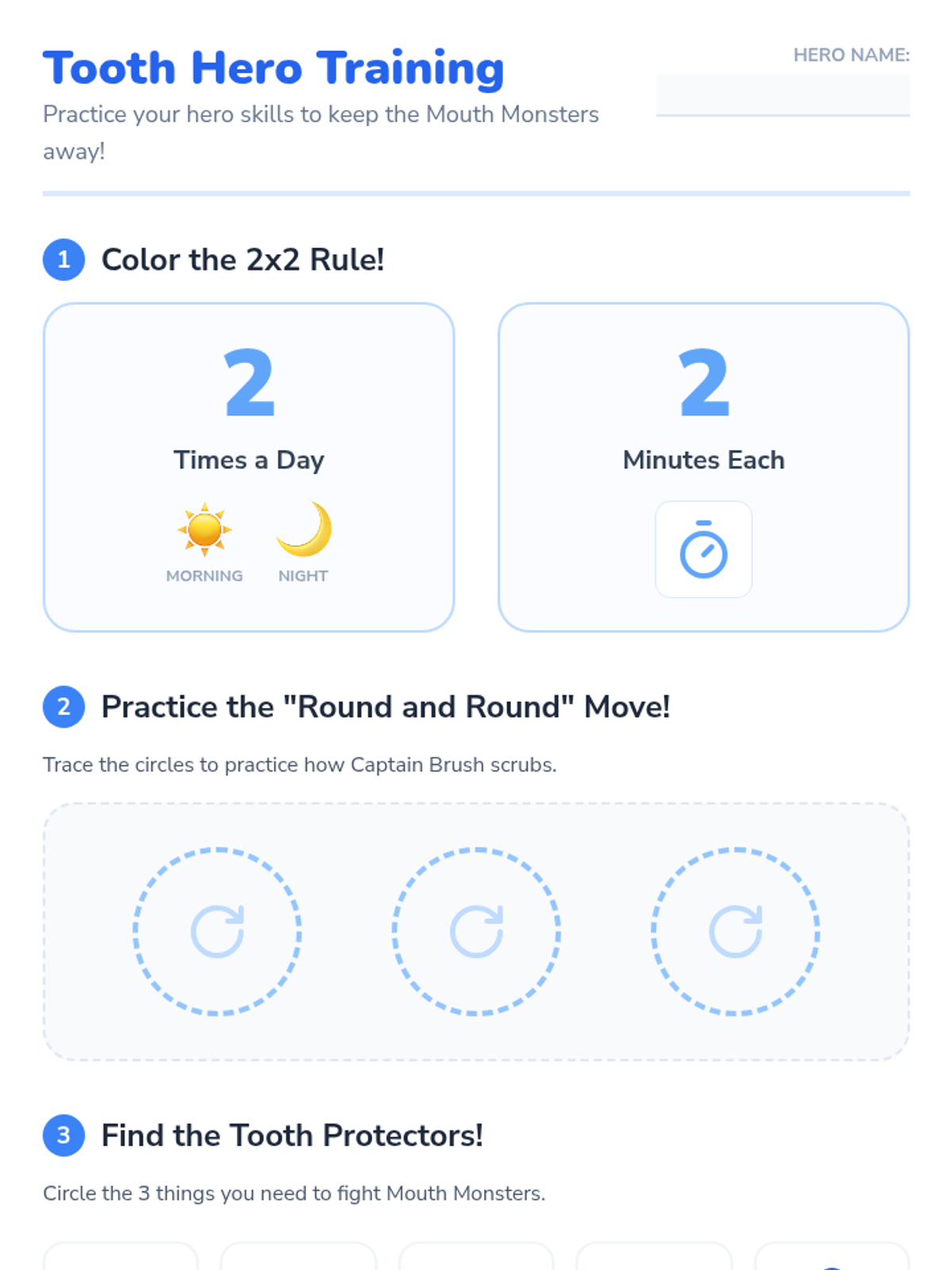
A fun, interactive dental hygiene lesson for Pre-K and Kindergarten students that uses the 'Mouth Monsters' concept to teach the importance of brushing and proper technique. Students will learn through a story, a catchy song, and hands-on practice.
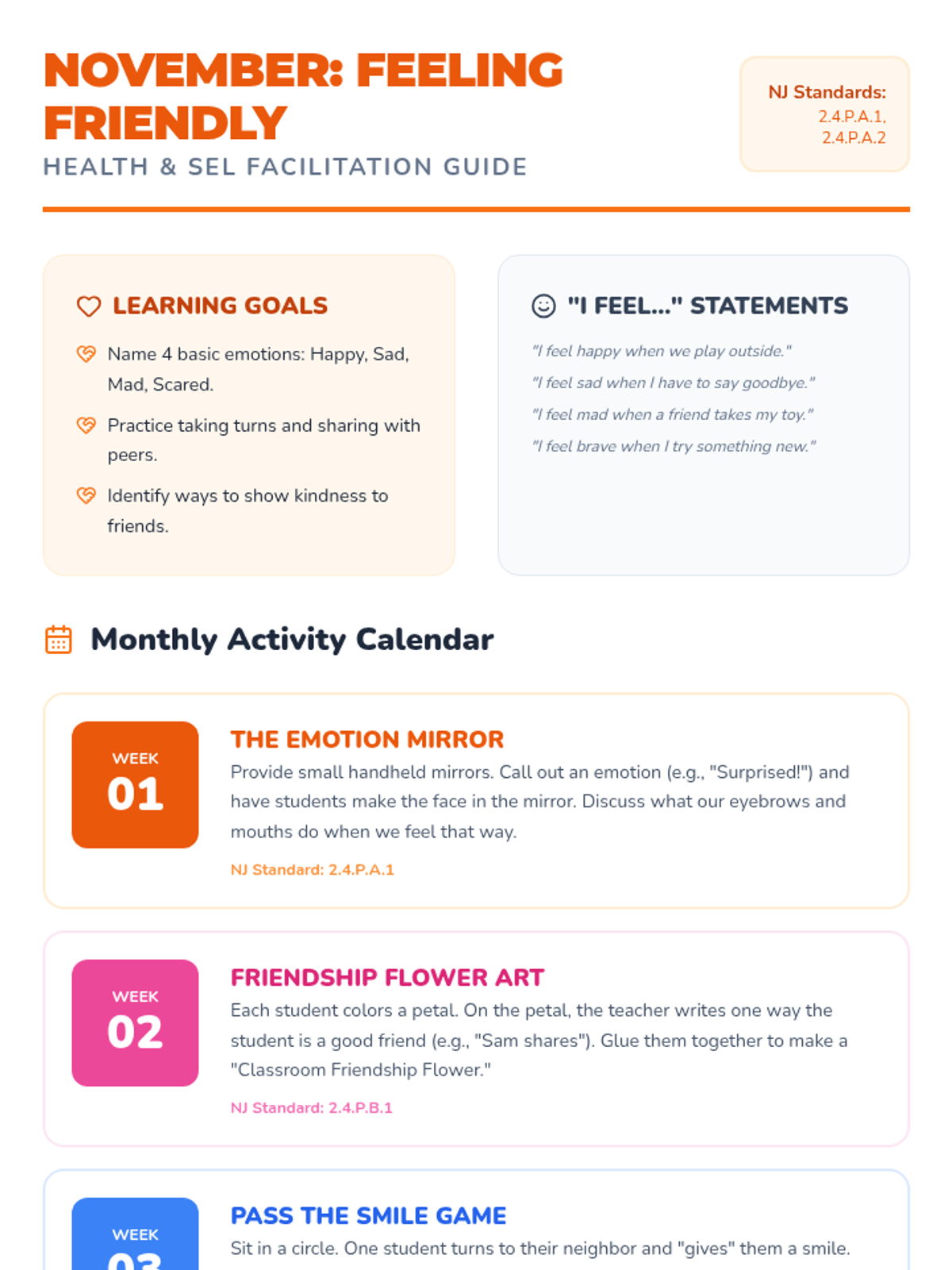
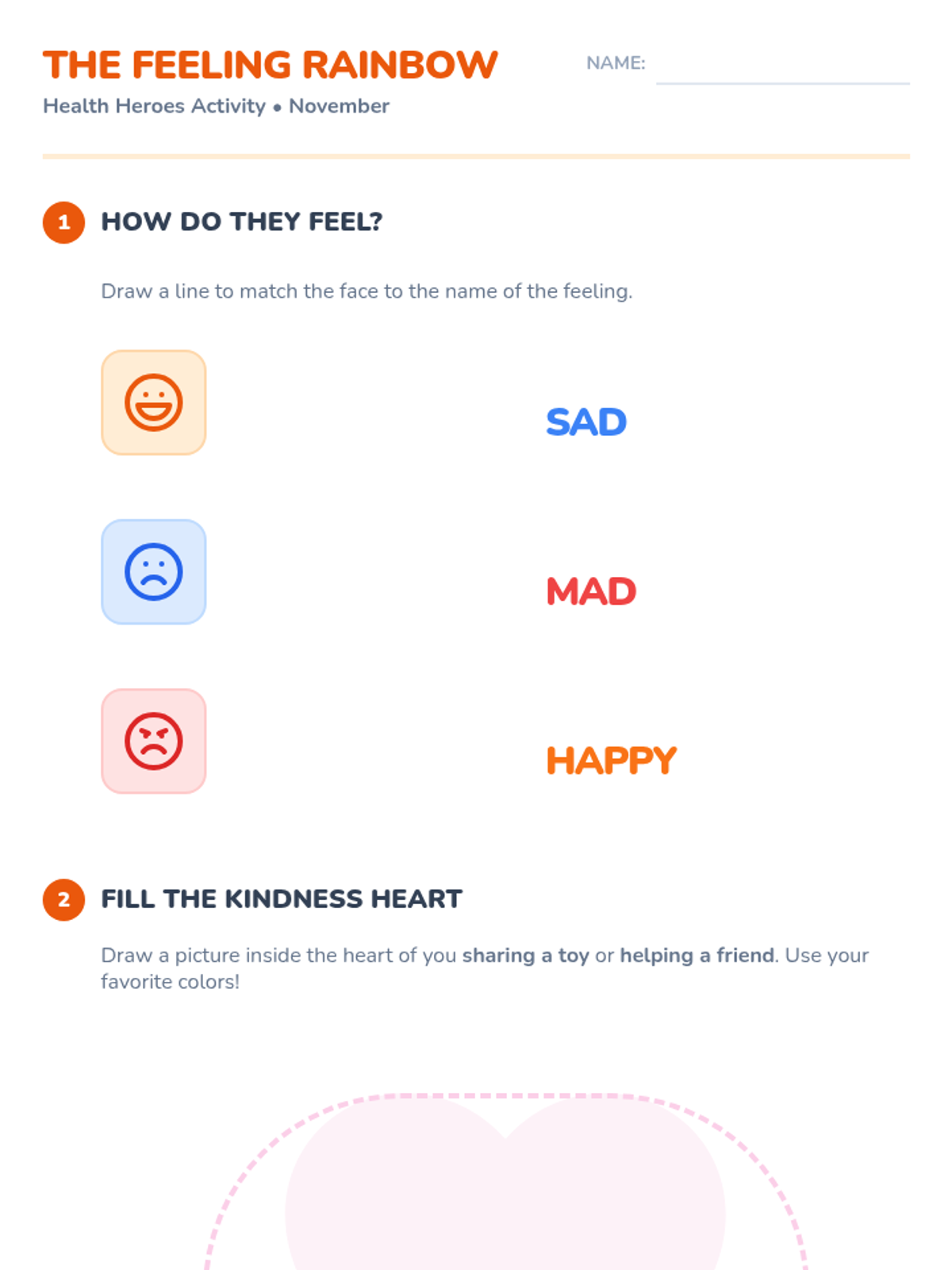
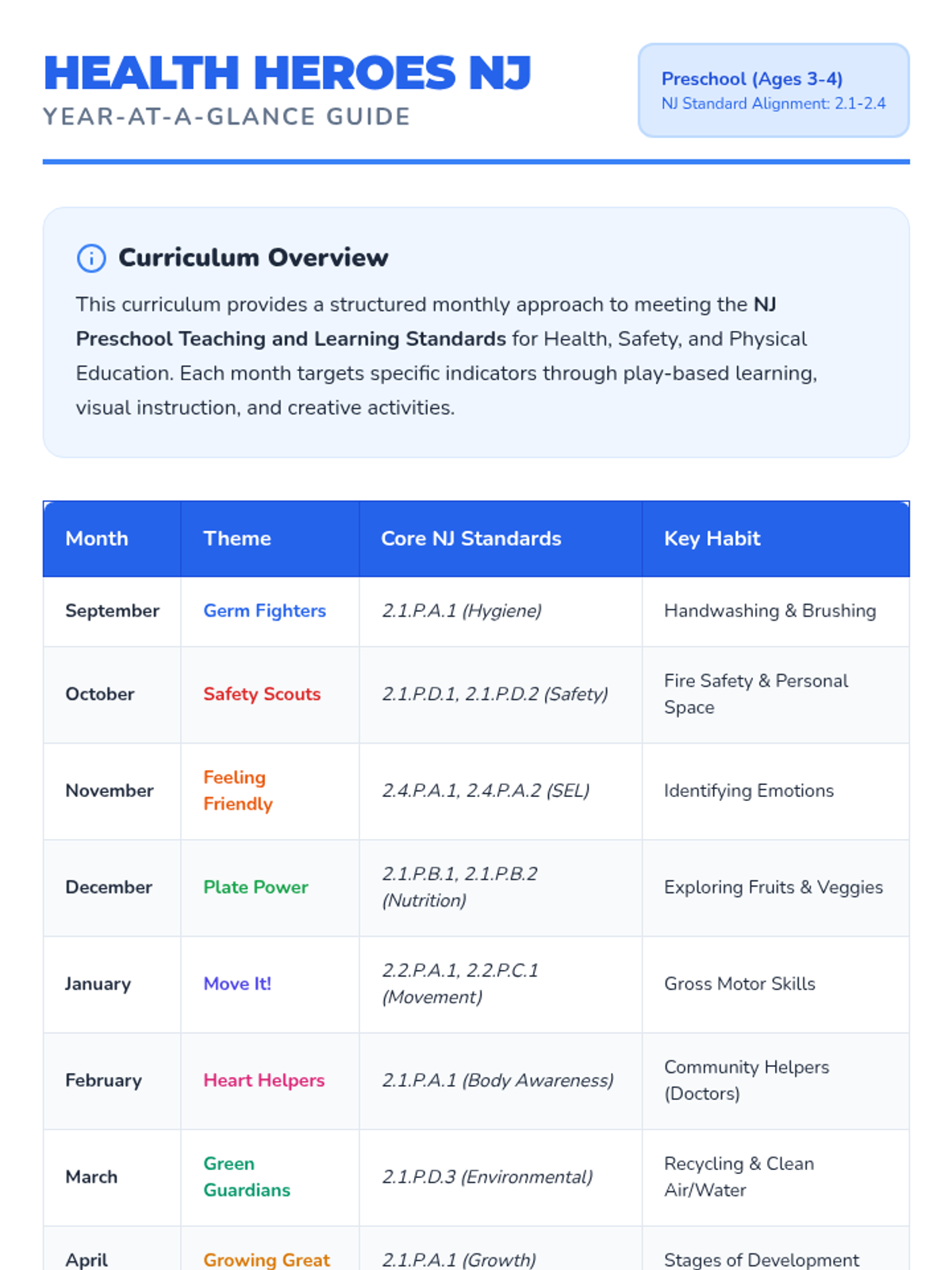
Explores identifying feelings, practicing empathy, and building positive friendships. Aligned with NJ Standard 2.4.P.A.1 and 2.4.P.A.2.
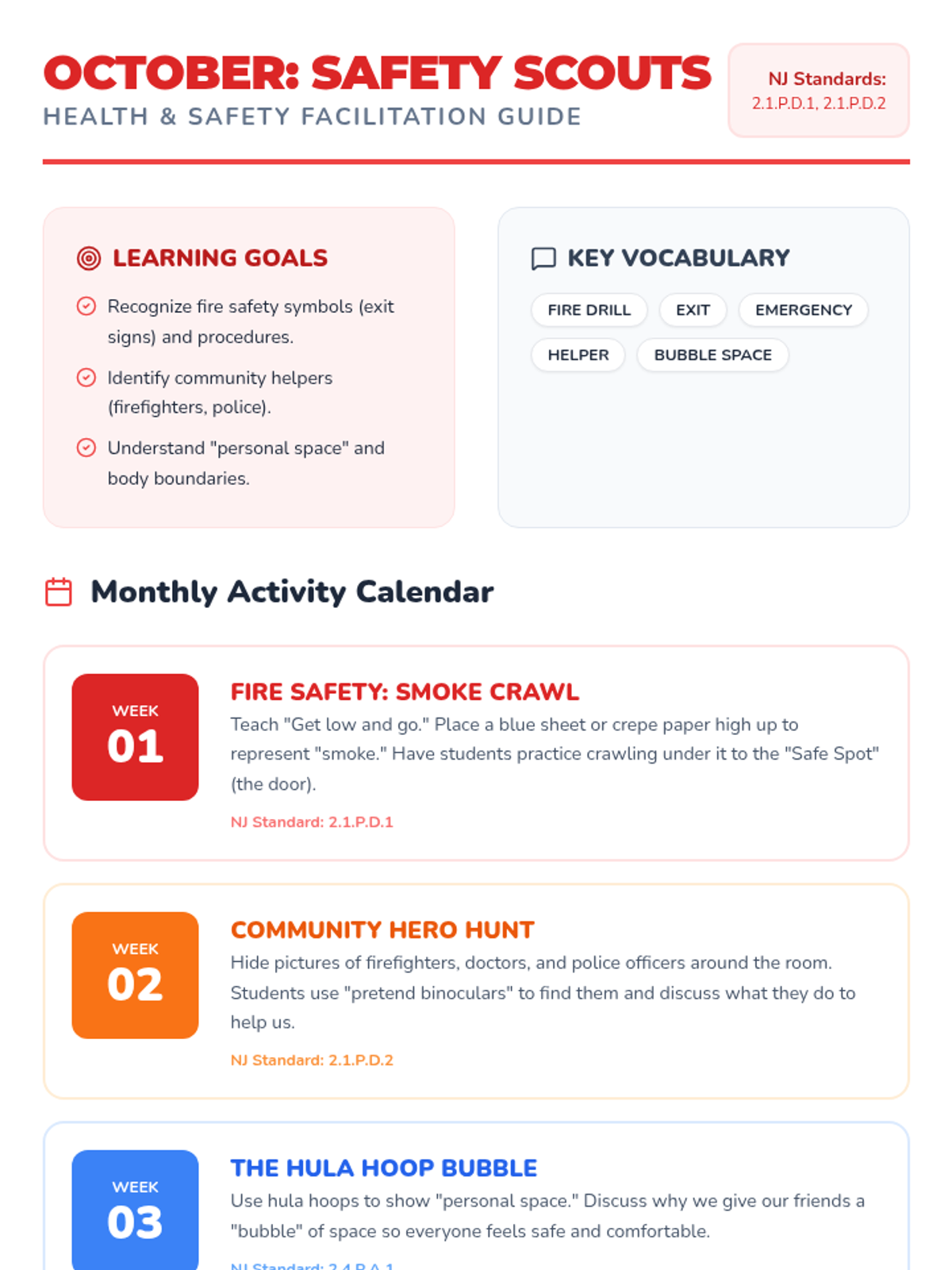
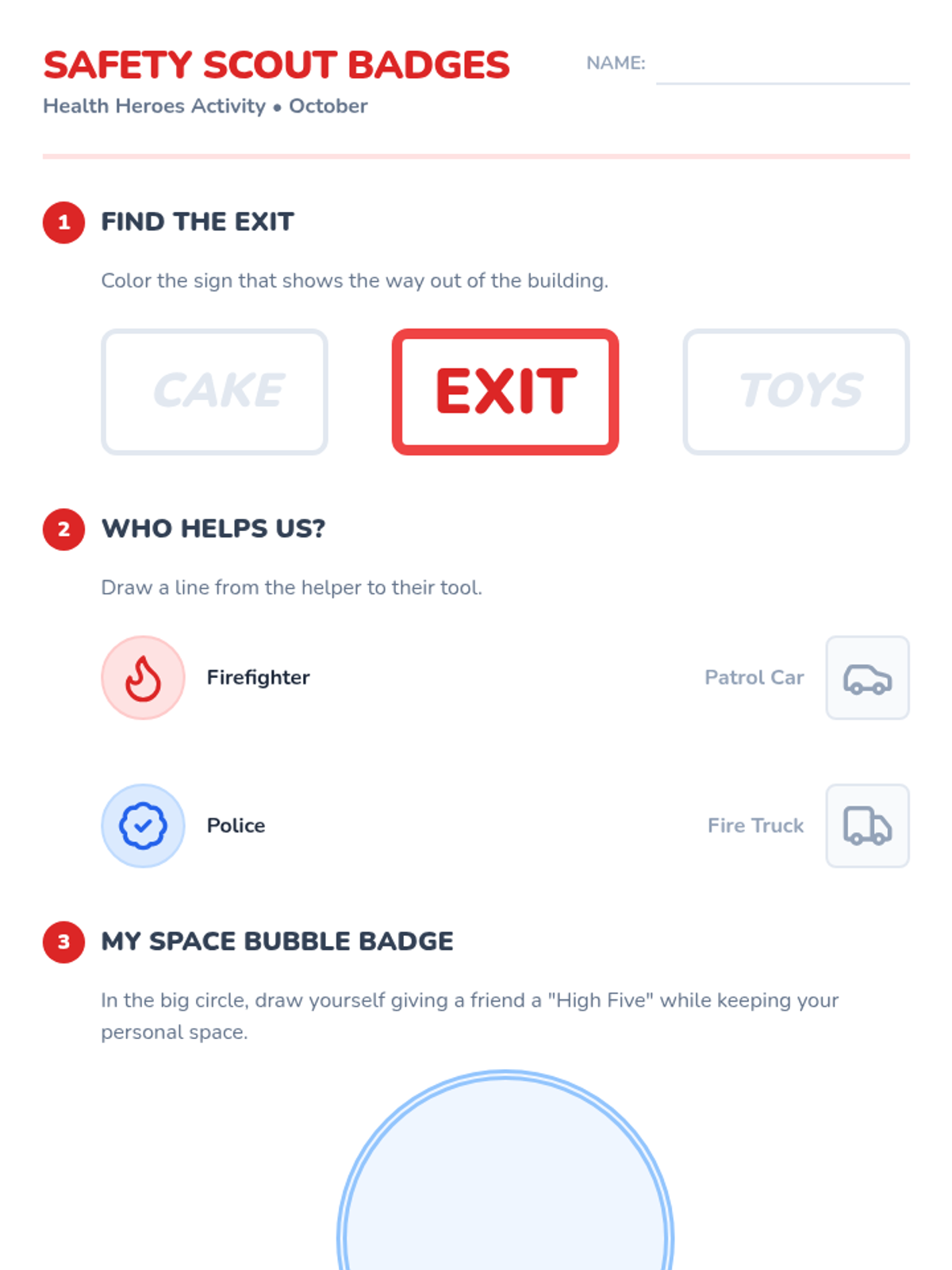
Introduces fire safety, personal space, and recognizing community helpers who keep us safe. Aligned with NJ Standard 2.1.P.D.1 and 2.1.P.D.2.
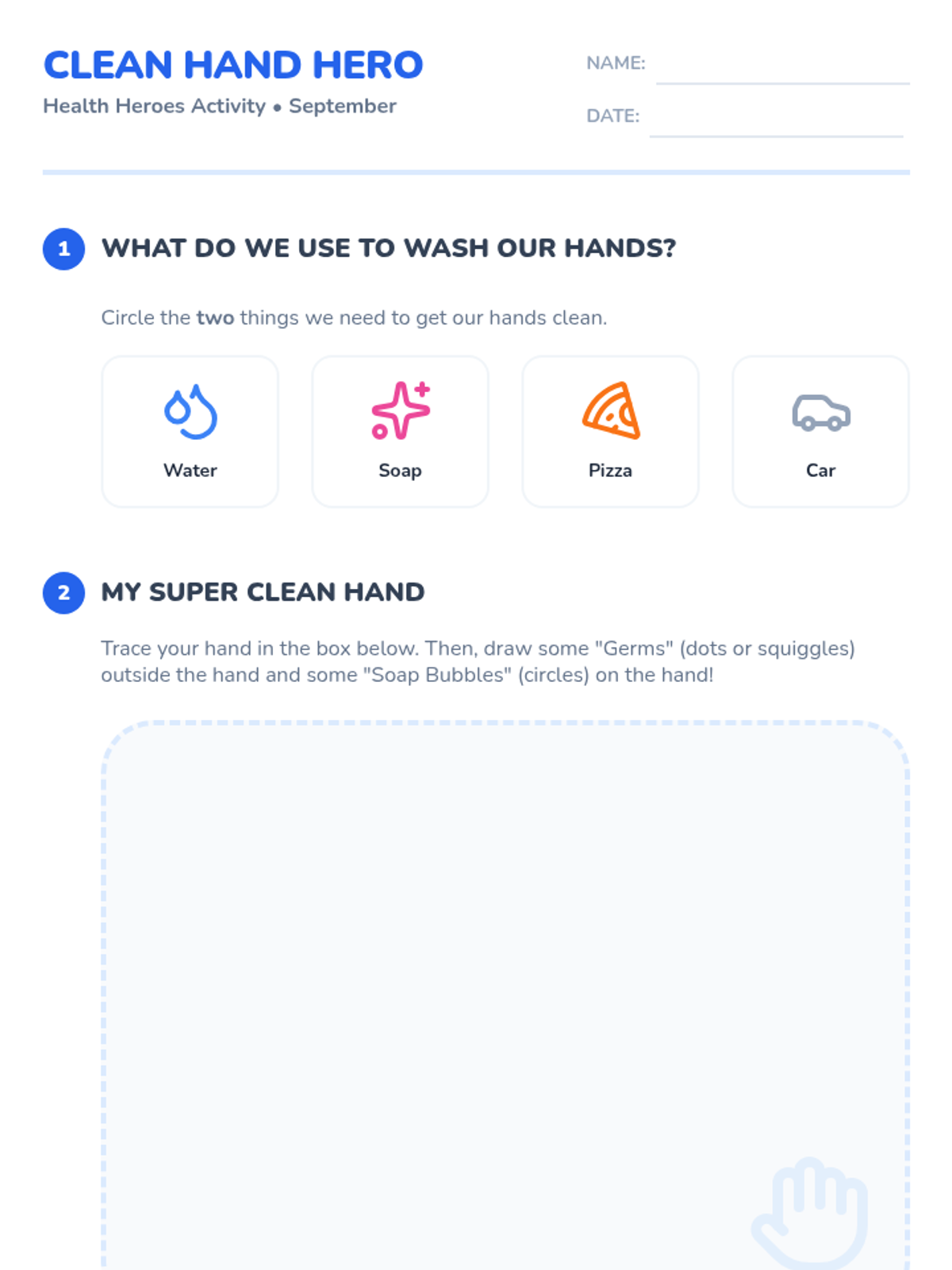
Focuses on personal hygiene, proper handwashing techniques, and dental health to prevent the spread of germs. Aligned with NJ Standard 2.1.P.A.1.
All aboard the Energy Engine! Students learn about grains and how they provide the fuel we need to play and learn all day through a rhythmic 'Grain Train' script.
Meet the Strength Squad! This lesson uses songs and role-play to teach children how dairy and protein help build strong bones and muscles.
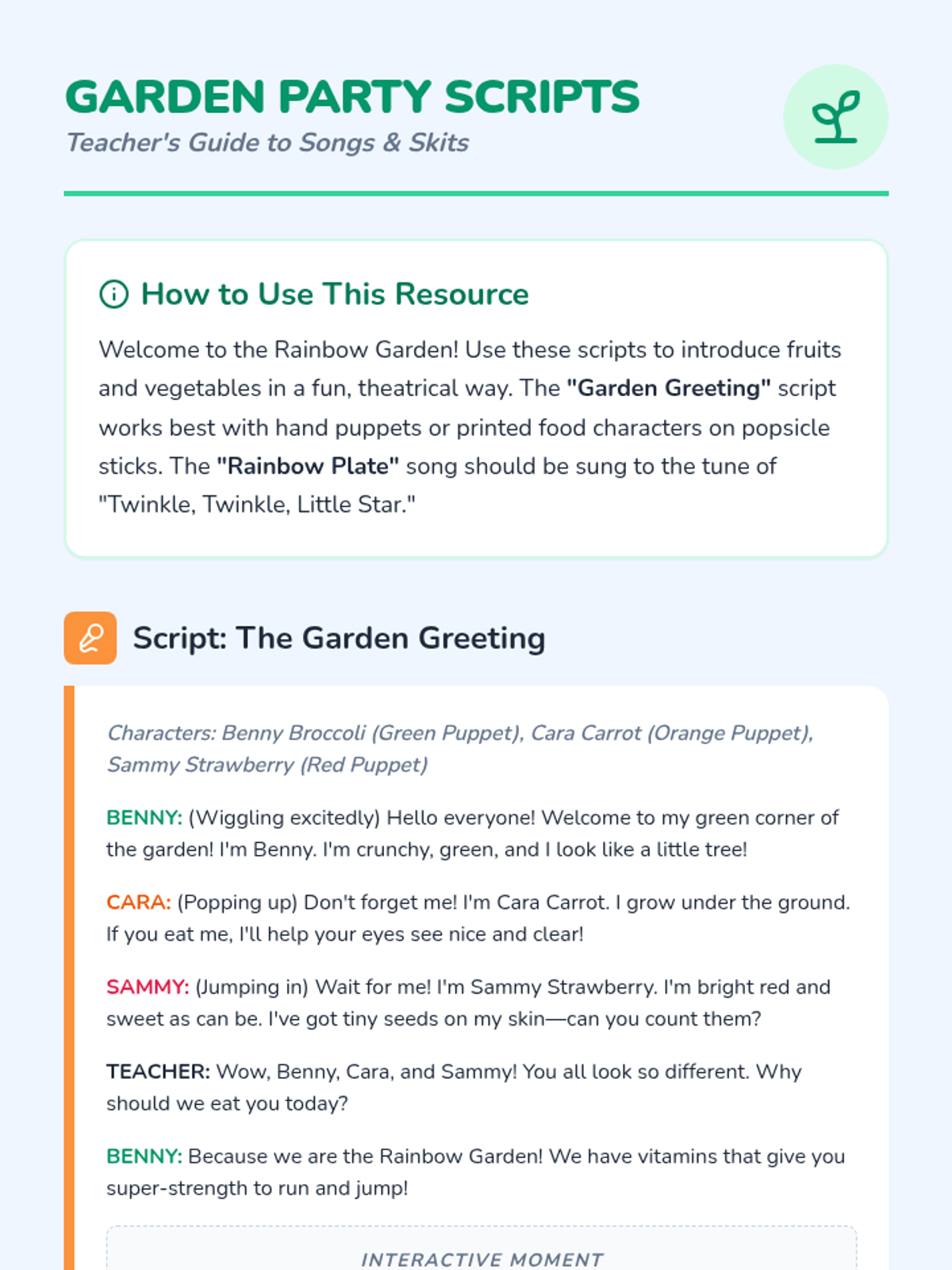
Discover the vibrant world of fruits and vegetables through the 'Rainbow Garden' song and a playful puppet script. Students learn about different colors and how they help our bodies stay healthy.