Fundamental techniques for soccer, volleyball, football, and basketball alongside strategic gameplay and communication skills. Emphasizes sportsmanship and collaborative tactics within a competitive team environment.
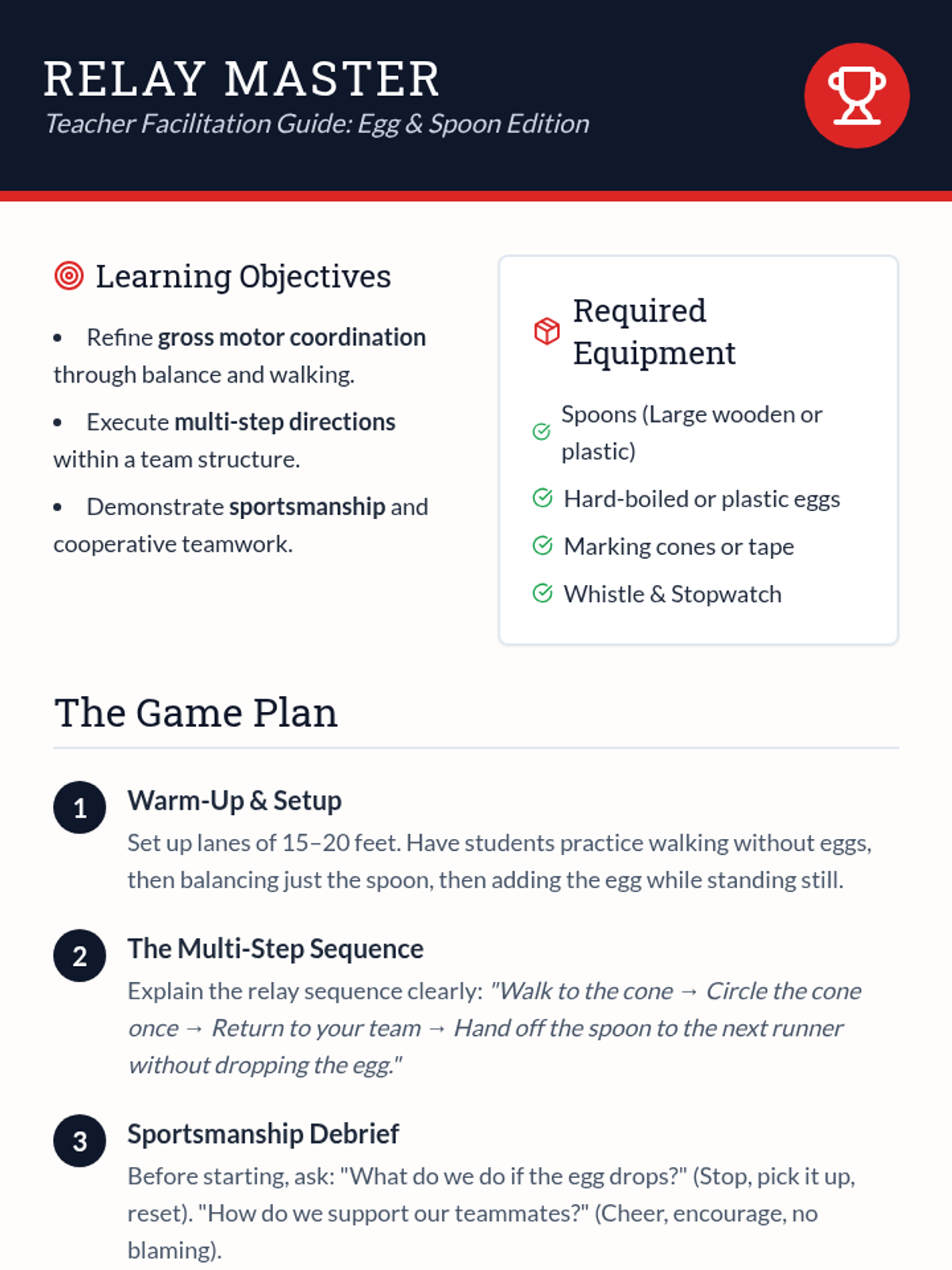
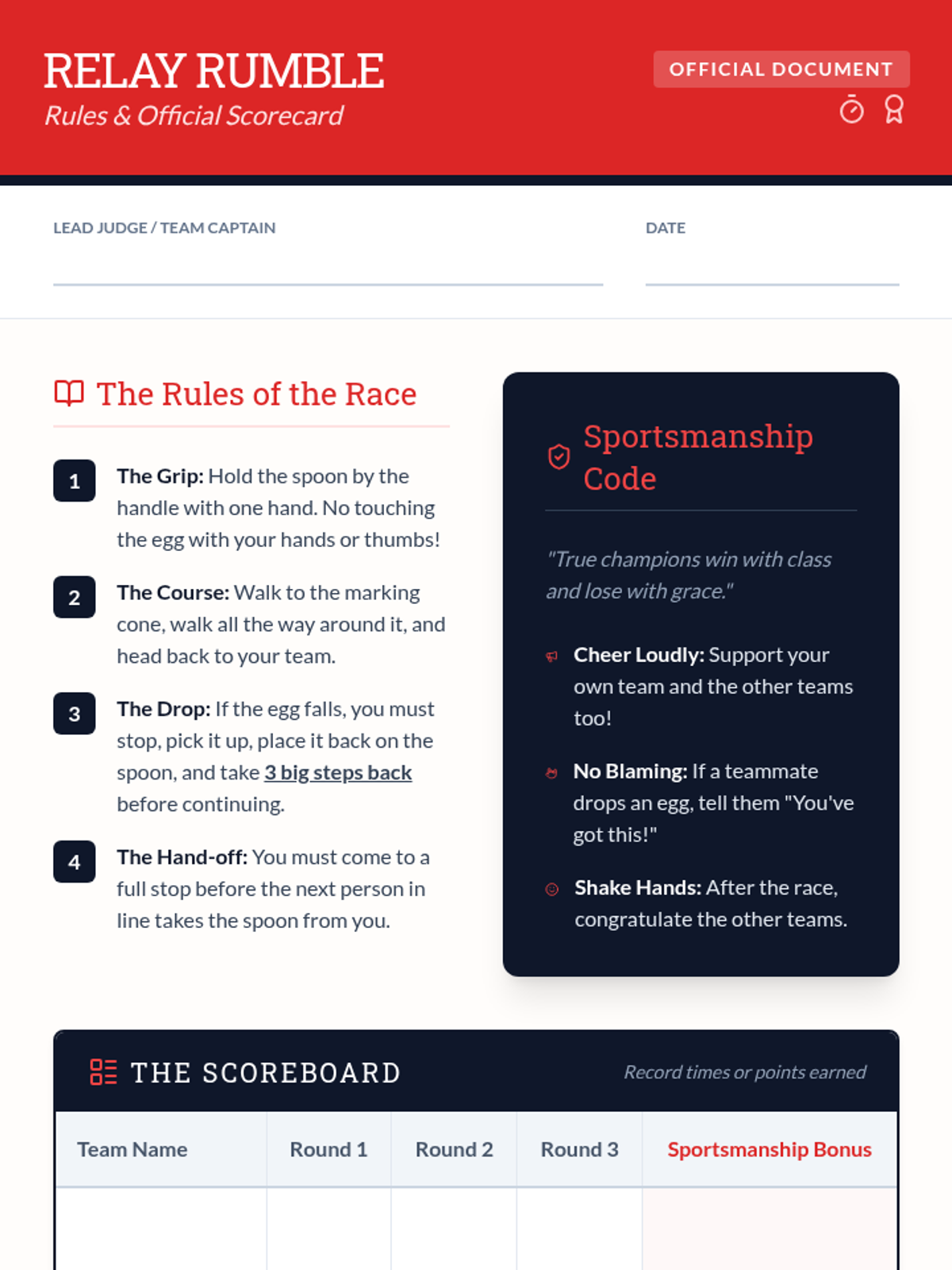
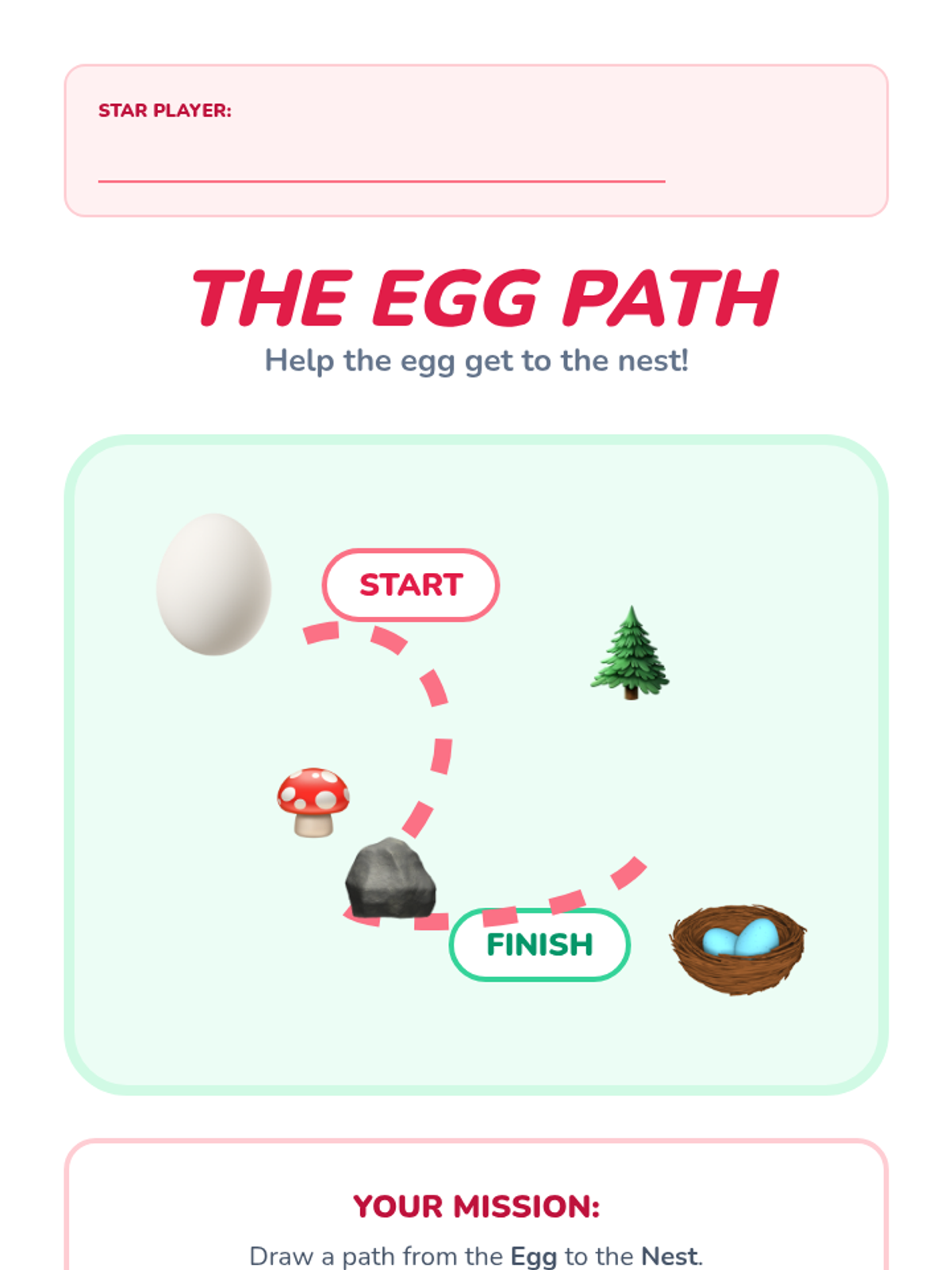
A high-energy lesson focused on gross motor skills, following complex directions, and practicing good sportsmanship through an egg and spoon relay race.
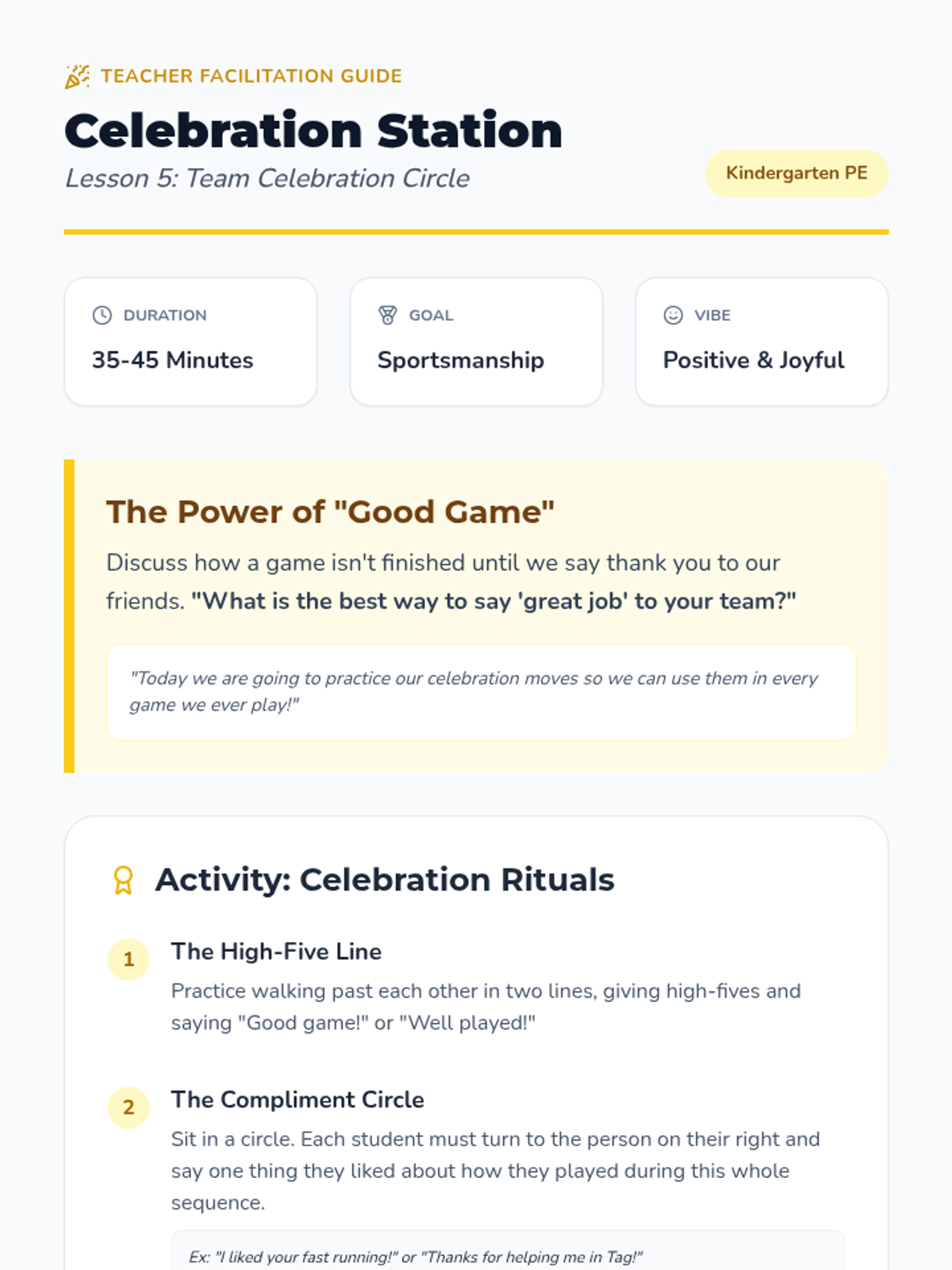
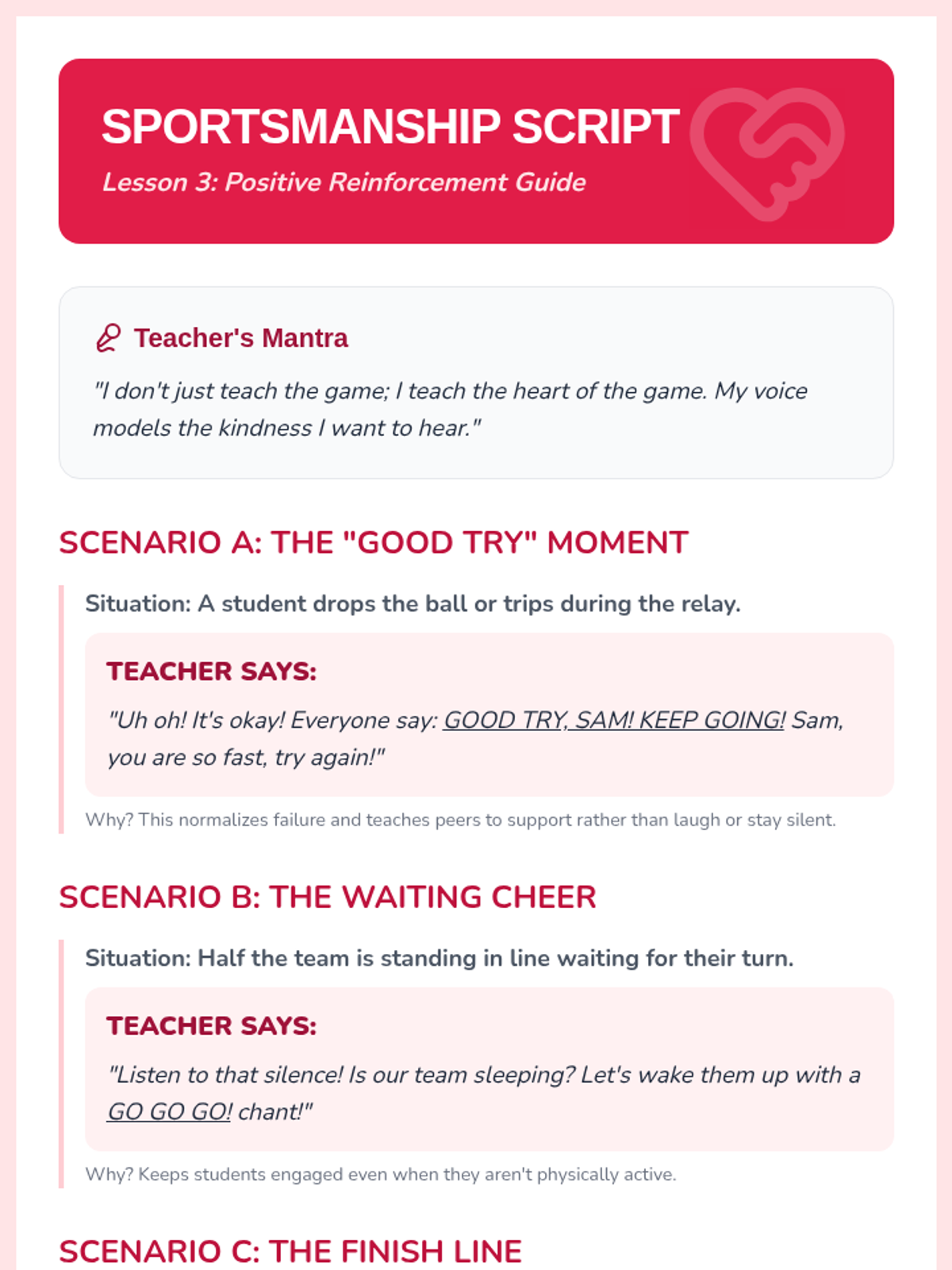
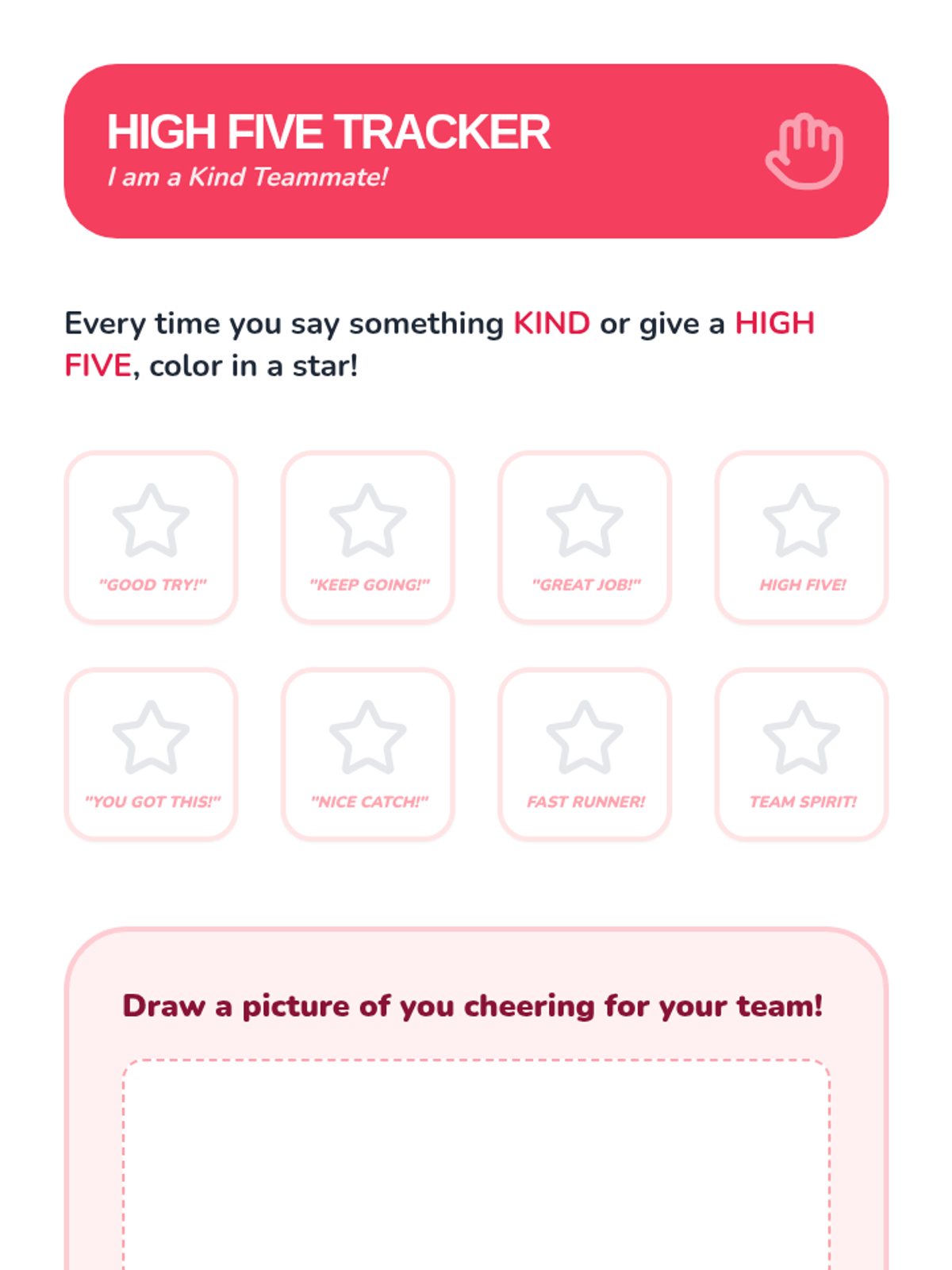
Students learn and practice specific celebration rituals to foster sportsmanship and kindness.
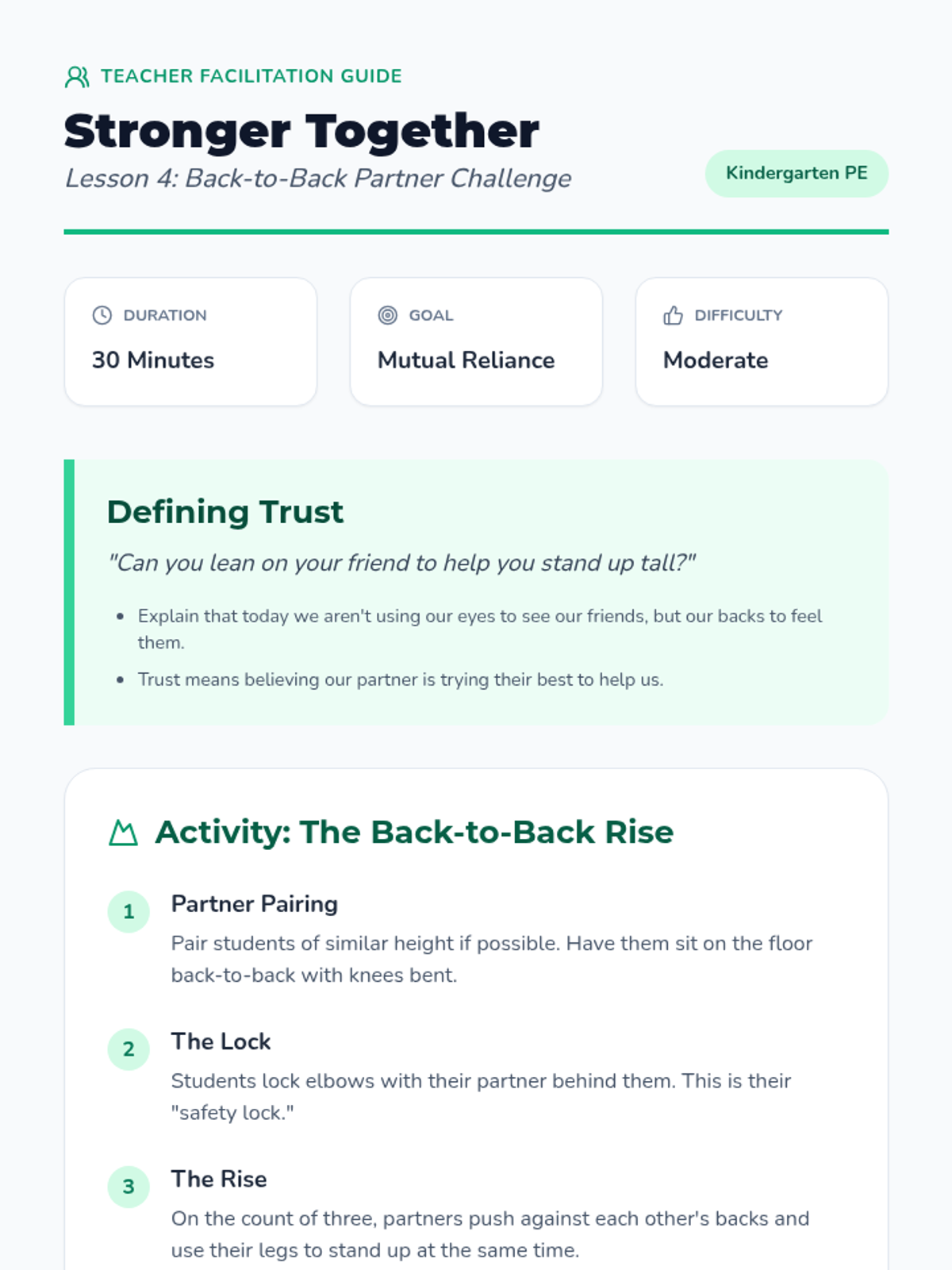
Students work in pairs to stand up from a sitting position, building mutual reliance and physical trust.
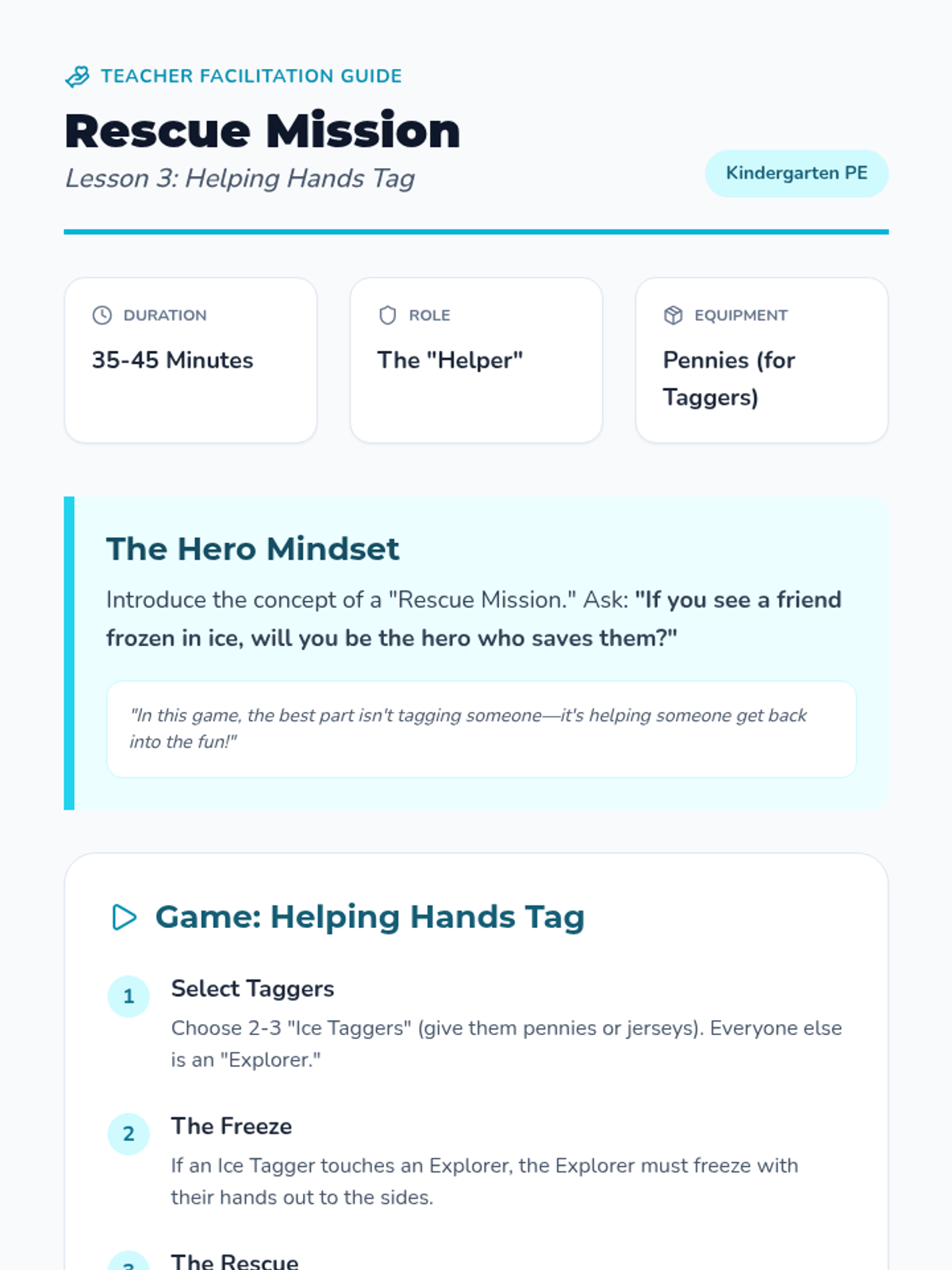
A tag game where students must help 'frozen' peers, fostering empathy and social awareness.
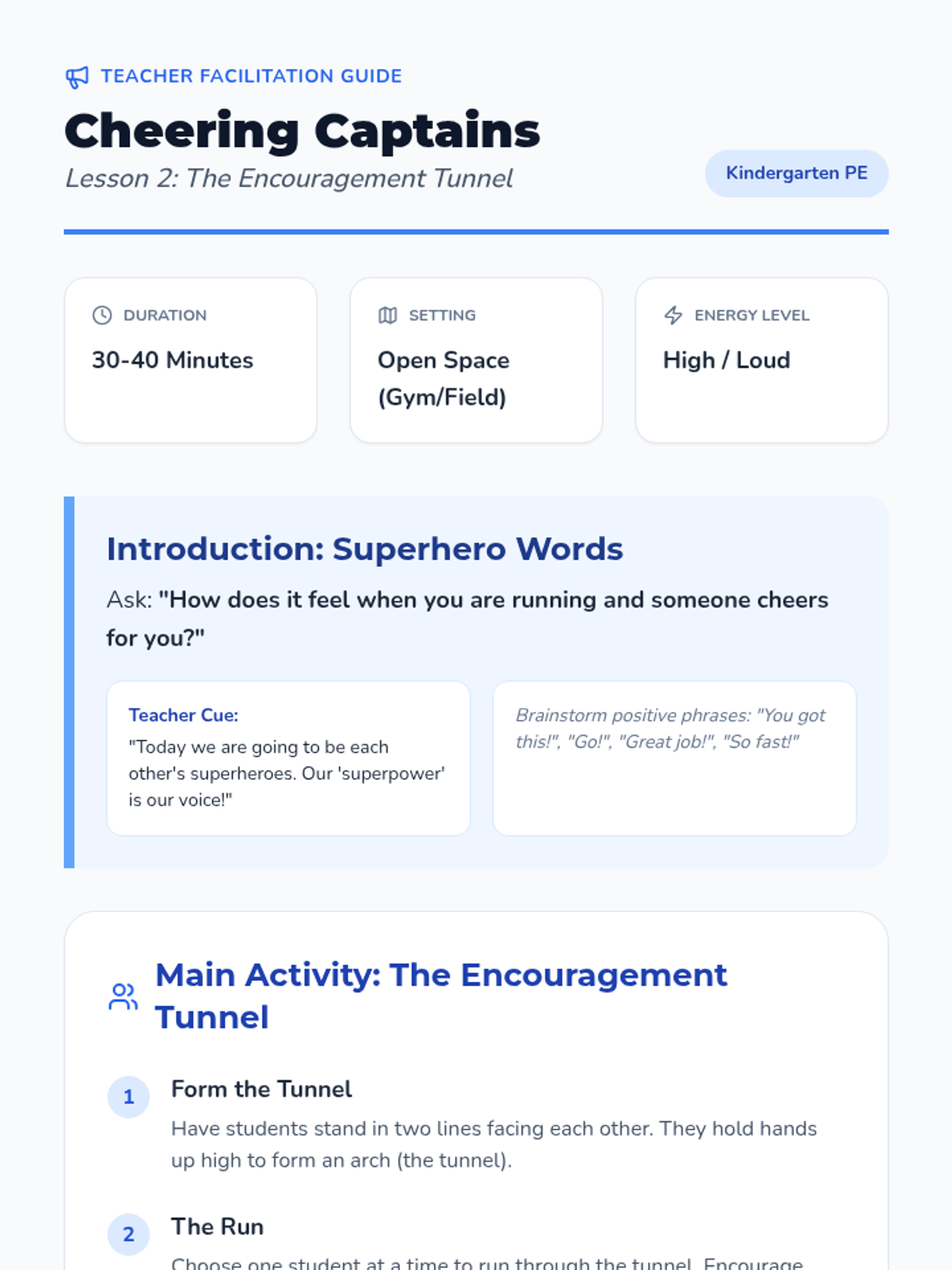
The class builds a cheering tunnel to experience the impact of positive reinforcement and community support.
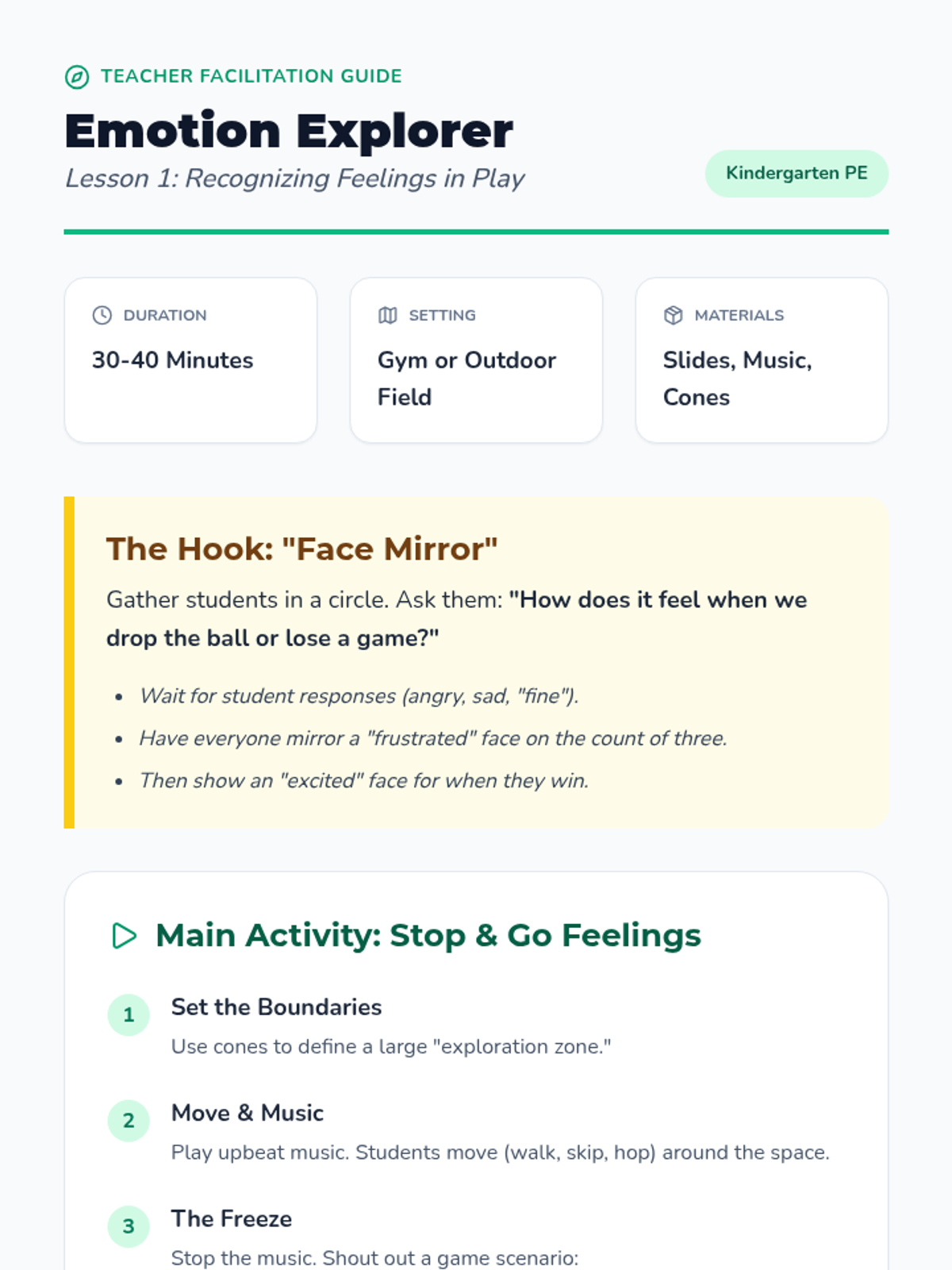
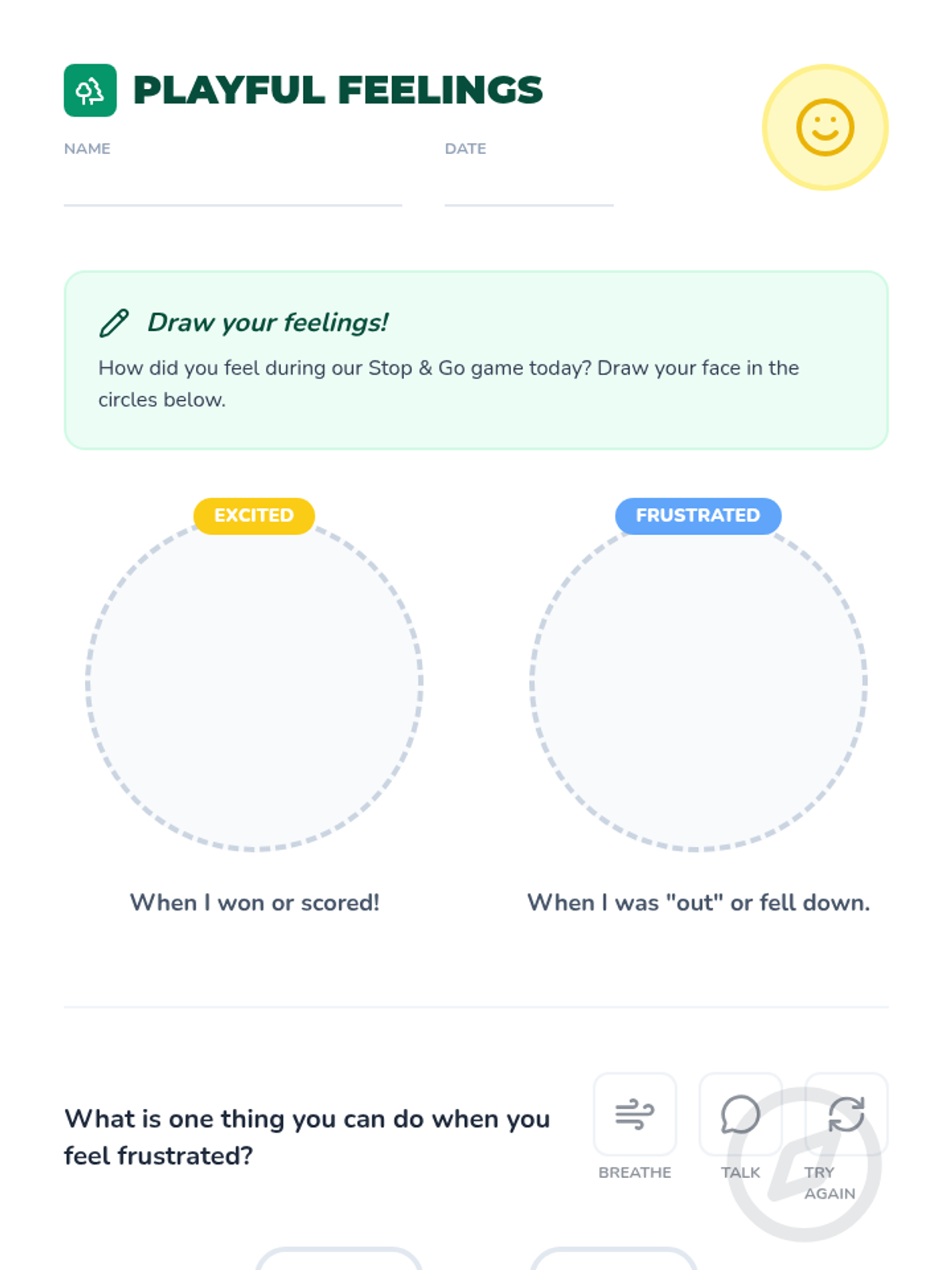
Students participate in stop-and-go games to identify and express emotions related to play, learning how to handle frustration and excitement.
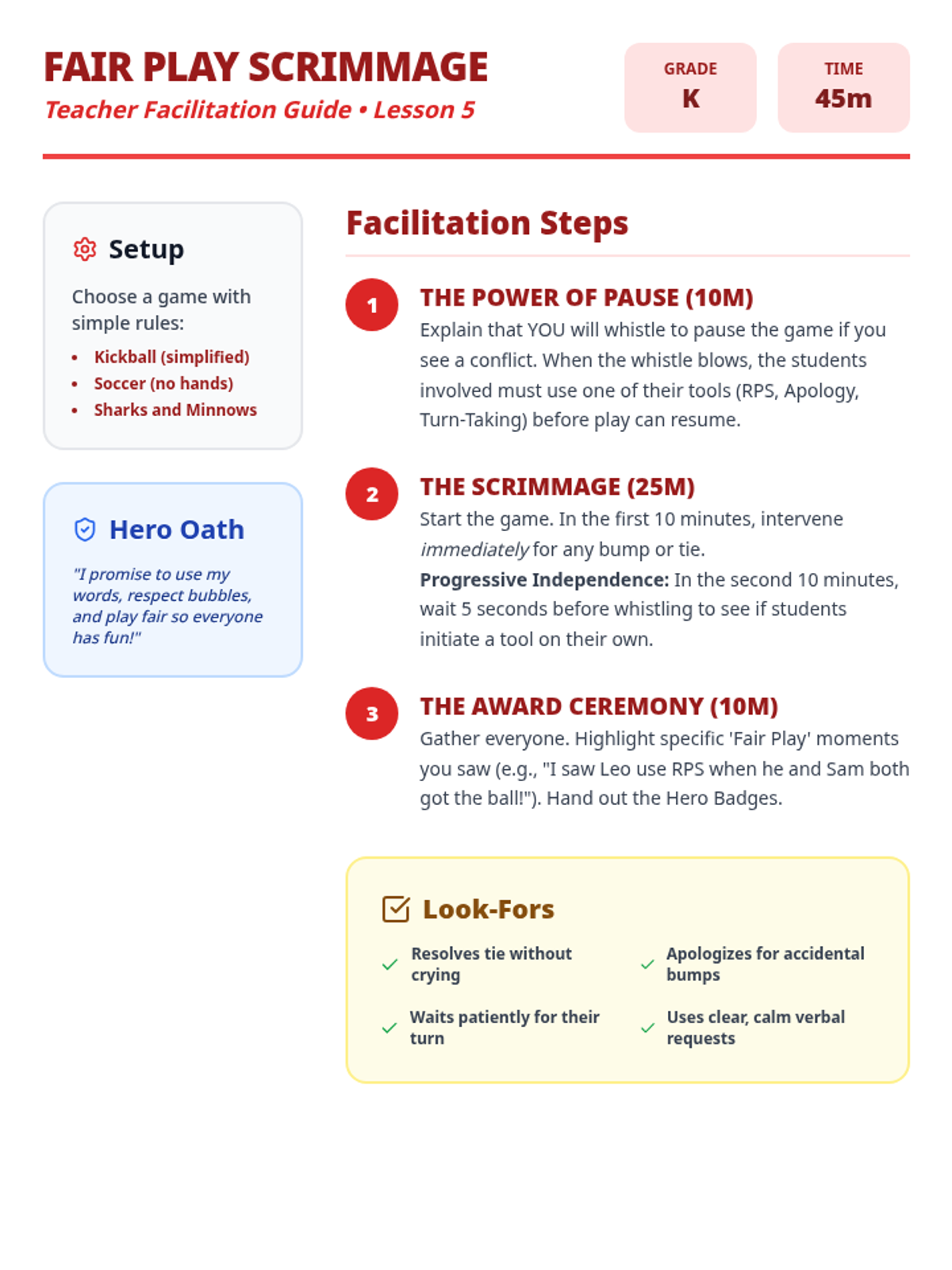
A simplified team game where the teacher occasionally pauses the action to let students resolve minor disputes using the tools learned (apologies, taking turns, or Rock Paper Scissors).
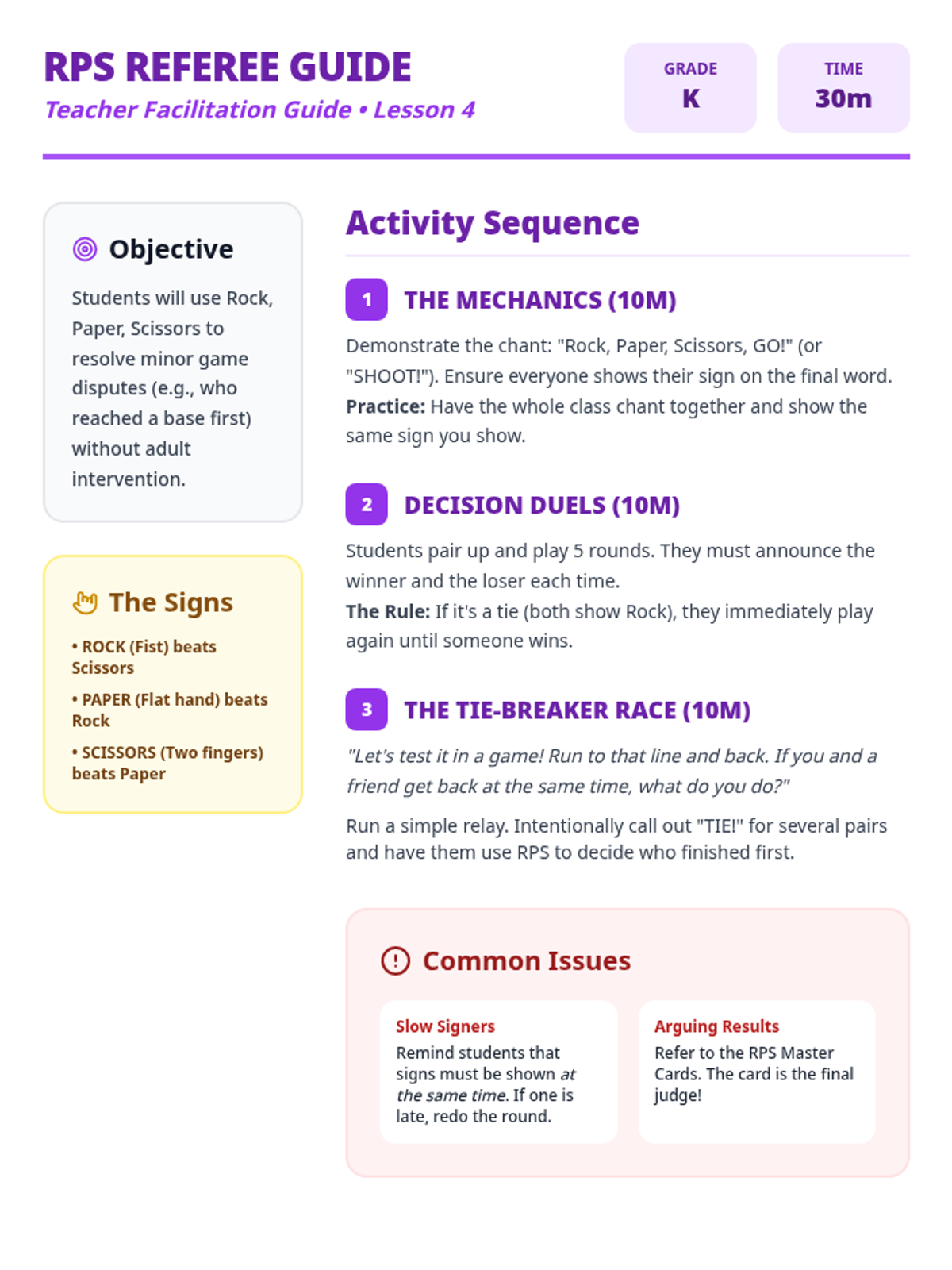
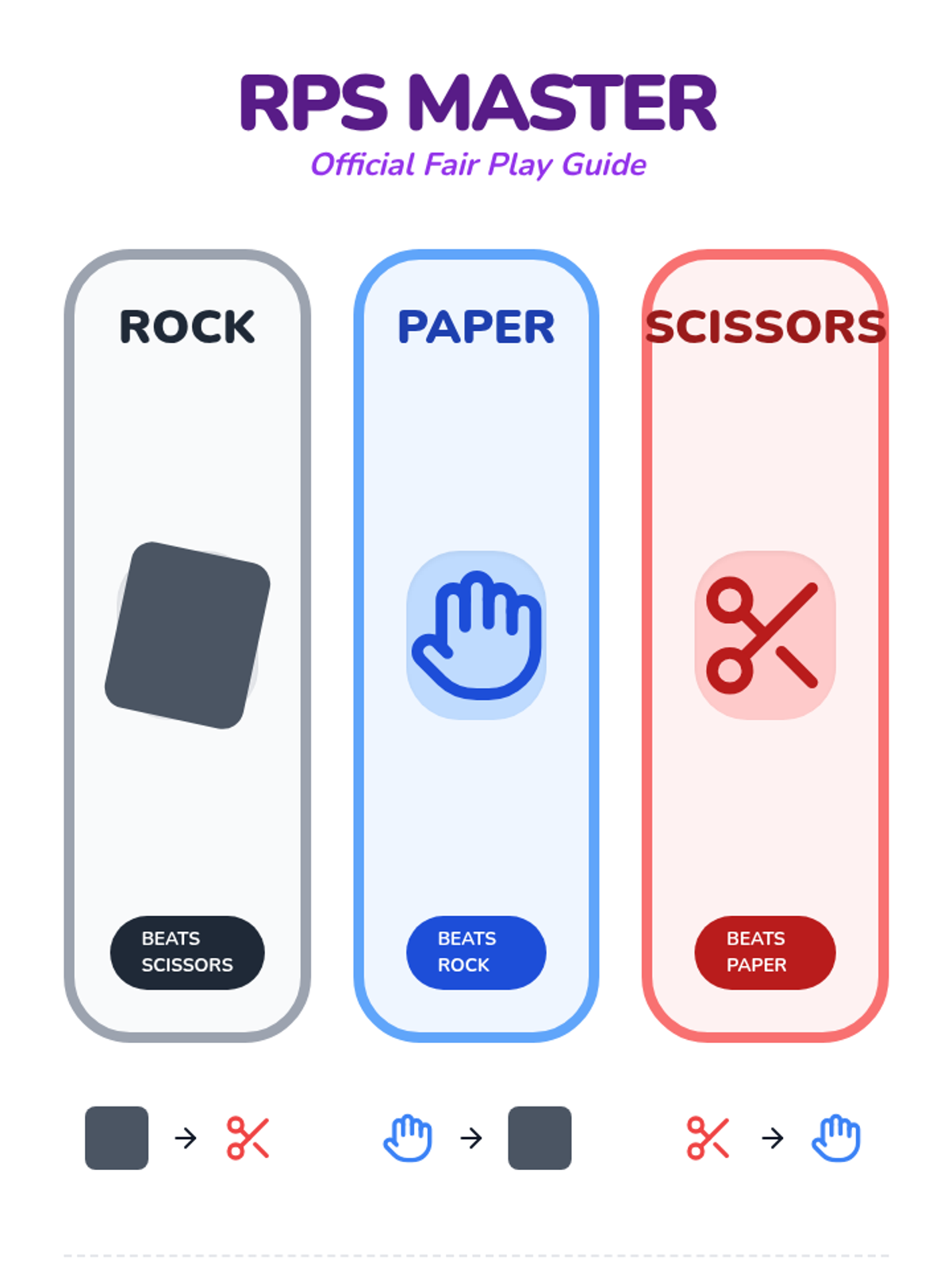
Students learn the mechanics of 'Rock, Paper, Scissors' as a standard tool for resolving disputes quickly in sports. They practice the game as a standalone activity before applying it to resolve 'ties' in a race.
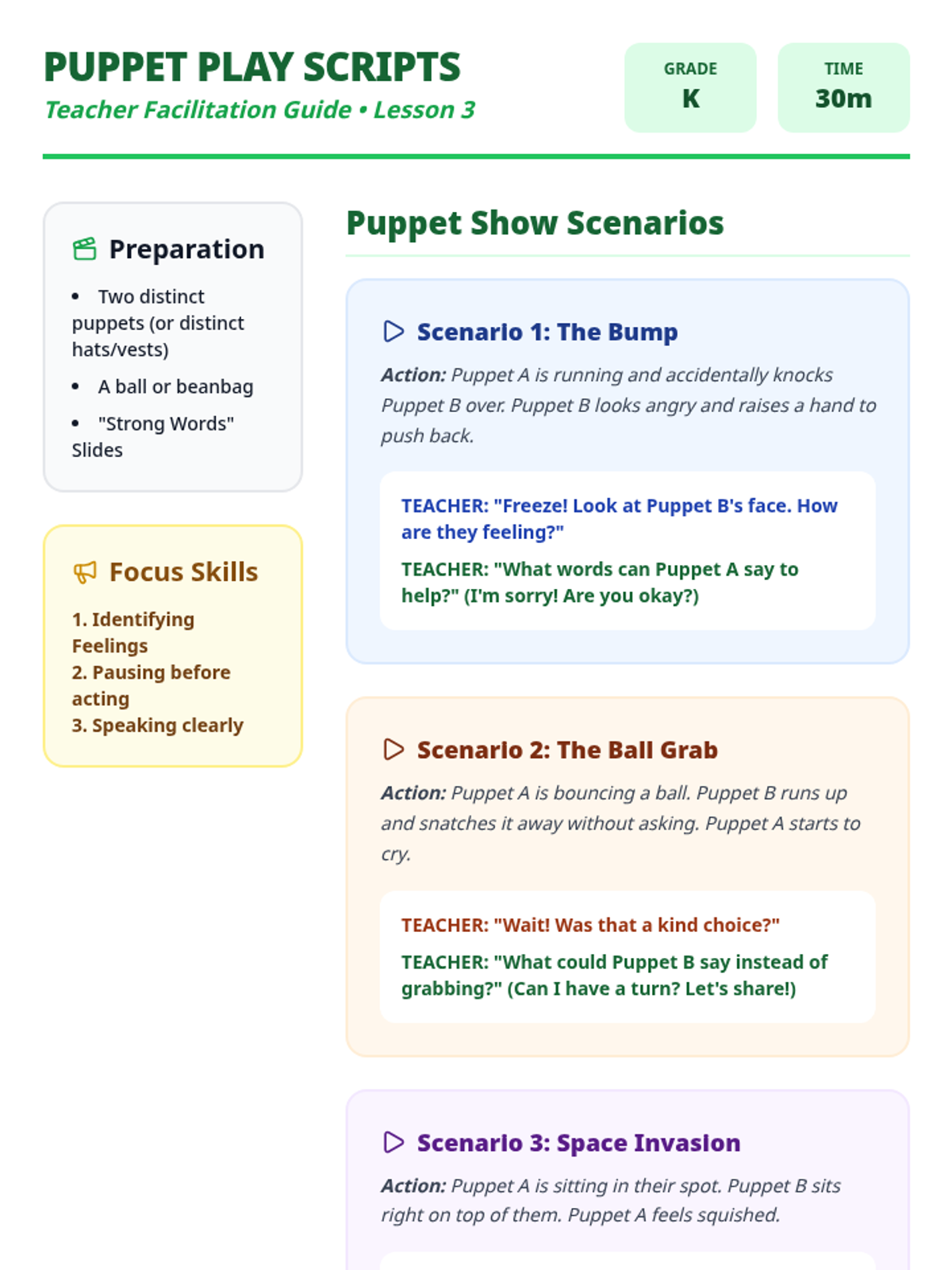
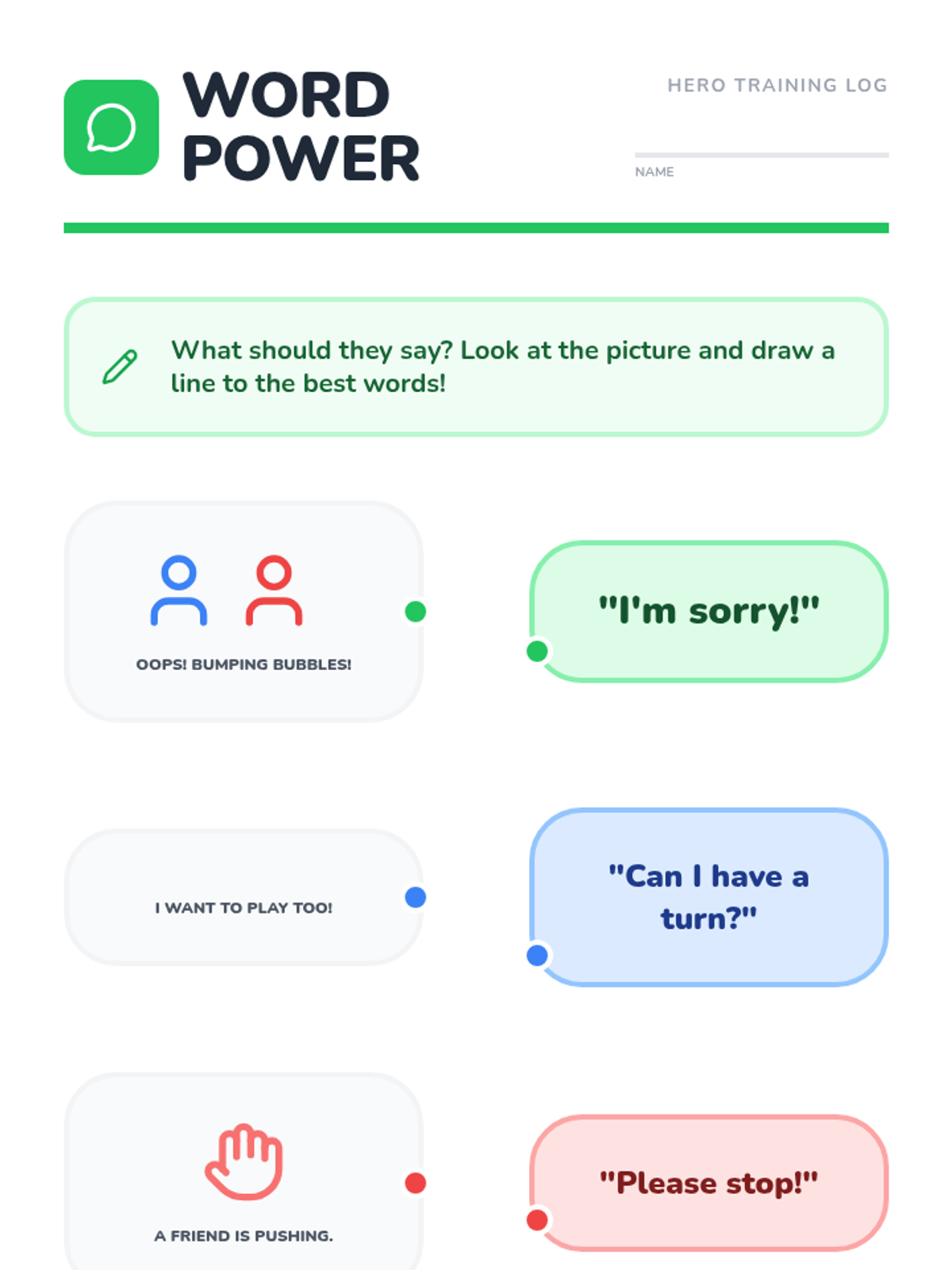
Teachers present puppet shows or role-play scenarios showing common gym class conflicts (bumping into someone, taking a ball). Students practice saying 'Excuse me' or 'It's my turn' instead of pushing.
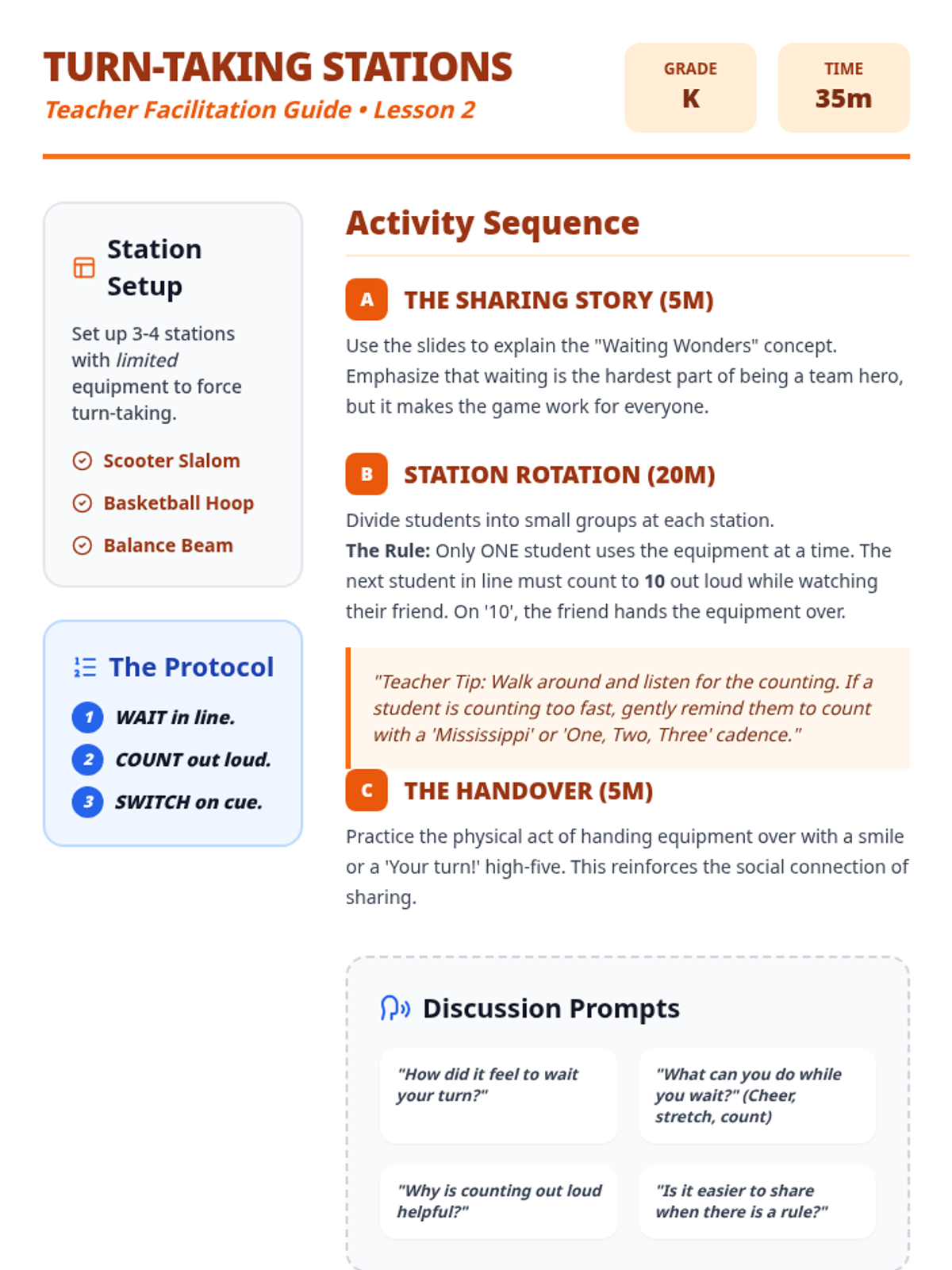
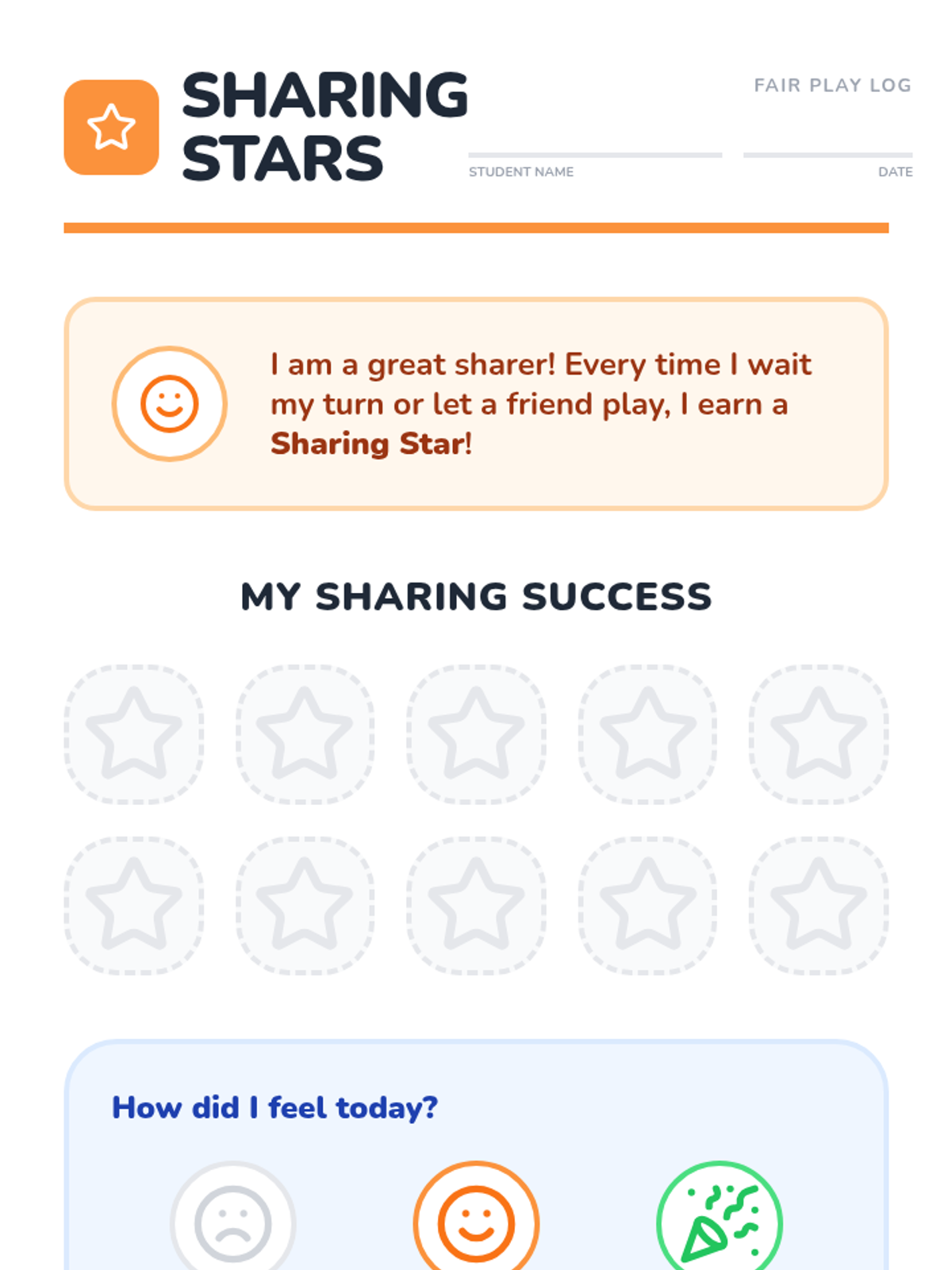
Students engage in station-based activities where equipment is limited, requiring them to wait in line and count to a specific number before switching. This builds patience and understanding of shared resources.
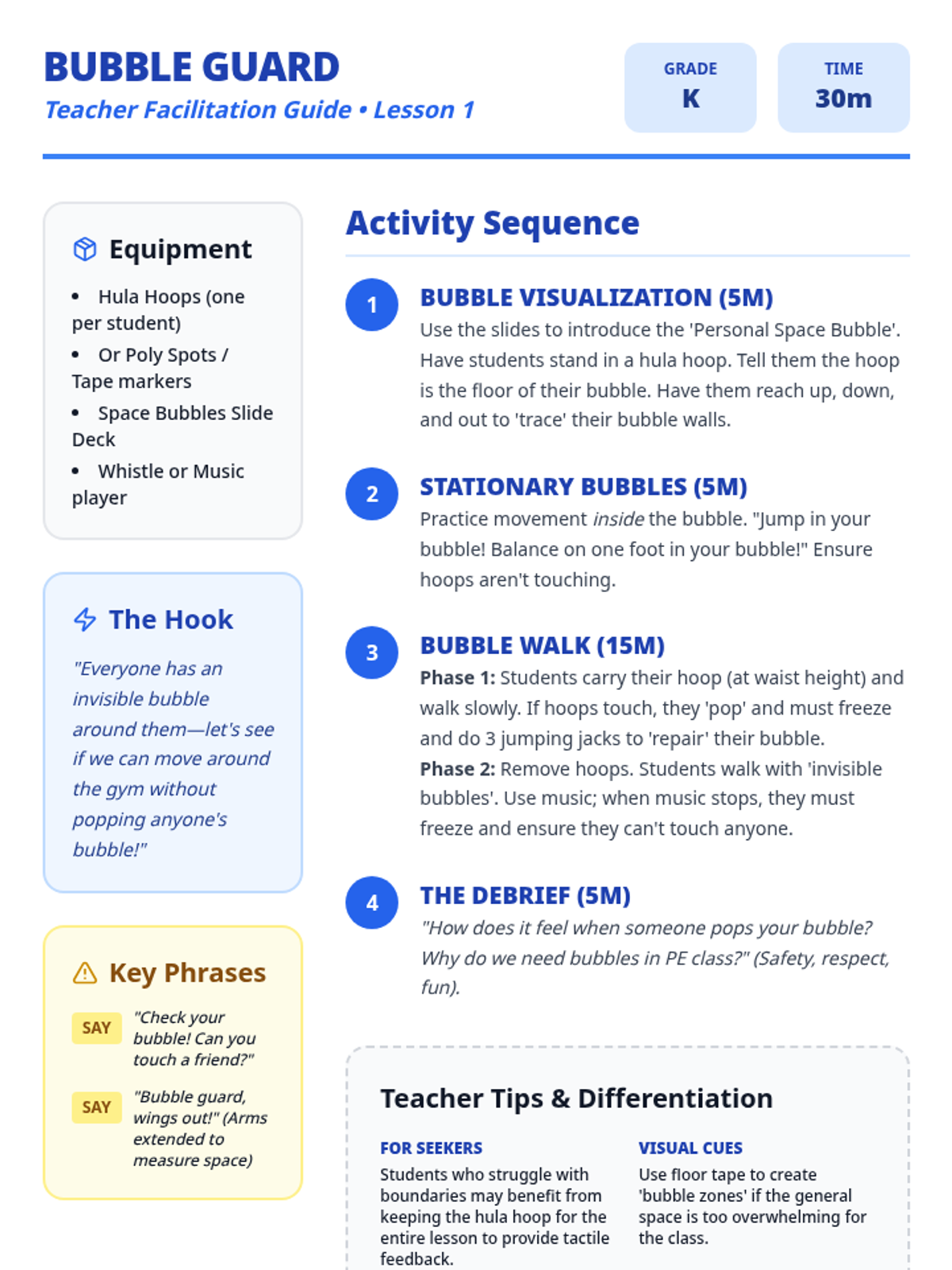
Students use hula hoops or spot markers to visualize and respect 'personal bubbles' during movement games. This physical boundary lesson lays the groundwork for preventing physical conflicts during active play.
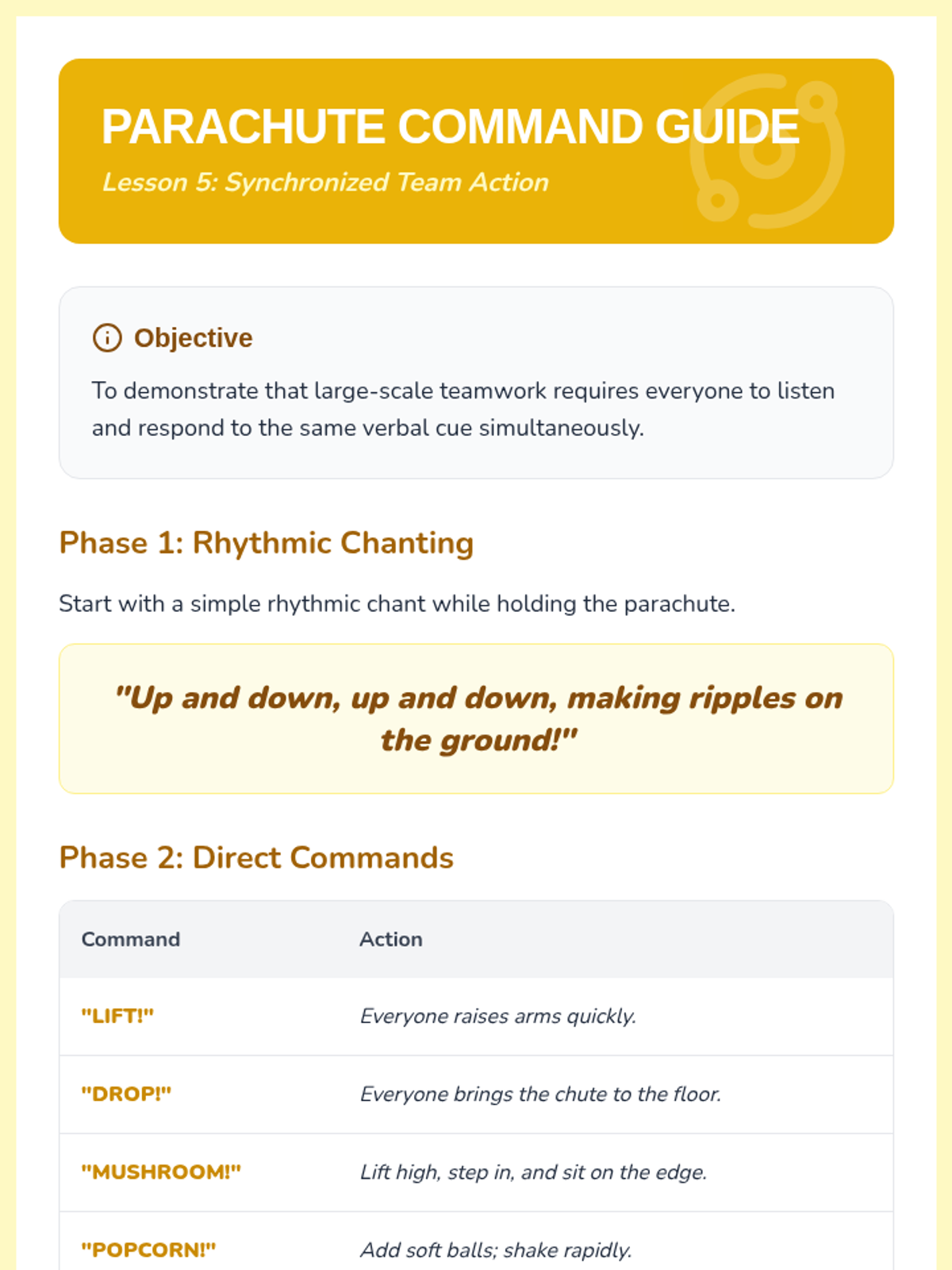
A culminating activity using a parachute to demonstrate the power of synchronized verbal commands.
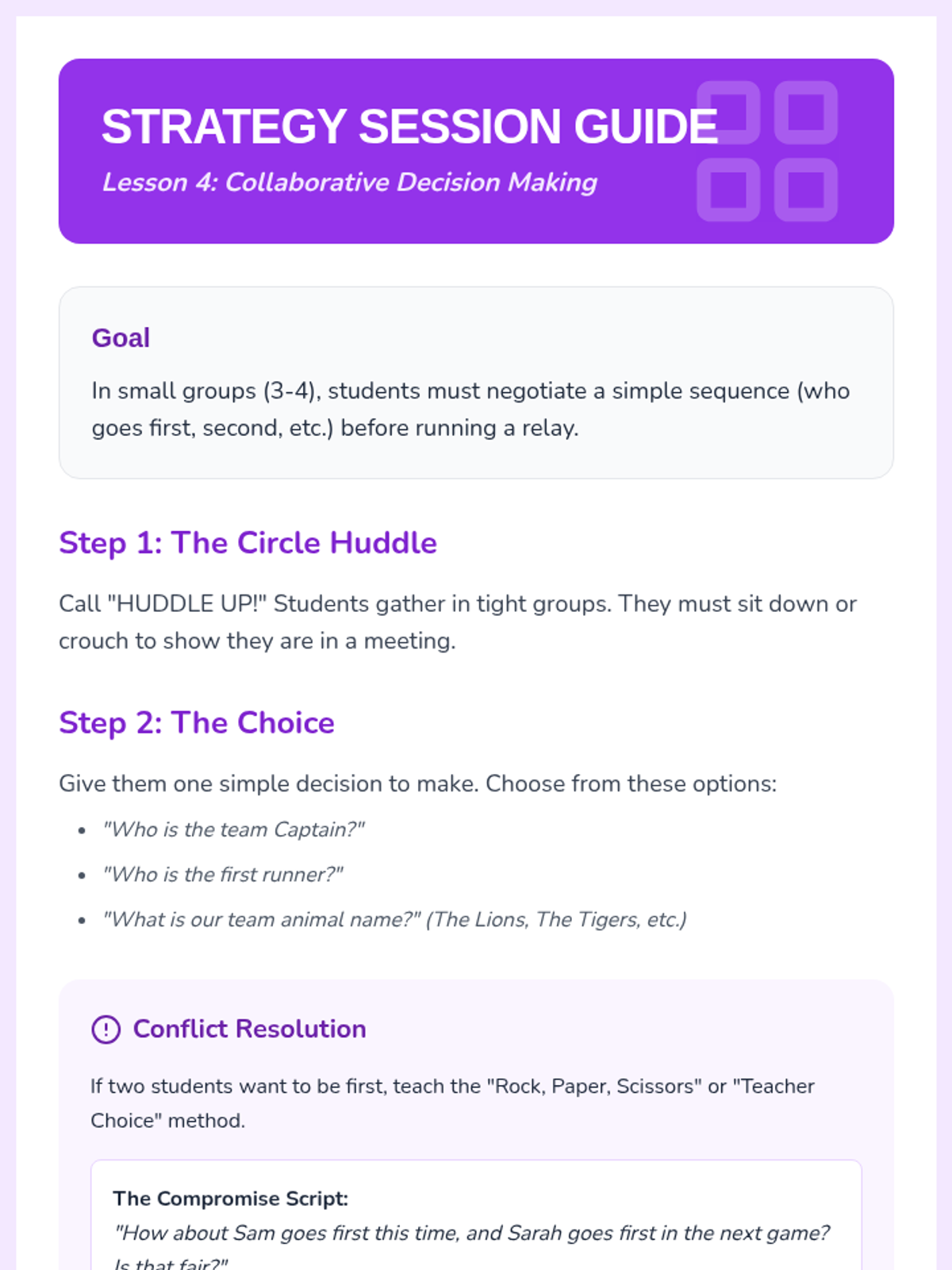
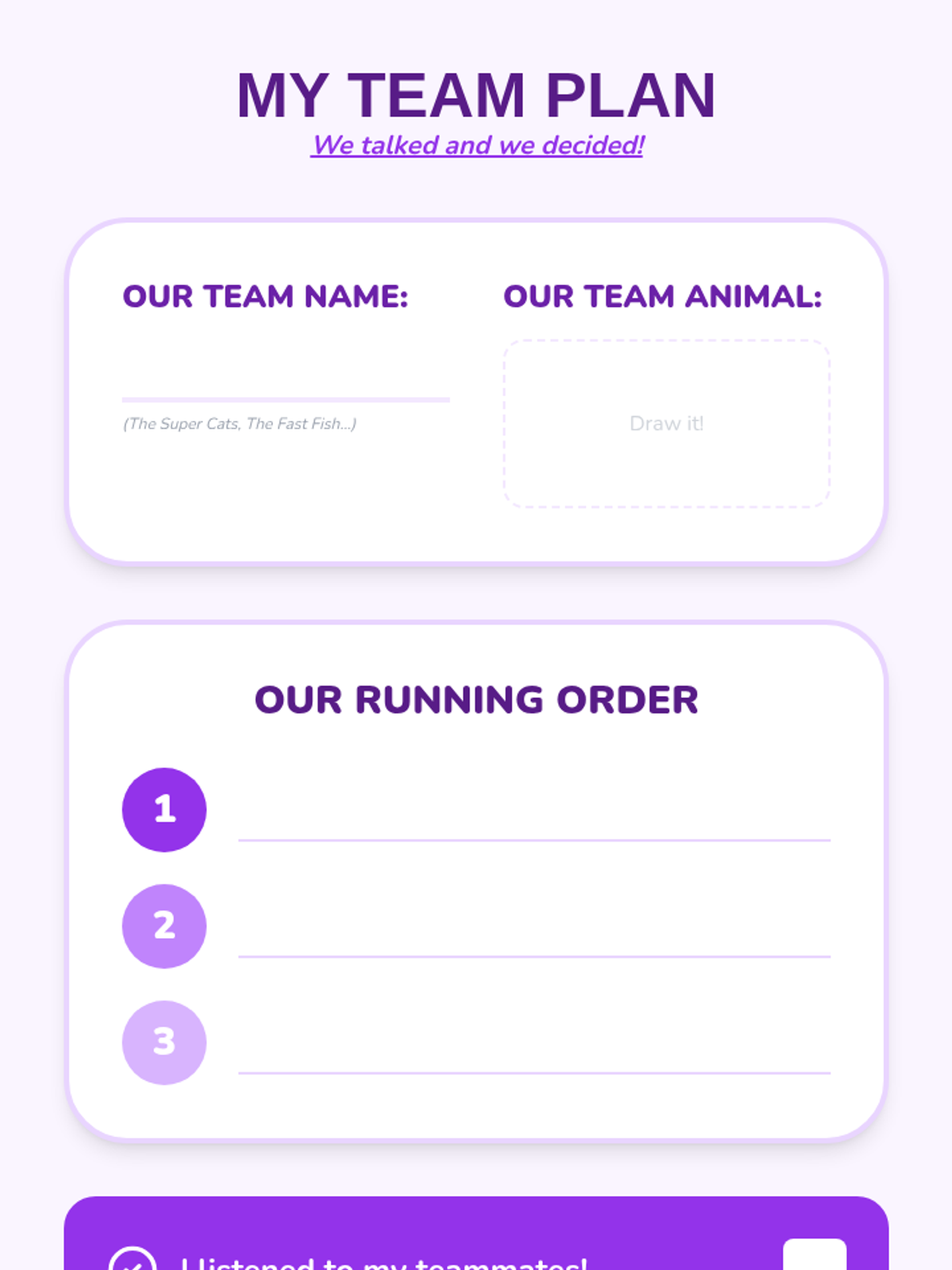
Introduction to basic collaborative decision-making and role assignment in small groups.
Focuses on using positive verbal affirmations to support teammates during group activities.
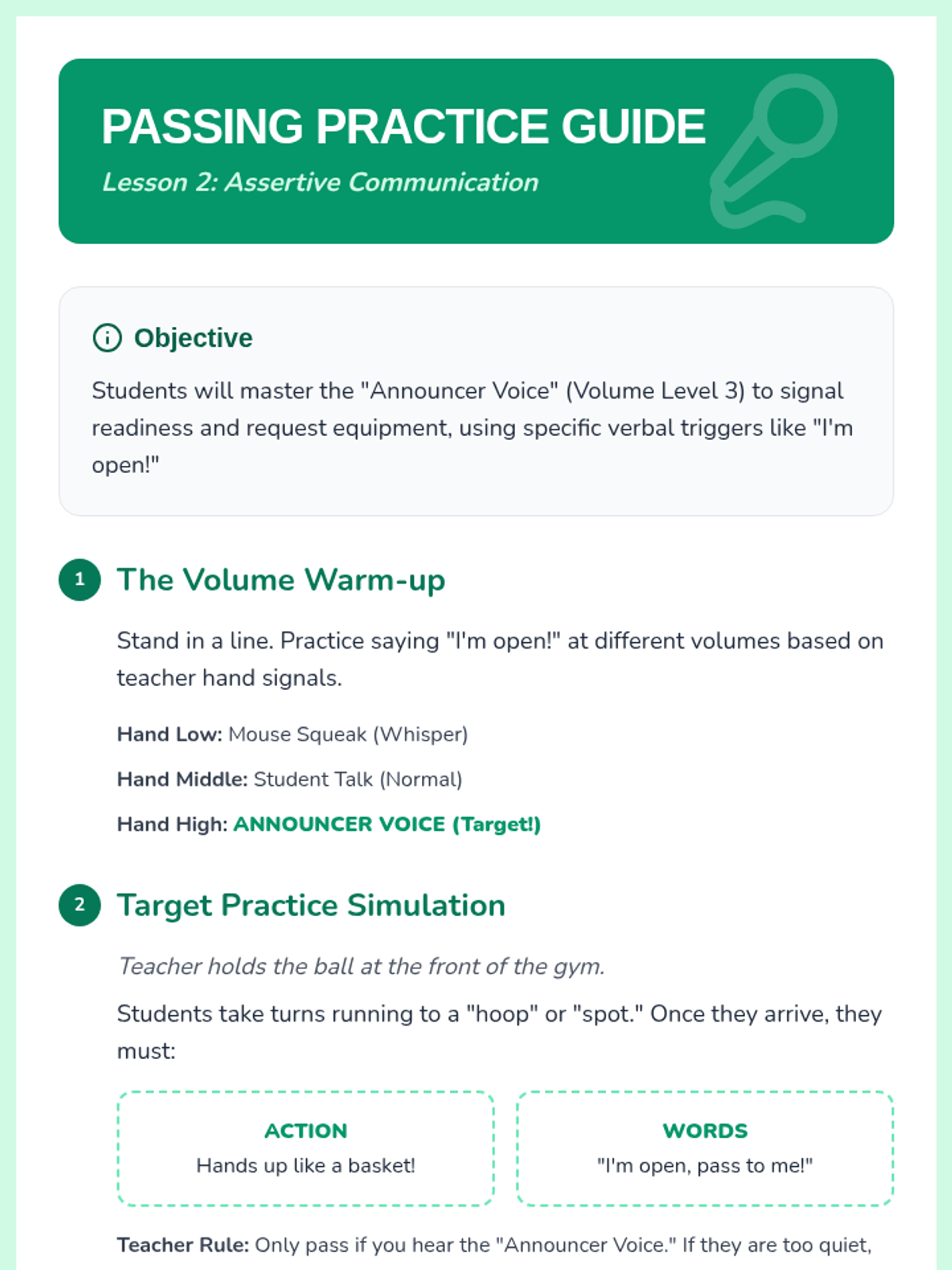
Practicing loud and clear verbal cues to signal readiness to receive a ball or equipment.
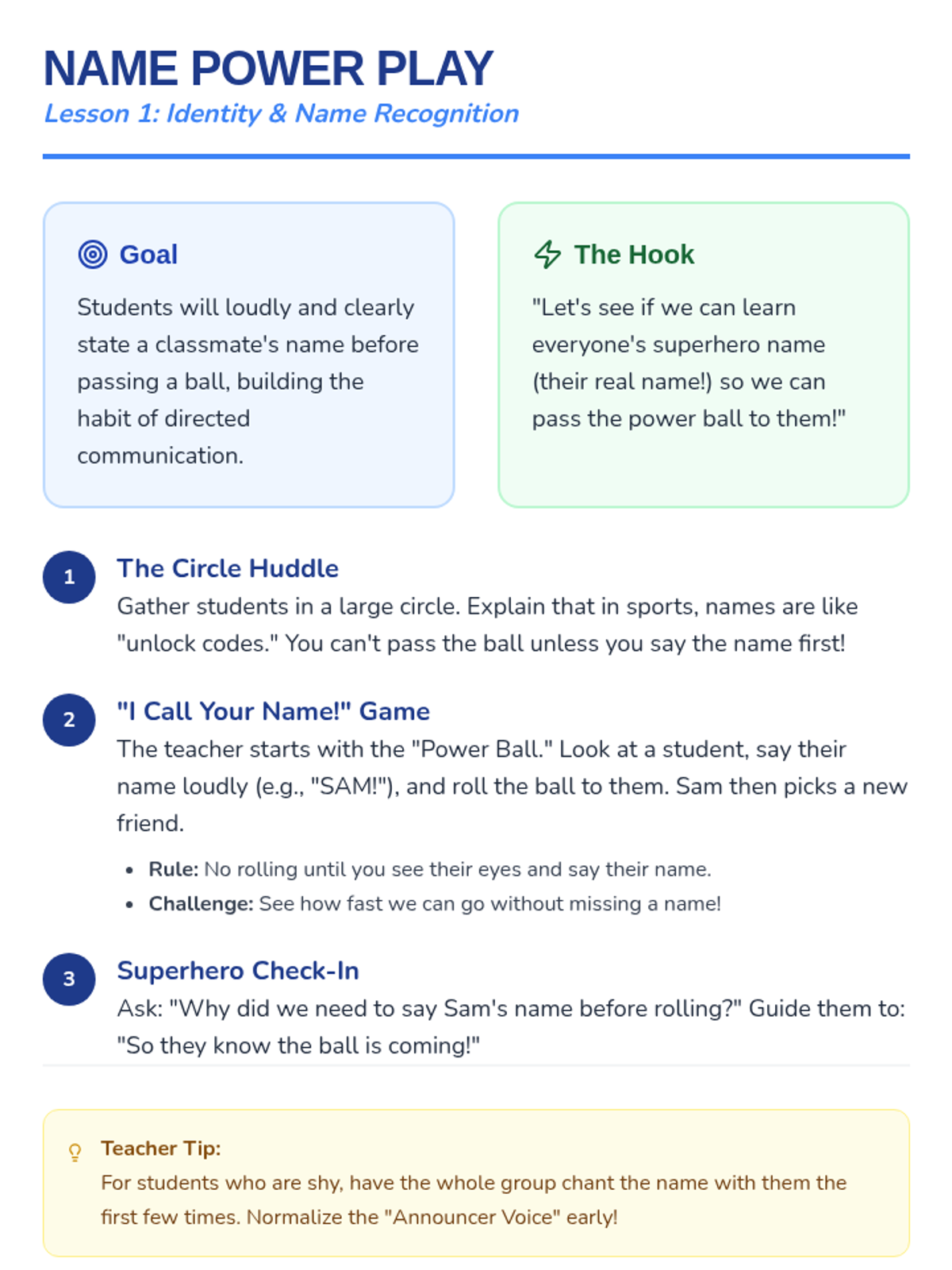
Students learn the importance of using names to direct communication during active play through circle games.
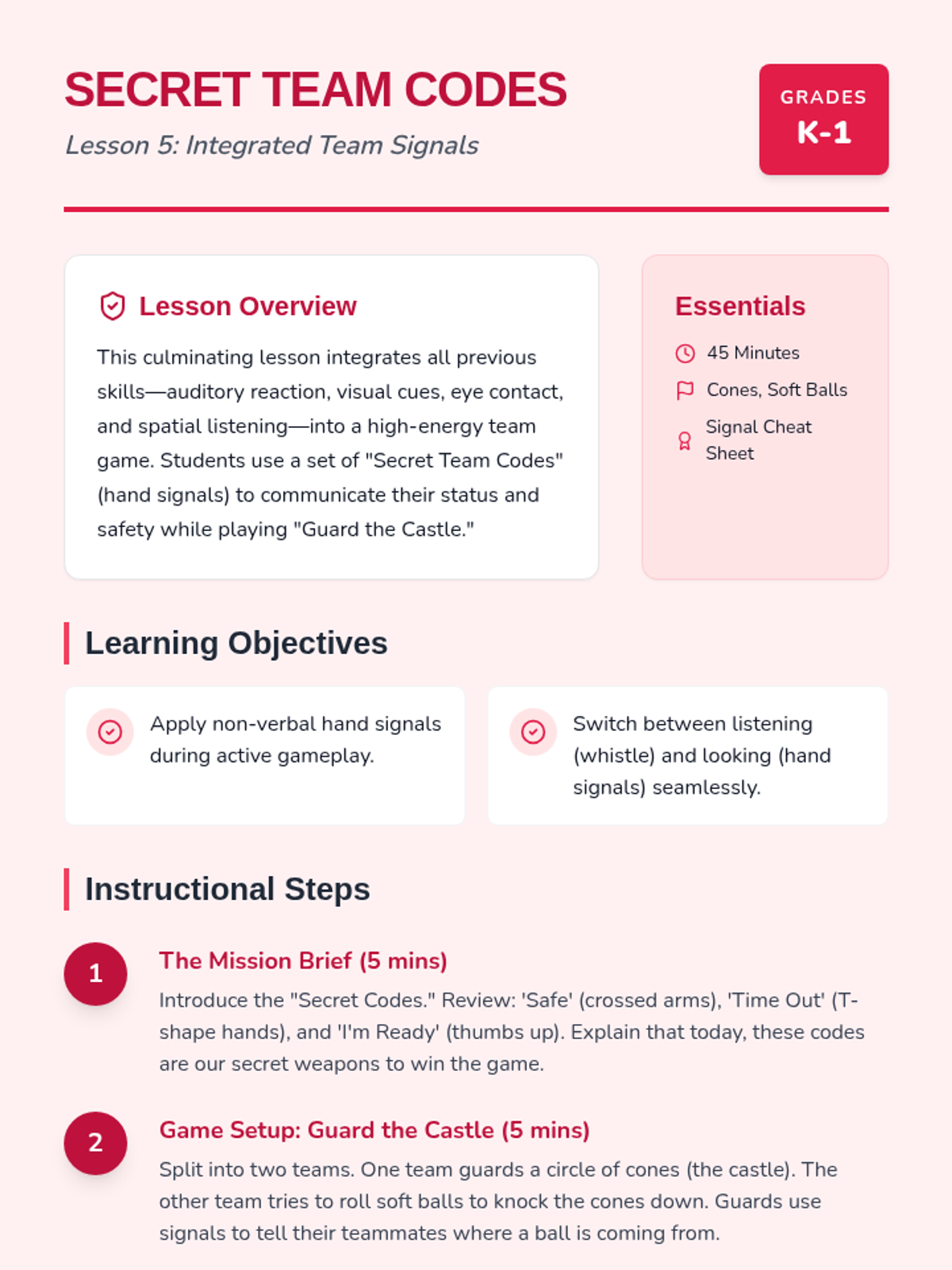
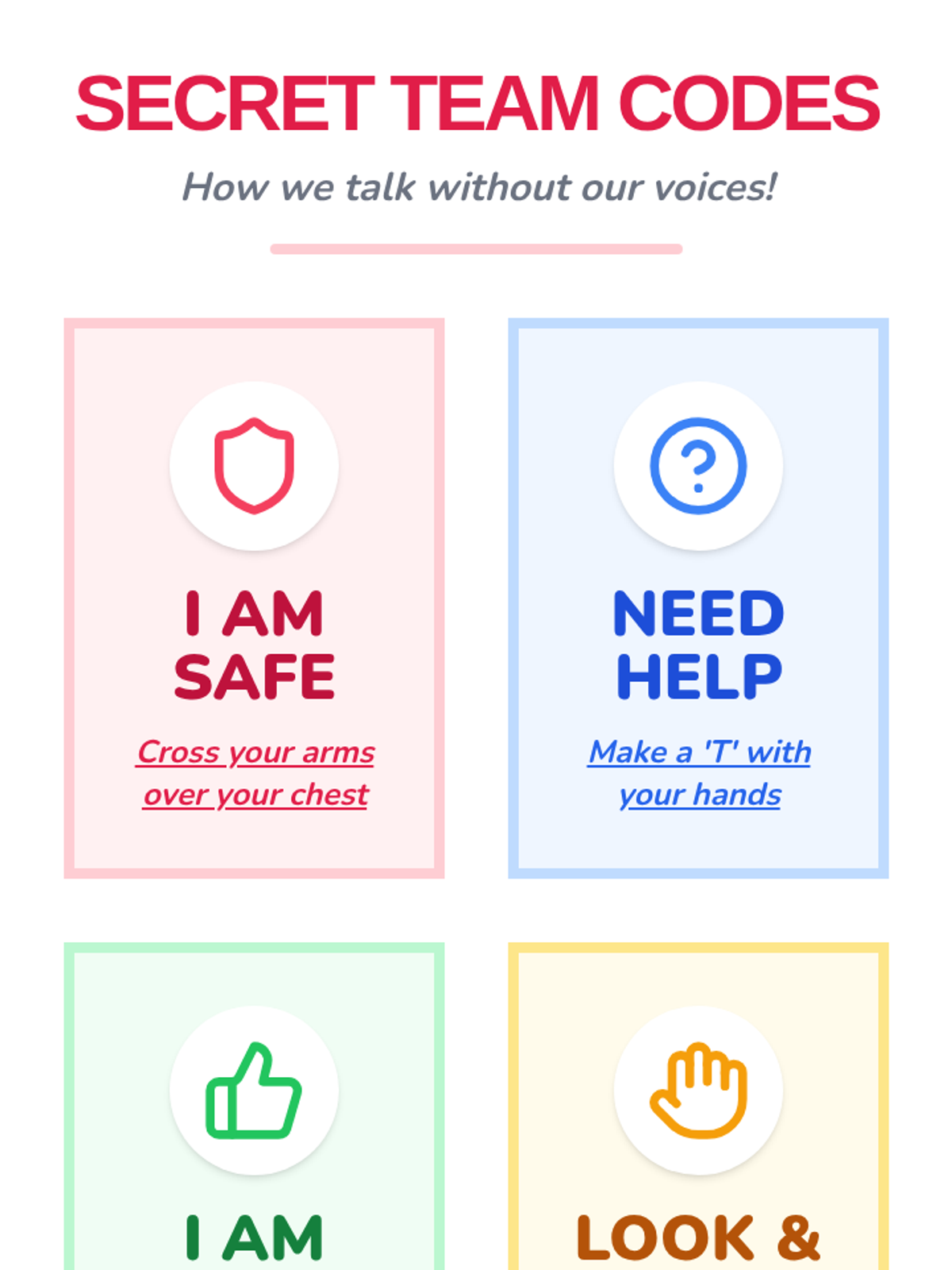
A culminating game where students apply hand signals and auditory cues in a fast-paced team environment.
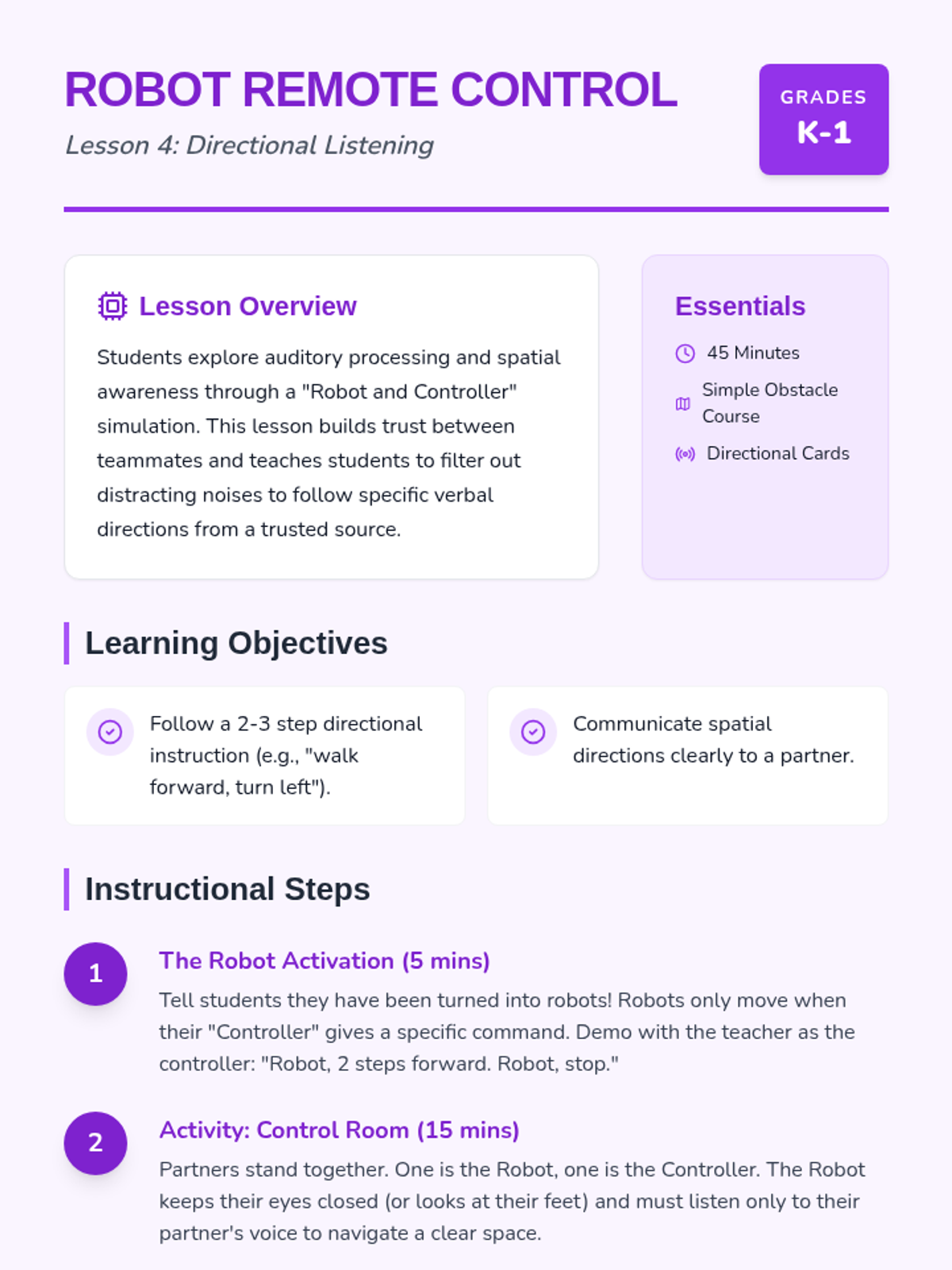
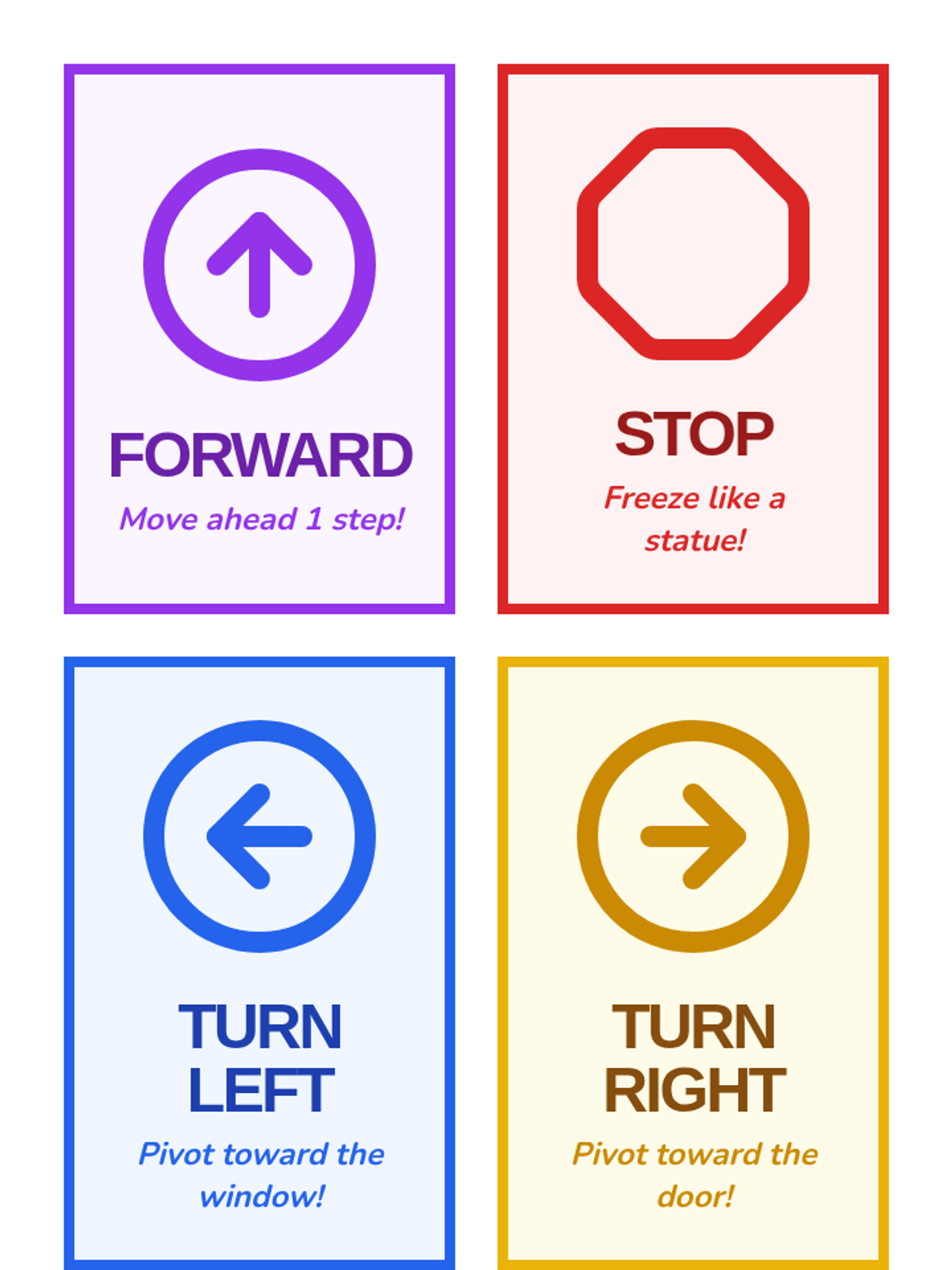
Students navigate spatial challenges by following verbal directions, building trust and focus in a noisy environment.
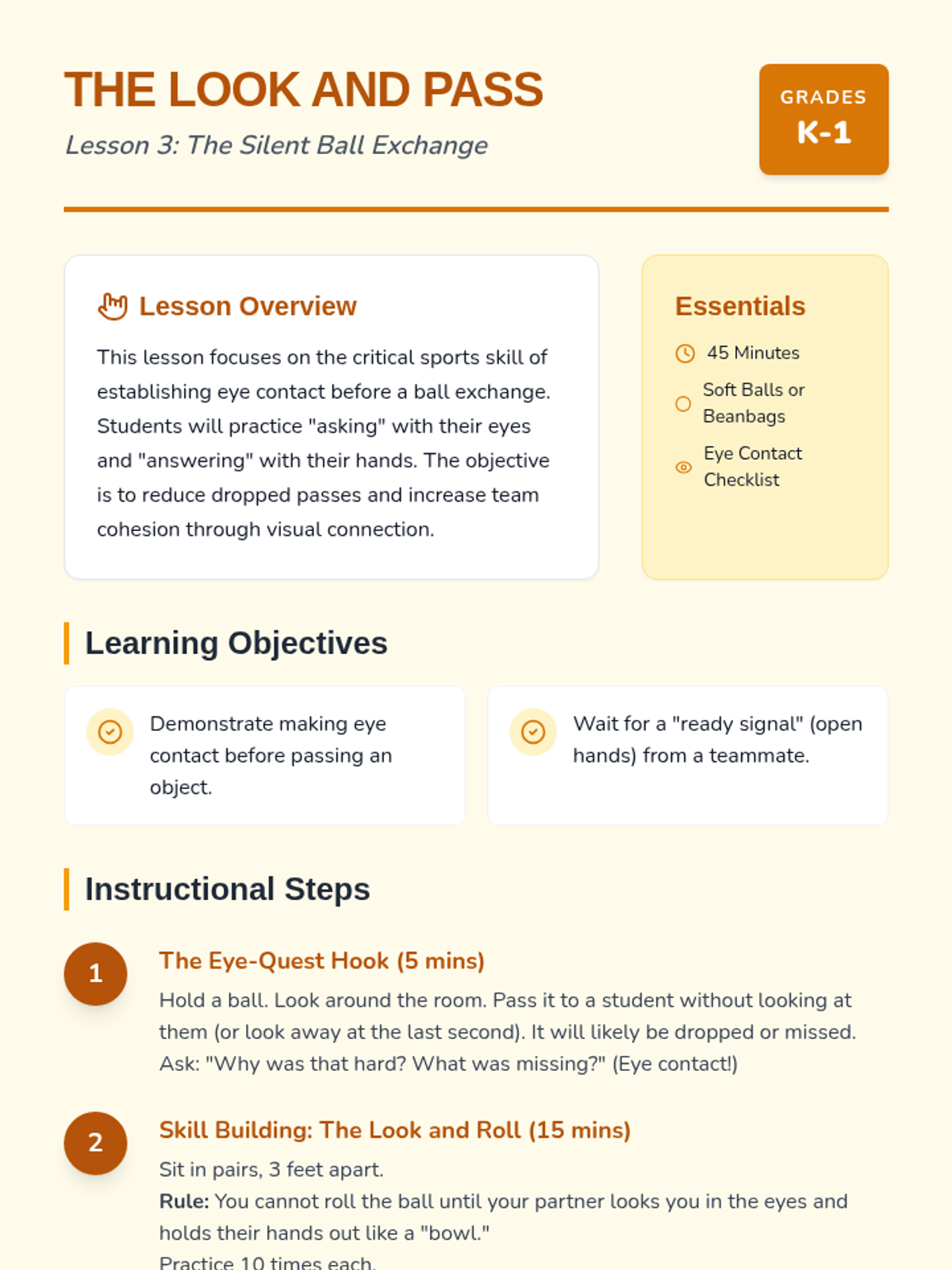
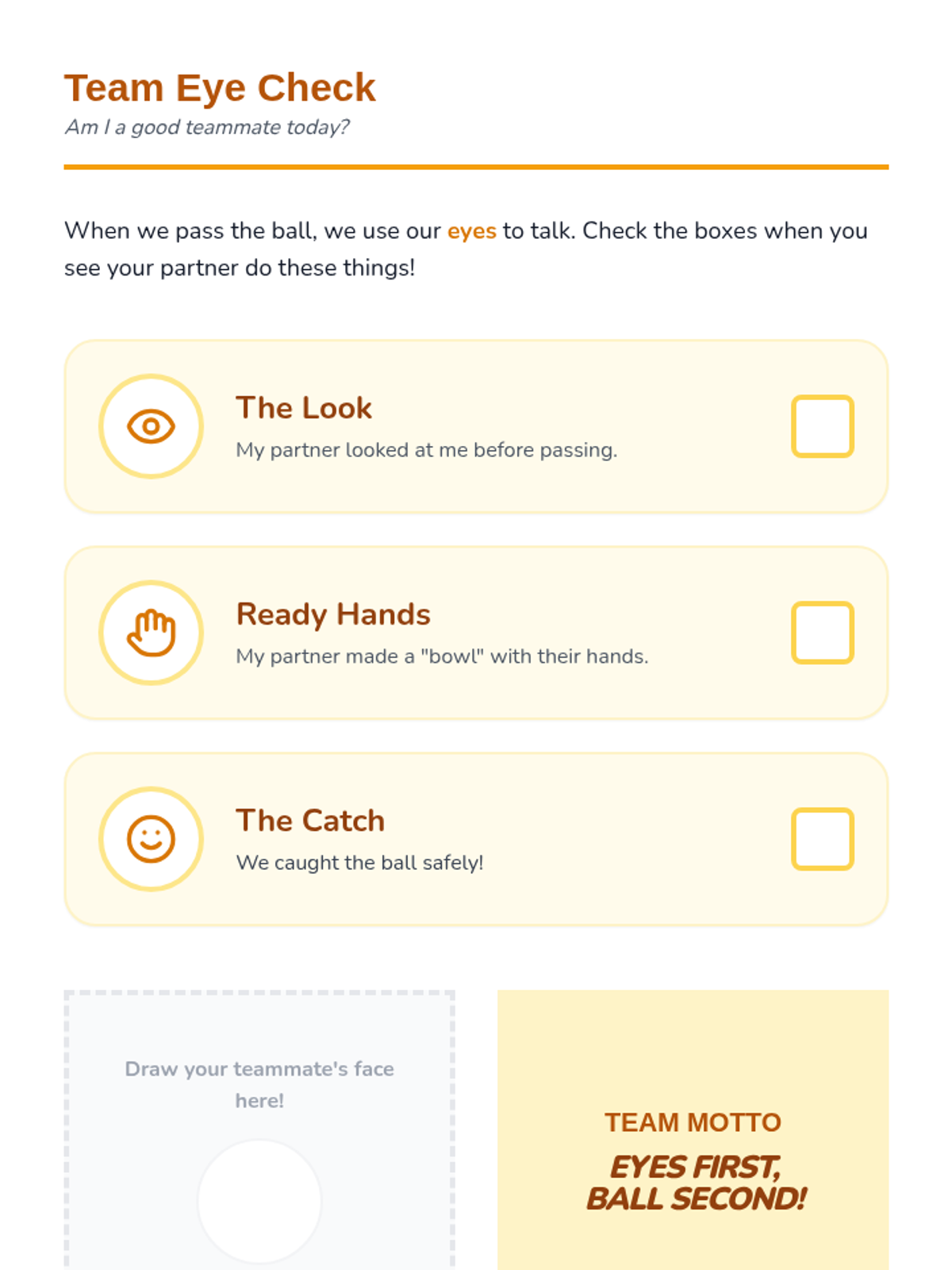
A cooperative passing activity where students must establish eye contact before engaging with teammates, reinforcing visual attention.
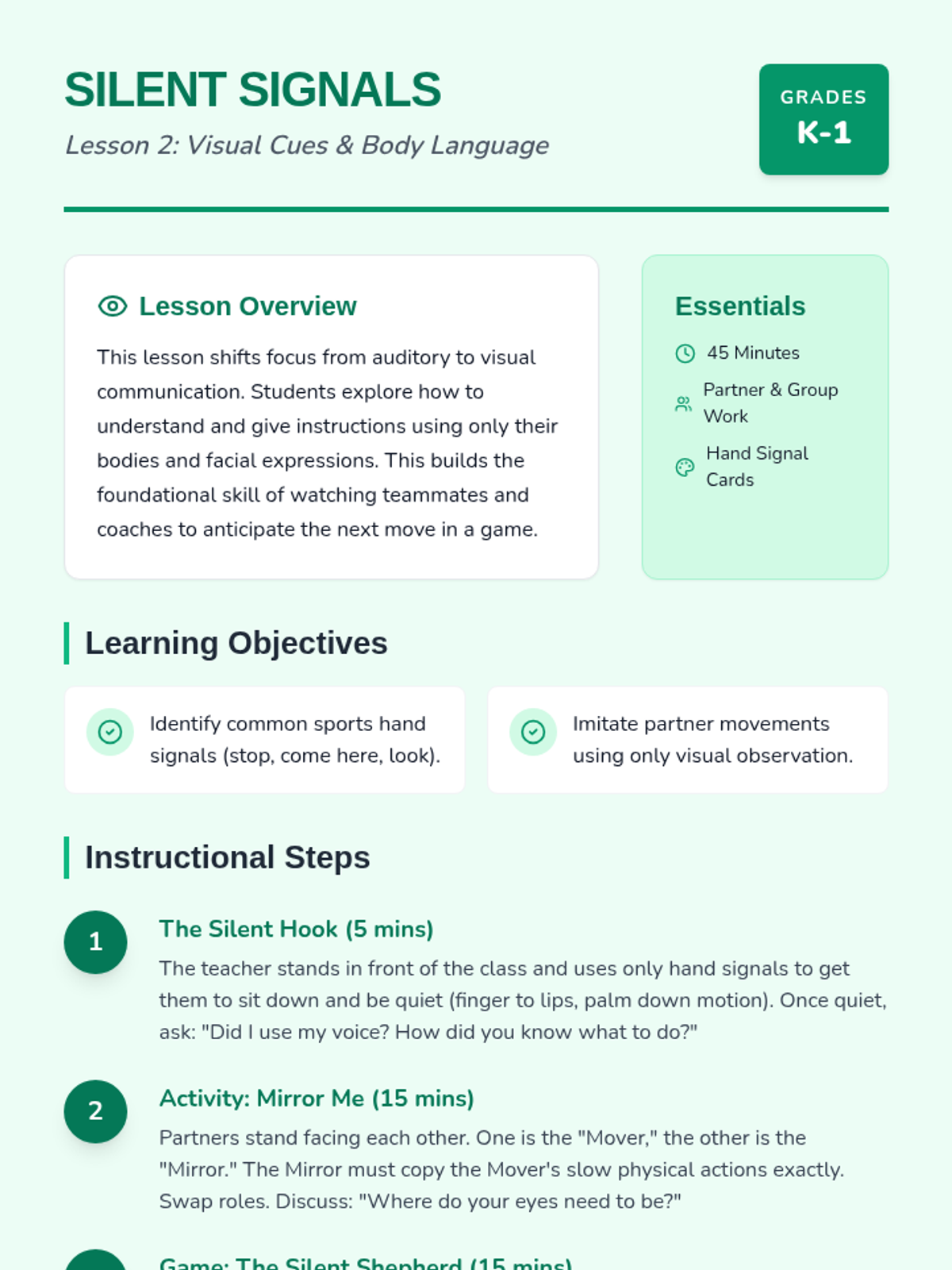
Students explore how to communicate without words, using observation and motor imitation to follow non-verbal instructions.
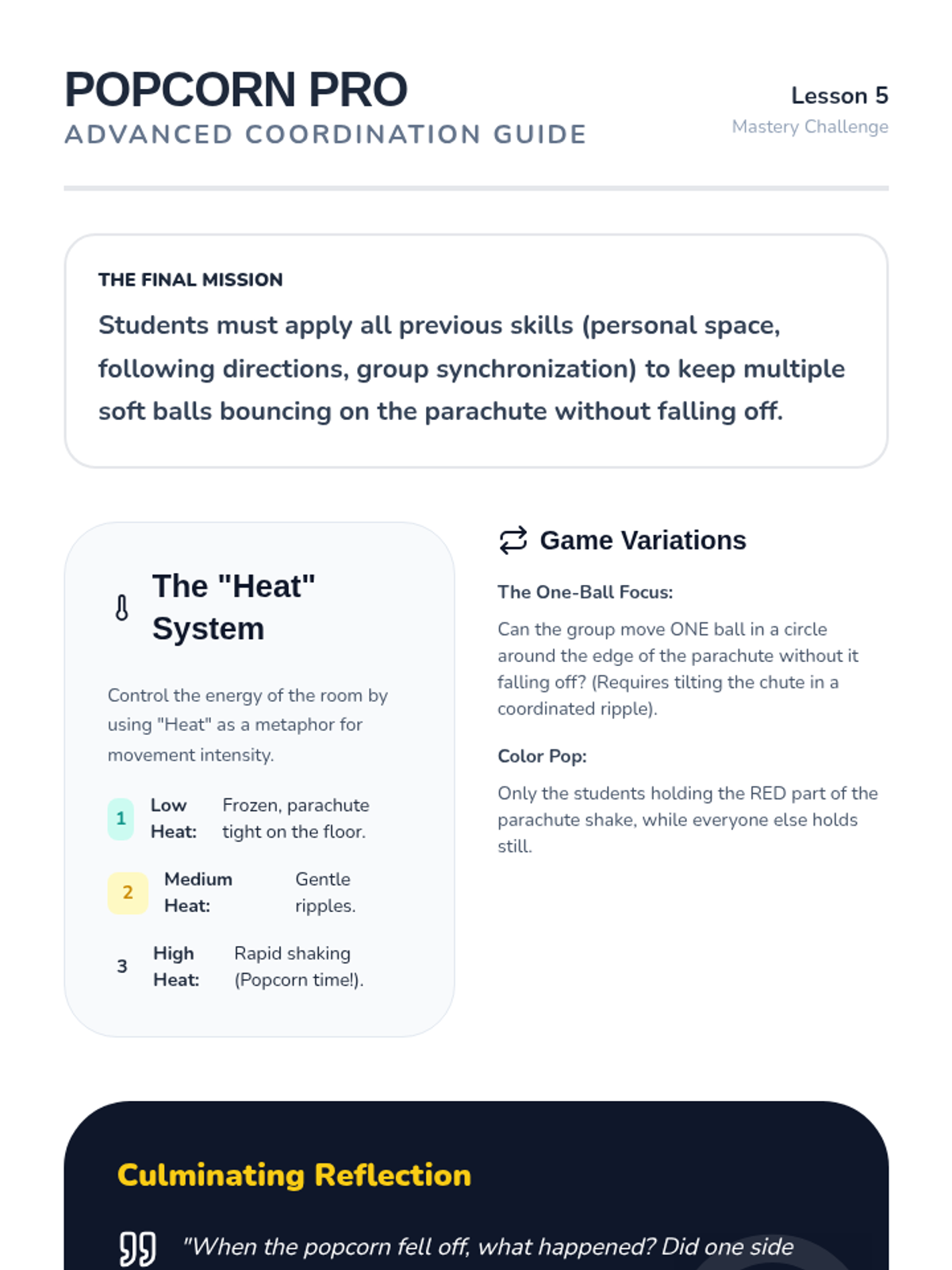
A culminating activity using the parachute to keep 'popcorn' (soft balls) bouncing, requiring intense group coordination.
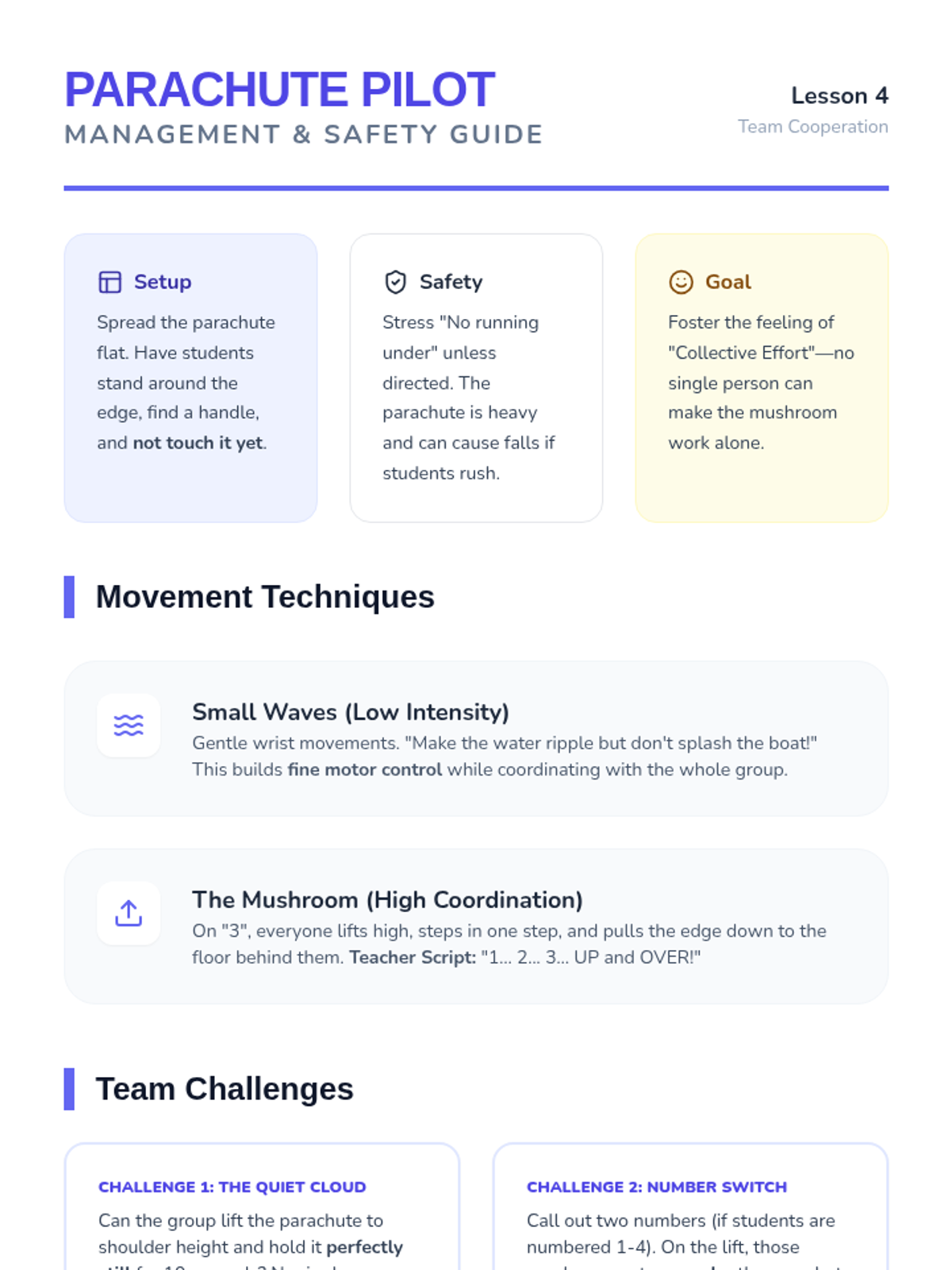
An introduction to using a parachute to feel the connection of group movement through waves and simple lifts.
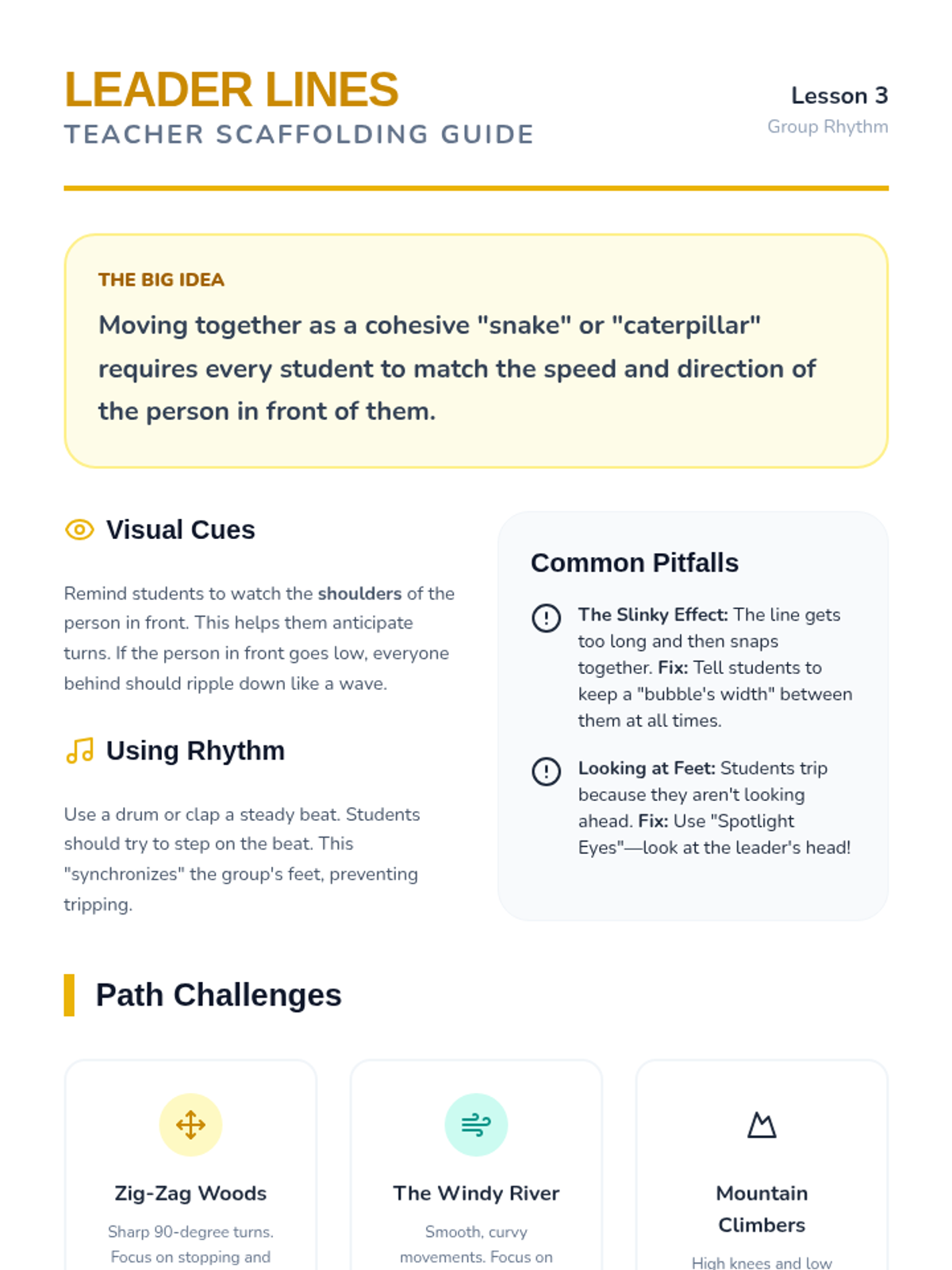
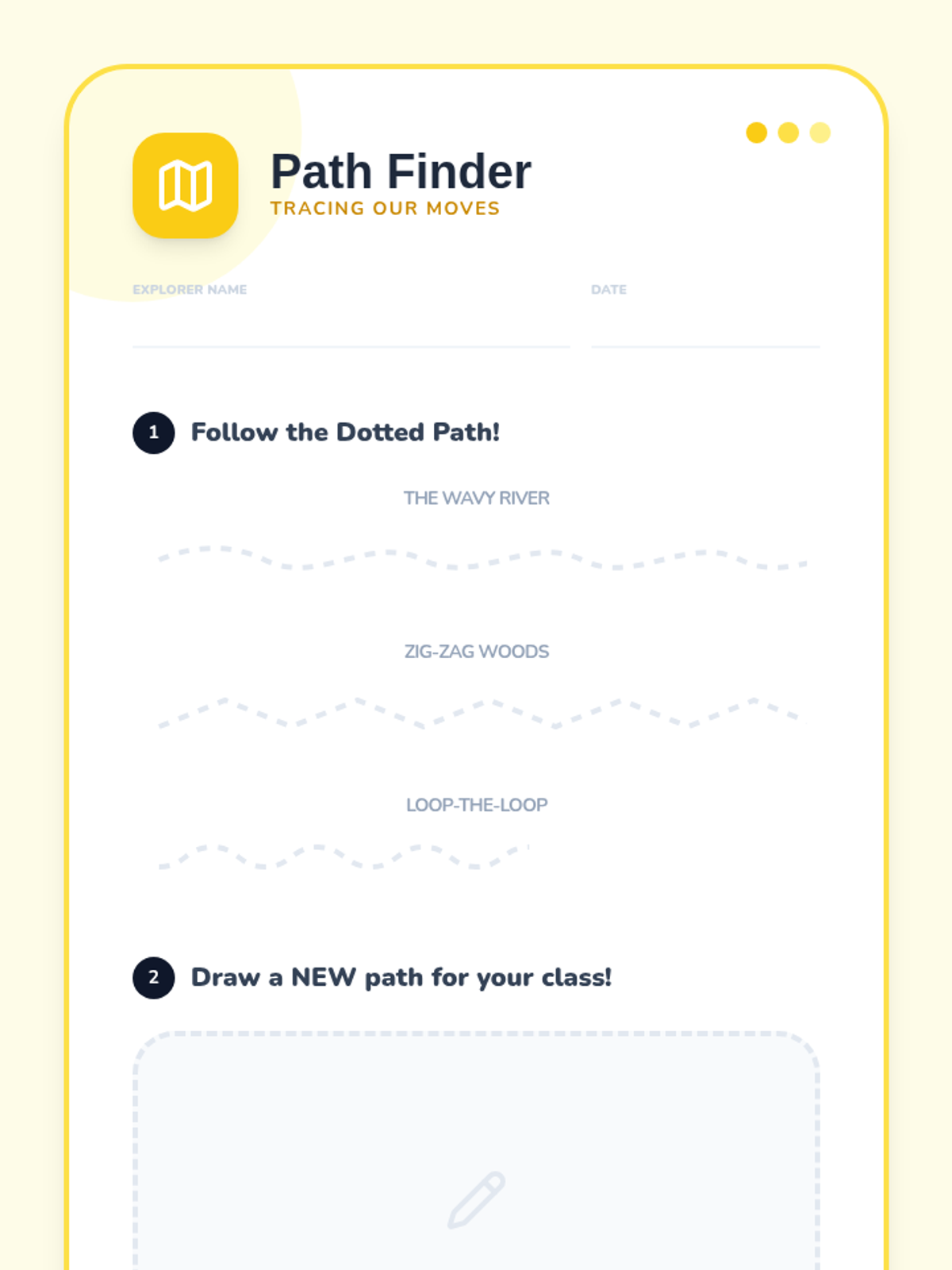
Students practice following a leader and maintaining group rhythm through various movement paths and speeds.
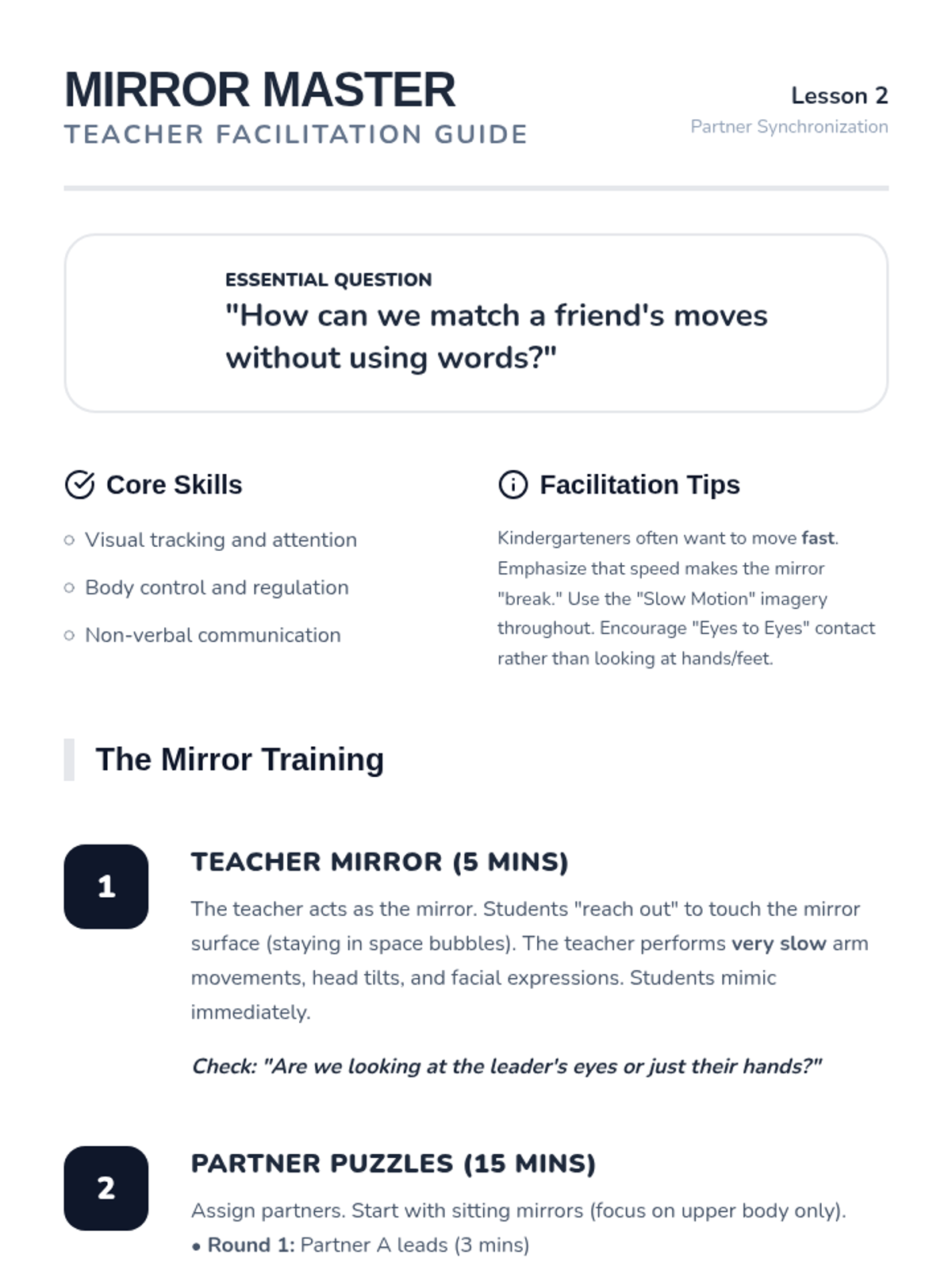
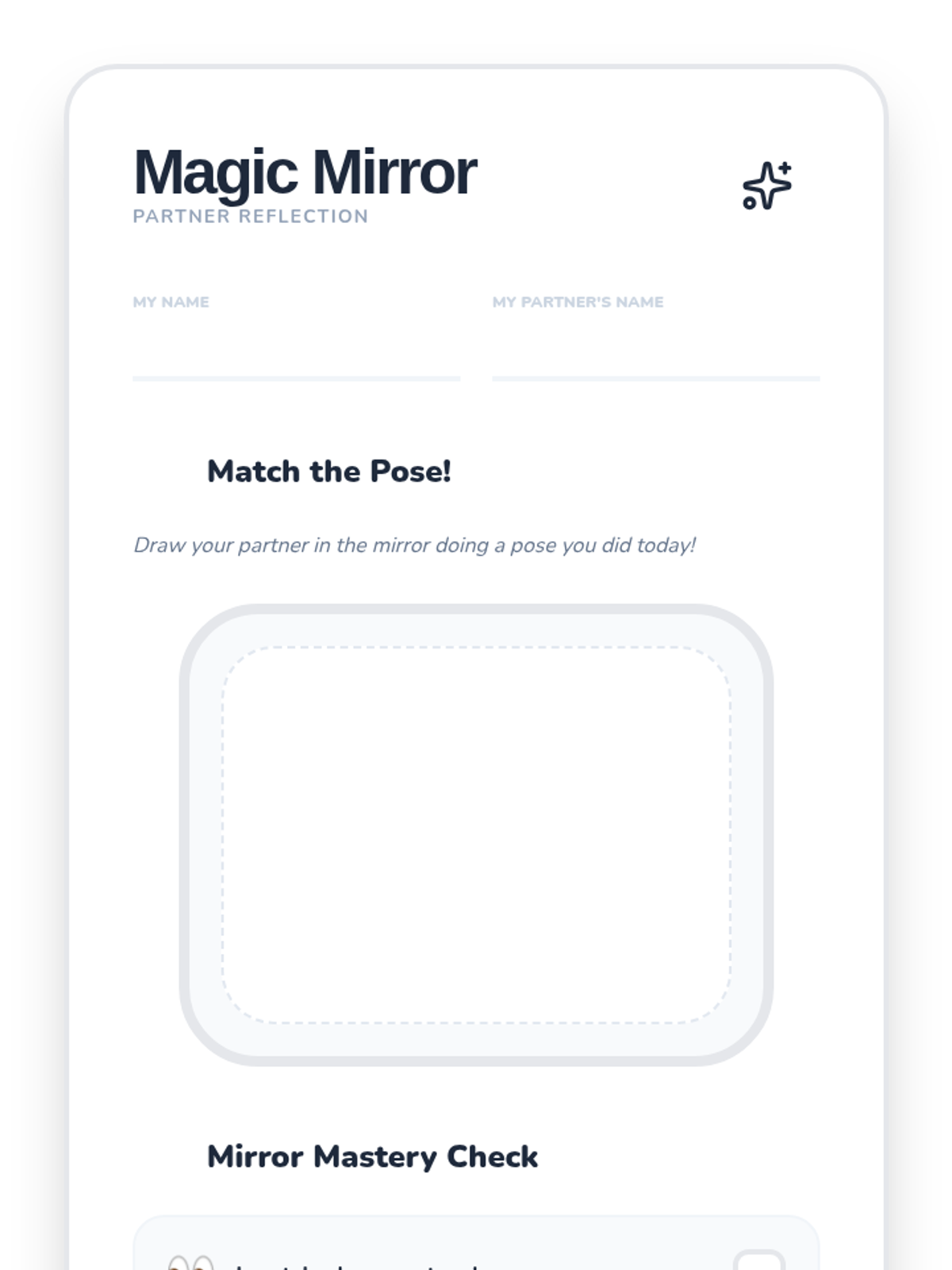
Students work in pairs to practice synchronization and observation skills through mirroring activities.
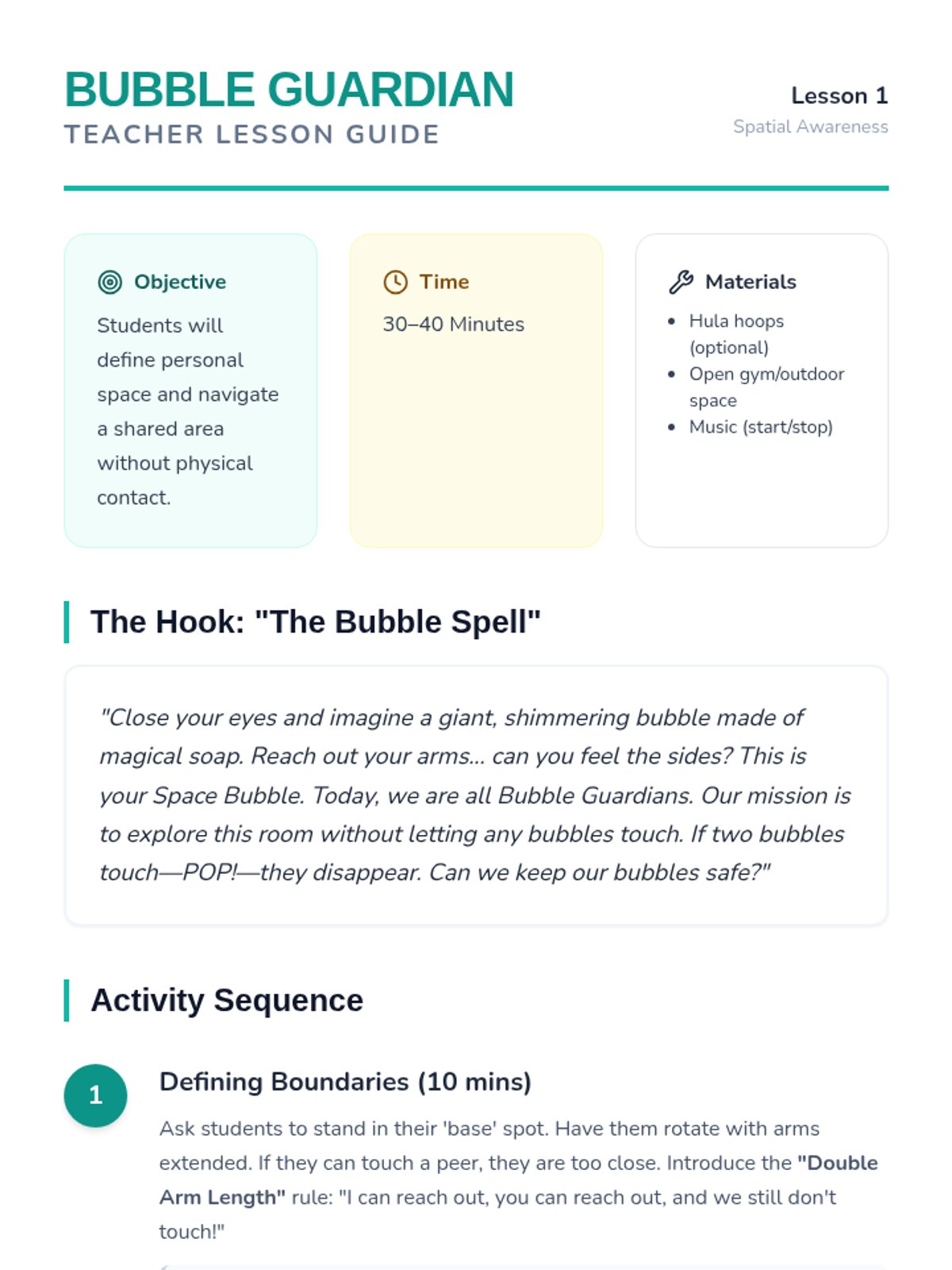
Students explore the concept of personal space using 'space bubbles' to understand safe distances and avoid collisions while moving.
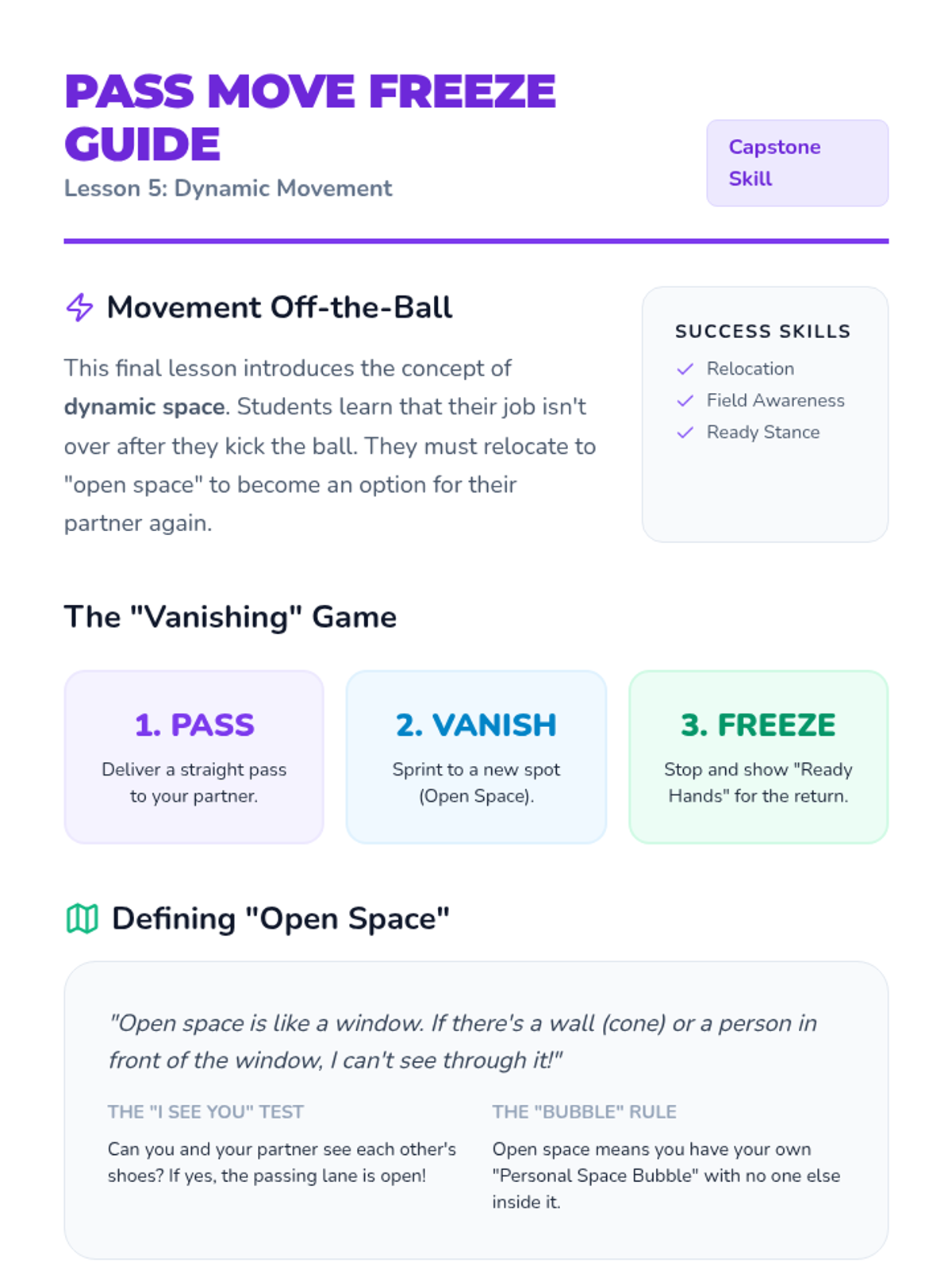
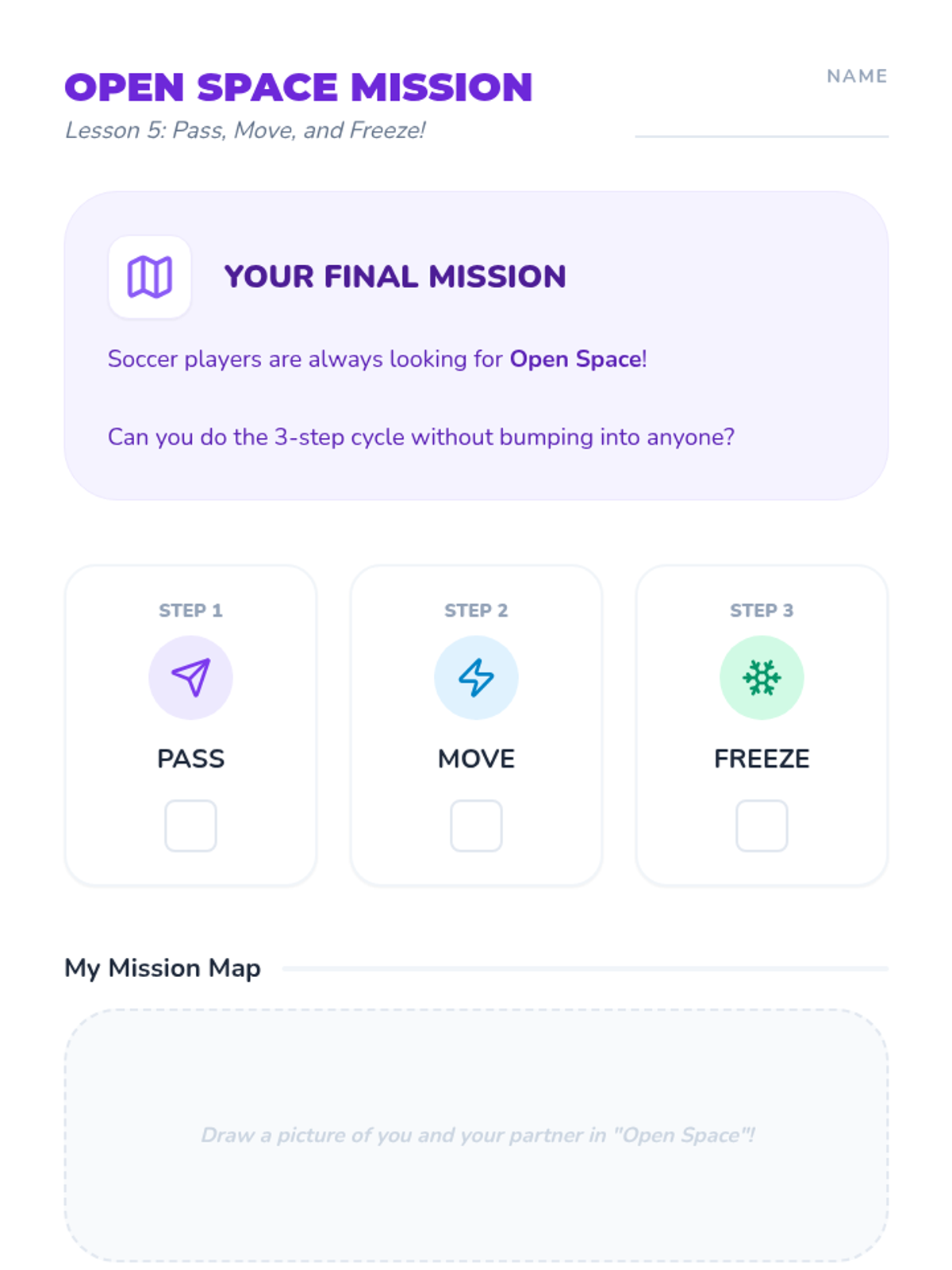
Students pass to a partner, run to a new spot, and freeze to receive the return pass. This introduces the dynamic nature of soccer where players do not stand still after kicking.
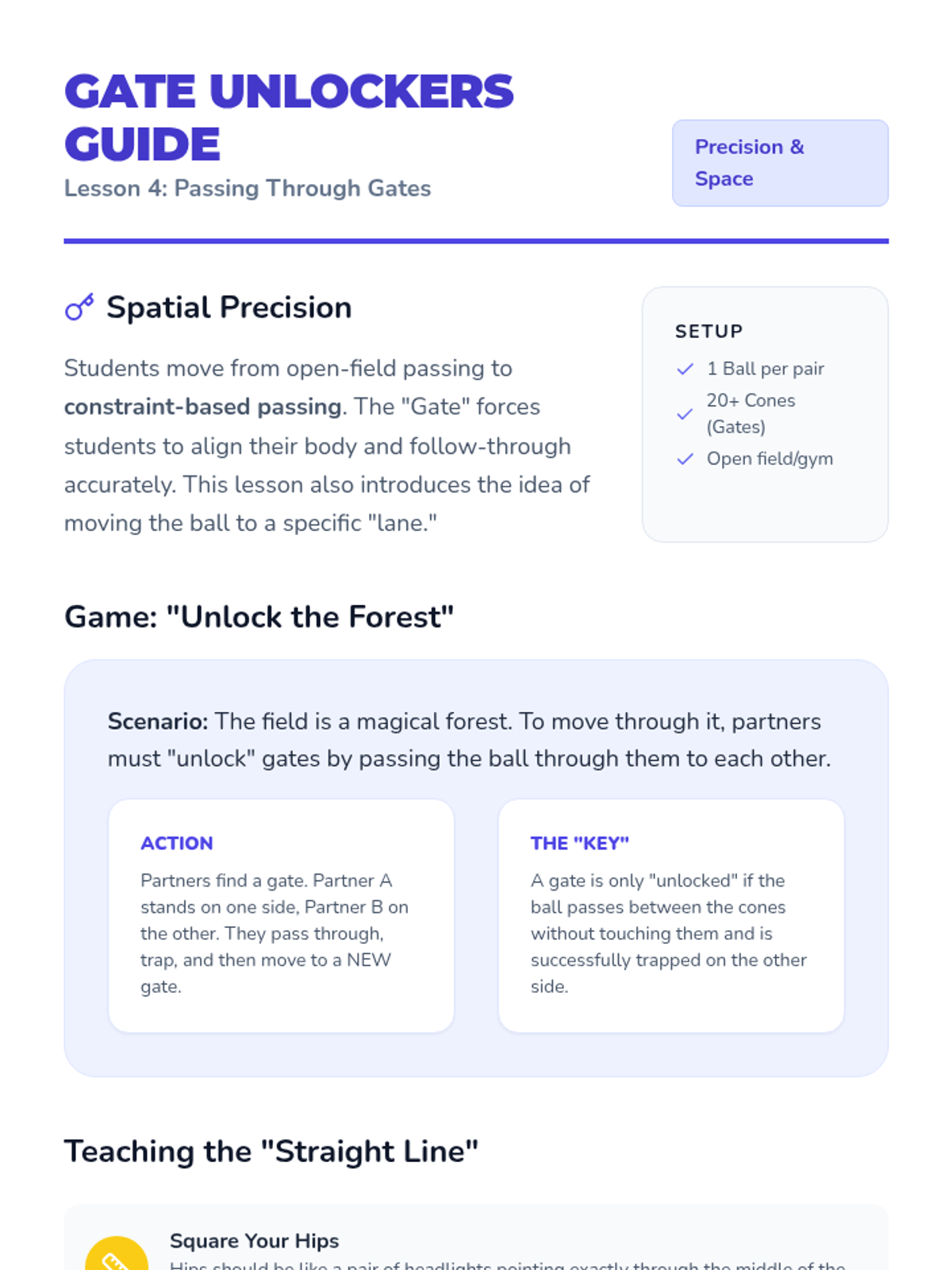
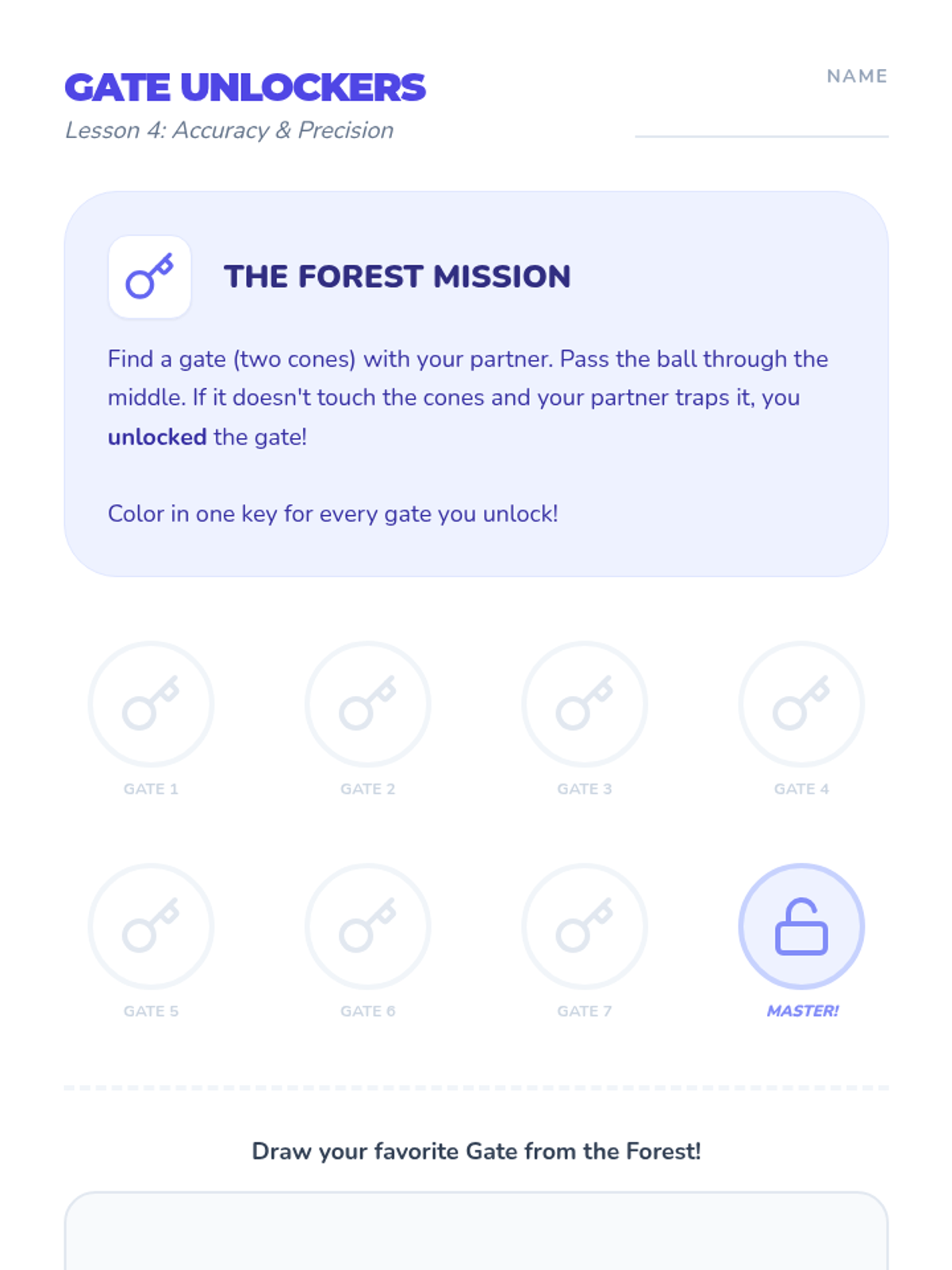
Partners work together to pass the ball through a set of cones (gates) to one another. This adds a spatial constraint to the passing lane, requiring students to position themselves correctly relative to the gate. It reinforces straight-line kicking.
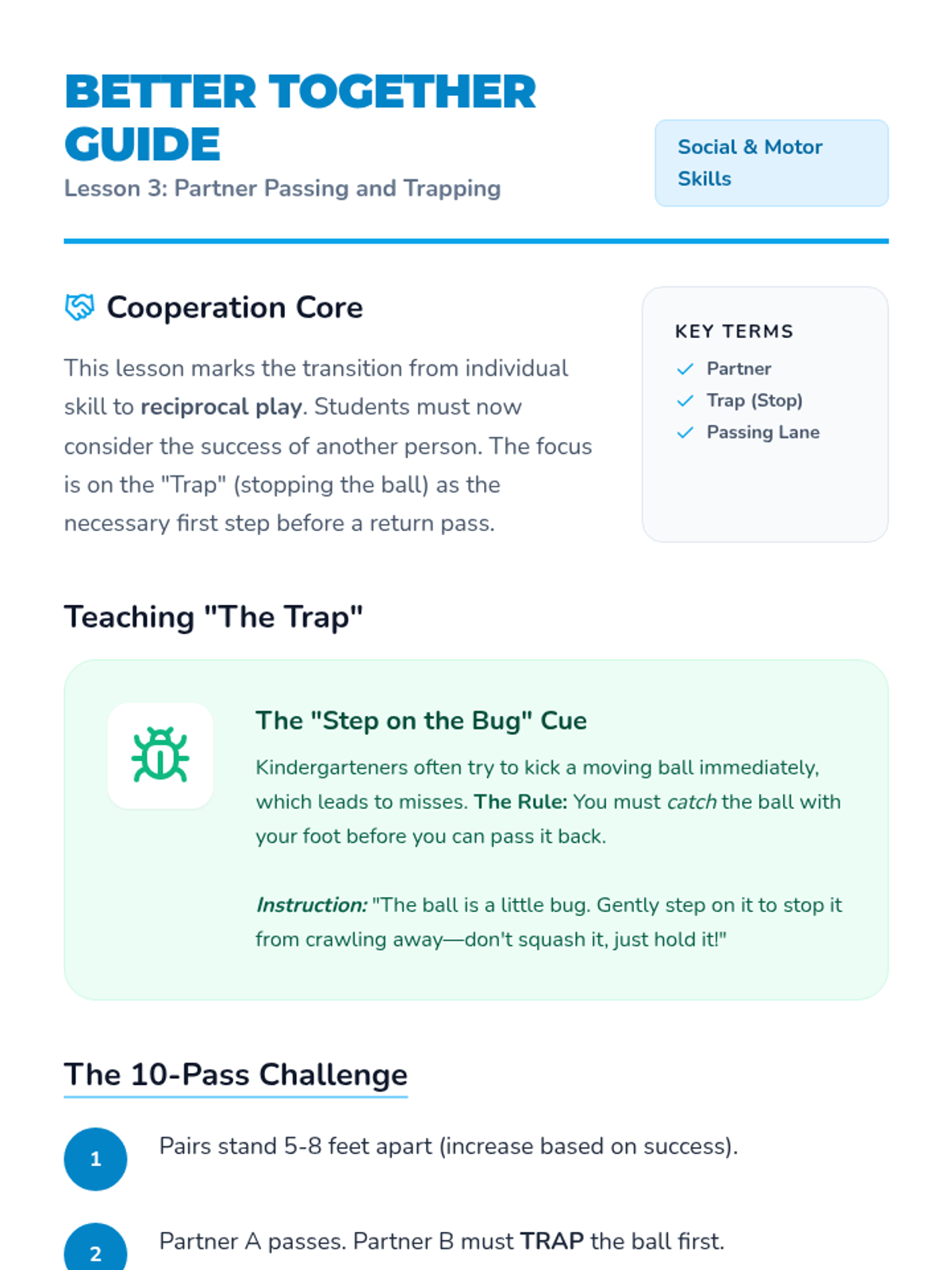
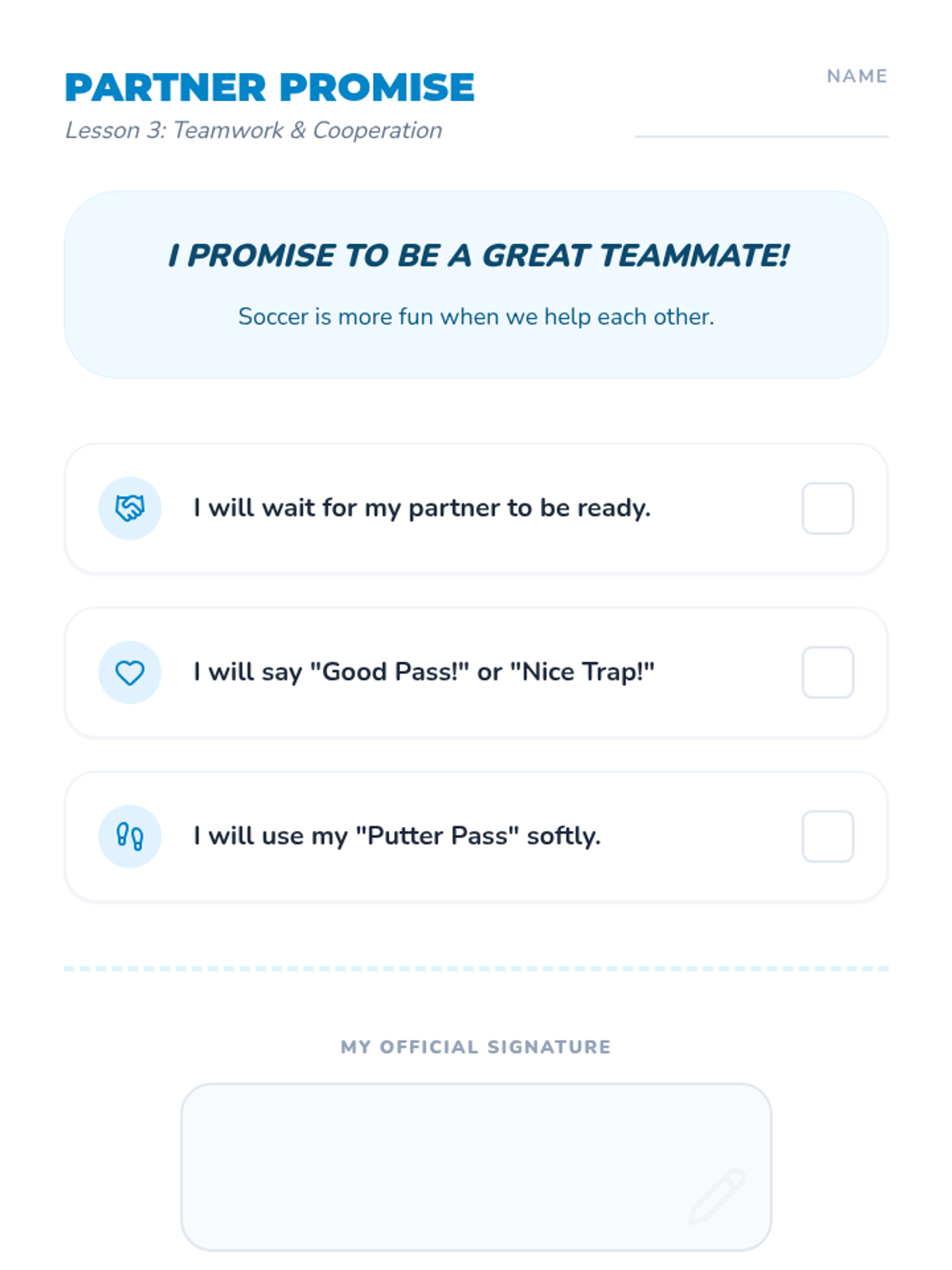
Students are paired up to practice passing back and forth across a short distance. The lesson introduces the concept of 'trapping'—stopping the ball before kicking it back. This builds early cooperation and reciprocity skills essential for team sports.
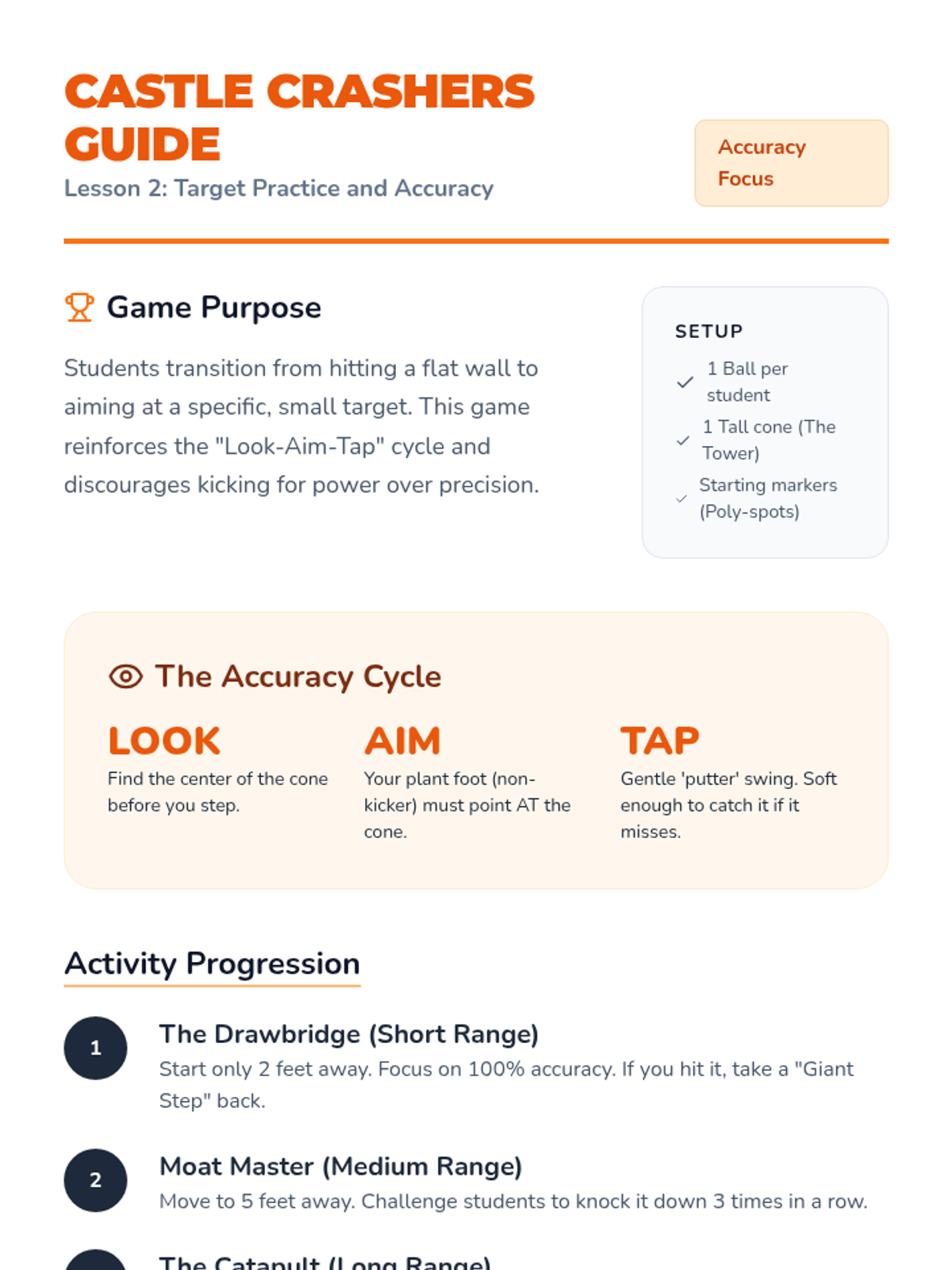
Students apply the passing motion to aim at large cones or gates from a short distance. This activity emphasizes accuracy over power, encouraging students to look at their target before striking the ball. Success is measured by hitting the target, not how hard the ball is kicked.
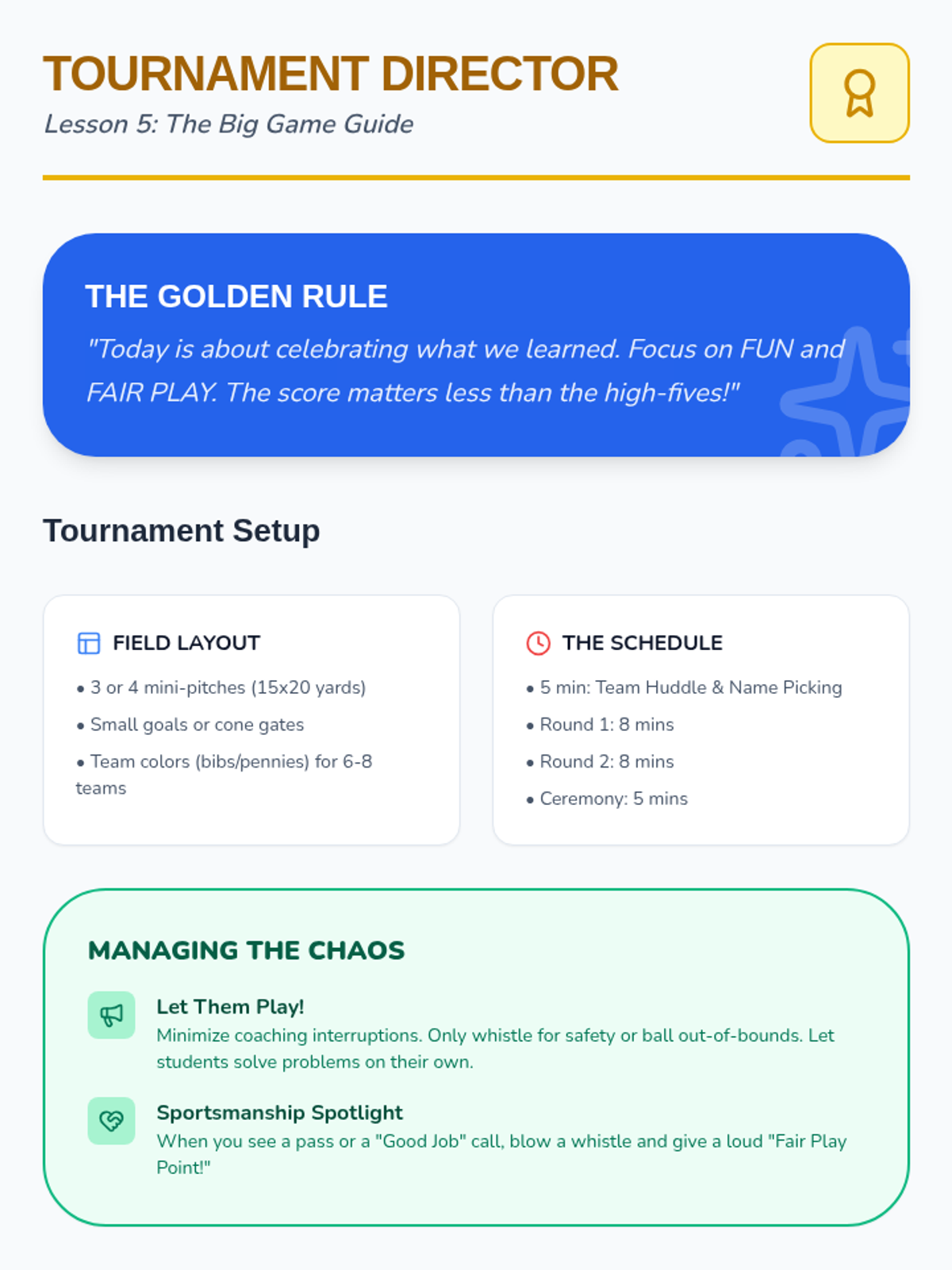
A celebratory final scrimmage applying all learned skills in a small-sided tournament format focused on fair play and fun.
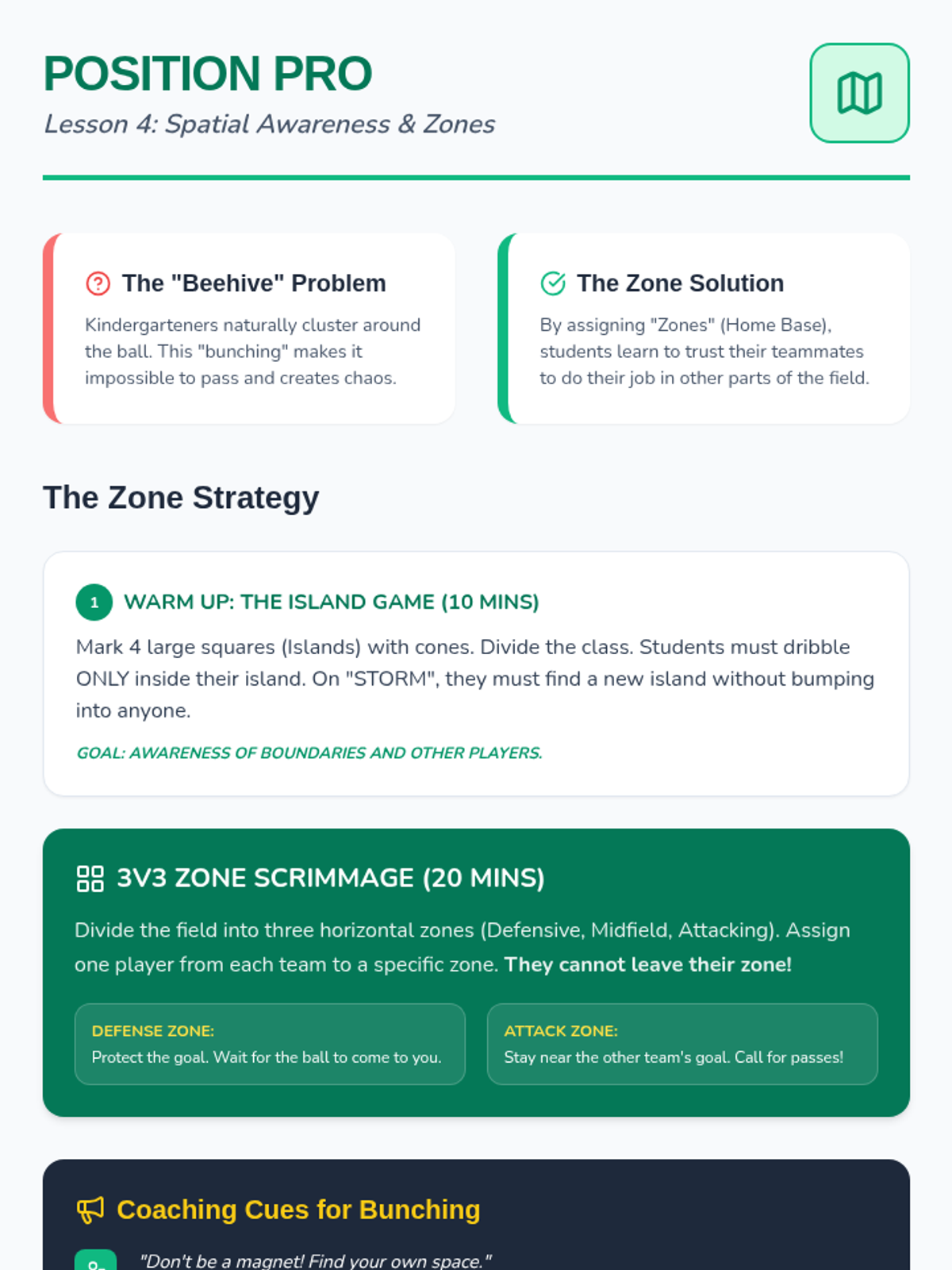
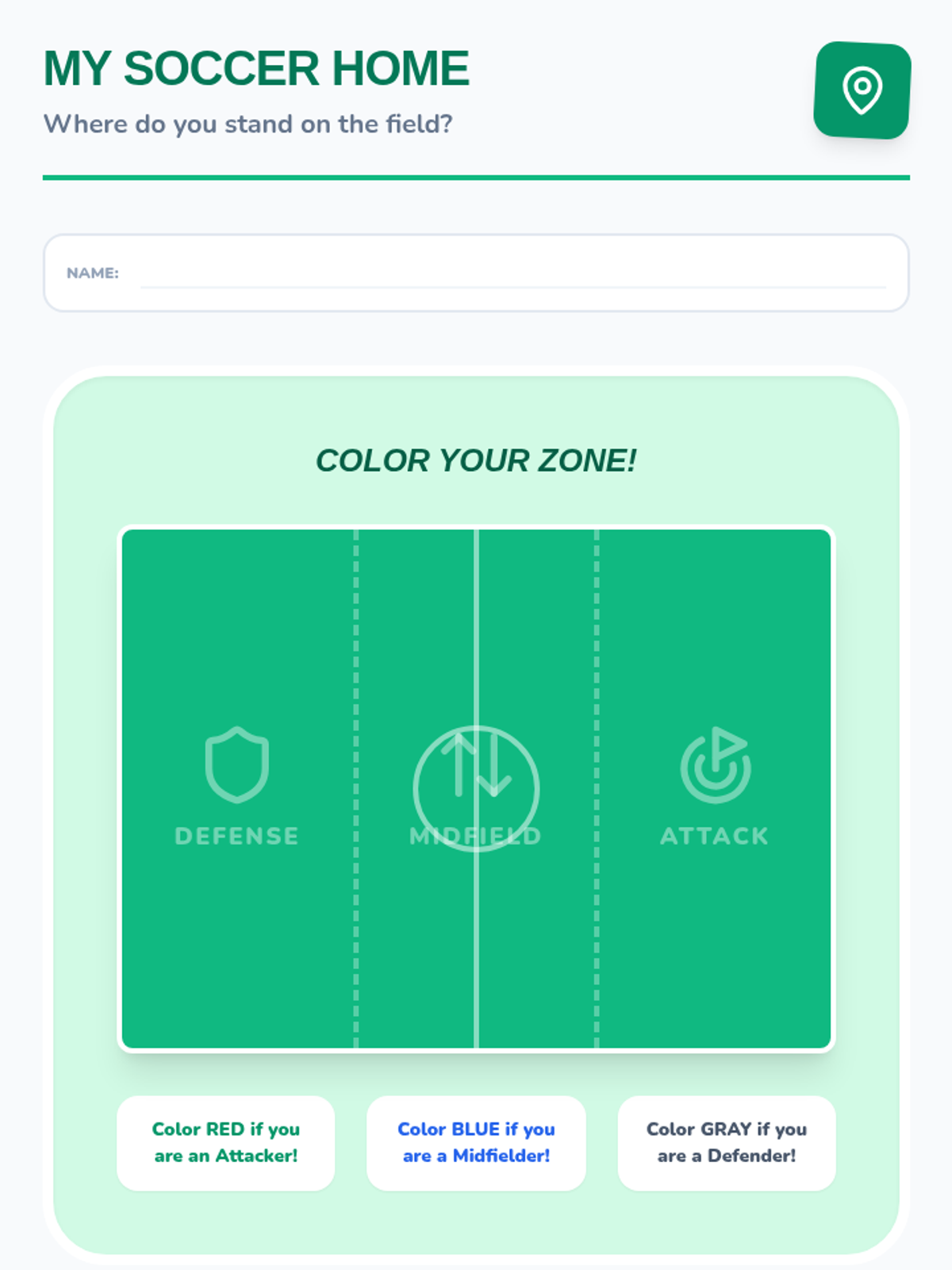
Teaching spatial awareness and basic positional play by assigning students to specific 'zones' on the field to prevent bunching.
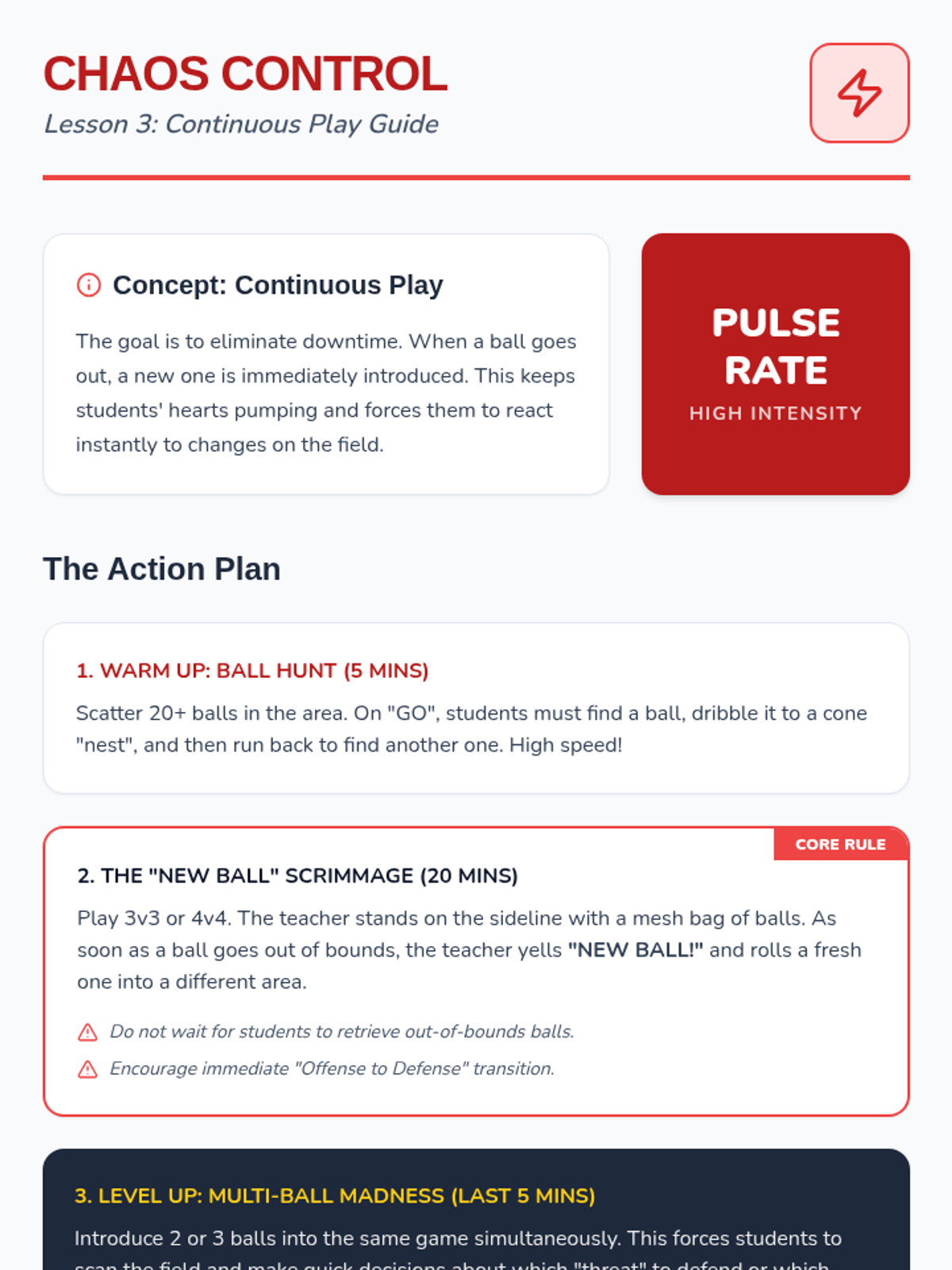
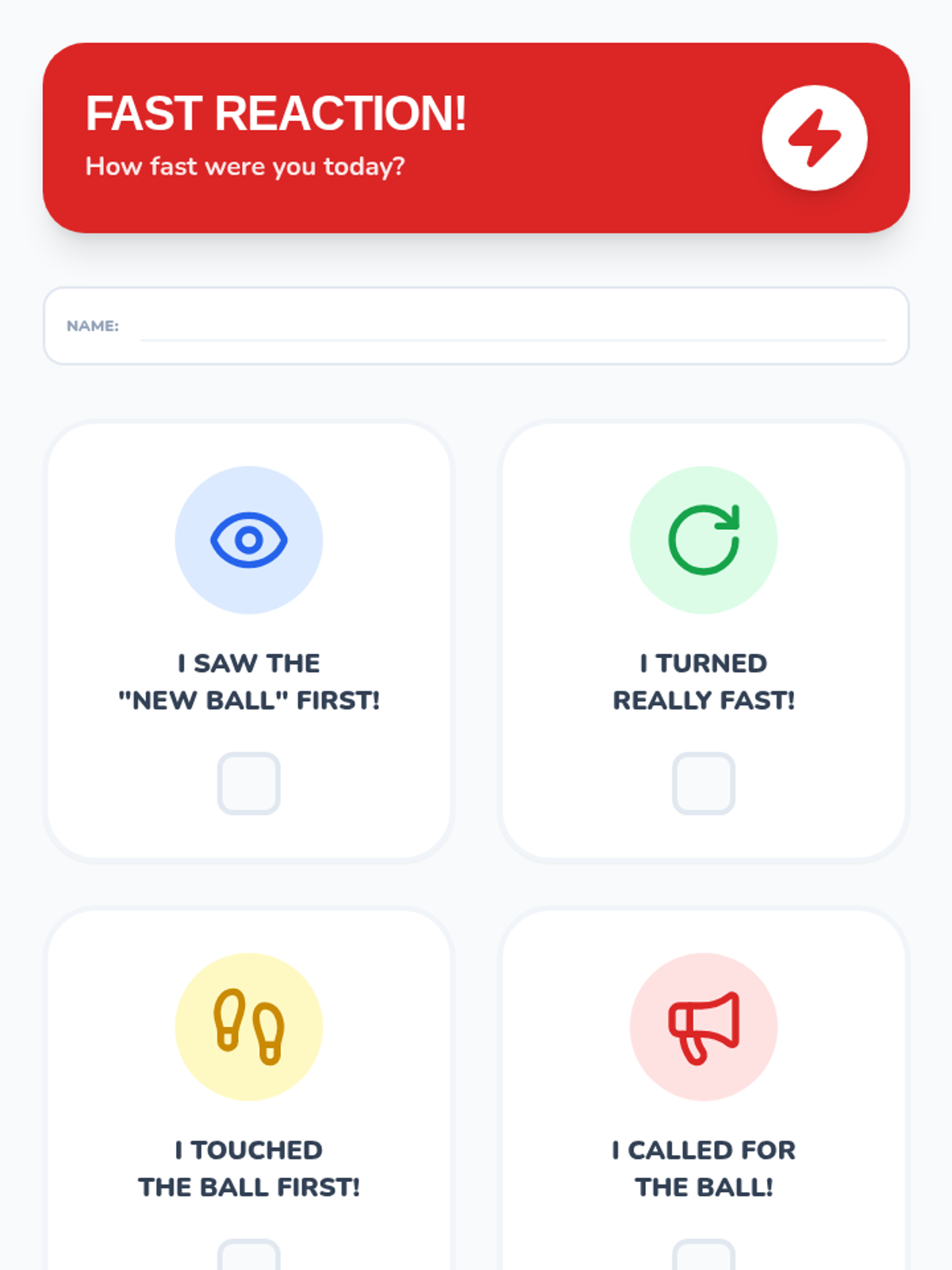
High-paced games with multiple balls and continuous play to improve reaction time and help students understand the flow of a soccer match.
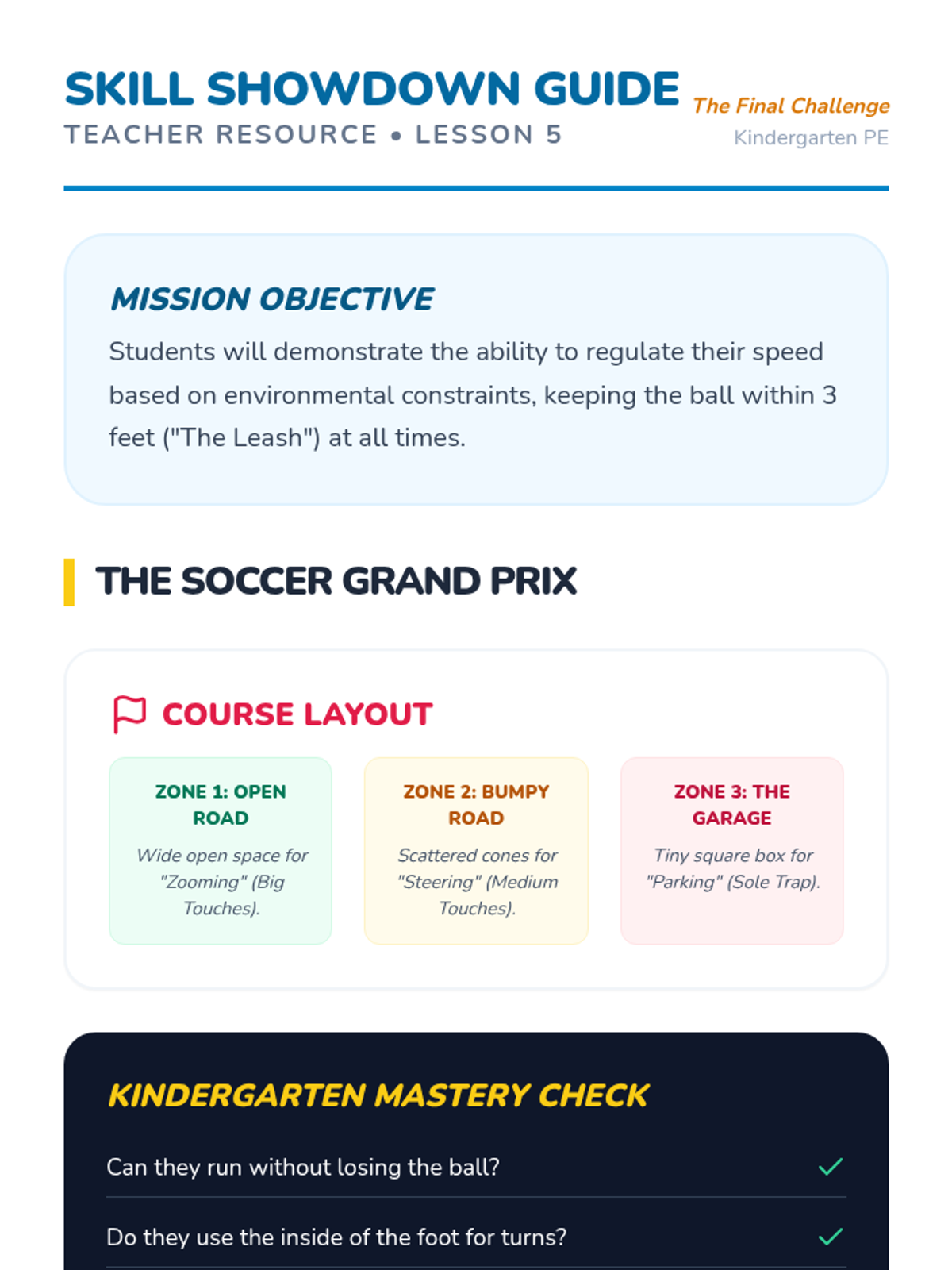
Combines speed and control, challenging students to adjust their dribbling pace based on the space available, like a dog on an 'invisible leash.'
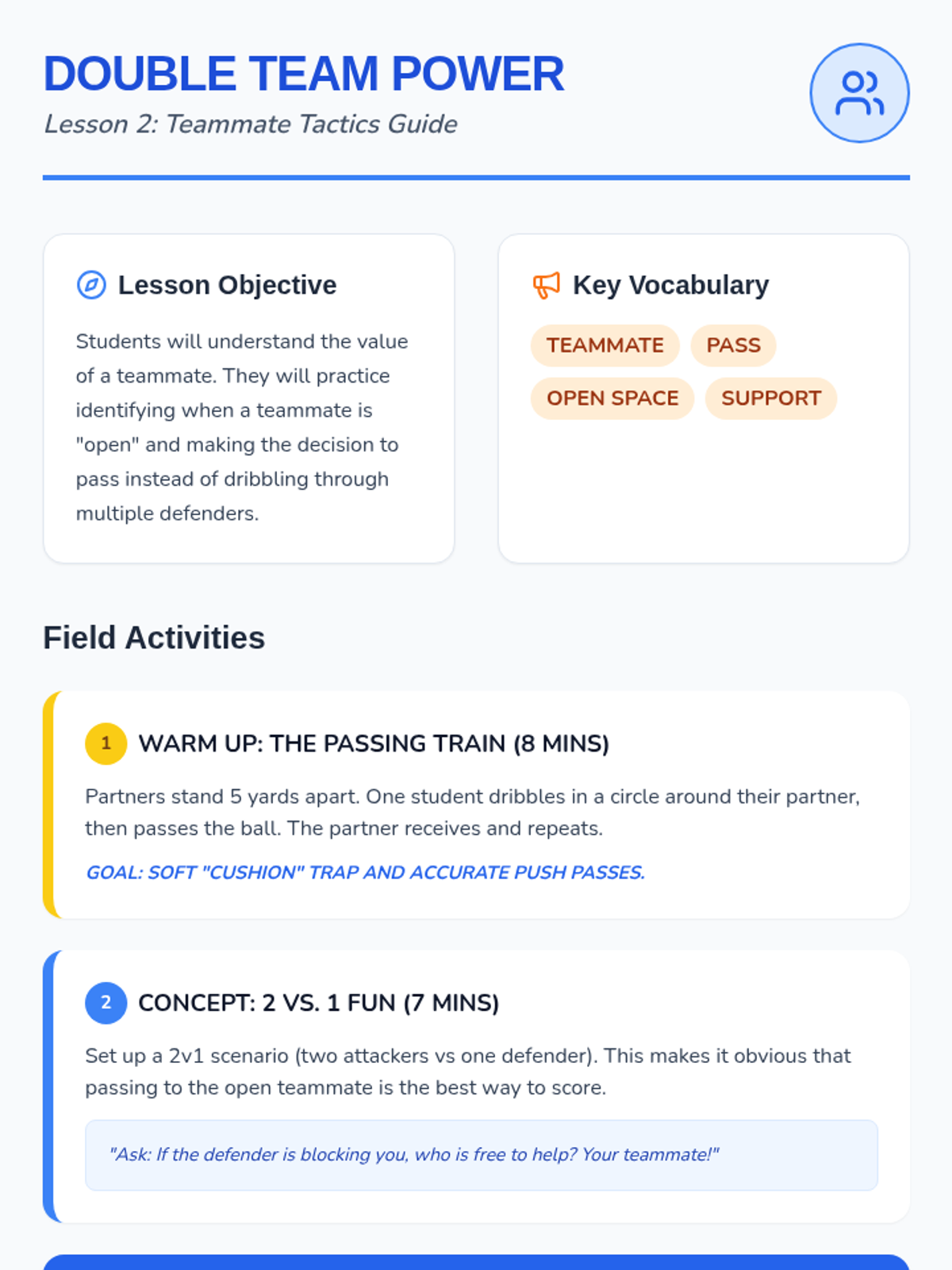
Introduction to teamwork and passing as students play in pairs, learning to decide between keeping the ball or sharing it with a partner.
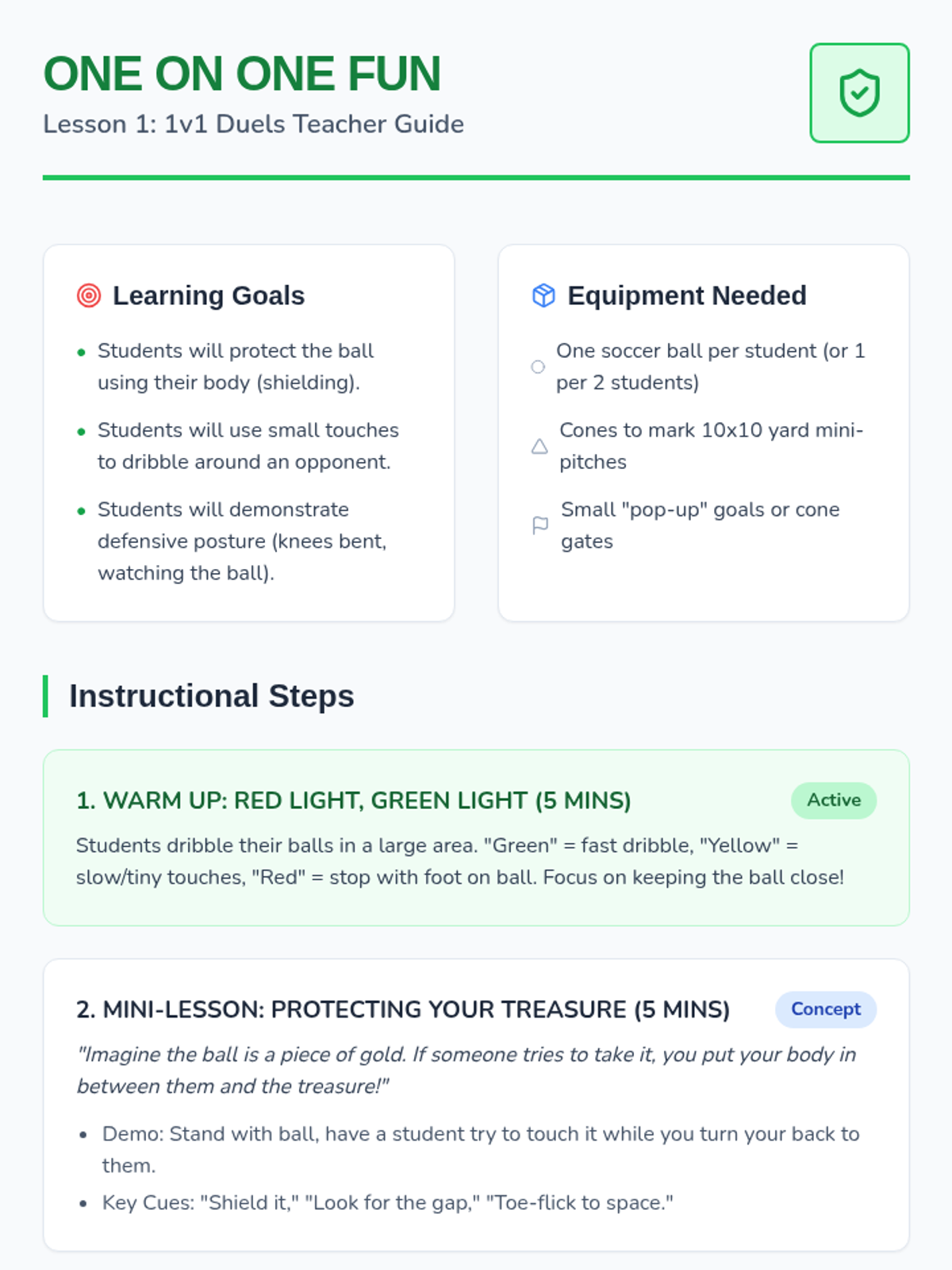
Students engage in 1v1 duels to maximize ball contact time and develop individual dribbling and defensive skills in a fun, high-energy environment.
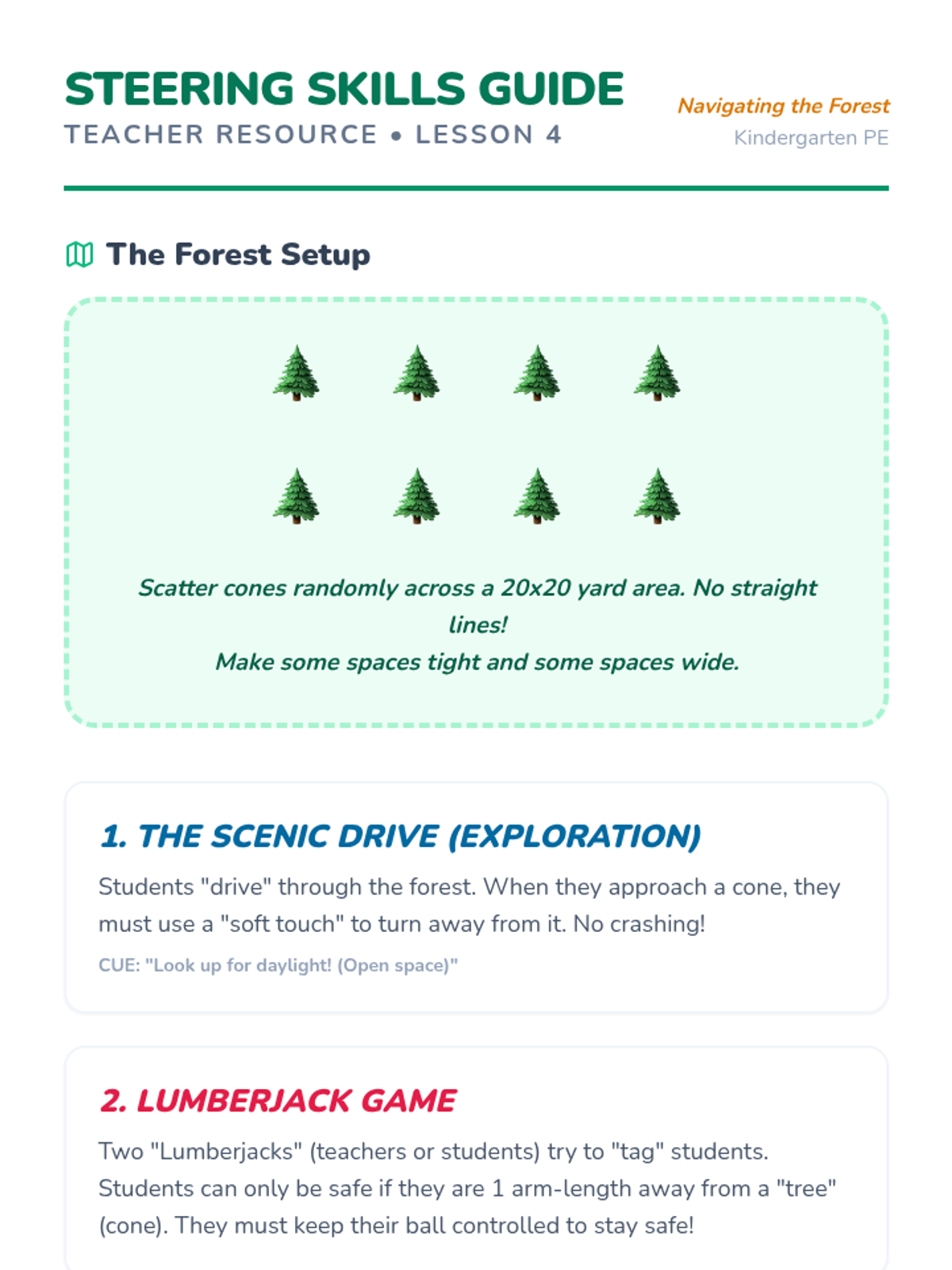
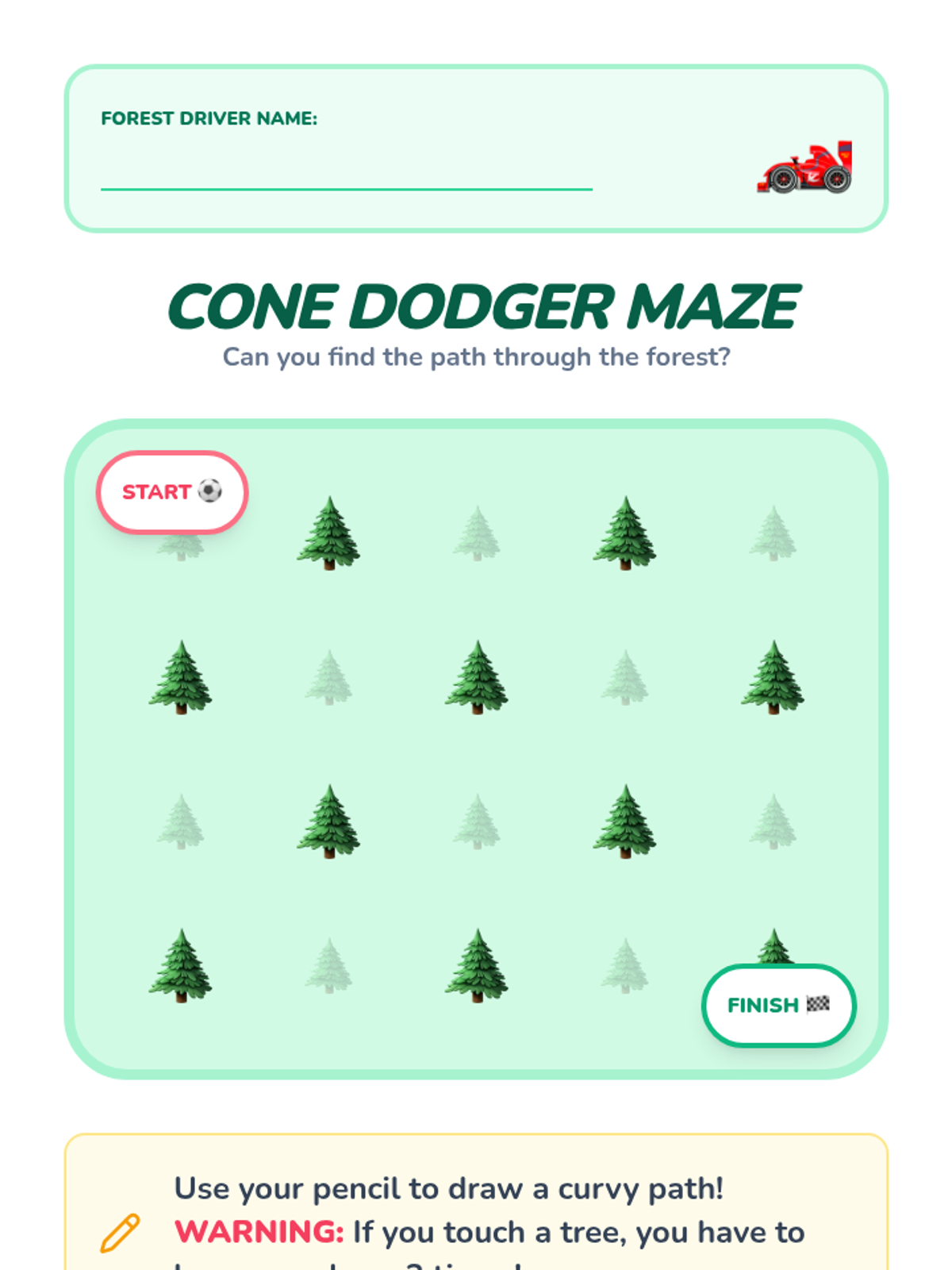
Develops agility and directional changes as students navigate a 'forest' of cones, steering their ball away from obstacles.
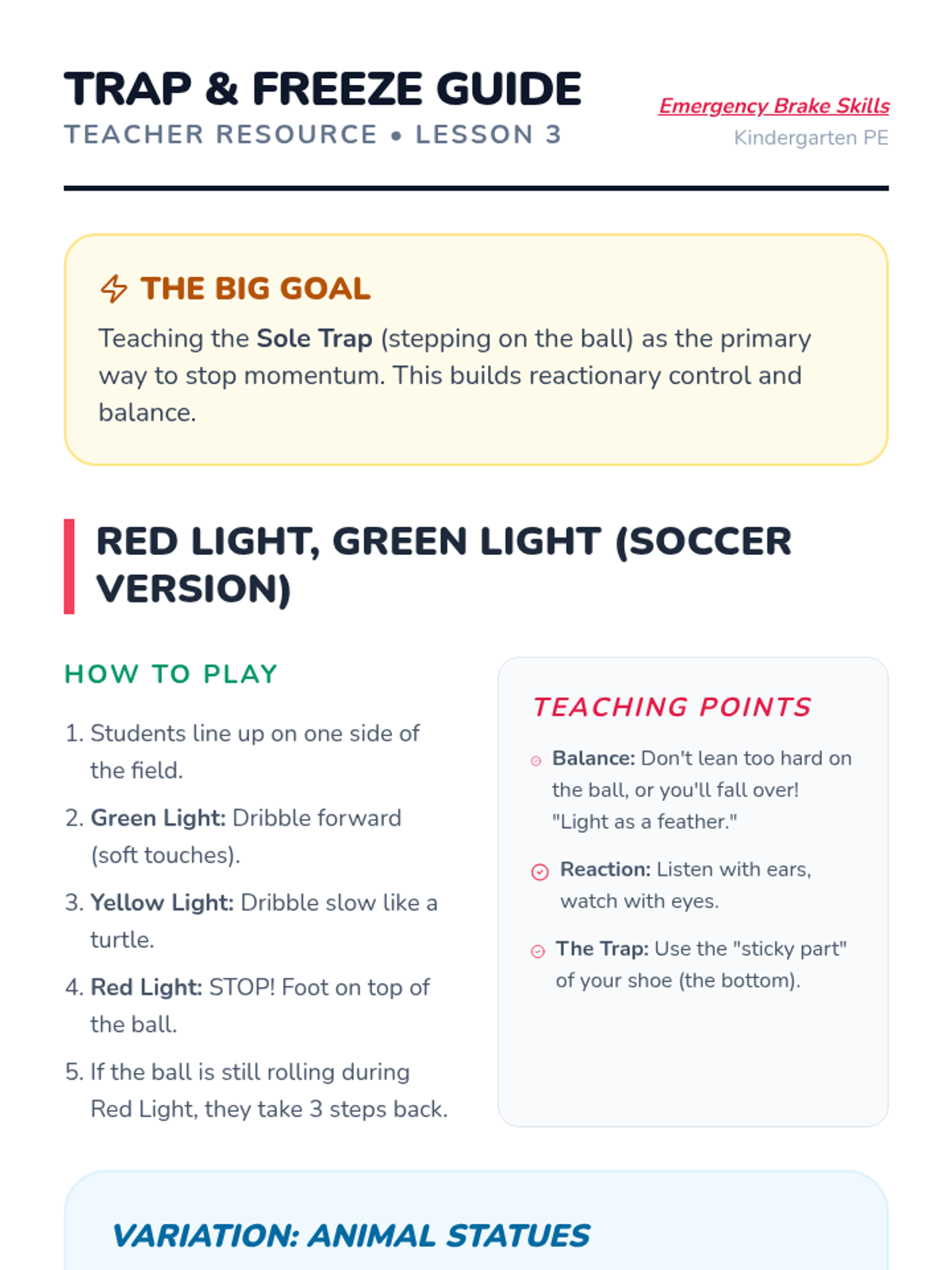
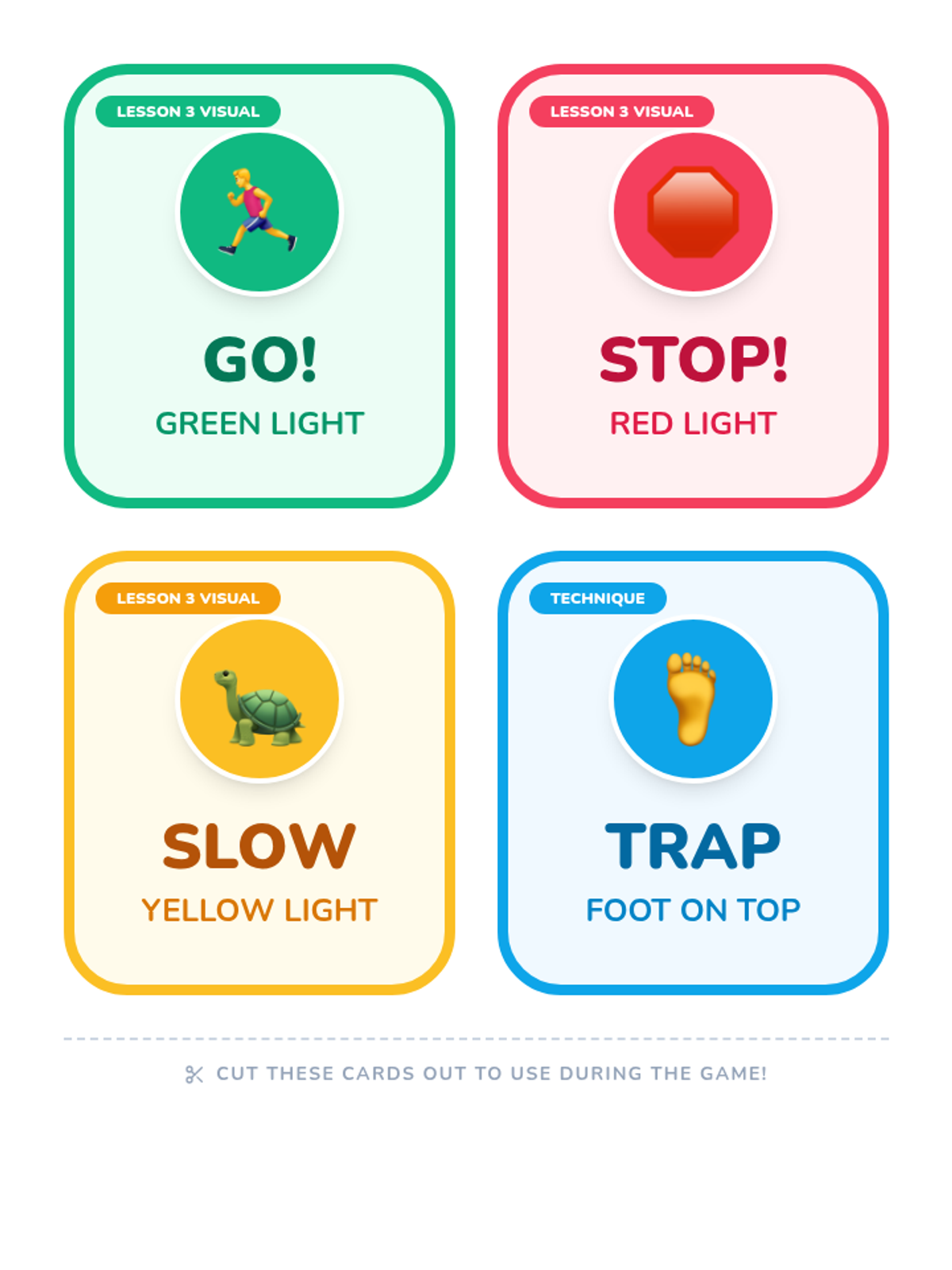
Introduces trapping techniques using 'Red Light, Green Light' to teach students how to stop the ball instantly with the sole of the foot.
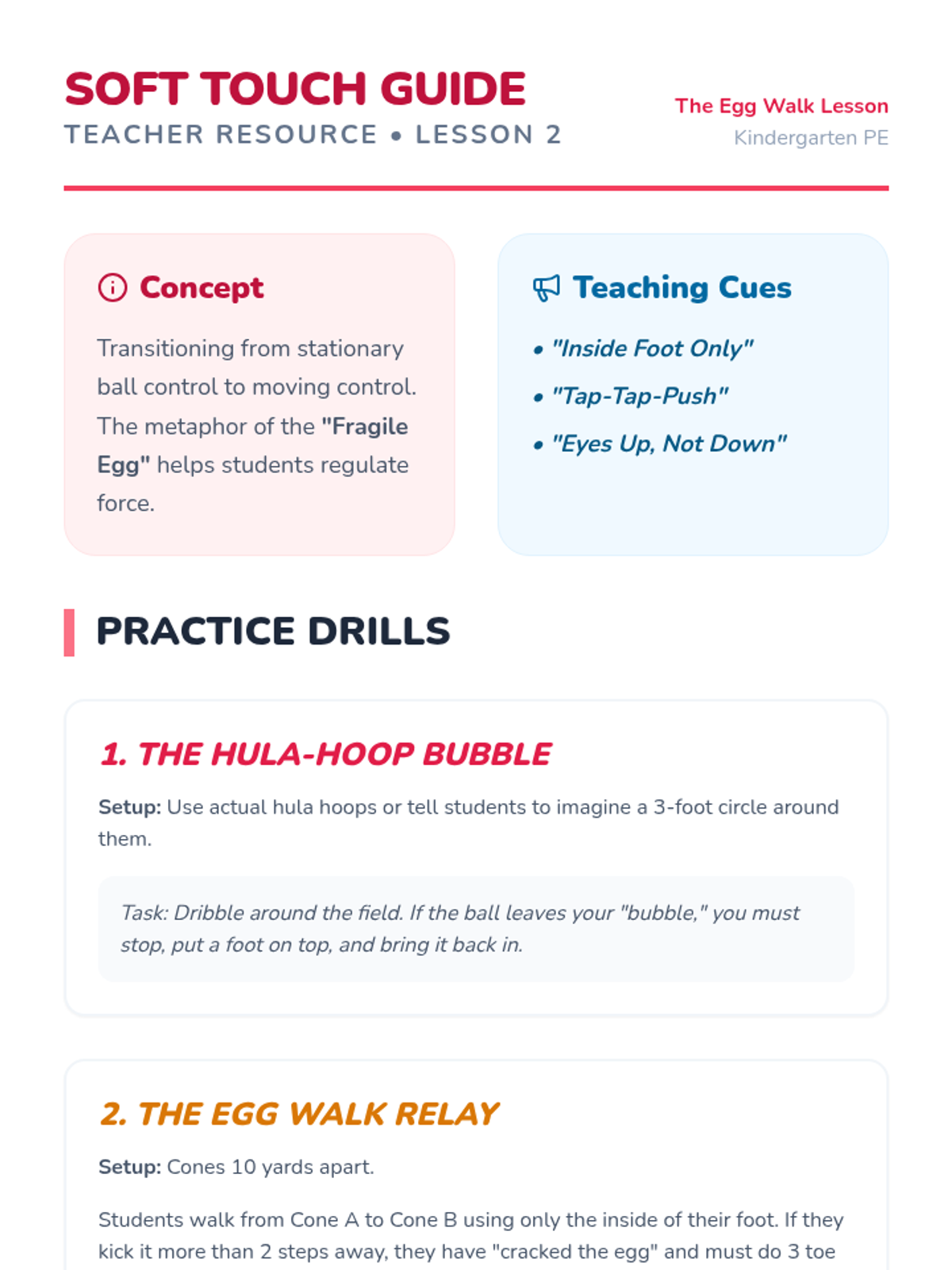
Focuses on the 'soft touch' dribble using the inside of the foot, imagining the ball is a fragile egg to encourage control.
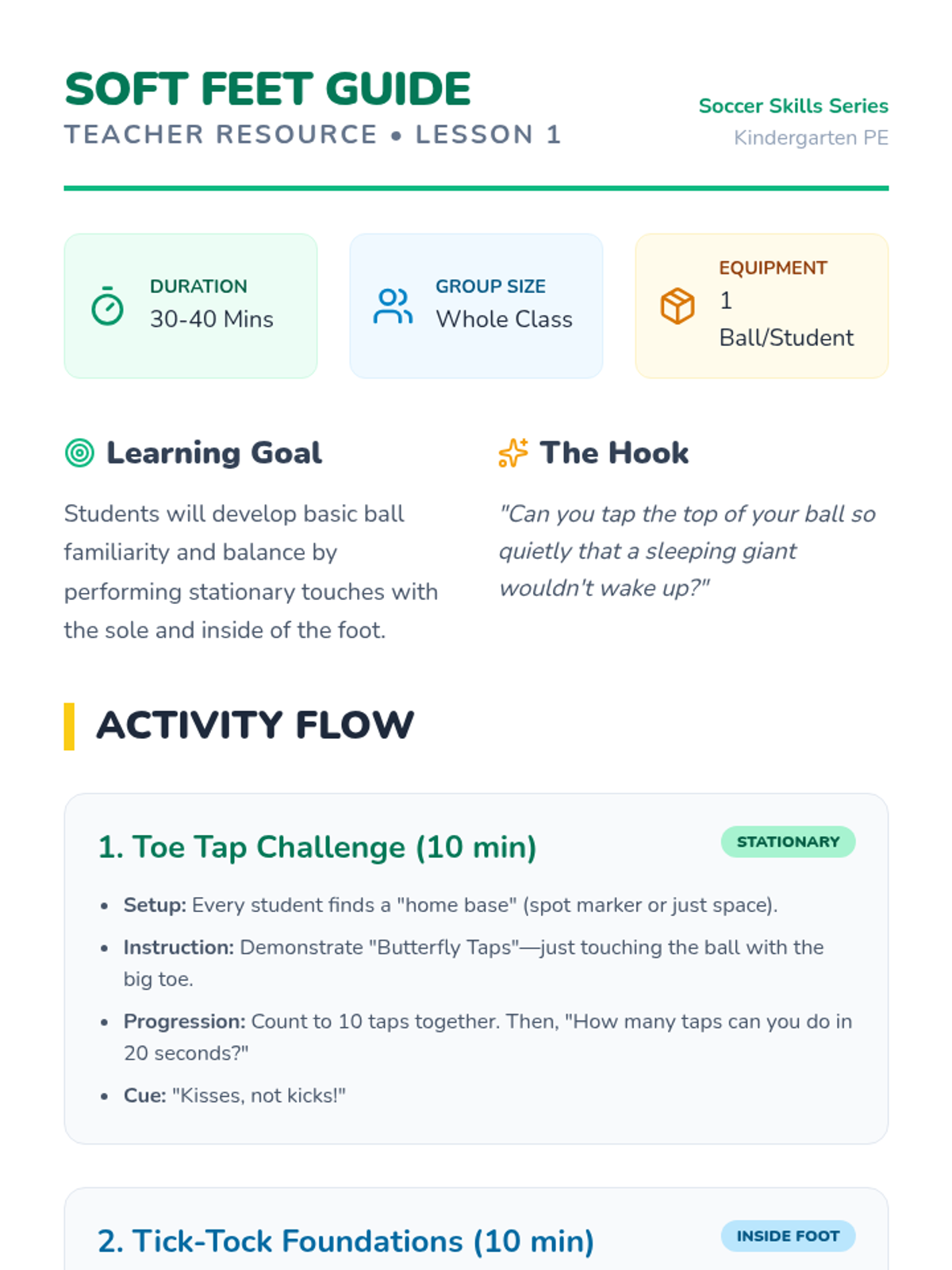
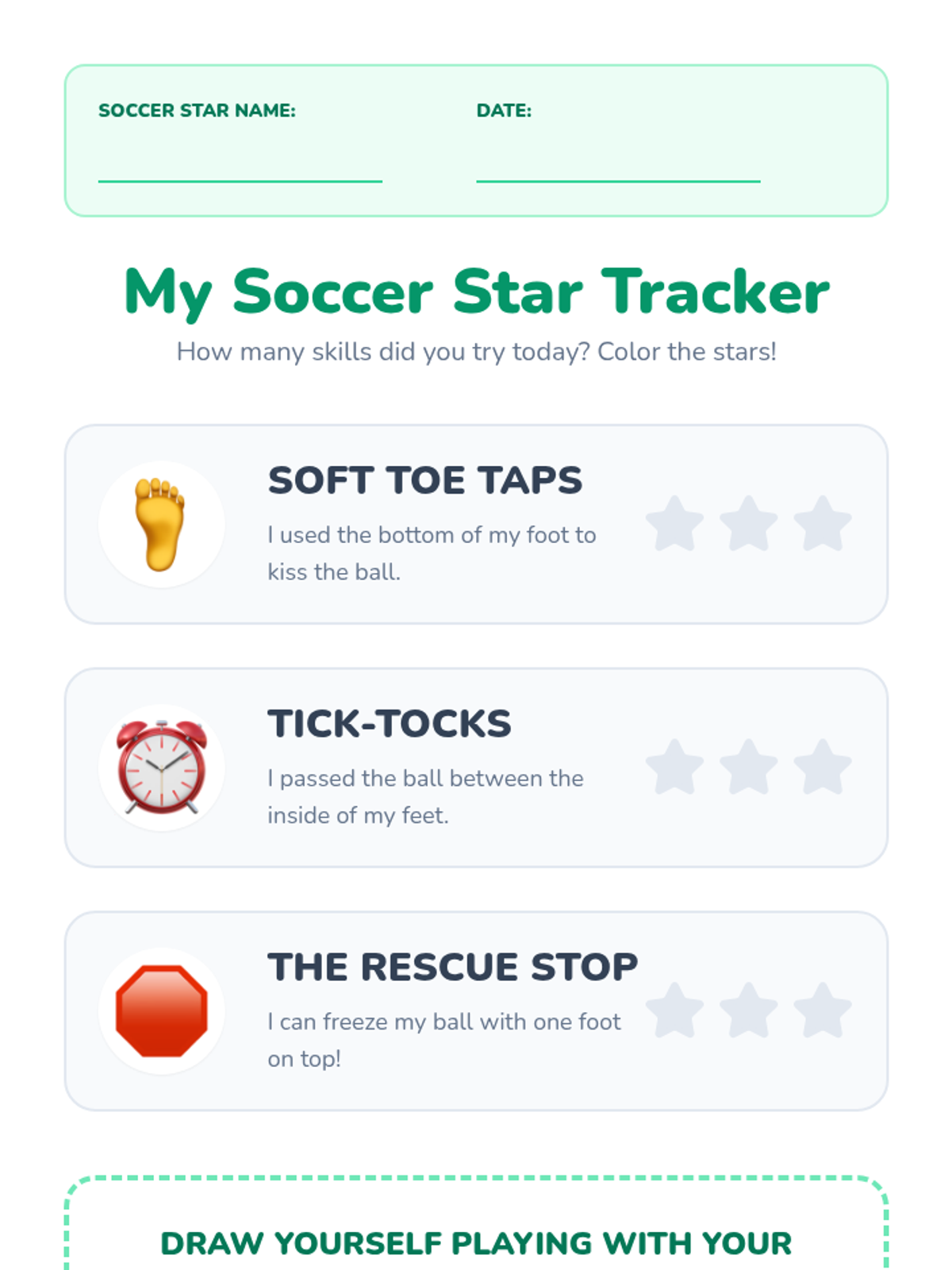
Students explore the soccer ball using 'soft feet,' practicing toe taps and foundations to build comfort and balance.
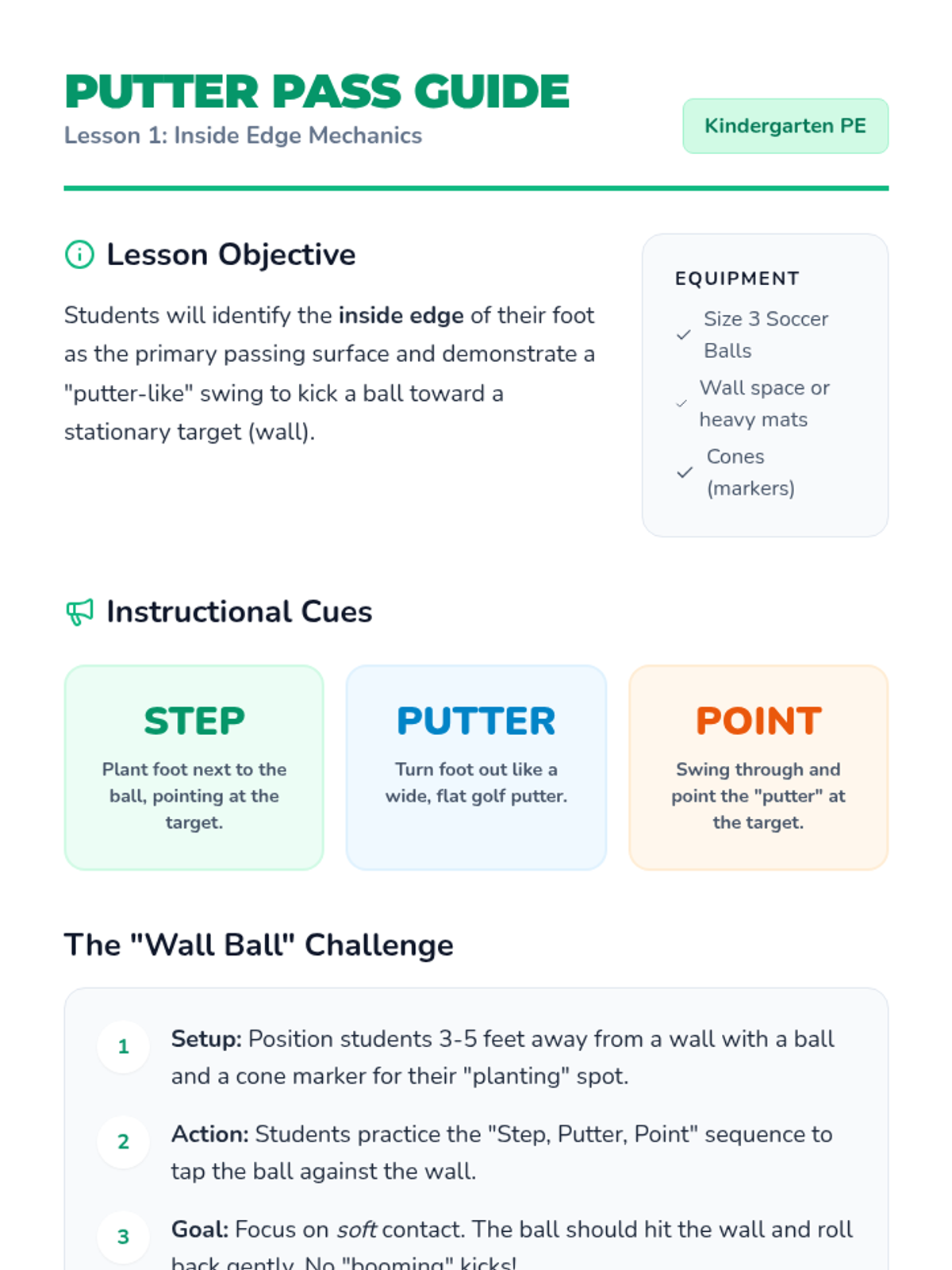
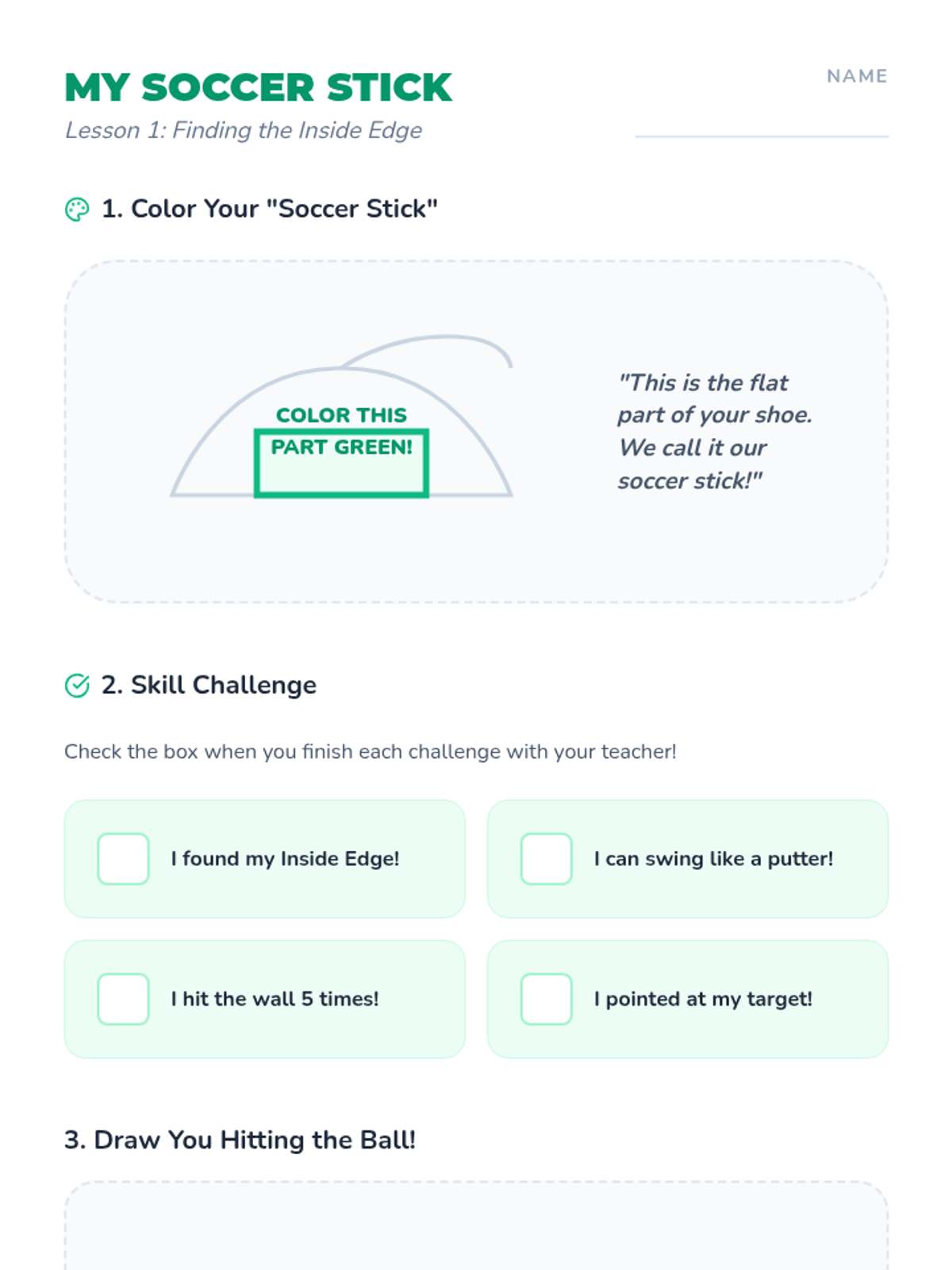
Students identify the inside of the foot as the 'passing surface' and practice swinging their leg like a putter. The lesson focuses on the non-kicking foot's placement (planting) and following through toward a wall or stationary target.
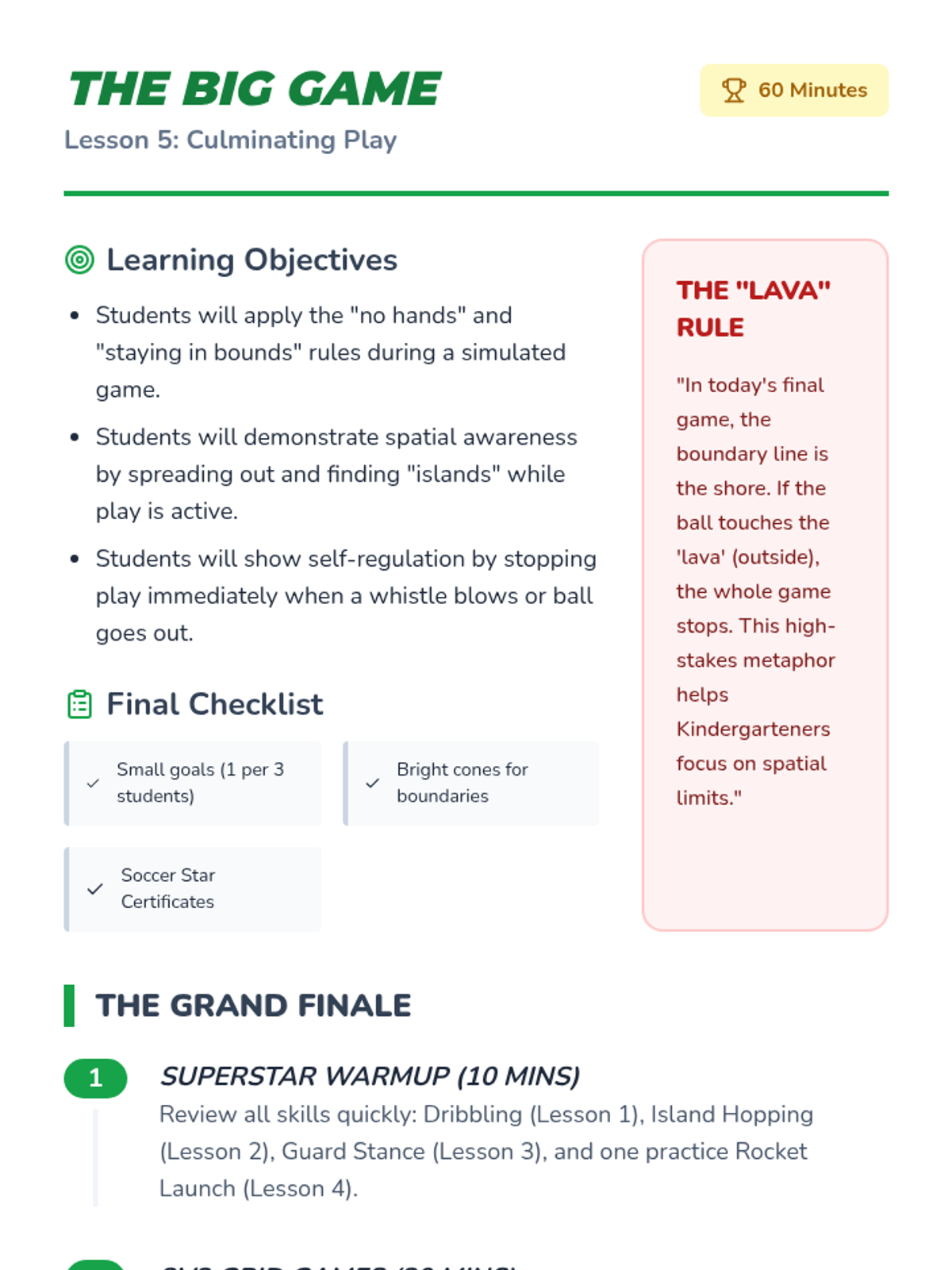
Applying all learned rules and spatial concepts in a controlled grid-based game. Emphasizes self-regulation and playing within lines.
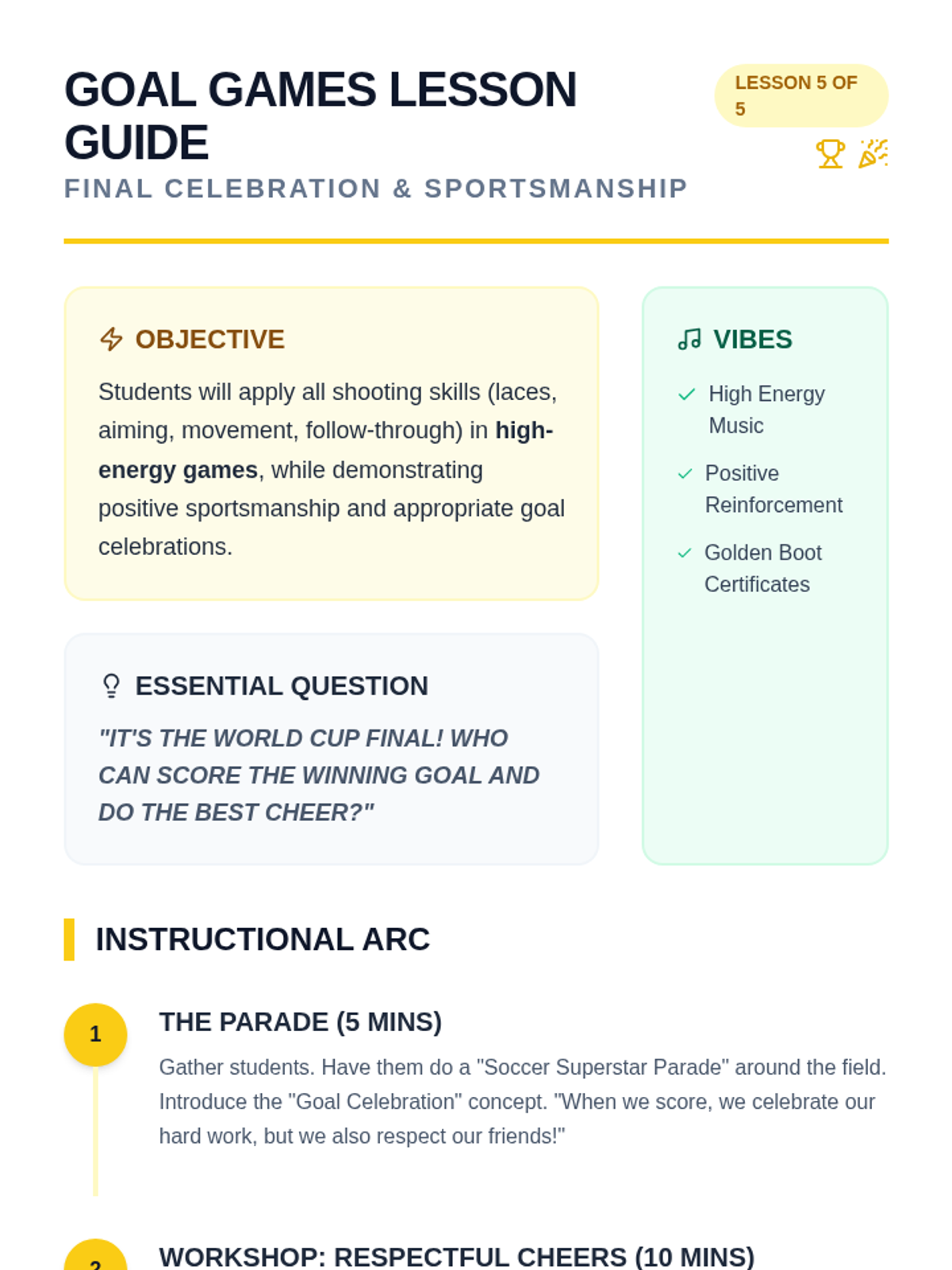
Students participate in rapid-fire shooting games to celebrate their skills and practice sportsmanship and scoring celebrations.
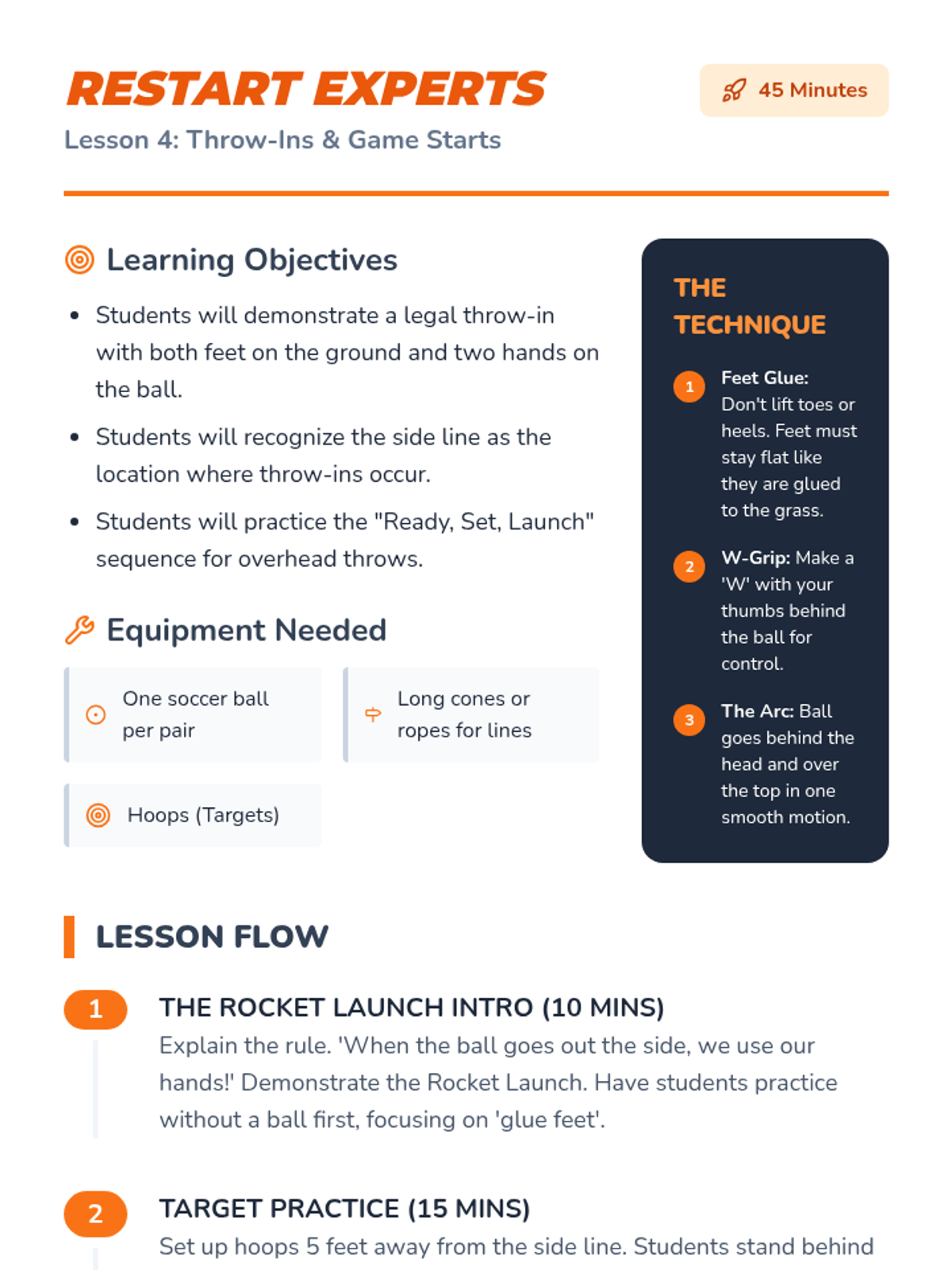
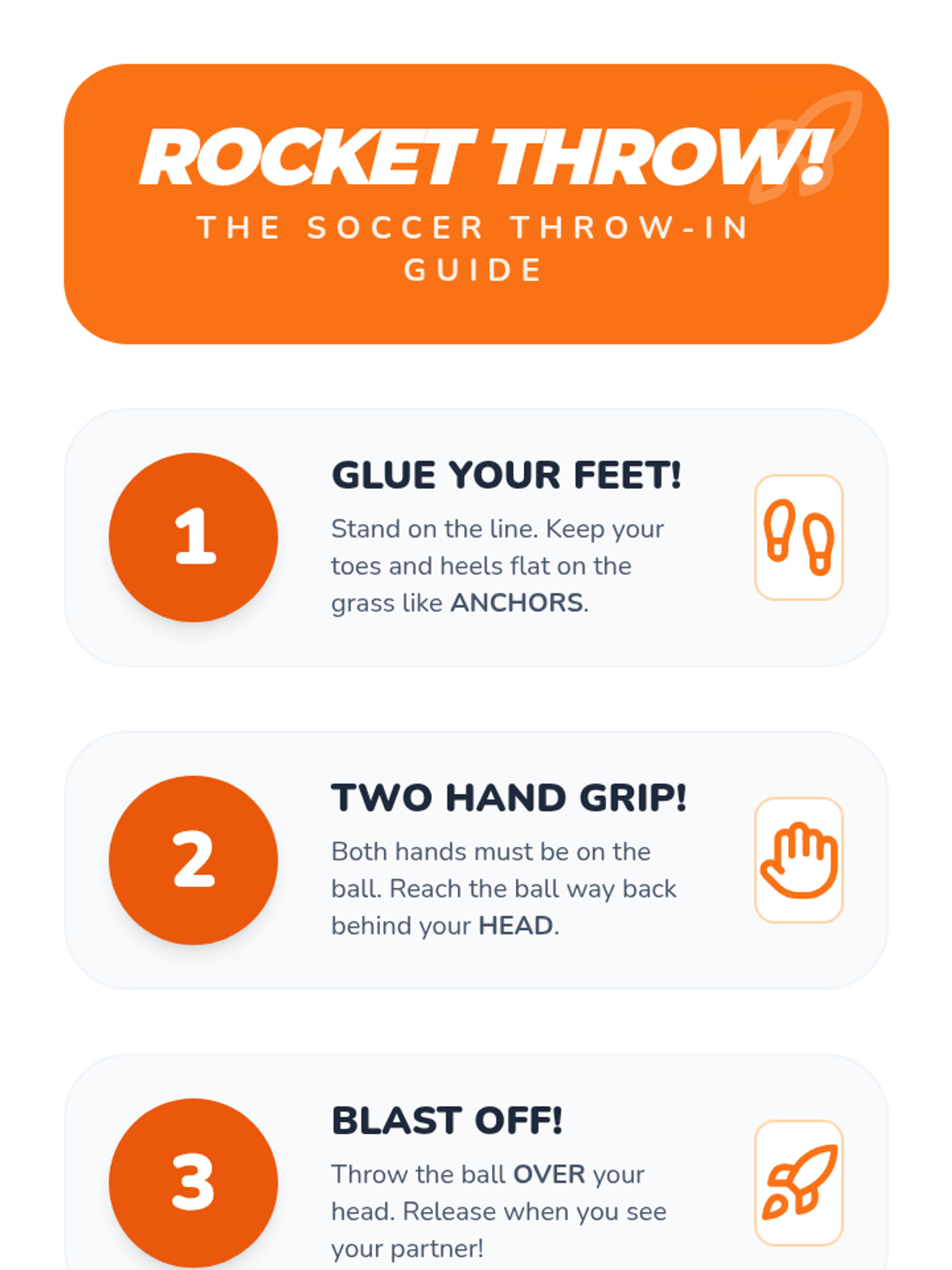
Teaching the technique and rules for throw-ins and other game restarts. Focuses on overhead throwing mechanics.
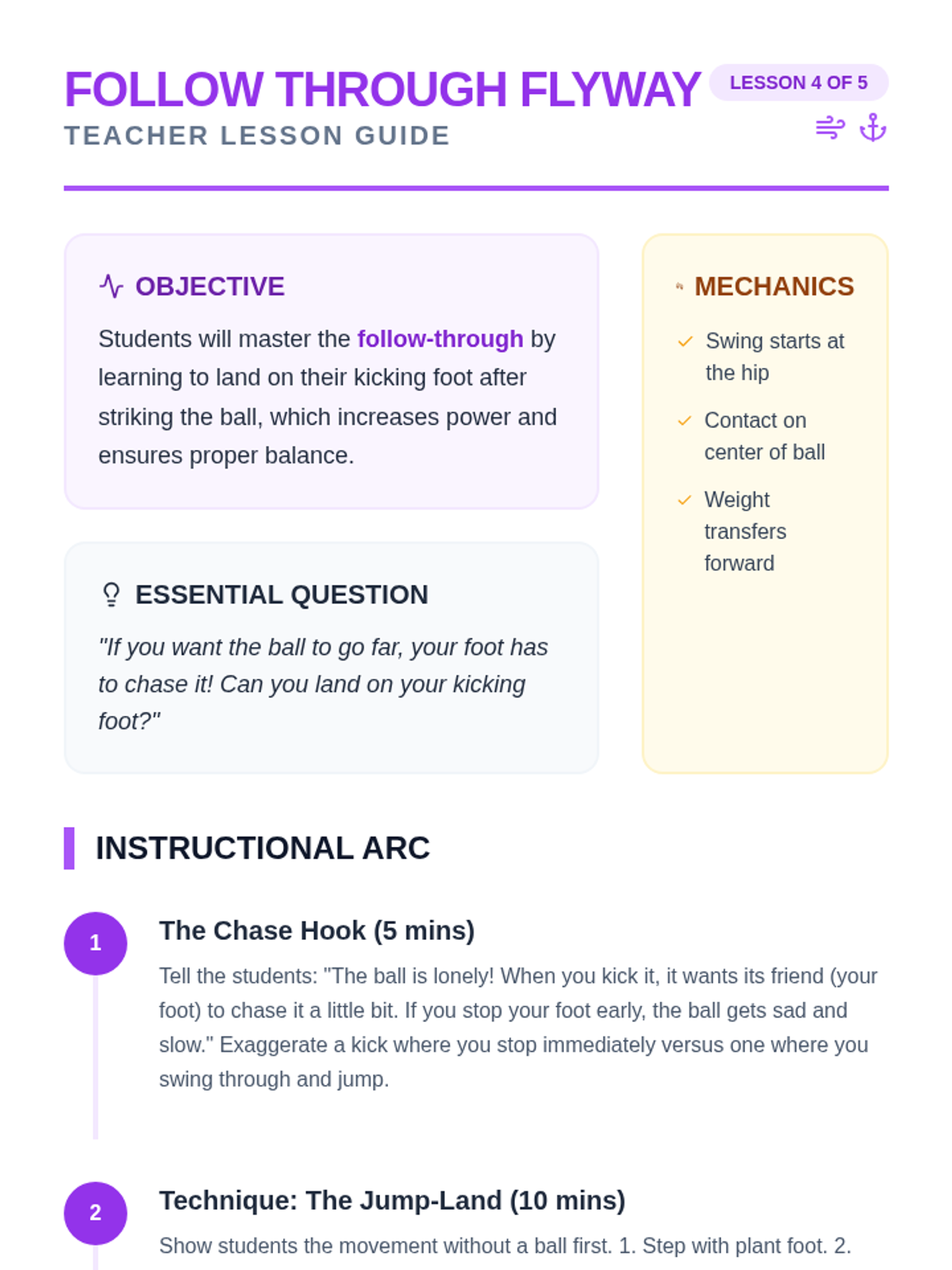
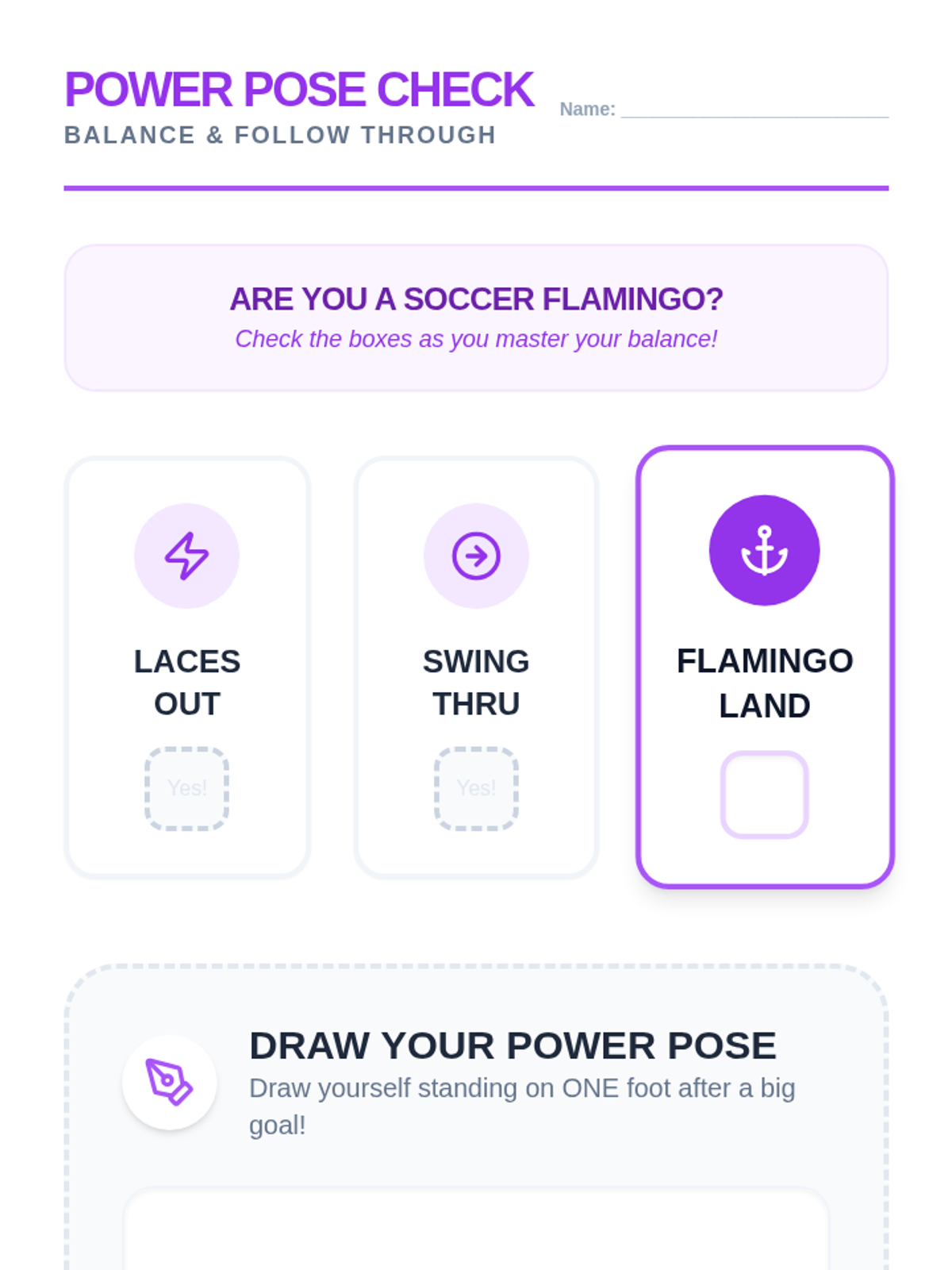
Students focus on the follow-through and balance, learning to land on their kicking foot to maximize power and accuracy.
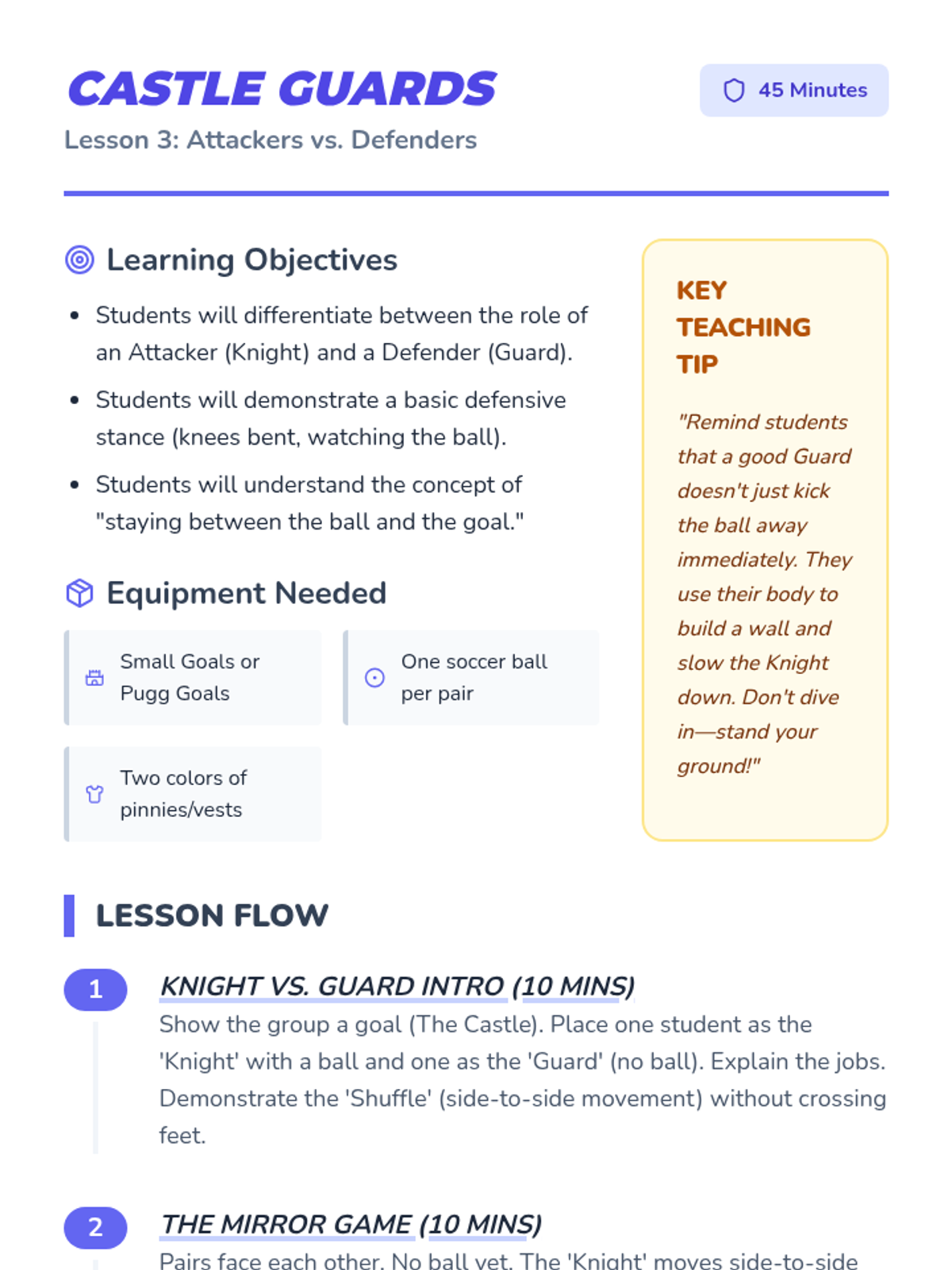
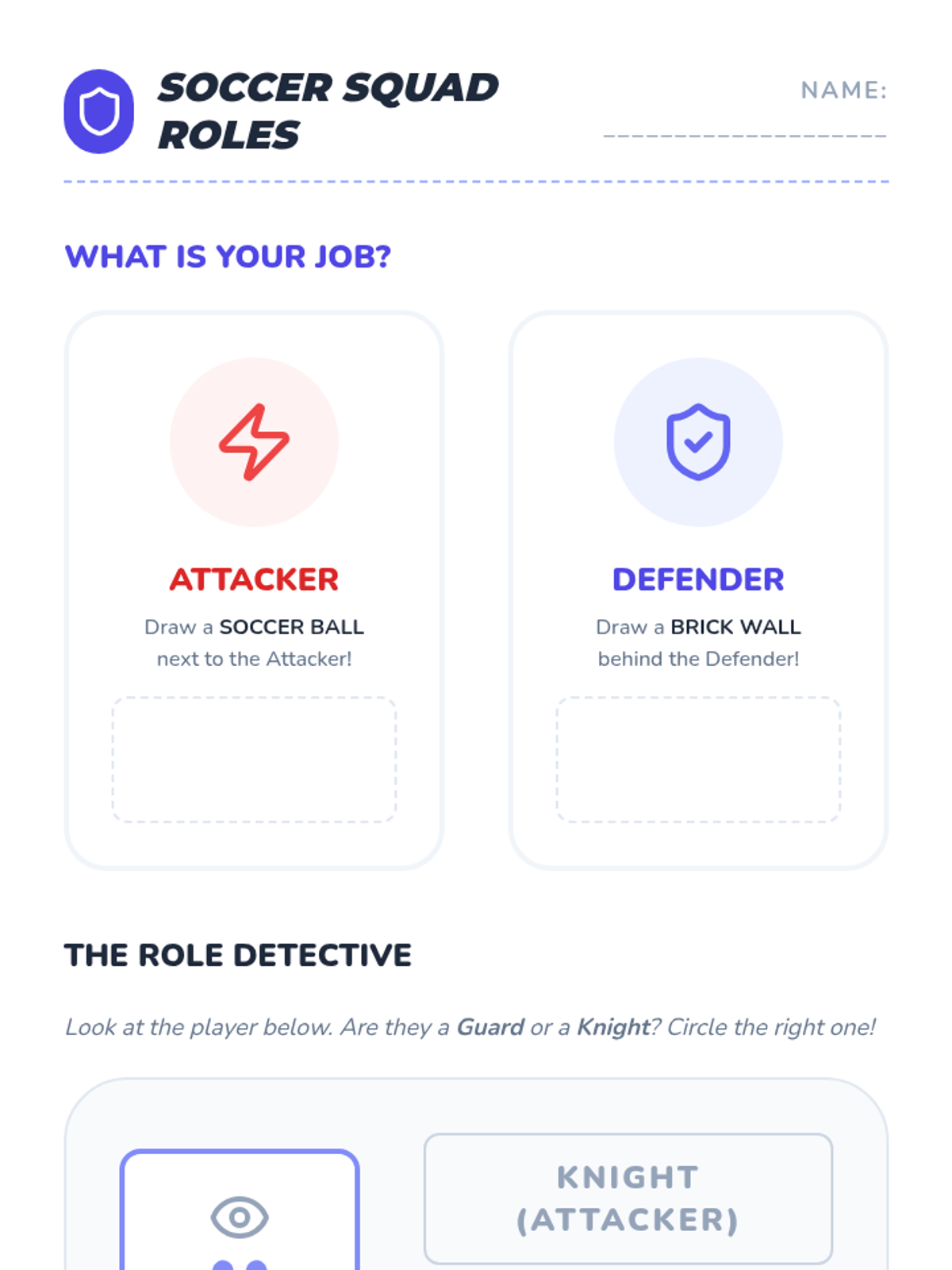
Differentiating between attacking (trying to score) and defending (stopping the ball). Introduces basic defensive stance and 1v1 scenarios.