Complex syntax, nuanced vocabulary, and academic discourse. Strengthens professional communication through advanced writing, analytical reading, and mastery of high-level auditory and oral fluency.
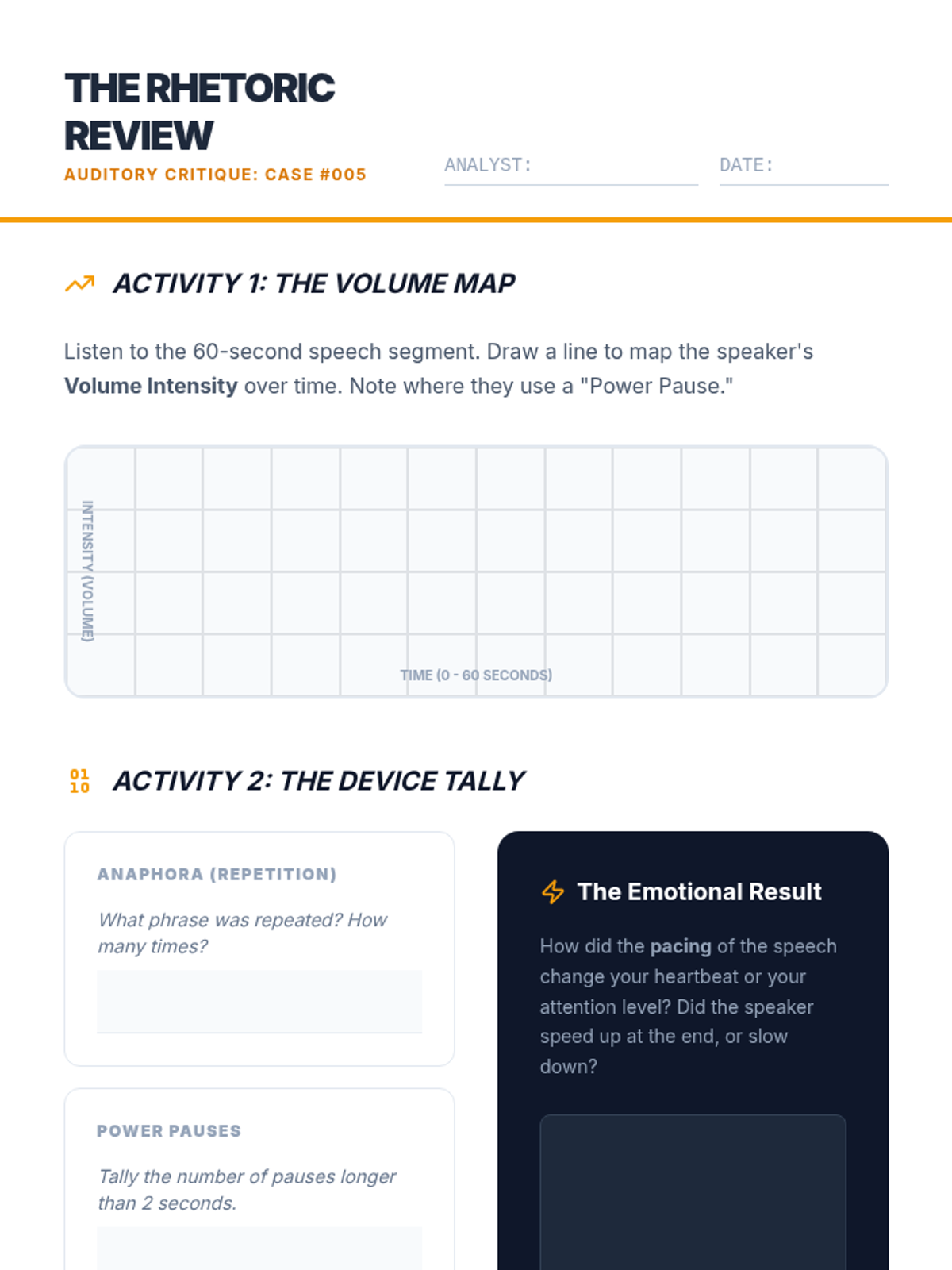
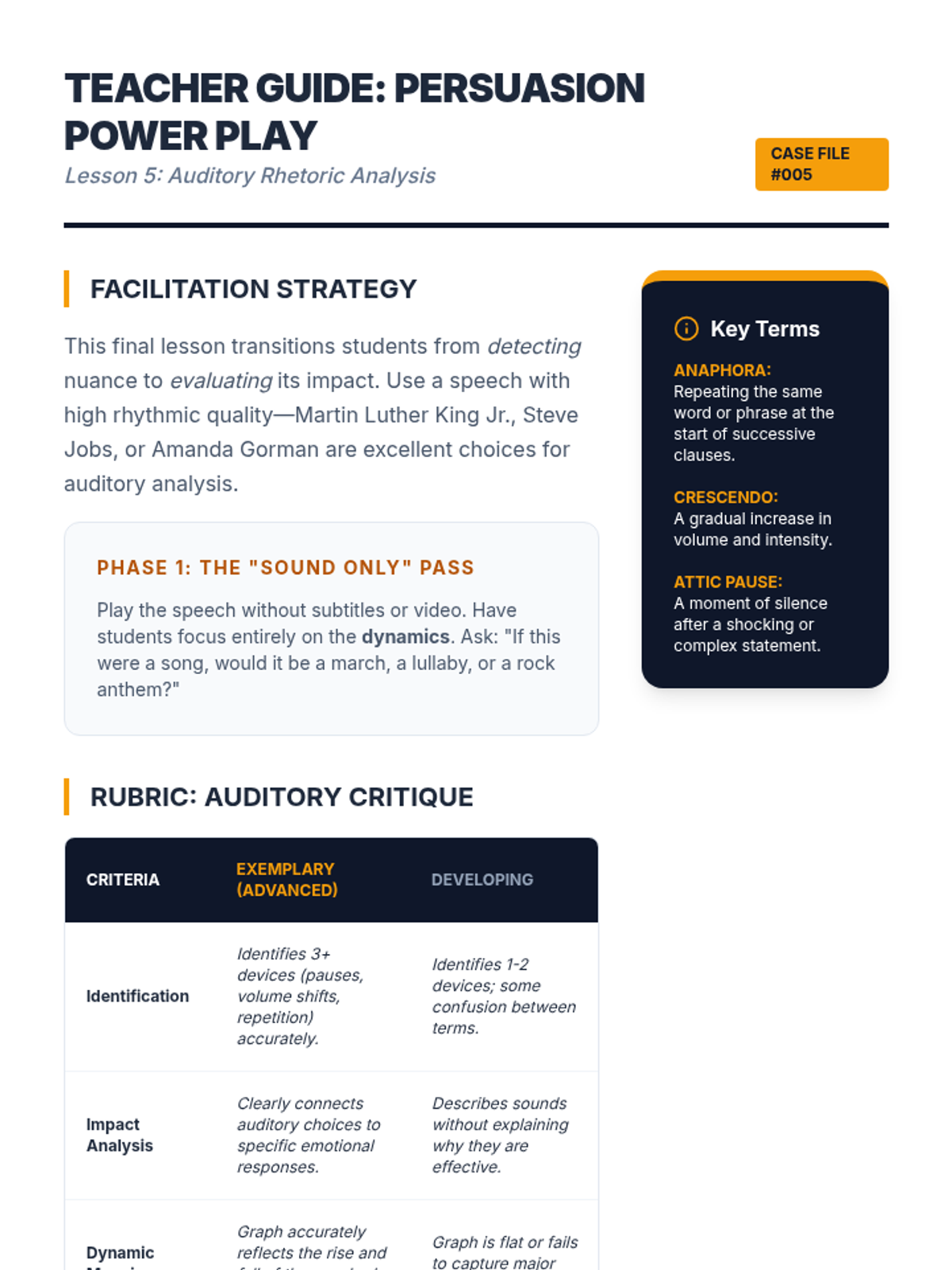
Students examine delivery techniques like repetition and volume to evaluate the effectiveness of persuasive speech.
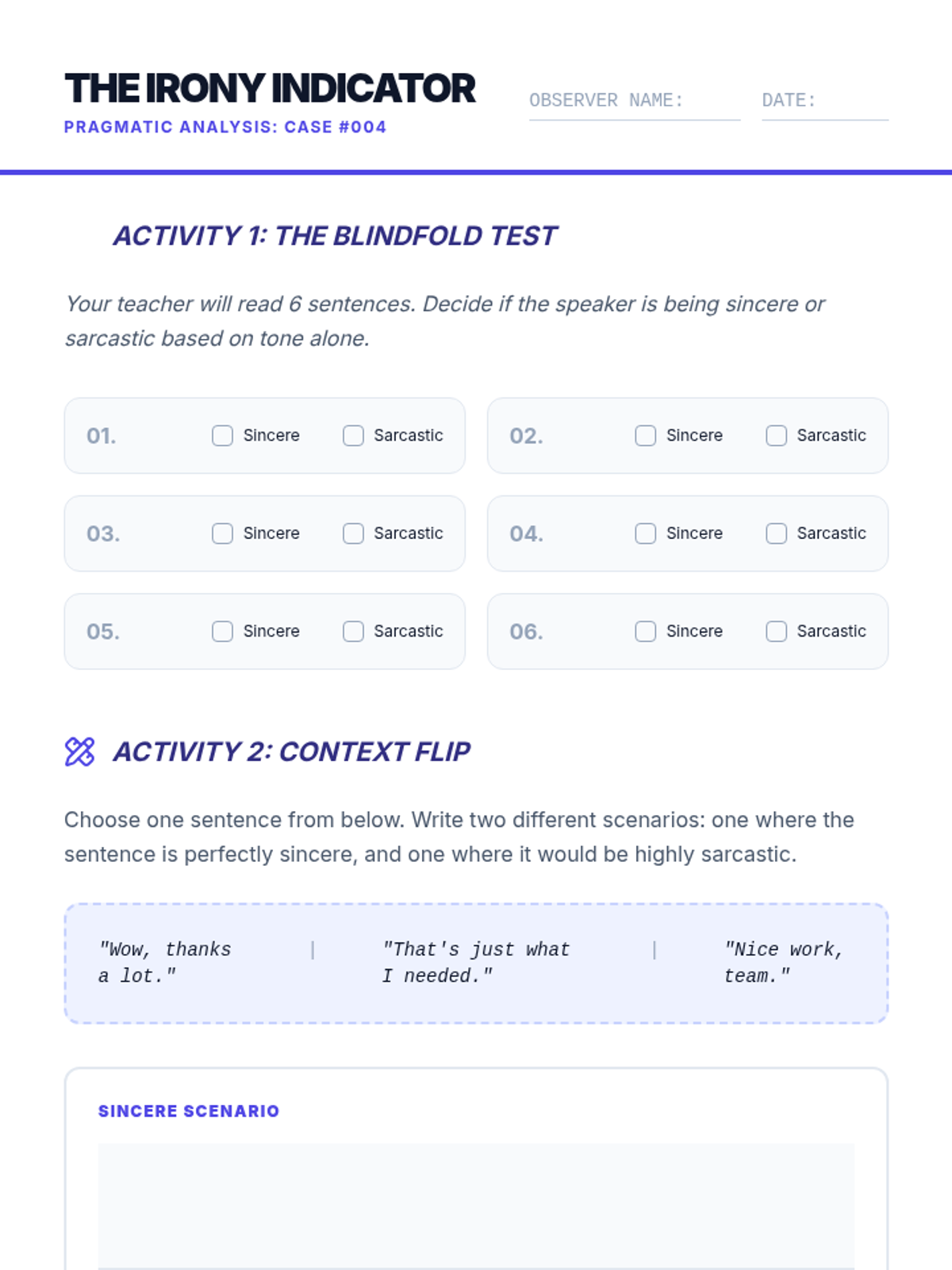
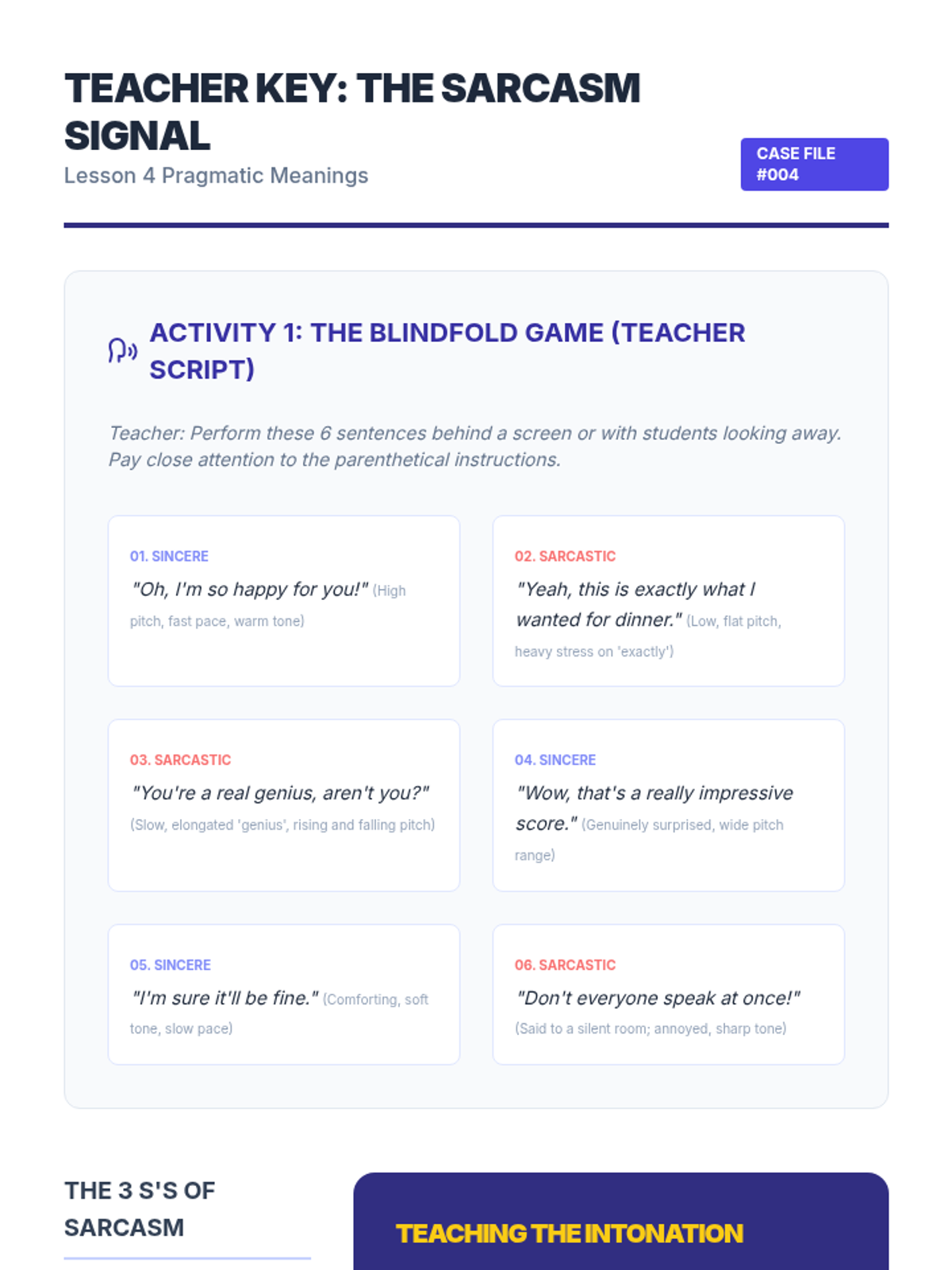
Students learn to detect pragmatic meaning by analyzing intonation, stress, and context clues for sarcasm and irony.
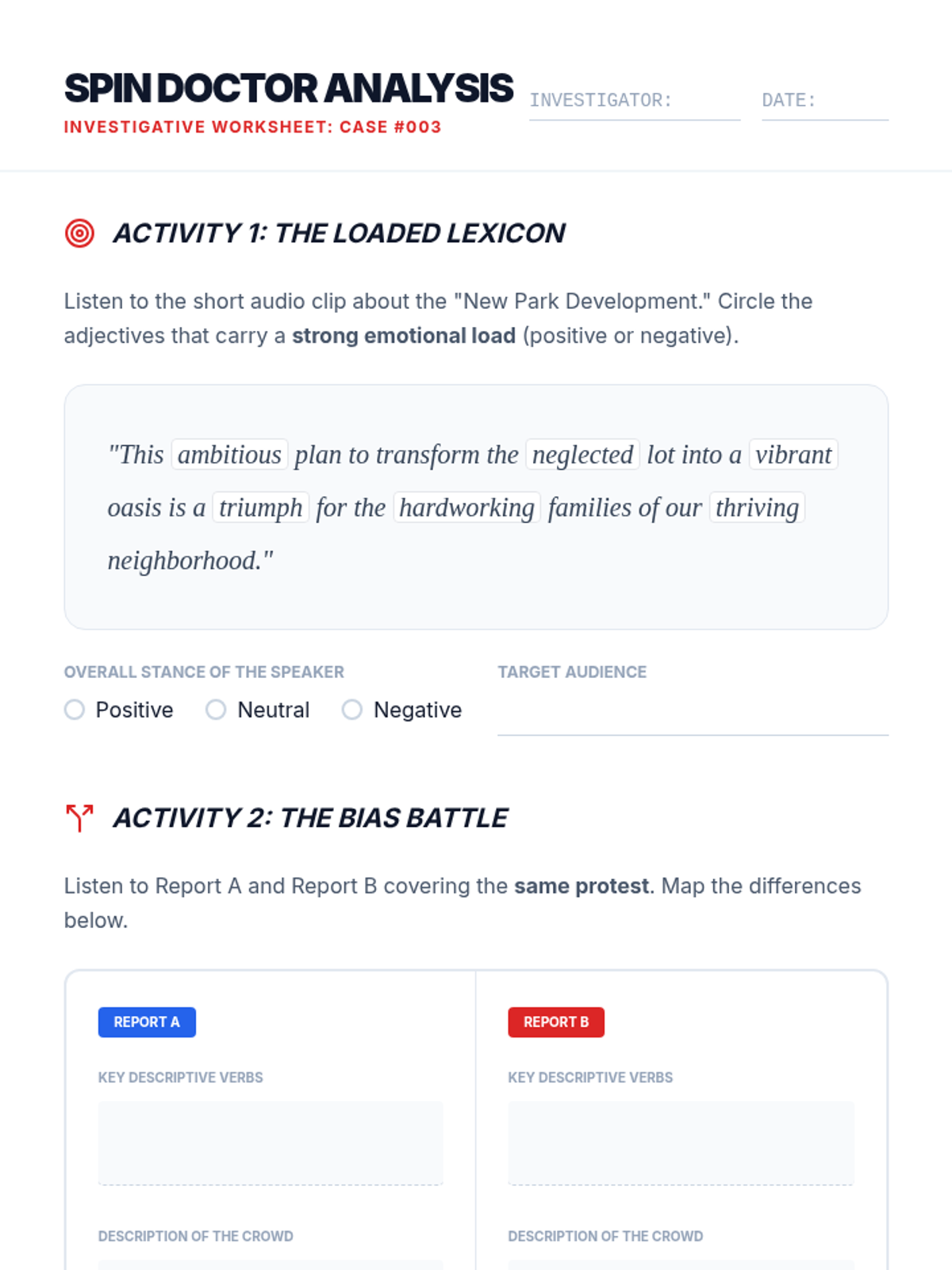
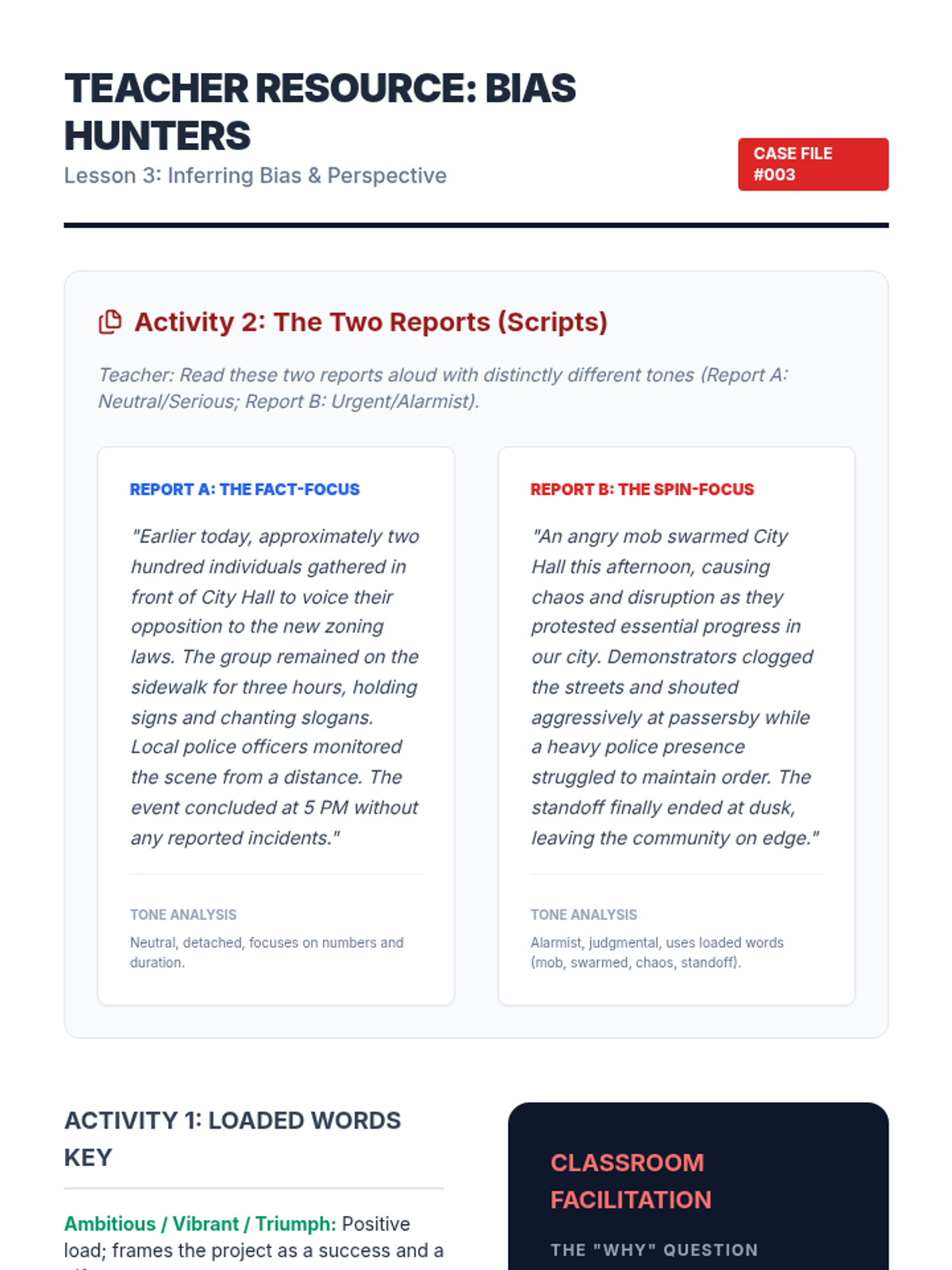
Students analyze how word choice and tone reveal a speaker's stance, learning to separate fact from opinion in audio media.
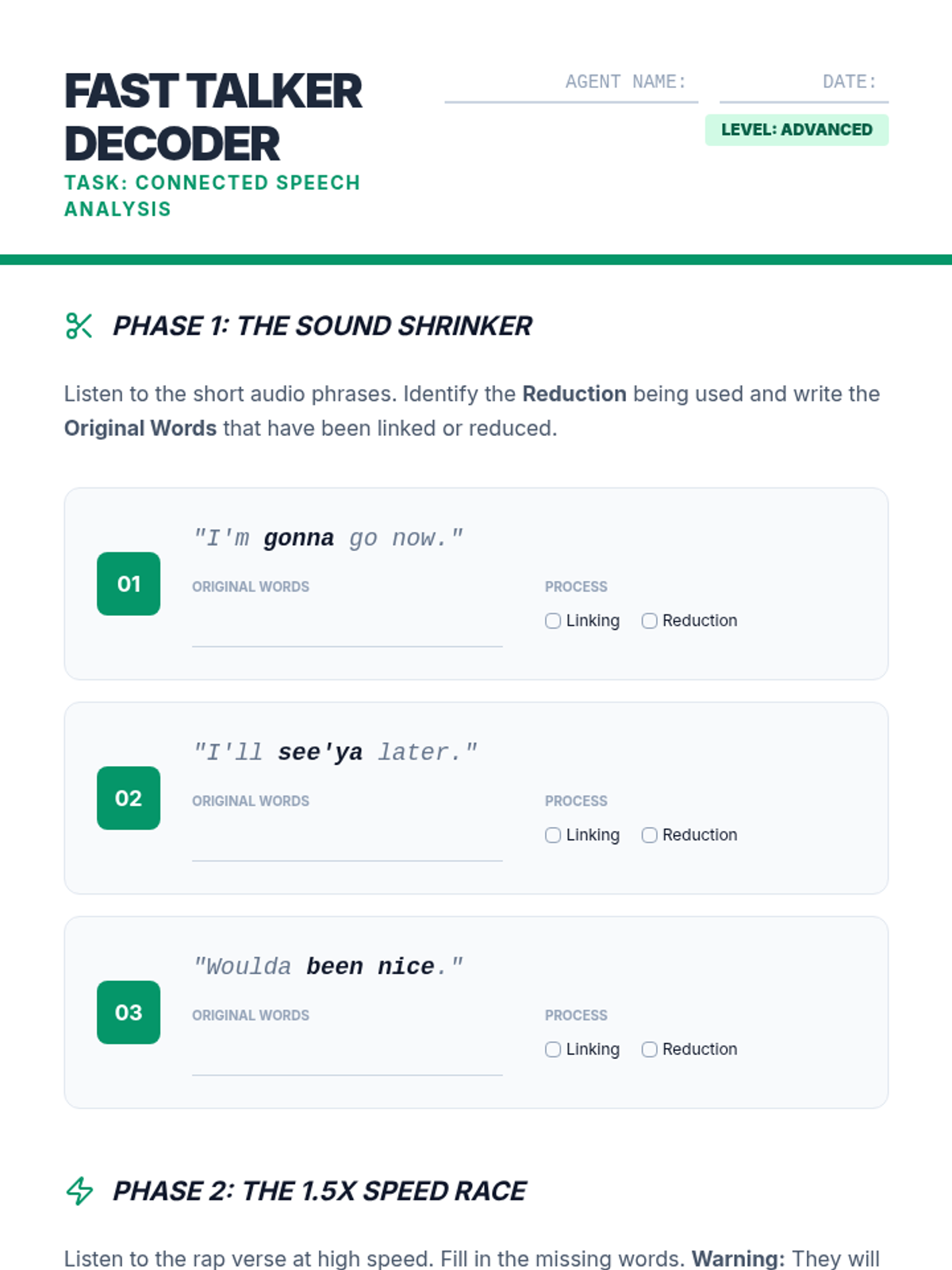
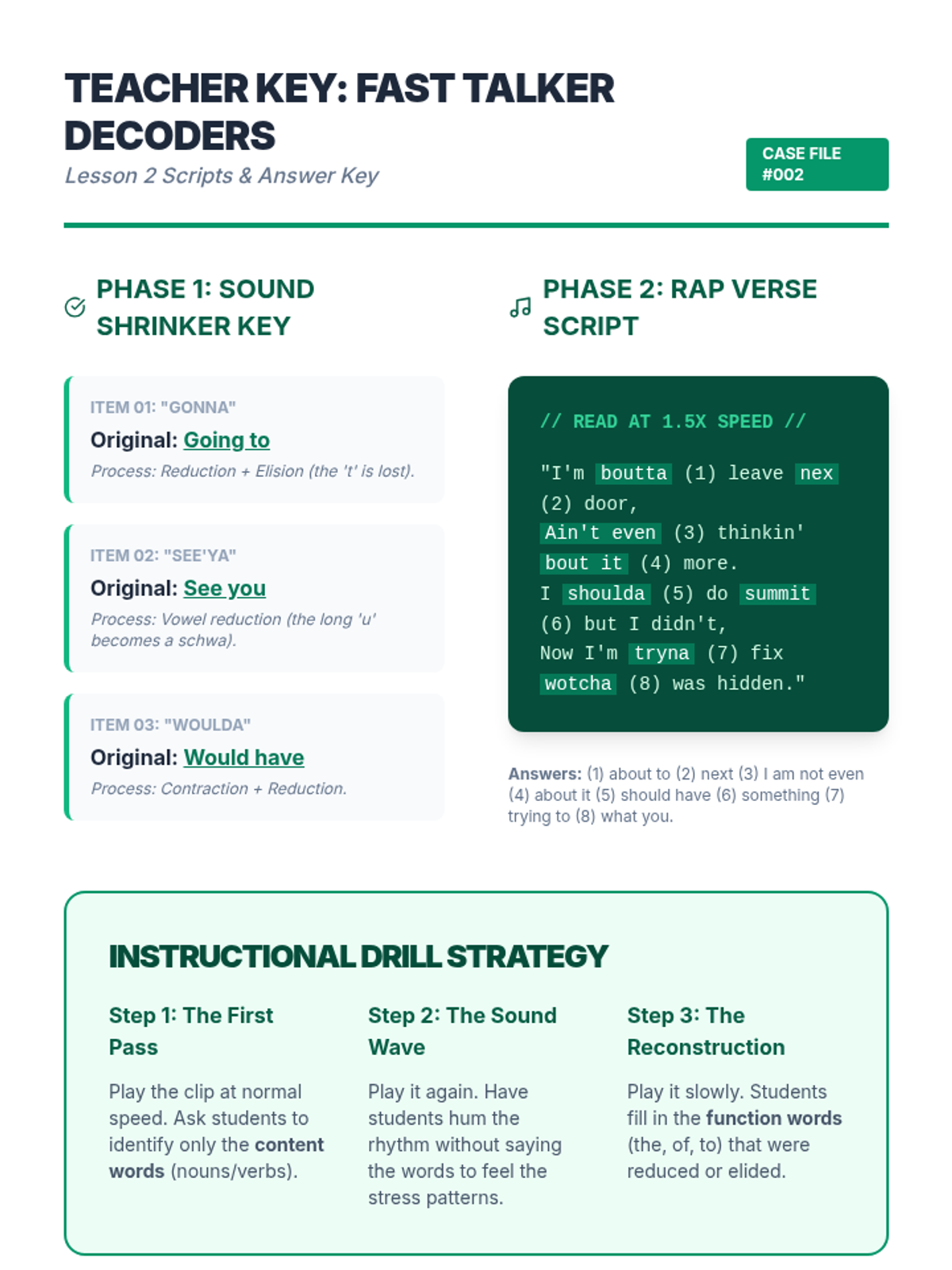
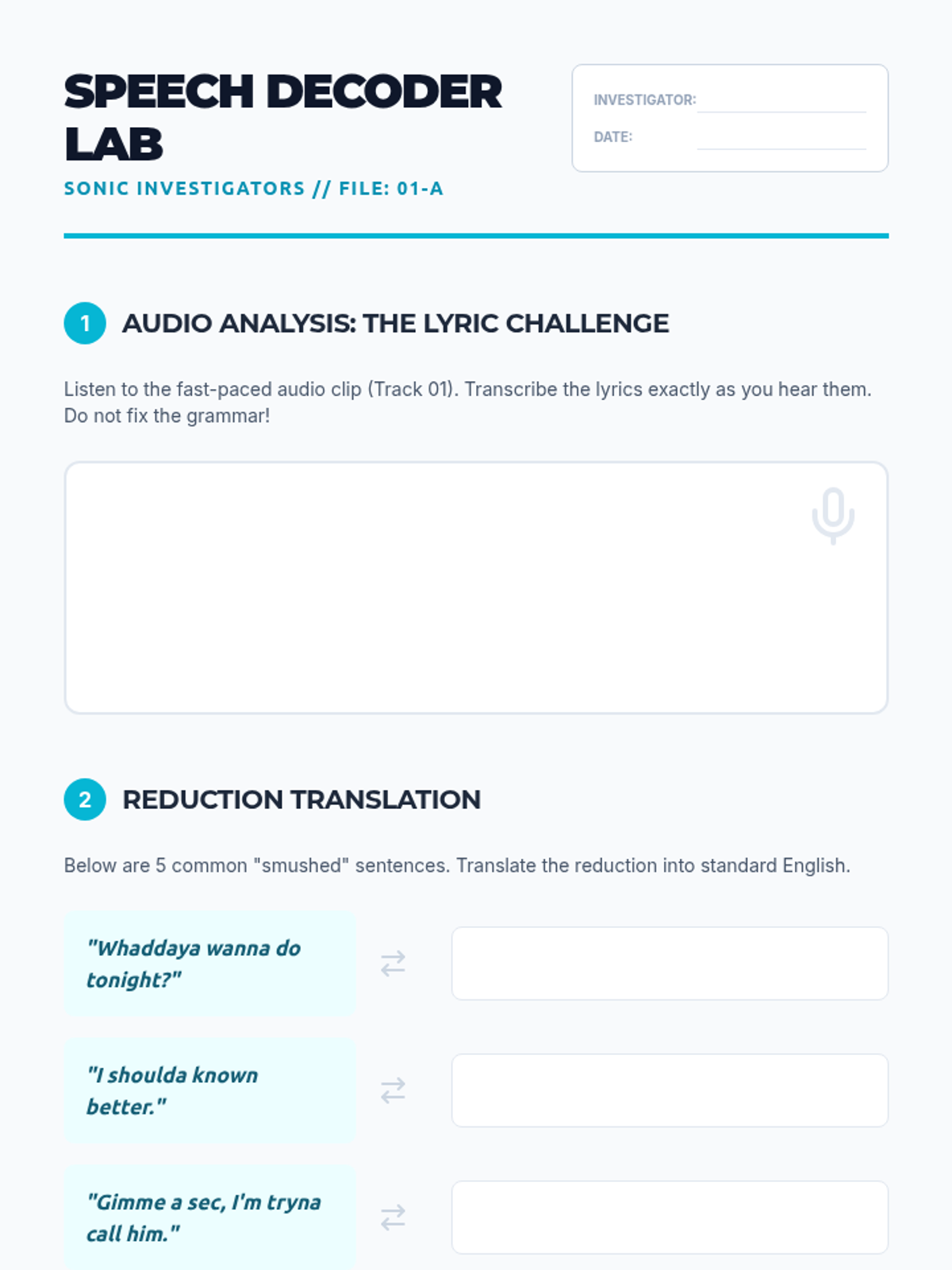
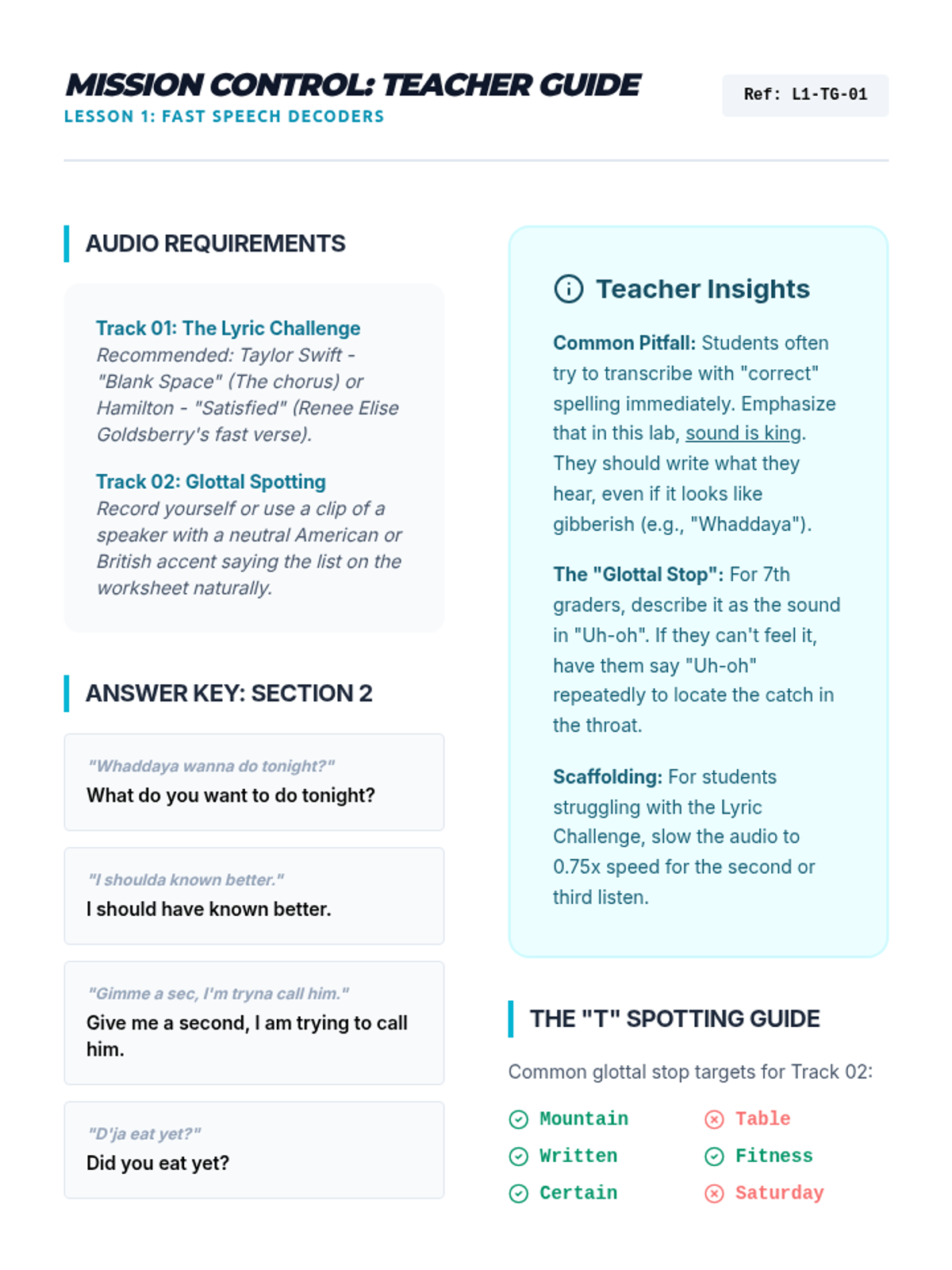
This lesson focuses on connected speech patterns like linking, reduction, and elision to help students decode fast-paced native English.
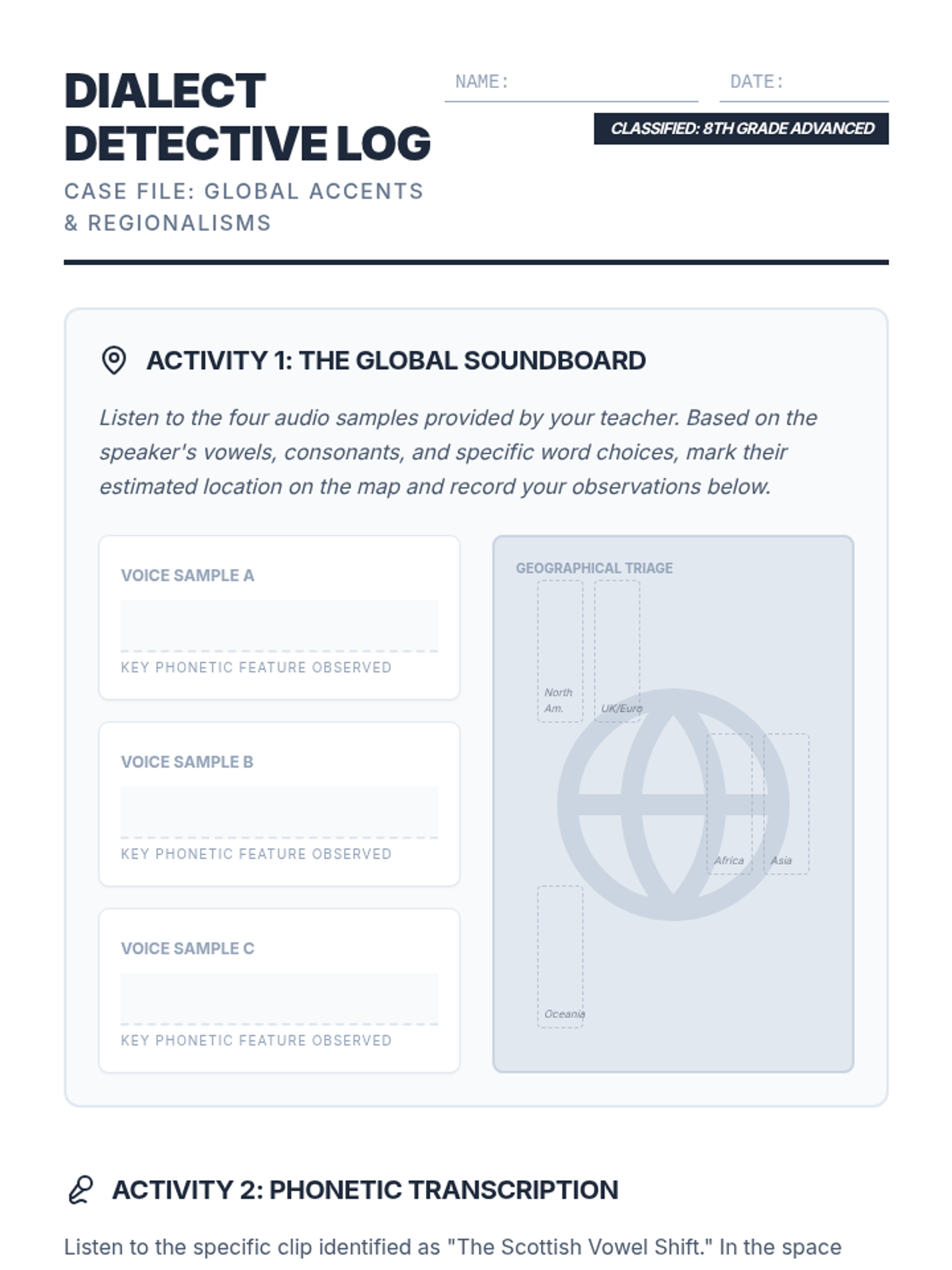
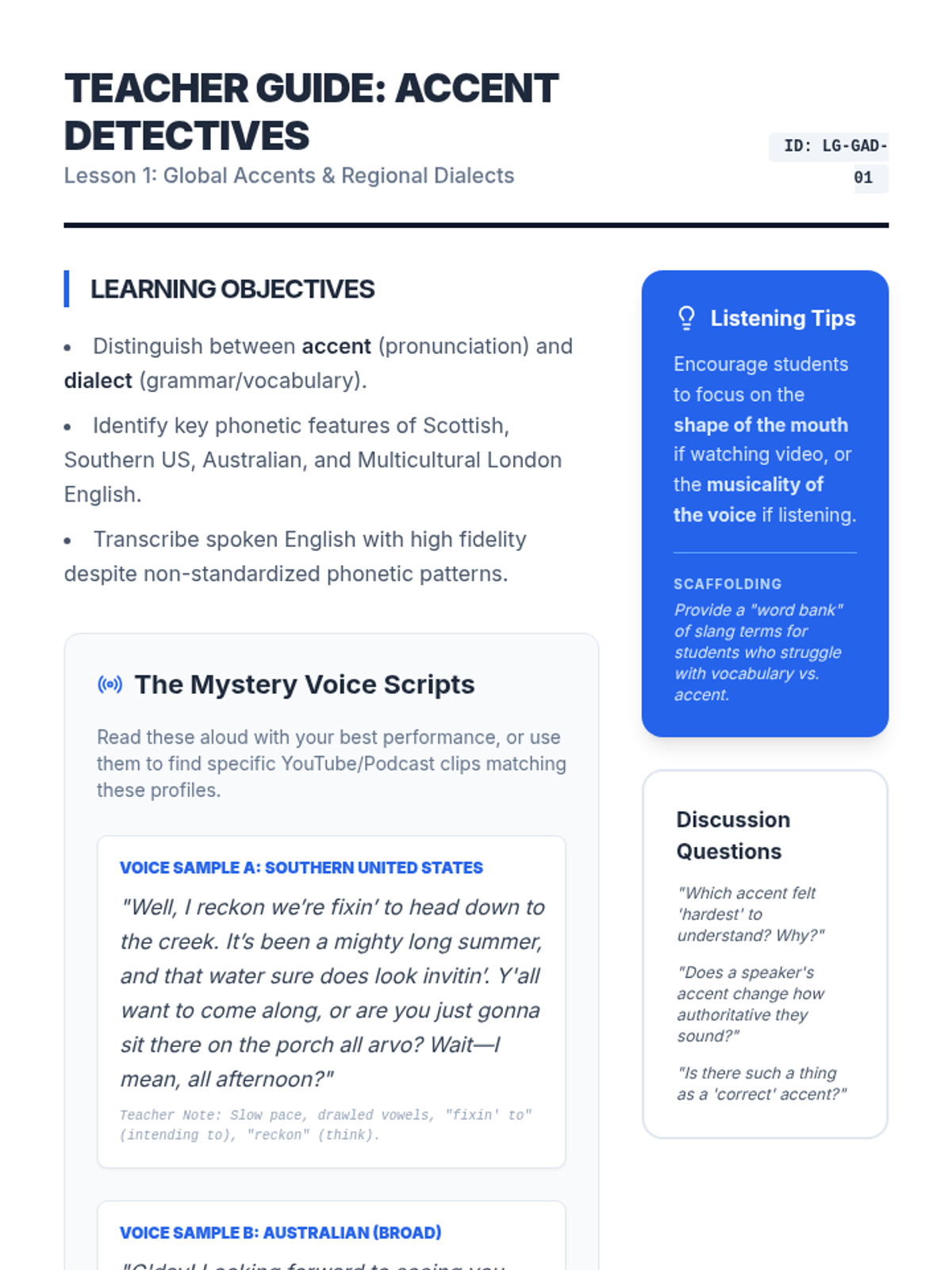
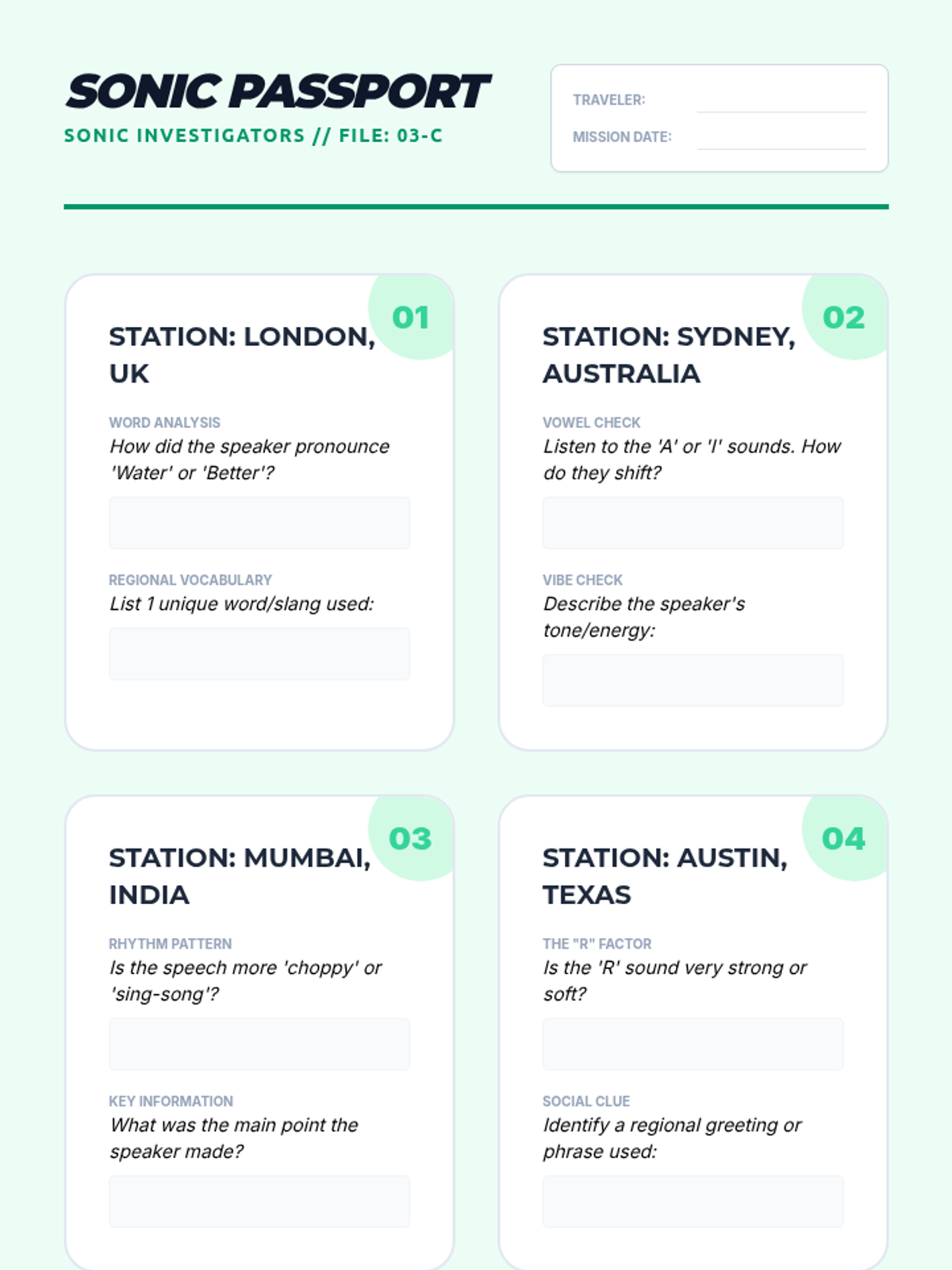
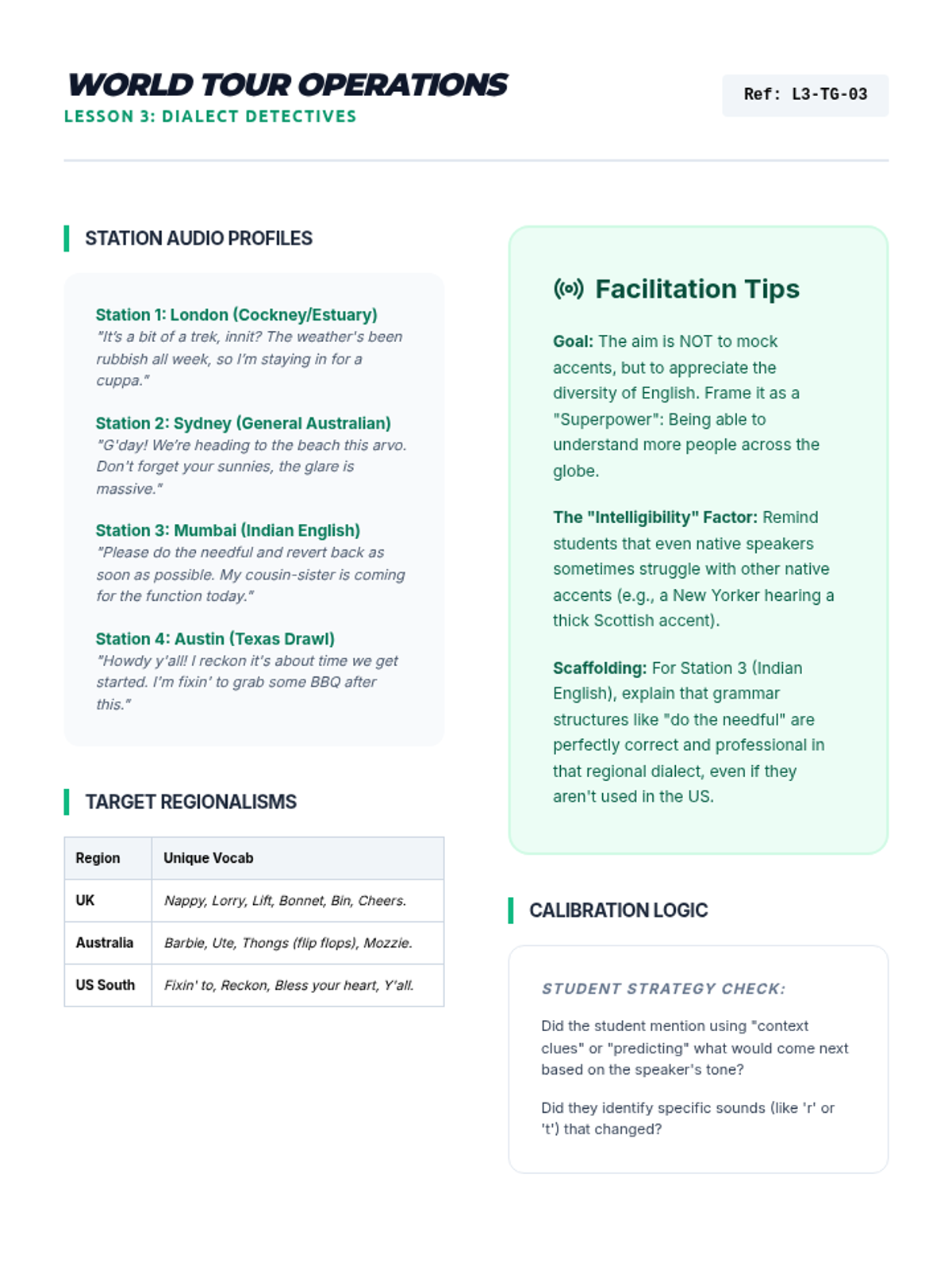
Students explore the diversity of English by analyzing regional accents and dialects, identifying phonetic differences and slang.
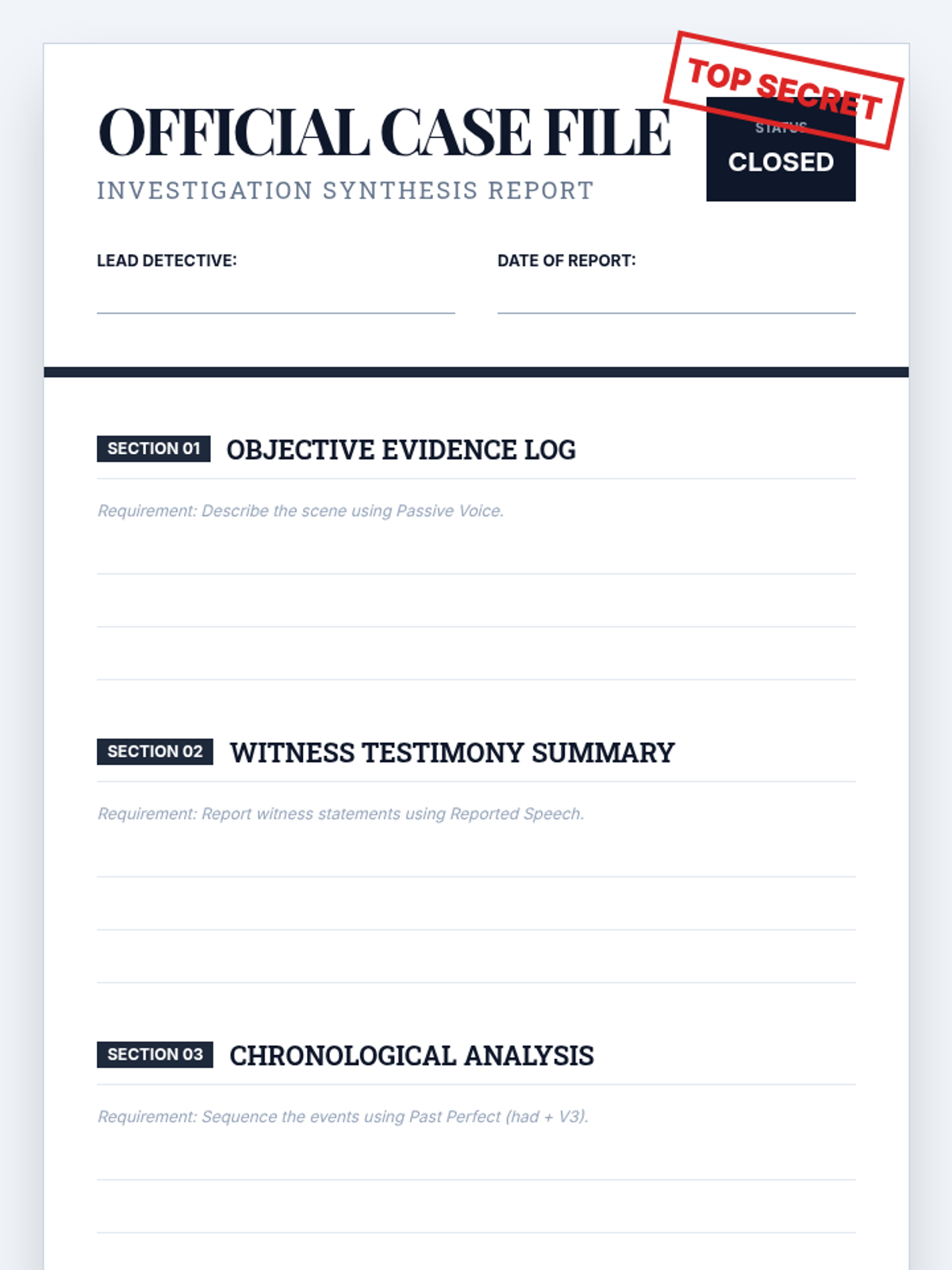
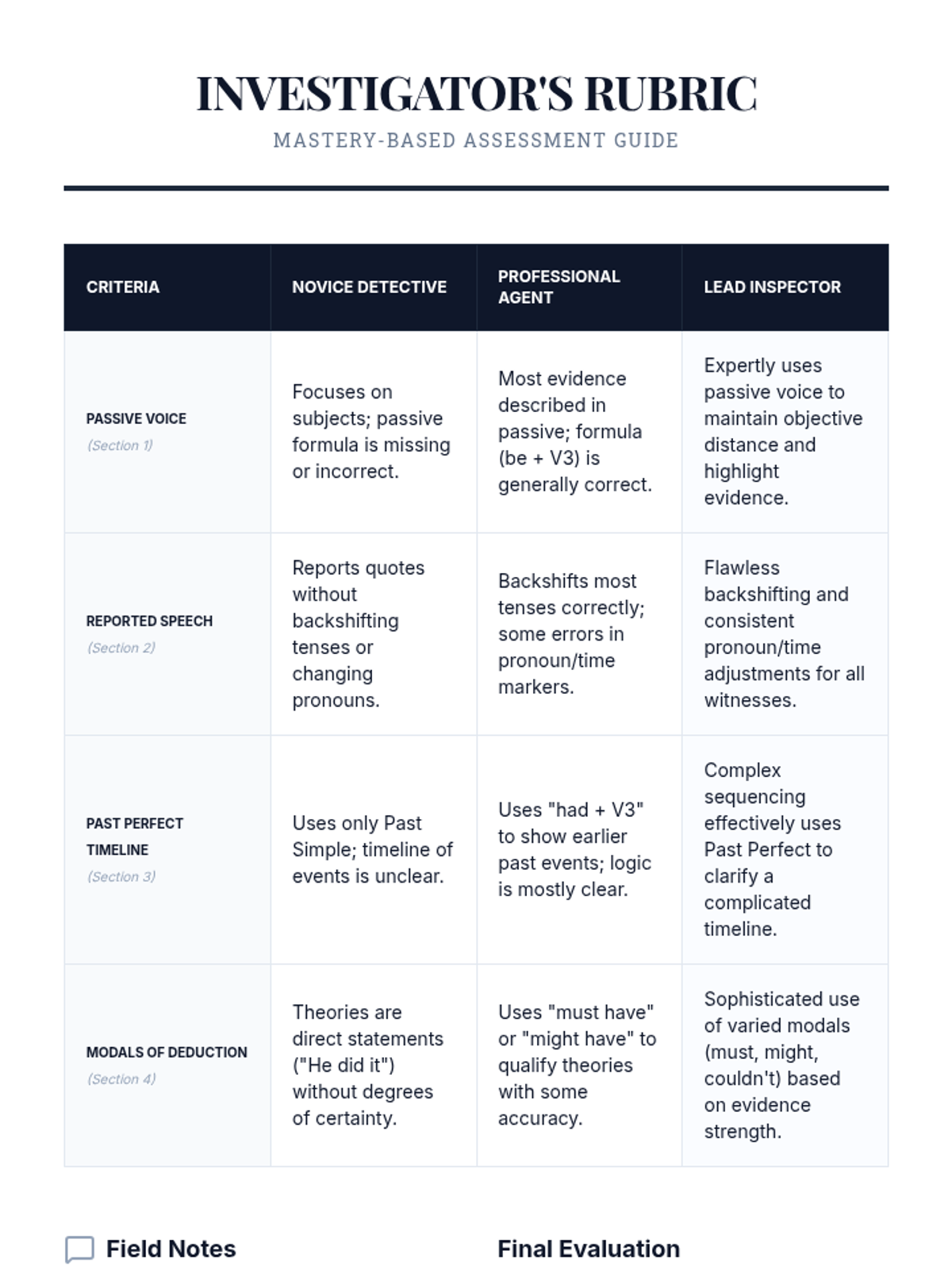
Students synthesize their skills to write a final case report. They combine passive descriptions, deductive theories, and reported testimony into a professional narrative.
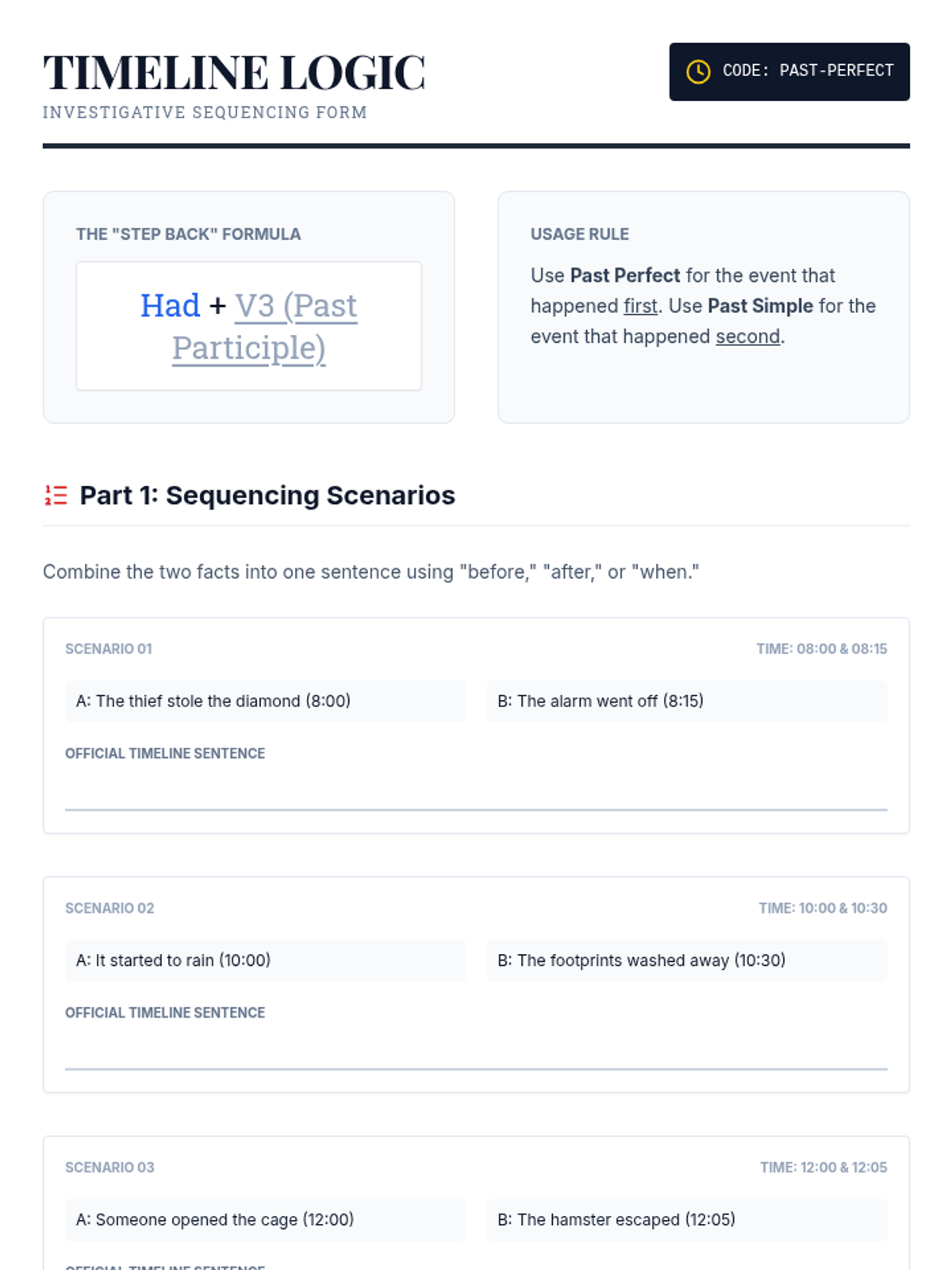
Students use the past perfect tense to sequence events in the mystery. They create timelines to distinguish between actions that happened before other past events.
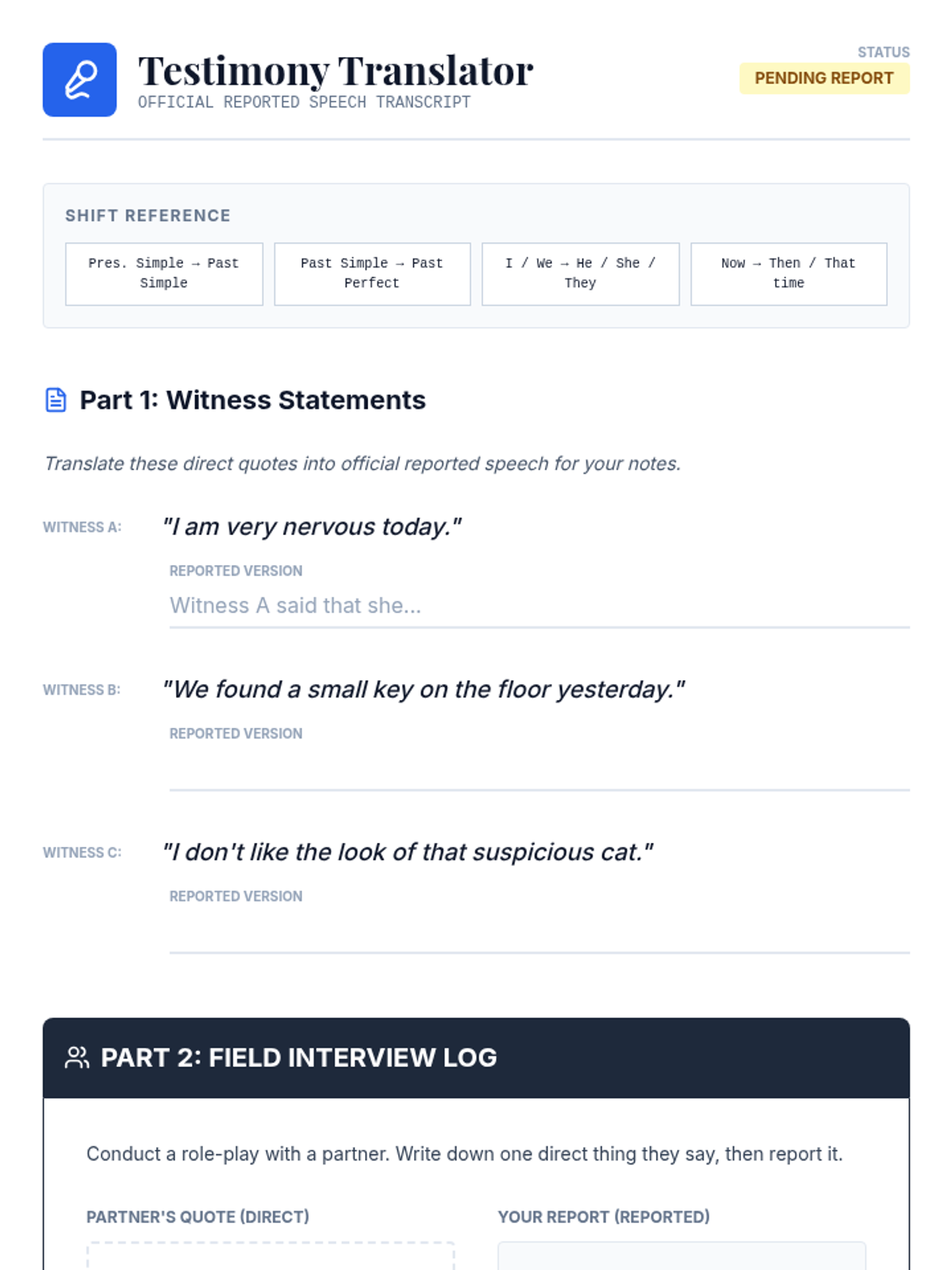
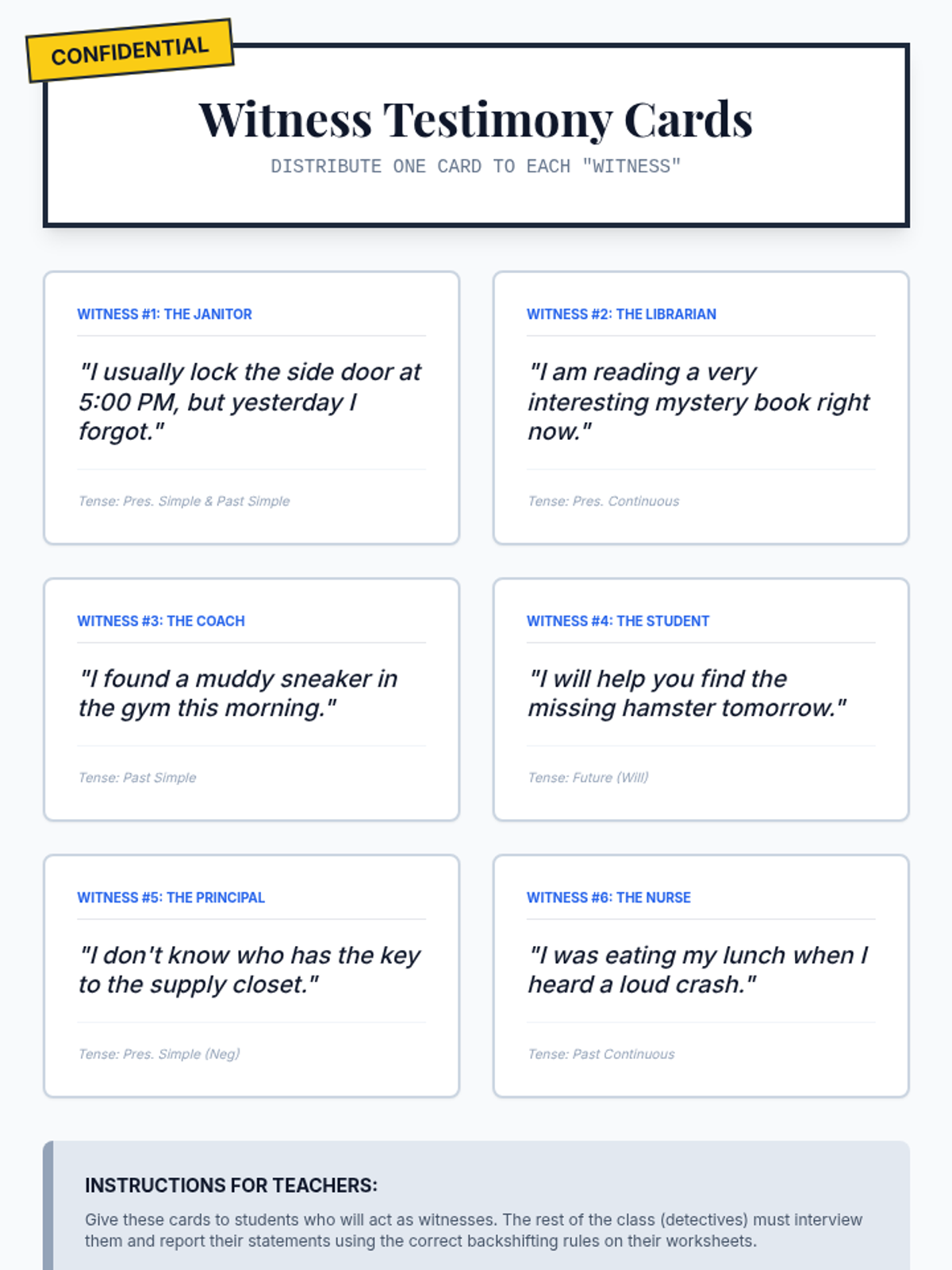
Students interview witnesses and convert direct quotes into reported speech. They practice the rules of 'backshifting' tenses and changing pronouns for accurate reporting.
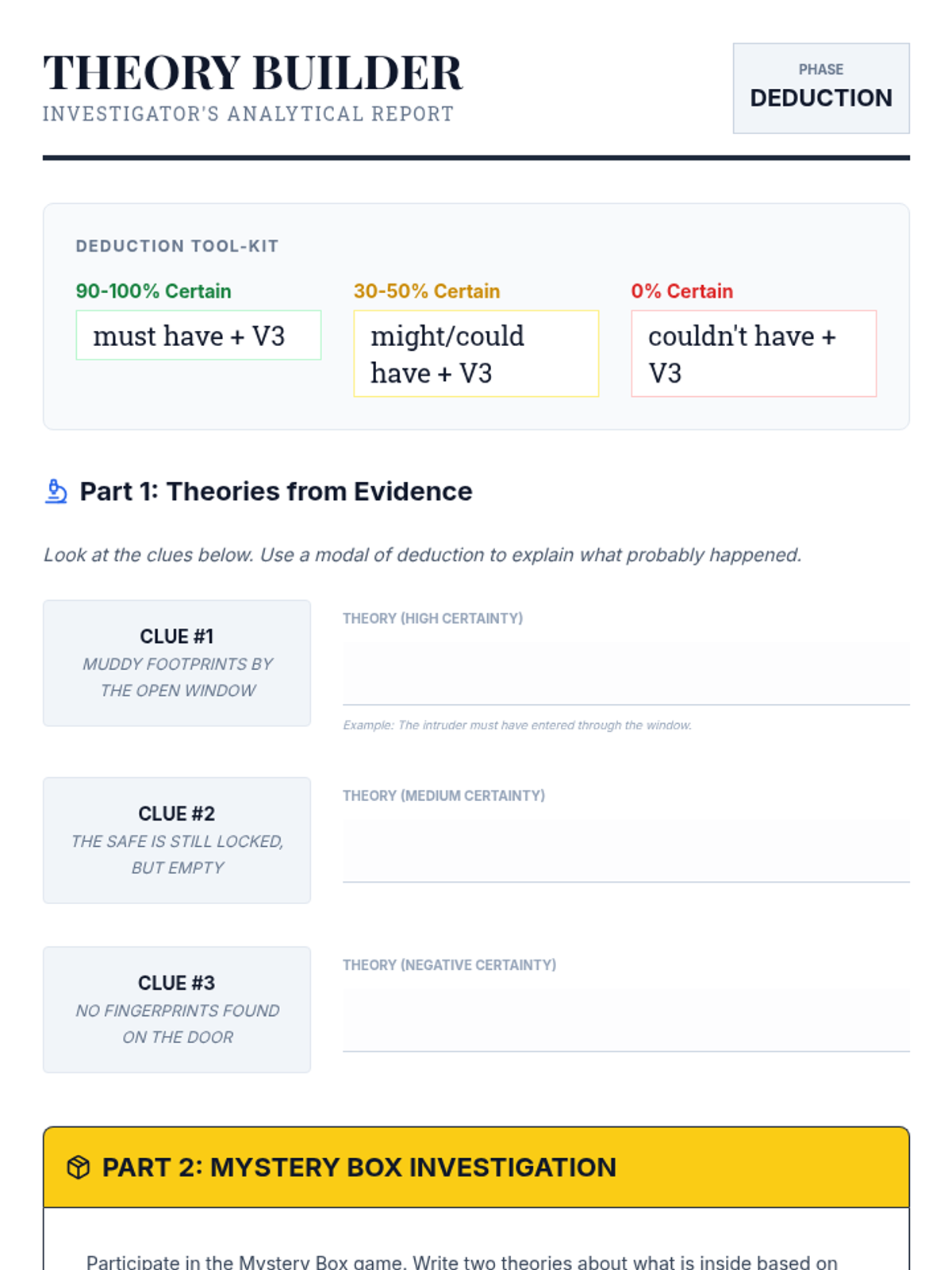
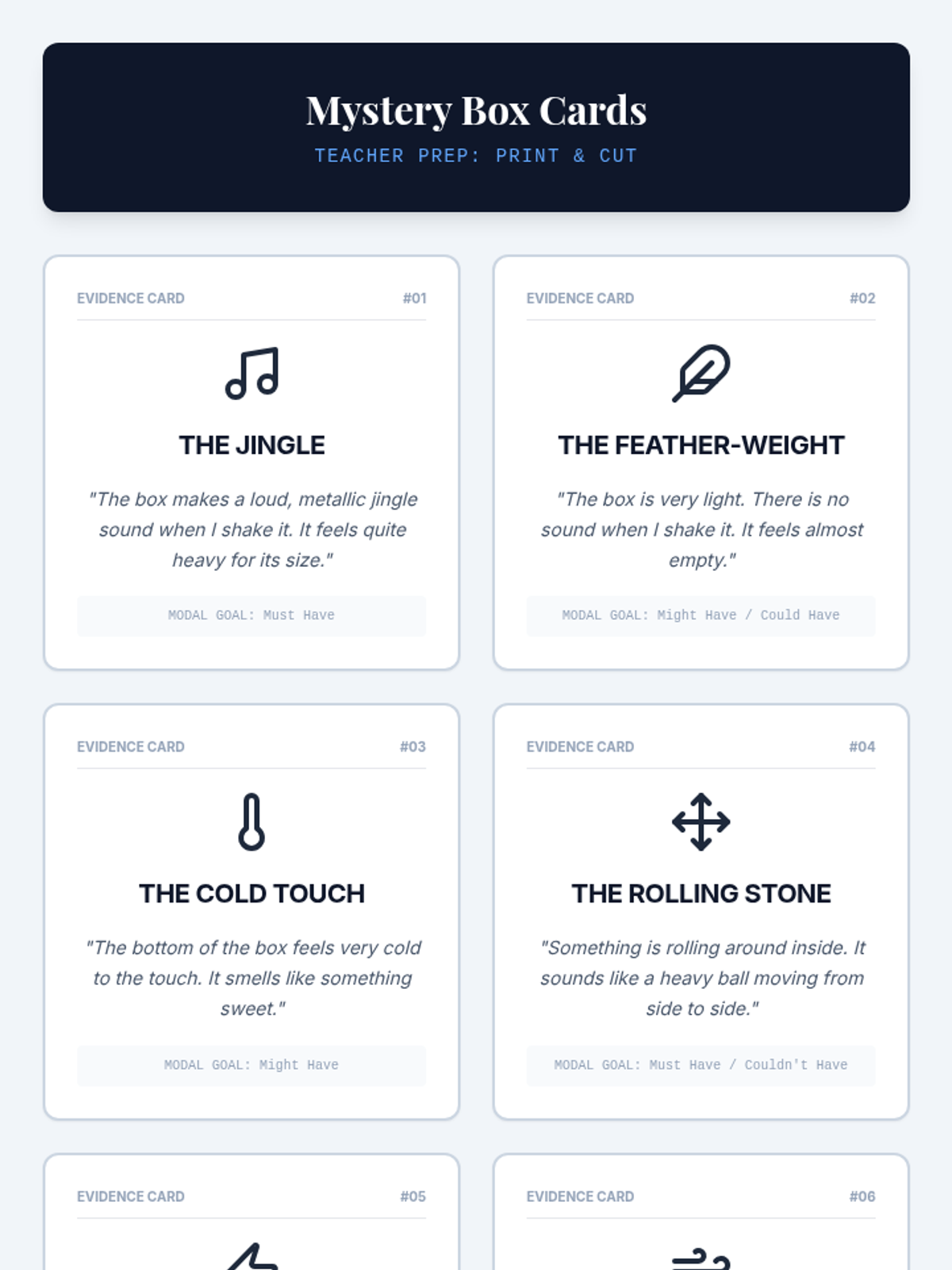
Students use modals of deduction (must have, might have, couldn't have) to formulate theories about the mystery. They learn to express different degrees of certainty based on the evidence.
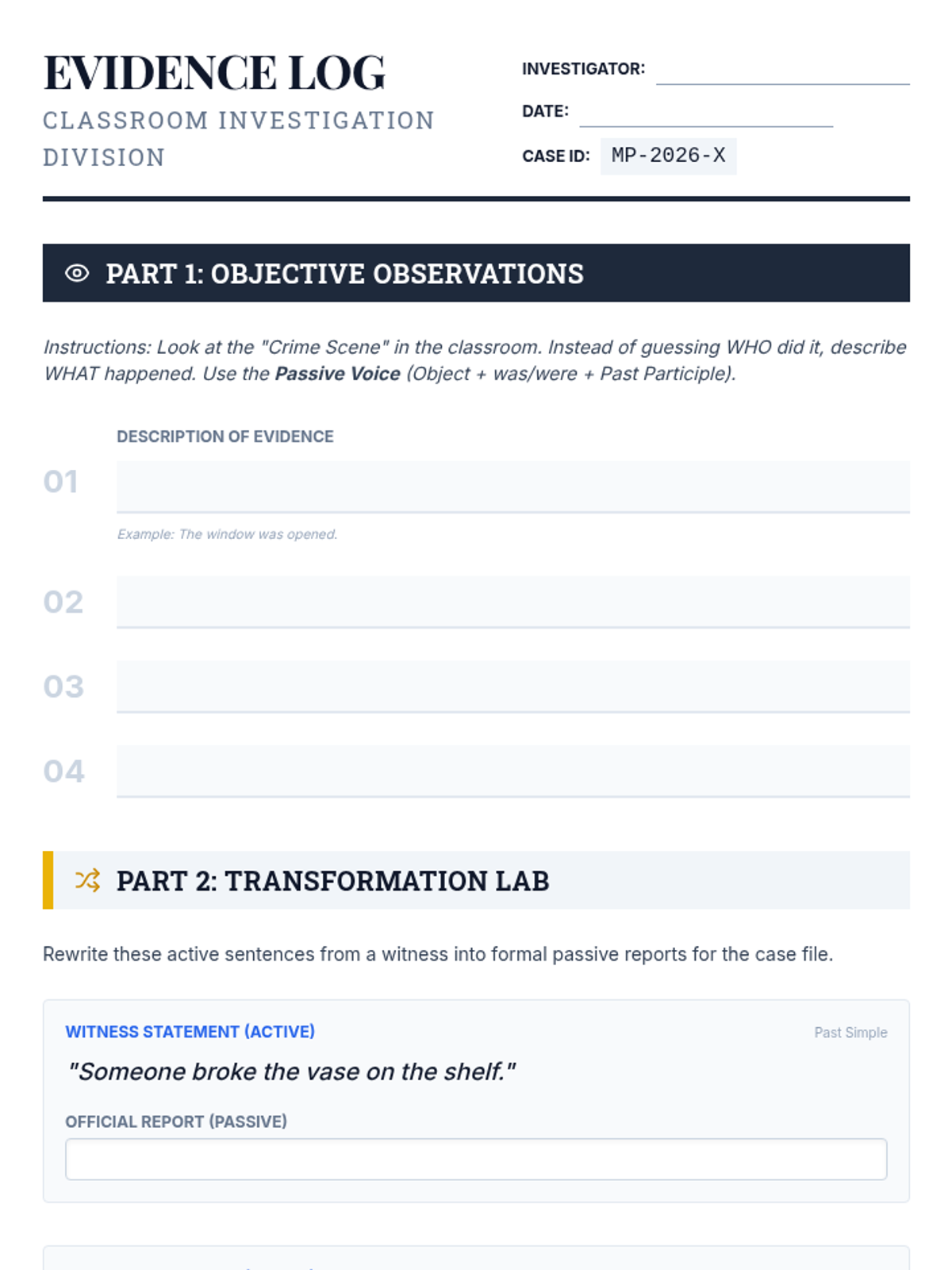
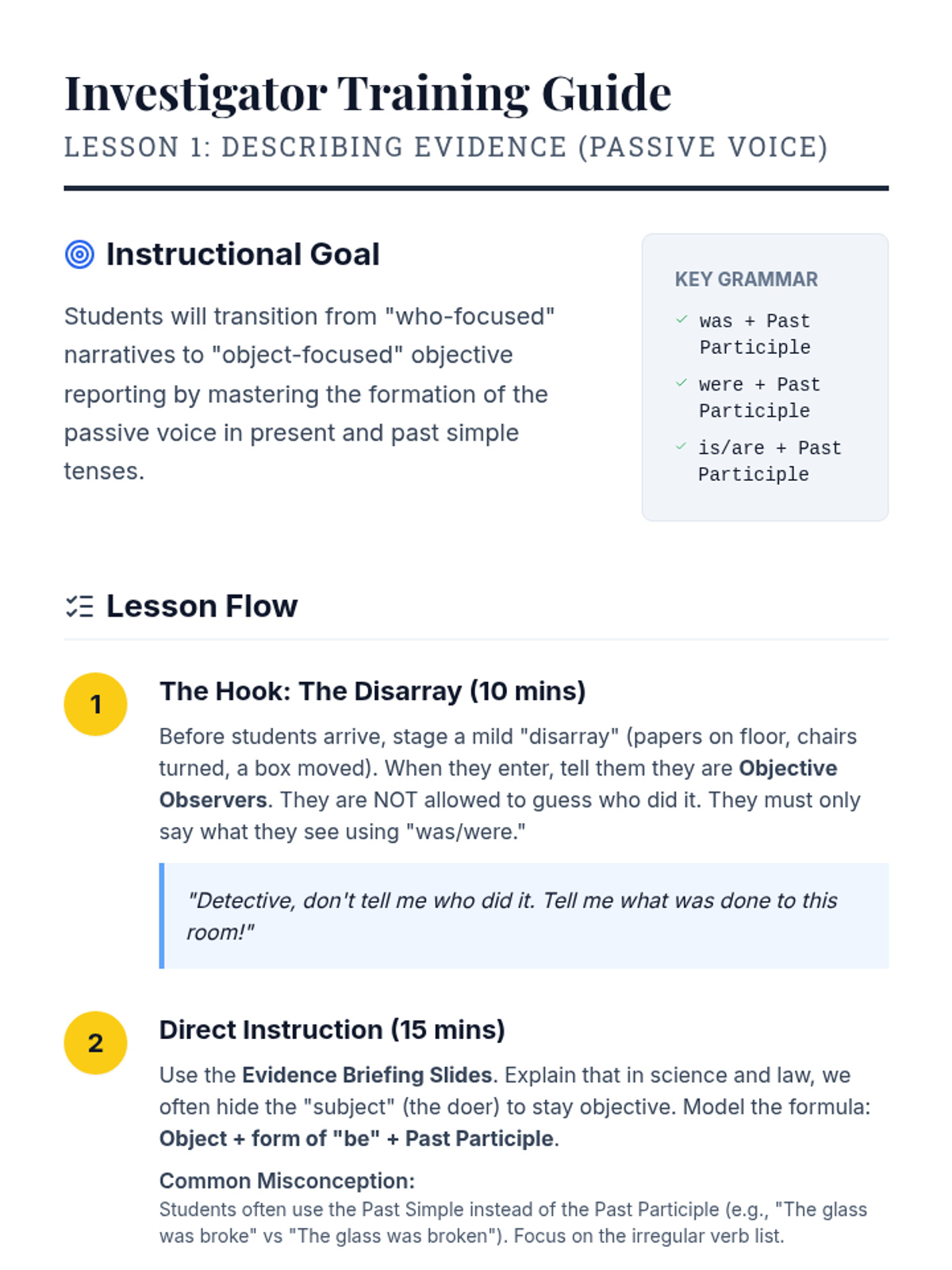
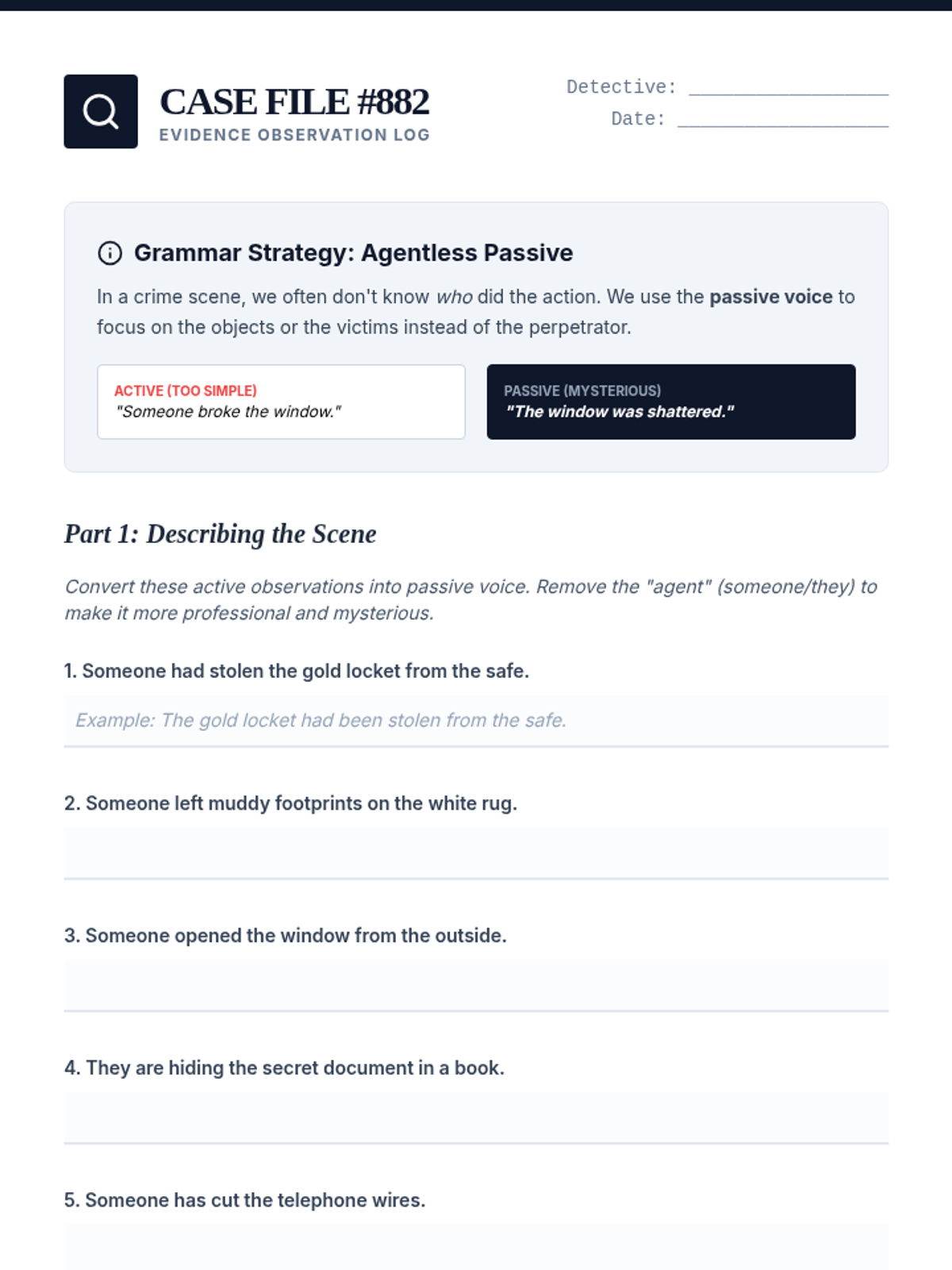
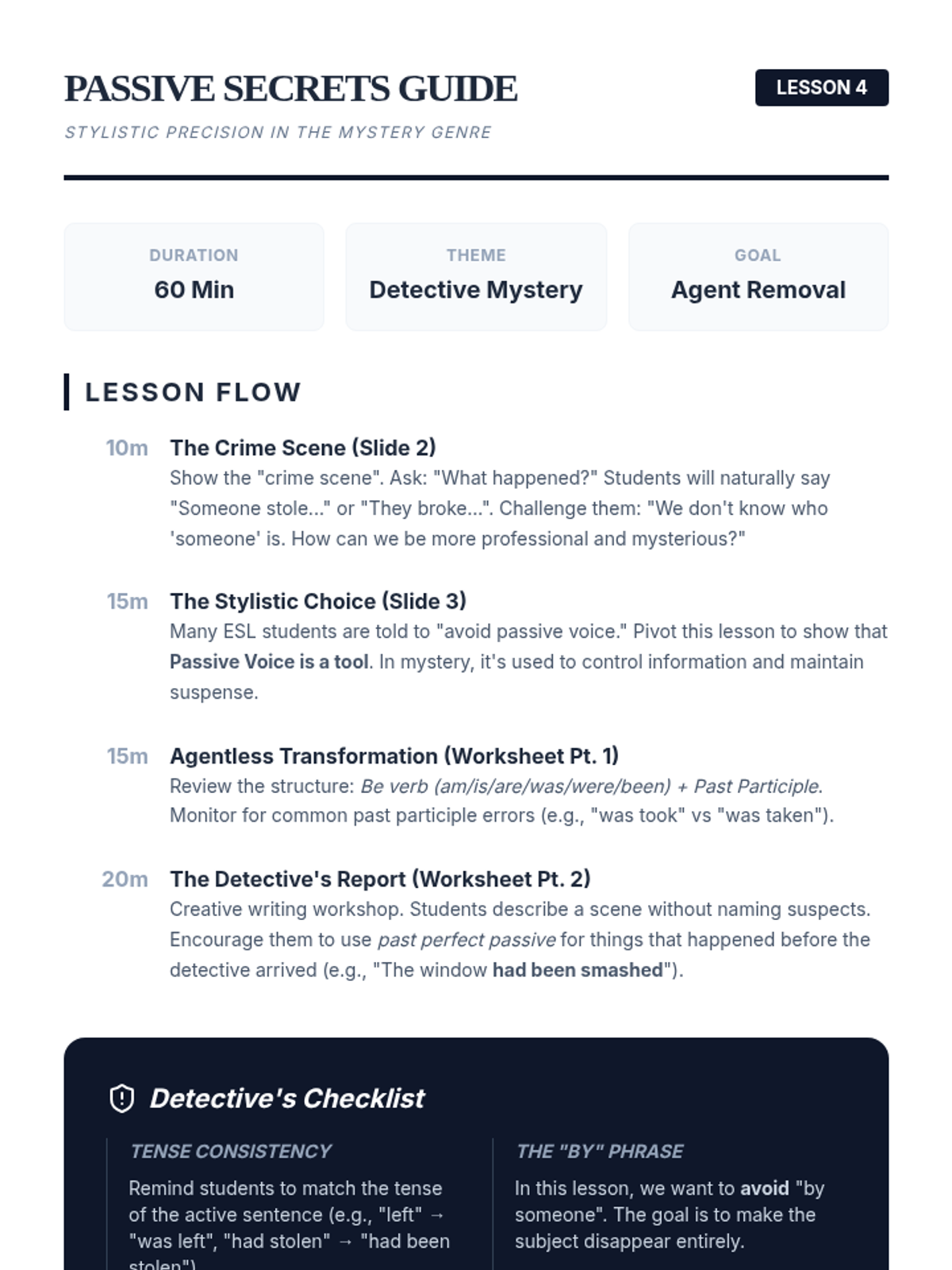
Students learn to describe evidence objectively using the passive voice, focusing on what was done rather than who did it. They analyze a staged 'crime scene' to practice transforming active sentences.
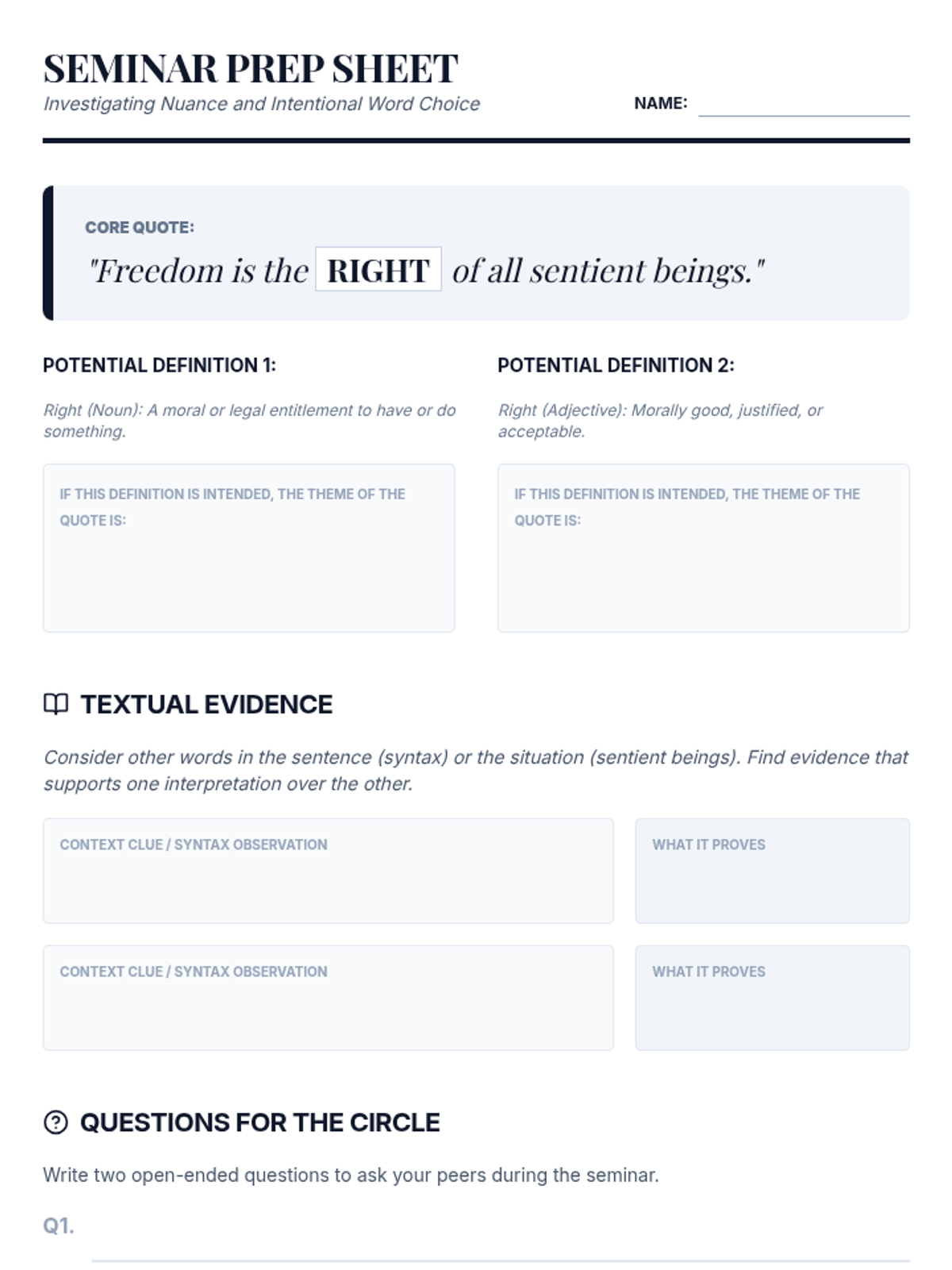
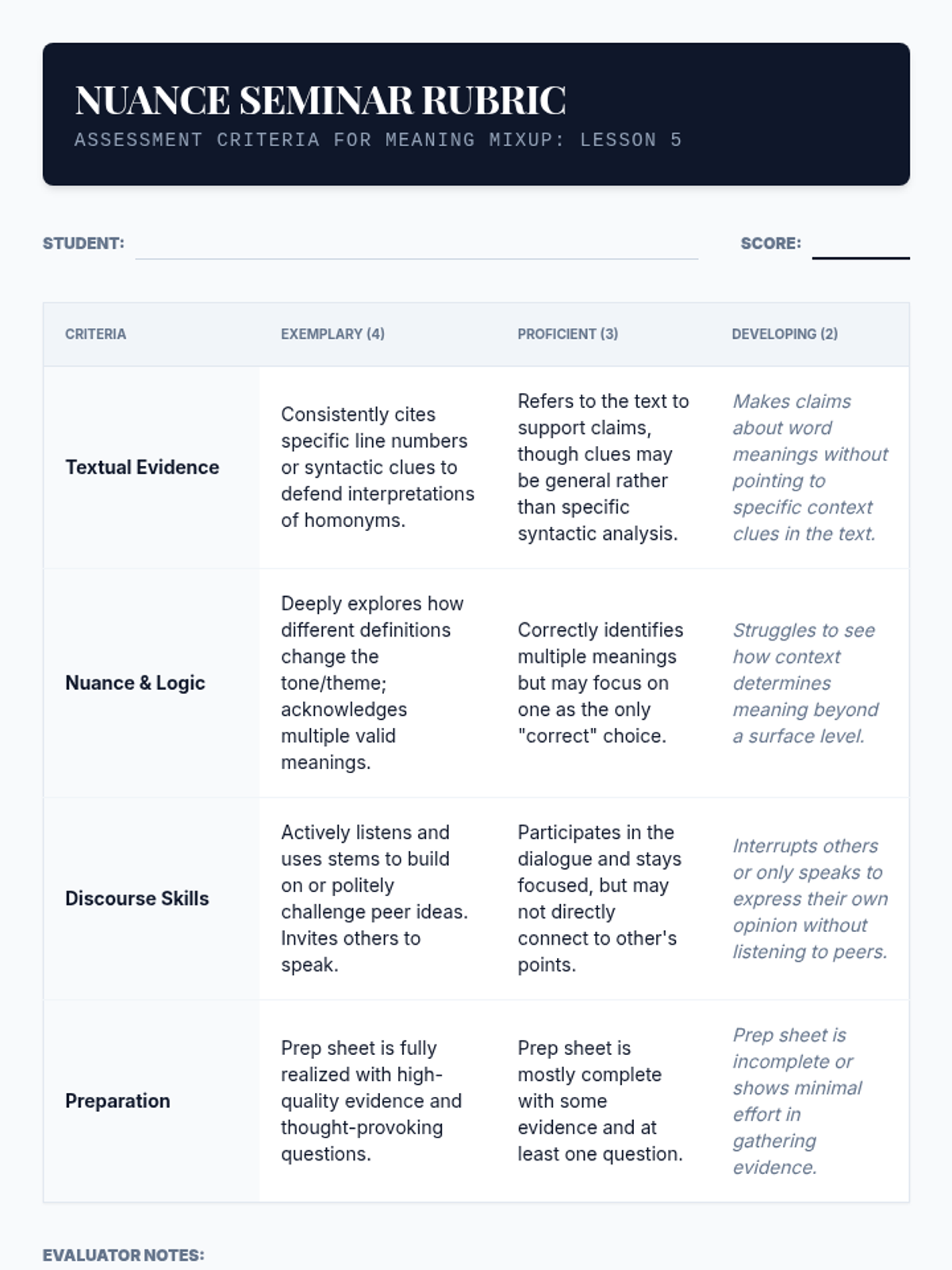
Students participate in a Socratic seminar discussing how an author's specific choice of multi-meaning words impacts tone and theme, using textual evidence to support their interpretations.
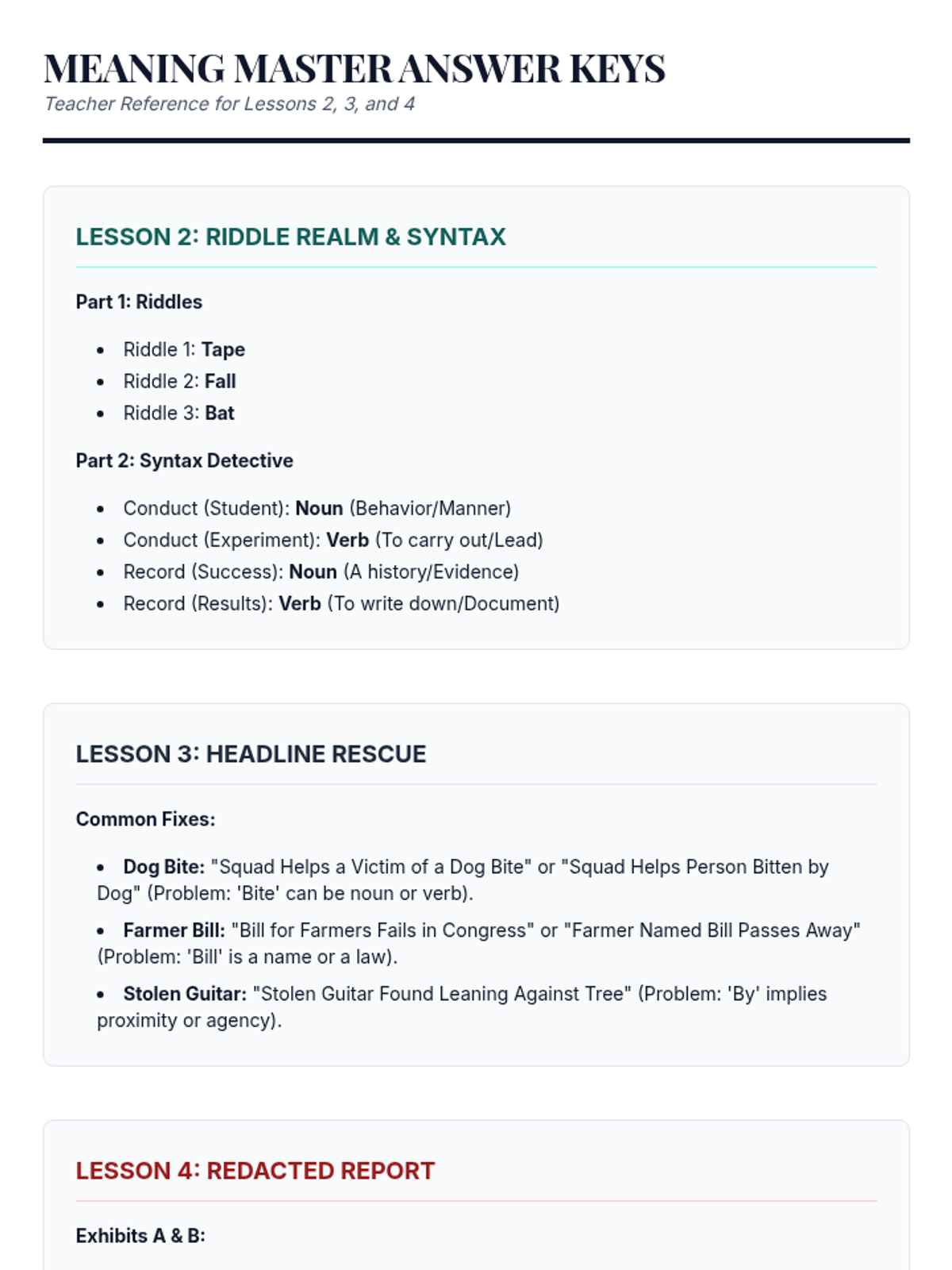
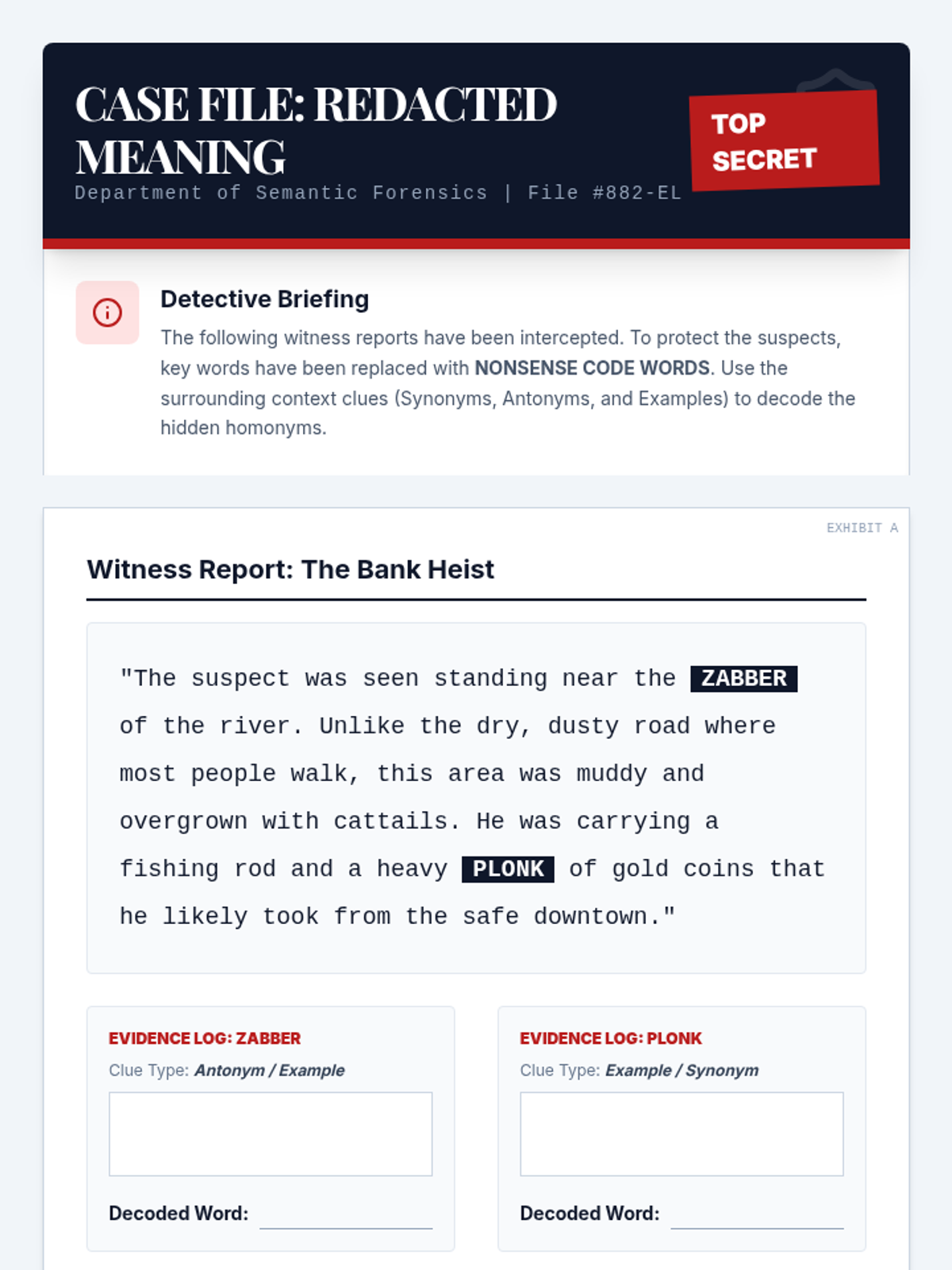
Students act as 'context detectives' to solve a mystery involving redacted texts, using synonyms, antonyms, and examples to deduce intended meanings of homonyms.
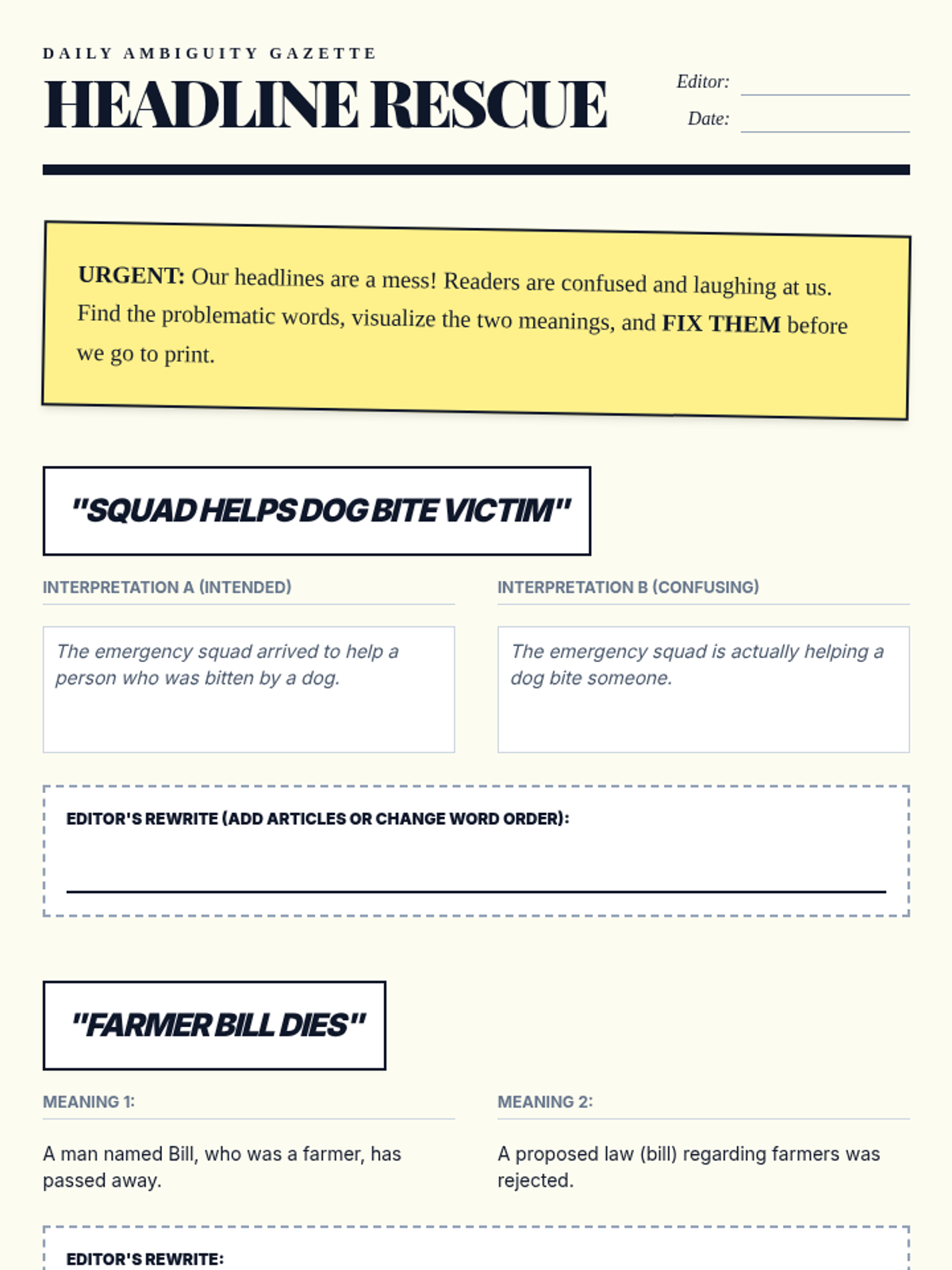
Students analyze 'crash blossoms' (ambiguous news headlines) to identify homonyms that cause confusion and practice rewriting them for clarity.
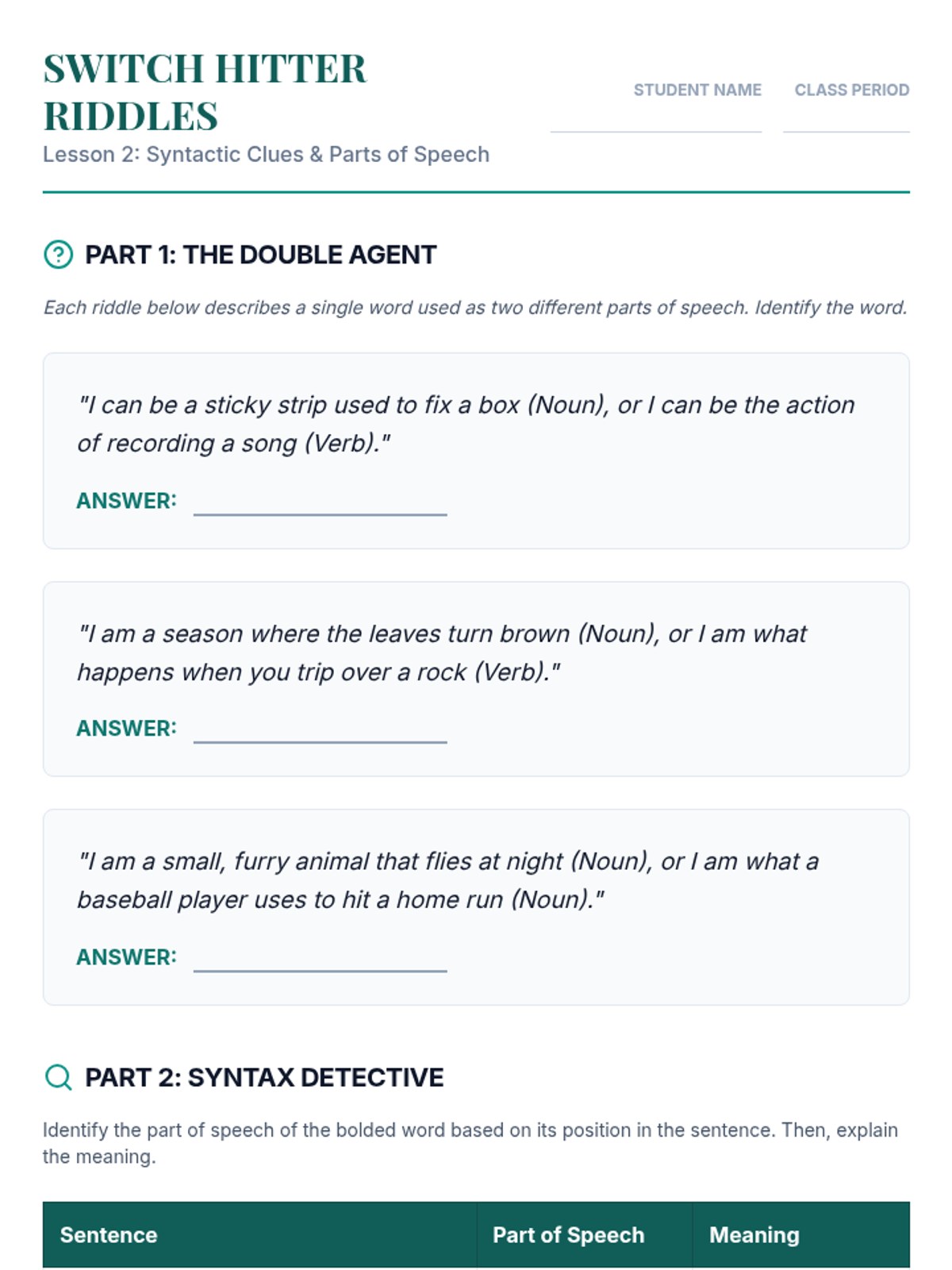
Students learn to identify the part of speech of a homonym to narrow down its meaning, using grammatical function as a primary context clue.
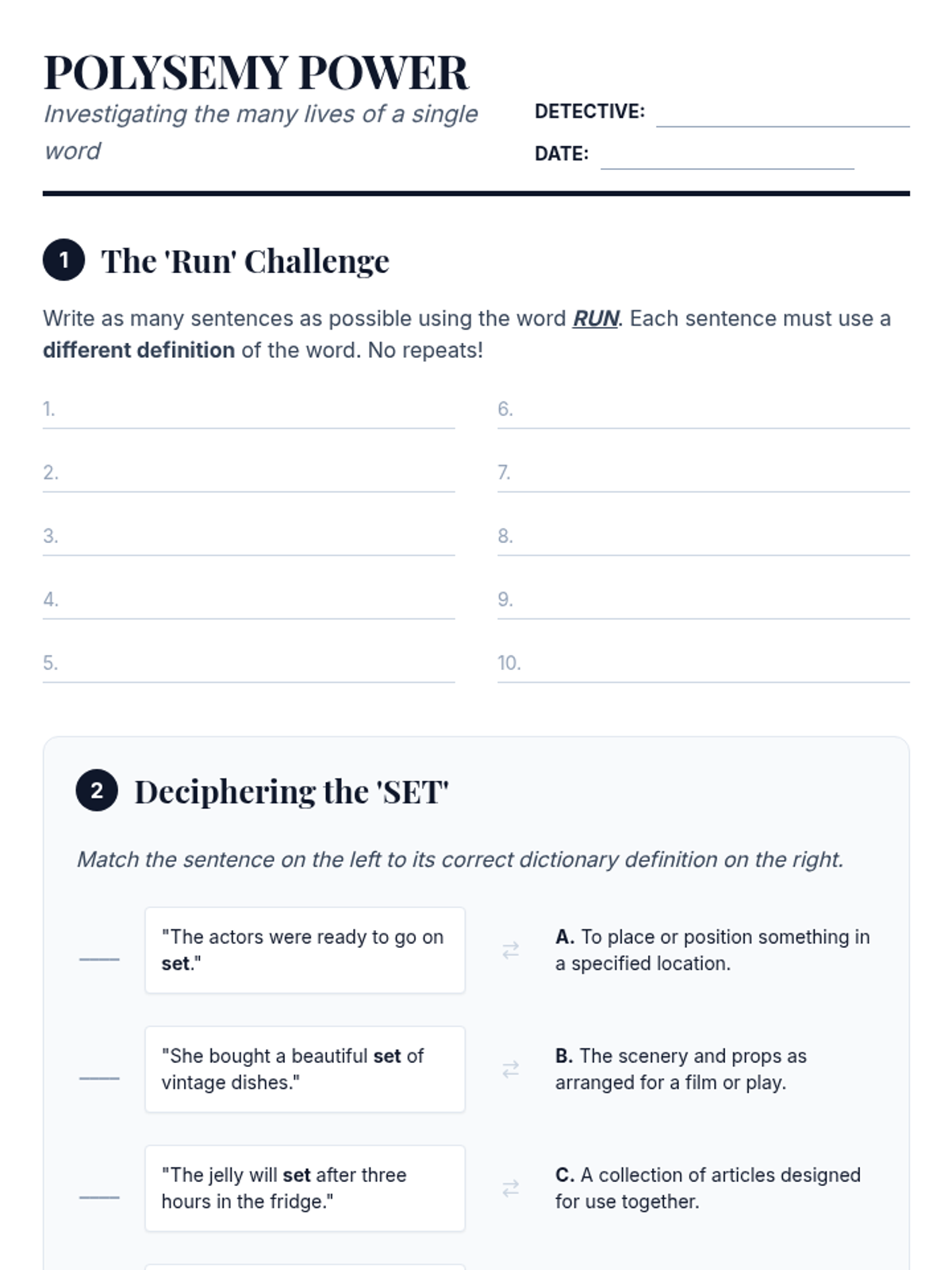
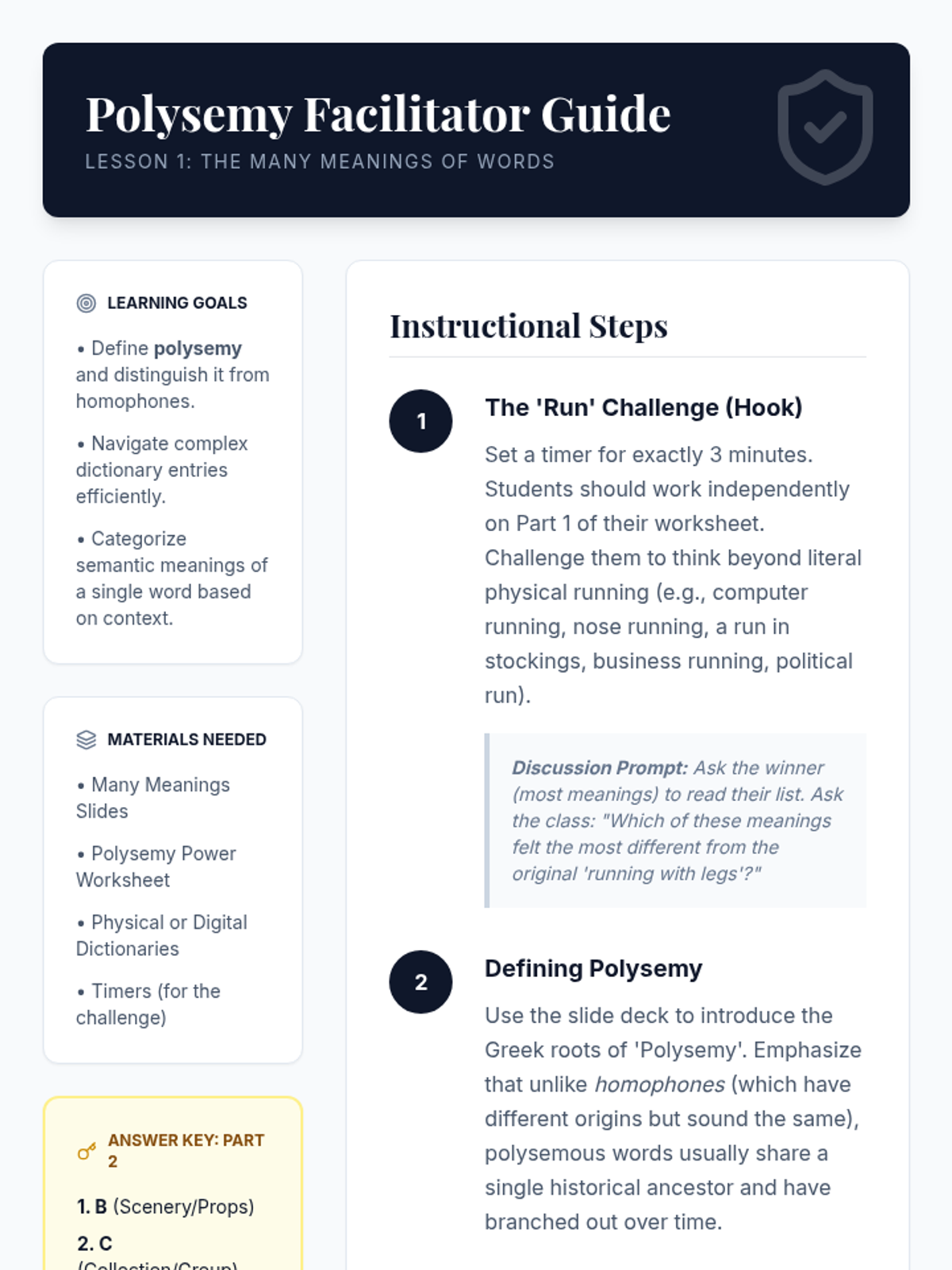
Students investigate words with the highest number of definitions in the English language (e.g., run, set, go) through a dictionary dive and a competitive sentence-writing challenge.
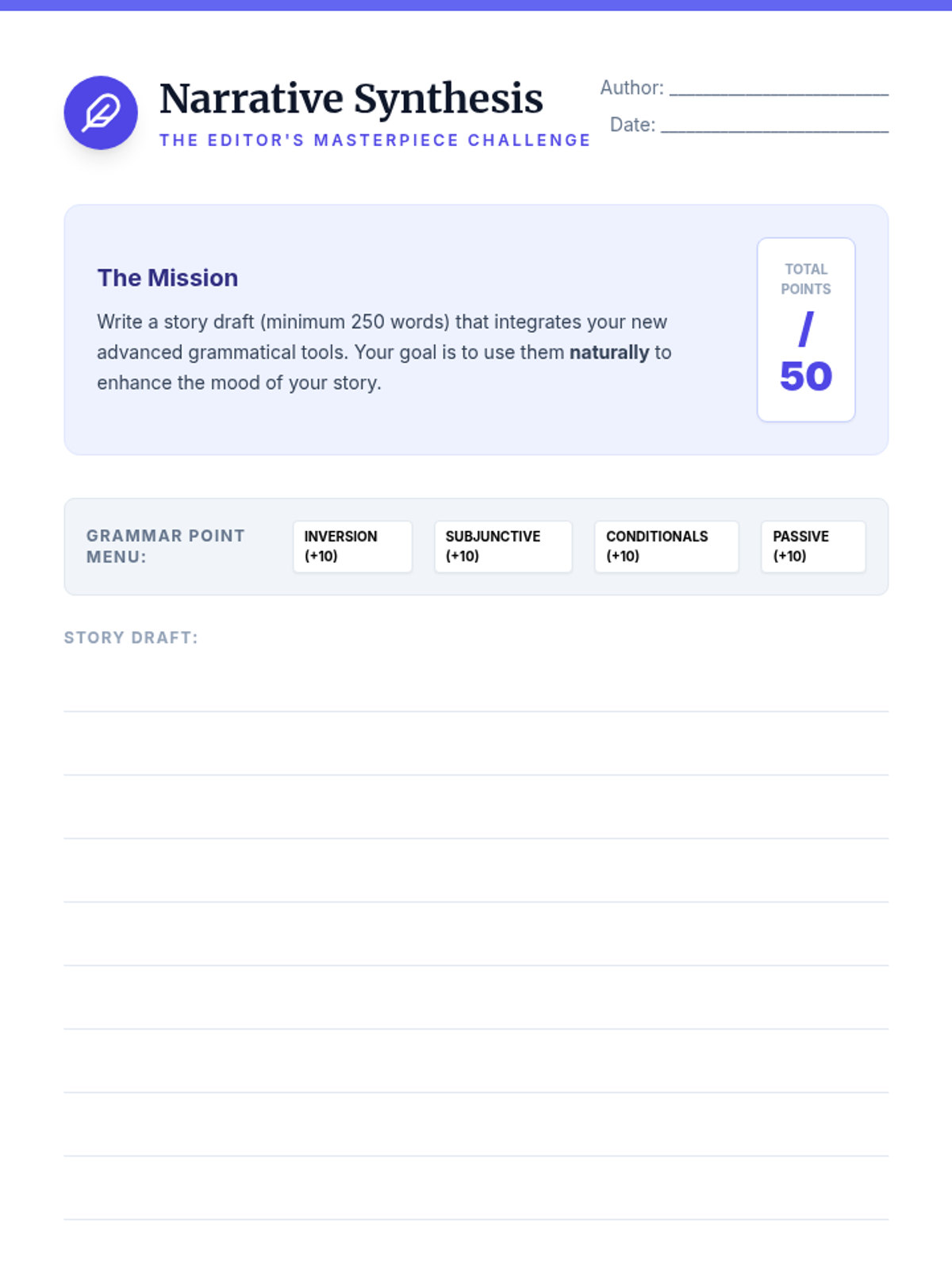
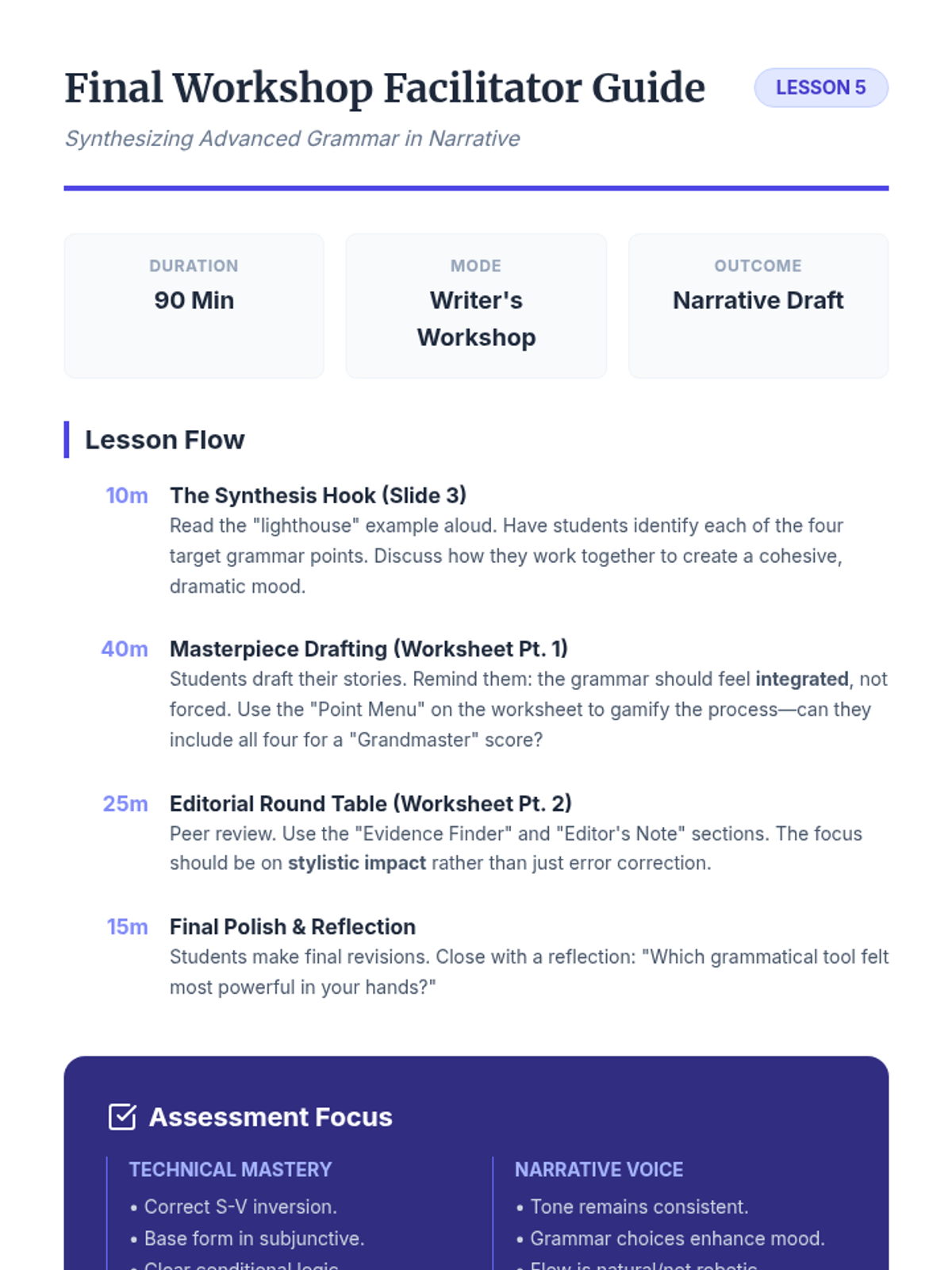
In this culminating workshop, students integrate all advanced grammar structures into a cohesive original narrative. They perform peer reviews and revisions to ensure stylistic impact and grammatical accuracy.
Students examine the use of passive voice for hiding agents or emphasizing objects, specifically within the mystery genre. They write detective reports that utilize agentless passives to maintain suspense.
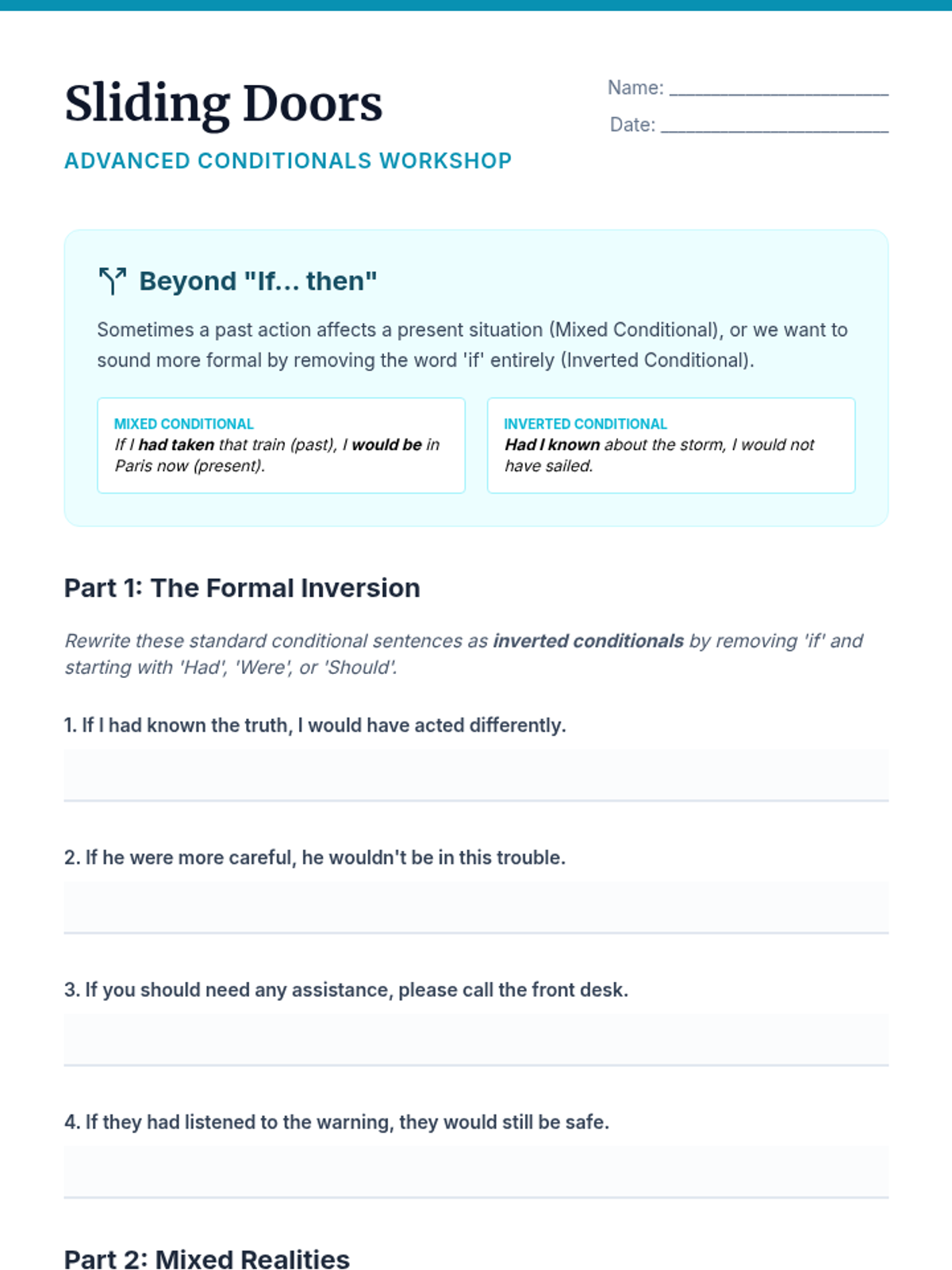
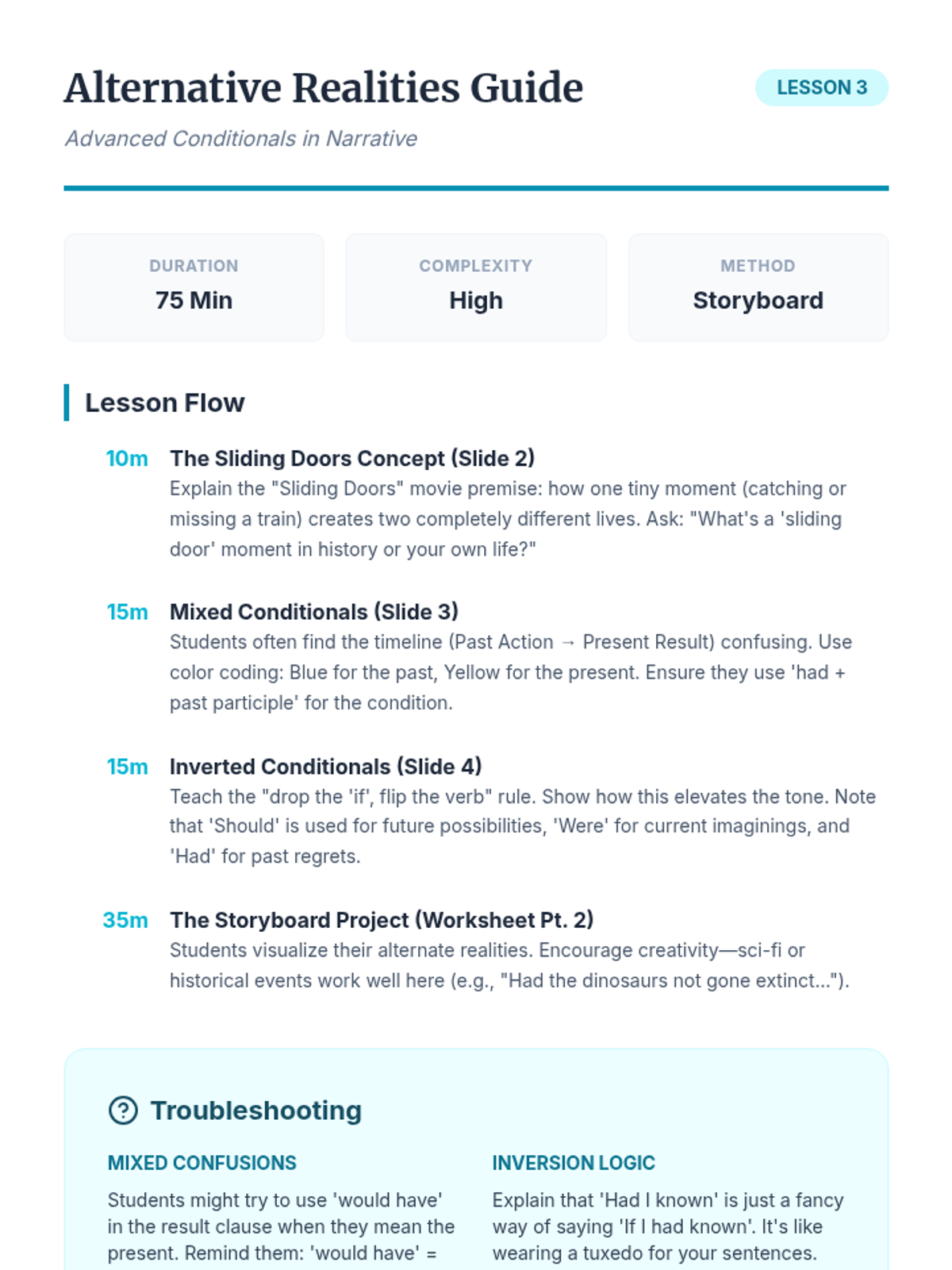
This lesson covers mixed and inverted conditionals (e.g., 'Had I known...') to express complex regrets or alternative outcomes. Students create storyboard scenarios showing how past actions affect present situations.
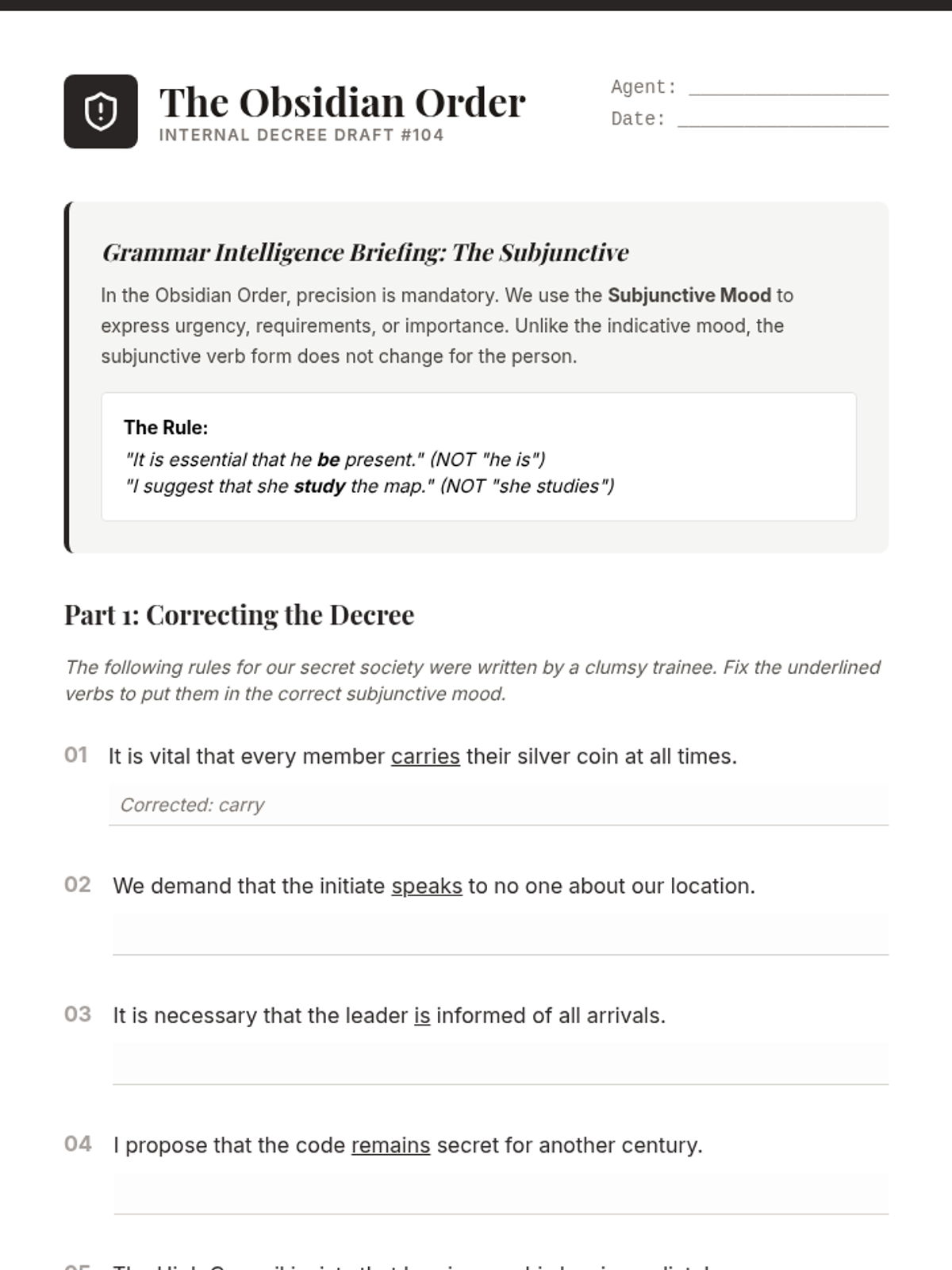
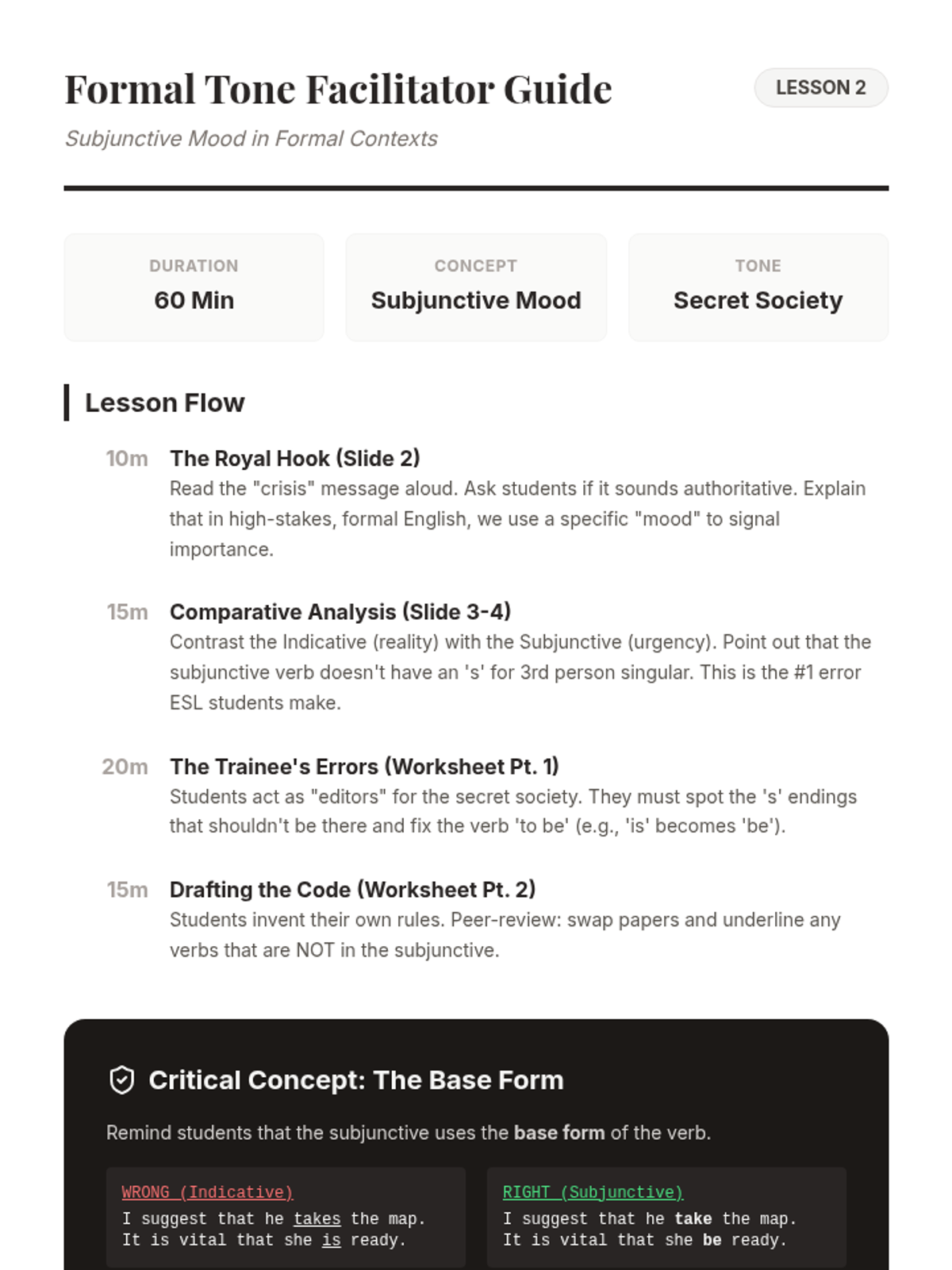
Learners explore the subjunctive mood for expressing importance, urgency, and hypothetical situations through formal contexts. They practice writing structures like 'It is essential that he be...' in the context of a fictional secret society.
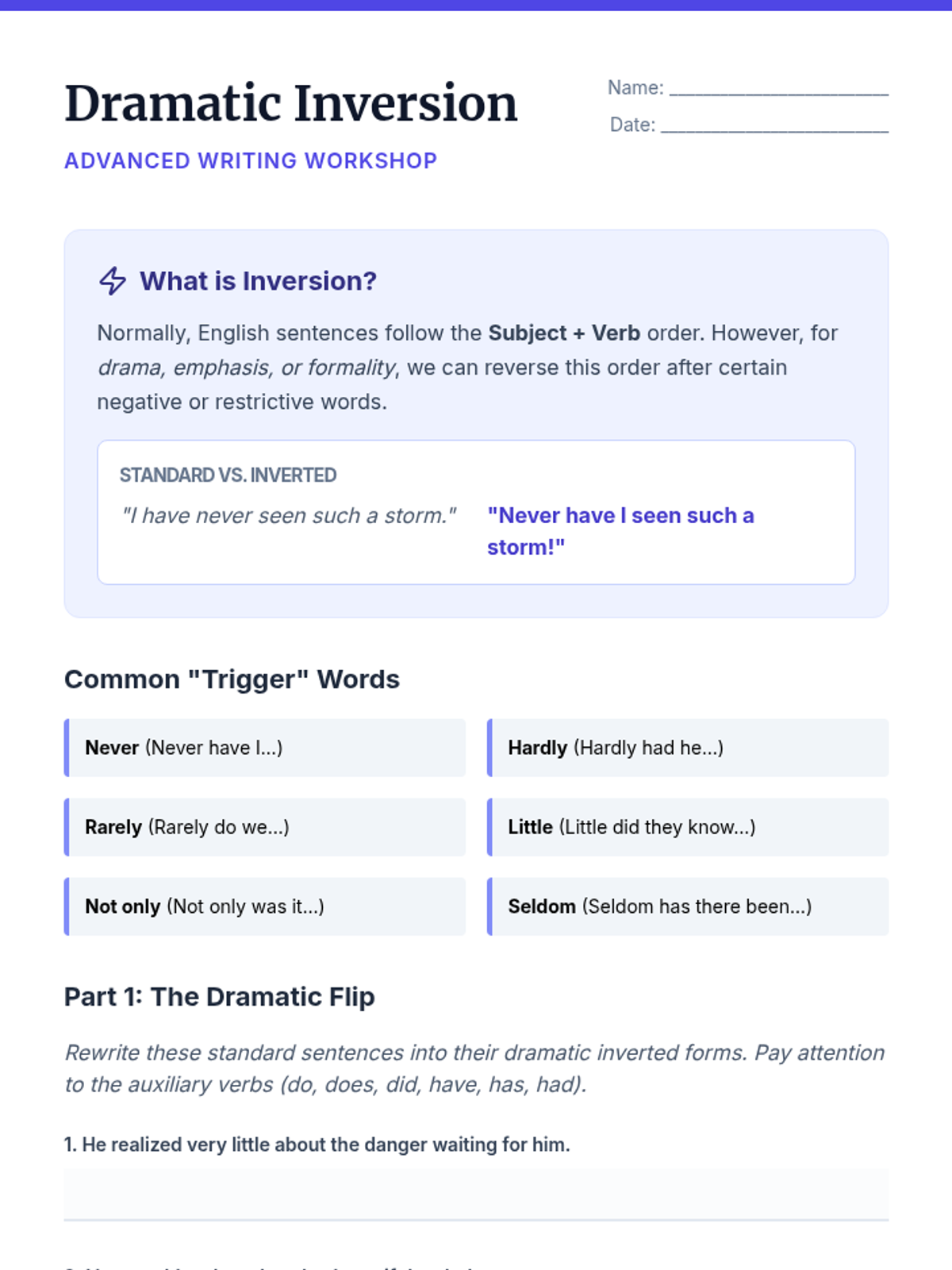
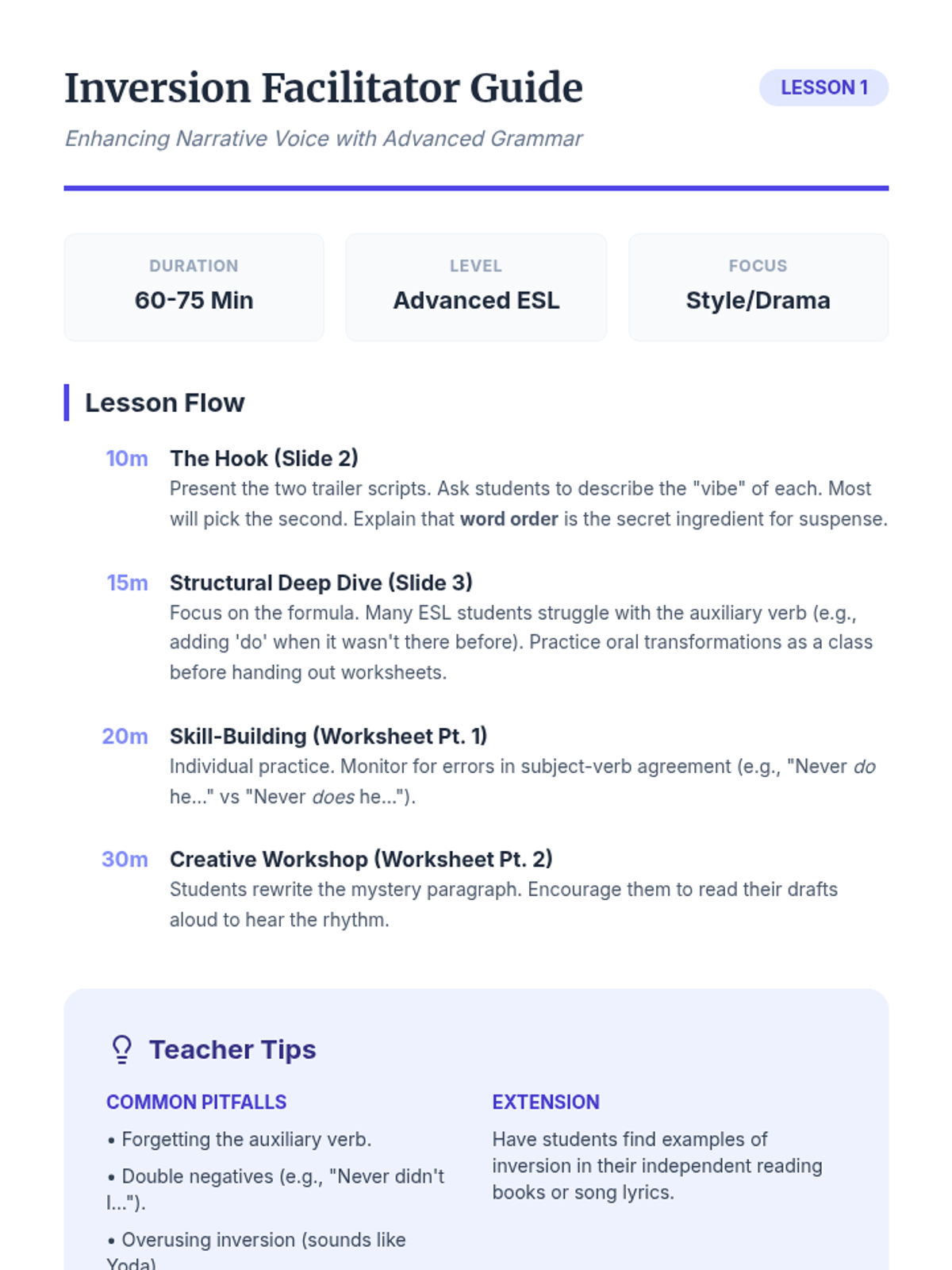
Students investigate how reversing standard subject-verb order after negative adverbials creates suspense and formality. They analyze examples from adventure novels and rewrite standard sentences to increase their dramatic impact.
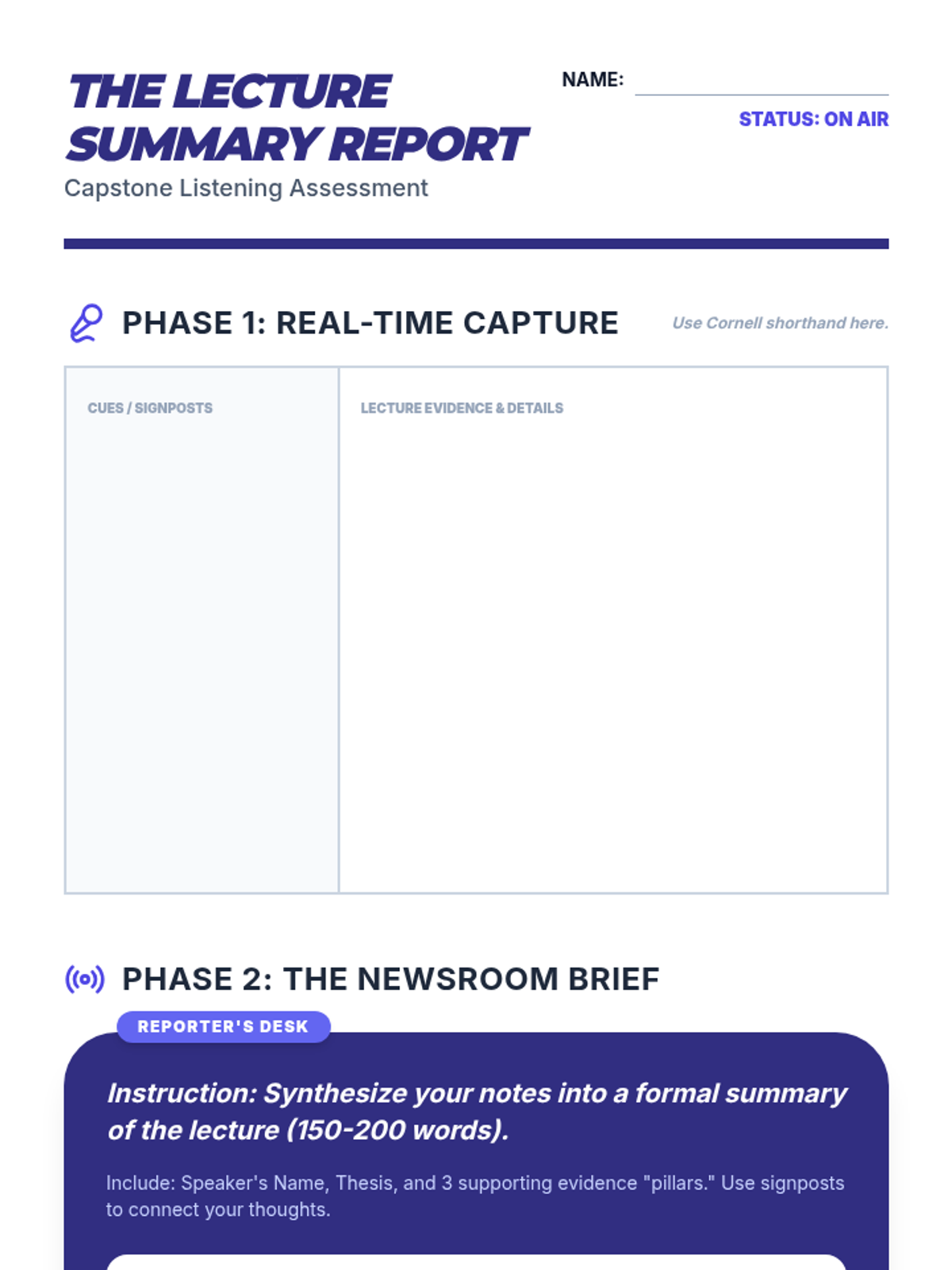
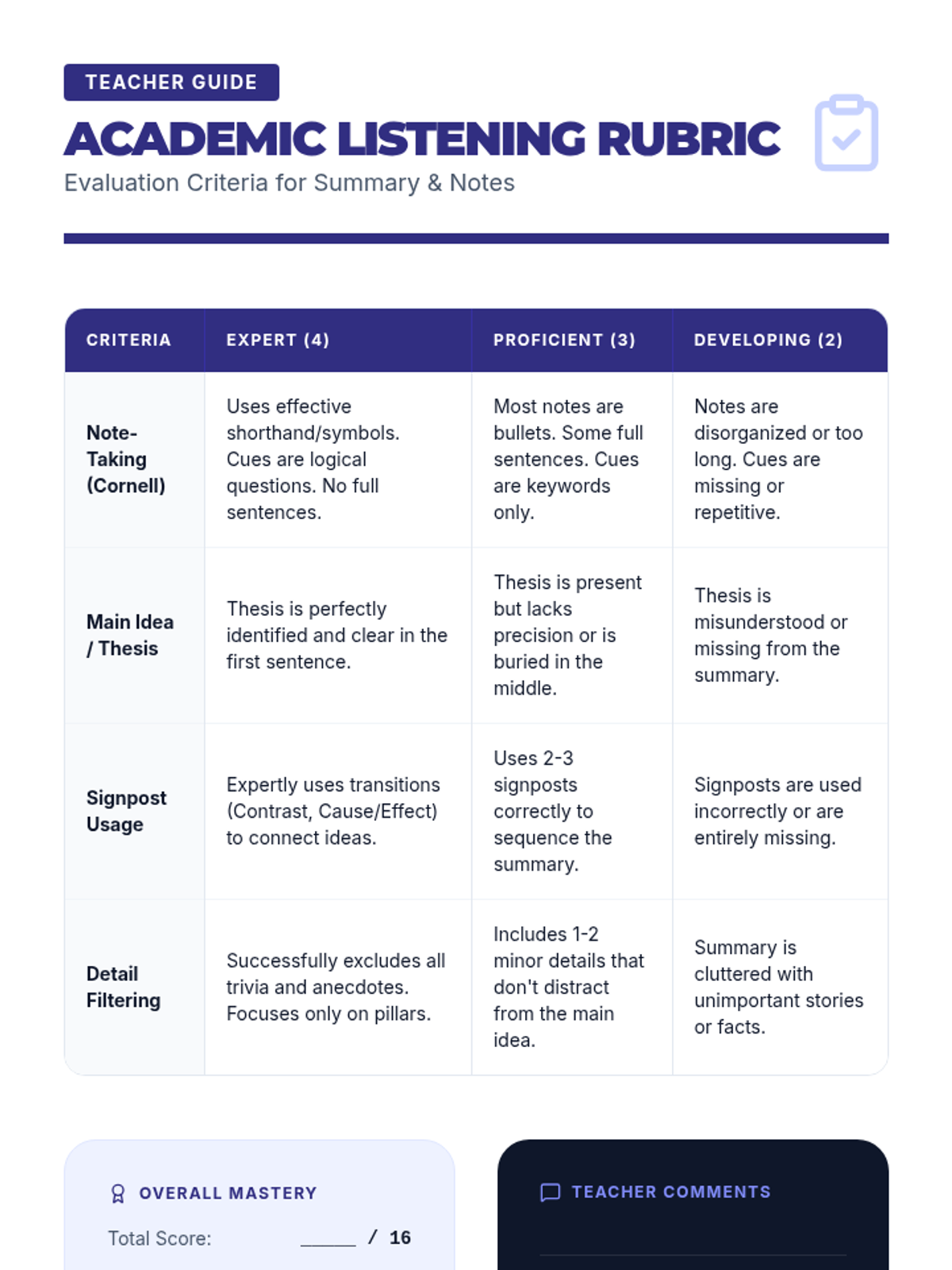
Students listen to a full-length talk and produce a written summary that accurately reflects the speaker's thesis and evidence.
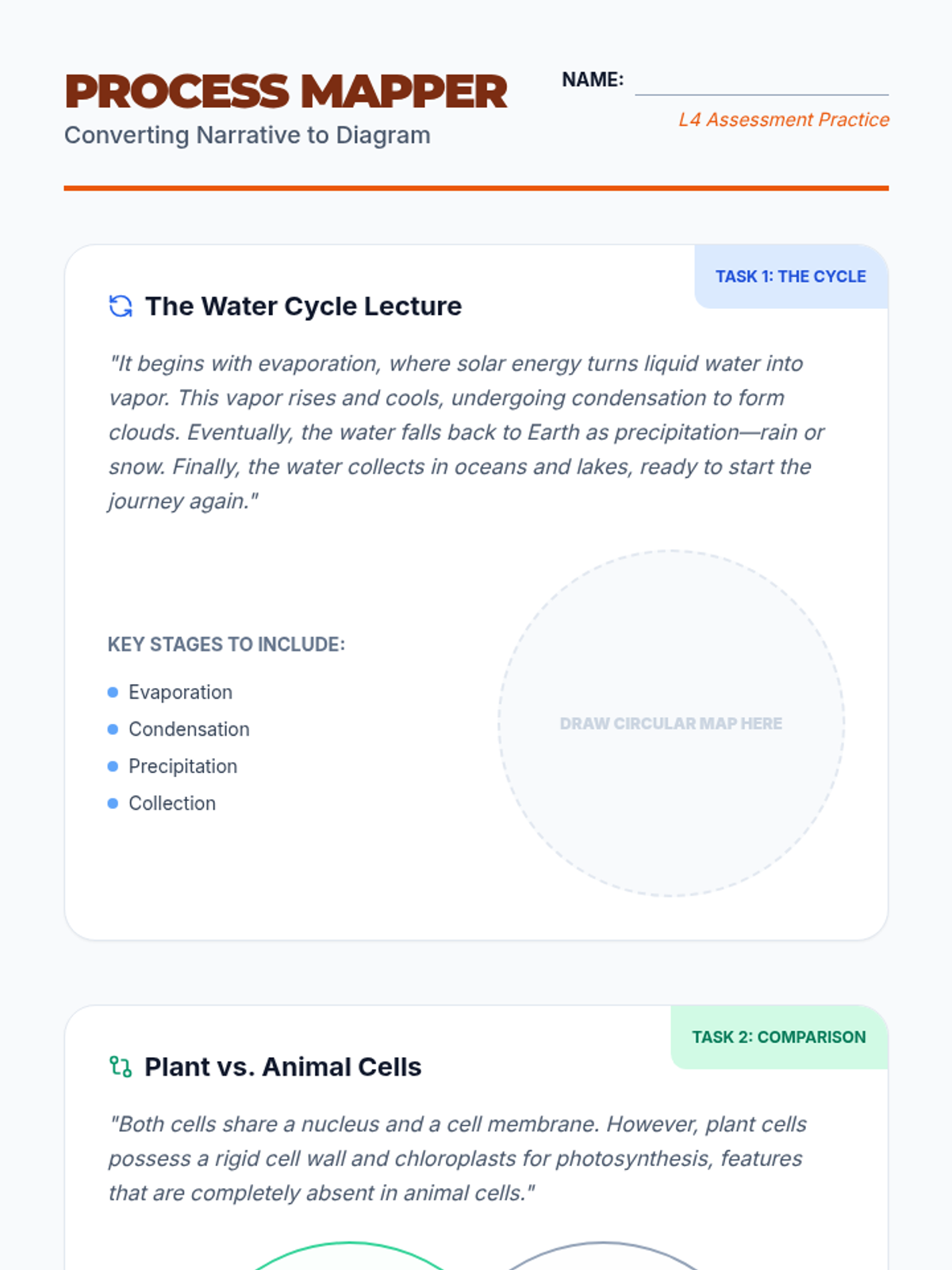
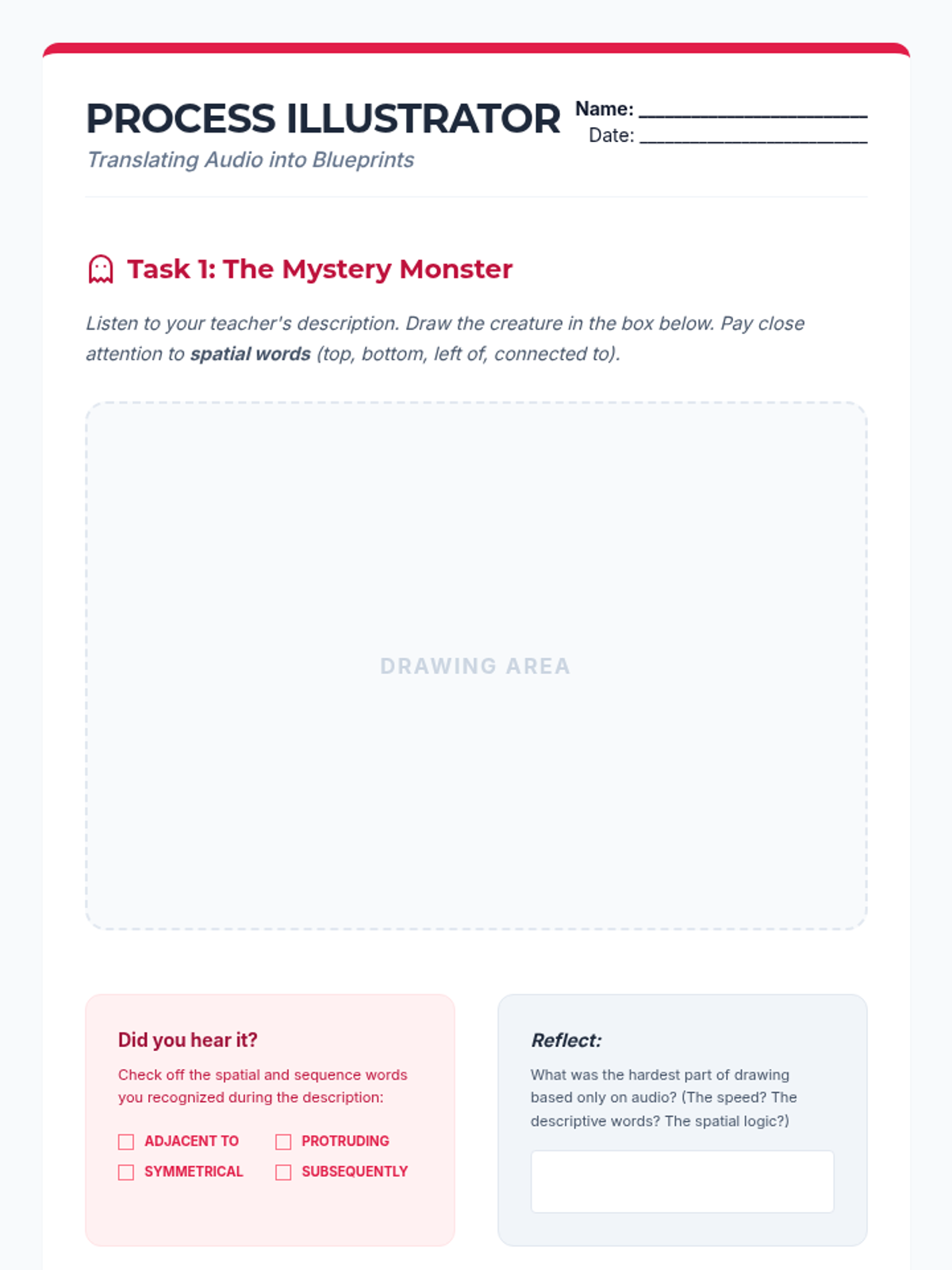
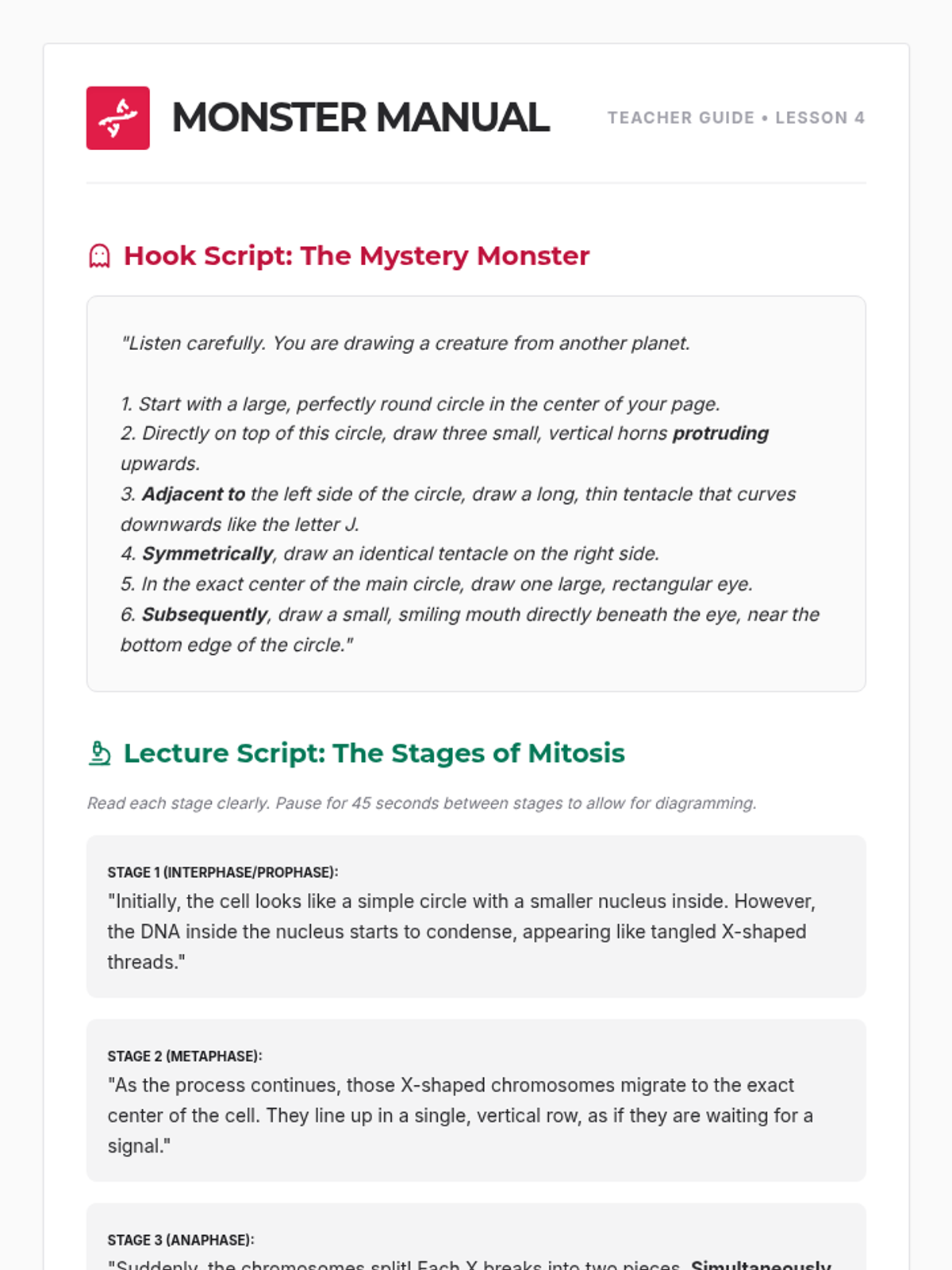
Learners practice converting auditory descriptions of processes or cycles into visual diagrams and graphic organizers, checking for deep understanding.
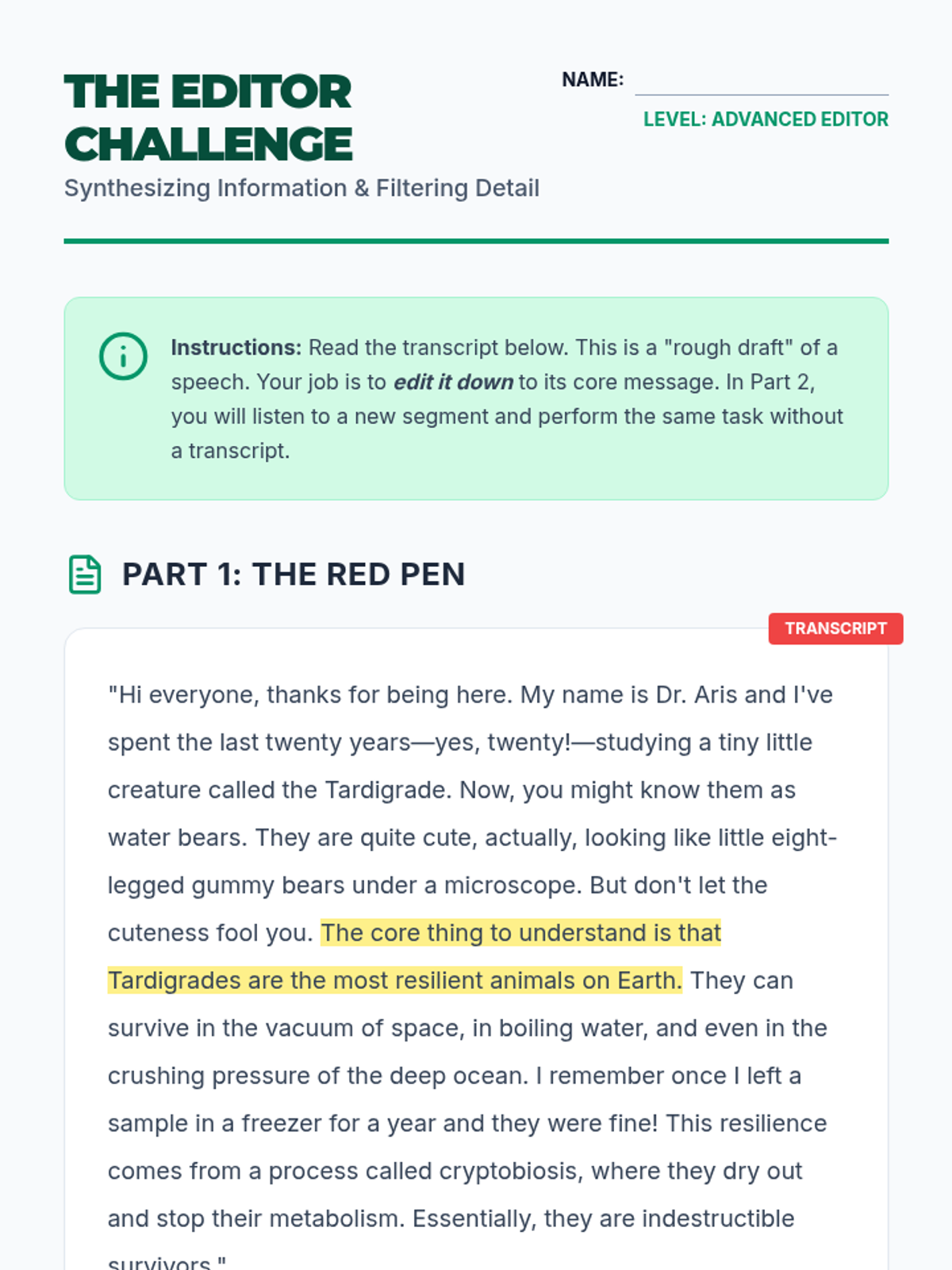
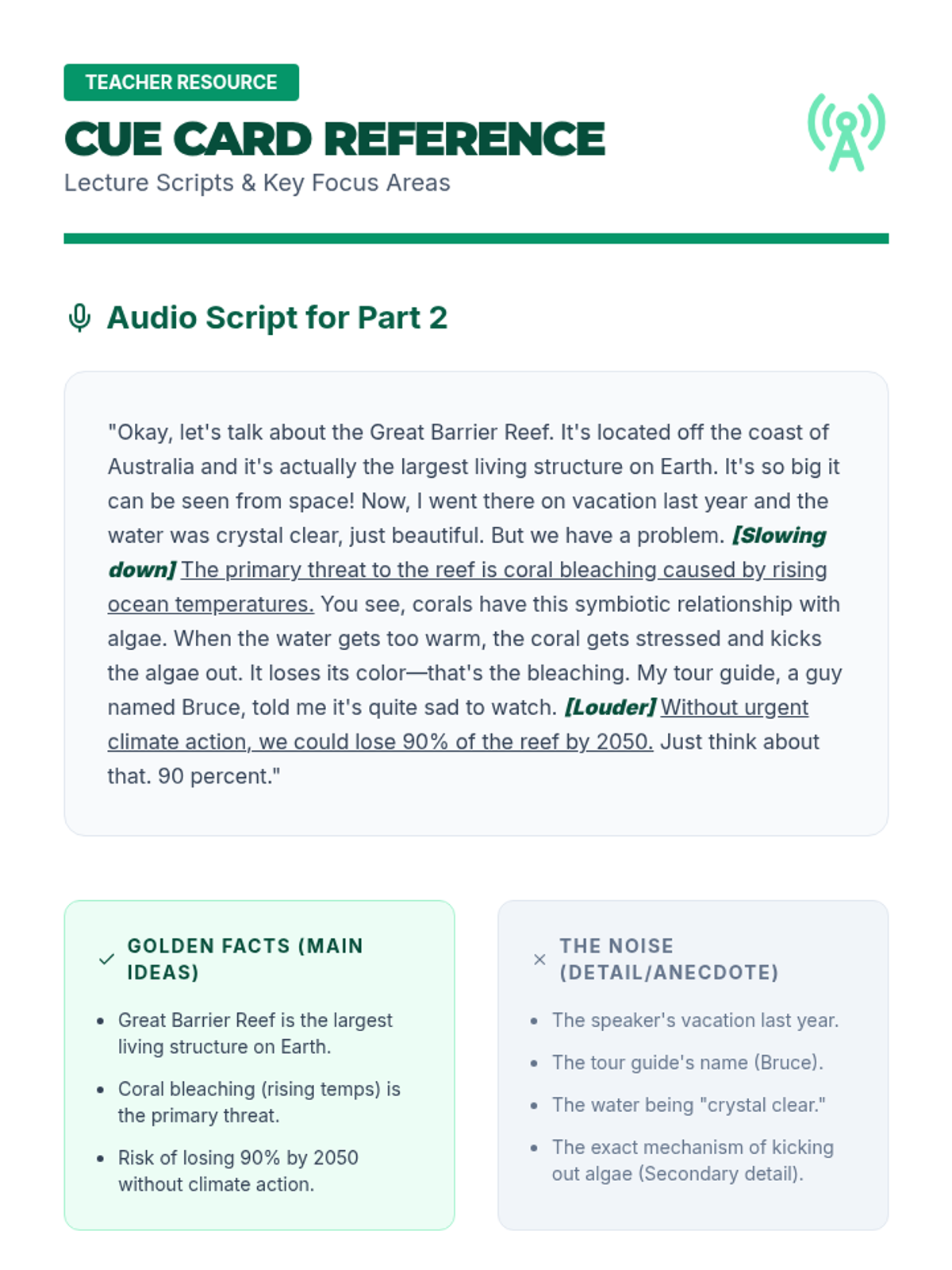
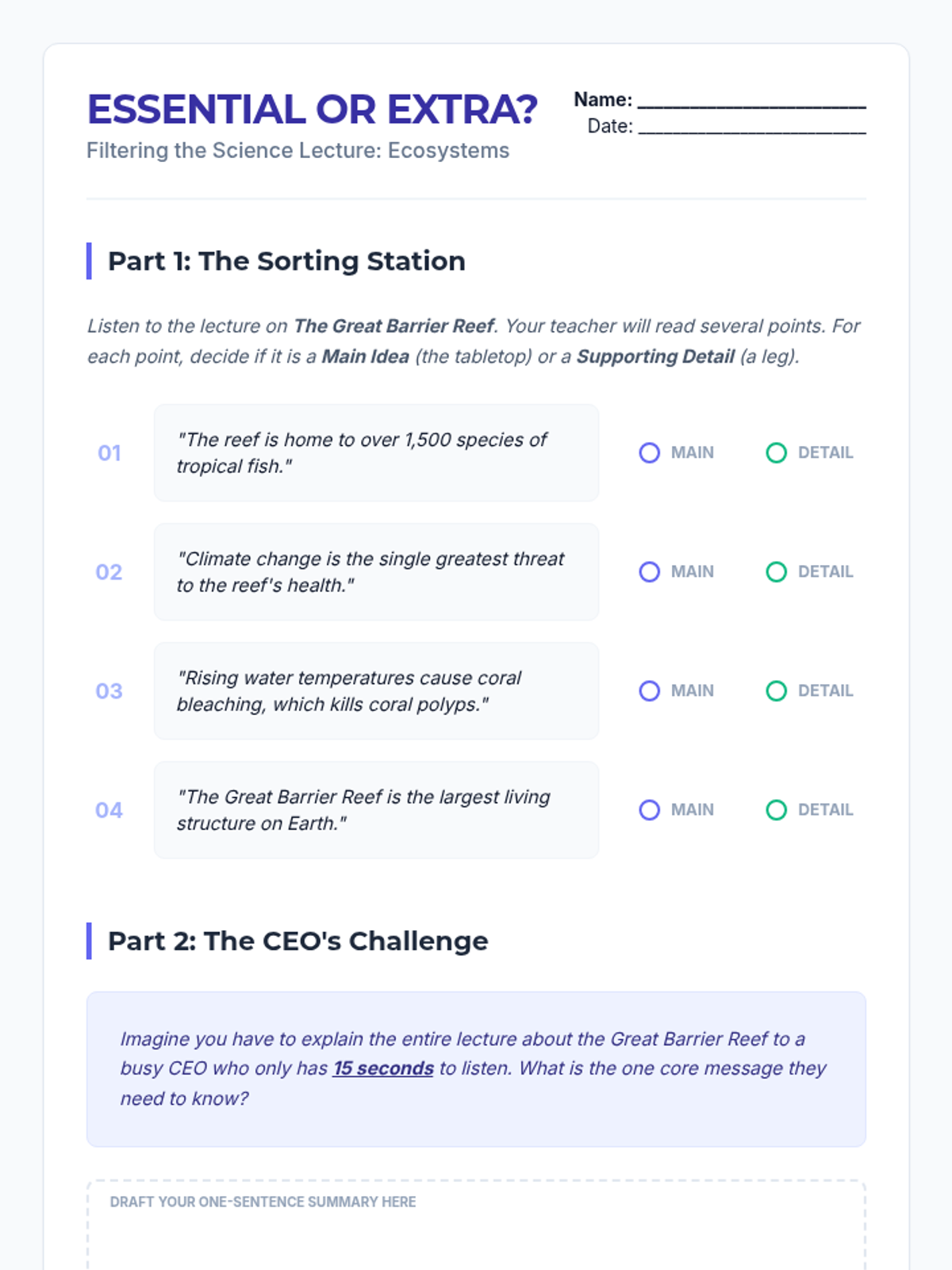
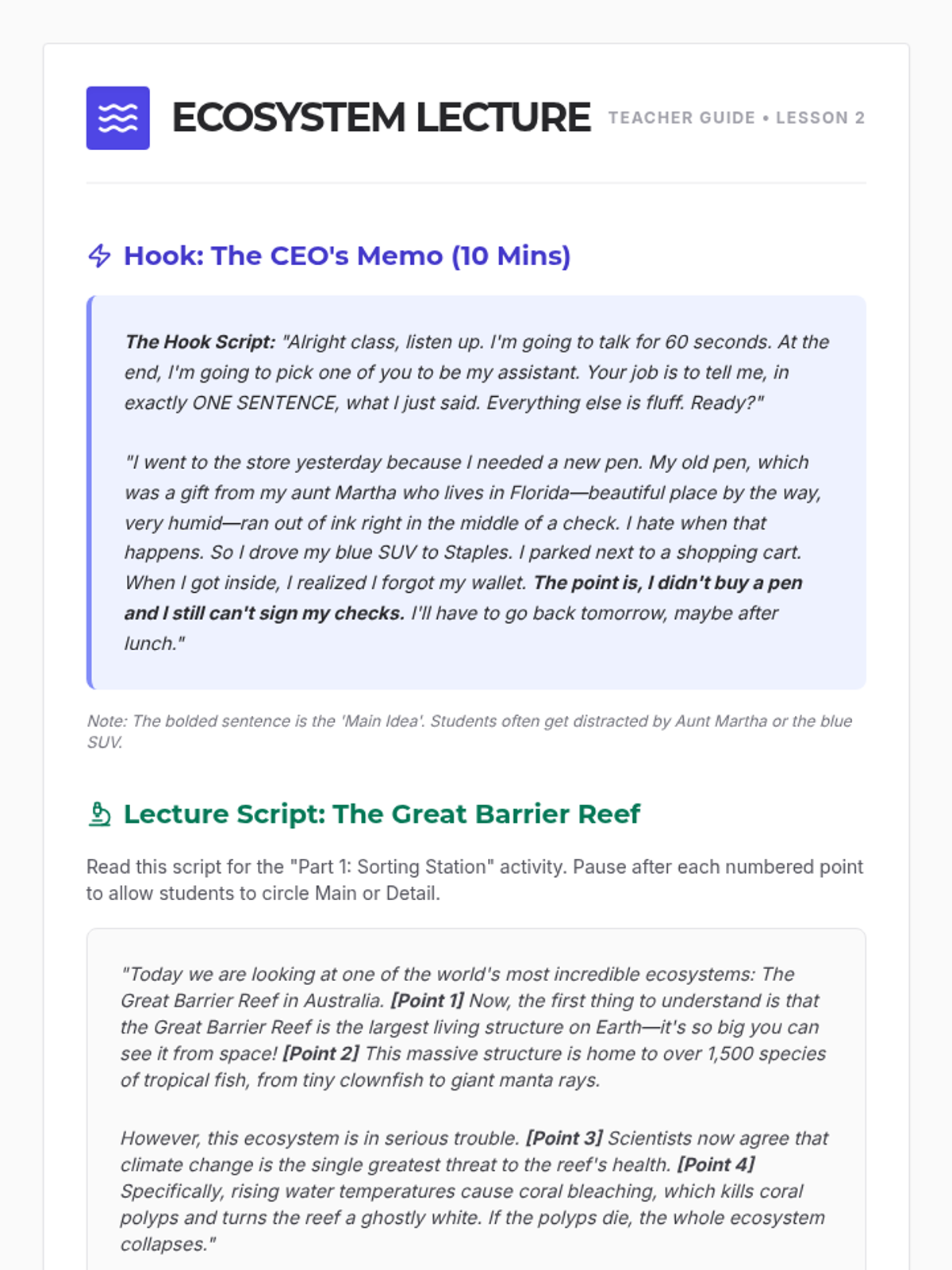
Students practice filtering 'need-to-know' concepts from 'nice-to-know' trivia by focusing on speaker volume, repetition, and pausing.
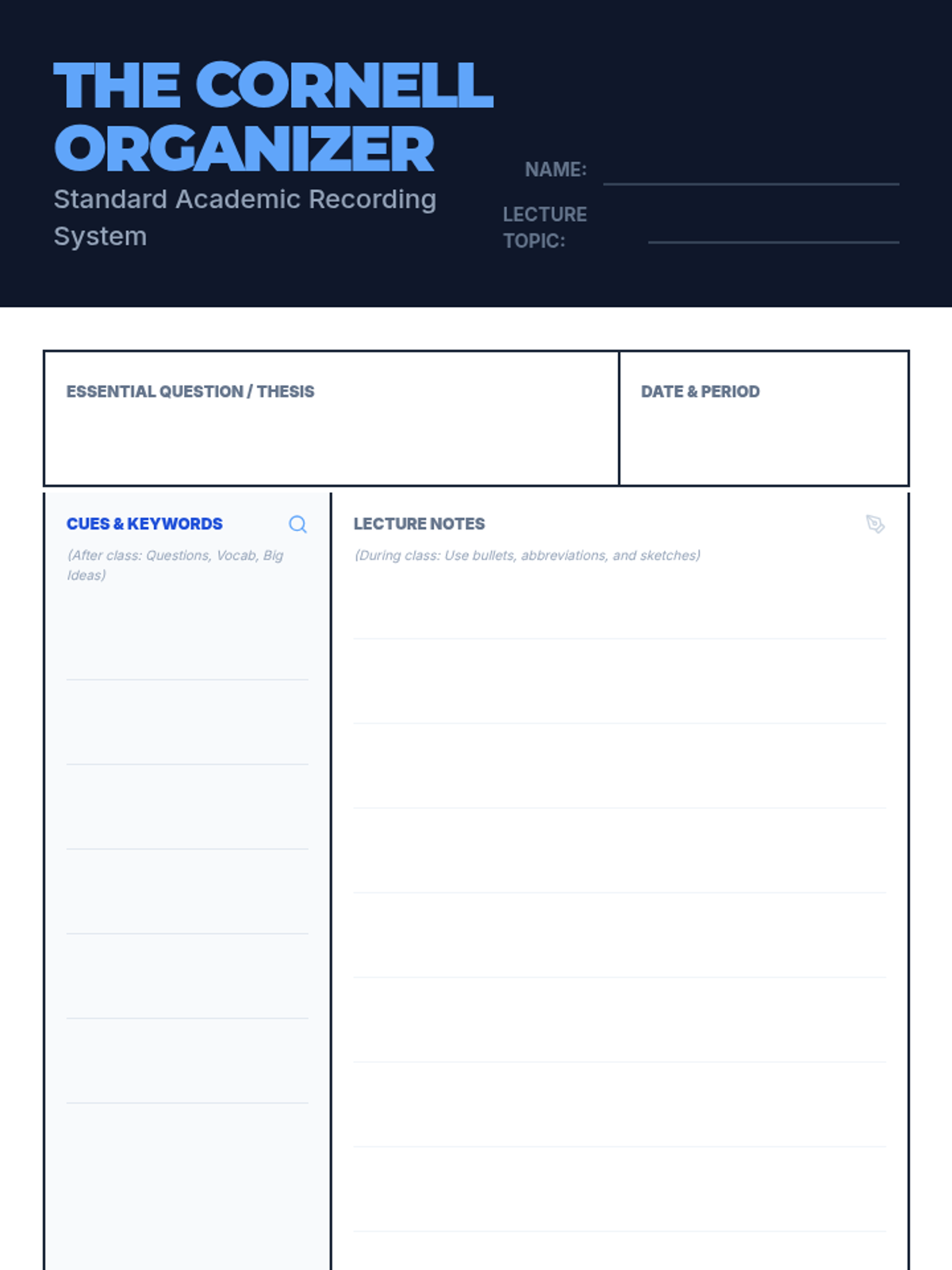
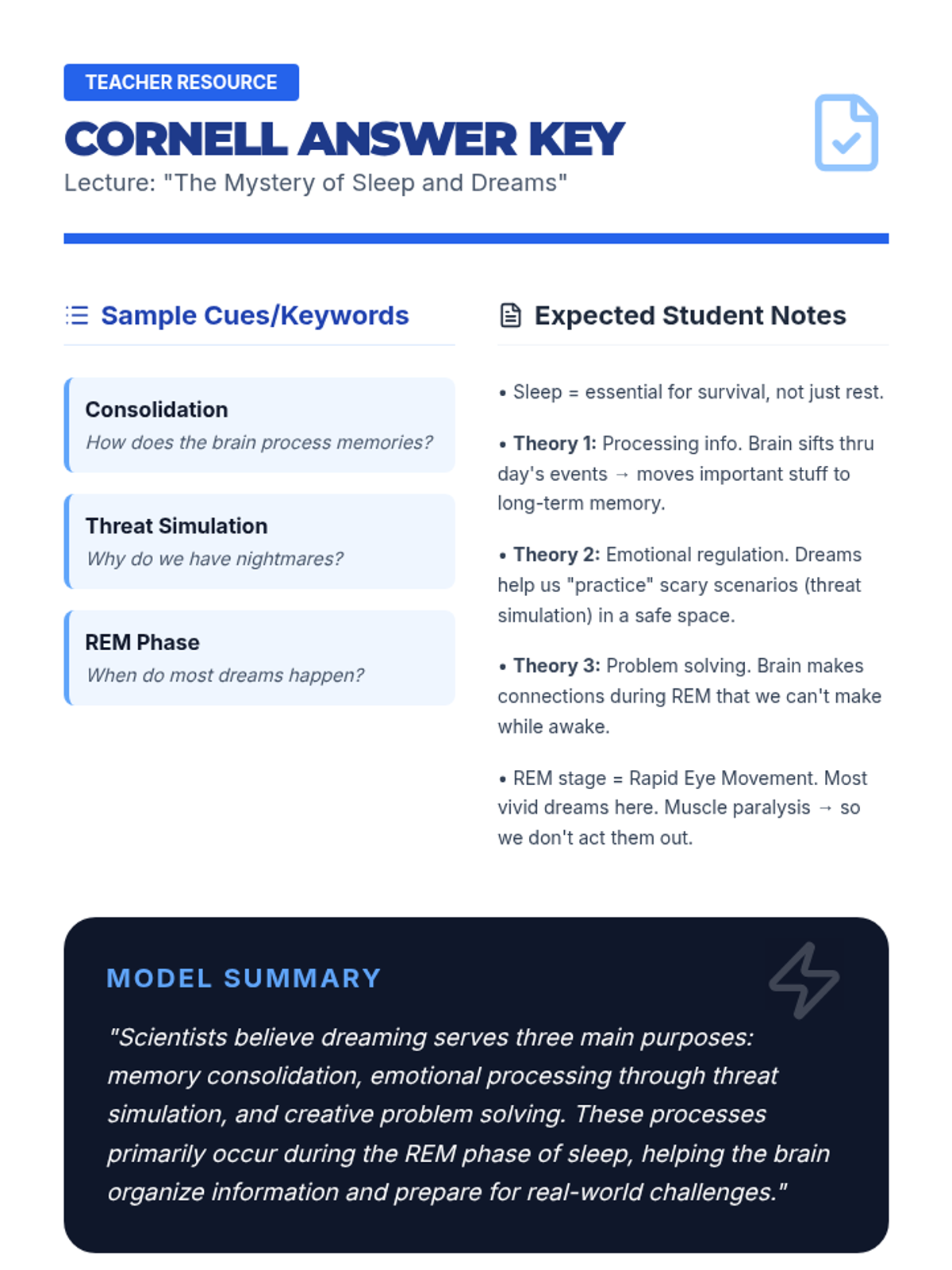
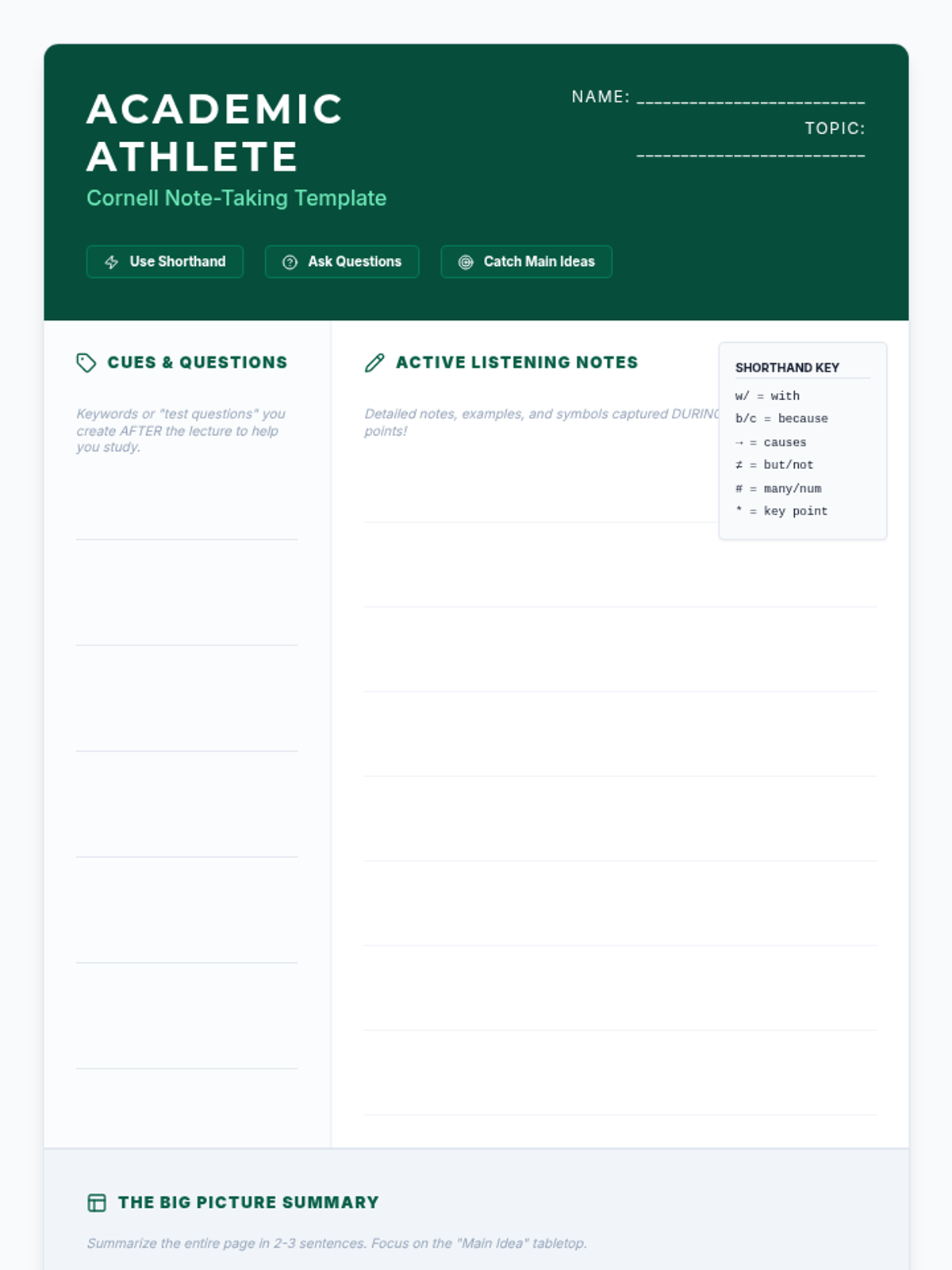
This lesson introduces the Cornell Note-taking method as a tool for organizing auditory input. Students practice the separation of main ideas, keywords, and supporting details in real-time.
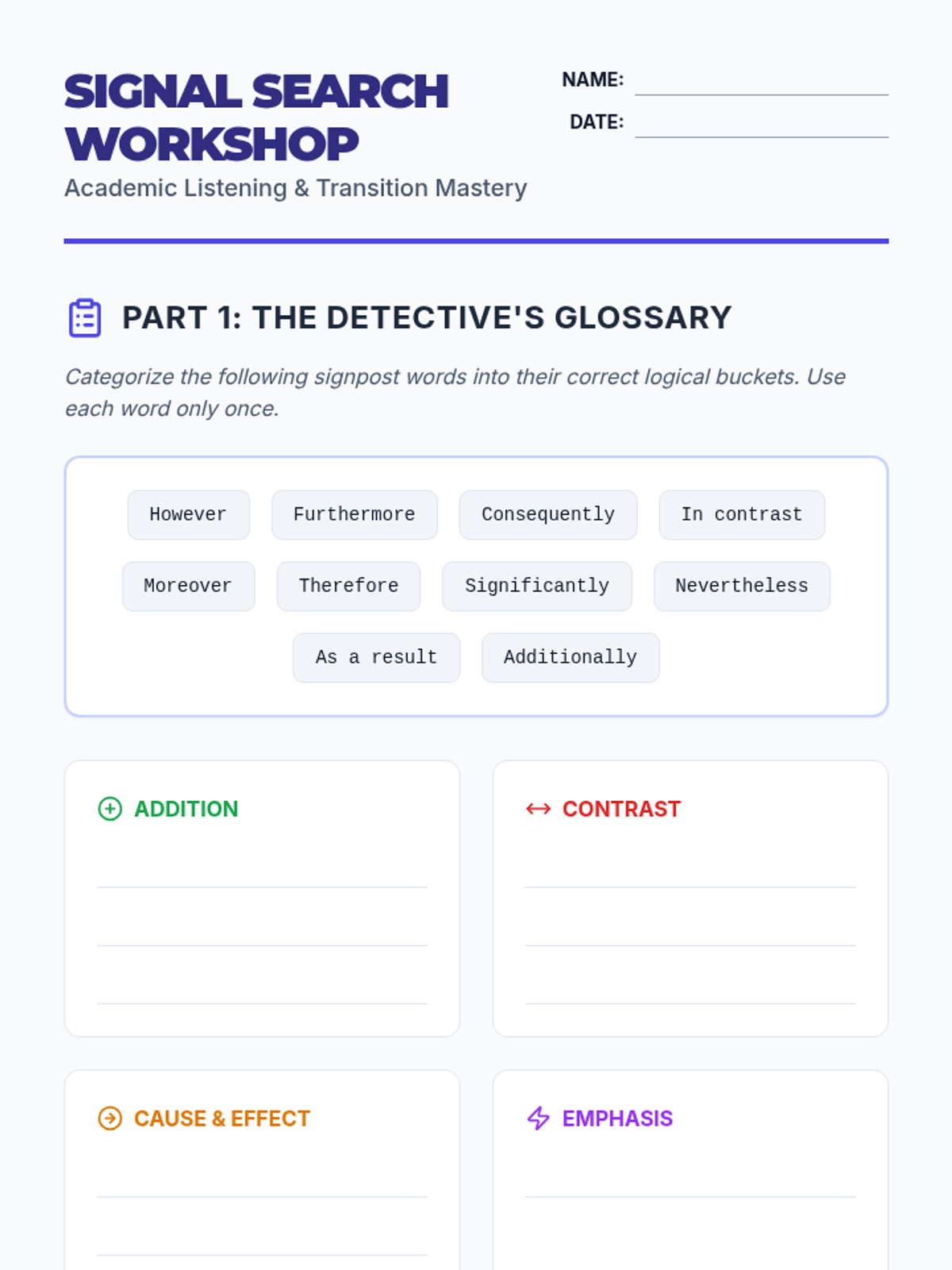
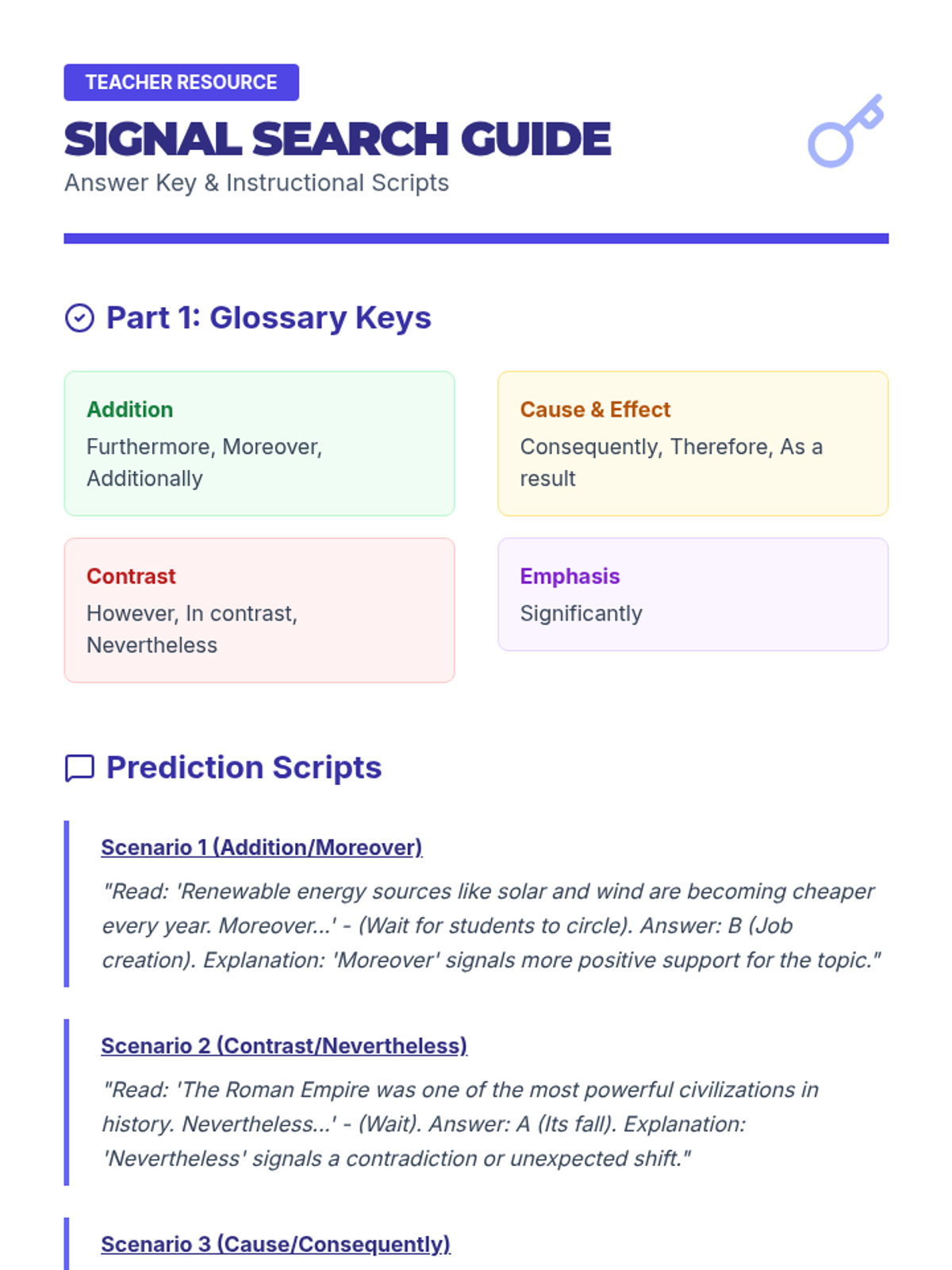
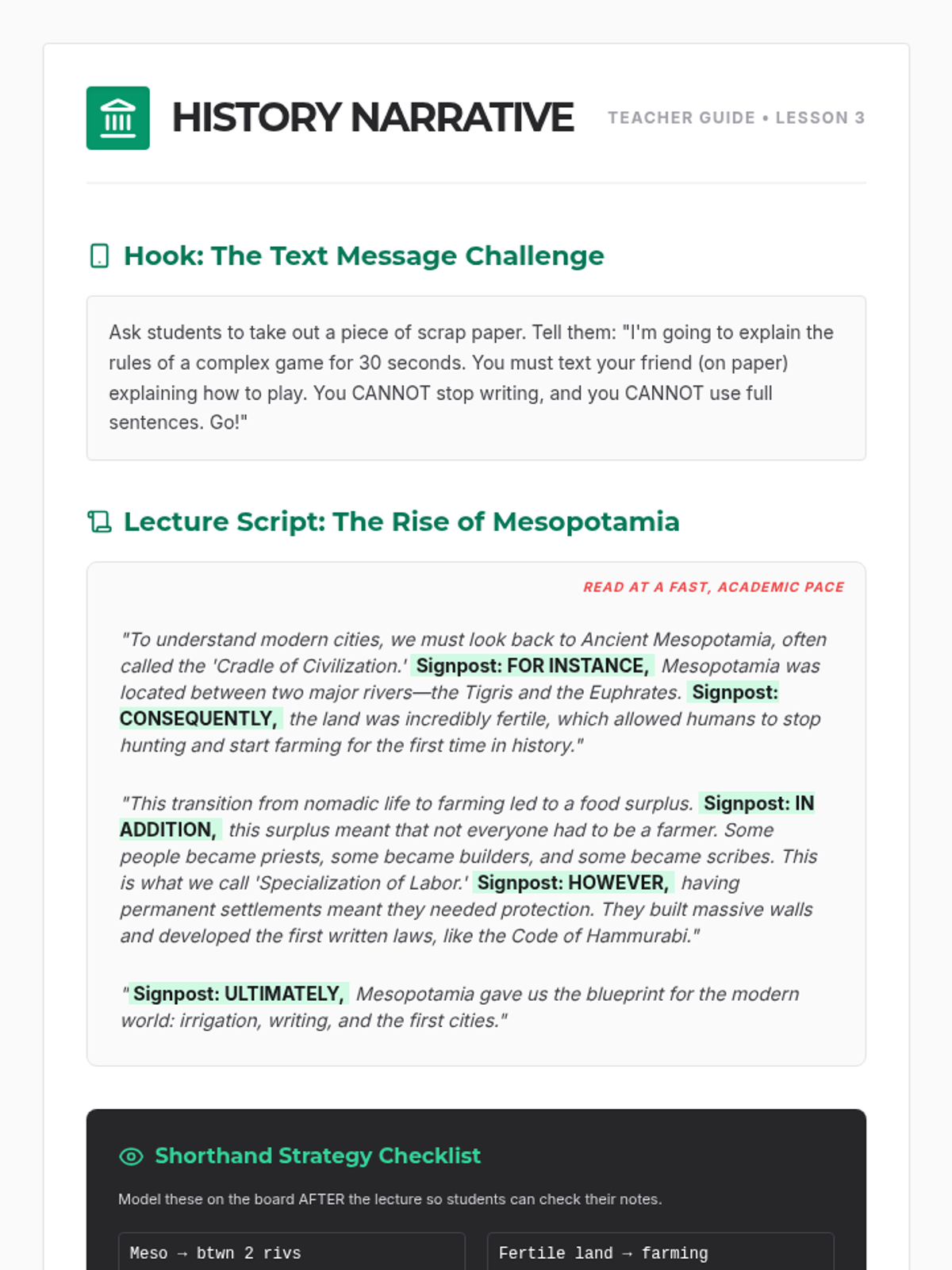
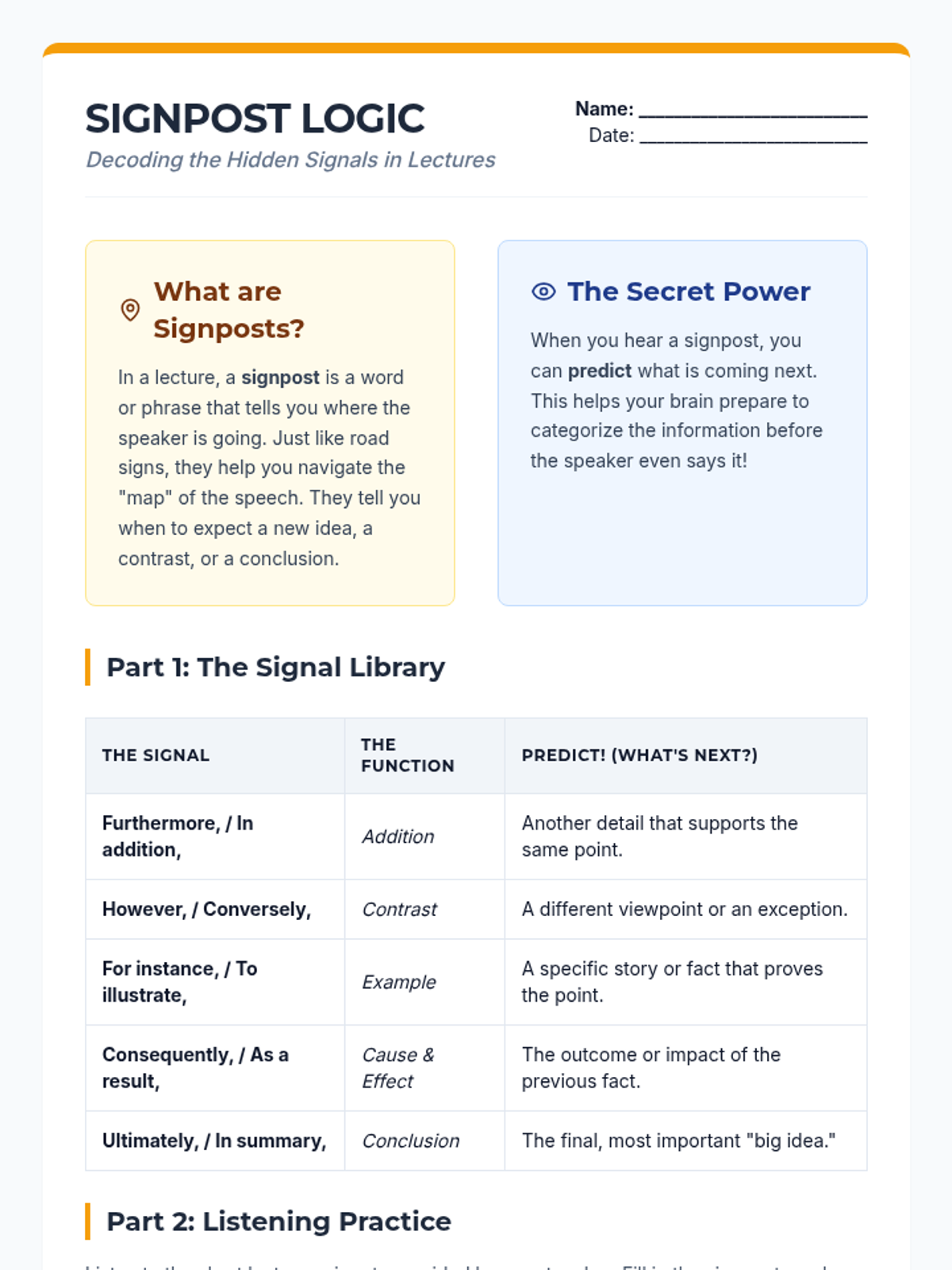
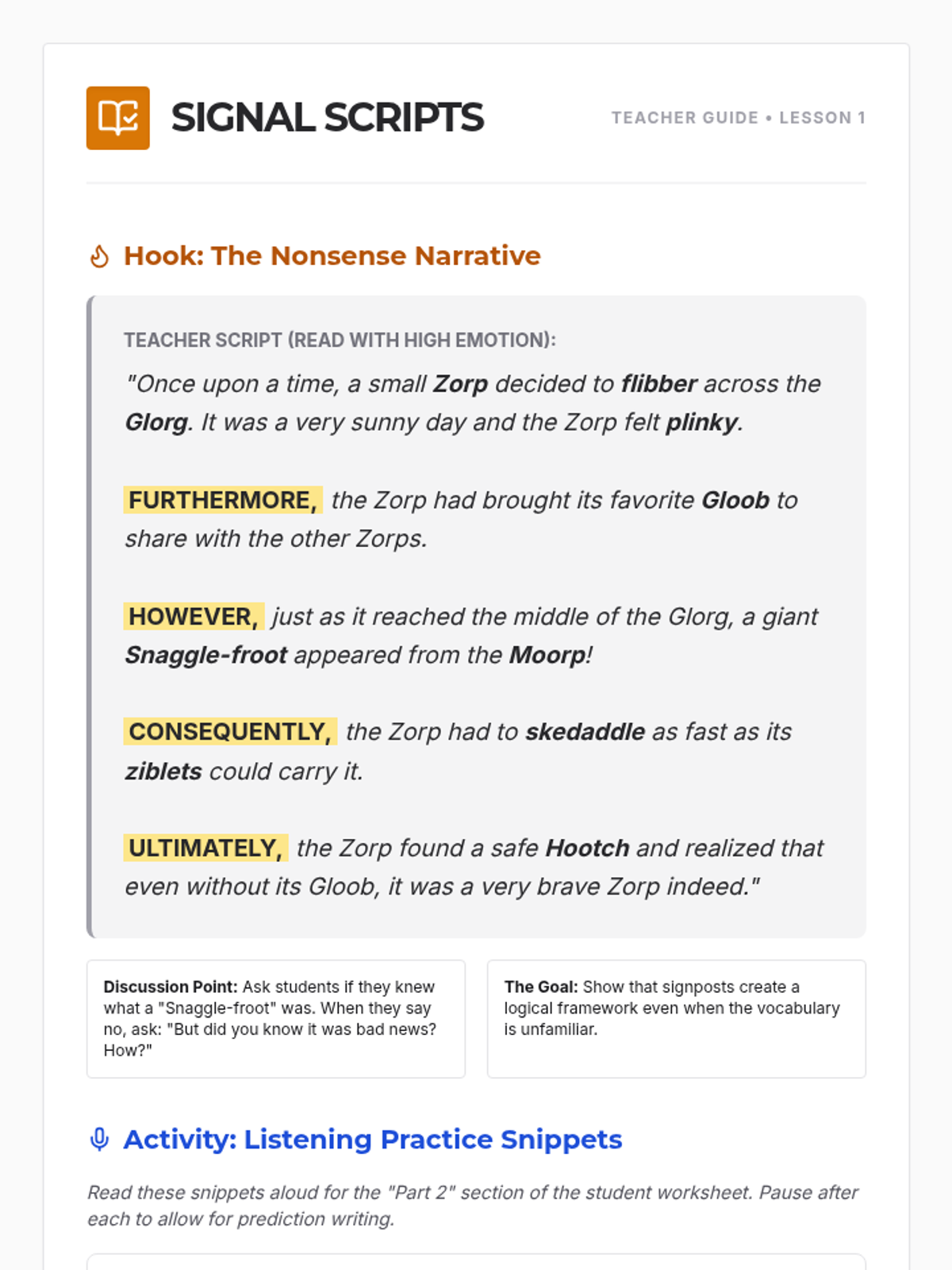
Students analyze audio clips to identify specific signal words that indicate contrast, addition, cause-and-effect, and emphasis. They practice predicting what type of information will follow specific transition phrases.
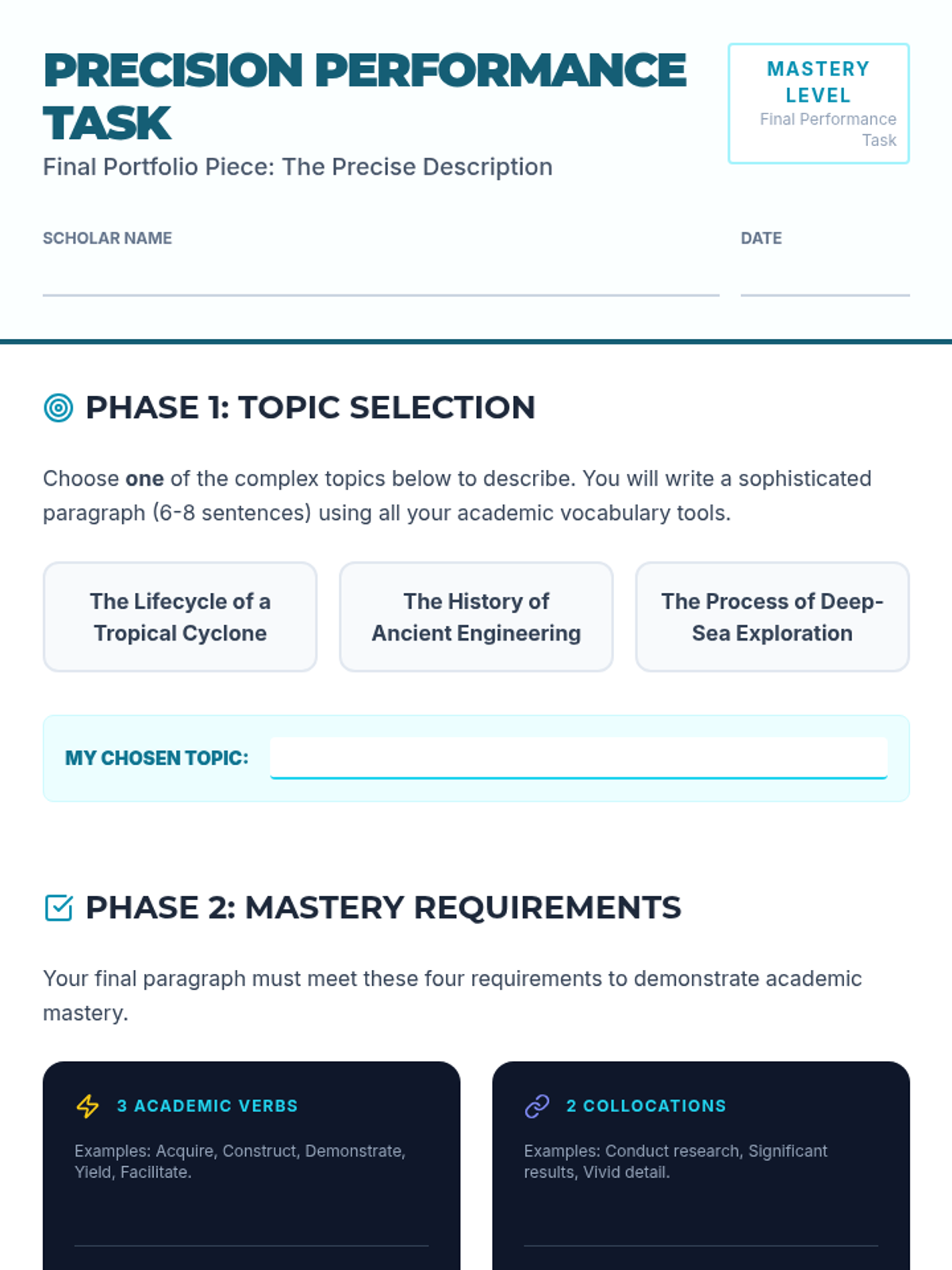
In the final project, students draft a sophisticated descriptive paragraph about a complex process, utilizing a specific checklist of advanced vocabulary and collocations.
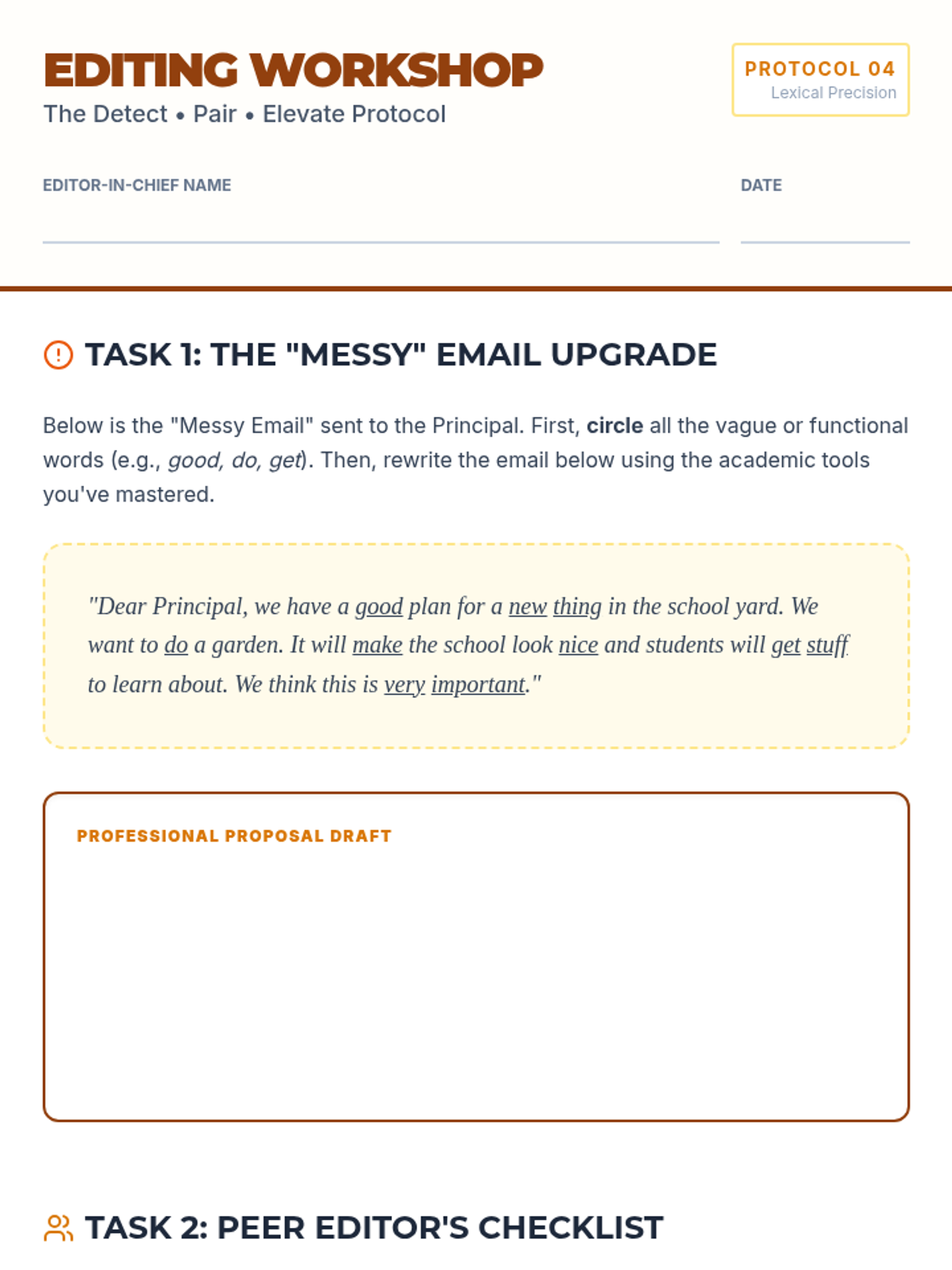
Students apply their knowledge of synonyms and collocations to edit 'vague' writing samples, transforming them into professional, academic pieces of communication.
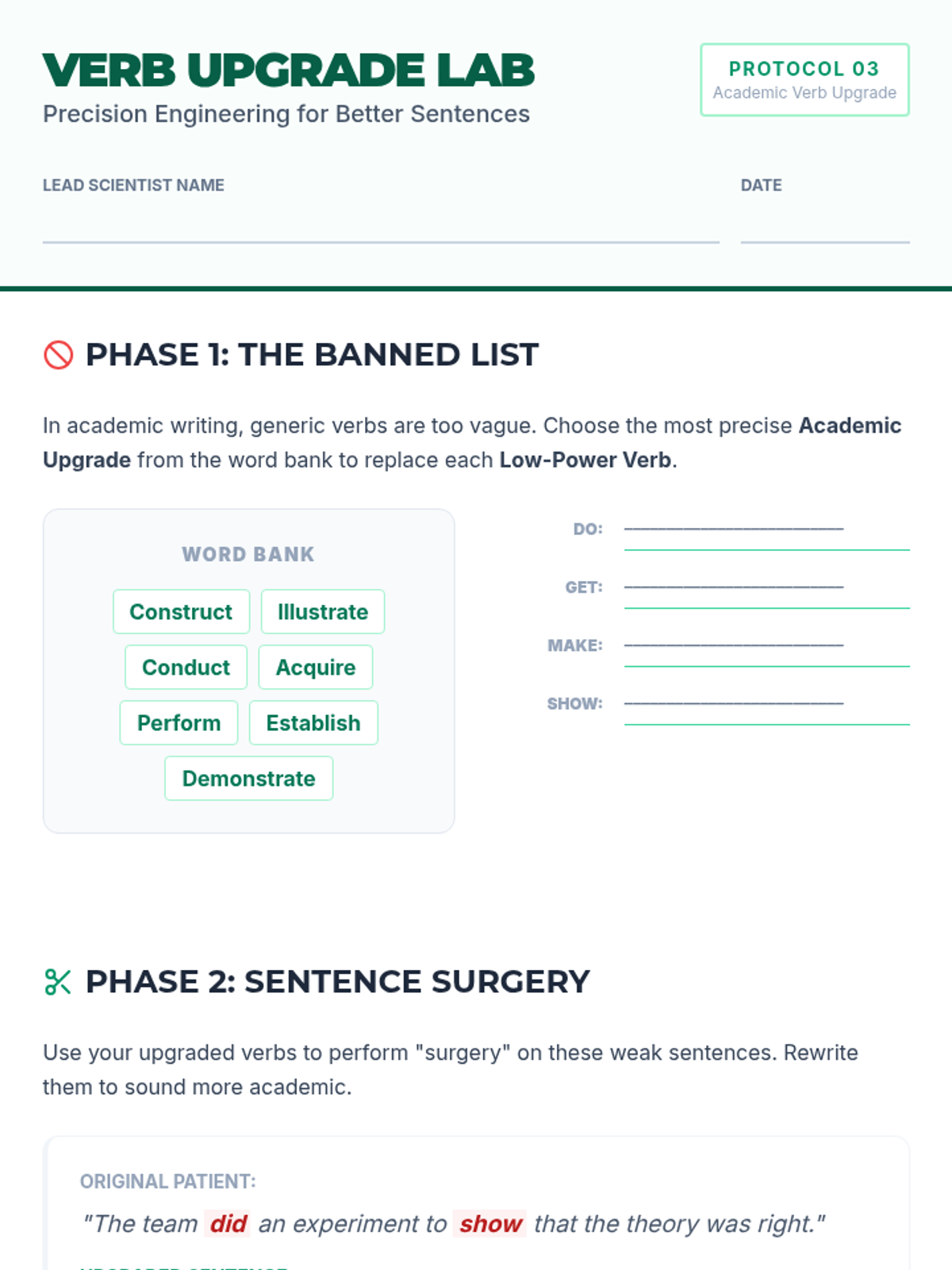
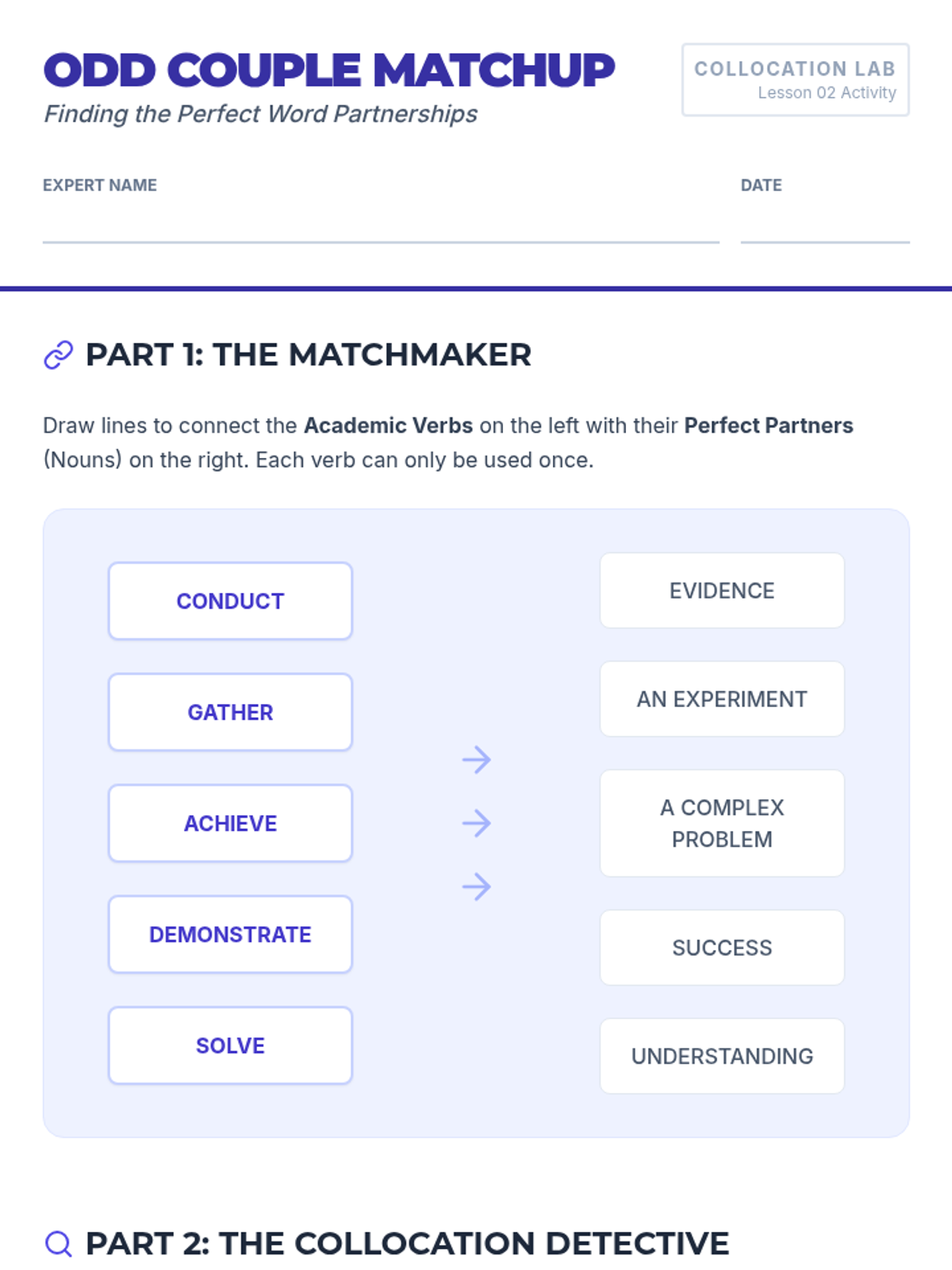
Focusing on academic verbs, students replace generic verbs like 'get' and 'make' with more sophisticated alternatives like 'acquire' and 'construct' to elevate their writing tone.
This lesson introduces the concept of collocations—words that naturally pair together. Students identify common academic verb-noun and adjective-noun pairings to sound more like native speakers.
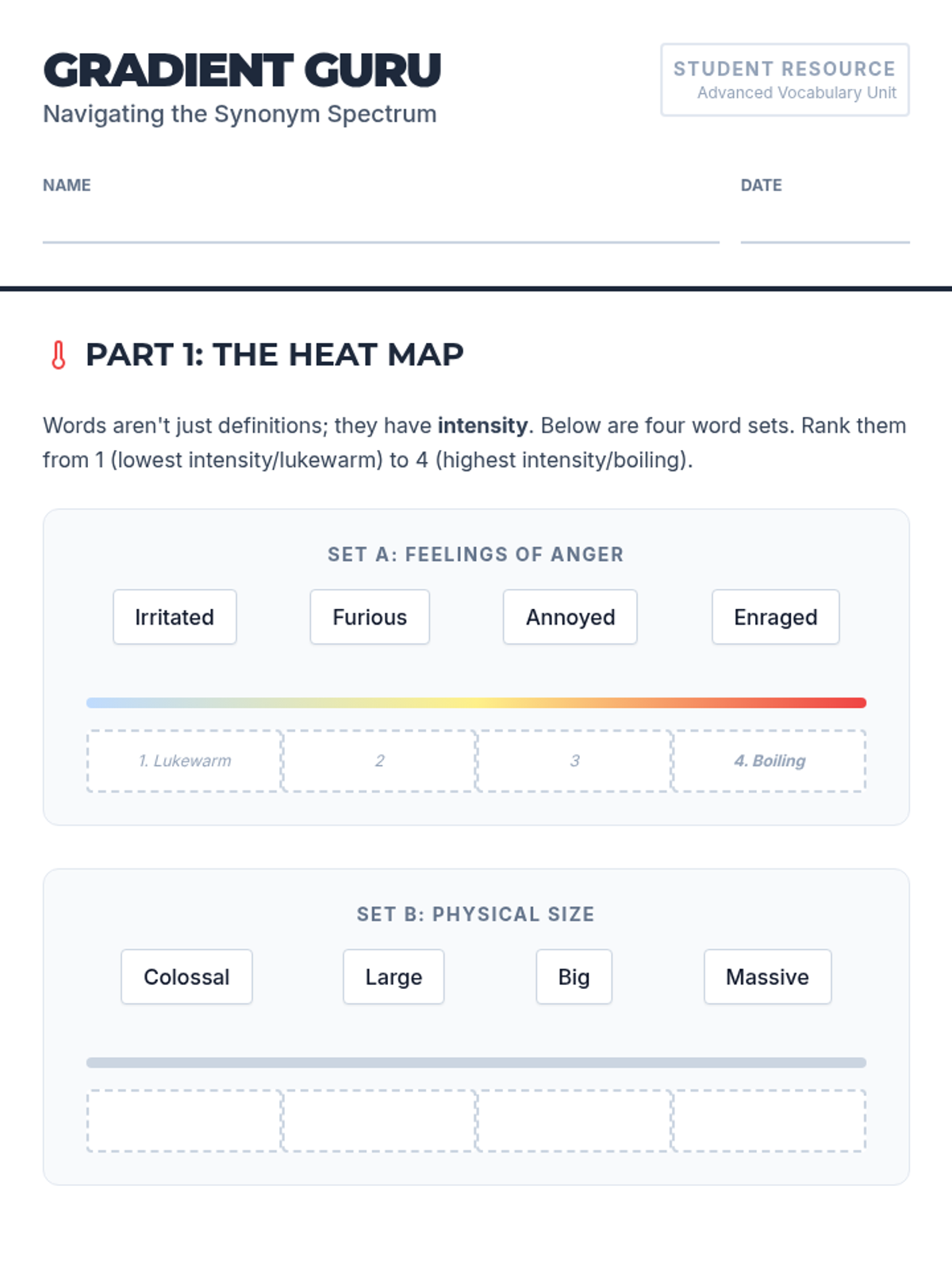
Students explore the spectrum of synonyms, learning that words have different intensities and formal levels. They practice placing words on gradients to understand connotation and context.
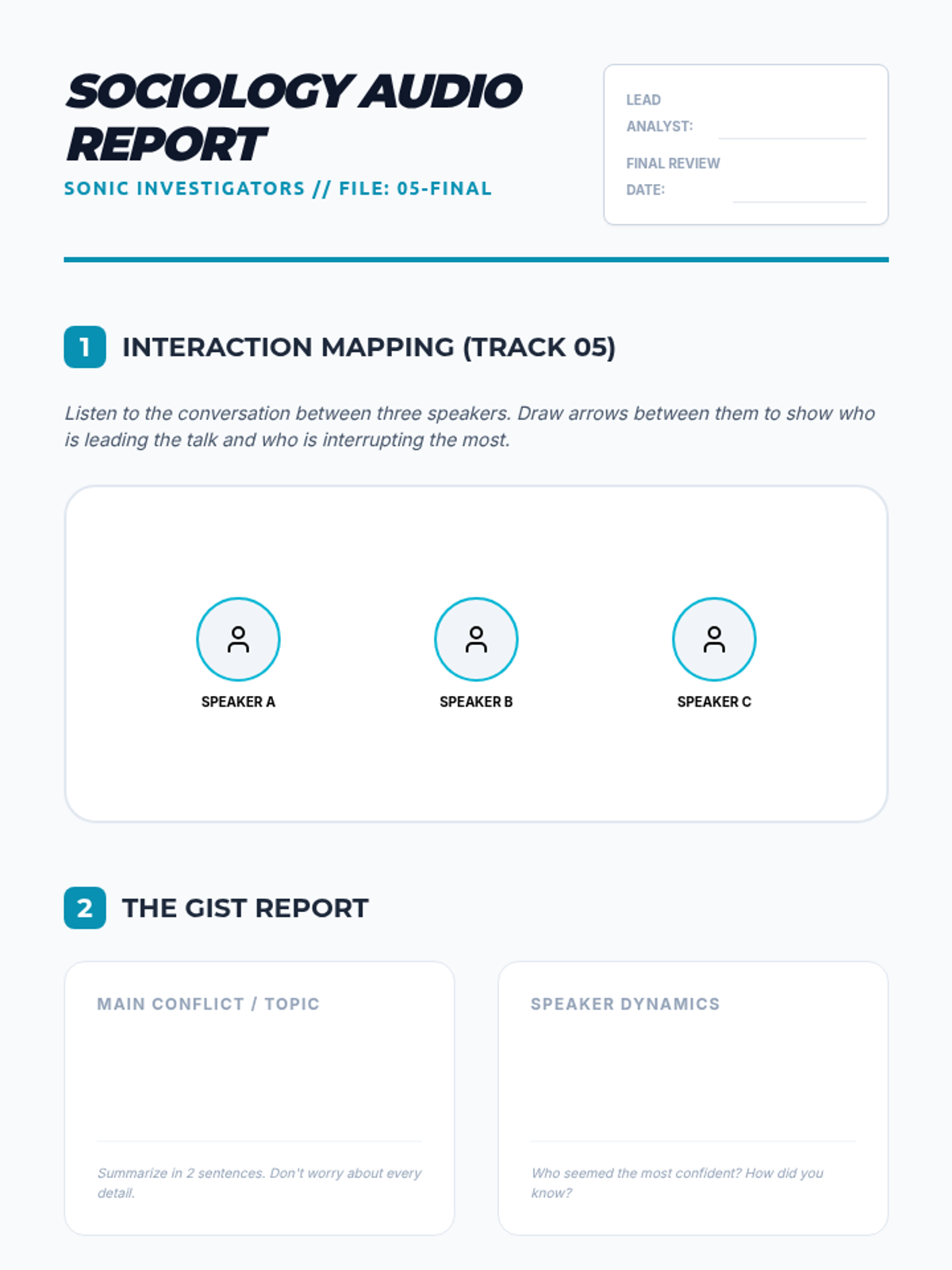
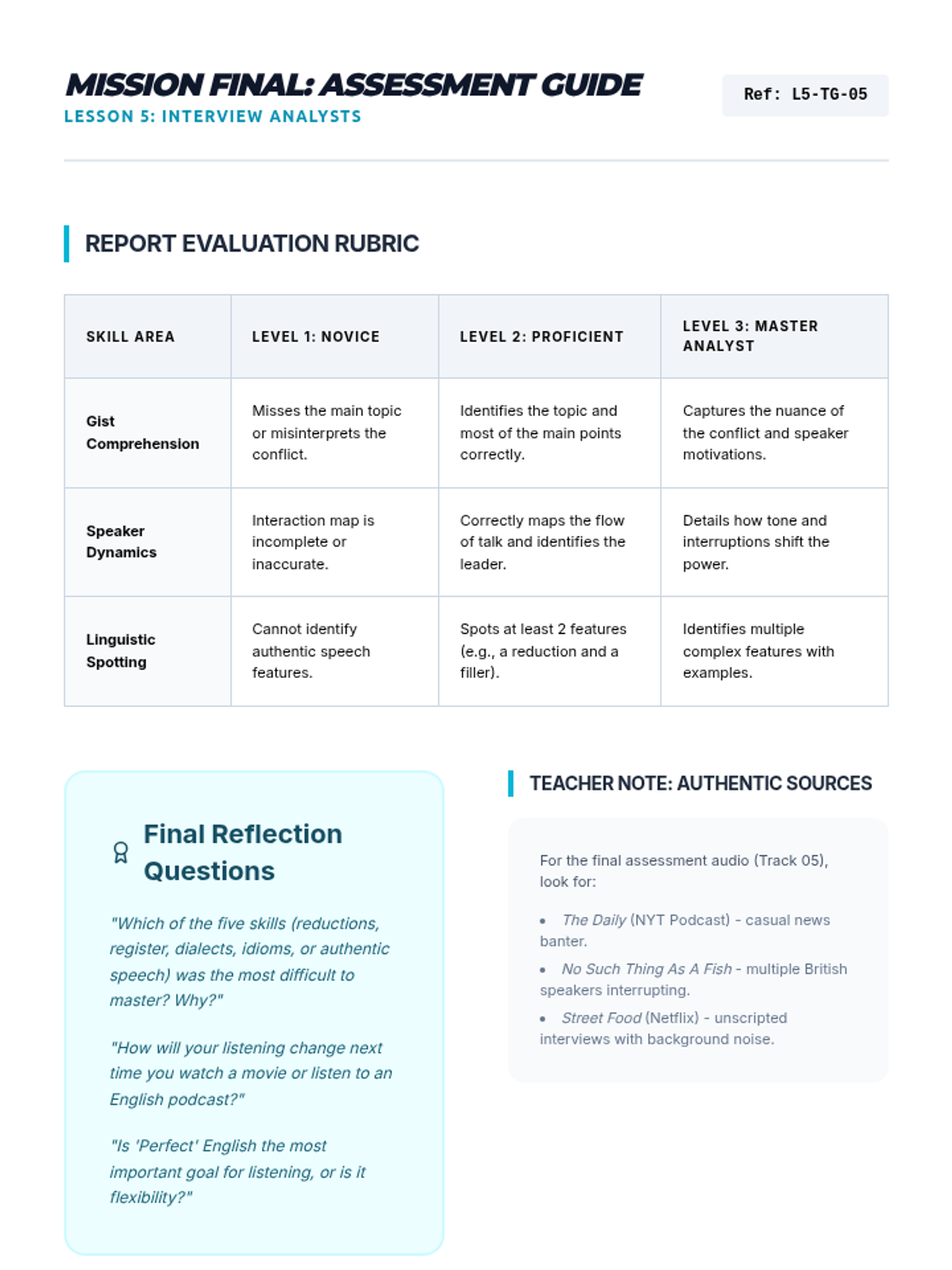
Students analyze unscripted interviews to master tracking multiple speakers and understanding the 'gist' in messy, authentic audio environments.
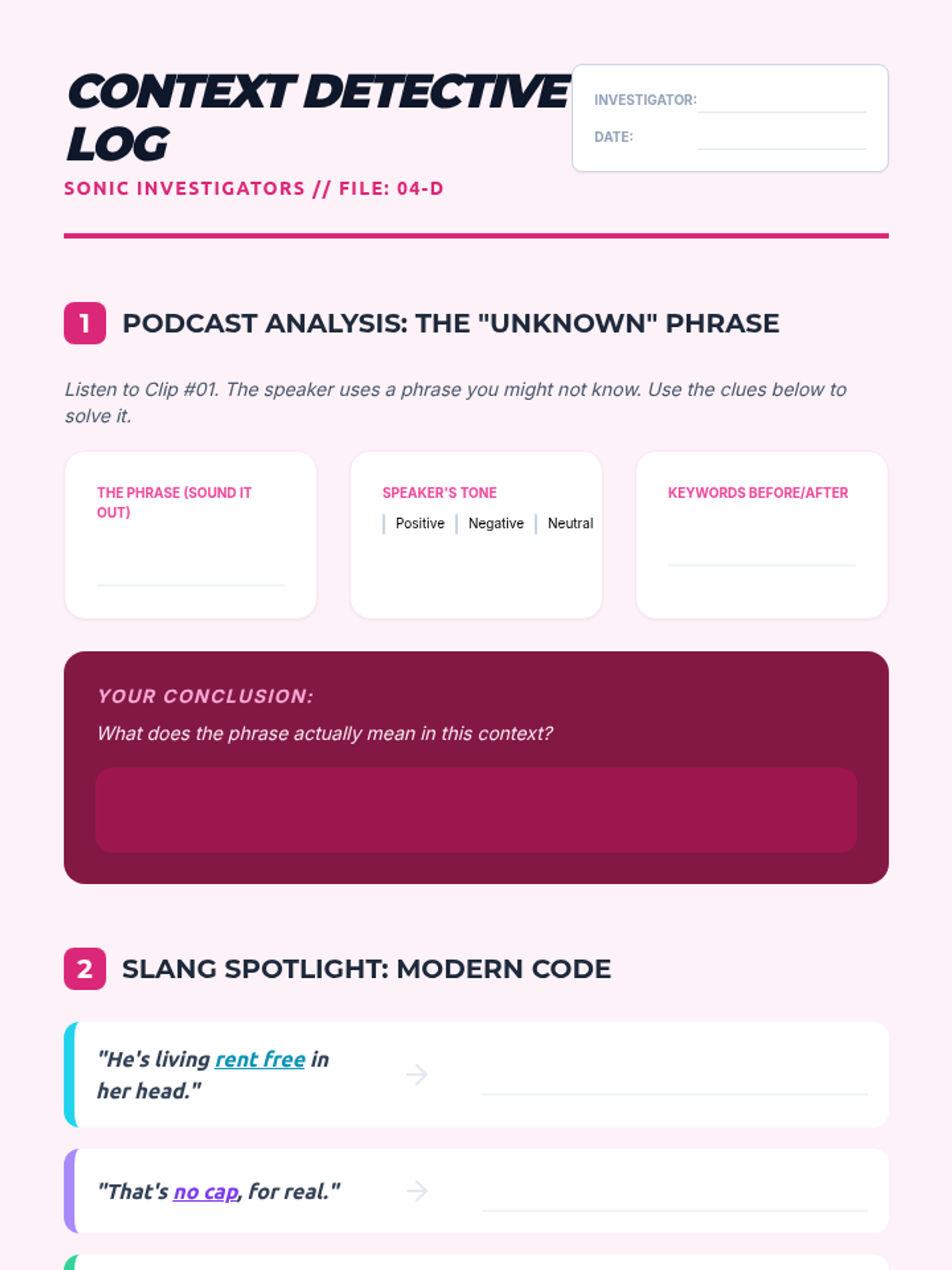
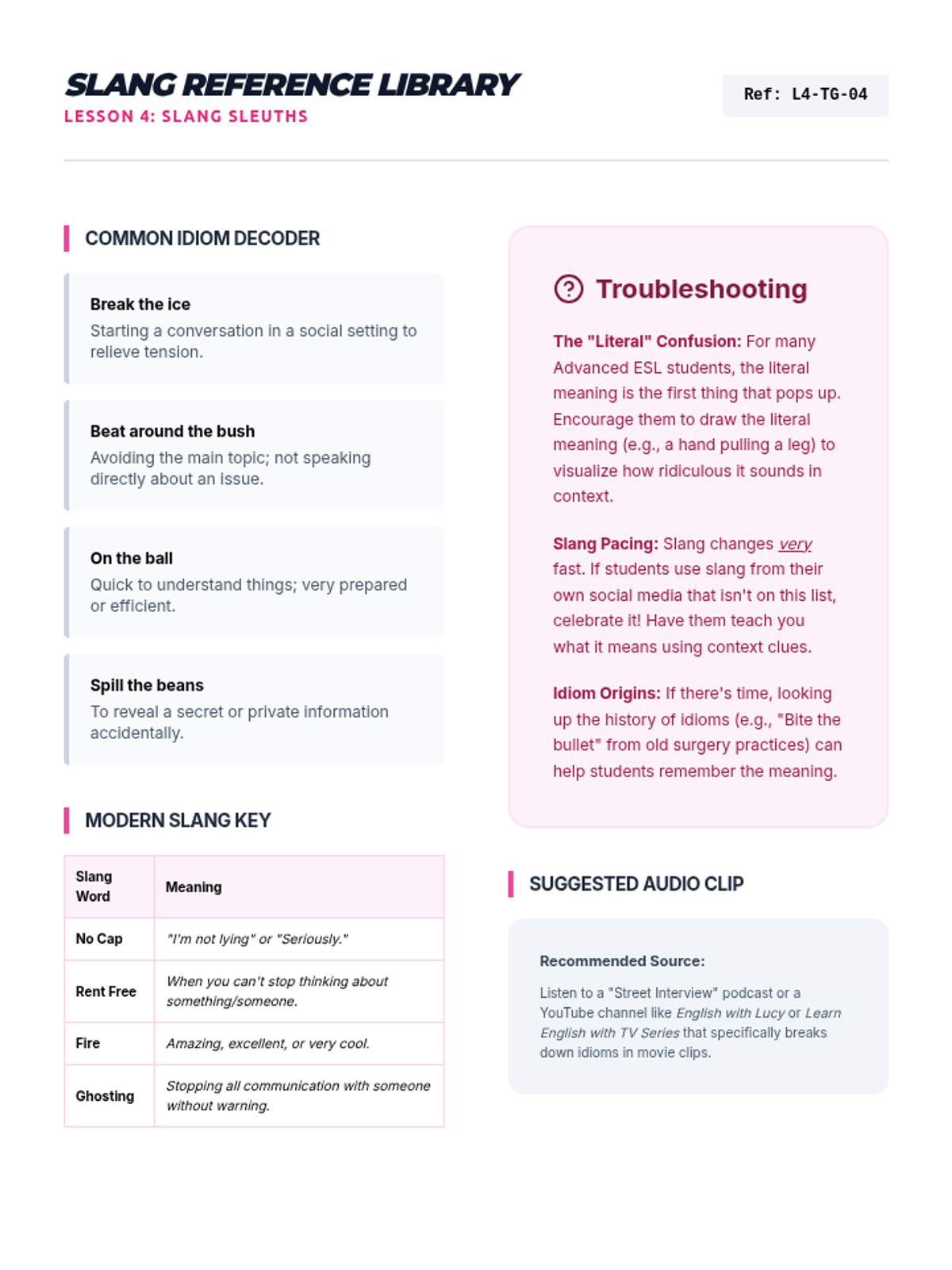
Learners practice inferring the meaning of non-literal language by analyzing context clues in natural conversation and podcast segments.
Students explore World English accents and practice 'tuning in' to different vowel shifts and regional vocabulary.
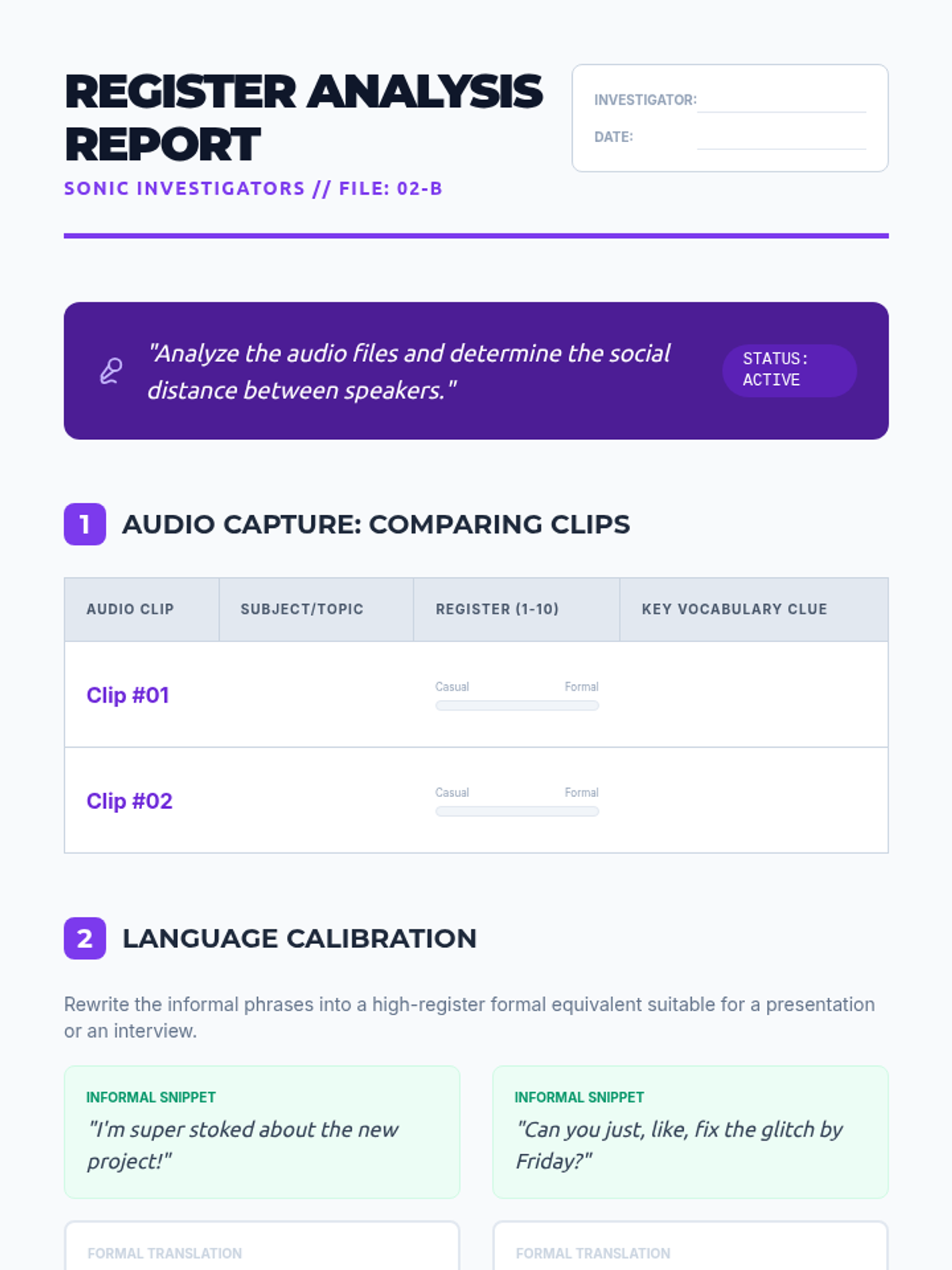
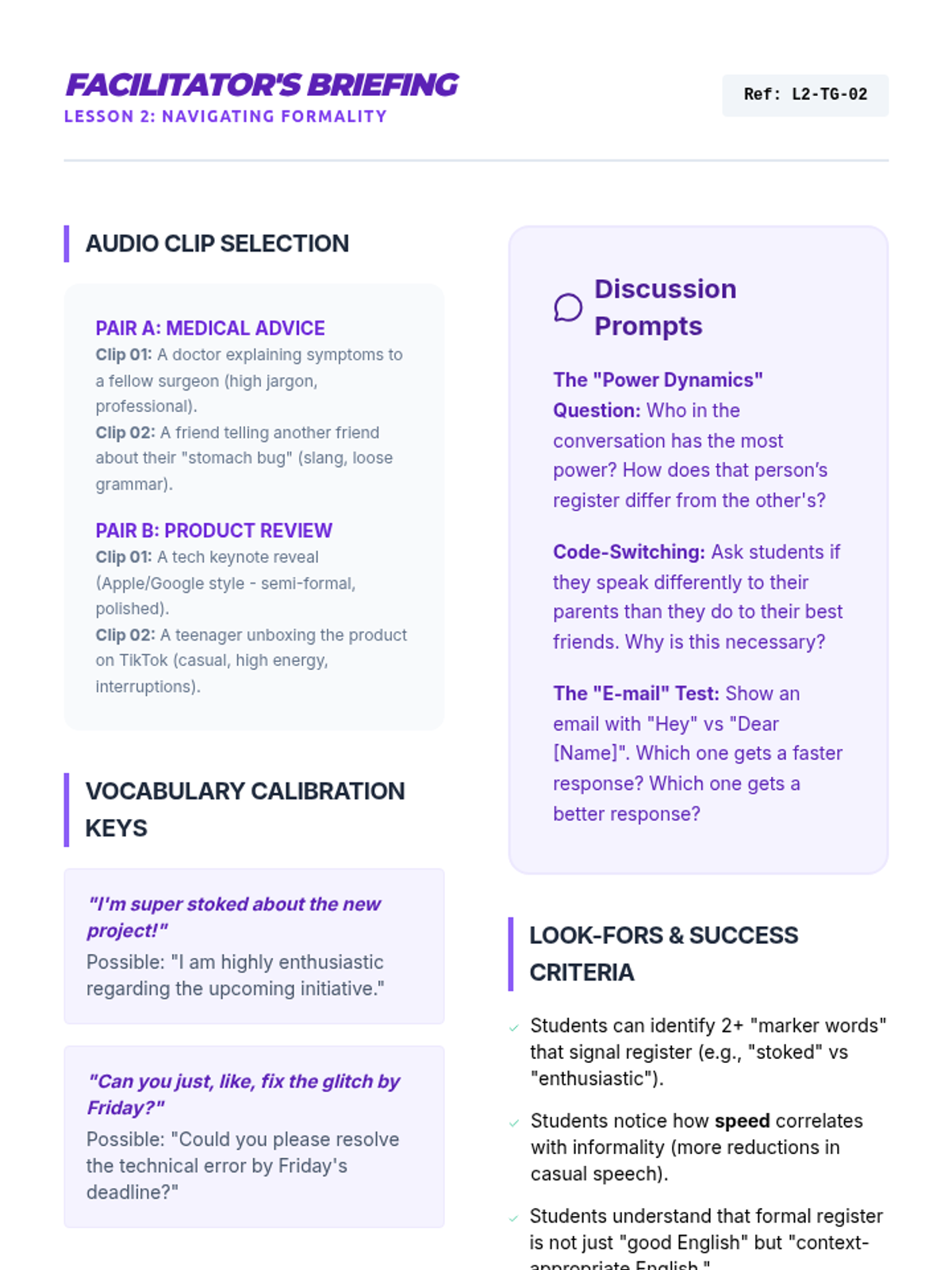
Learners compare audio clips in different settings to identify how vocabulary and tone shift between formal and informal registers.
Students examine common reductions (wanna, gonna, whaddaya) and linking sounds through pop culture clips to decode how speed changes pronunciation.
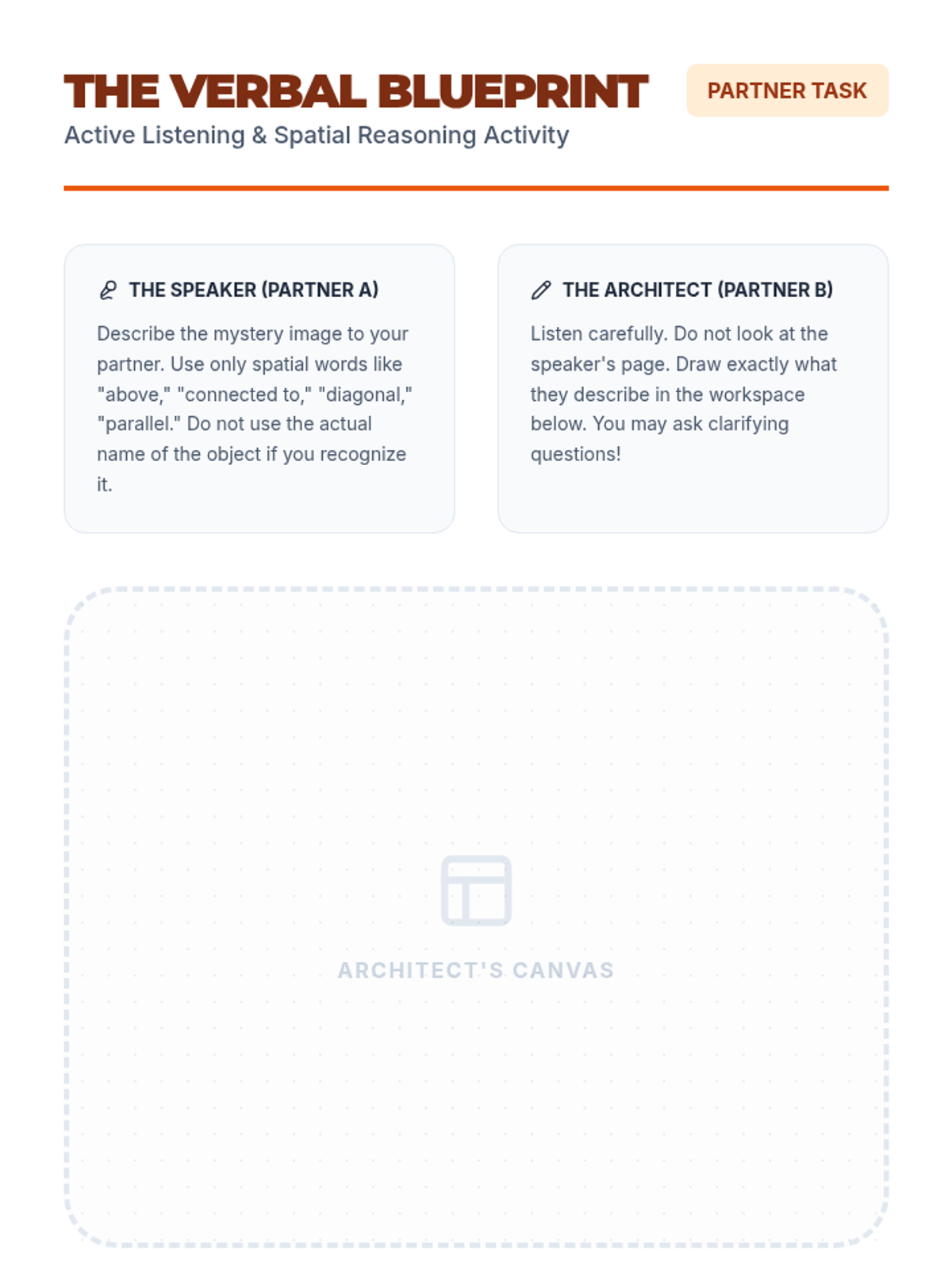
Students translate audio descriptions of biological processes into visual diagrams, testing their comprehension of sequence and spatial language.
Introduction to the Cornell Note-taking system and shorthand techniques to keep up with fast-paced historical narratives.
Learners practice distinguishing core concepts from supporting examples using a science-based lecture as the primary source material.
Students identify 'signpost' words that signal discourse shifts (contrast, addition, conclusion) and use them to predict the structure of a spoken argument.