Complex grammar structures, idiomatic expressions, and phrasal verbs. Strengthens reading and listening comprehension while building conversational fluency for varied social and professional settings.
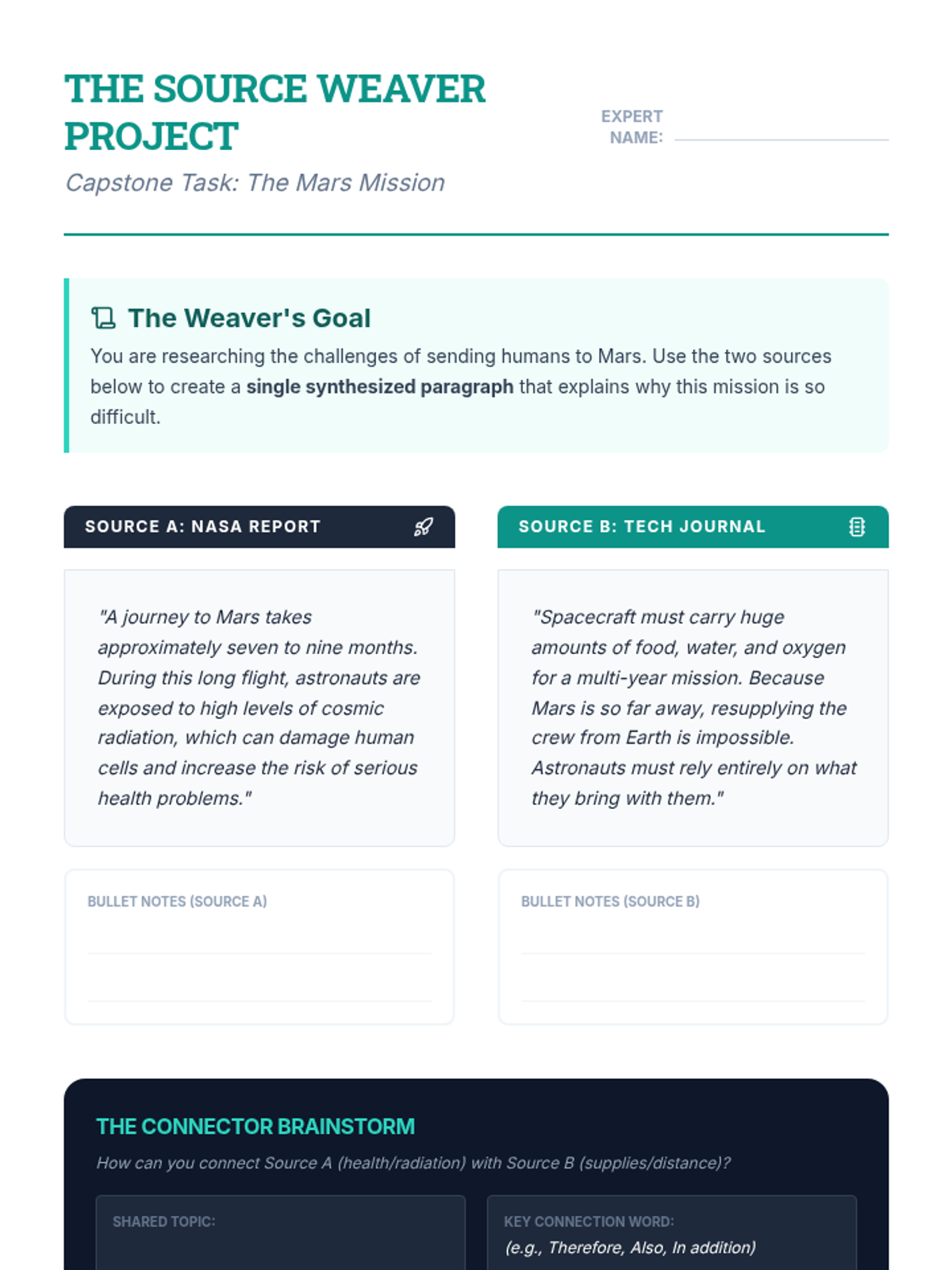
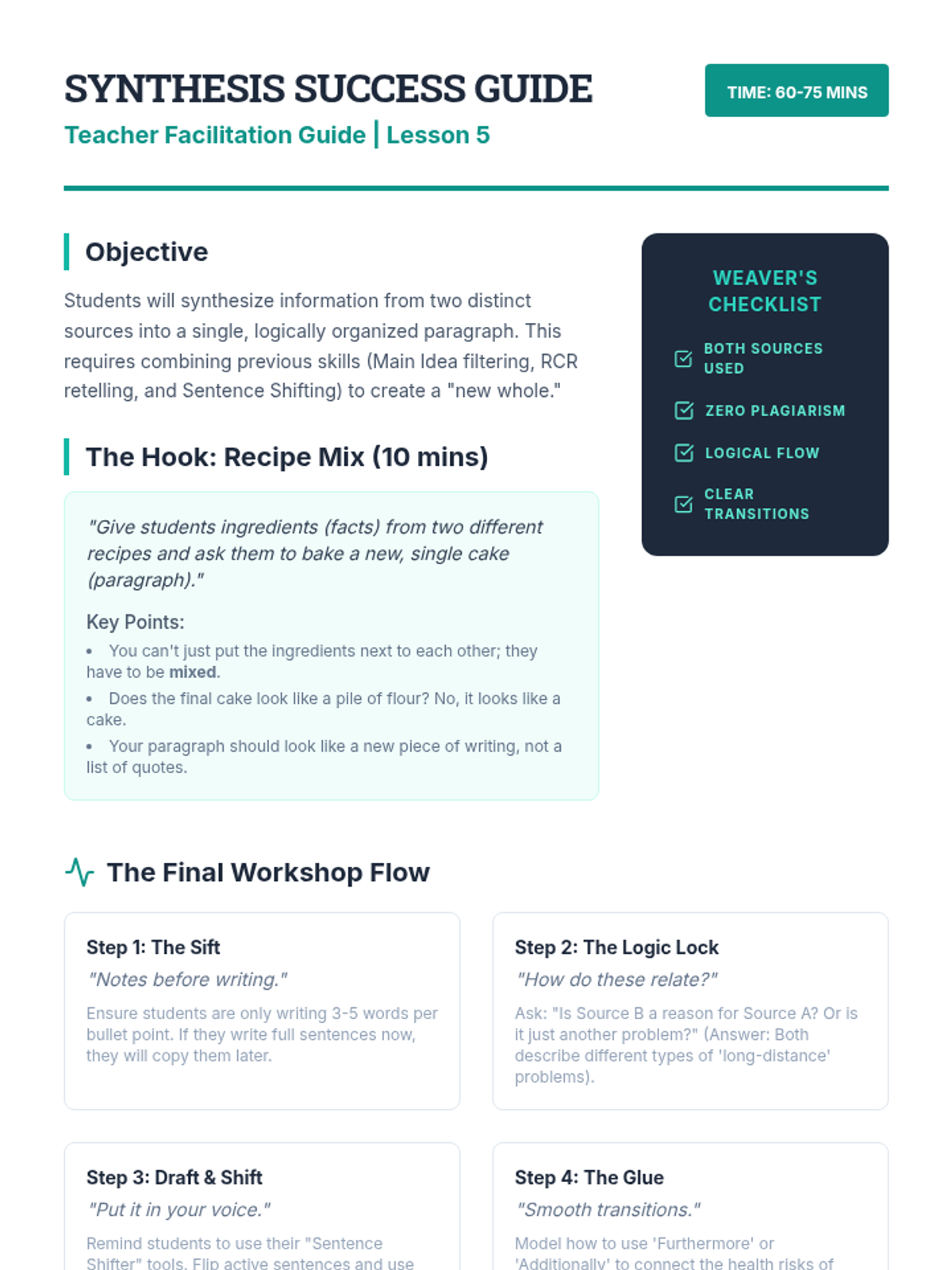
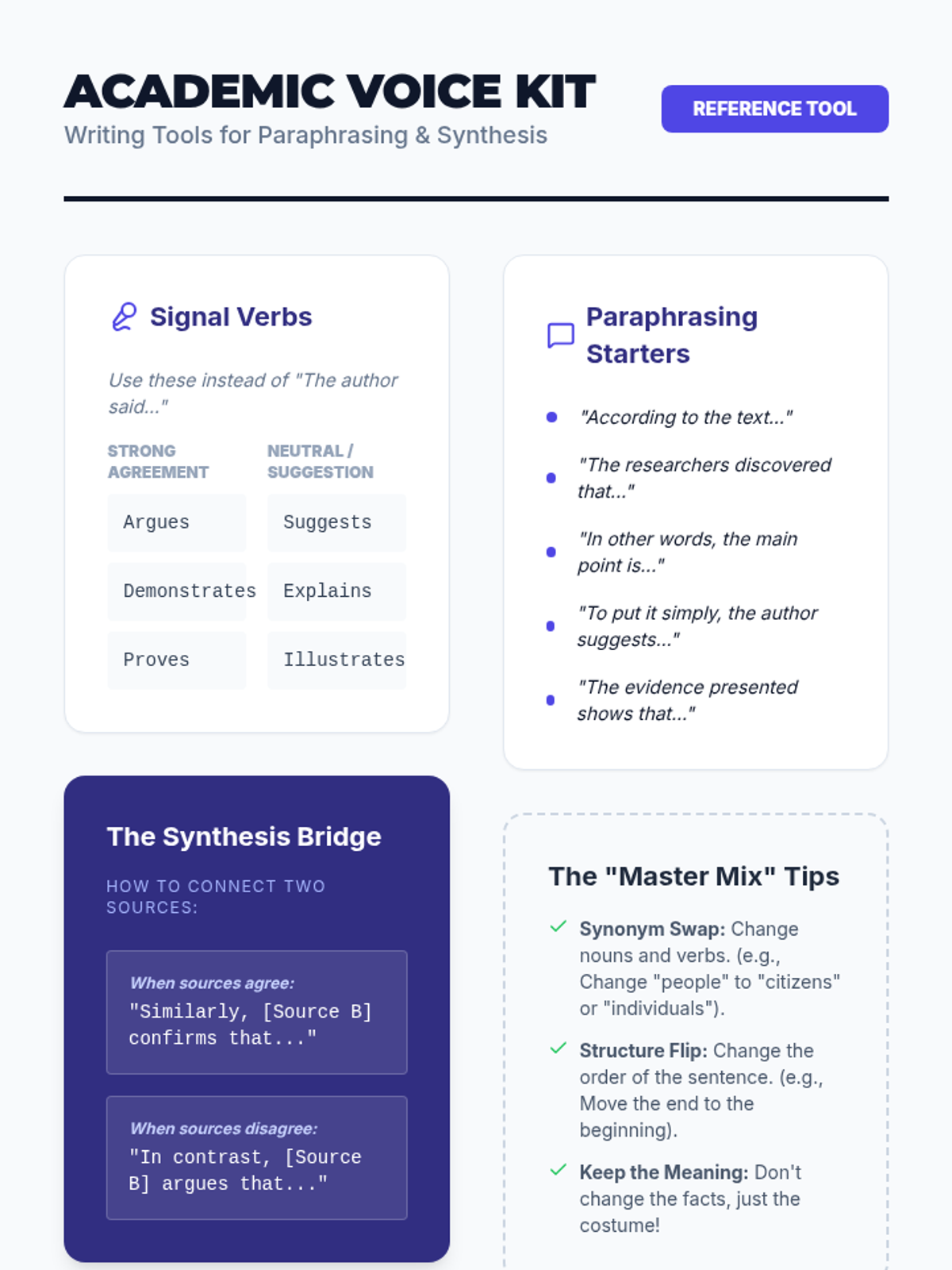
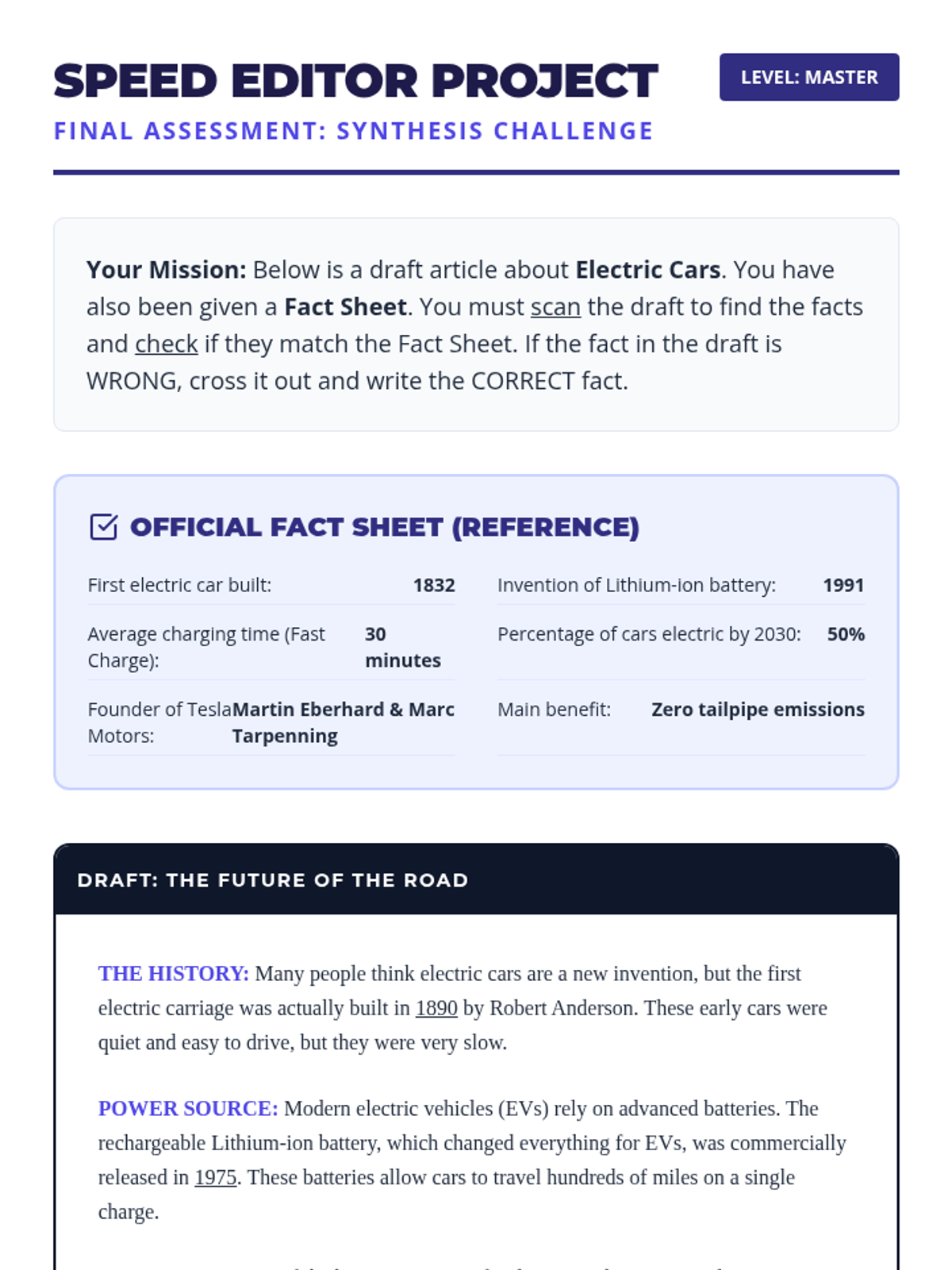
The capstone activity where students combine information from two different sources into a single, logically organized paragraph.
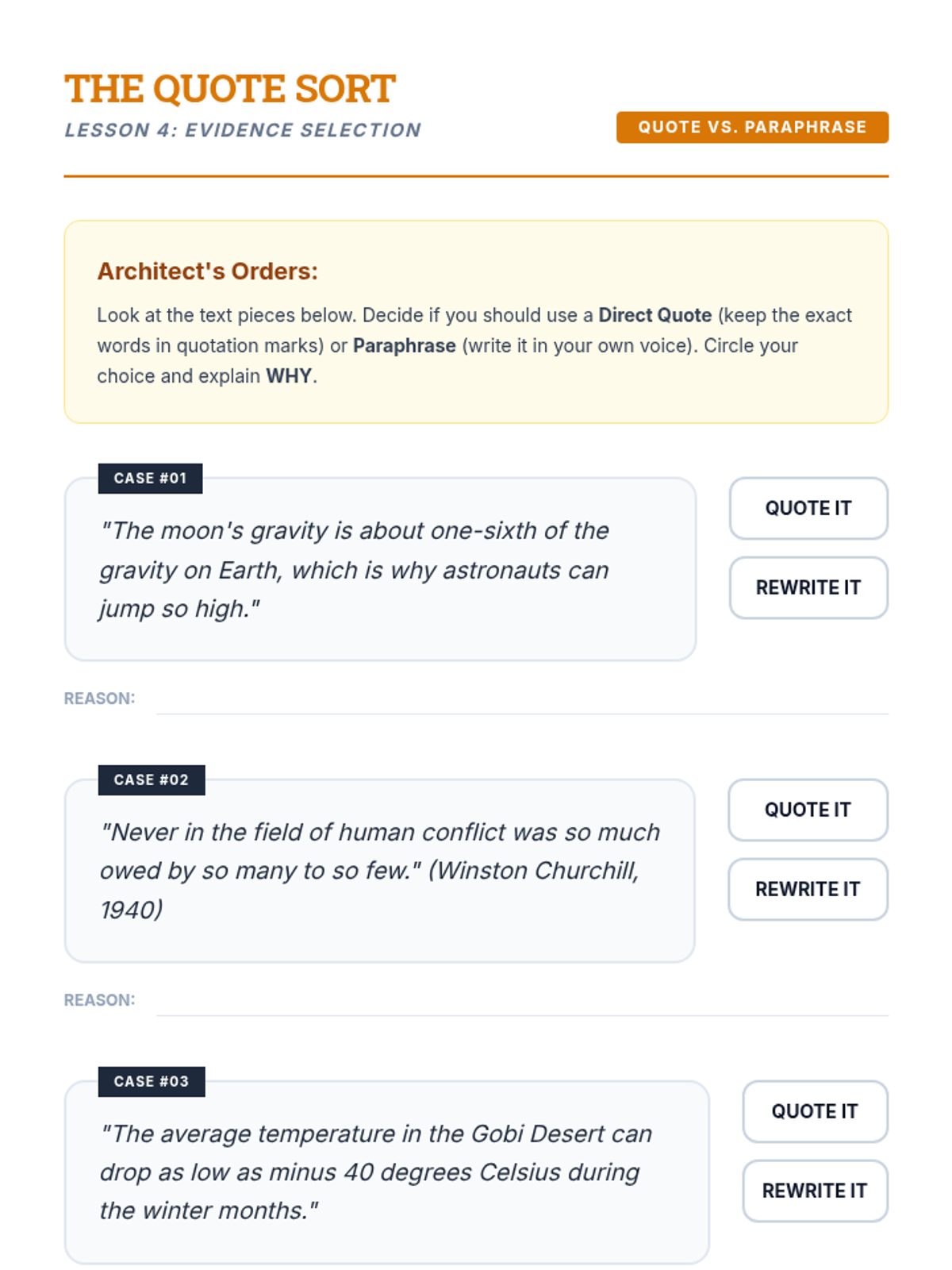
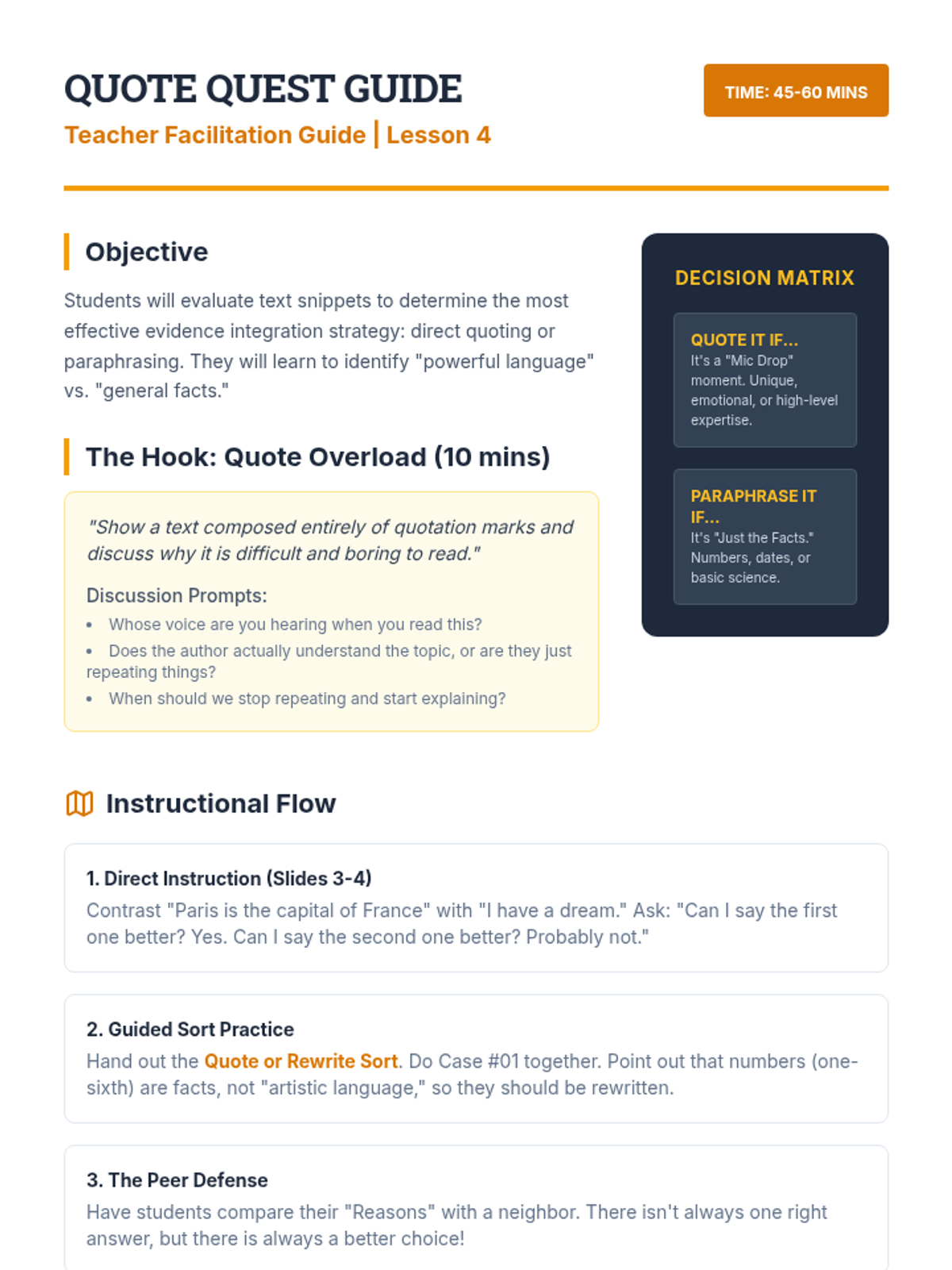
Distinguishes between when to use direct quotes for impact and when to paraphrase for factual clarity.
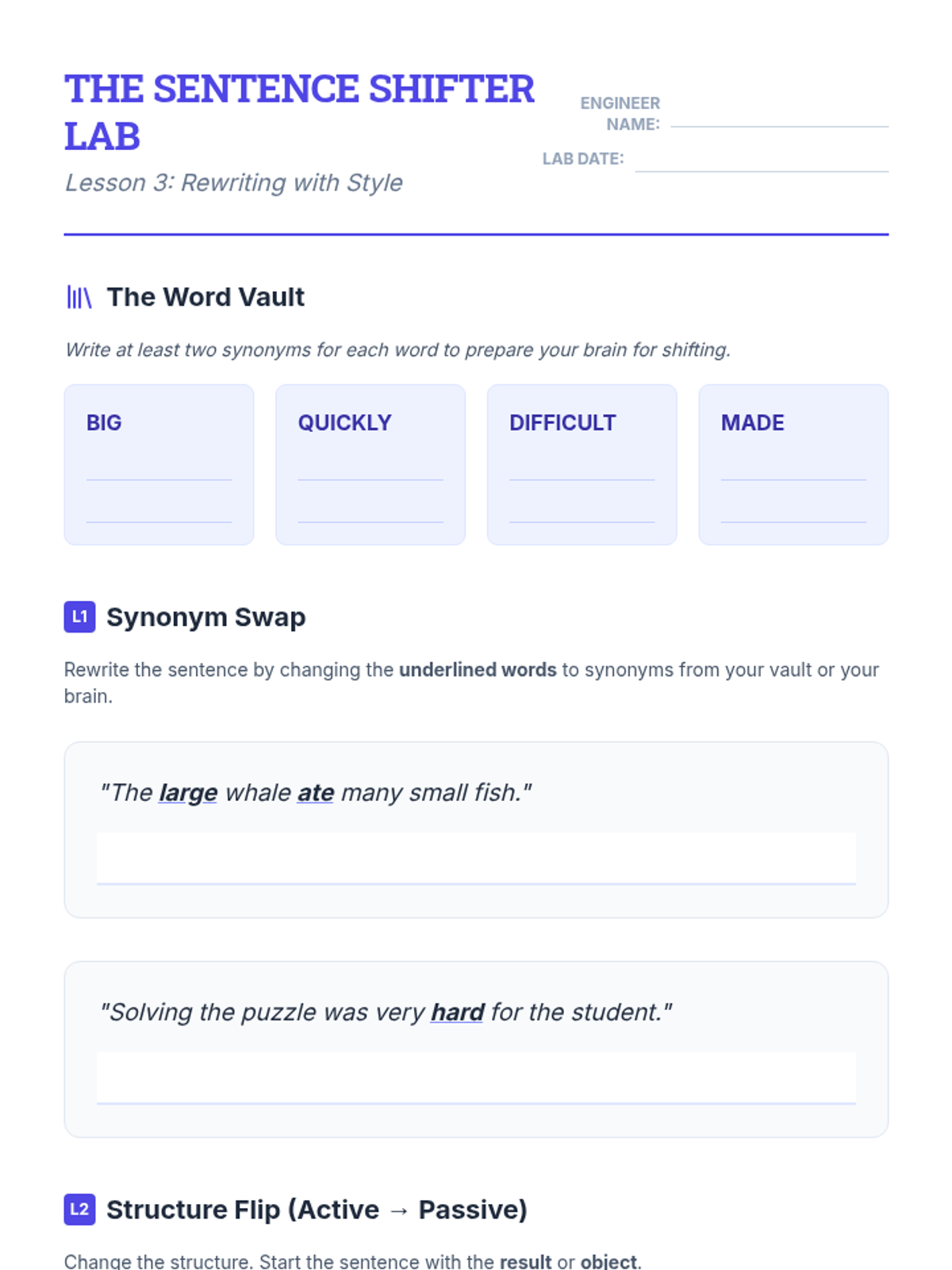
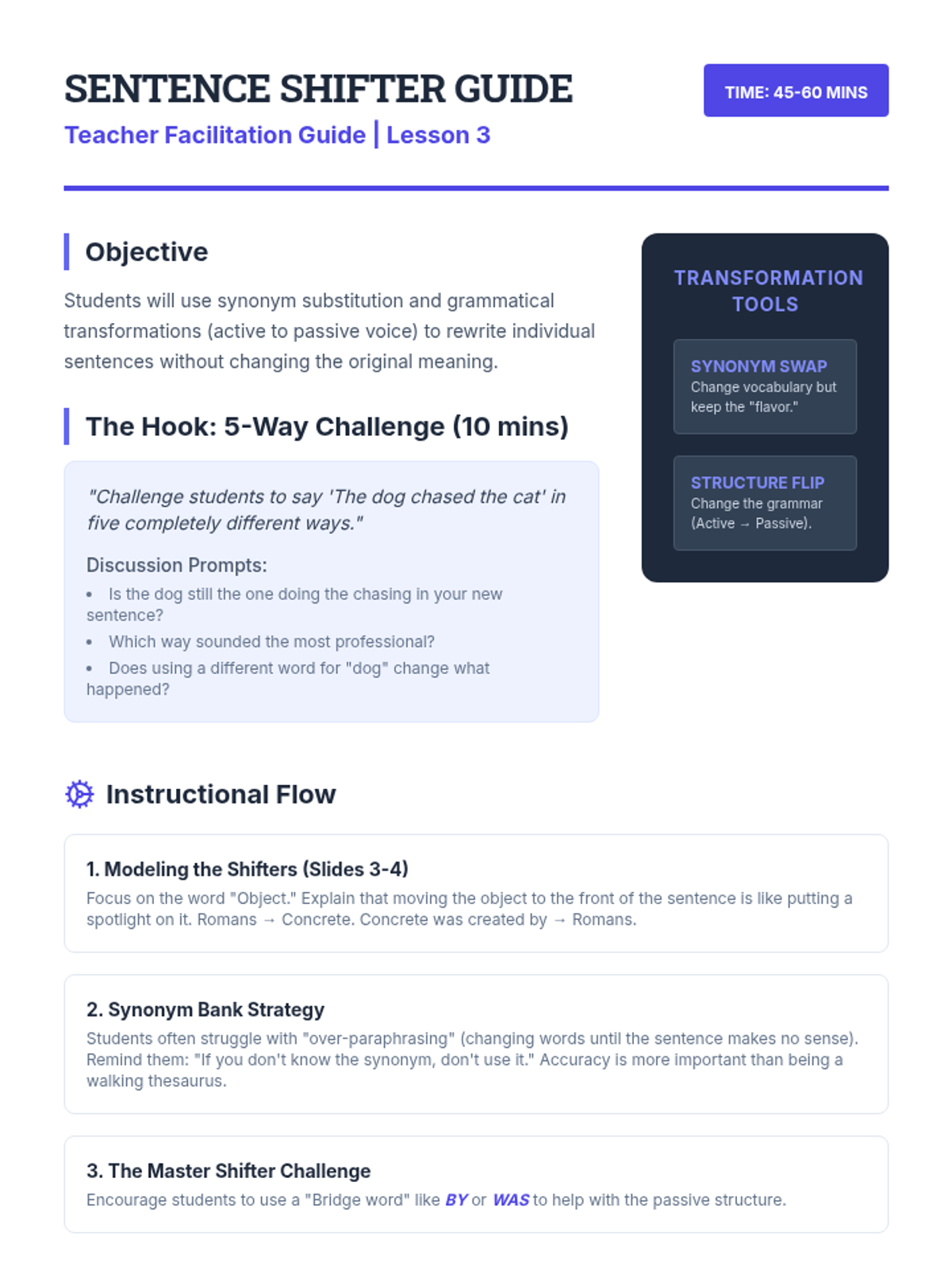
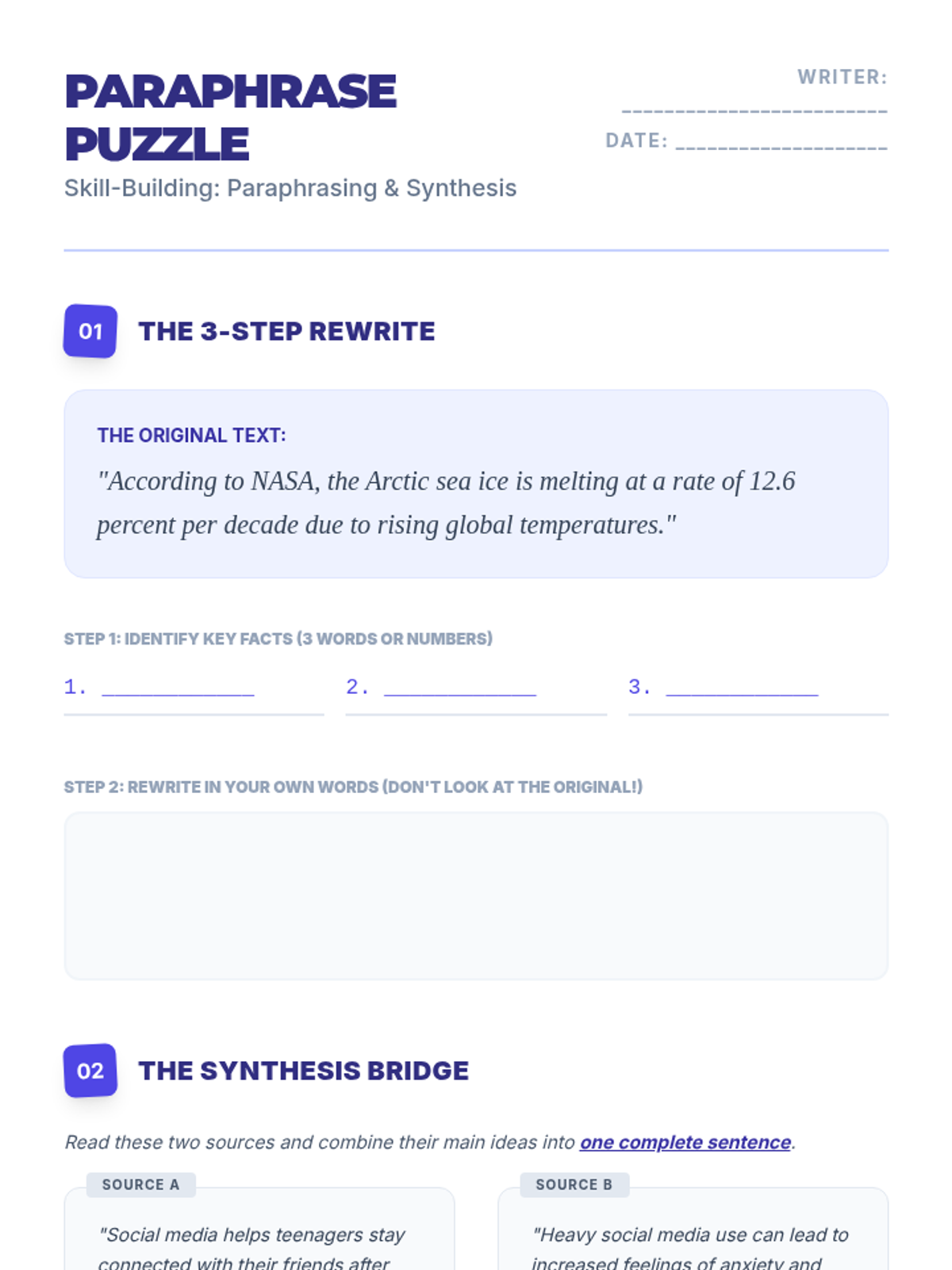
Guided practice in rewriting sentences using synonyms and grammatical shifts, such as changing active to passive voice, while maintaining original meaning.
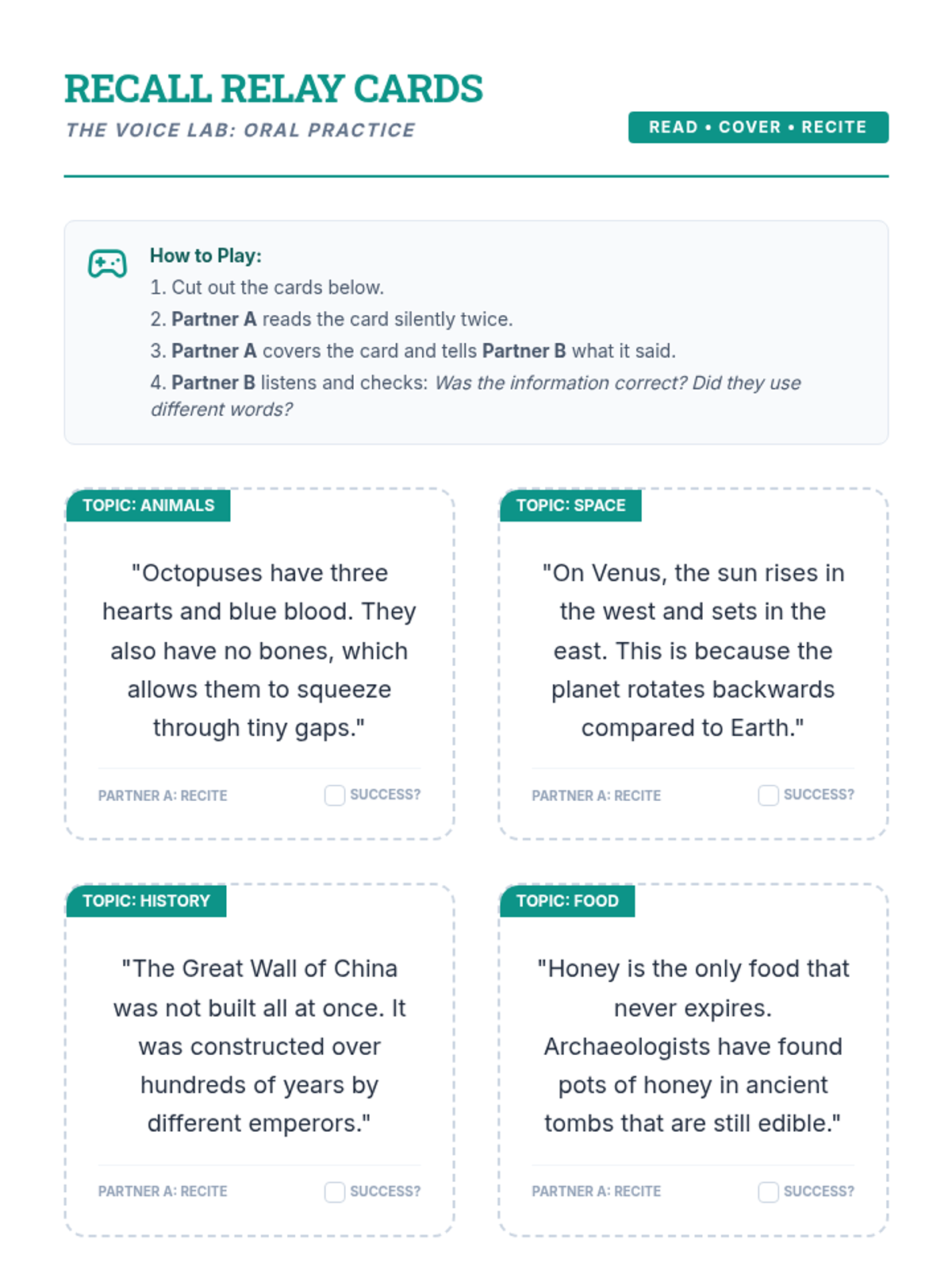
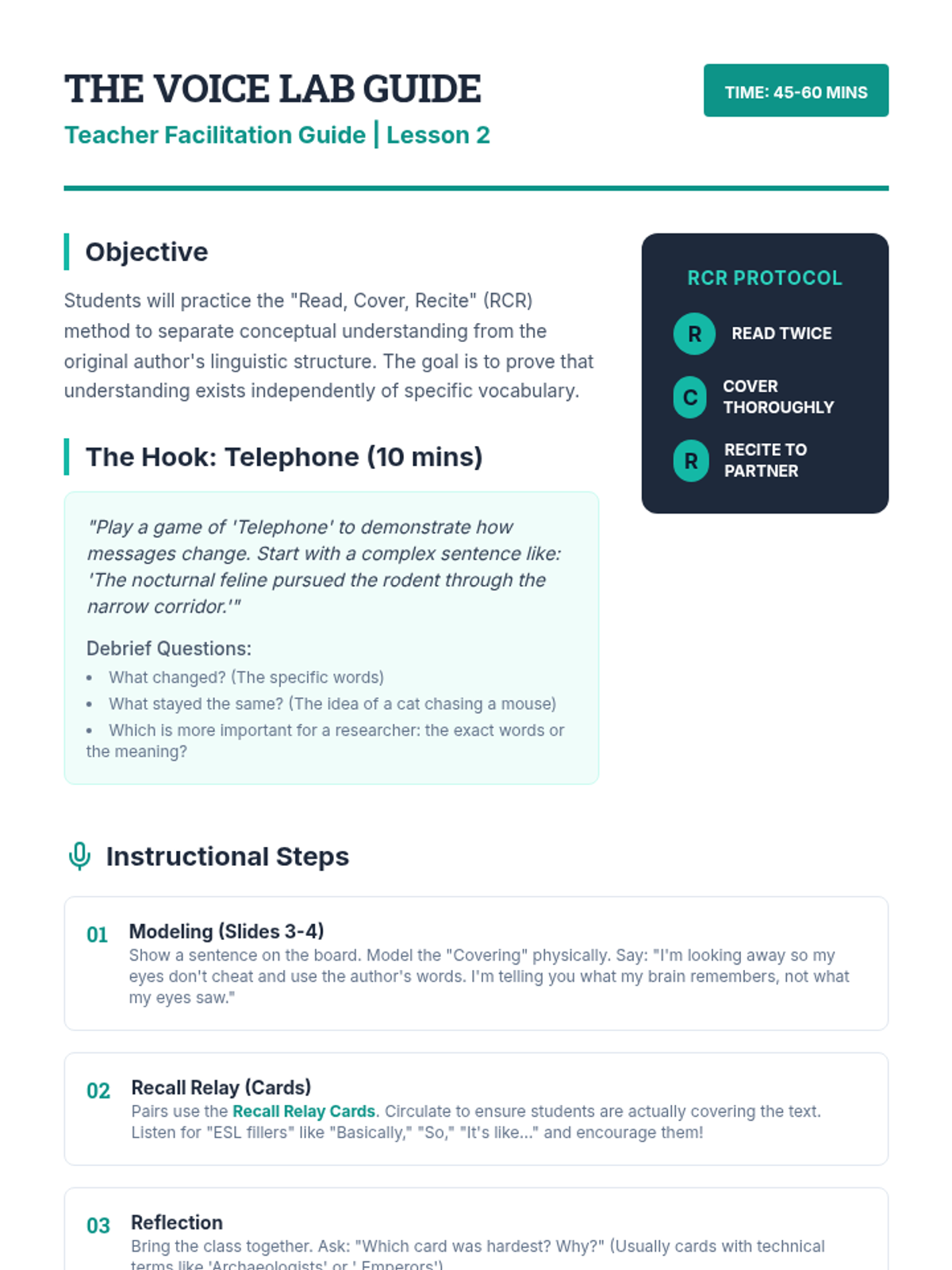
Focuses on the 'Read, Cover, Recite' method to separate conceptual understanding from the original text's linguistic structure through oral retelling.
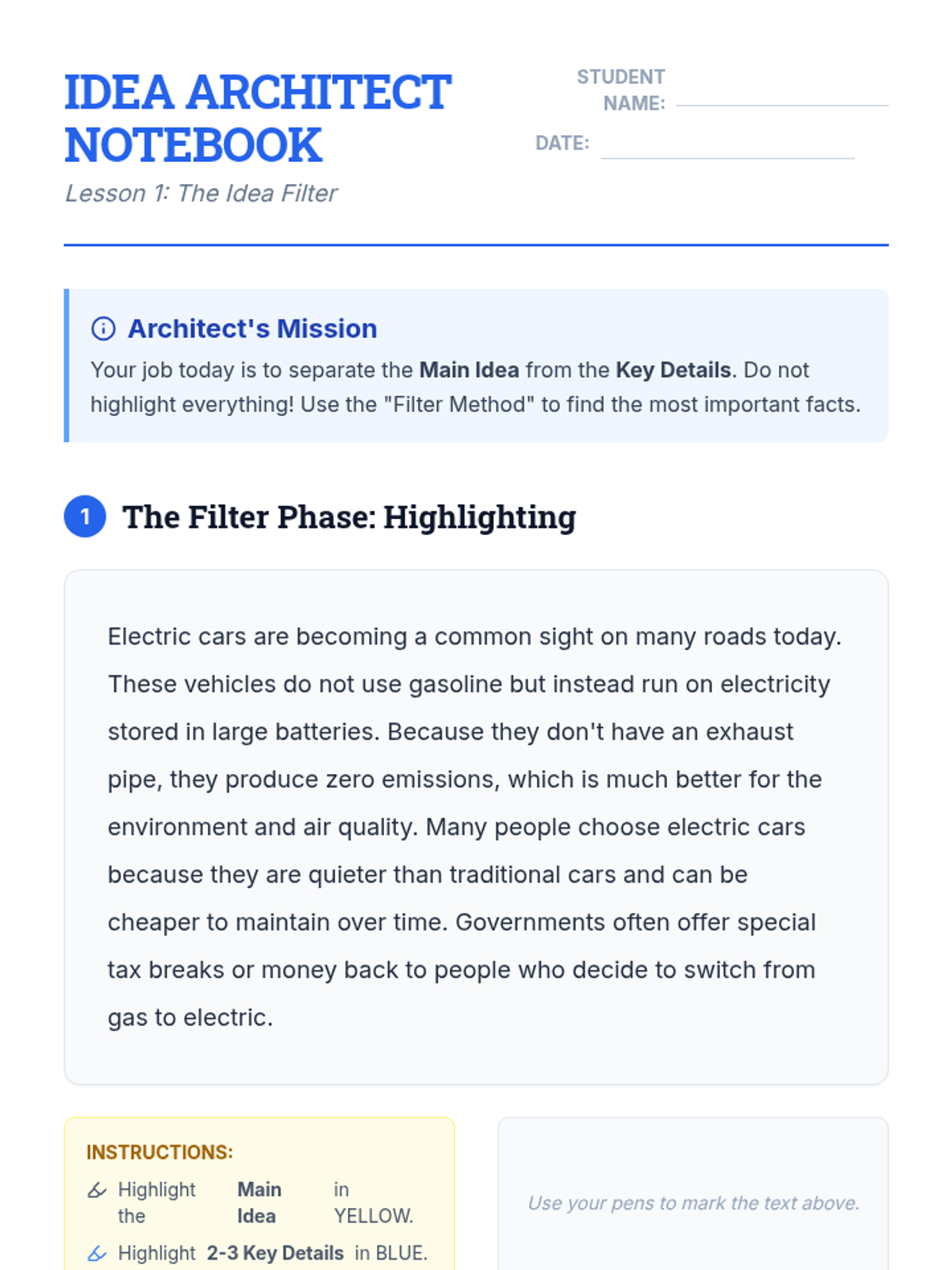
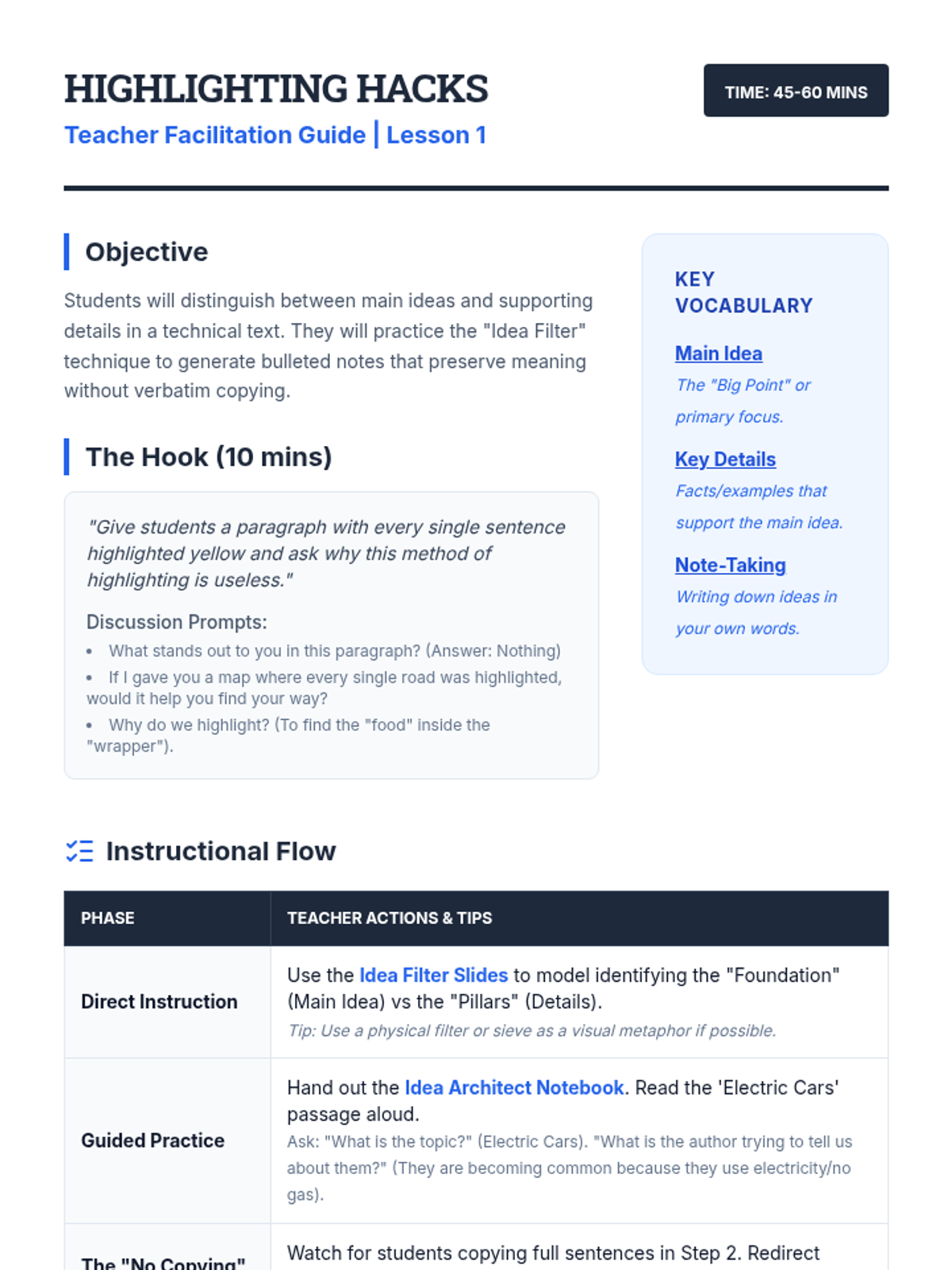
Students learn to separate core concepts from 'fluff' using effective highlighting and note-taking strategies, moving away from copying full sentences.
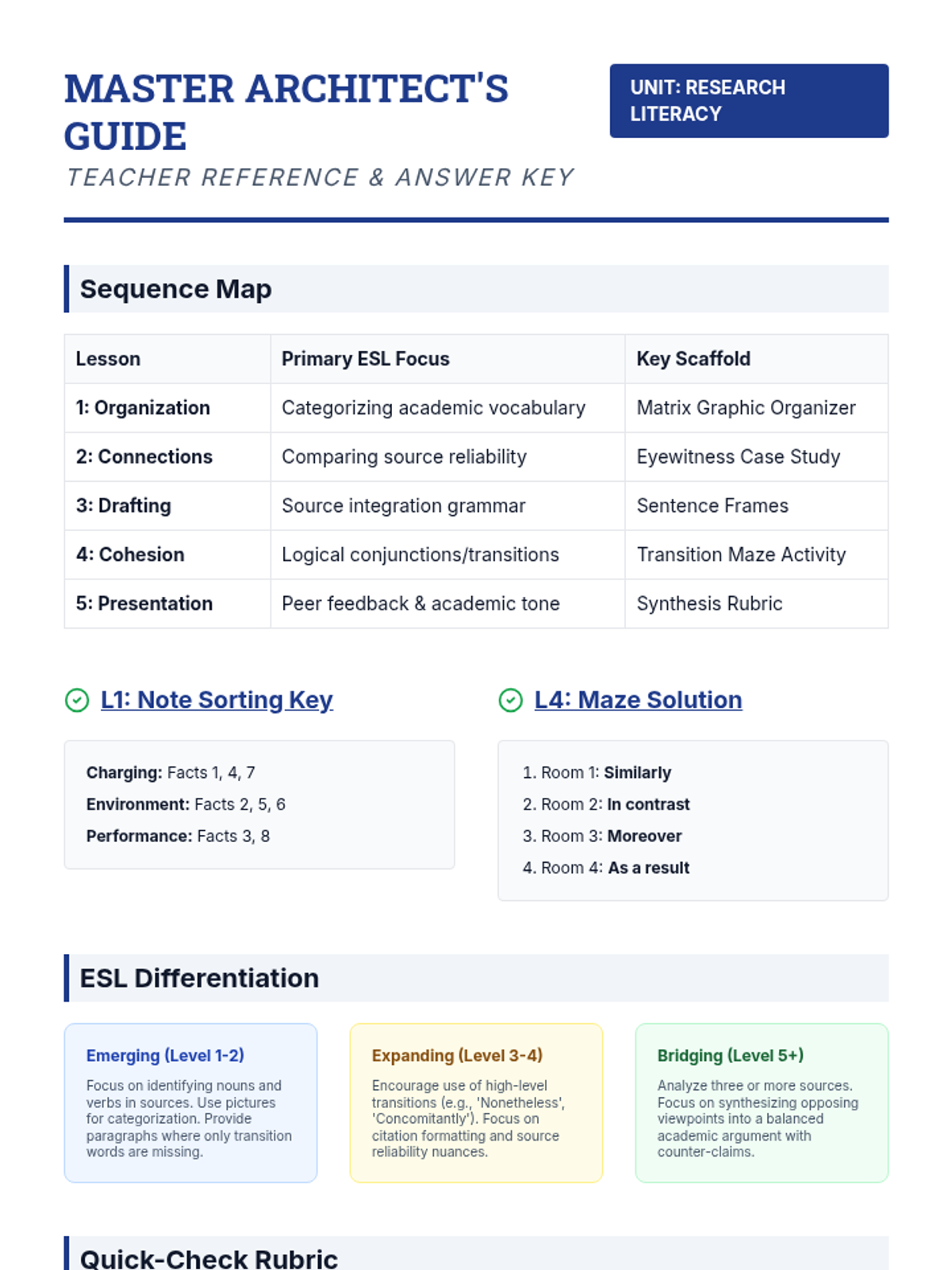
Students finalize their research synthesis into a report or presentation and participate in a peer-review gallery walk.
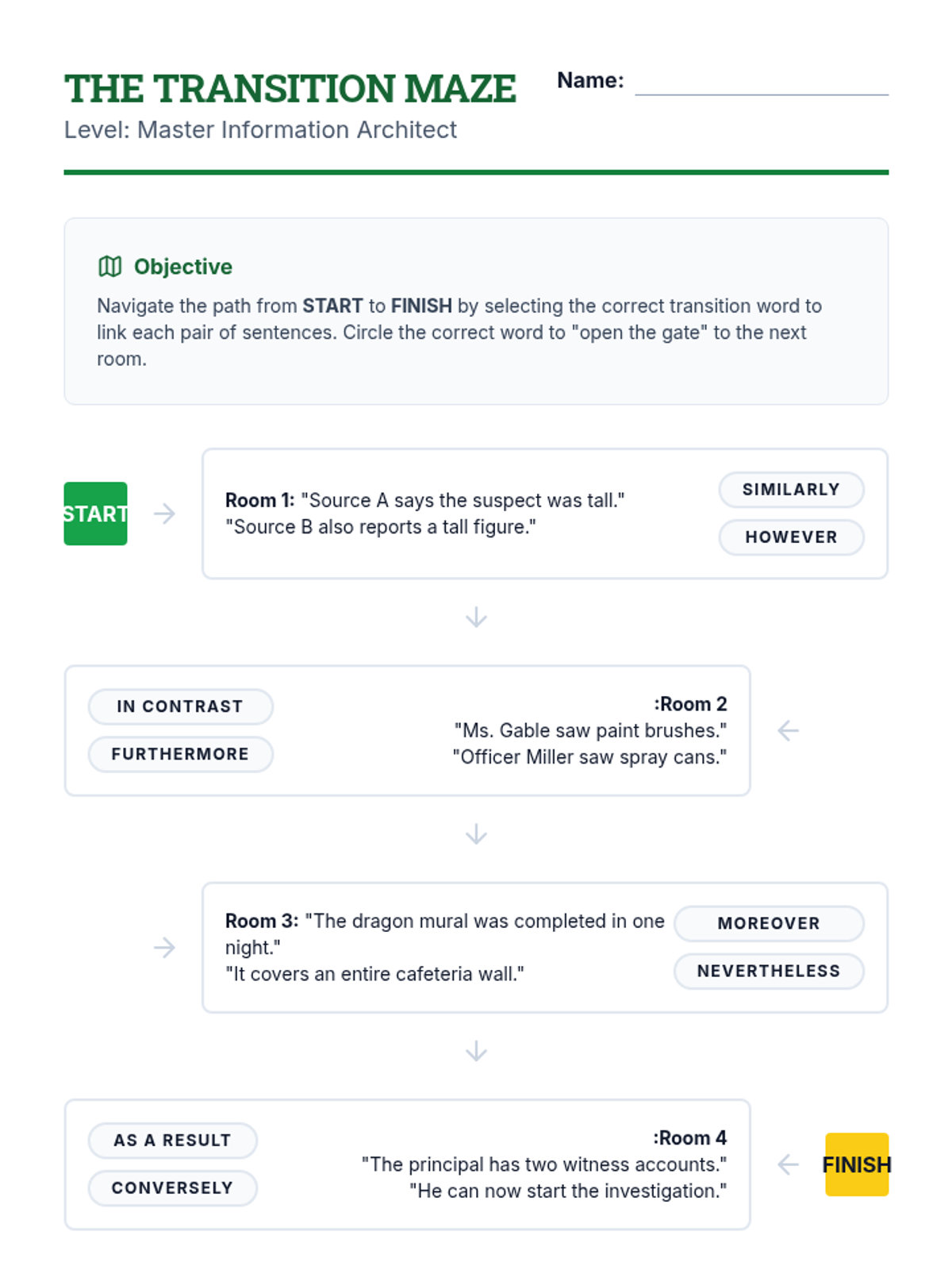
This lesson focuses on academic transitions like 'however' and 'furthermore' to link ideas smoothly, featuring a 'Transition Maze' game.
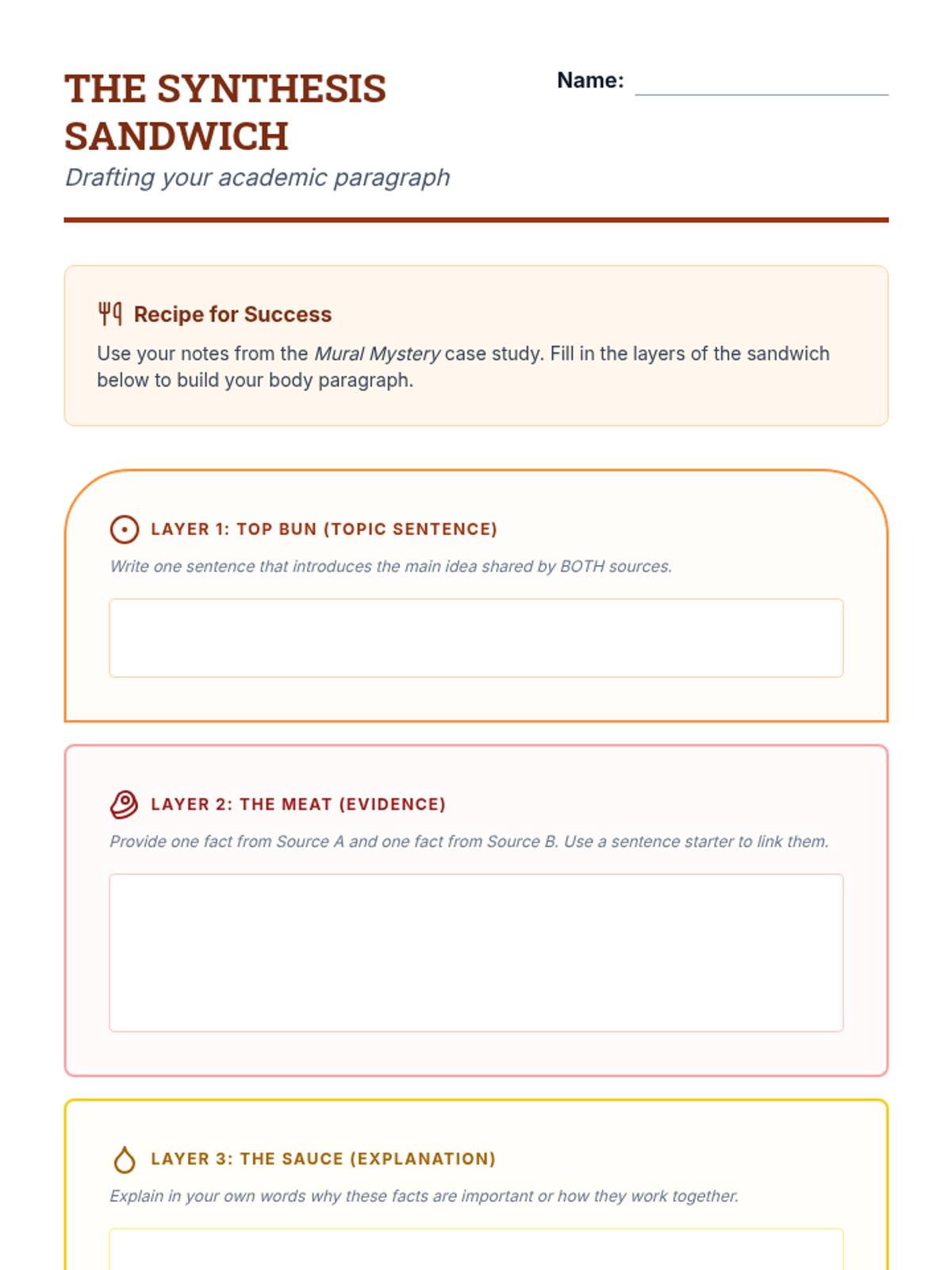
Students draft a body paragraph that combines information from multiple sources using the 'Topic Sentence - Evidence - Explanation' structure and sentence frames.
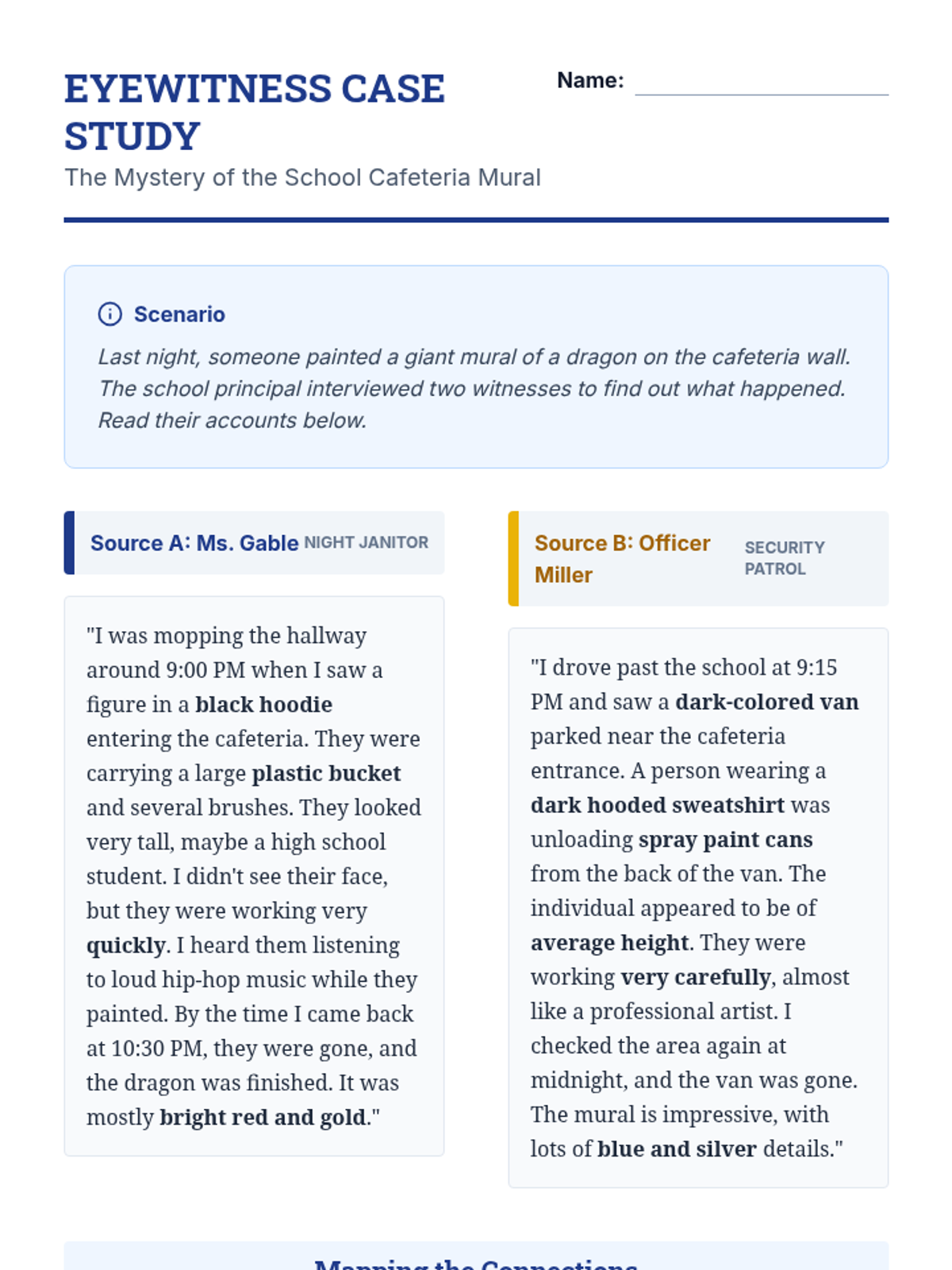
Learners compare two short articles on the same topic to find areas of agreement and disagreement, using Venn diagrams to visualize source overlap.
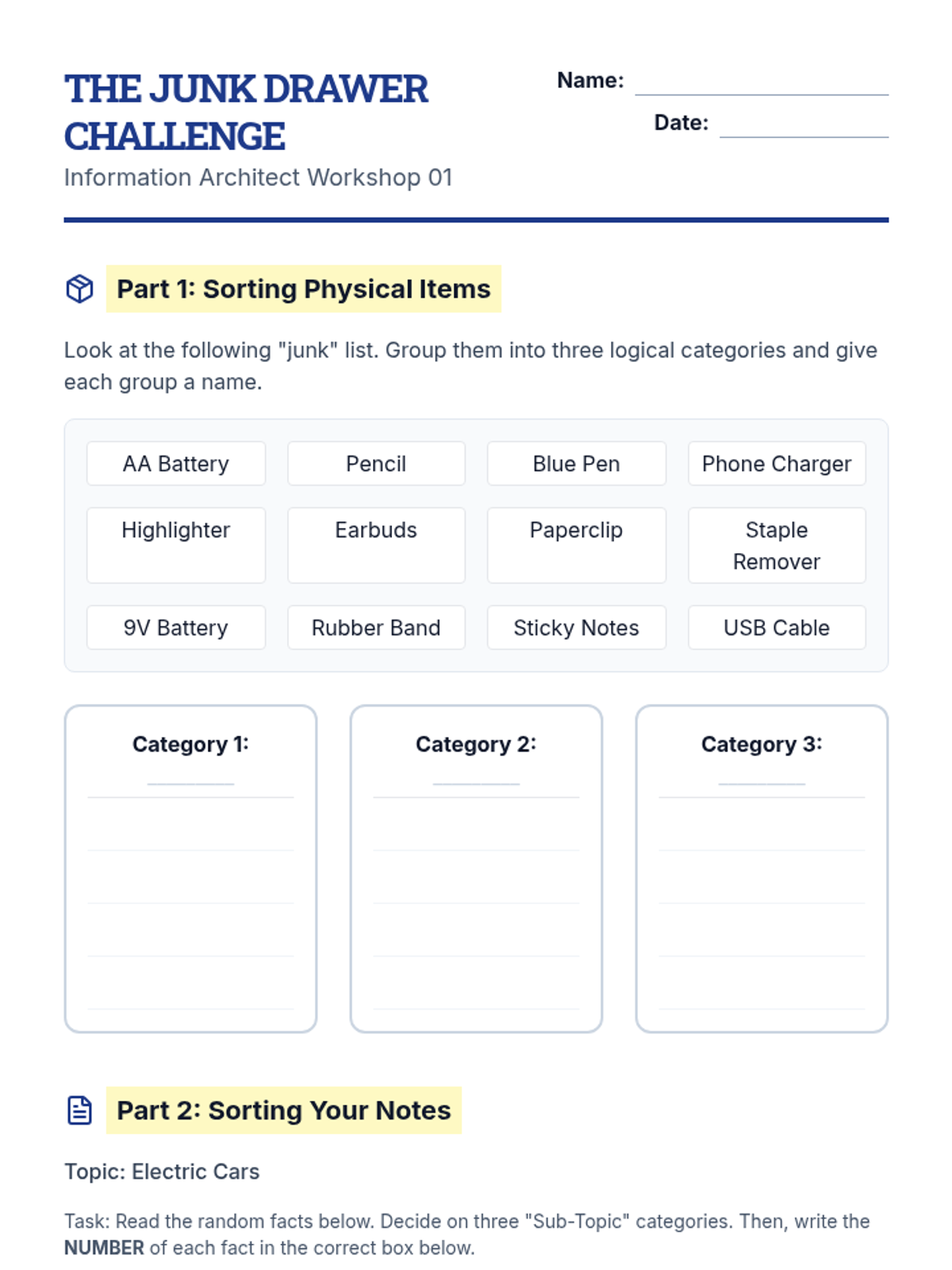
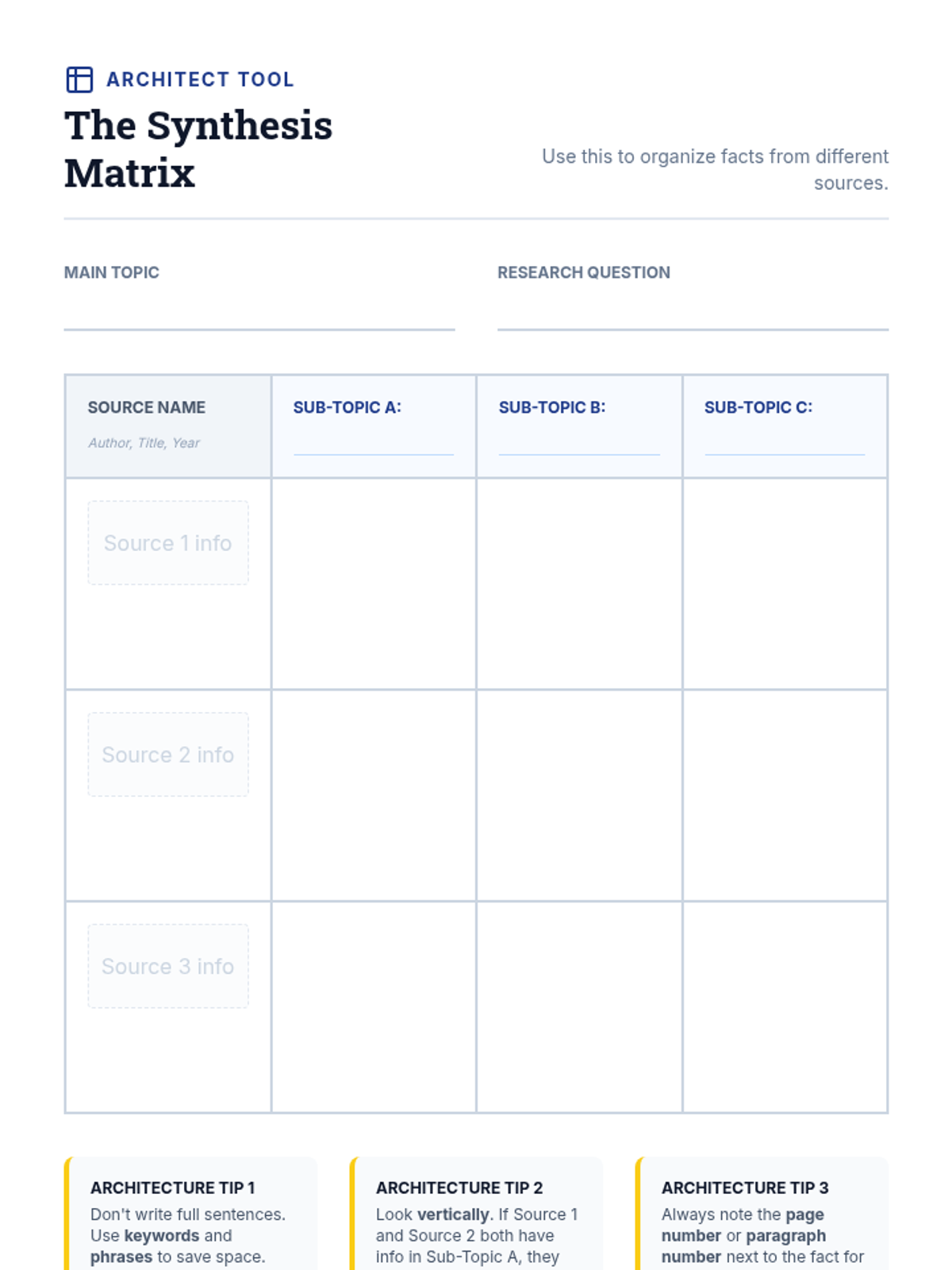
Students learn to categorize scattered facts using graphic organizers like matrix charts. They practice sorting a 'junk drawer' of information into logical sub-topics to prepare for academic writing.
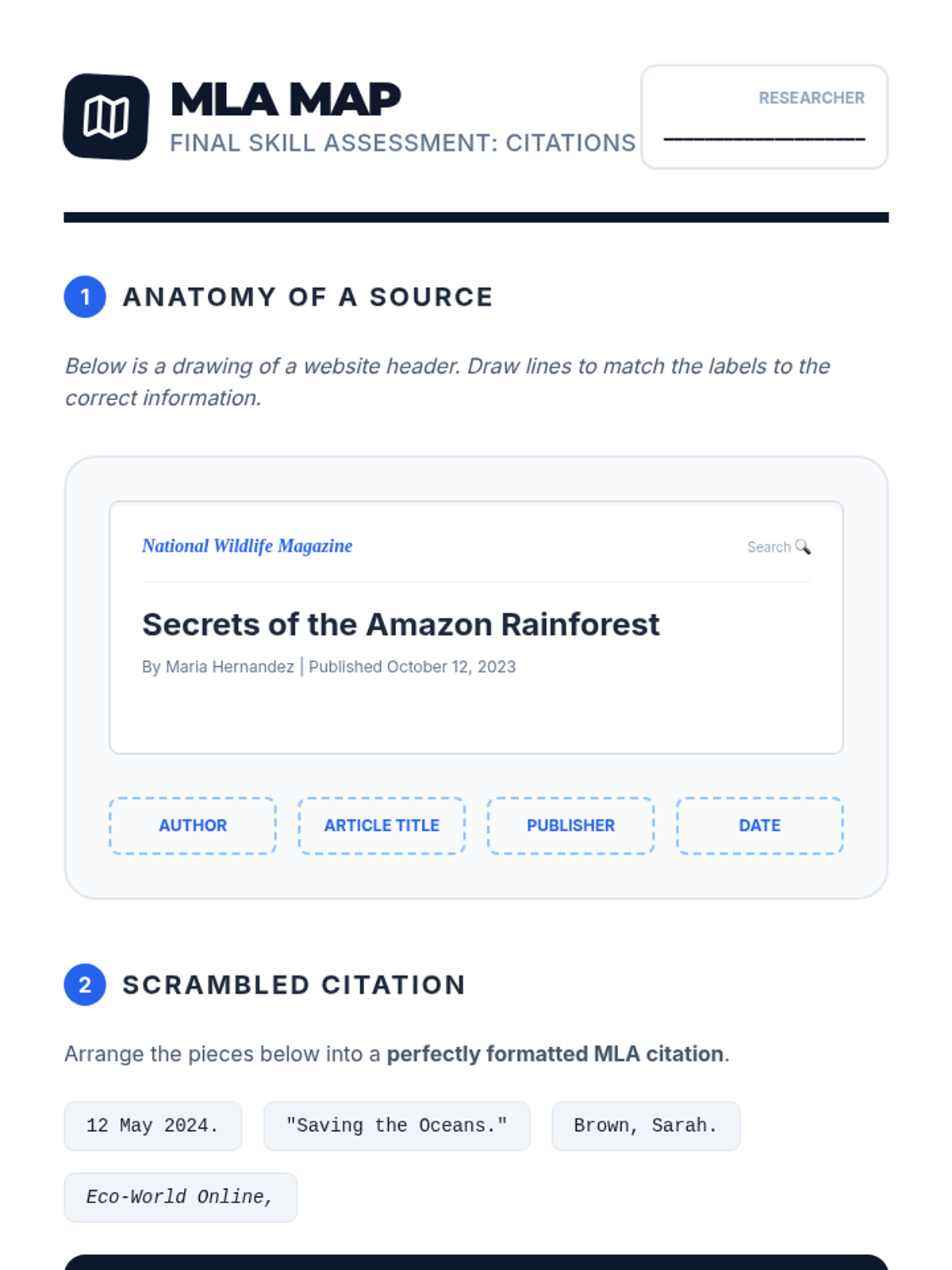
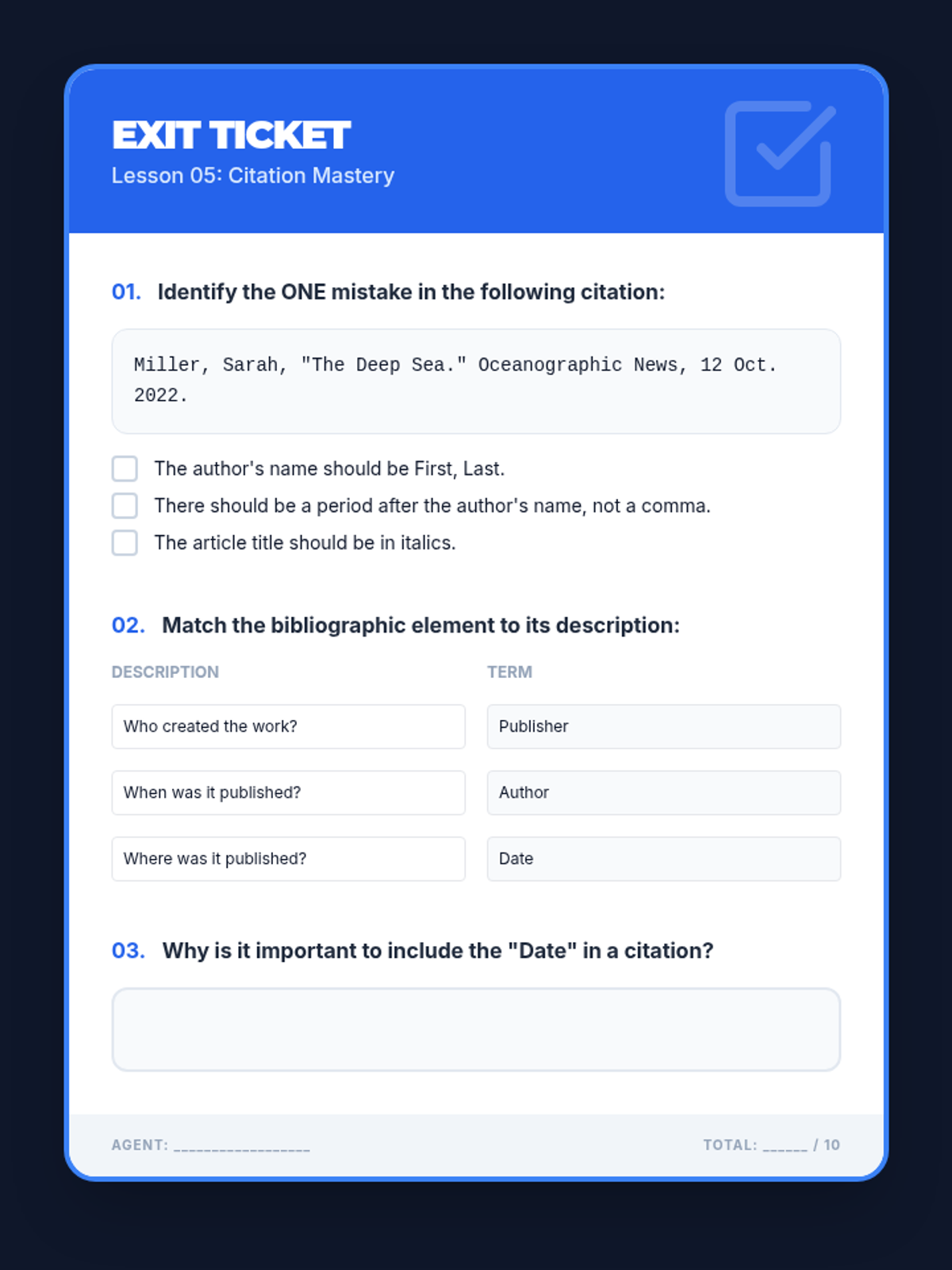
Students master the technical rules of MLA citations, learning how to locate bibliographic data and format a works cited page.
Focusing on academic integrity, students practice paraphrasing and summarizing information from multiple sources using their own voice.
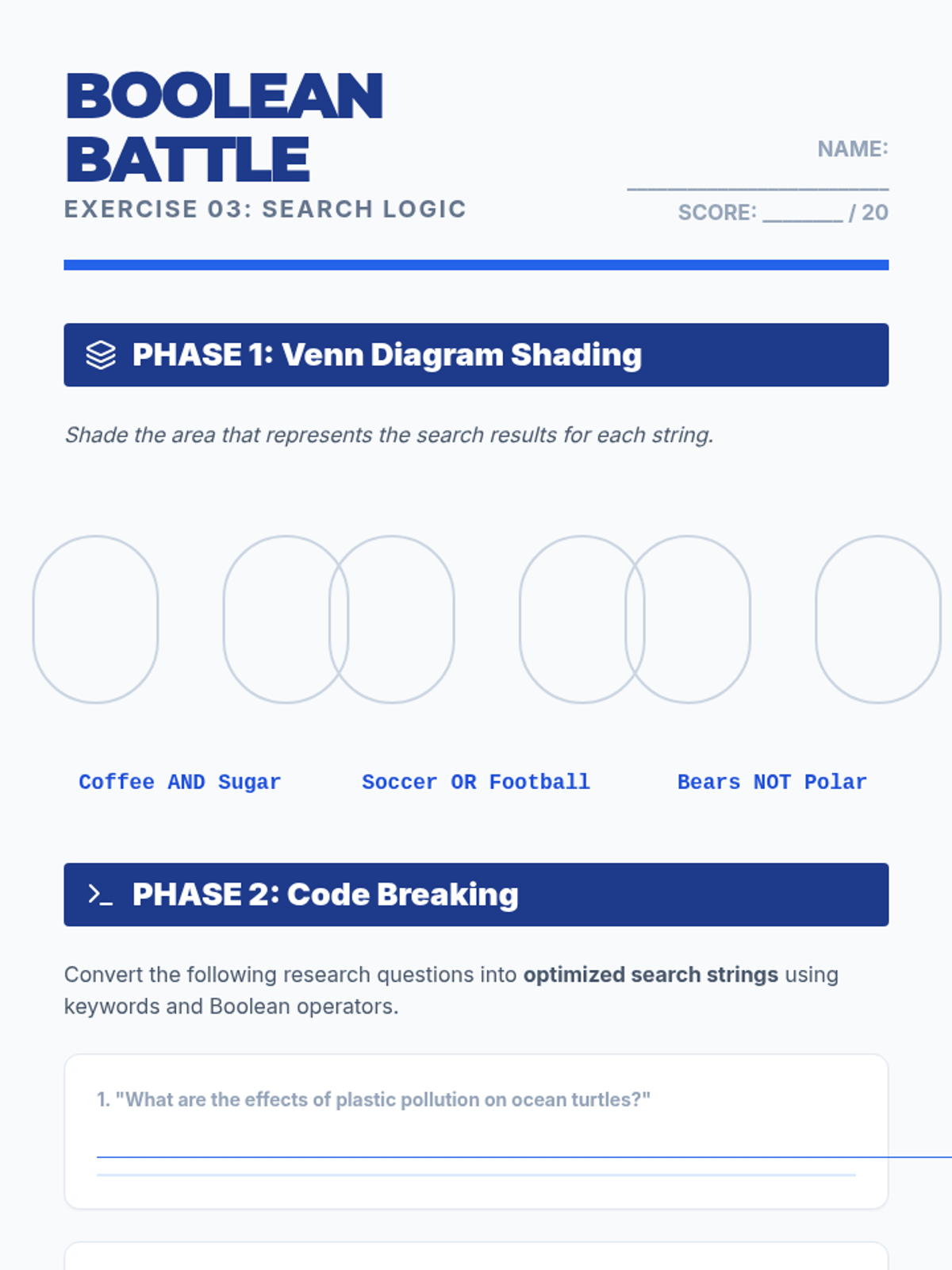
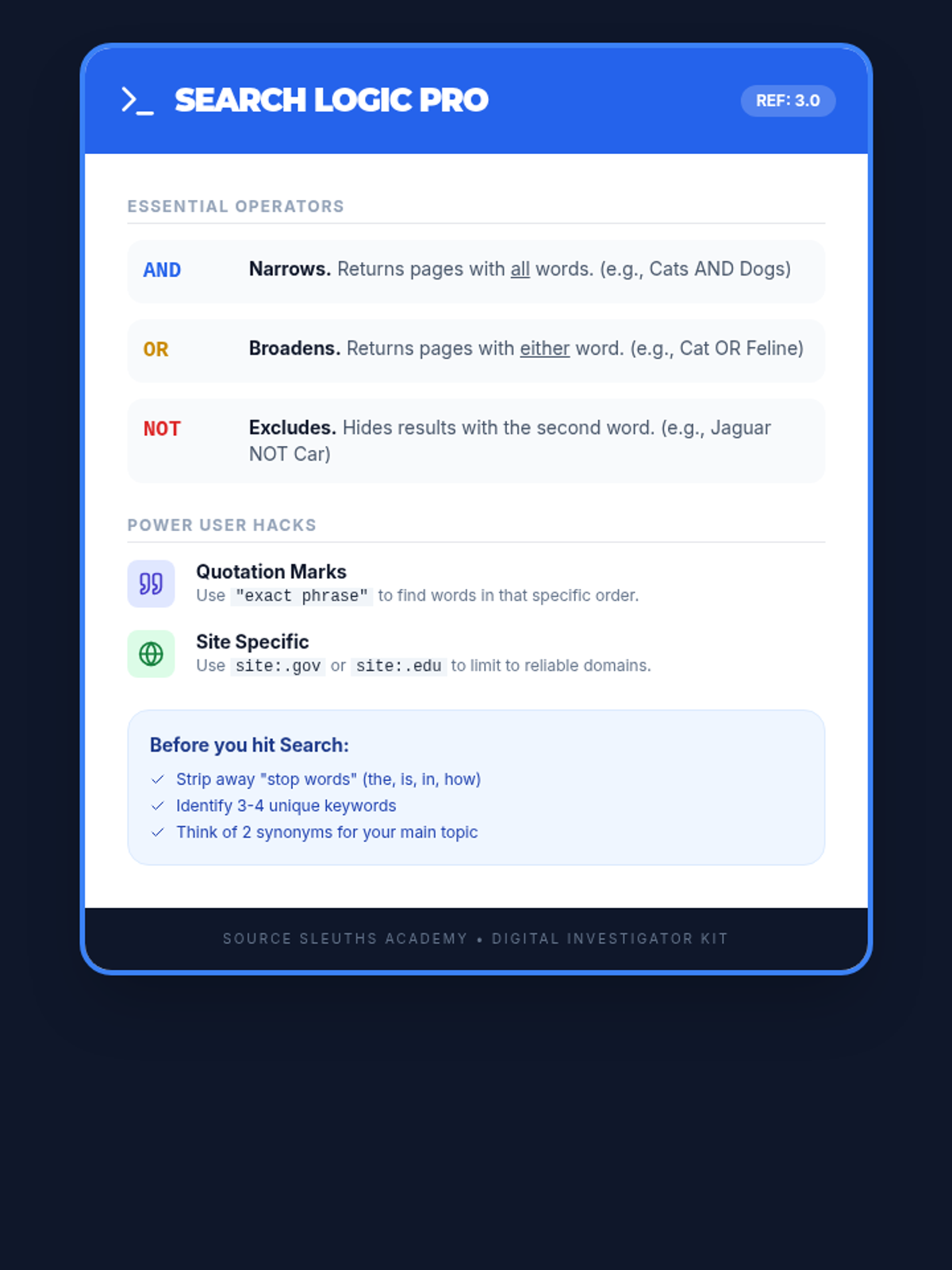
Students learn the mechanics of database research, including the use of keywords and Boolean operators to refine their search results.
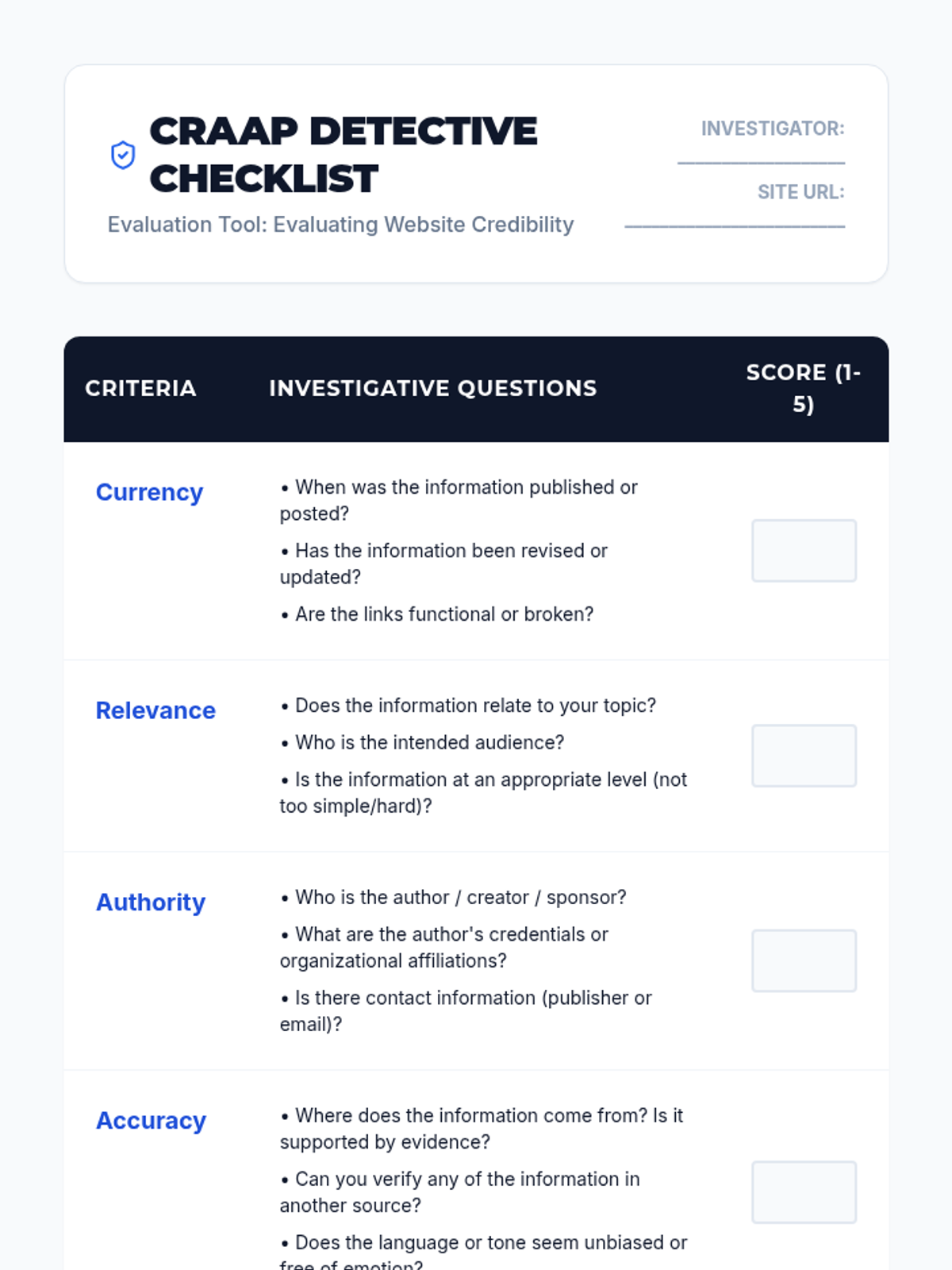
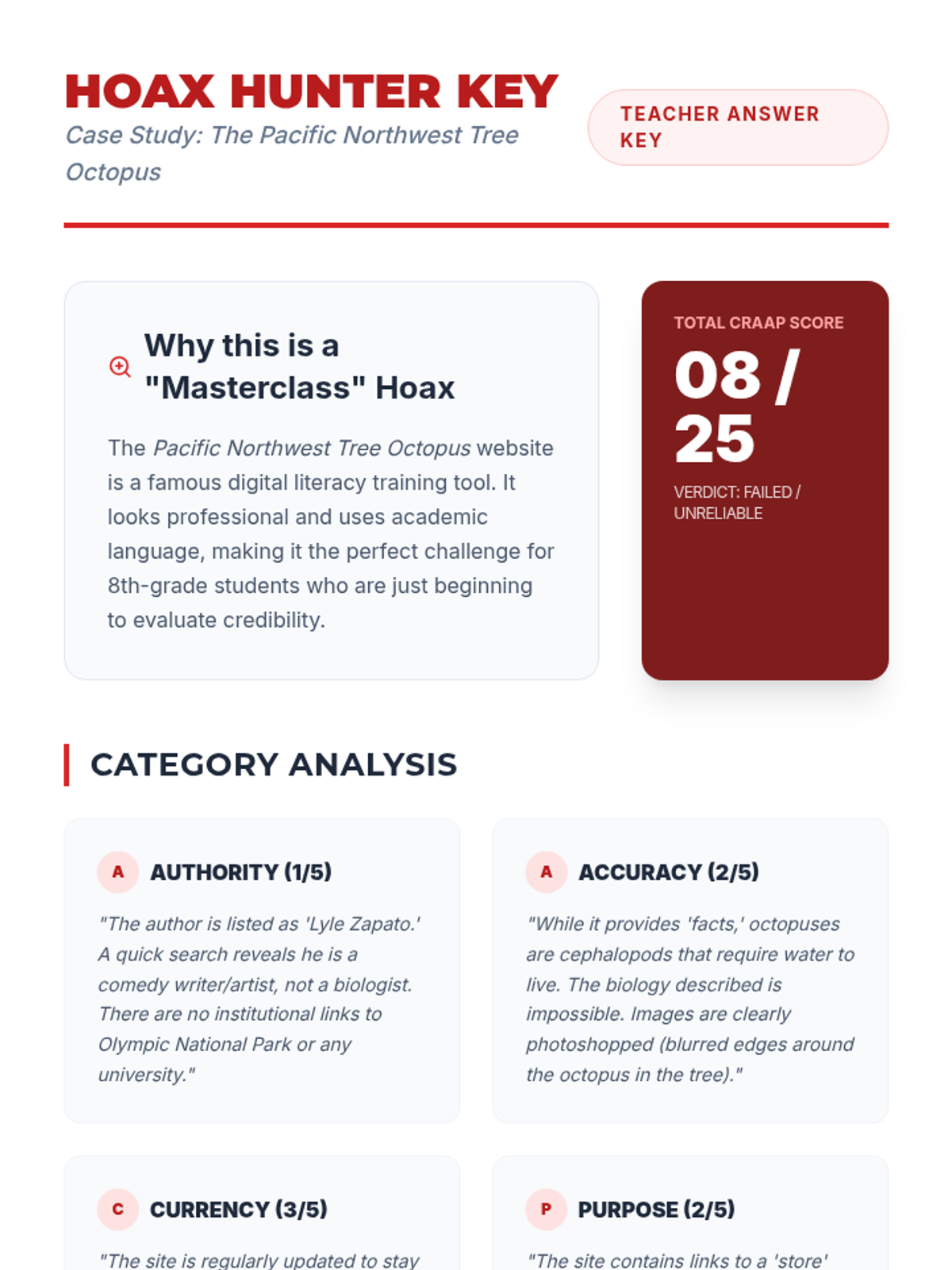
Learners apply the CRAAP test (Currency, Relevance, Authority, Accuracy, Purpose) to evaluate websites and distinguish facts from hoaxes.
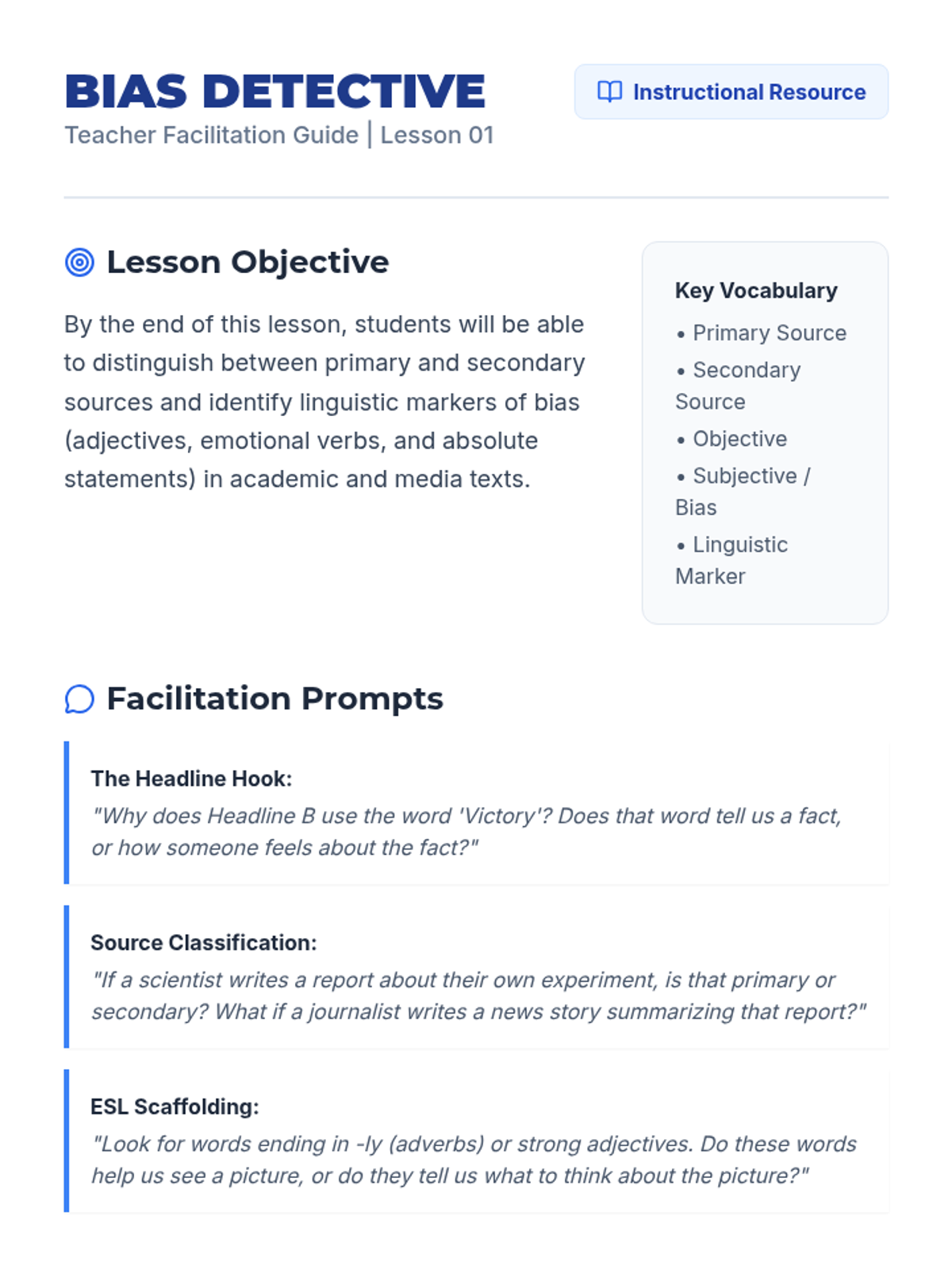
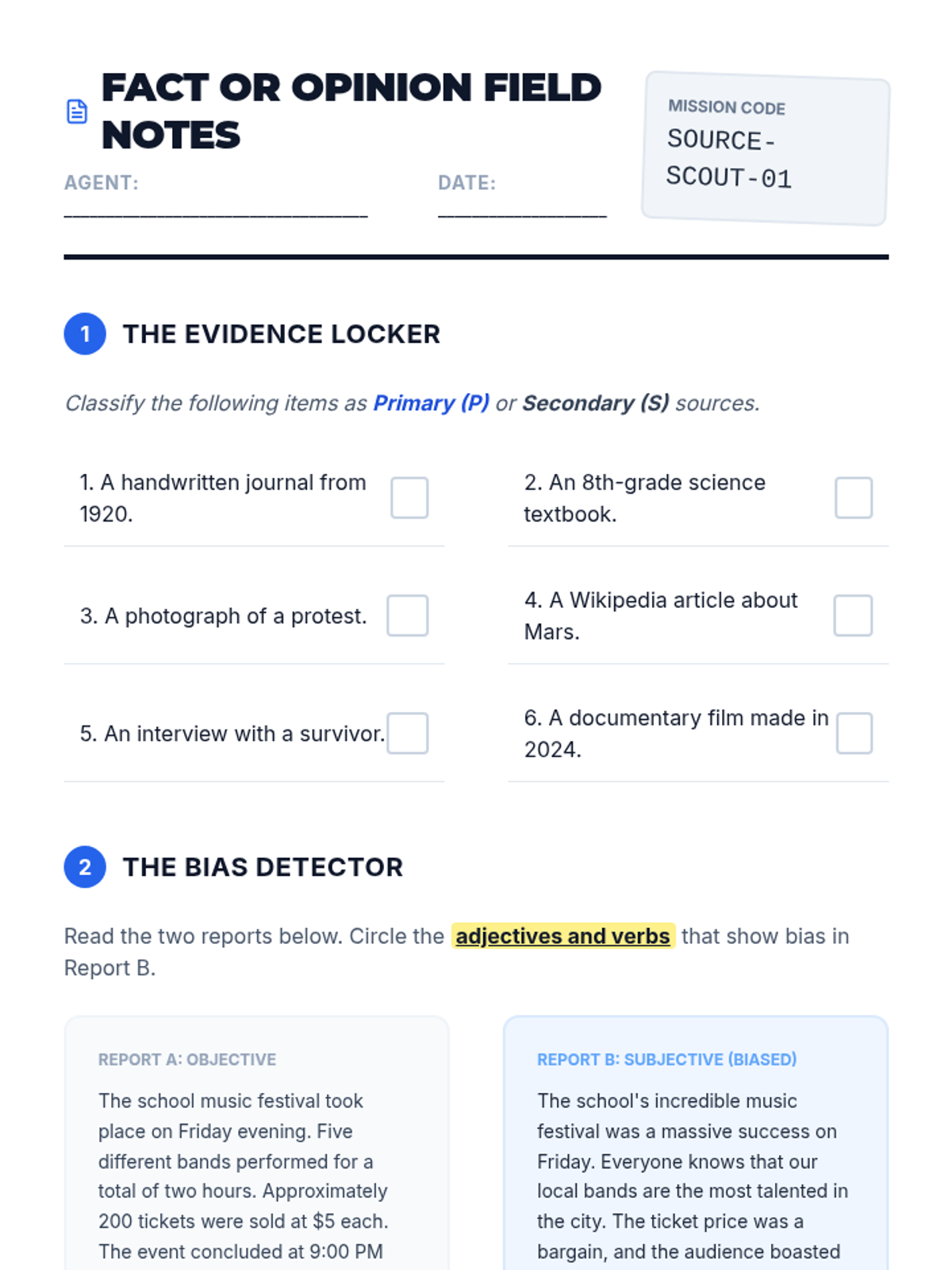
Students explore the difference between primary and secondary sources and identify linguistic markers of bias in English texts.
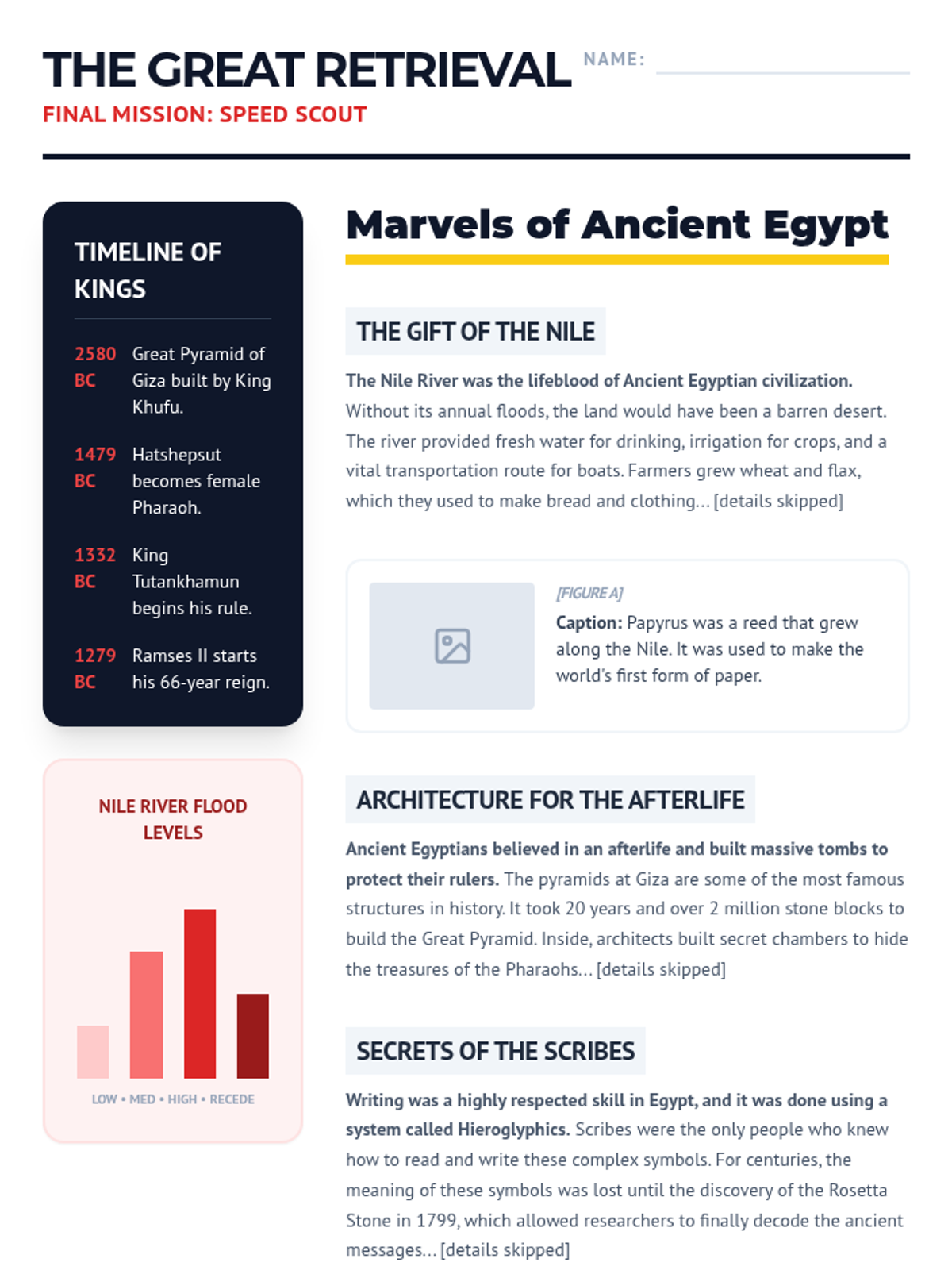
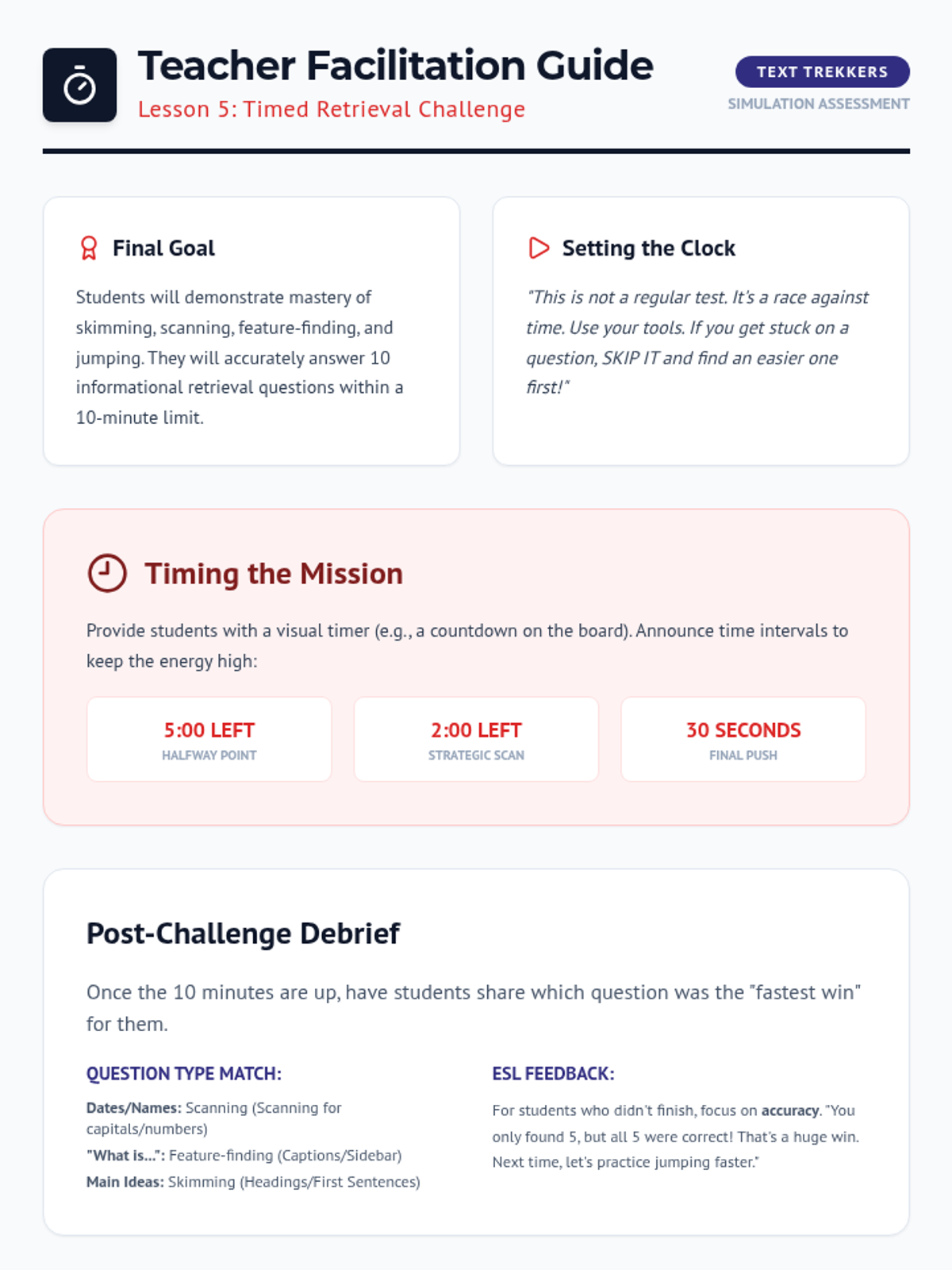
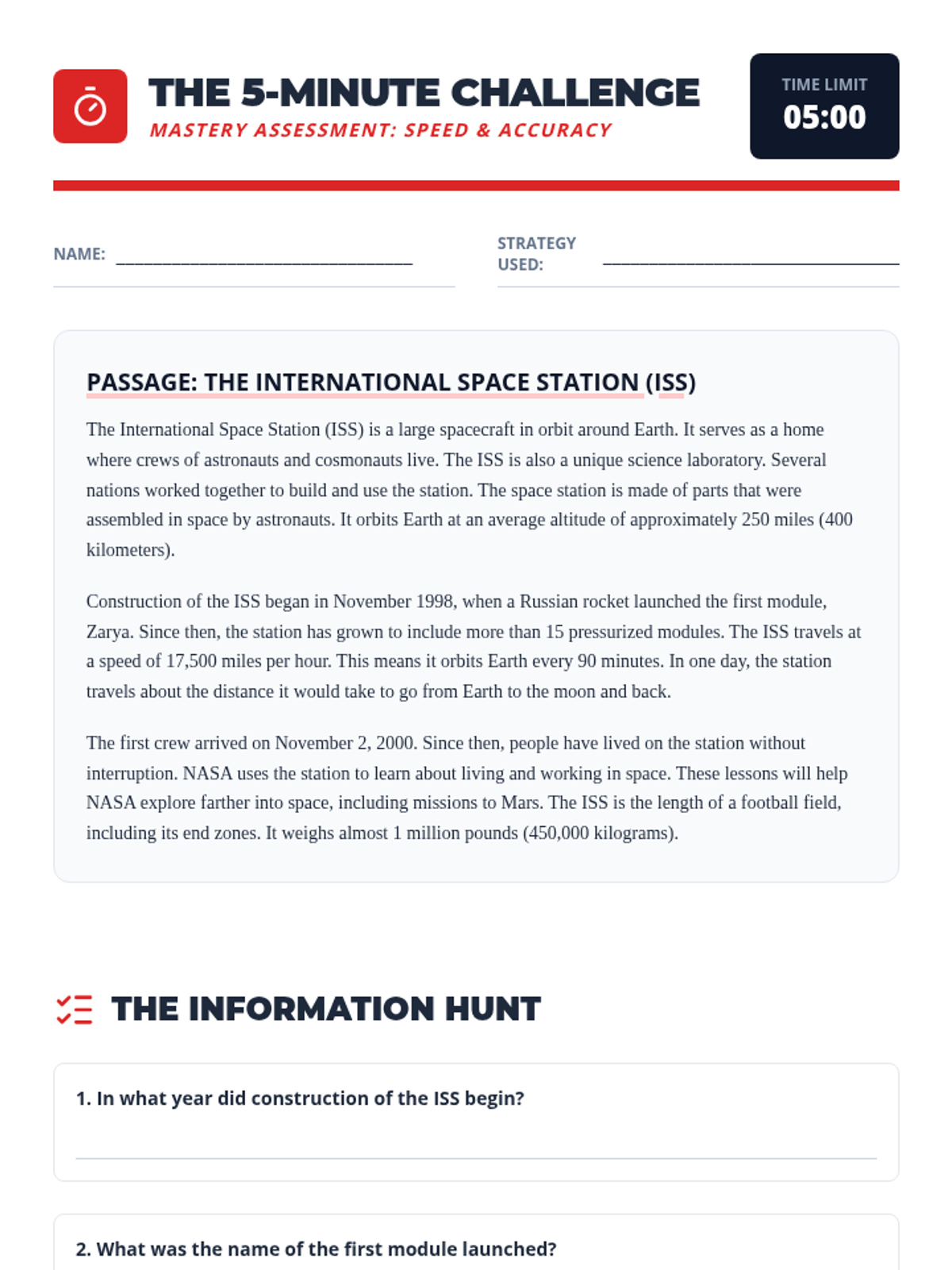
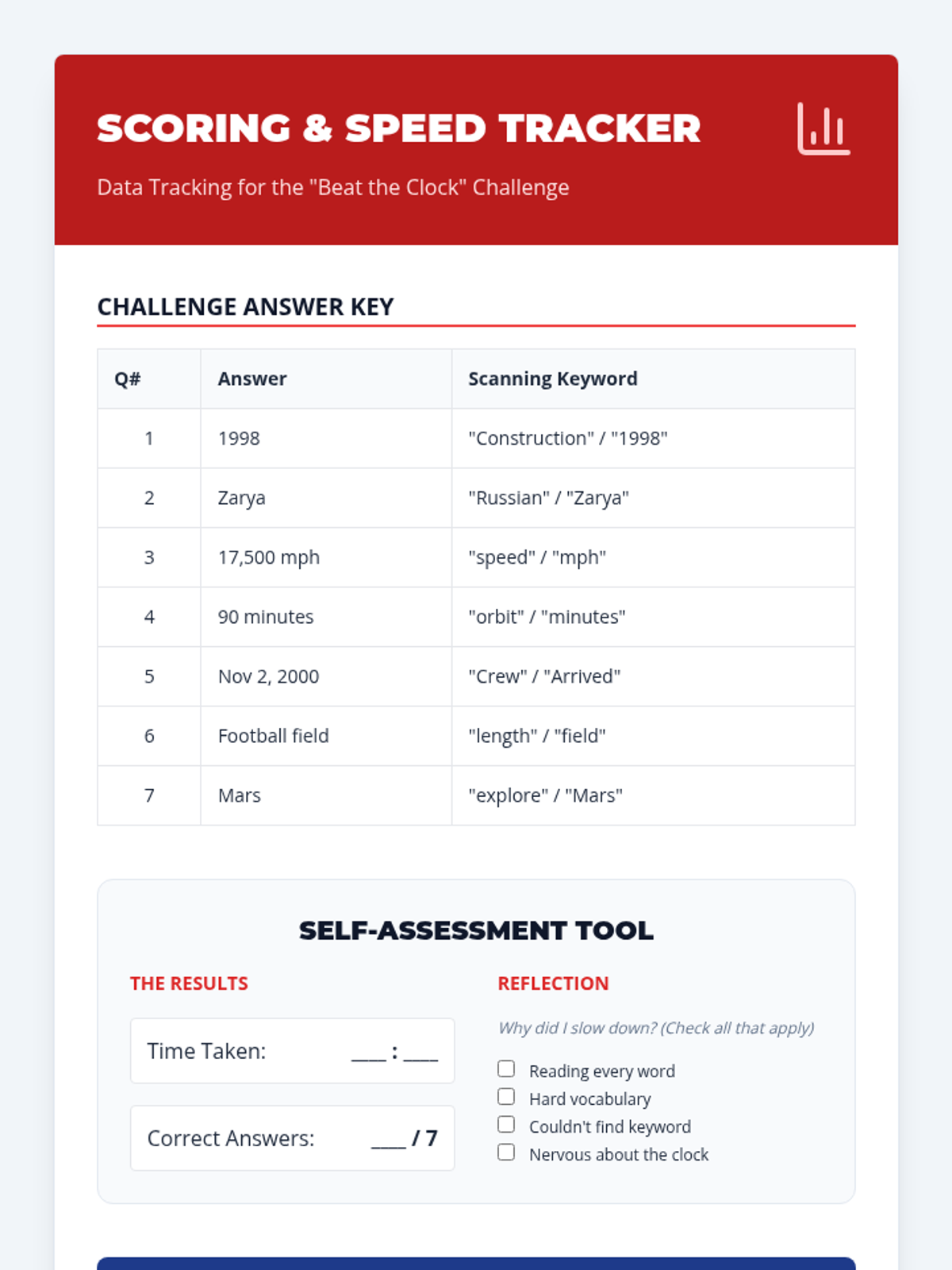
A culminating timed challenge where students apply all strategies to solve information retrieval tasks accurately and quickly.
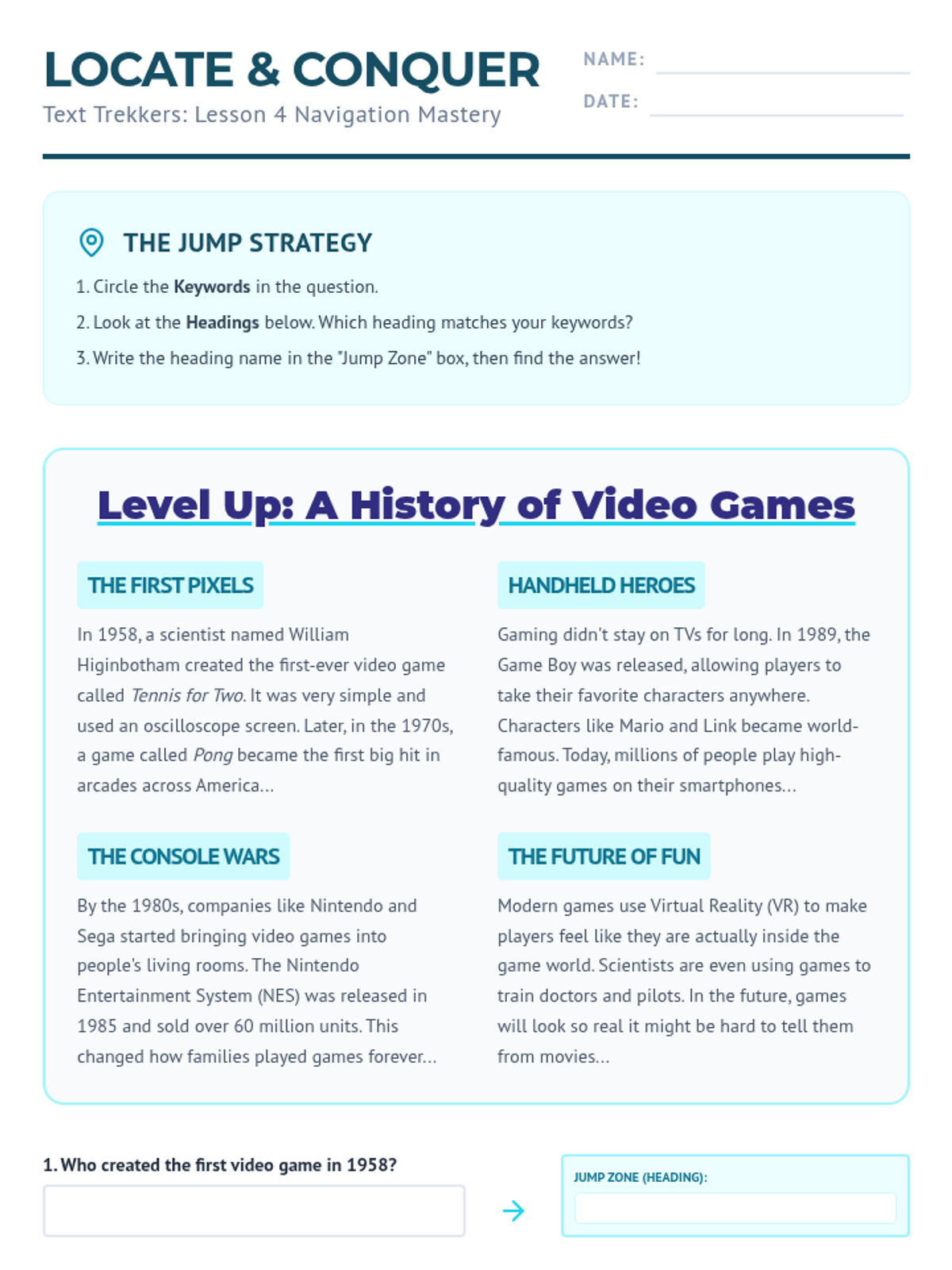
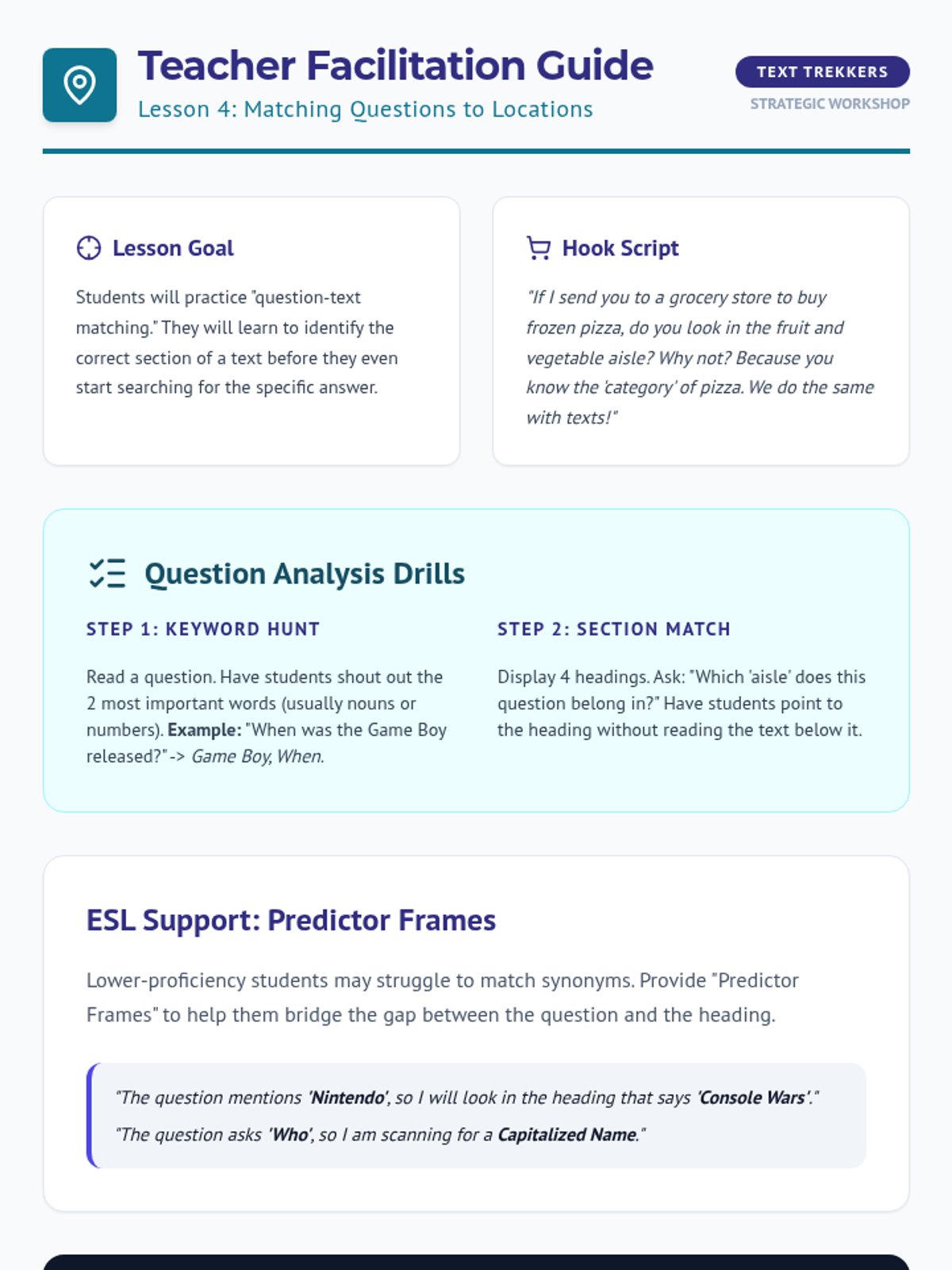
Students learn to predict where an answer is located based on the question type and structure of the text.
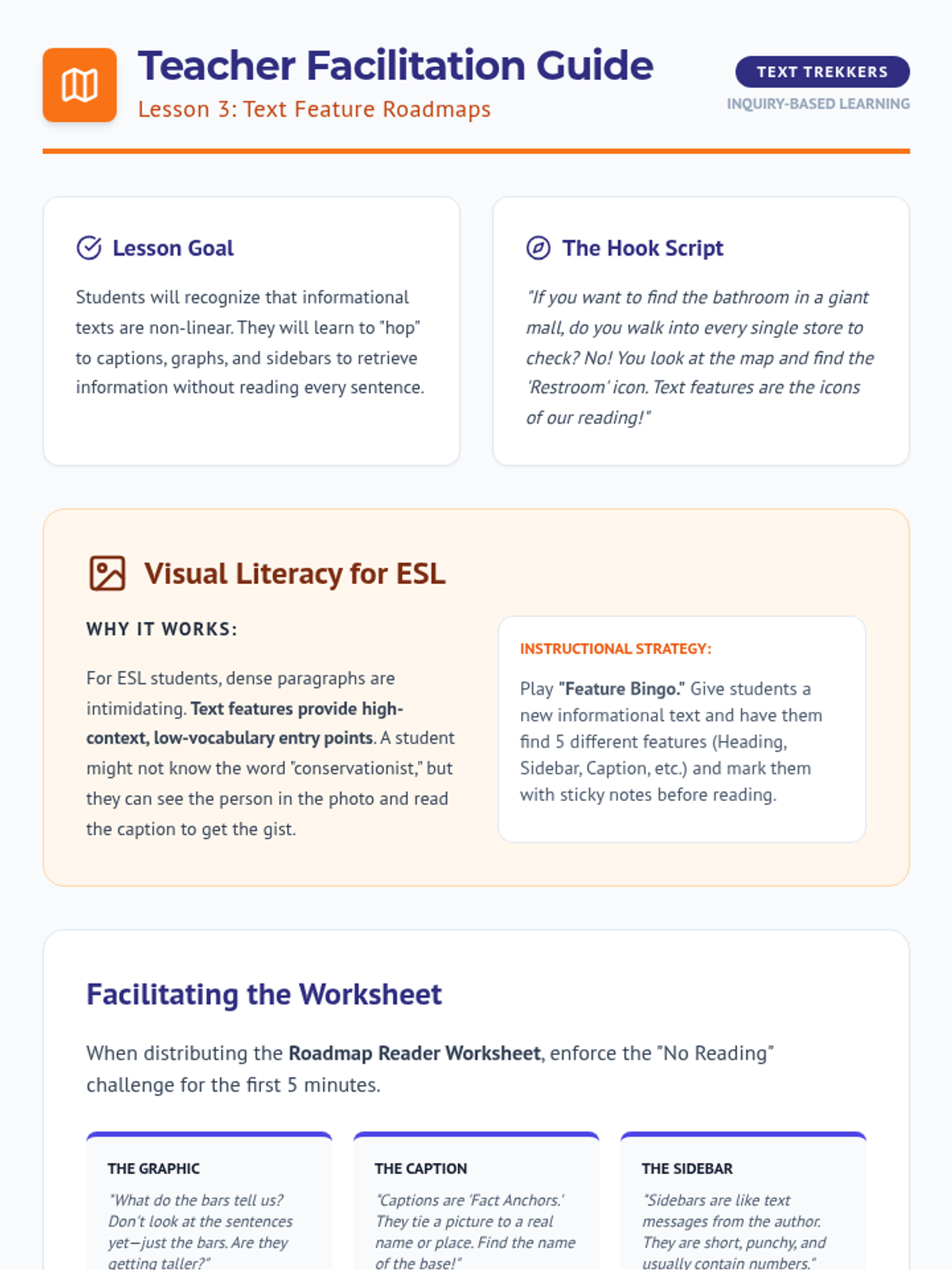
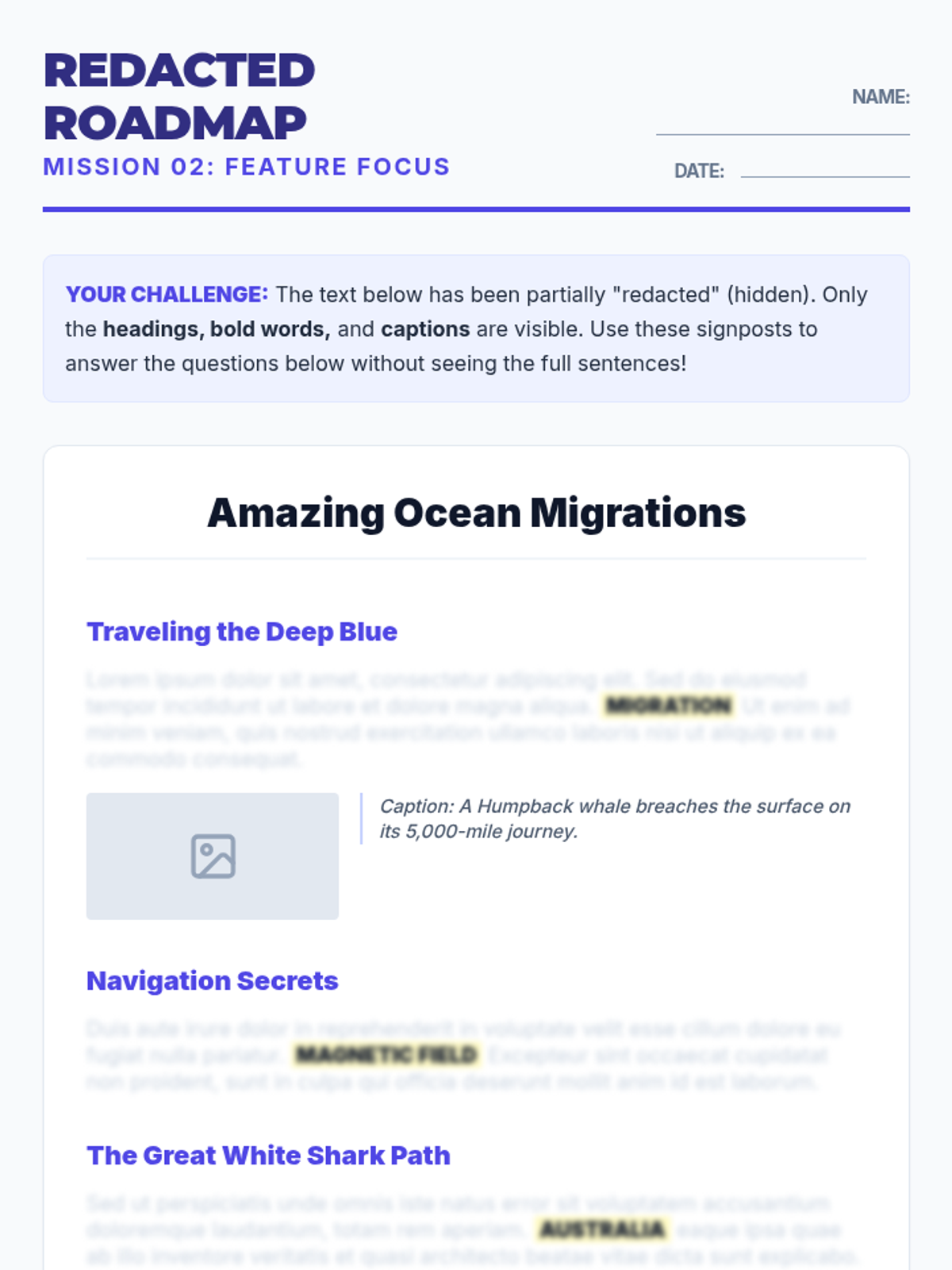
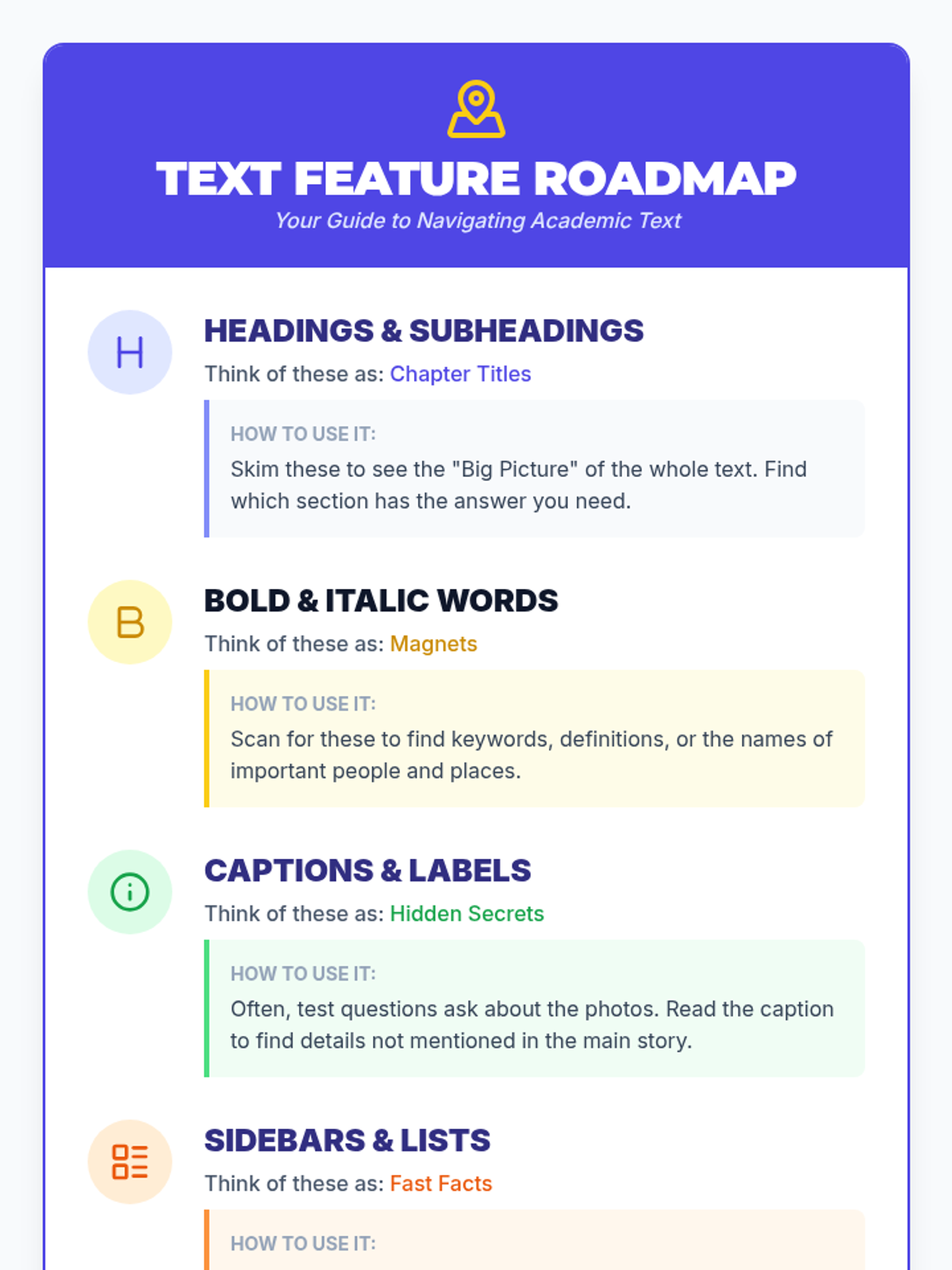
Students analyze how text features like captions, graphs, and bold words serve as navigation tools to find information rapidly.
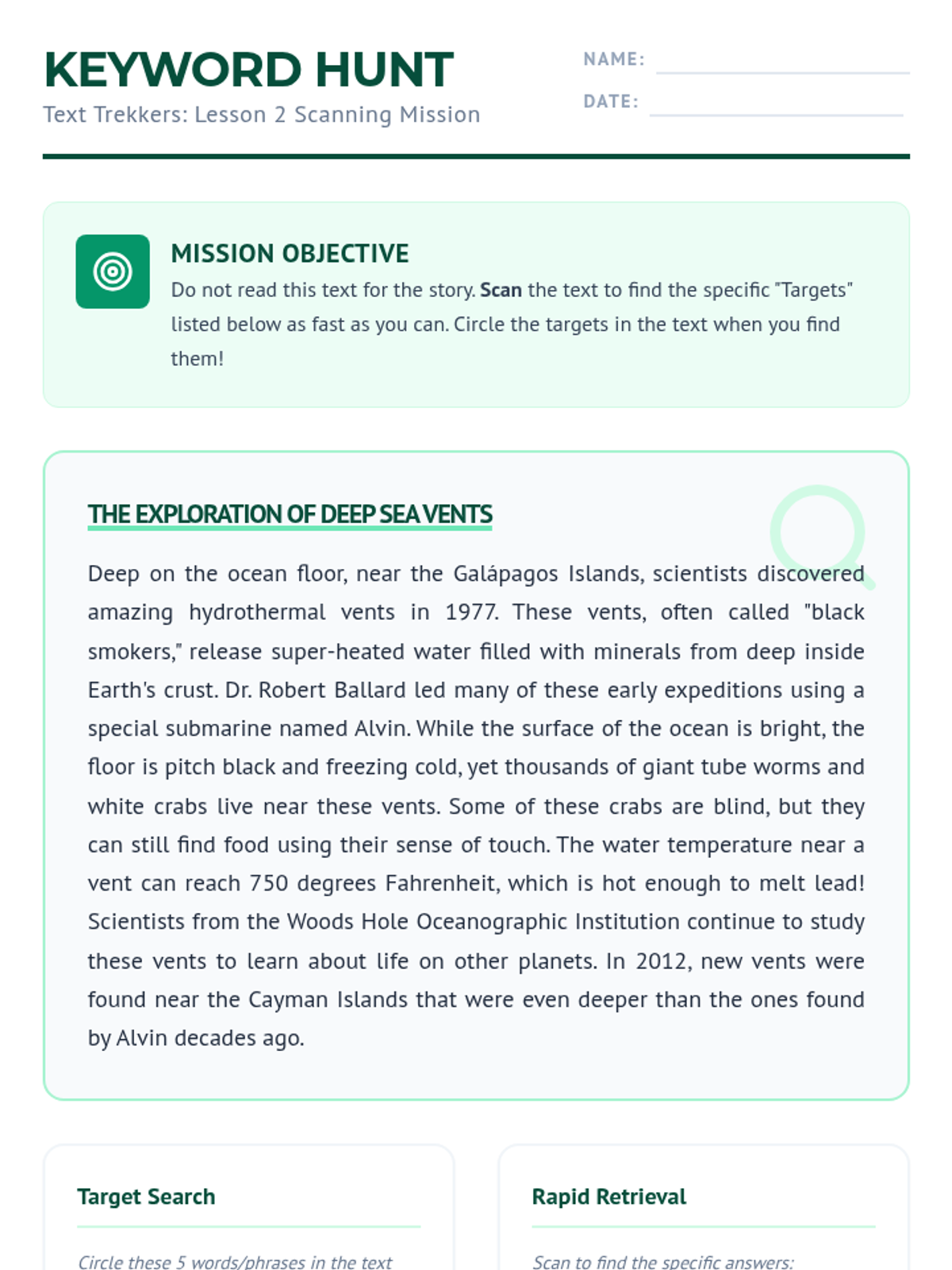
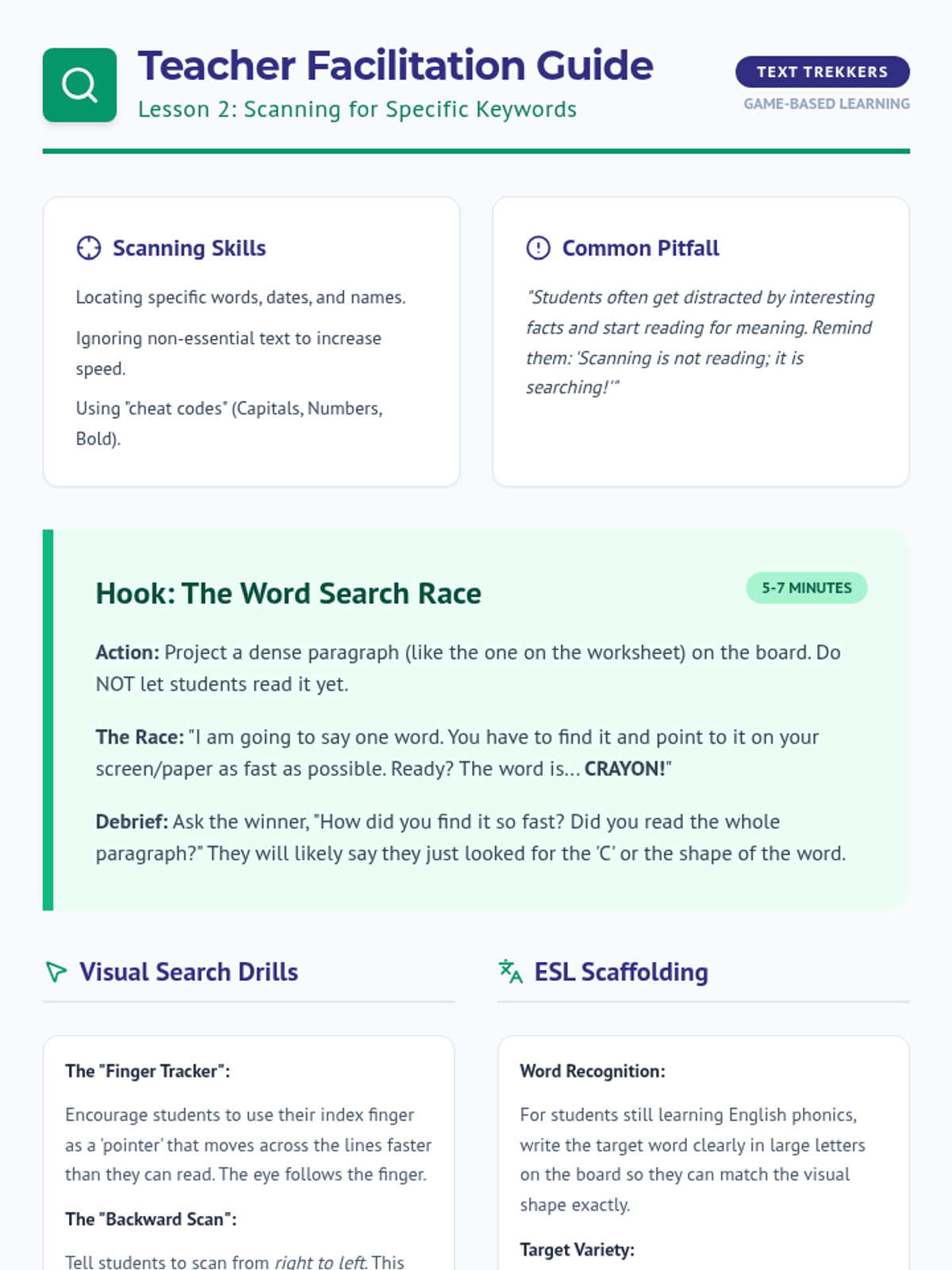
Students practice scanning—moving eyes quickly over text to find specific words, names, or numbers using visual search techniques.
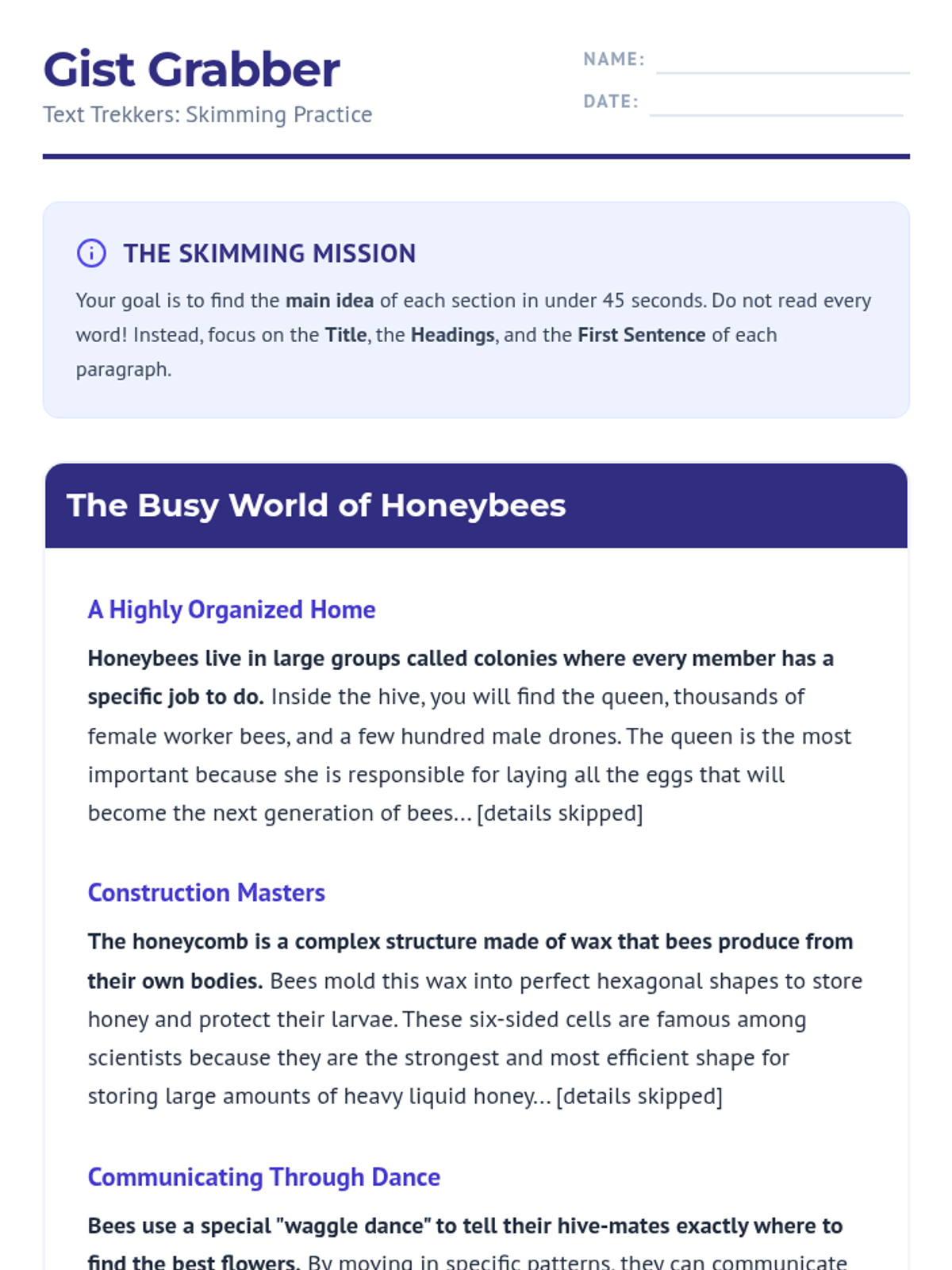
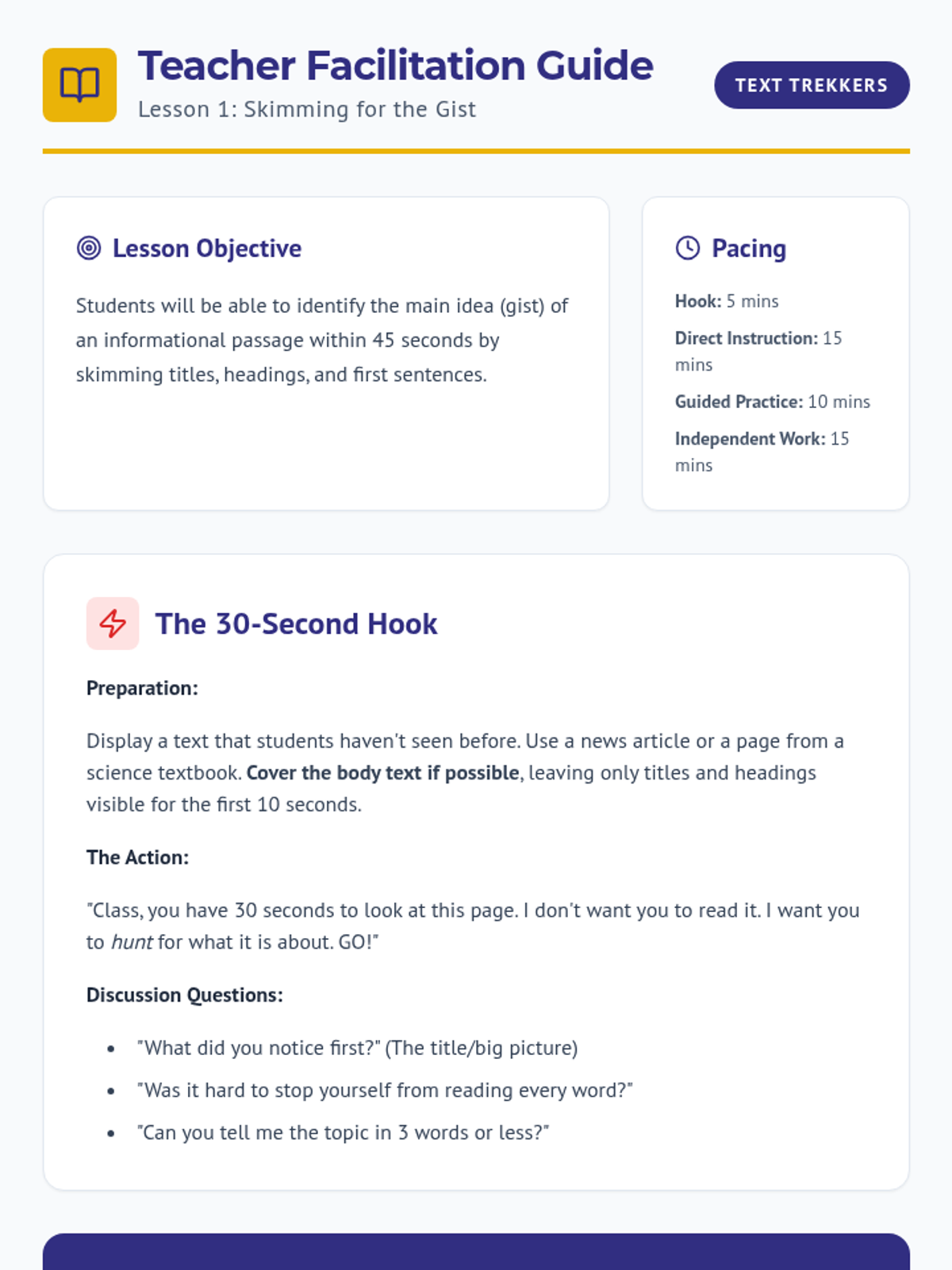
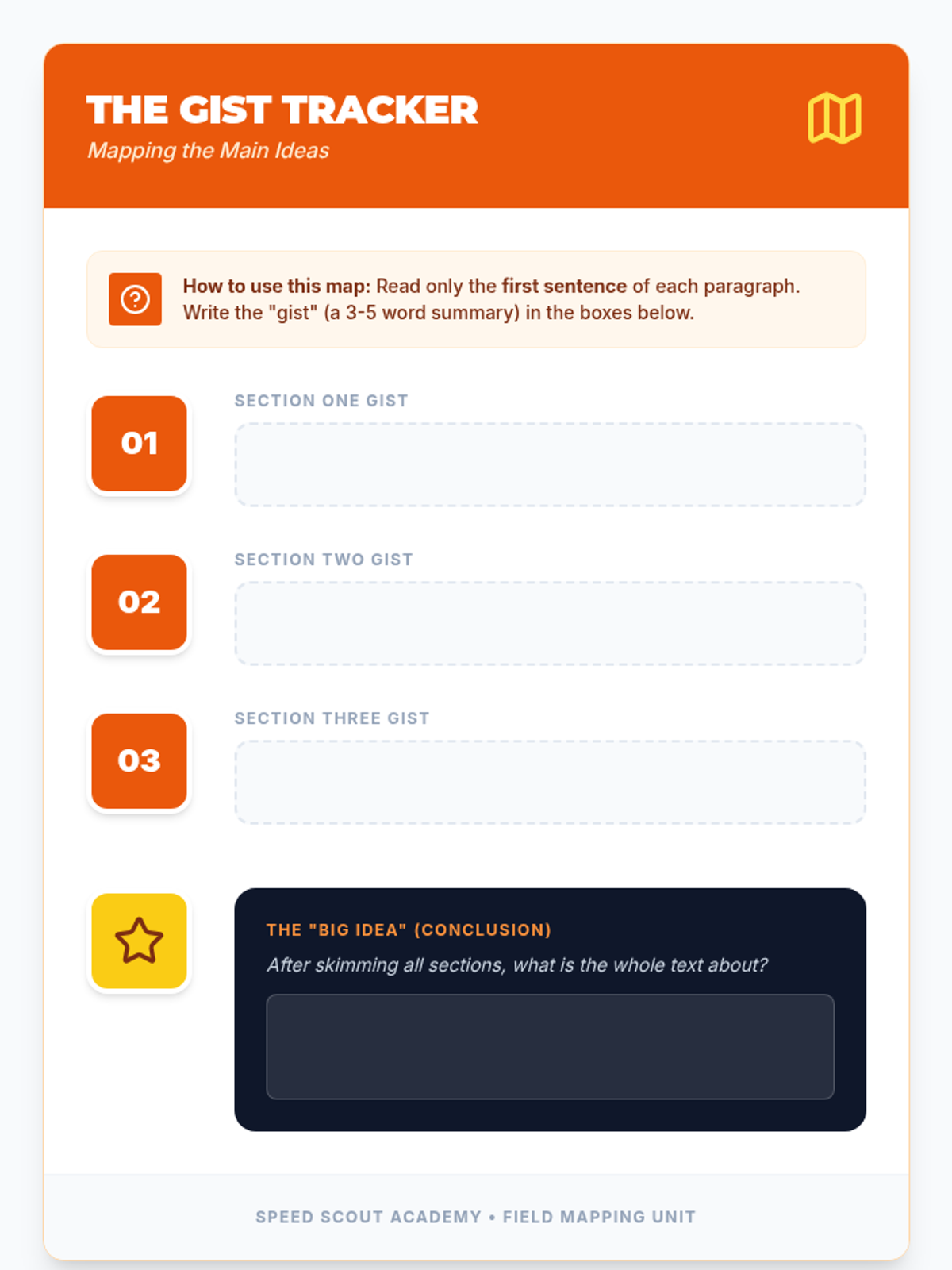
Students learn the technique of skimming to understand the main idea of a text quickly by focusing on titles, headings, and first sentences.
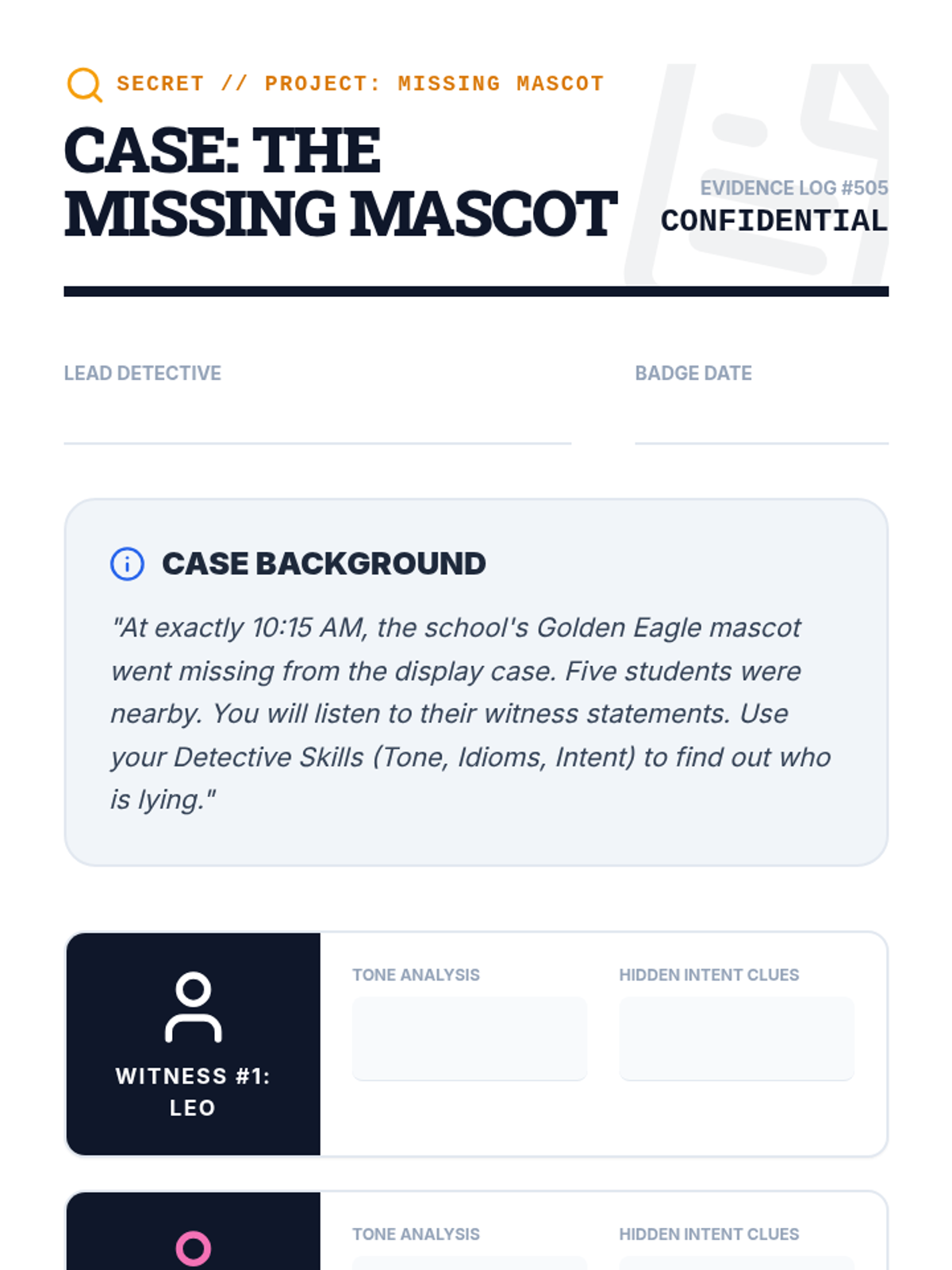
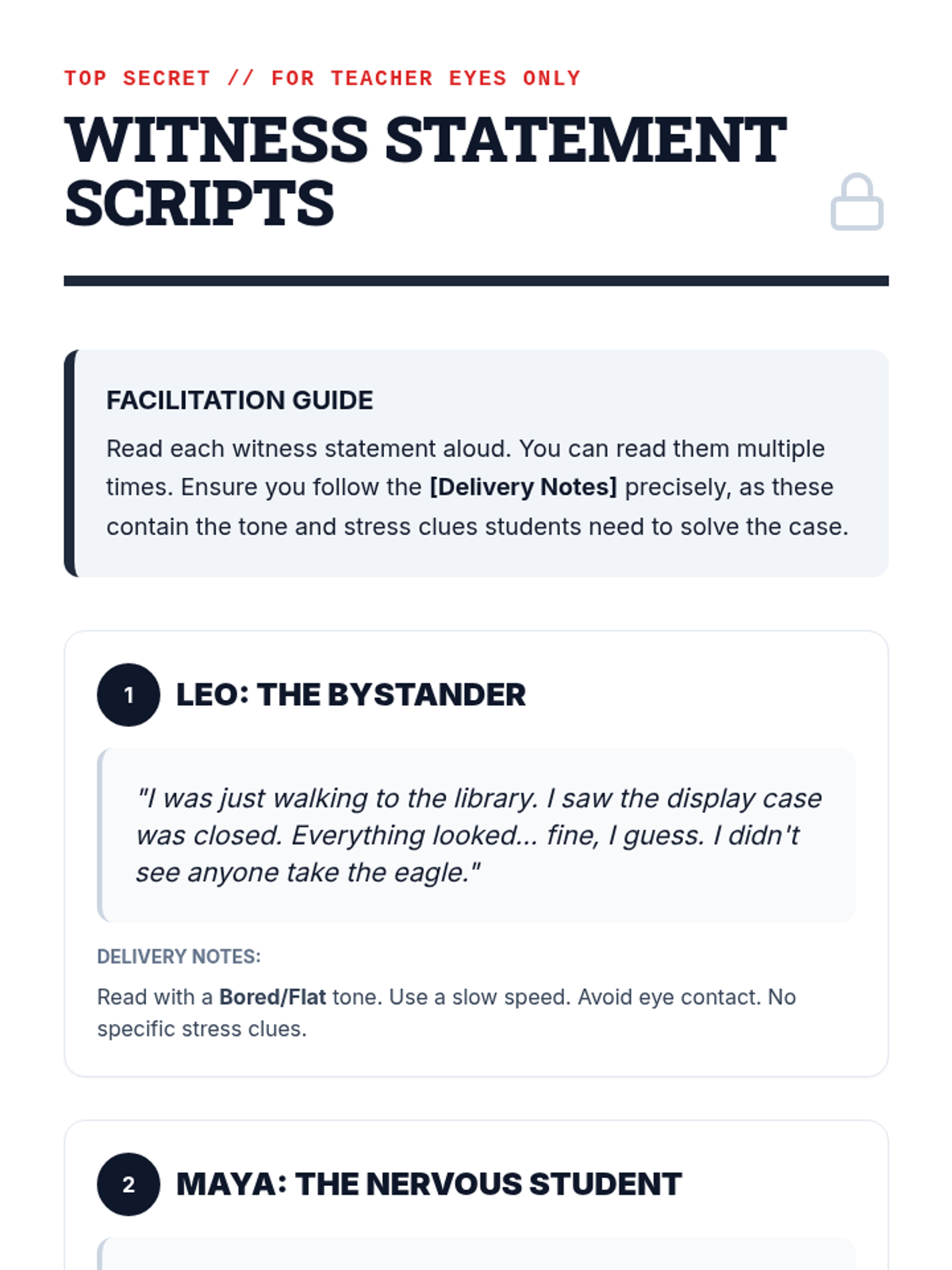
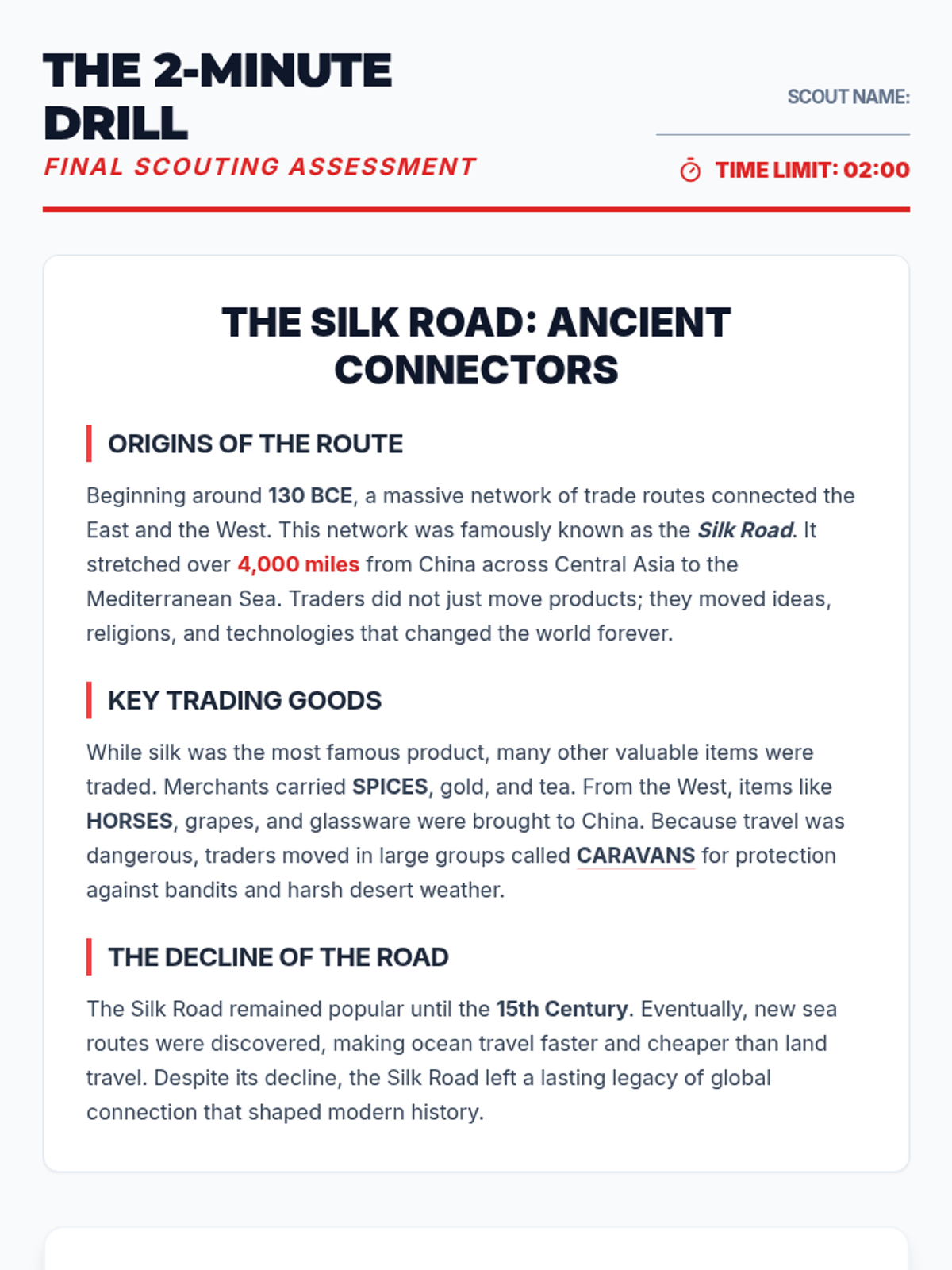
In this final simulation, students listen to witness statements regarding a missing mascot. They must apply all previously learned skills—tone, idioms, and fact-checking—to identify the culprit.
Learners analyze speaker motivation and intent by focusing on word stress and hidden messages. They practice identifying if a speaker is complaining, persuading, or apologizing without using those specific words.
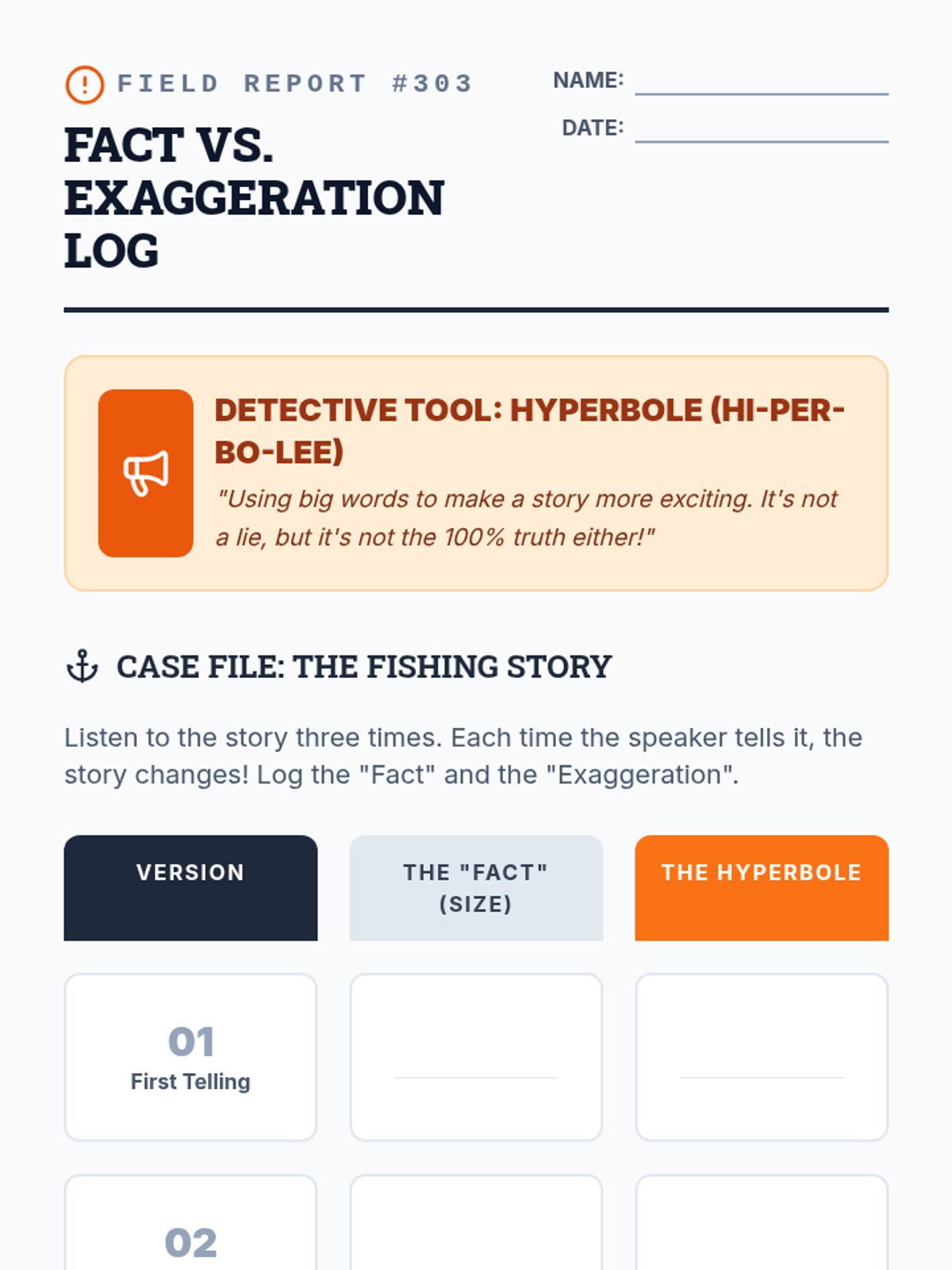
Students practice identifying hyperbole and distinguishing factual information from emotional exaggeration in storytelling. They learn to recognize the 'fishing story' effect in casual conversation.
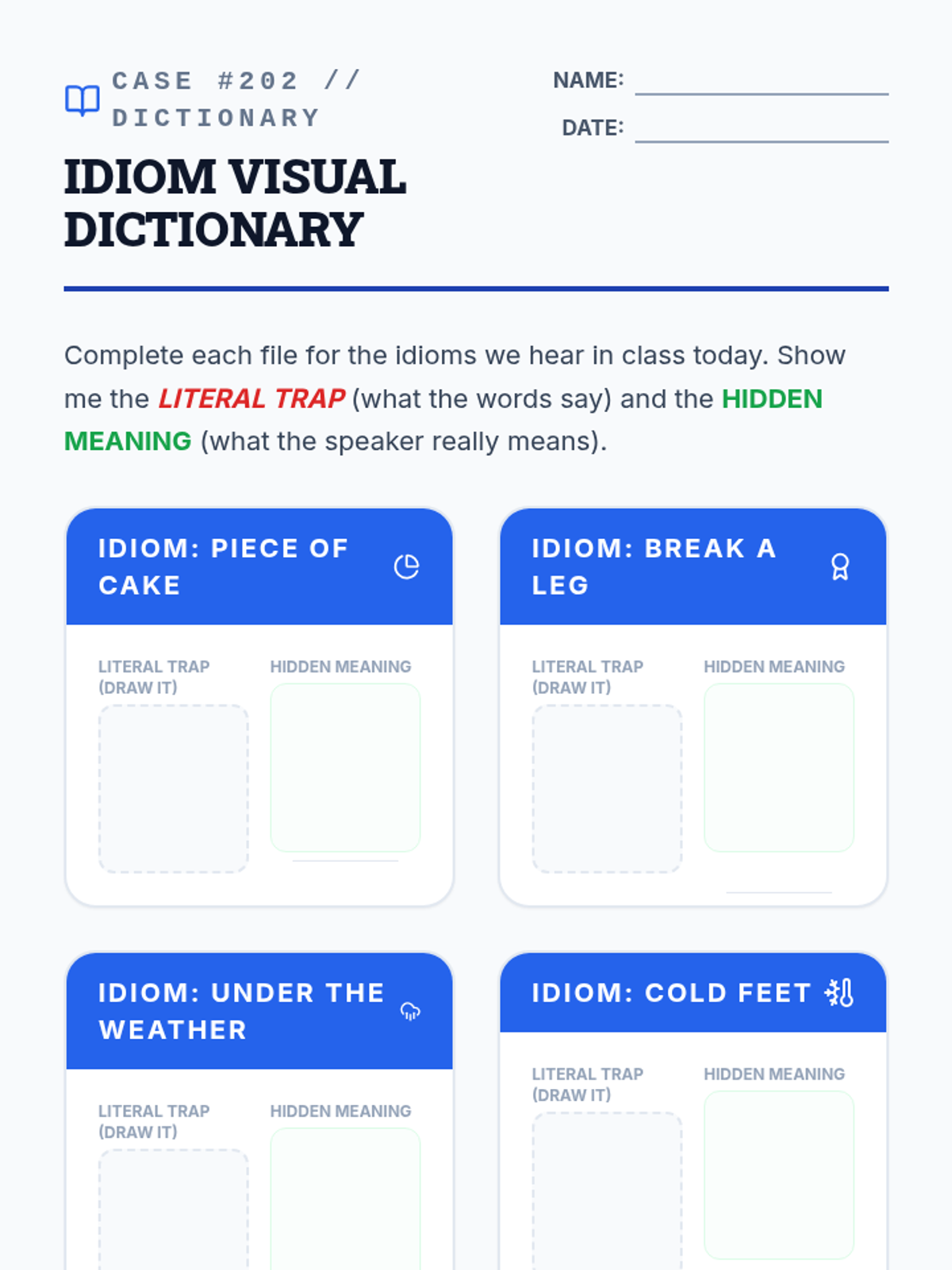
Students decode common American idioms by listening to them in context. They distinguish between literal and figurative meanings and create a visual dictionary of non-literal language.
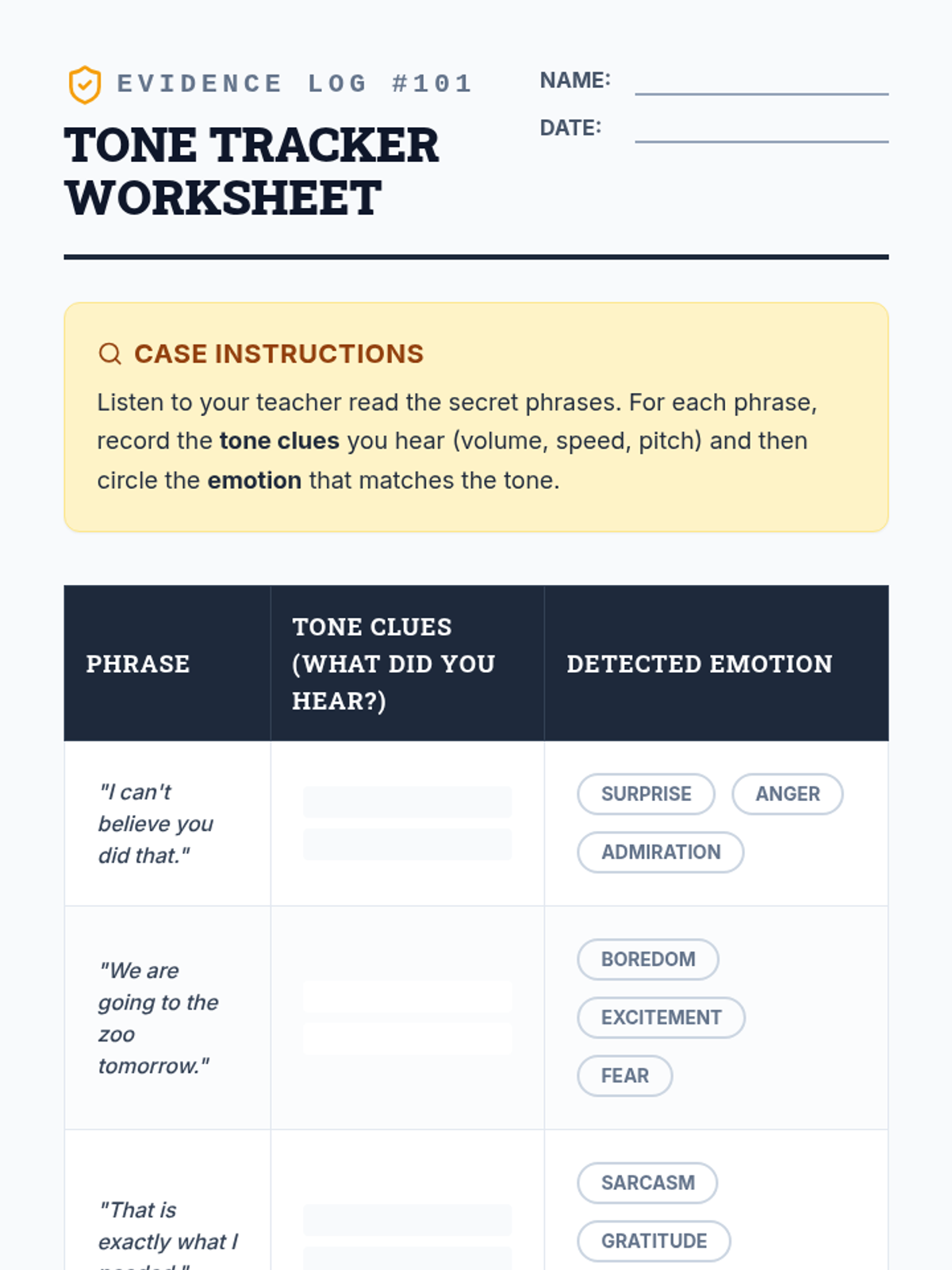
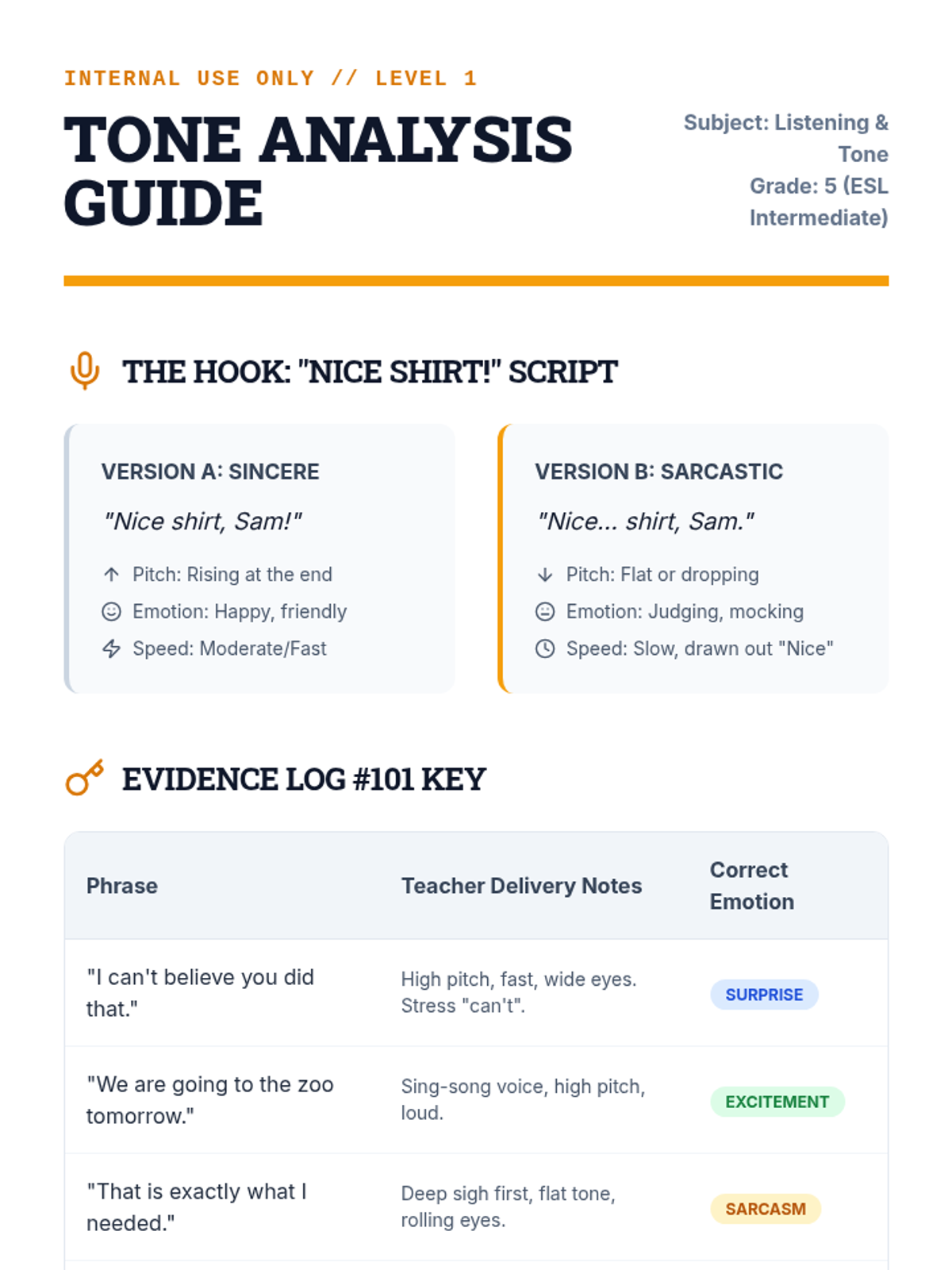
Students explore how pitch, volume, and intonation change the meaning of a sentence. They learn to identify emotional cues in spoken English, such as sarcasm, surprise, and anger.
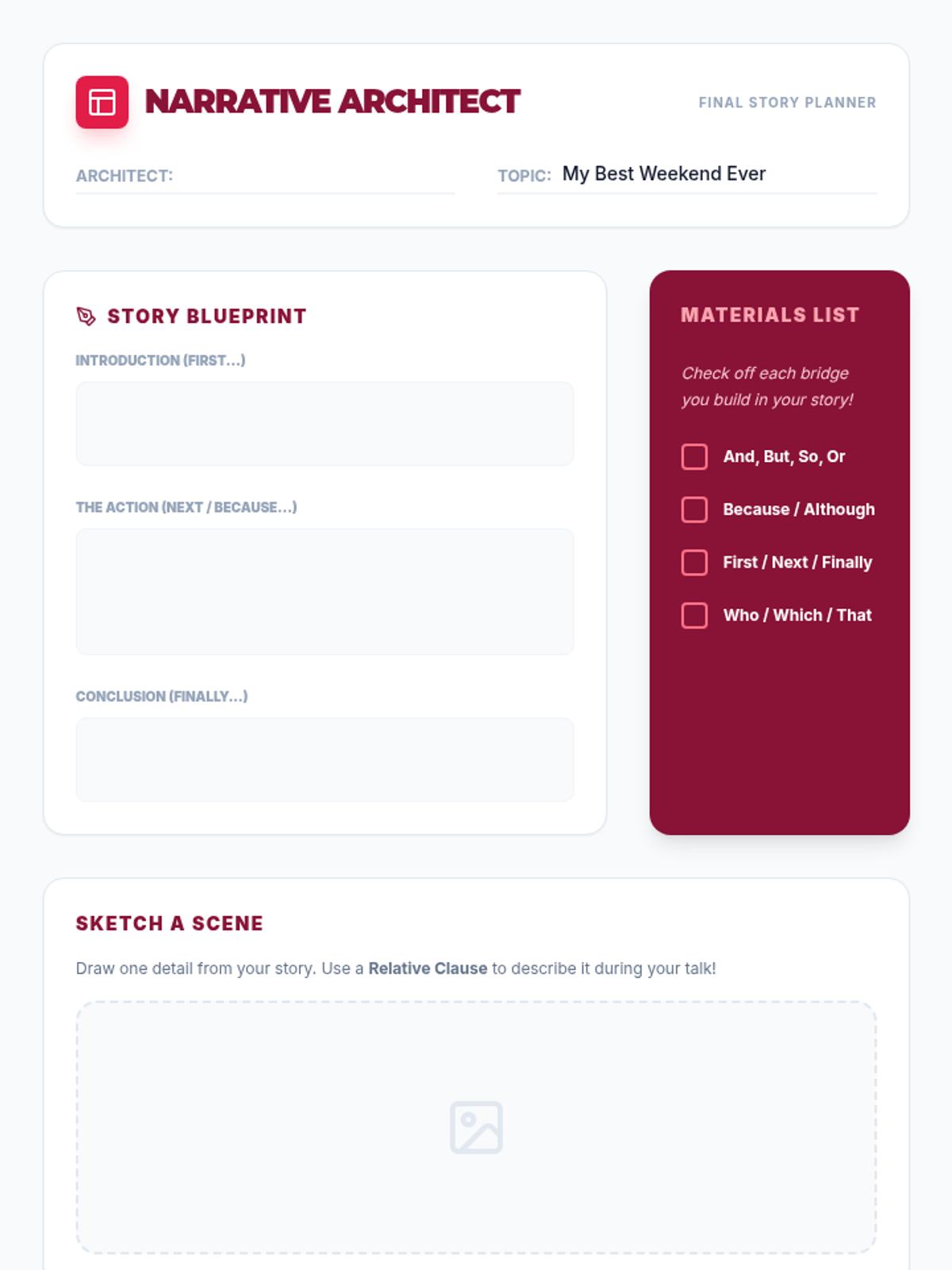
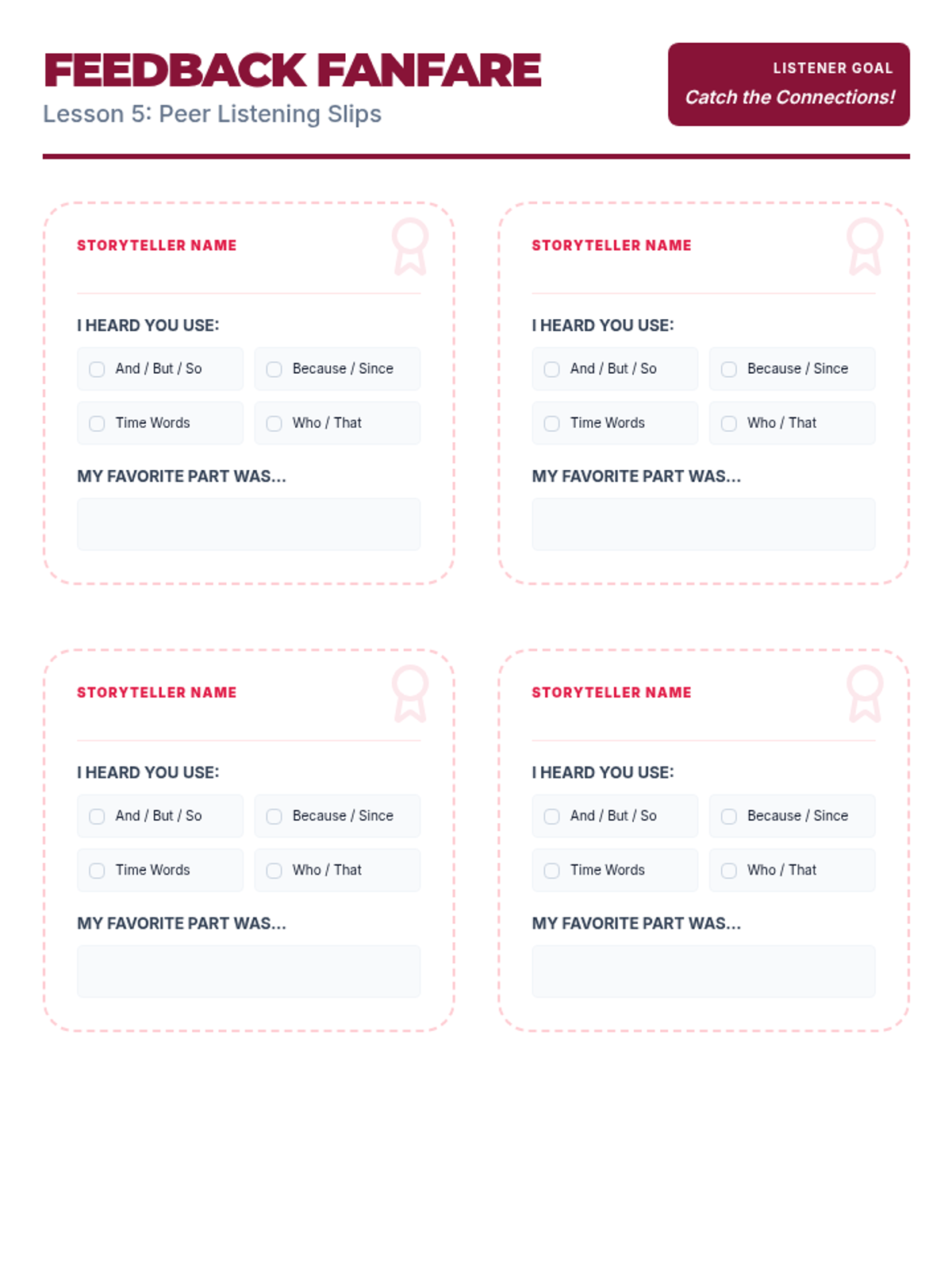
A culminating storytelling workshop where students synthesize all learned structures to share a personal narrative.
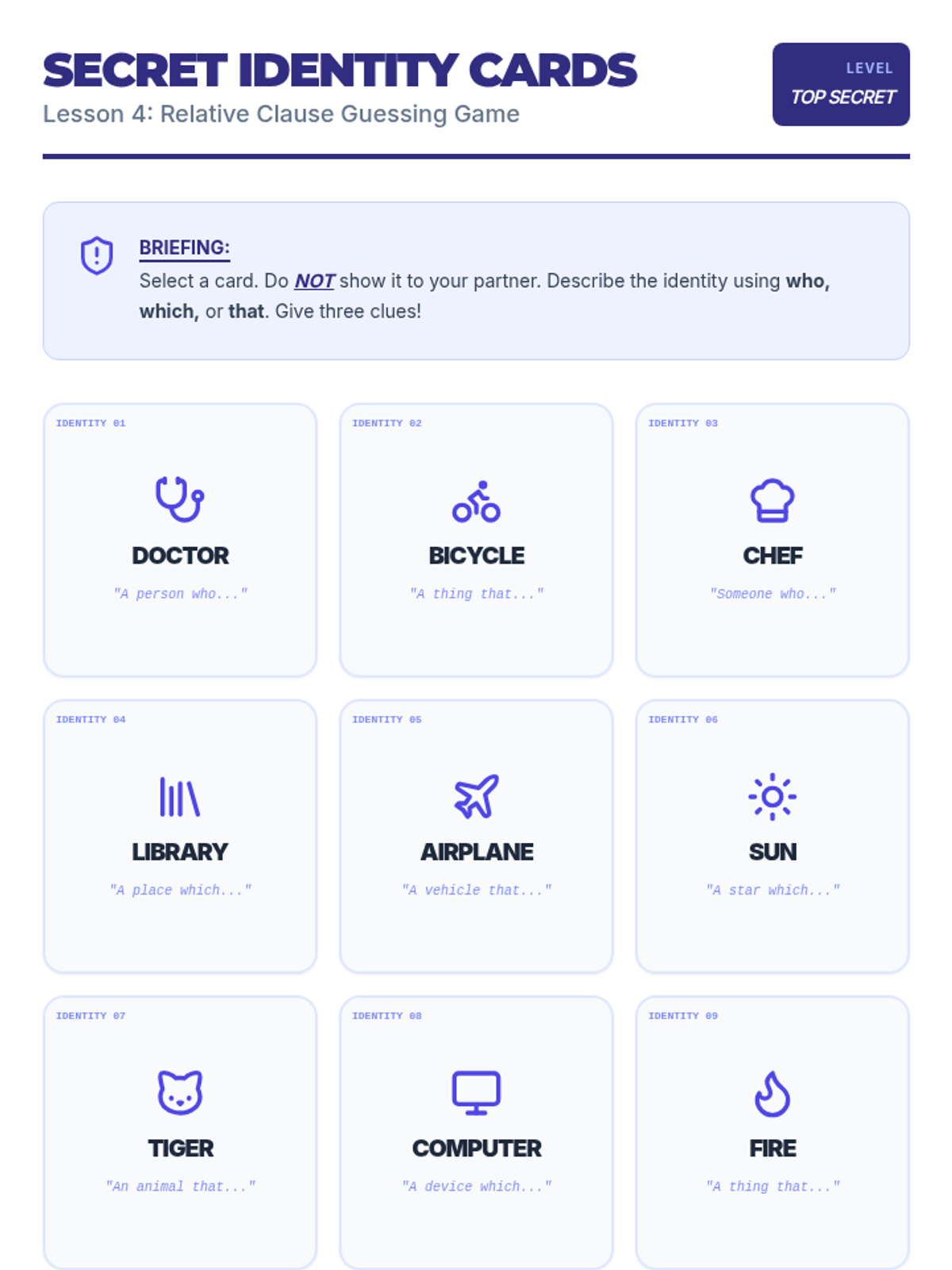
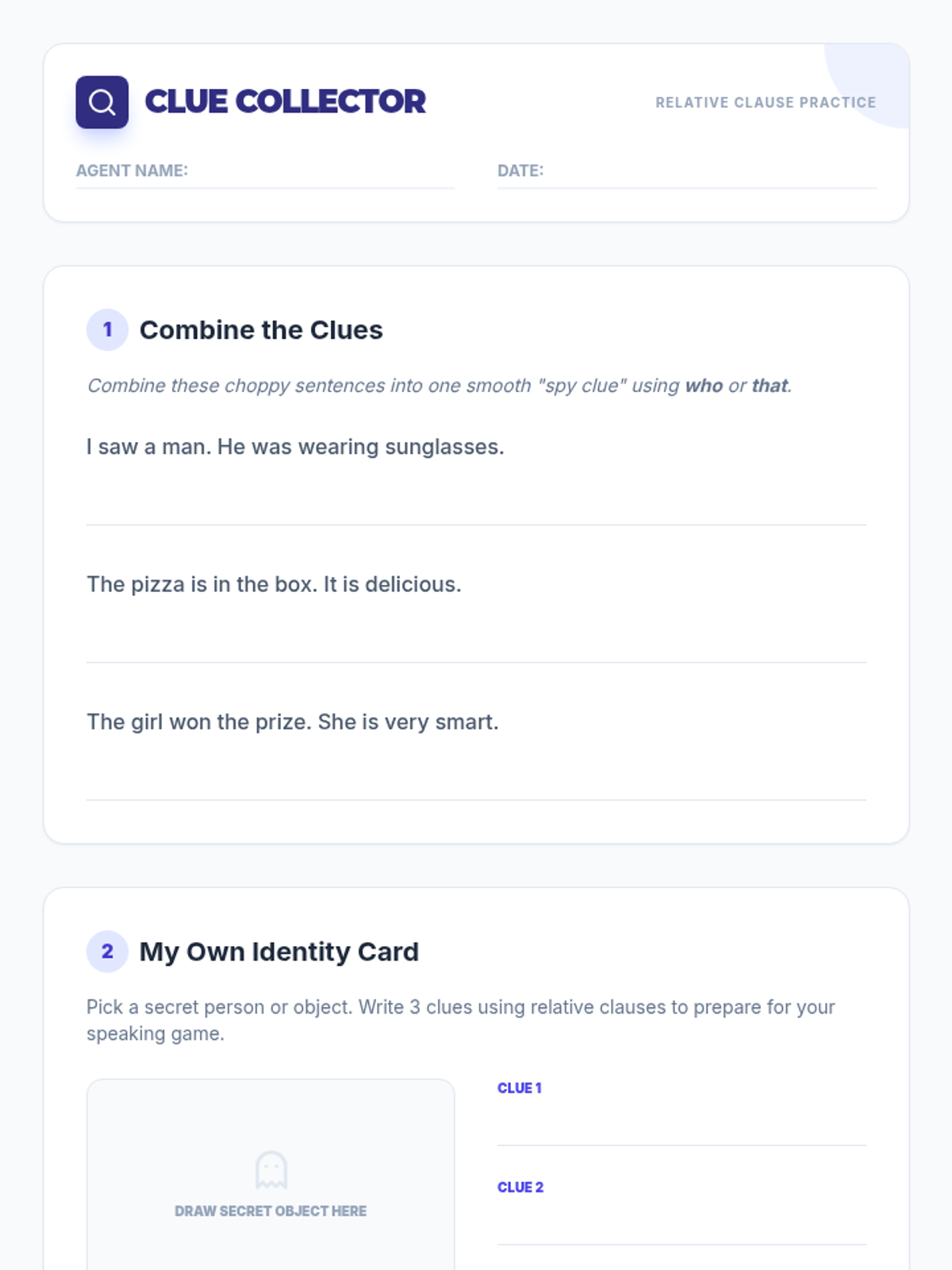
Using relative clauses (who, which, that) to add descriptive detail without stopping the flow of speech.
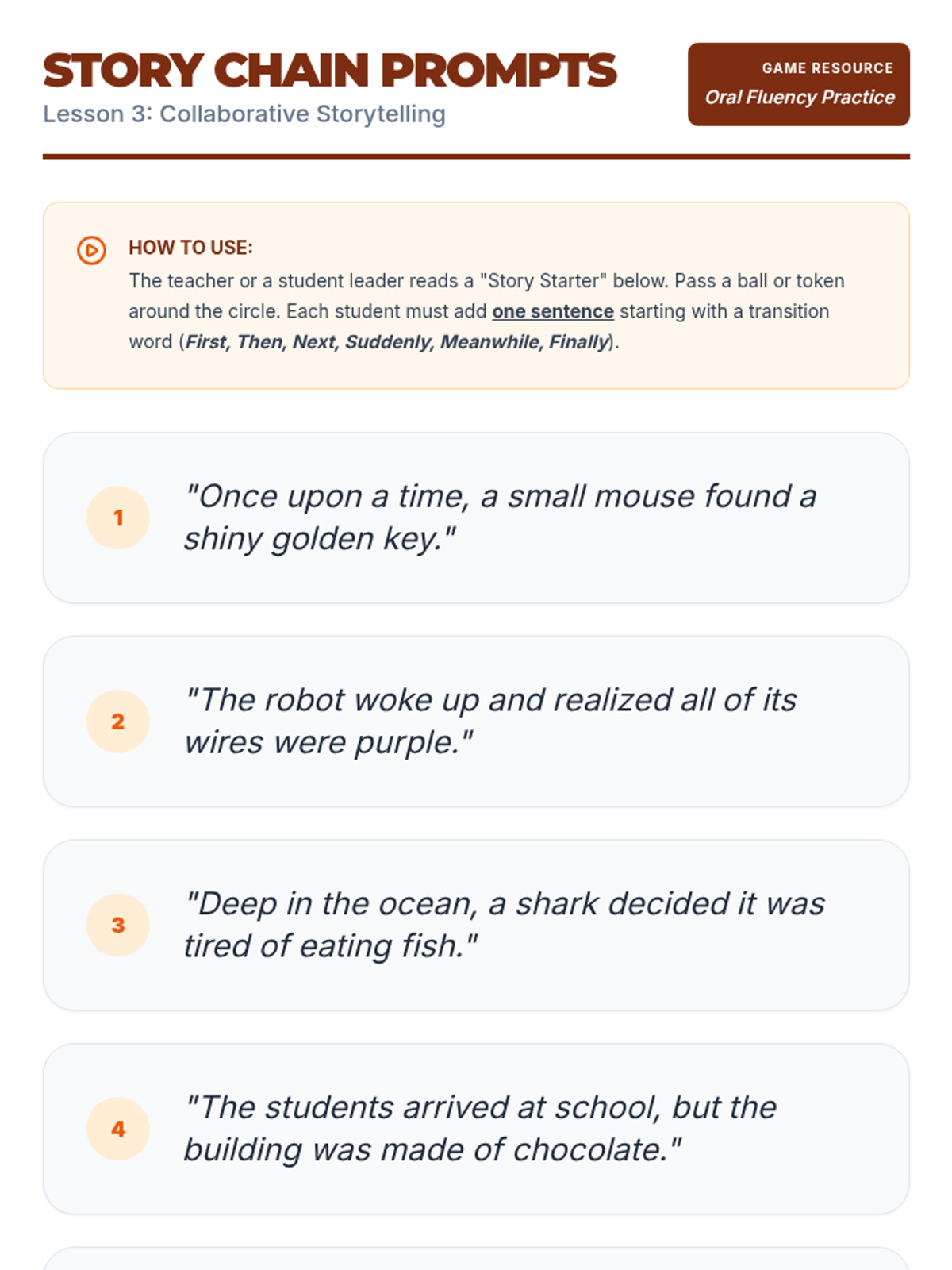
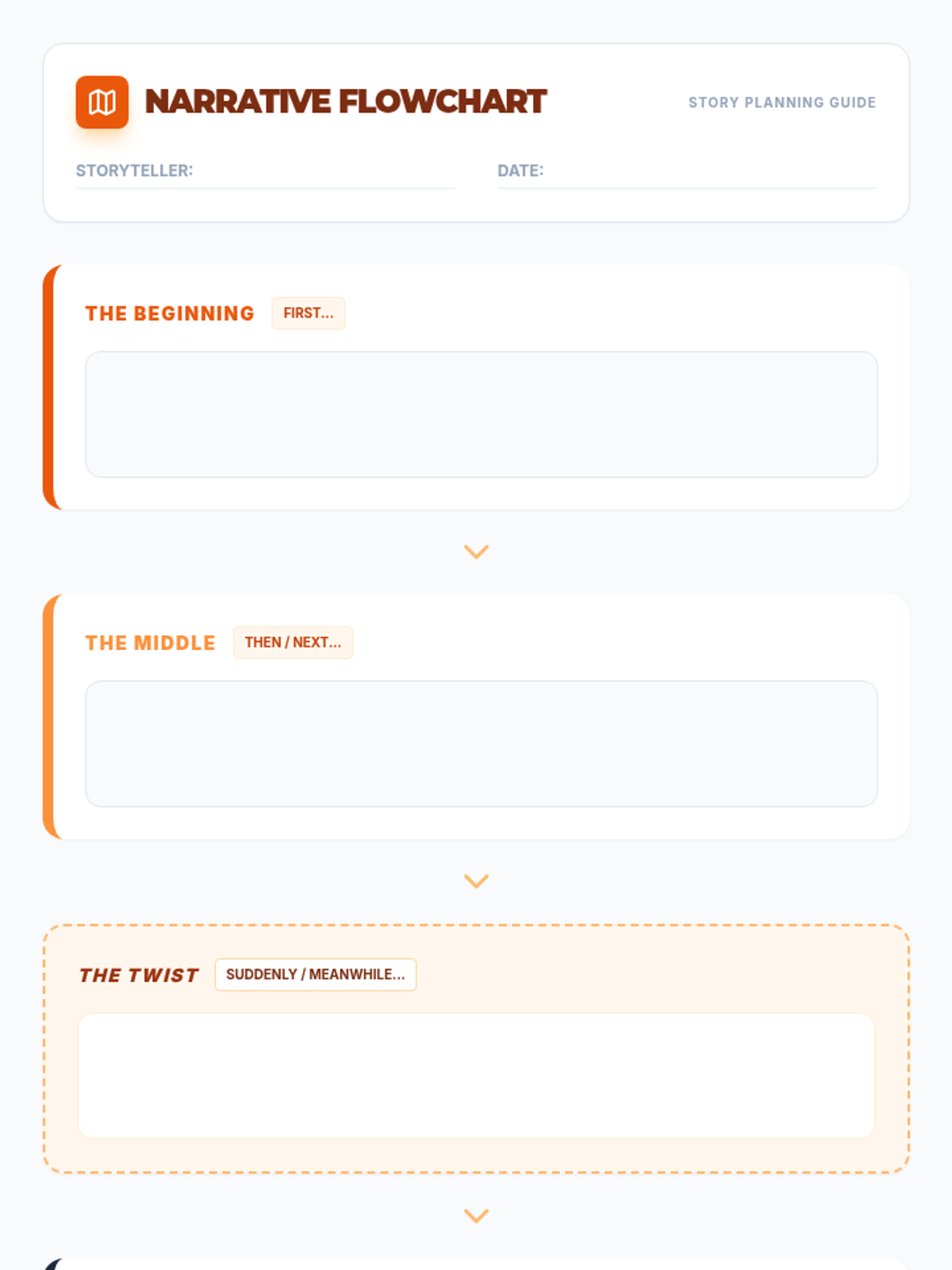
Mastering sequence and transition words to create organized, chronological narratives that flow naturally.
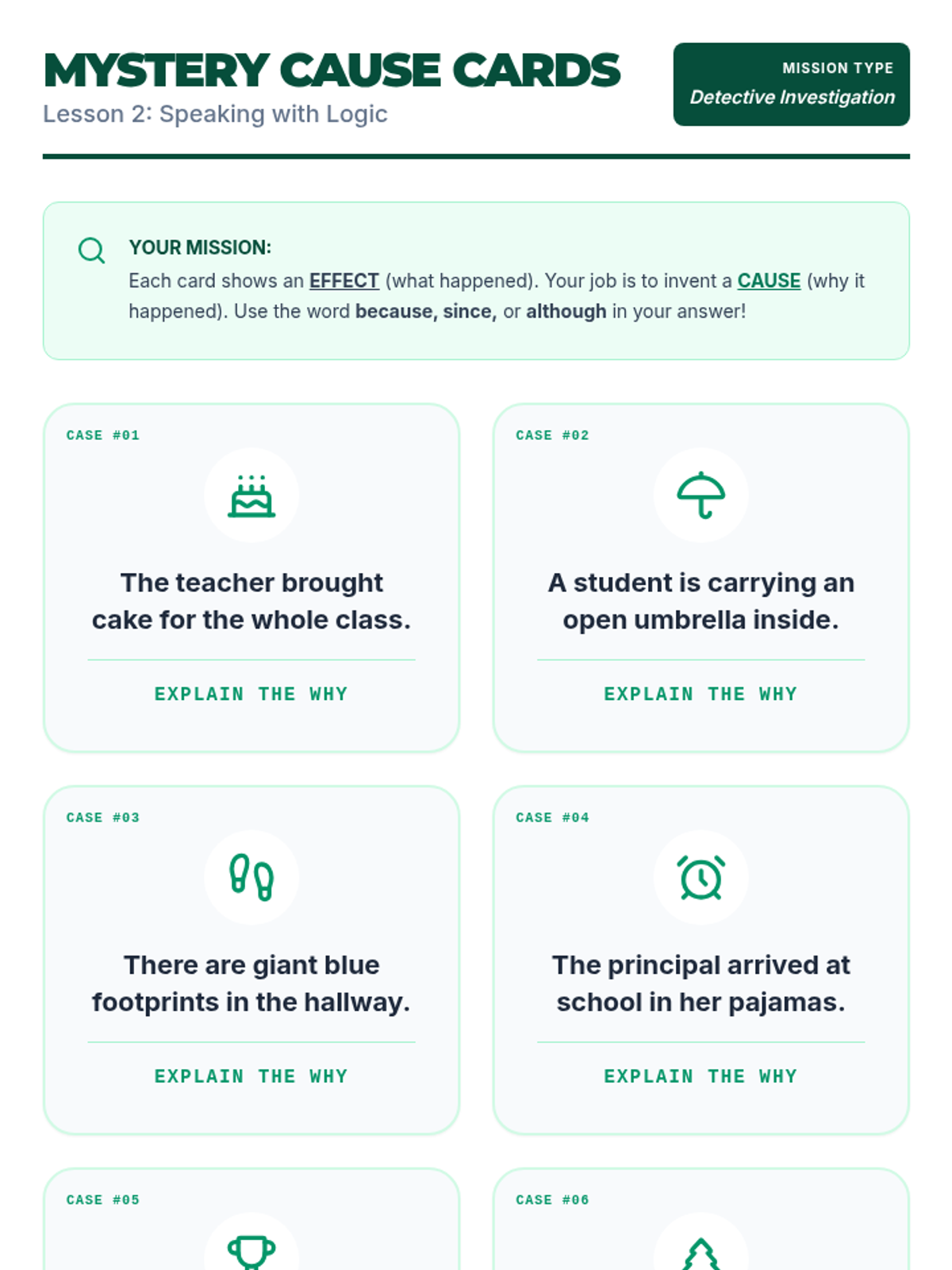
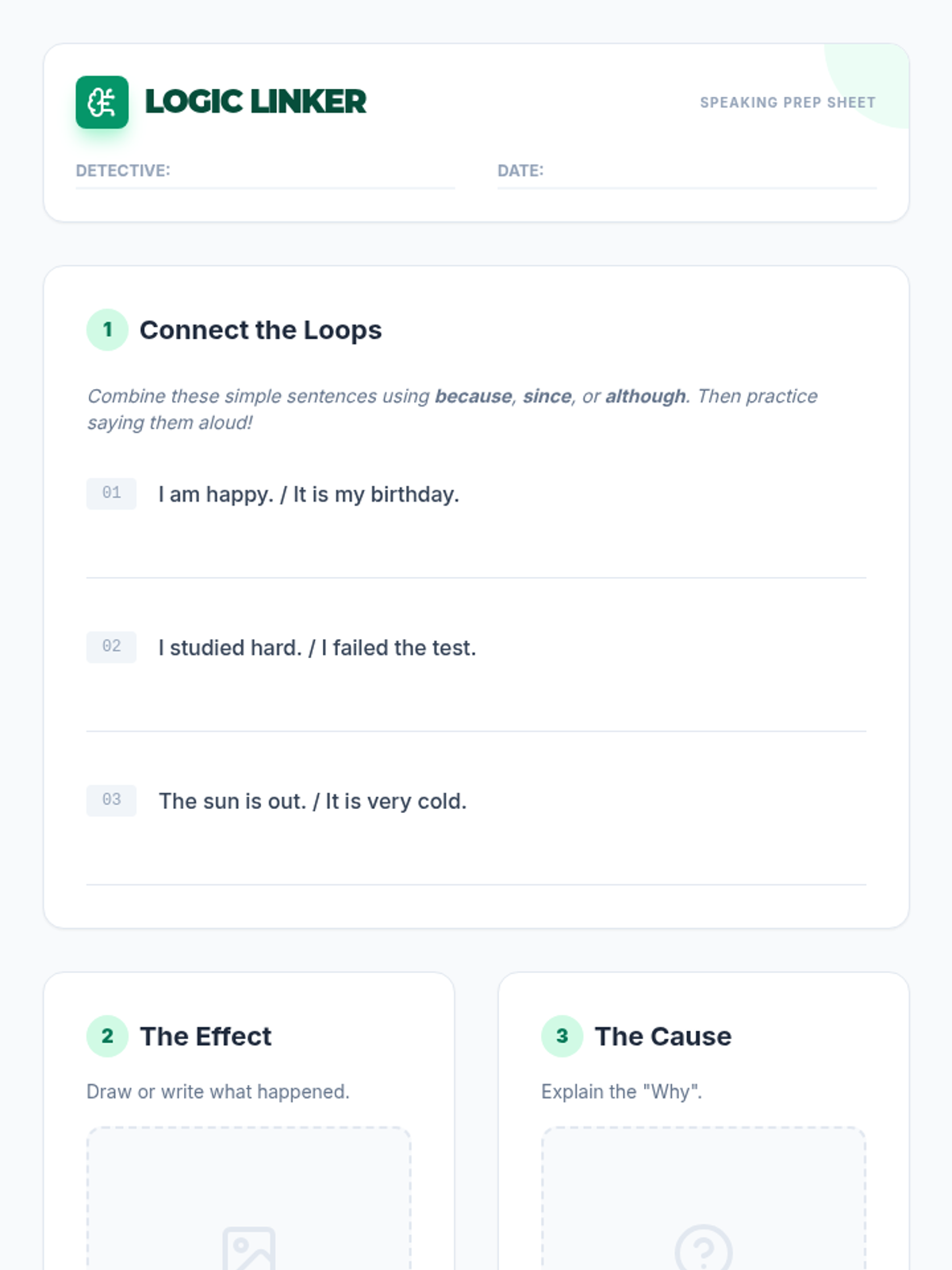
Exploring cause and effect using subordinating conjunctions like because, since, and although to explain the 'why' behind events.
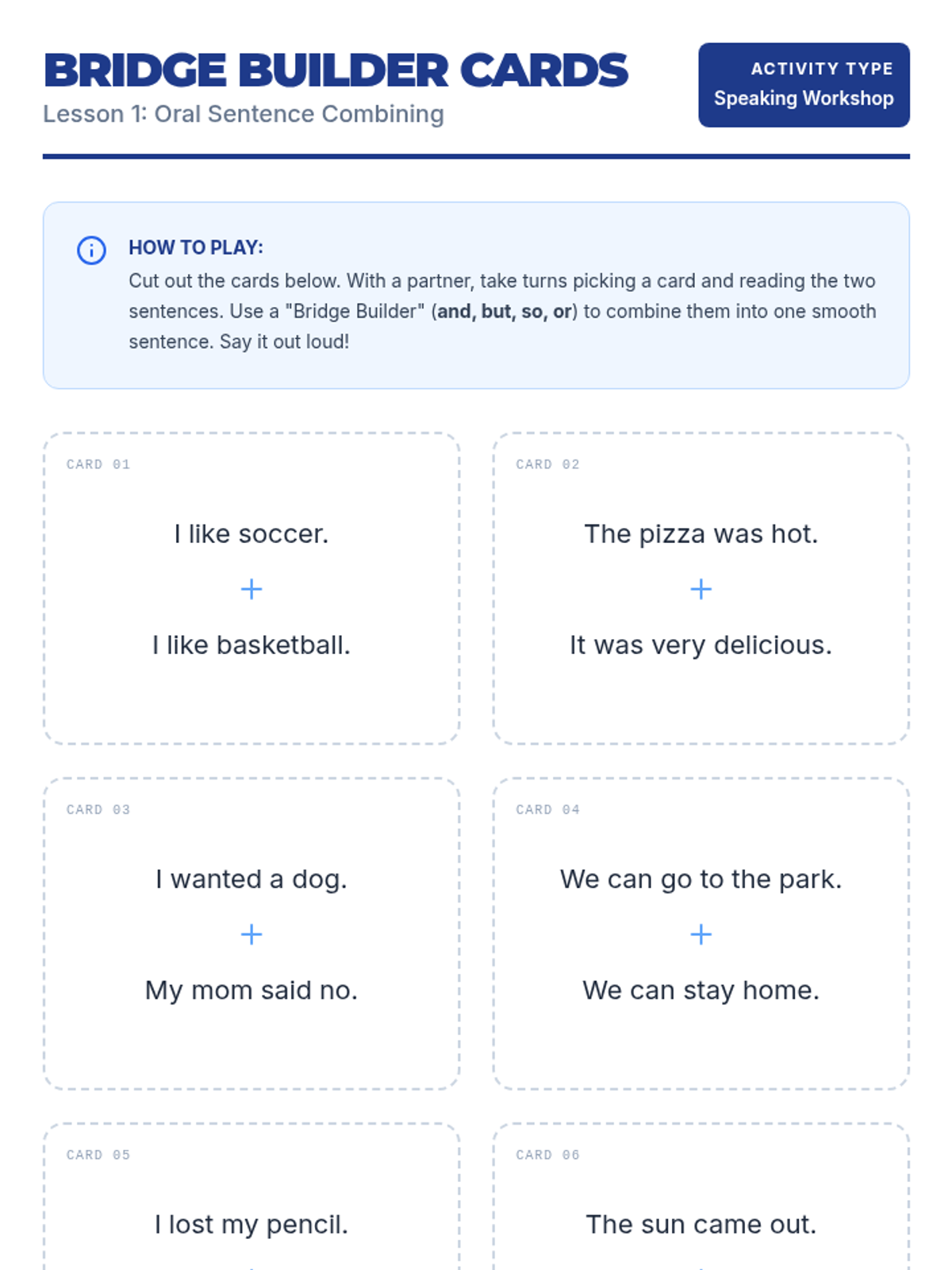
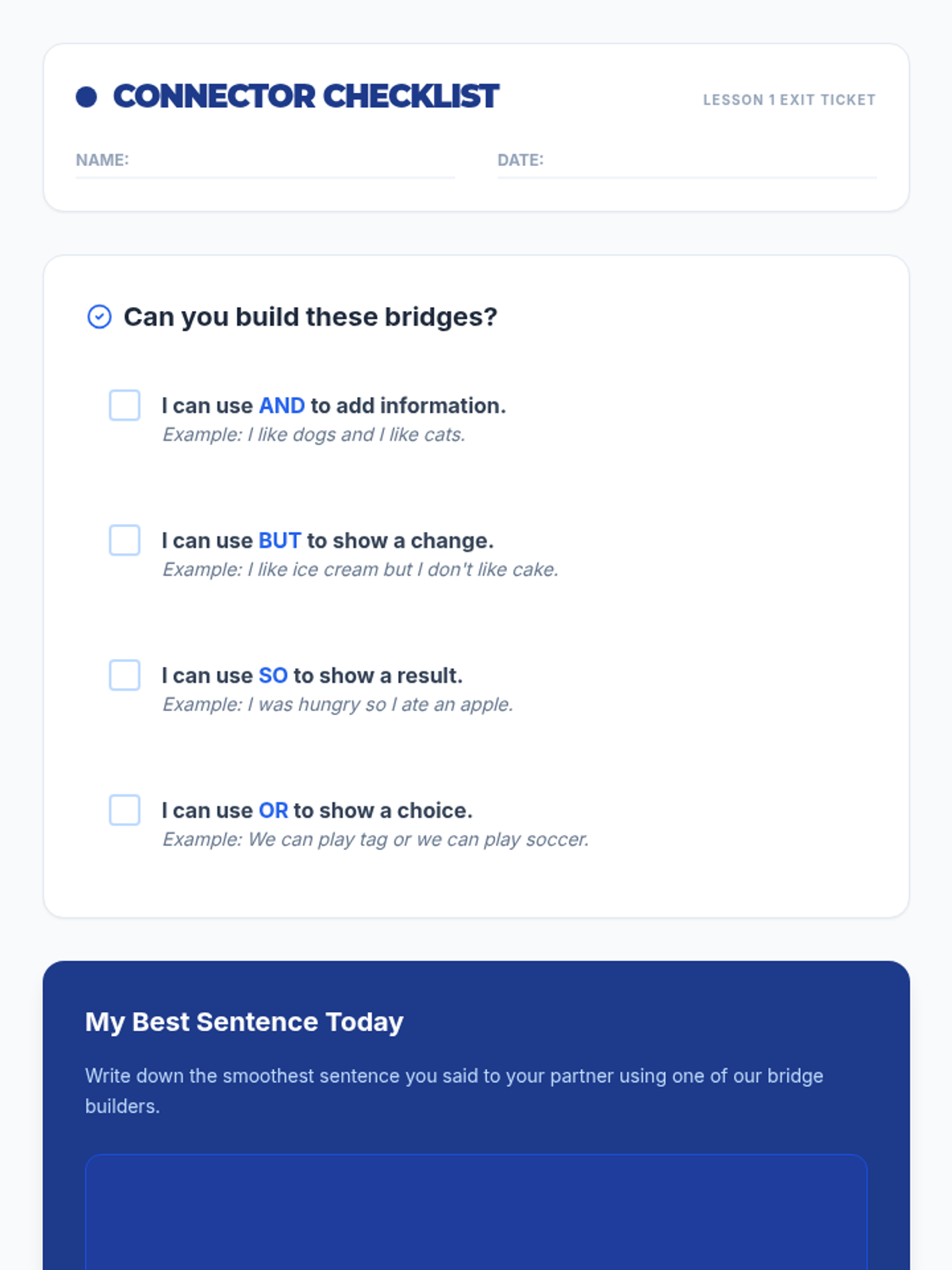
Students move from simple 'Robot Speak' to connected sentences using coordinating conjunctions like and, but, so, and or.
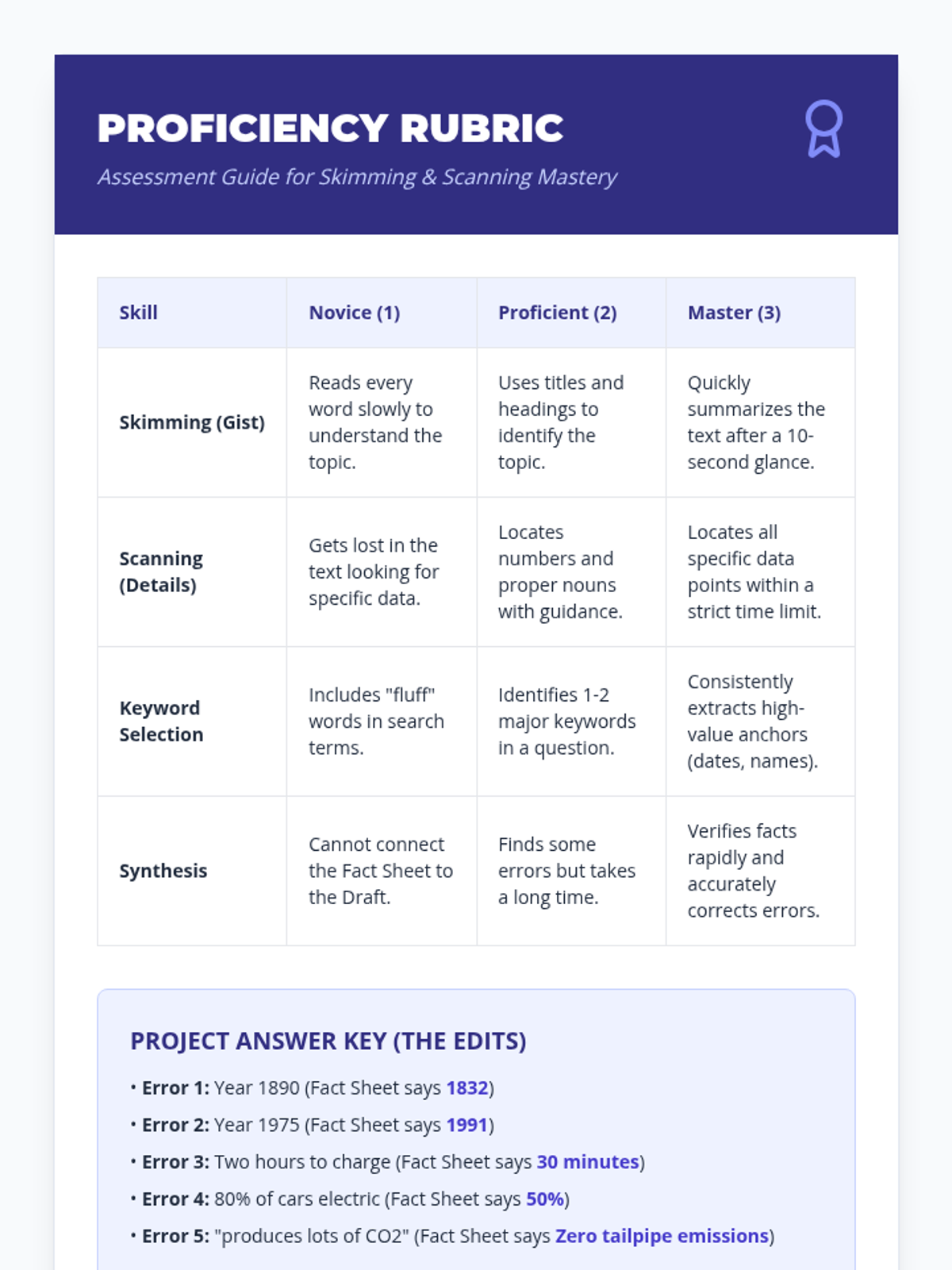
A culminating project where students combine skimming for main ideas and scanning for evidence to verify facts in a set of academic articles.
A high-energy lesson where students apply their skills under time constraints to build tolerance for testing pressure and improve information retrieval speed.
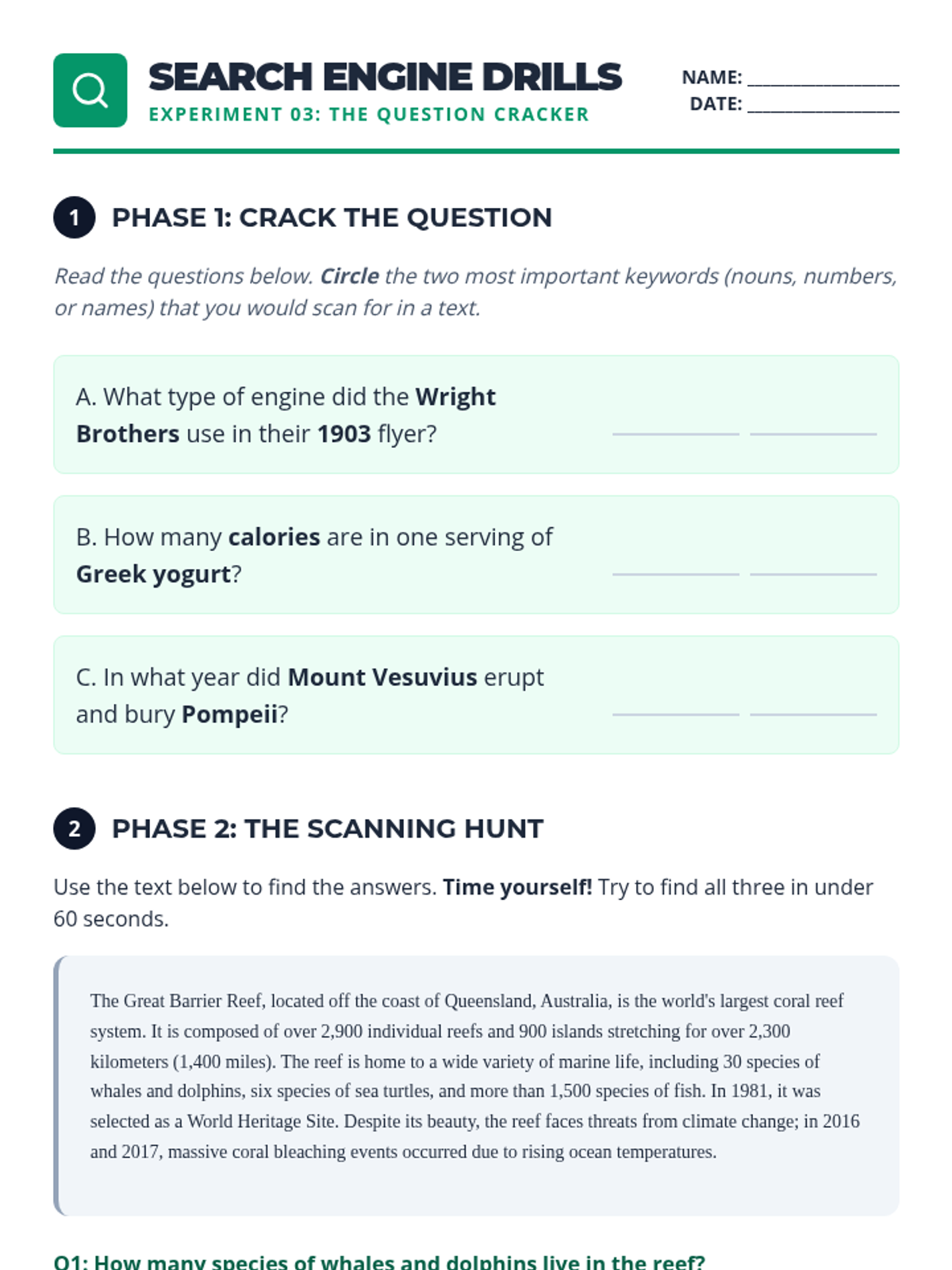
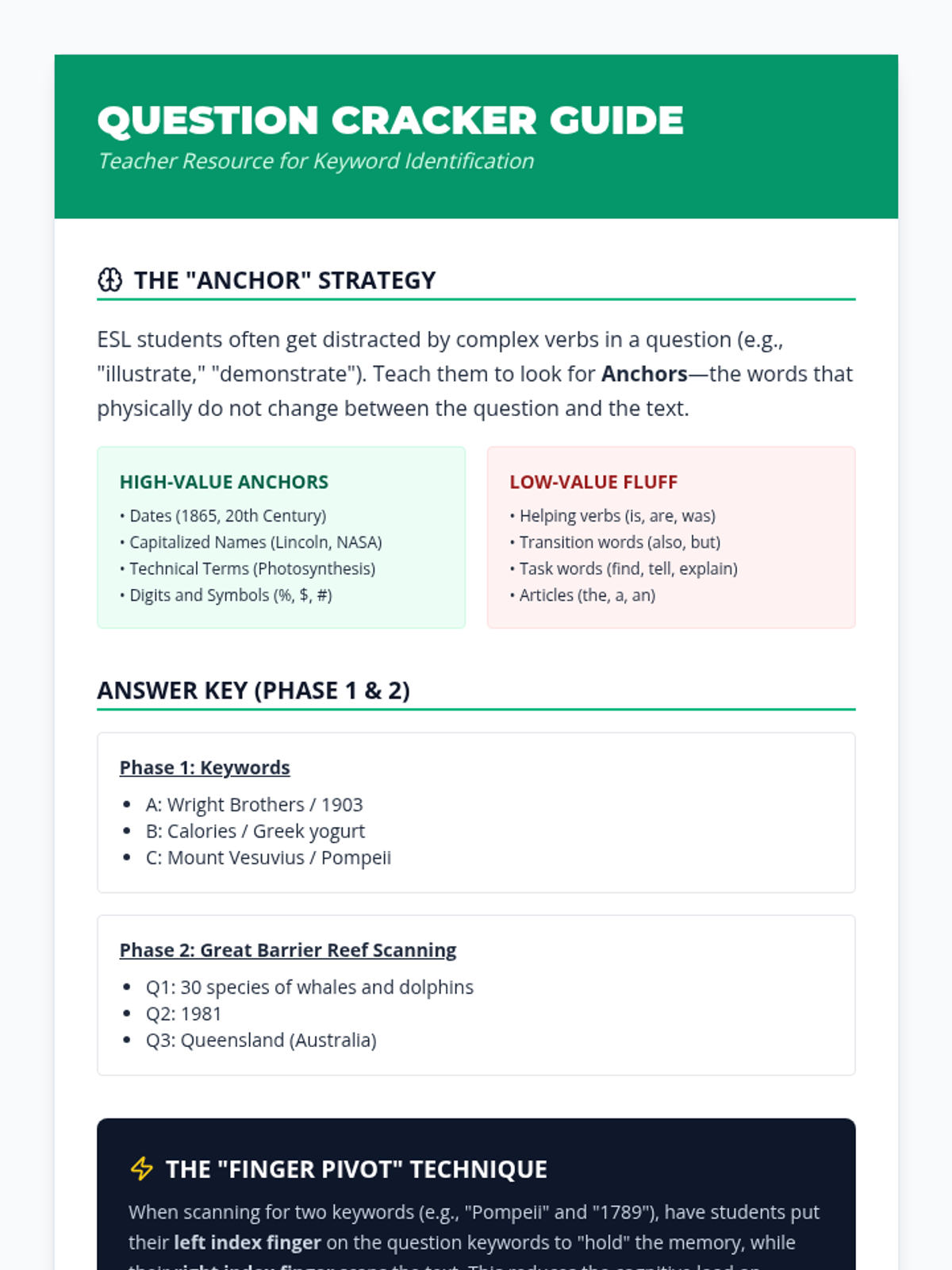
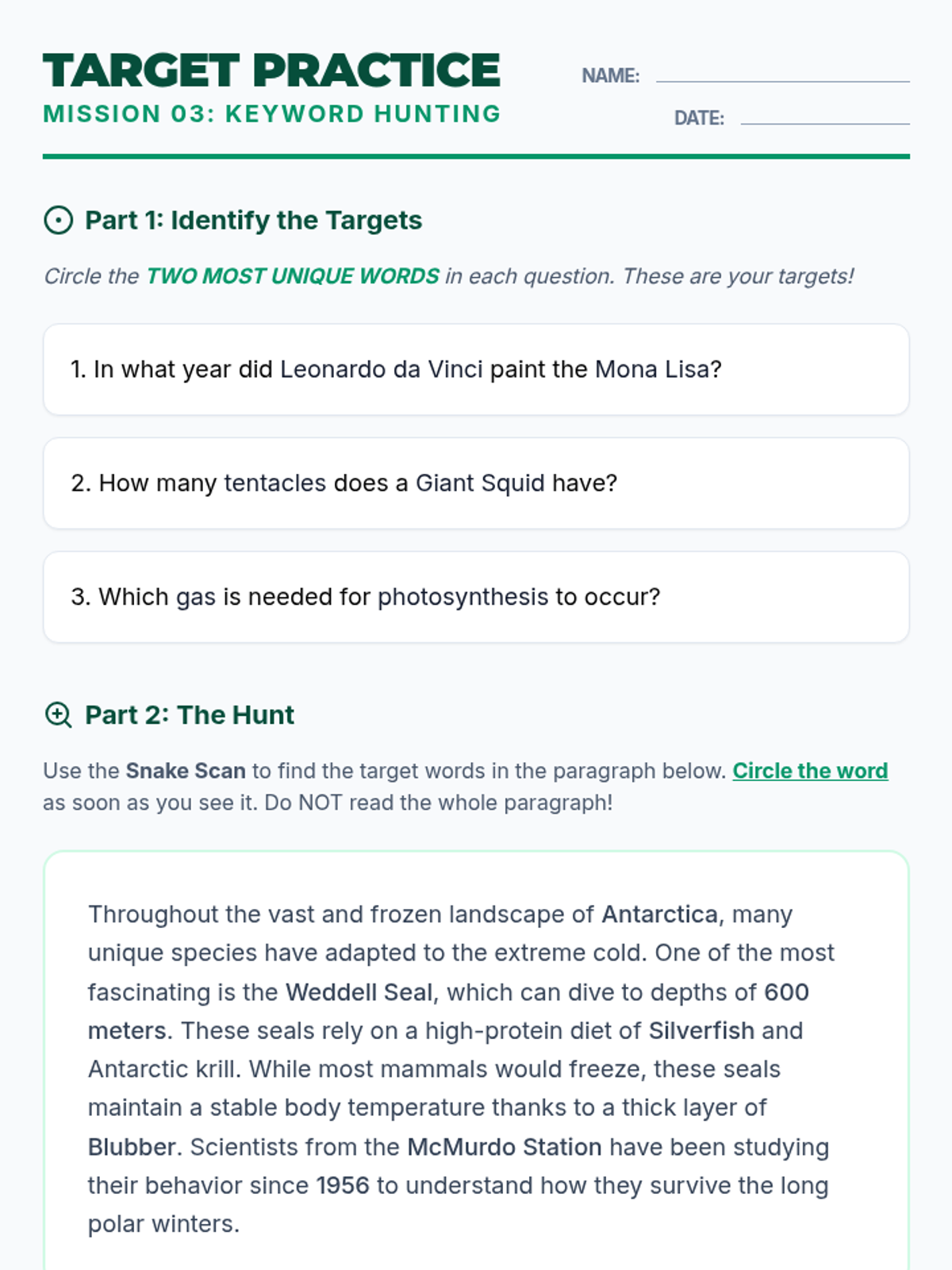
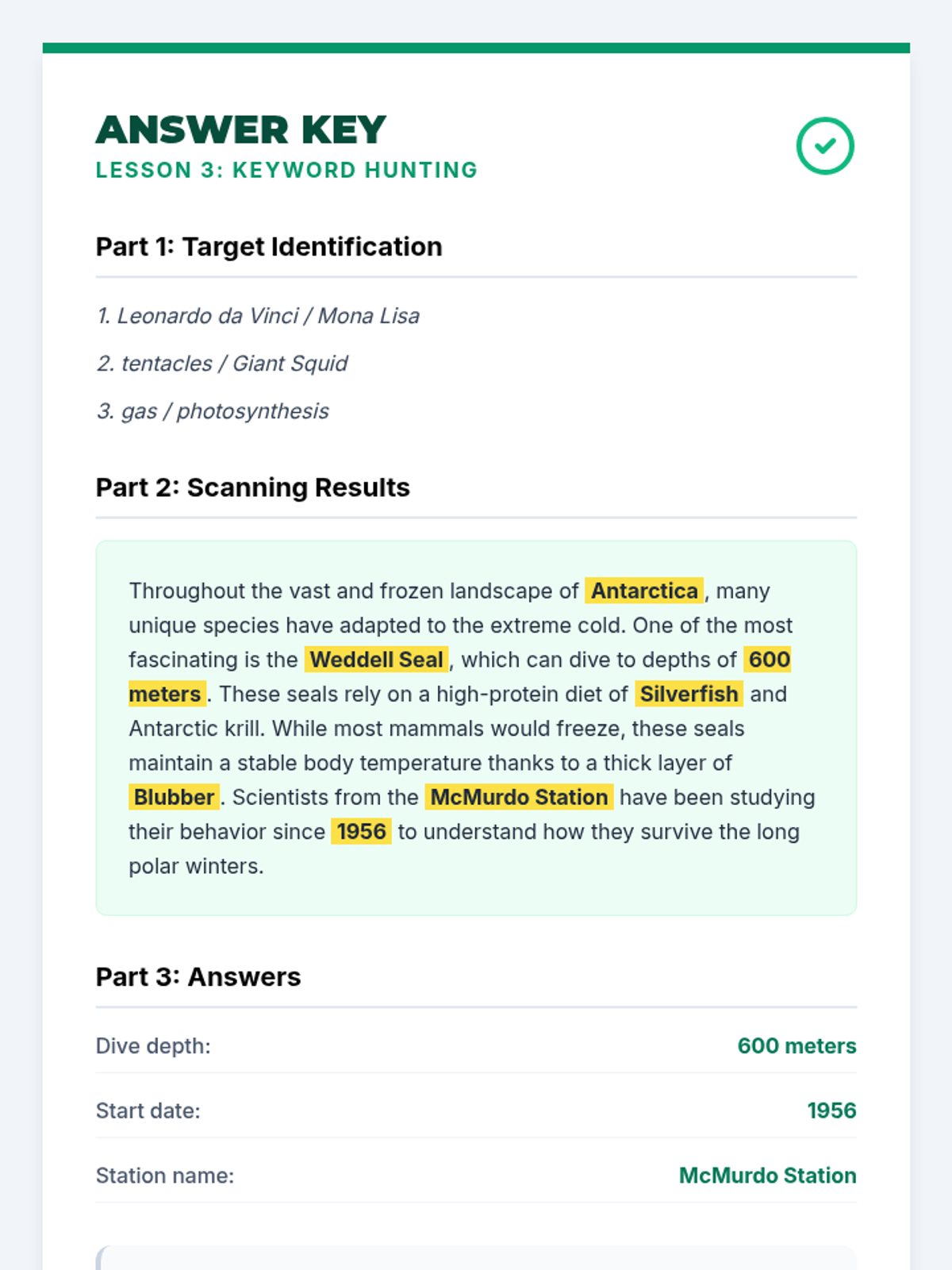
Students practice identifying high-value keywords in questions to guide their scanning process, focusing on nouns, verbs, and dates while ignoring filler words.
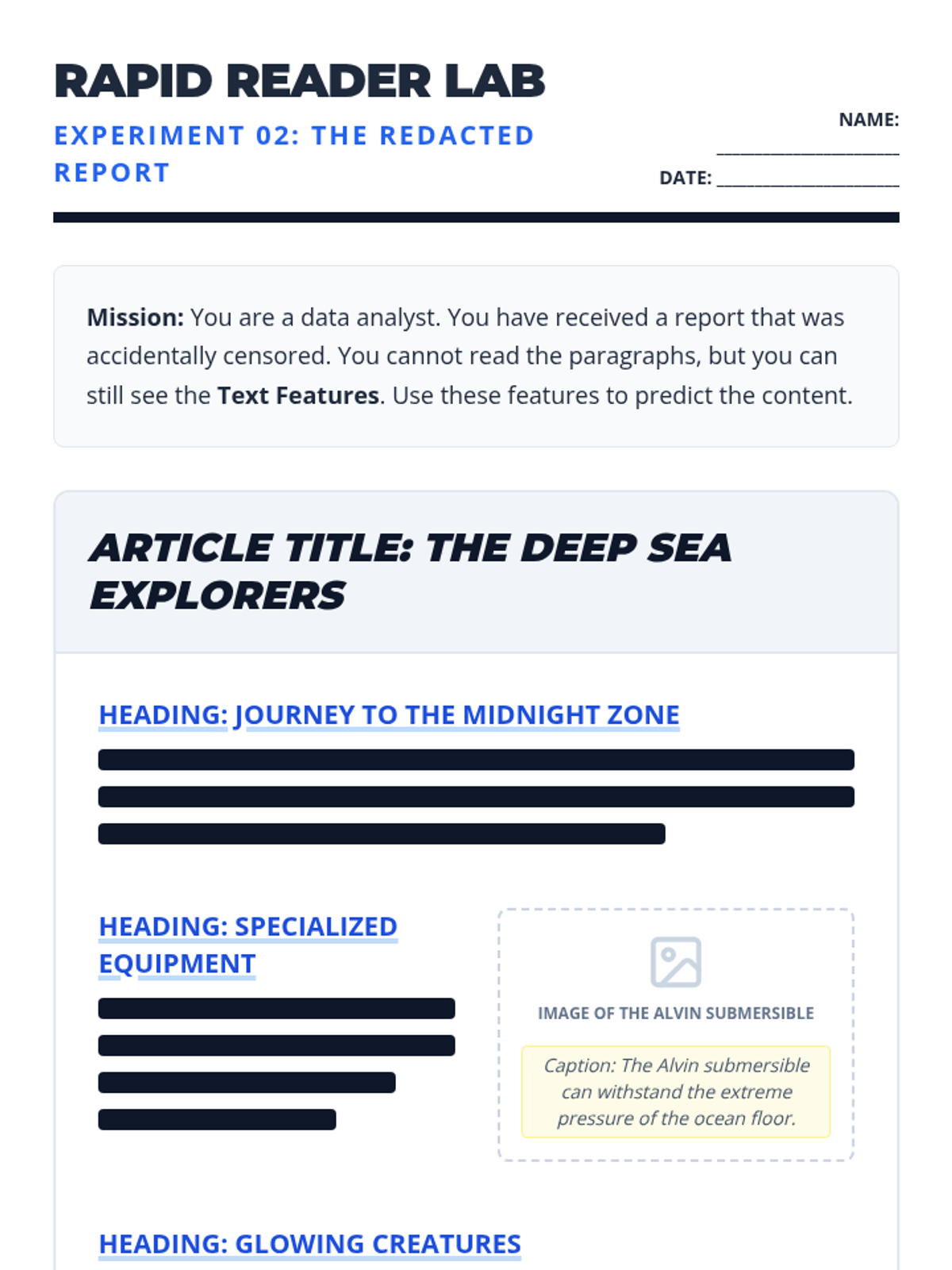
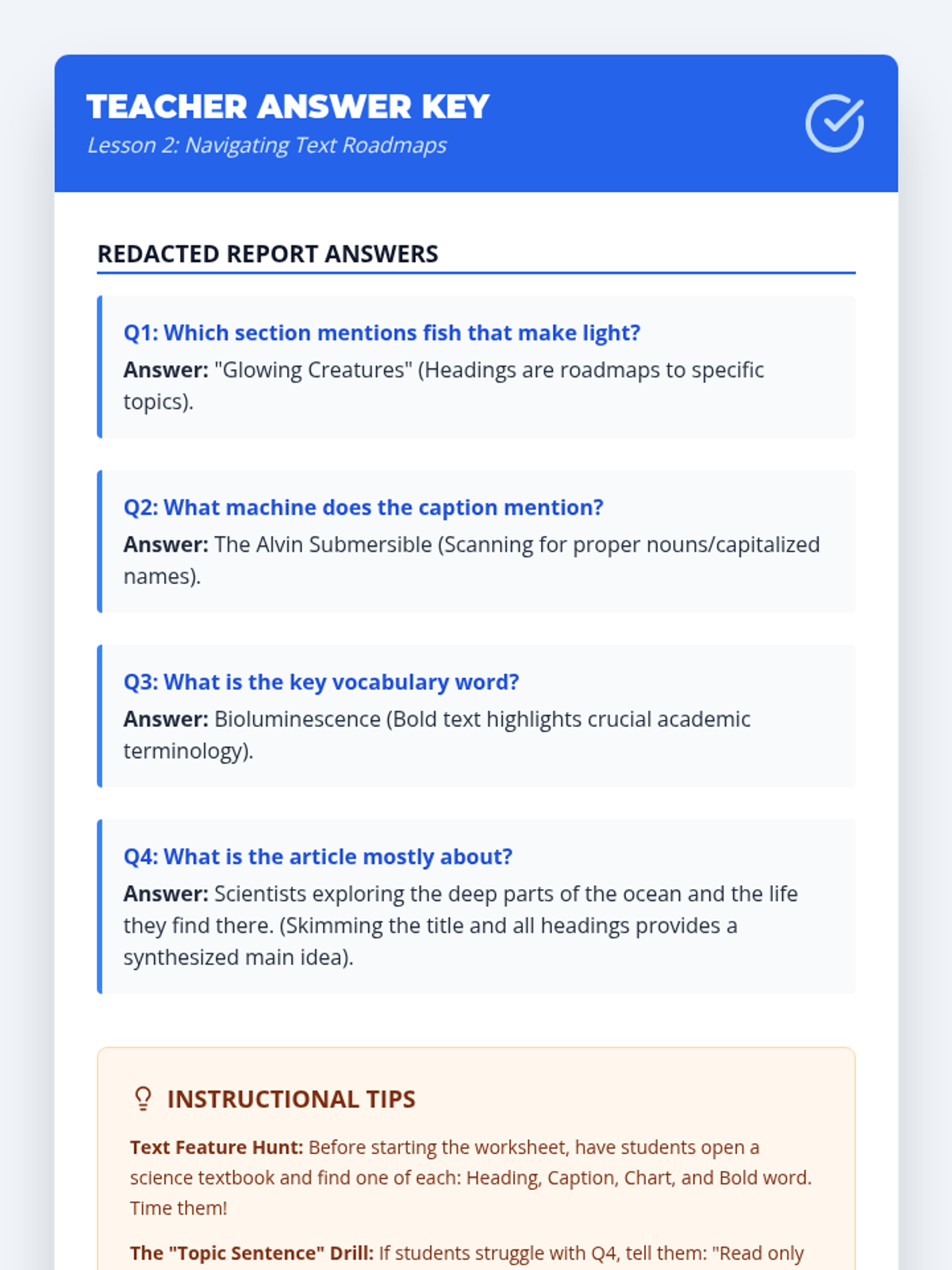
This lesson teaches students to use headings, captions, bold text, and topic sentences as roadmaps to navigate dense text without getting stuck on unknown vocabulary.
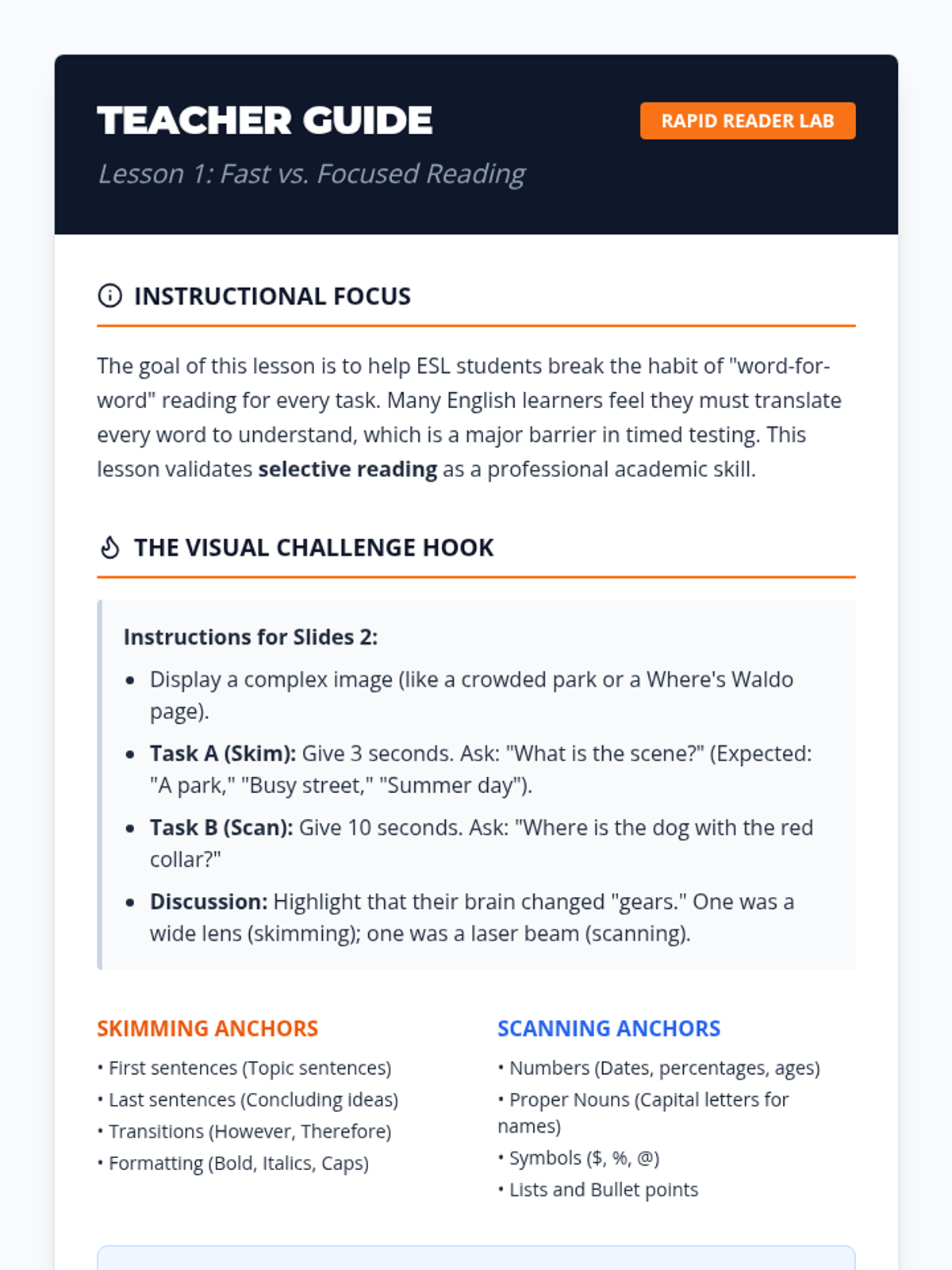
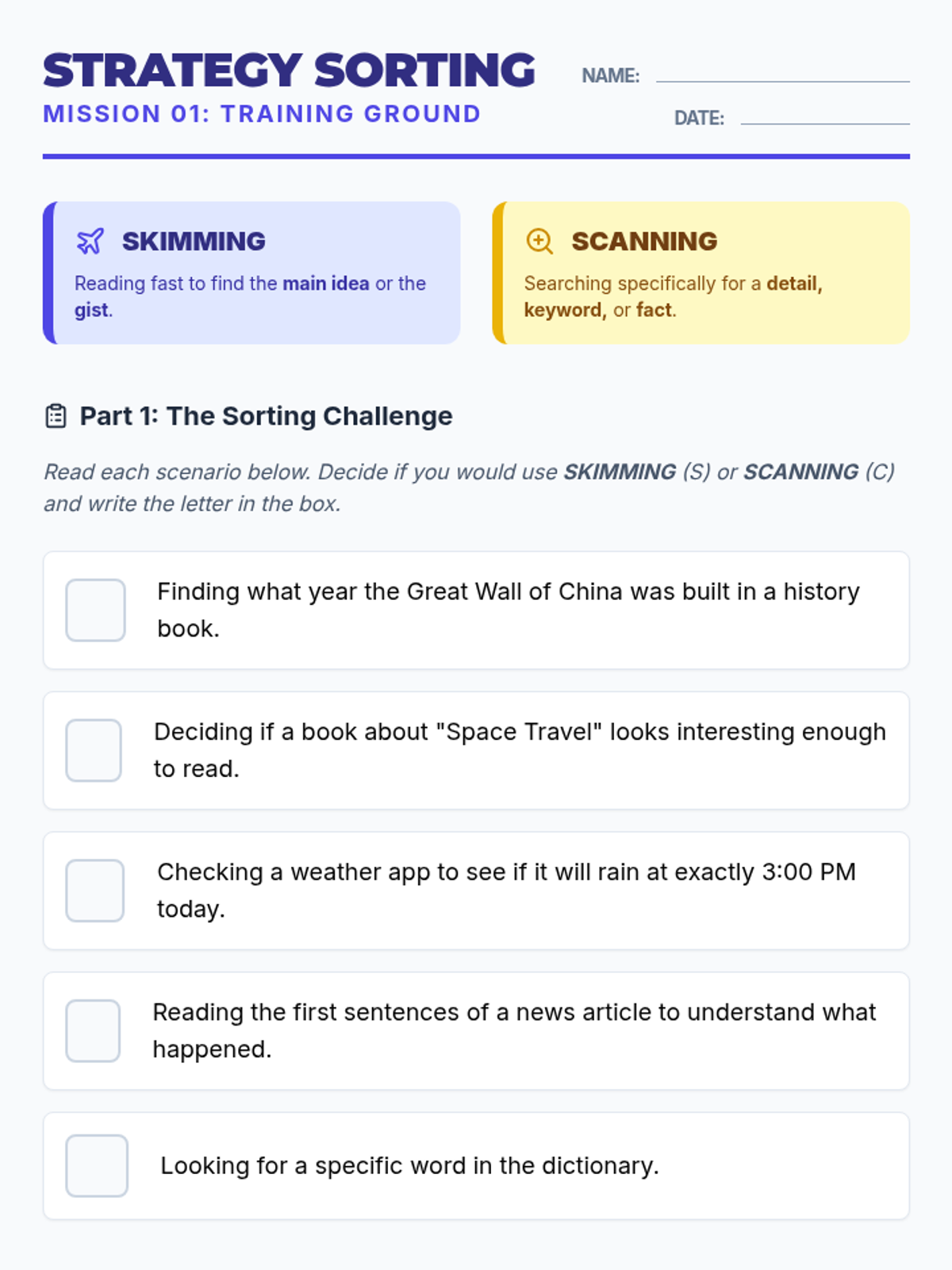
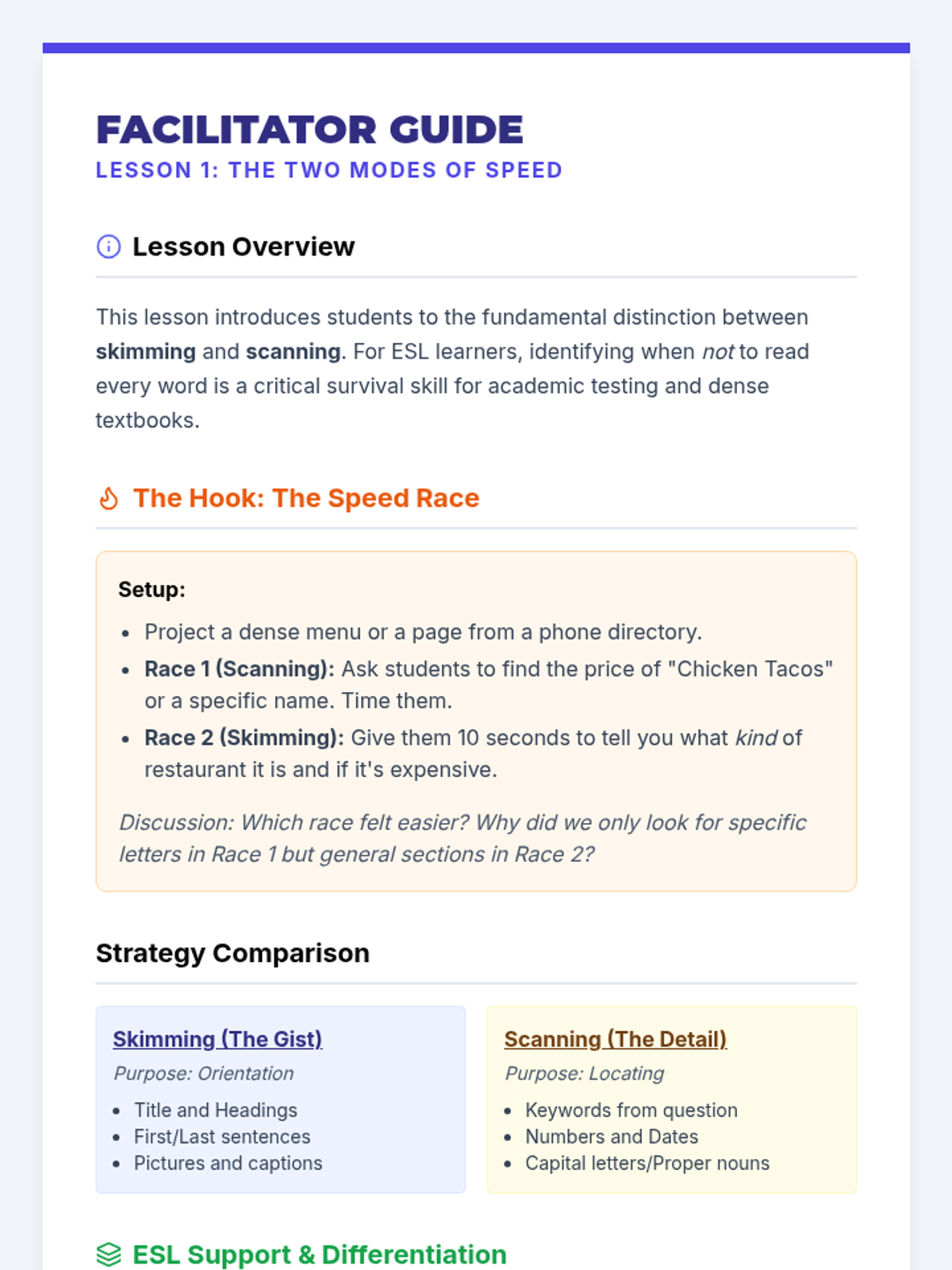
Students explore the difference between getting the 'gist' (skimming) and hunting for details (scanning) through workshop-style activities and purpose-driven reading.
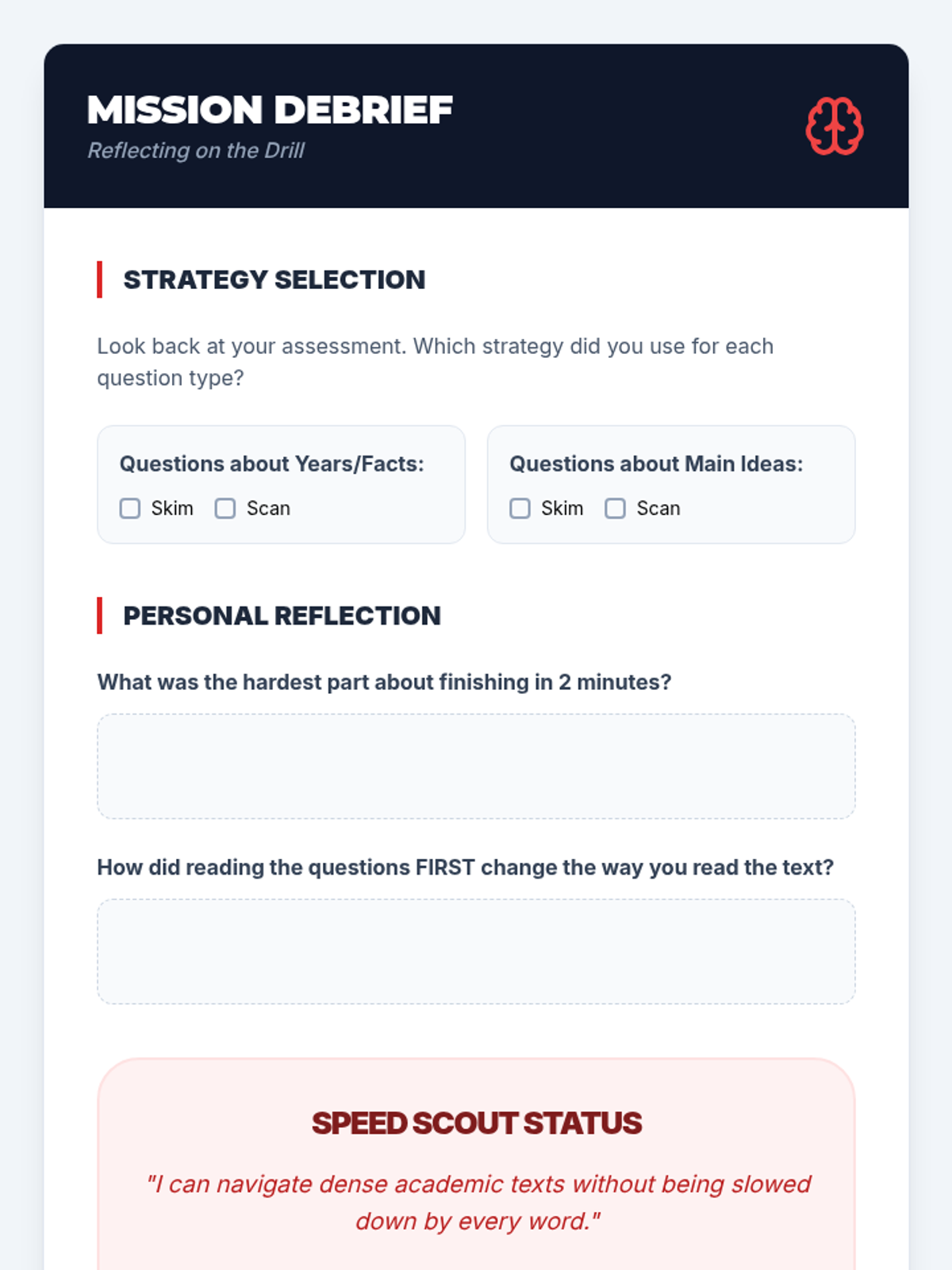
A culminating simulation where students apply their skimming and scanning skills to a timed reading comprehension challenge, followed by a metacognitive reflection.
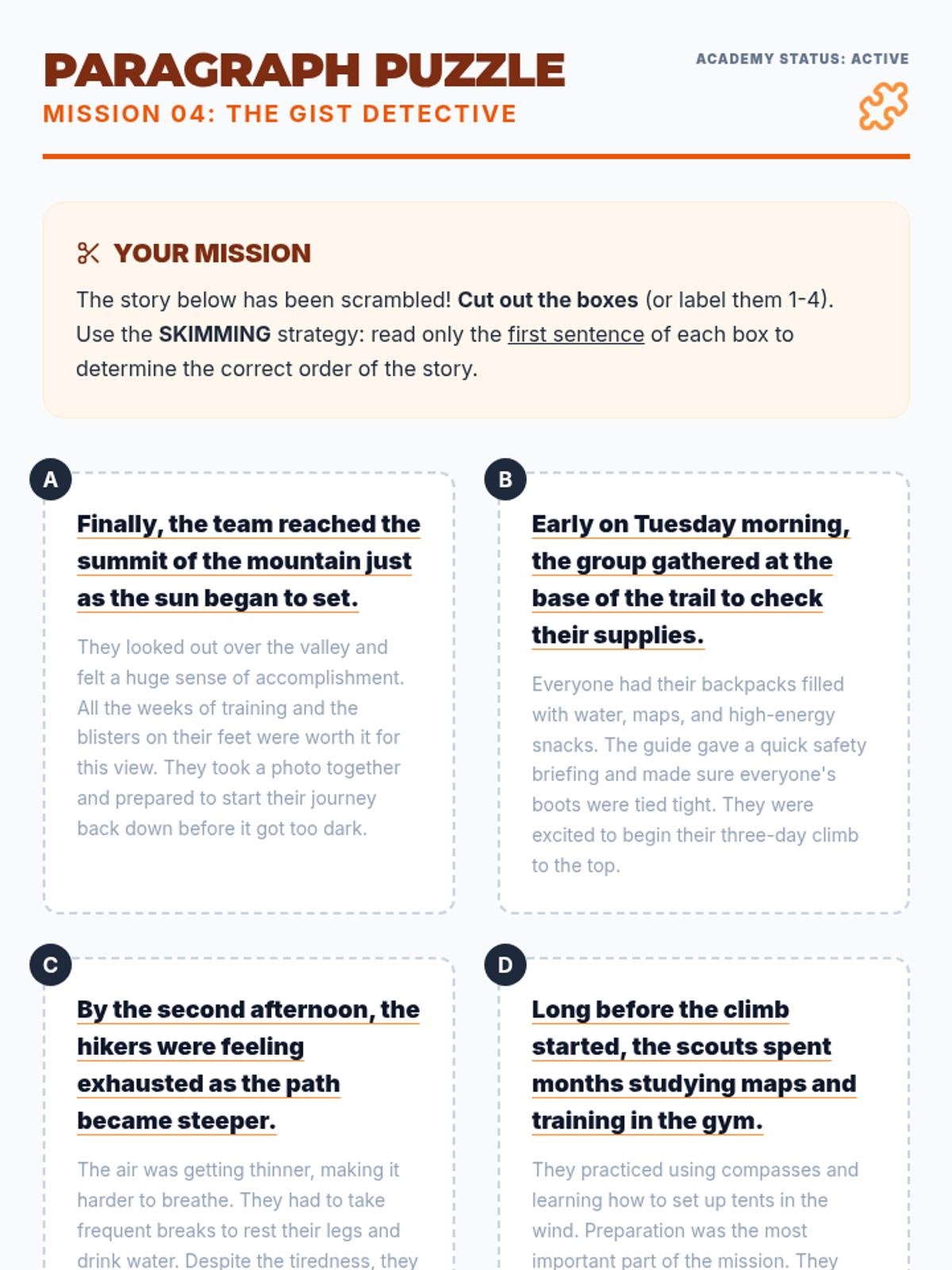
Focuses on the 'first and last' strategy to identify main ideas and topic sentences, allowing students to map out the structure of a text quickly.
Students master the art of identifying high-value keywords in questions and quickly locating them within dense academic passages.
Learners practice using text features like headings, bold words, and captions as navigation tools to predict content and locate information without reading every word.
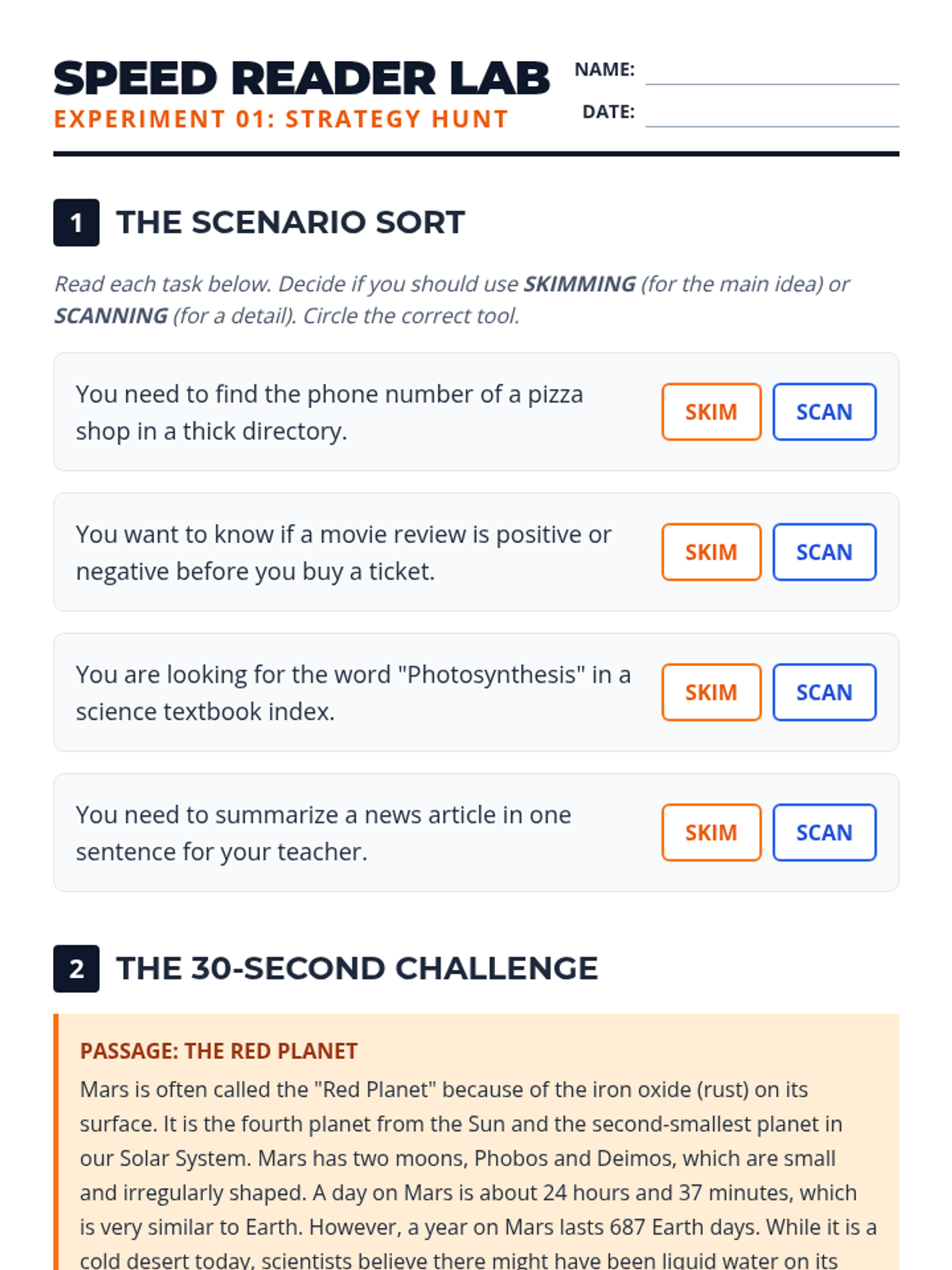
Students explore the fundamental differences between skimming for a general overview and scanning for specific information through interactive sorting and rapid-fire exercises.
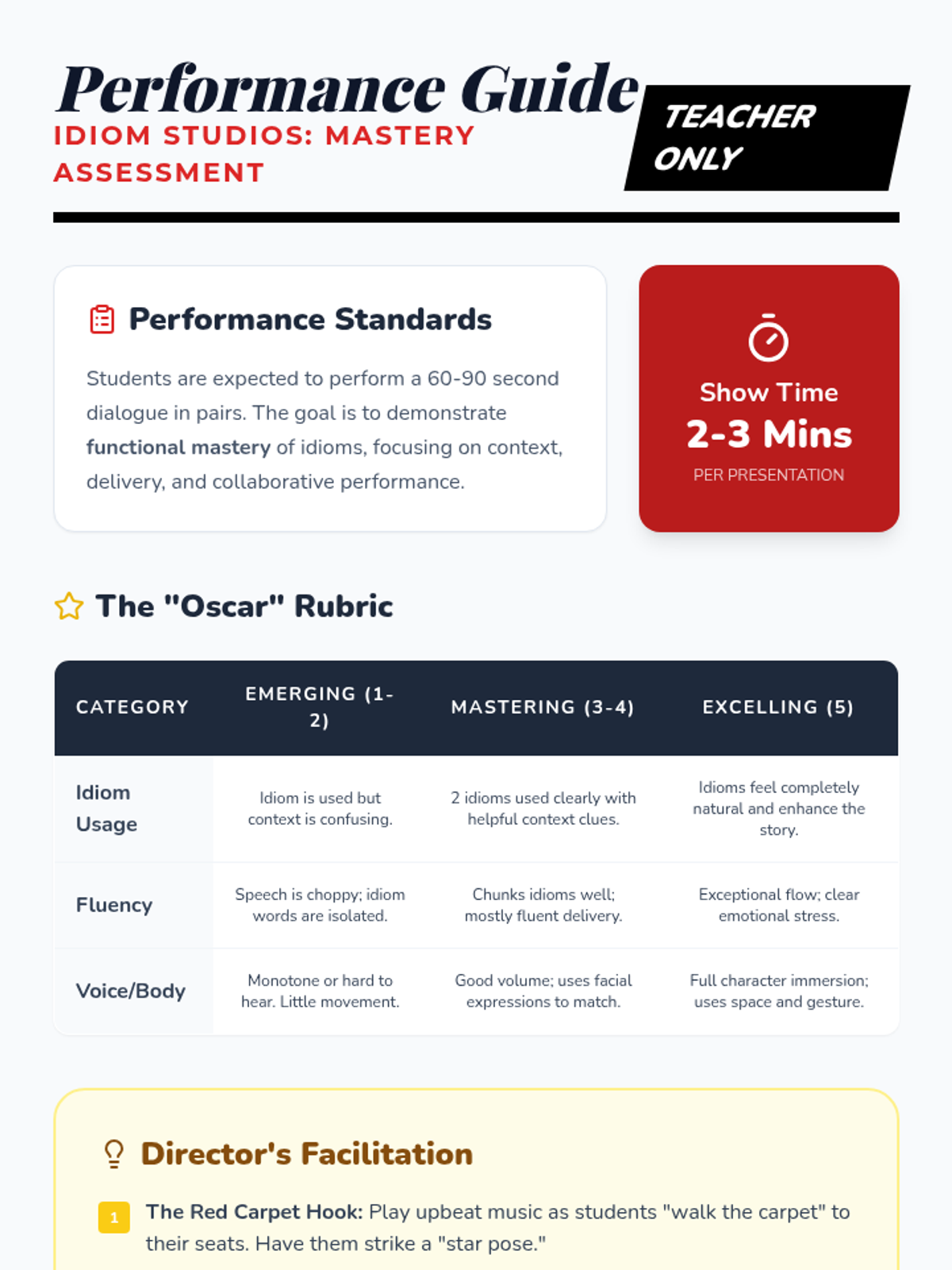
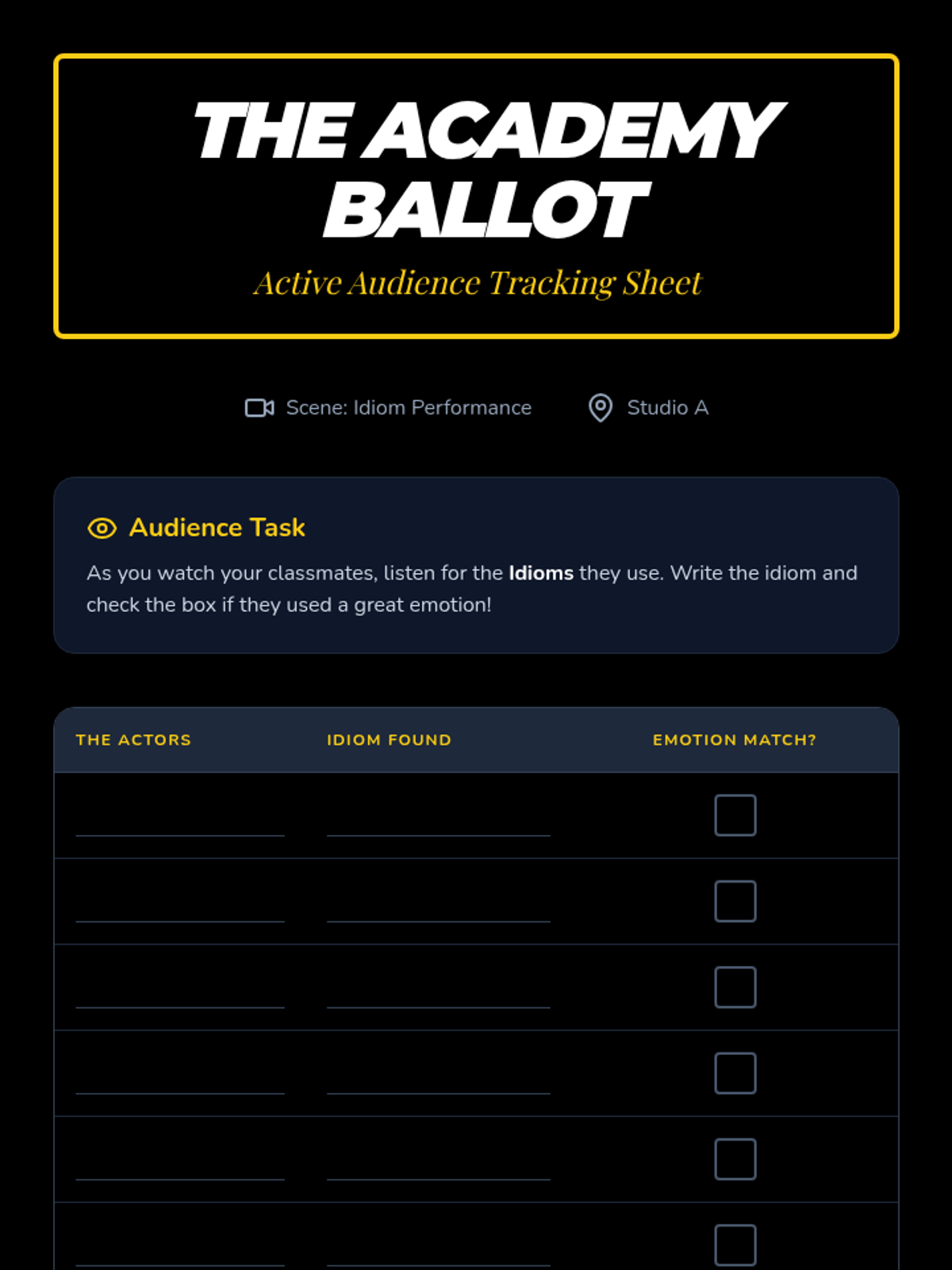
Pairs present their dialogues to the class. Peers listen actively to identify the idioms used and determine their meanings based on context.
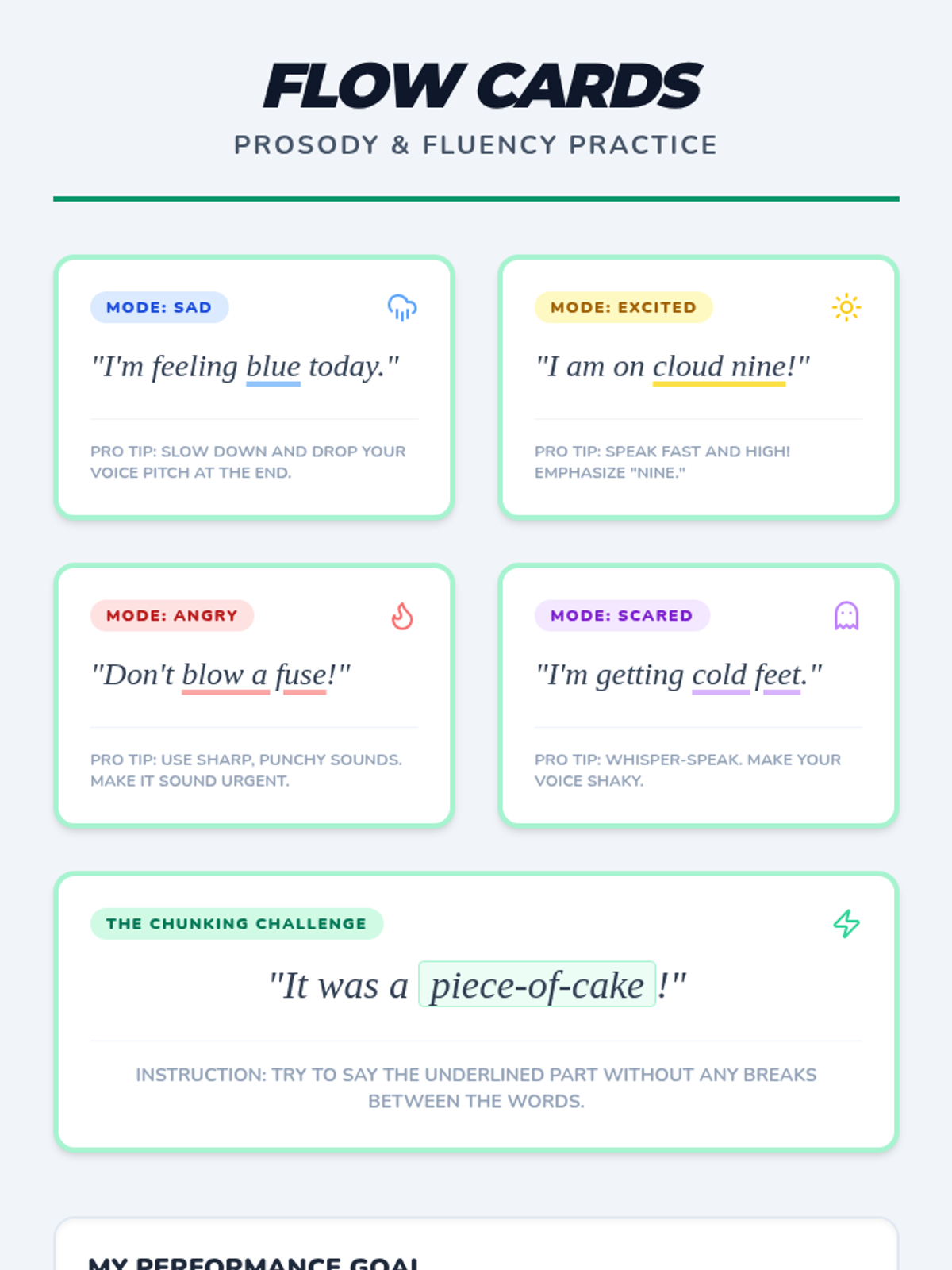
Focus on oral delivery, targeting intonation, stress, and pacing through 'chunking' idioms for natural speech.