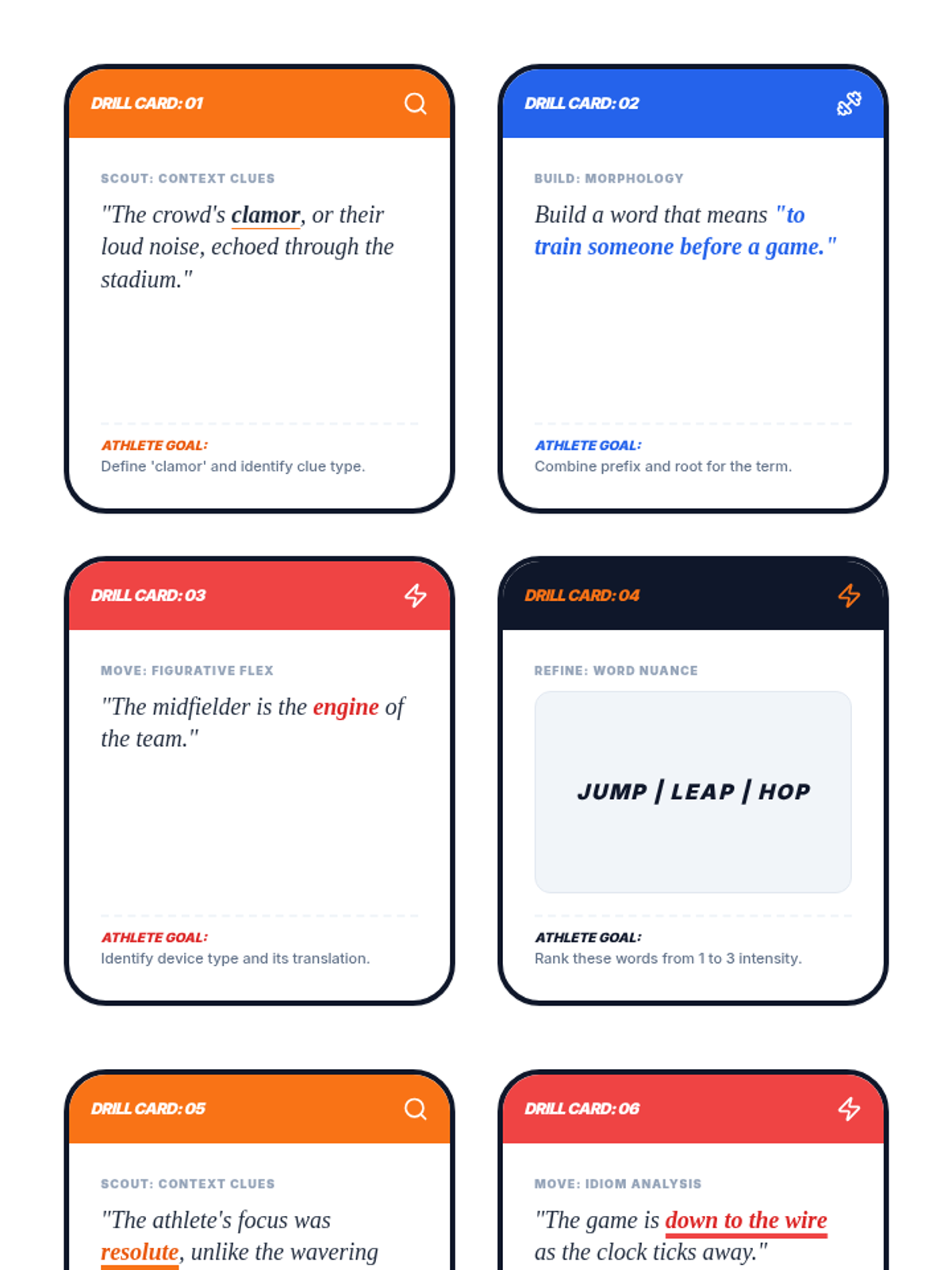
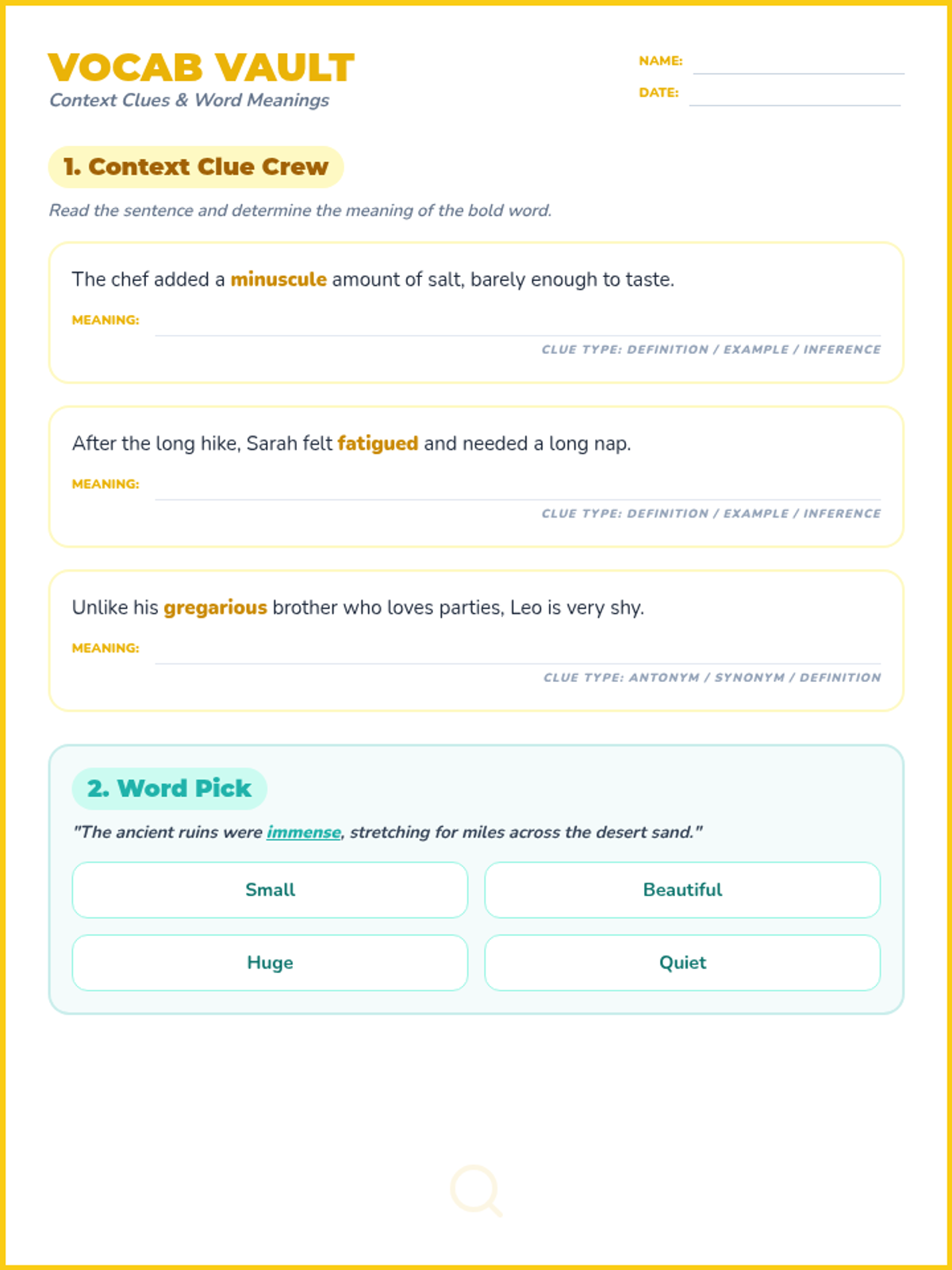
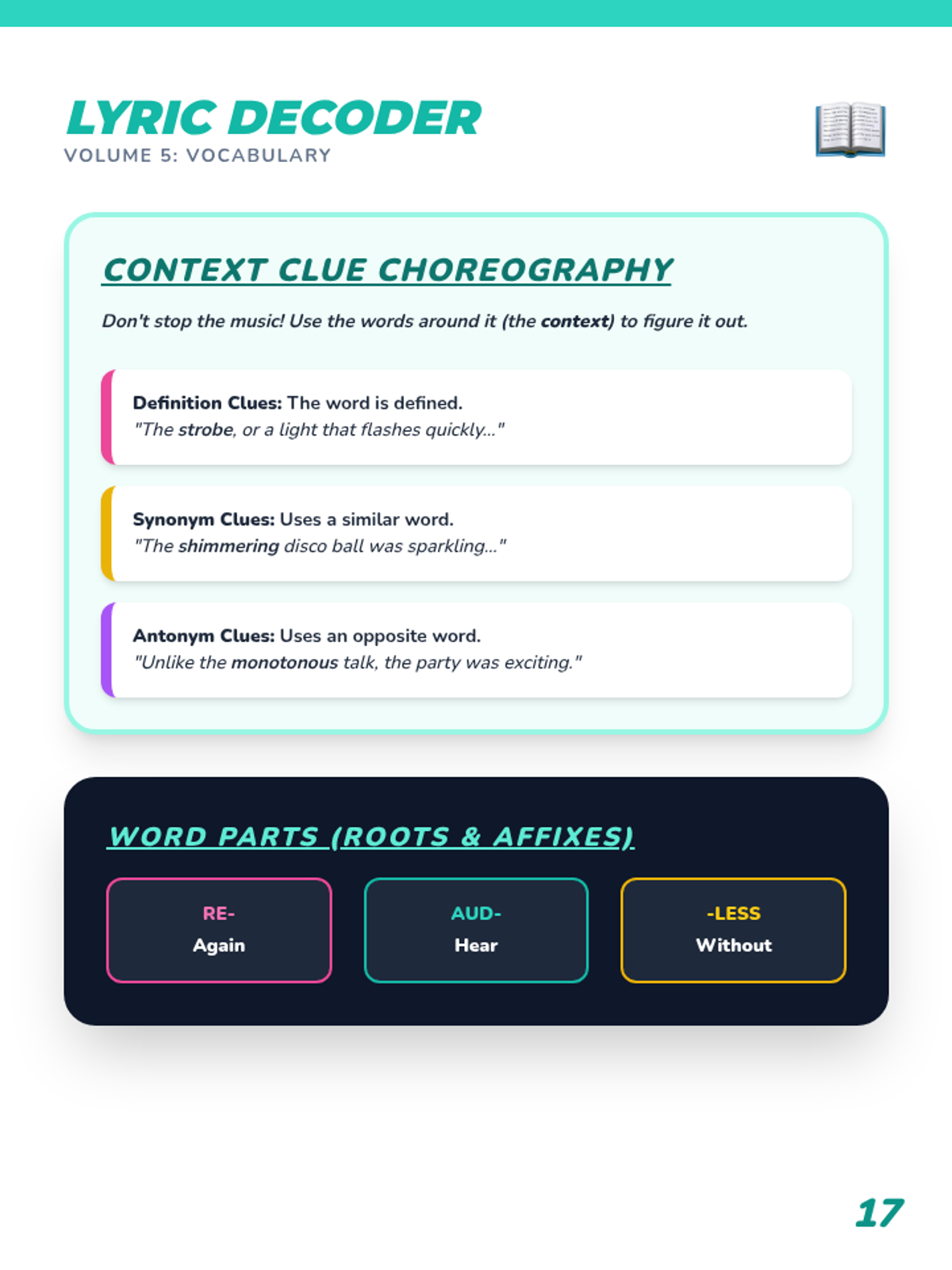
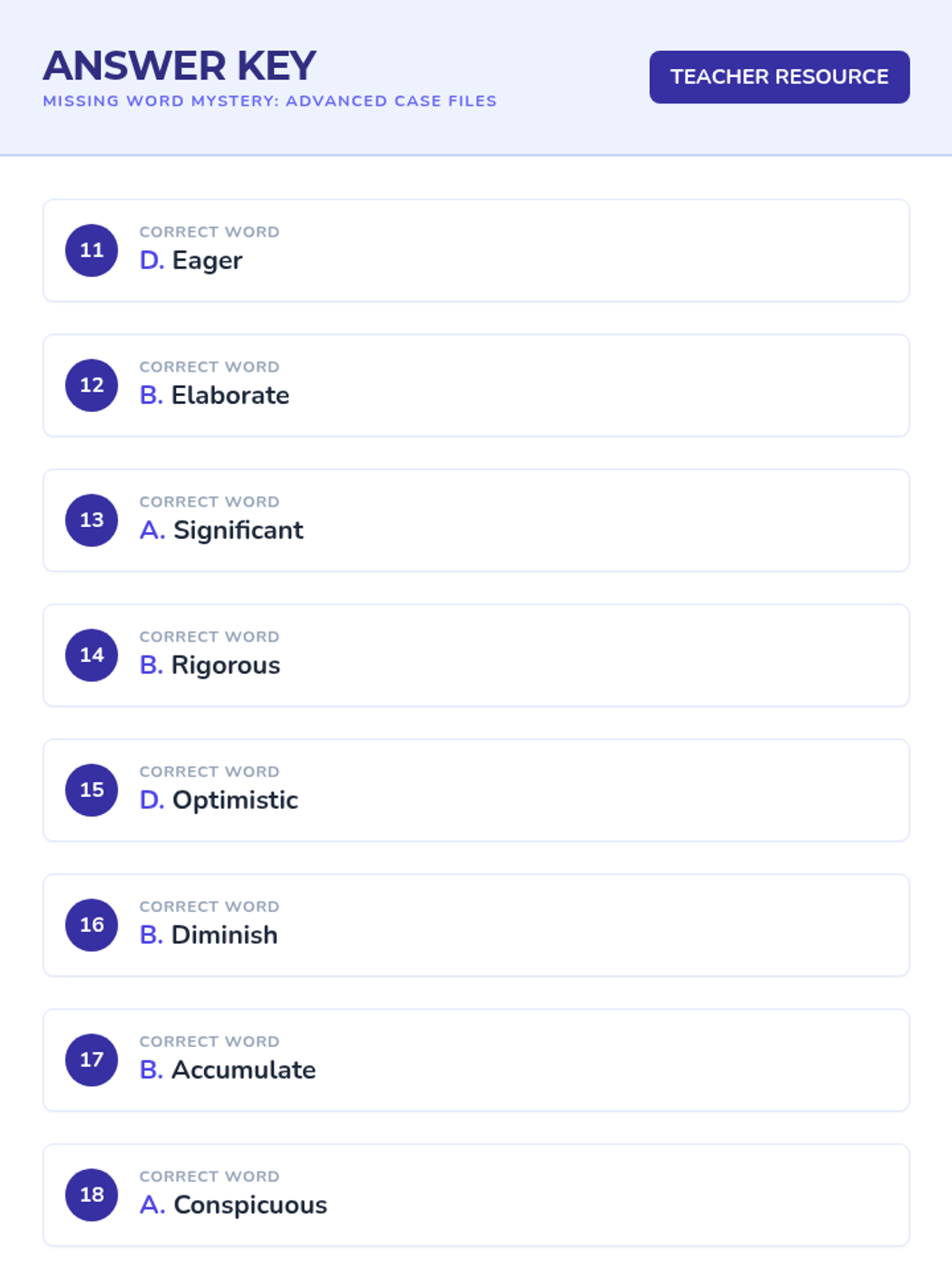
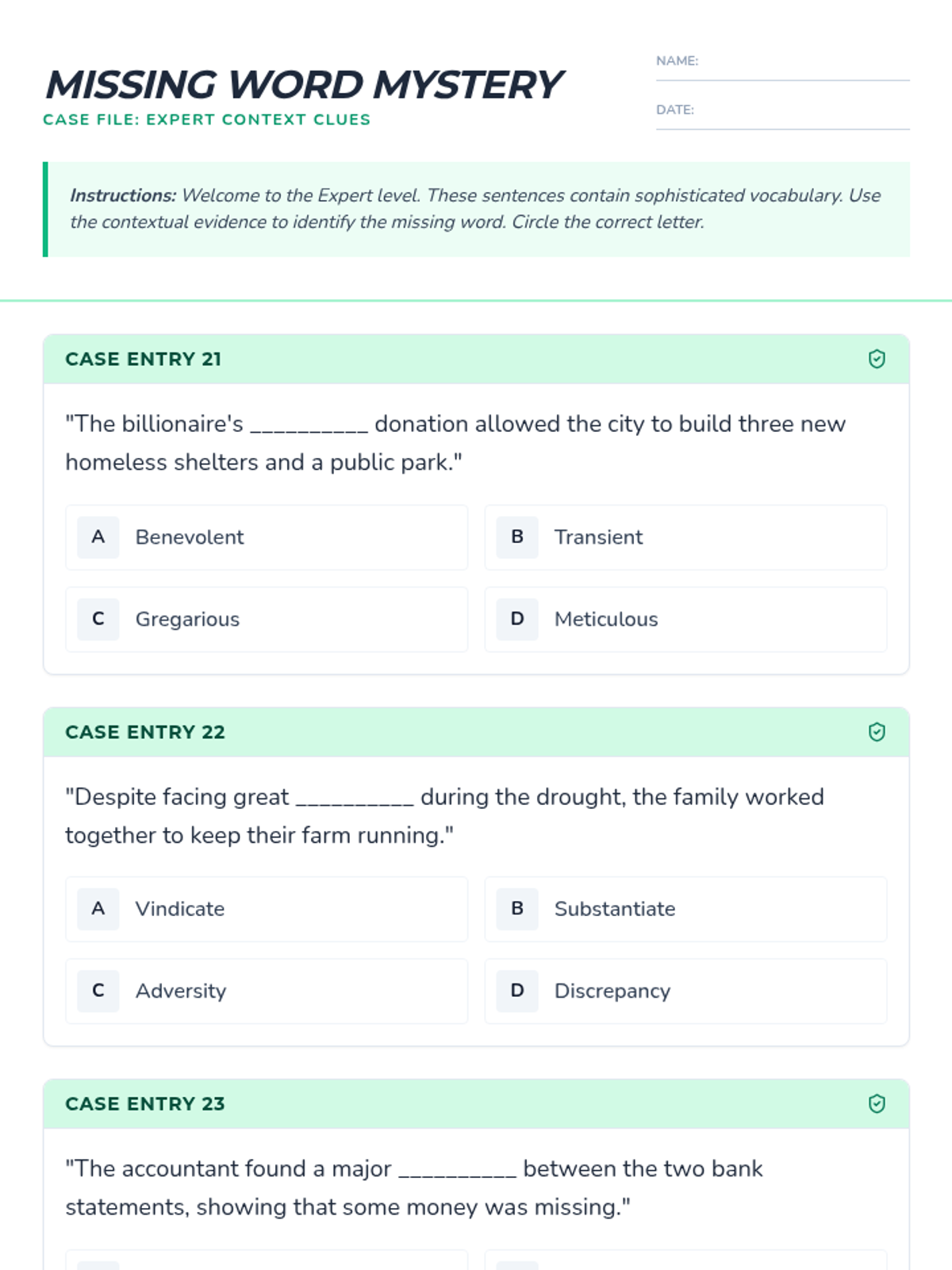
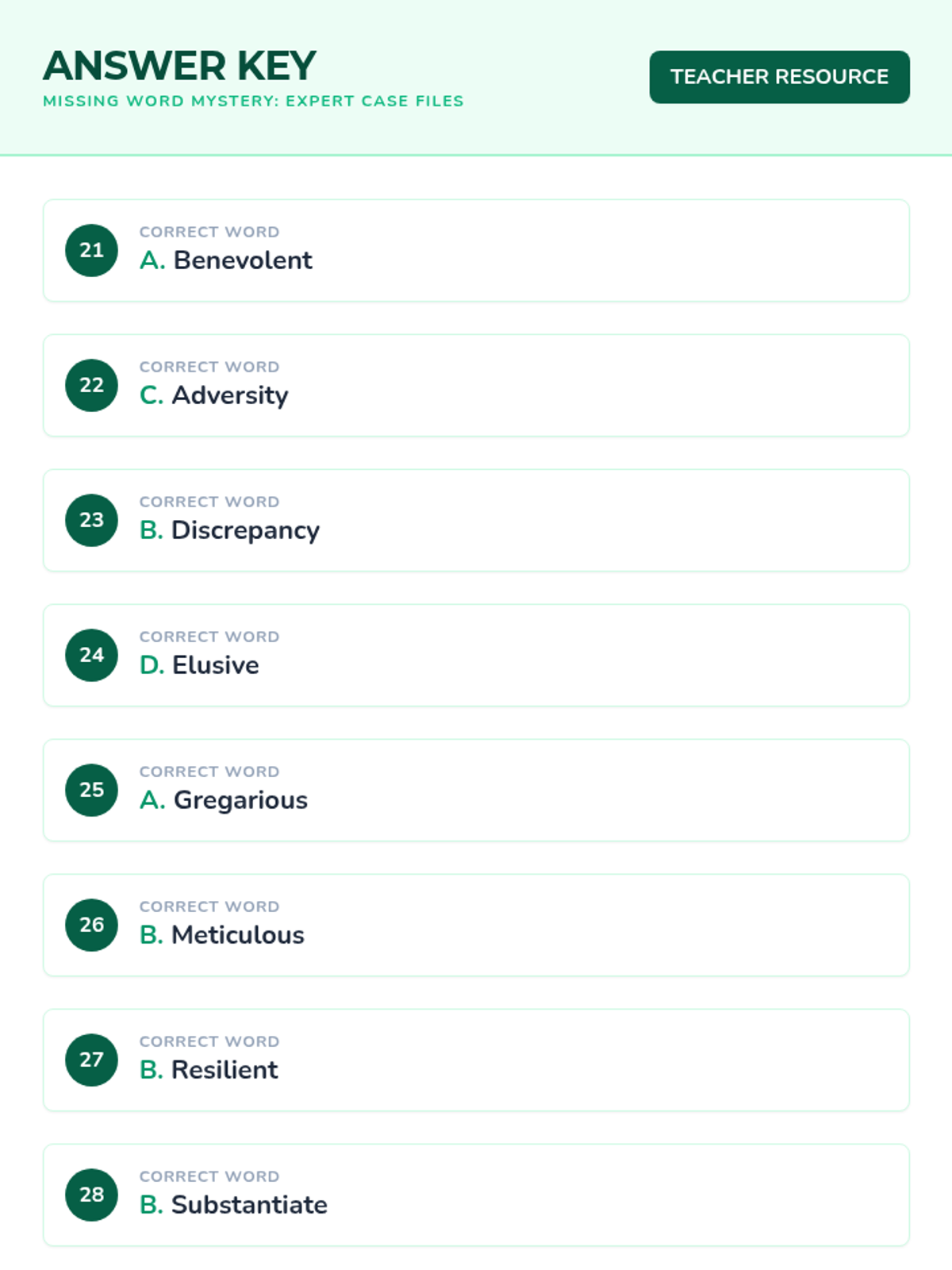
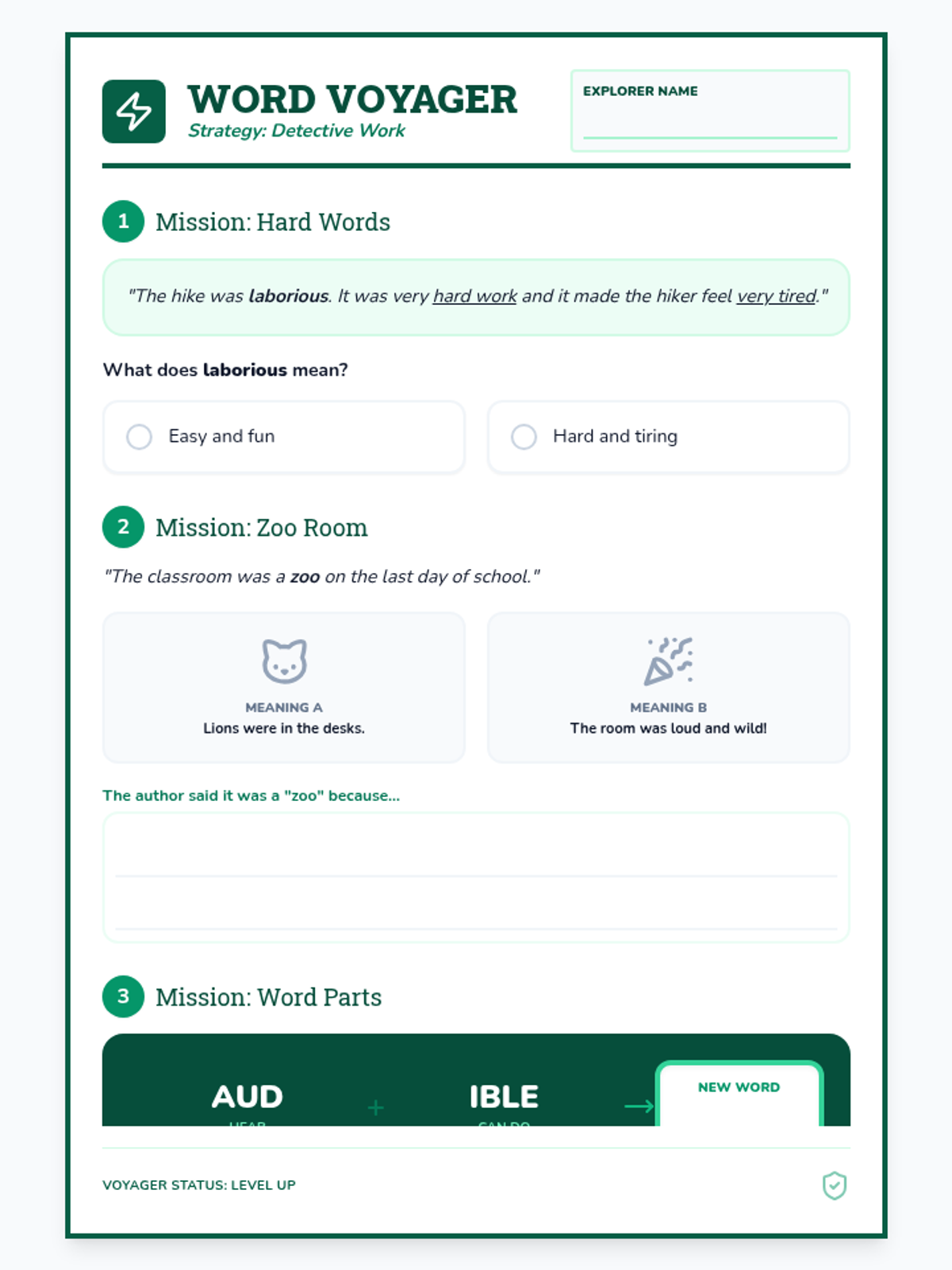
Builds word mastery through parts of speech, Greek and Latin roots, and morphological analysis of prefixes and suffixes. Develops nuanced comprehension using context clues, shades of meaning, and idiomatic expressions.
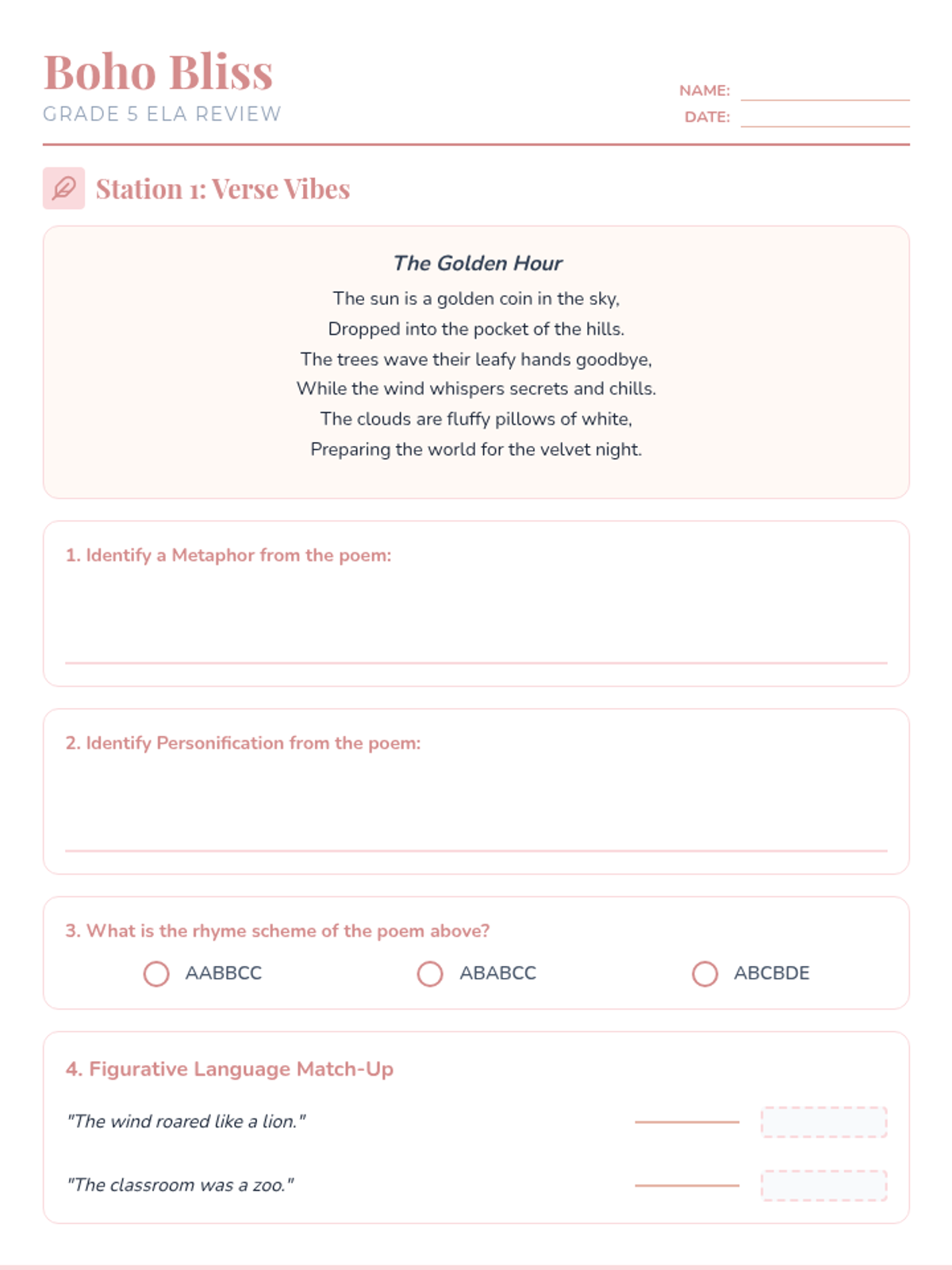
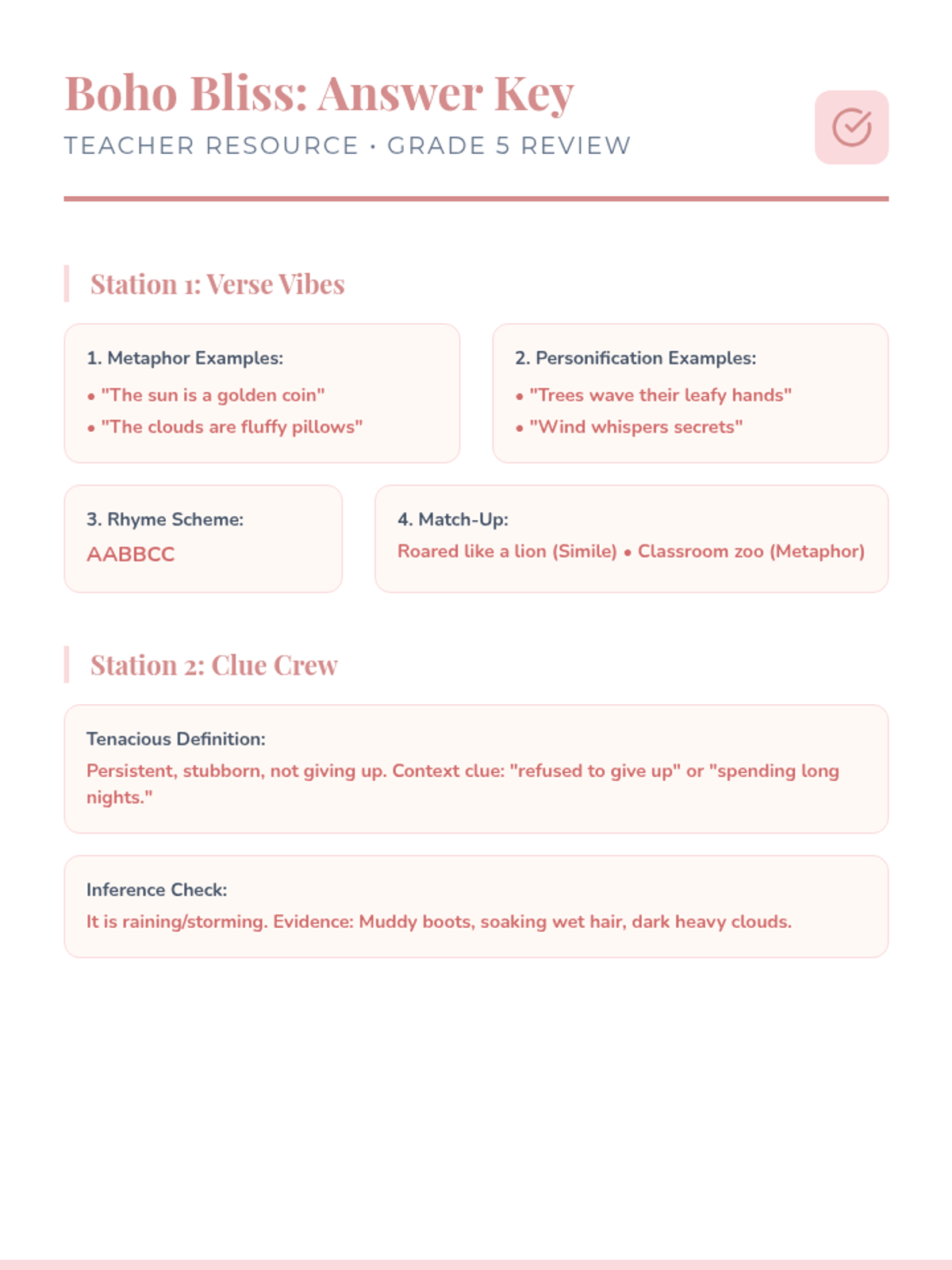
A comprehensive ELA review packet designed for 5th graders following IAR testing, featuring a fun boho-pink aesthetic. The lesson covers key domains including poetry, figurative language, context clues, main idea, inferencing, summarizing, and grammar.
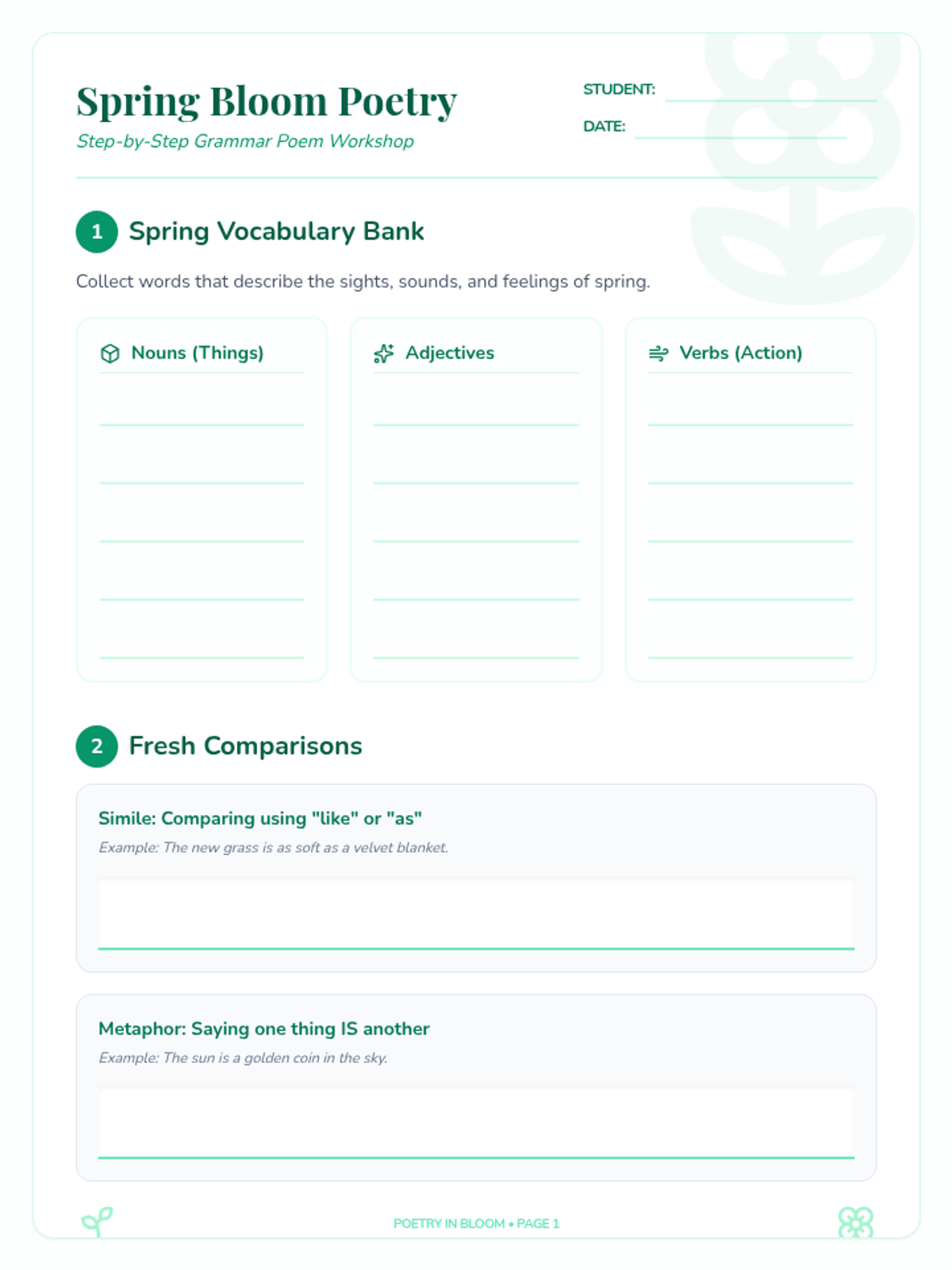
A guided poetry workshop where students use grammar concepts and figurative language to celebrate the arrival of spring.
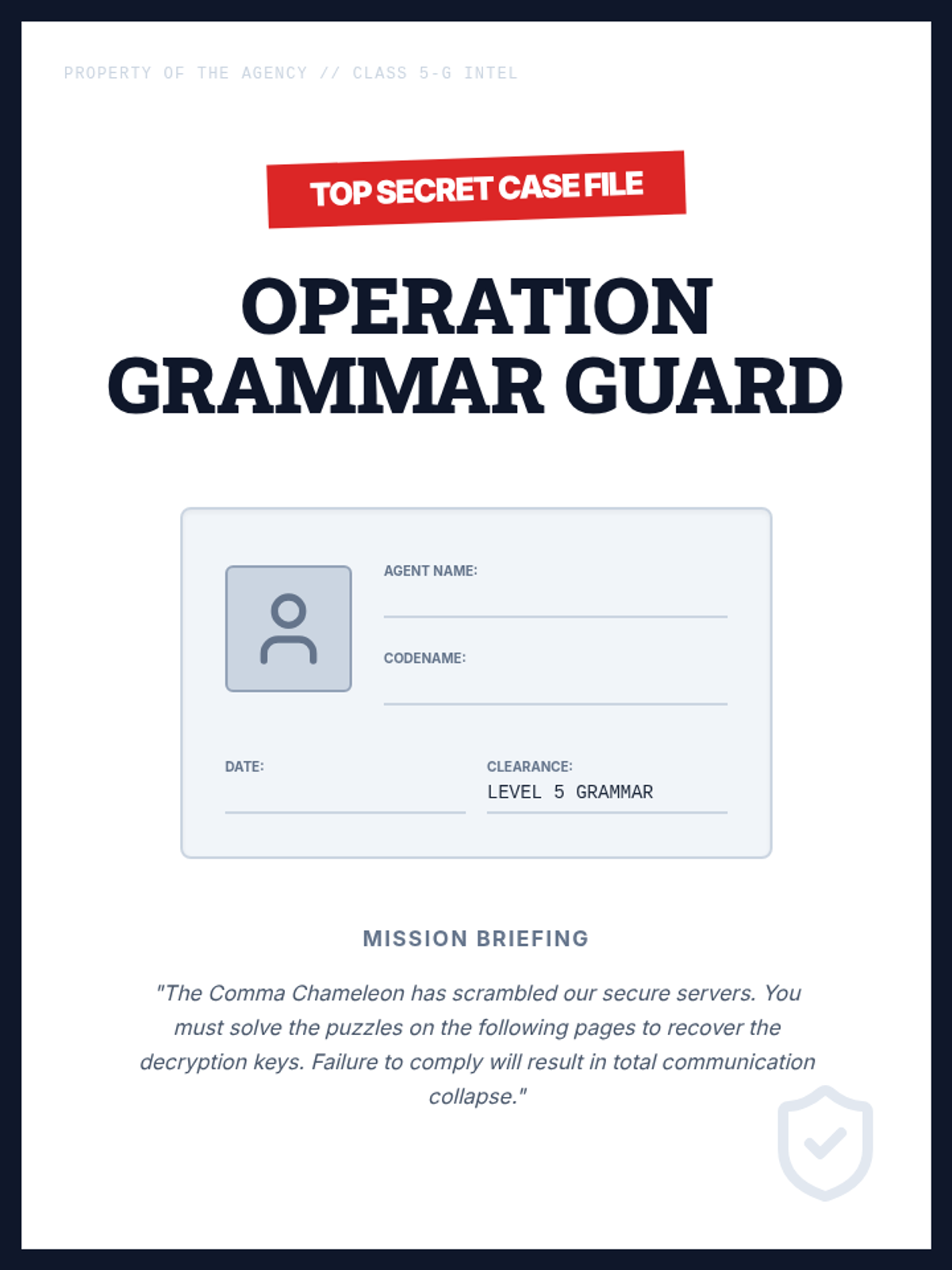
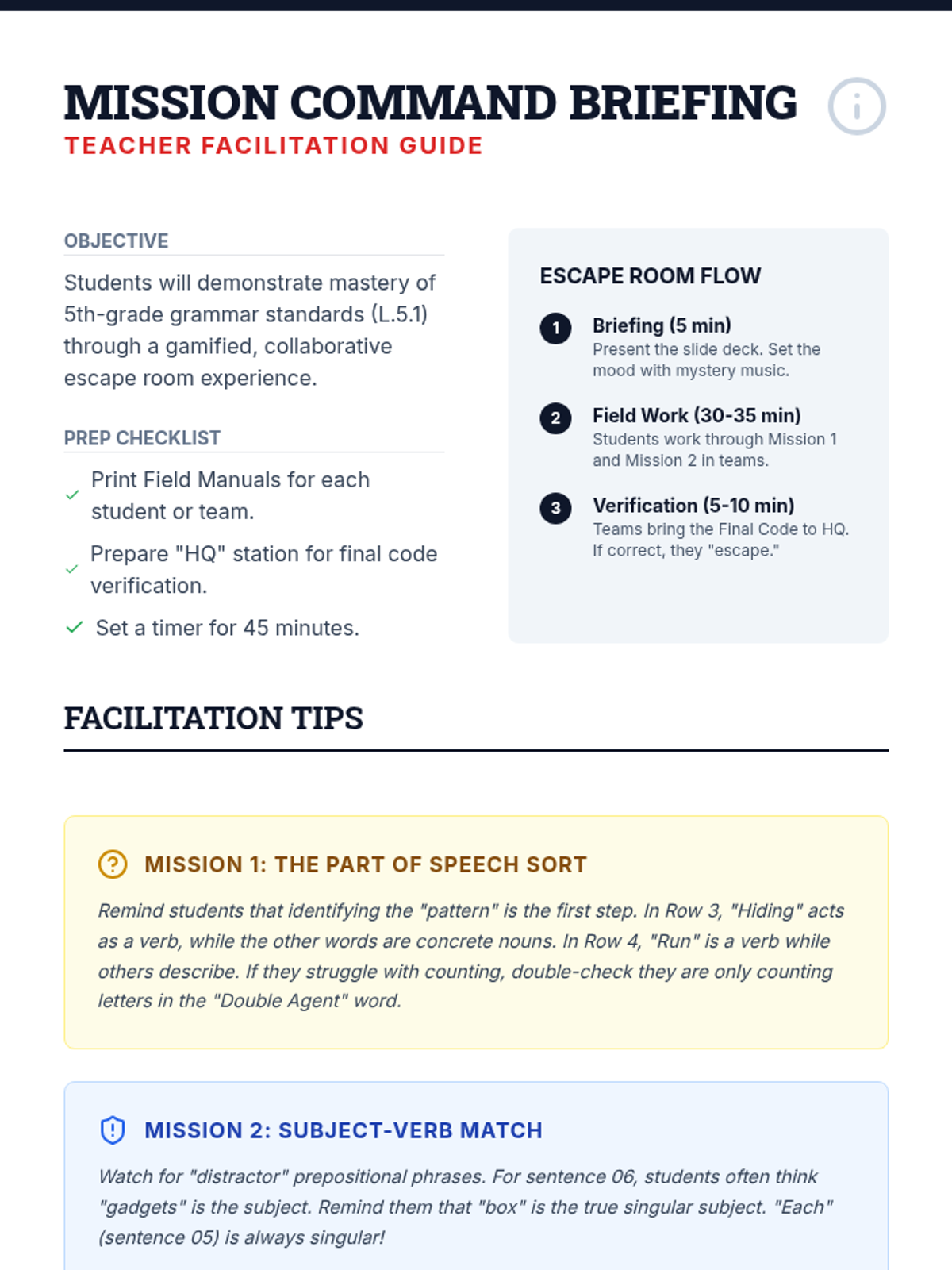
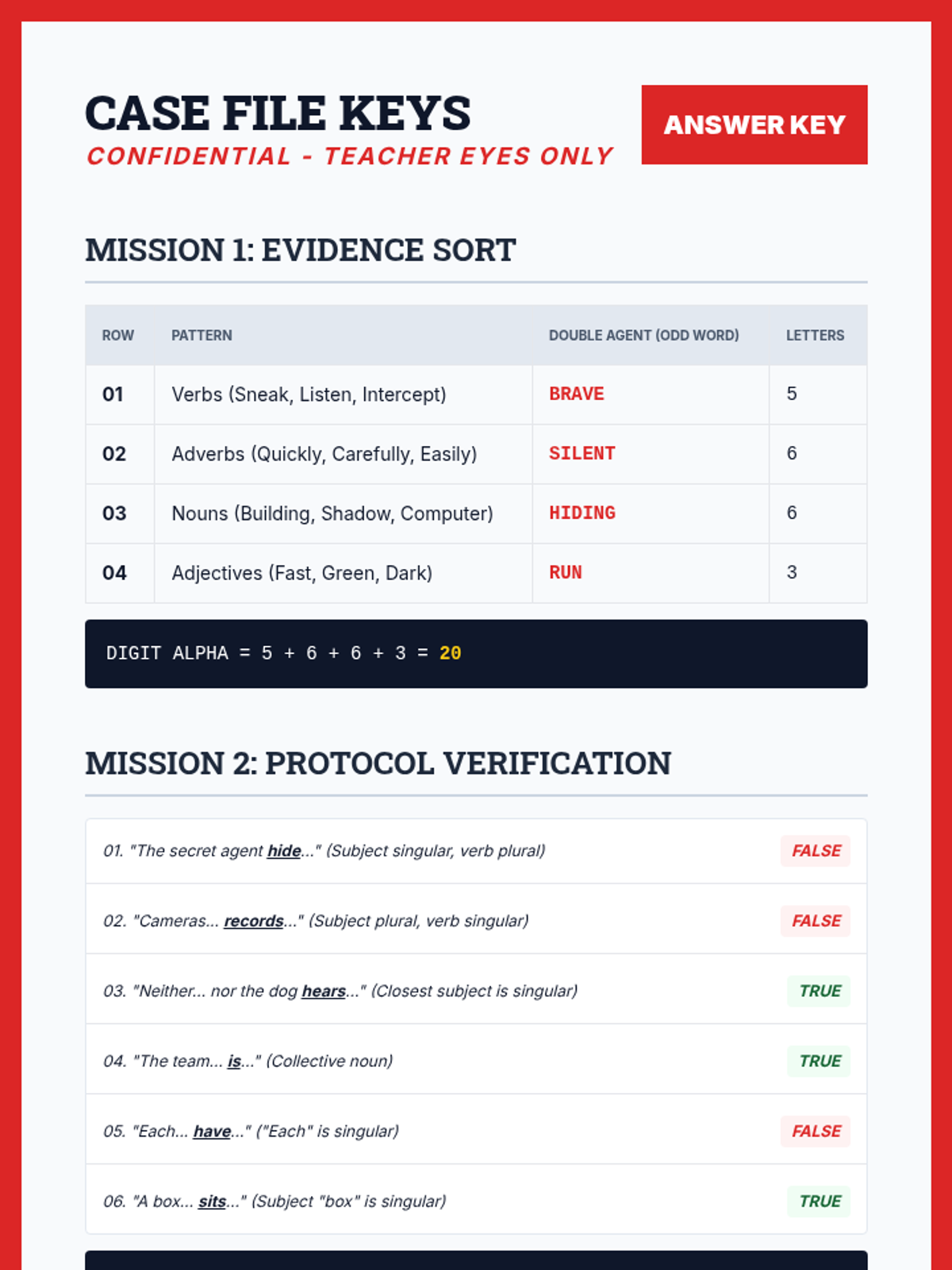
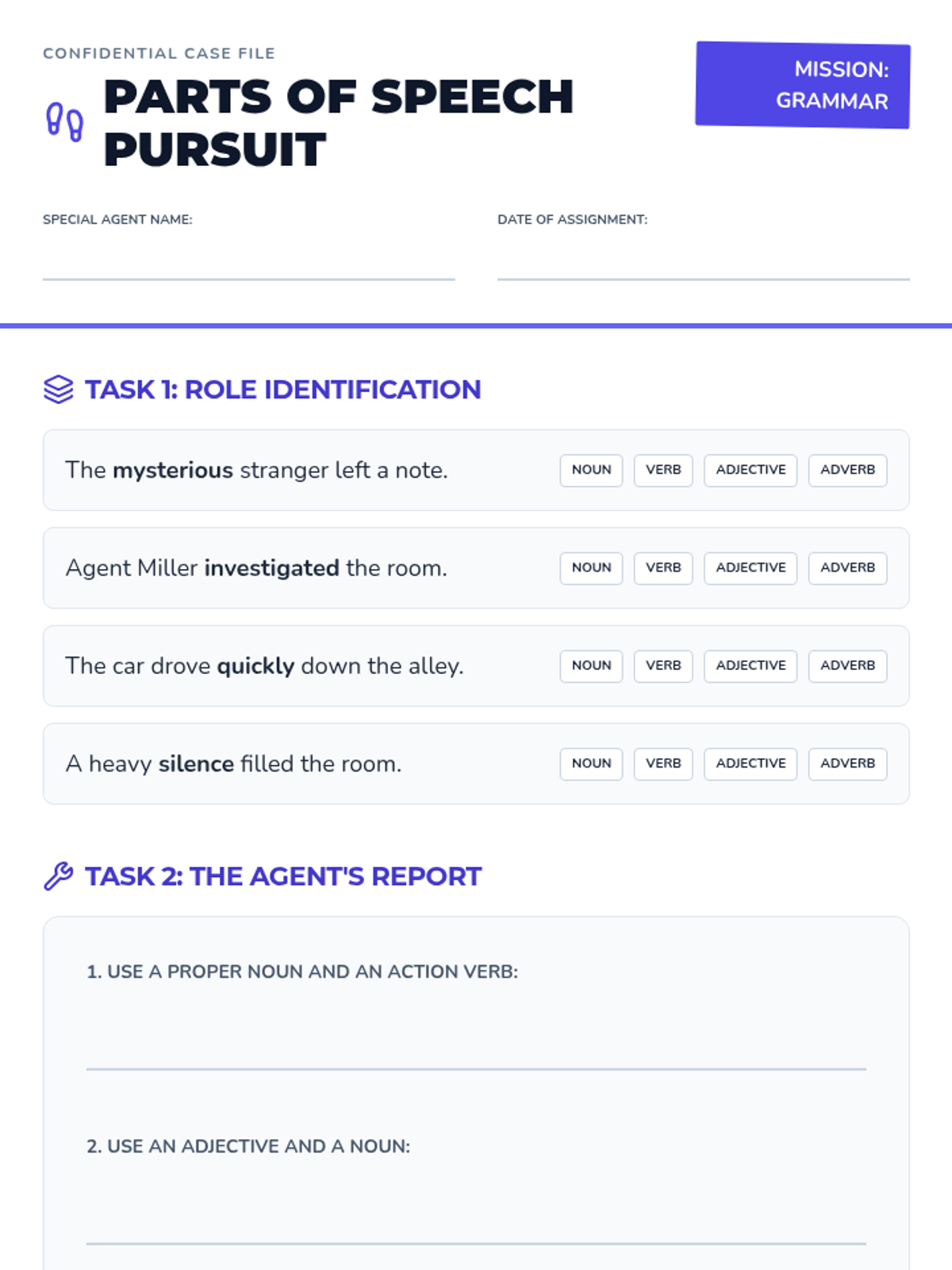
A high-stakes grammar escape room where students act as secret agents to solve mysteries using their knowledge of parts of speech and subject-verb agreement.
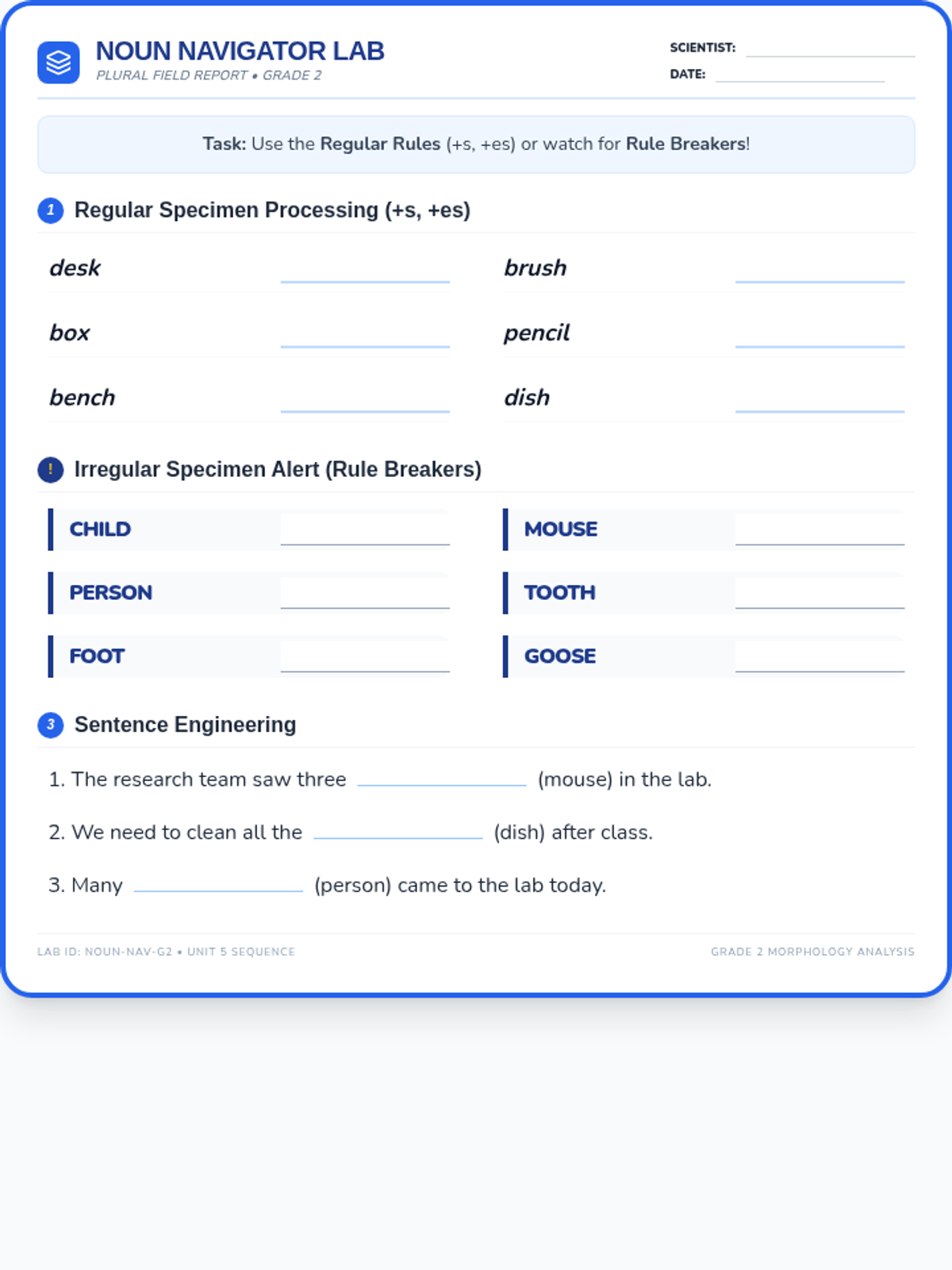
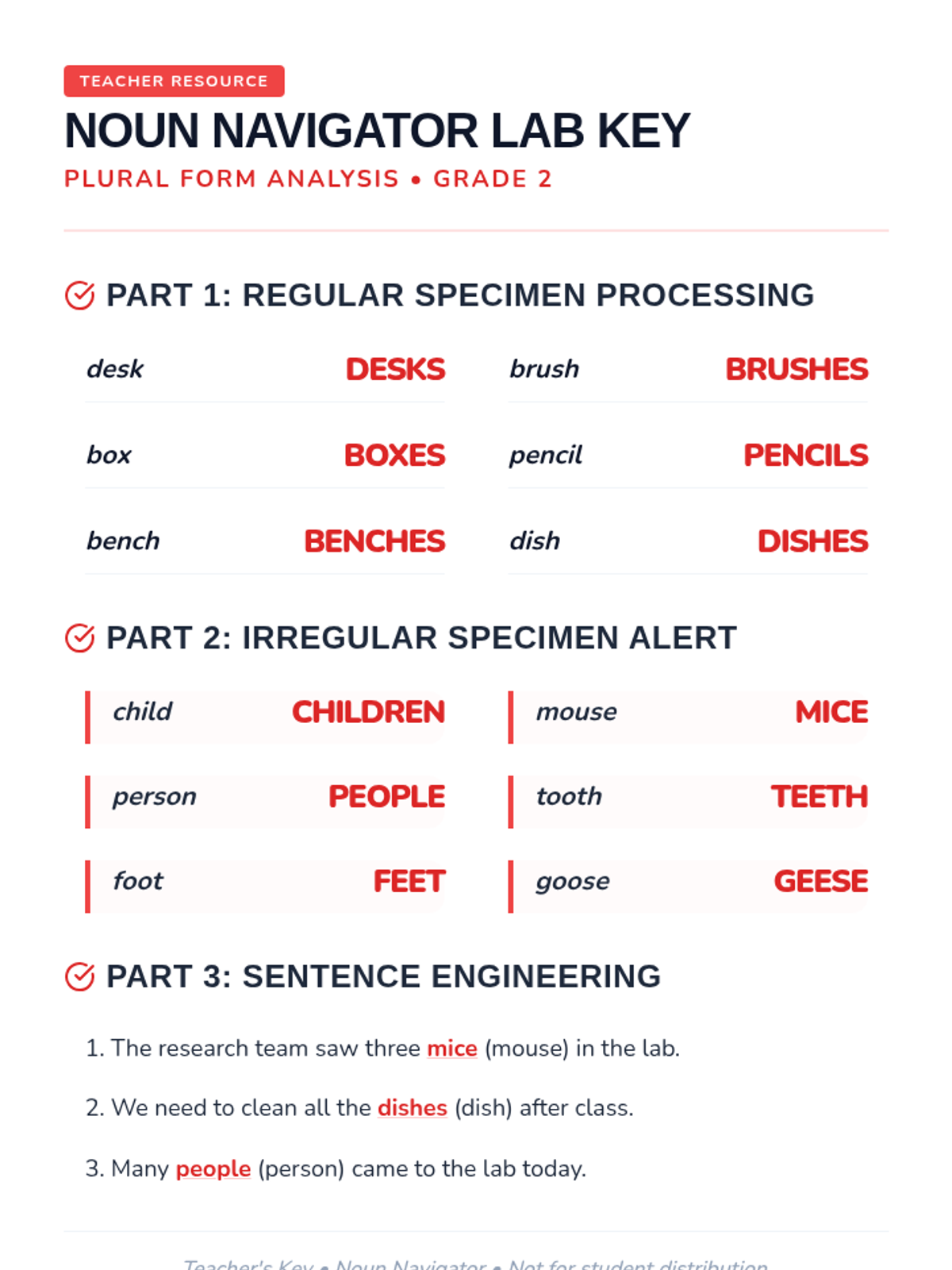
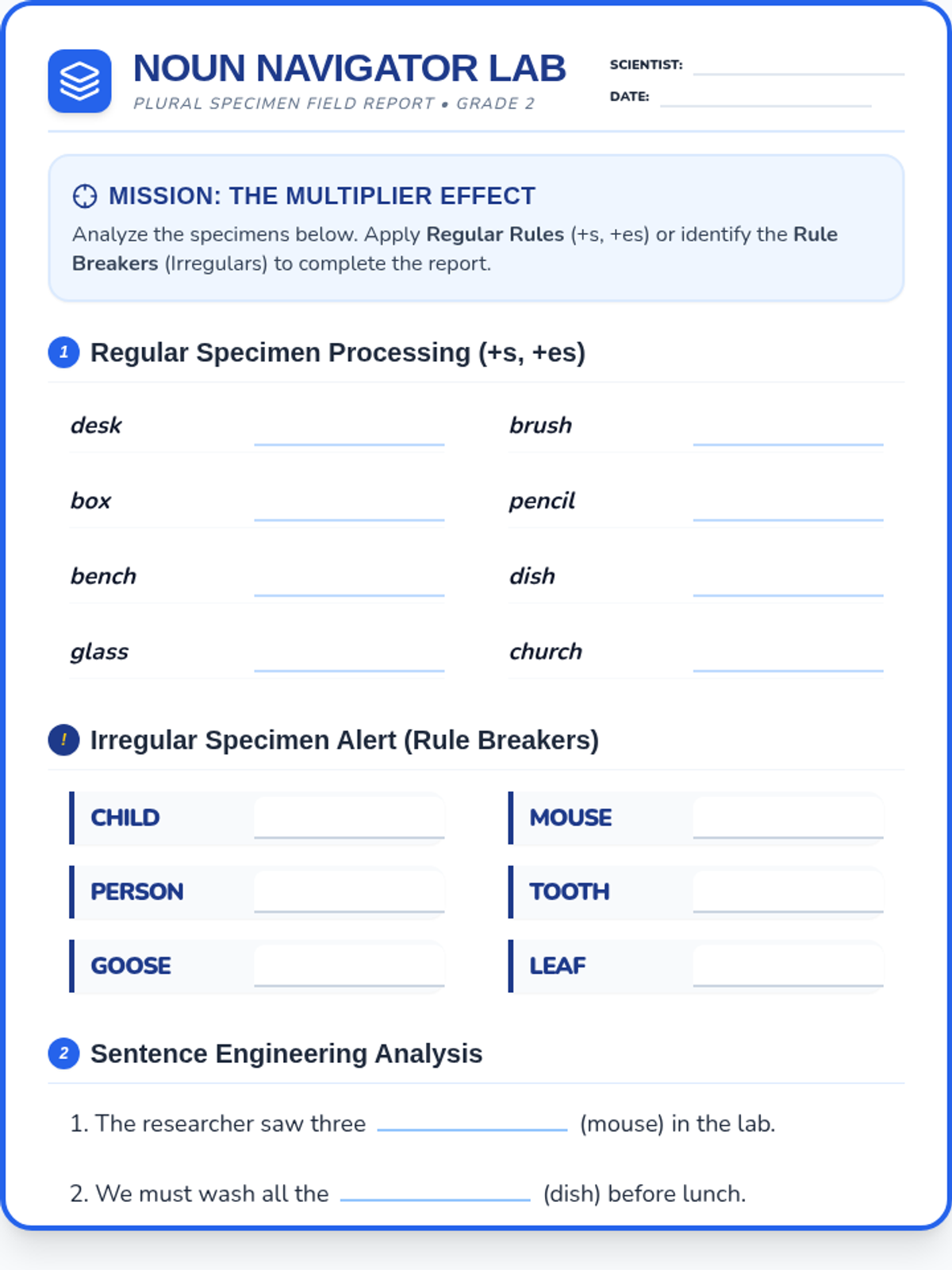
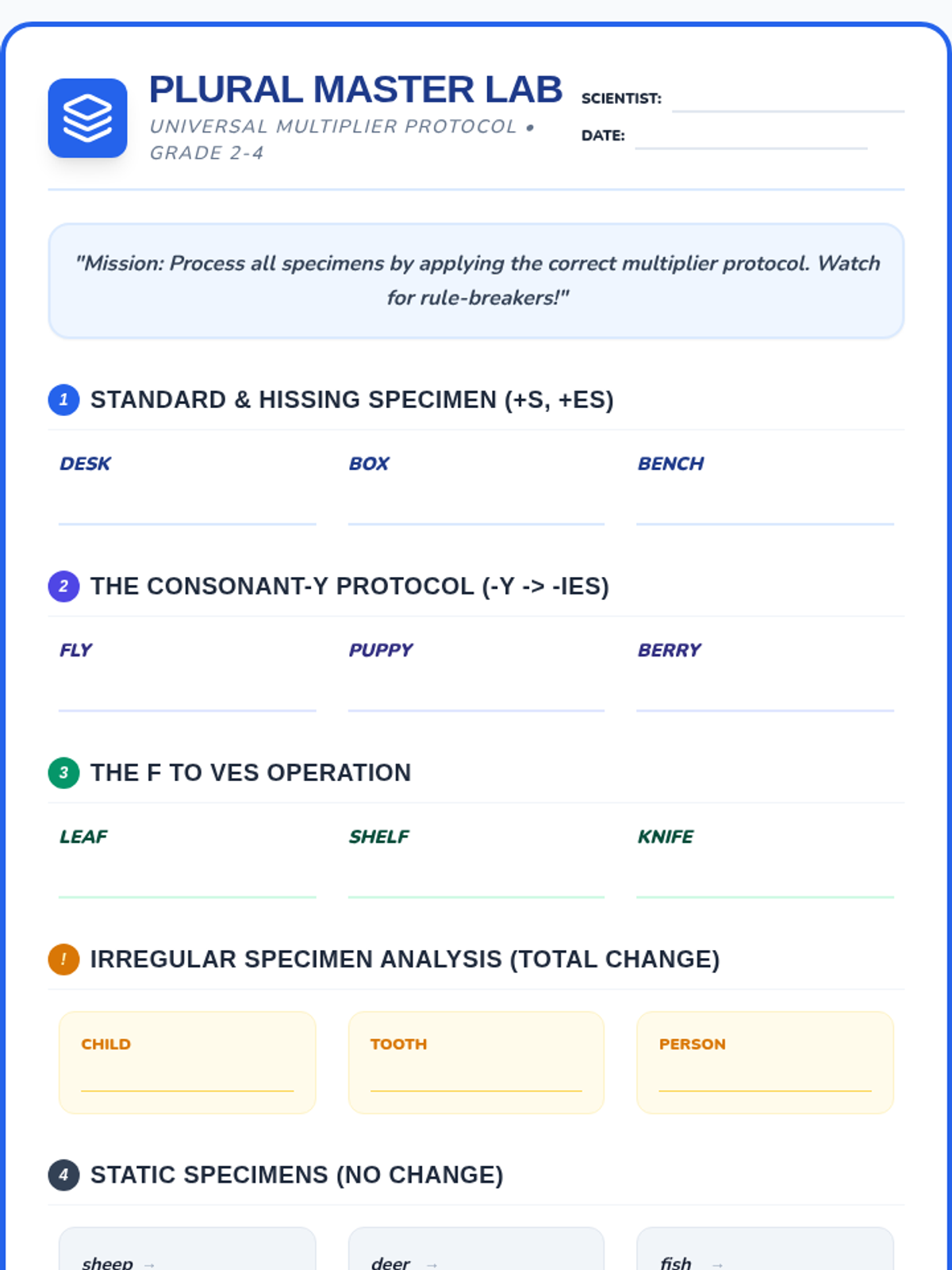
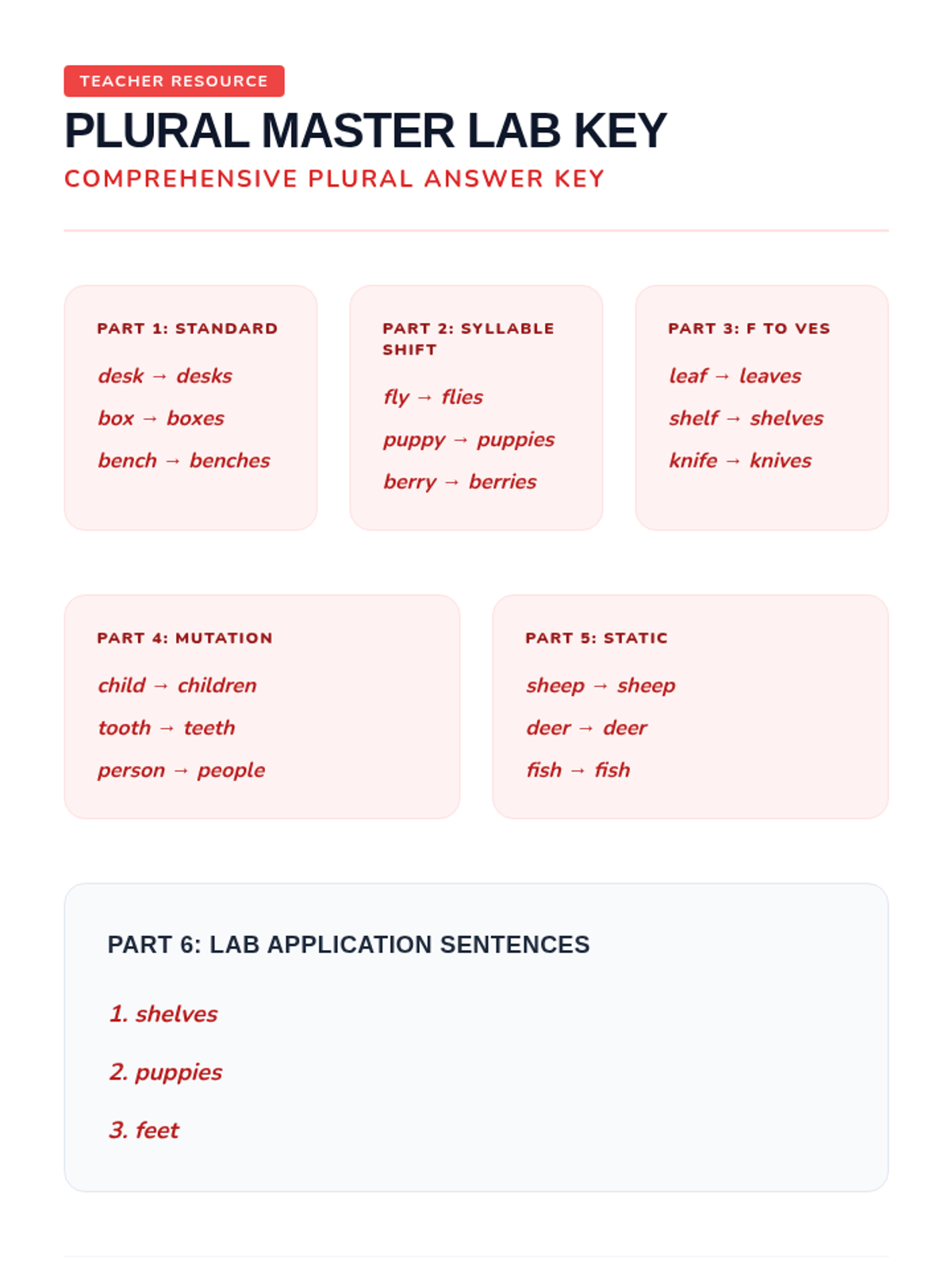
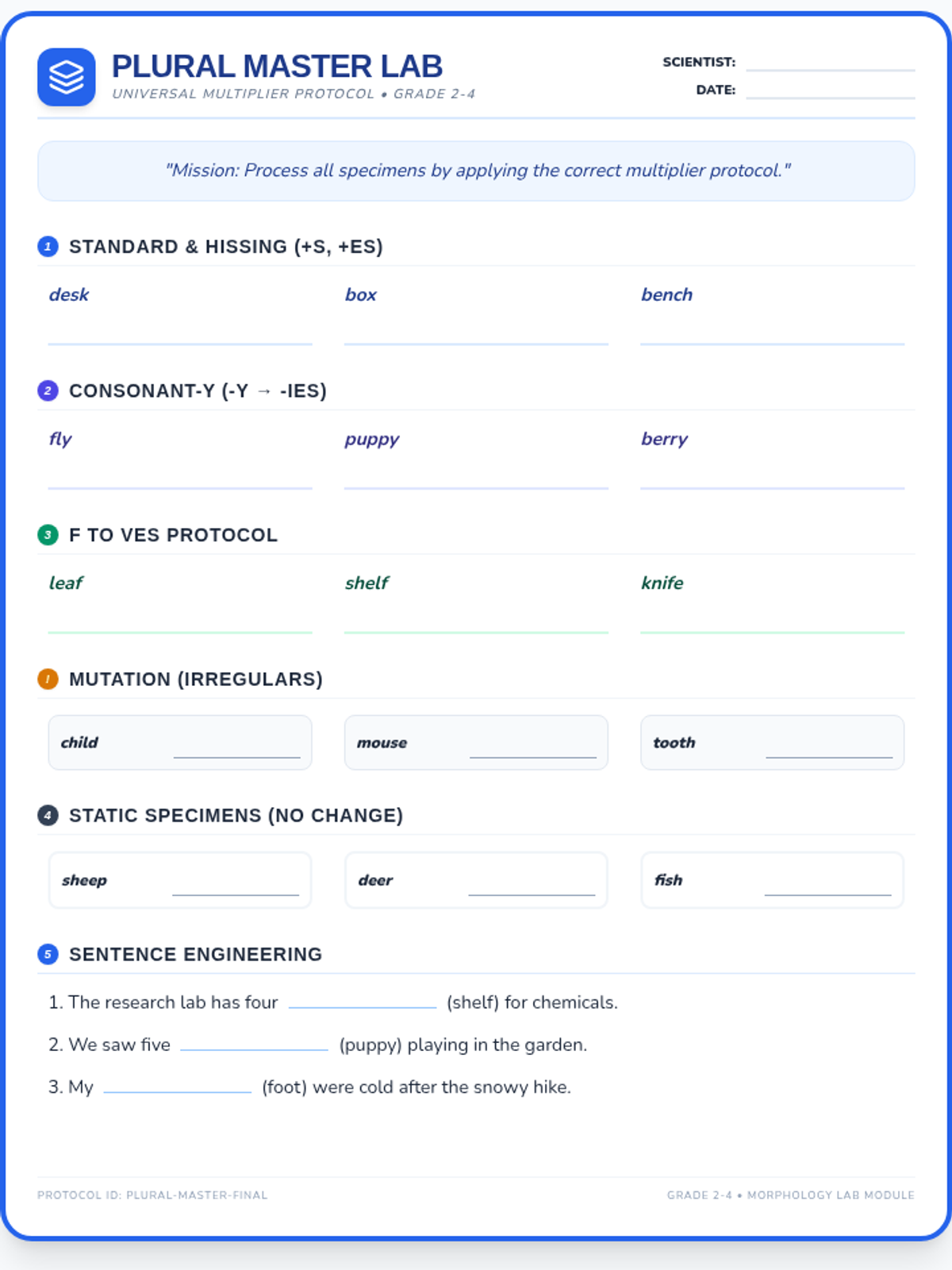
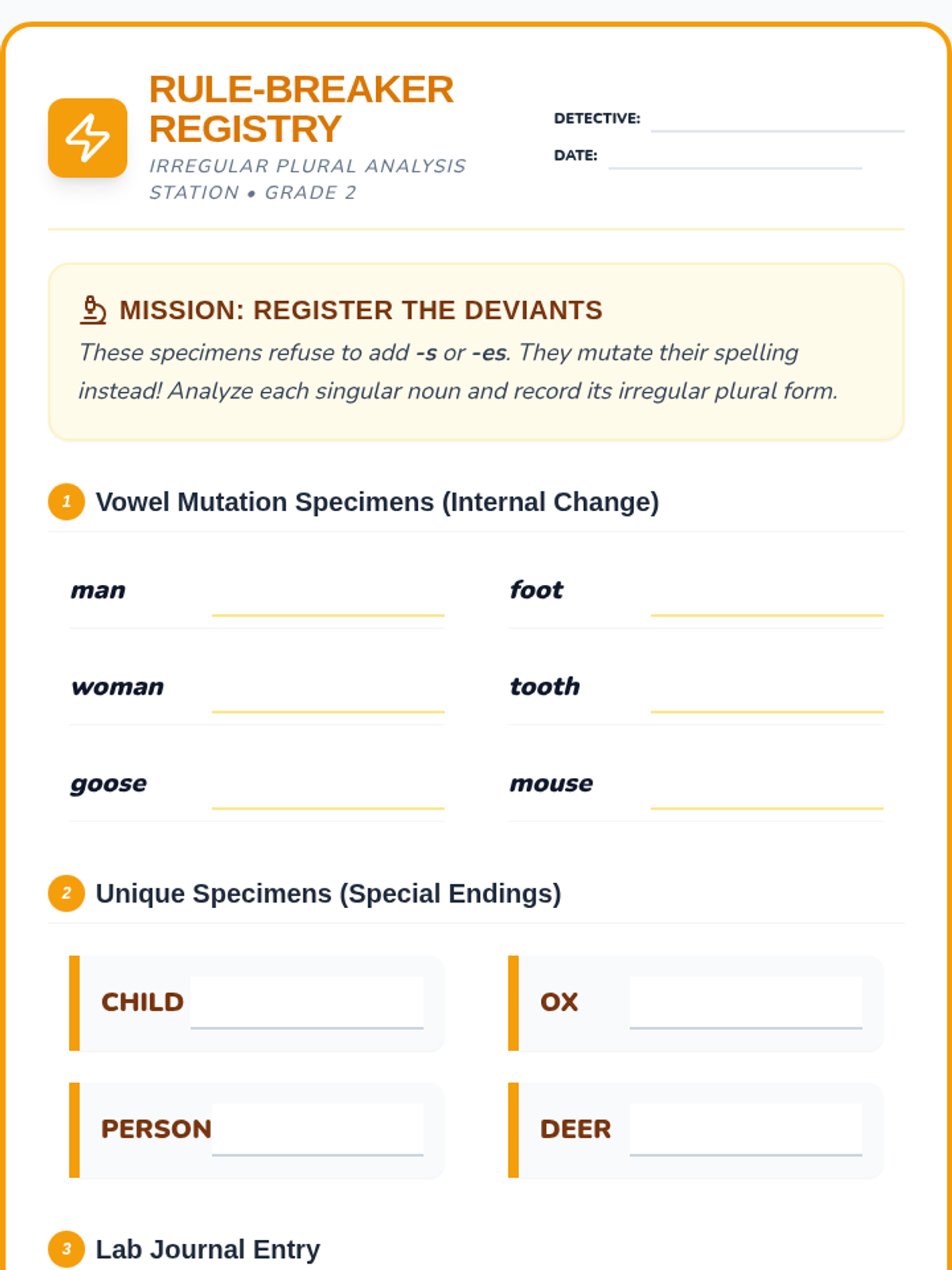
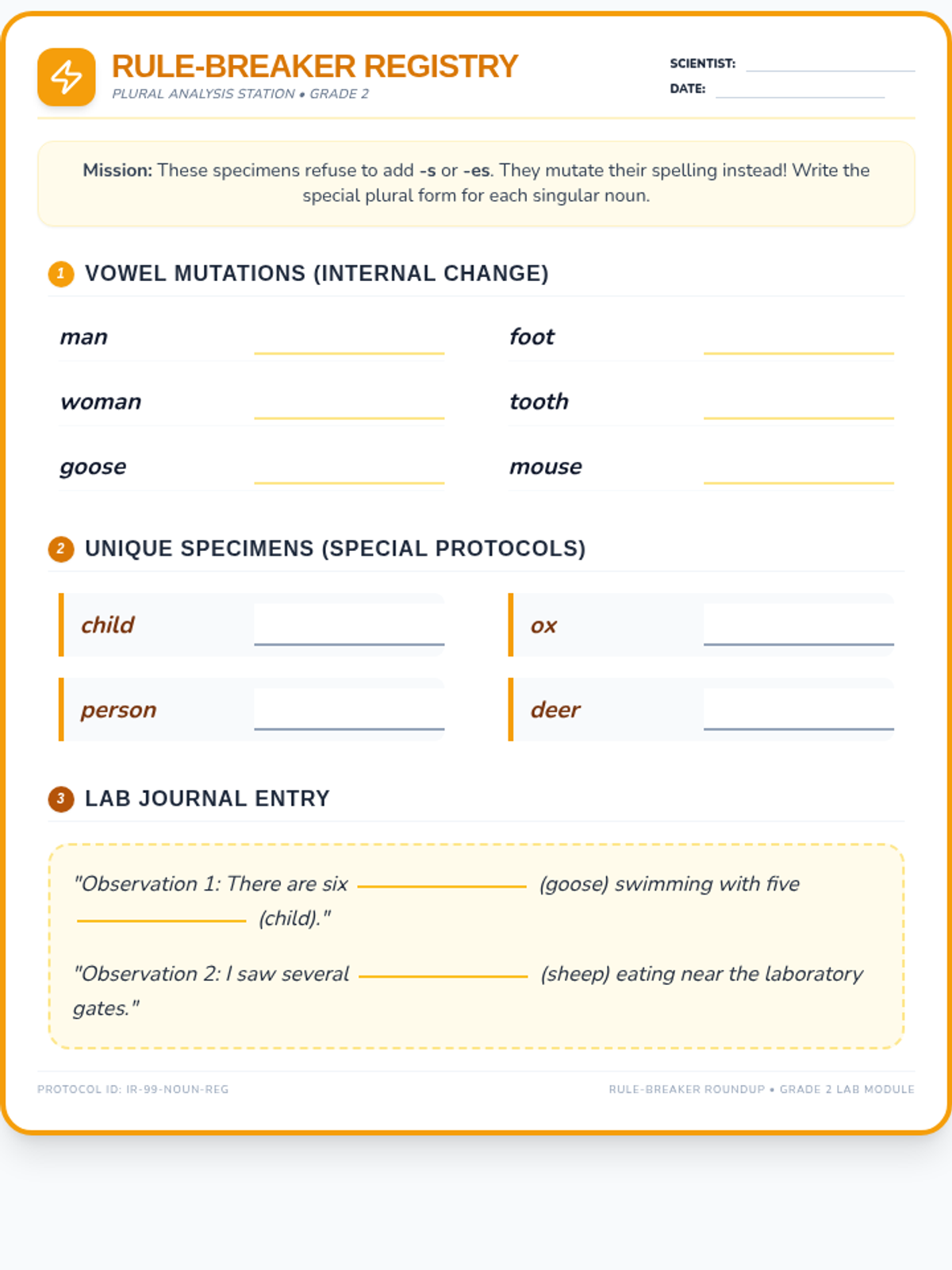
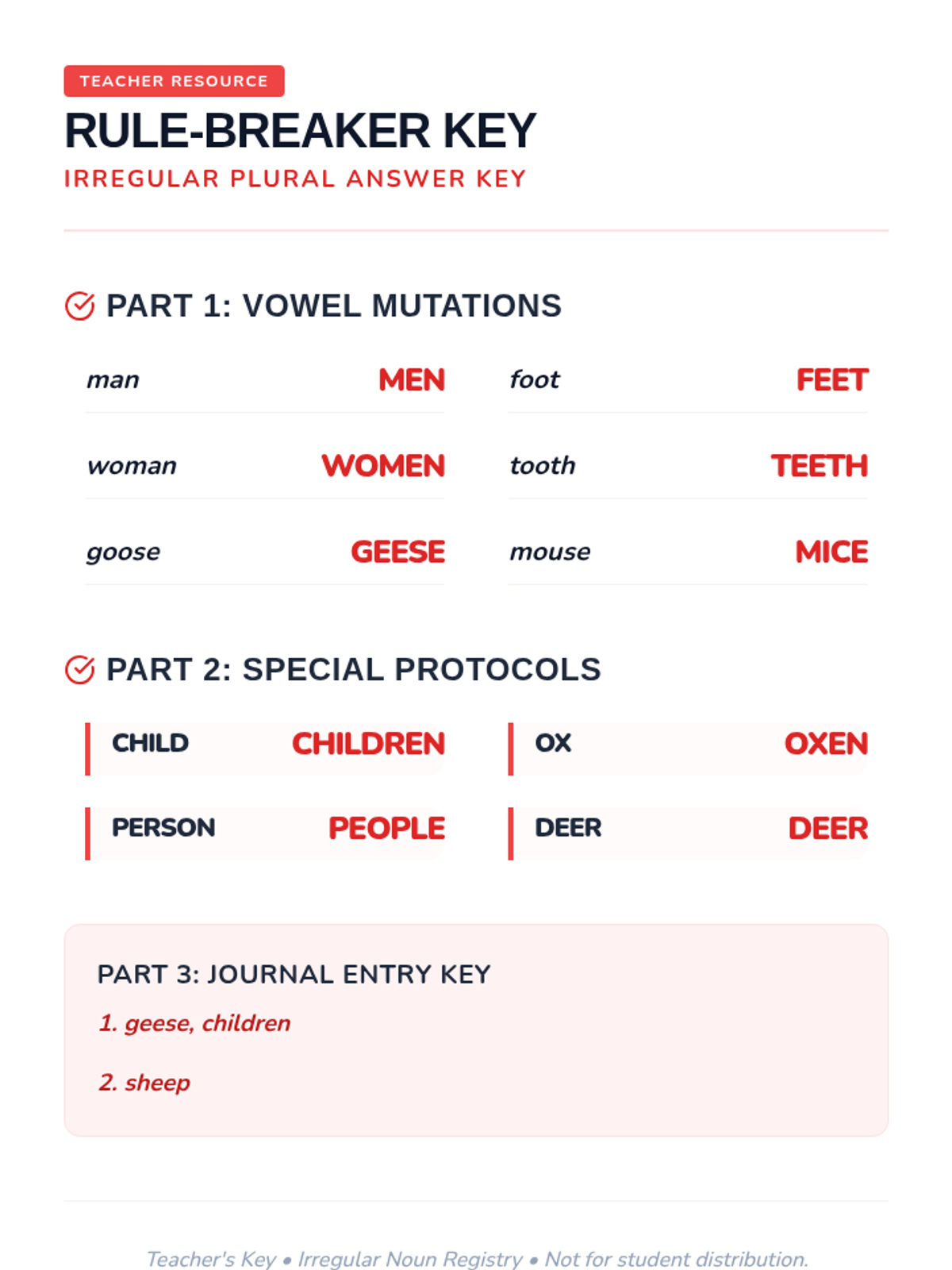
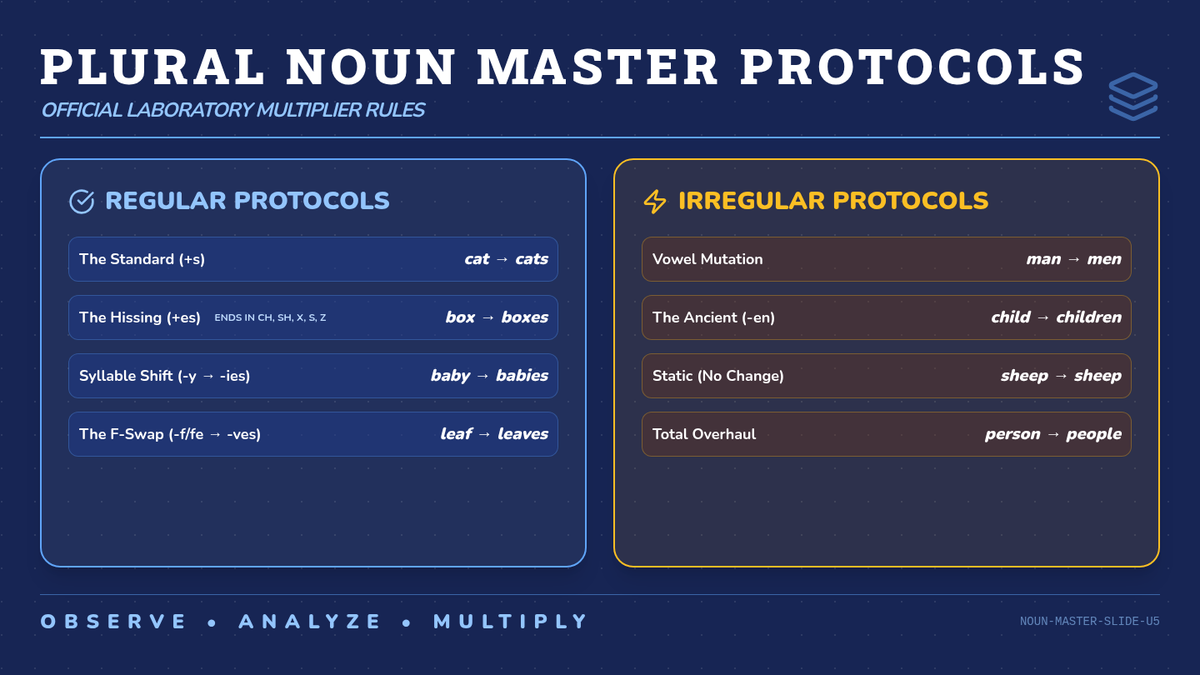
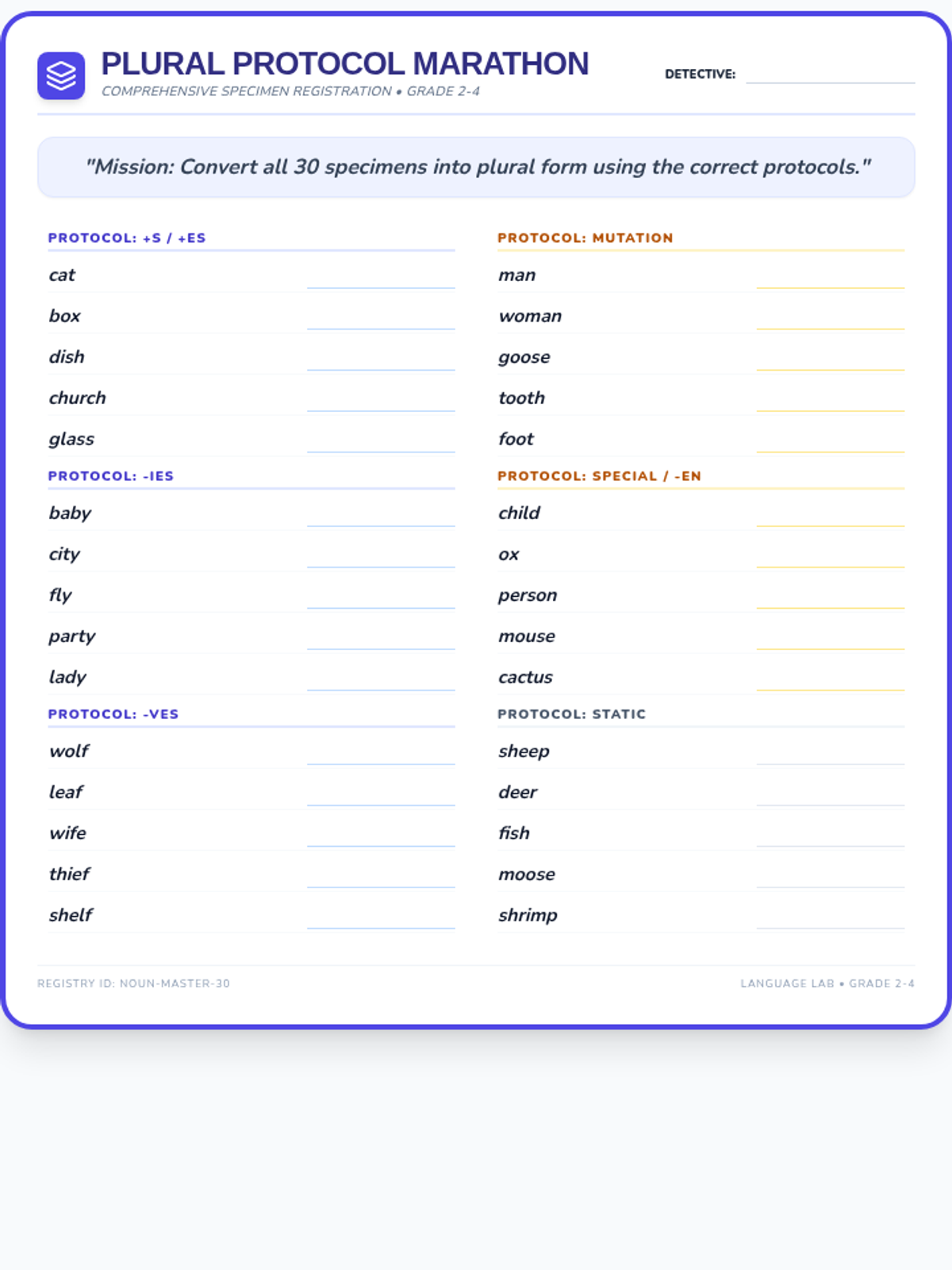
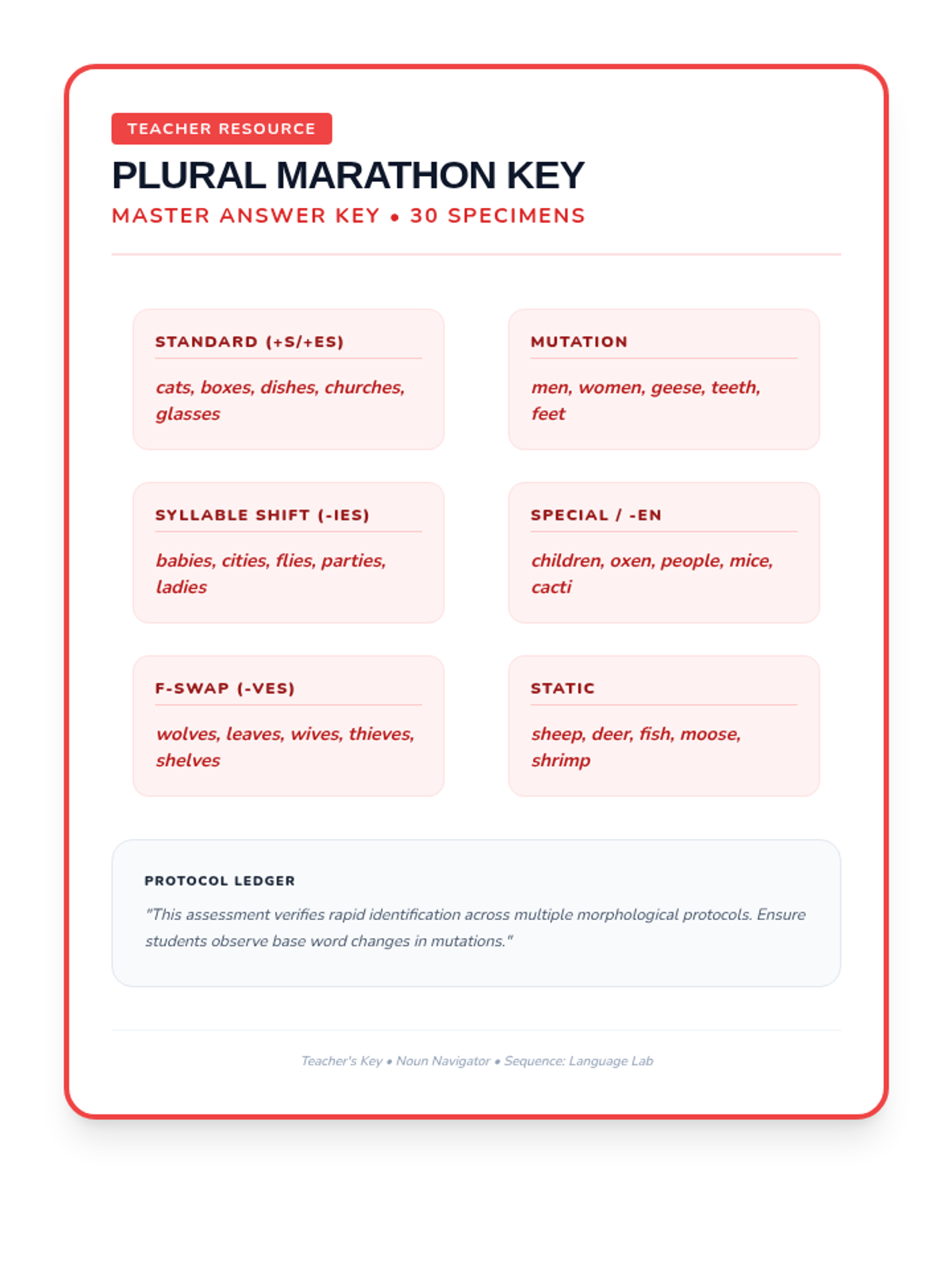
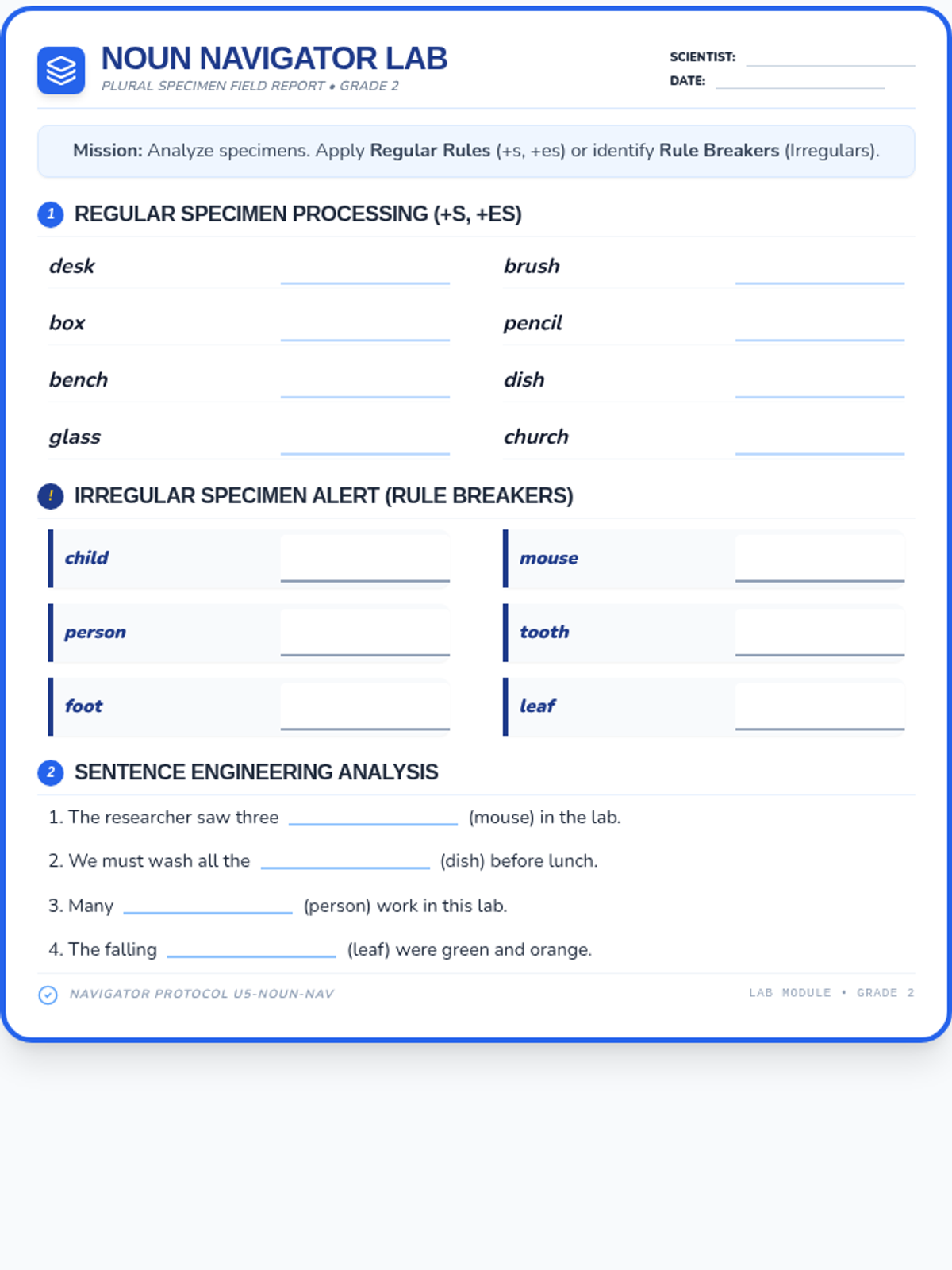
A lesson on identifying and forming plural nouns. Students learn the standard rules for regular plurals (-s, -es, -ies, -ves) and investigate 'rule-breaking' irregular nouns like mice, children, and people.
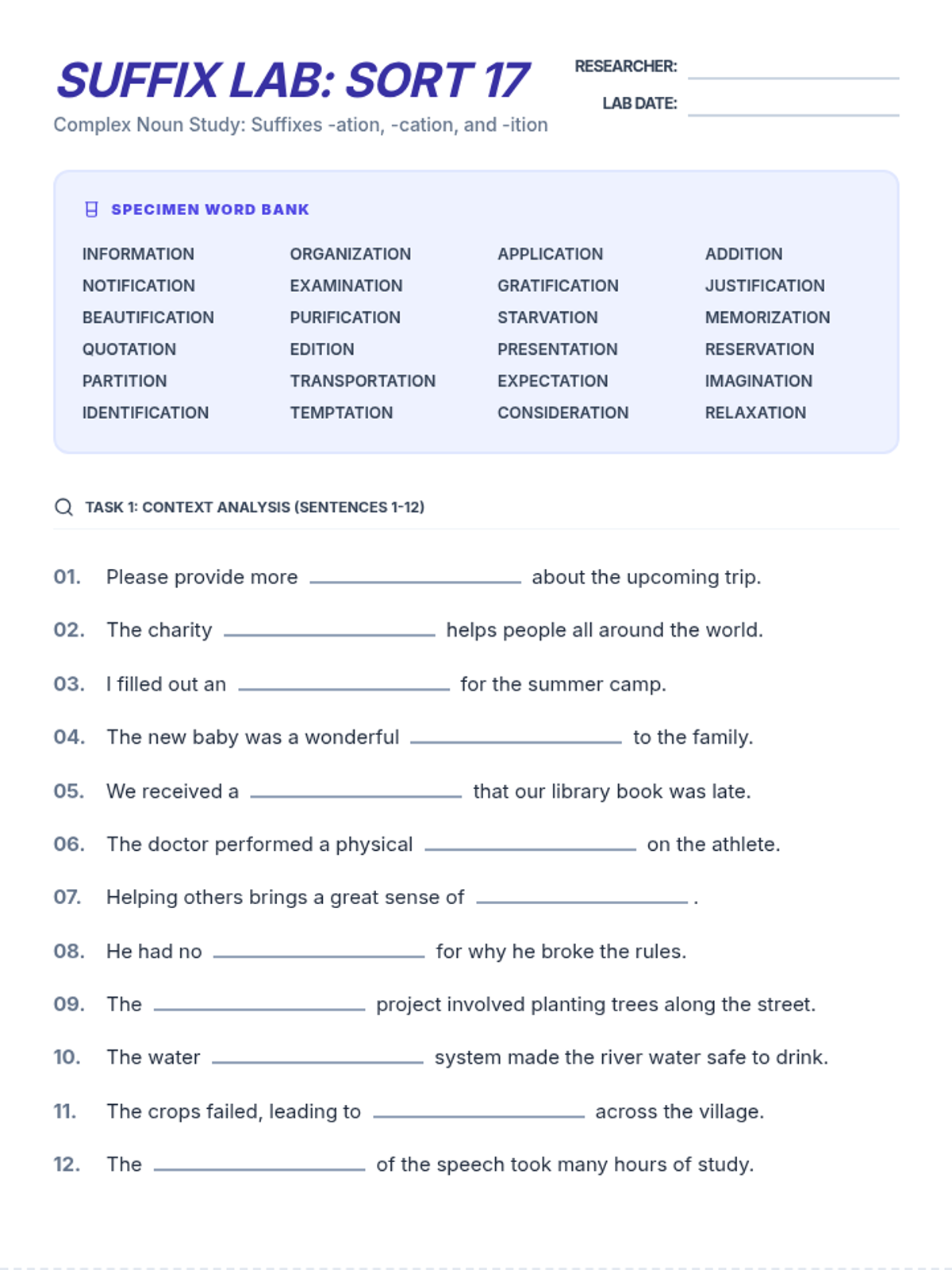
A lesson focused on the suffixes -ation, -cation, and -ition and how they transform verbs into nouns. Students analyze word pairs like 'inform' and 'information'.
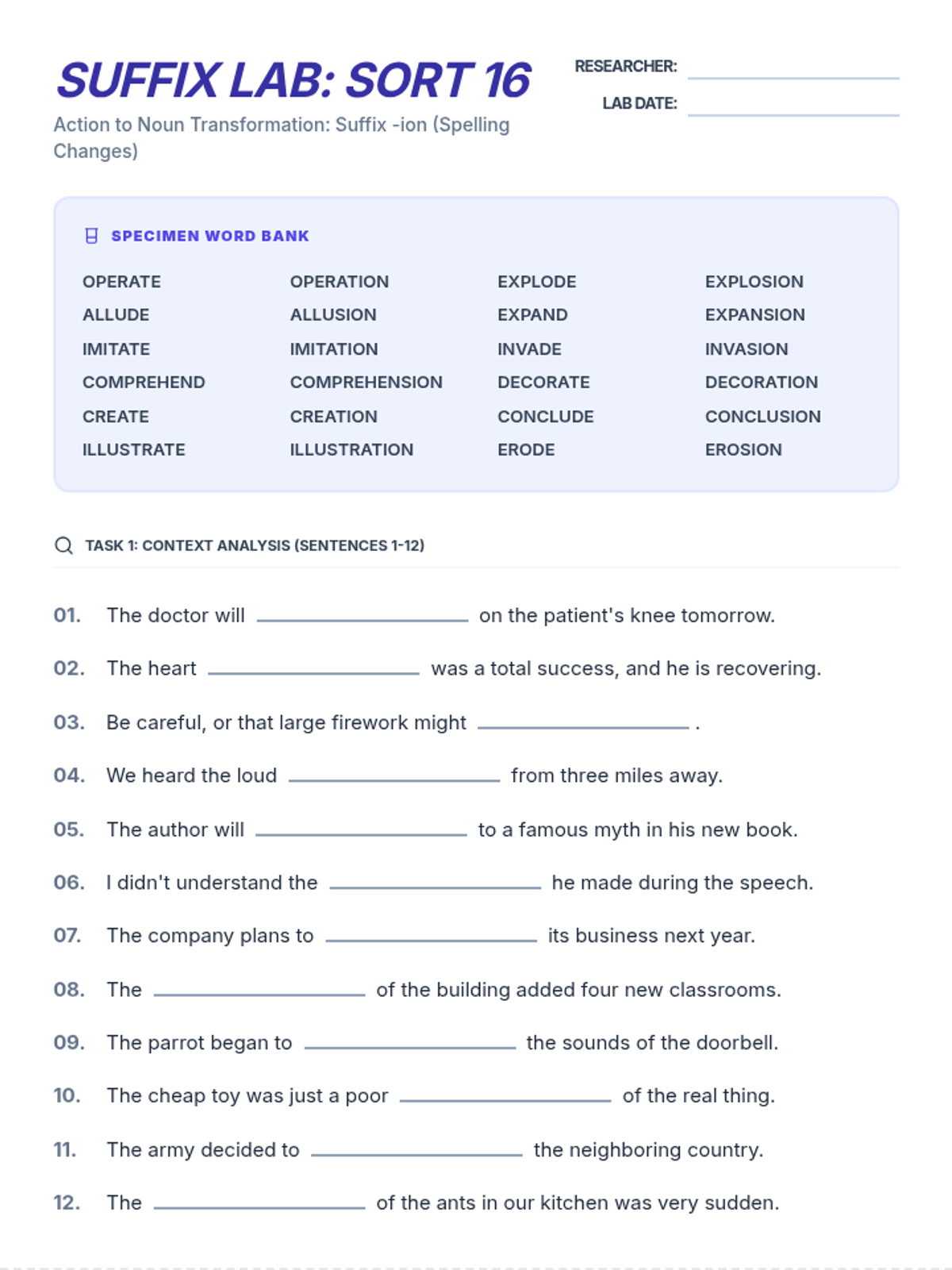
A lesson focused on the suffix -ion involving spelling changes such as dropping the final 'e' or changing 'd' to 's'. Students analyze pairs like 'operate' and 'operation'.
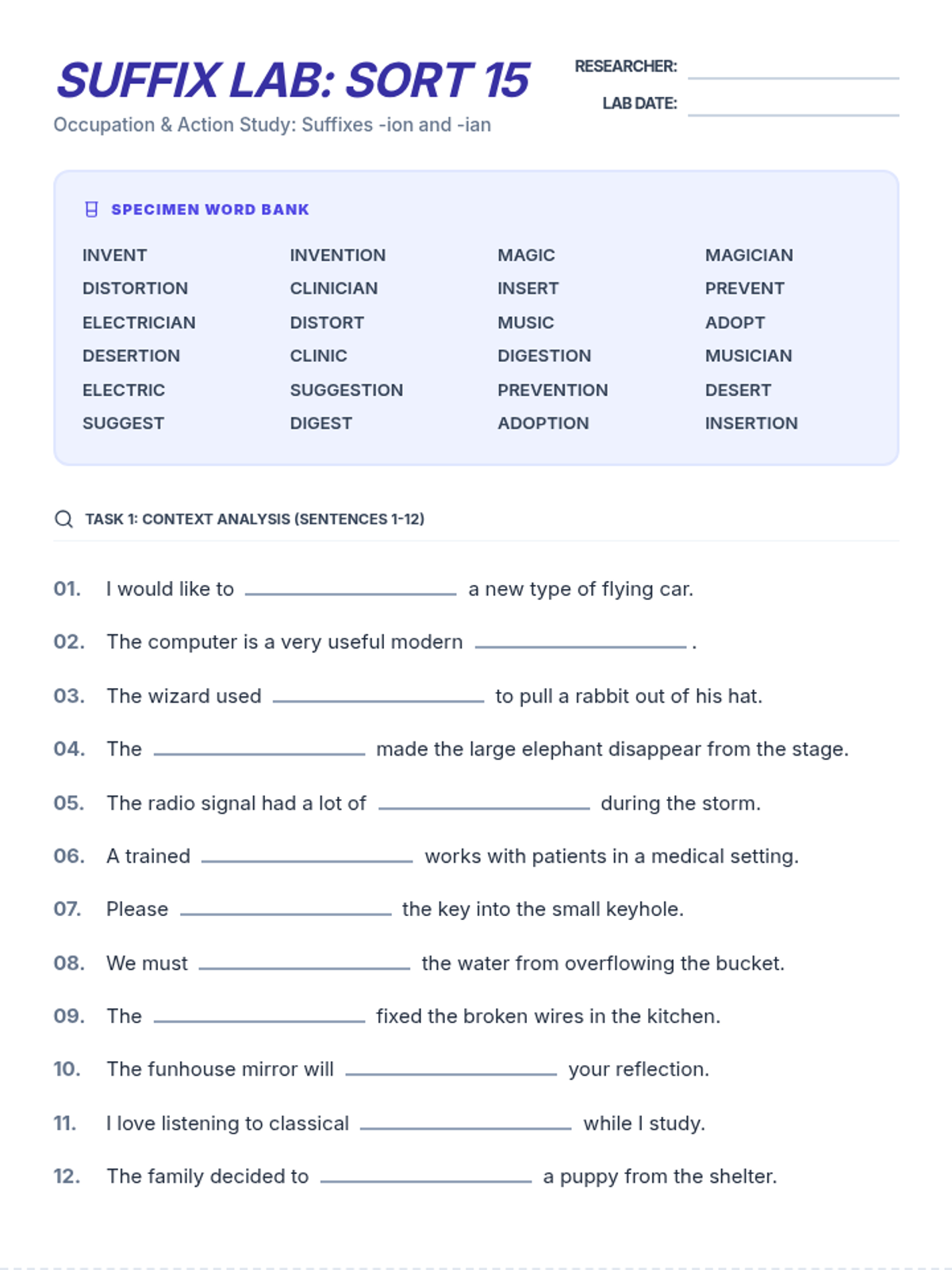
A lesson focused on the suffixes -ion and -ian with no spelling change to the base word. Students analyze nouns like 'invention', 'magician', and 'musician'.
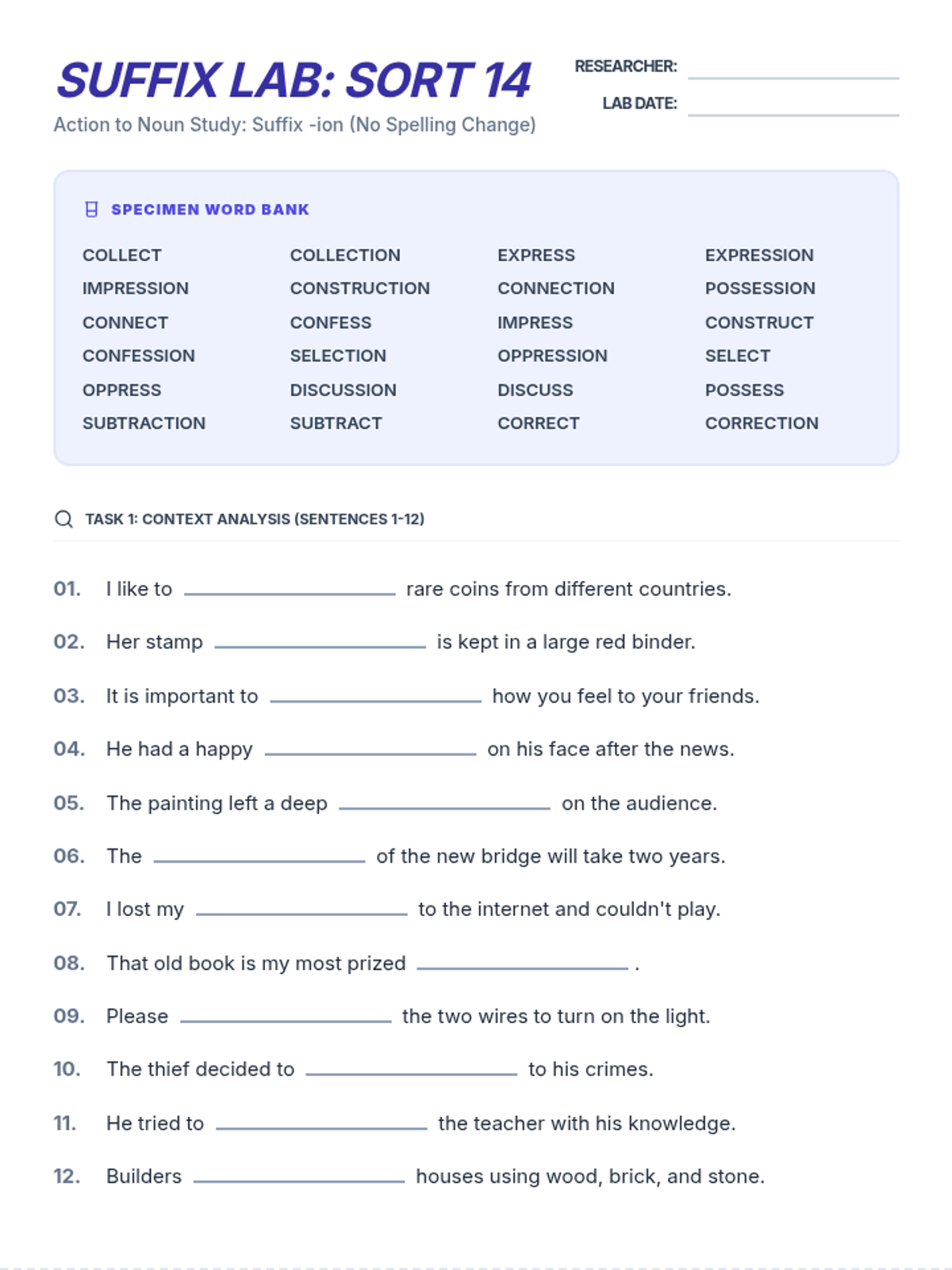
A lesson focused on the suffix -ion and how it changes verbs into nouns with no spelling change to the base word. Students analyze word pairs like 'collect' and 'collection'.
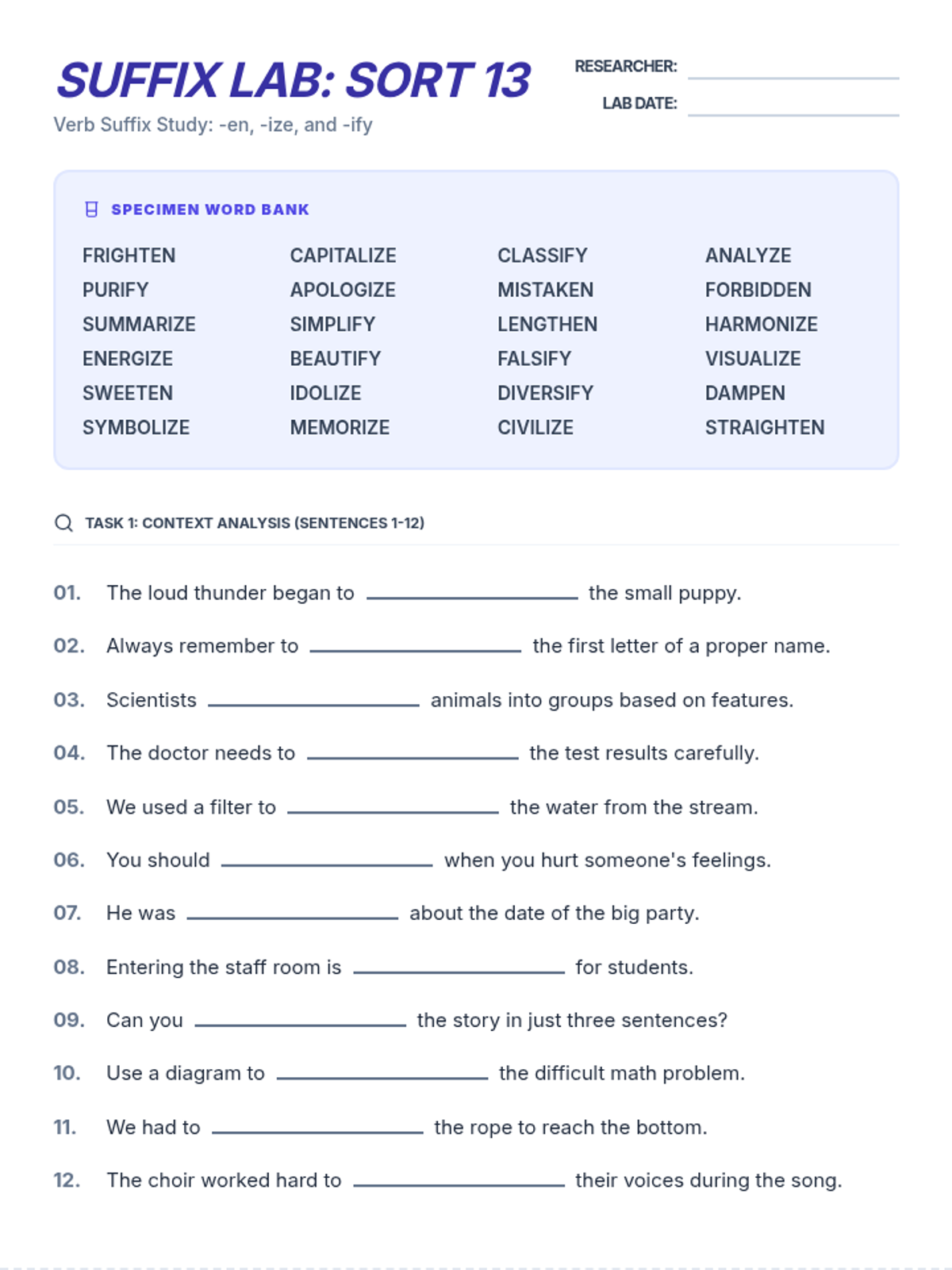
A lesson focused on the suffixes -en, -ize, and -ify. Students investigate how these suffixes transform base words into verbs representing actions or states.
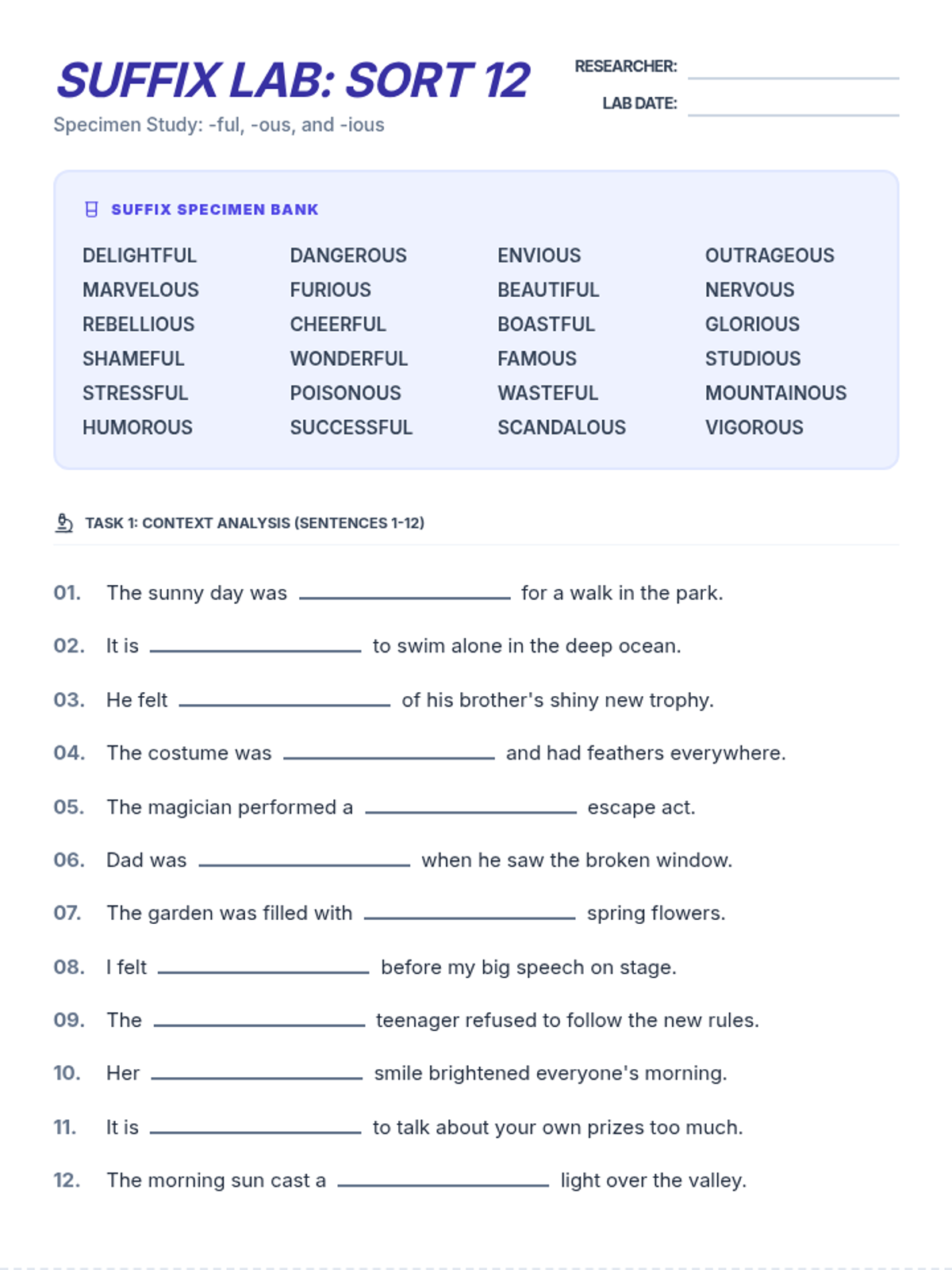
A lesson focused on the suffixes -ful, -ous, and -ious. Students analyze how these suffixes form adjectives from nouns, representing full of or having qualities of.
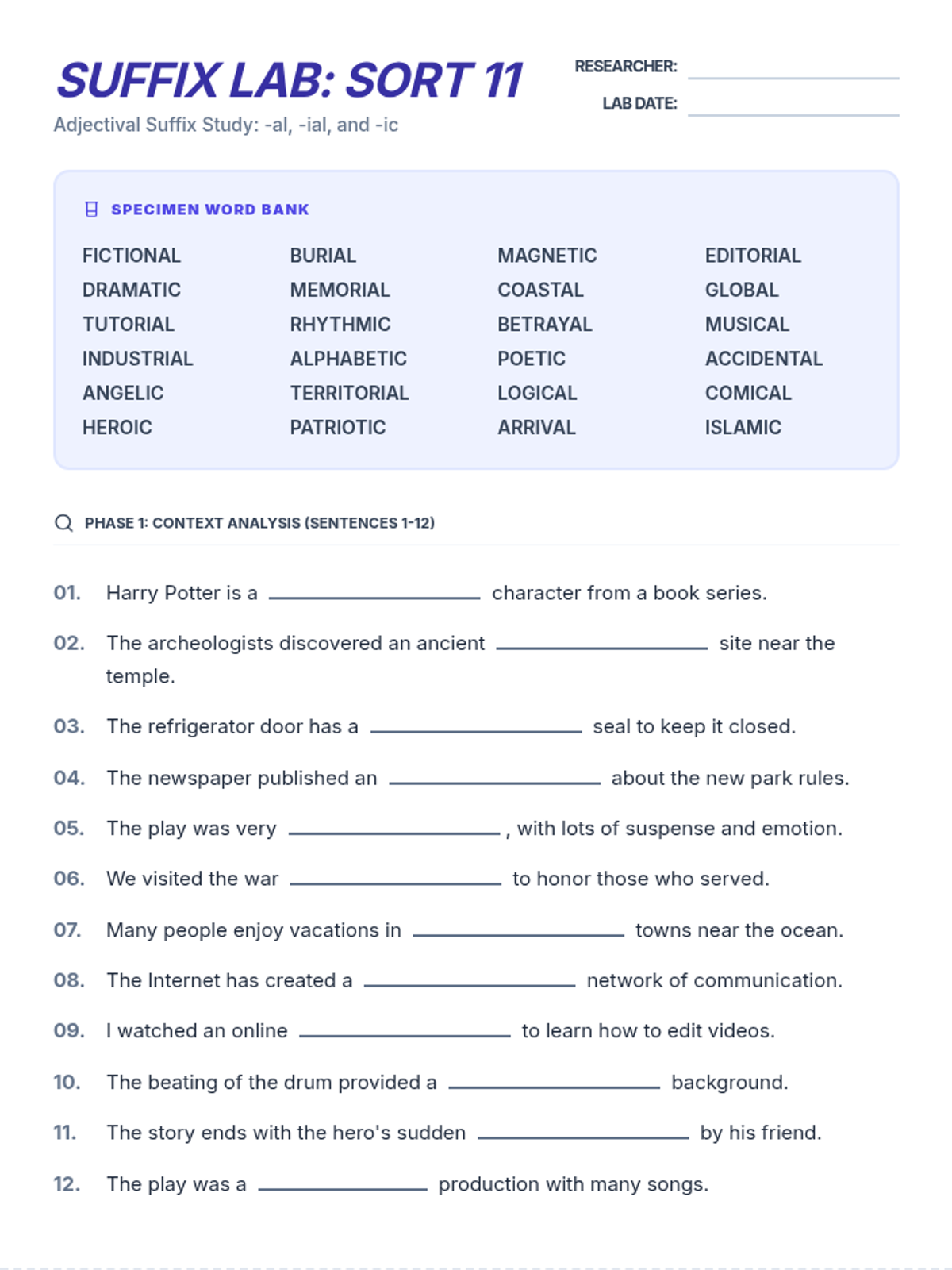
A lesson focused on the suffixes -al, -ial, and -ic. Students analyze how these suffixes form adjectives from nouns, representing relating to or having qualities of.
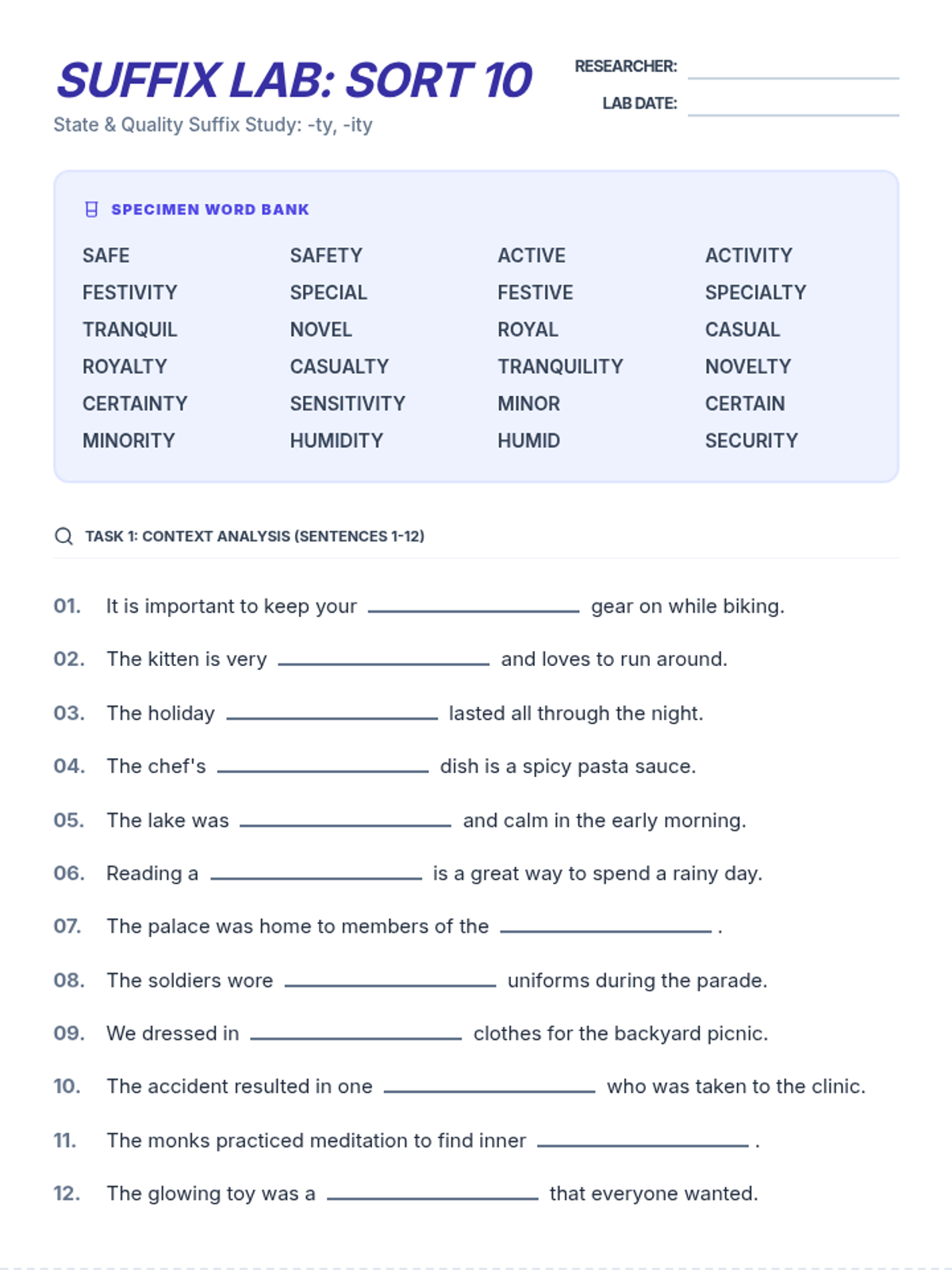
A lesson focused on the suffixes -ty and -ity. Students analyze how these suffixes form nouns from adjectives, representing states or qualities.
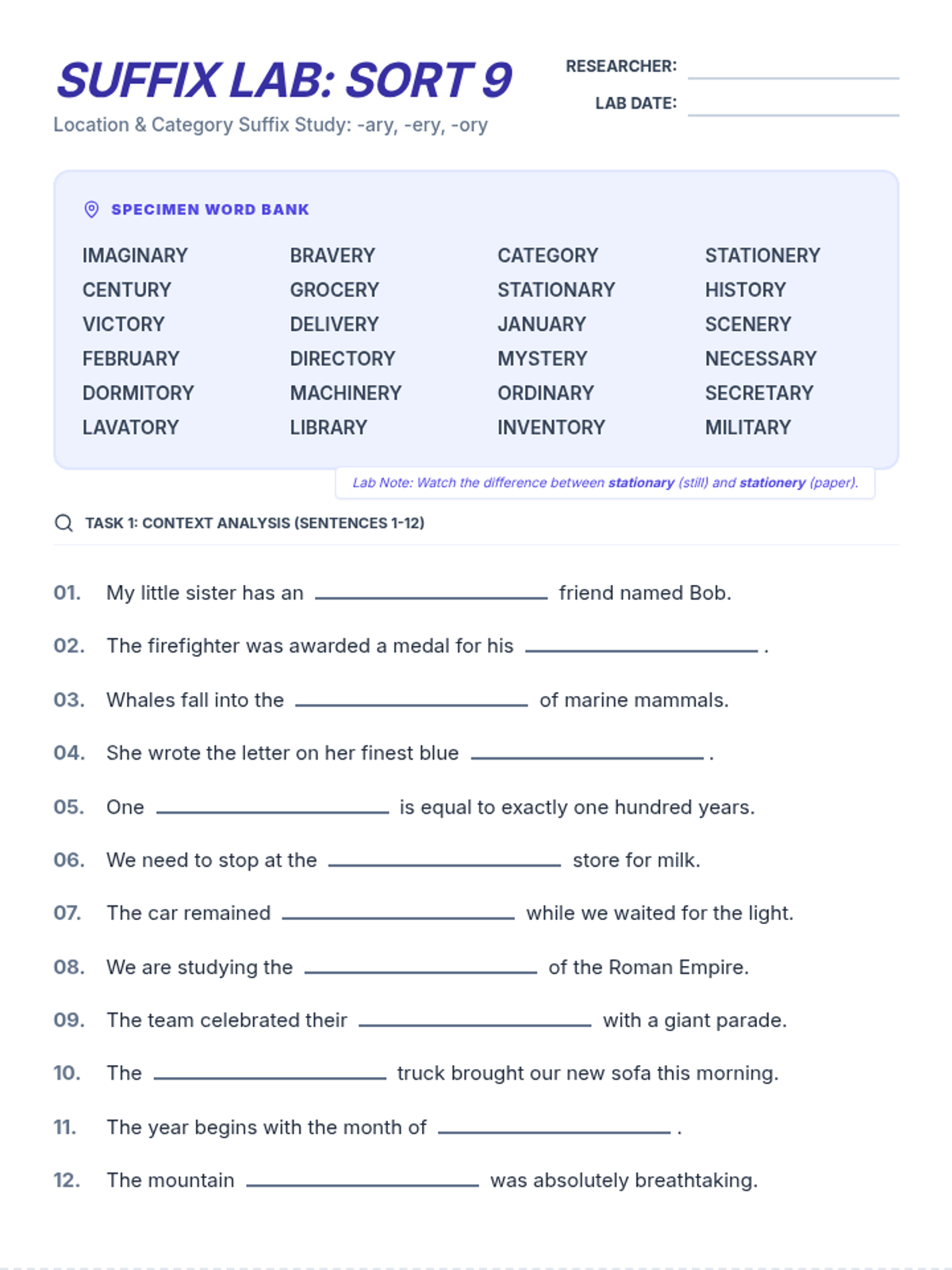
A lesson focused on location and category suffixes (-ary, -ery, -ory). Students analyze how these suffixes form nouns and adjectives related to places, groups, and qualities.
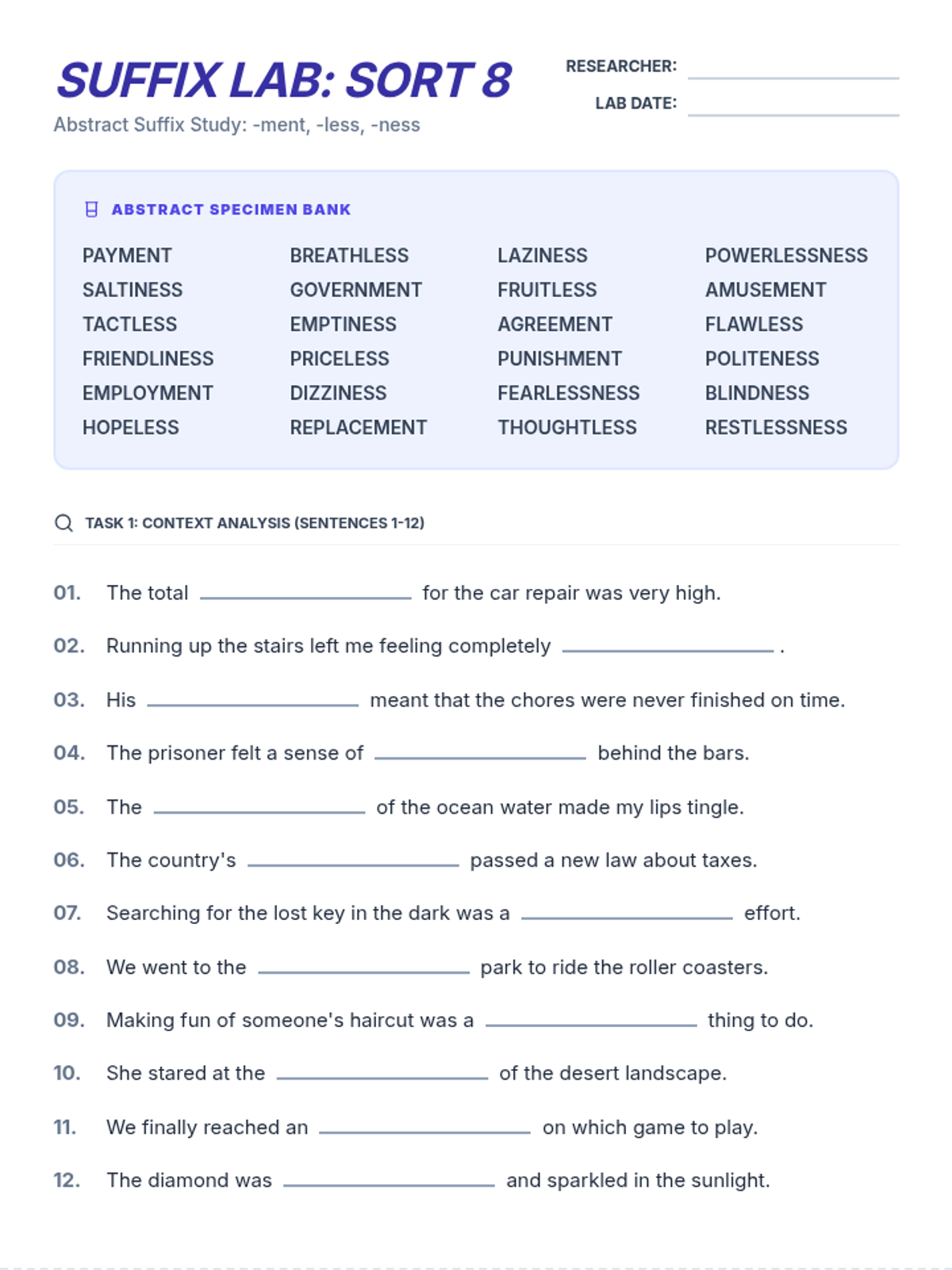
A lesson focused on abstract suffixes (-ment, -less, -ness). Students explore how these suffixes form nouns and adjectives related to states, qualities, and actions.
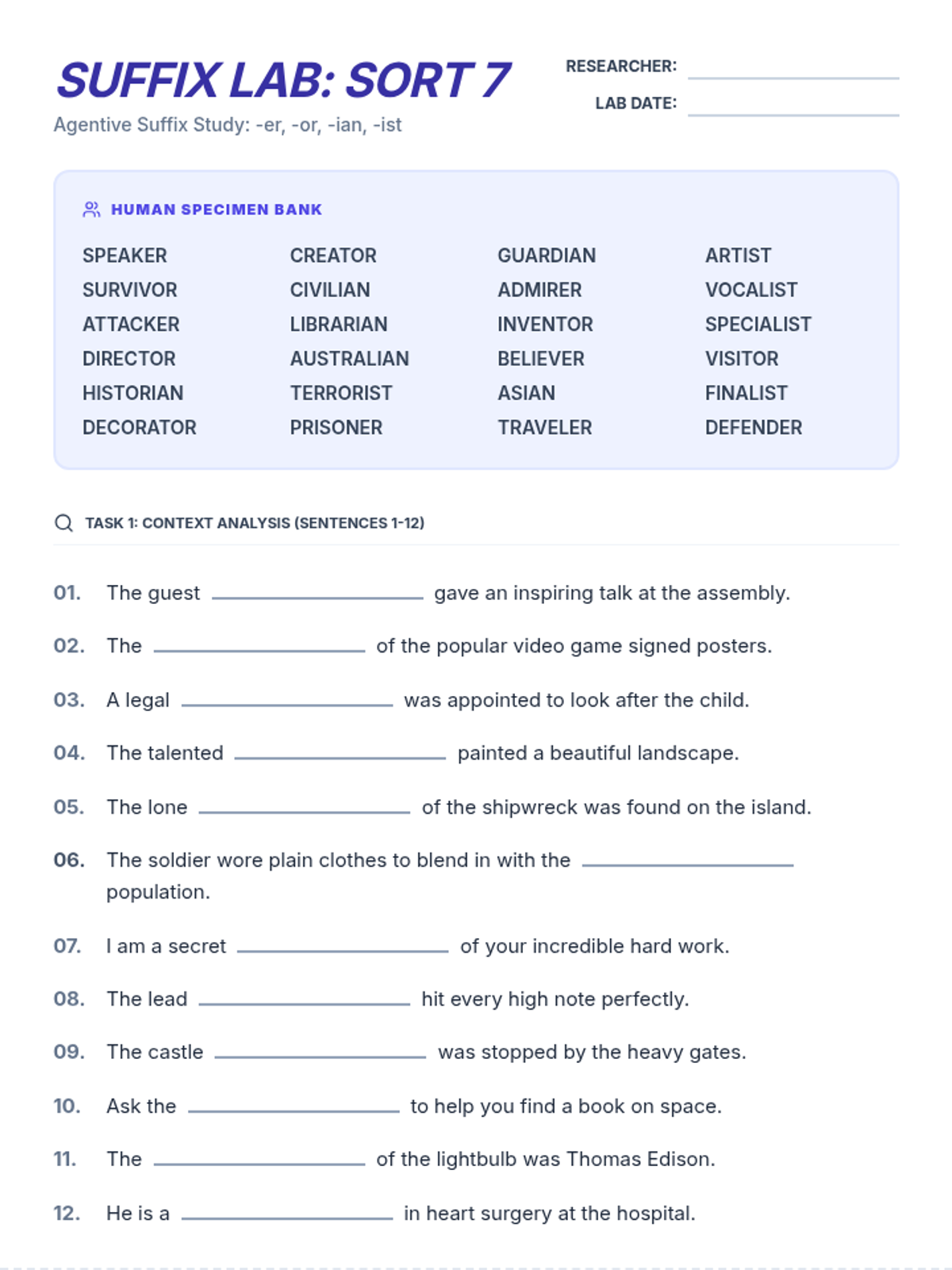
A lesson focused on agentive suffixes (-er, -or, -ian, -ist). Students analyze how these suffixes identify people who perform specific actions or hold certain roles.
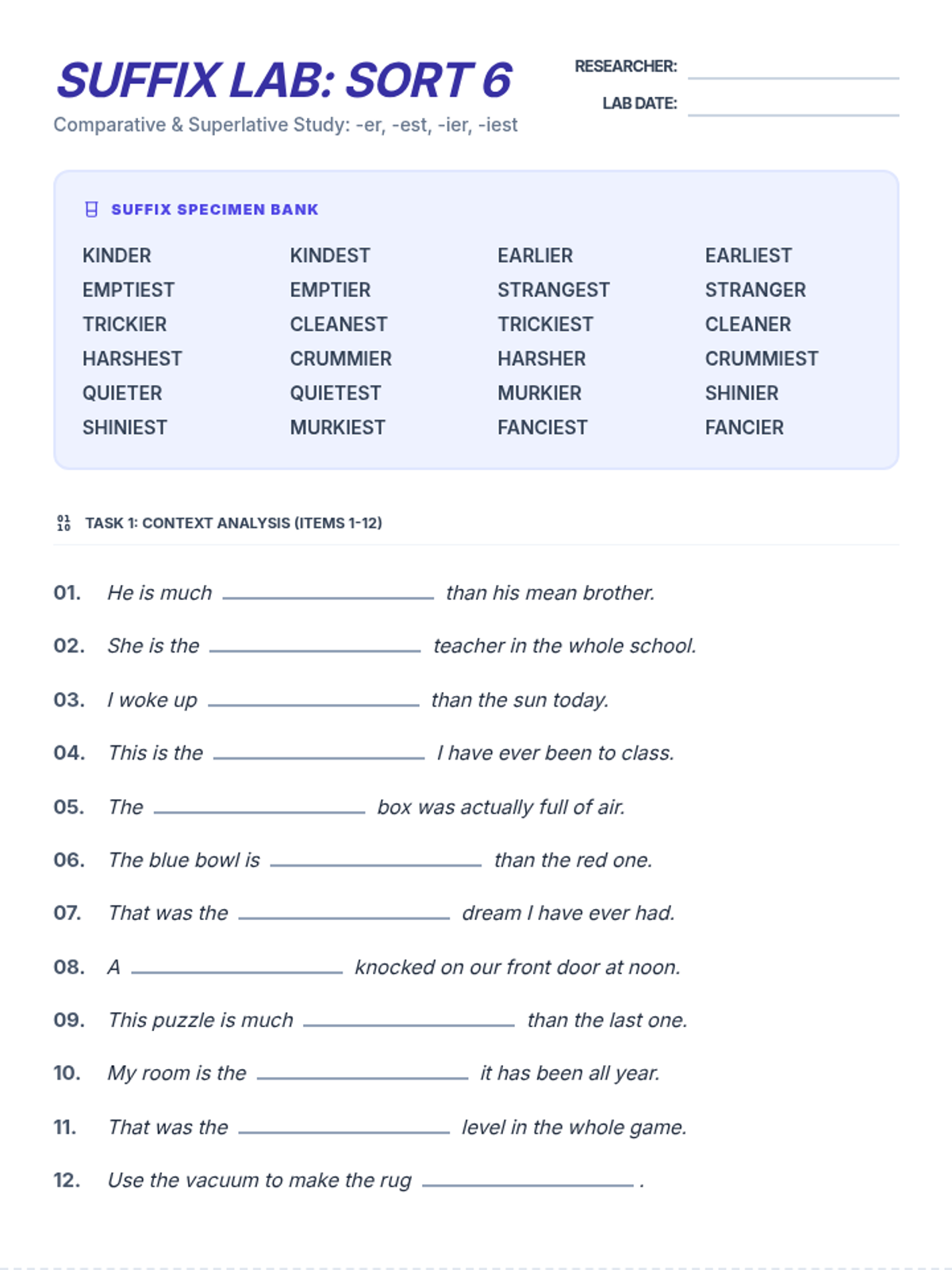
A lesson focused on comparative and superlative suffixes (-er, -est, -ier, -iest). Students explore how these suffixes change adjectives to compare two or more things.
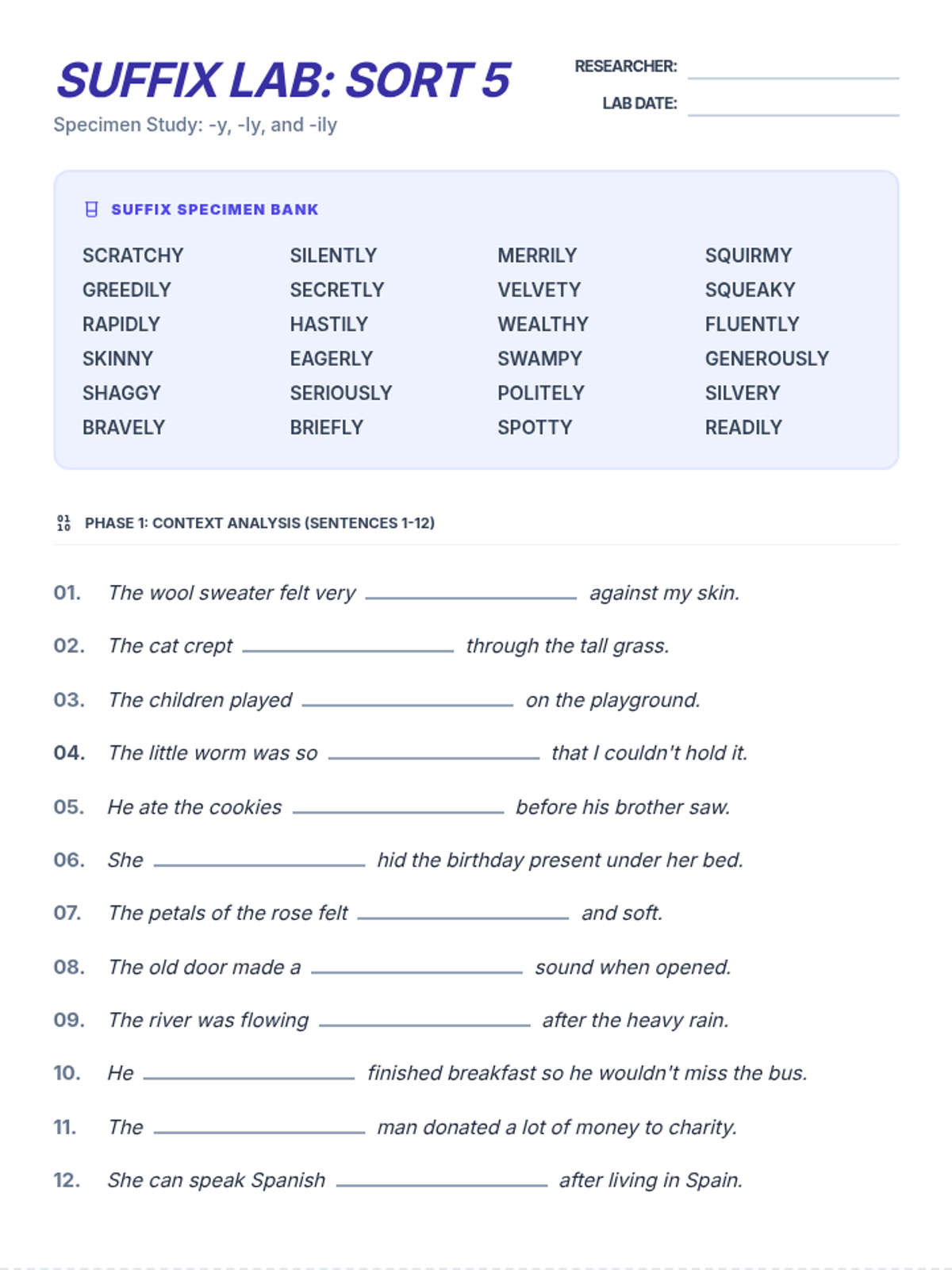
A lesson focused on the suffixes -y, -ly, and -ily. Students analyze how these suffixes change word meanings and usage through contextual application.
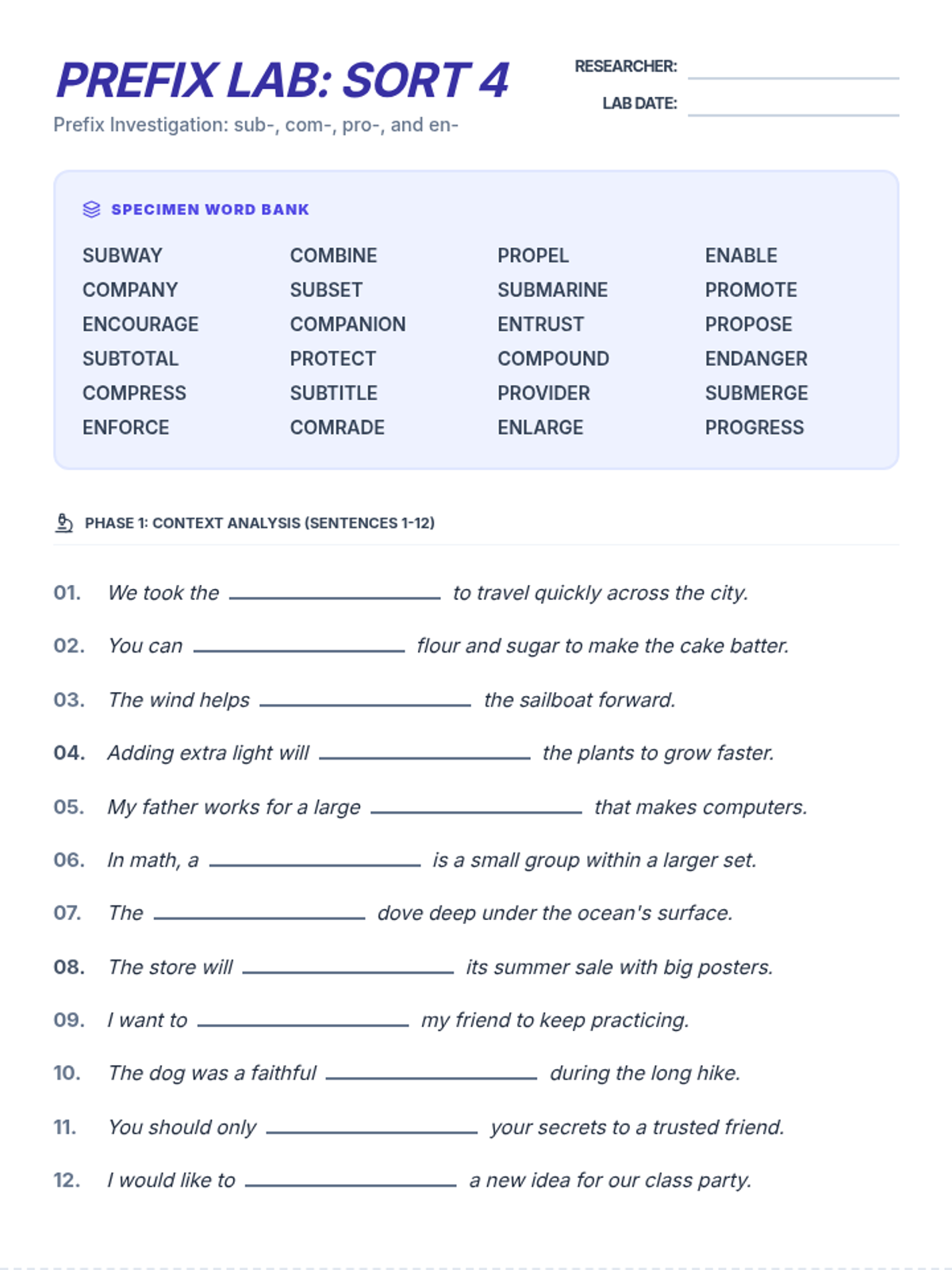
A lesson focused on the prefixes sub-, com-, pro-, and en-. Students apply their knowledge of these prefixes to identify and use words in various contexts.
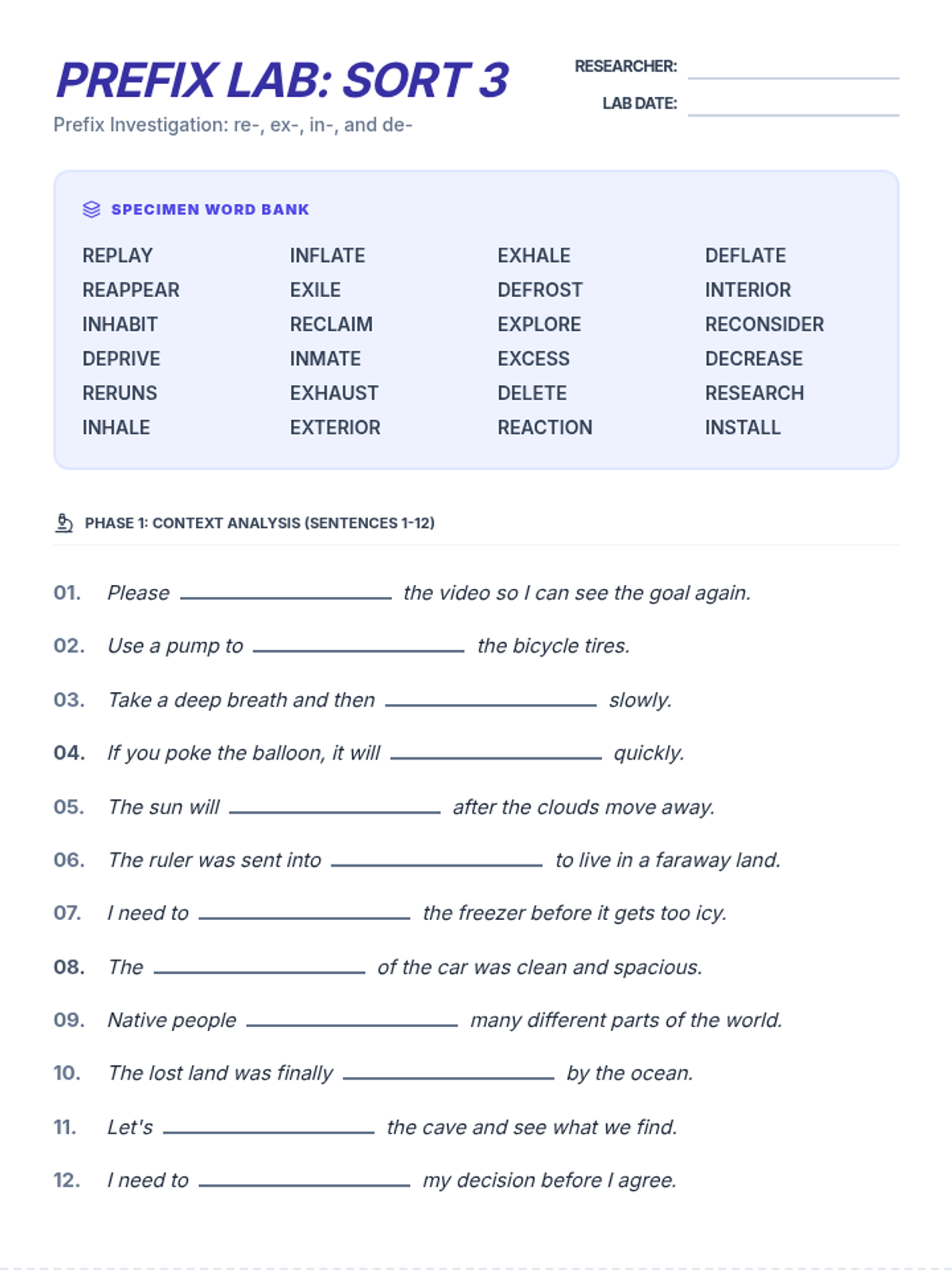
A lesson focused on the prefixes re-, ex-, in-, and de-. Students explore meanings like "again," "out," "in," and "down" through application.
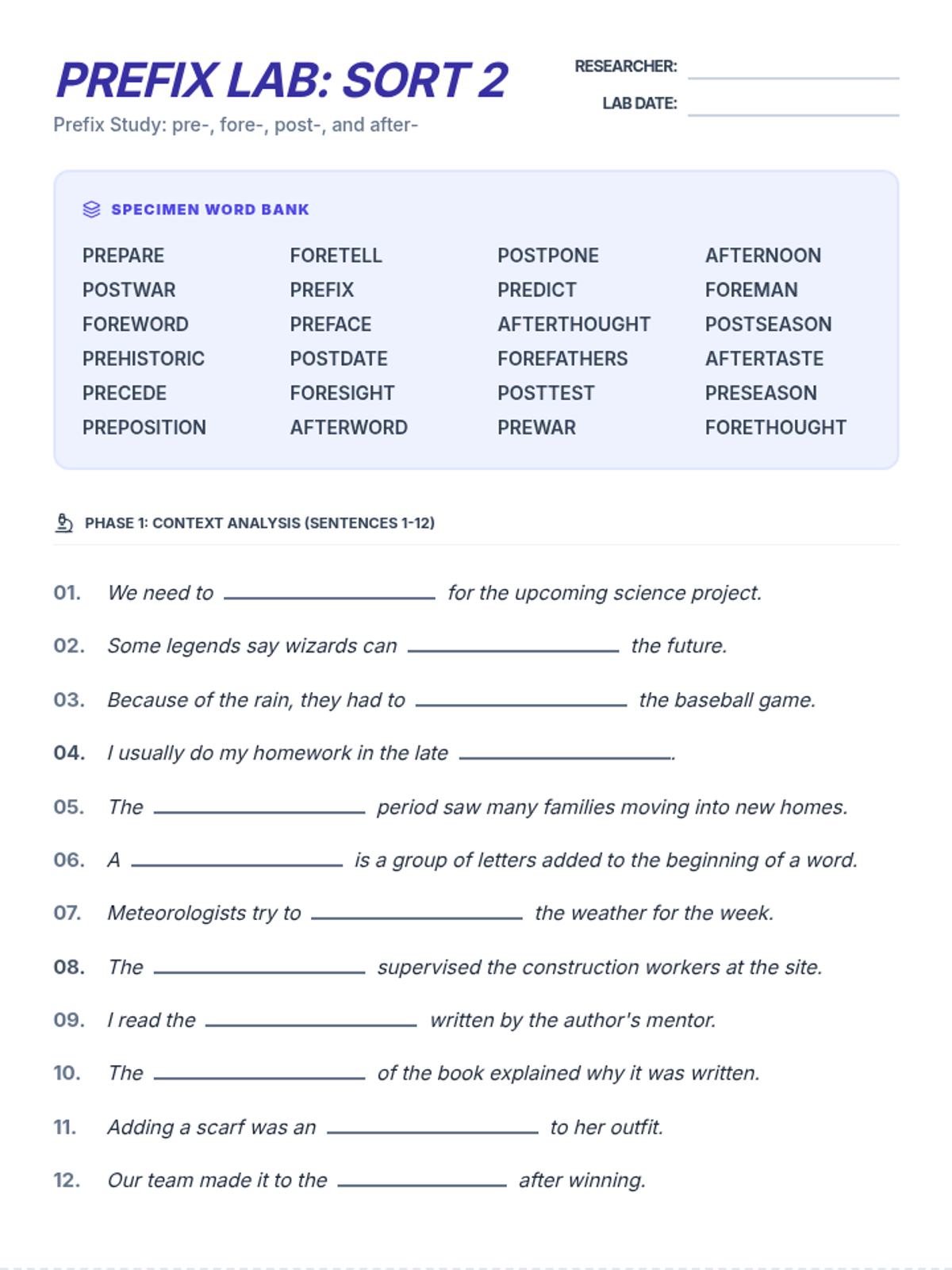
A lesson focused on the prefixes pre-, fore-, post-, and after-. Students practice using these temporal and directional prefixes in context.
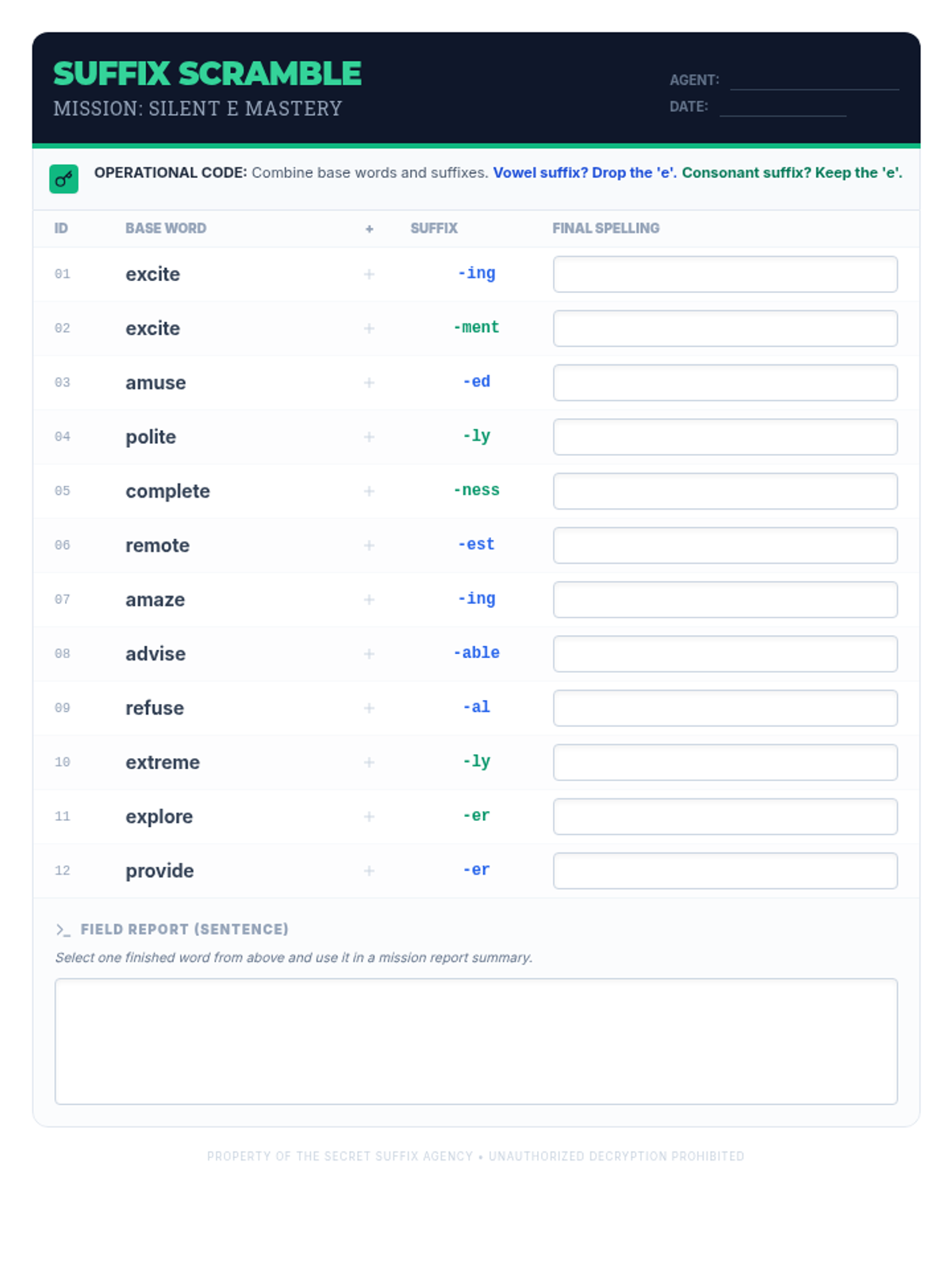
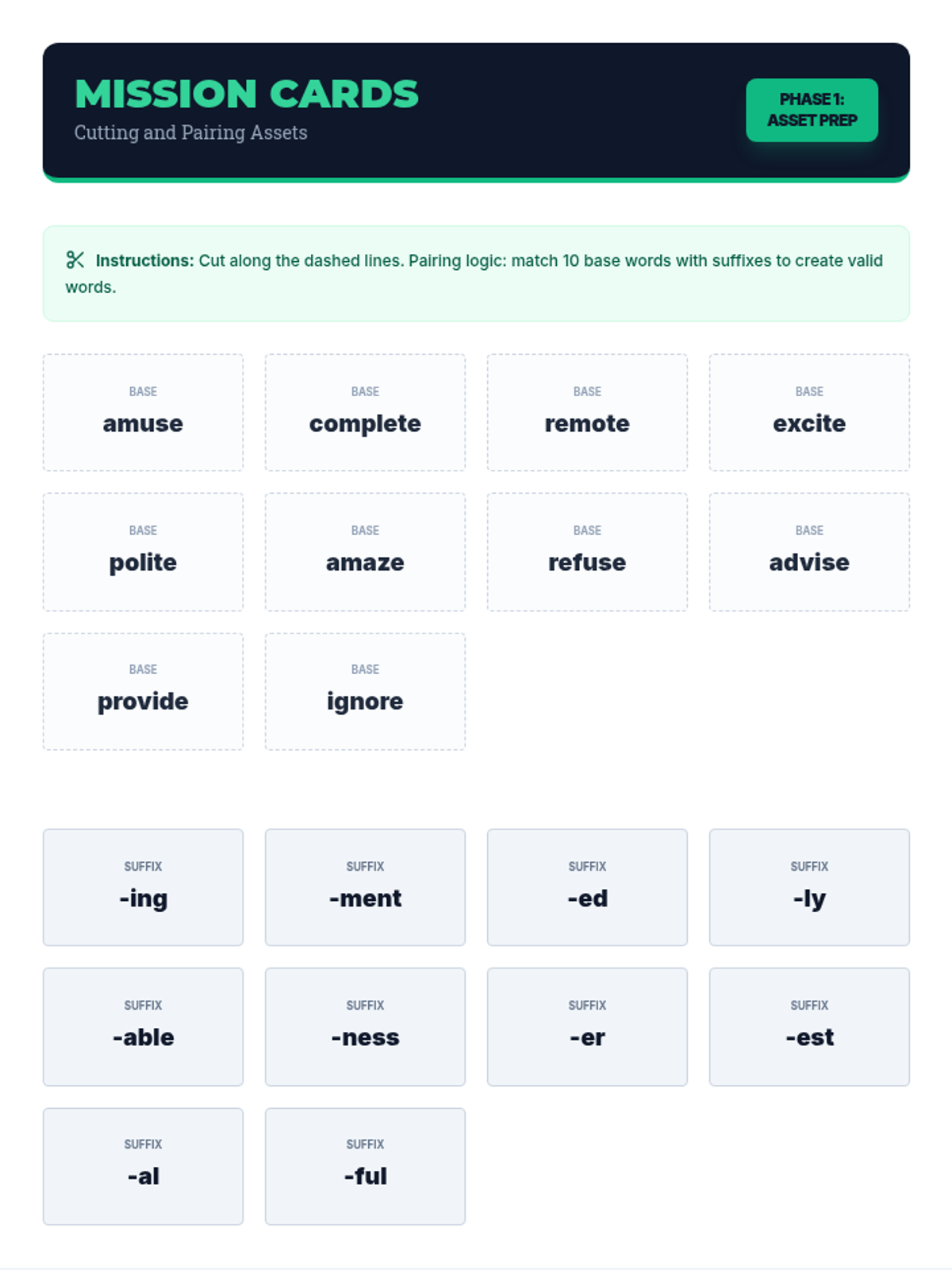
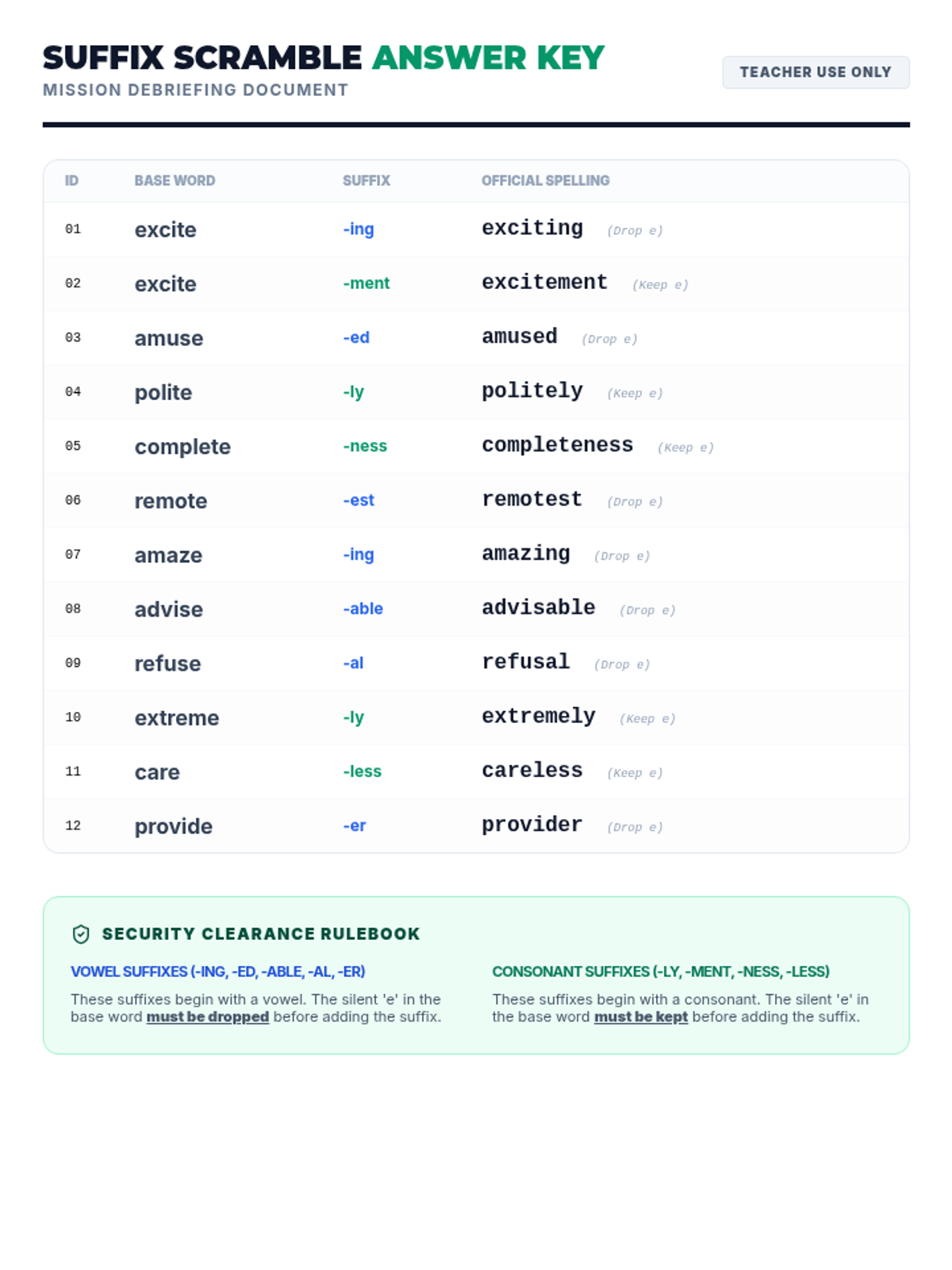
A comprehensive lesson on adding suffixes to multi-syllabic words ending in a silent 'e', focusing on the rules for dropping or keeping the 'e' based on the suffix type.
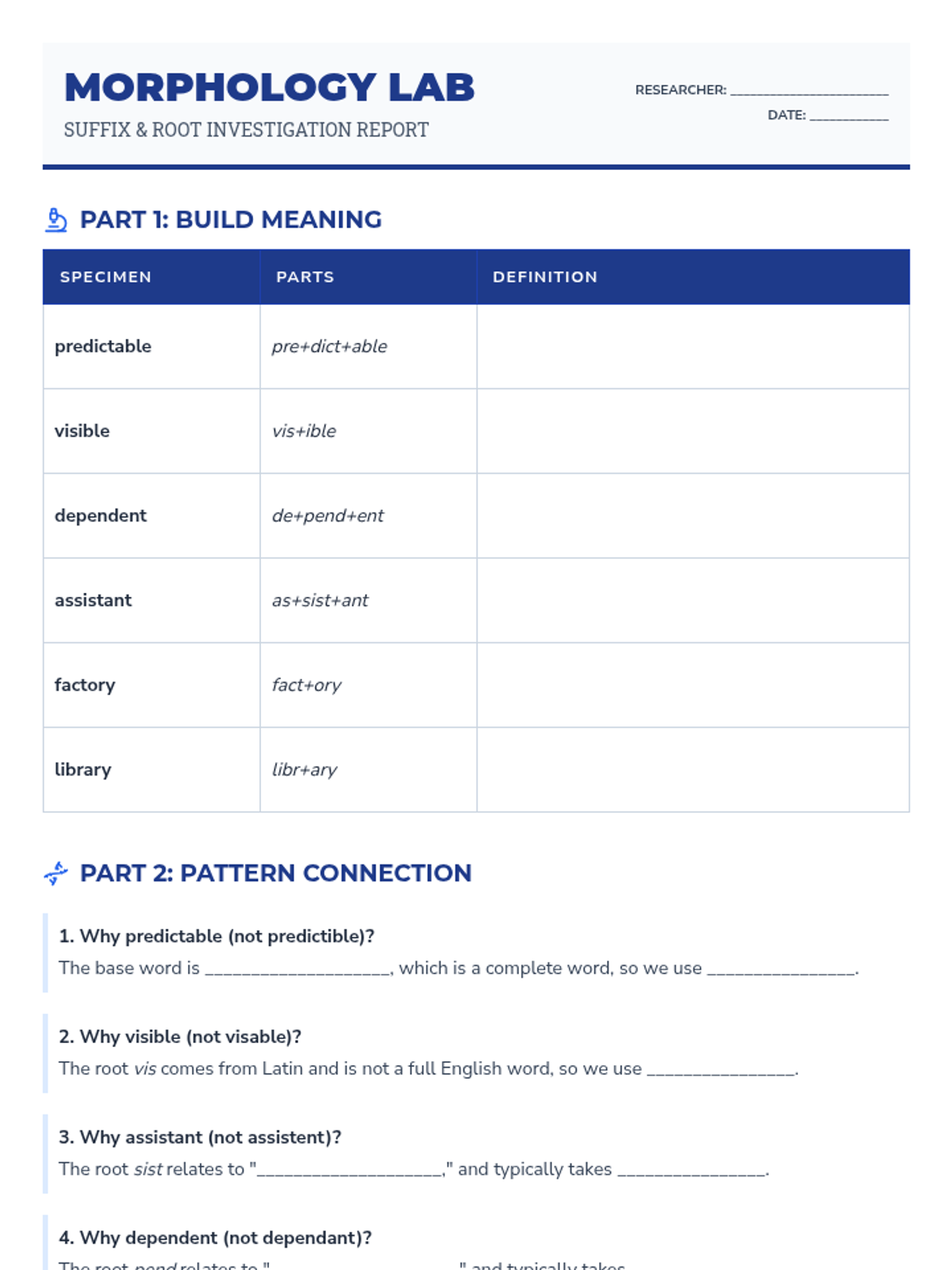
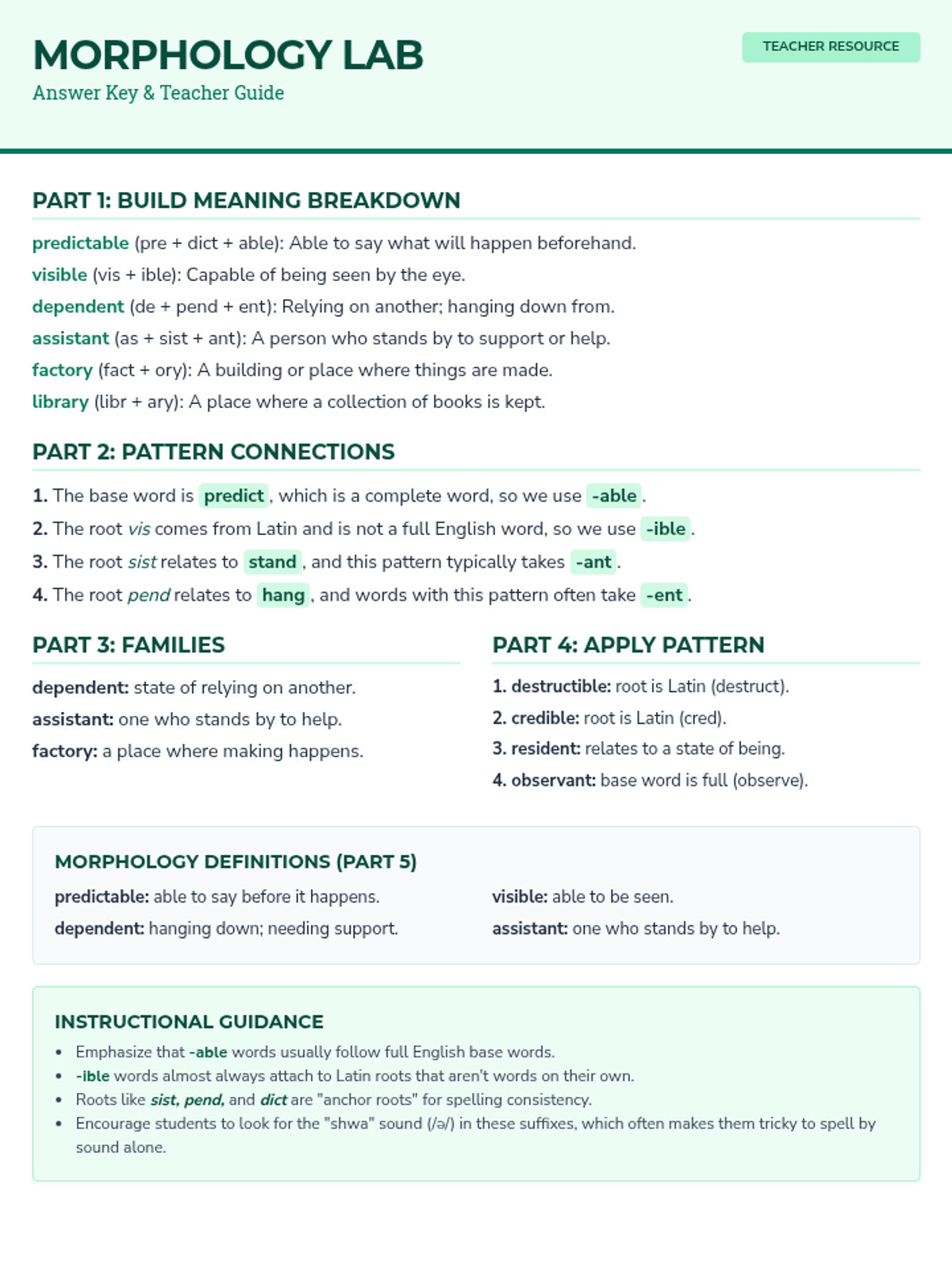
A deep dive into morphology and common word endings (-able, -ible, -ary, -ery, -ory, -ant, -ent), focusing on how Latin roots and base words determine spelling patterns.
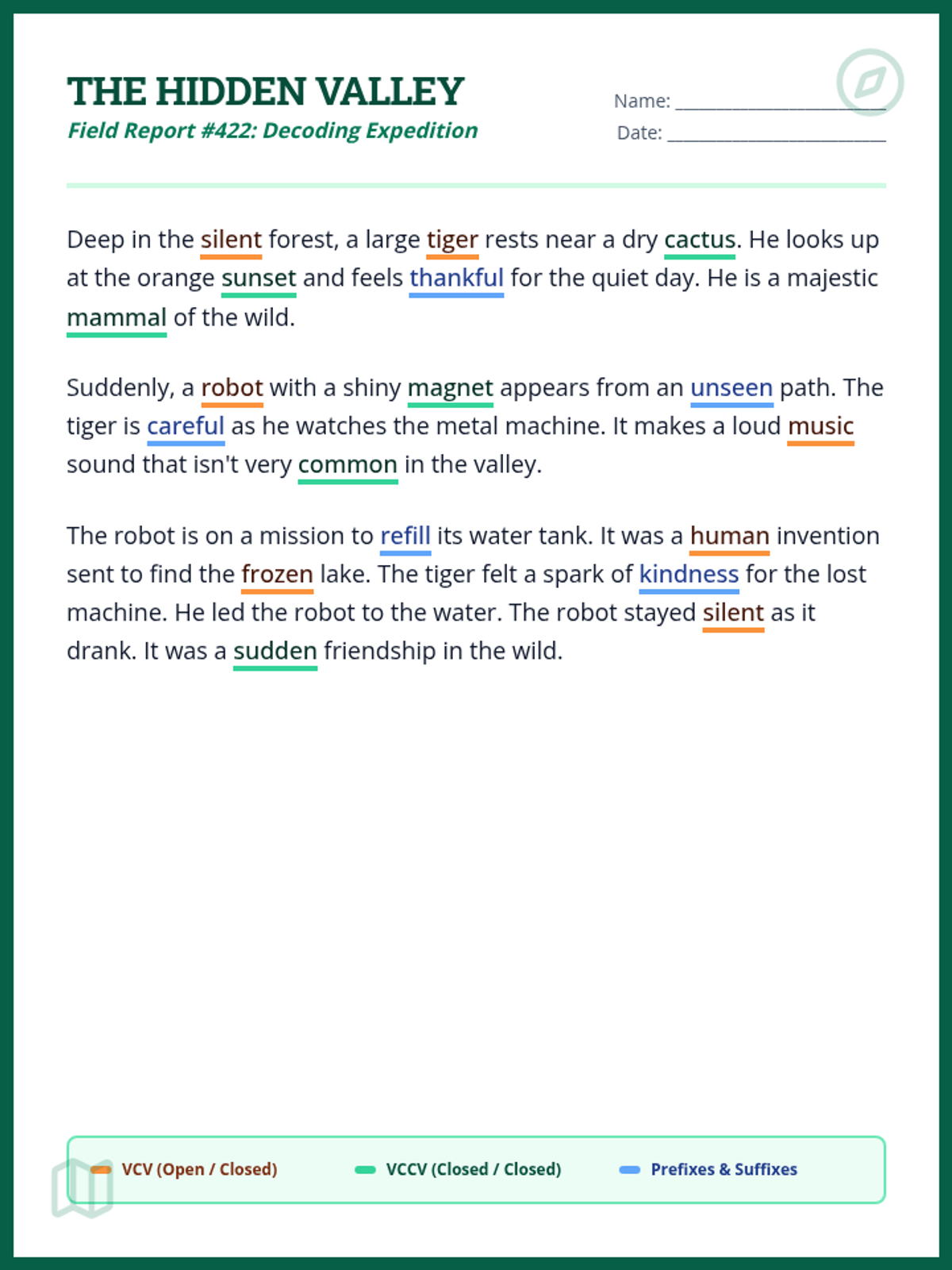
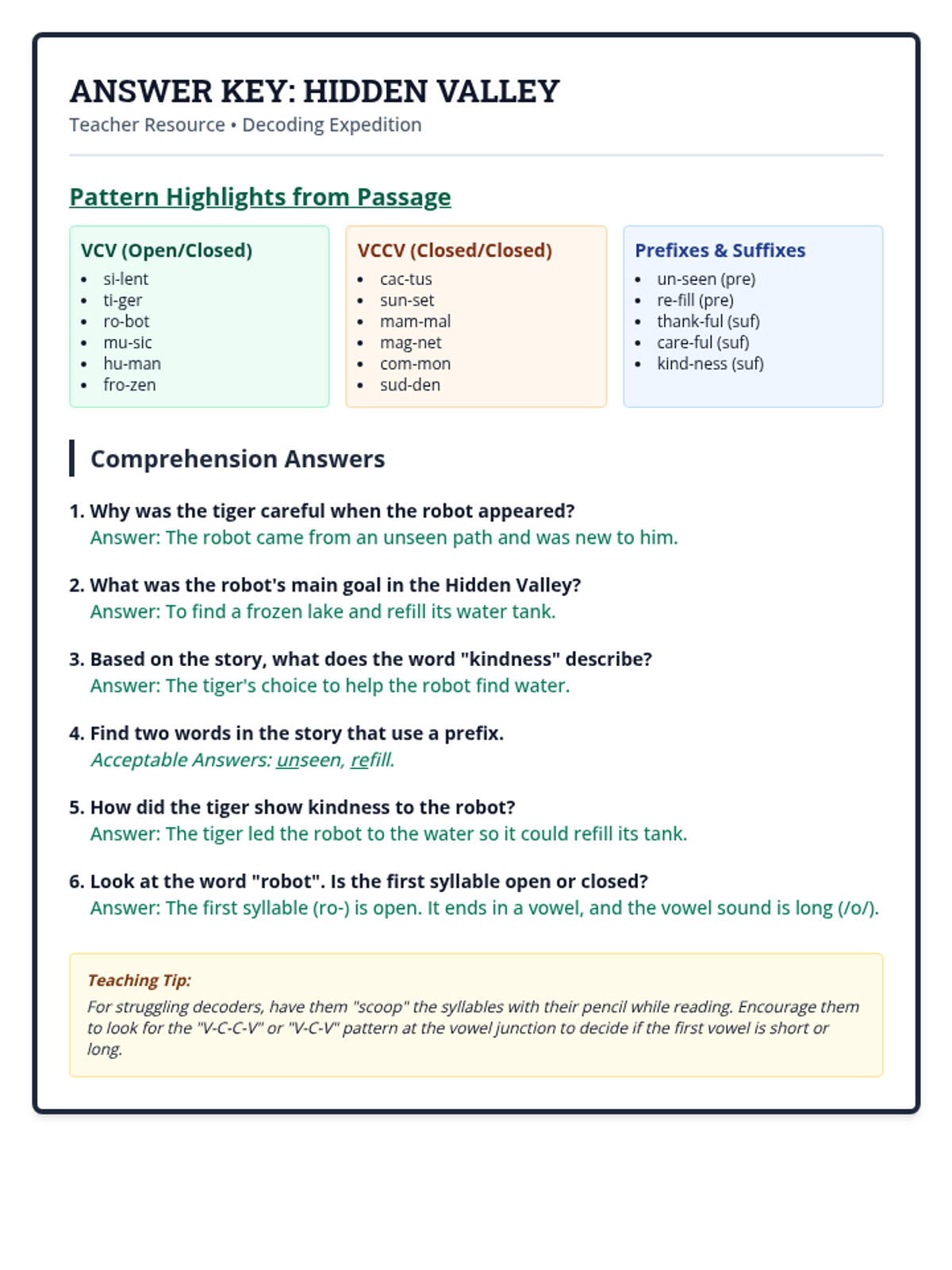
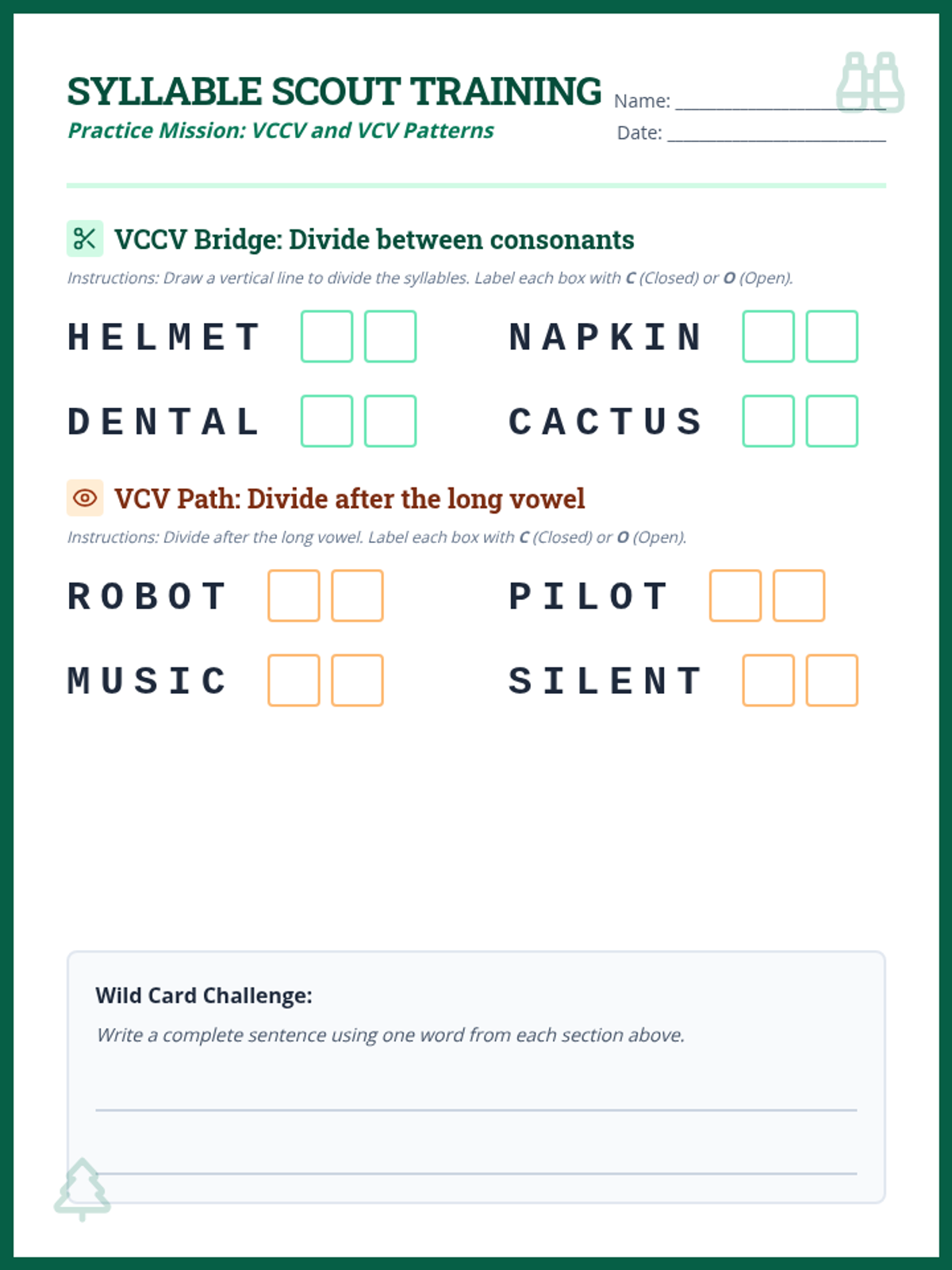
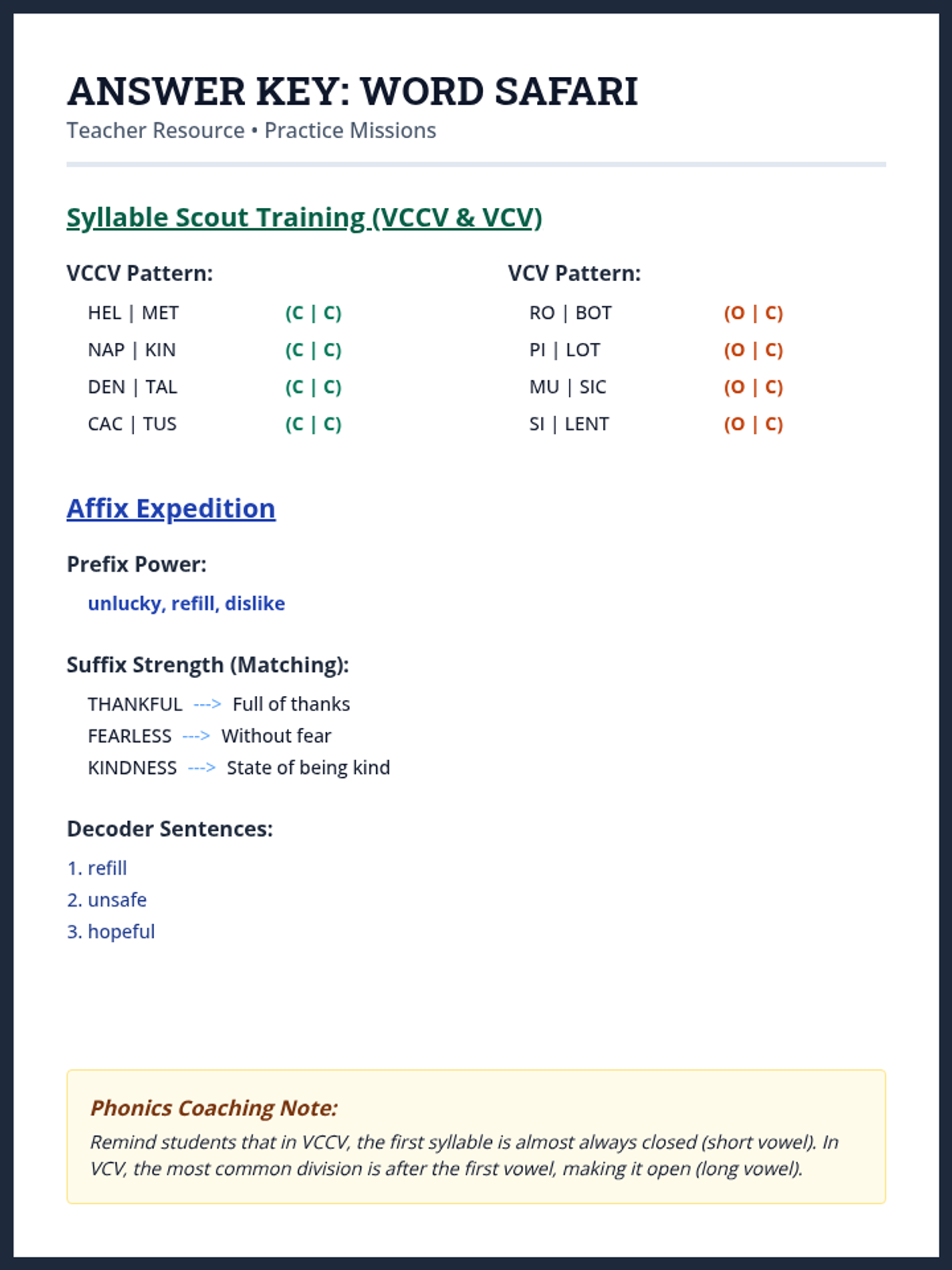
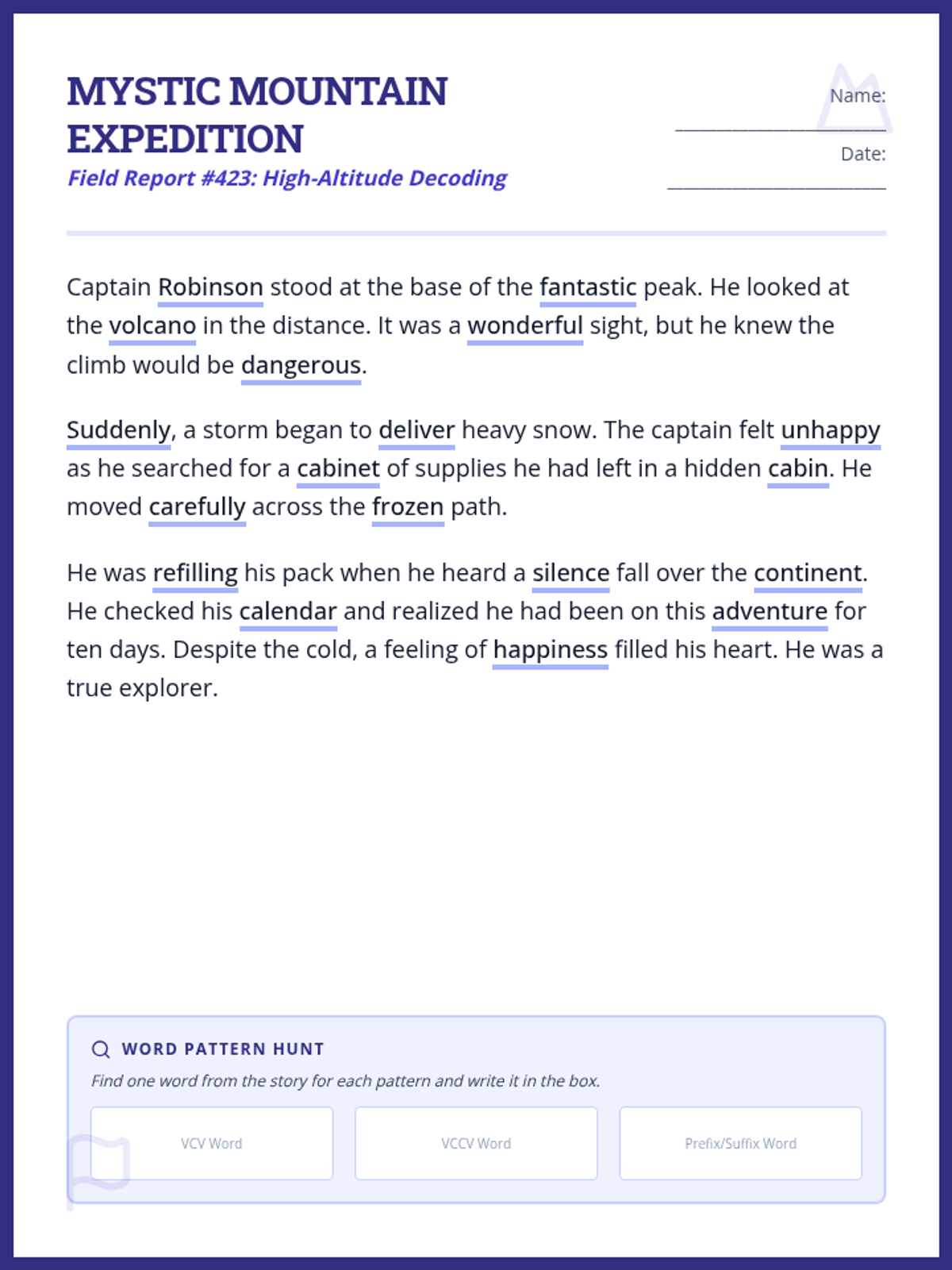
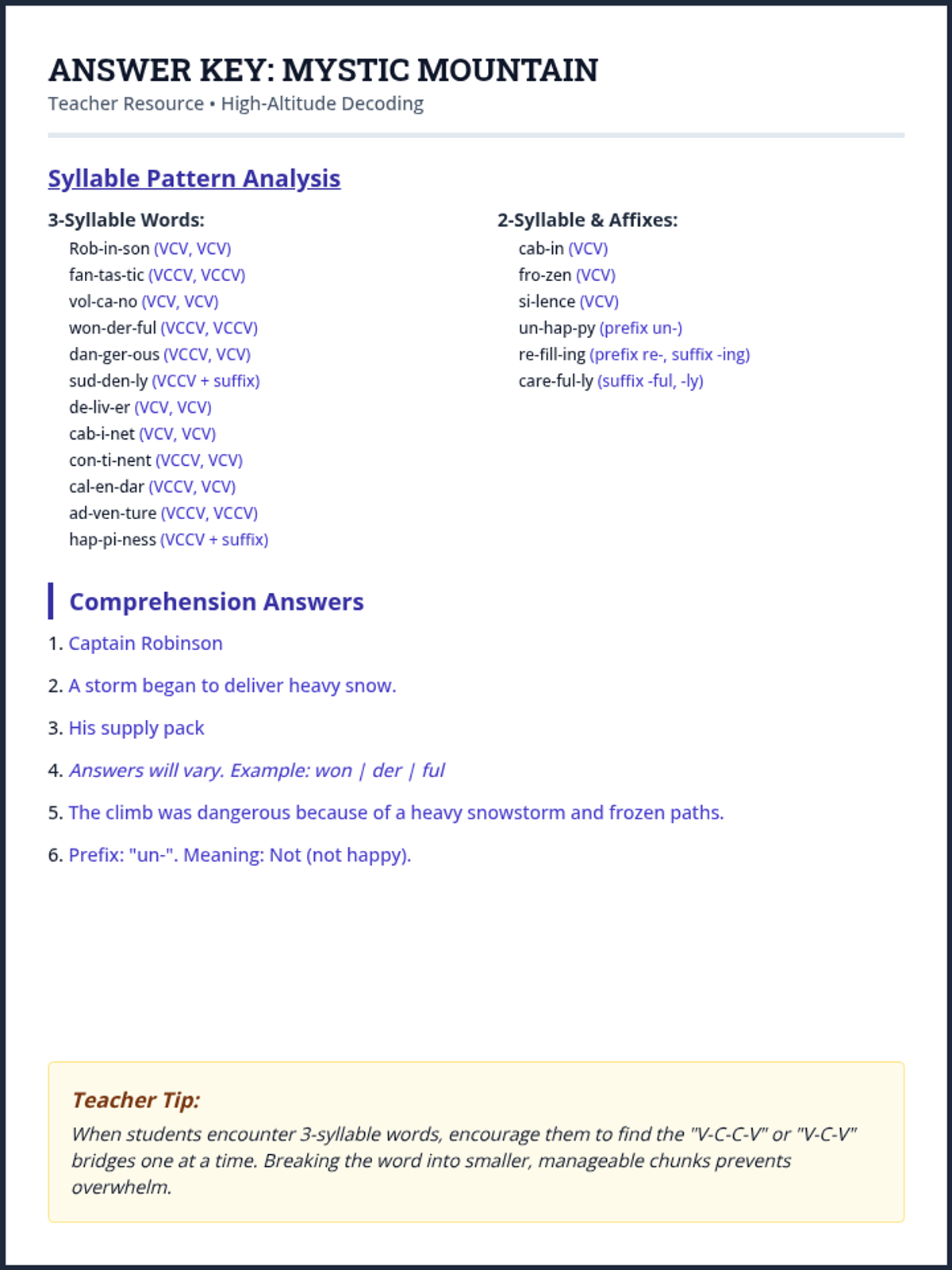
A lesson focused on decoding VCCV and VCV syllable patterns, along with common prefixes and suffixes, through an engaging reading passage and comprehension check.
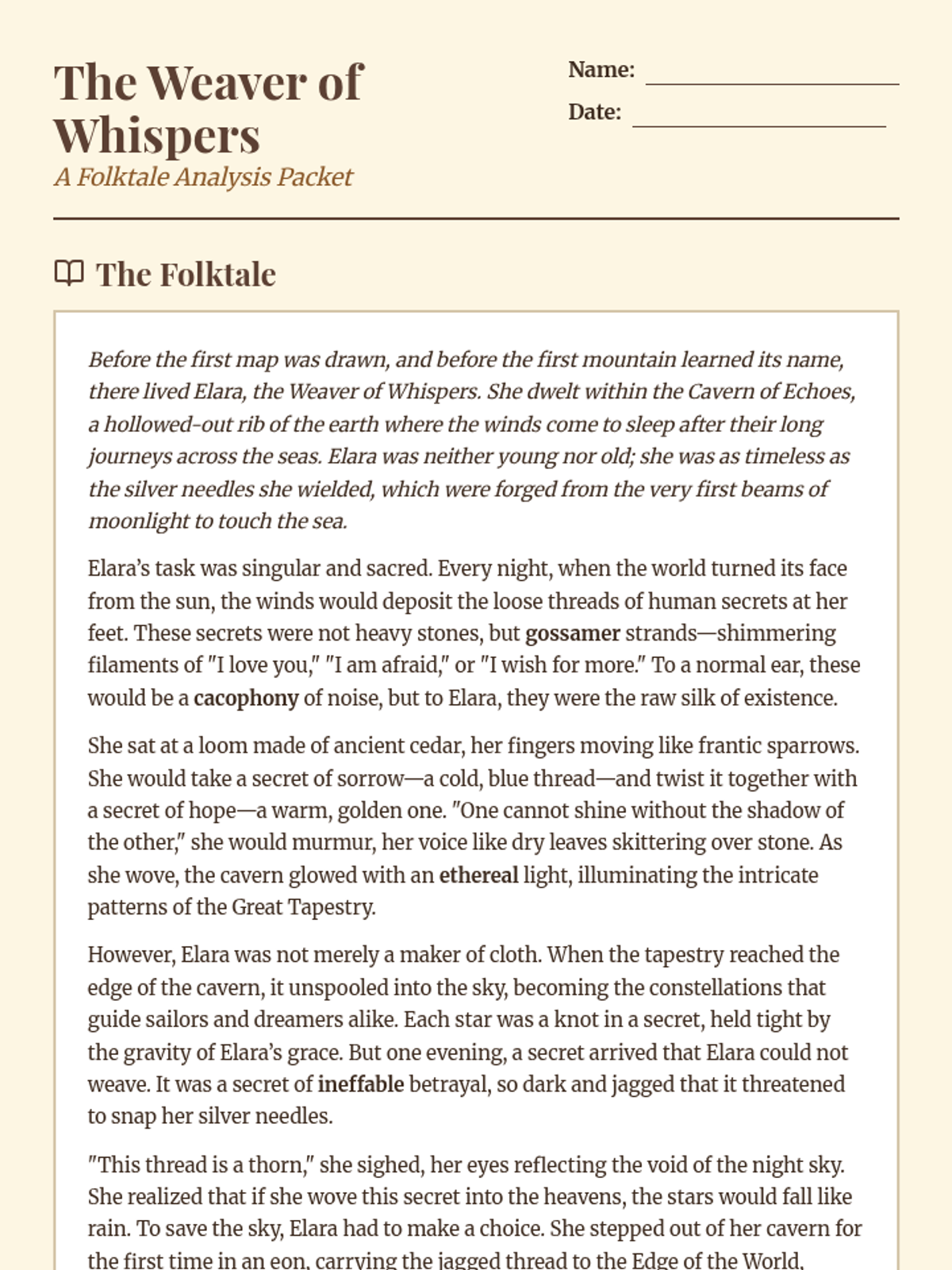
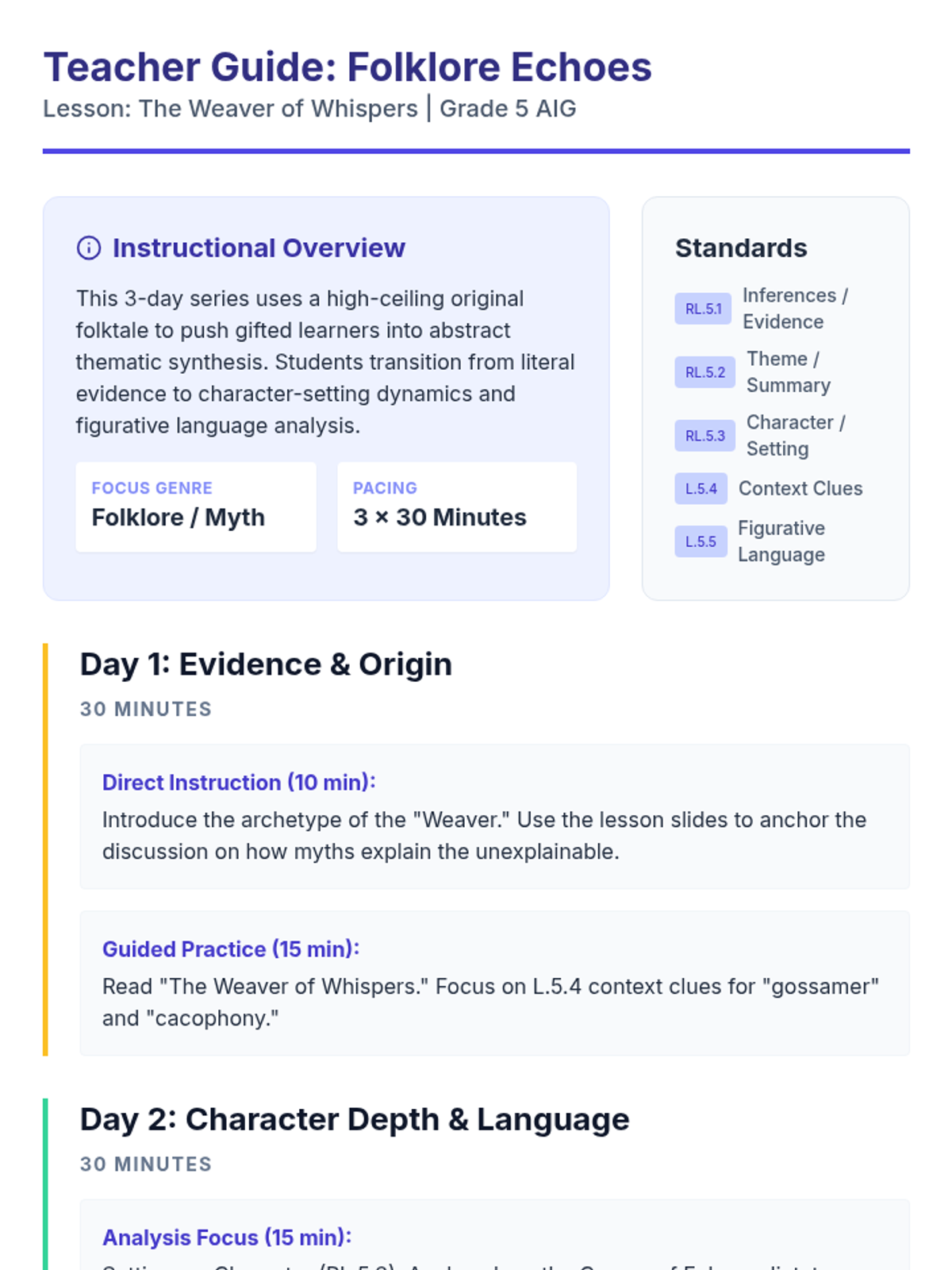
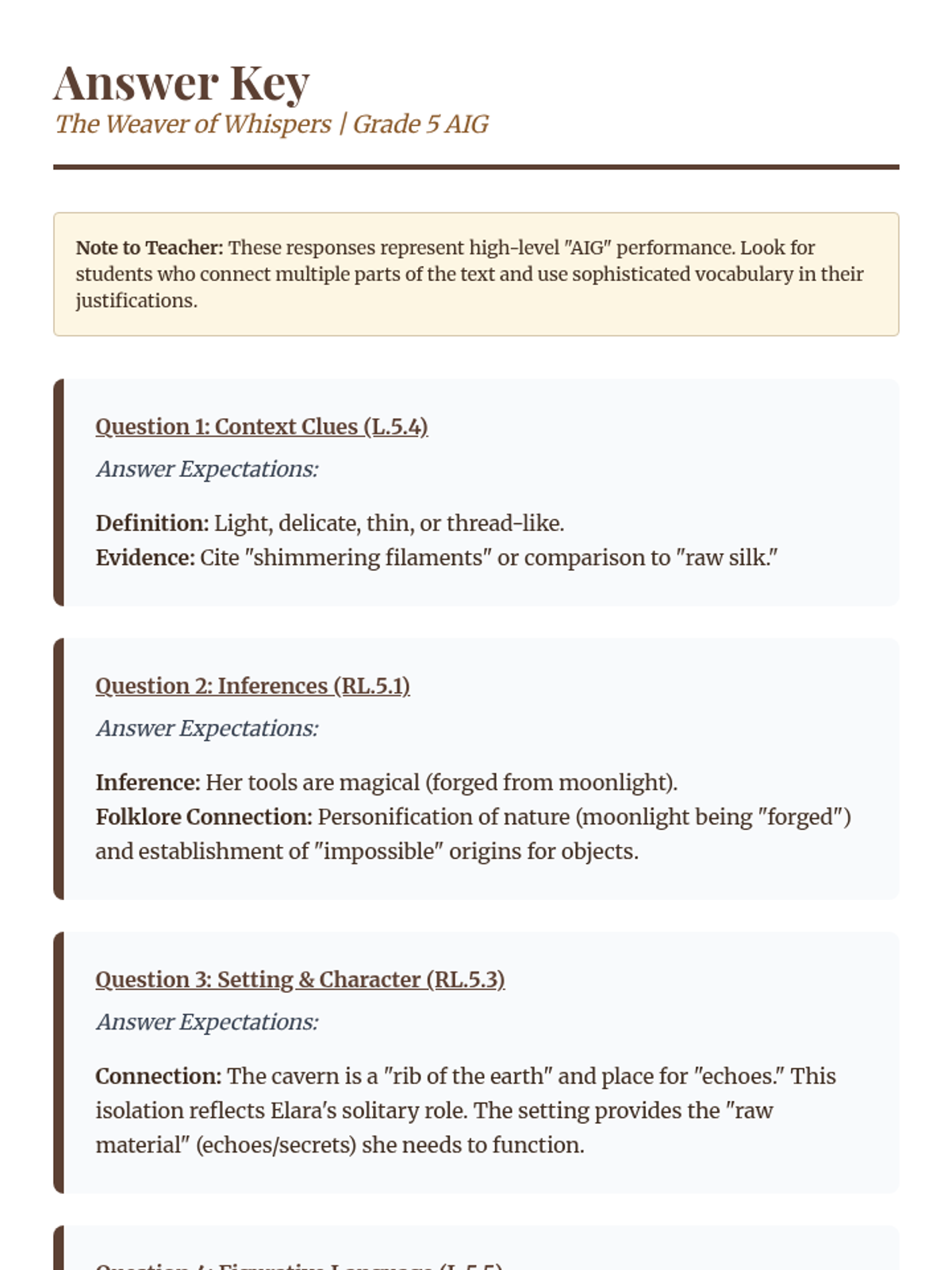
A 3-day intensive study of an original folktale, 'The Weaver of Whispers.' Students analyze character motivations, setting influences, and figurative language before creating their own original myth.
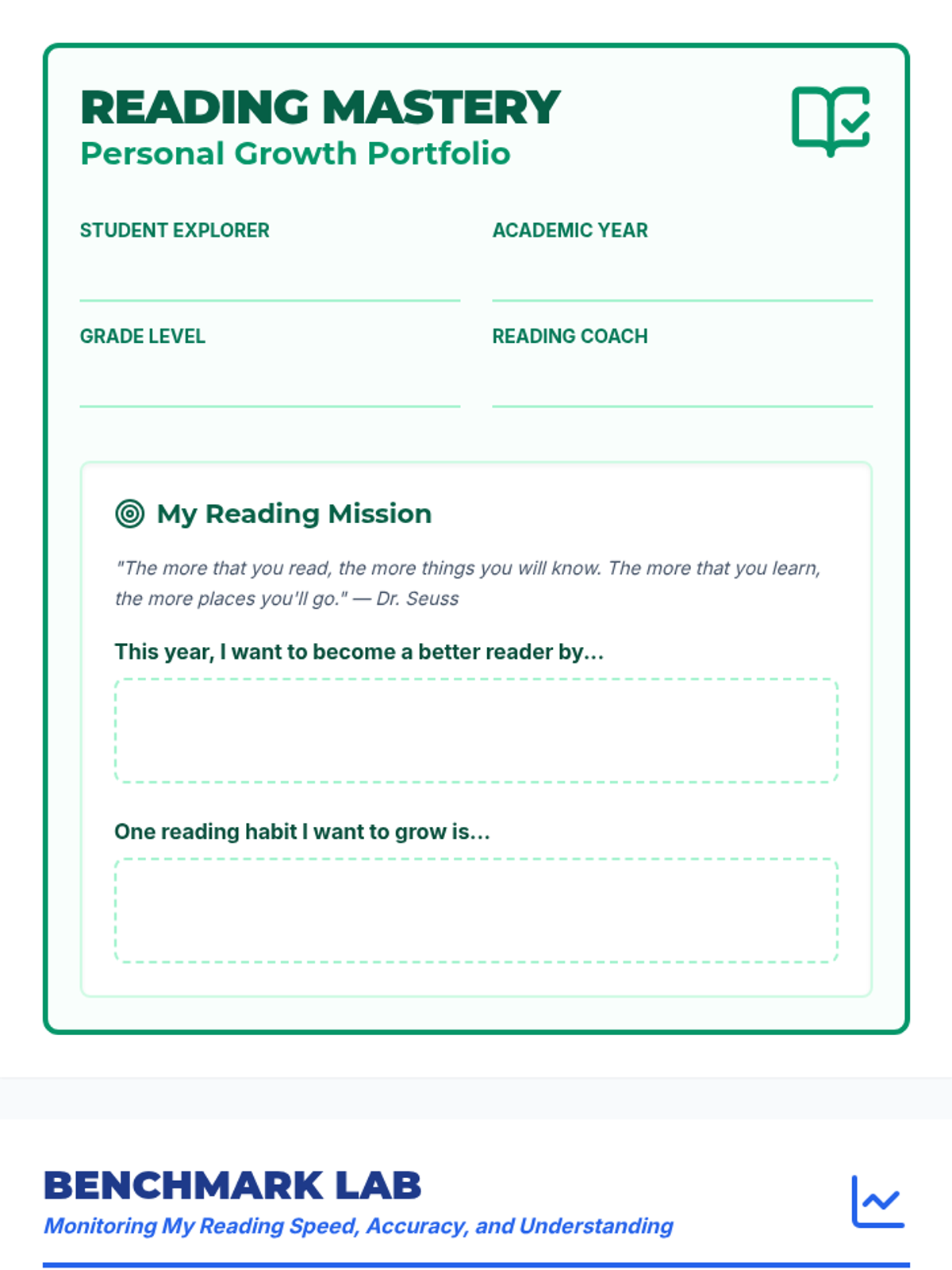
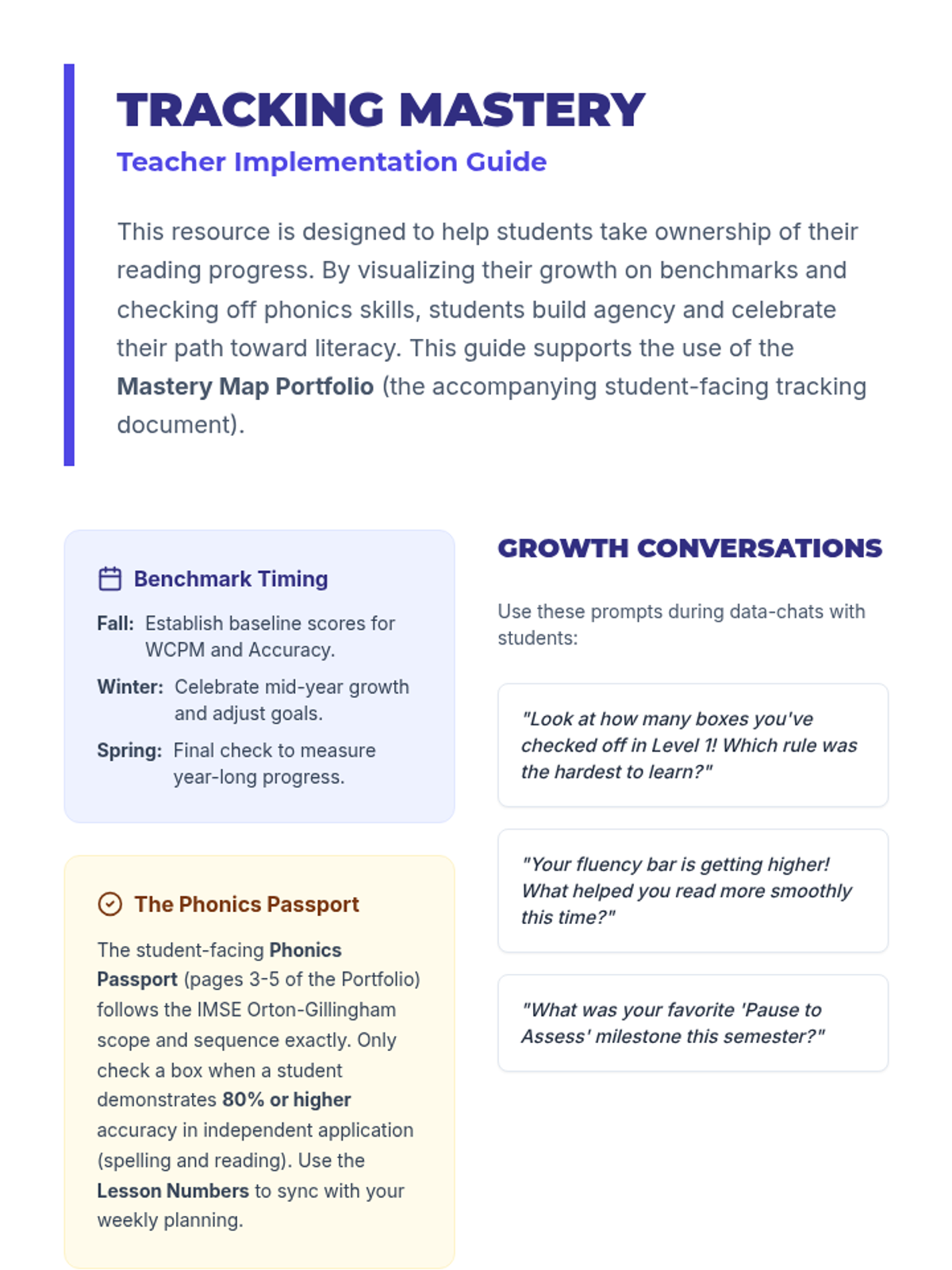
A comprehensive suite of data tracking tools for students to monitor their reading progress, including benchmark assessments and IMSE Orton-Gillingham concept checks from Kindergarten through 5th grade.
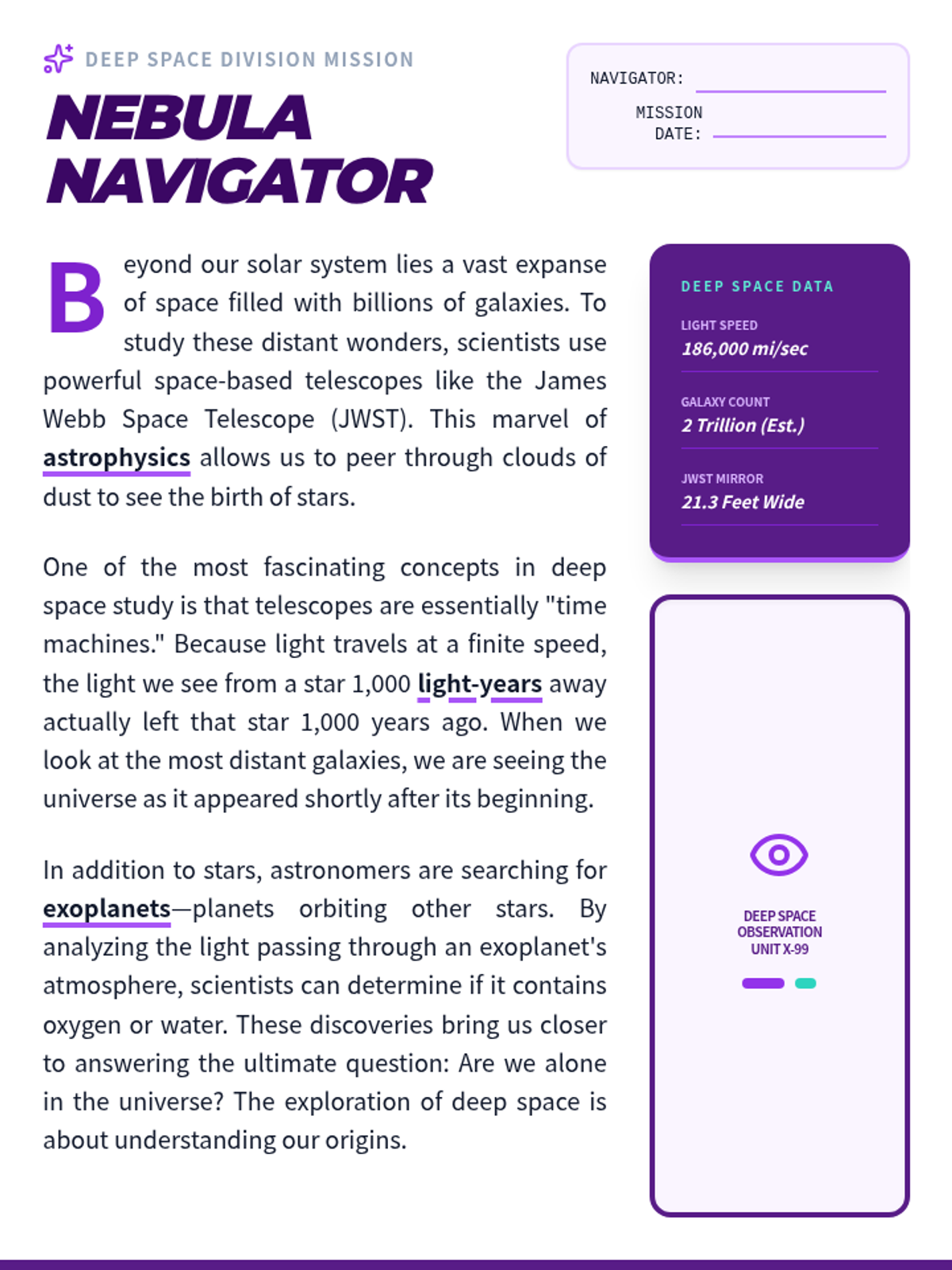
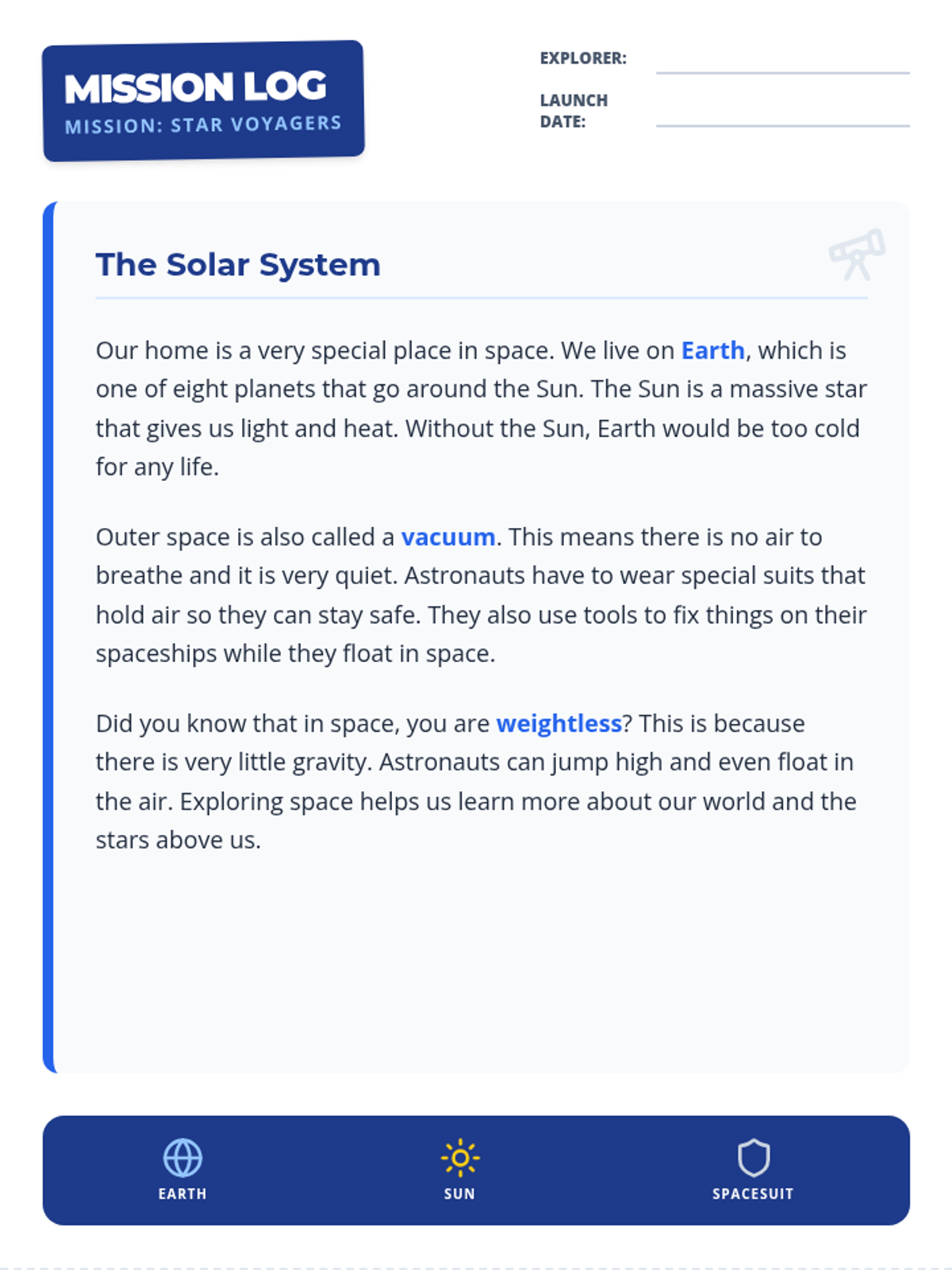
A 5th grade mission investigating deep space exploration, focusing on advanced telescopes, distant galaxies, and the scientific methods used to study the universe.
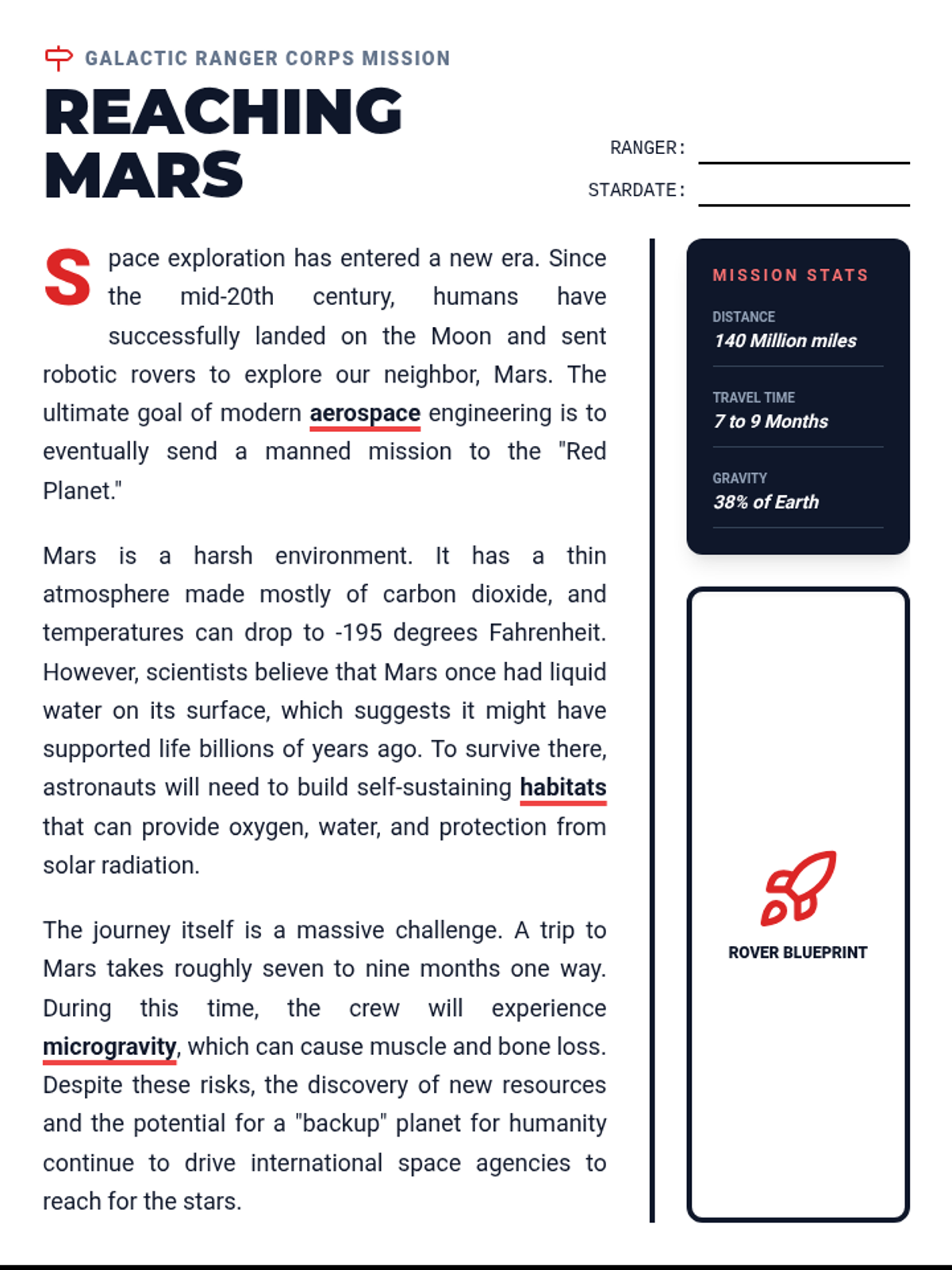
A 4th grade deep dive into the history of space travel and the future of Mars exploration, focusing on detailed analysis and critical thinking.
A 2nd grade exploration of the solar system and astronaut life, helping students develop reading stamina and structured comprehension skills.
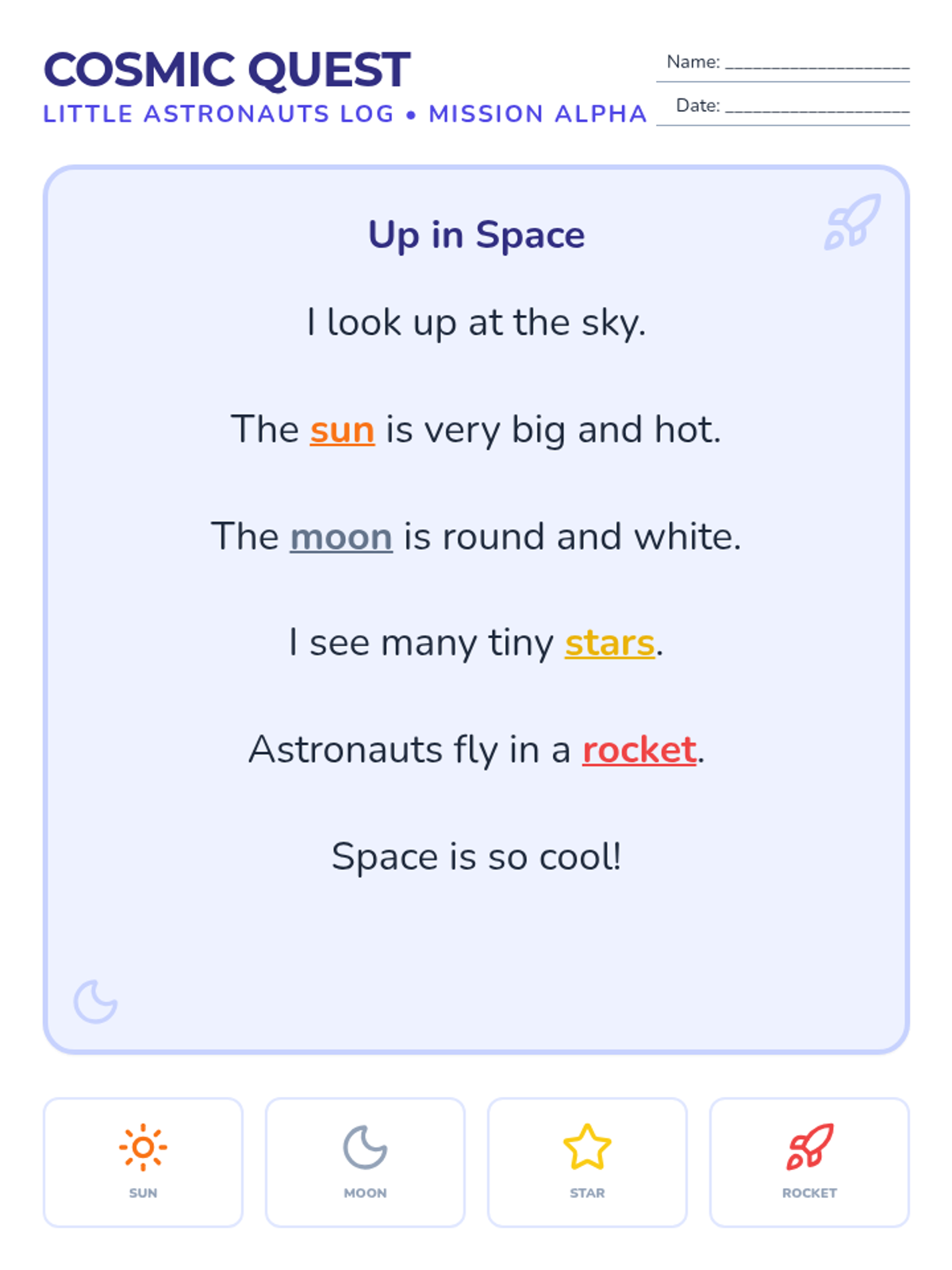
An introductory space exploration lesson for Kindergarteners focusing on basic concepts like the sun, moon, and stars through simple text and visual engagement.
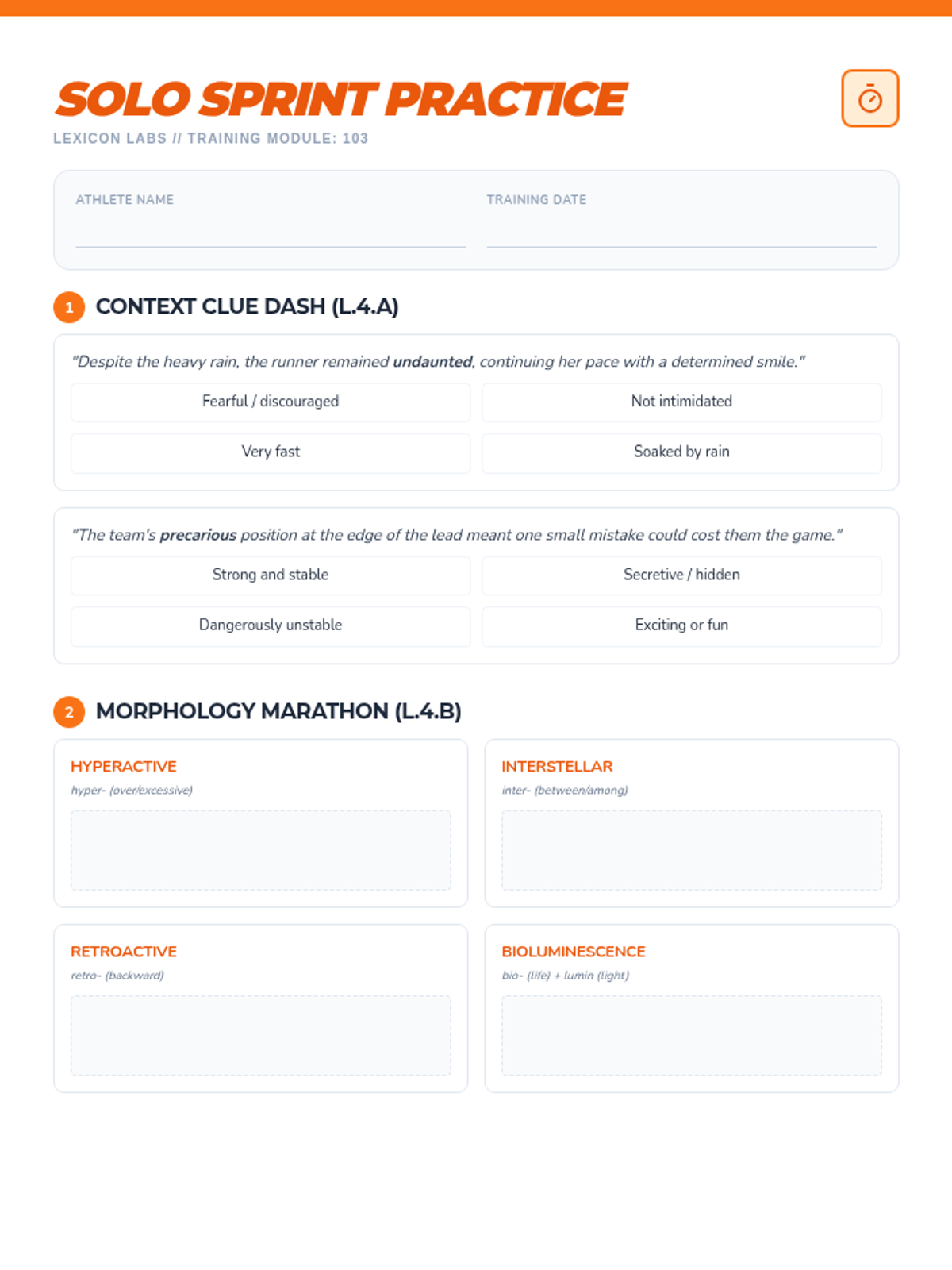
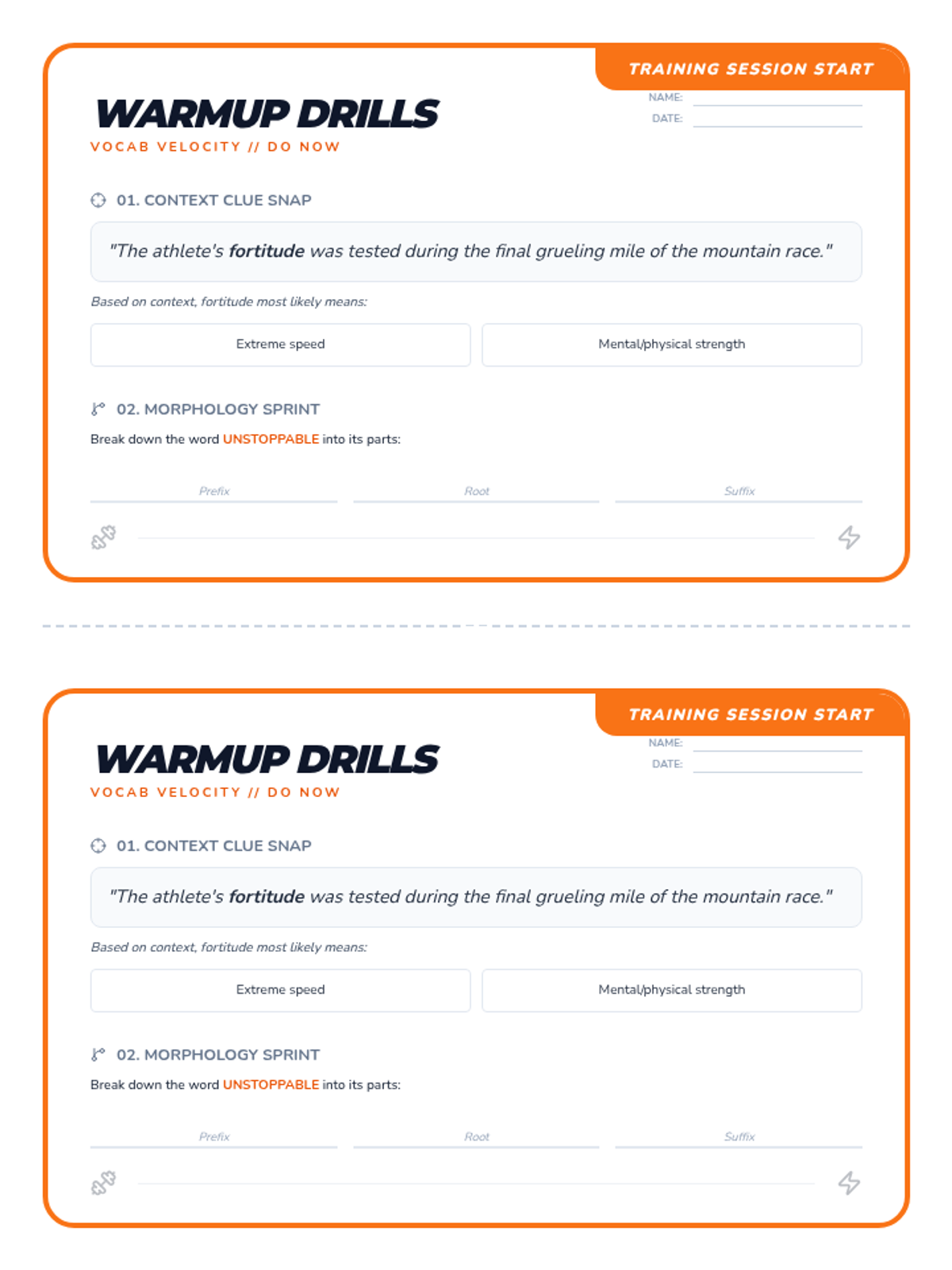
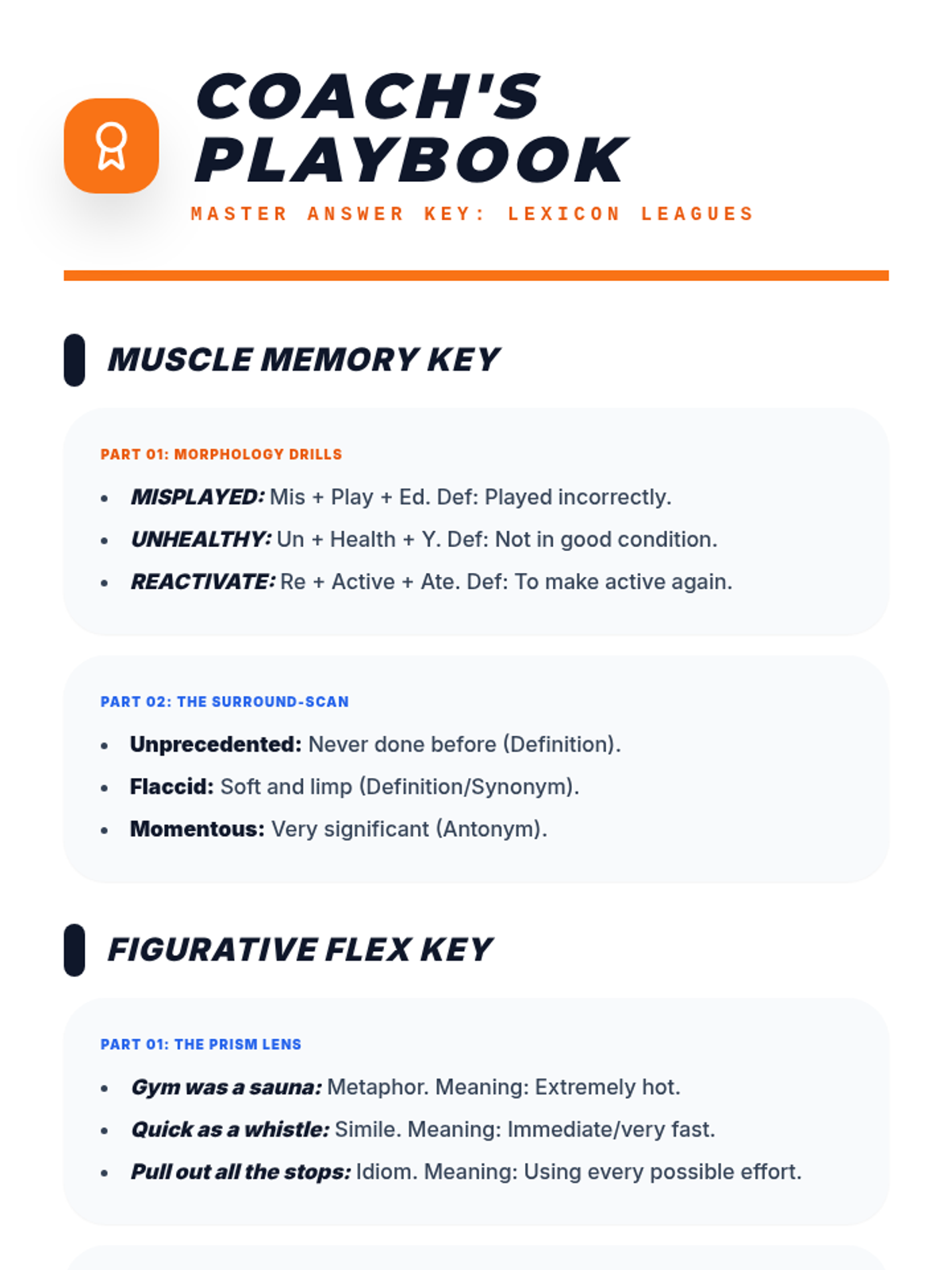
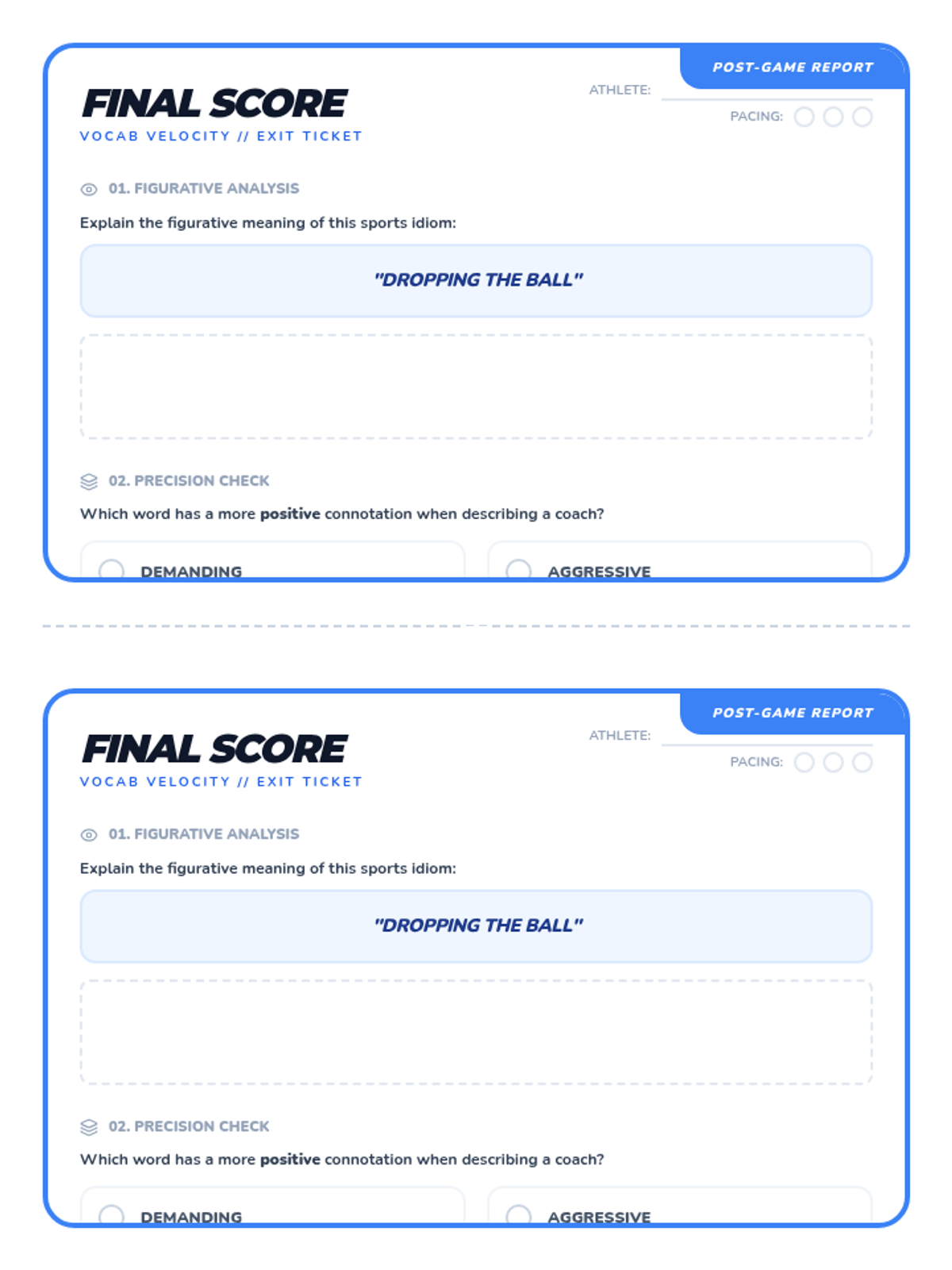
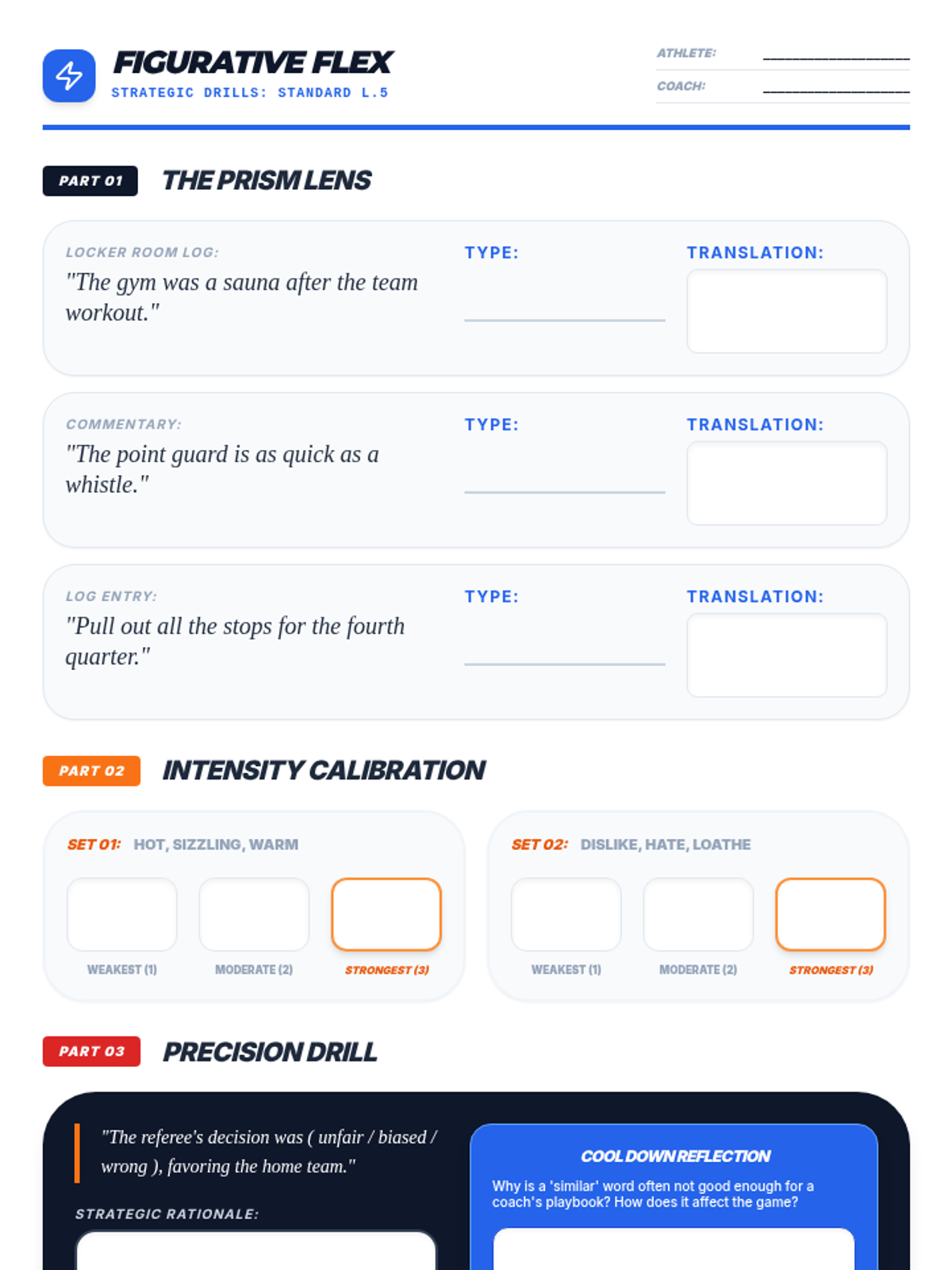
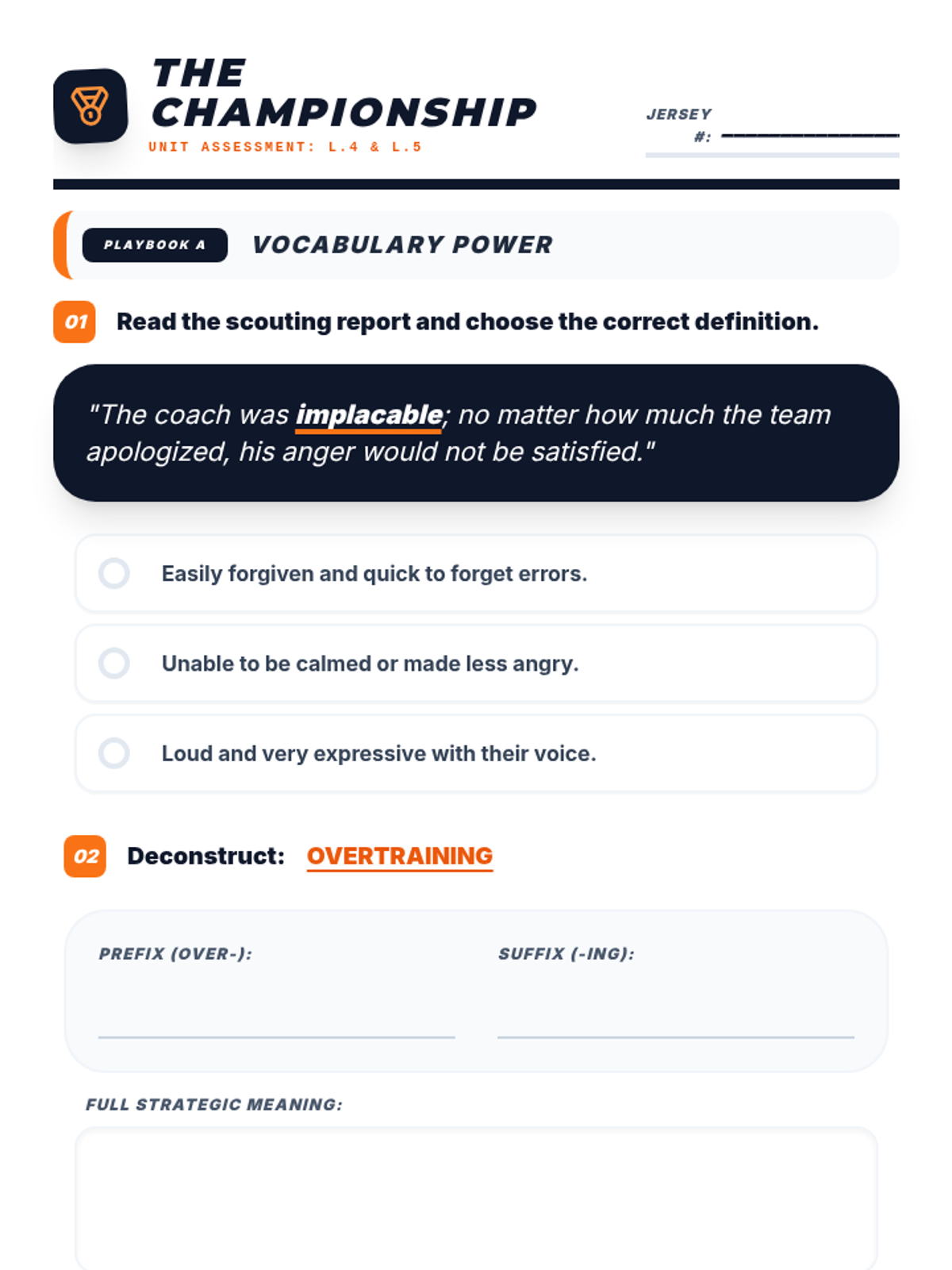
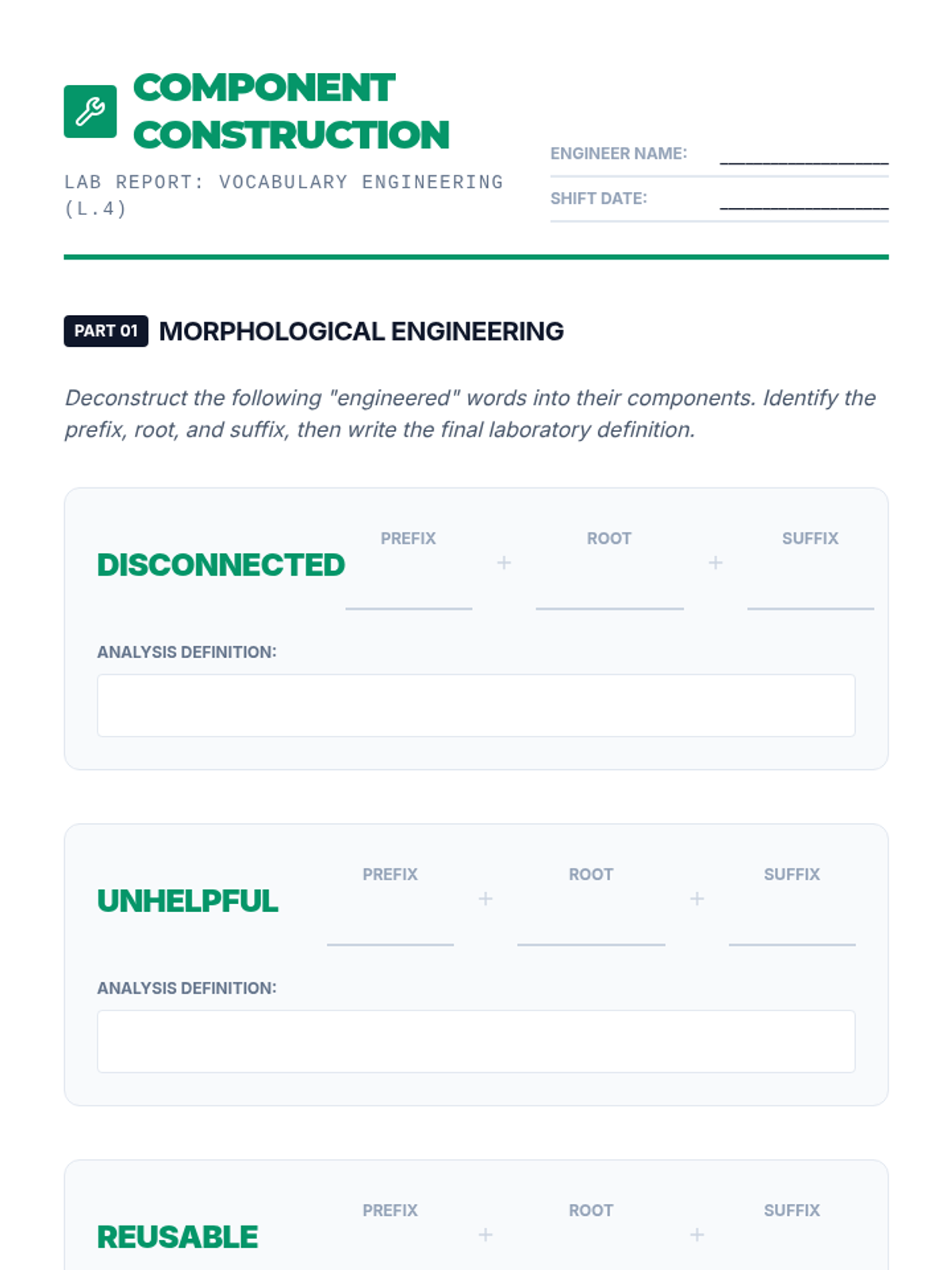
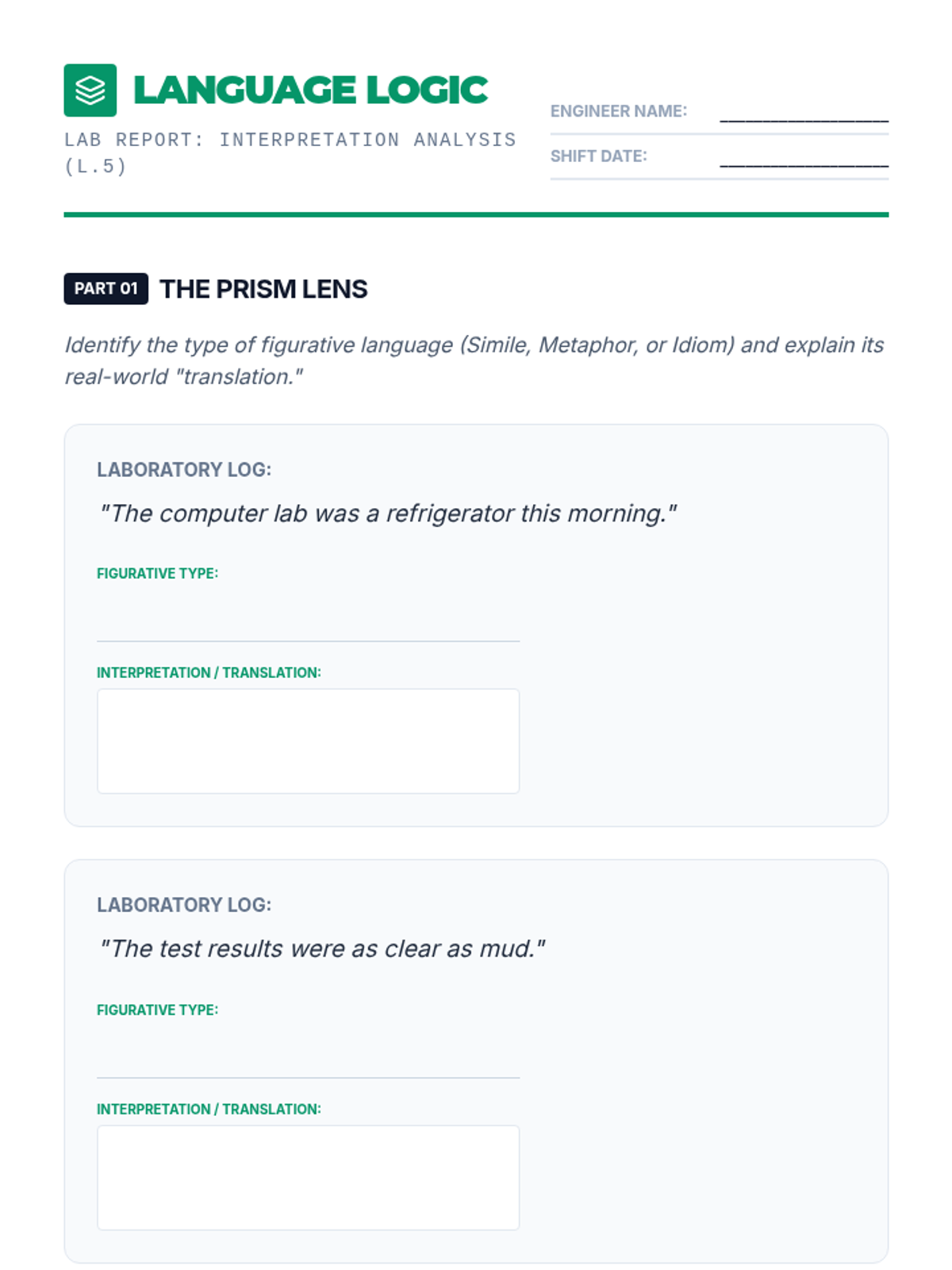
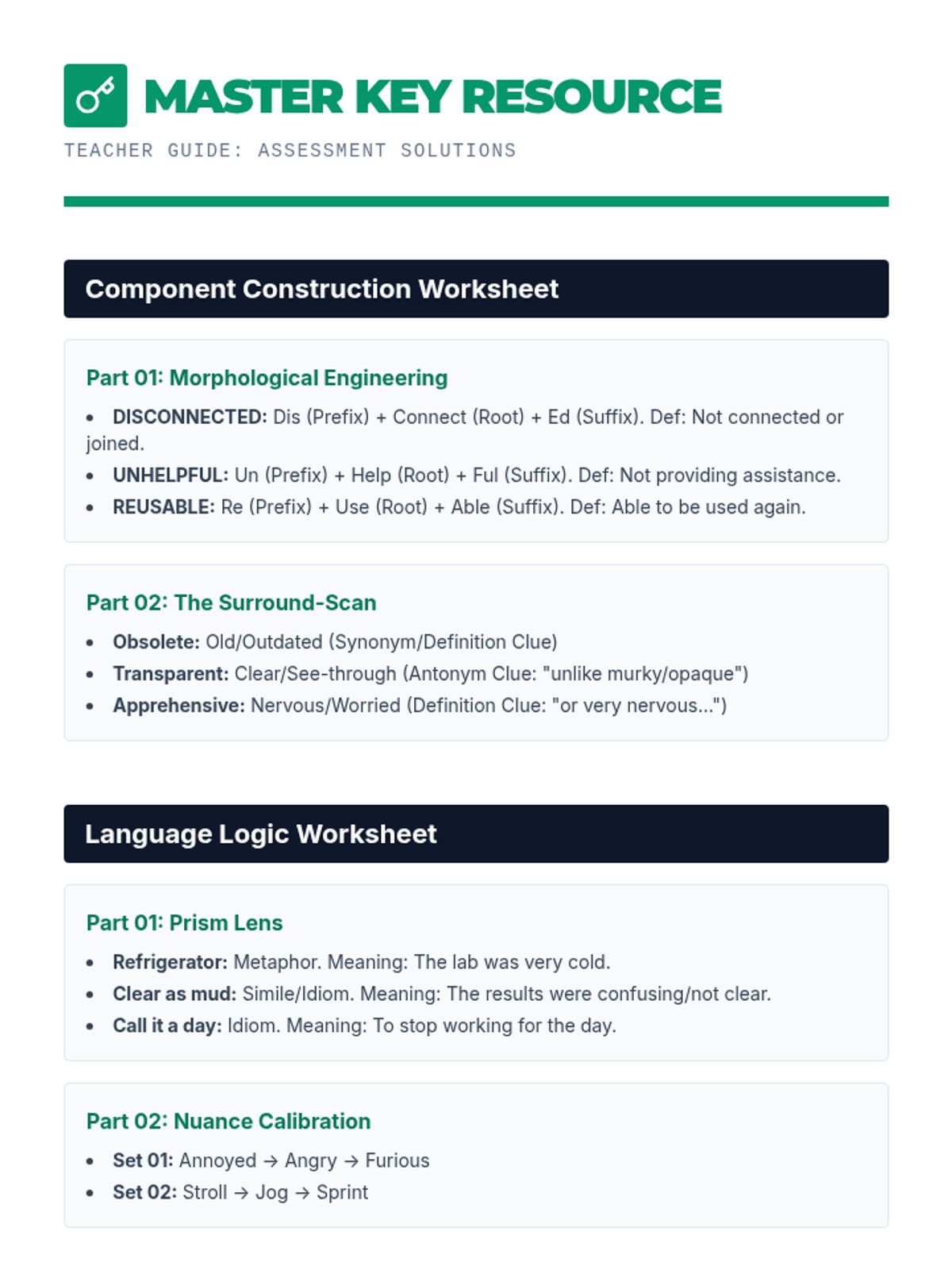
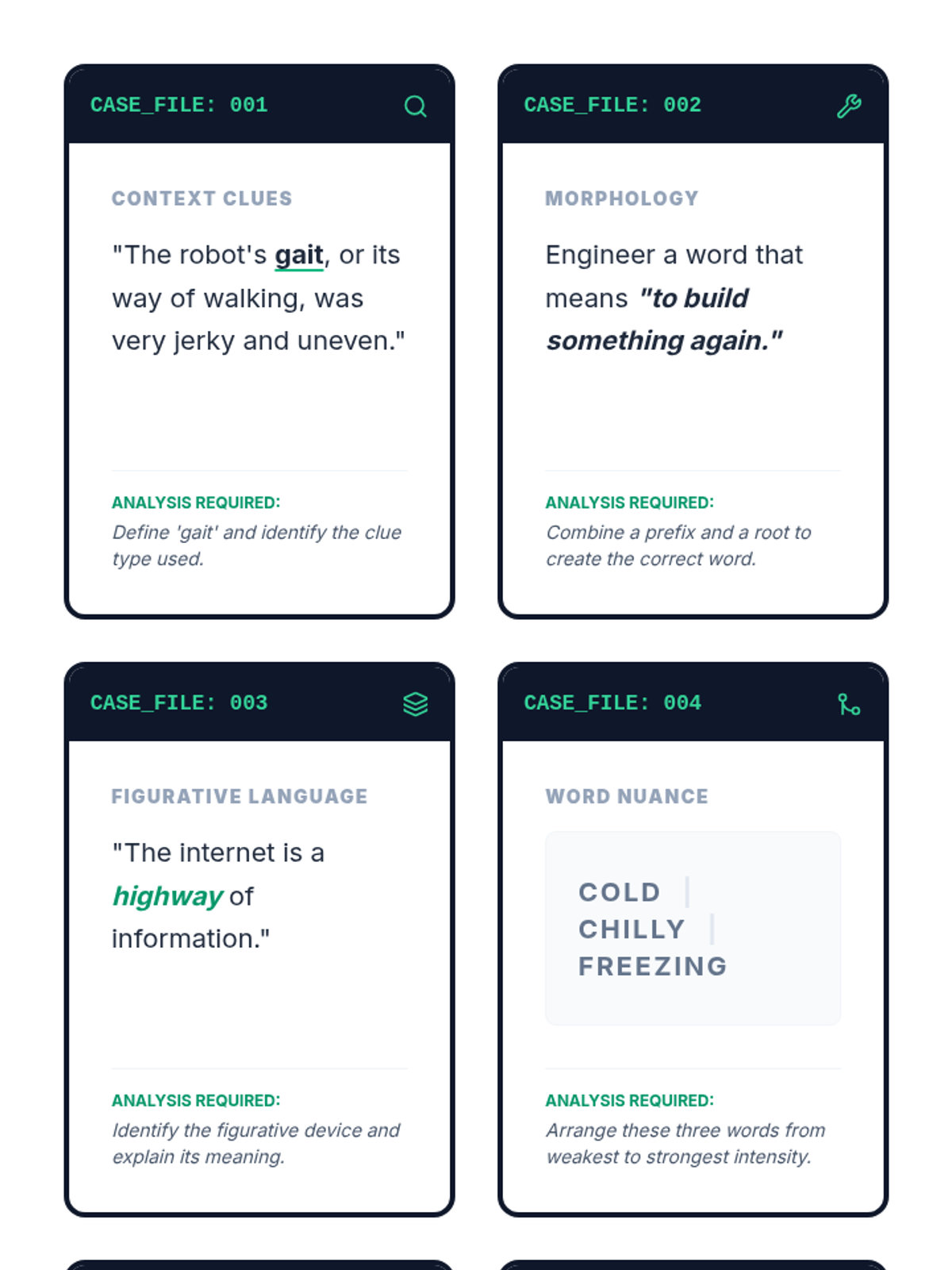
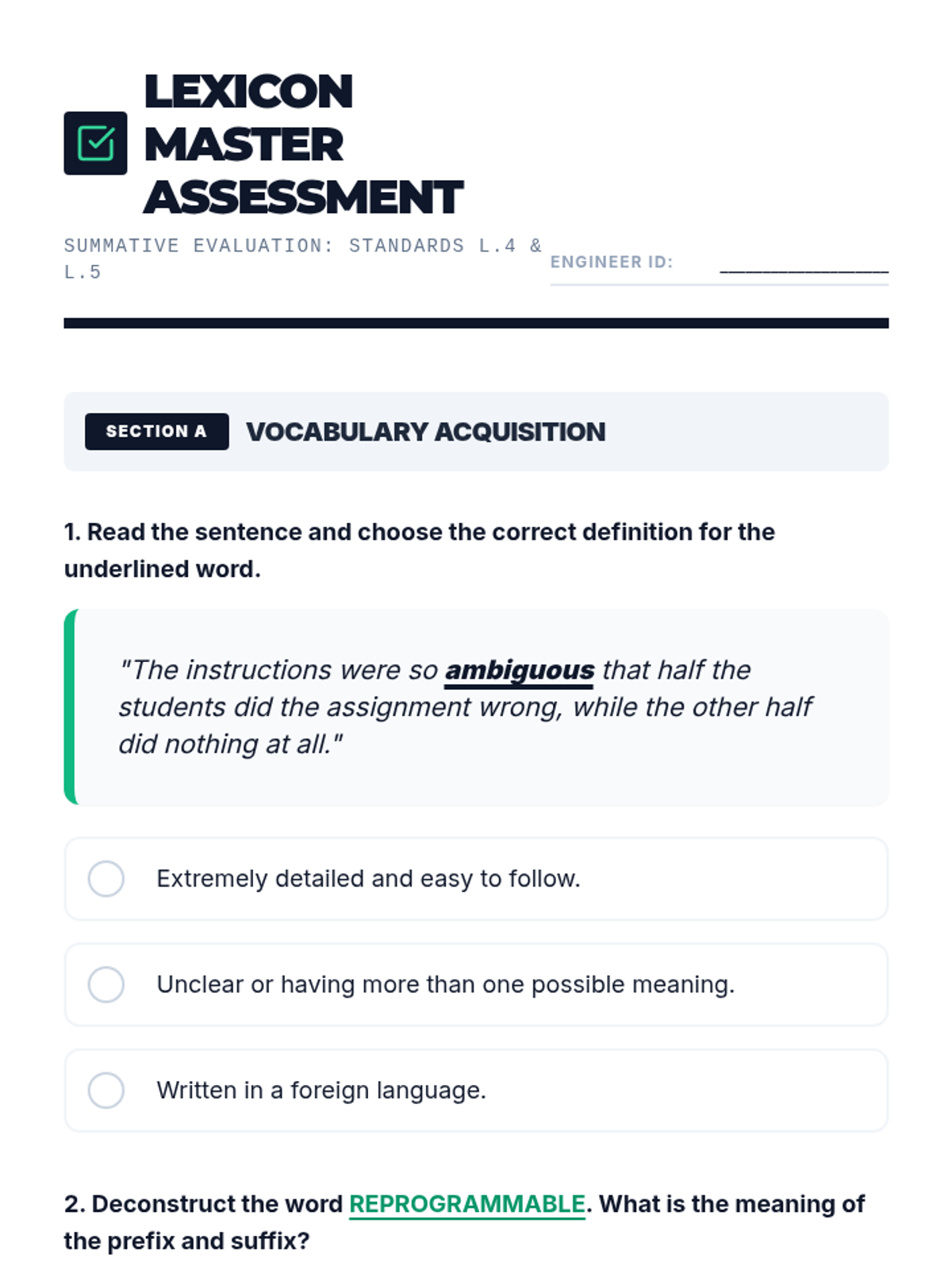
Instructional materials for vocabulary acquisition (L.4) and figurative language mastery (L.5). Students complete a 'training camp' sequence including drills, circuit training, and a final championship assessment.
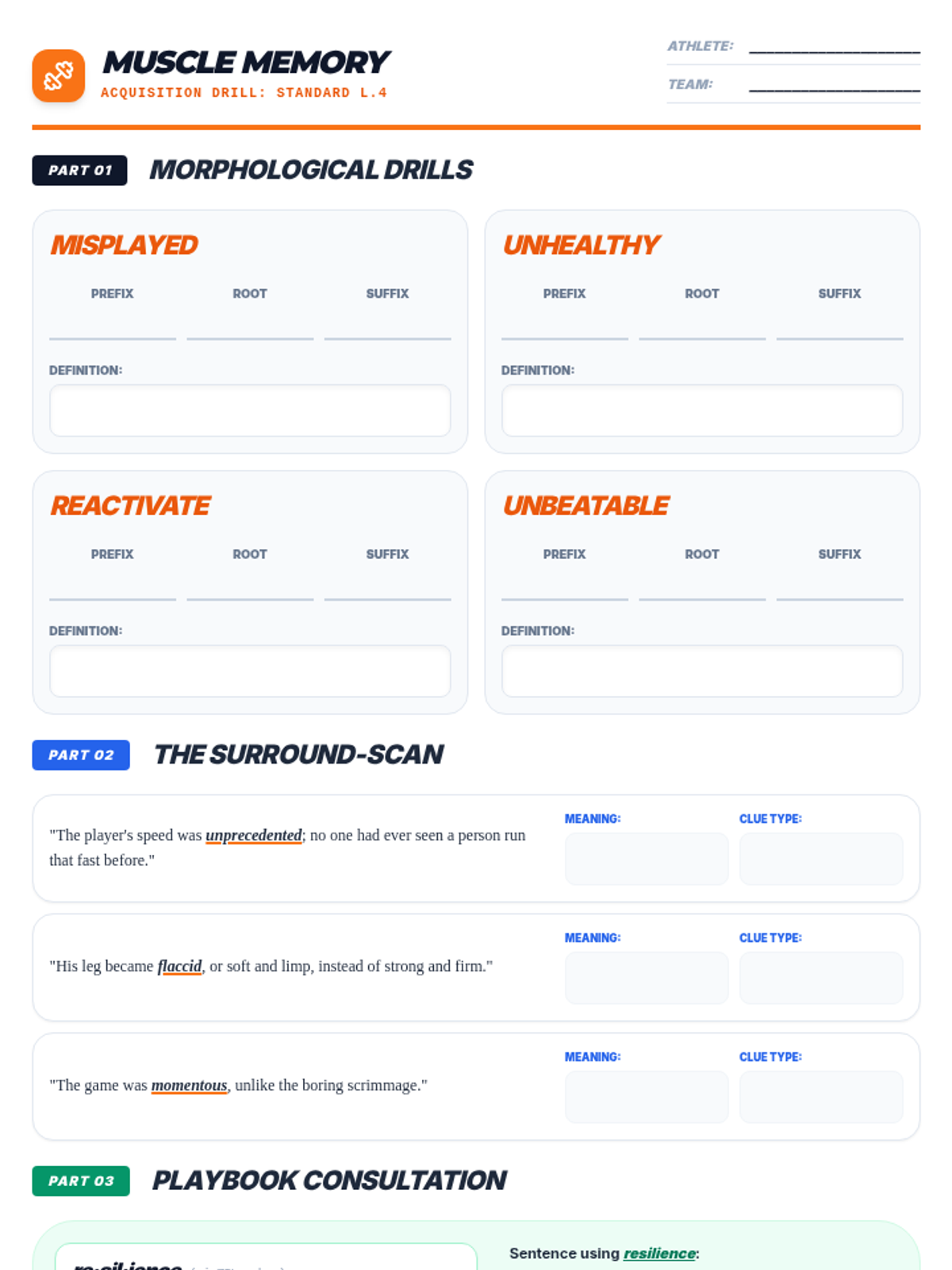
Instructional materials for mastering vocabulary acquisition (L.4) and understanding figurative language and word nuances (L.5). Includes direct instruction, hands-on practice, and a final summative assessment.
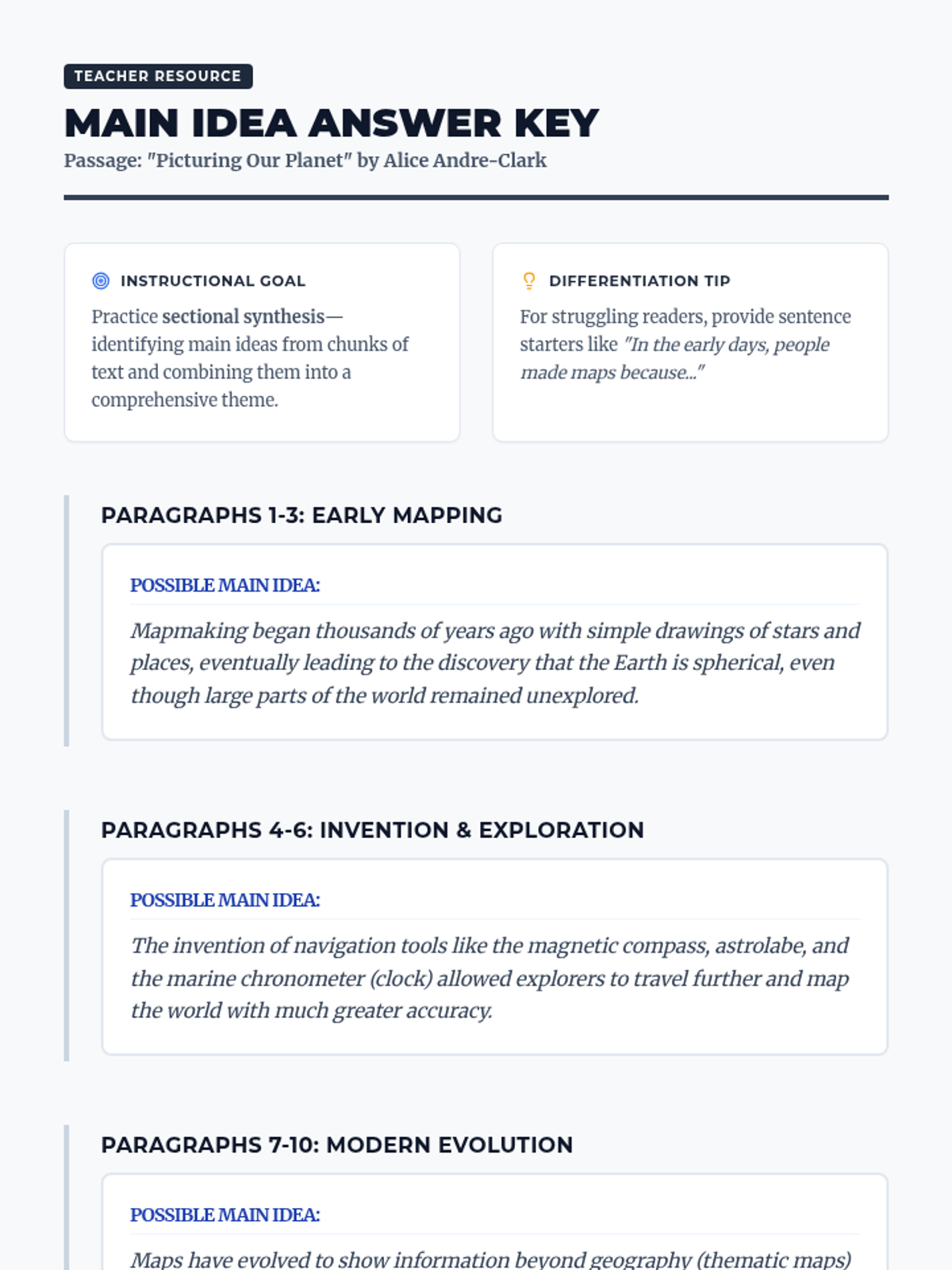
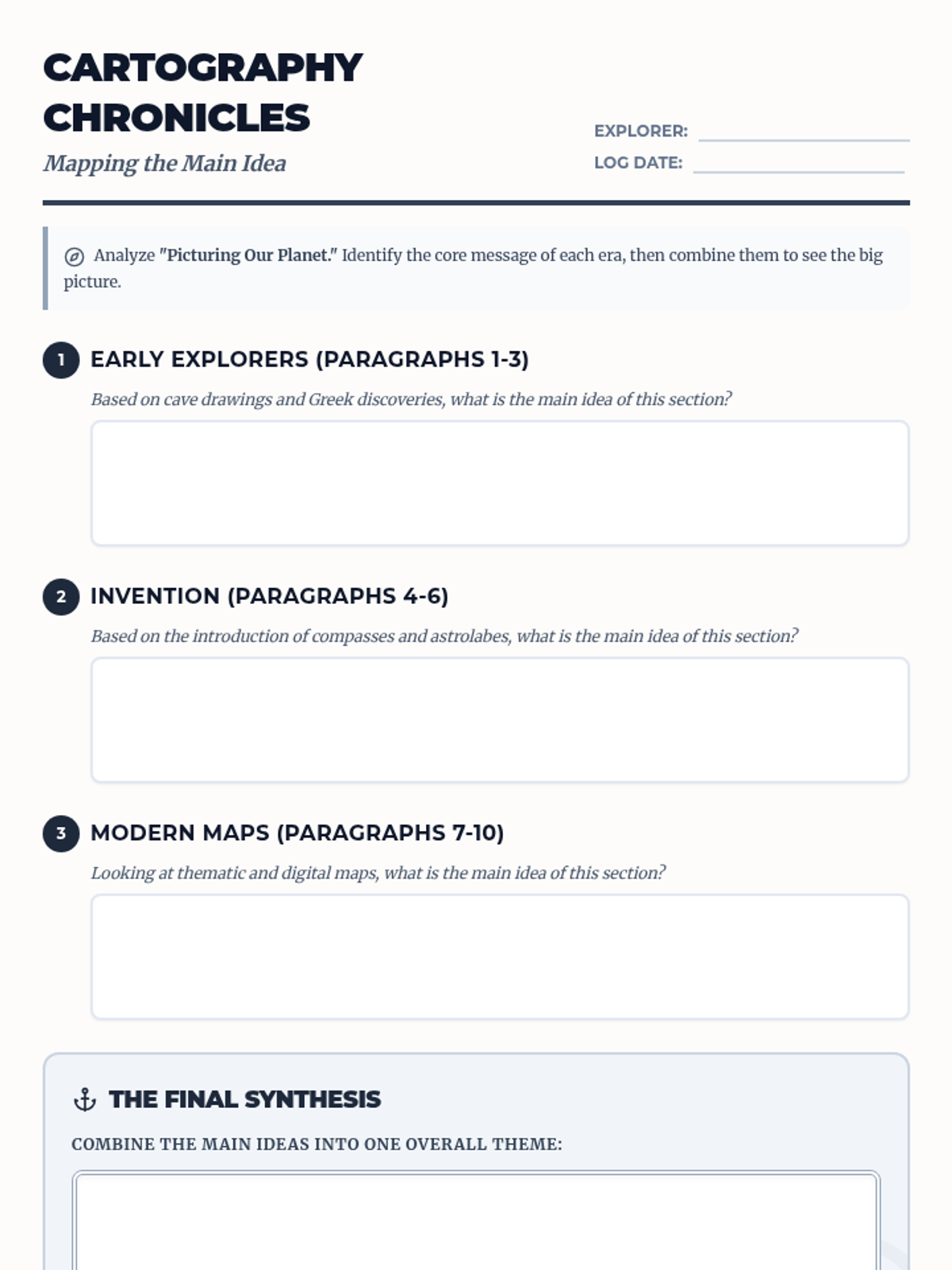
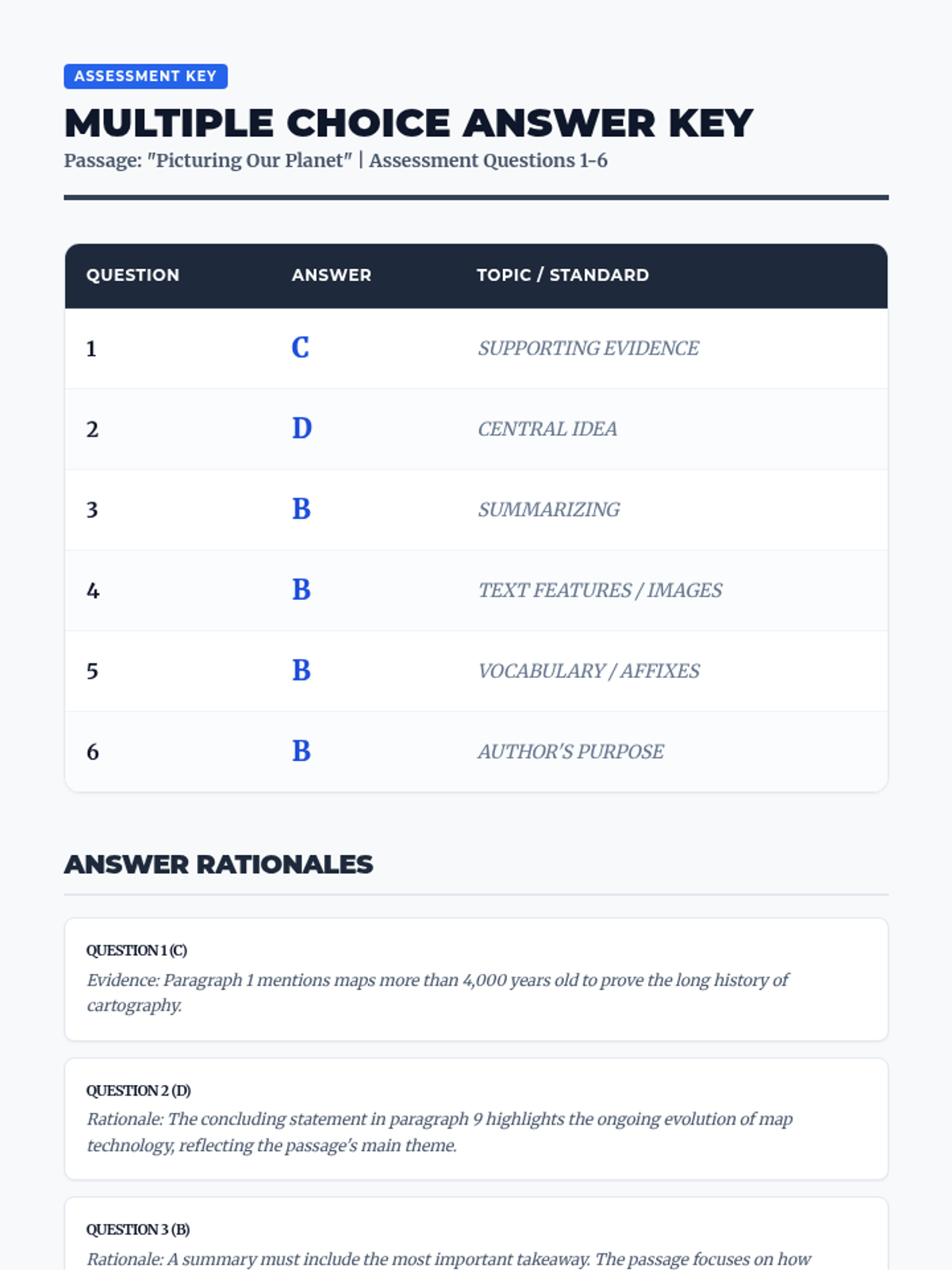
This lesson guides students through identifying sectional main ideas and synthesizing them into a central theme using the historical passage 'Picturing Our Planet'.
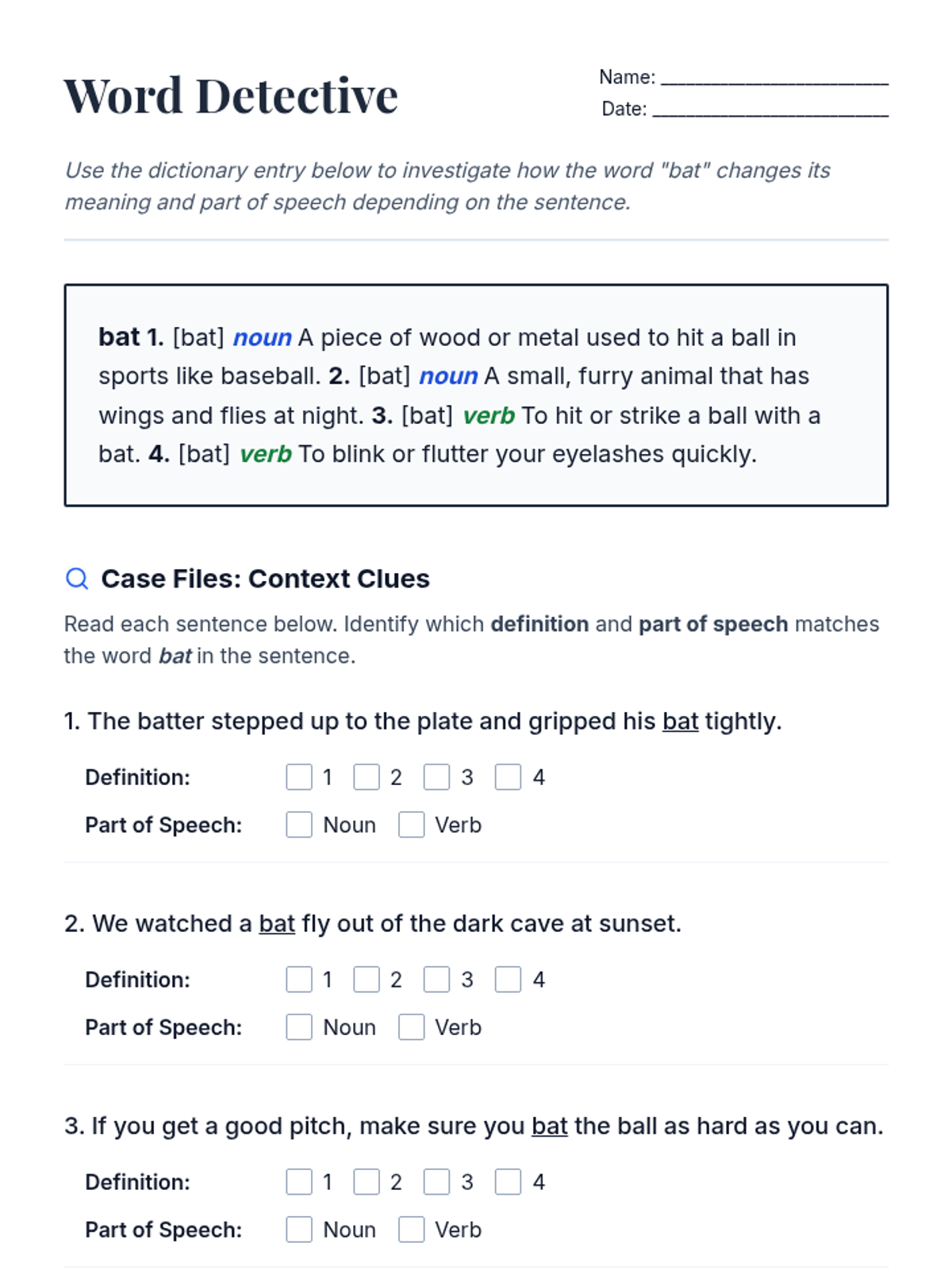
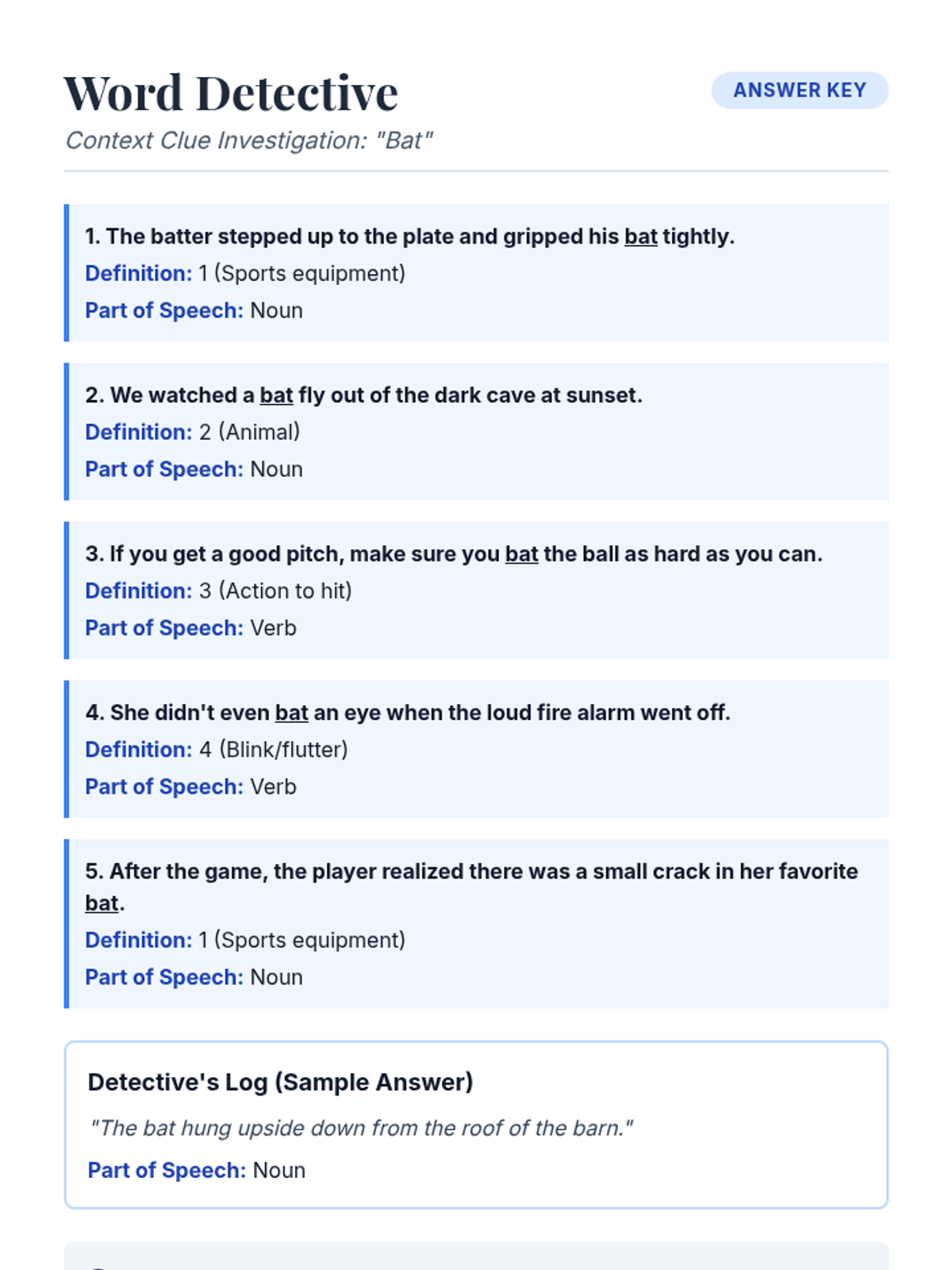
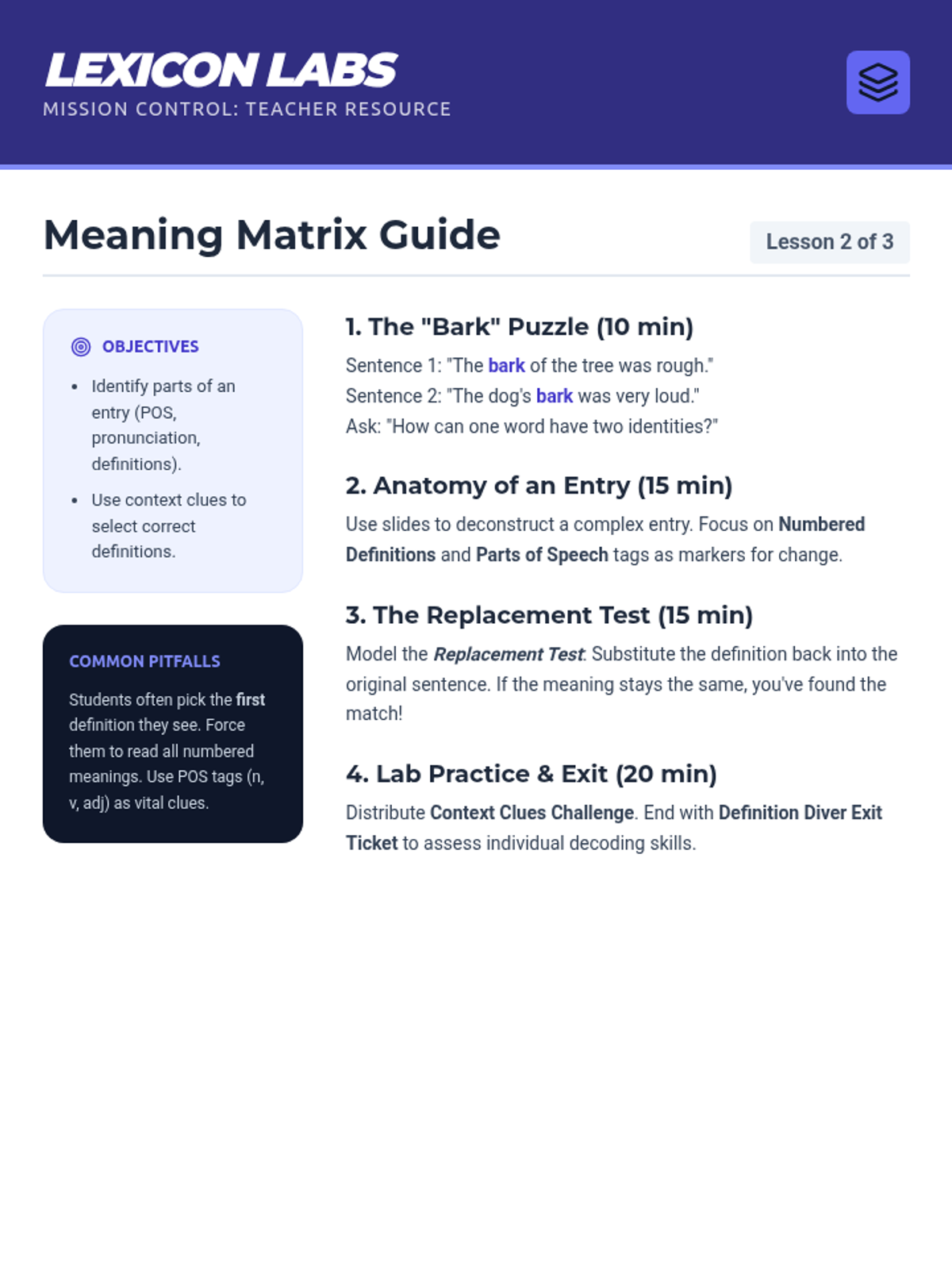
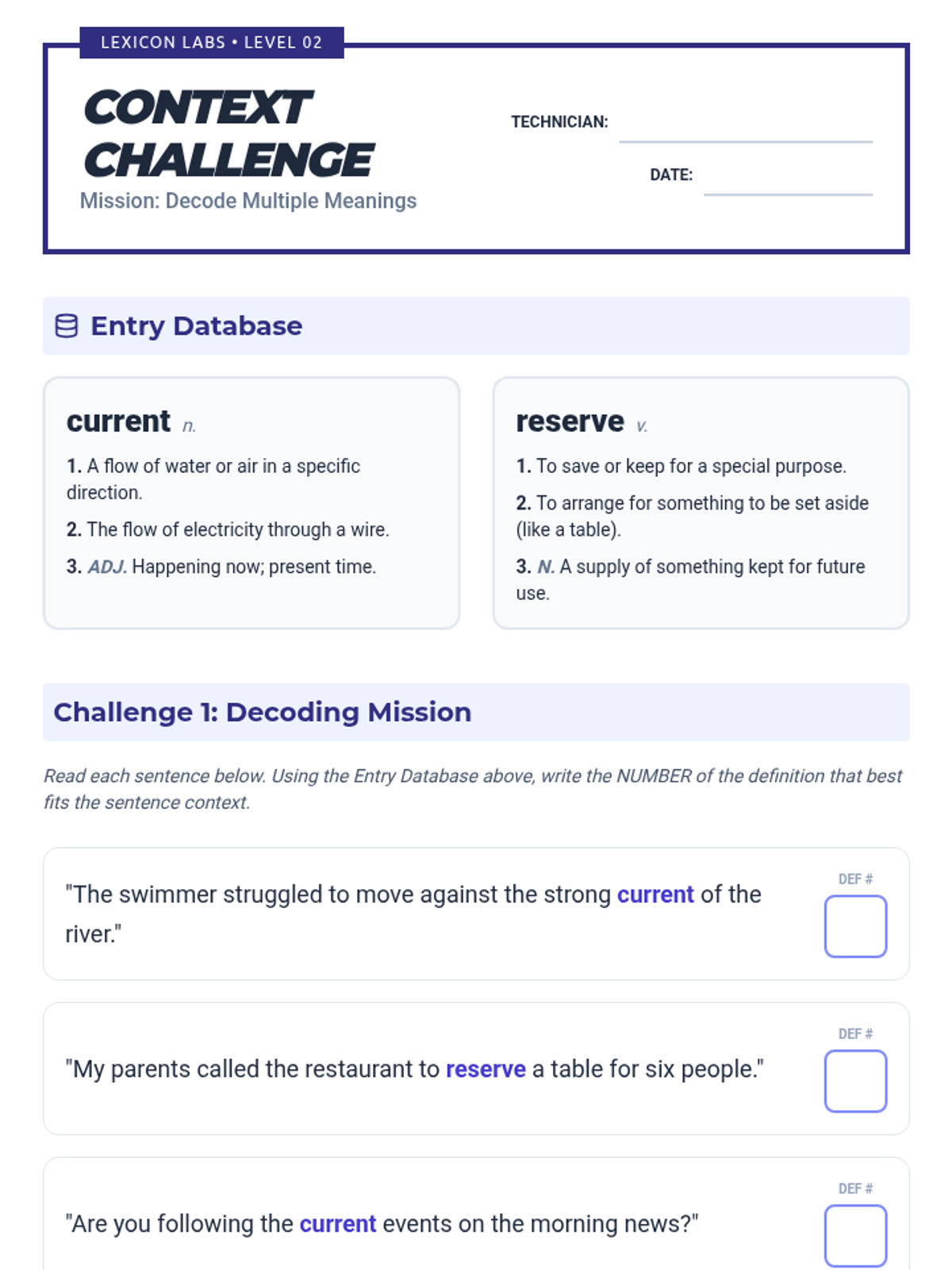
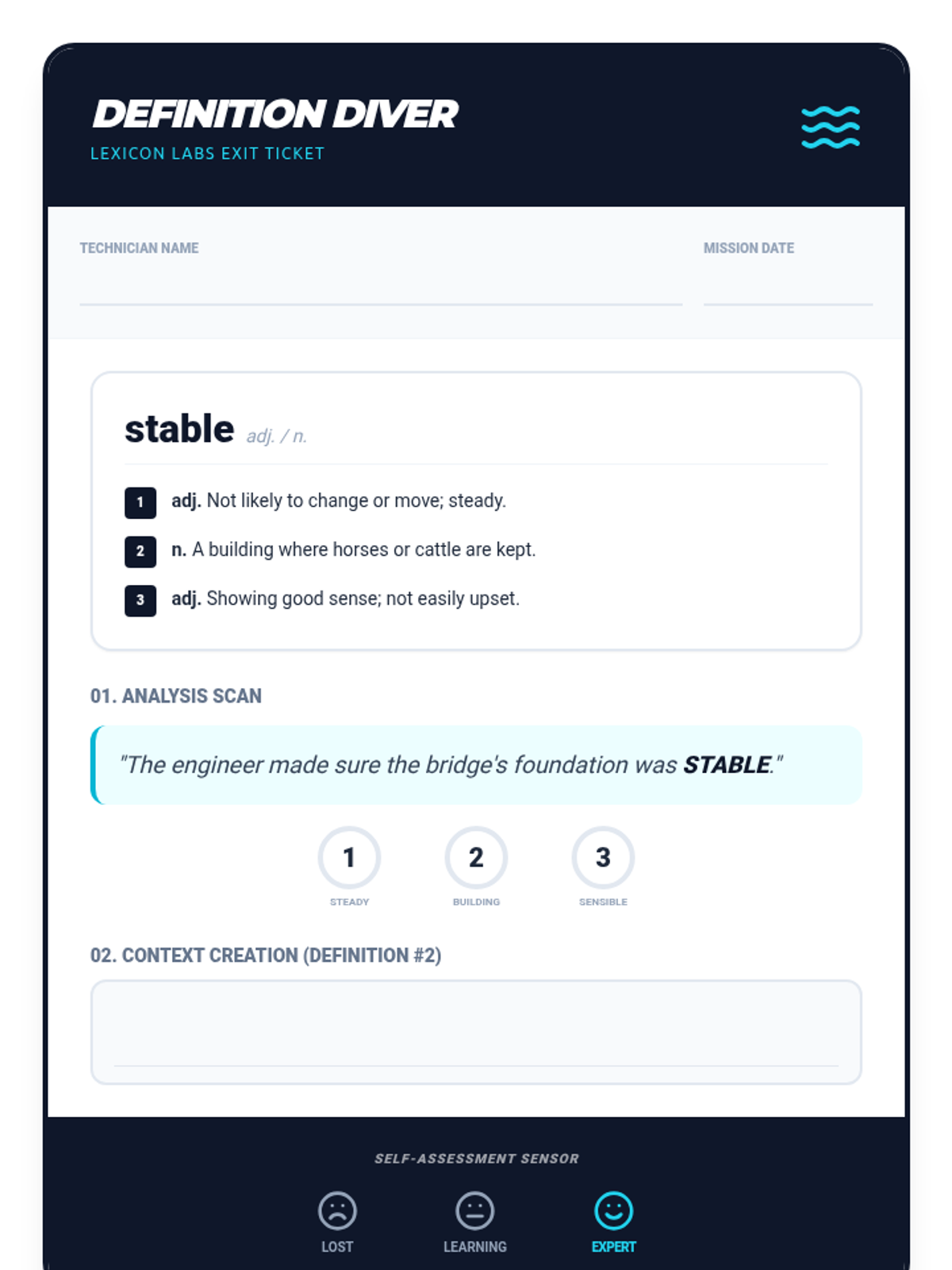
A lesson focused on using dictionary entries and context clues to identify the meaning of multiple-meaning words (homonyms).
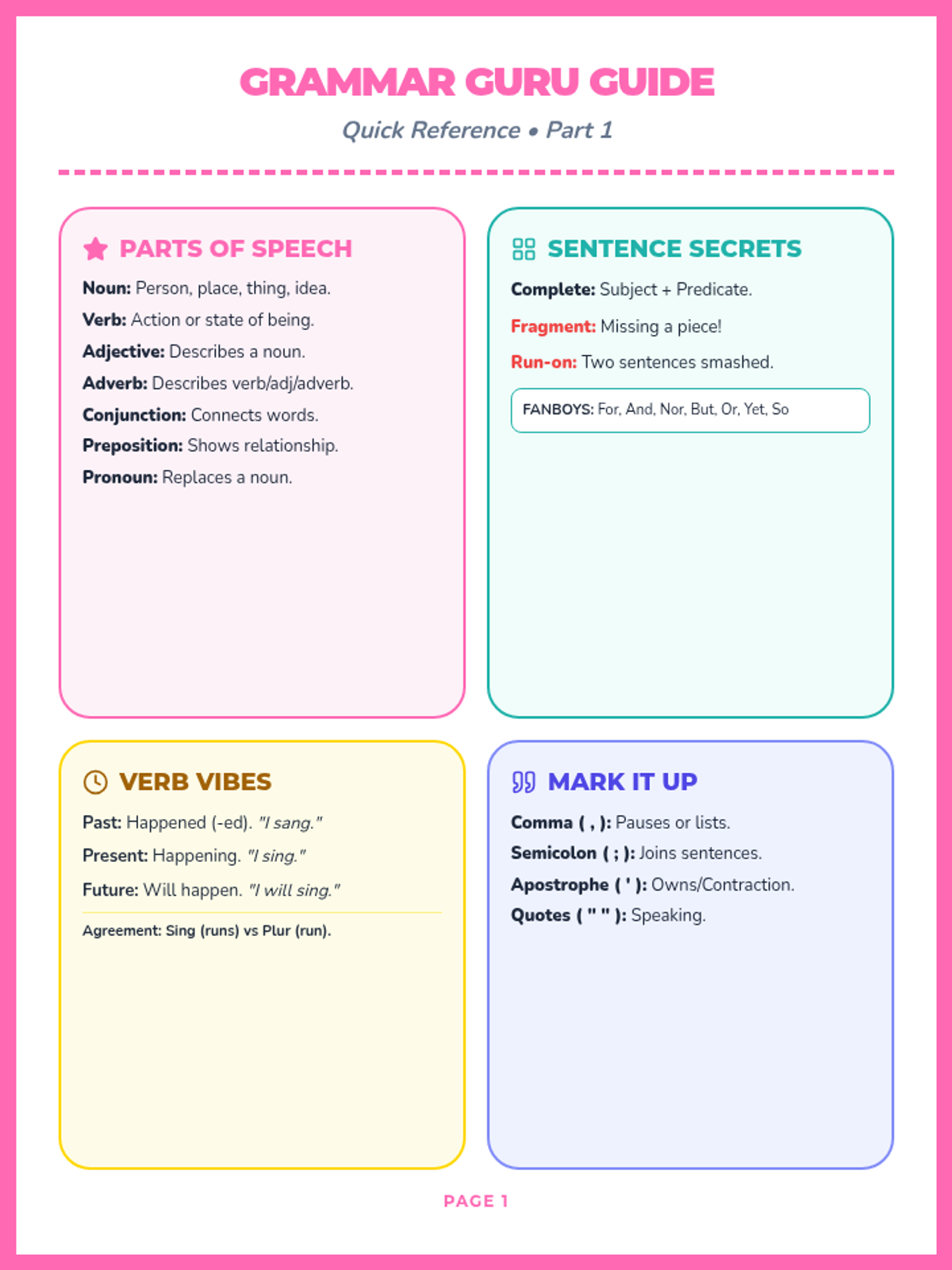
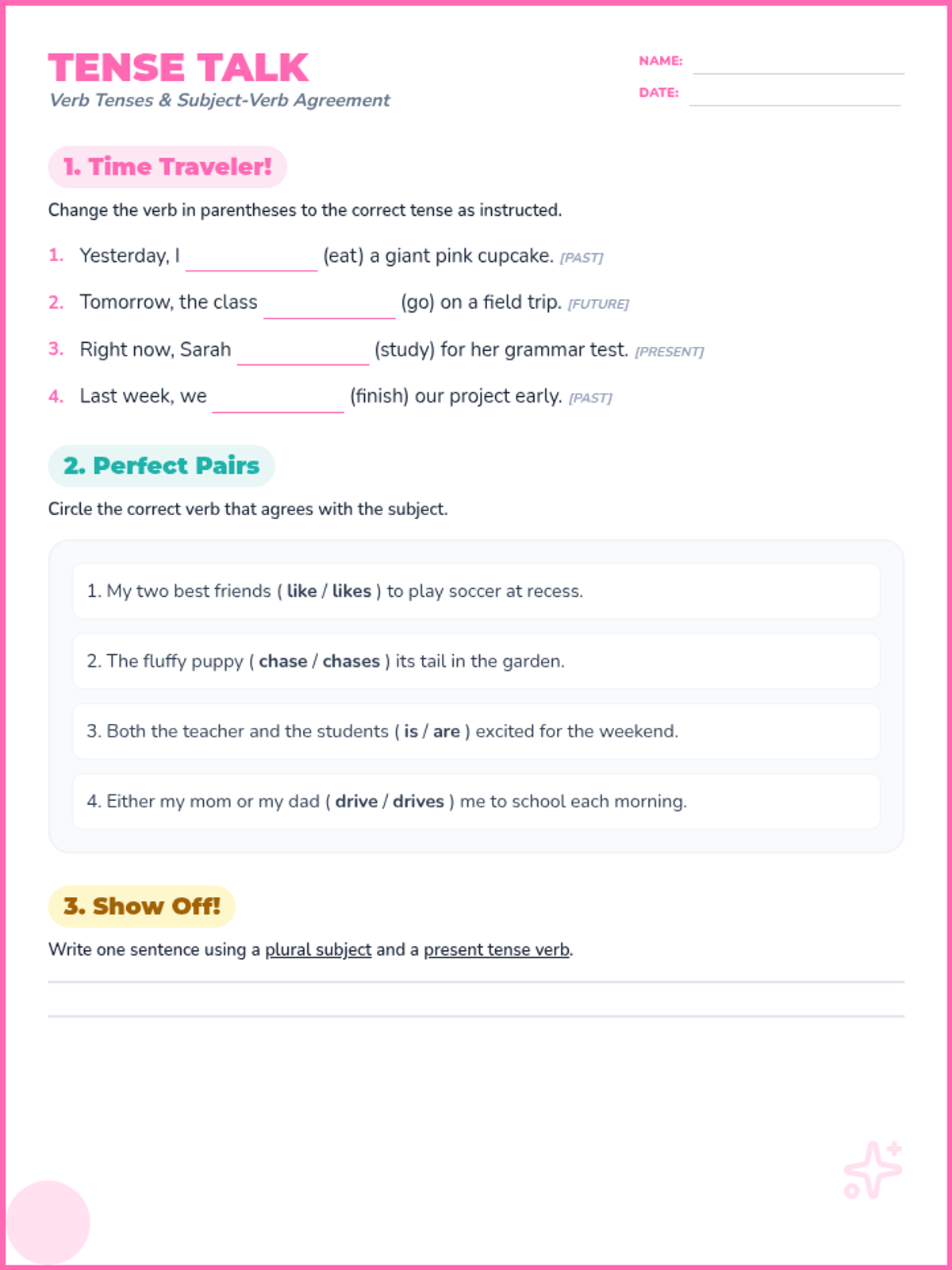
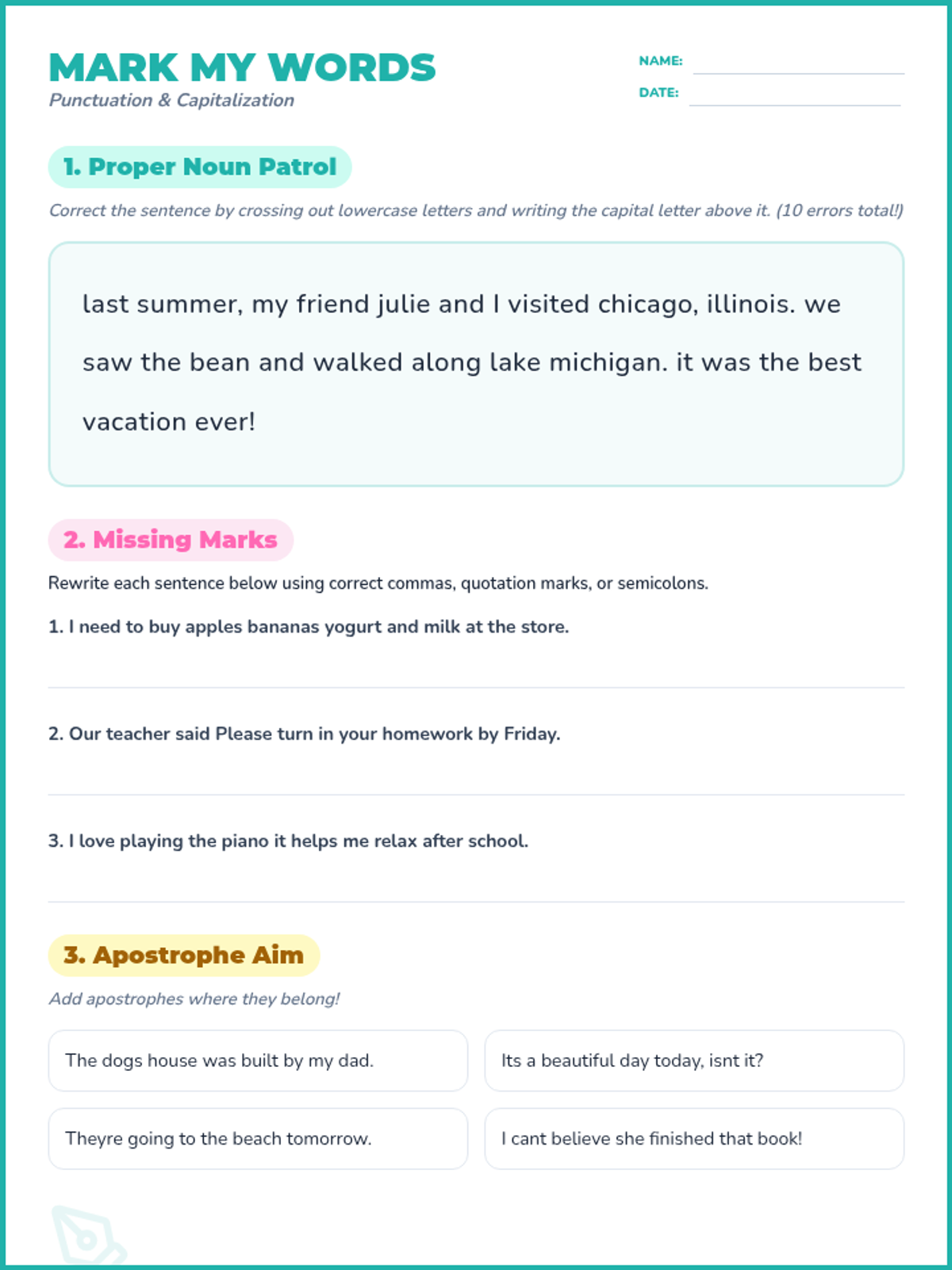
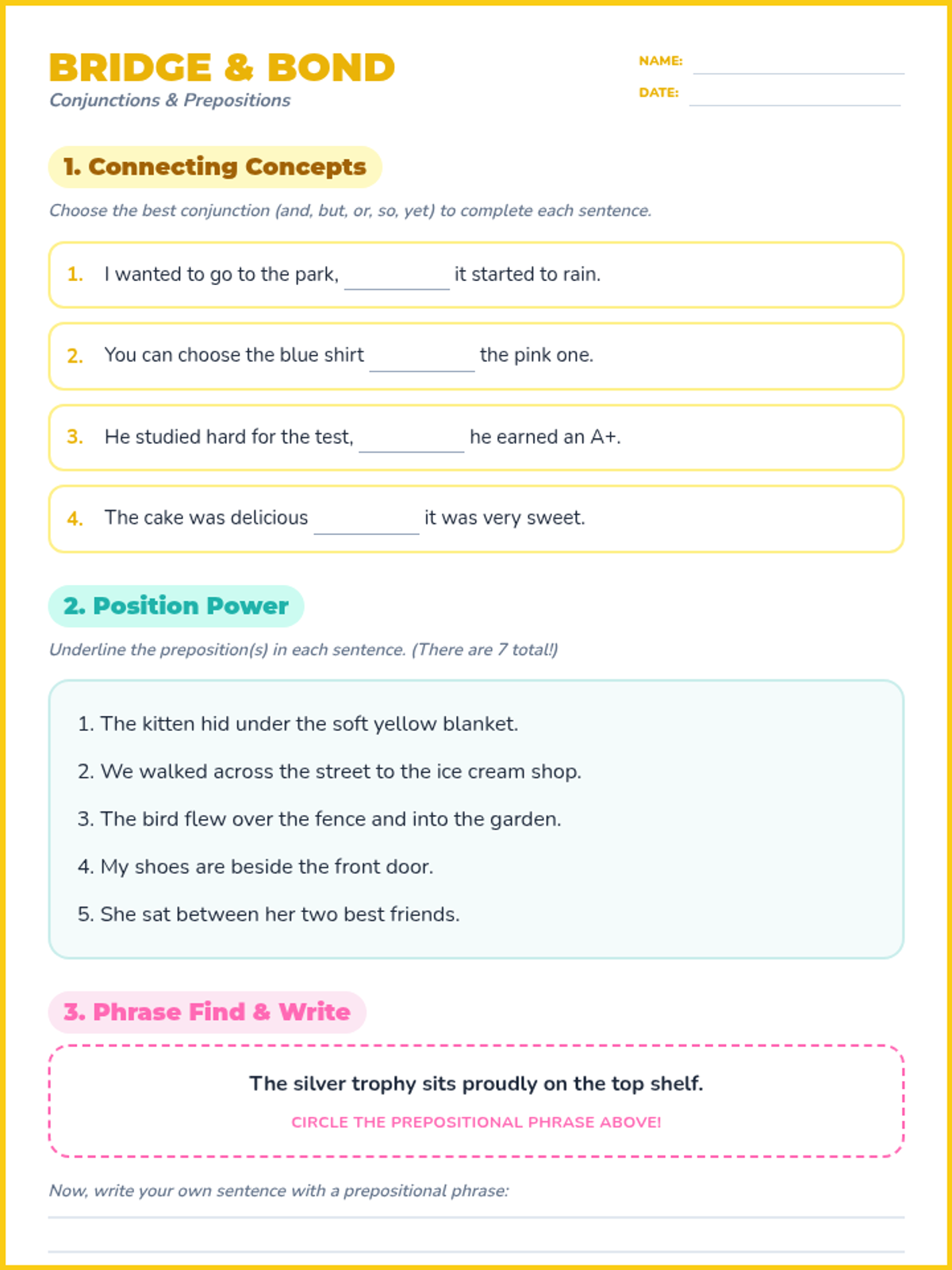
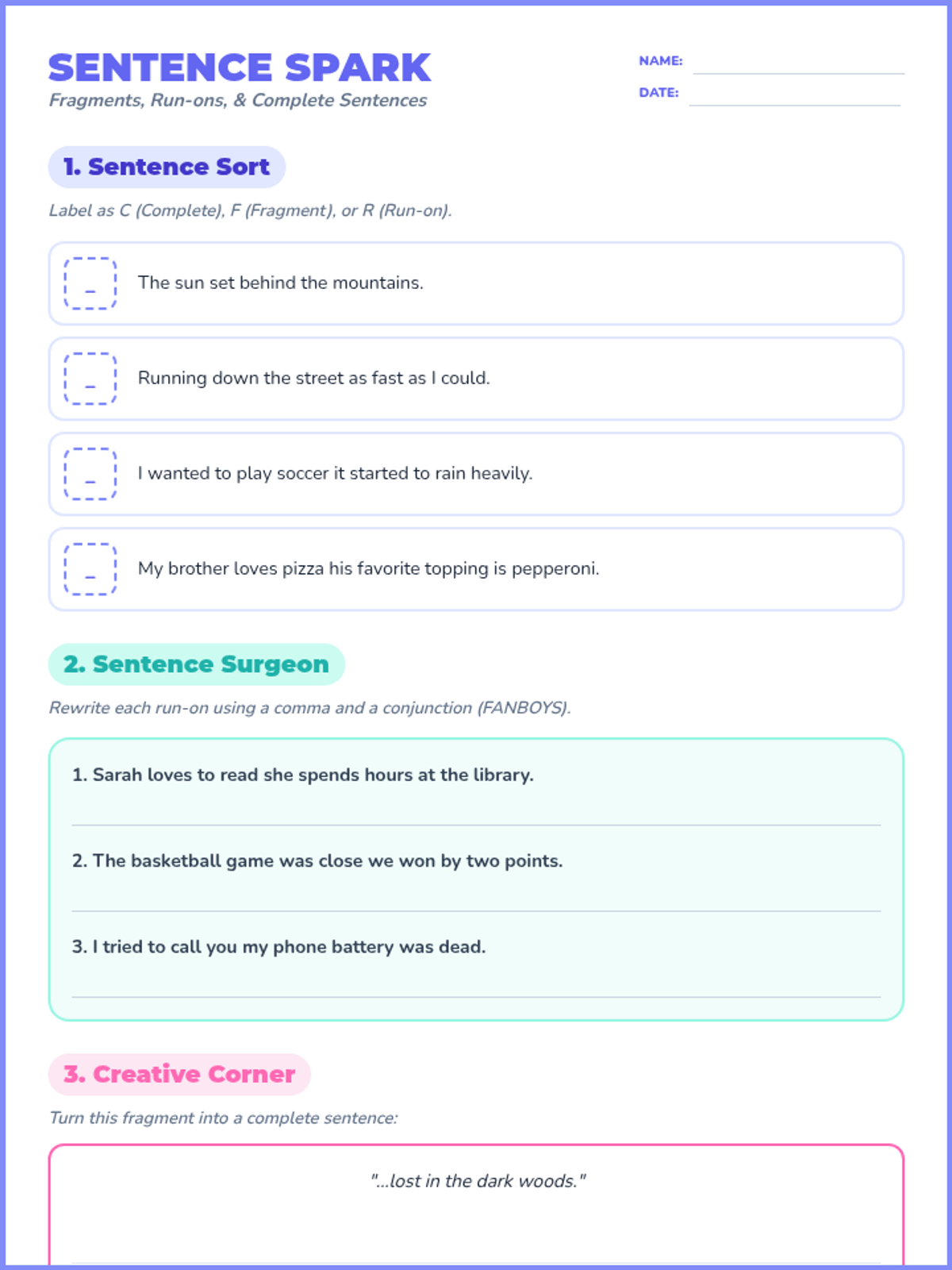
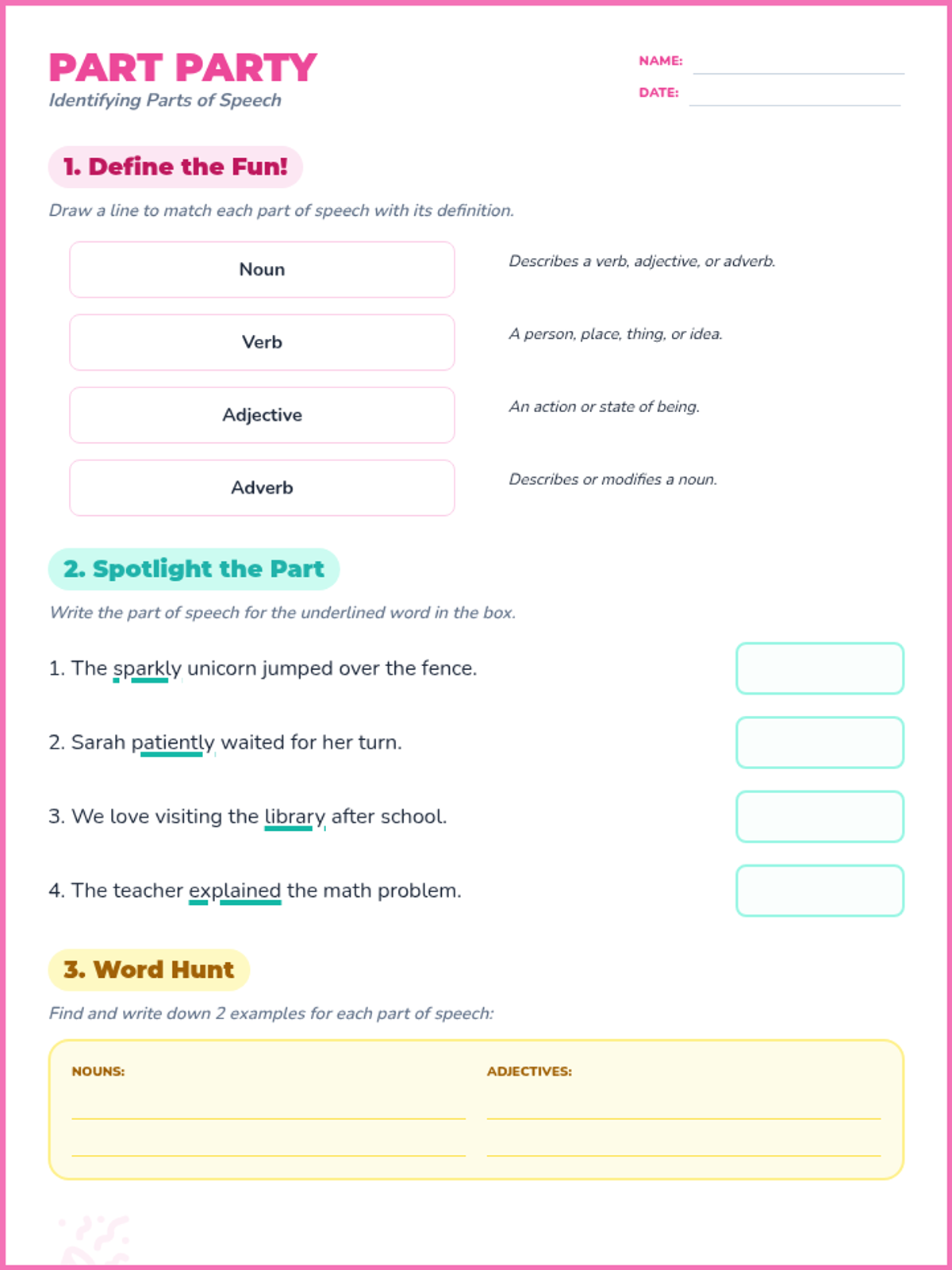
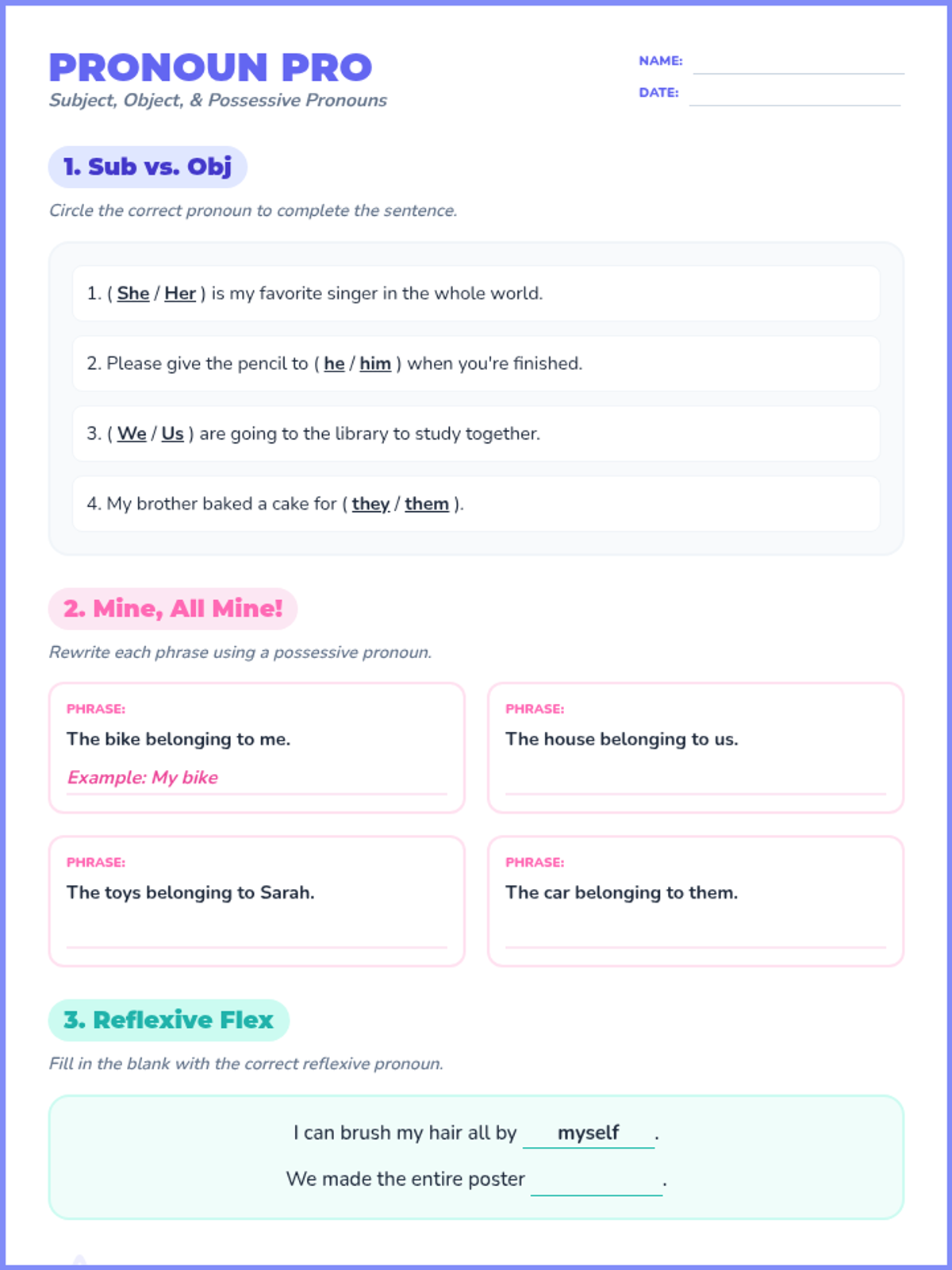
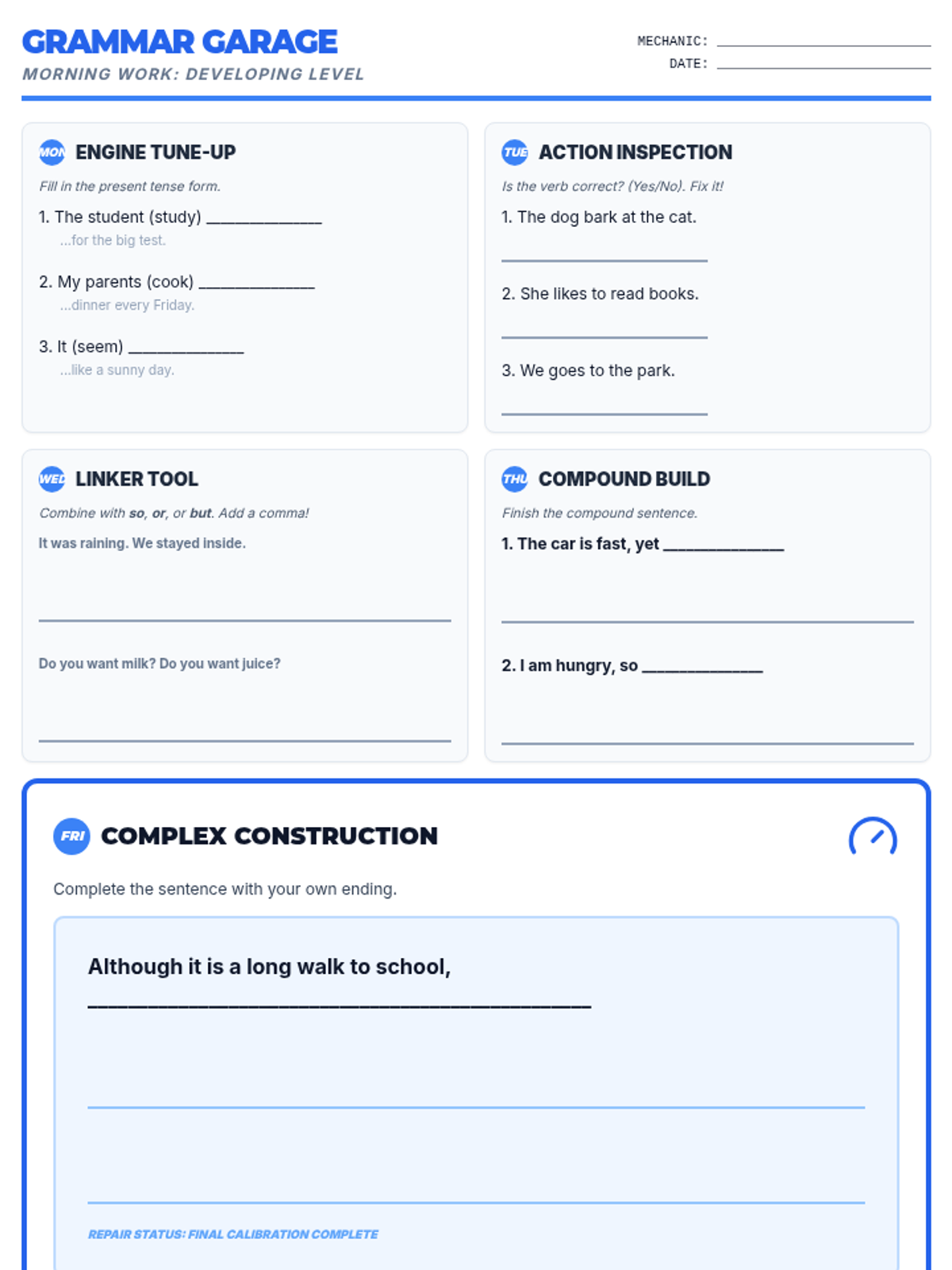
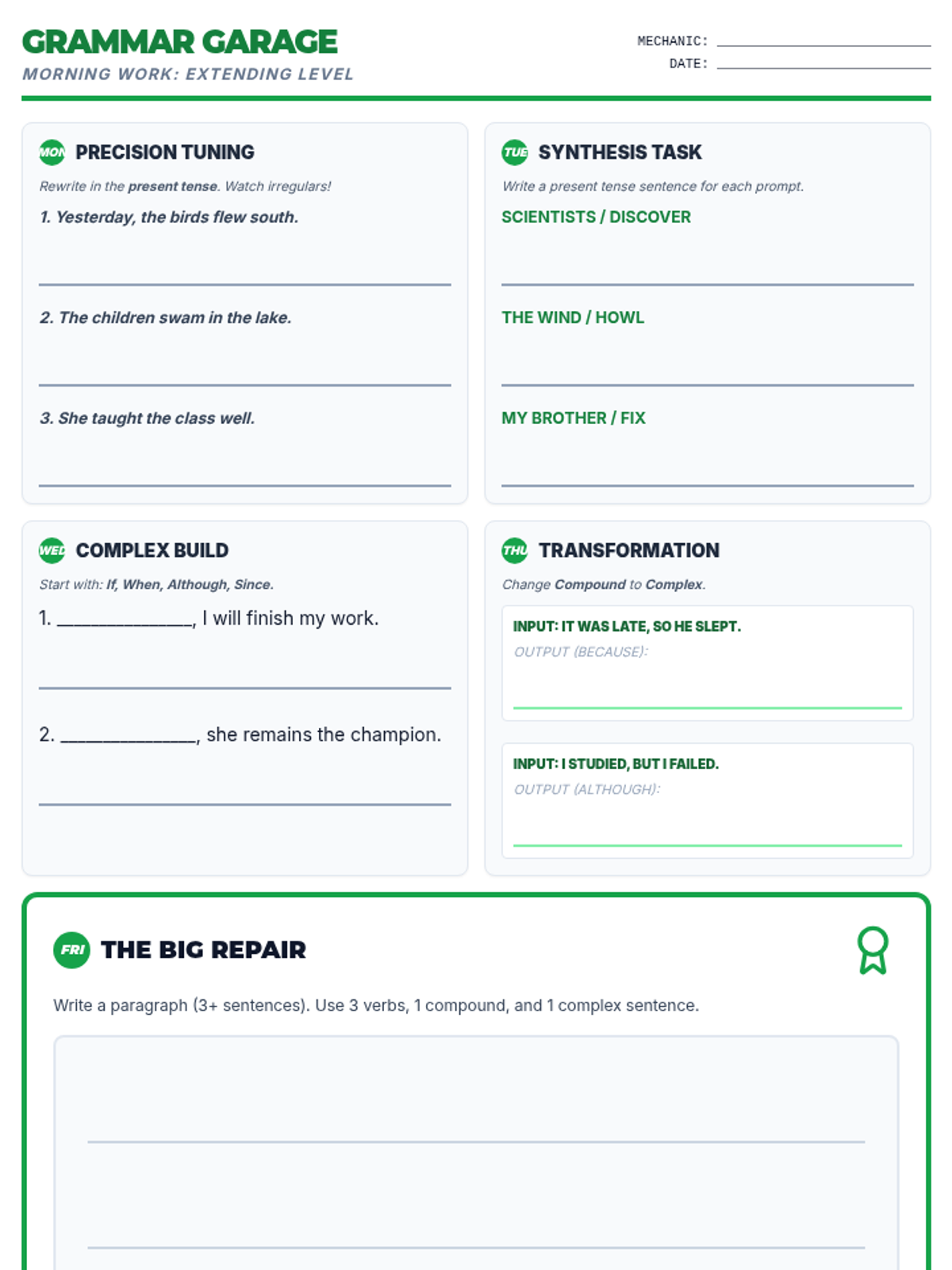
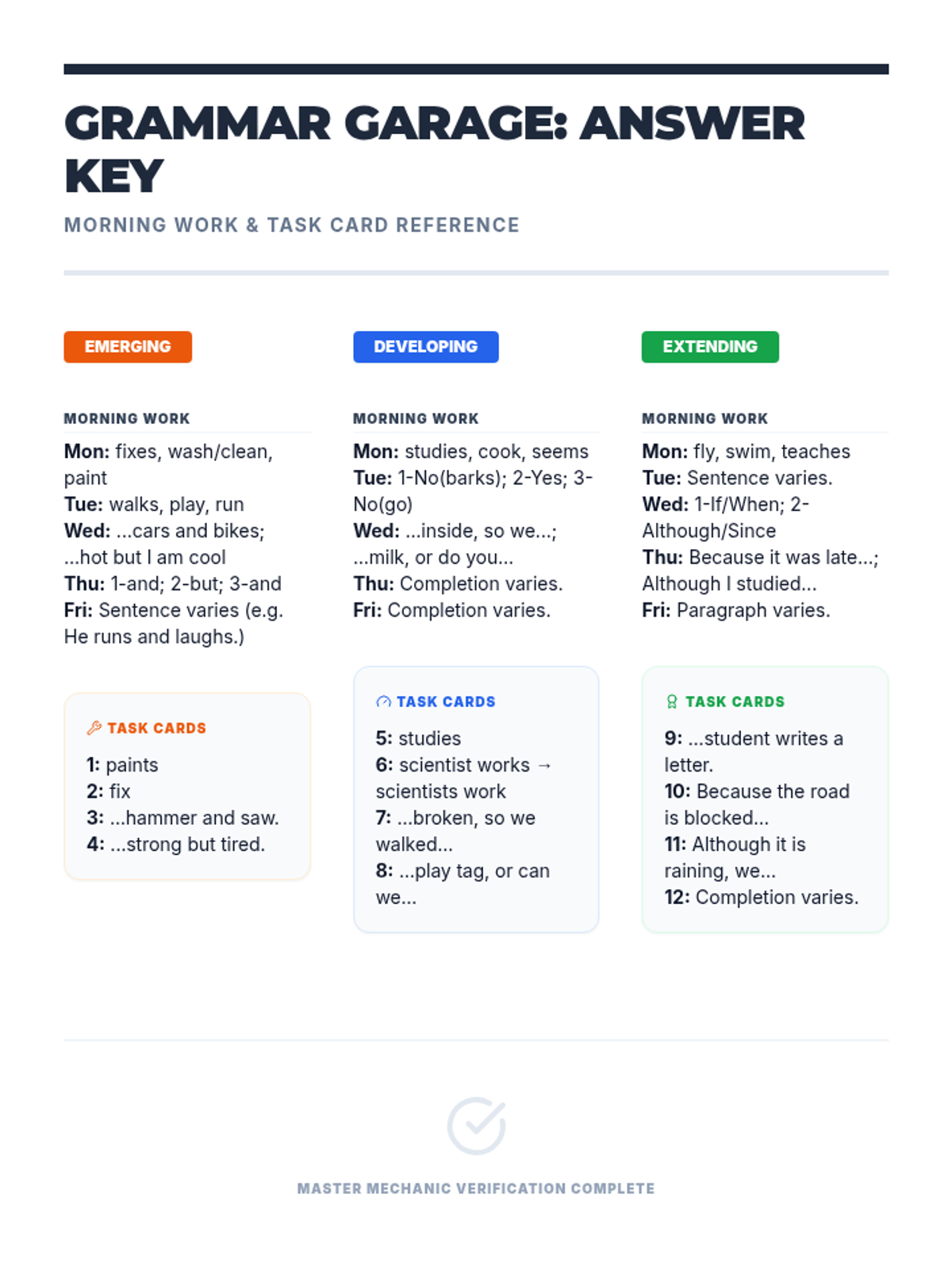
A comprehensive 5th-grade grammar review covering essential skills from parts of speech to complex sentence structure, designed with a fun, preppy aesthetic.
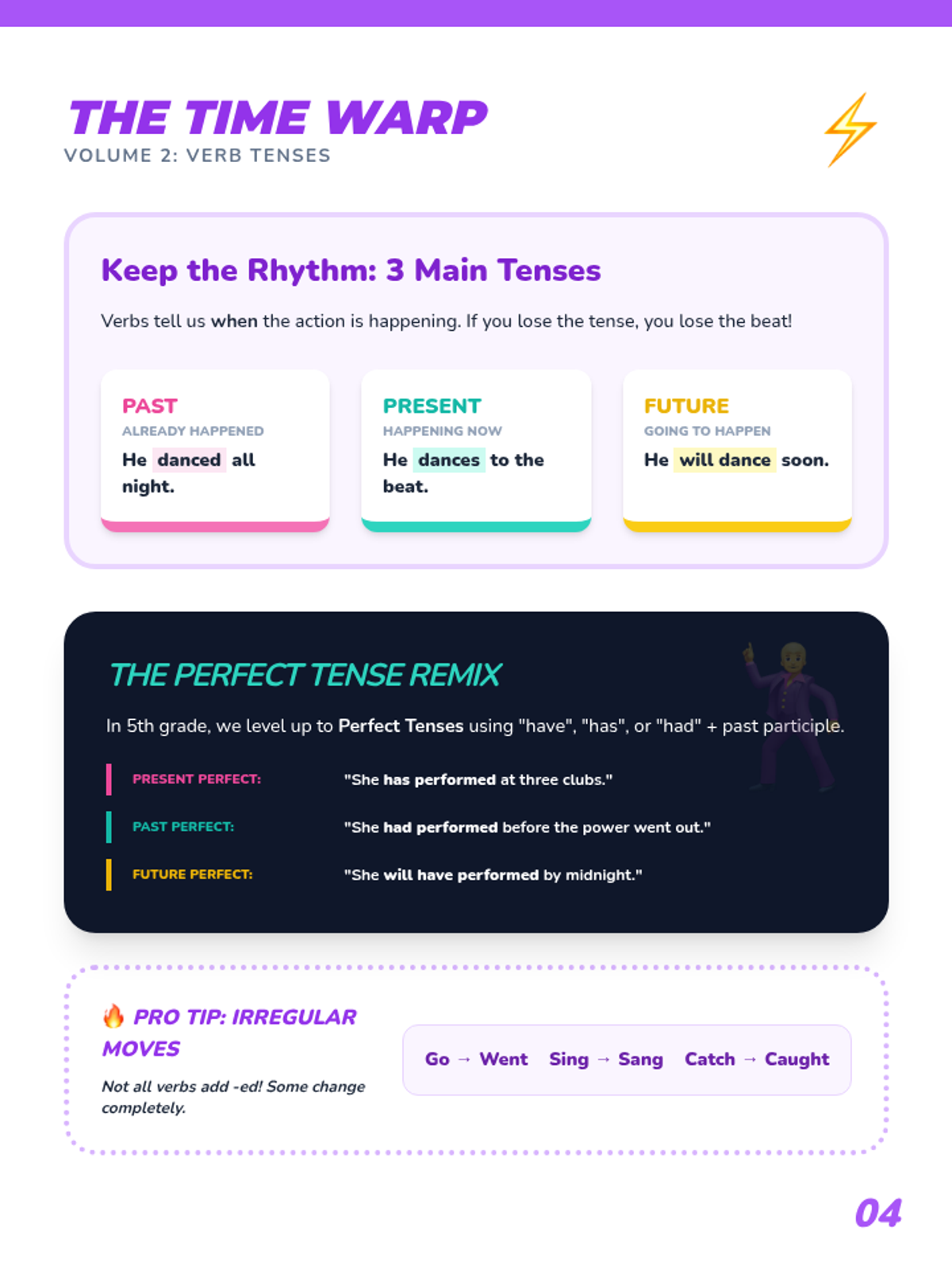
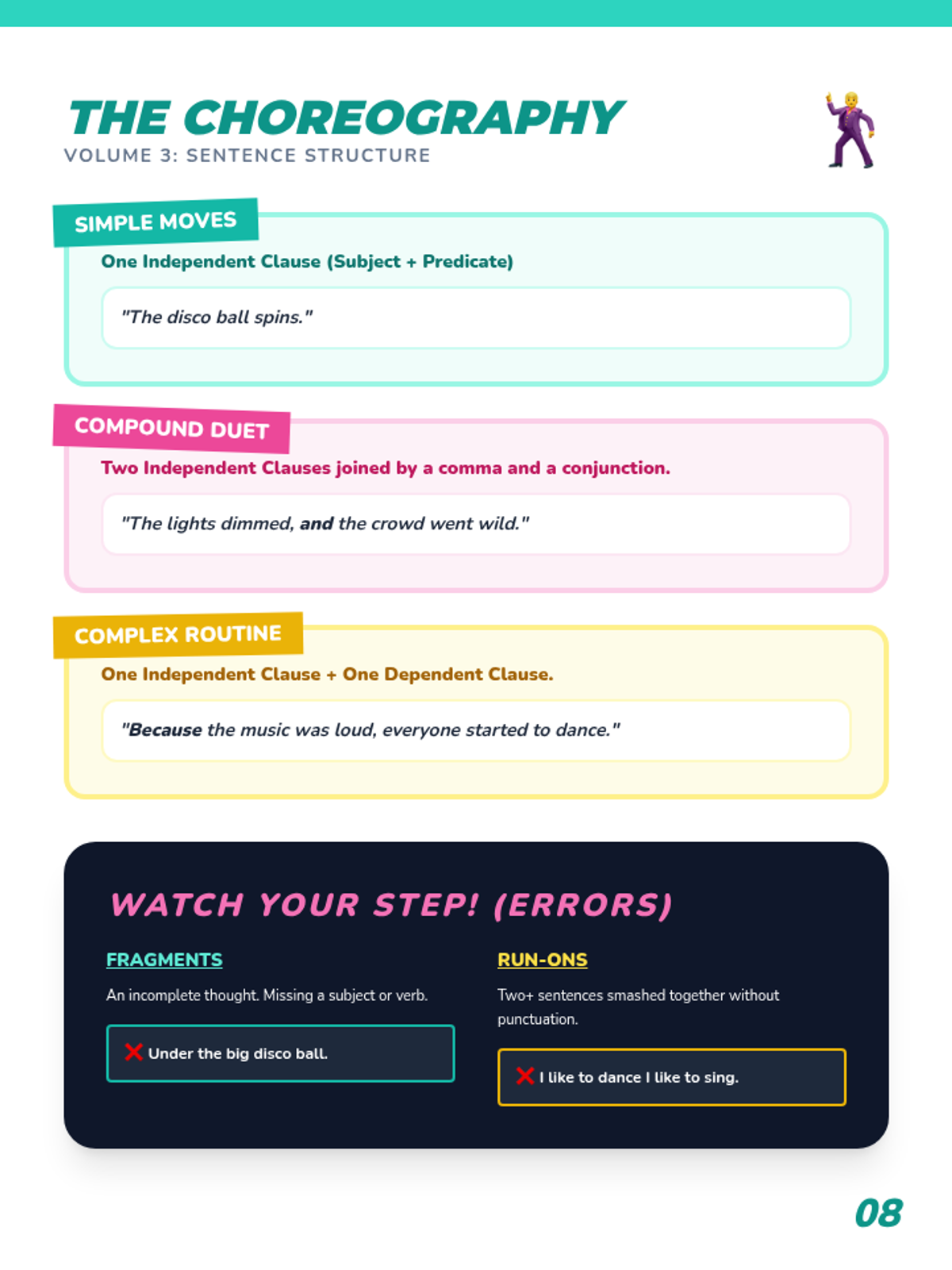
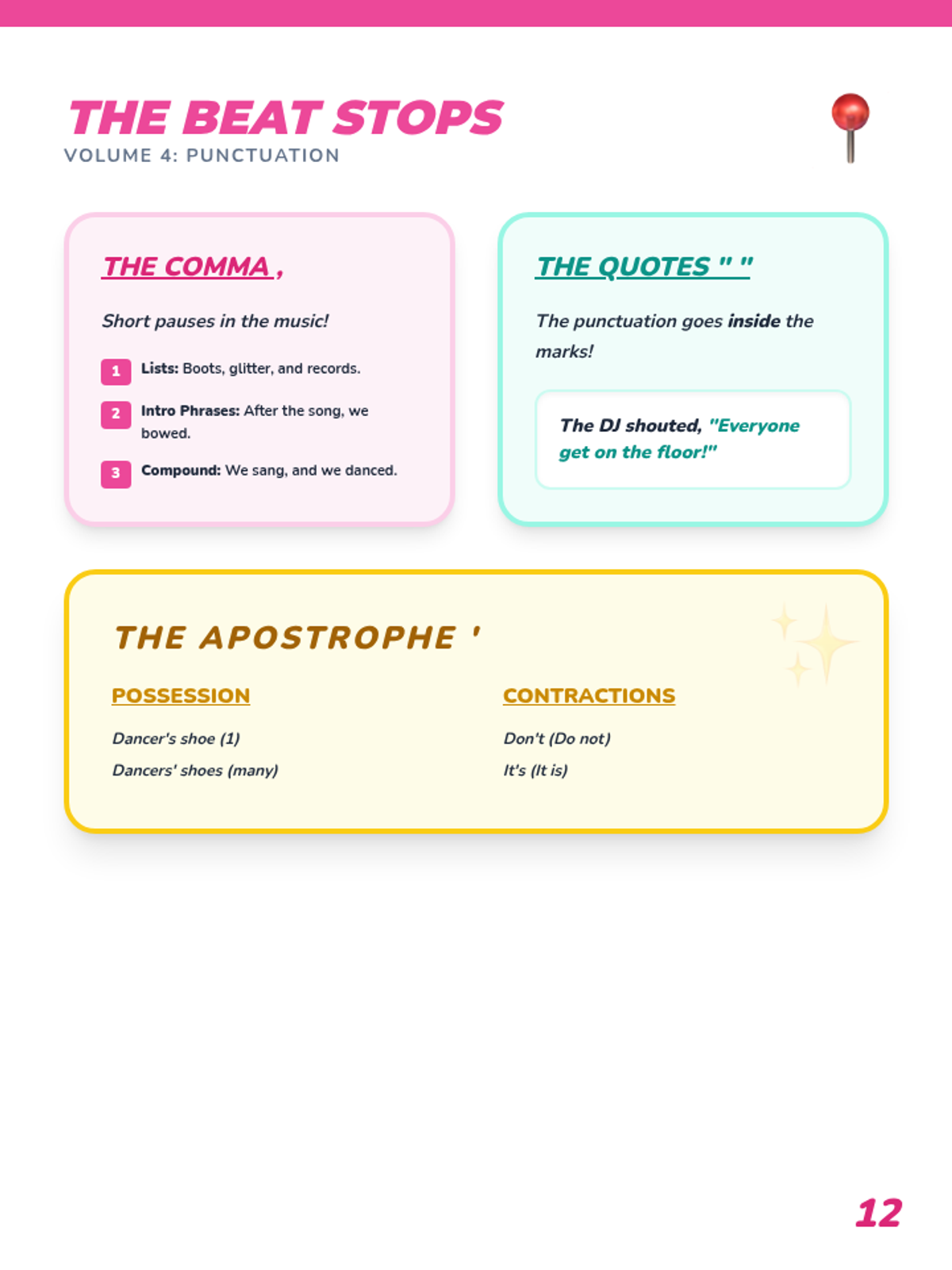
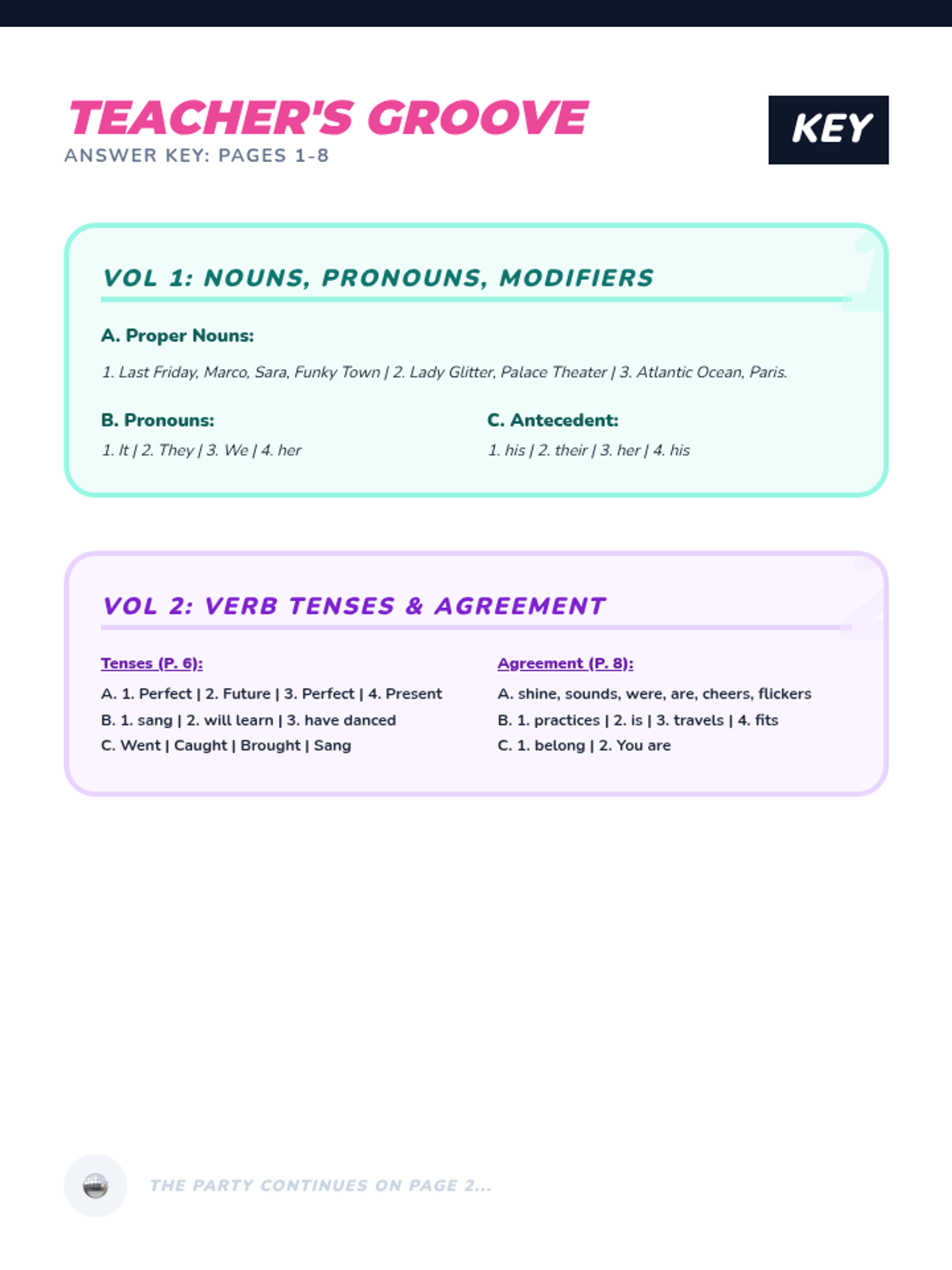
A high-energy, retro-disco themed grammar curriculum for 5th grade, covering essential skills from parts of speech to complex sentence structures.
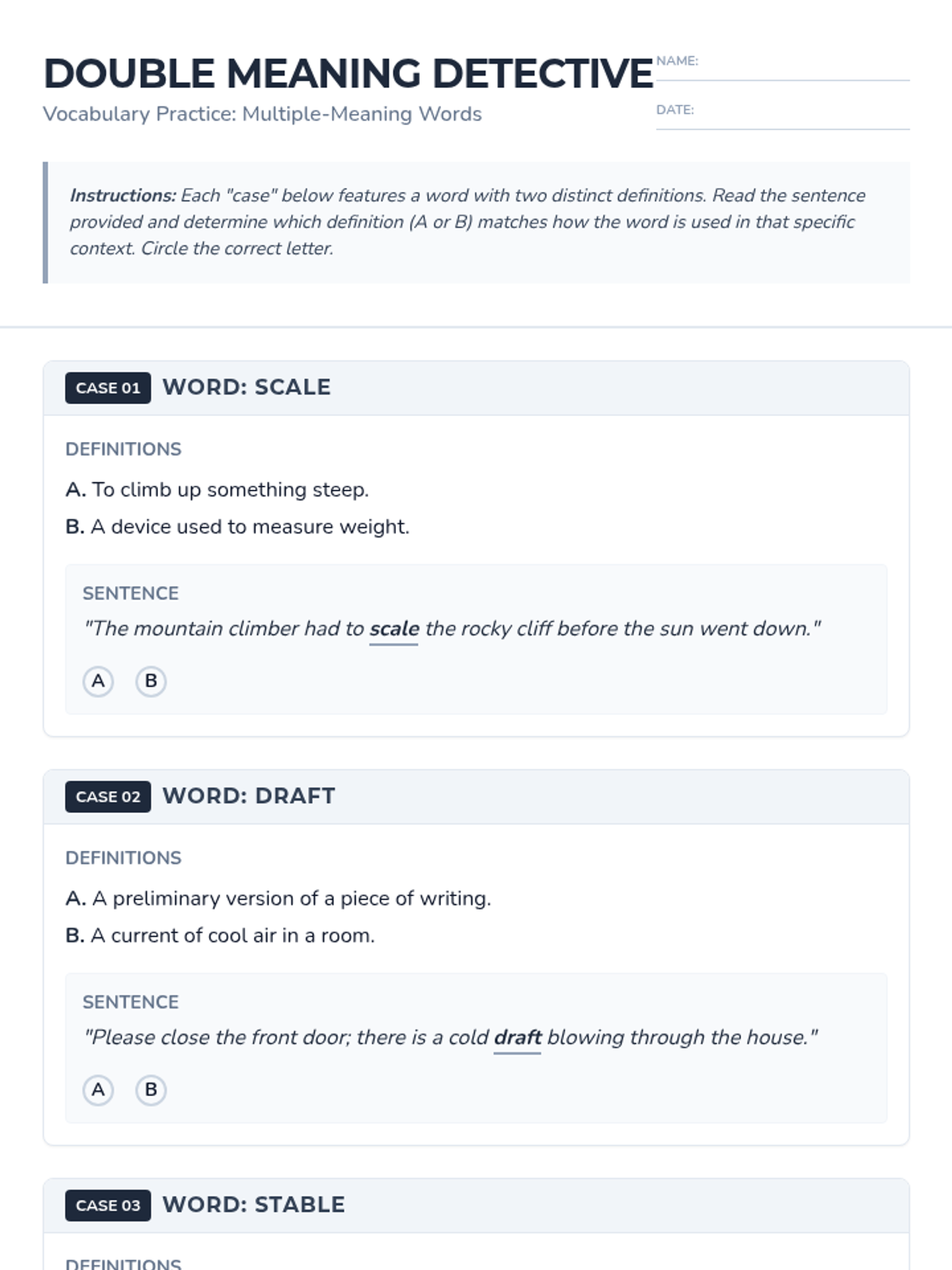
A lesson focused on identifying the correct meaning of multiple-meaning words based on sentence context, a key 5th-grade vocabulary skill.
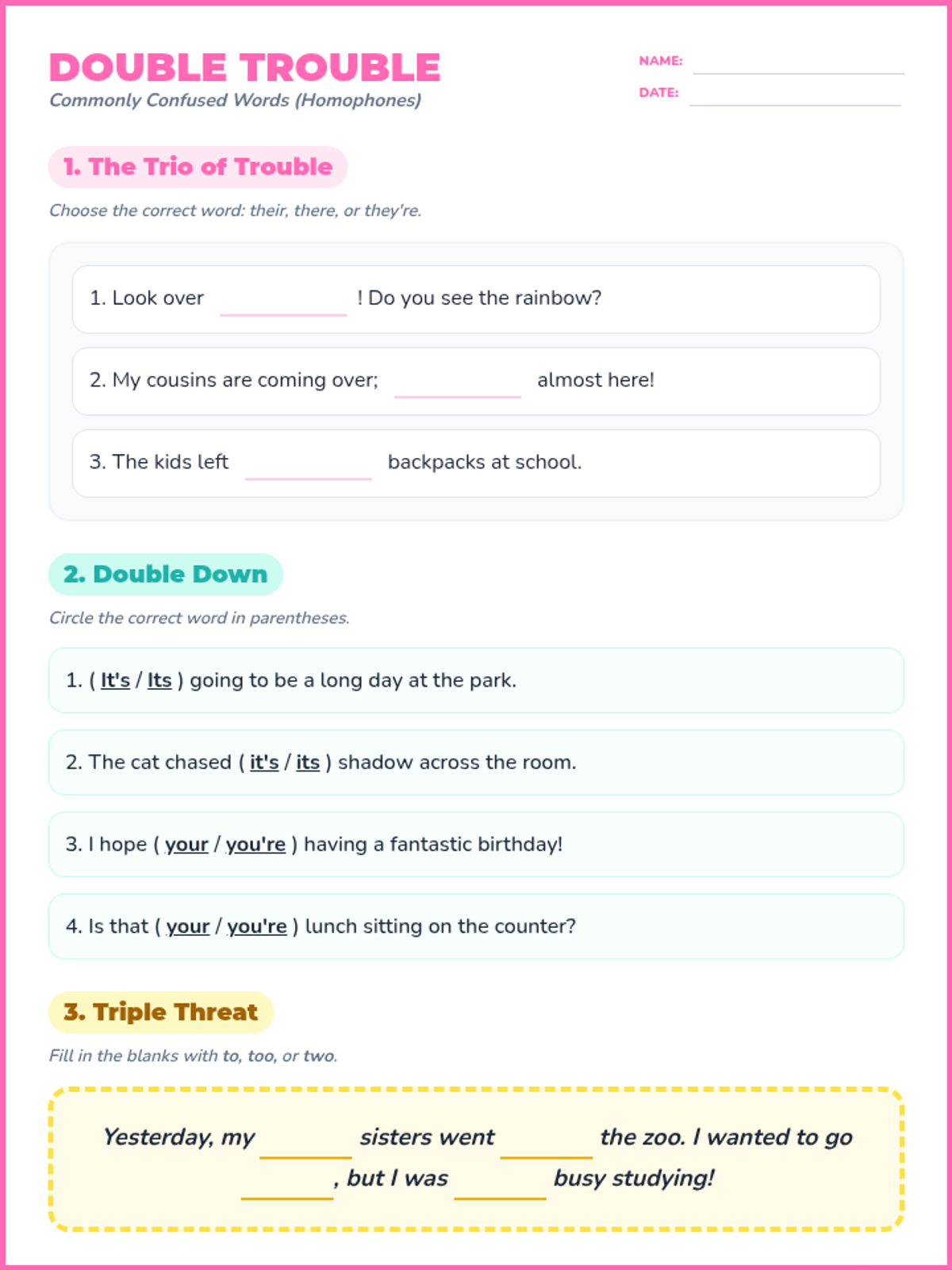
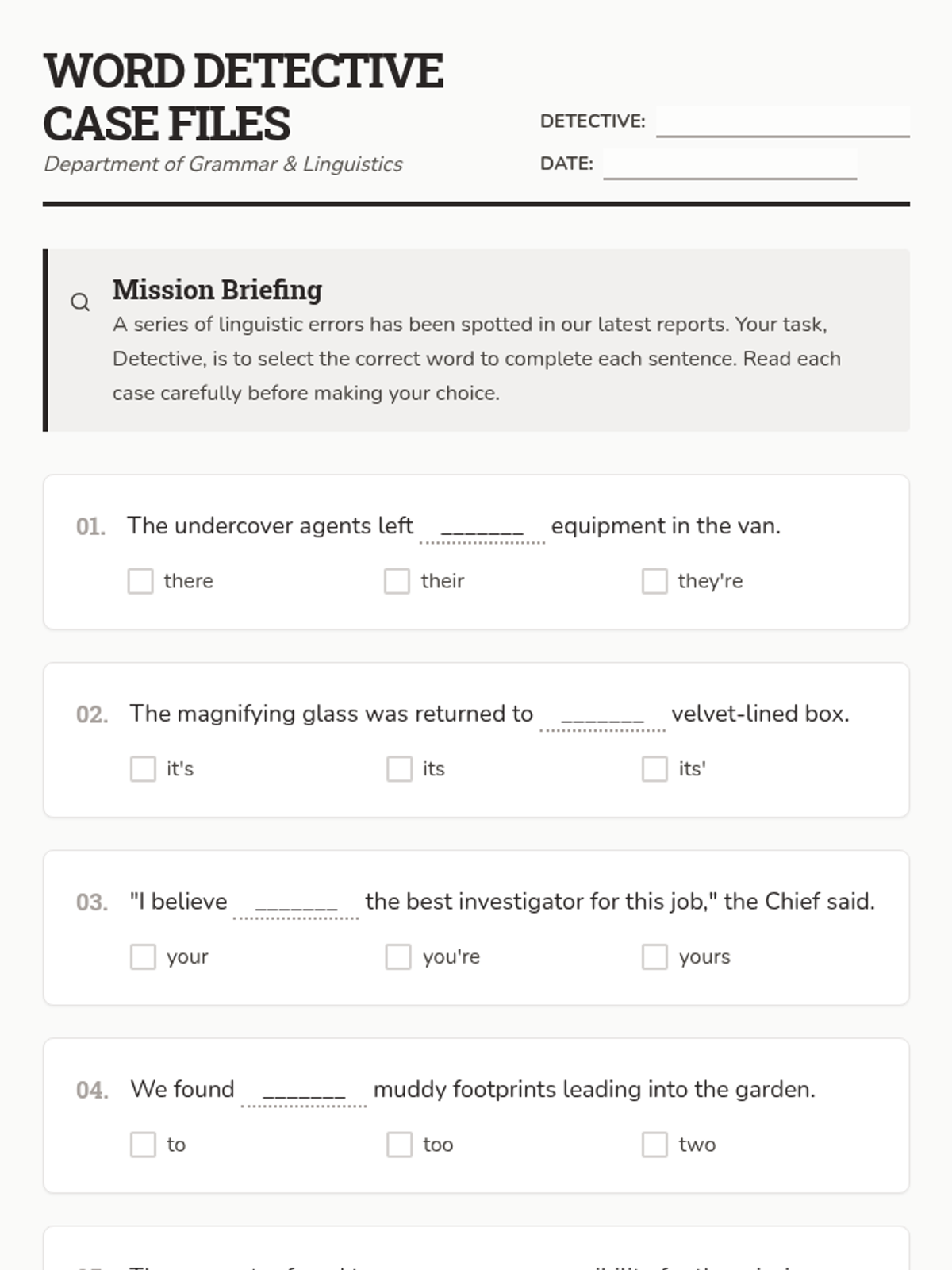
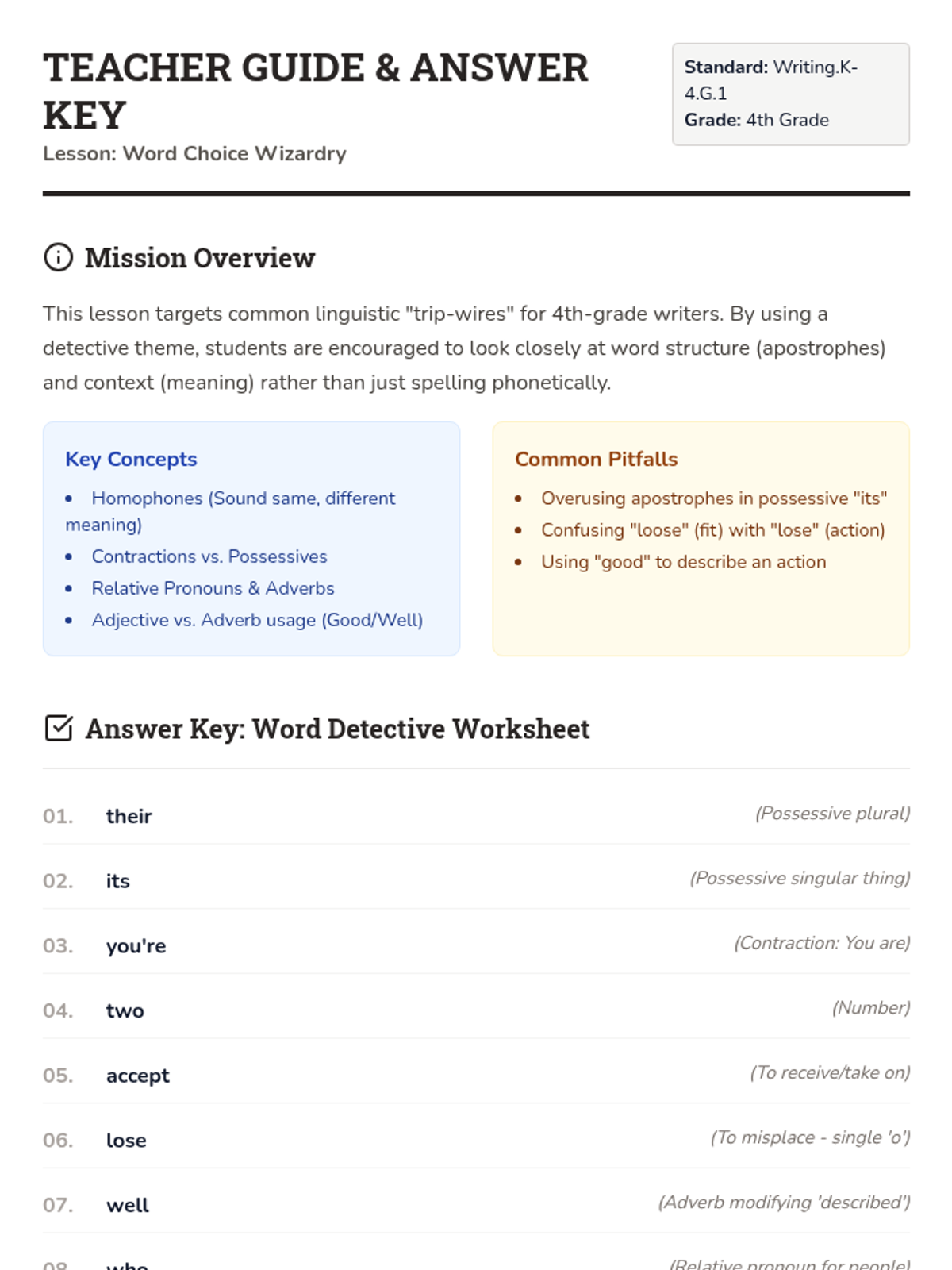
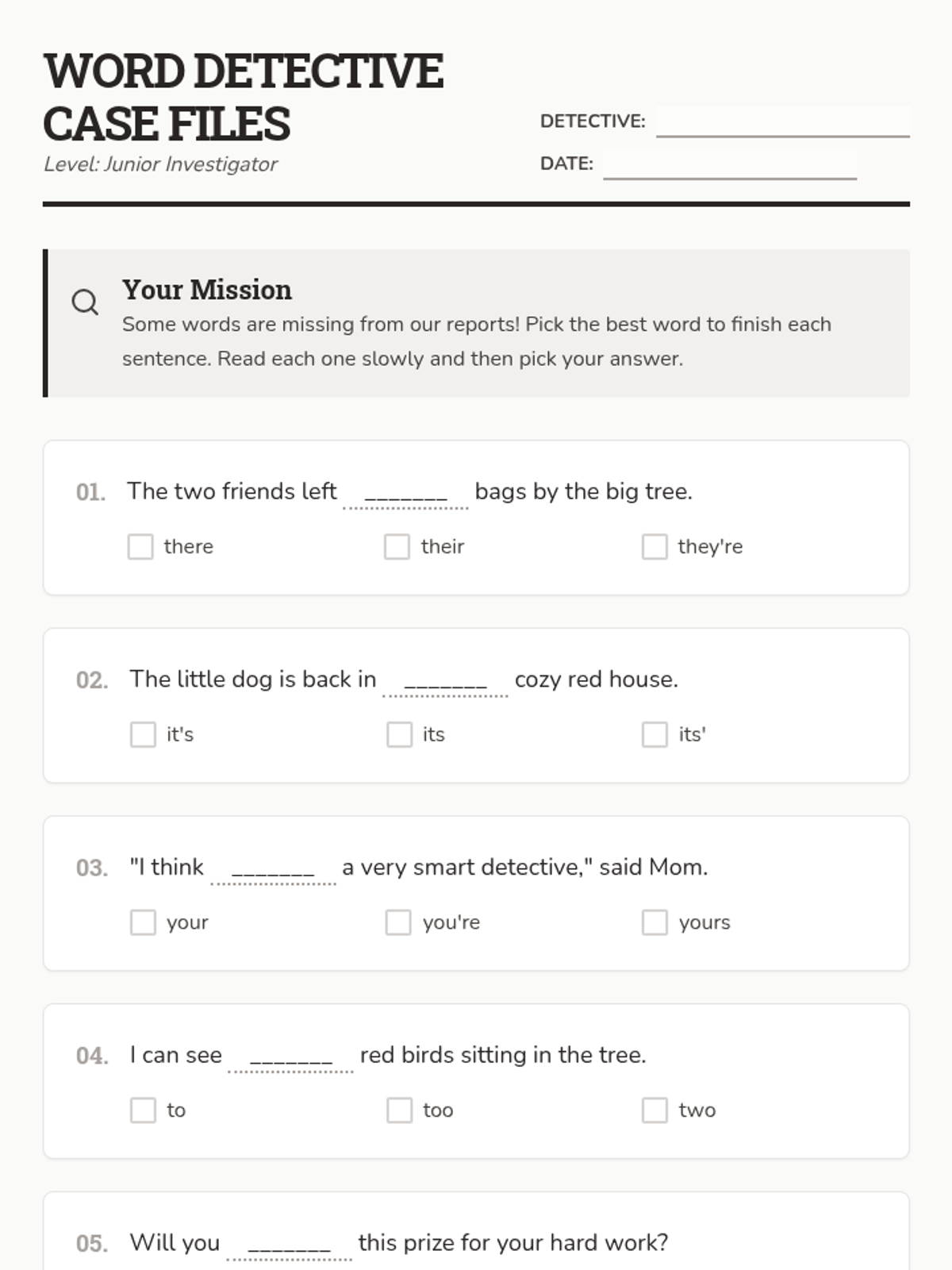
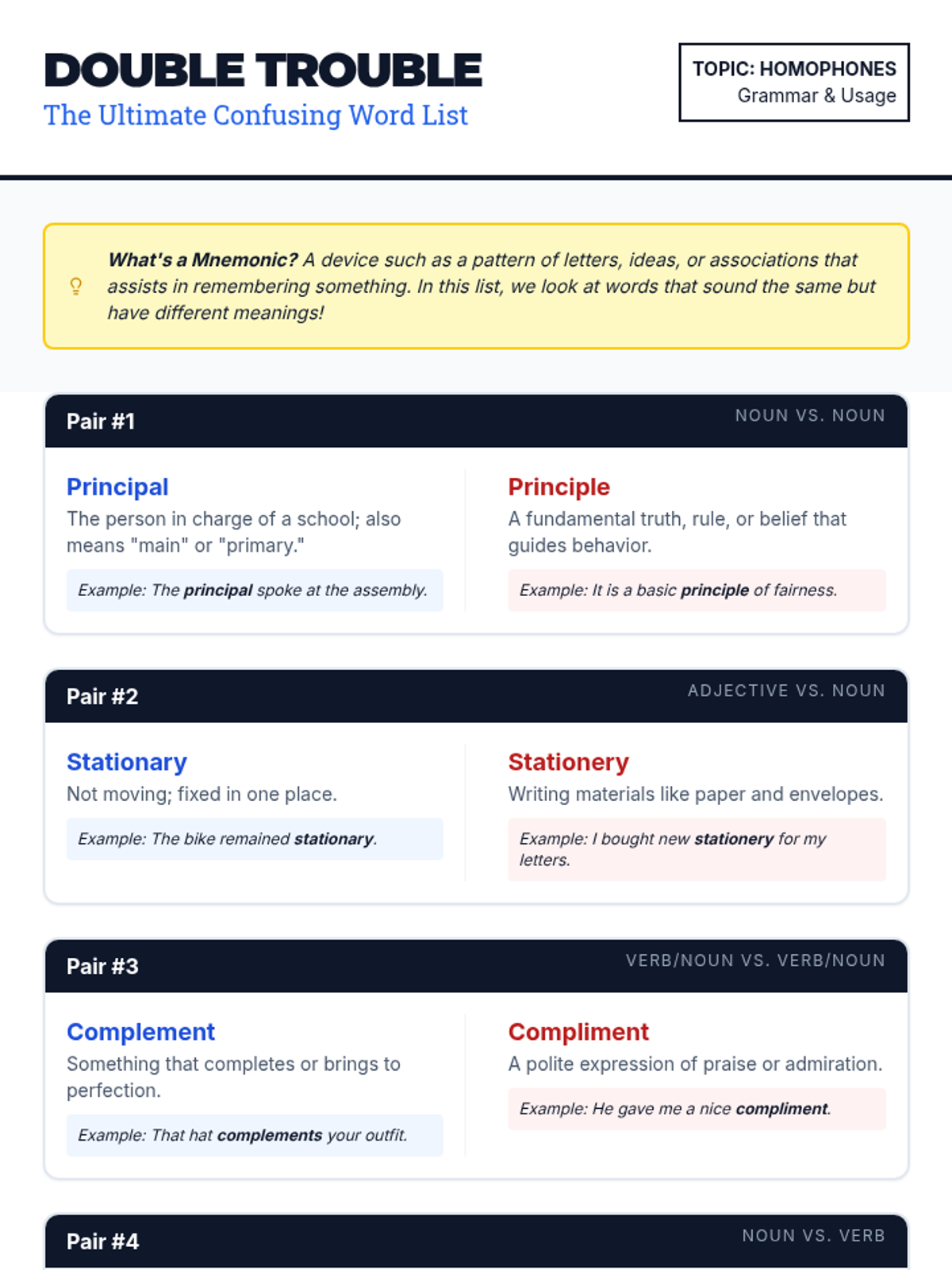
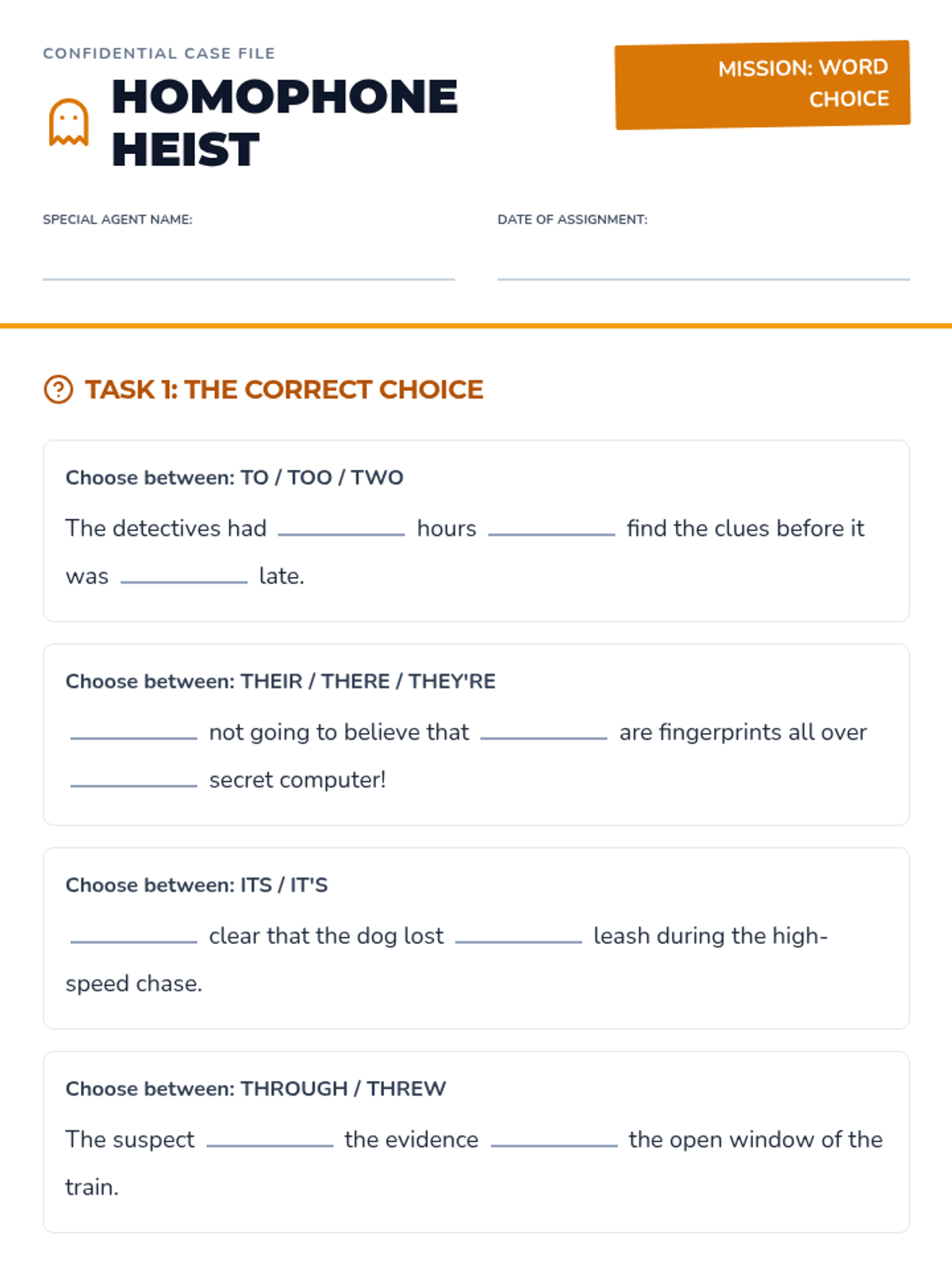
A lesson focused on common word usage errors, homophones, and frequently confused words for 4th-grade writers. Students practice identifying and using the correct words in context through detective-themed scenarios.
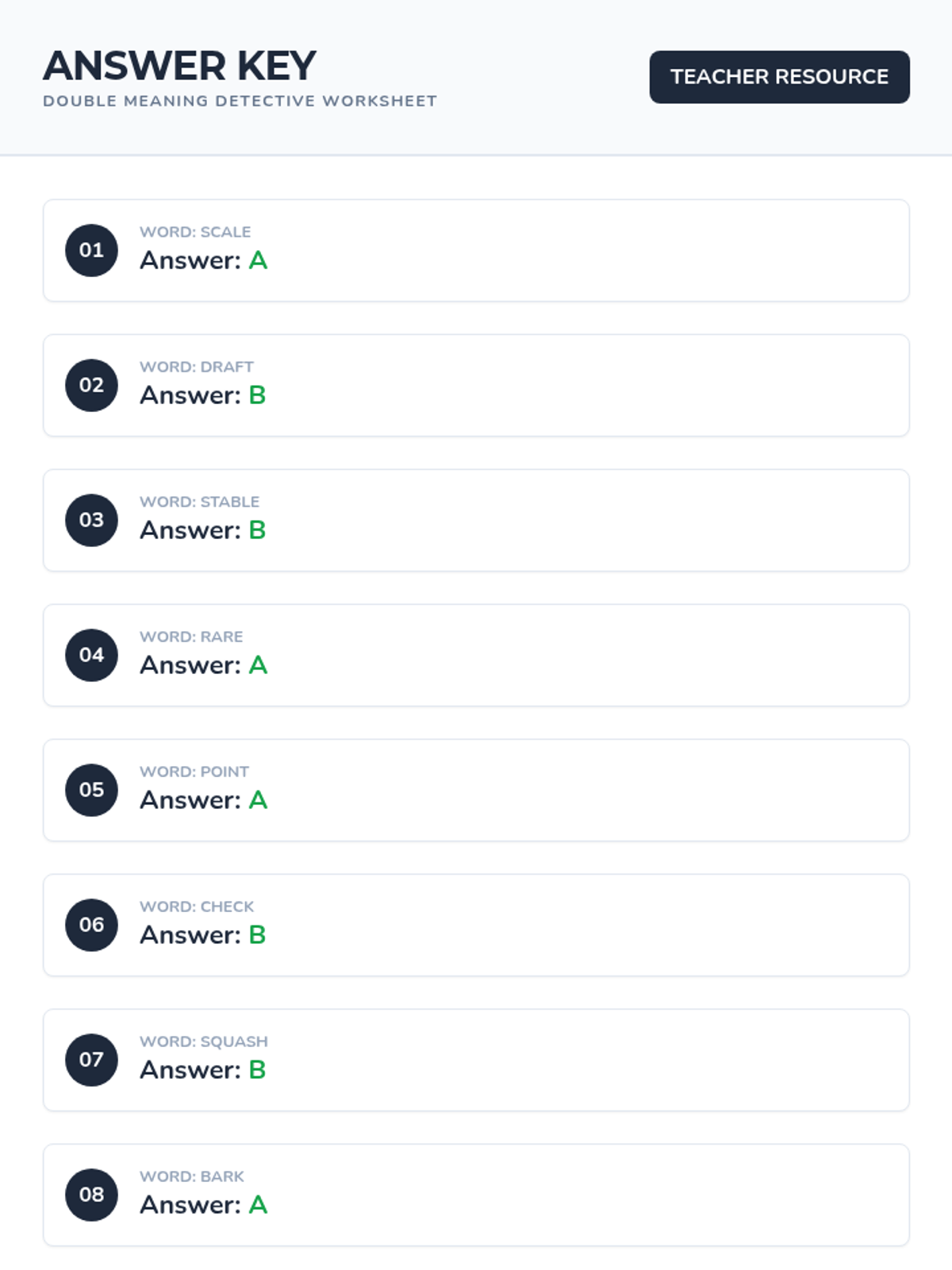
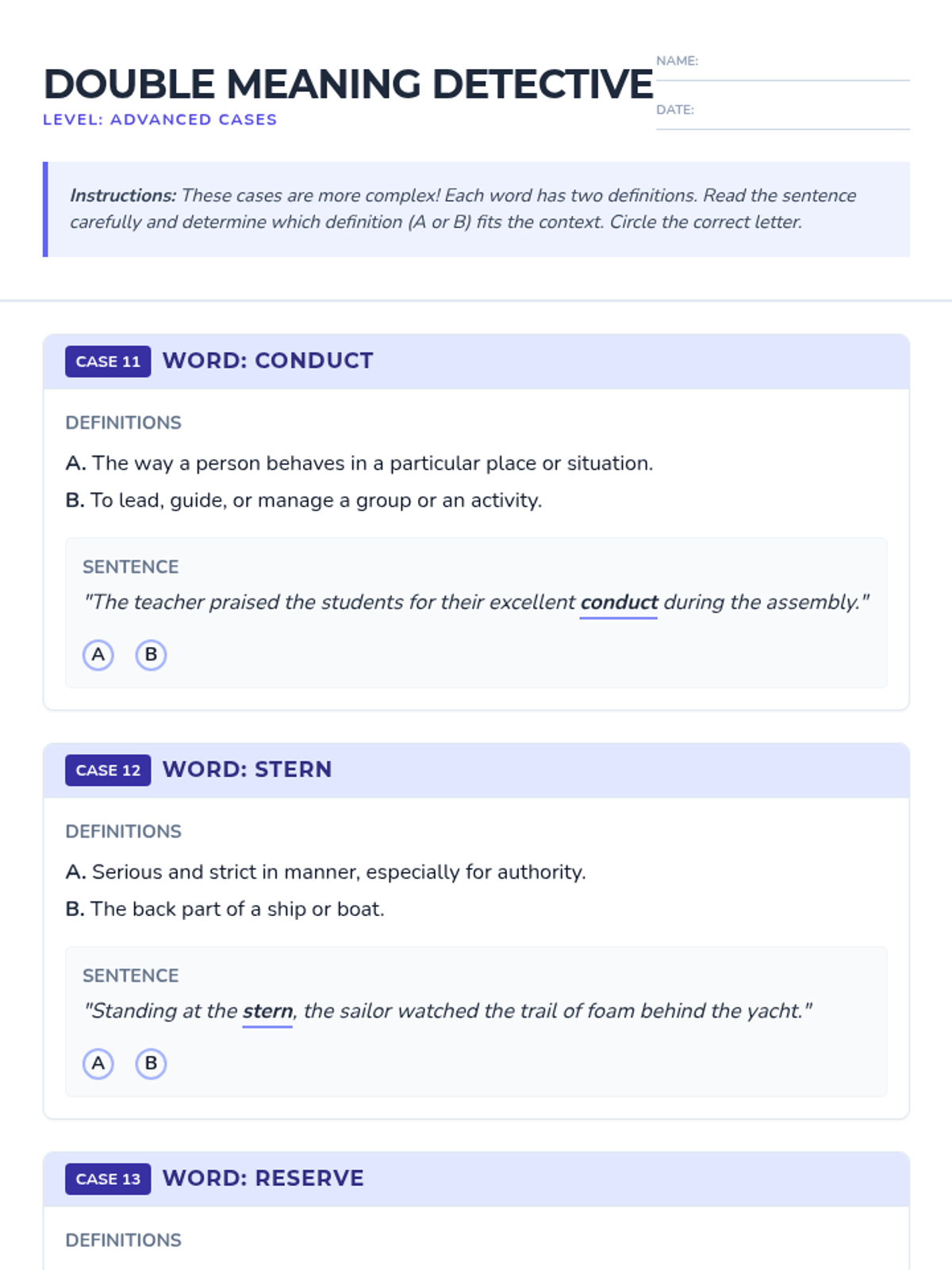
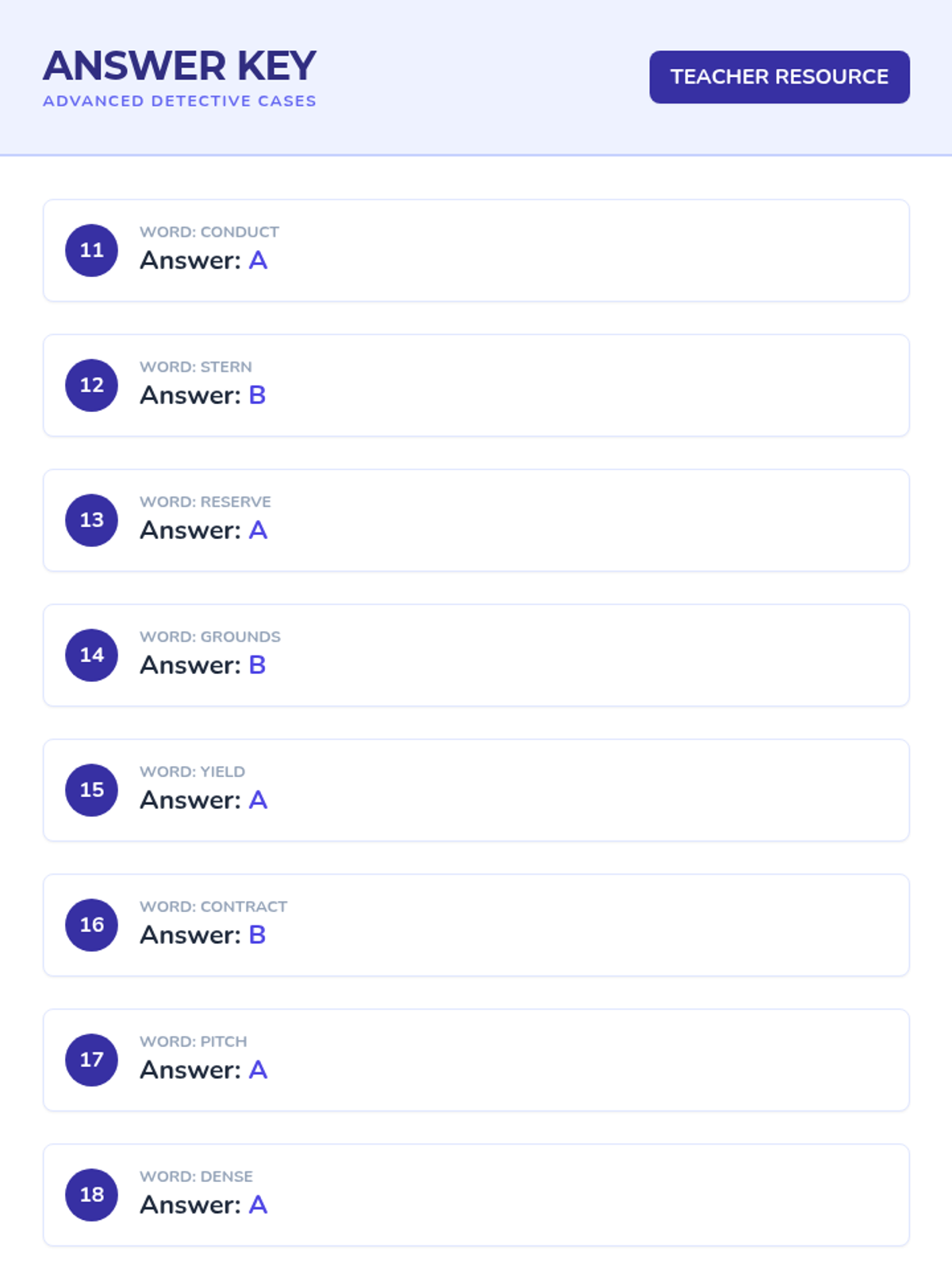
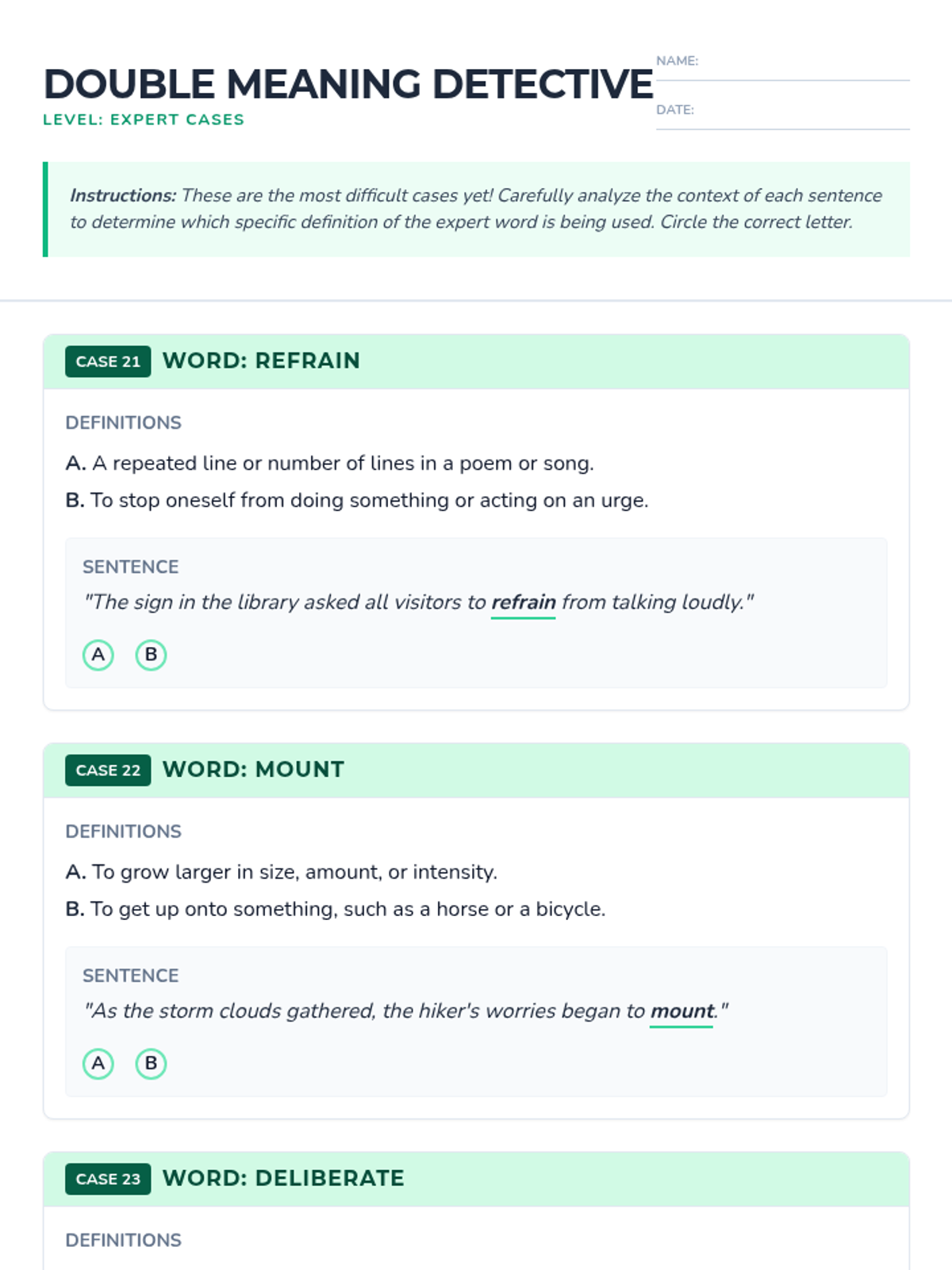
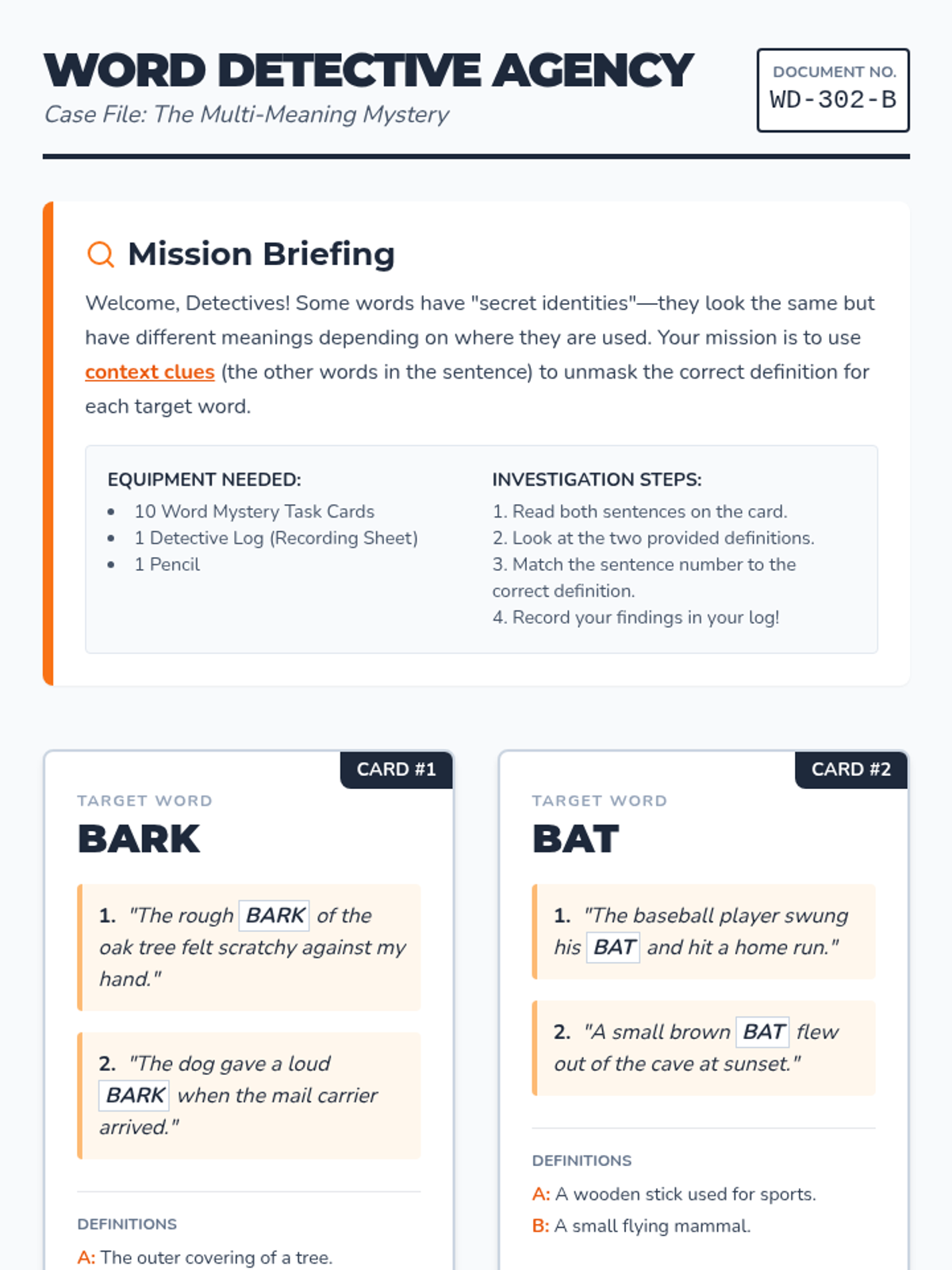
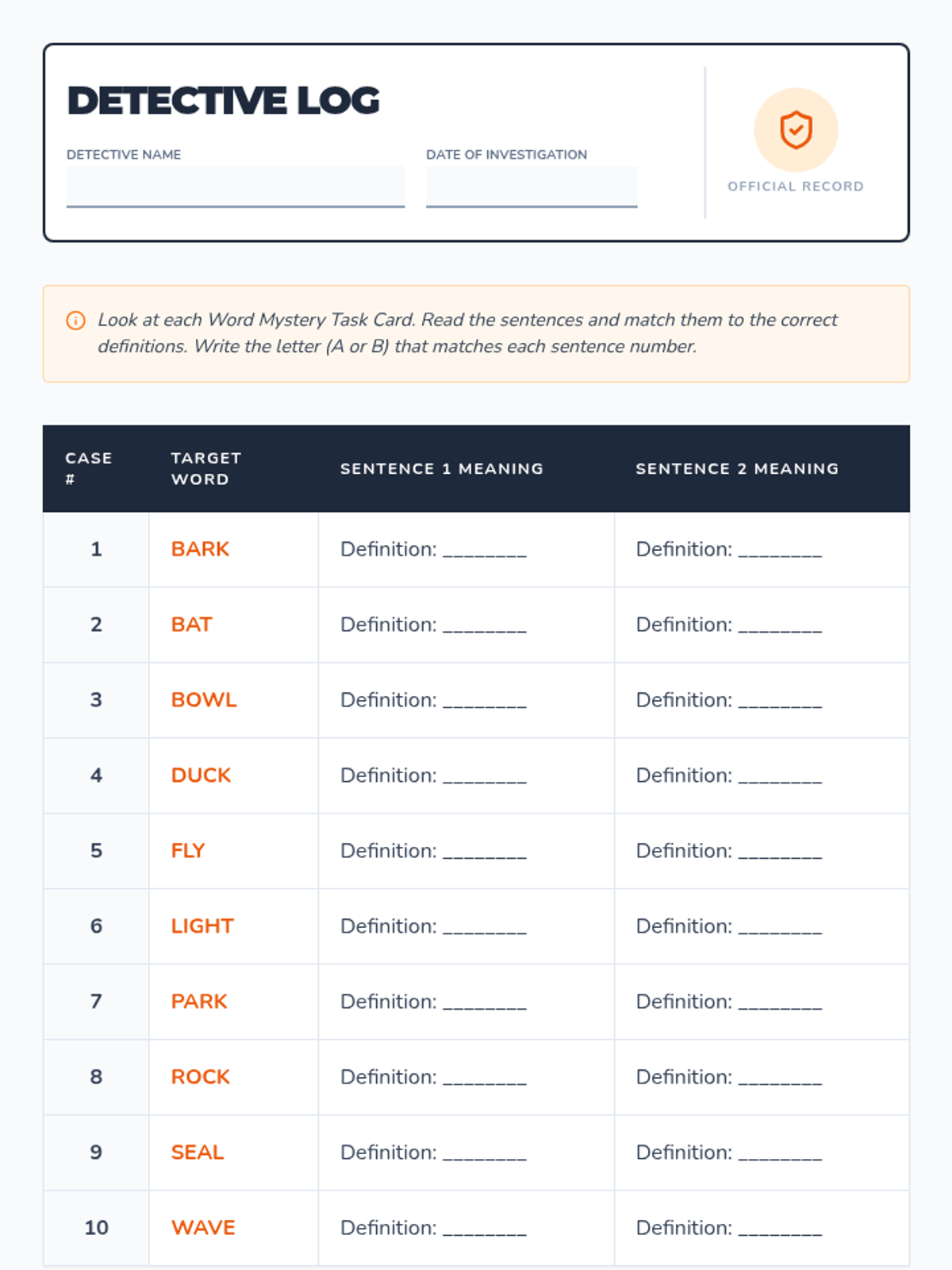
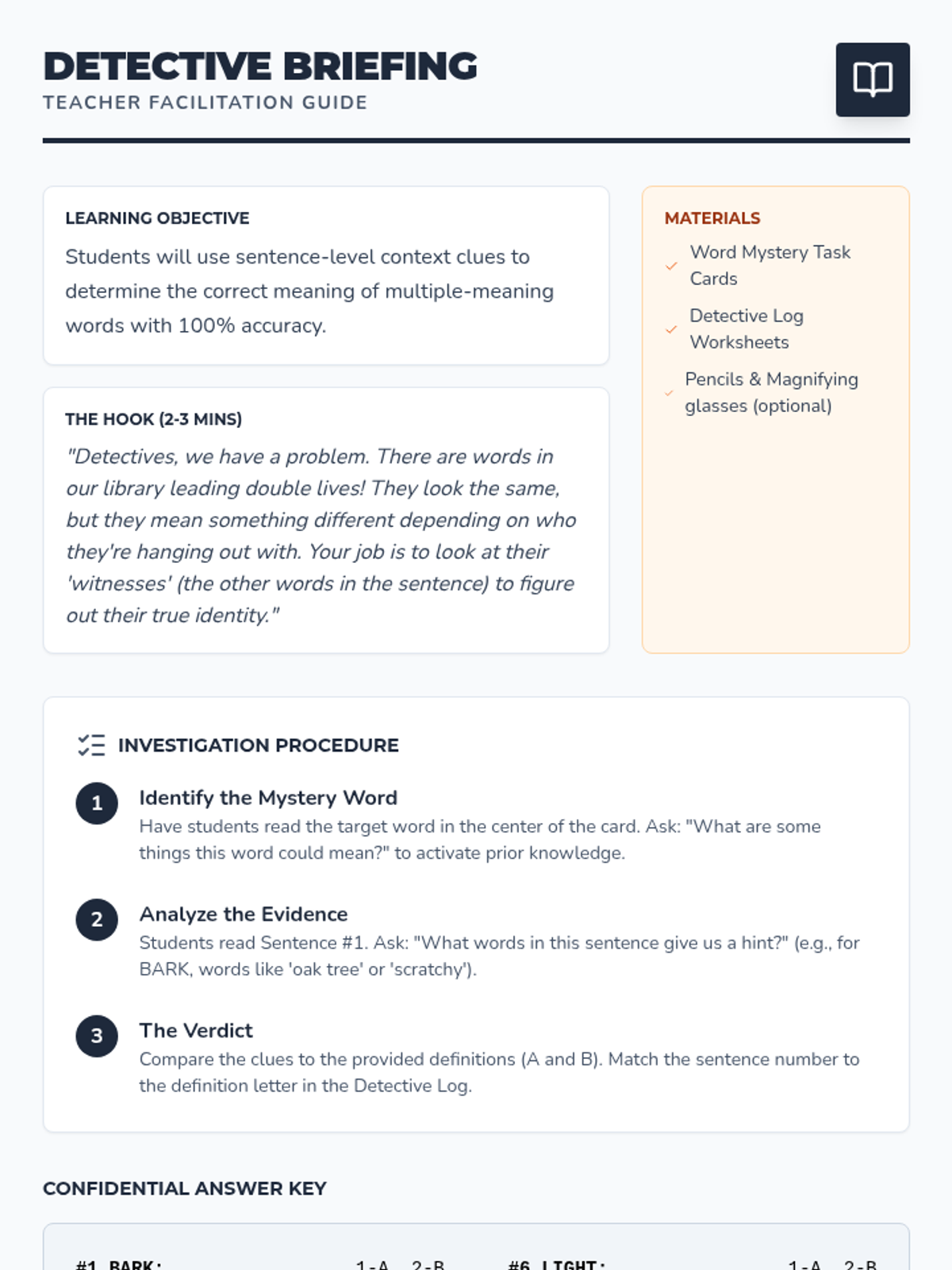
A small-group activity where students act as "Word Detectives" to determine the correct meaning of multiple-meaning words using sentence-level context clues. Students analyze task cards and record their findings in a detective log.
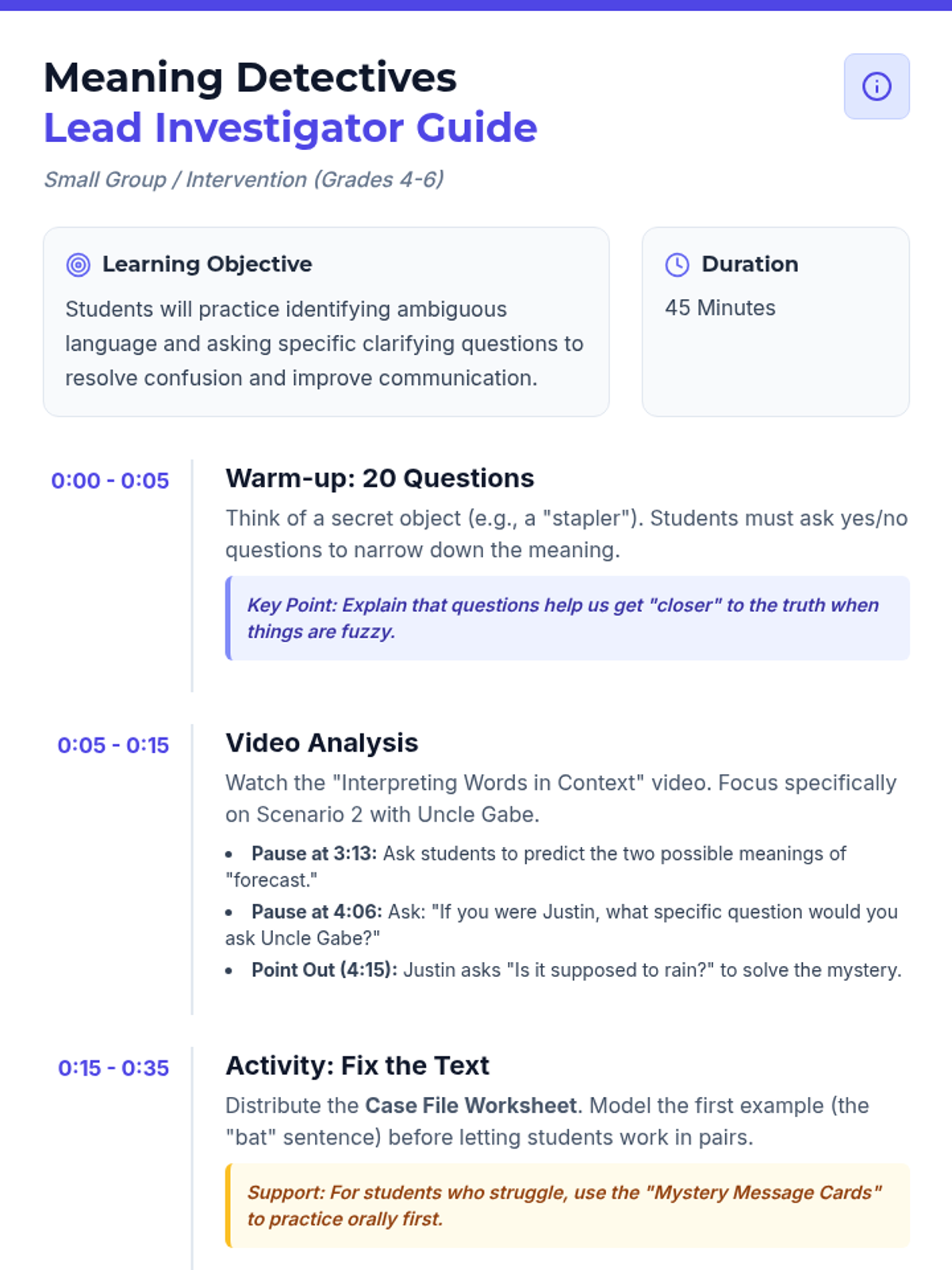
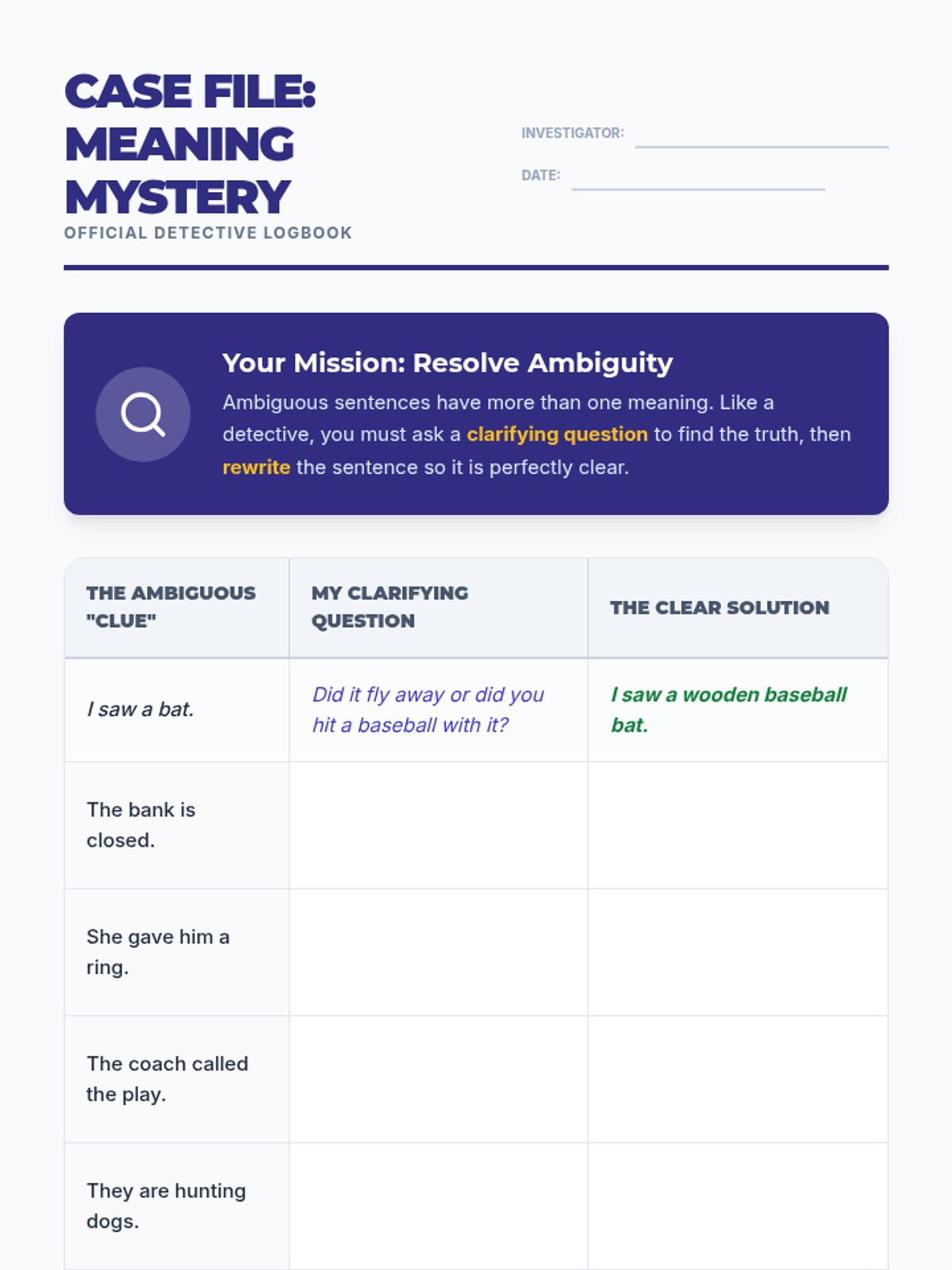
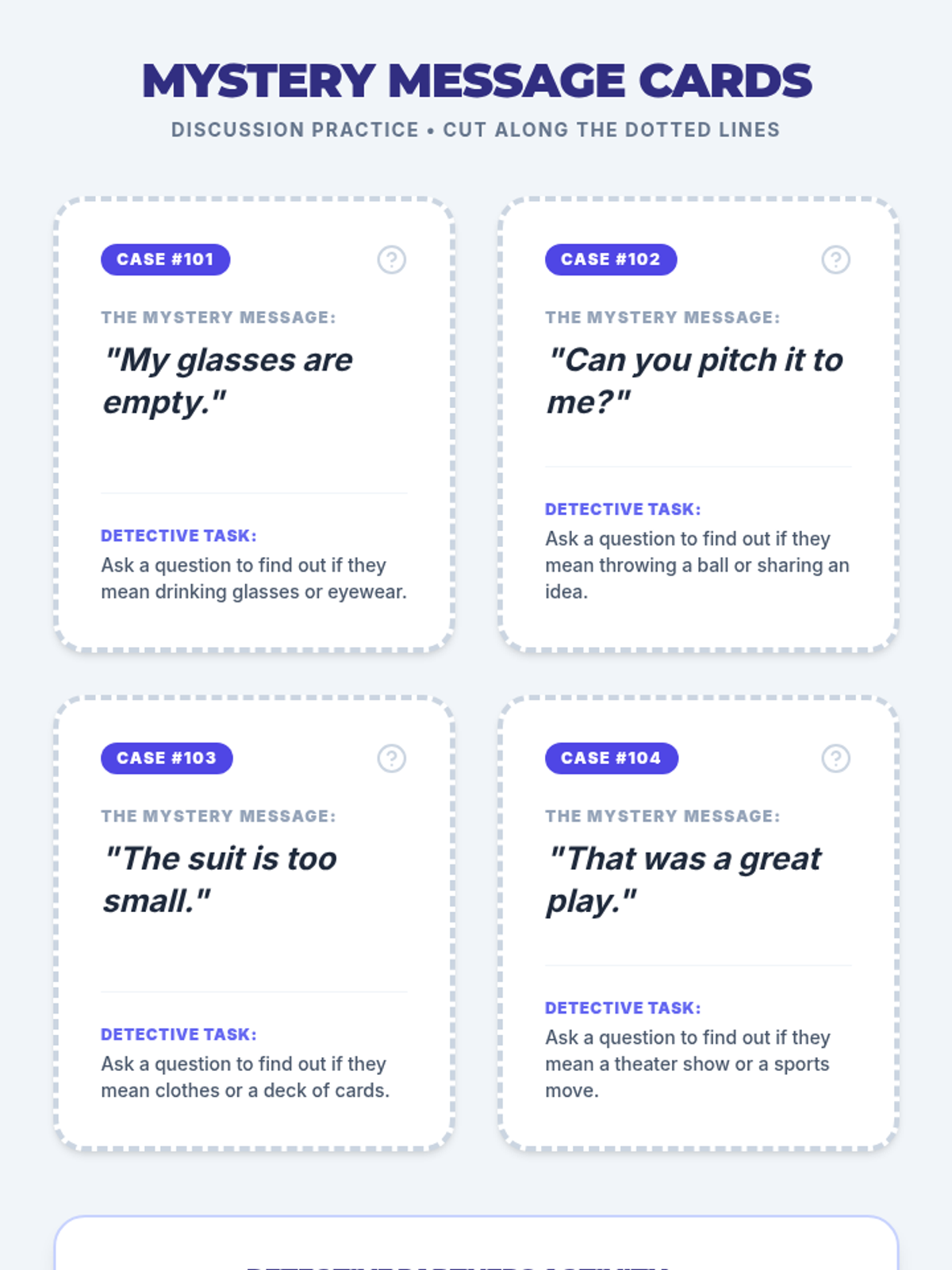
A small-group intervention lesson focused on identifying ambiguity and using clarifying questions to resolve confusion, featuring a video analysis and hands-on sentence rewriting.
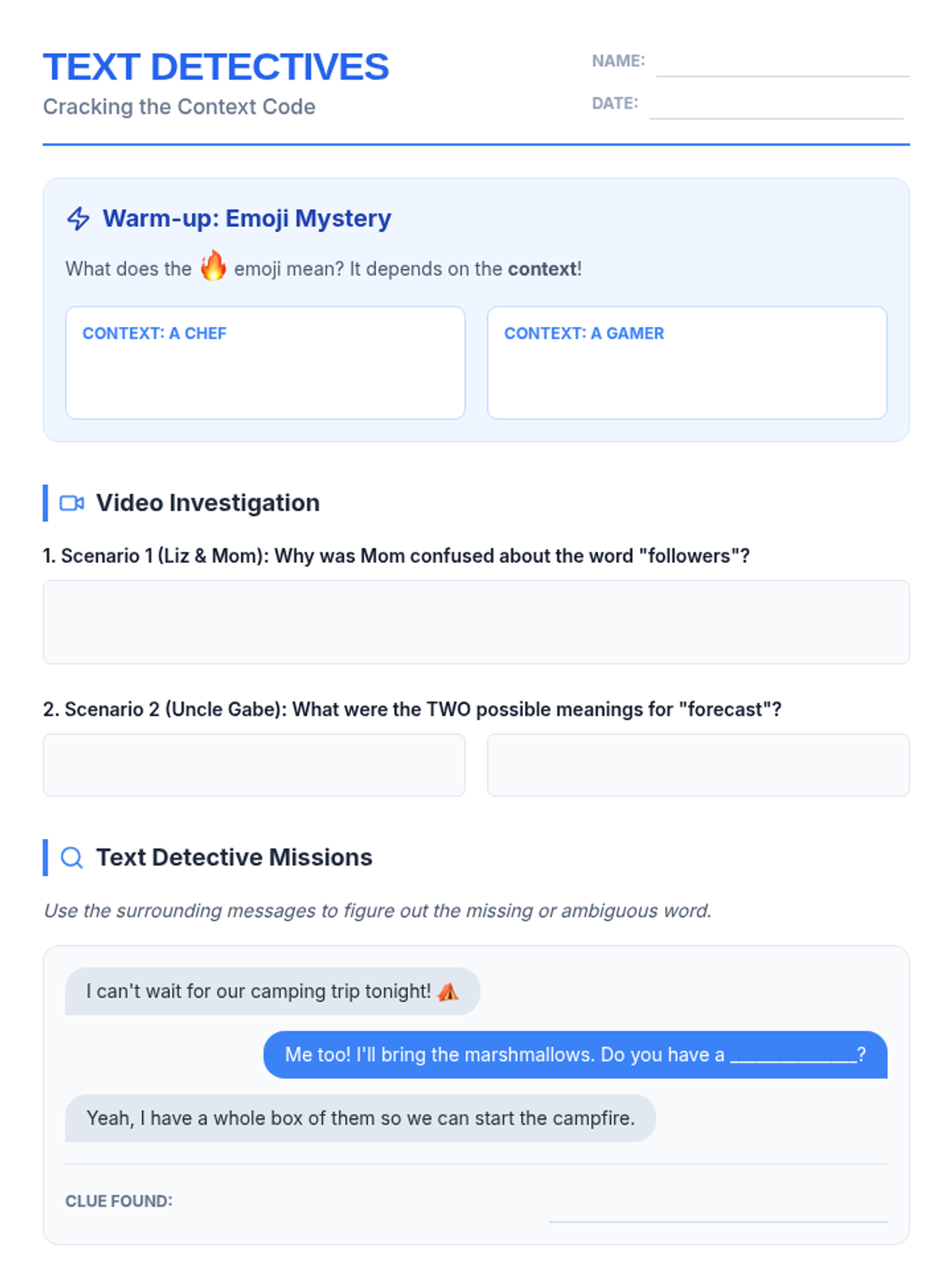
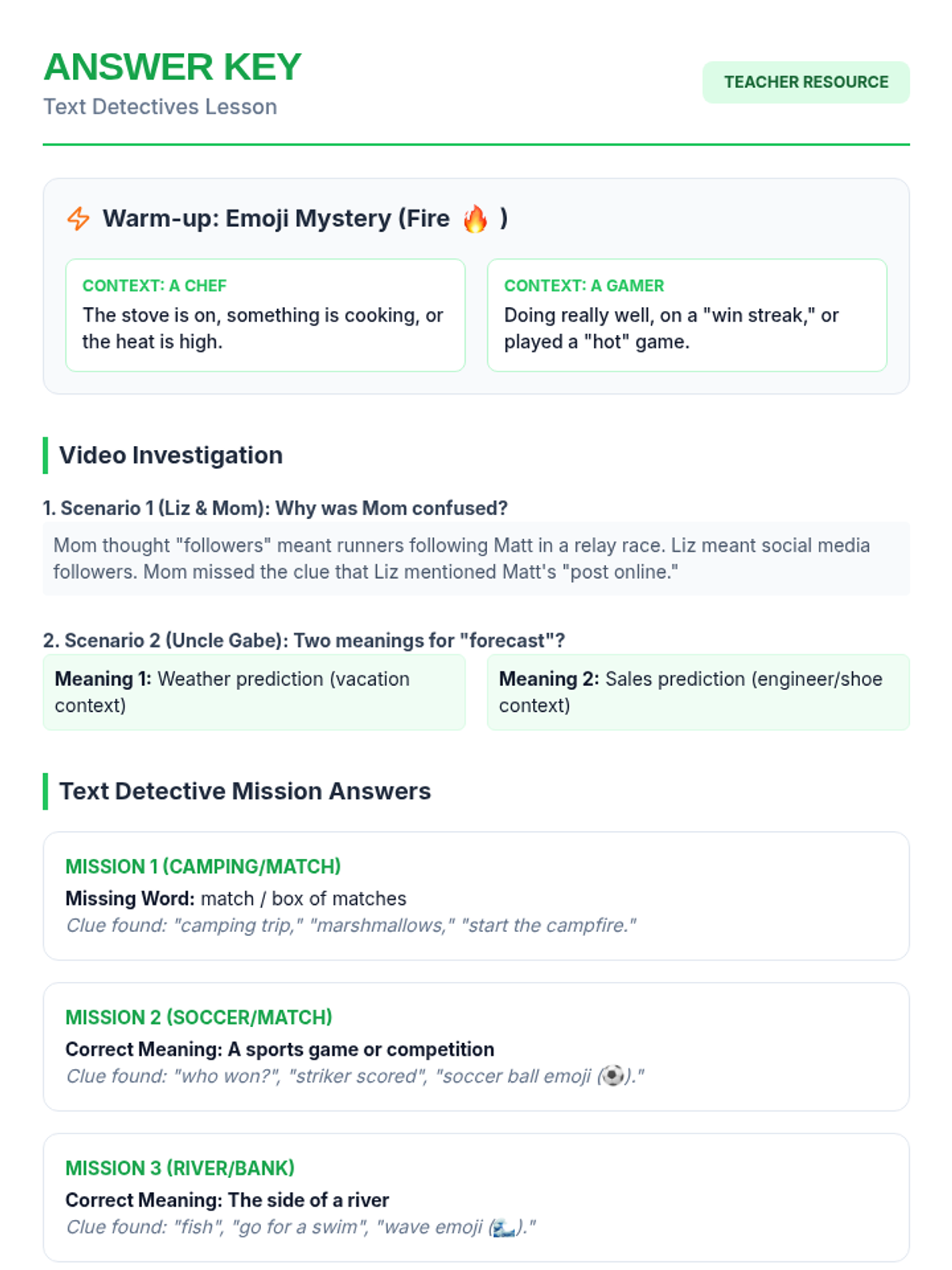
Students will explore how context clues in digital conversations (text messages) help reveal the meaning of ambiguous words. This lesson uses a video case study and a 'Text Detectives' activity to practice identifying surrounding clues and resolving miscommunications.
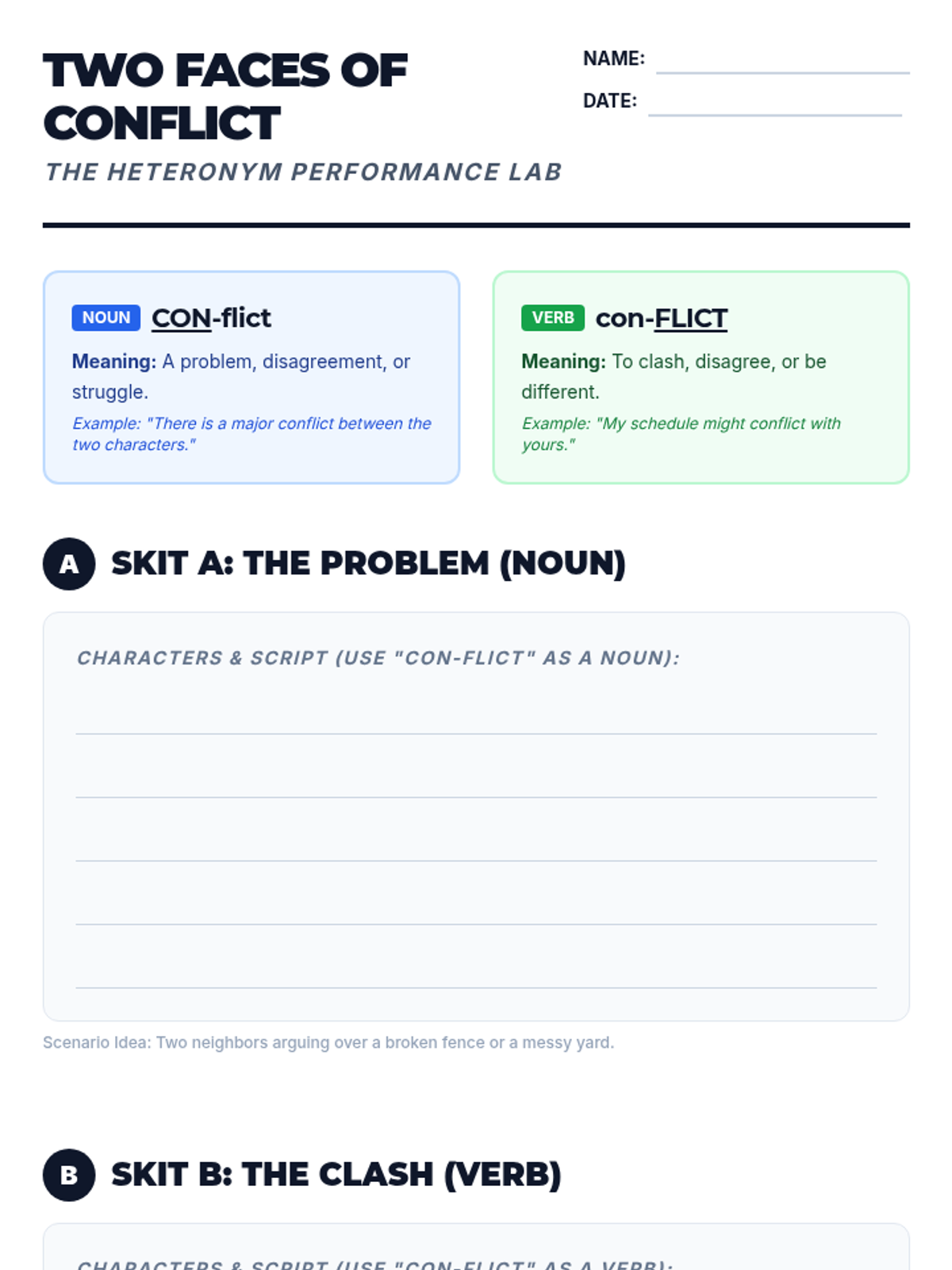
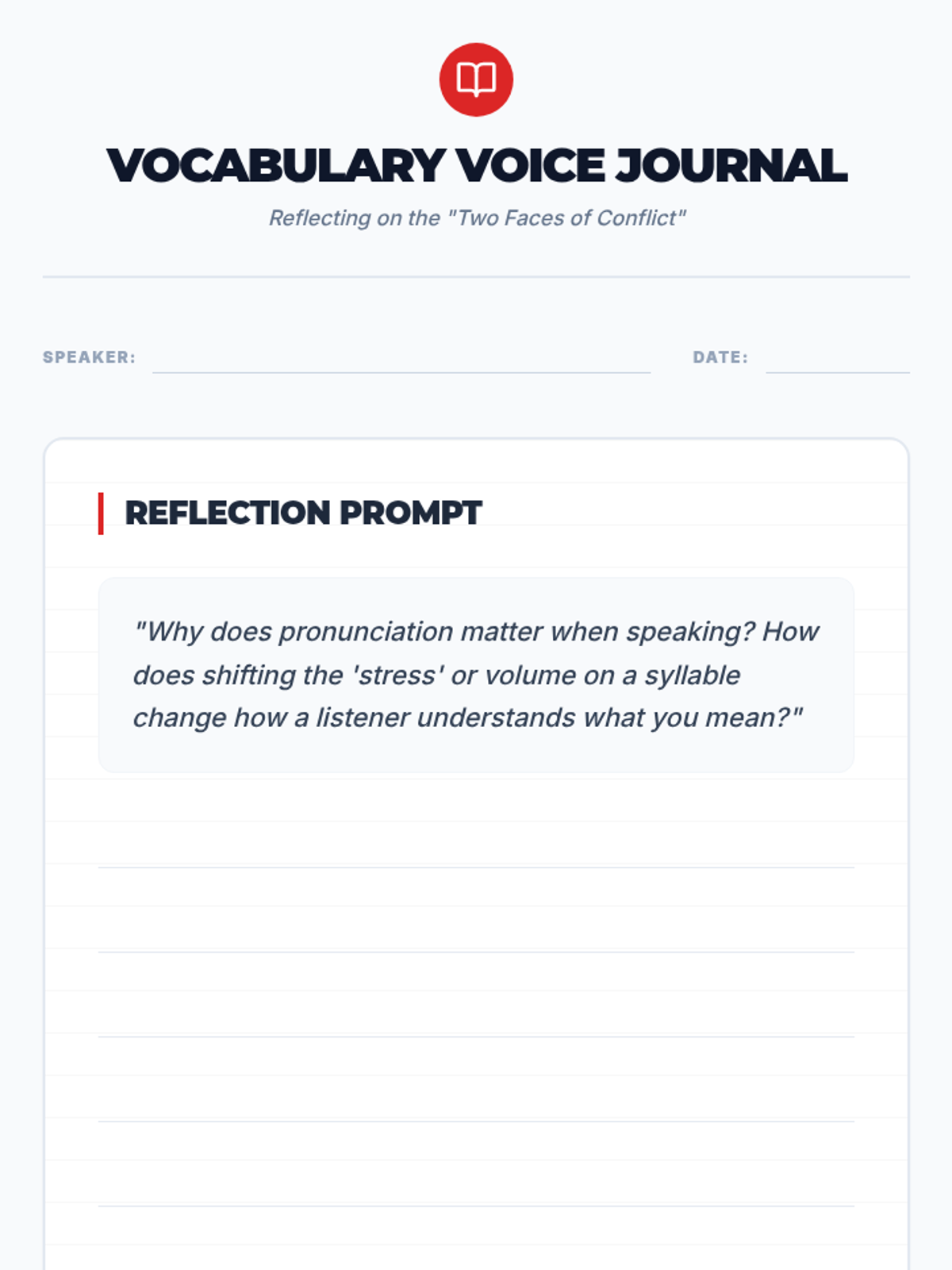
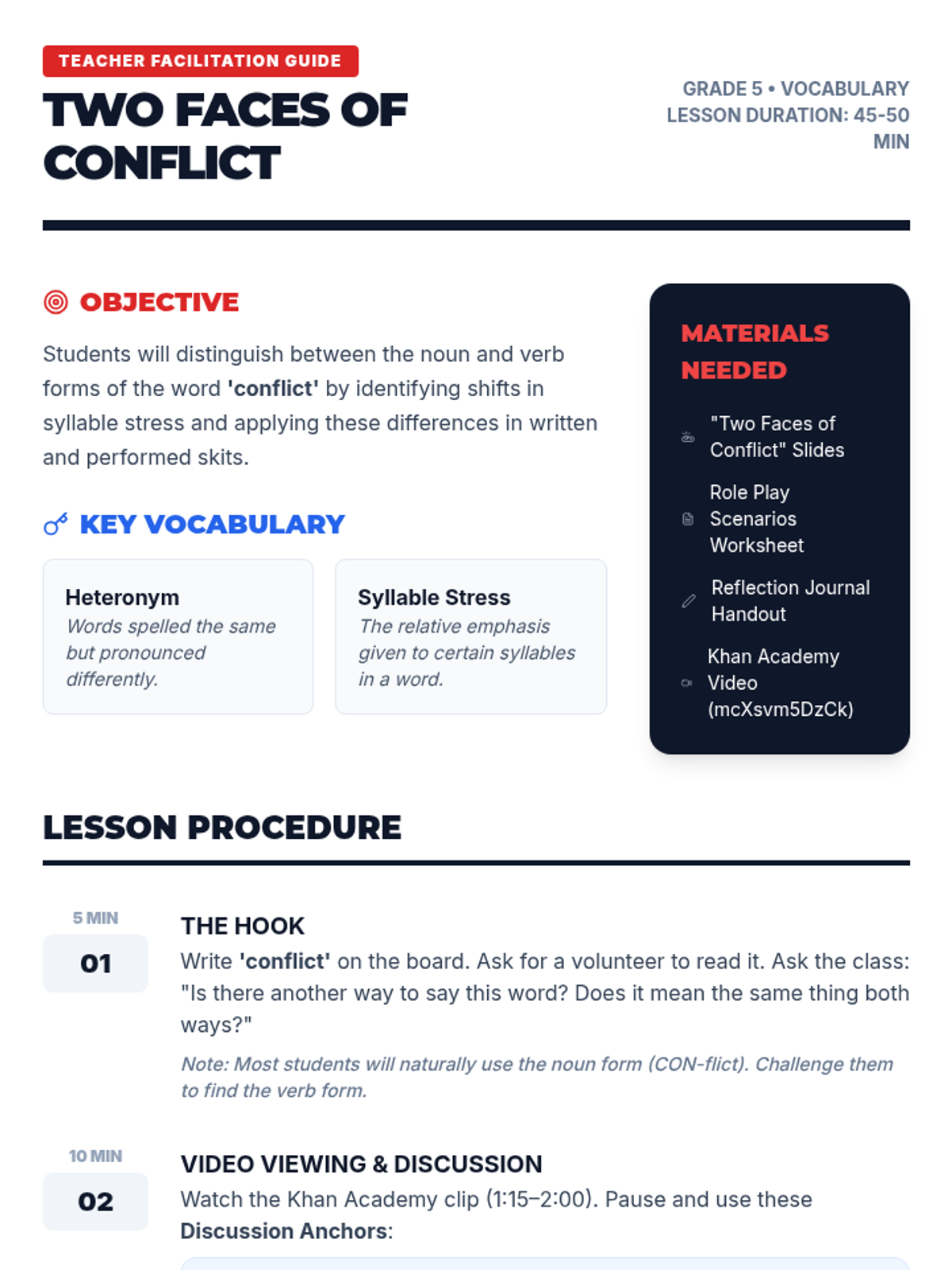
A targeted vocabulary lesson for 5th graders focusing on the heteronym 'conflict', using a Khan Academy video to explore how stress changes meaning and pronunciation.
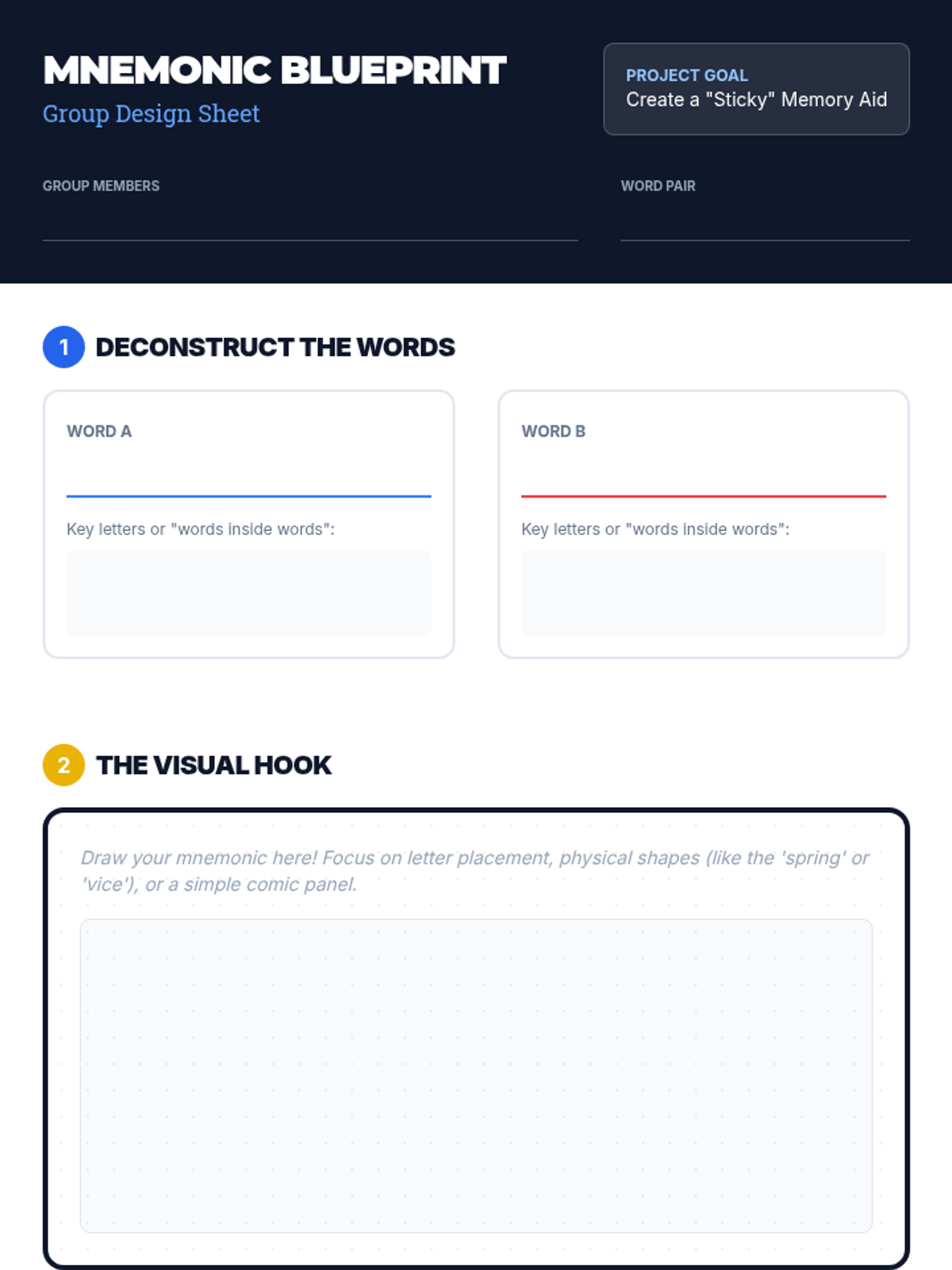
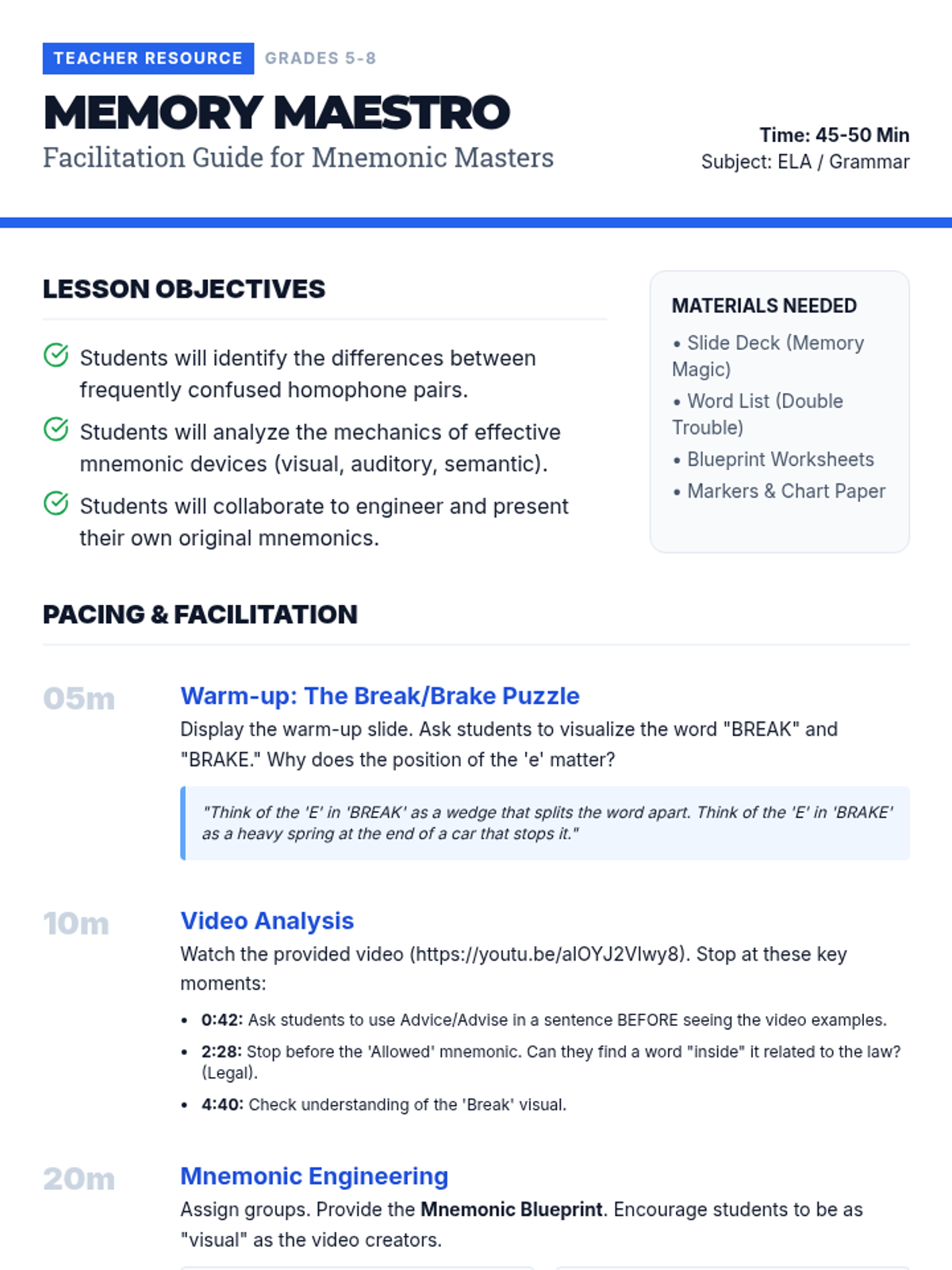
Students will analyze the 'how' behind effective mnemonic devices for confusing homophones and then work in groups to engineer their own visual and rhyming memory aids for a new set of tricky word pairs.
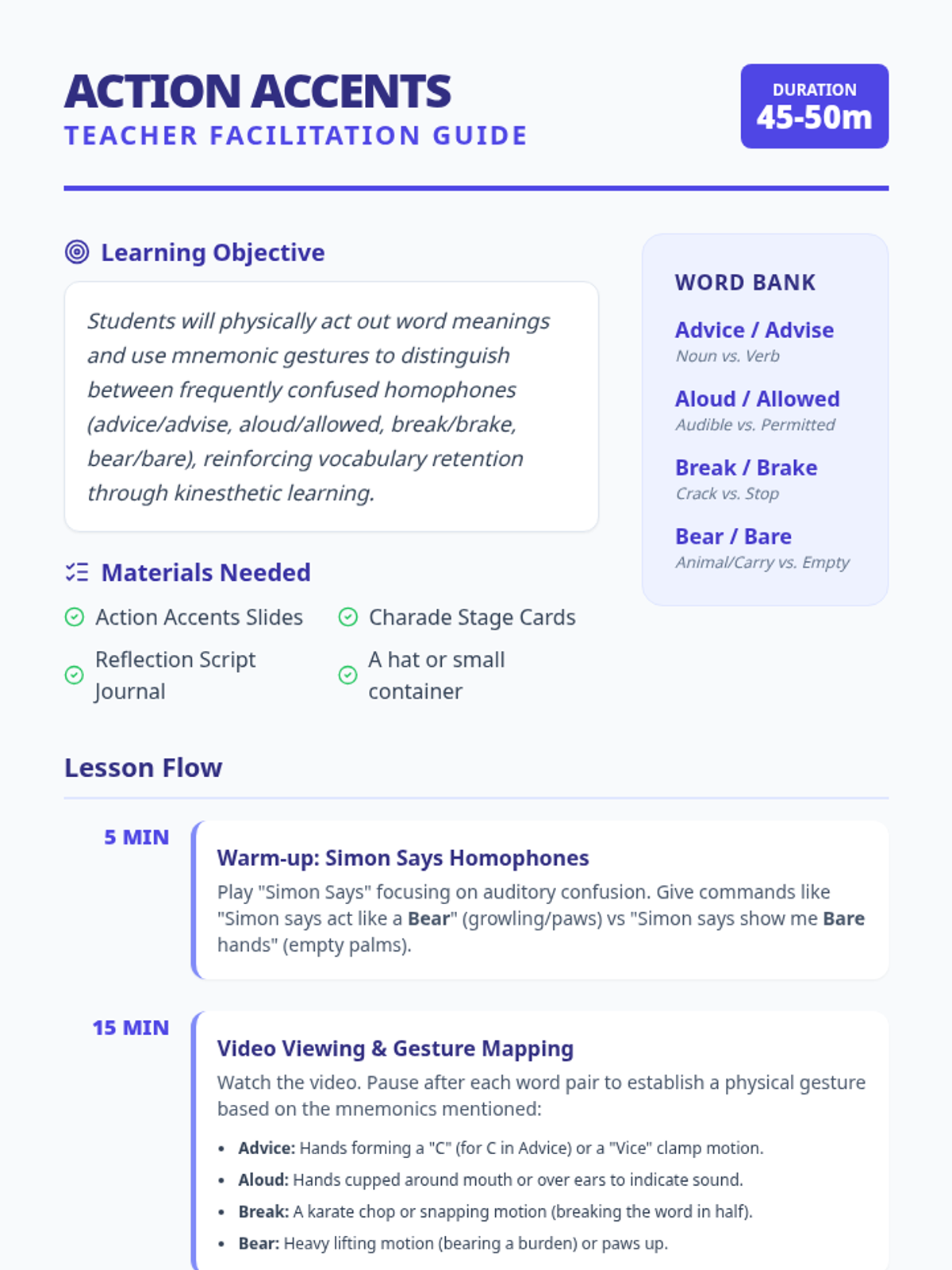
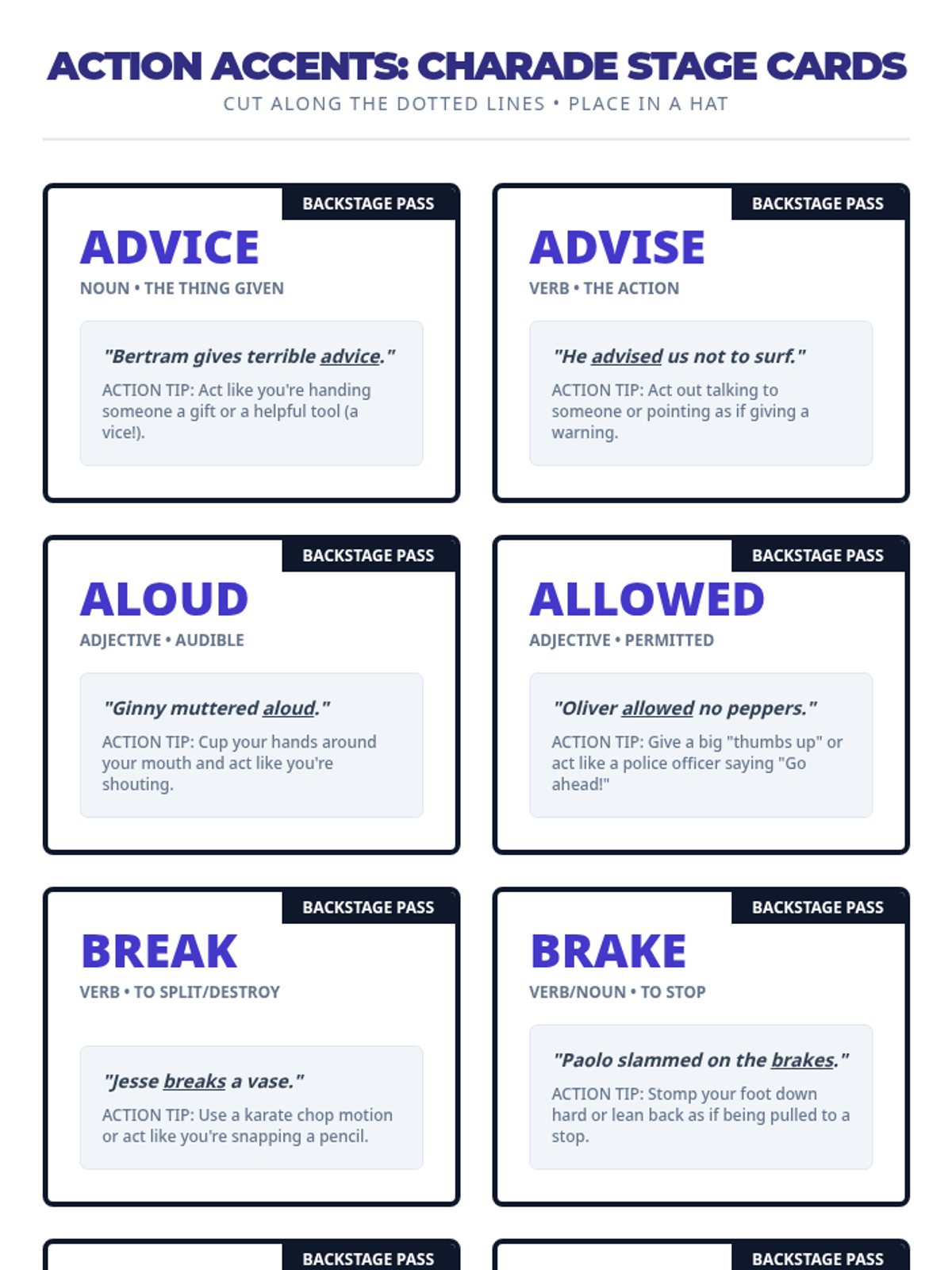
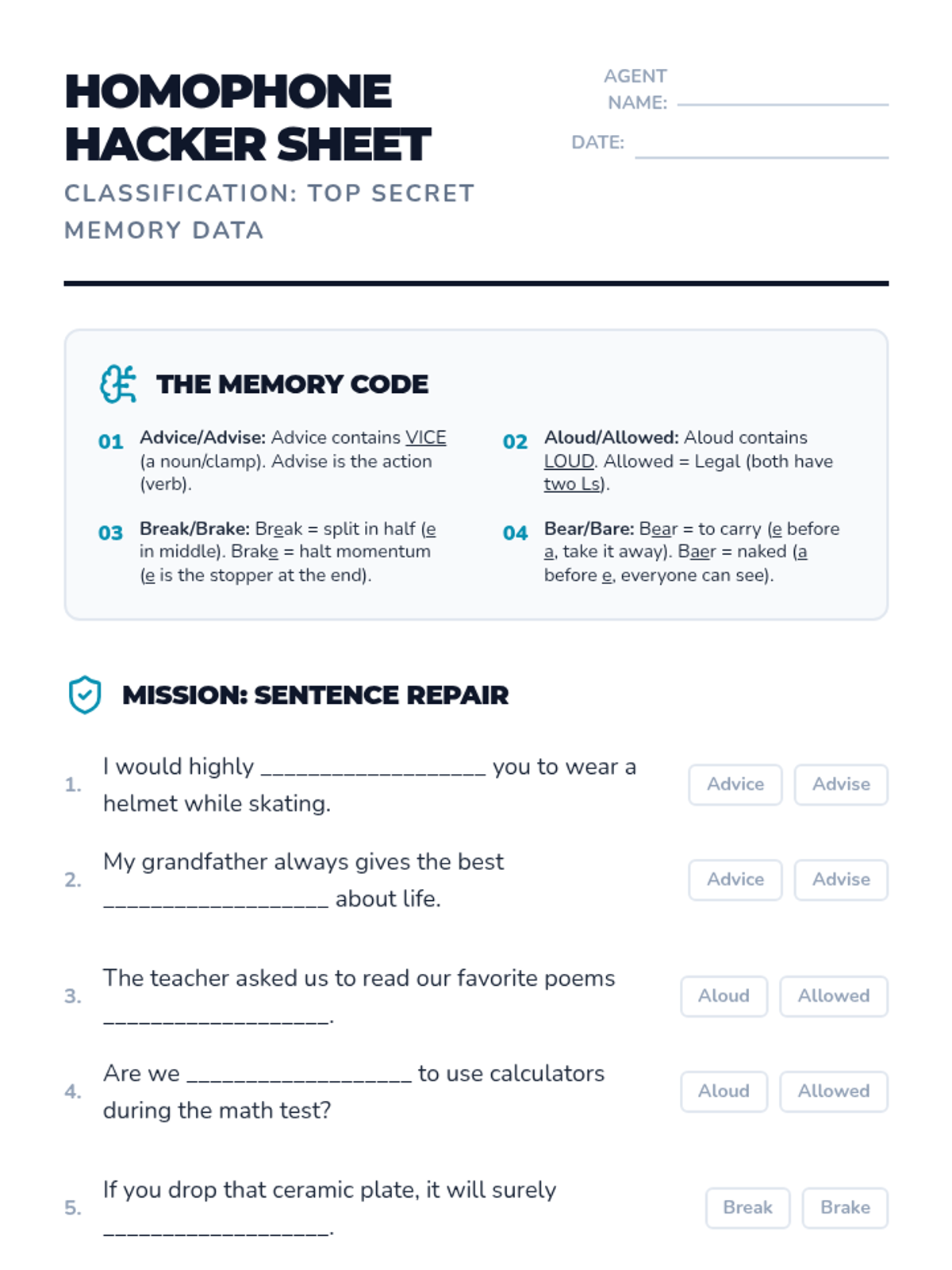
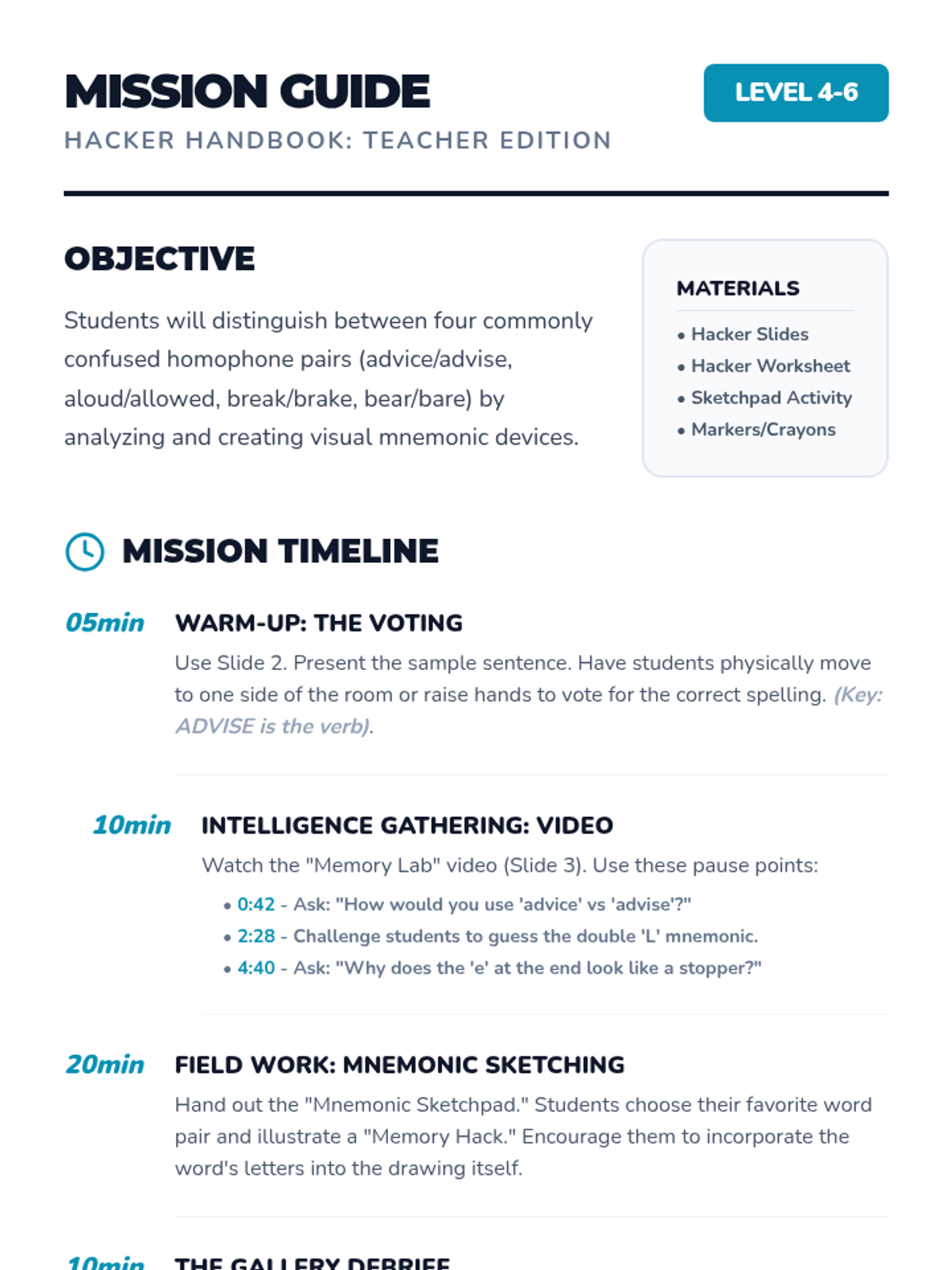
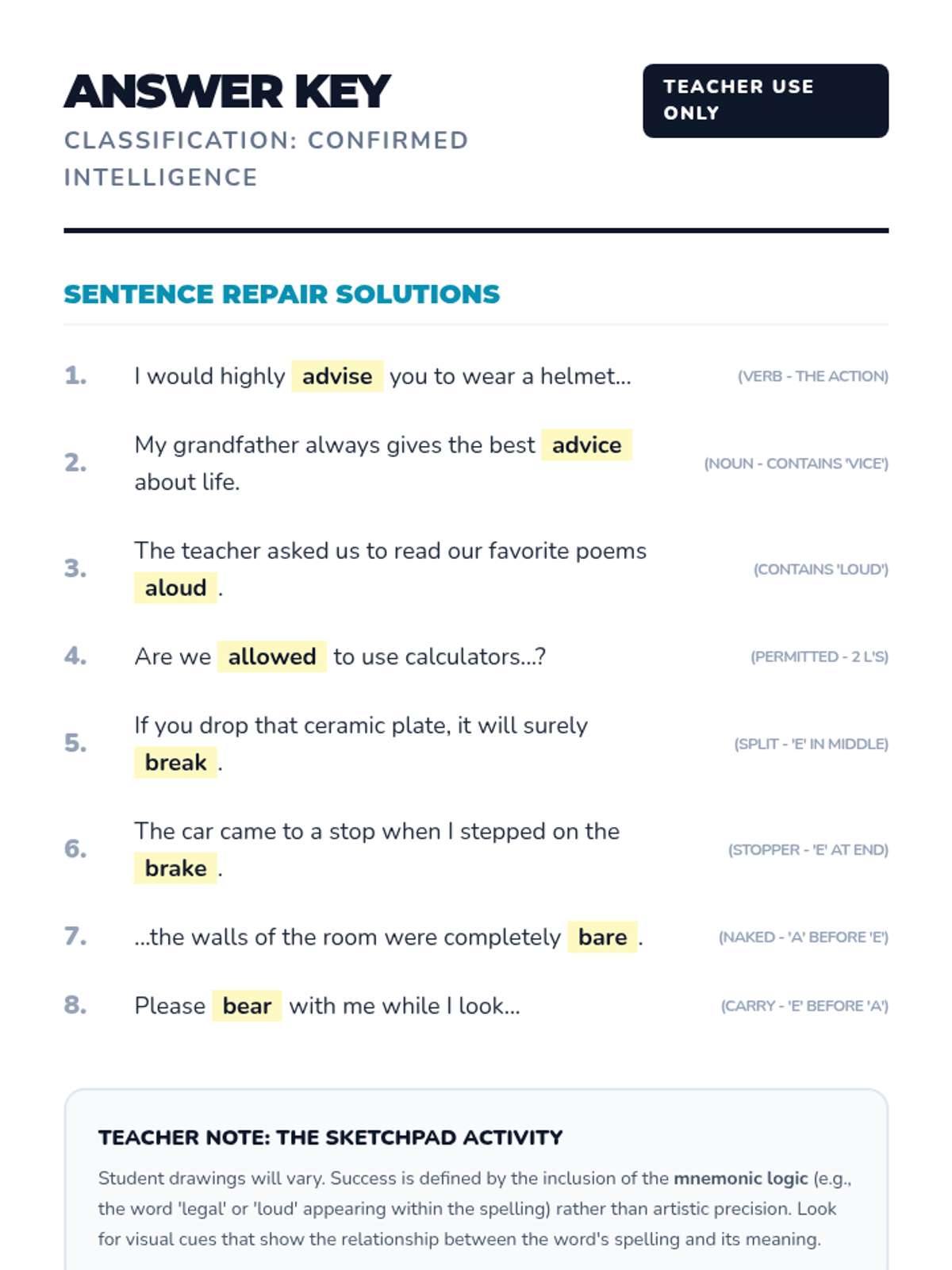
Students will physically act out word meanings for commonly confused homophones (advice/advise, aloud/allowed, break/brake, bear/bare) to reinforce spelling and retention through movement and mnemonics.
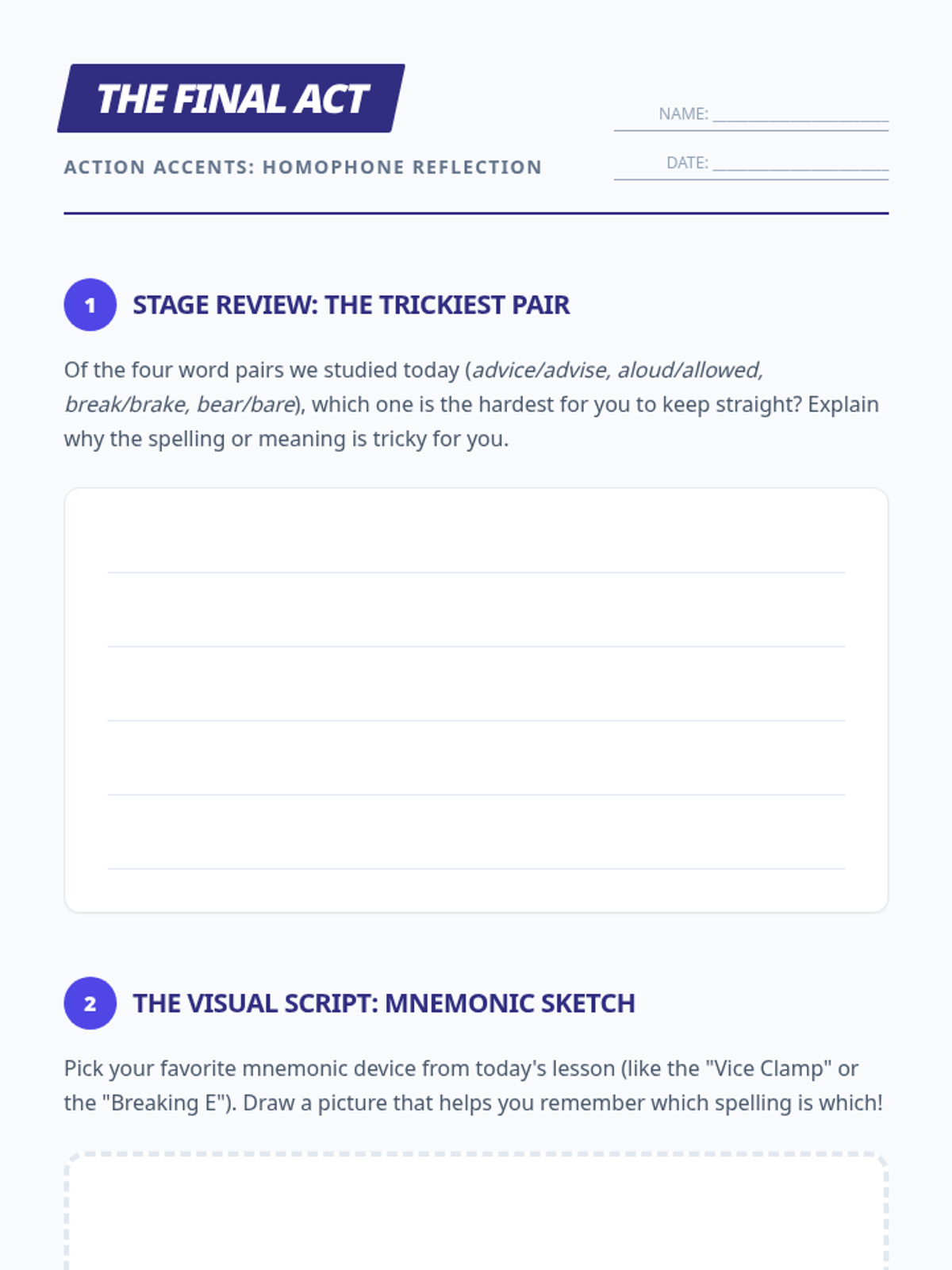
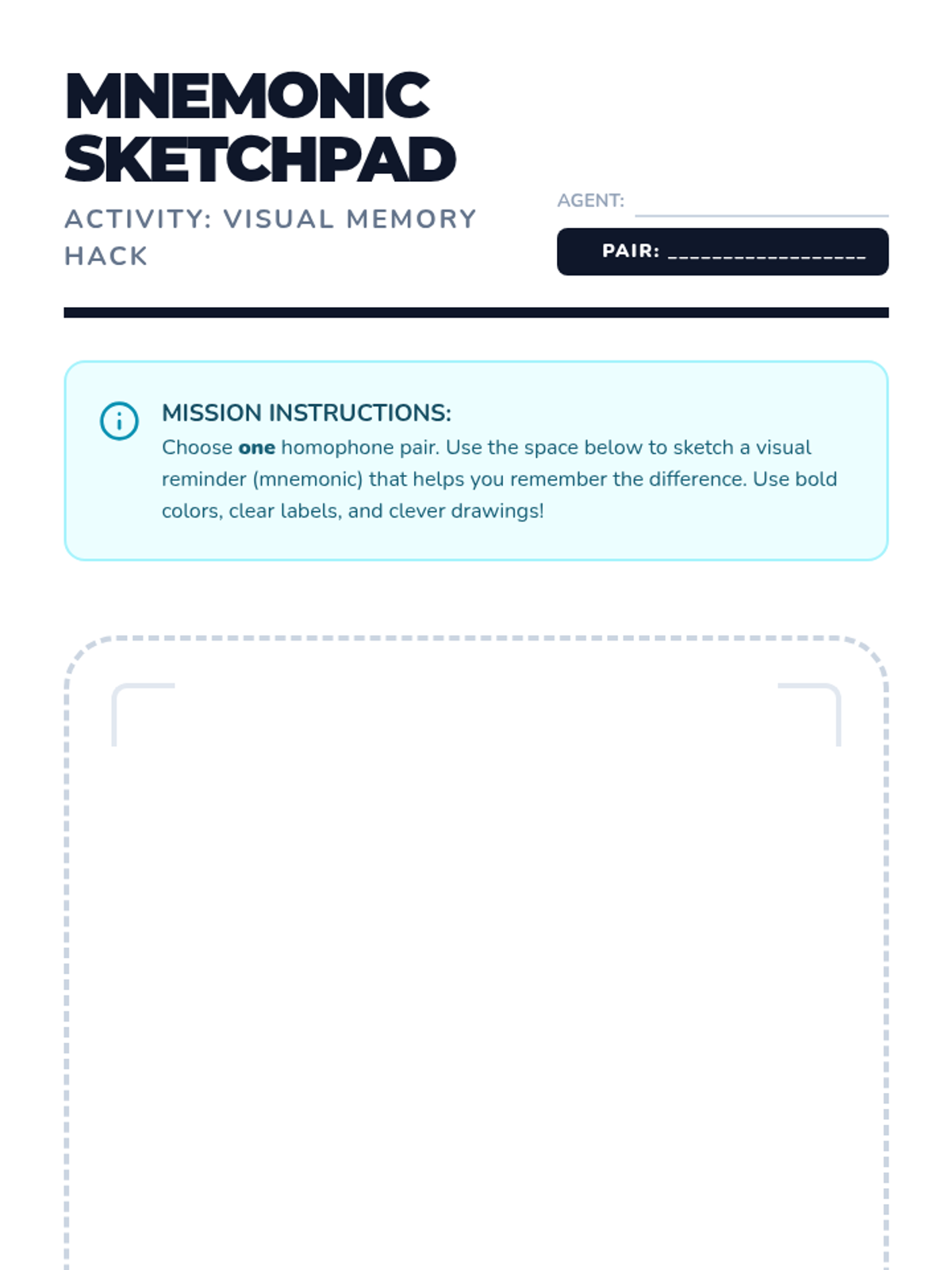
Students learn to distinguish between commonly confused homophones (advice/advise, aloud/allowed, break/brake, bear/bare) using clever mnemonic devices and creative sketching.
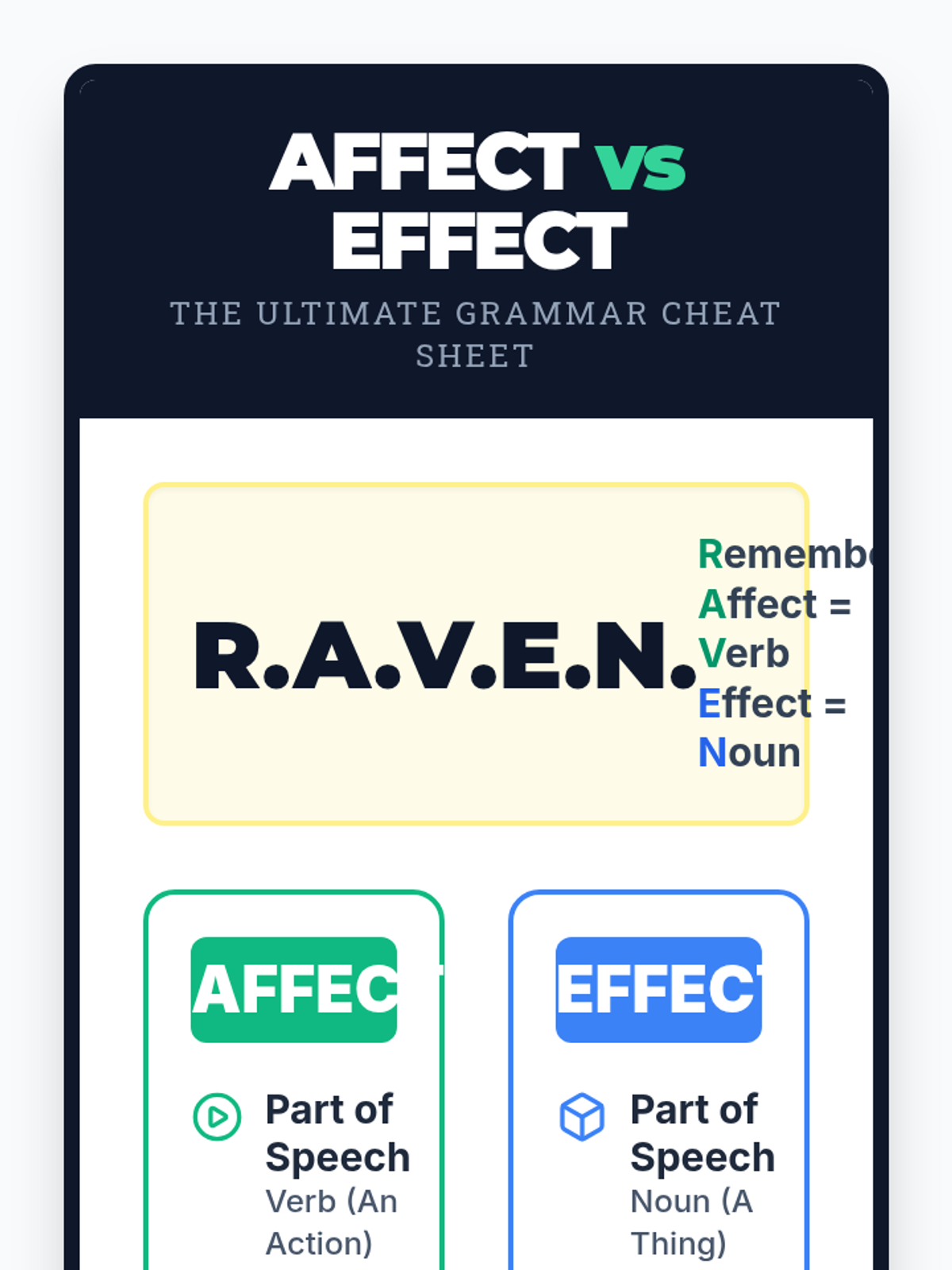
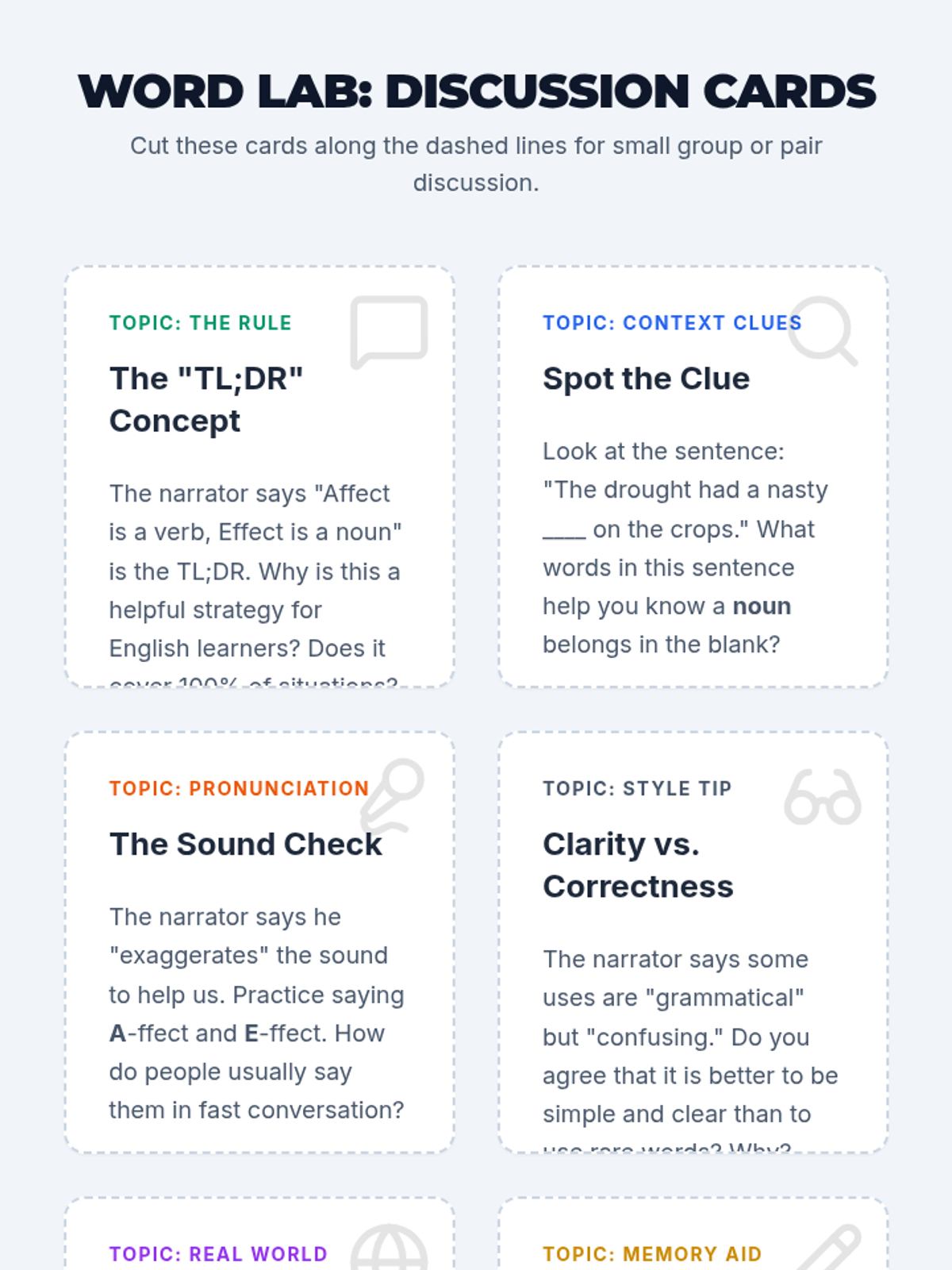
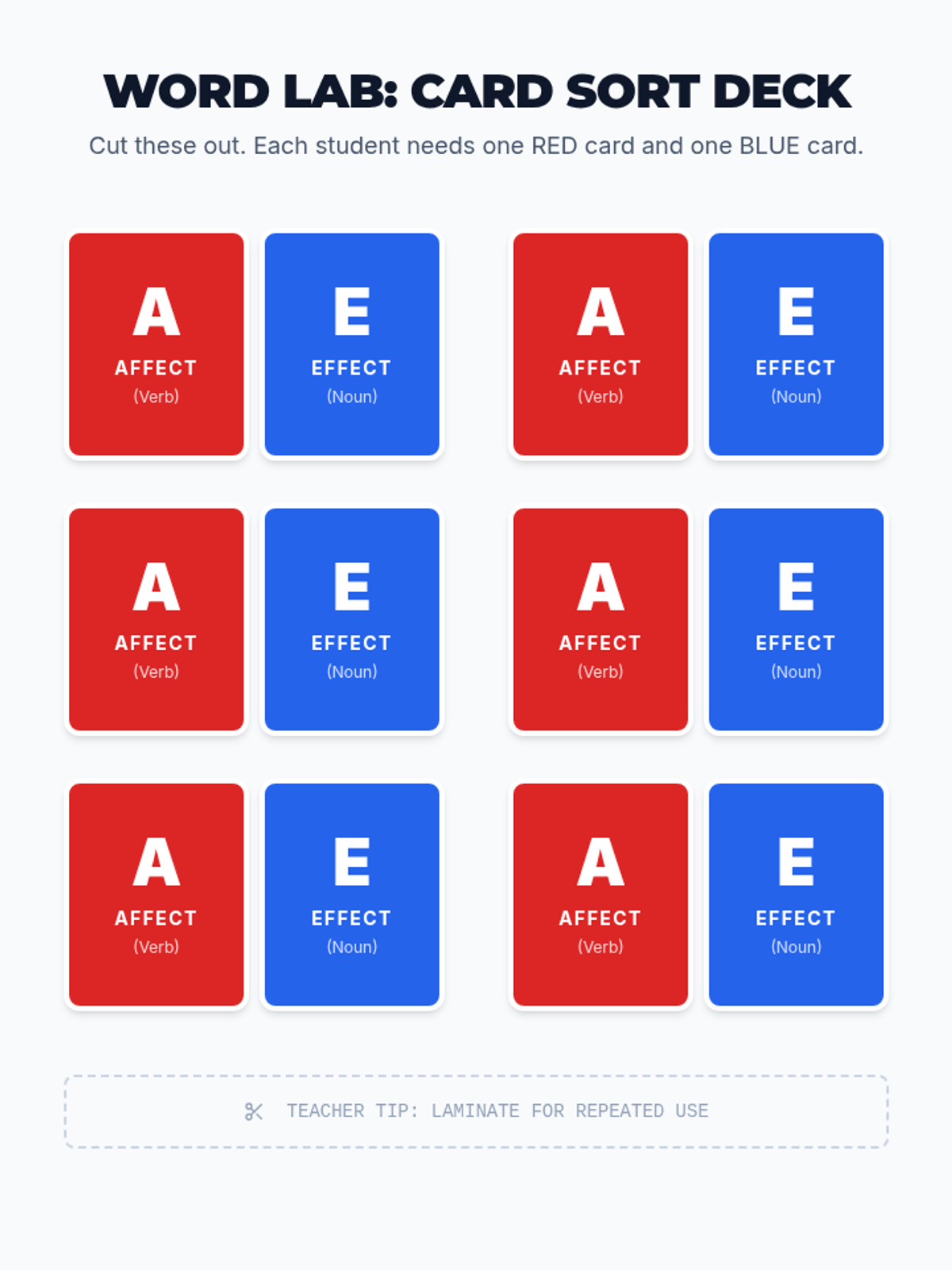
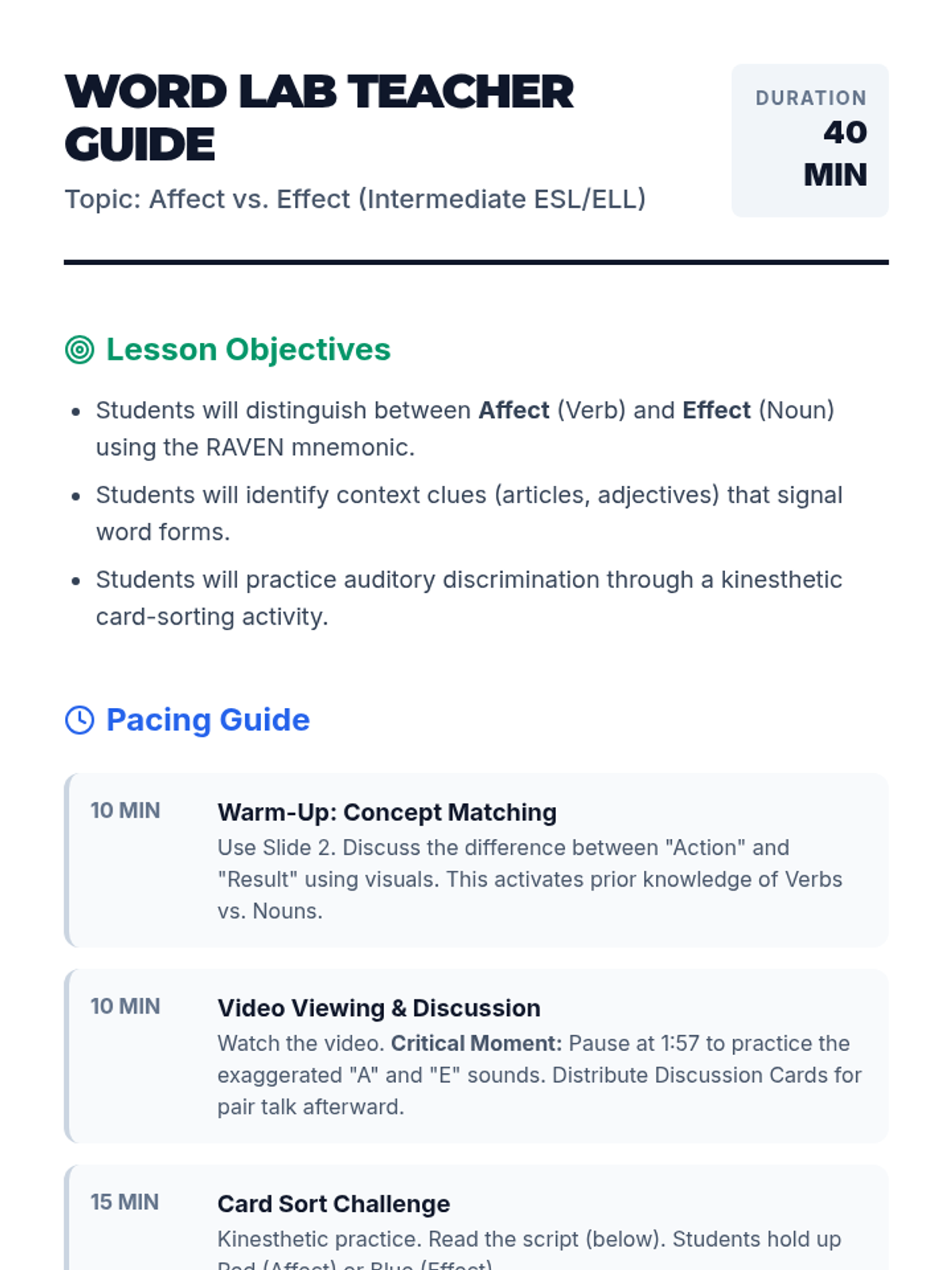
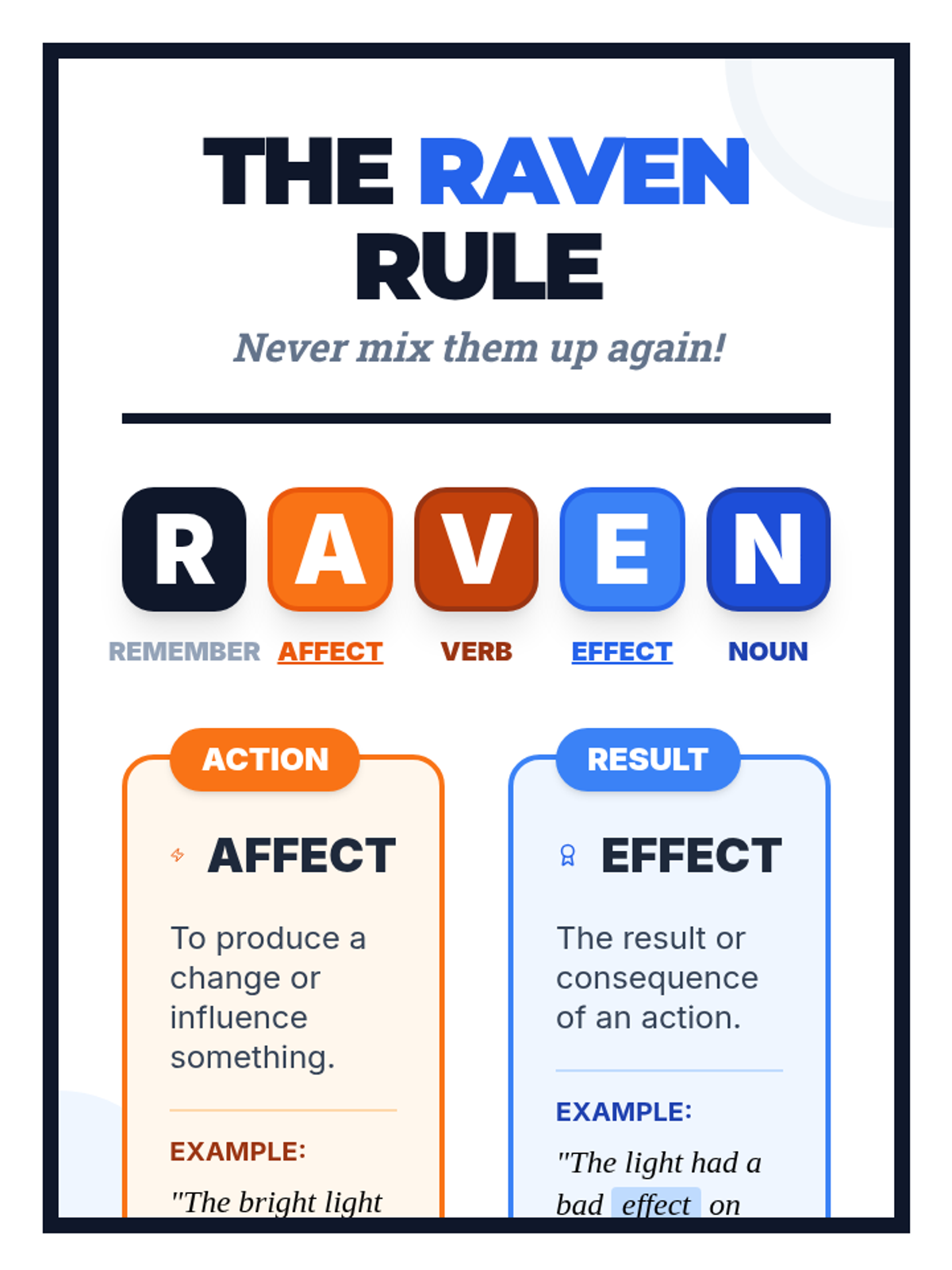
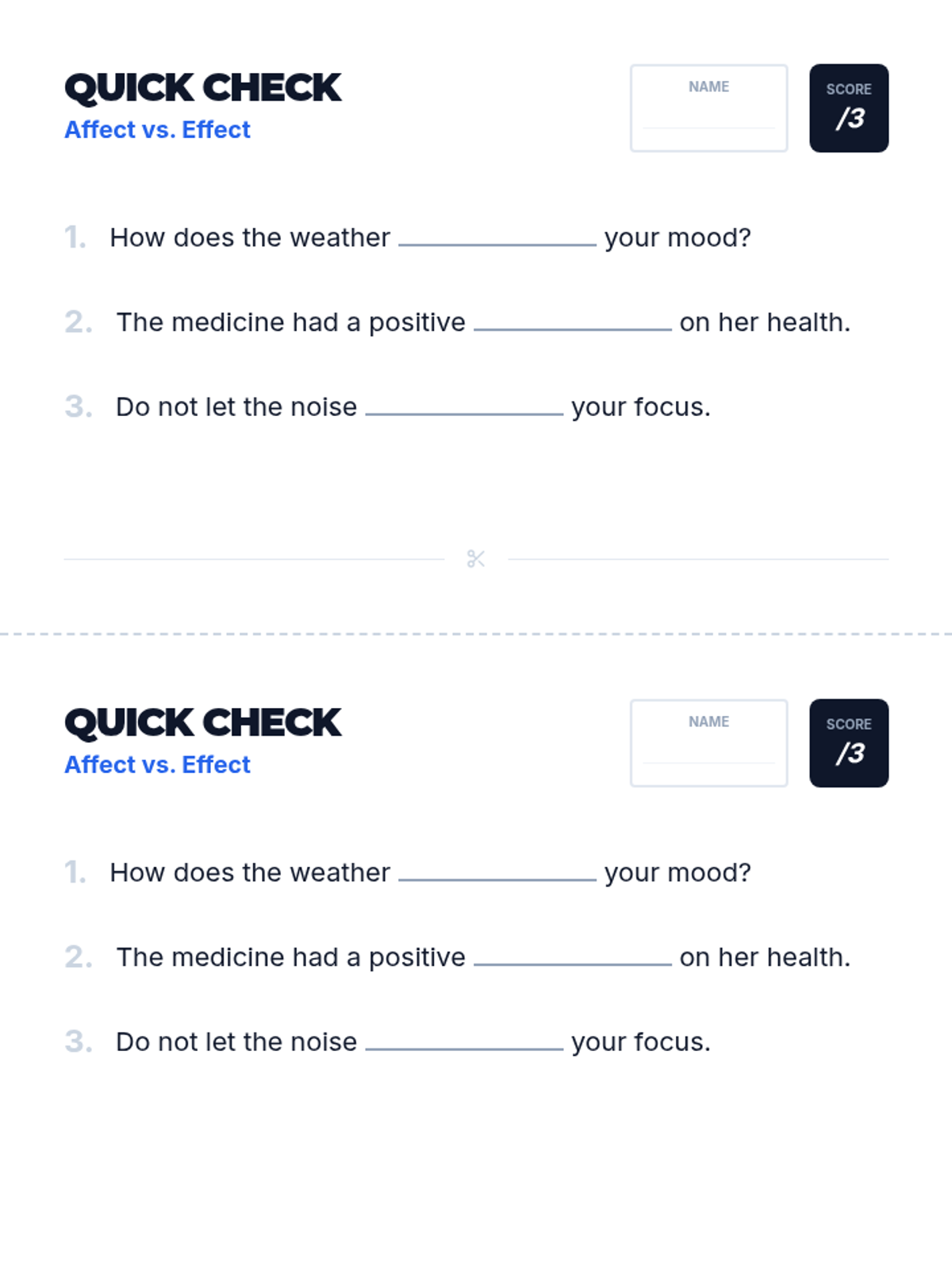
An intermediate ESL/ELL lesson focused on distinguishing between 'affect' and 'effect' using word forms, context clues, and a visual mnemonic. Includes a video-based discussion, a kinesthetic card-sorting activity, and a visual anchor chart.
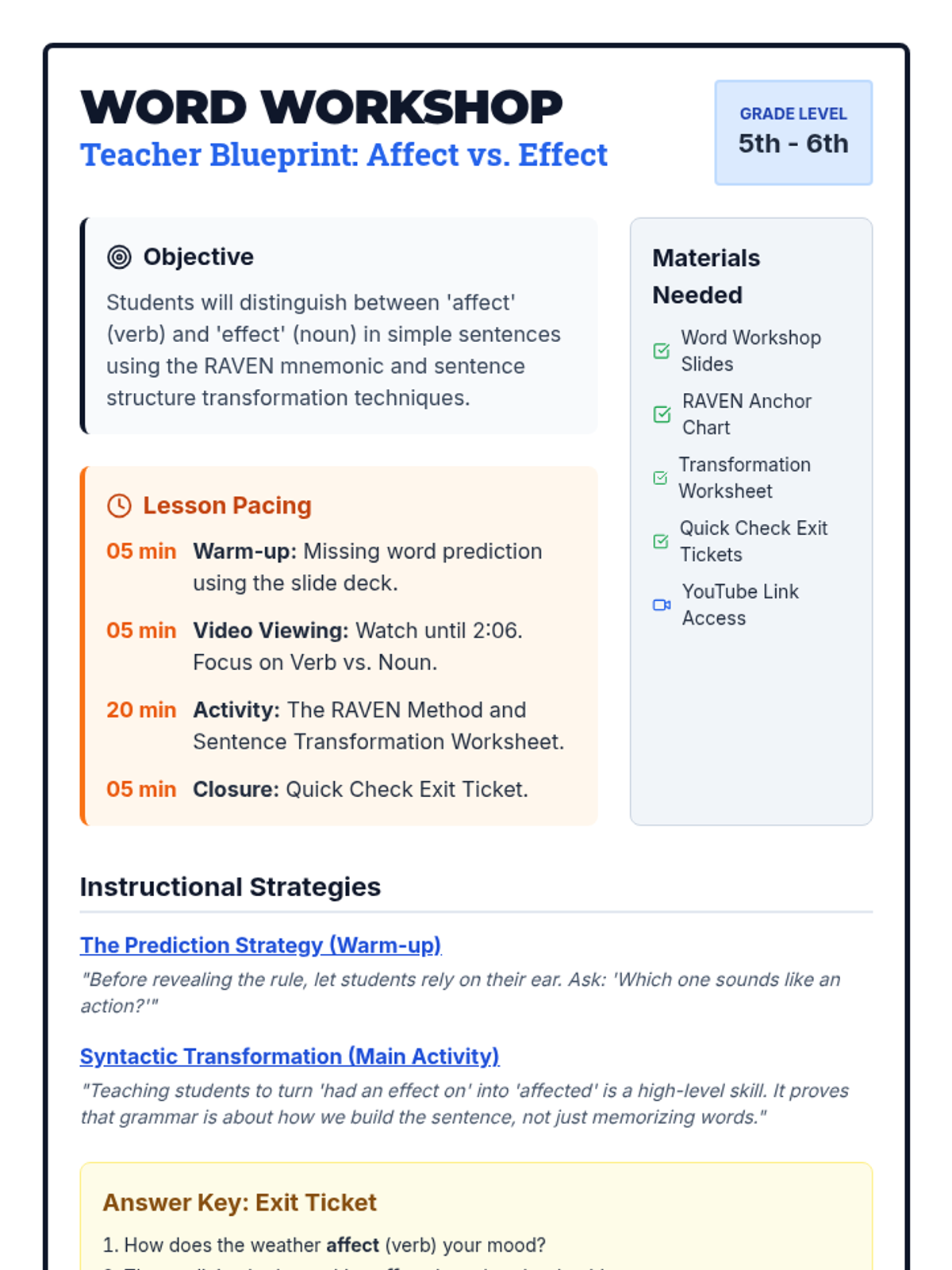
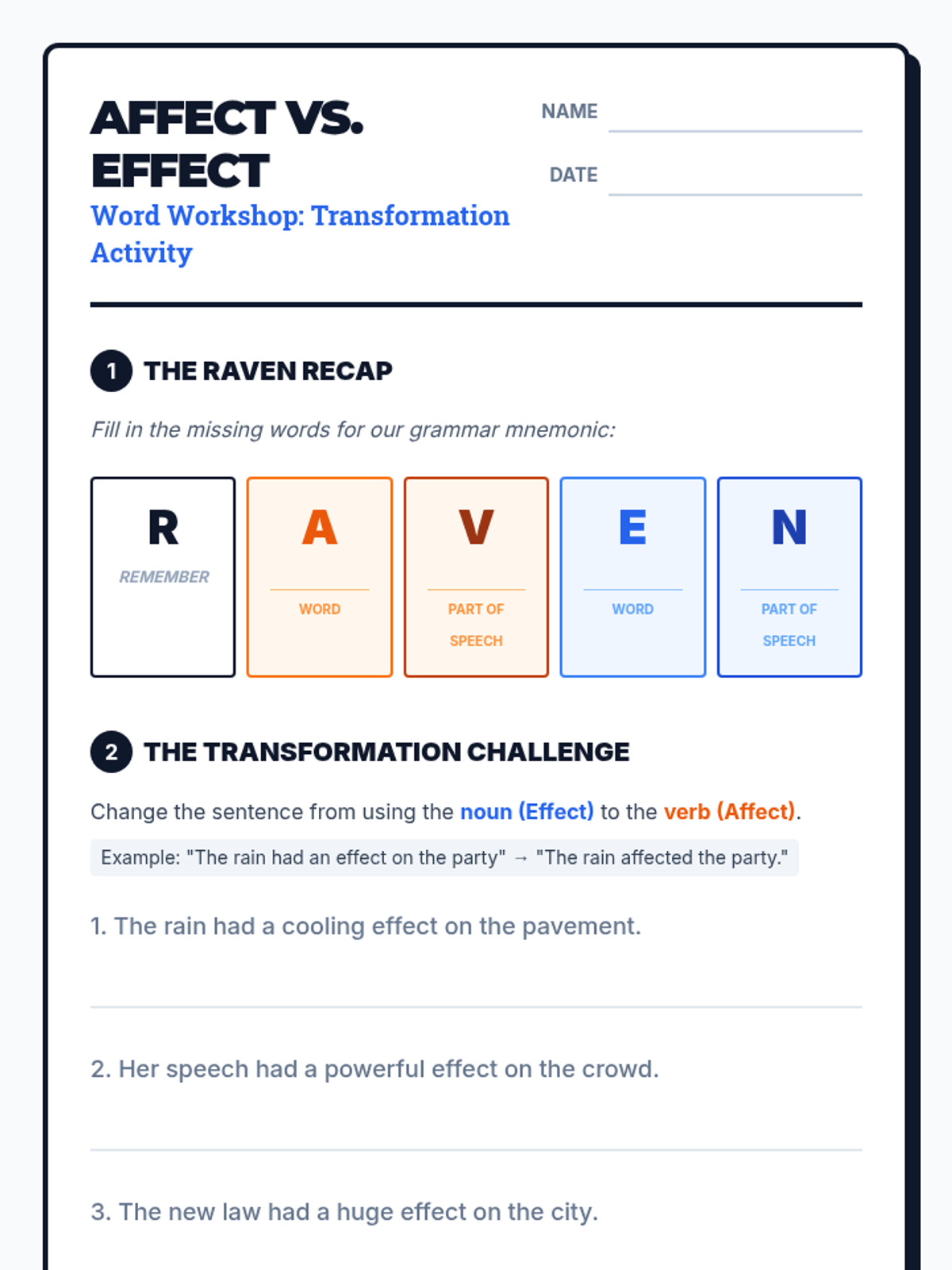
A grammar lesson for 5th-6th graders focusing on the common confusion between 'affect' and 'effect' using the RAVEN mnemonic and sentence transformation activities.
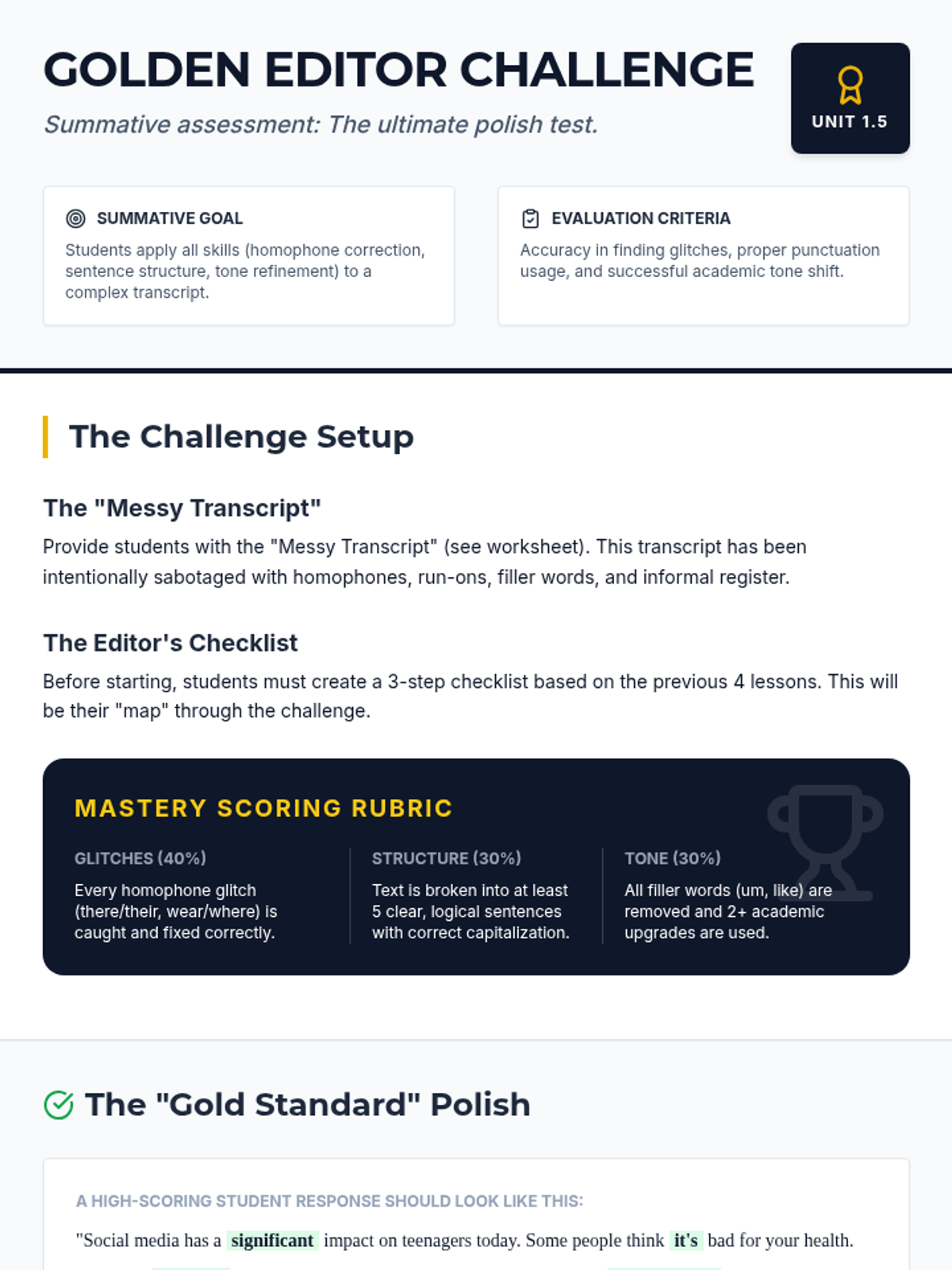
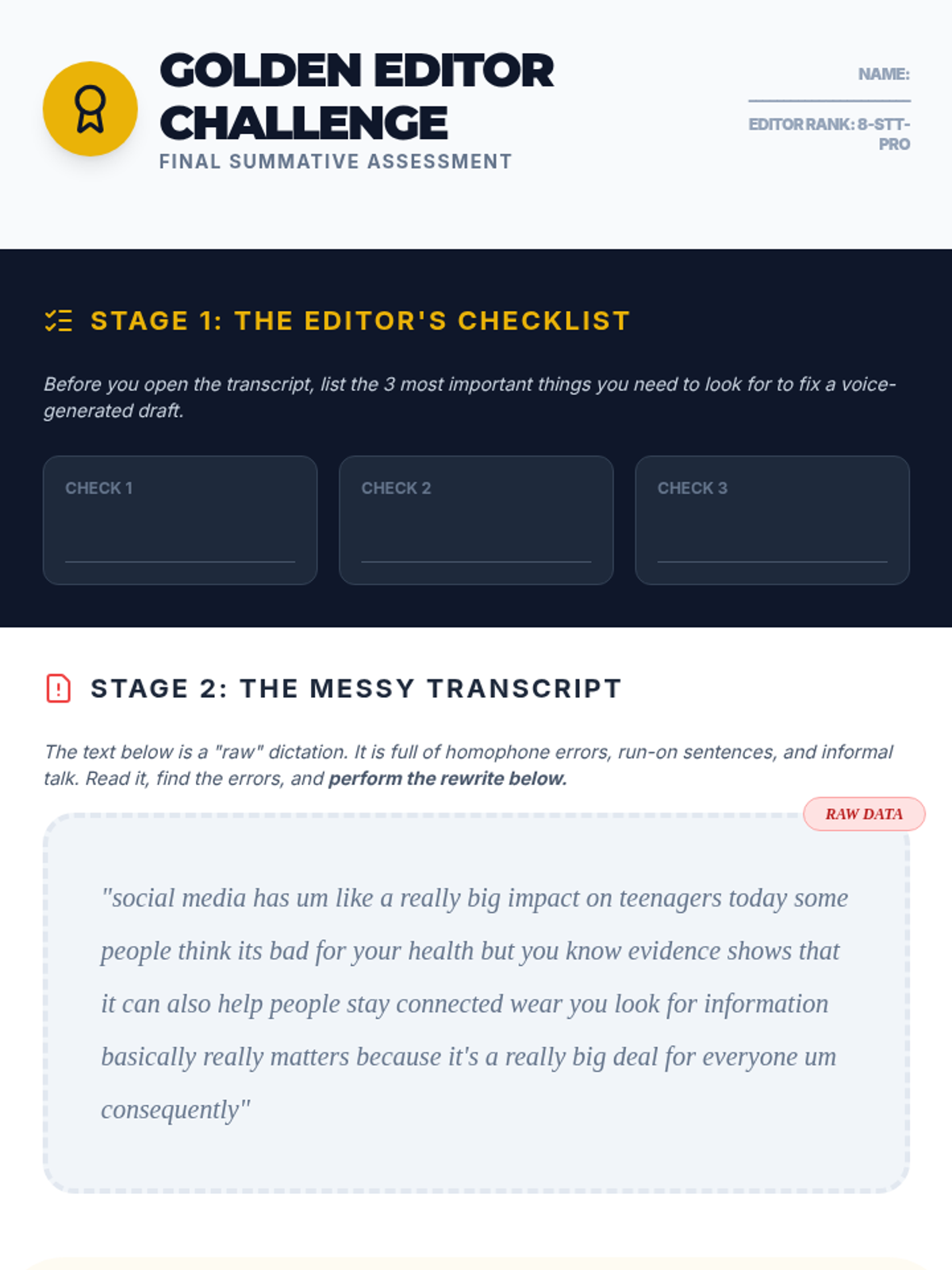
A summative assessment where students apply all editing skills to a messy, error-ridden transcript to produce a final, polished piece of writing.
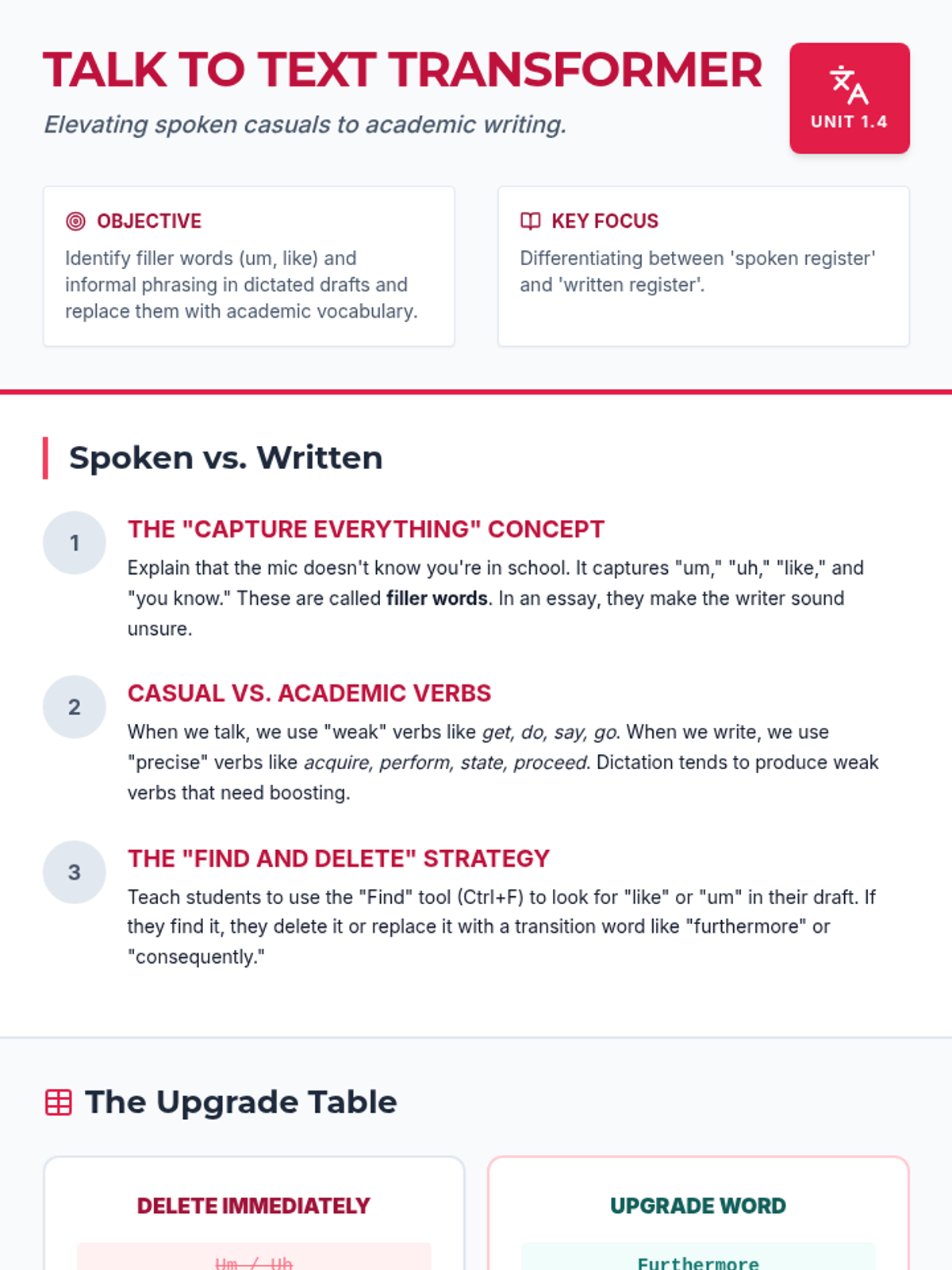
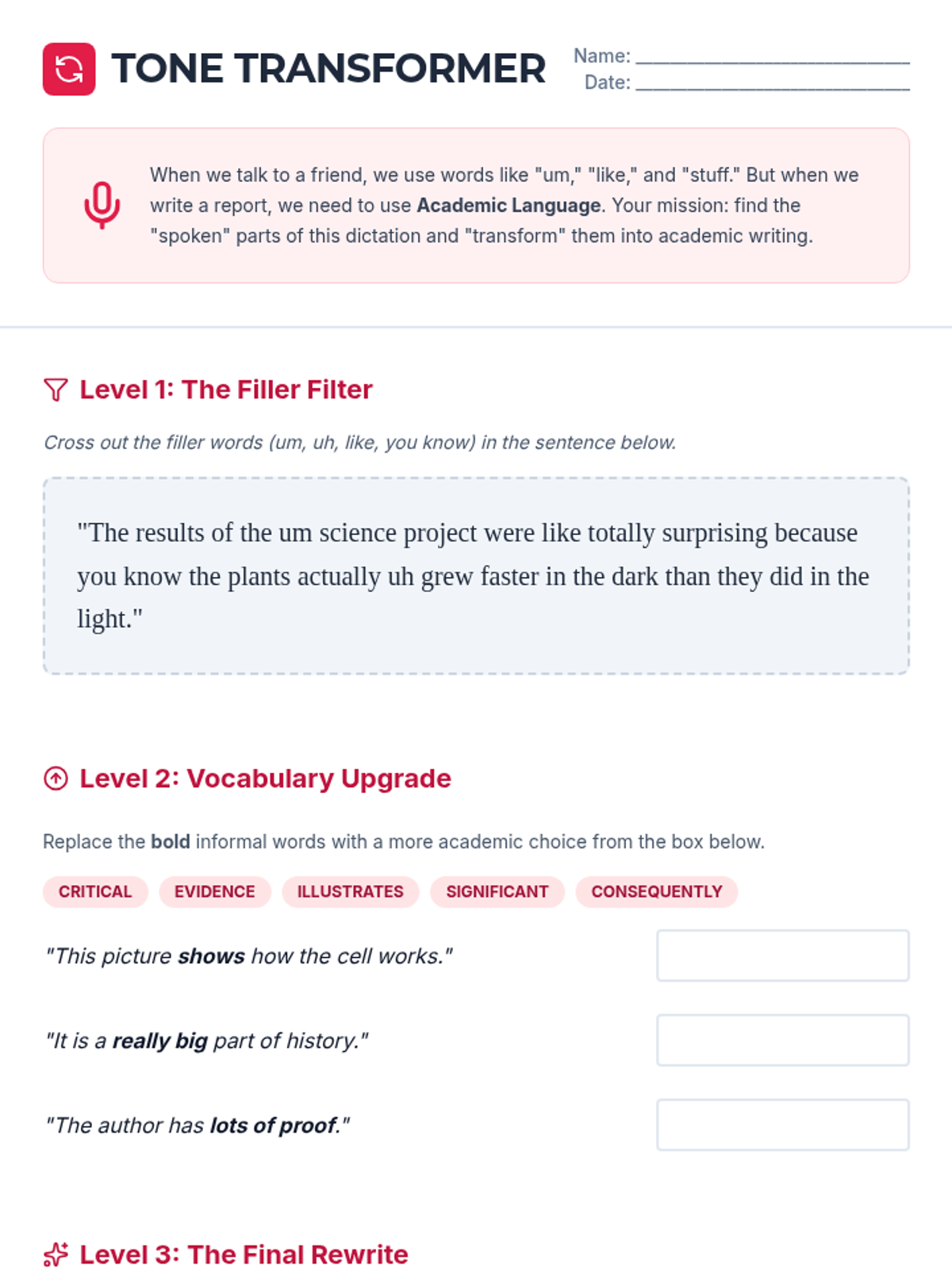
Teaches students to bridge the gap between spoken casual language and formal academic writing by identifying filler words and elevating vocabulary in their dictated drafts.
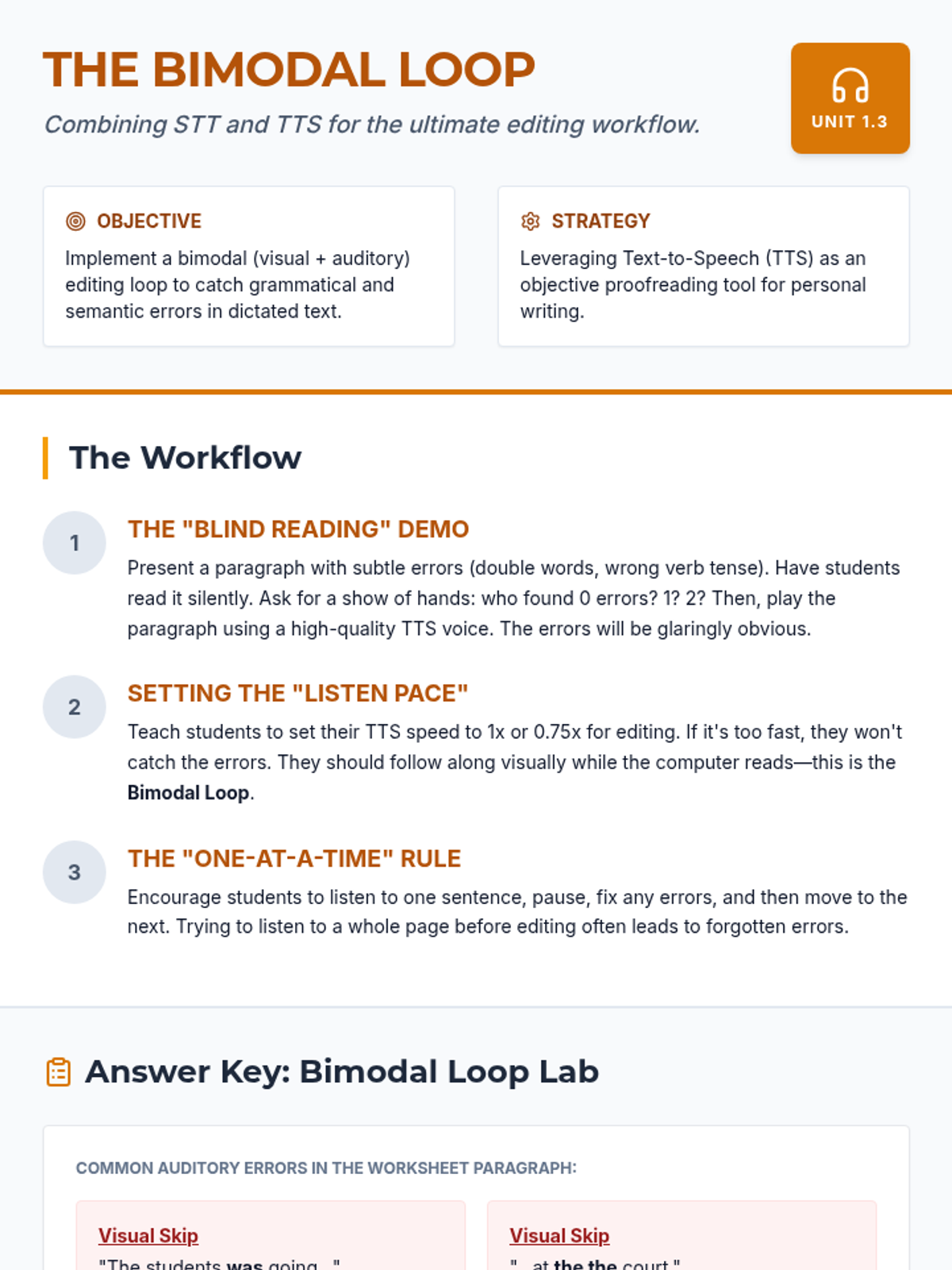
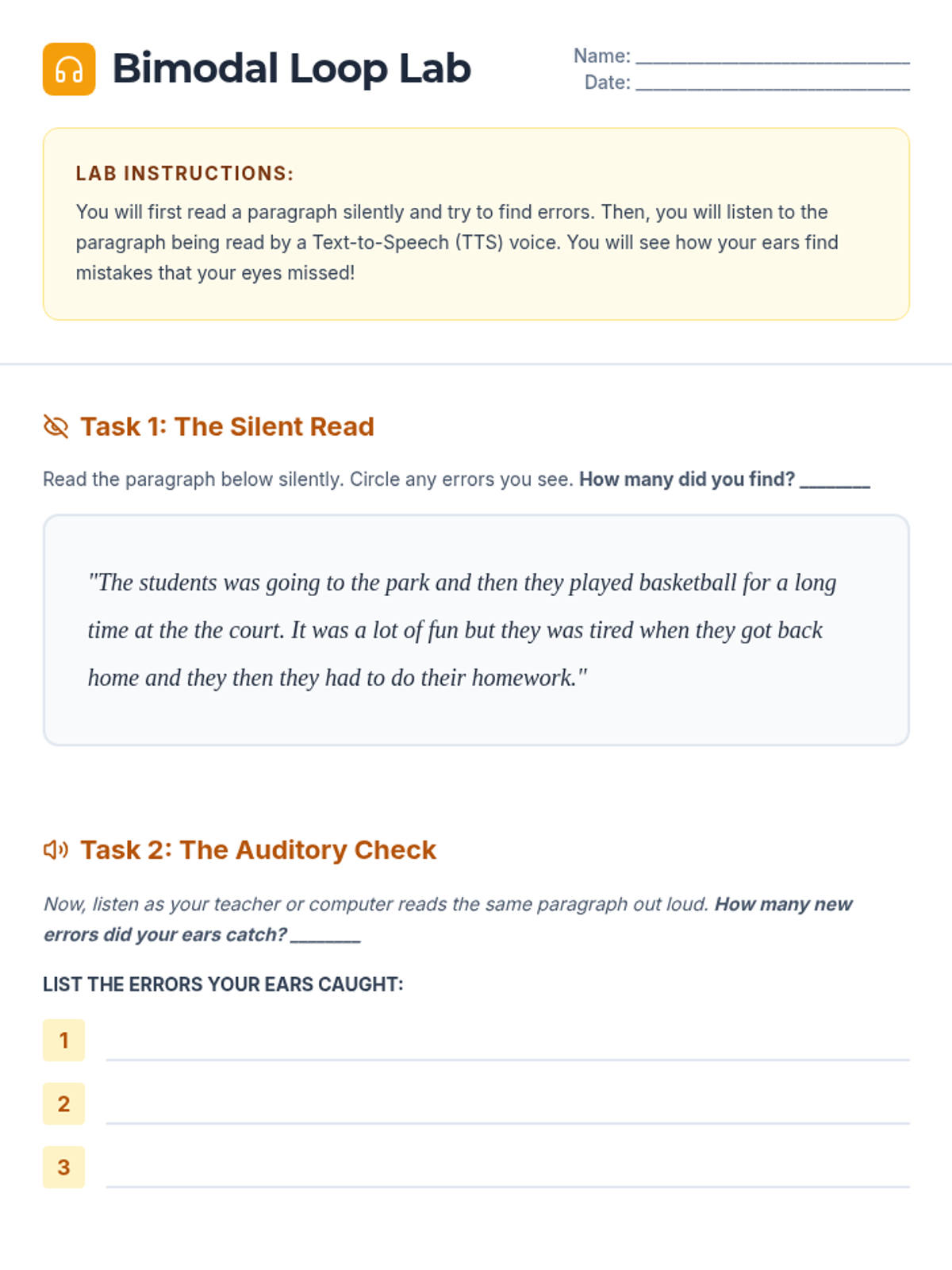
Introduces the bimodal loop of using text-to-speech technology to listen to dictated work, leveraging auditory processing to catch errors that are easily missed during visual proofreading.
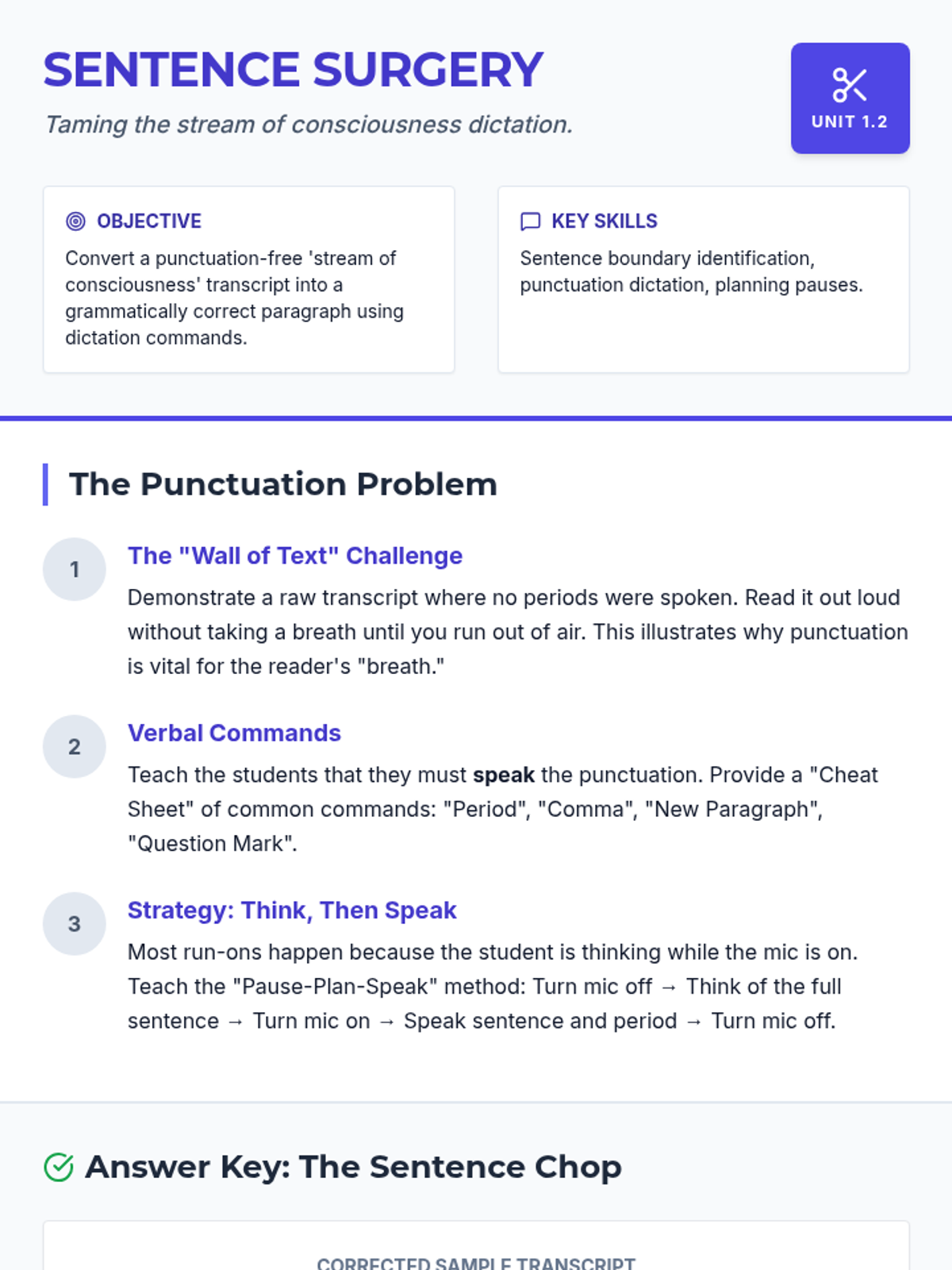
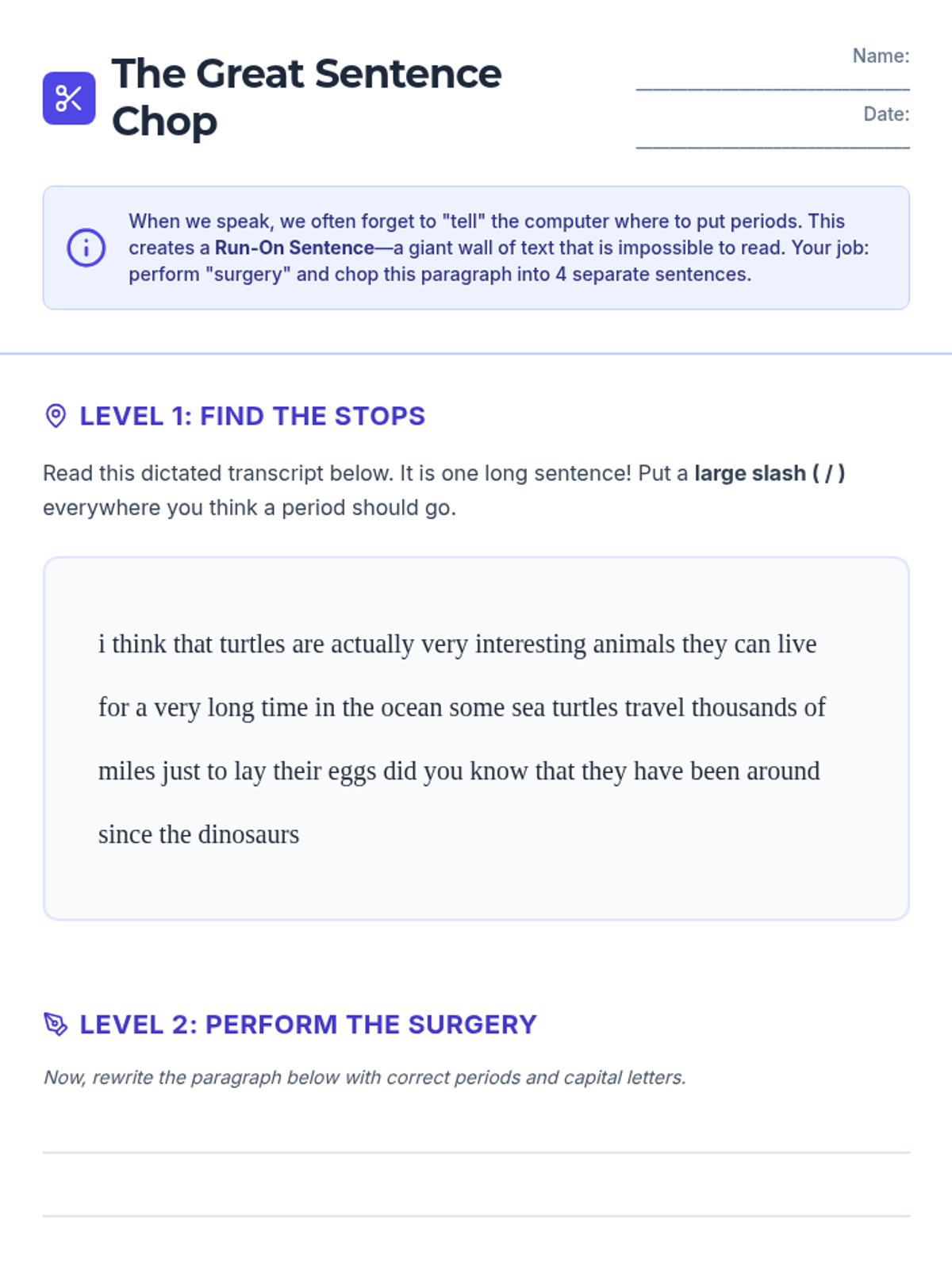
Focuses on the structural issues of dictated text, specifically the lack of punctuation and the tendency for run-on sentences, teaching students to impose order on 'stream of consciousness' transcripts.
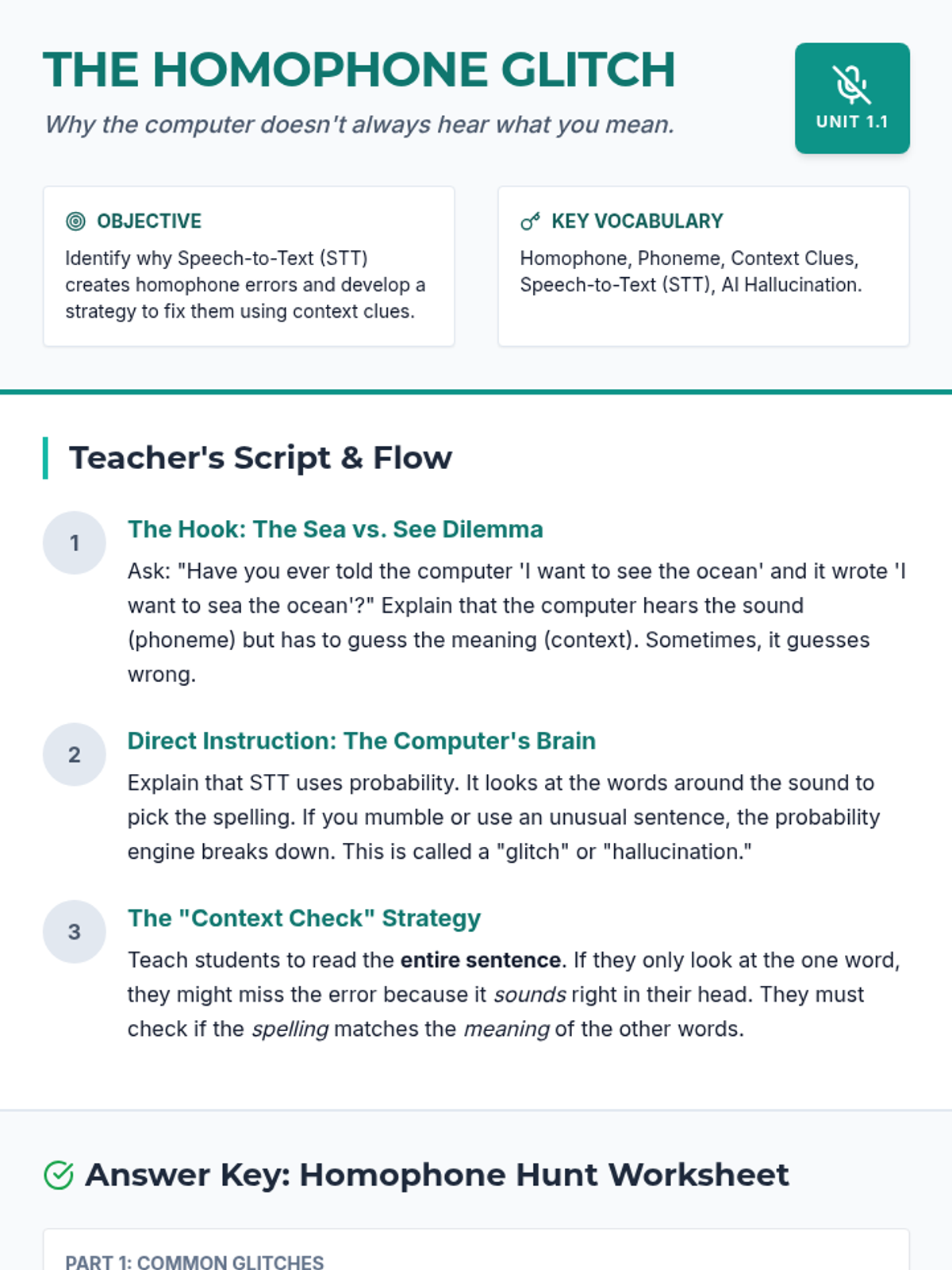
Explores why speech-to-text software confuses homophones and teaches students how to use context clues to identify and fix these common errors.
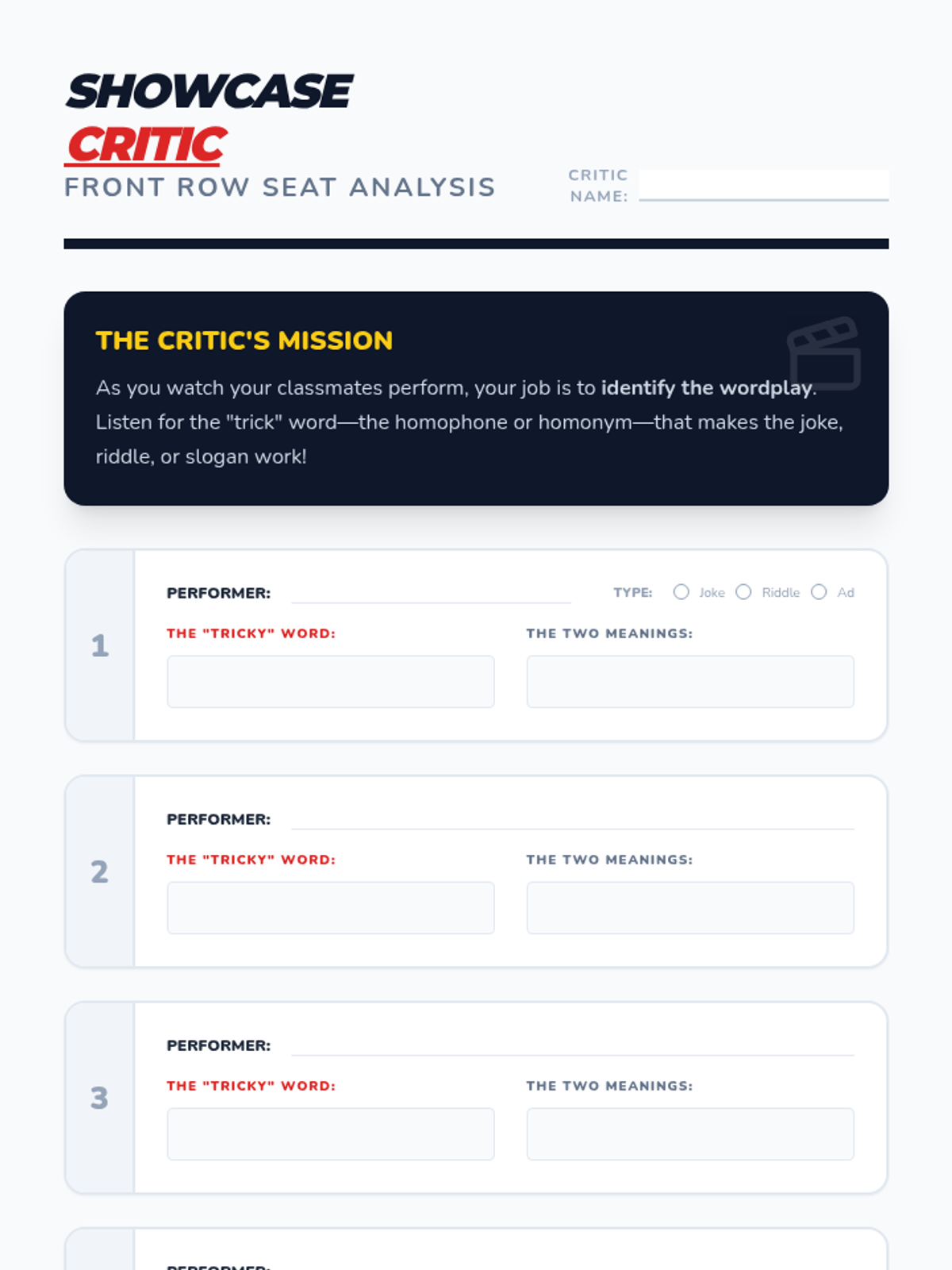
Students present their best jokes, riddles, or slogans to the class in a 'Comedy Club' or 'Ad Pitch' format. The audience must identify the specific homophones or homonyms used in each presentation.
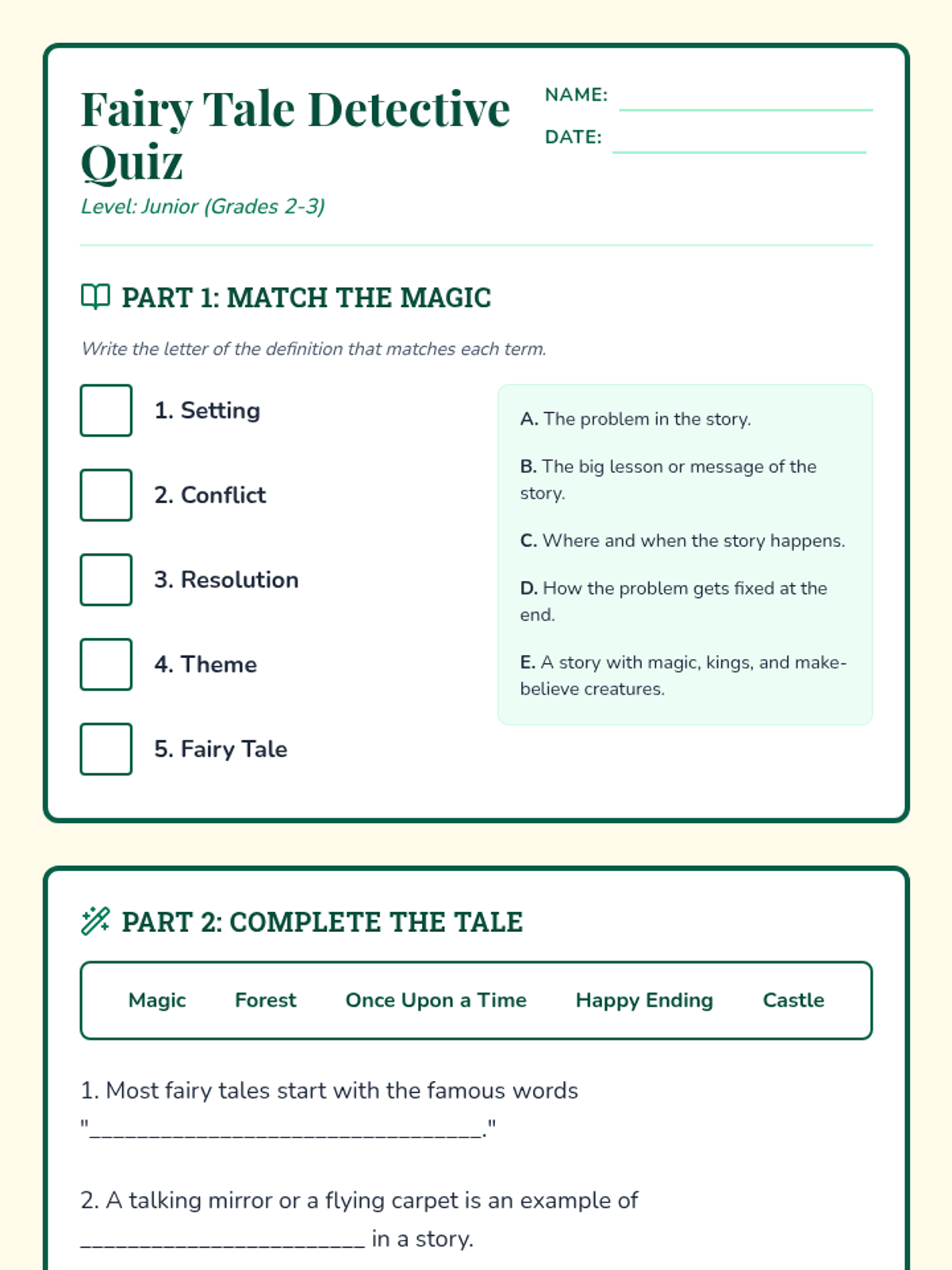
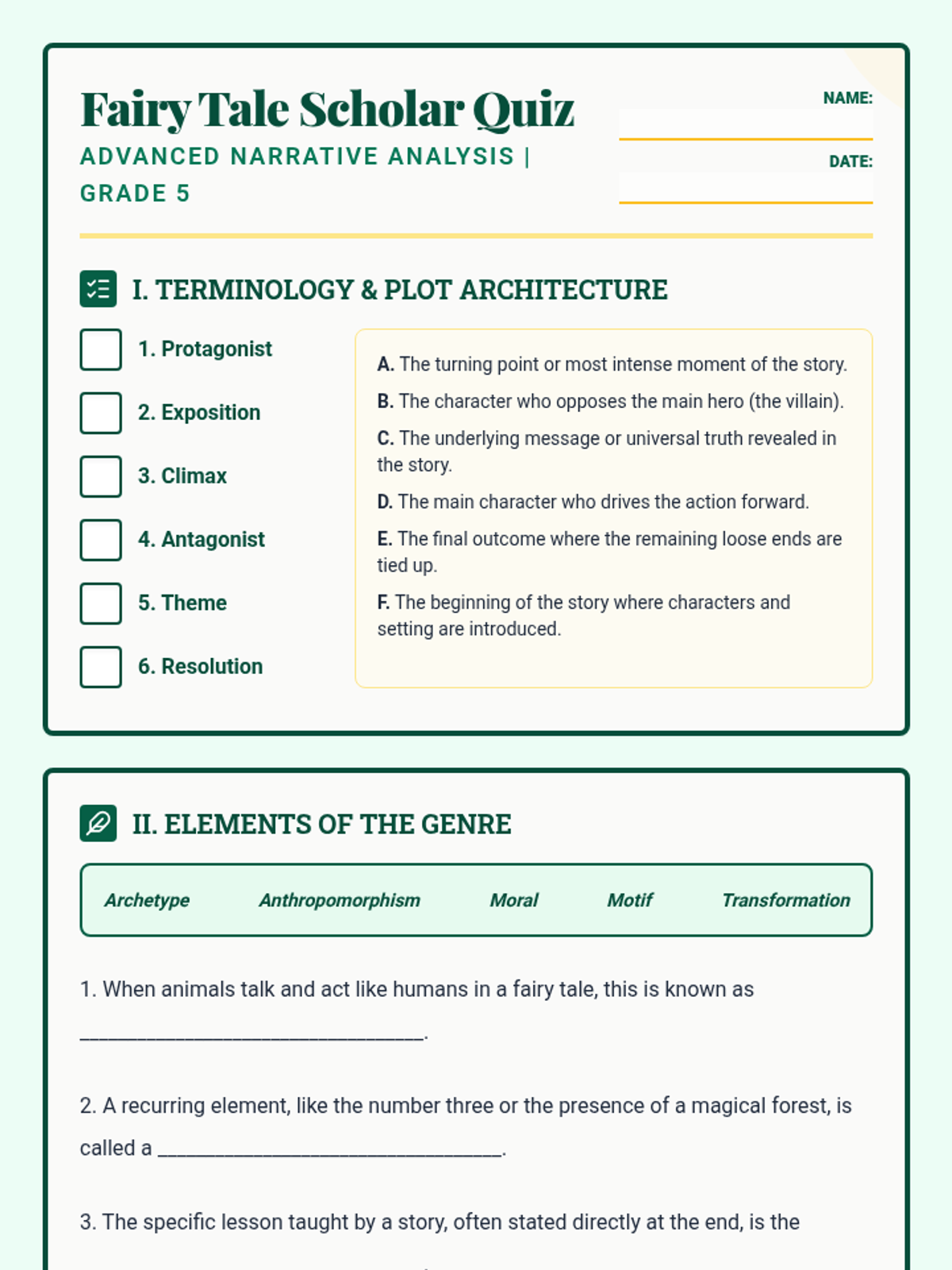
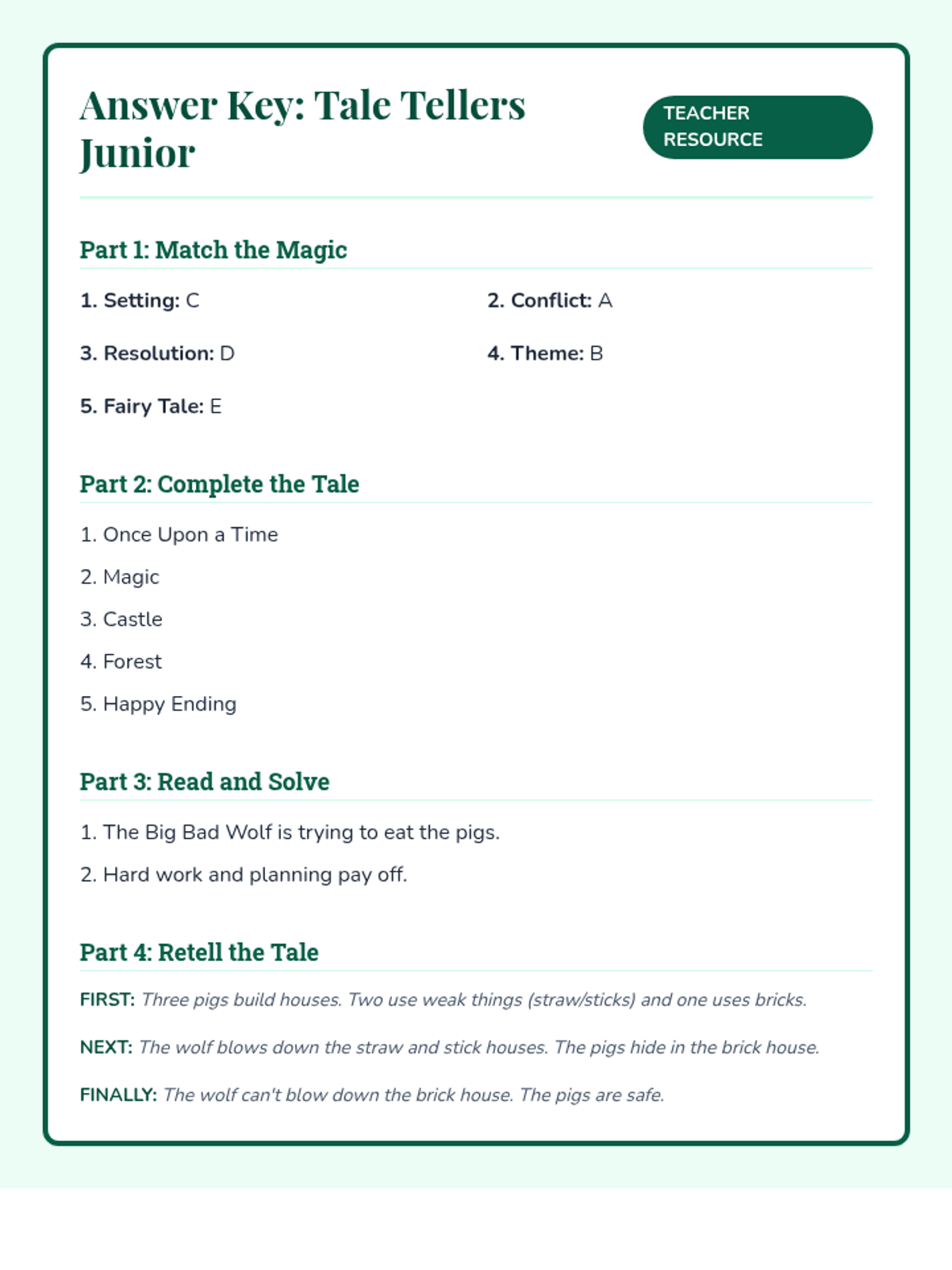
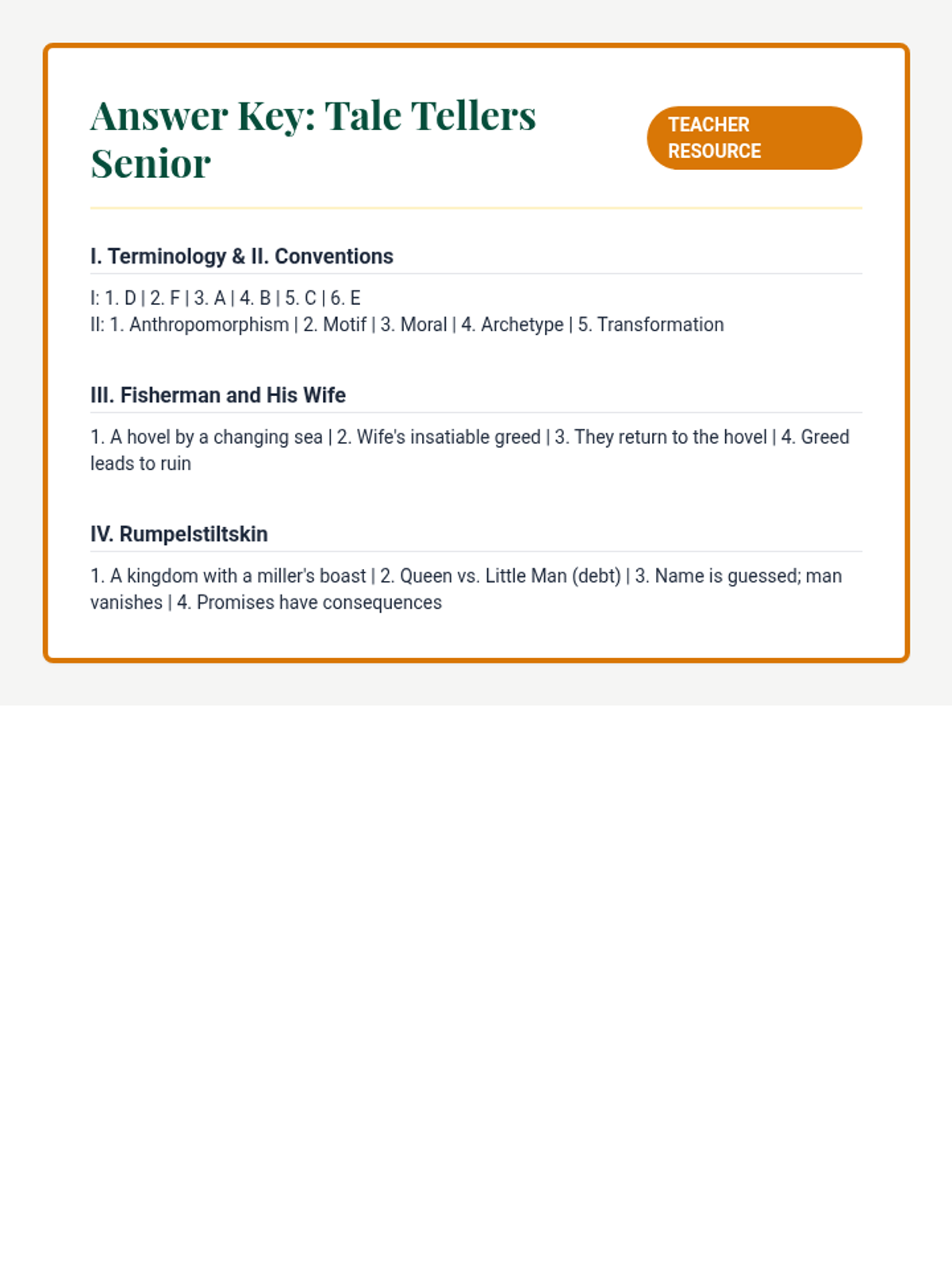
A comprehensive assessment on fairy tale elements and plot structures for elementary students, featuring two differentiated levels to meet specific grade-level standards.
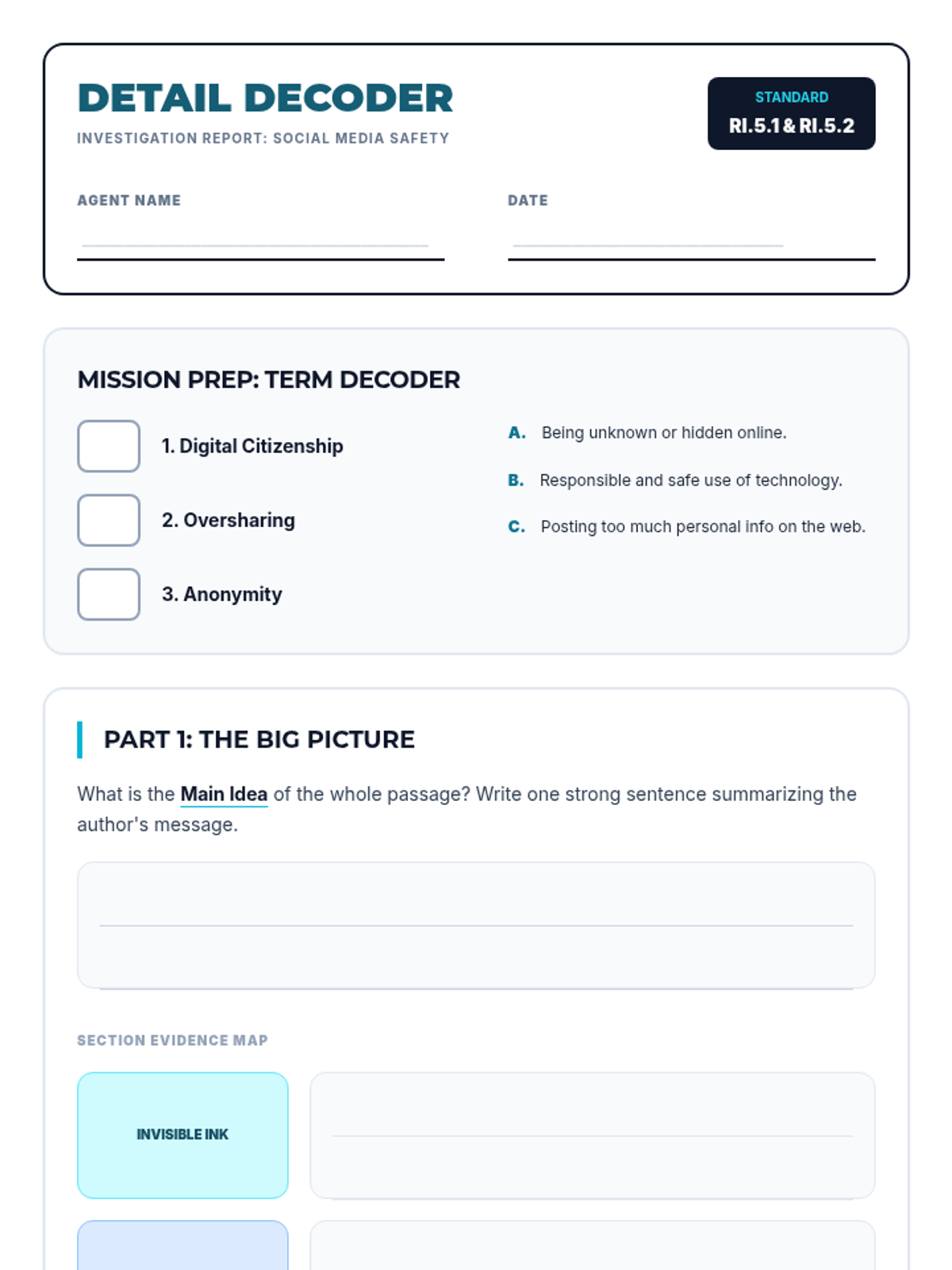
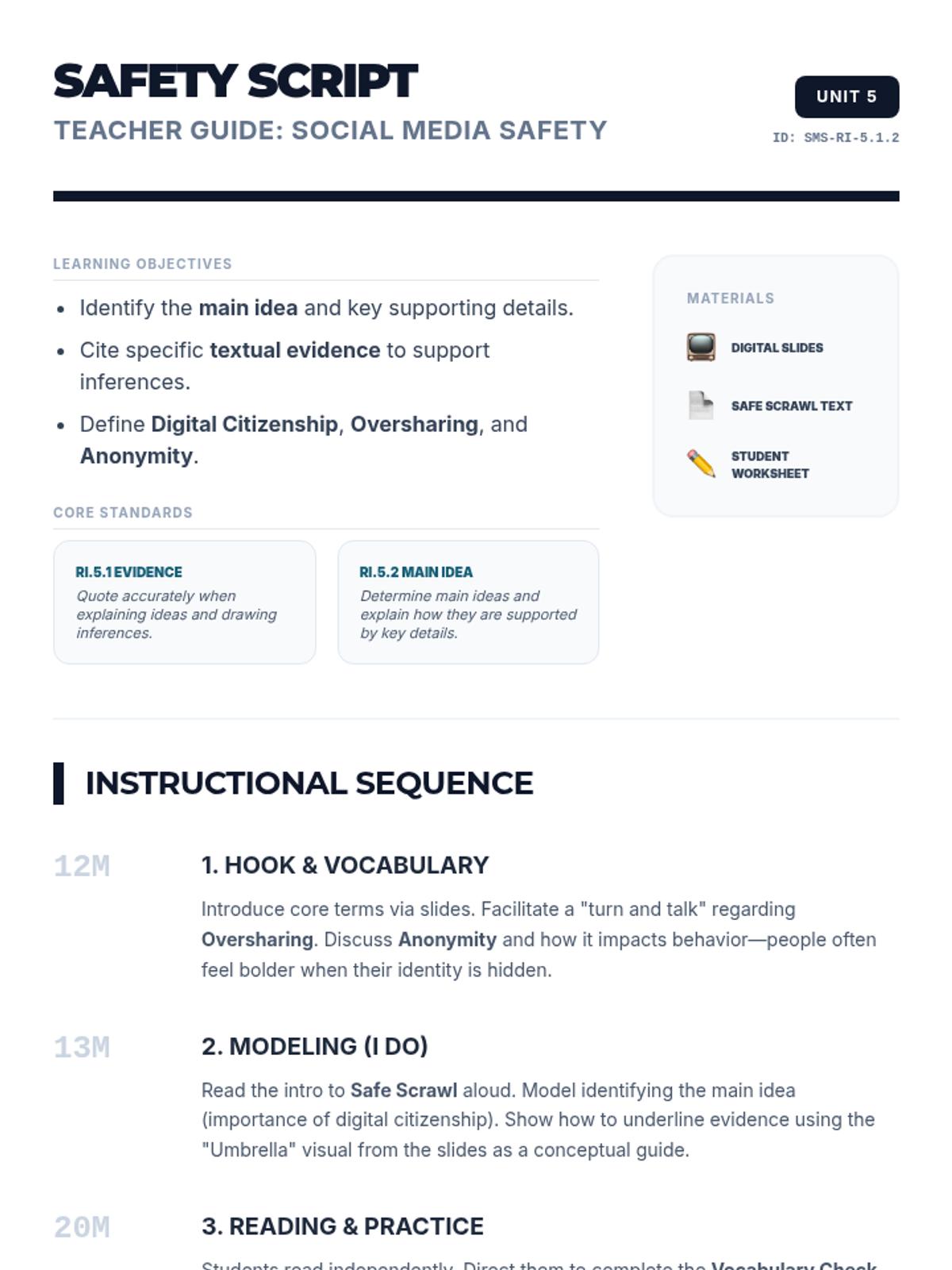
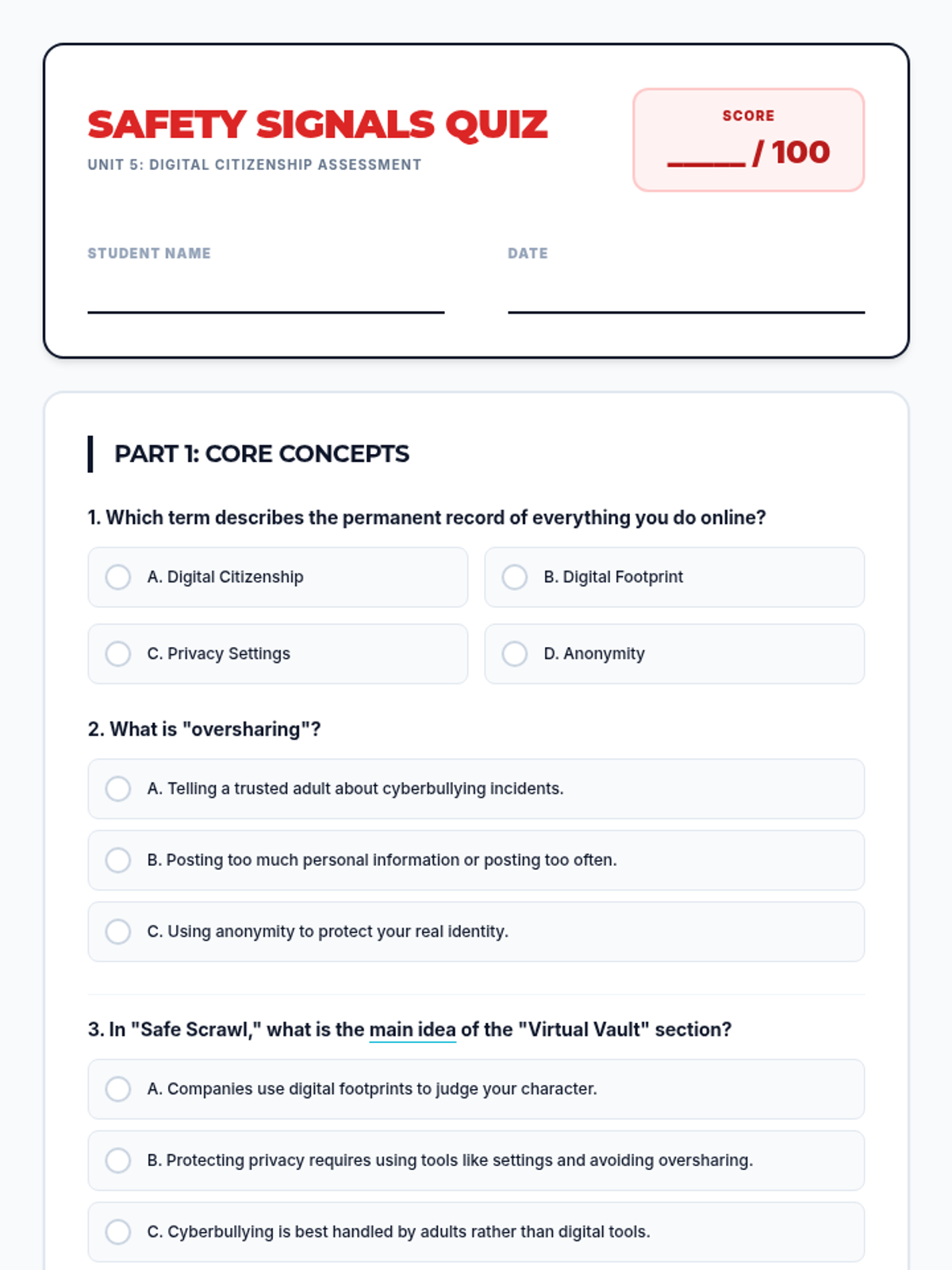
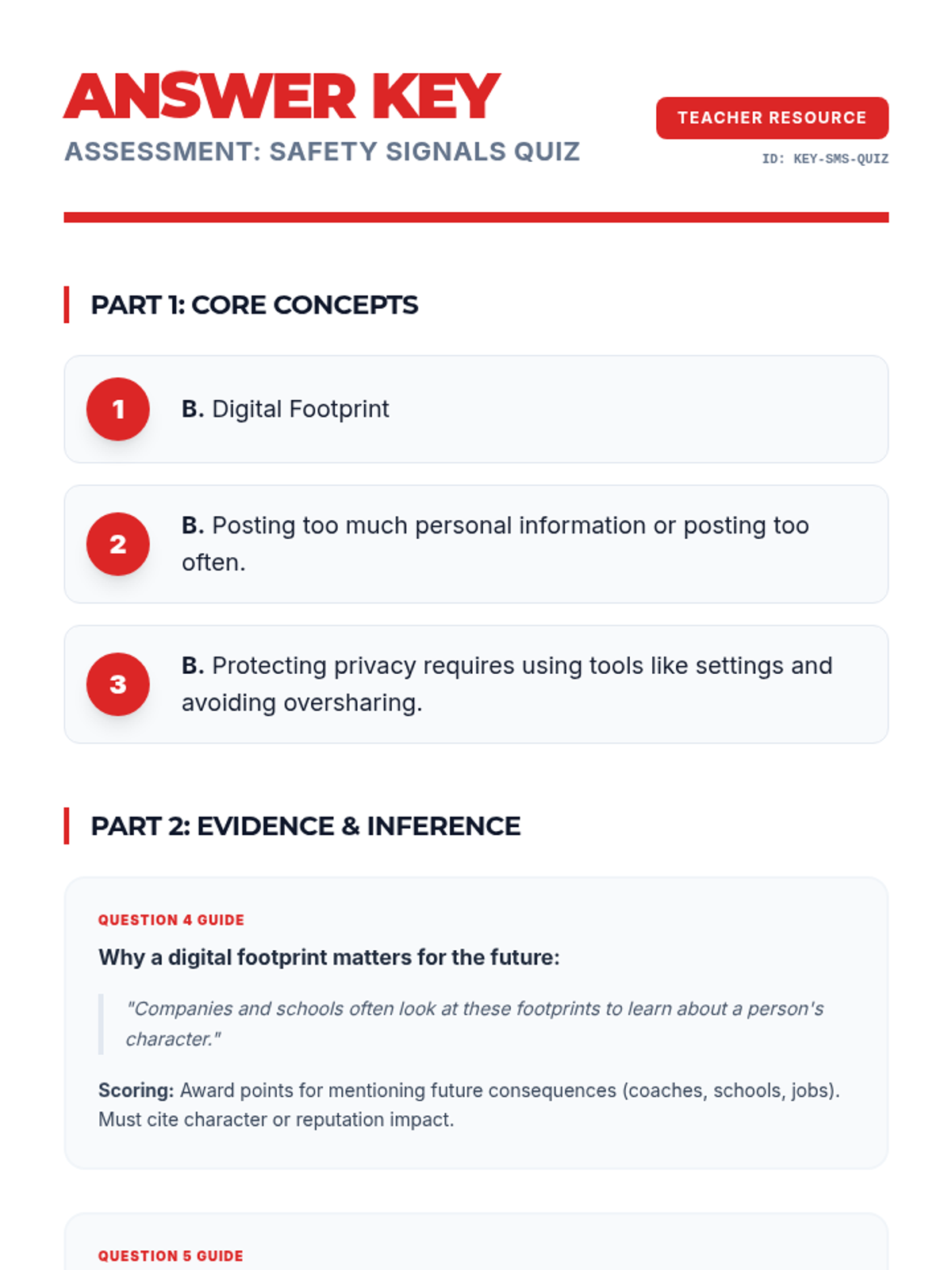
A comprehensive lesson focused on identifying key details and determining the main idea in texts about social media safety and digital citizenship.
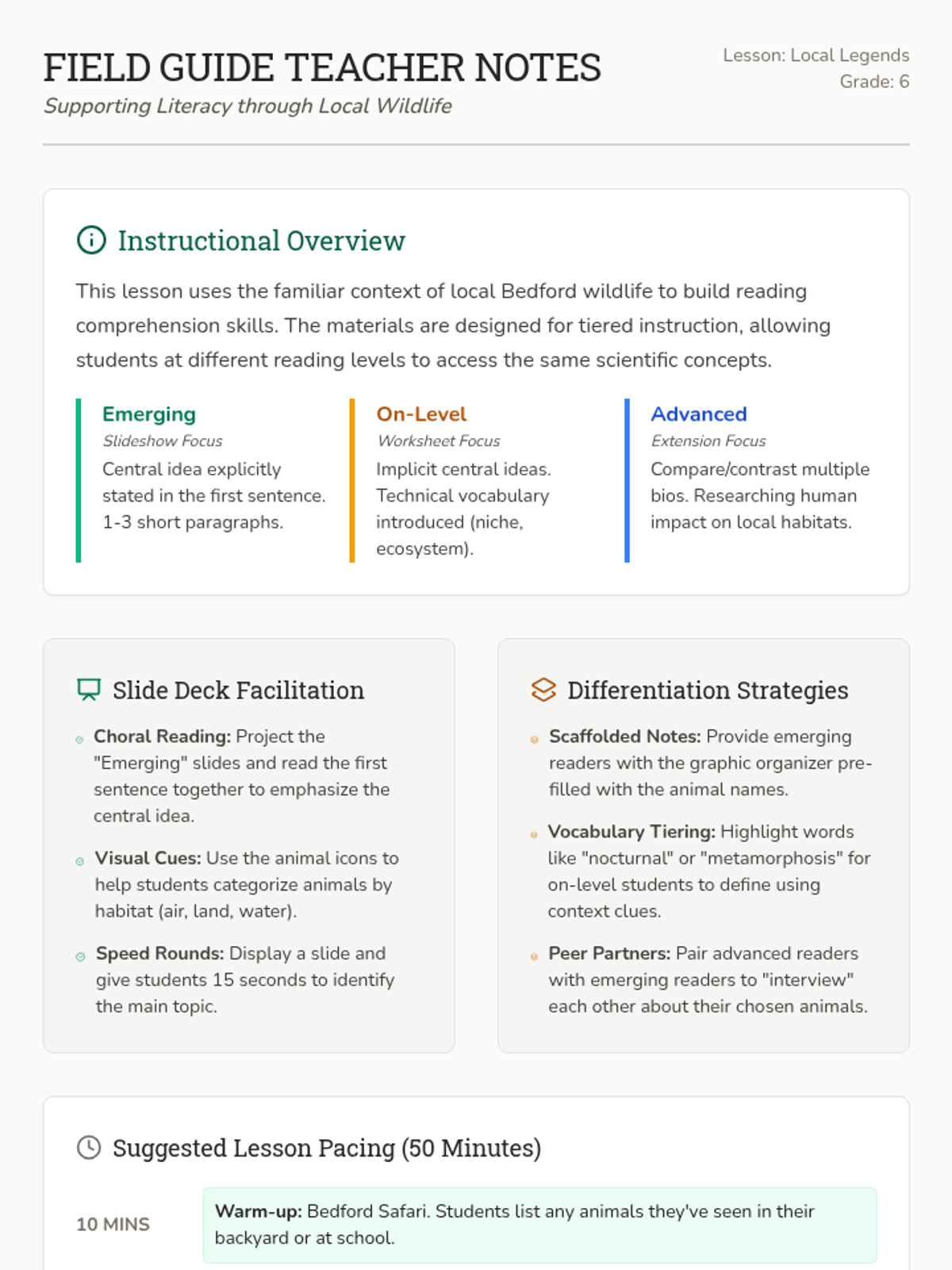
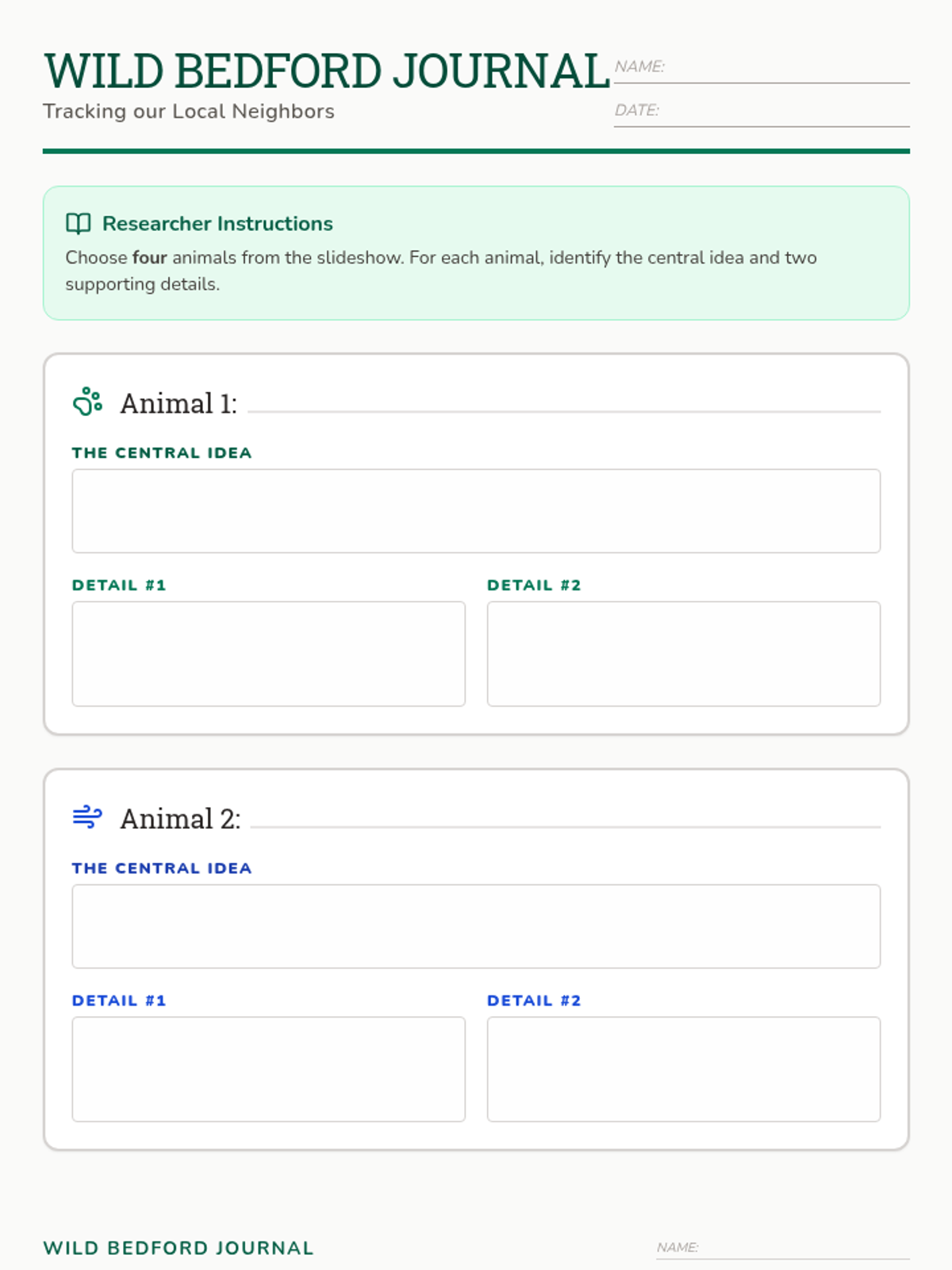
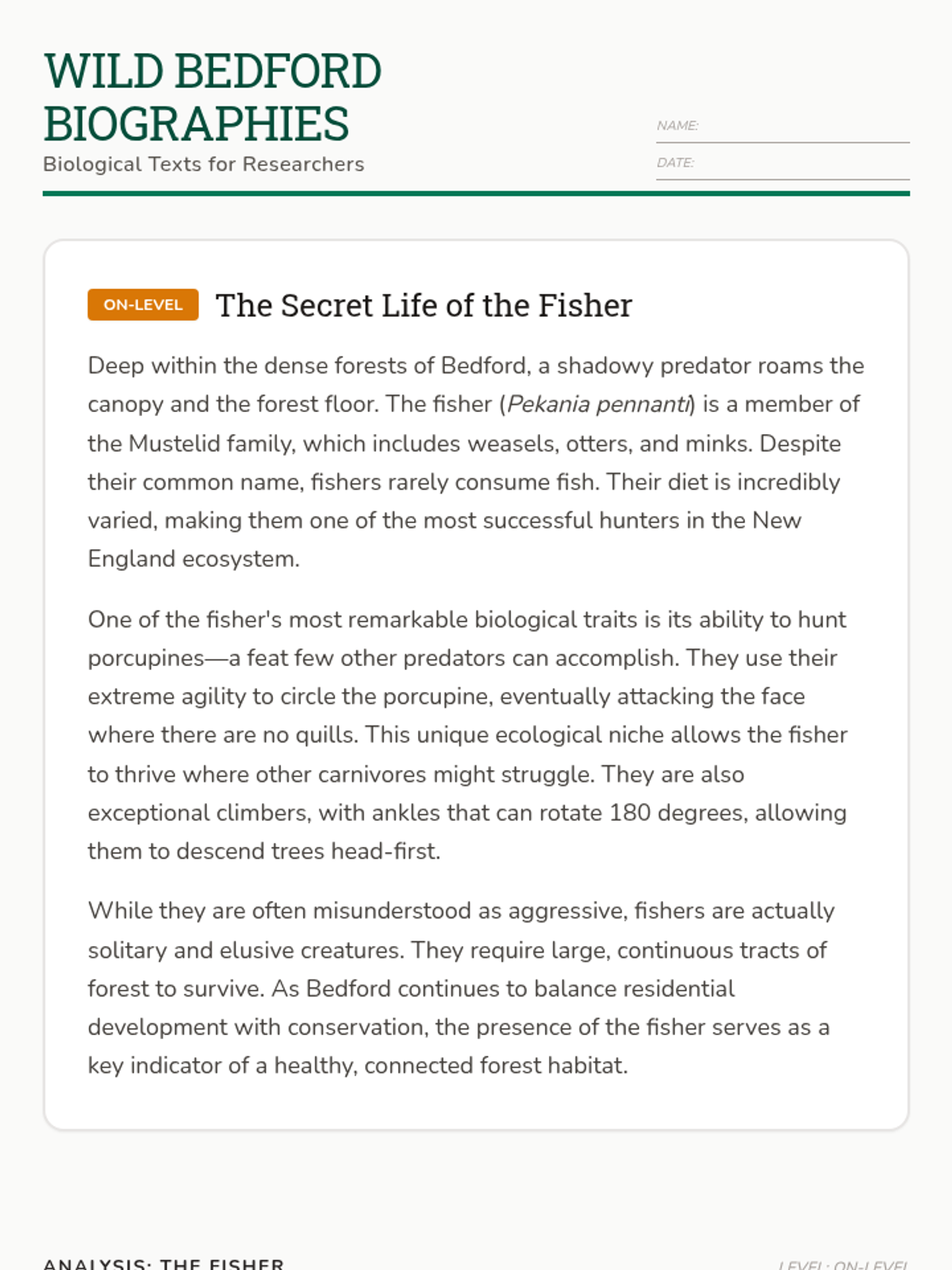
Students explore over 30 local animals through tiered reading materials, focusing on identifying central ideas and supporting details in biological texts.
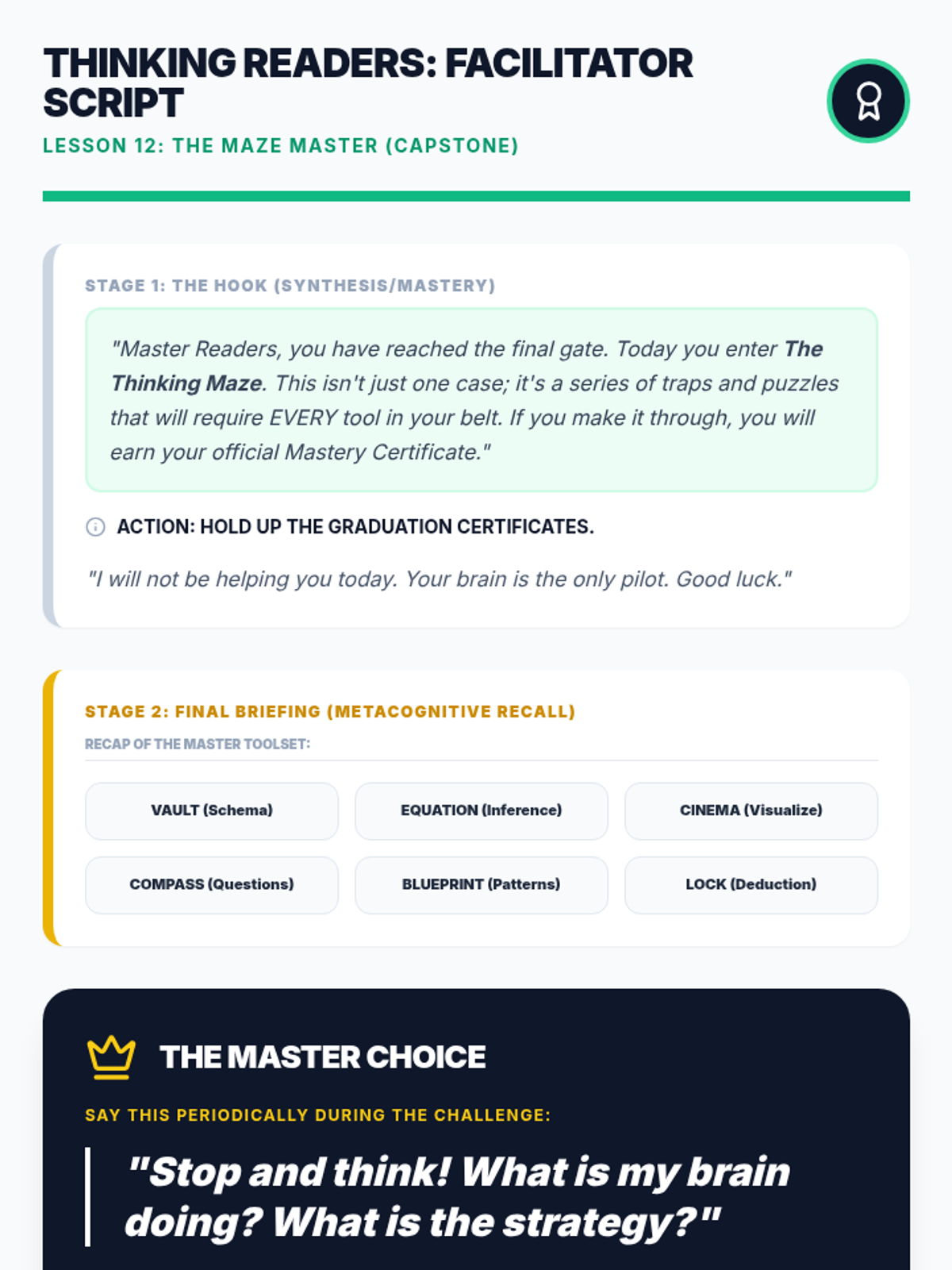
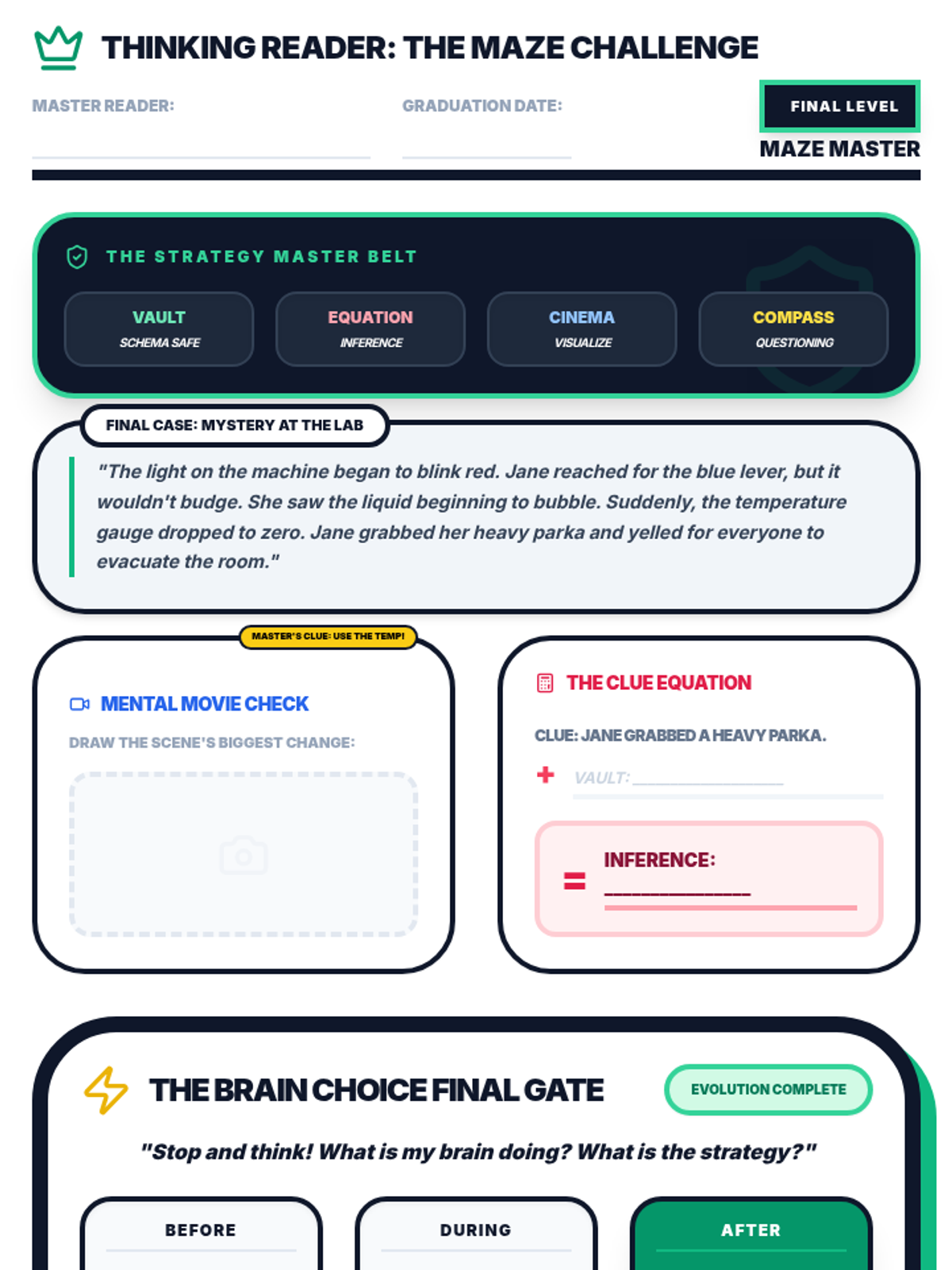
Capstone simulation. Students apply all 11 strategies to solve a complex text-based 'Maze' and earn their Thought Tracker Mastery.
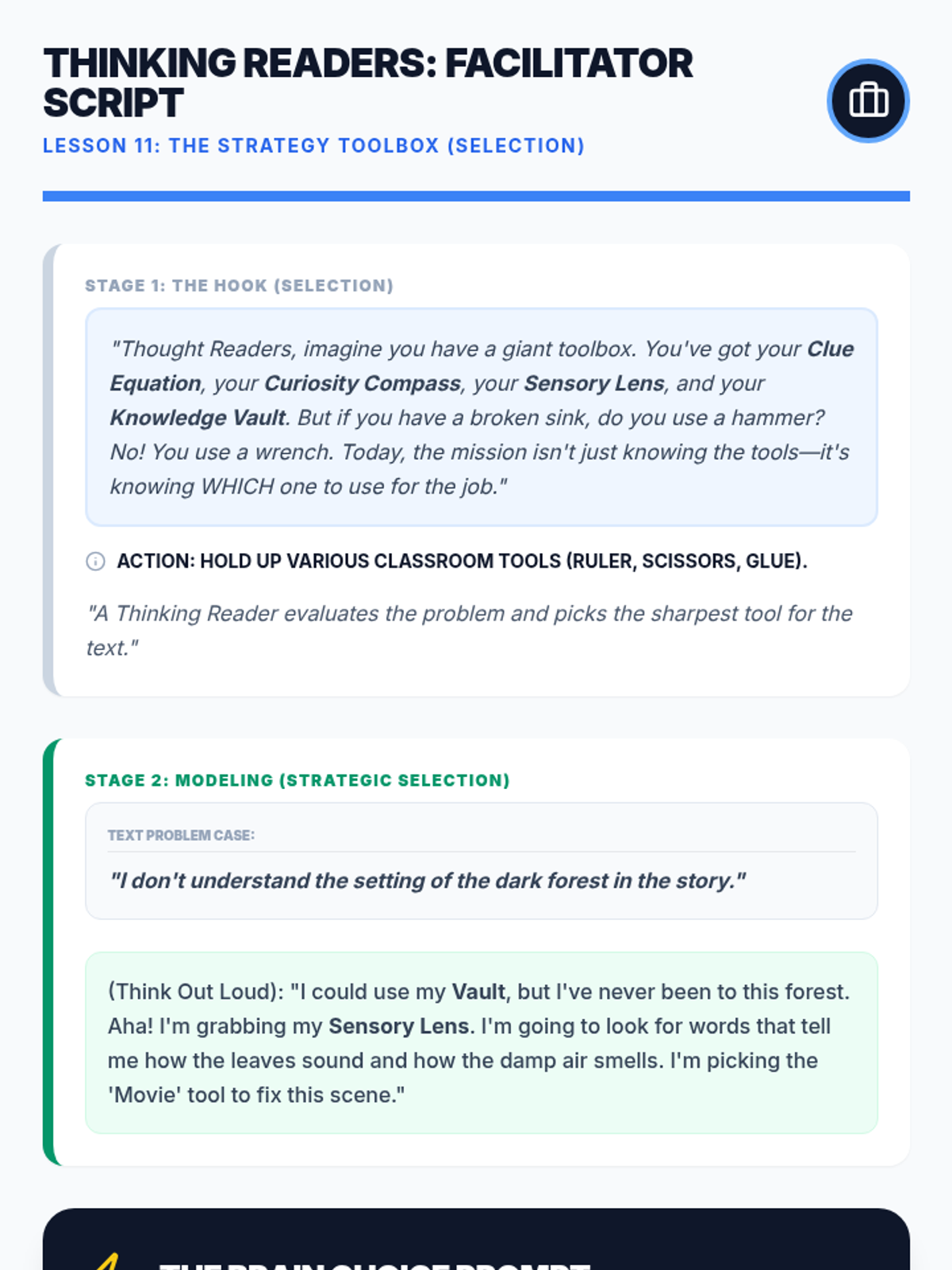
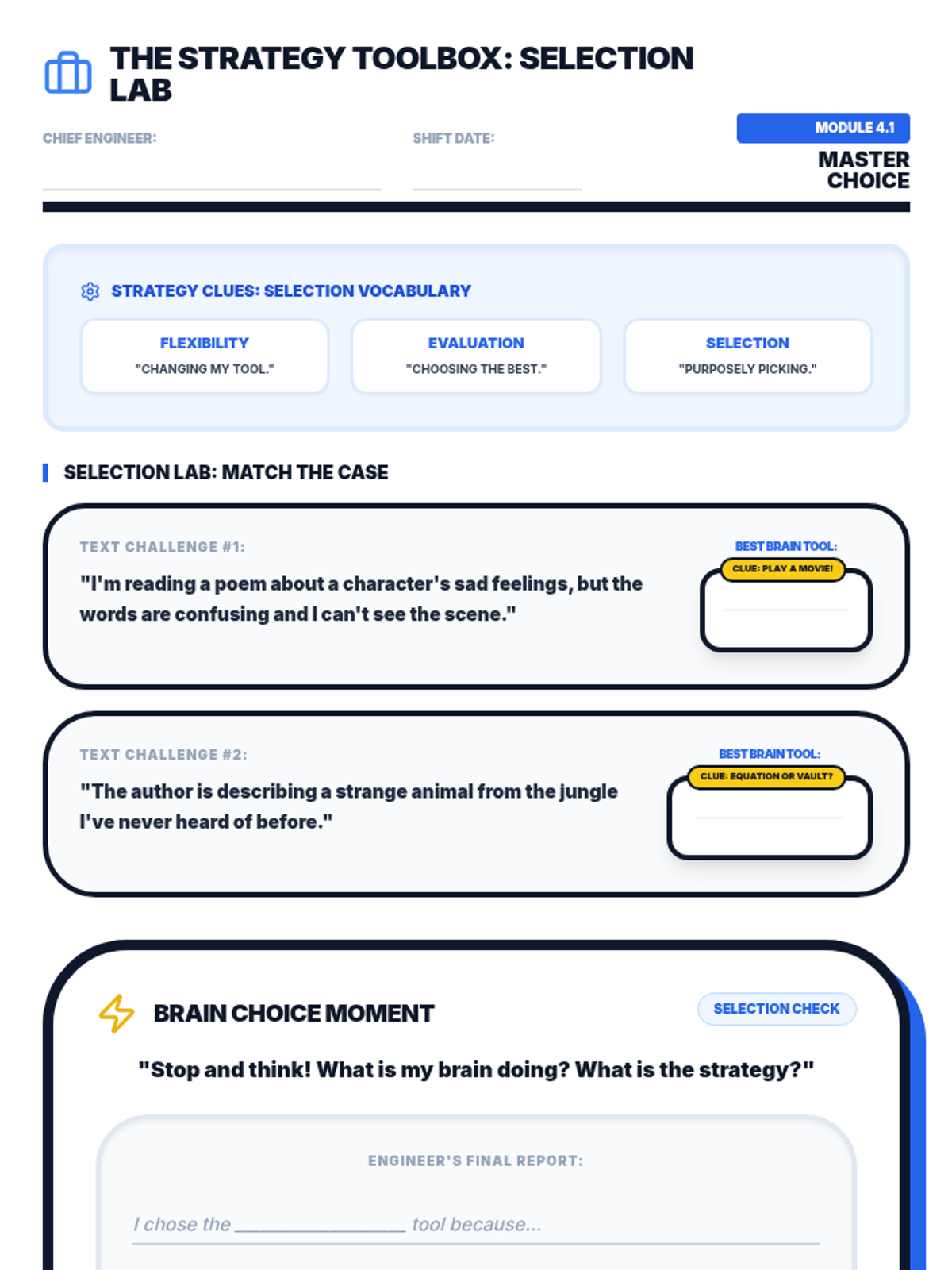
Metacognitive choice. Students practice deciding which 'Mind Tool' (Inference, Visualization, Questioning) is best for specific text challenges.
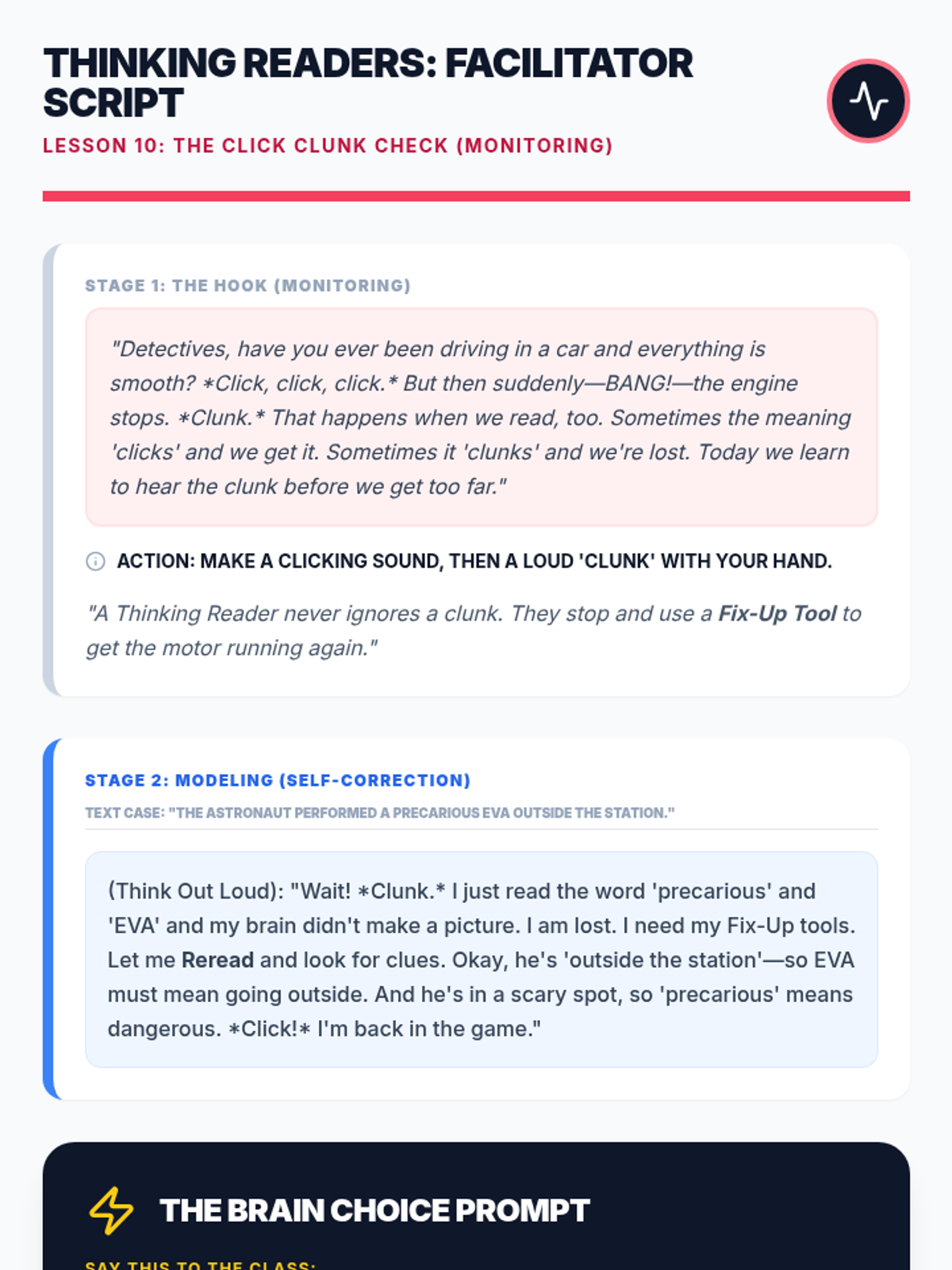
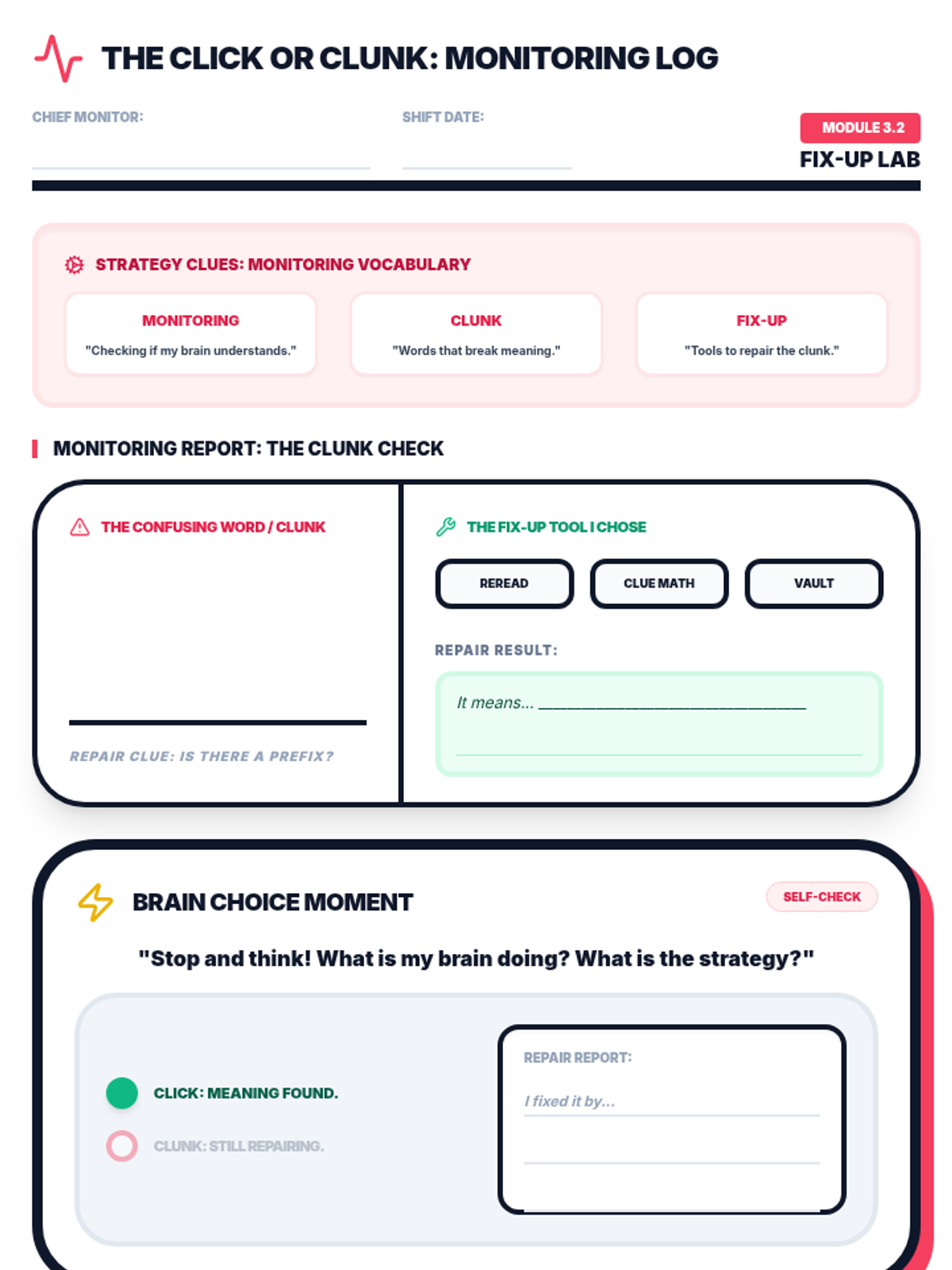
Masters the 'Click or Clunk' monitoring technique. Students learn to identify when meaning breaks down and which tool to use for a 'fix-up'.
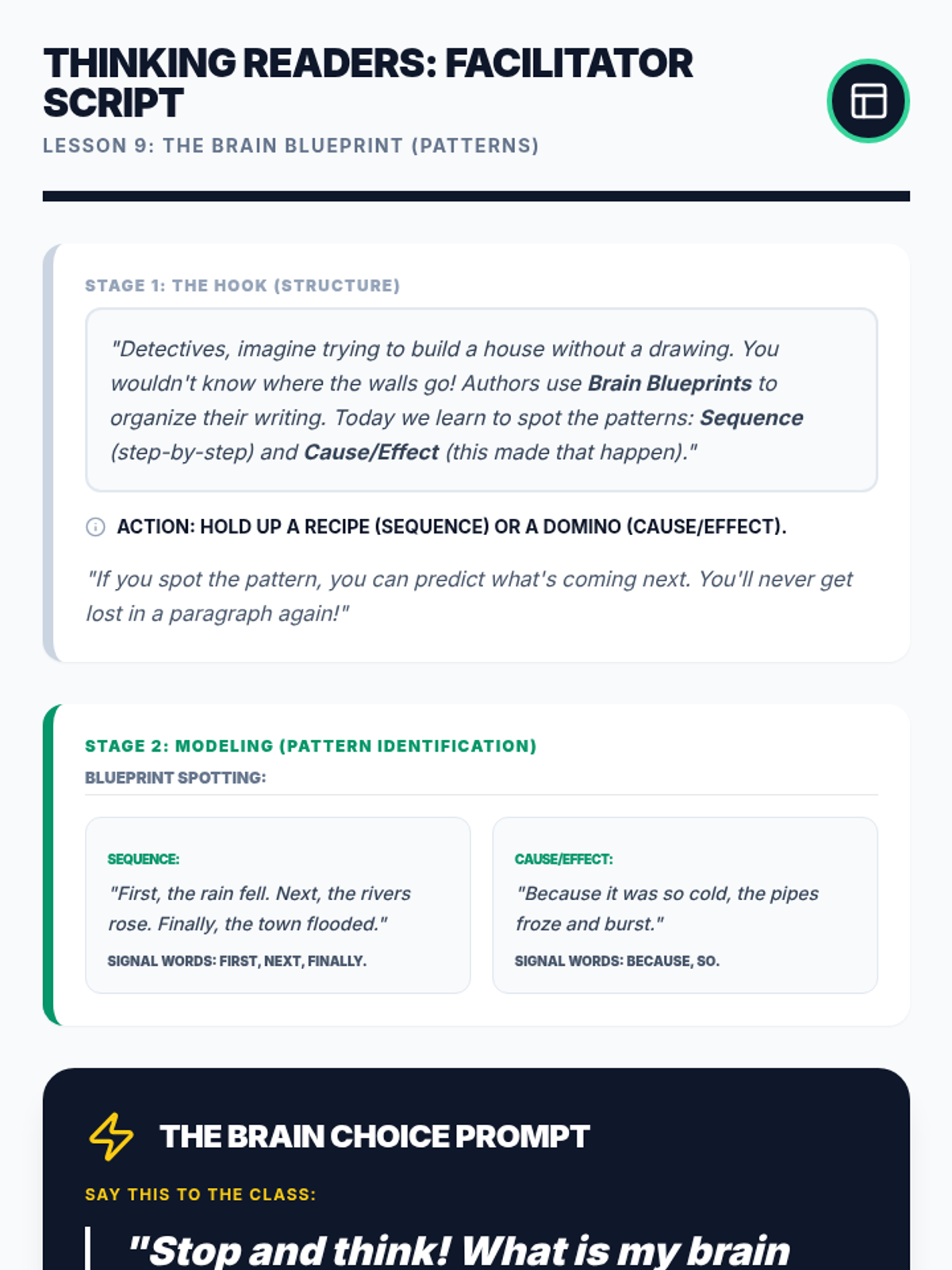
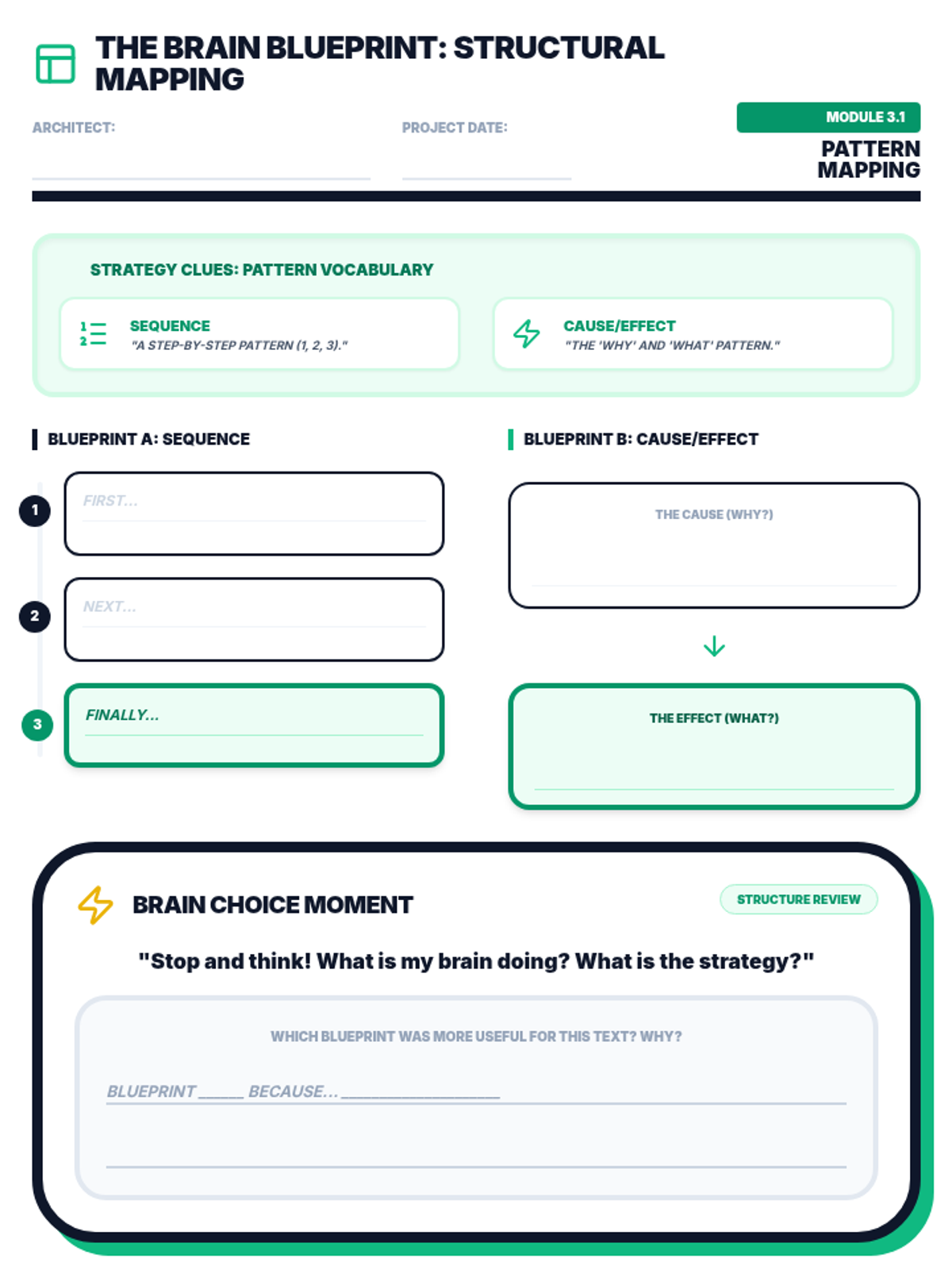
Identifies text structures (Cause/Effect, Sequence) as 'Brain Blueprints' that help organize incoming data.
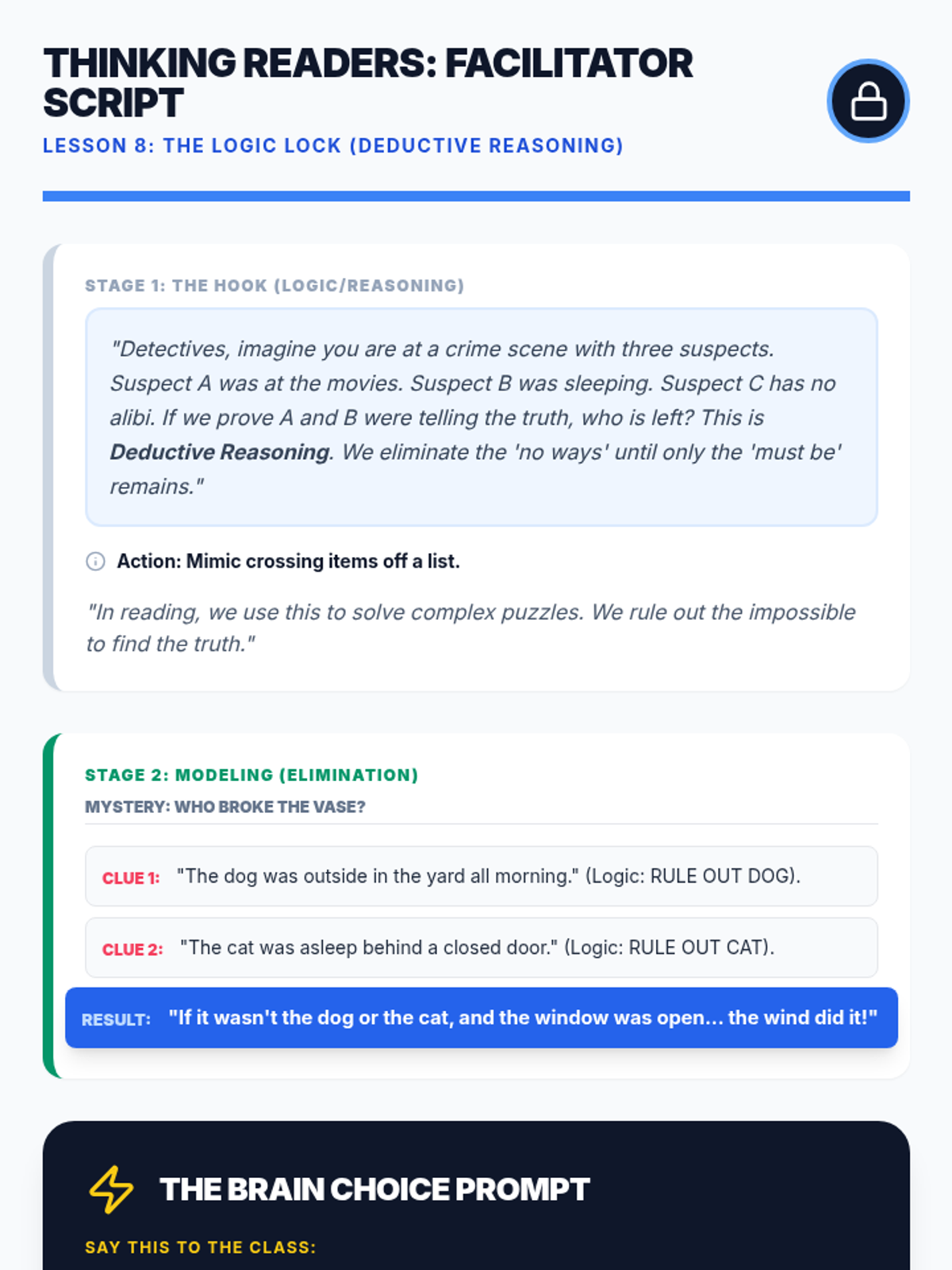
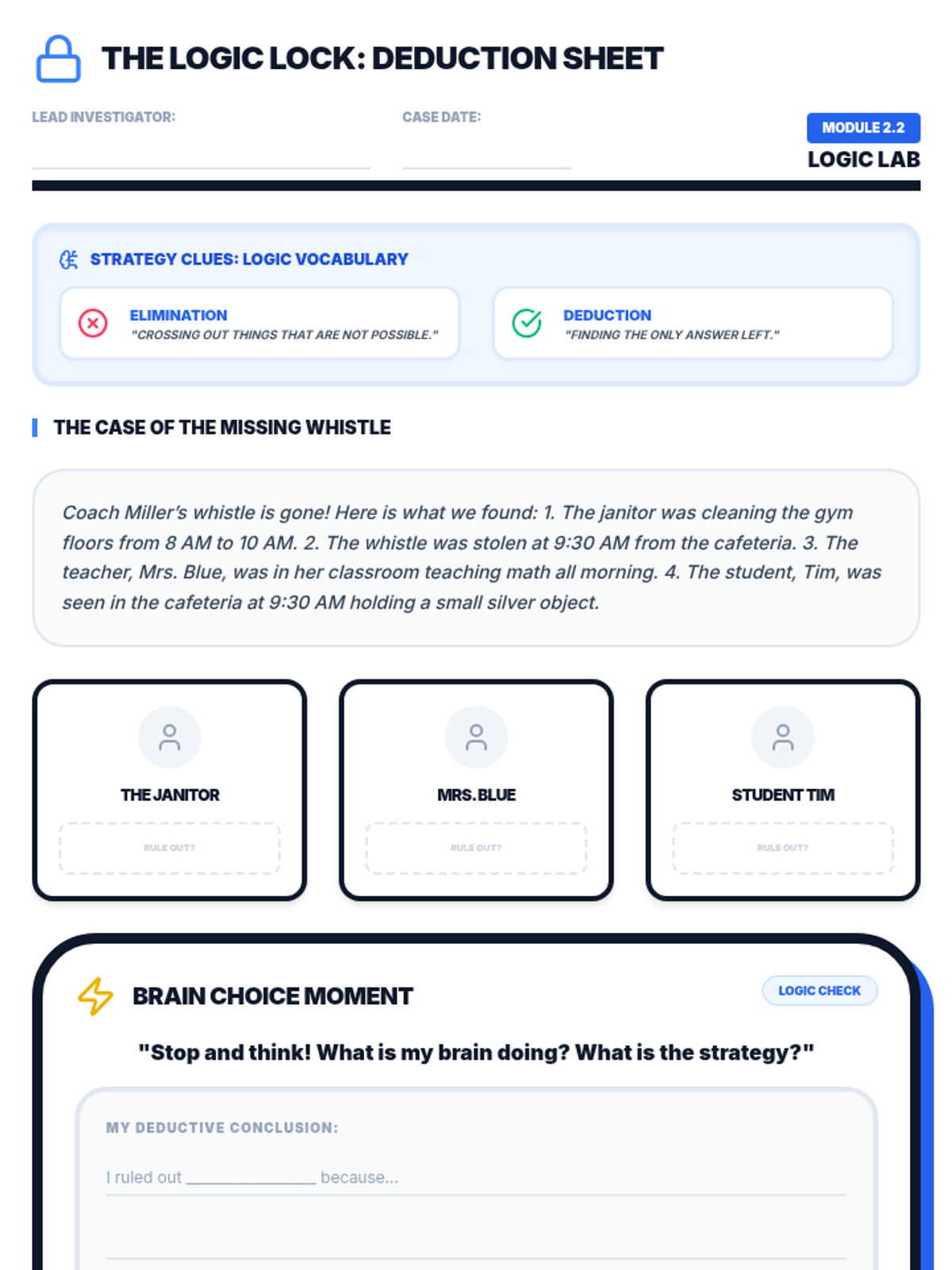
Uses Arthur Evans' deductive reasoning techniques. Students solve logic puzzles by eliminating impossibilities within a text.
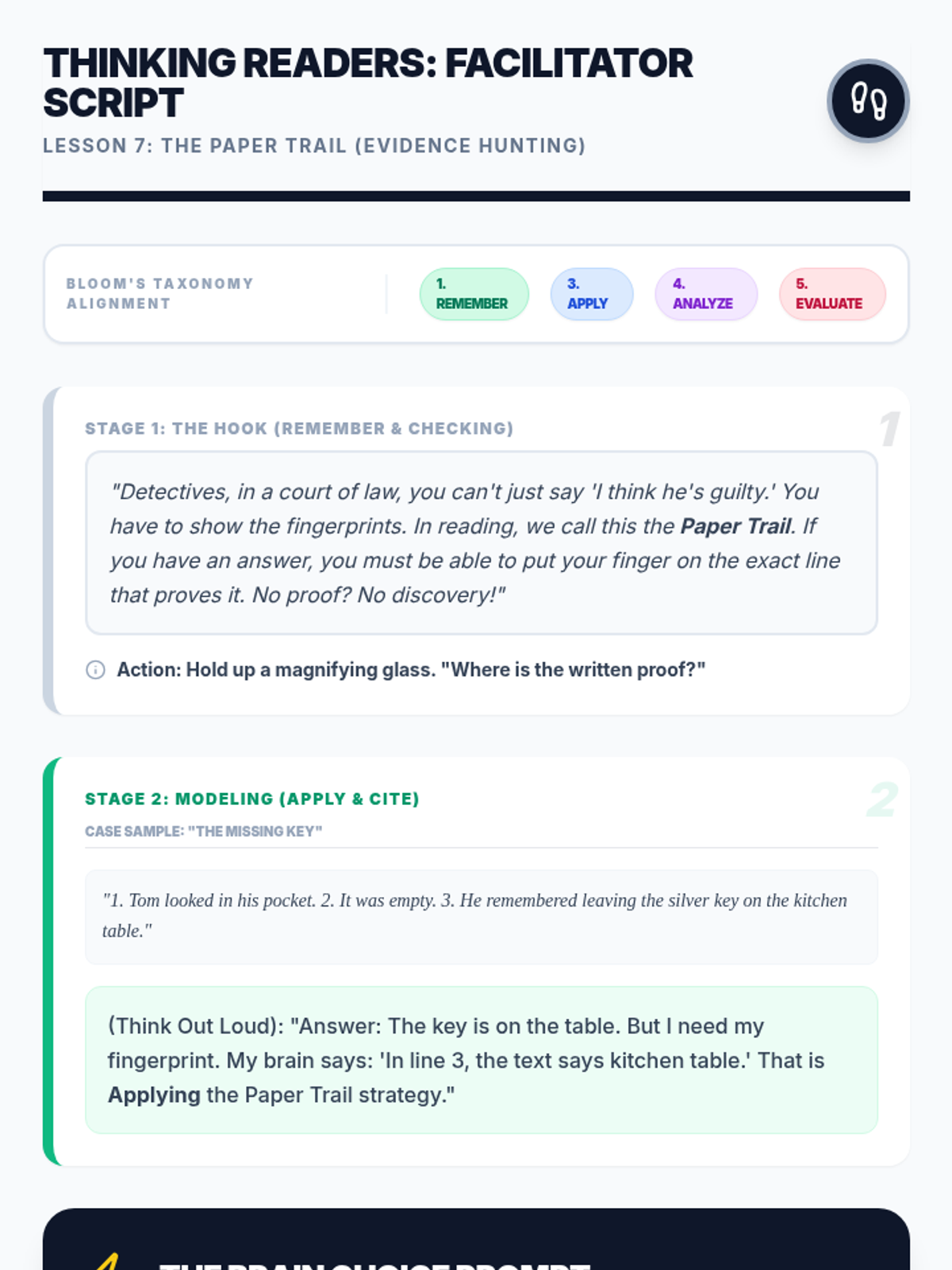
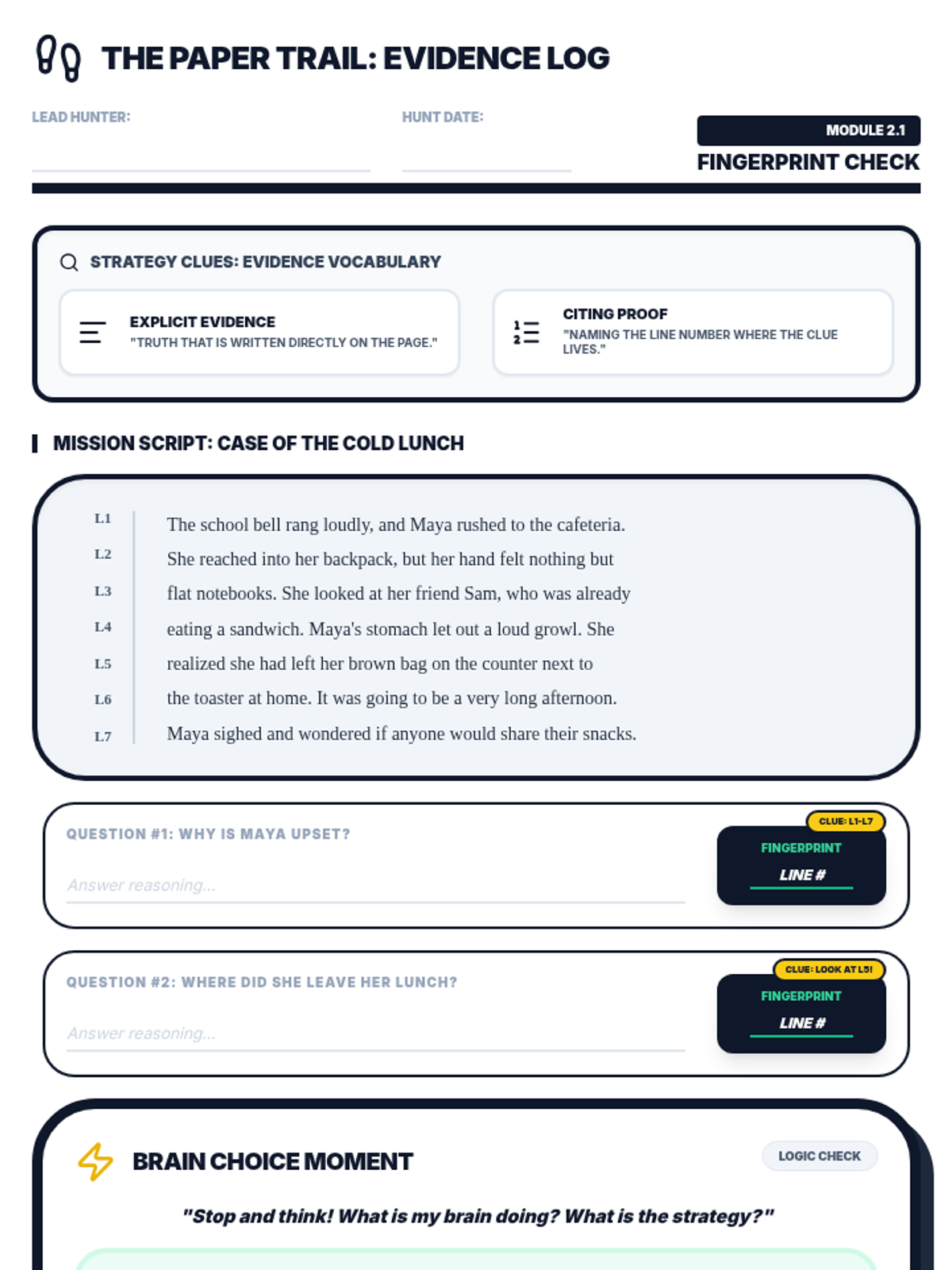
Directly inspired by the Reading Detective series. Students learn to cite page, line, and word clues to prove their reasoning.
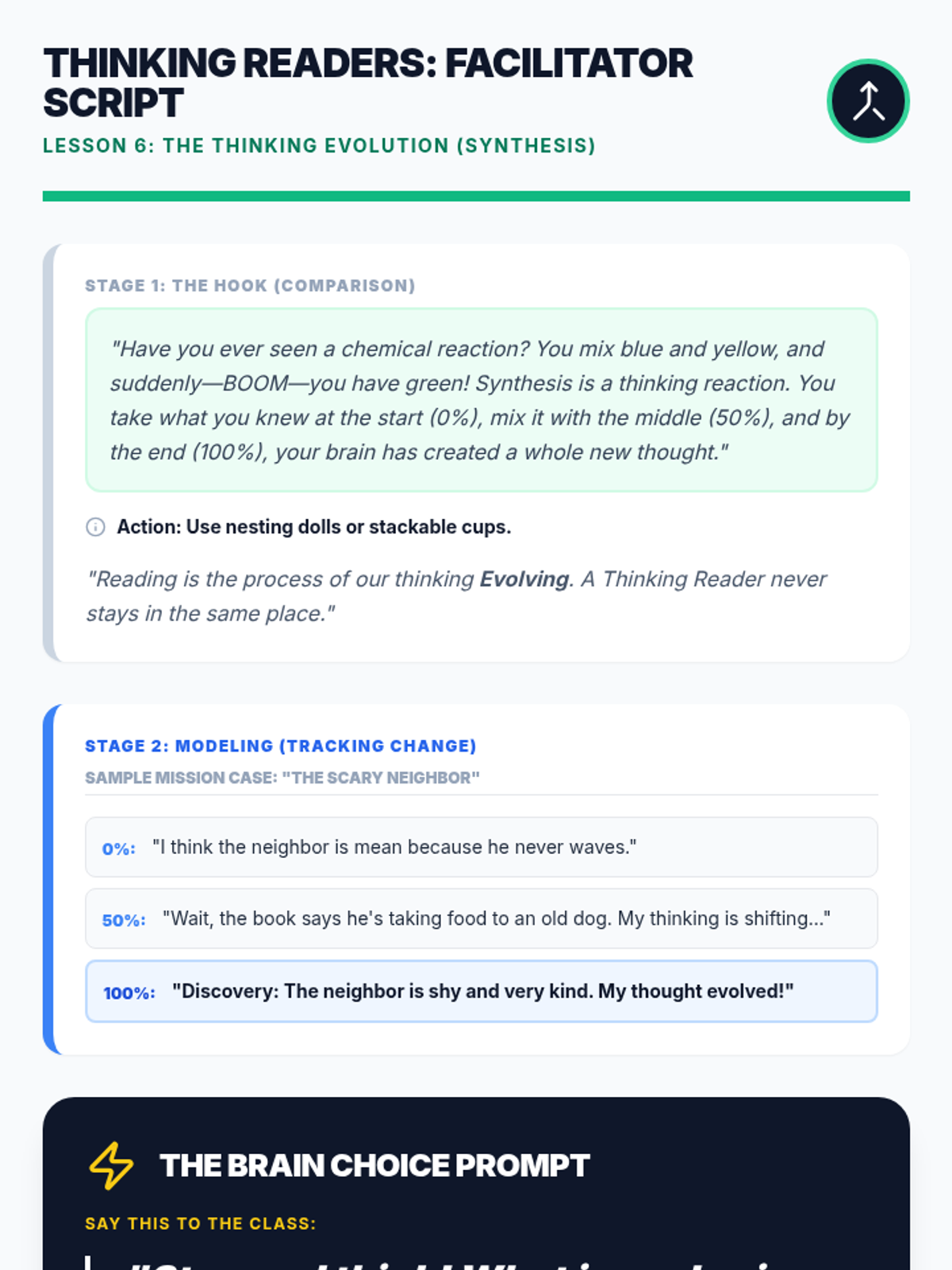
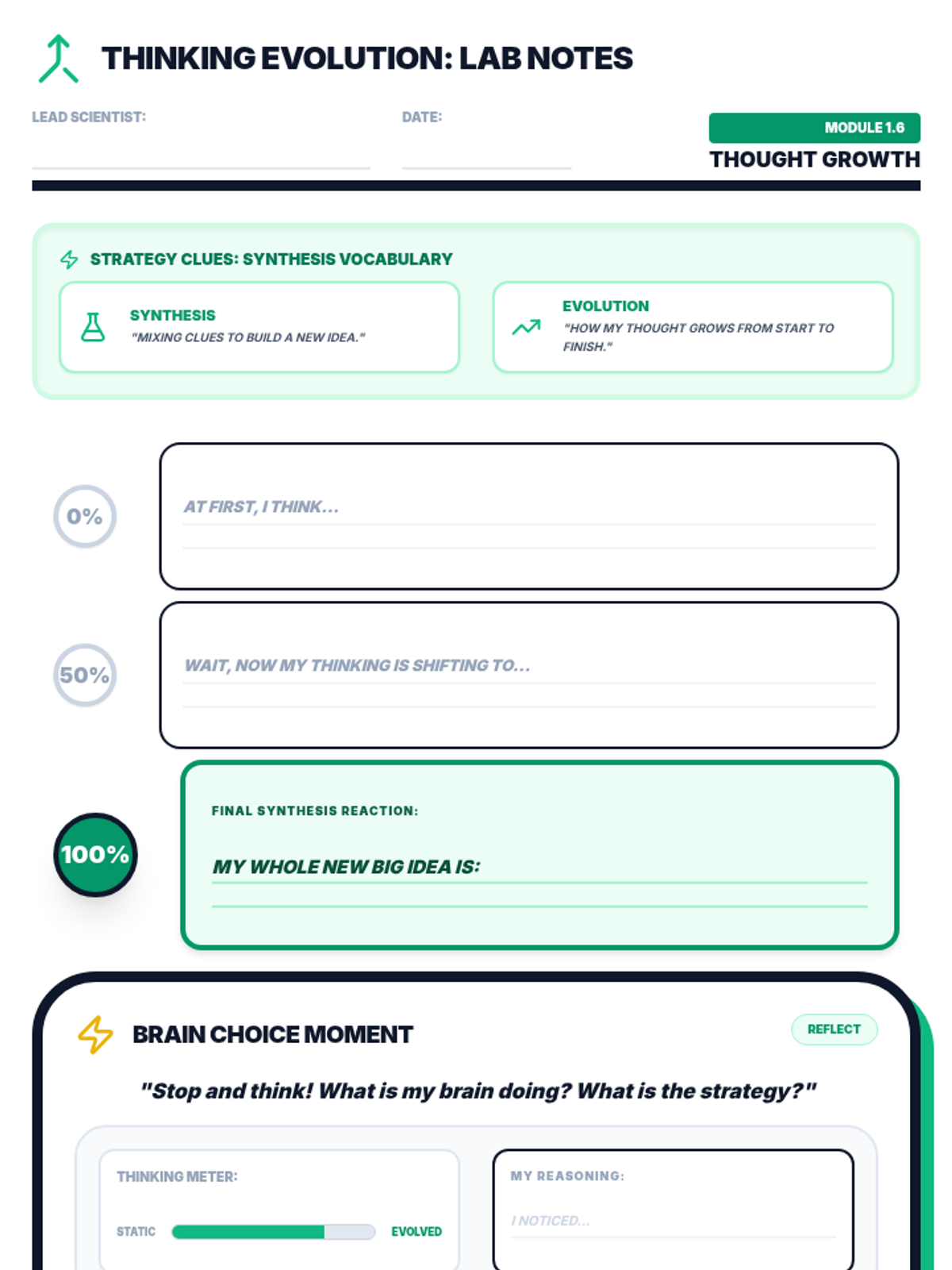
Focuses on Synthesis. Students track how their 'Thought Map' changes from the first page to the final sentence.
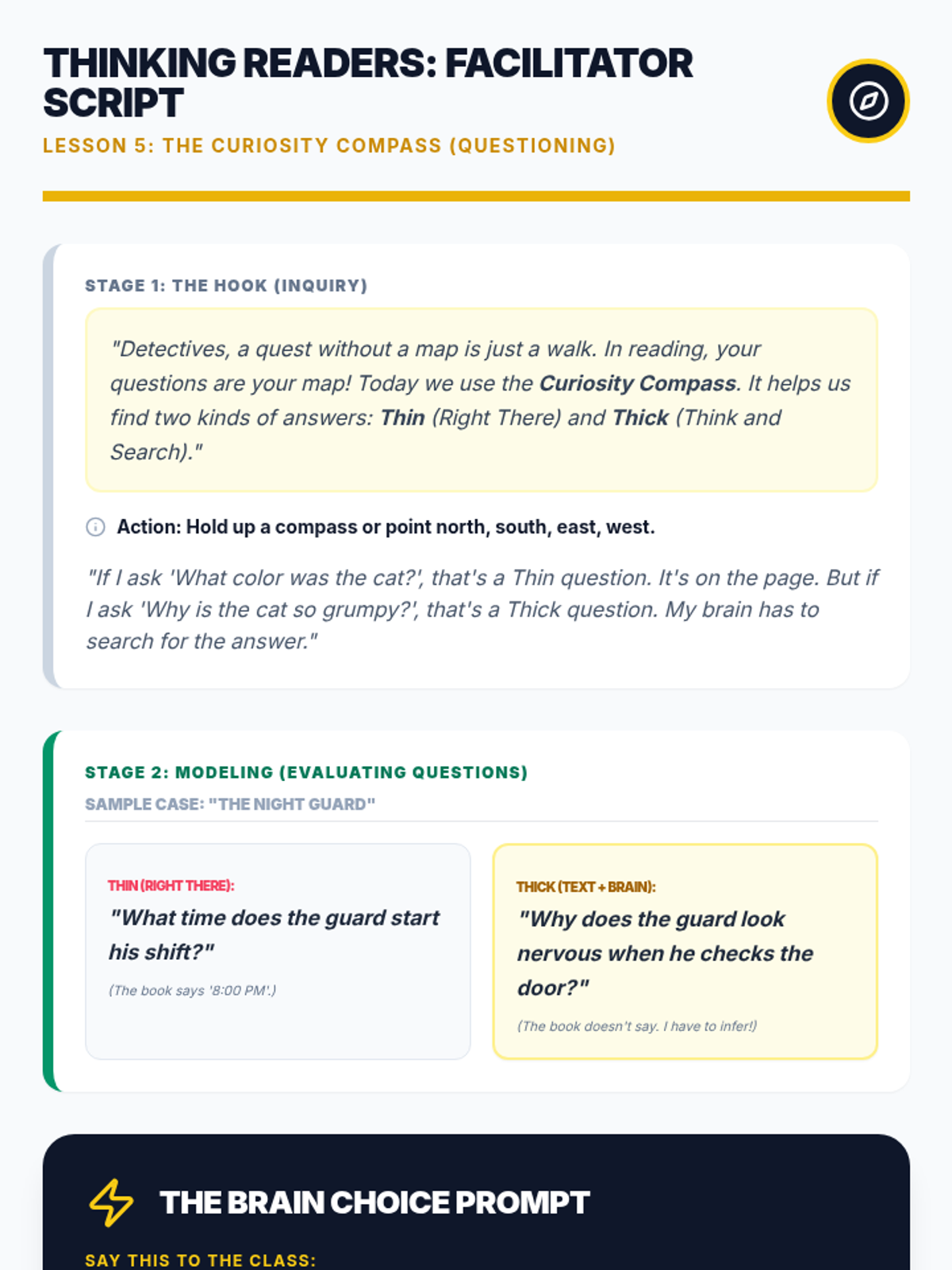
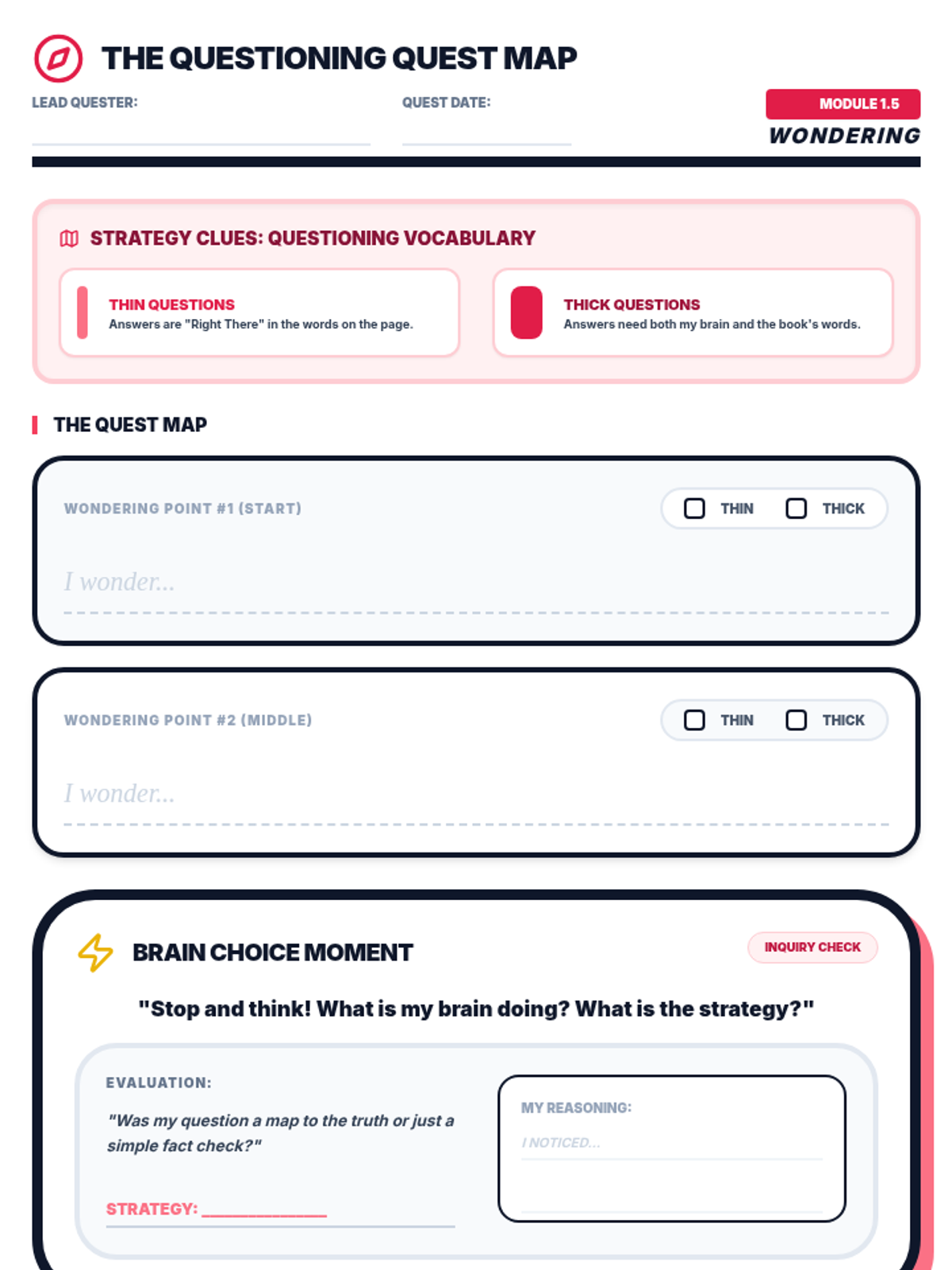
Introduces the 'Curiosity Compass' to generate Thick and Thin questions, moving from literal facts to deep inquiry.
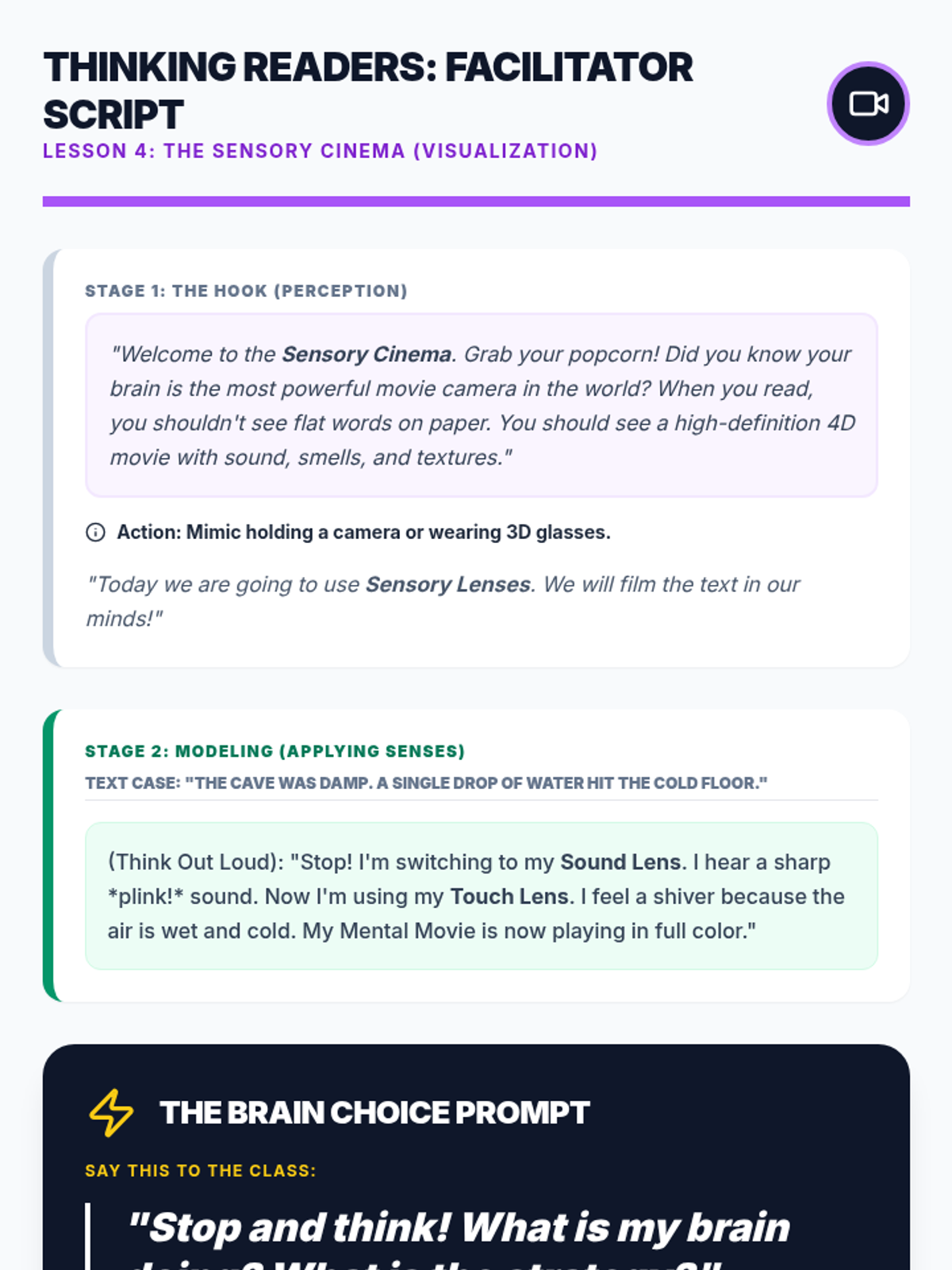
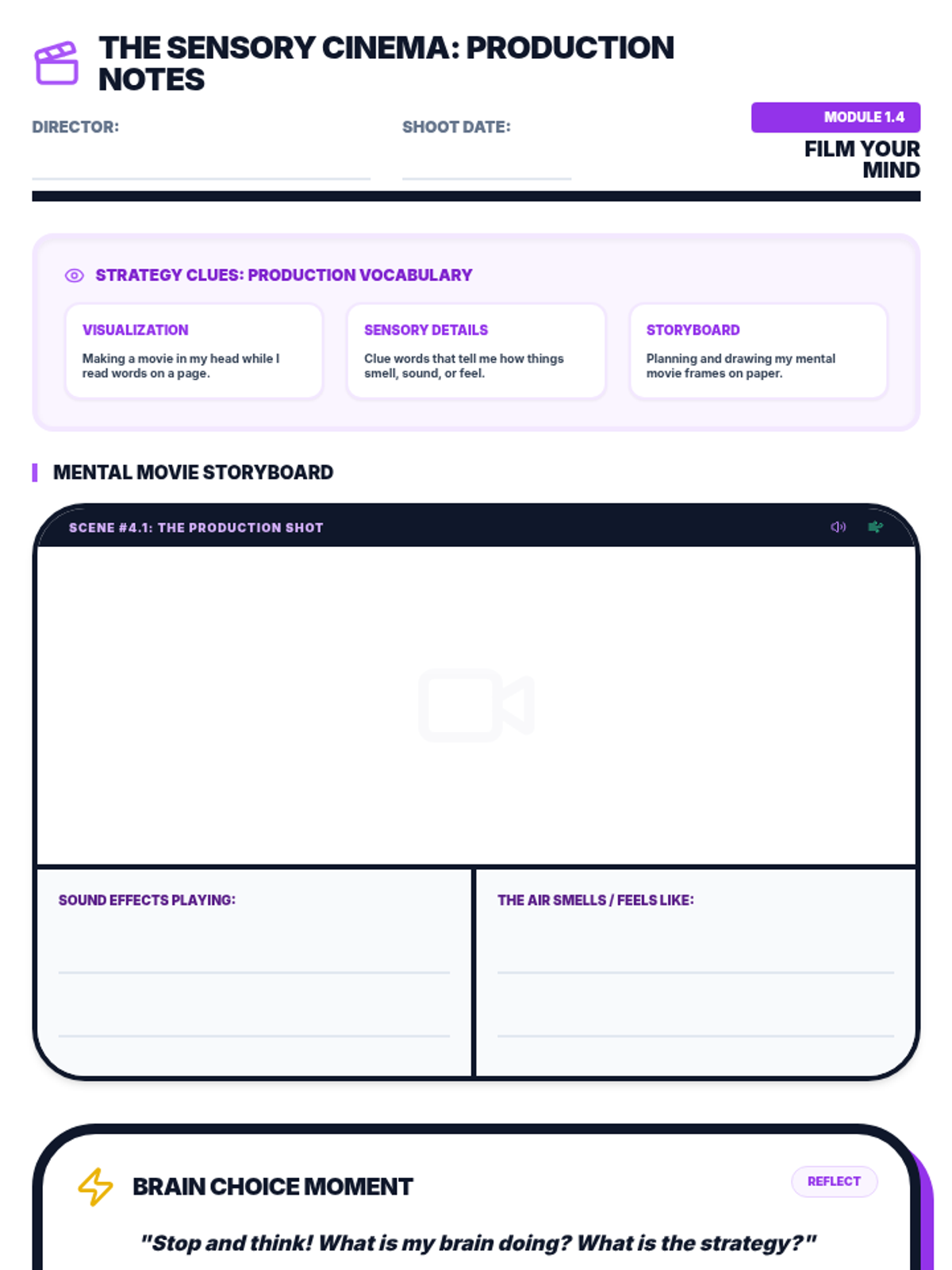
Teaches visualization as a sensory experience. Students learn to 'film' the story in their heads using five-sense descriptions.
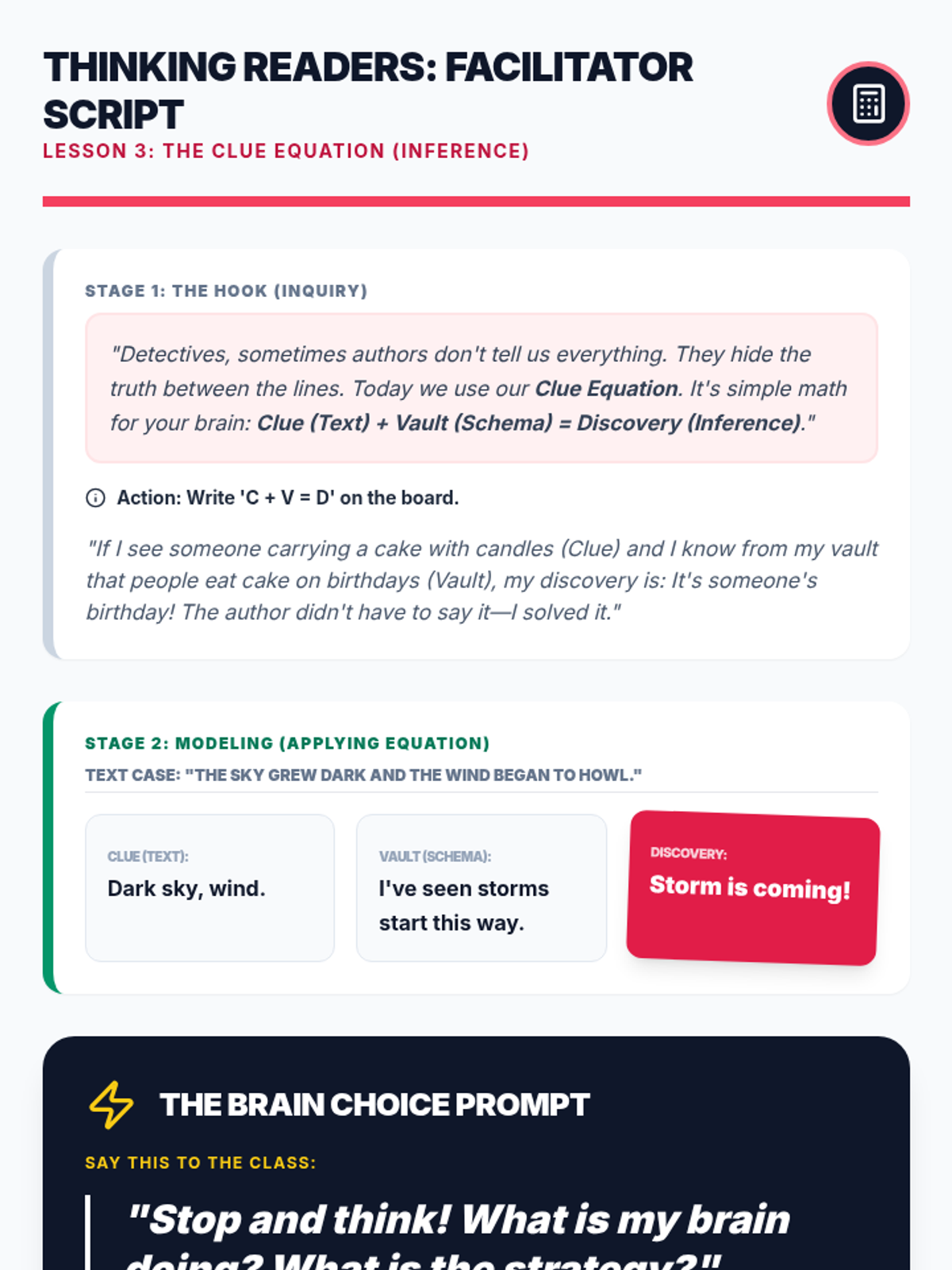
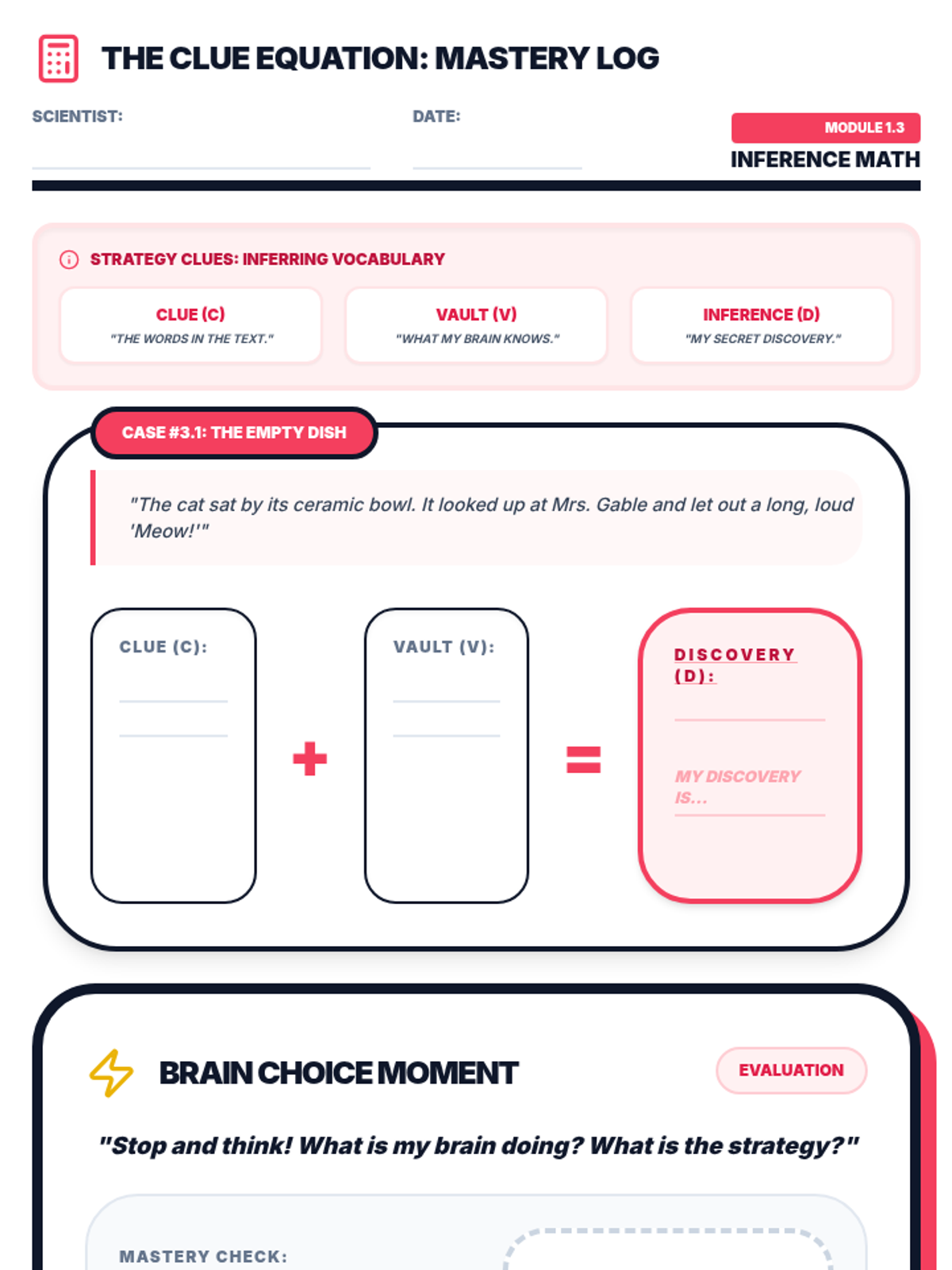
Masters the 'Clue + Vault = Discovery' equation. Students learn to justify their inferences using specific text evidence and background knowledge.
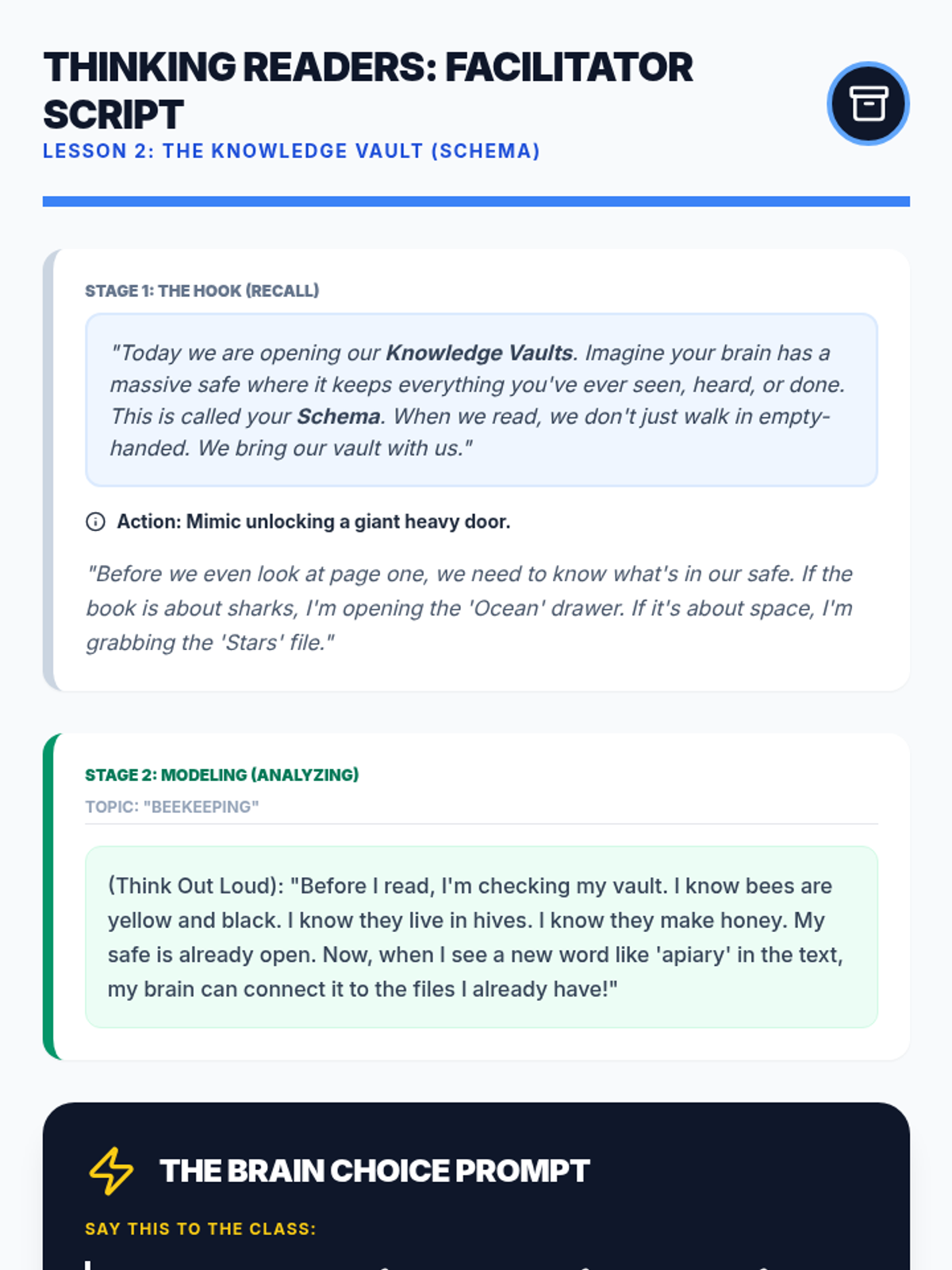
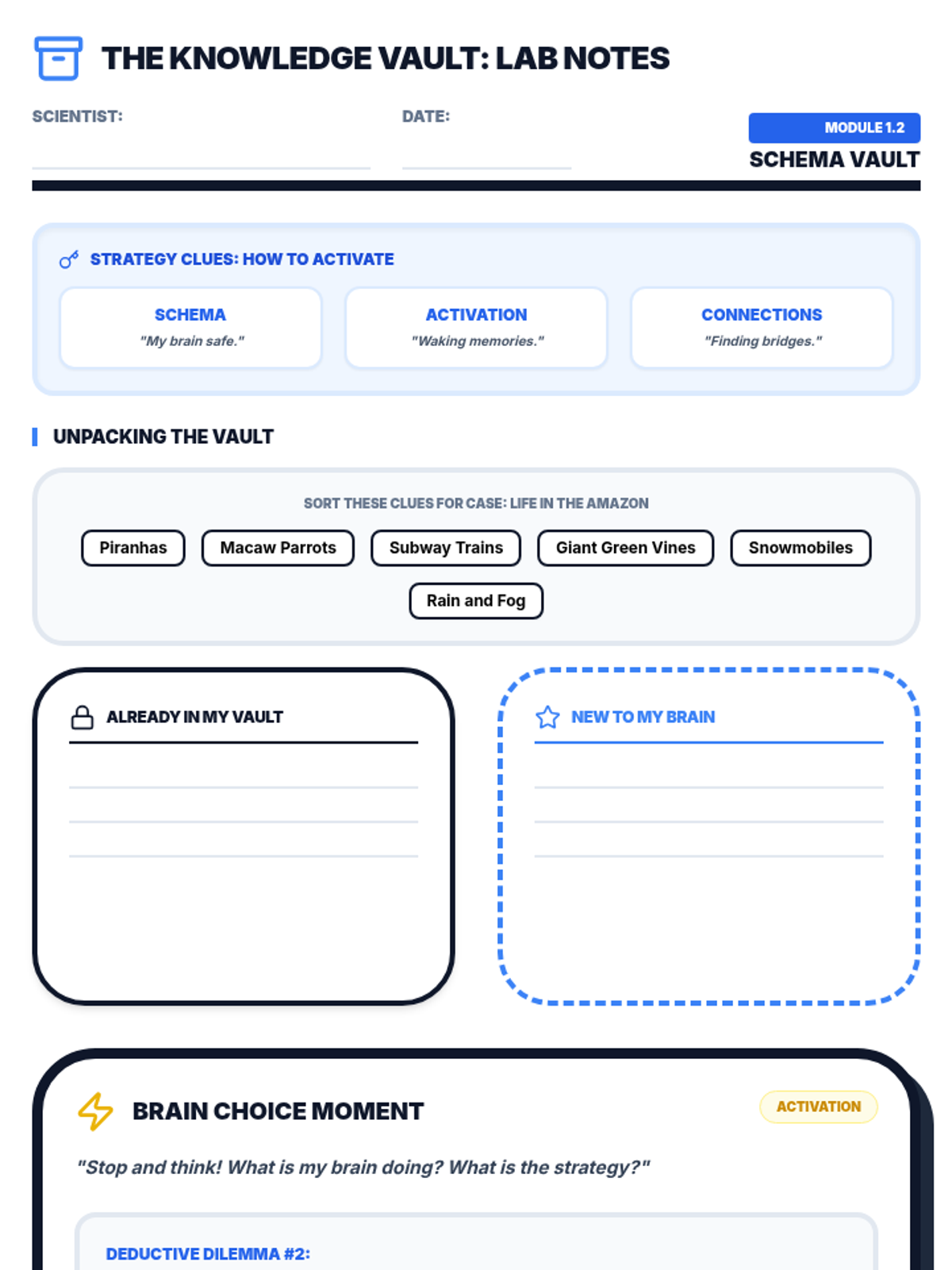
Focuses on Schema as the 'Knowledge Vault.' Students learn to retrieve and organize prior knowledge before entering a text.
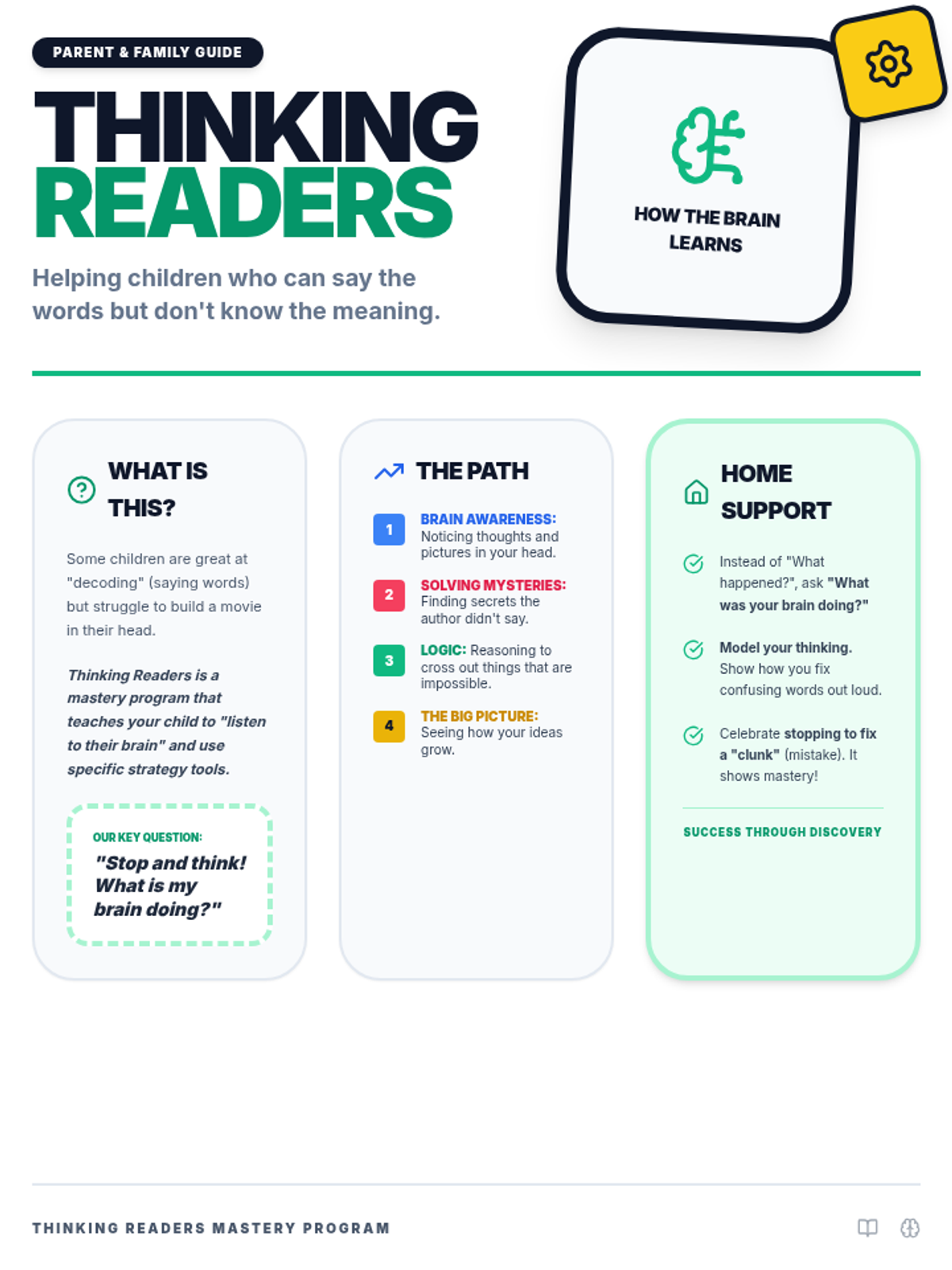
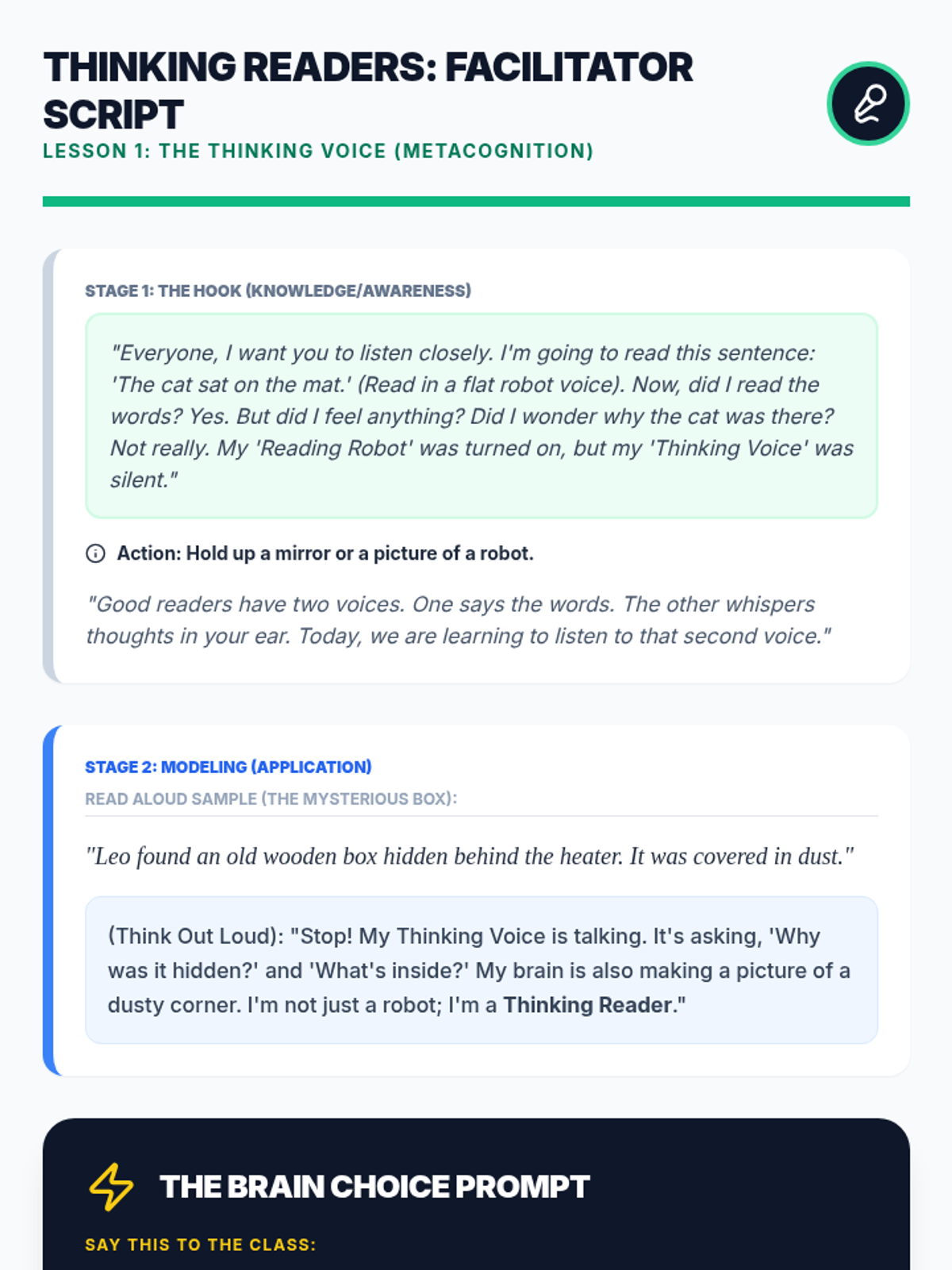
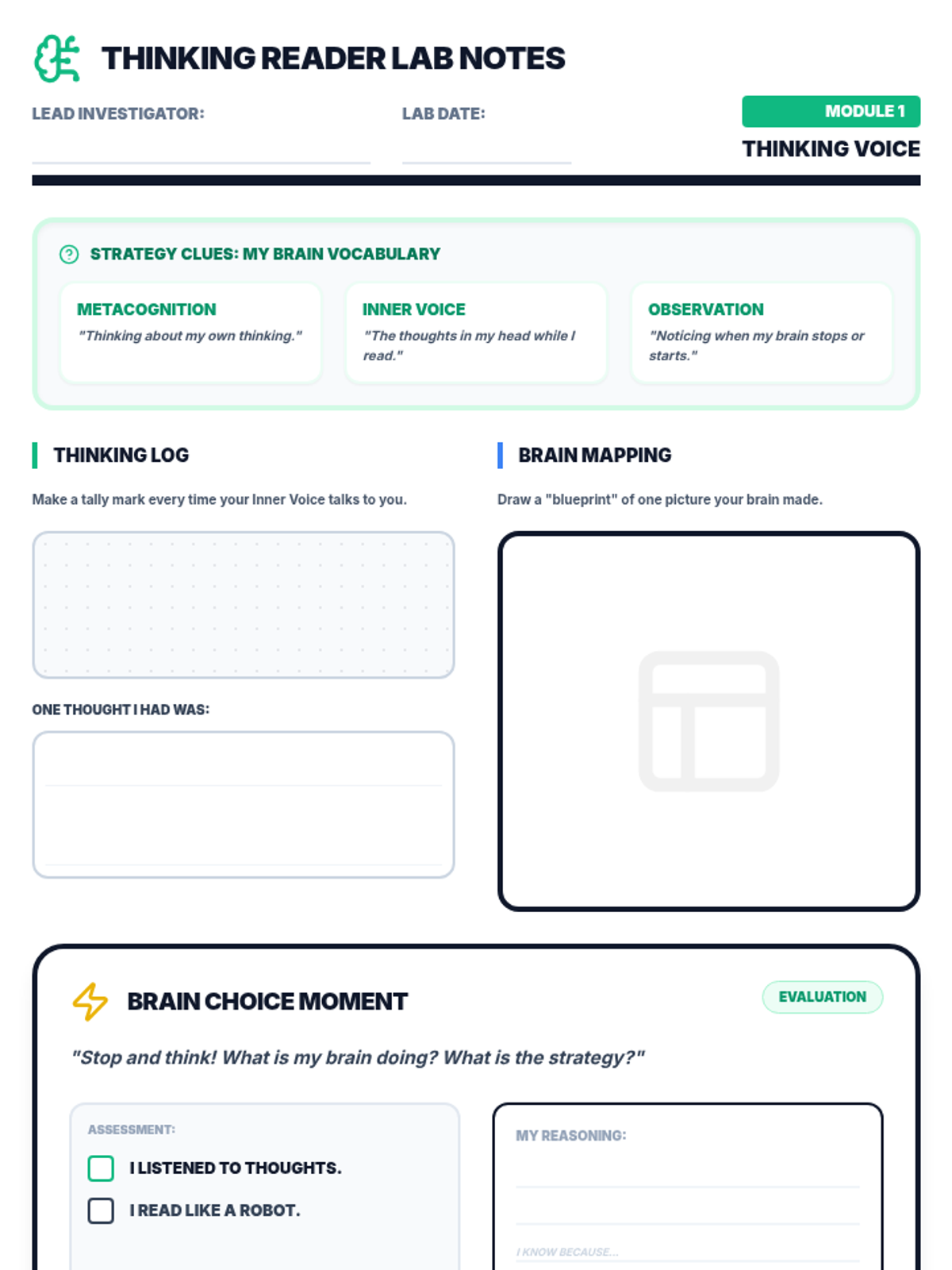
Introduction to the 'Inner Voice'. Students learn to identify when their brain is actively thinking versus just reading words, using the 'Reading Robot' vs. 'Thought Tracker' comparison.
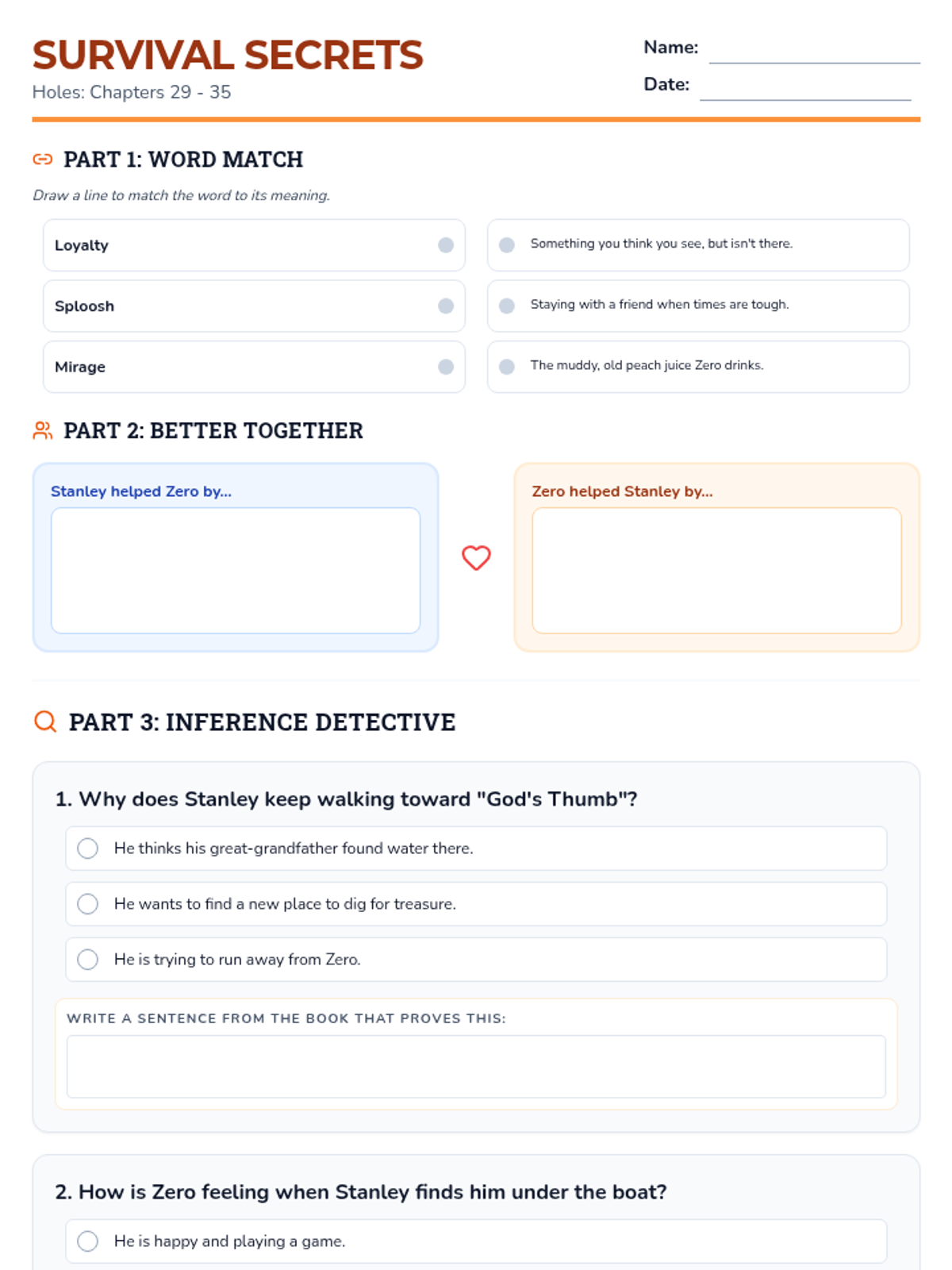
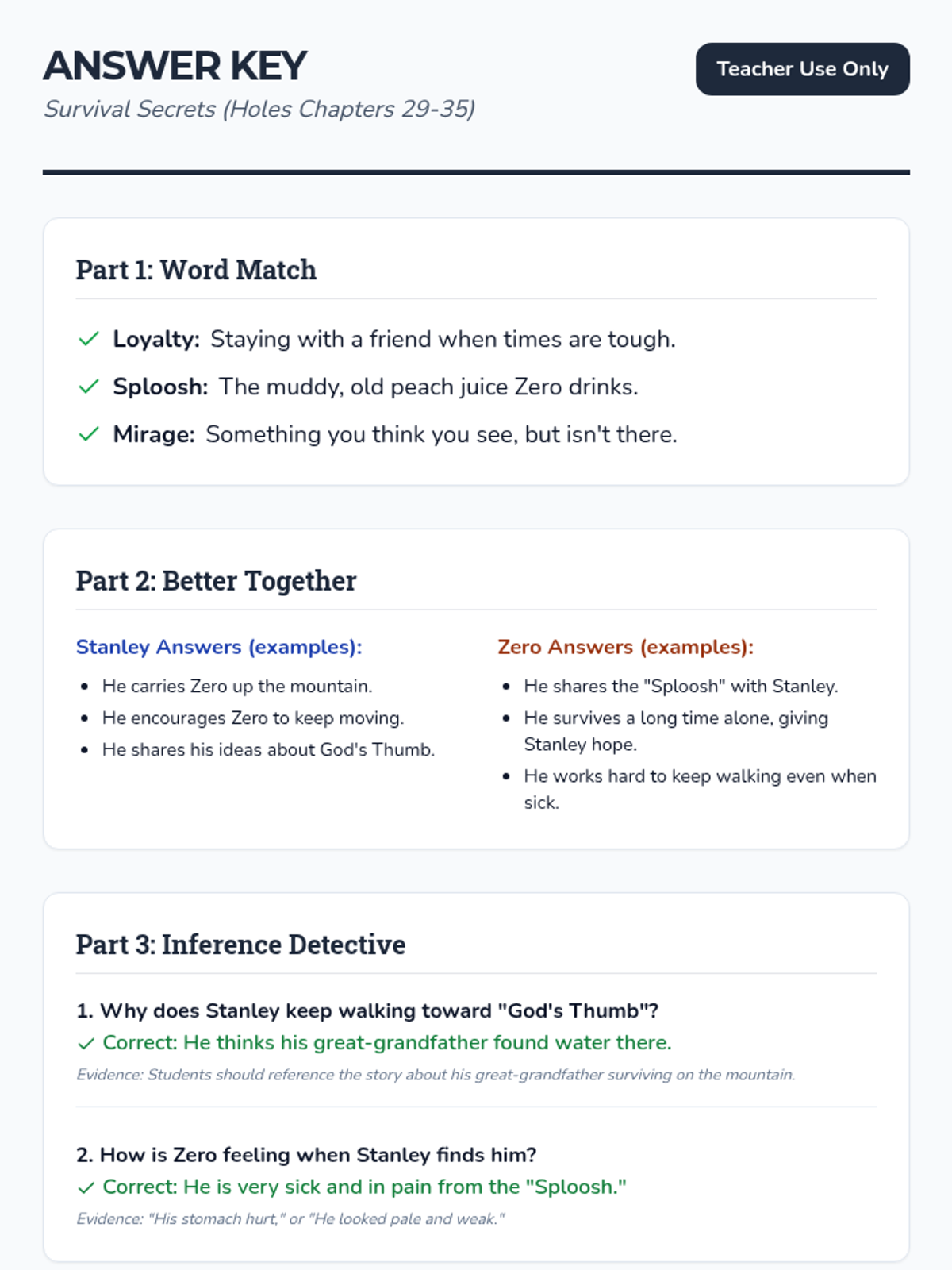
A lesson focused on chapters 29-35 of Louis Sachar's Holes, exploring the deepening friendship between Stanley and Zero as they face the challenges of the desert. Students will analyze character relationships, make inferences about their survival, and identify the central theme of loyalty.
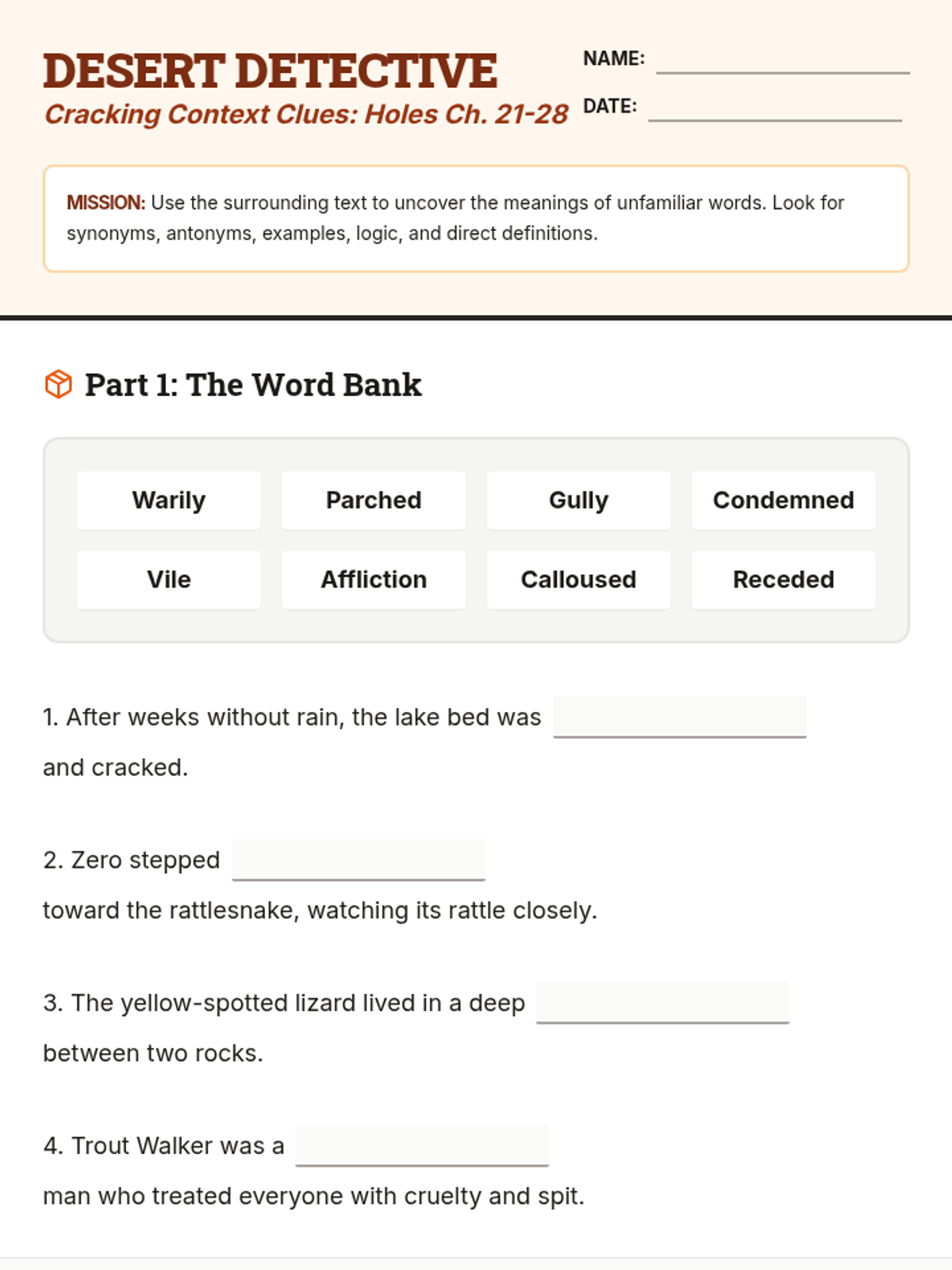
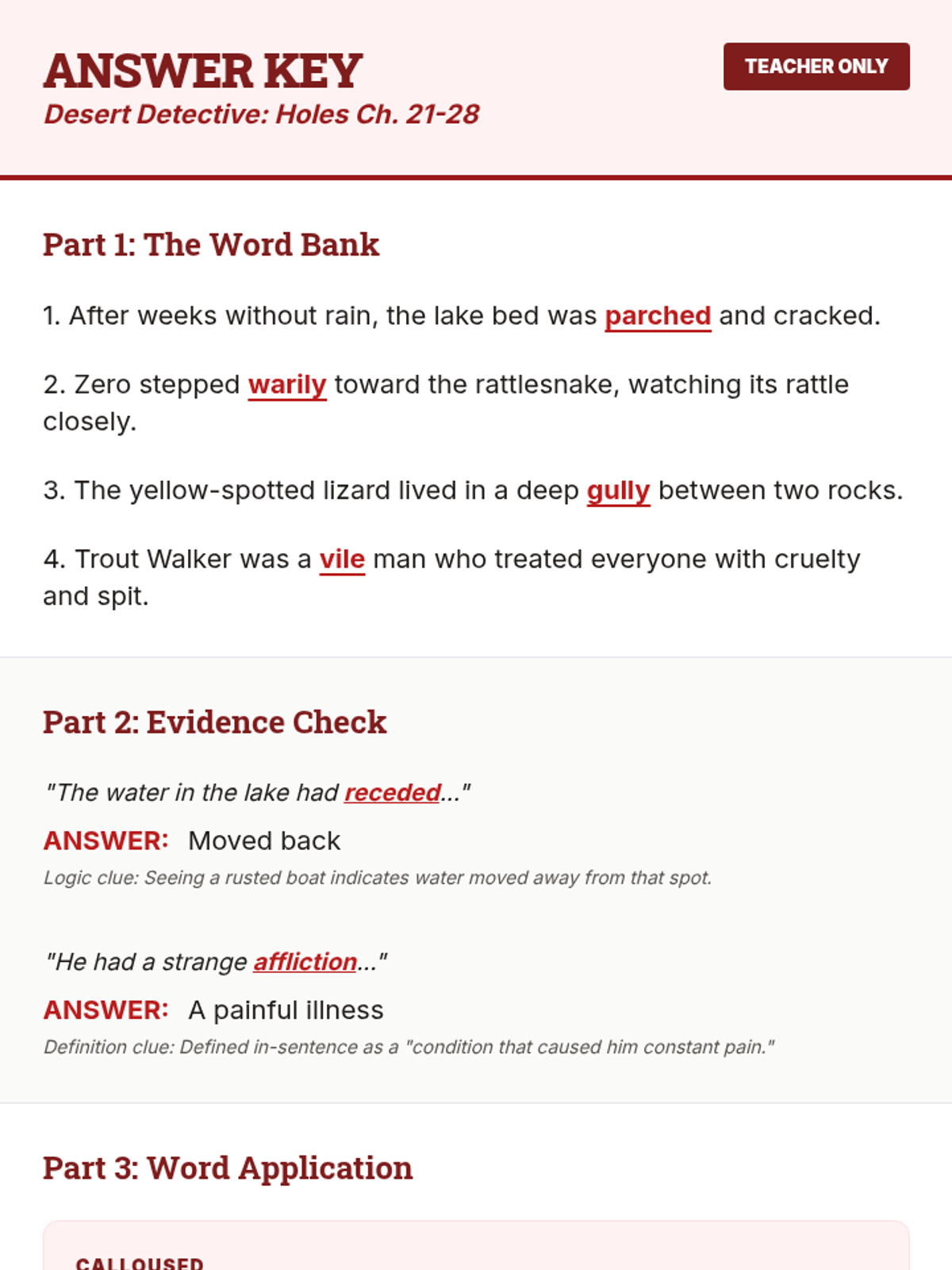
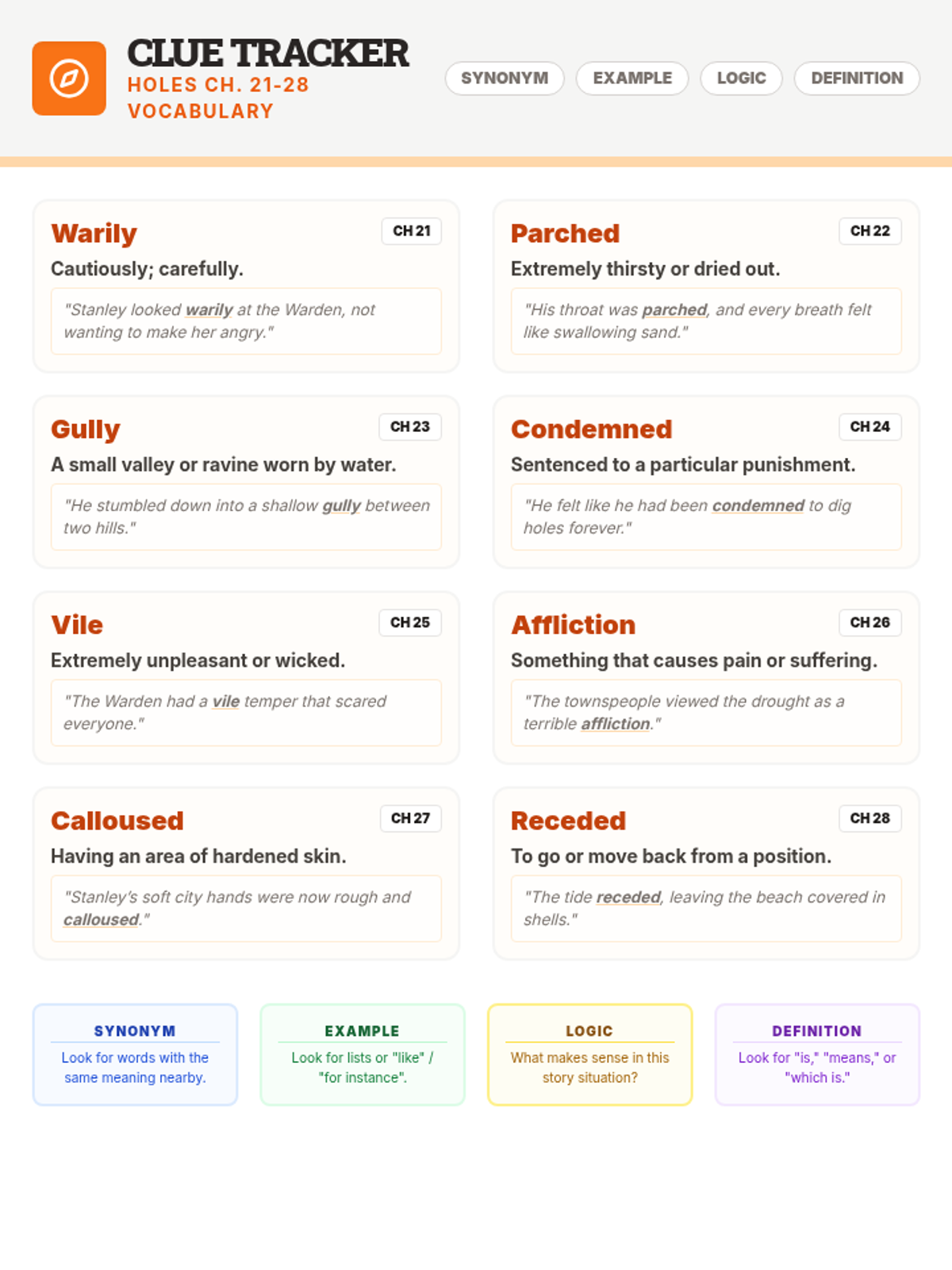
A deep dive into context clue strategies using key vocabulary from chapters 21-28 of Holes, featuring multi-level support for diverse learners.
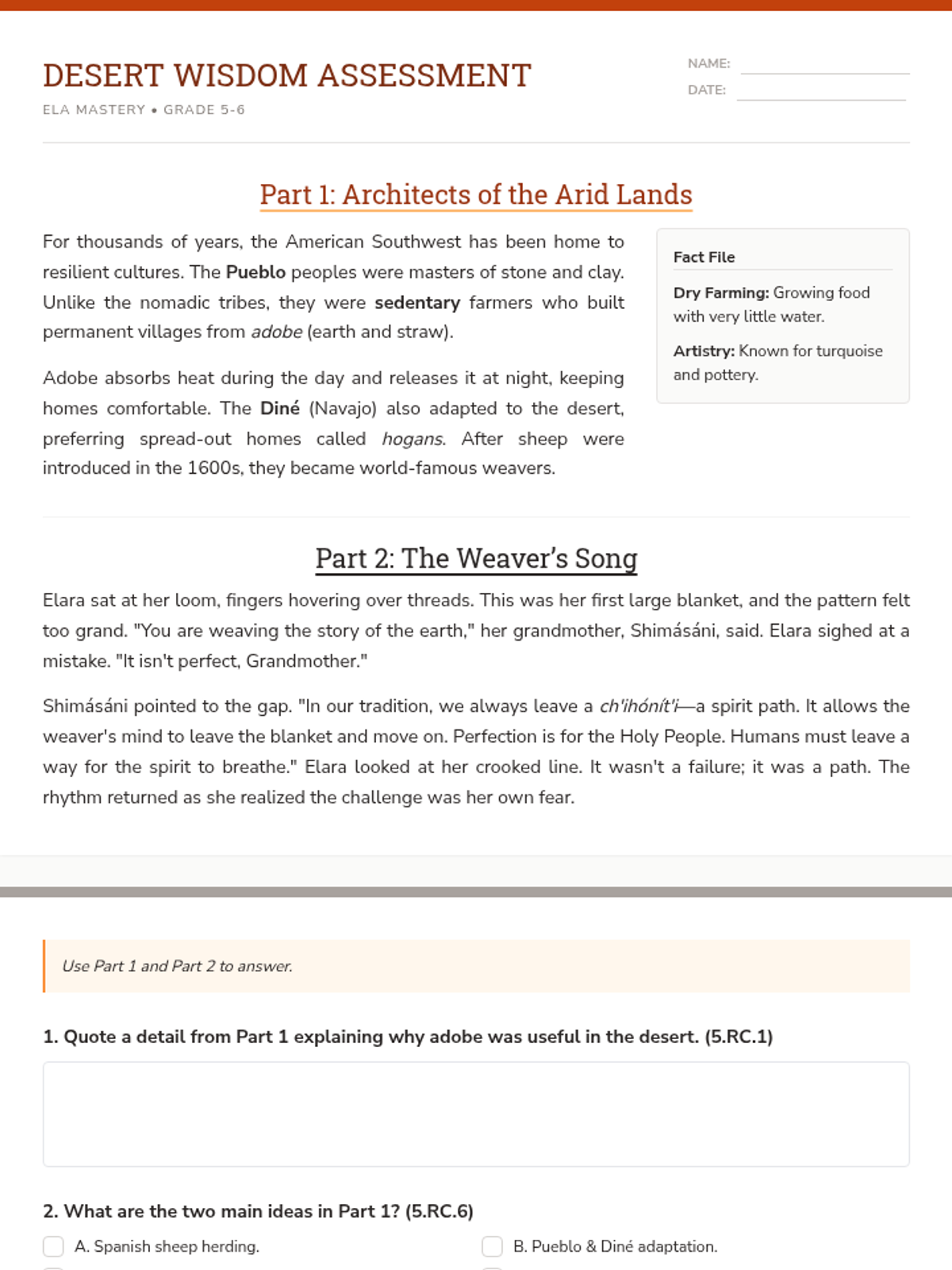
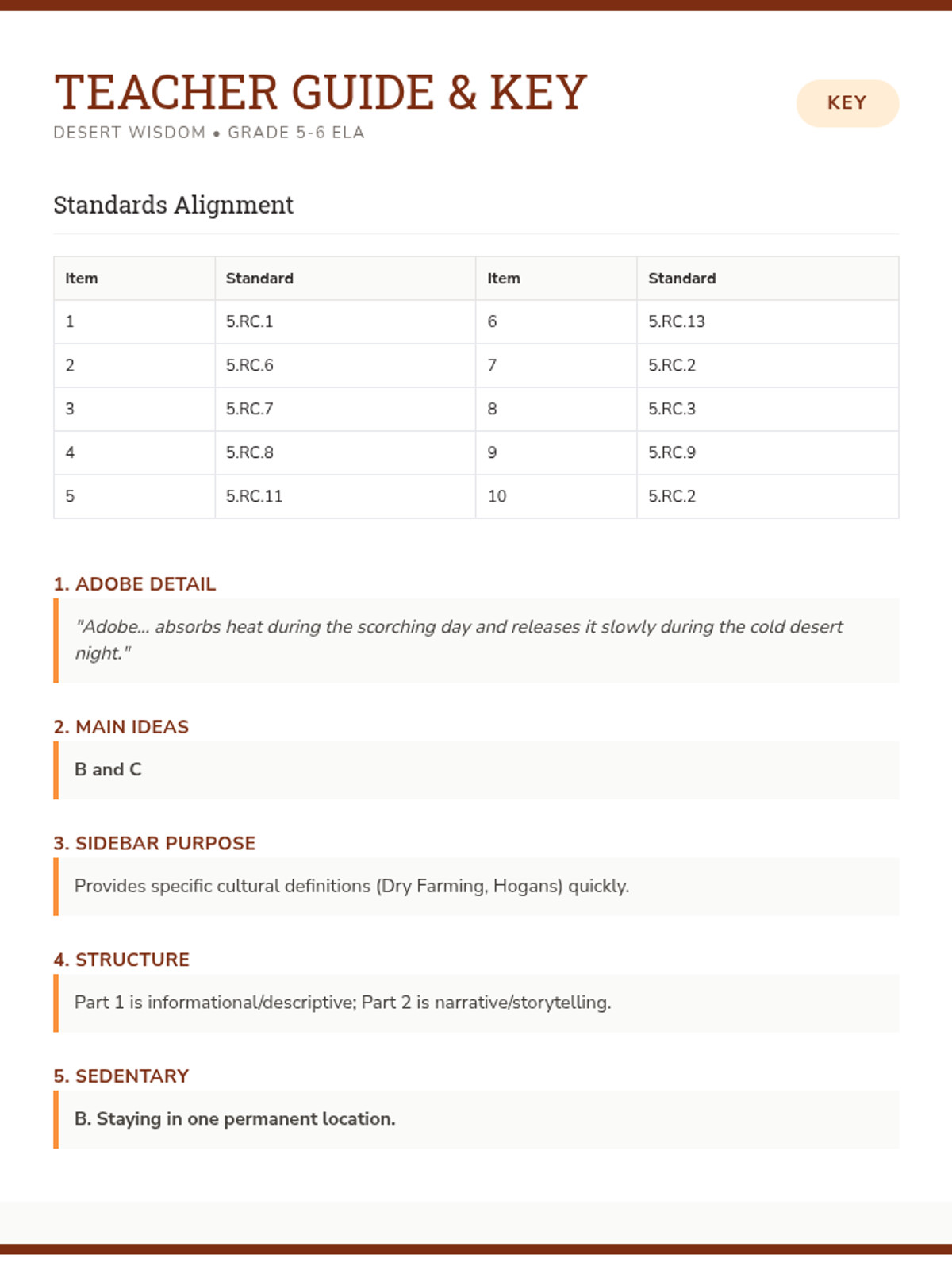
A comprehensive ELA assessment featuring informational and literary texts about Southwest Native American tribes, aligned to 5th-6th grade standards. Students will analyze text structure, theme, and main ideas while exploring the cultures of the Pueblo and Diné people.
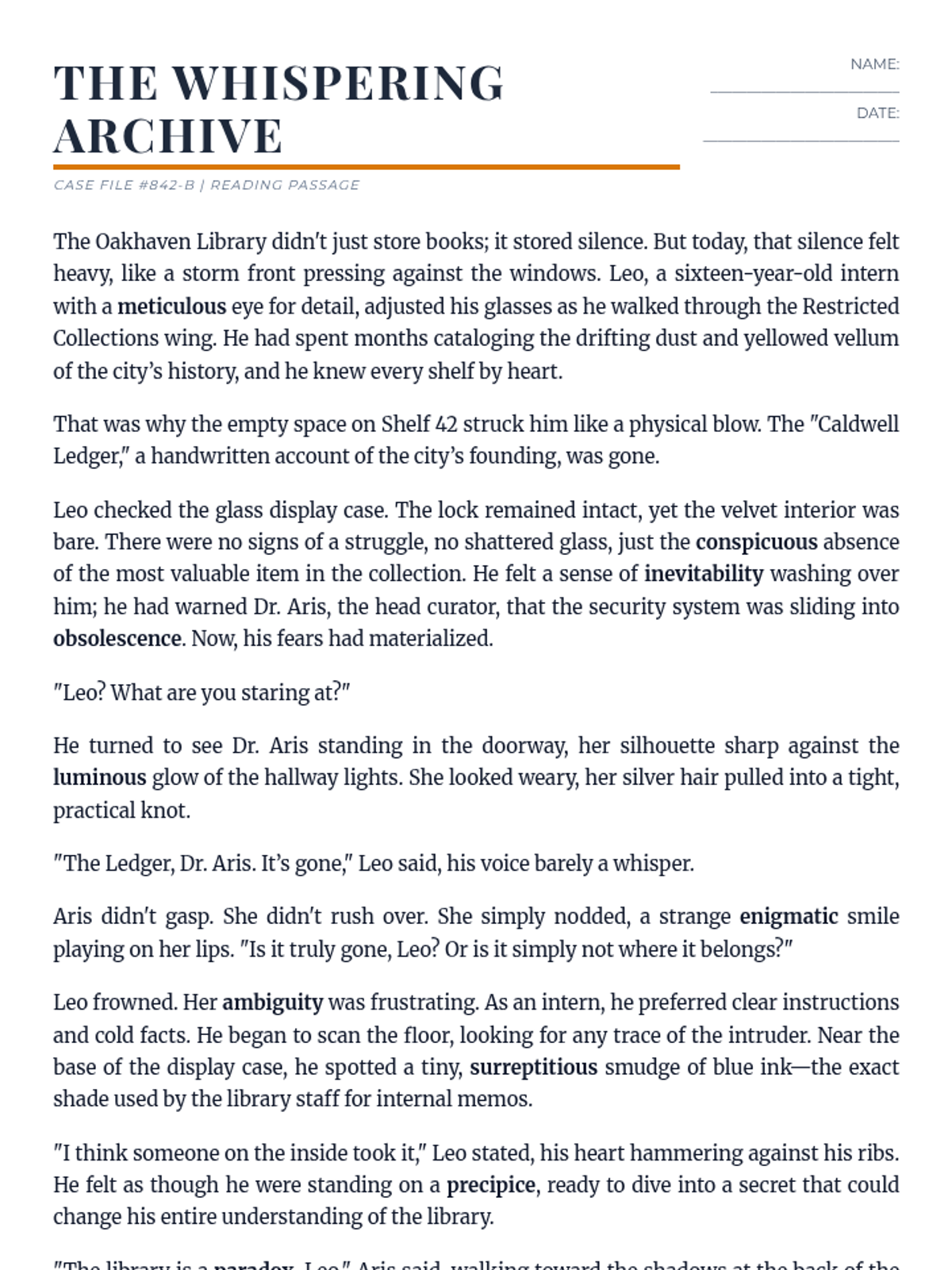
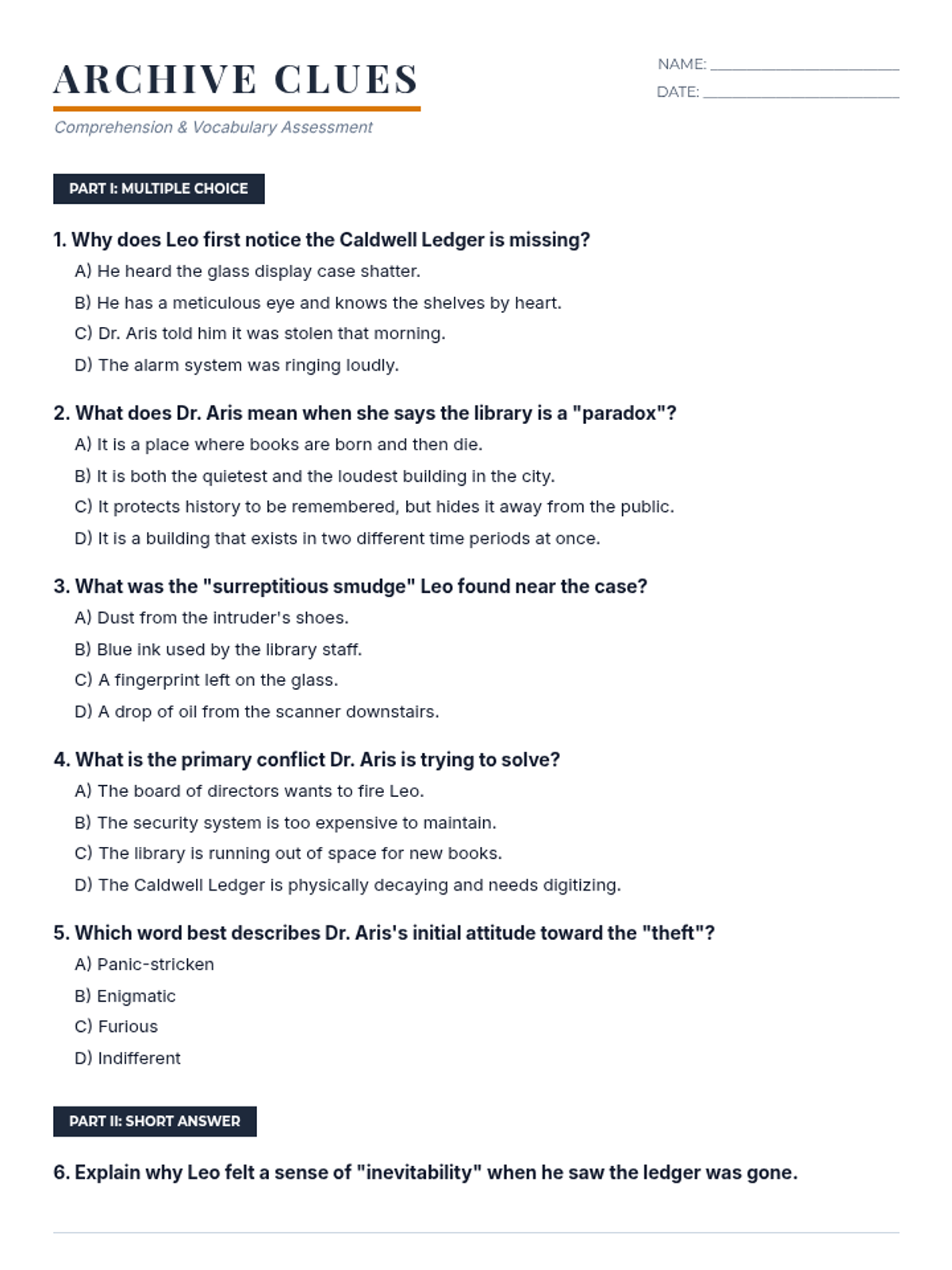
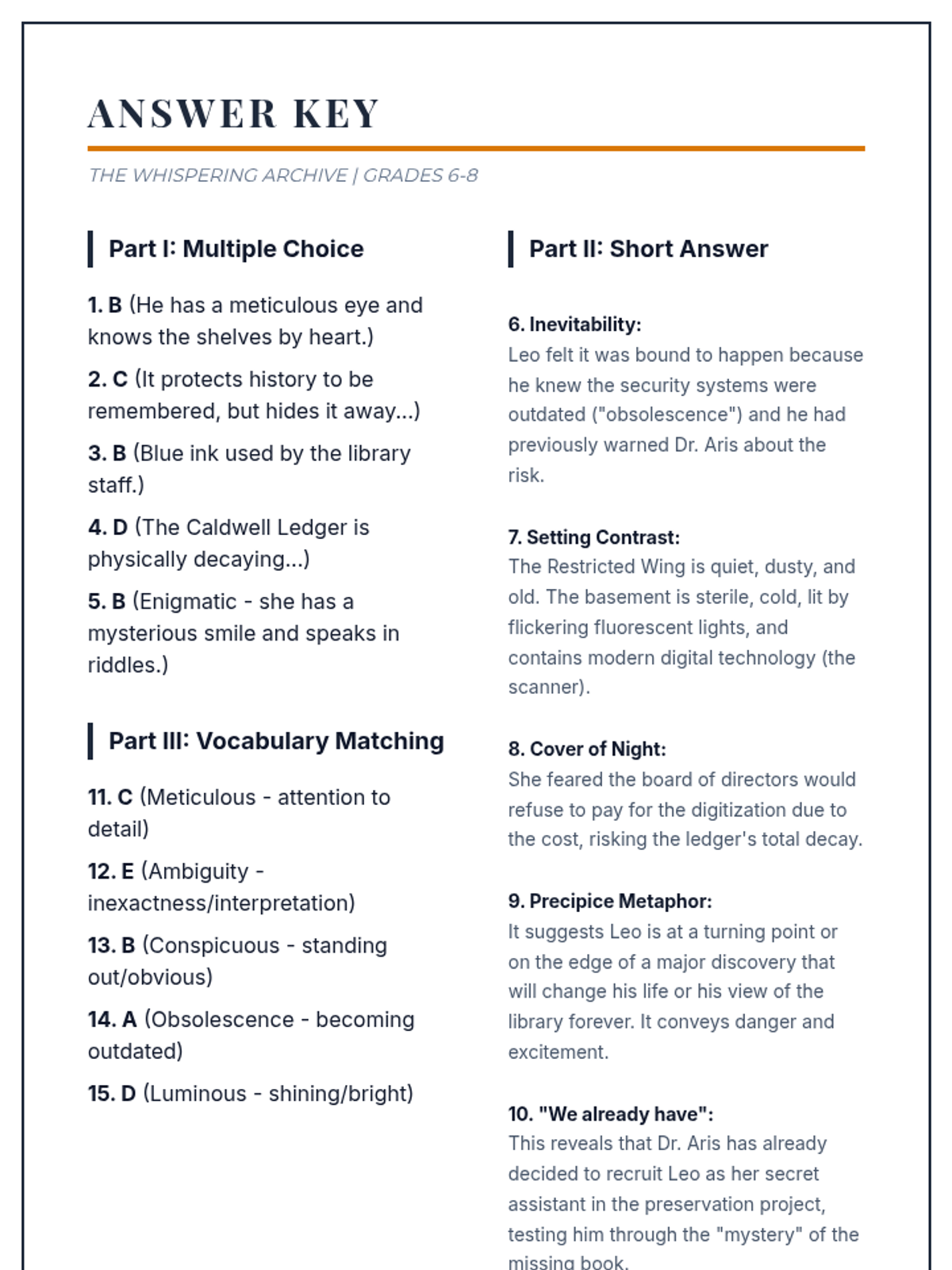
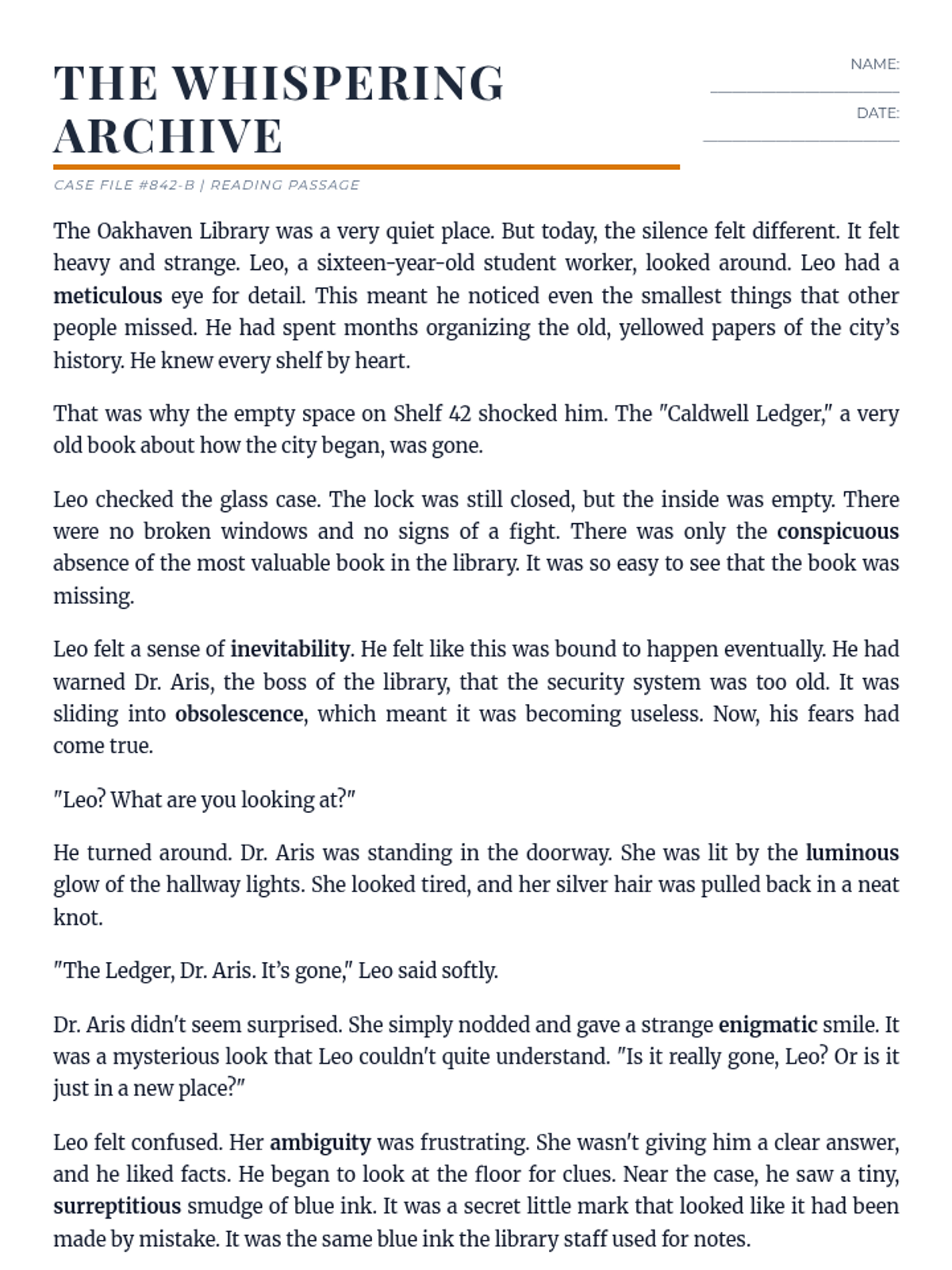
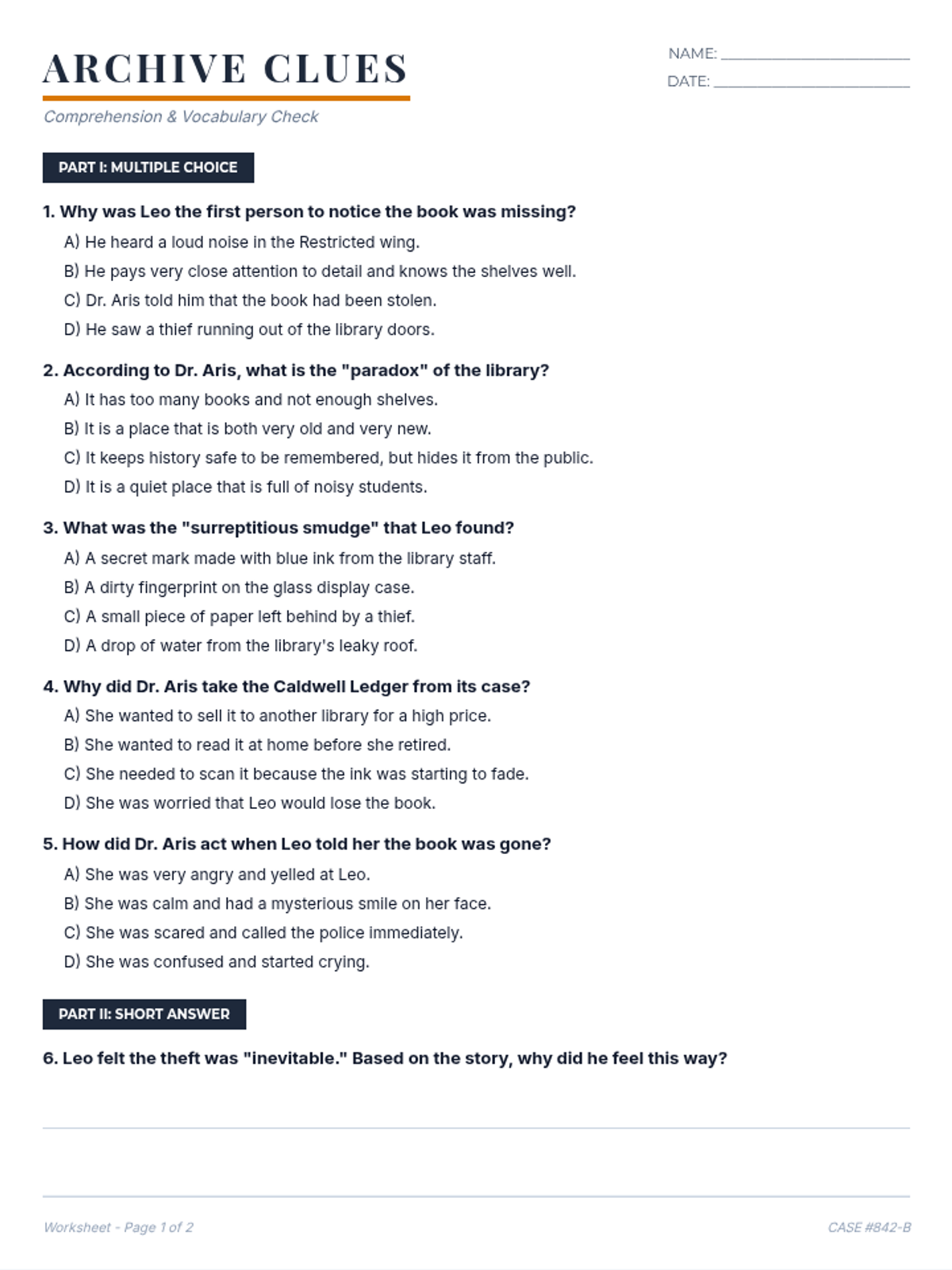
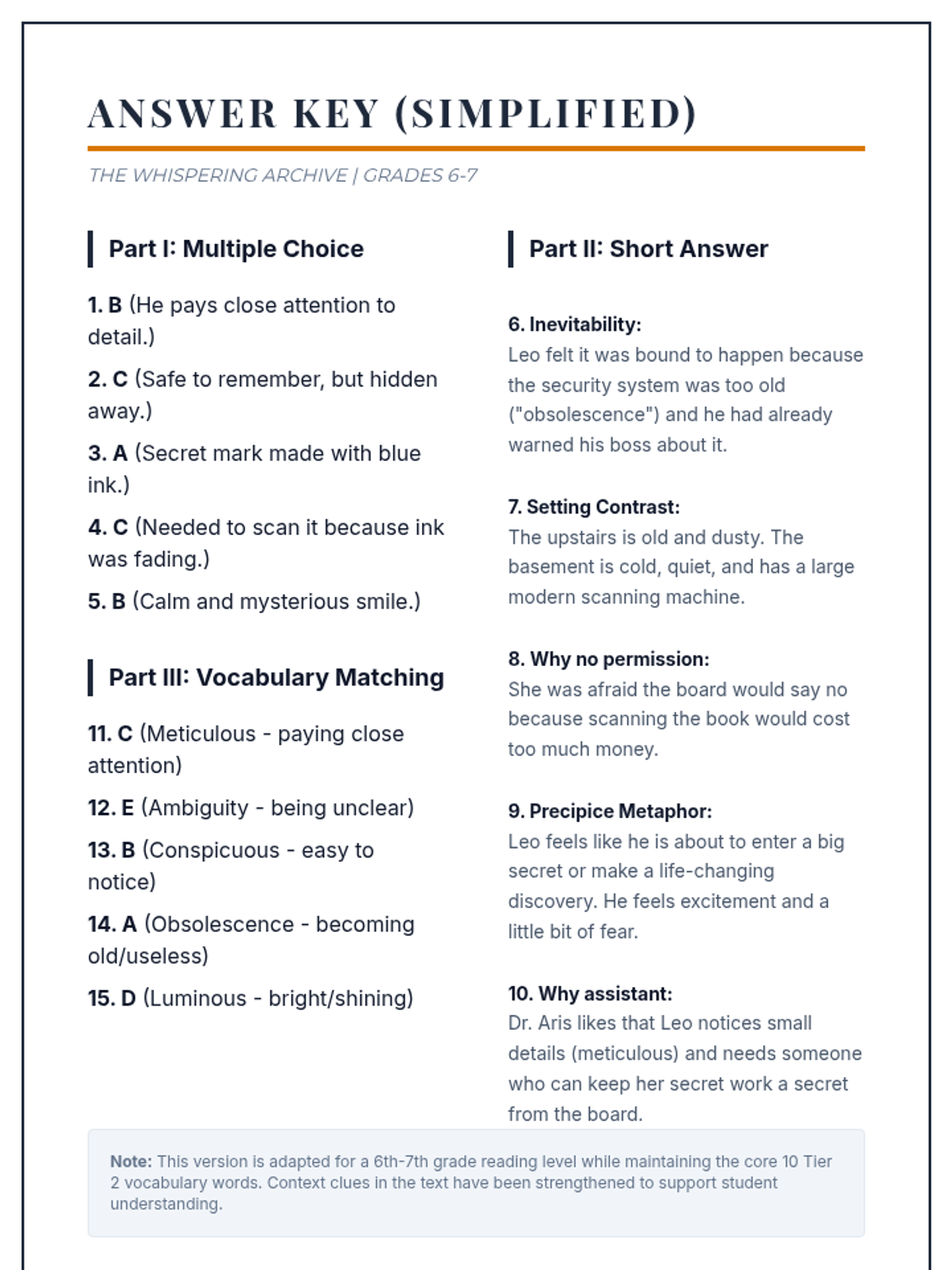
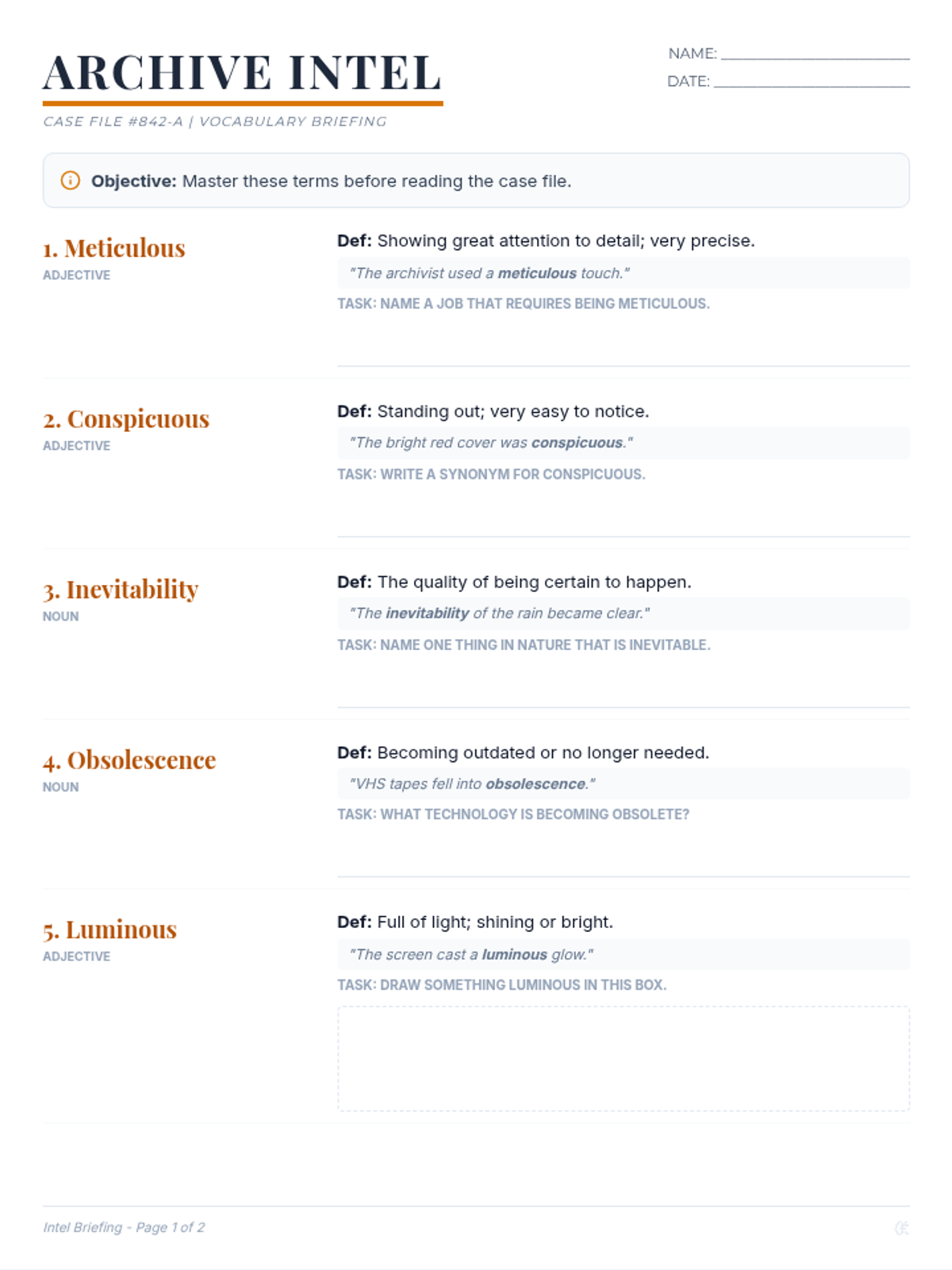
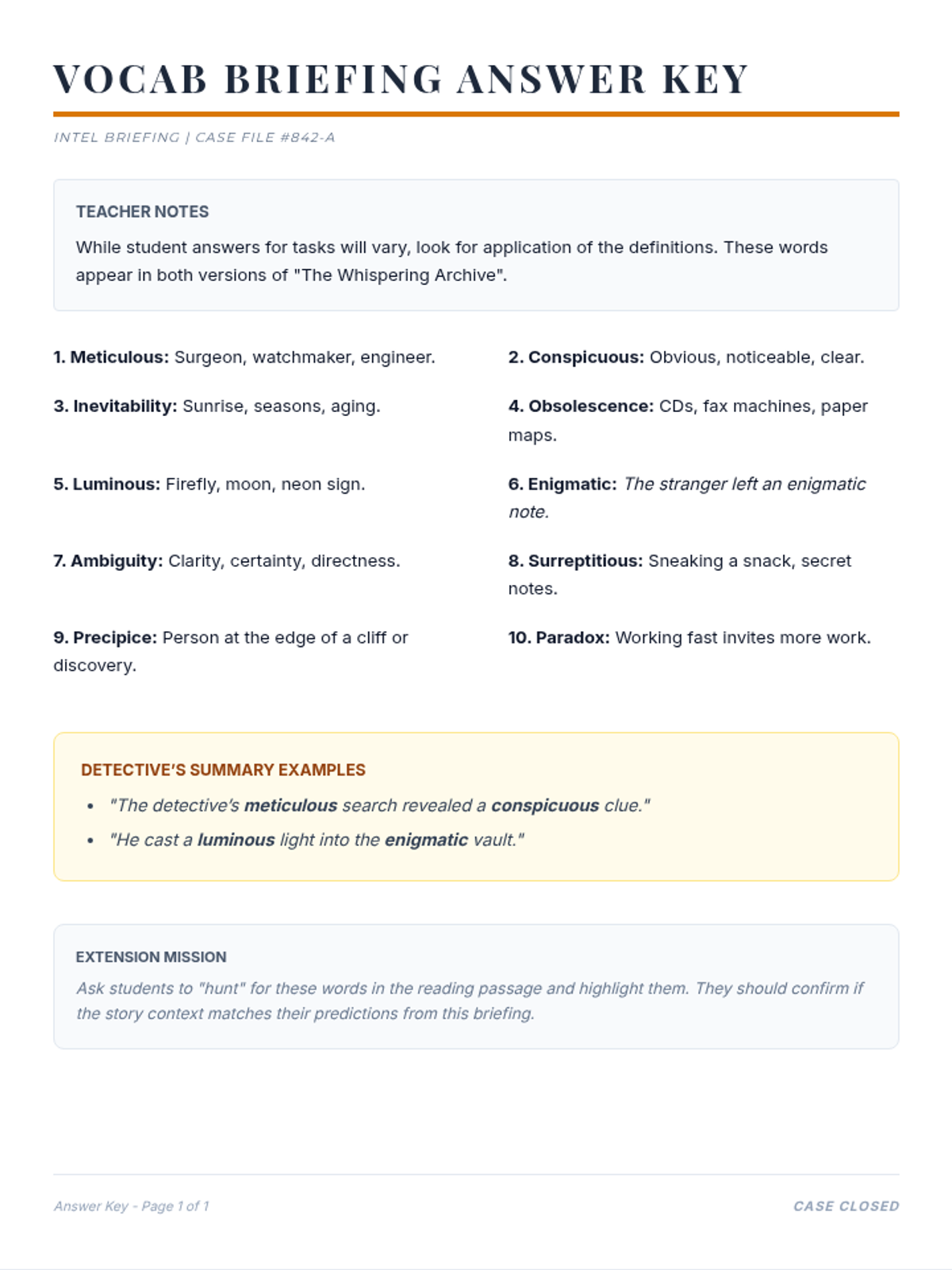
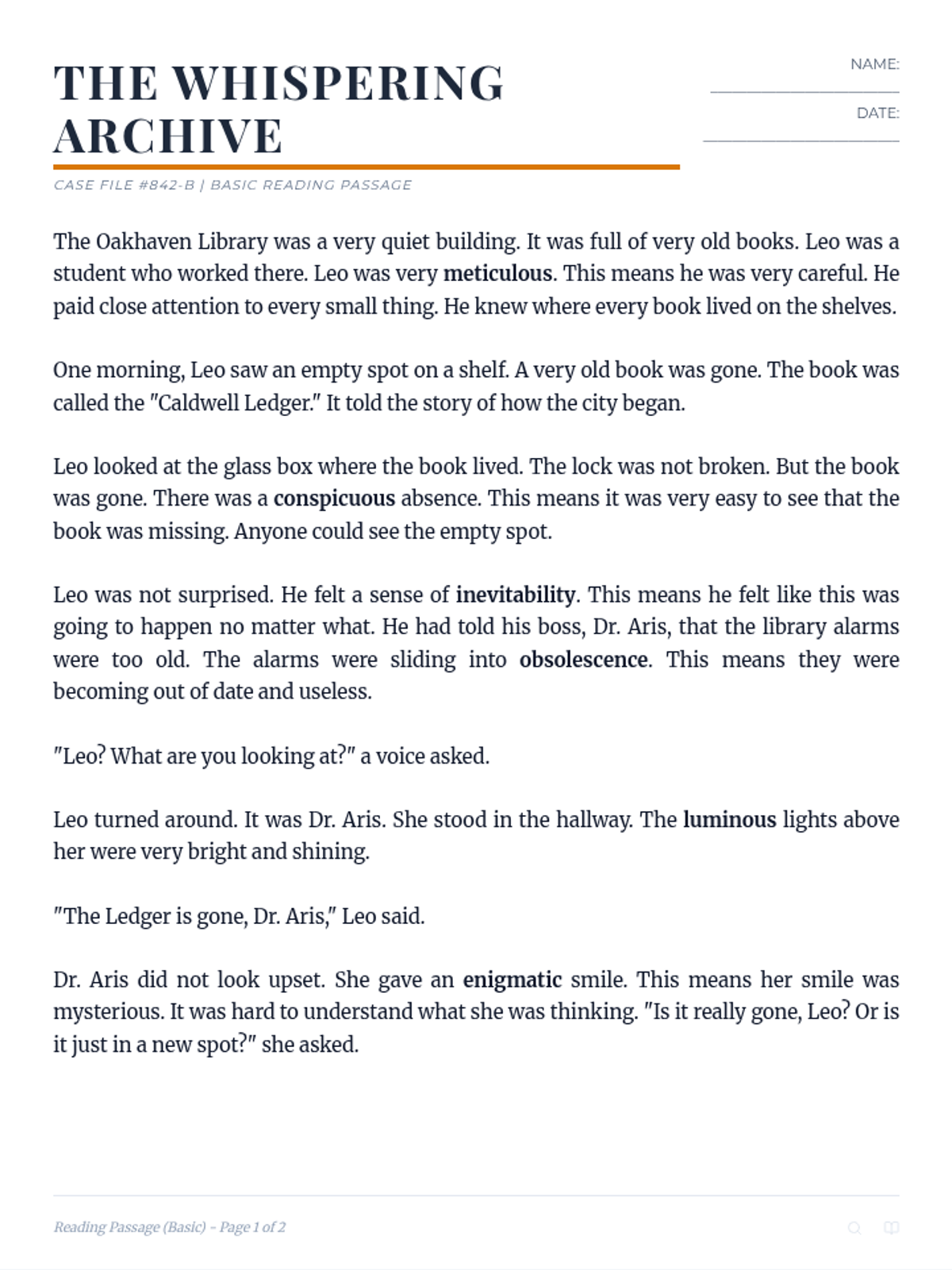
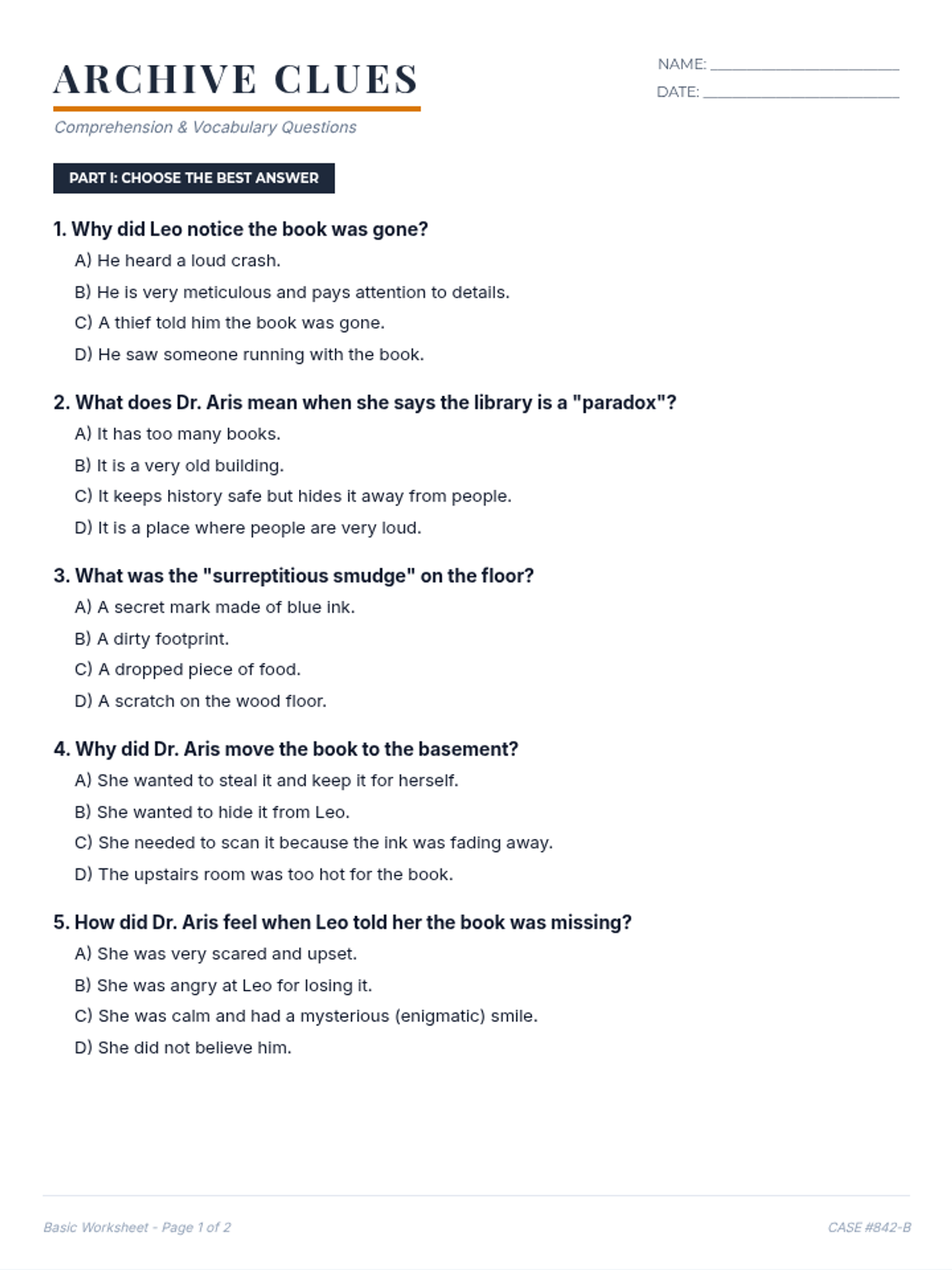
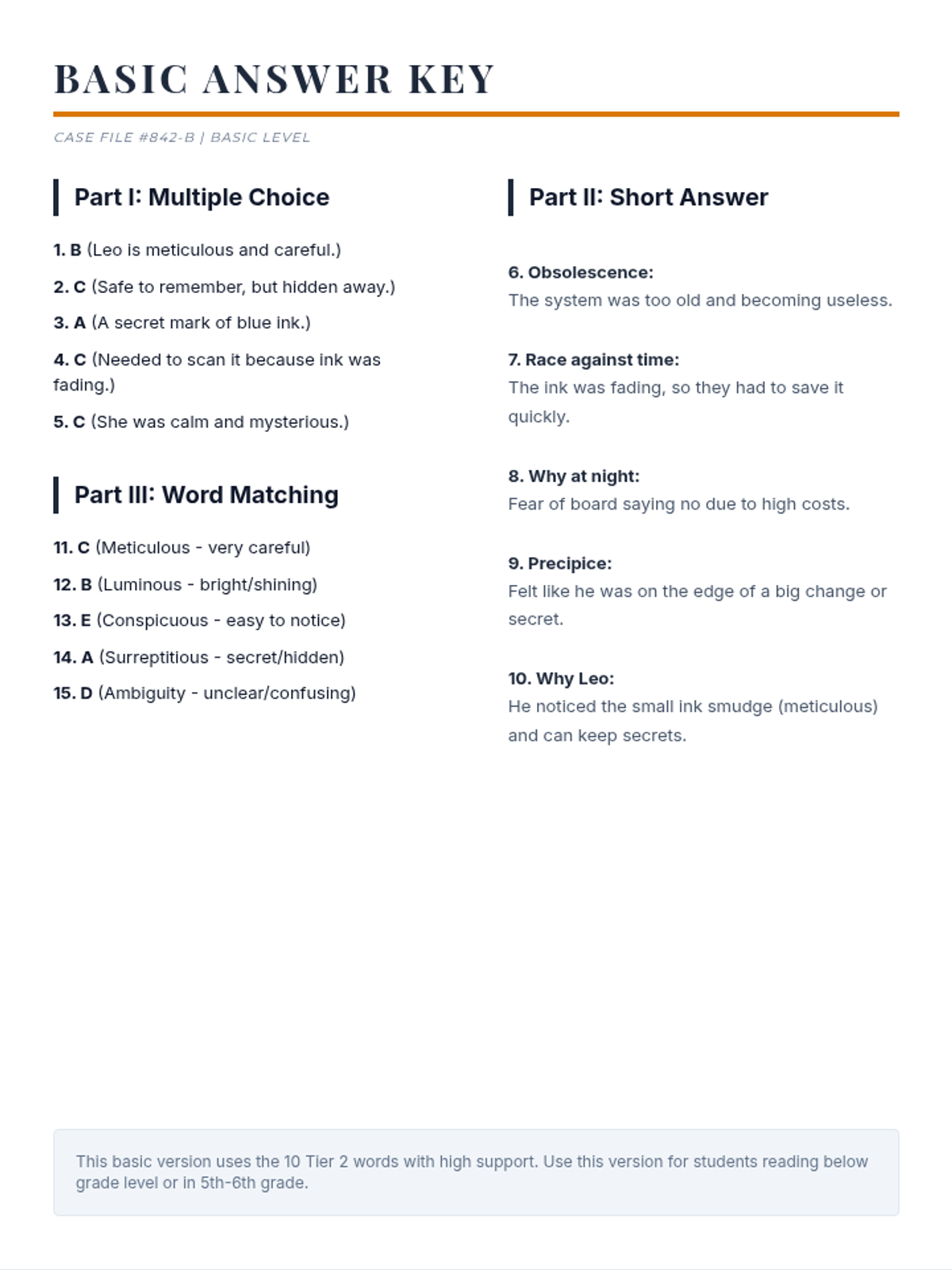
A mystery-themed reading comprehension lesson featuring a 2-page original fiction story and a comprehensive assessment focused on Tier 2 vocabulary and analytical skills.
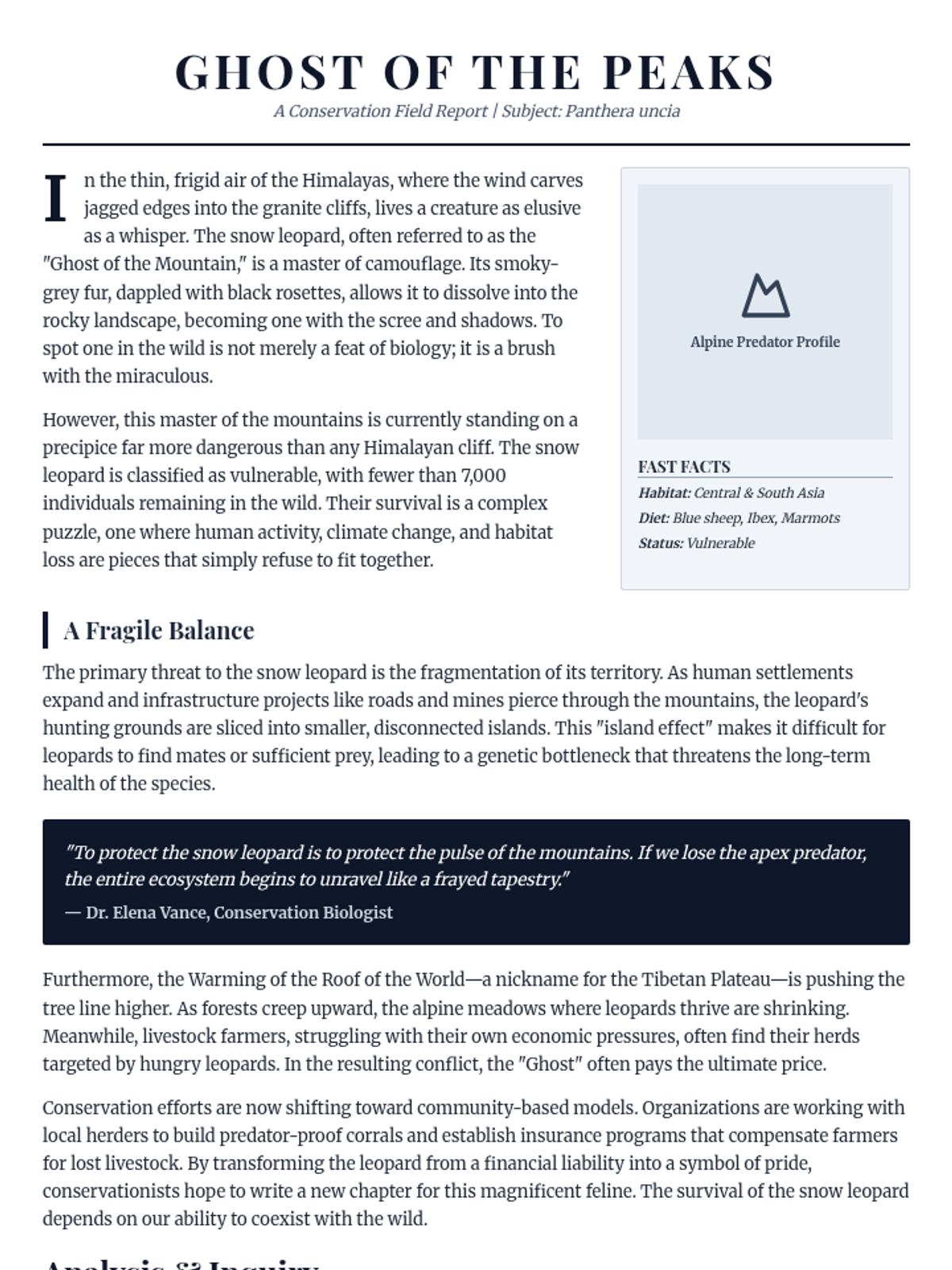
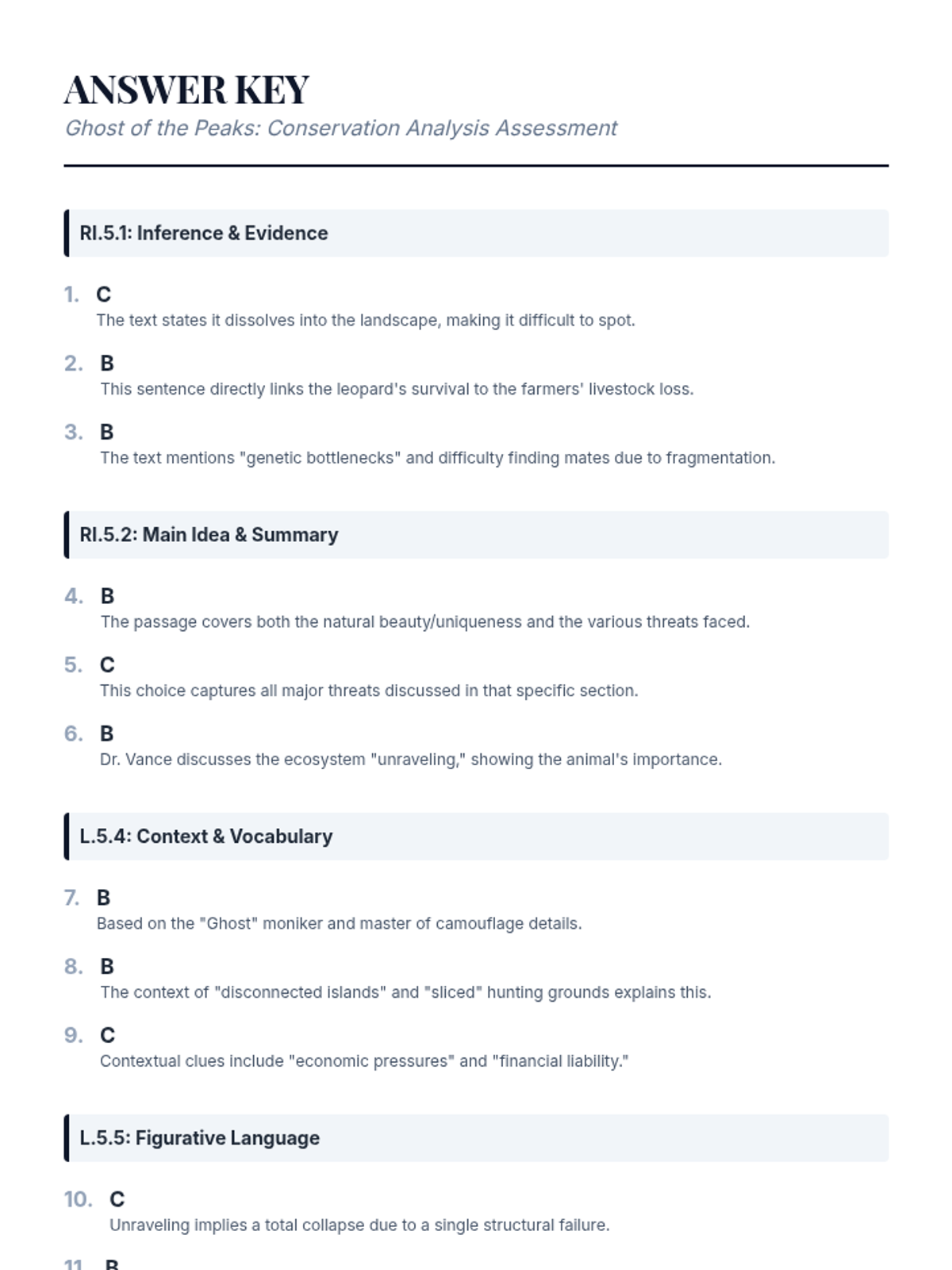
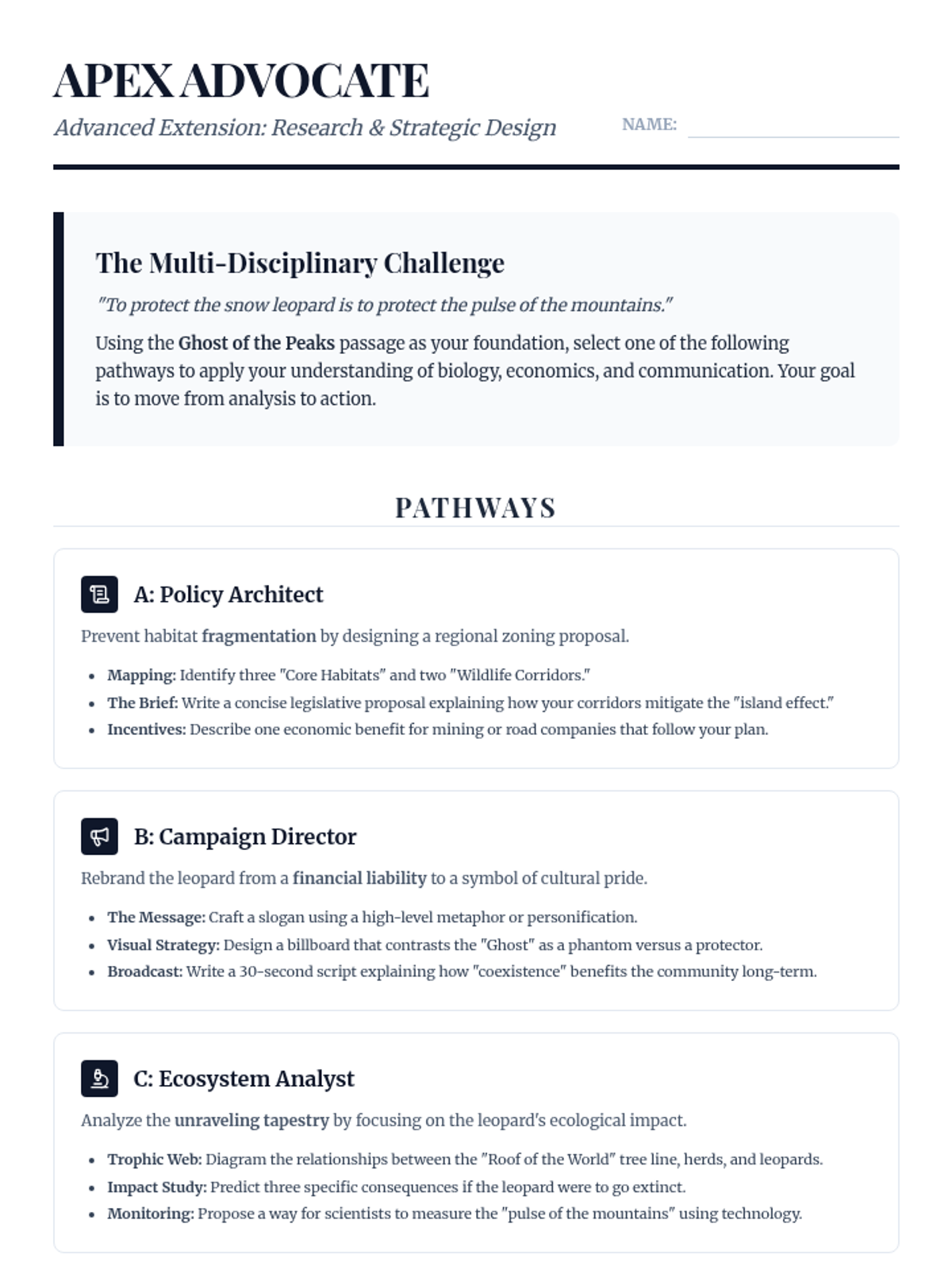
A high-level reading comprehension lesson focused on endangered species, specifically the snow leopard. Students will analyze complex text for main ideas, nuanced vocabulary, and figurative language.
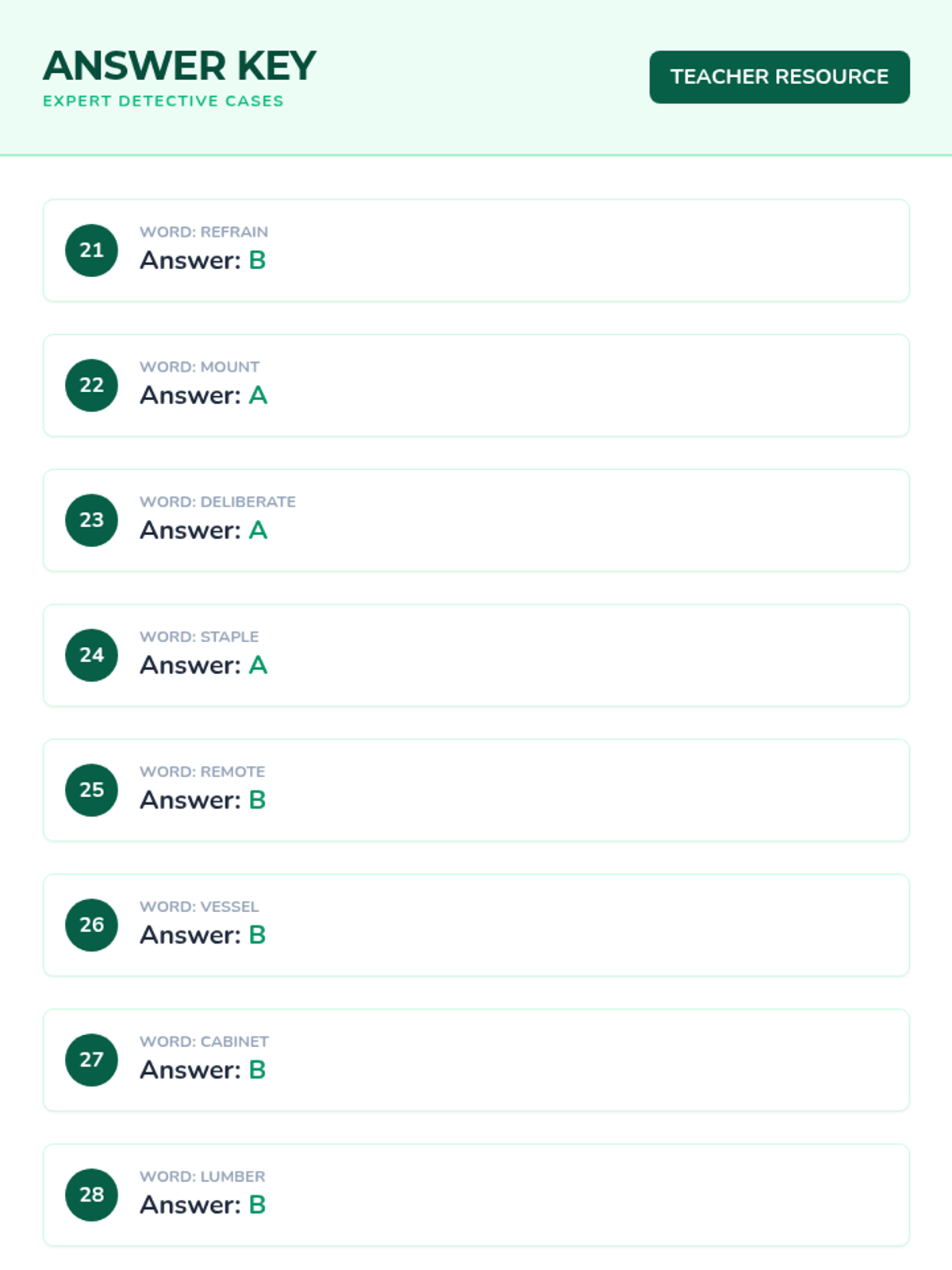
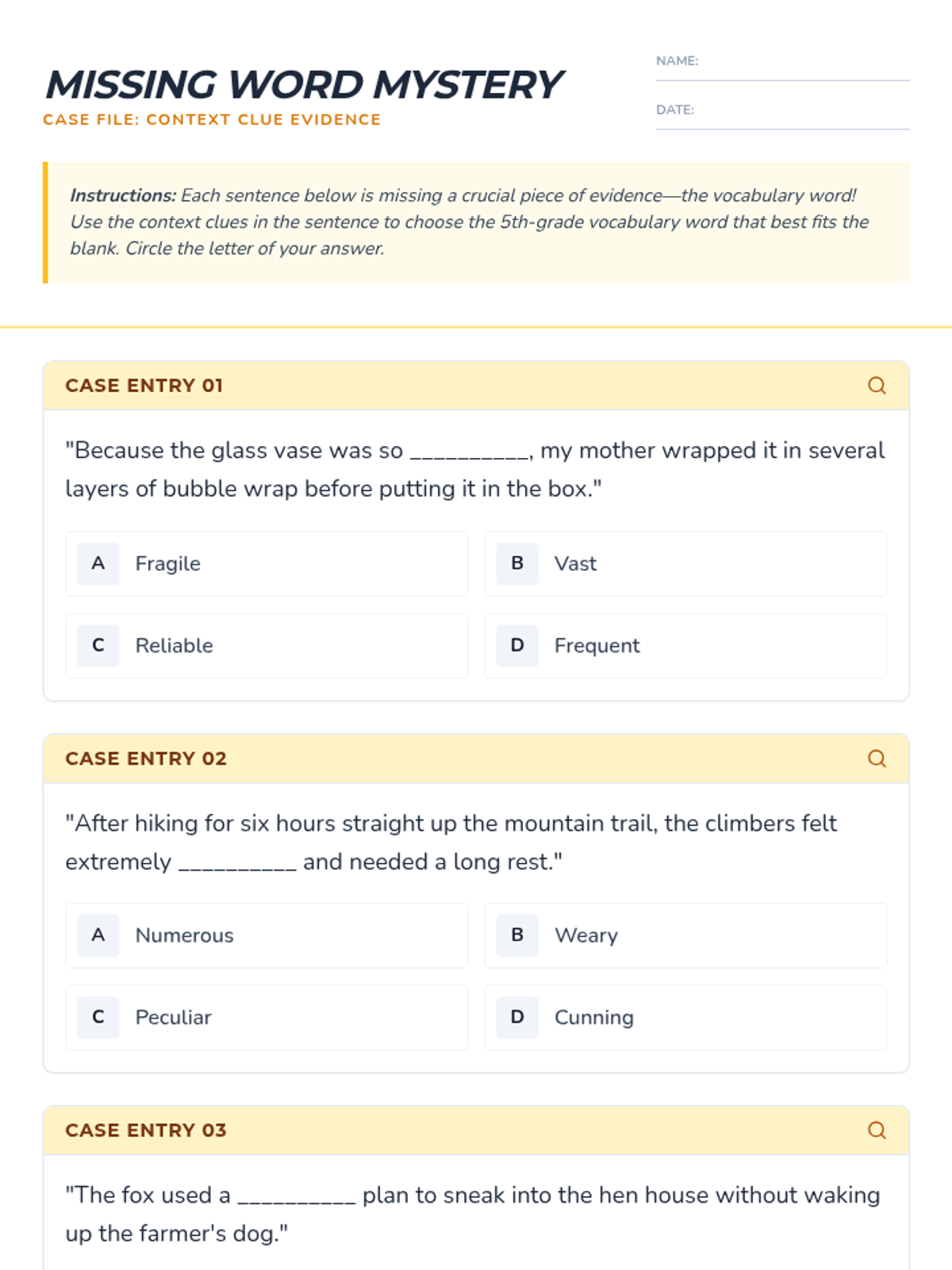
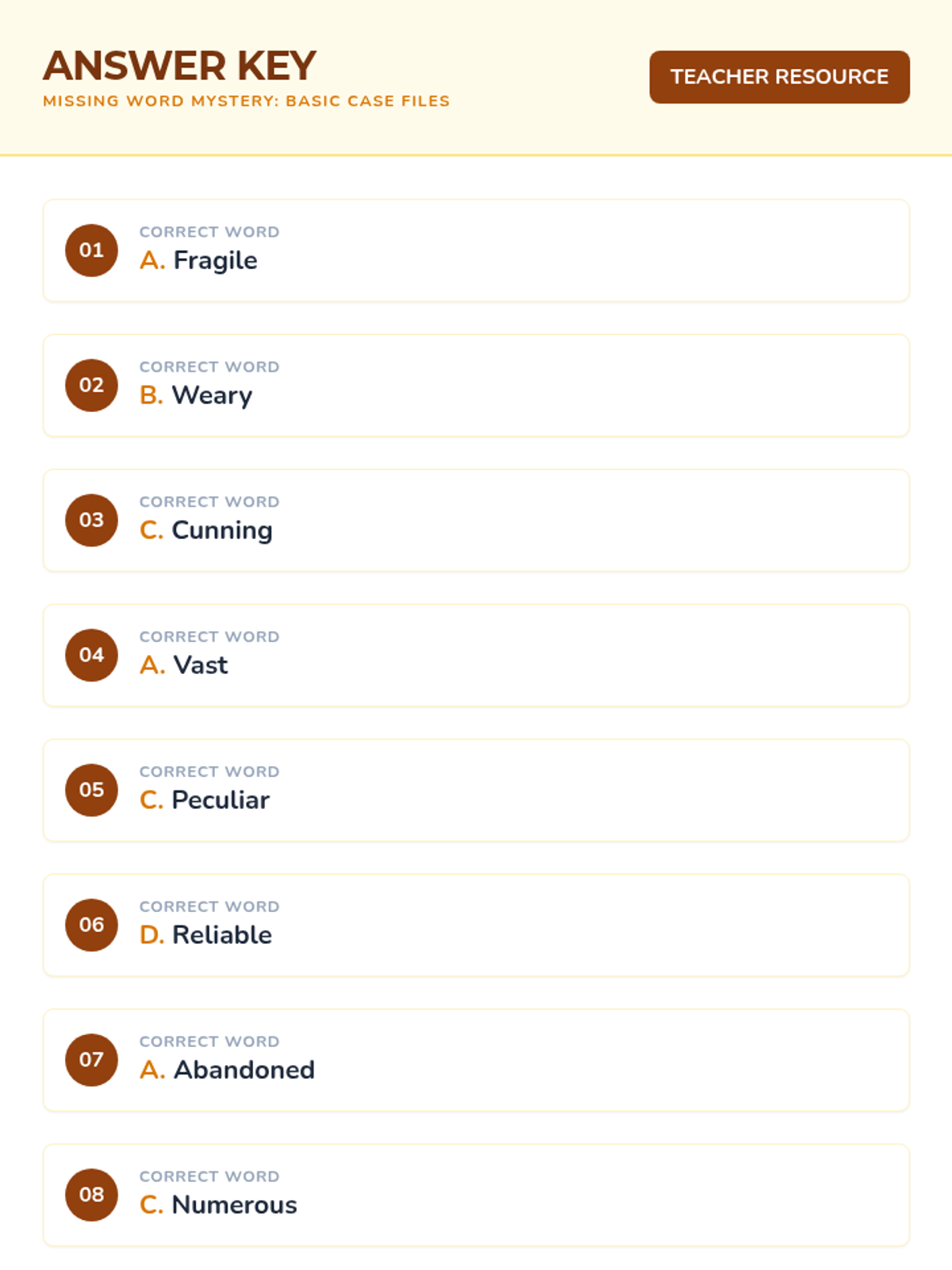
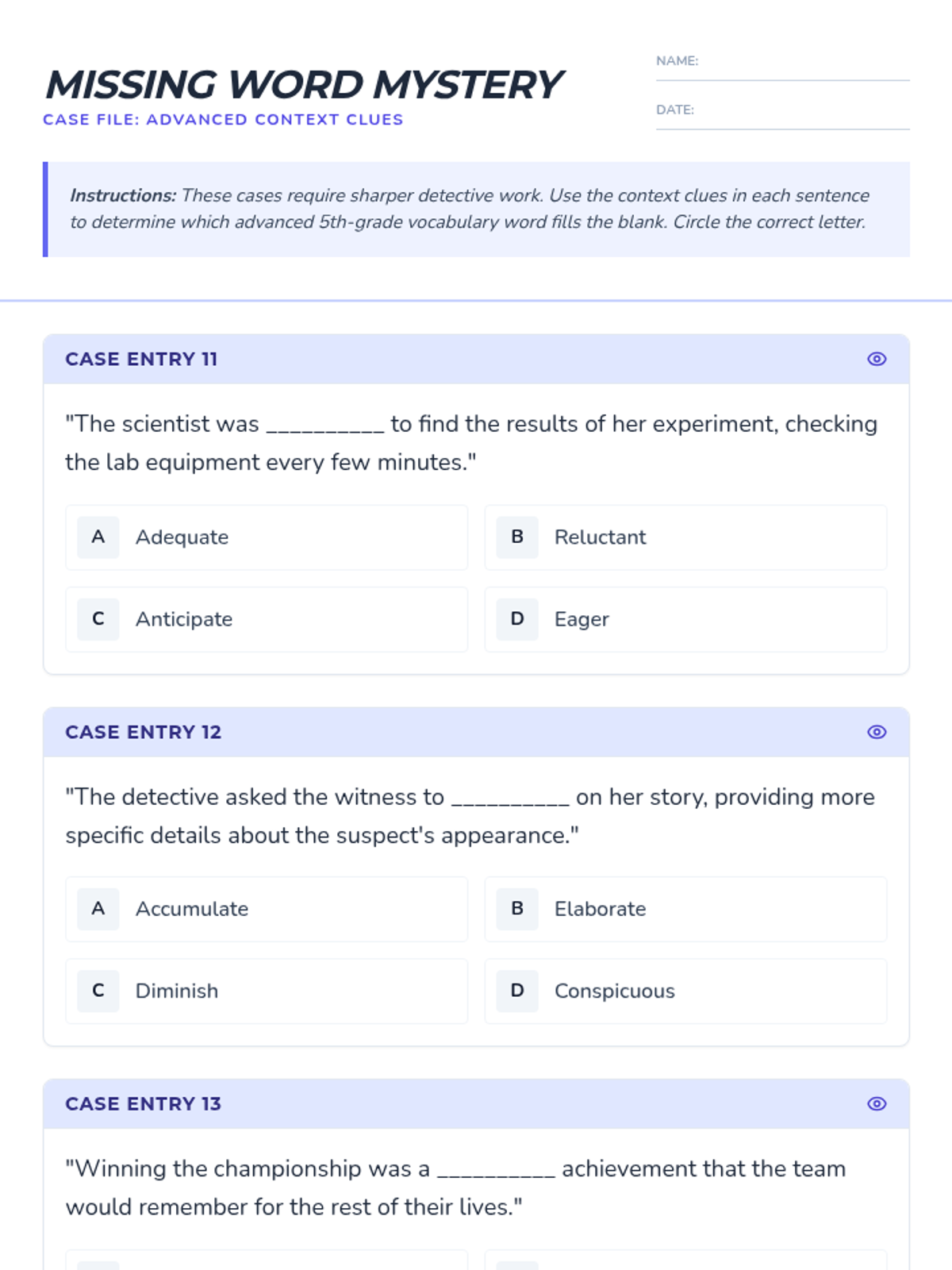
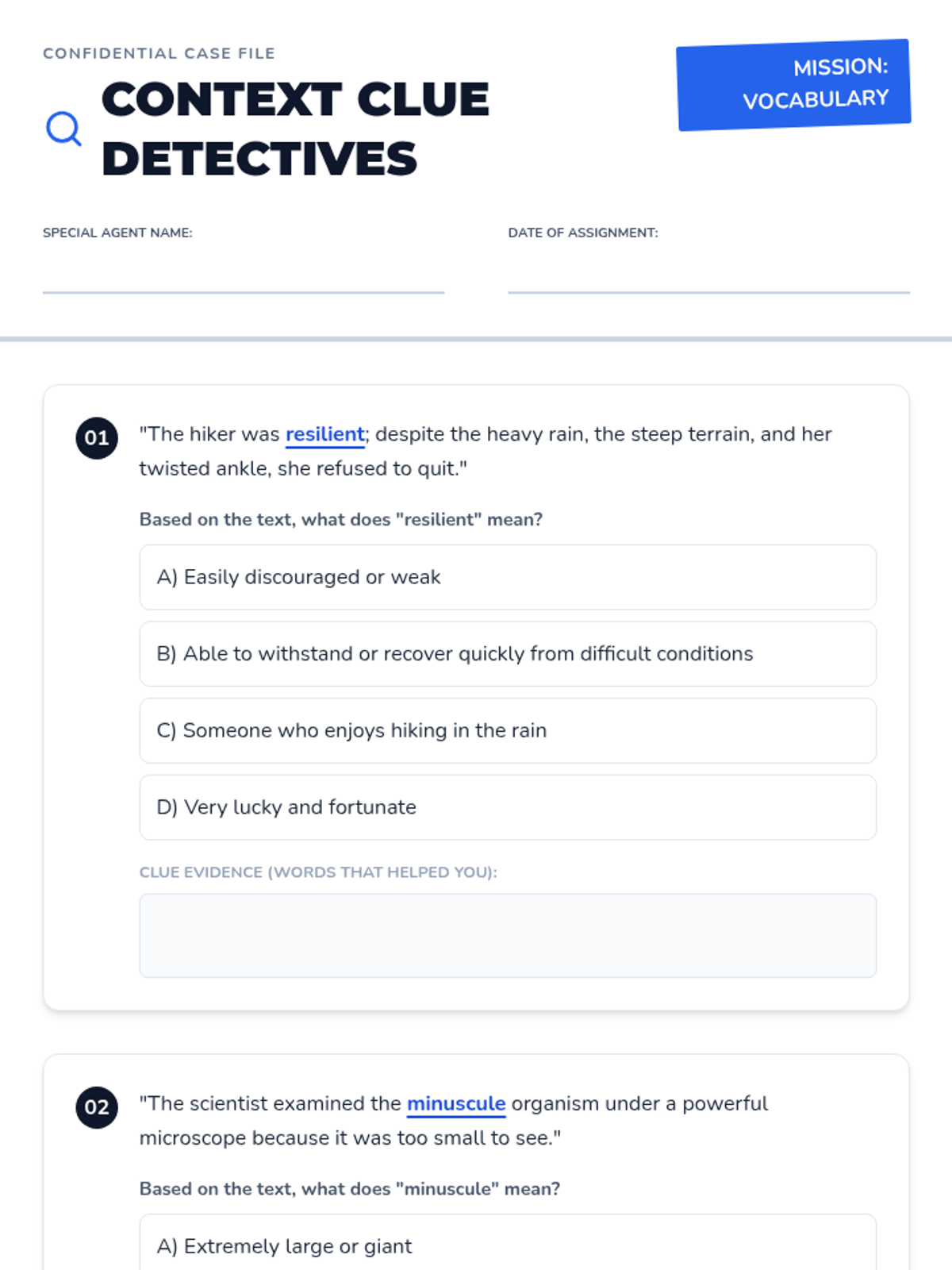
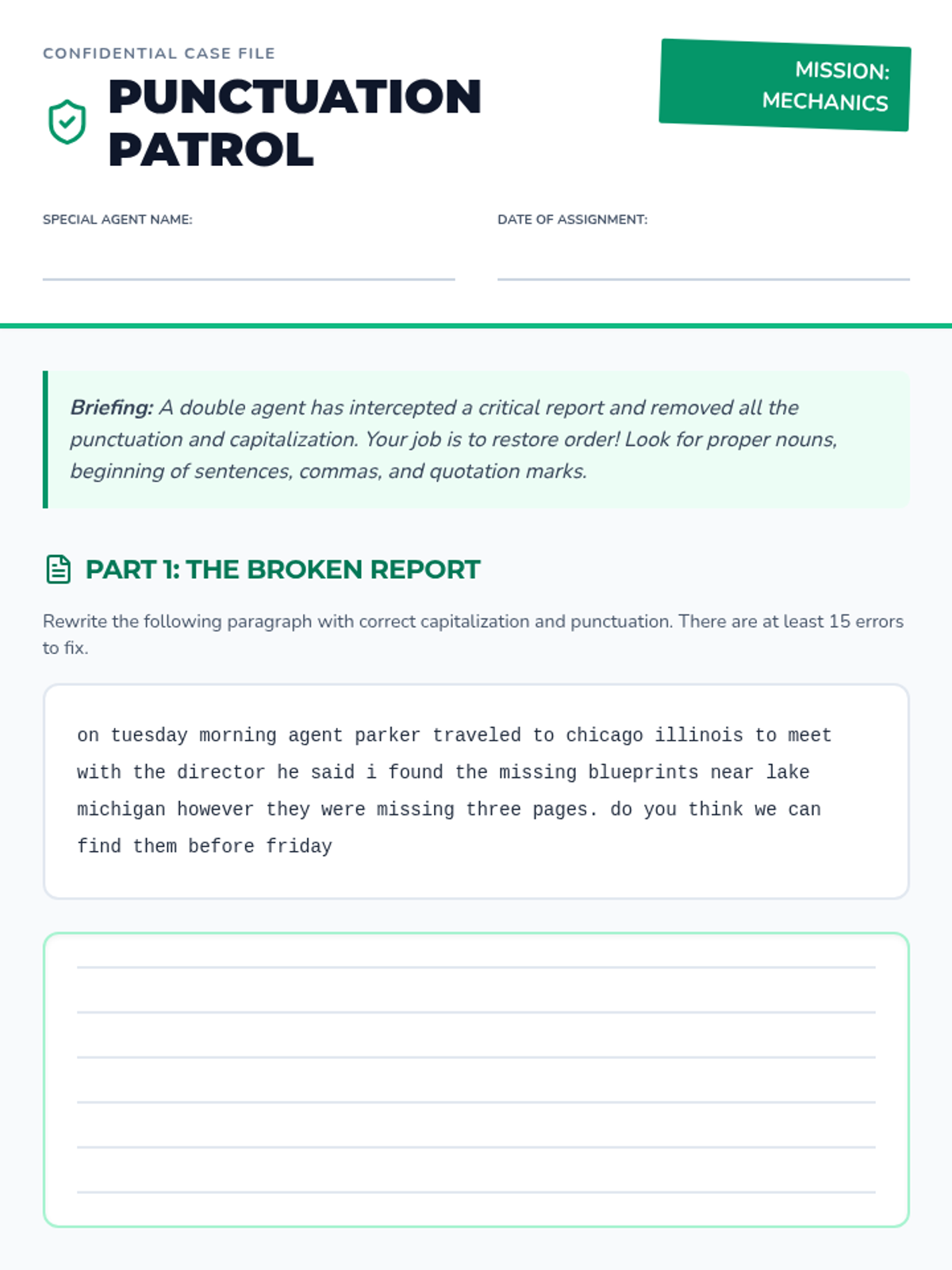
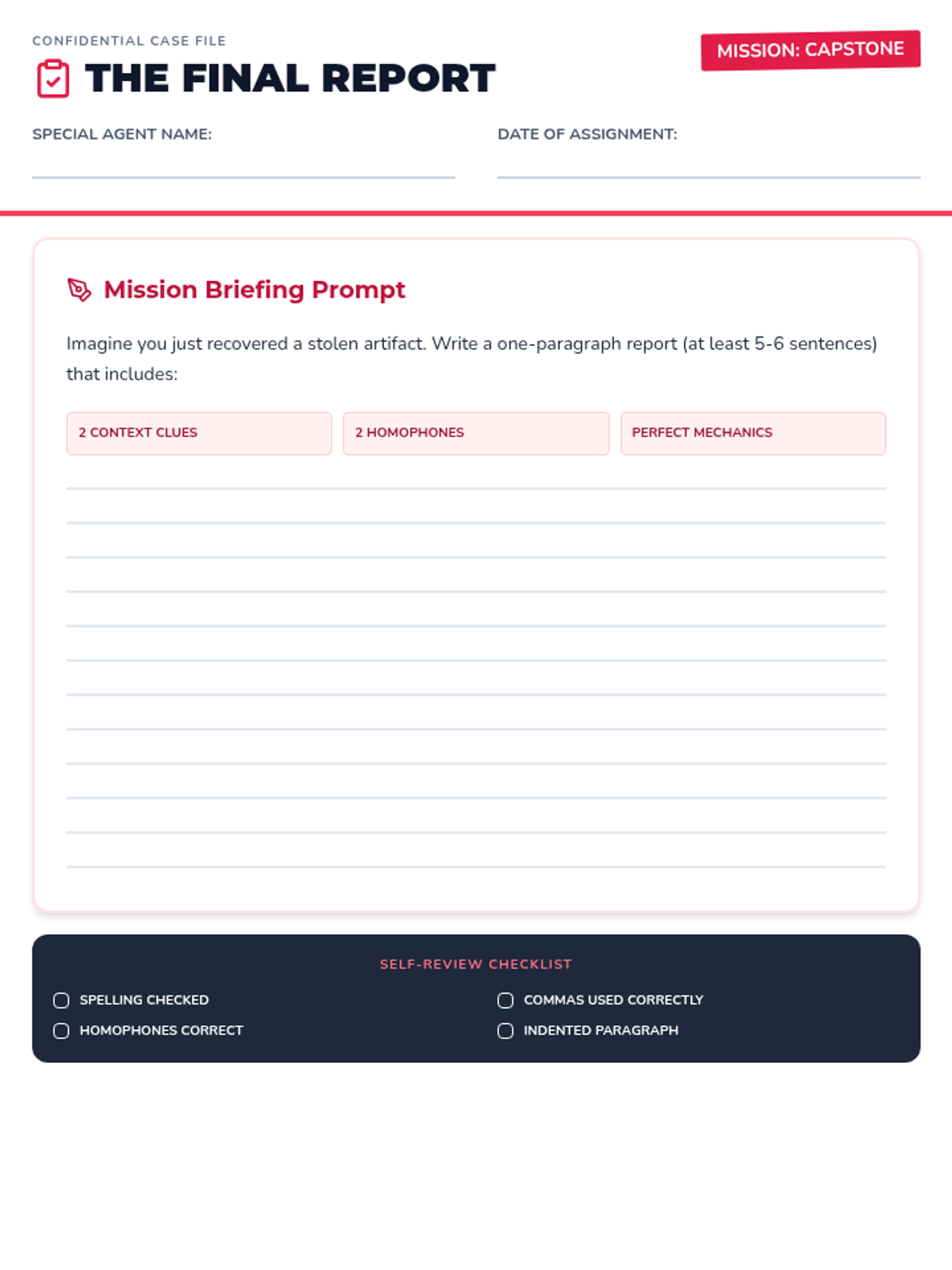
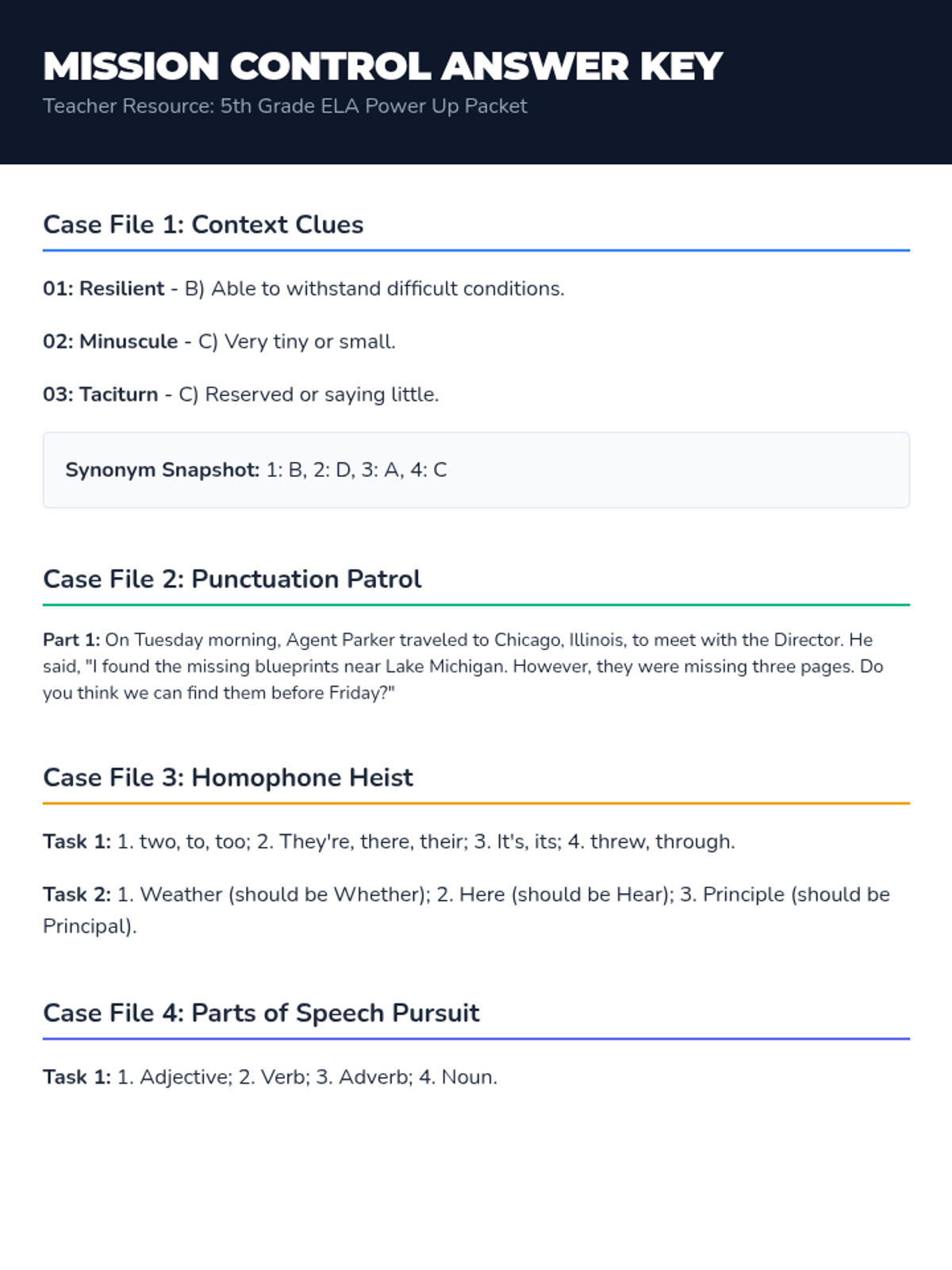
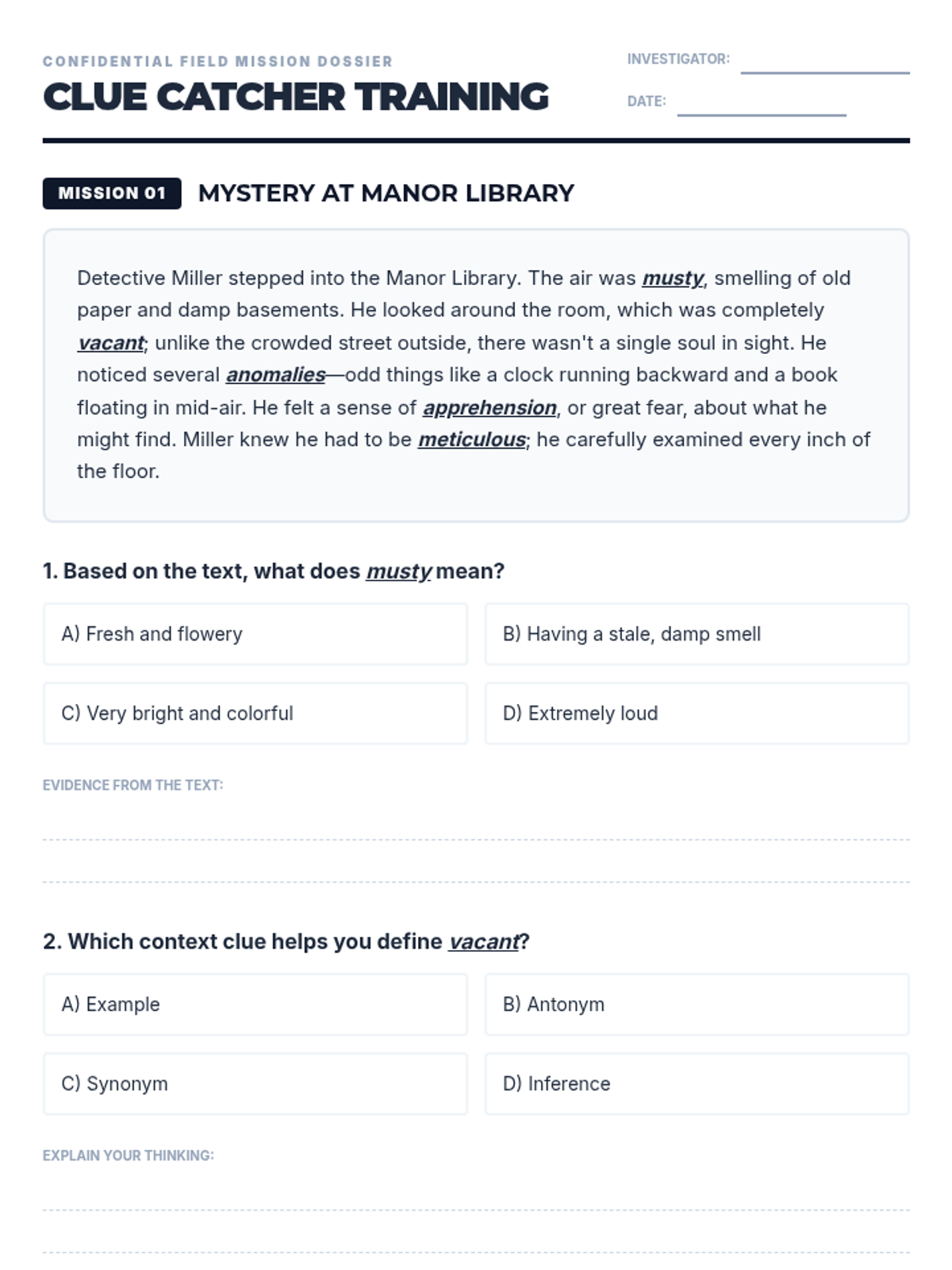
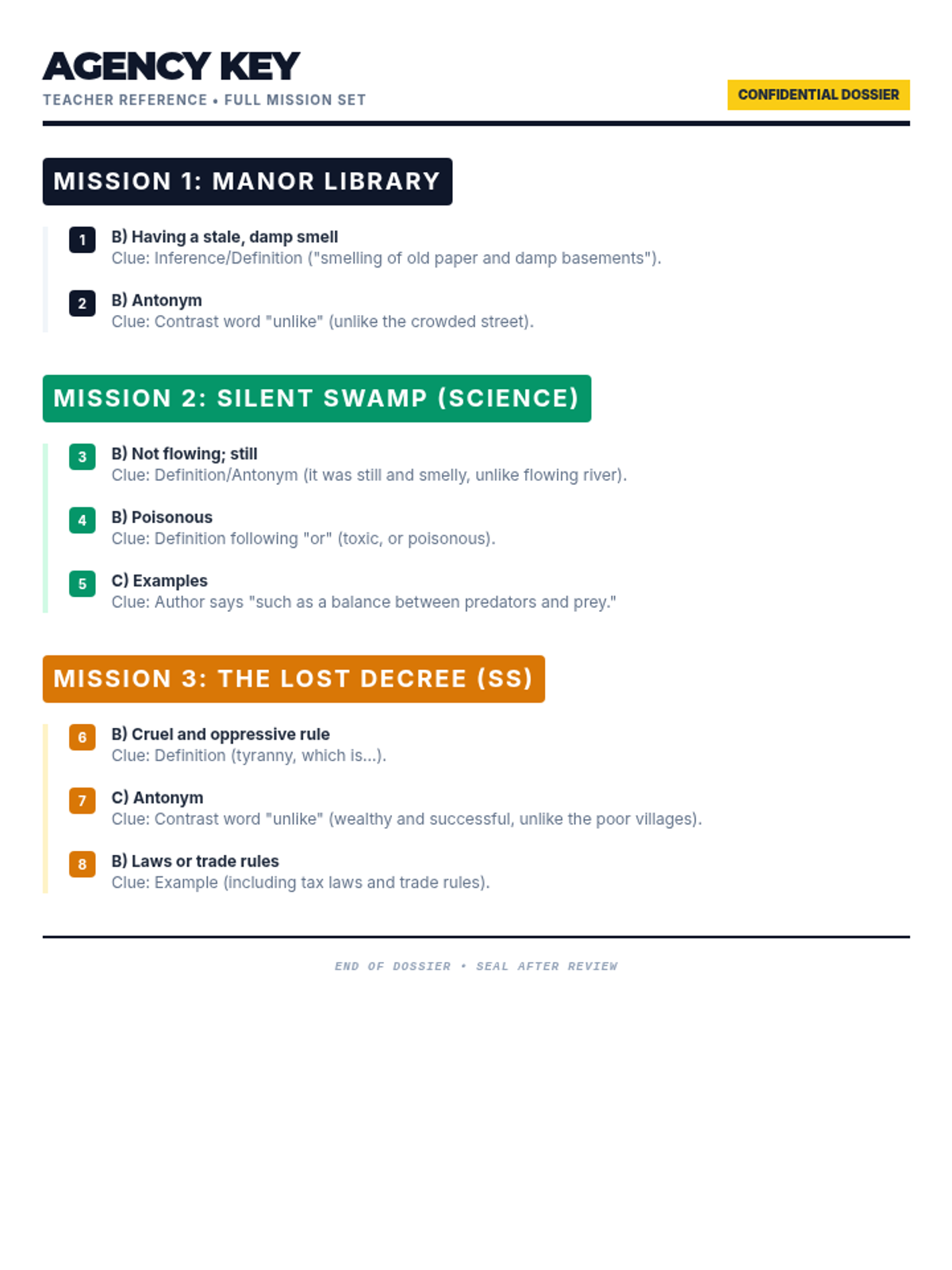
A comprehensive ELA review packet themed as a detective agency, covering context clues, vocabulary, grammar, and mechanics for 5th grade students.
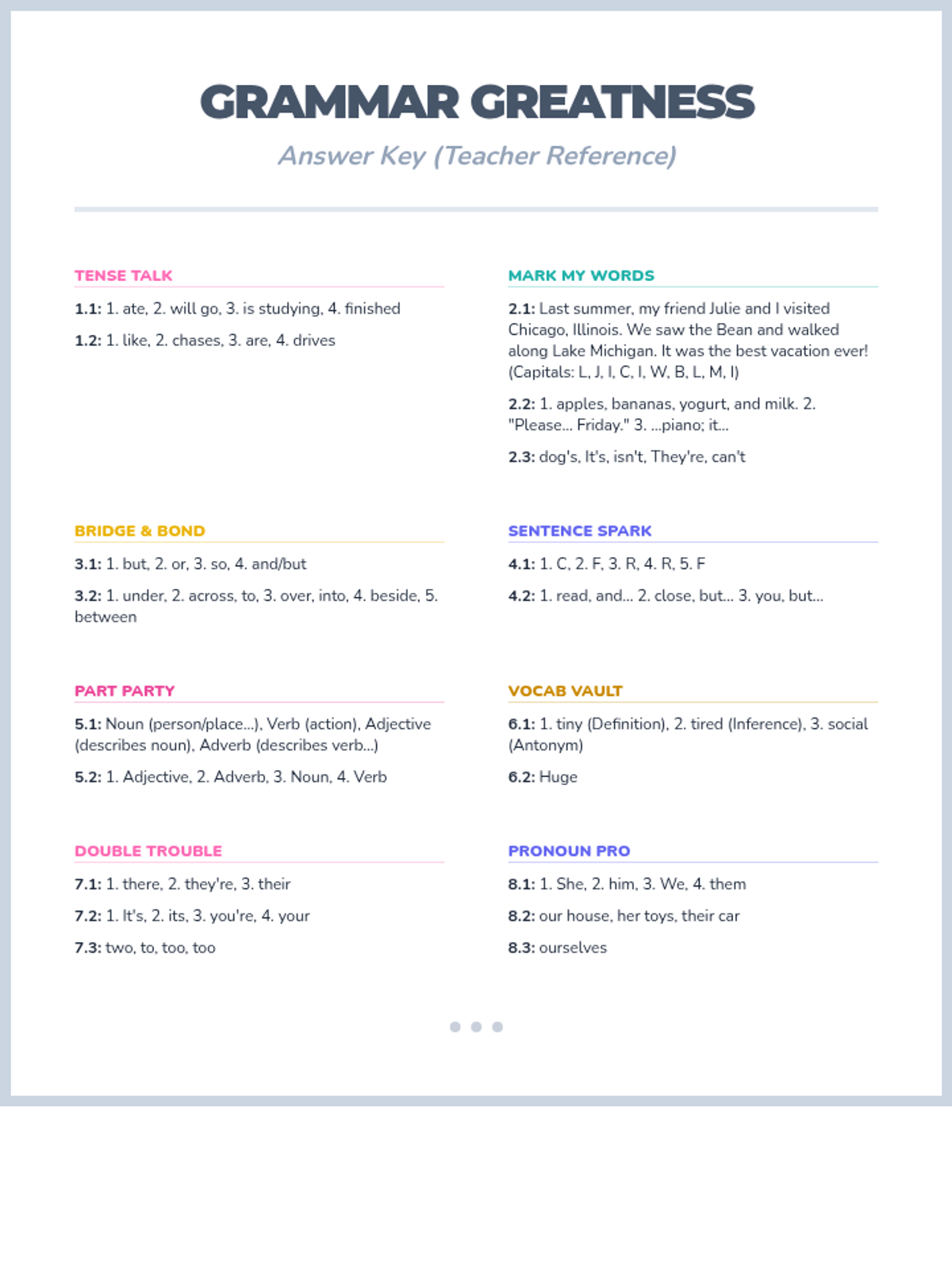
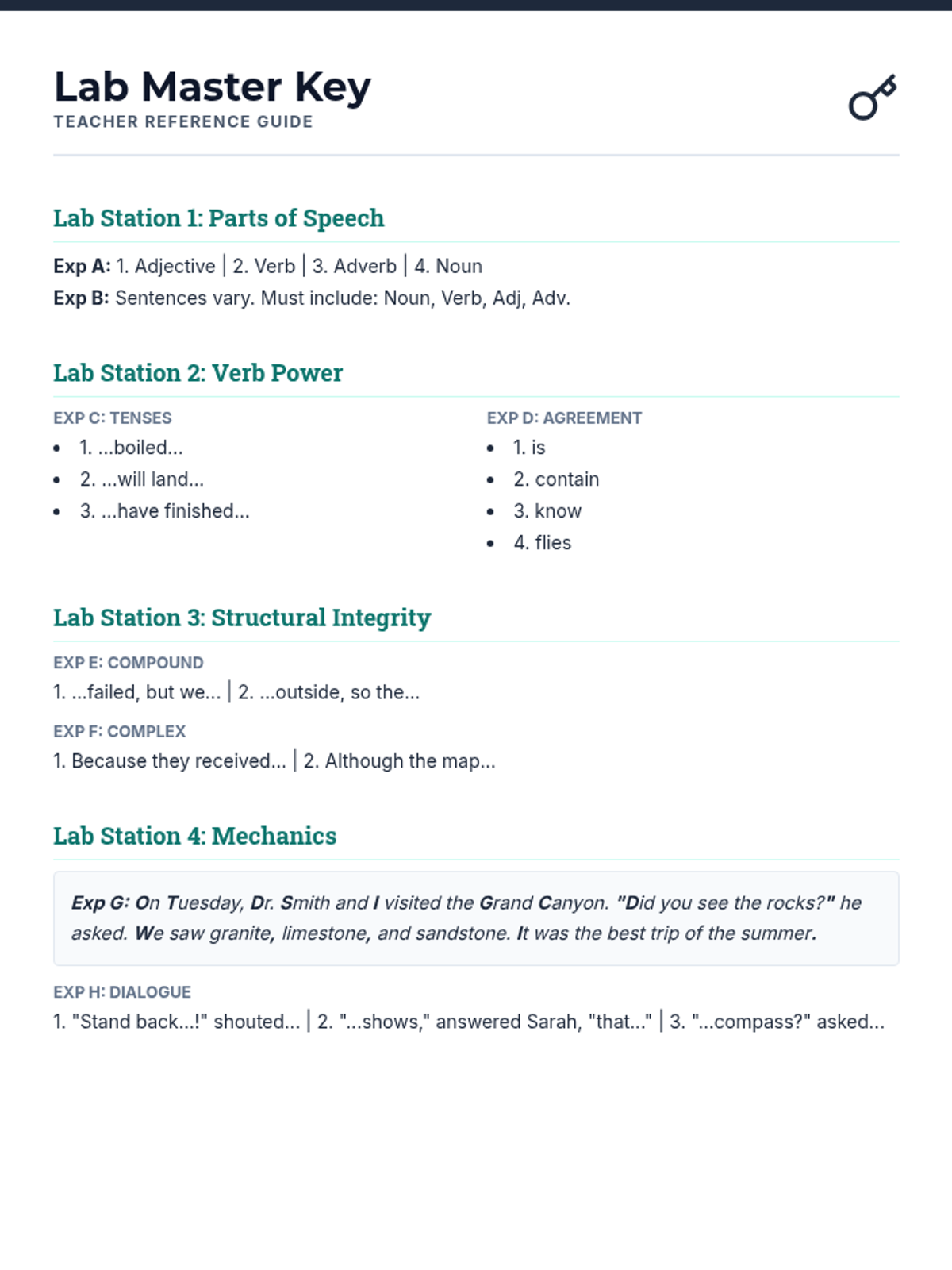
A comprehensive 5th-grade grammar review unit designed as a 'Language Lab' where students experiment with parts of speech, sentence structure, and mechanics. The lesson includes a multi-page workbook and a detailed answer key.
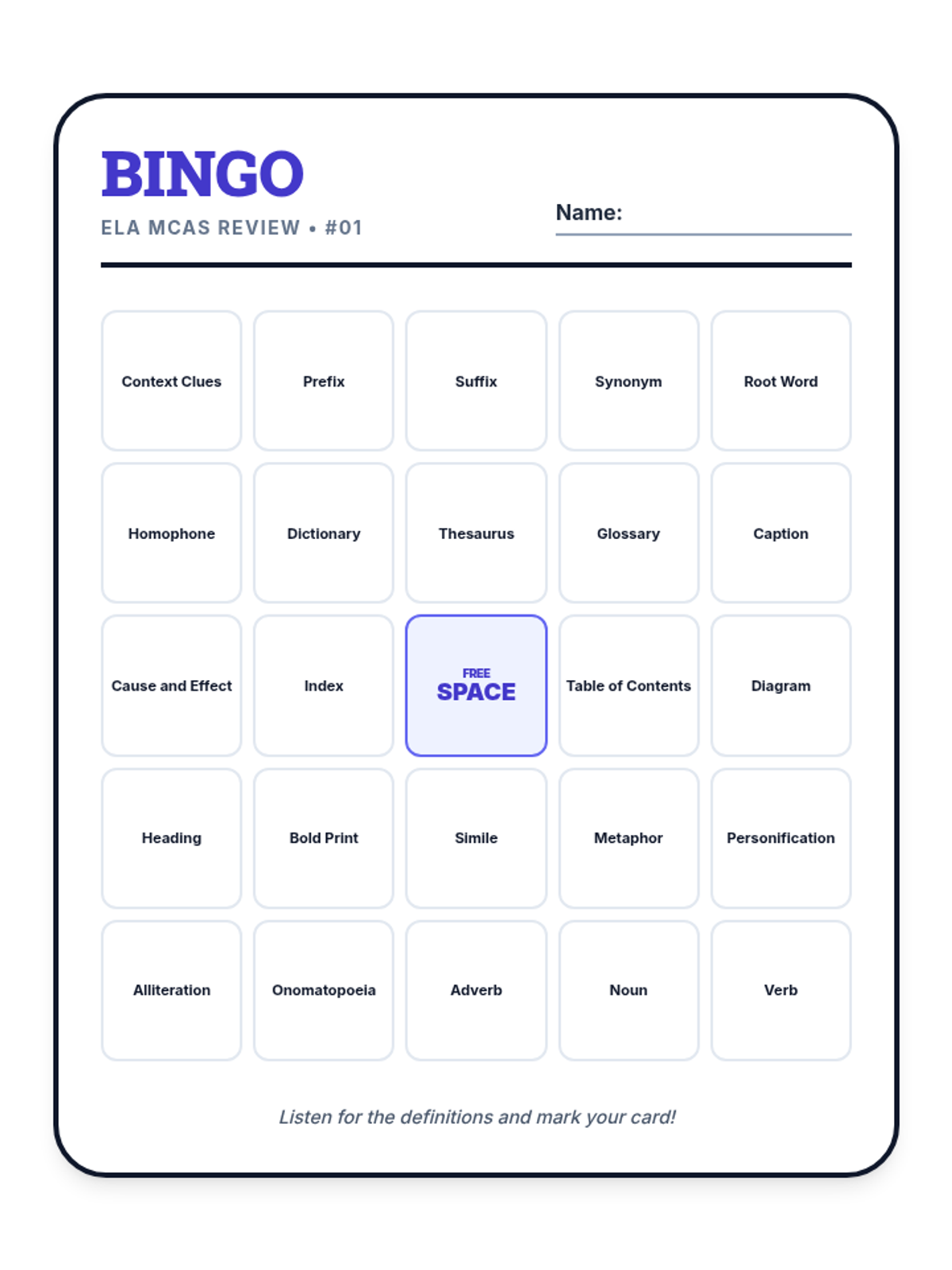
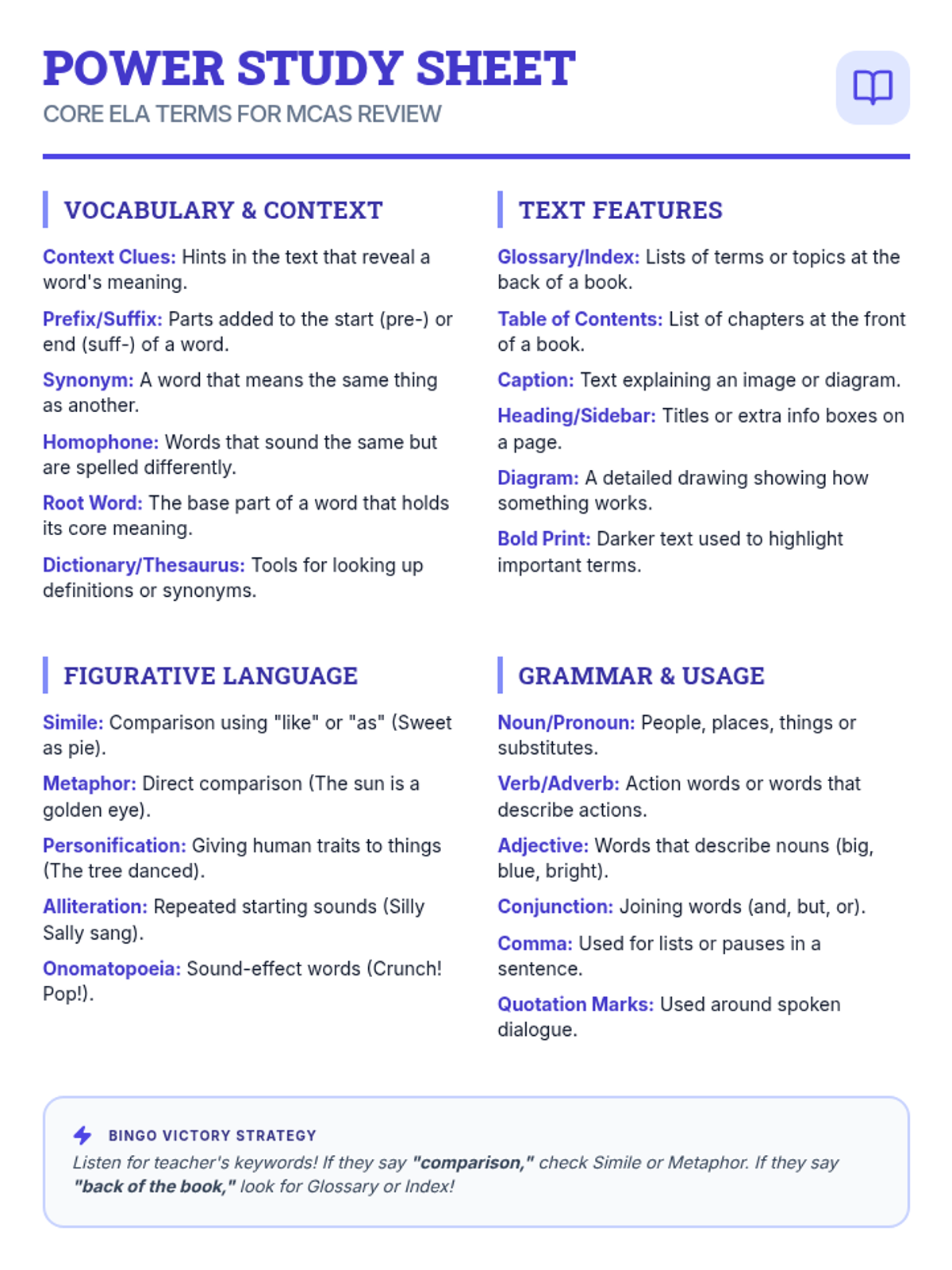
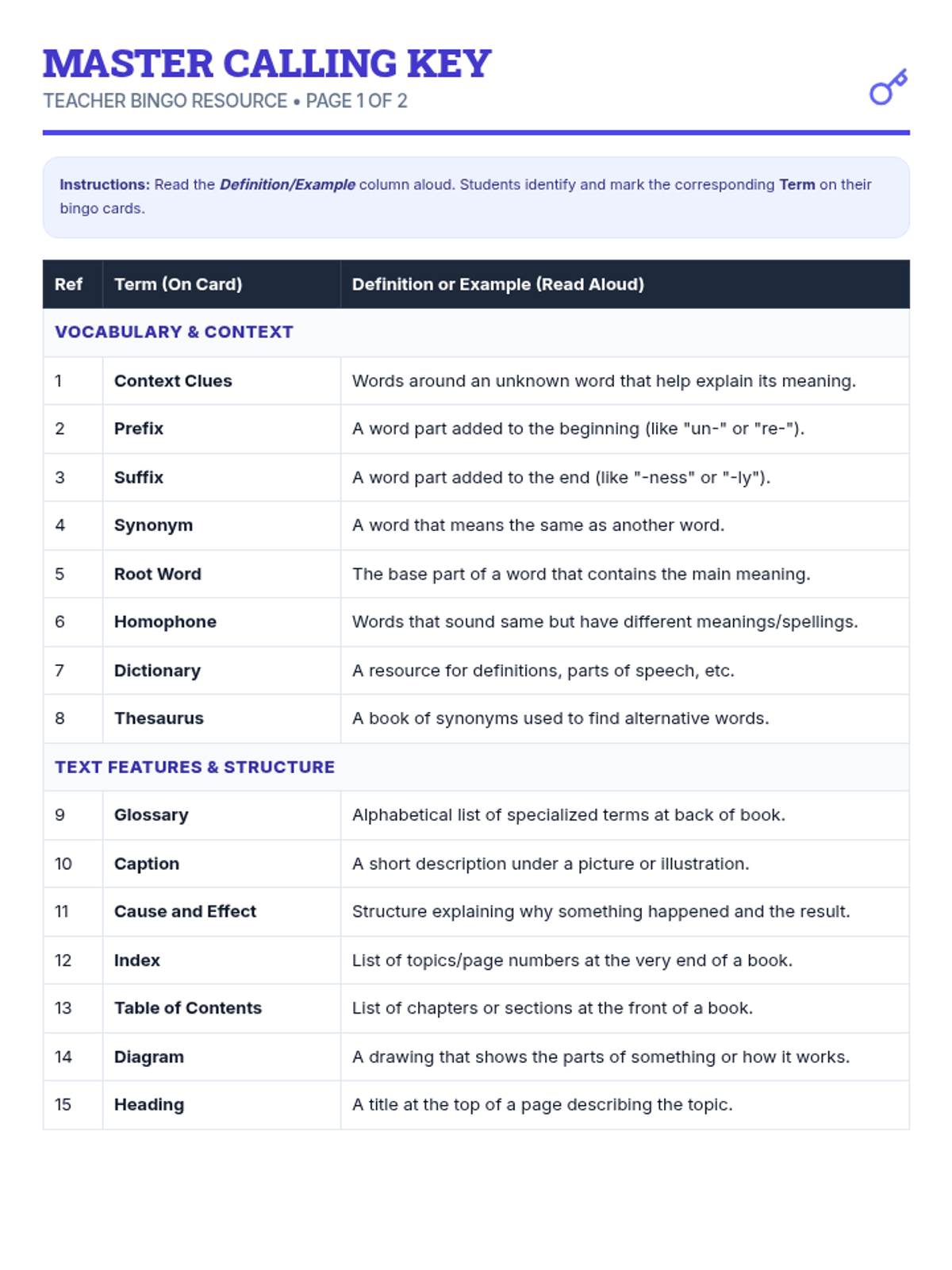
A comprehensive ELA review game designed to help students master MCAS standards through a competitive and engaging bingo format. The lesson covers vocabulary, literary elements, text structures, and grammar.
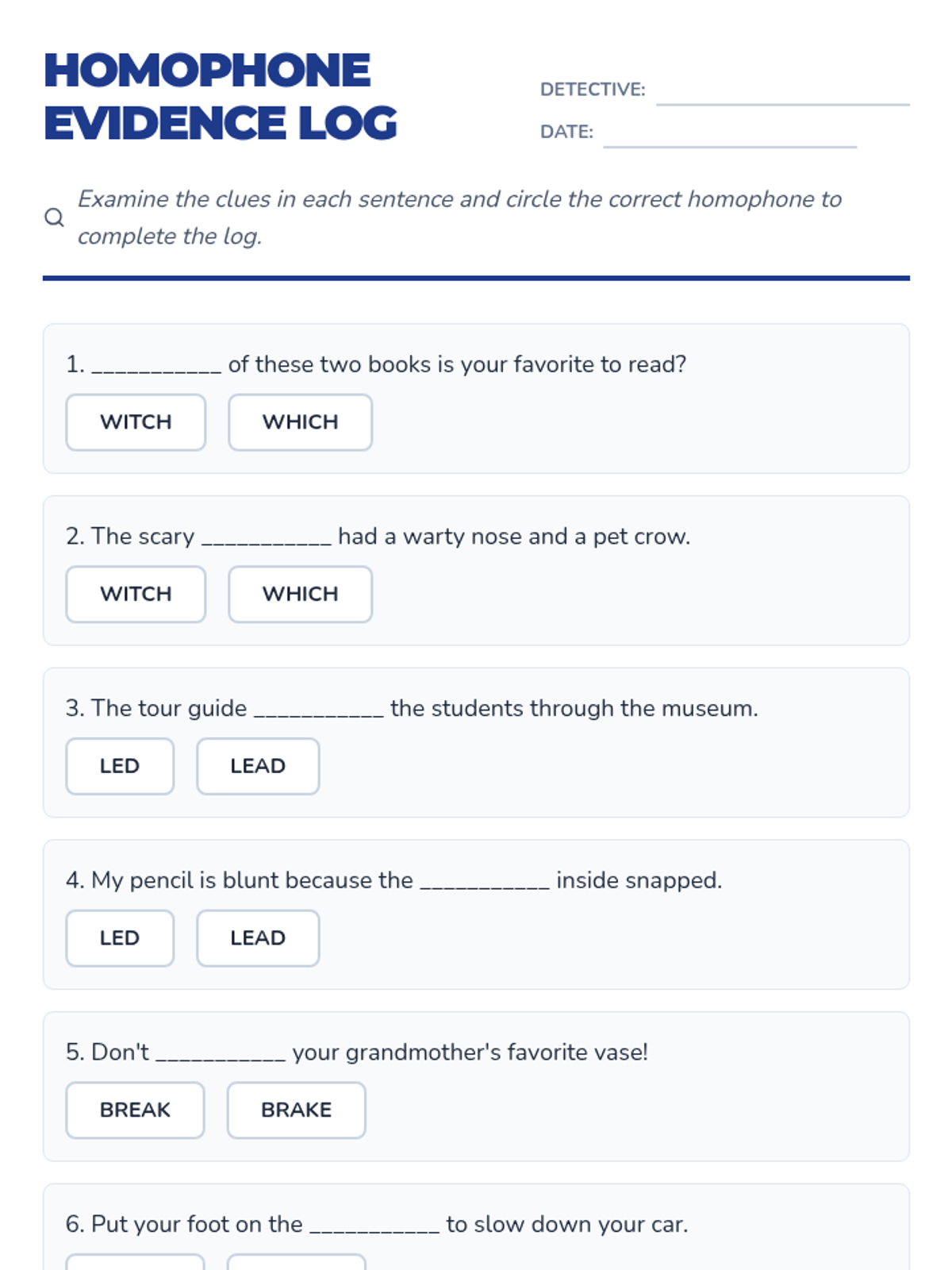
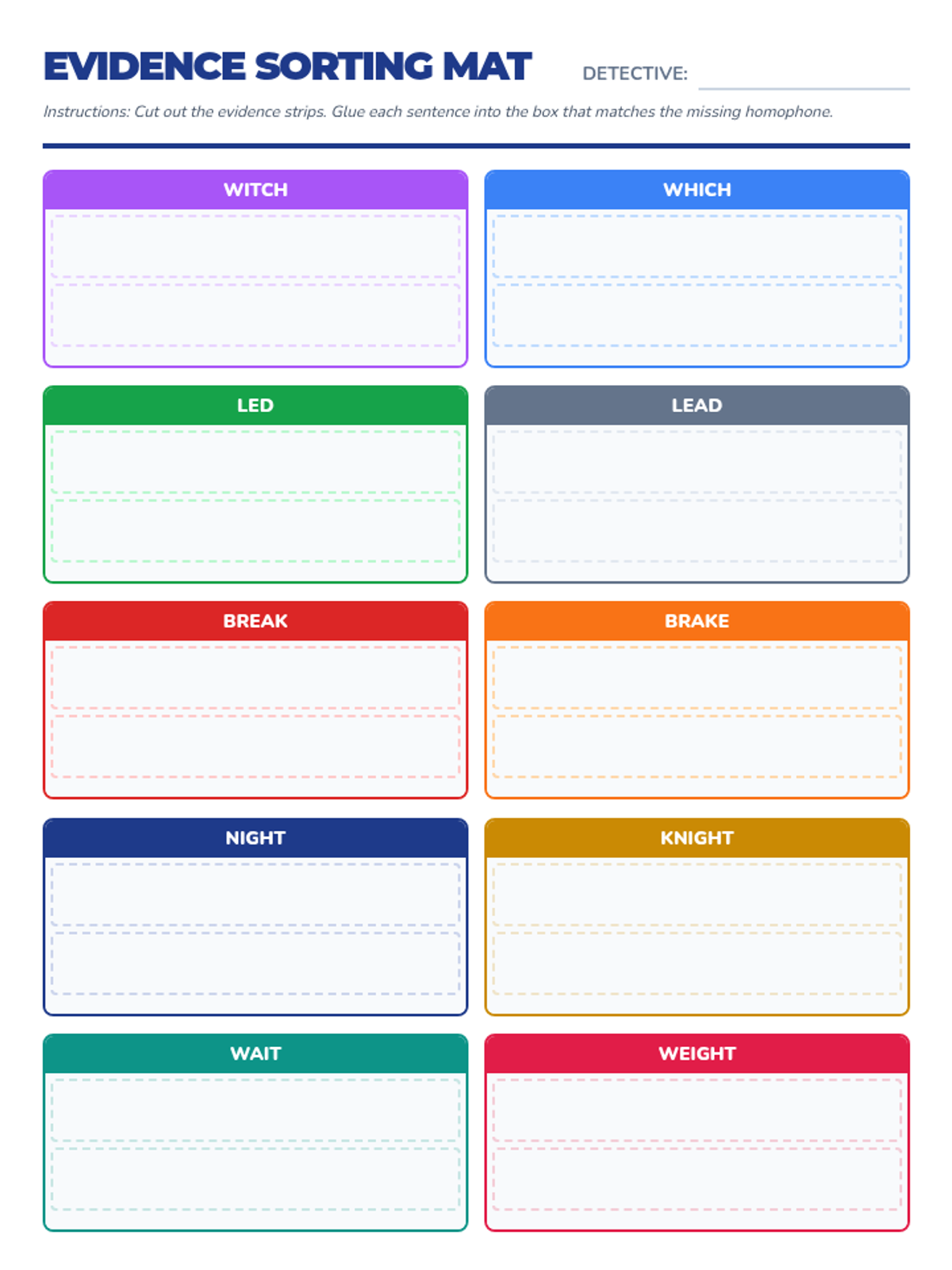
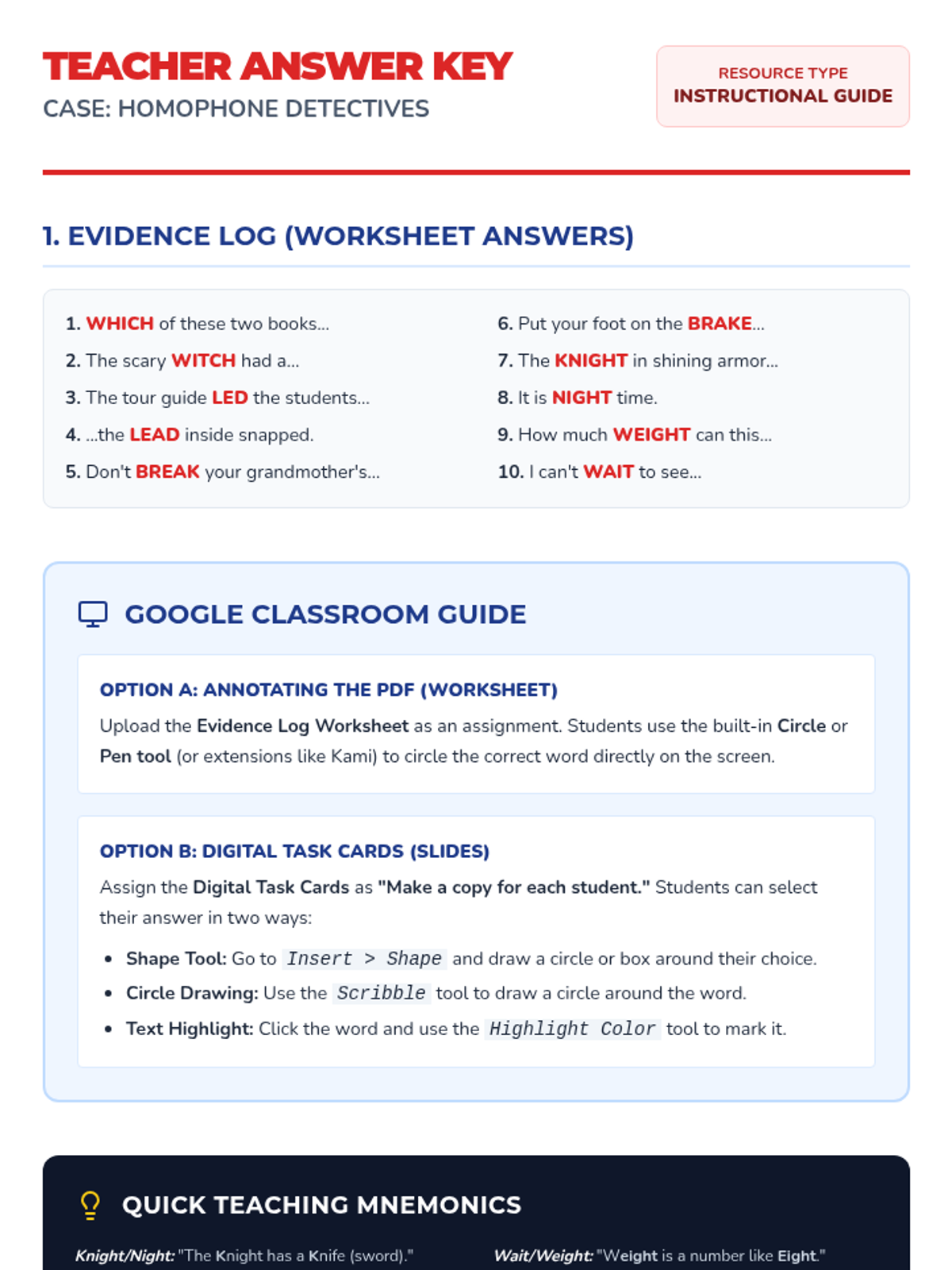
A detective-themed lesson focusing on three tricky homophone pairs: witch/which, led/lead, and break/brake. Students will identify meanings through context and practice using them correctly in sentences.
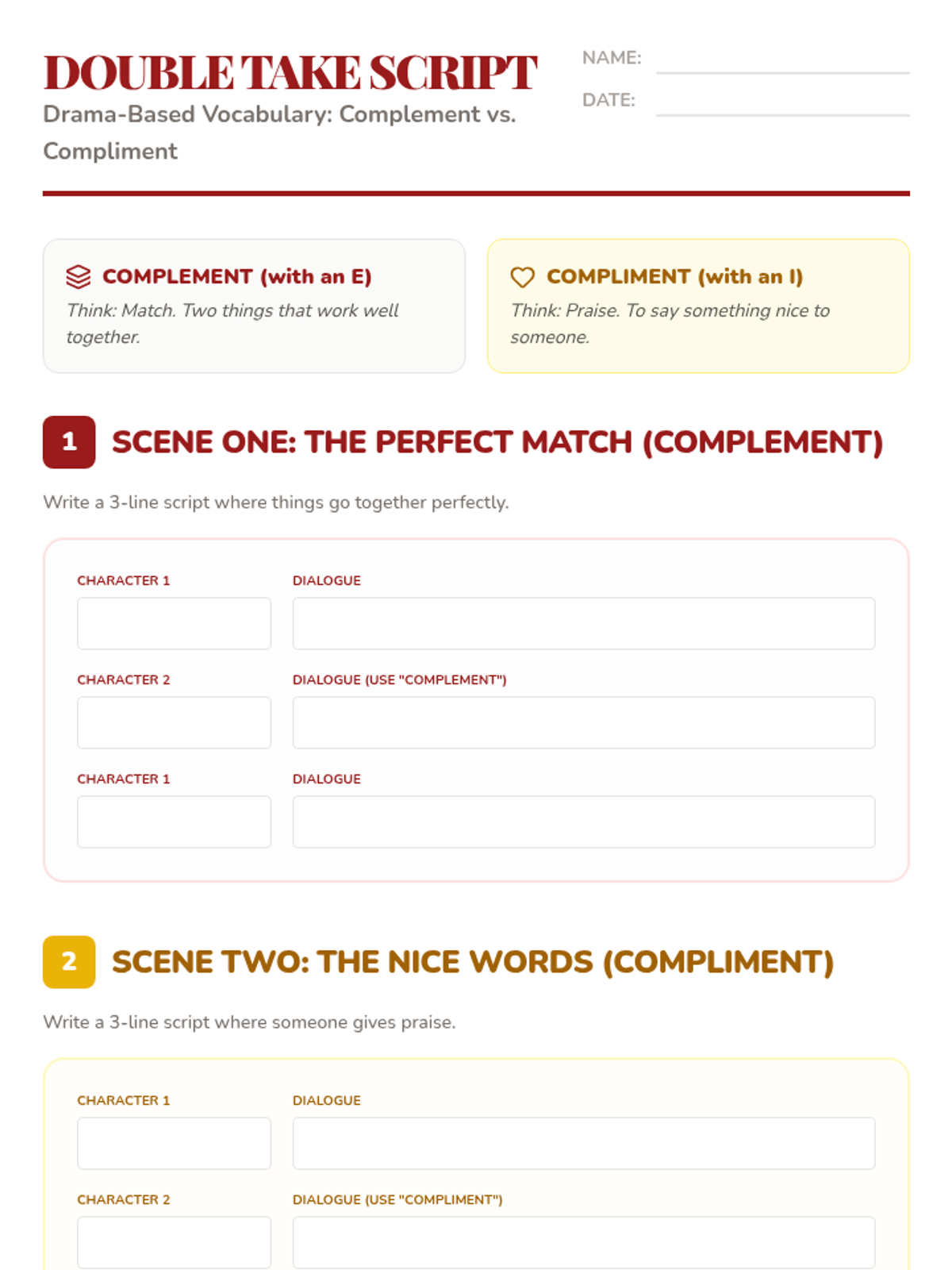
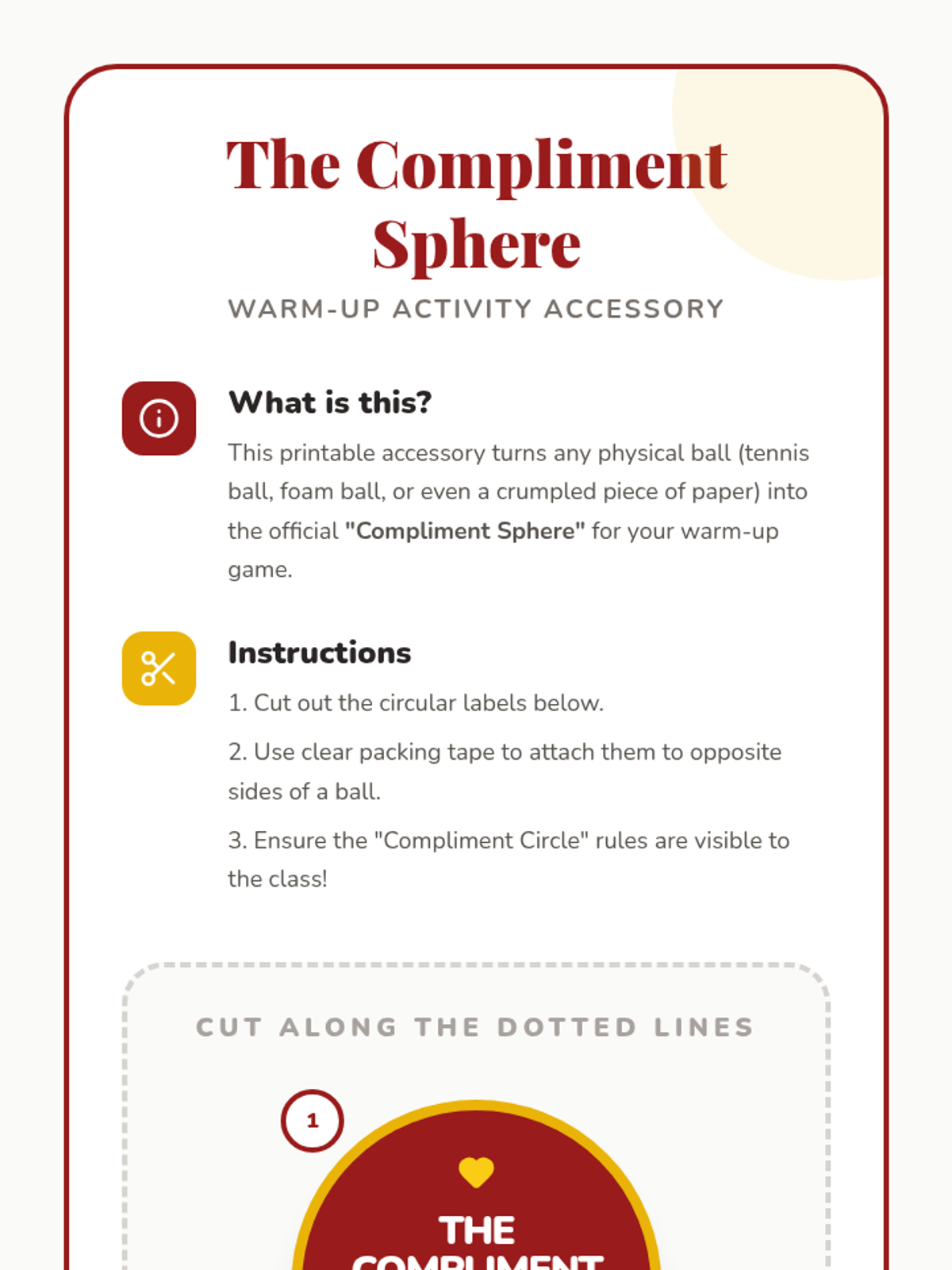
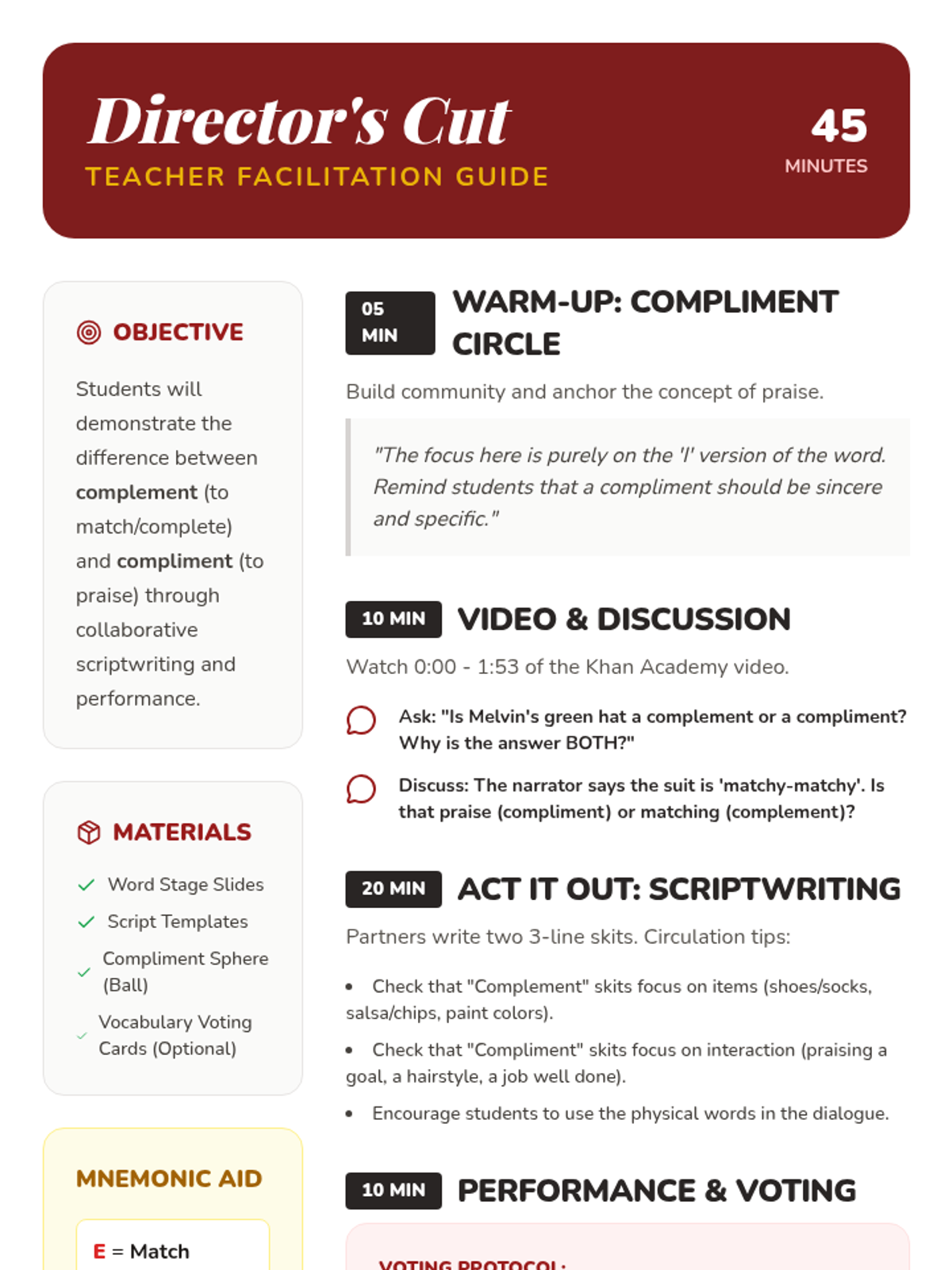
A drama-focused lesson where 5th-grade students use short skits to master the difference between 'complement' and 'compliment'. Includes a video discussion, a warm-up game, and creative scriptwriting.
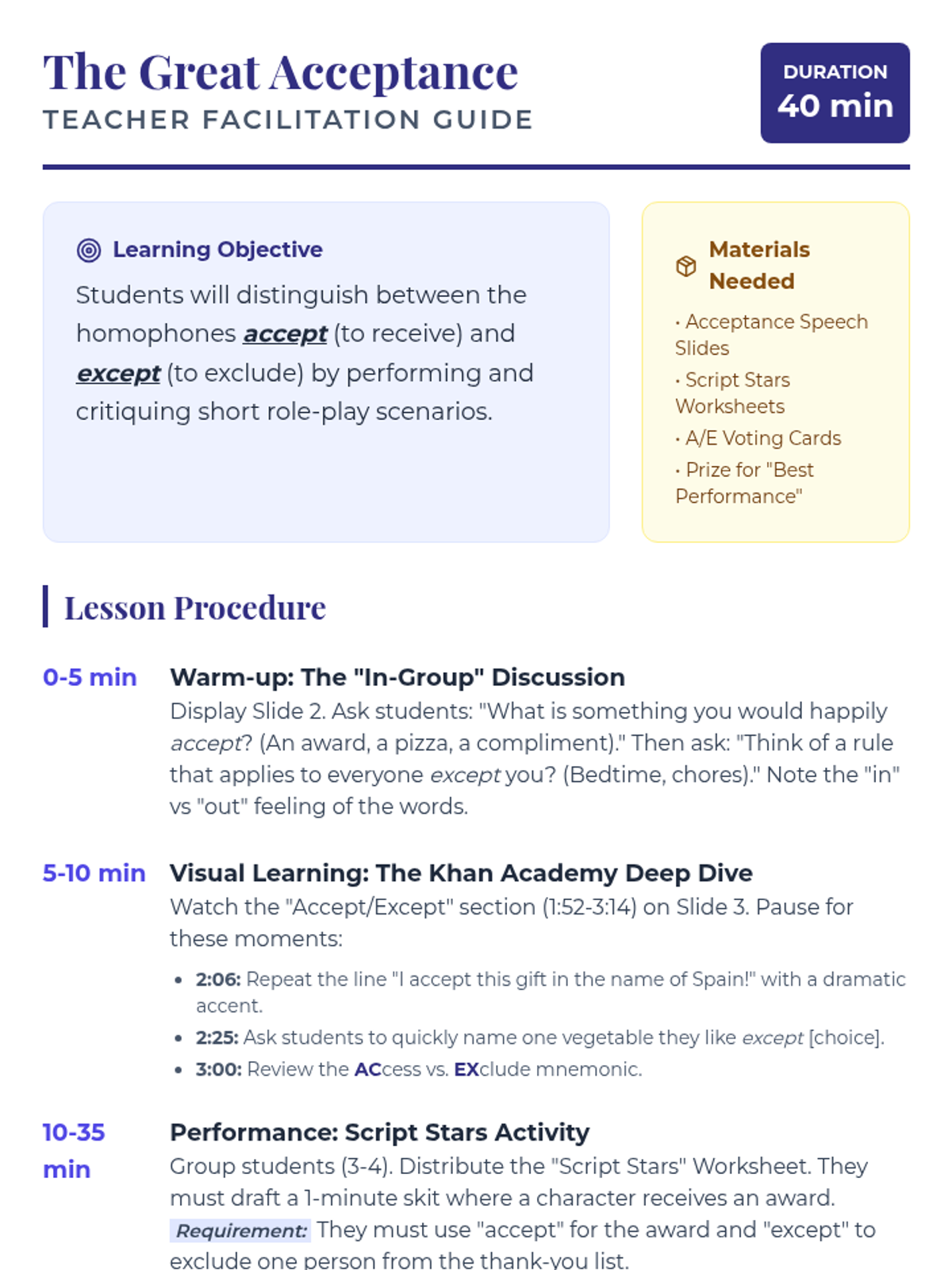
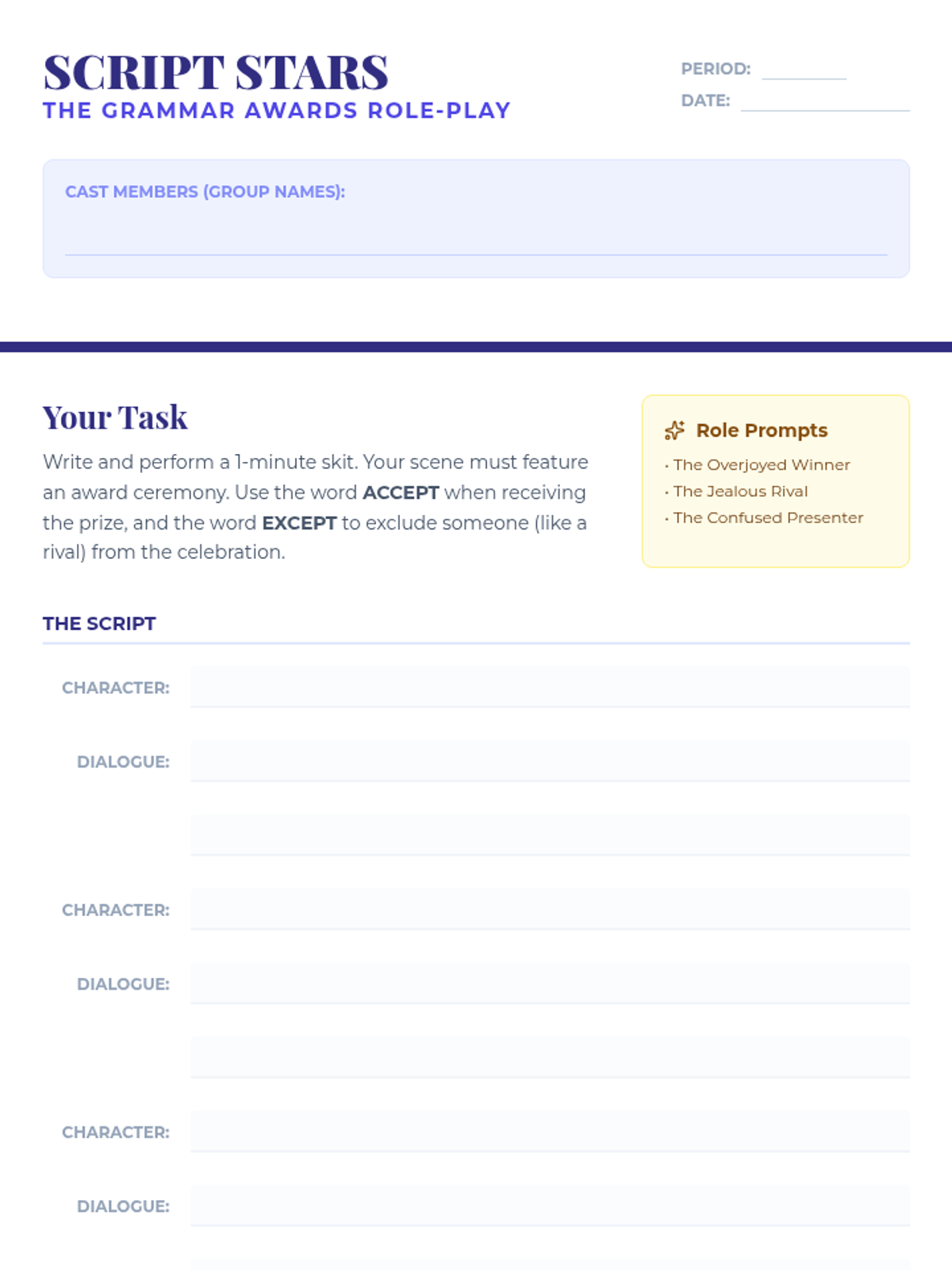
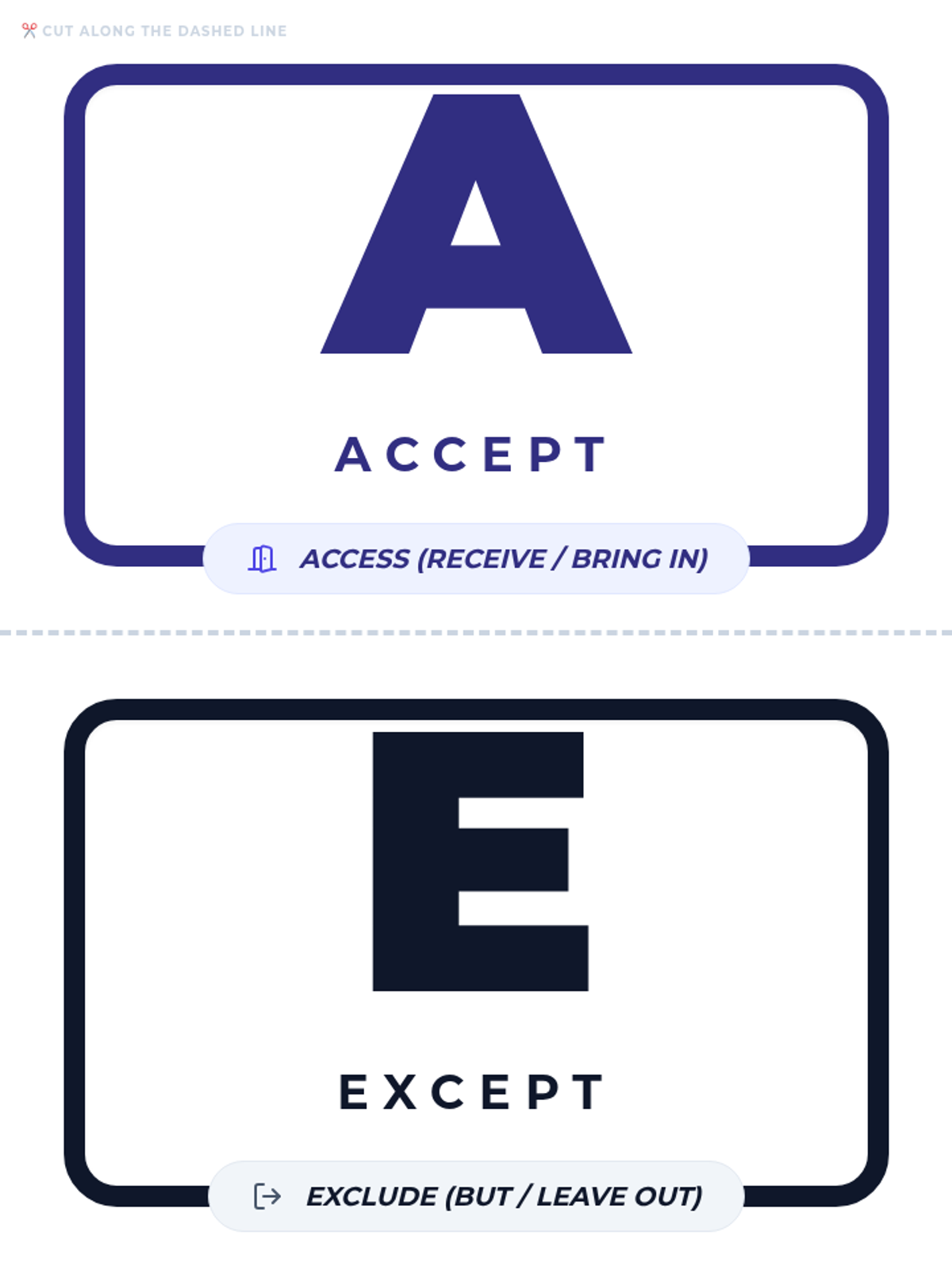
A grammar lesson focusing on the homophones 'accept' and 'except' through an award-show-themed role-play activity and video analysis.
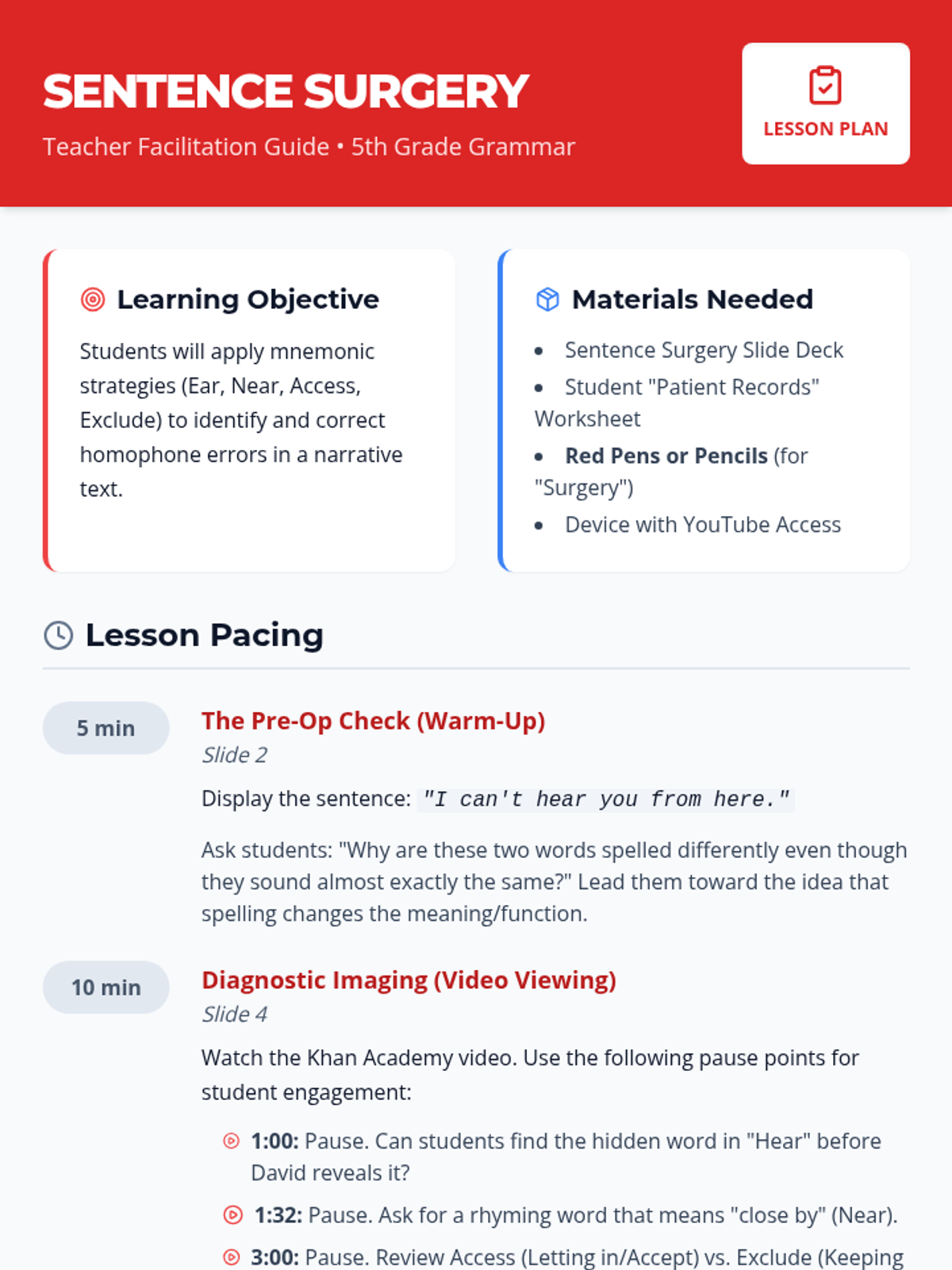
A medical-themed grammar lesson where students act as 'language surgeons' to diagnose and fix homophone errors using specific mnemonic devices (Ear, Near, Access, Exclude).
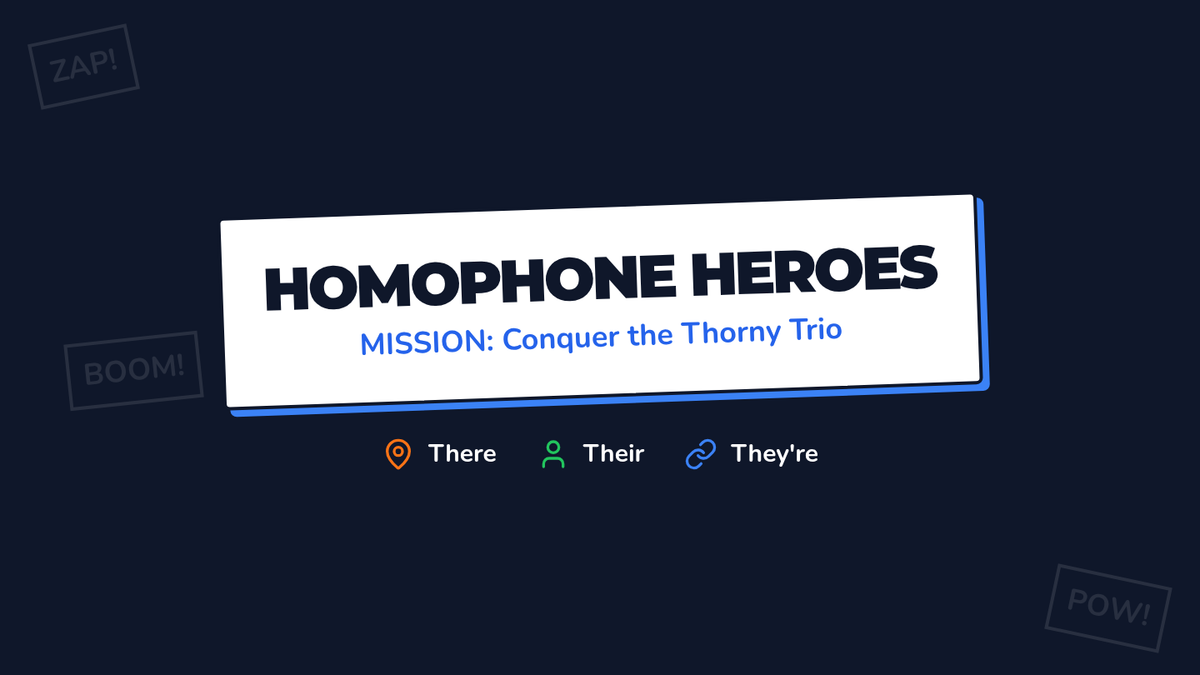
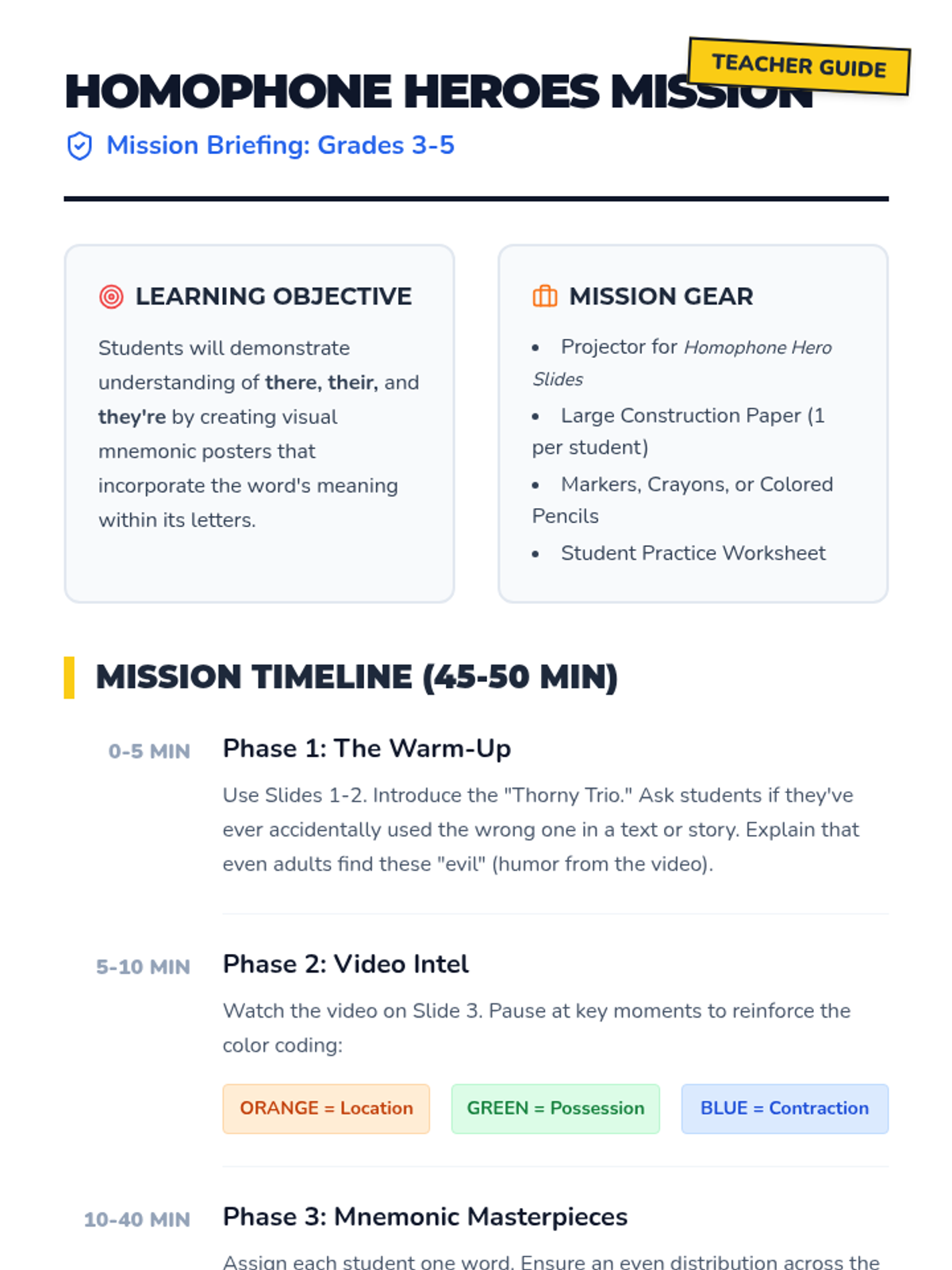
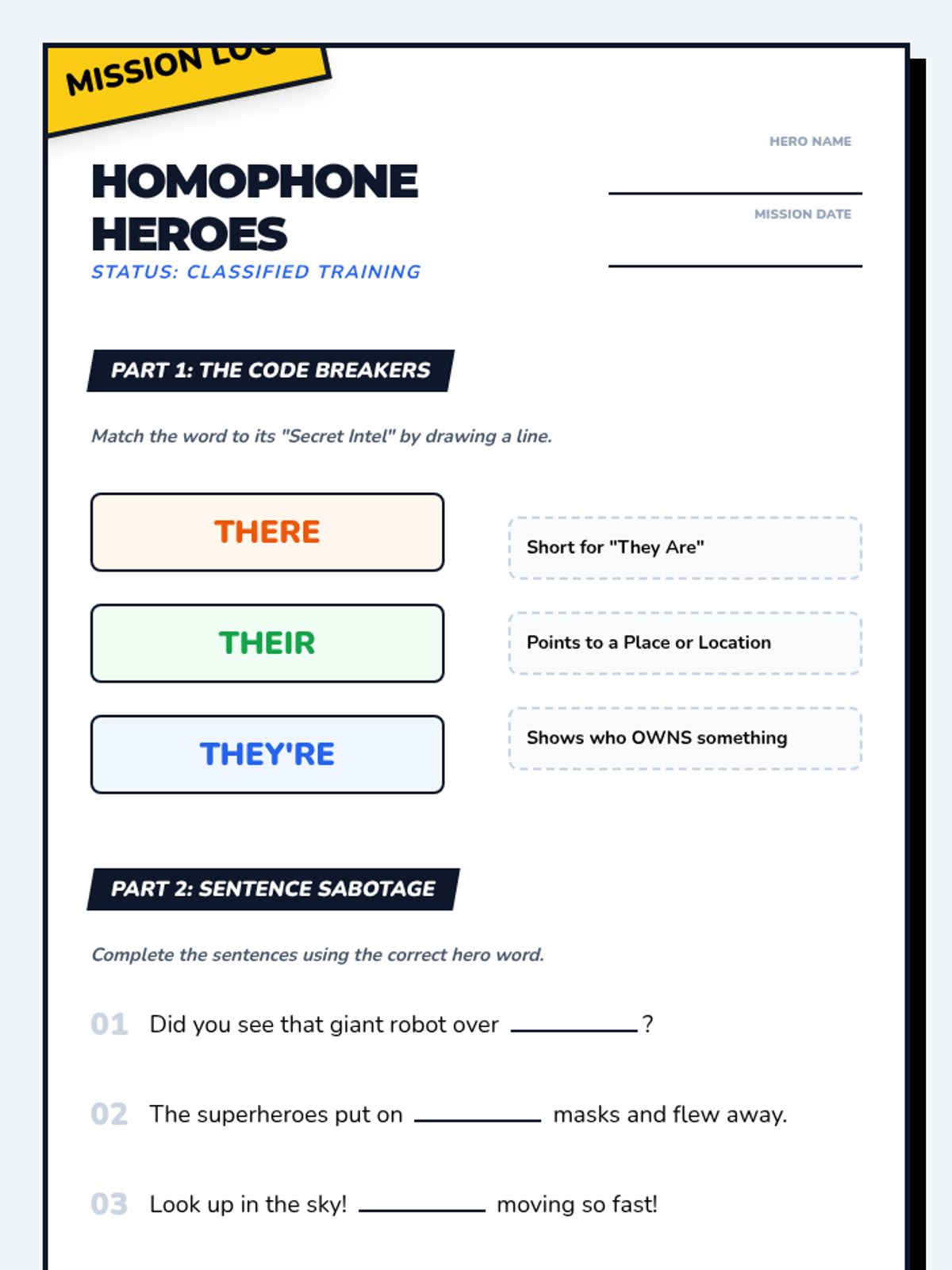
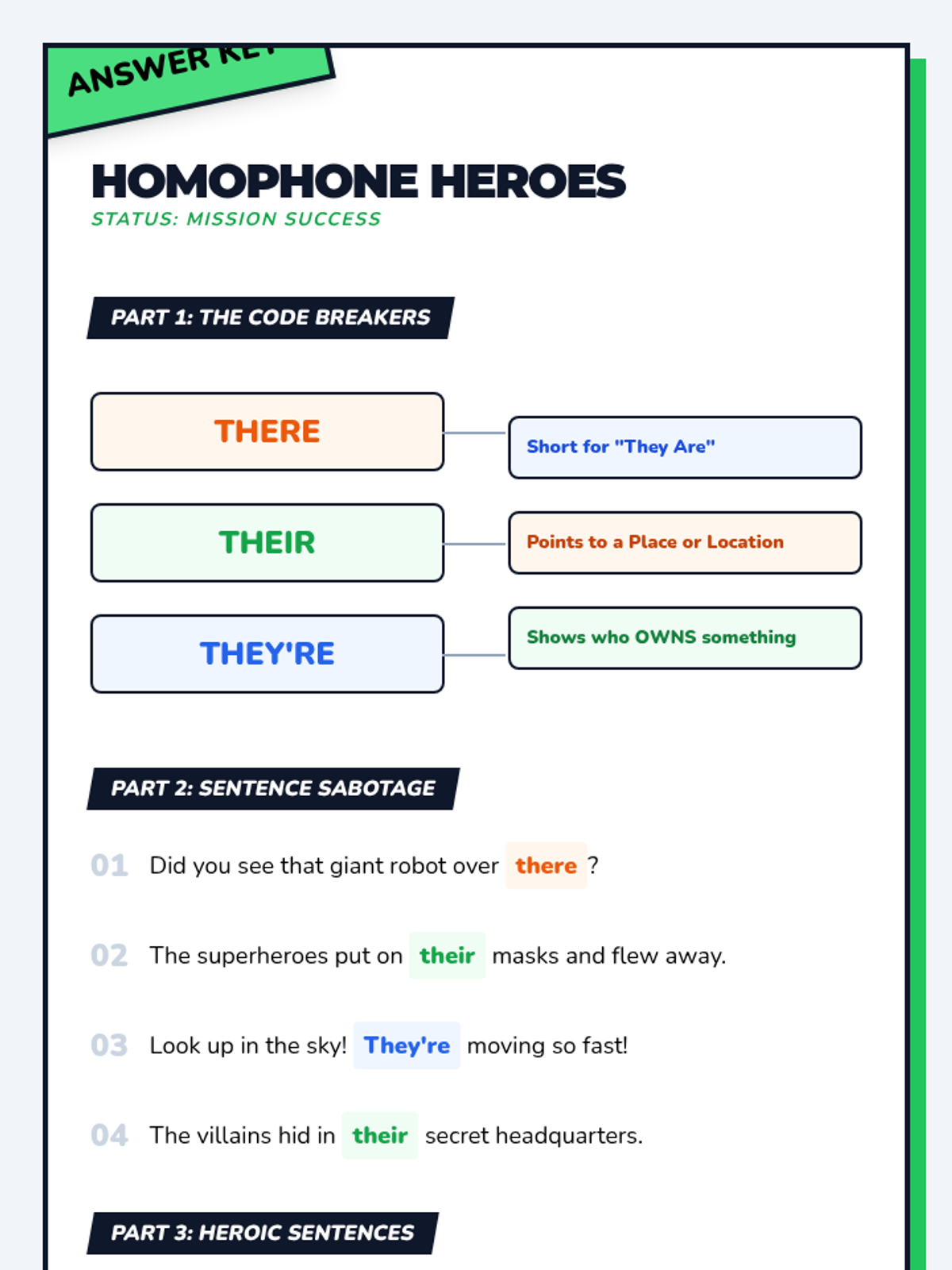
A fun, comic-book themed lesson where students conquer the 'thorny' issue of there, their, and they're through visual mnemonics and creative poster design.
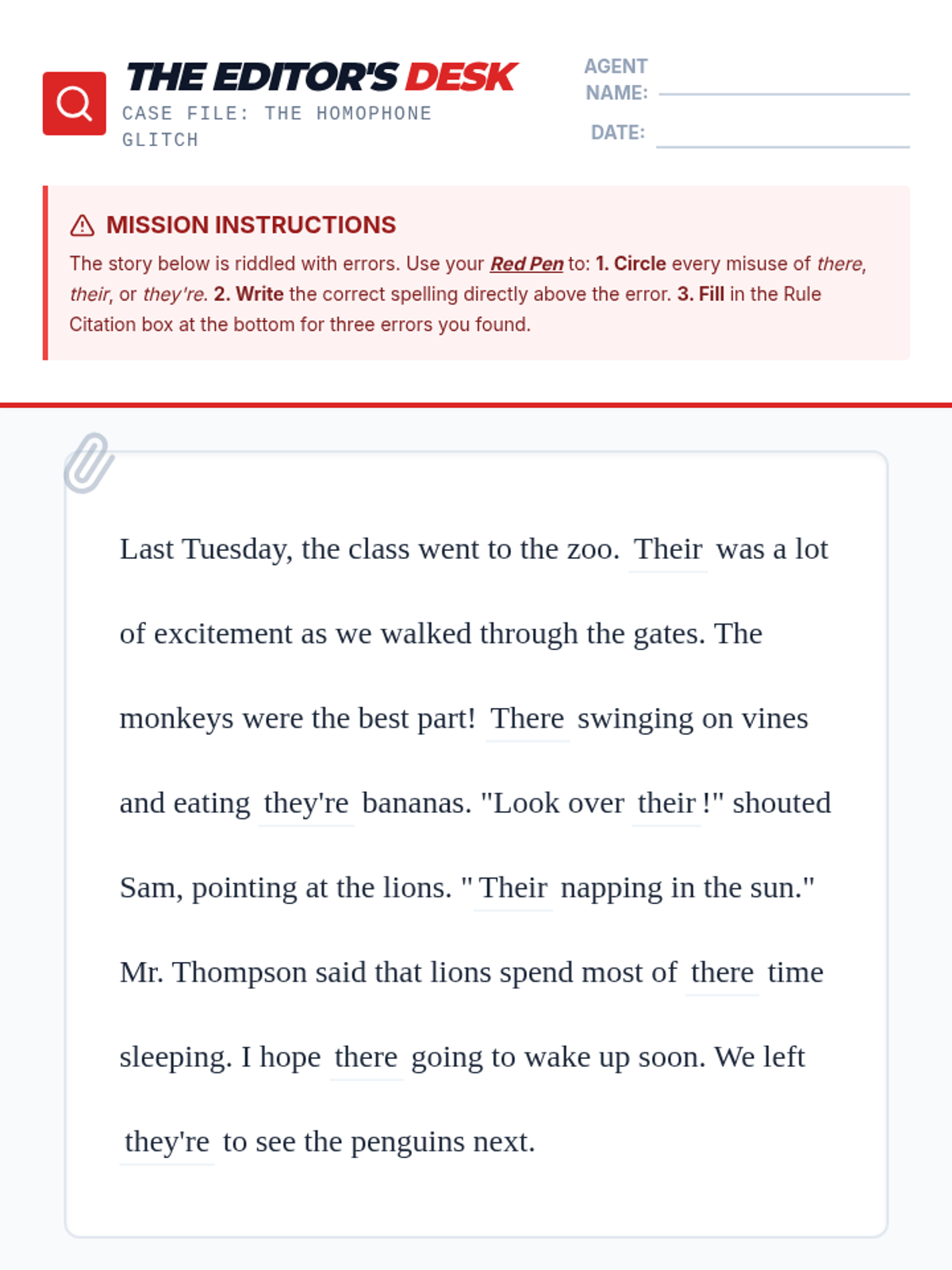
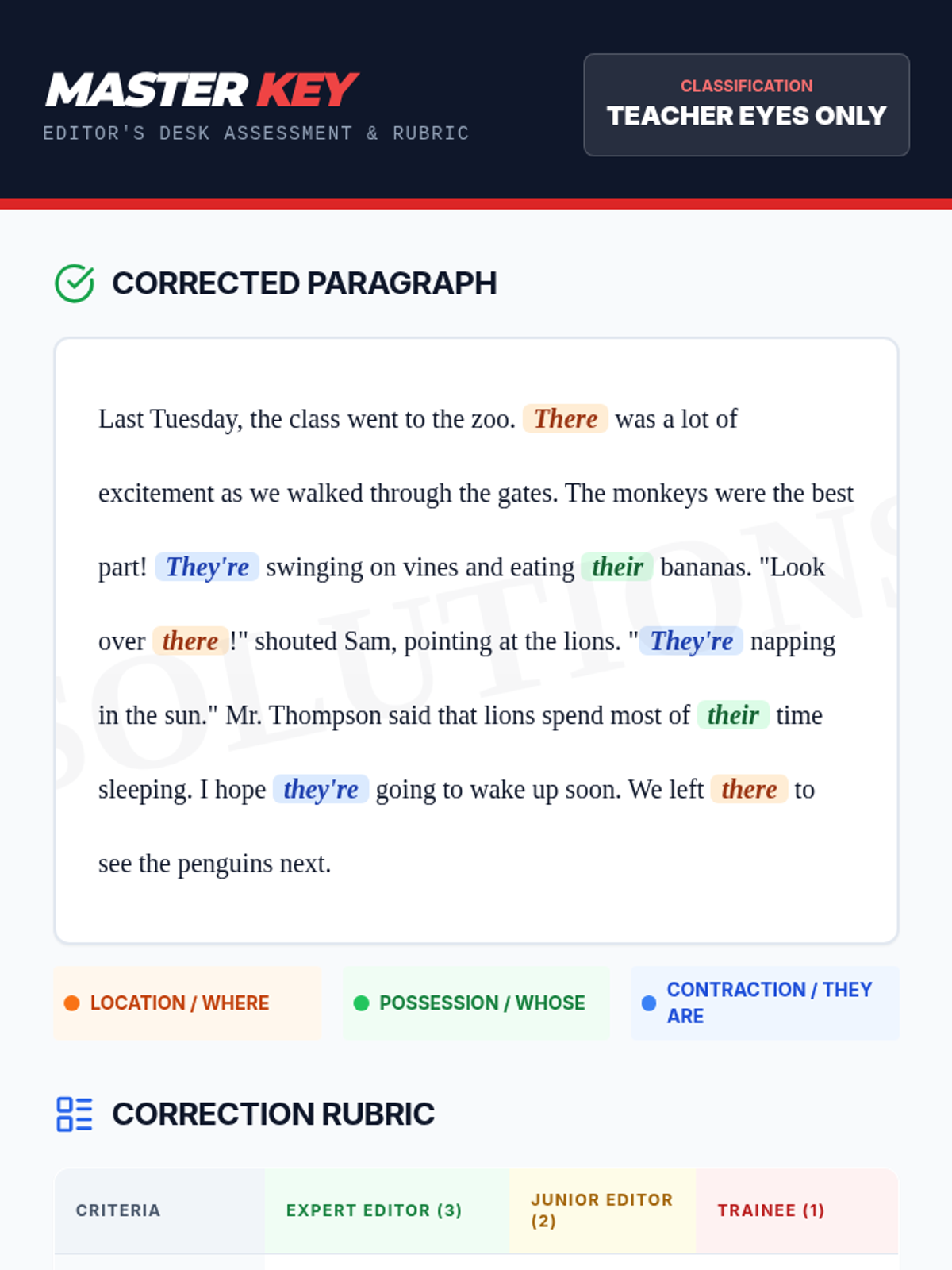
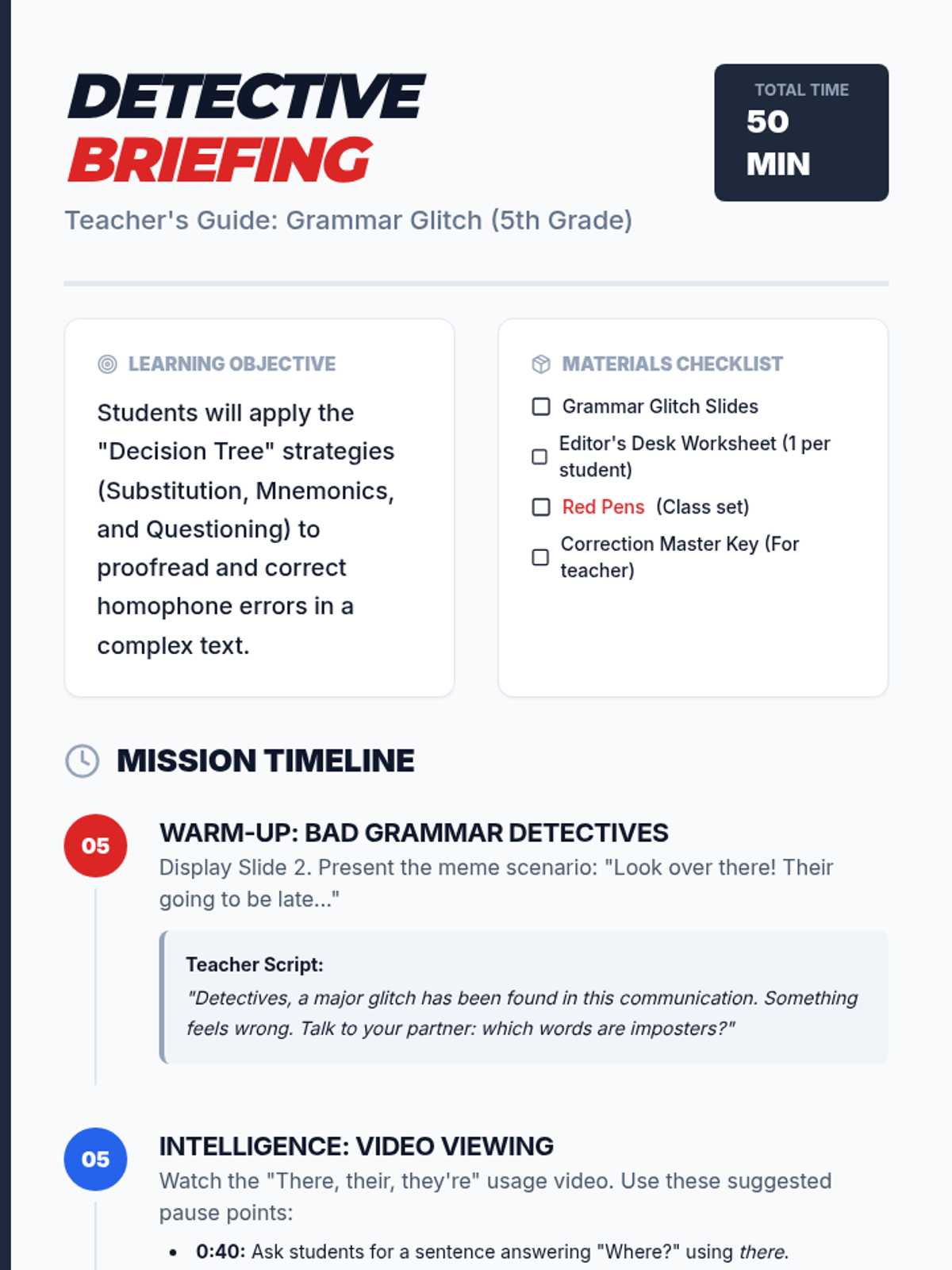
A fast-paced grammar lesson where students become 'Bad Grammar Detectives' to master the differences between 'there', 'their', and 'they're' through video analysis and a hands-on editing challenge.
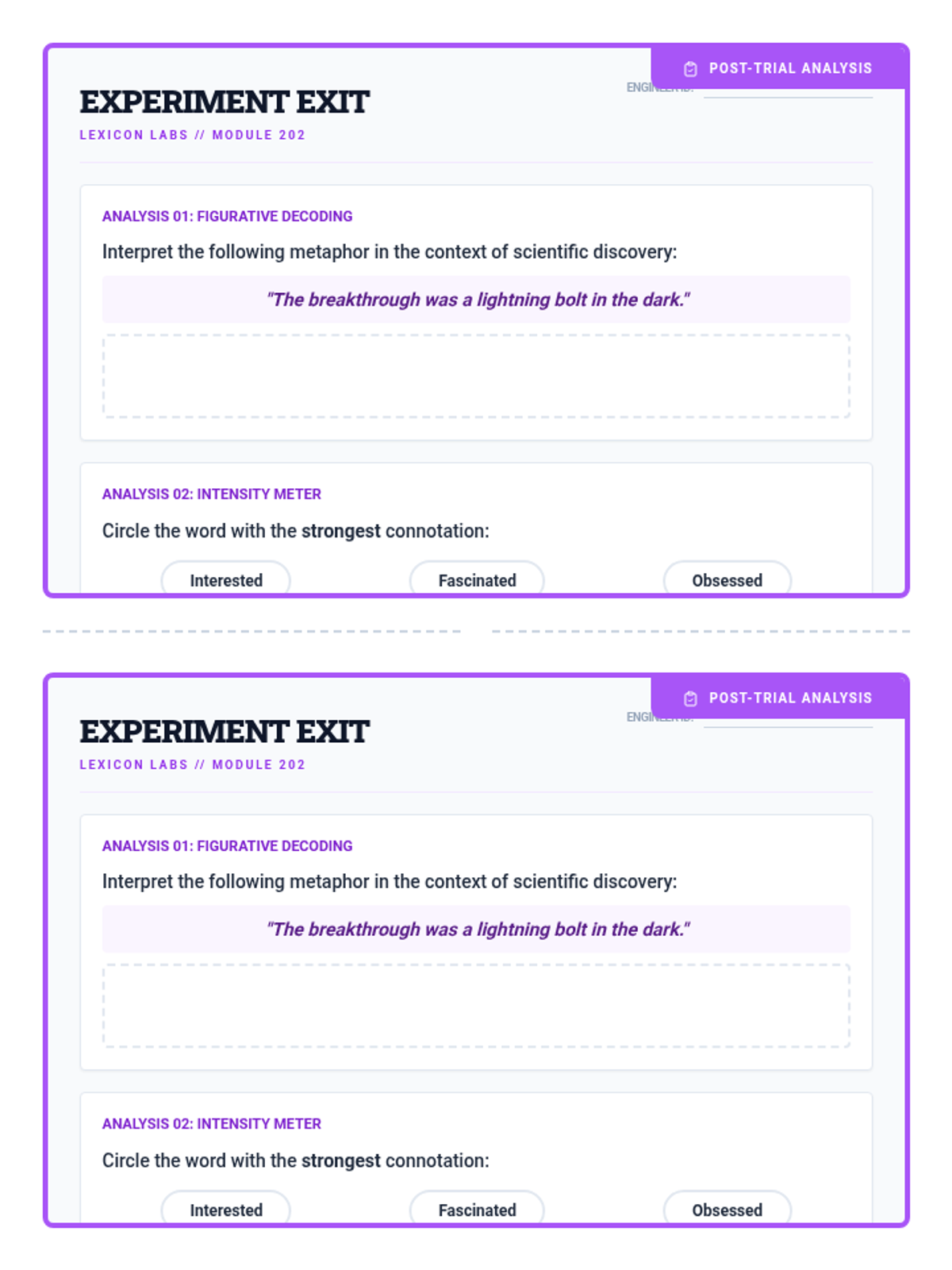
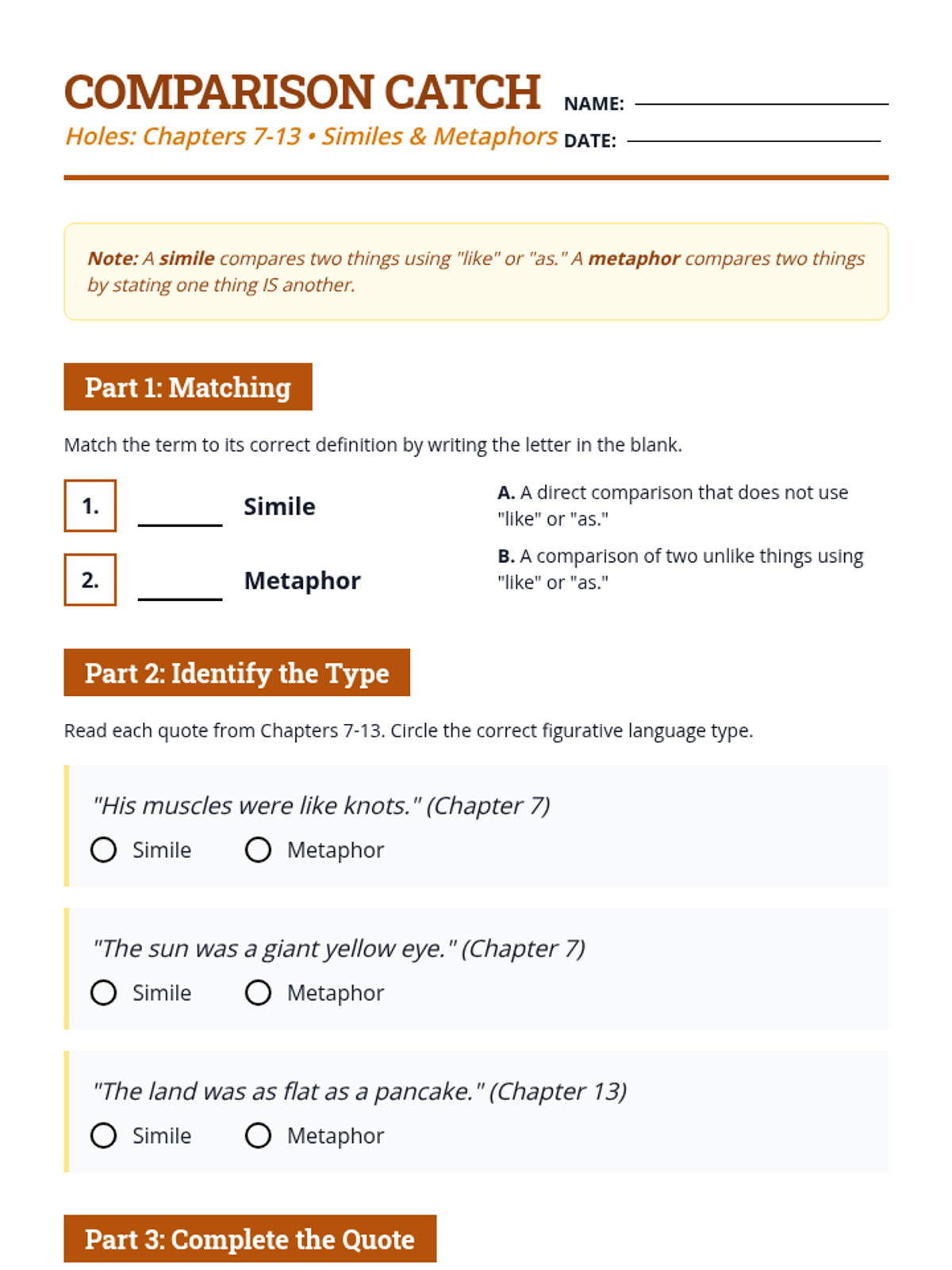
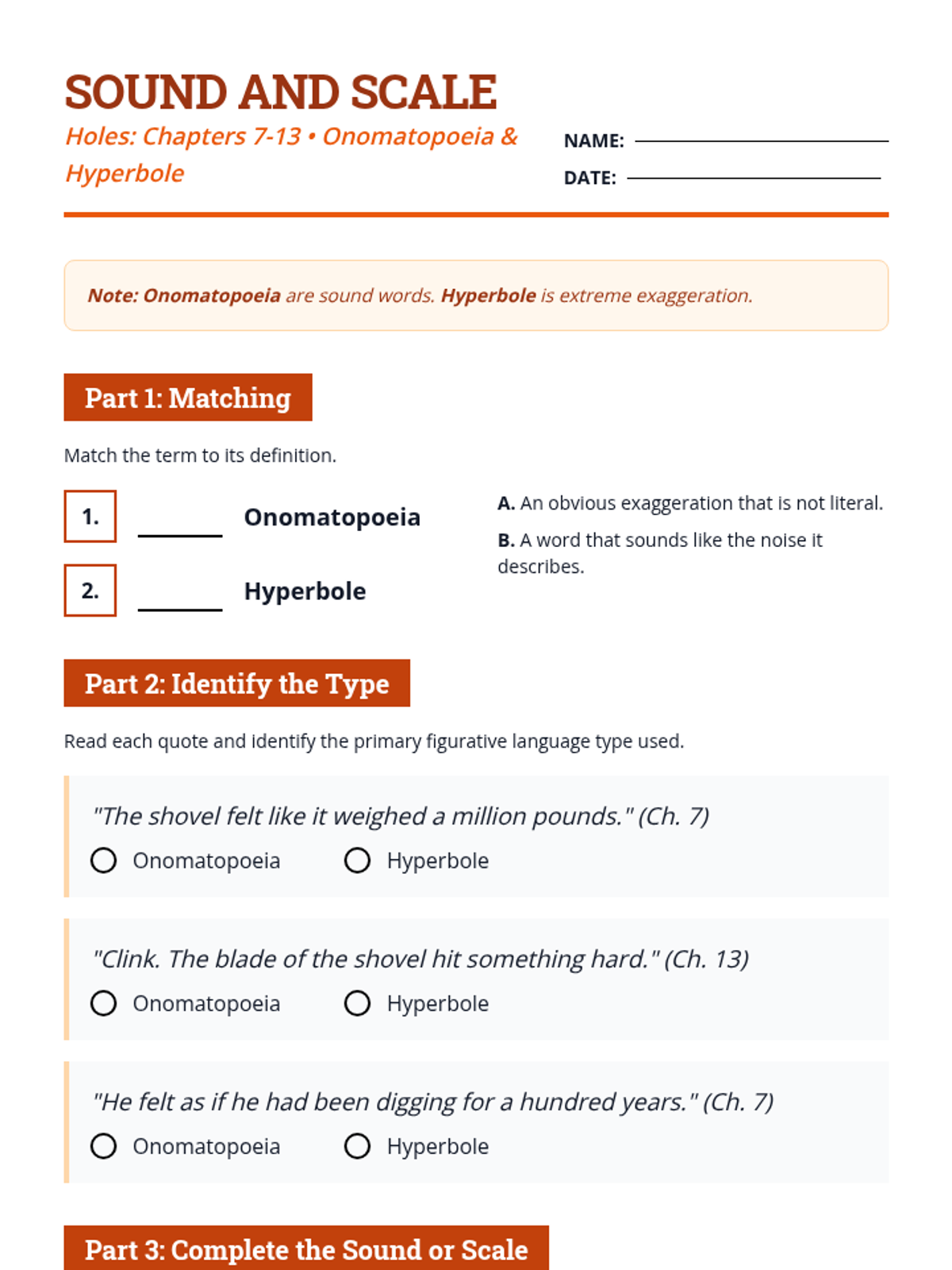
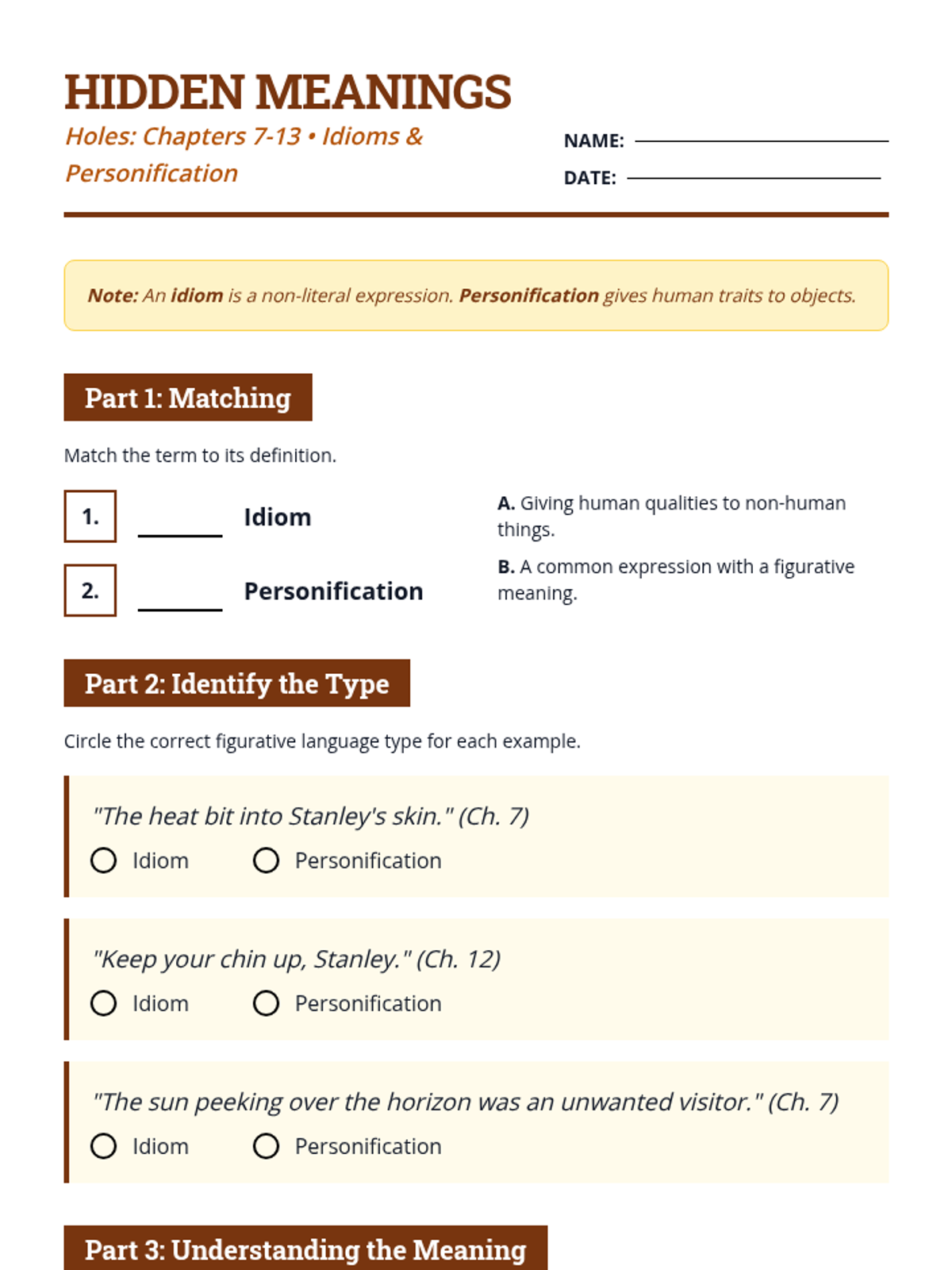
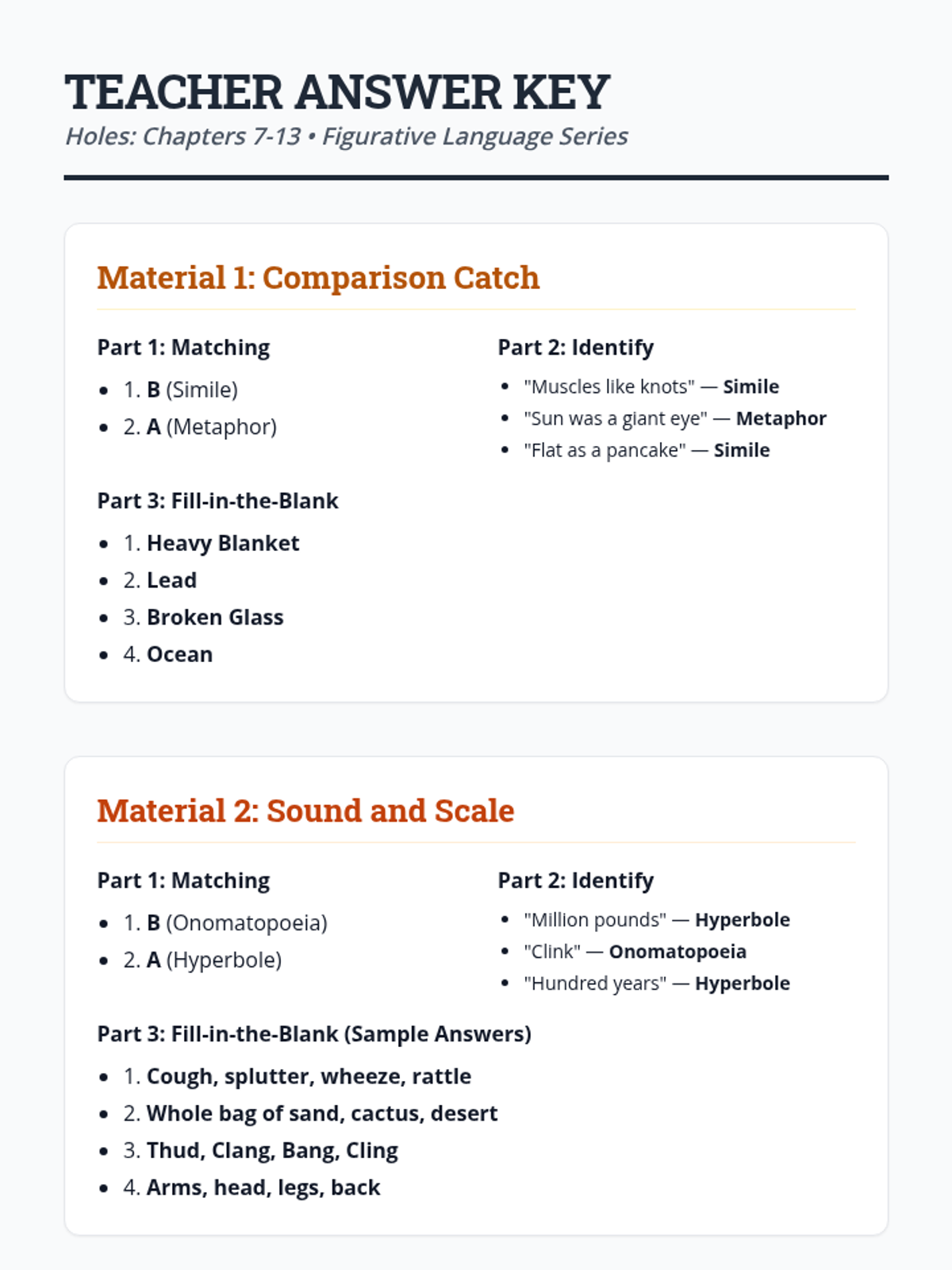
A lesson exploring figurative language in Chapters 7-13 of Louis Sachar's Holes, focusing on identifying and analyzing similes, metaphors, onomatopoeia, hyperbole, idioms, and personification through the lens of life at Camp Green Lake.
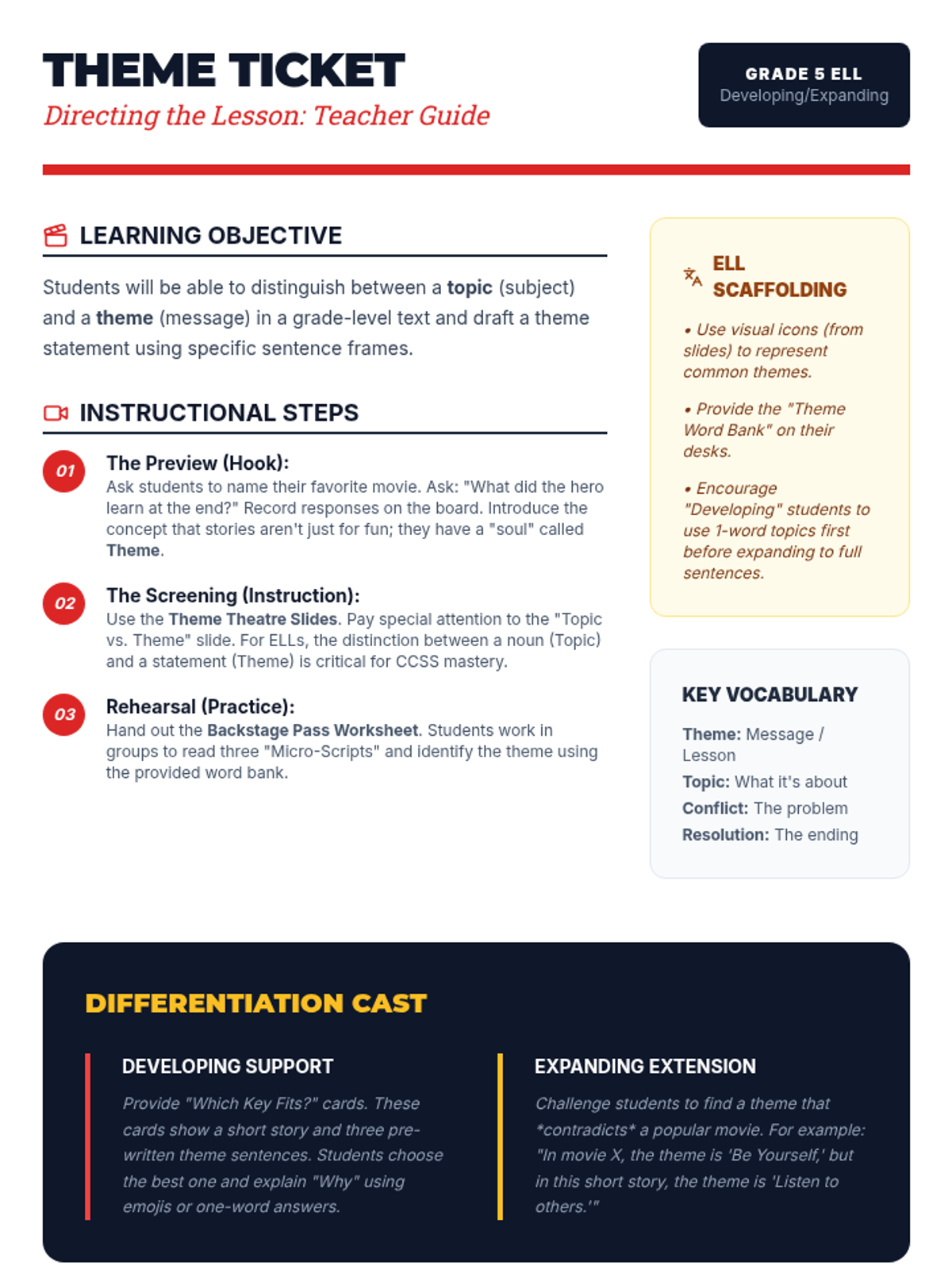
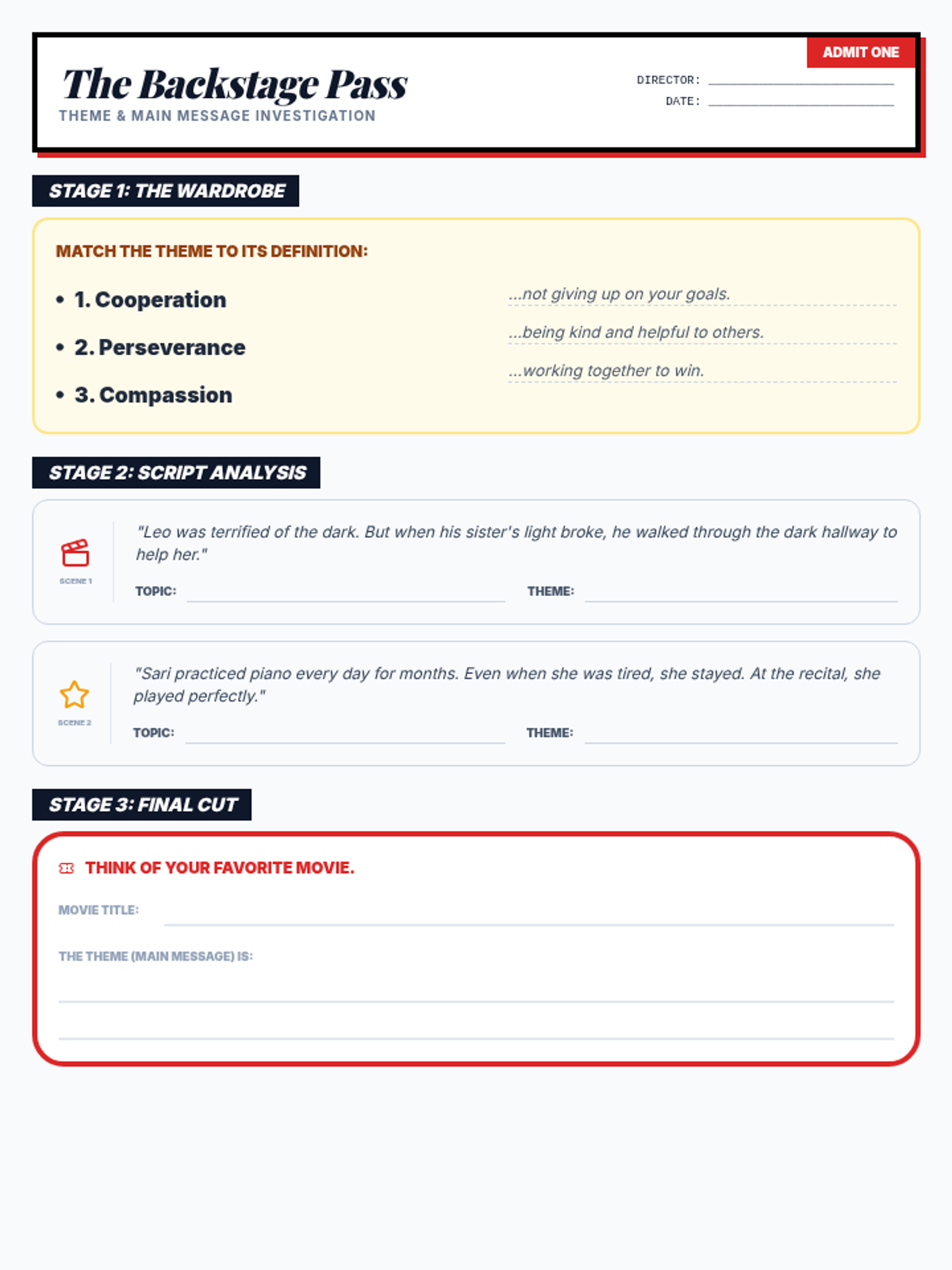
Students learn to identify the theme or main message of a story by analyzing character choices and outcomes, framed through a "Cinema" or "Movie Theatre" lens to help ELL students distinguish between topic and theme.
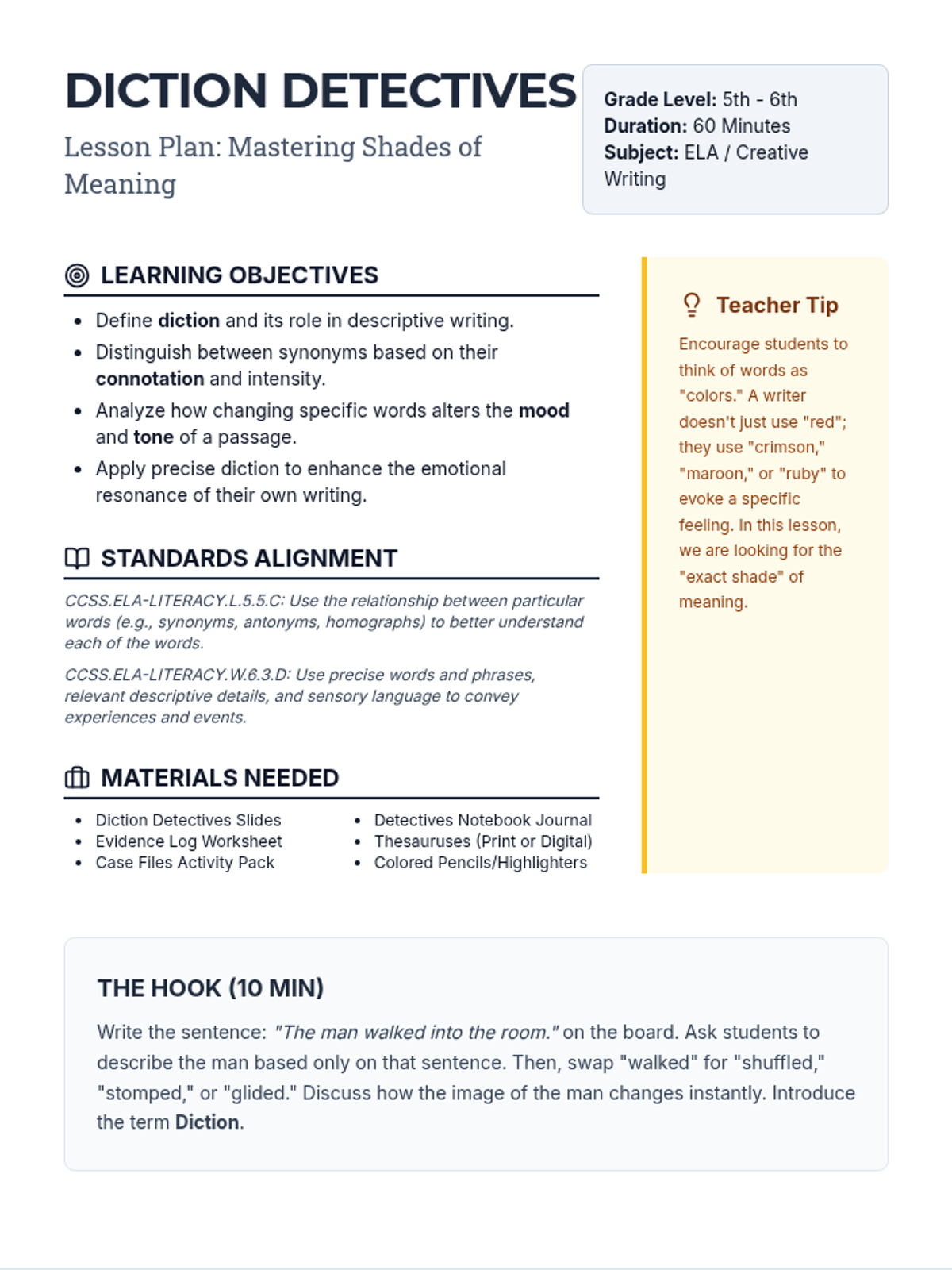
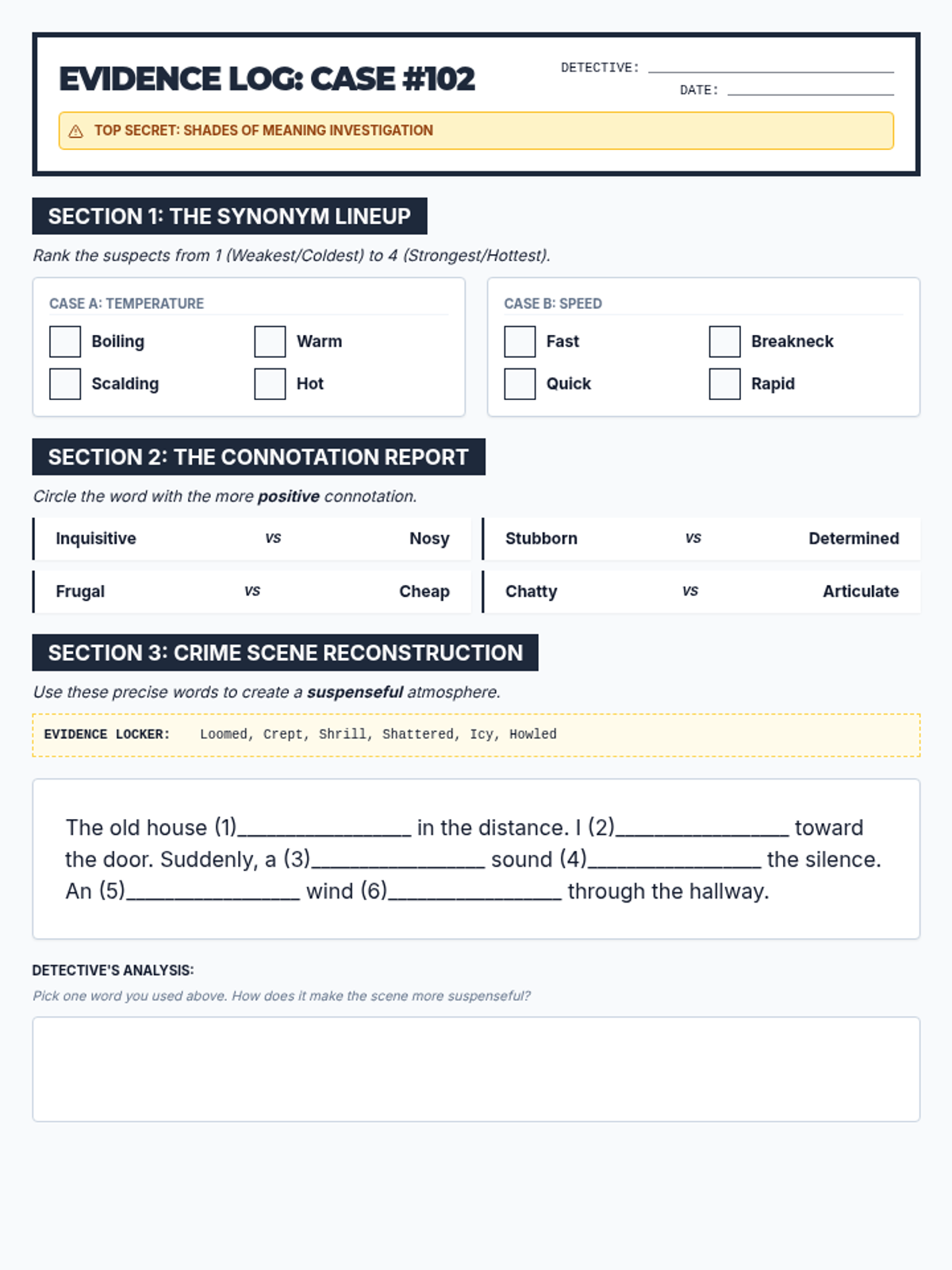
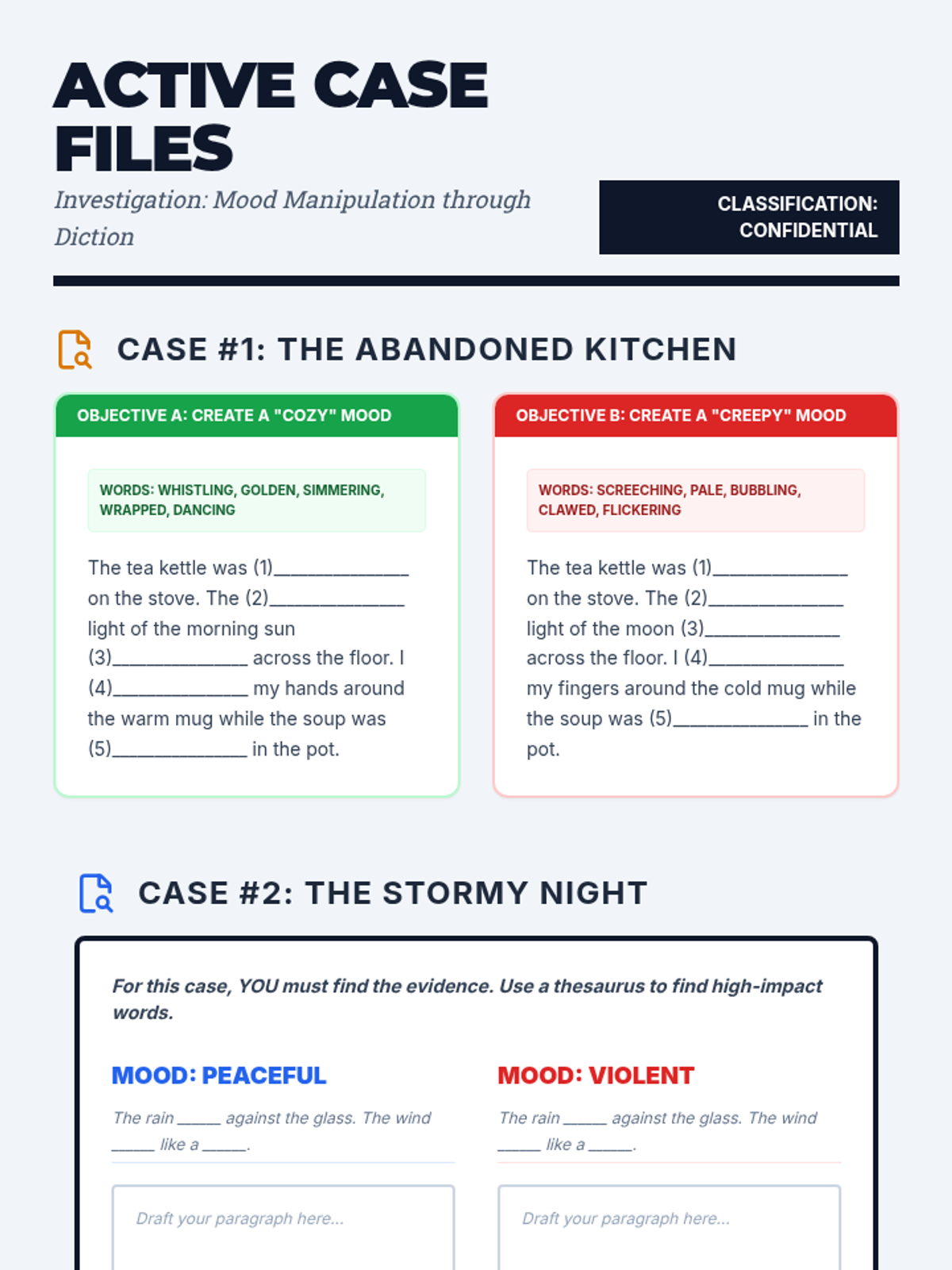
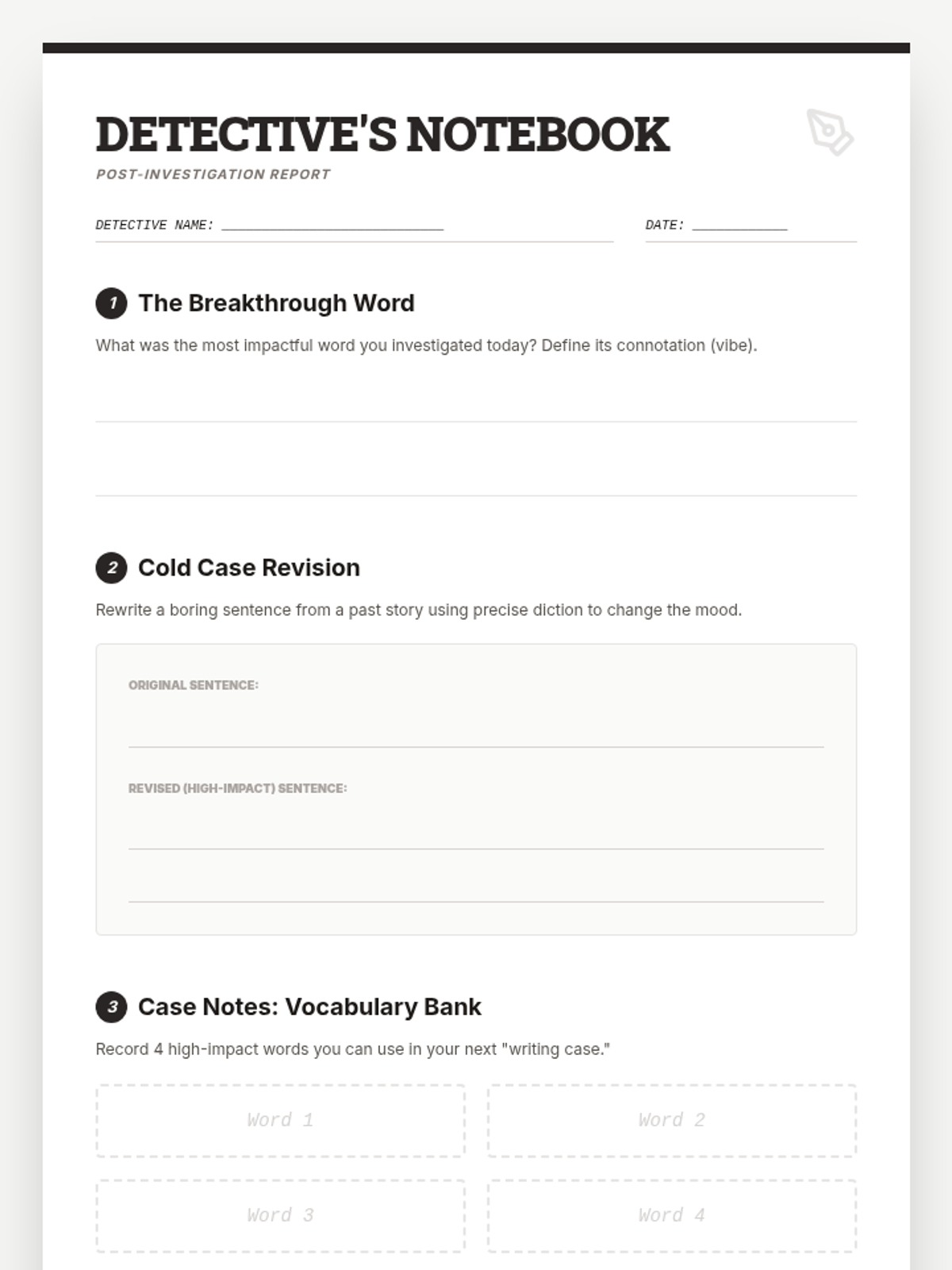
Students investigate how precise word choices (diction) influence the mood and tone of a story through a detective-themed exploration of synonyms and shades of meaning.
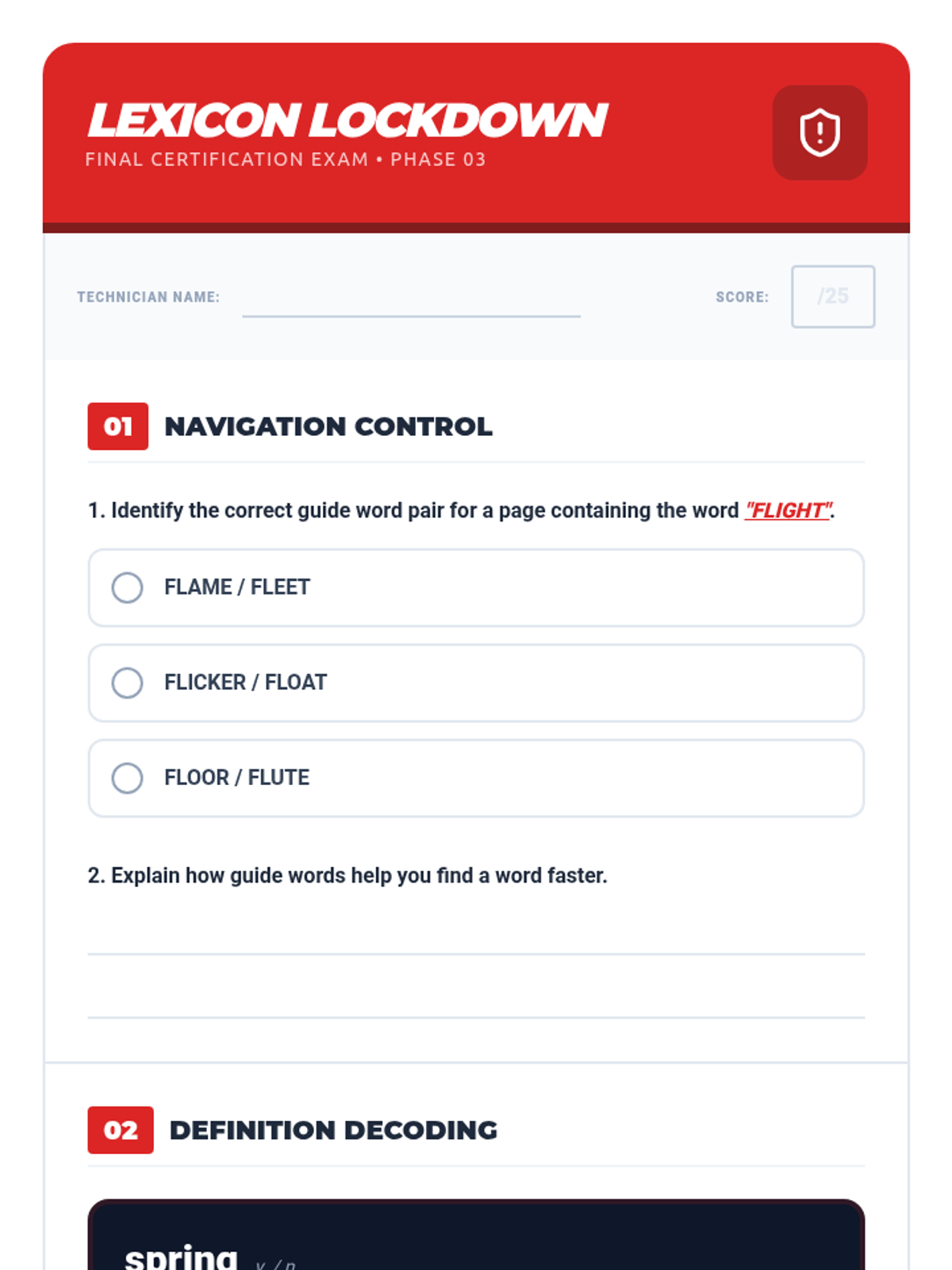
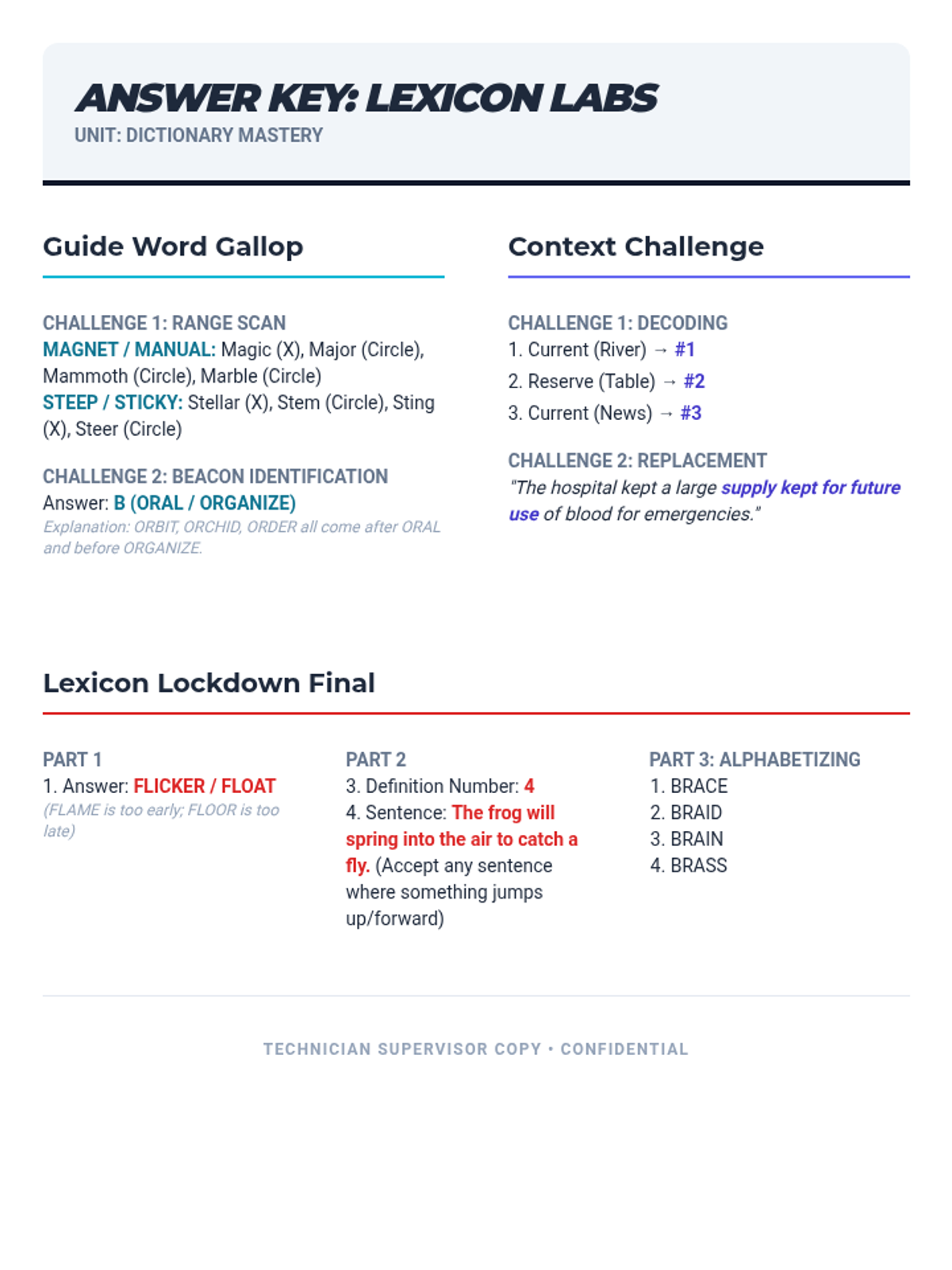
A cumulative review and formal assessment of dictionary navigation and entry analysis skills.
Focuses on the anatomy of a dictionary entry, specifically how to identify and choose between multiple definitions based on sentence context.
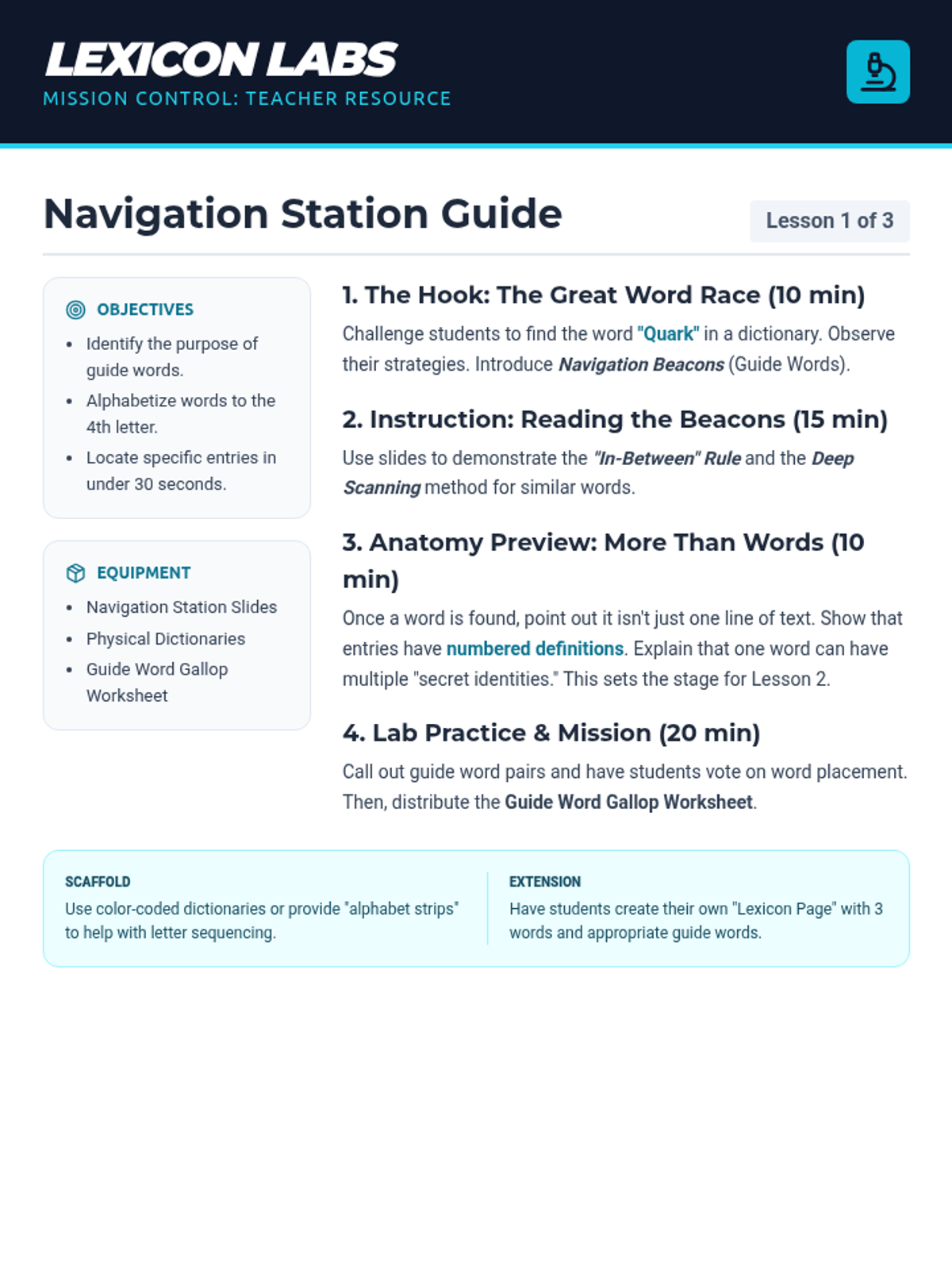
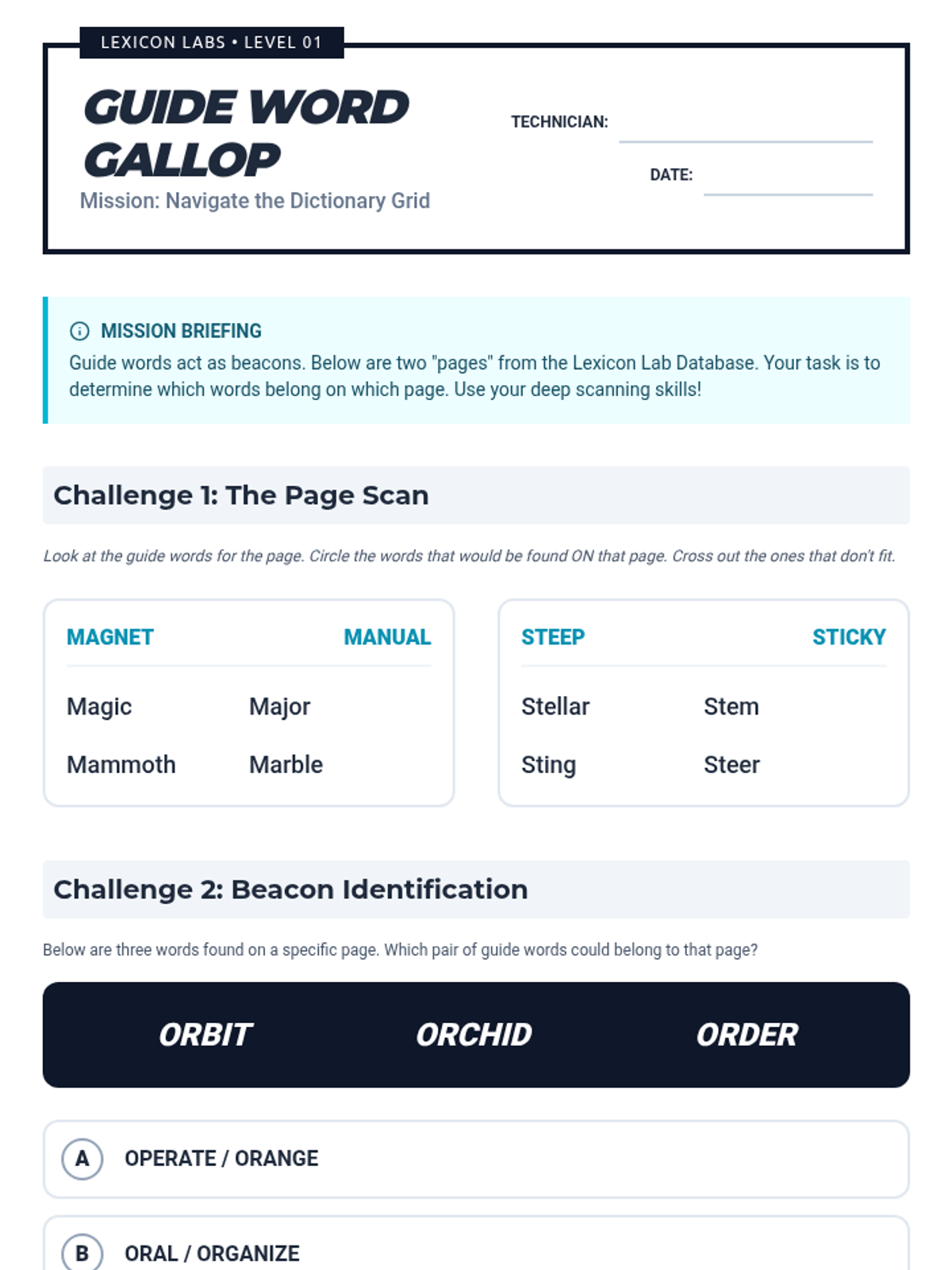
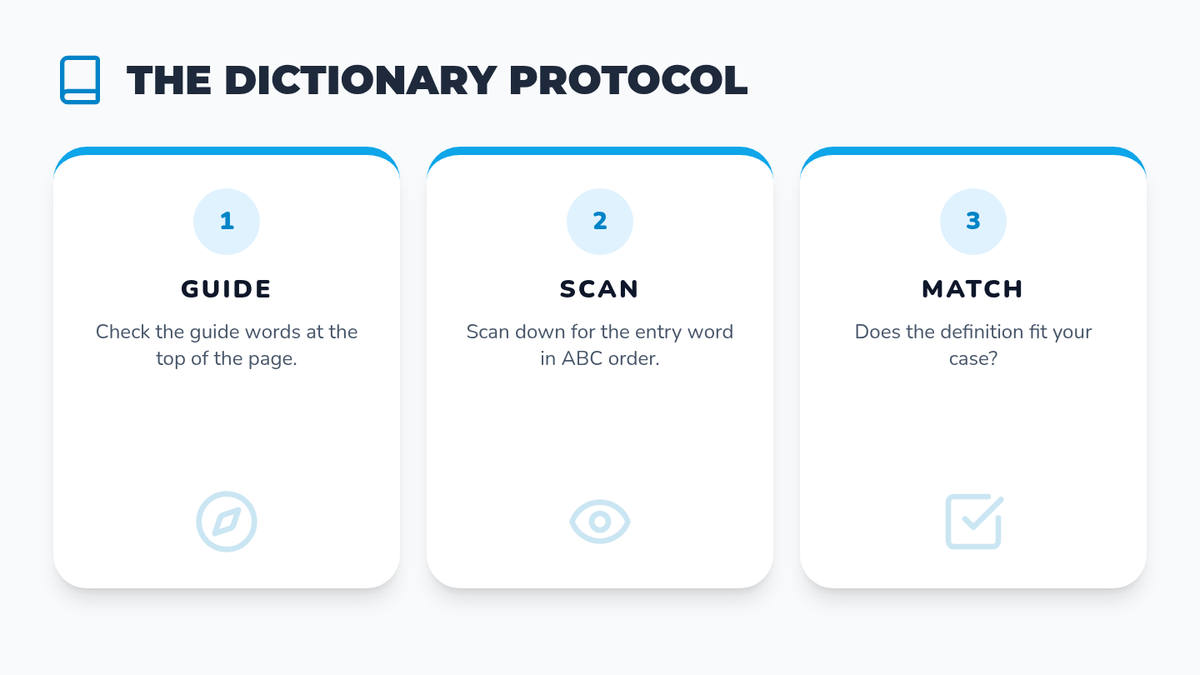
Introduction to the physical and digital structure of a dictionary, with a deep dive into using guide words for rapid word location.
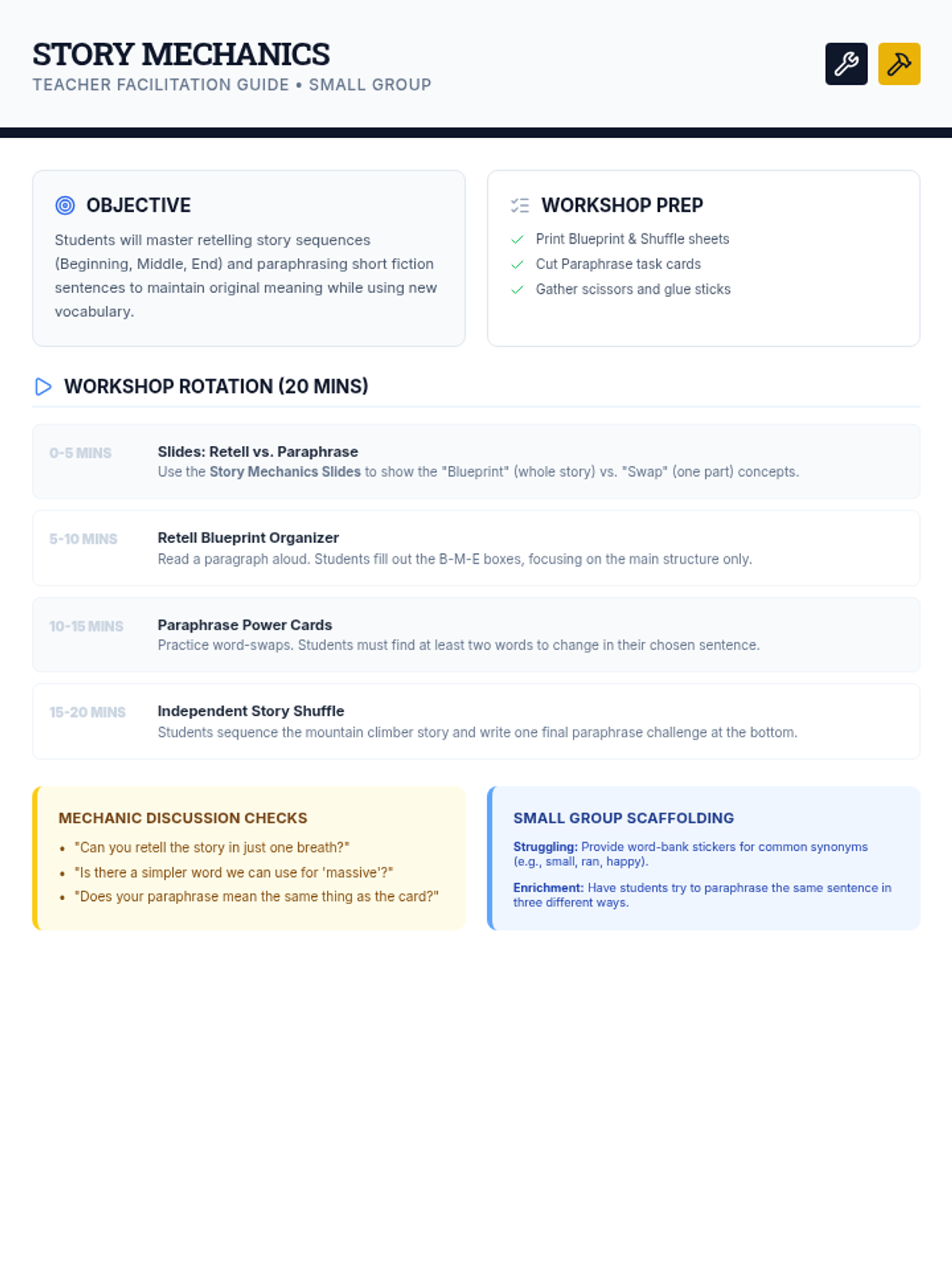
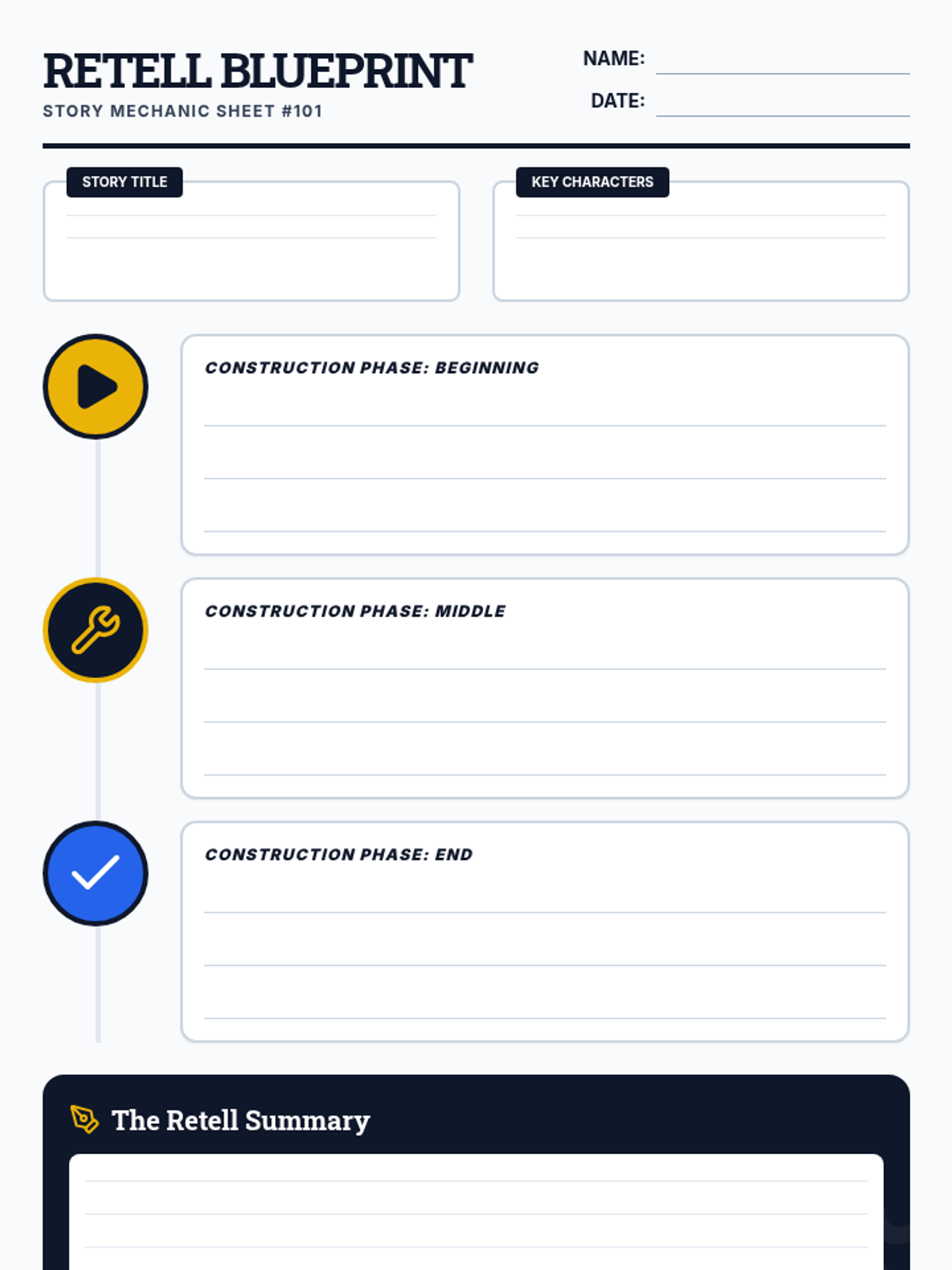
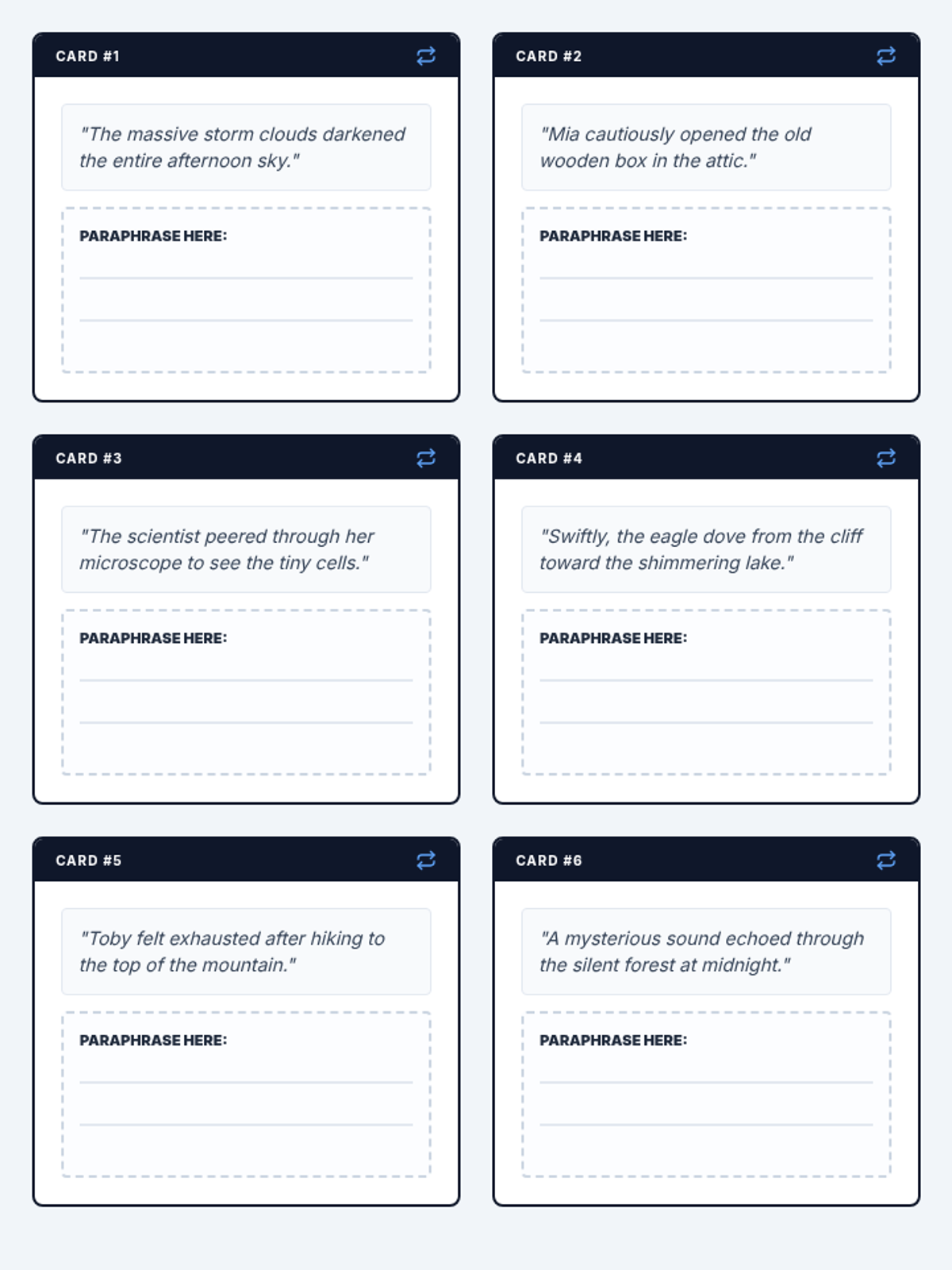
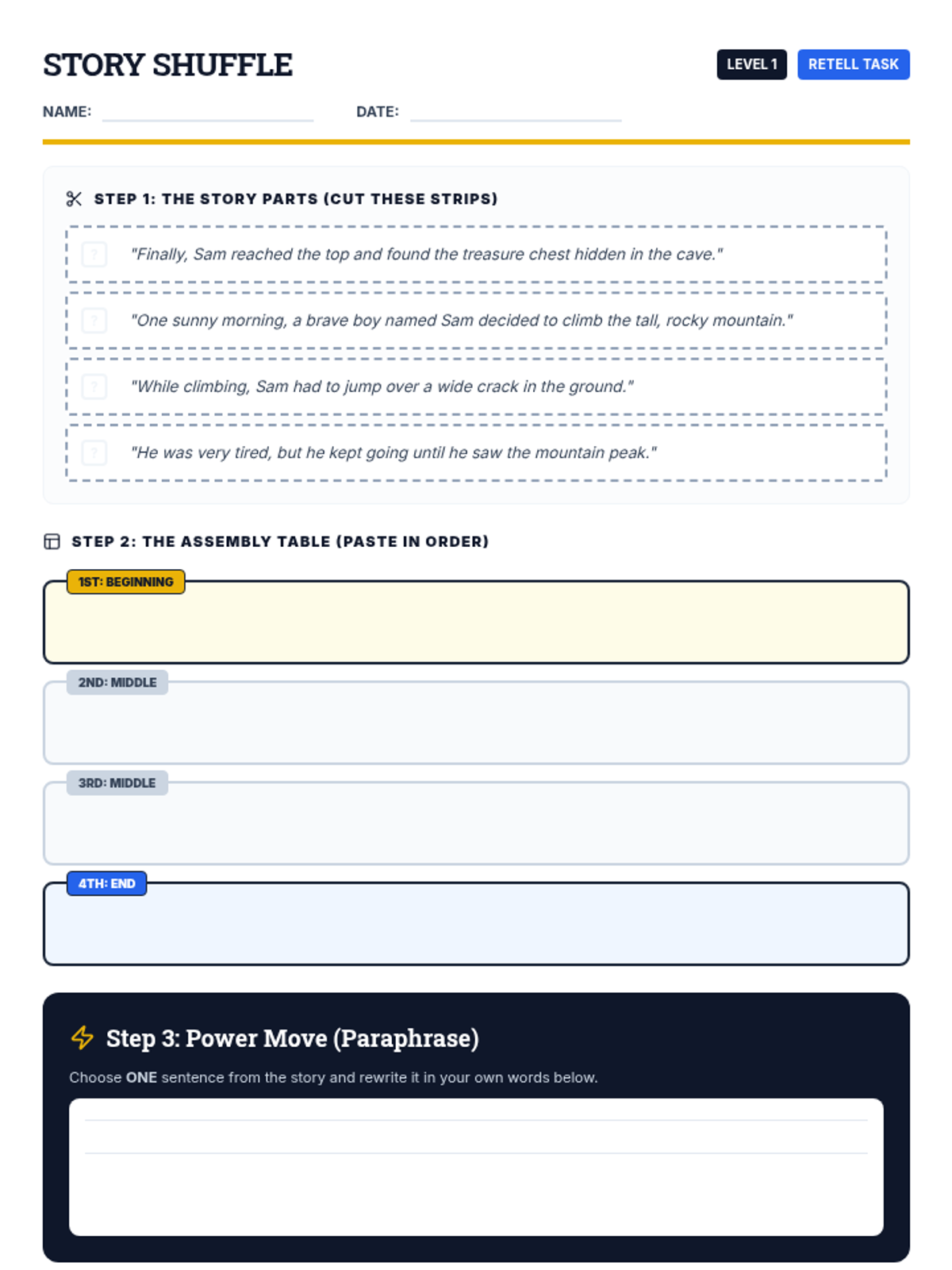
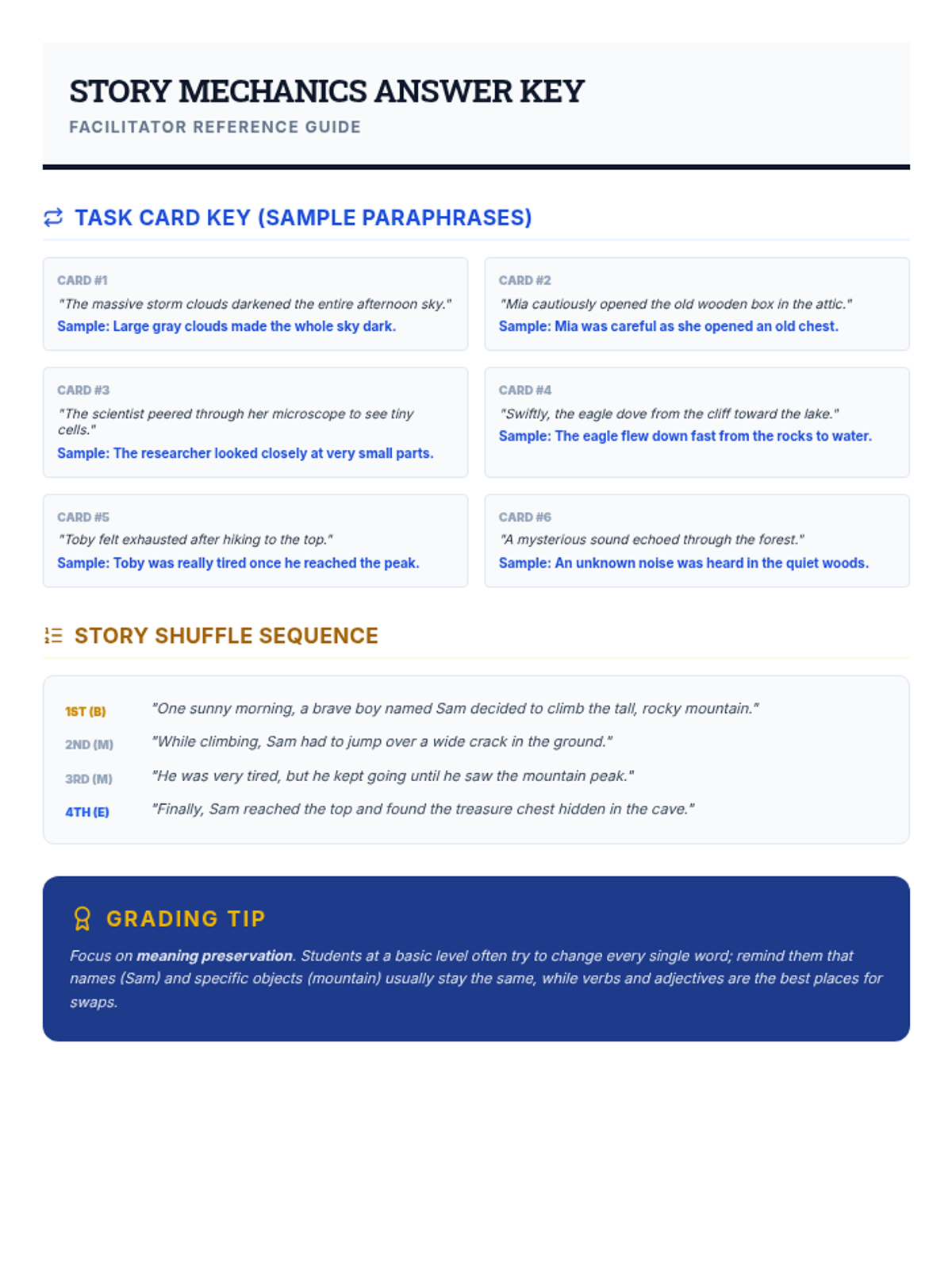
A comprehensive small-group lesson focused on the foundational skills of retelling and paraphrasing using short fiction. Students use blueprint-themed tools to identify story structure and practice restating ideas in their own words.
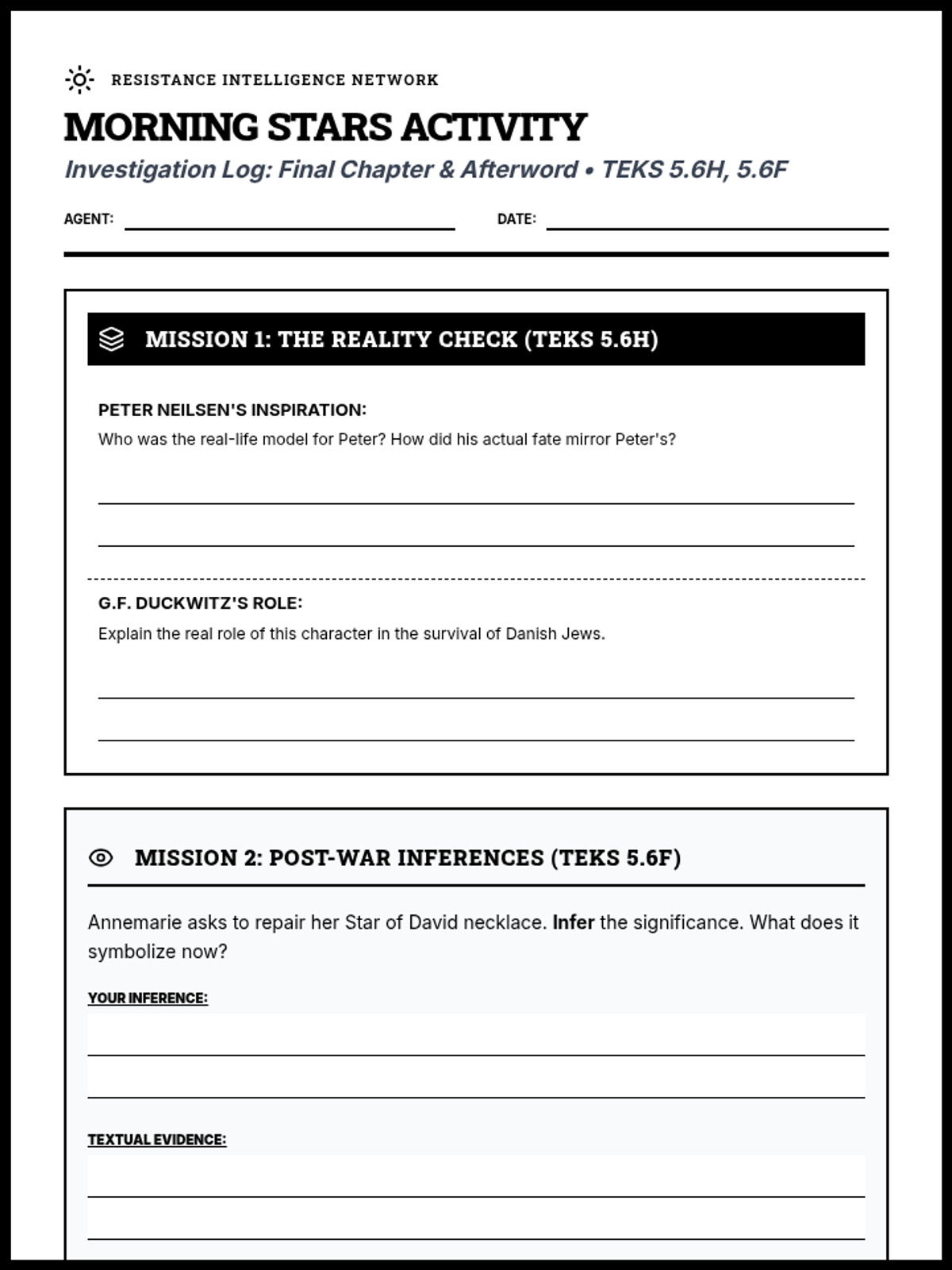
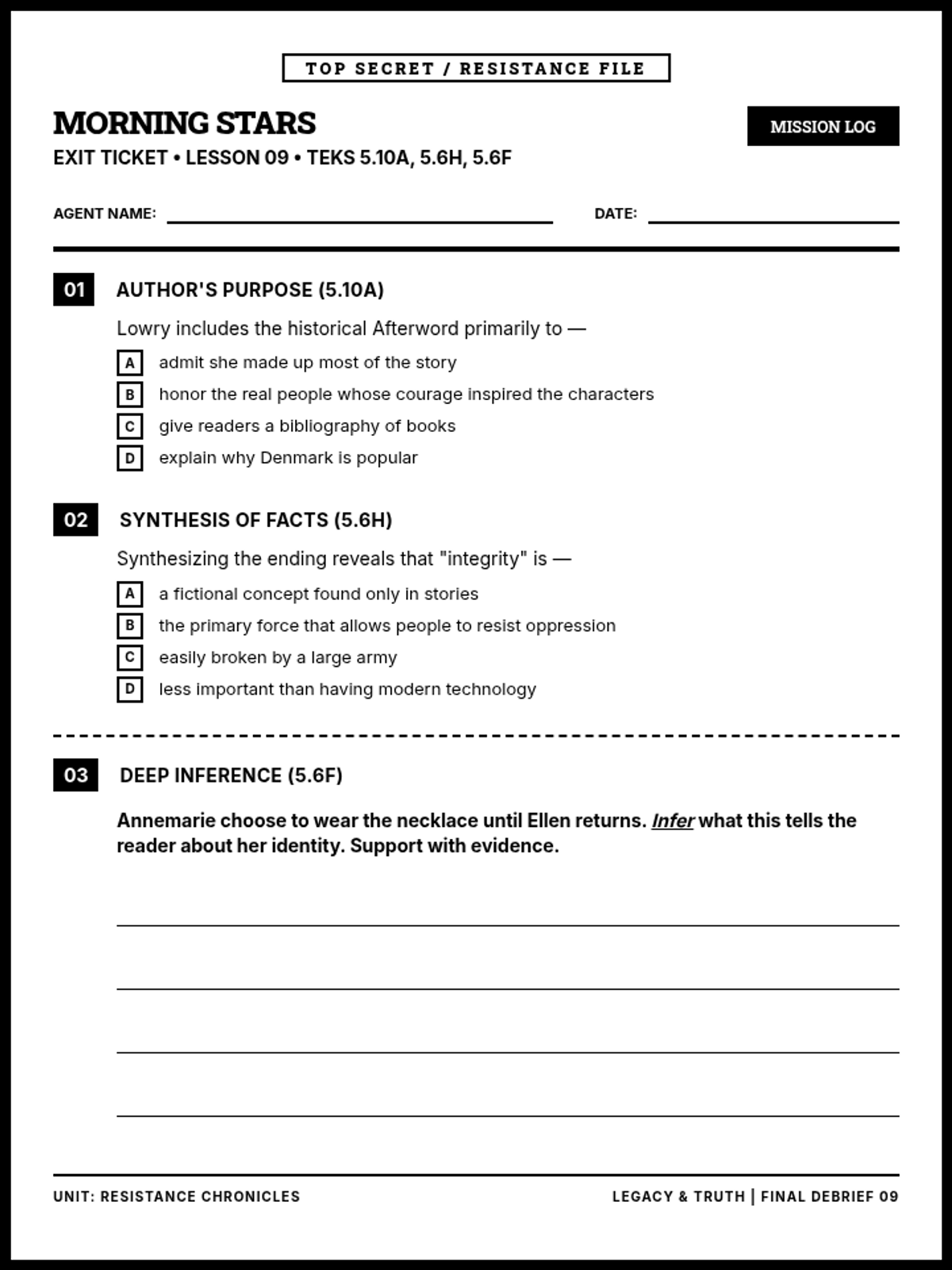
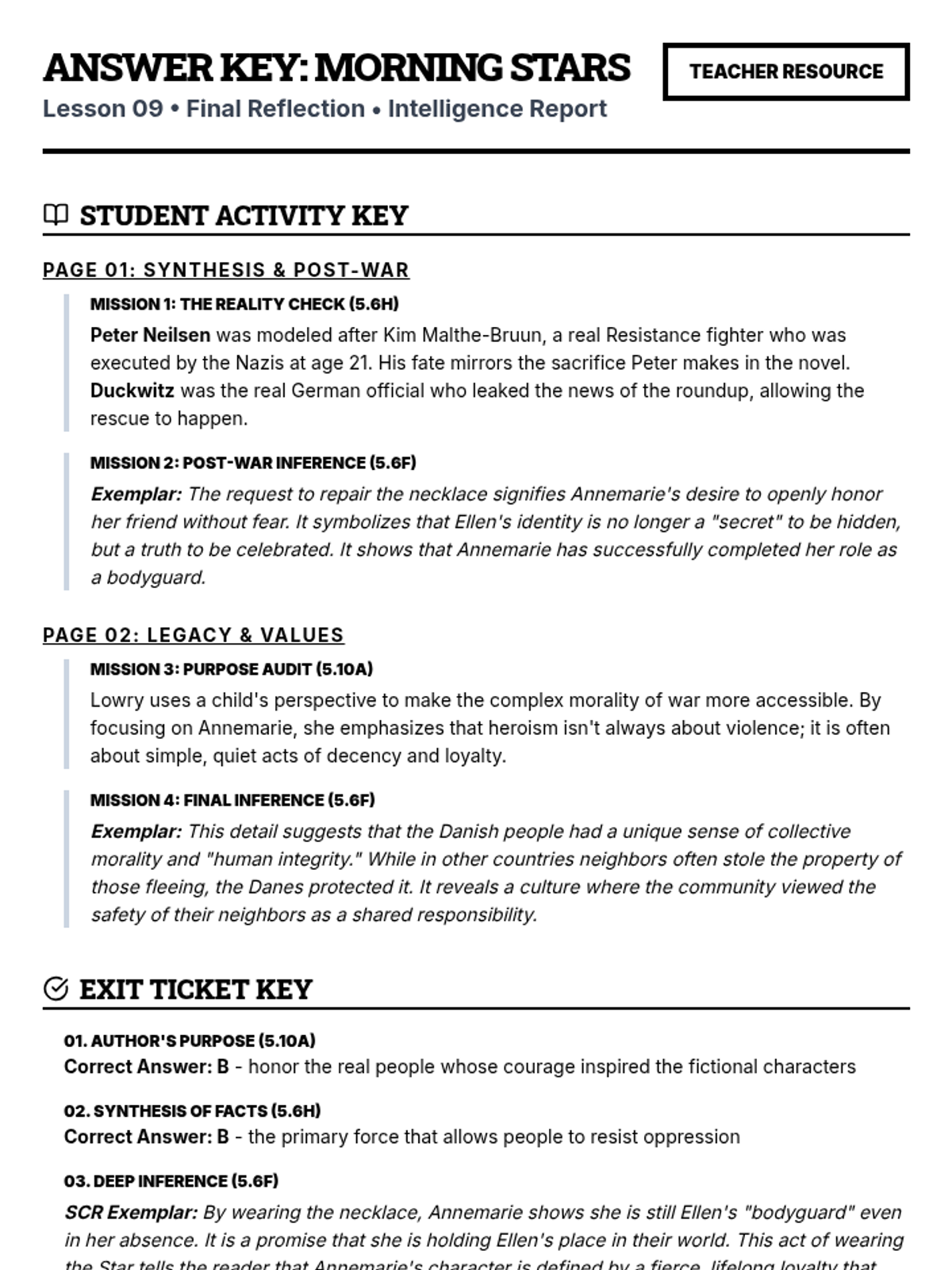
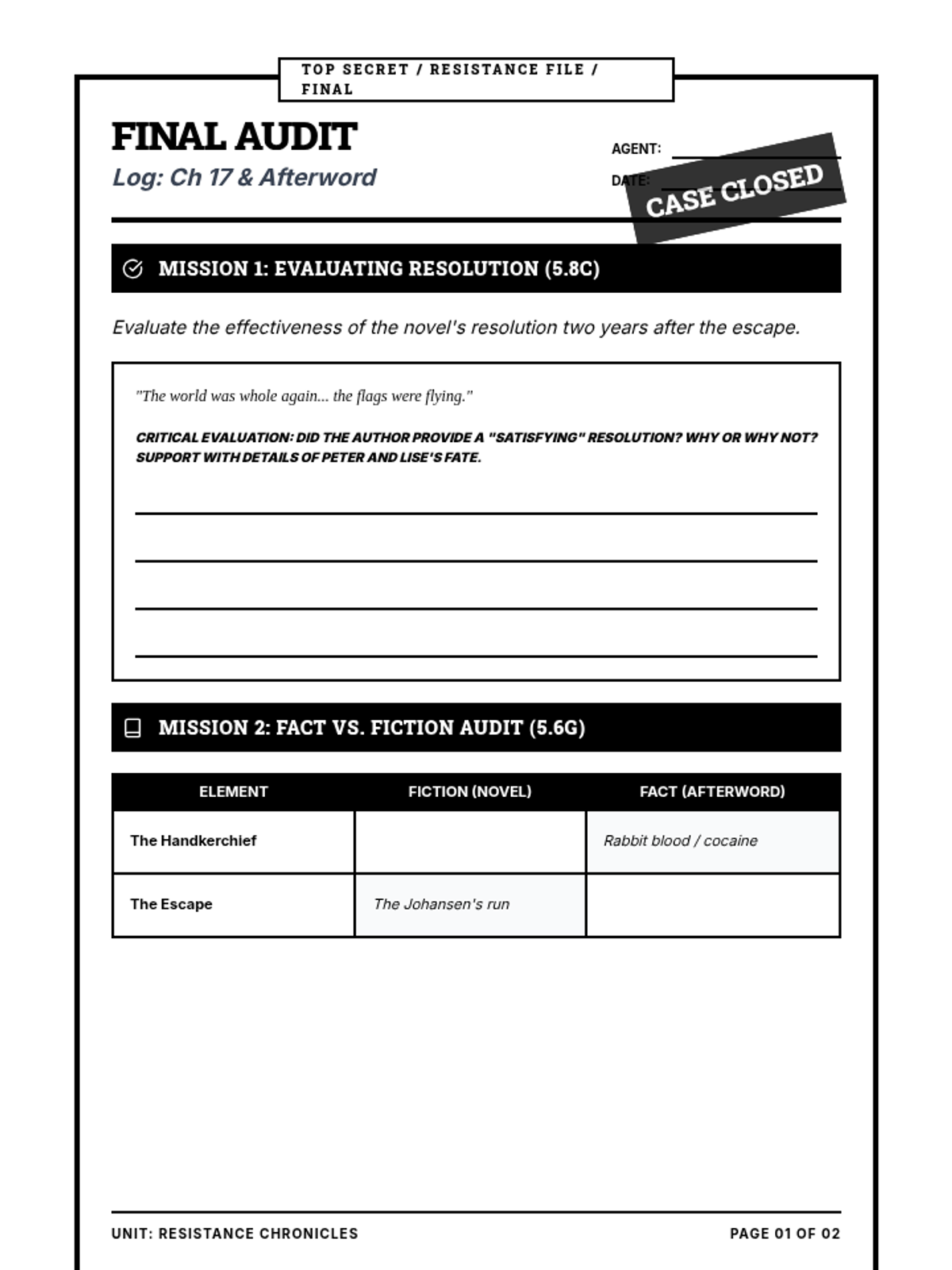
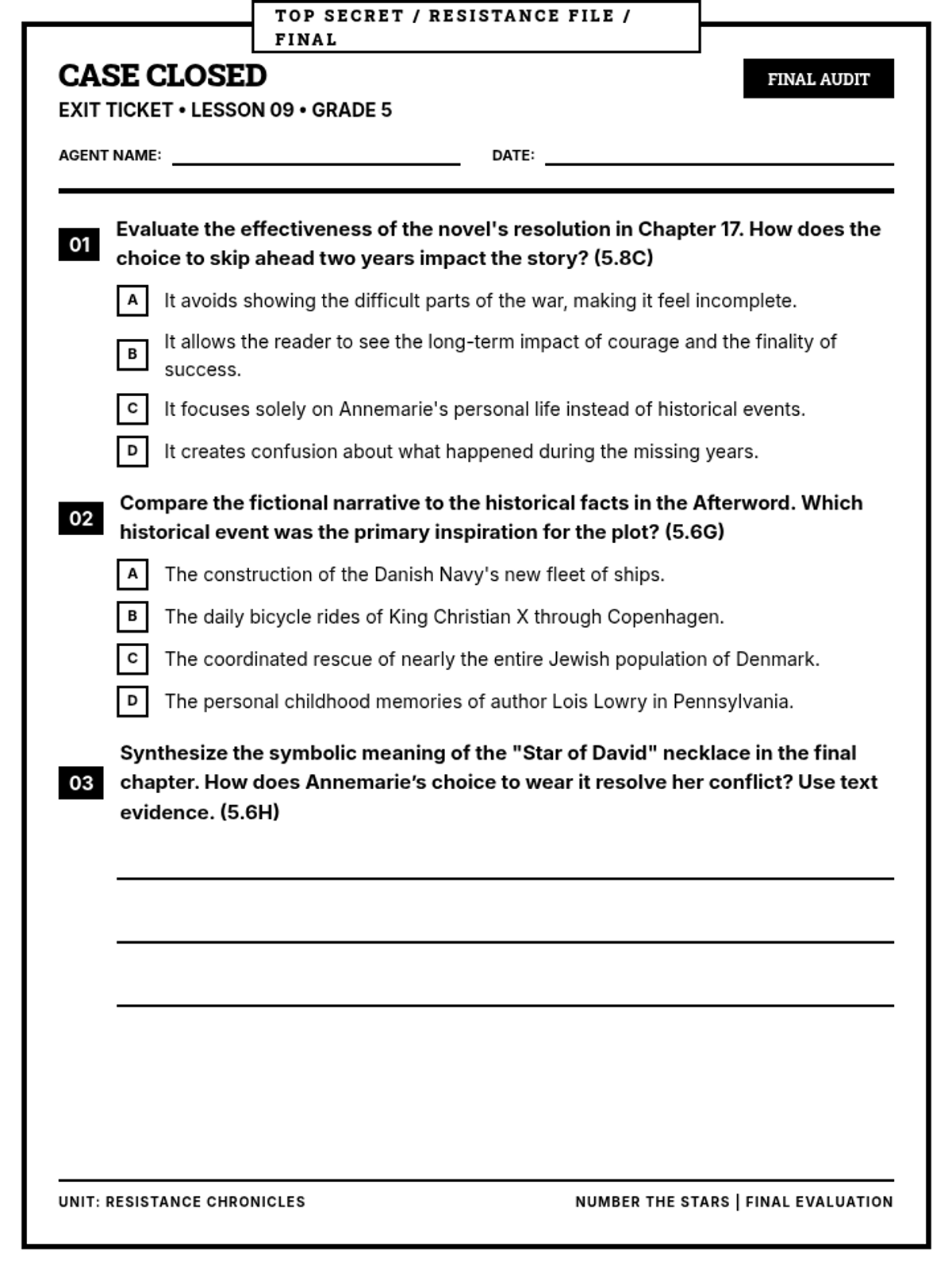
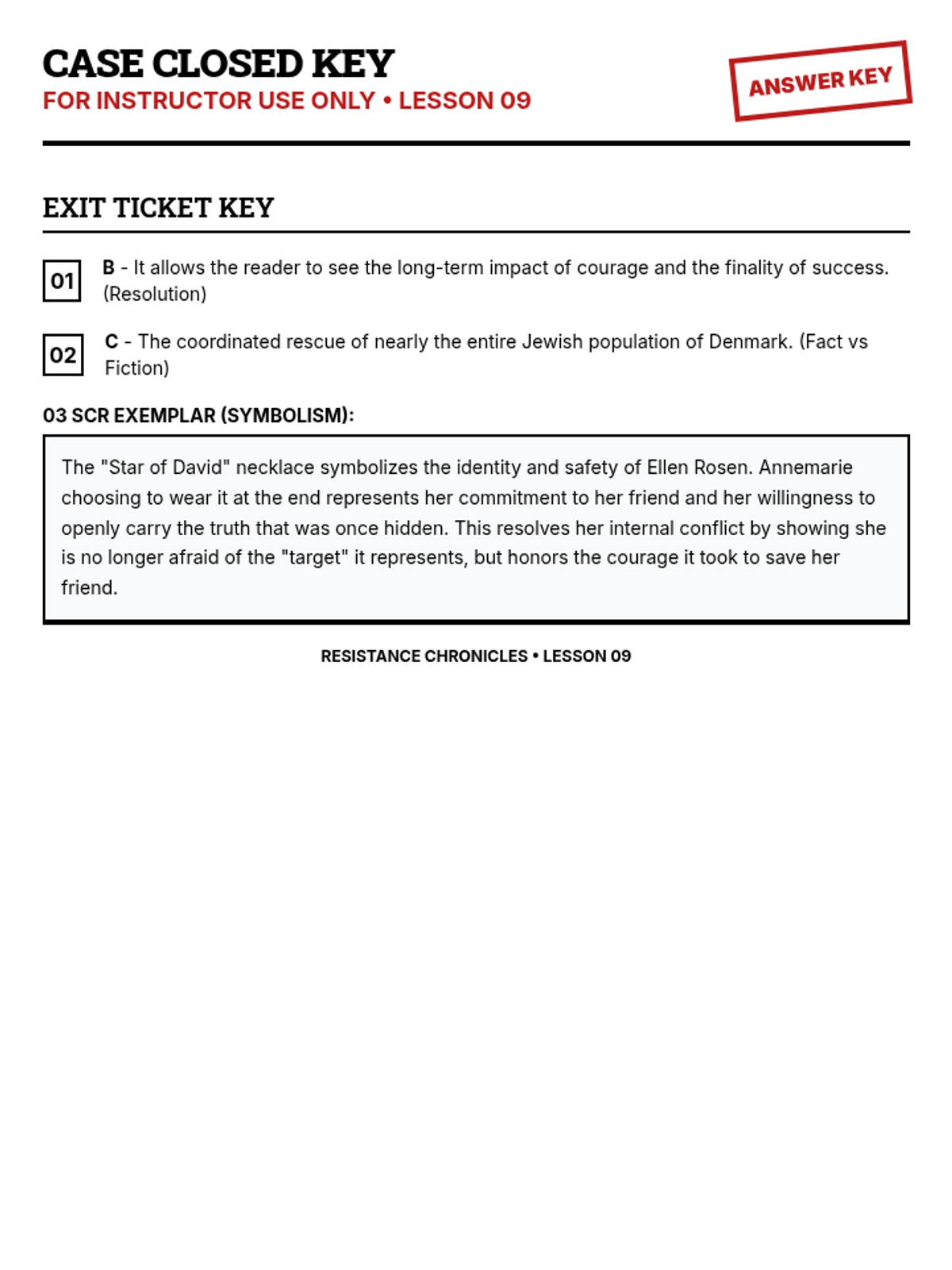
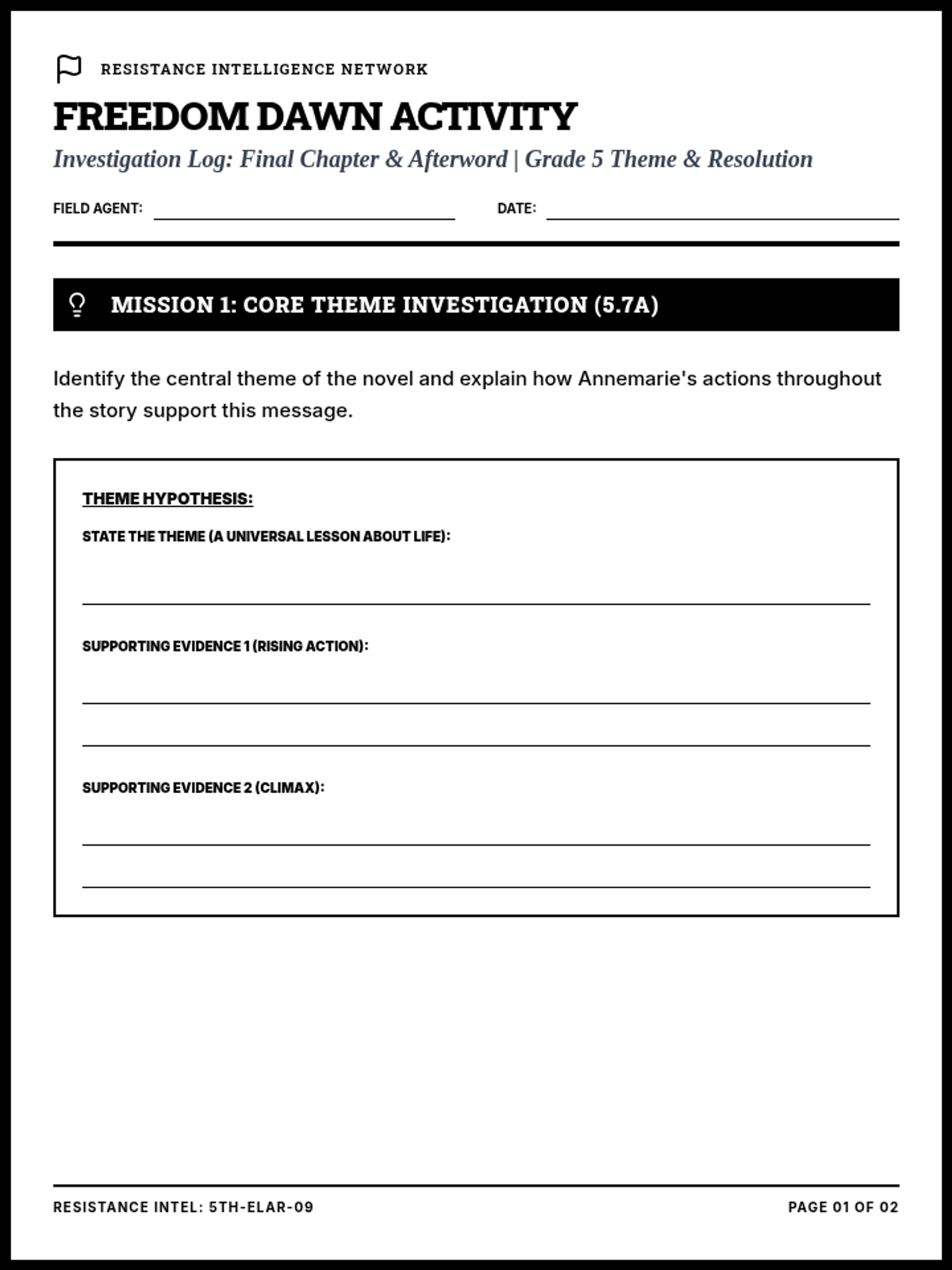
Students explore the final chapter and afterword, synthesizing the novel's resolution with historical facts to infer the author's legacy and final purpose (TEKS 5.10A, 5.6F).
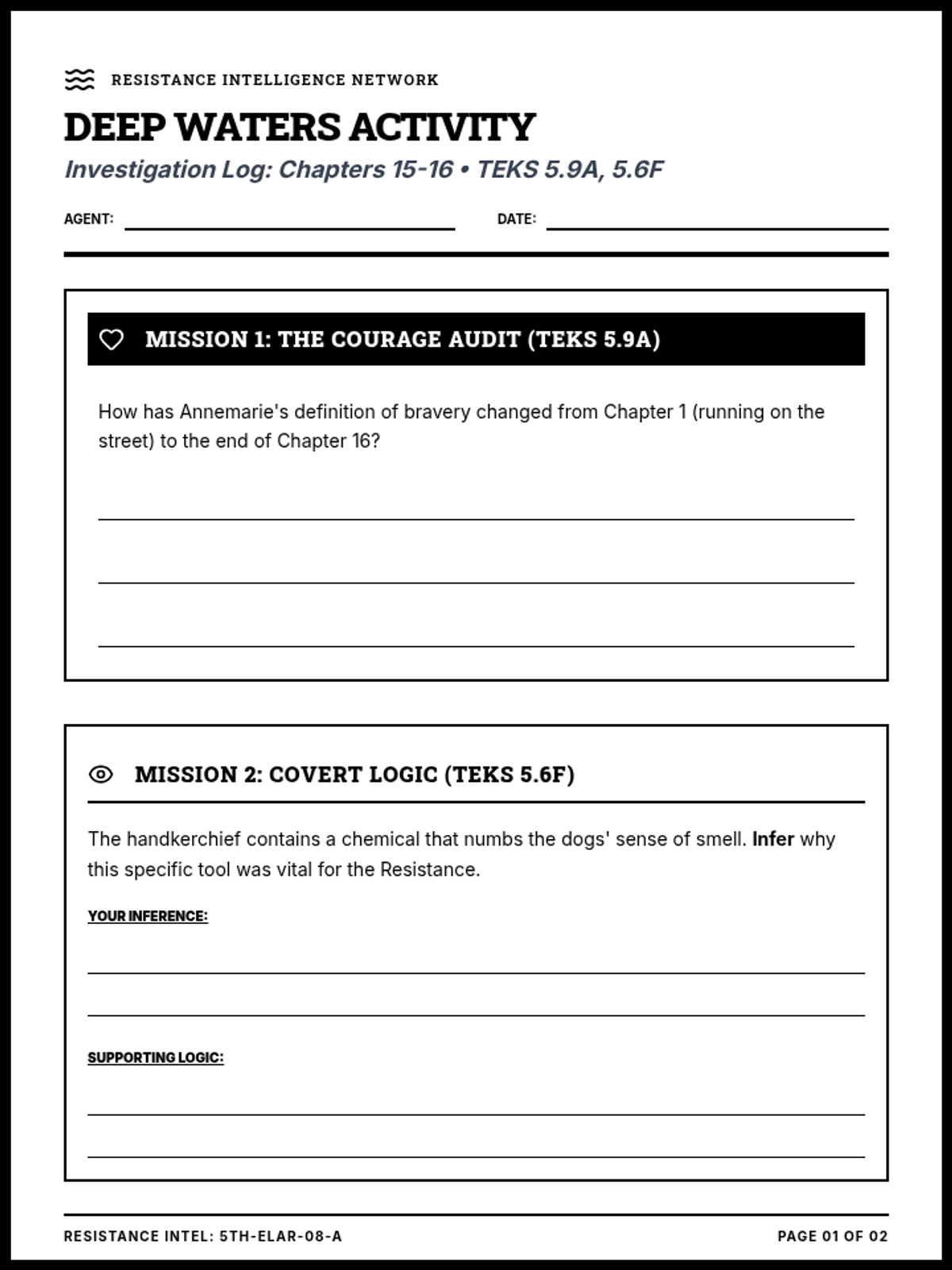
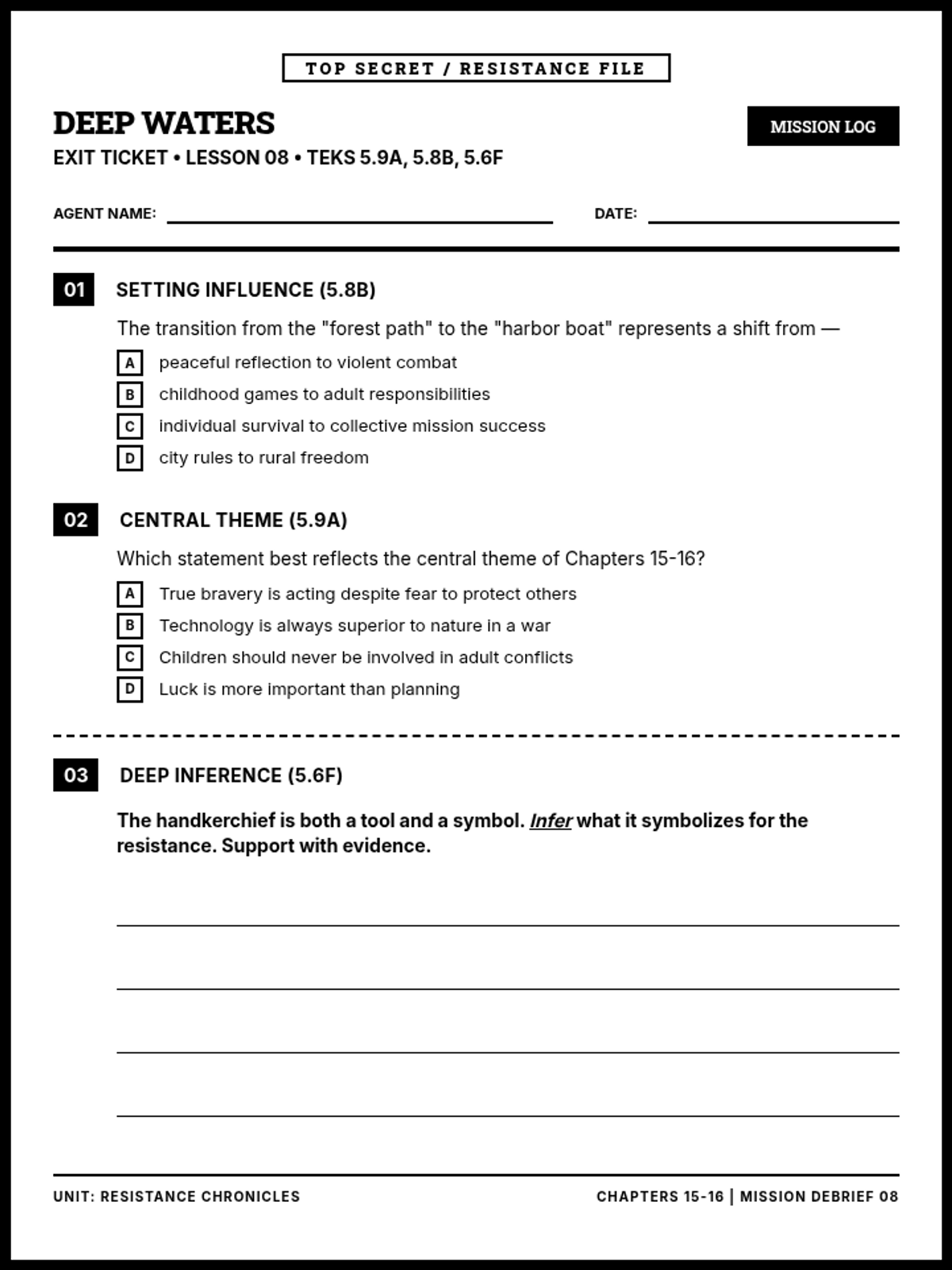
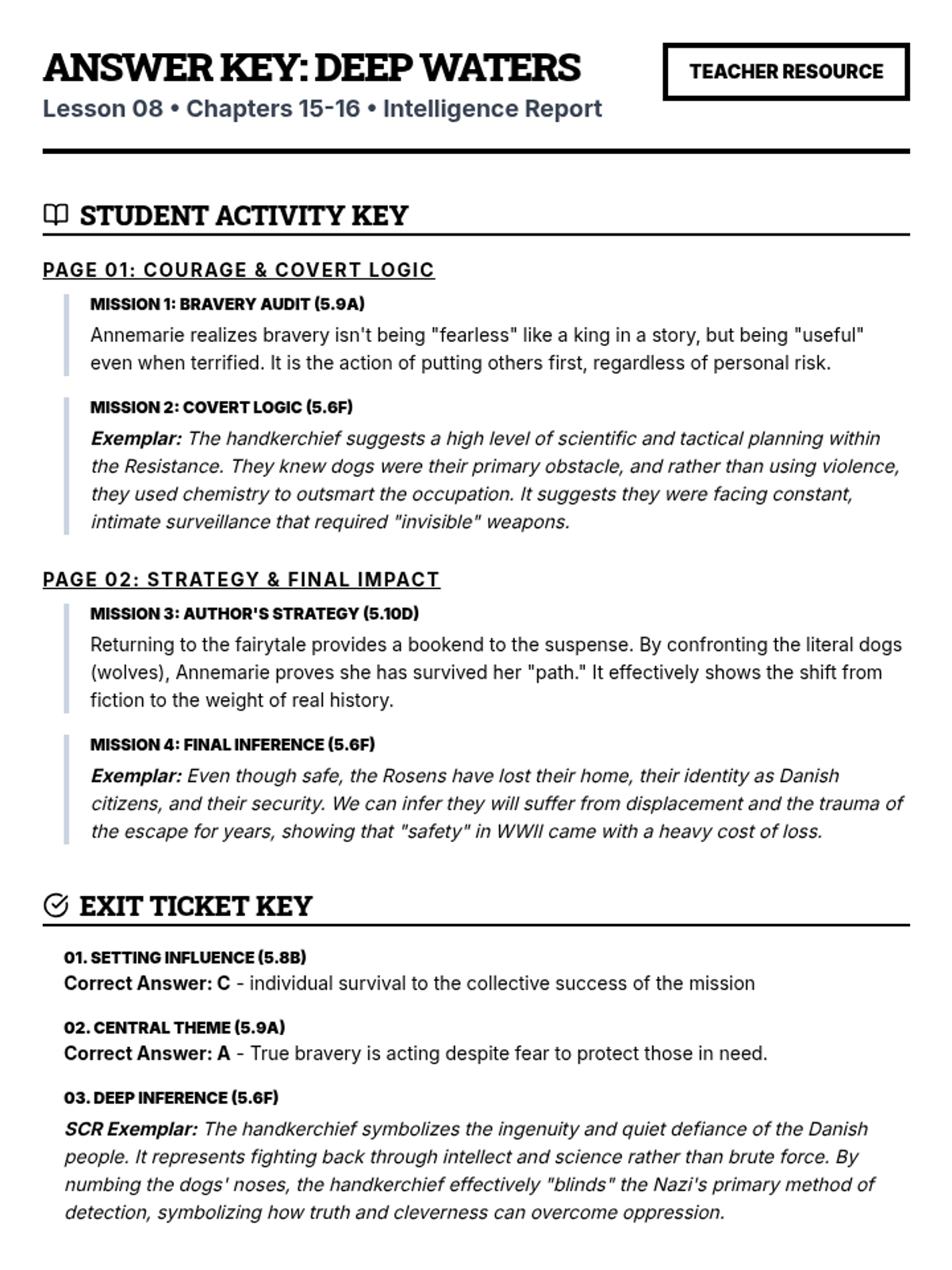
Covering Chapters 15-16, students evaluate the resolution of the escape and the true power of the 'handkerchief,' making inferences about the theme of bravery (TEKS 5.9A, 5.6F).
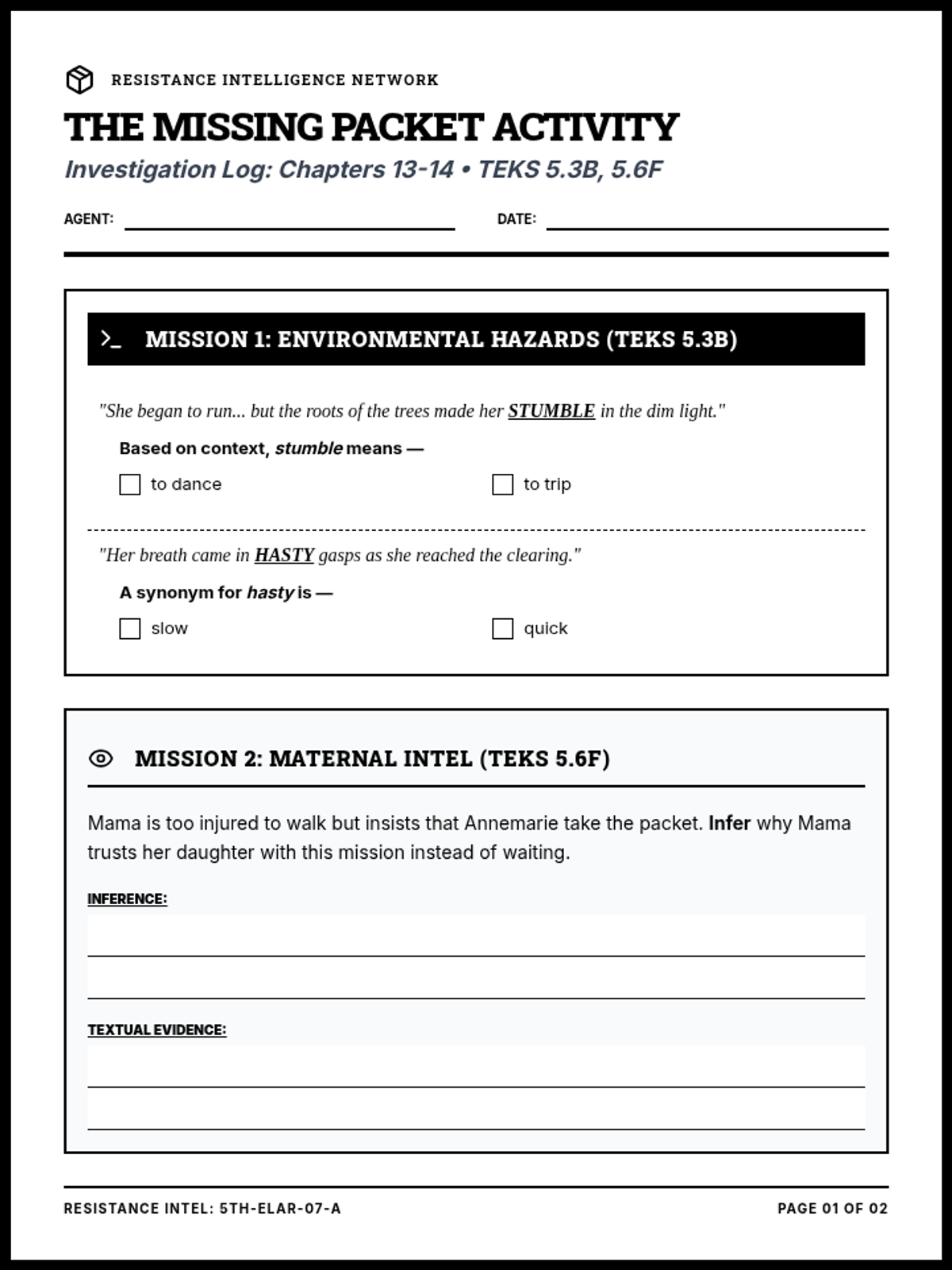
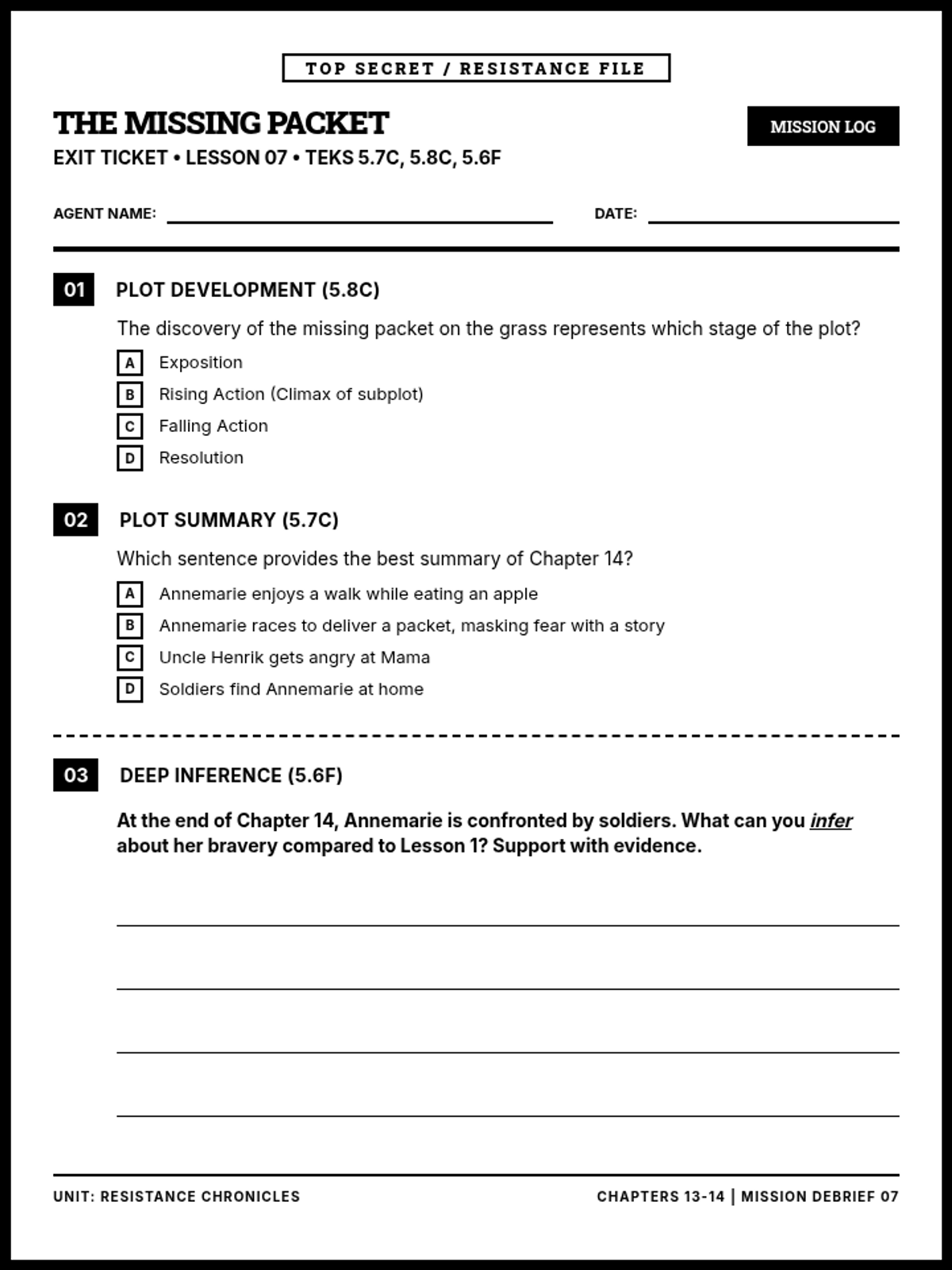
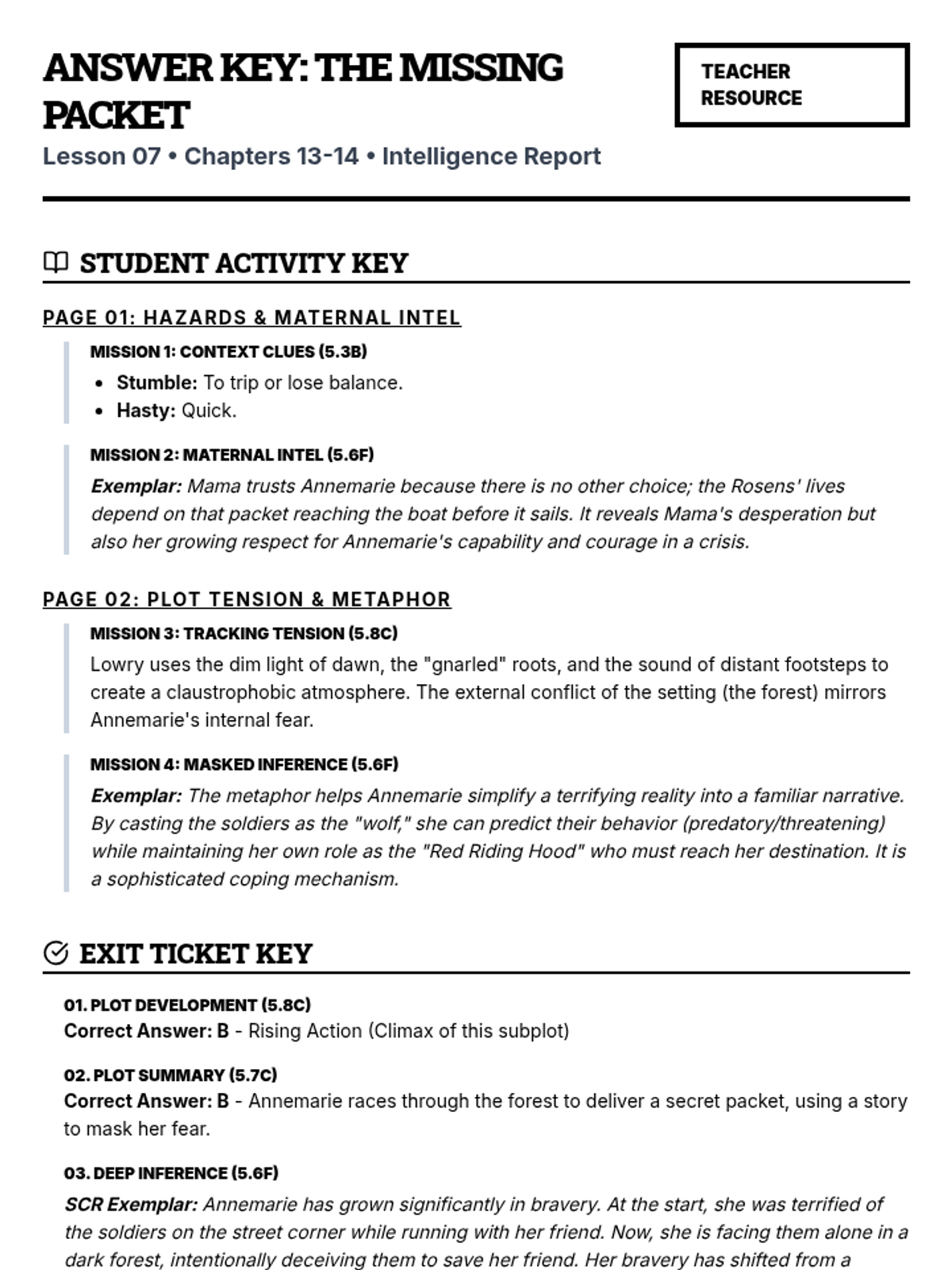
Students analyze the turning point in Chapters 13-14 as Annemarie must deliver the forgotten packet, making inferences about her courage and the risks of the forest path (TEKS 5.8C, 5.6F).
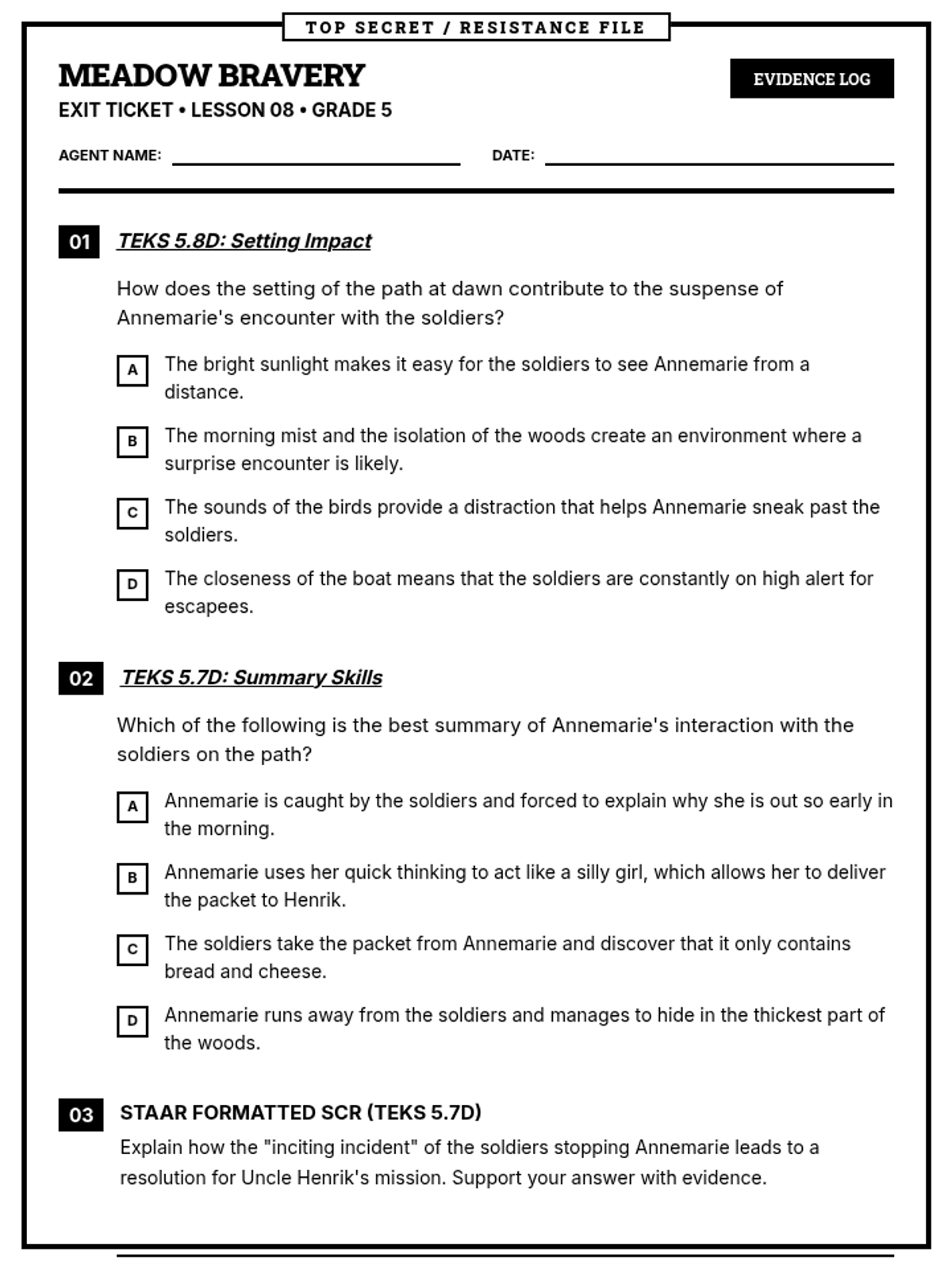
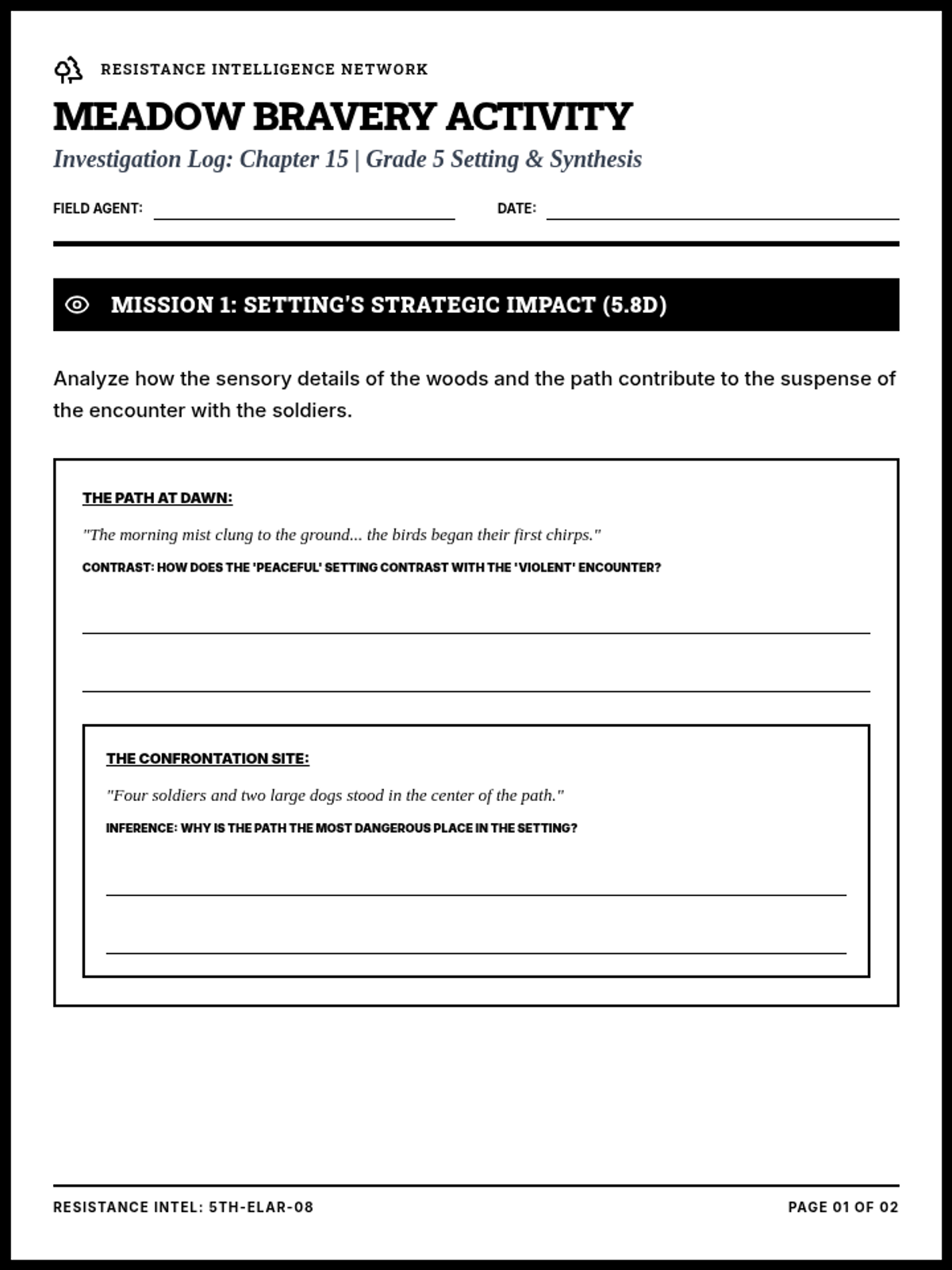
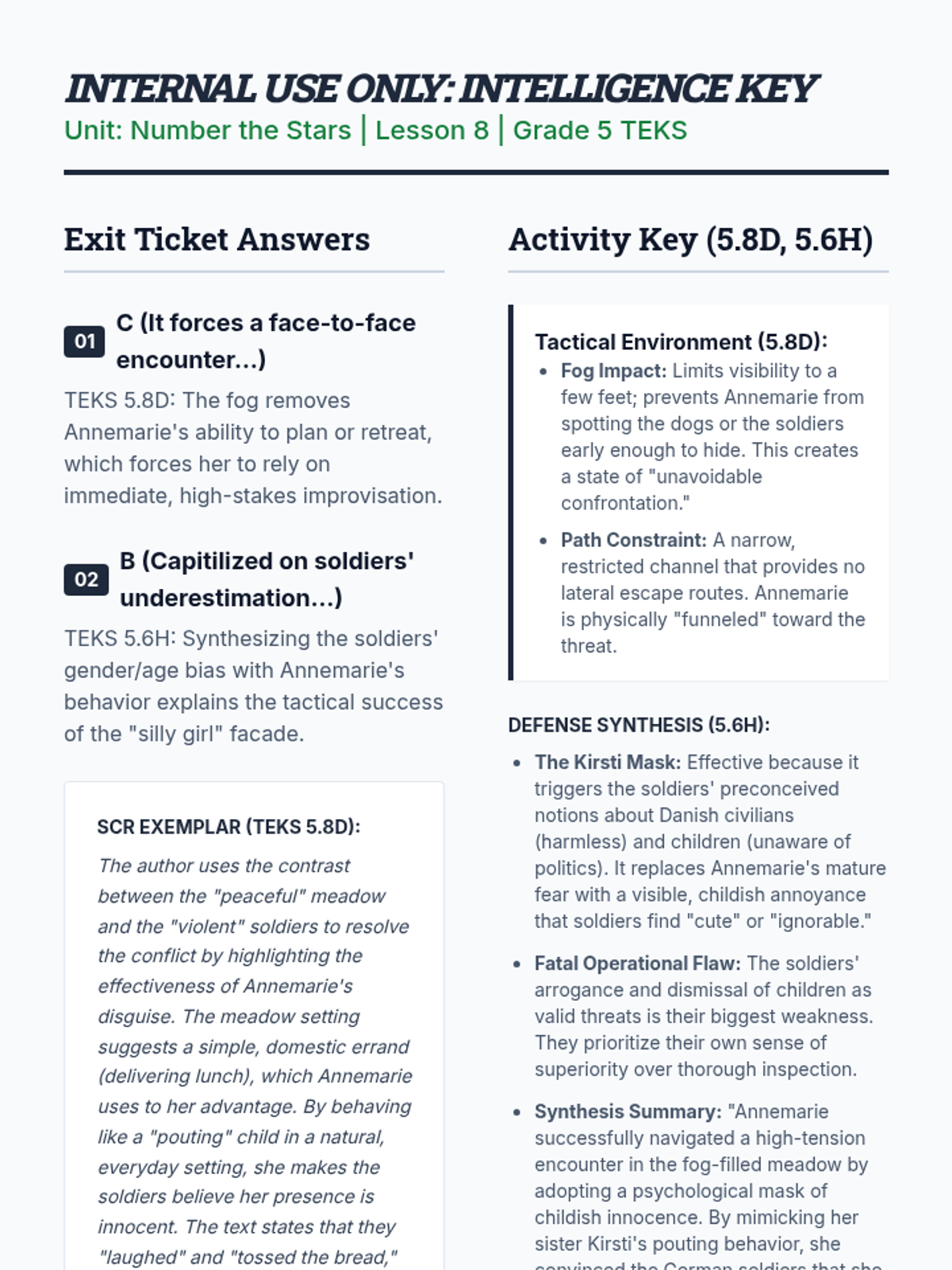
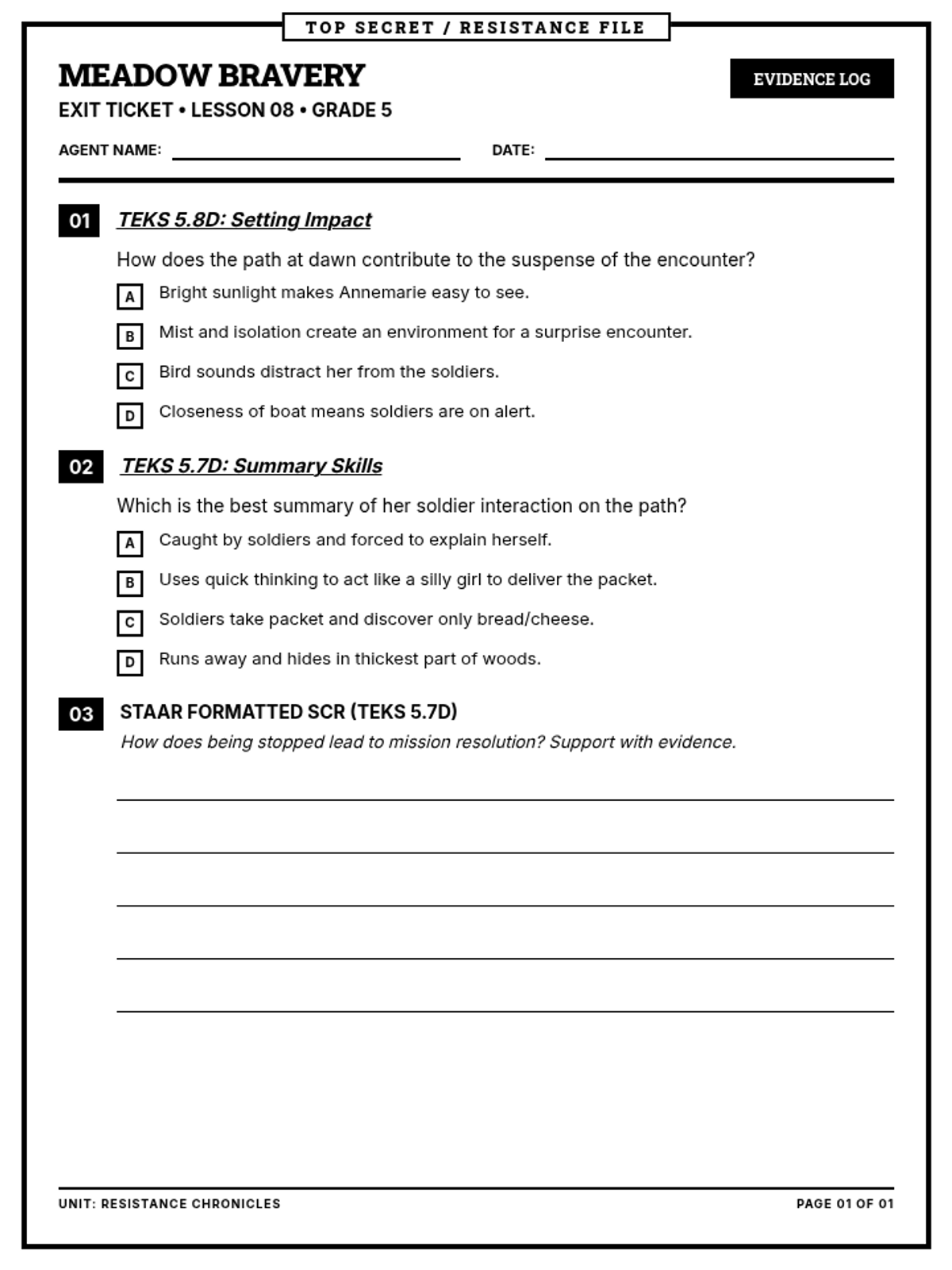
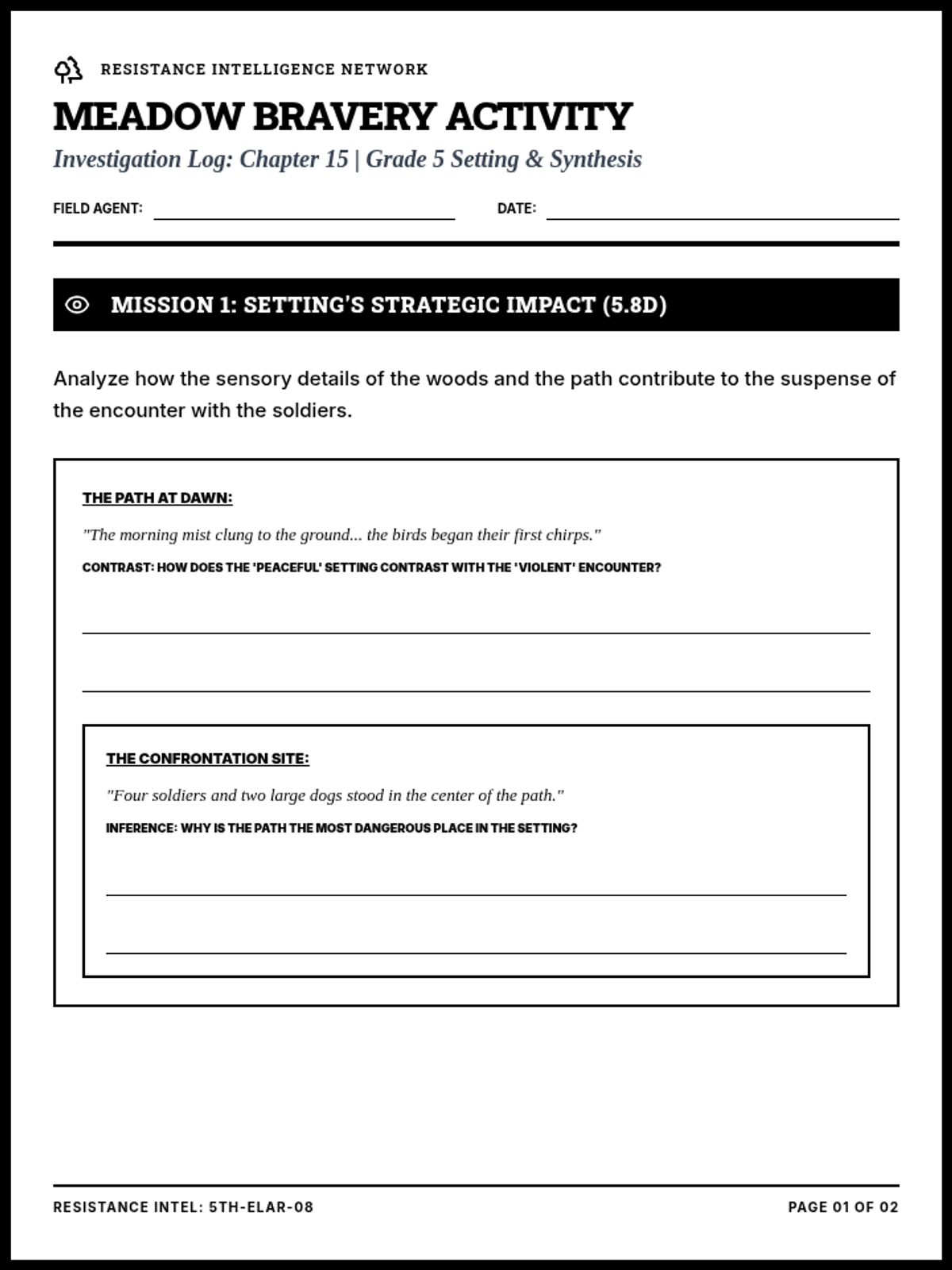
Students examine the setting's impact on the plot and synthesize details from Annemarie's encounter with the soldiers in the woods.
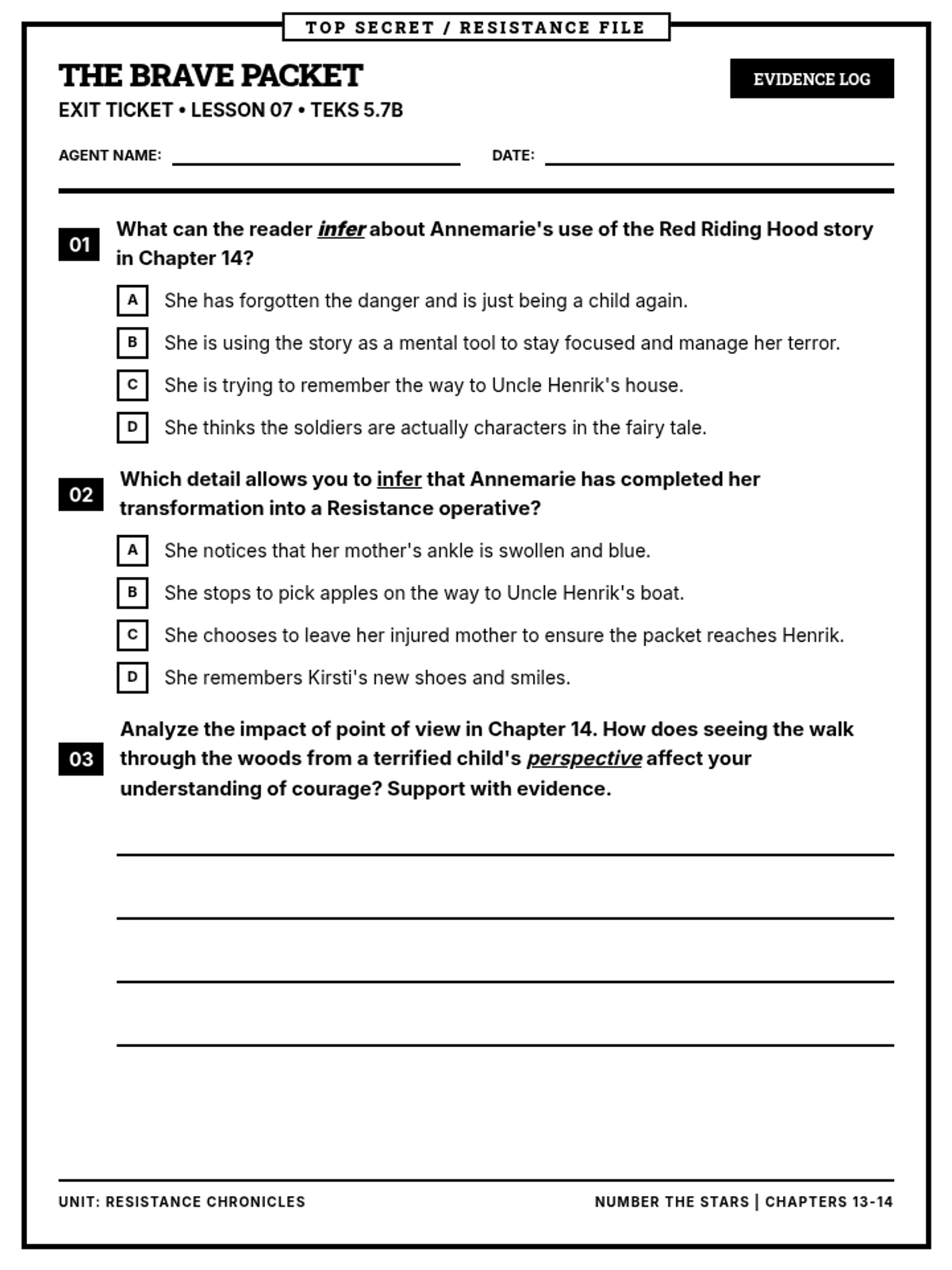
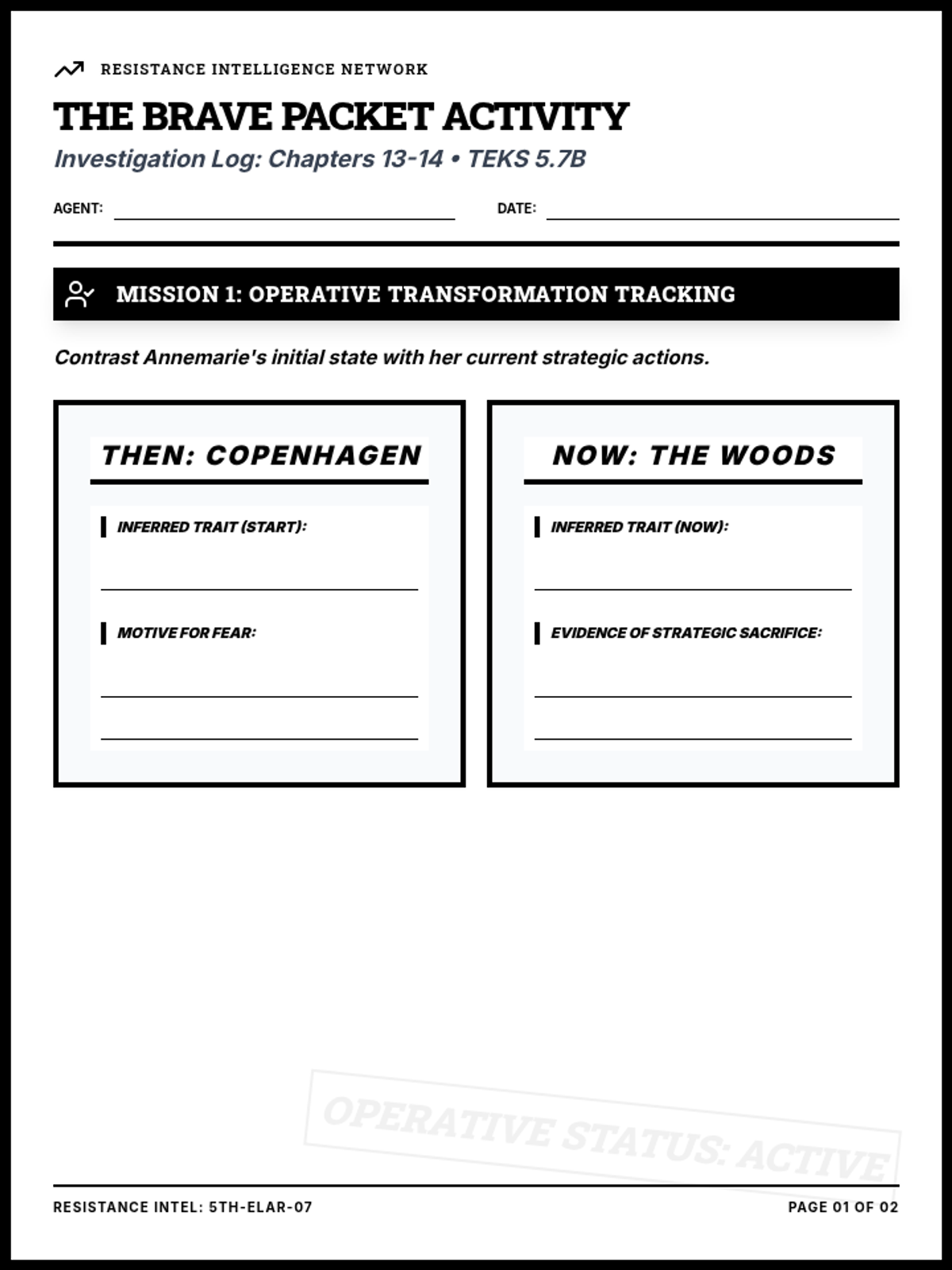
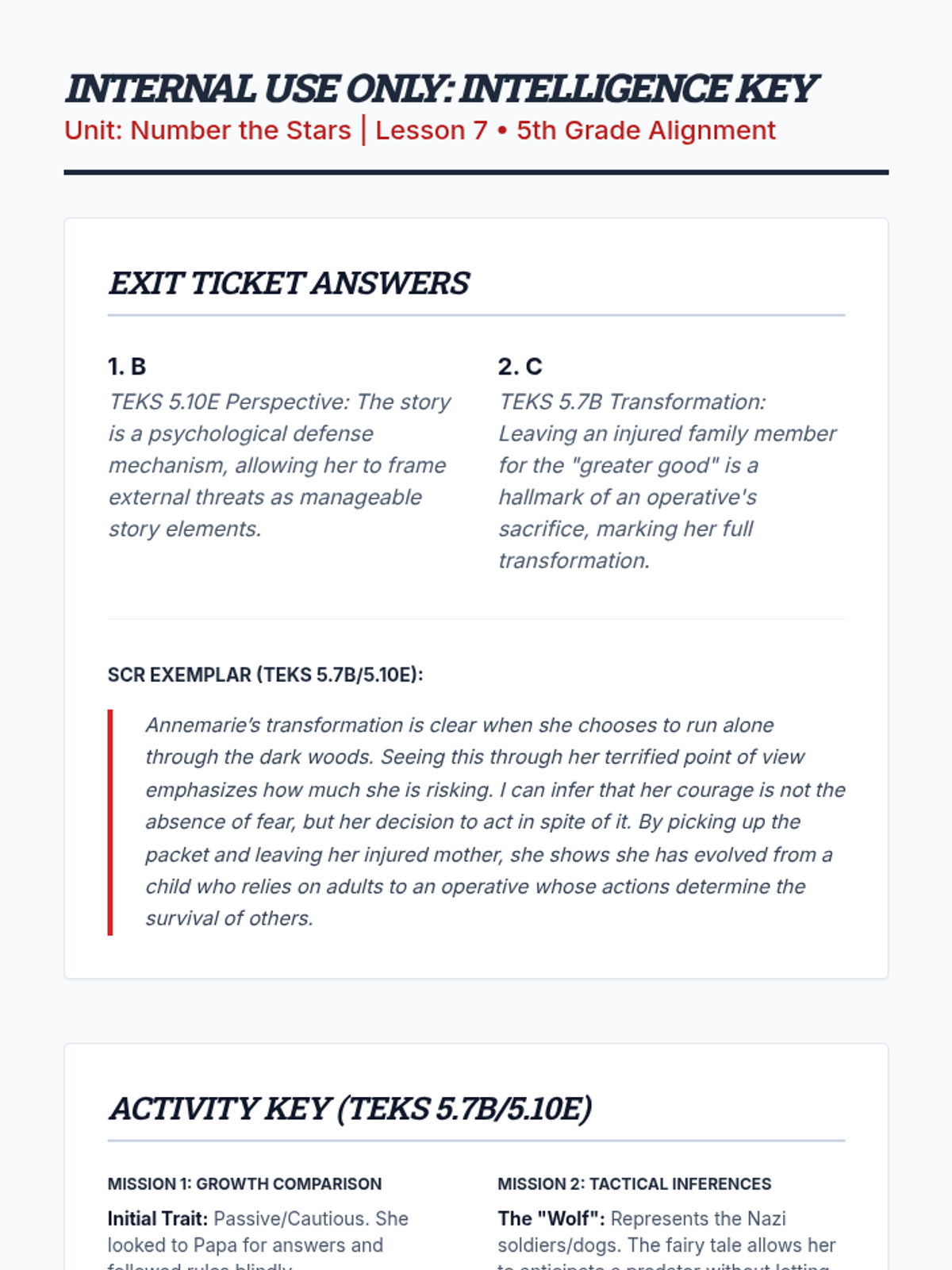
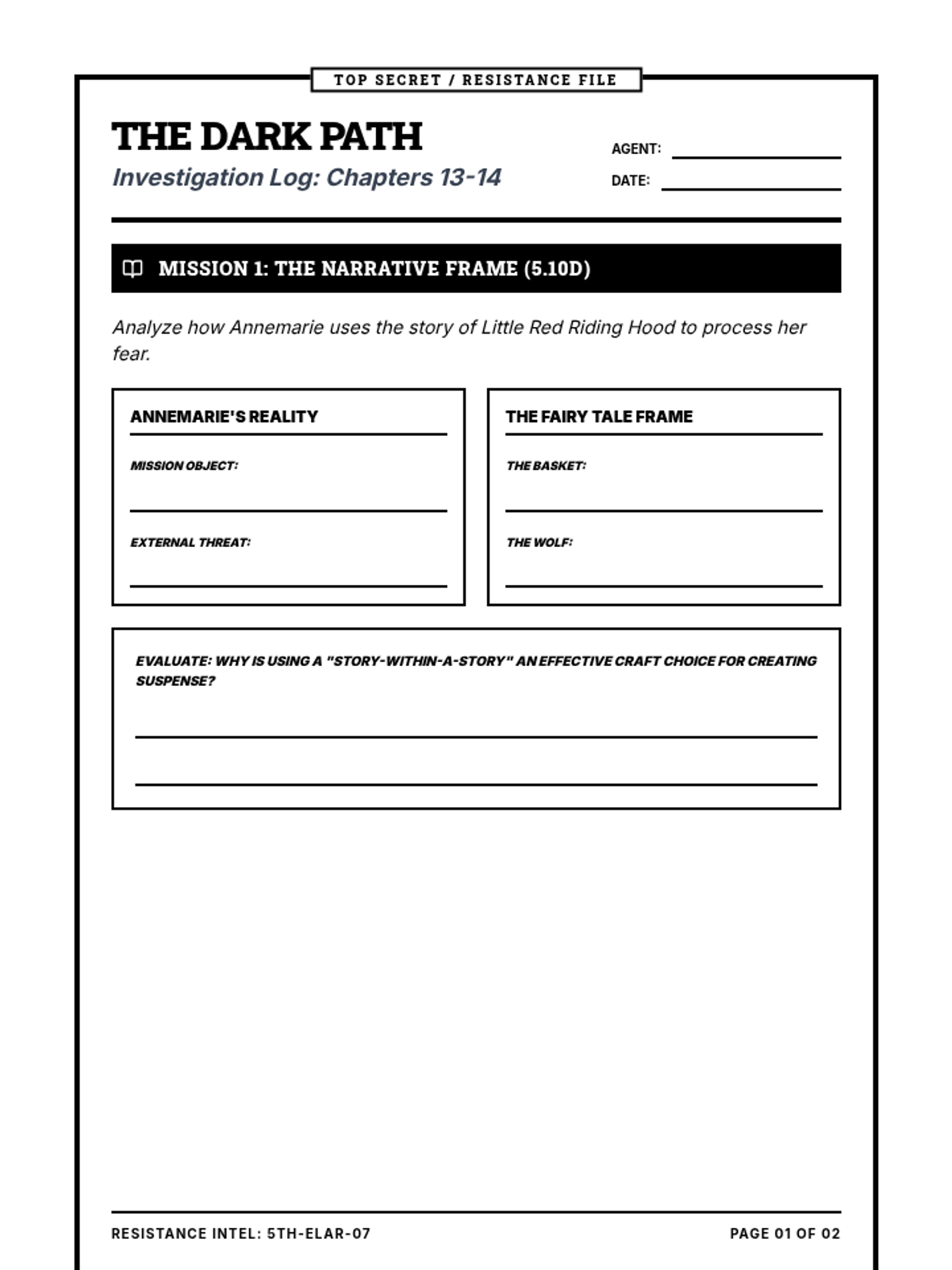
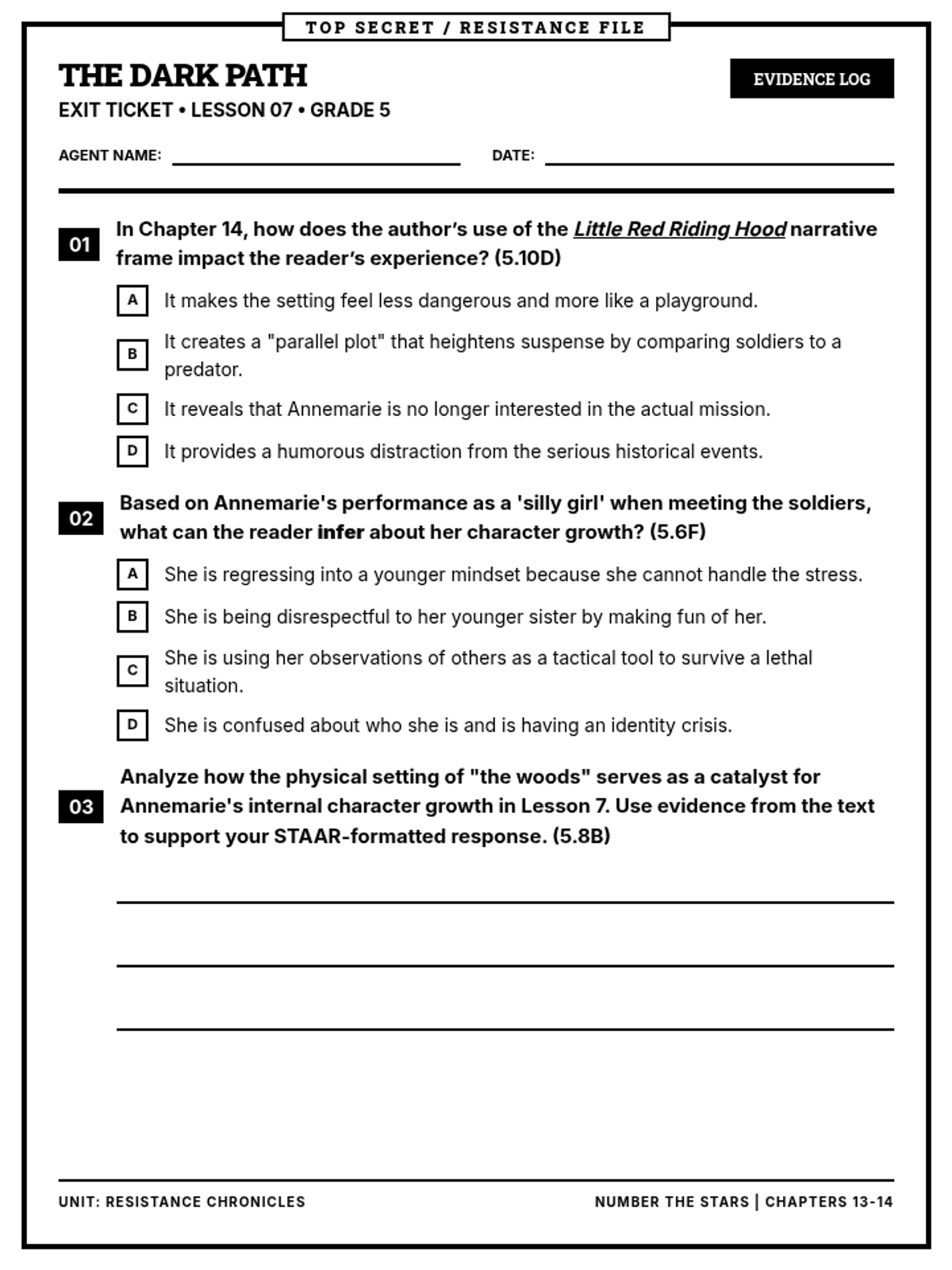
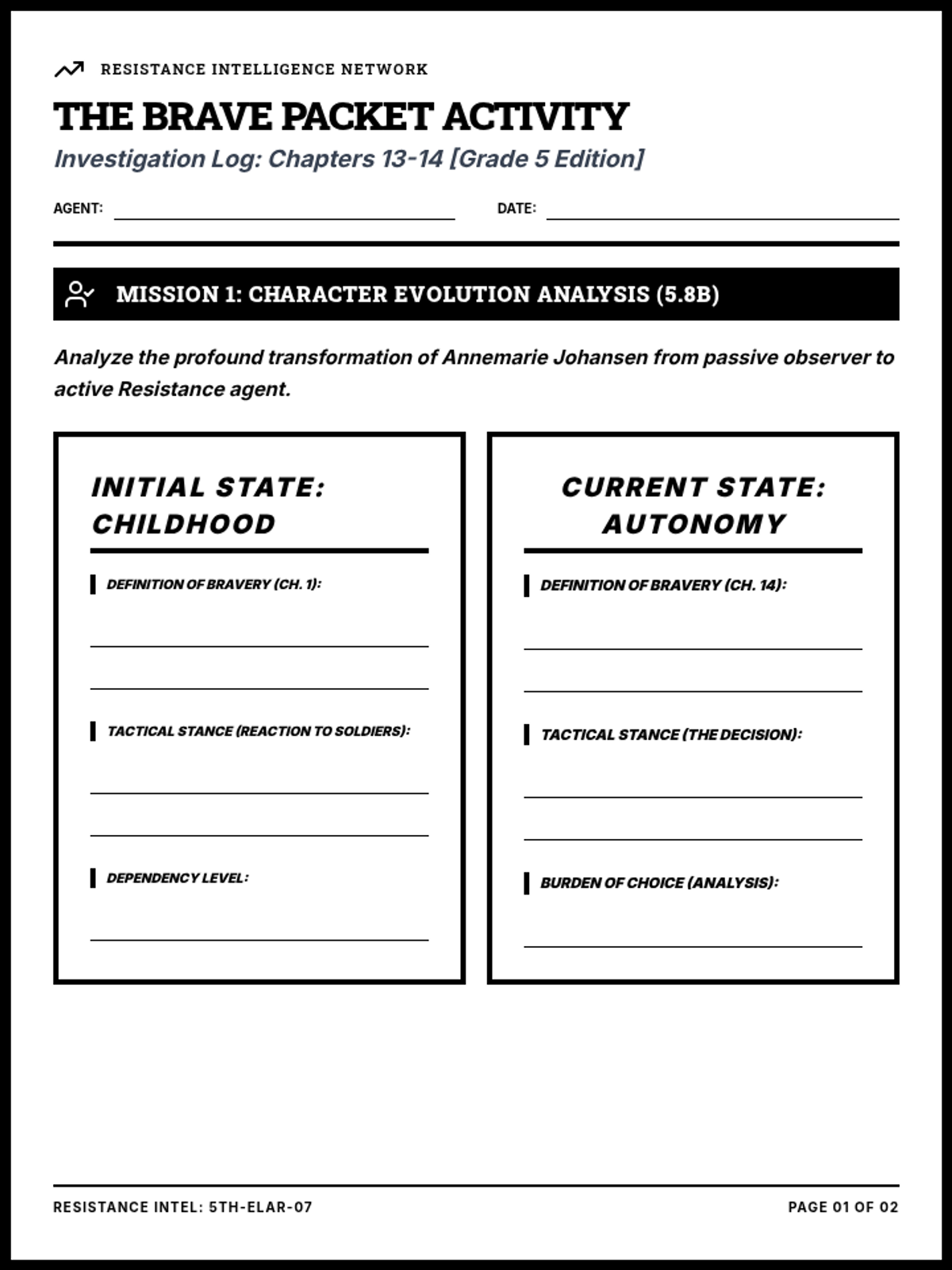
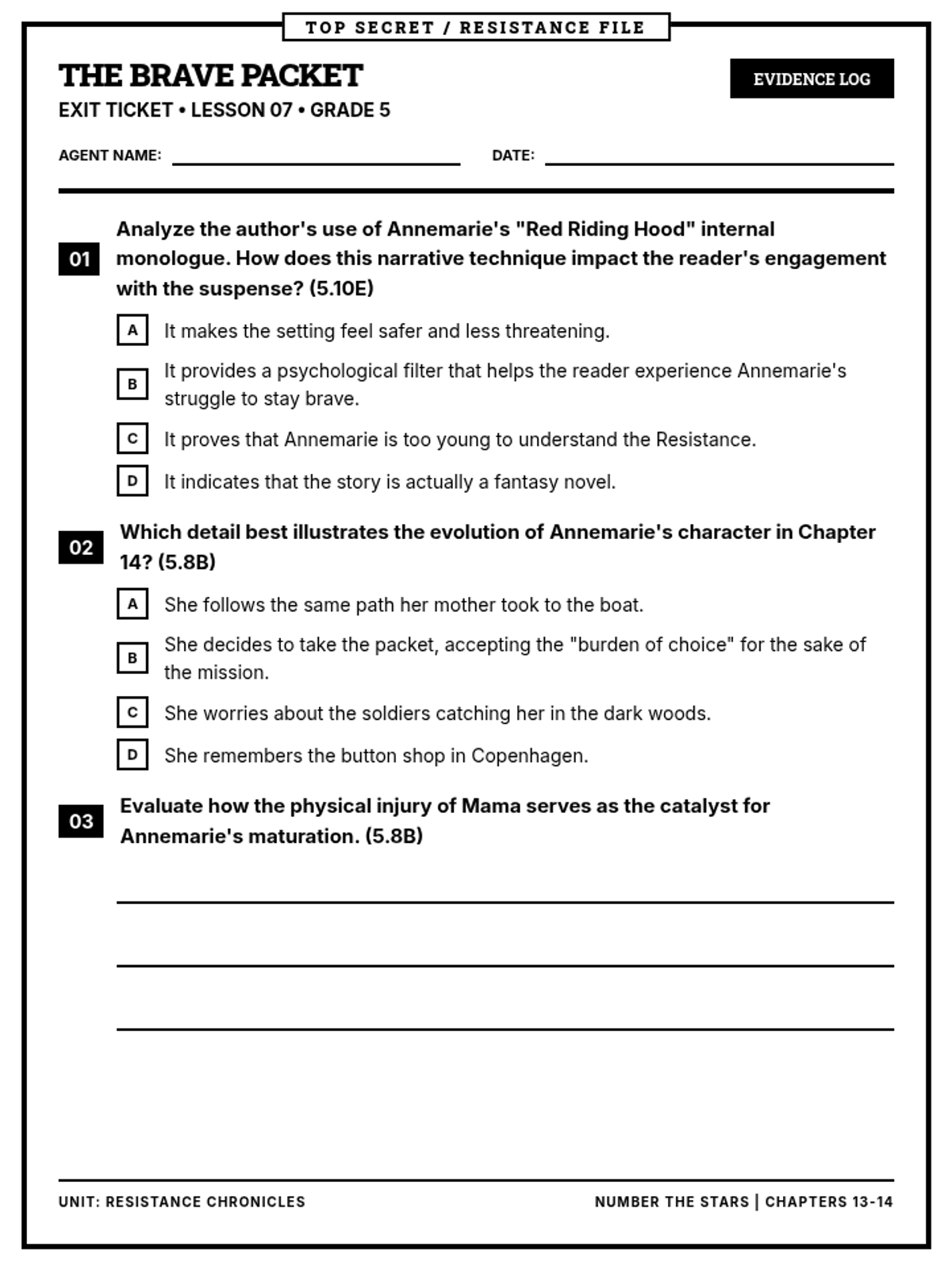
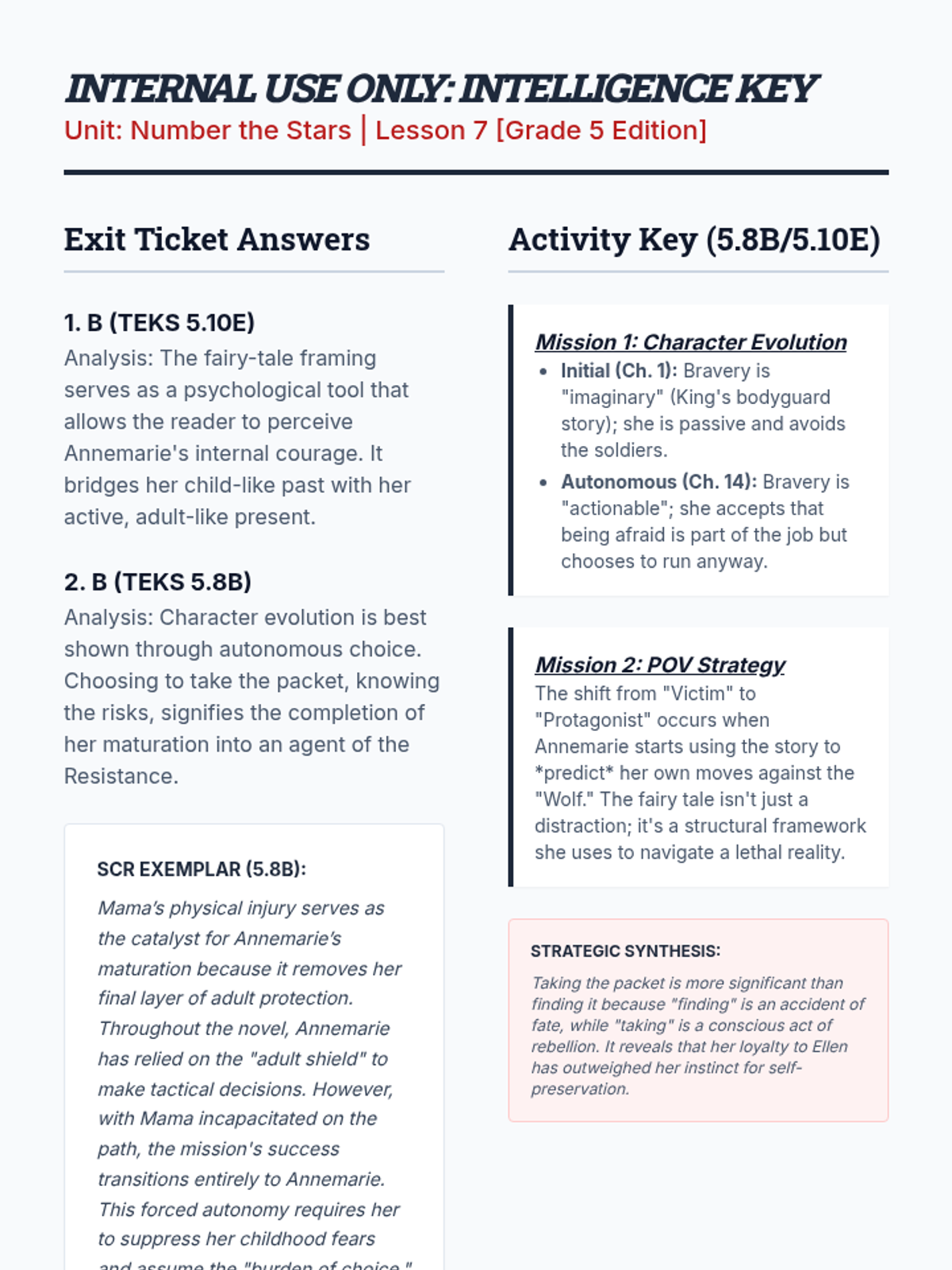
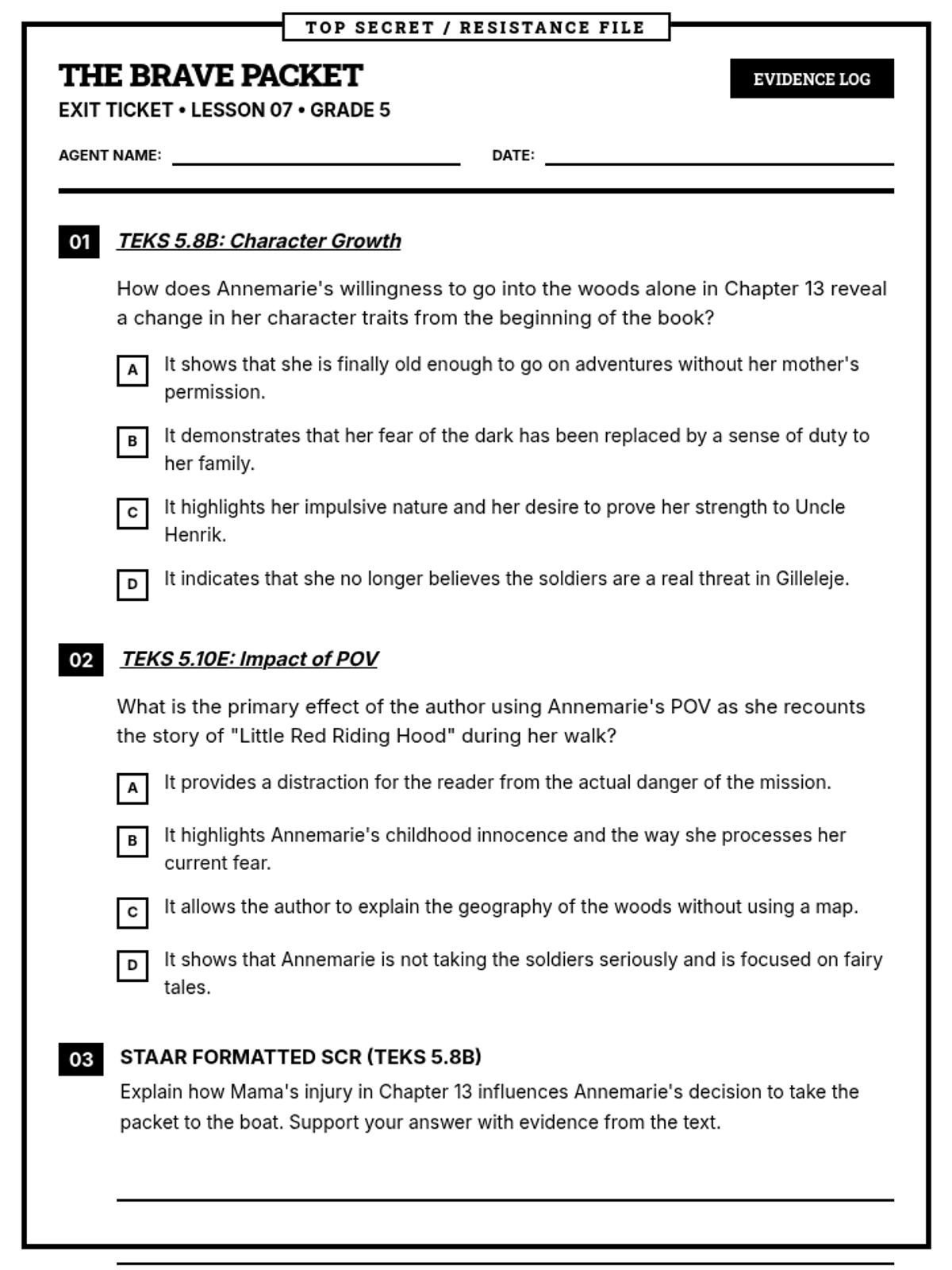
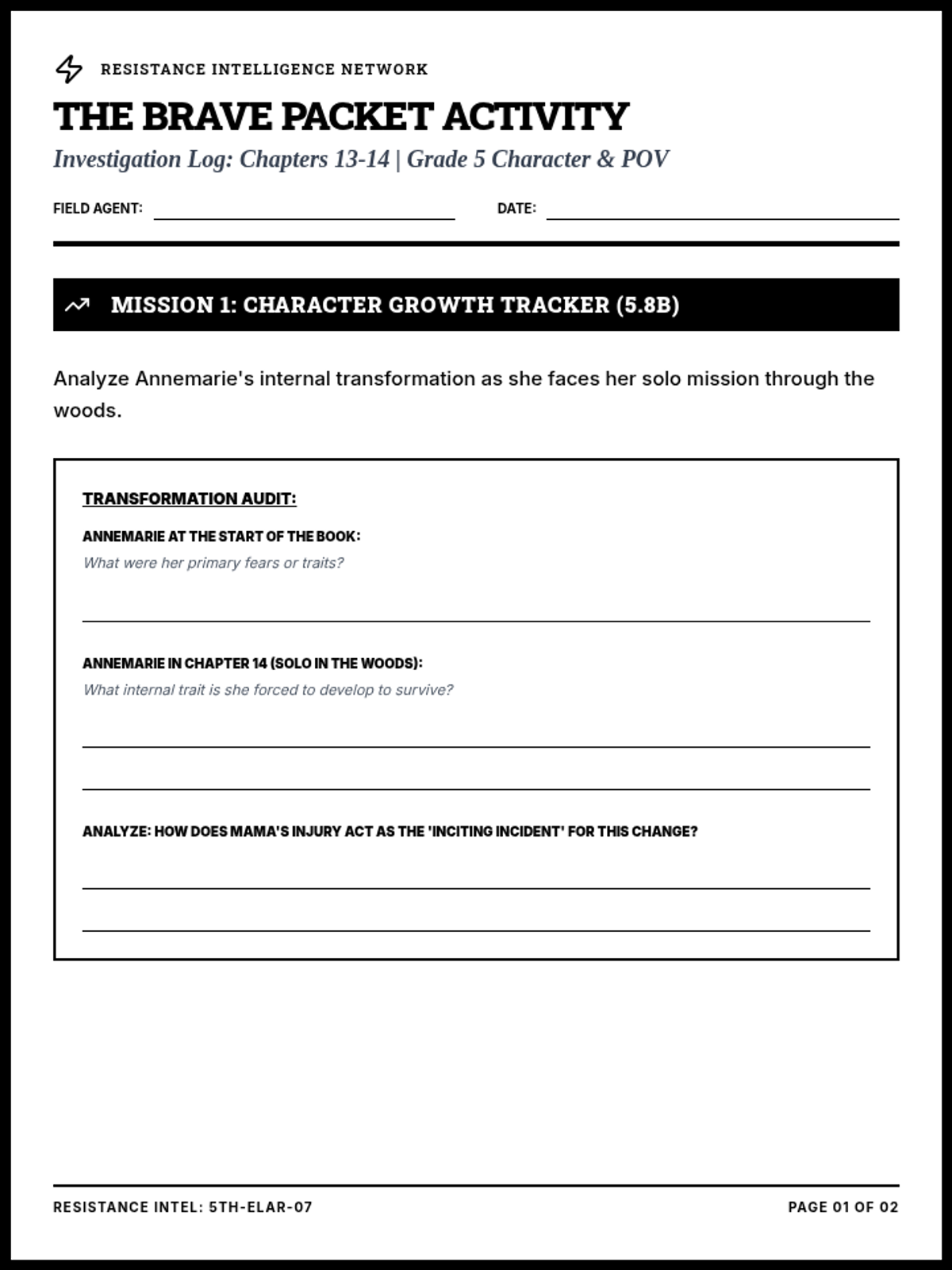
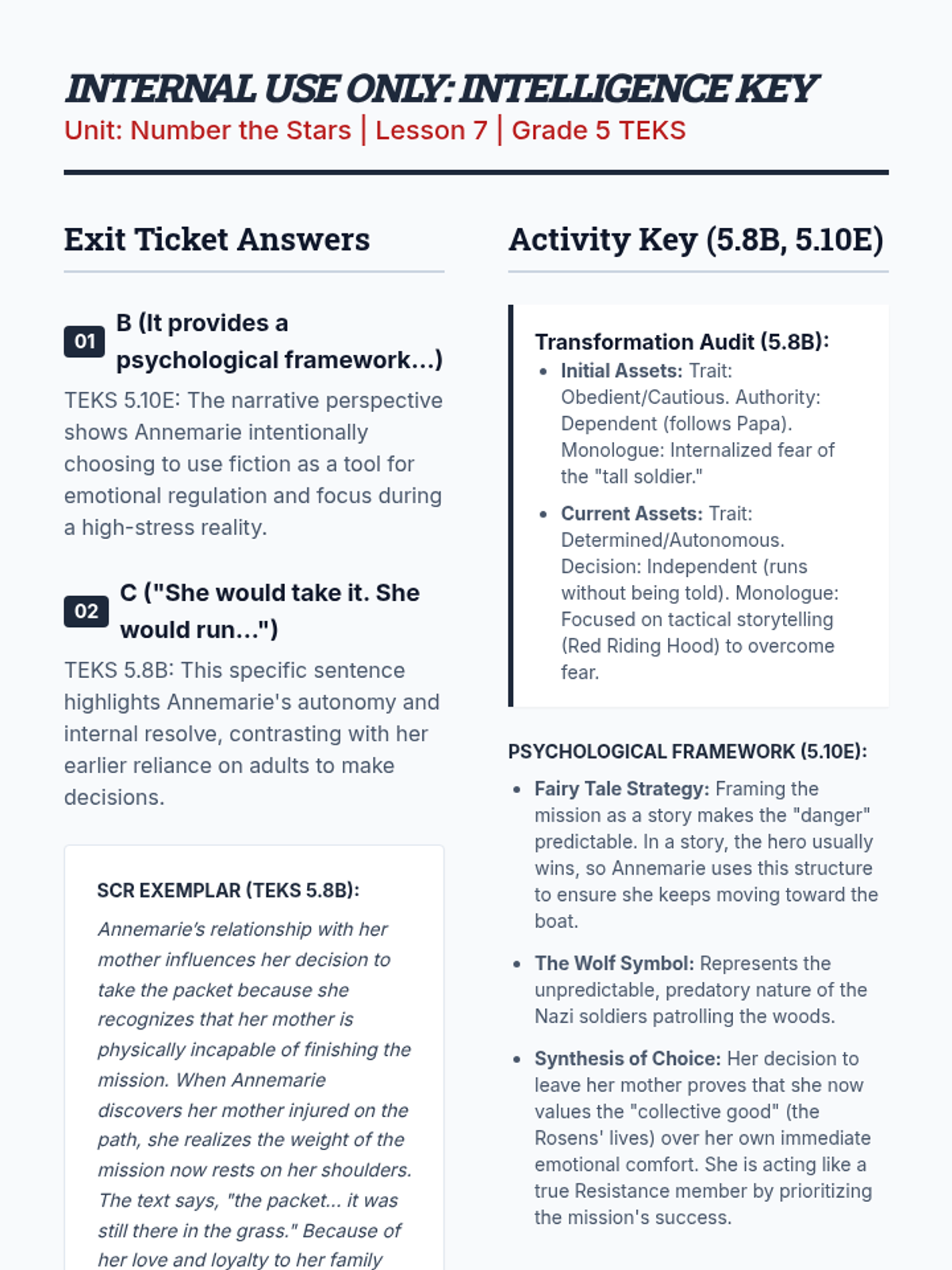
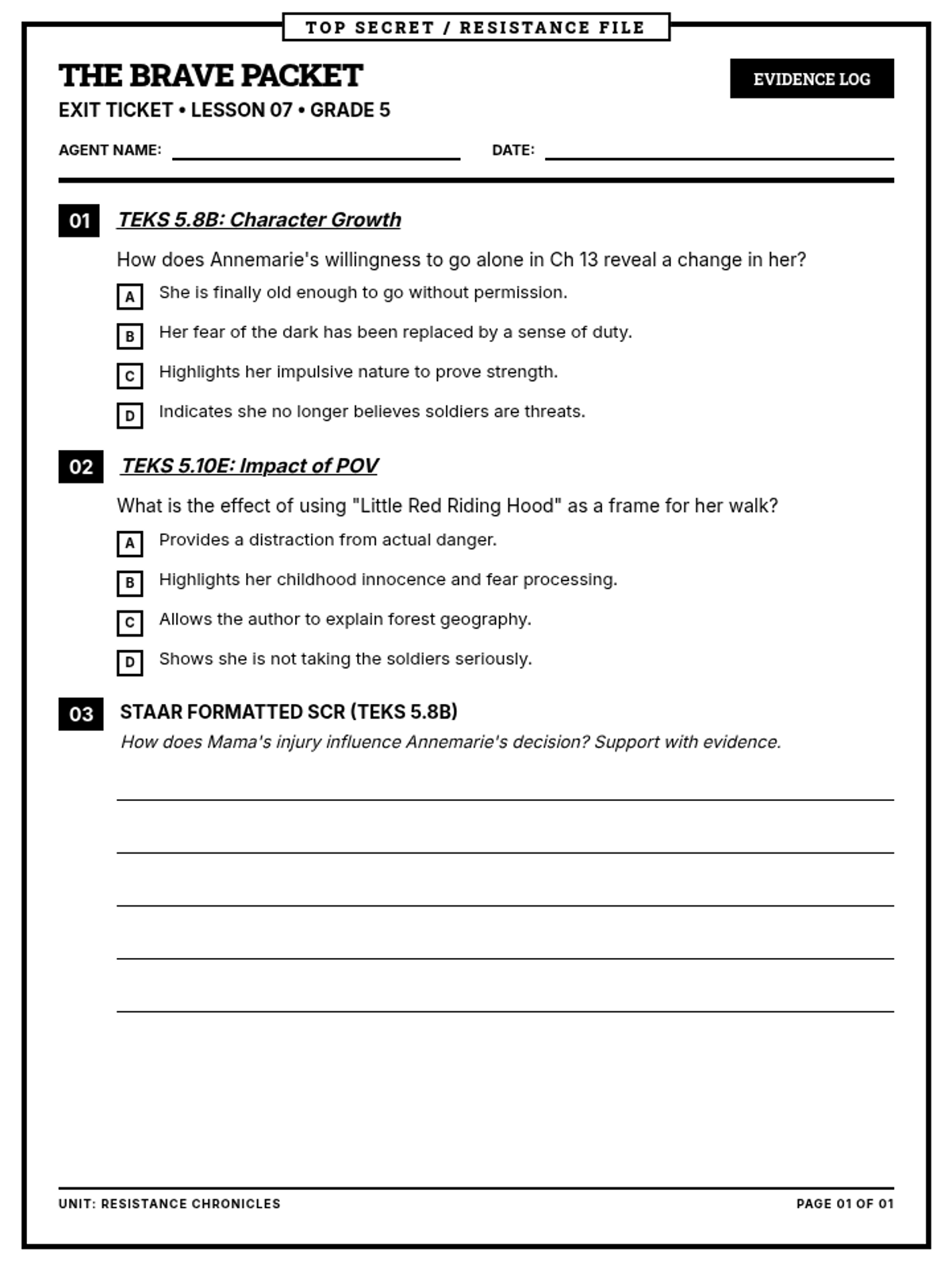
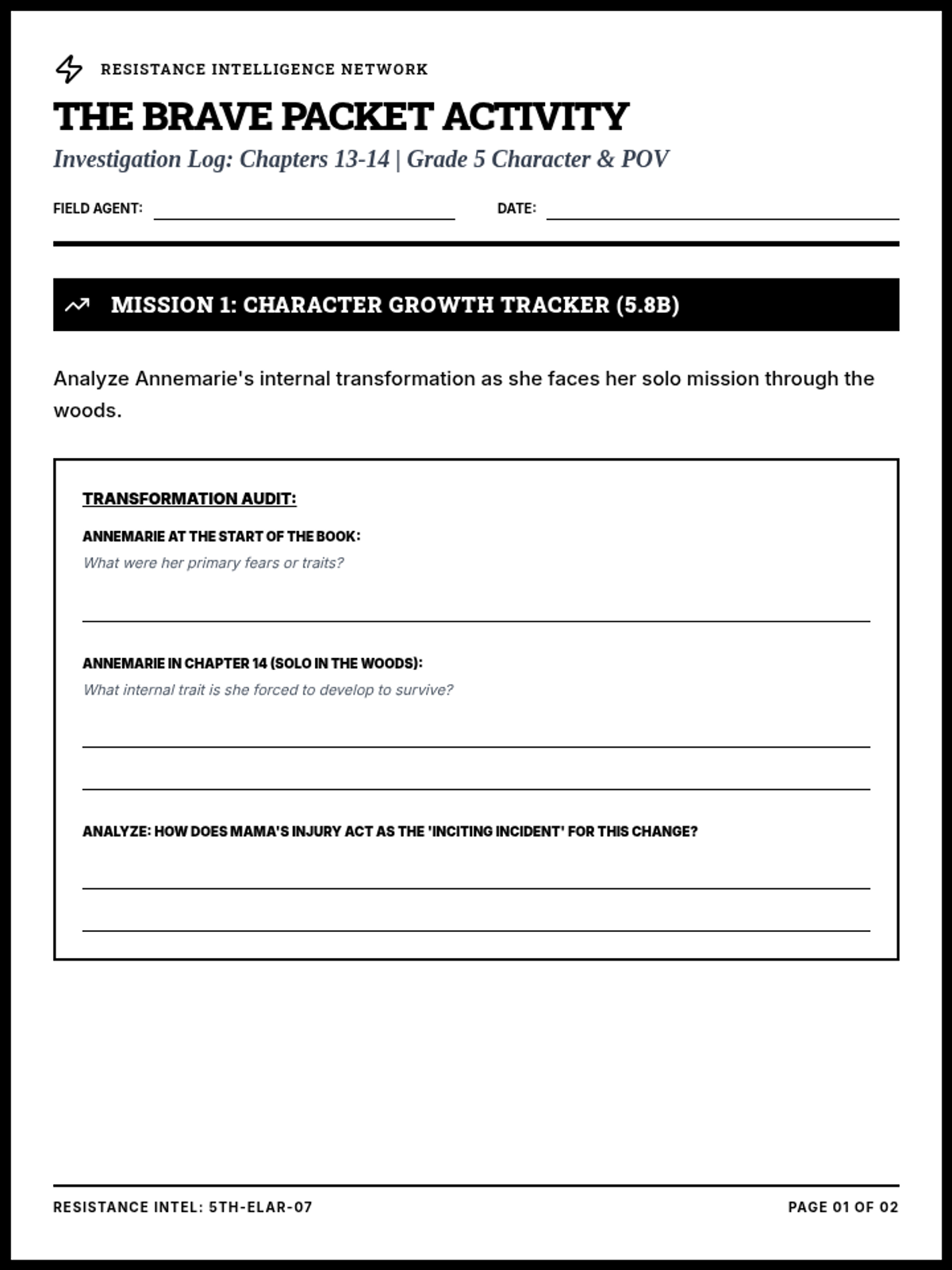
Students analyze character growth and the impact of point of view as Annemarie takes on a dangerous mission in chapters 13 and 14.
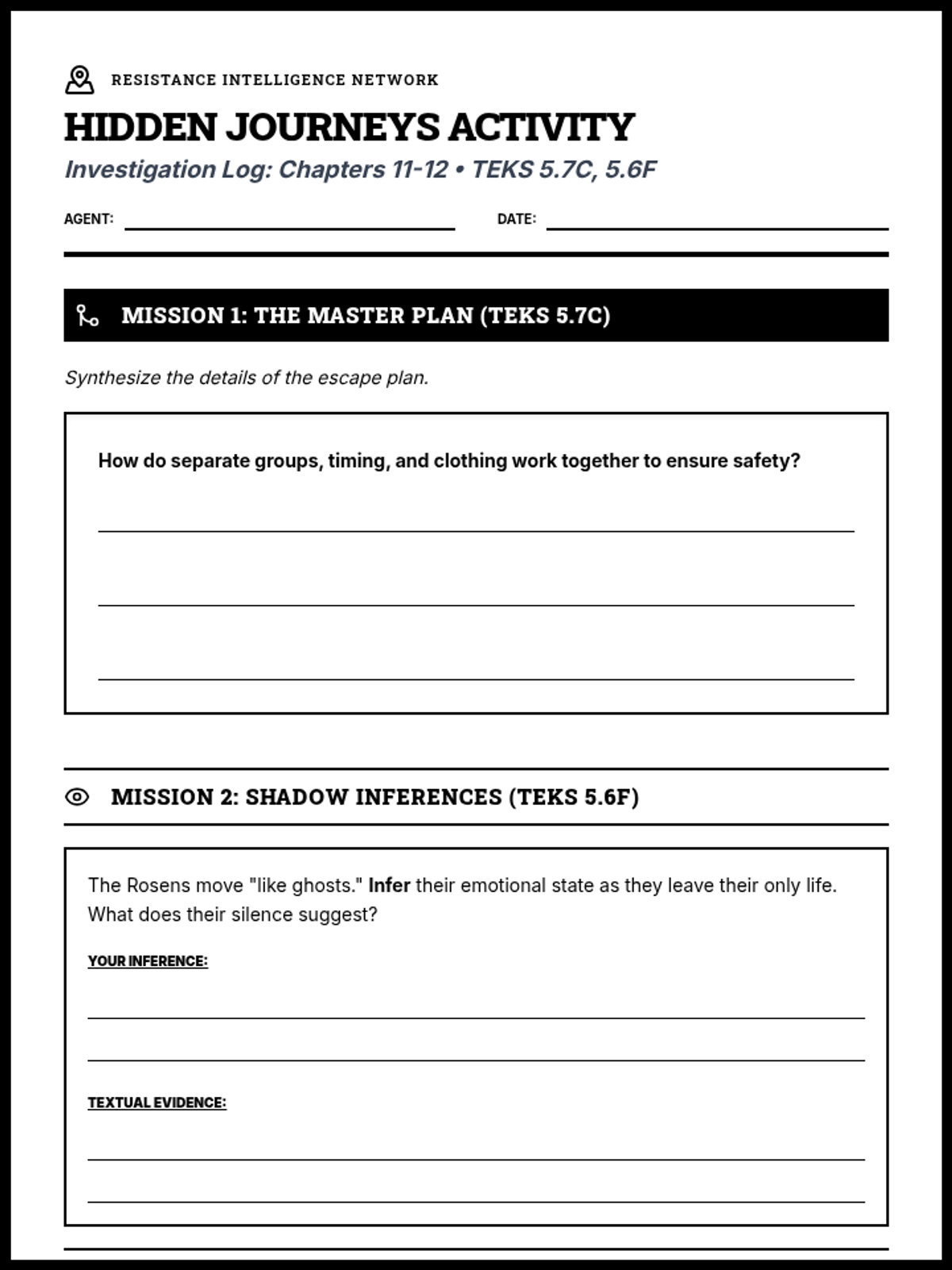
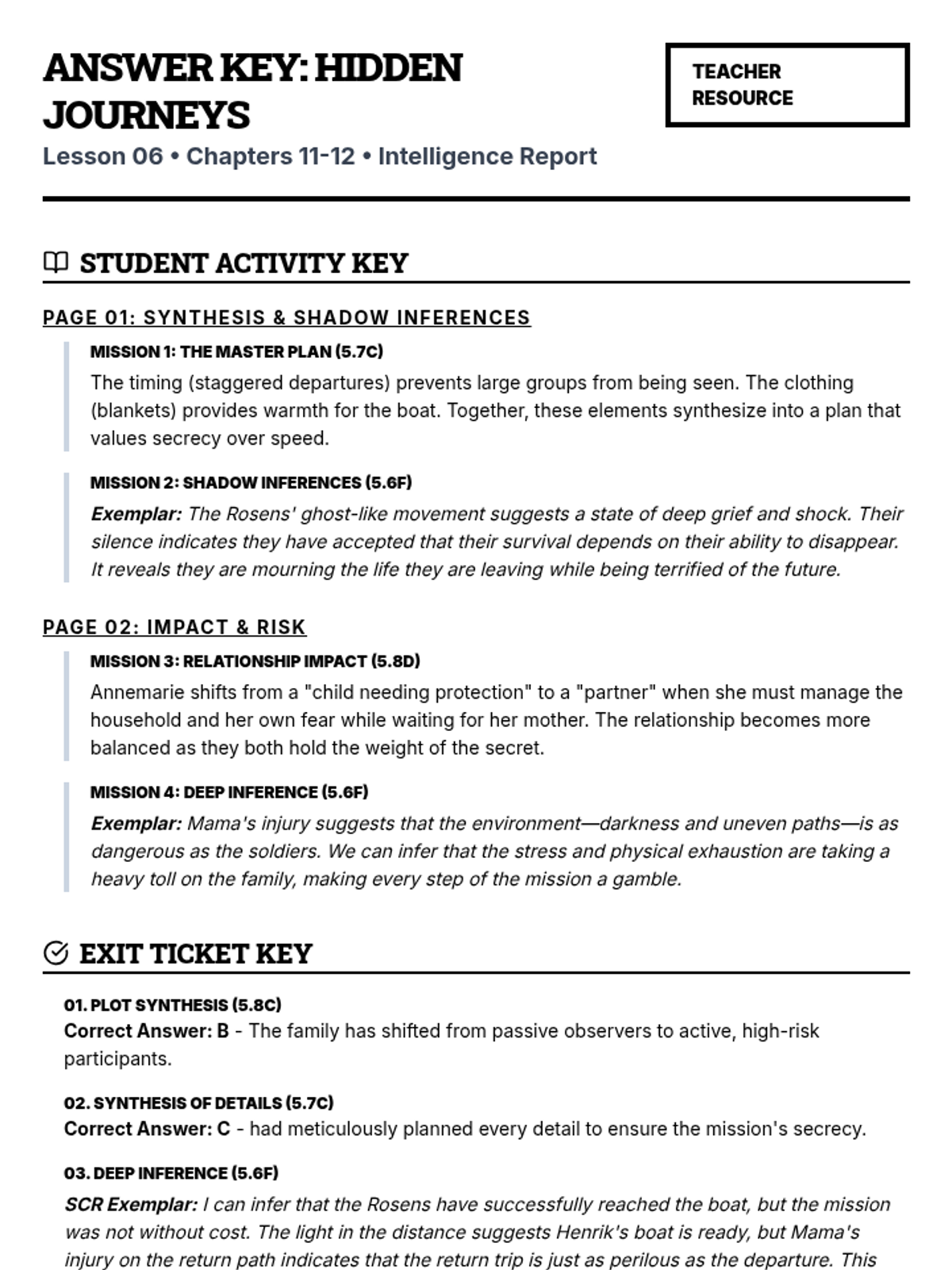
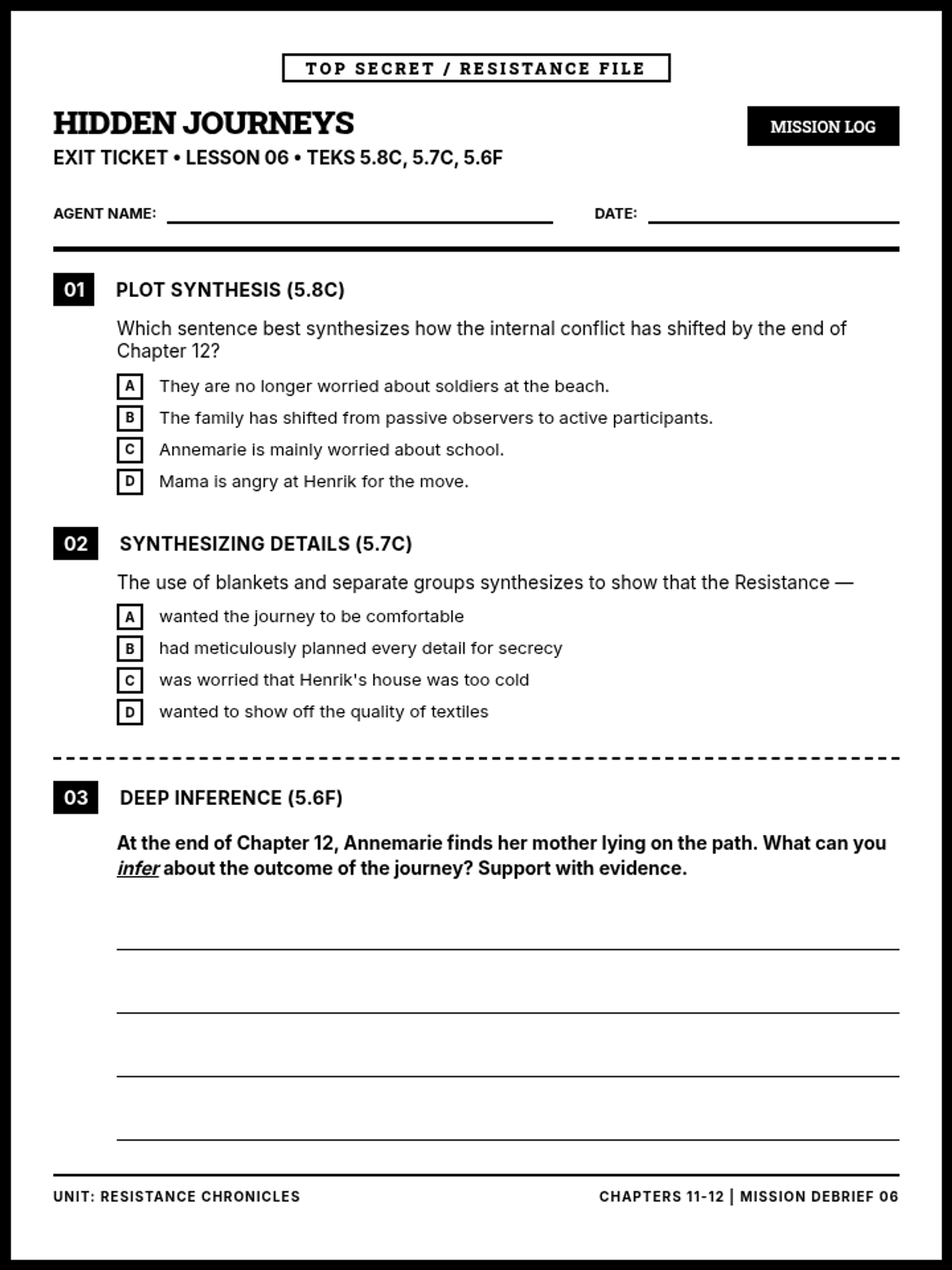
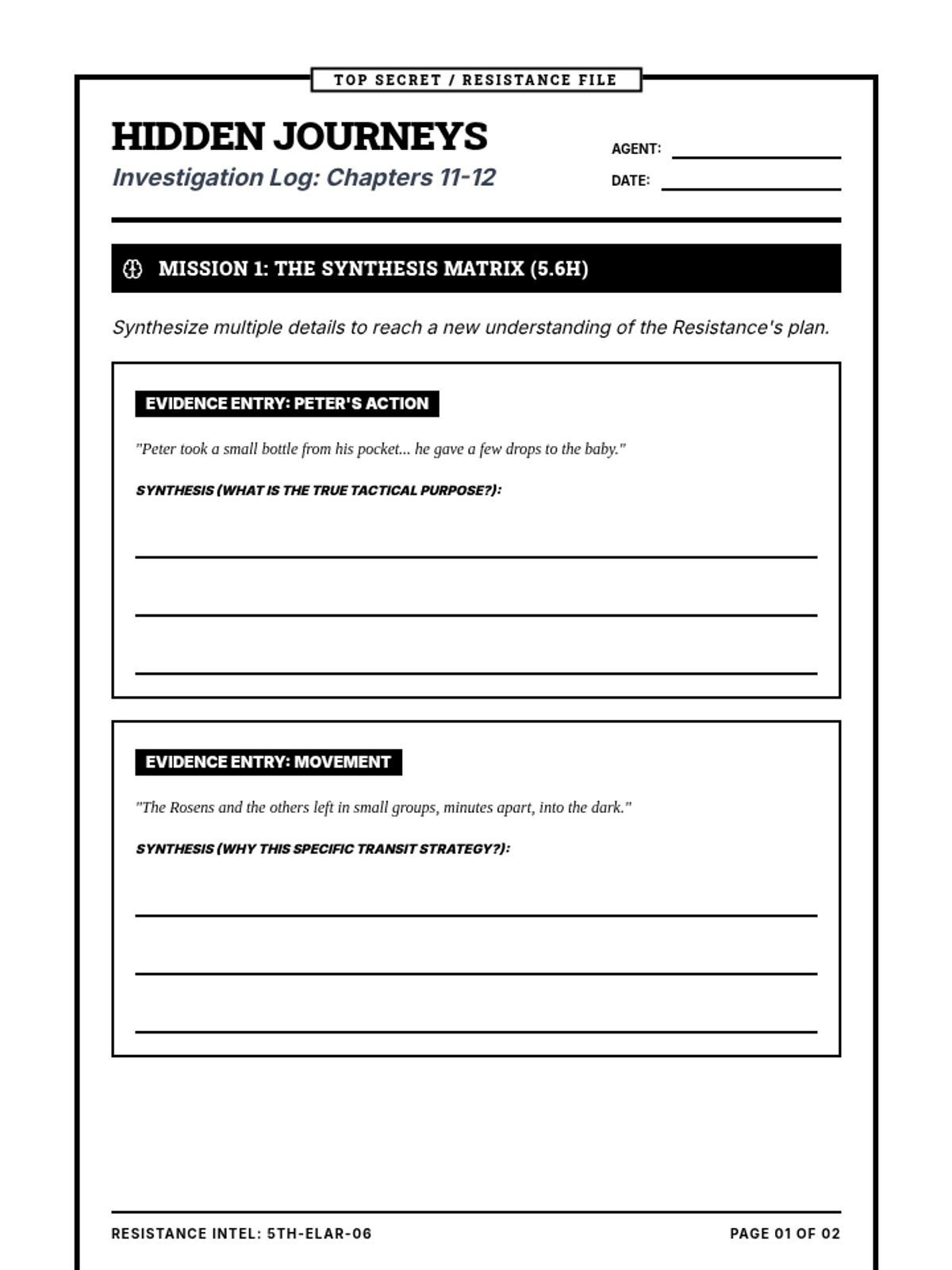
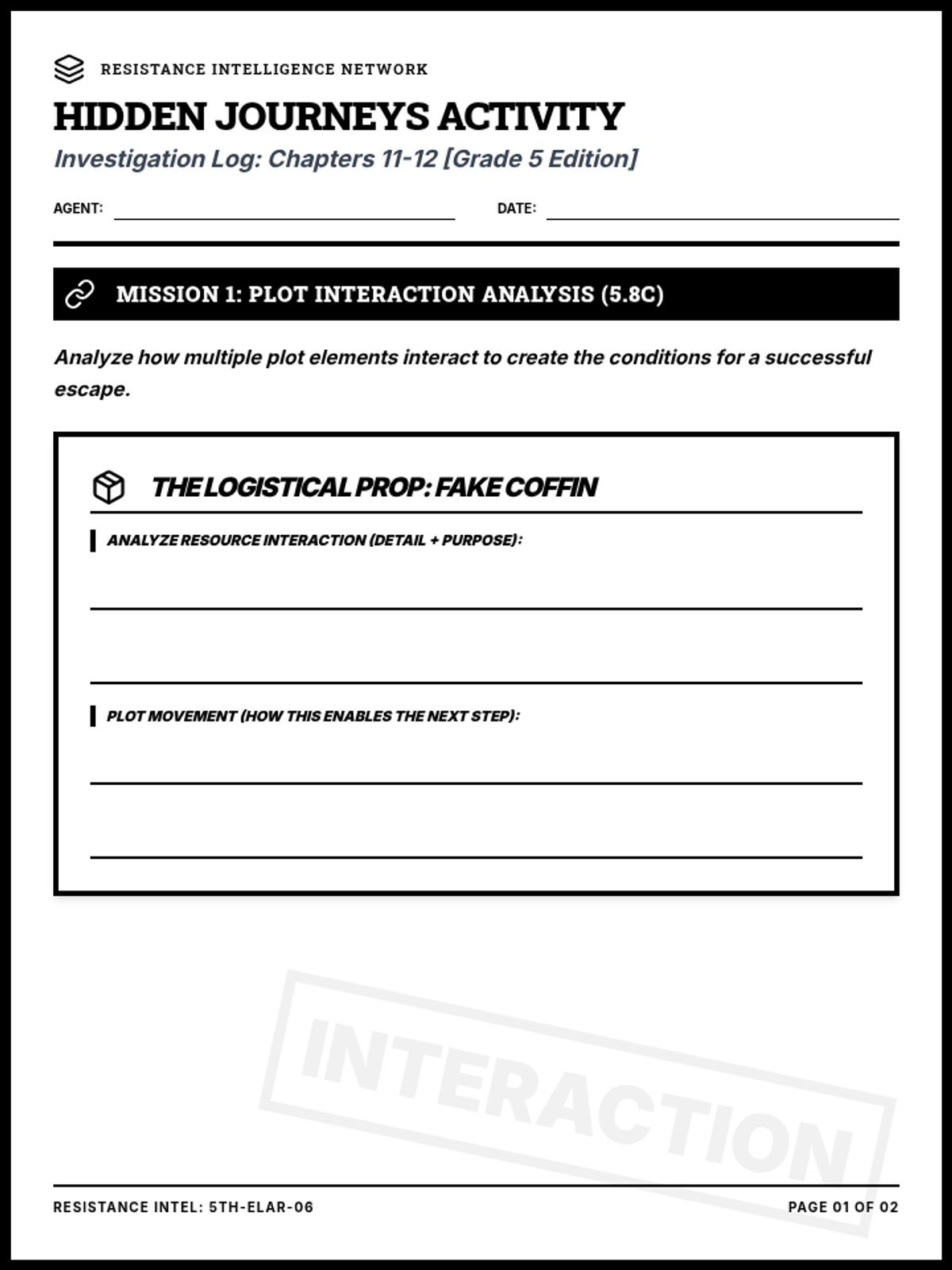
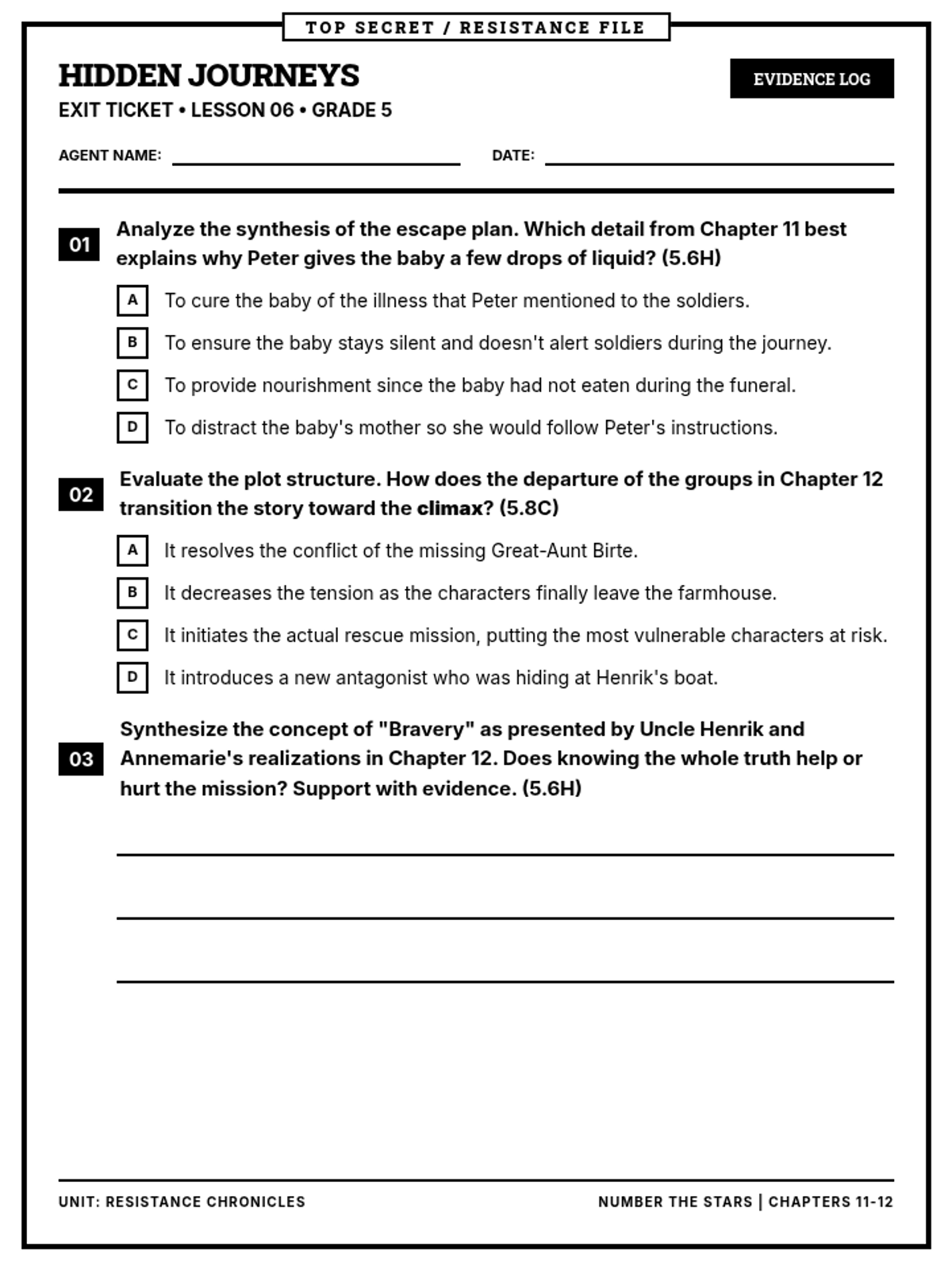
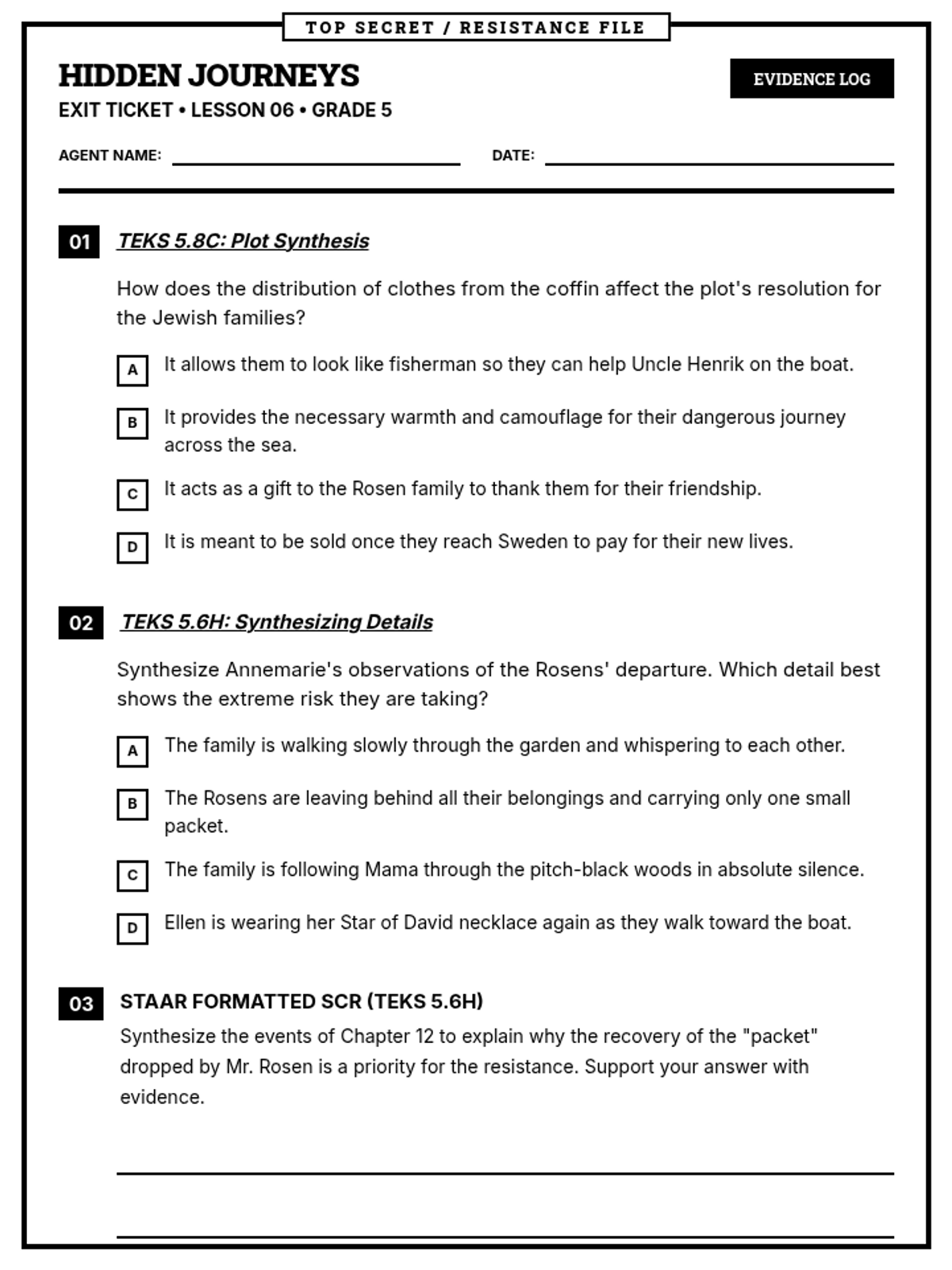
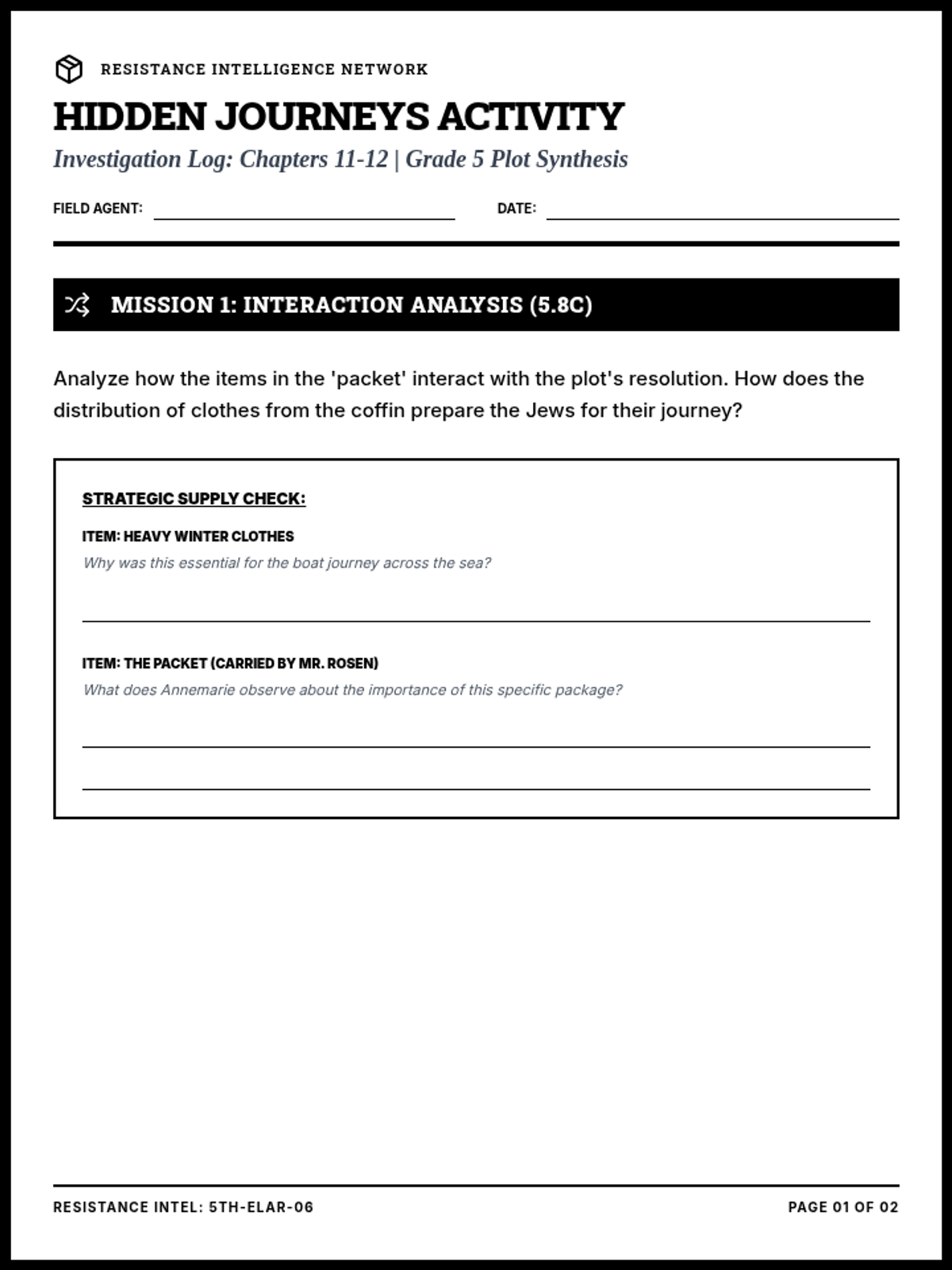
Focusing on chapters 11 and 12, students analyze plot elements and infer the hidden risks of the escape to the boat, synthesizing information to summarize the plan's complexity (TEKS 5.8C, 5.6F).
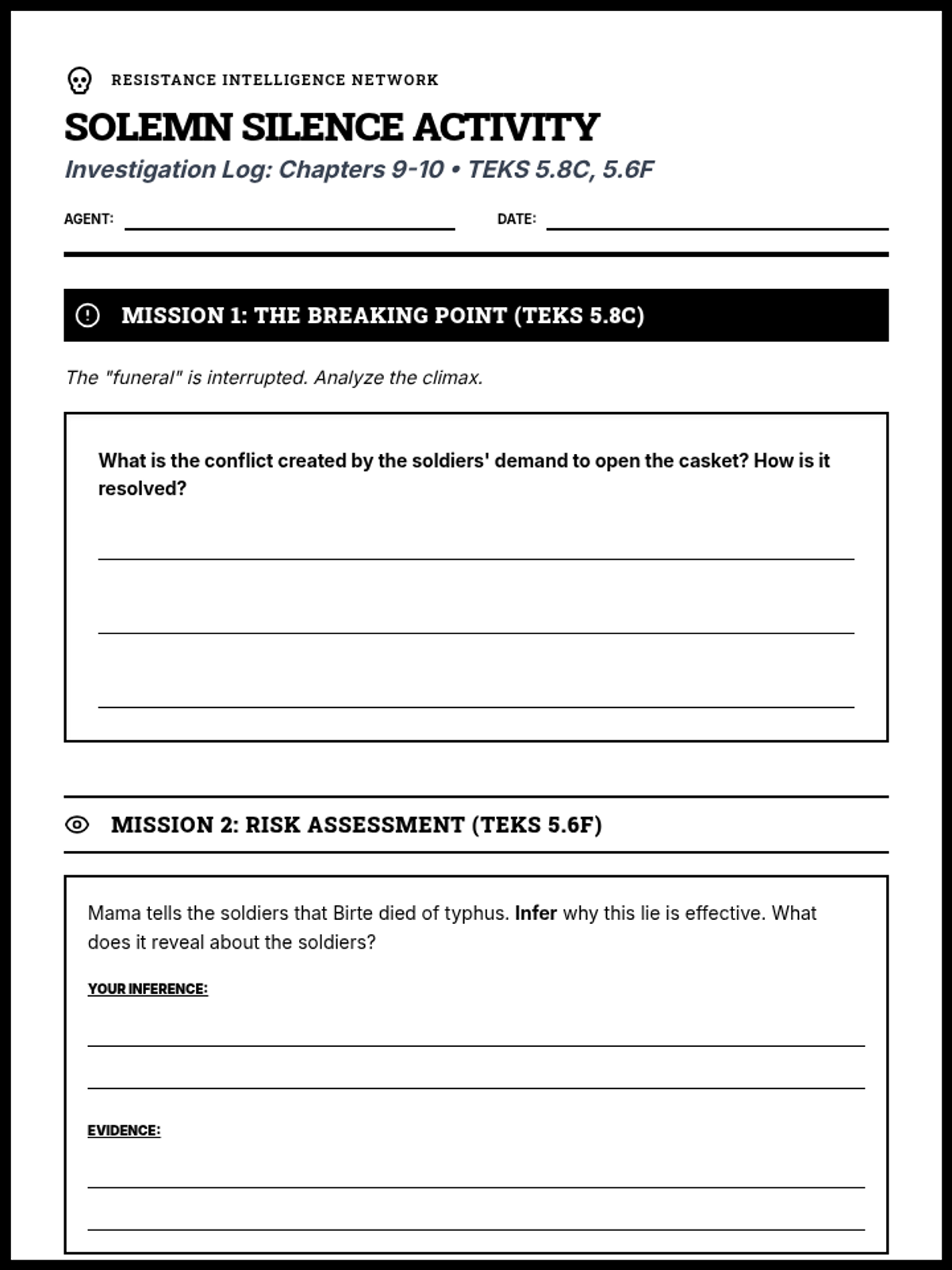
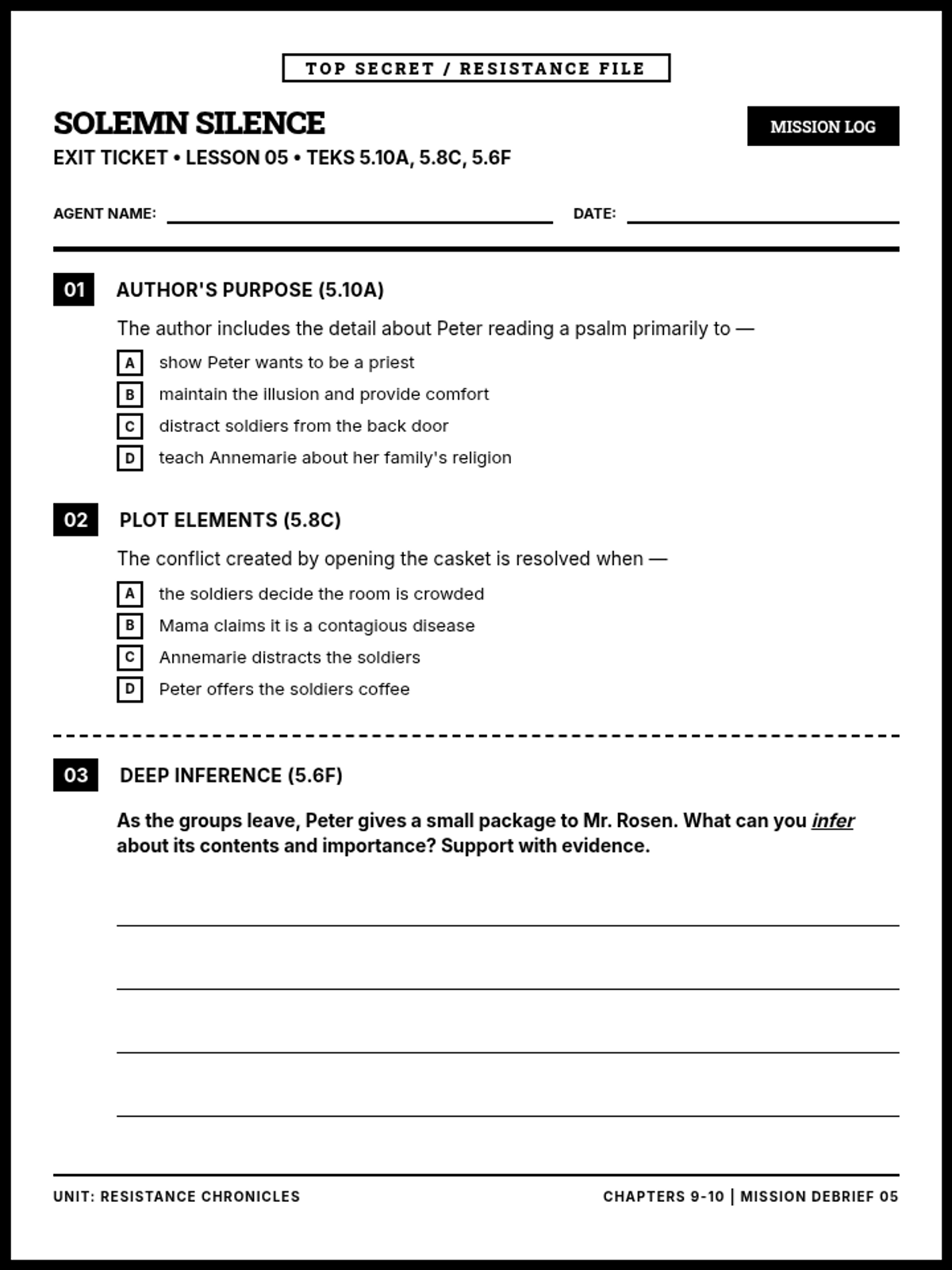
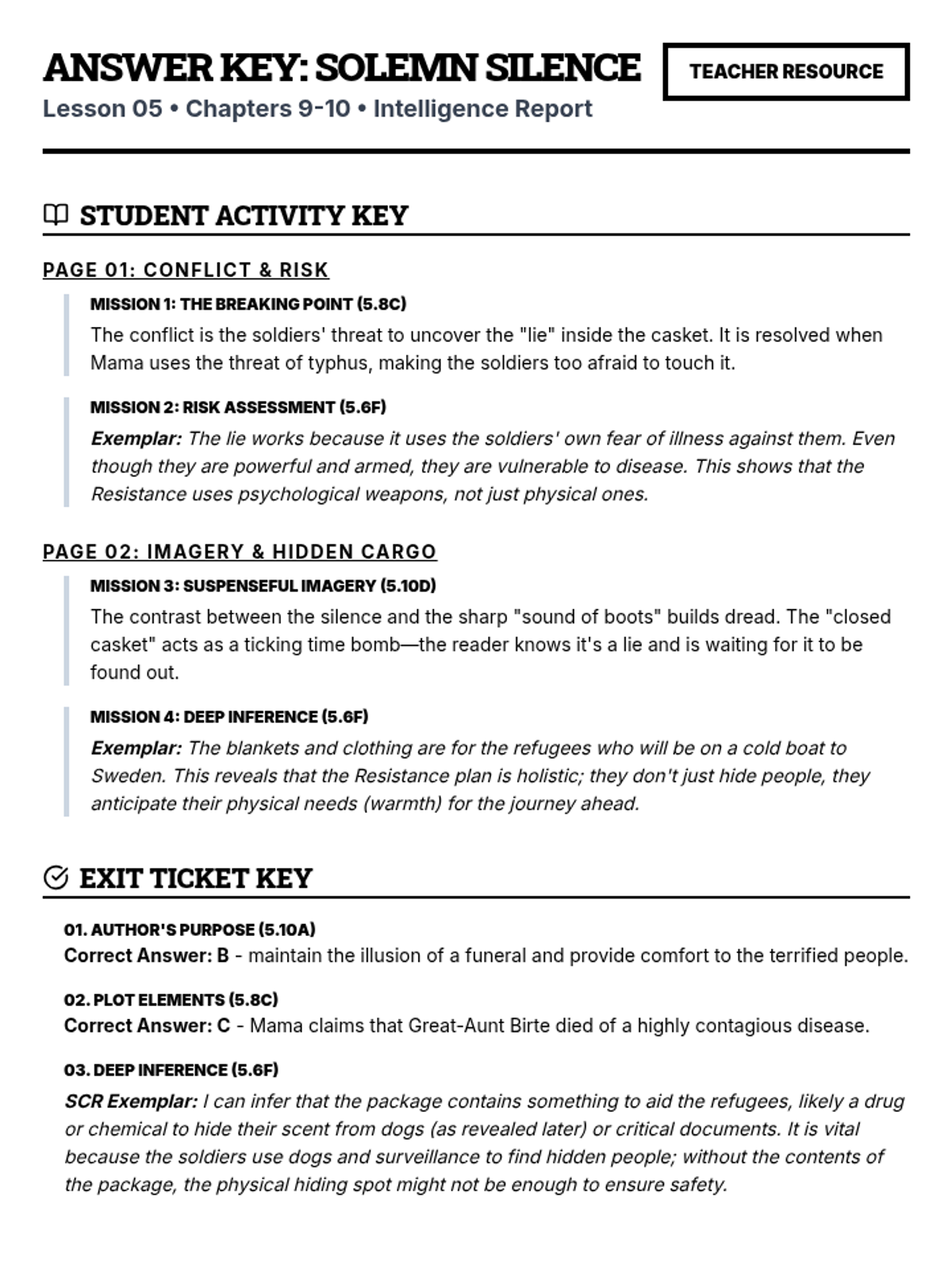
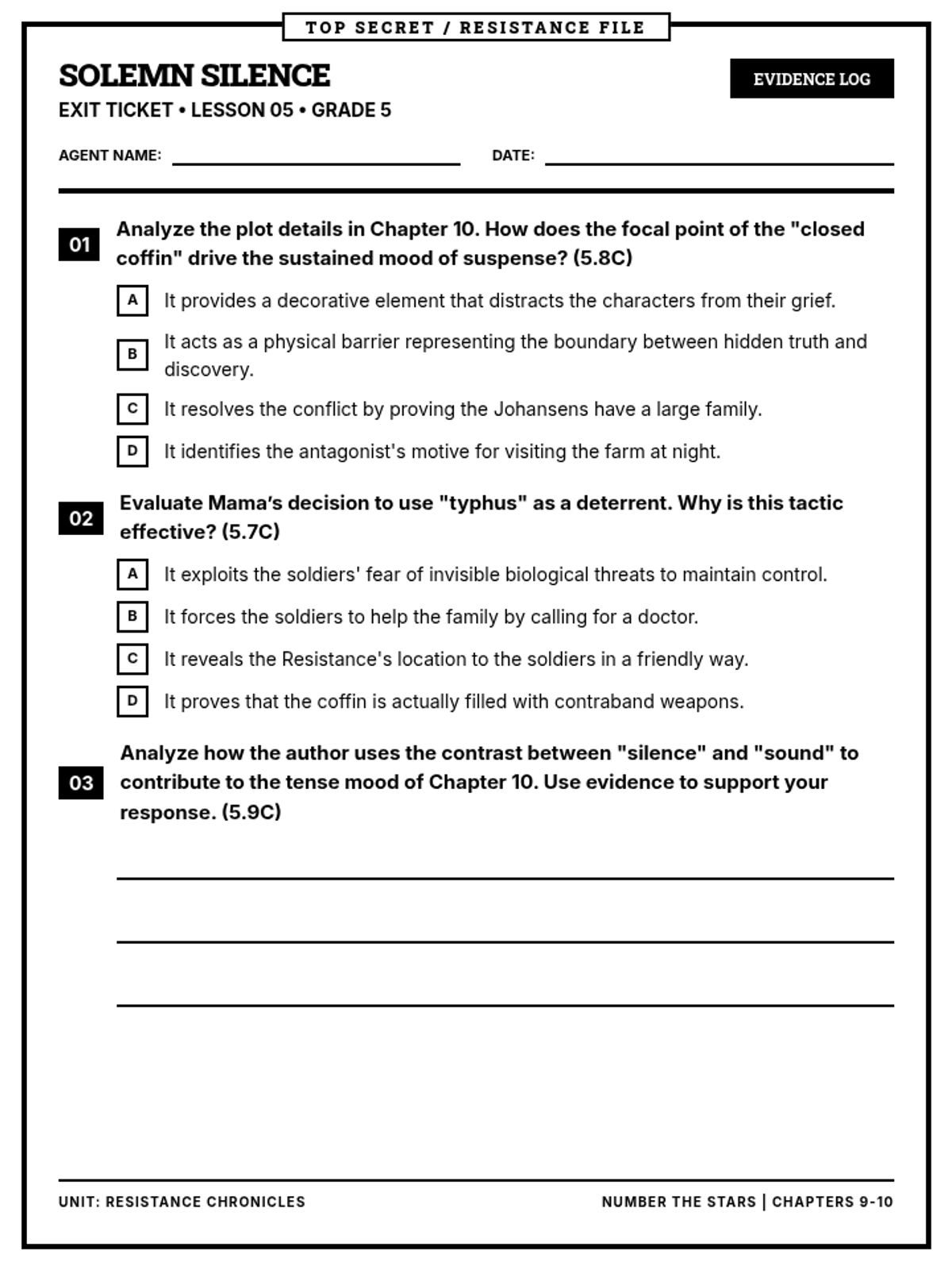
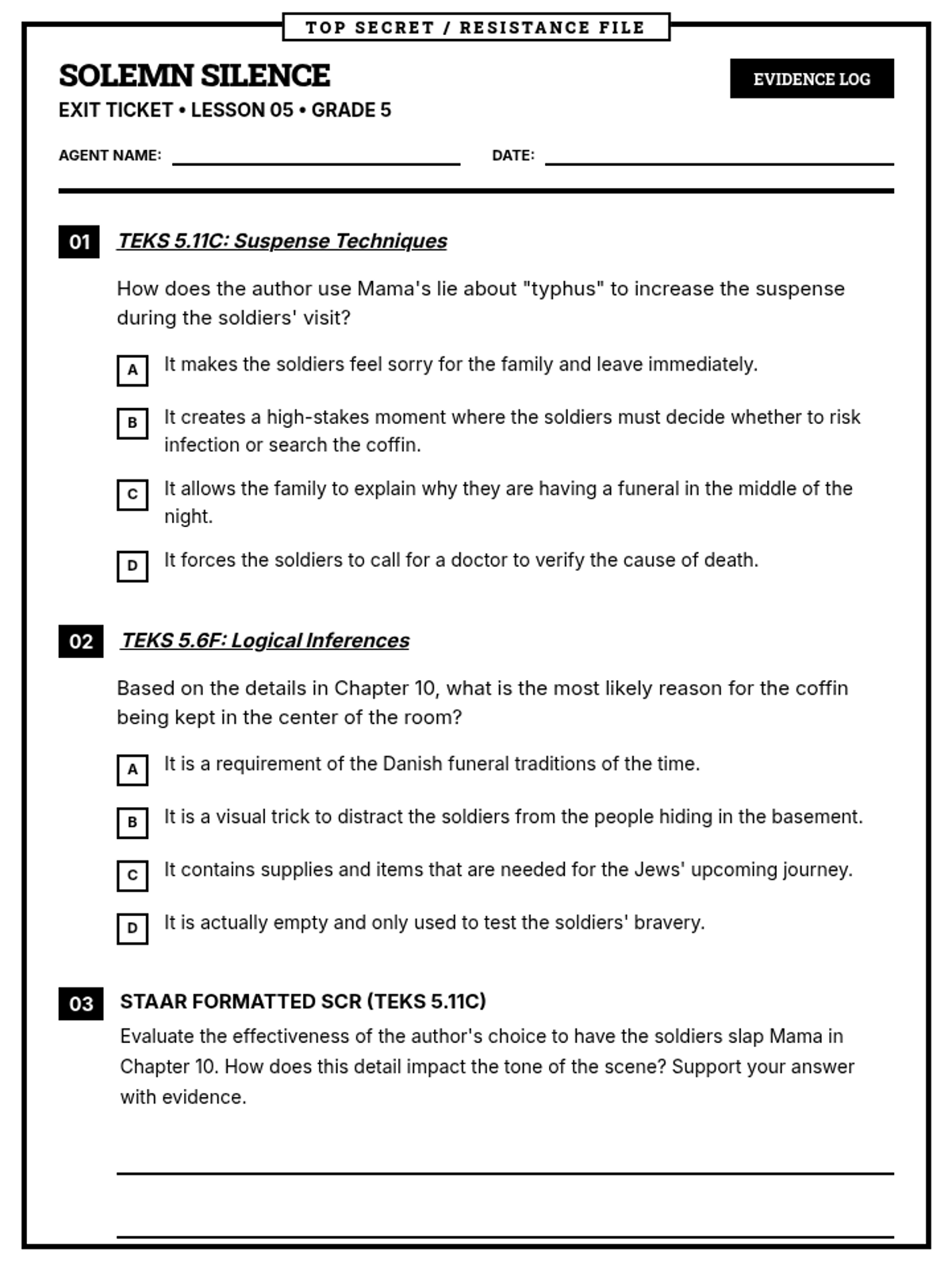
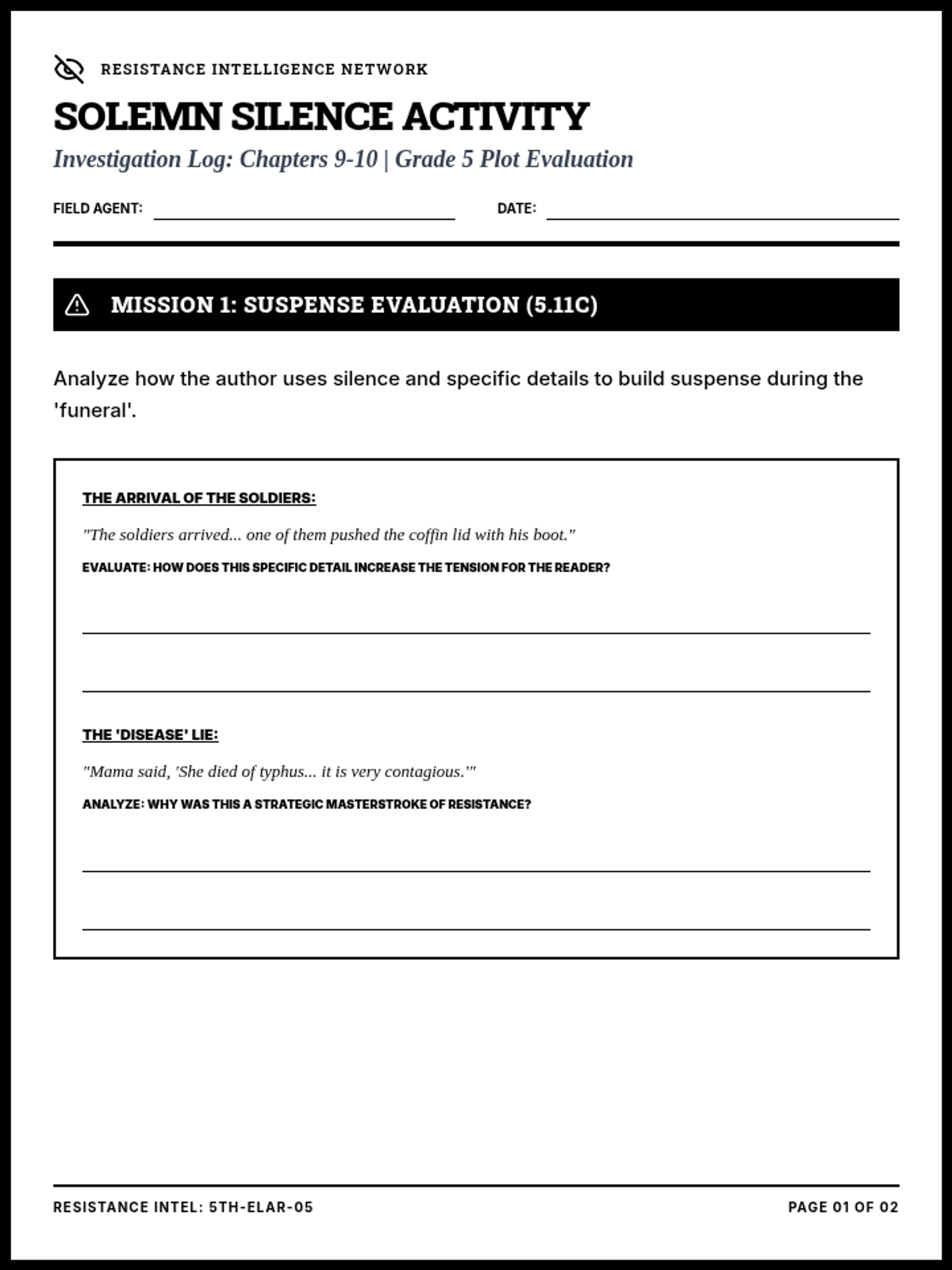
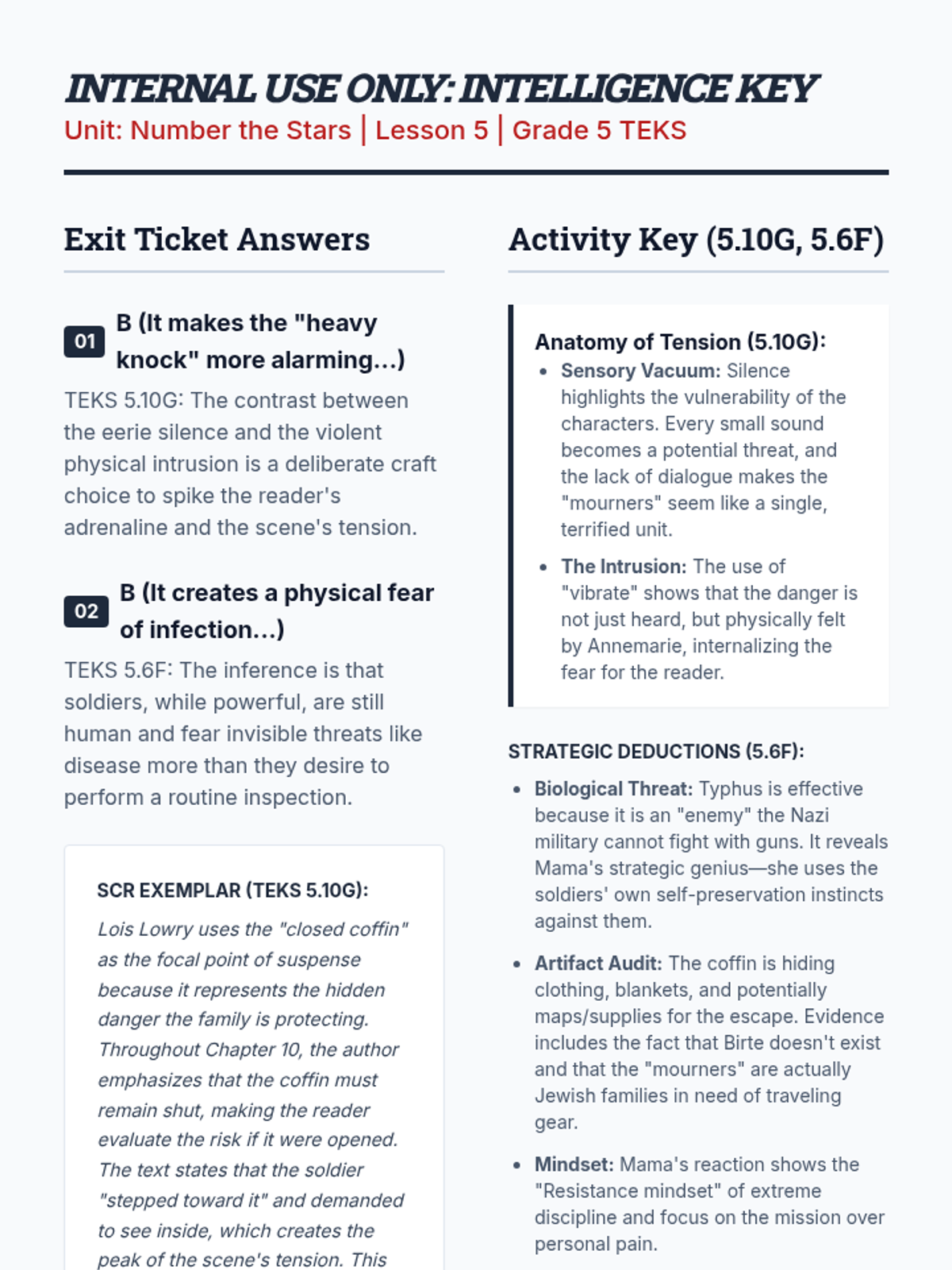
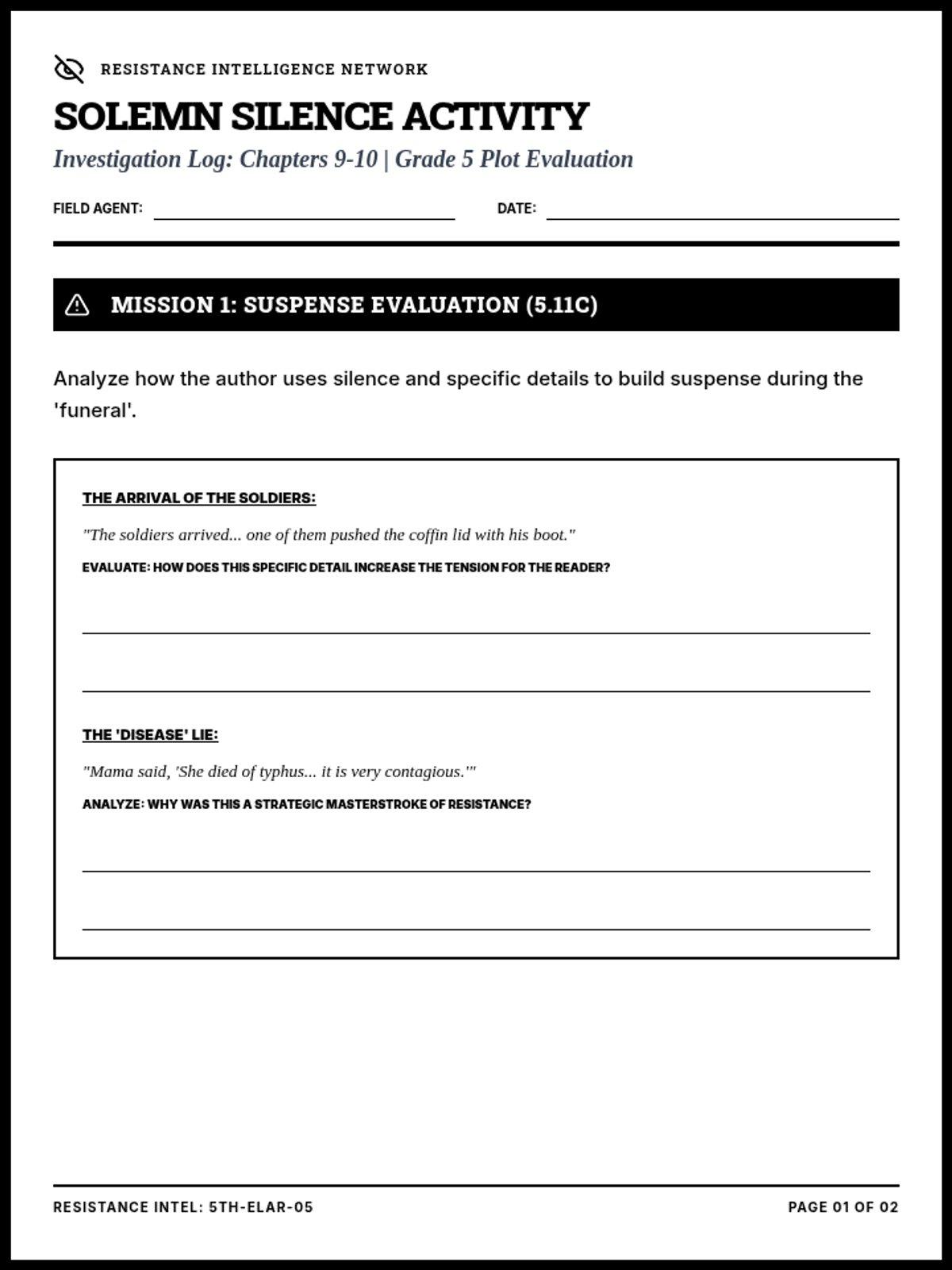
Students evaluate plot details and suspense techniques used in chapters 9 and 10, inferring the underlying risks and motivations during the fake funeral of 'Great-Aunt Birte' (TEKS 5.10D, 5.6F).
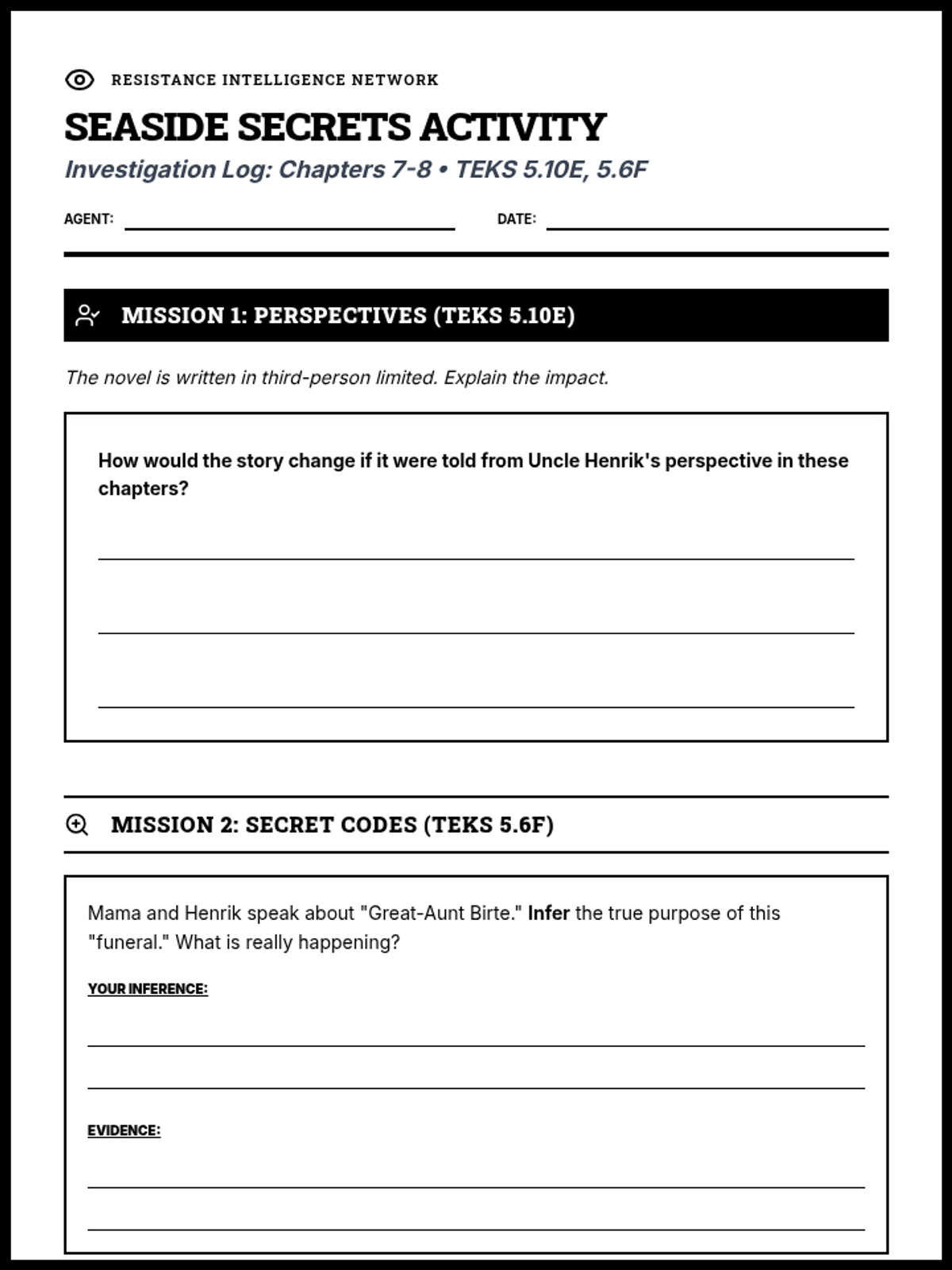
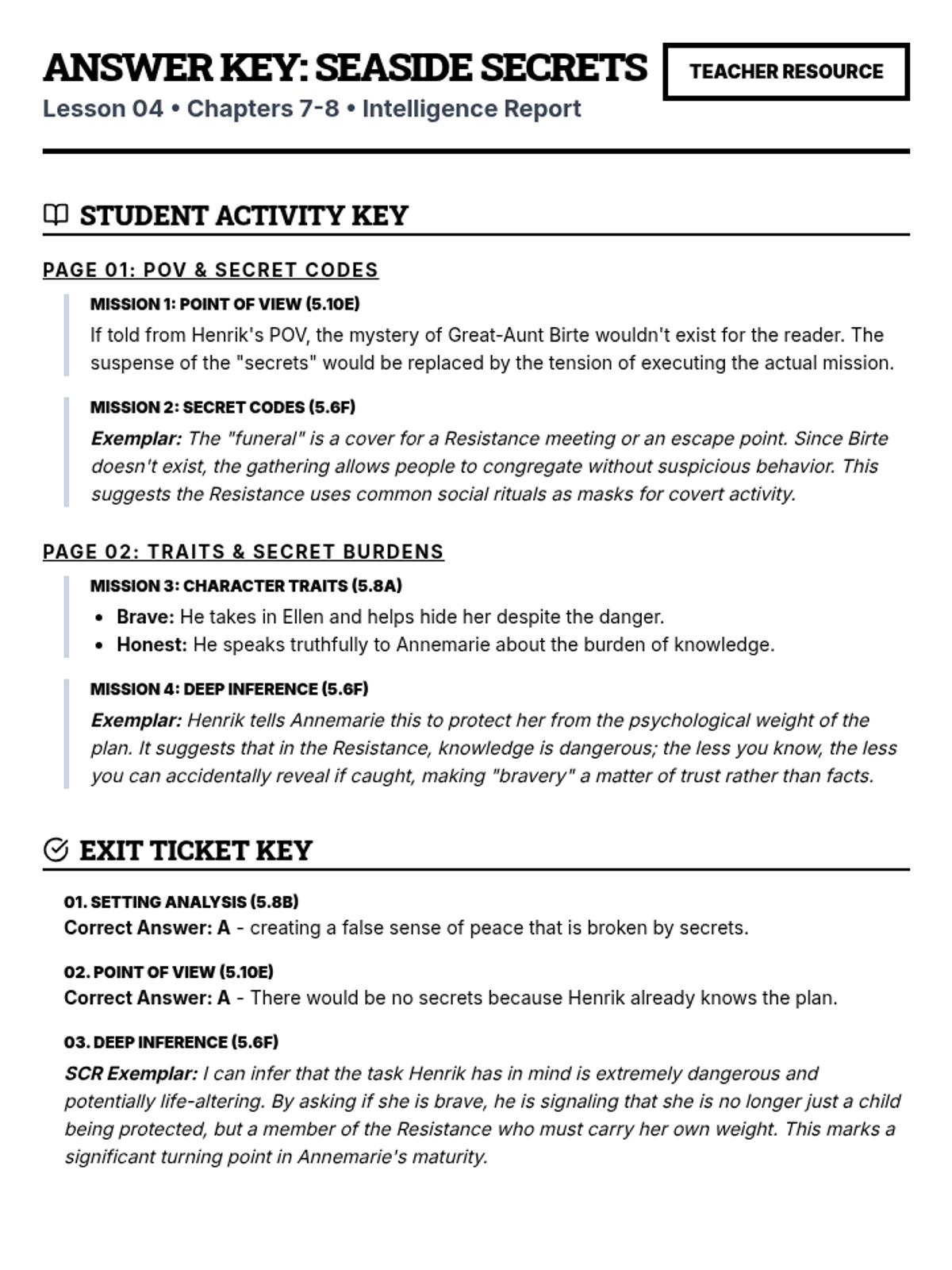
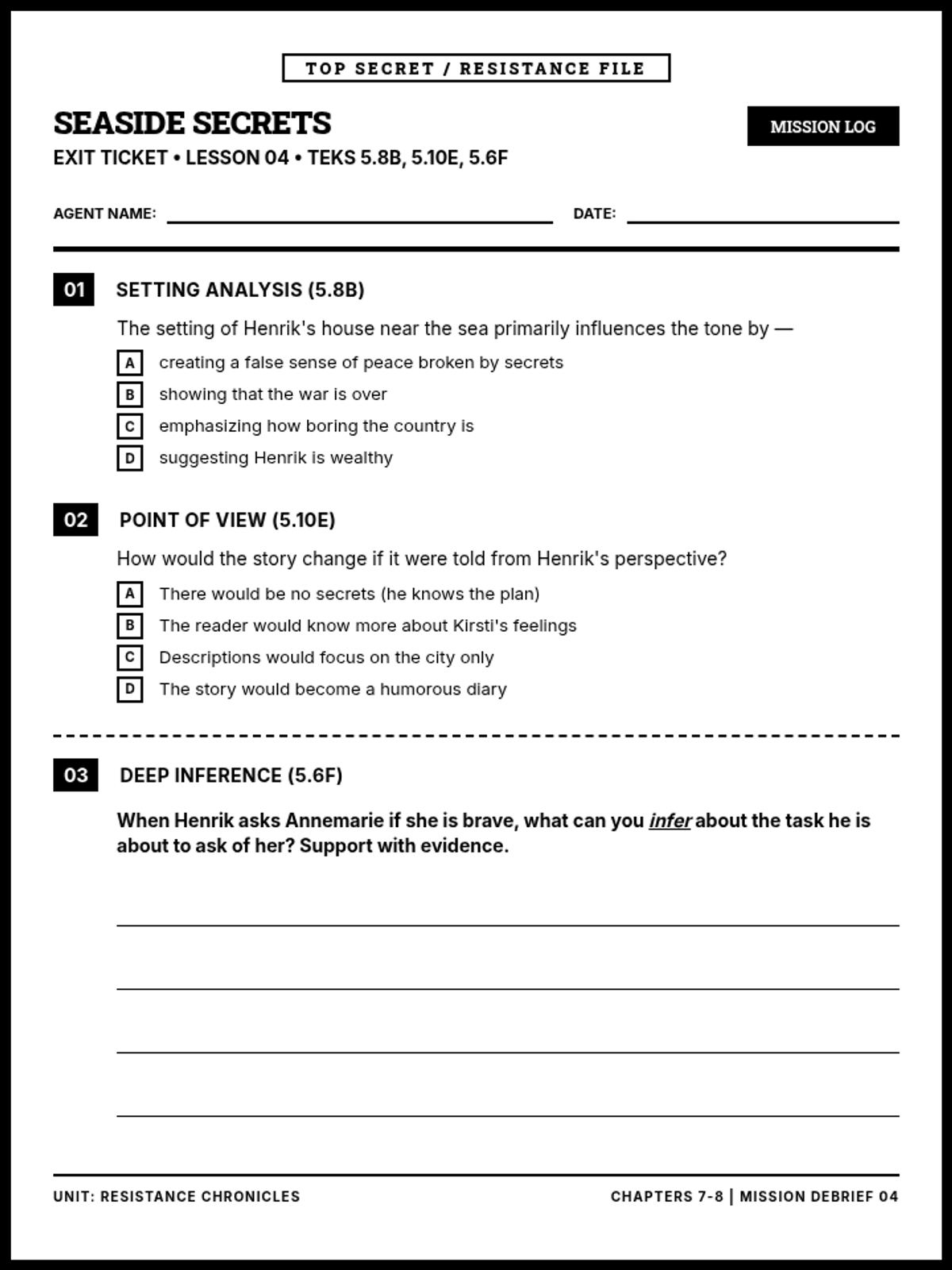
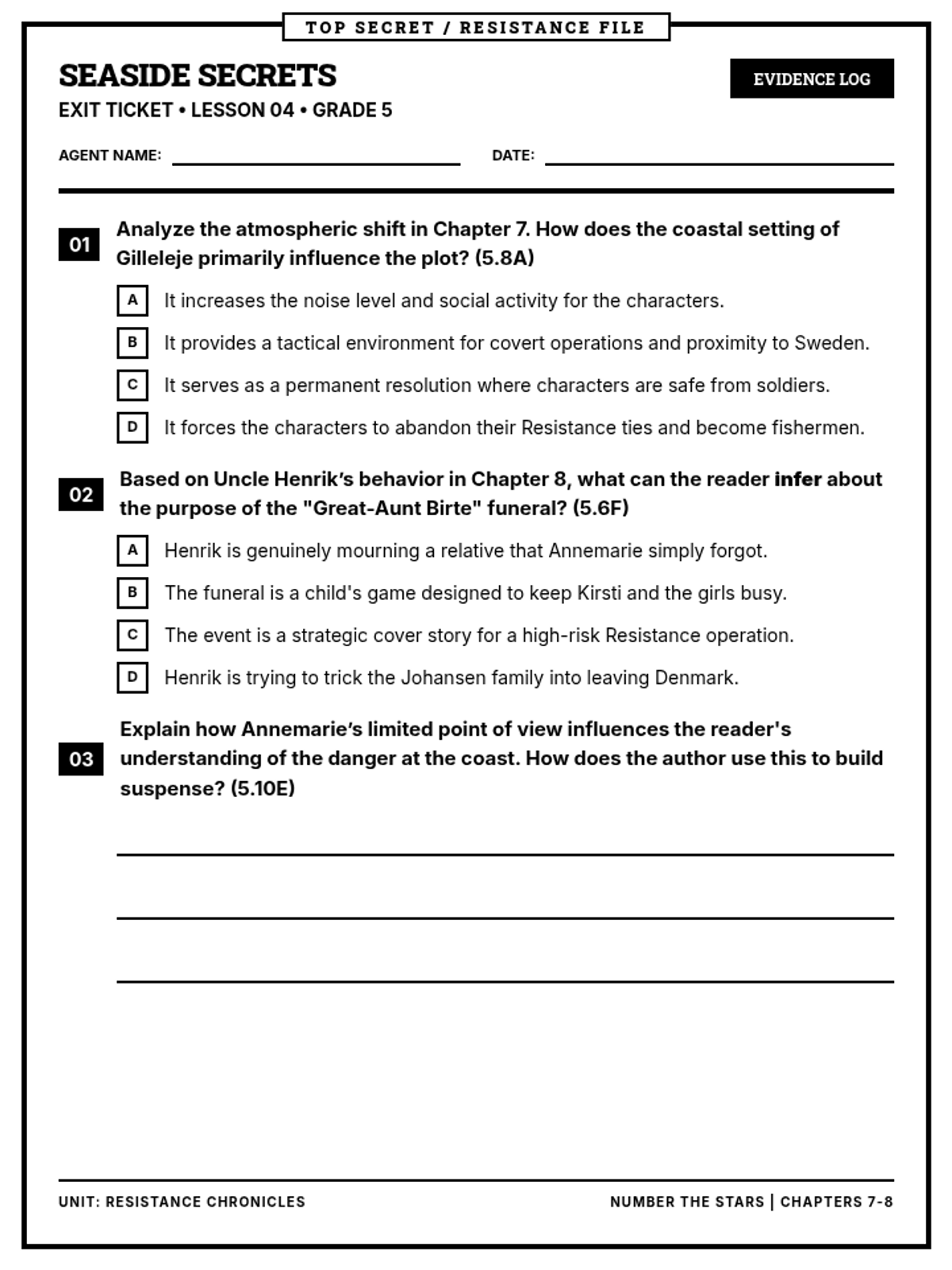
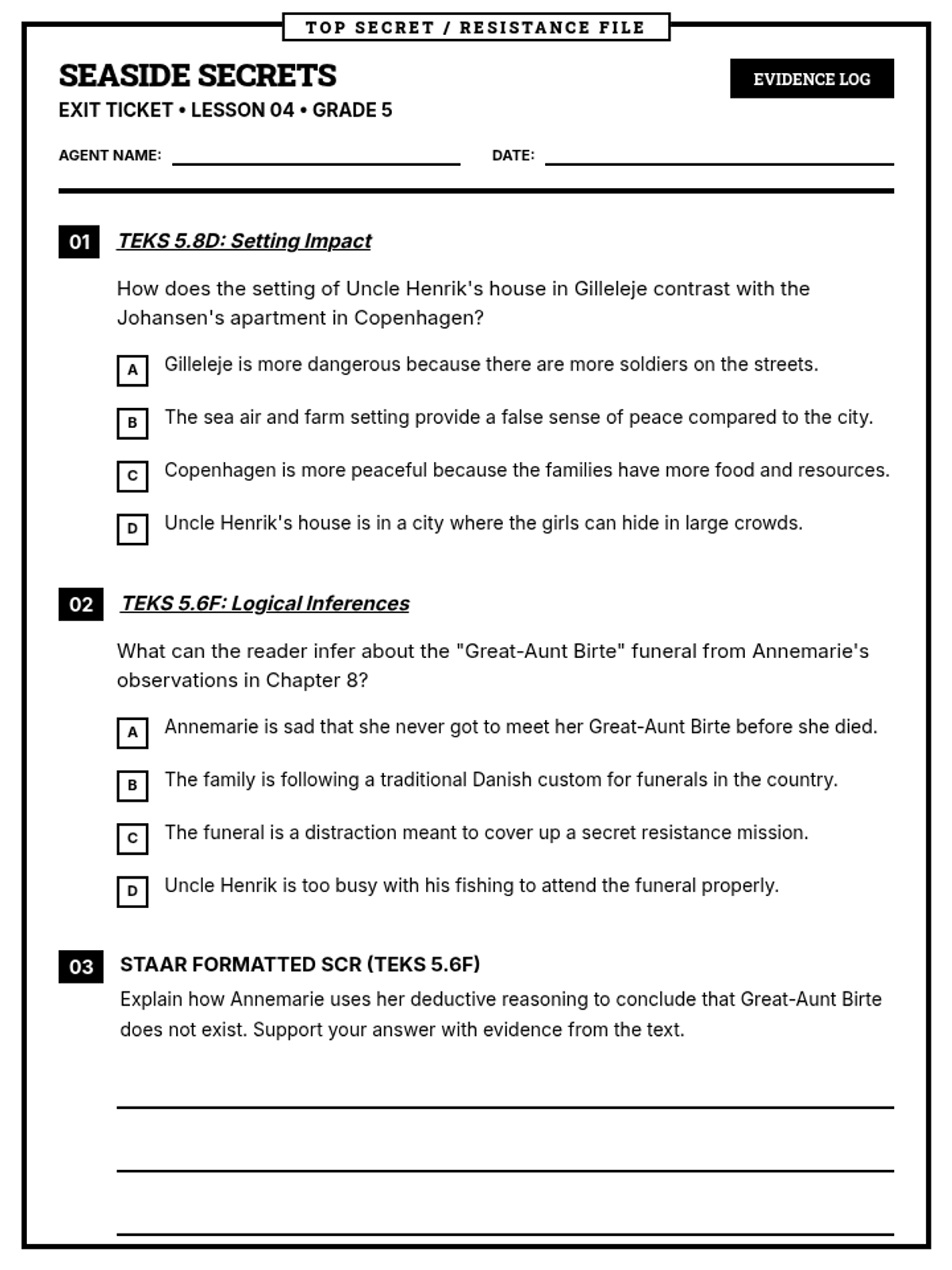
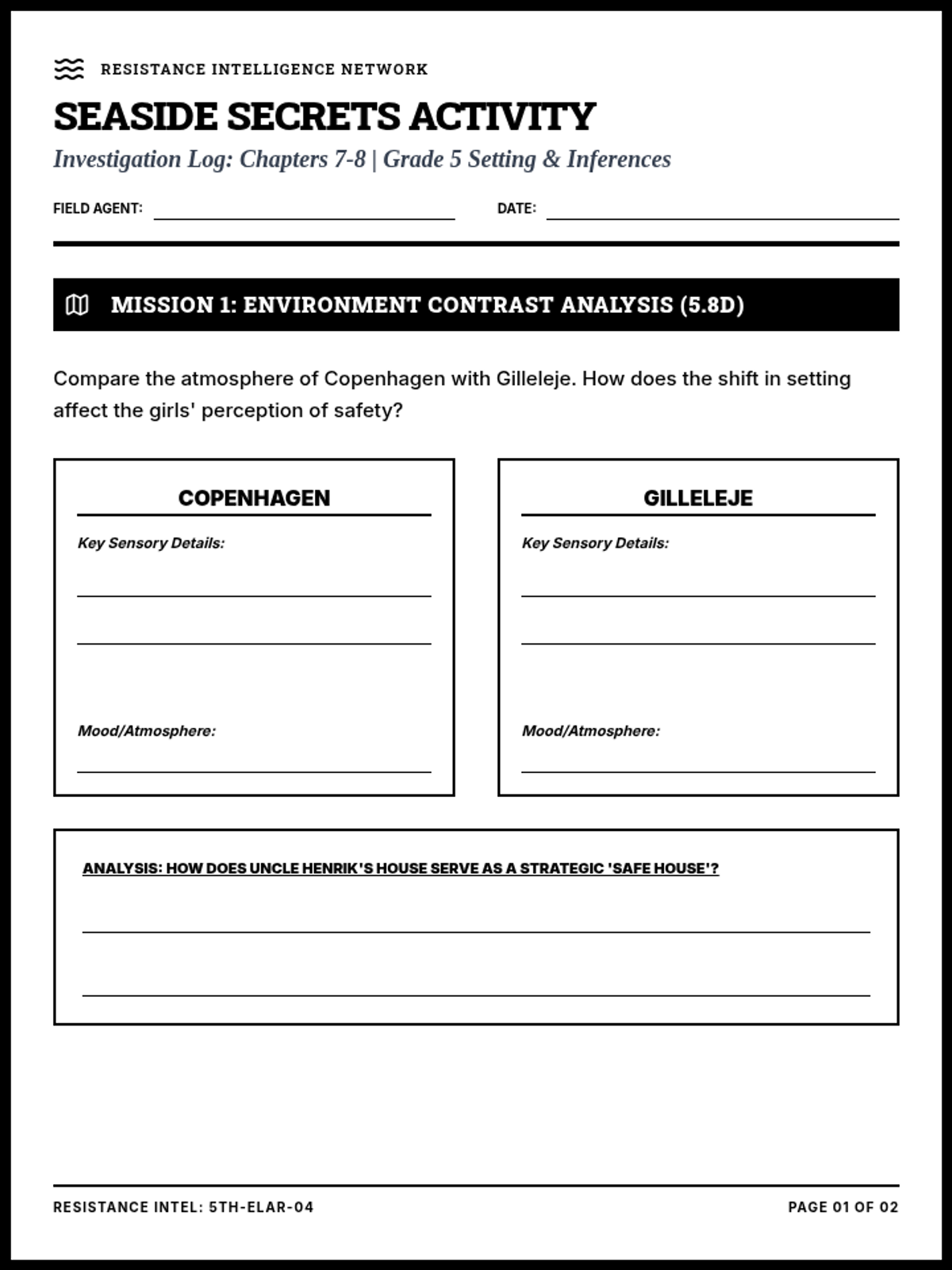
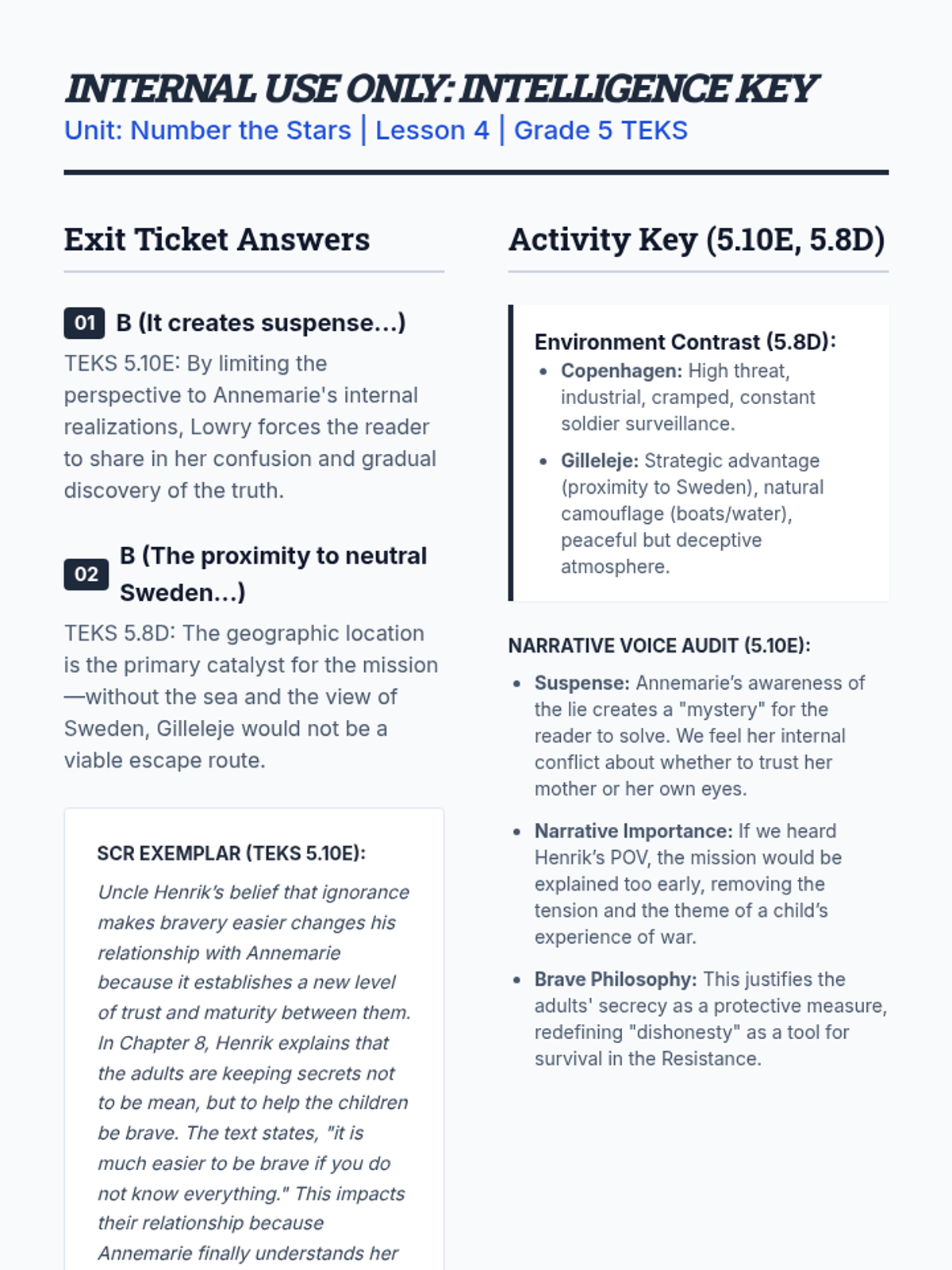
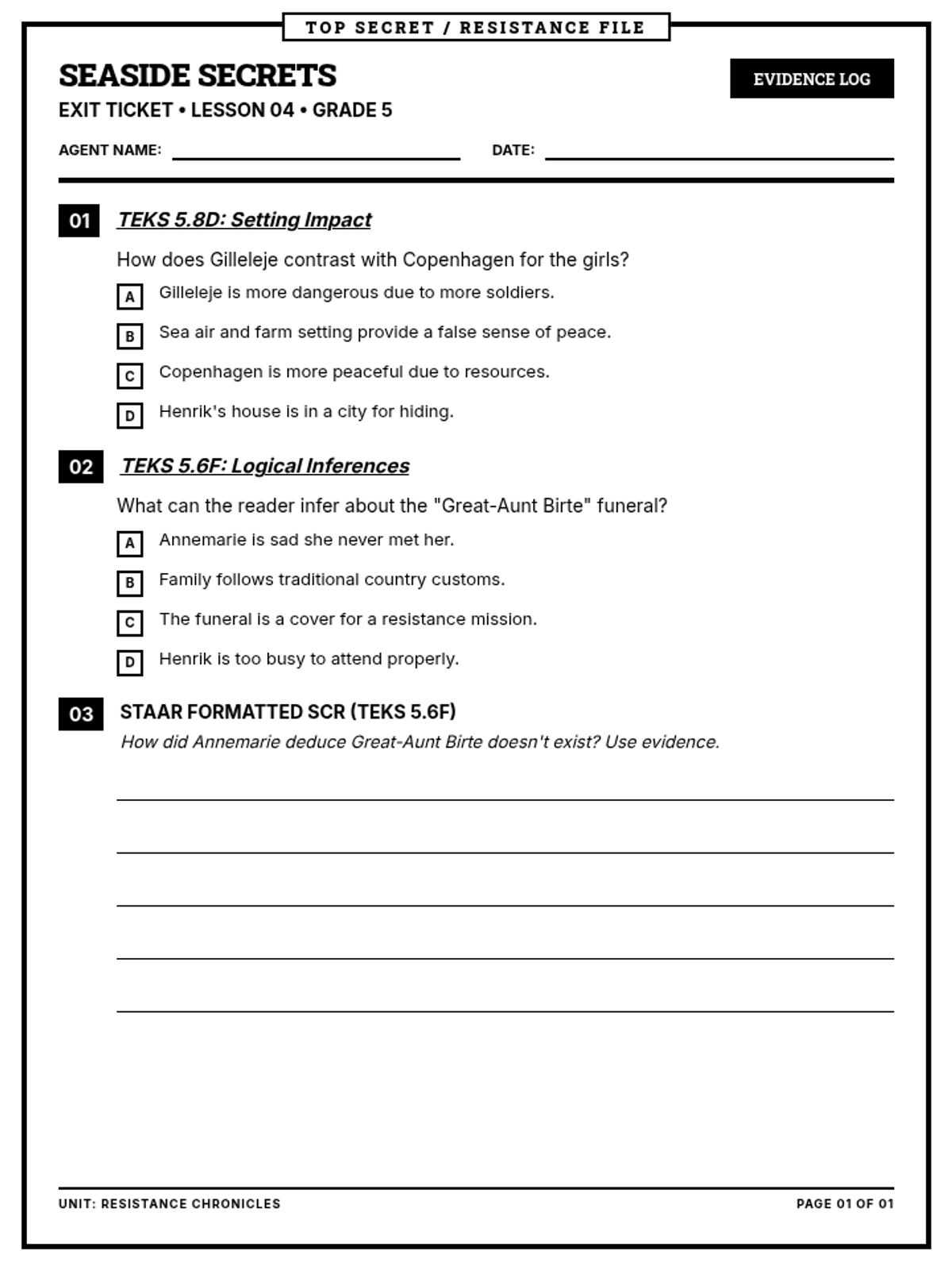
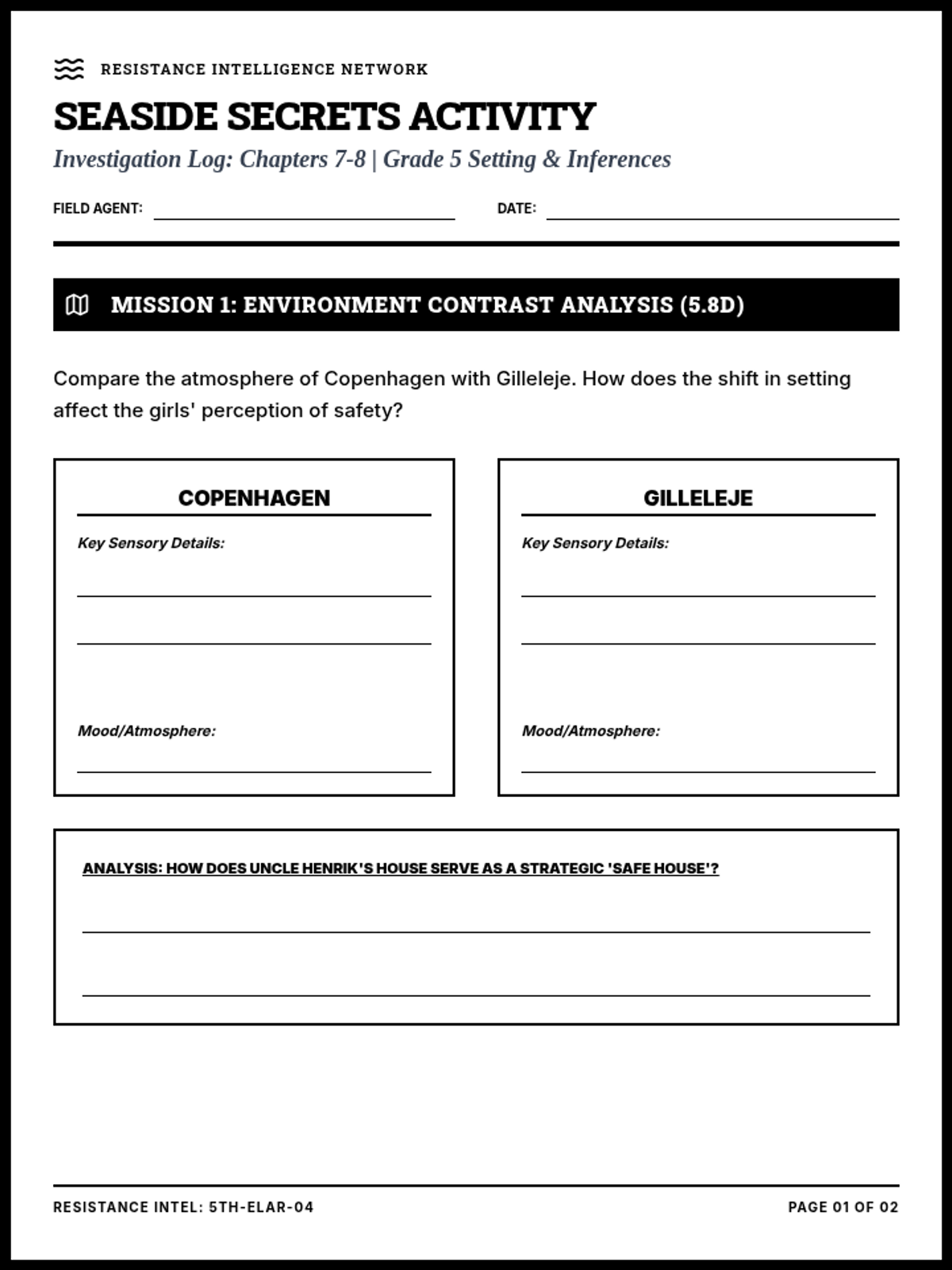
Students investigate point of view and make deeper inferences about Uncle Henrik's motives and the true purpose of the move to the coast in chapters 7 and 8 (TEKS 5.10E, 5.6F).
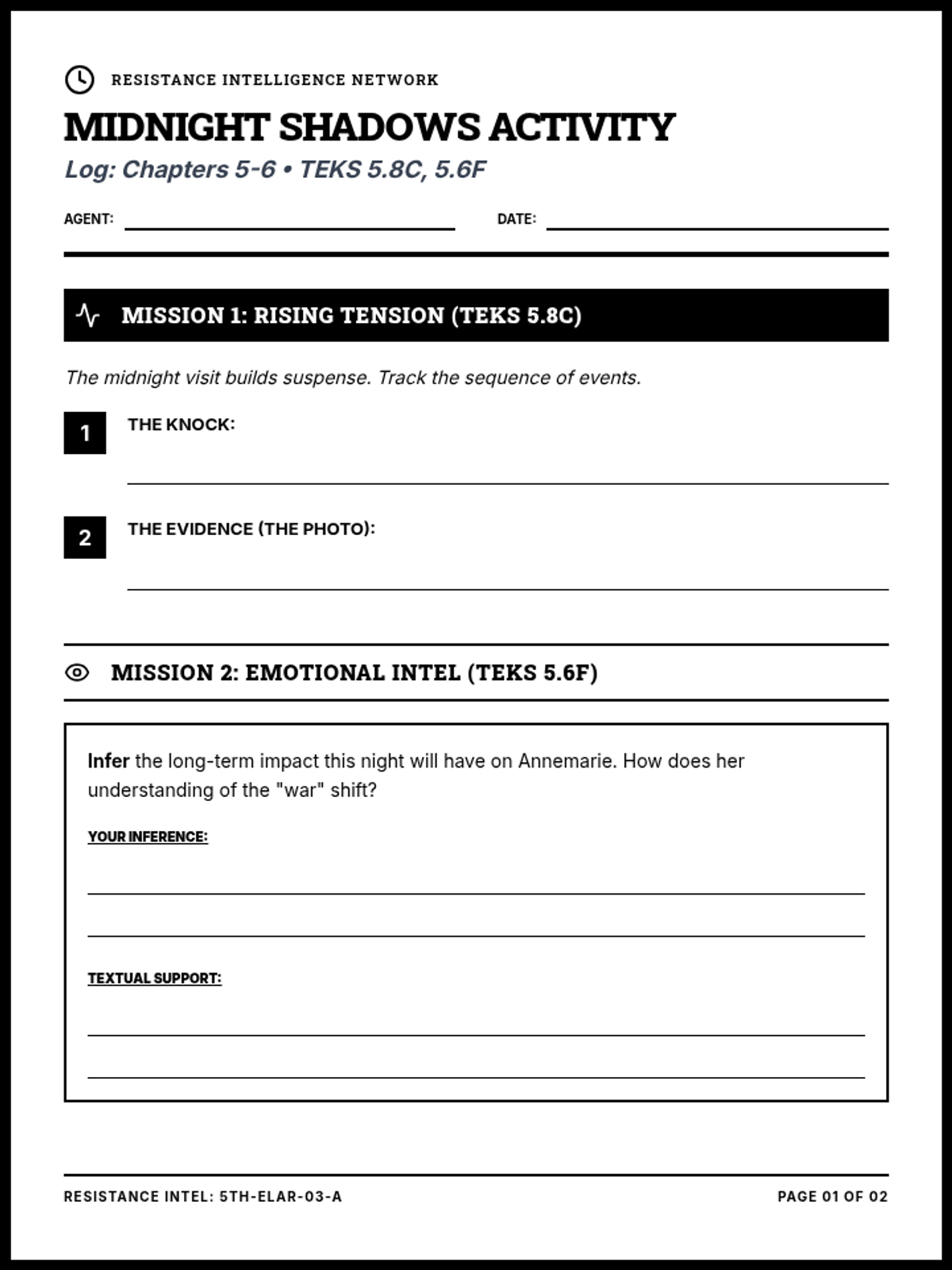
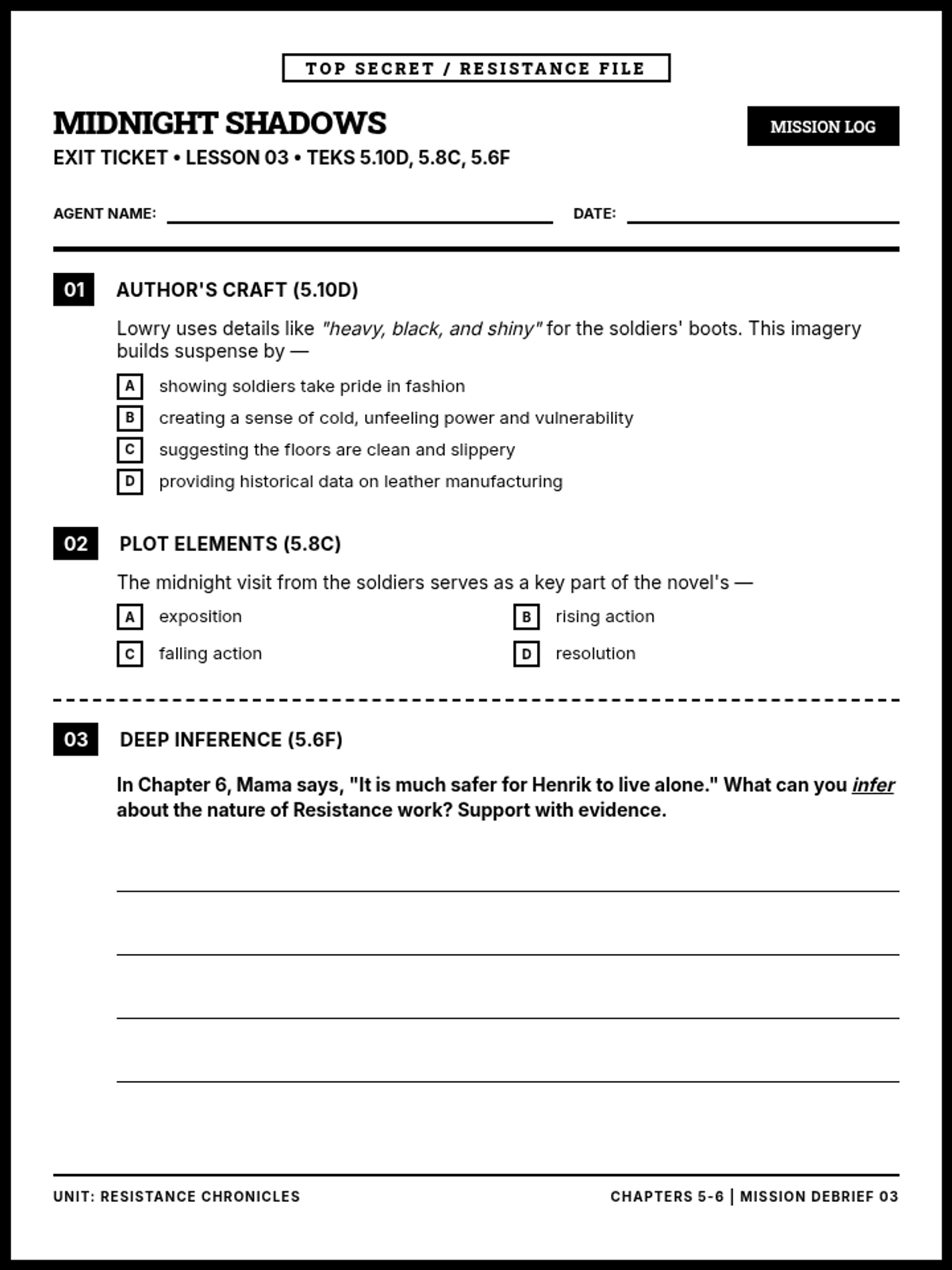
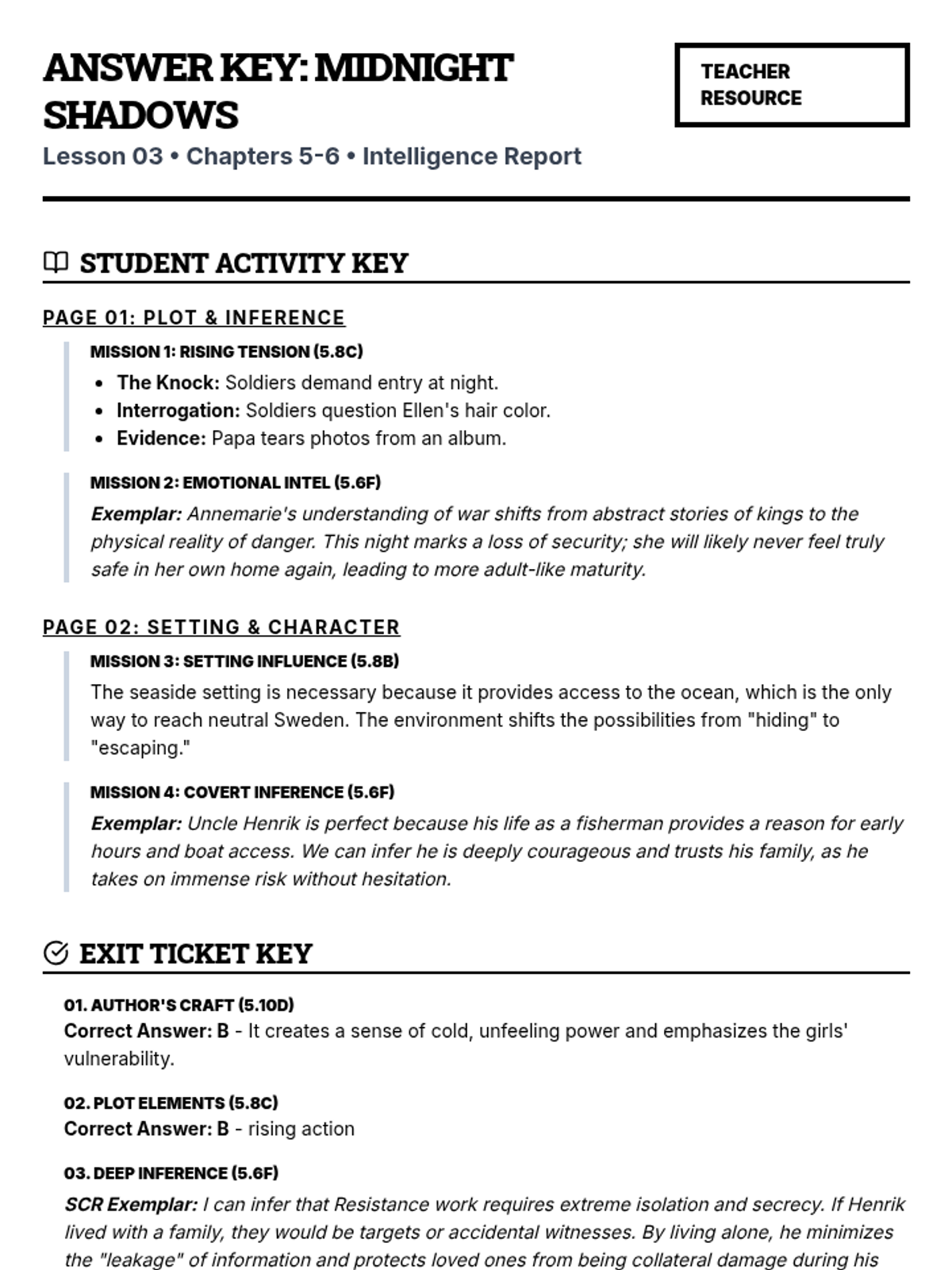
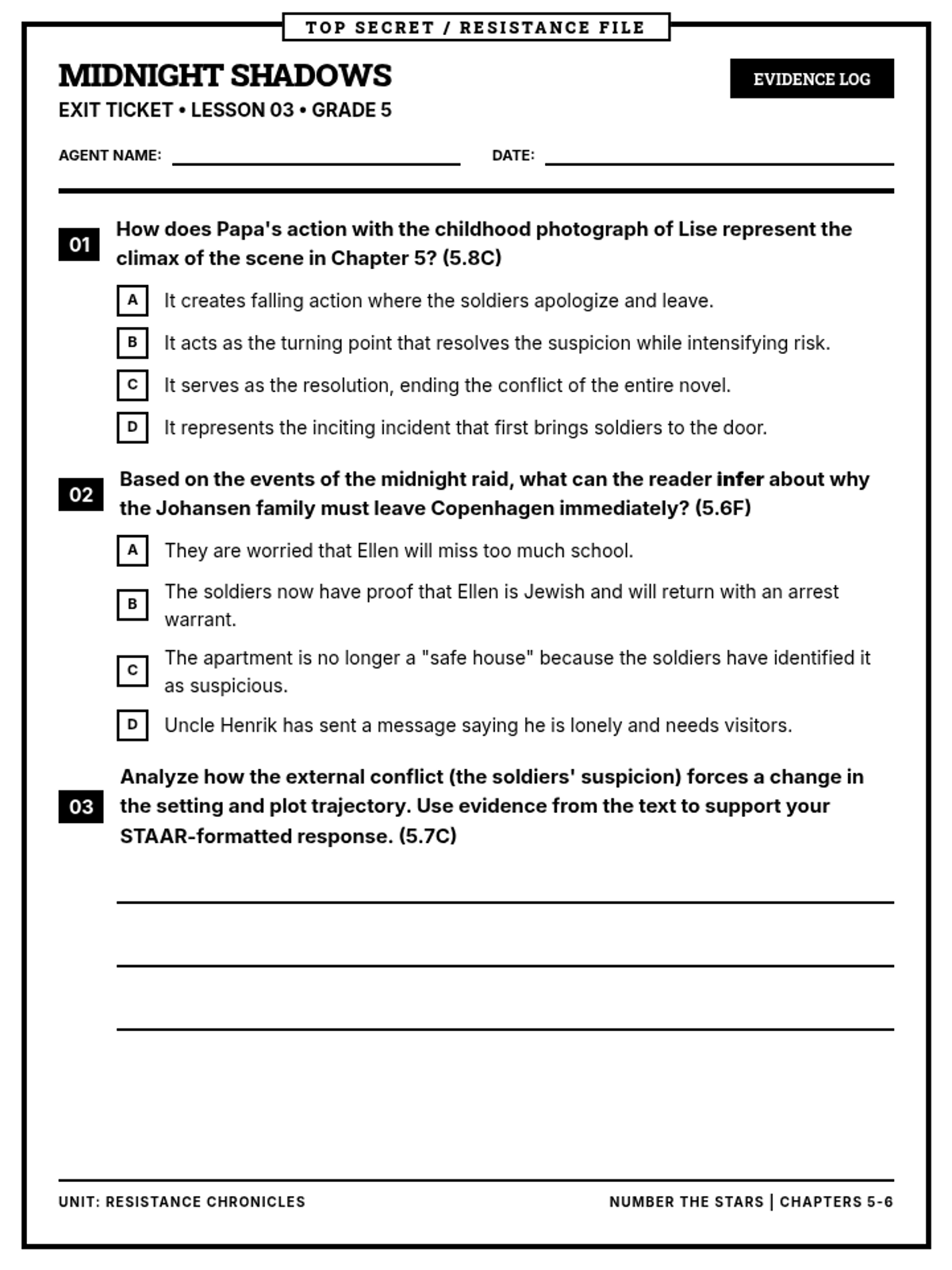
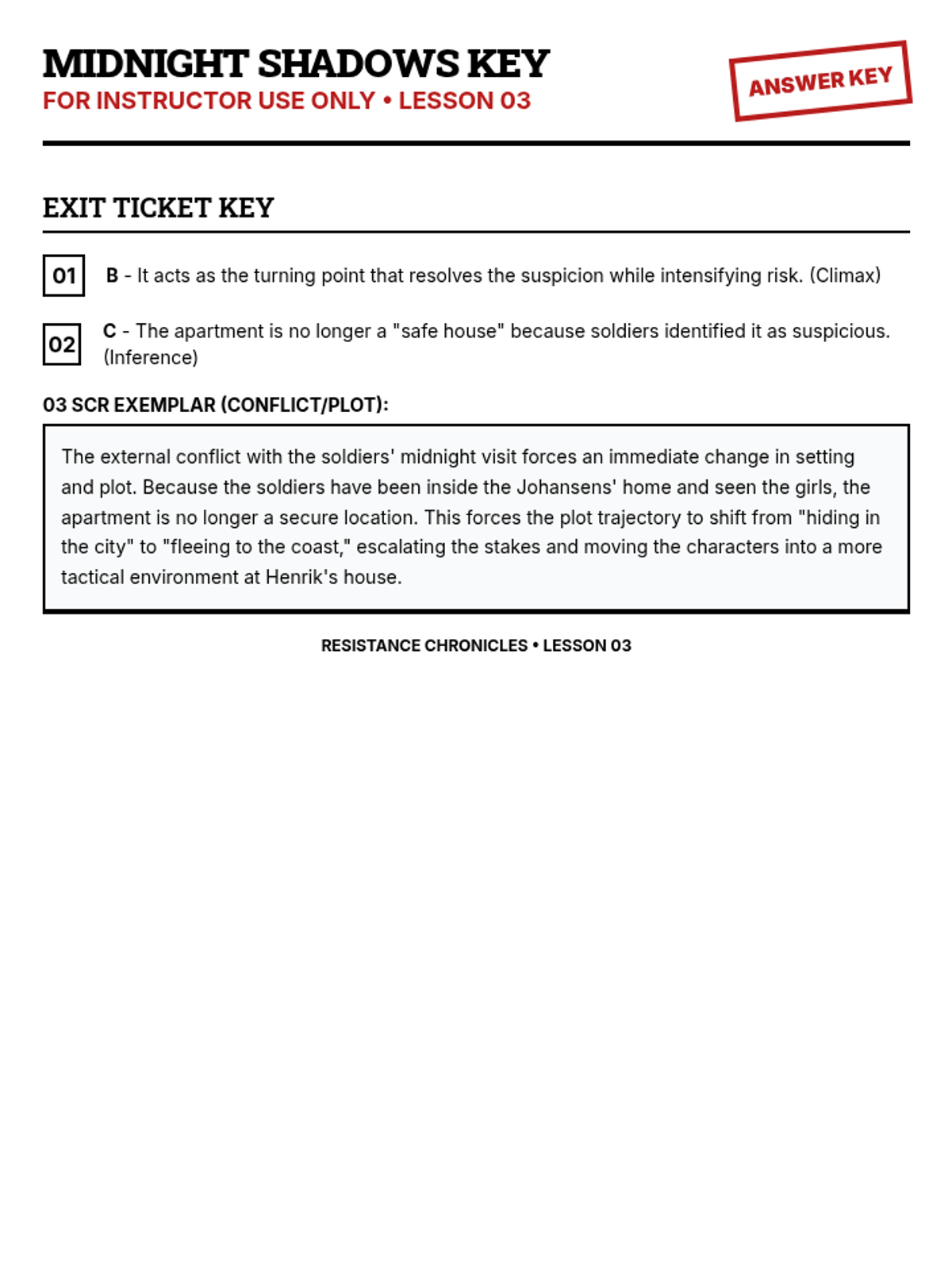
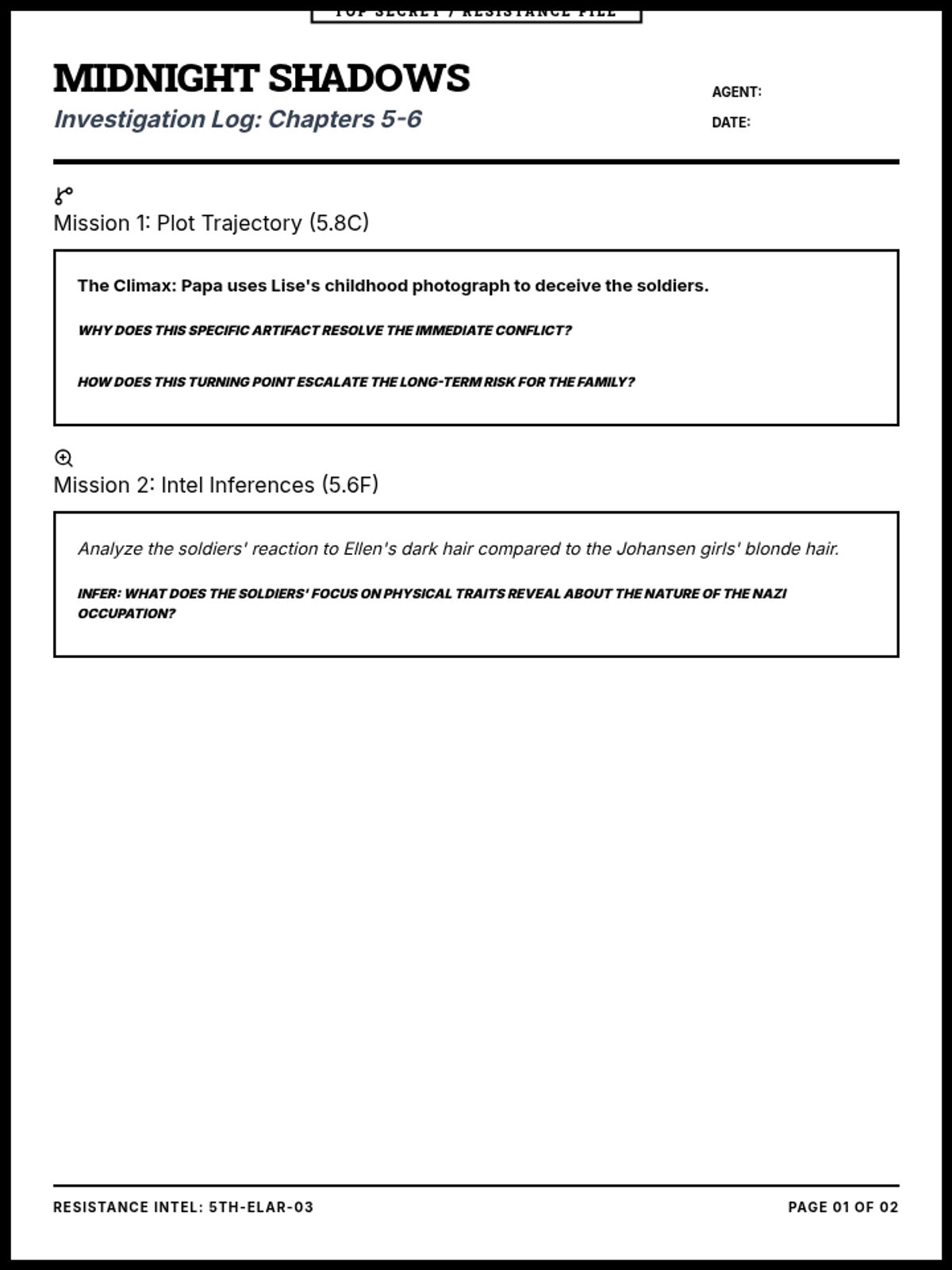
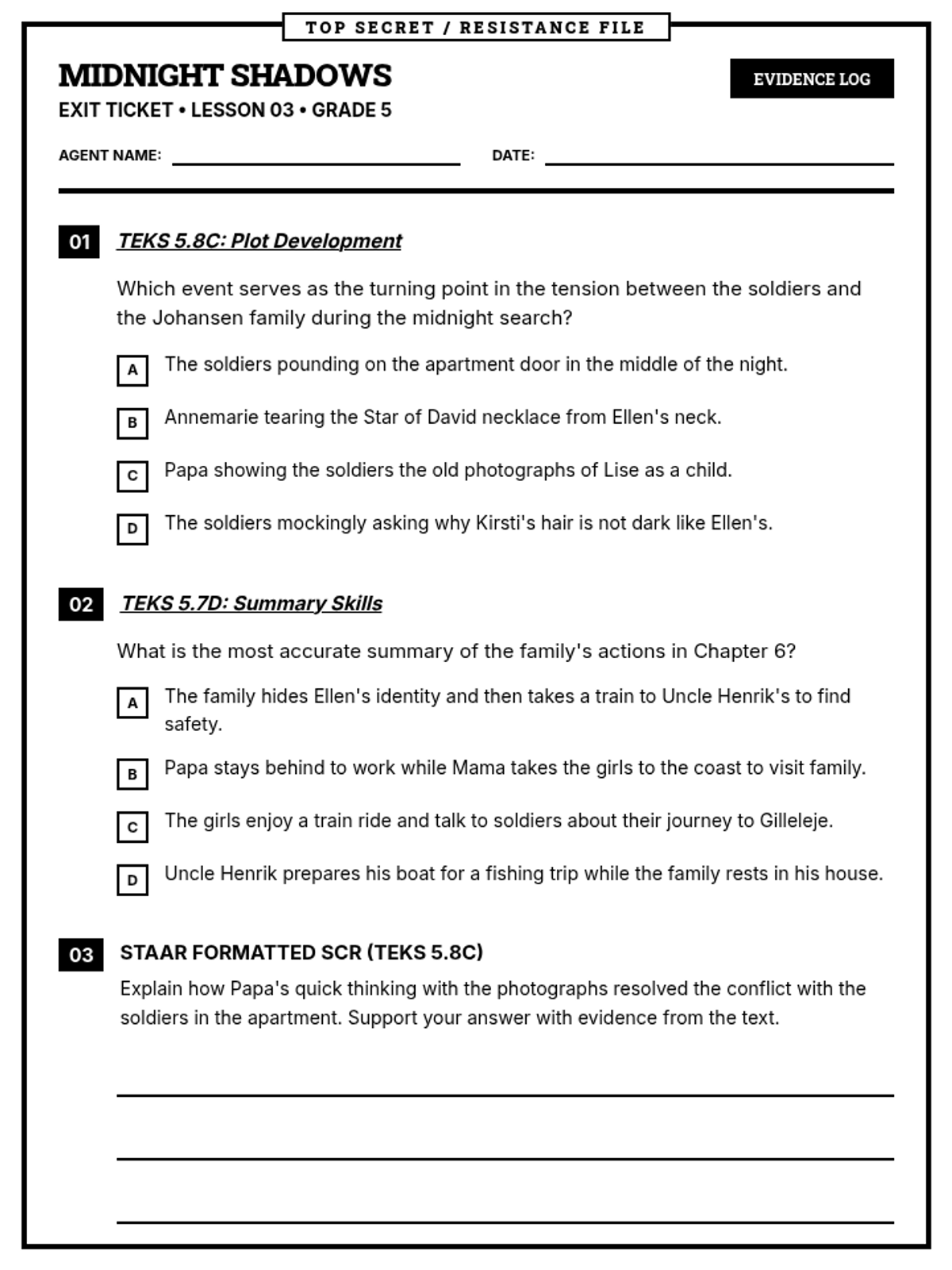
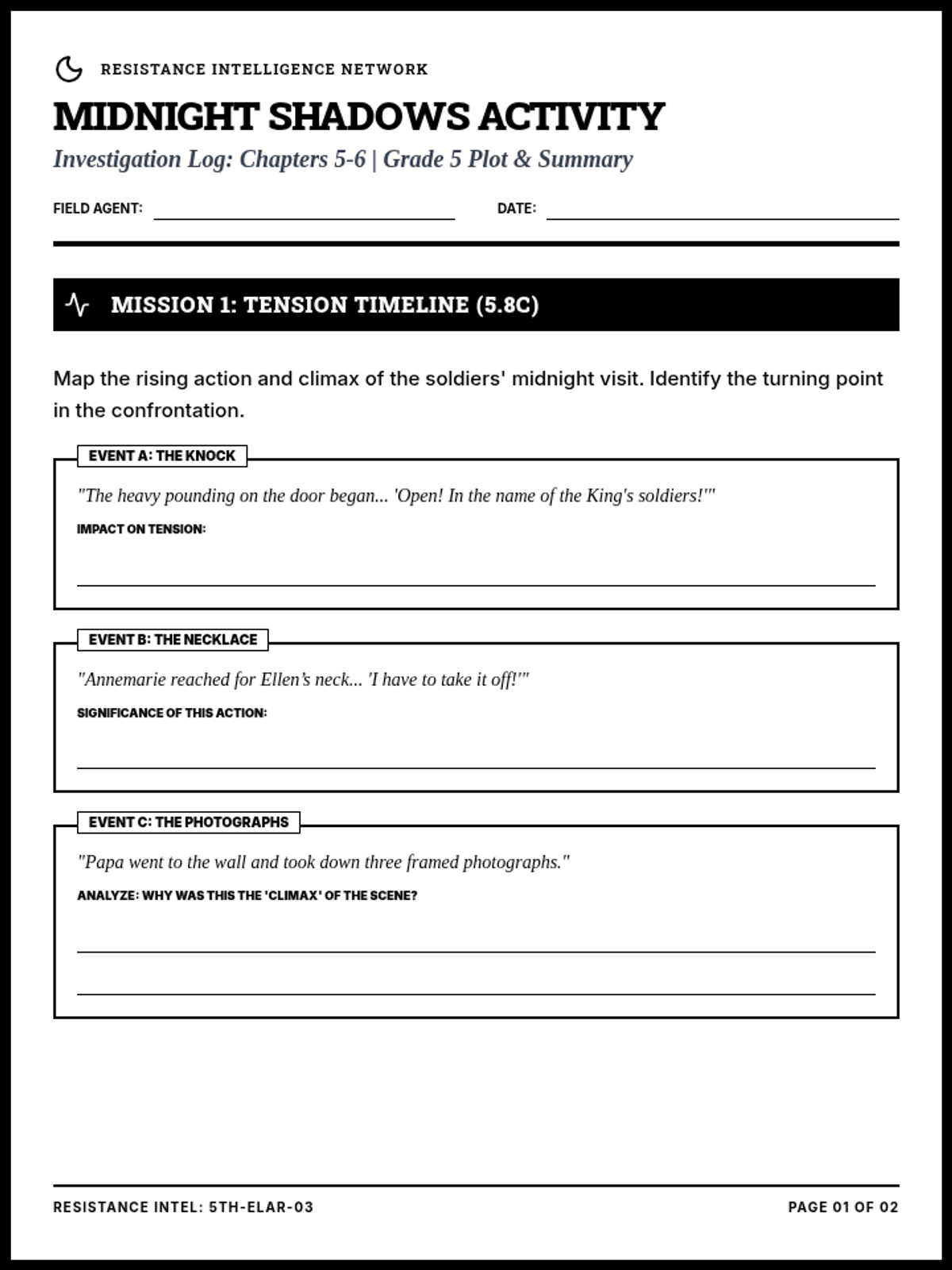
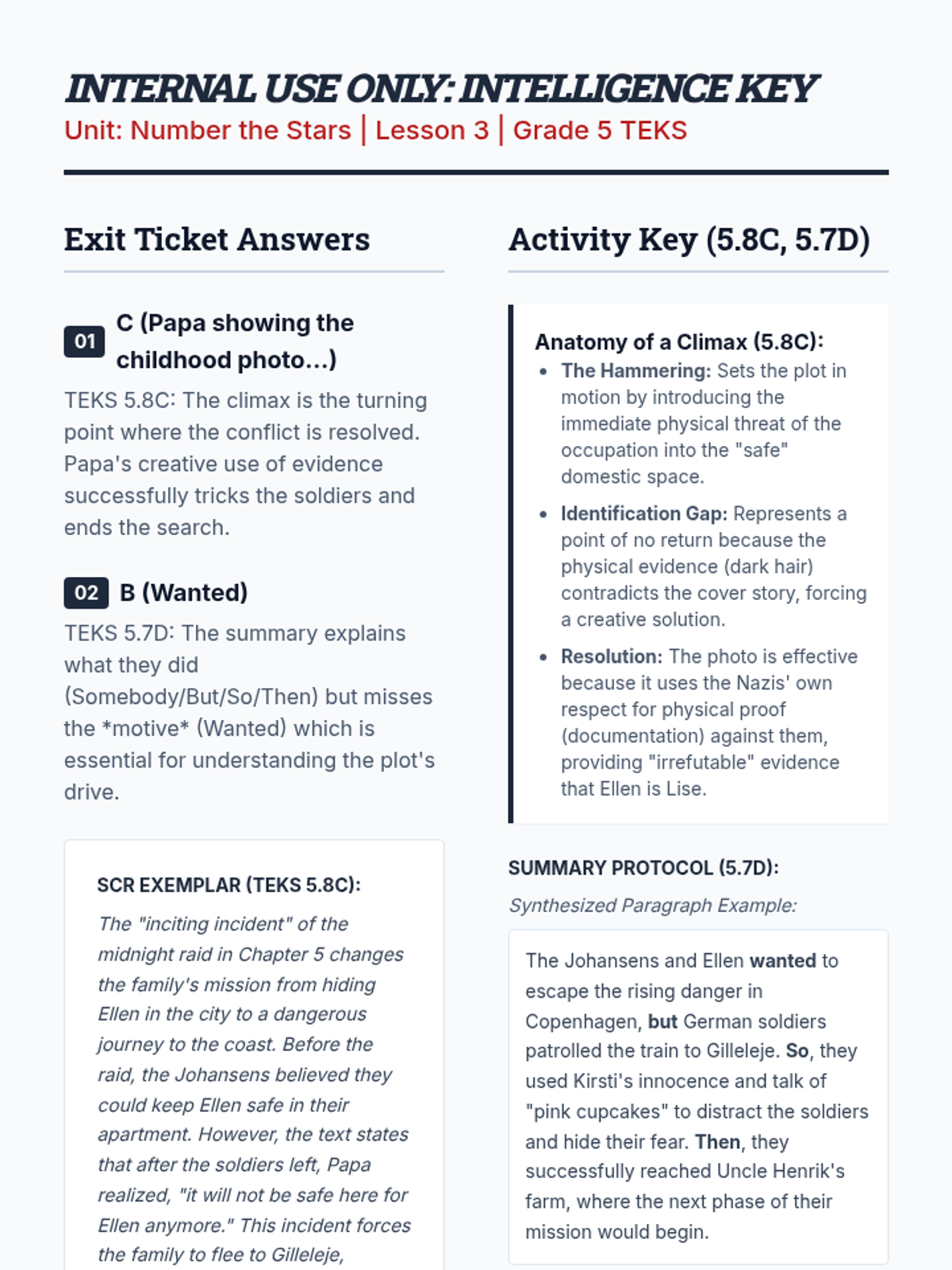
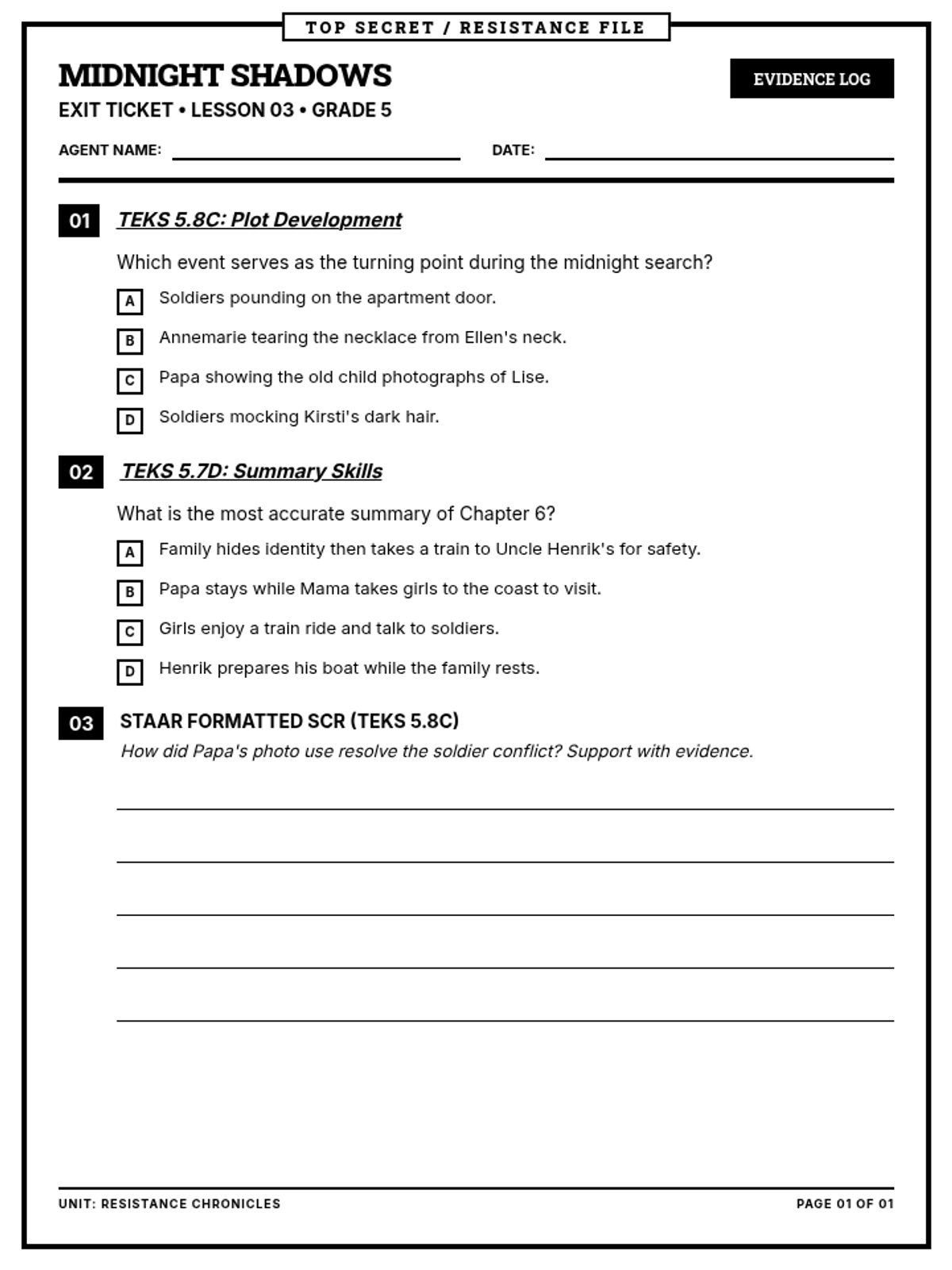
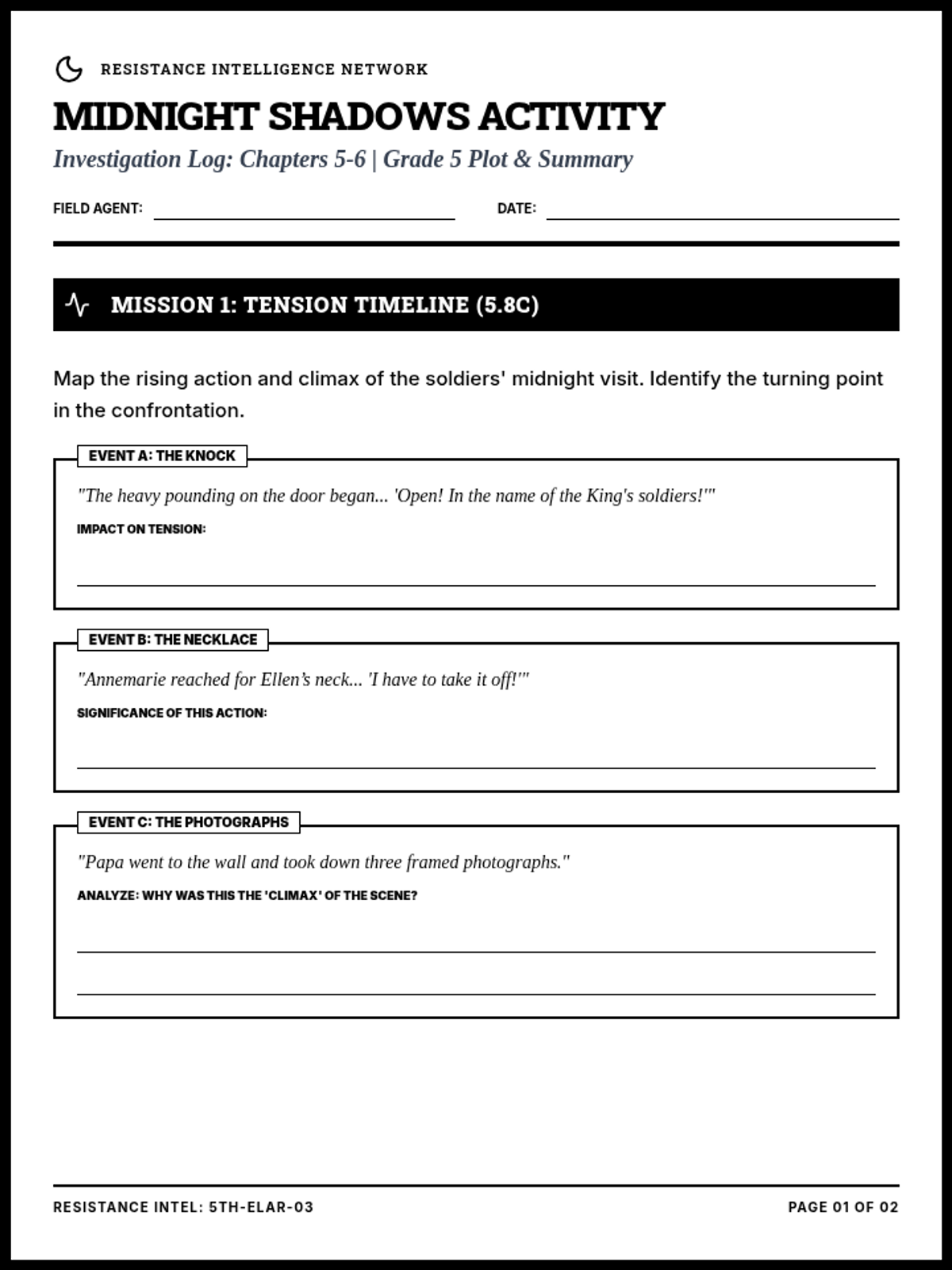
Focusing on chapters 5 and 6, students track plot development and practice inferring the stakes and emotions during the high-tension midnight visit from soldiers (TEKS 5.8C, 5.6F).
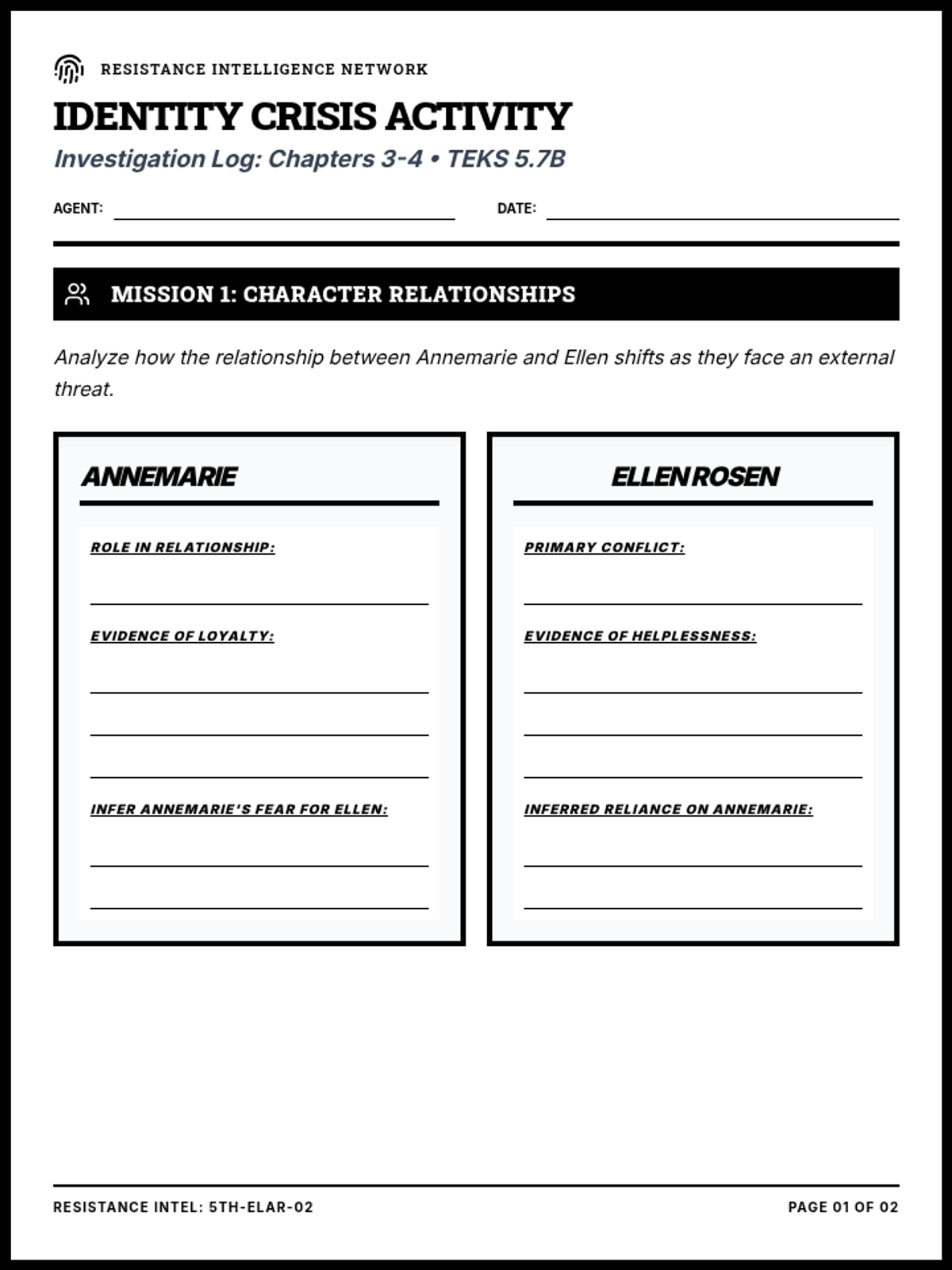
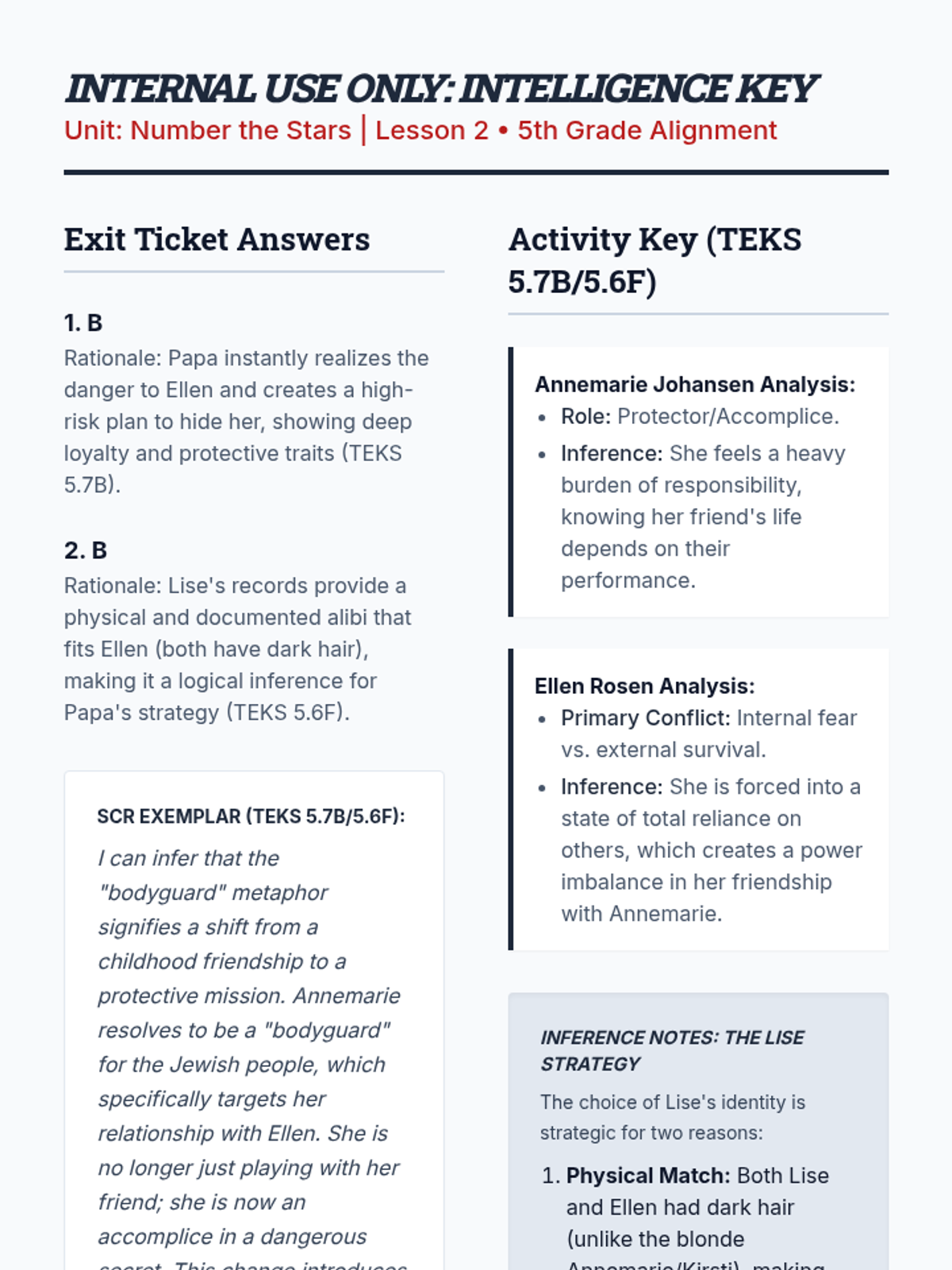
Students analyze character relationships and make deep inferences about the changing atmosphere in Copenhagen as the Nazi occupation intensifies, focusing on subtle textual clues (TEKS 5.7B, 5.6F).
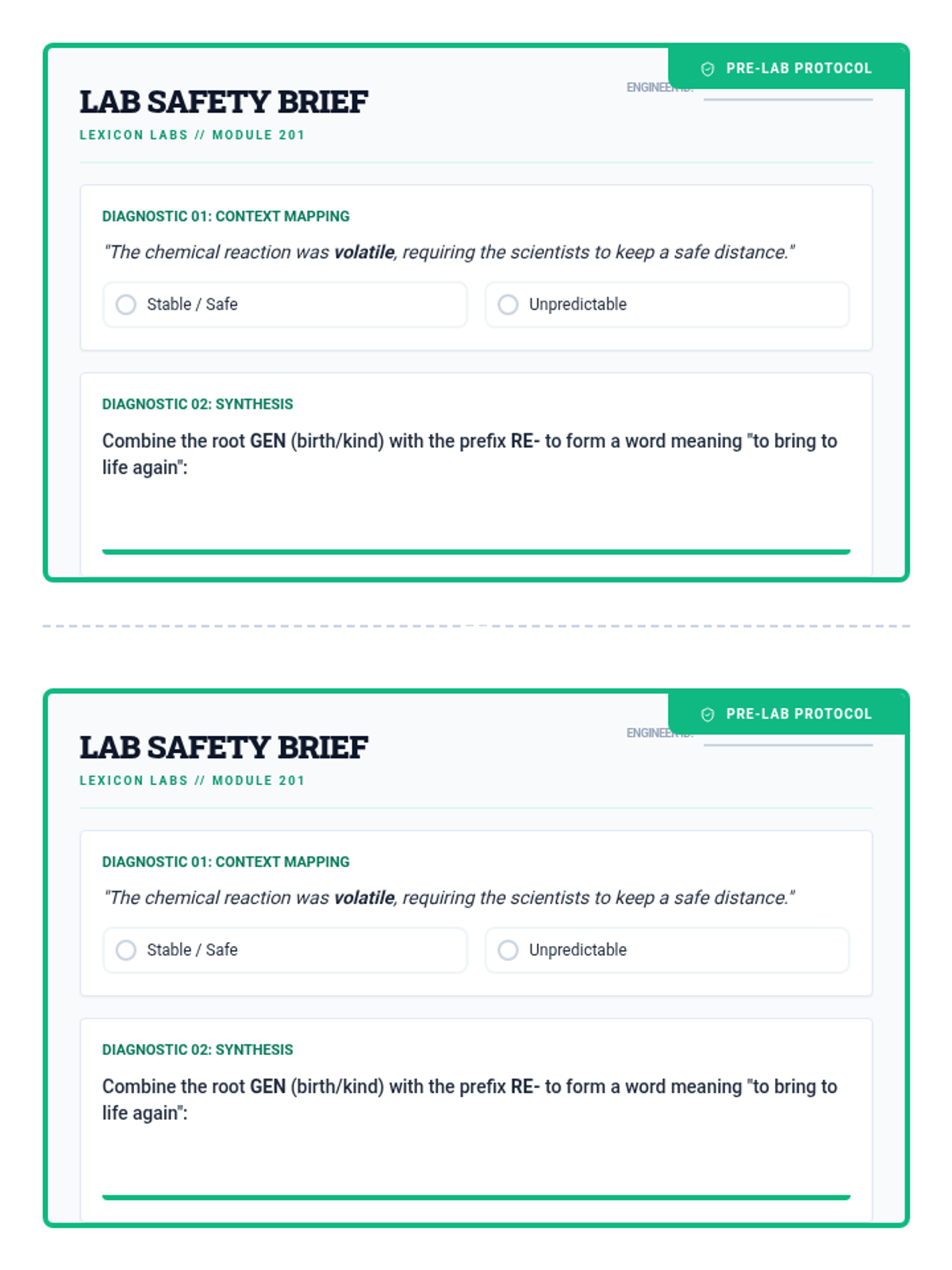
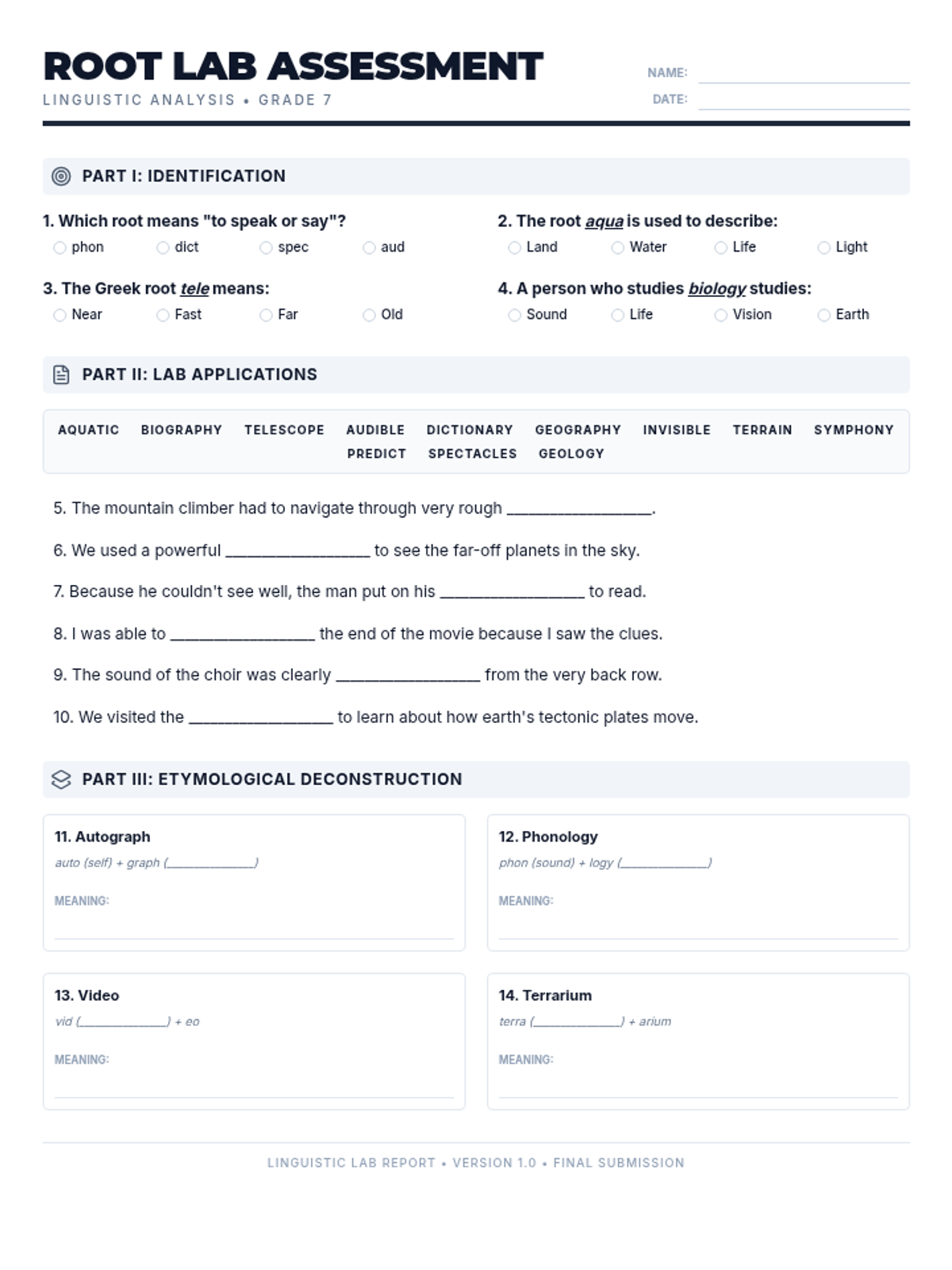
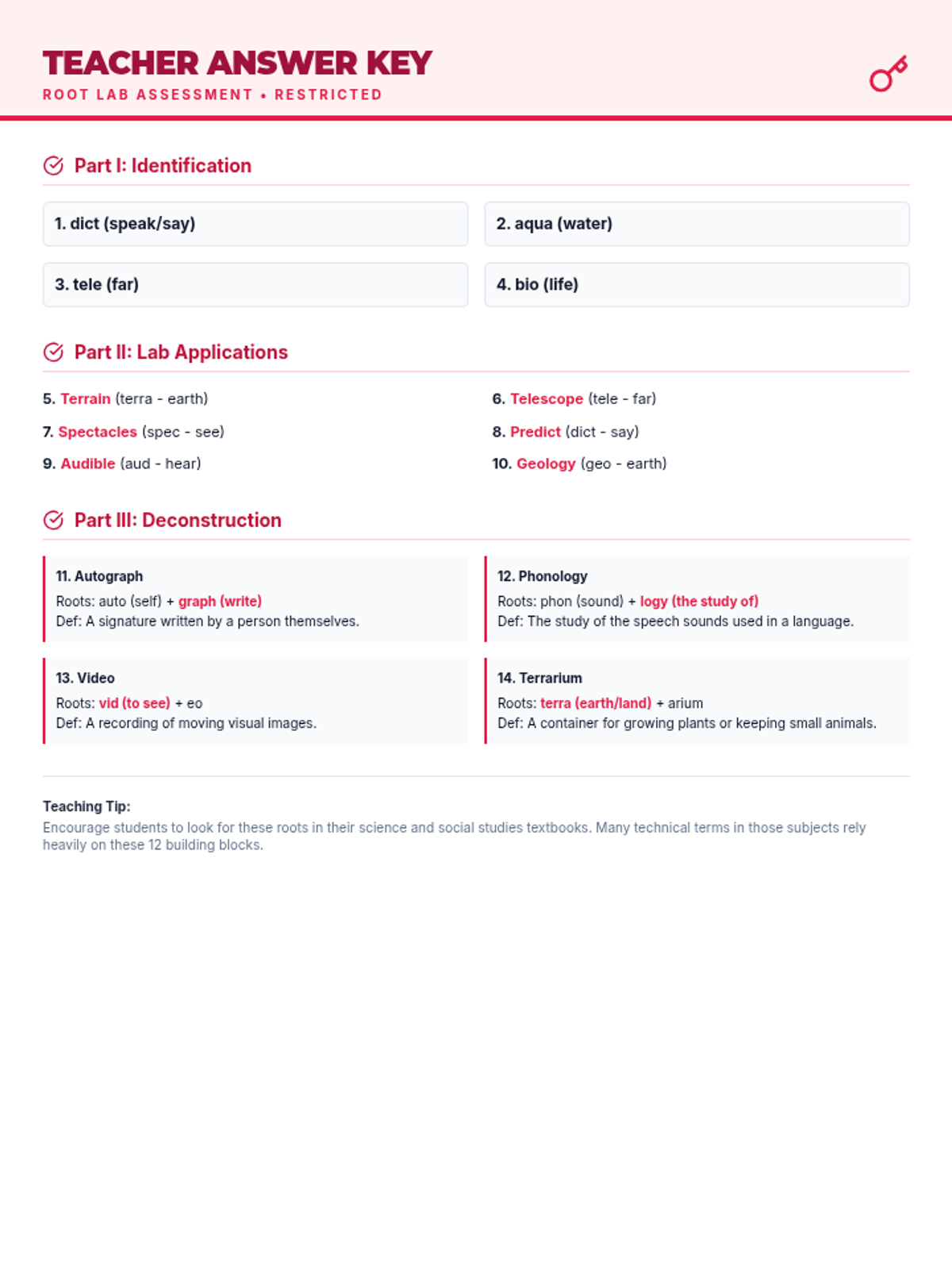
Students explore 10 common Greek and Latin roots, identifying their meanings and applying them to determine the definitions of complex academic vocabulary.
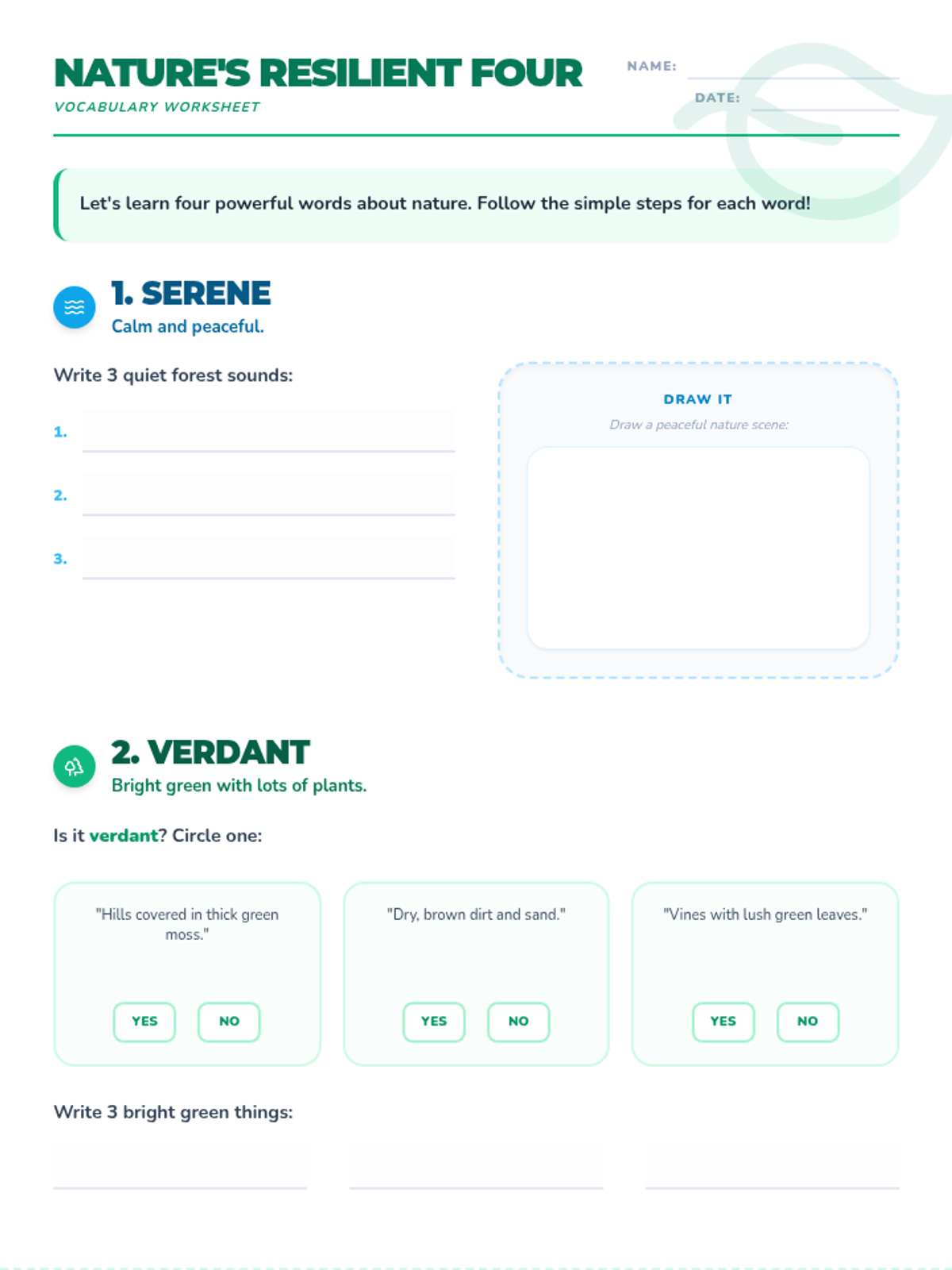
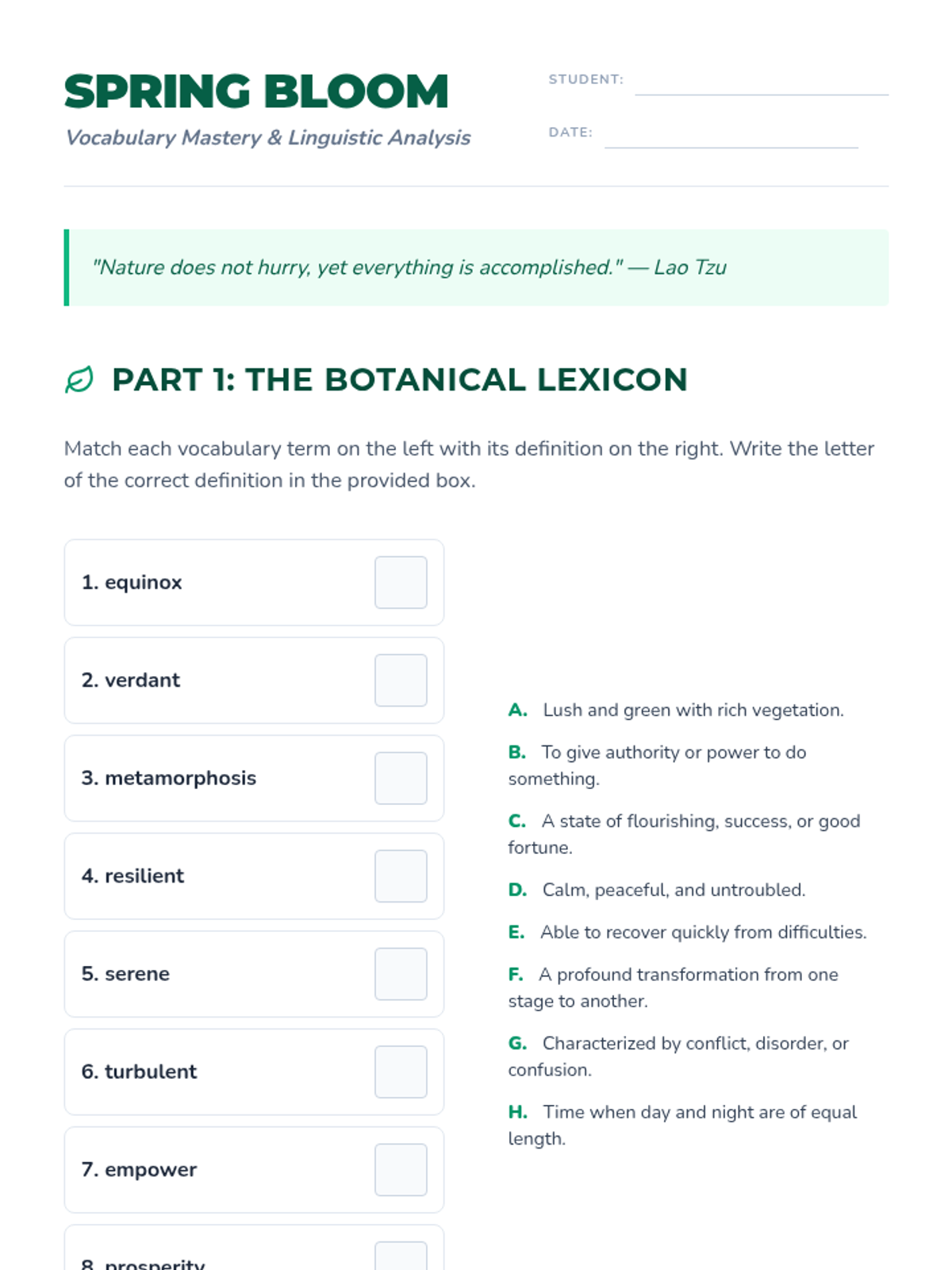
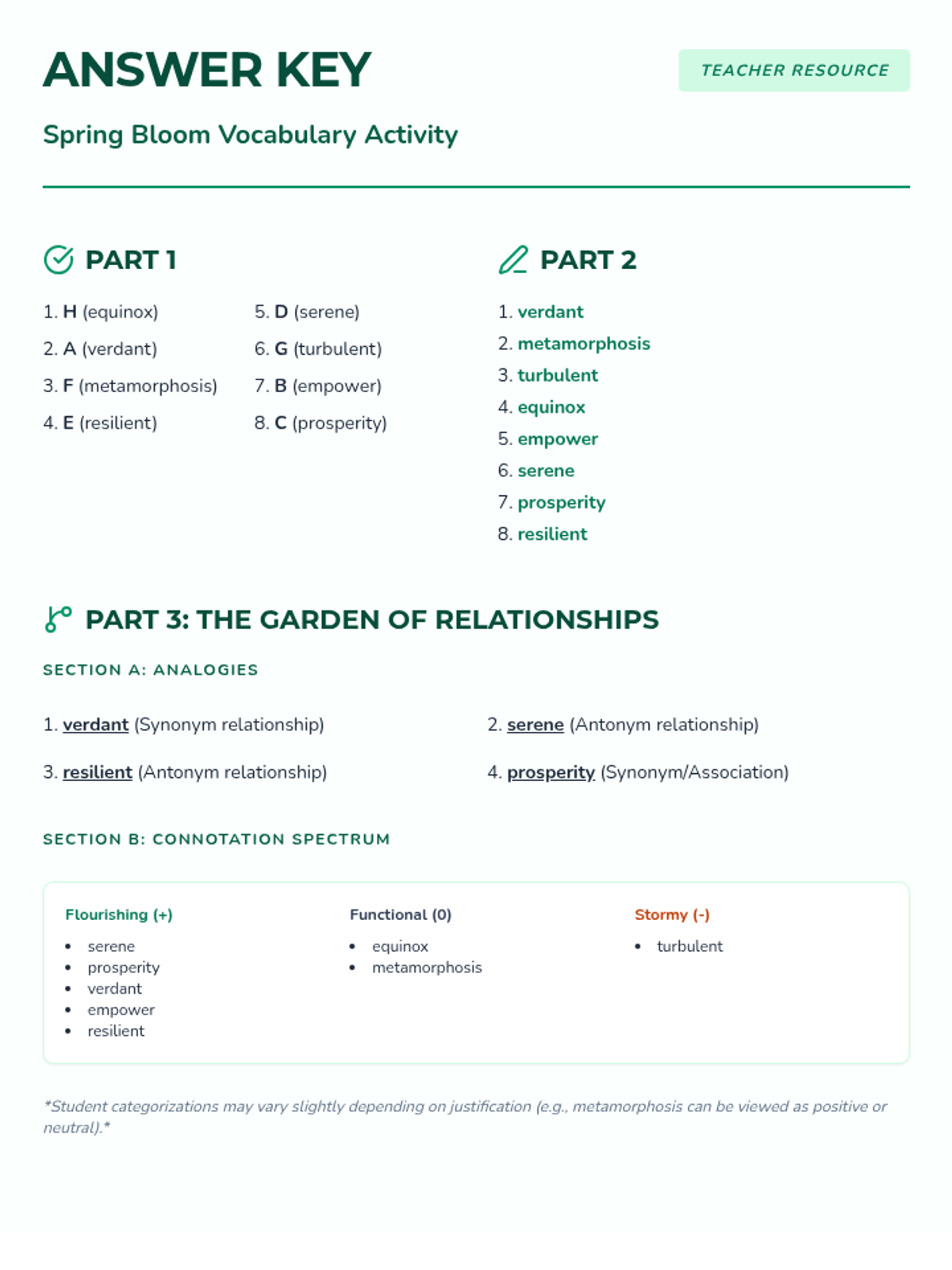
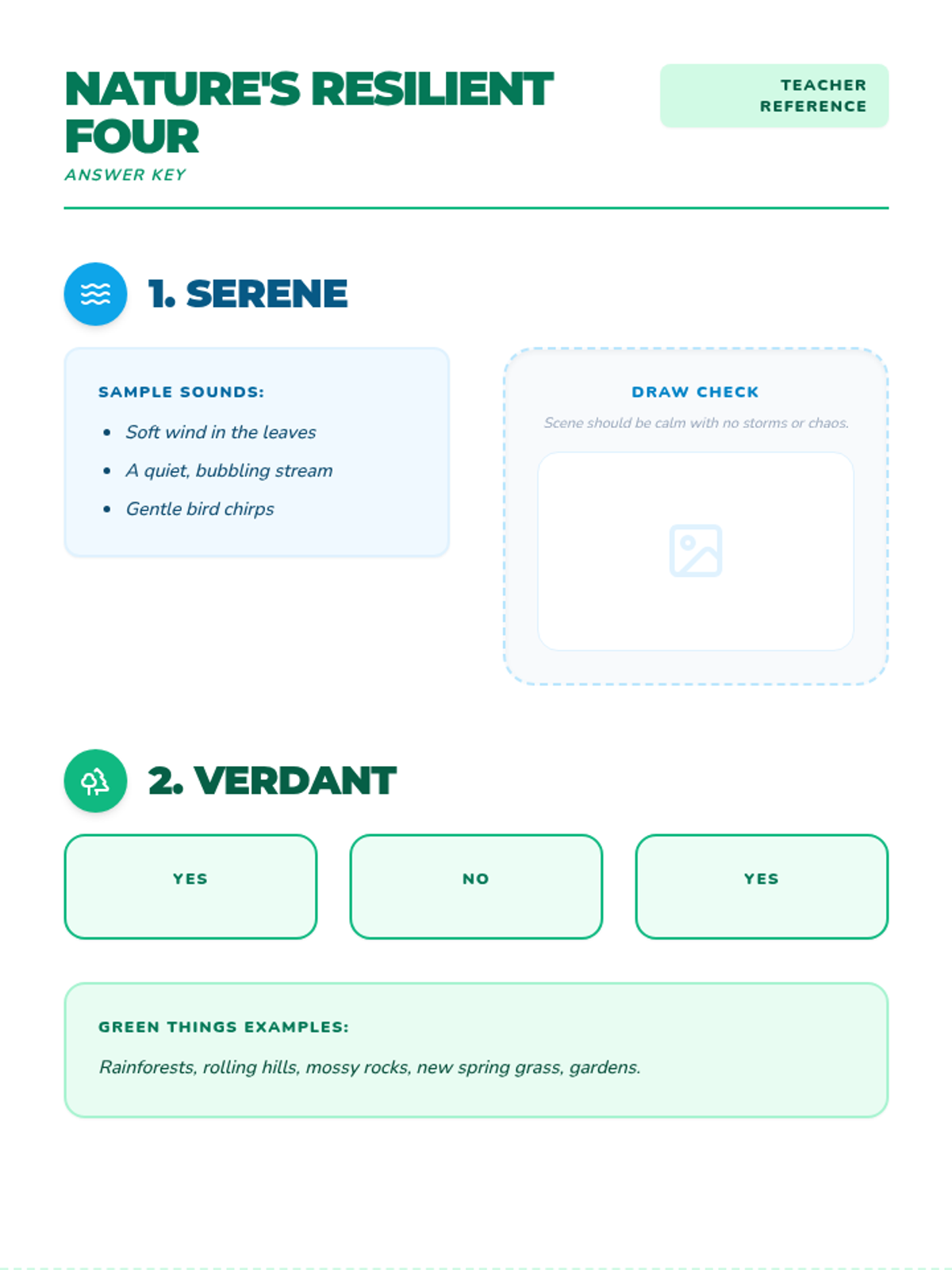
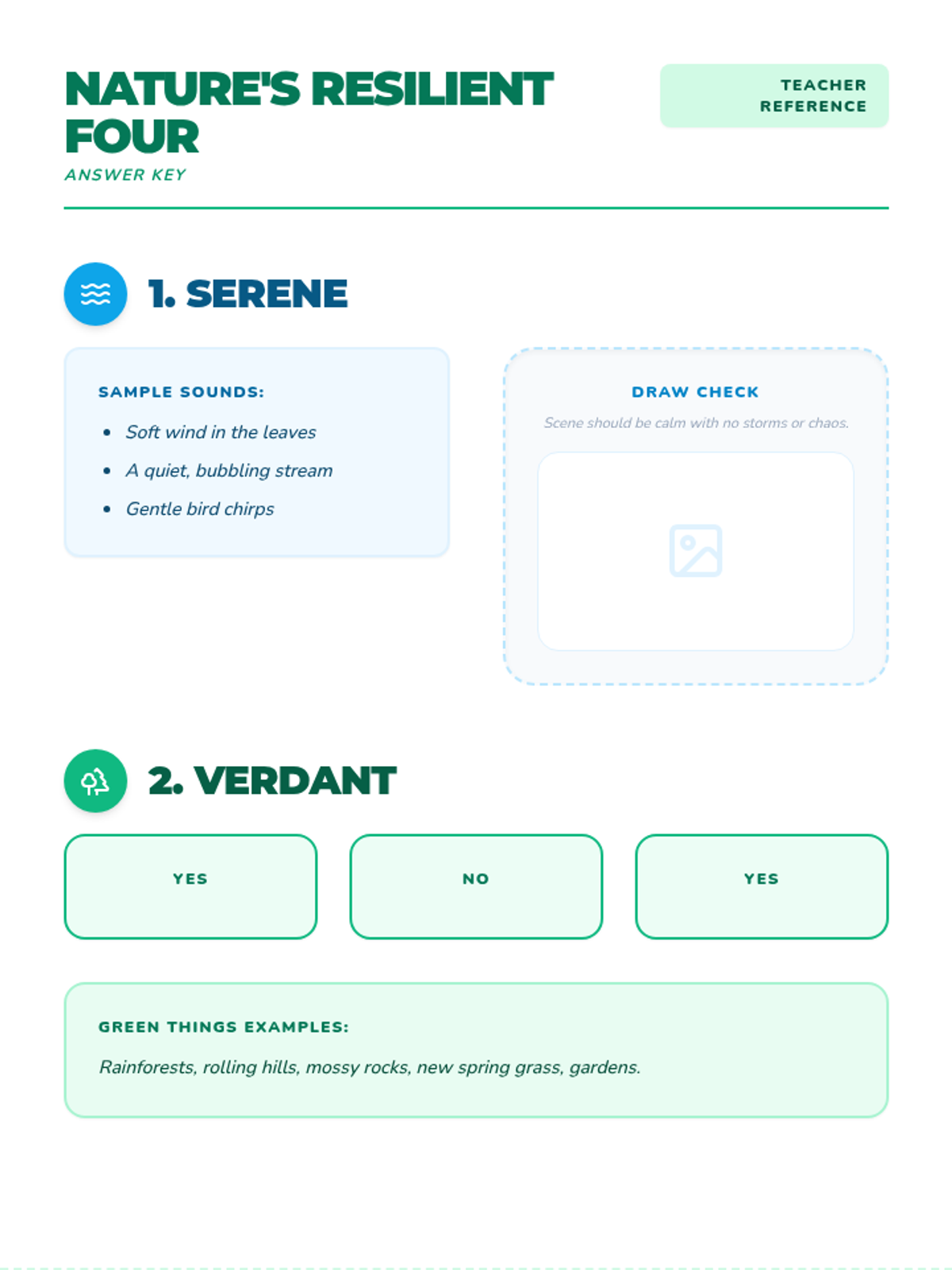
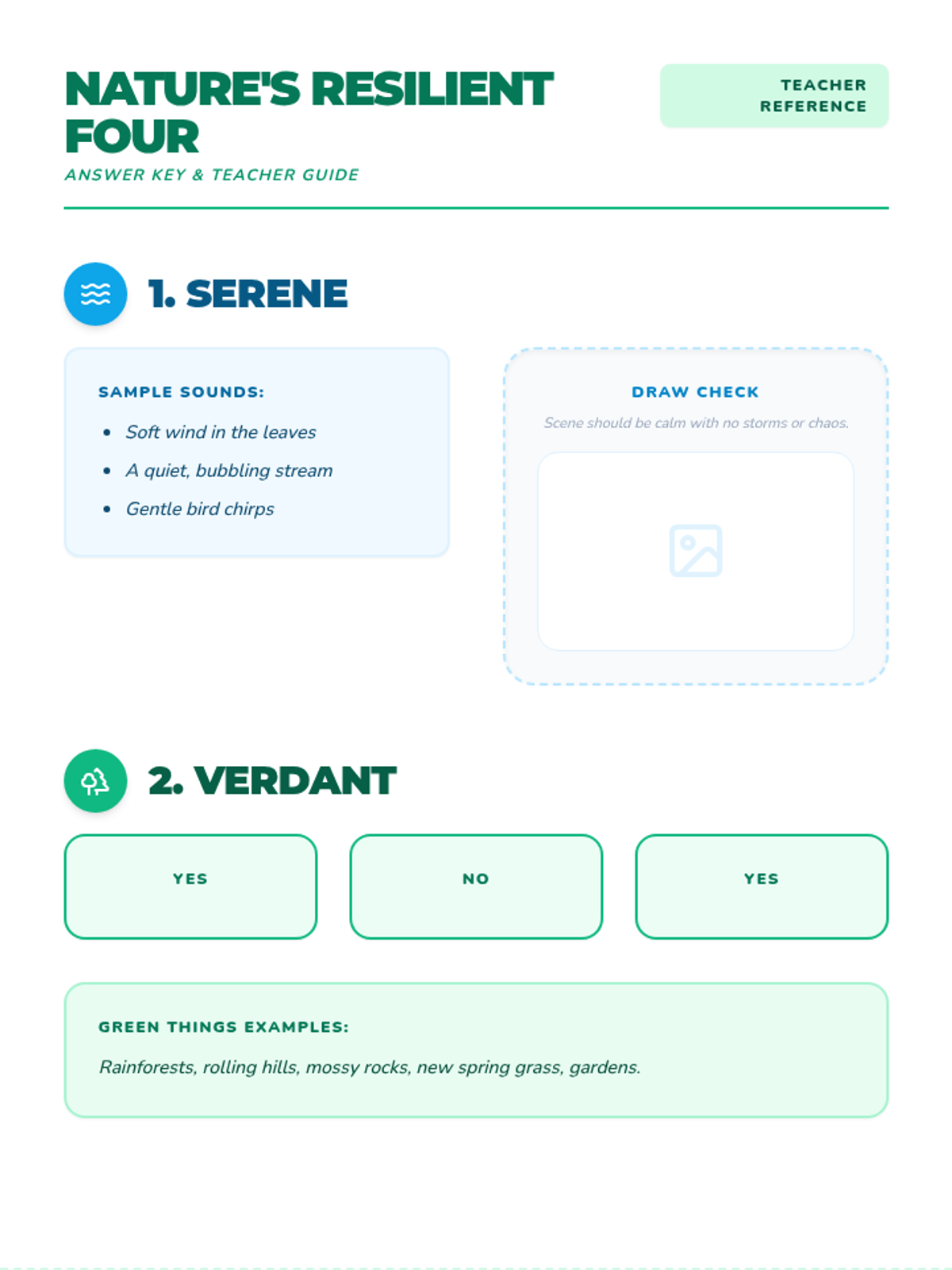
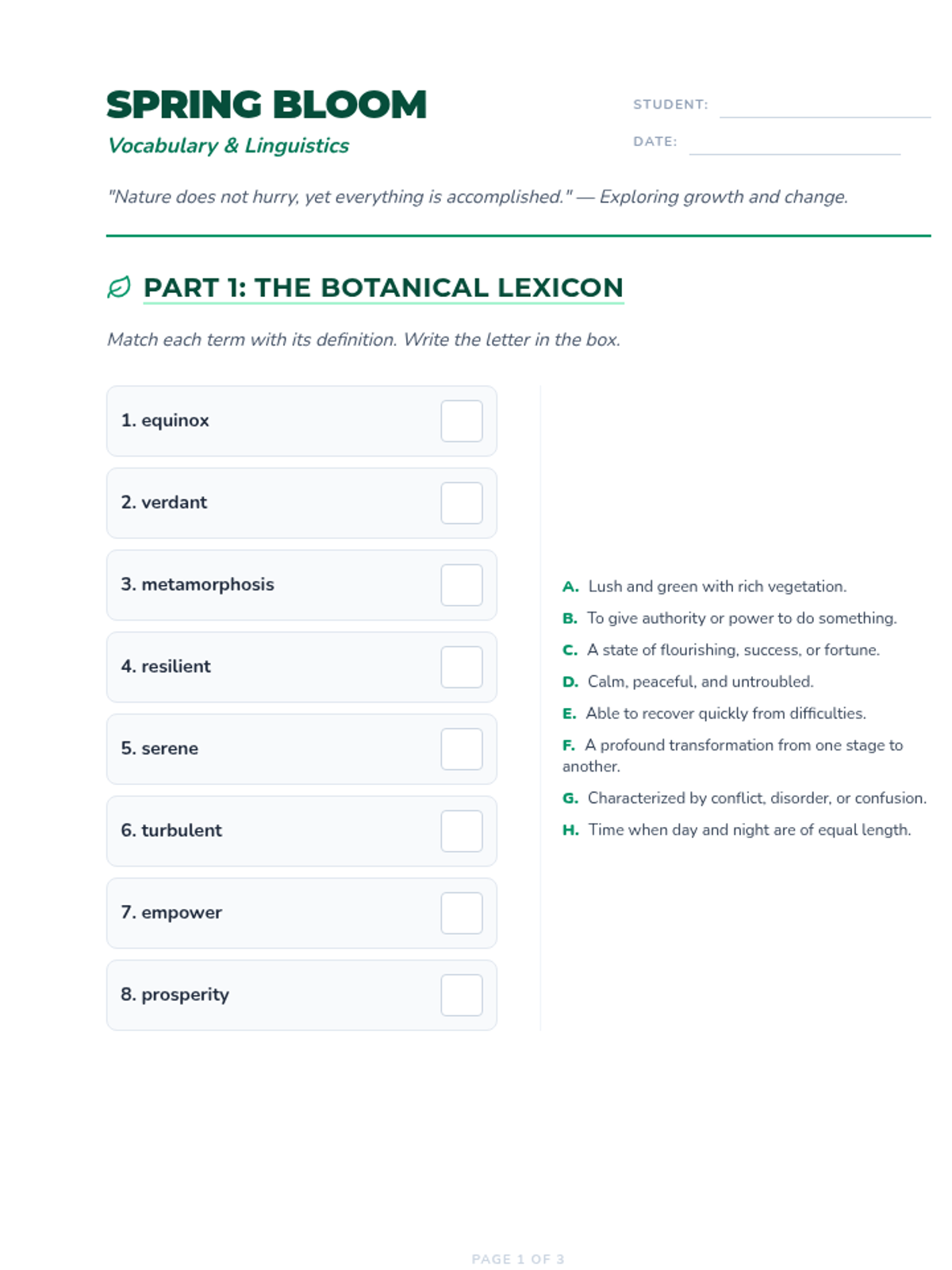
A vocabulary and linguistics lesson exploring themes of transition, growth, and strength. Students master eight high-level terms—equinox, verdant, metamorphosis, resilient, serene, turbulent, empower, and prosperity—through context analysis and creative application.
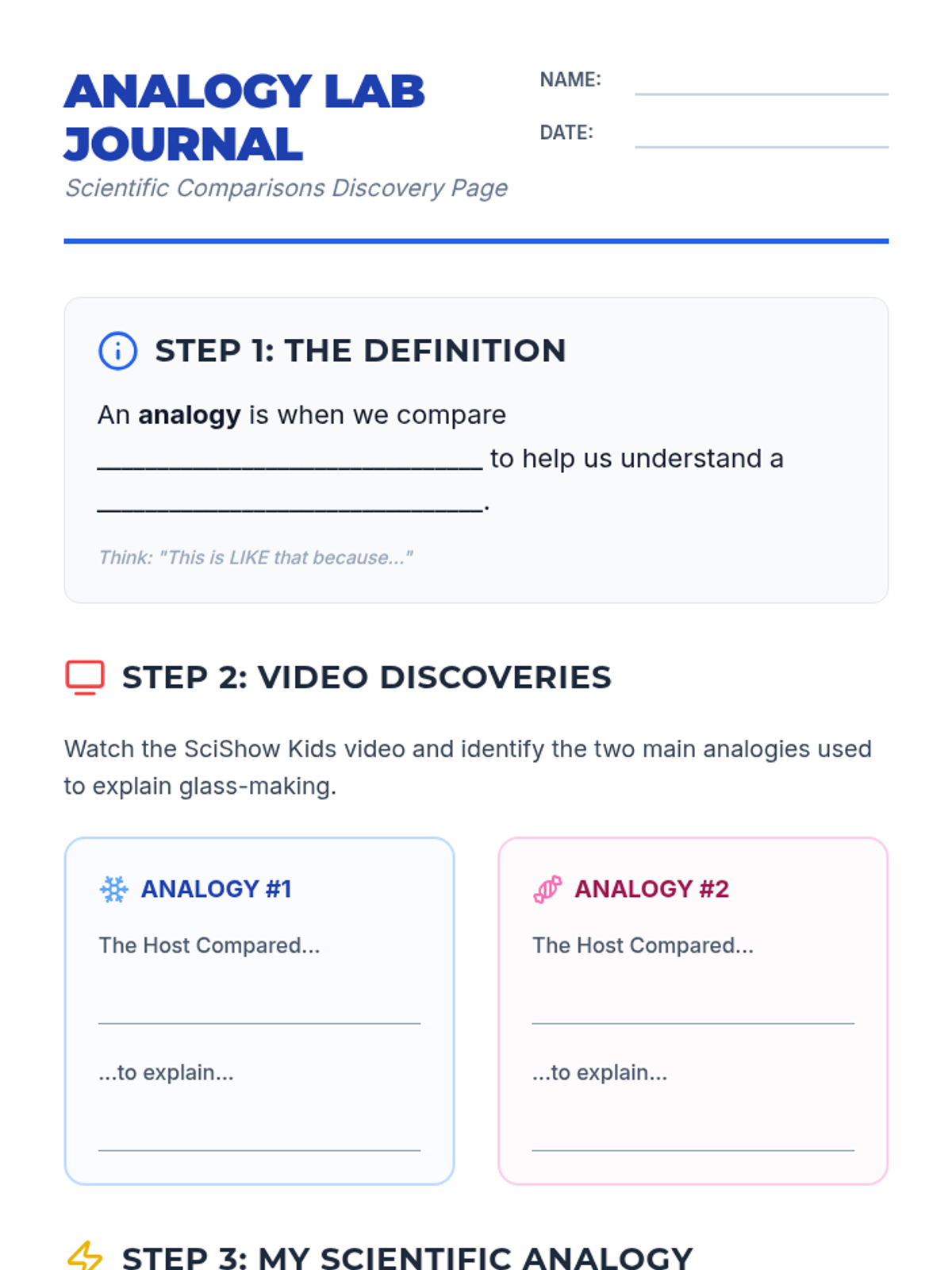
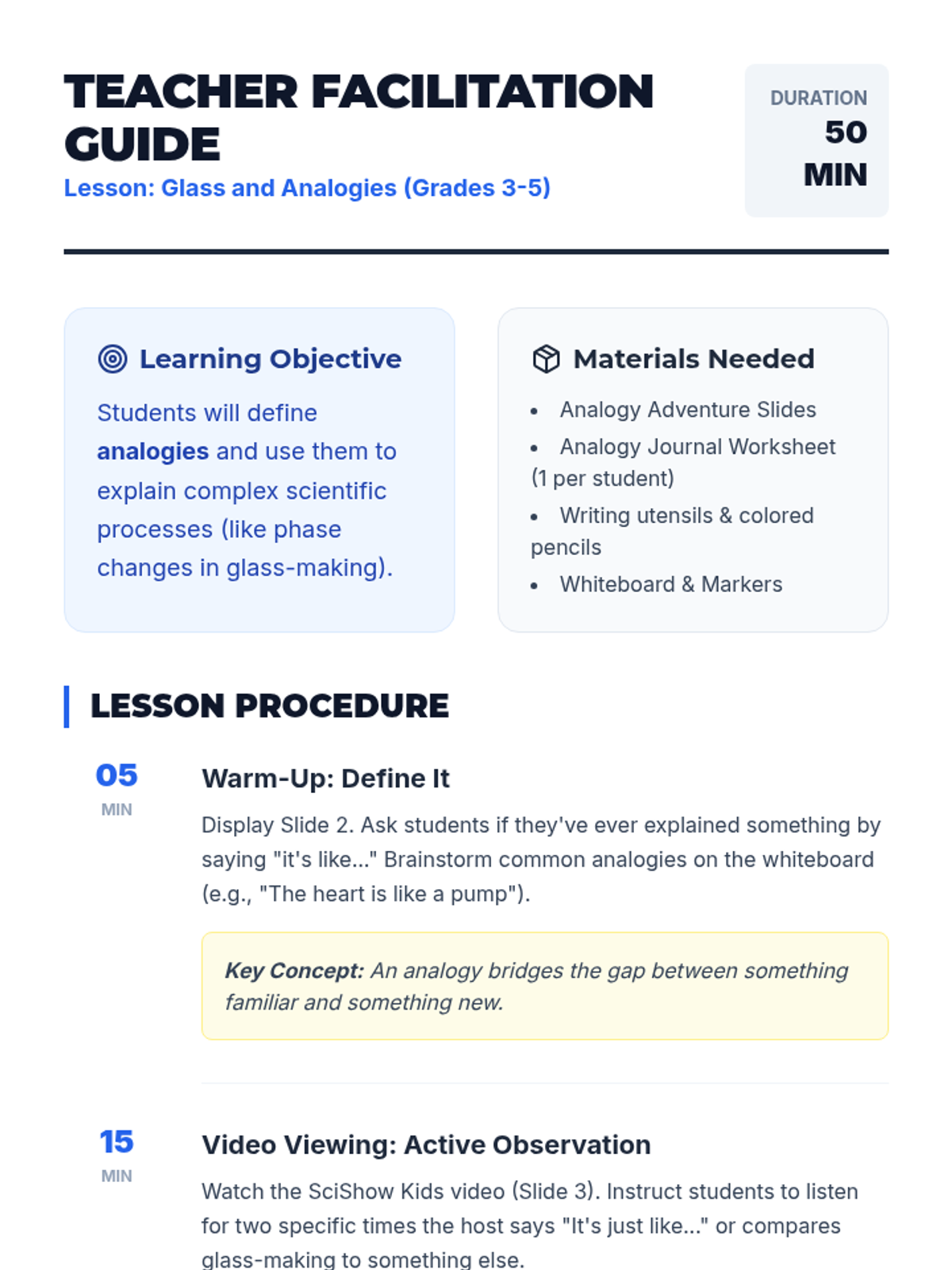
A lesson where students watch a SciShow Kids video about making glass from sand and analyze how analogies (ice/water and sugar/candy) help explain complex scientific processes. Students then practice creating their own scientific analogies.
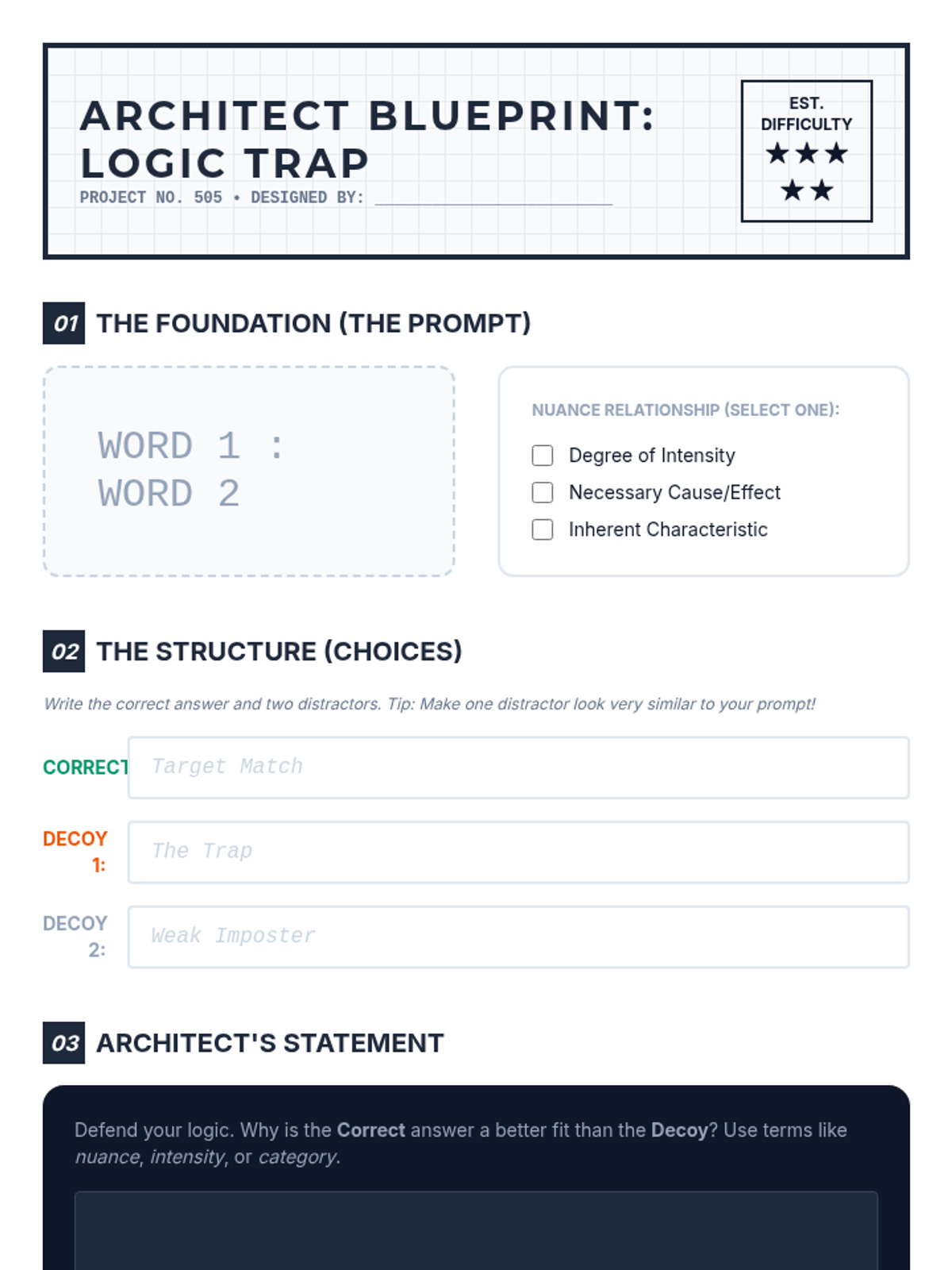
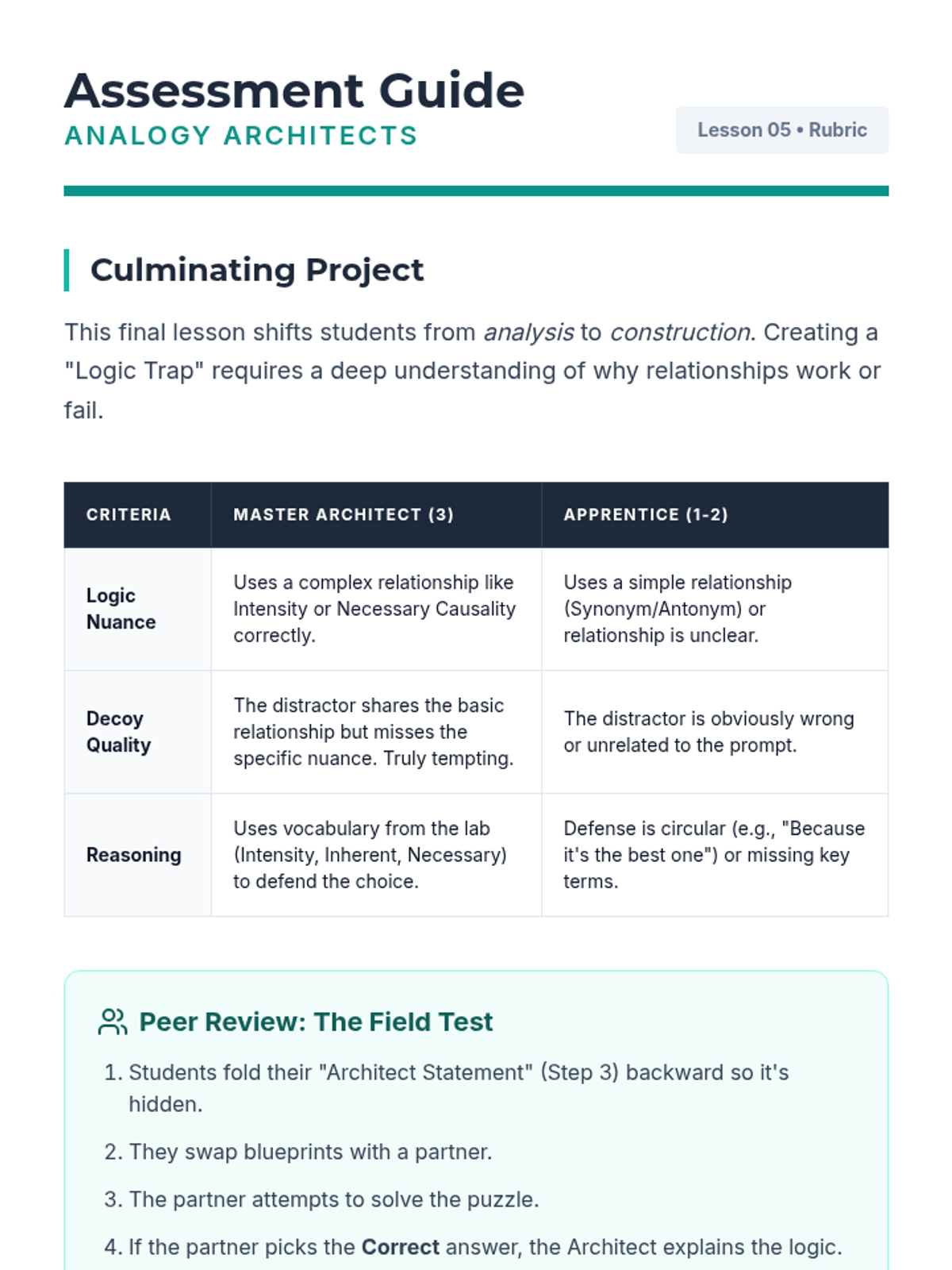
Students create their own complex analogies specifically designed to trick peers using degree of intensity or subtle nuance. This validates their understanding of advanced verbal relationships.
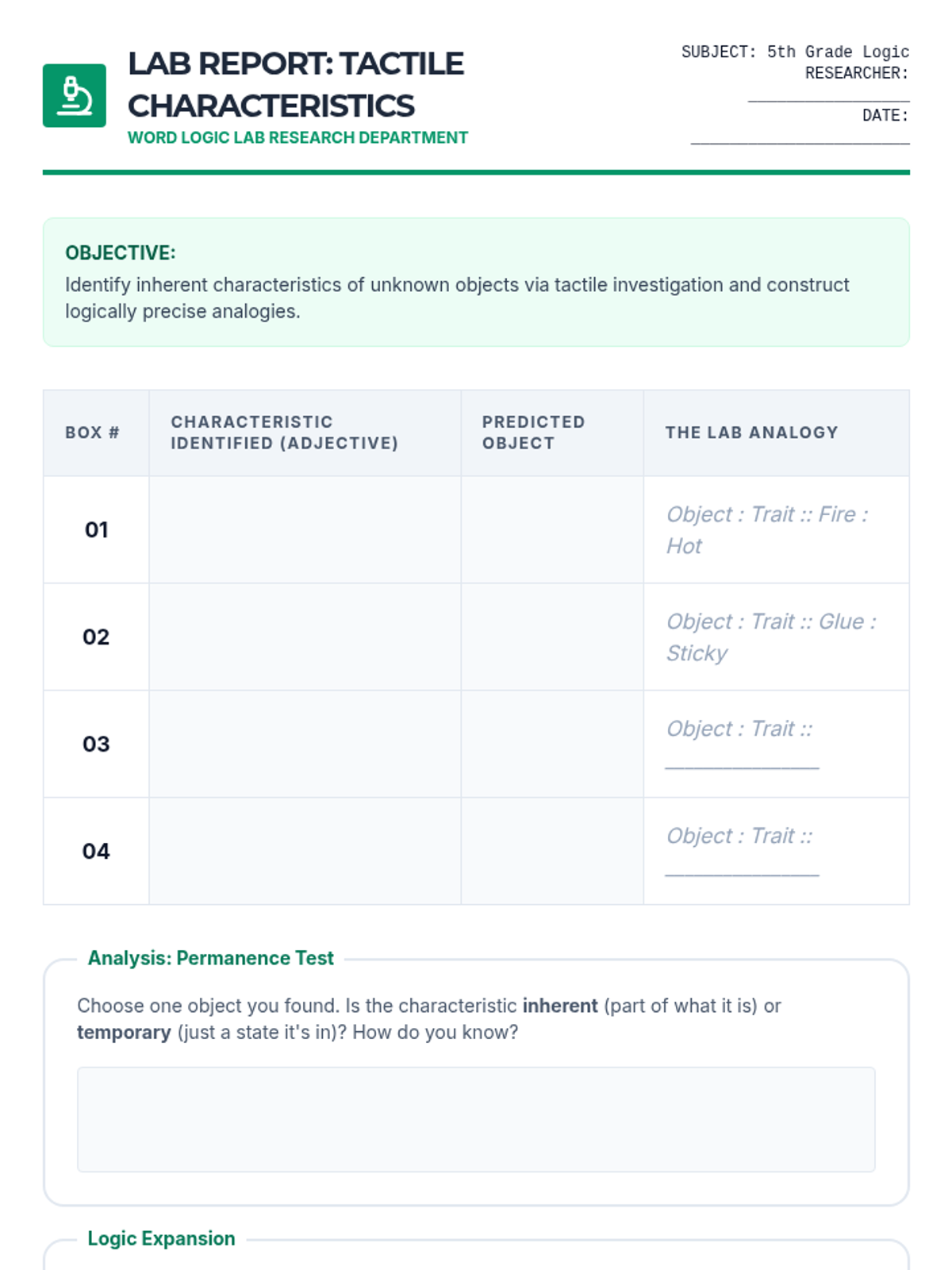
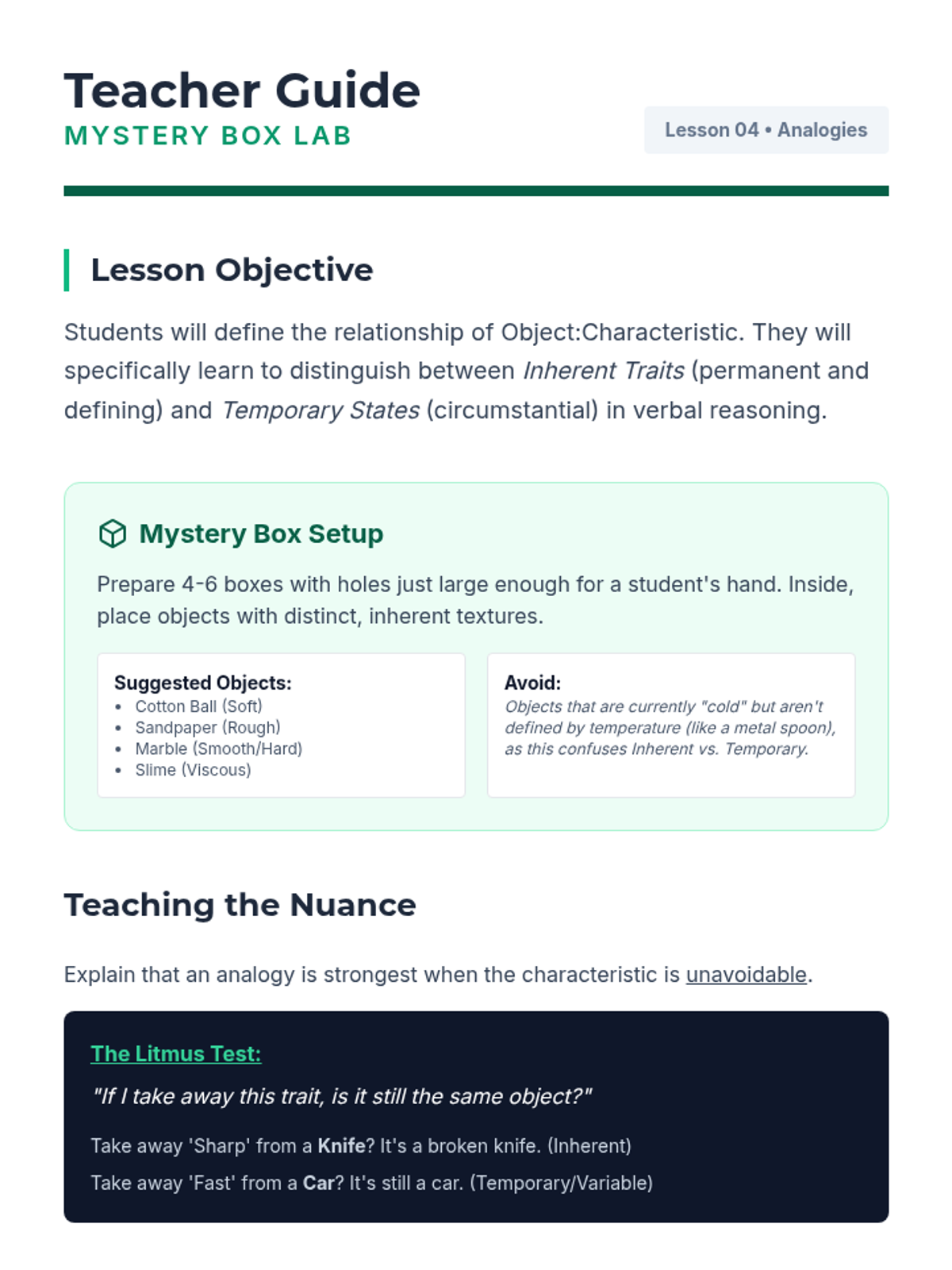
Students examine analogies linking nouns to inherent adjectives (e.g., marshmallow : soft), focusing on distinguishing between permanent characteristics and temporary states.
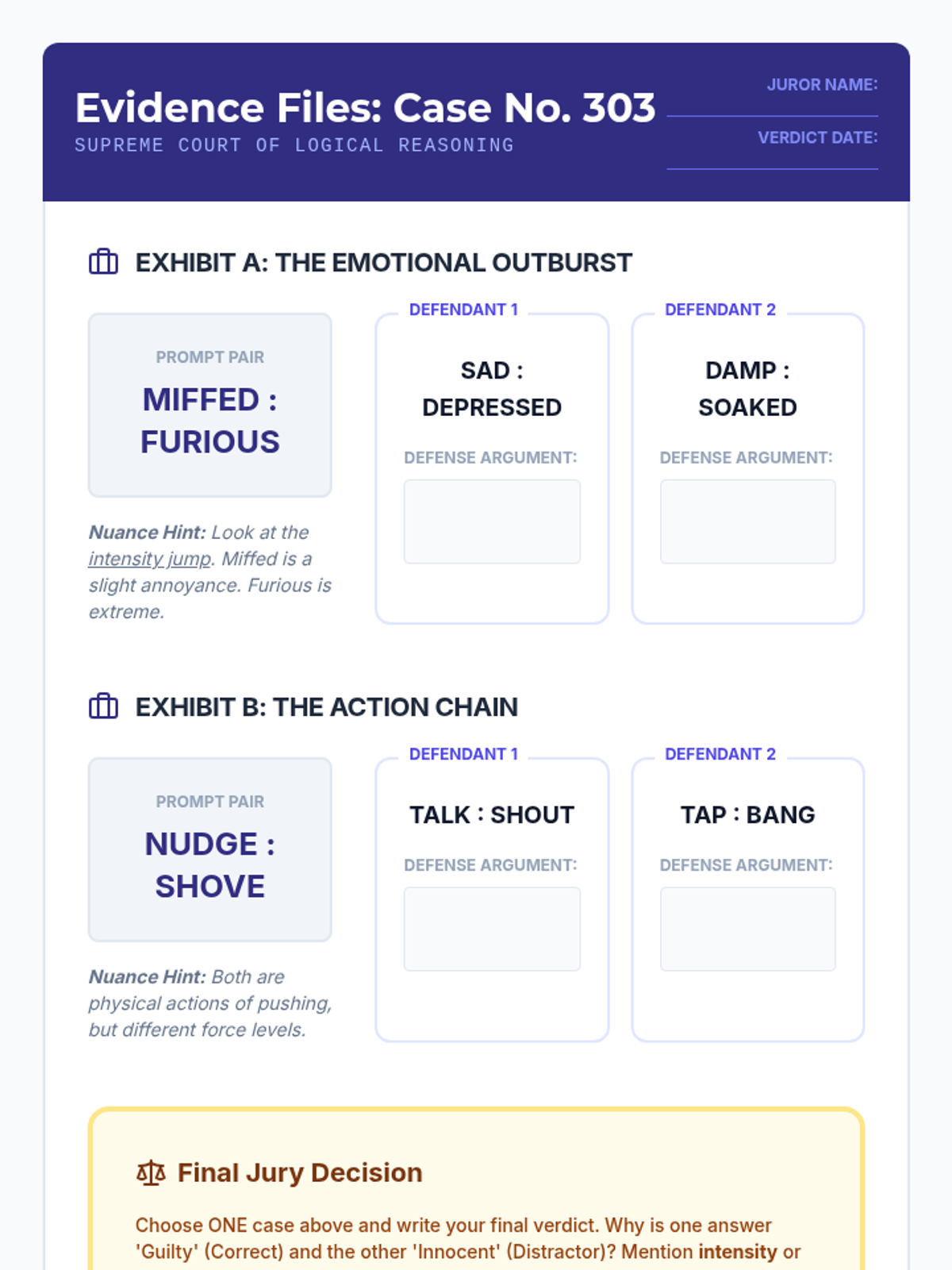
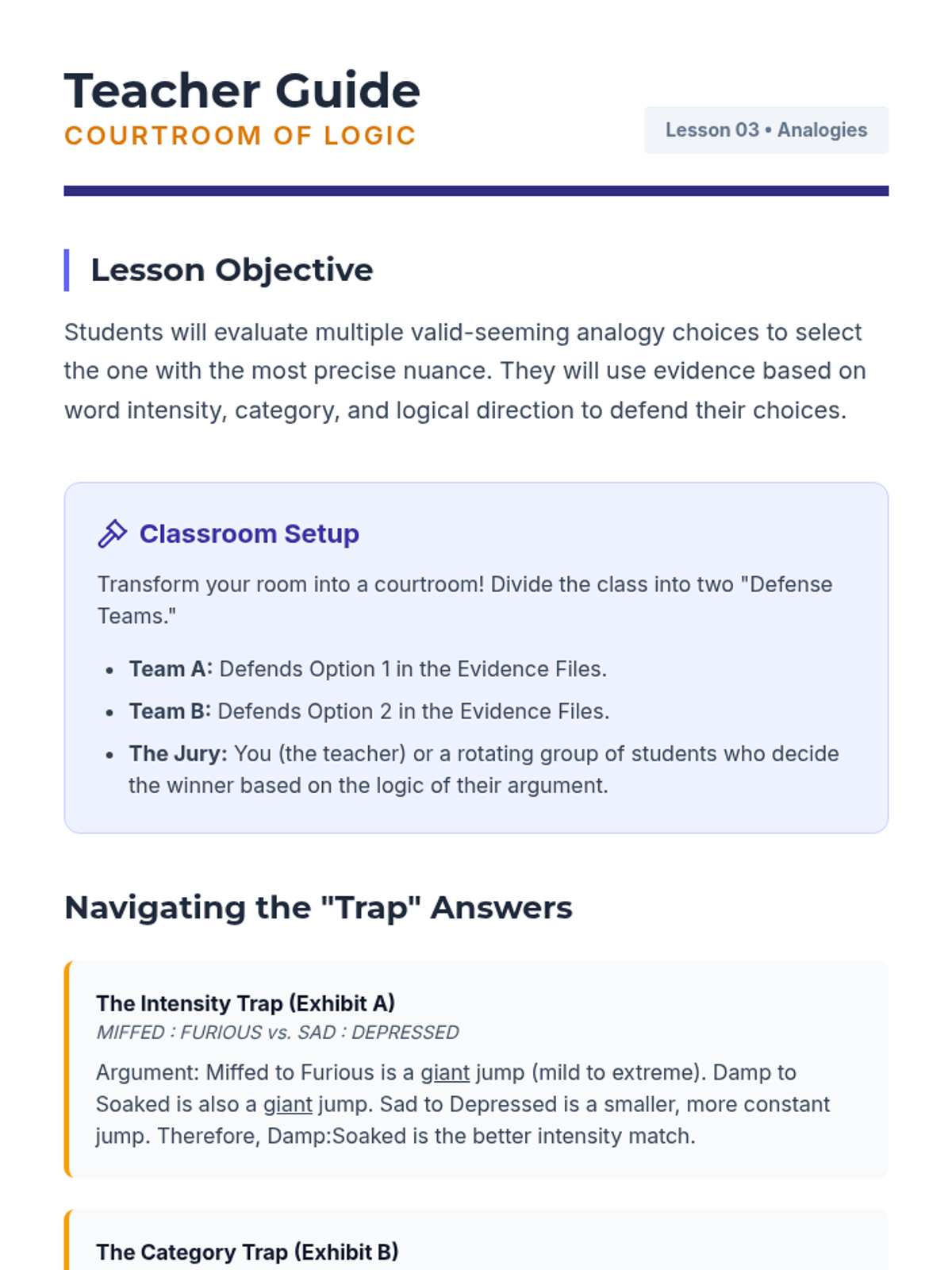
Students engage in Socratic discussion to argue which answer matches the precise nuance of a prompt, specifically identifying distractors in complex analogies.
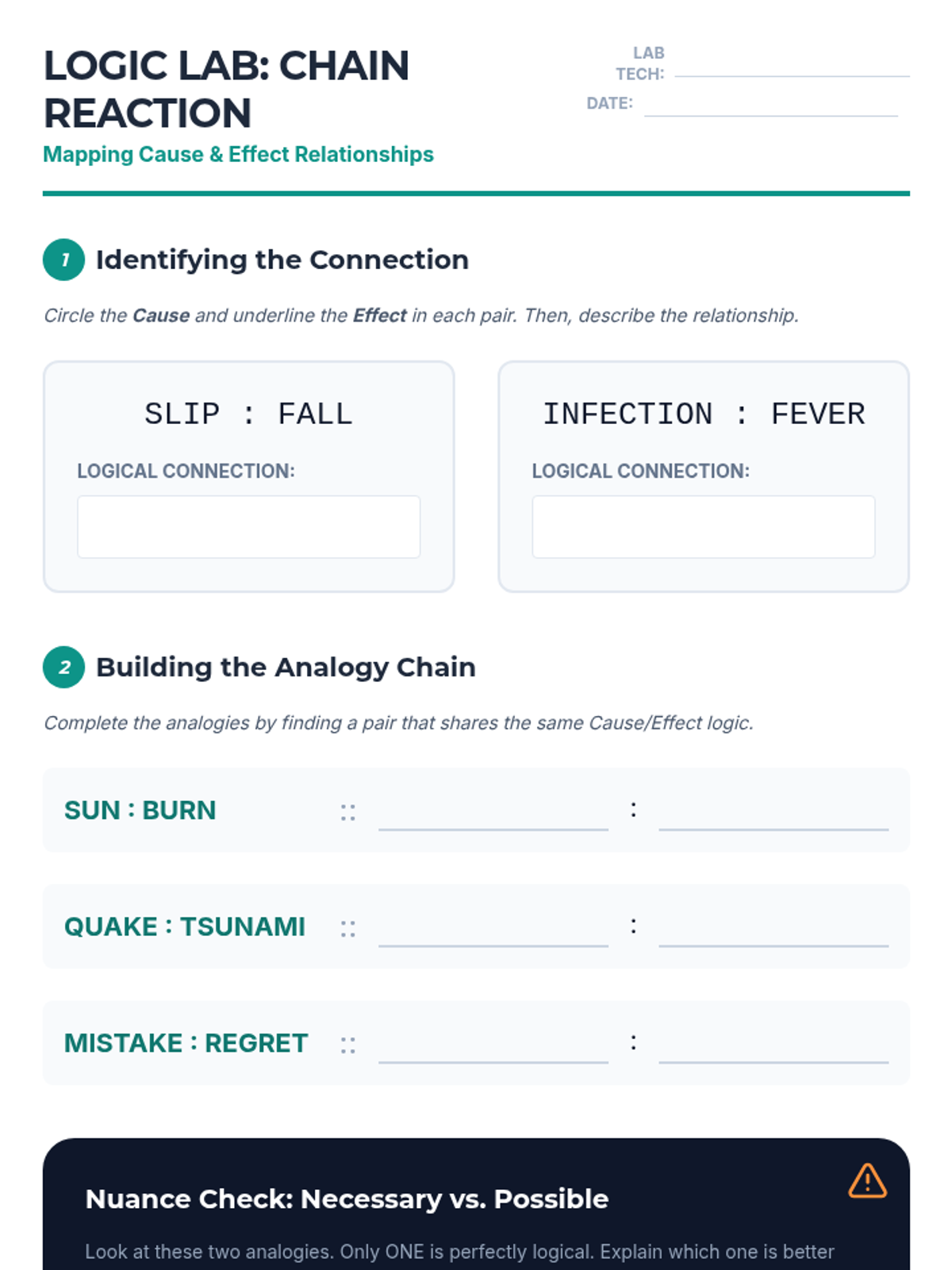
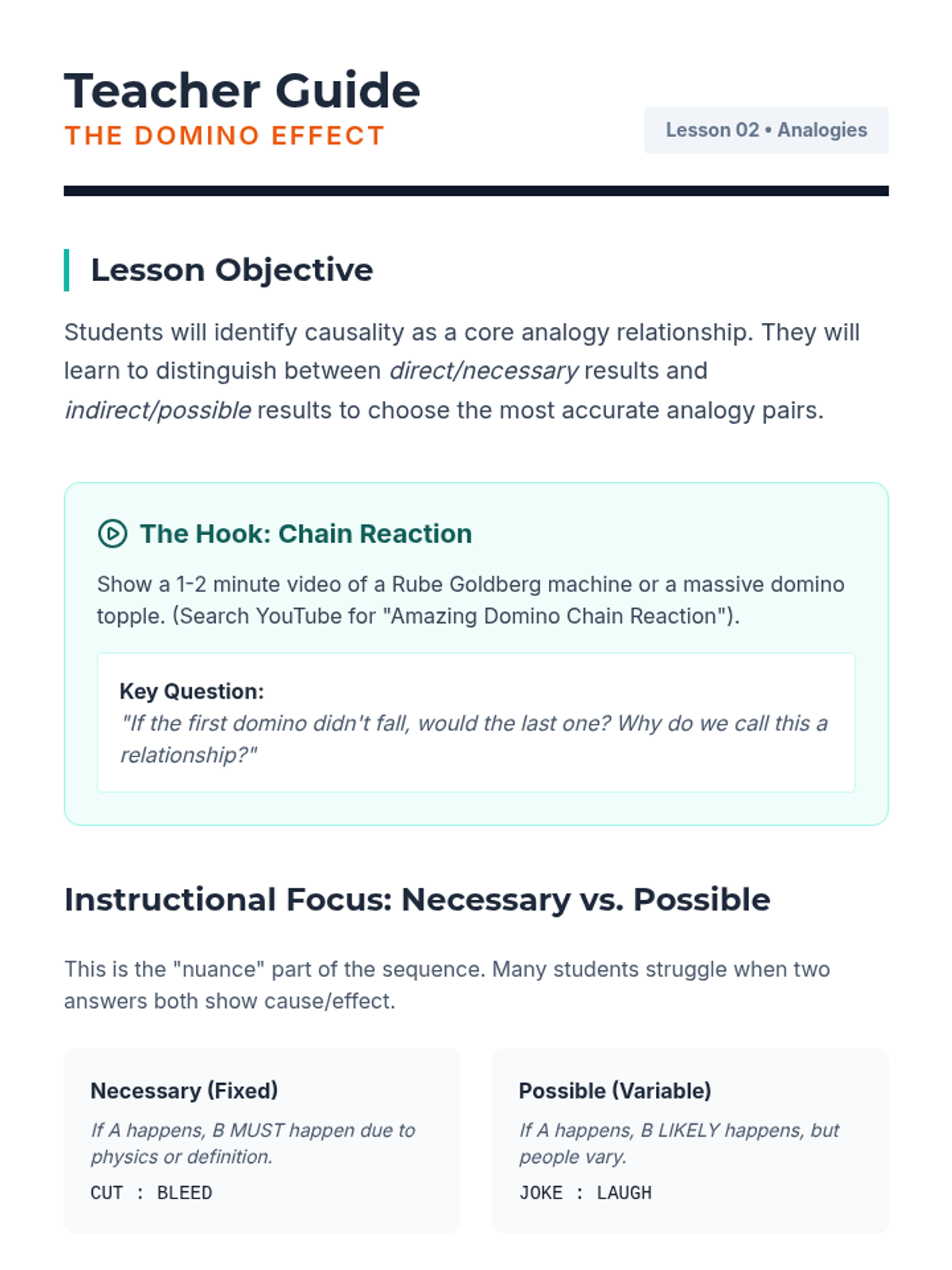
Students differentiate between necessary causes and possible causes through scenario analysis, focusing on logical sequencing in analogies (e.g., spark : fire).
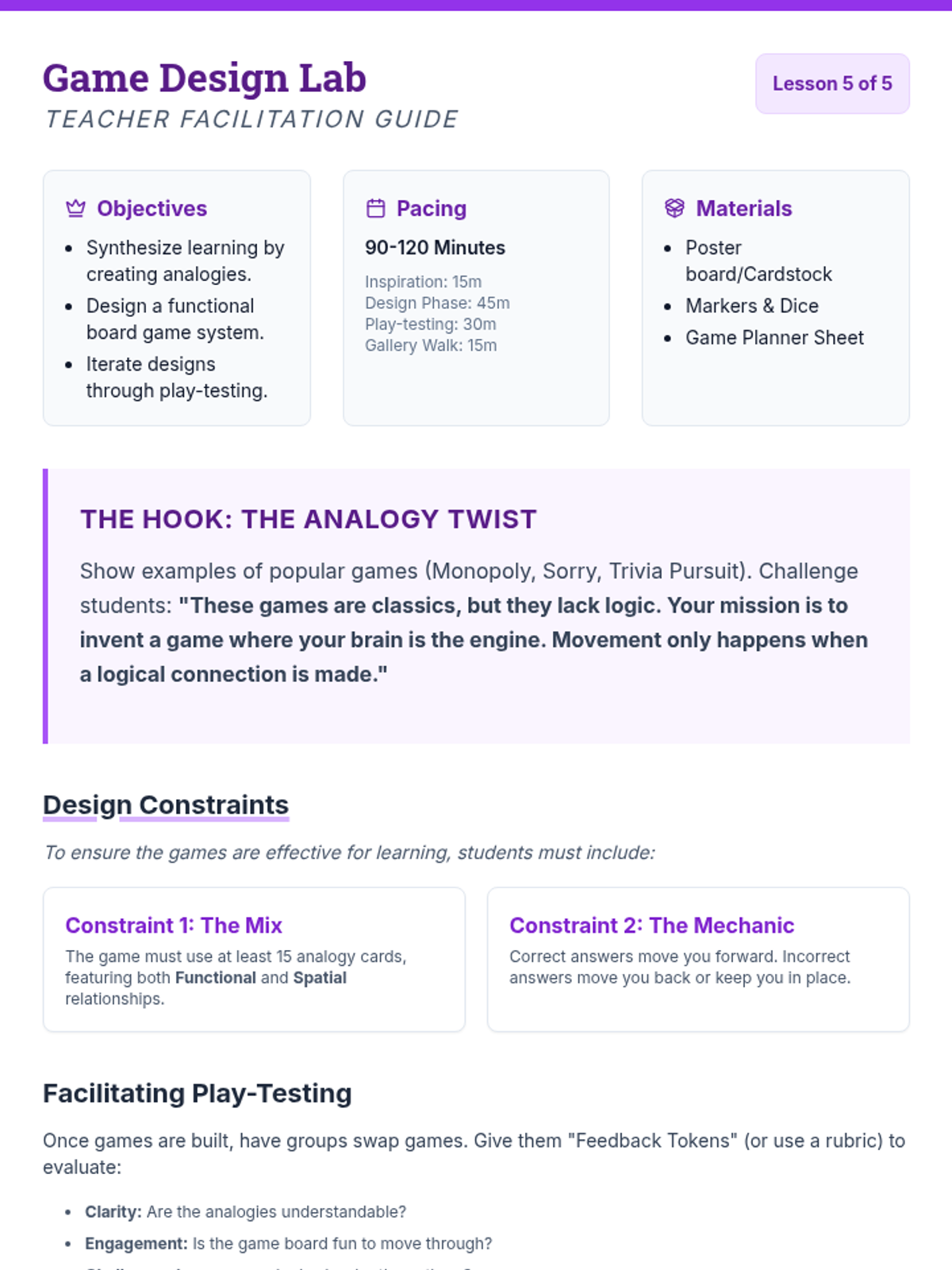
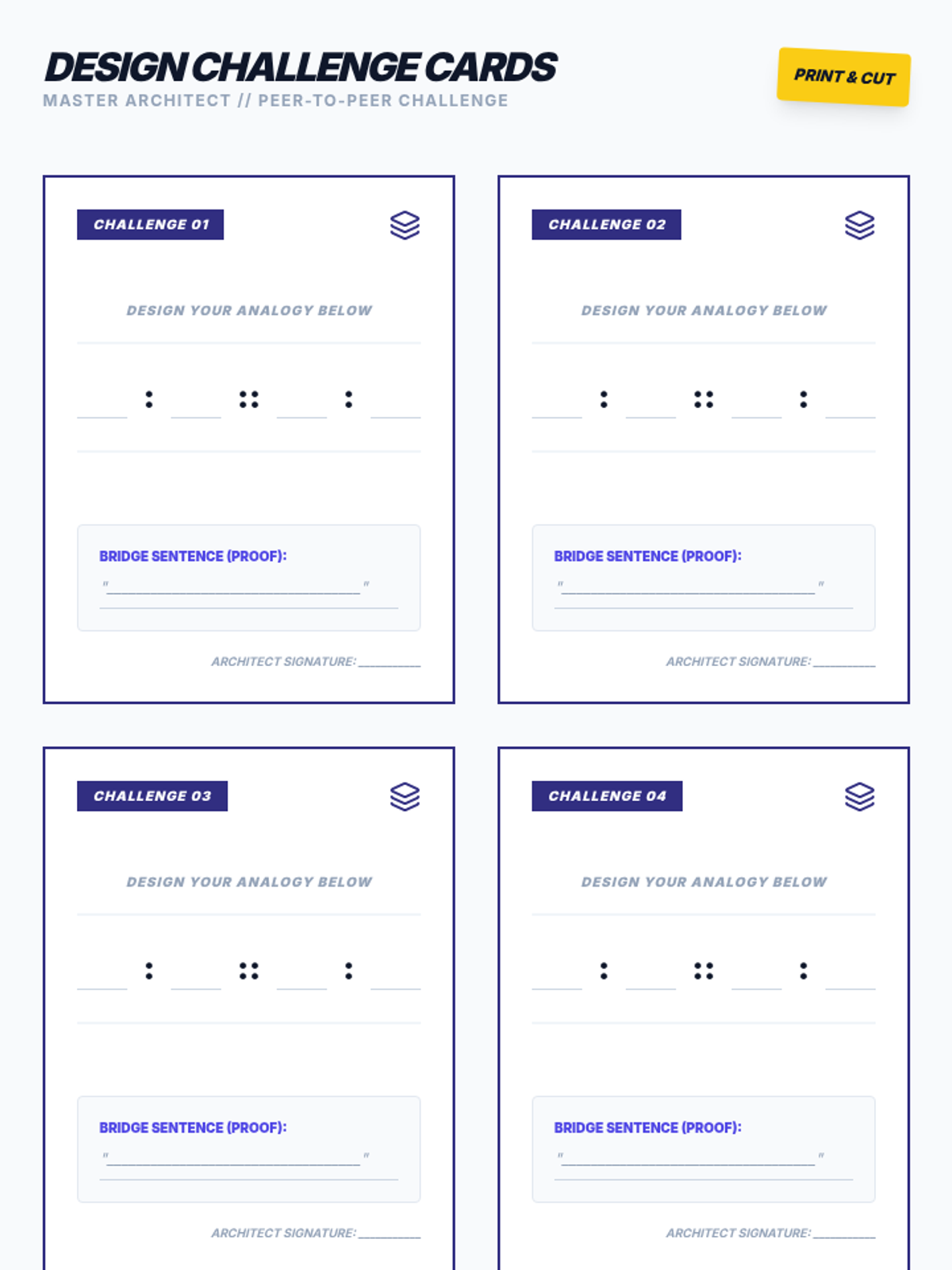
Students synthesize their learning by designing and play-testing an original board game based on functional analogies.
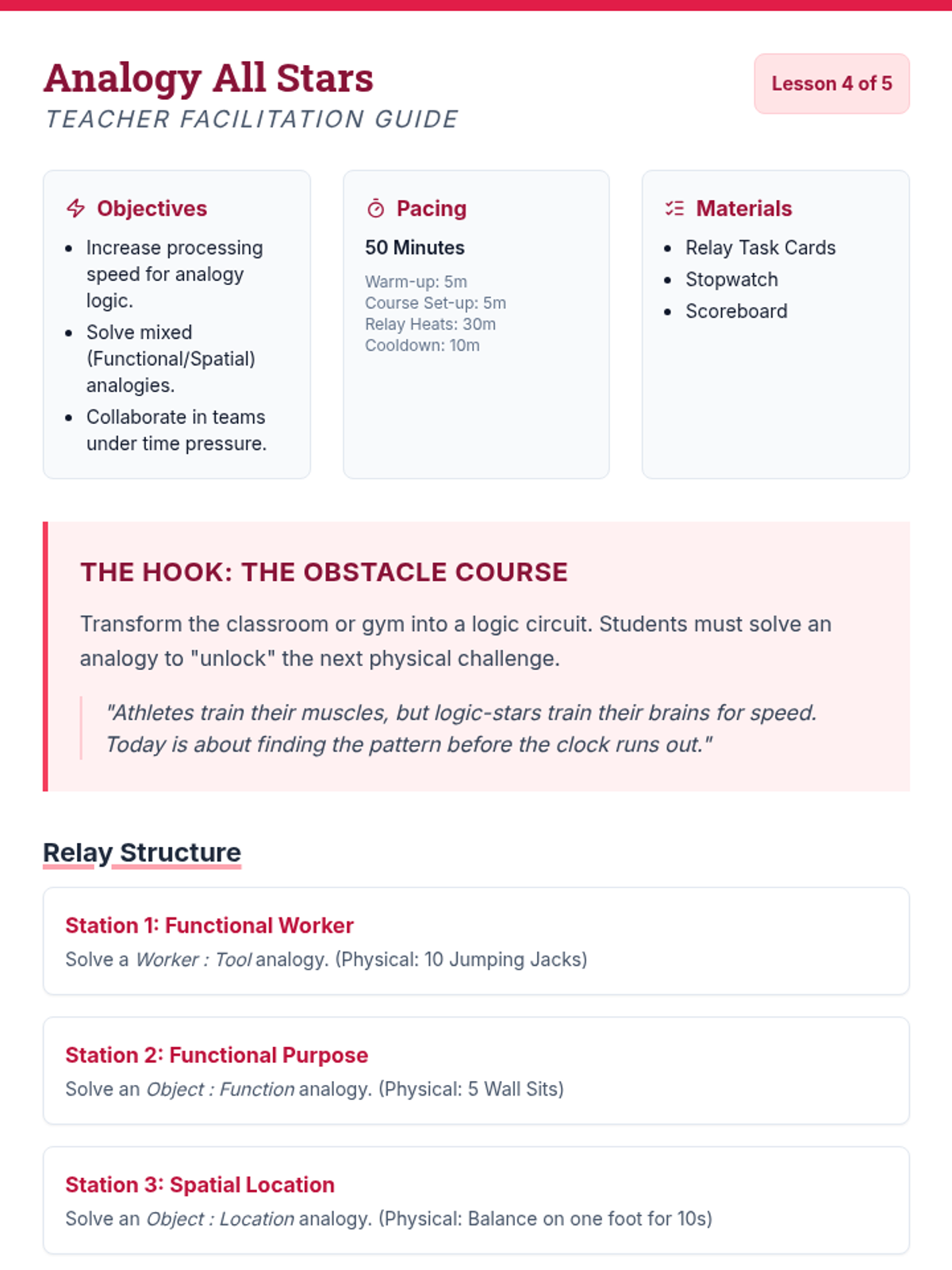
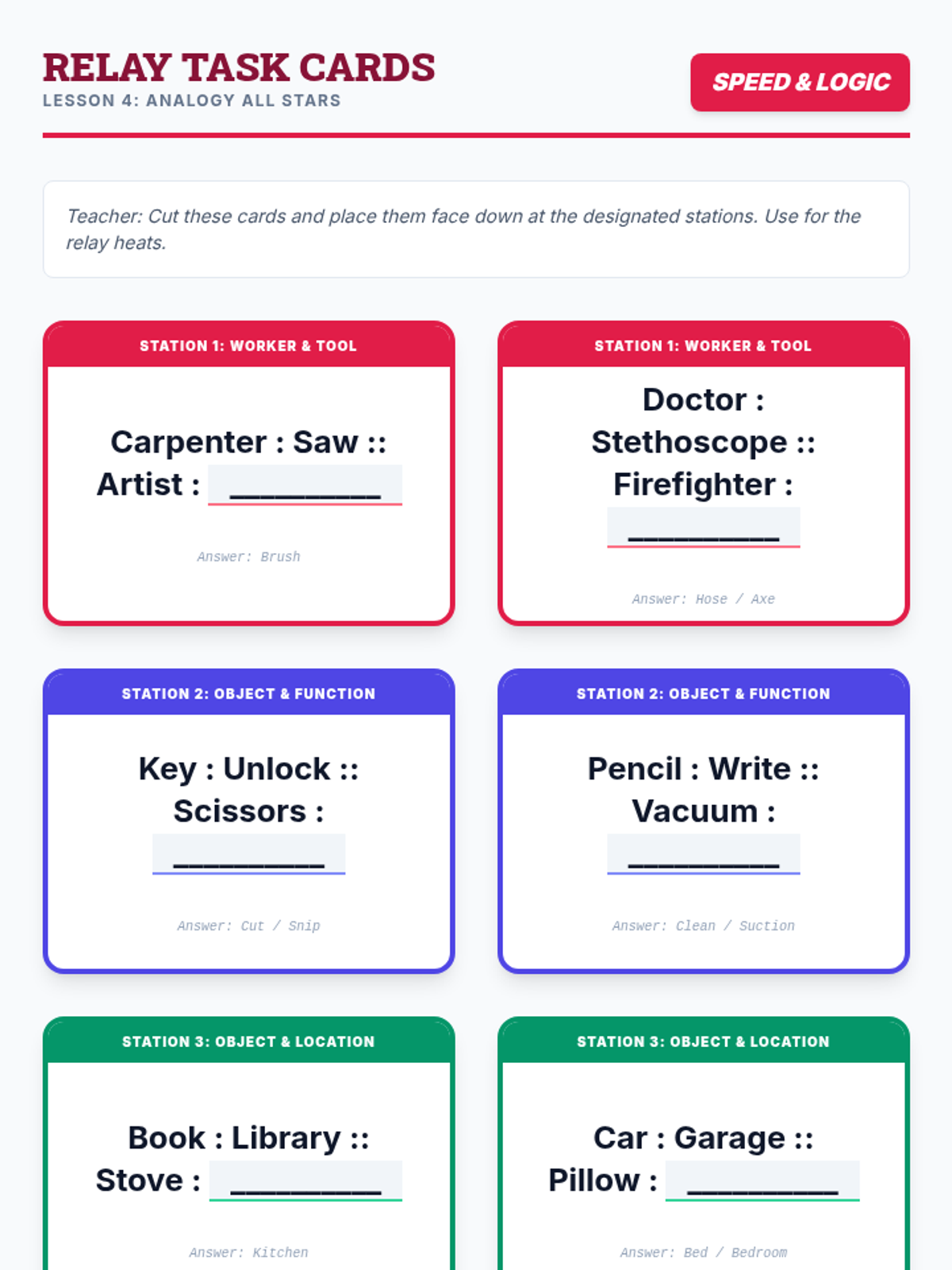
A high-energy relay race where students solve mixed functional analogies to improve processing speed and accuracy.
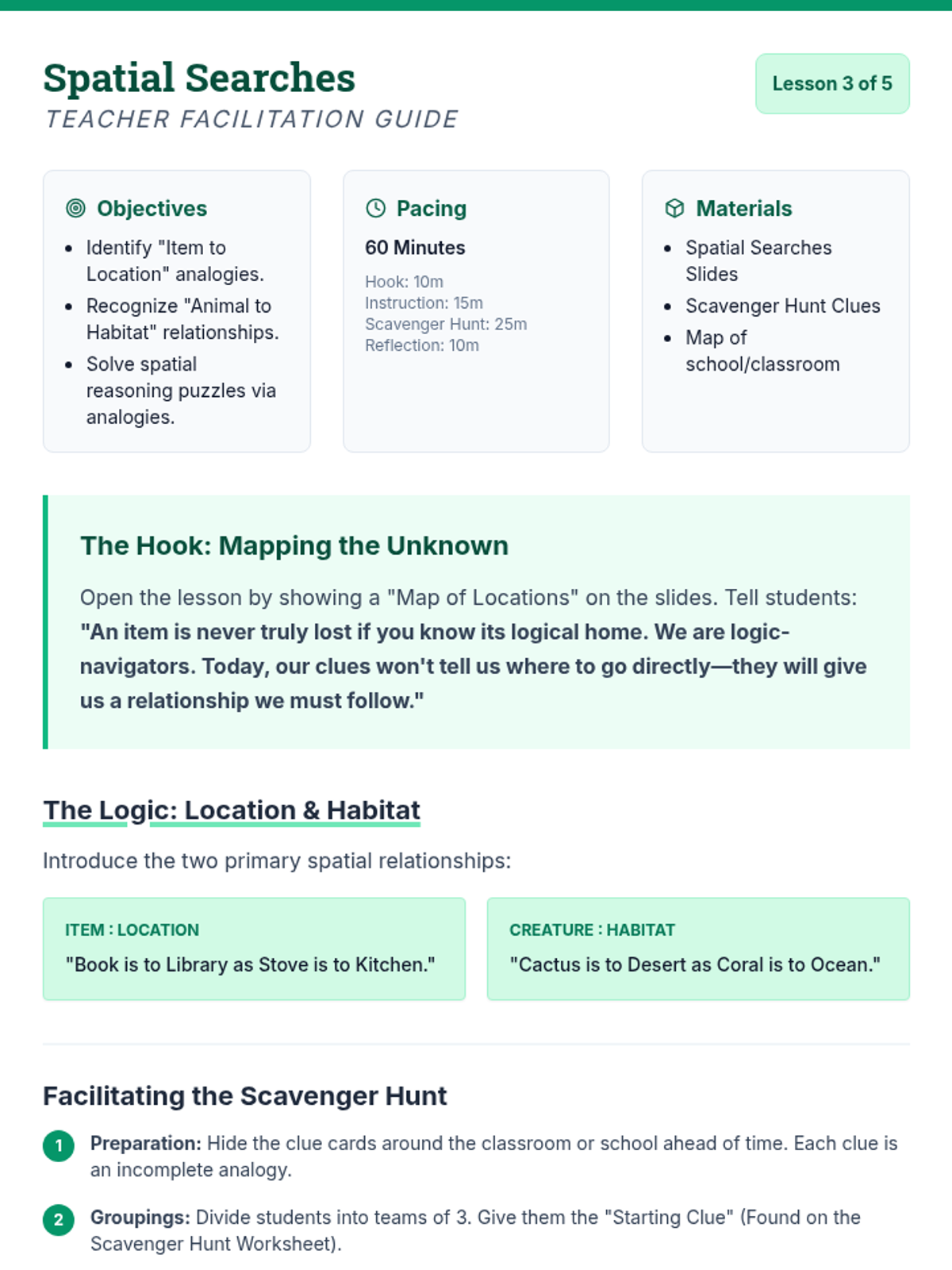
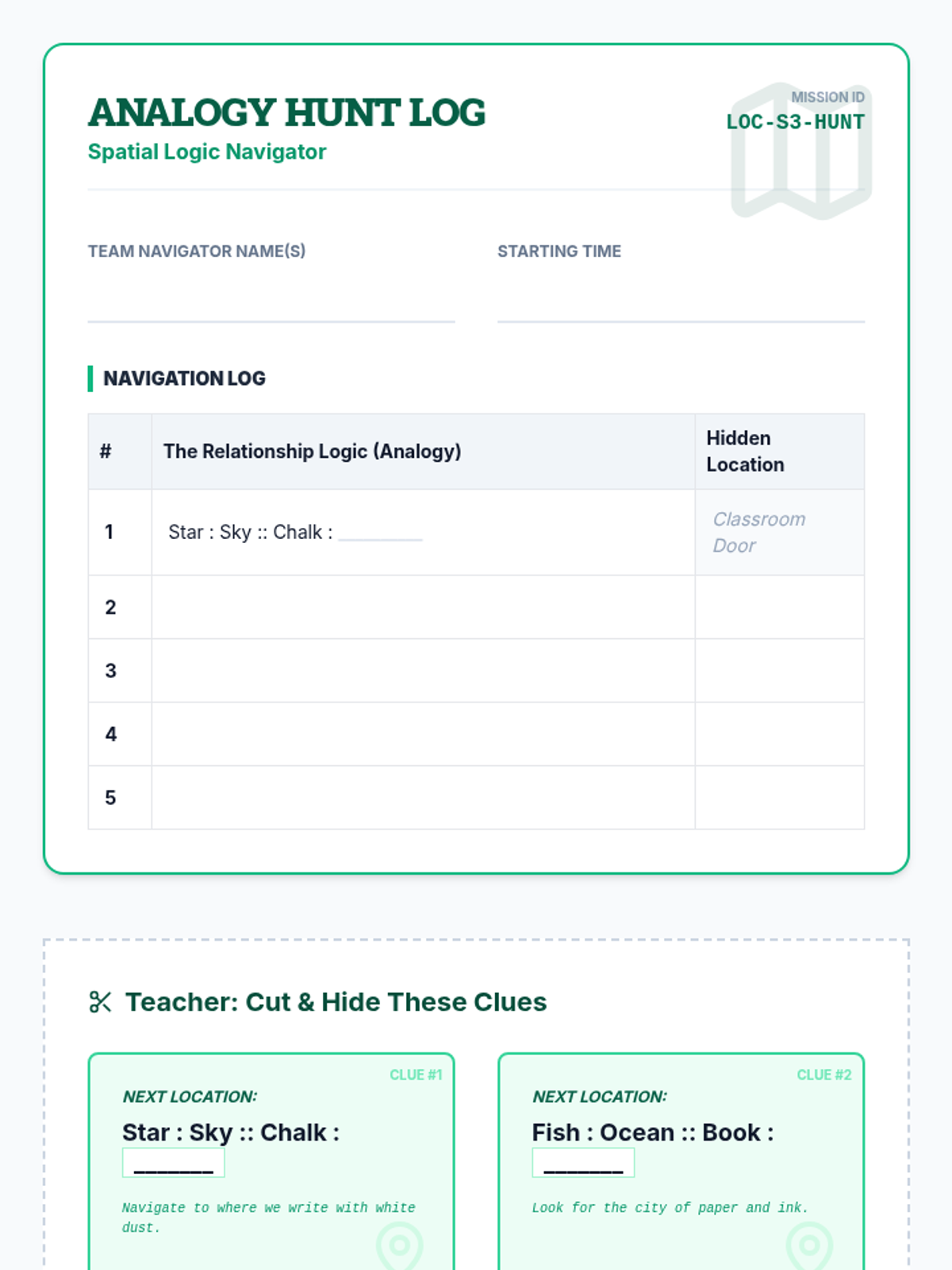
Students explore spatial relationships and habitats through an analogy-based scavenger hunt.
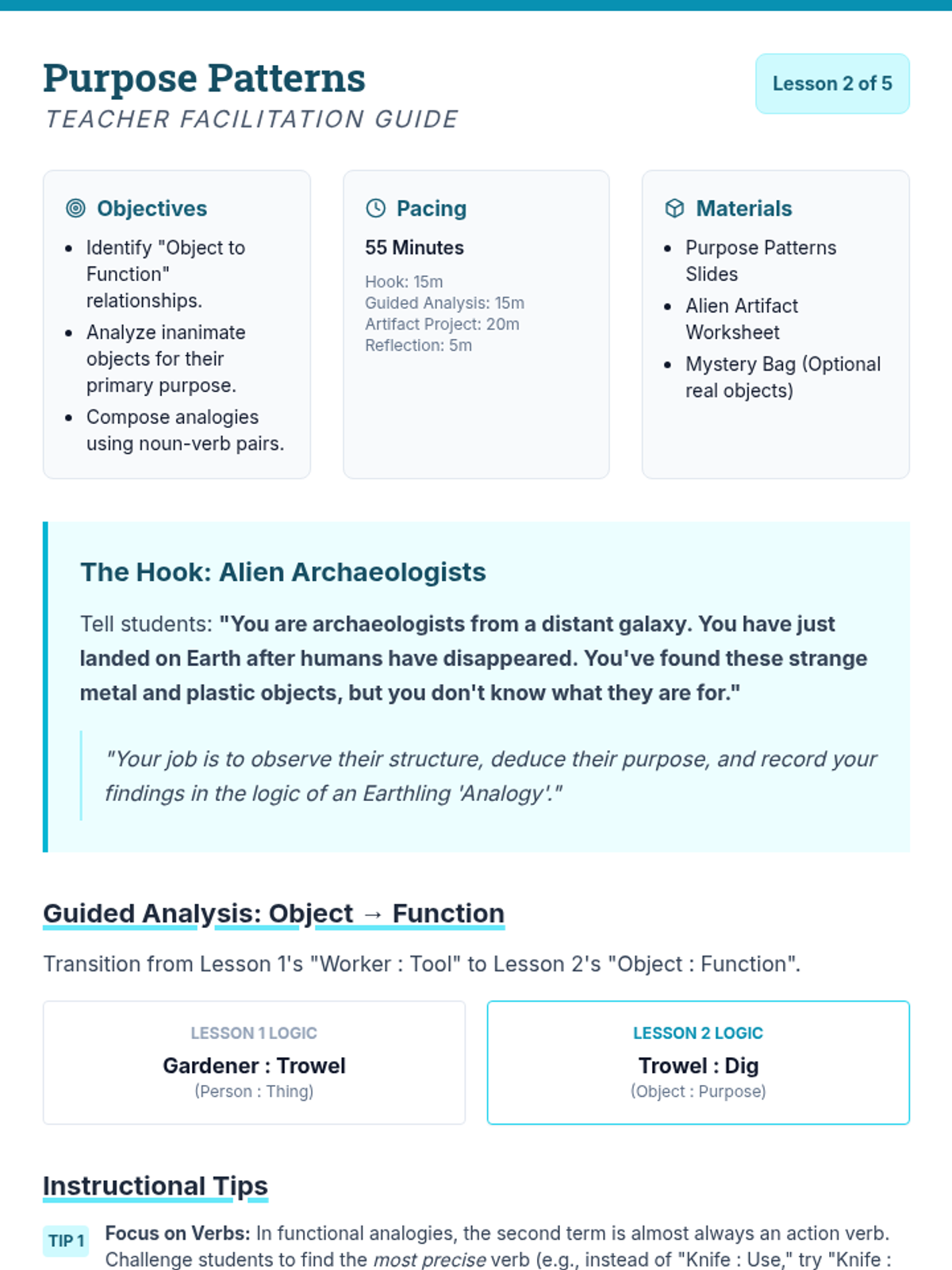
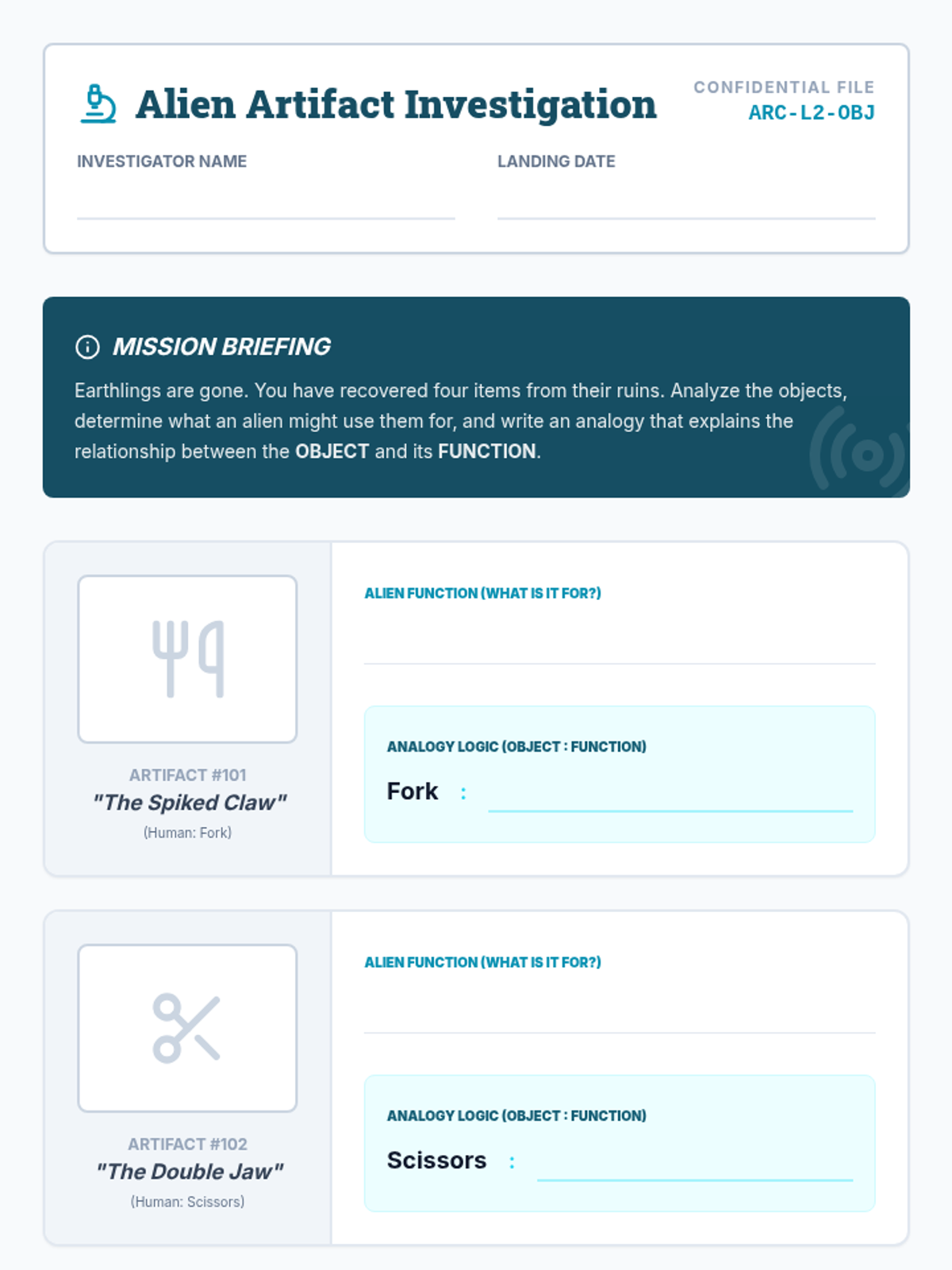
Students analyze inanimate objects and their intended uses, using 'alien artifacts' to deduce functions and write analogies.
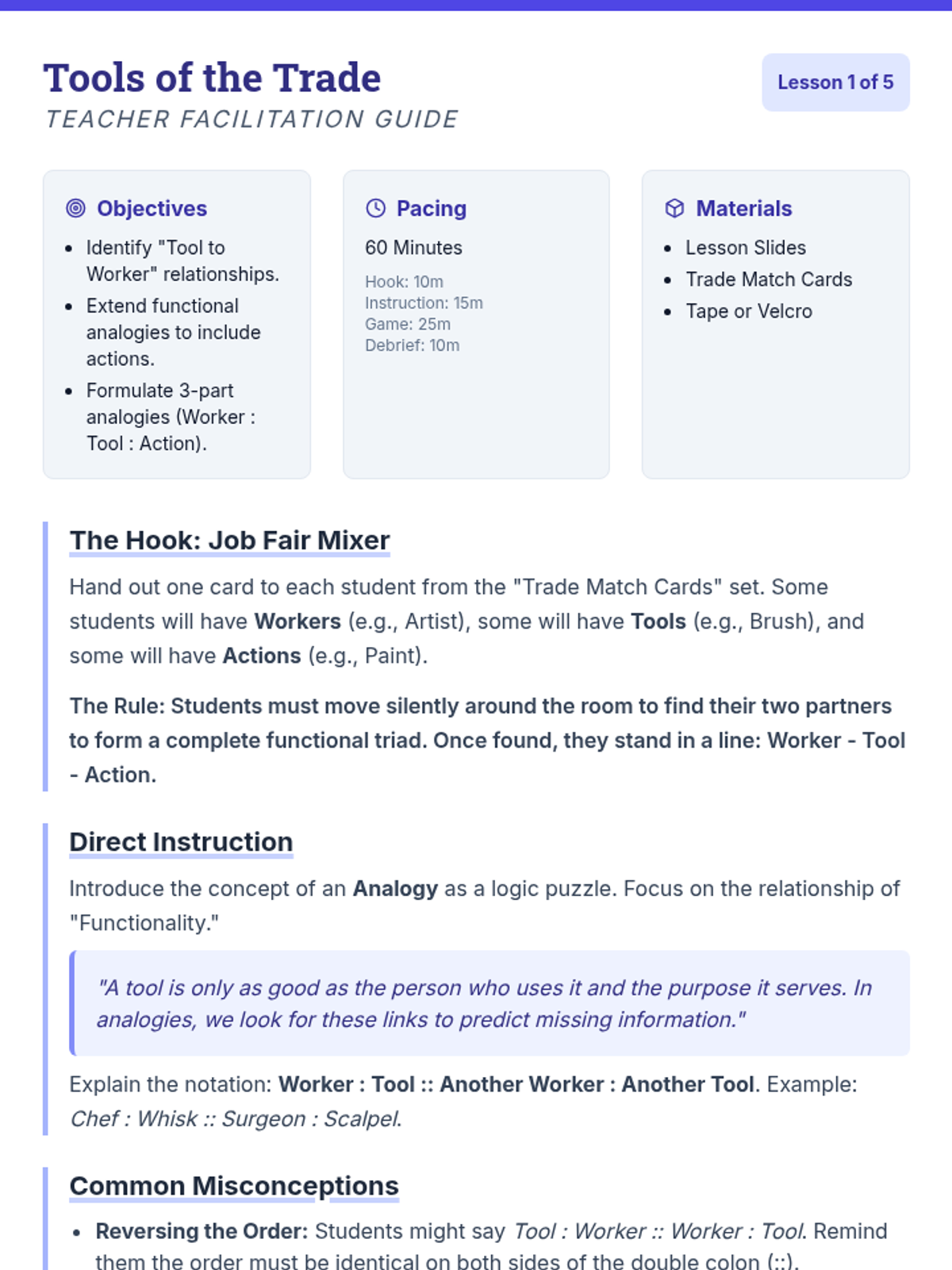
Students connect professionals to their tools and specific actions to establish the logic of functional analogies.
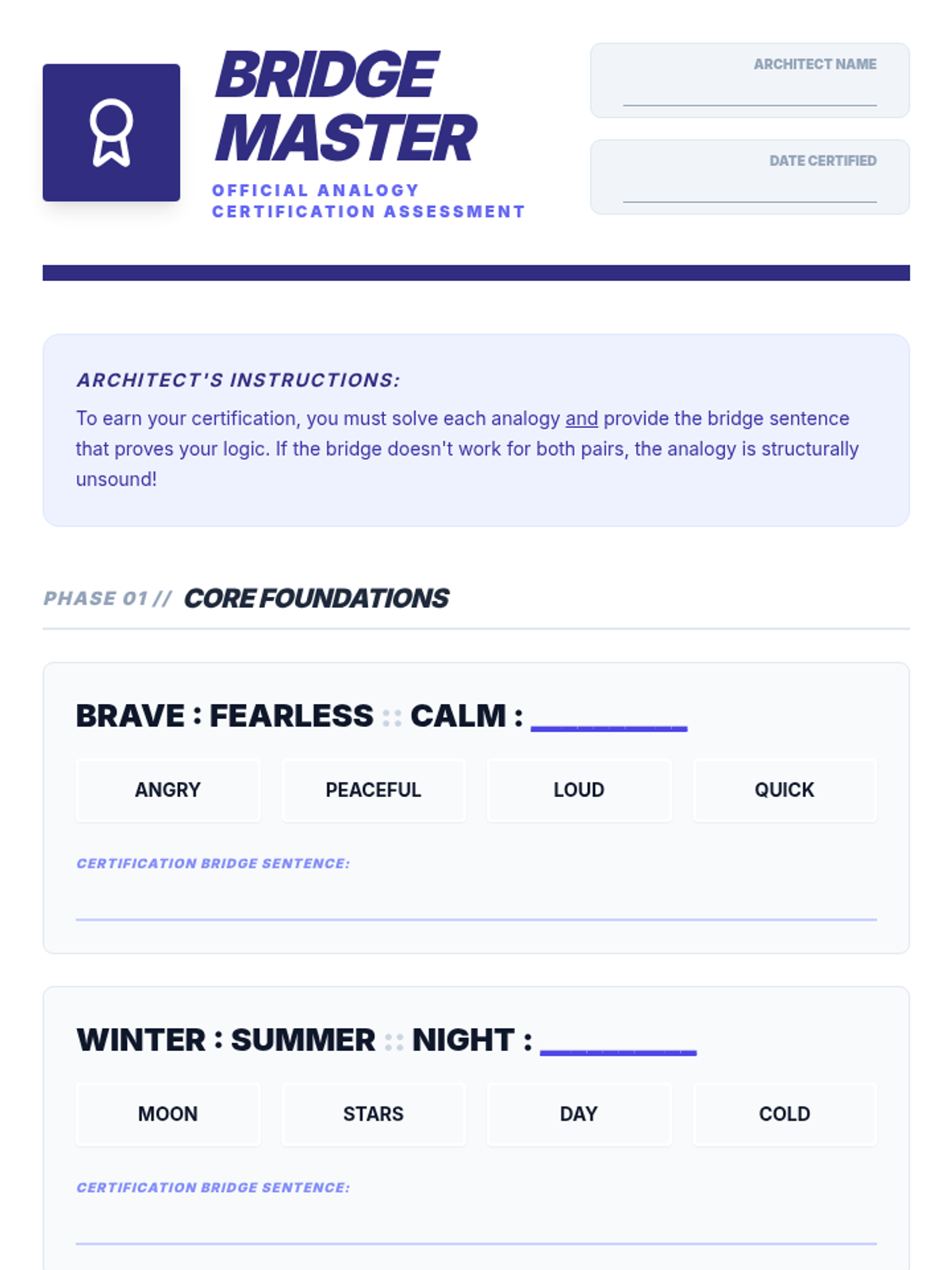
Culminating lesson where students demonstrate mastery through assessment and creating their own analogy challenges.
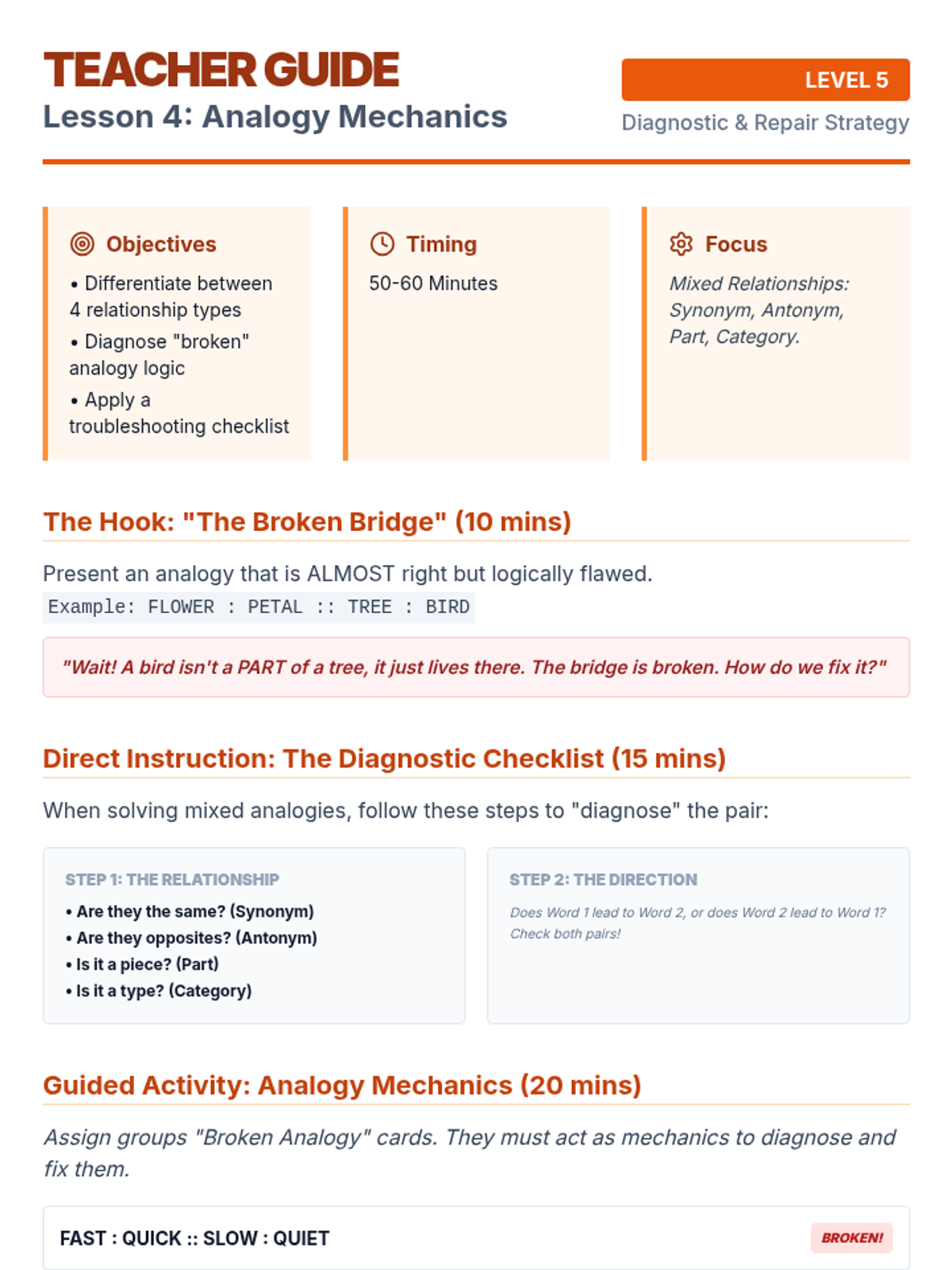
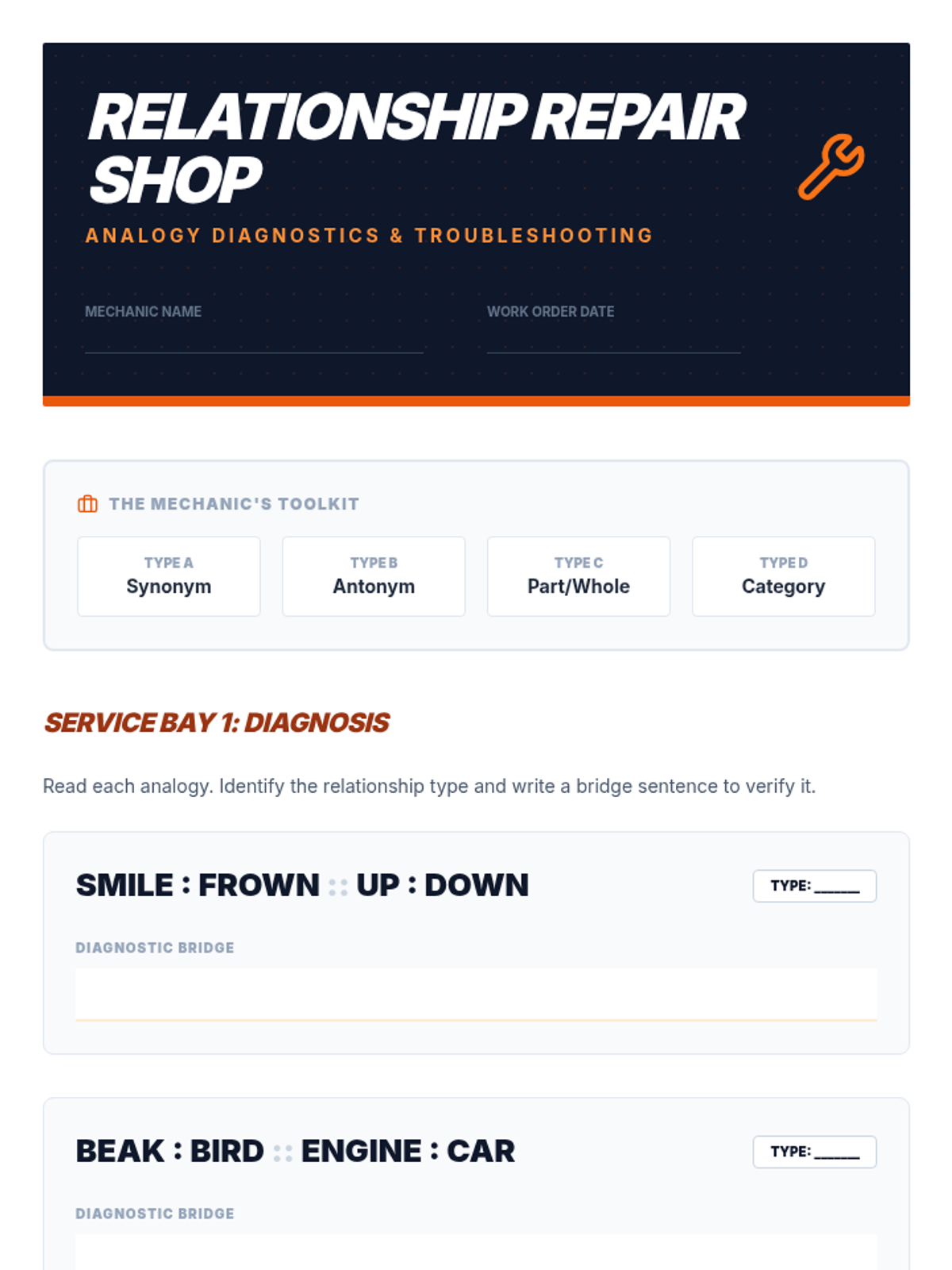
Reviews mixed relationship types and provides strategies for troubleshooting incorrect analogy logic.
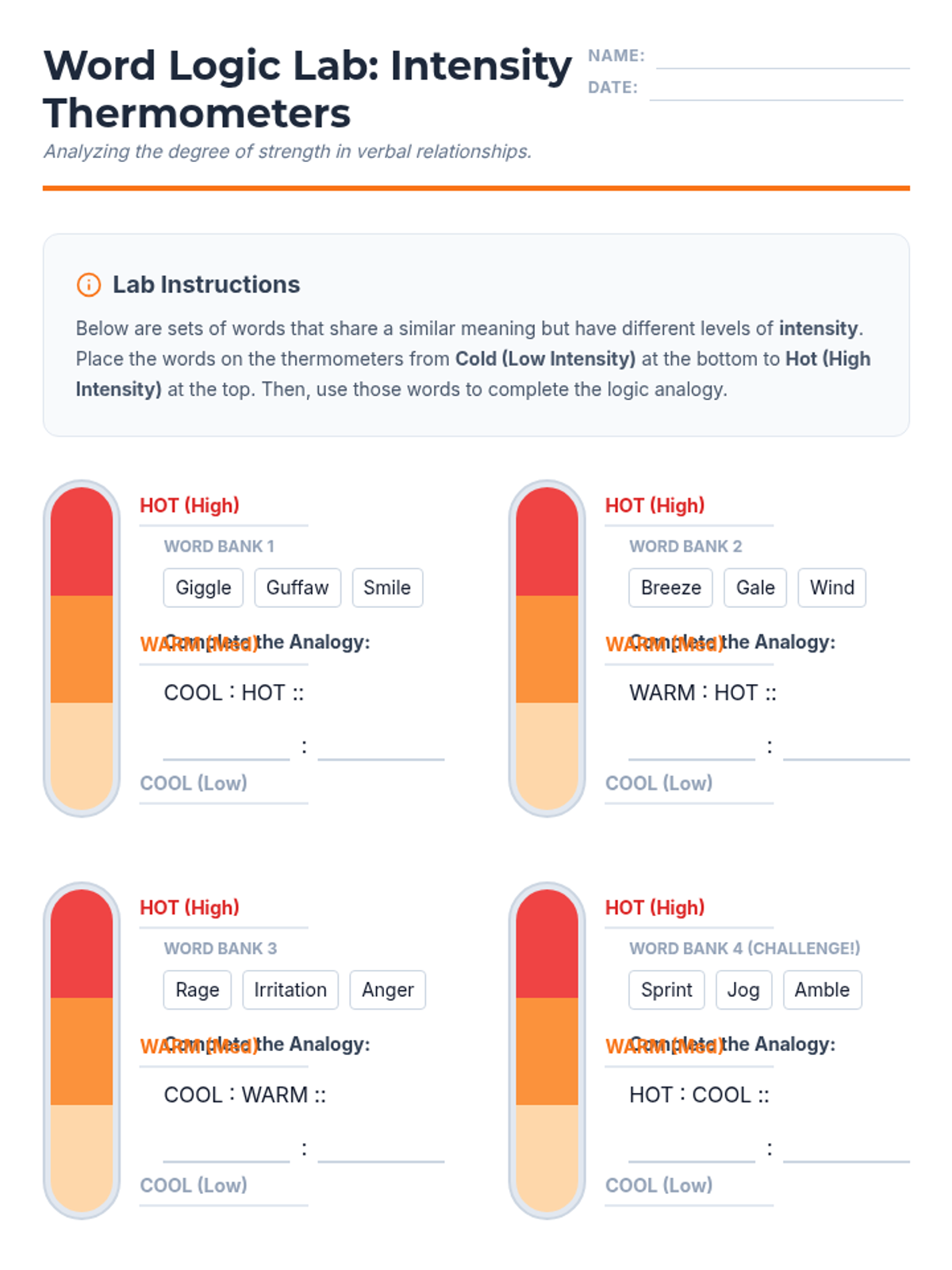
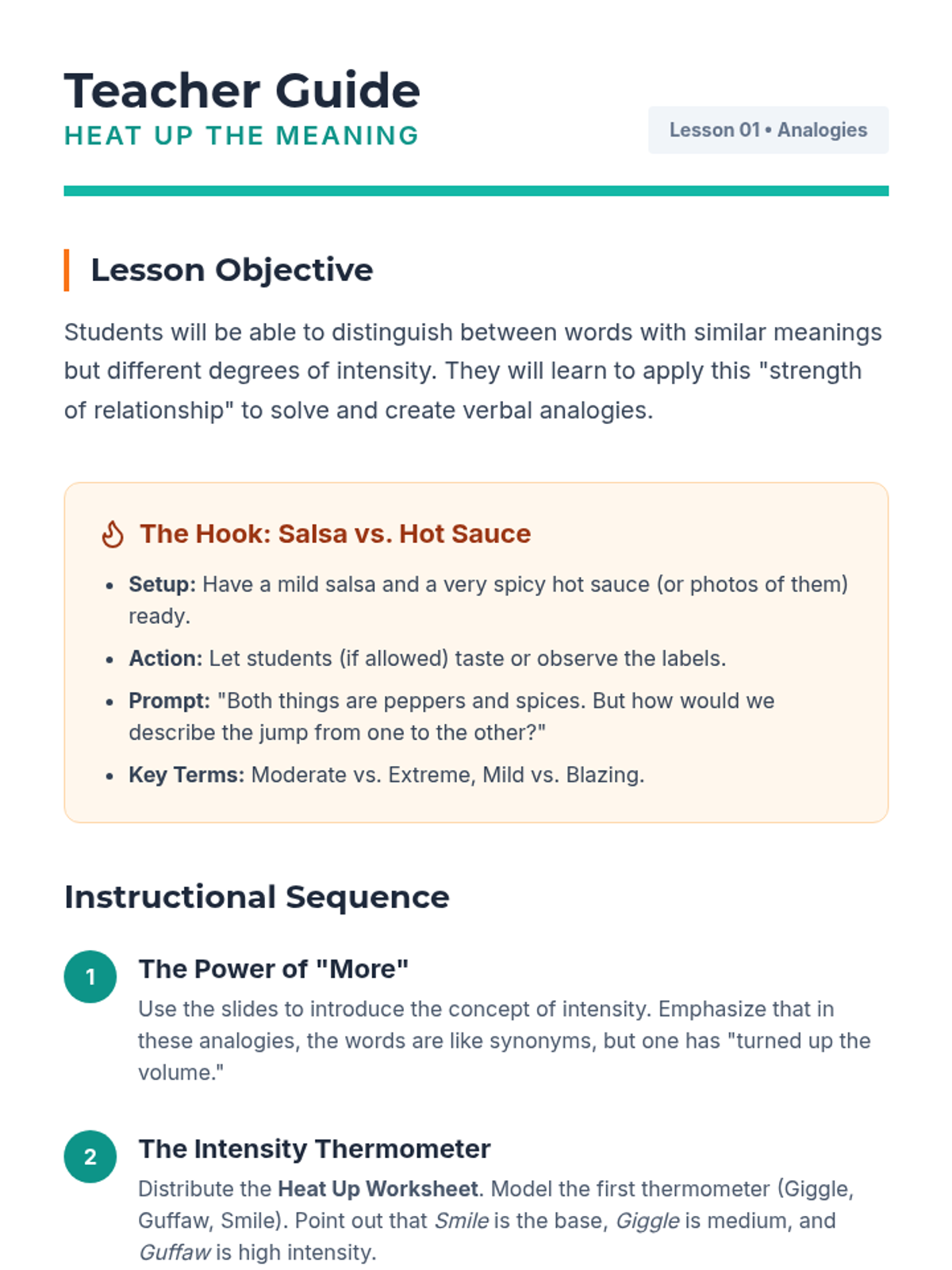
Students investigate word pairs that share a meaning but differ in strength. They arrange words on 'intensity thermometers' to visualize the logic of degree in analogies.
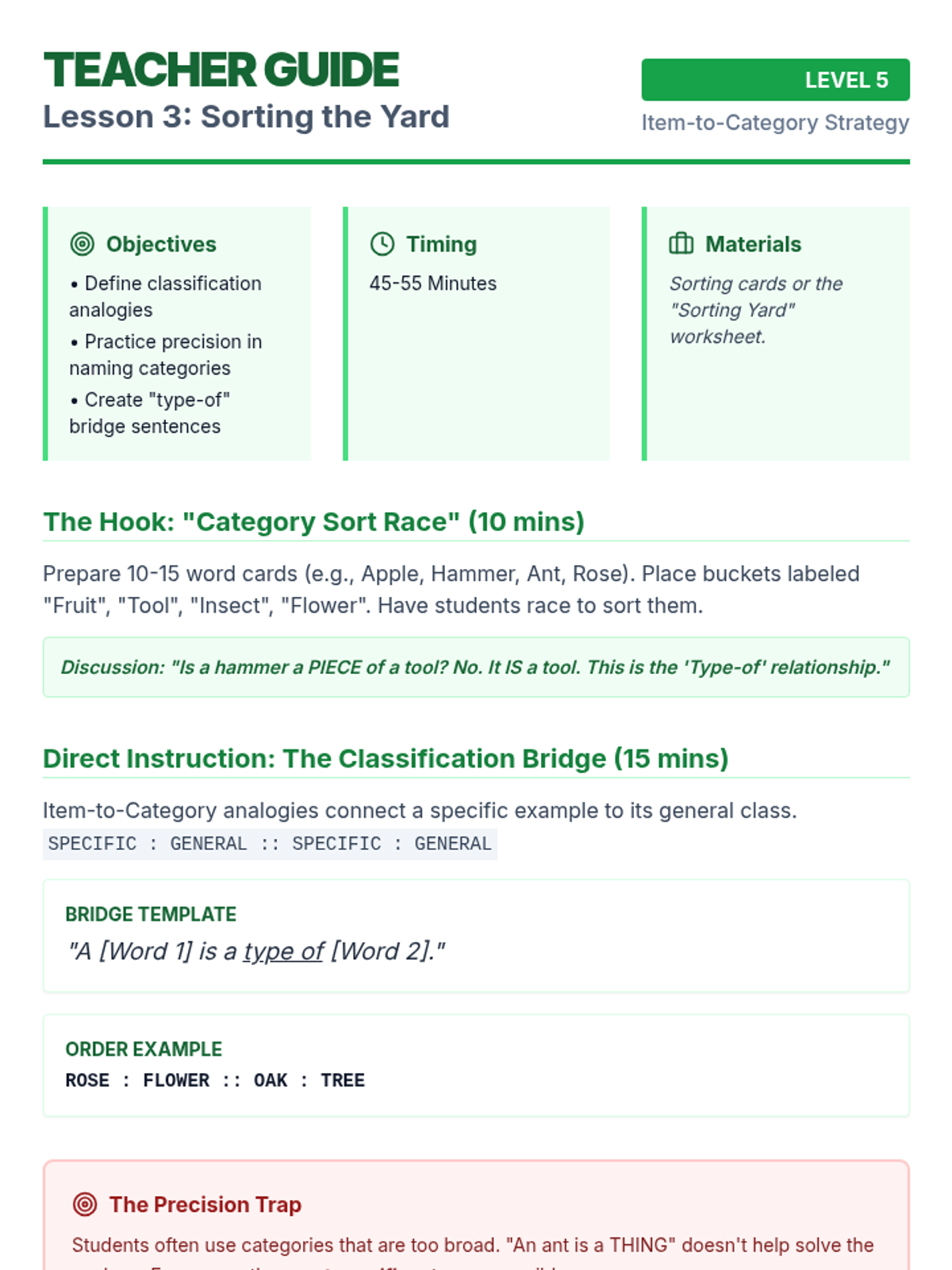
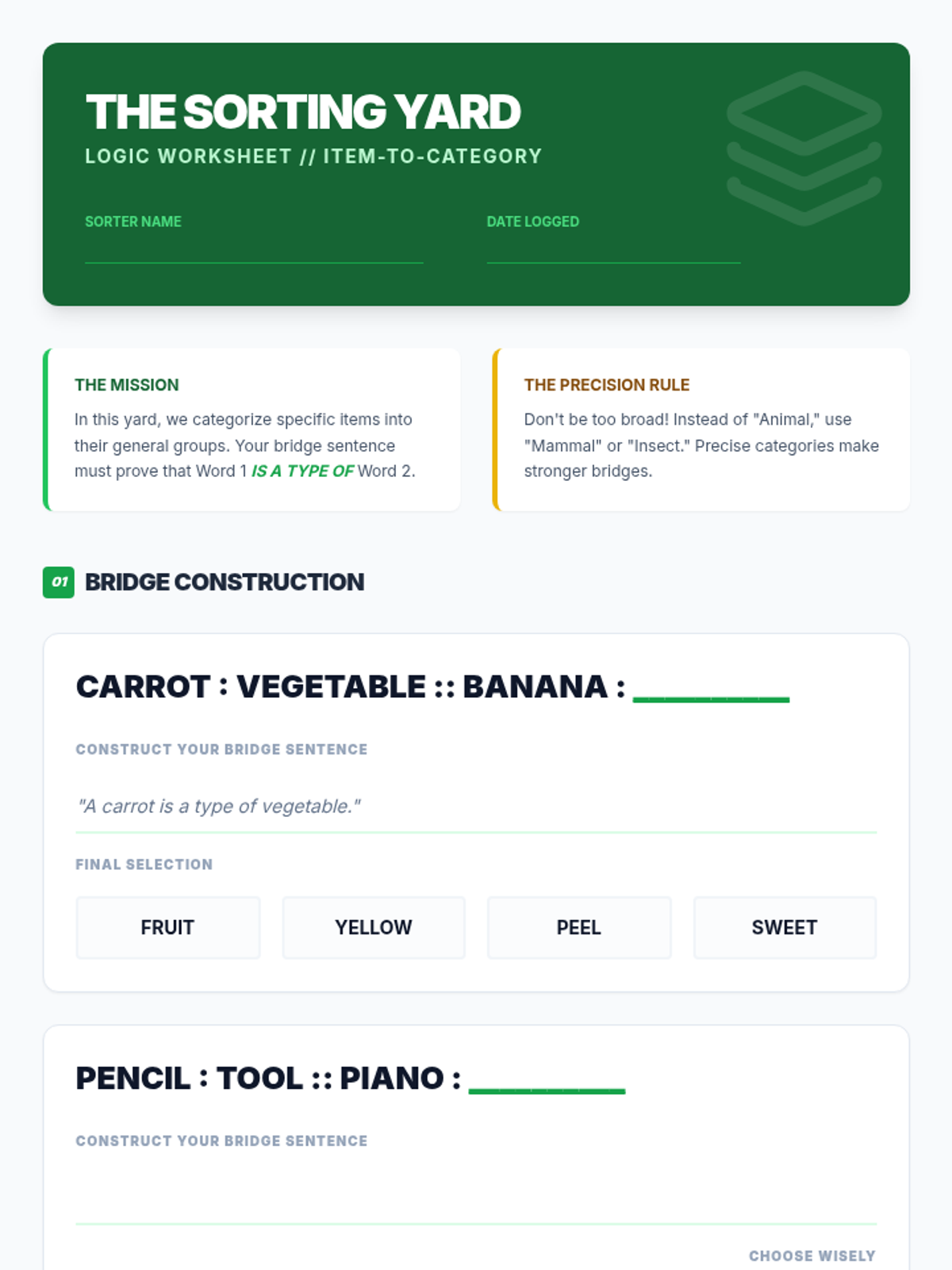
Focuses on classification analogies, teaching students to identify items and their broader categories with precision.
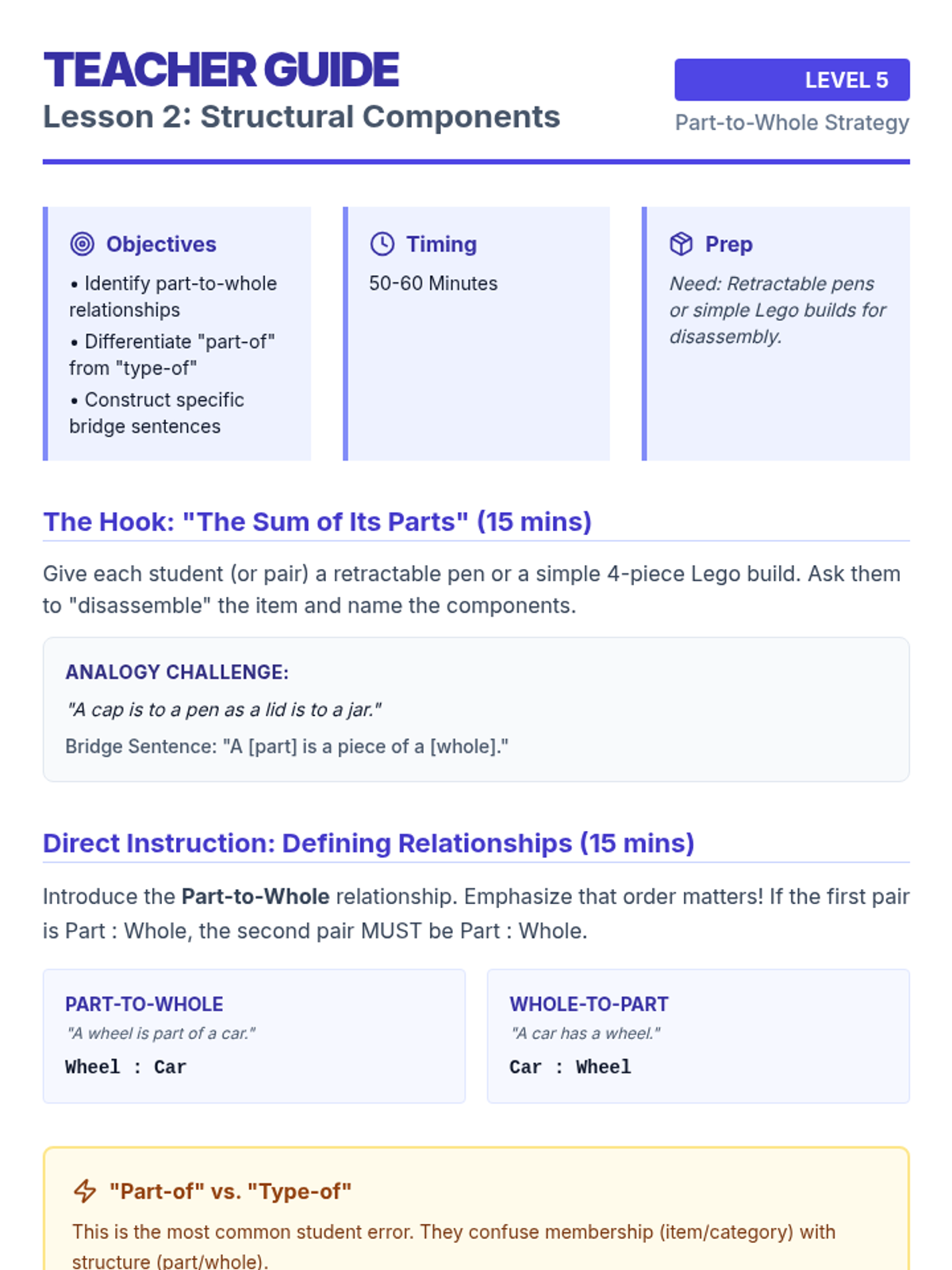
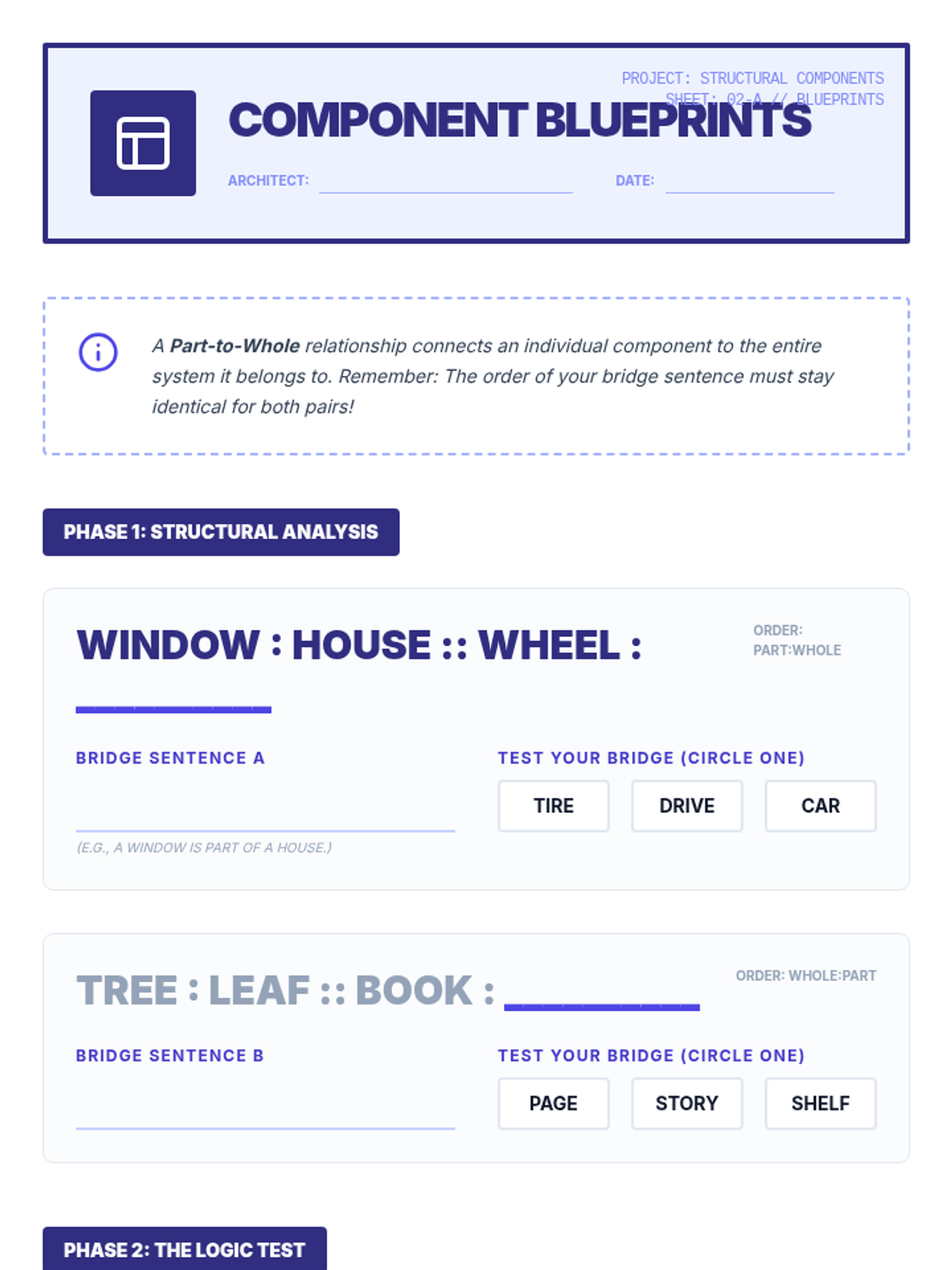
Explores structural relationships where a smaller part connects to a larger whole, differentiating from other types.
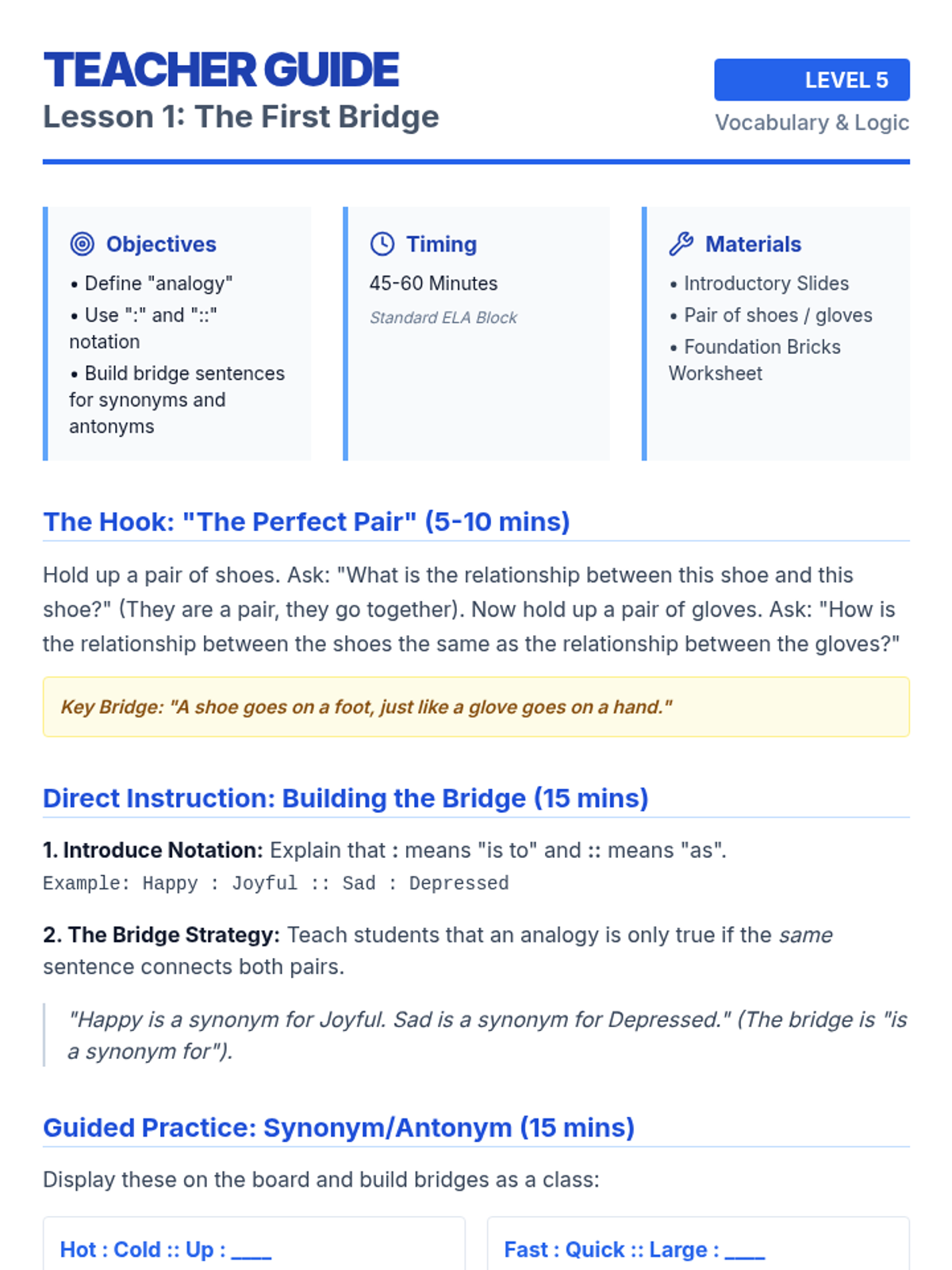
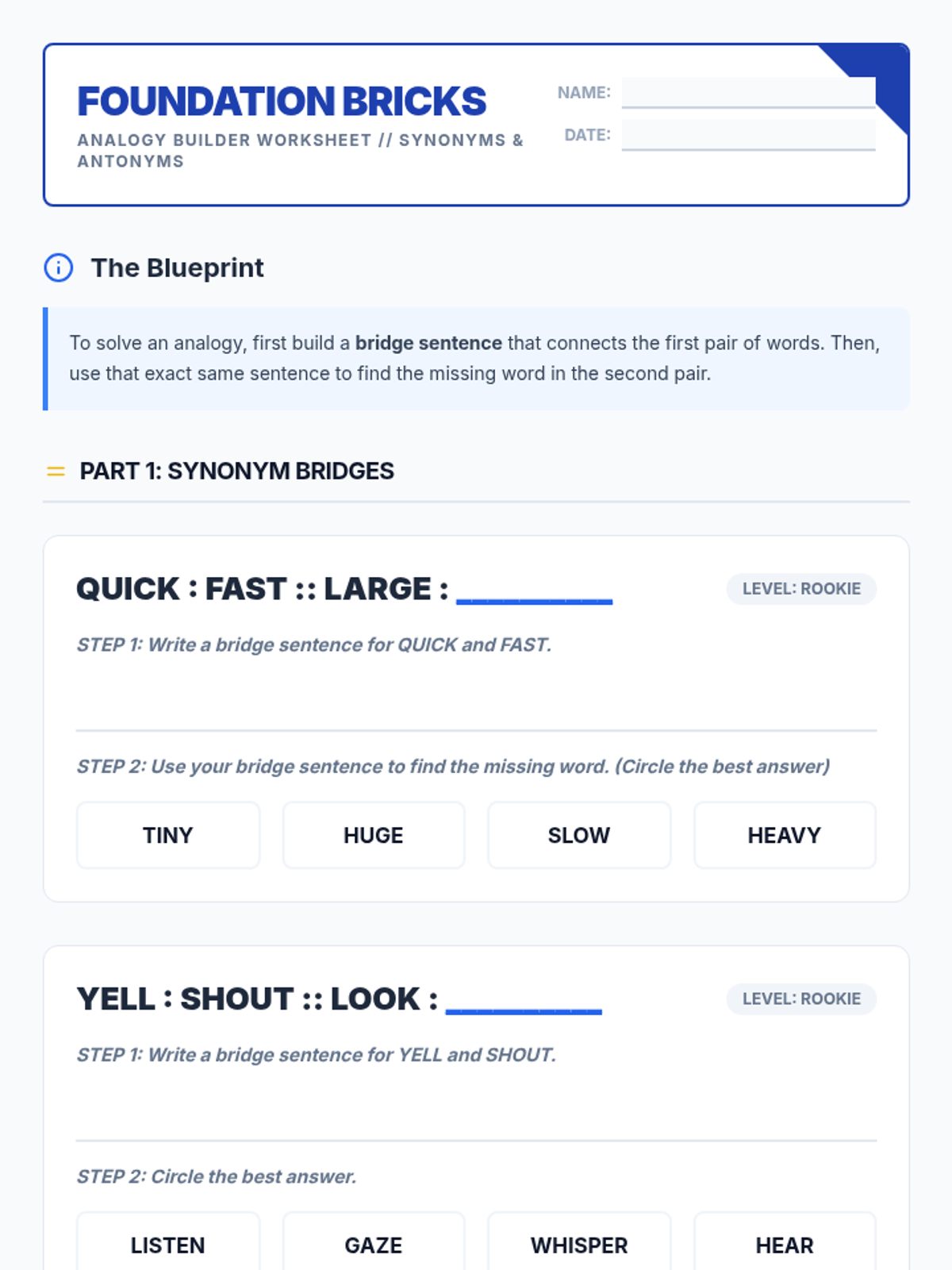
Introduces students to the analogy format and the 'bridge sentence' strategy using synonym and antonym relationships.
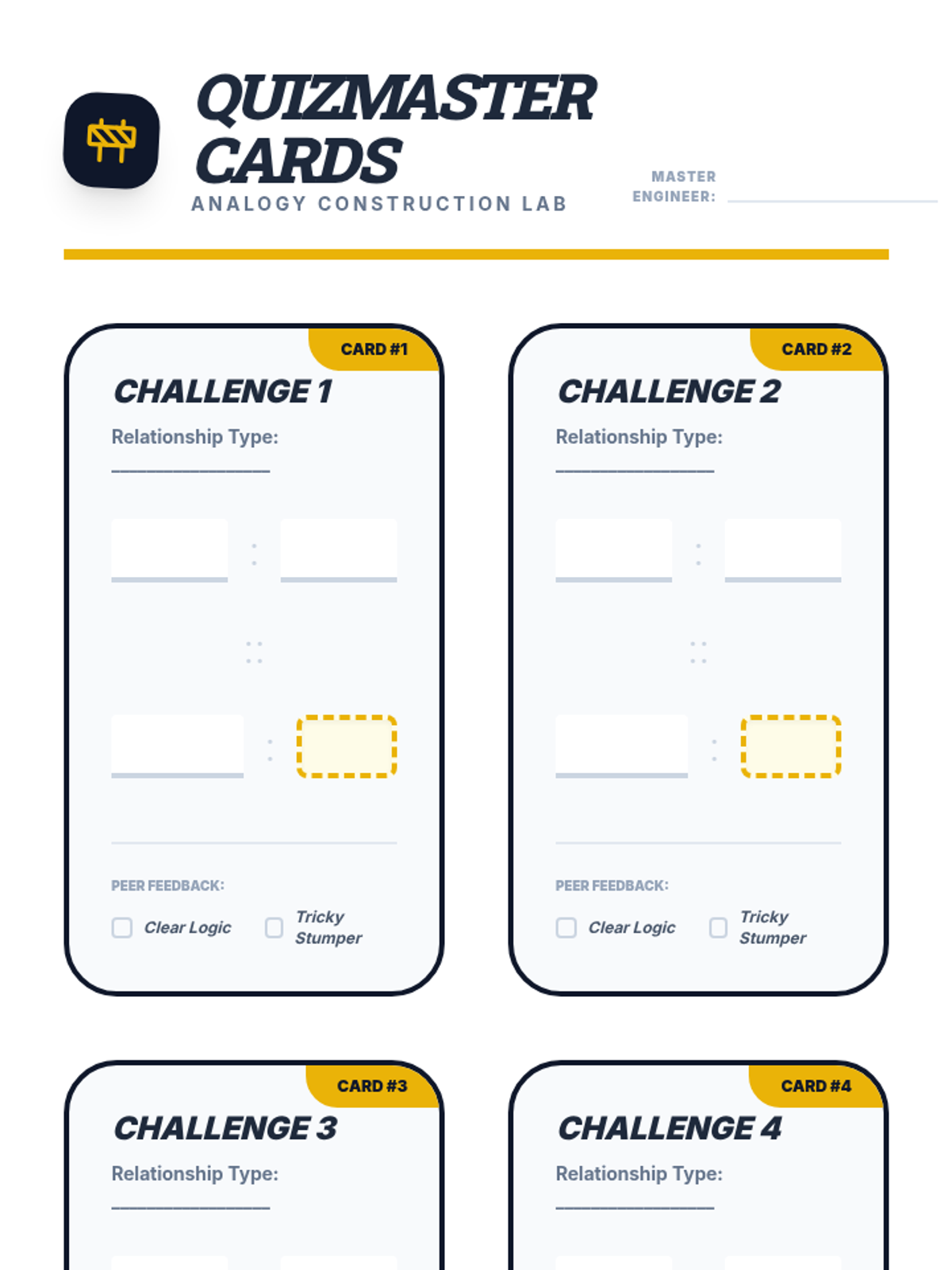
Students build their own analogy puzzles focusing on parts and categories. Peers attempt to solve them, providing feedback on the clarity of the relationships.
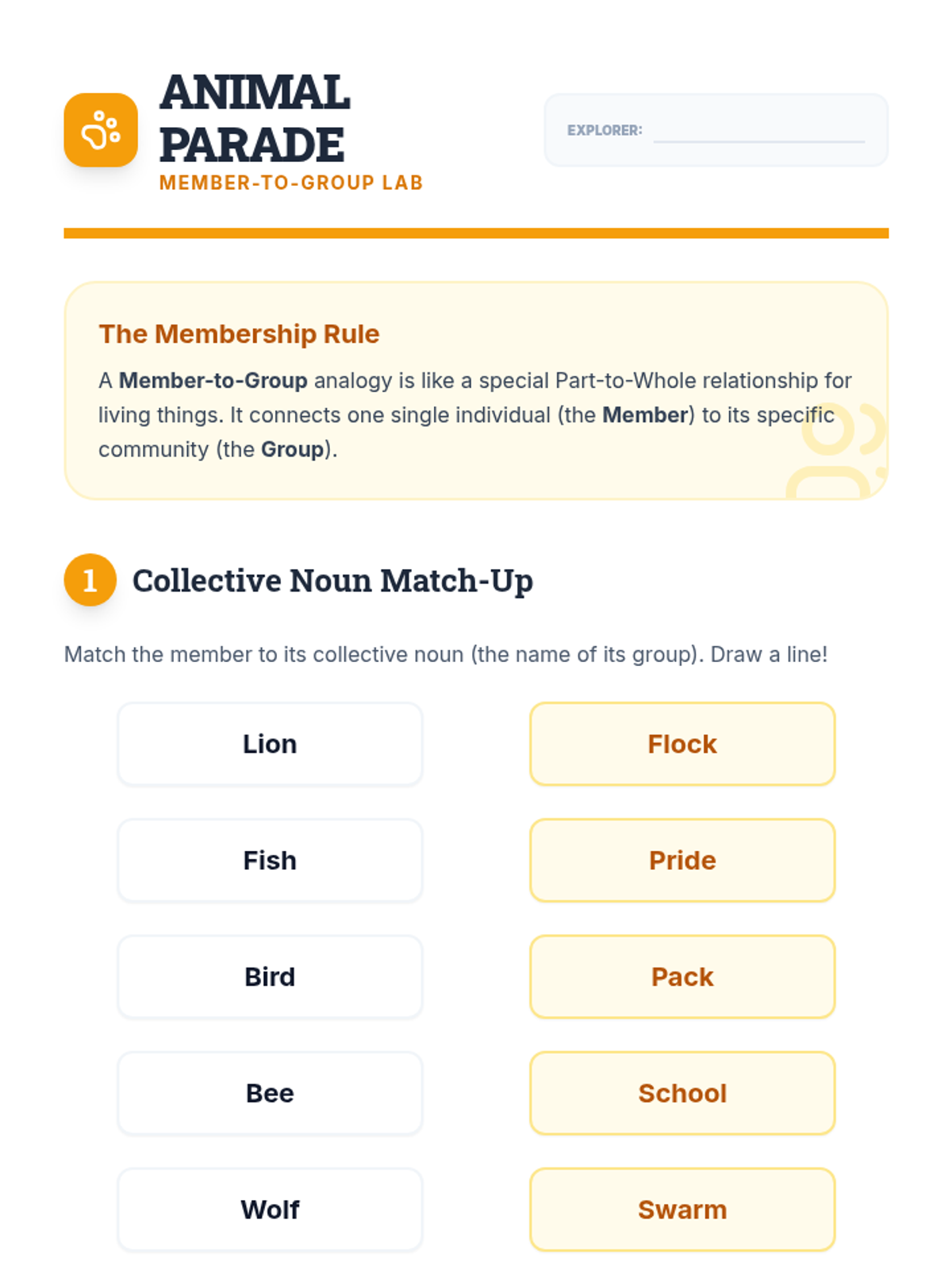
Students look at collective nouns and group membership (e.g., Wolf:Pack, Student:Class). This expands the part-to-whole concept to social and biological groups.
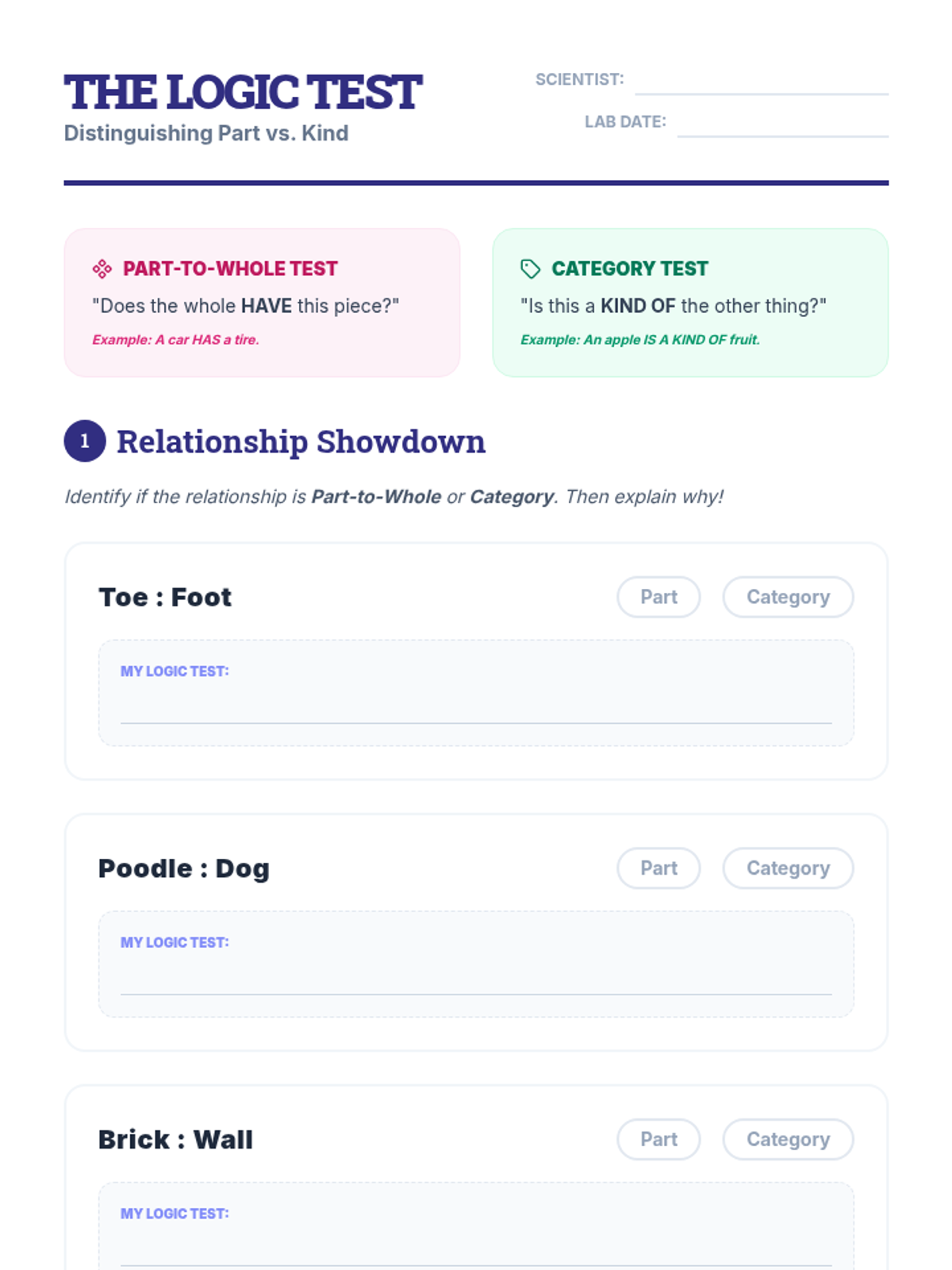
A comparative lesson where students confront the difference between the two types. They use specific tests (Does it have a...? vs. Is it a...?) to classify the relationship.
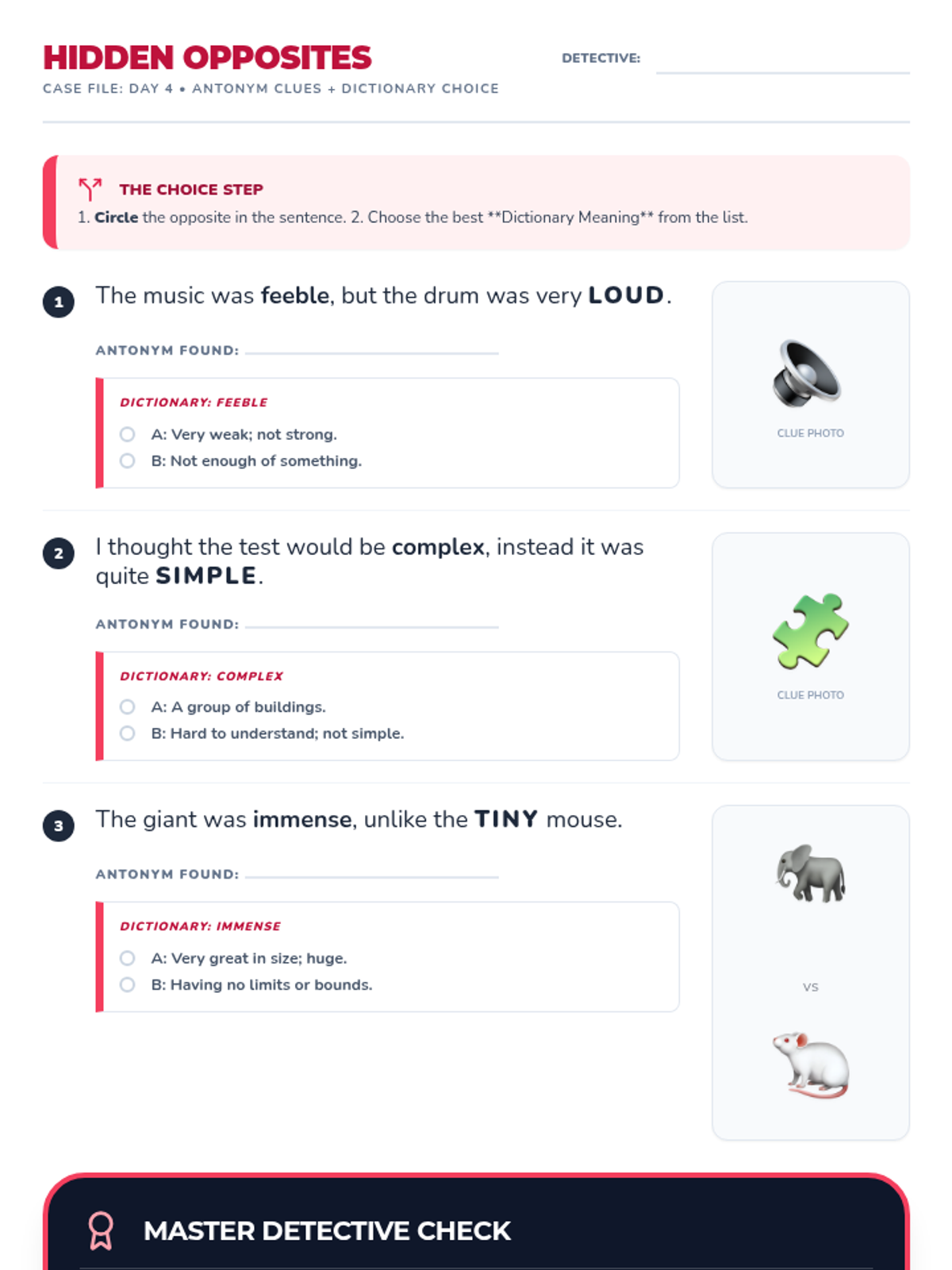
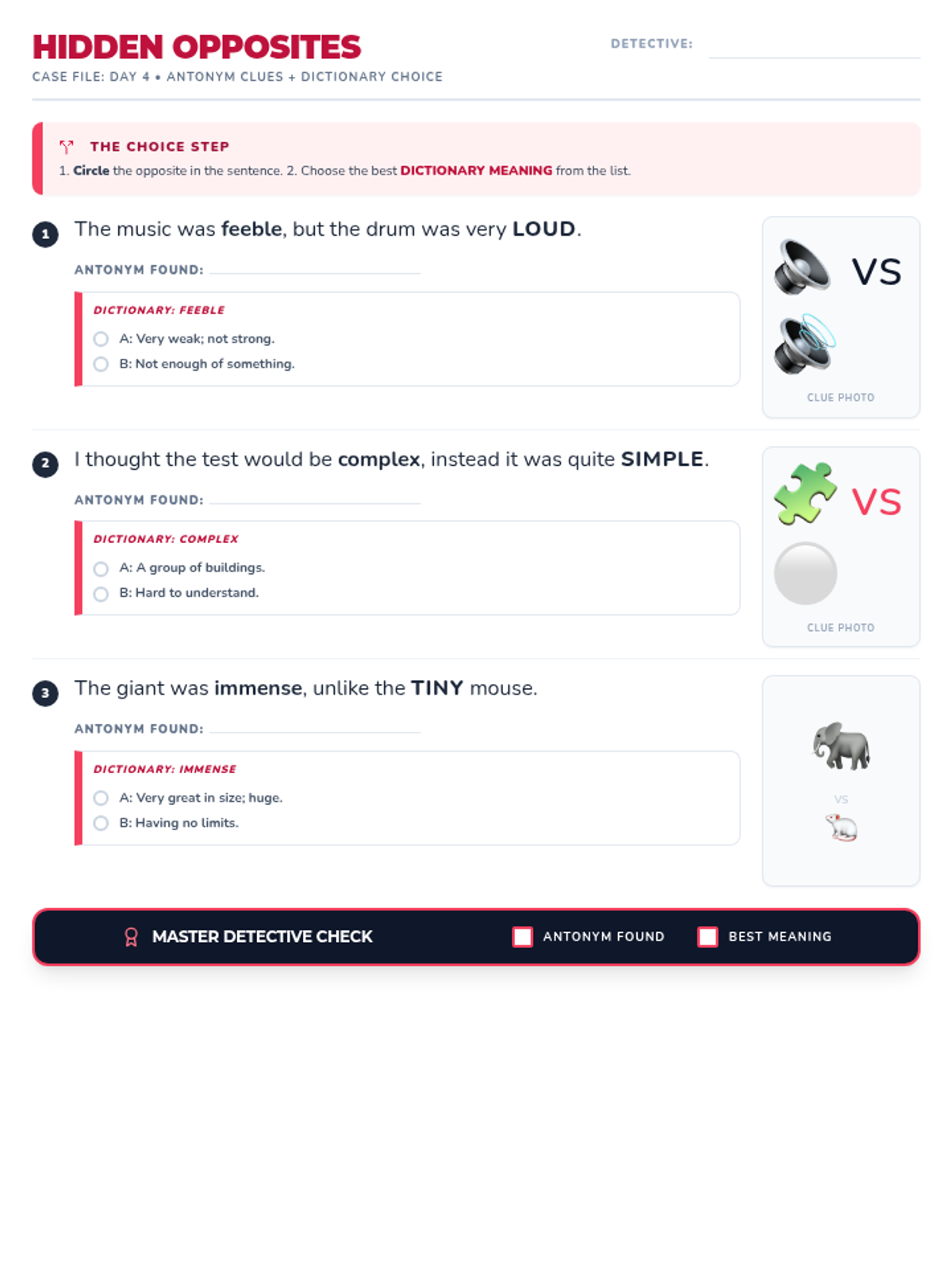
Students identify antonym clues to understand what a word is NOT, using contrasting pictures to solve the vocabulary puzzle.
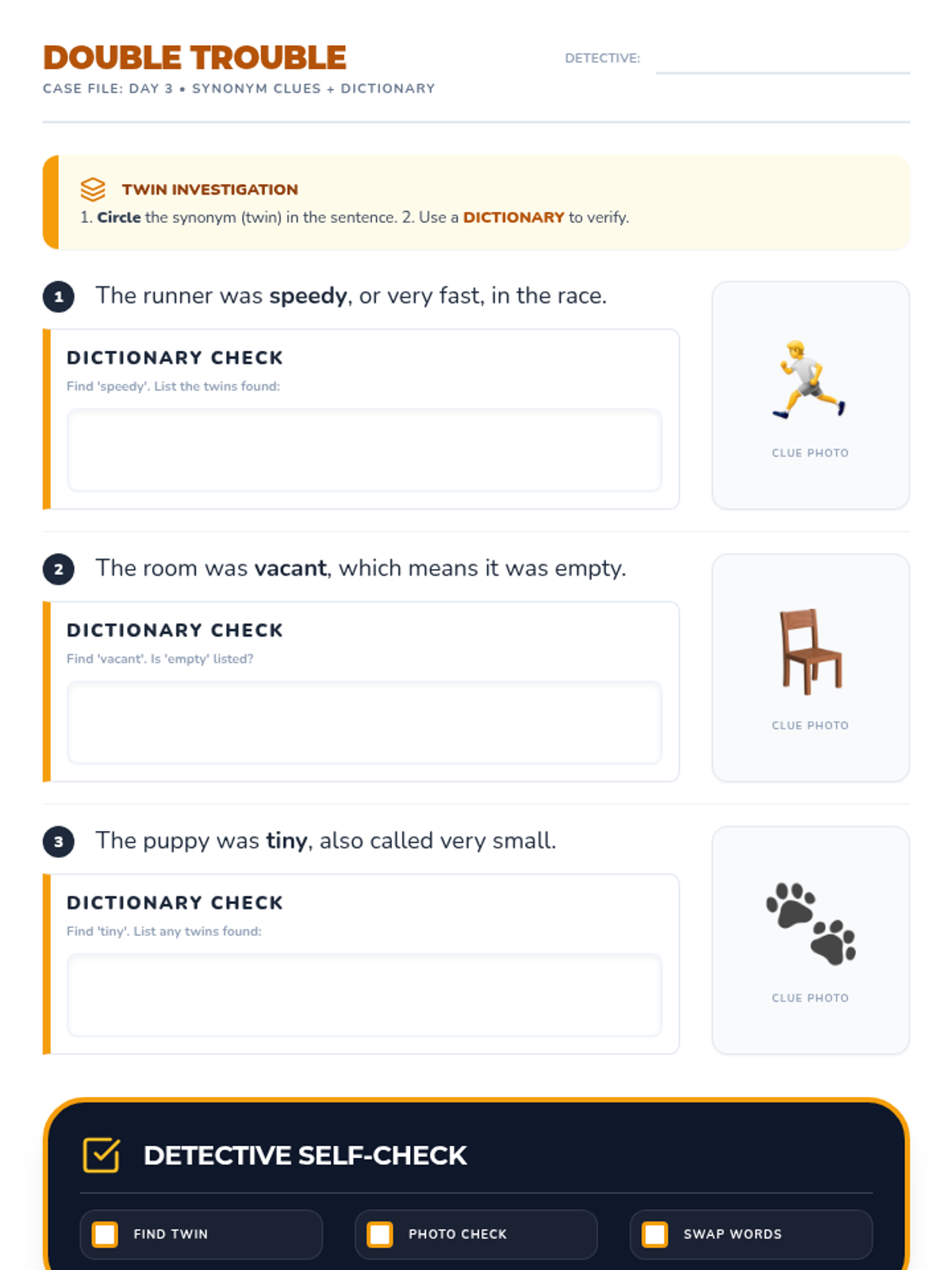
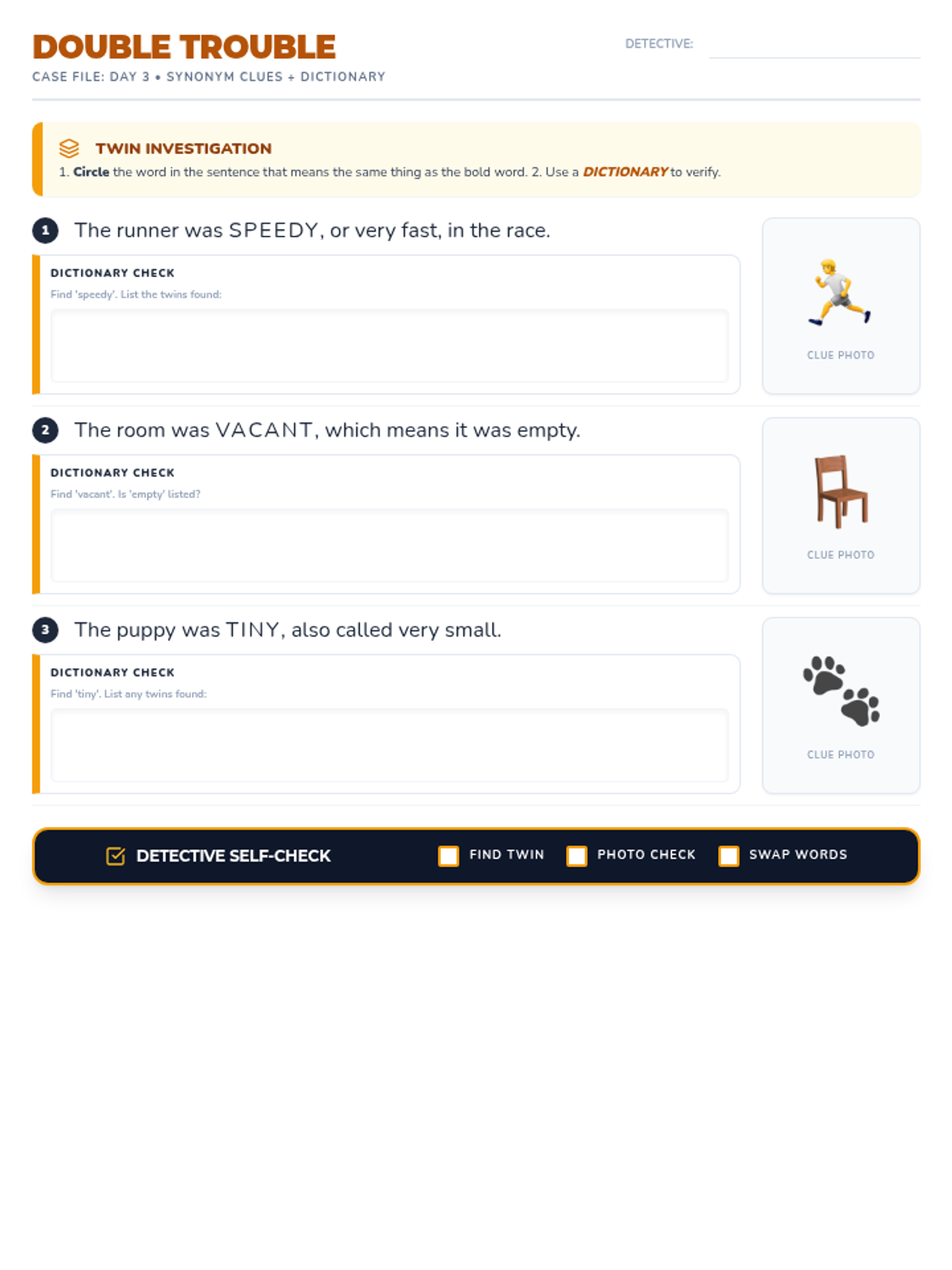
Students use synonym clues to find words that mean the same thing as the unknown word, using pictures to match similar concepts.
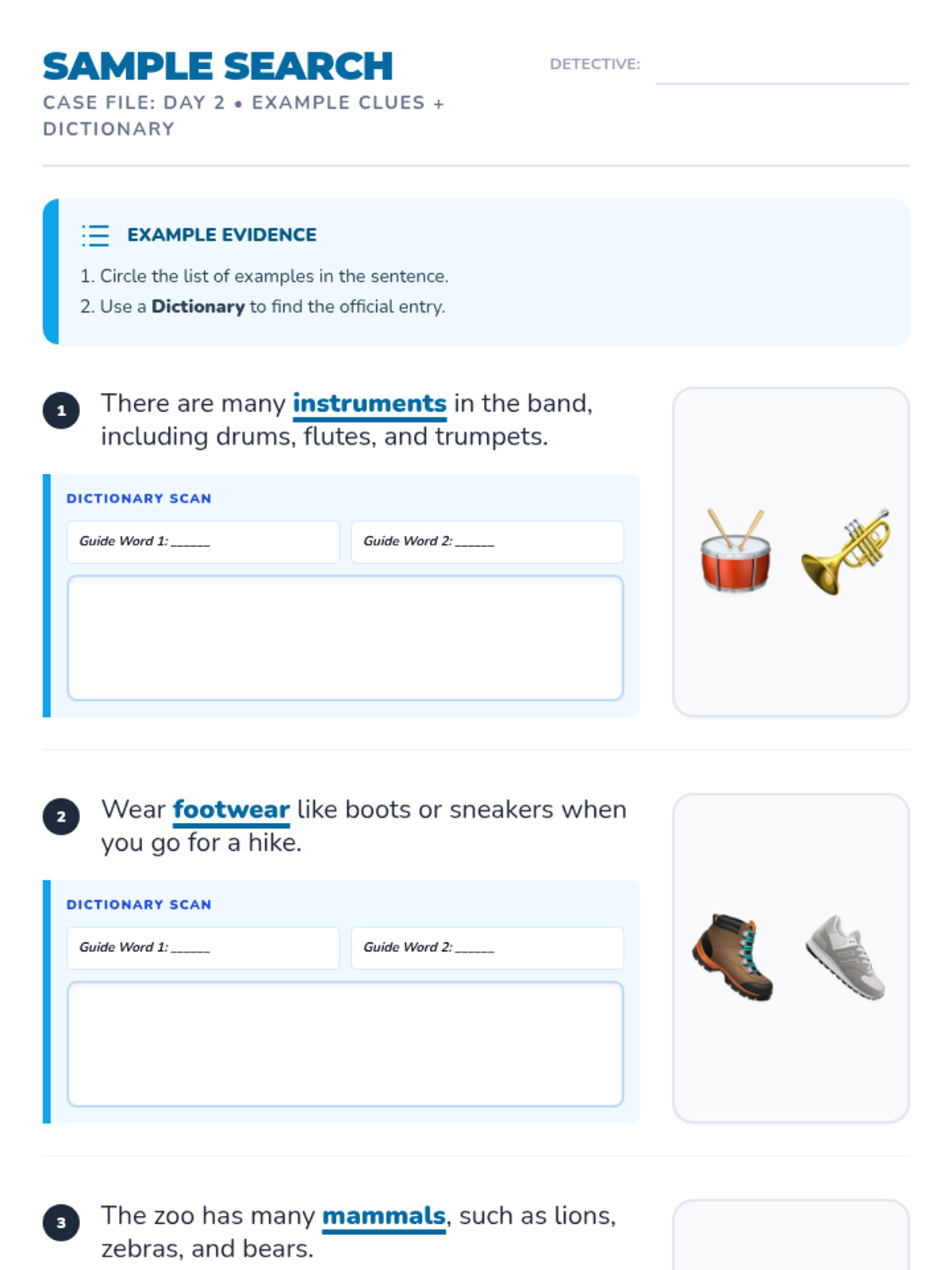
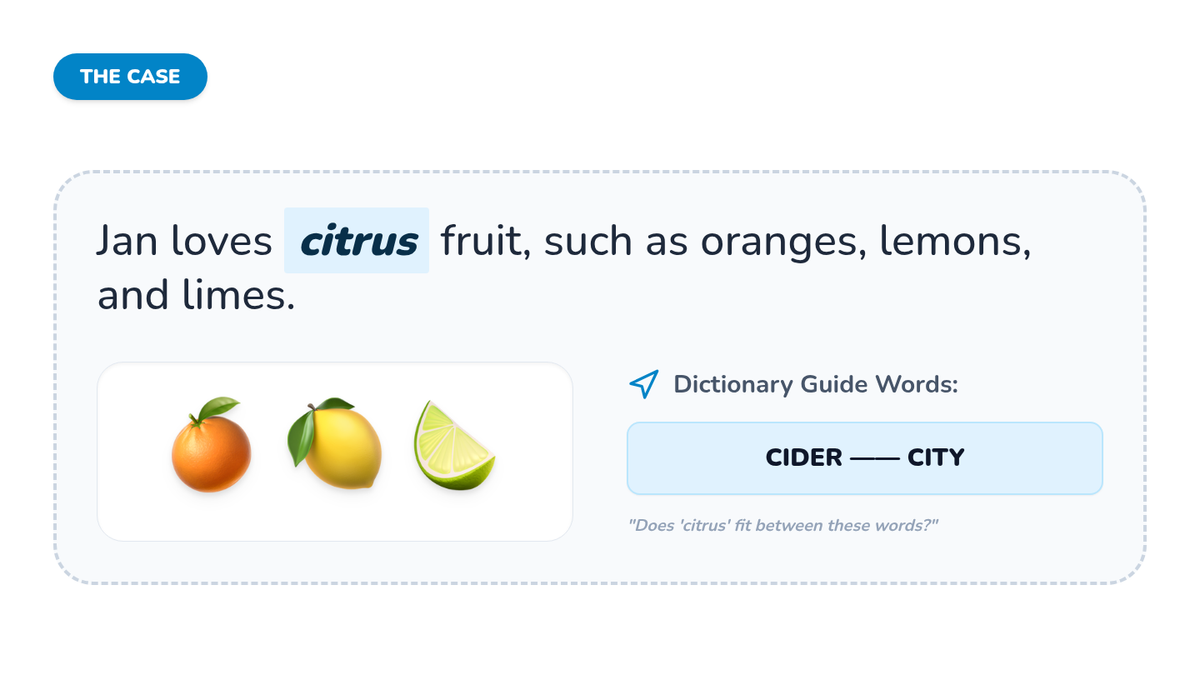
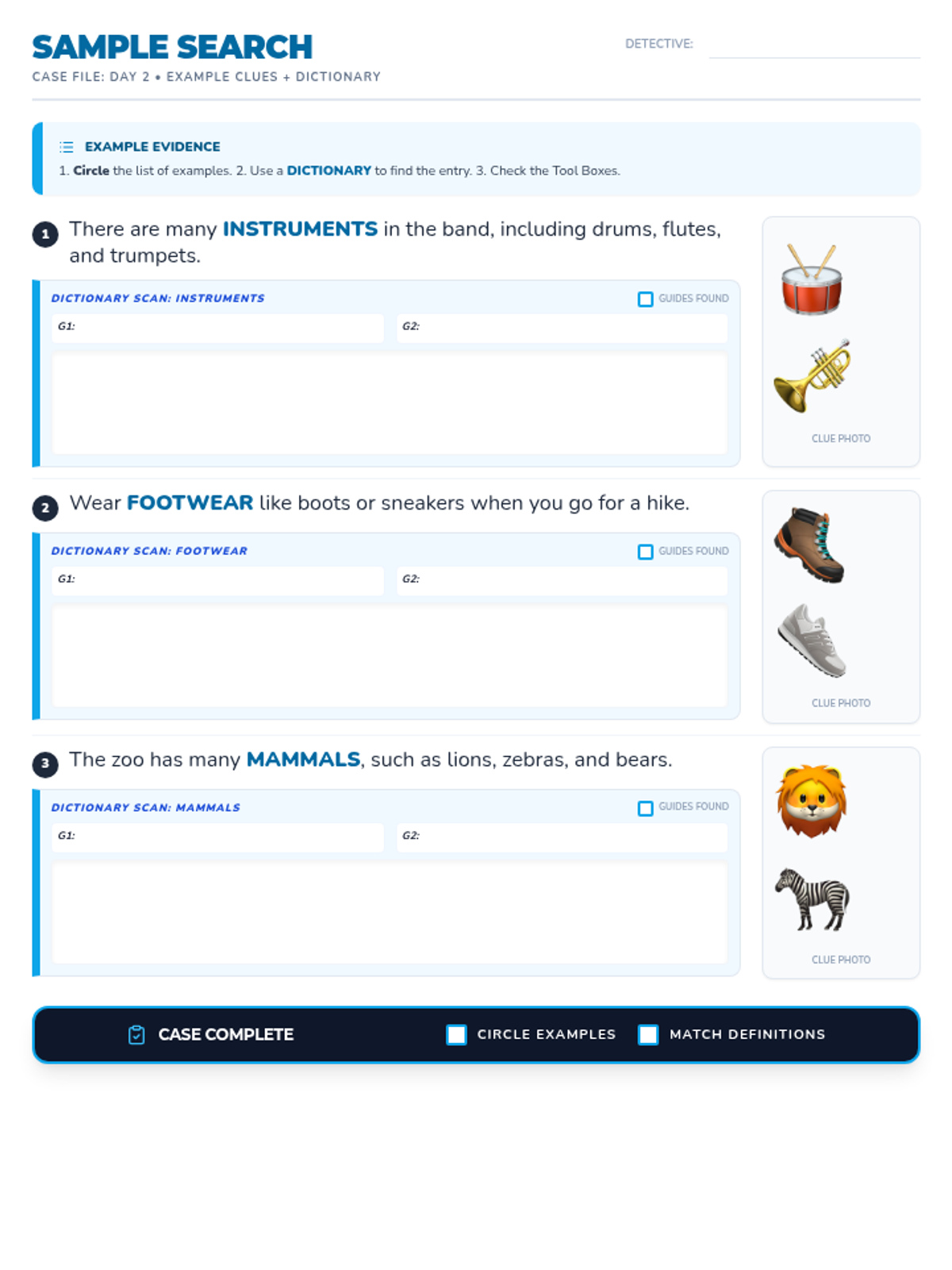
Students explore example clues, where a sentence provides specific instances of a word to help reveal its meaning, paired with helpful visual supports.
Students learn to identify definition clues in sentences where the meaning of a tricky word is explained directly, using illustrations to confirm their findings.
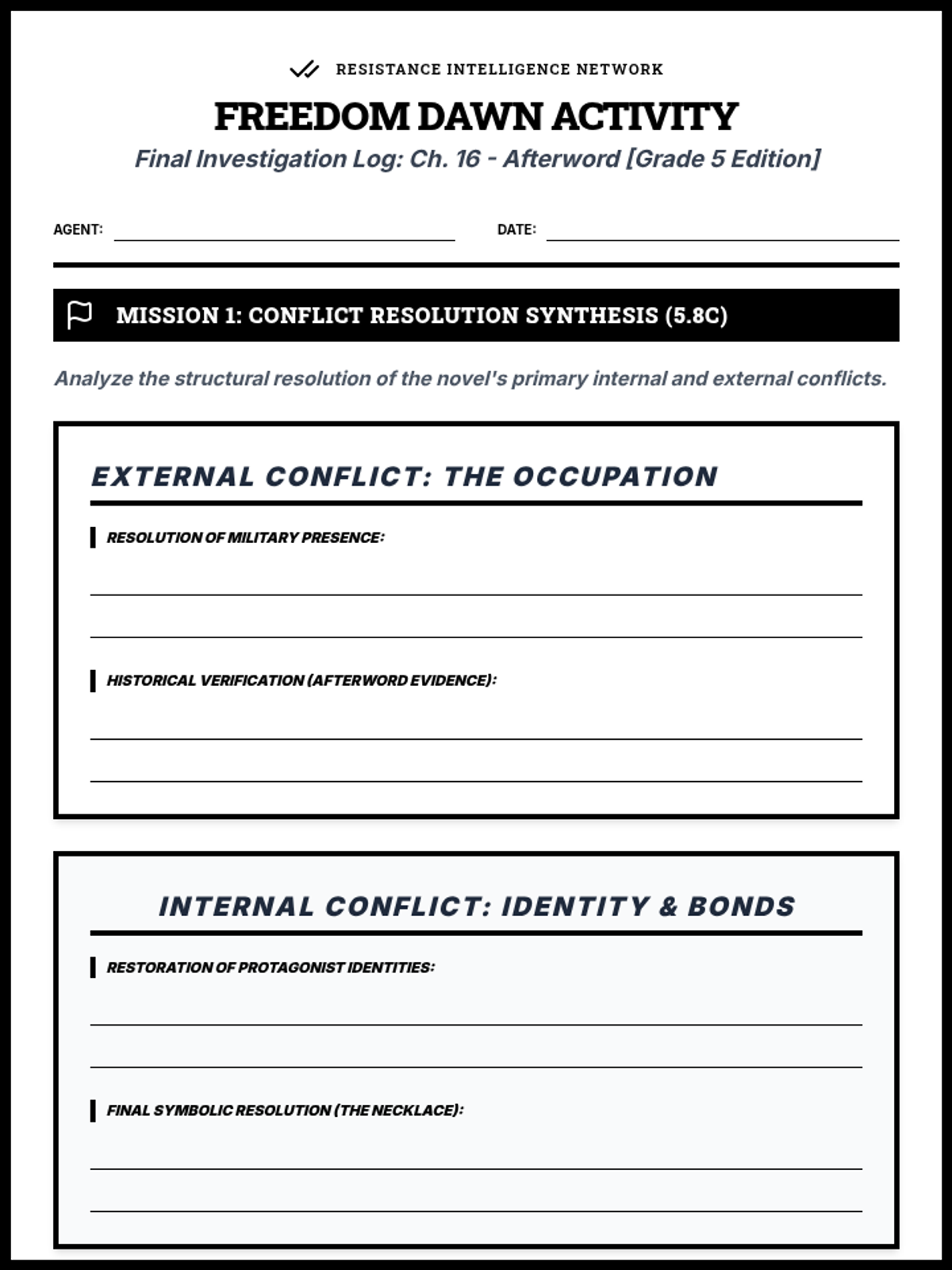
The war ends and the Johansens look toward a future of rebuilding. Students evaluate the resolution of the novel and compare the fictional narrative to the historical facts presented in the Afterword.
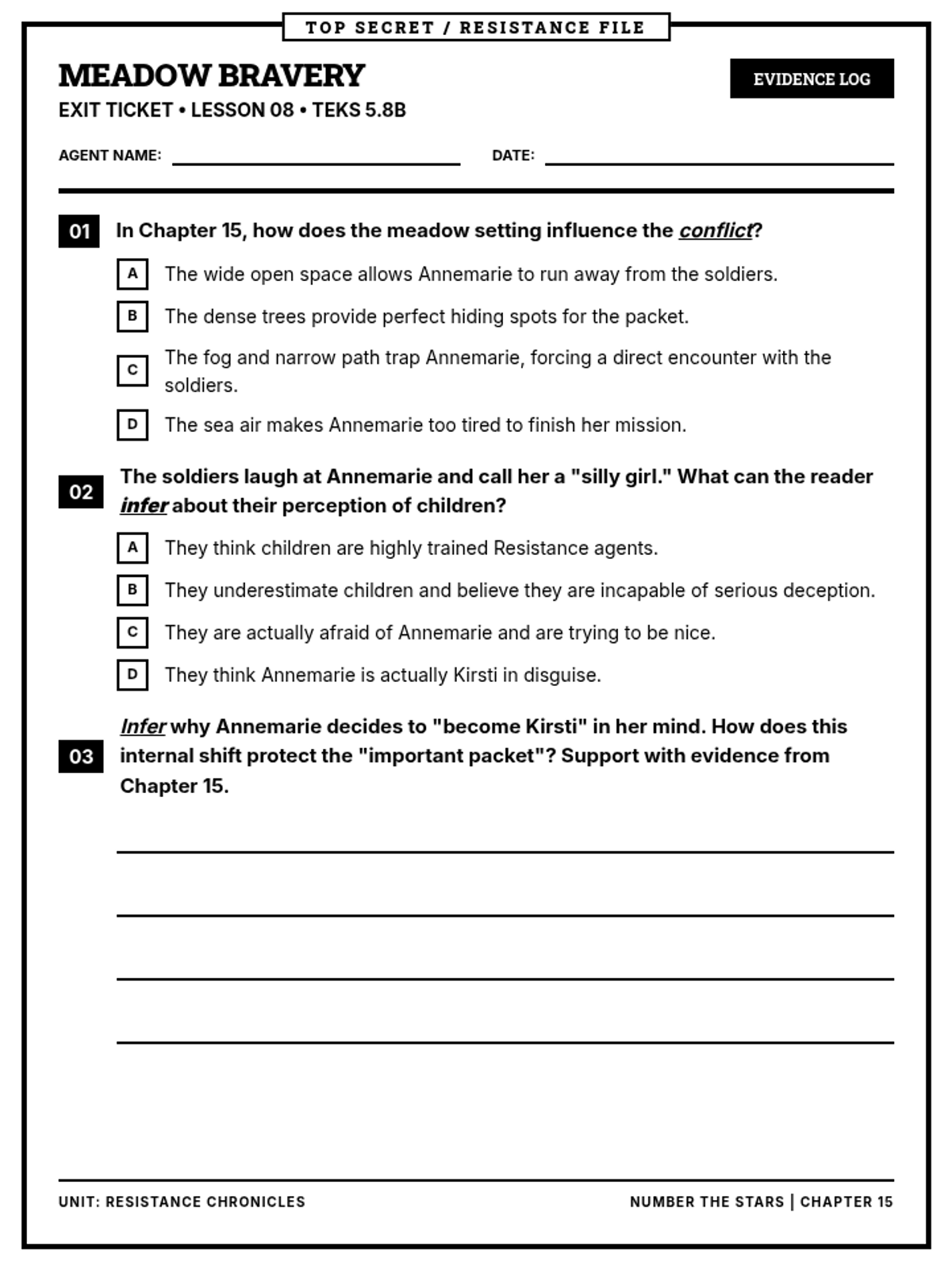
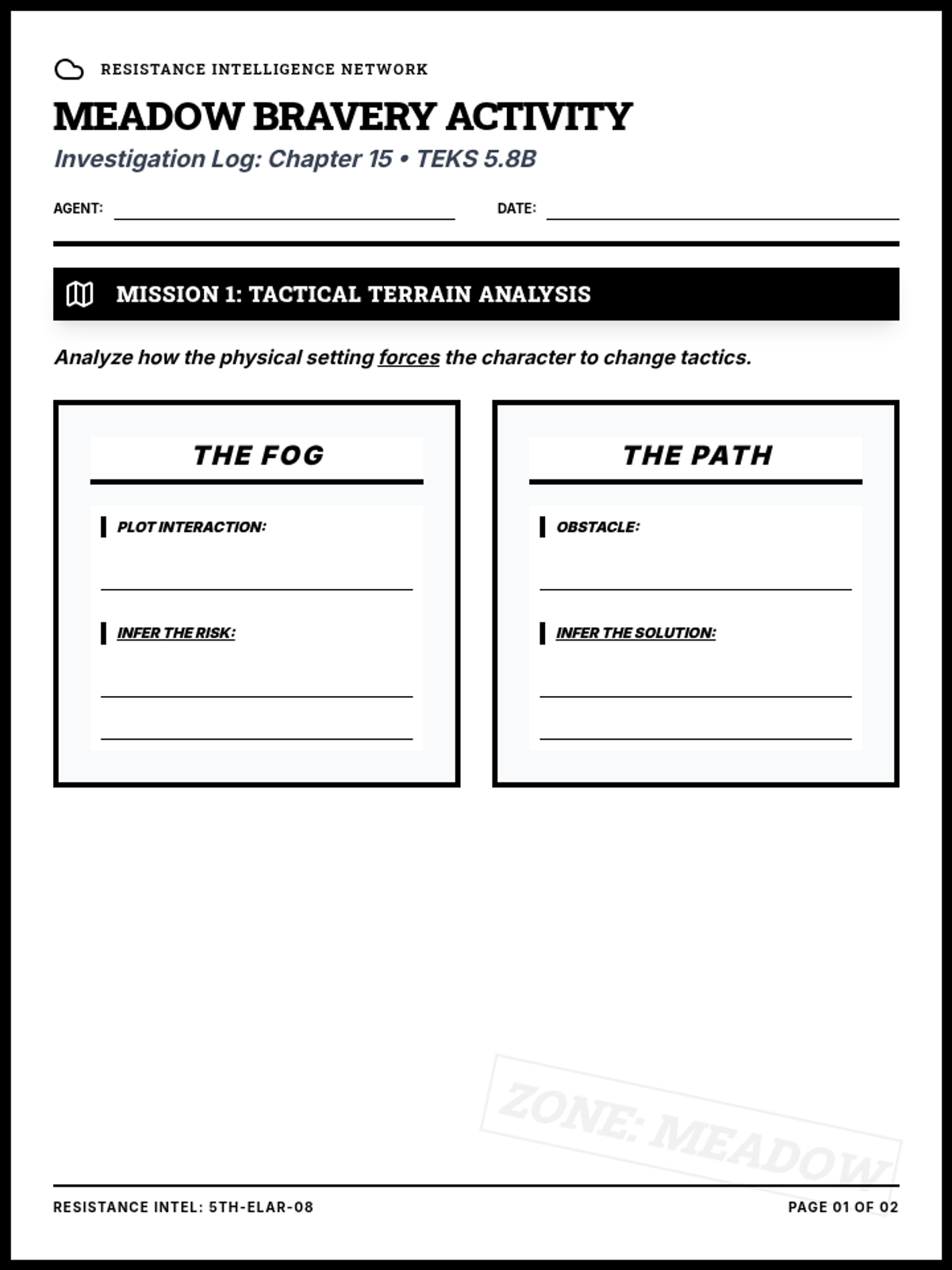
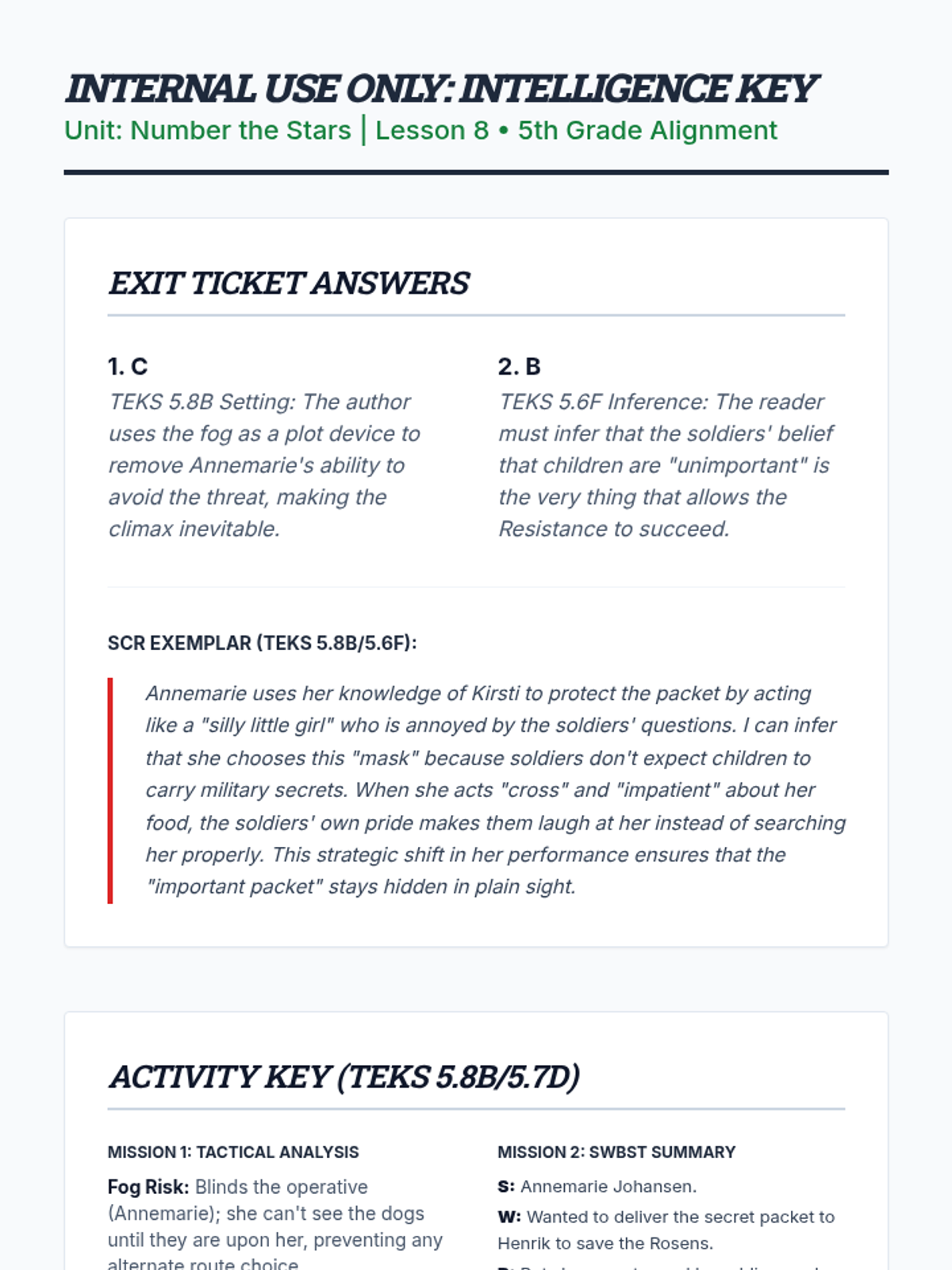
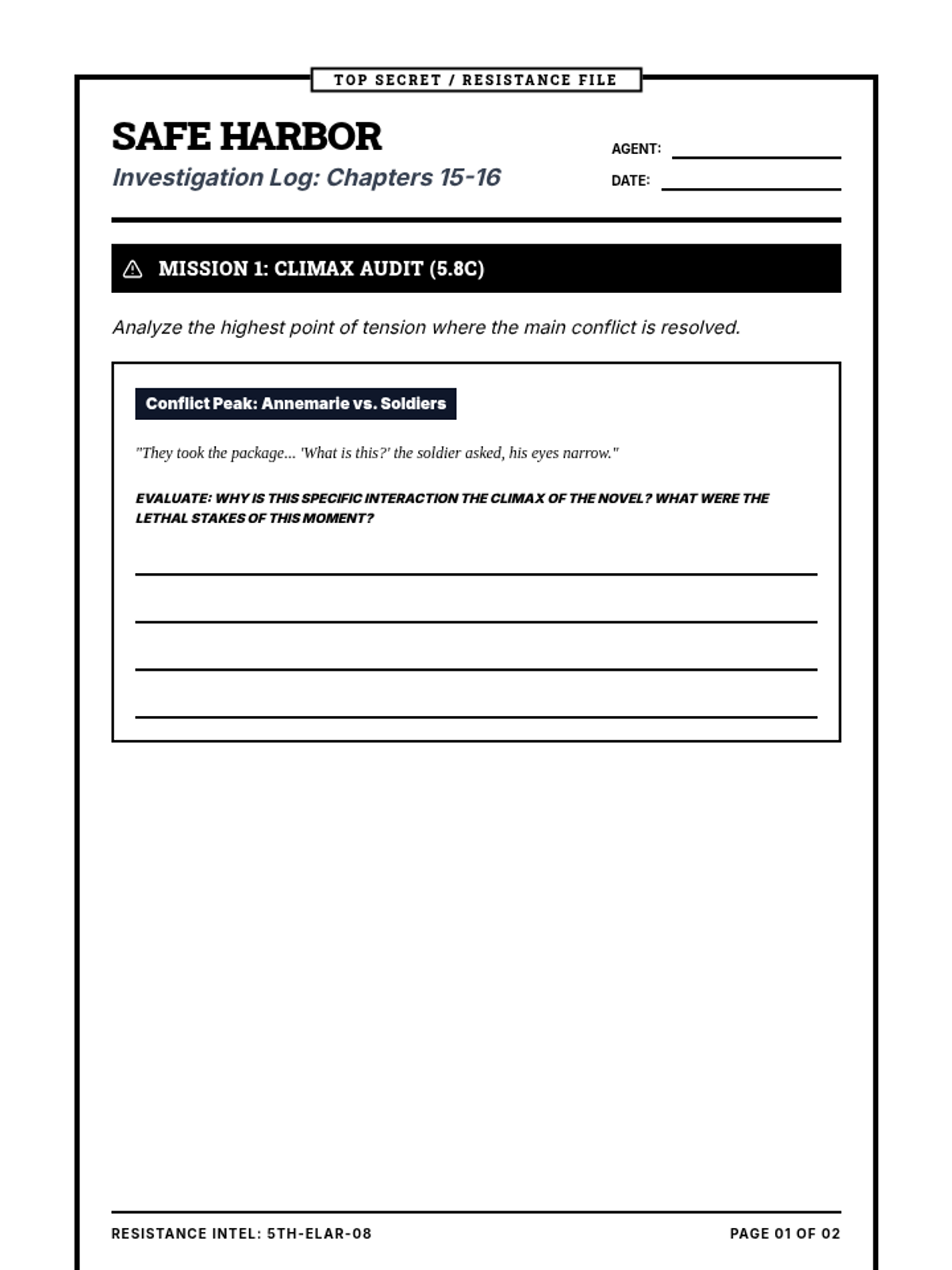
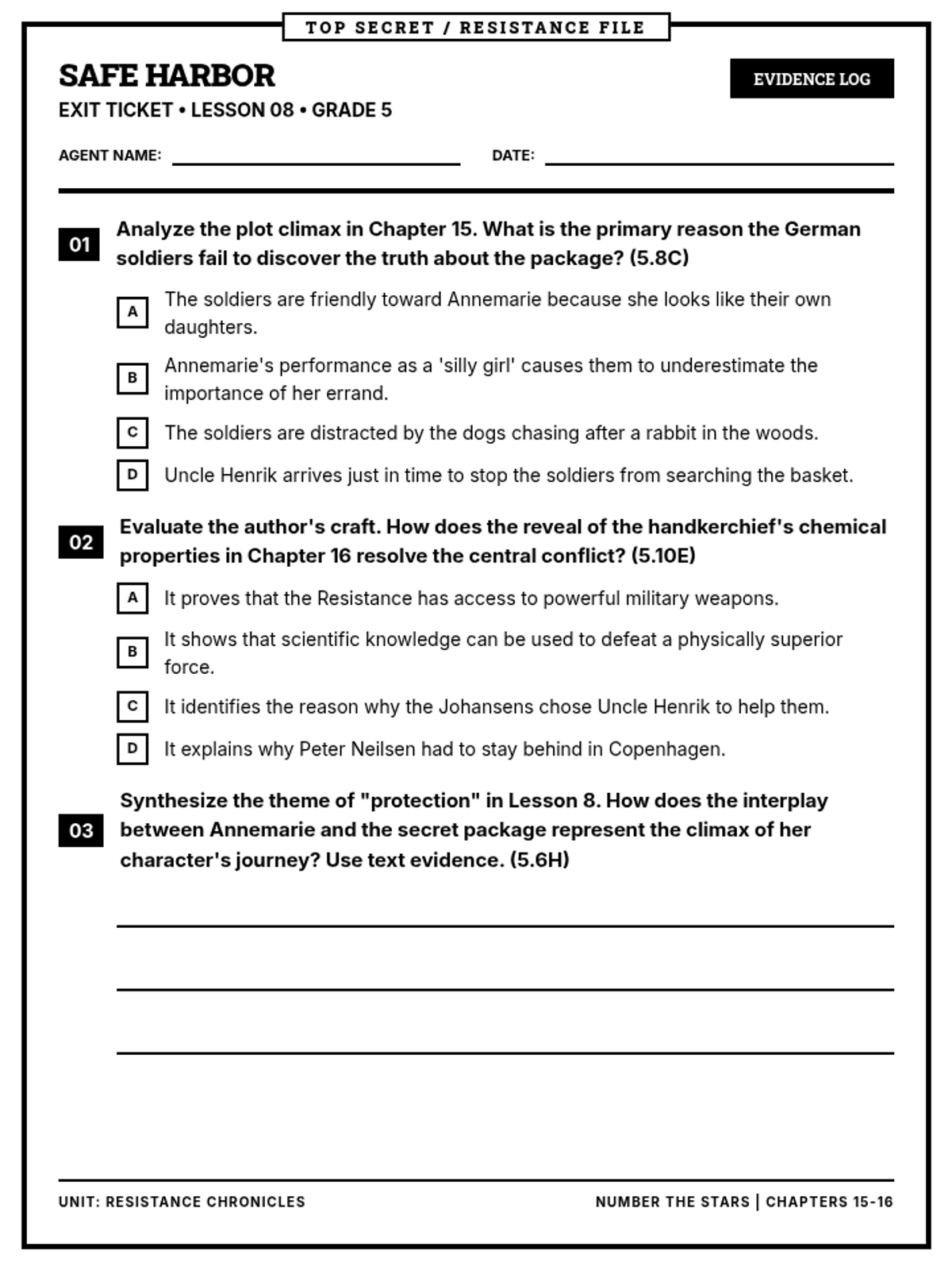
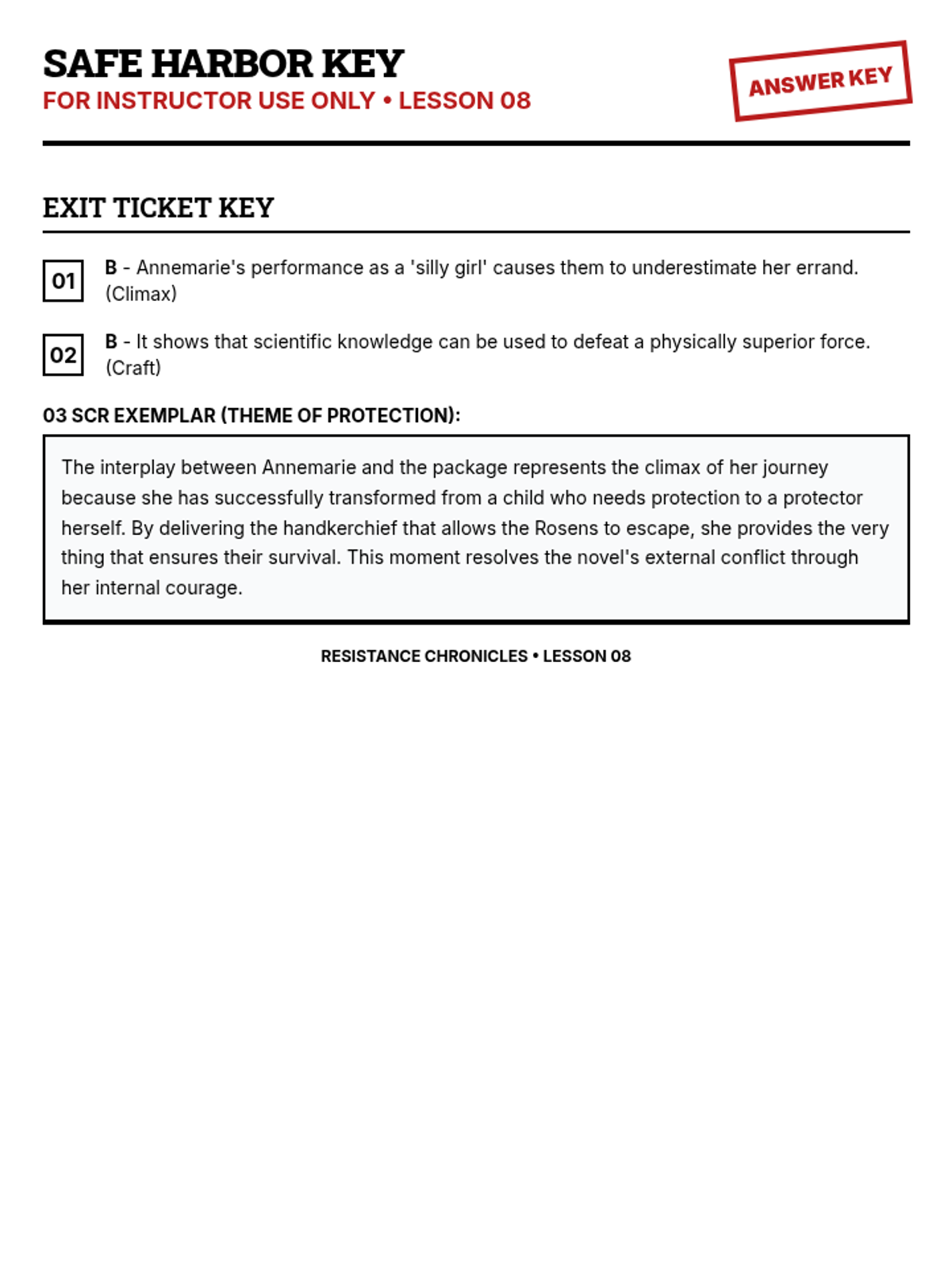
The mission reaches its high-stakes climax as Annemarie faces the soldiers and delivers the package that determines the Rosens' survival. Students analyze the plot climax and the author's use of suspense and symbolic resolution.
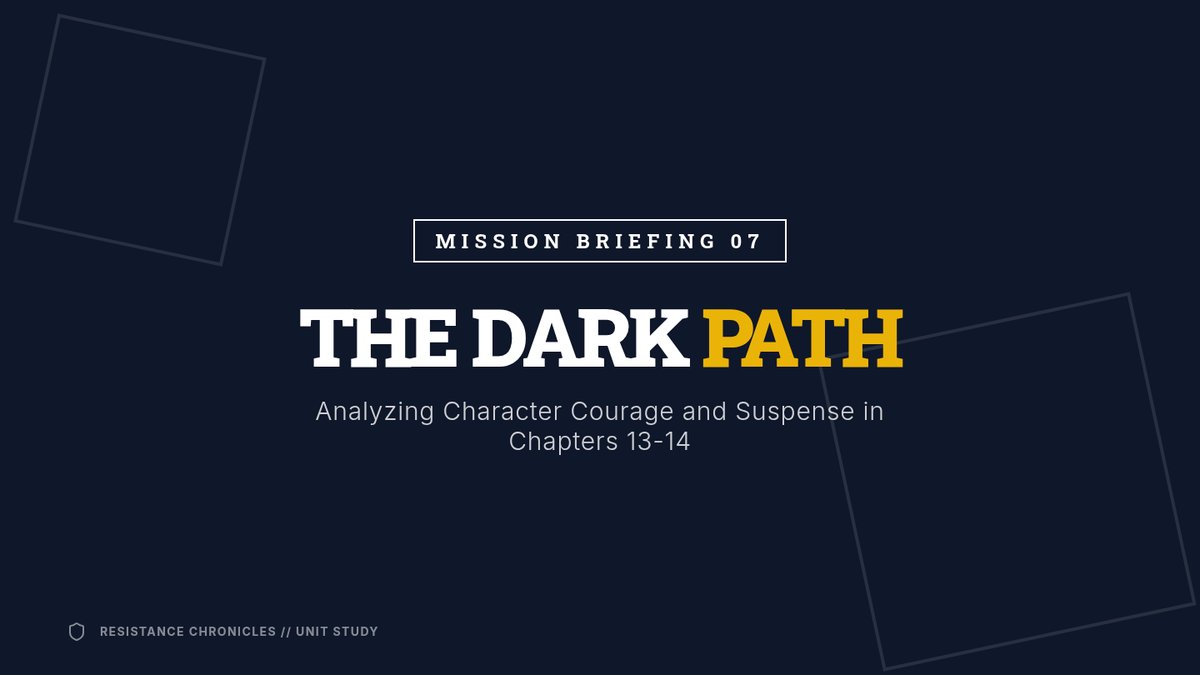
Annemarie undertakes a dangerous solo journey through the woods to deliver a mysterious package, using her imagination to cope with intense fear. Students analyze character courage and the use of literary devices in suspenseful plotting.
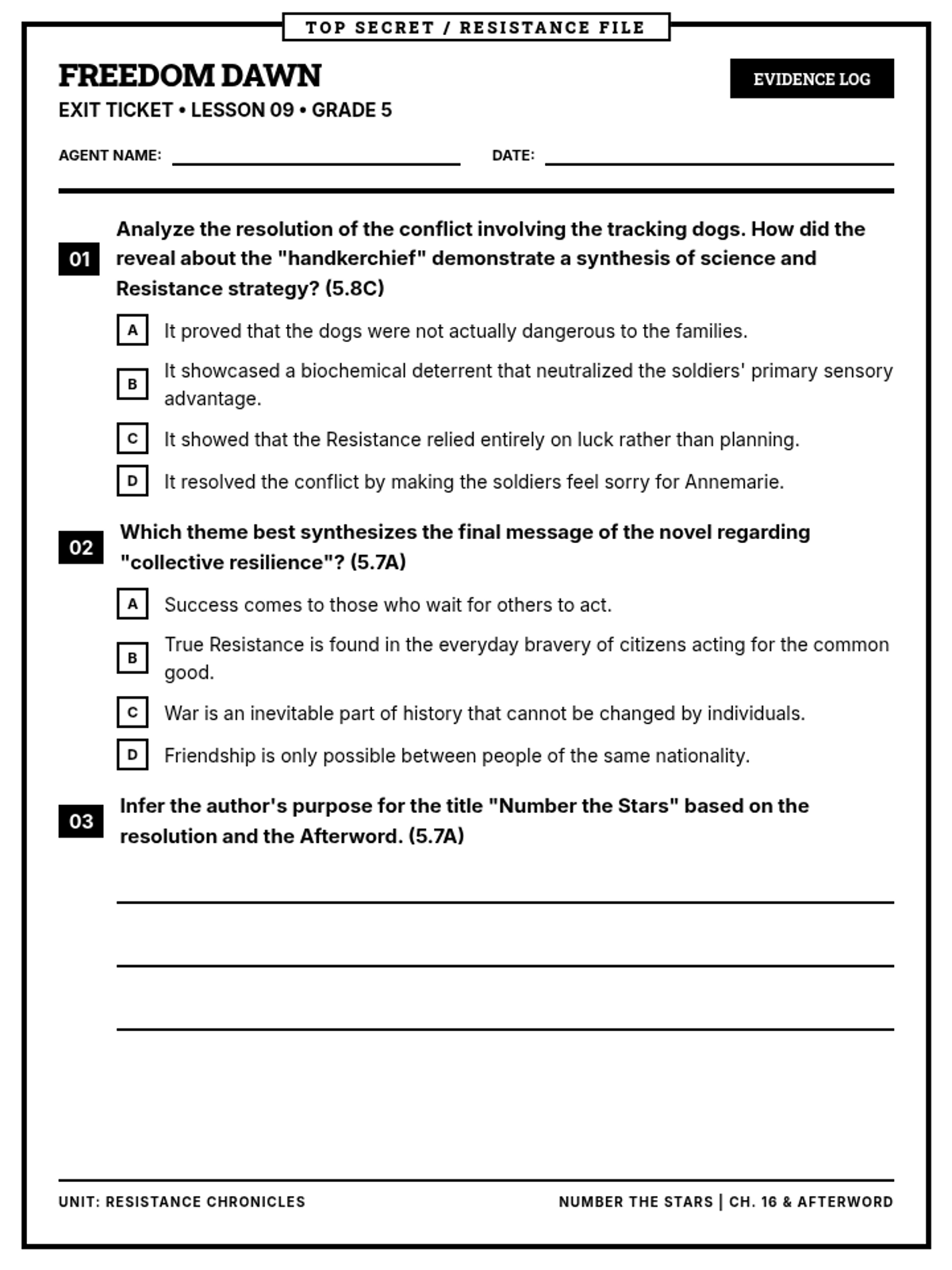
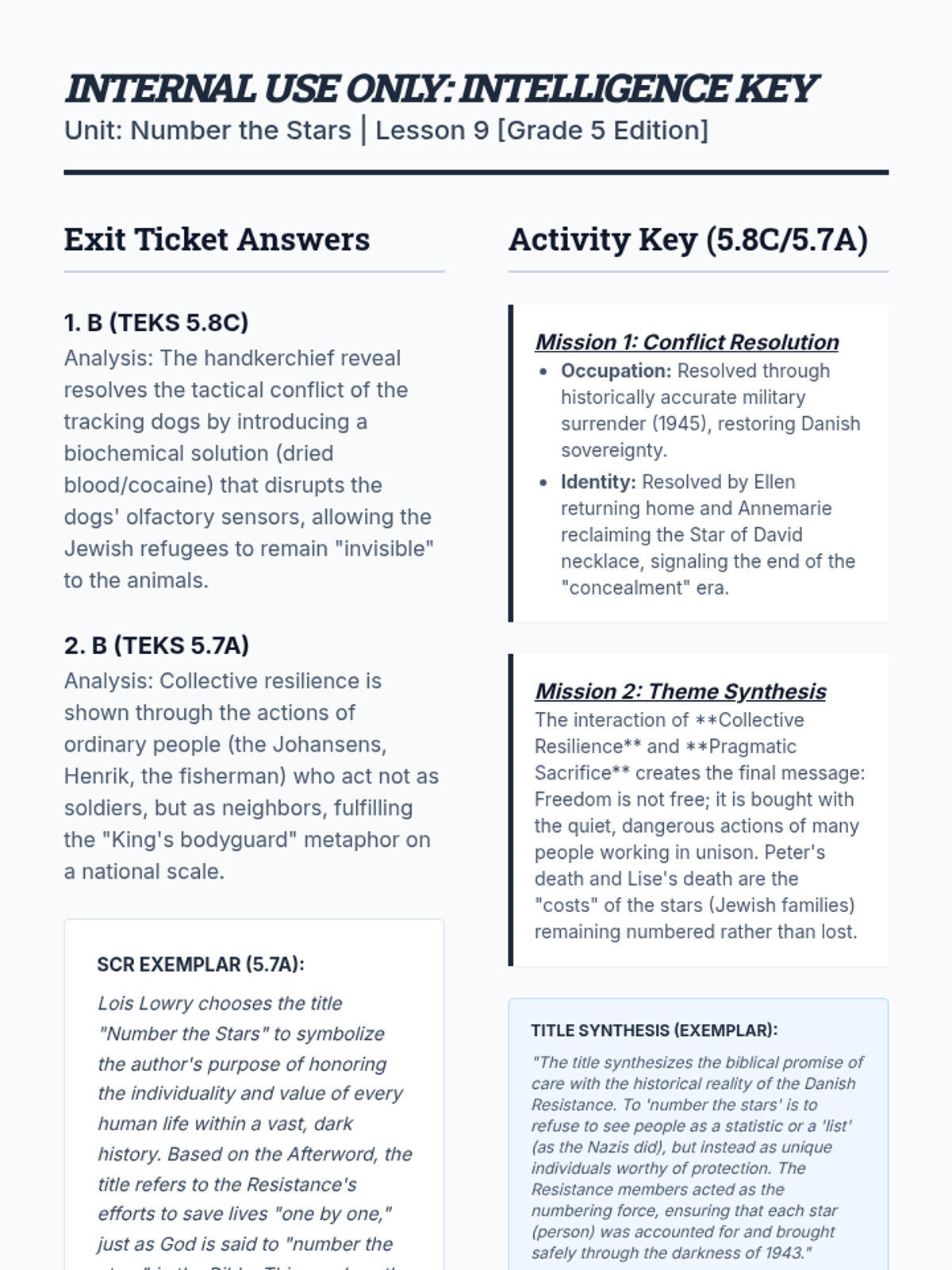
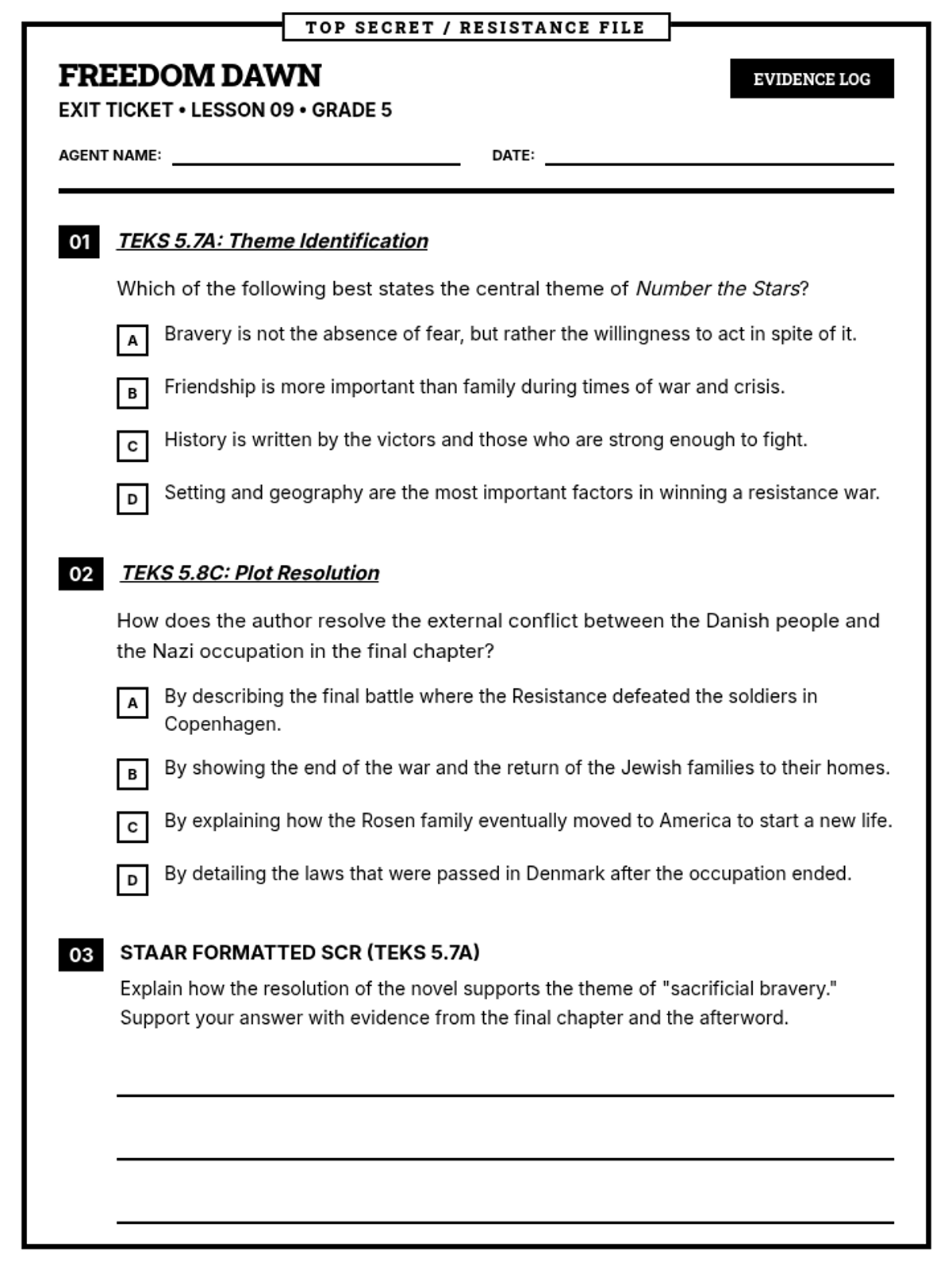
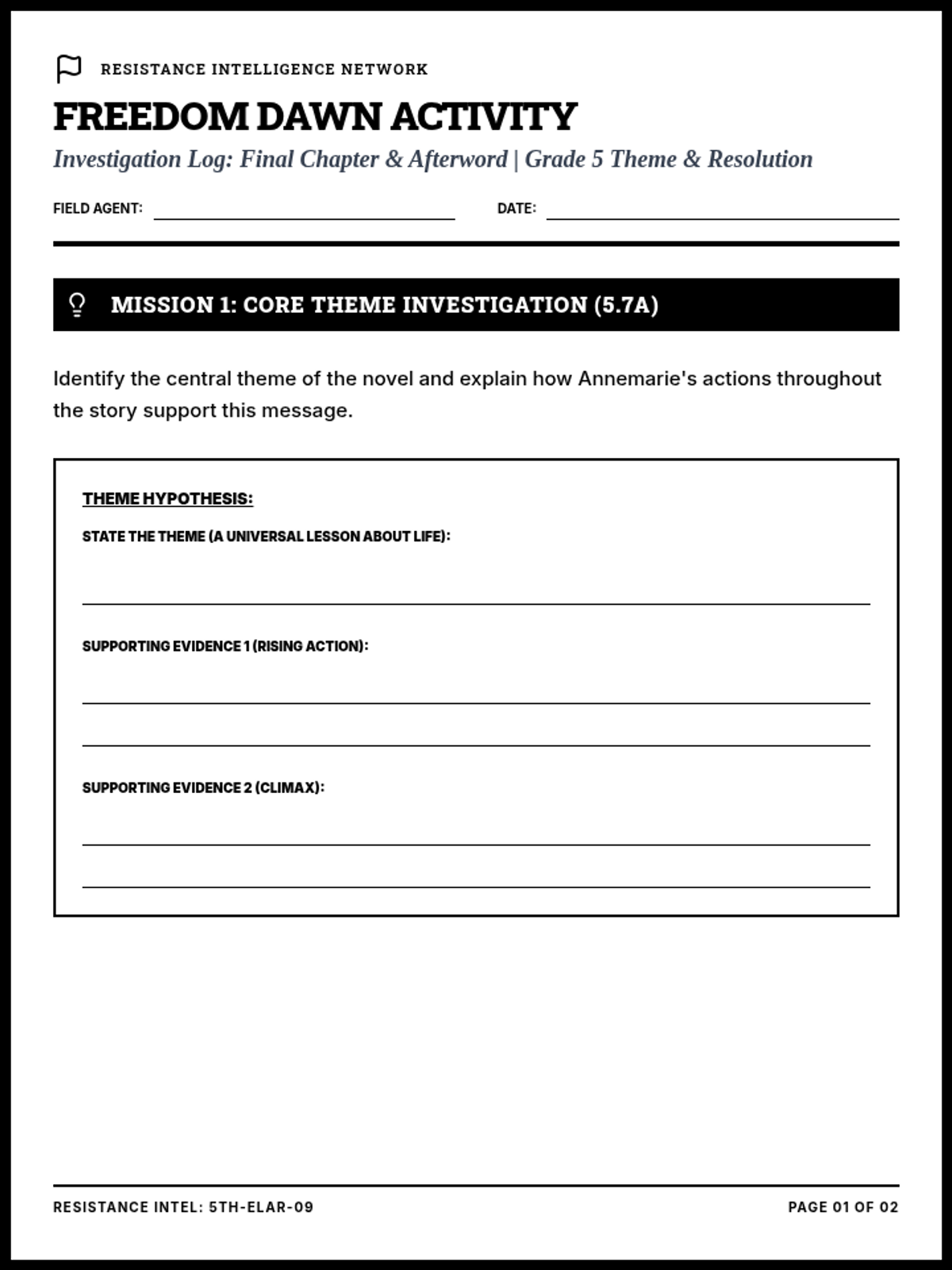
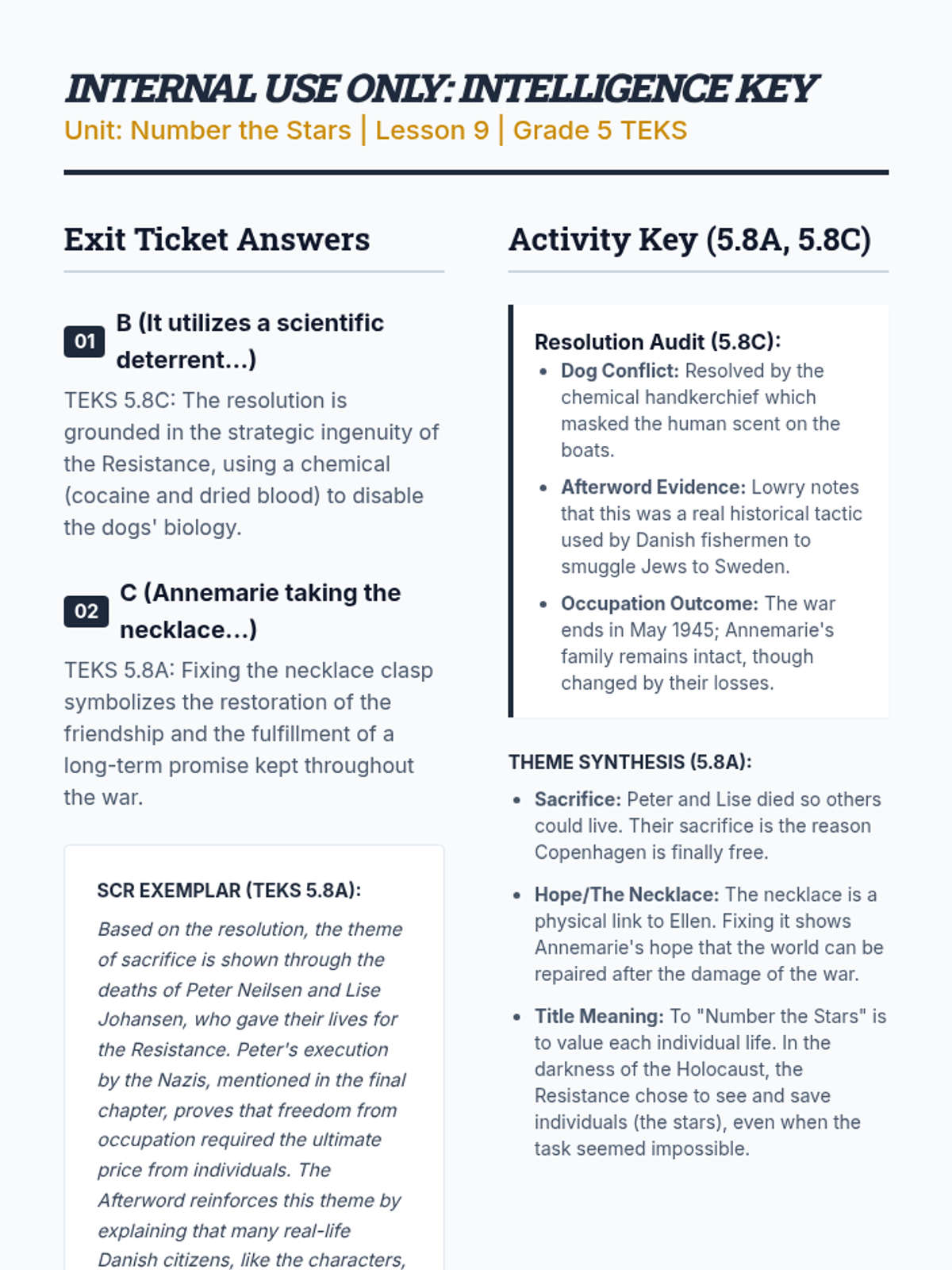
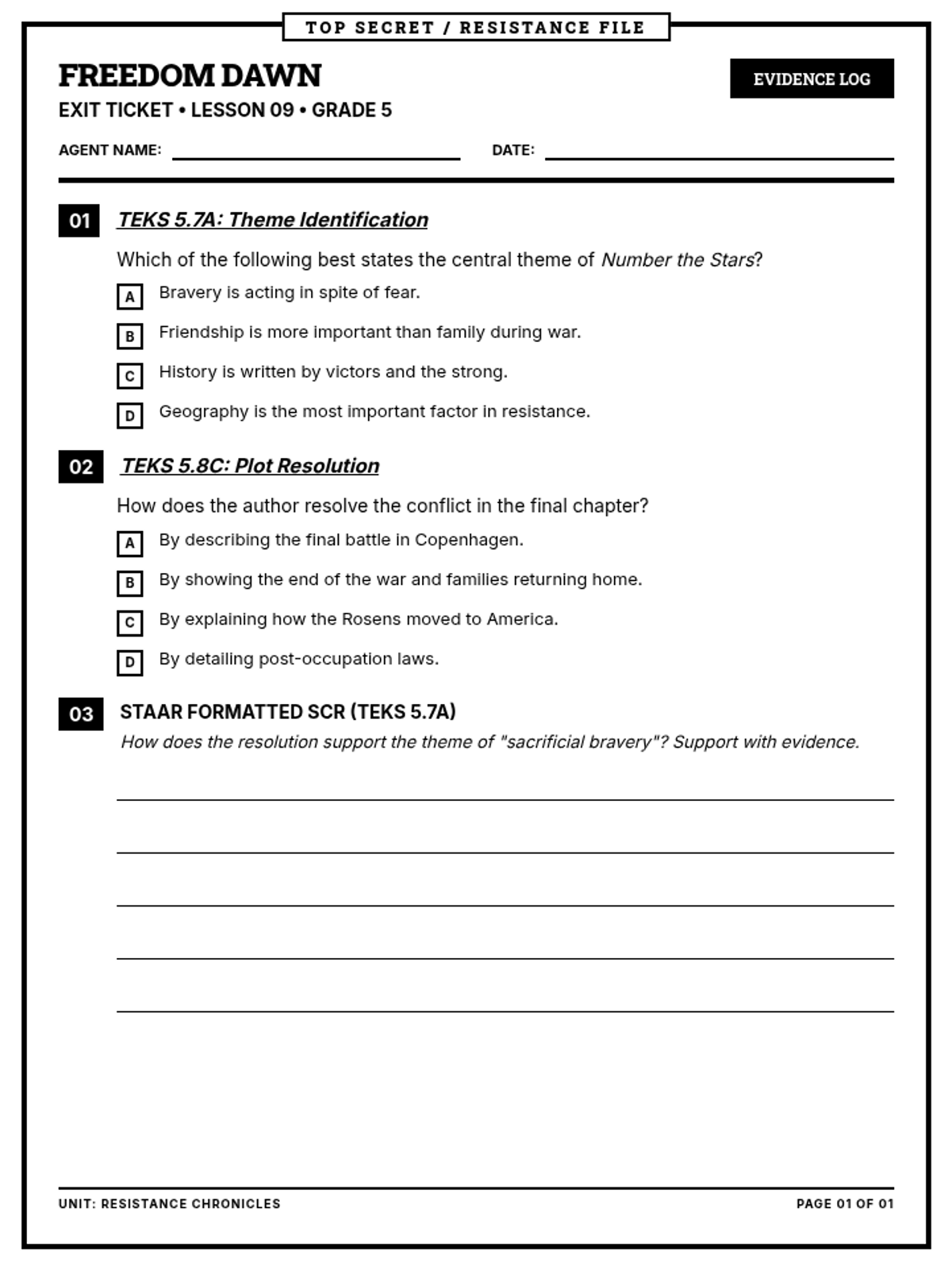
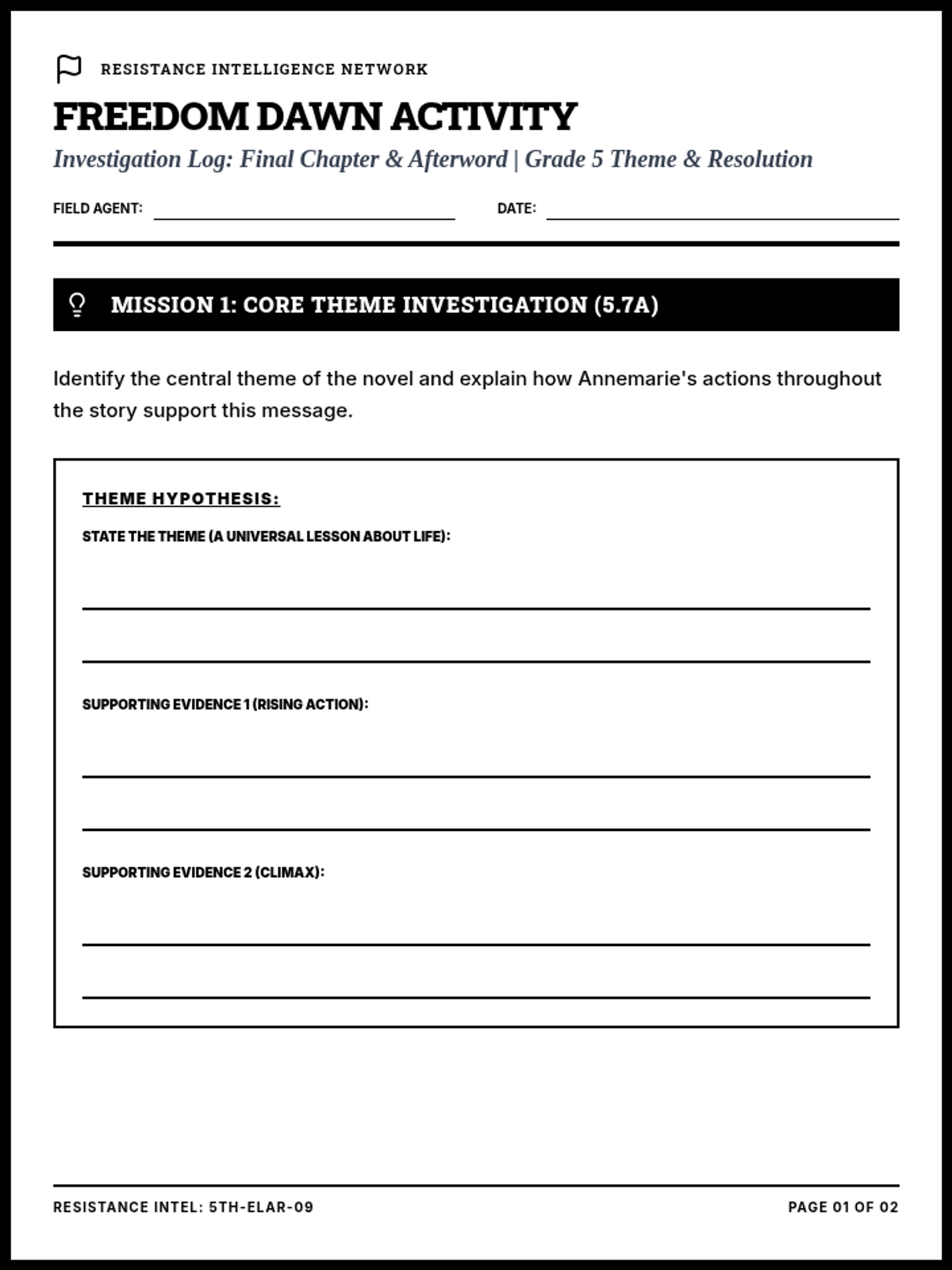
Students synthesize the entire novel's events, including the final chapter and afterword, to identify themes and analyze the resolution of the plot. [5th Grade TEKS 5.7A, 5.8C]
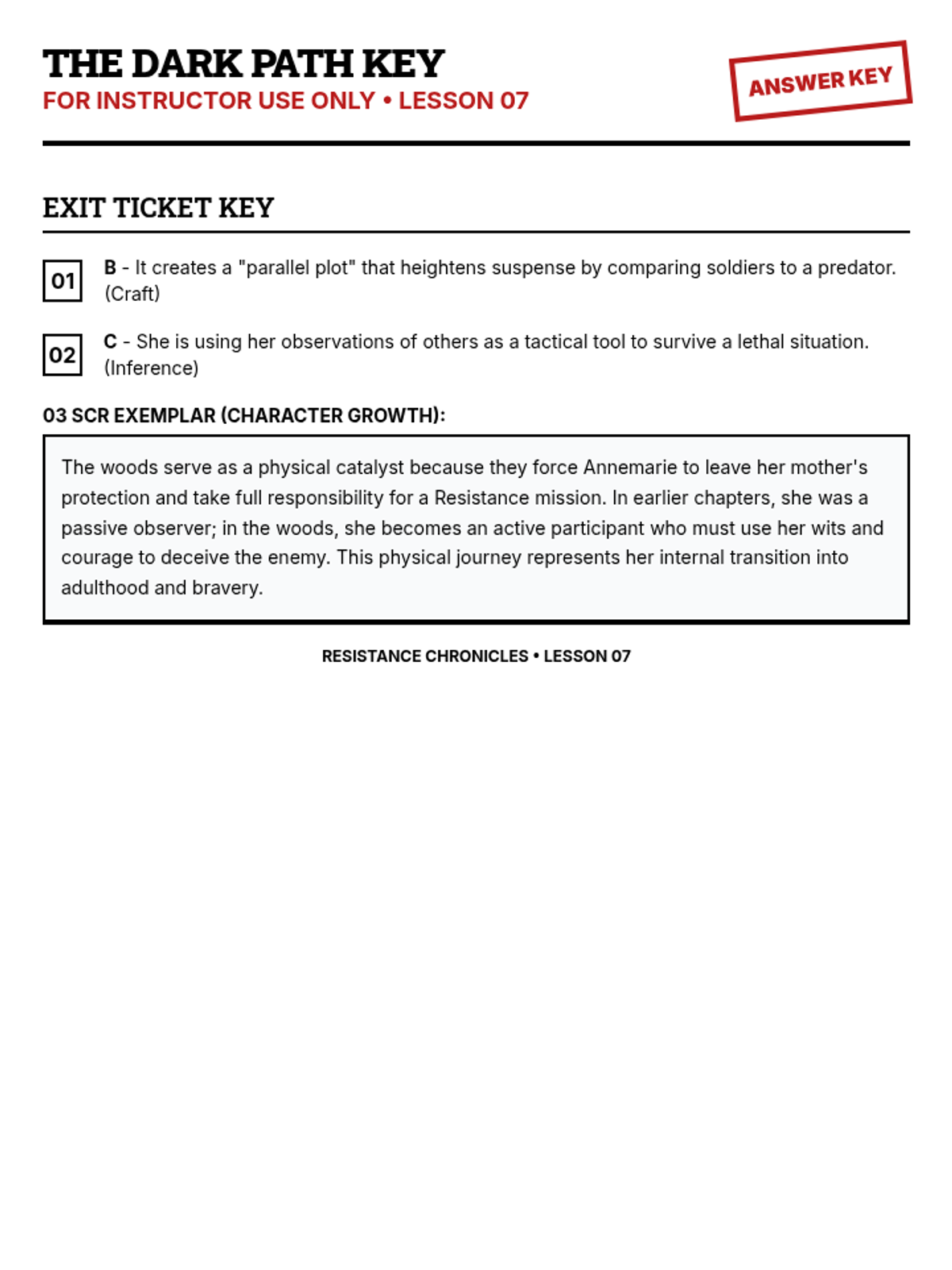
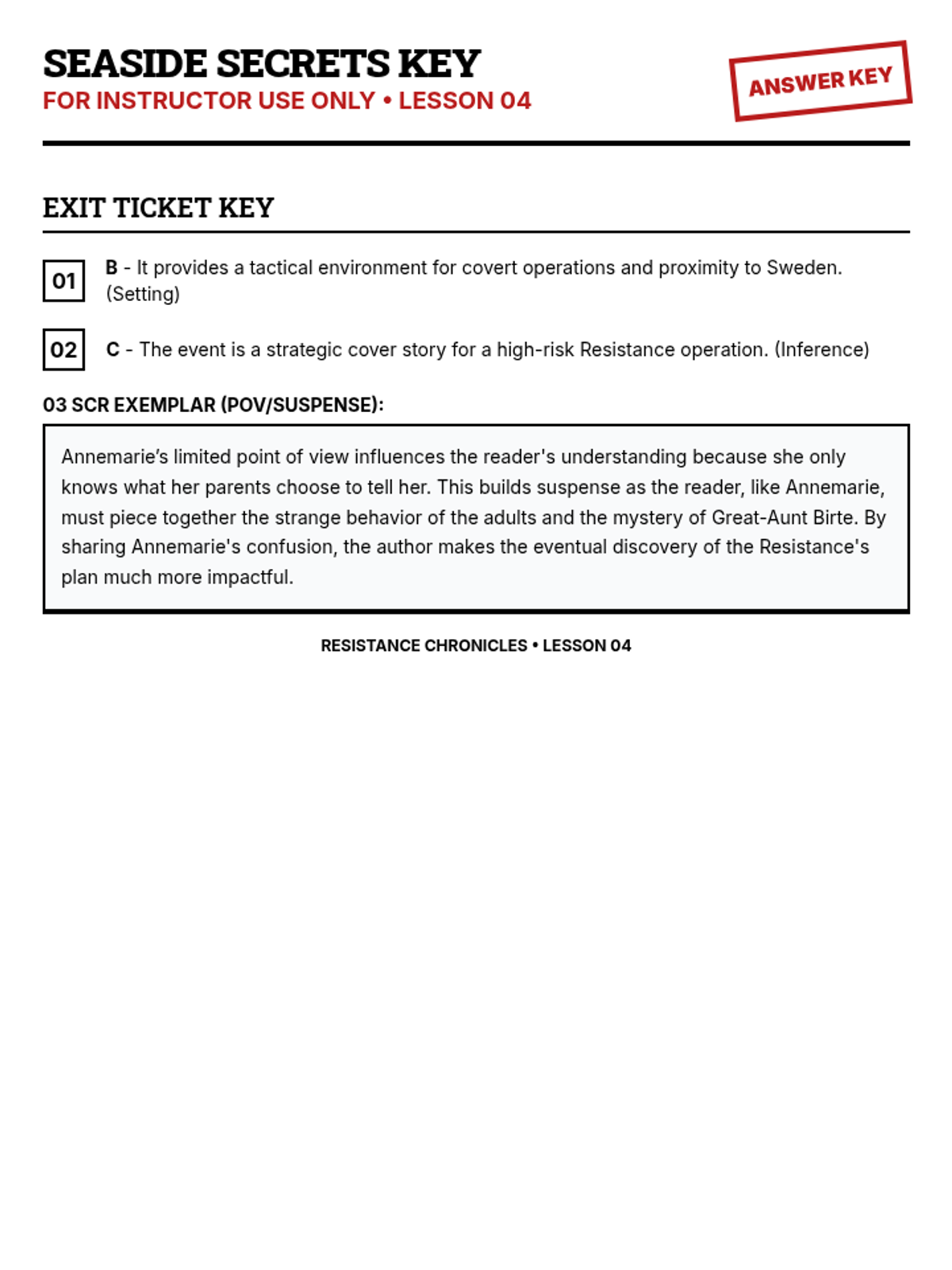
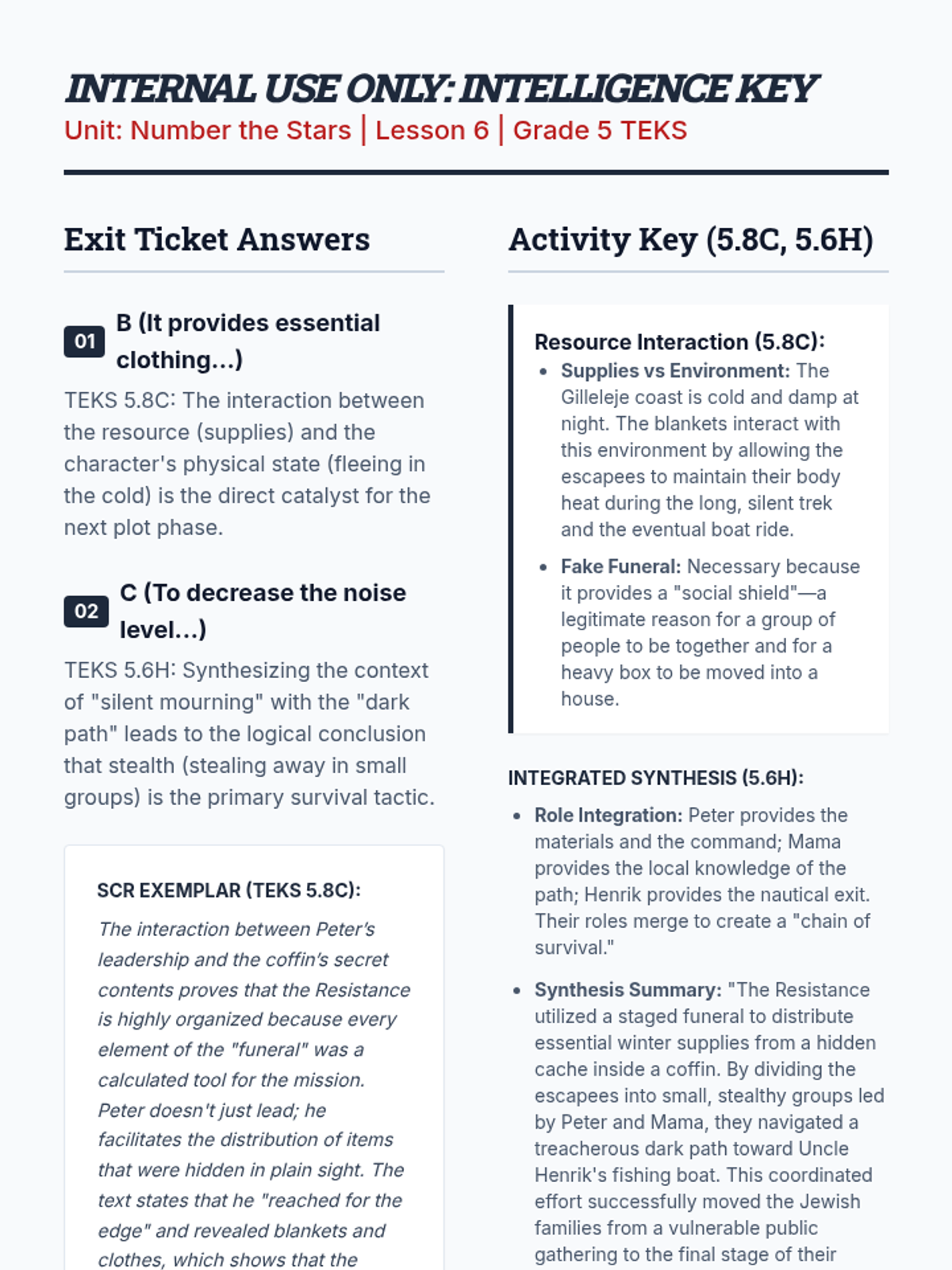
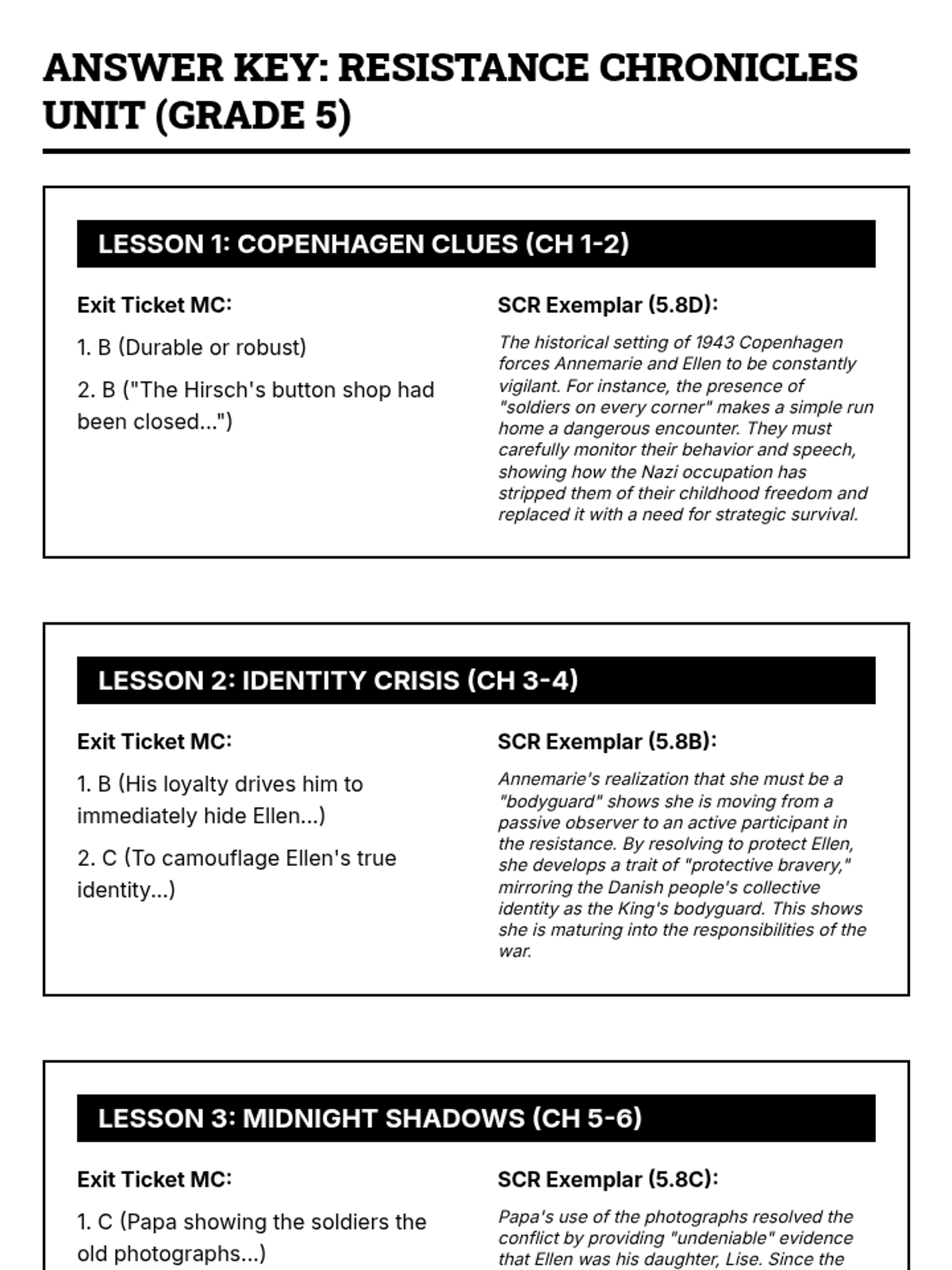
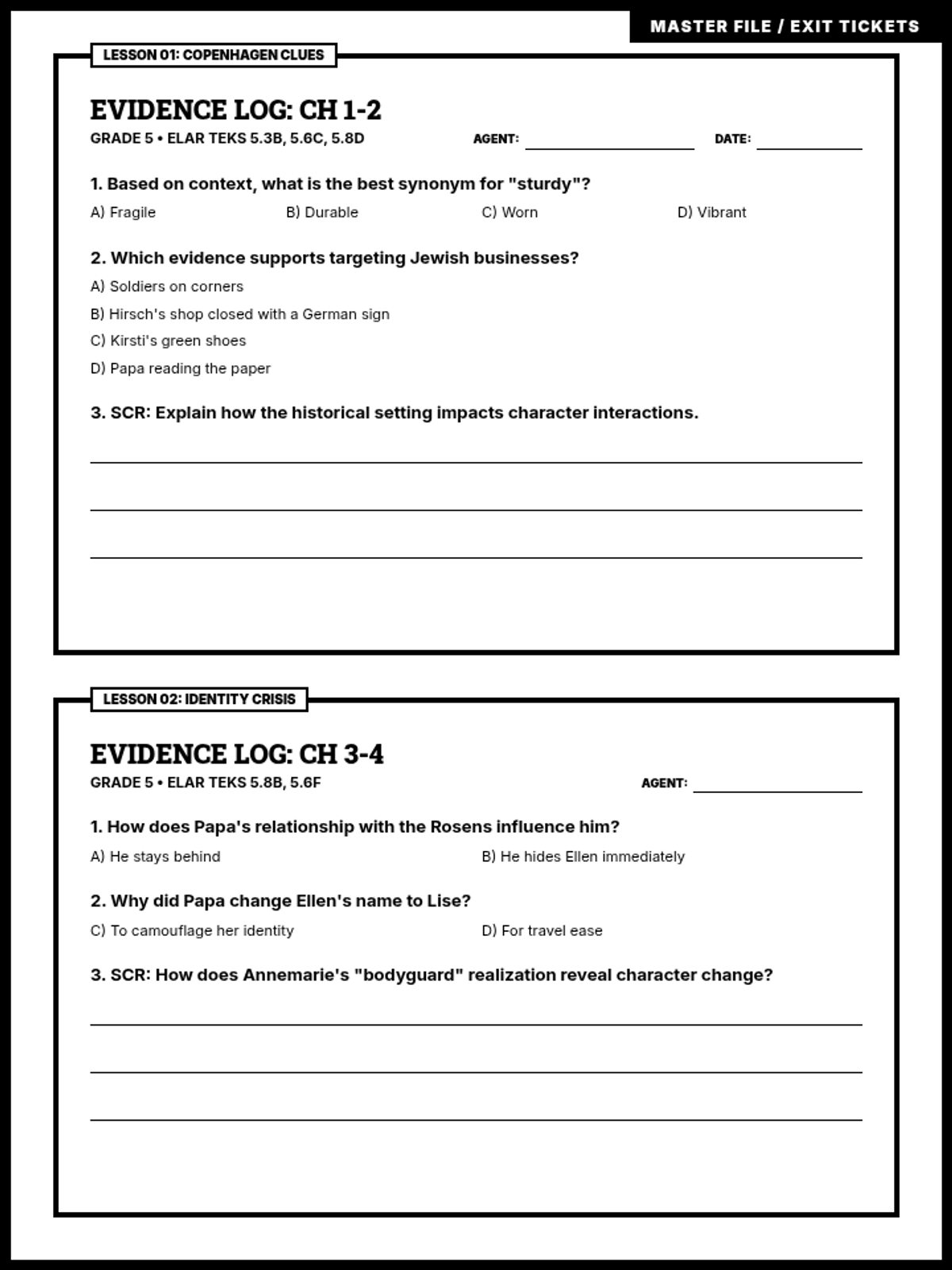
A collection of sequence-wide resources, answer keys, and master documents for the Resistance Chronicles unit.
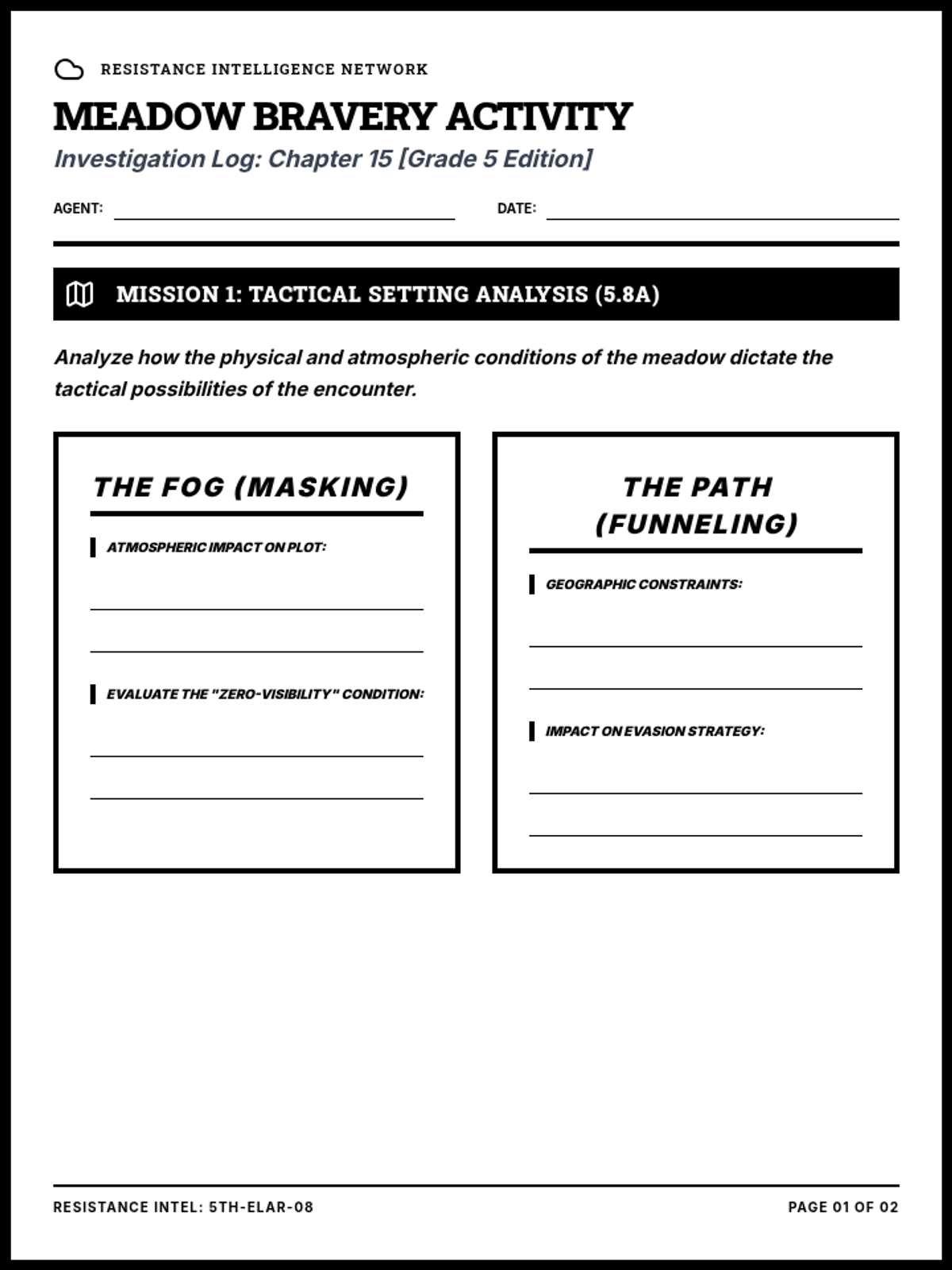
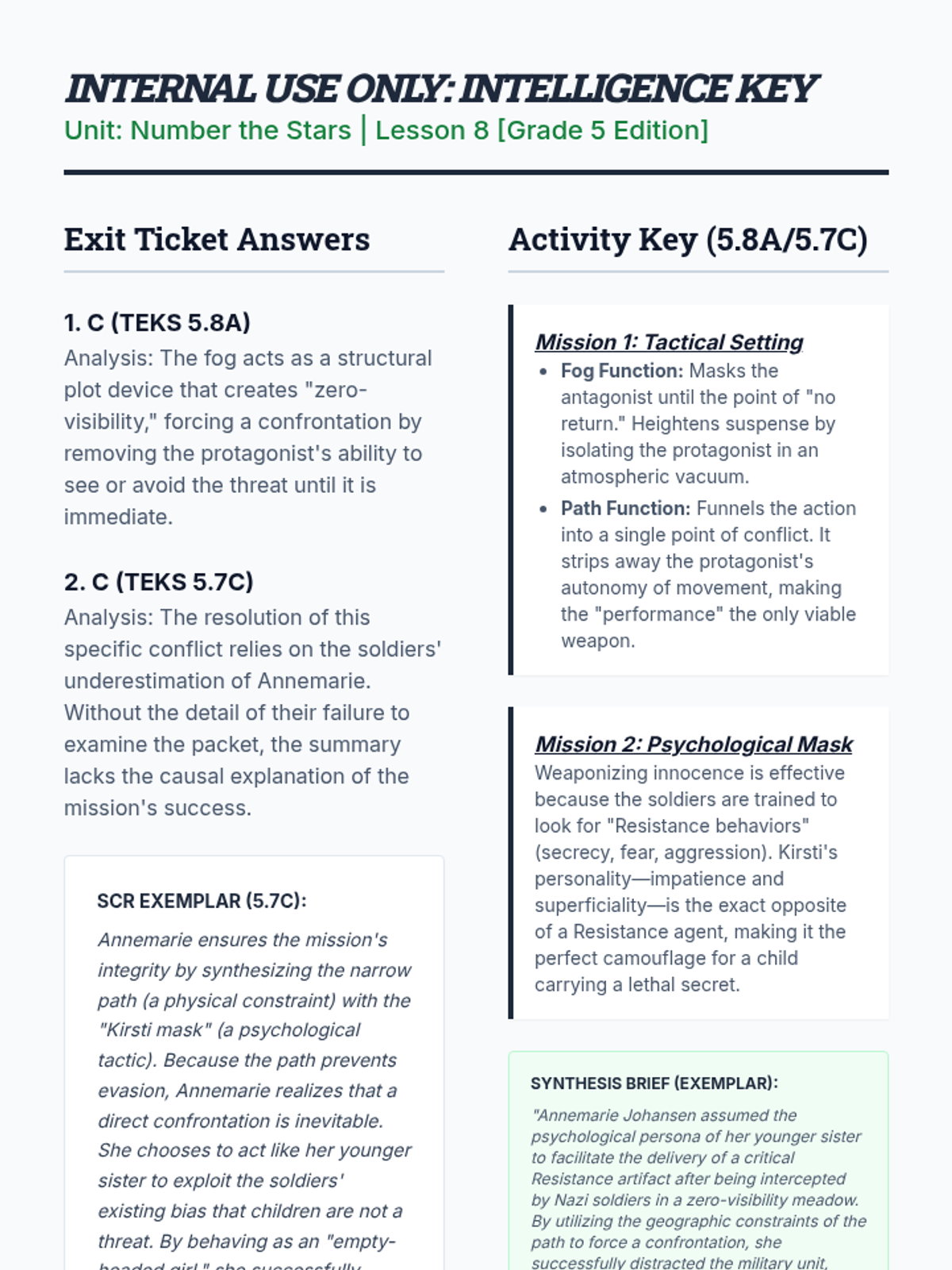
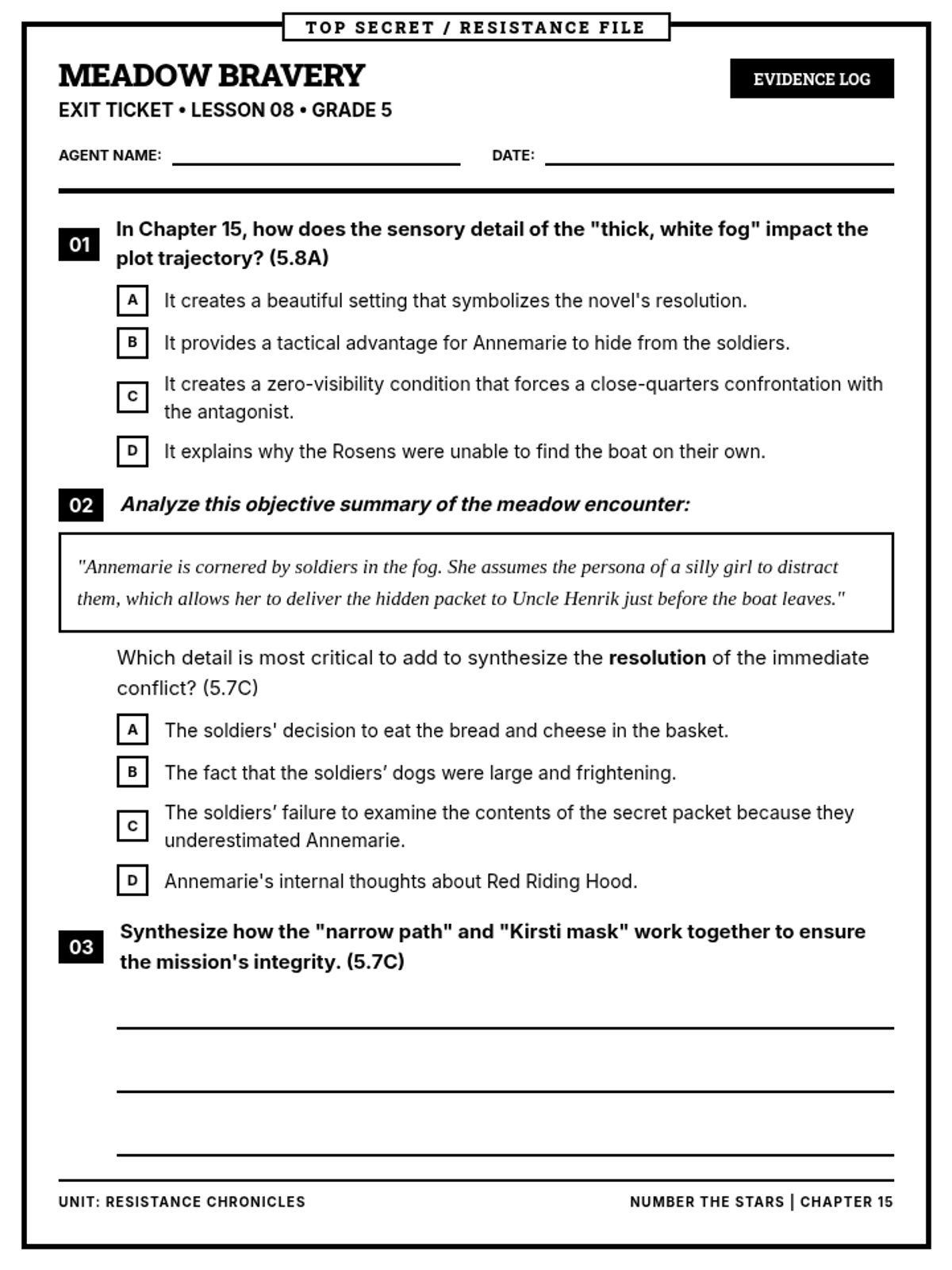
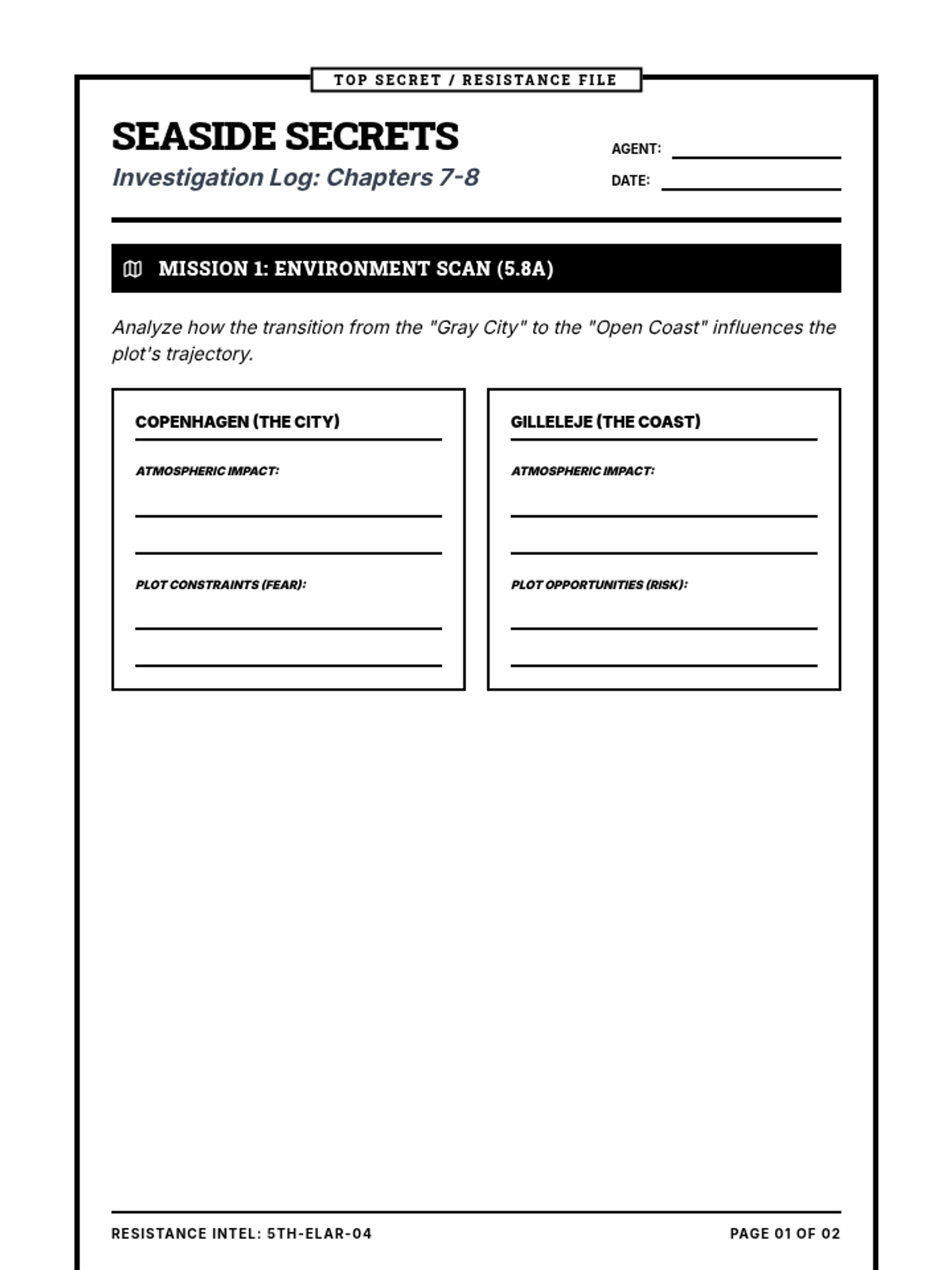
Students examine the setting's impact on the plot and synthesize details from Annemarie's encounter with the soldiers in the woods. [5th Grade TEKS 5.8A, 5.7C]
Students analyze character growth and the impact of point of view as Annemarie takes on a dangerous mission in chapters 13 and 14. [5th Grade TEKS 5.8B, 5.10E]
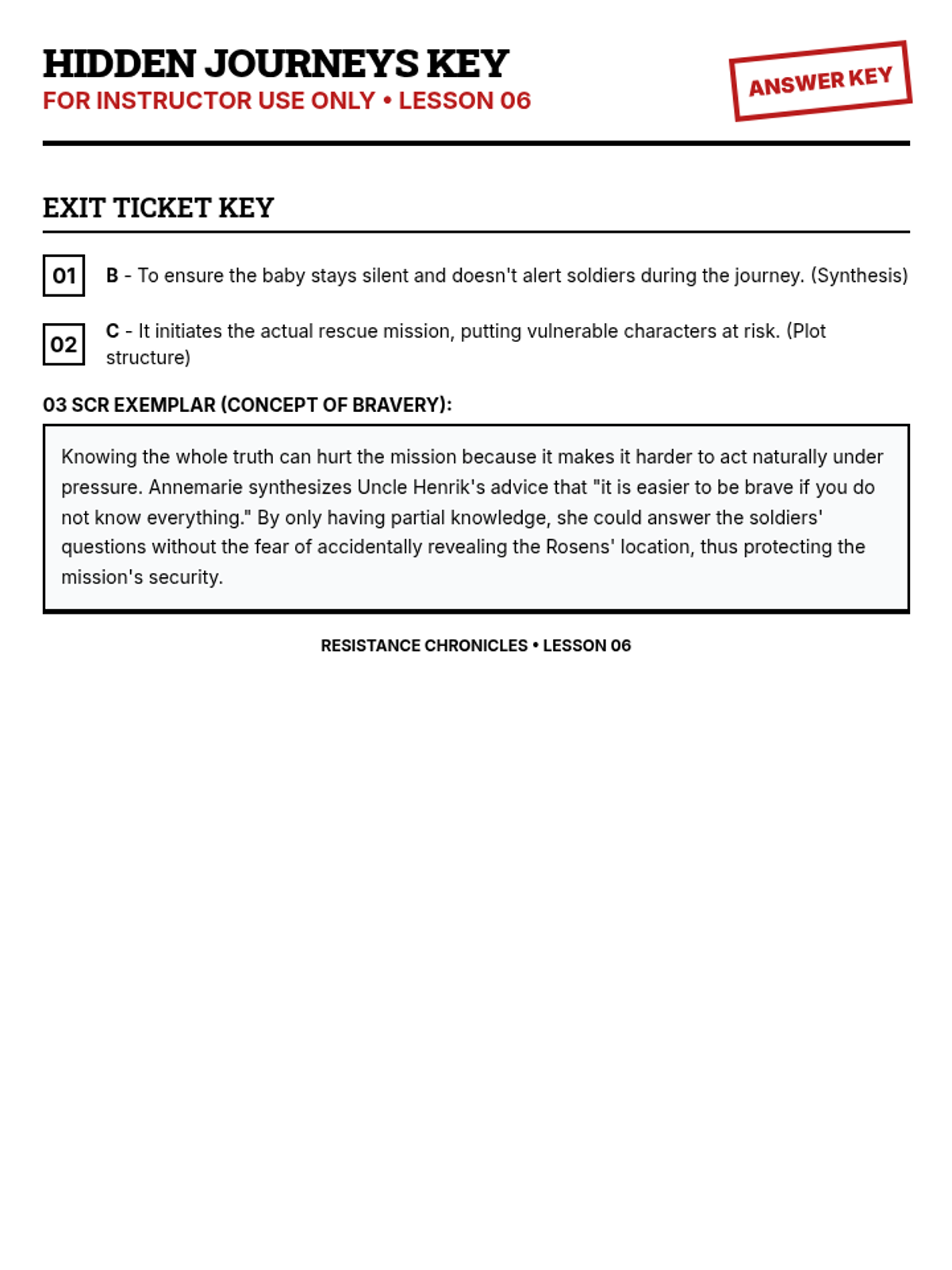
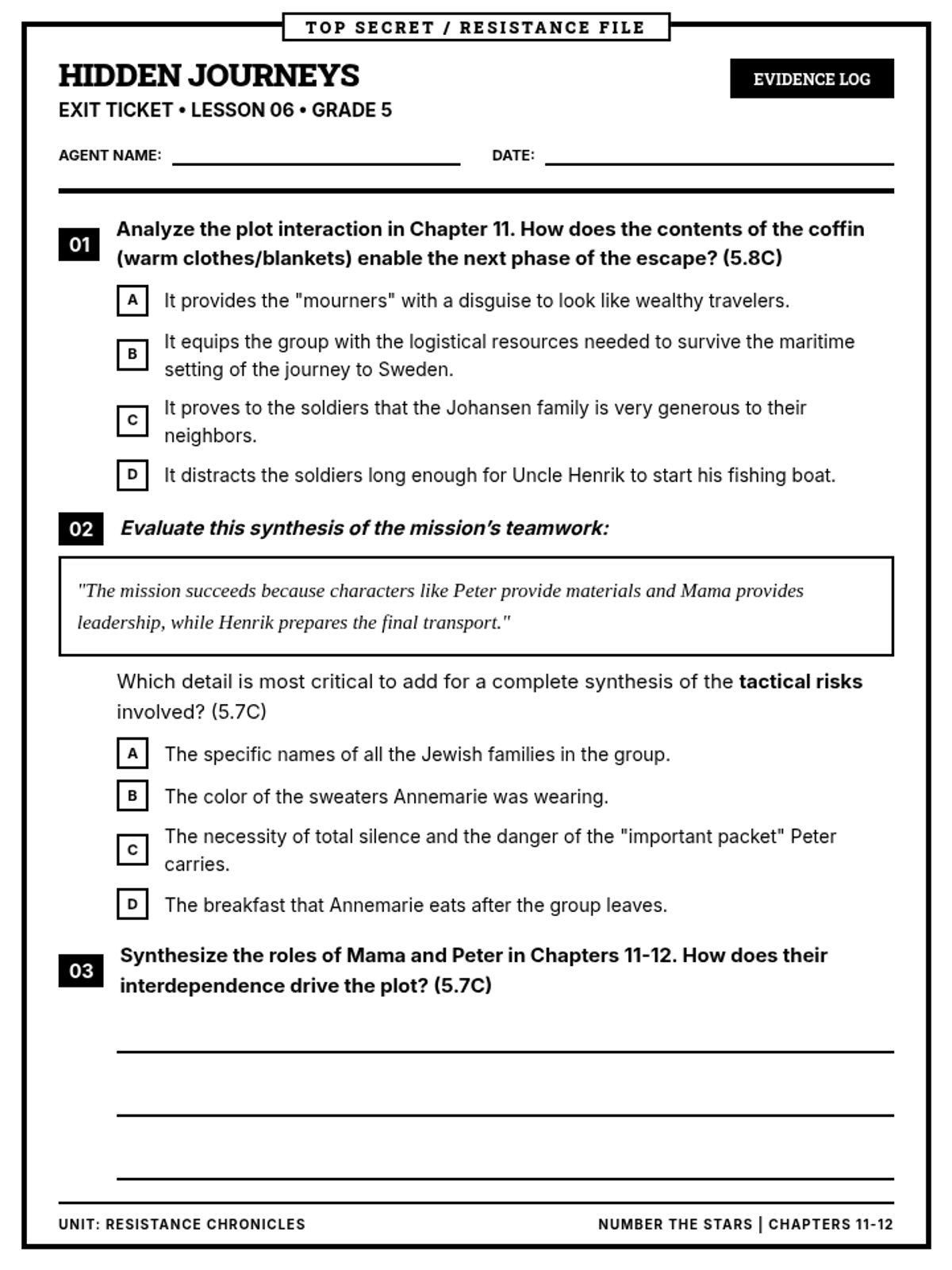
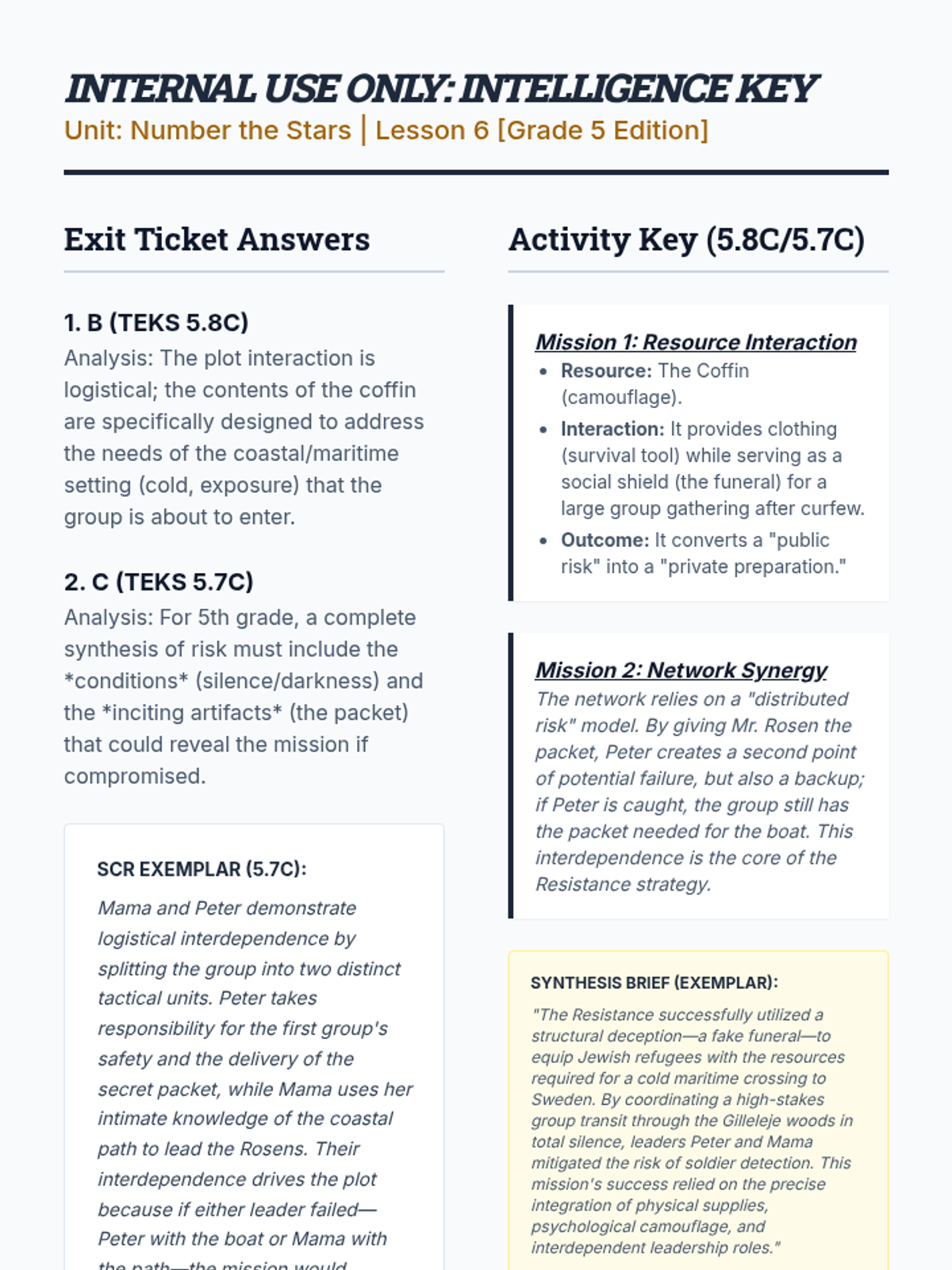
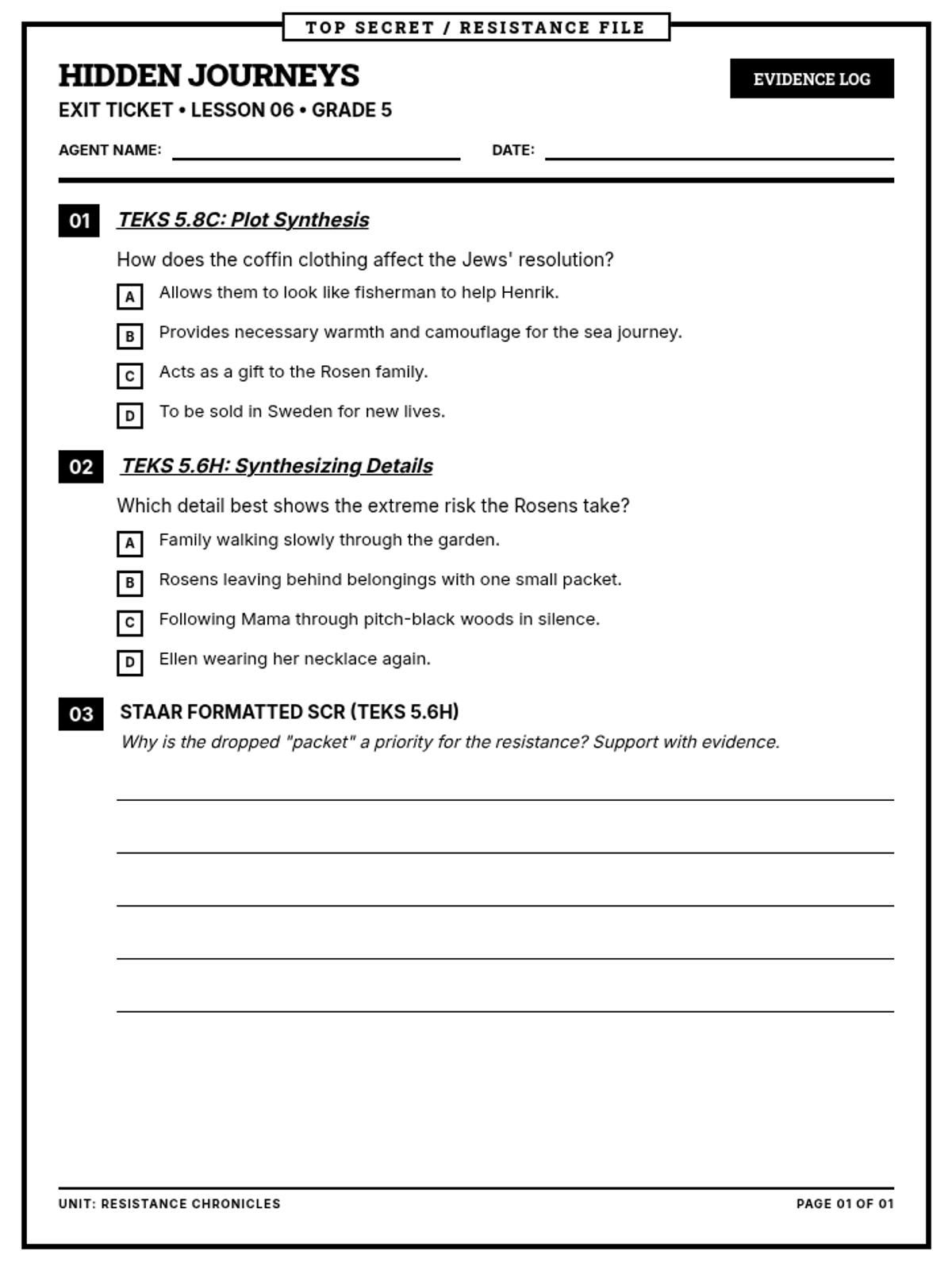
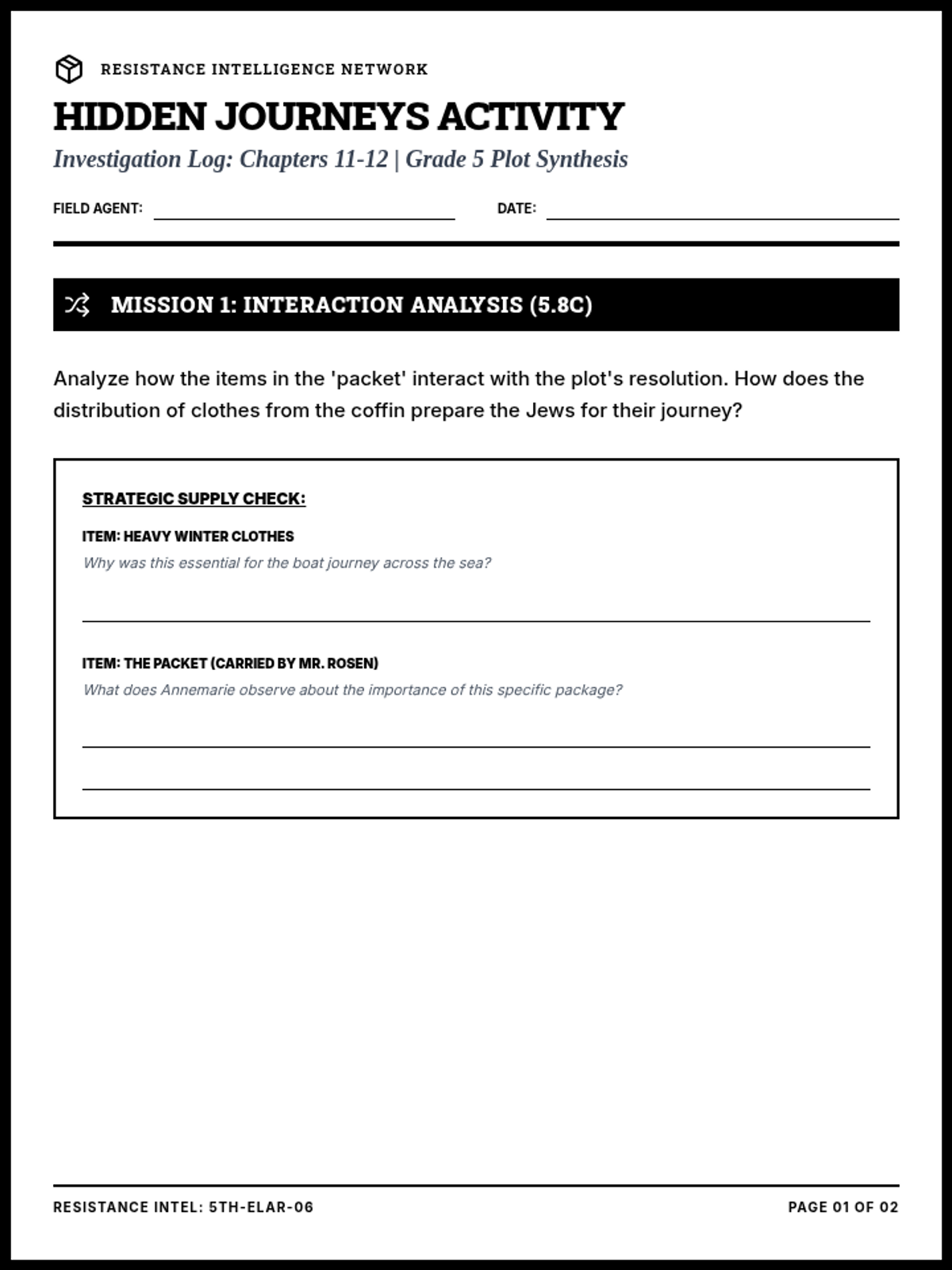
Focusing on chapters 11 and 12, students analyze plot elements and practice synthesizing information to summarize the escape to the boat. [5th Grade TEKS 5.8C, 5.7C]
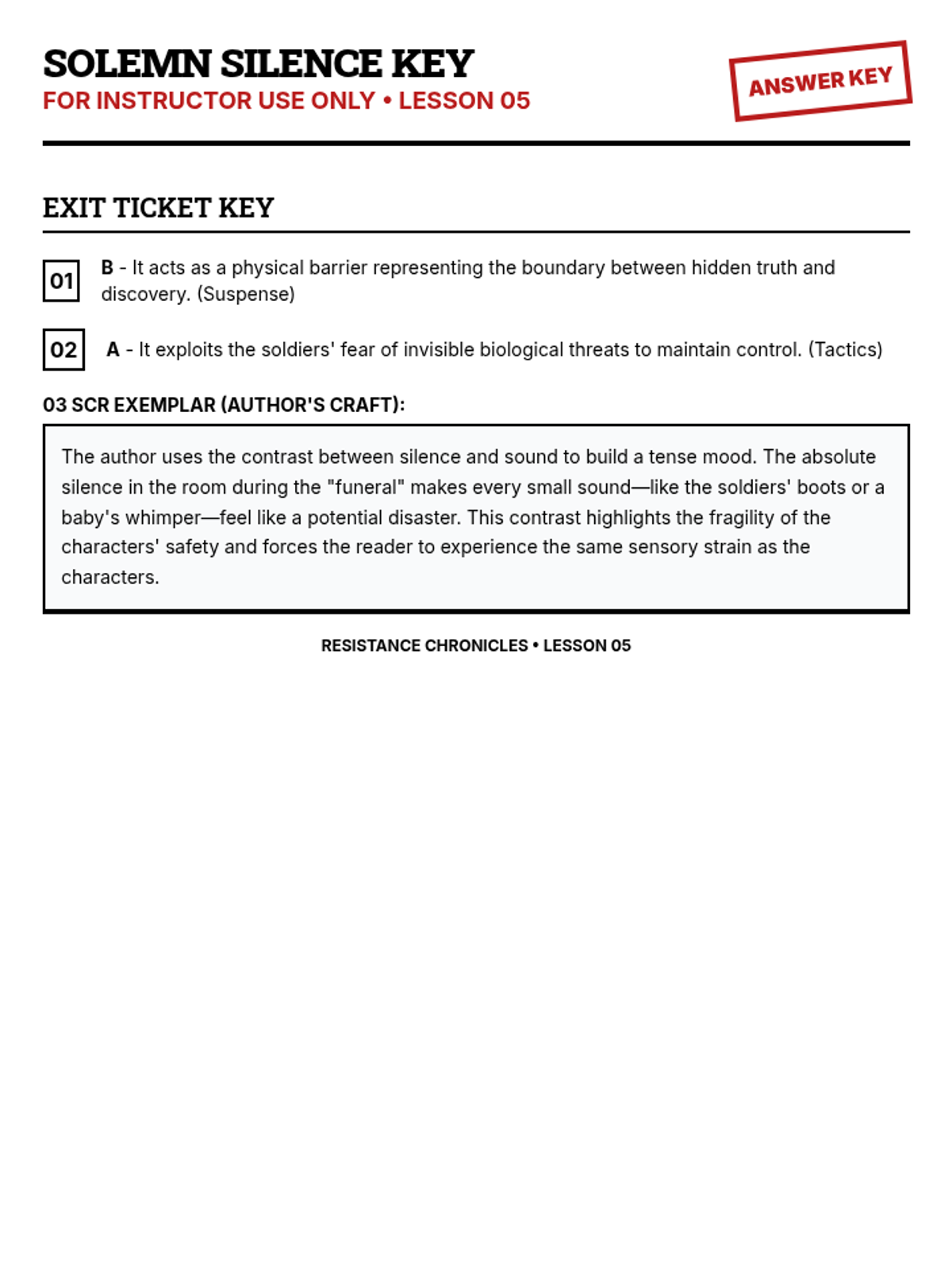
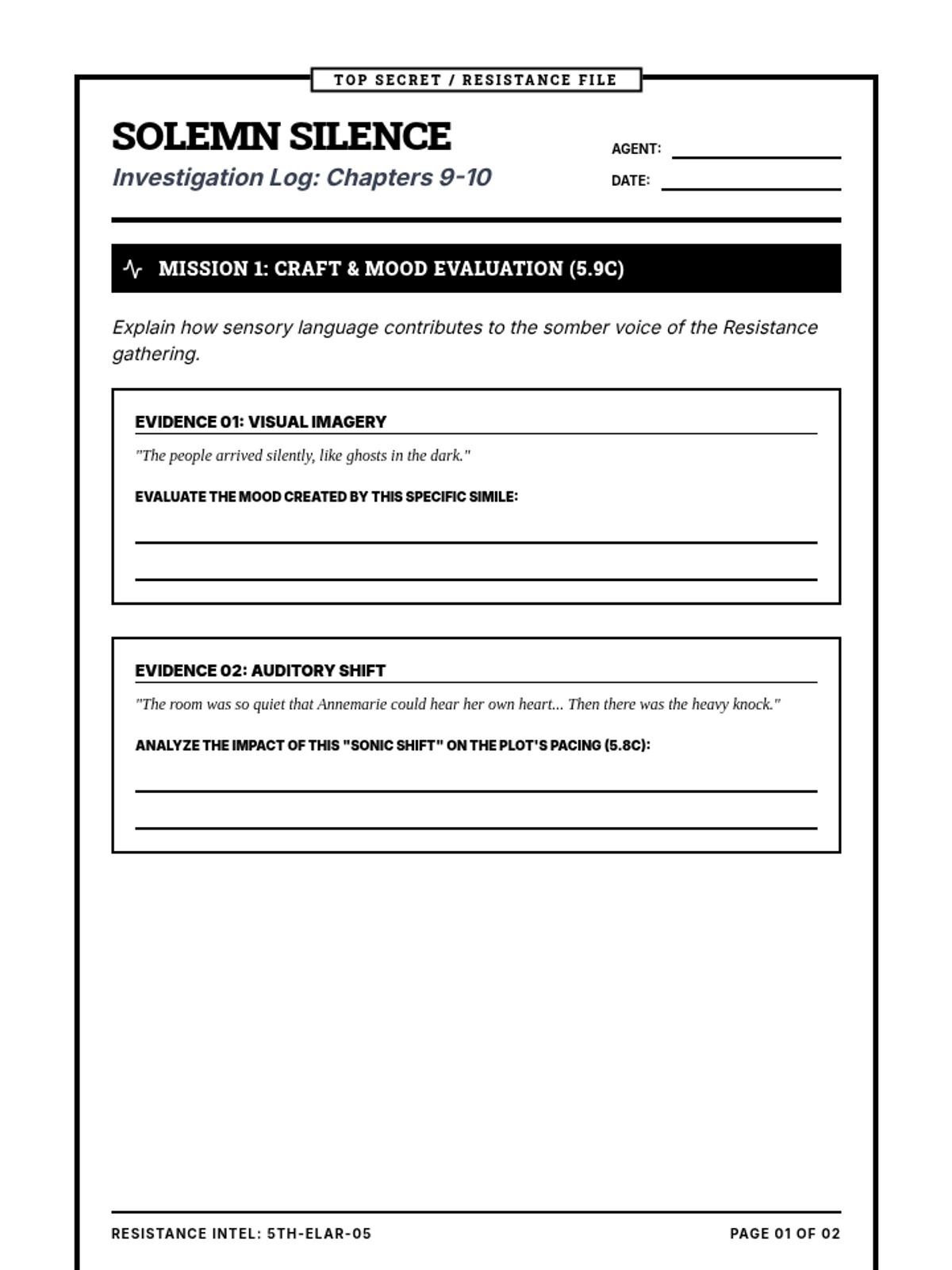
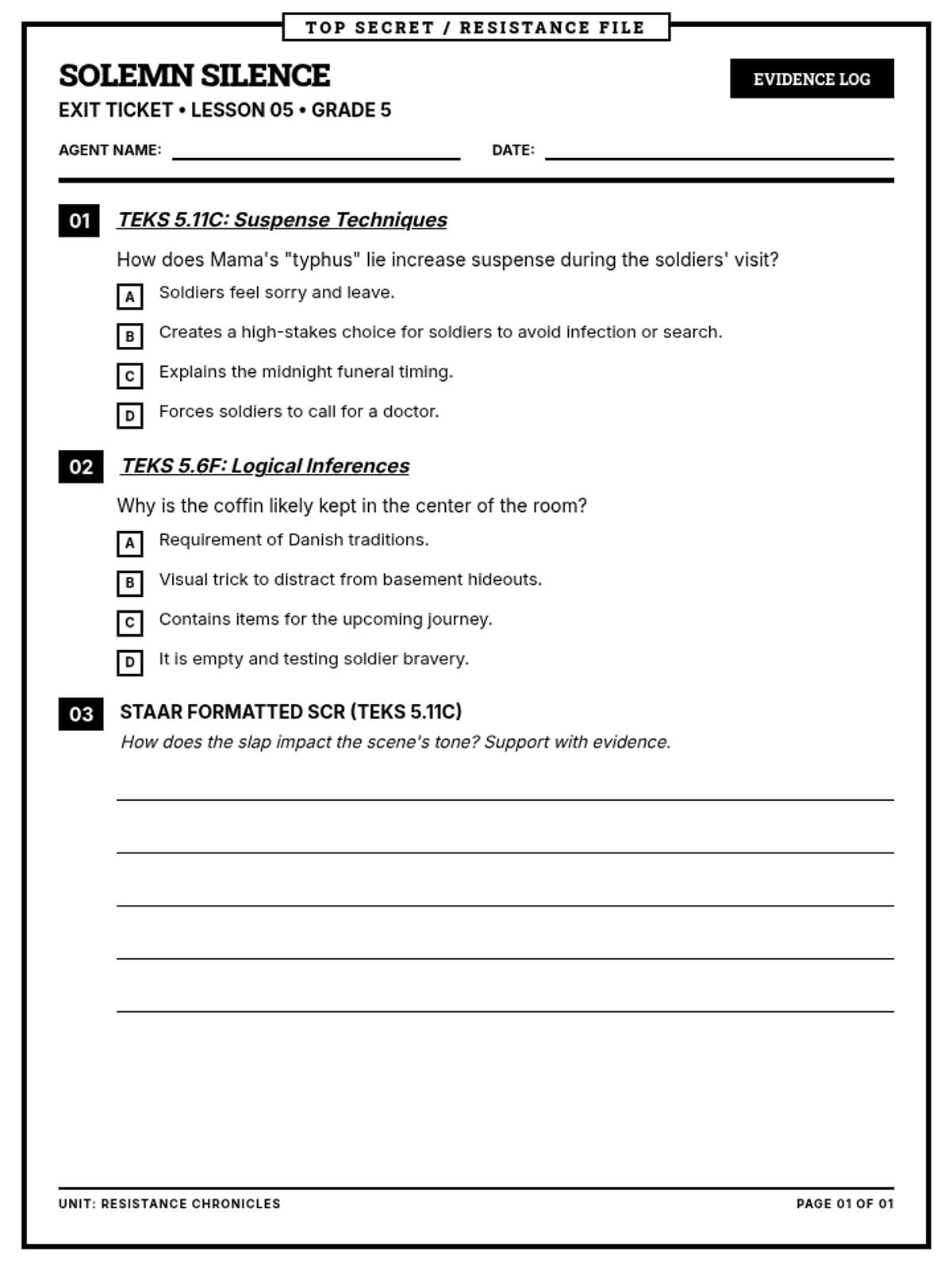
Students evaluate plot details and suspense techniques used in chapters 9 and 10, focusing on the mysterious funeral of 'Great-Aunt Birte'. [5th Grade TEKS 5.8C, 5.9C]
Students investigate point of view and make deeper inferences about Uncle Henrik's role and the move to the coast in chapters 7 and 8. [5th Grade TEKS 5.10E, 5.8A]
Focusing on chapters 5 and 6, students track plot development and practice summarizing the high-tension events of the soldiers' midnight visit. [5th Grade TEKS 5.8C, 5.7D]
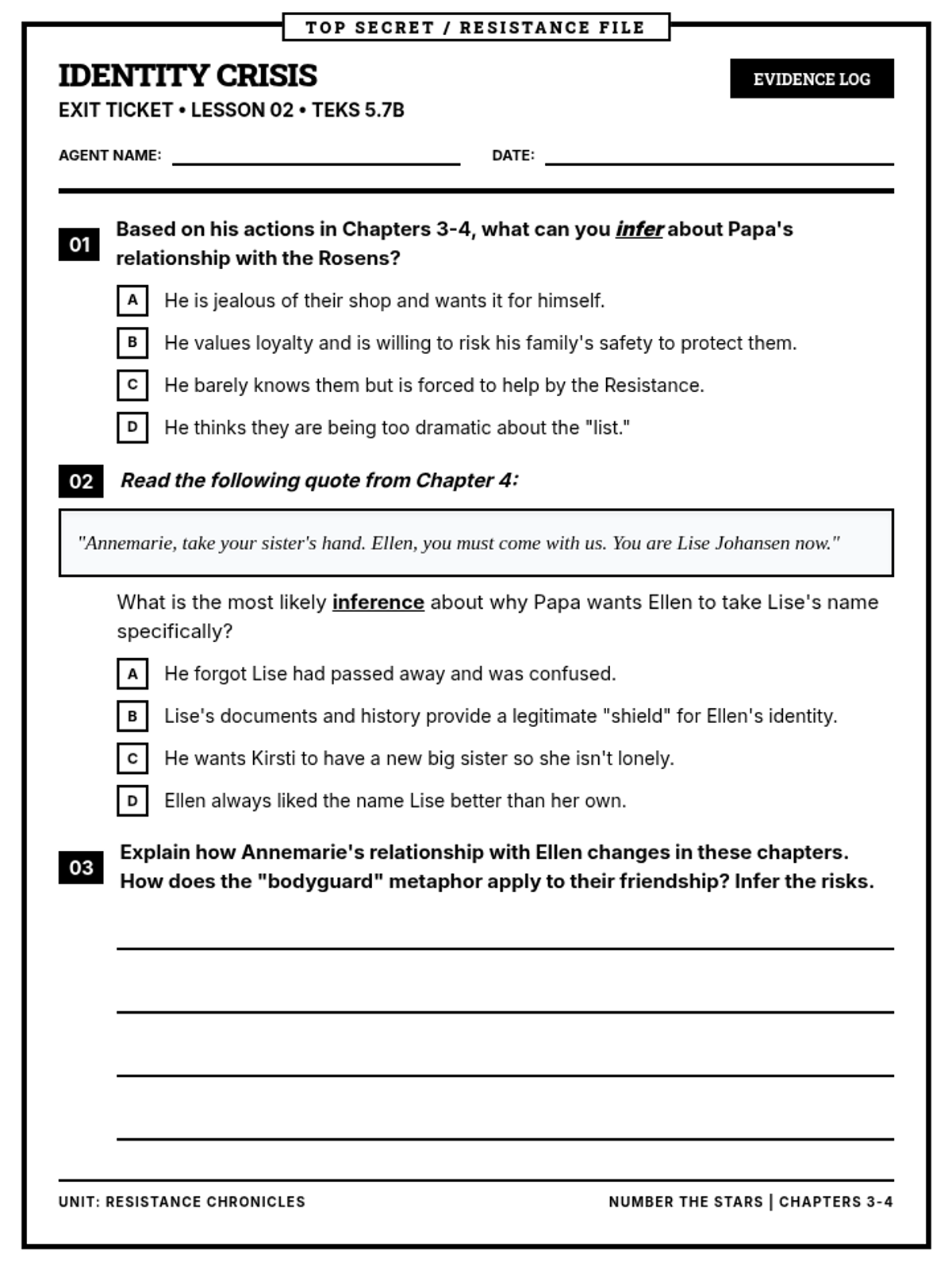
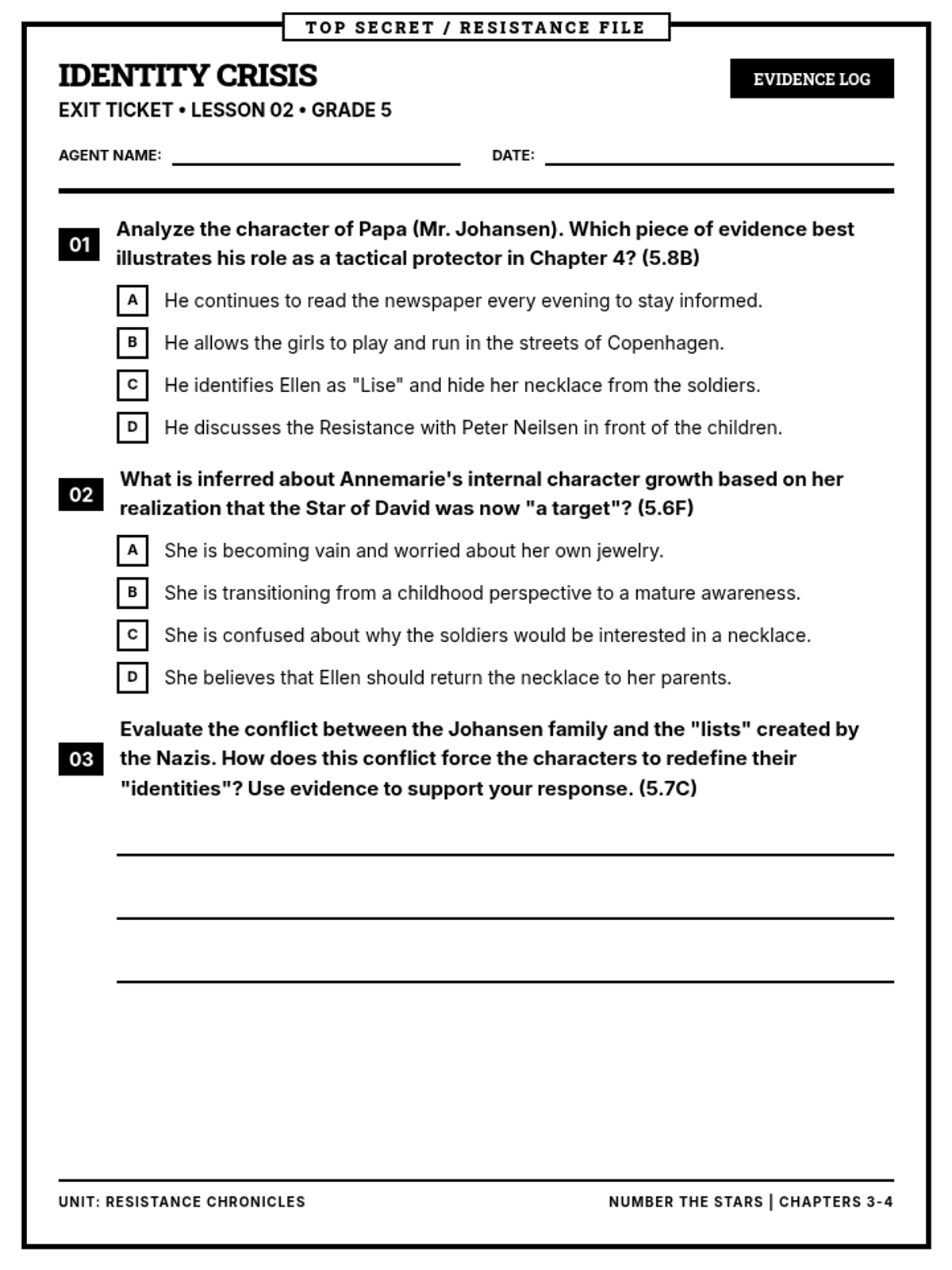
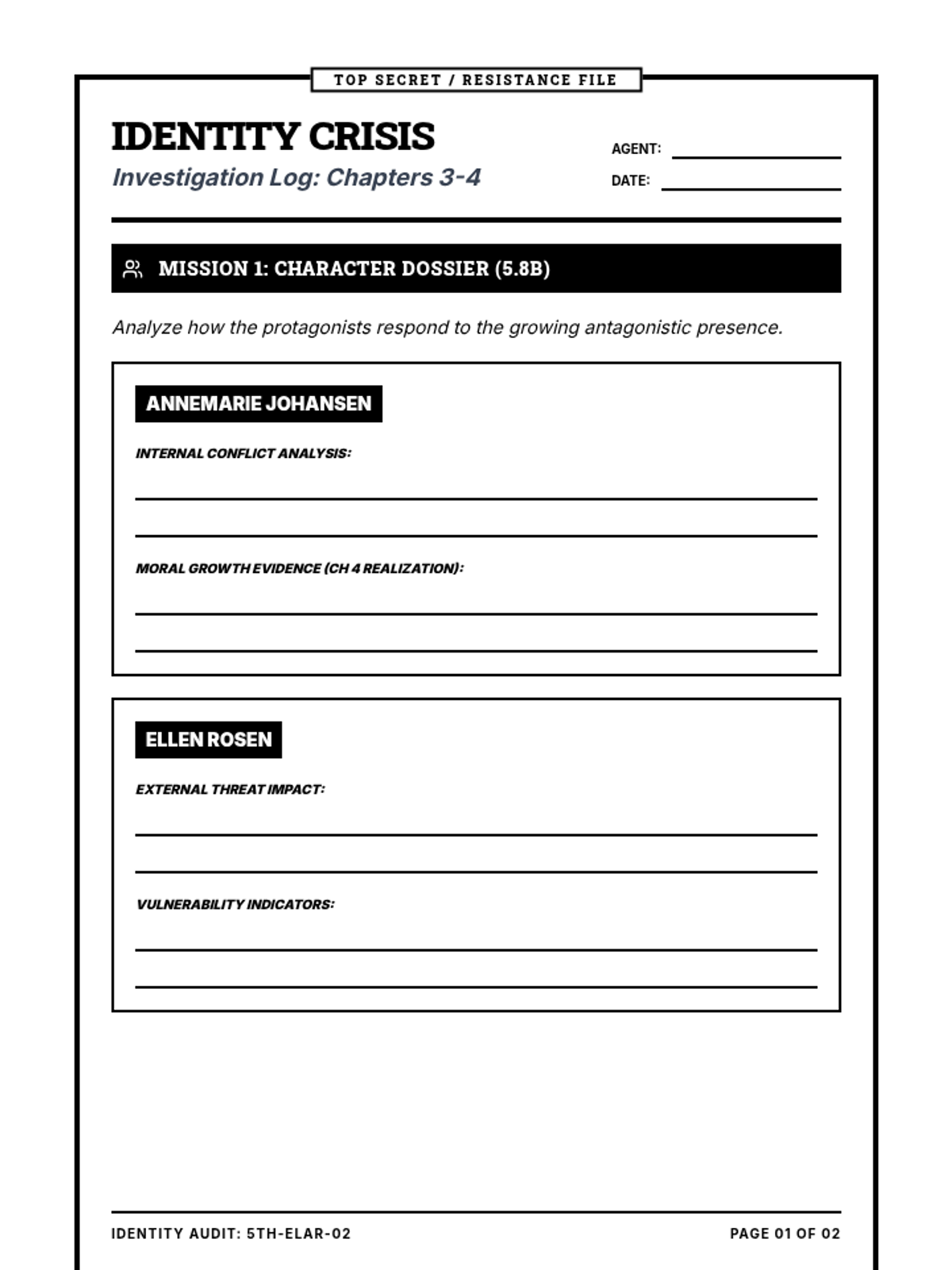
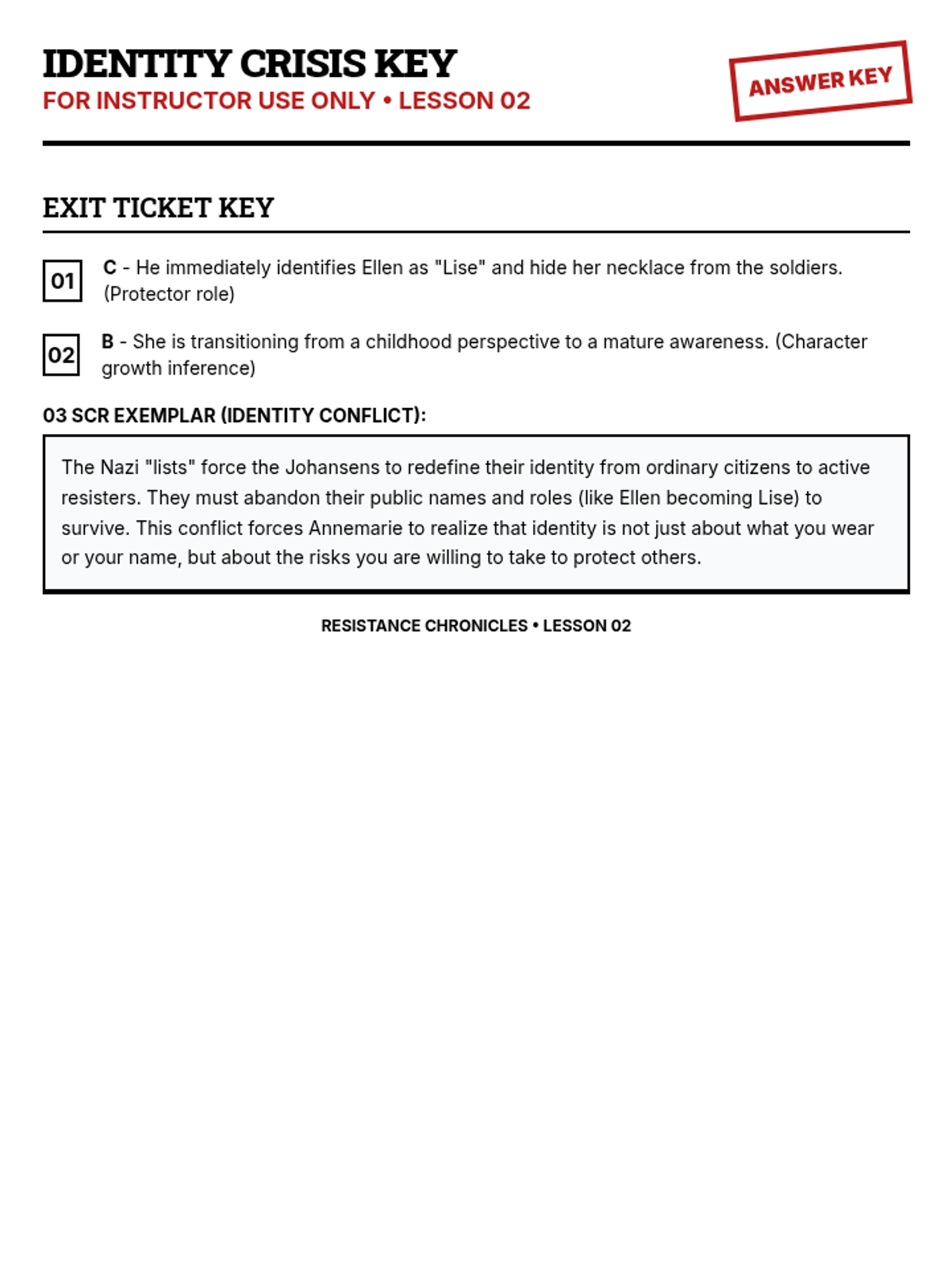
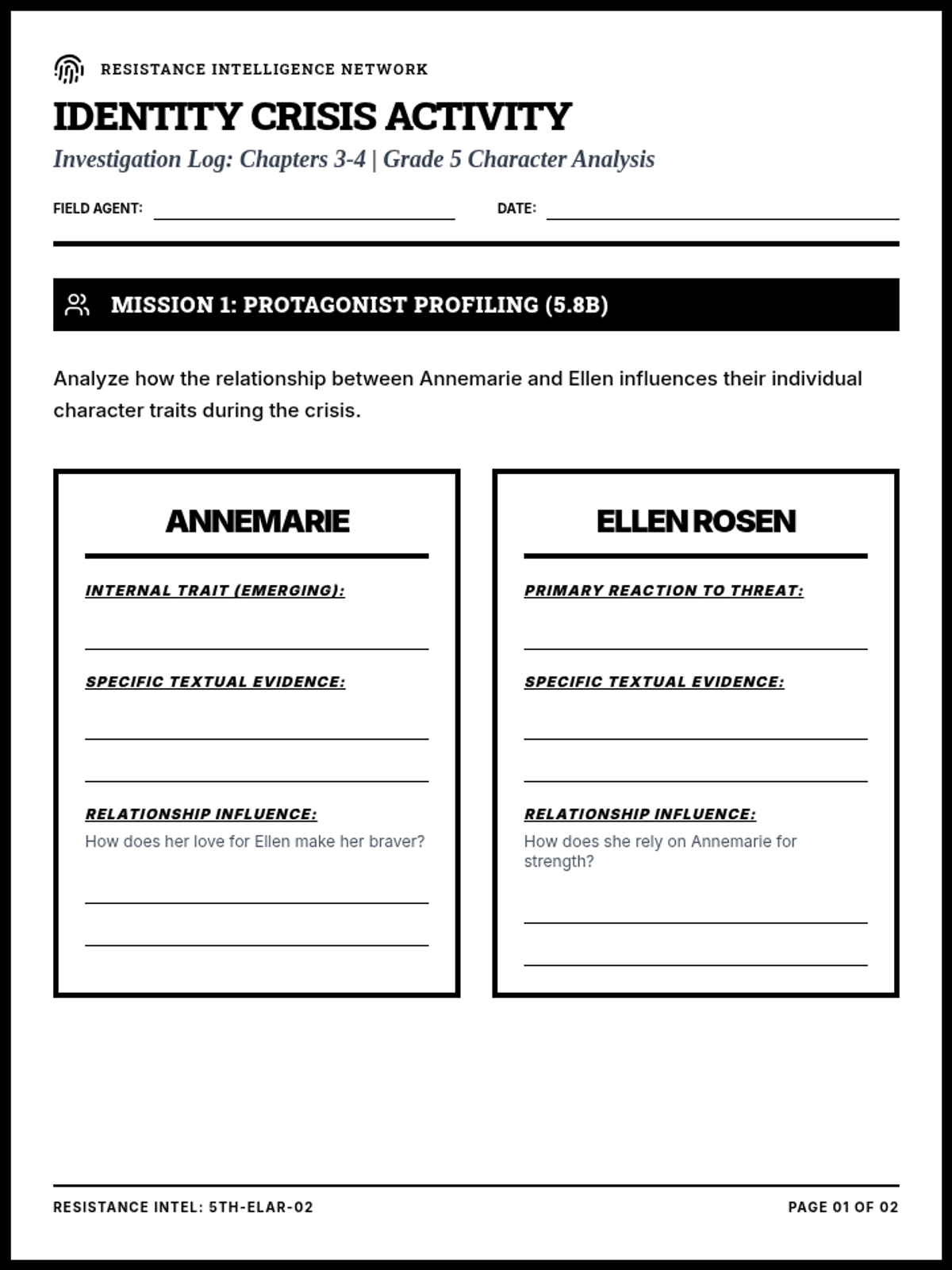
Students analyze character traits and make inferences about the changing atmosphere in Copenhagen as the Nazi occupation intensifies in chapters 3 and 4. [5th Grade TEKS 5.8B, 5.6F]
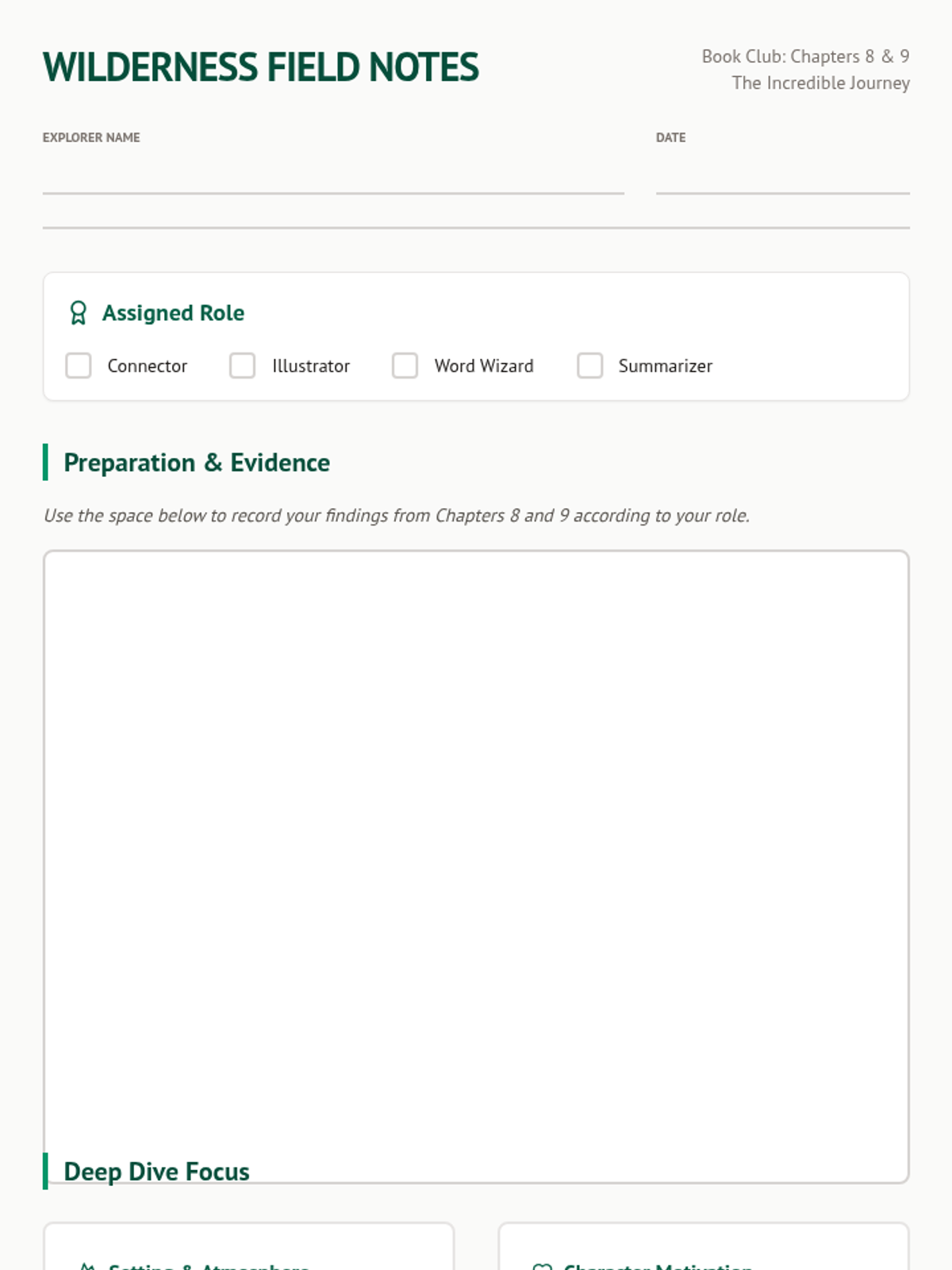
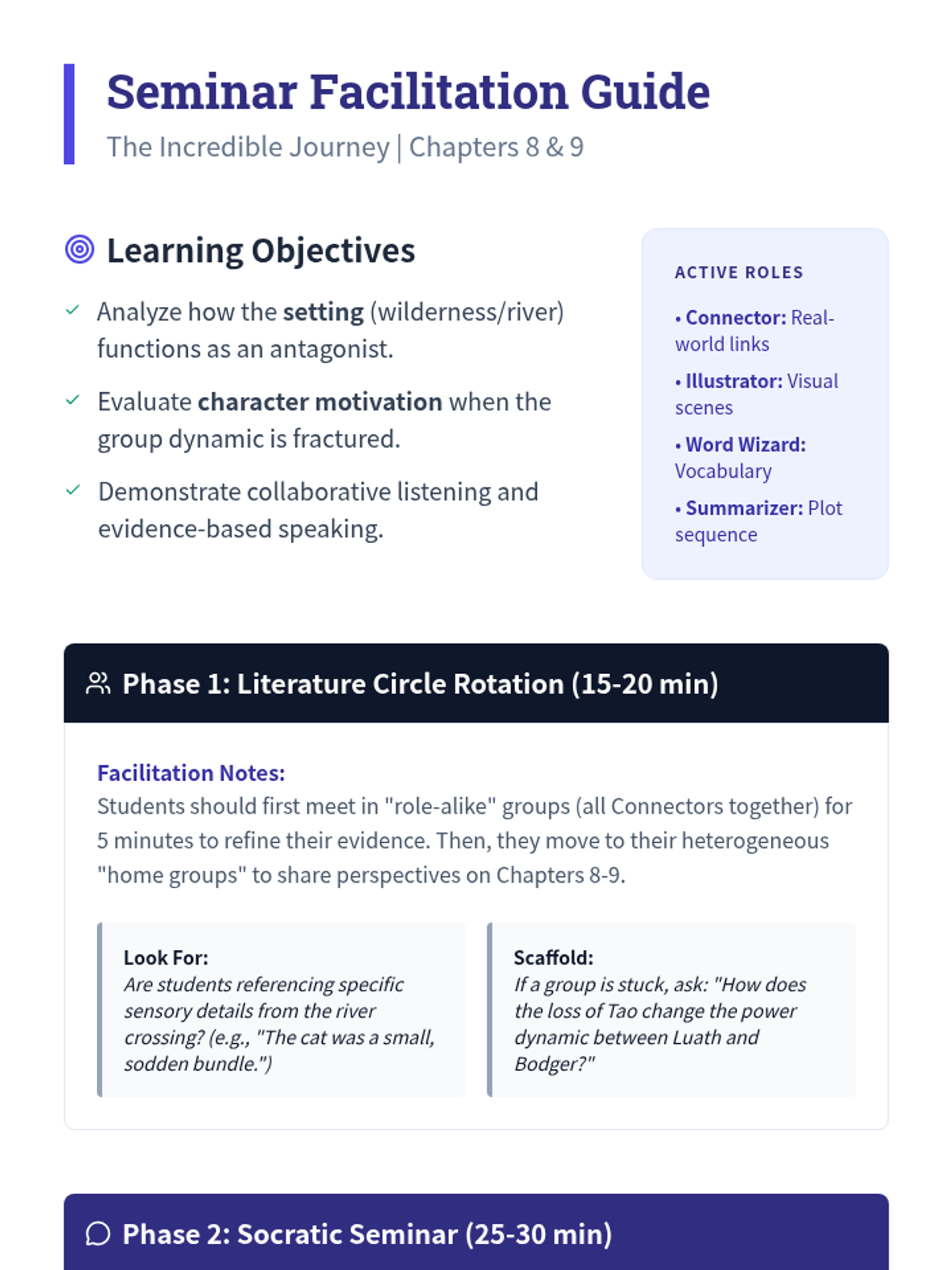
A deep dive into Sheila Burnford's classic adventure, focusing on the trio's survival through the Canadian wilderness. Students explore character motivations, analyze the atmospheric setting, and practice collaborative discussion techniques.
Students synthesize the entire novel's events, including the final chapter and afterword, to identify themes and analyze the resolution of the plot.
Focusing on chapters 11 and 12, students analyze plot elements and practice synthesizing information to summarize the escape to the boat.
Students evaluate plot details and suspense techniques used in chapters 9 and 10, focusing on the mysterious funeral of 'Great-Aunt Birte'.
Students investigate point of view and make deeper inferences about Uncle Henrik's role and the move to the coast in chapters 7 and 8.
Focusing on chapters 5 and 6, students track plot development and practice summarizing the high-tension events of the soldiers' midnight visit.
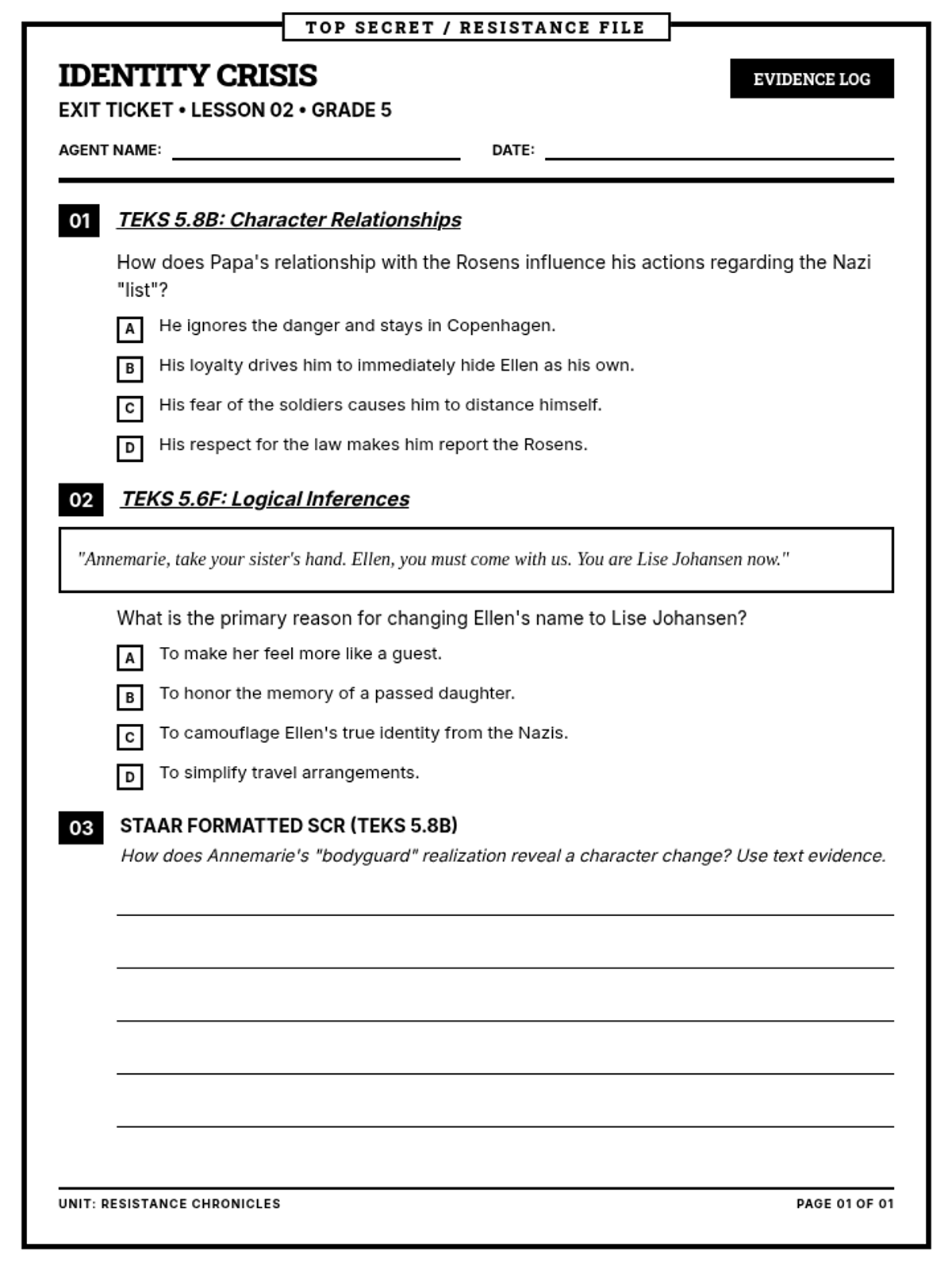
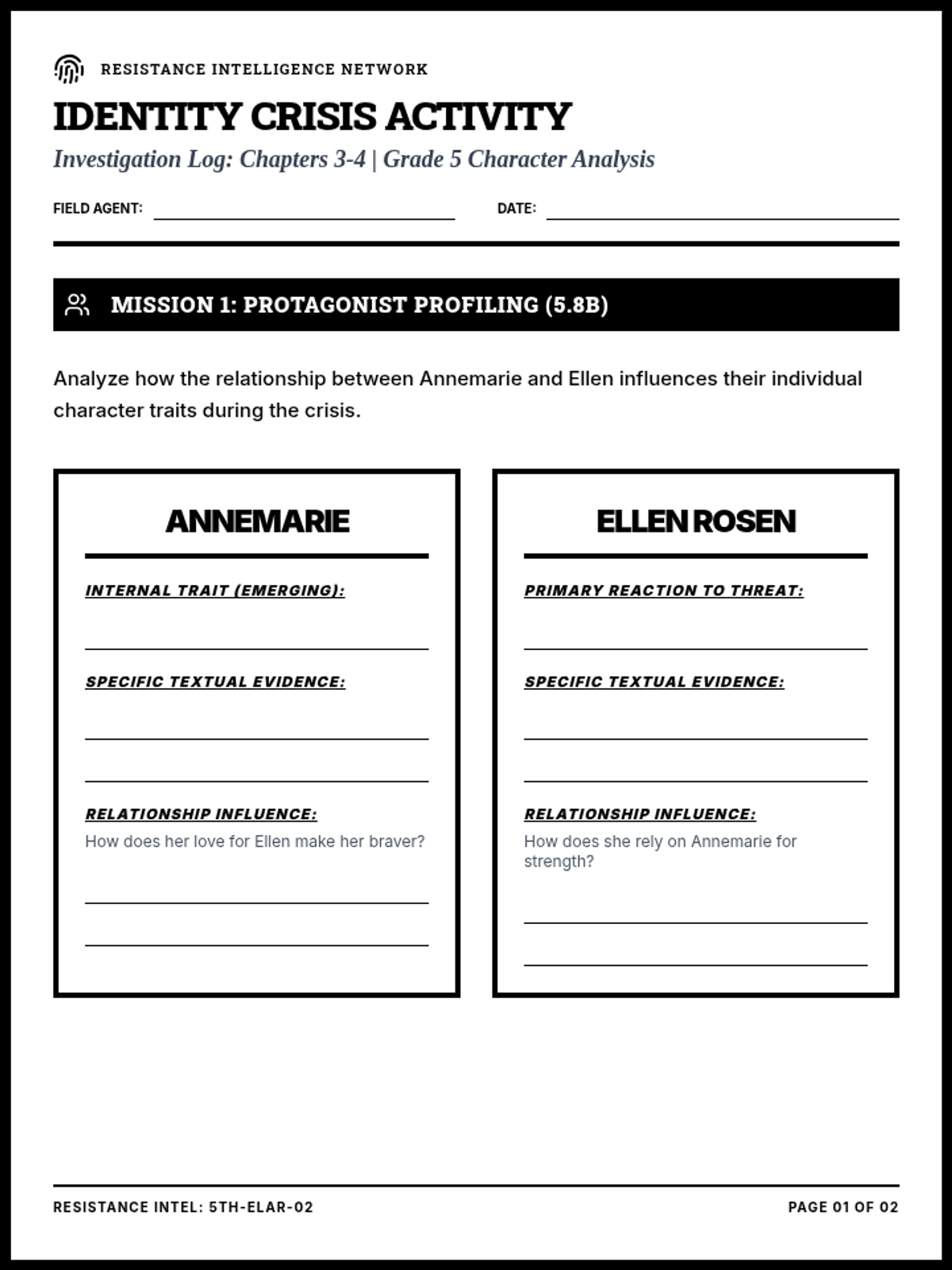
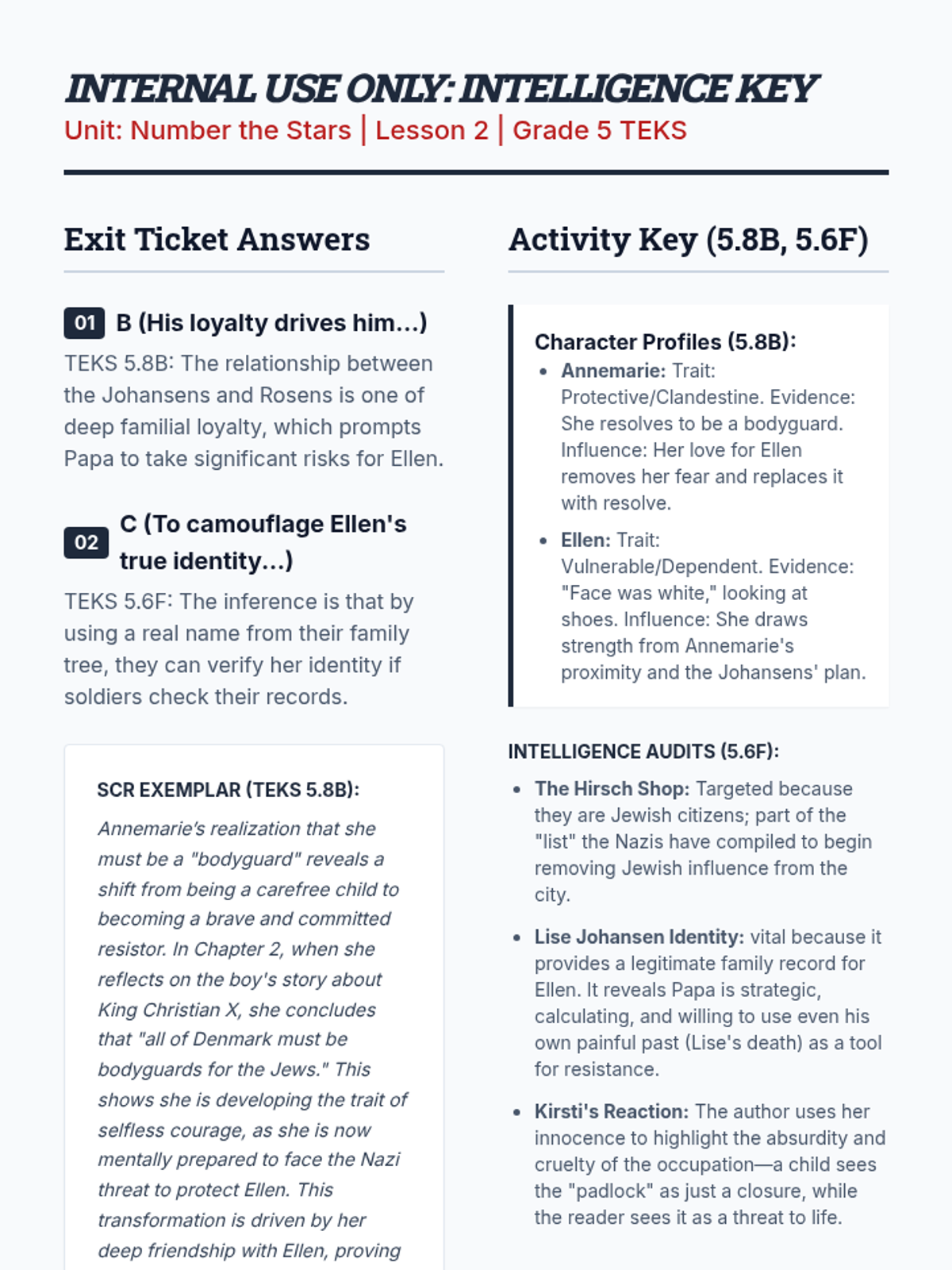
Students analyze character traits and make inferences about the changing atmosphere in Copenhagen as the Nazi occupation intensifies in chapters 3 and 4.
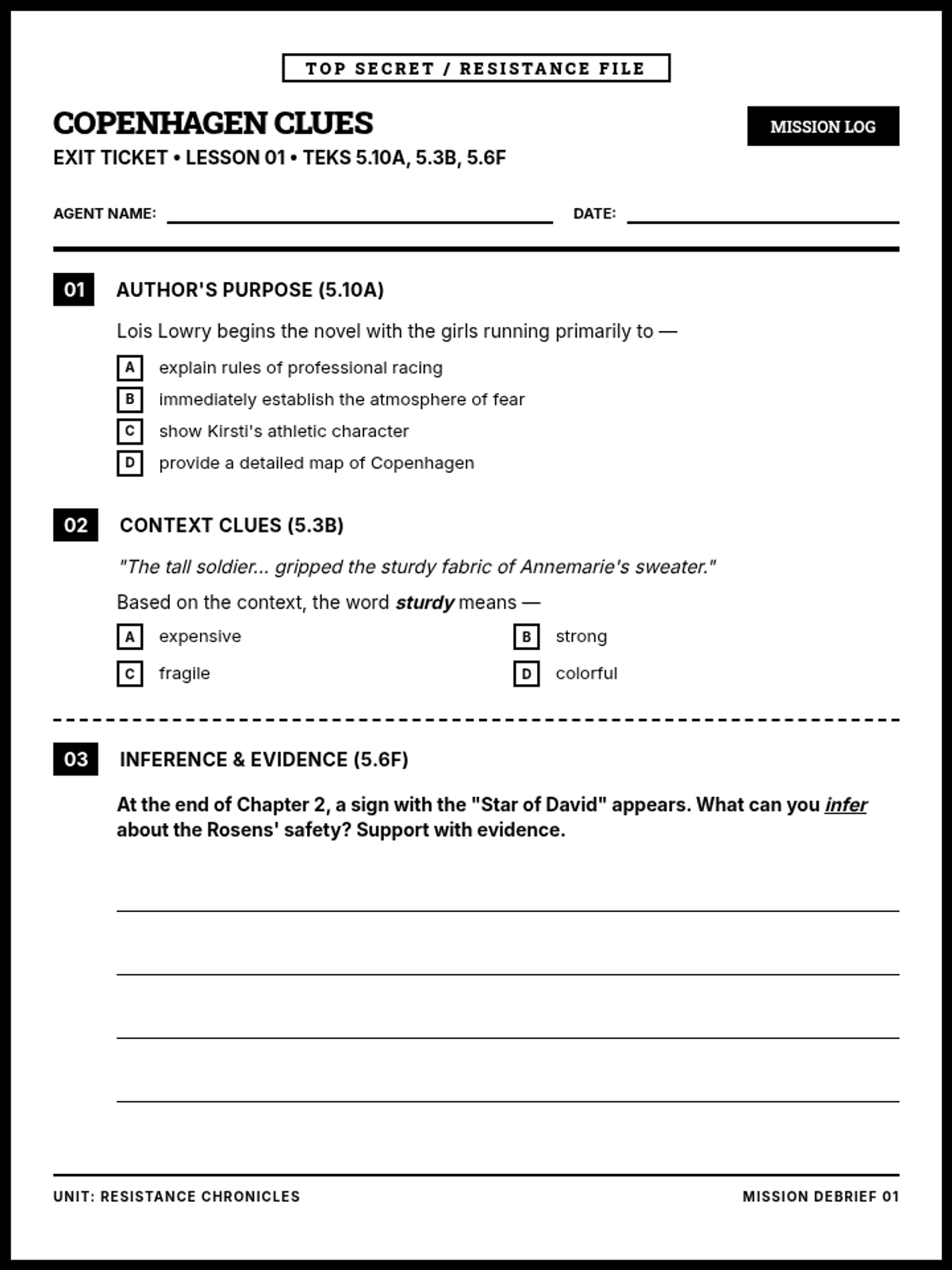
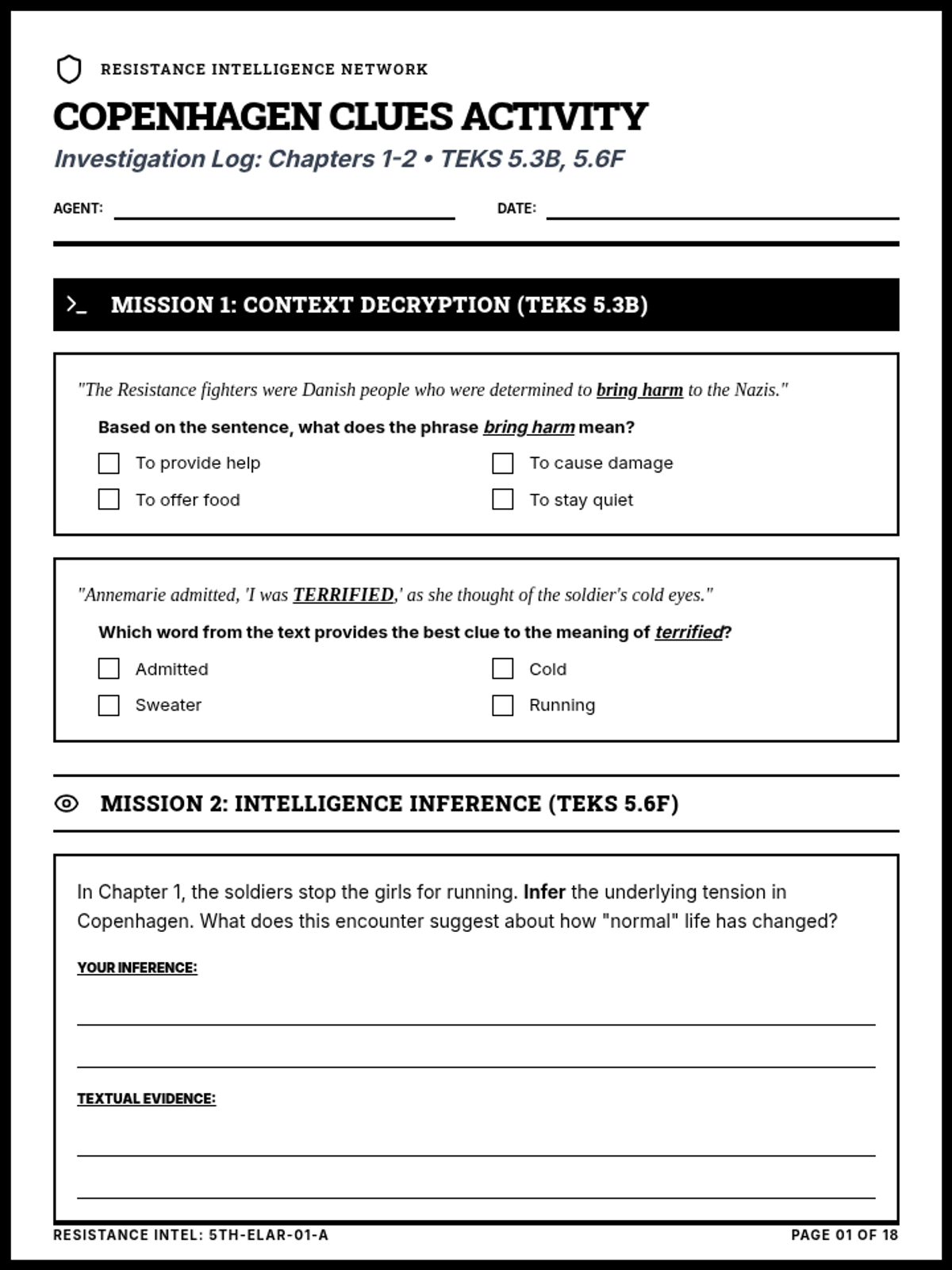
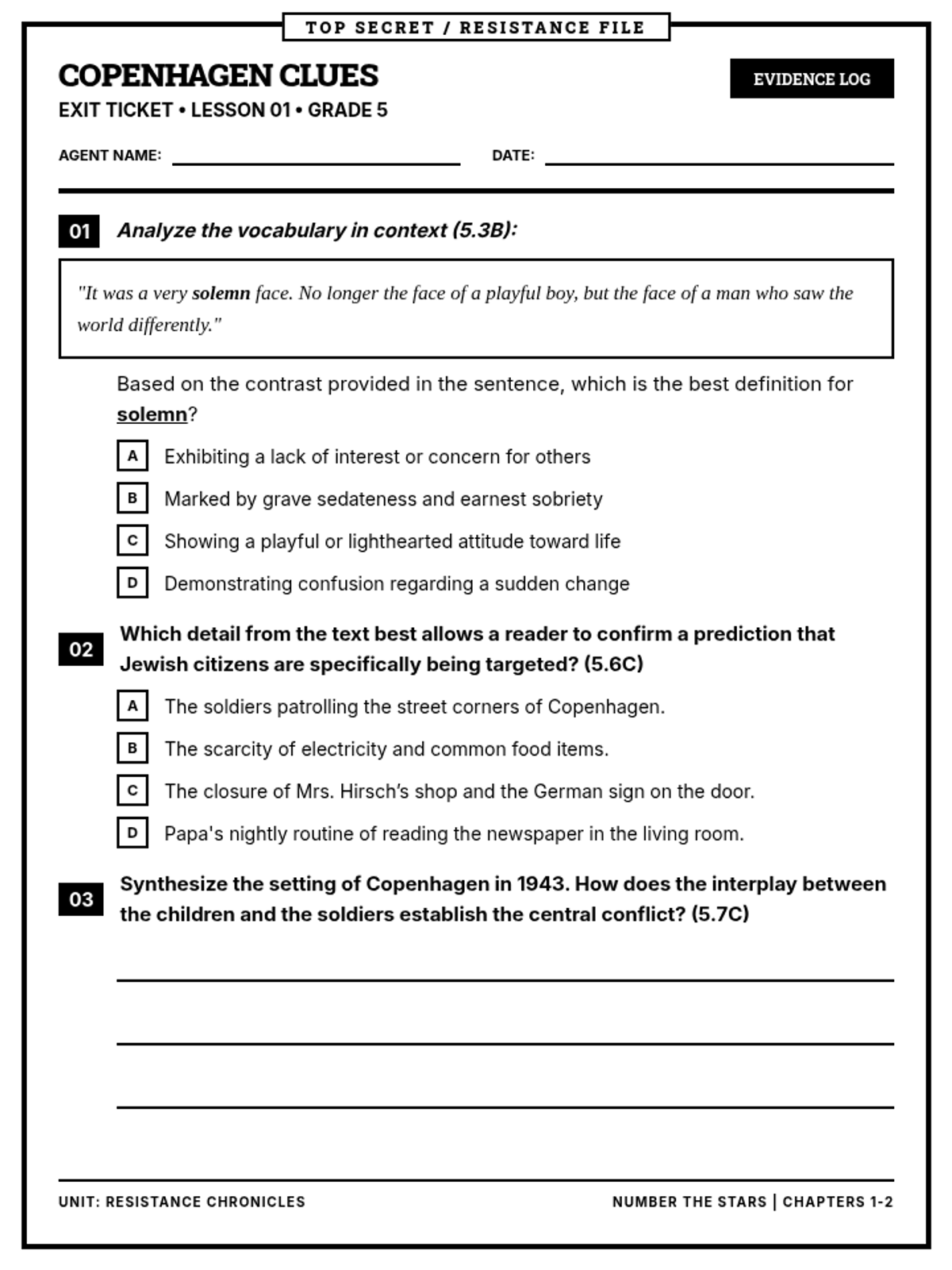
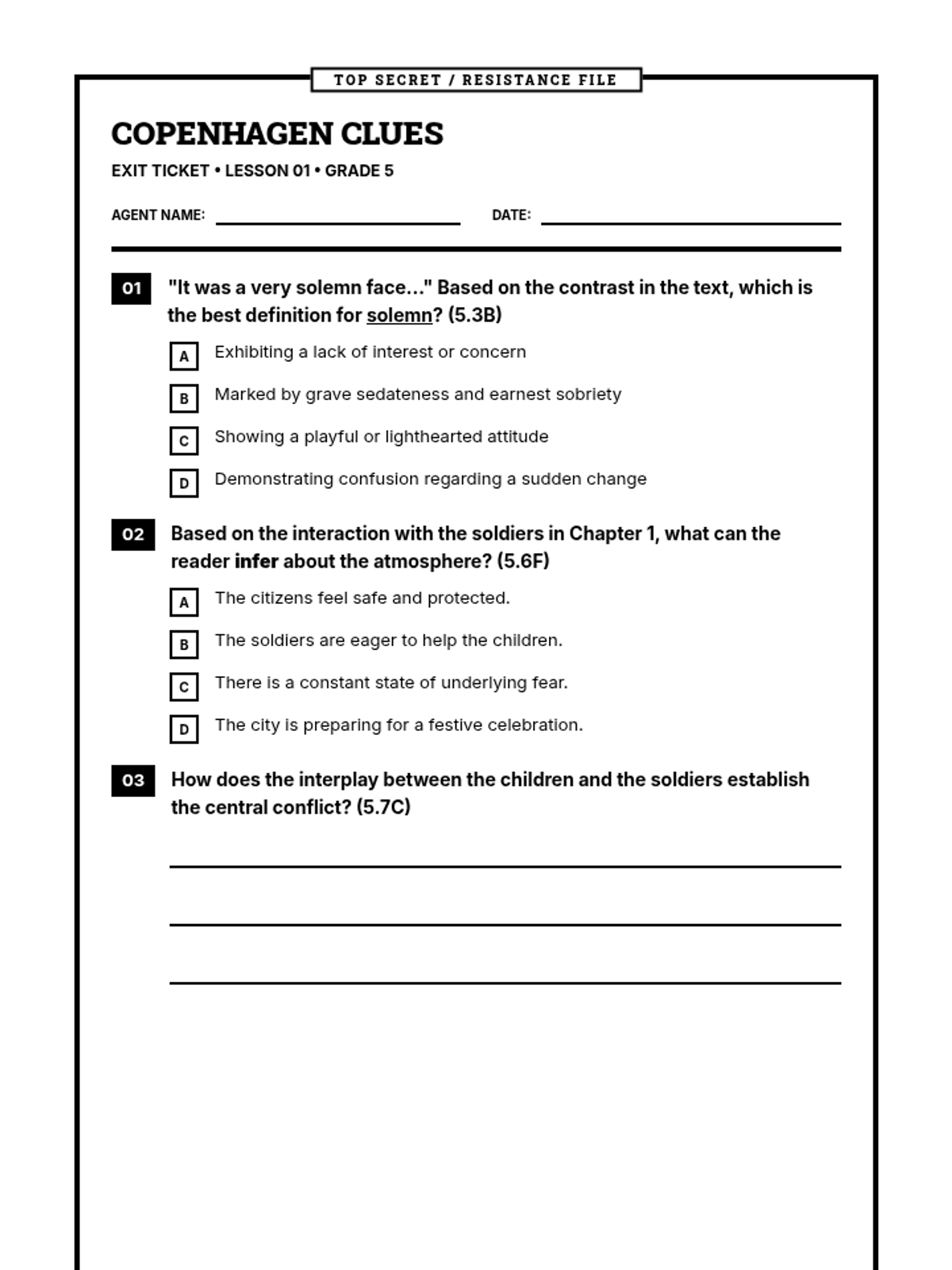
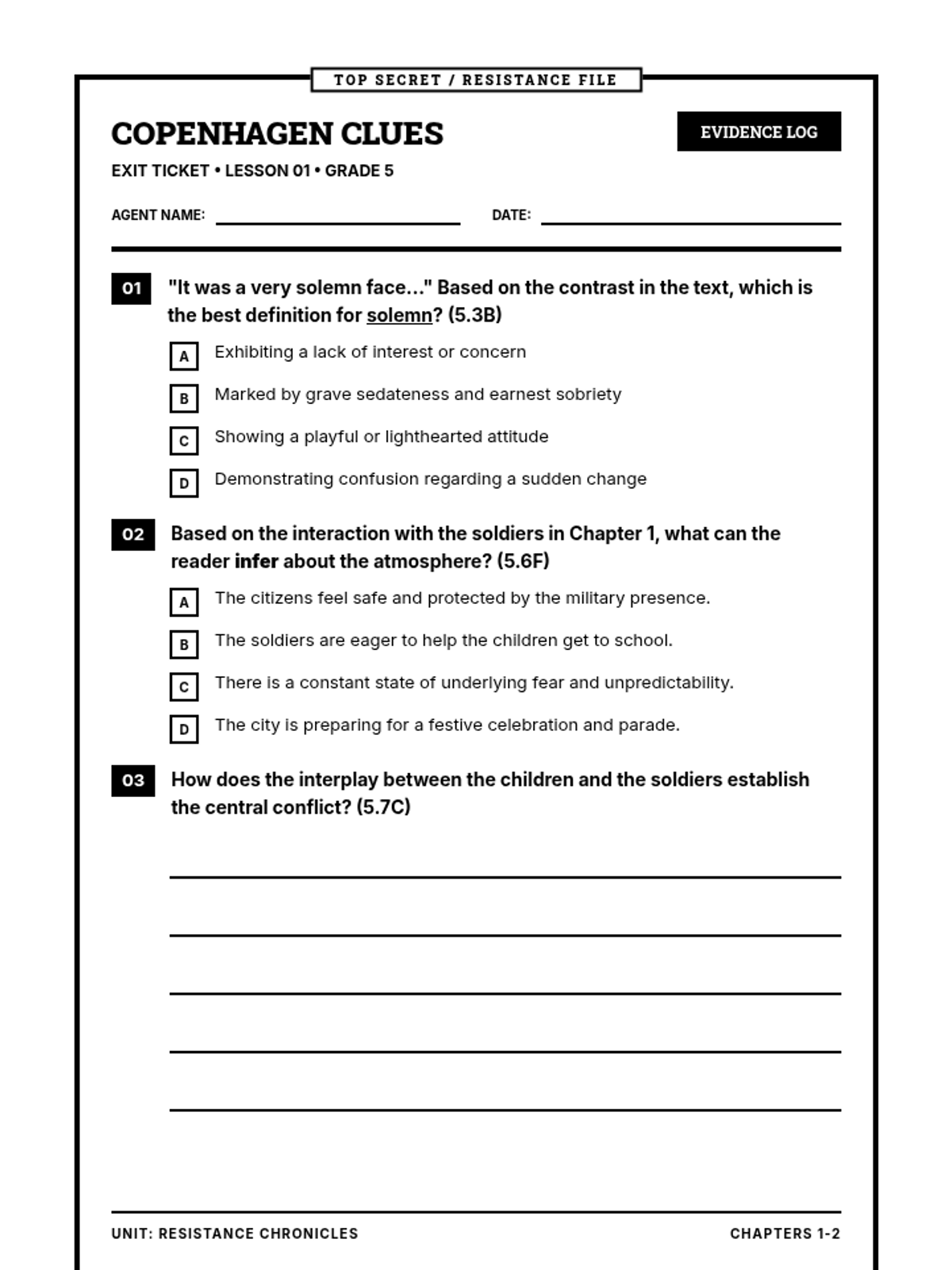
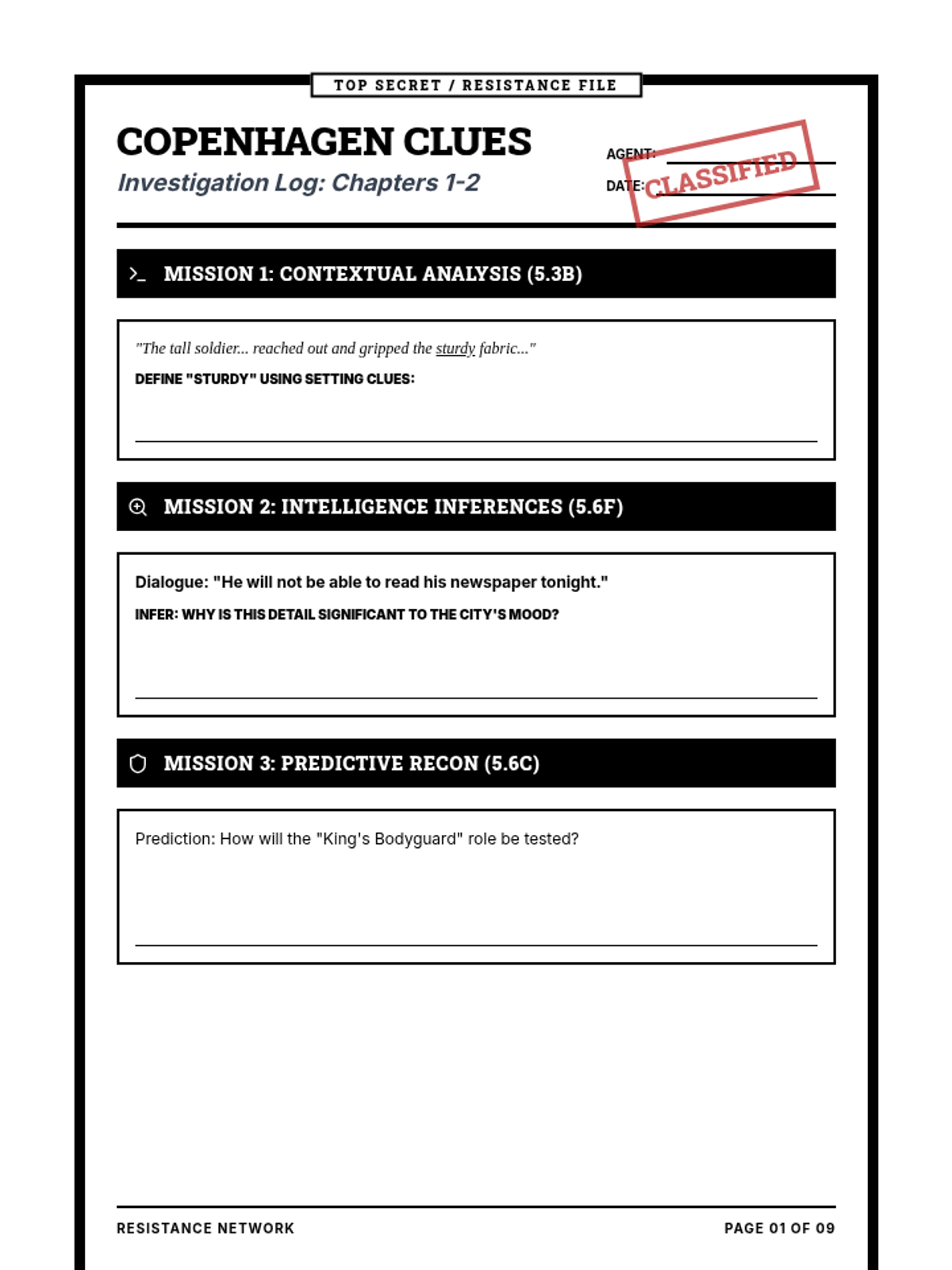
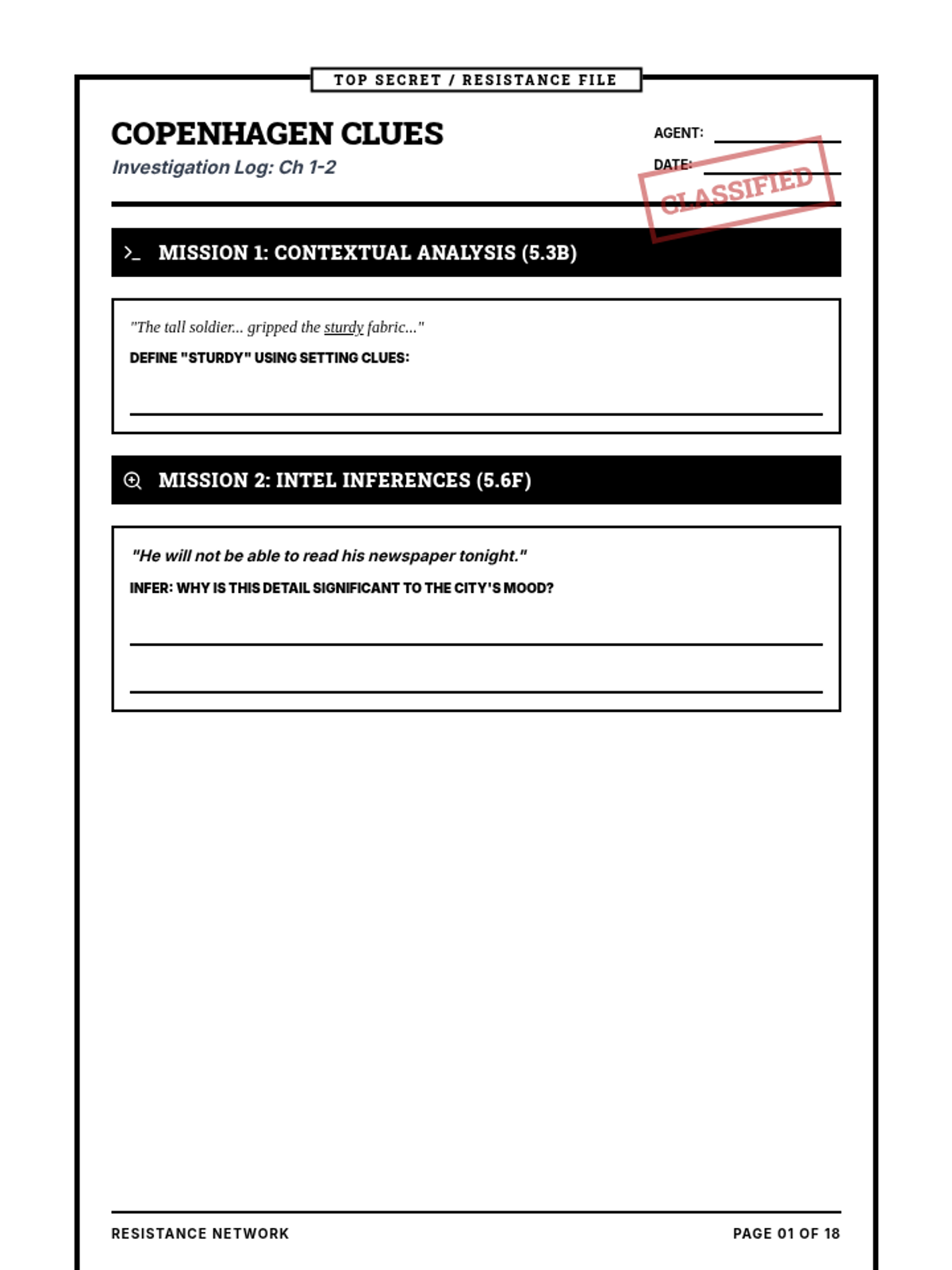
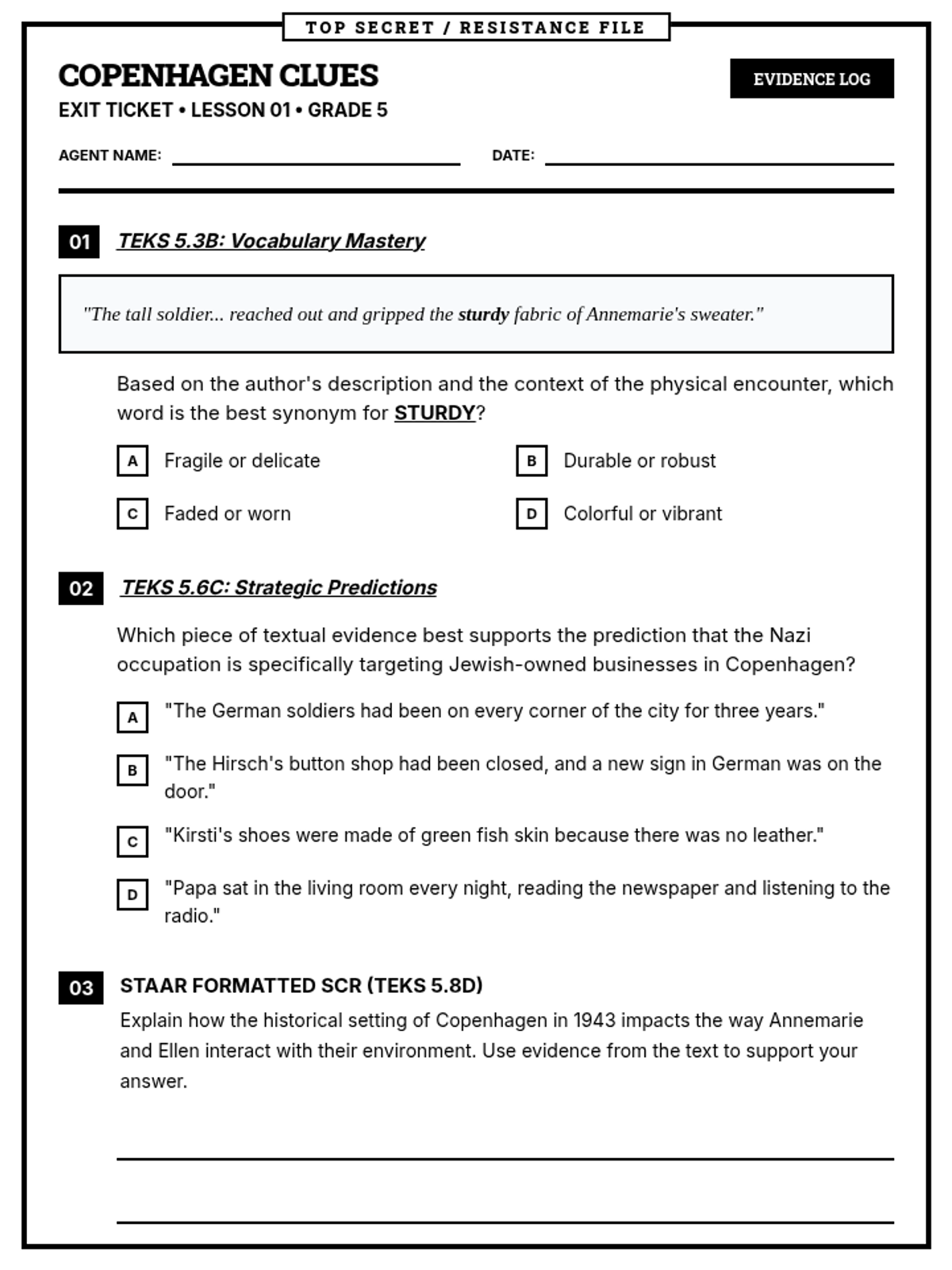
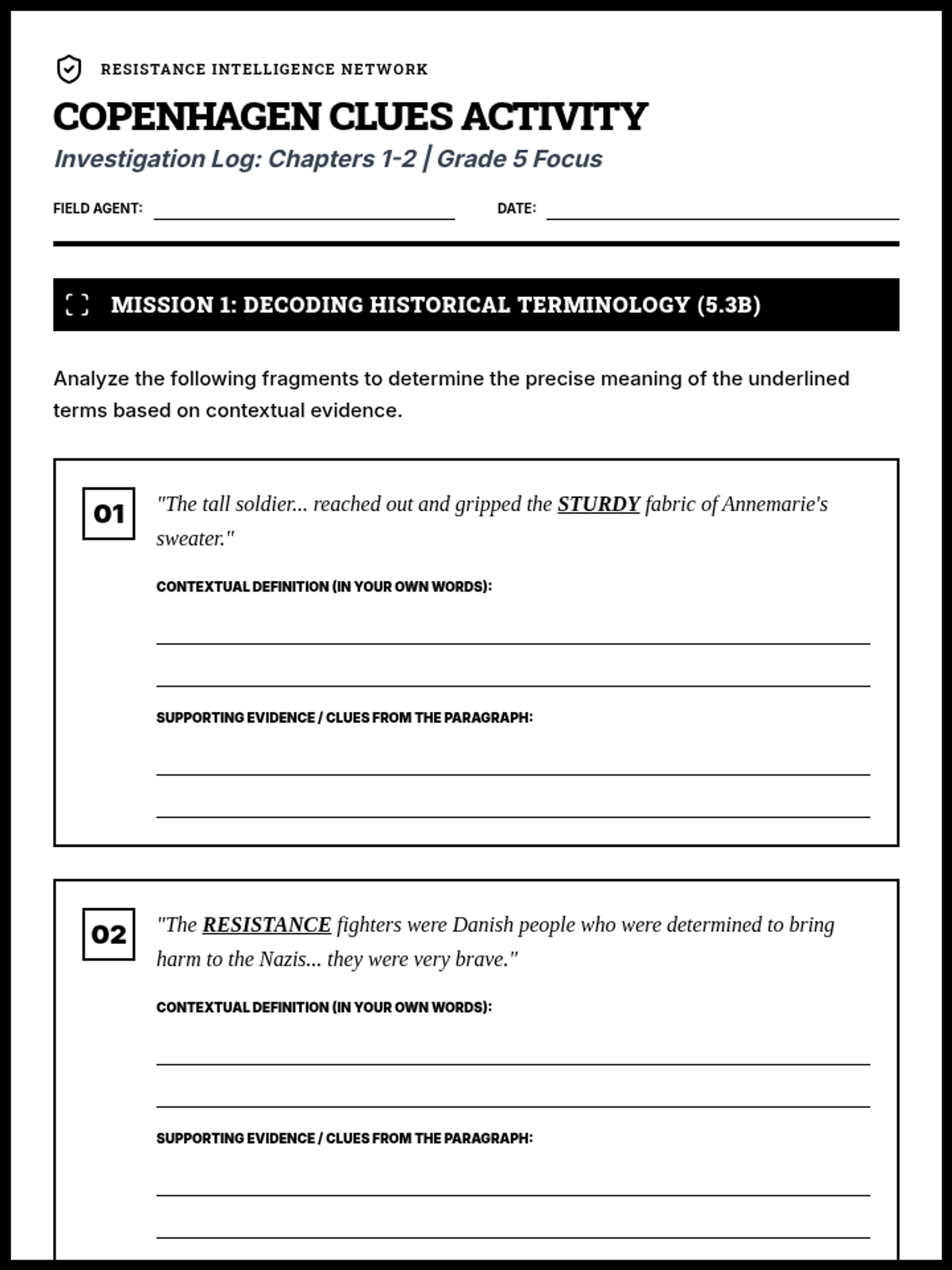
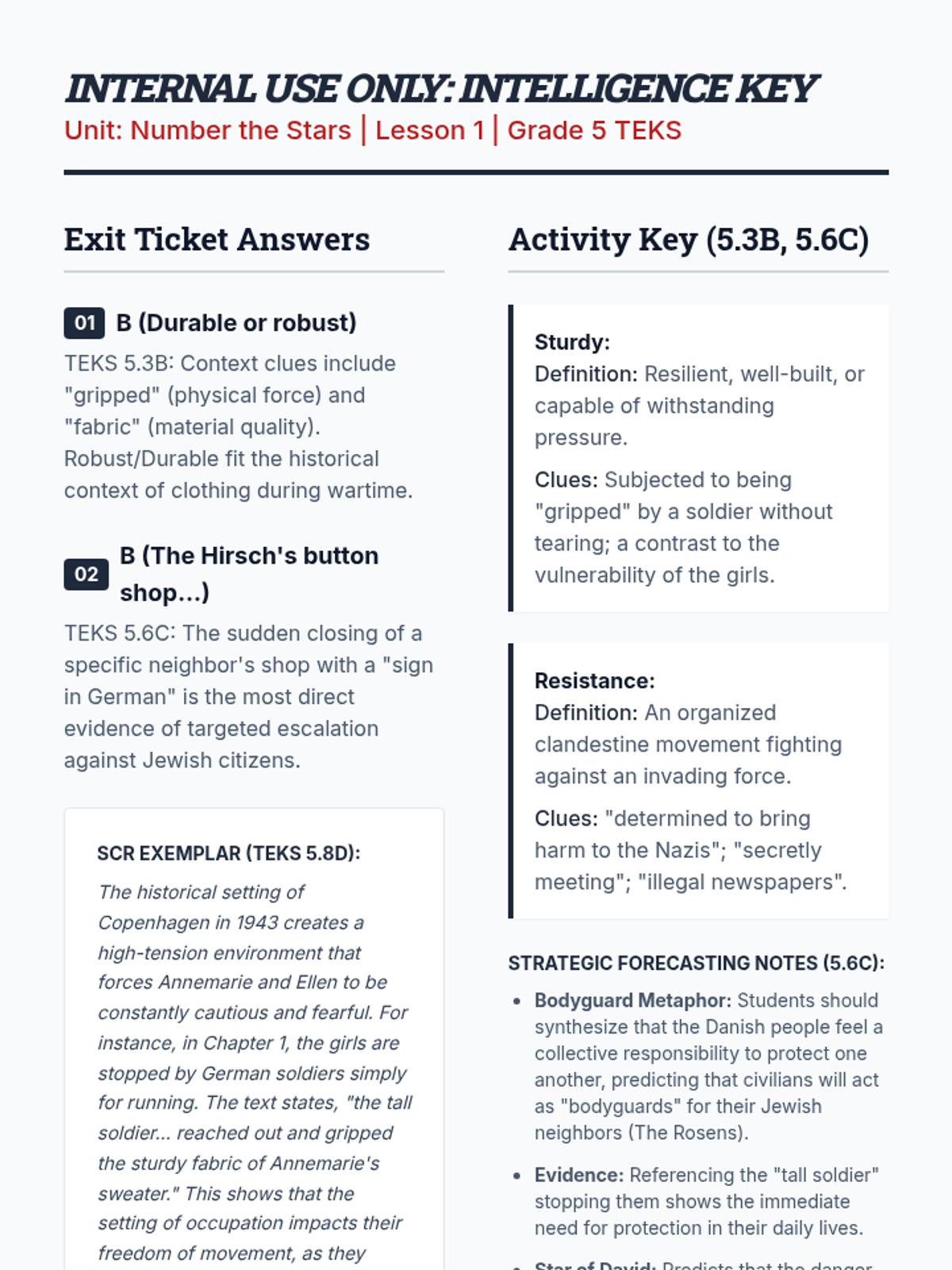
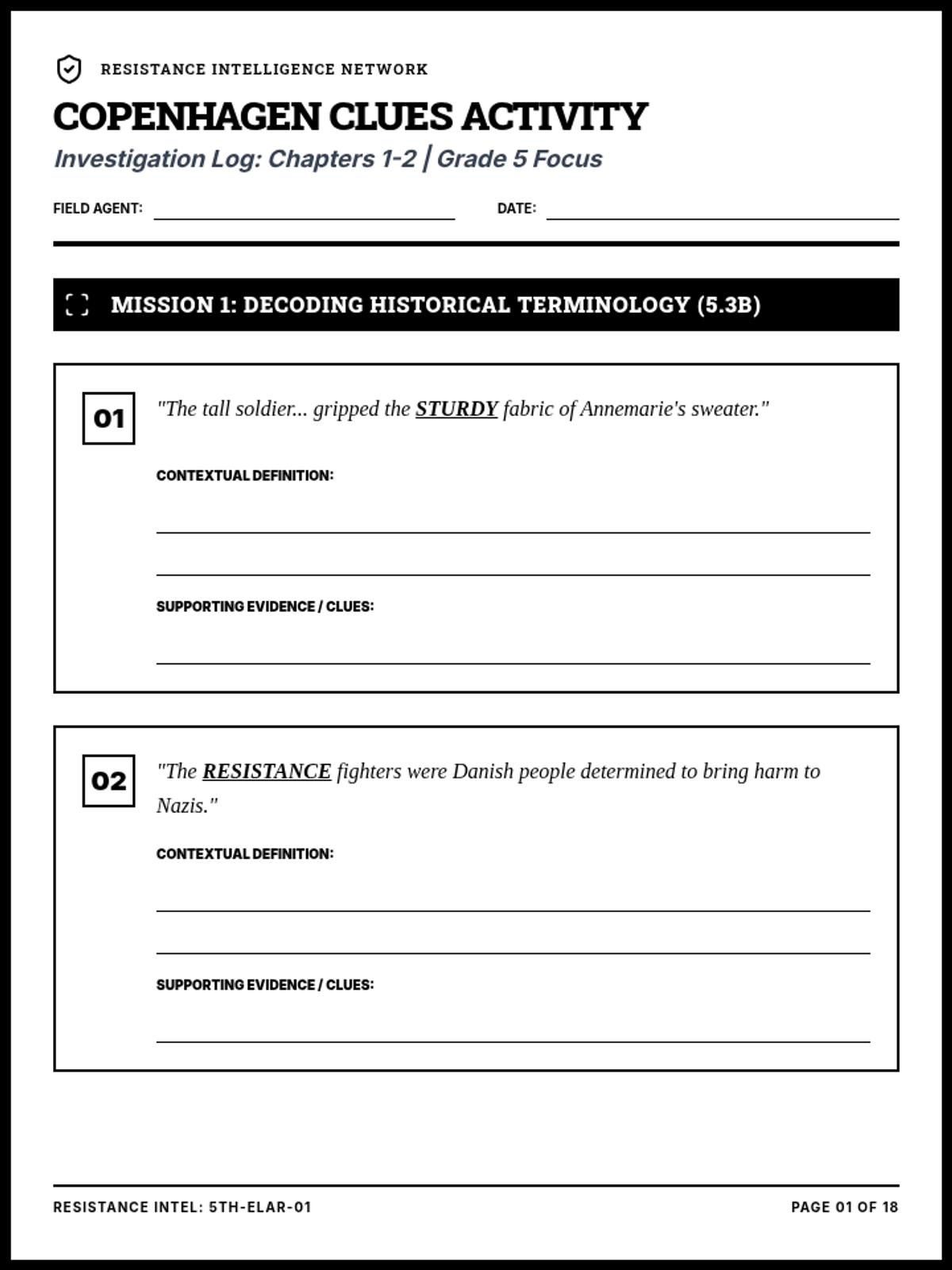
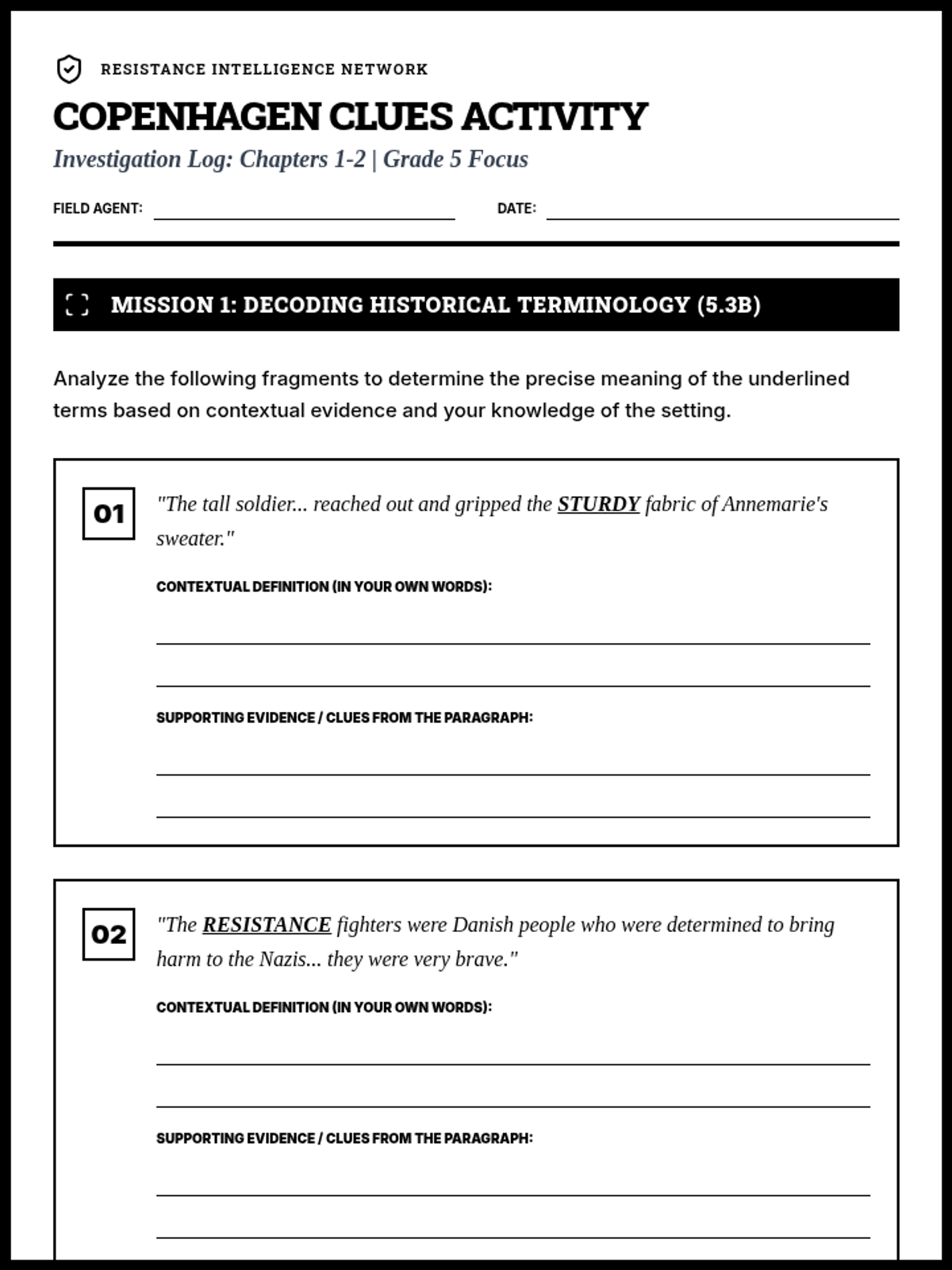
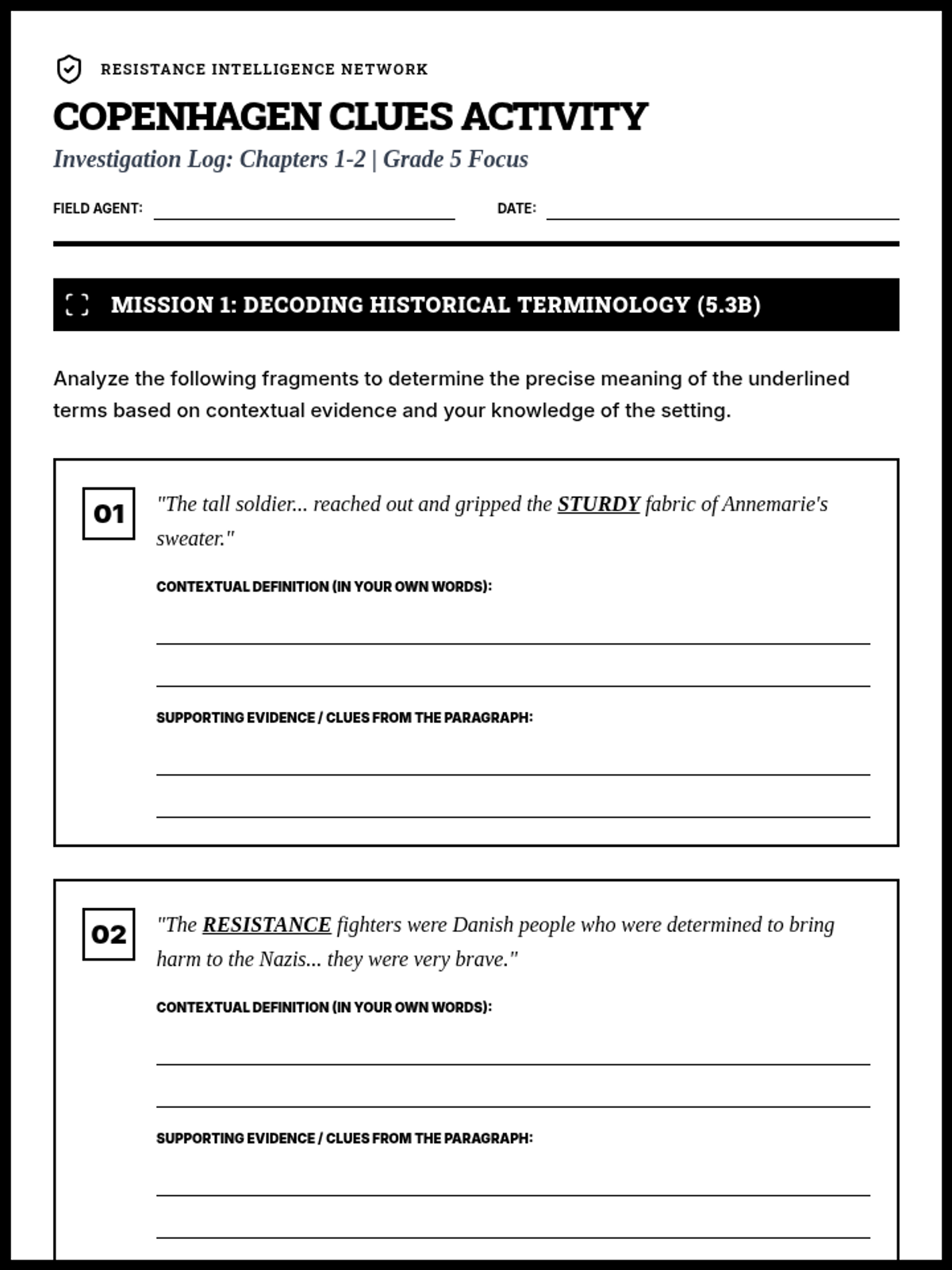
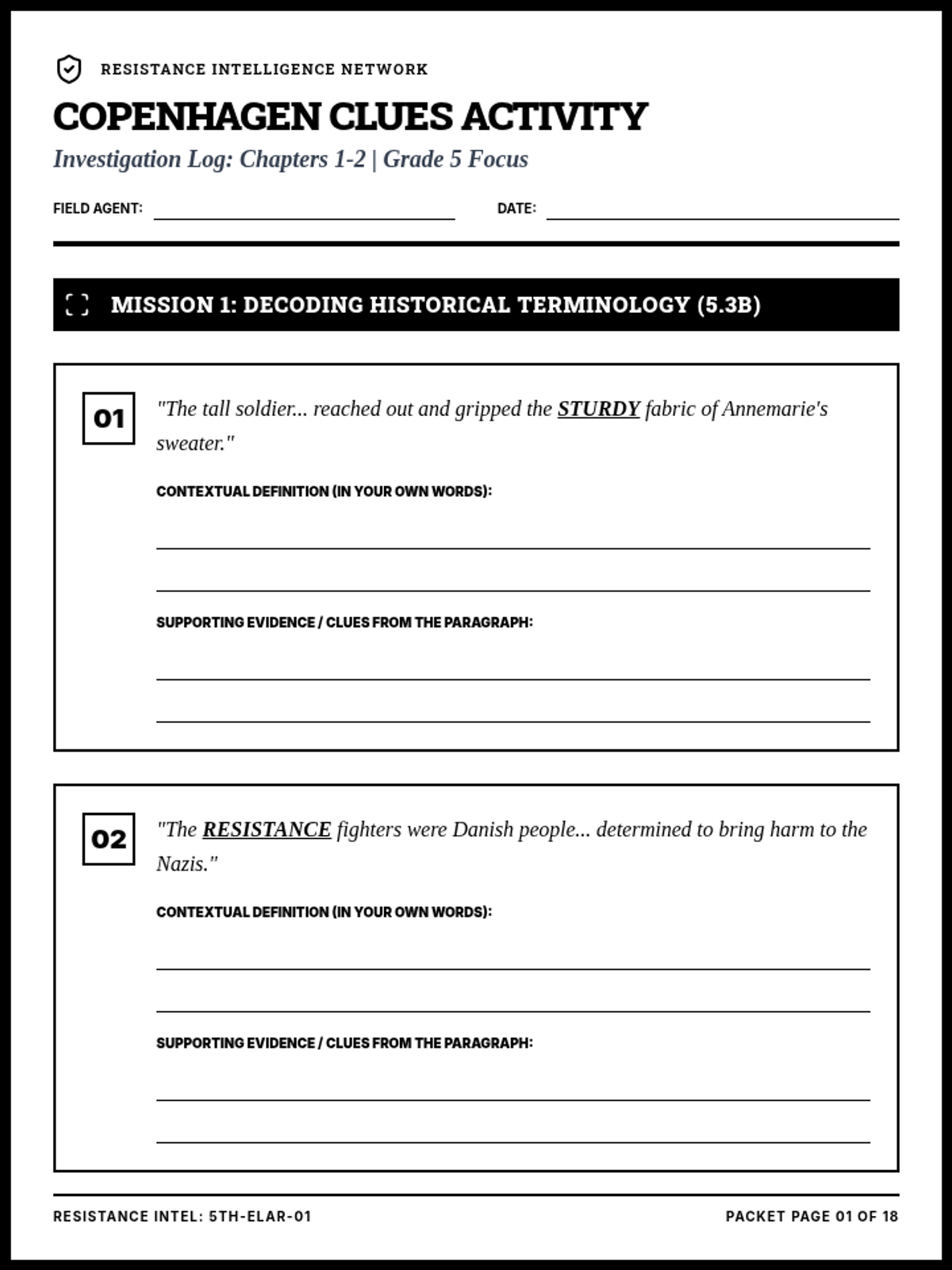
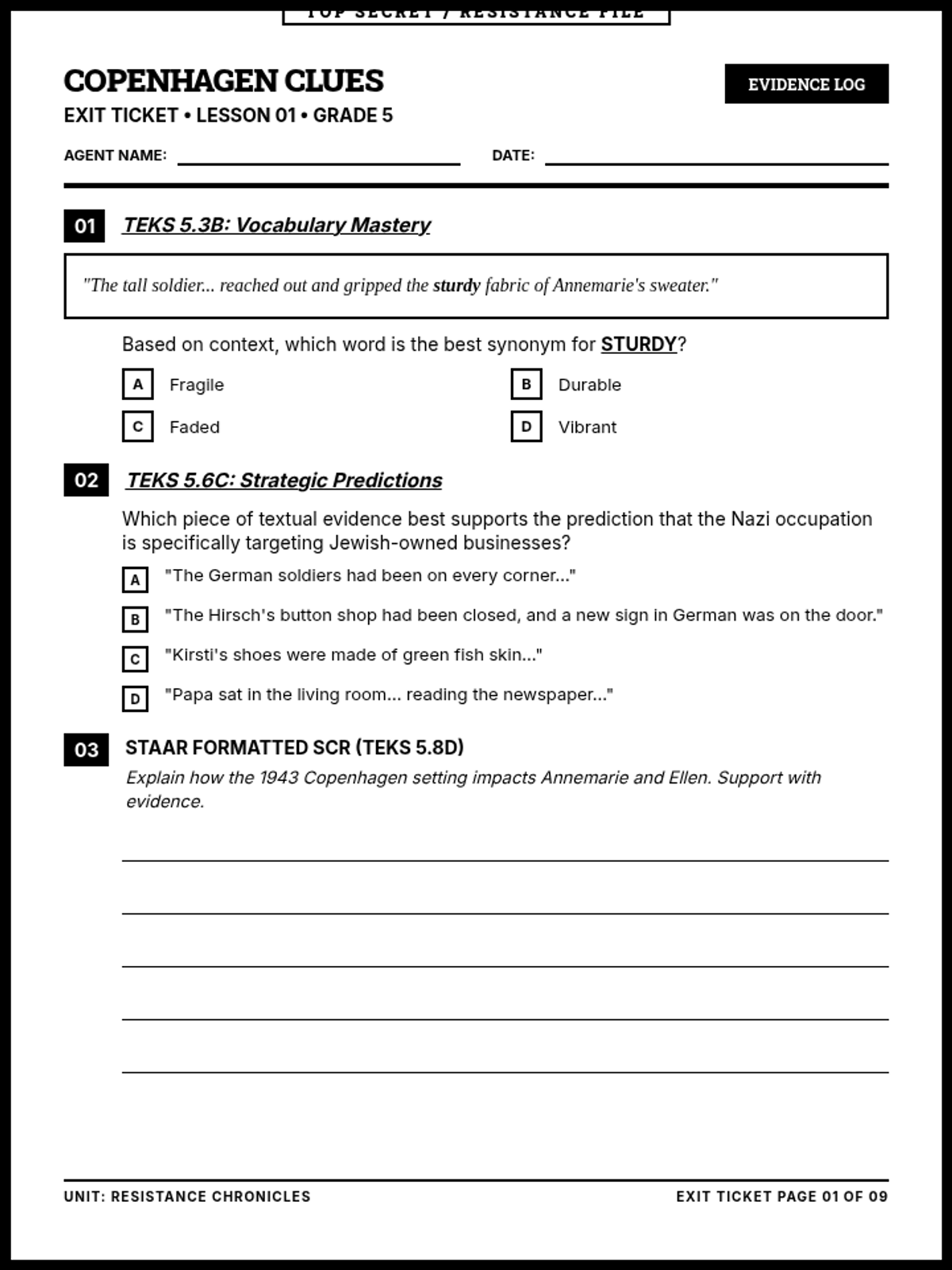
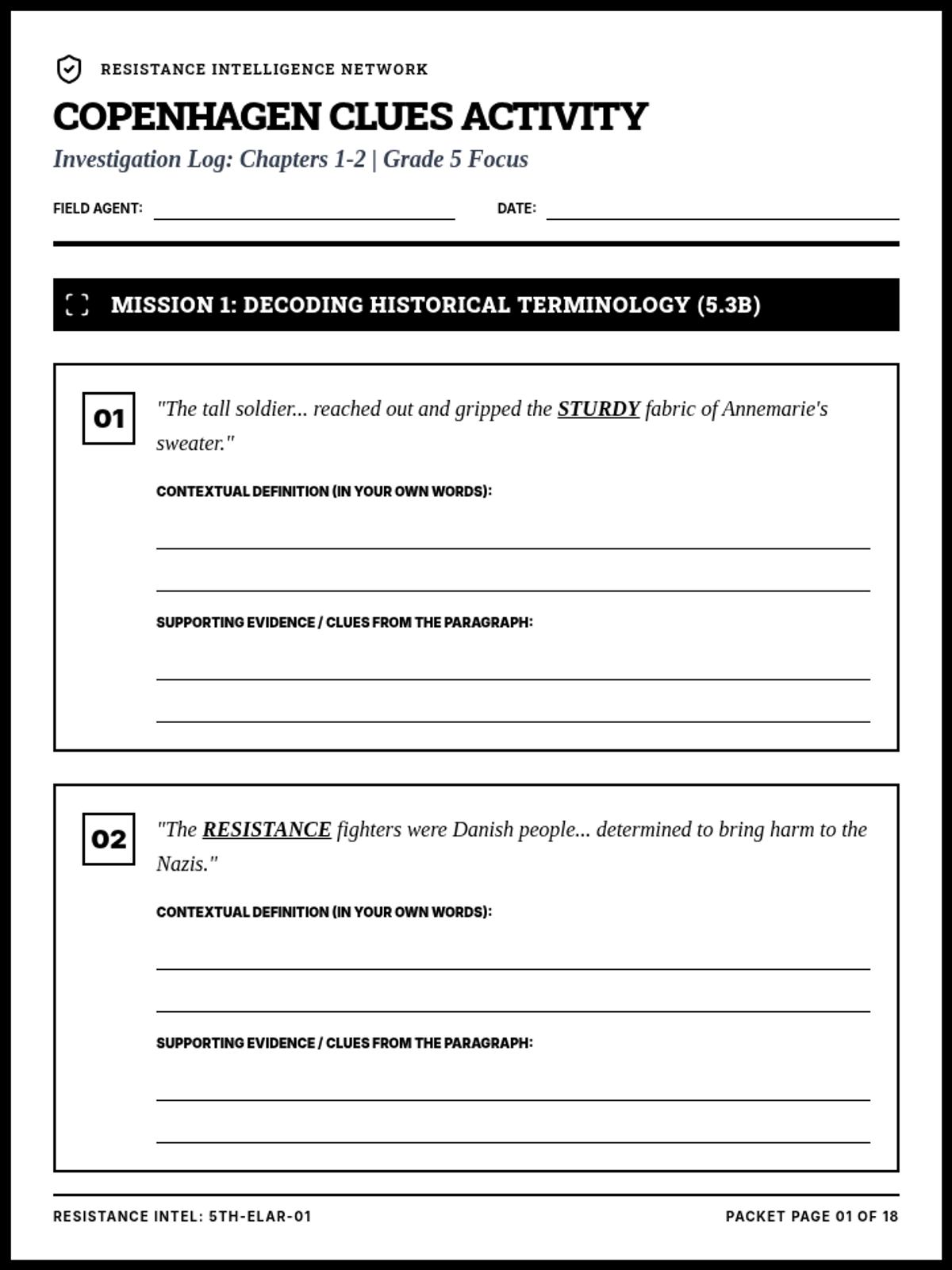
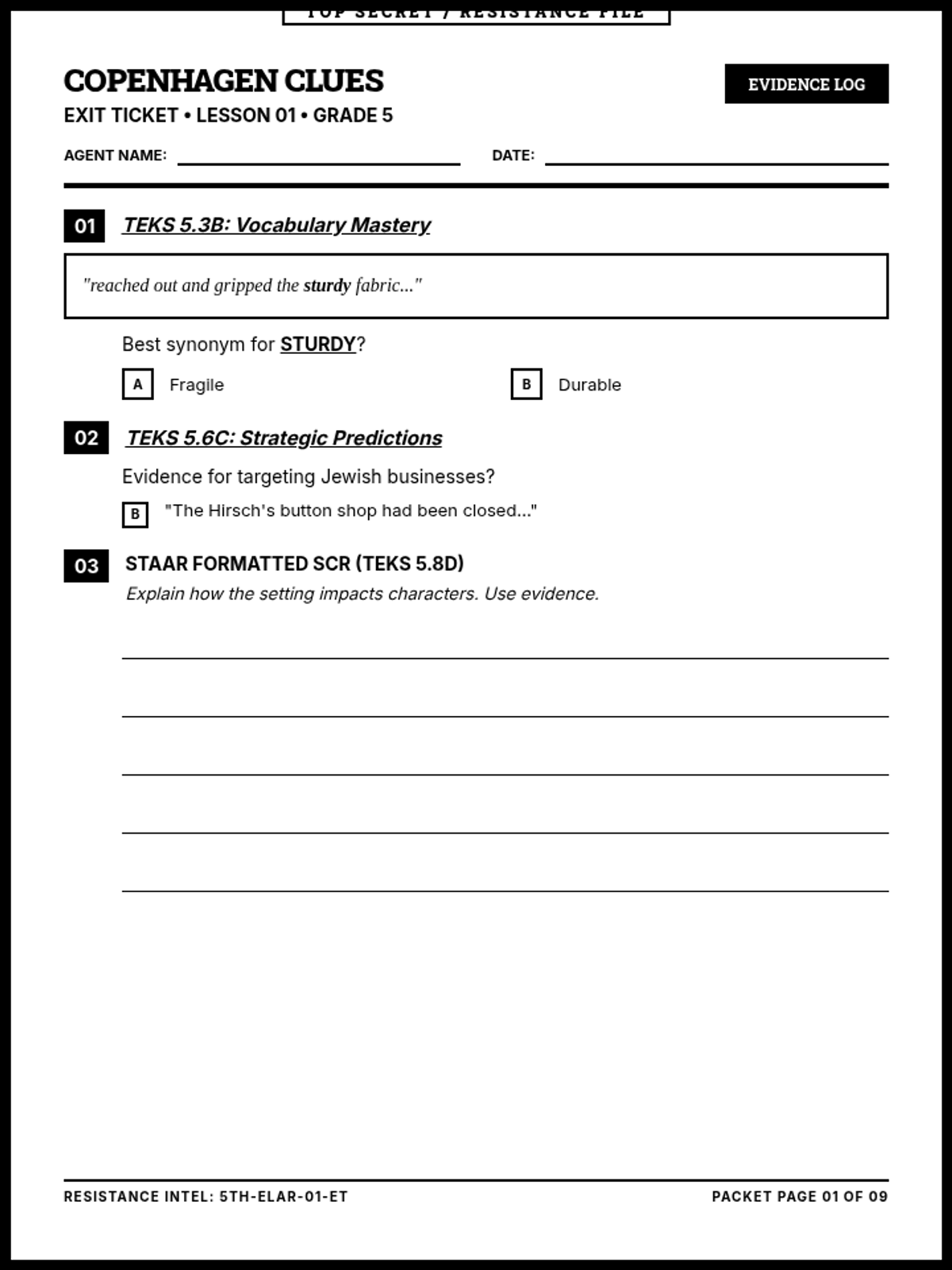
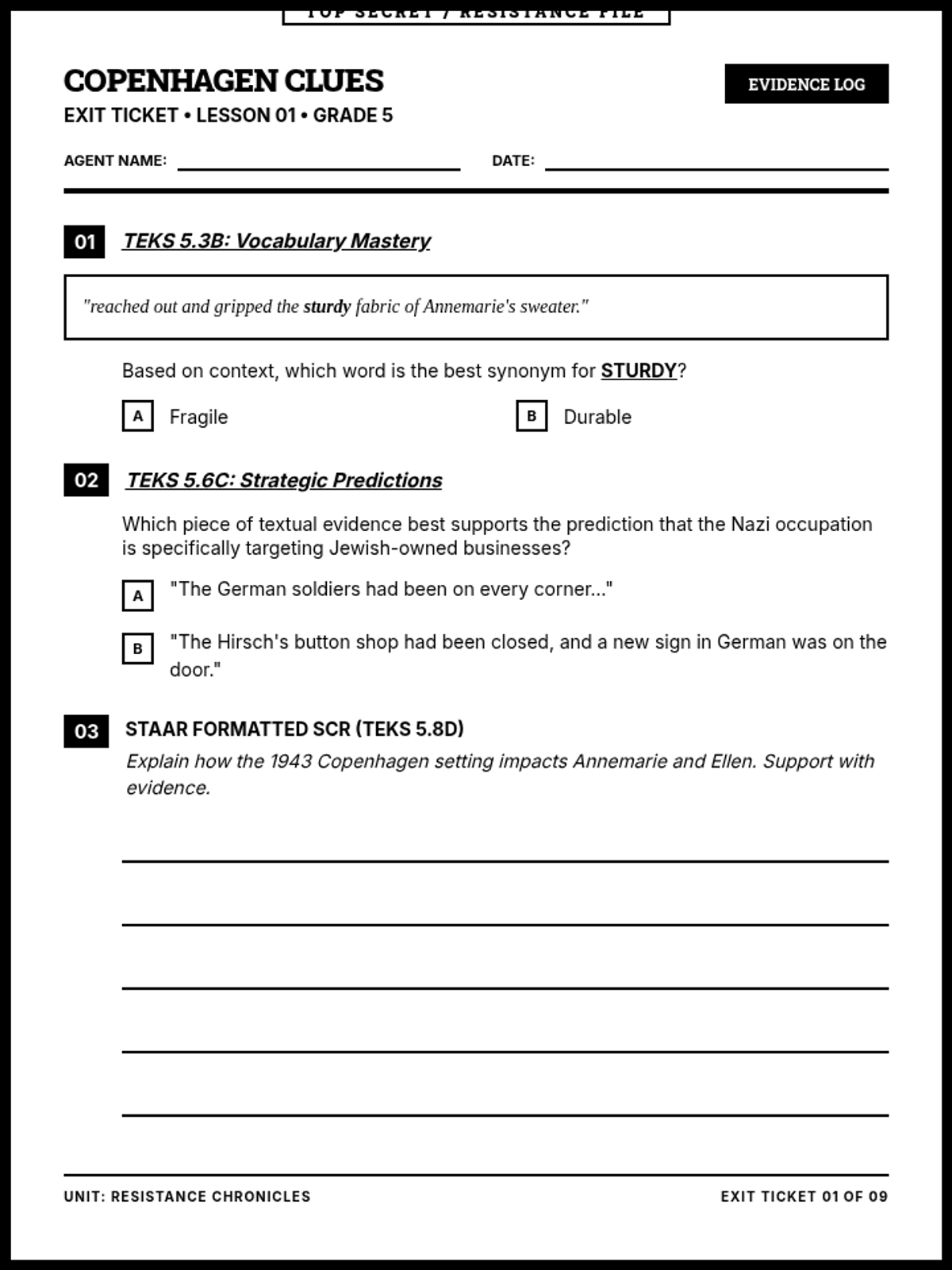
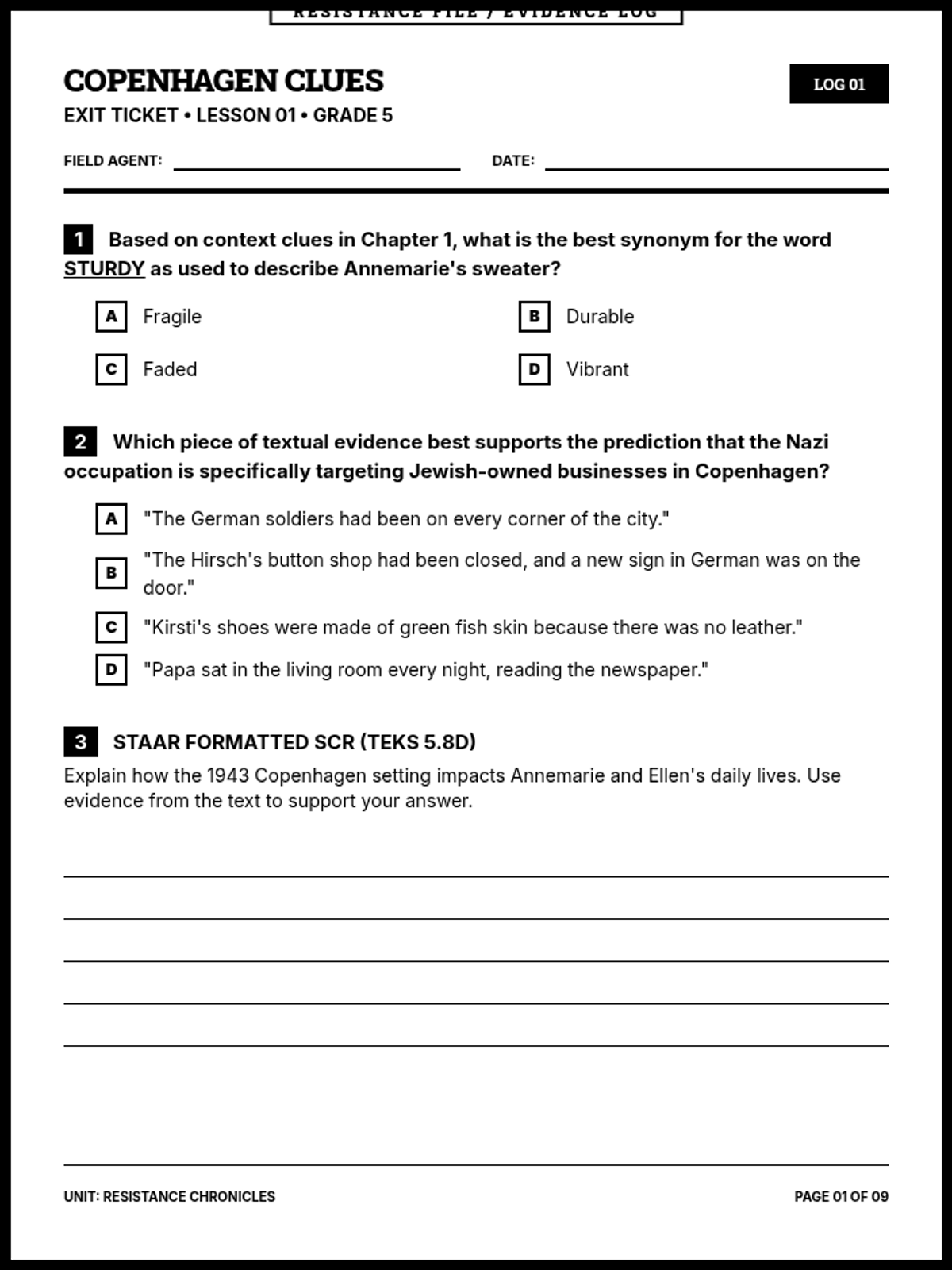
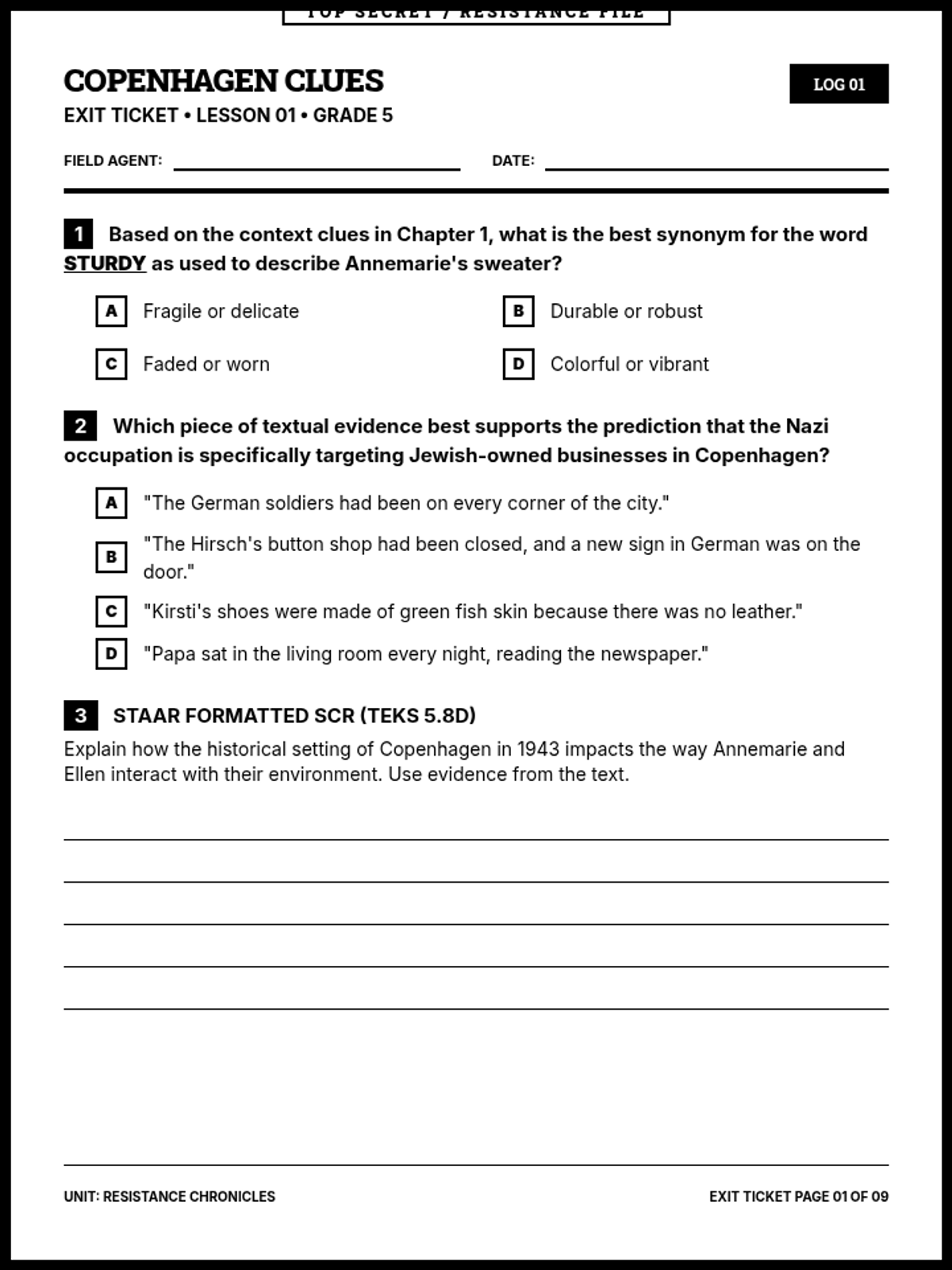
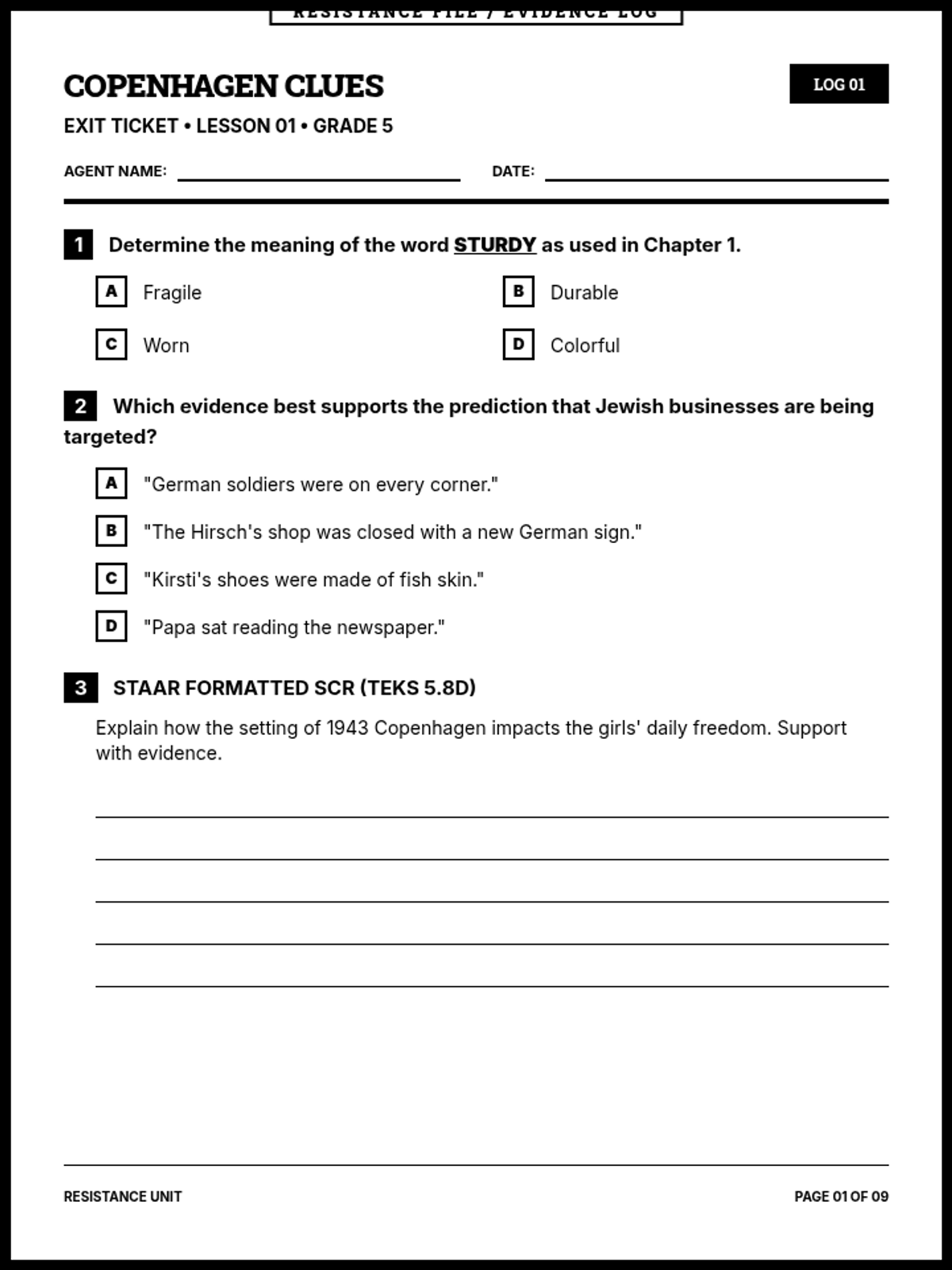
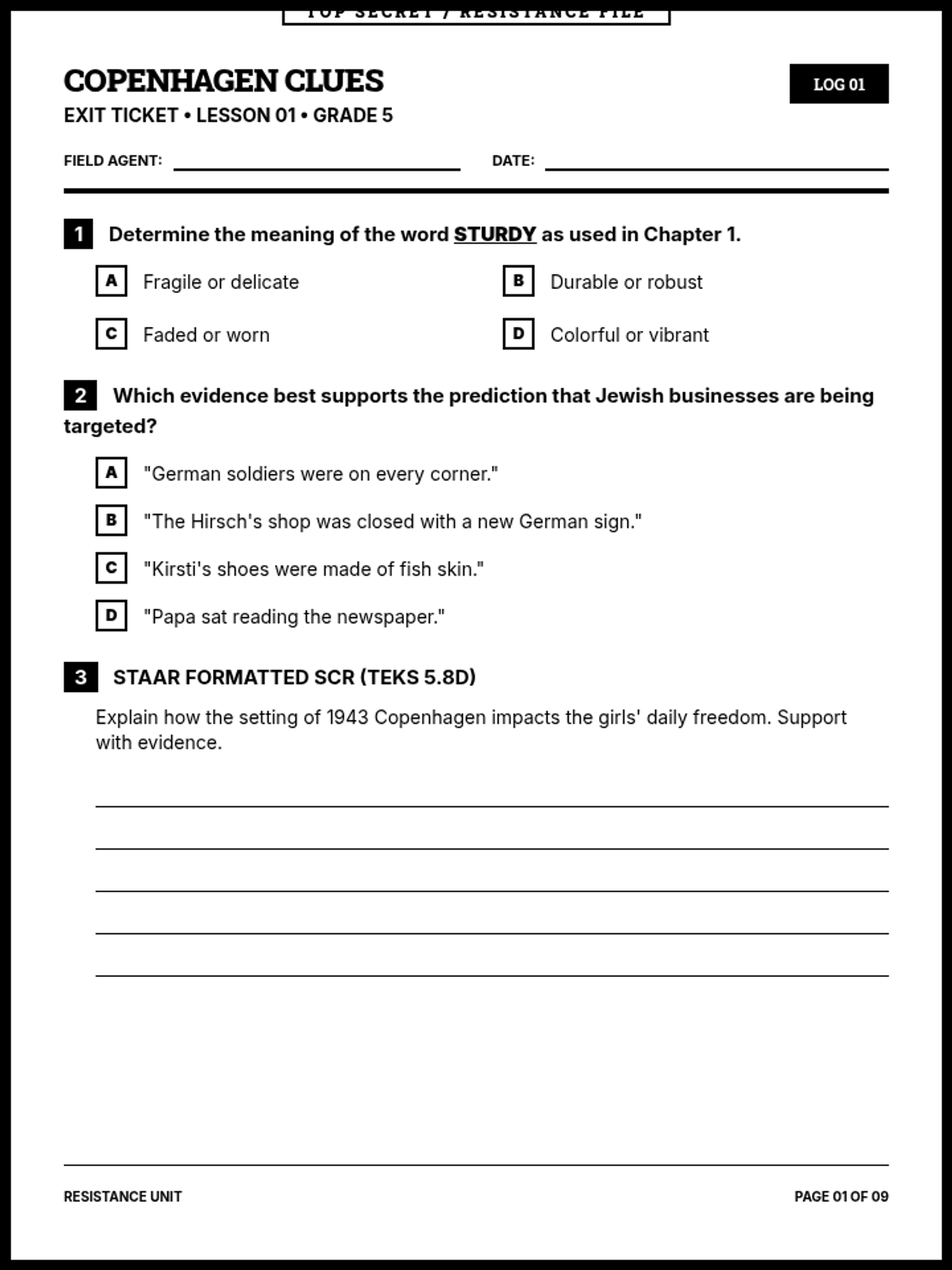
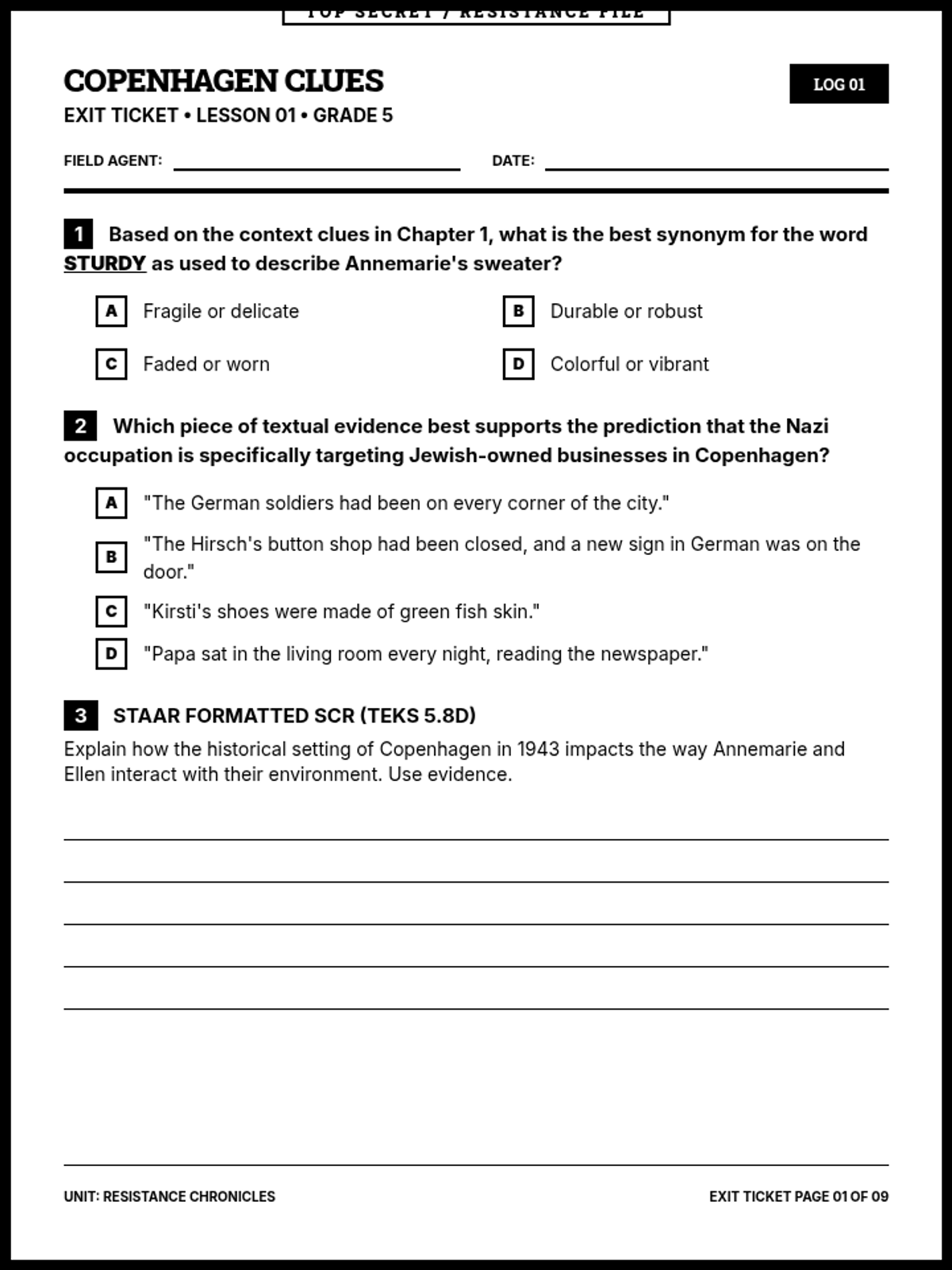
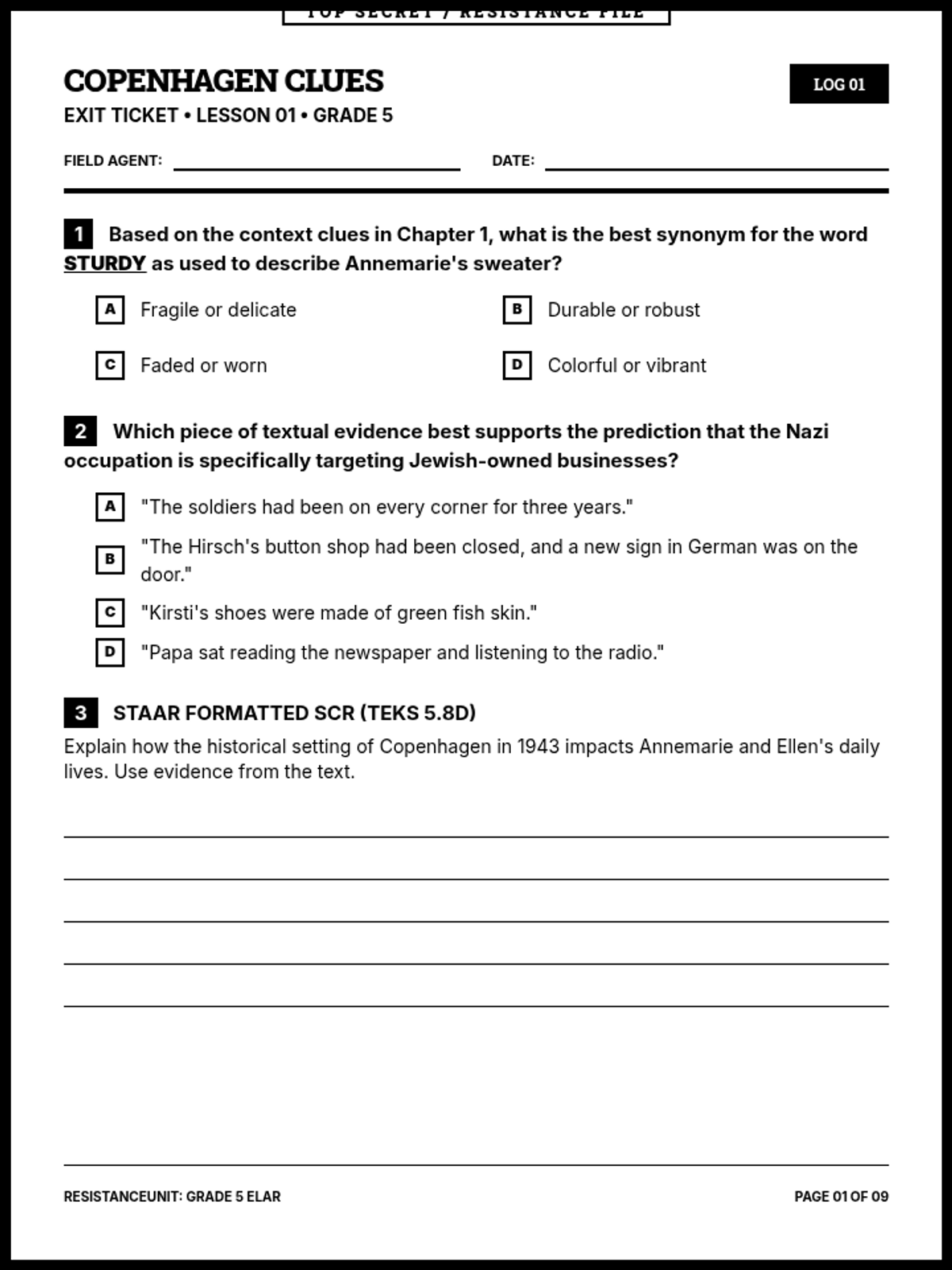
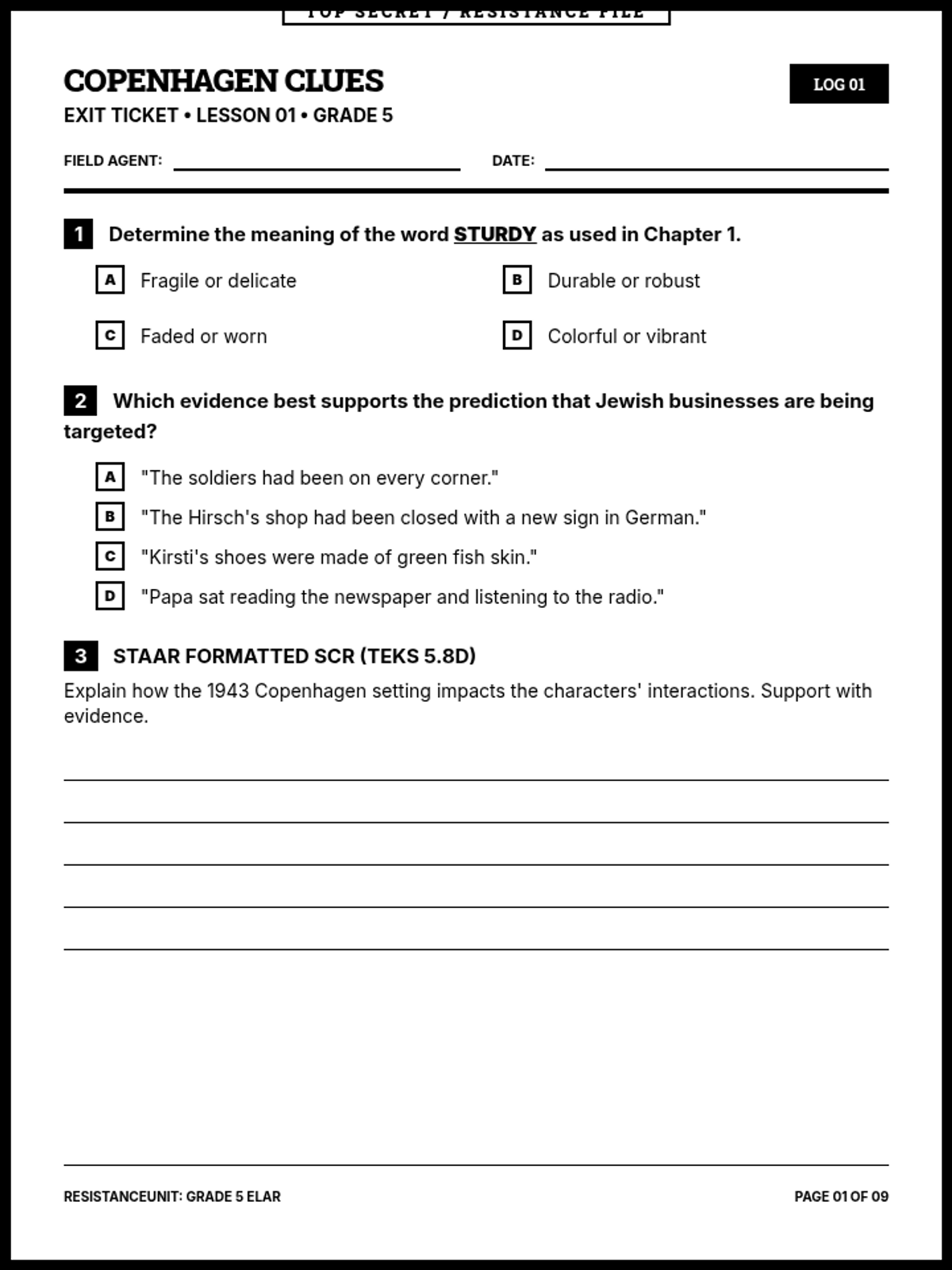
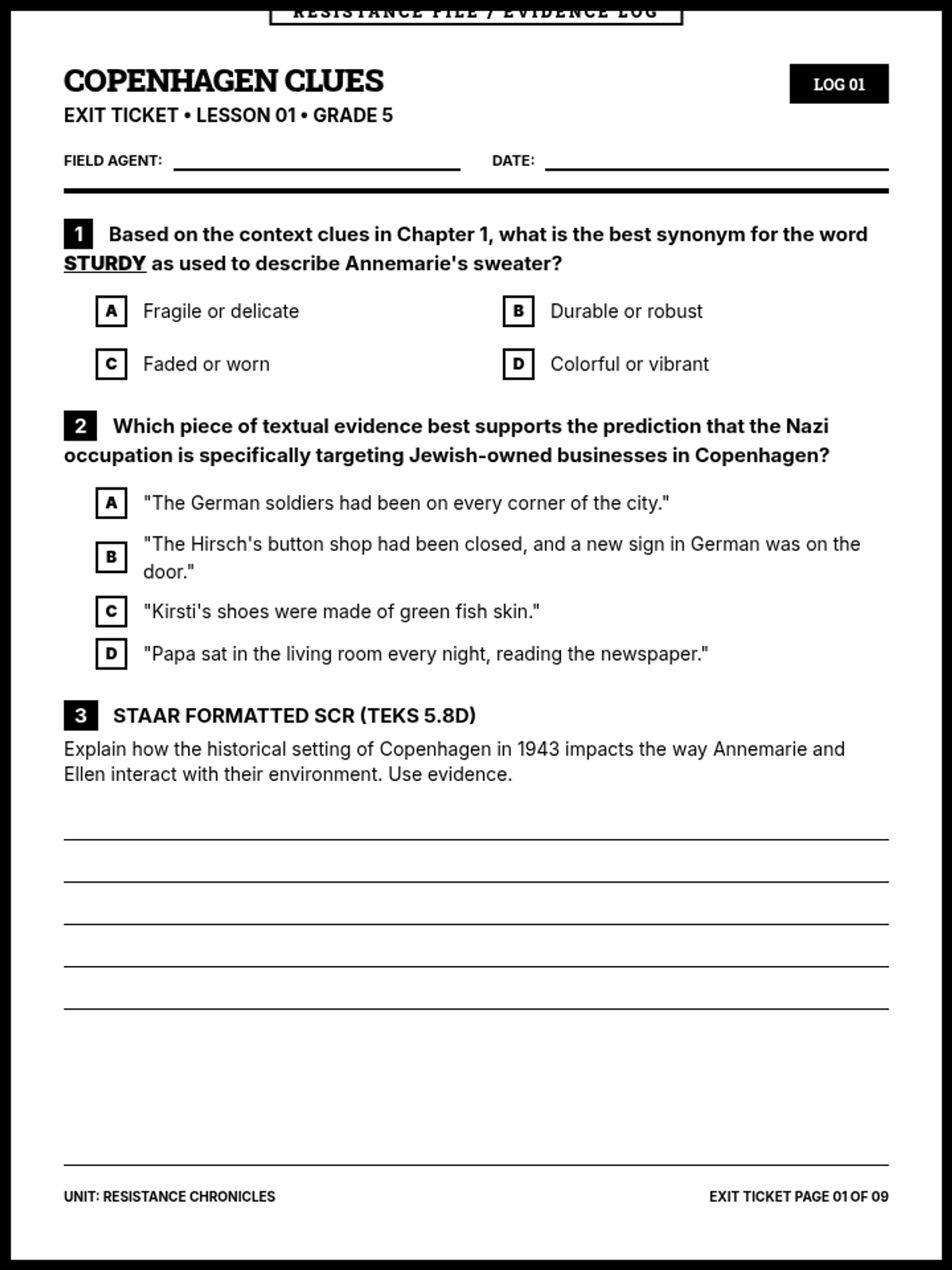
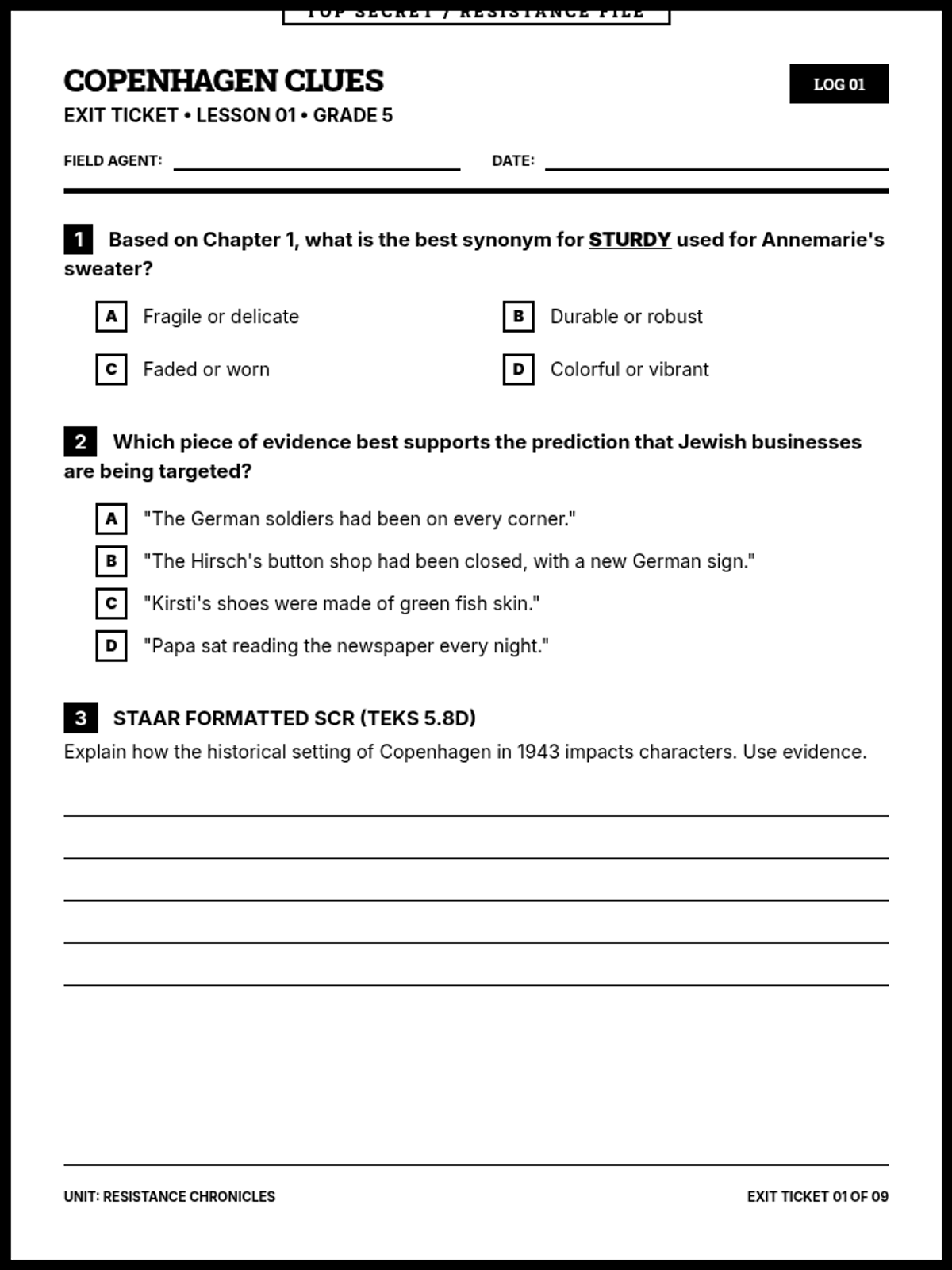
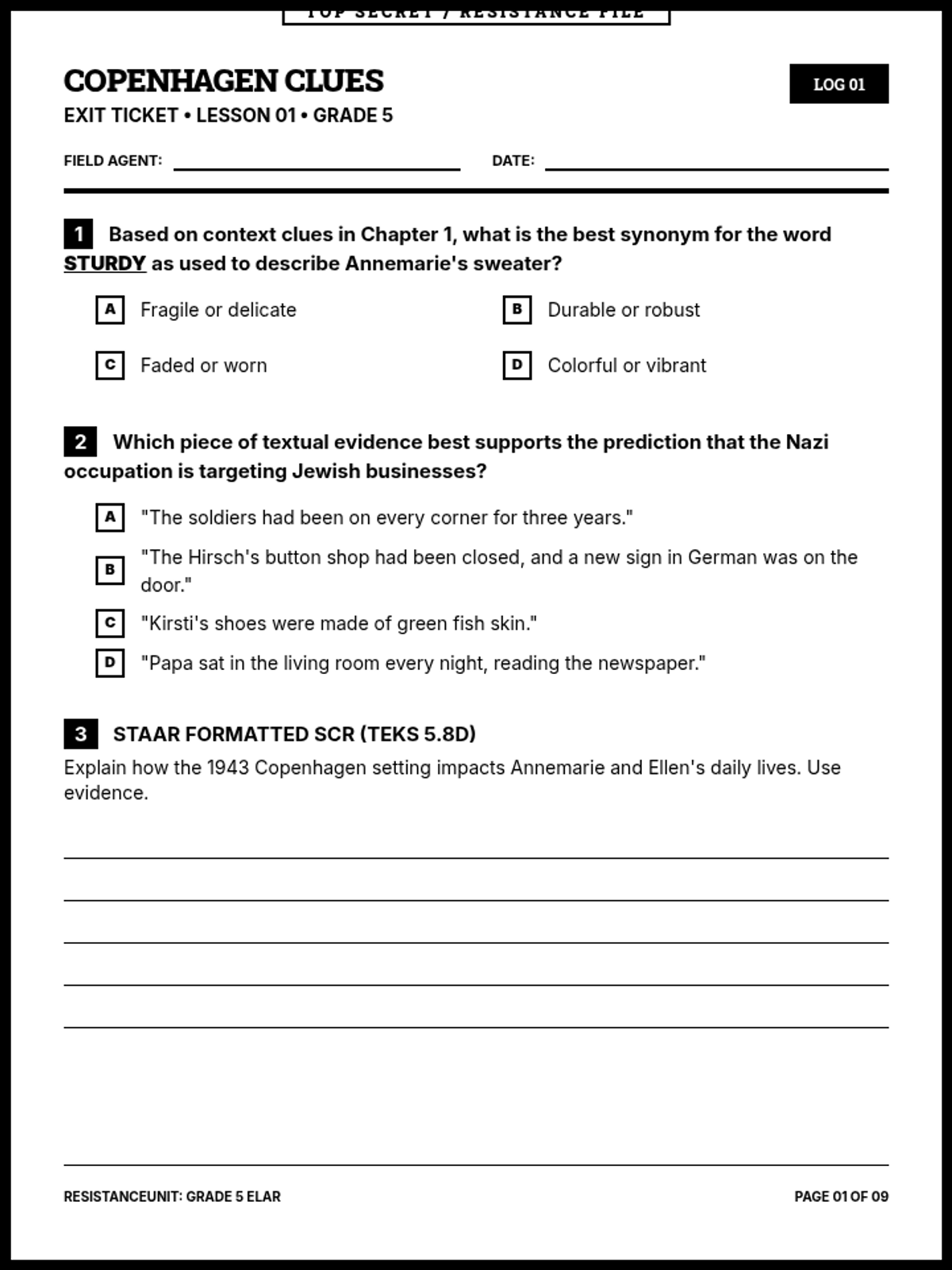
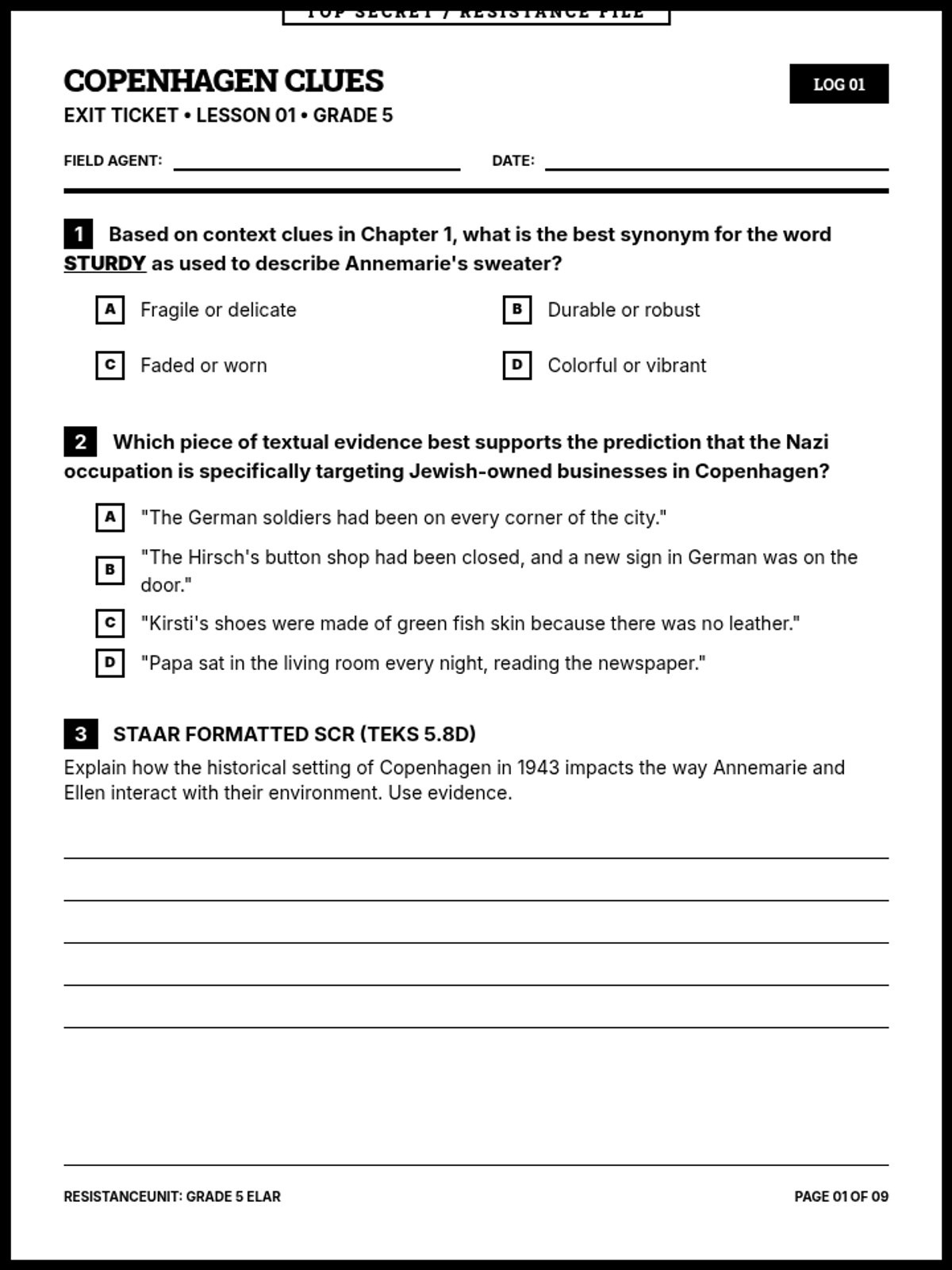
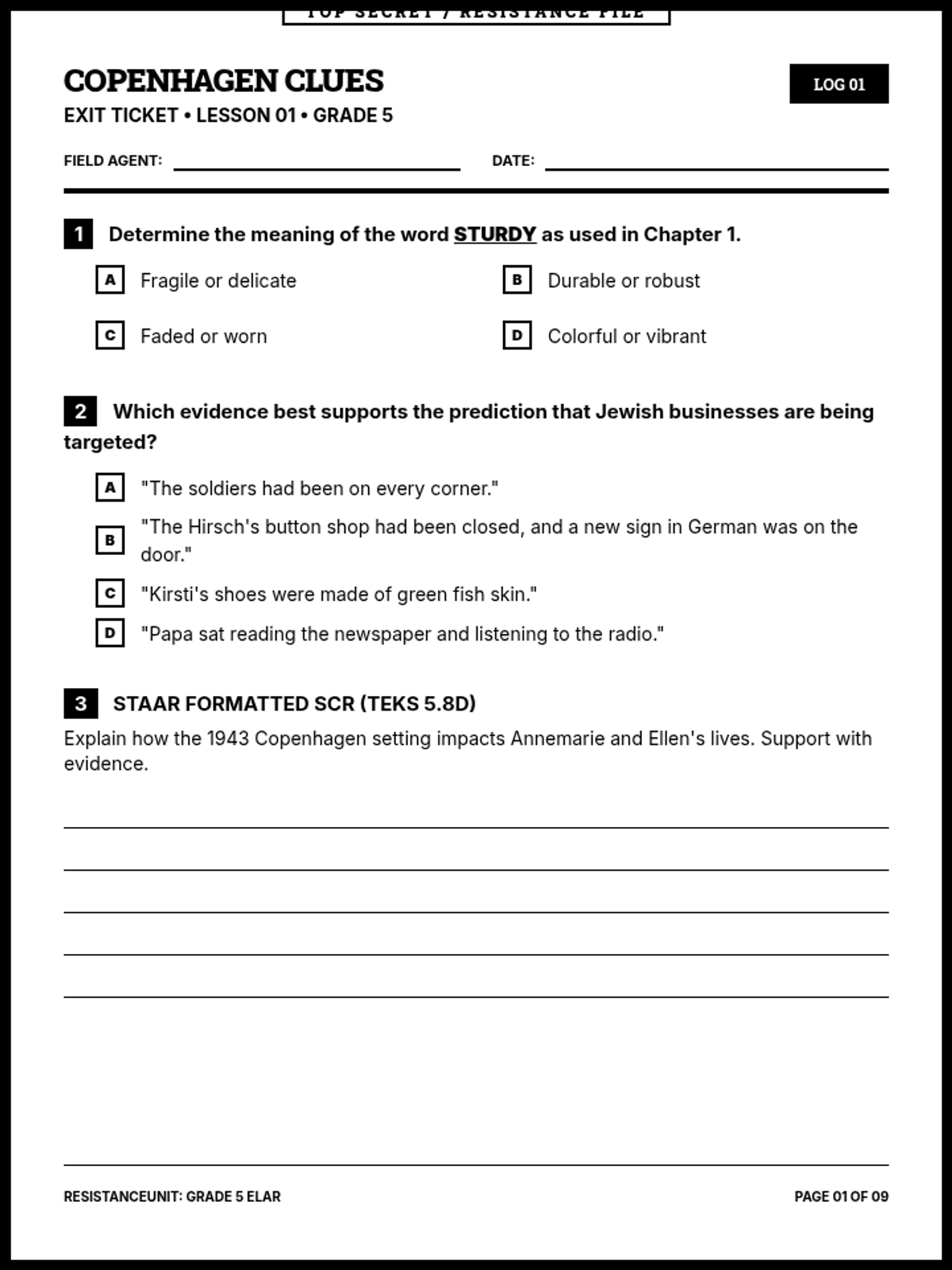
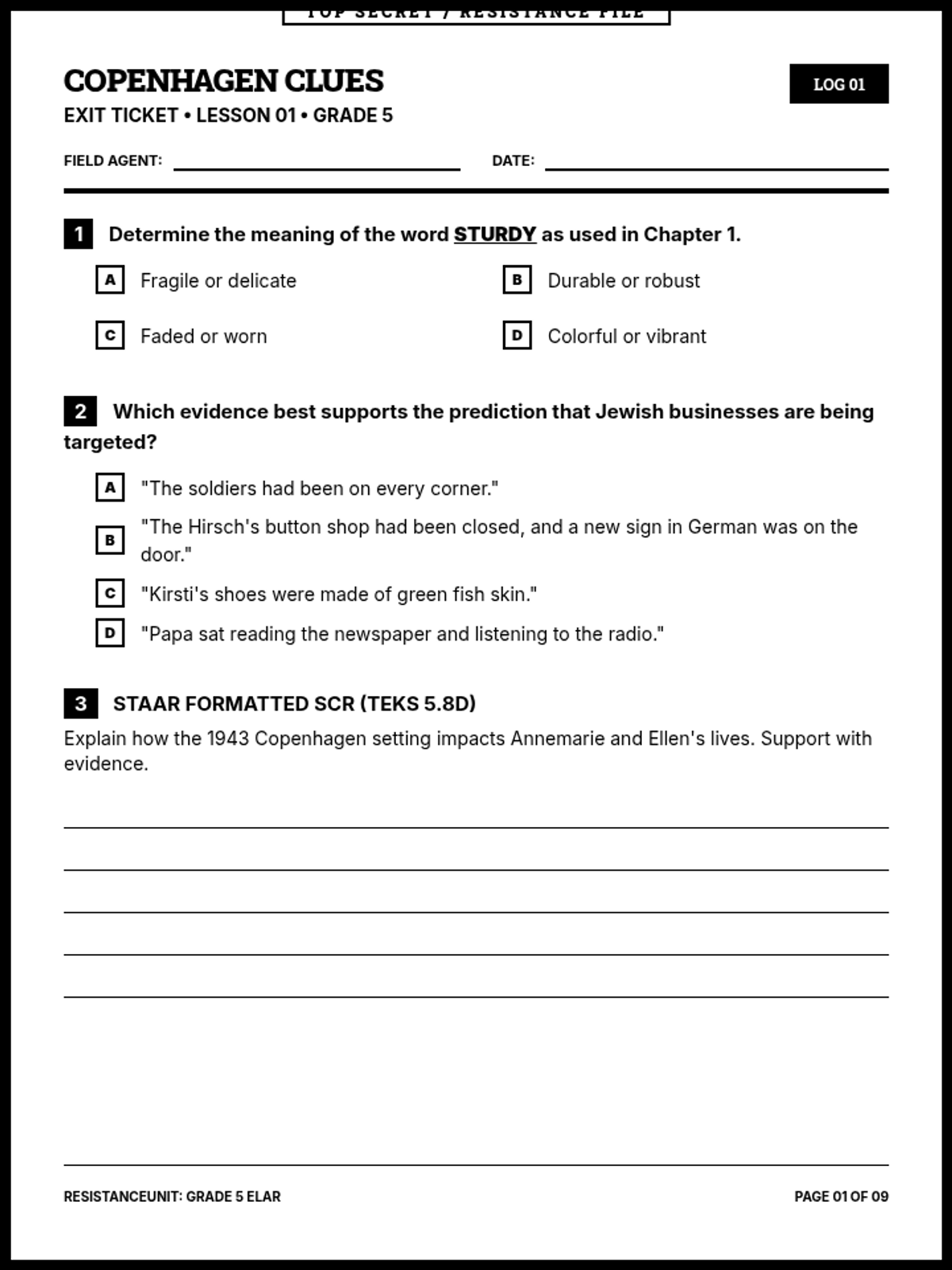
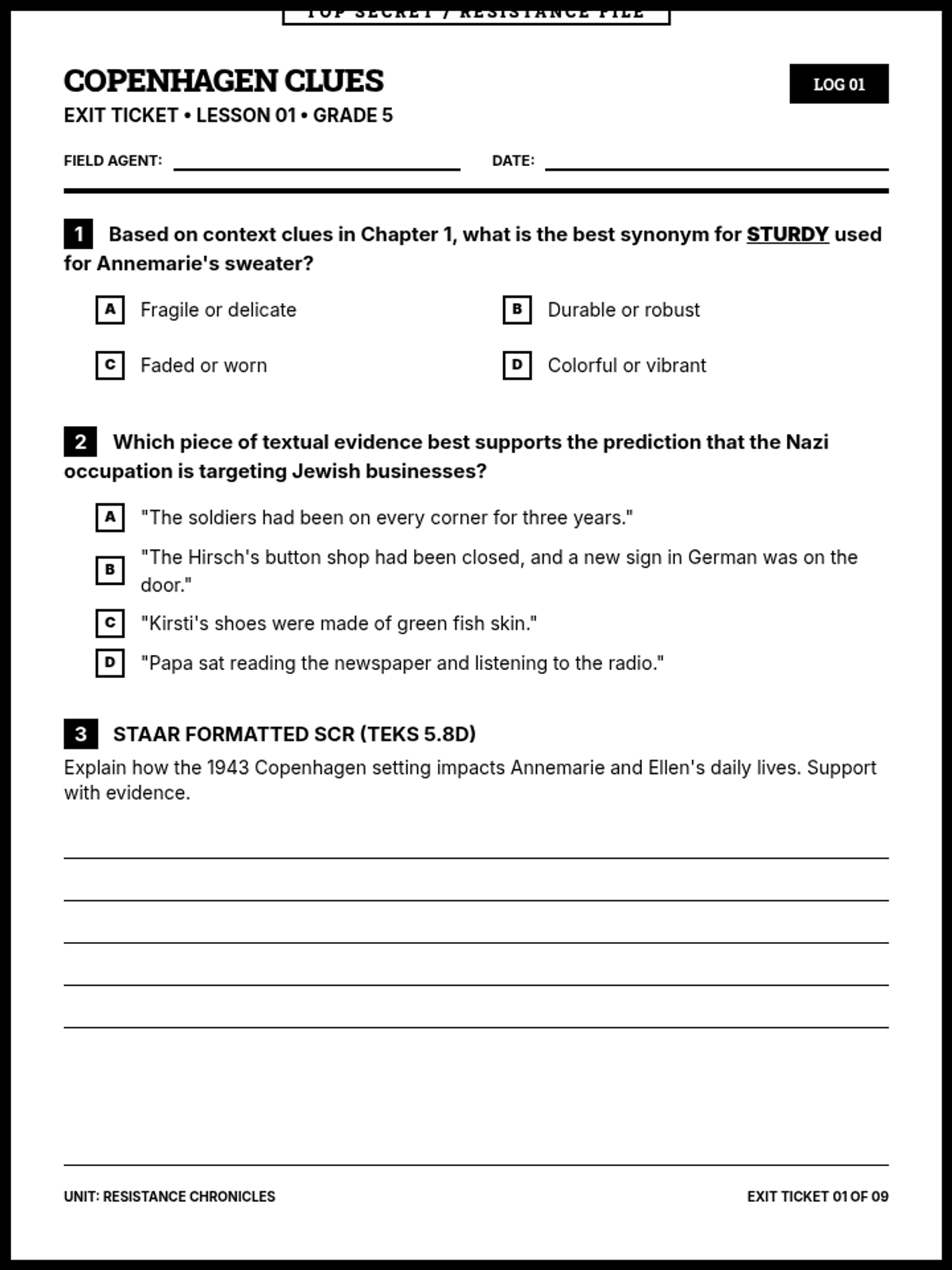
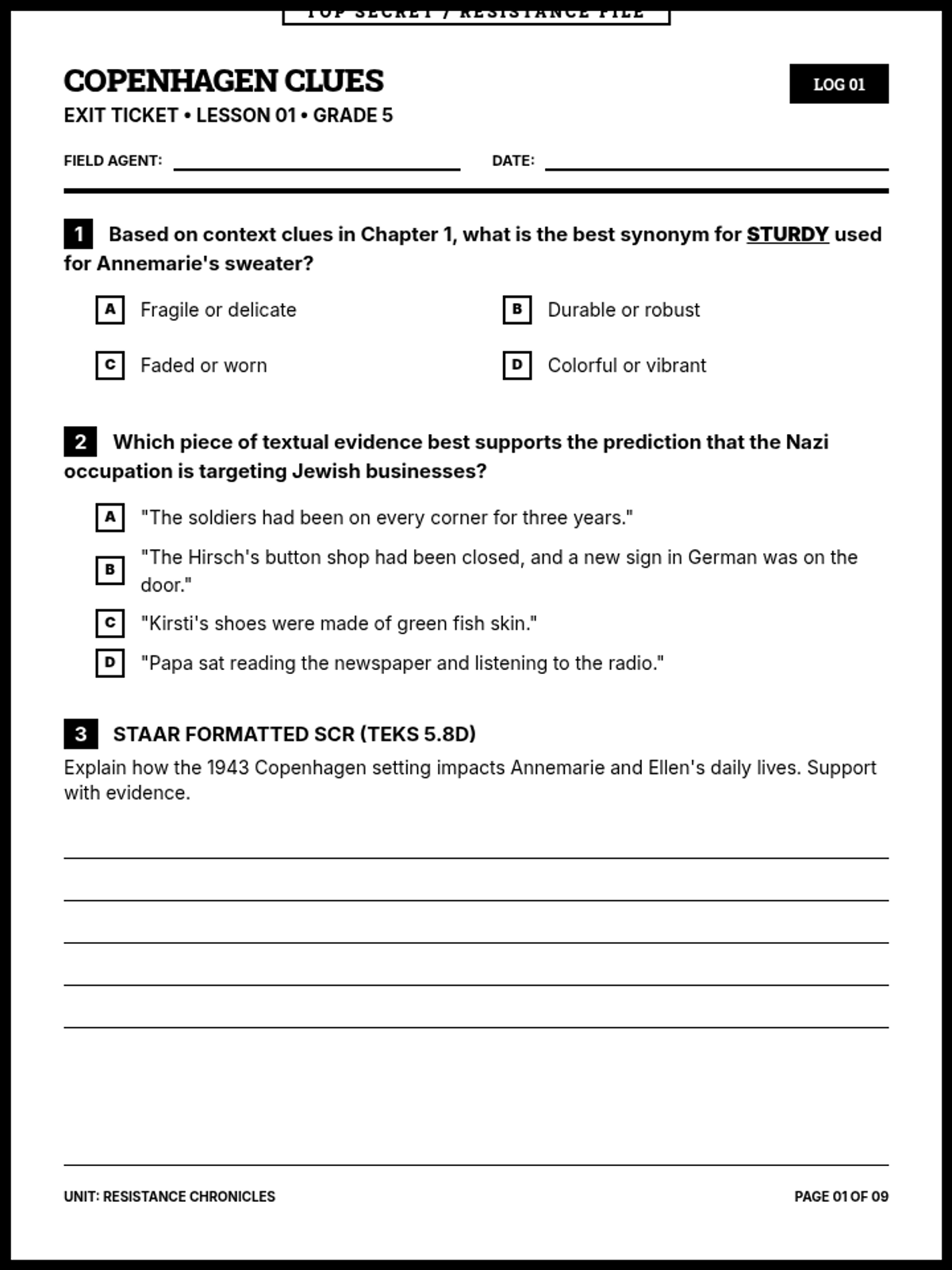
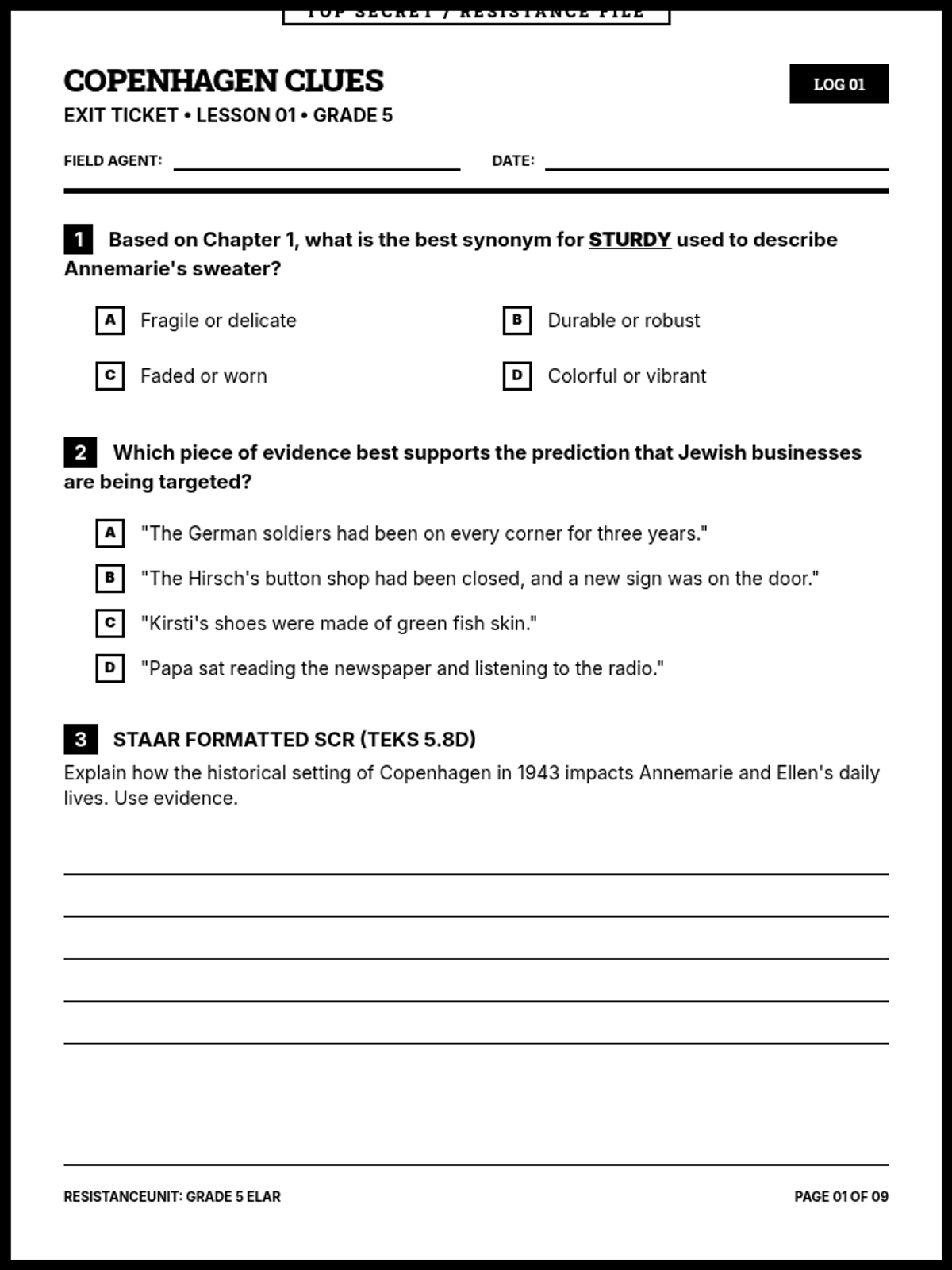
Students investigate Chapters 1-2, focusing on using 5th grade context clues (TEKS 5.3B) to decipher historical terminology and making logical predictions based on textual evidence (TEKS 5.6C) regarding the intensifying Nazi occupation.
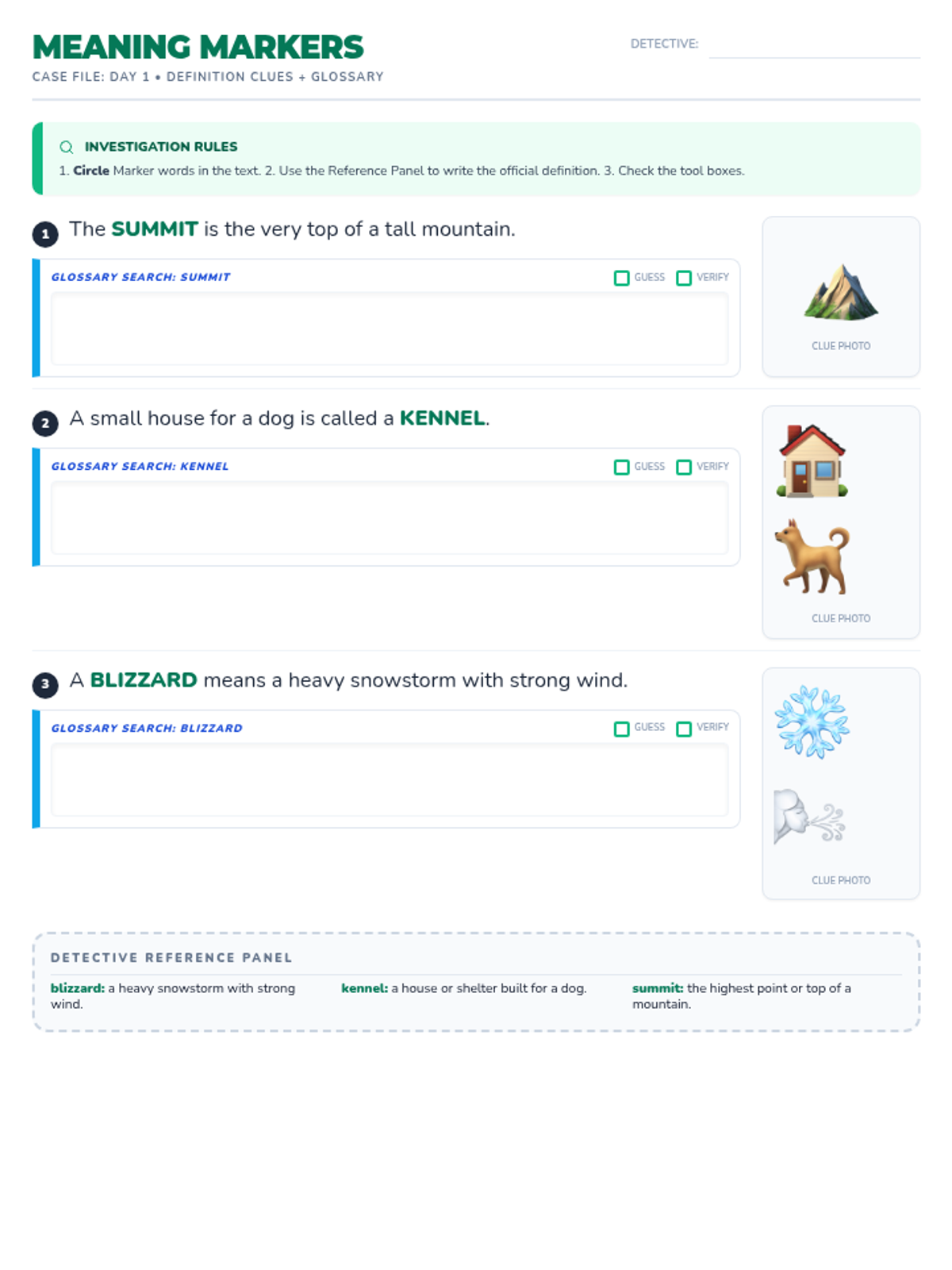
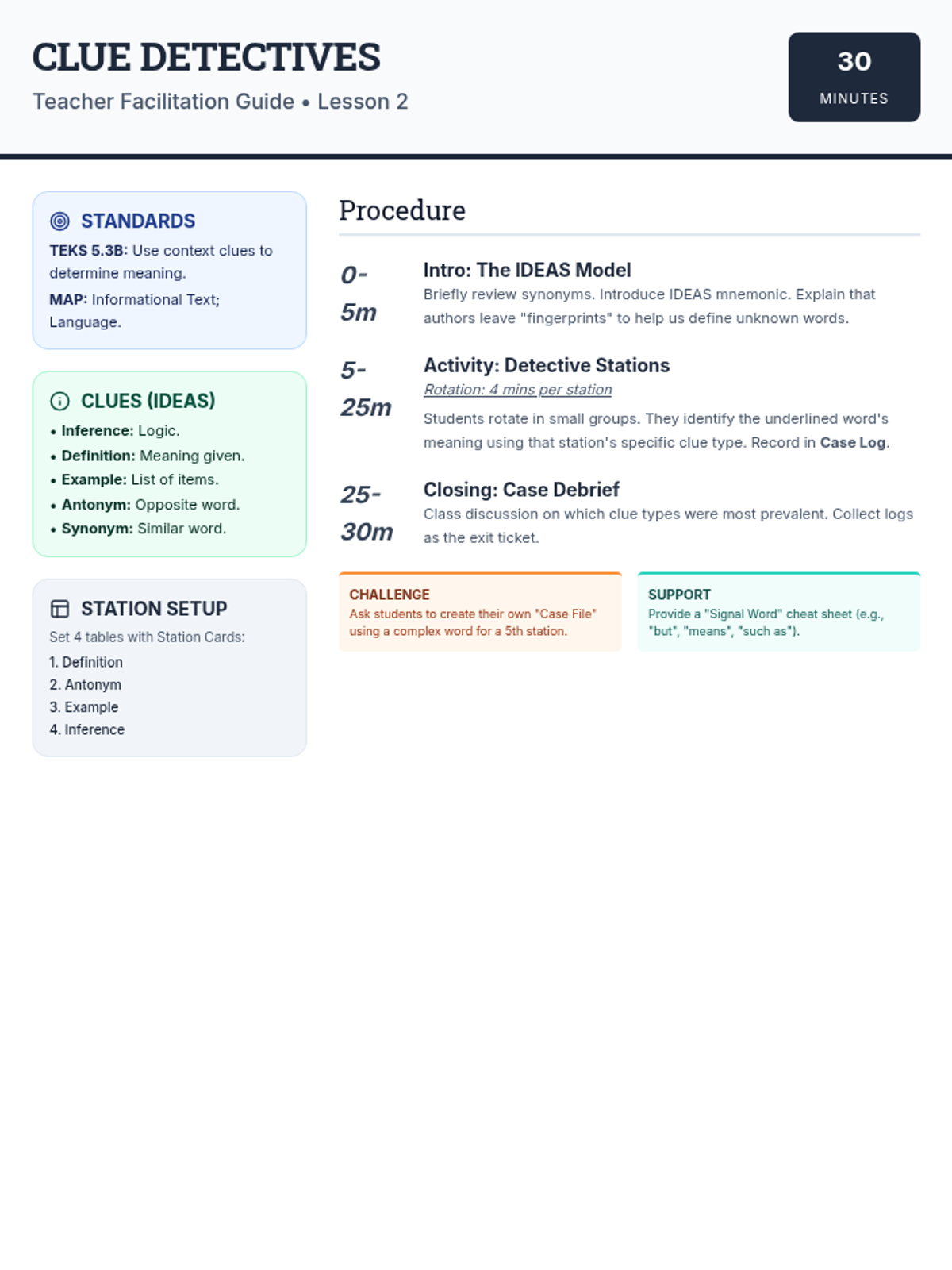
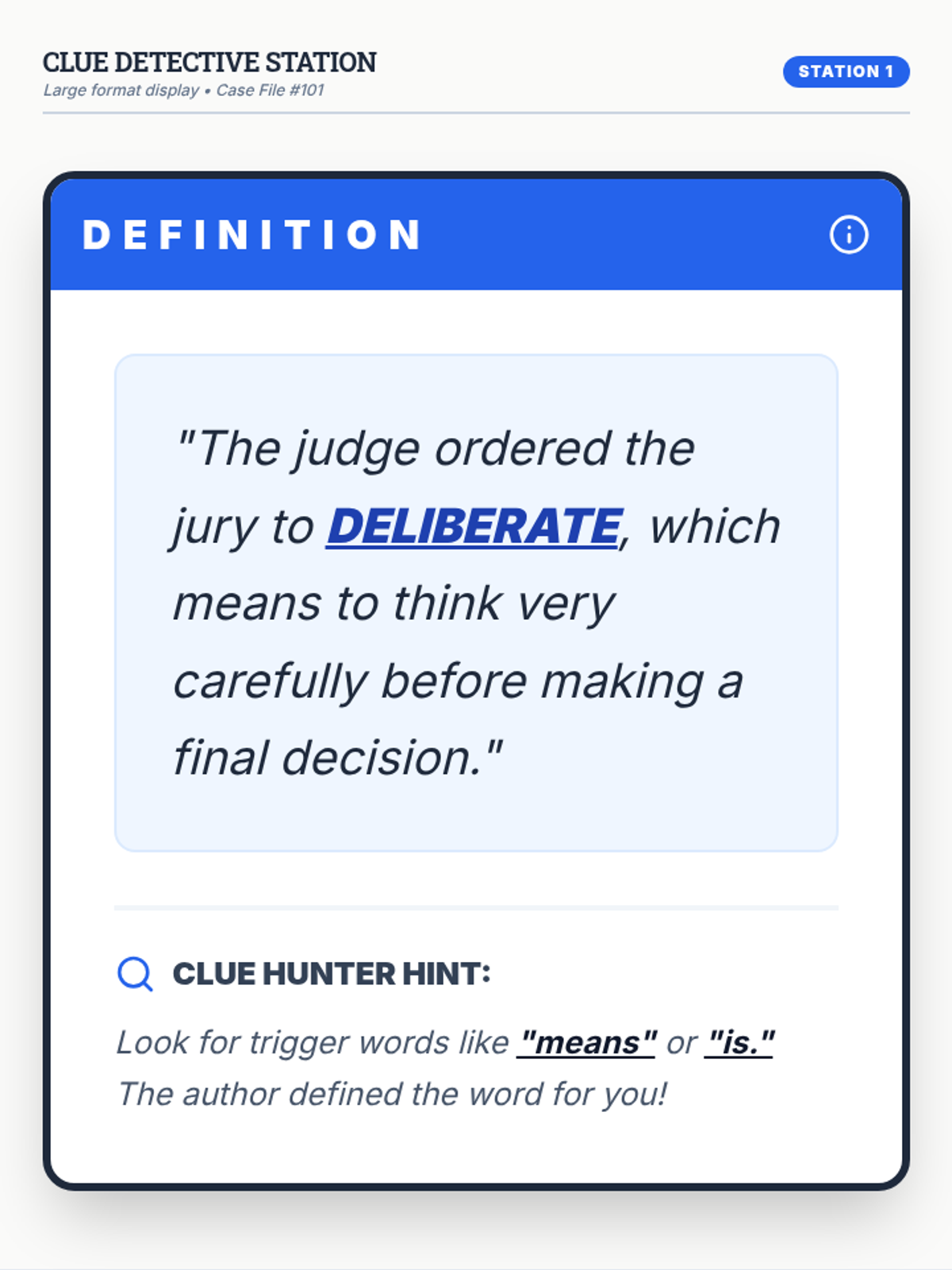
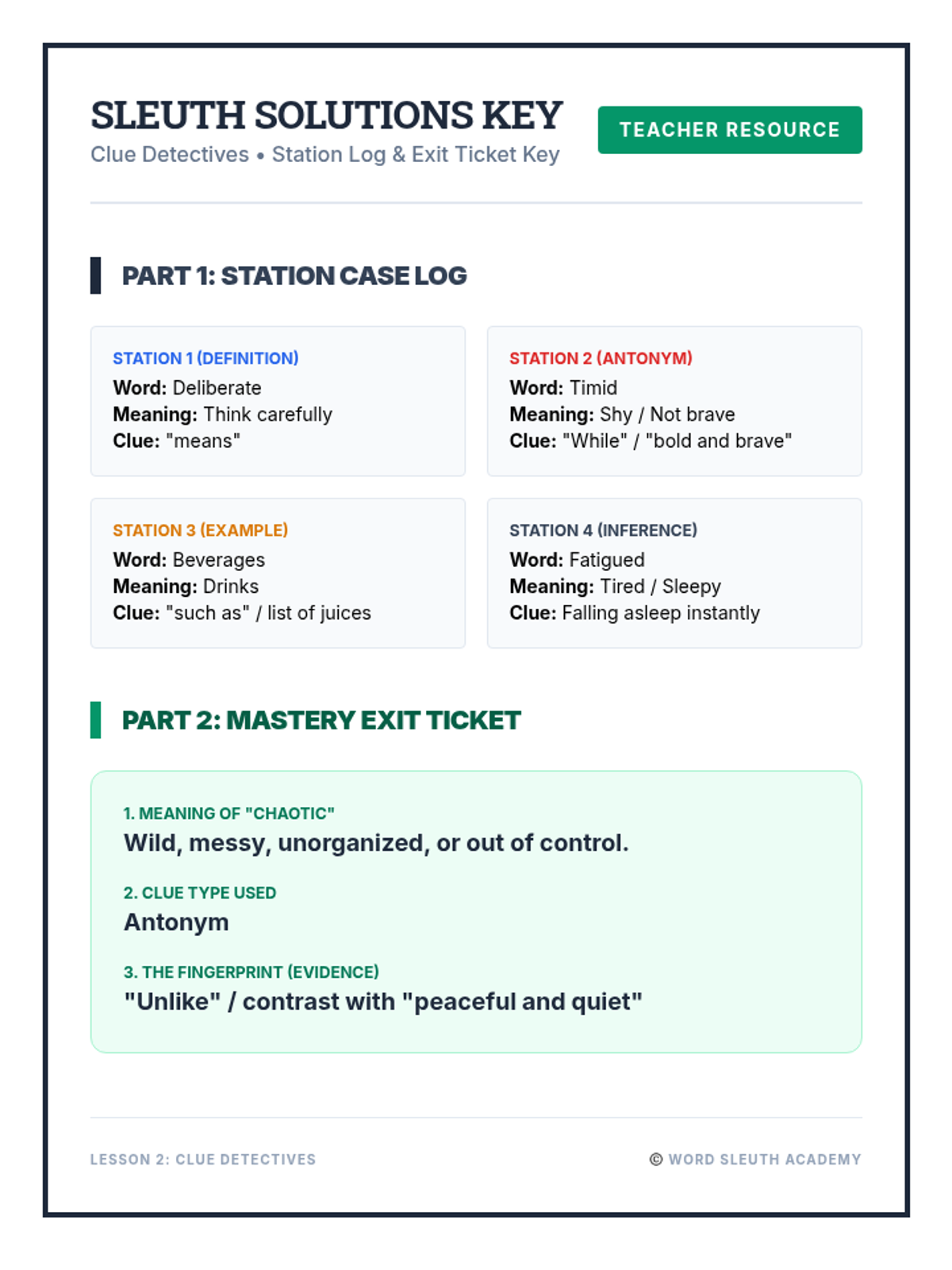
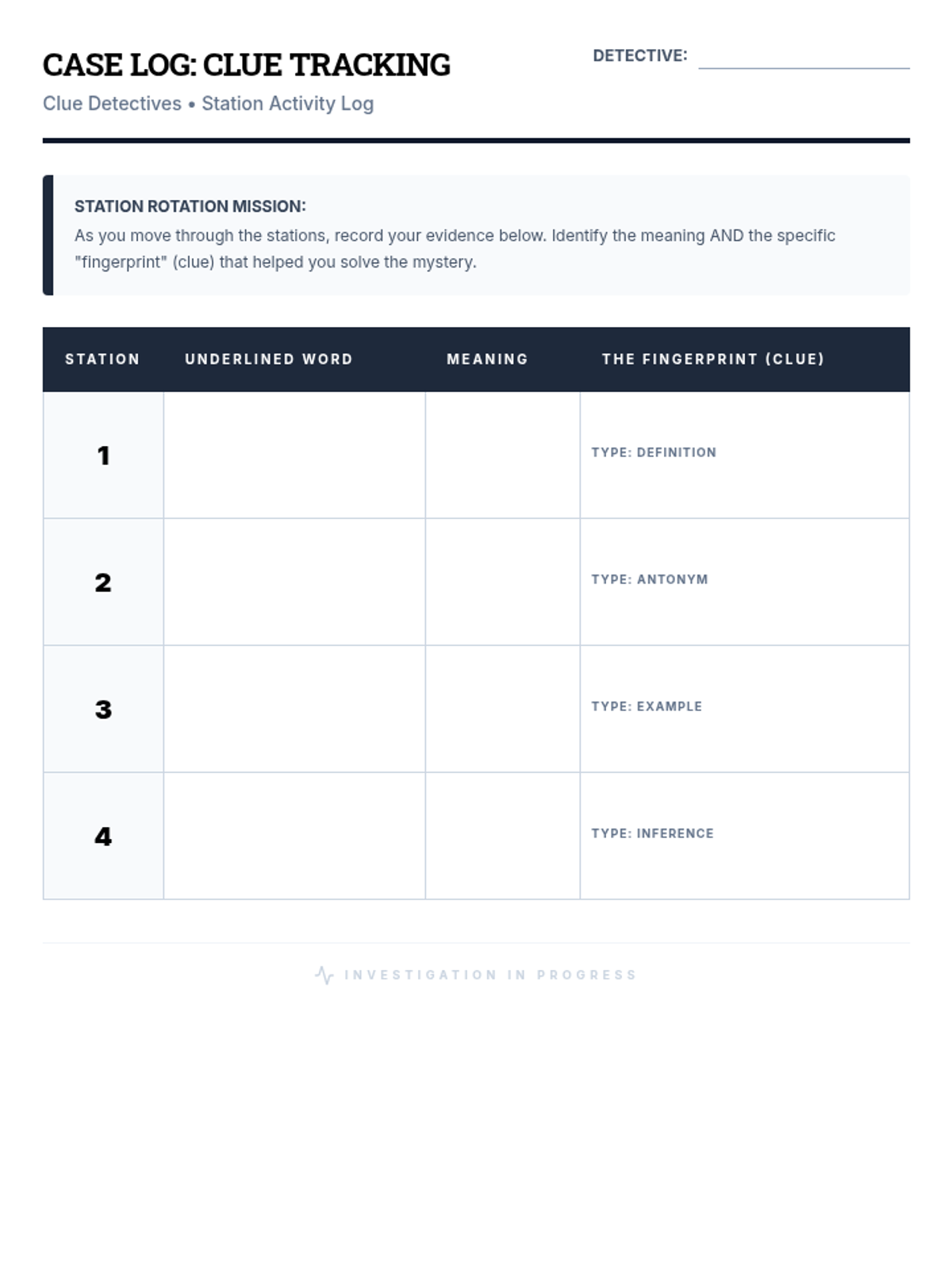
Students will rotate through 'detective stations' to practice using different types of context clues to solve word mysteries.
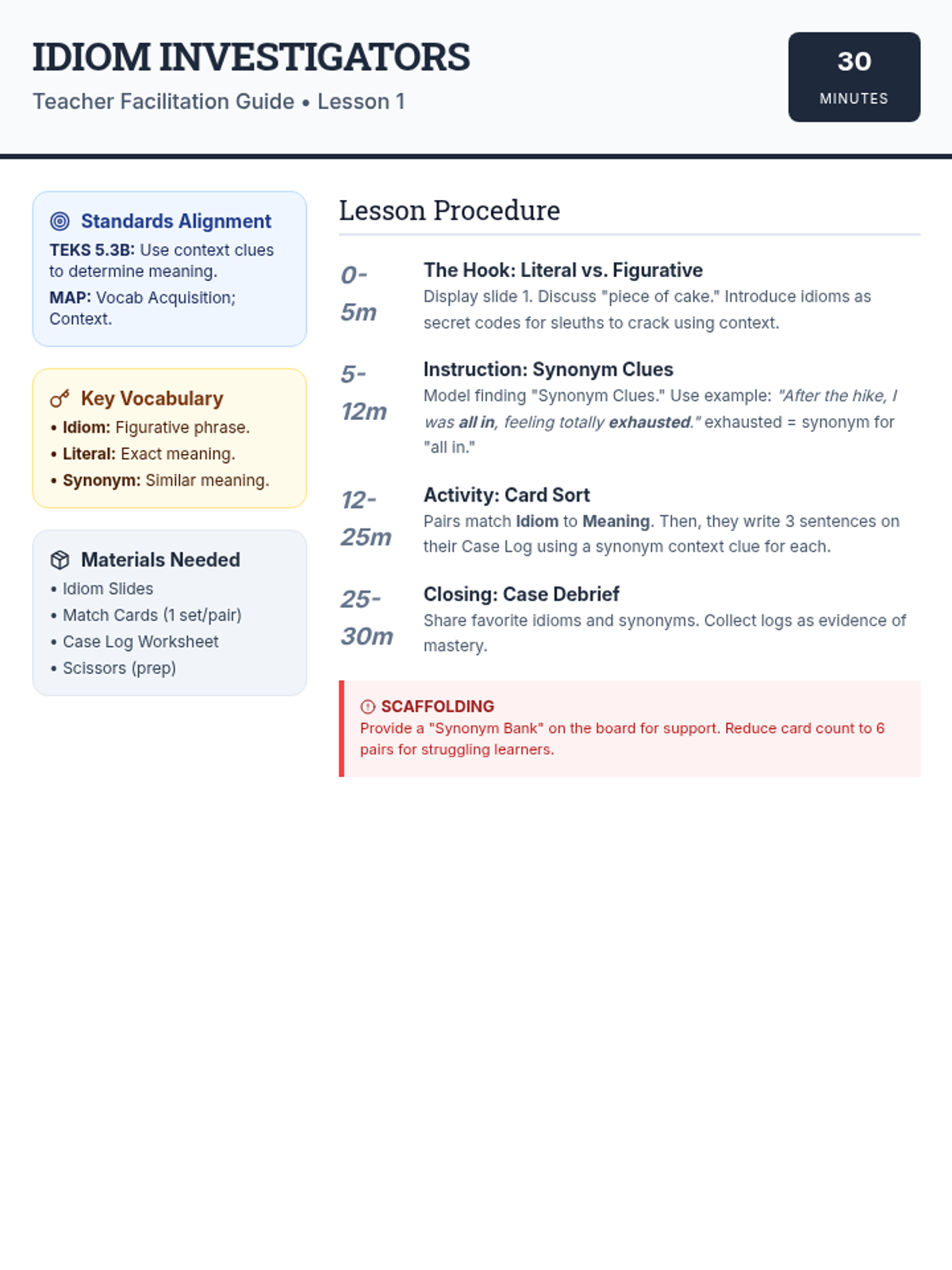
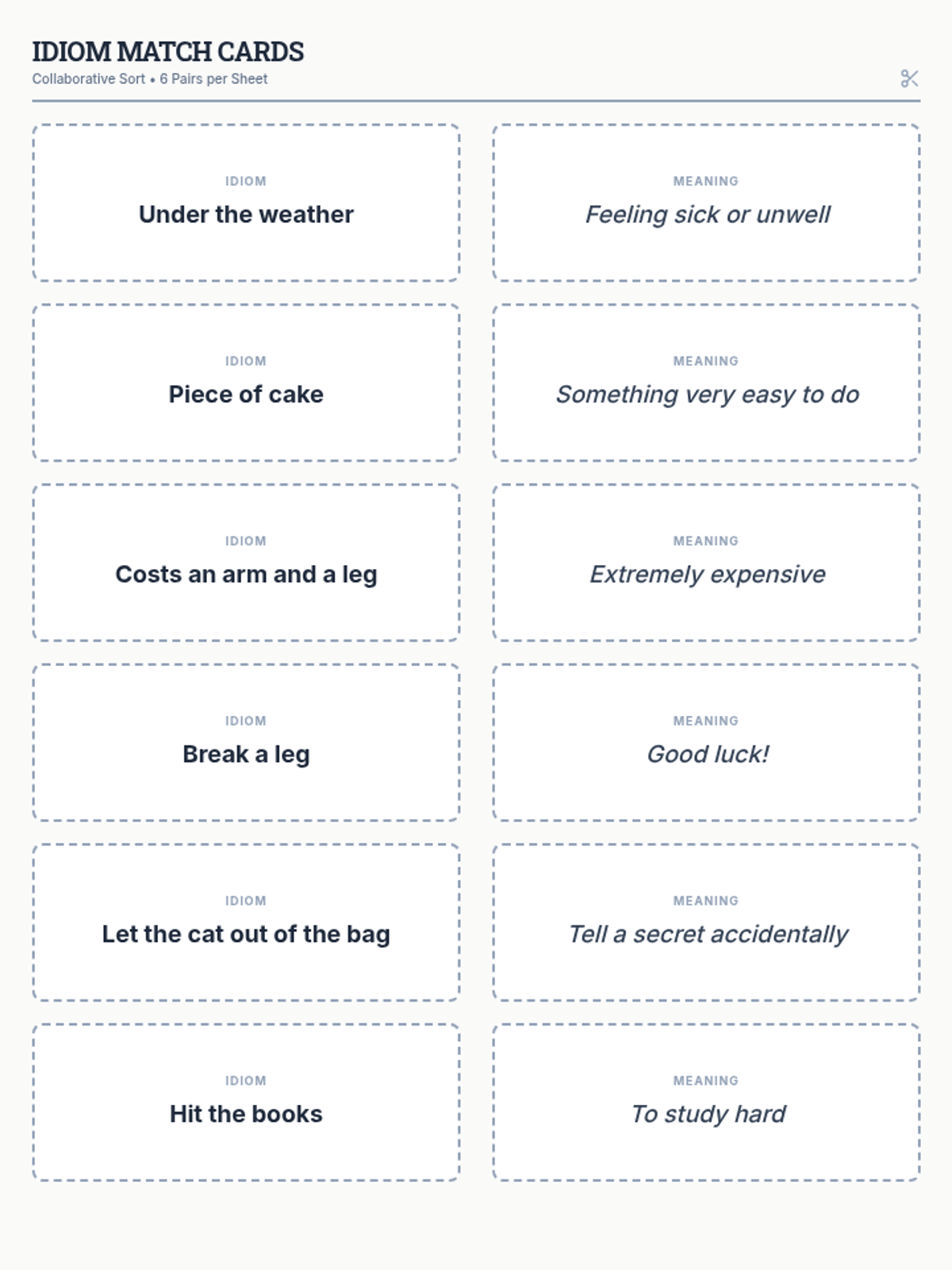
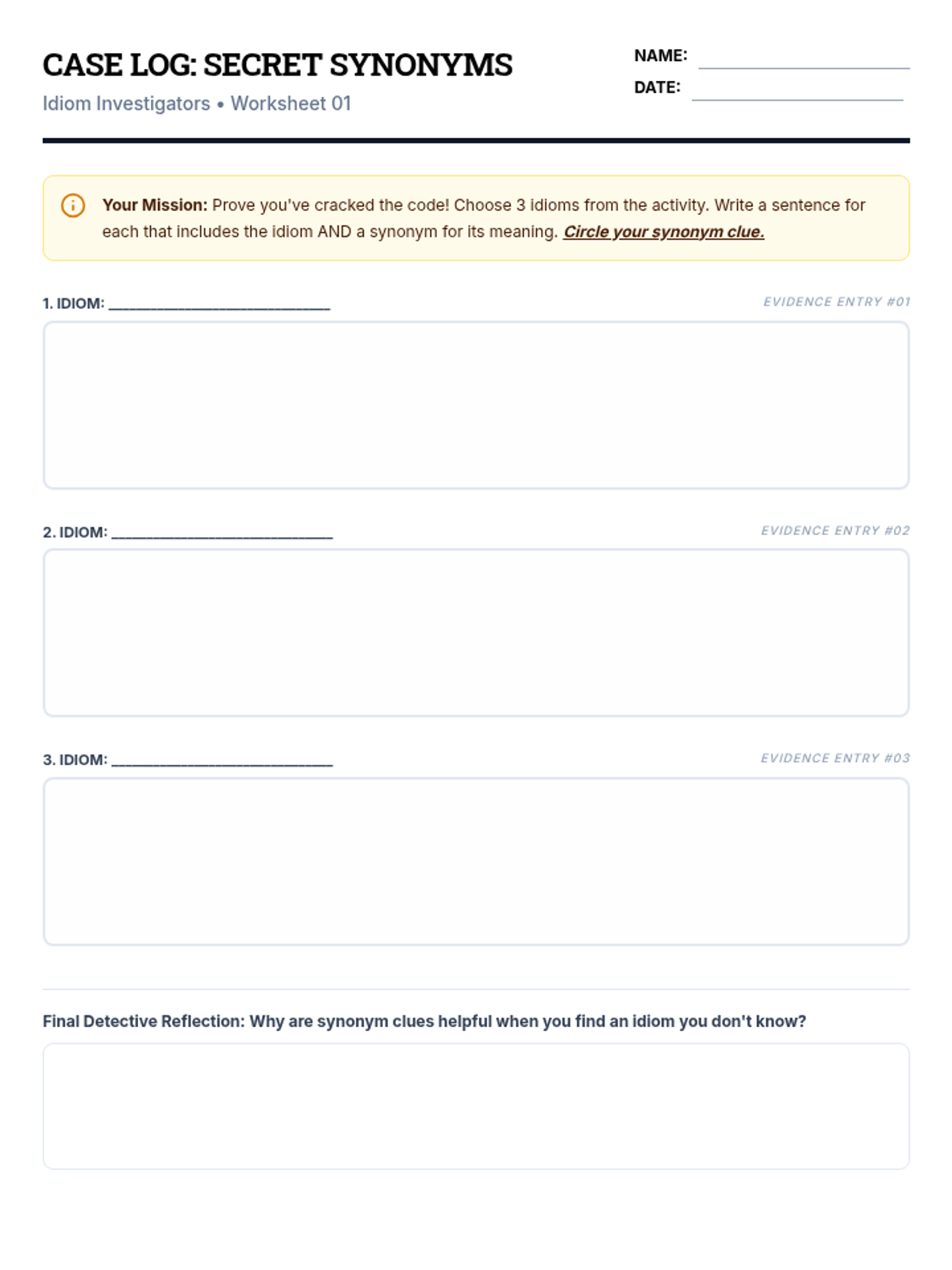
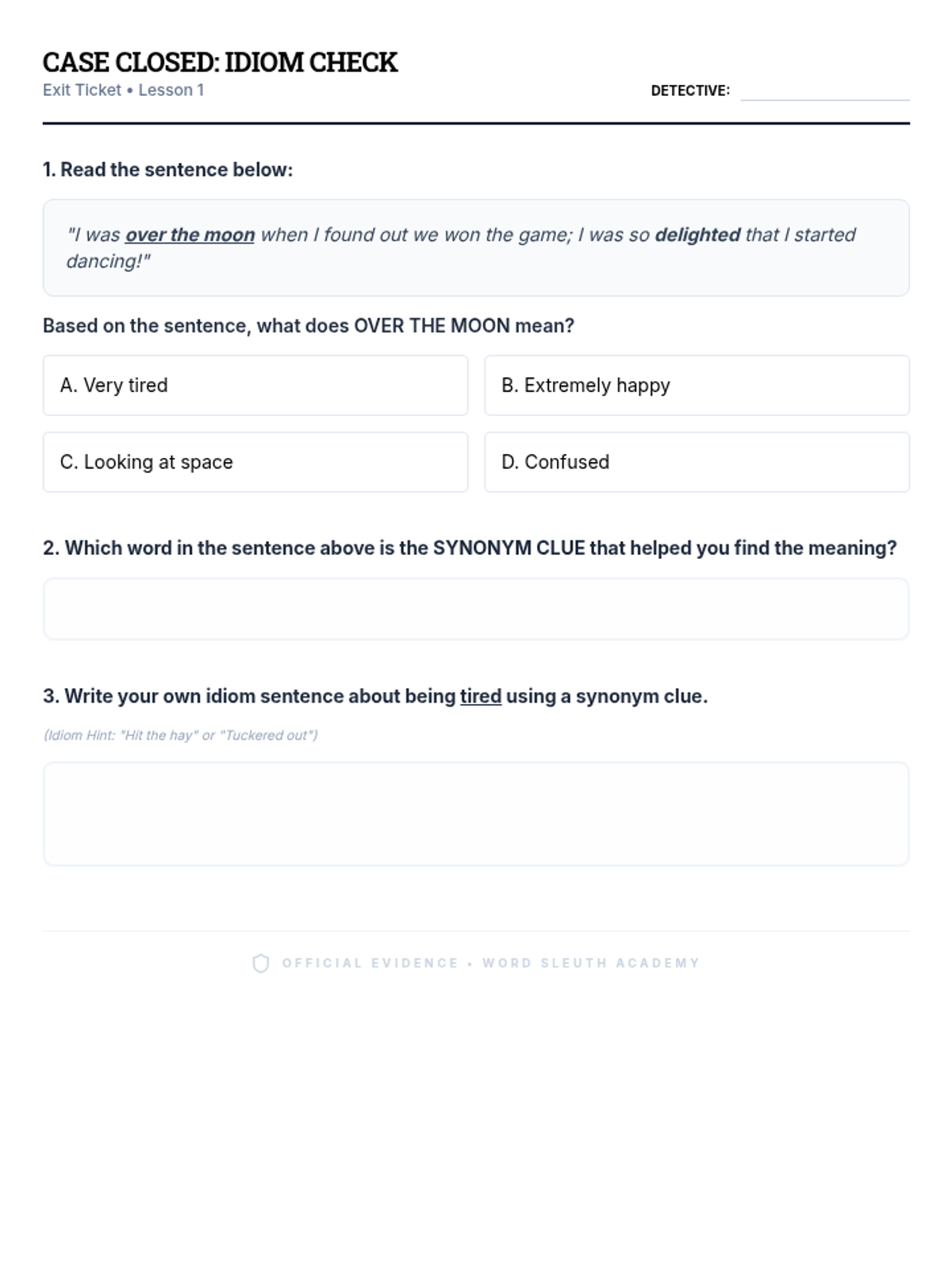
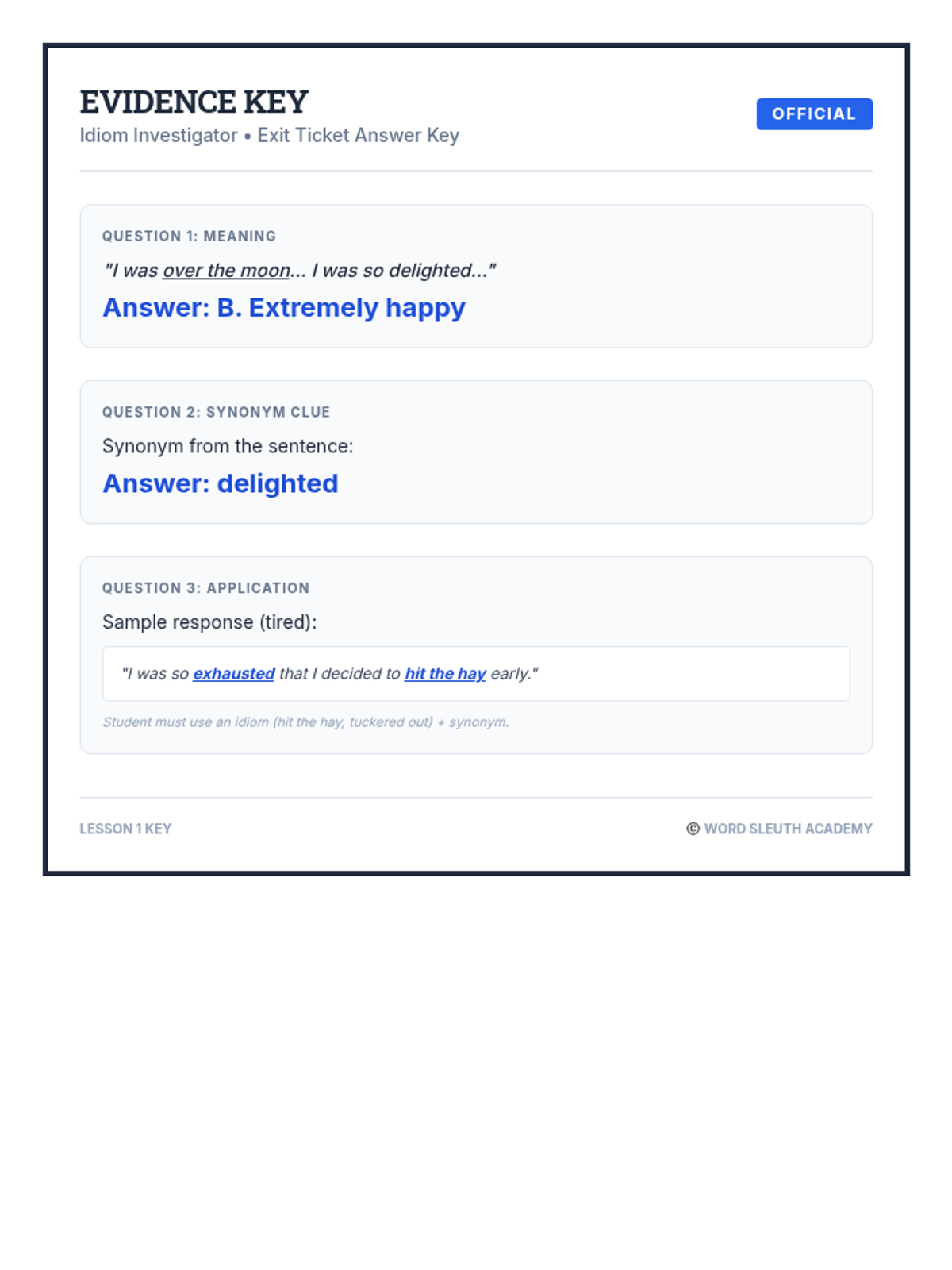
Students will investigate idioms and use synonym clues within sentences to determine meaning, featuring a collaborative card sort activity.
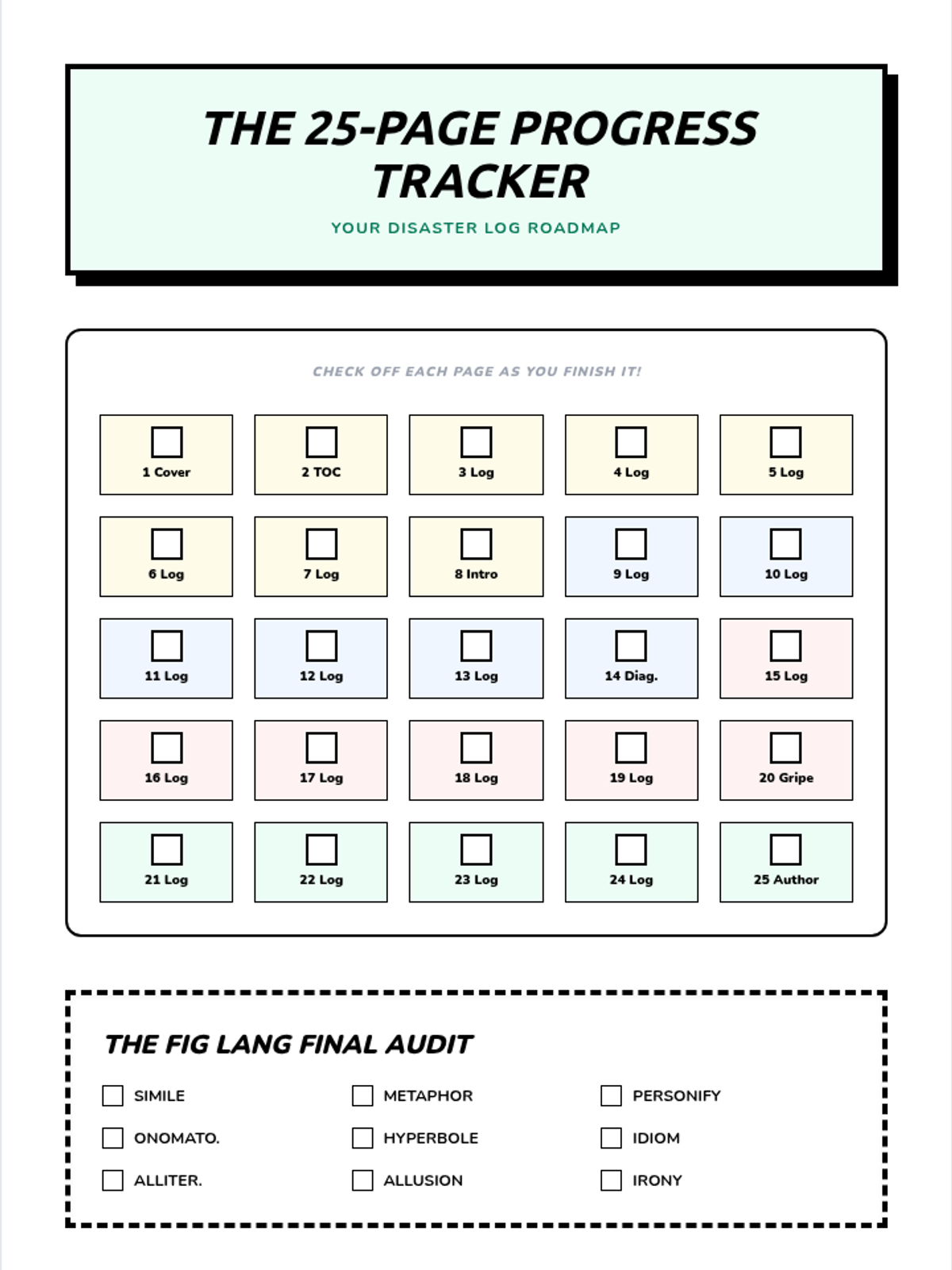
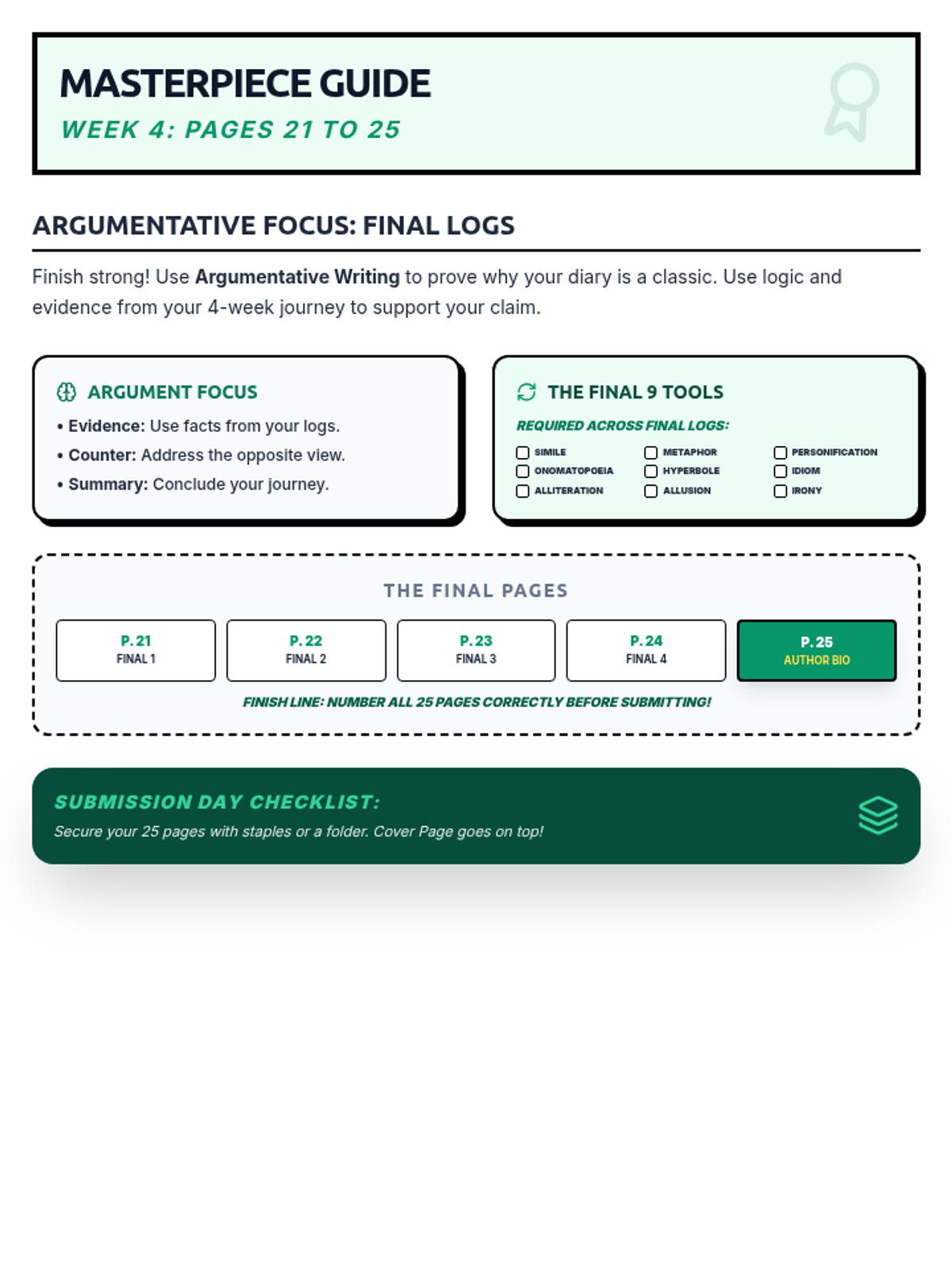
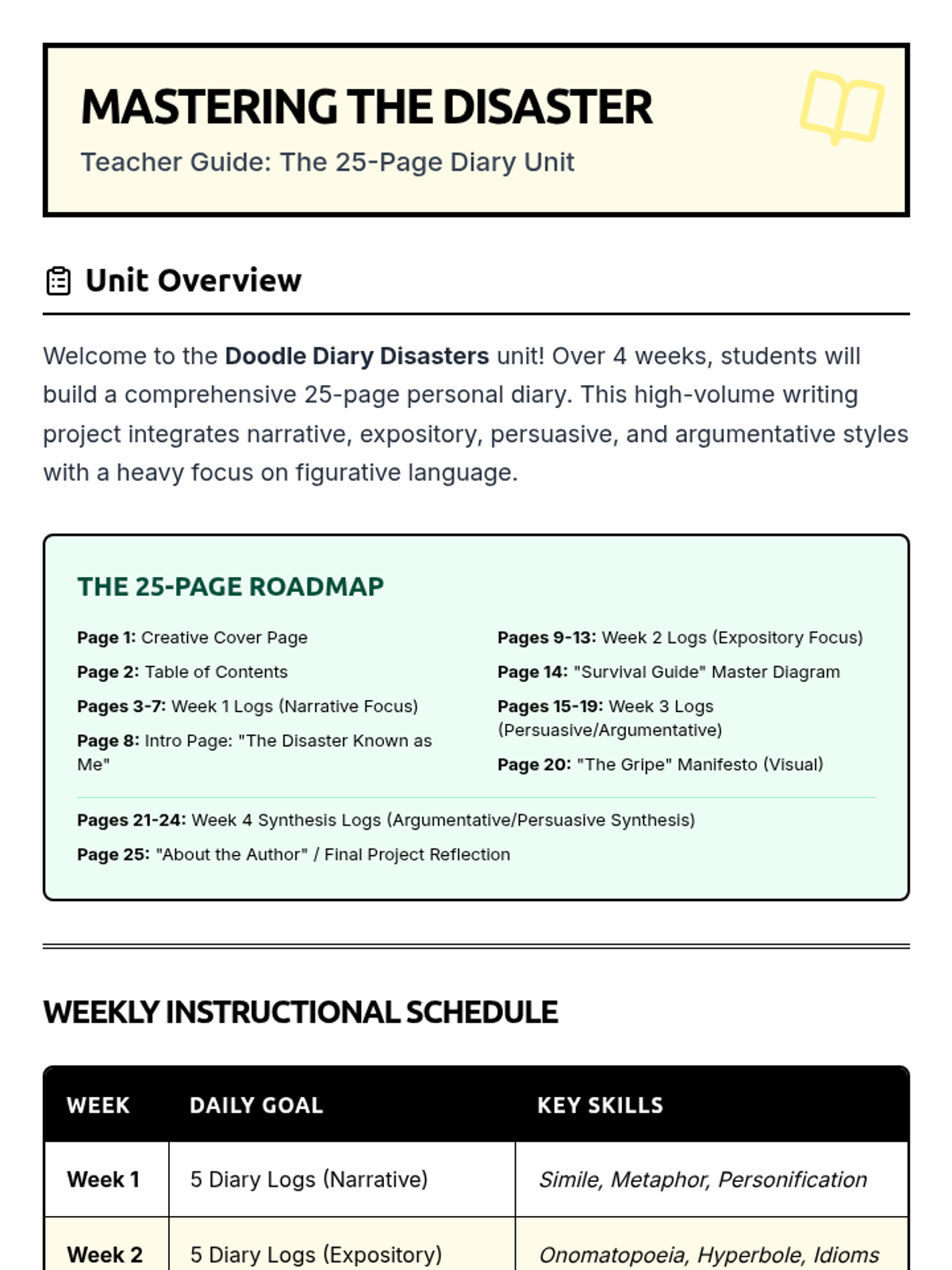
A final project-focused week where students compile their entries and use a comprehensive mix of all figurative language to complete their diary masterpiece.
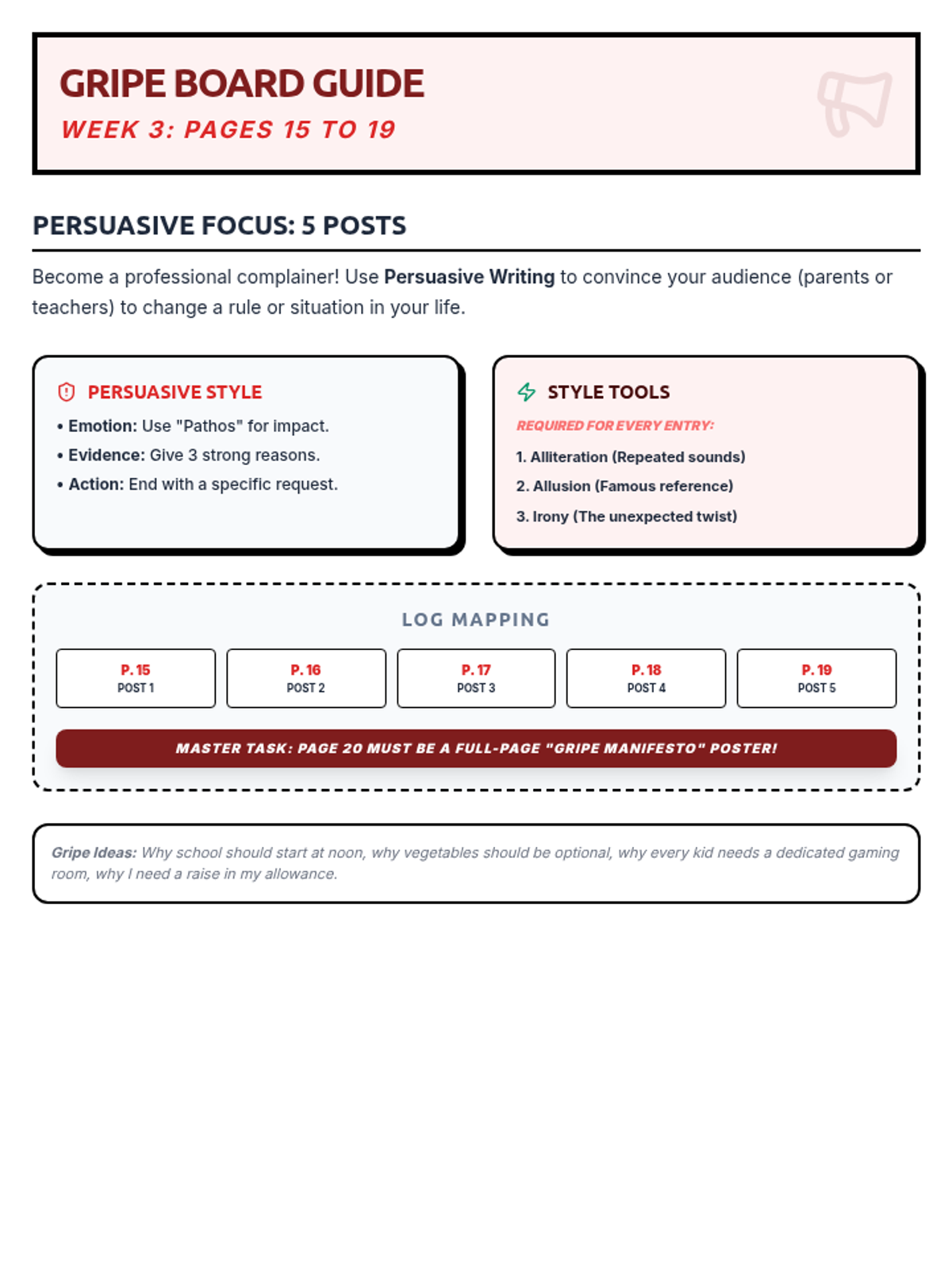
Introduces persuasive and argumentative writing within a diary context, using alliteration, allusion, and irony to strengthen student voices.
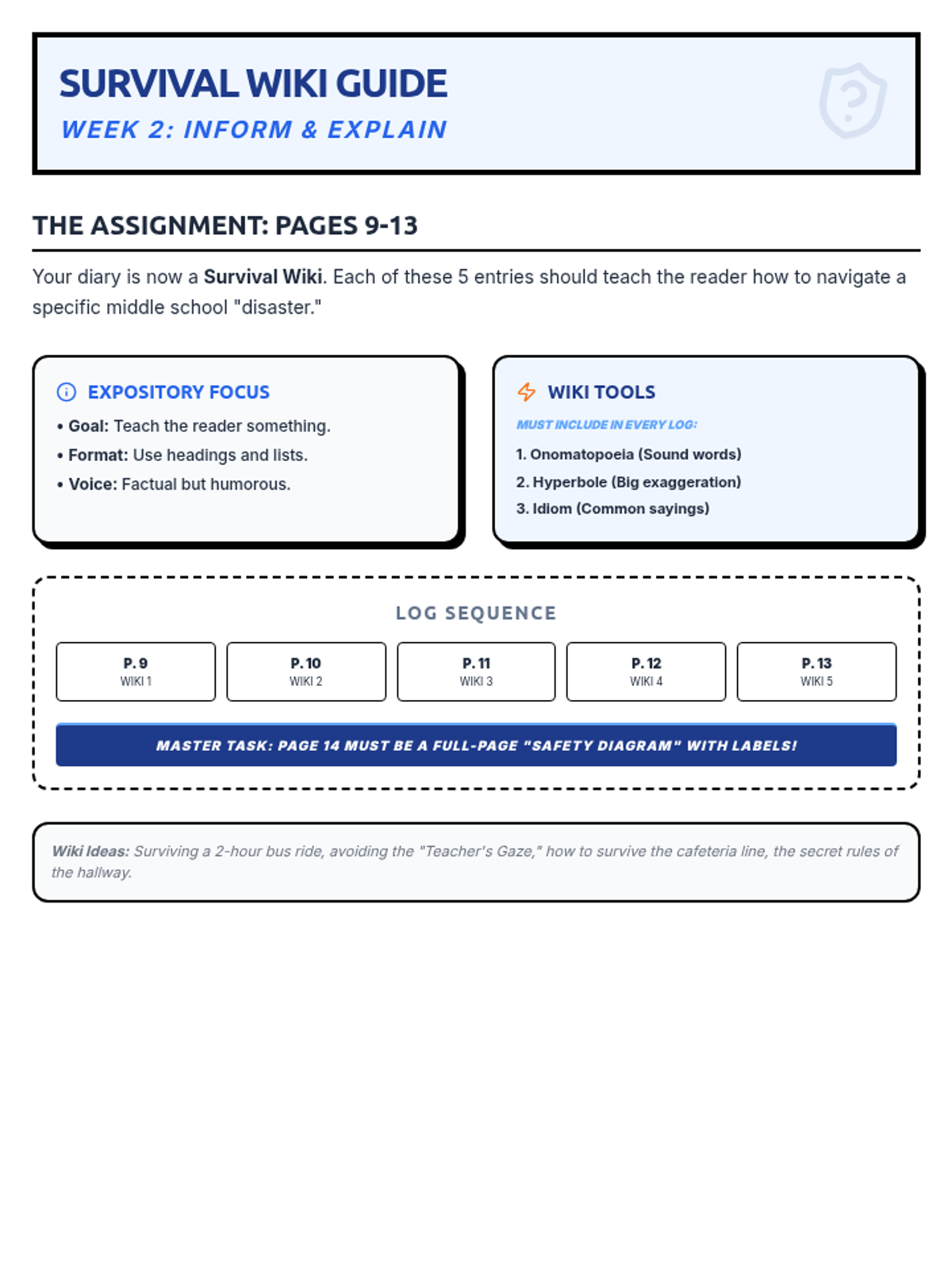
Explores expository writing to explain school or home life while integrating onomatopoeia, hyperbole, and idioms for comedic effect.
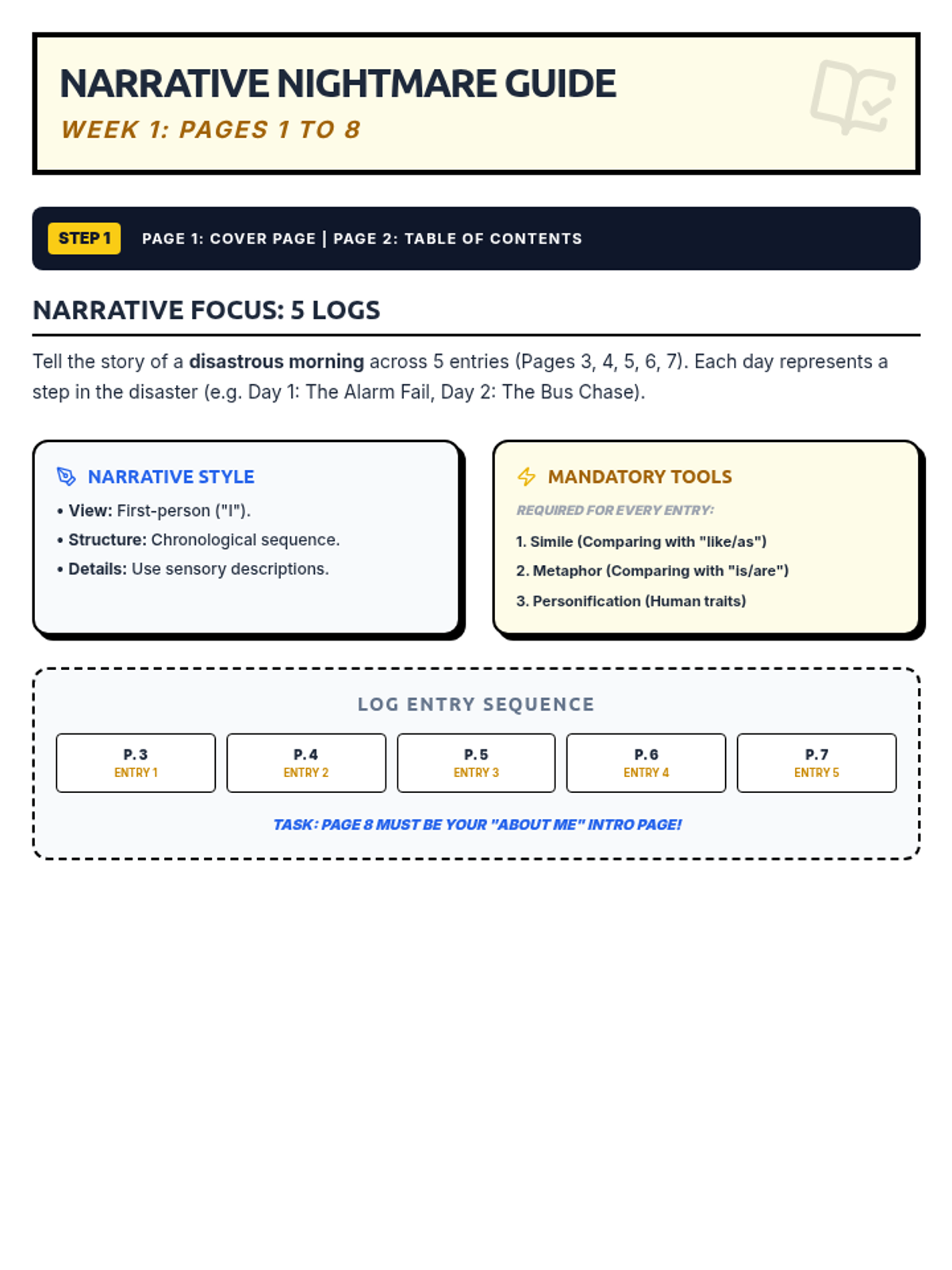
Focuses on narrative writing techniques and using similes, metaphors, and personification to bring a personal story to life in a diary format.
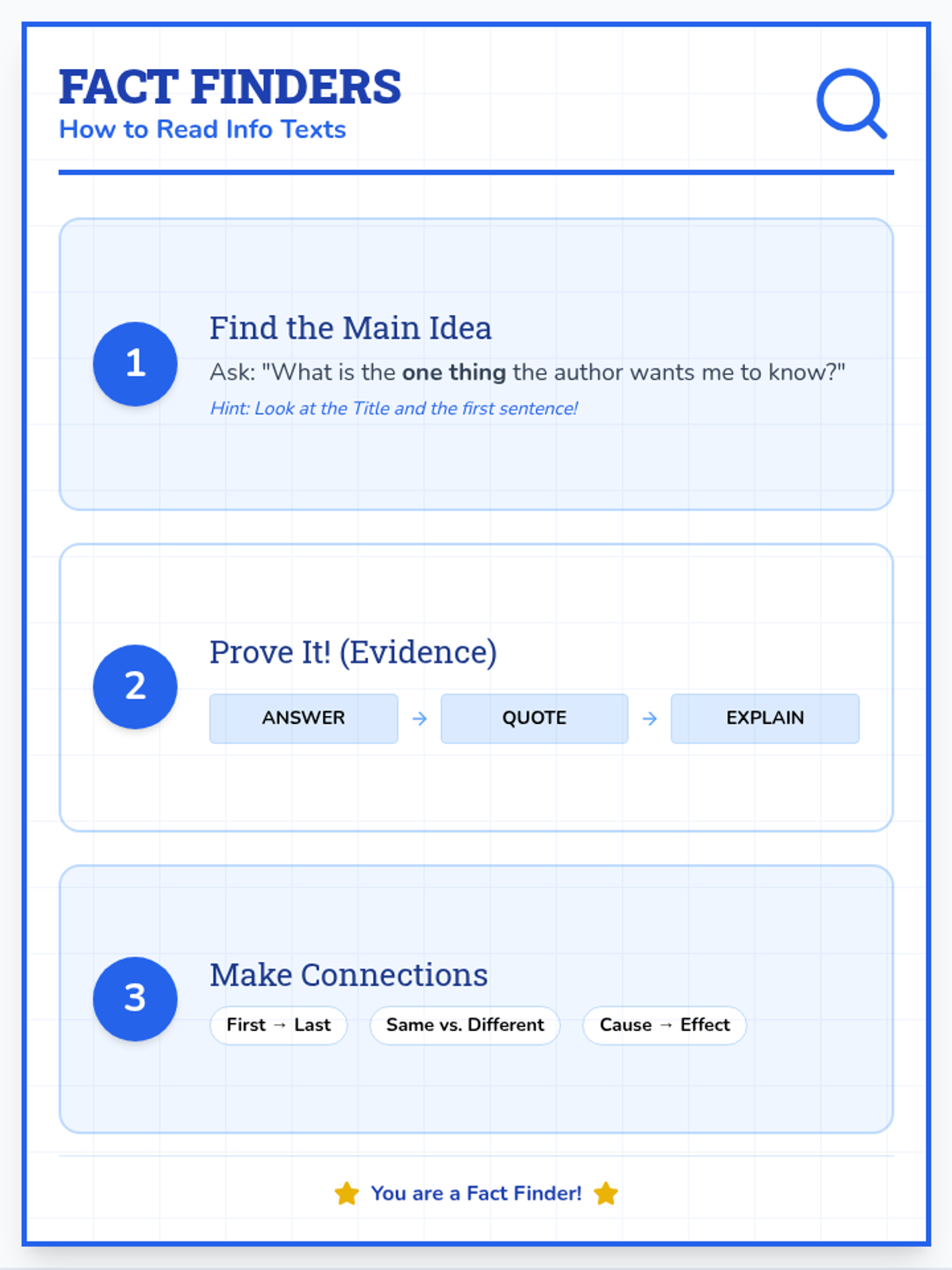
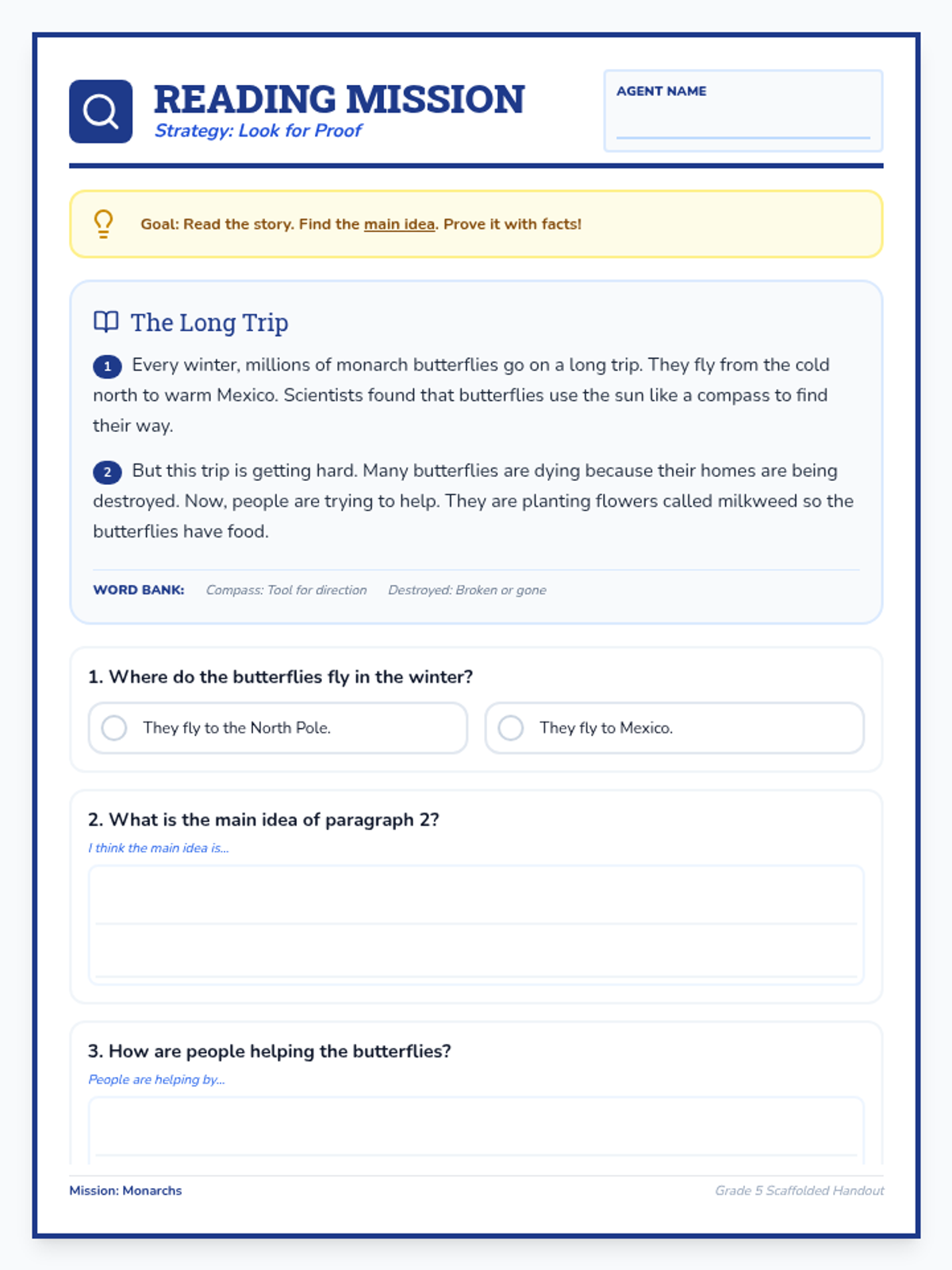
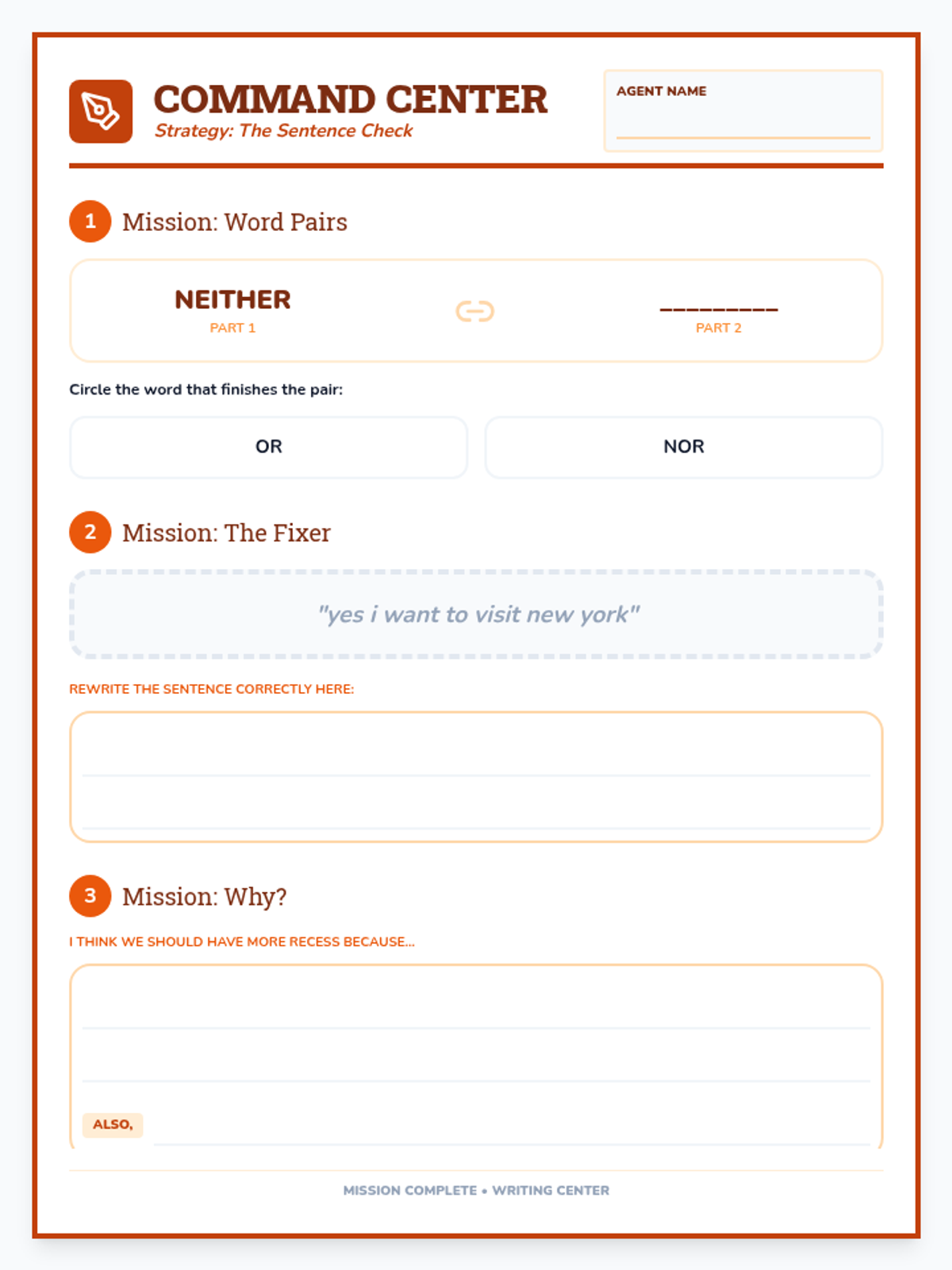
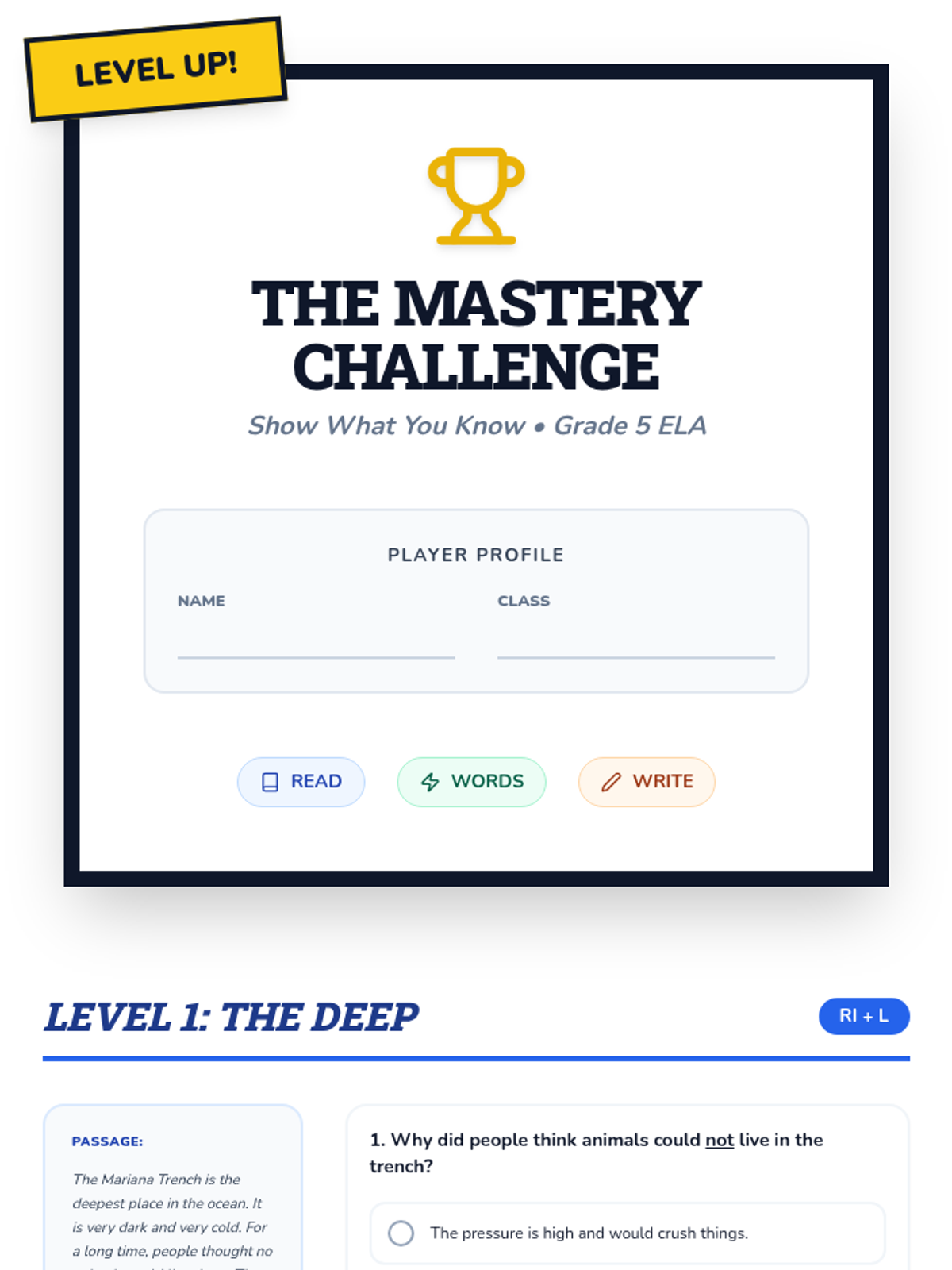
A comprehensive series of resources focused on mastering 5th Grade NYS ELA standards for Informational Text, Language/Vocabulary, and Writing/Conventions. Includes visual aids, targeted strategy guides, and a summative practice packet.
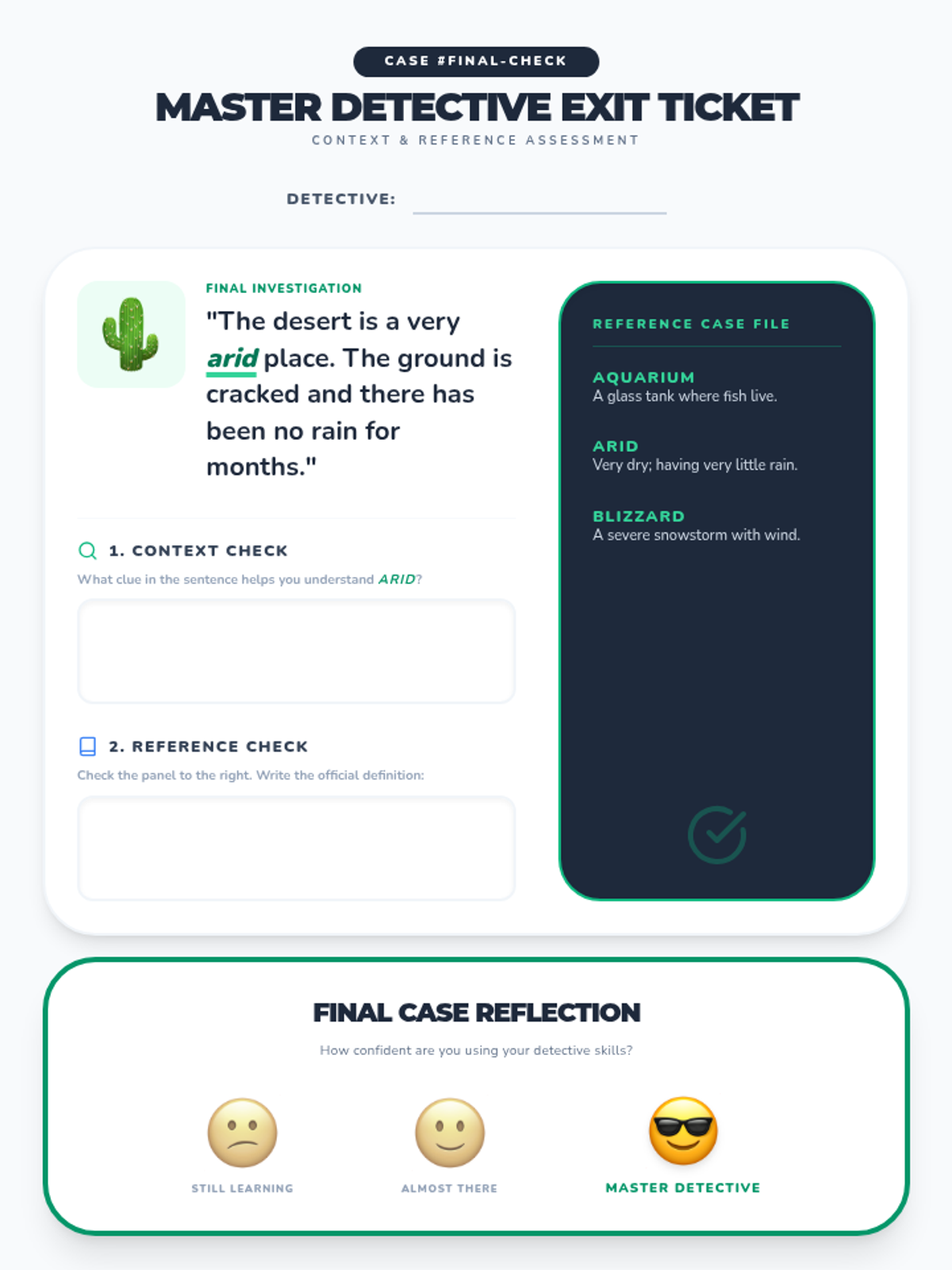
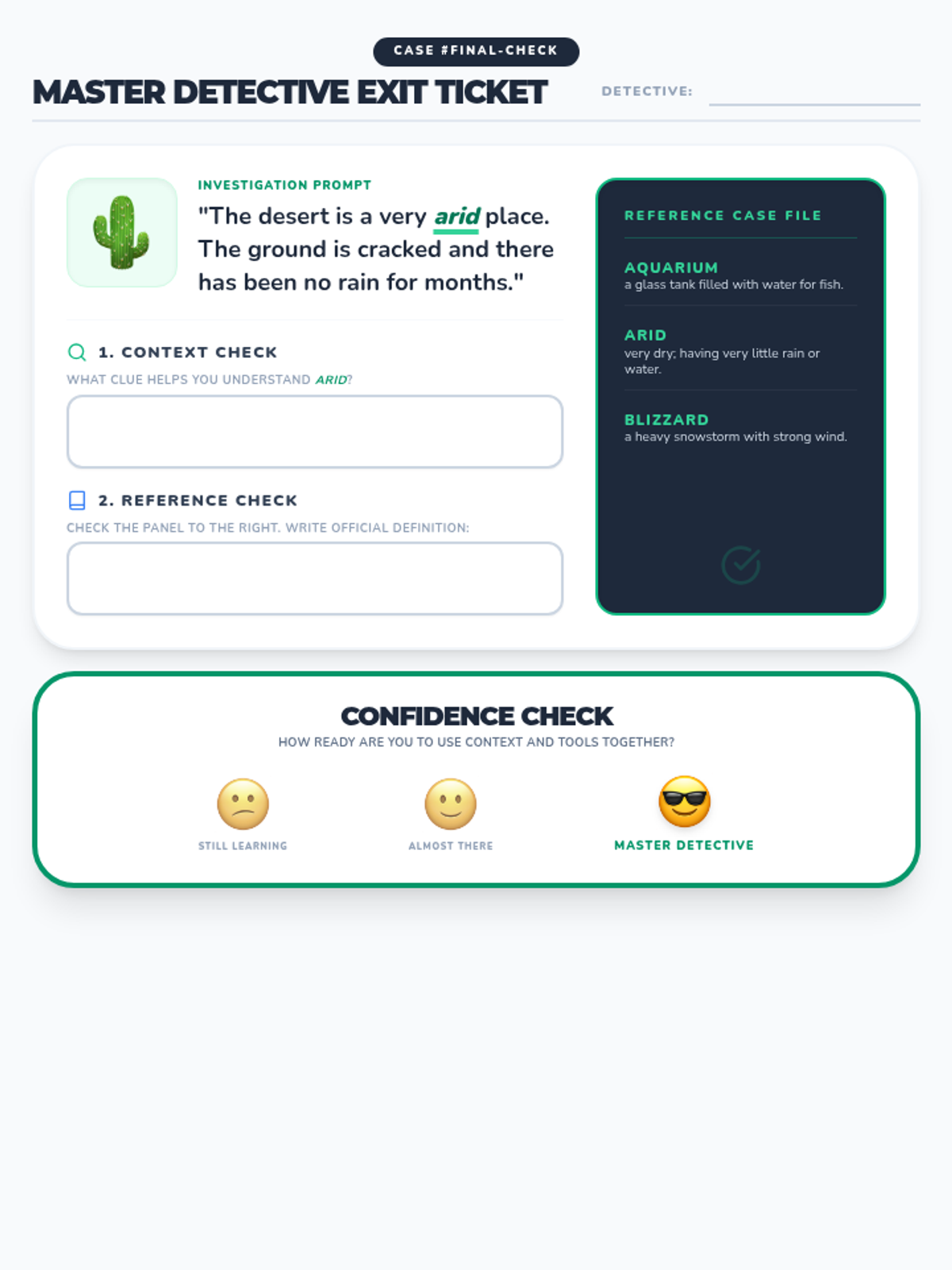
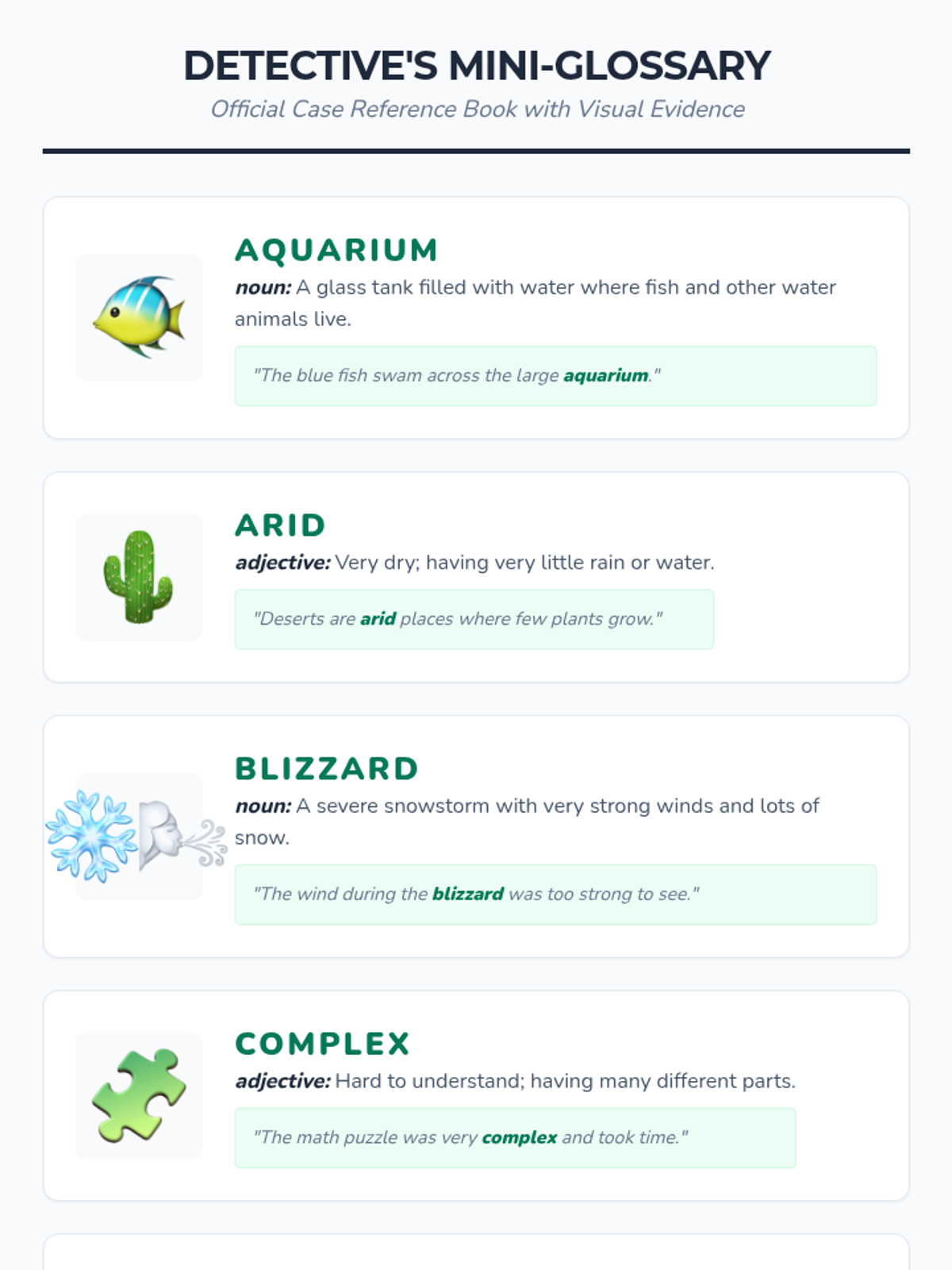
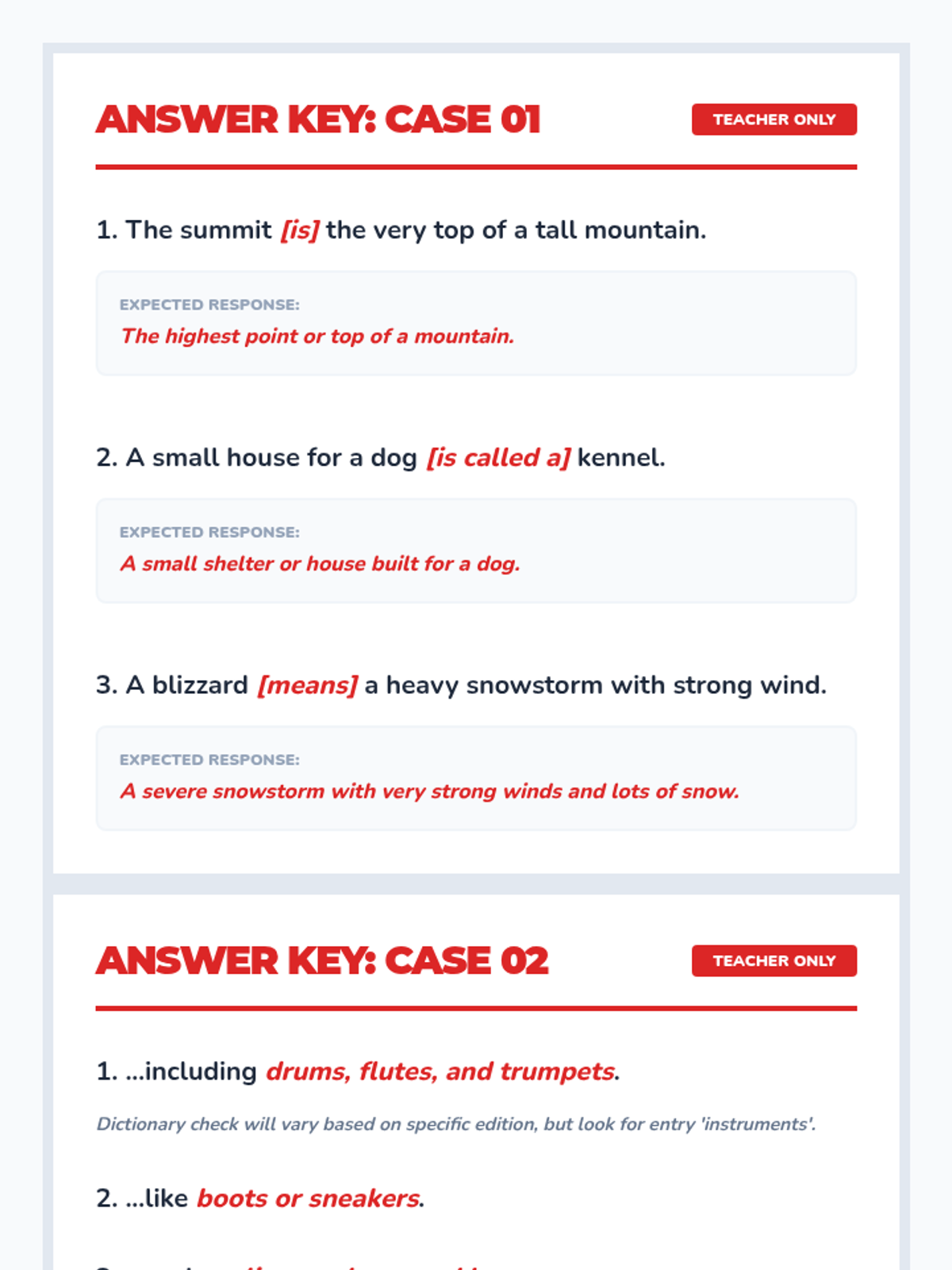
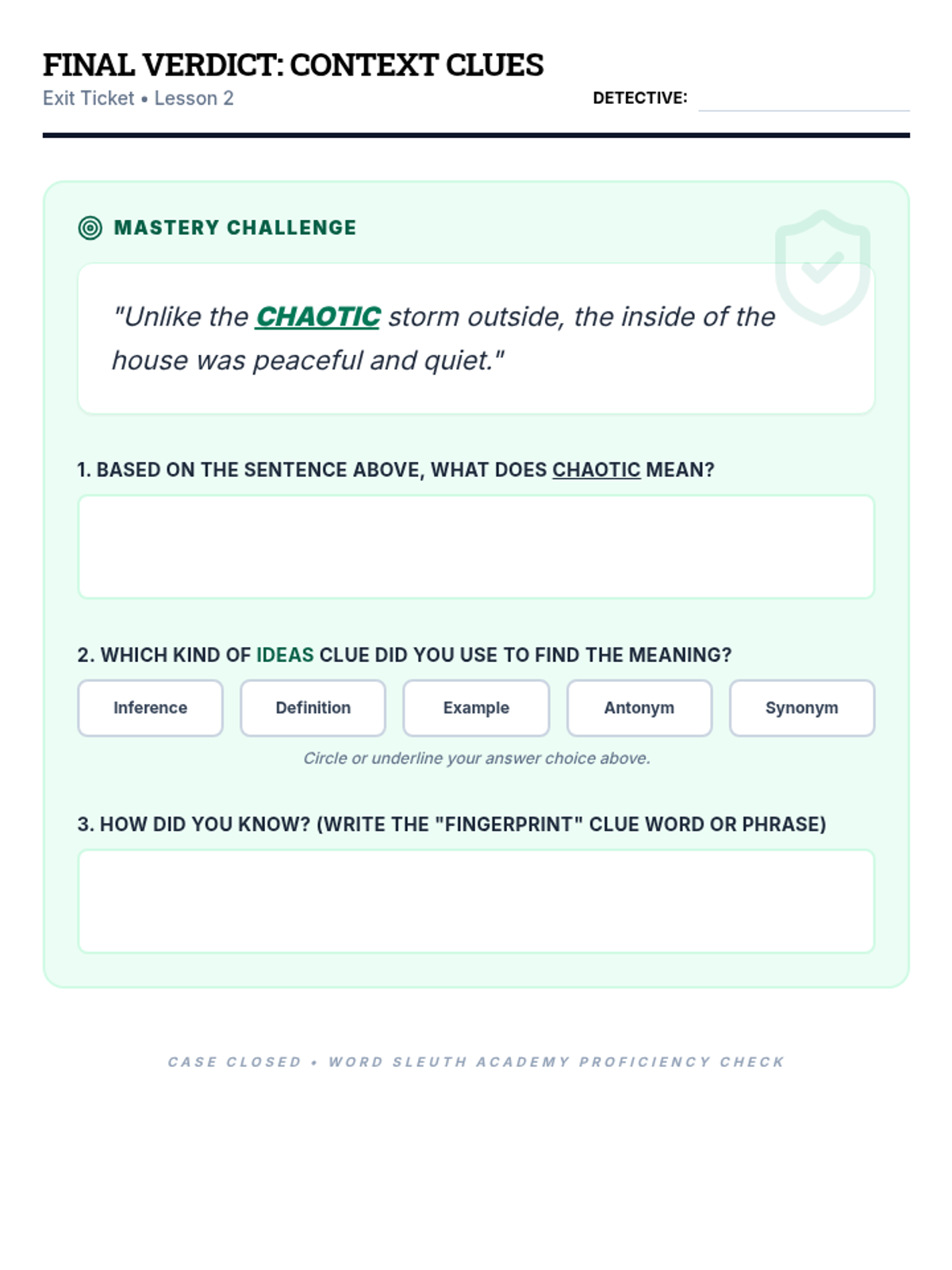
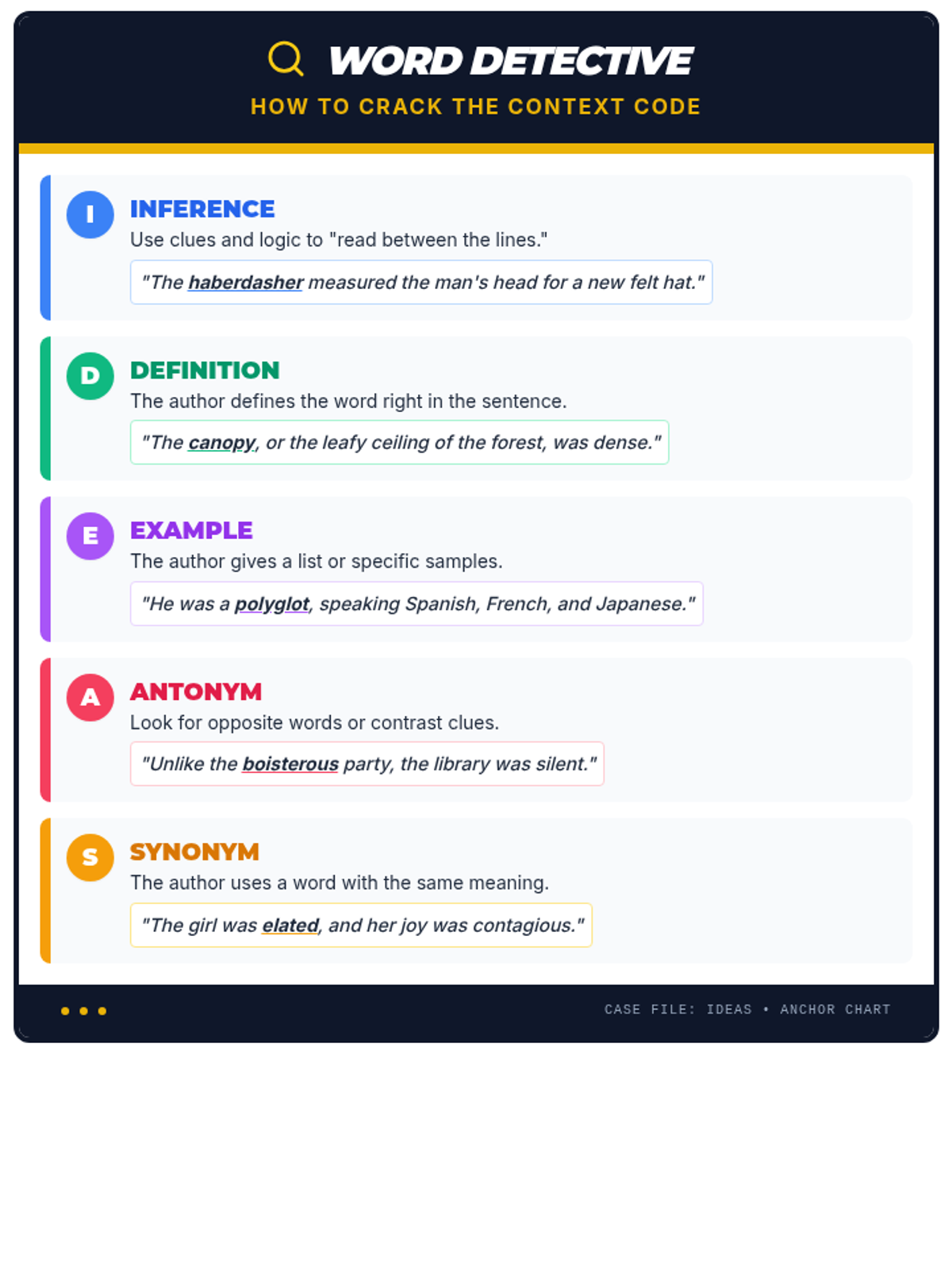
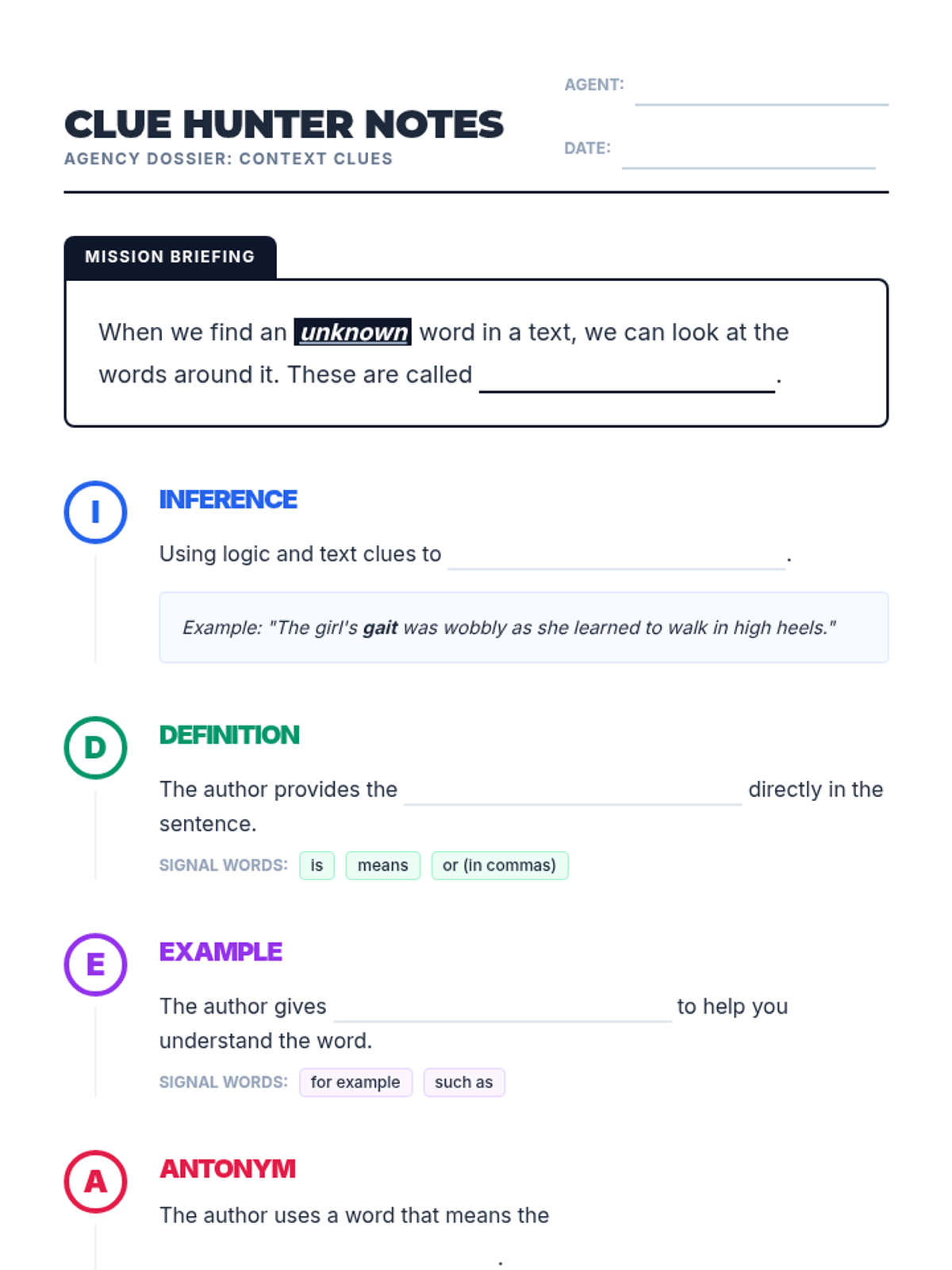
A comprehensive lesson on using context clues (Inference, Definition, Example, Antonym, Synonym) to decode unfamiliar vocabulary, featuring a detective-themed anchor chart, guided notes, and a story-based assessment.