Geometric classification, measurement of area and volume, and the study of transformations and rigid motions. Builds toward complex proofs, trigonometry for general triangles, and the algebraic representation of conic sections.
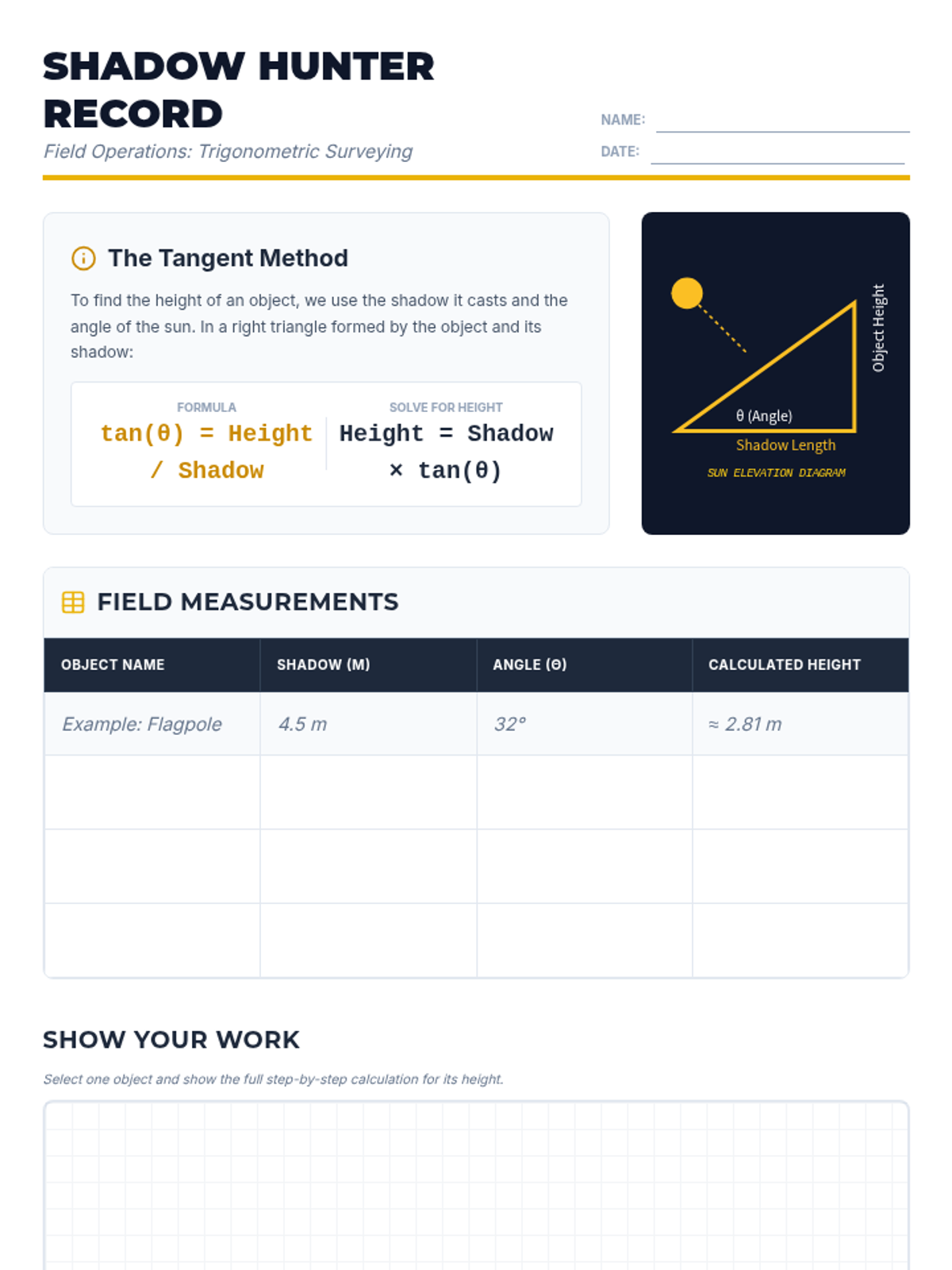
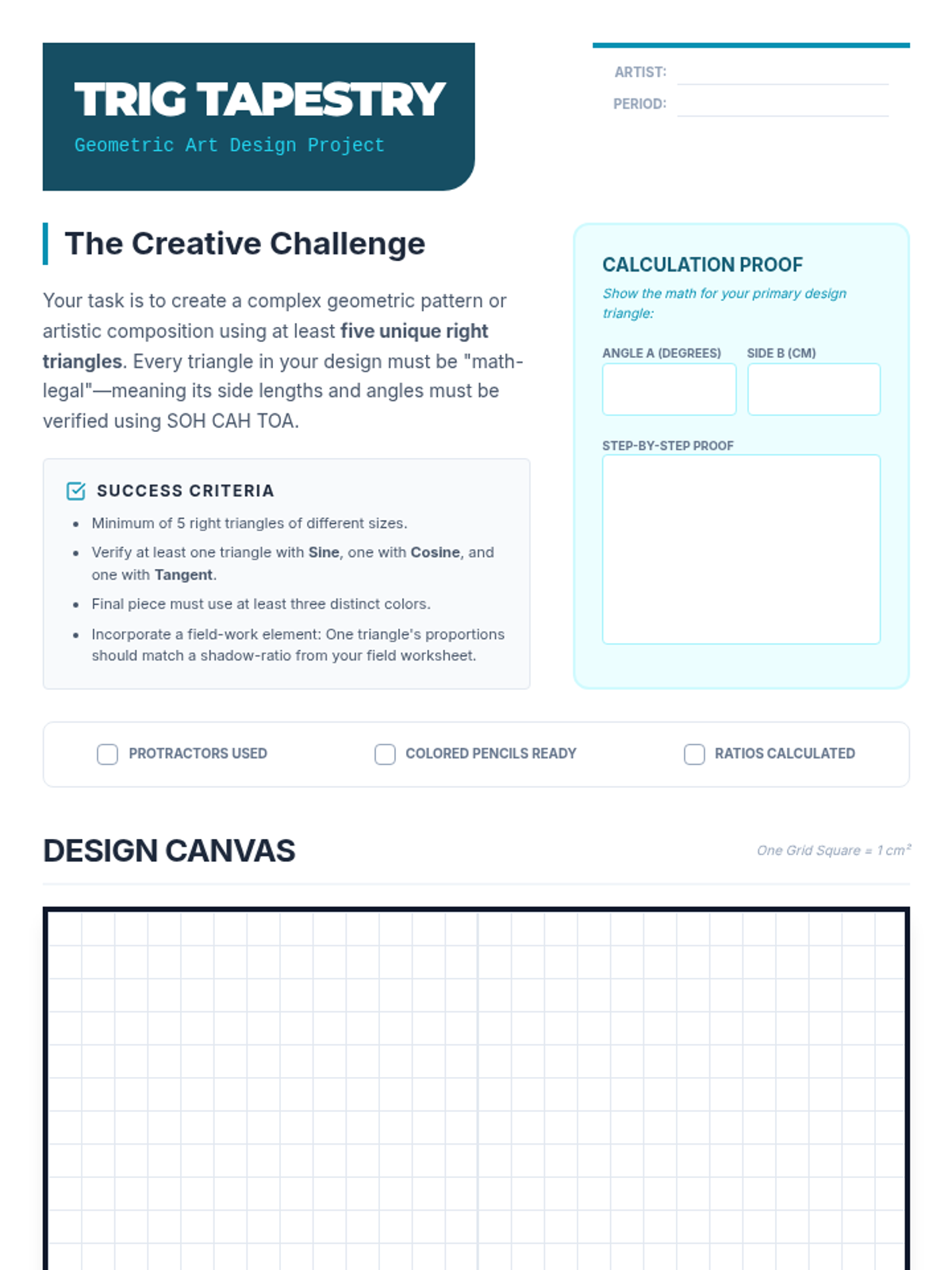
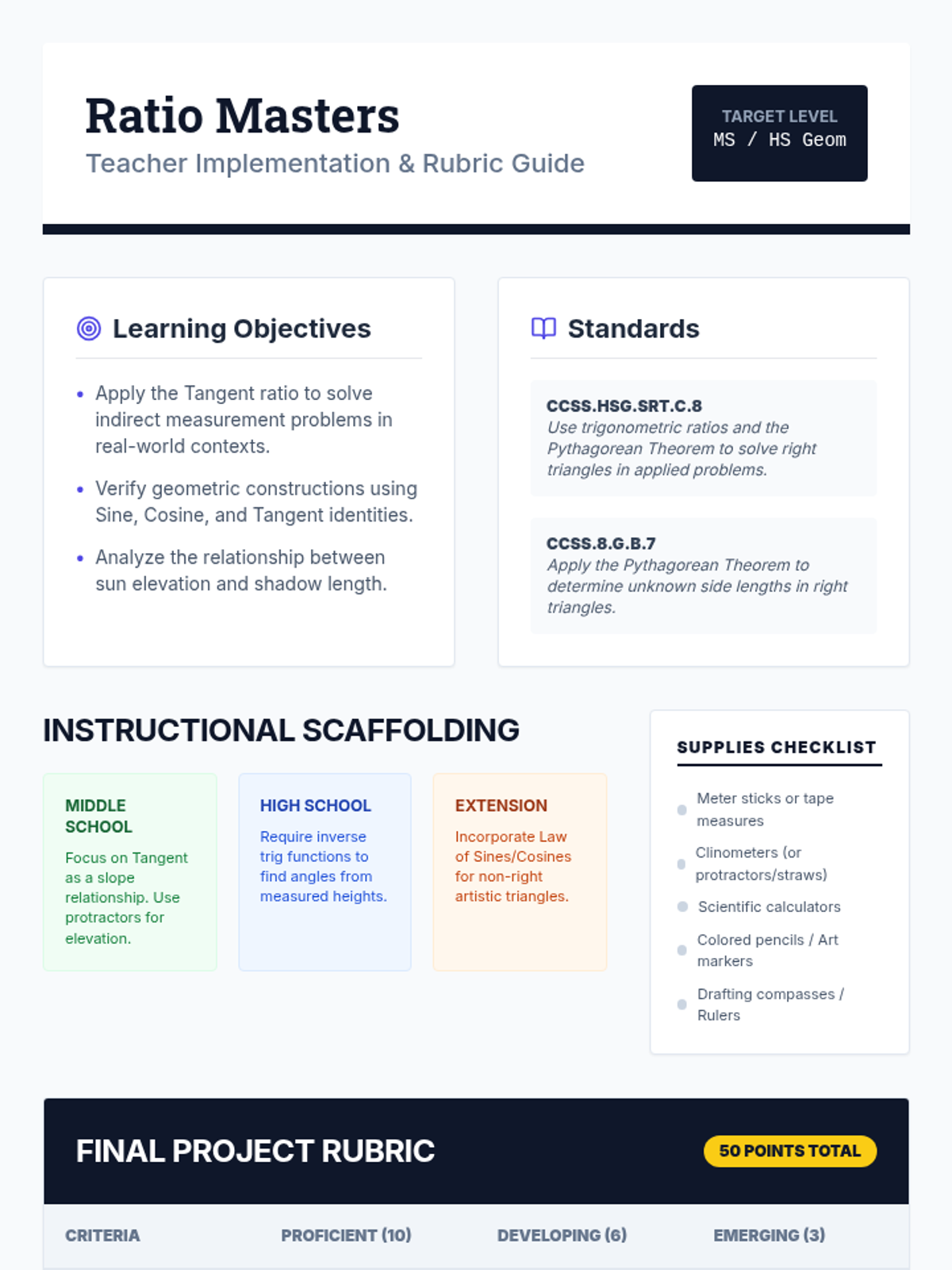
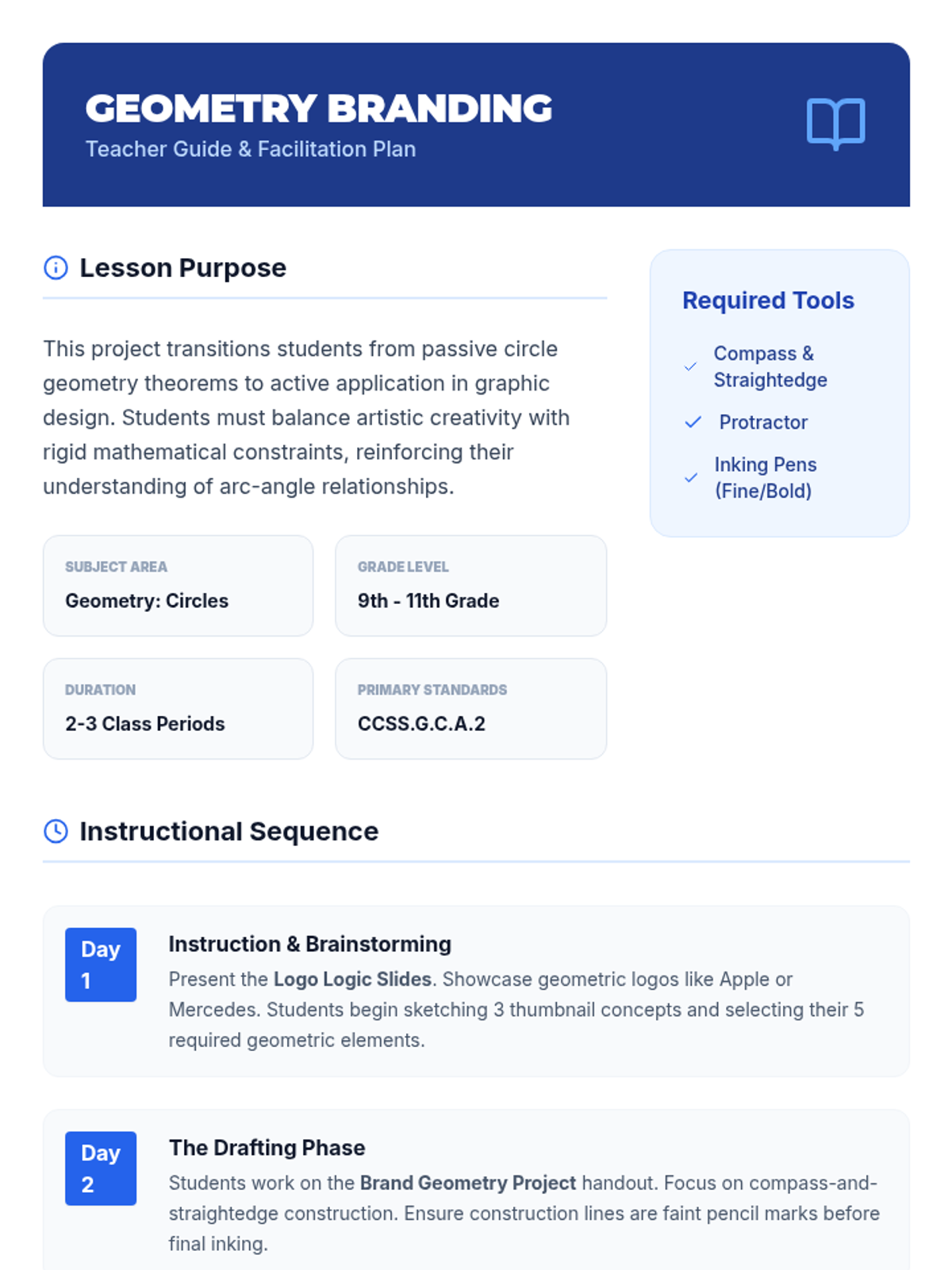
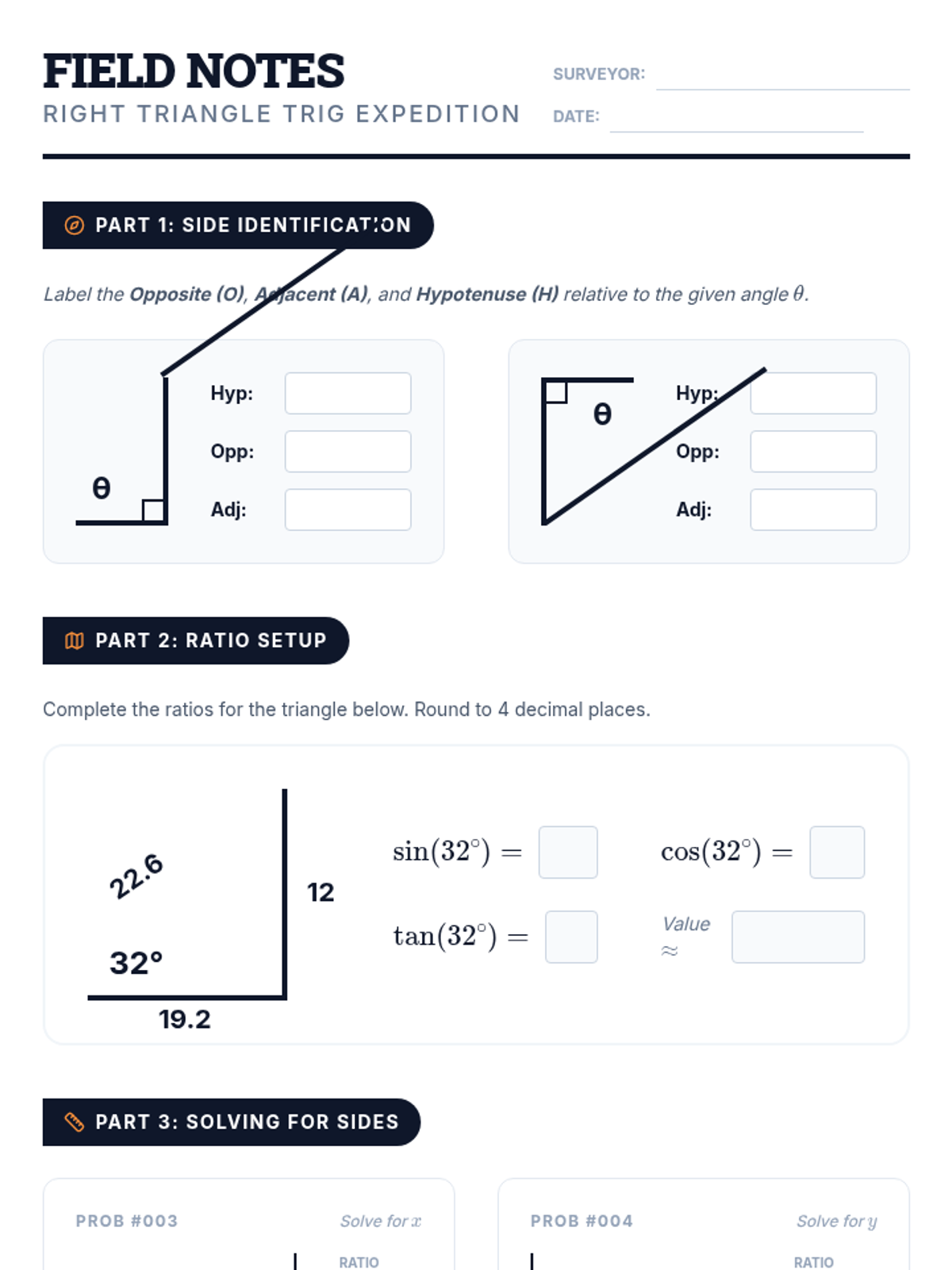
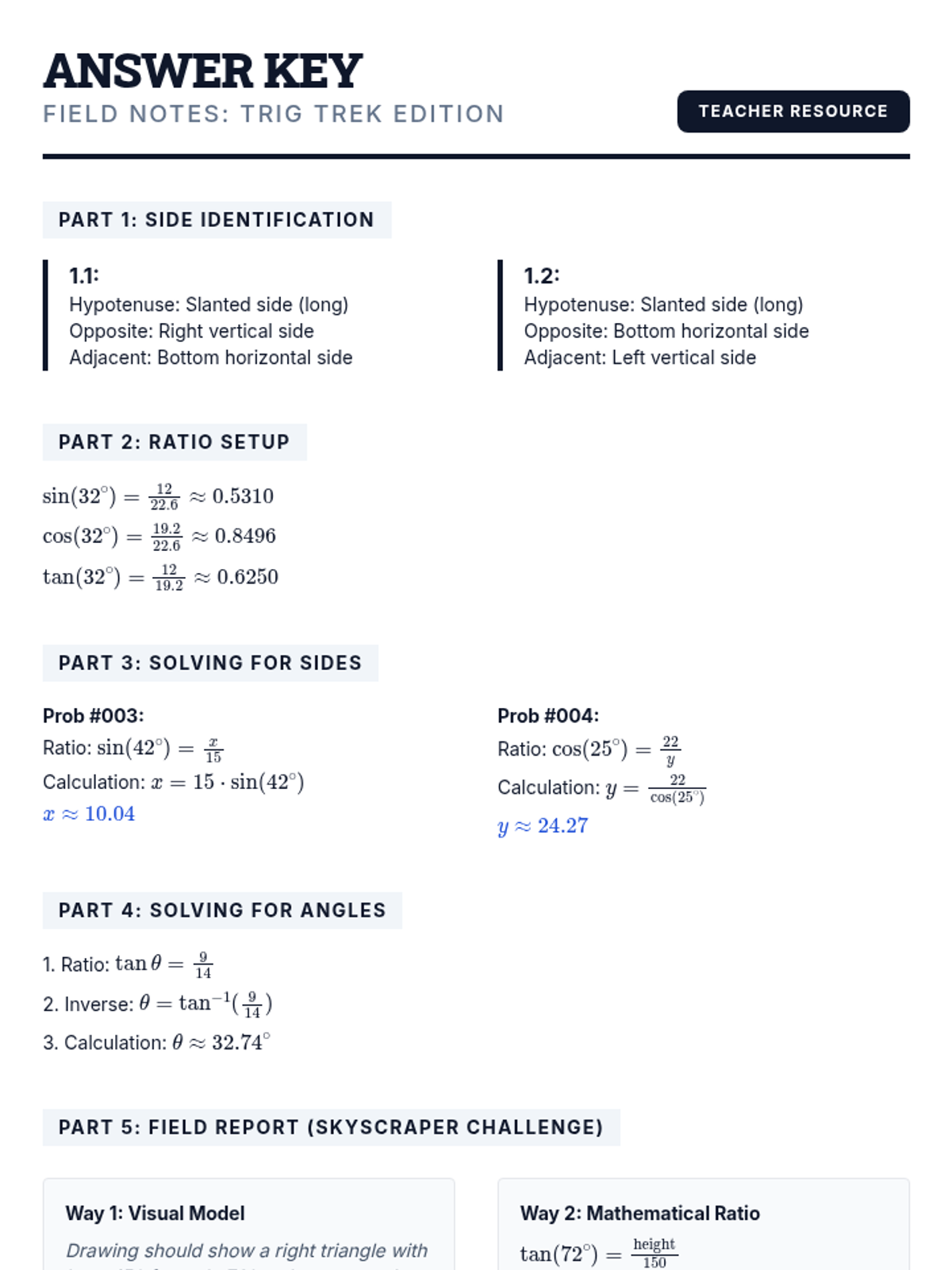
Students learn to apply Sine, Cosine, and Tangent to real-world measurements and abstract artistic design, culminating in a dual-phase project.
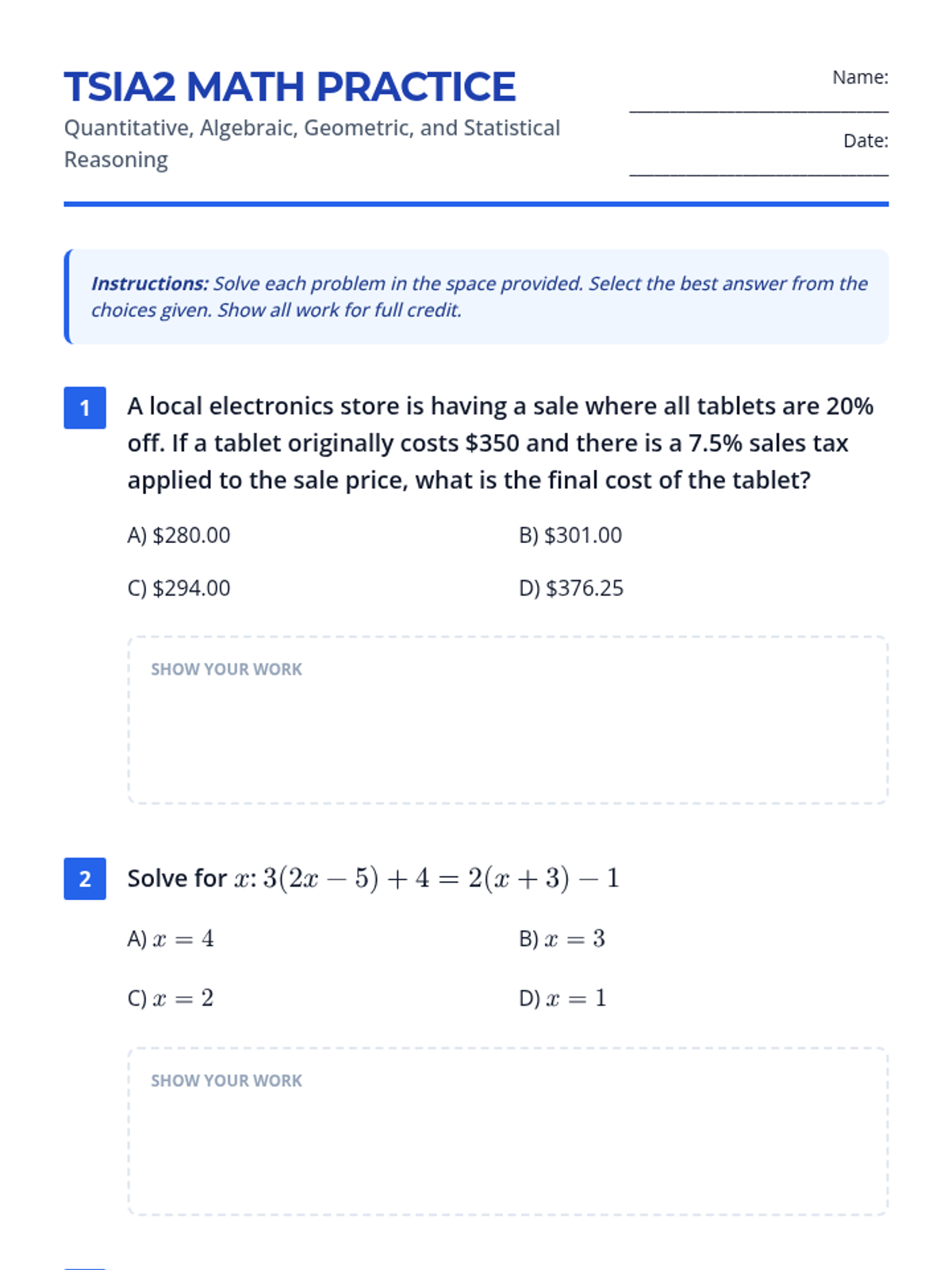
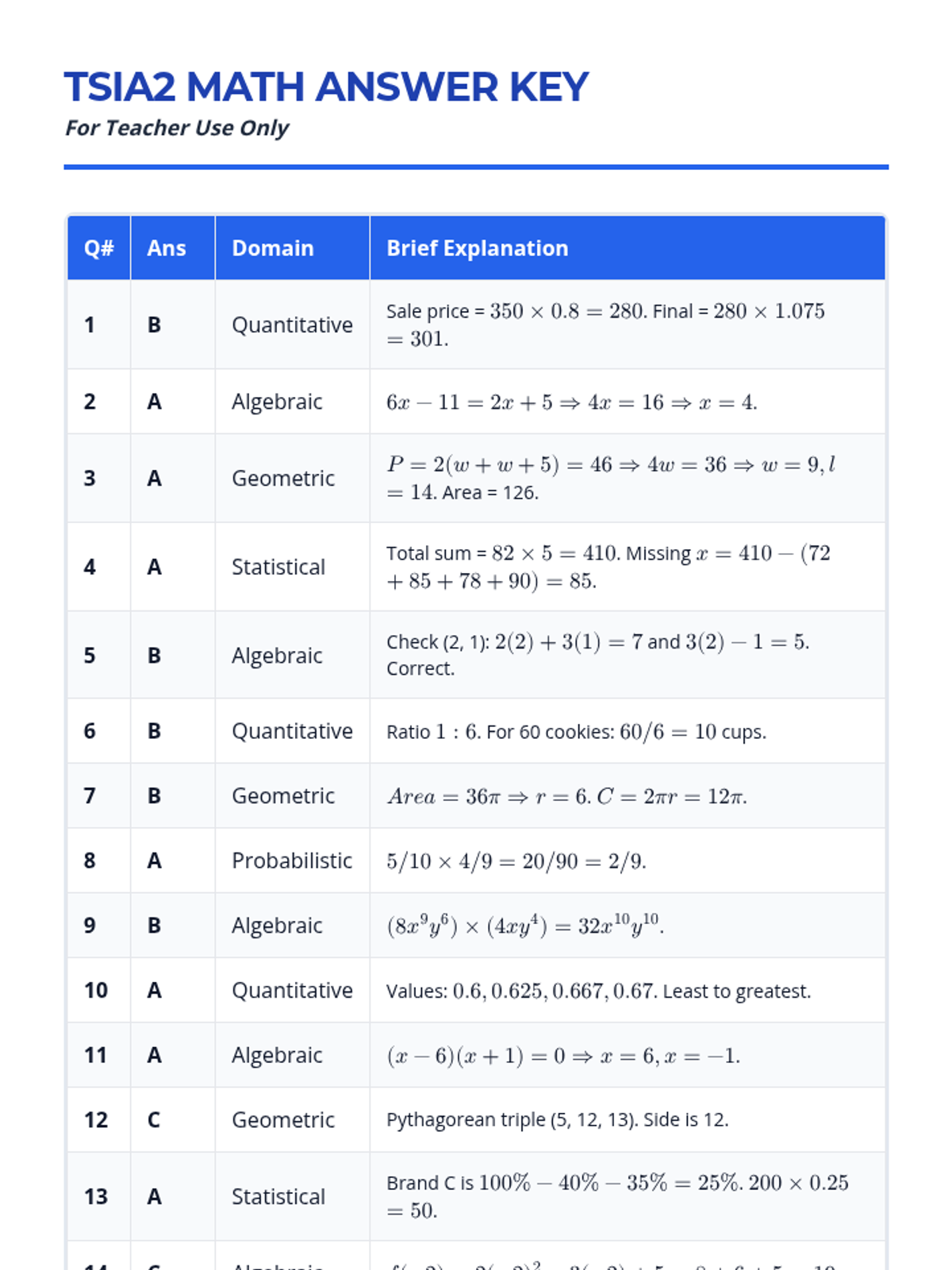
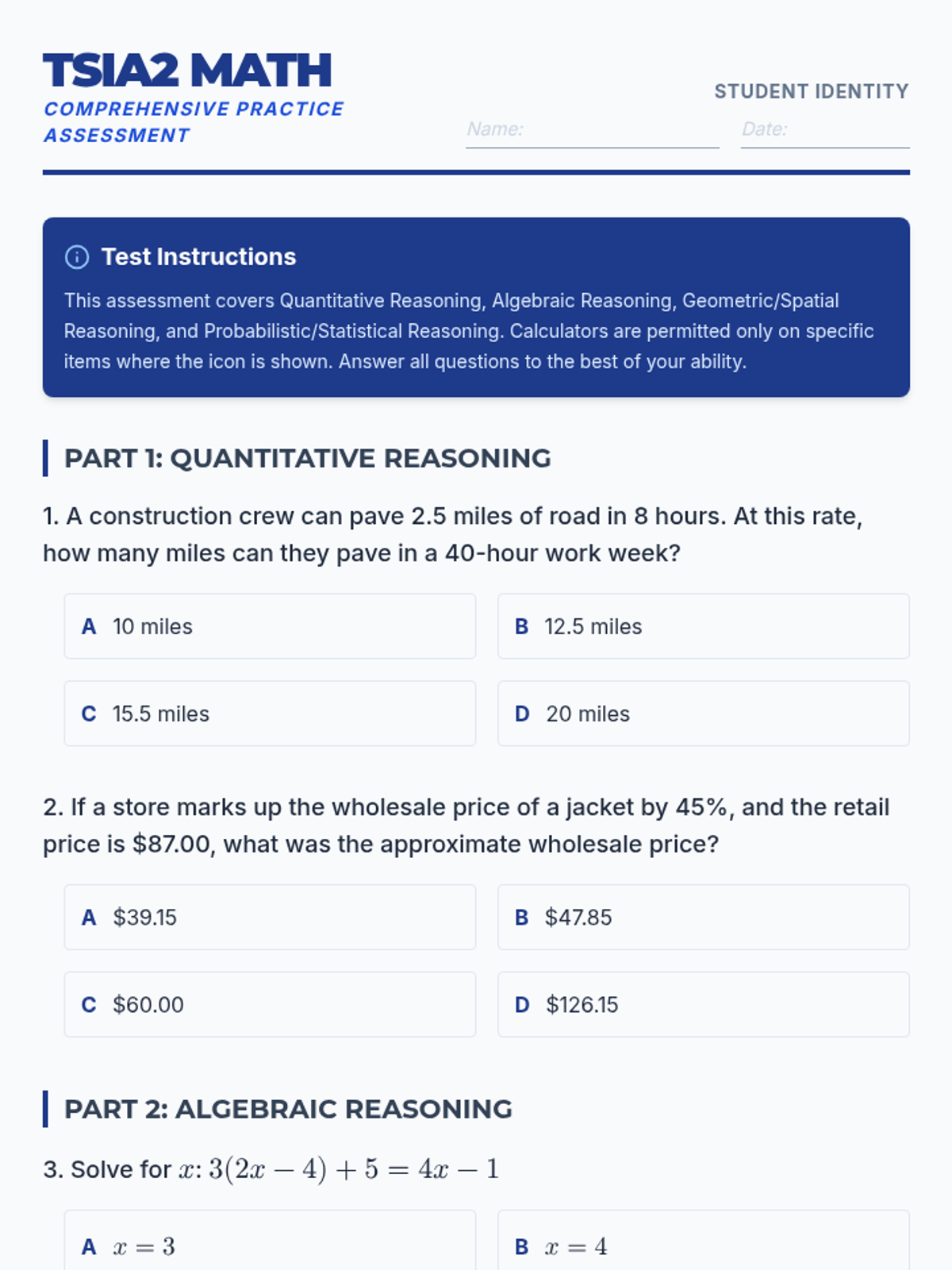
A comprehensive practice set and review presentation for the TSIA2 Math exam, covering Quantitative, Algebraic, Geometric, and Statistical reasoning.
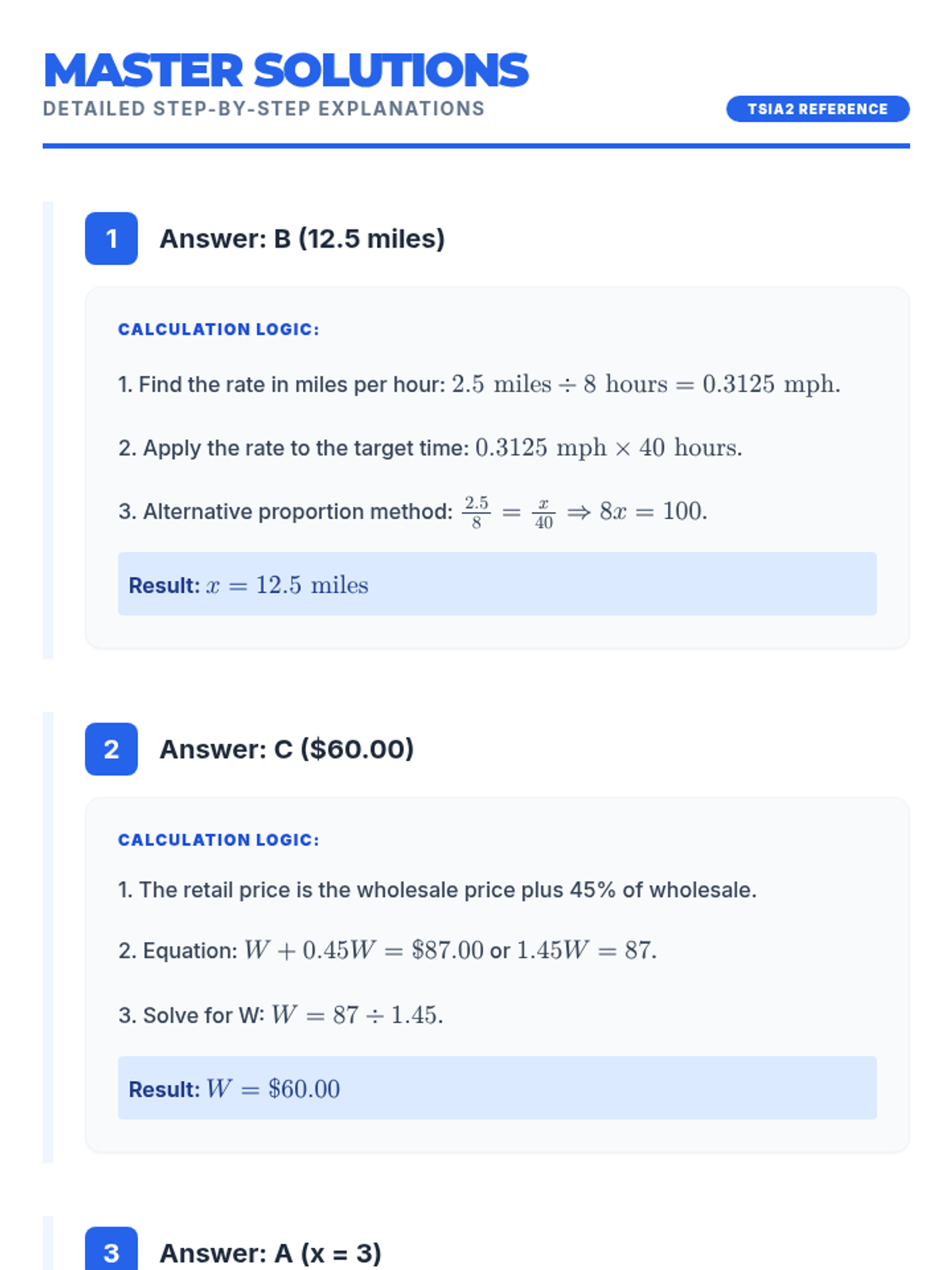
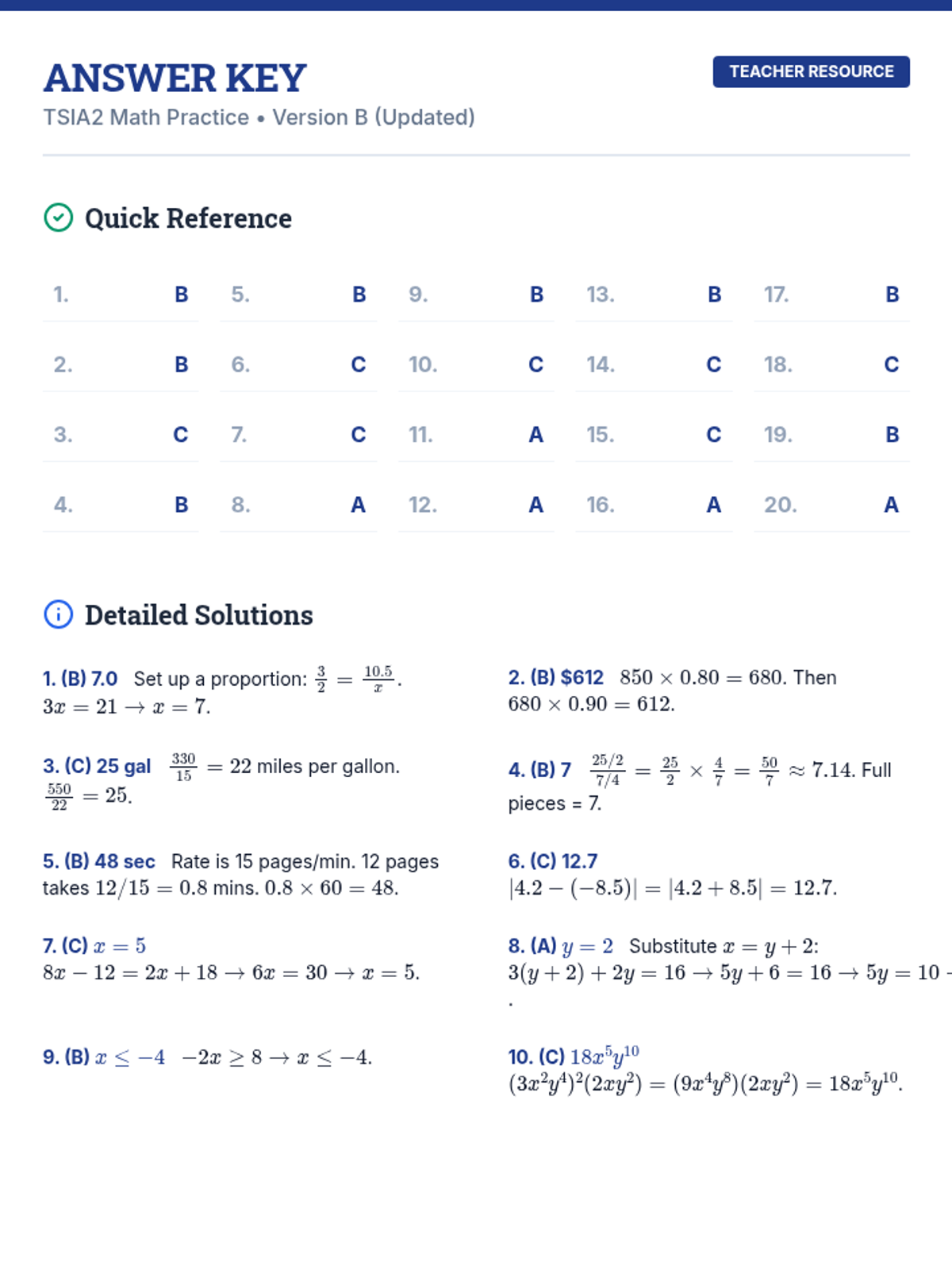
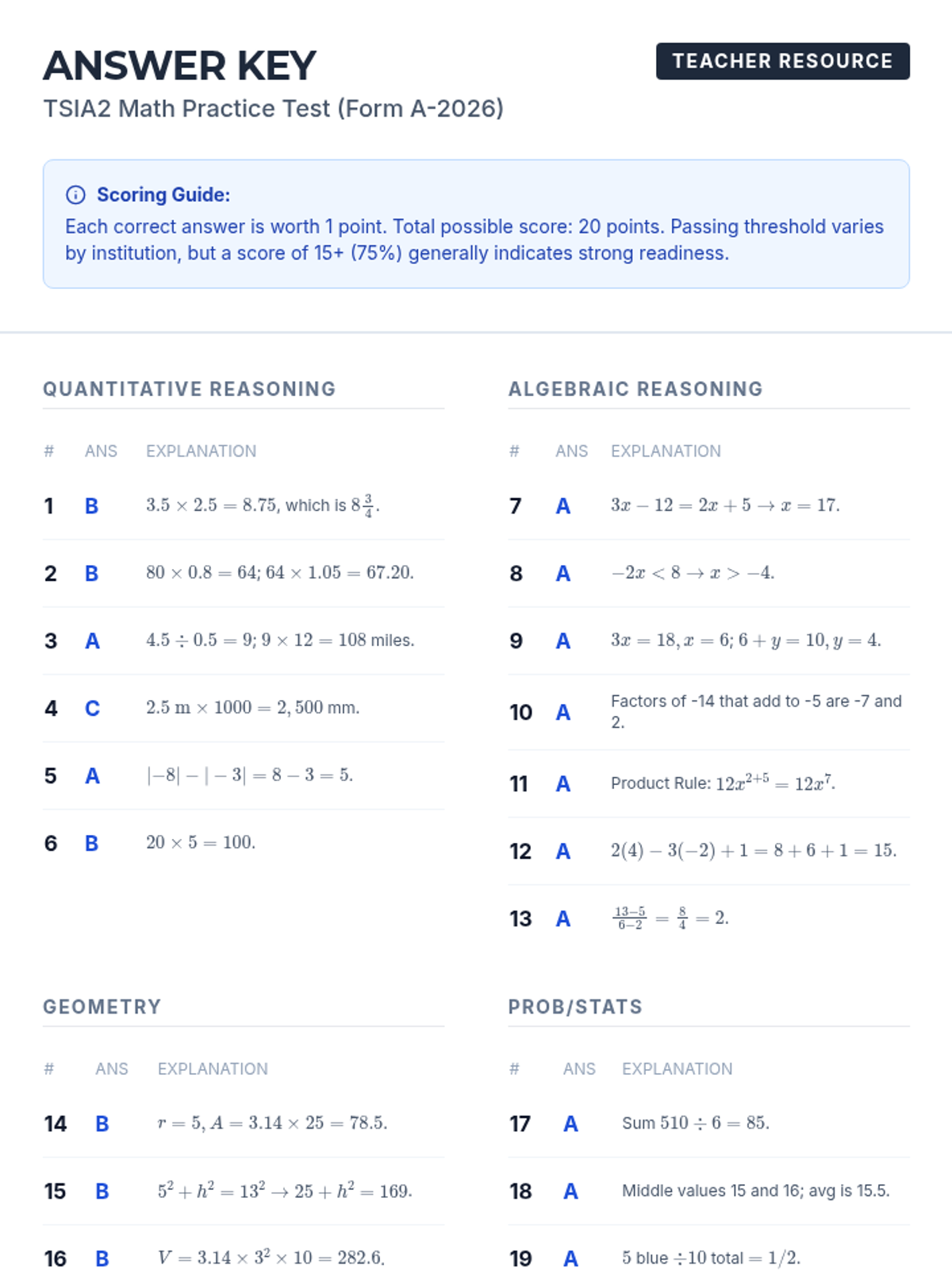
A comprehensive preparation set for the TSIA2 Mathematics assessment, featuring a full-length practice test, detailed step-by-step solutions, and a strategic review presentation.
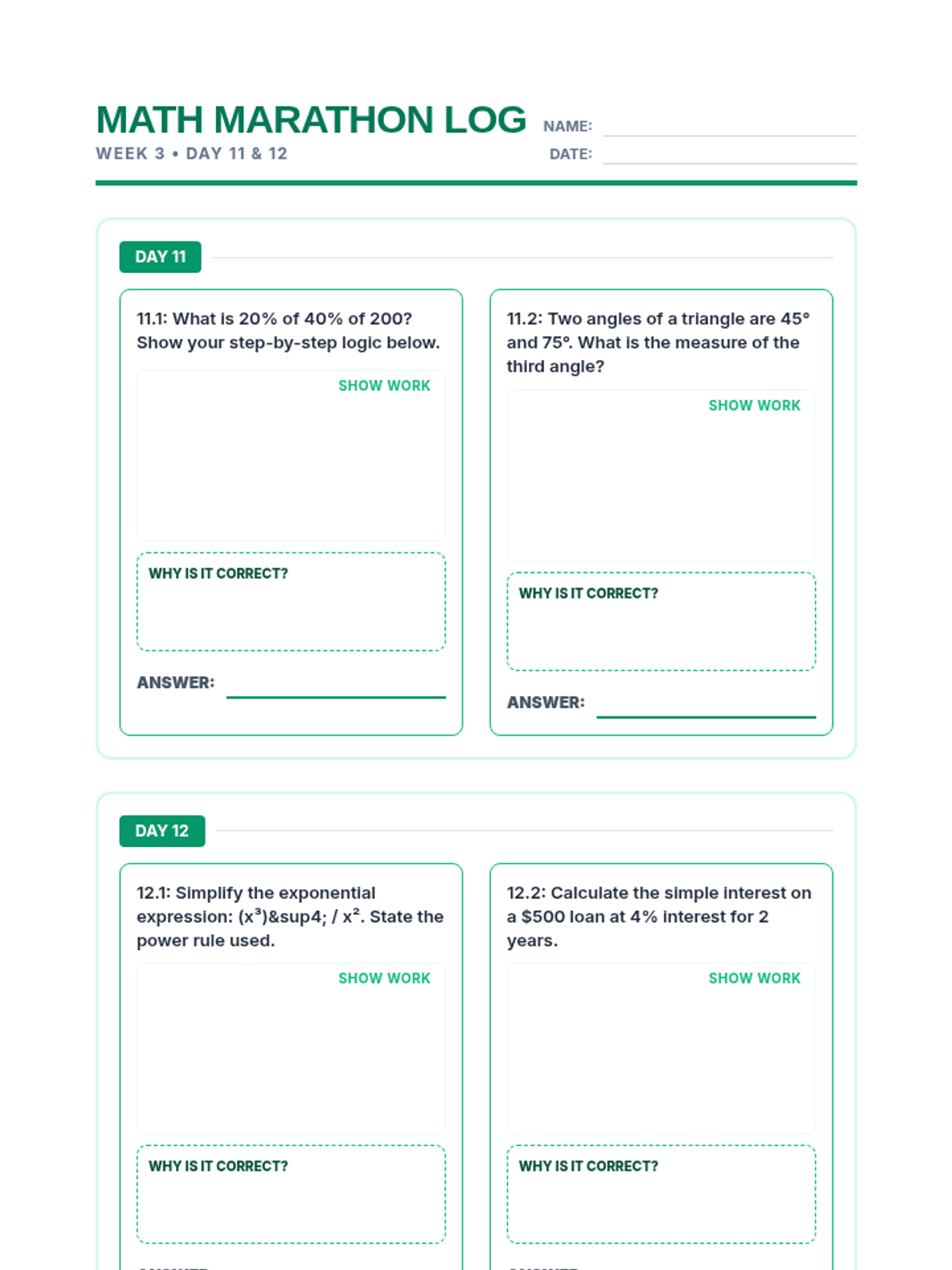
The final week of the TSIA2 Math Marathon, reviewing complex problems and multi-step reasoning.
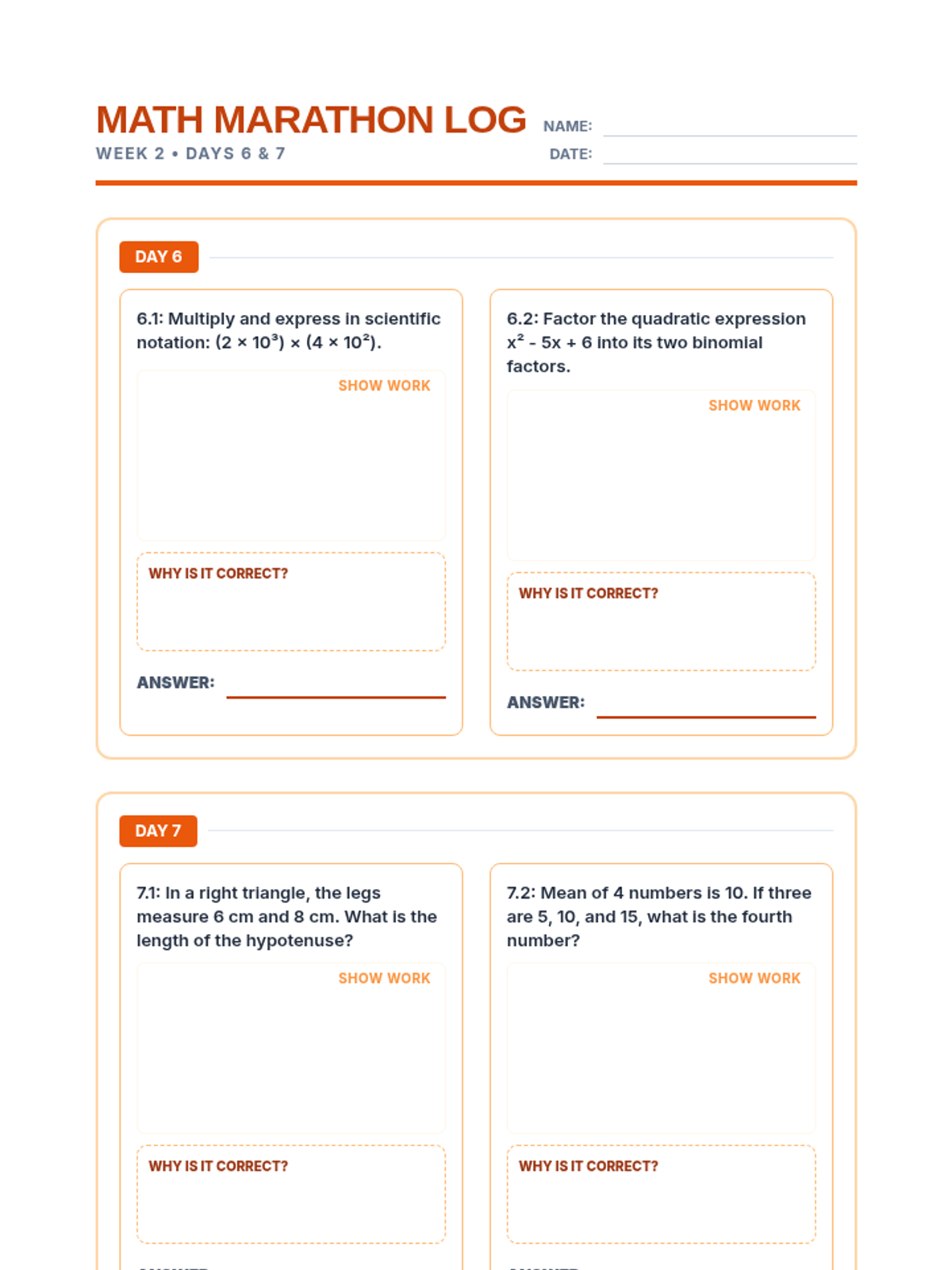
The second week of the TSIA2 Math Marathon, expanding into geometric and statistical reasoning.
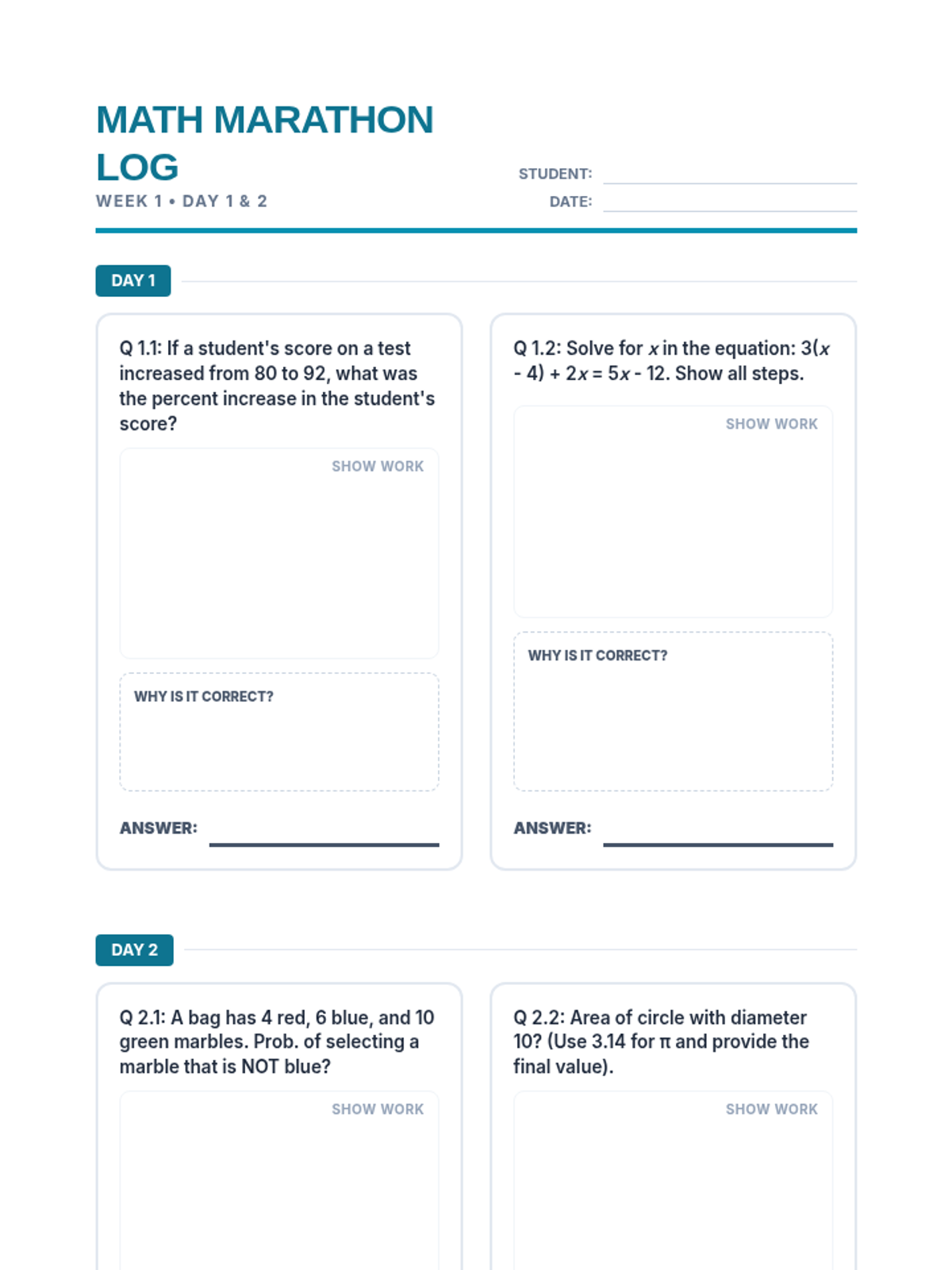
The first week of the TSIA2 Math Marathon, focusing on foundational algebraic and quantitative reasoning.
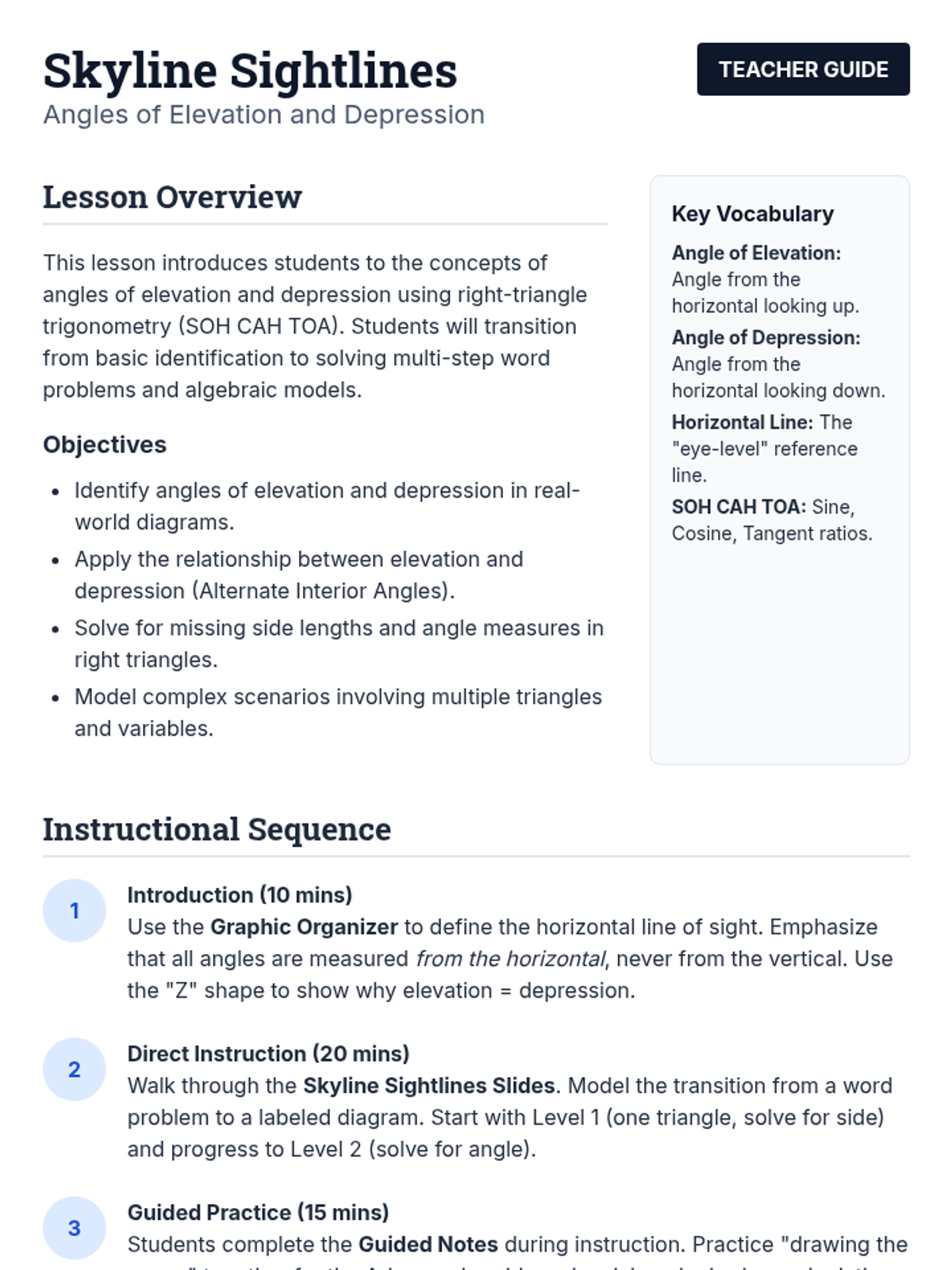
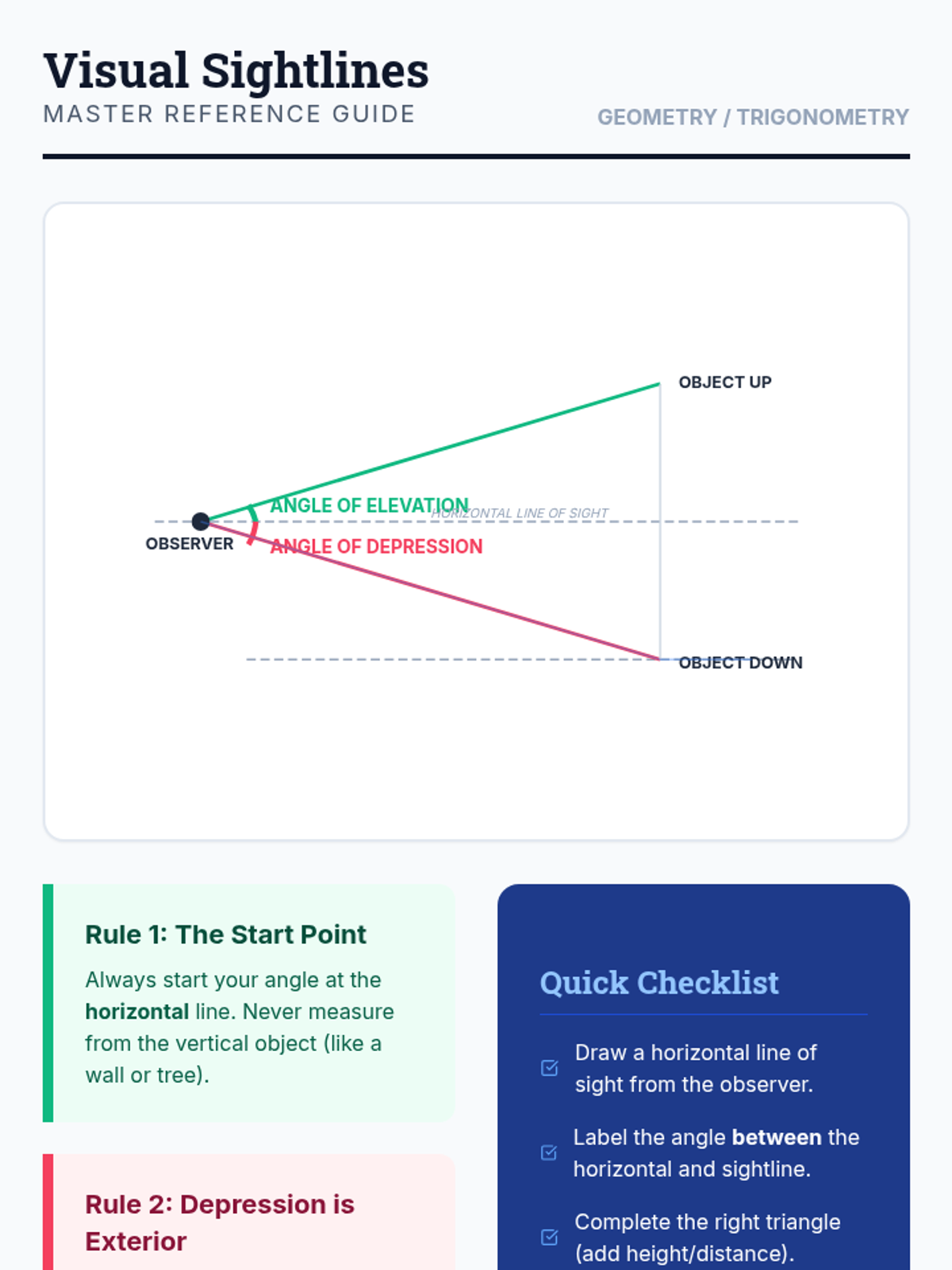
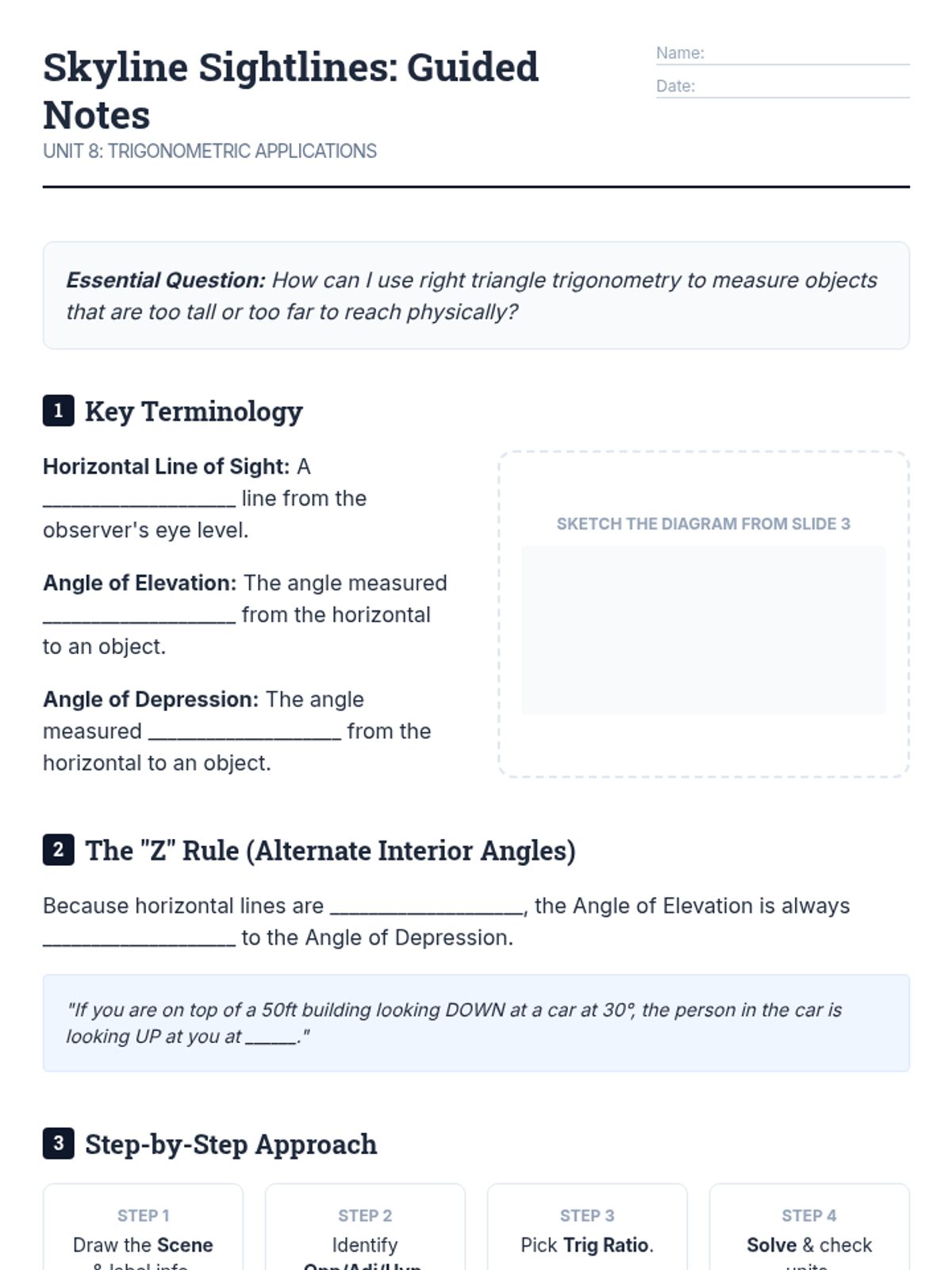
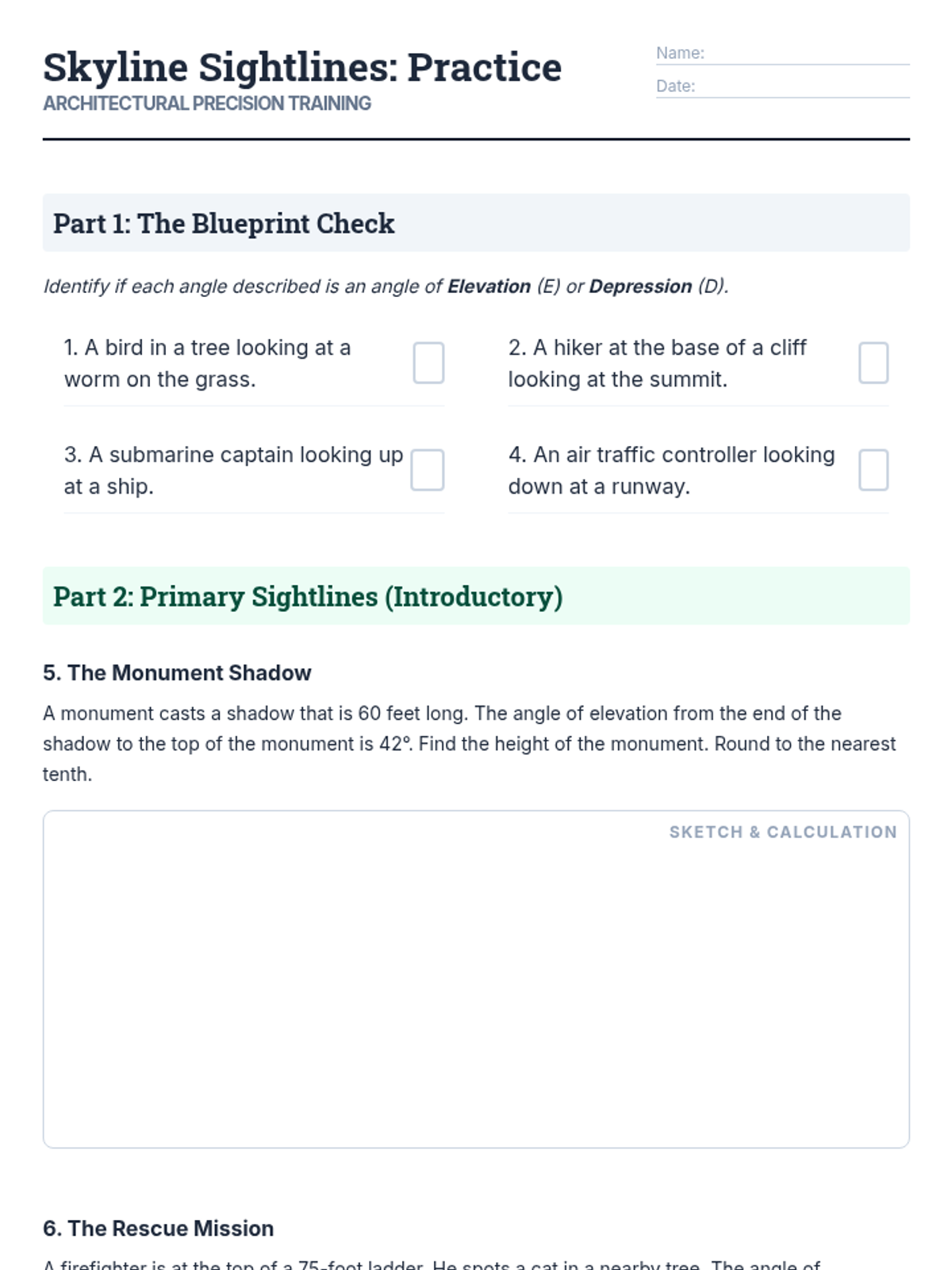
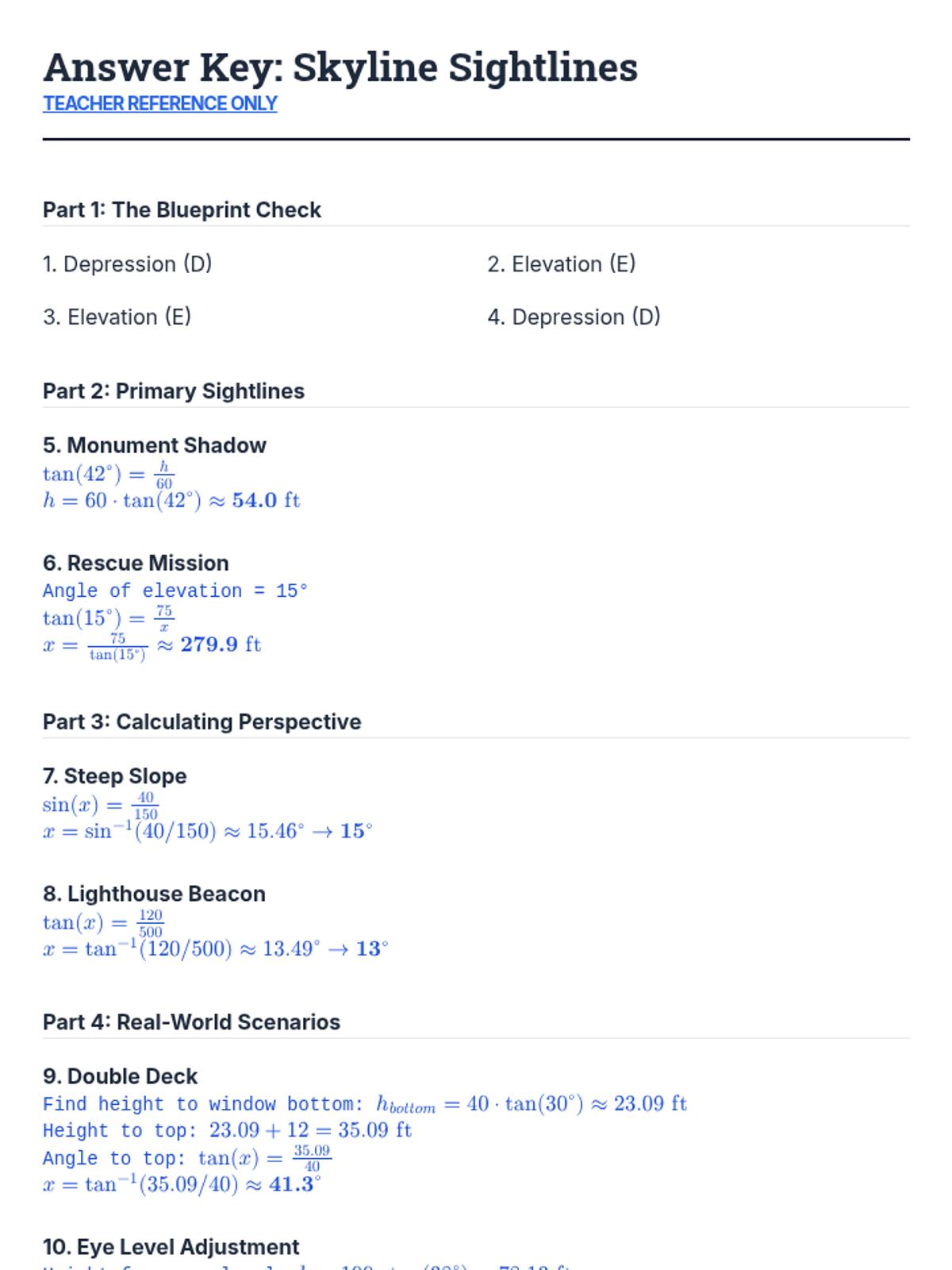
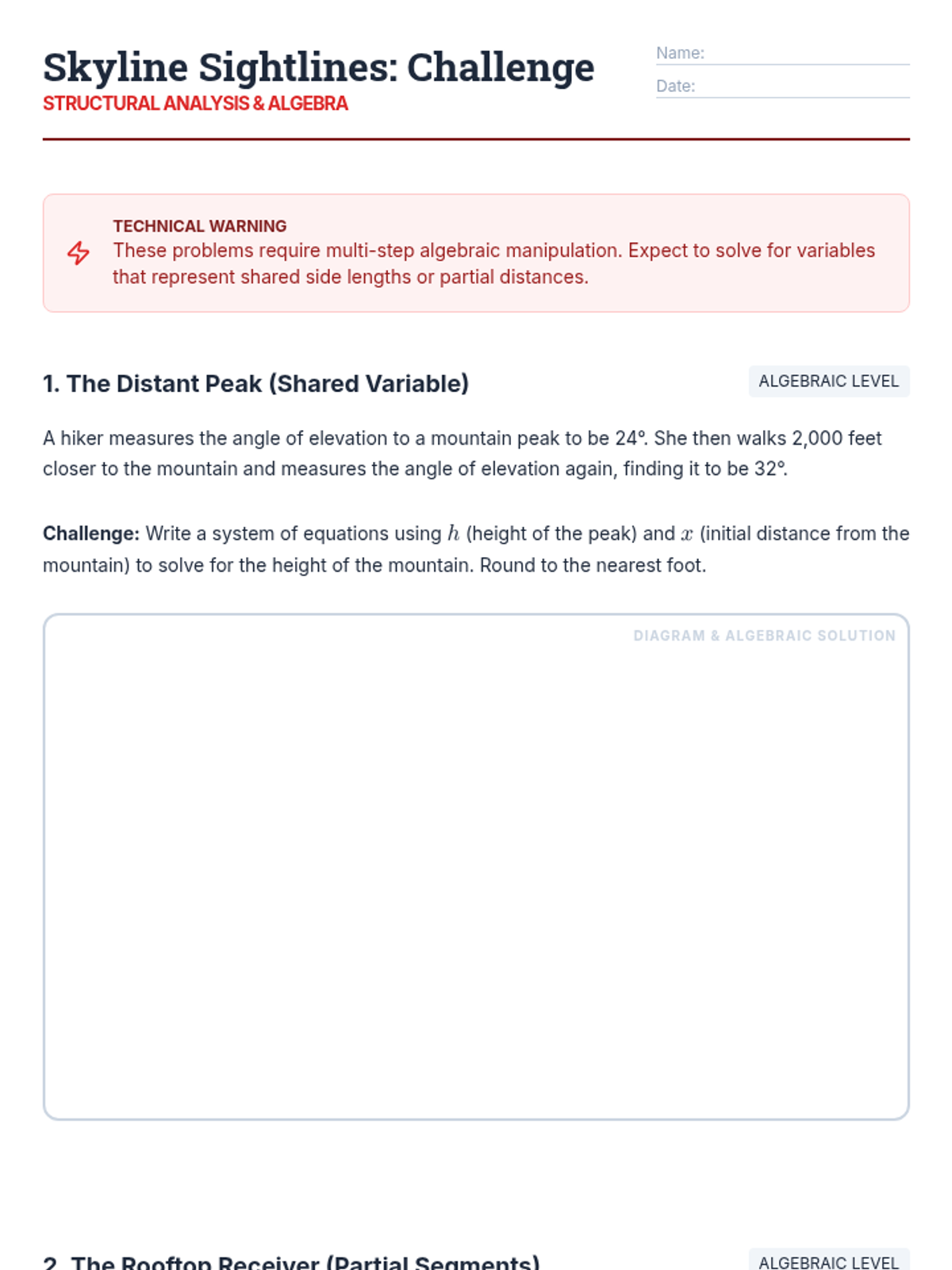
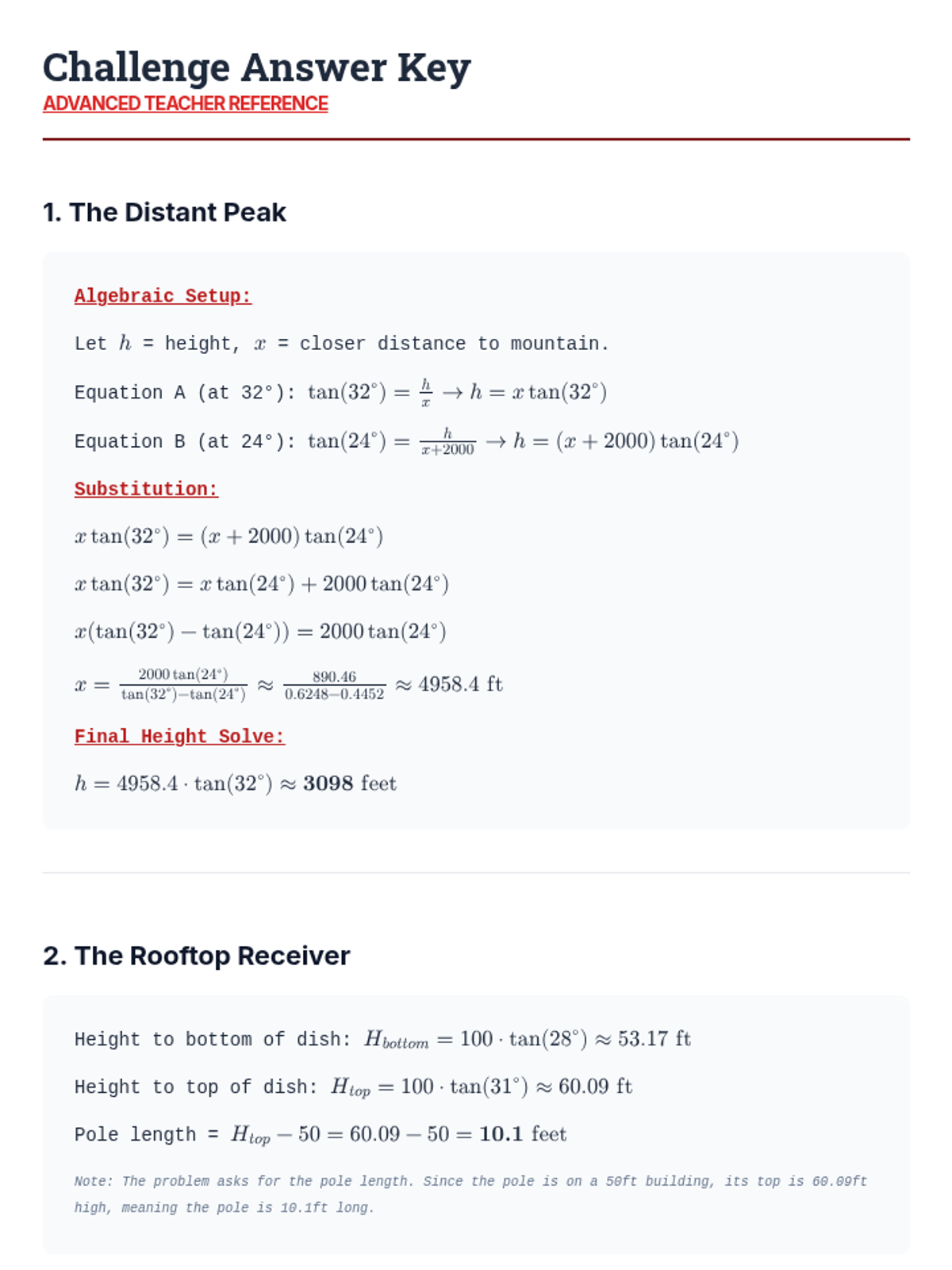
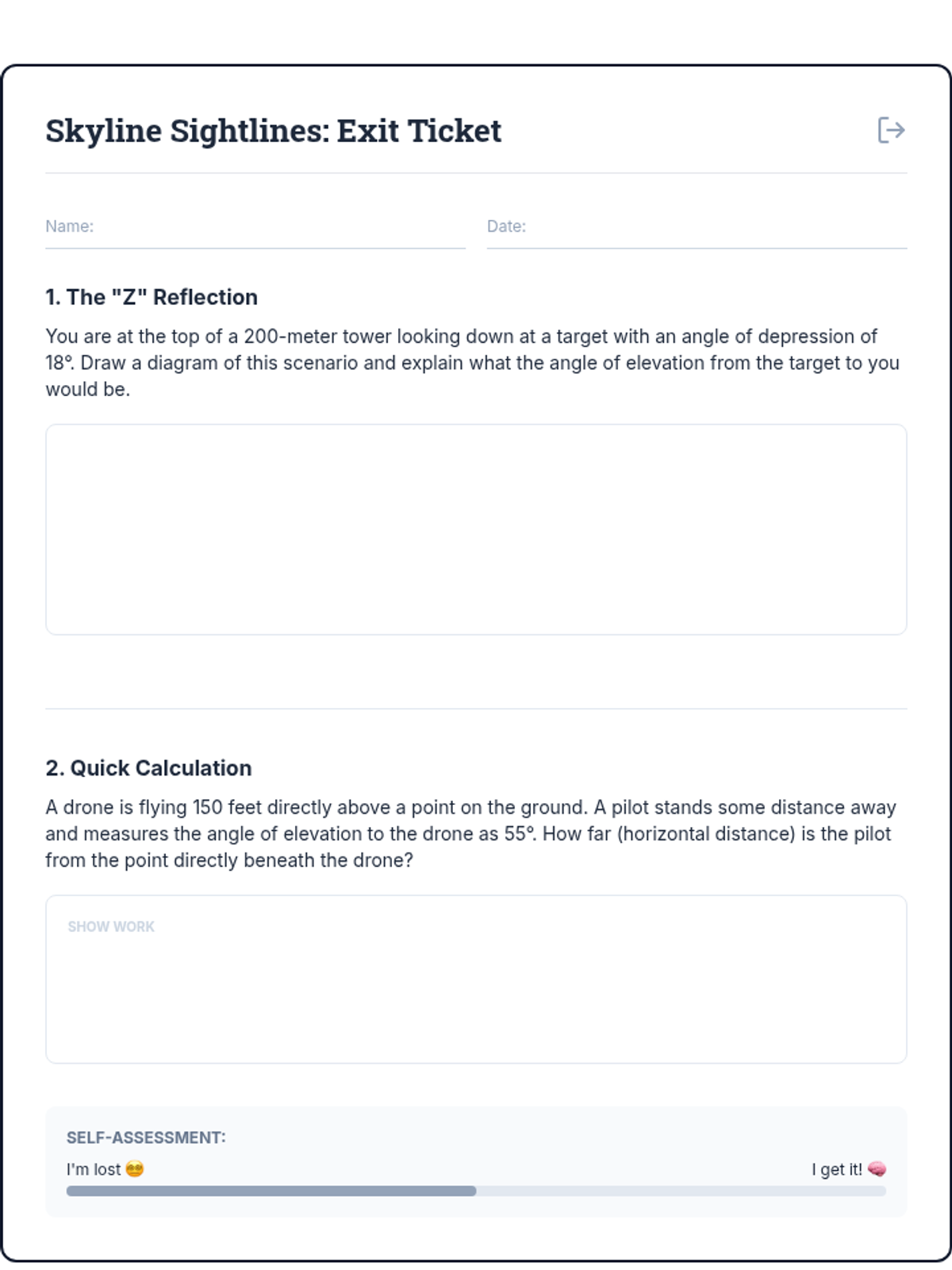
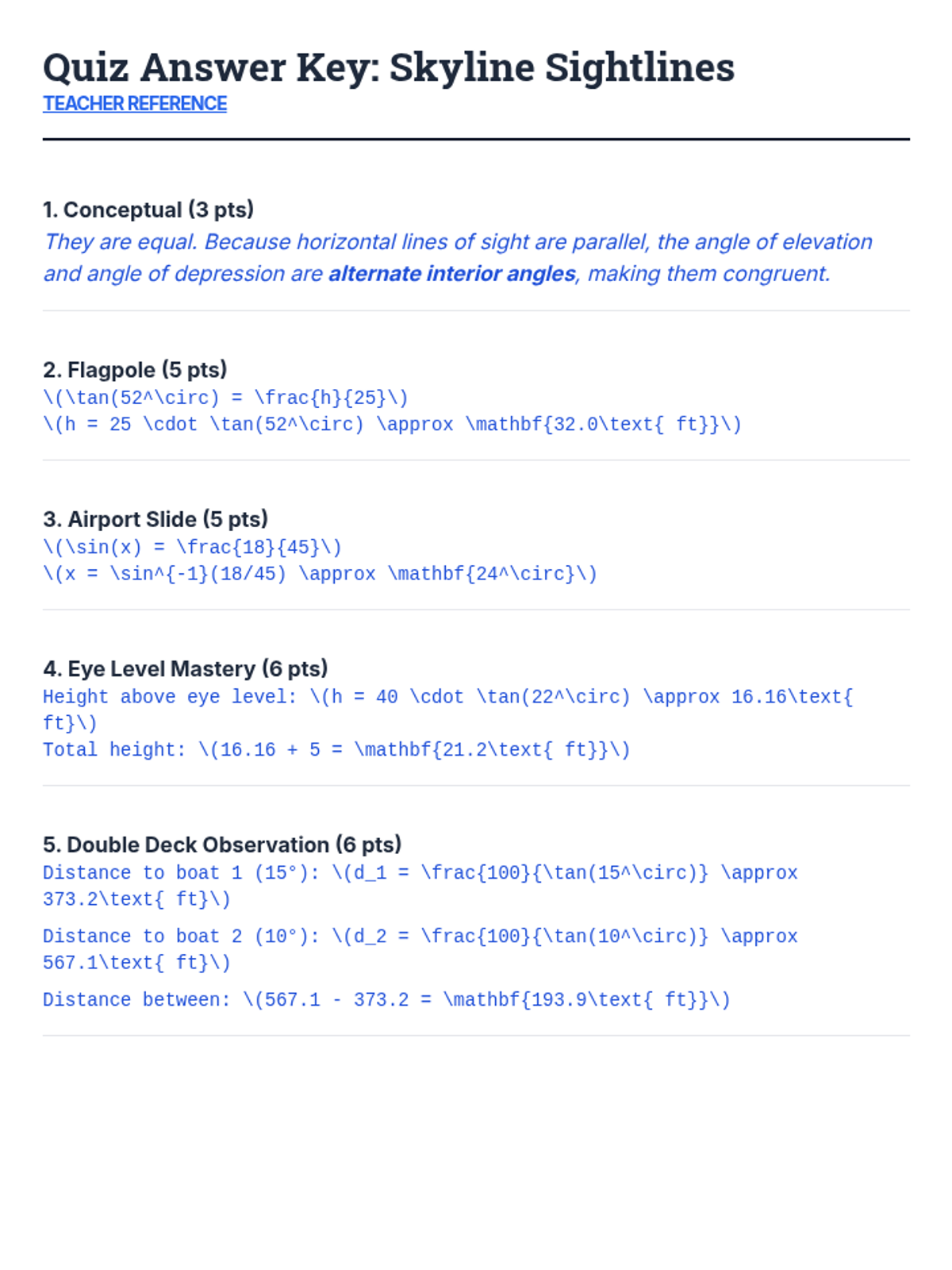
A comprehensive geometry lesson on angles of elevation and depression, ranging from basic trigonometry to complex algebraic applications. Students will master identifying, labeling, and solving for angles and distances in real-world scenarios.
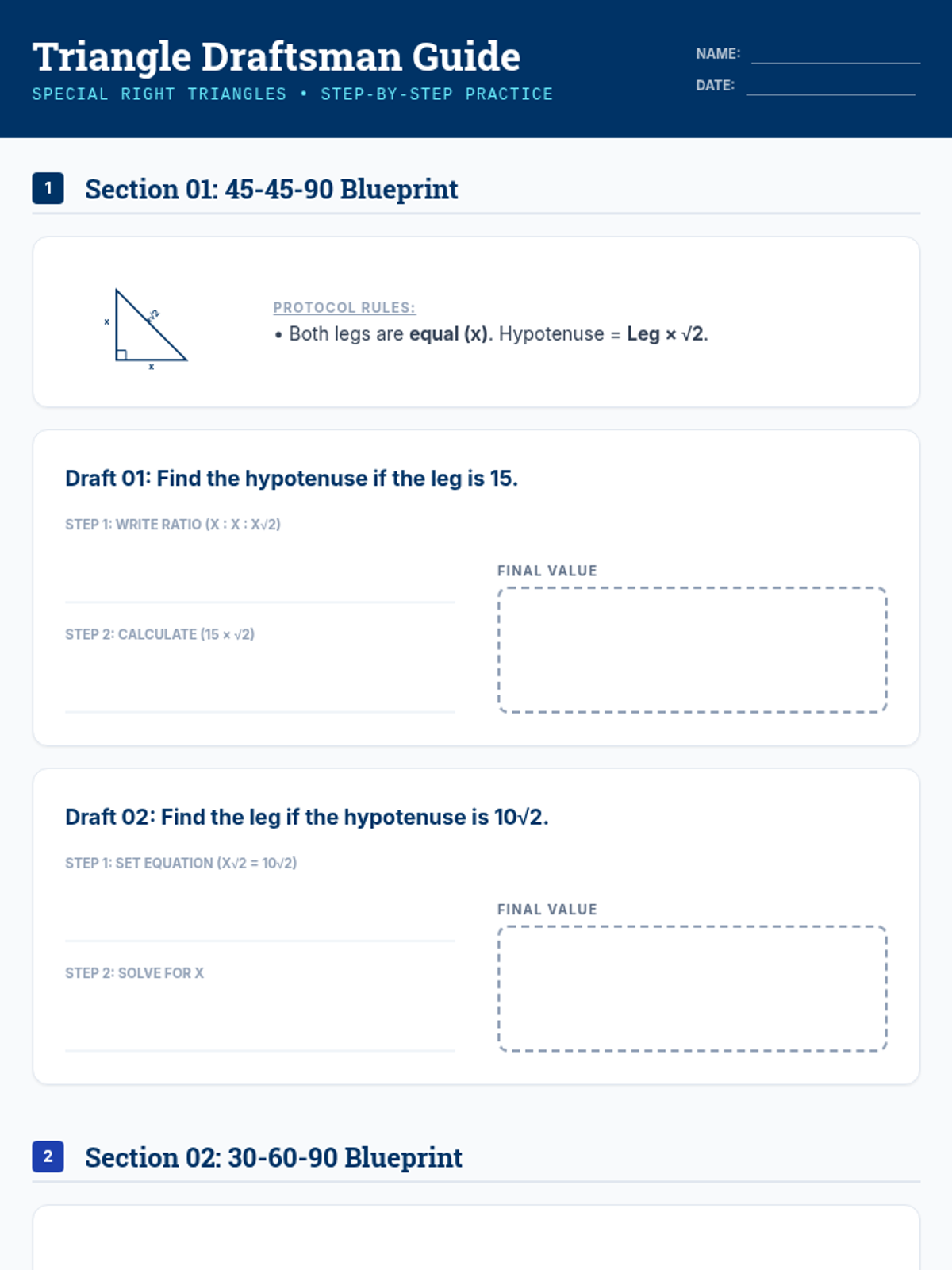
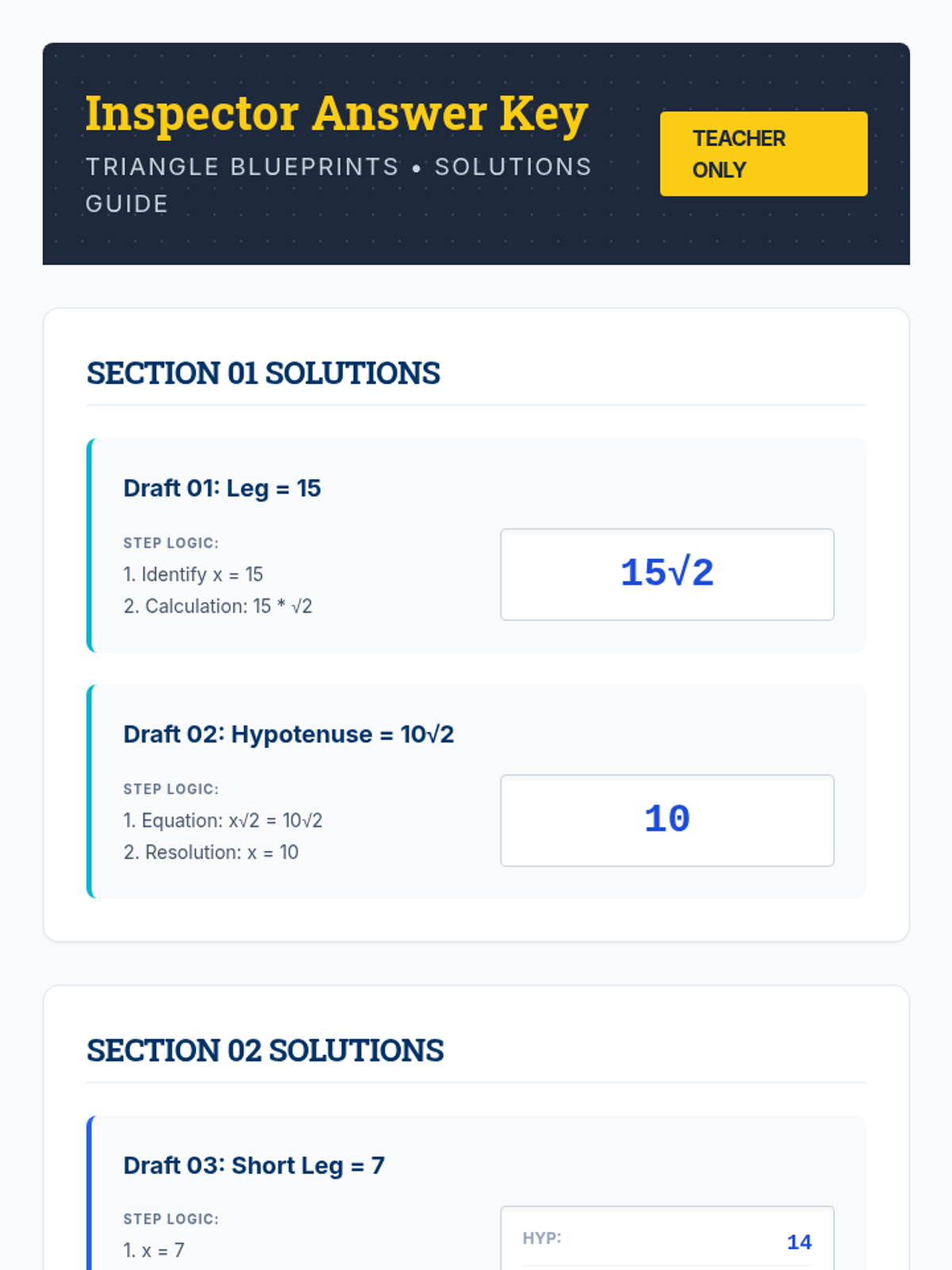
A comprehensive lesson introducing 45-45-90 and 30-60-90 triangles through the lens of architectural drafting and technical blueprints.
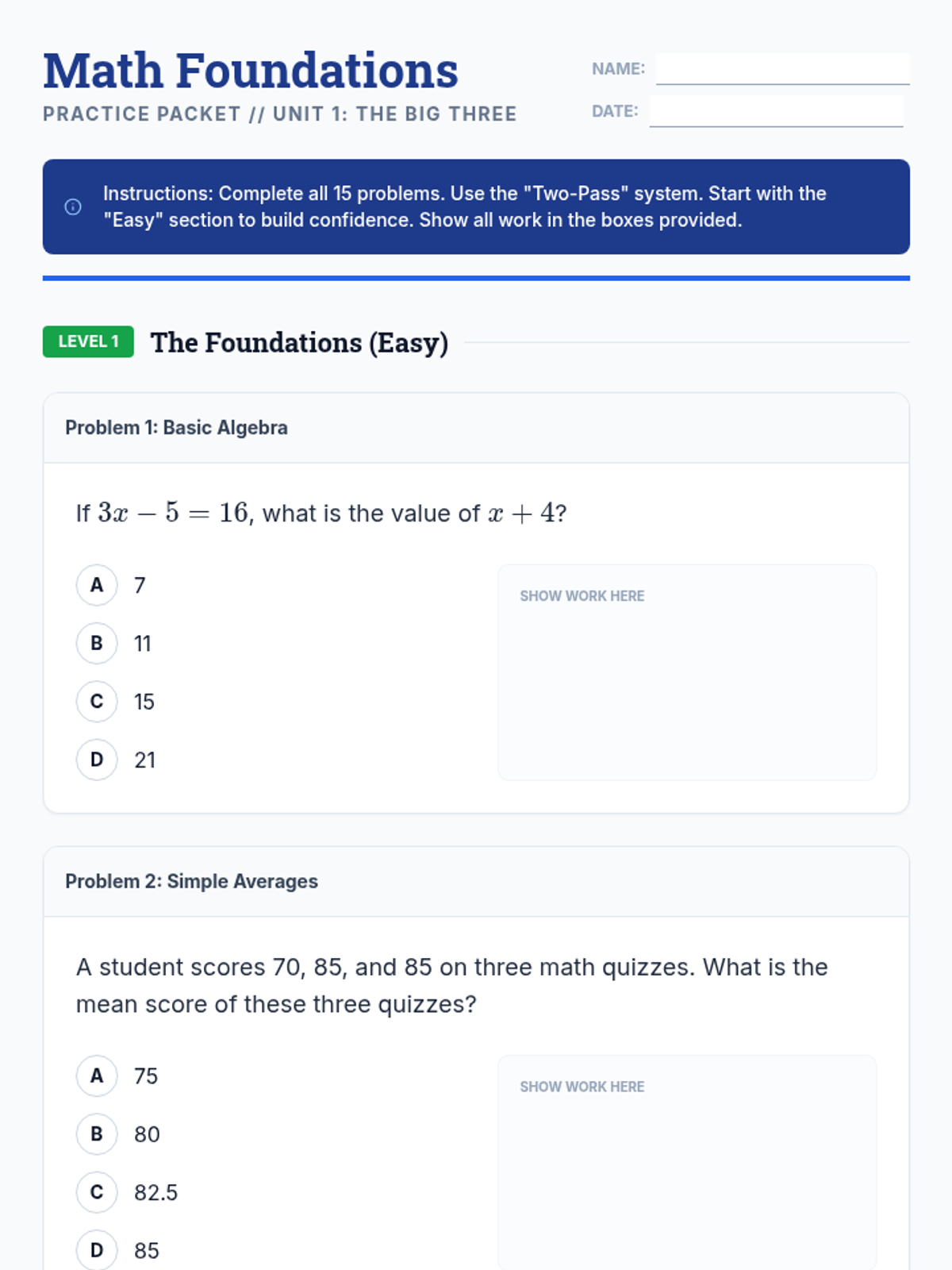
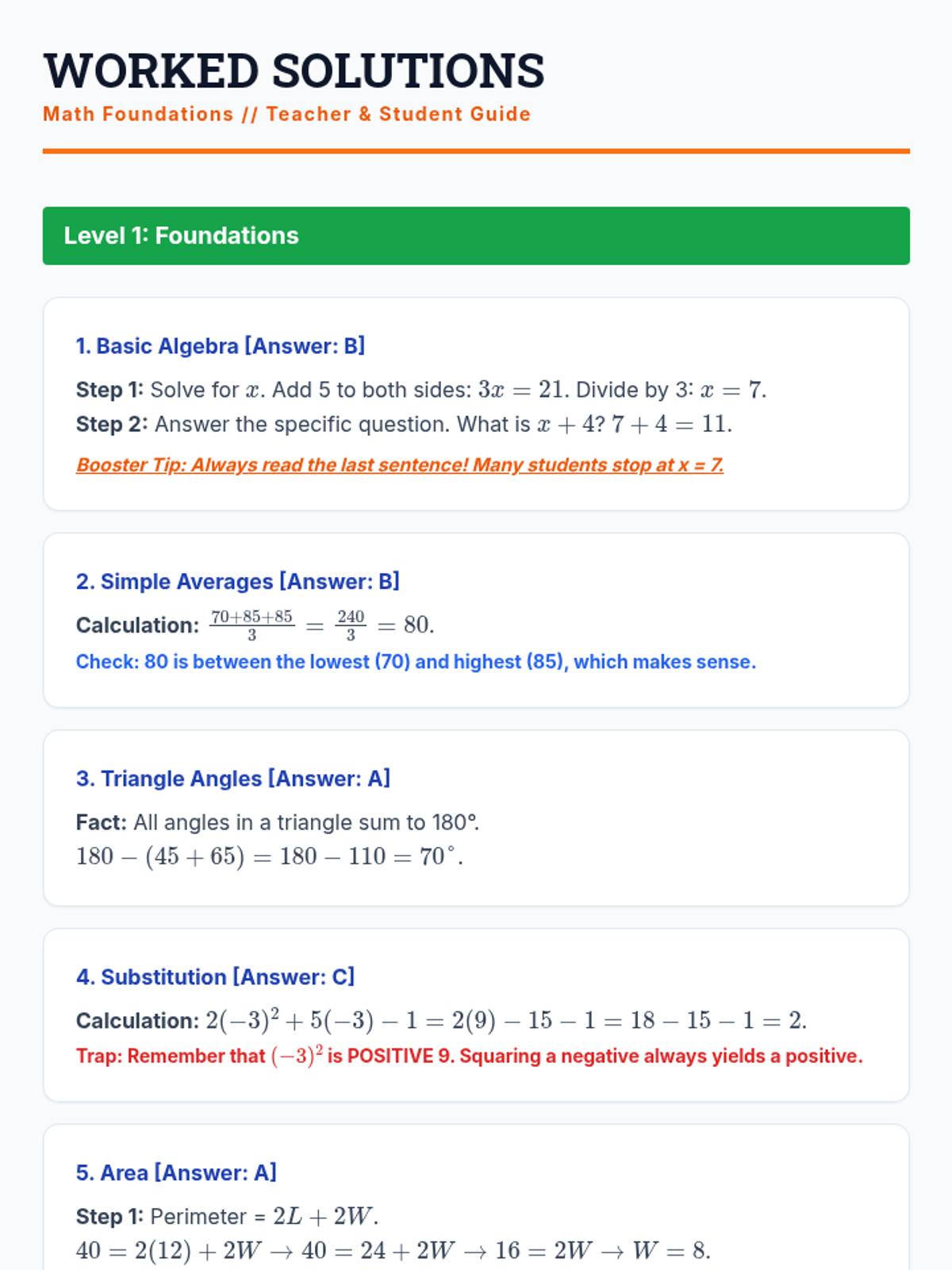
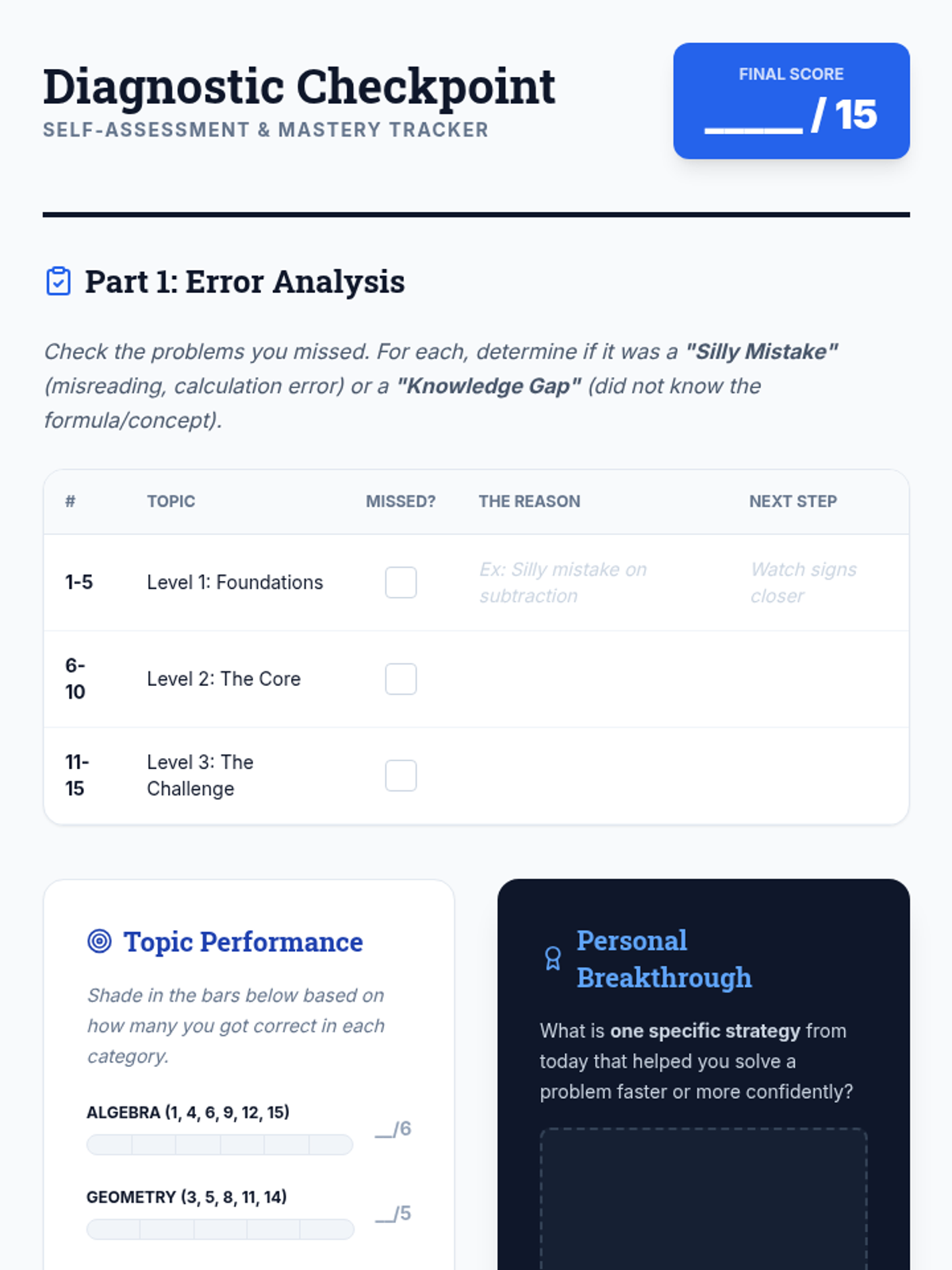
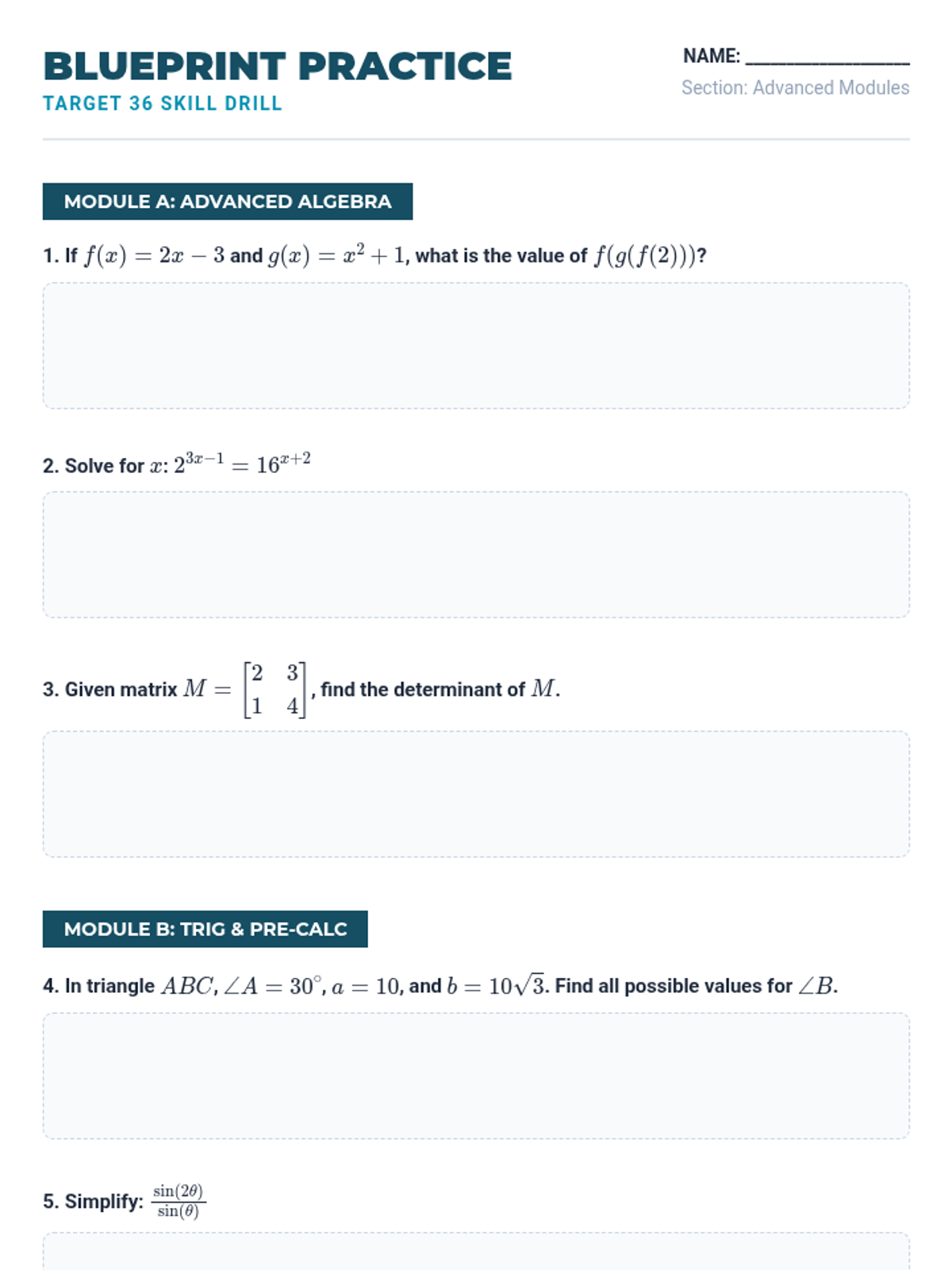
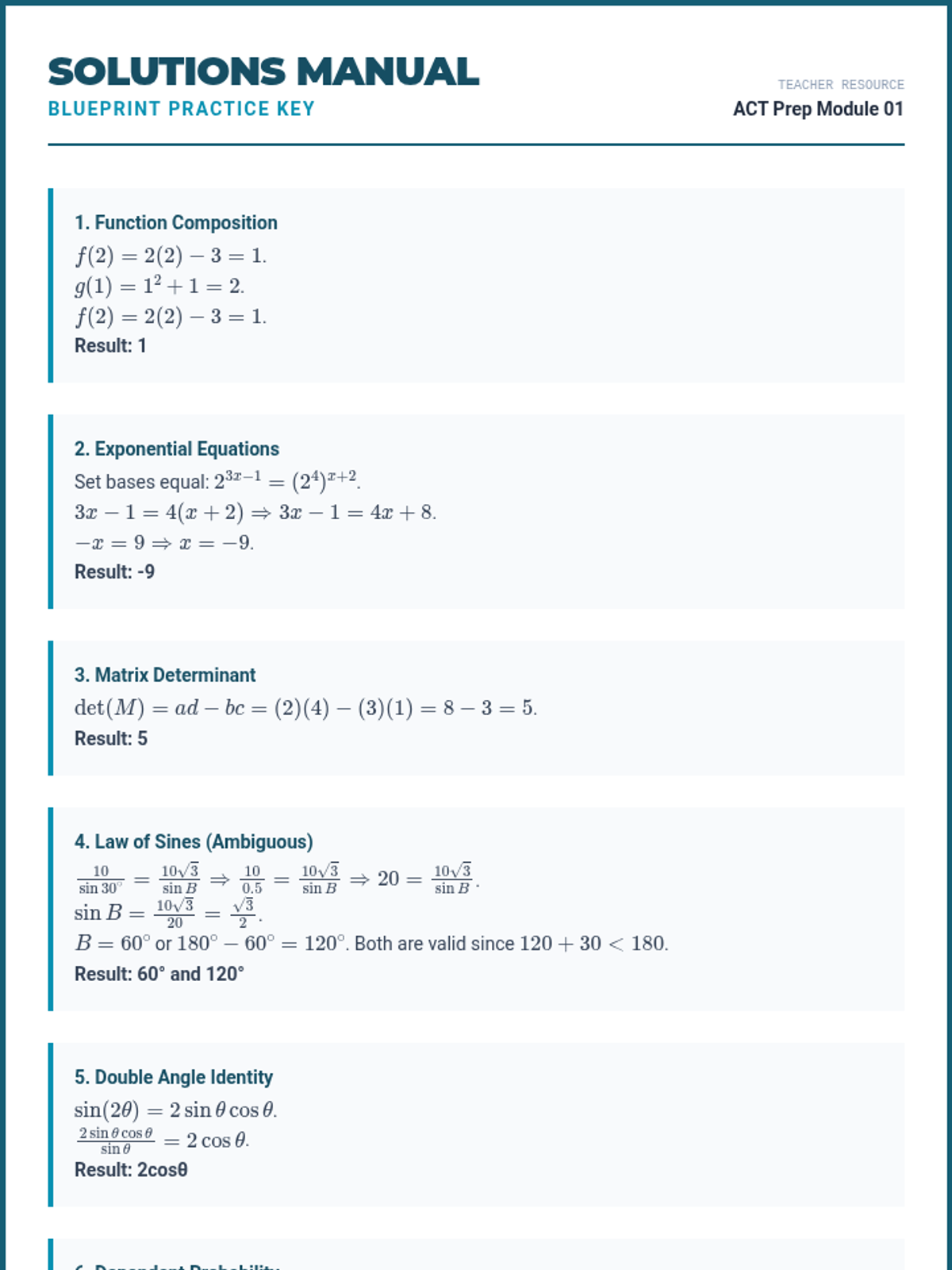
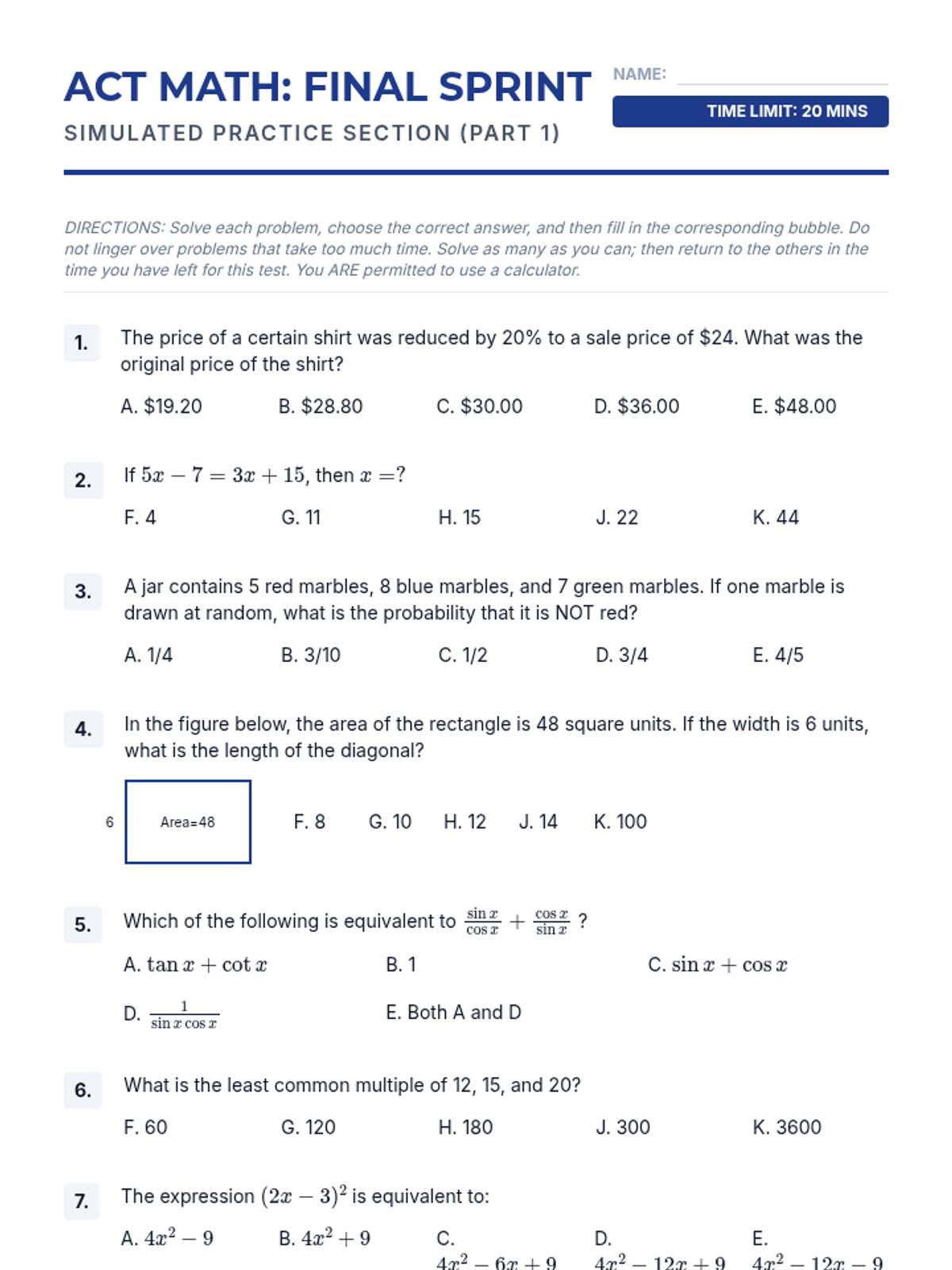
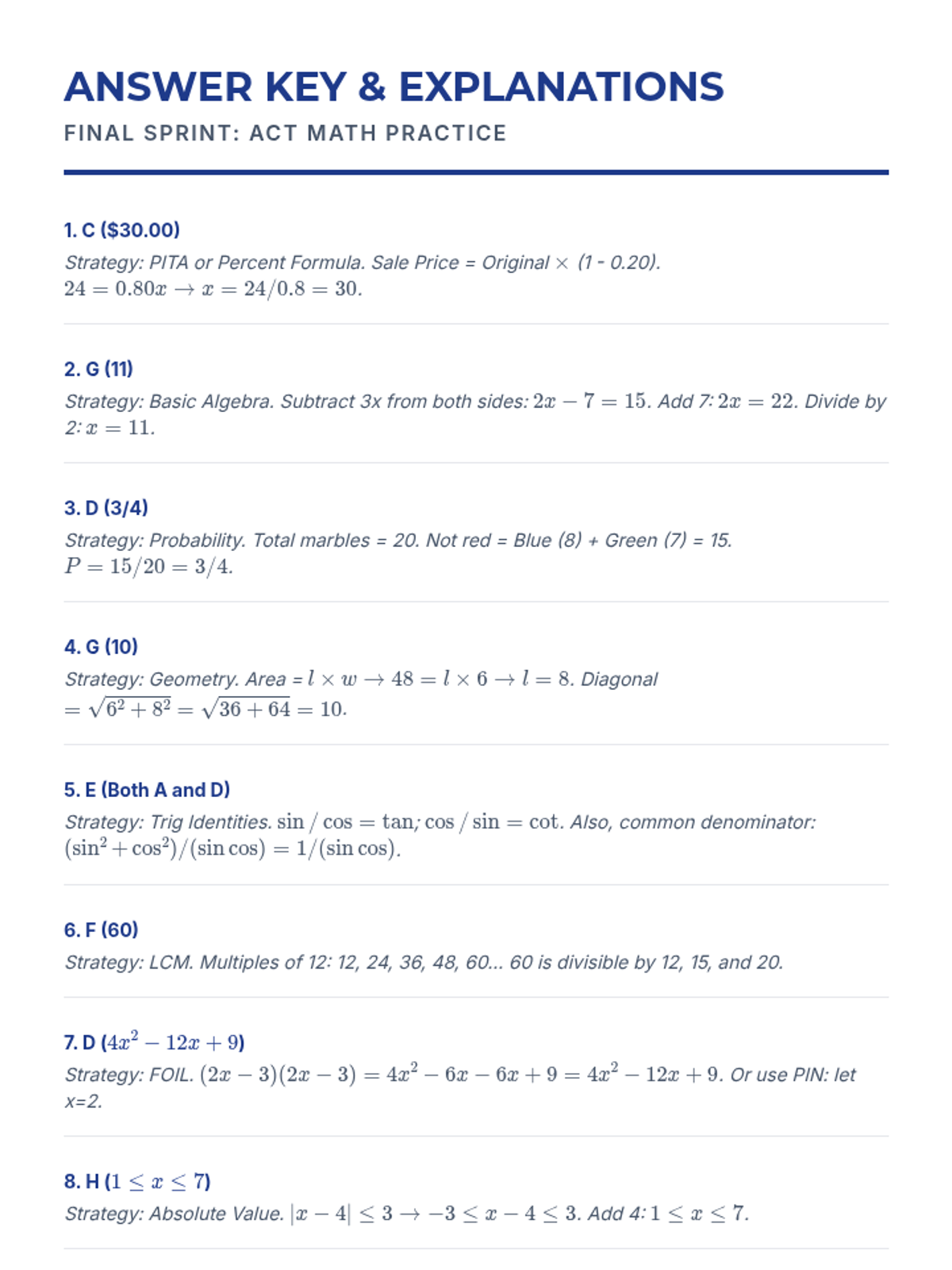
A foundational ACT/SAT prep lesson focusing on high-frequency algebra, geometry, and data questions for students looking to move past the 15-20 score range. Includes strategies for time management and a diagnostic assessment.
A comprehensive practice session for the TSIA2 Math exam, focusing on quantitative reasoning, algebraic reasoning, geometry, and statistics.
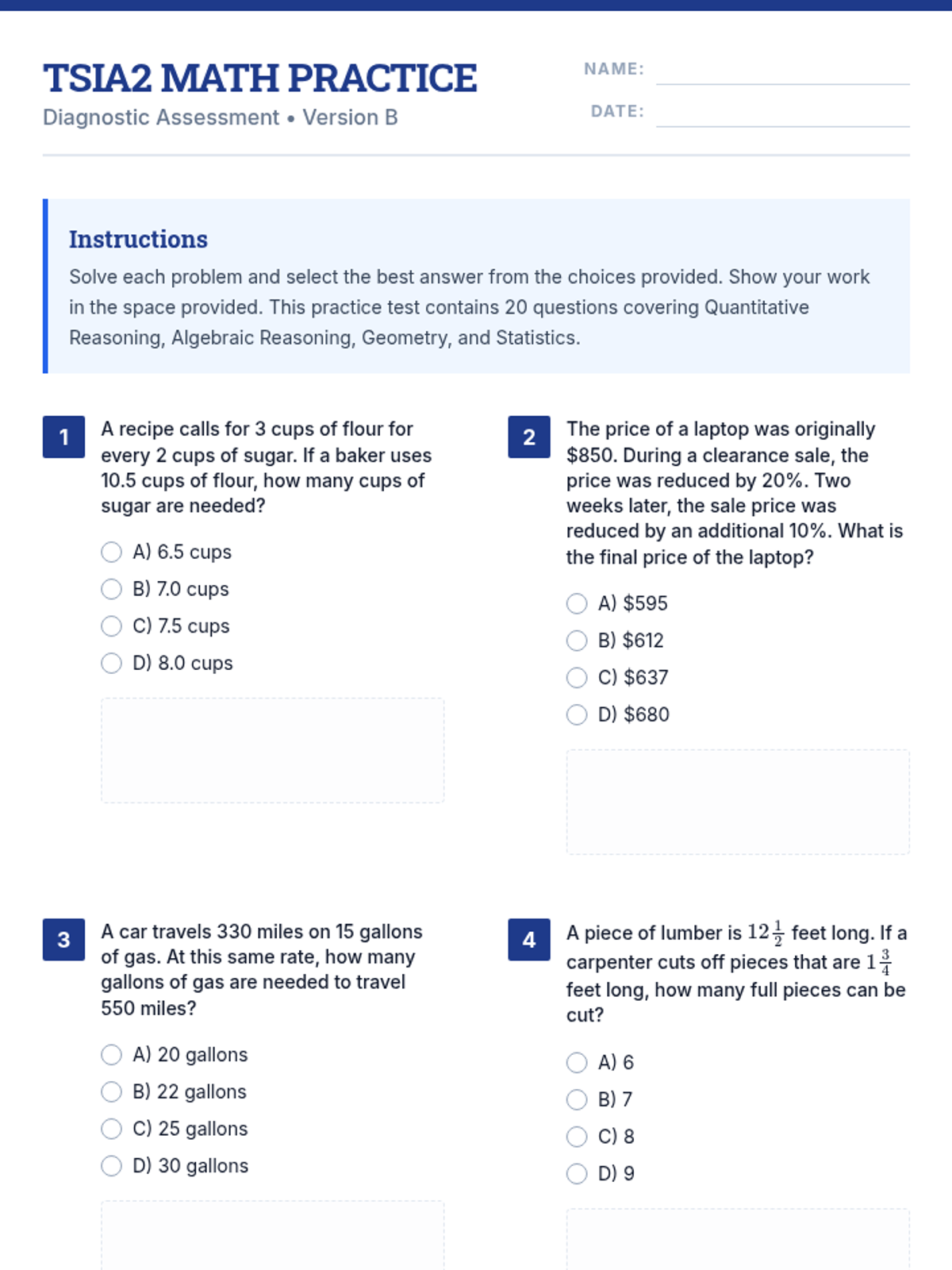
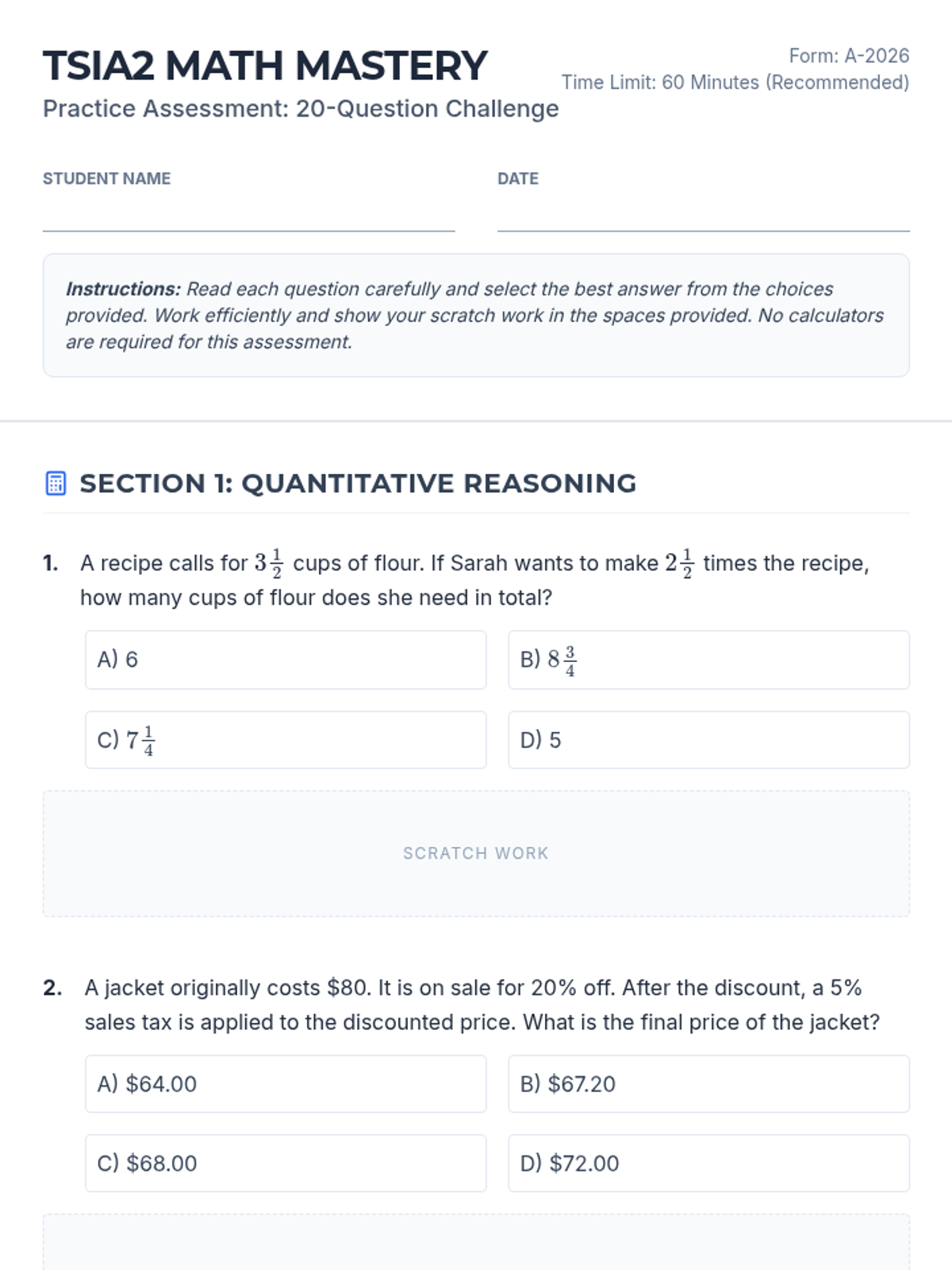
A comprehensive 20-question practice test covering all four TSIA2 Math domains: Quantitative Reasoning, Algebraic Reasoning, Geometry, and Probability and Statistics.
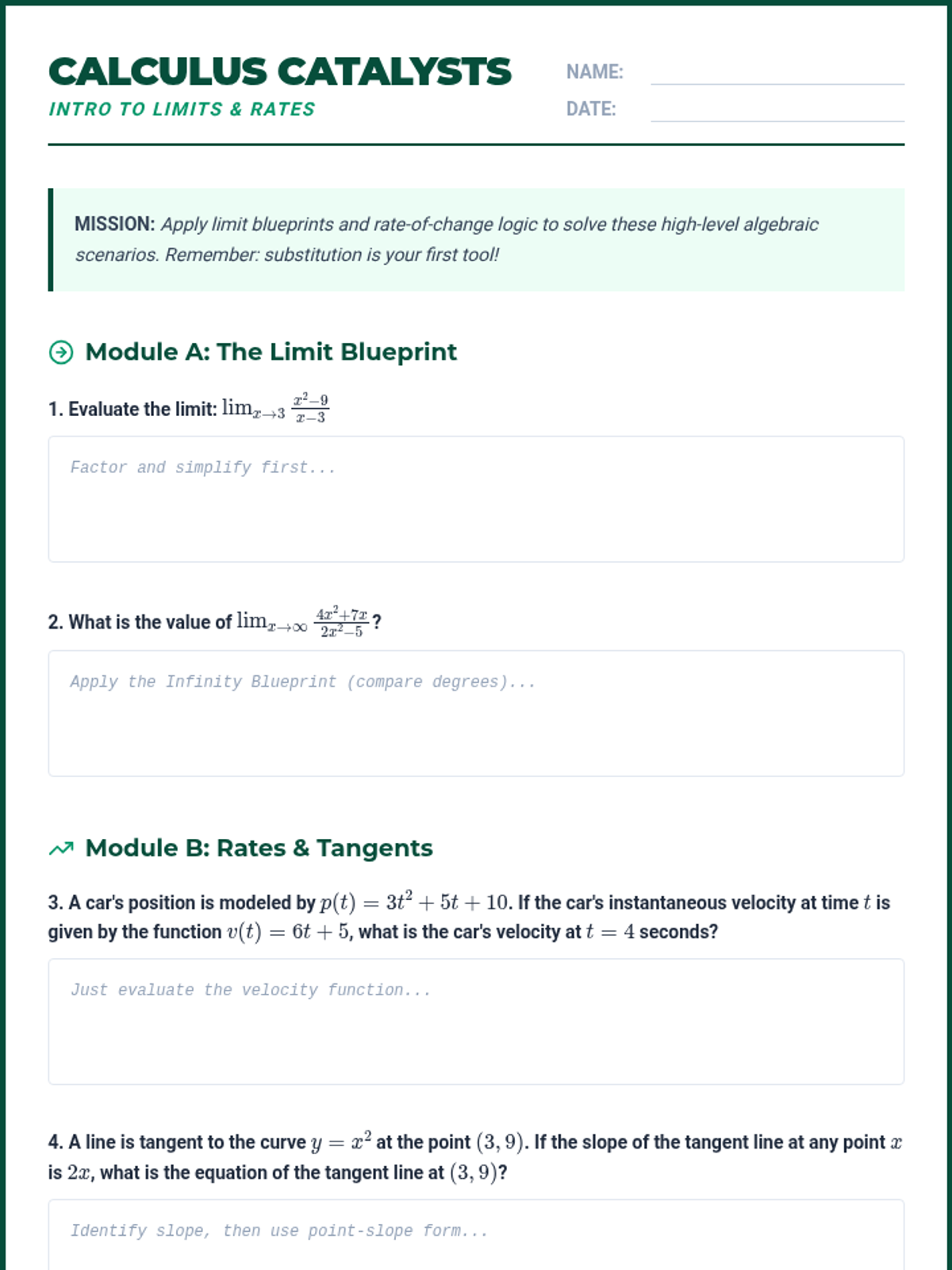
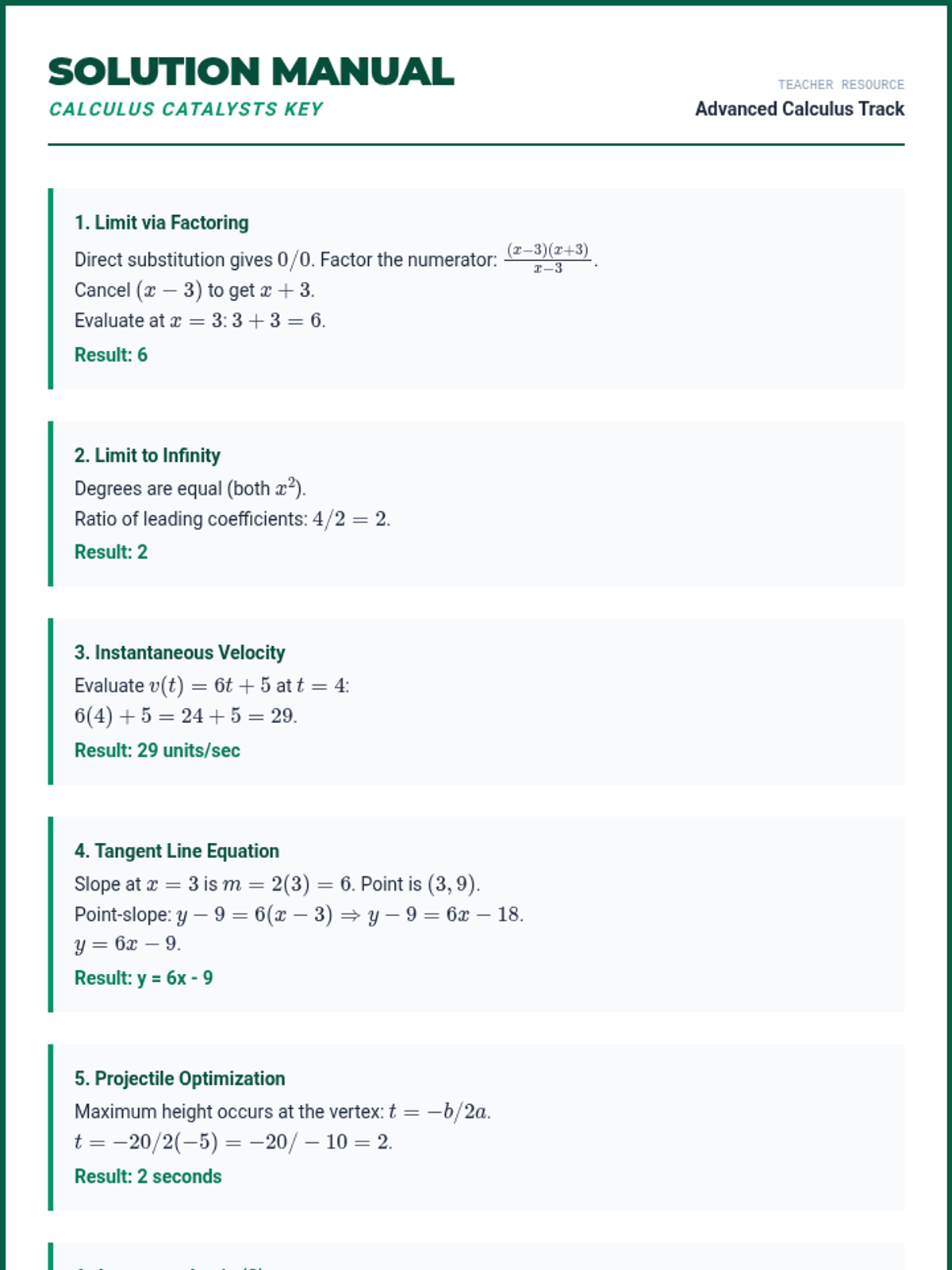
An introductory exploration of calculus-adjacent concepts tested on the ACT, focusing on limits, instantaneous rates of change, and function optimization. Students will master the Limit Blueprint and apply rate-of-change logic to complex algebraic scenarios.
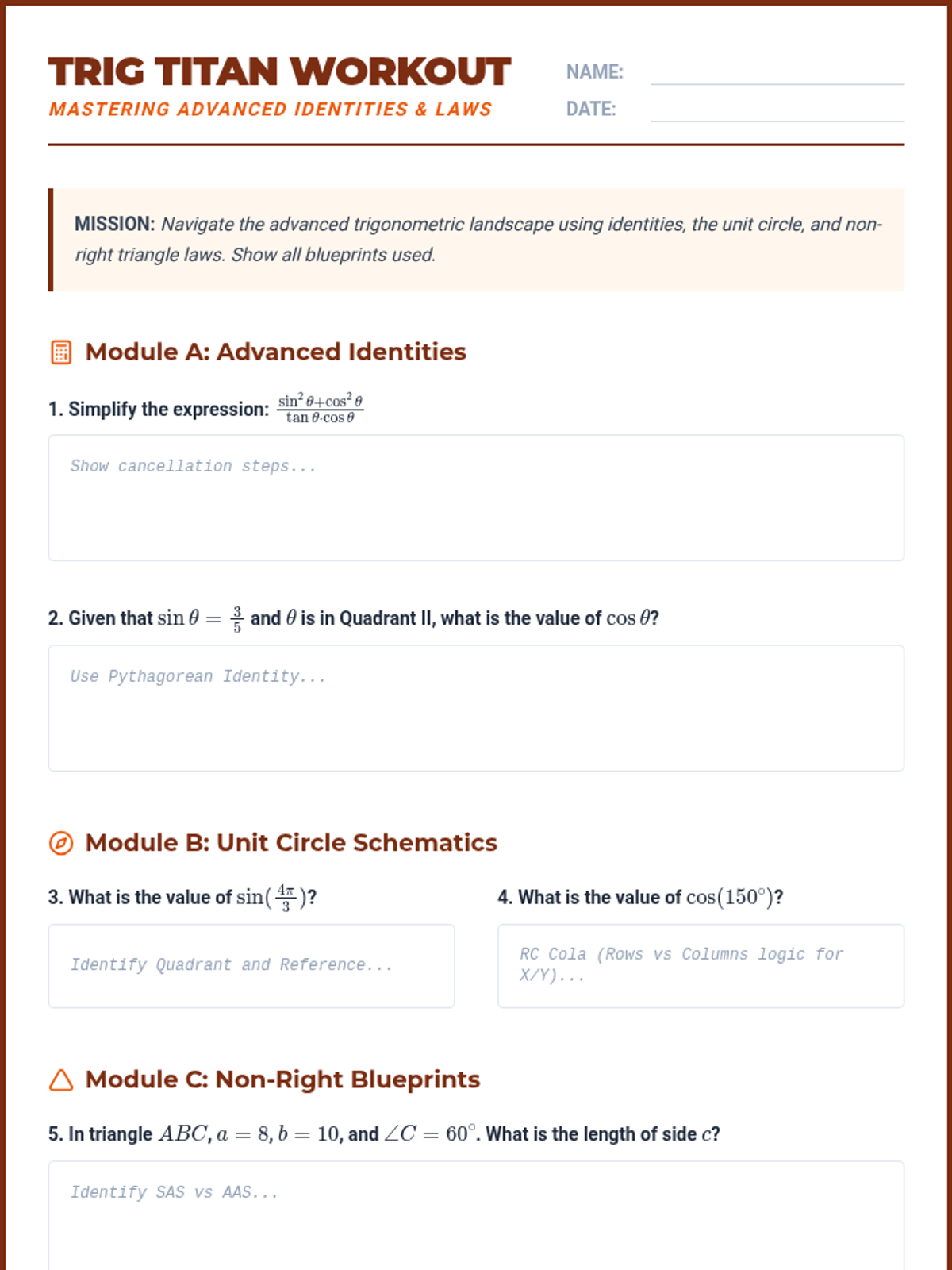
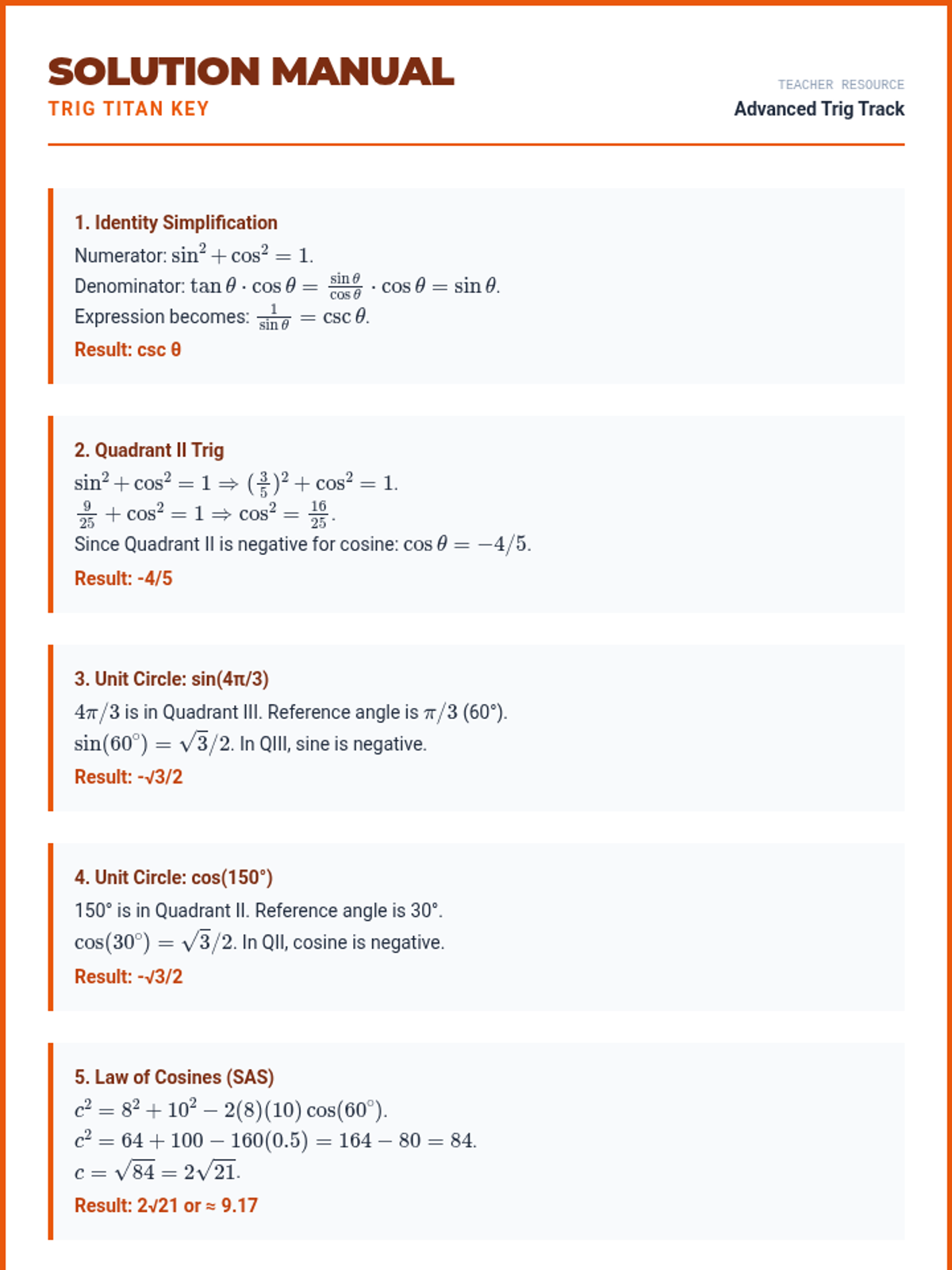
An intensive masterclass on advanced trigonometric identities, the unit circle, and non-right triangle laws. Students will master the Pythagorean identities, Law of Sines/Cosines, and the specific ACT-style unit circle coordinates required for top-tier scores.
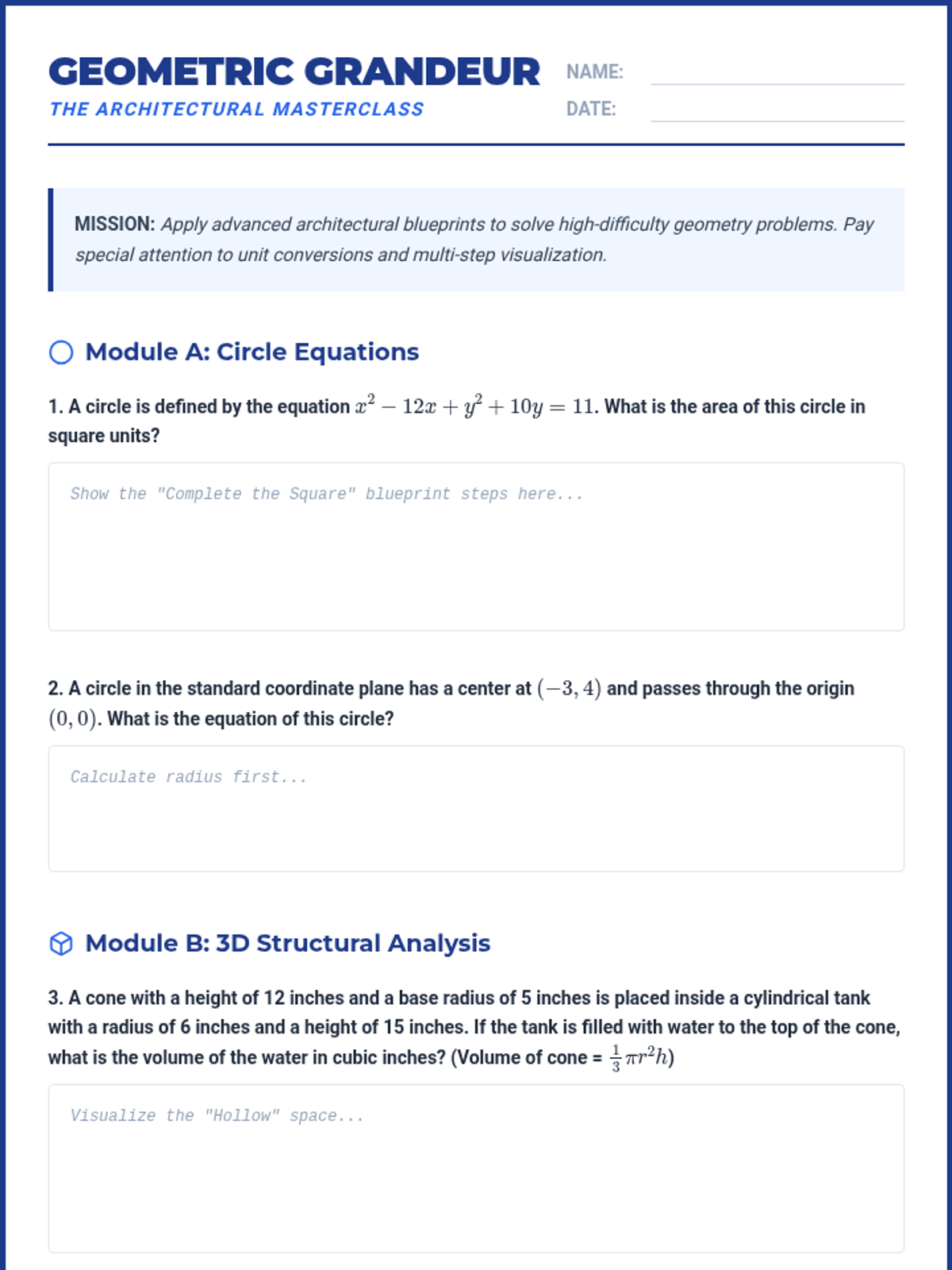
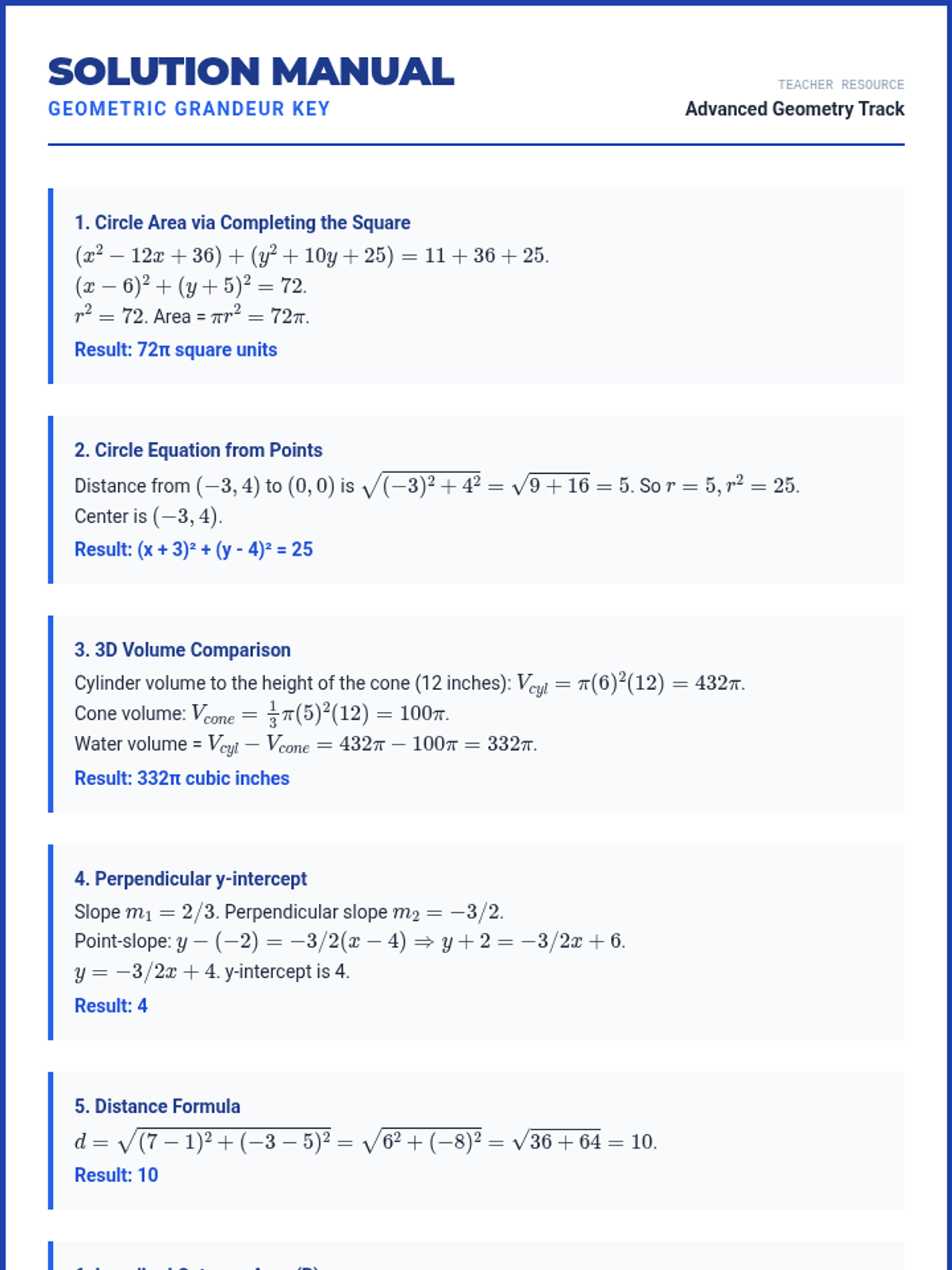
A specialized deep dive into advanced geometry concepts including circle equations, 3D volume/surface area of complex shapes, and coordinate geometry involving perpendicularity and distance. Students will master completing the square for circles and visualizing 3D cross-sections.
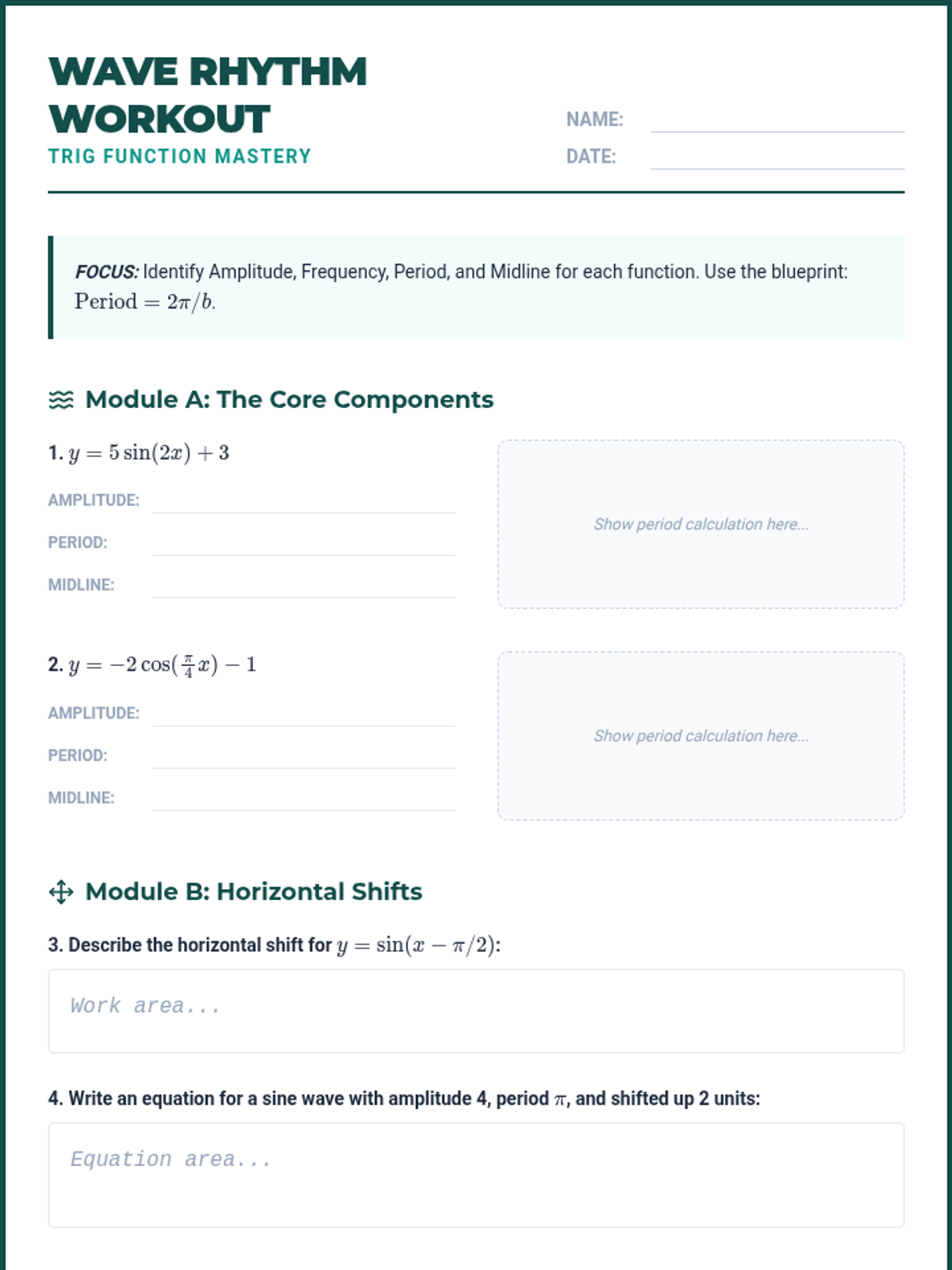
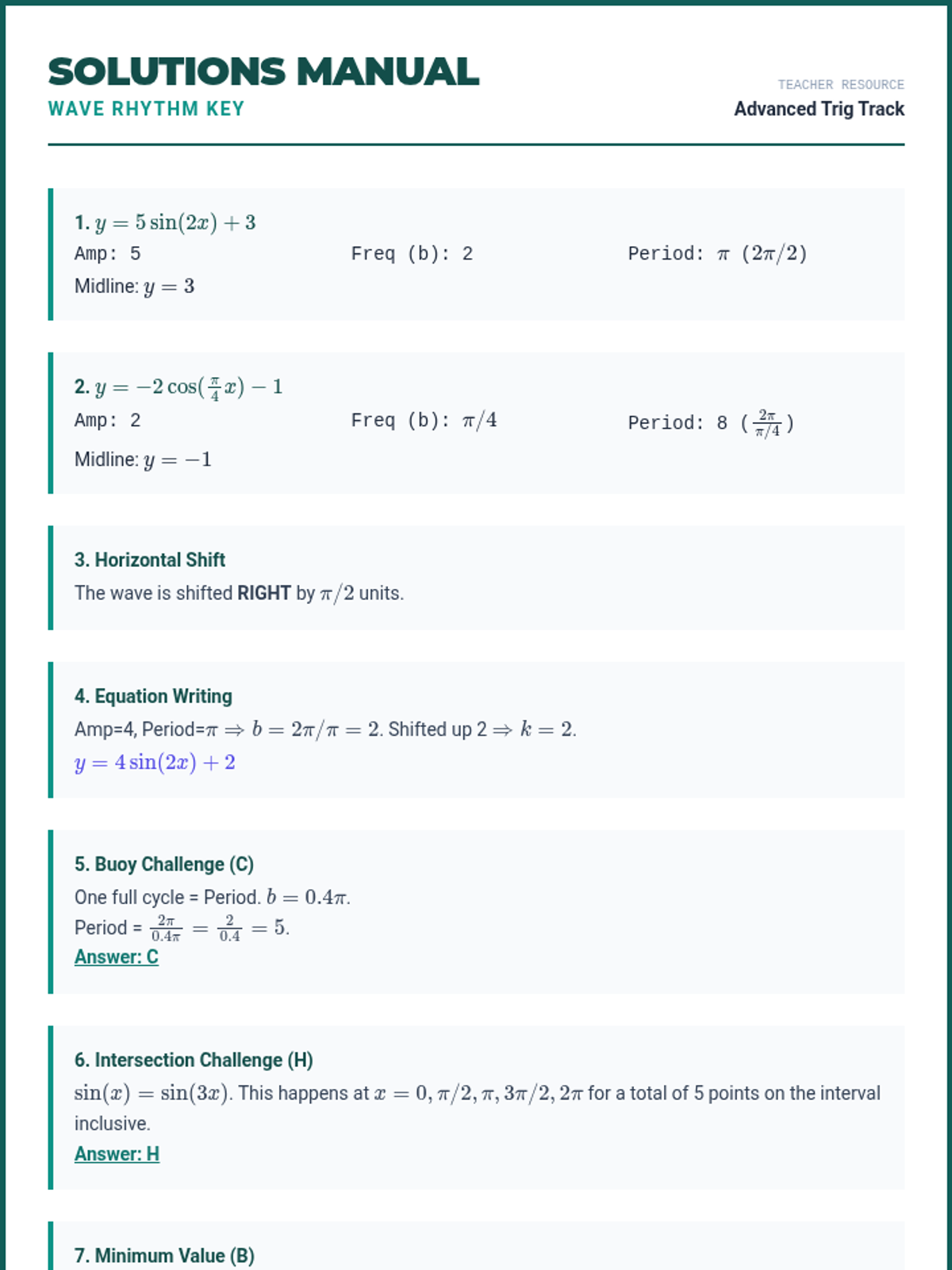
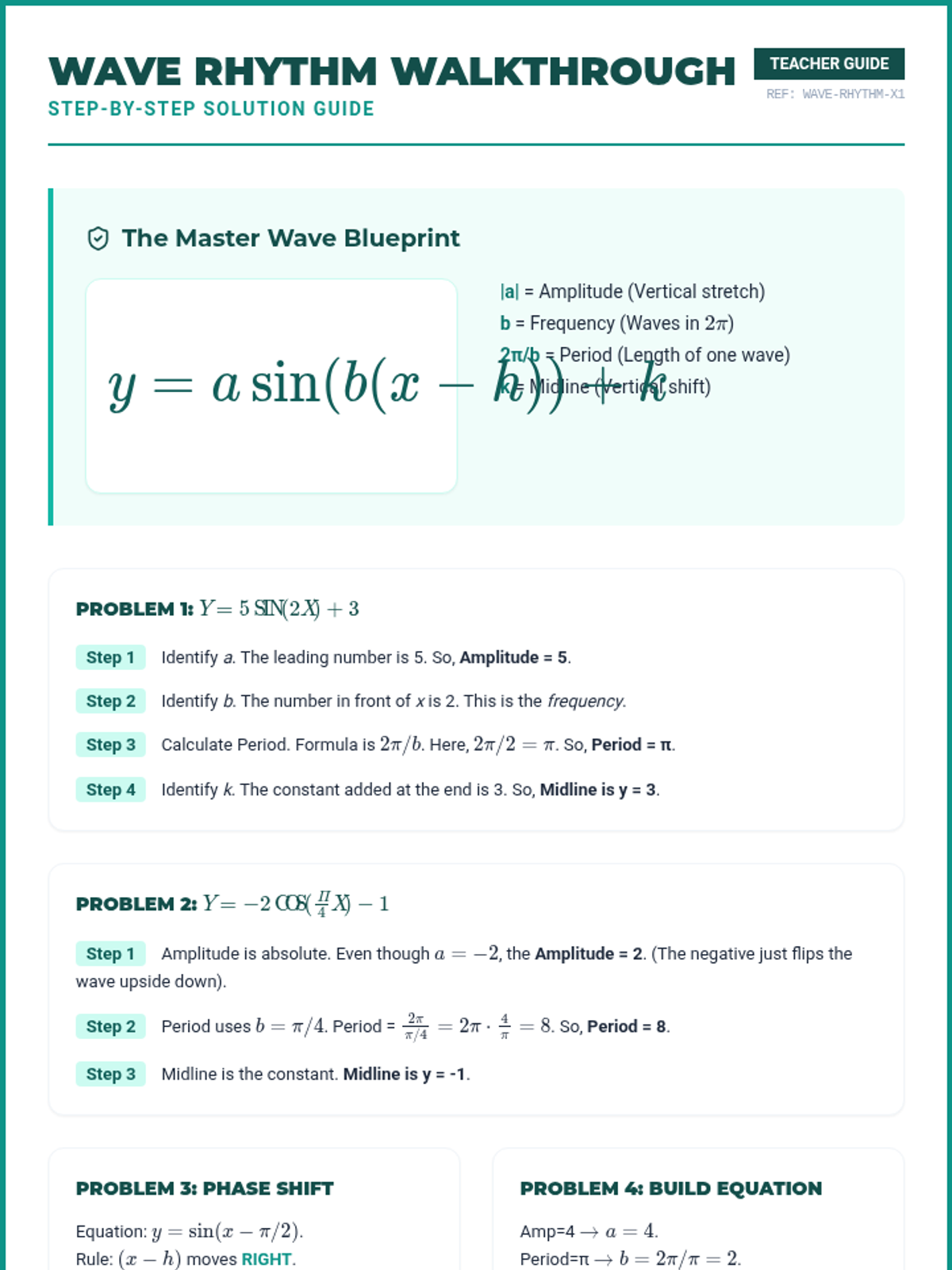
A specialized deep dive into trigonometric functions, mastering the critical distinction between period and frequency. Students will apply the 2π/b blueprint to decode sine and cosine graphs and solve high-difficulty periodic motion problems.
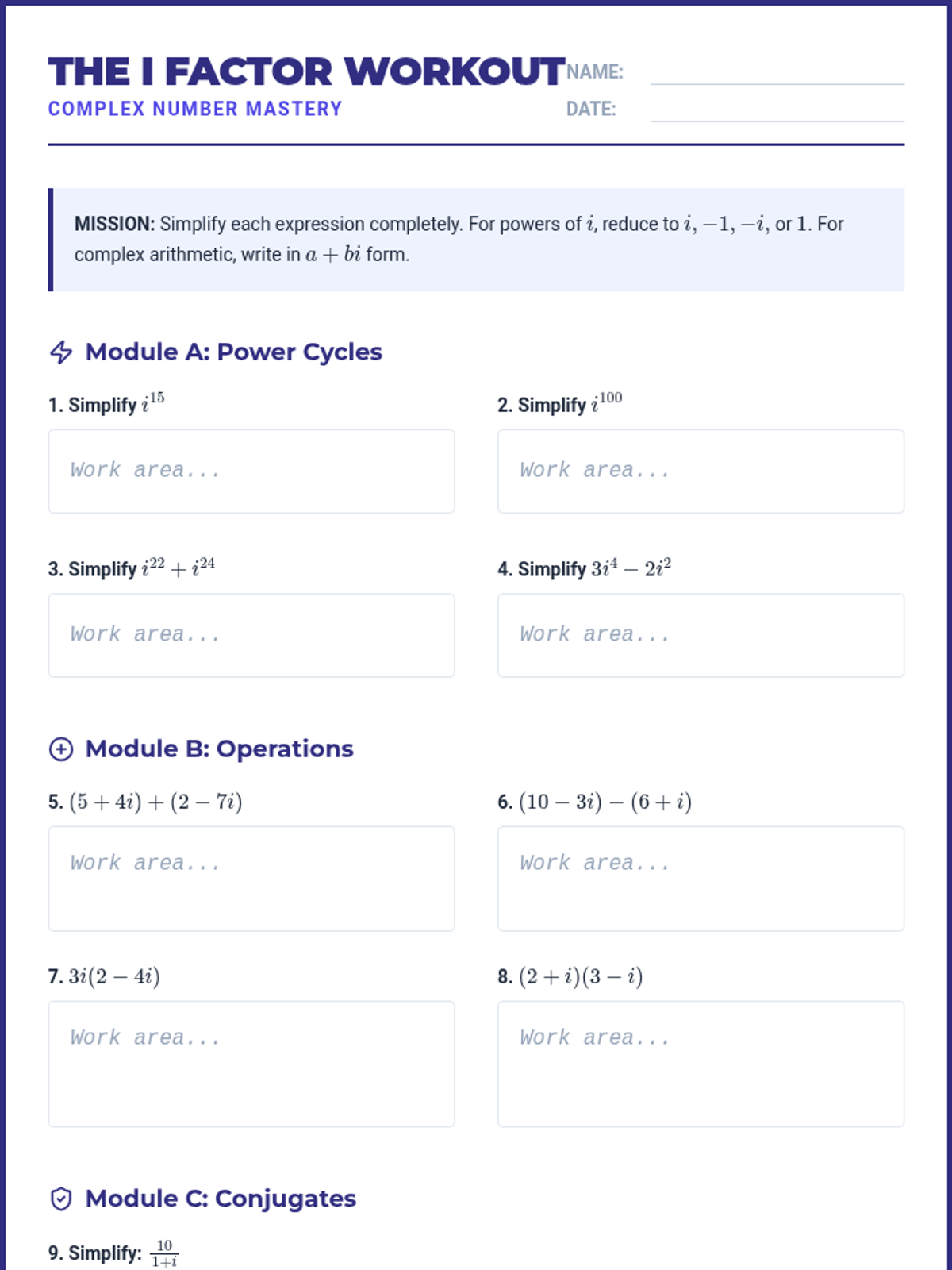
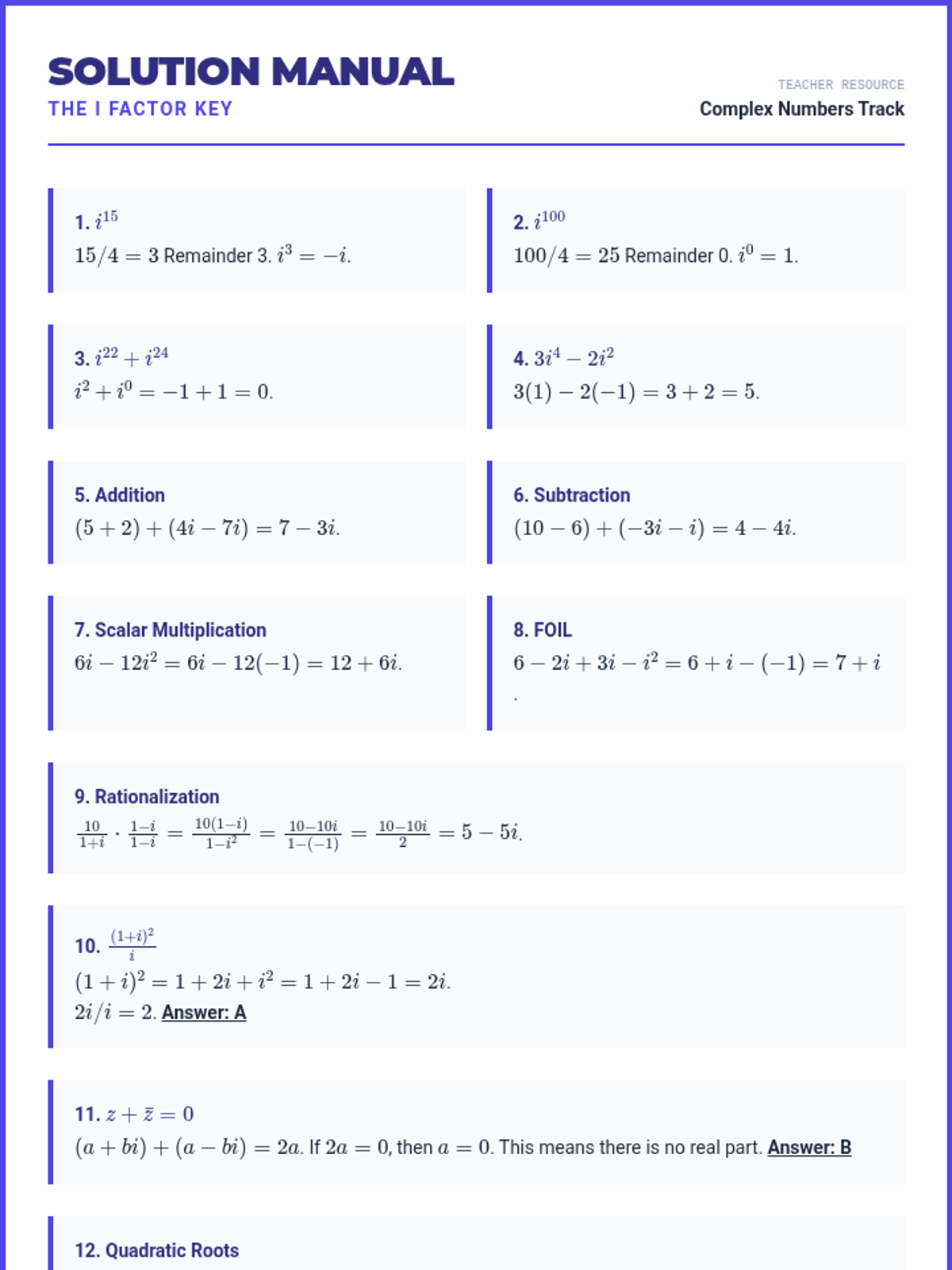
A focused deep dive into imaginary and complex numbers. Students will master powers of i, arithmetic with complex conjugates, and solving quadratic equations with complex roots—all through the lens of ACT-style 'Final Ten' questions.
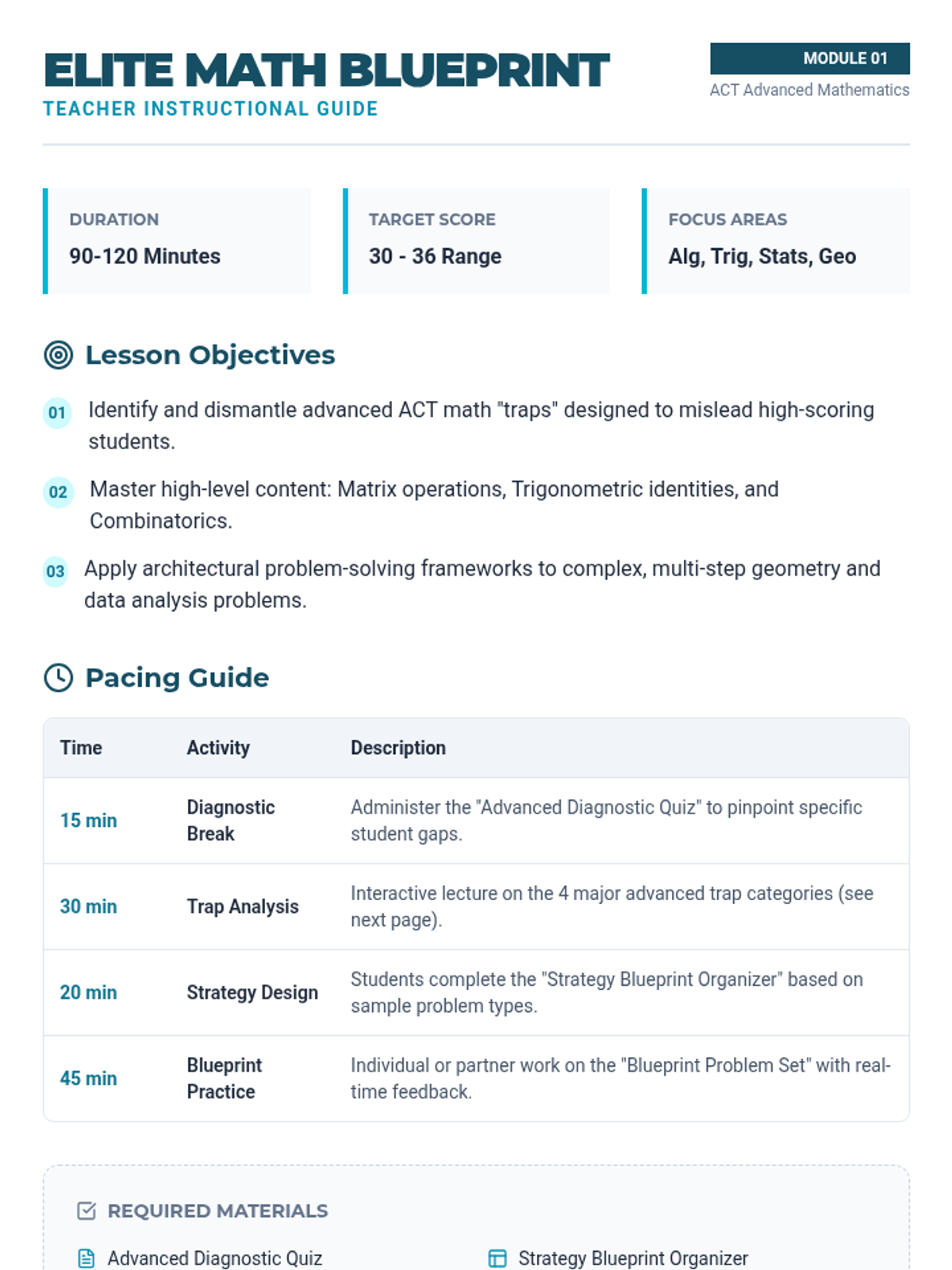
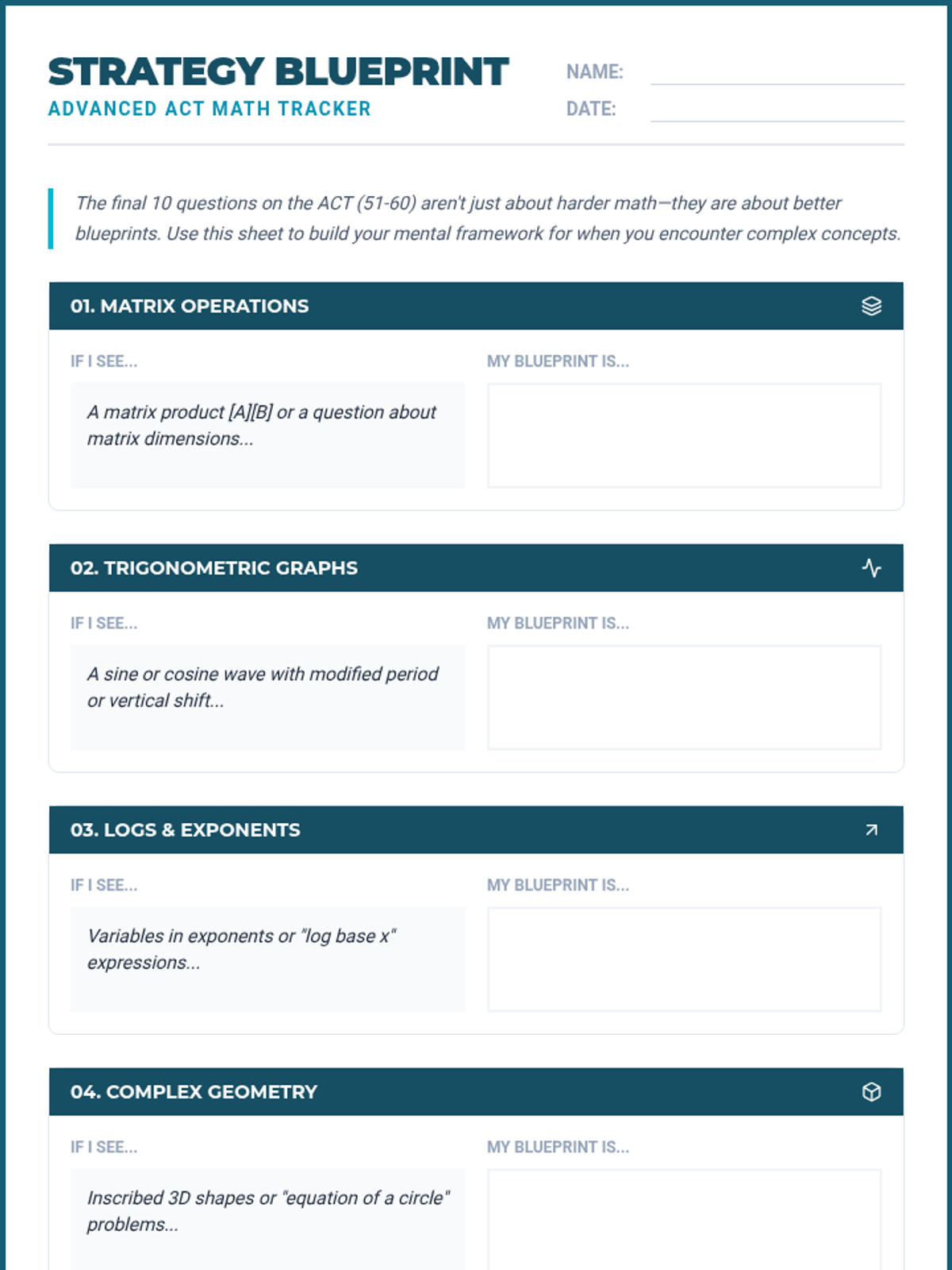
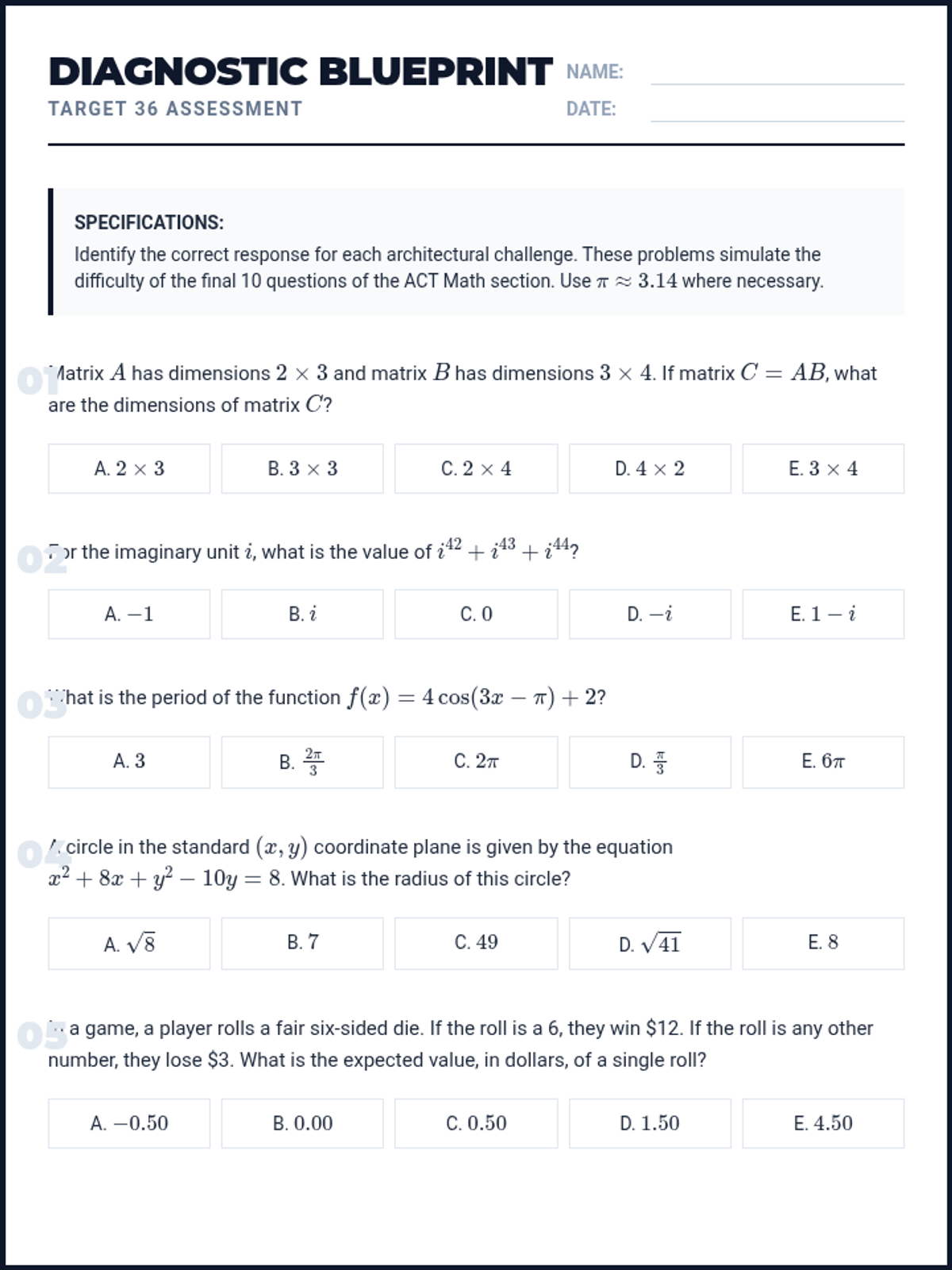
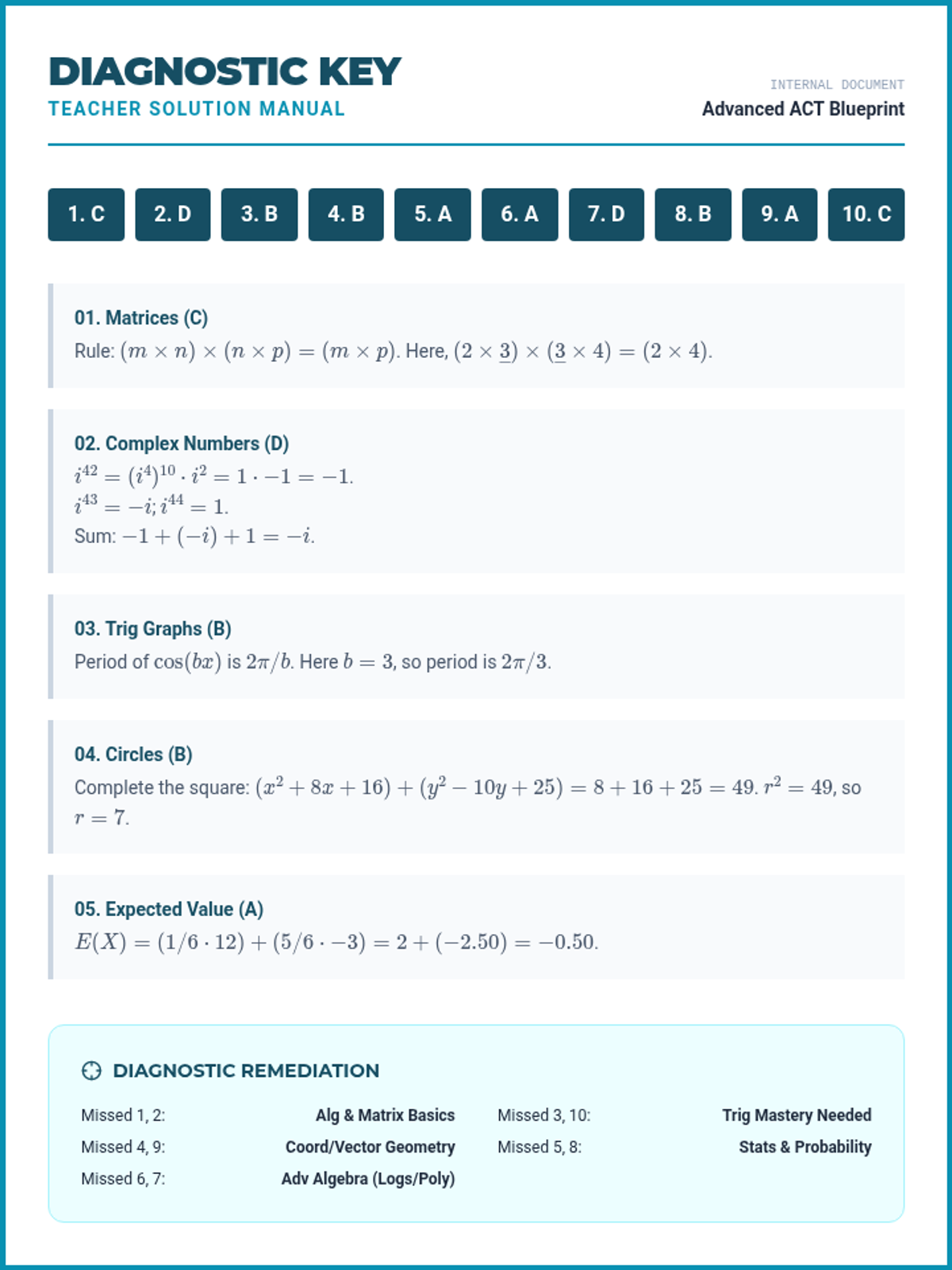
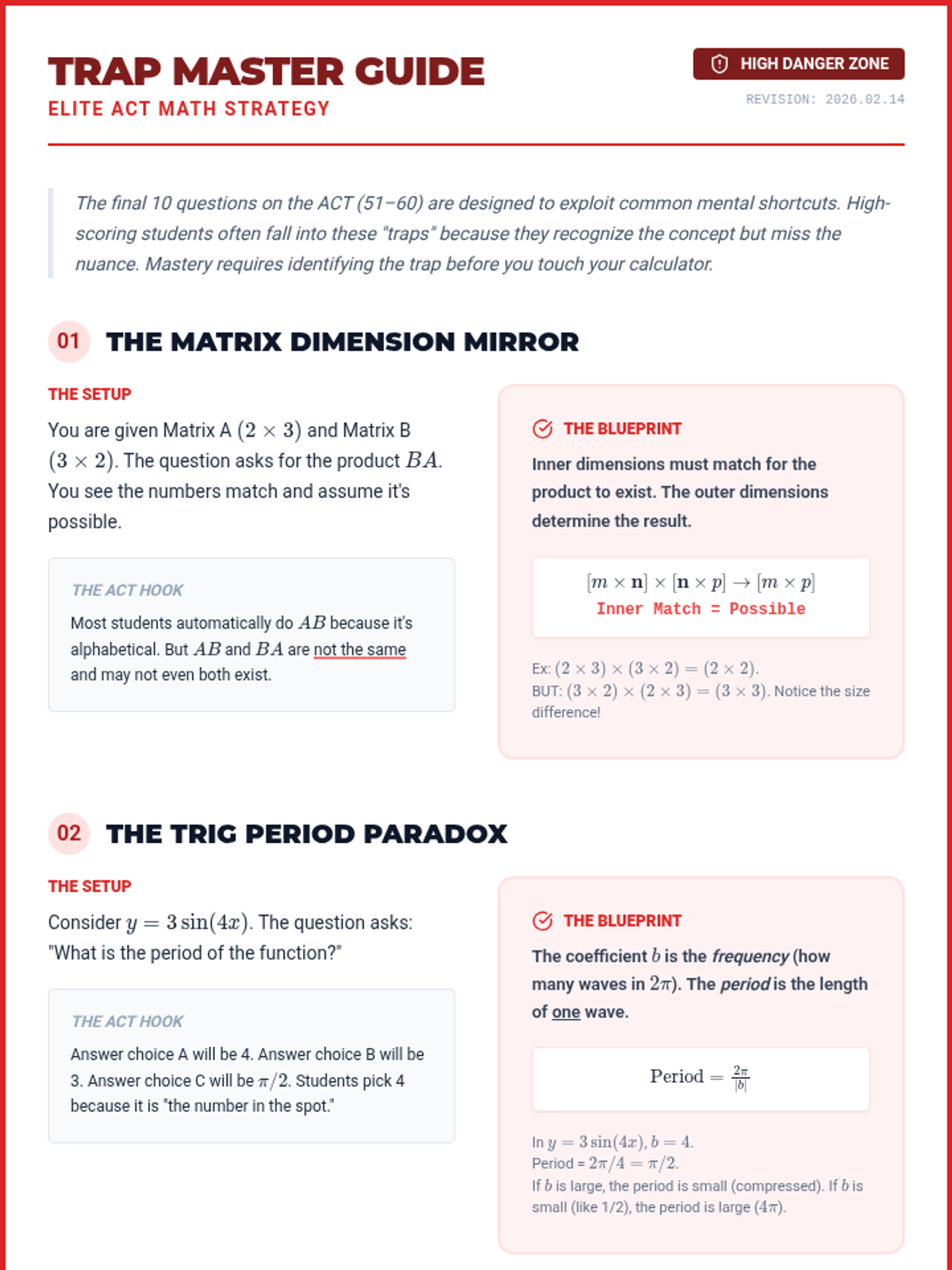
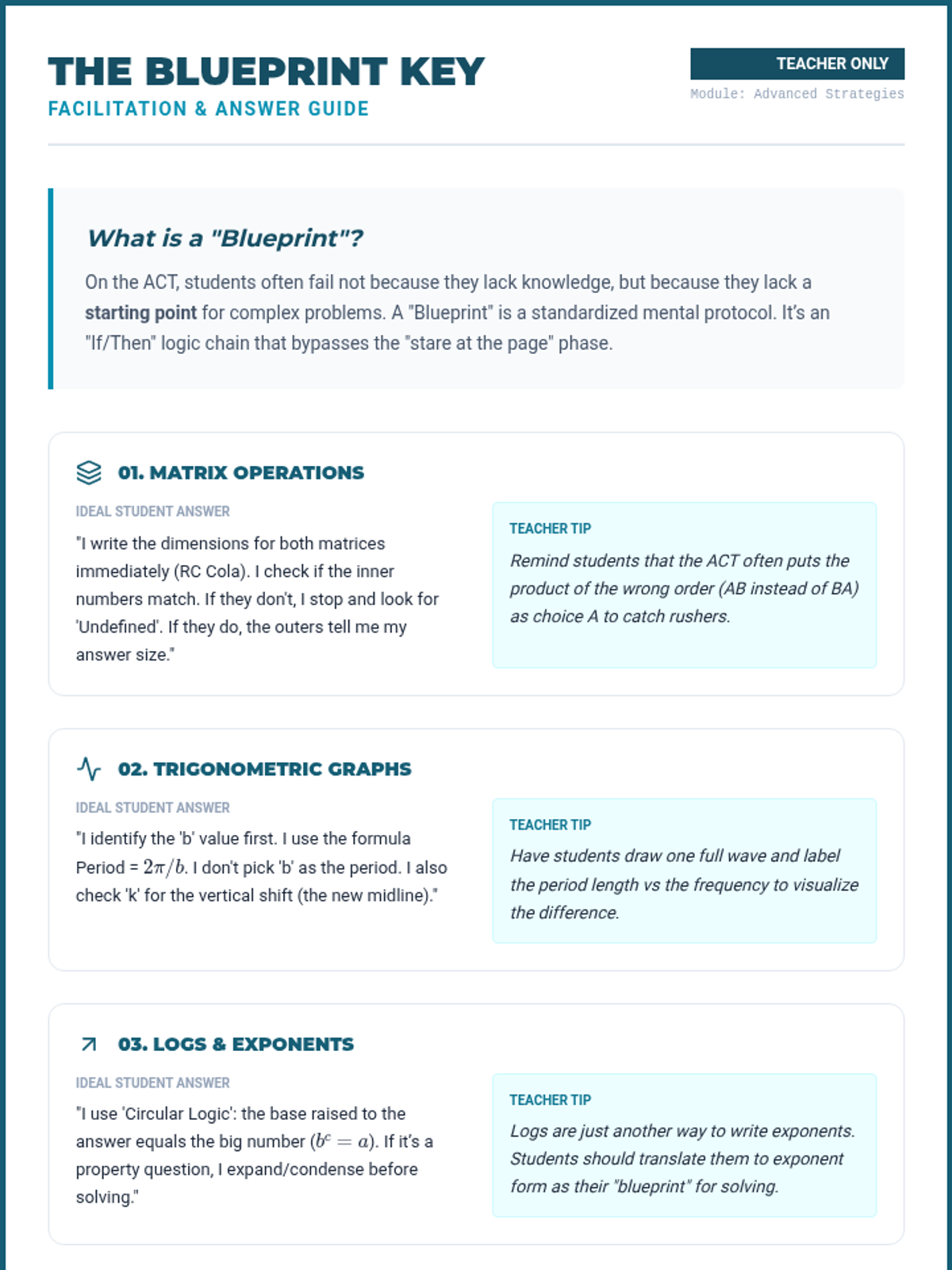
A comprehensive lesson focused on high-level ACT Math topics including matrices, complex functions, trigonometry, and advanced statistics. The lesson emphasizes identifying common 'traps' and applying architectural-style problem-solving strategies.
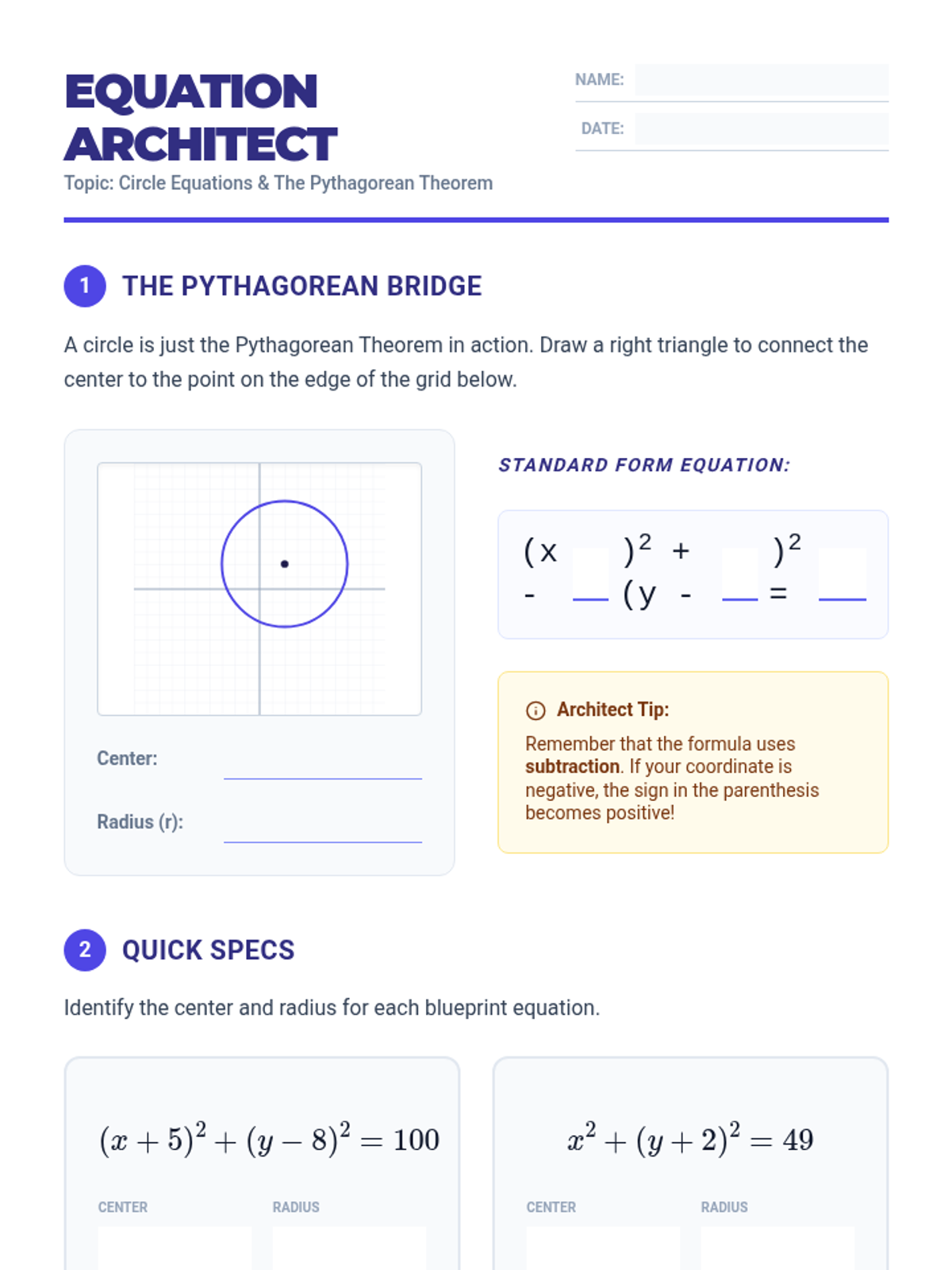
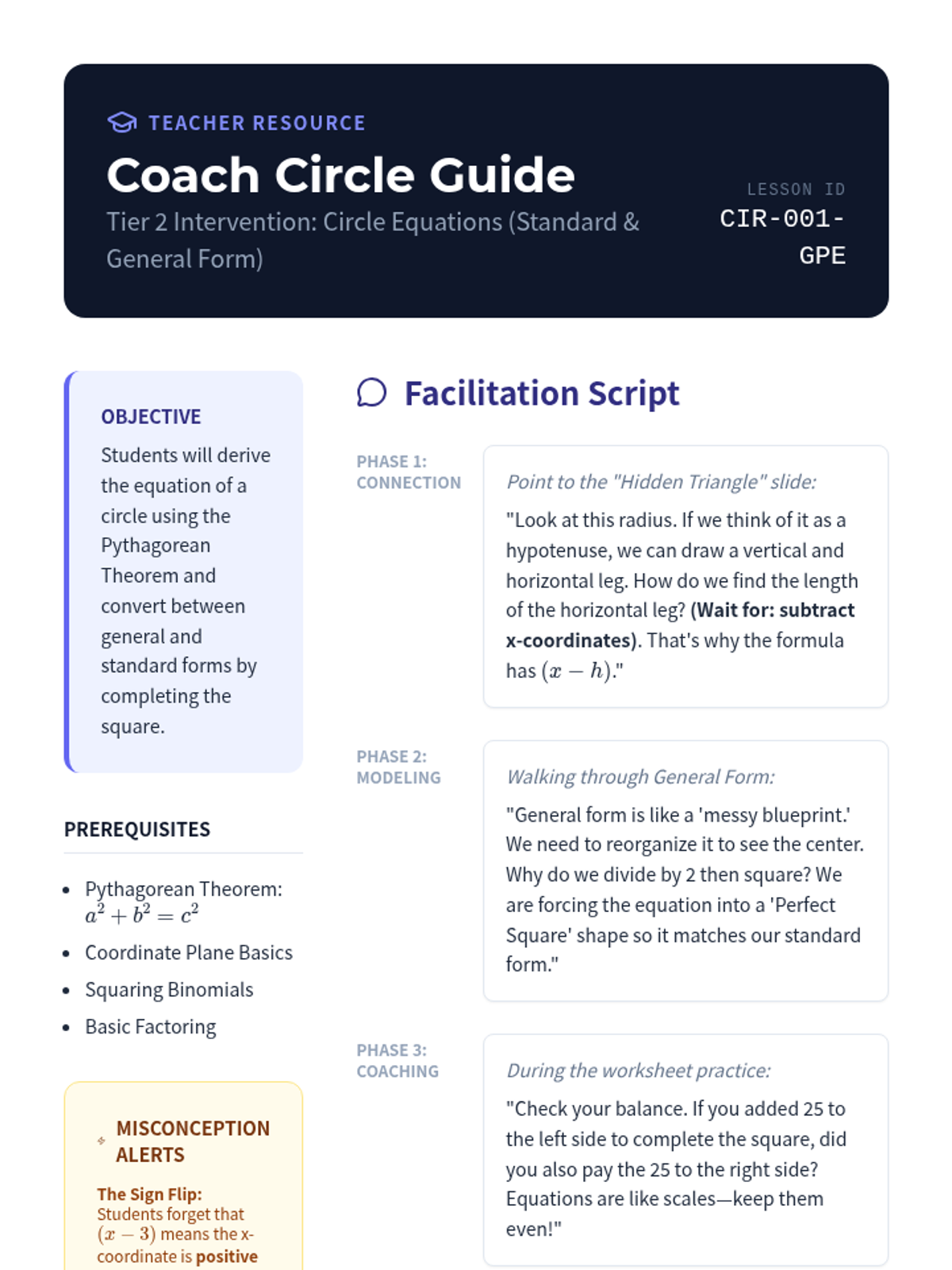
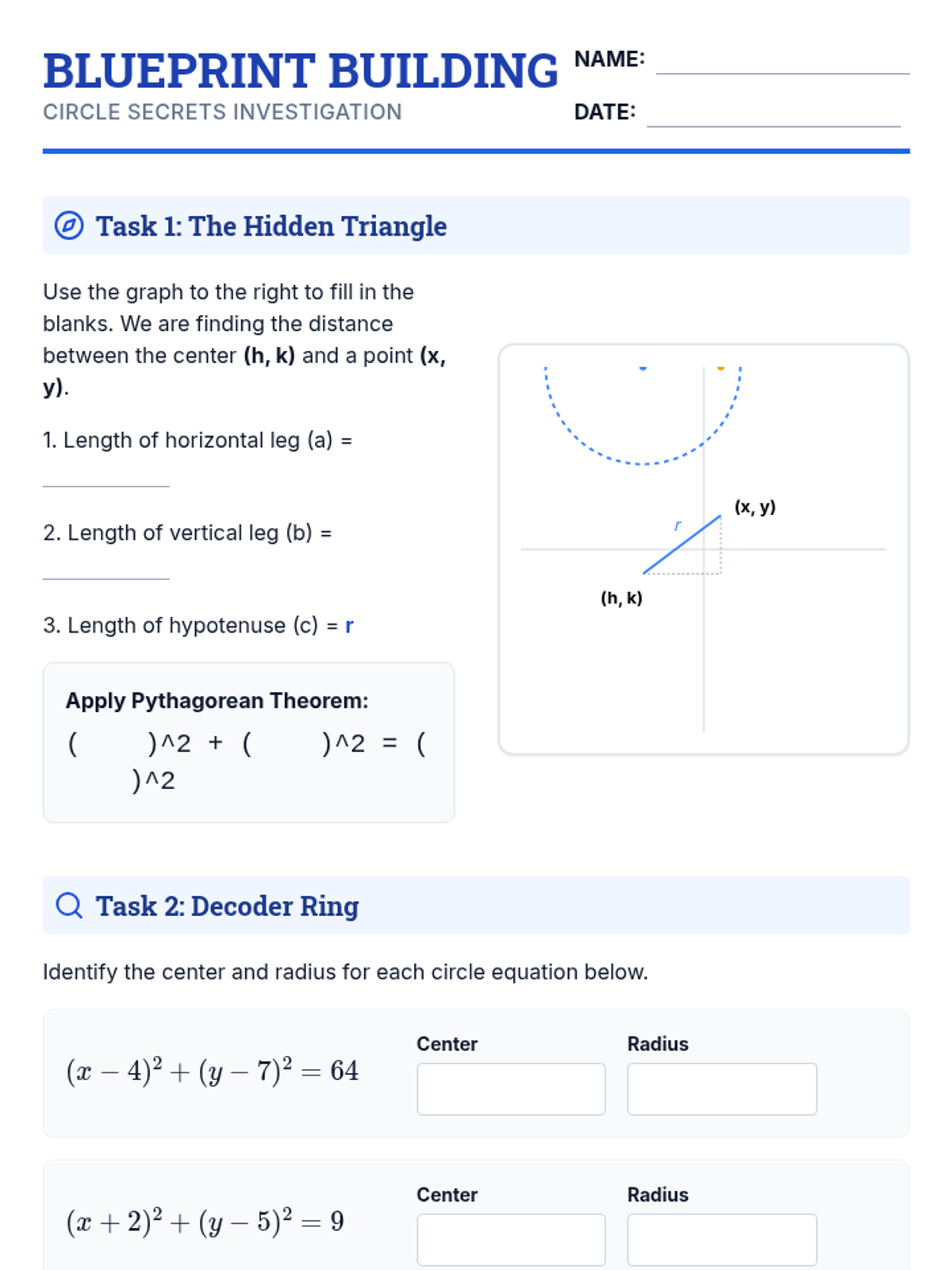
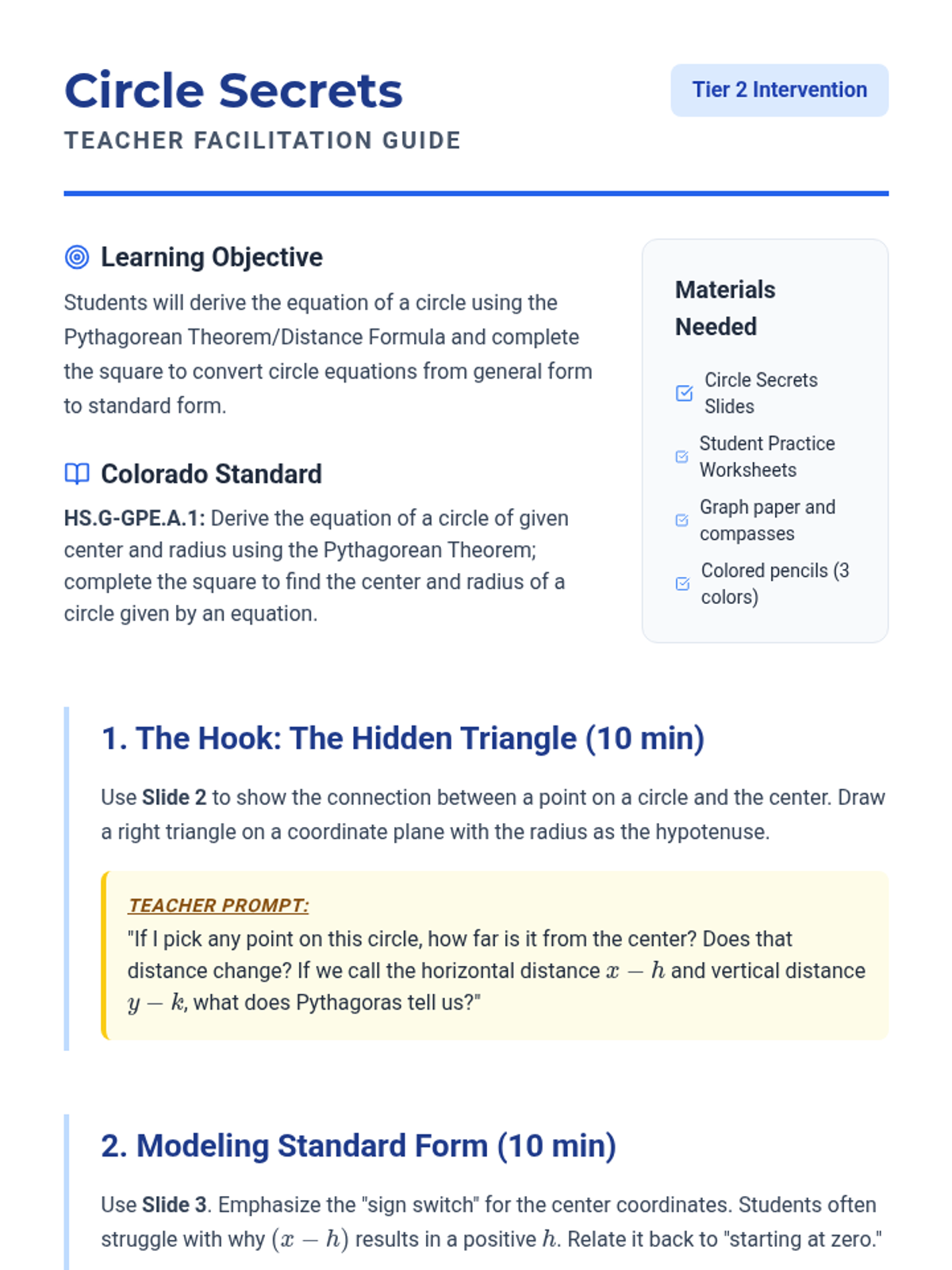
A targeted Tier 2 intervention lesson focusing on the conceptual link between the Pythagorean Theorem and circle equations, covering both standard and general forms.
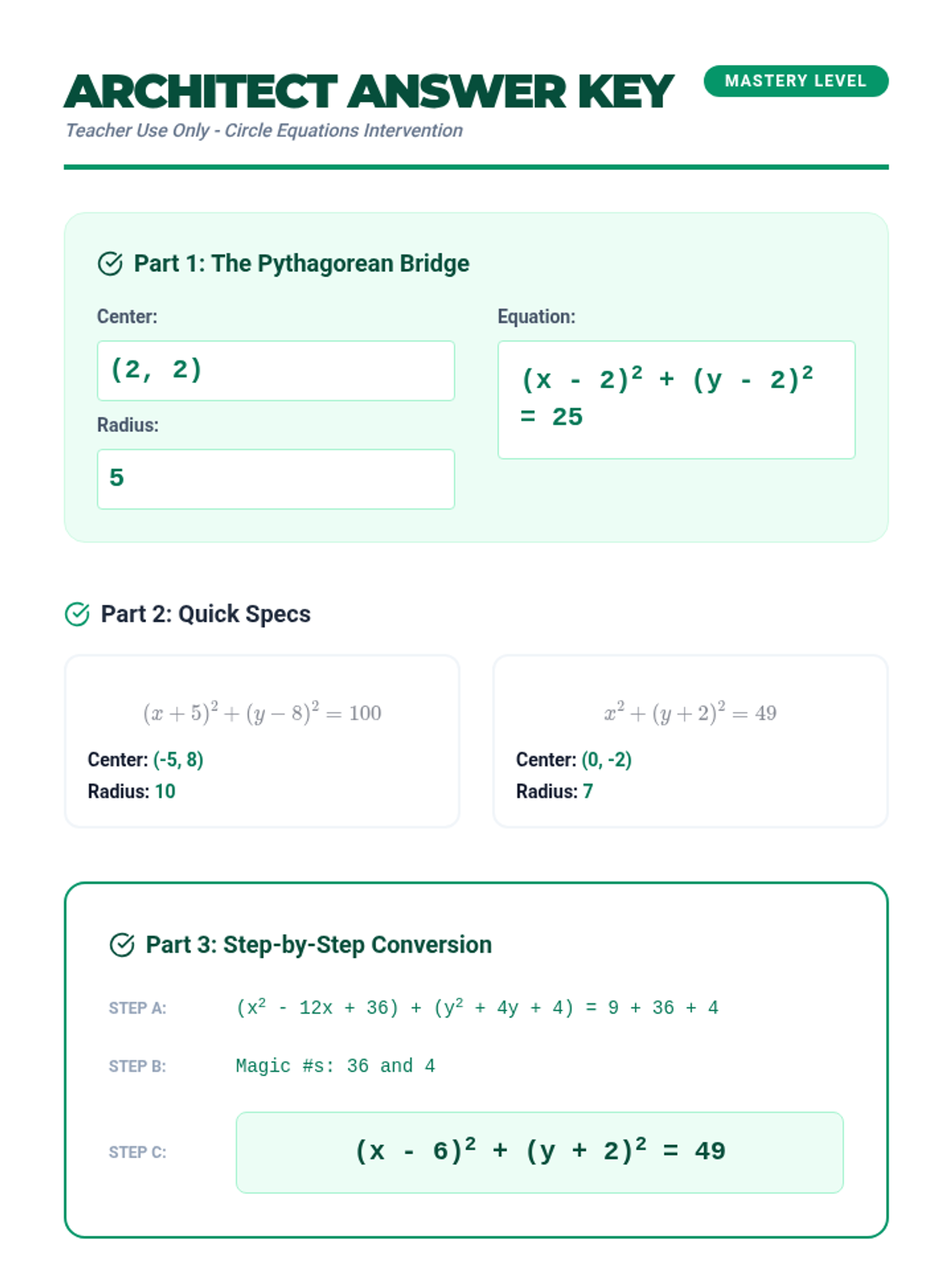
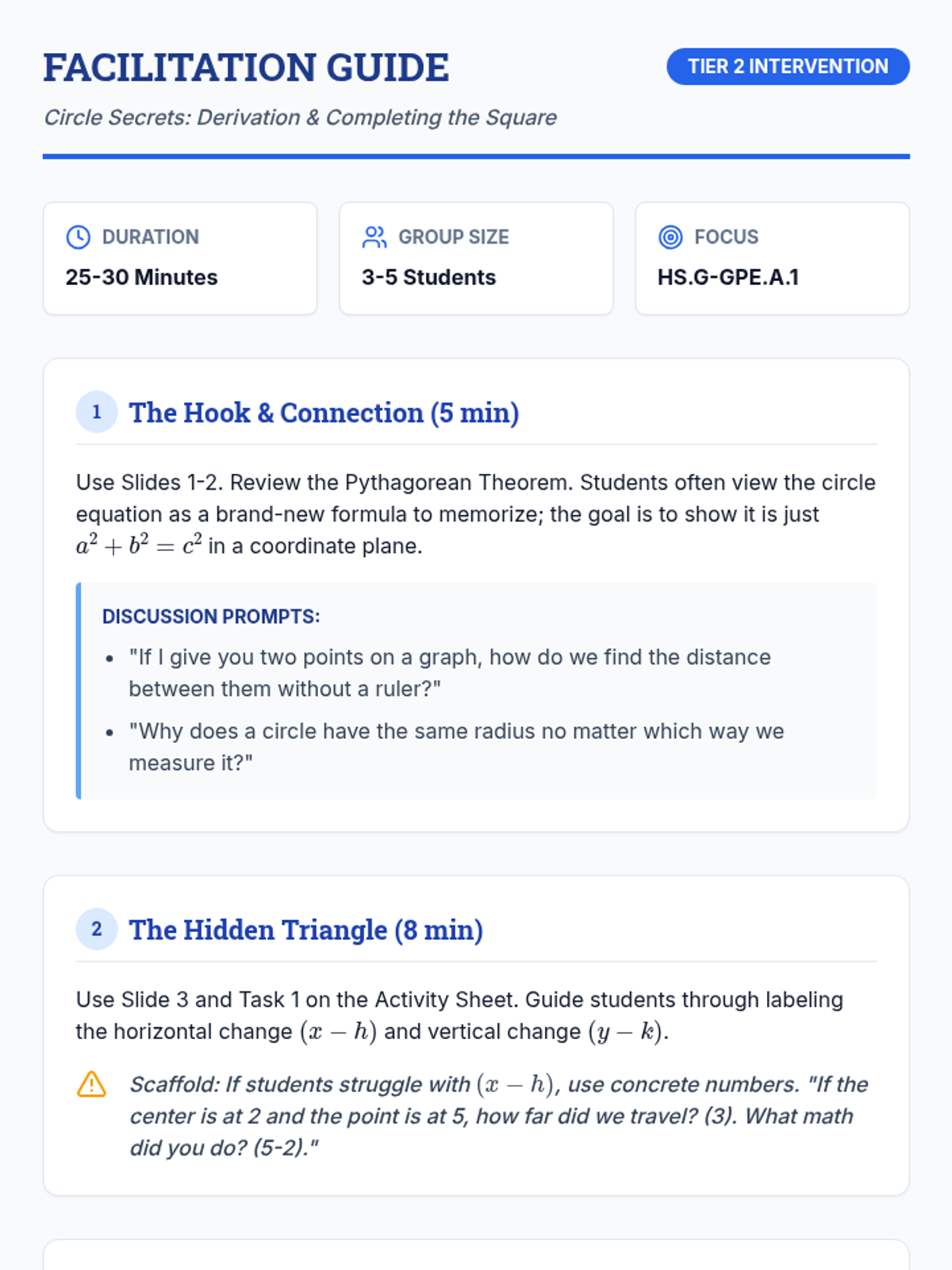
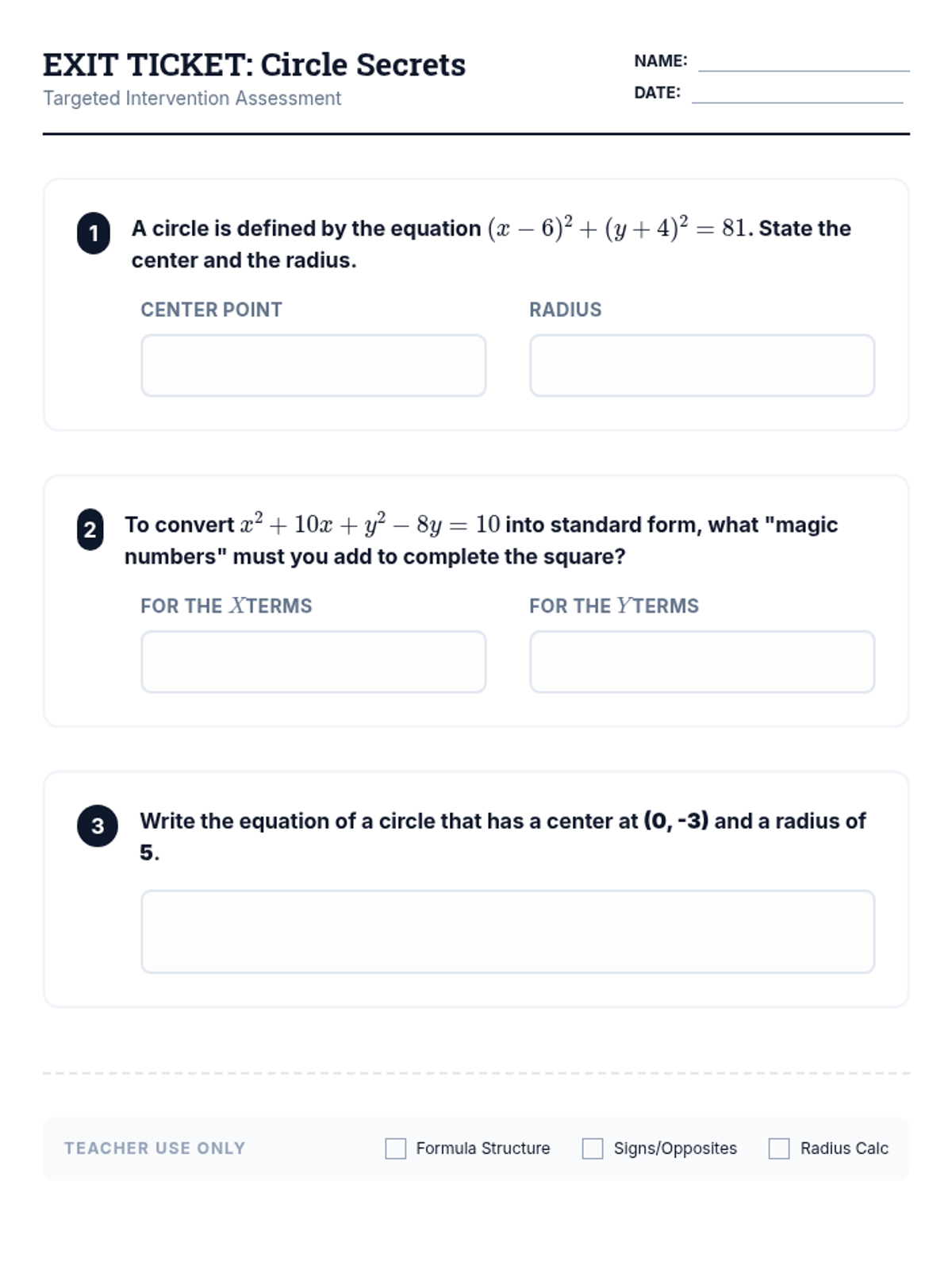
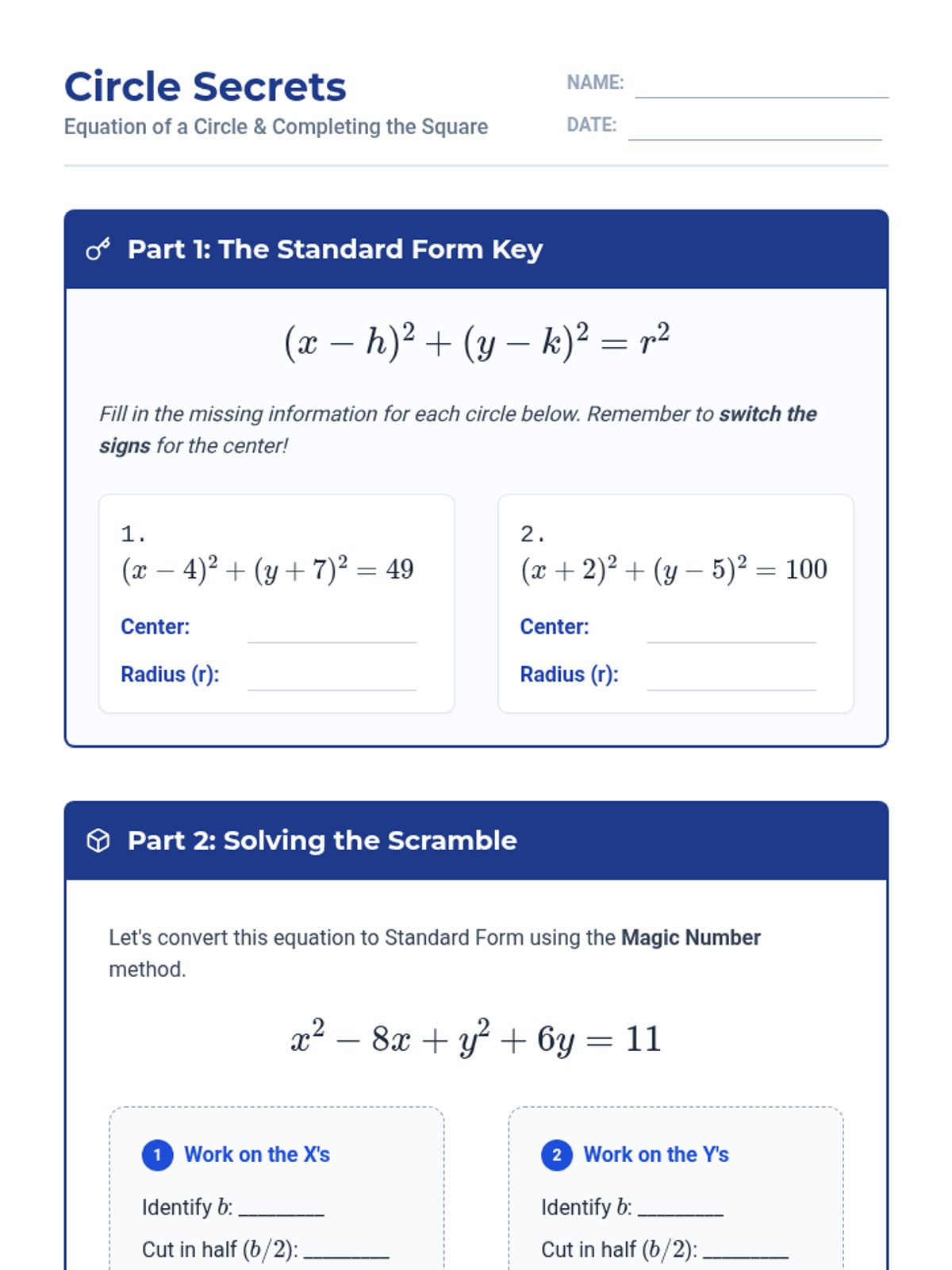
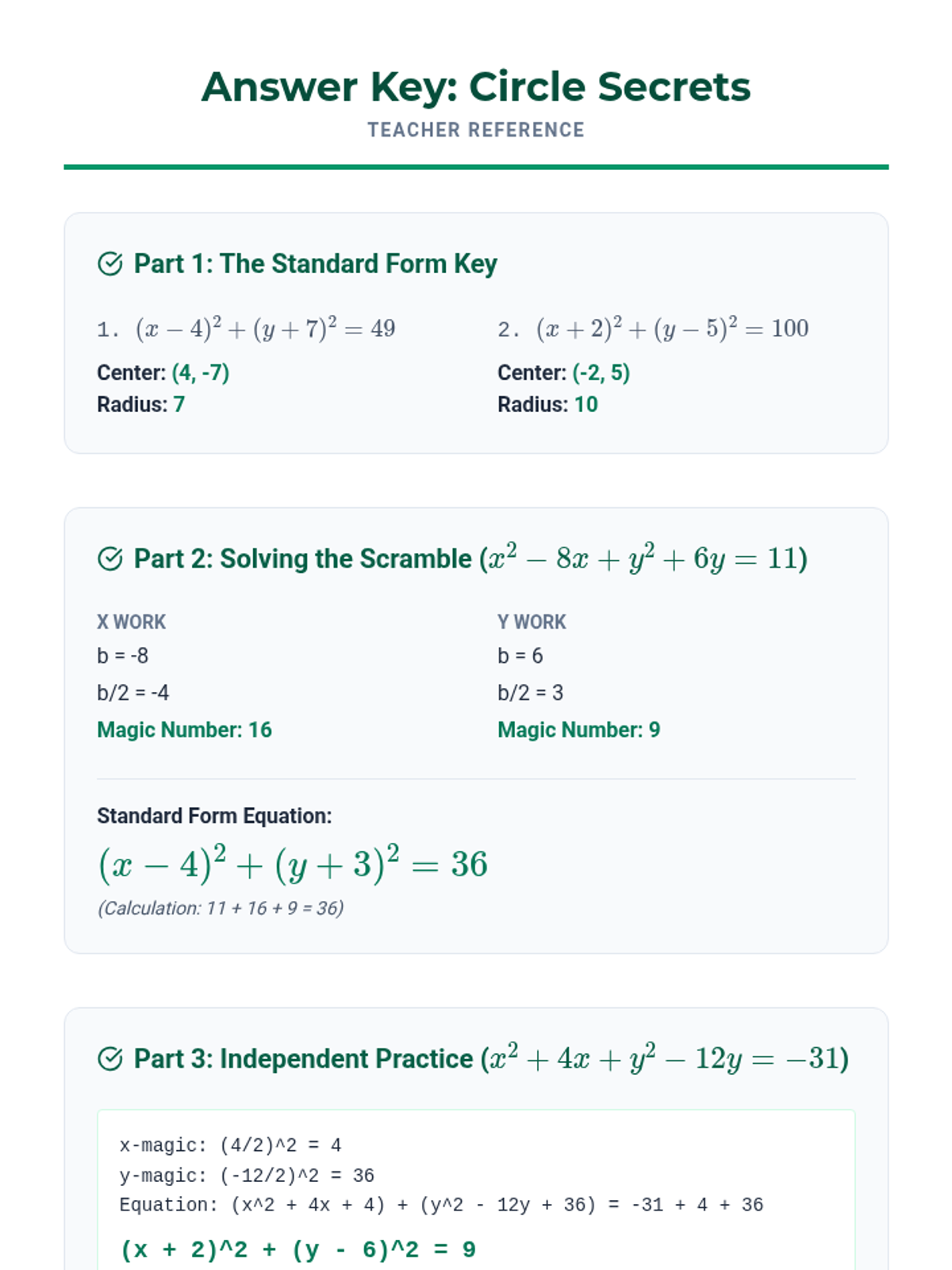
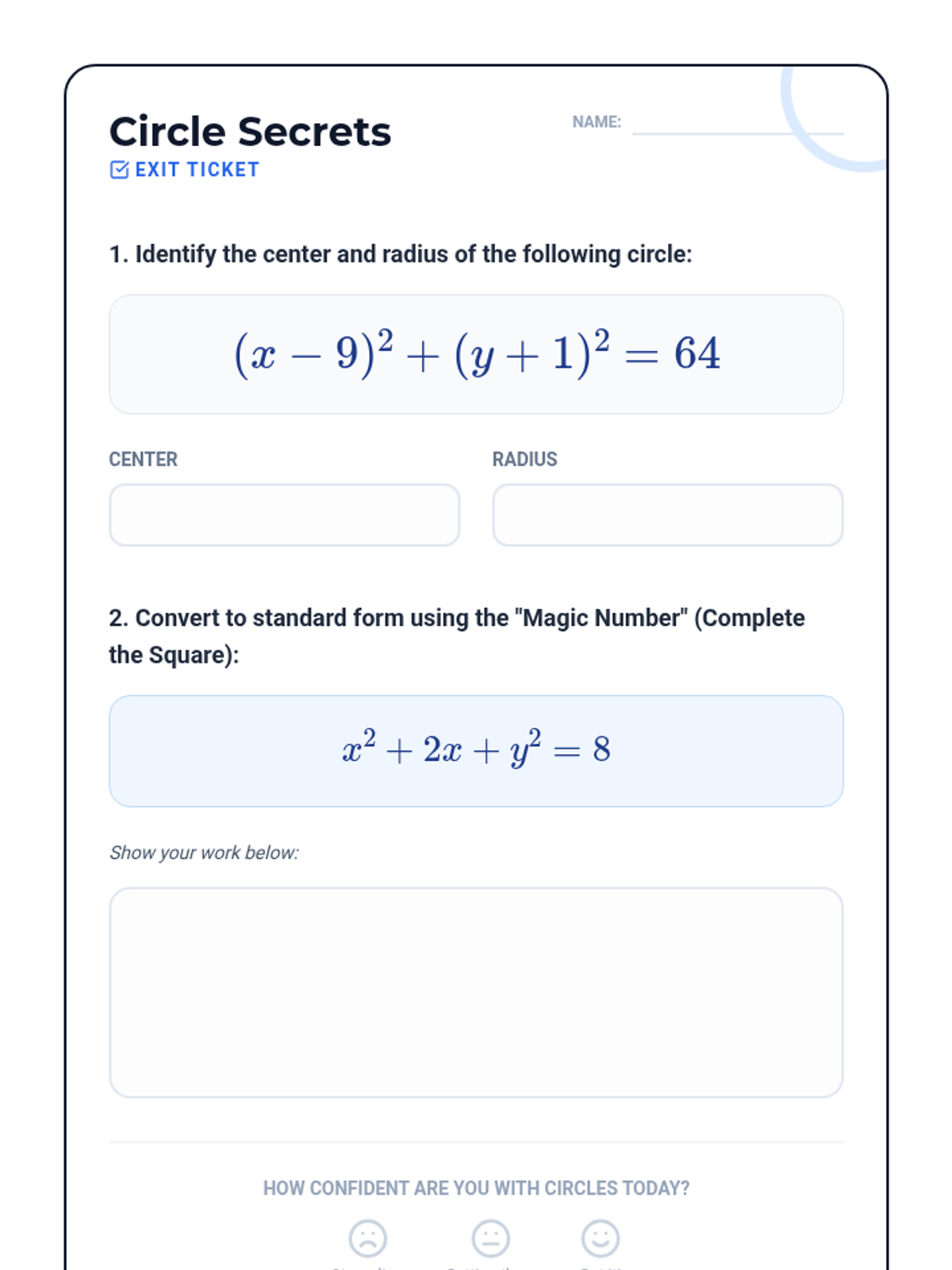
A Tier 2 intervention lesson focusing on the derivation of the circle equation from the Pythagorean Theorem and the algebraic process of completing the square to identify the center and radius.
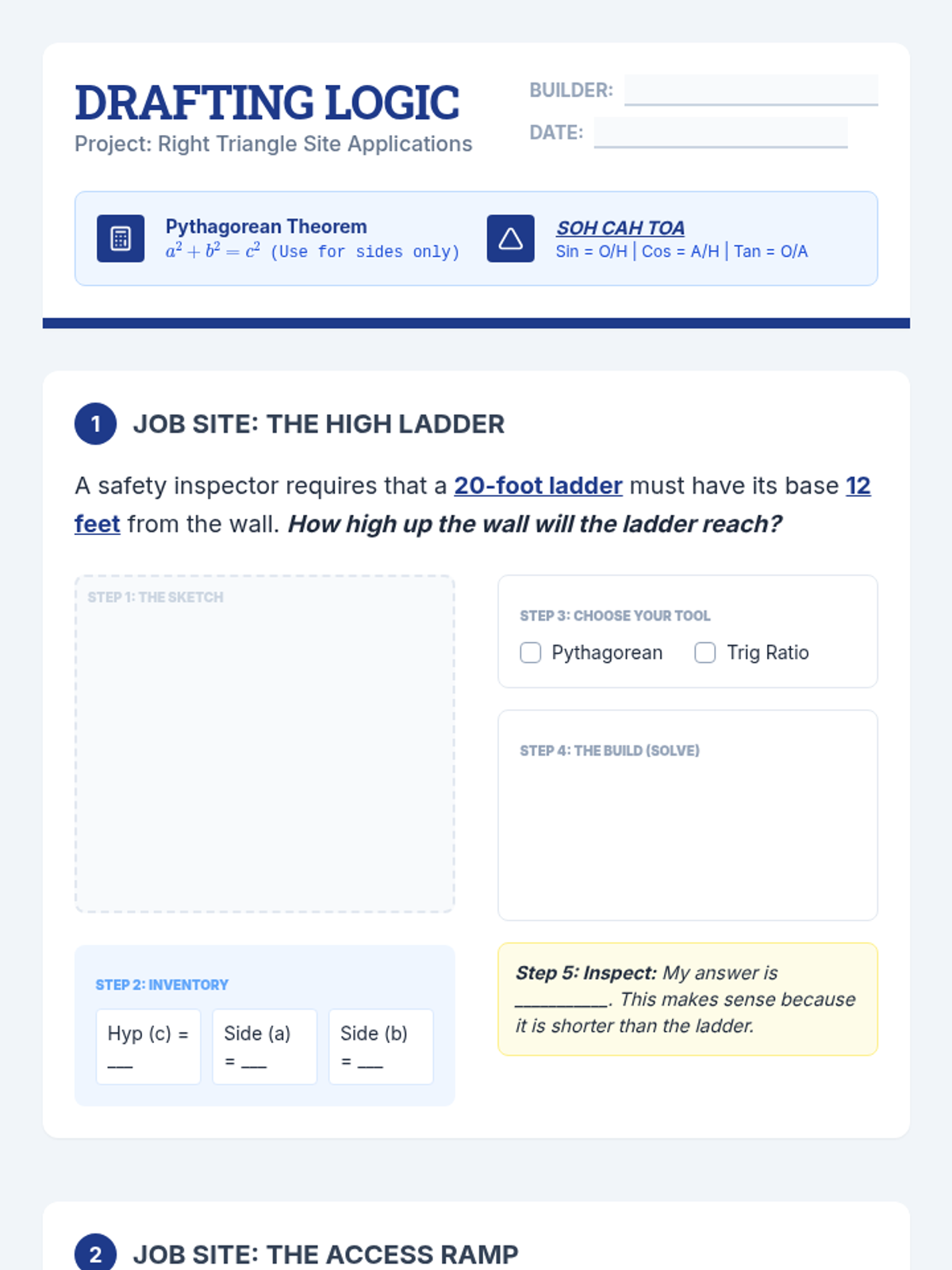
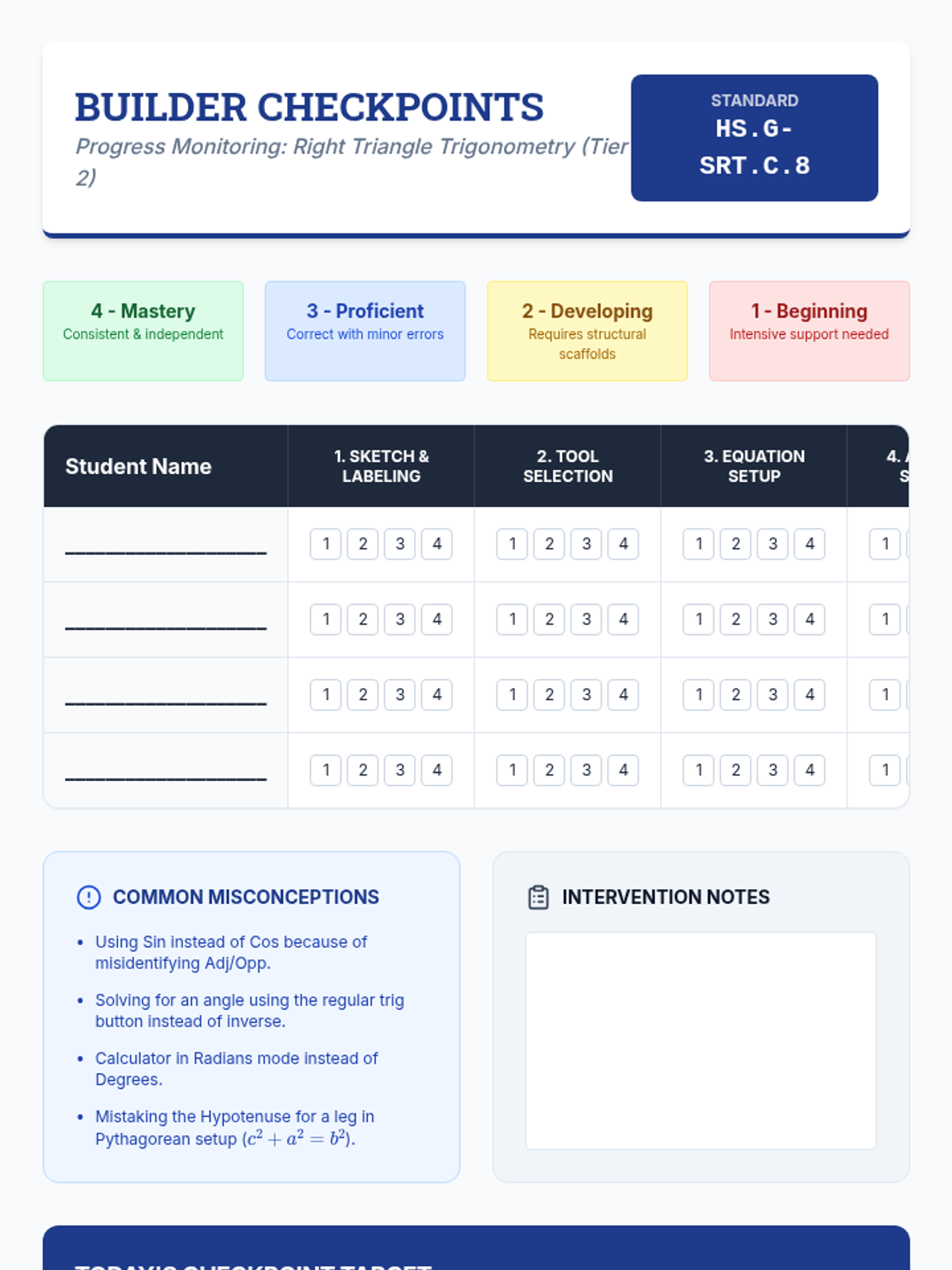
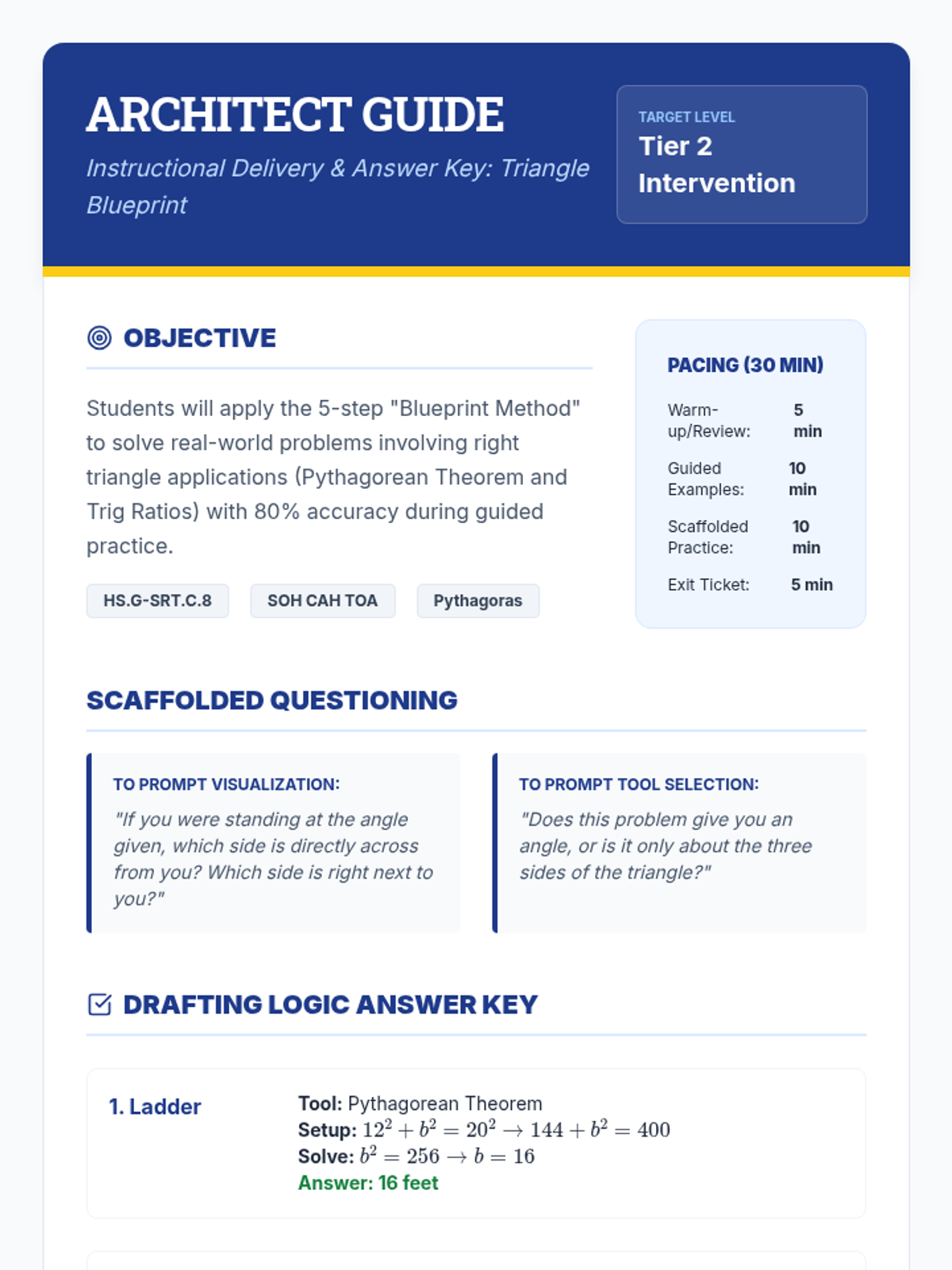
A targeted Tier 2 intervention lesson for High School Geometry focusing on real-world applications of right triangle trigonometry and the Pythagorean Theorem through a structured 5-step problem-solving framework. Students will use scaffolds to navigate complex word problems and demonstrate mastery through progress monitoring checkpoints.
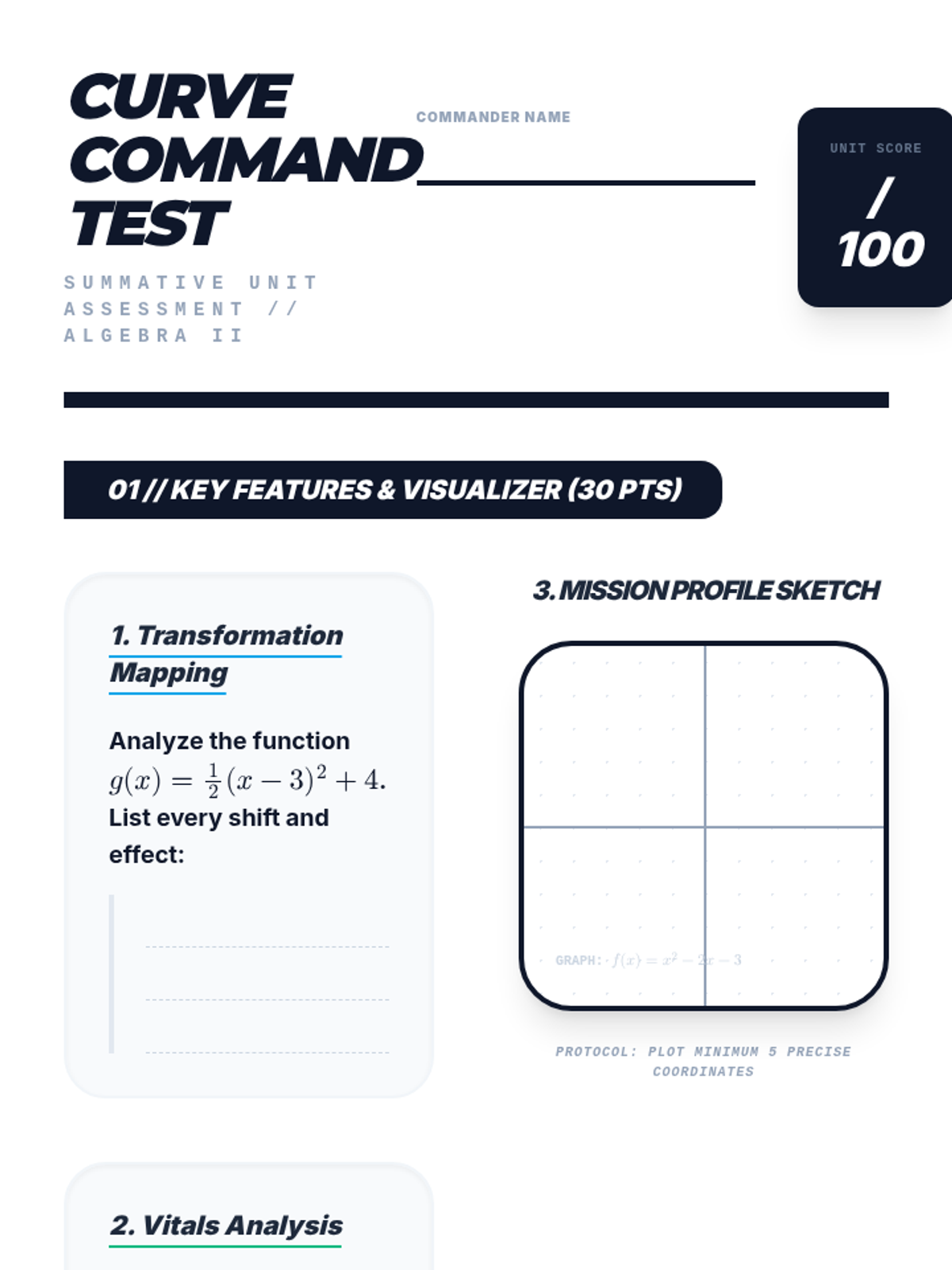
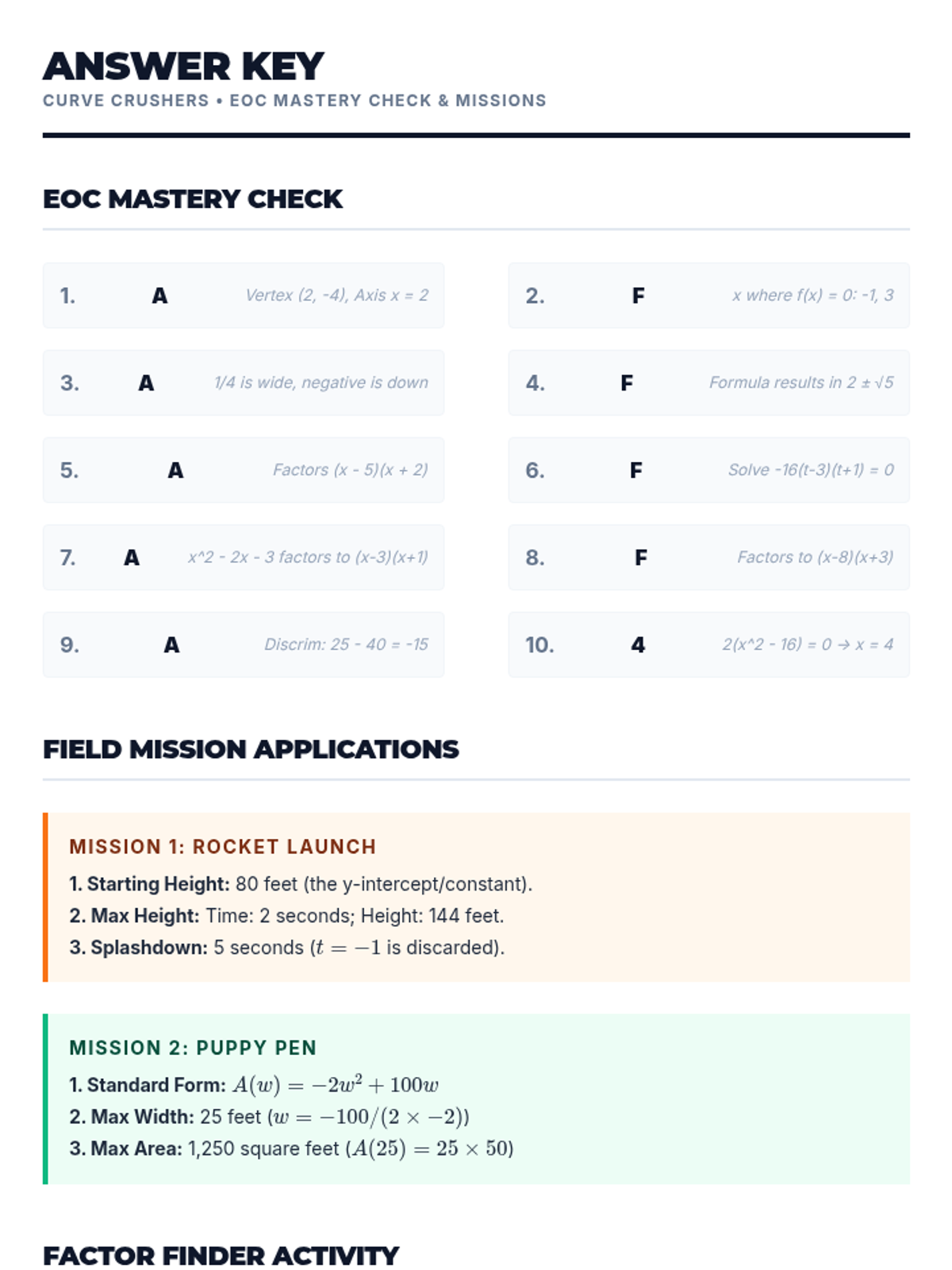
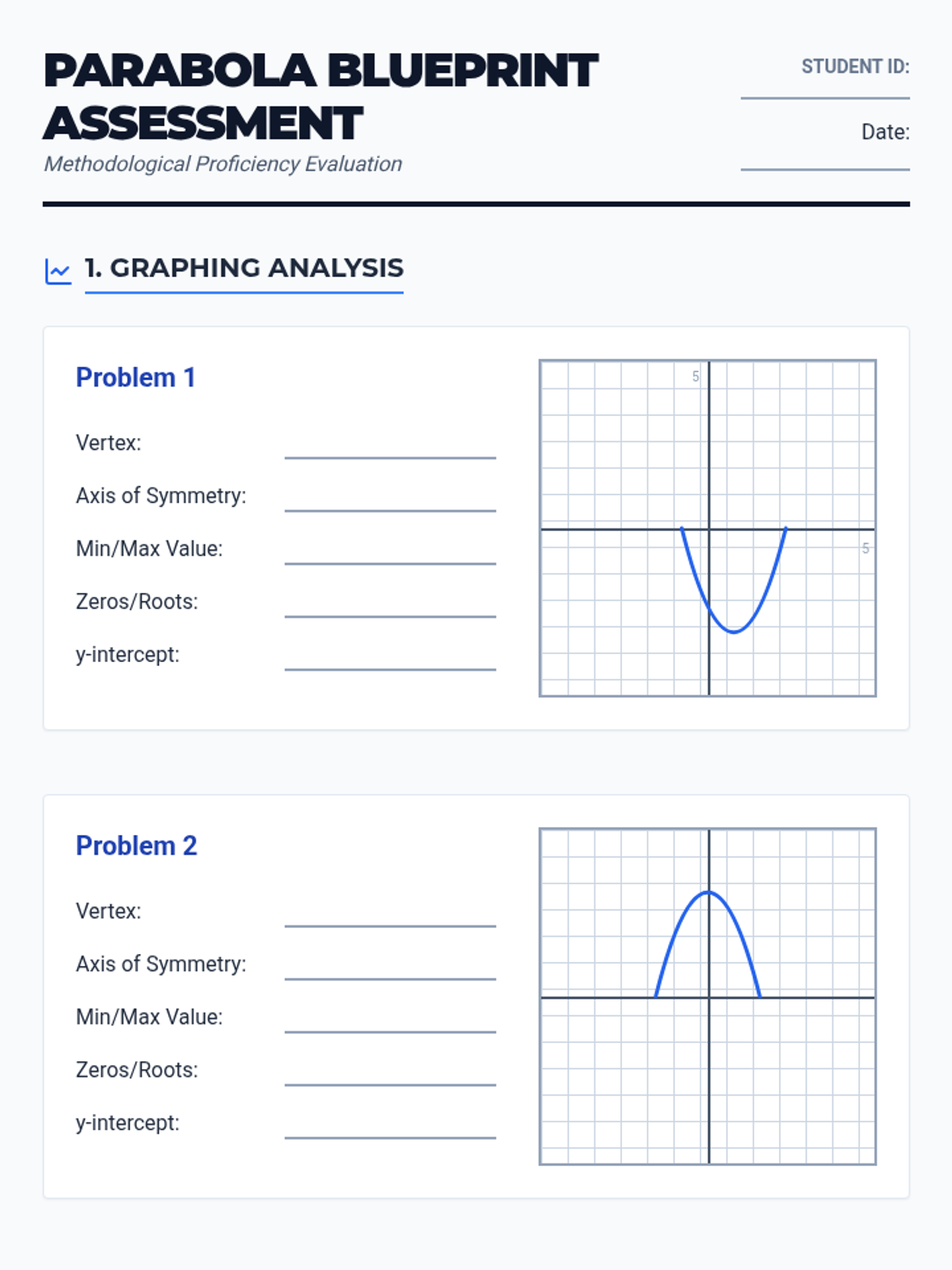
Summative assessment covering intercepts, vertex, AOS, and solving quadratic equations using various methods.
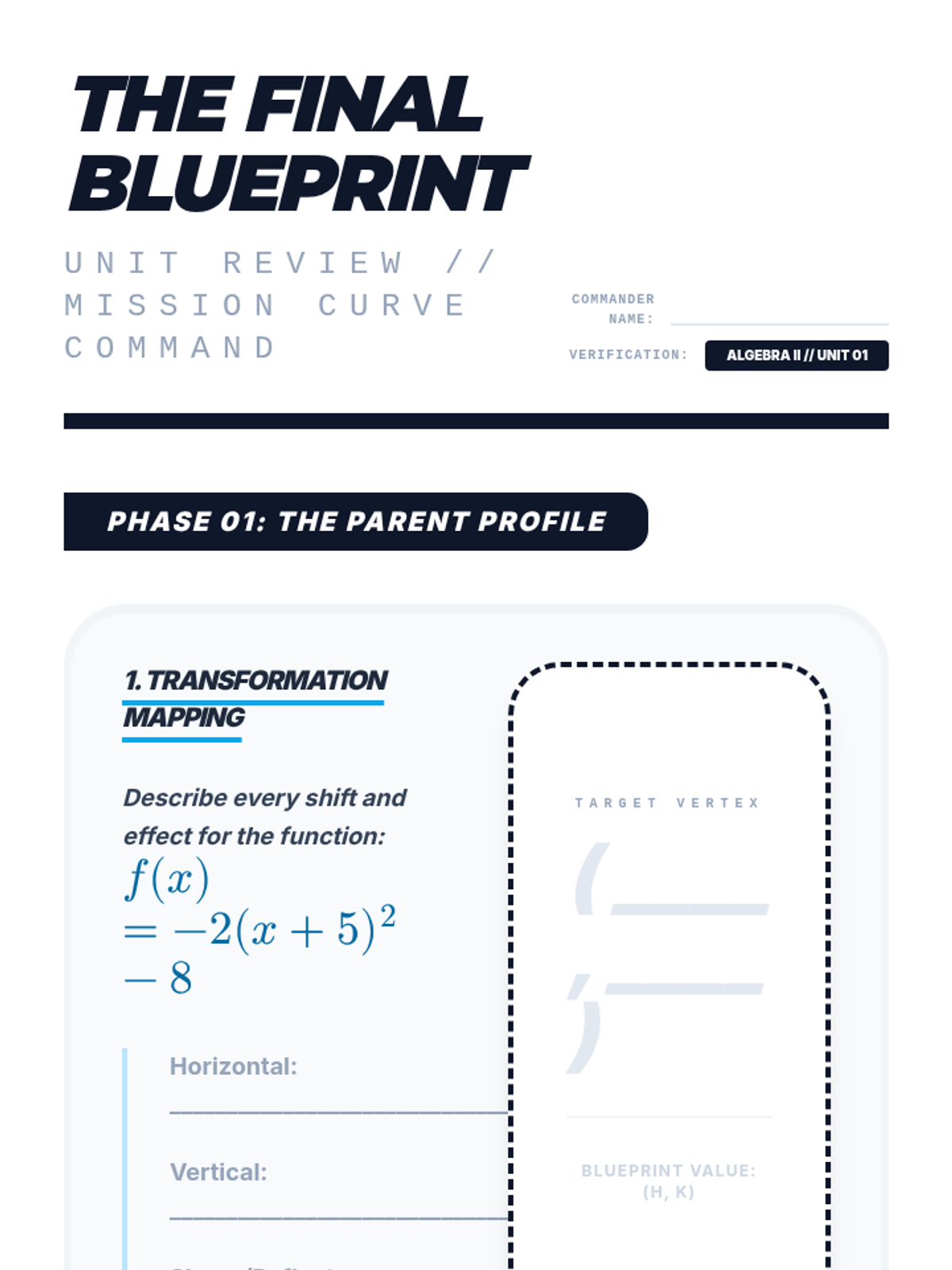
Comprehensive review of unit targets including graphing features and all solving methods.
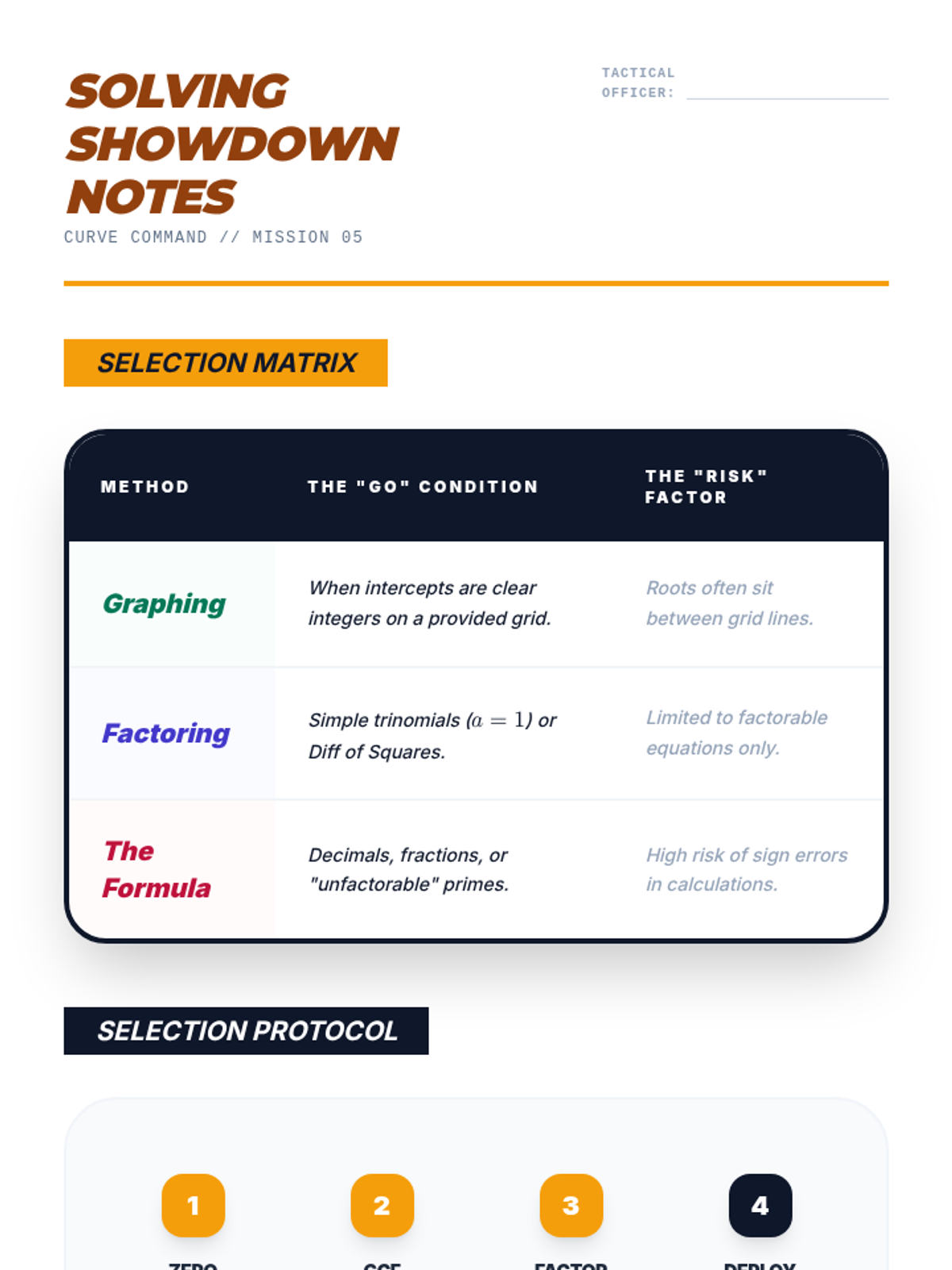
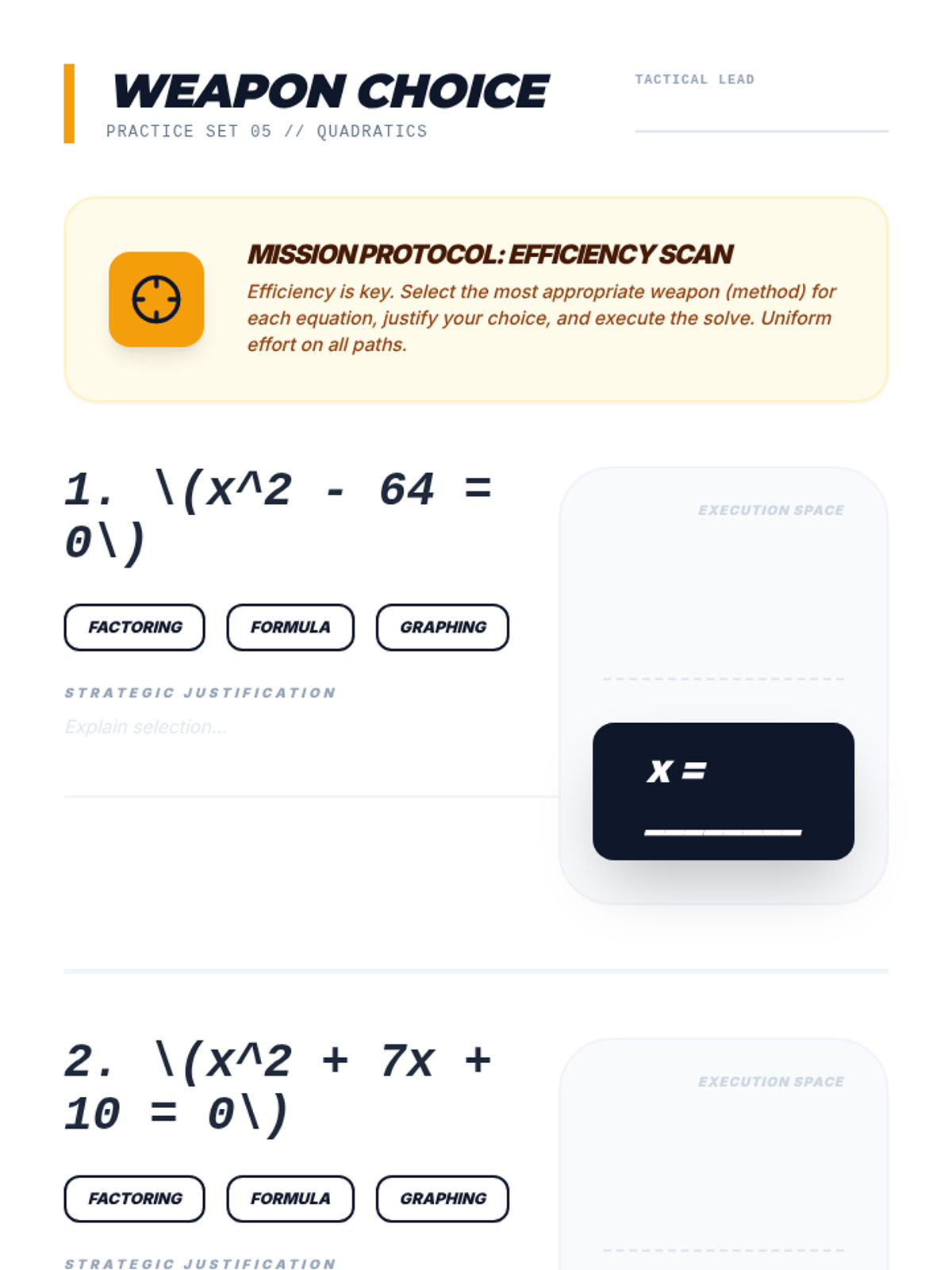
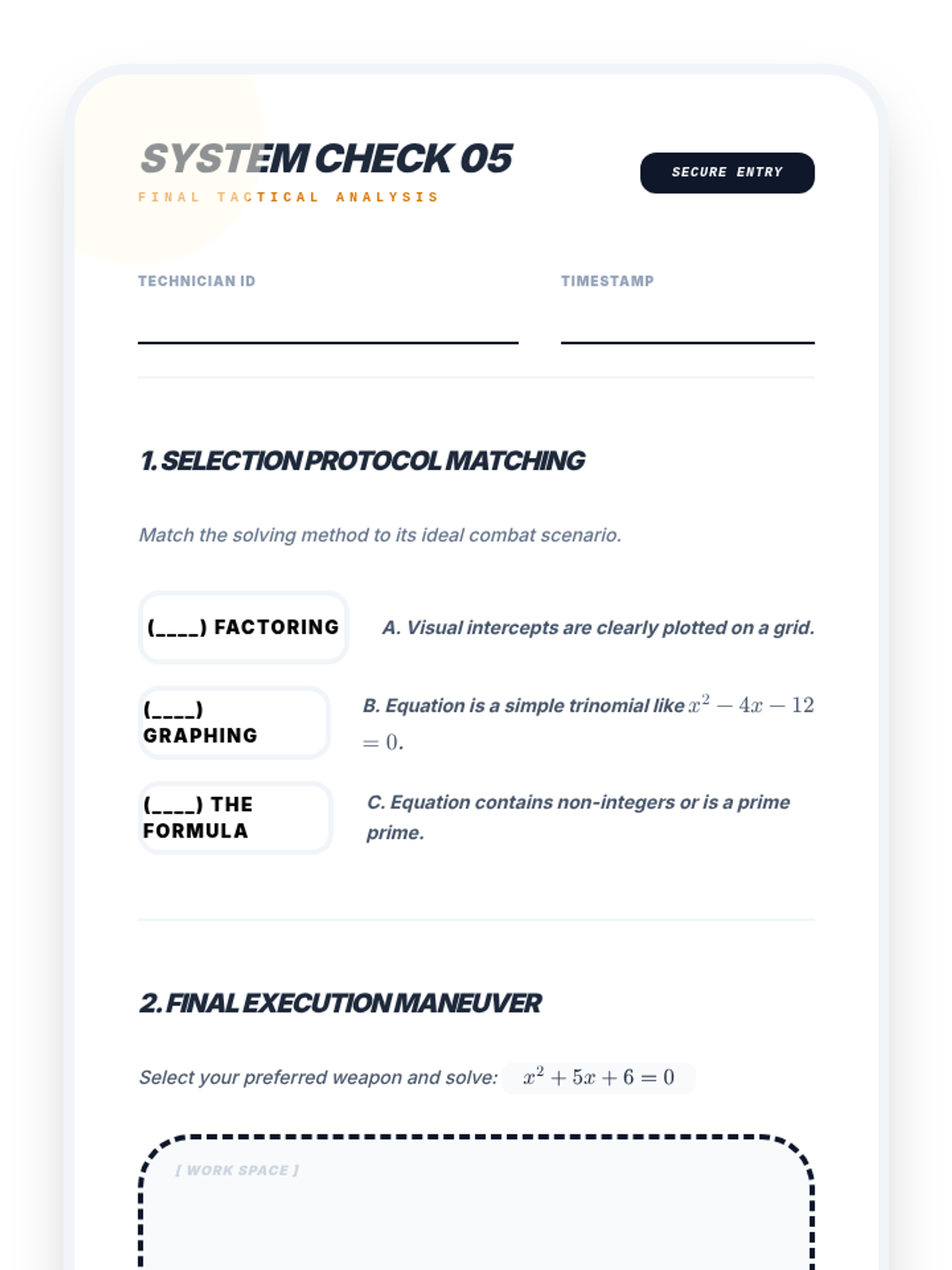
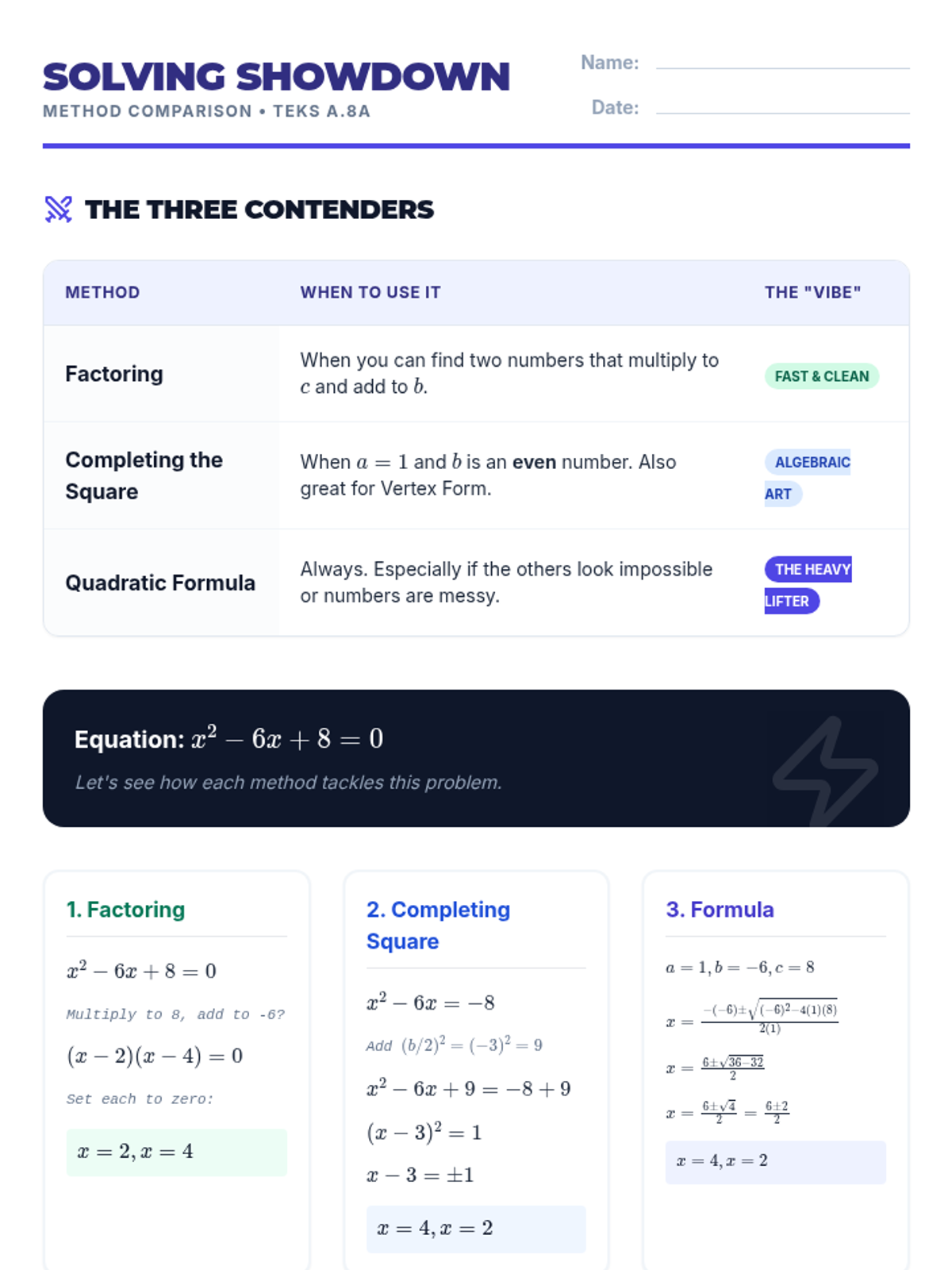
Synthesizing solving methods (graphing, factoring, formula) and choosing the most efficient strategy for different quadratic forms.
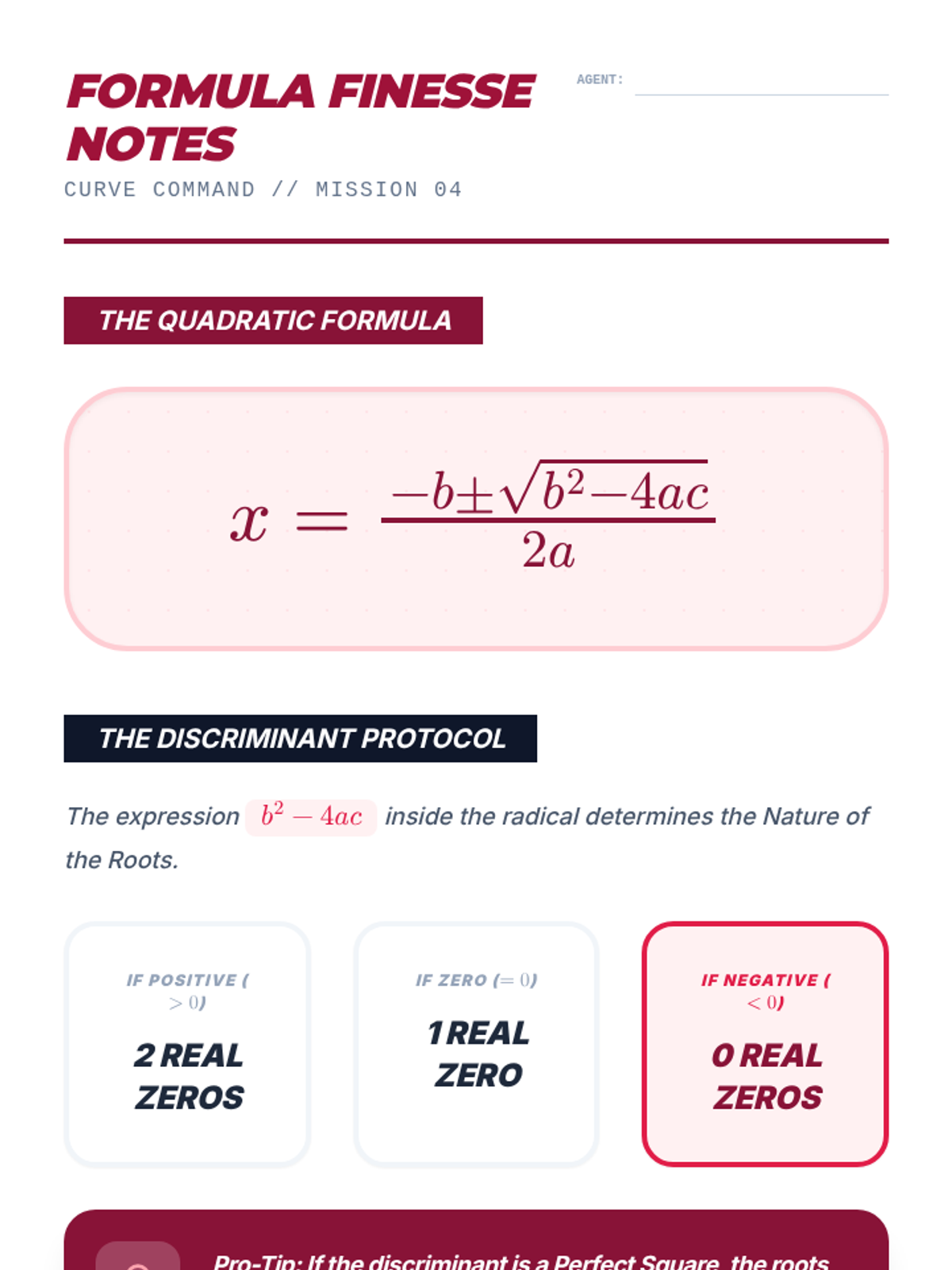
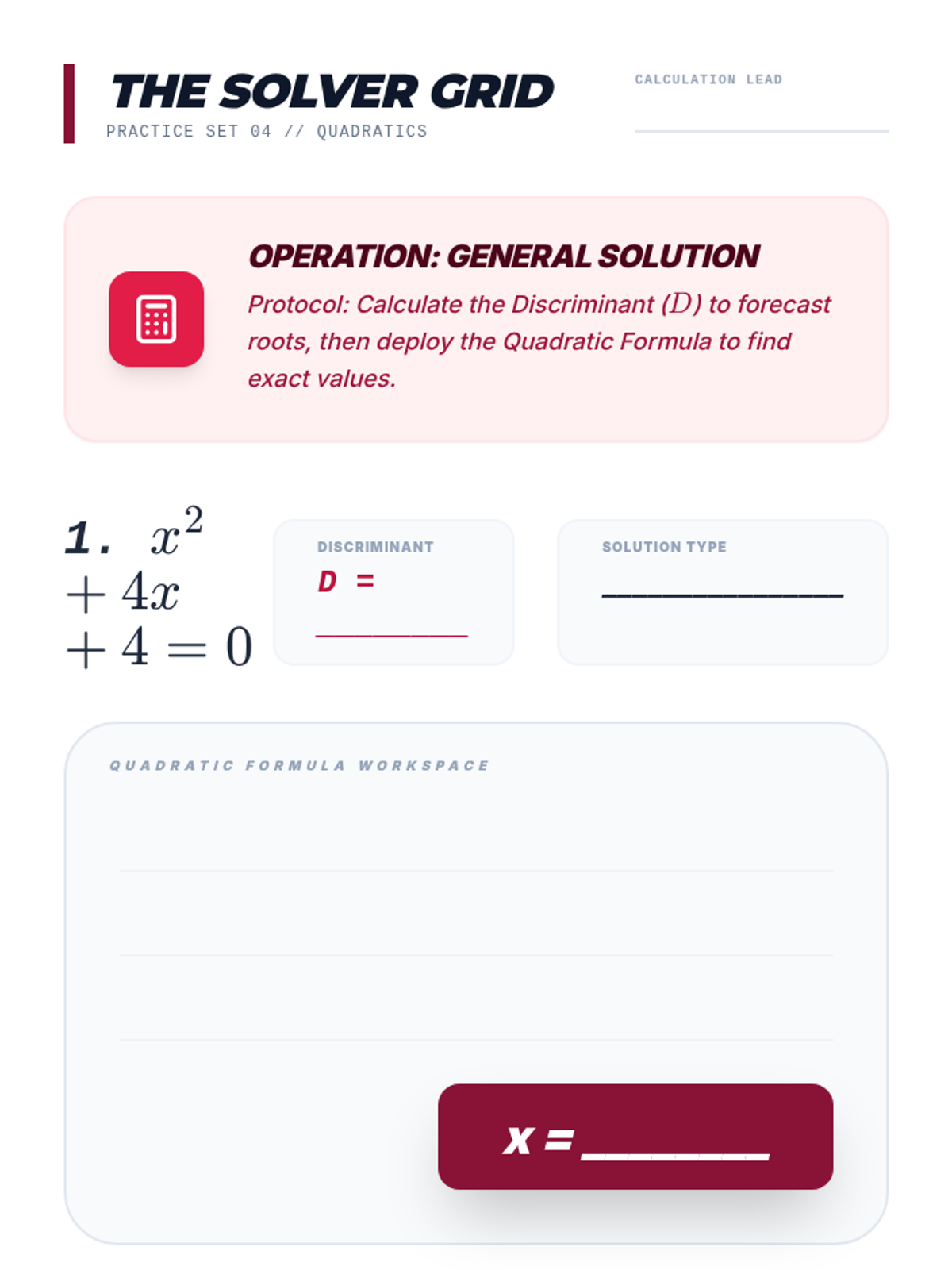
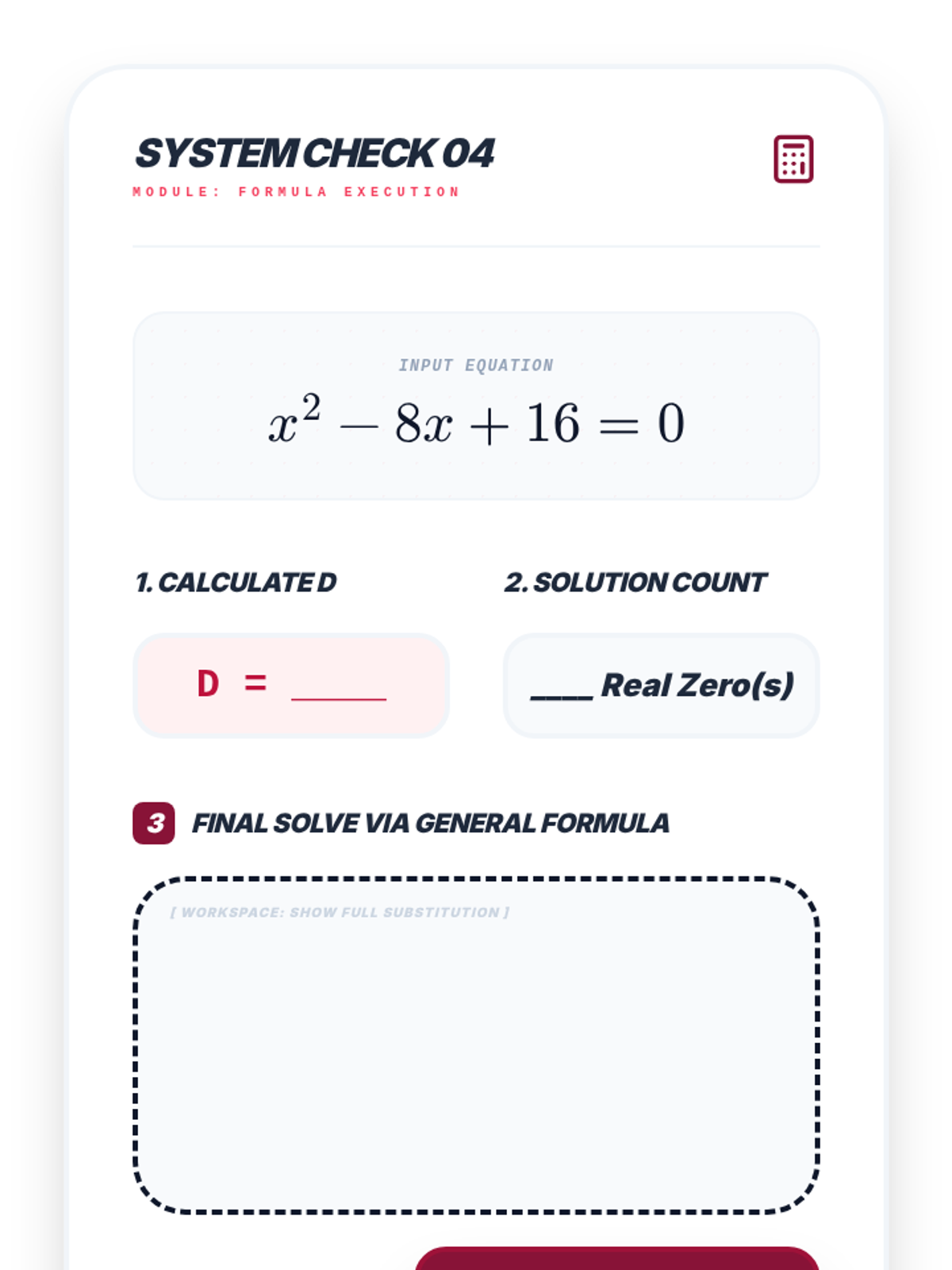
Using the quadratic formula to solve equations and the discriminant to determine the nature of the roots.
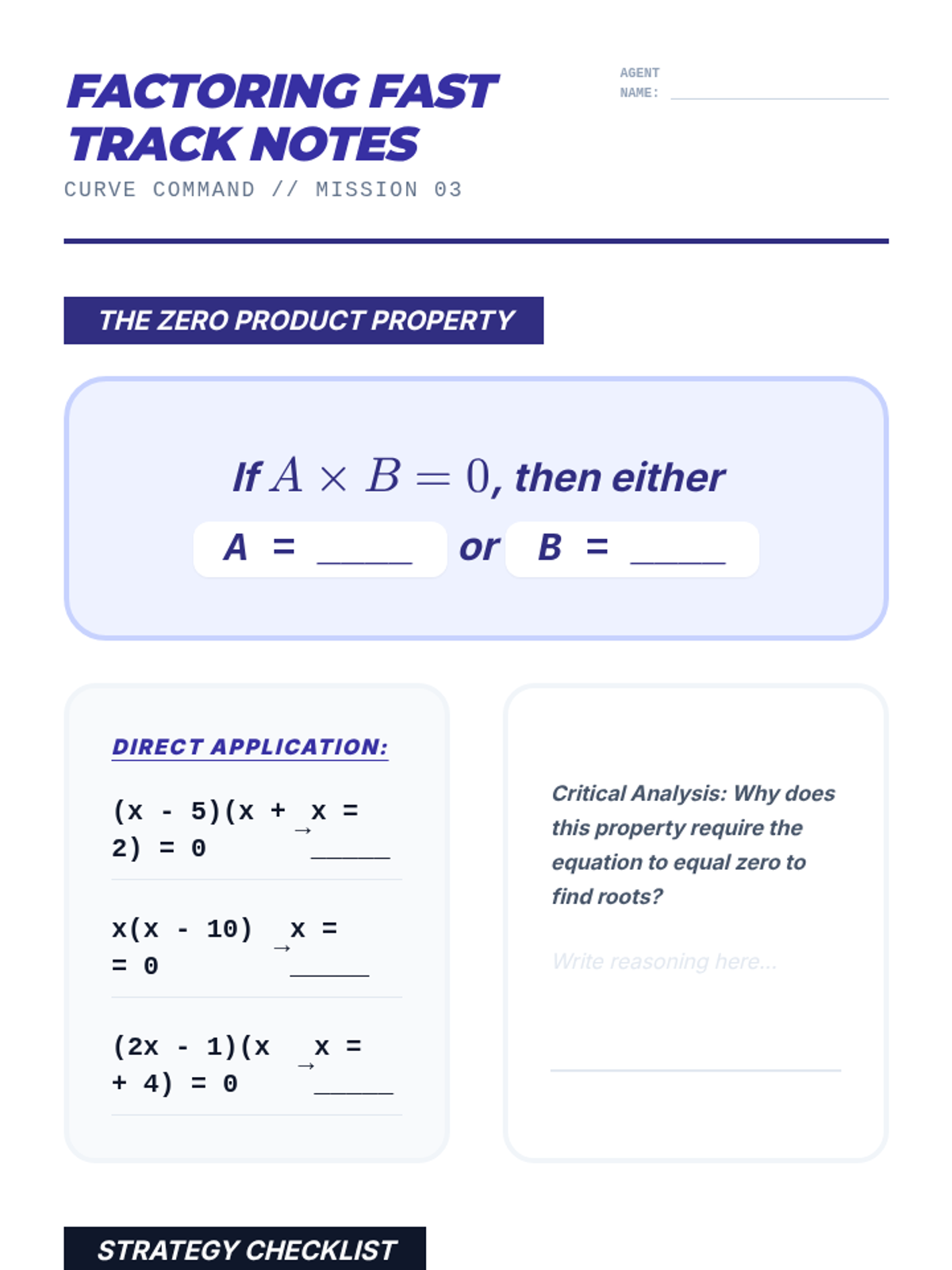
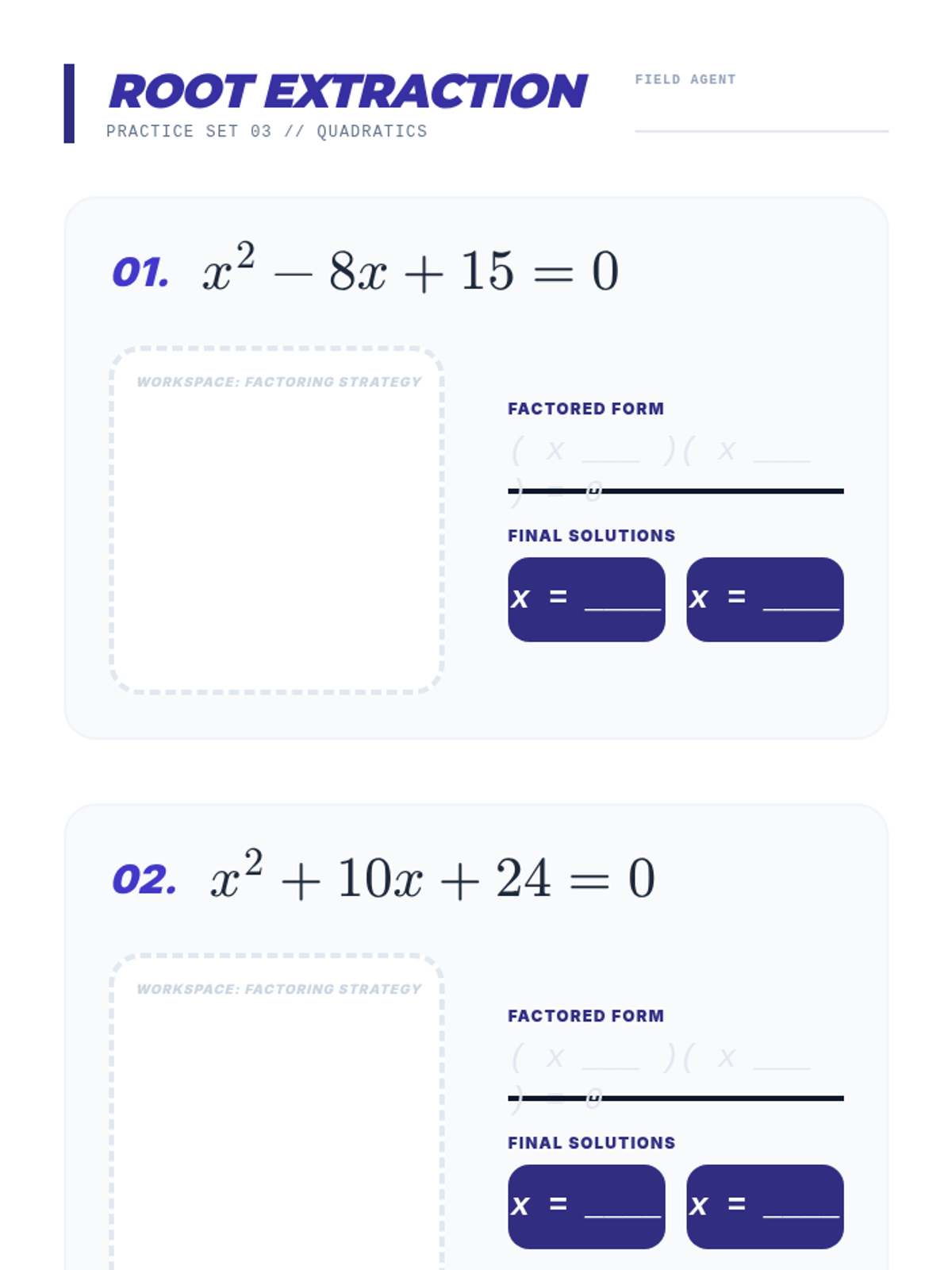
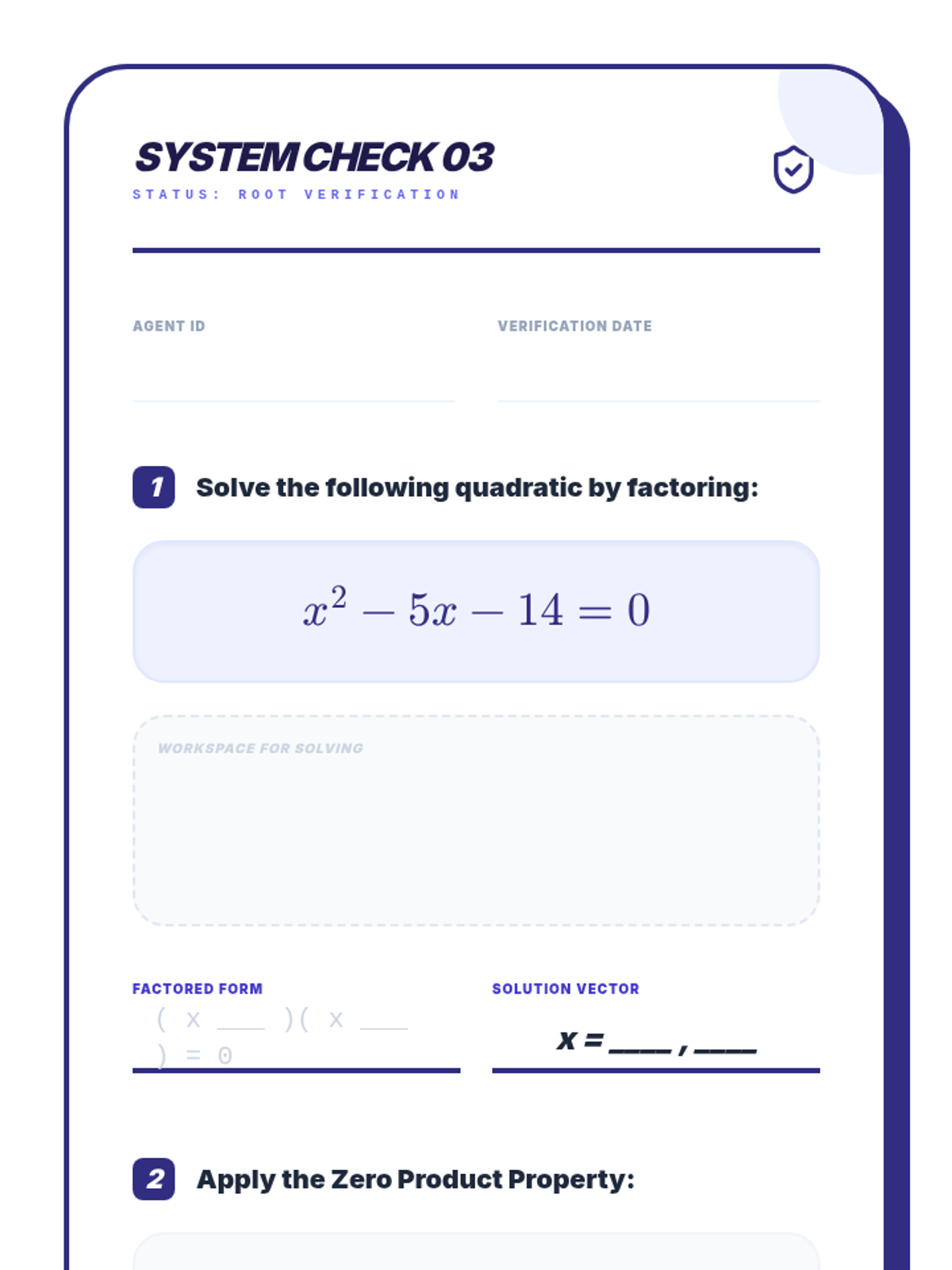
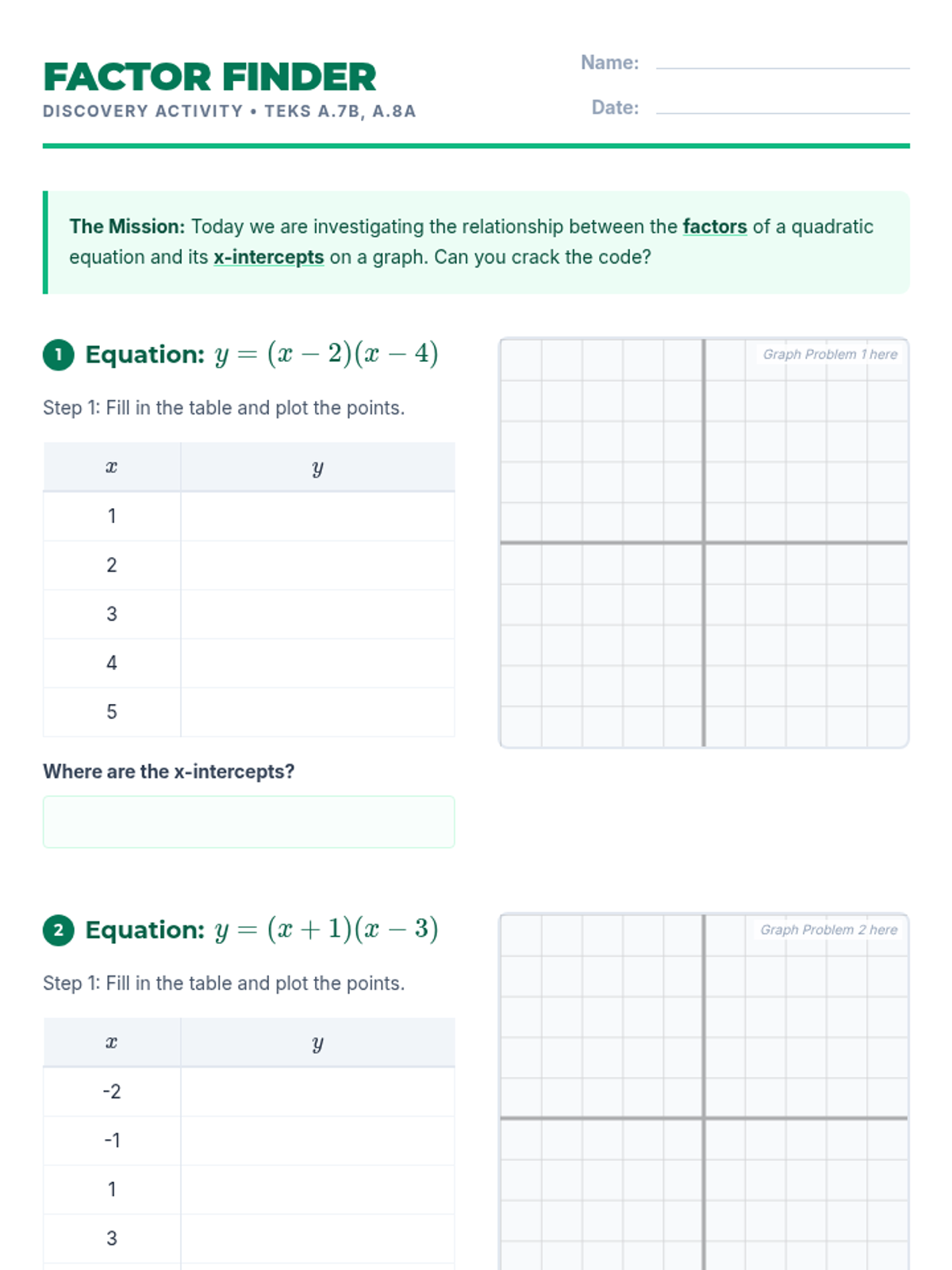
Solving quadratic equations by factoring and identifying x-intercepts using the Zero Product Property.
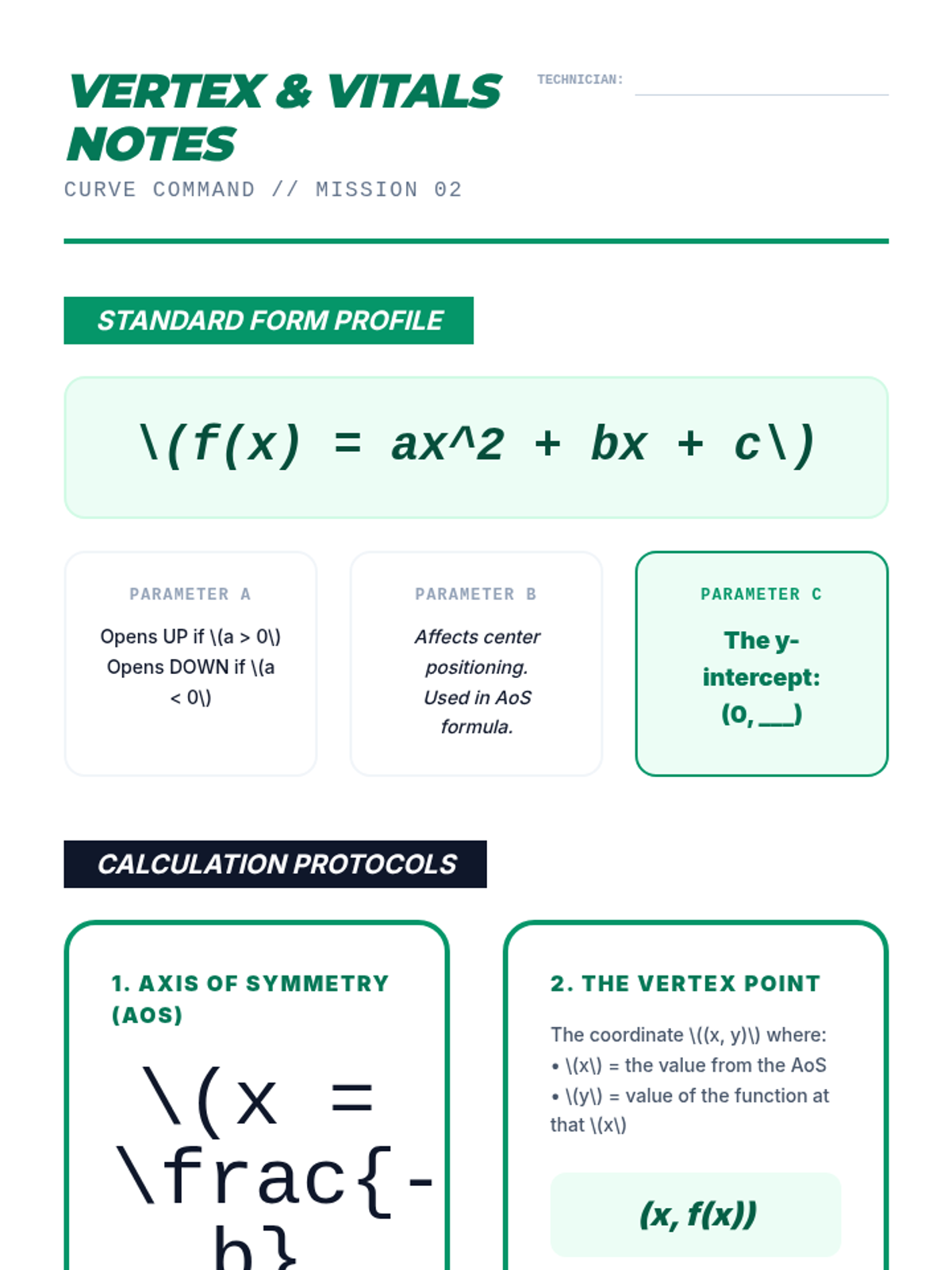
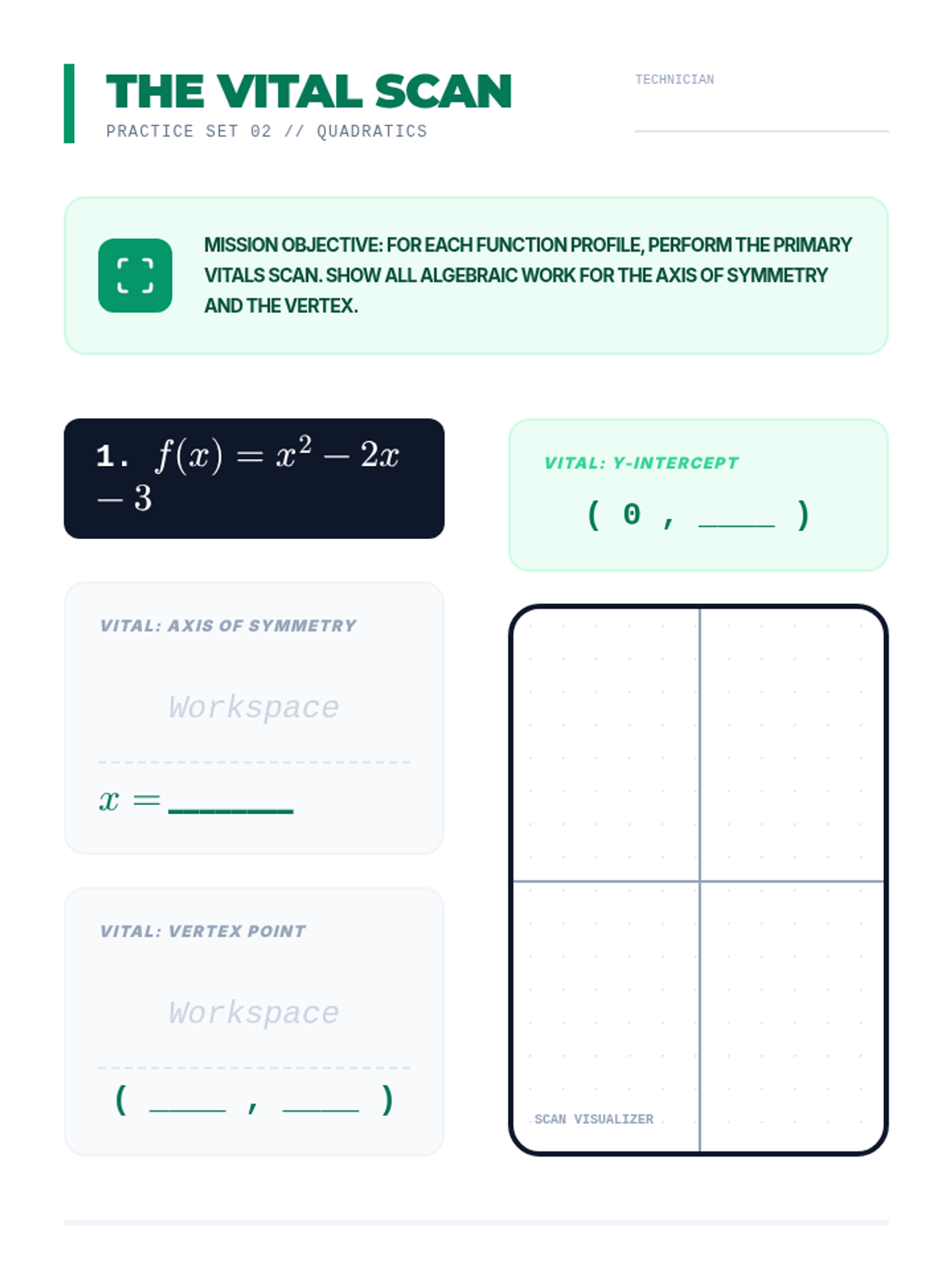
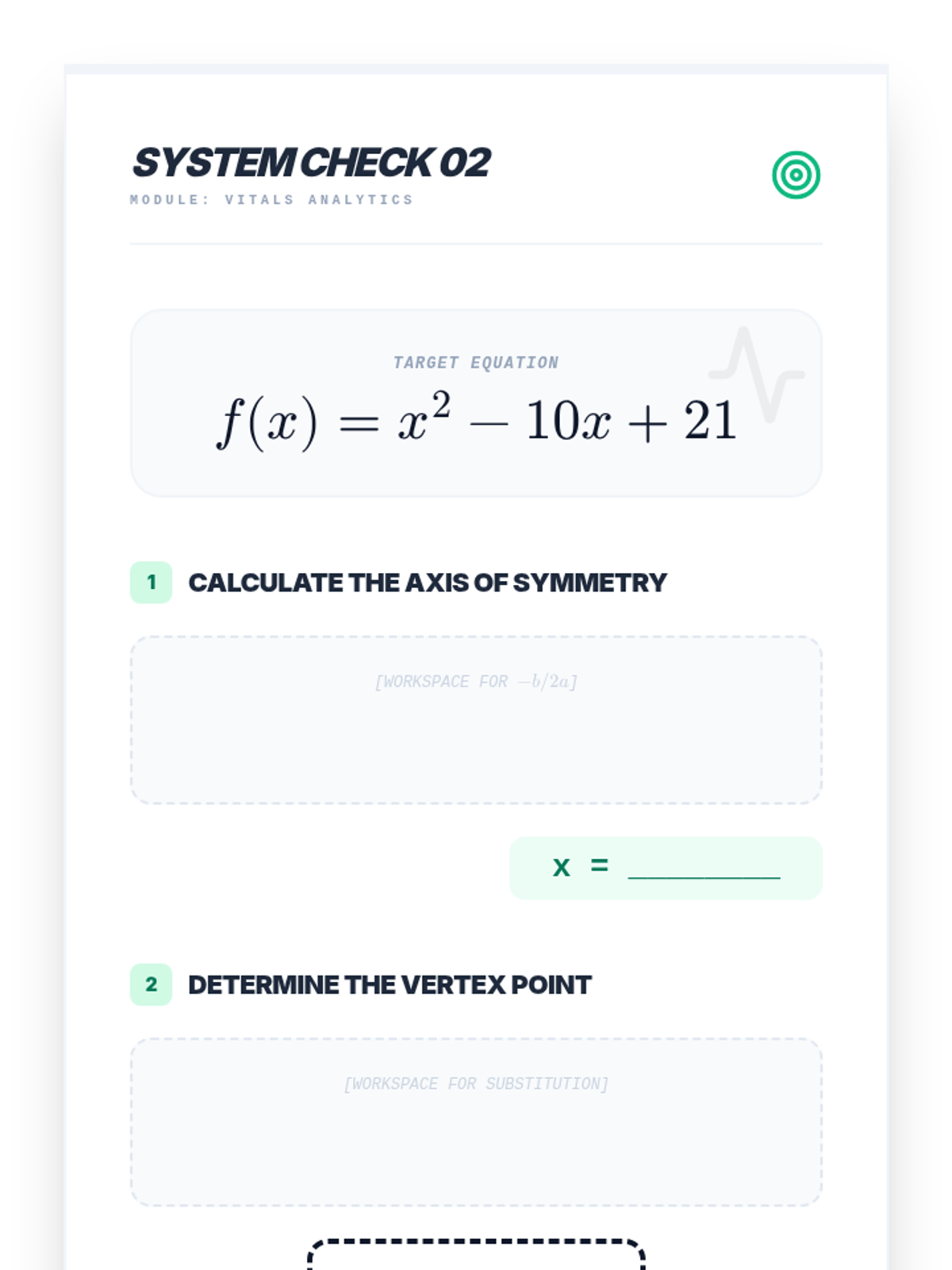
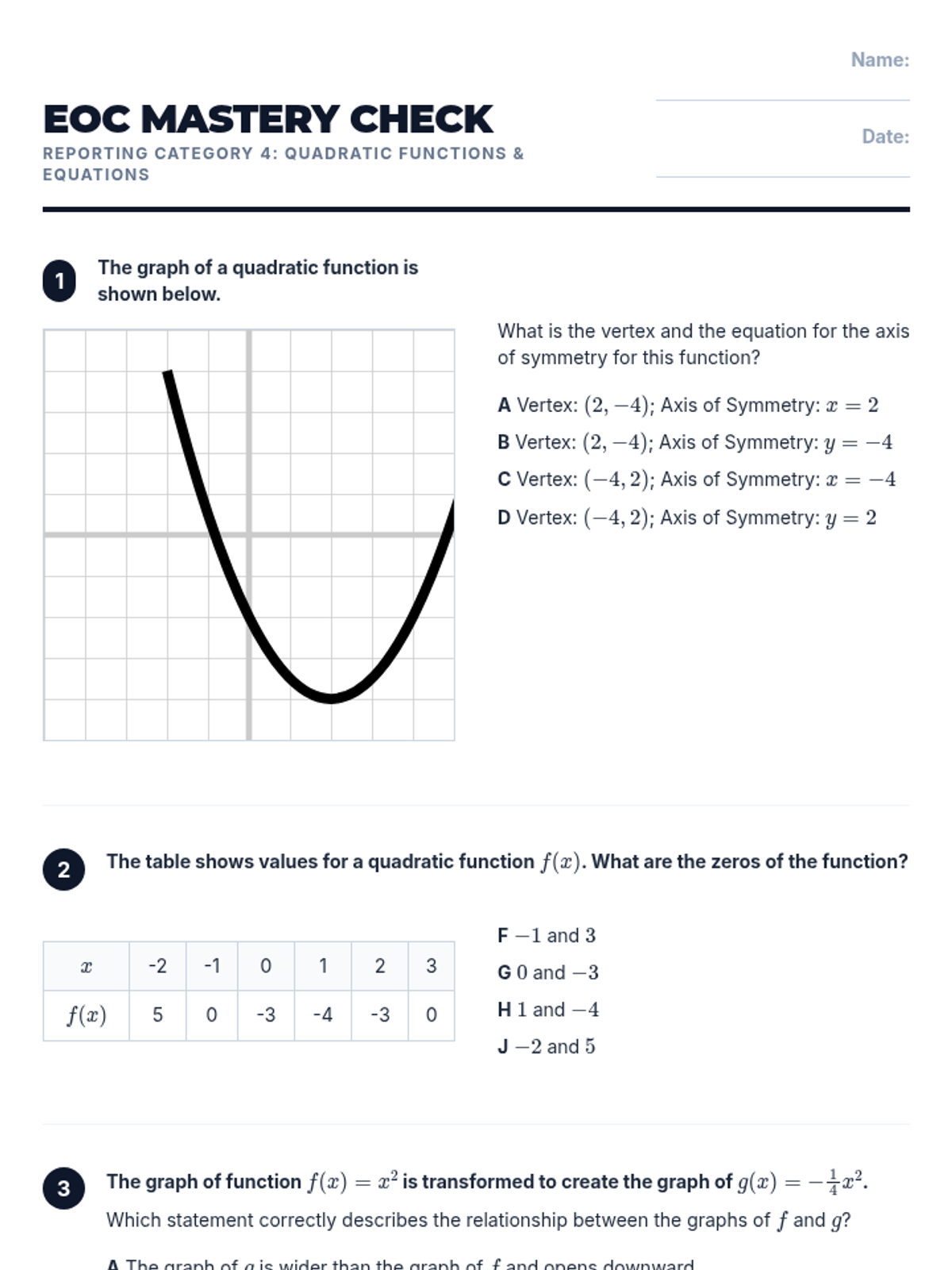
Finding the vertex, axis of symmetry, and intercepts of quadratic functions from standard form equations and graphs.
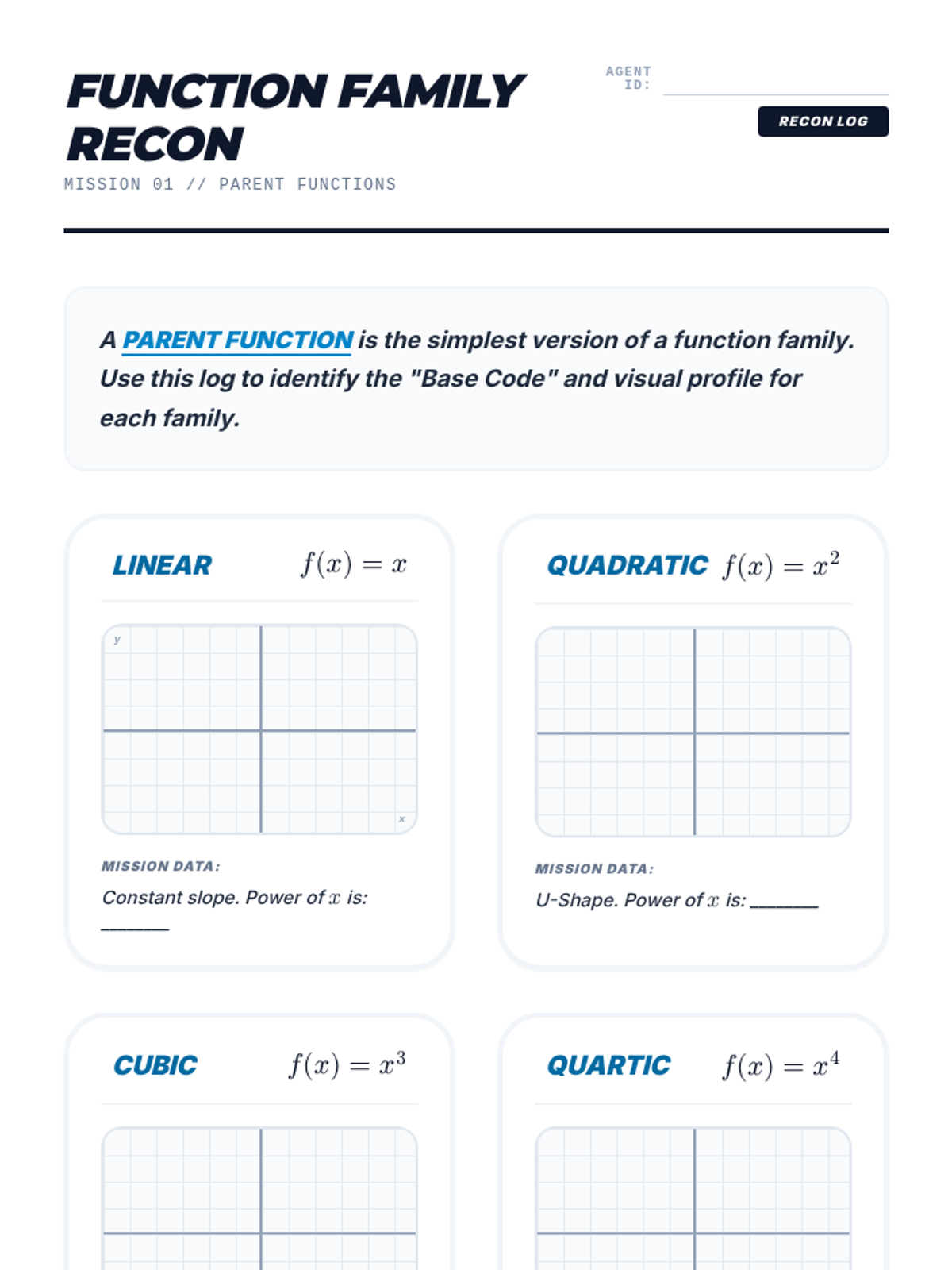
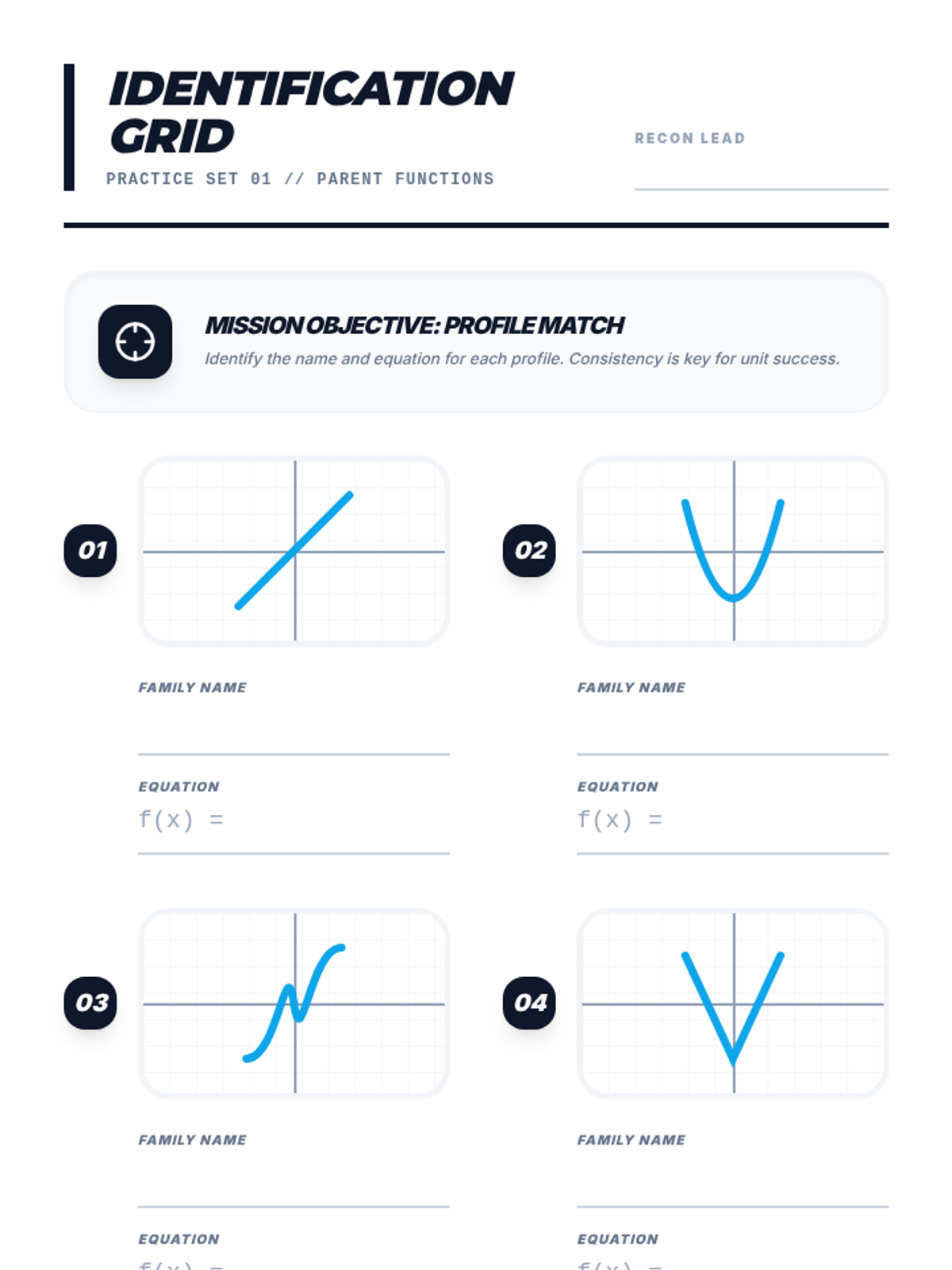
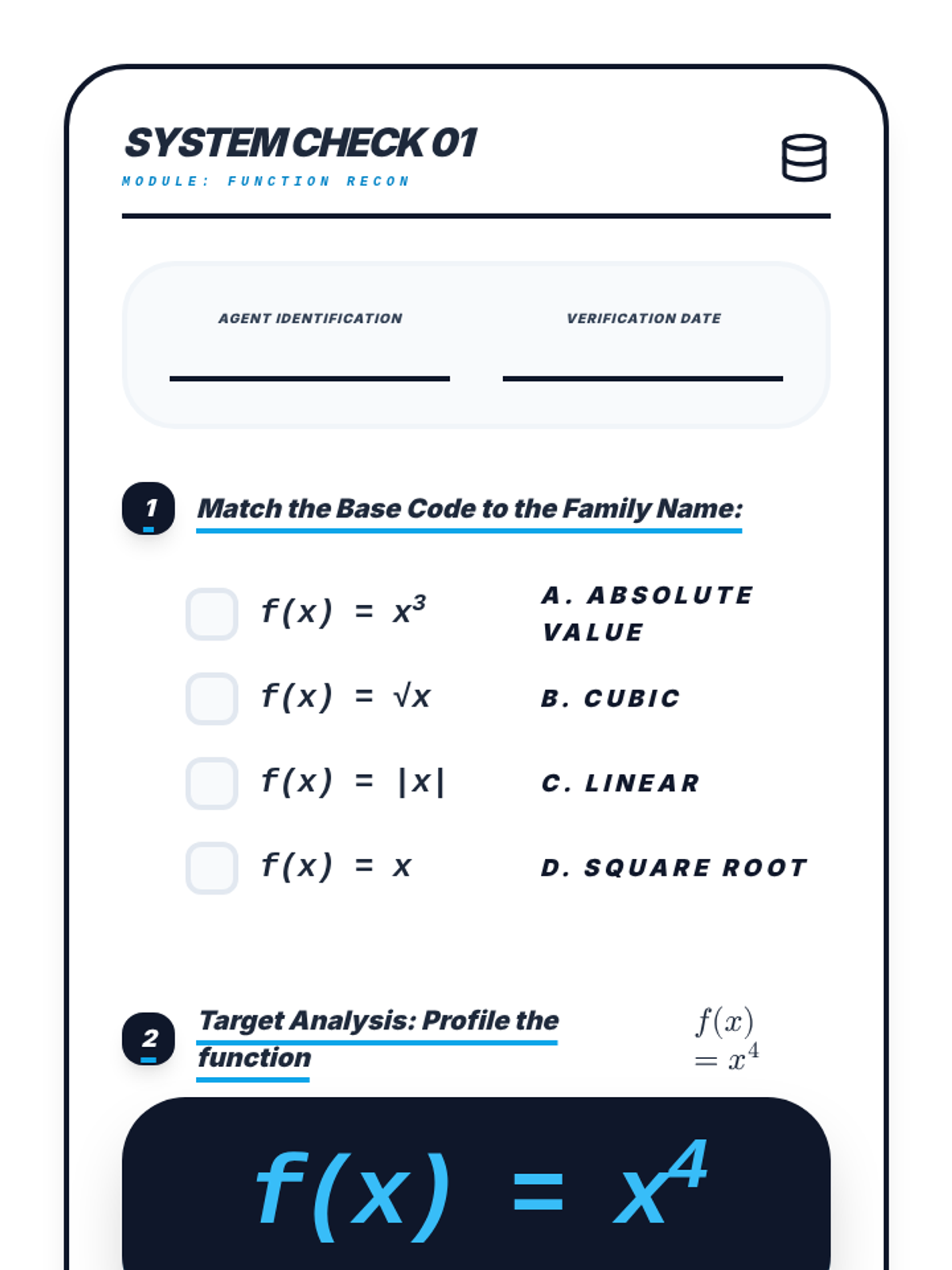
A high-speed reconnaissance of basic function families, including linear, quadratic, cubic, quartic, absolute value, and radical parent functions.
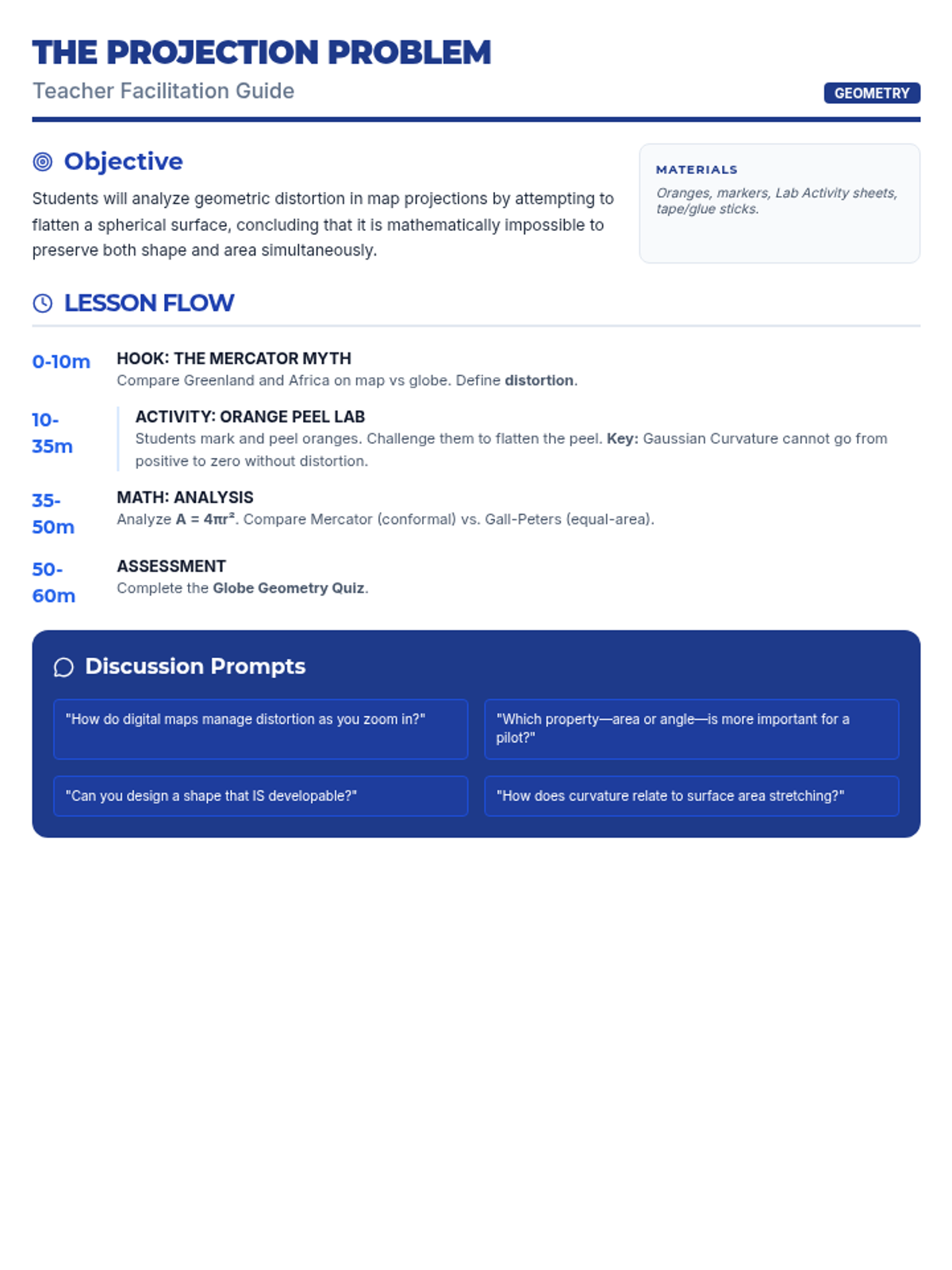
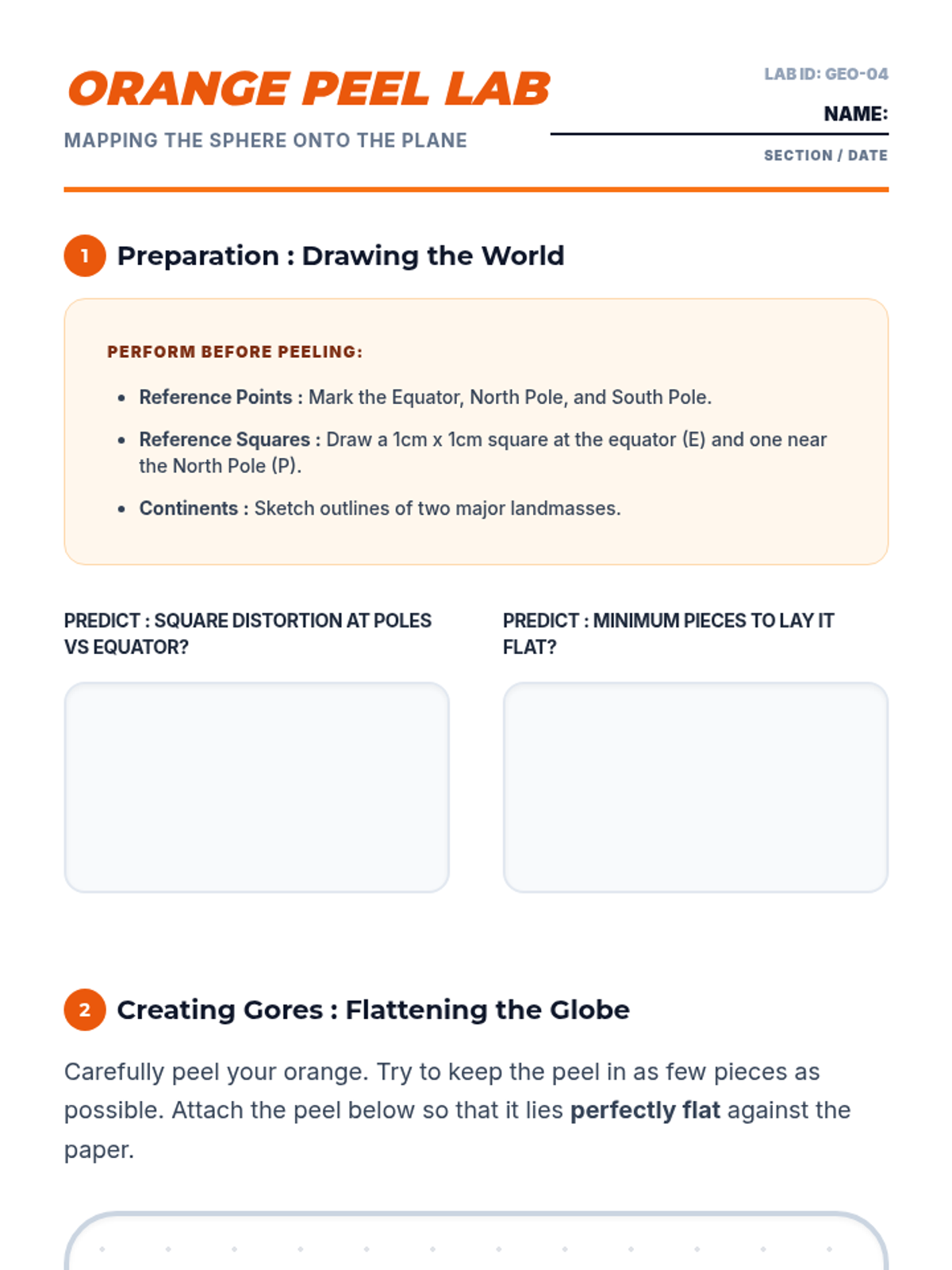
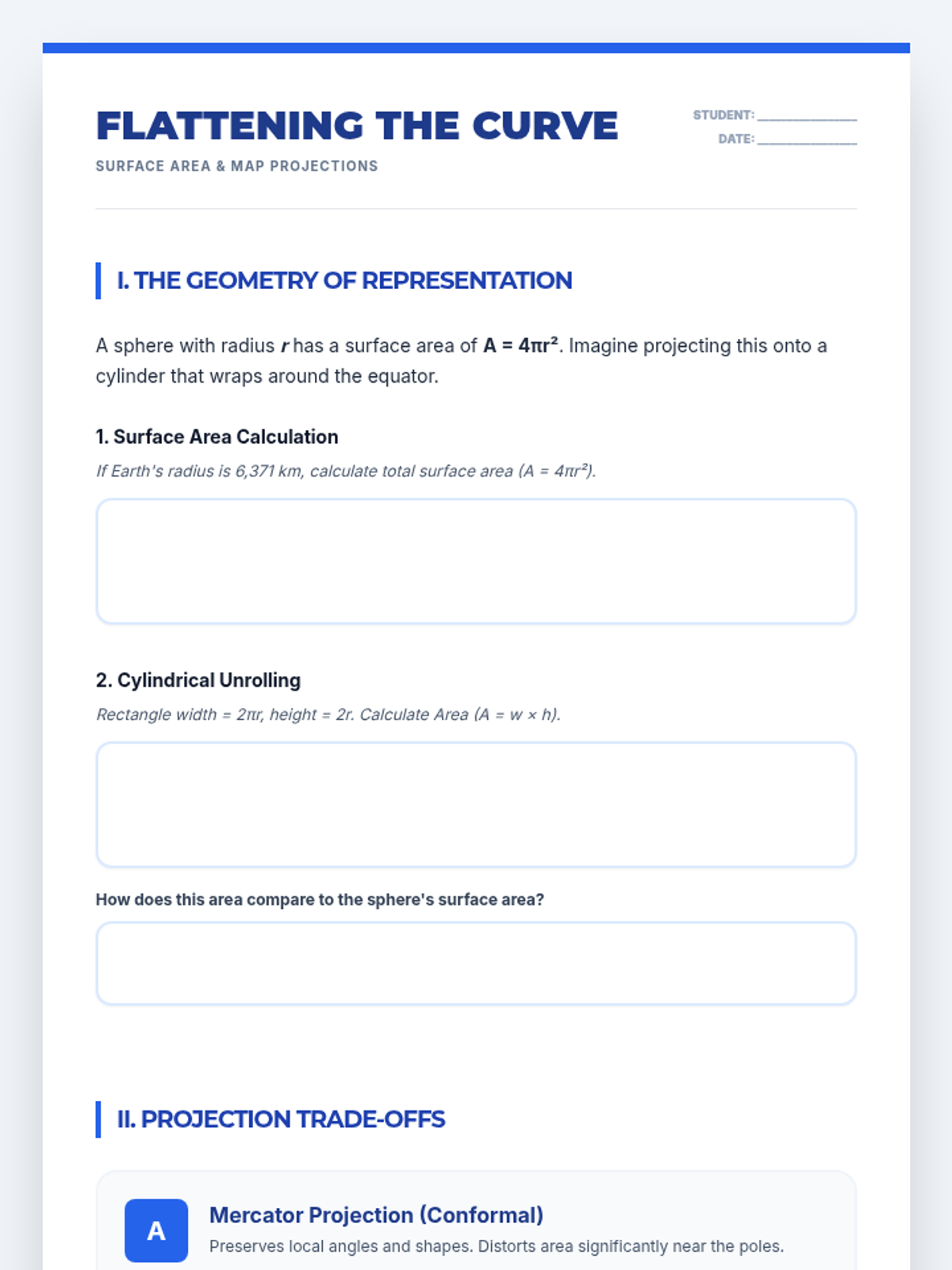
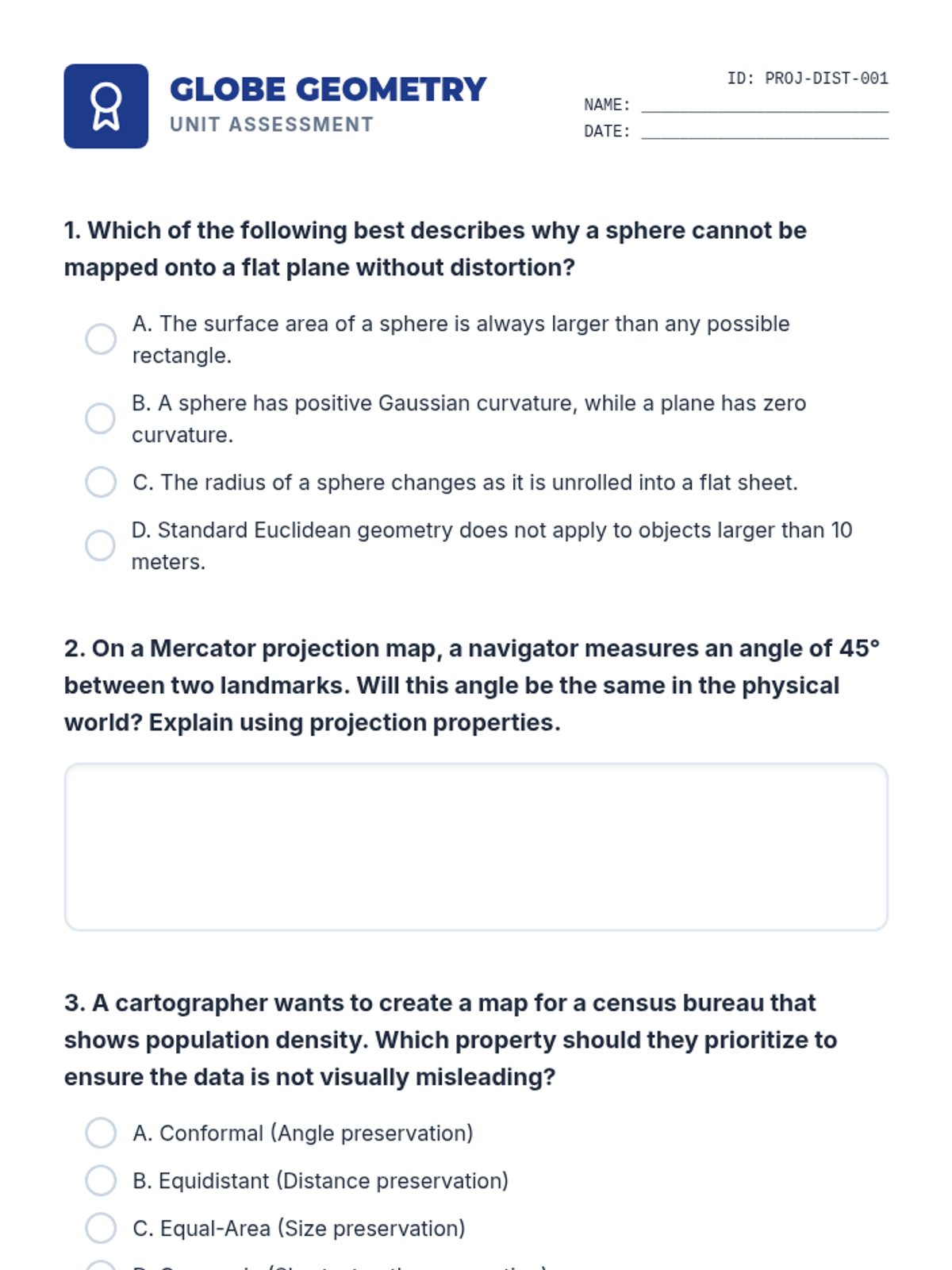
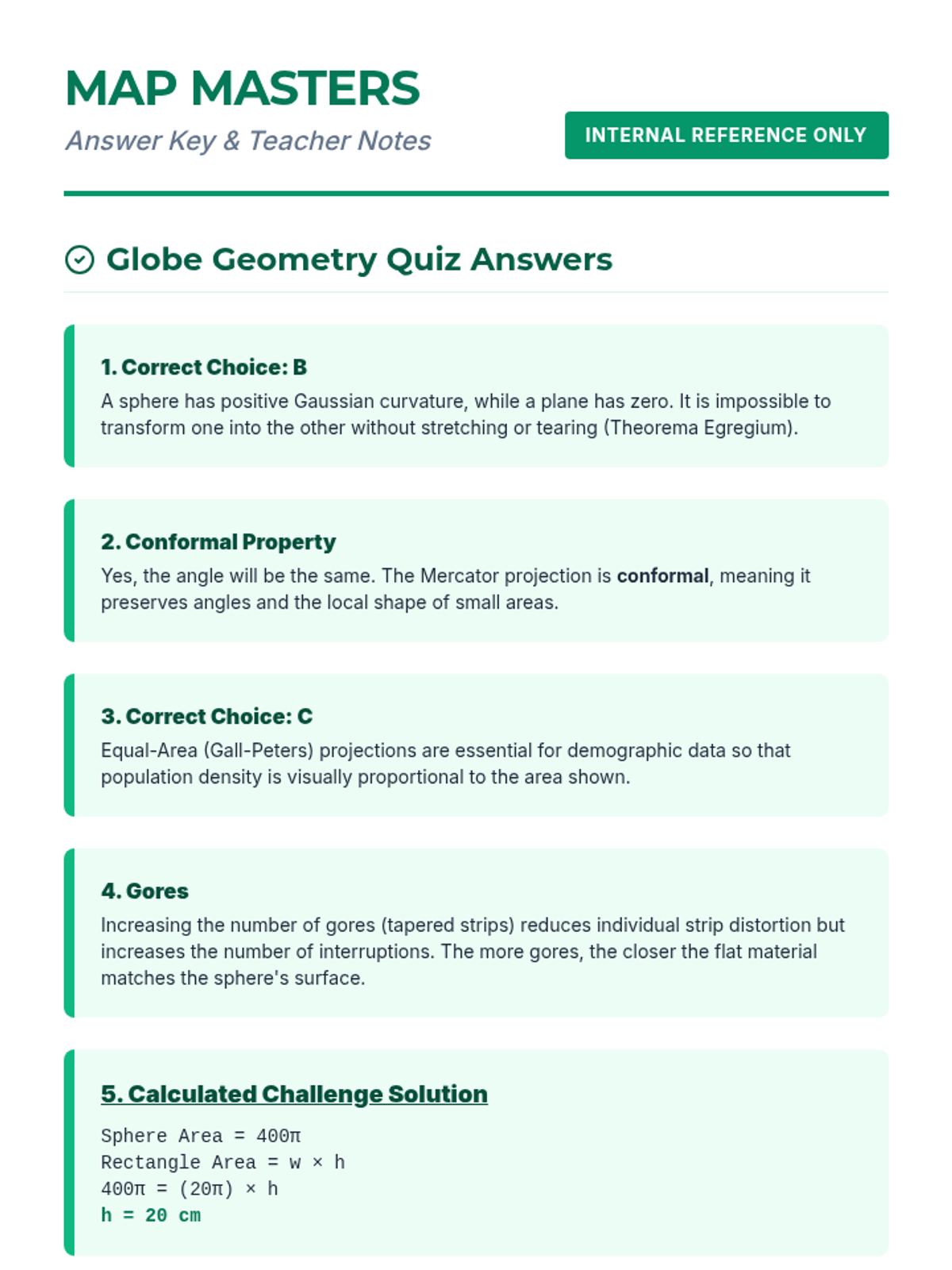
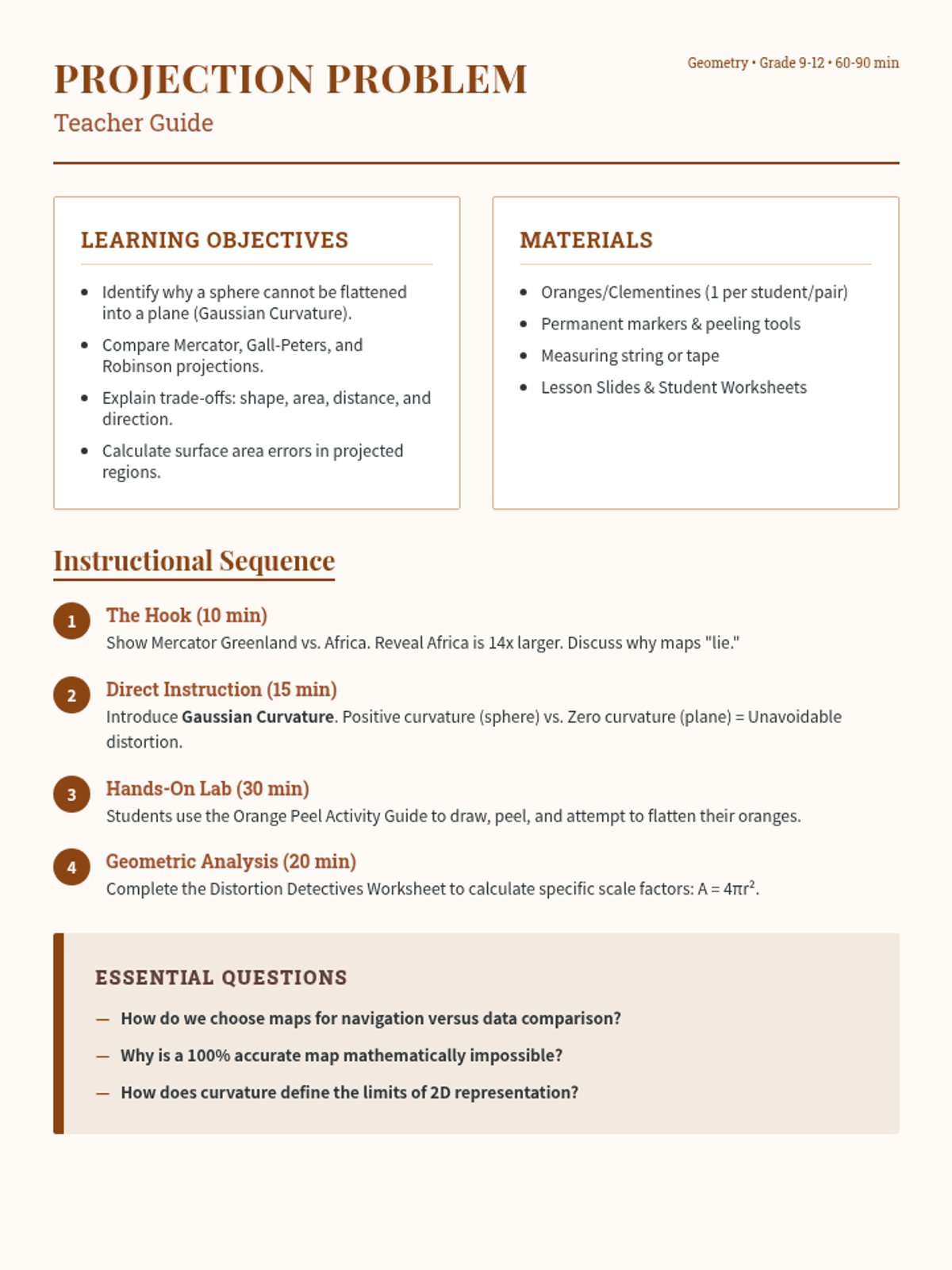
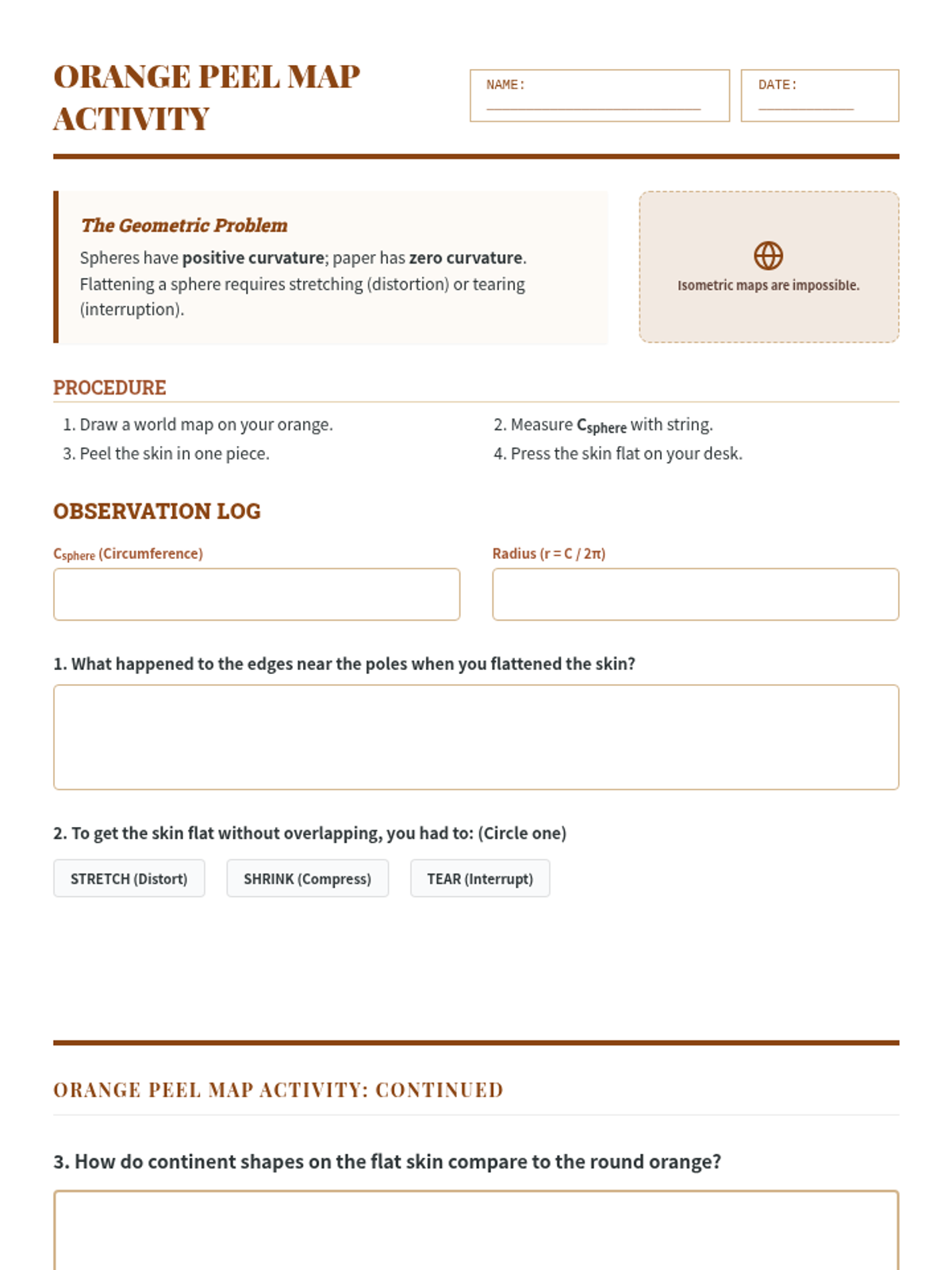
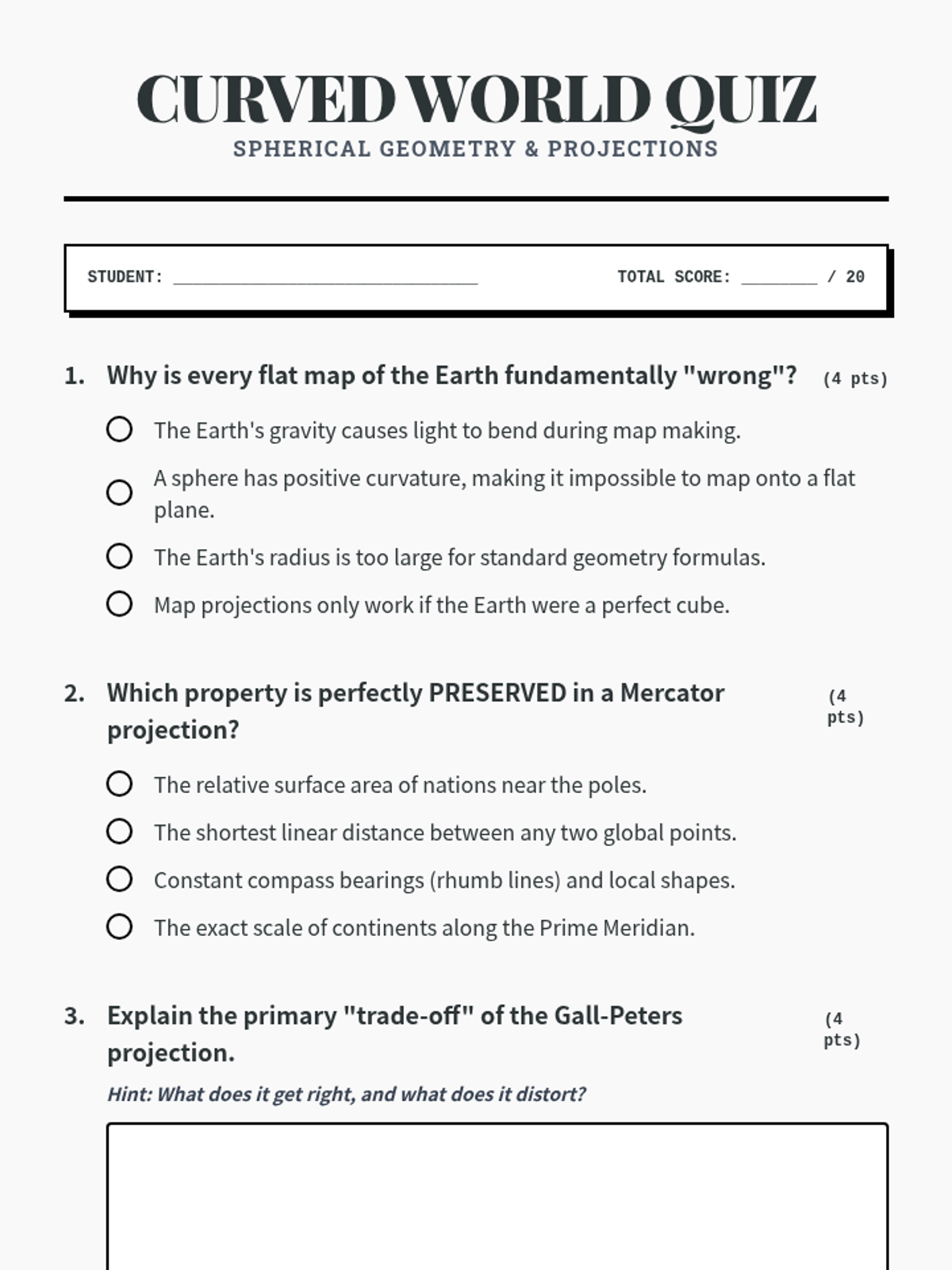
A geometry lesson exploring the mathematical challenges of representing a 3D sphere on a 2D plane through map projections, featuring a hands-on orange-peeling activity to demonstrate surface area distortion.
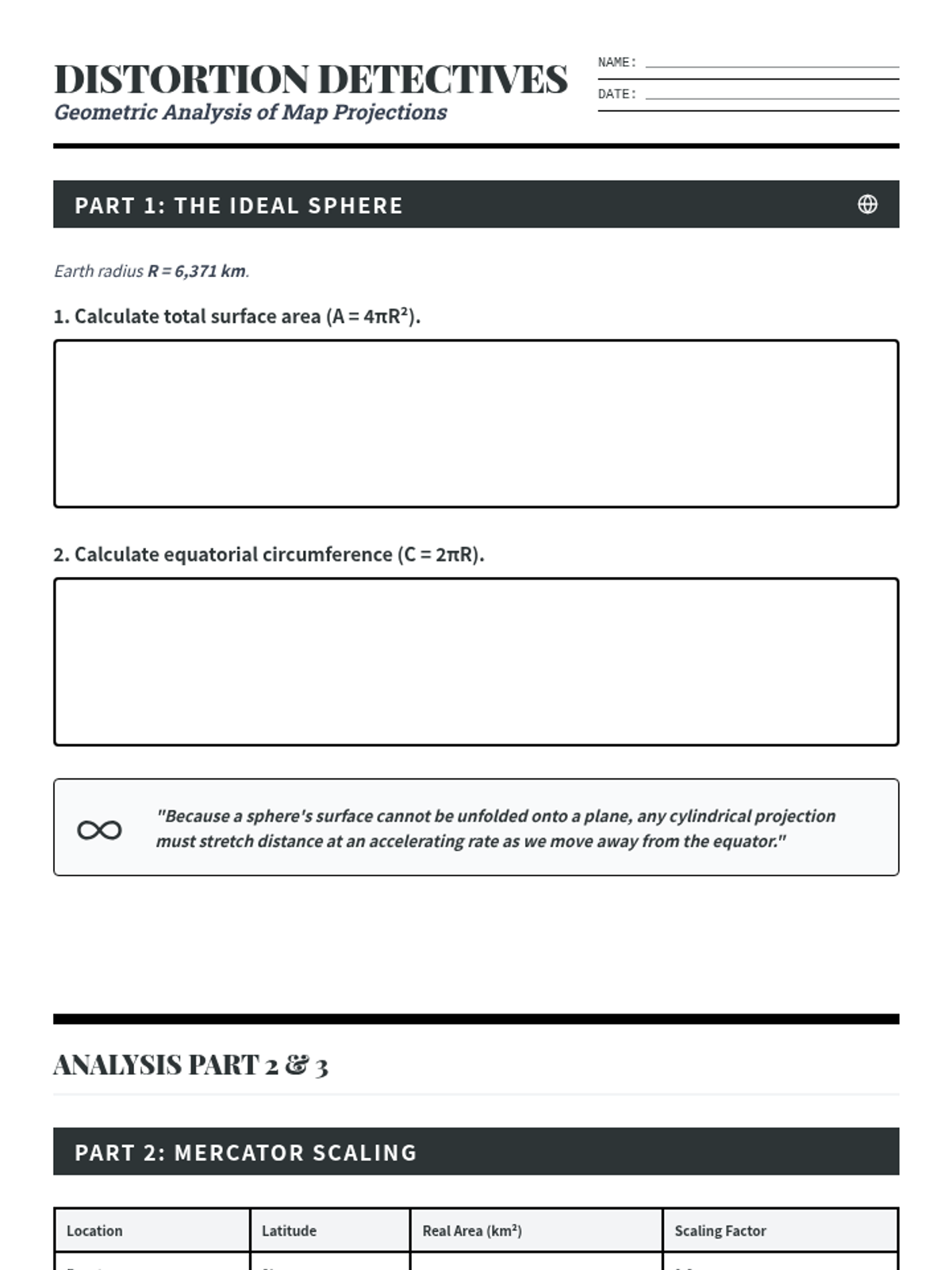
A geometry-focused exploration of map projections, exploring how surface area and spherical geometry lead to unavoidable distortion when flattening a 3D world into 2D maps. Students use the 'orange peel' method to visualize Gaussian curvature and distortion.
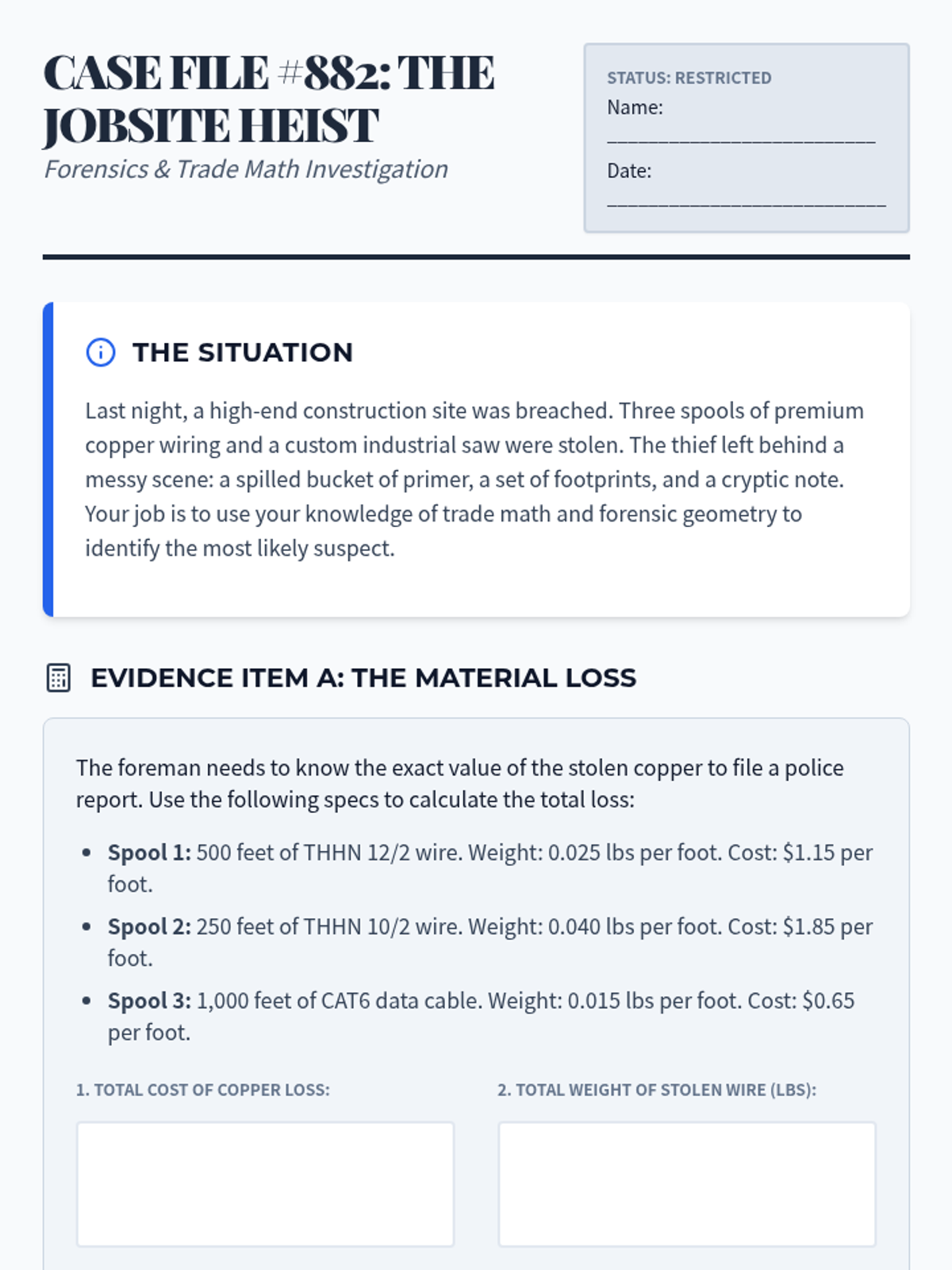
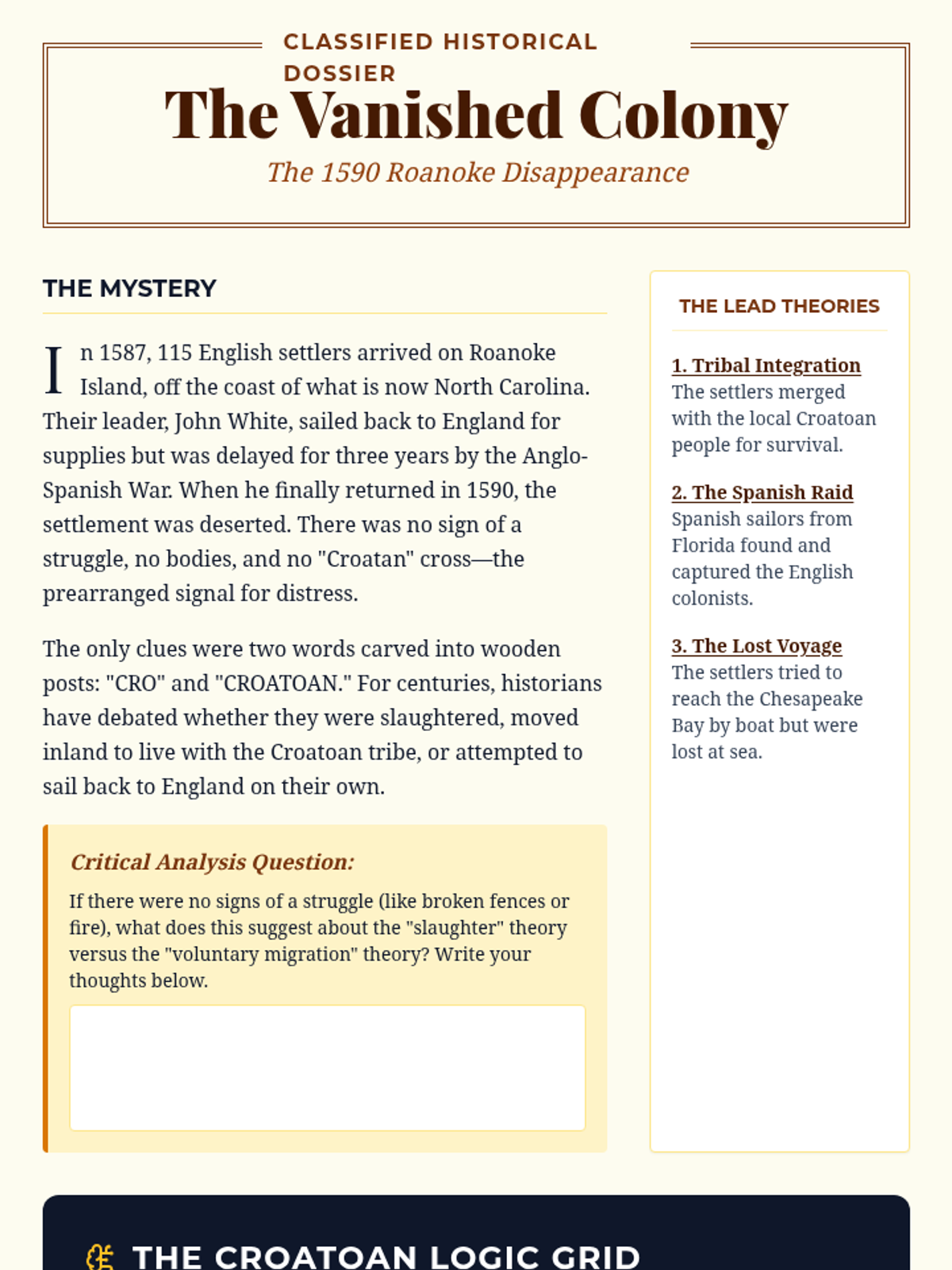
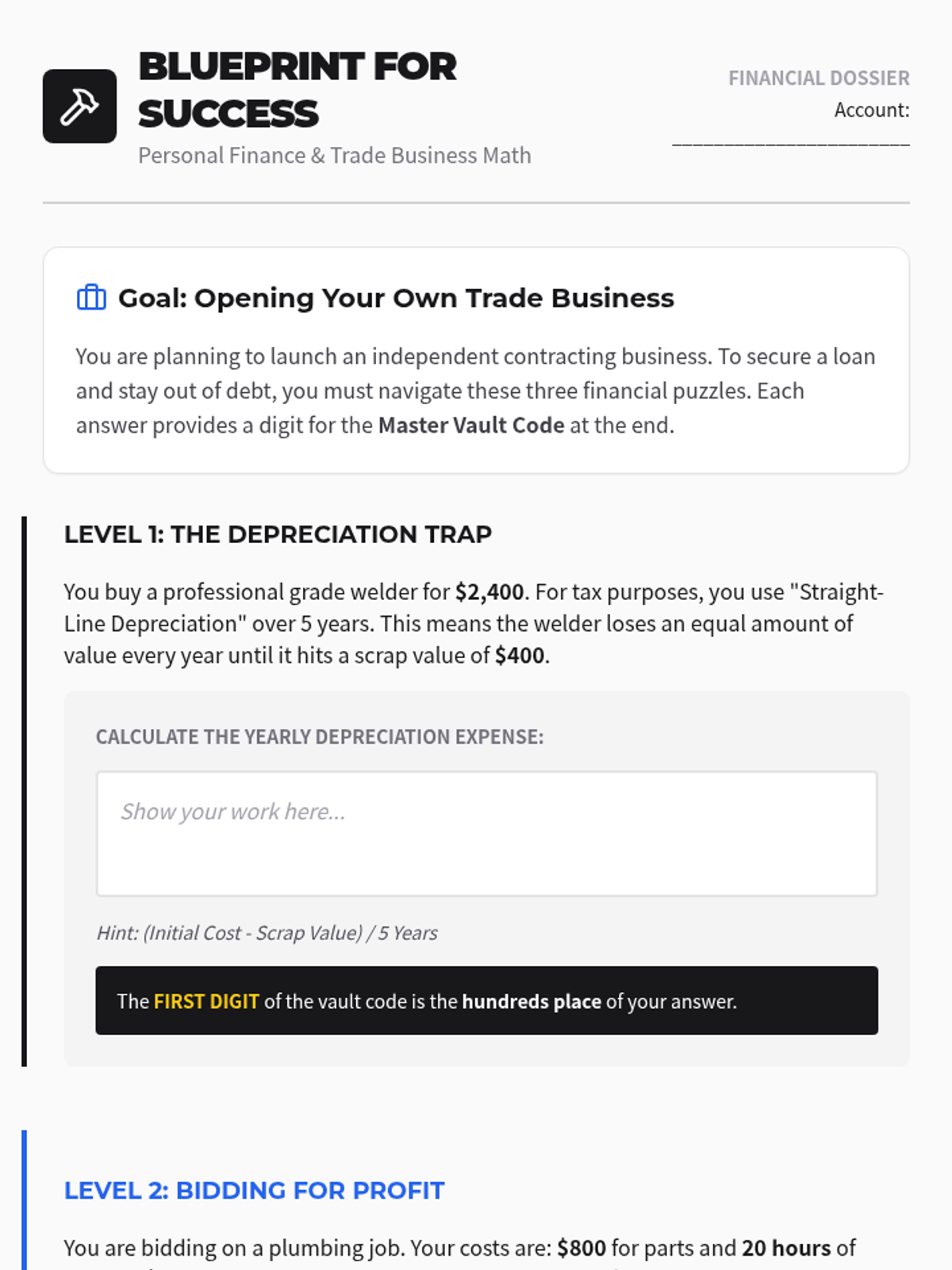
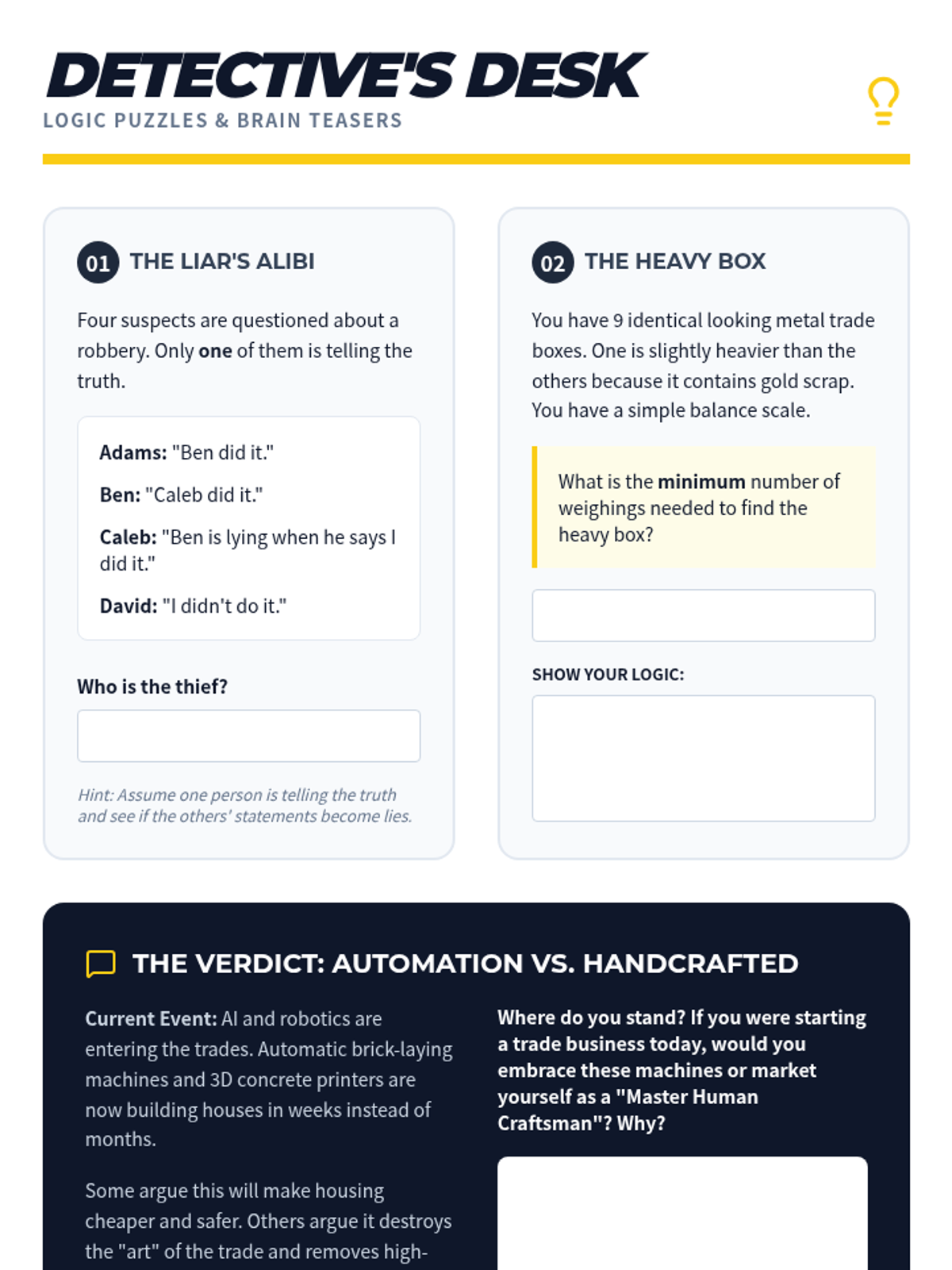
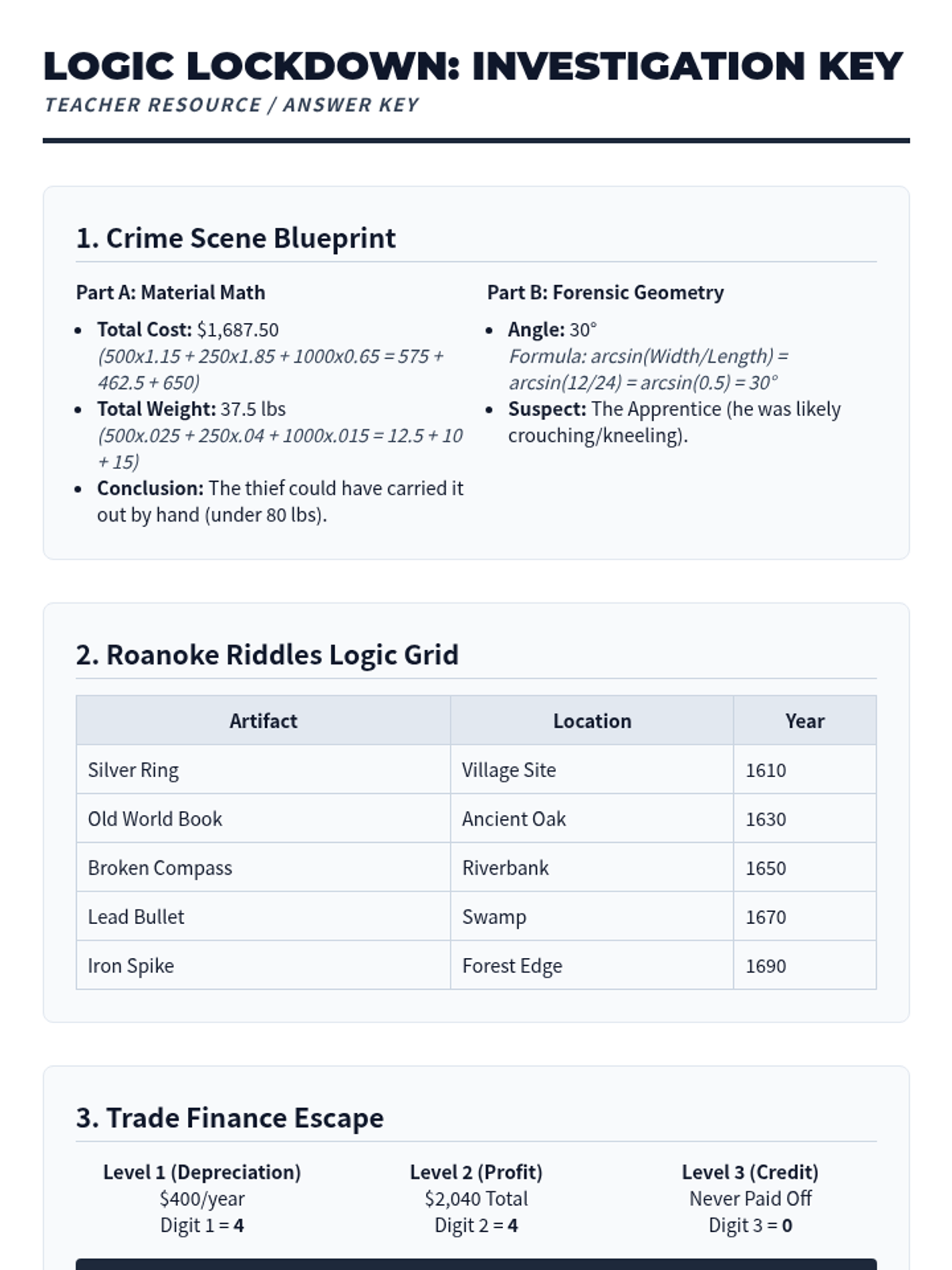
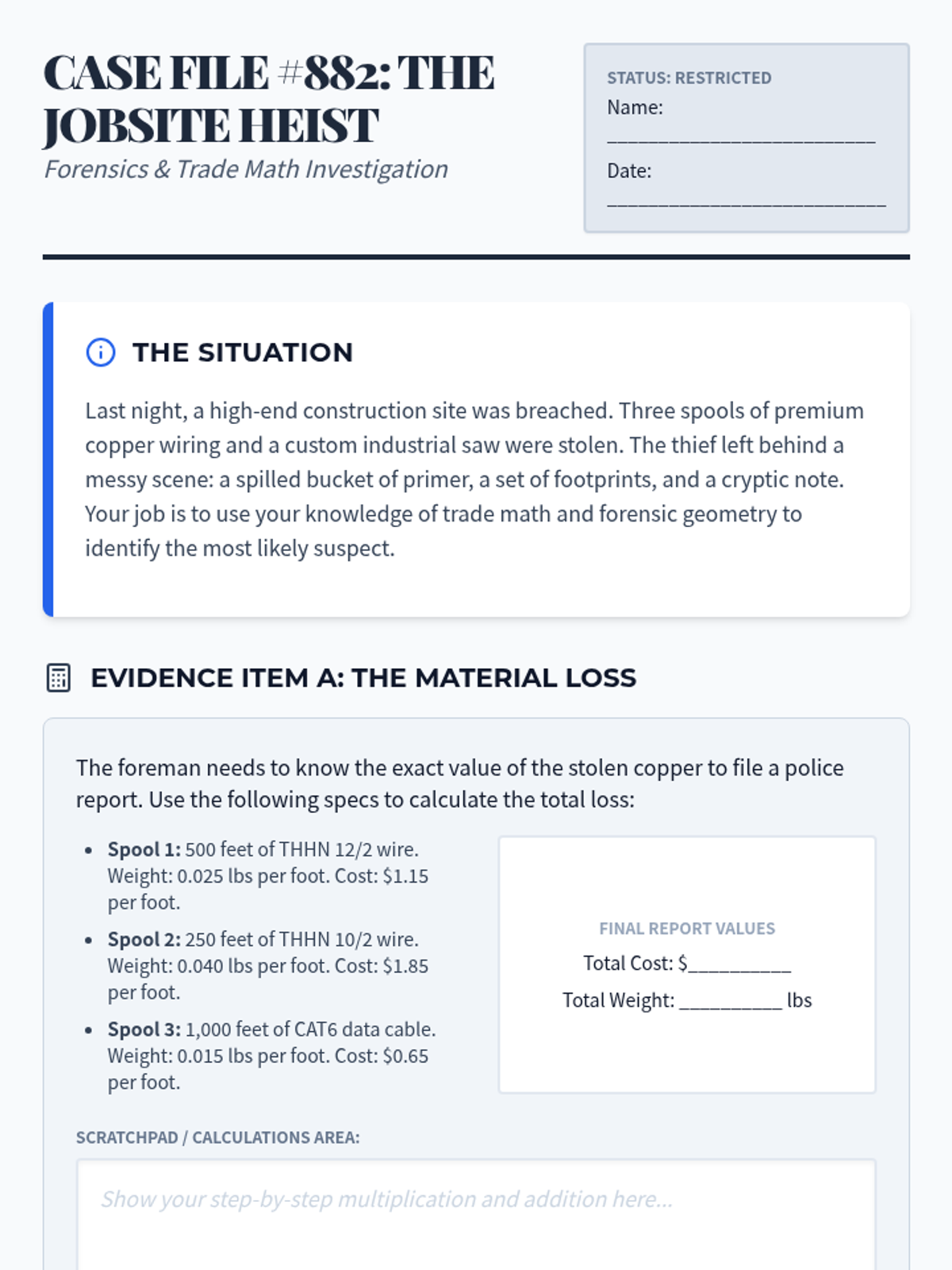
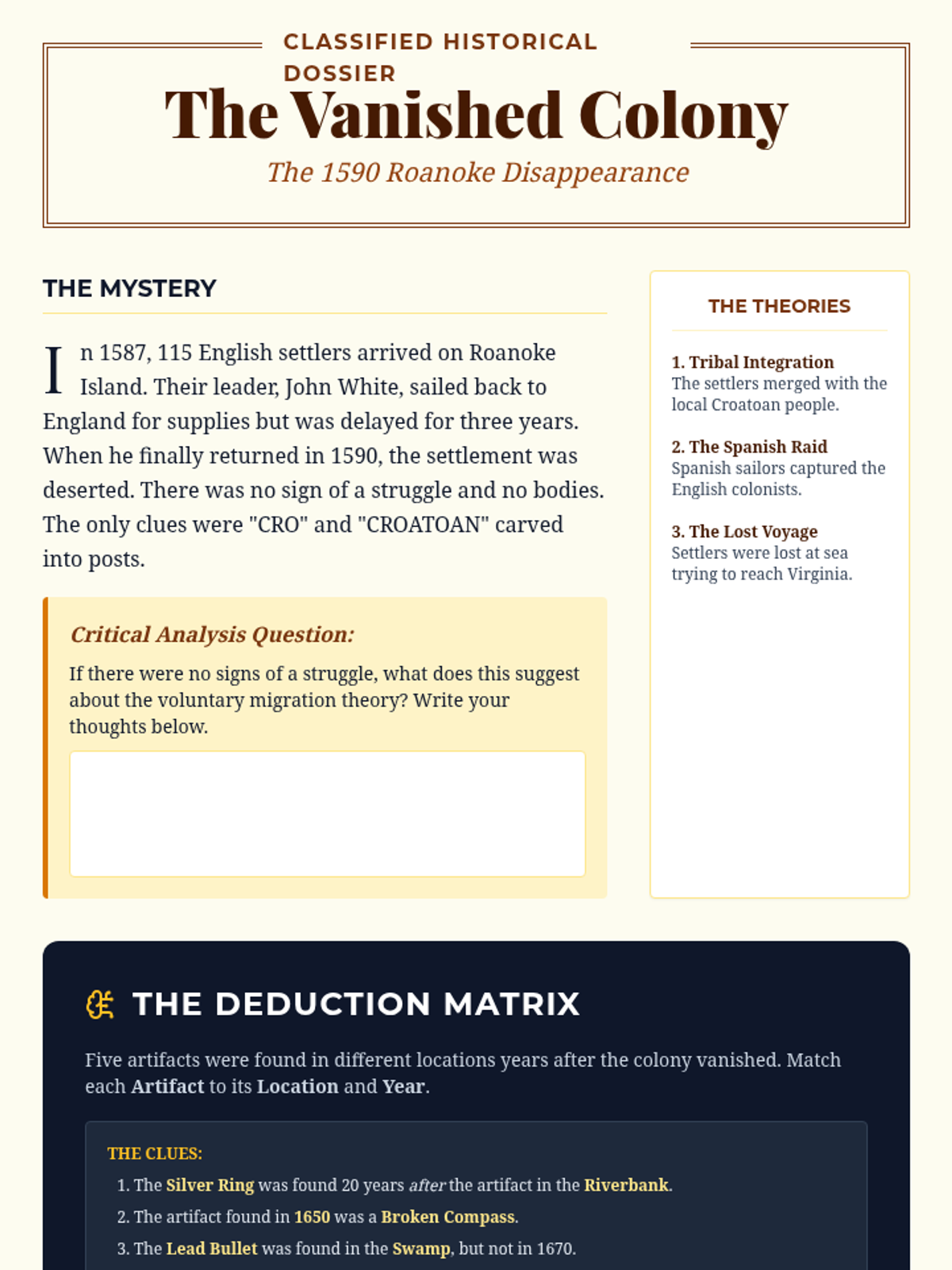
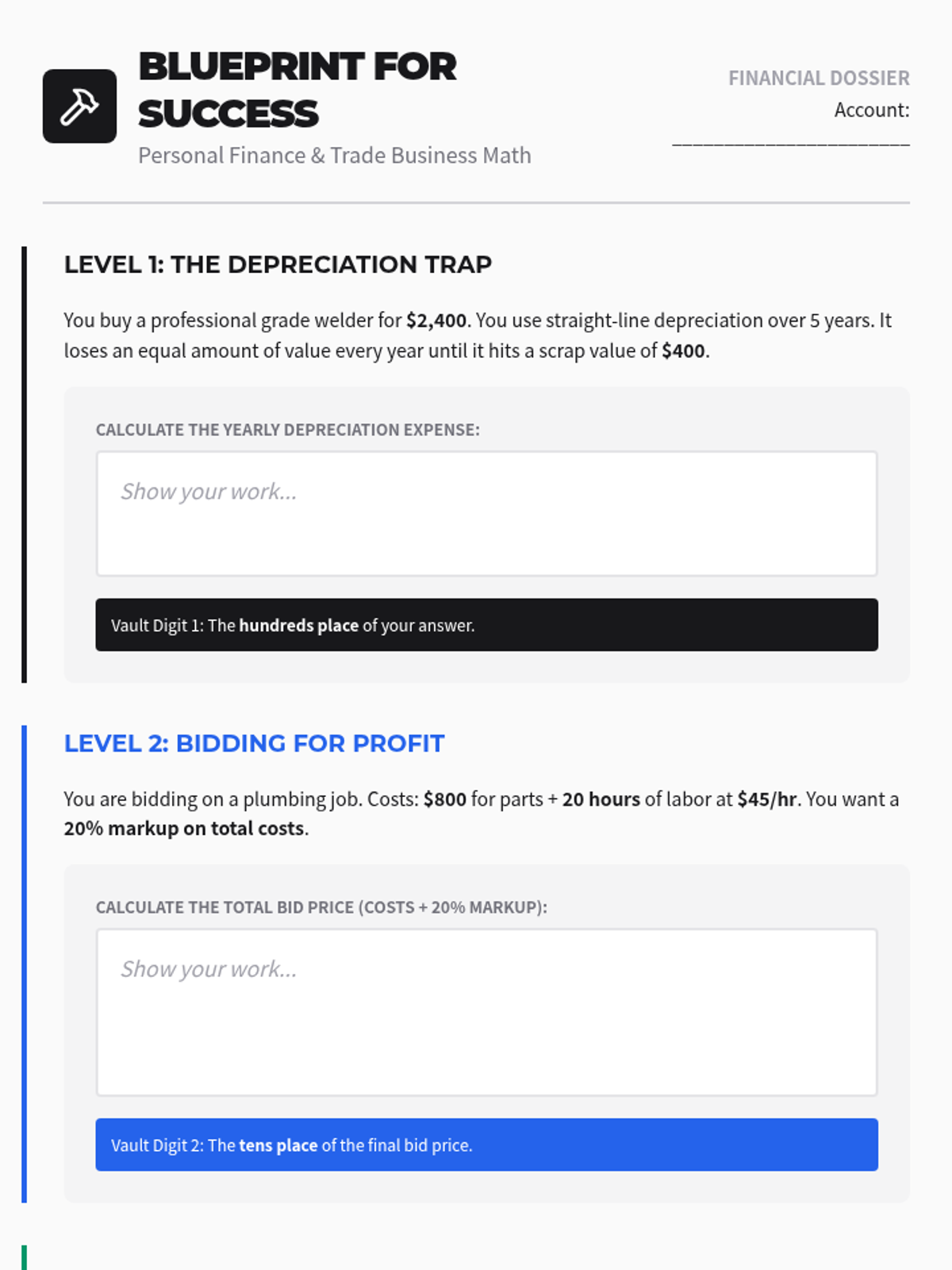
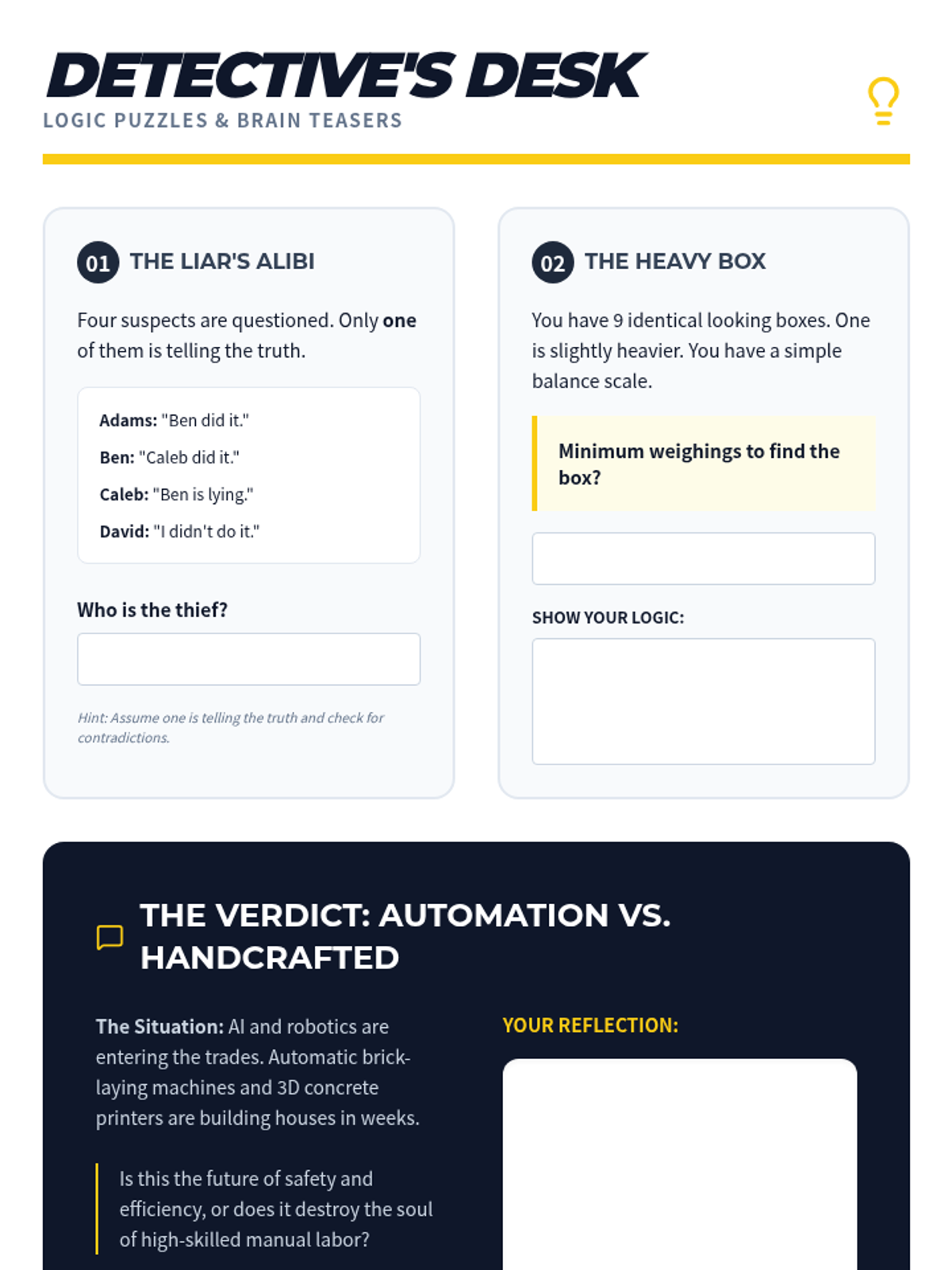
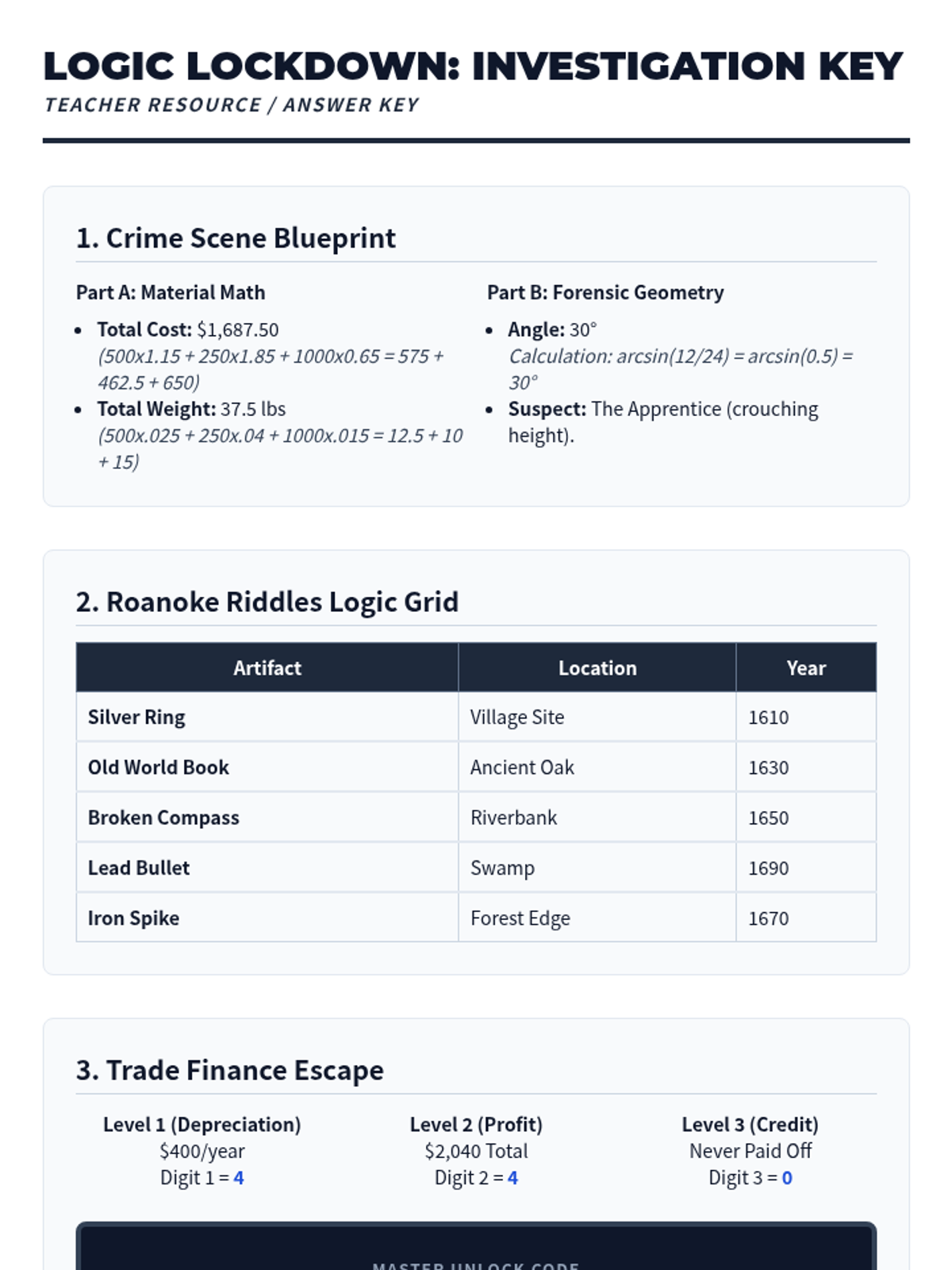
A collection of high-interest, multi-disciplinary logic and math challenges themed around forensic investigation, trade skills, and historical mysteries. Designed for high-school level adult learners to practice critical thinking and practical math application.
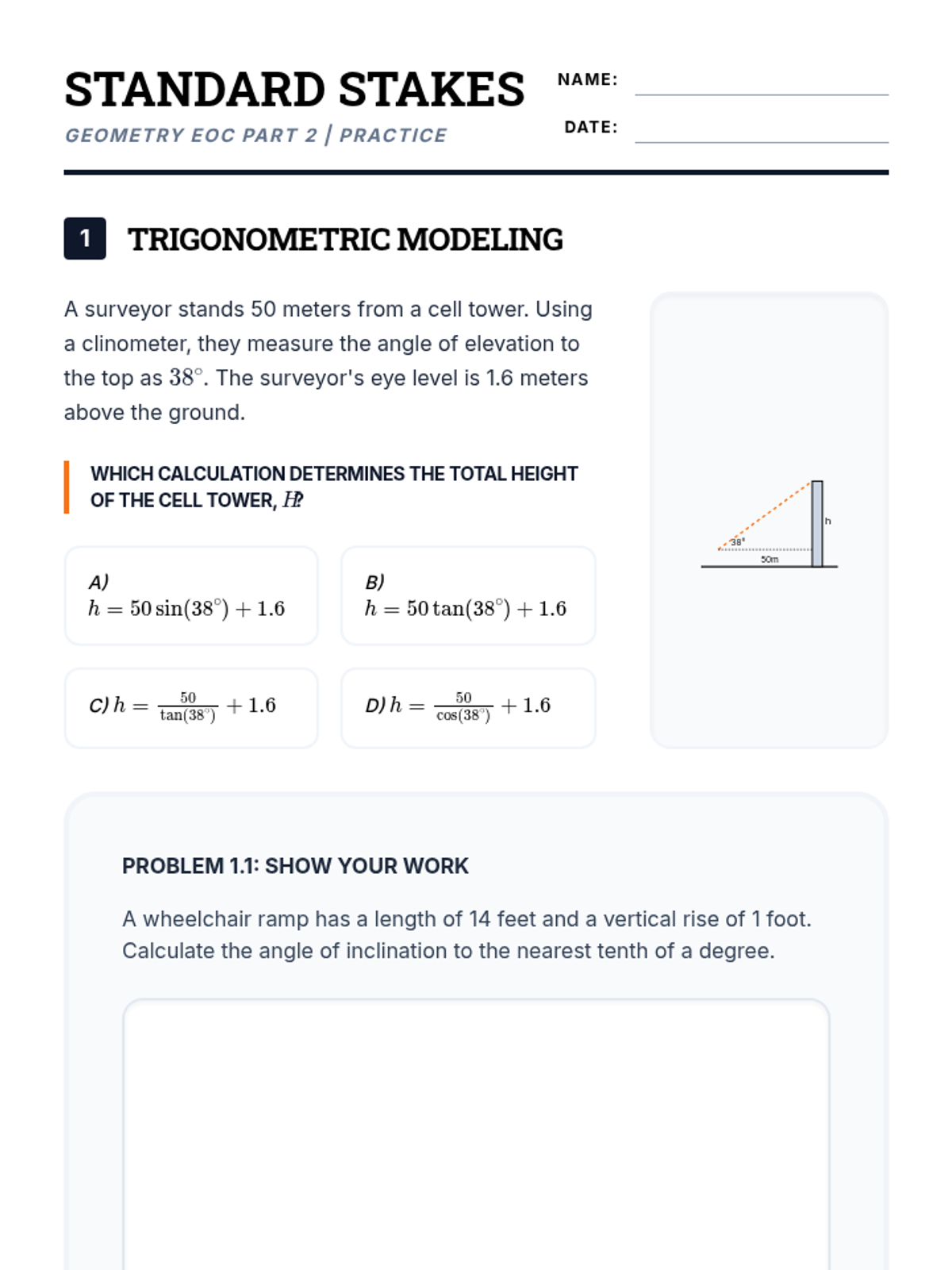
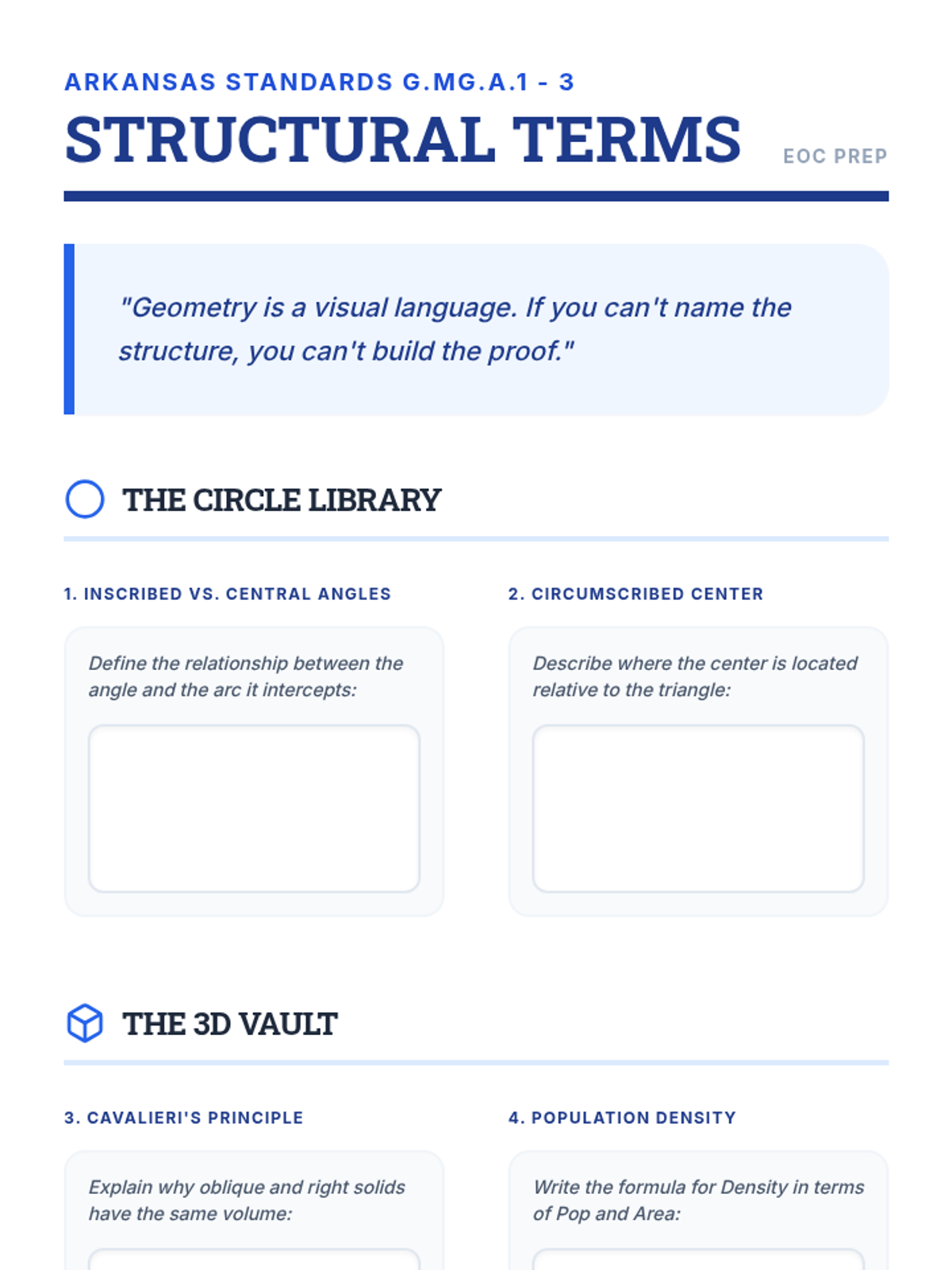
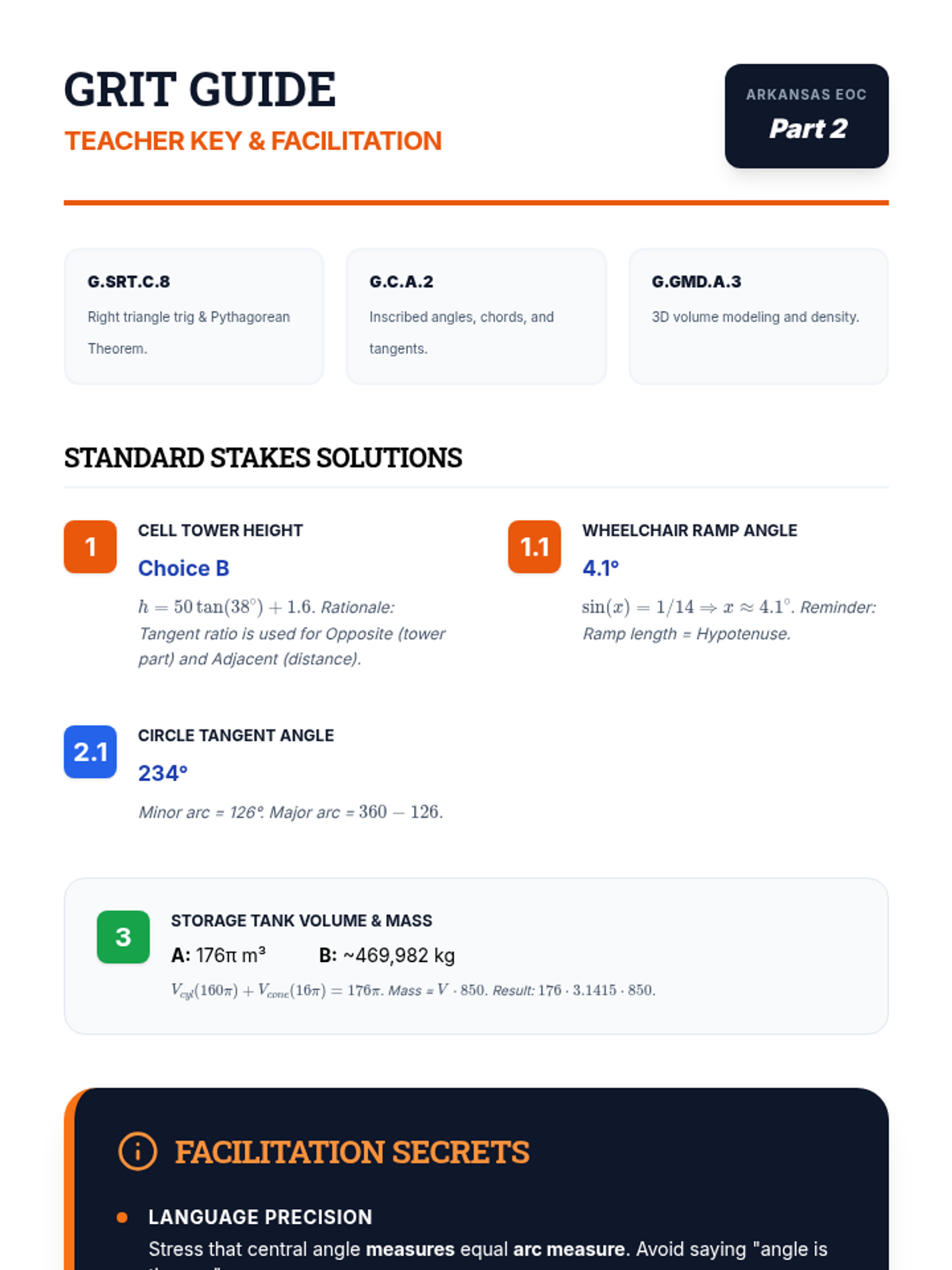
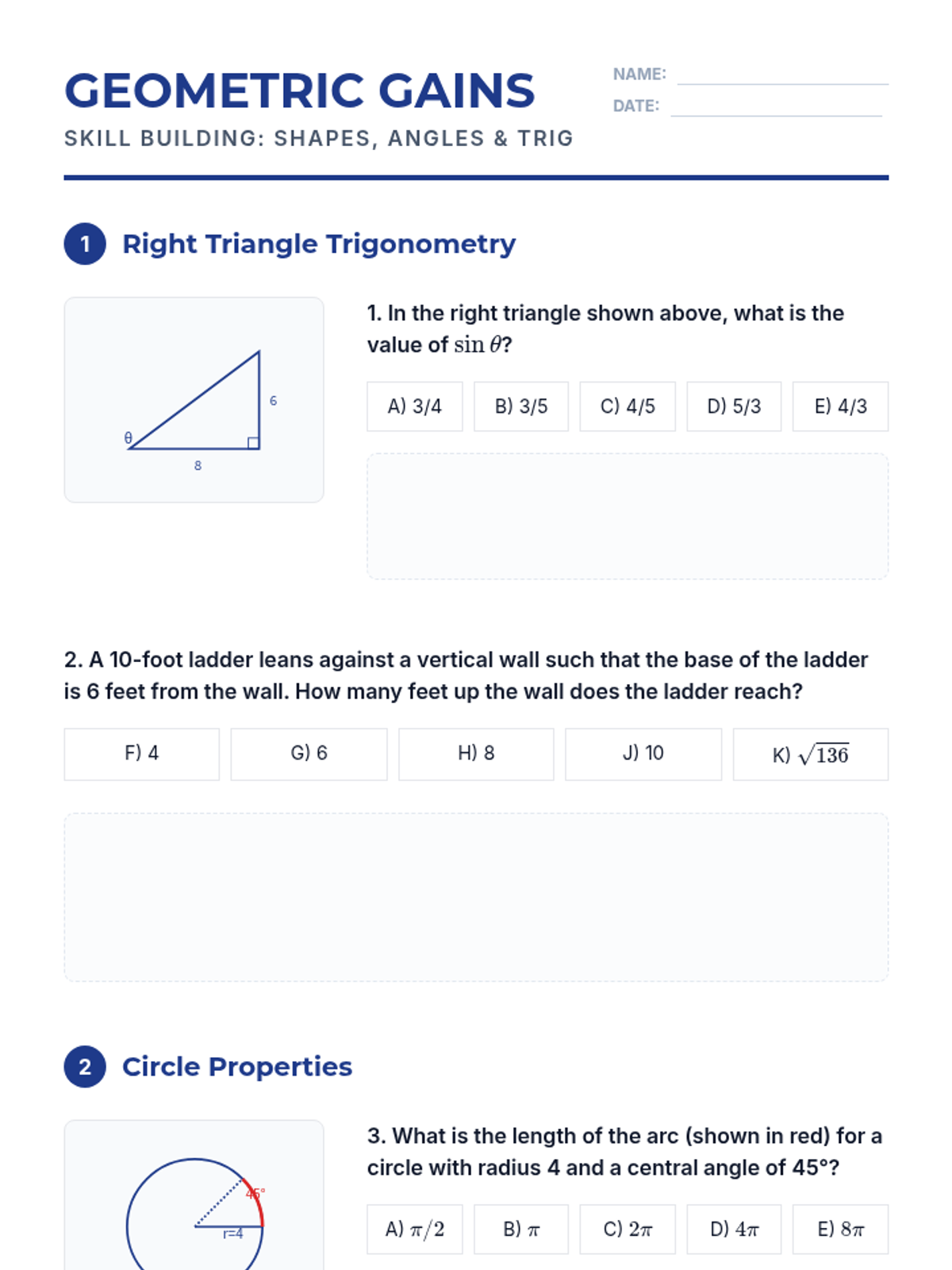
A high-intensity EOC prep lesson for Arkansas Geometry standards, focusing on trigonometry, circle properties, and 3D geometry through diagram-heavy practice.
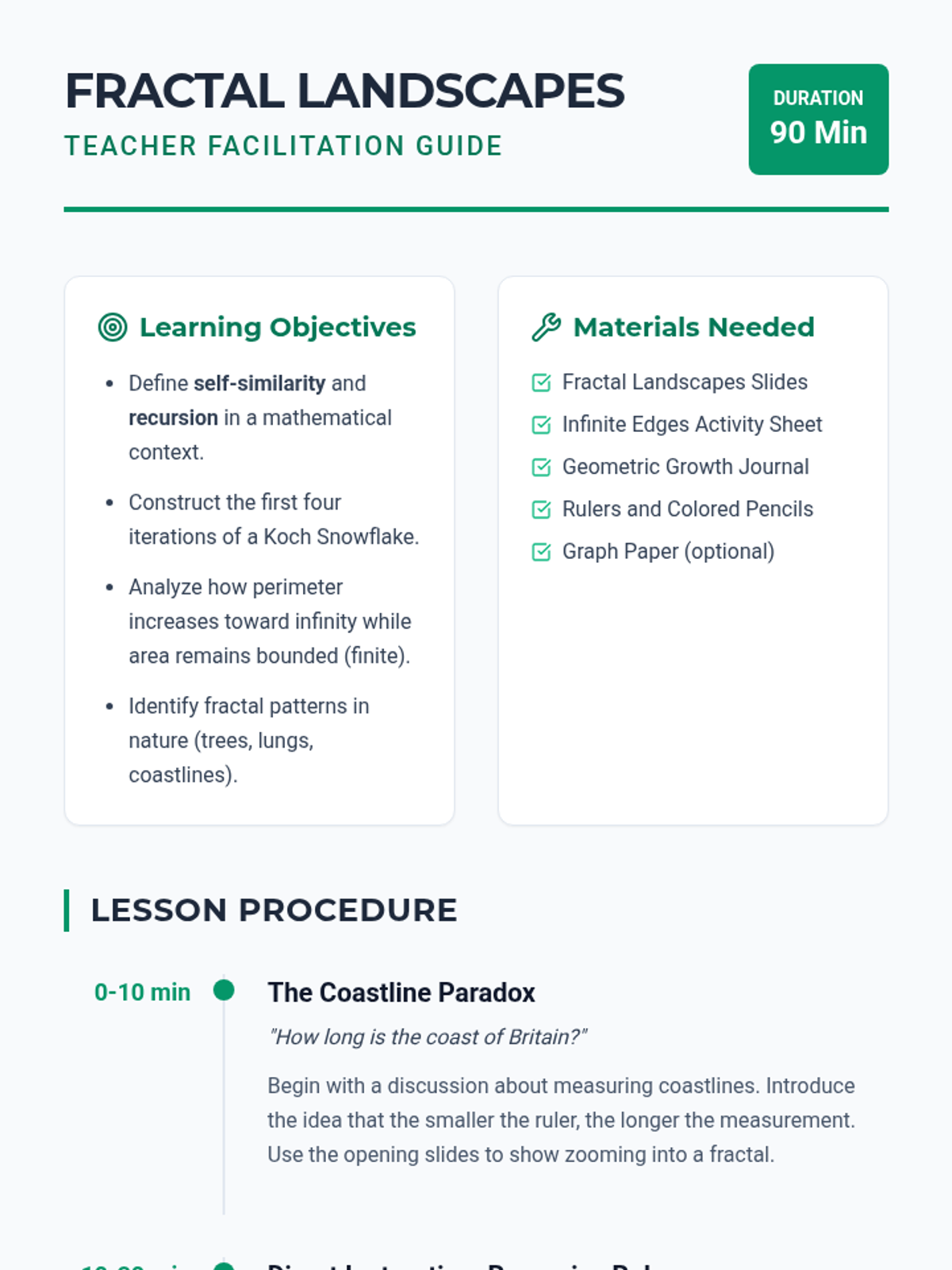
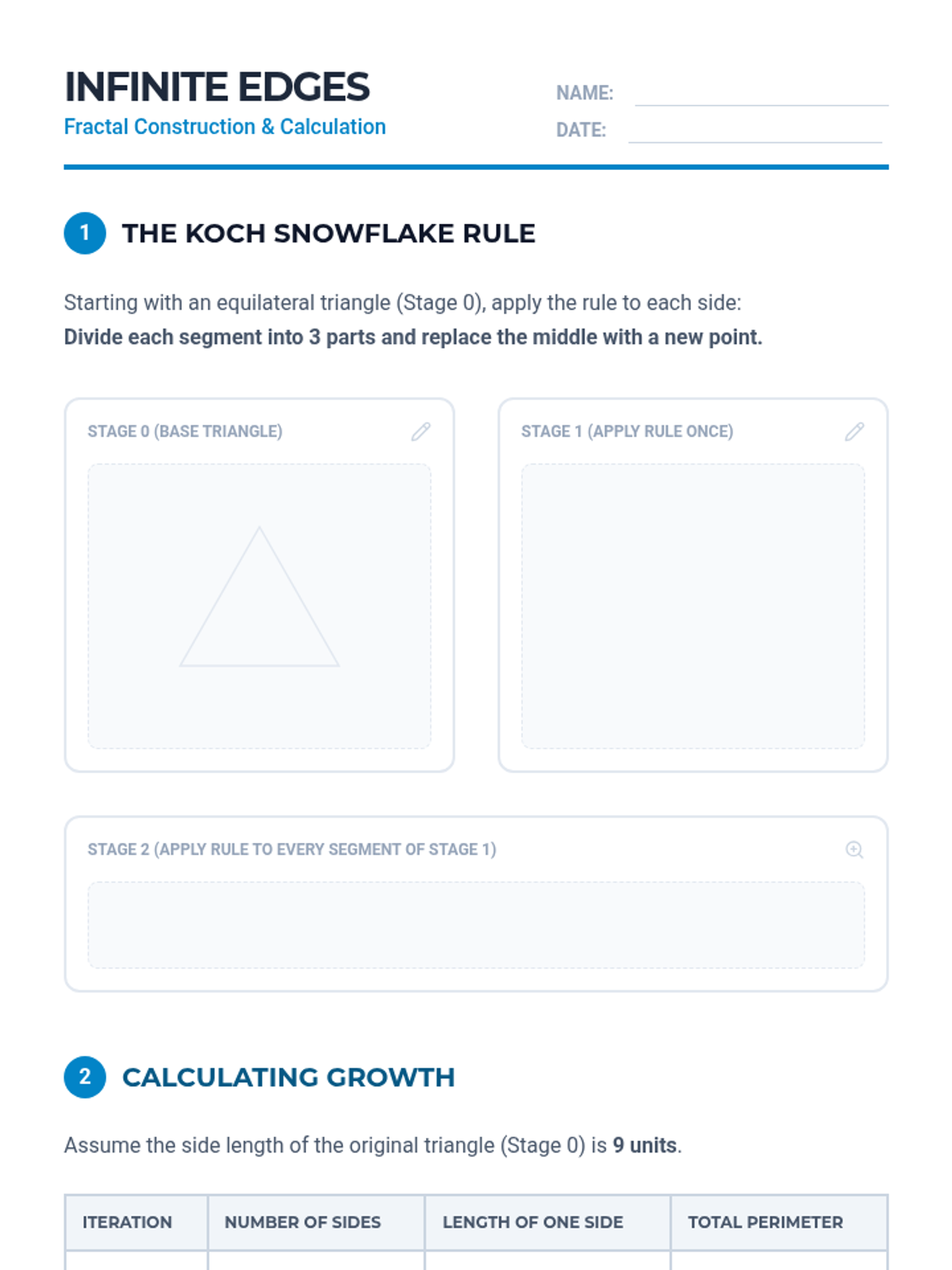
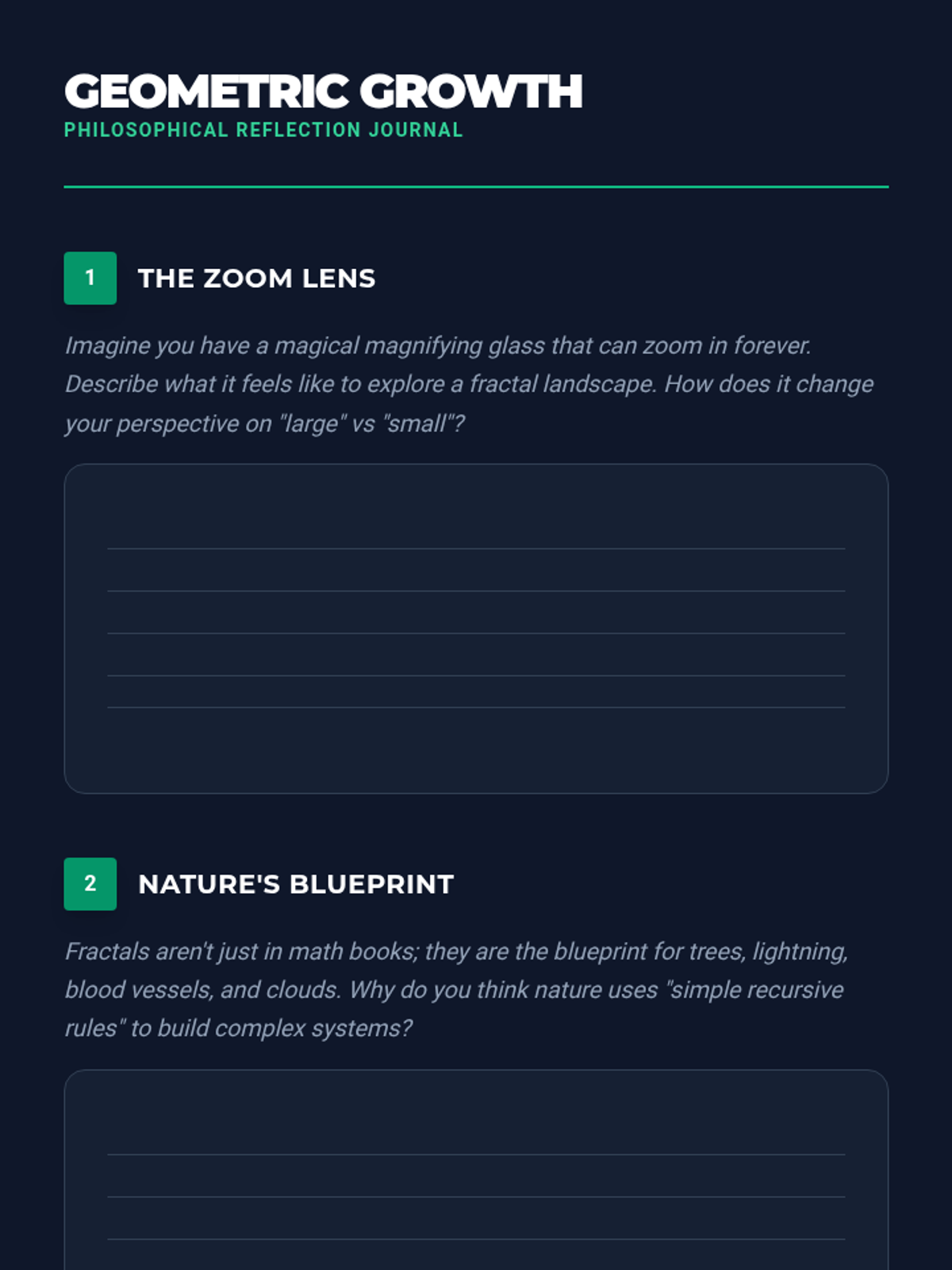
Explore the mesmerizing world of fractals where art meets mathematics. Students investigate recursive patterns, self-similarity, and the mind-bending paradox of infinite perimeters within finite spaces.
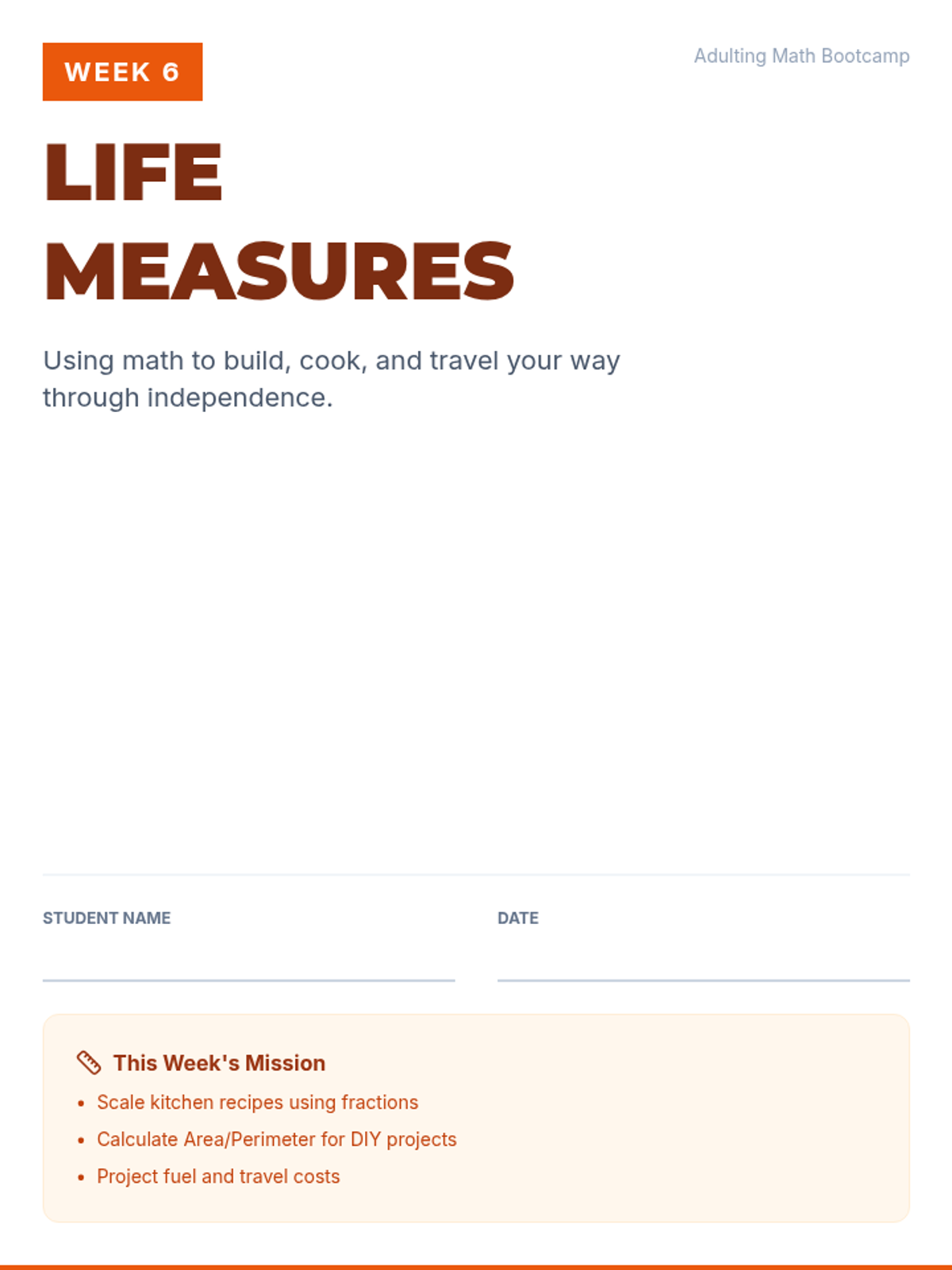
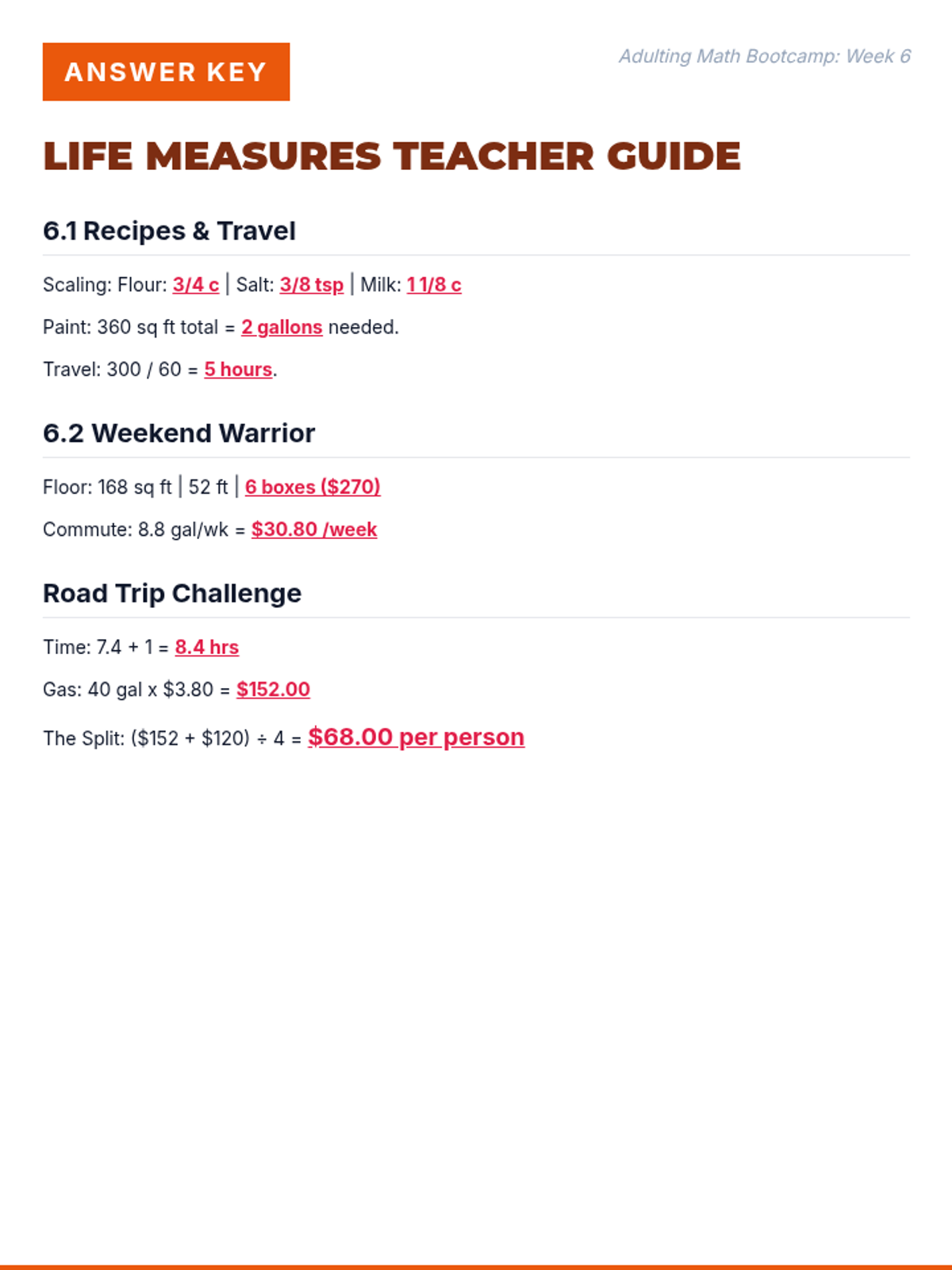
Applies geometry and arithmetic to everyday tasks like cooking measurements, home DIY projects, and travel planning.
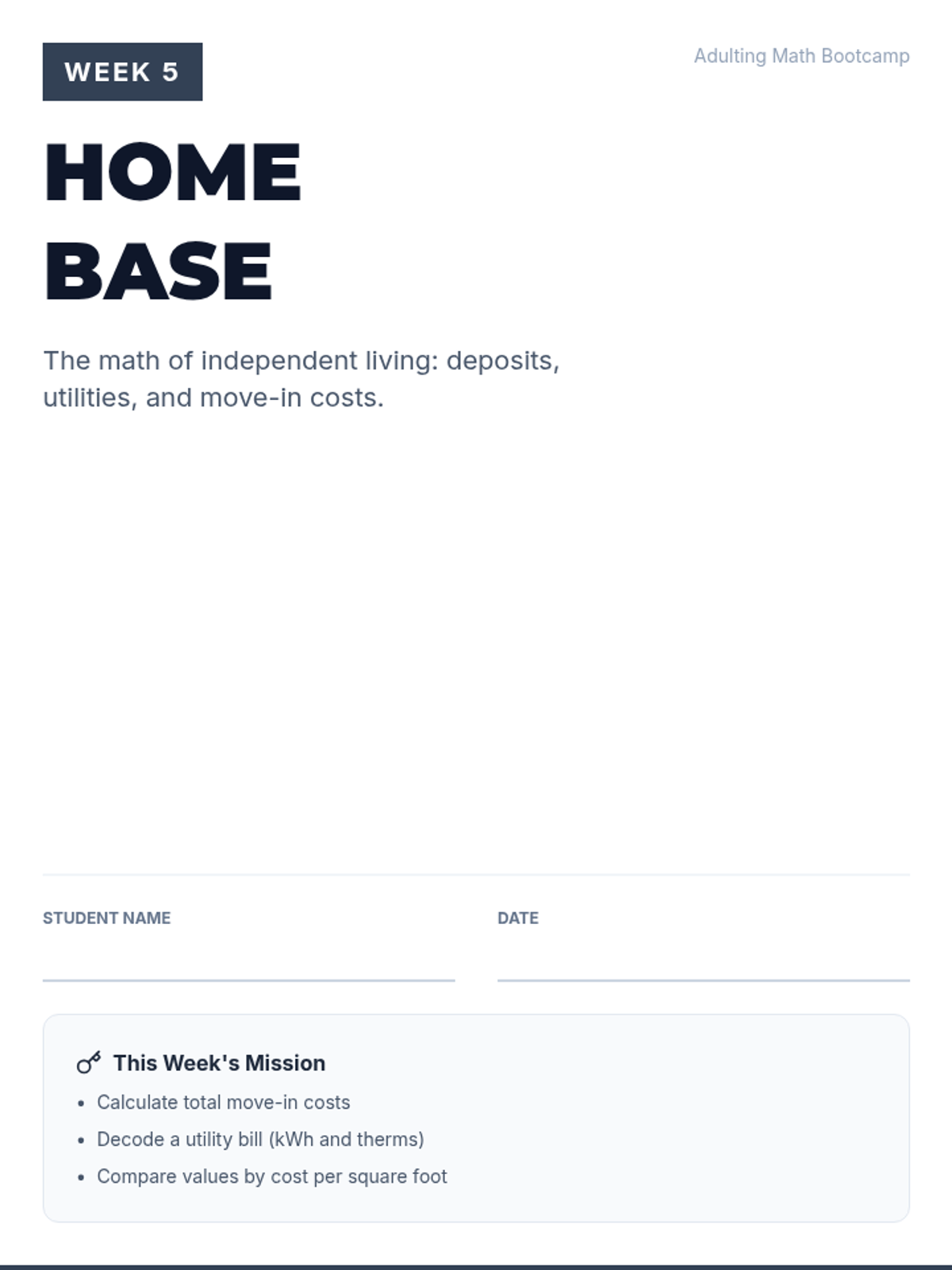
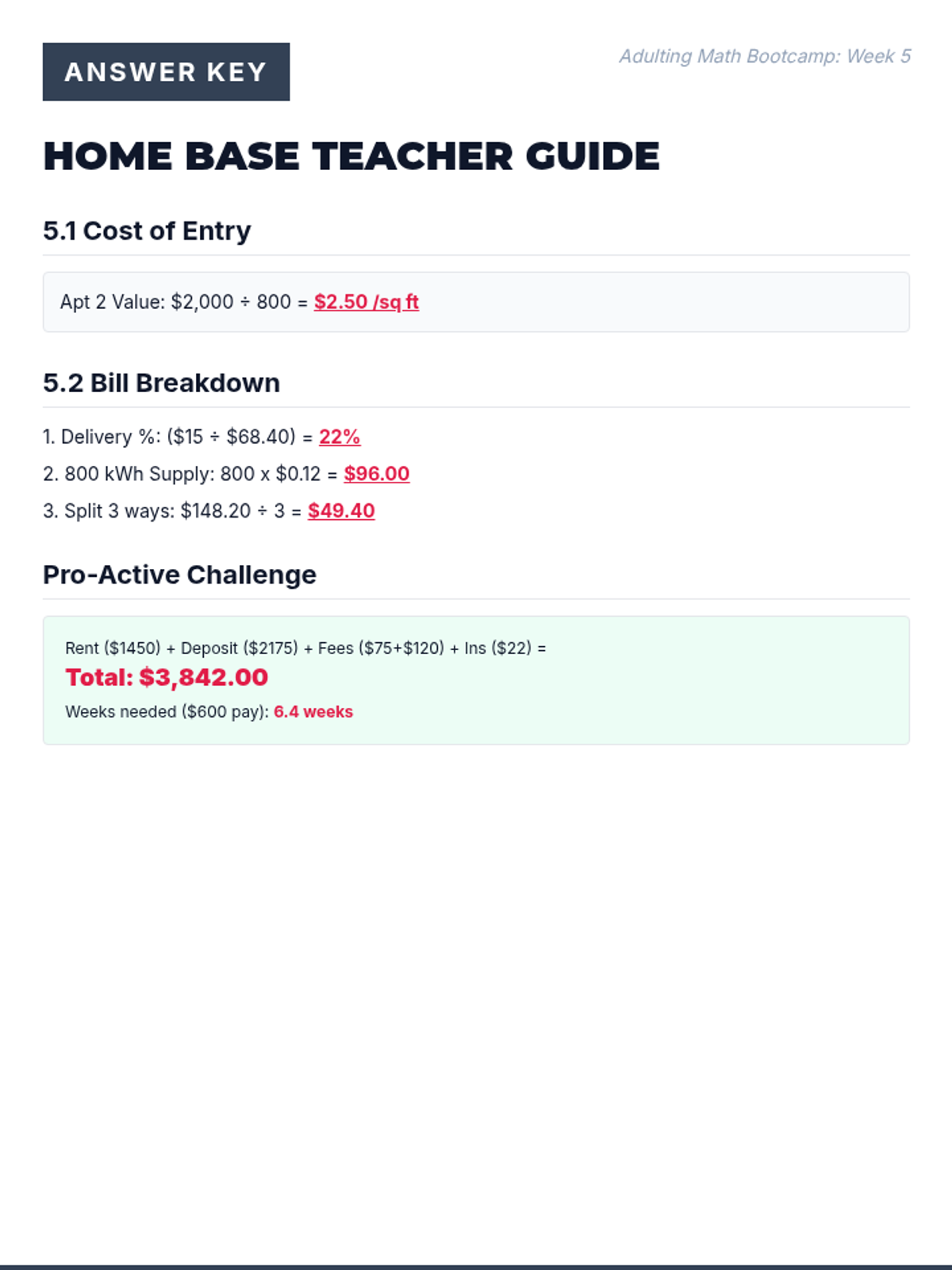
Covers the financial aspects of independent living, including renting, utility usage math, and basic insurance concepts.
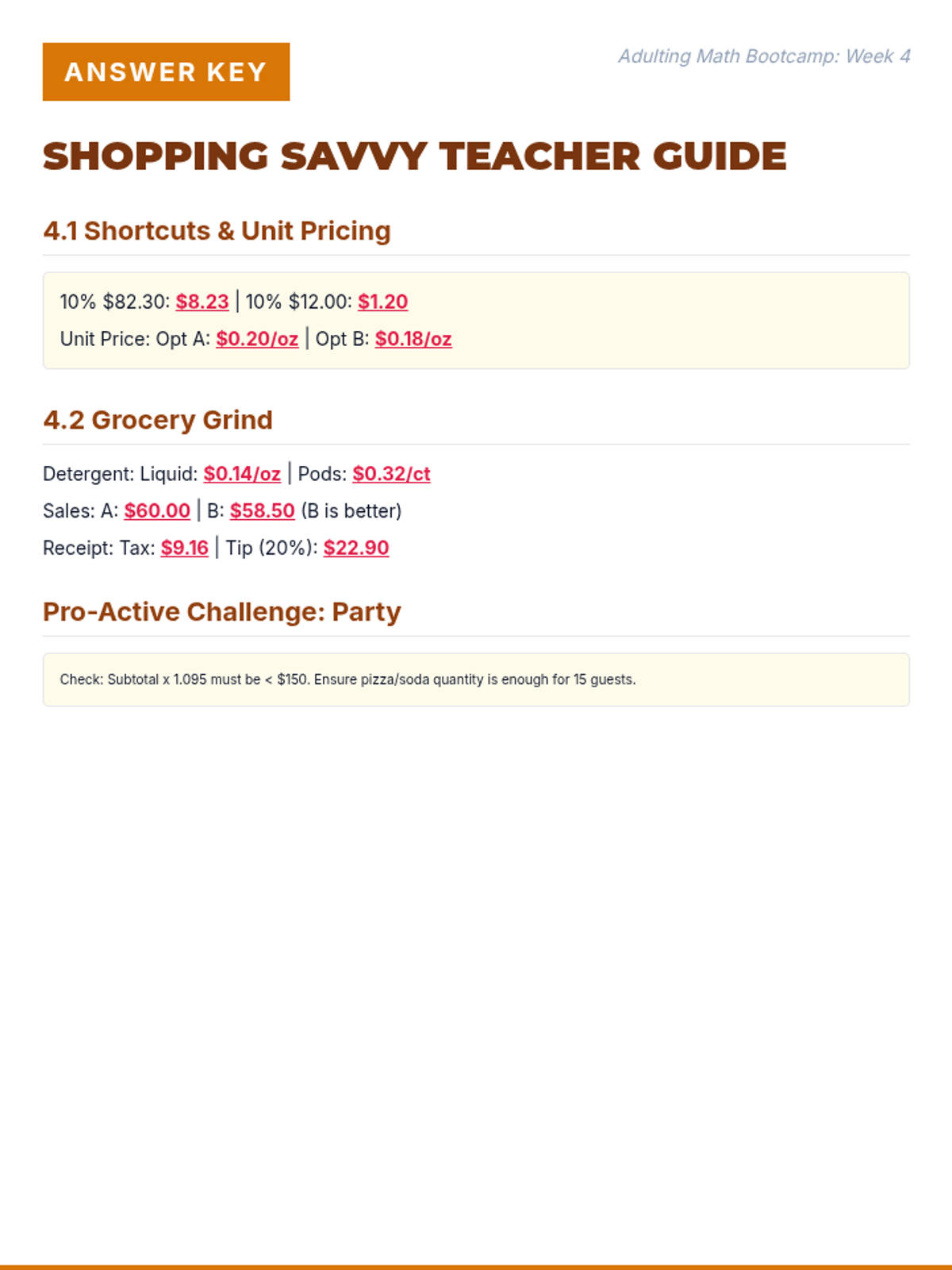
Practical applications of percentages and ratios in shopping, including sales tax, discounts, tips, and unit price comparisons.
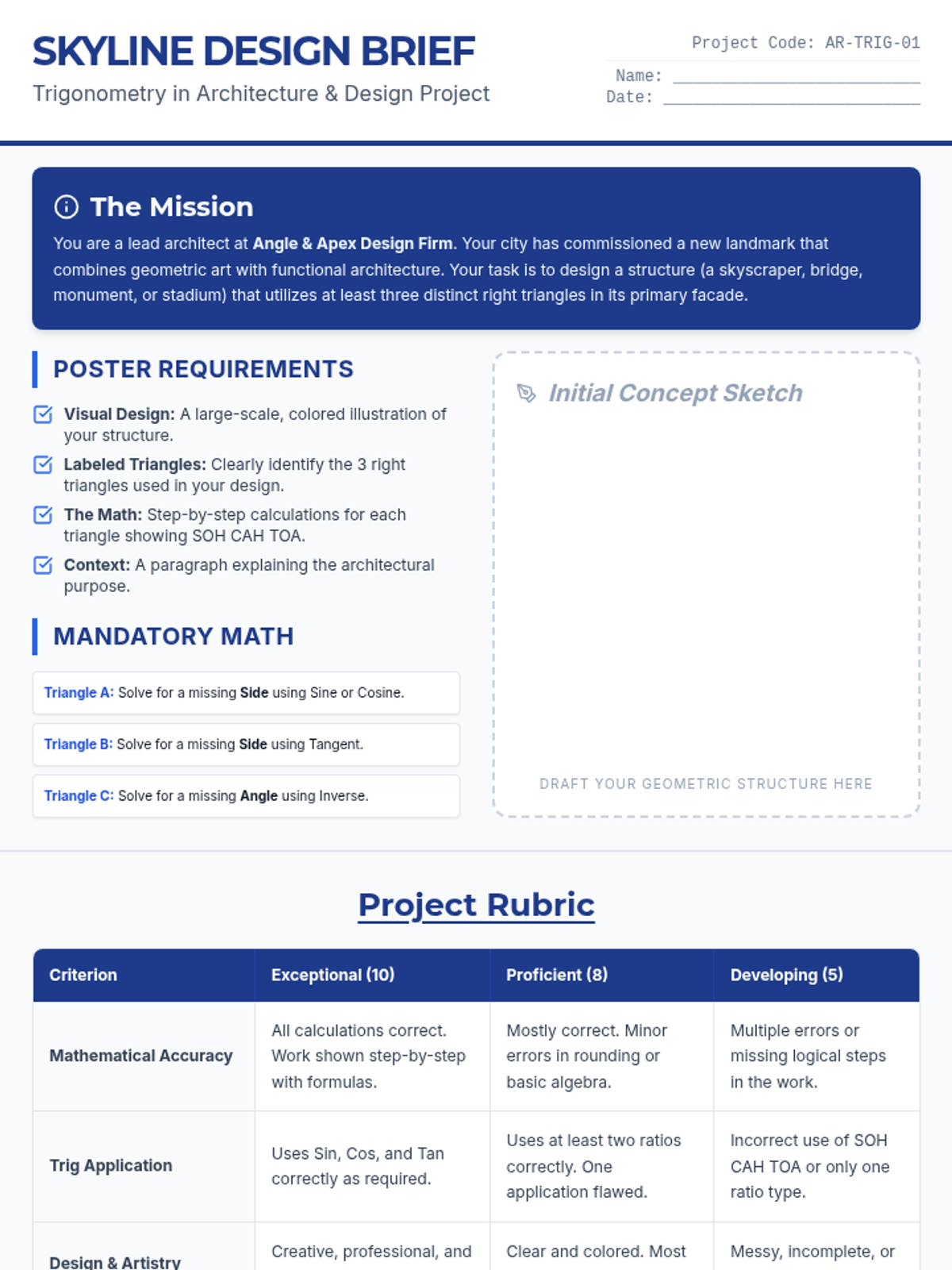
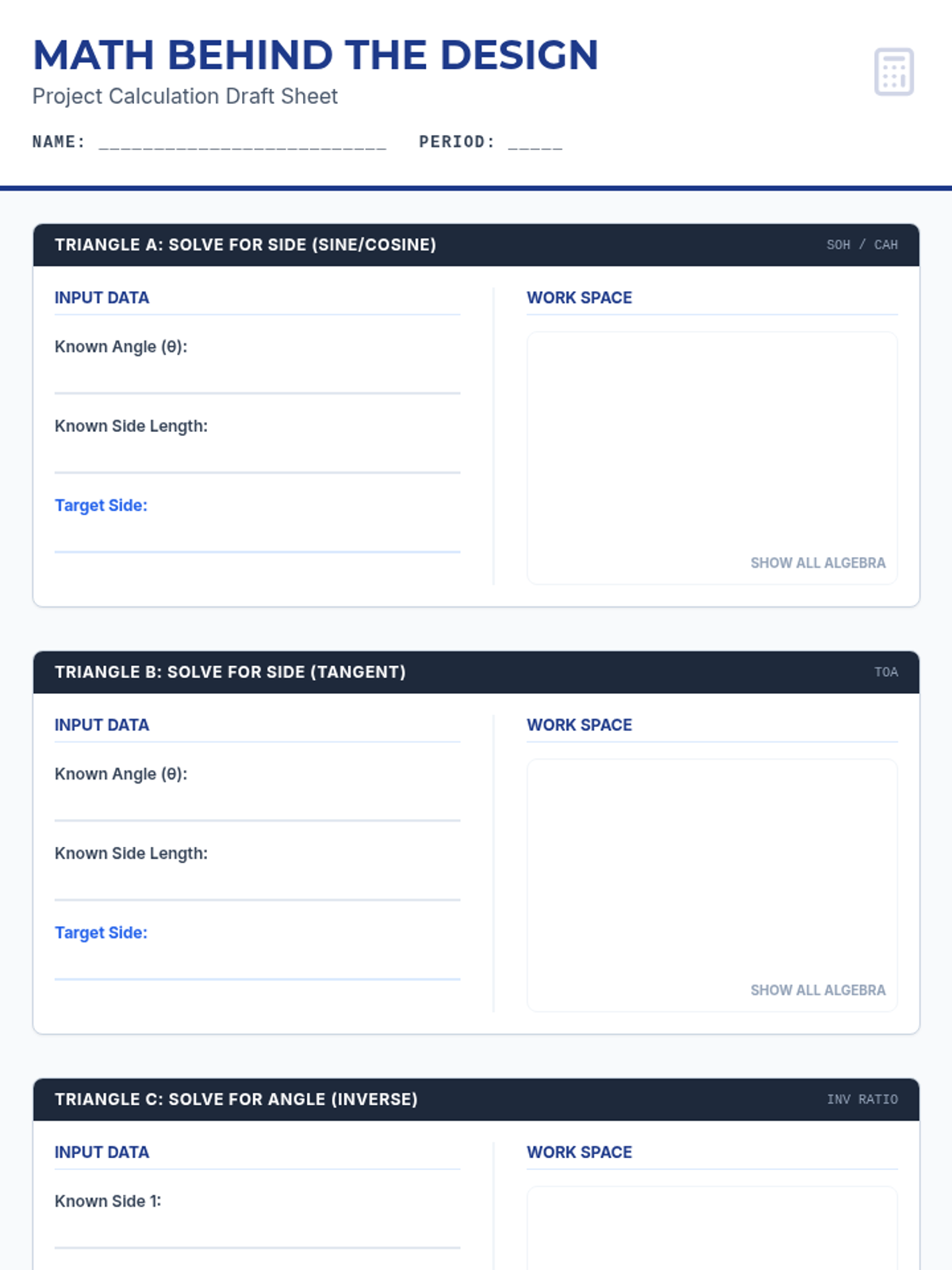
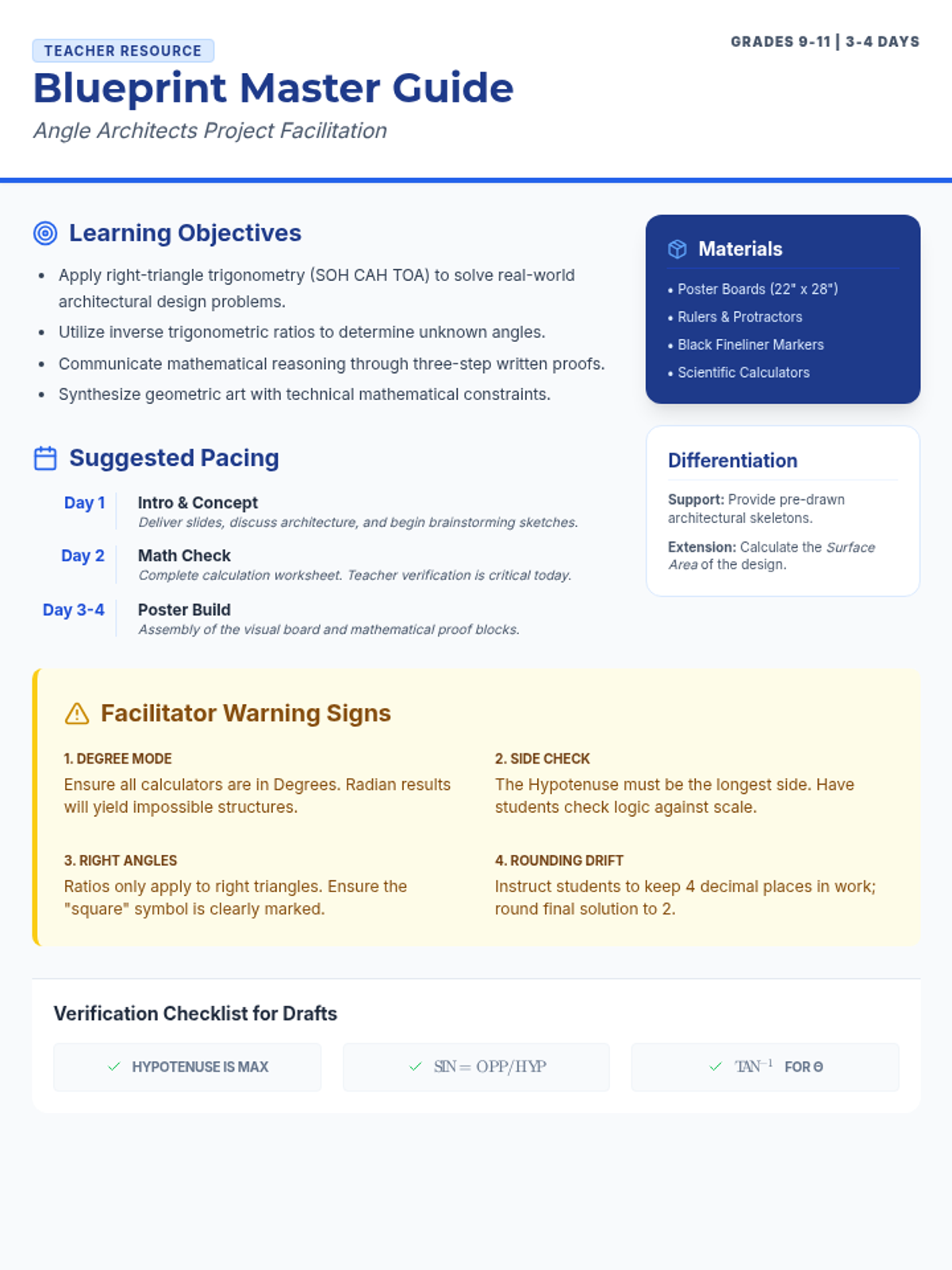
A hands-on project where students apply right triangle trigonometry to design a piece of modern architecture or geometric art, culminating in a detailed calculation poster.
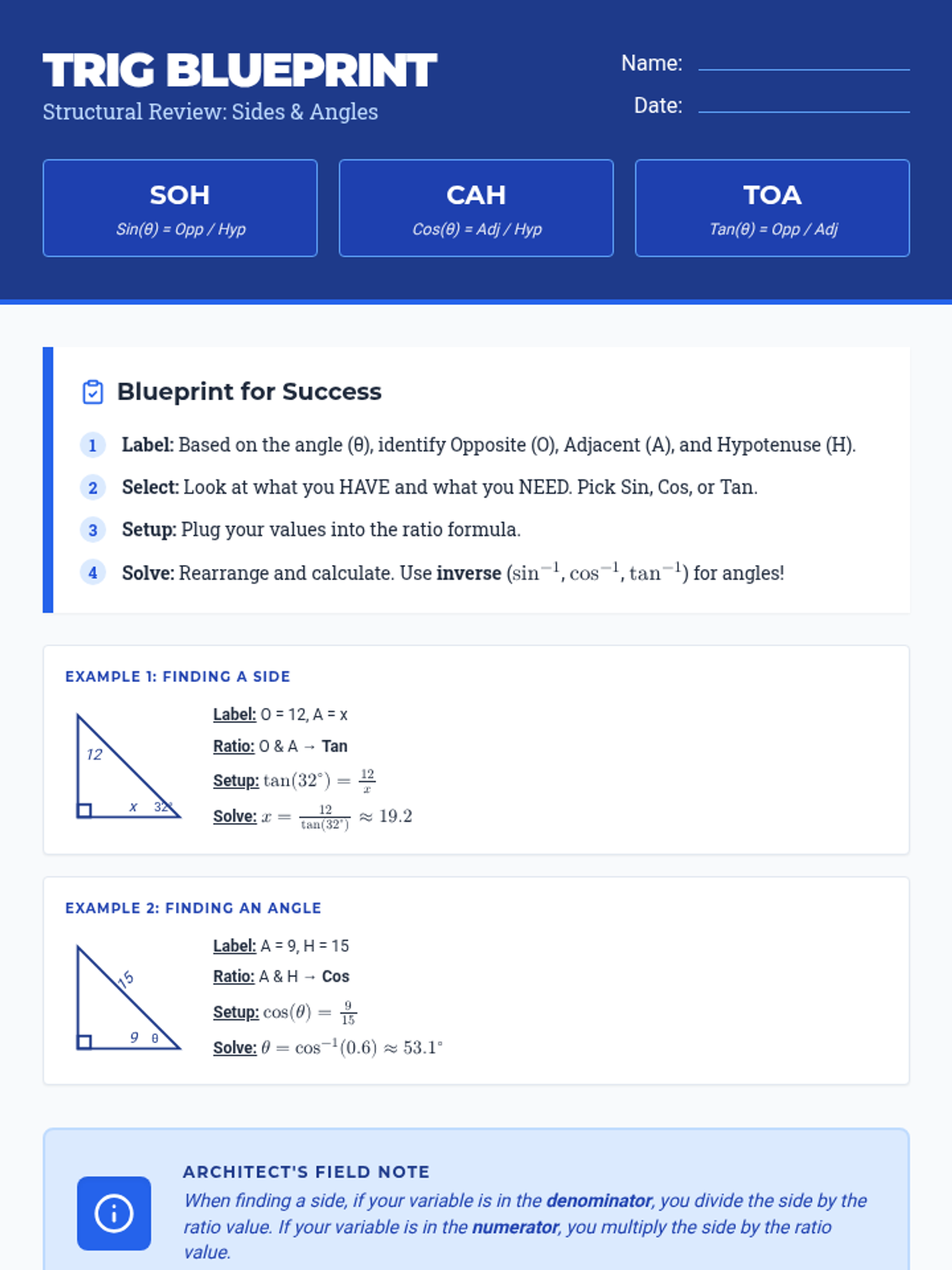
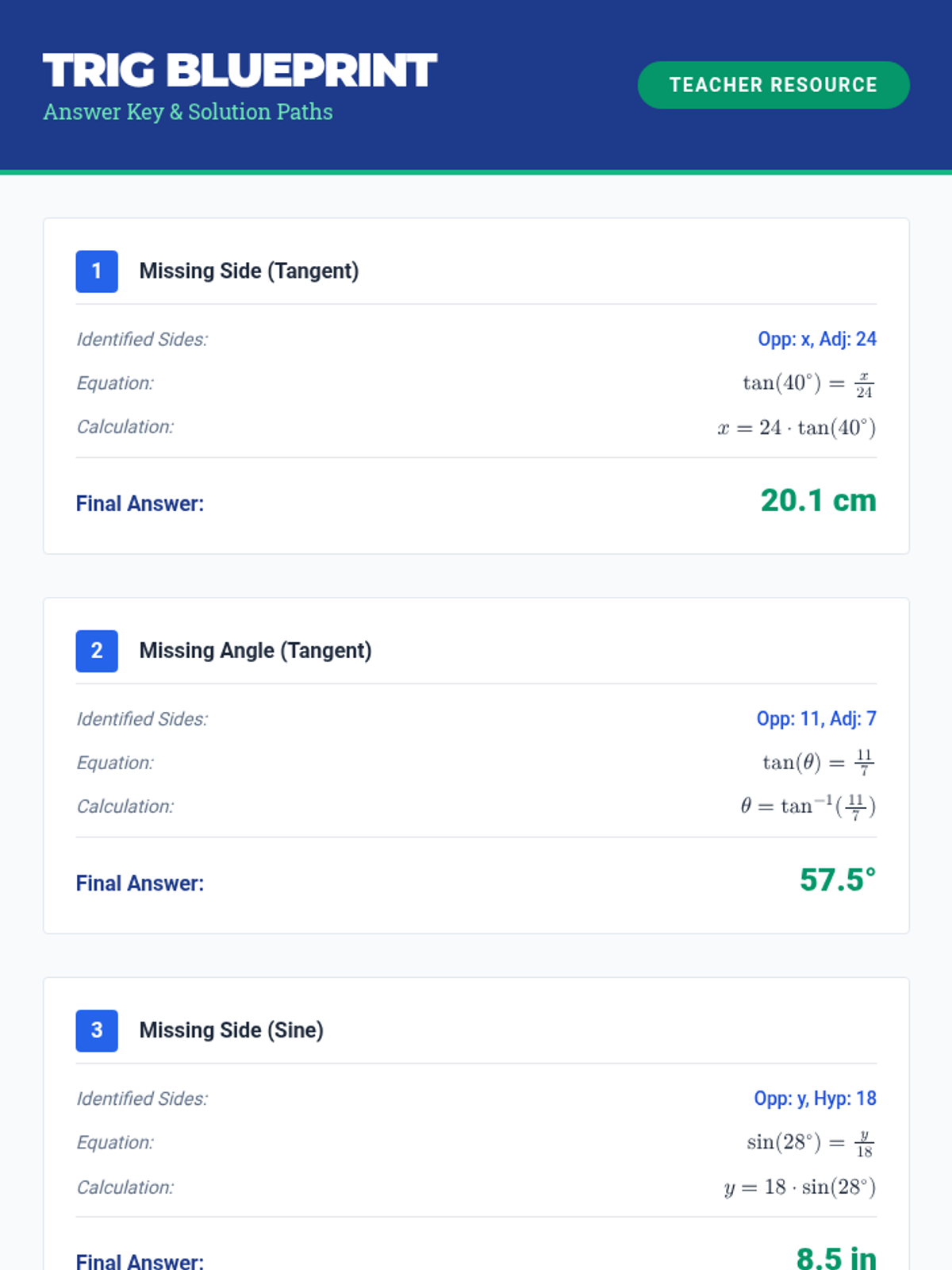
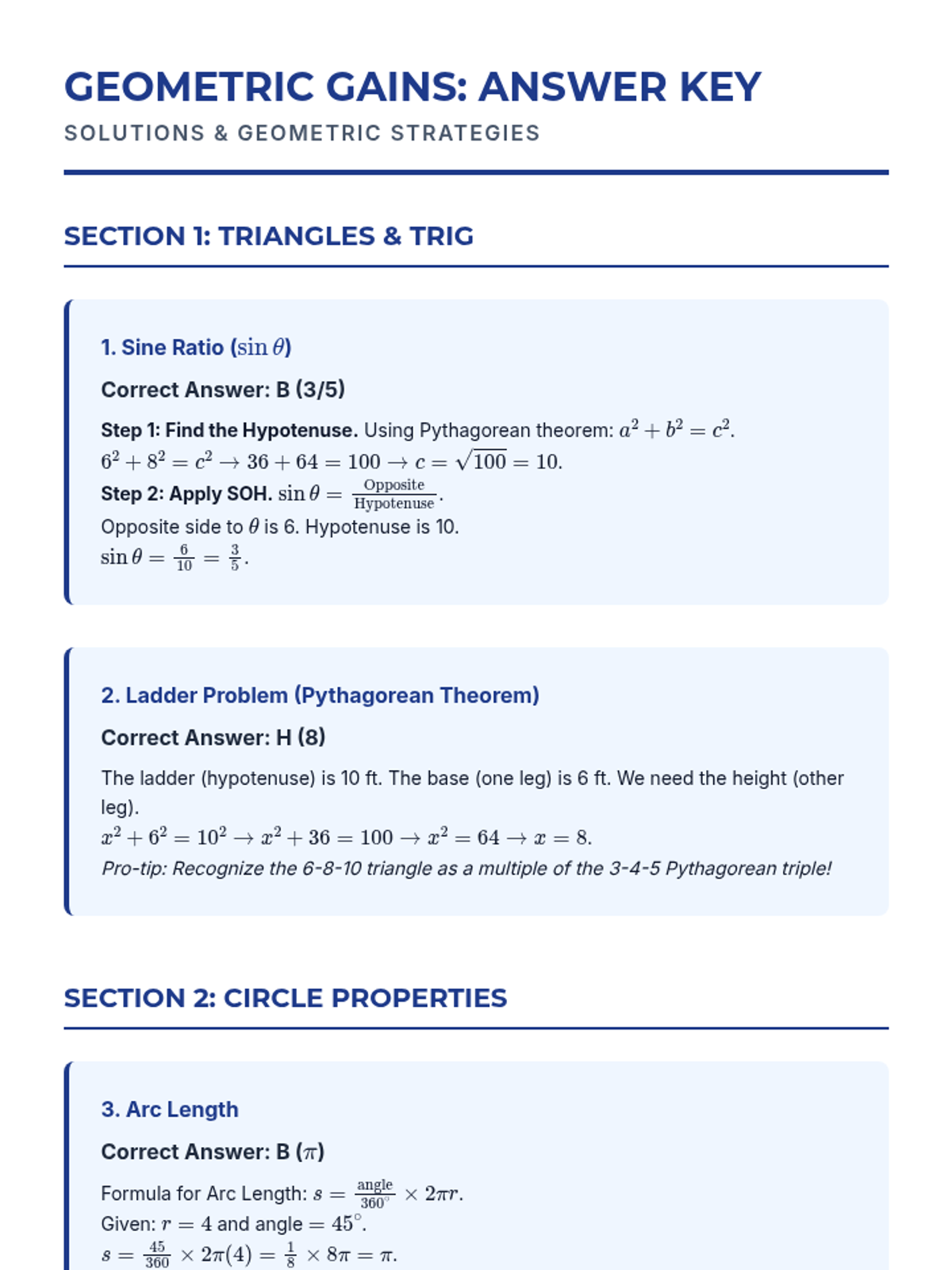
A comprehensive review of basic trigonometry (sine, cosine, tangent) for finding missing sides and angles, featuring a step-by-step checklist and worked examples.
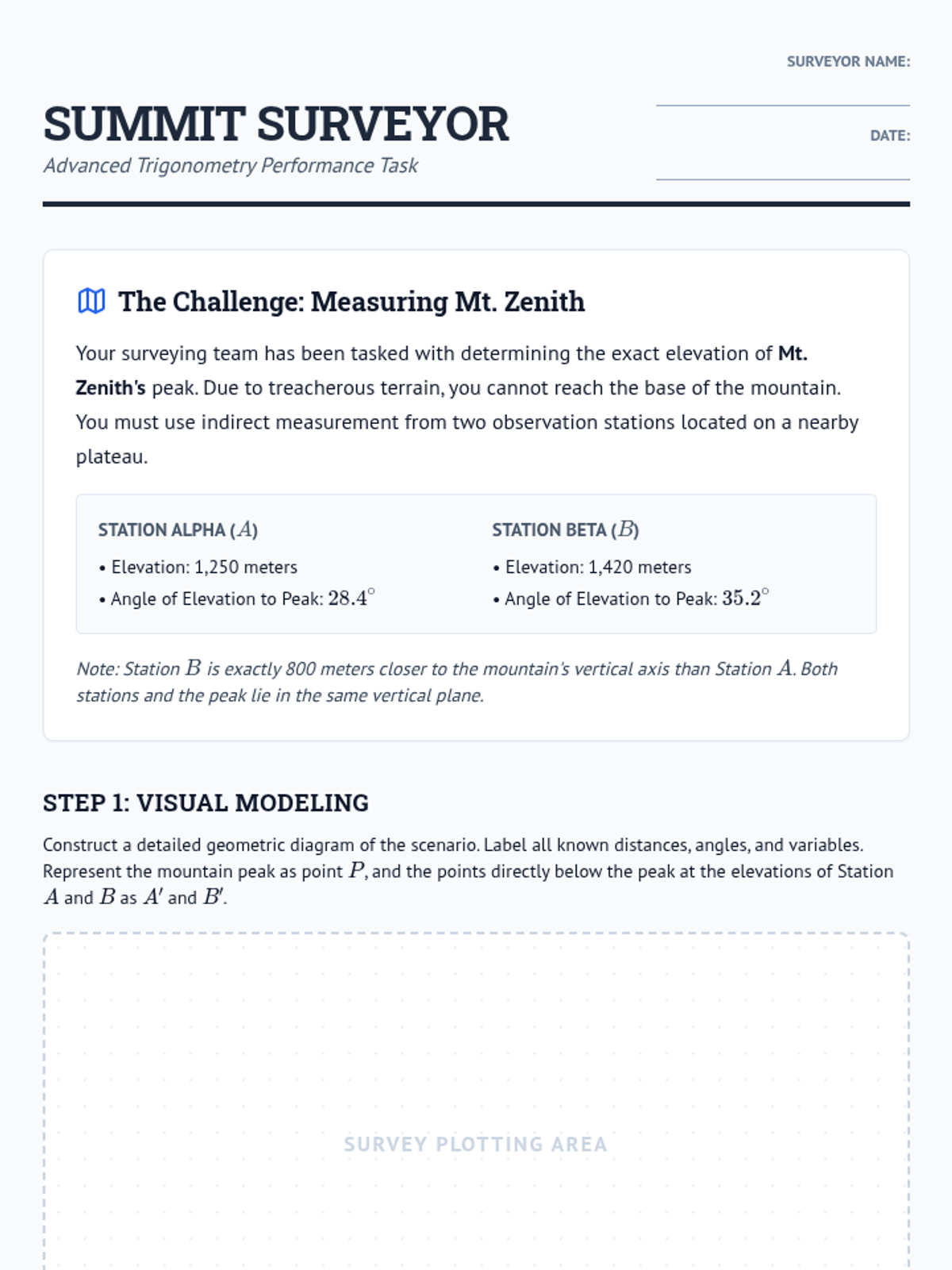
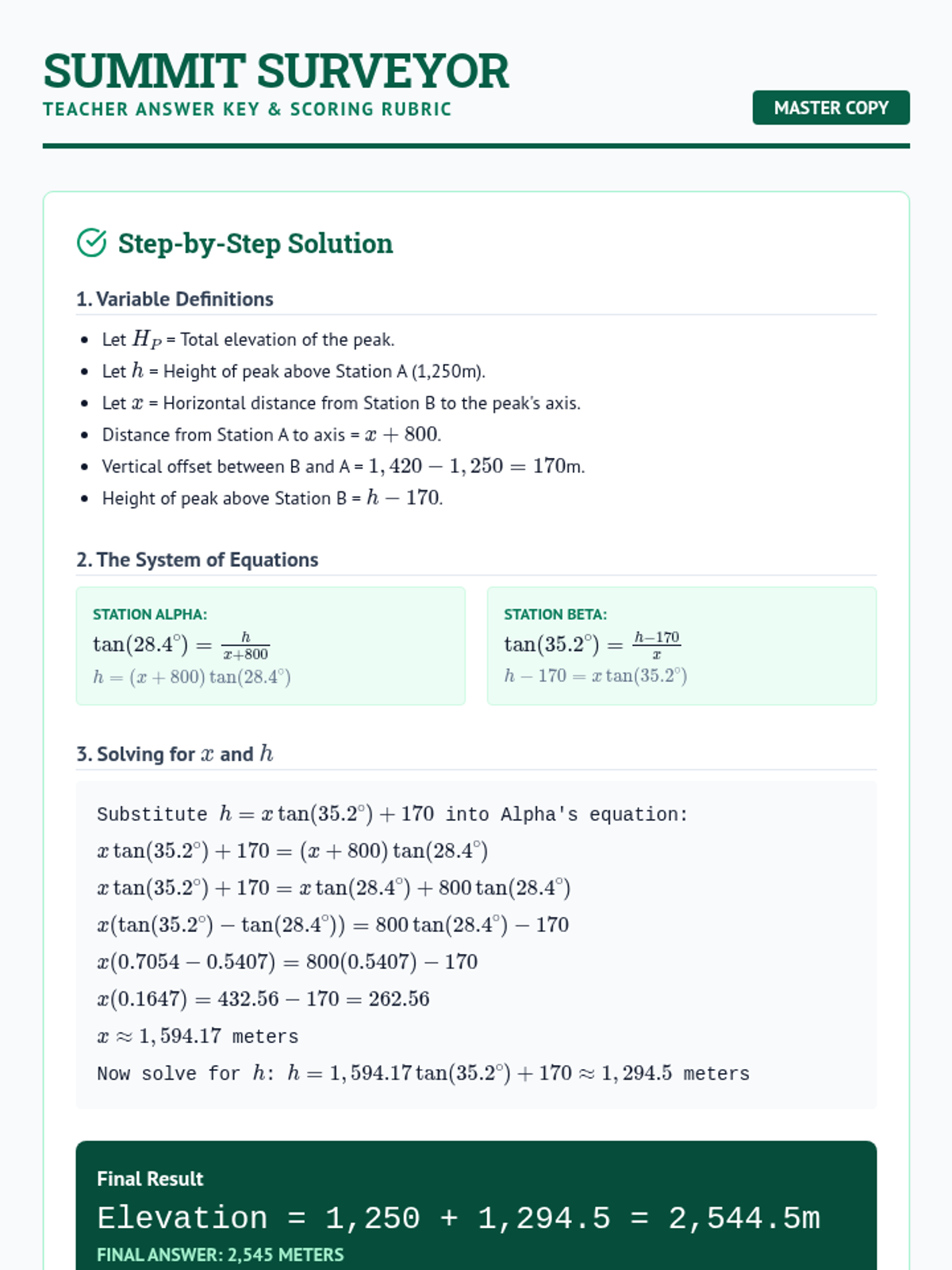
A high-level performance task involving nested right triangles and surveying applications to challenge advanced geometry students.
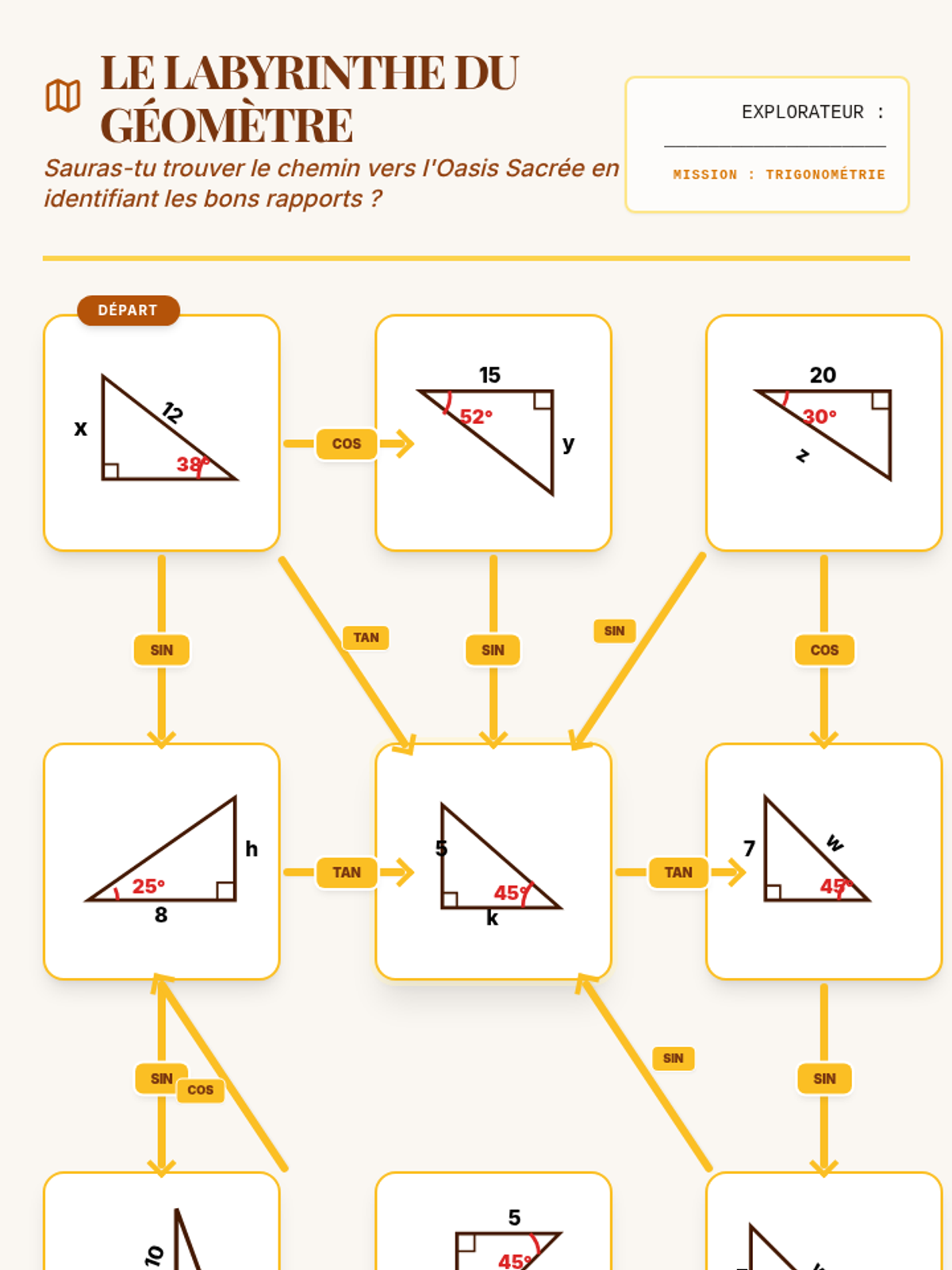
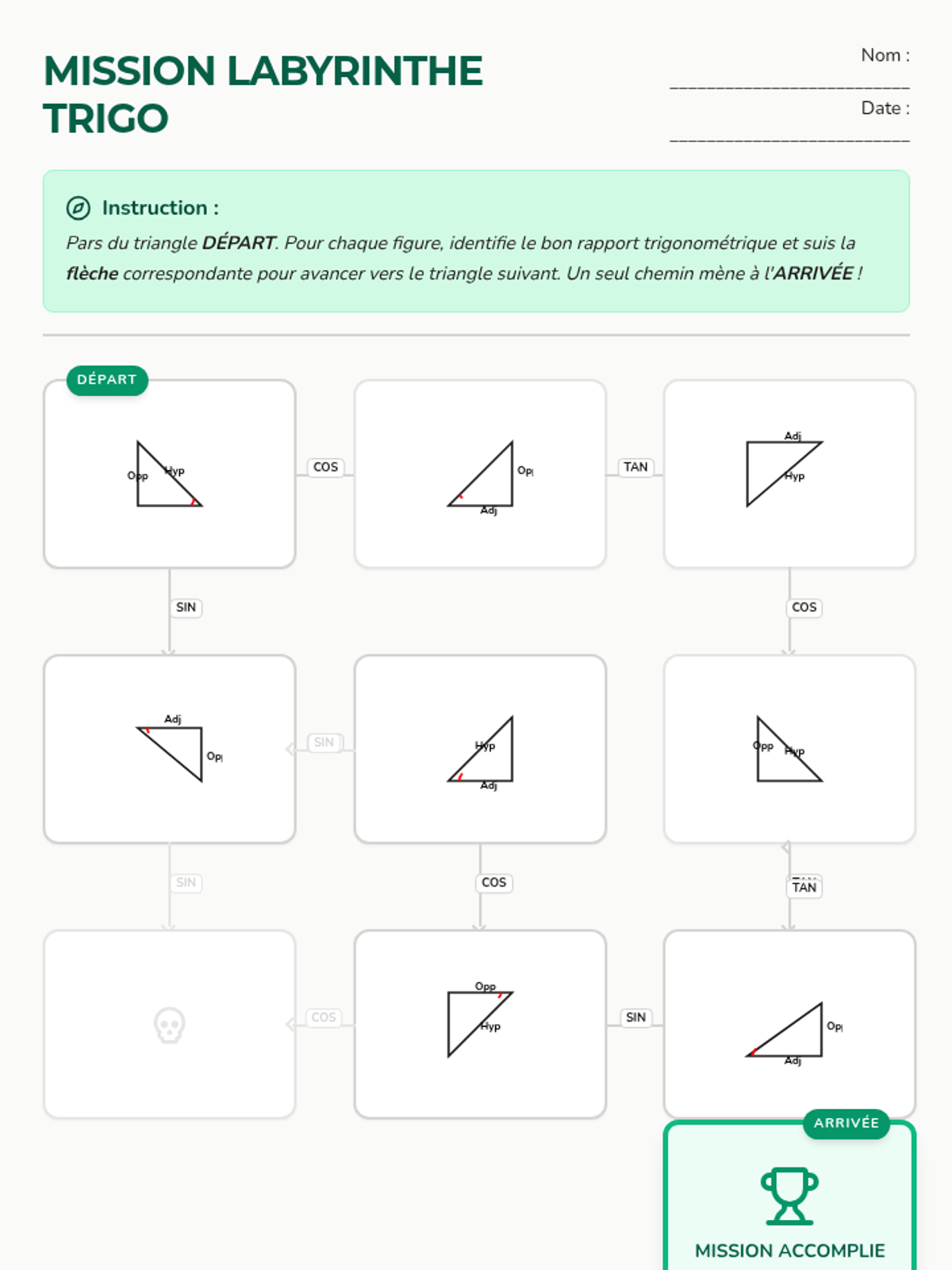
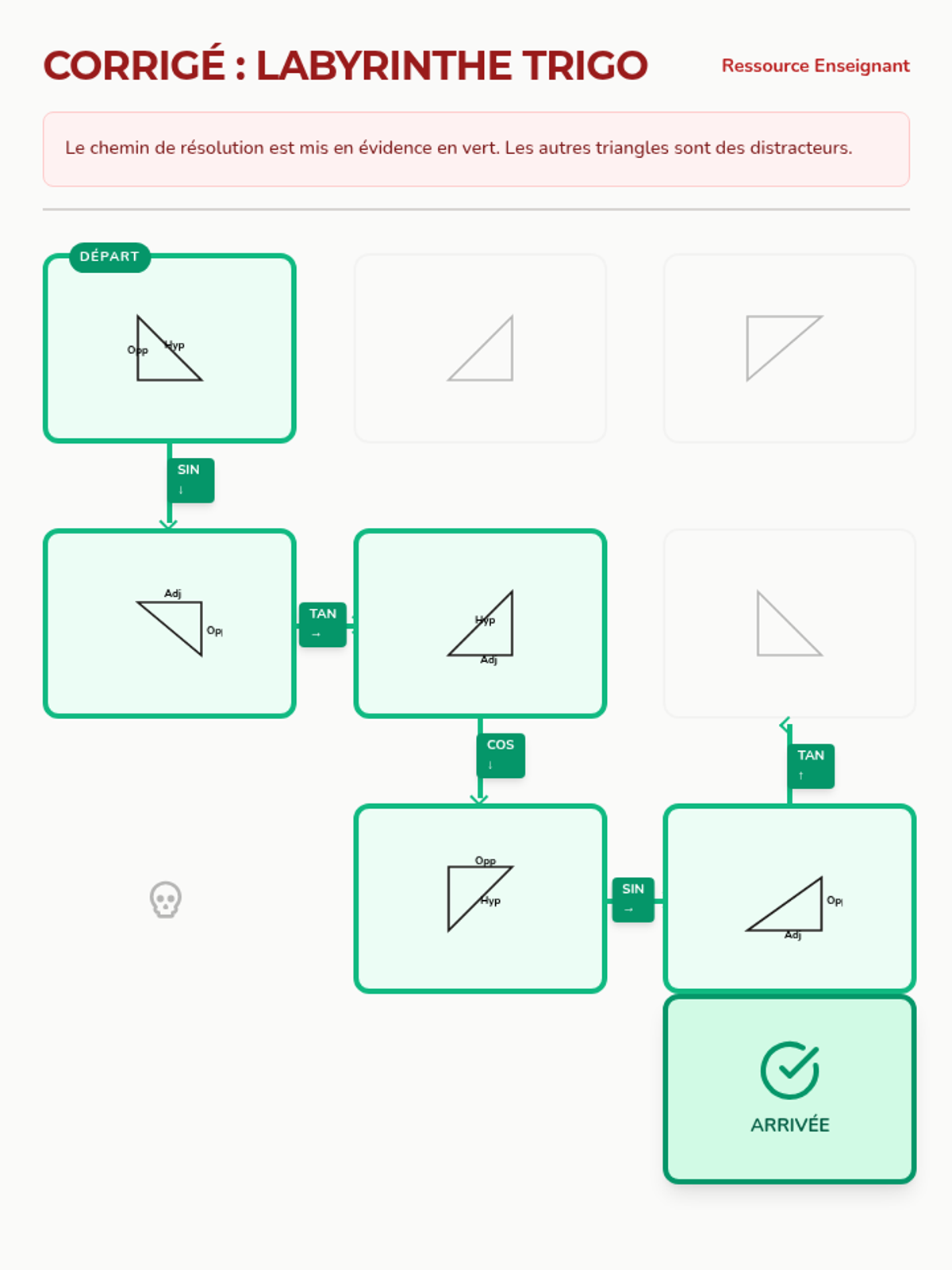
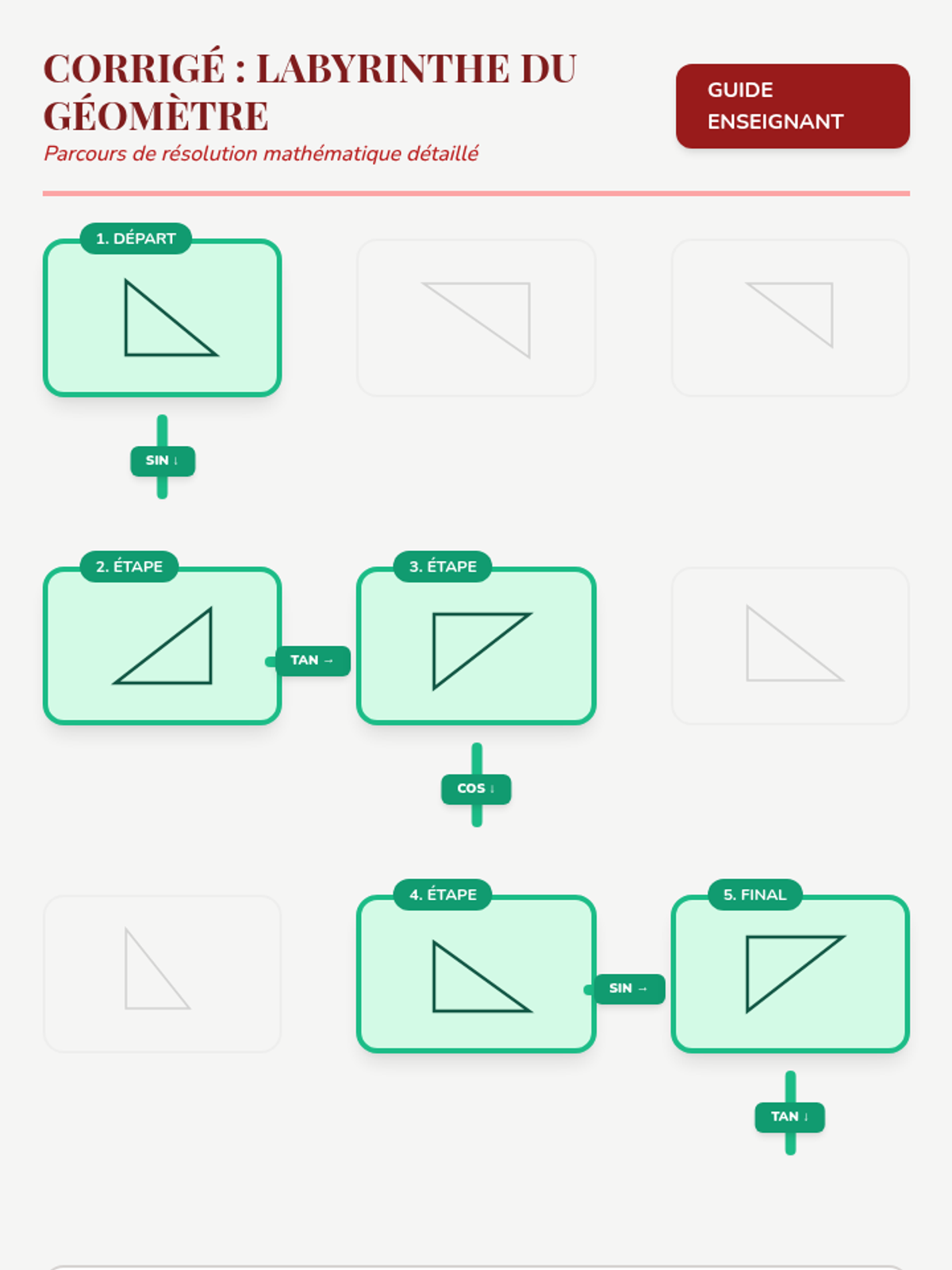
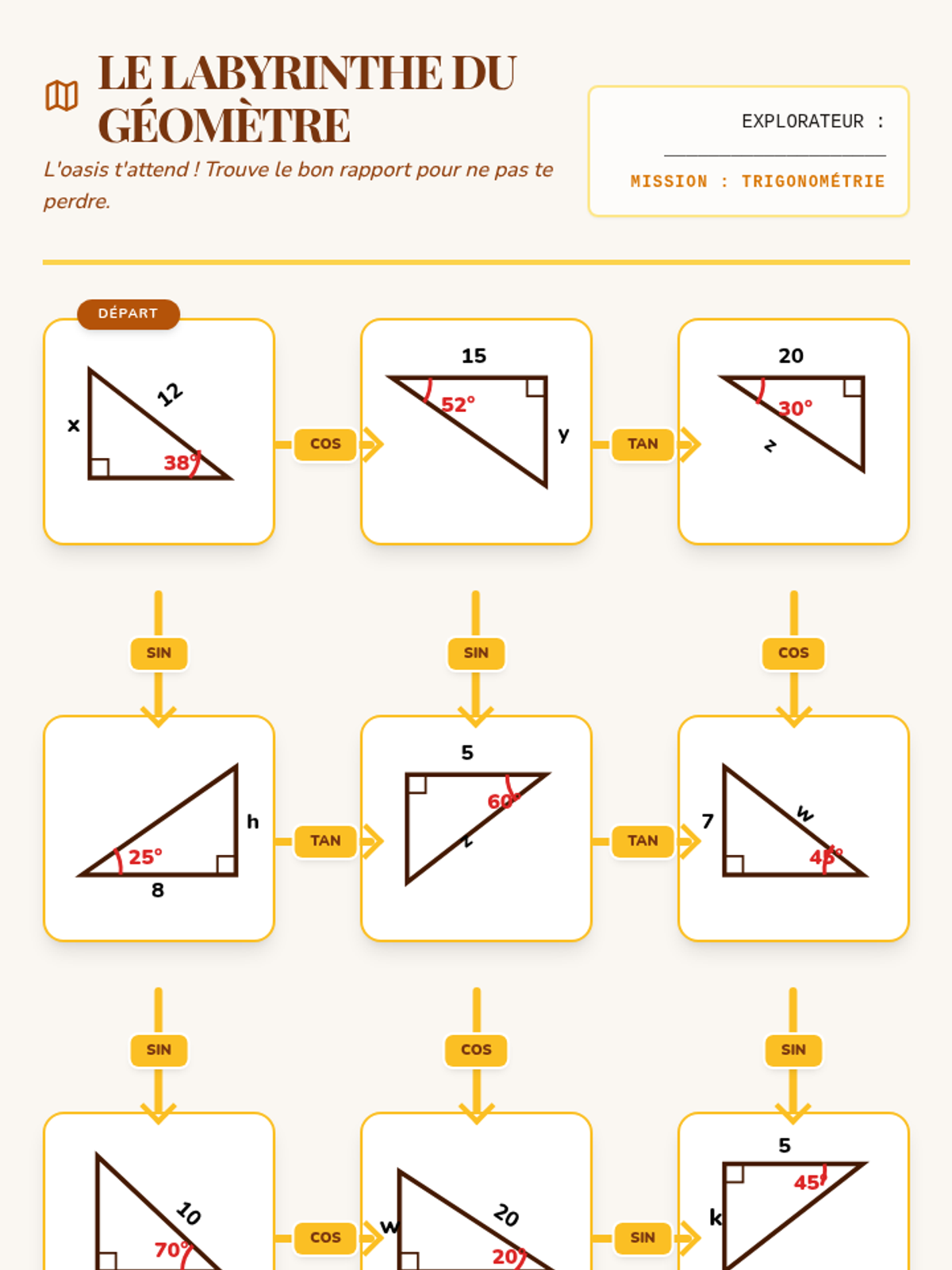
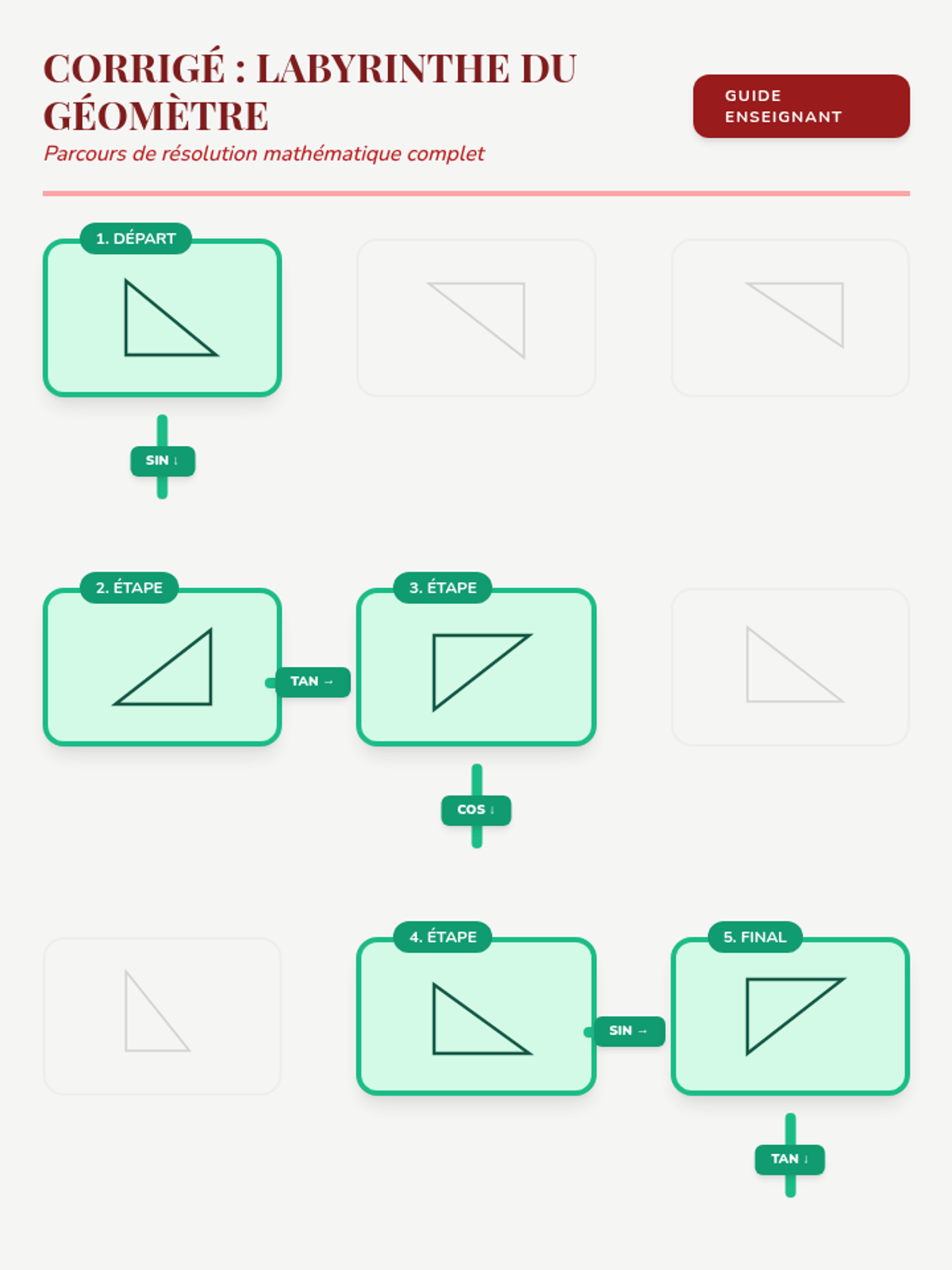
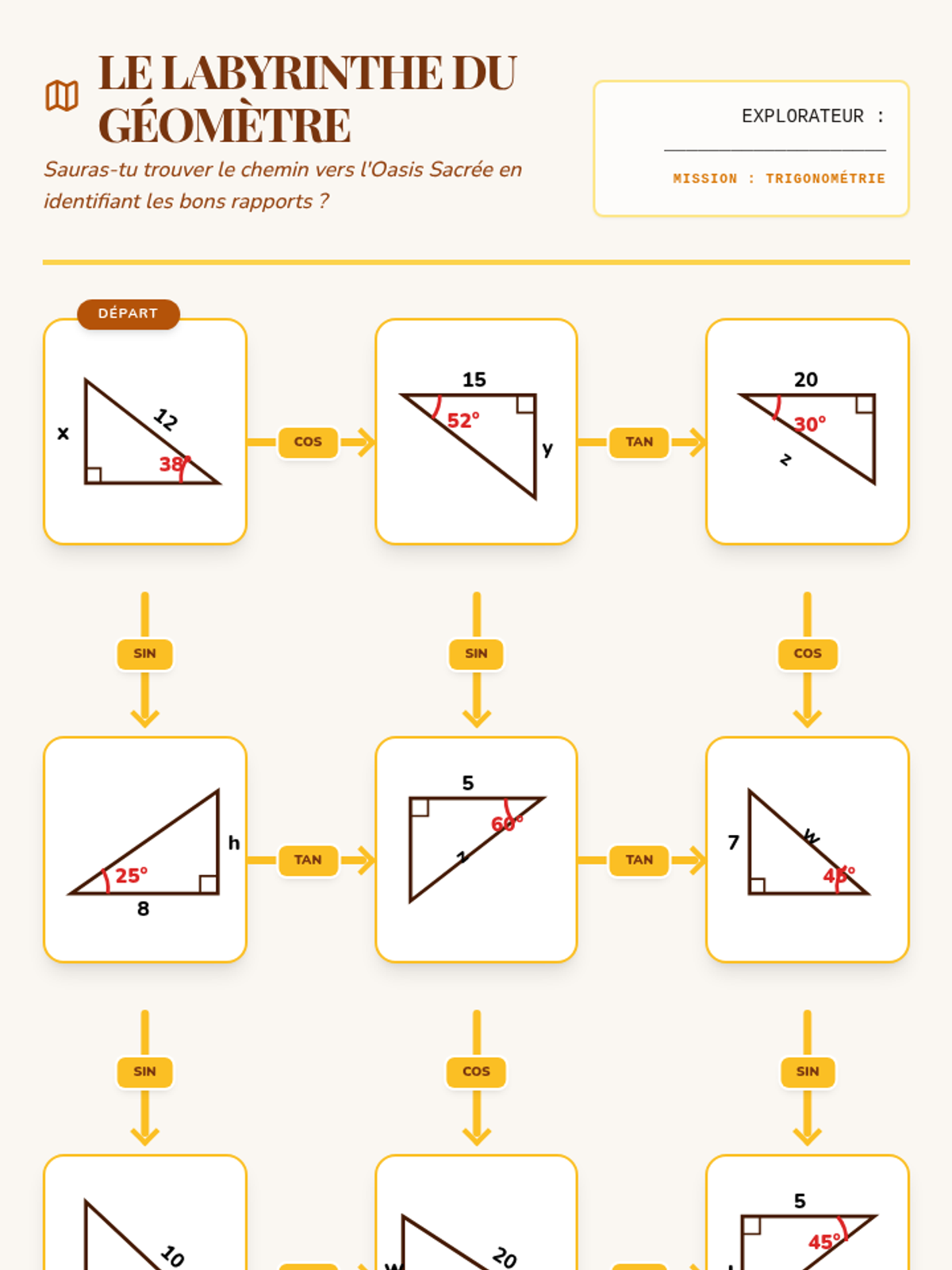
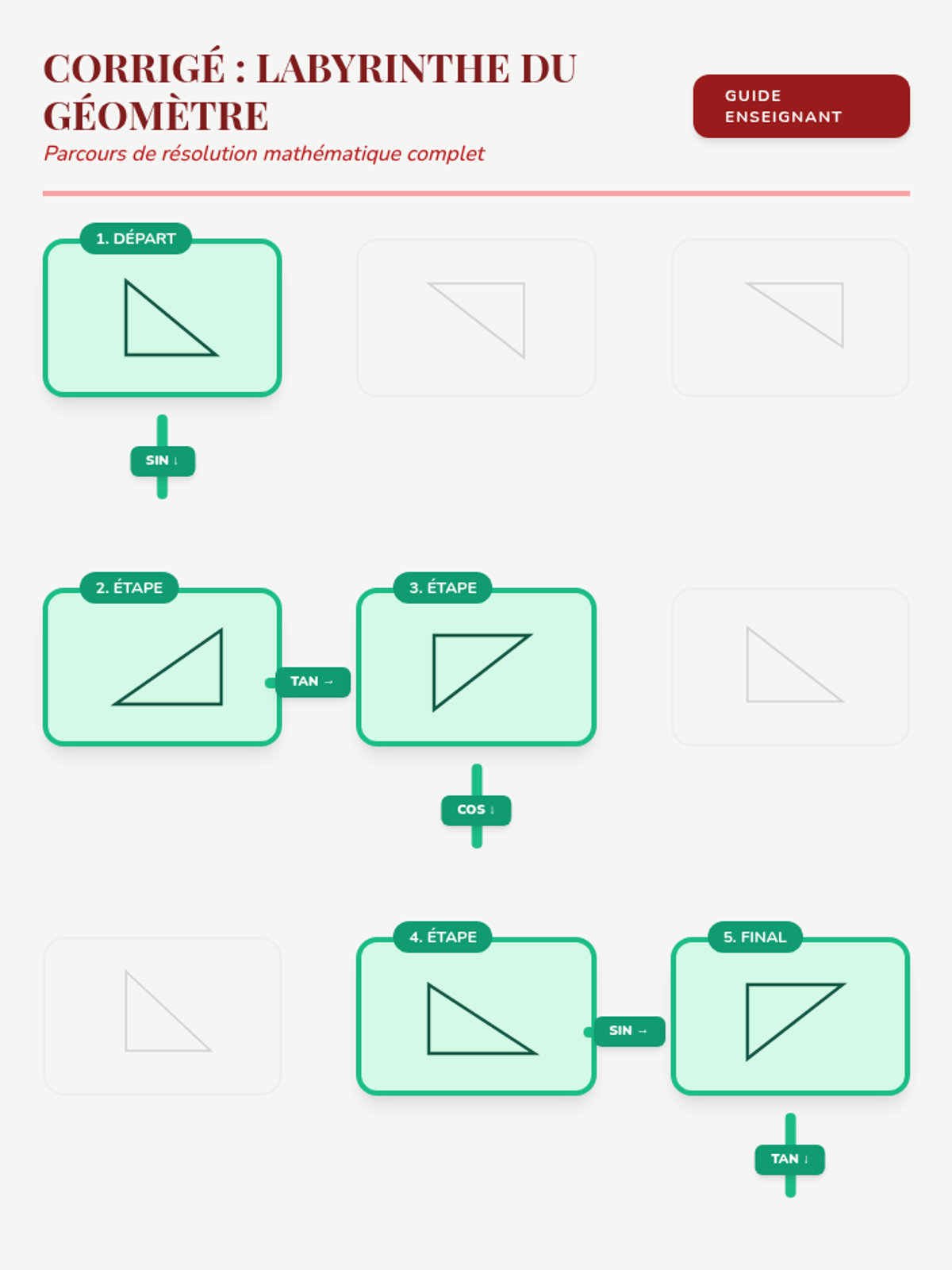
Une leçon interactive centrée sur l'identification des rapports trigonométriques (sinus, cosinus, tangente) dans des triangles rectangles à travers un défi de labyrinthe.
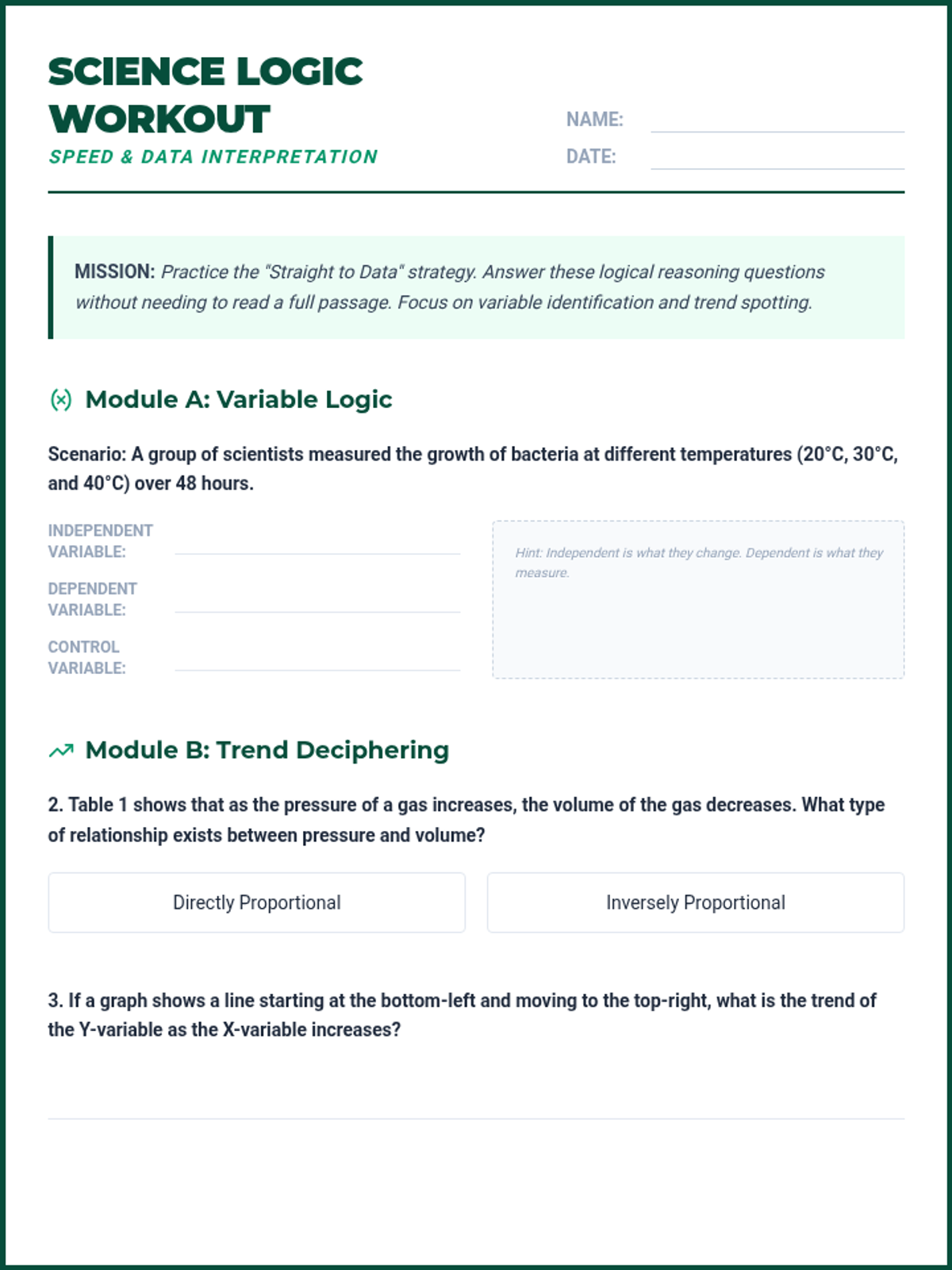
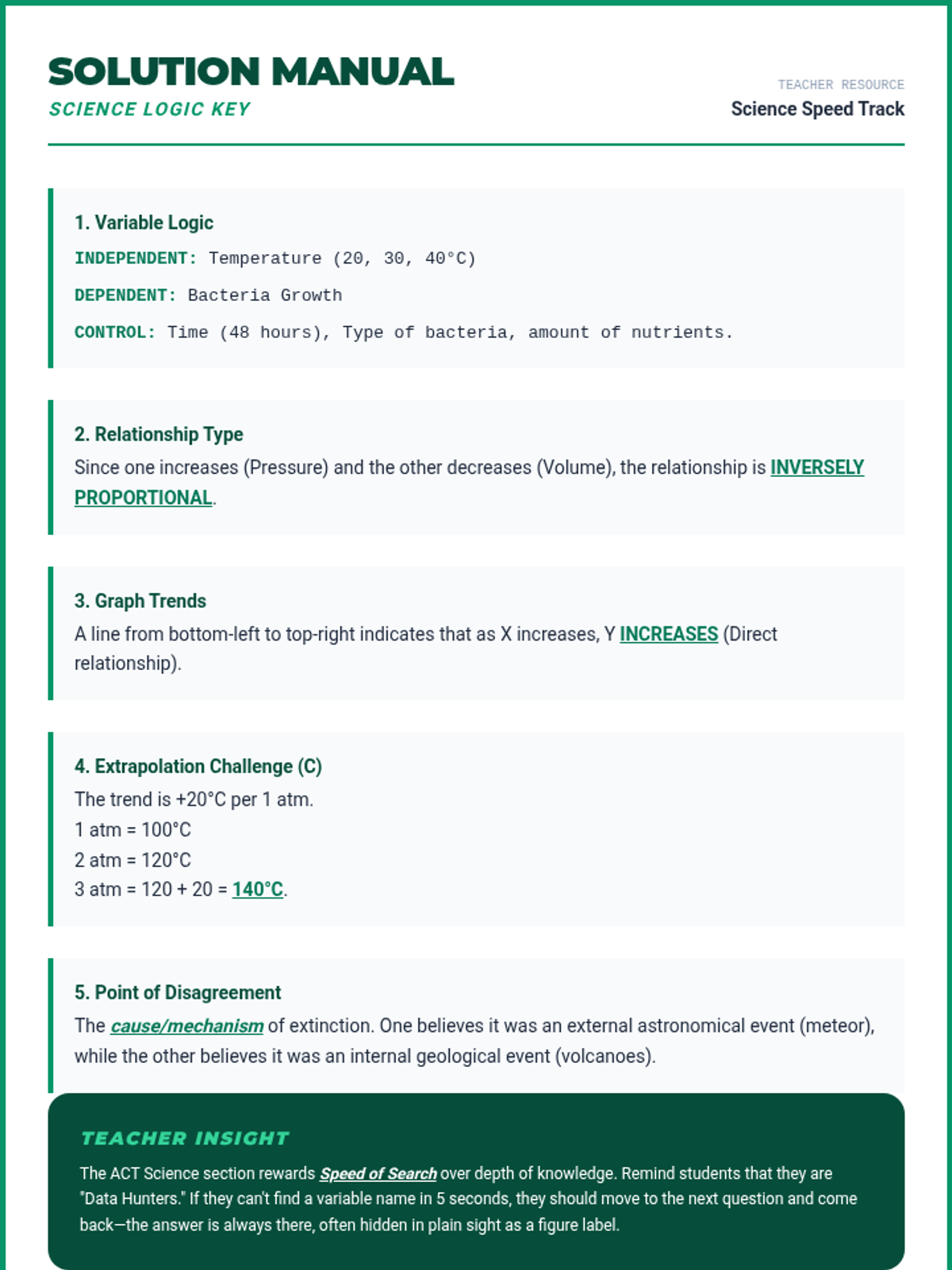
A strategic masterclass for the ACT Science section, focusing on speed-reading data sets, identifying experimental variables, and decoding scientific logic. This lesson emphasizes the 'Straight to the Data' approach to maximize score in the 35-minute time limit.
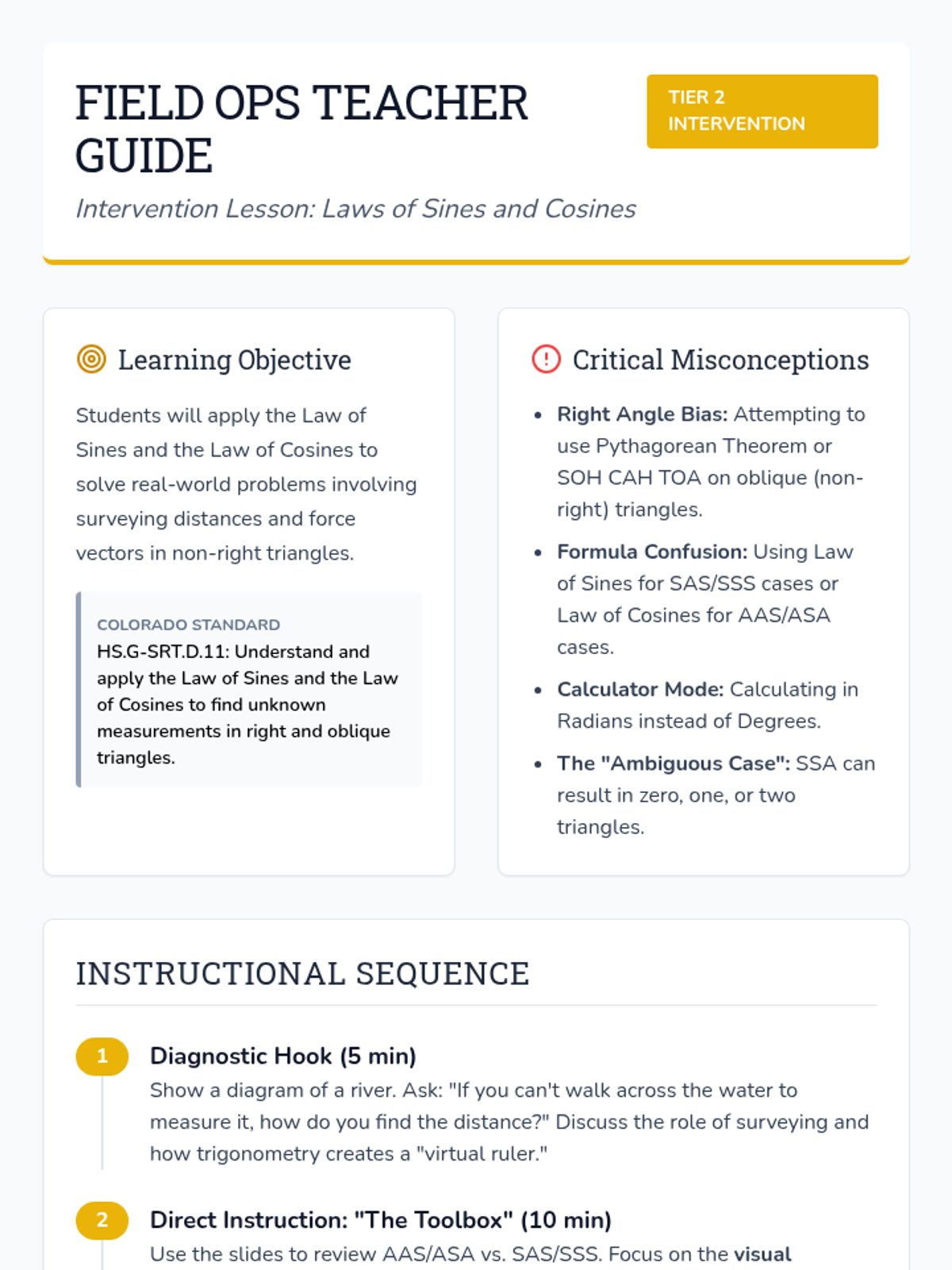
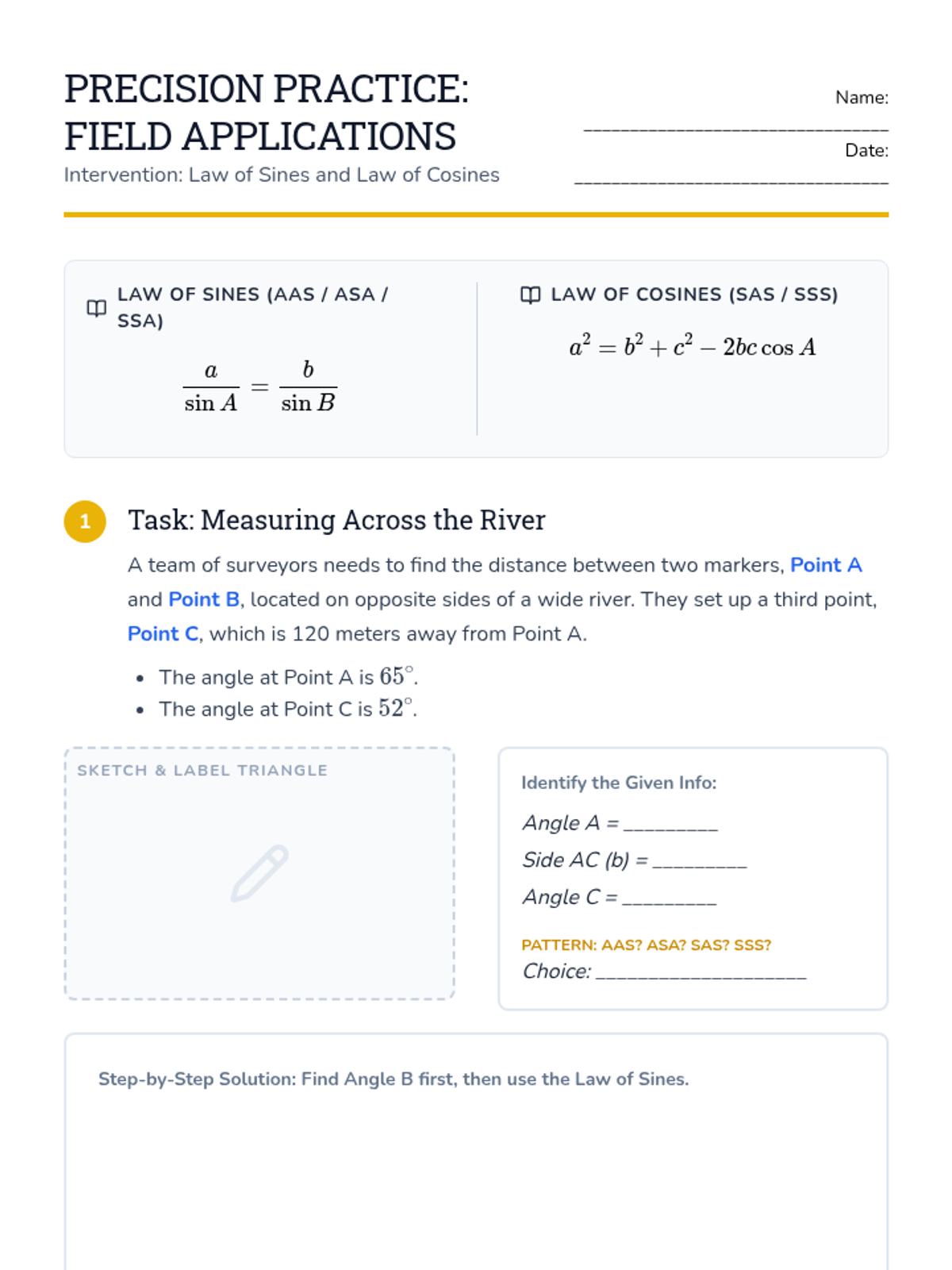
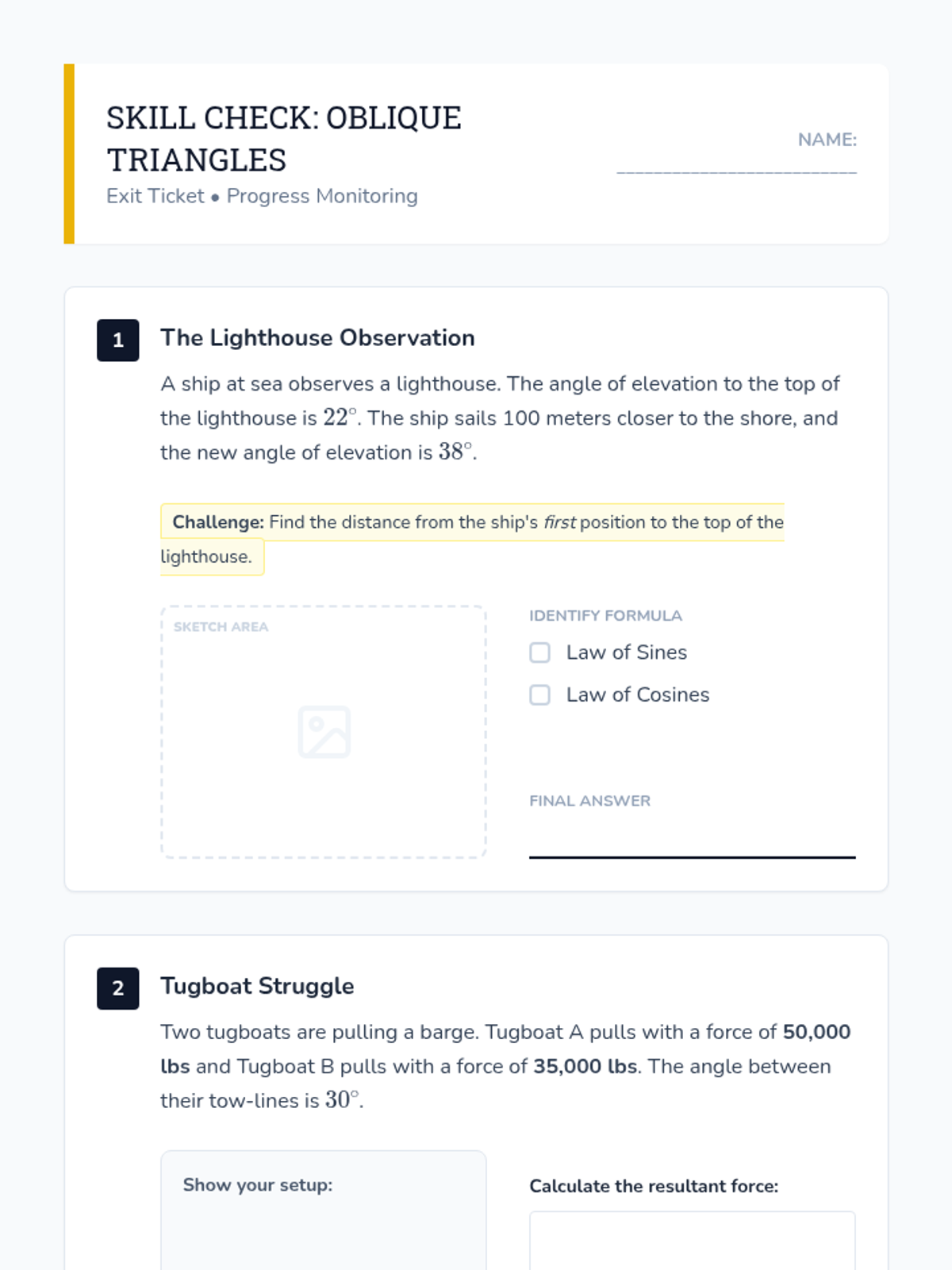
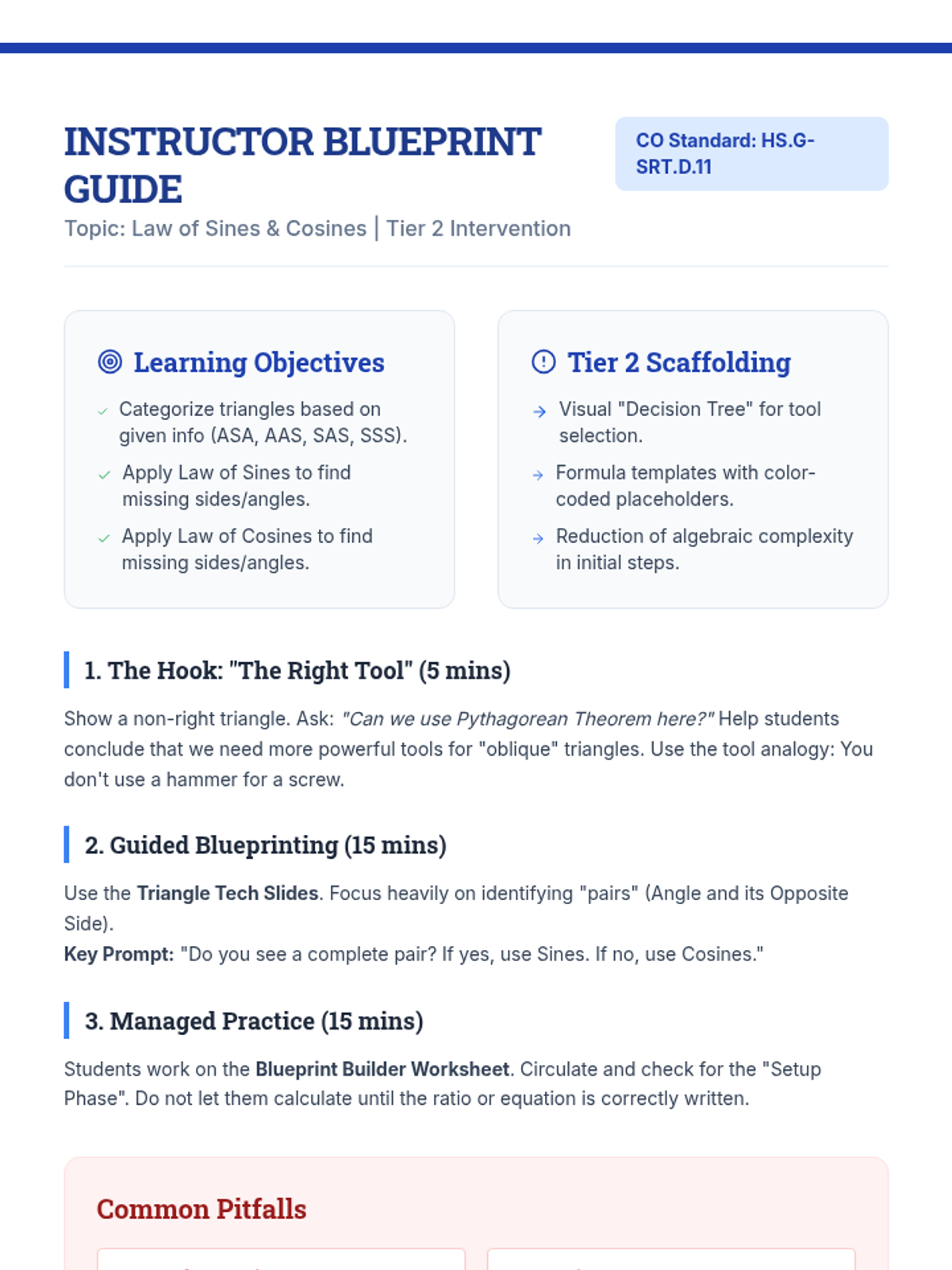
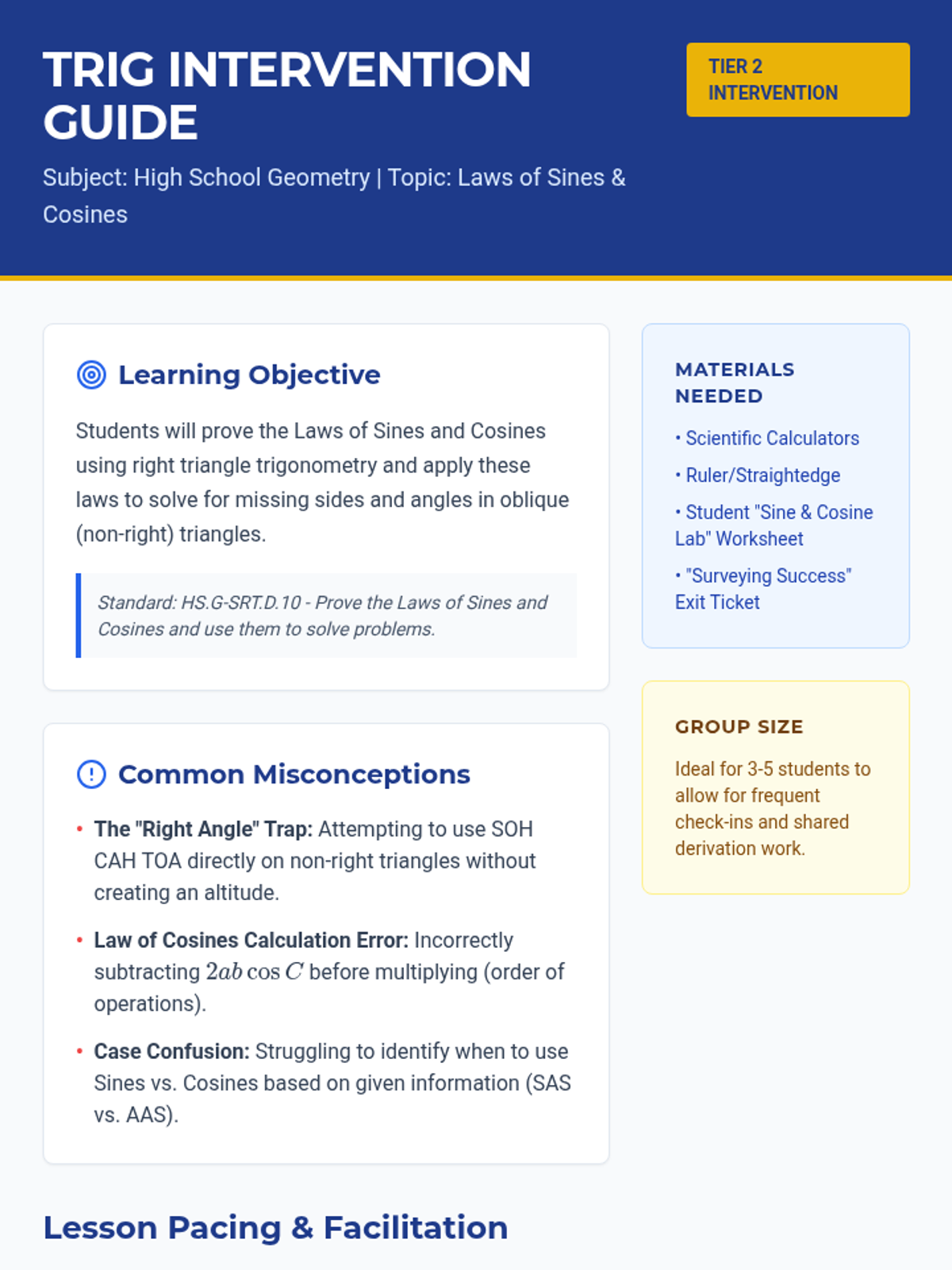
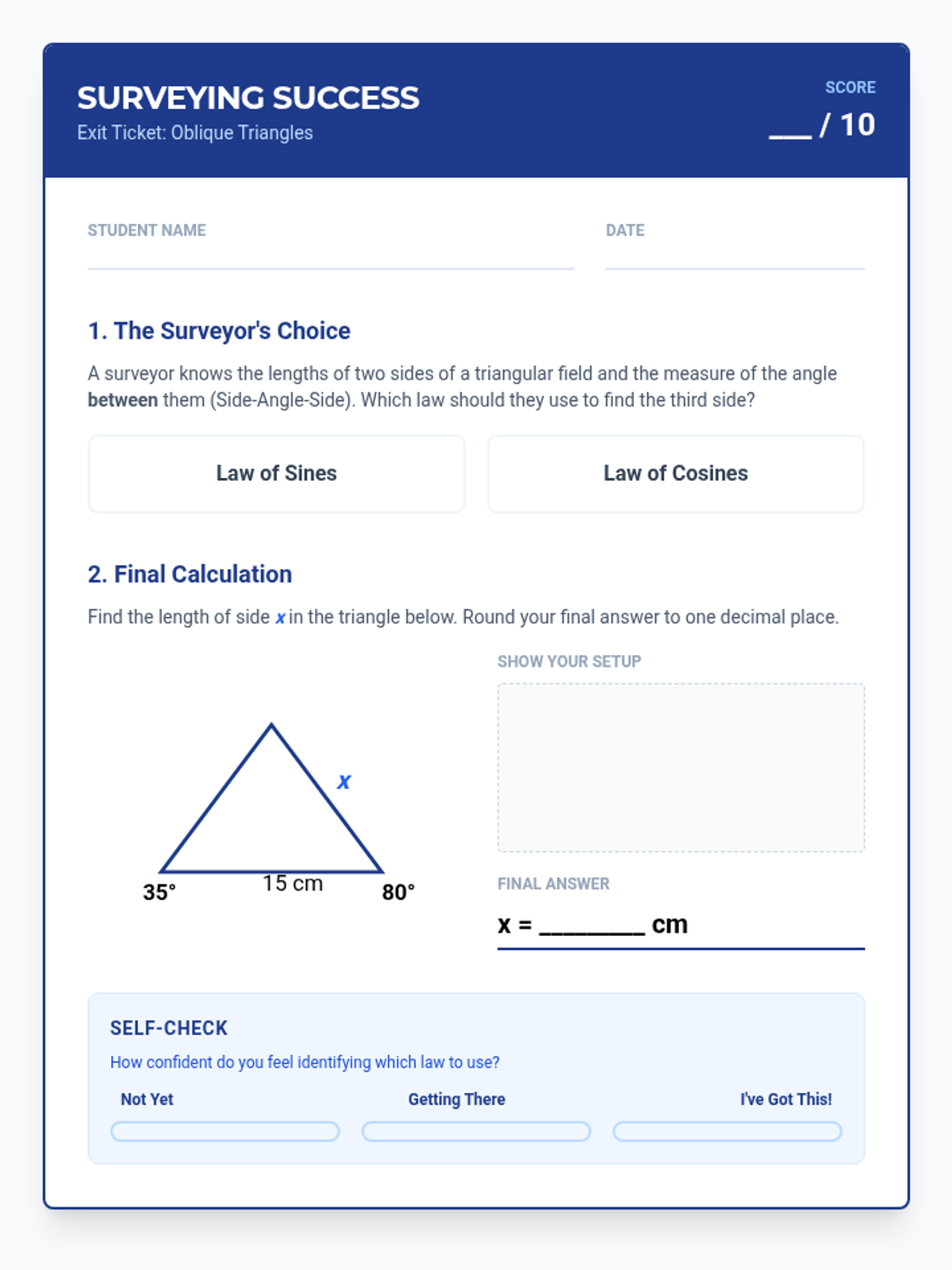
A targeted intervention lesson for high school geometry students, focusing on practical applications of the Laws of Sines and Cosines in surveying and physics contexts. This lesson utilizes scaffolded instruction and real-world scenarios to support Tier 2 learners in mastering oblique triangle trigonometry.
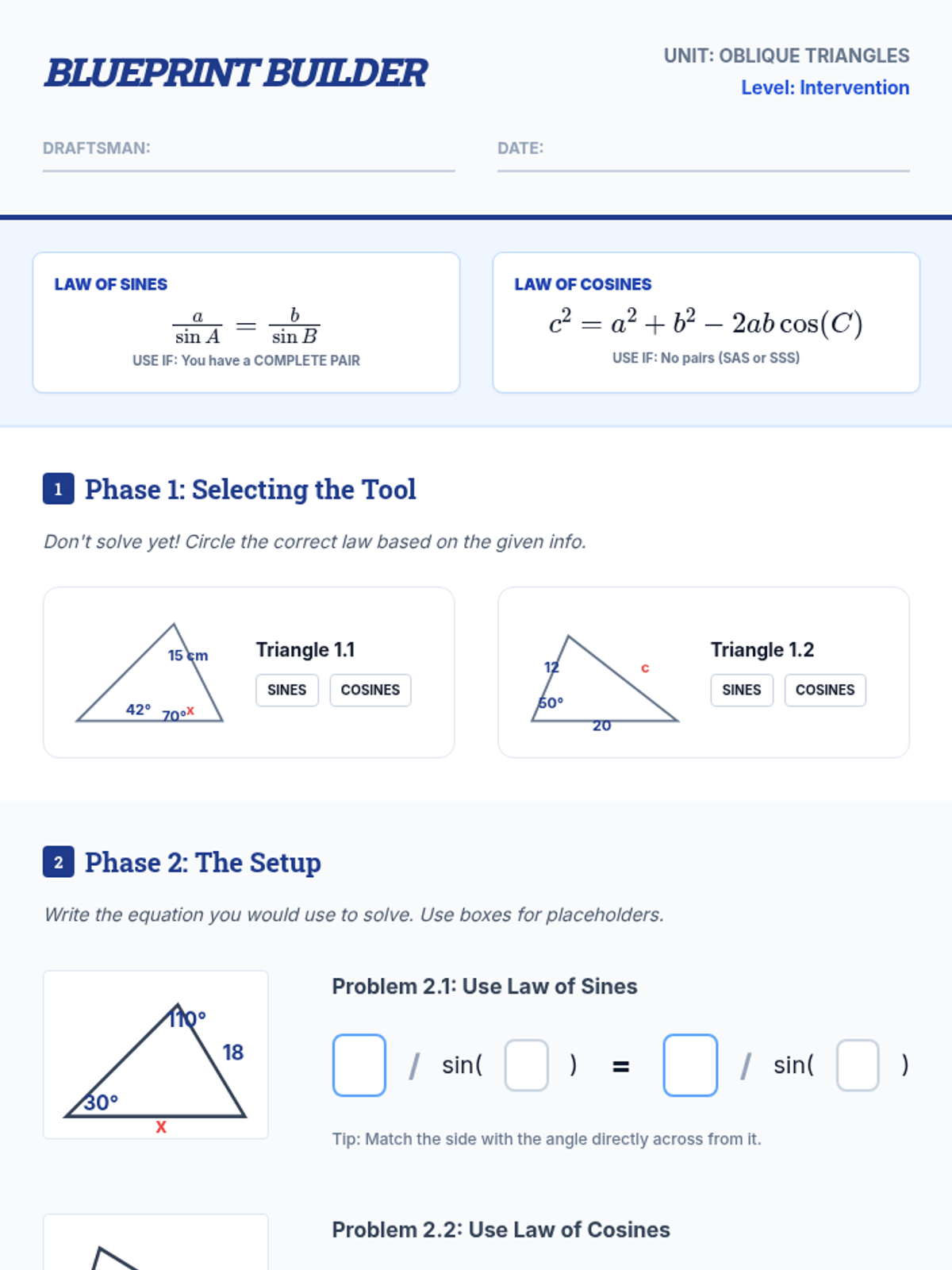
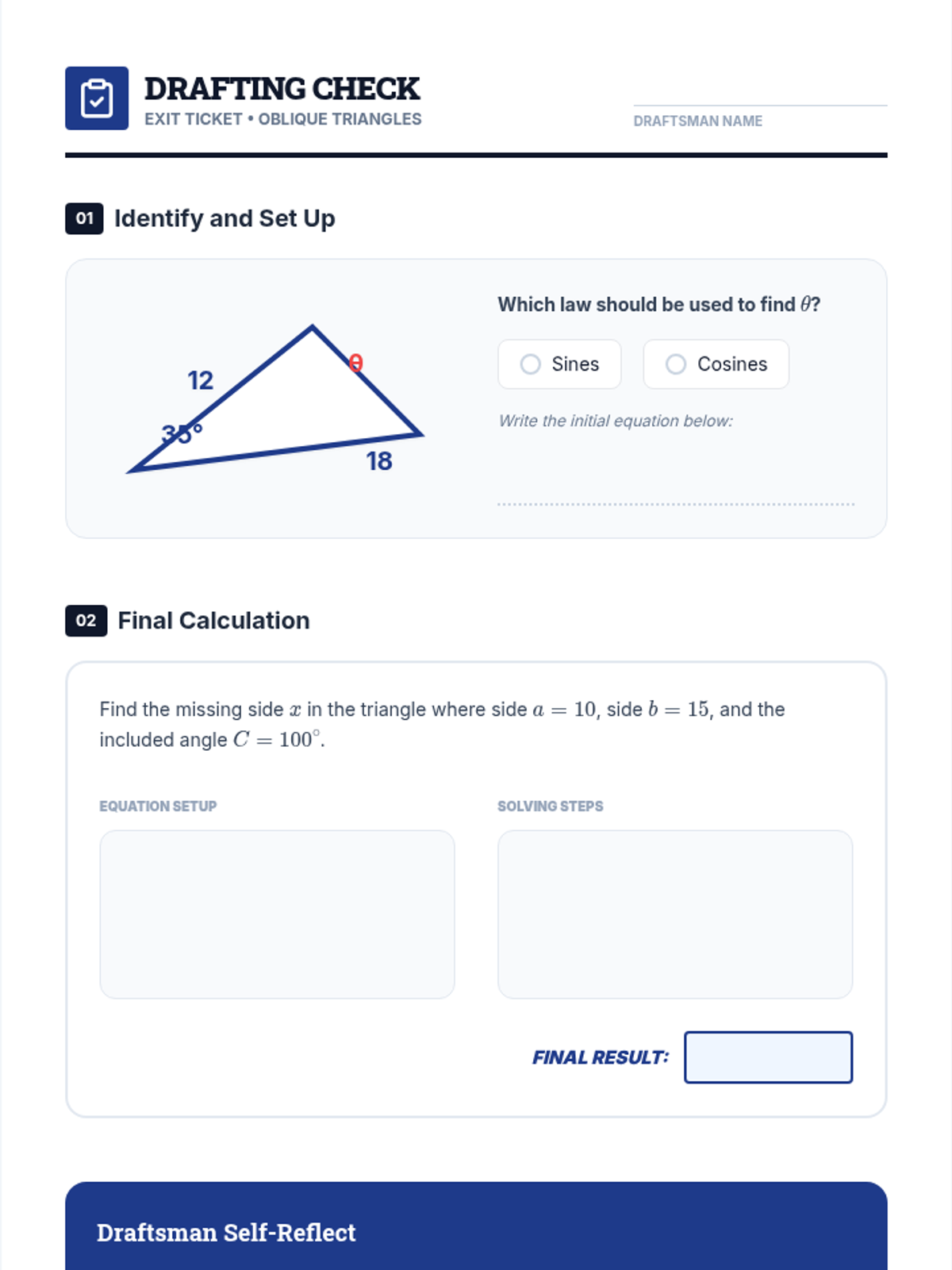
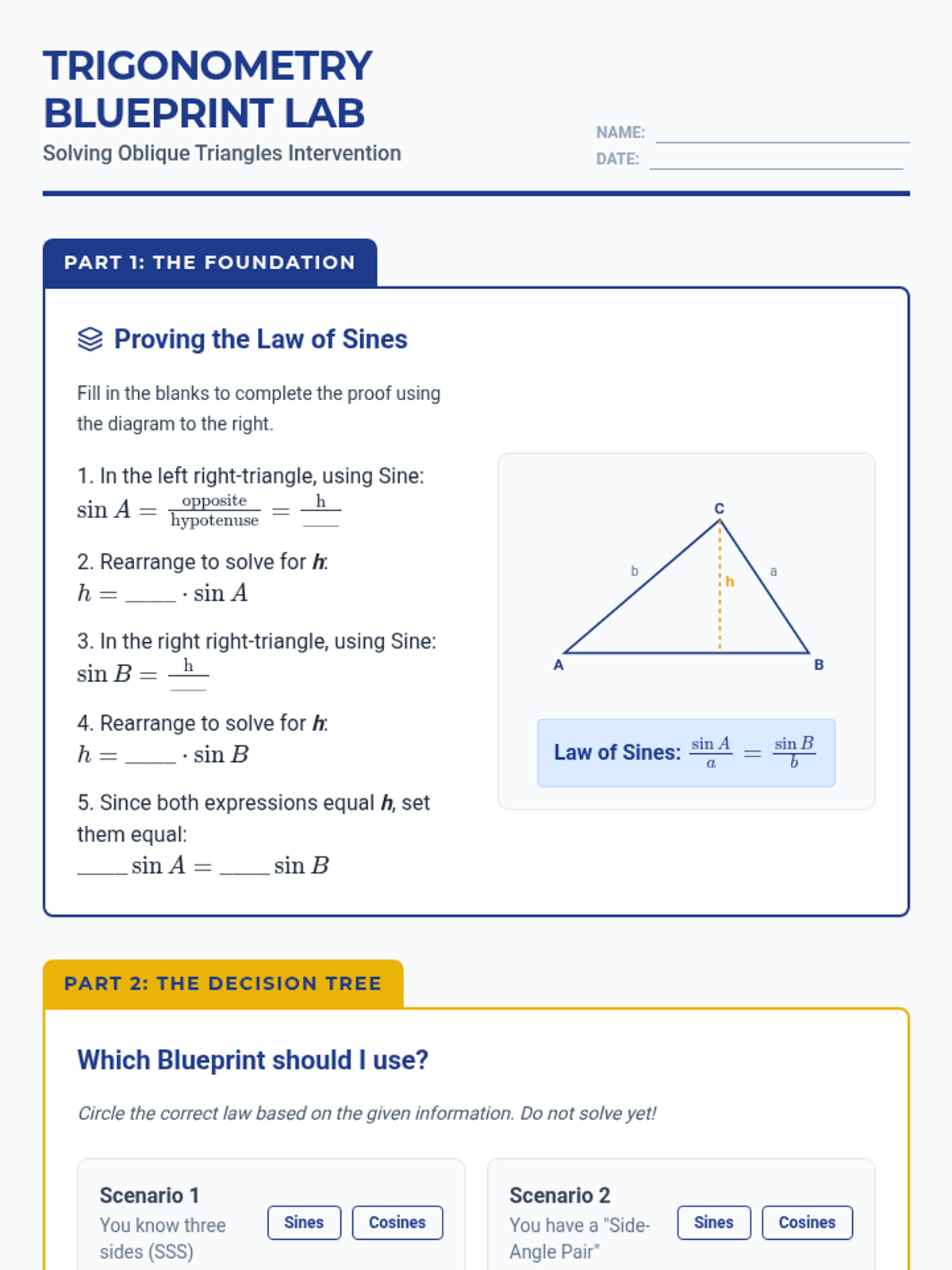
A targeted intervention lesson focusing on the Law of Sines and Law of Cosines. This lesson helps Tier 2 students identify when to use each law and provides scaffolded practice for solving unknown sides and angles in non-right triangles.
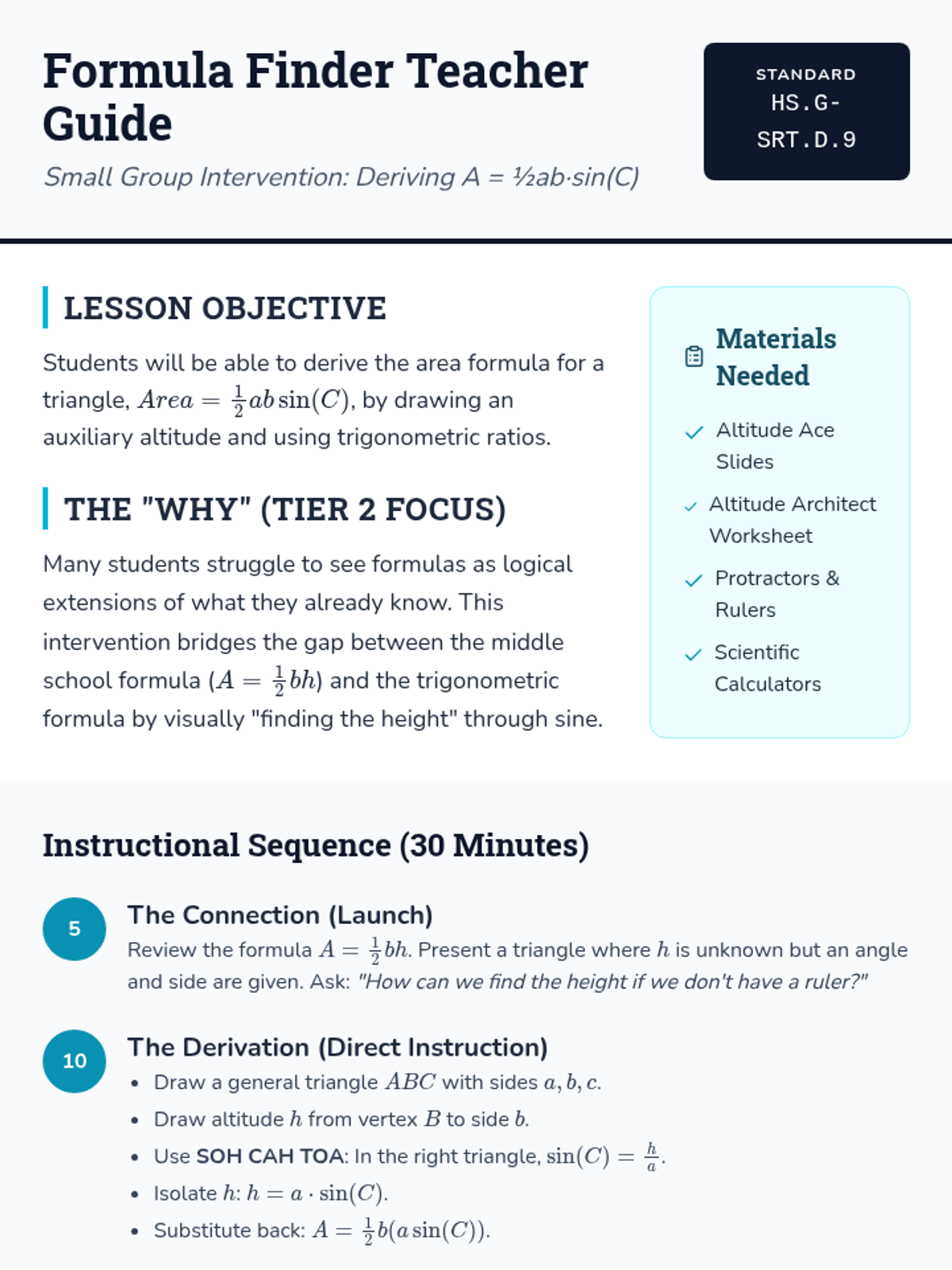
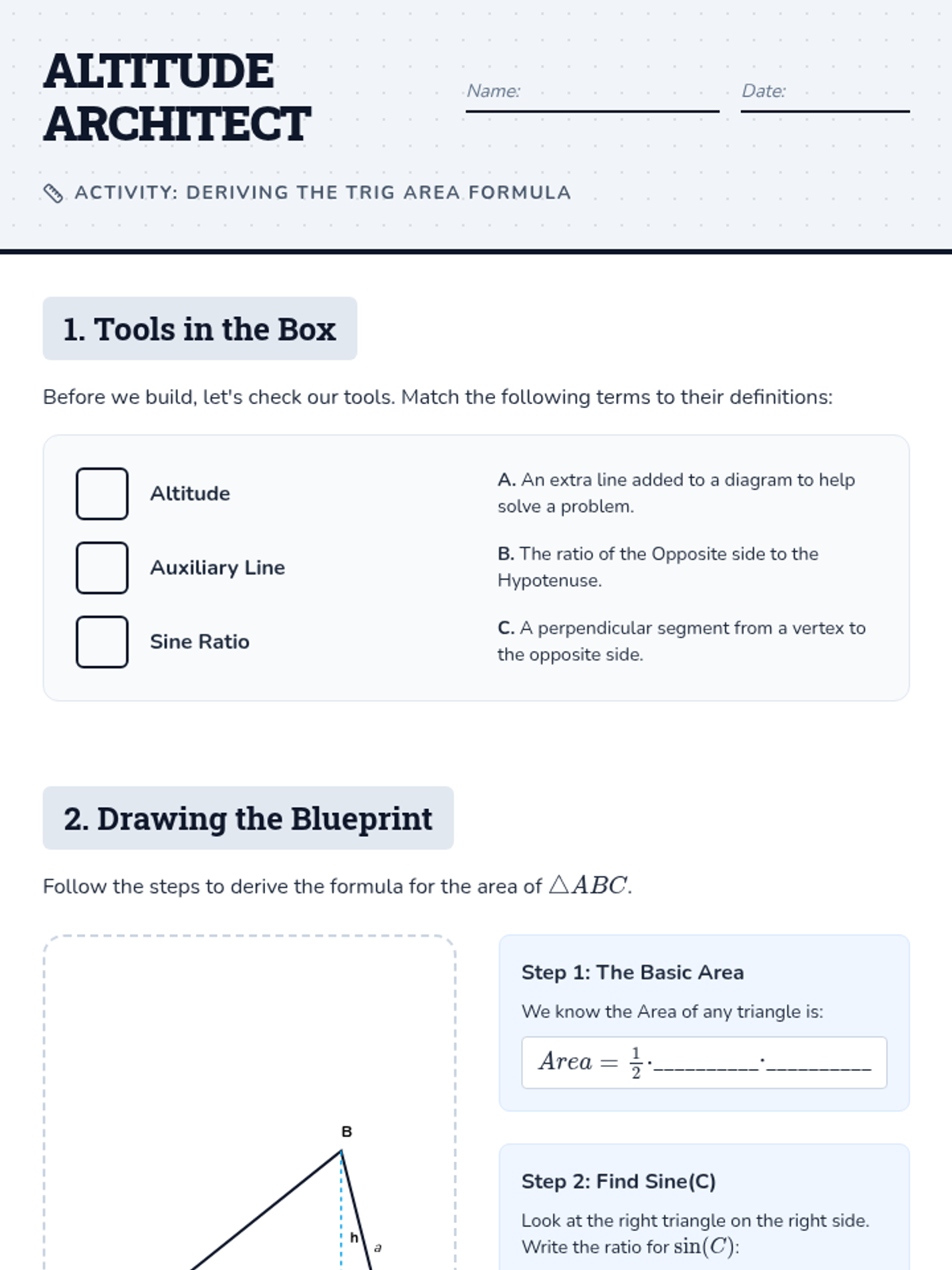
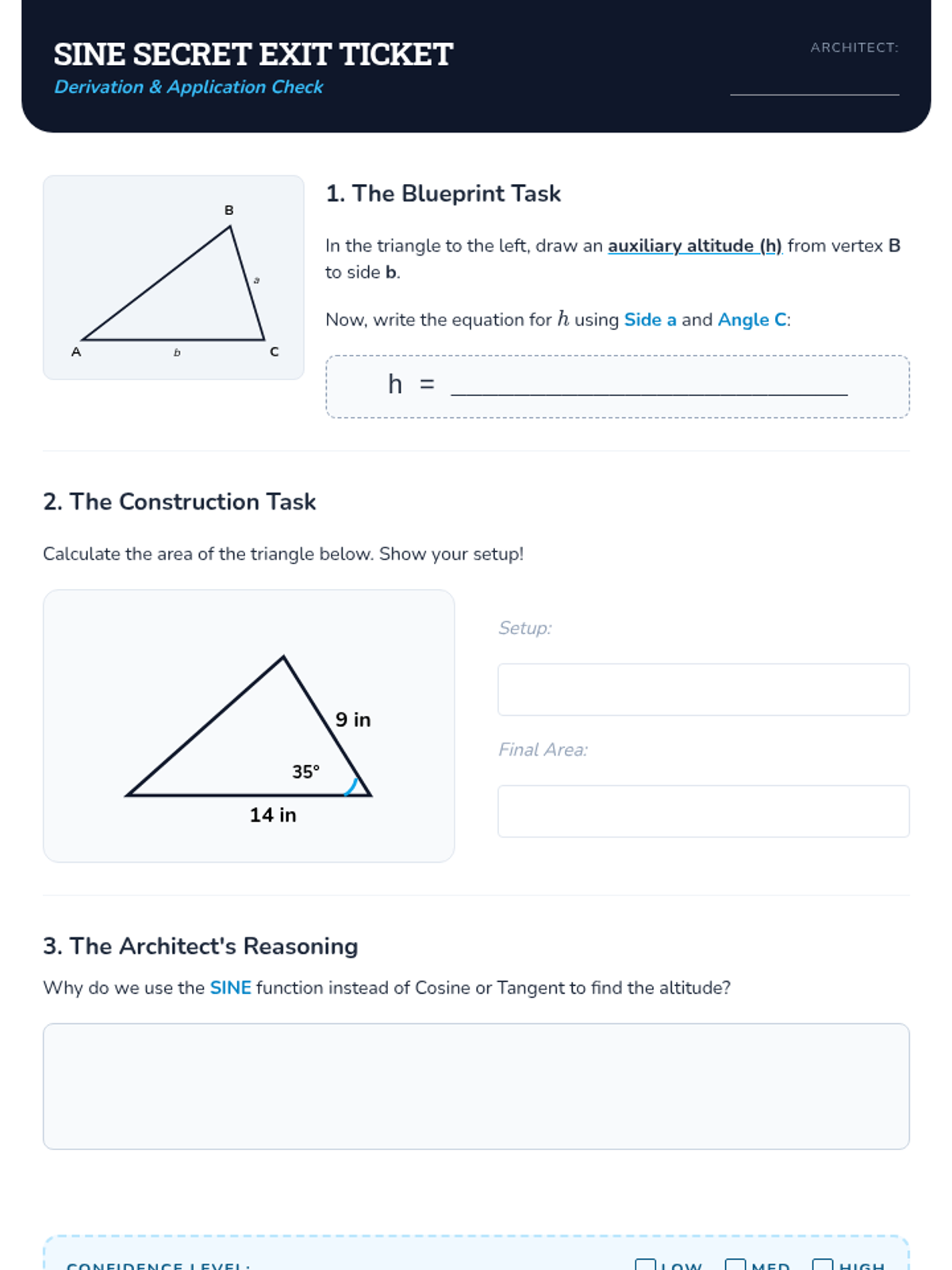
A targeted intervention lesson focused on deriving the triangle area formula using trigonometry and auxiliary altitudes, specifically designed for Tier 2 small group support.
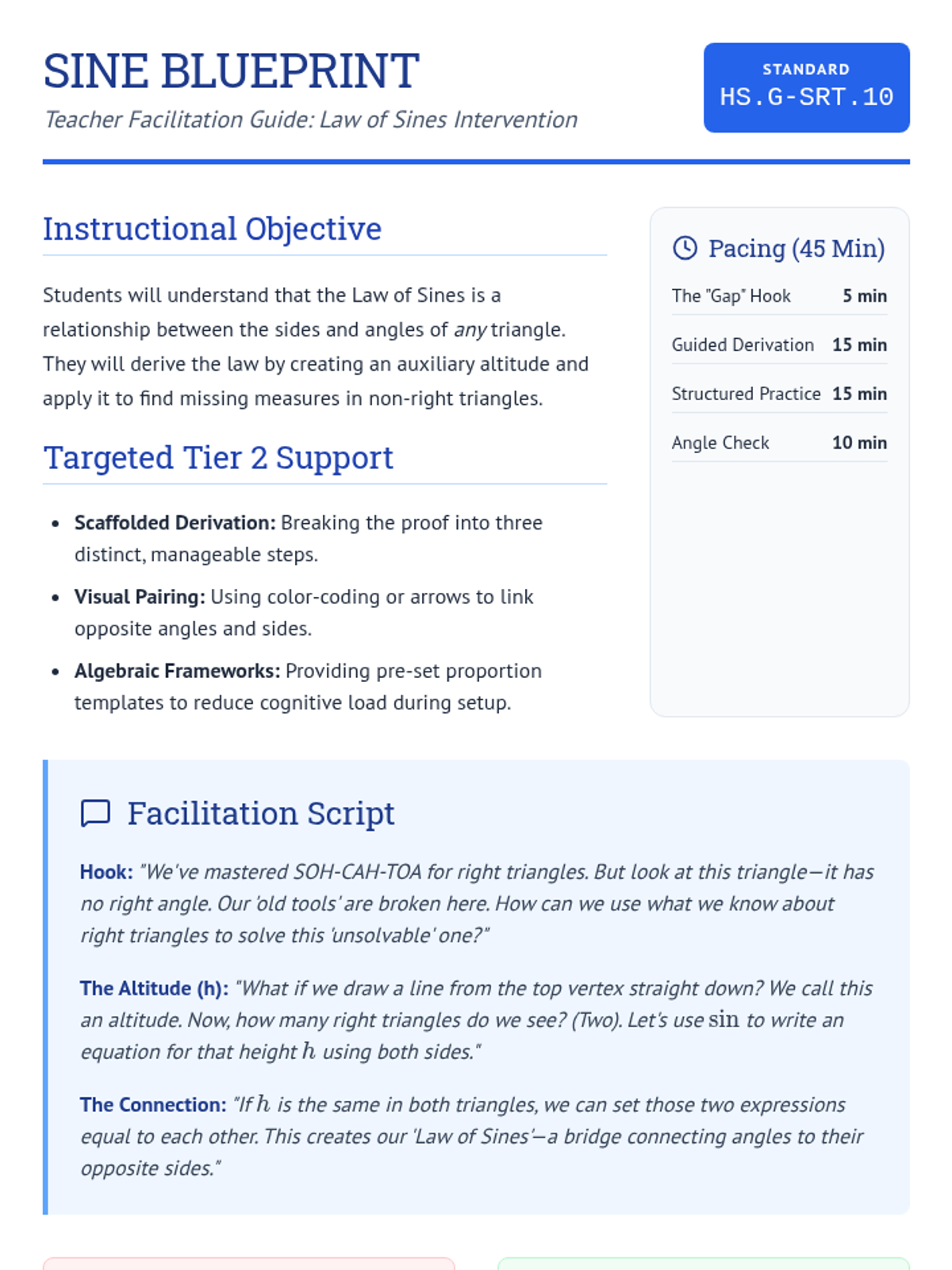
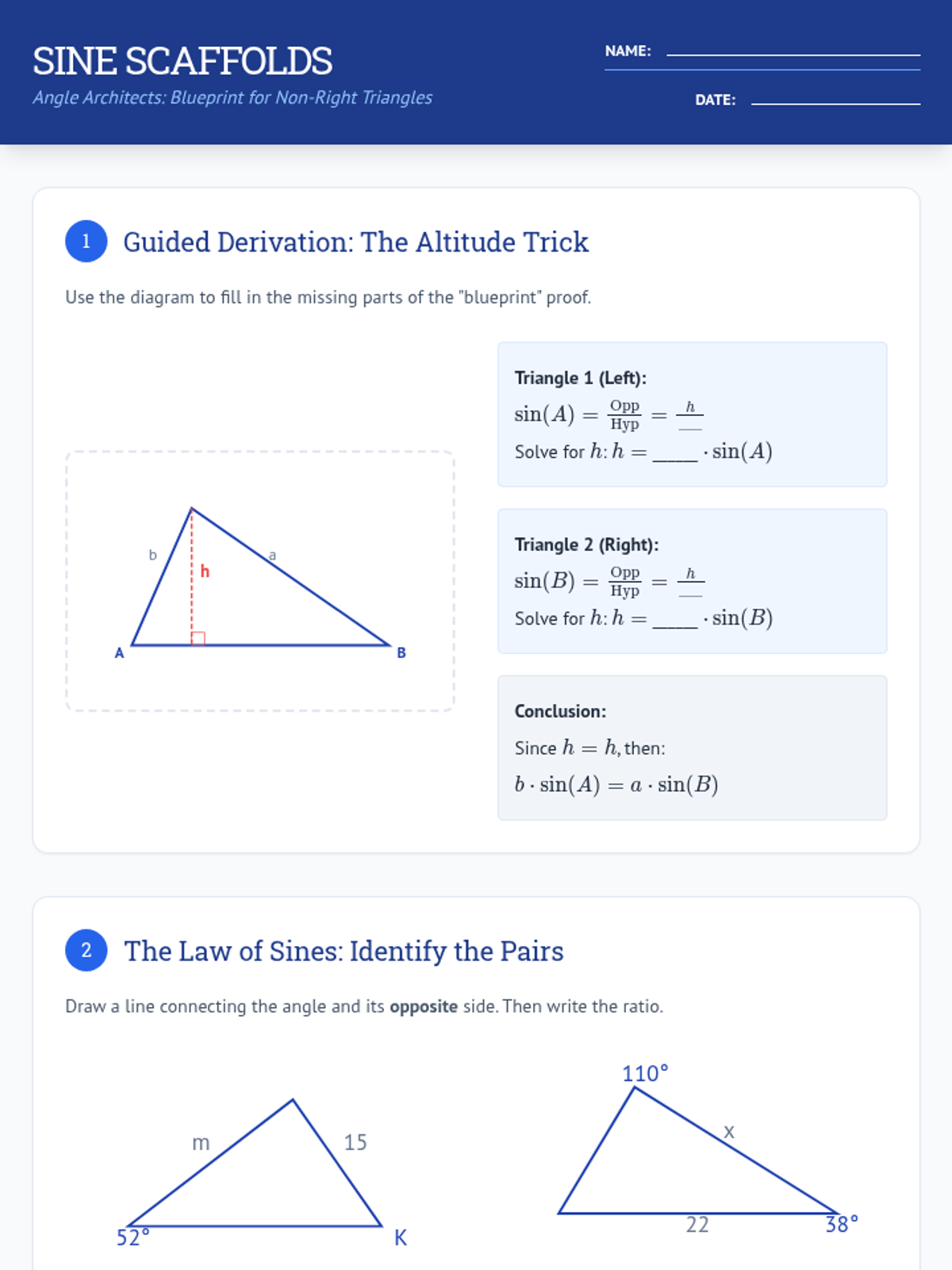
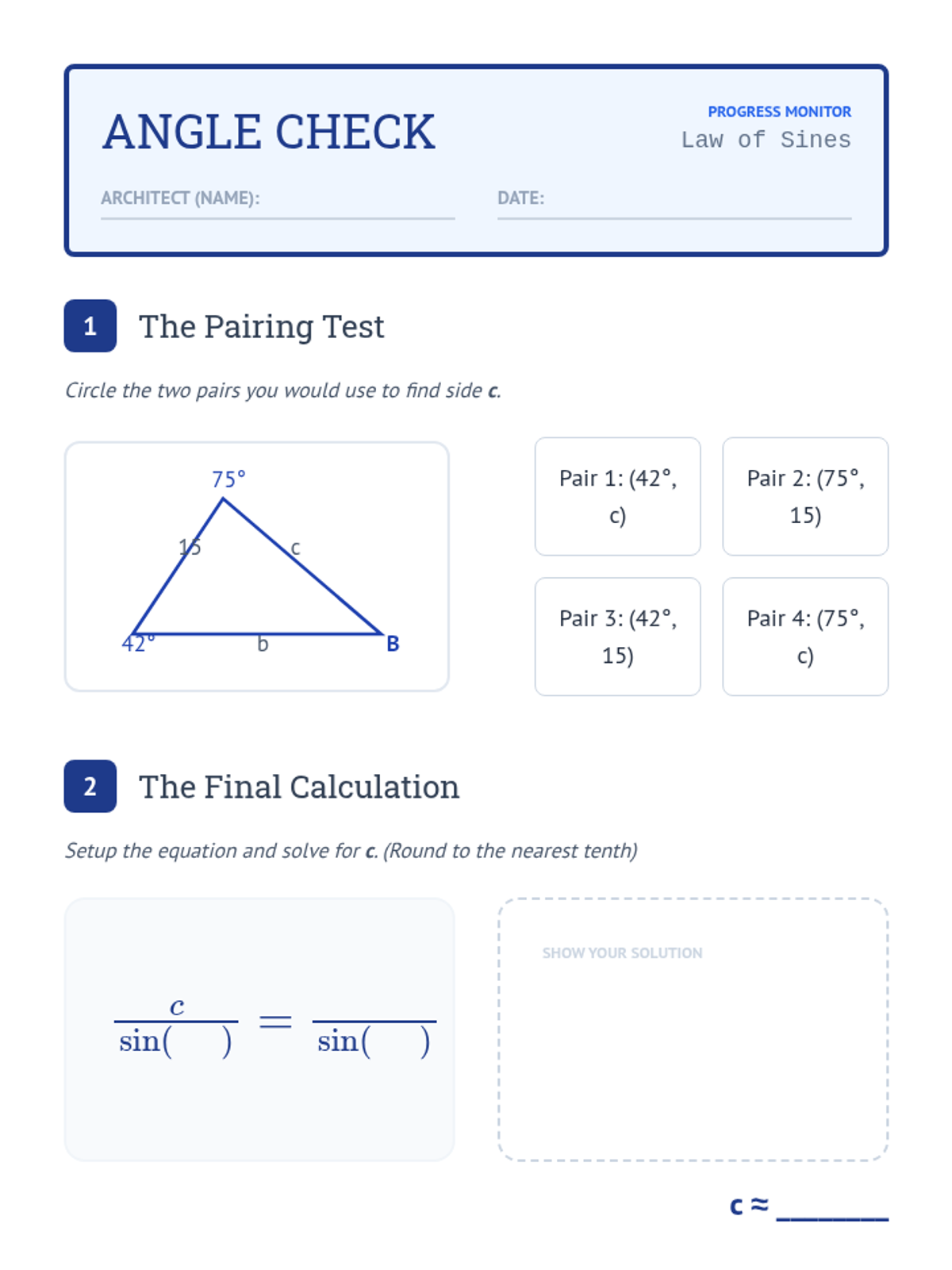
A targeted Tier 2 intervention lesson for High School Geometry students to derive and apply the Law of Sines through scaffolded proofs and structured practice.
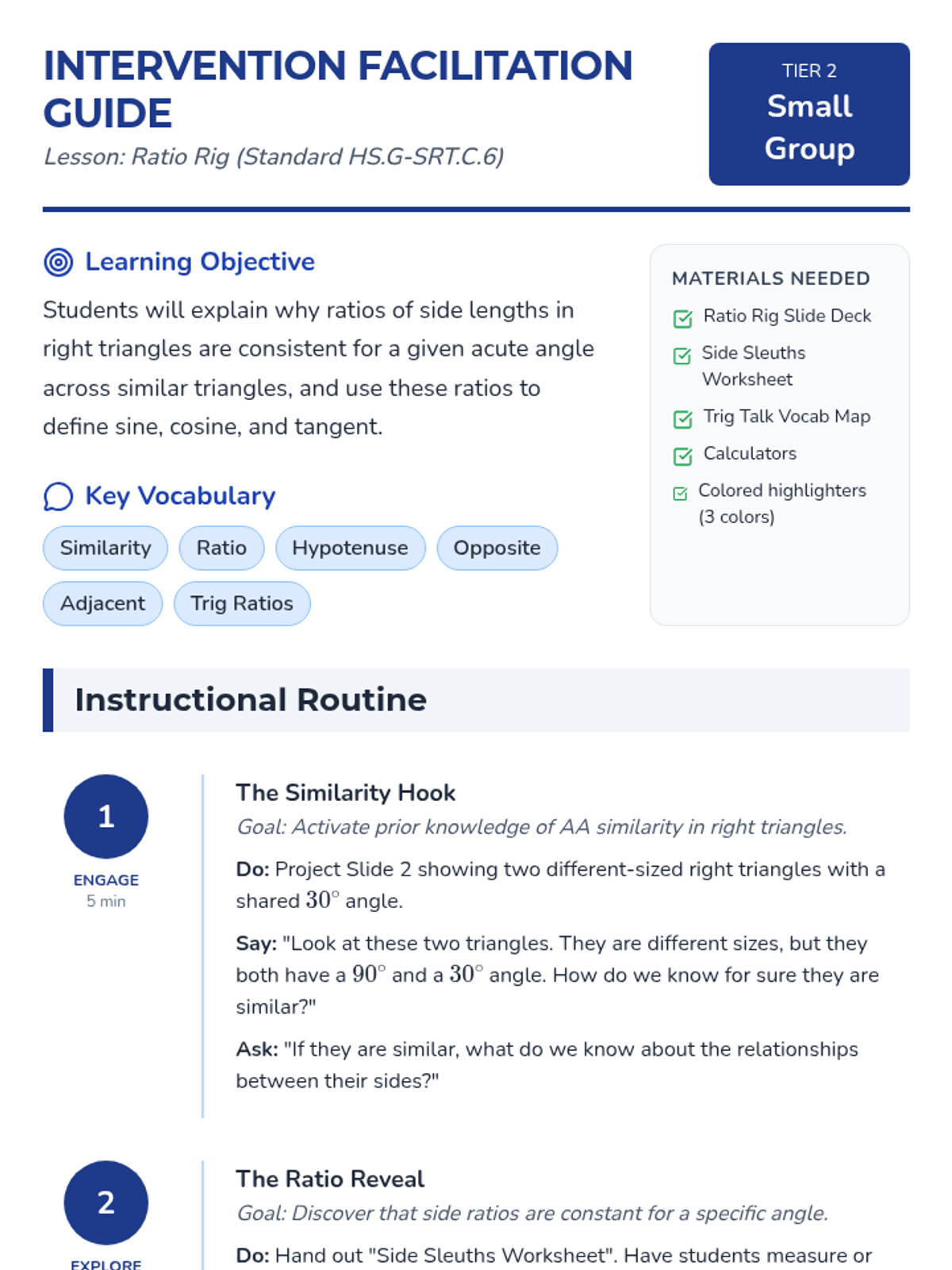
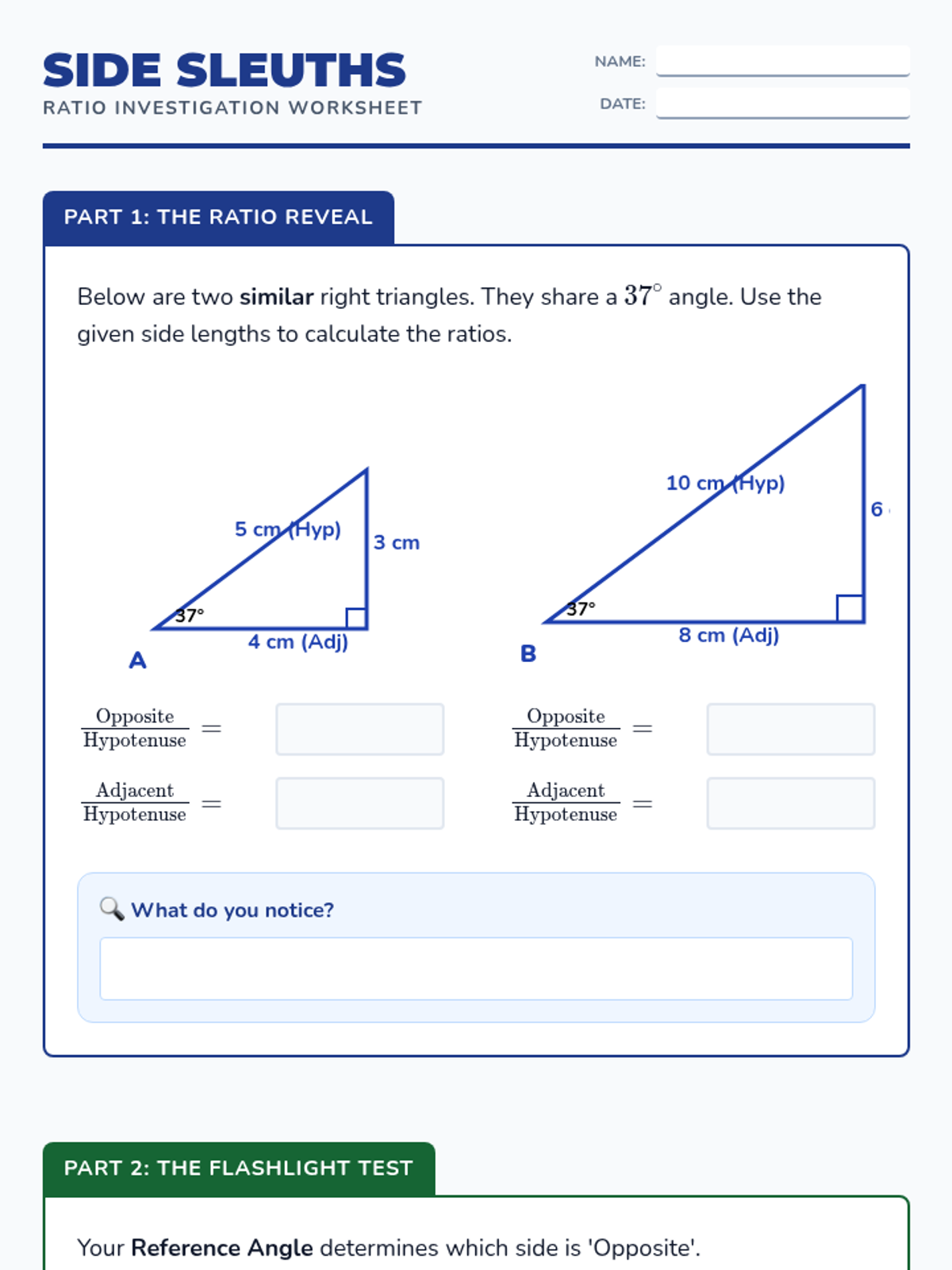
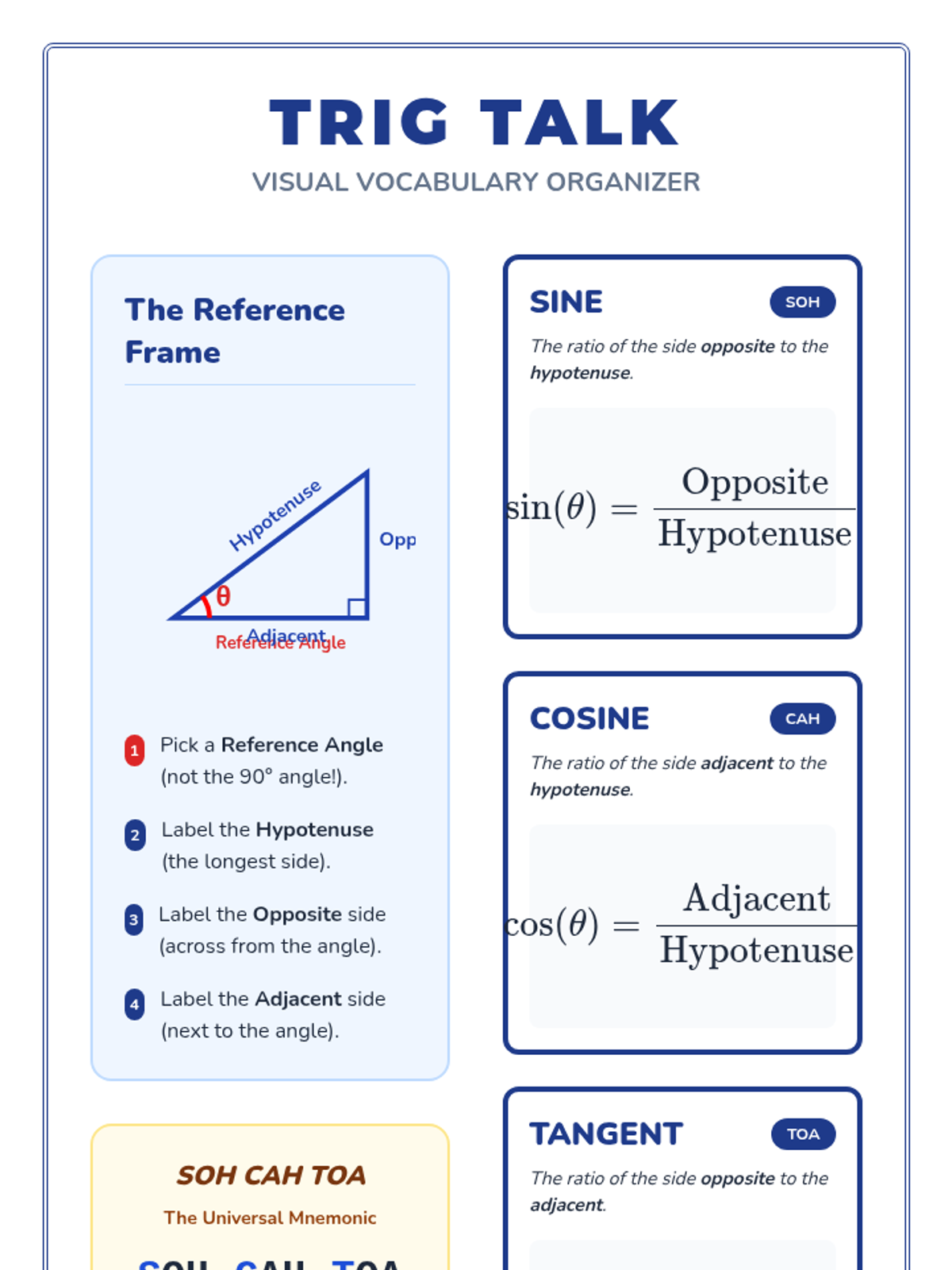
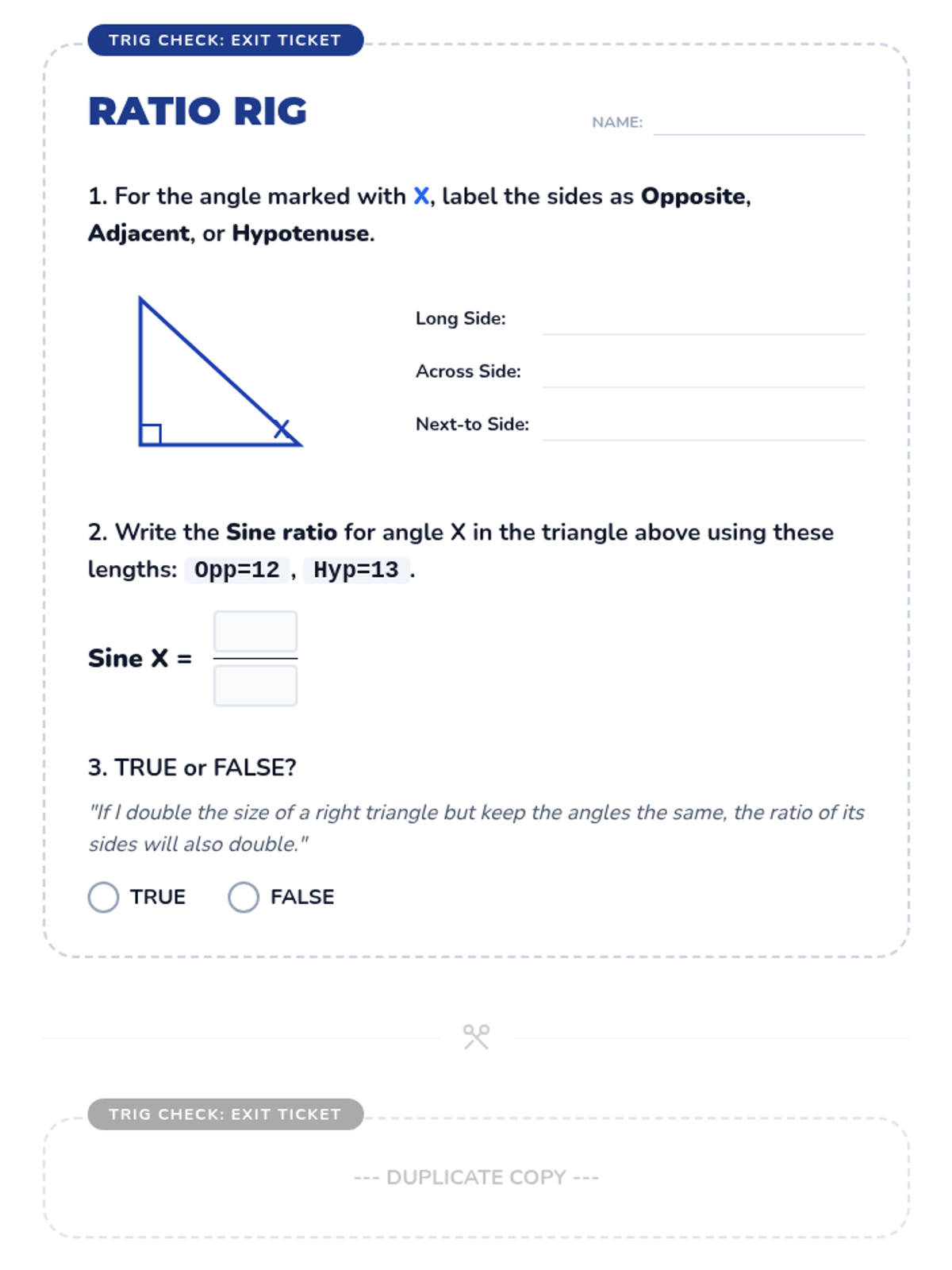
Students explore how similar right triangles share consistent side ratios, leading to the formal definitions of sine, cosine, and tangent.
A focused intervention lesson on proving and applying the Laws of Sines and Cosines for non-right triangles, designed for Tier 2 small group support.
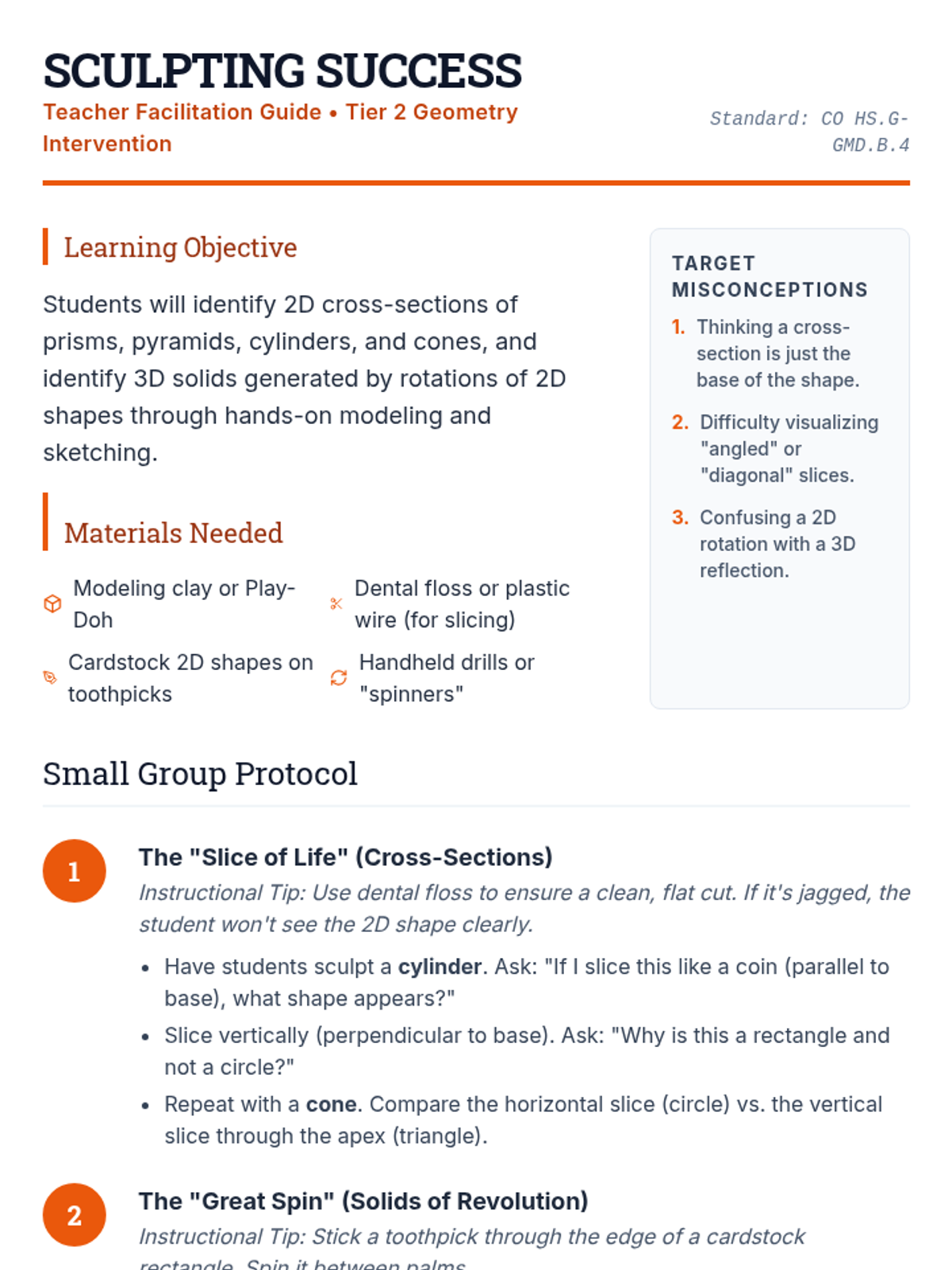
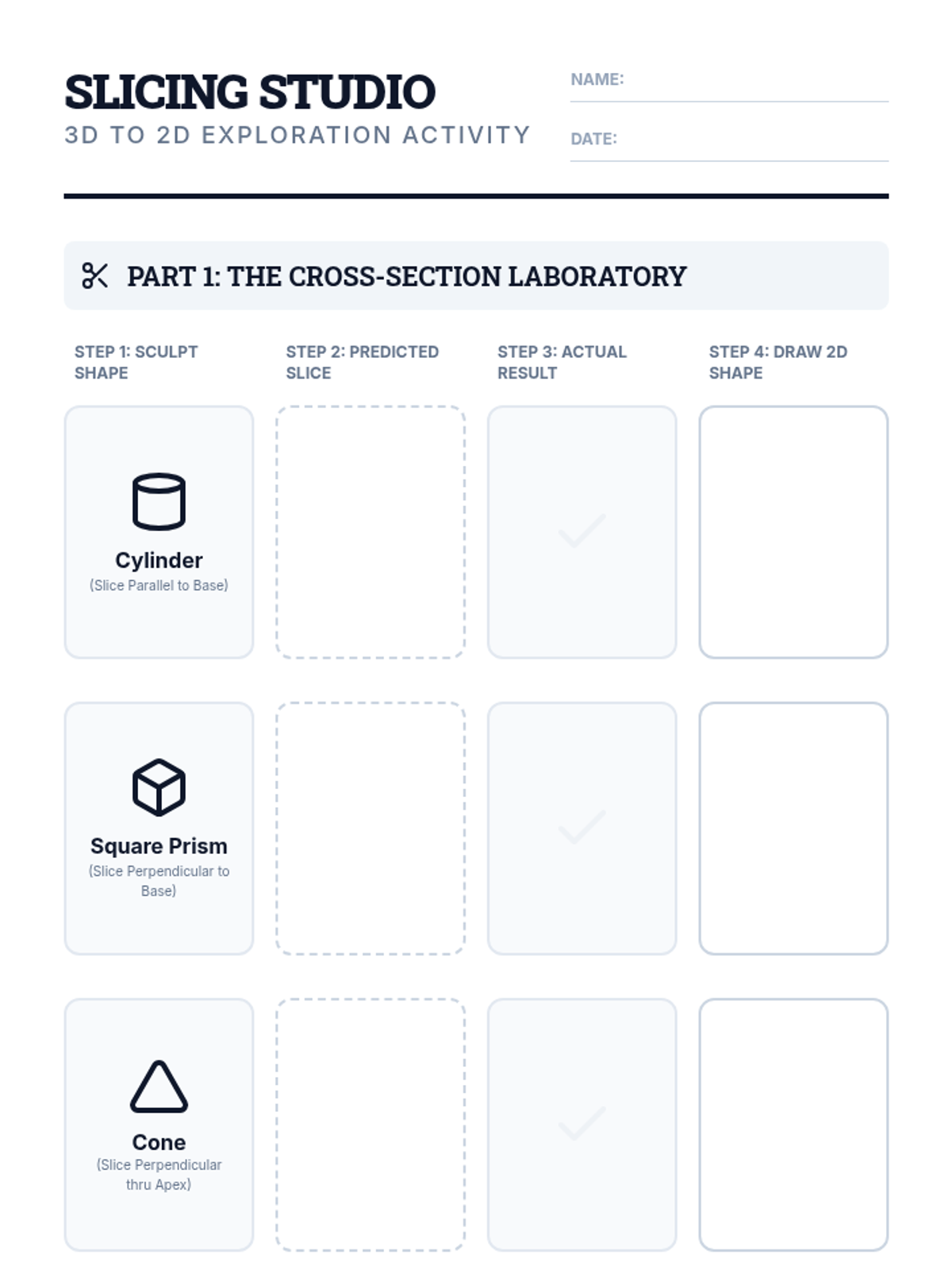
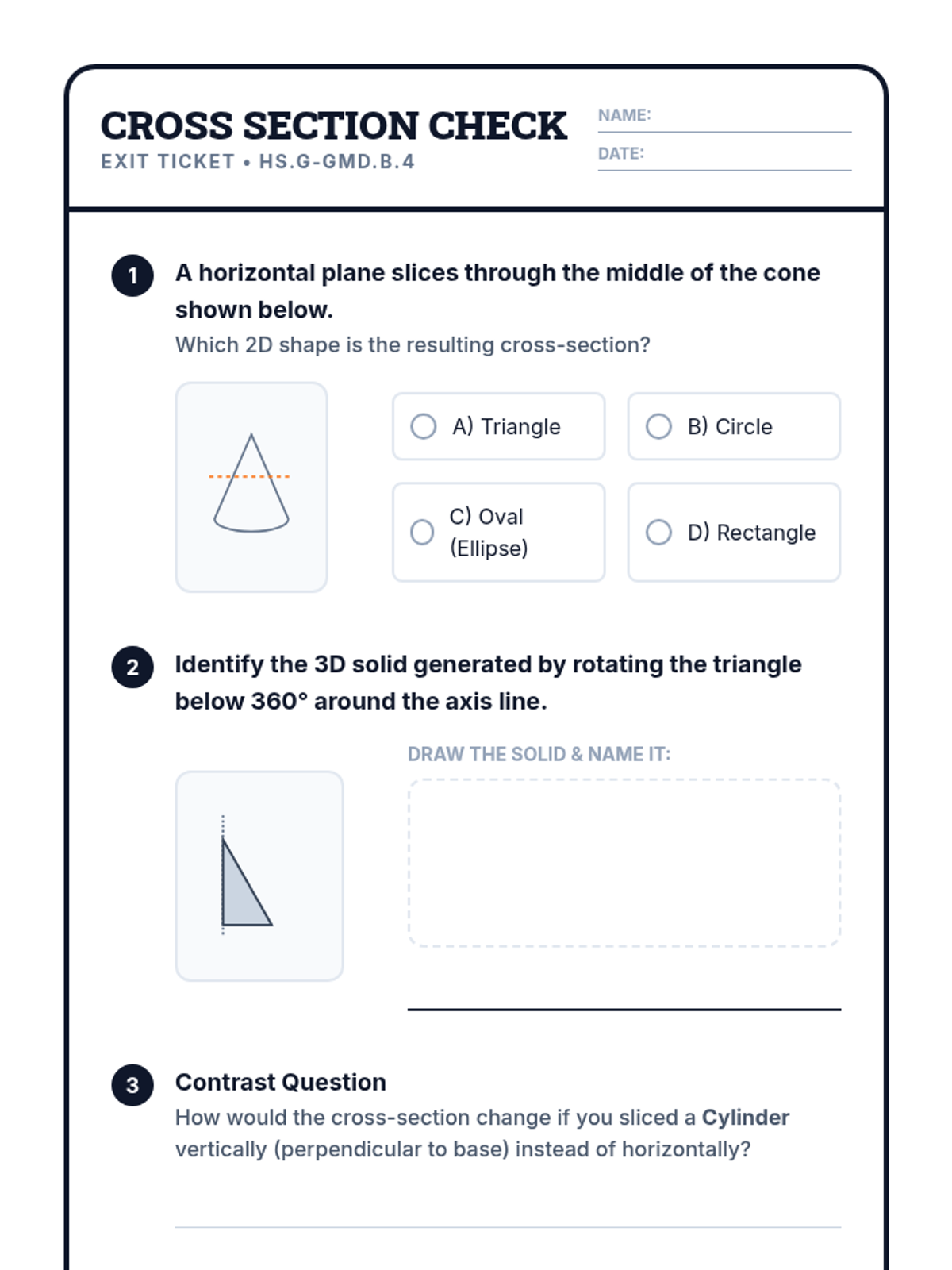
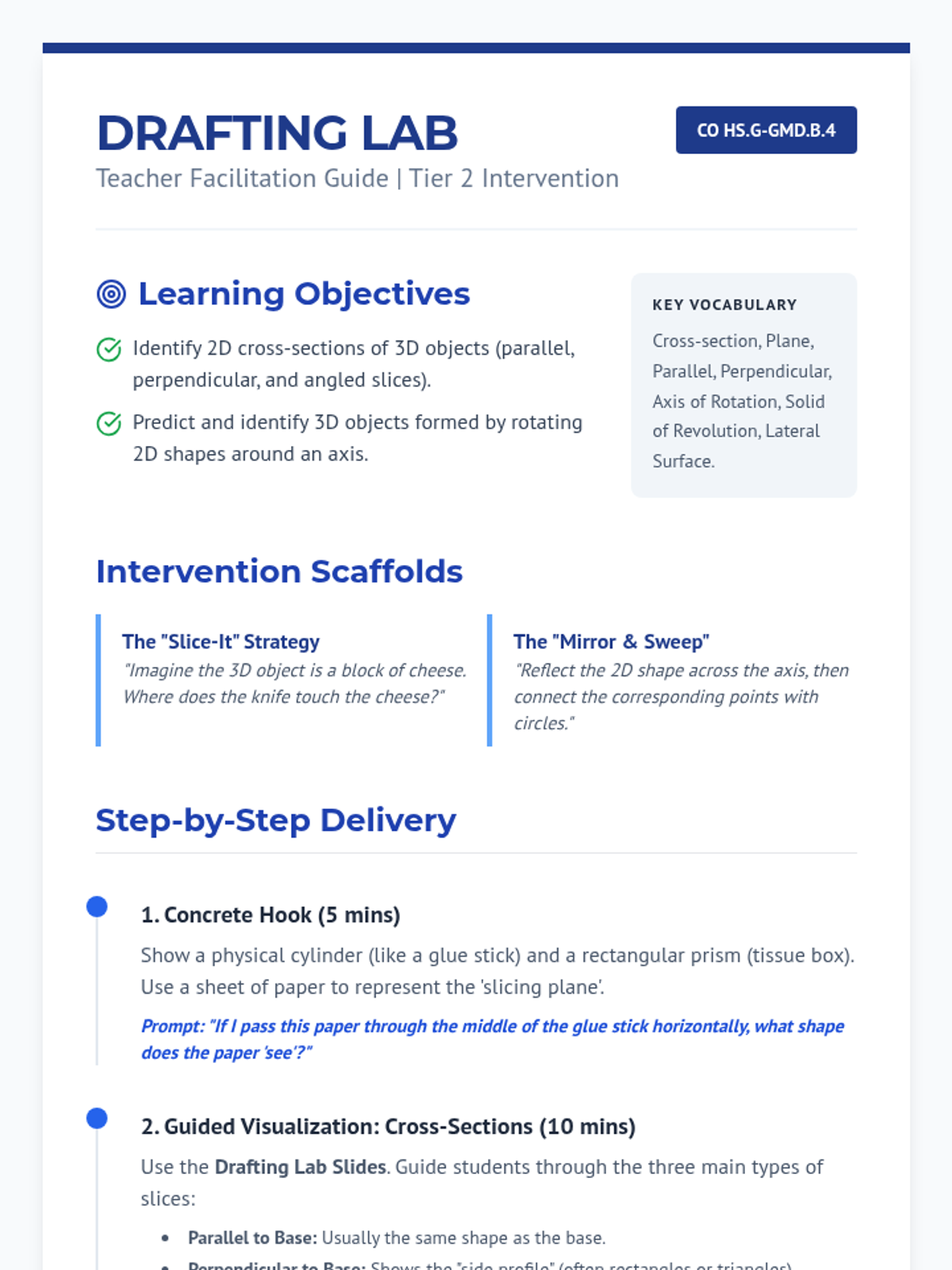
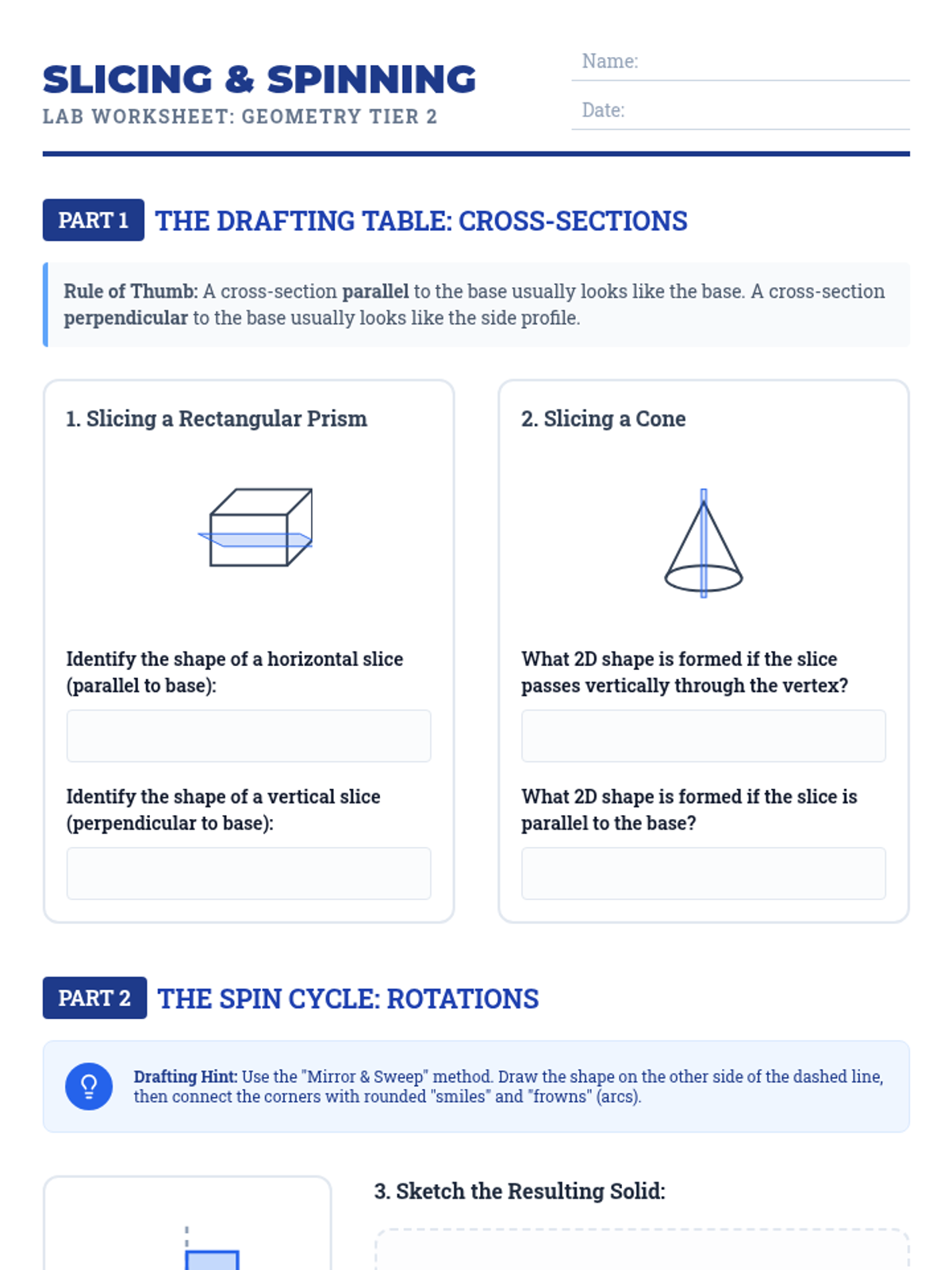
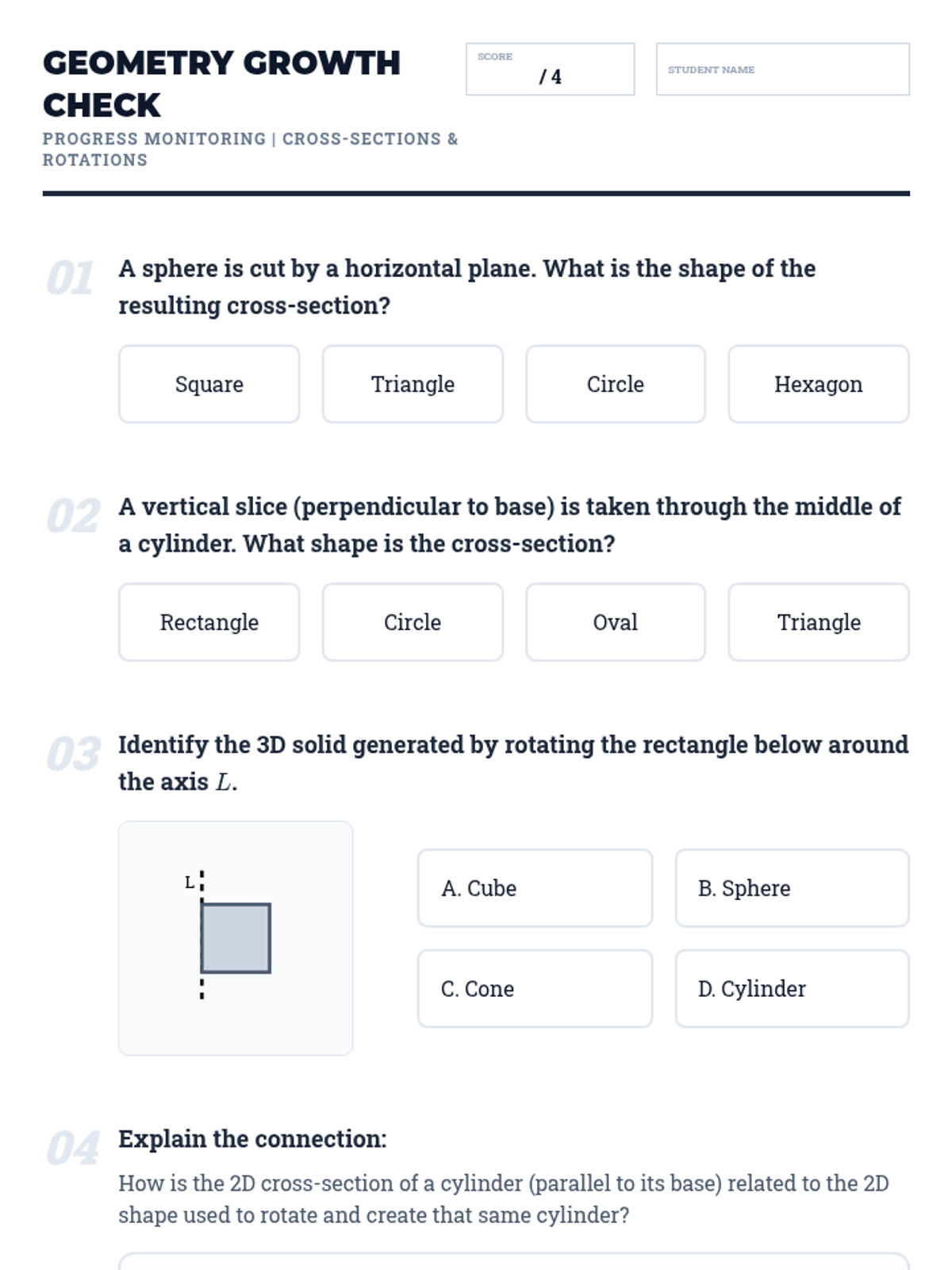
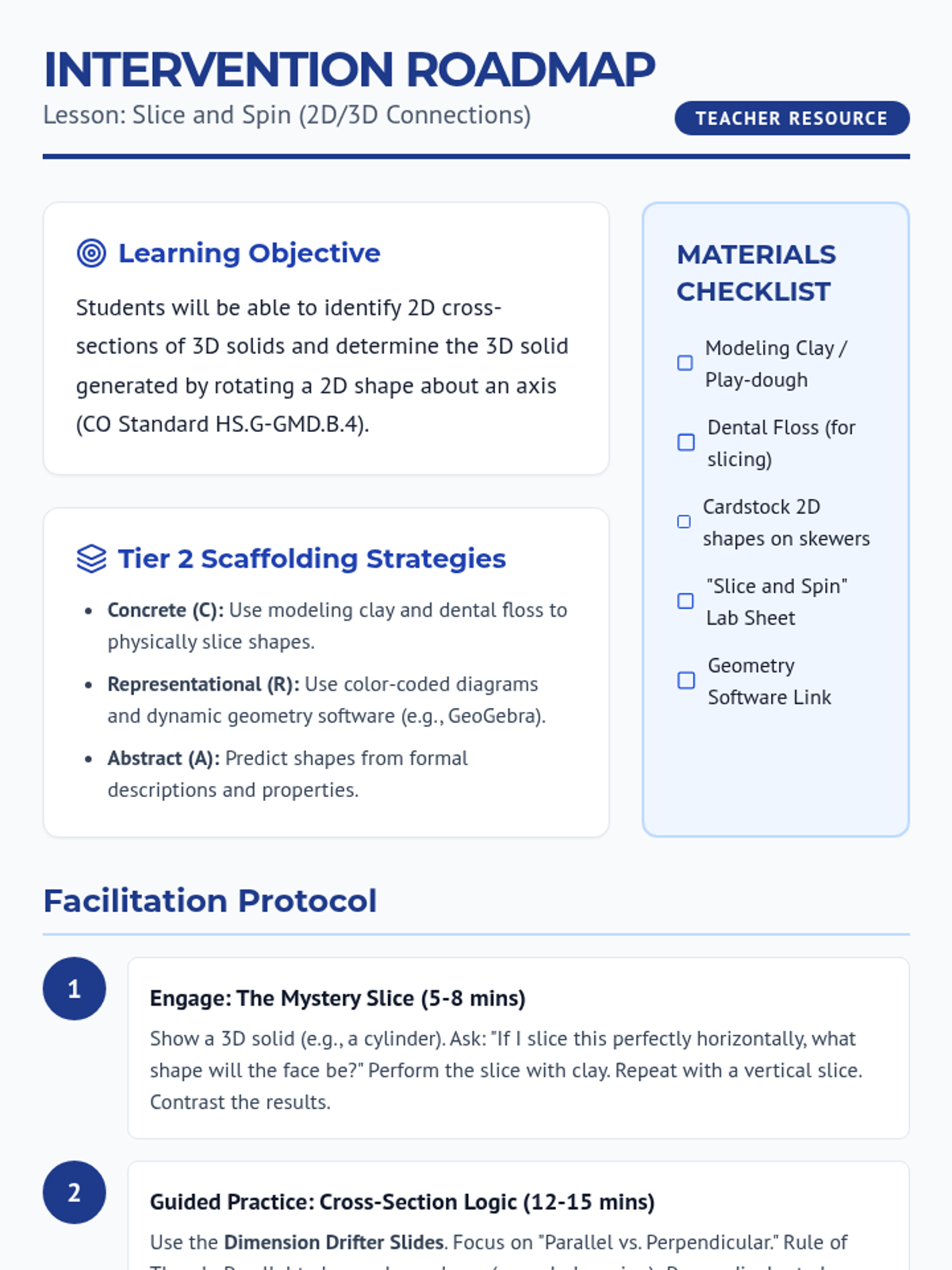
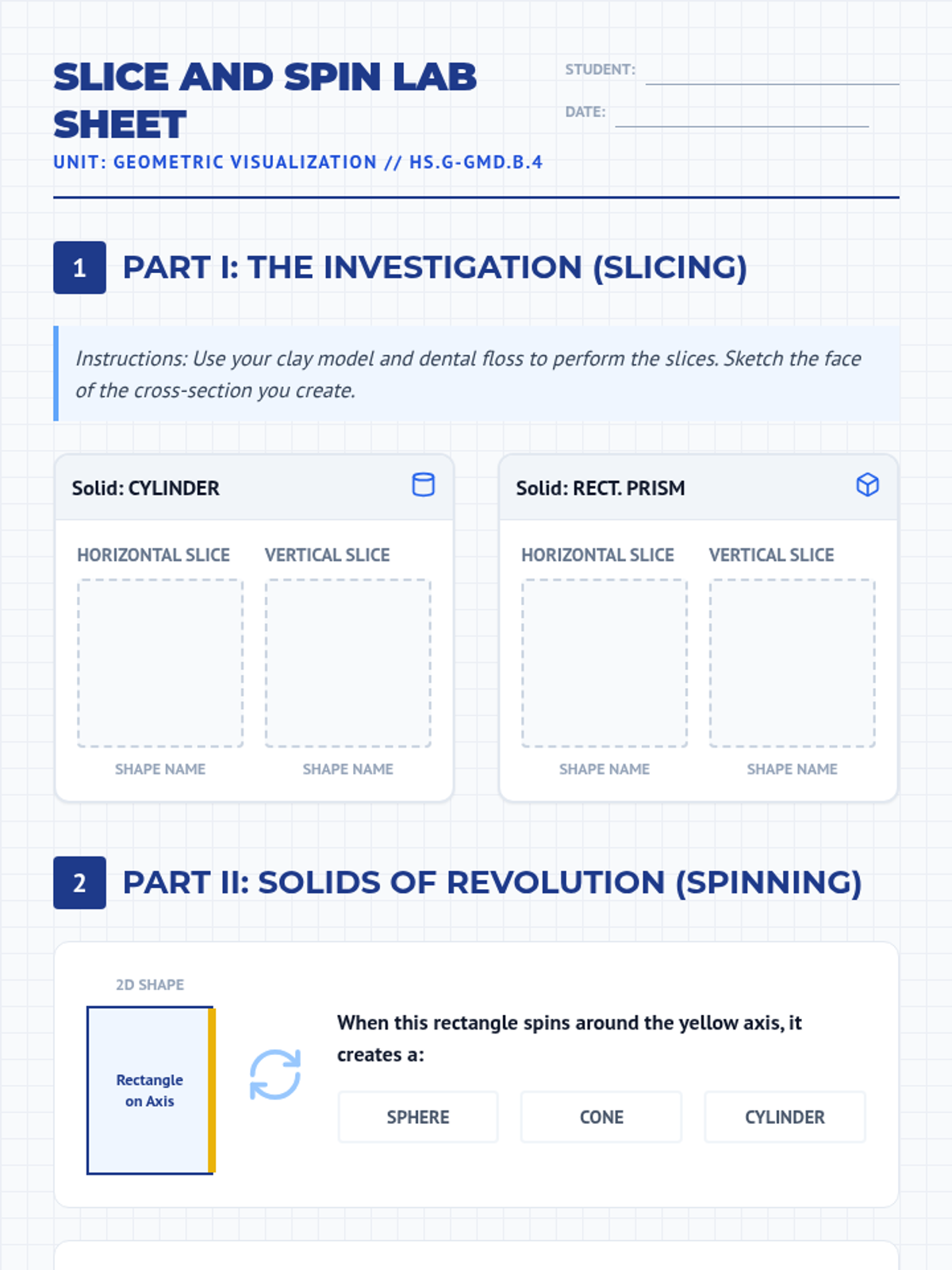
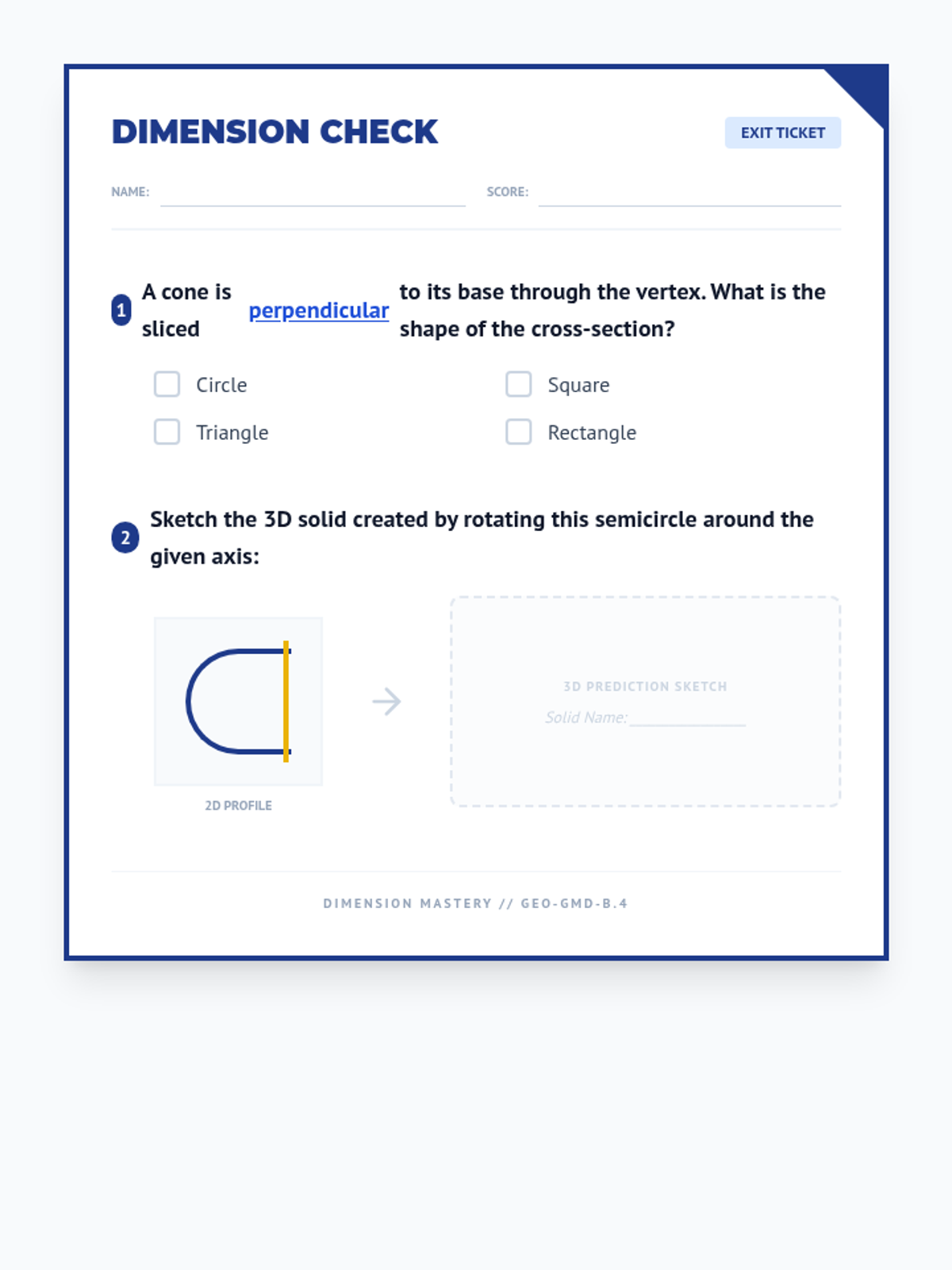
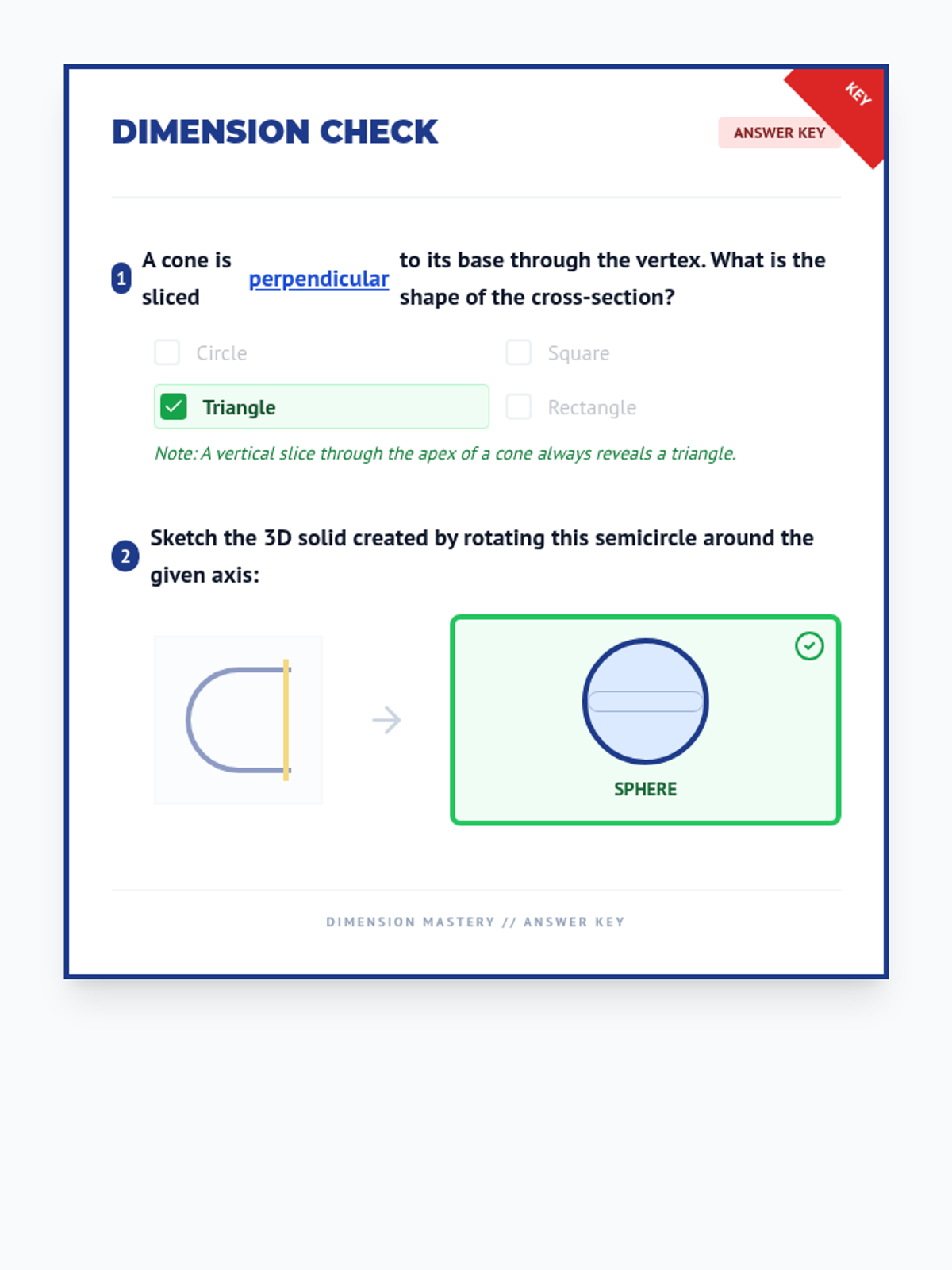
A Tier 2 intervention lesson focusing on hands-on exploration of cross-sections and solids of revolution using physical models and sketching. Students transition from 3D manipulation to 2D visualization to meet standard HS.G-GMD.B.4.
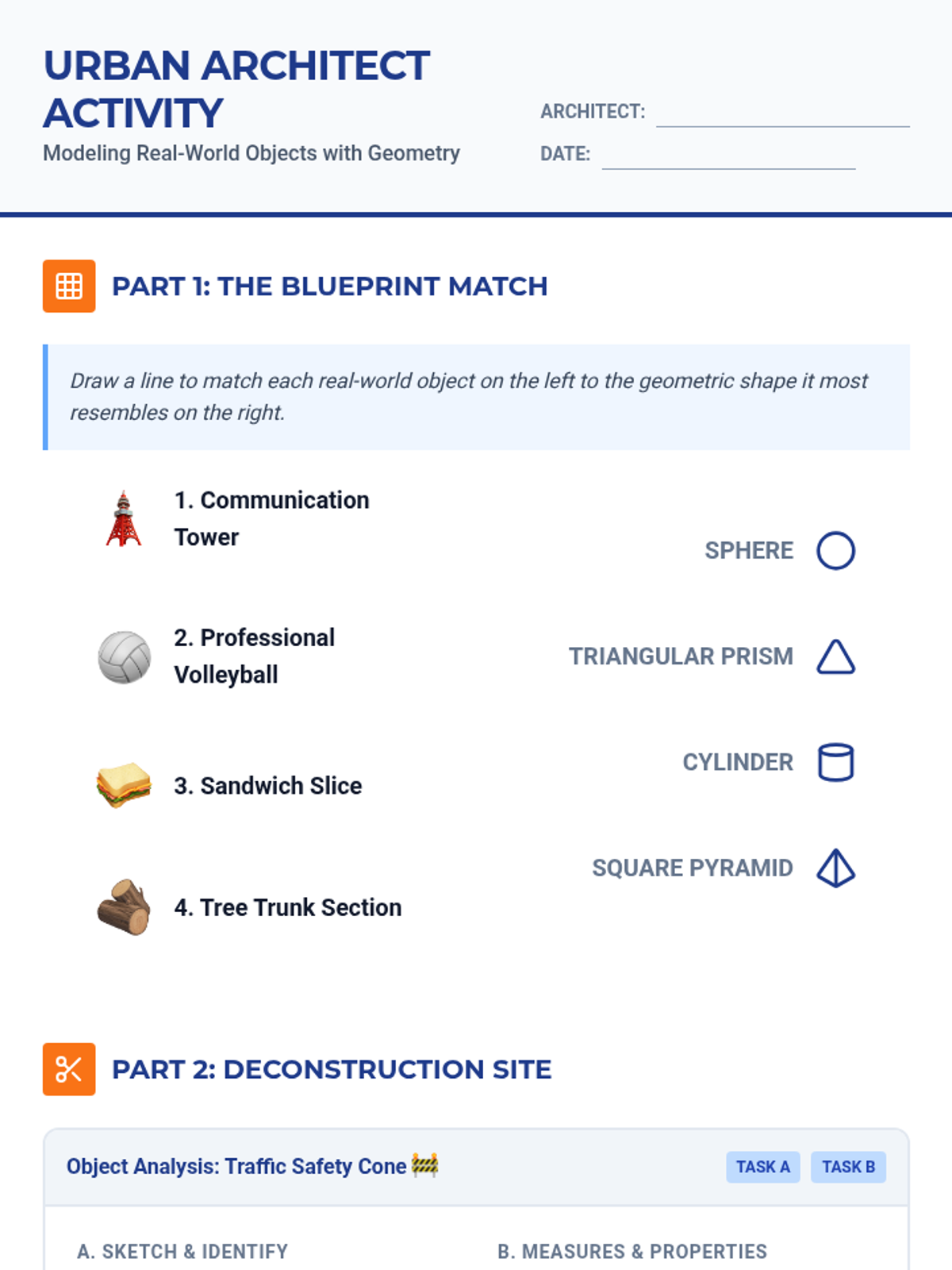
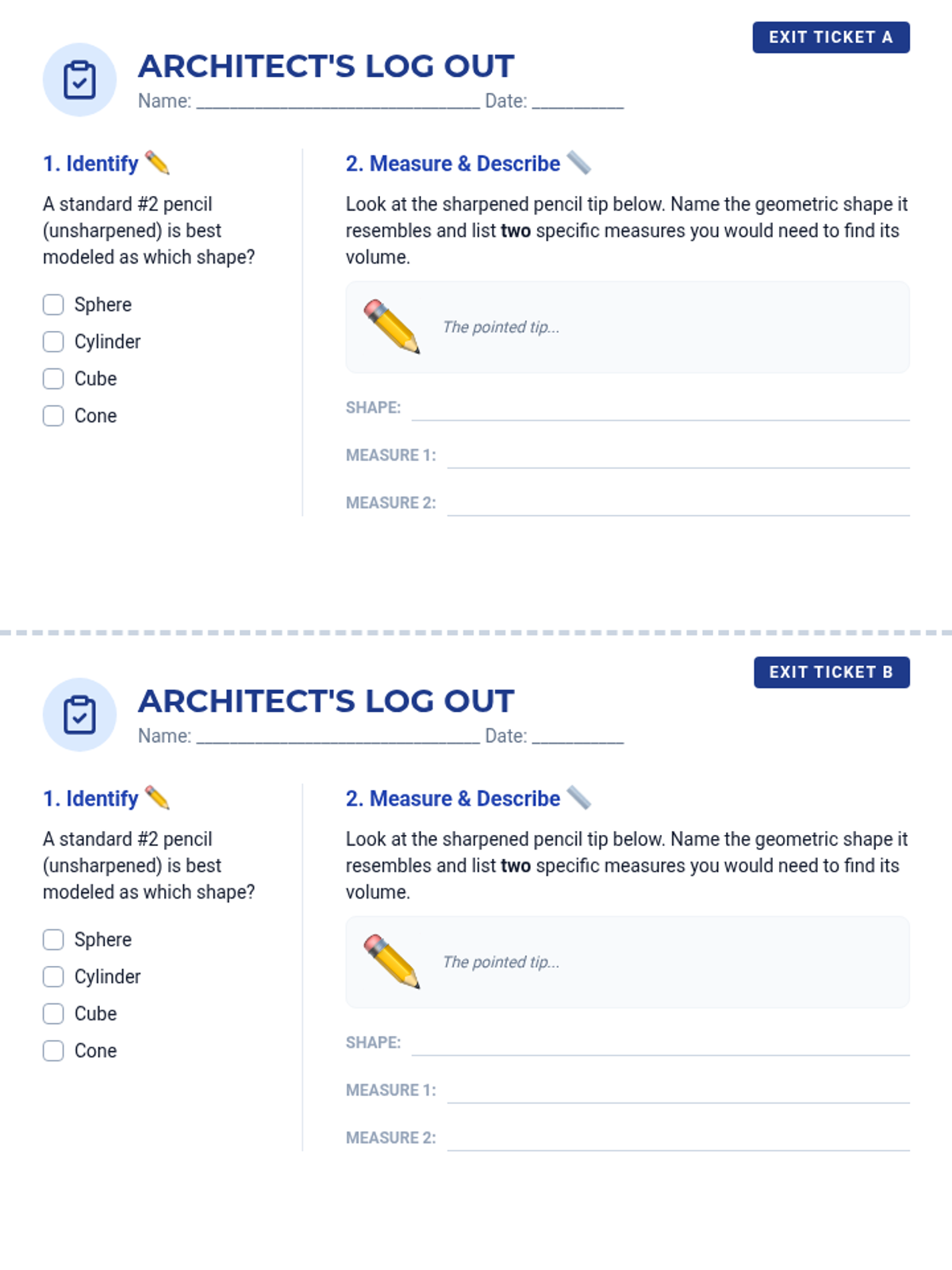
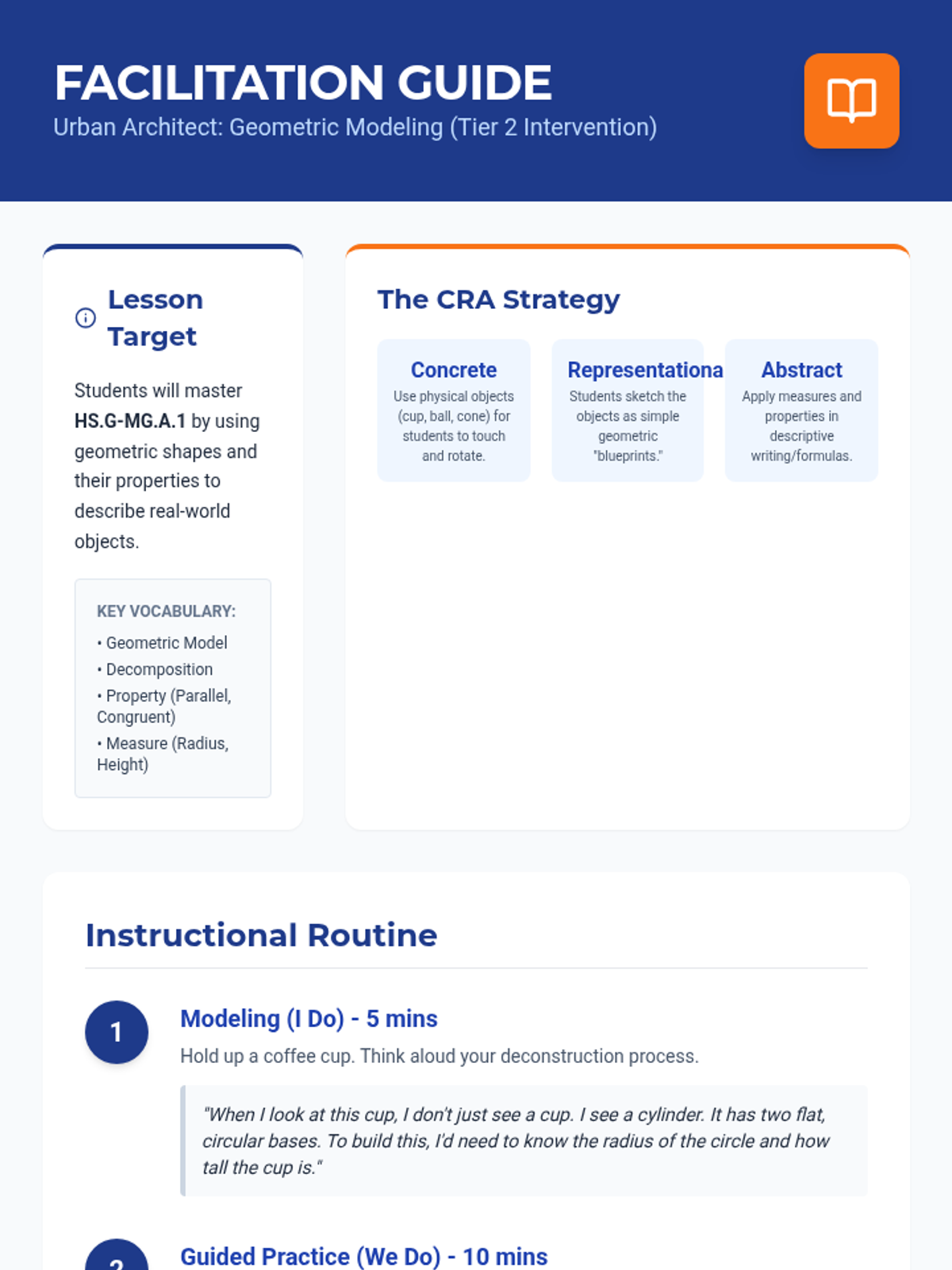
Students will learn to identify geometric shapes within complex real-world objects and use measures and properties to describe them accurately. The lesson includes scaffolded modeling, guided practice, and progress monitoring.
A targeted Tier 2 intervention lesson focusing on the visualization of cross-sections and solids of revolution. Students use a 'Drafting Lab' theme to master identifying 2D slices and 3D rotations through scaffolded practice and visual models.
This lesson focuses on identifying cross-sections of prisms, pyramids, and cylinders, as well as visualizing the 3D solids formed by rotating 2D shapes about an axis. Includes hands-on modeling suggestions and scaffolded visual supports for Tier 2 intervention.
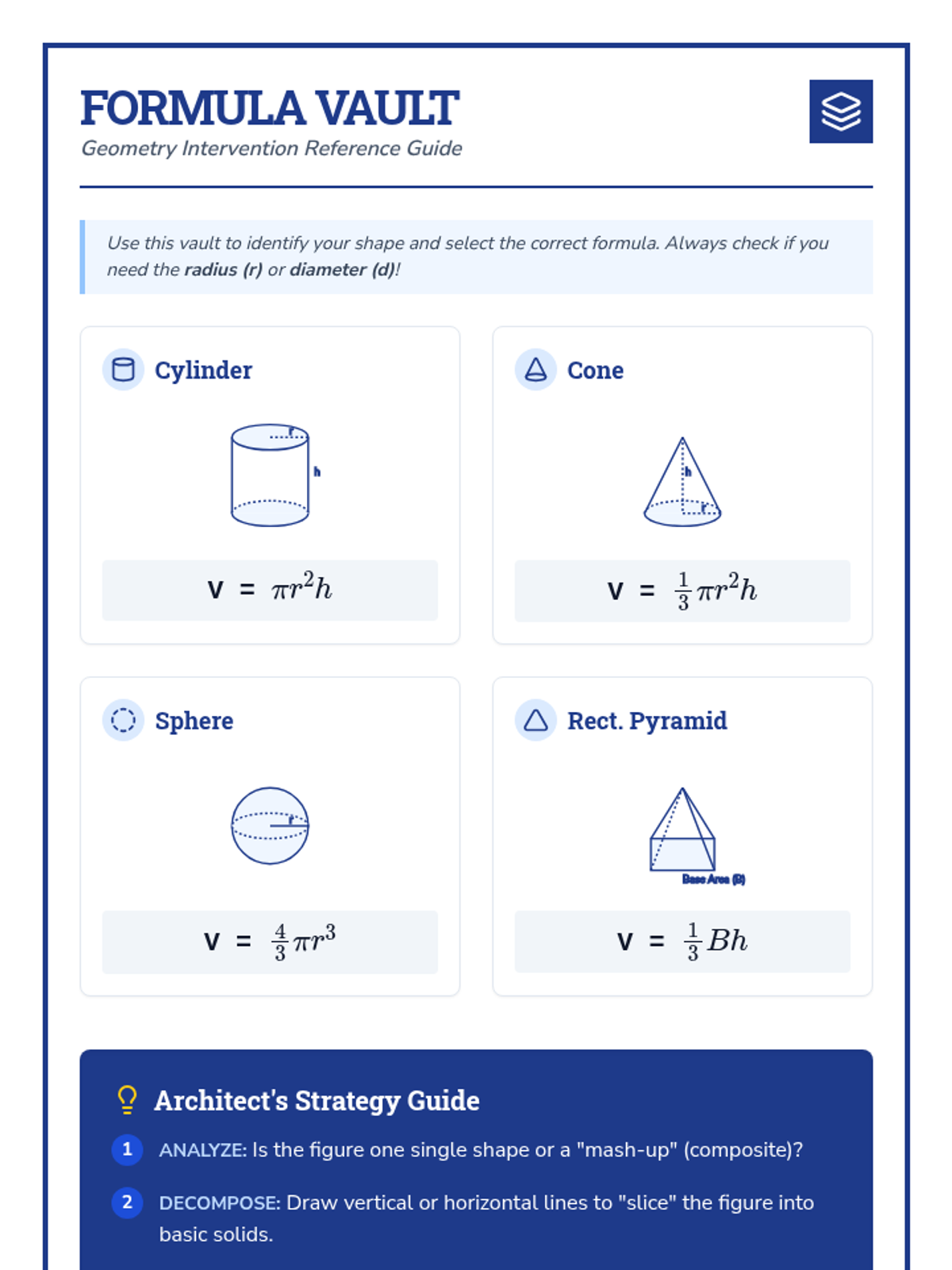
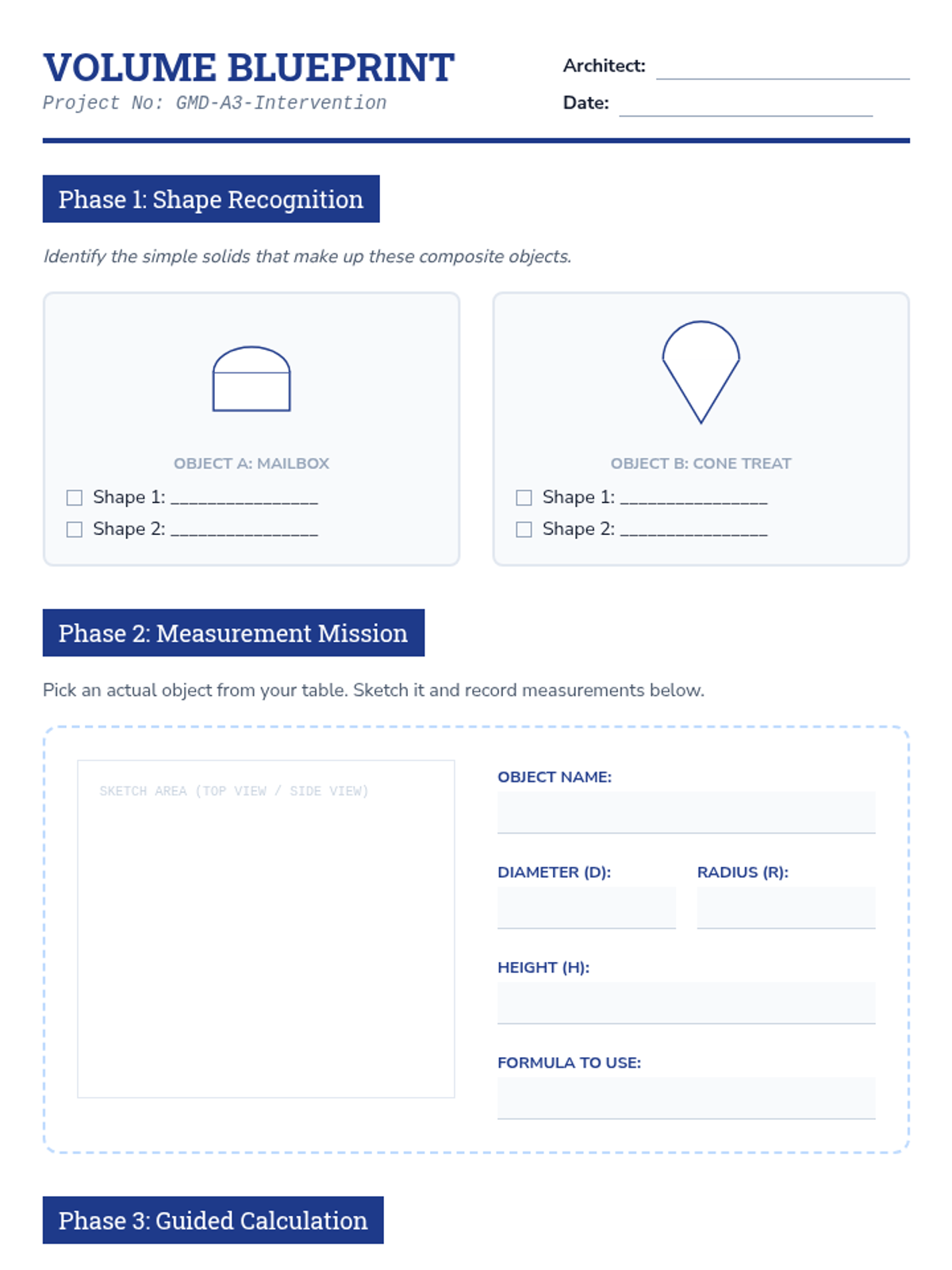
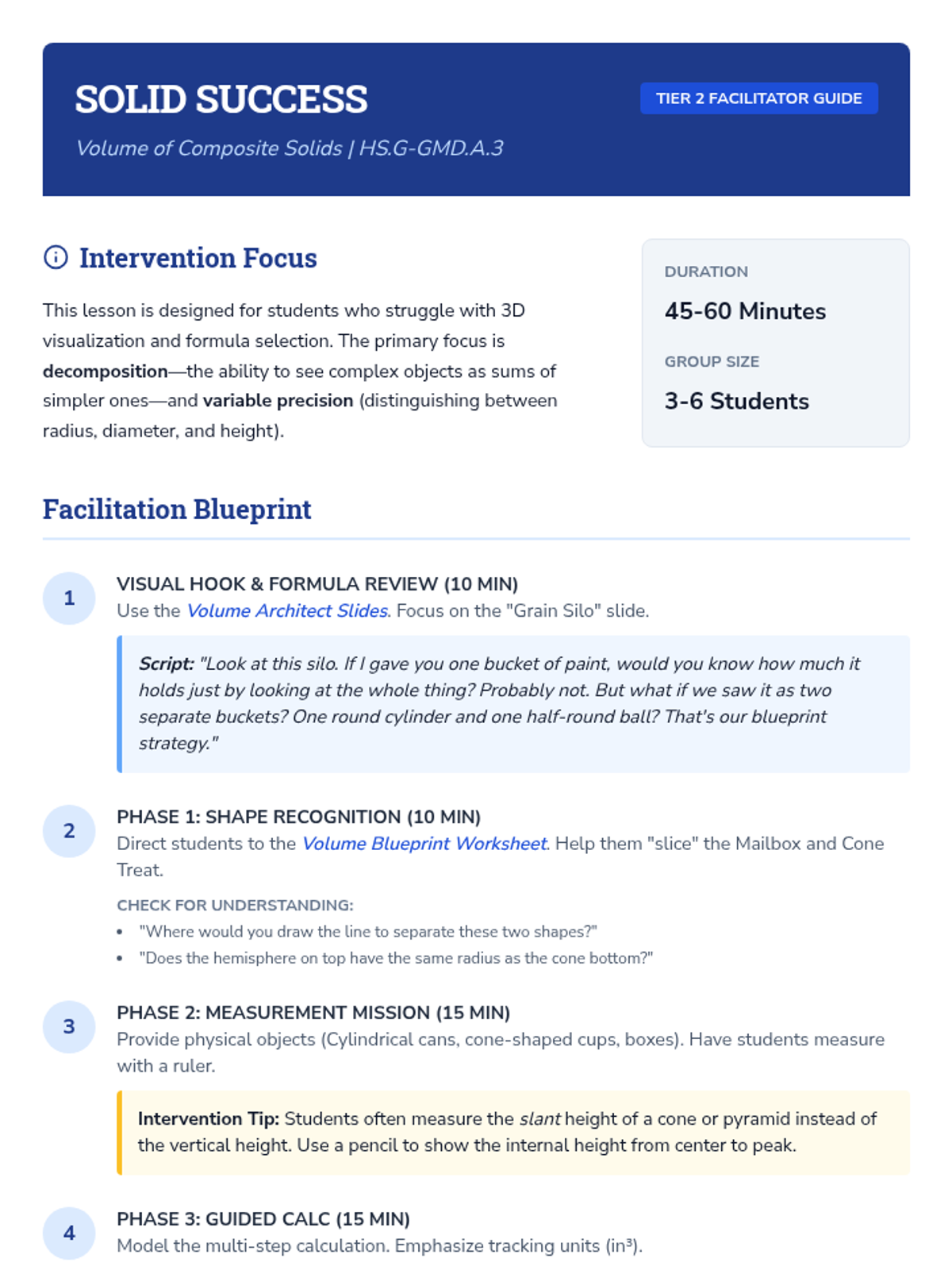
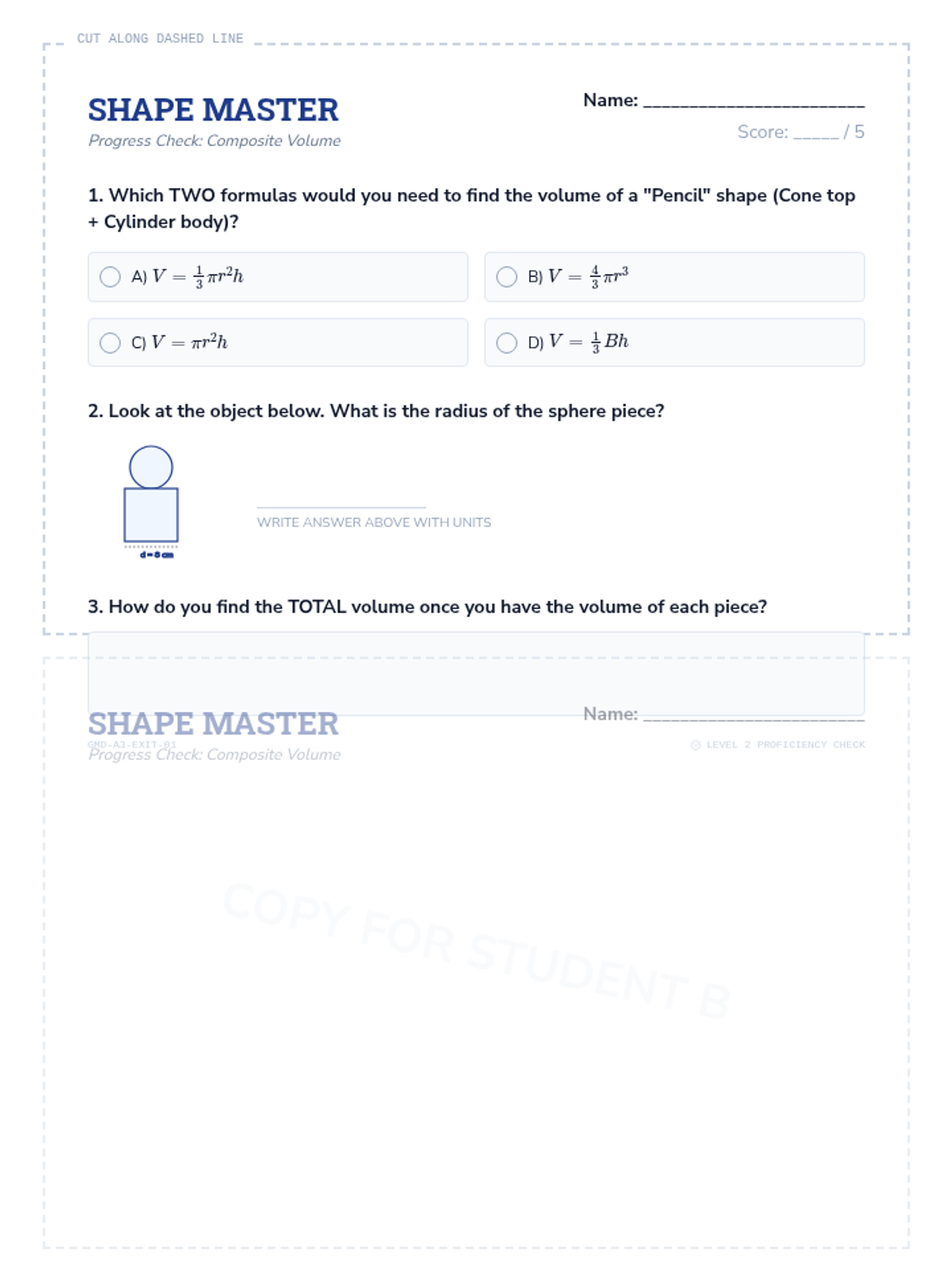
A Tier 2 intervention lesson focused on decomposing composite solids and selecting appropriate volume formulas for real-world applications. Students engage in hands-on measurement and guided calculation to build confidence with standard HS.G-GMD.A.3.
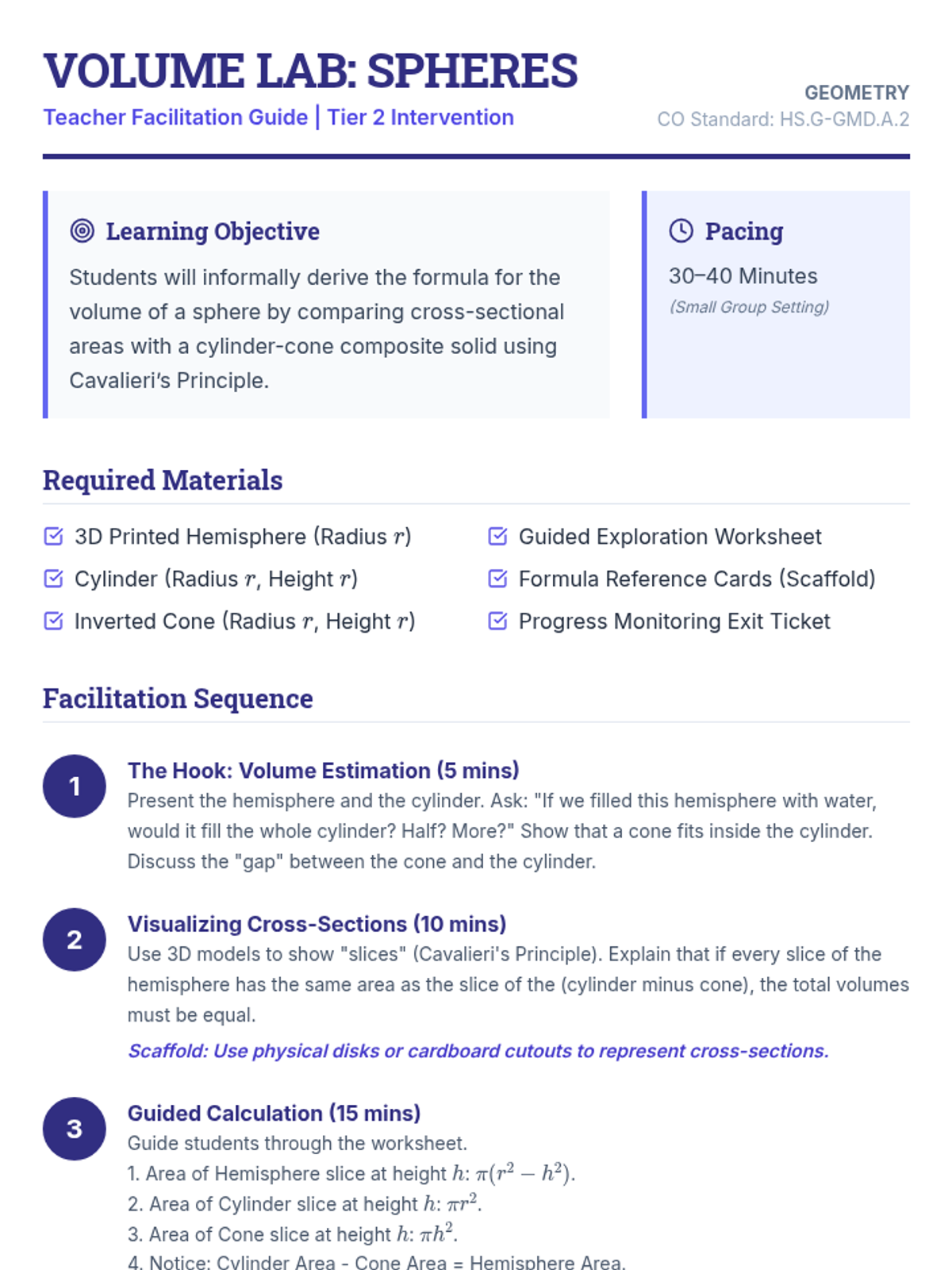
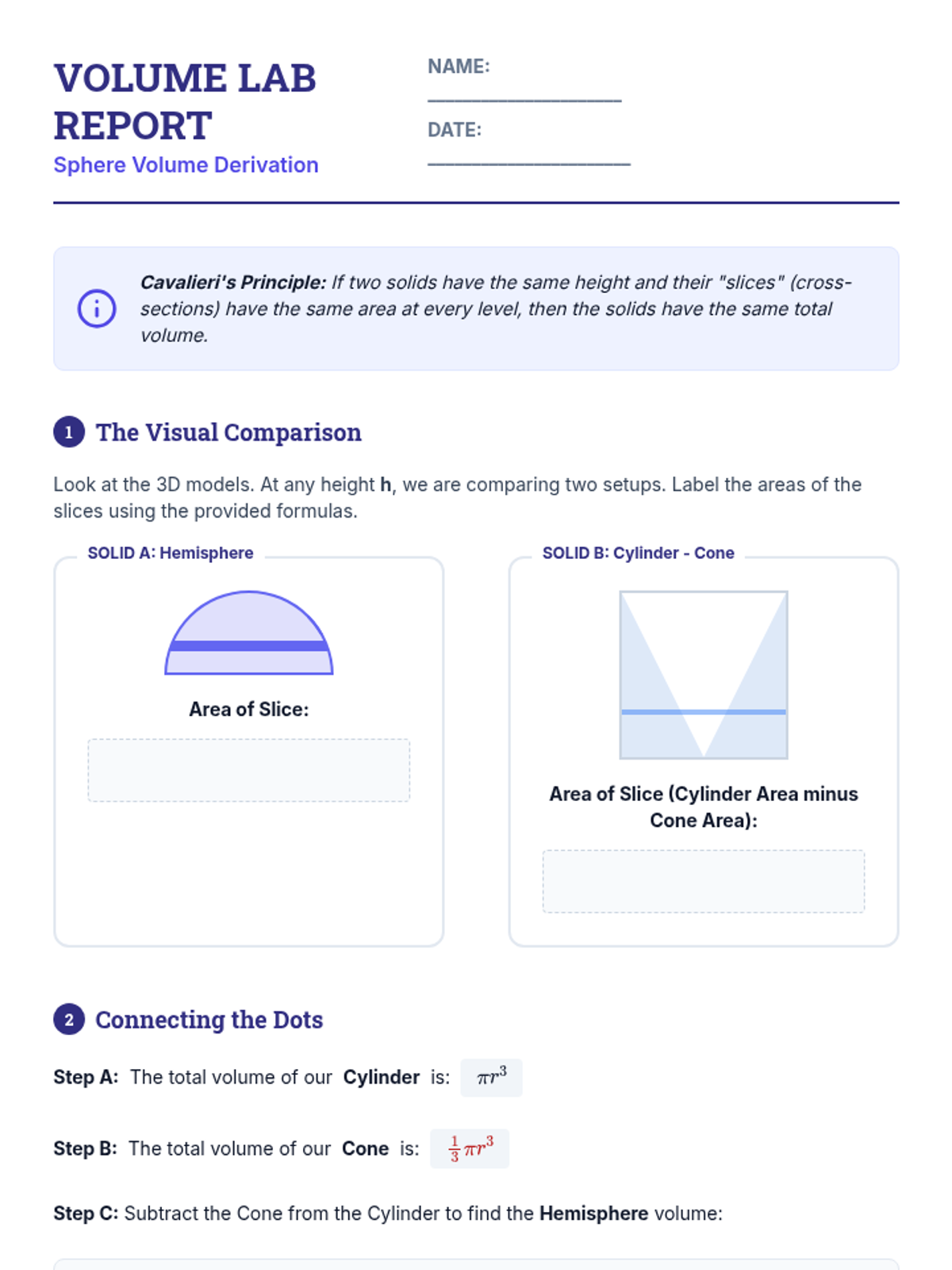
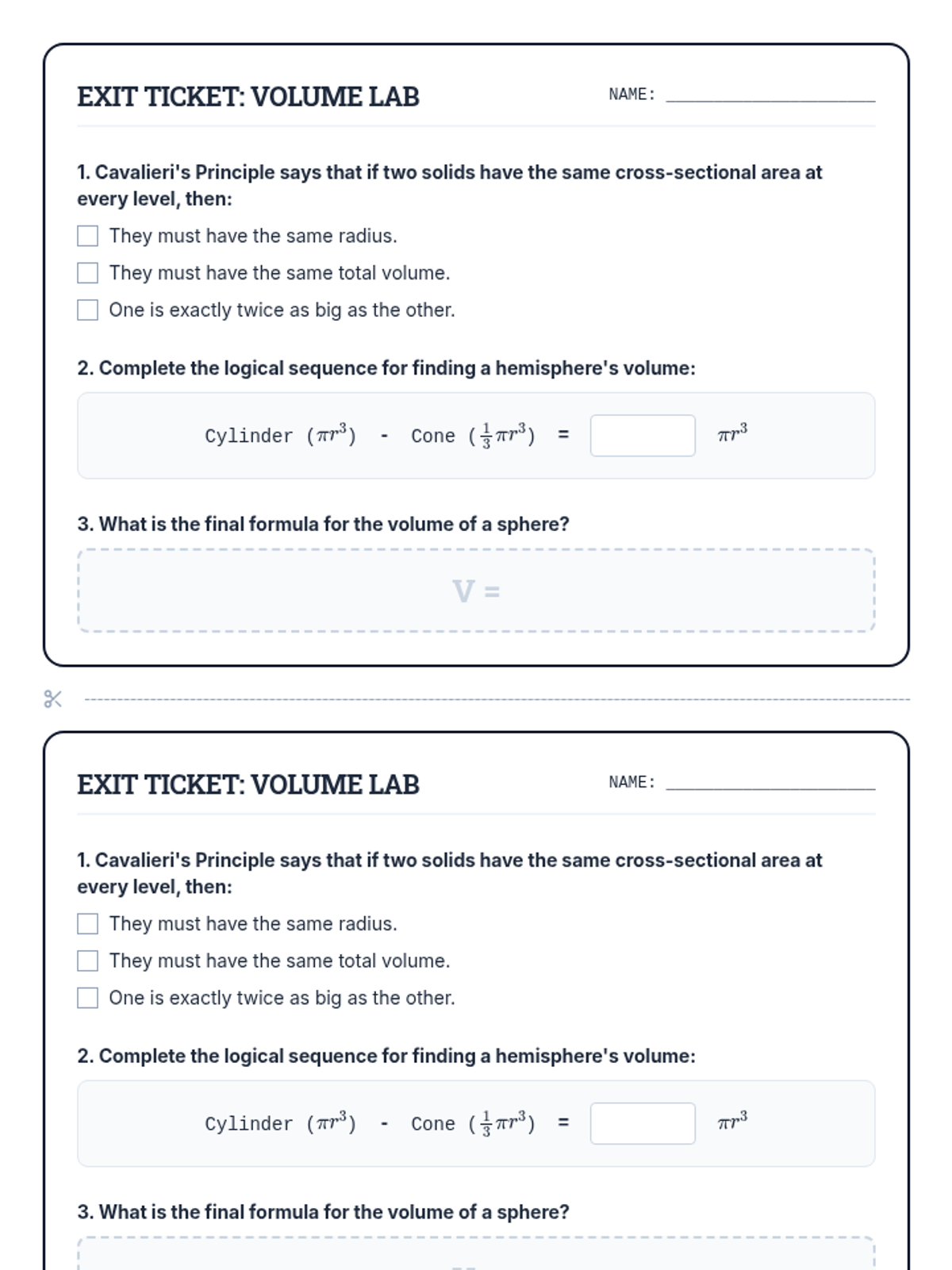
A Tier 2 intervention lesson focusing on the informal derivation of the sphere volume formula using Cavalieri's Principle and visual comparisons of 3D solids.
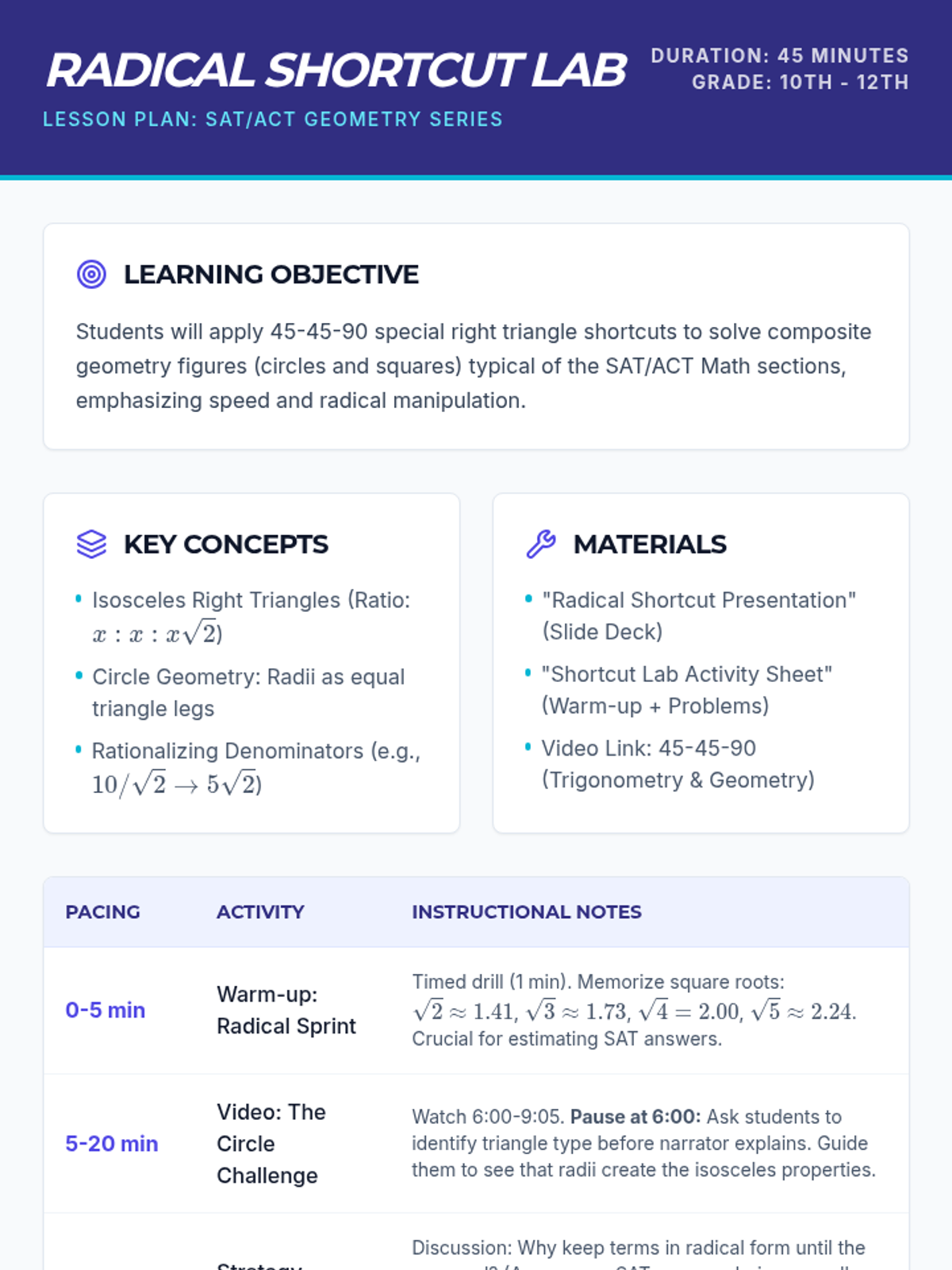
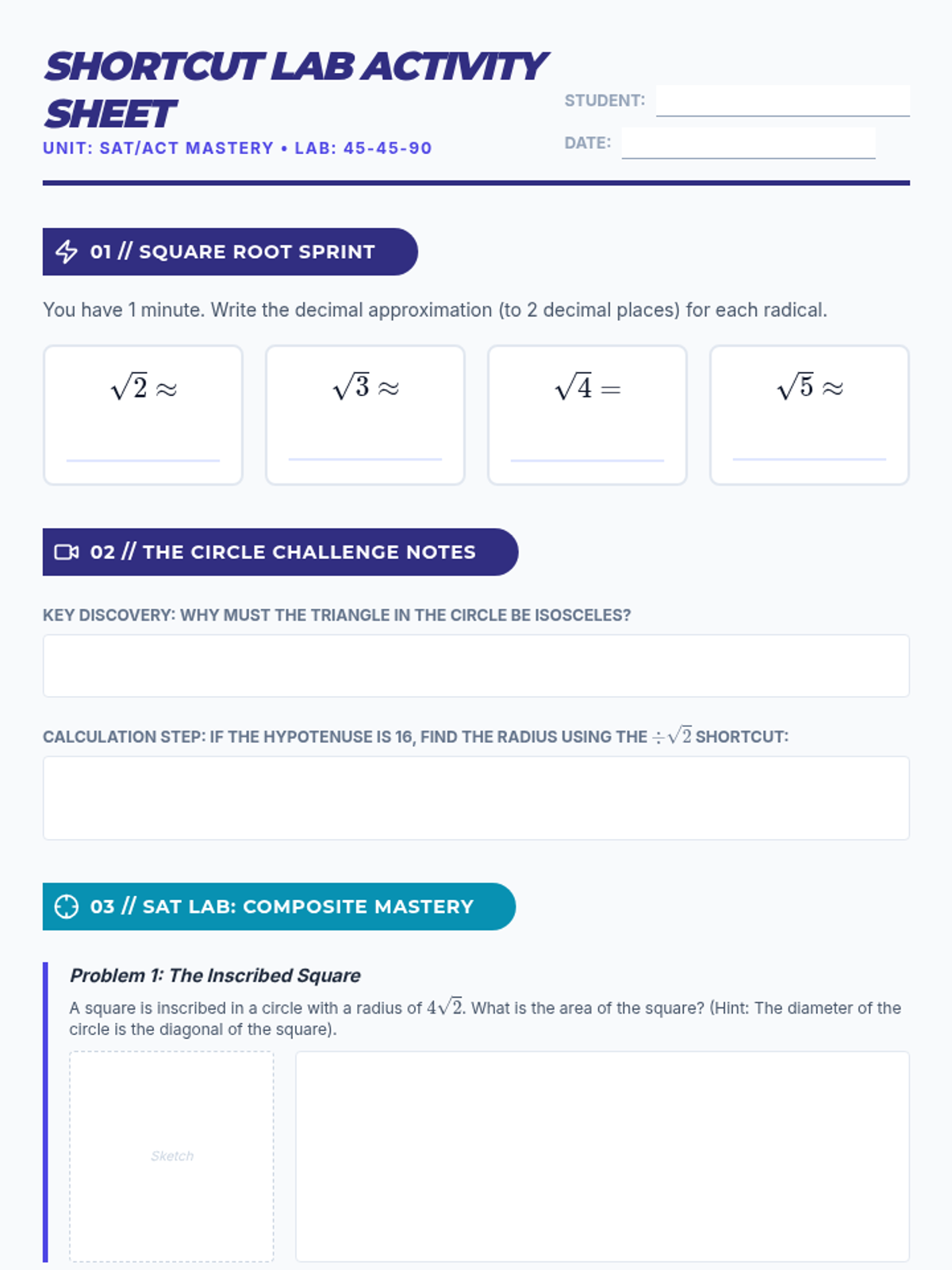
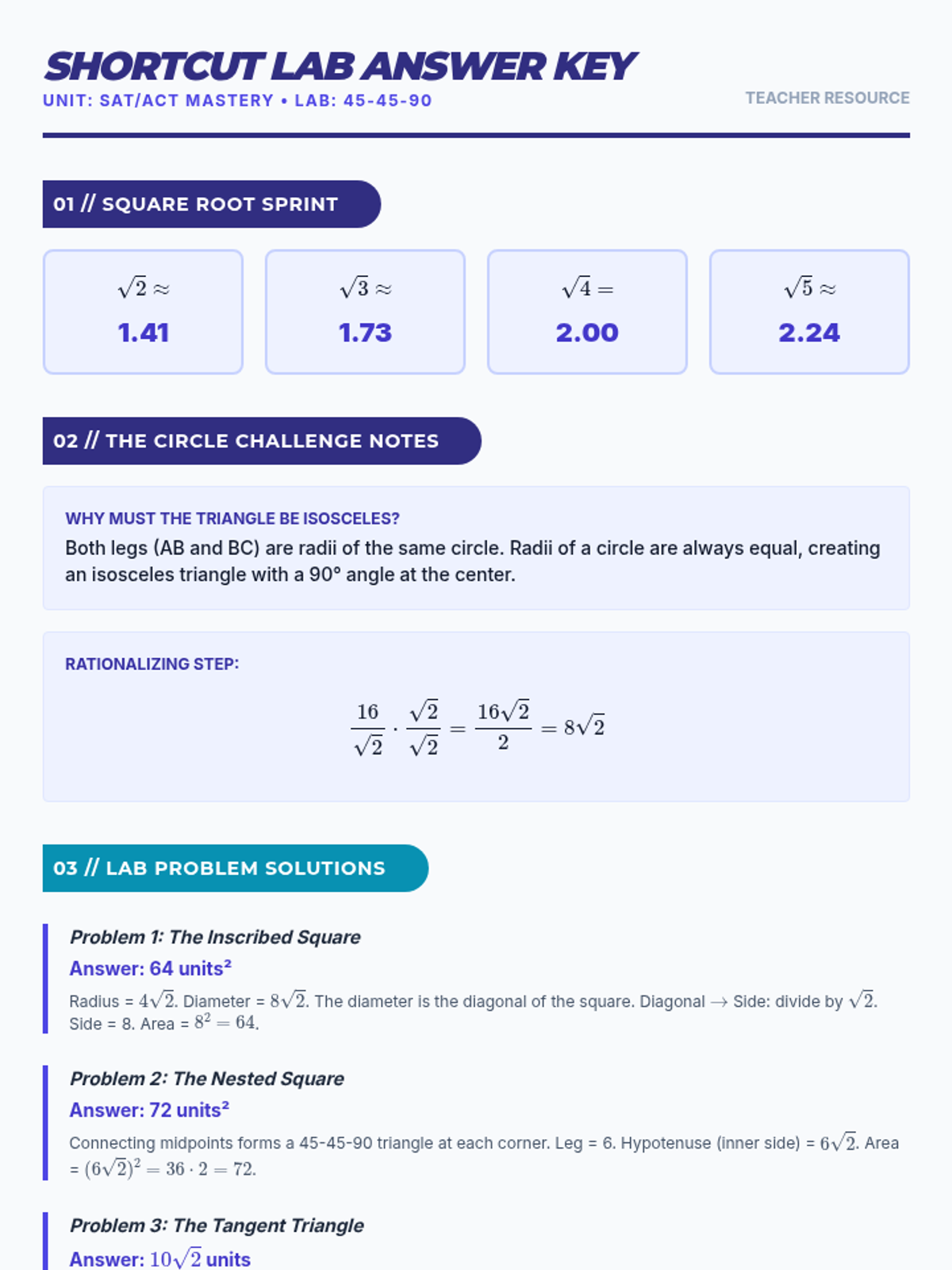
A high-intensity SAT/ACT prep lesson focused on the 45-45-90 special right triangle. Students learn to identify hidden triangles in circles and squares to solve complex geometry problems using rapid radical shortcuts.
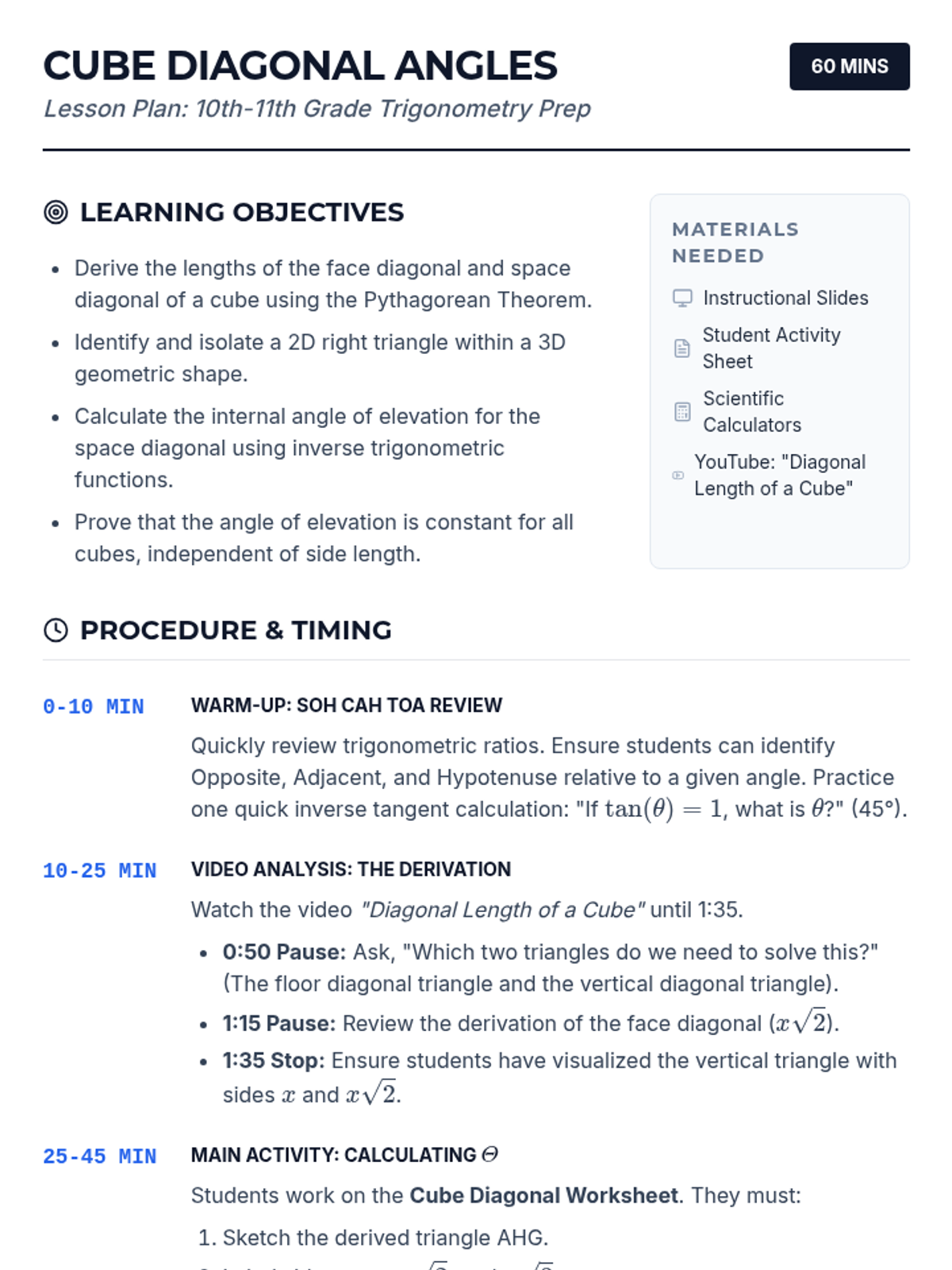
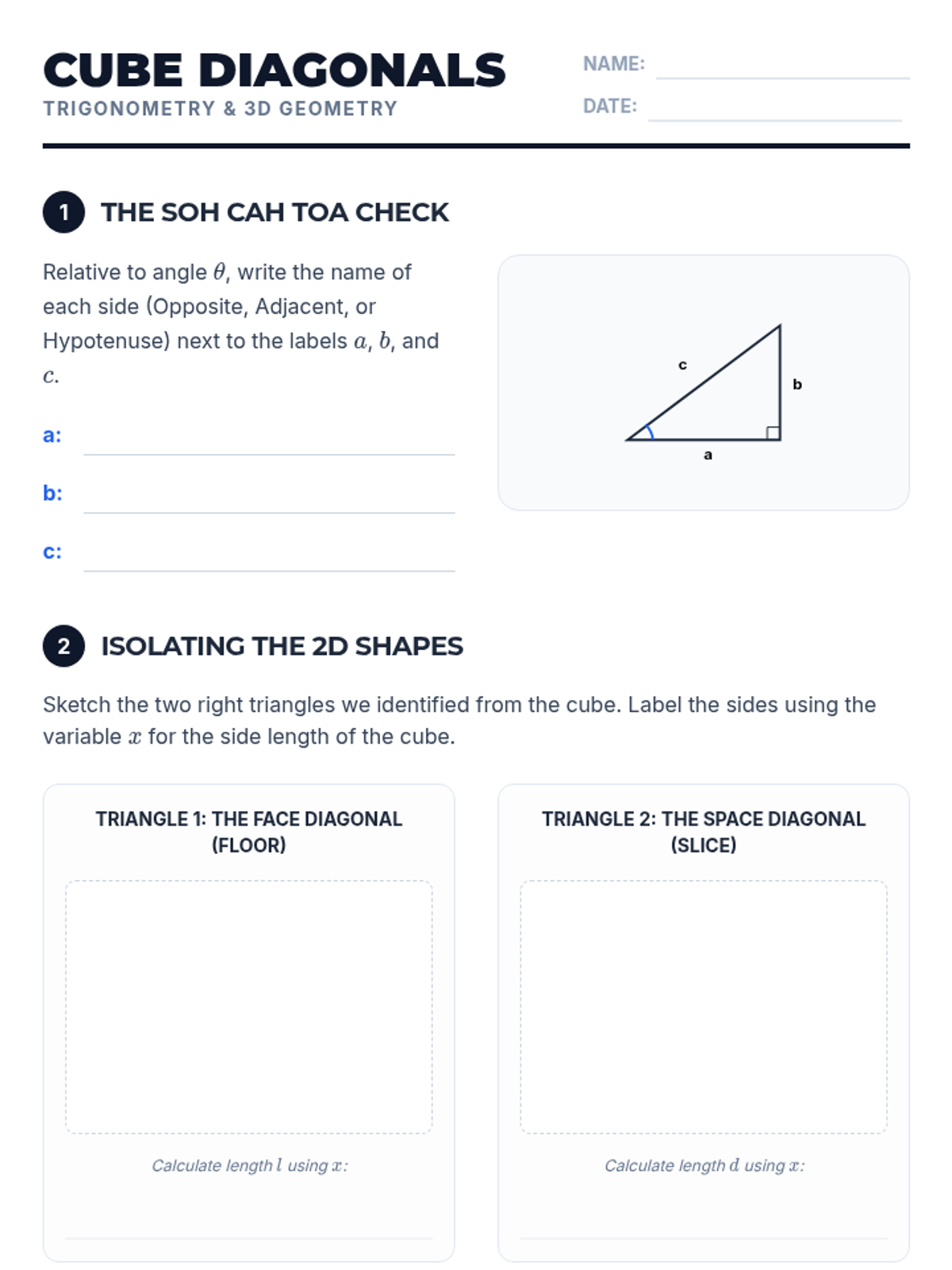
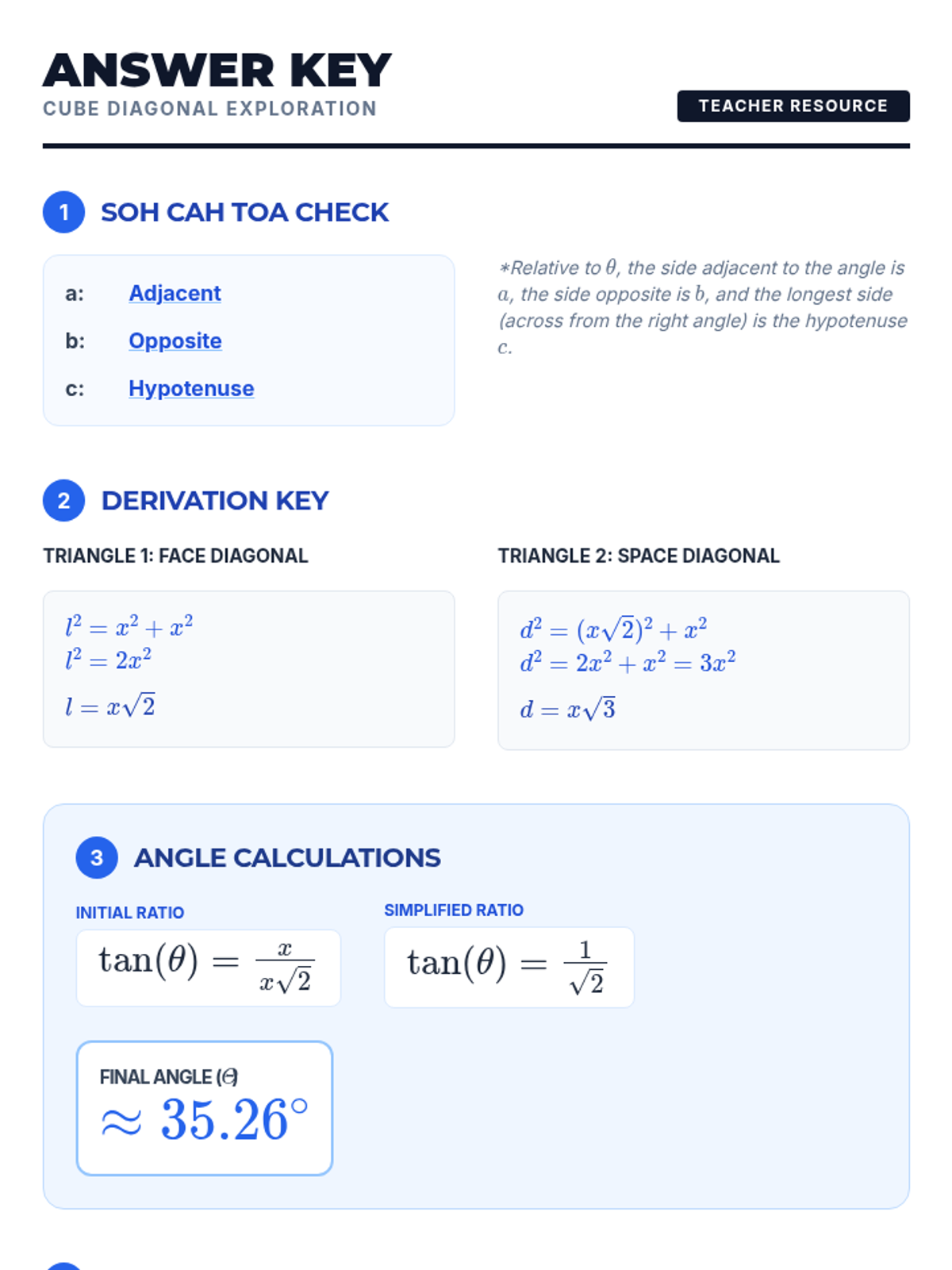
A lesson focused on 3D trigonometry where students derive the space diagonal of a cube and use trigonometric ratios to find the constant angle of elevation, regardless of the cube's side length.
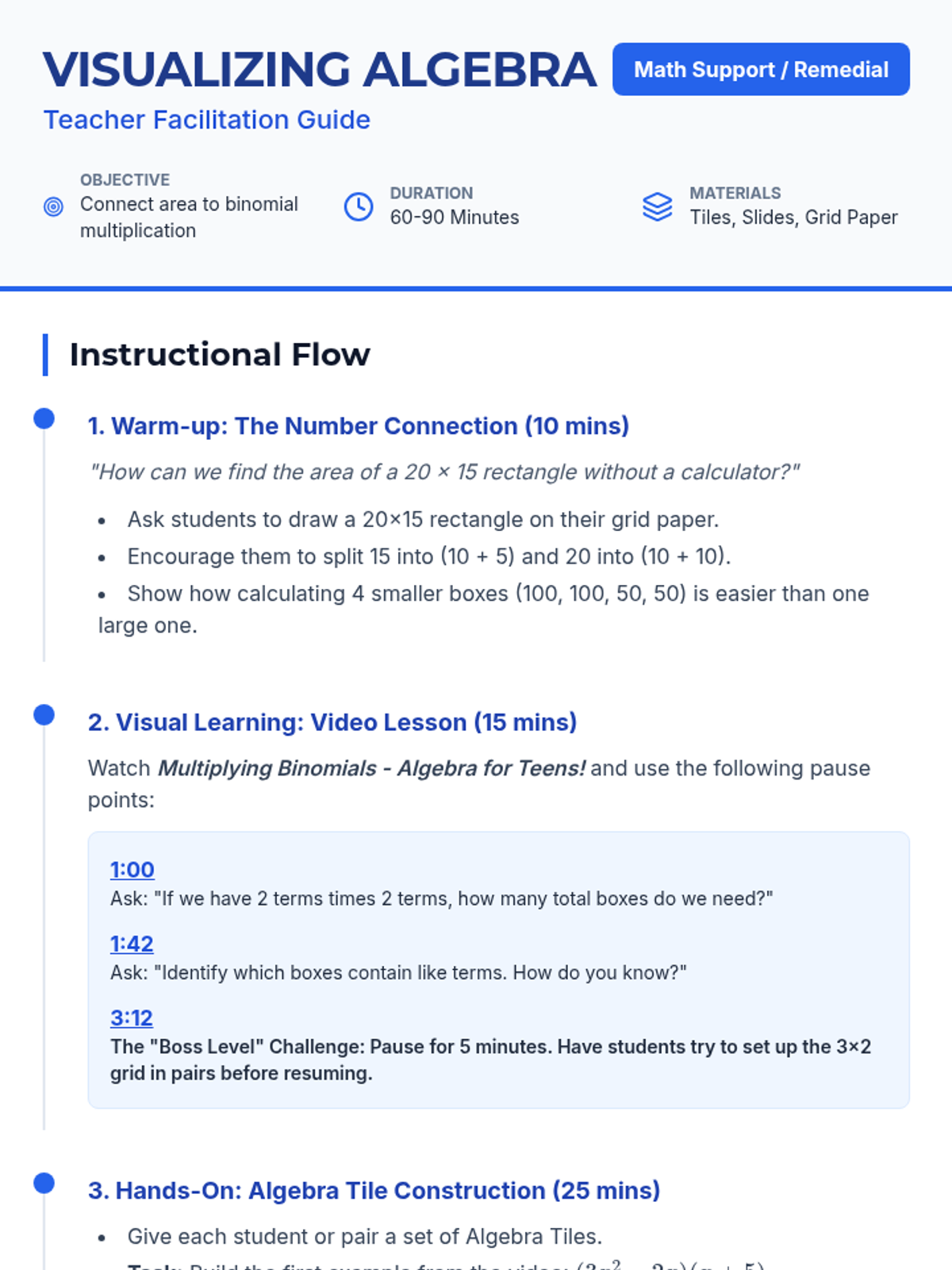
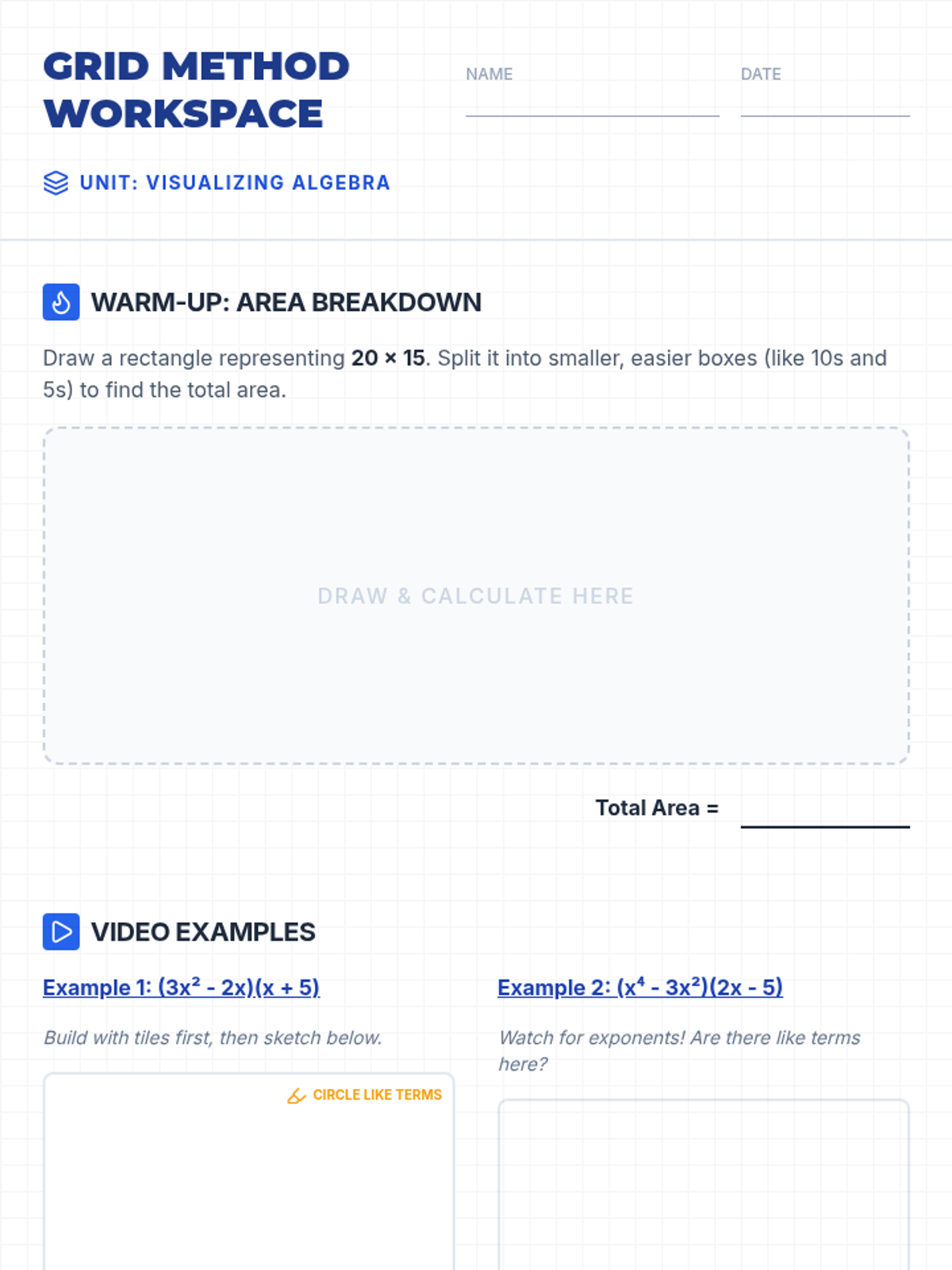
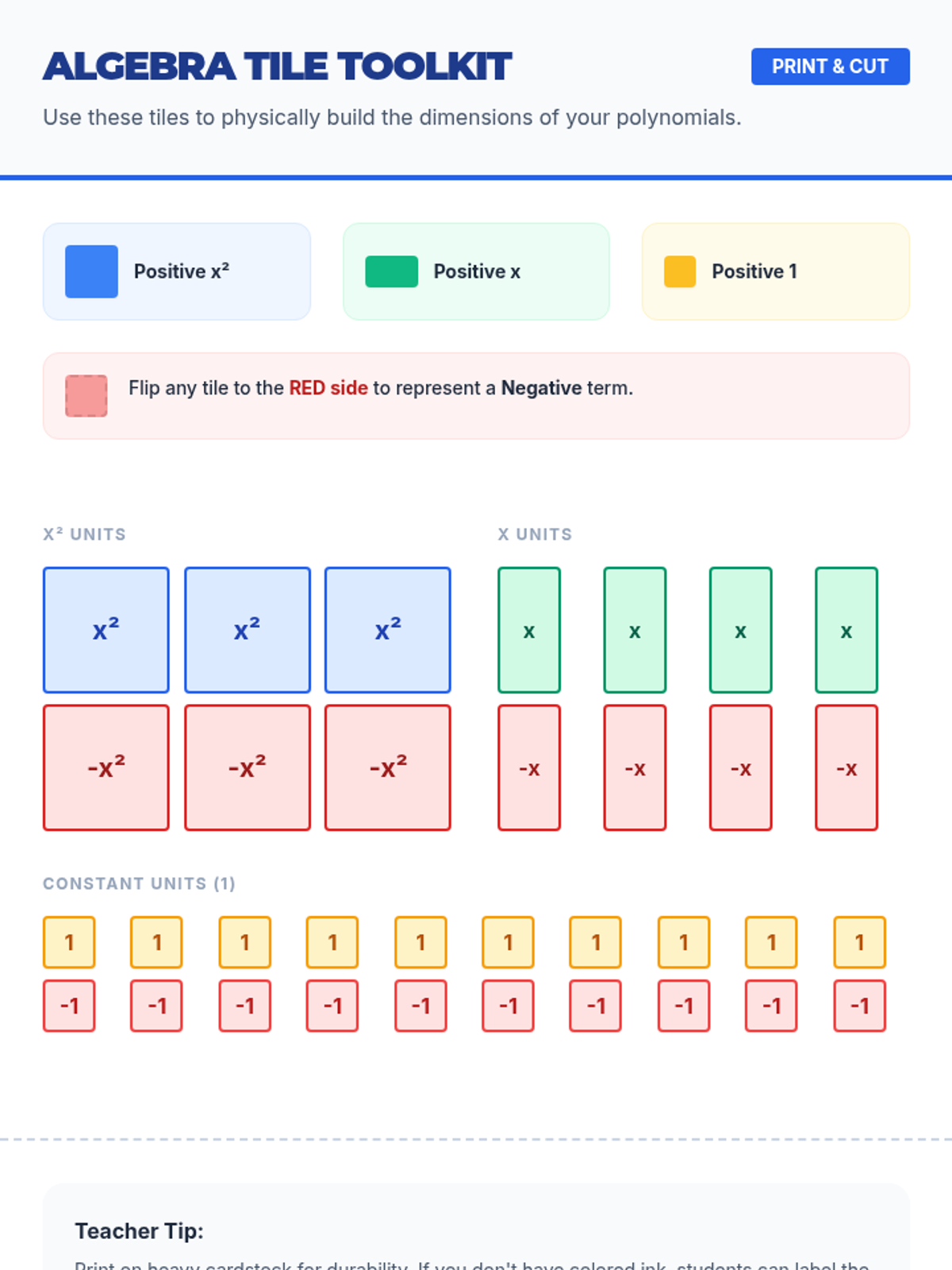
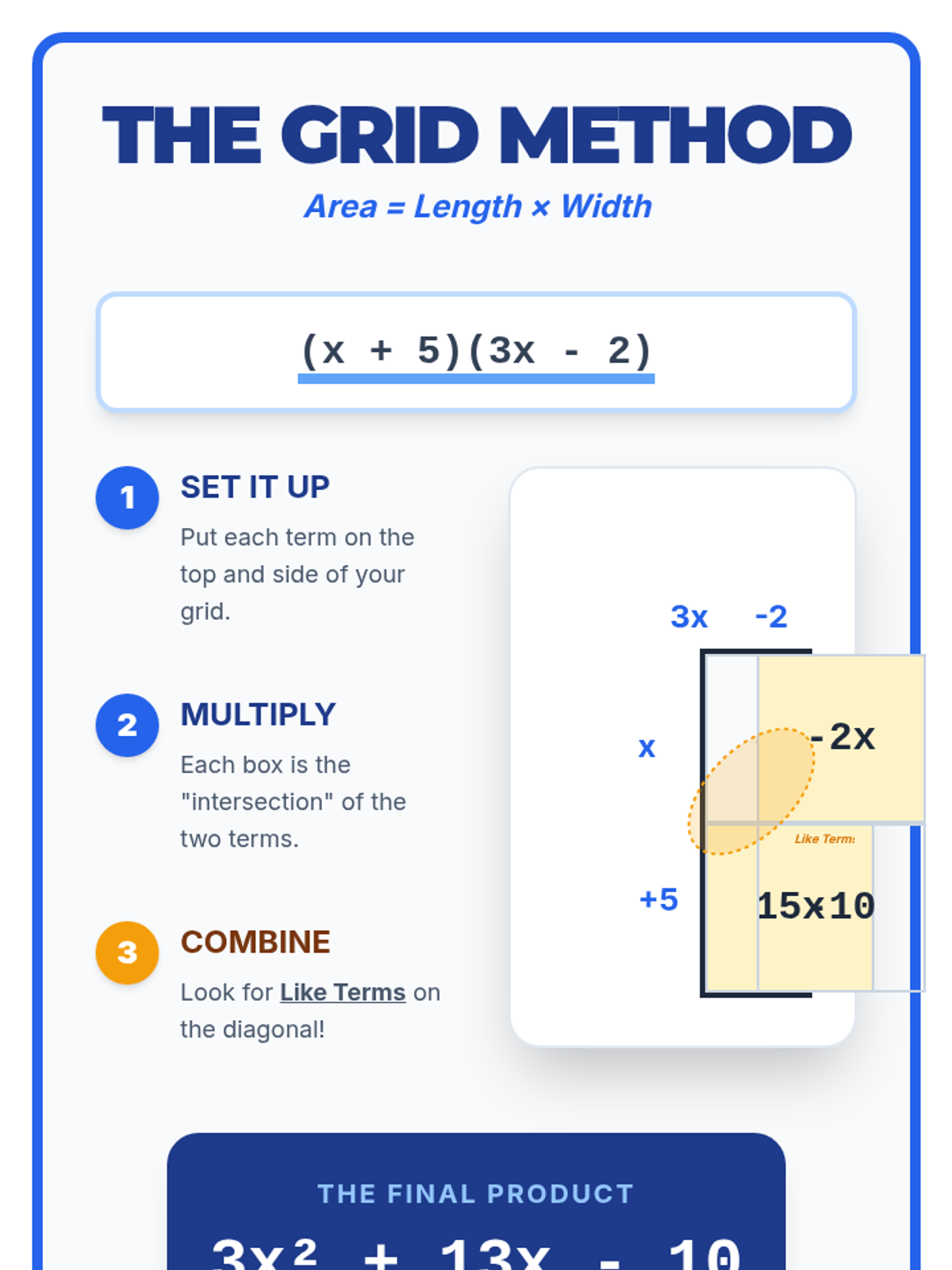
A remedial high school math lesson that bridges the gap between geometric area and algebraic multiplication using the grid method and physical algebra tiles.
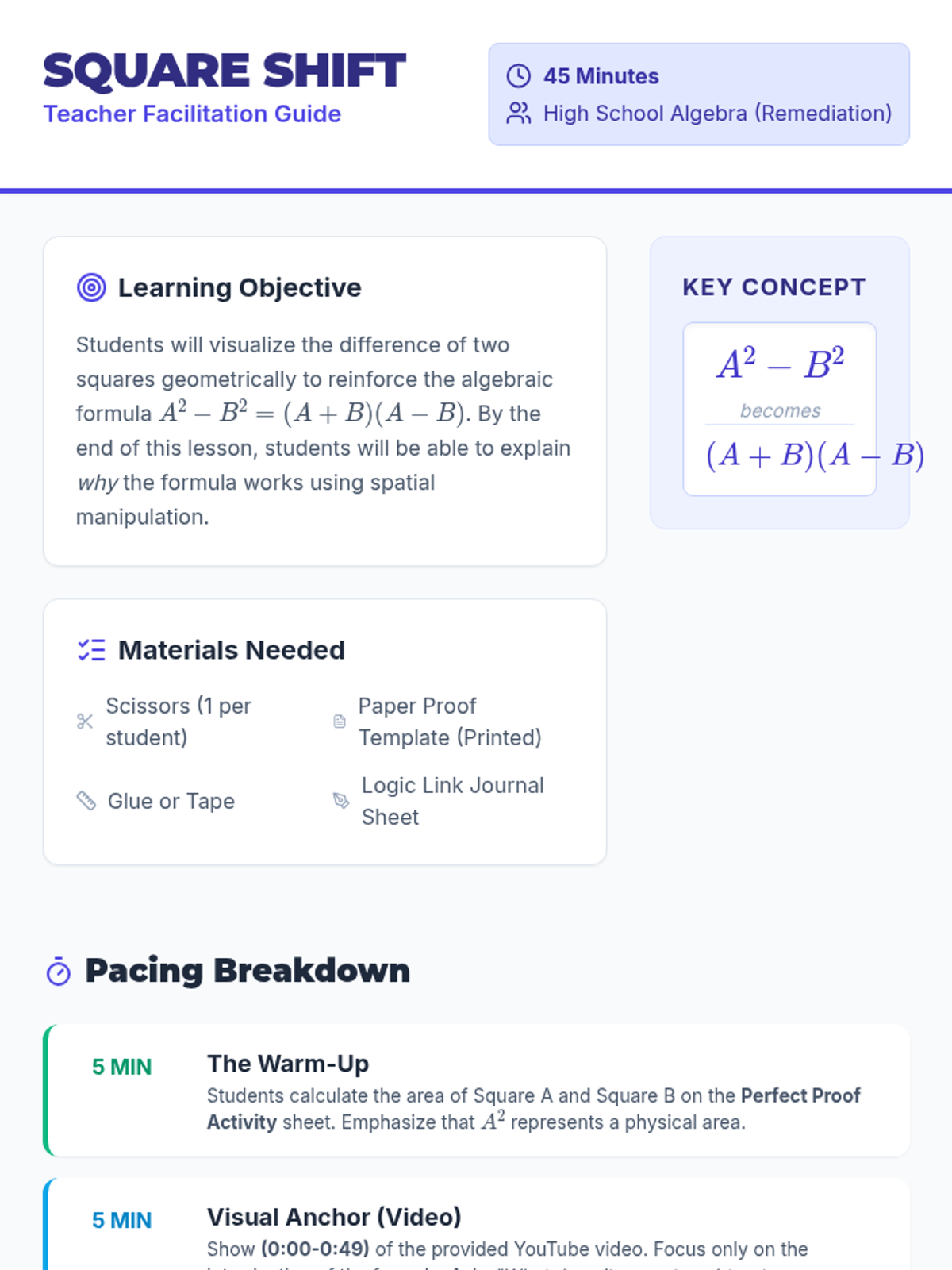
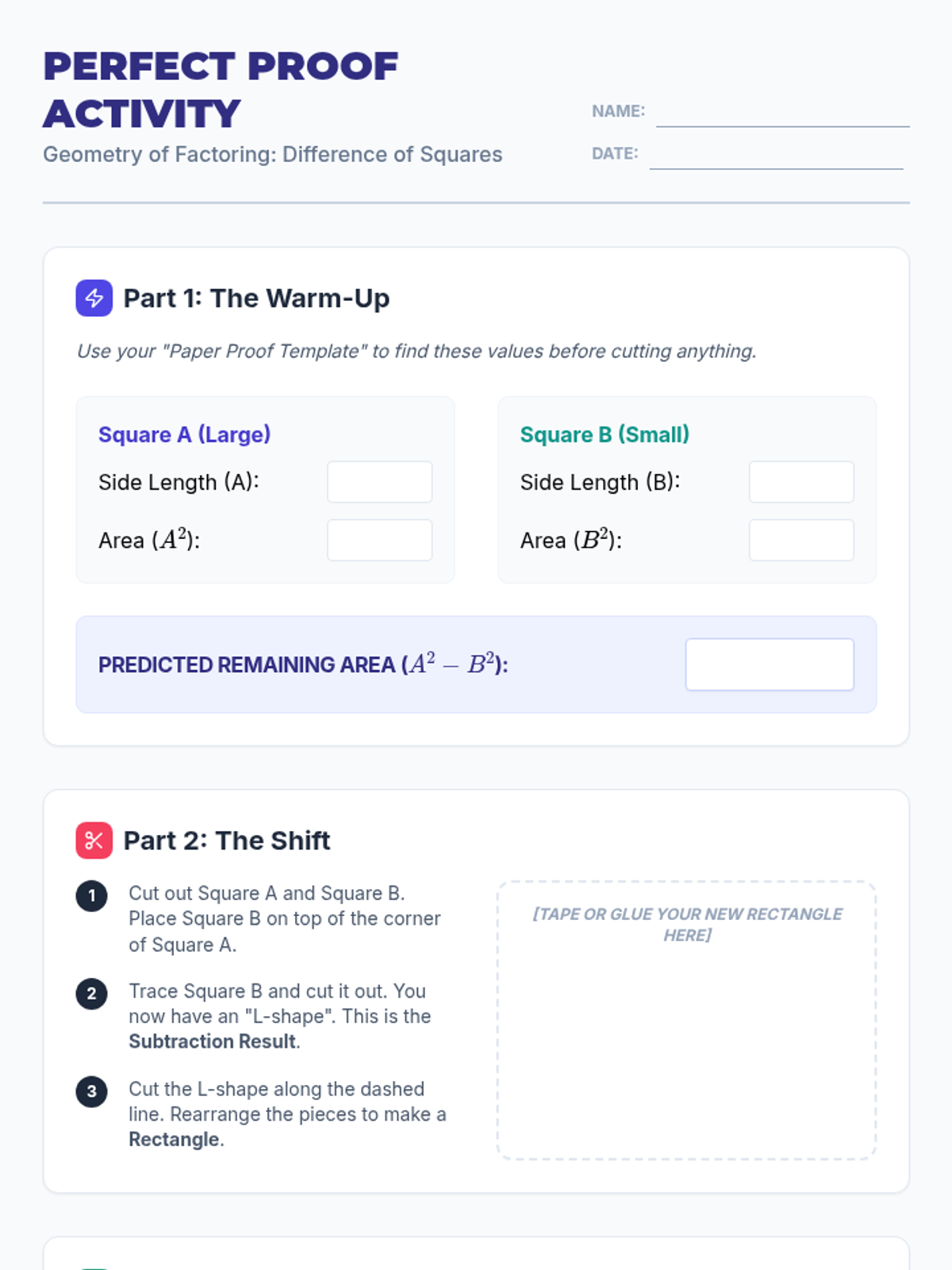
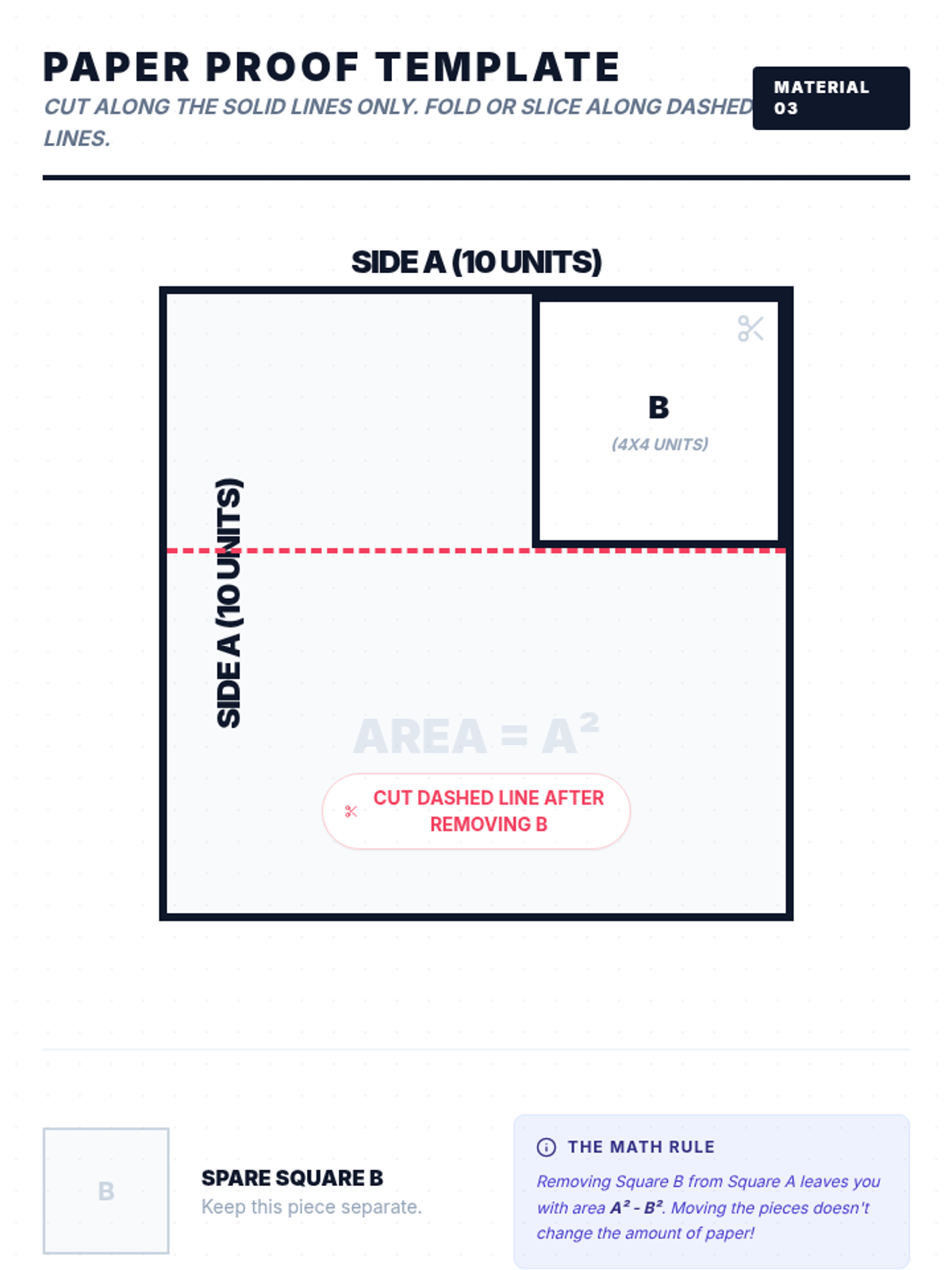
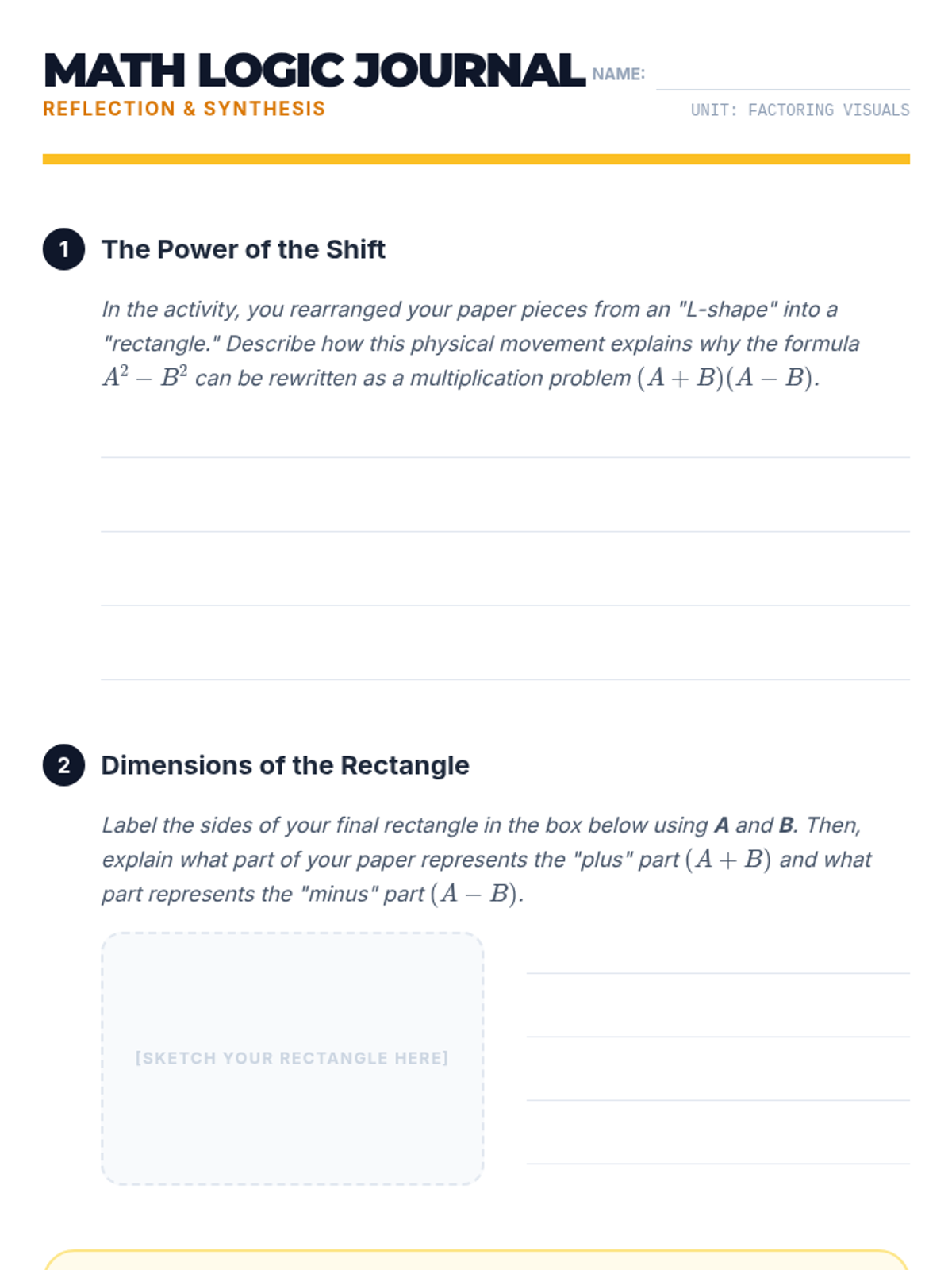
A remedial algebra lesson that uses paper-cutting and geometric manipulation to visually prove the Difference of Two Squares formula (A² - B² = (A - B)(A + B)). Students transition from abstract symbols to concrete spatial reasoning.
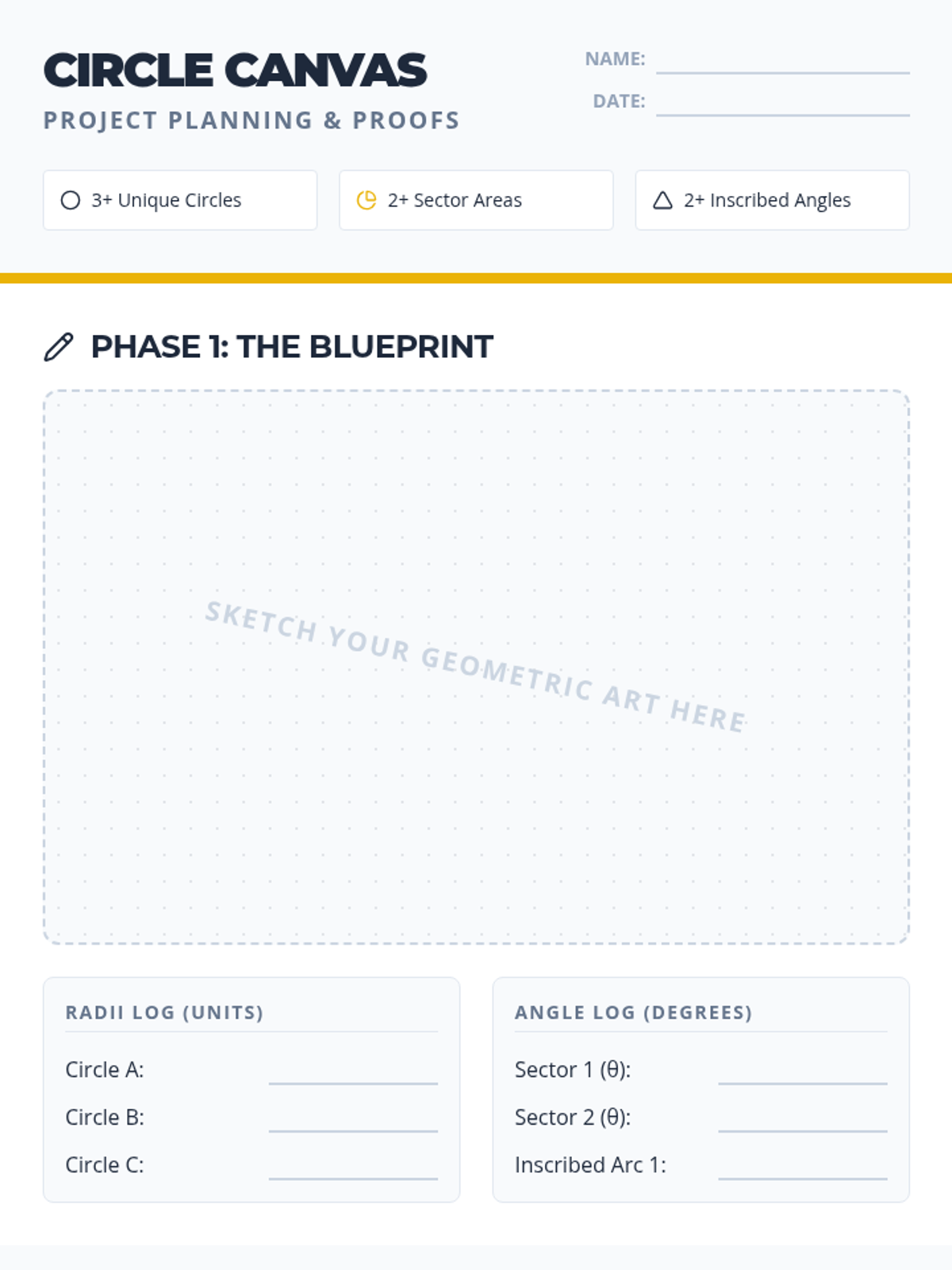
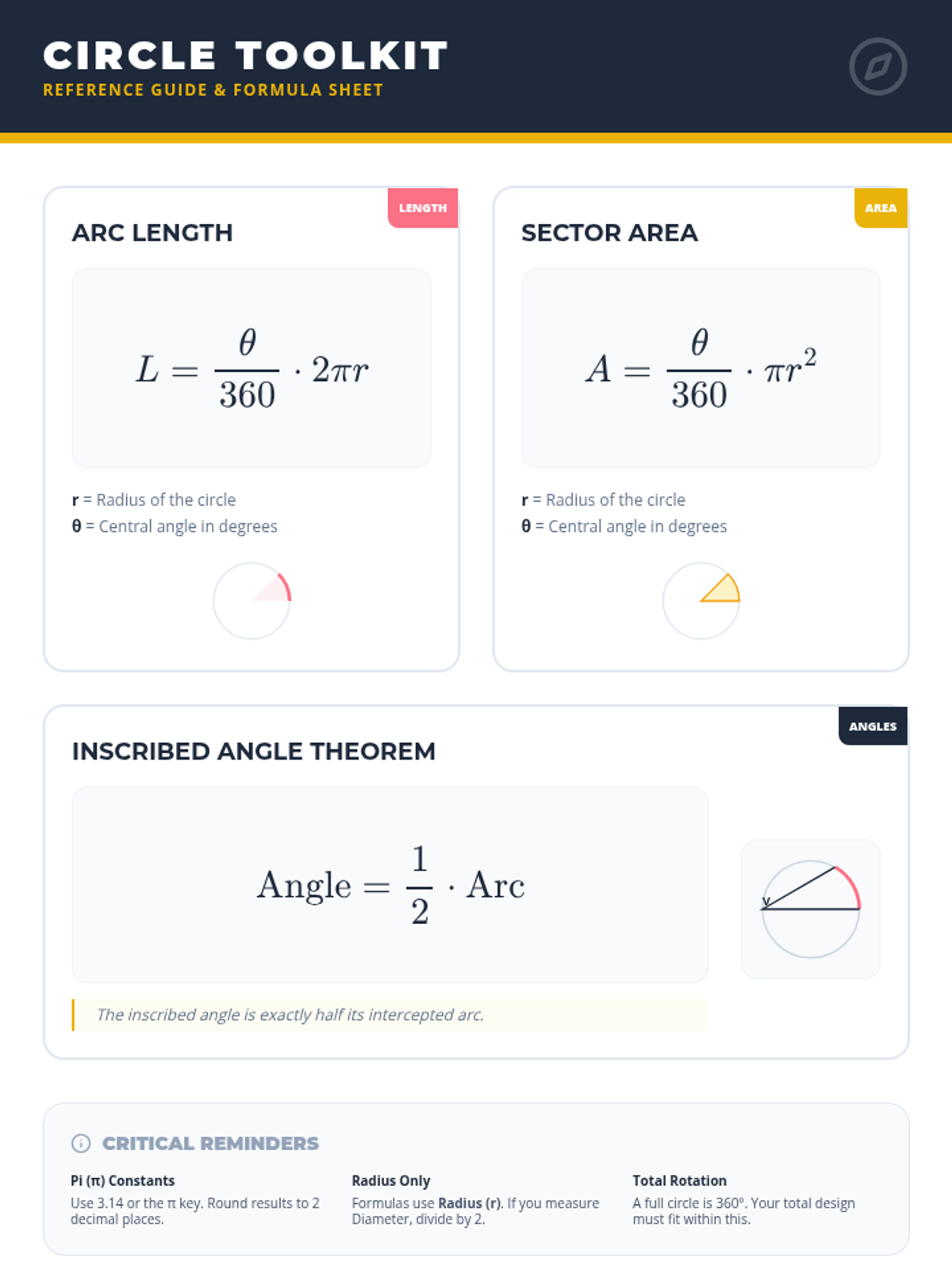
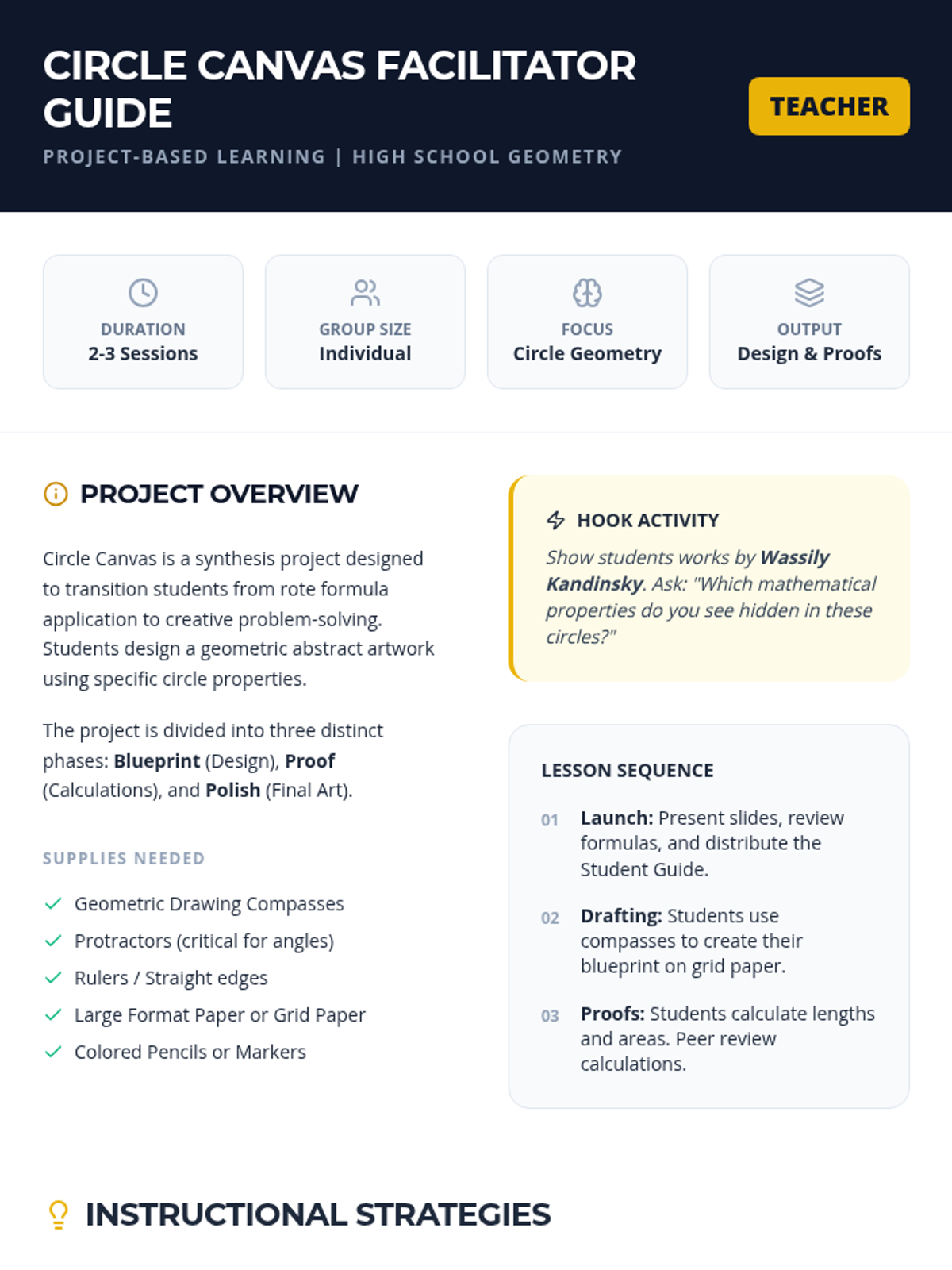
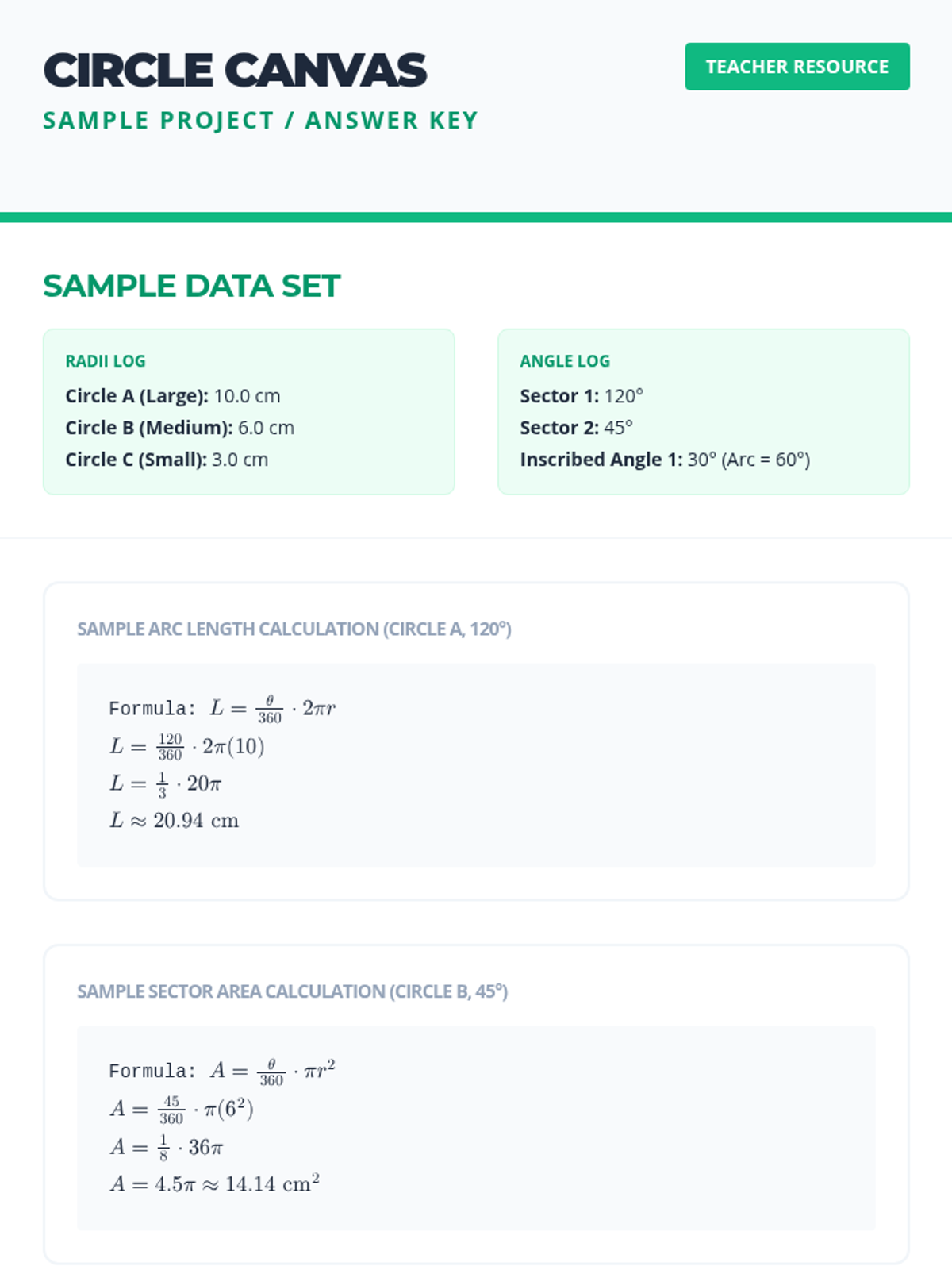
A creative art-based project where students apply circle geometry concepts—arc length, sector area, and inscribed angles—to design and calculate a geometric masterpiece.
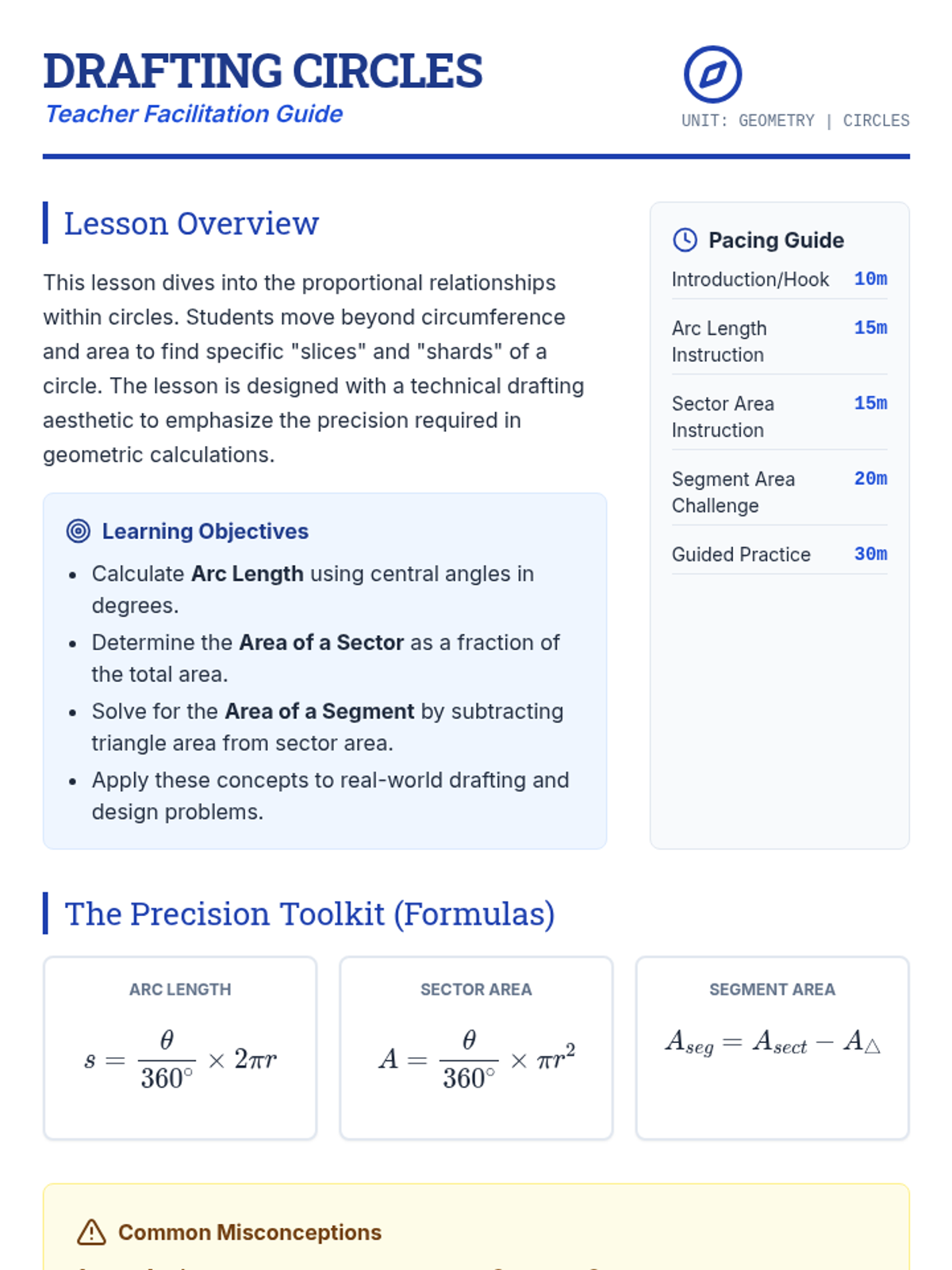
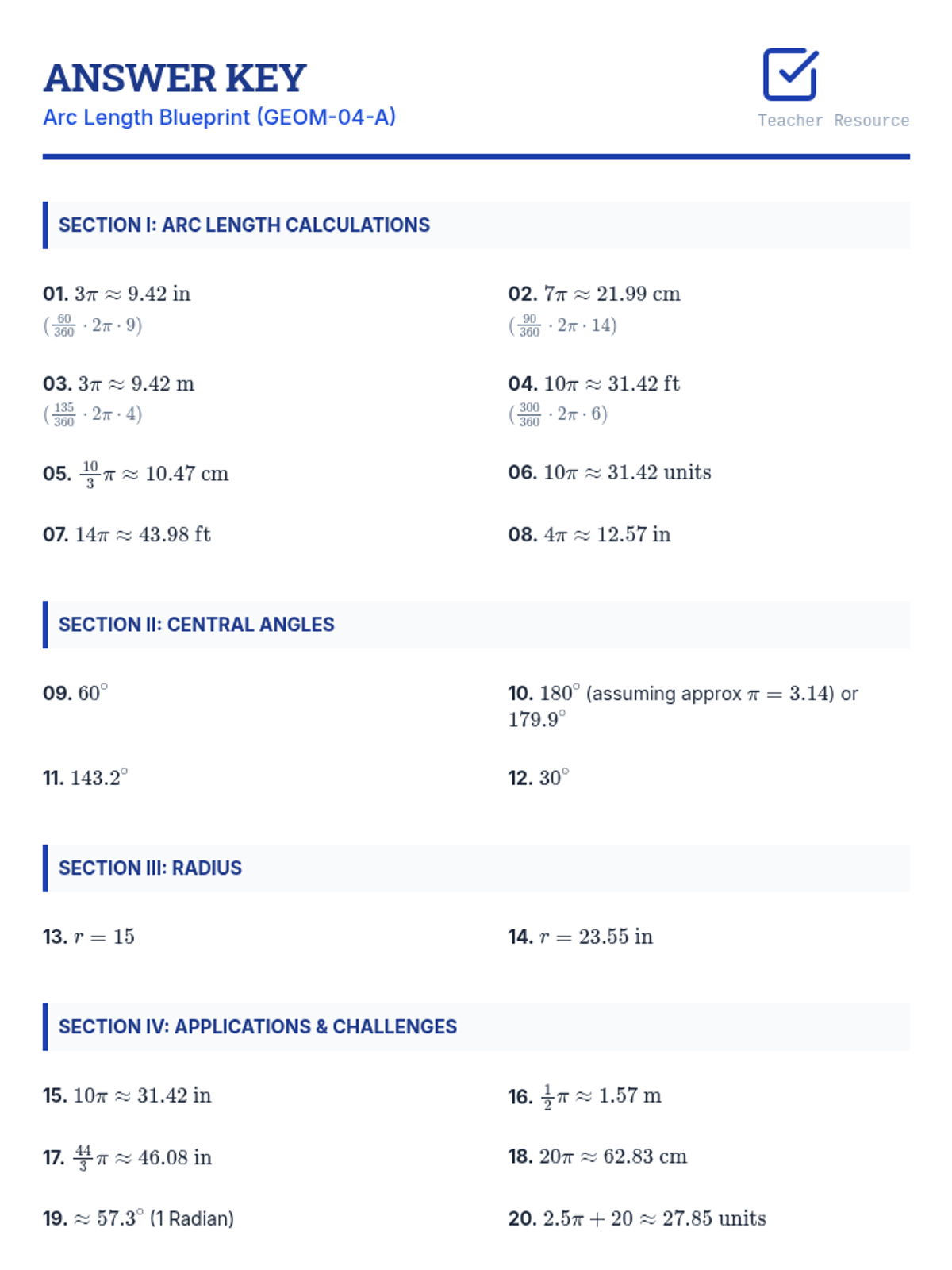
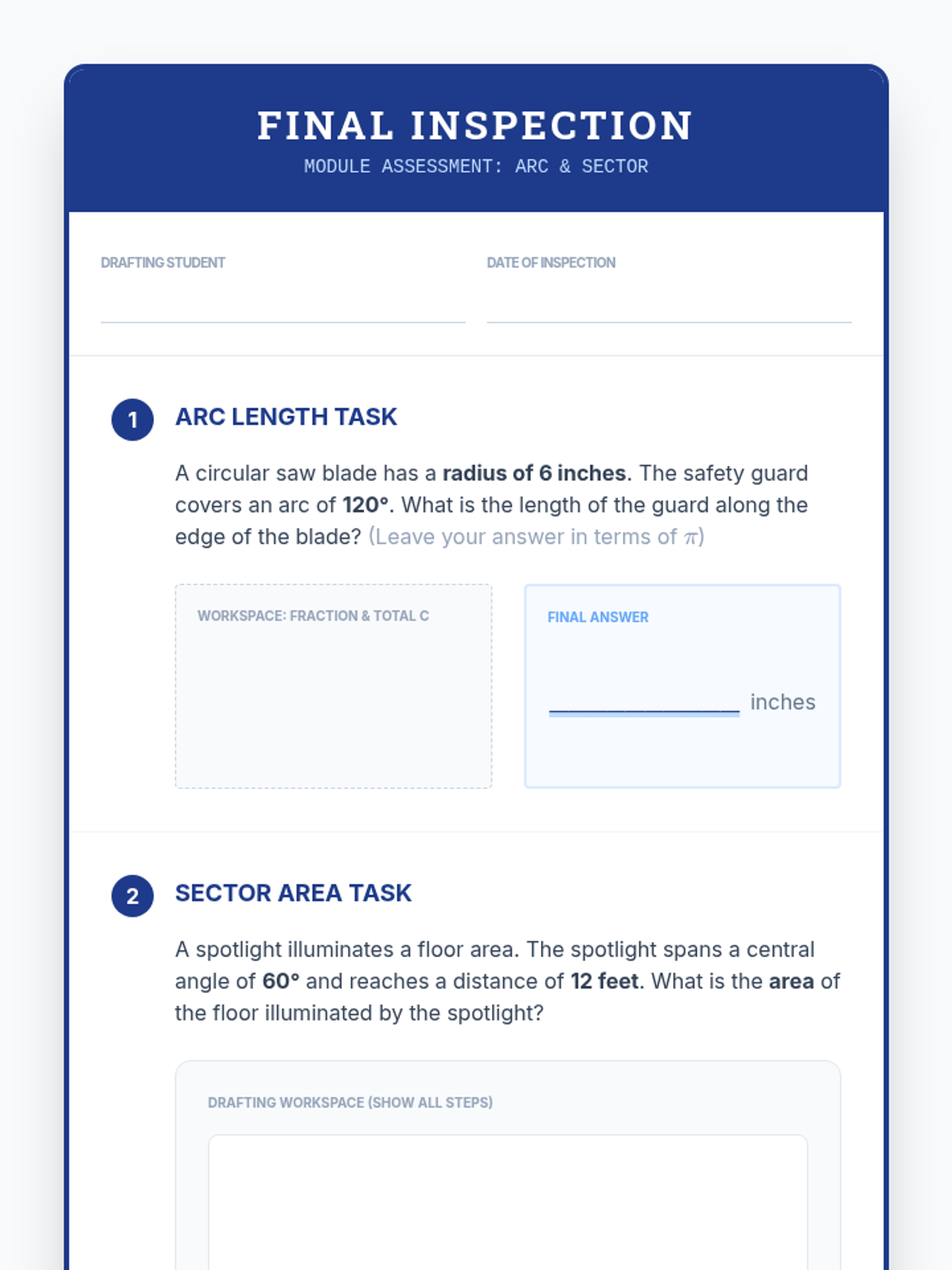
A comprehensive lesson covering the calculation of arc length, area of a sector, and area of a segment within circles, utilizing a precision drafting theme.
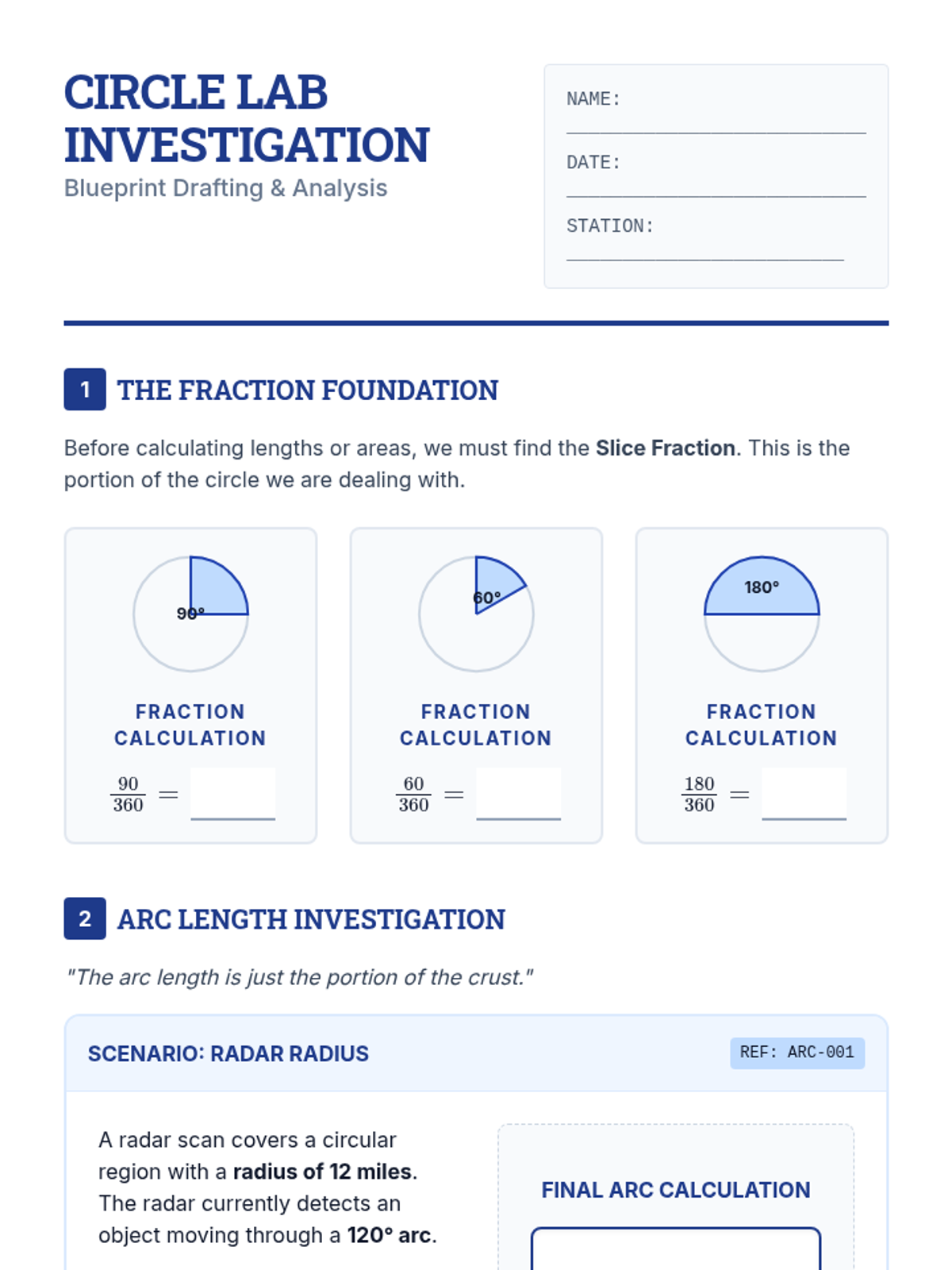
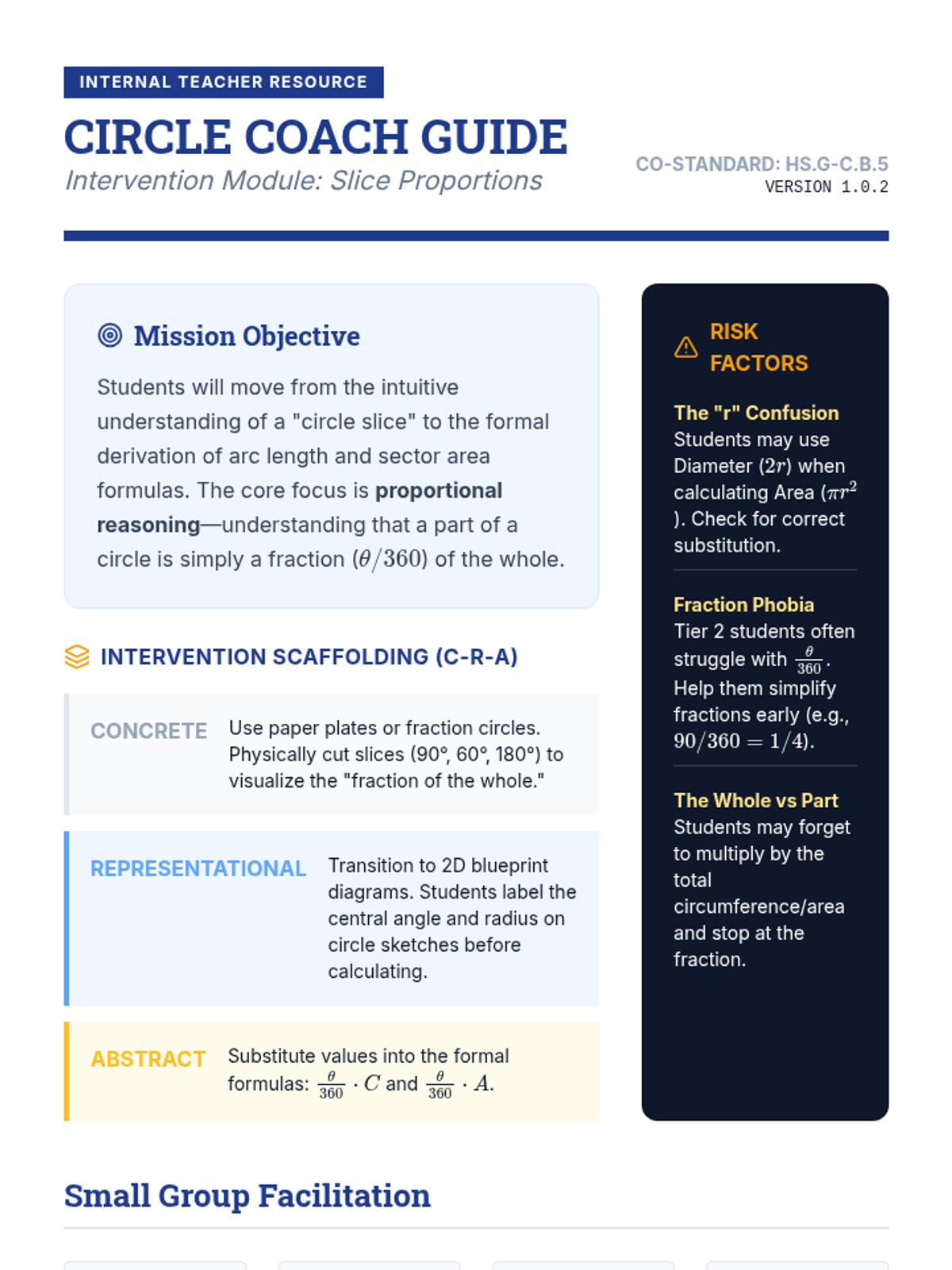
A targeted intervention lesson exploring the relationship between central angles, arc lengths, and sector areas through hands-on measurement and proportional reasoning.
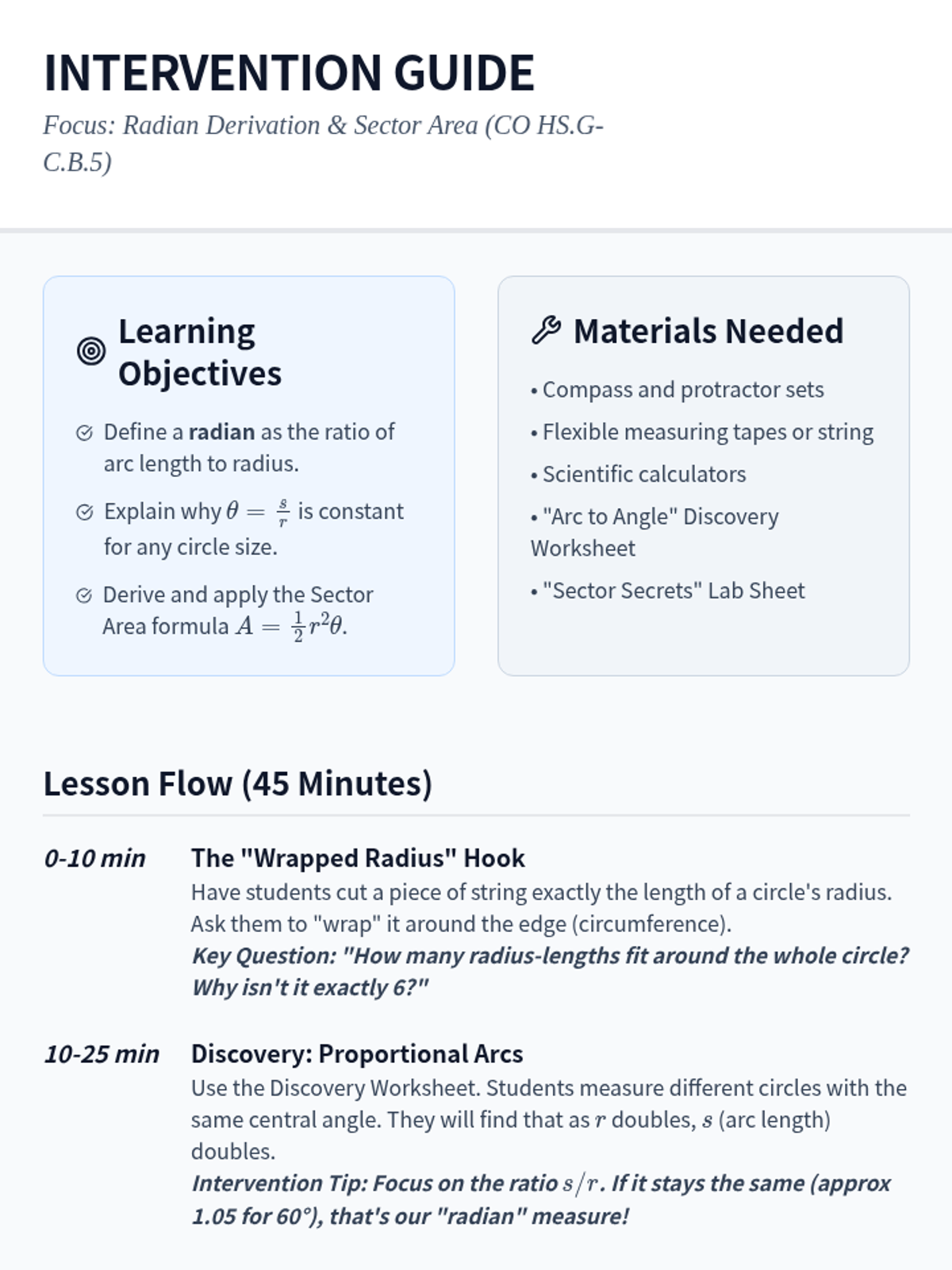
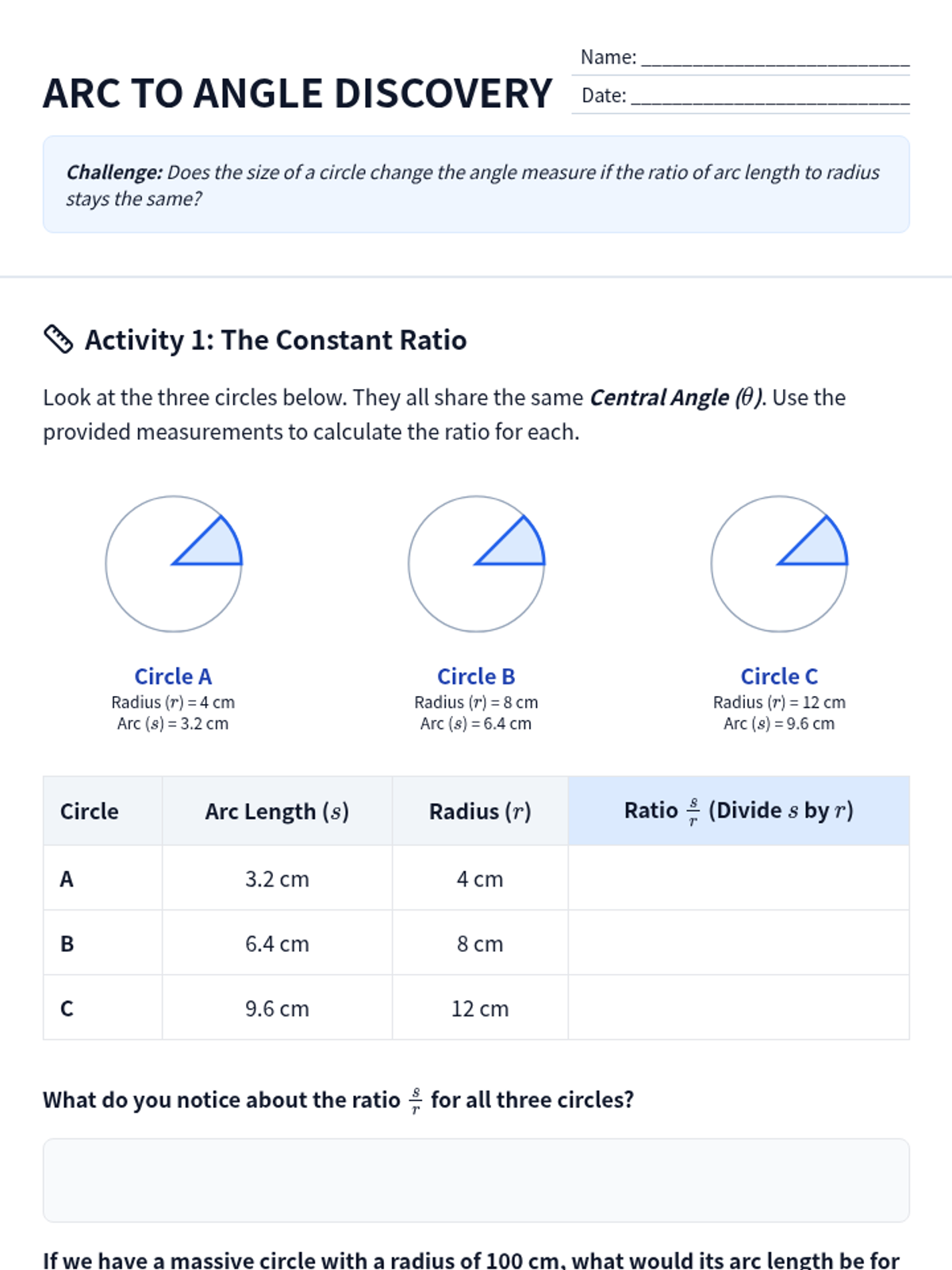
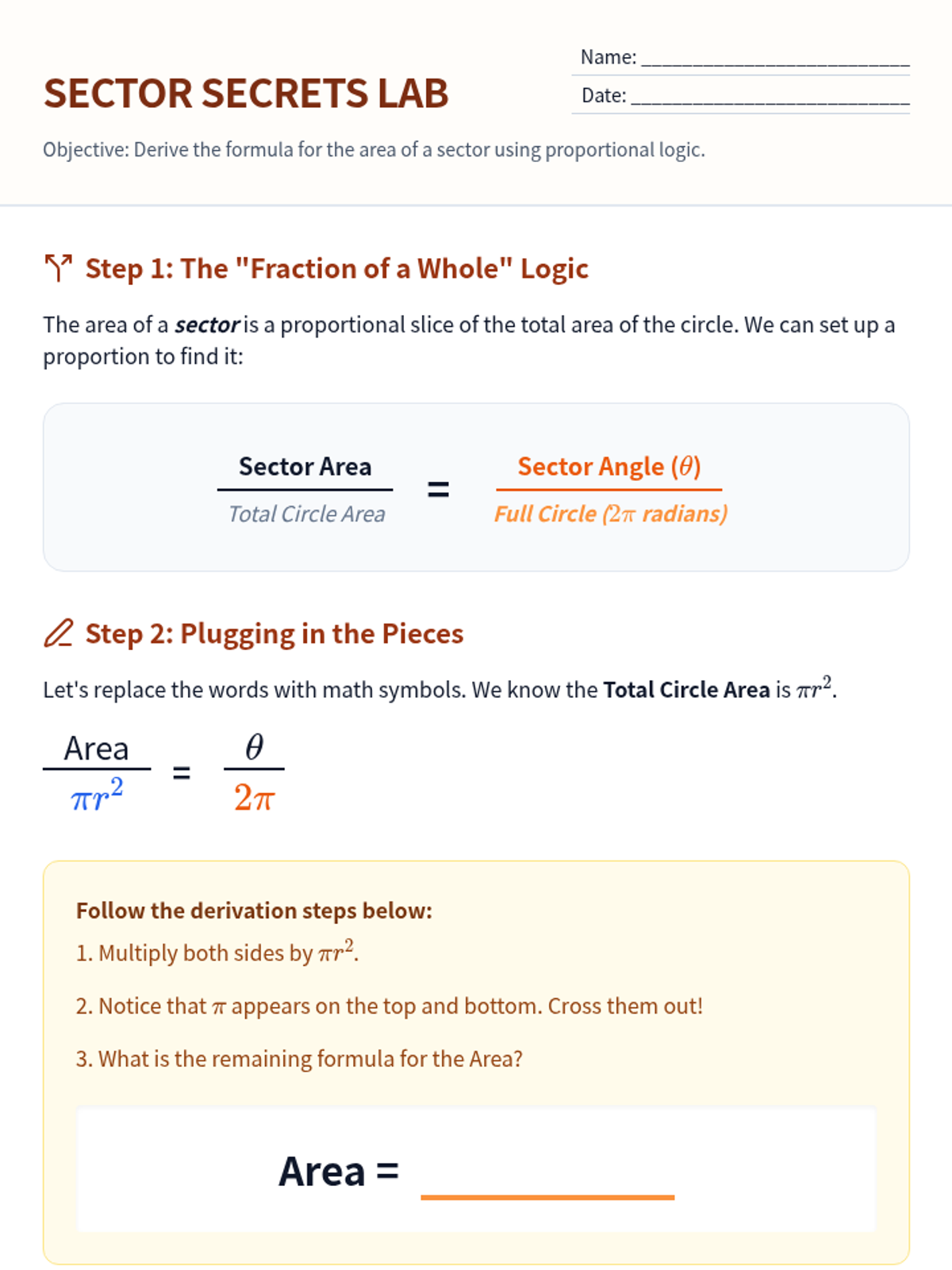
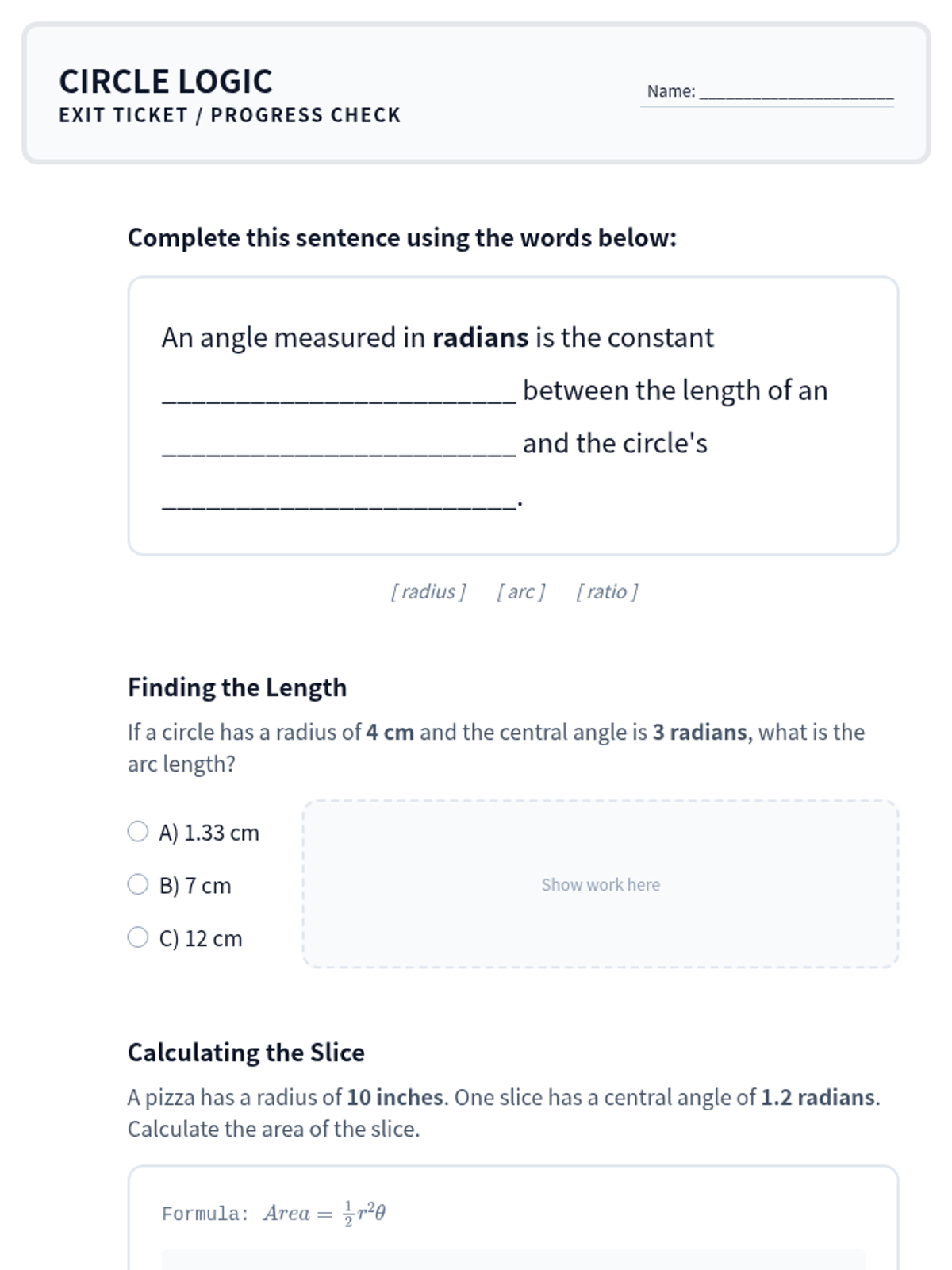
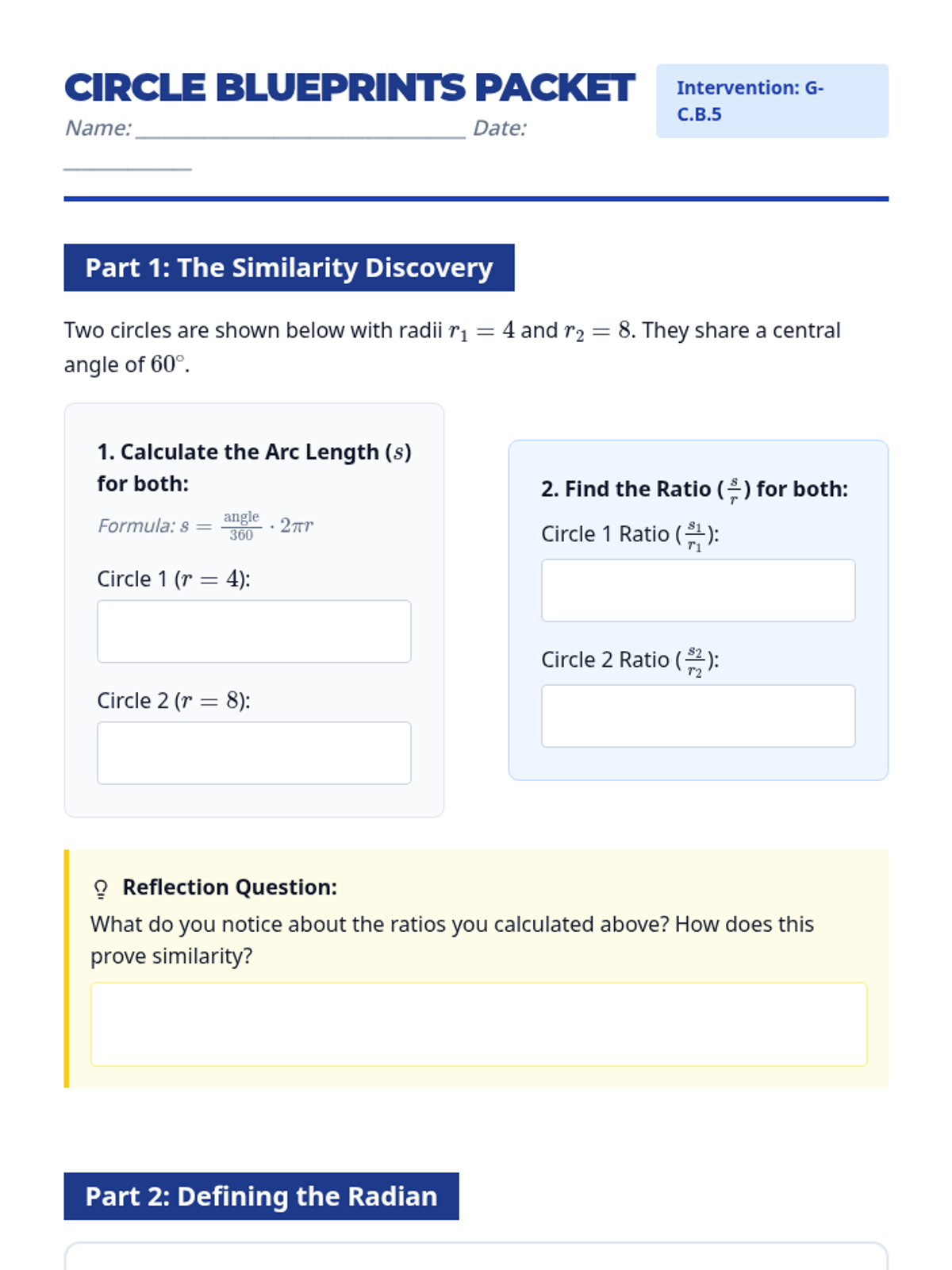
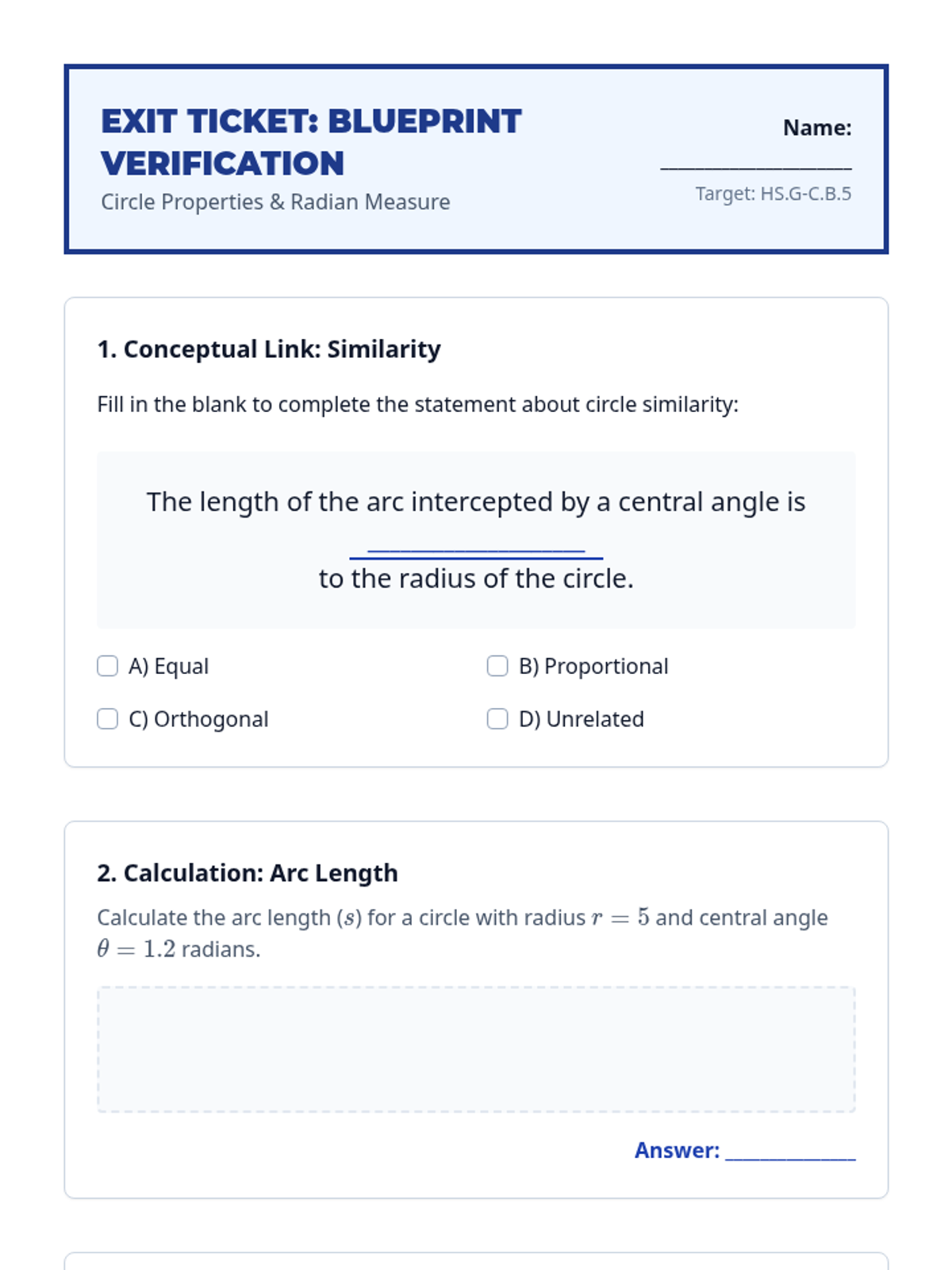
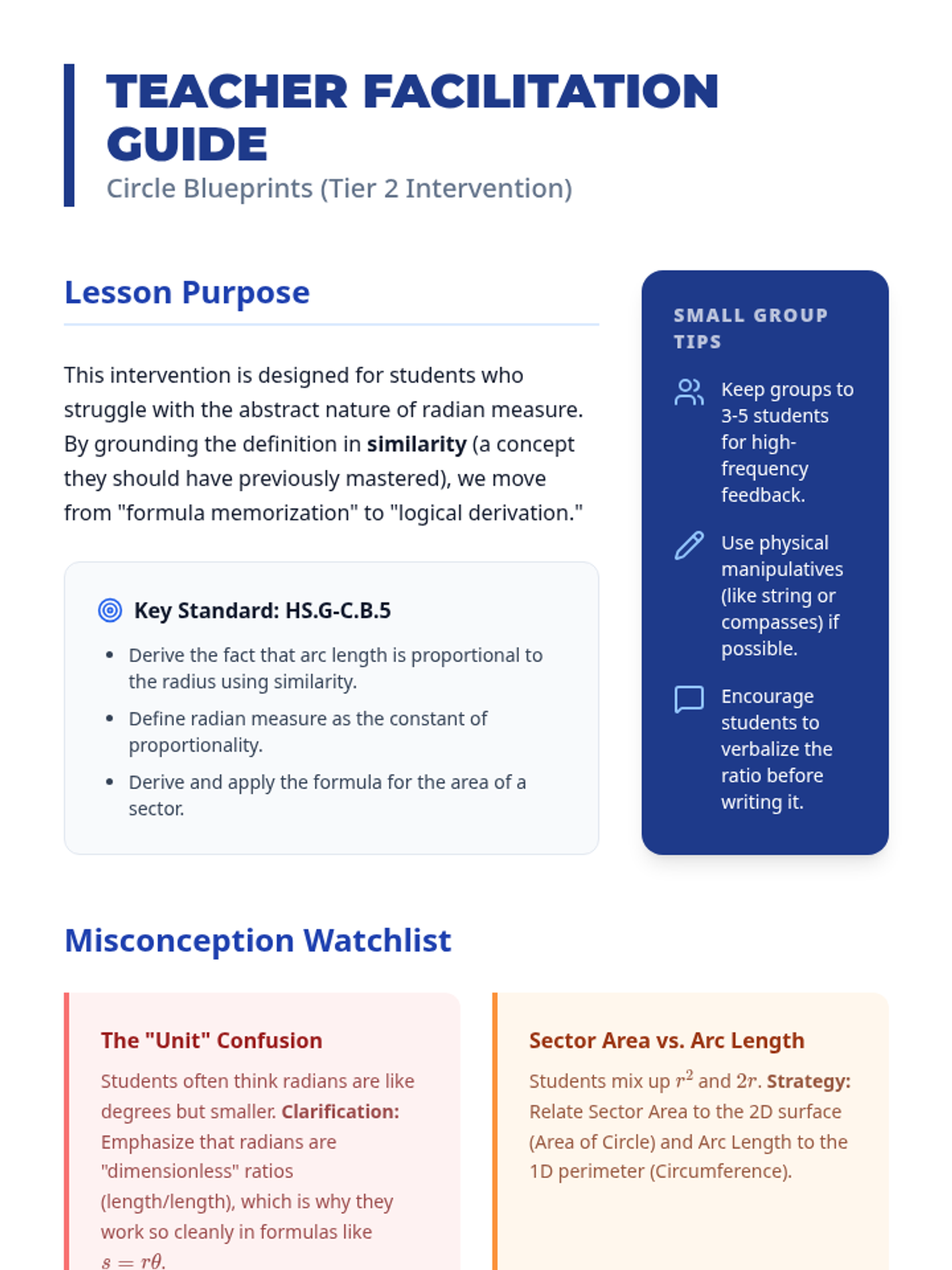
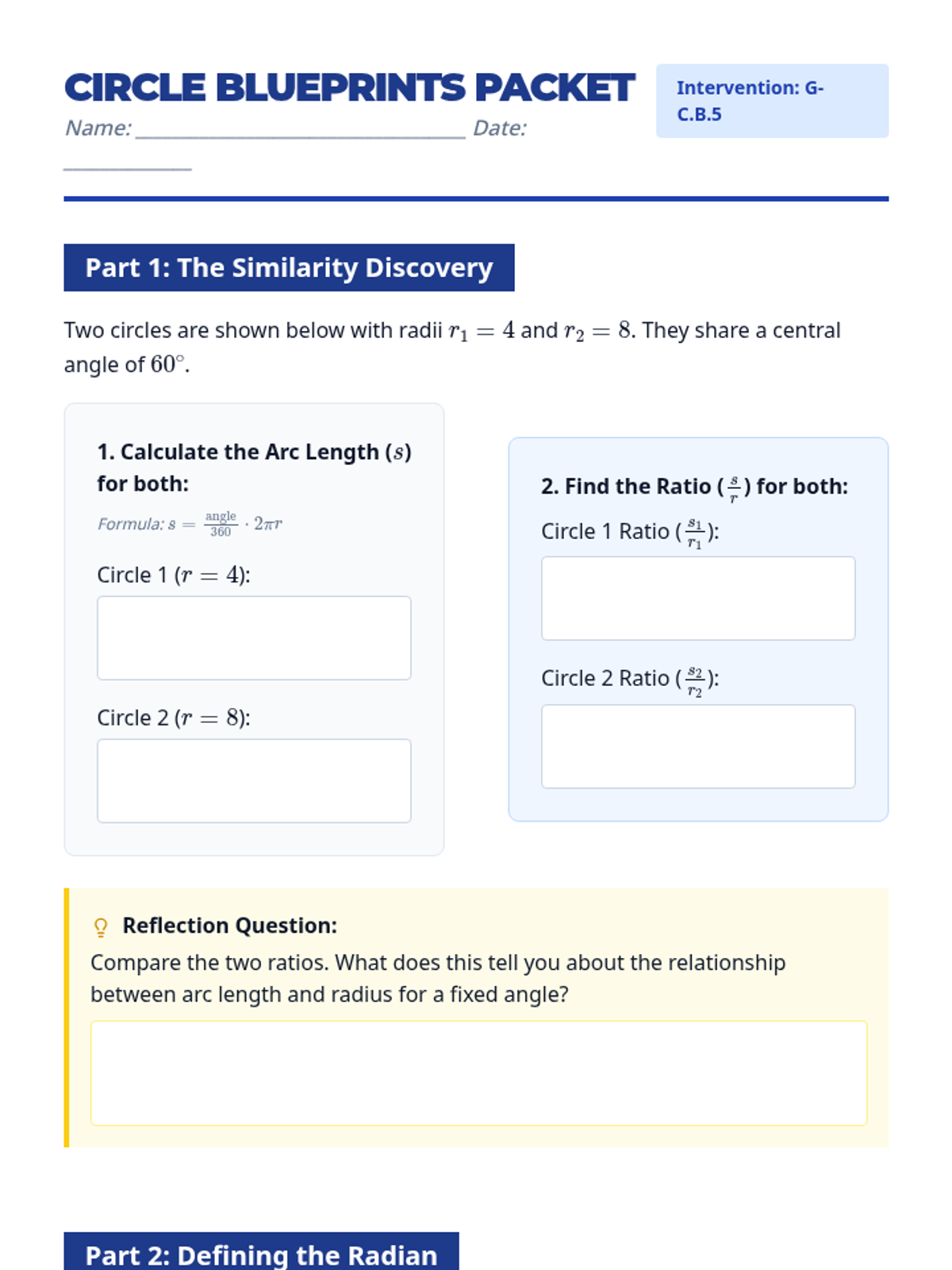
A targeted Tier 2 intervention lesson focusing on the derivation of radian measure and sector area through proportional reasoning and hands-on measurement concepts. Students explore why the ratio of arc length to radius is constant for a given angle and apply this to find areas of circular sectors.
A targeted small group intervention lesson focused on deriving circle formulas using similarity, defining radians, and calculating sector areas with scaffolded support.
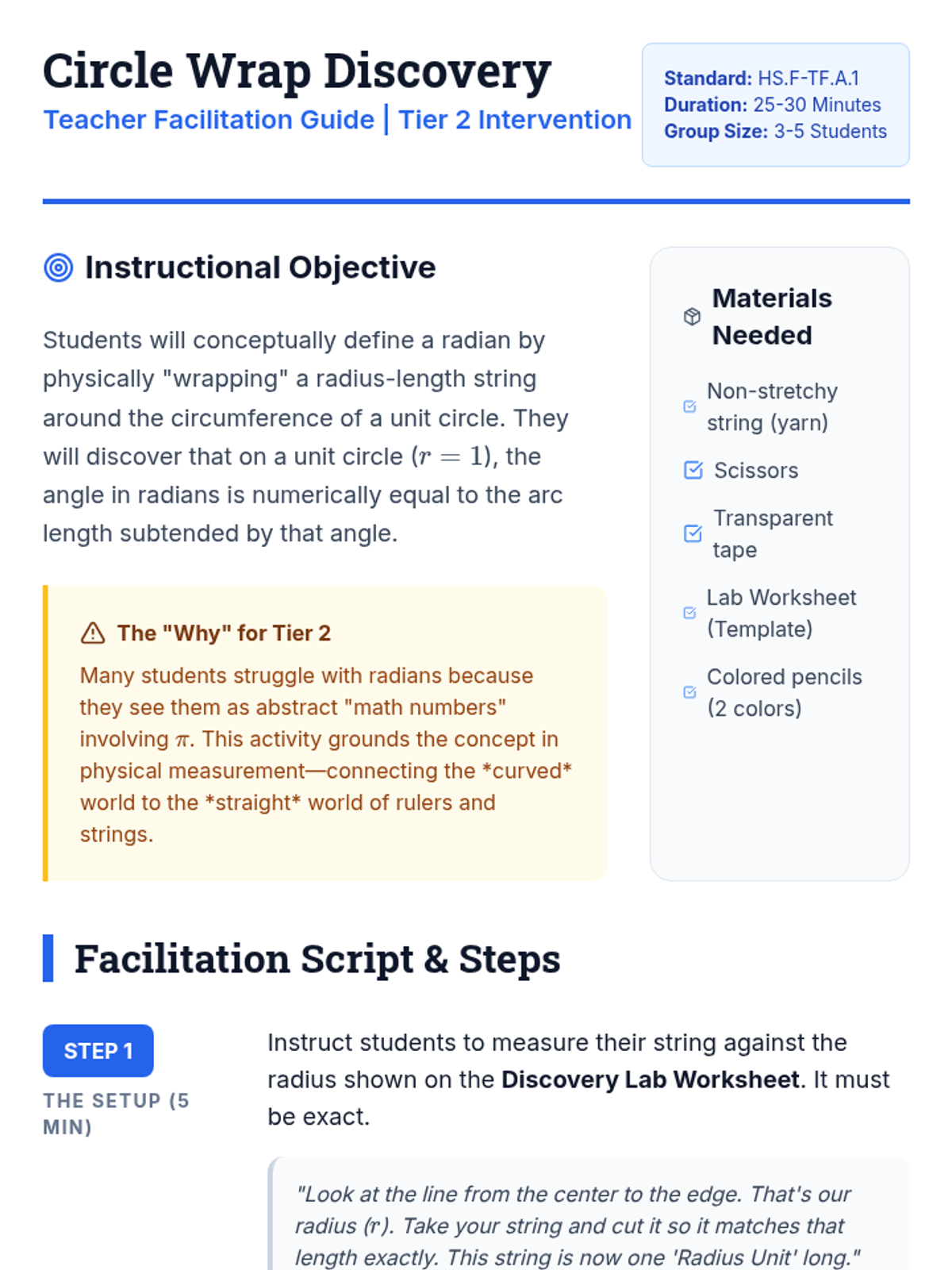
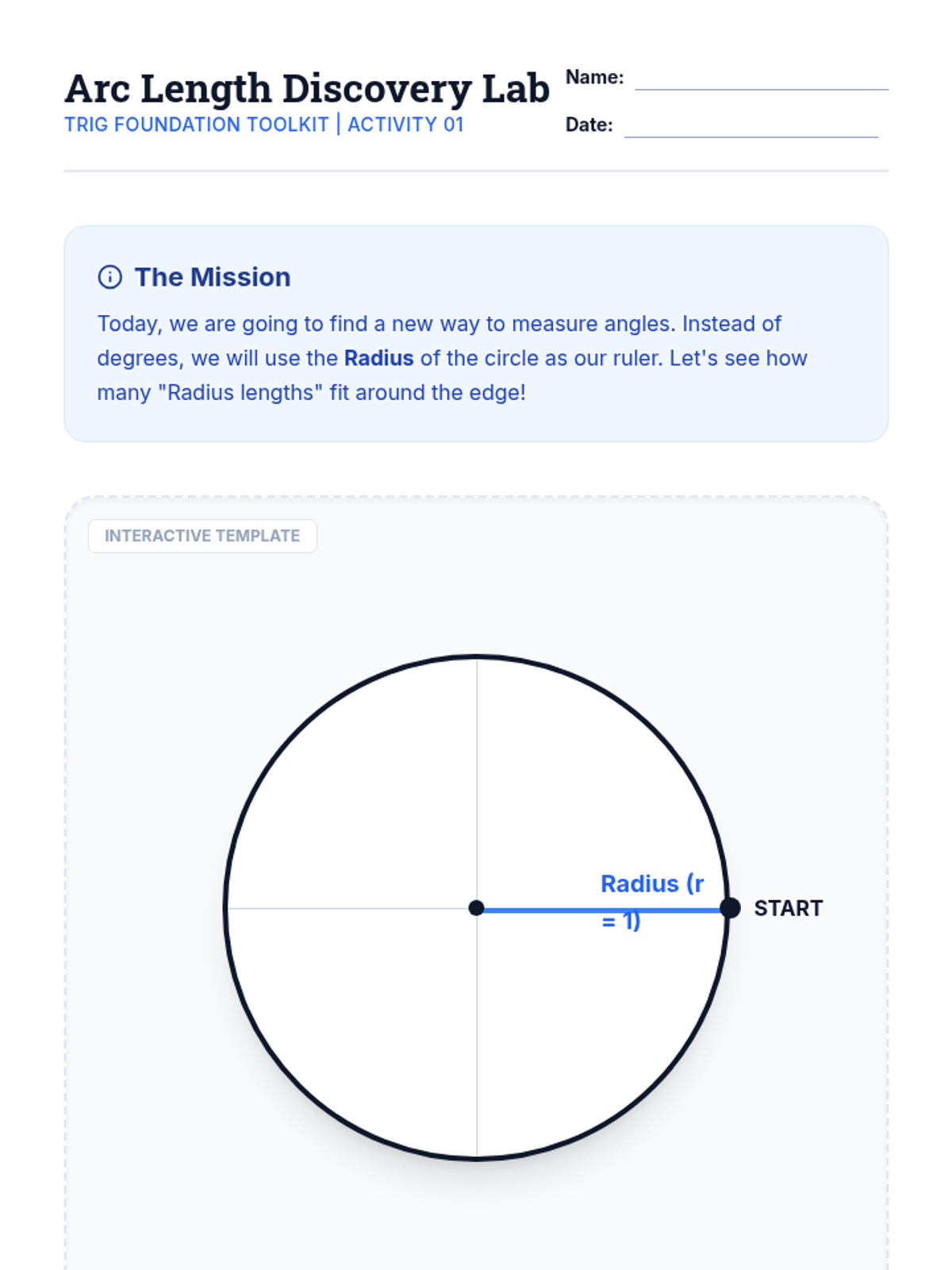
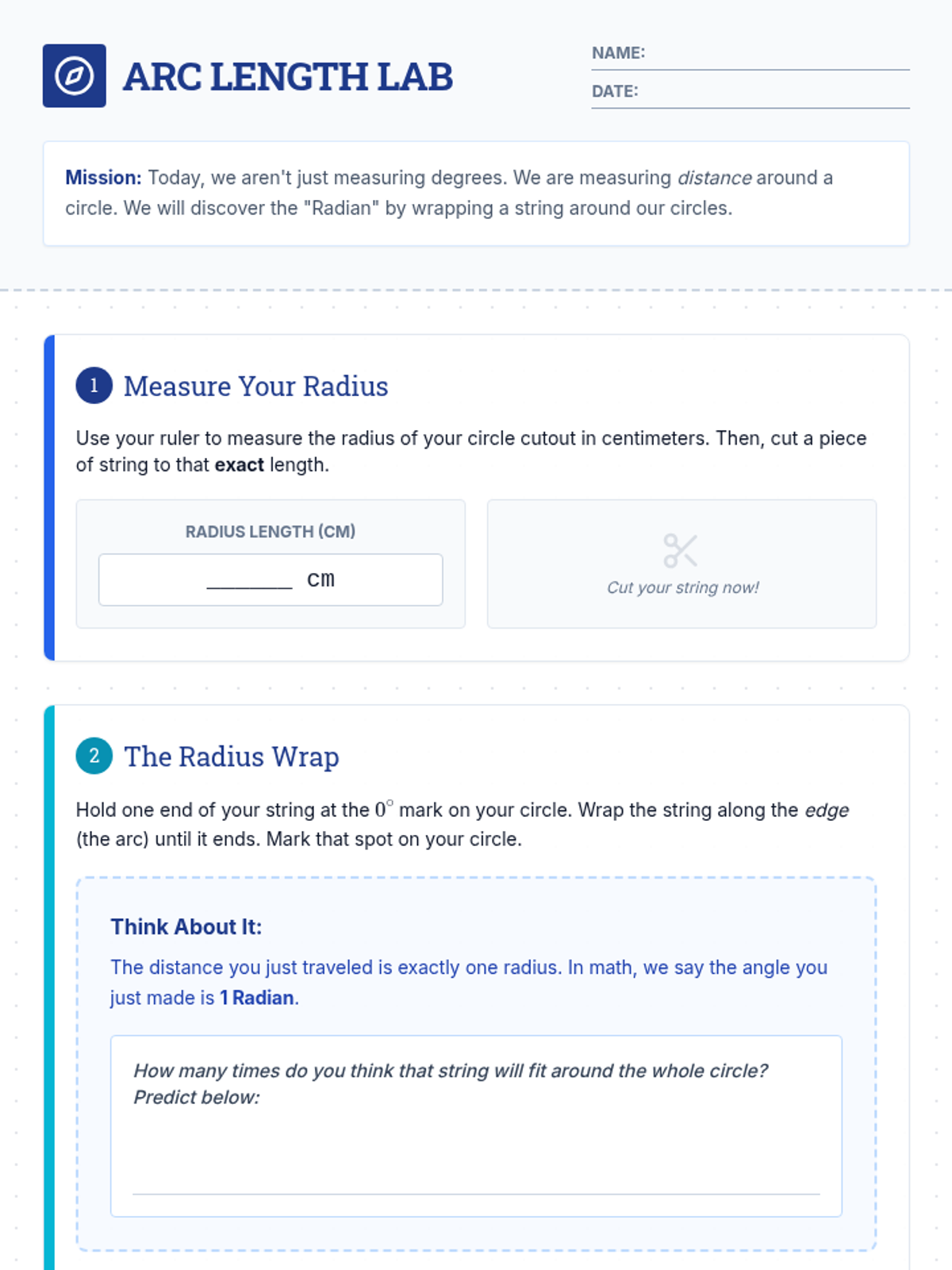
A targeted small-group lesson where students use string and unit circle models to discover that radian measure is equivalent to arc length when the radius is one.
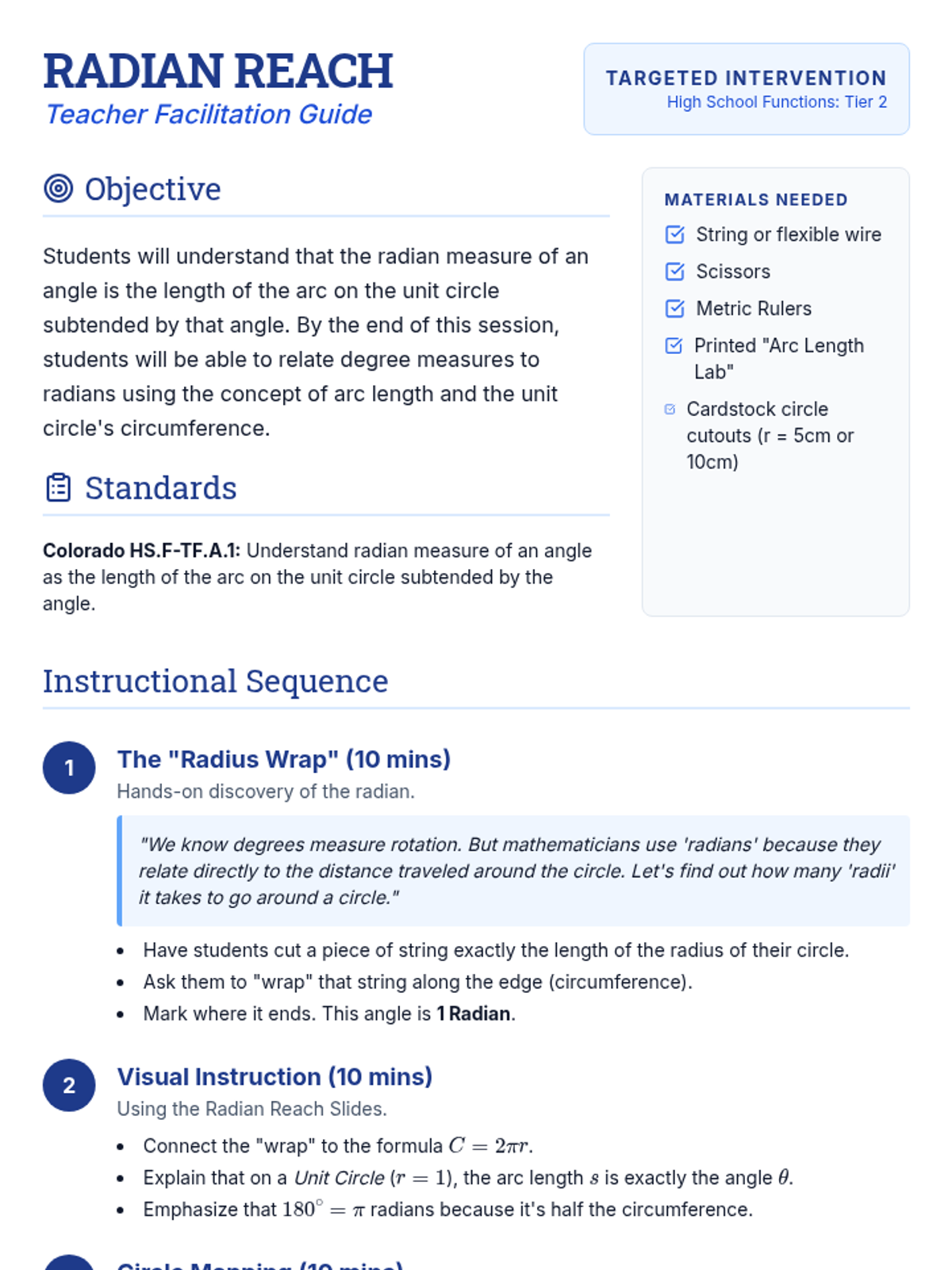
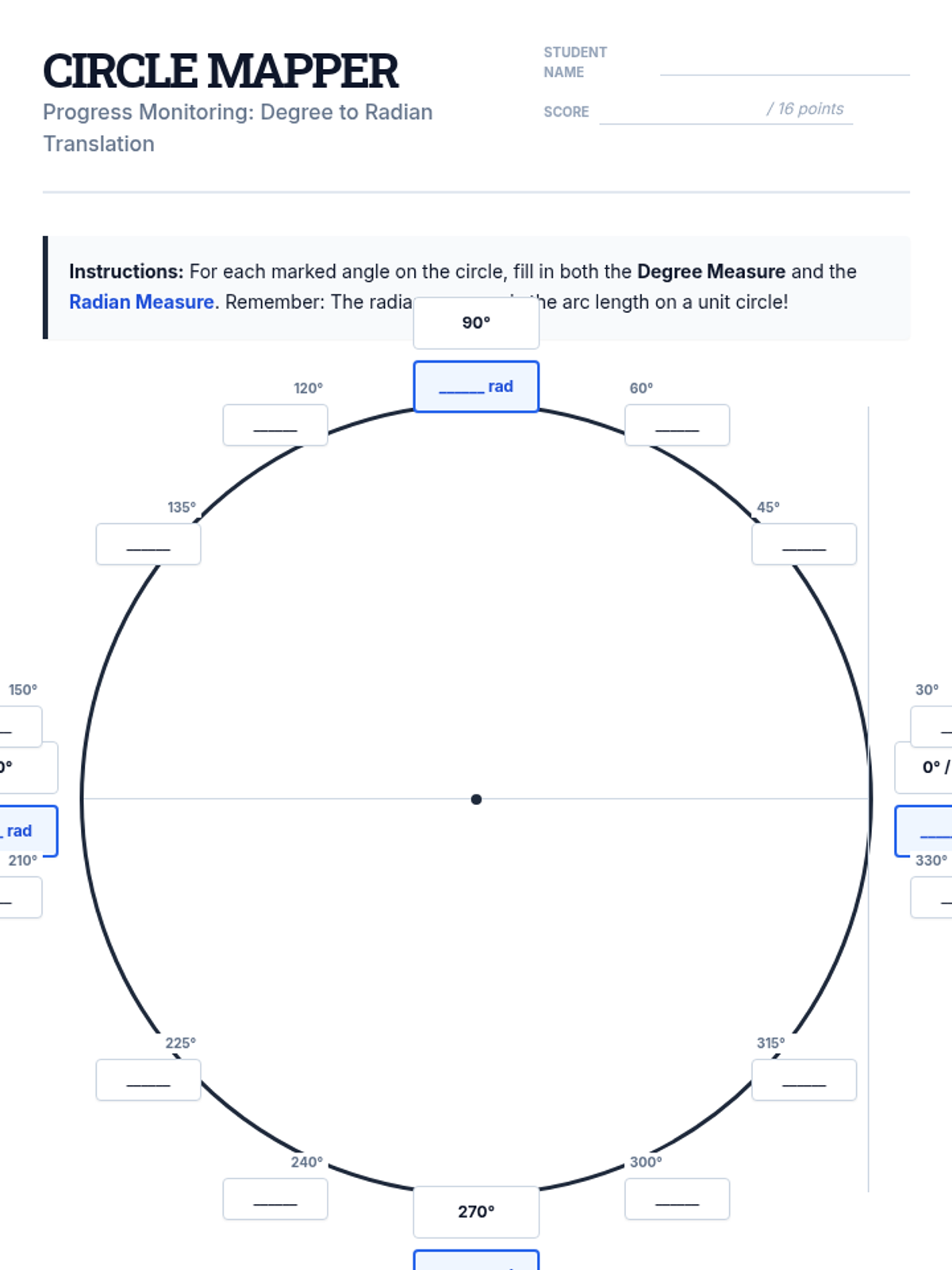
A Tier 2 small group intervention focused on the conceptual understanding of radian measure as arc length on the unit circle, utilizing hands-on discovery and visual mapping.
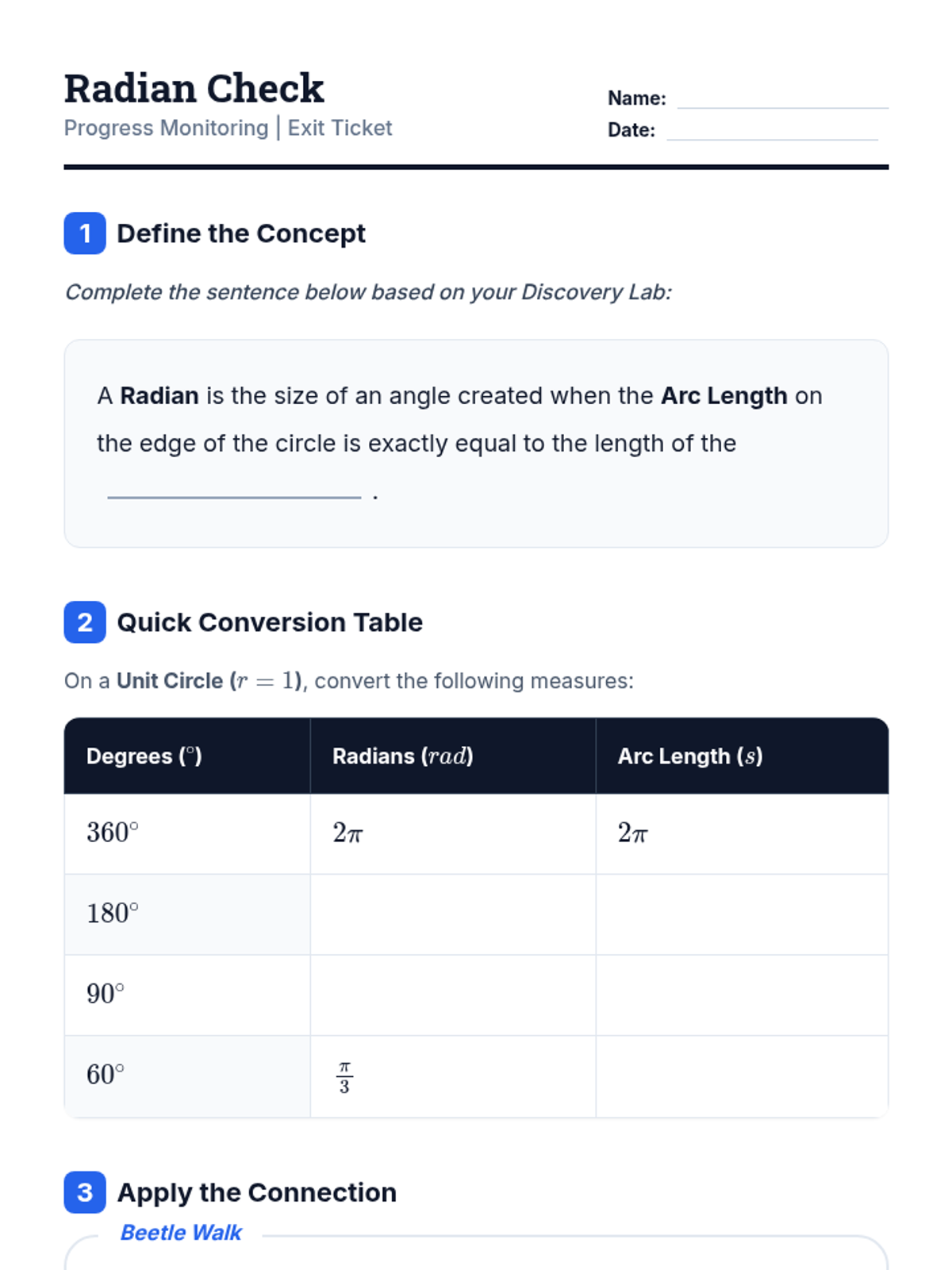
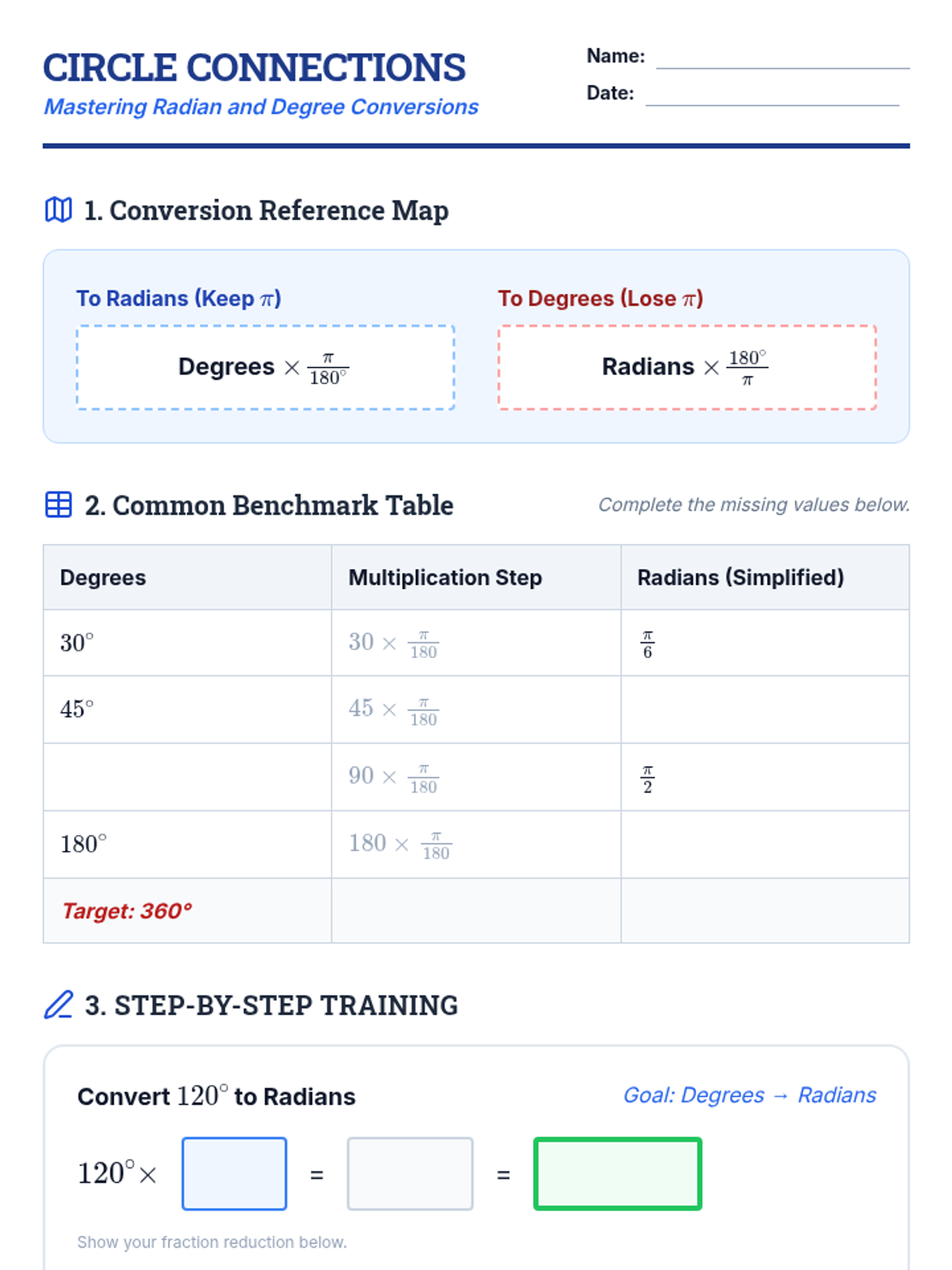
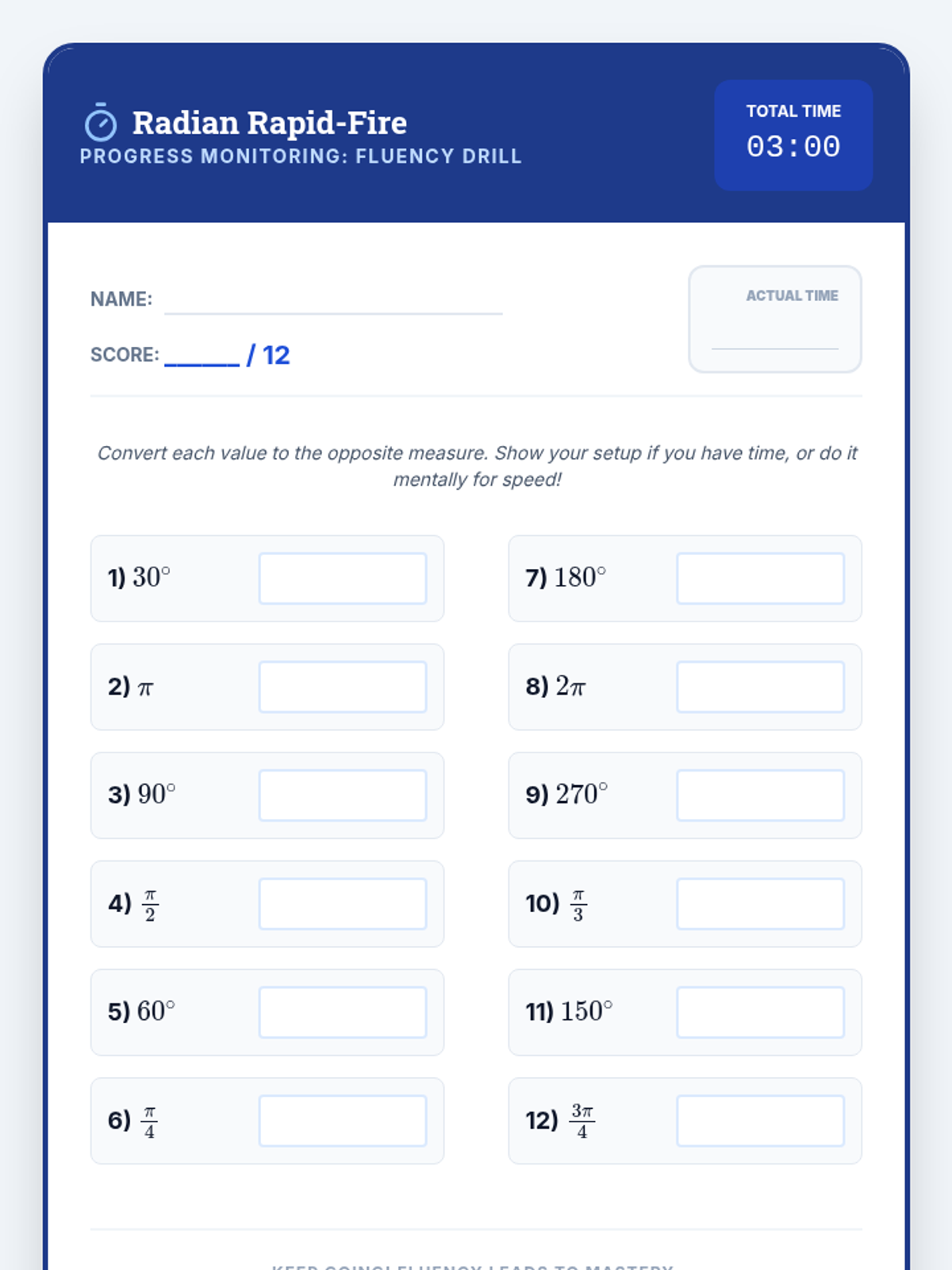
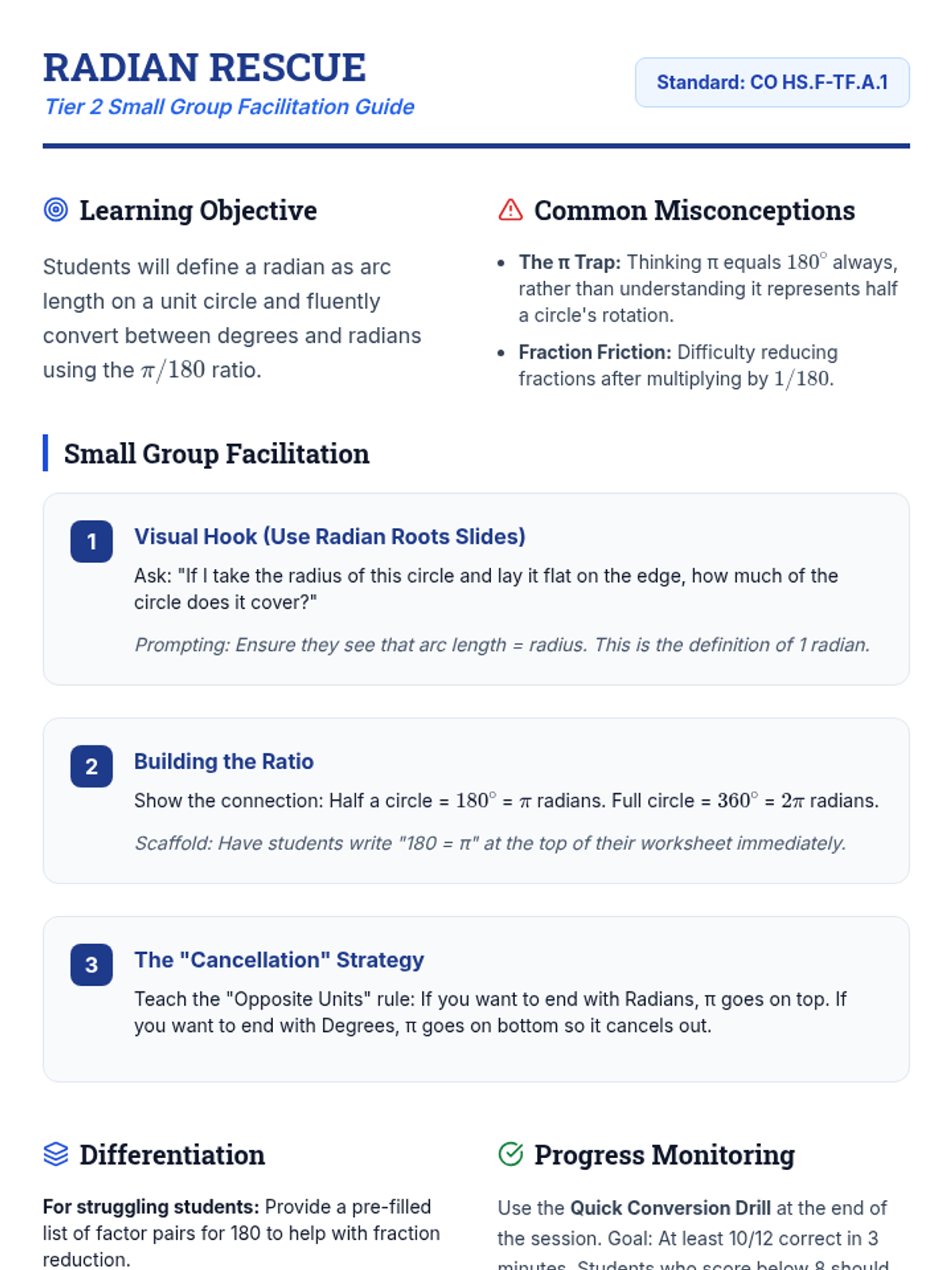
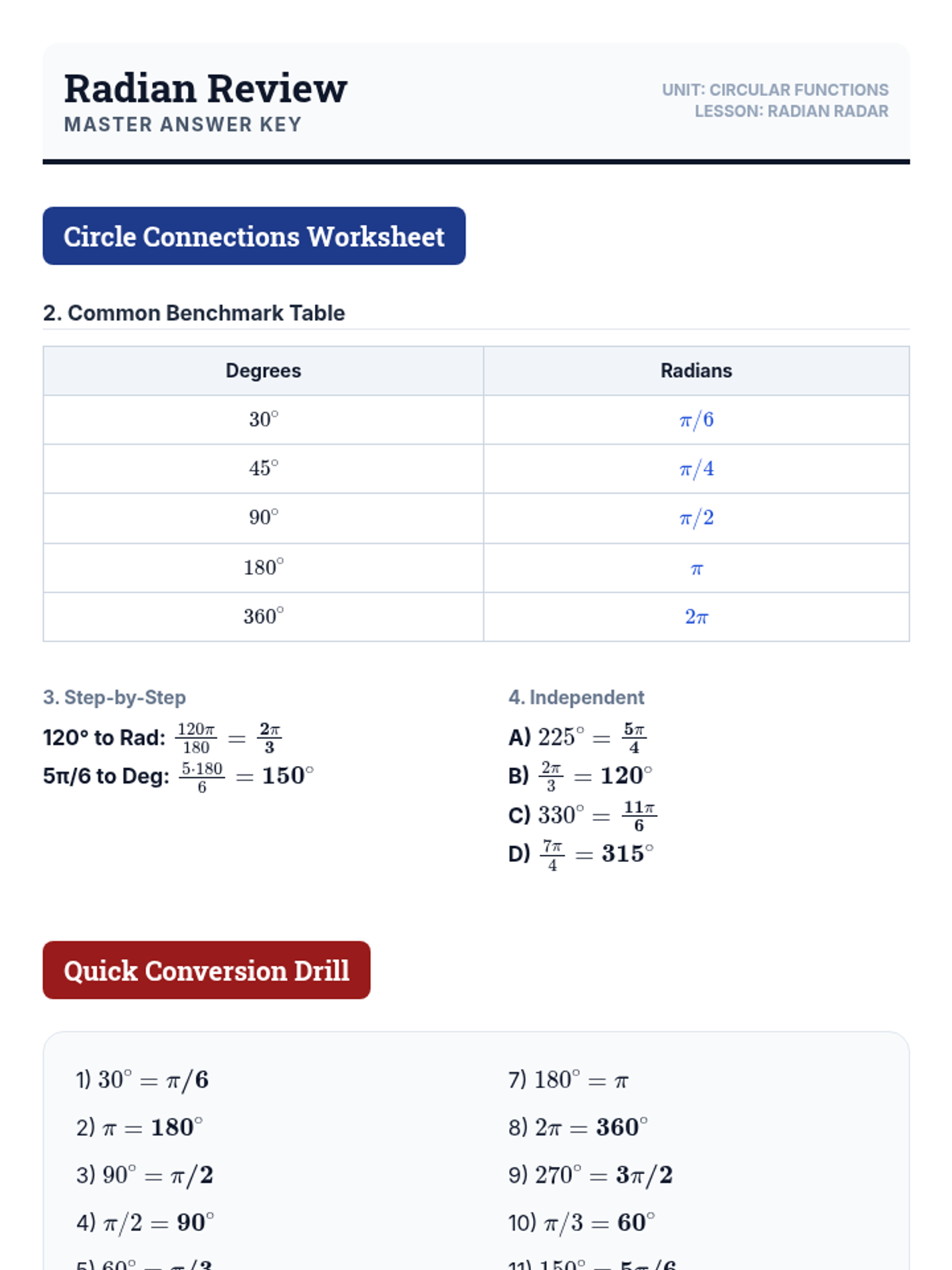
A targeted Tier 2 intervention lesson focusing on the conceptual understanding of radians as arc length and the procedural fluency of converting between degrees and radians.
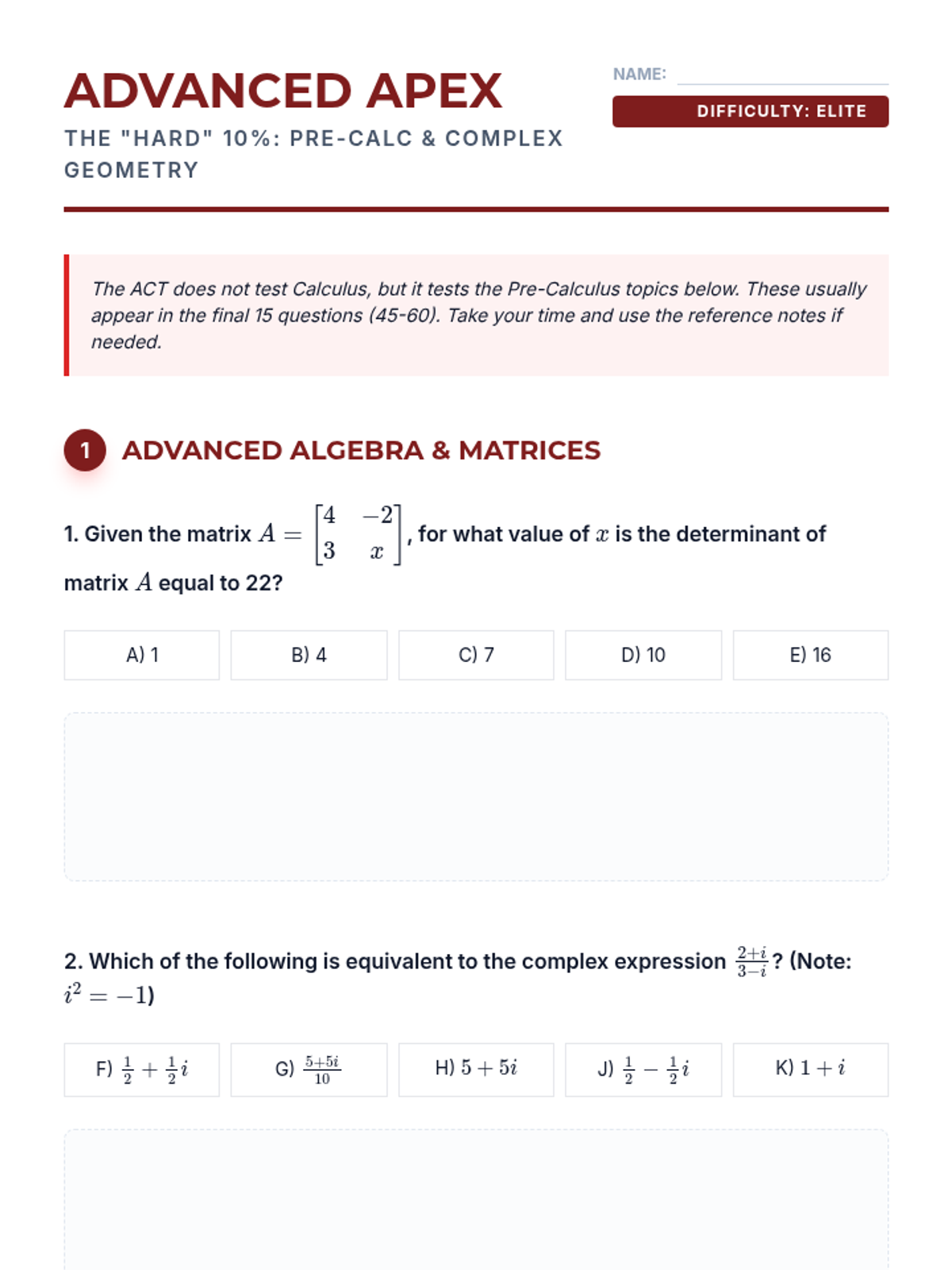
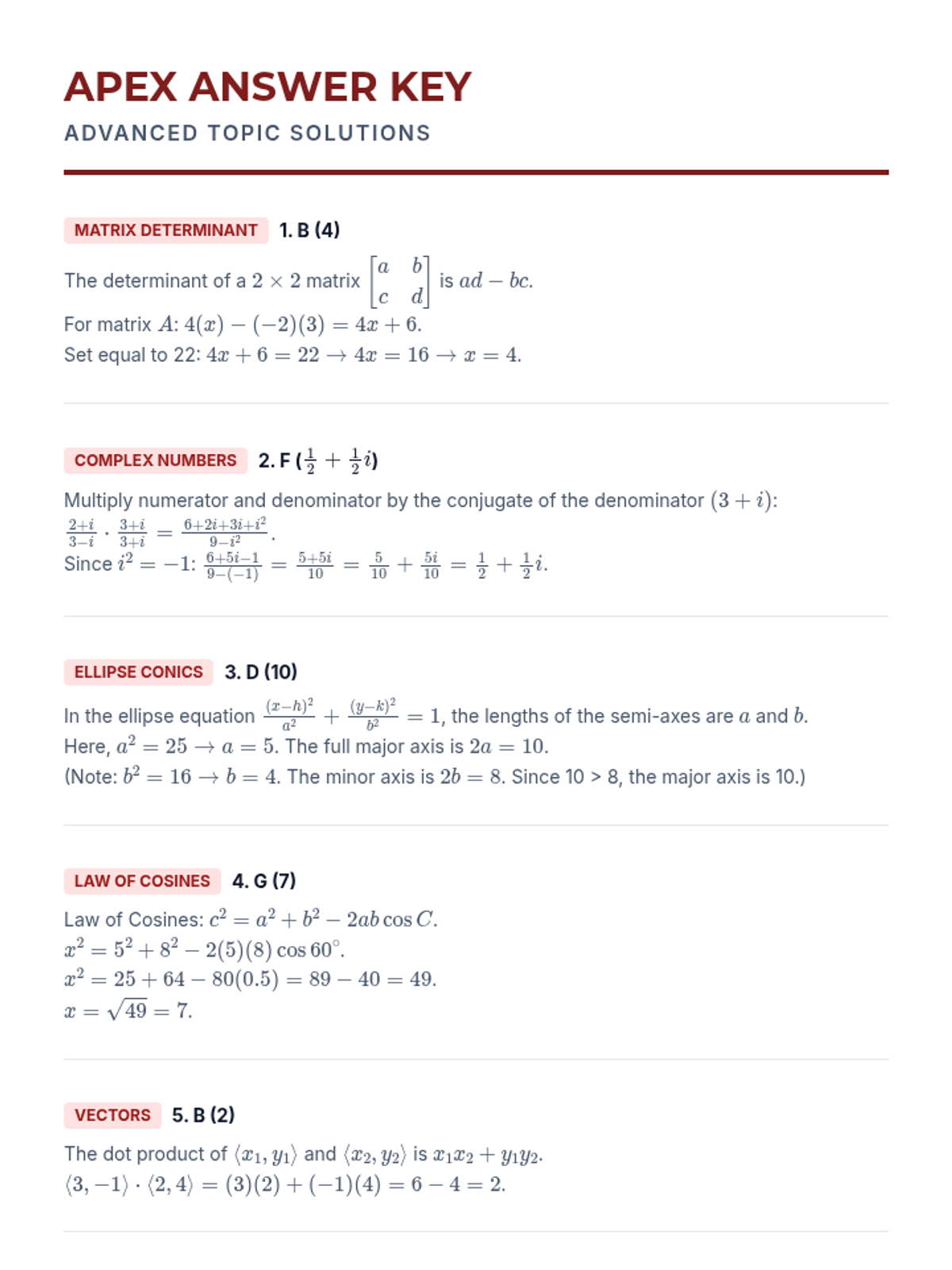
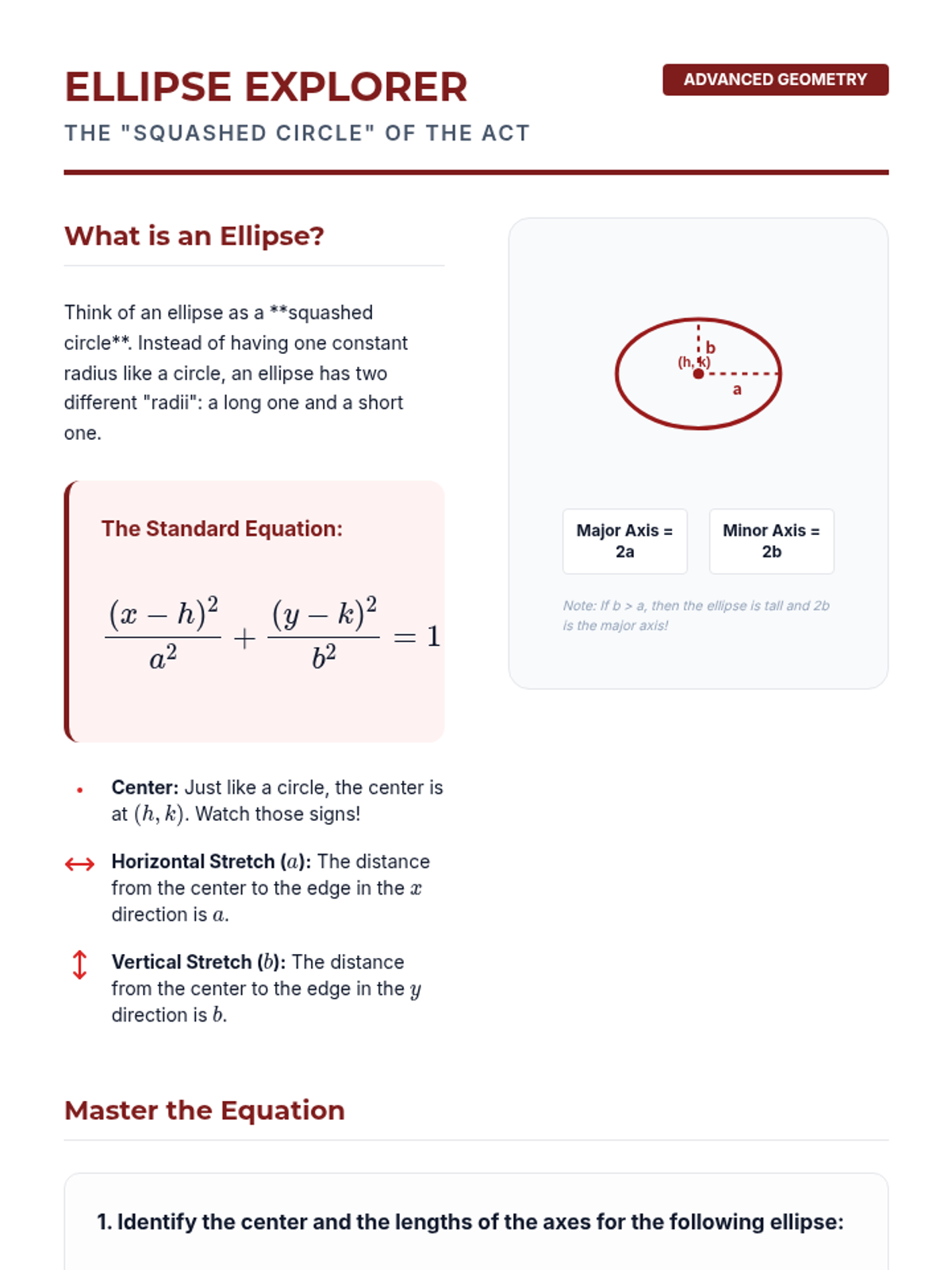
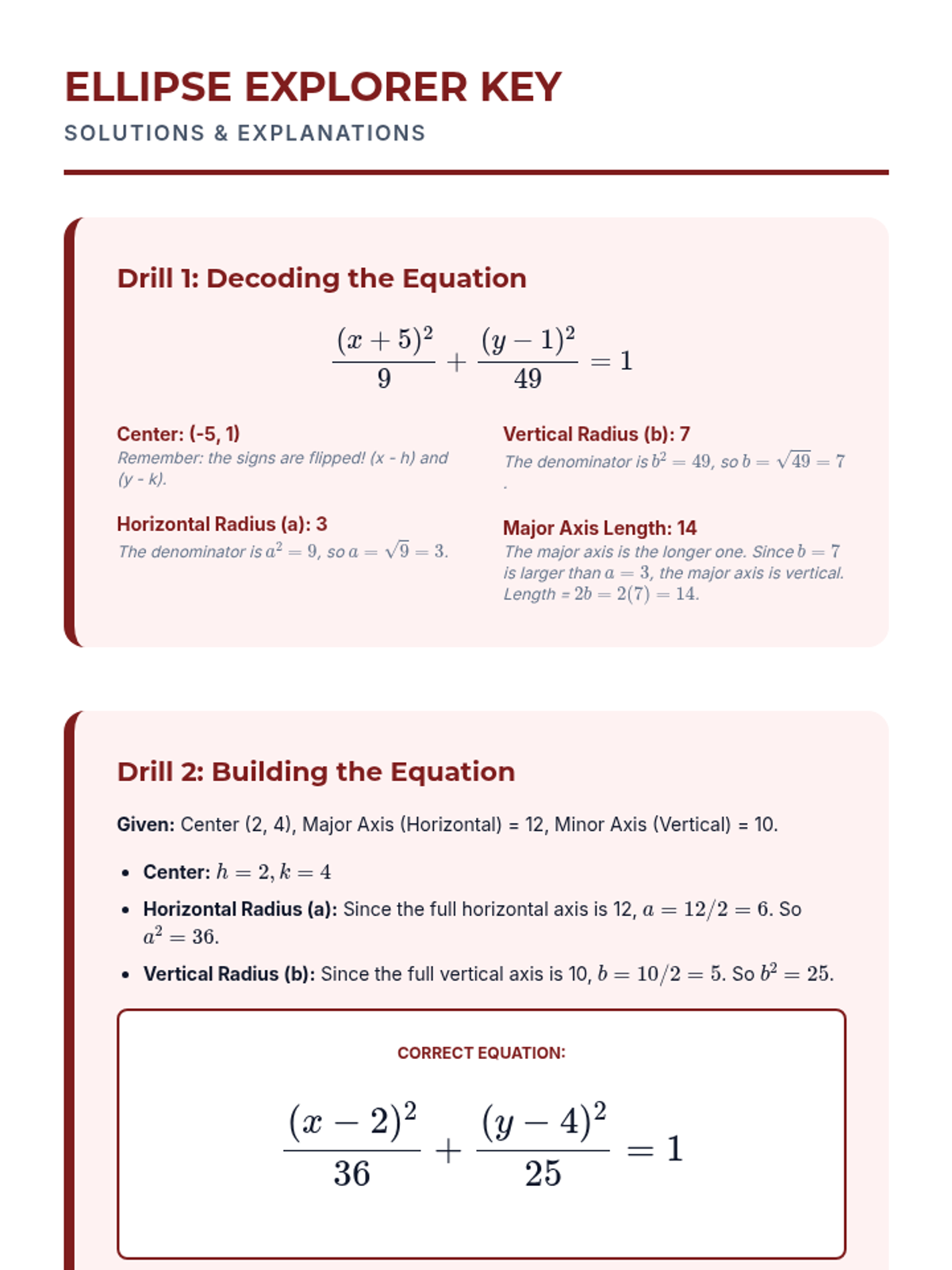
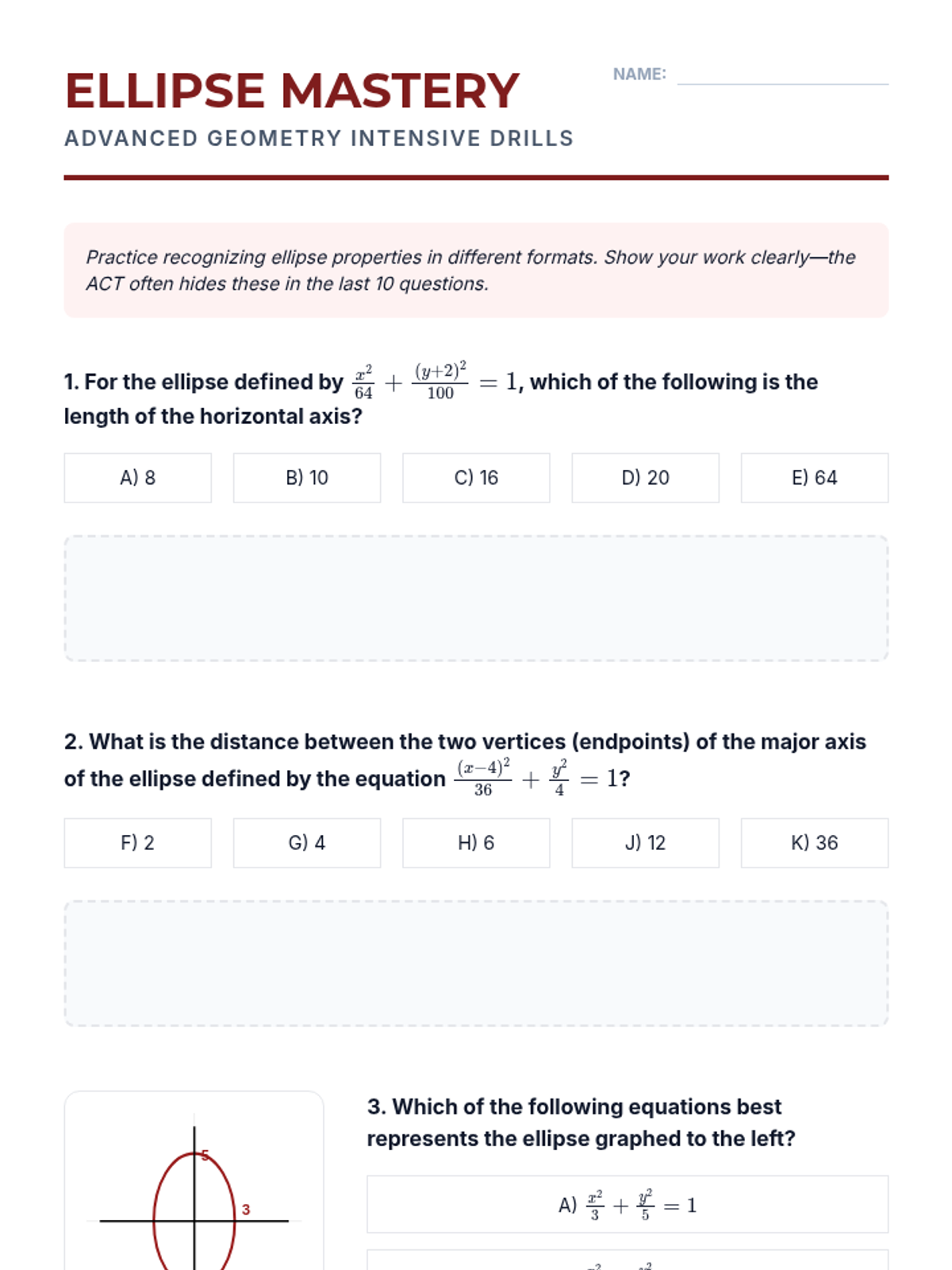
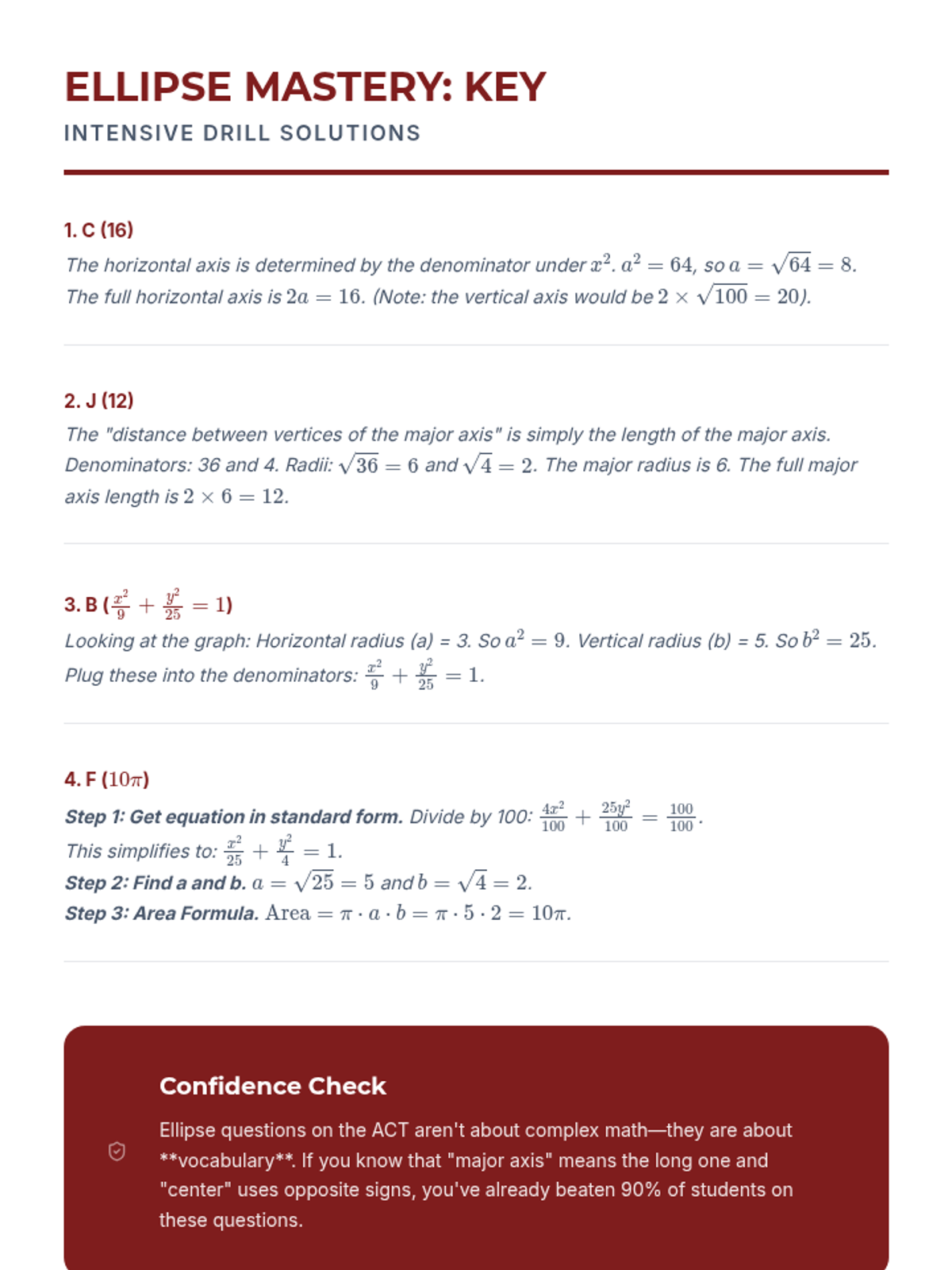
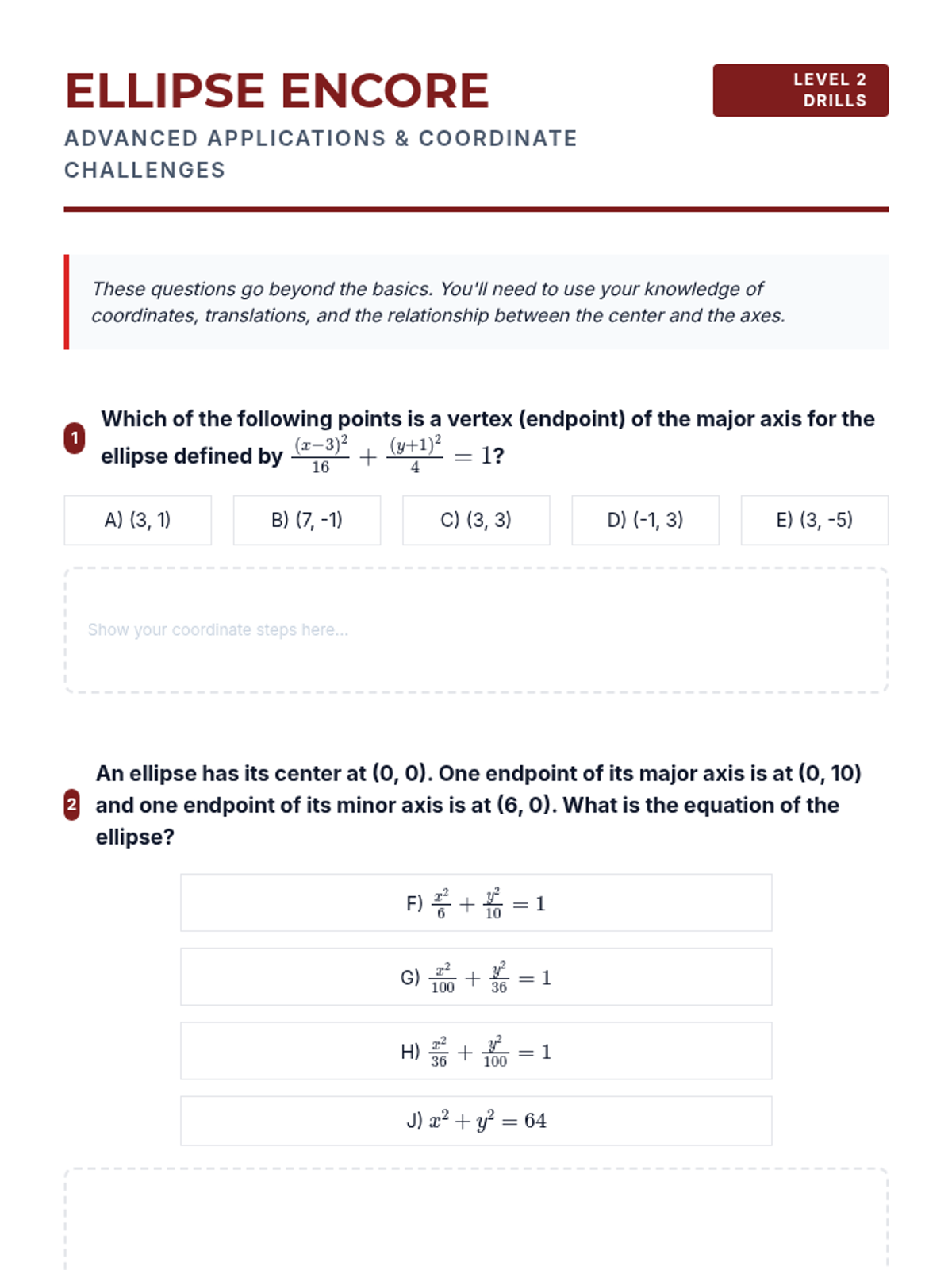
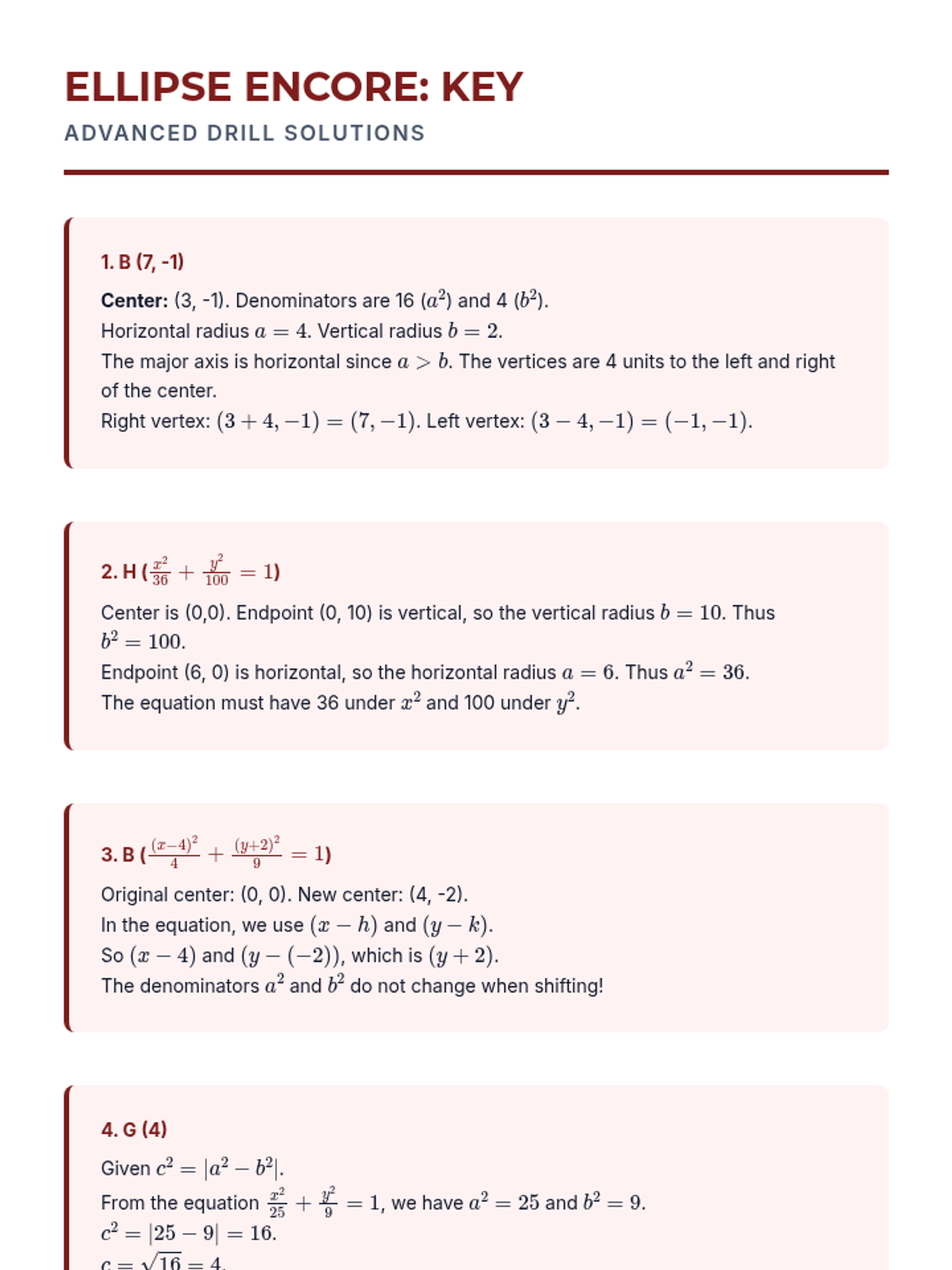
Master the most challenging topics on the ACT, including Pre-Calculus concepts (matrices, vectors, complex numbers) and high-difficulty Geometry (Law of Sines/Cosines, ellipses).
Apply strategies and knowledge in a timed practice environment with a representative ACT Math question set.
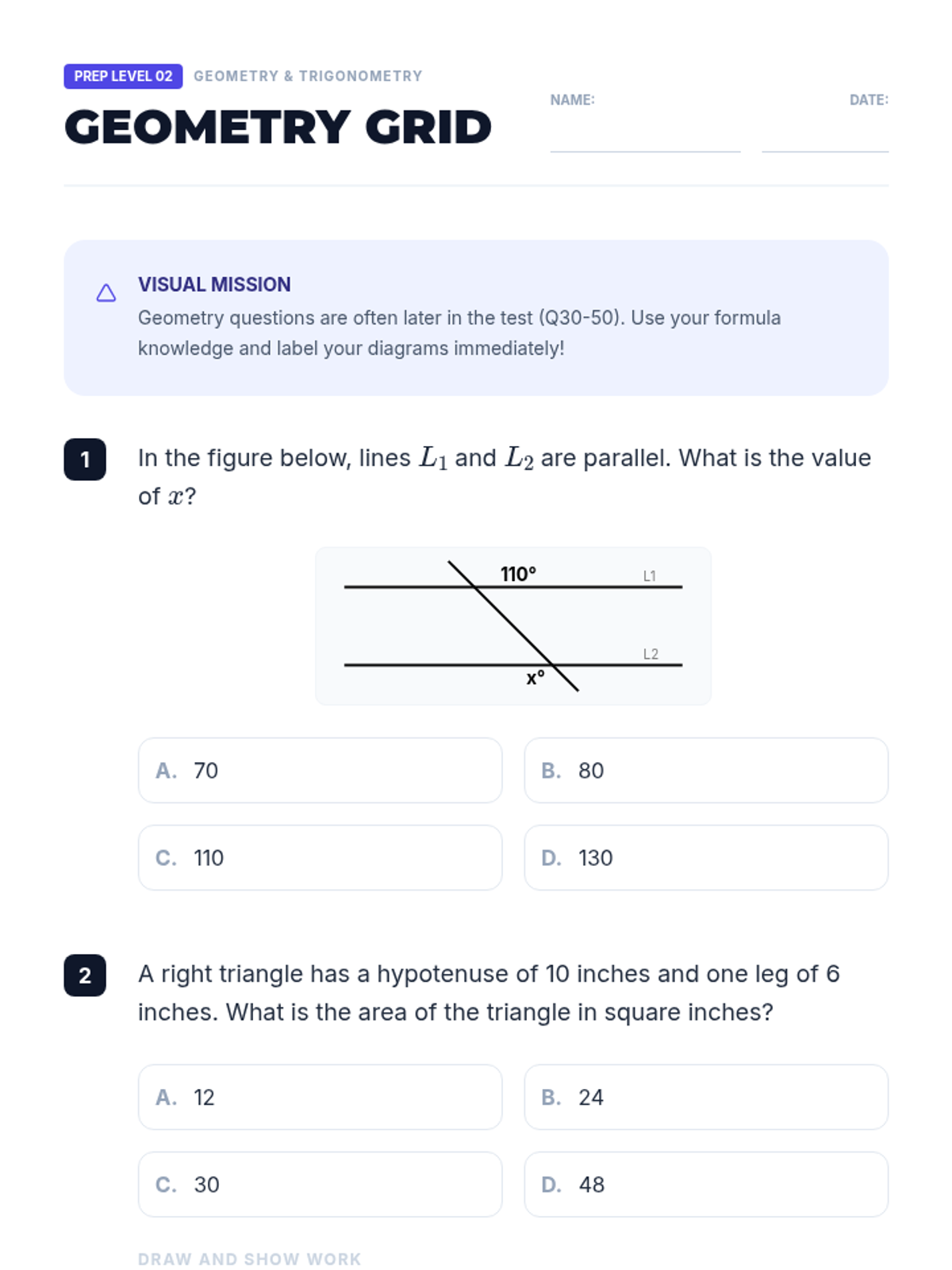
Review critical Geometry and Trigonometry concepts, from SOH CAH TOA to circle properties and coordinate geometry.
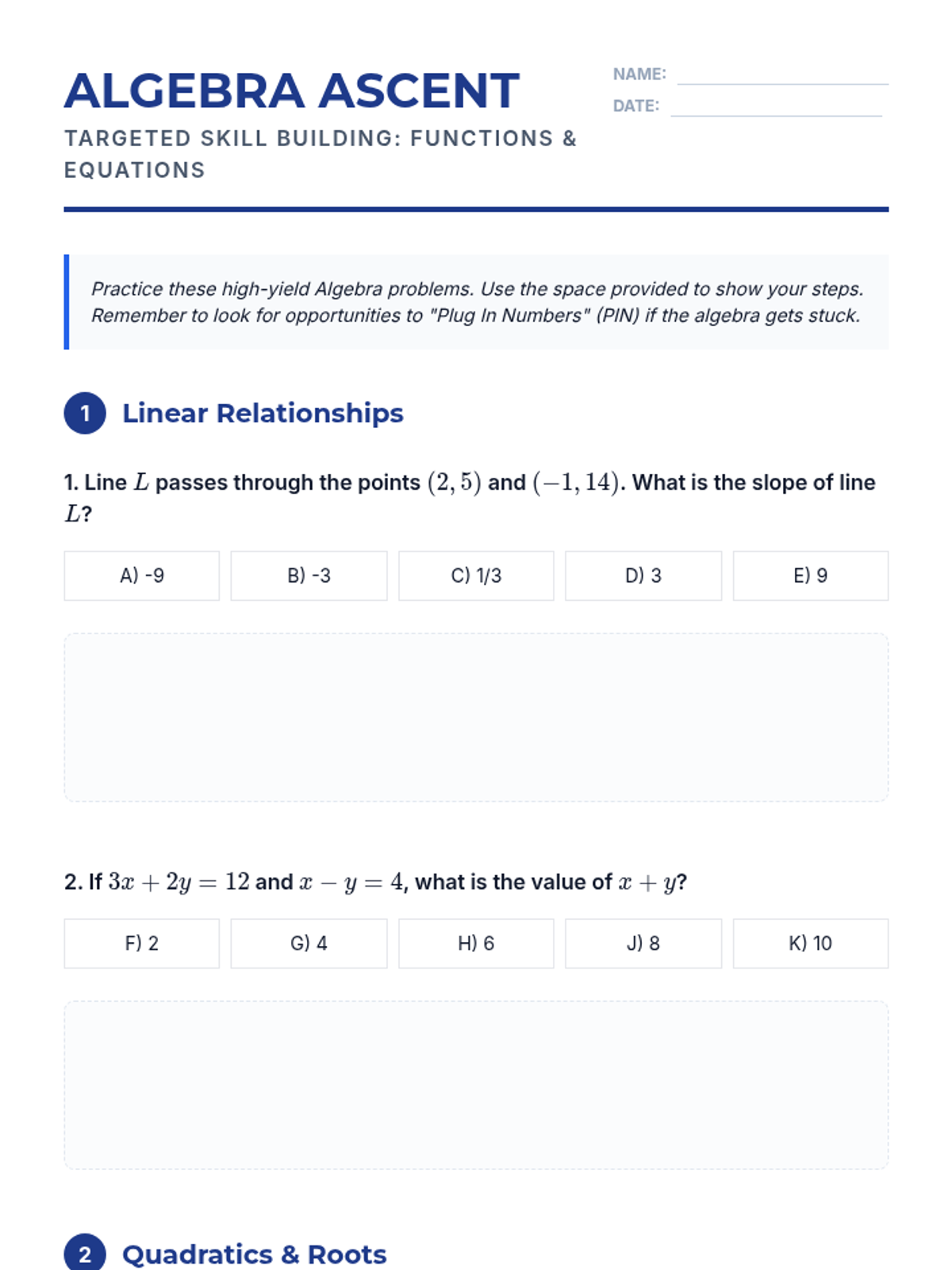
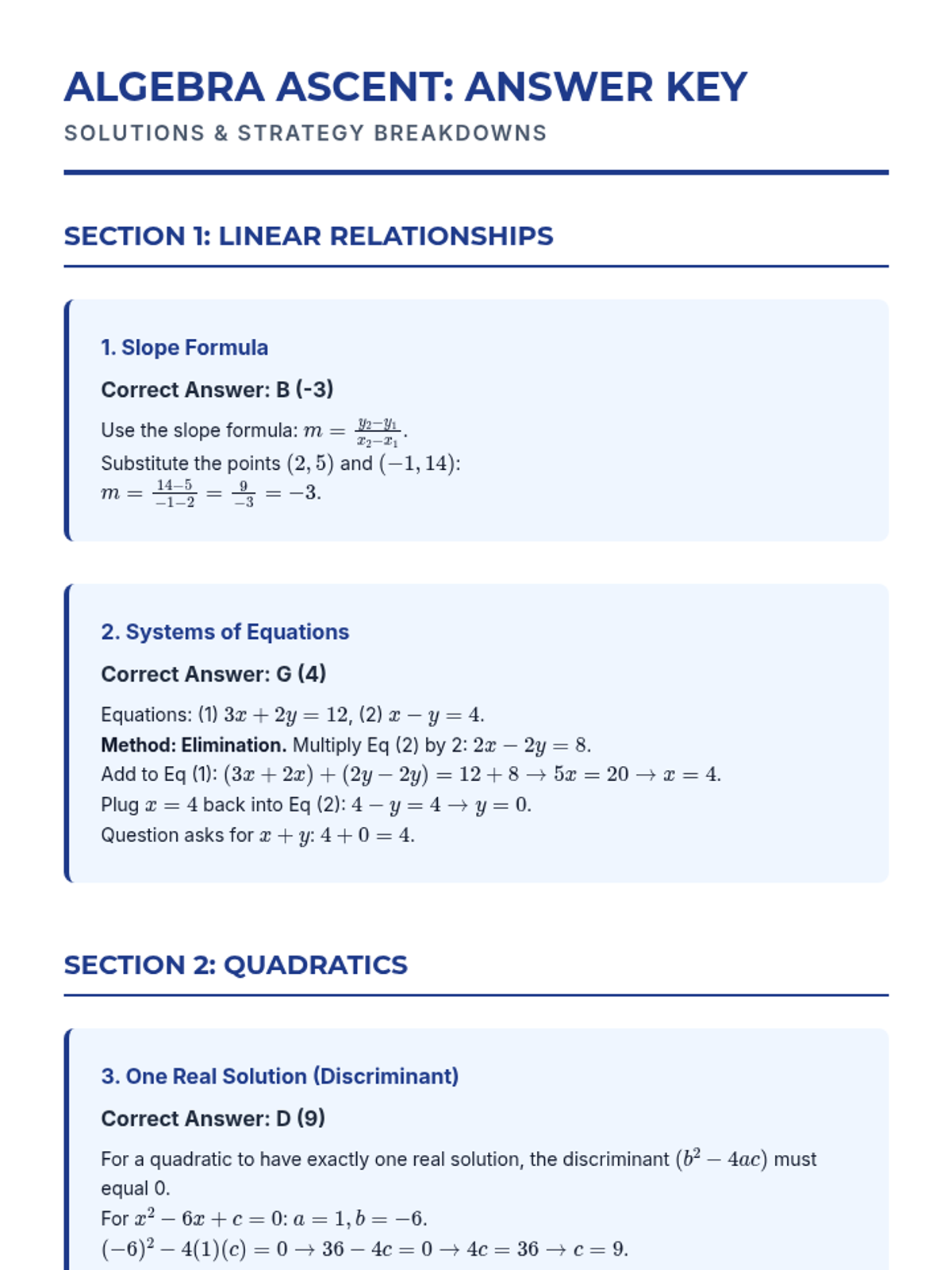
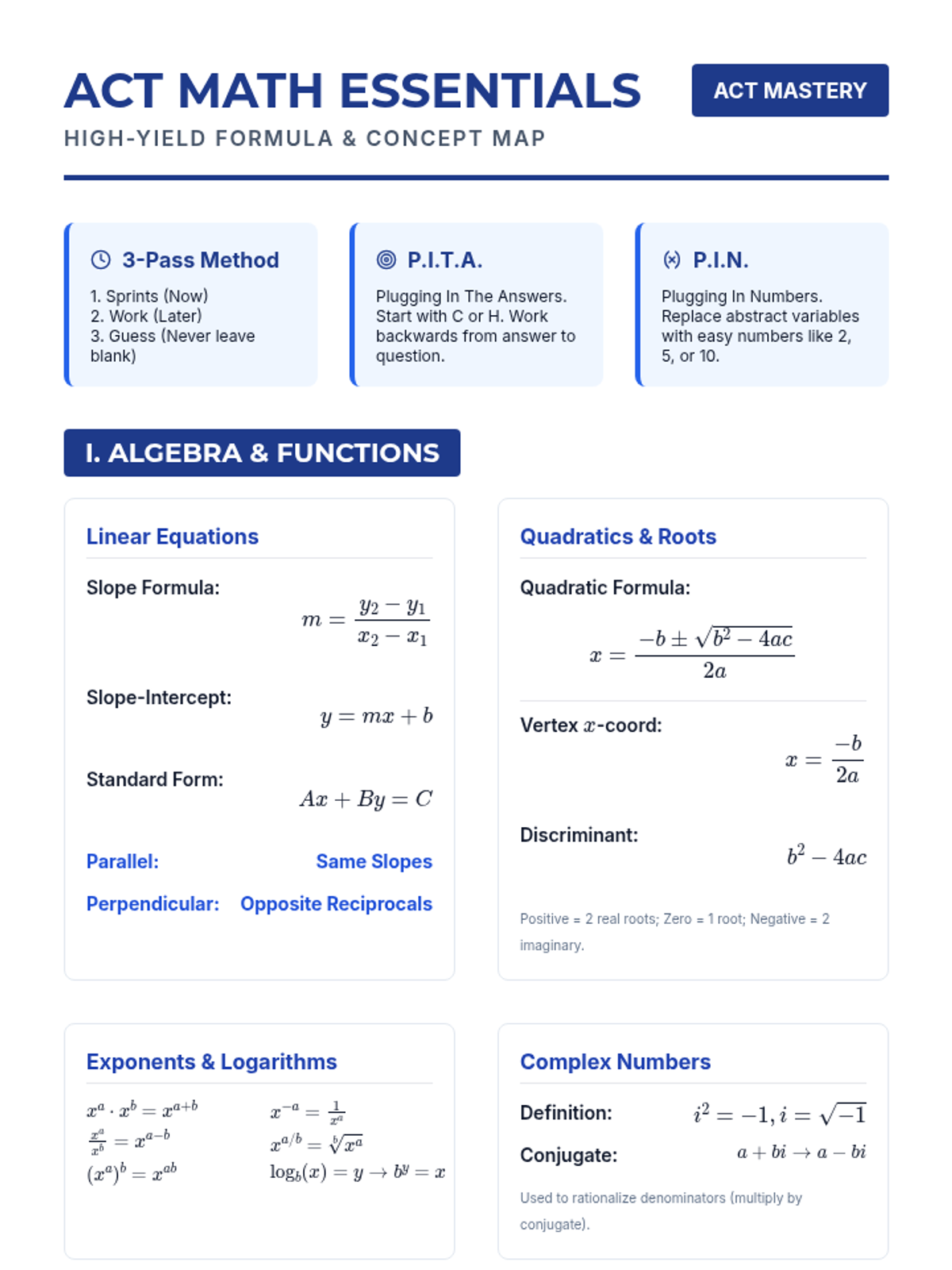
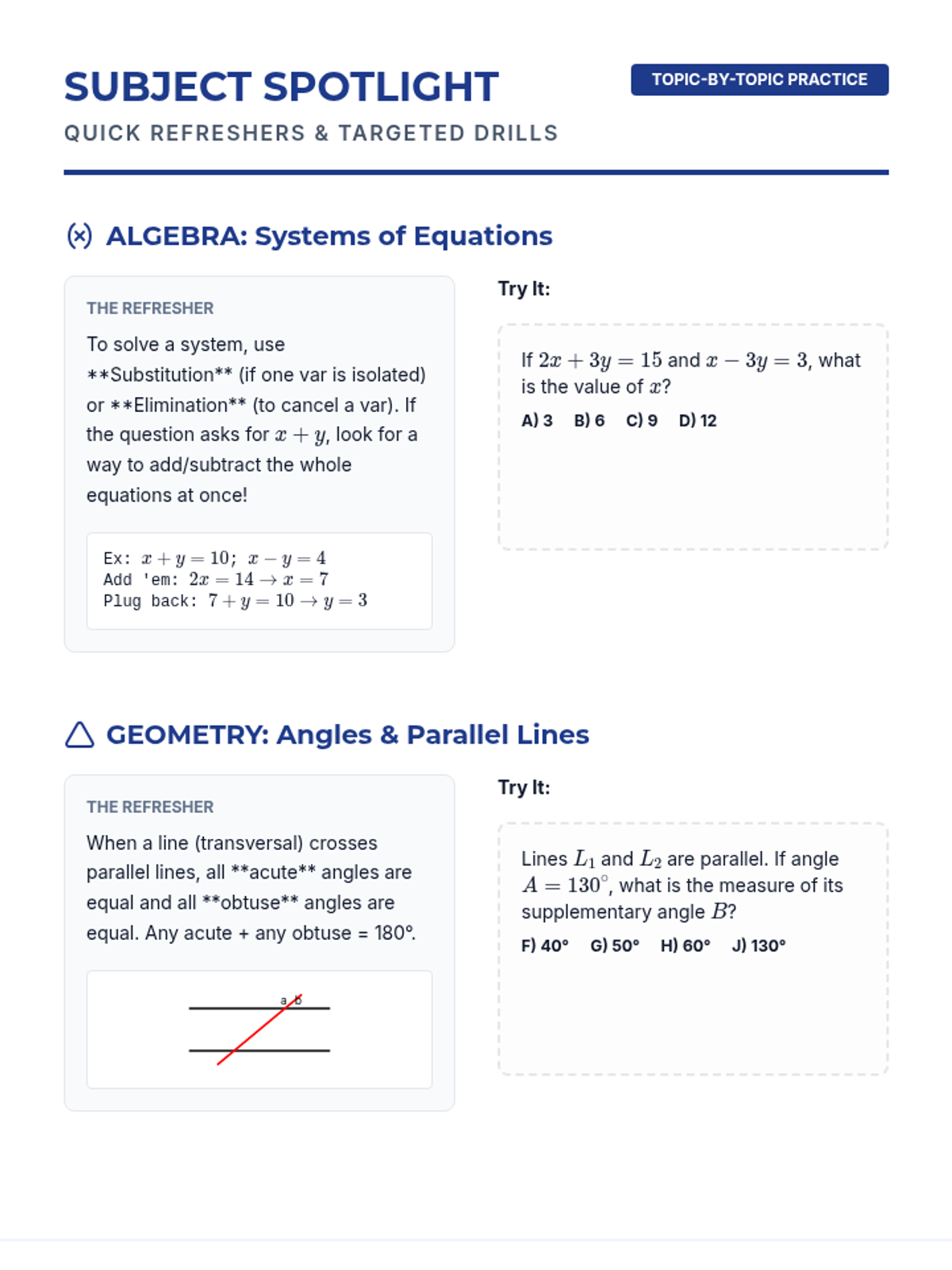
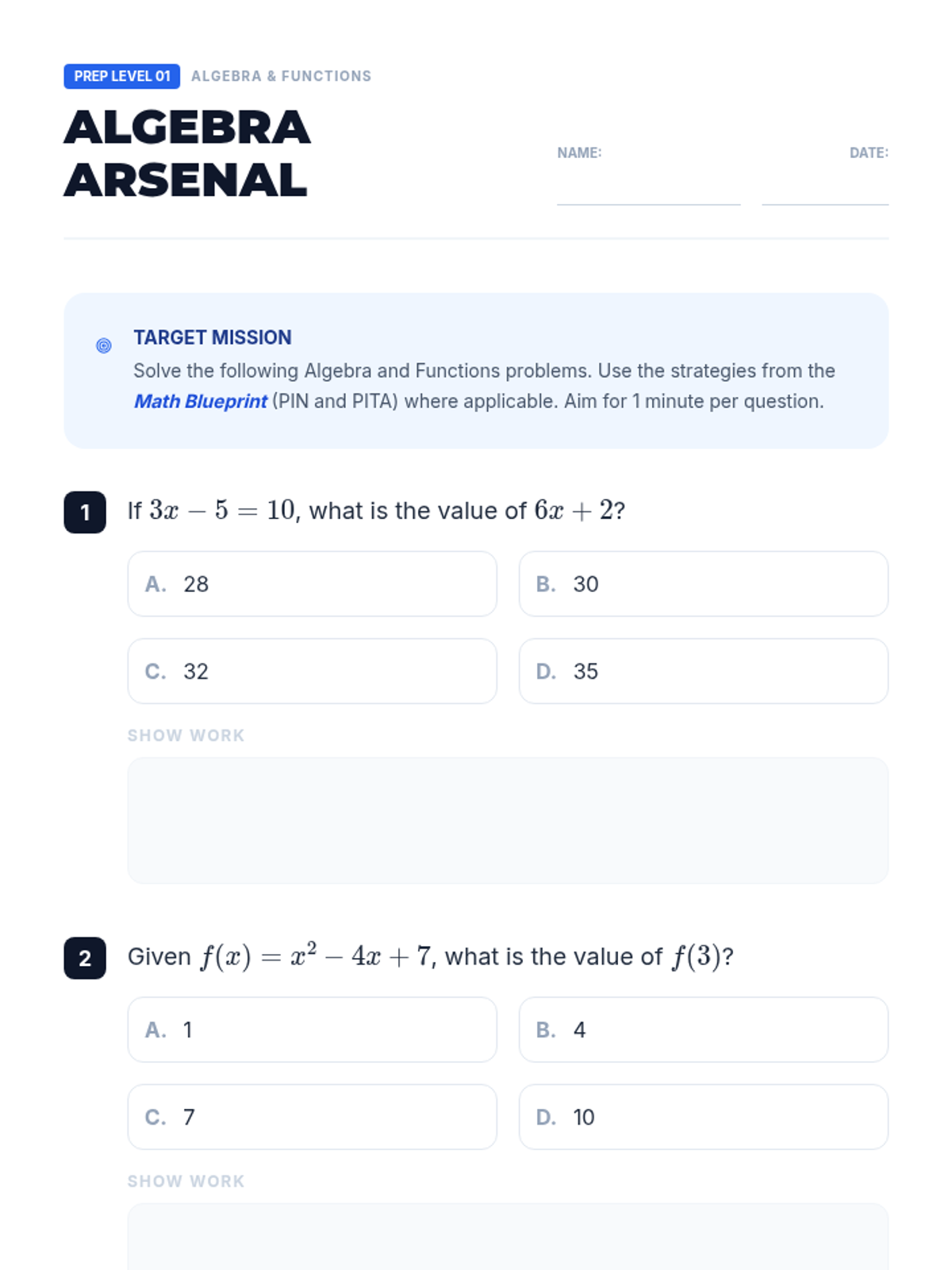
Deep dive into high-yield Algebra topics including linear functions, systems of equations, and quadratic properties frequently tested on the ACT.
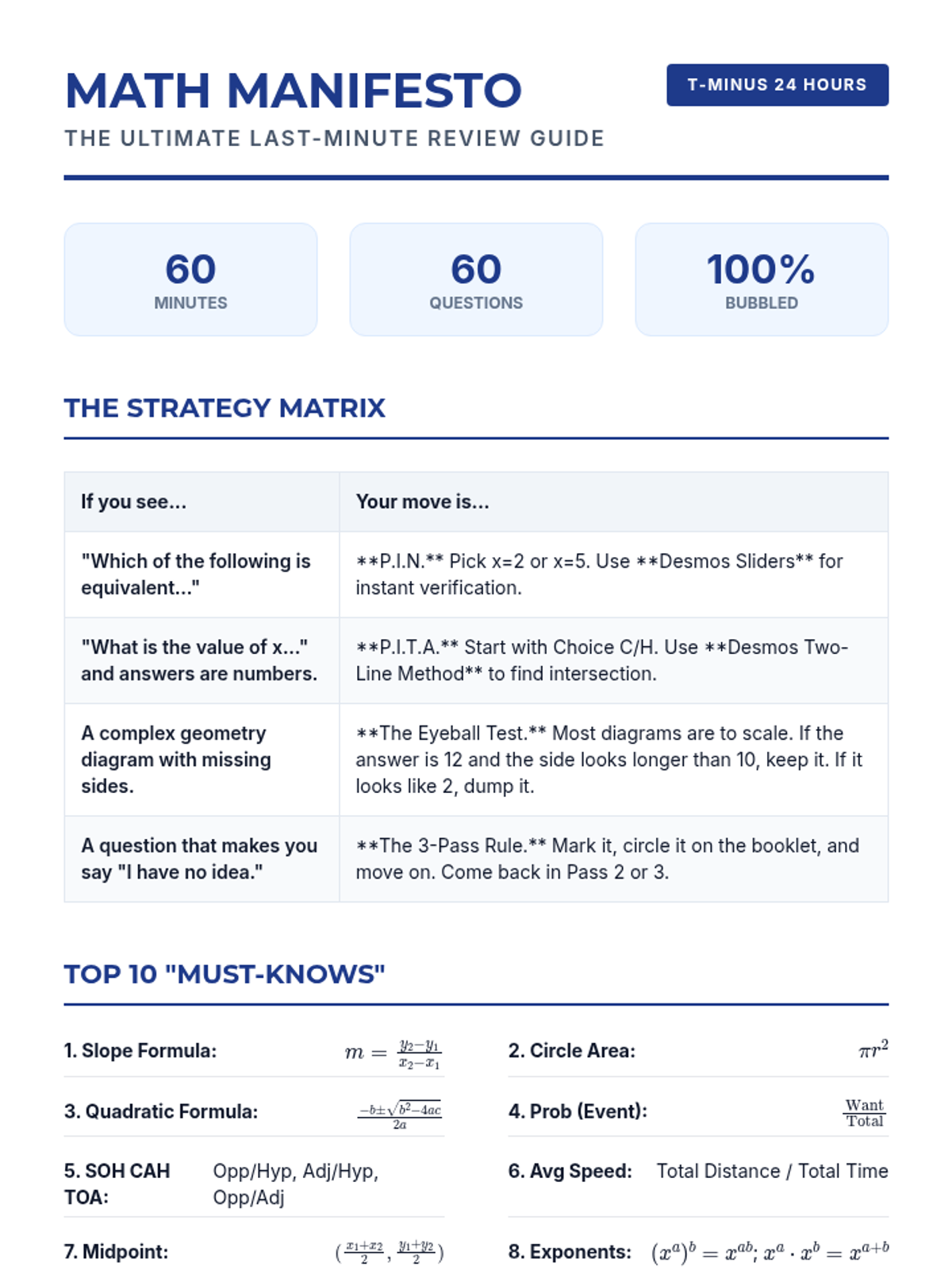
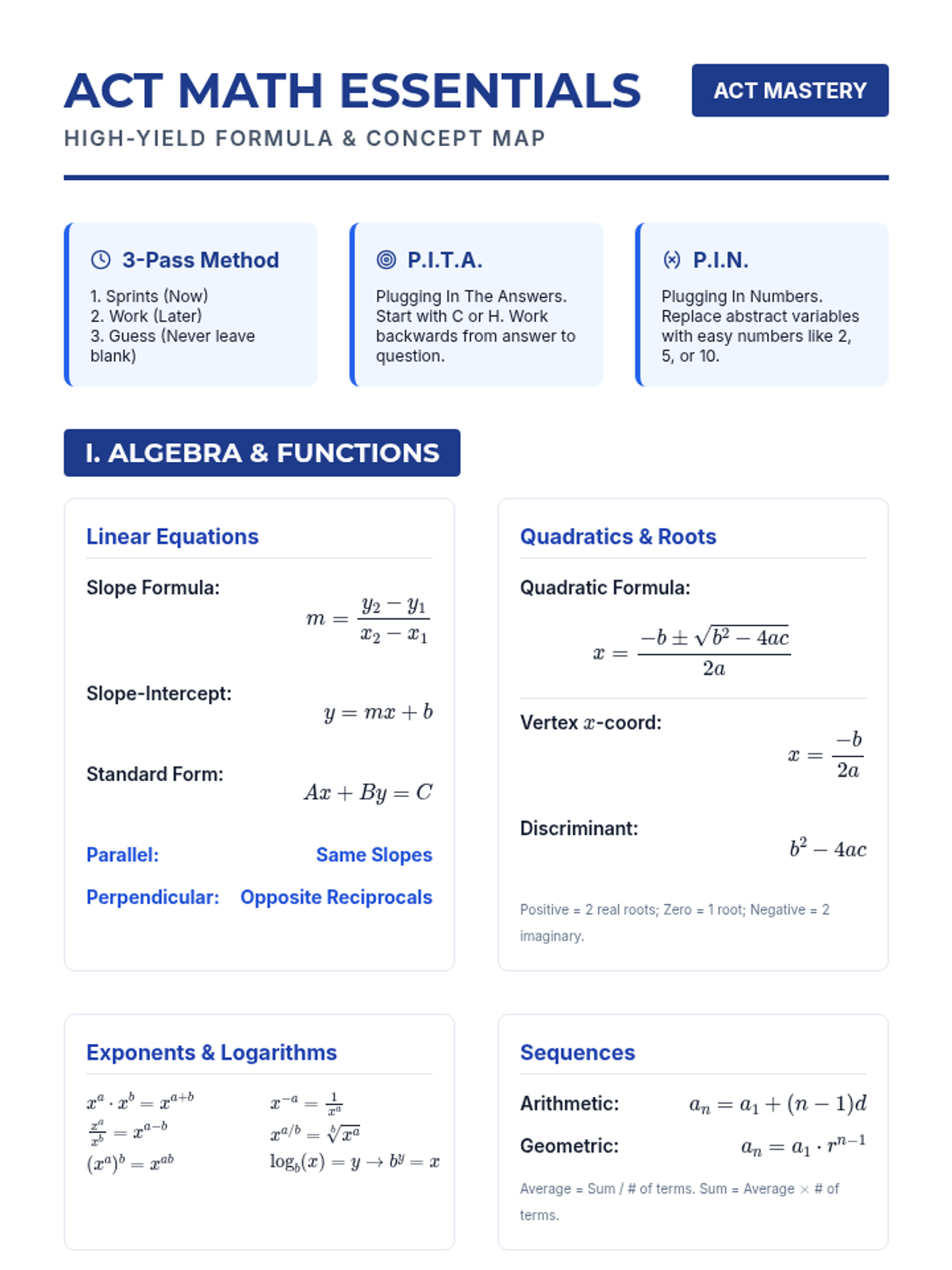
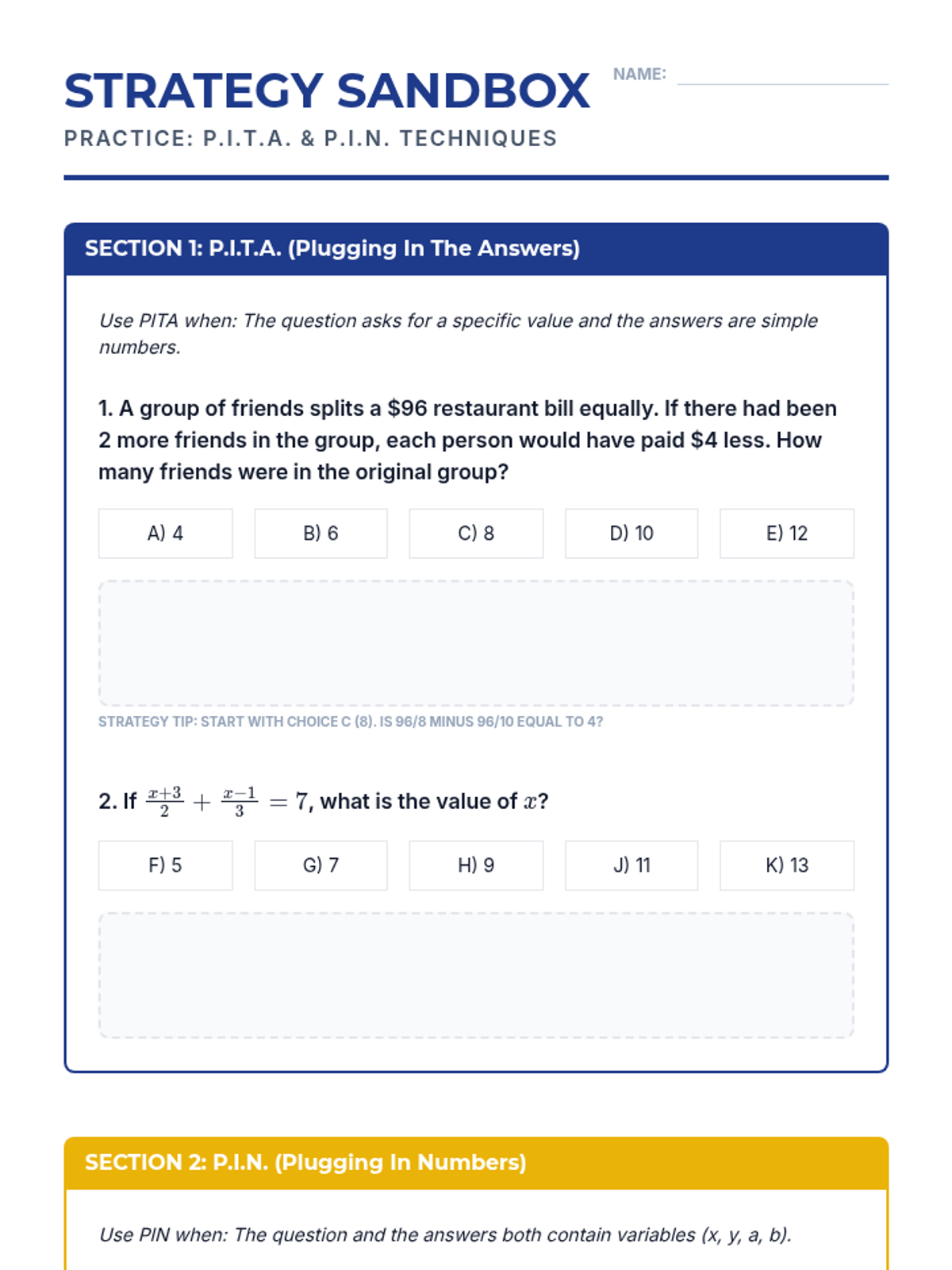
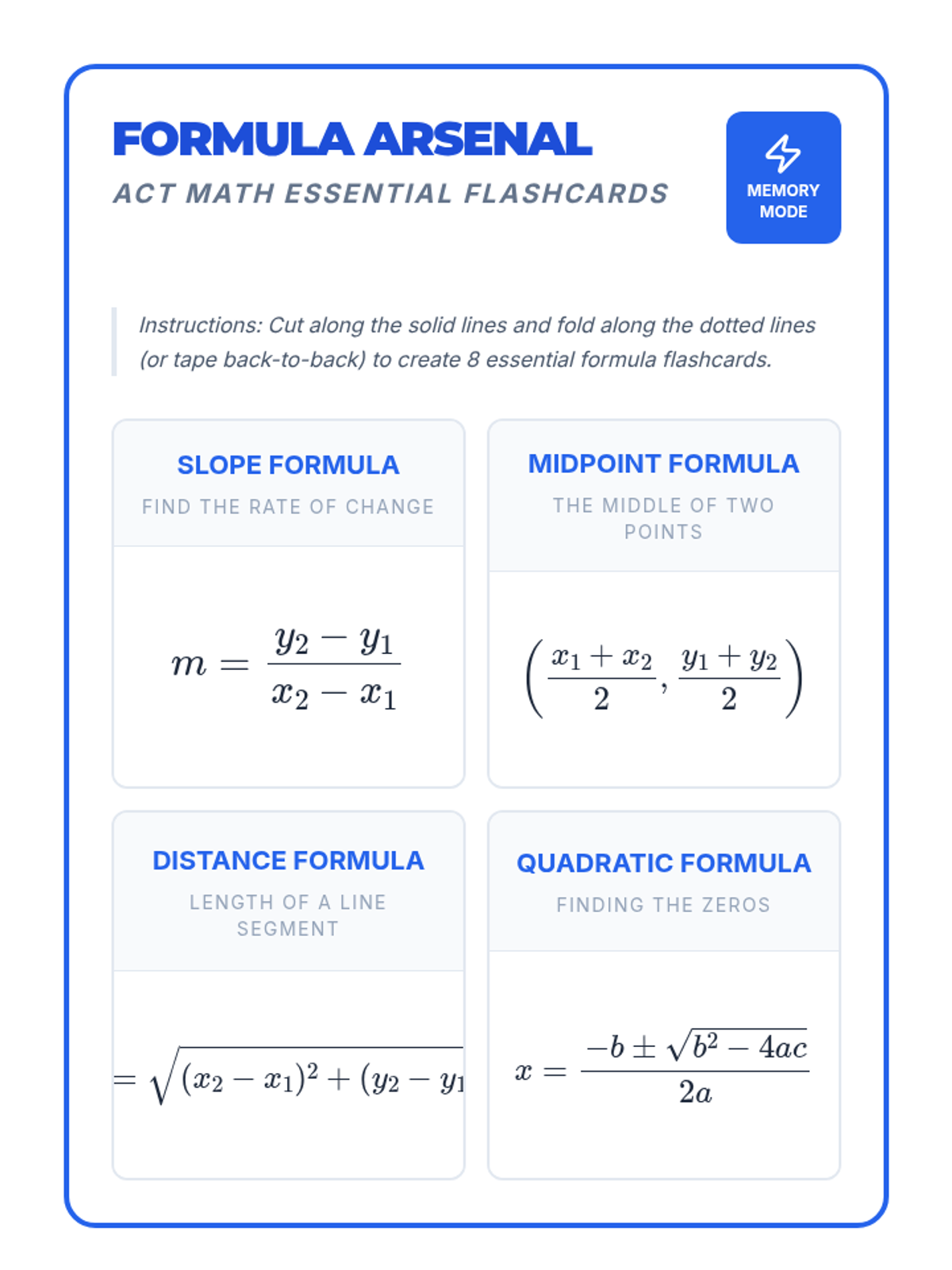
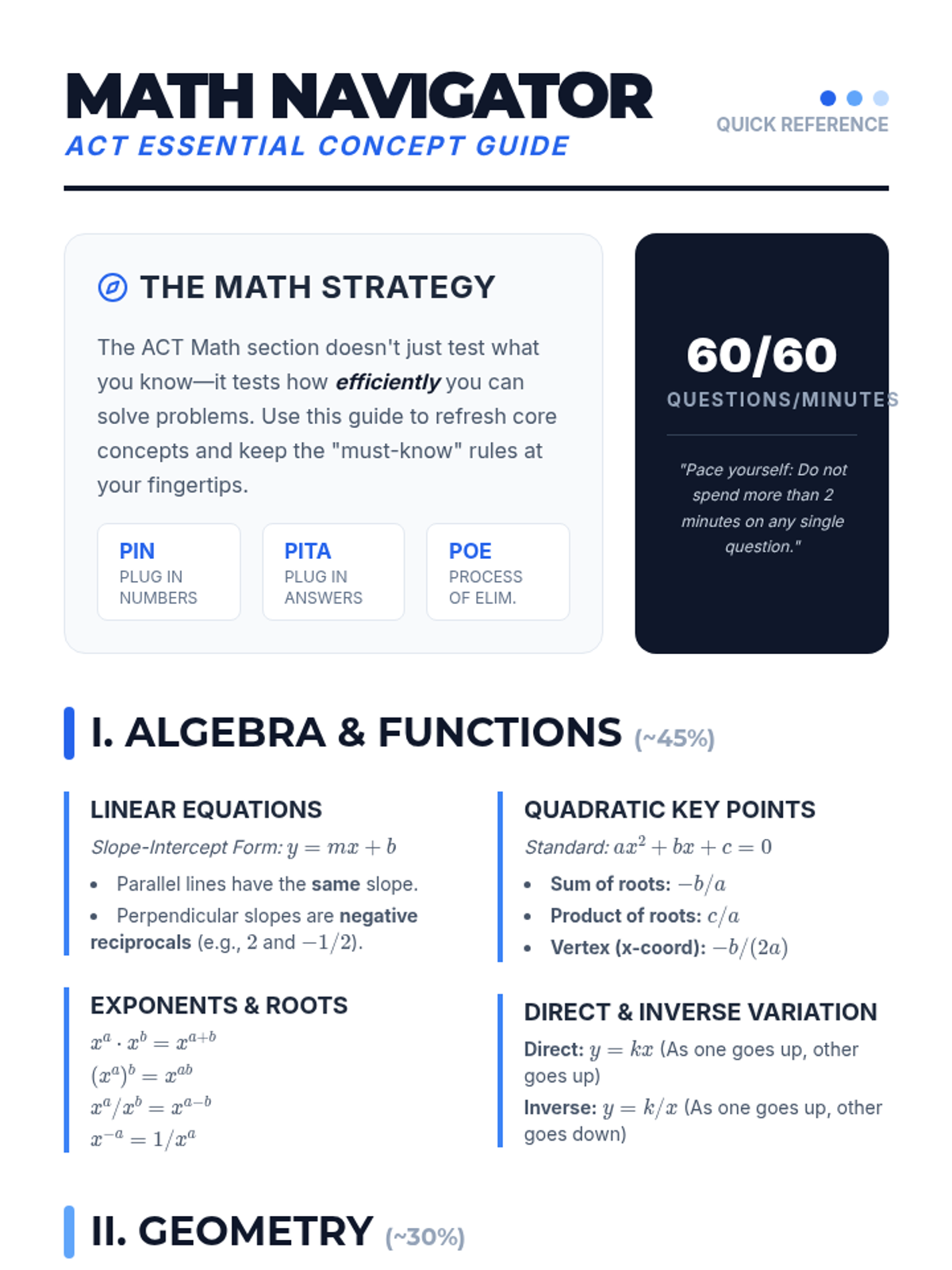
Master the structure of the ACT Math section and learn time-saving strategies like 'The 3-Pass Method' and 'Plugging In' while reviewing essential formulas.
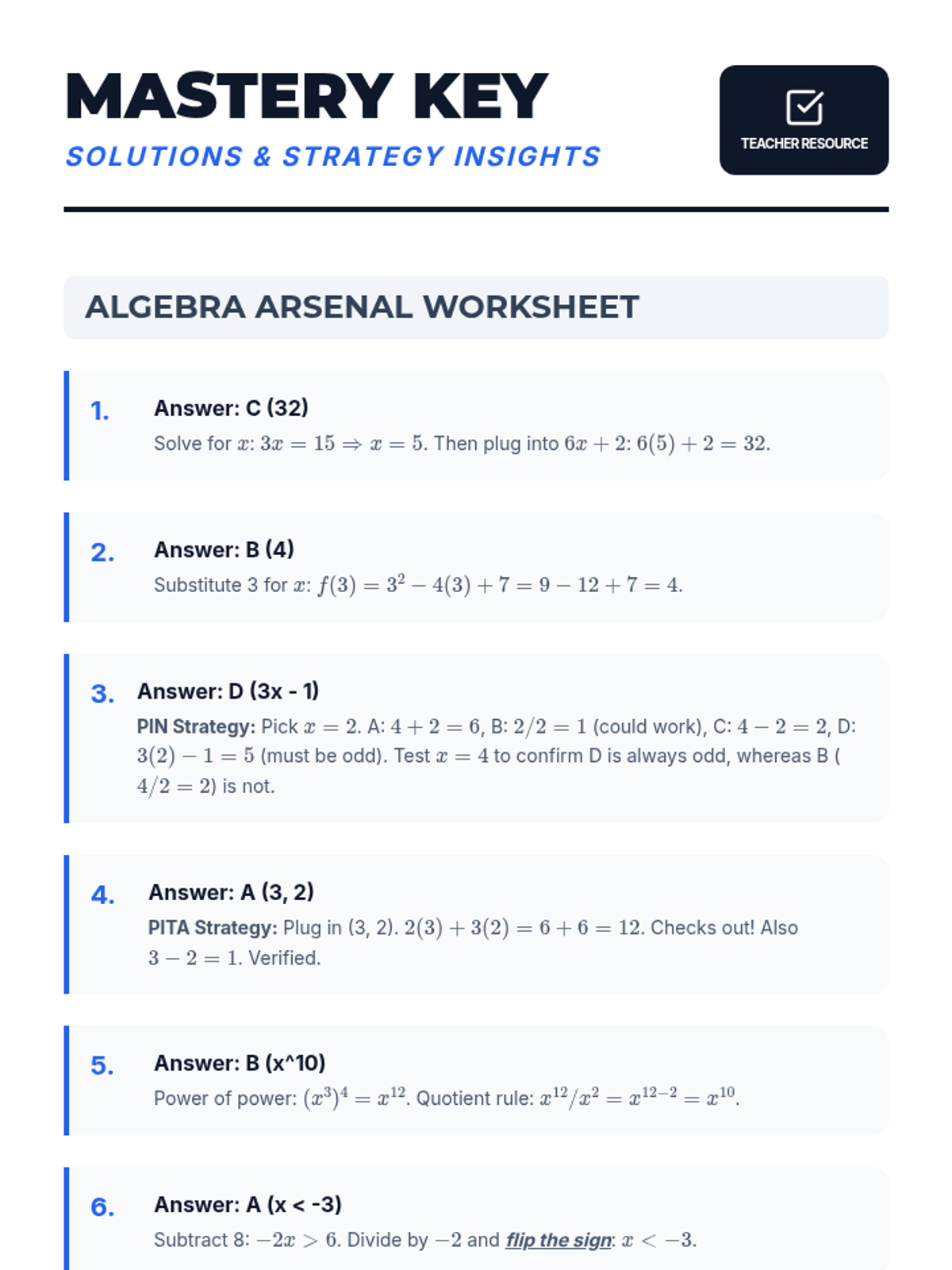
A comprehensive ACT Math preparation module focusing on core concepts, time management strategies, and targeted practice across all test categories.
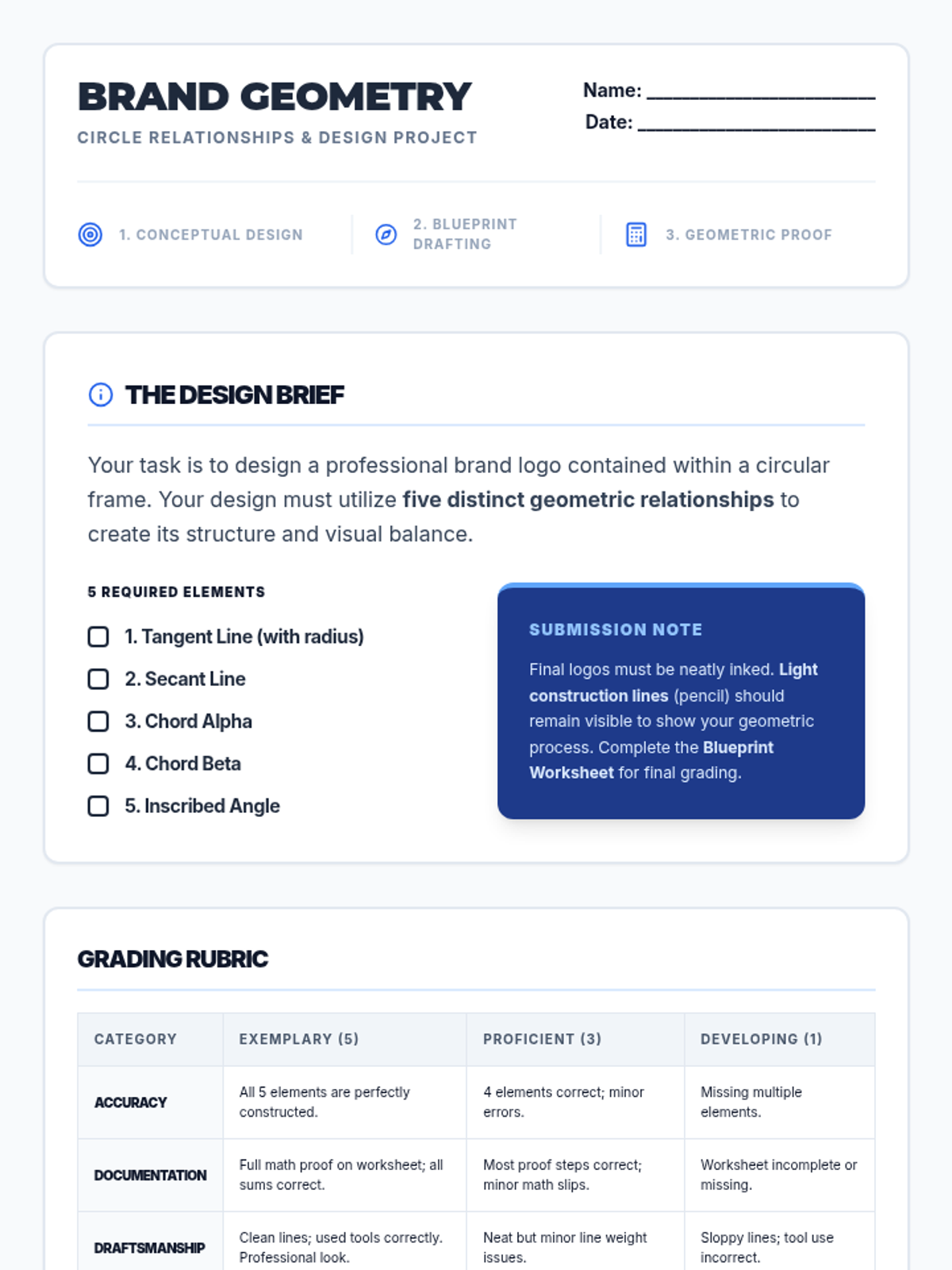
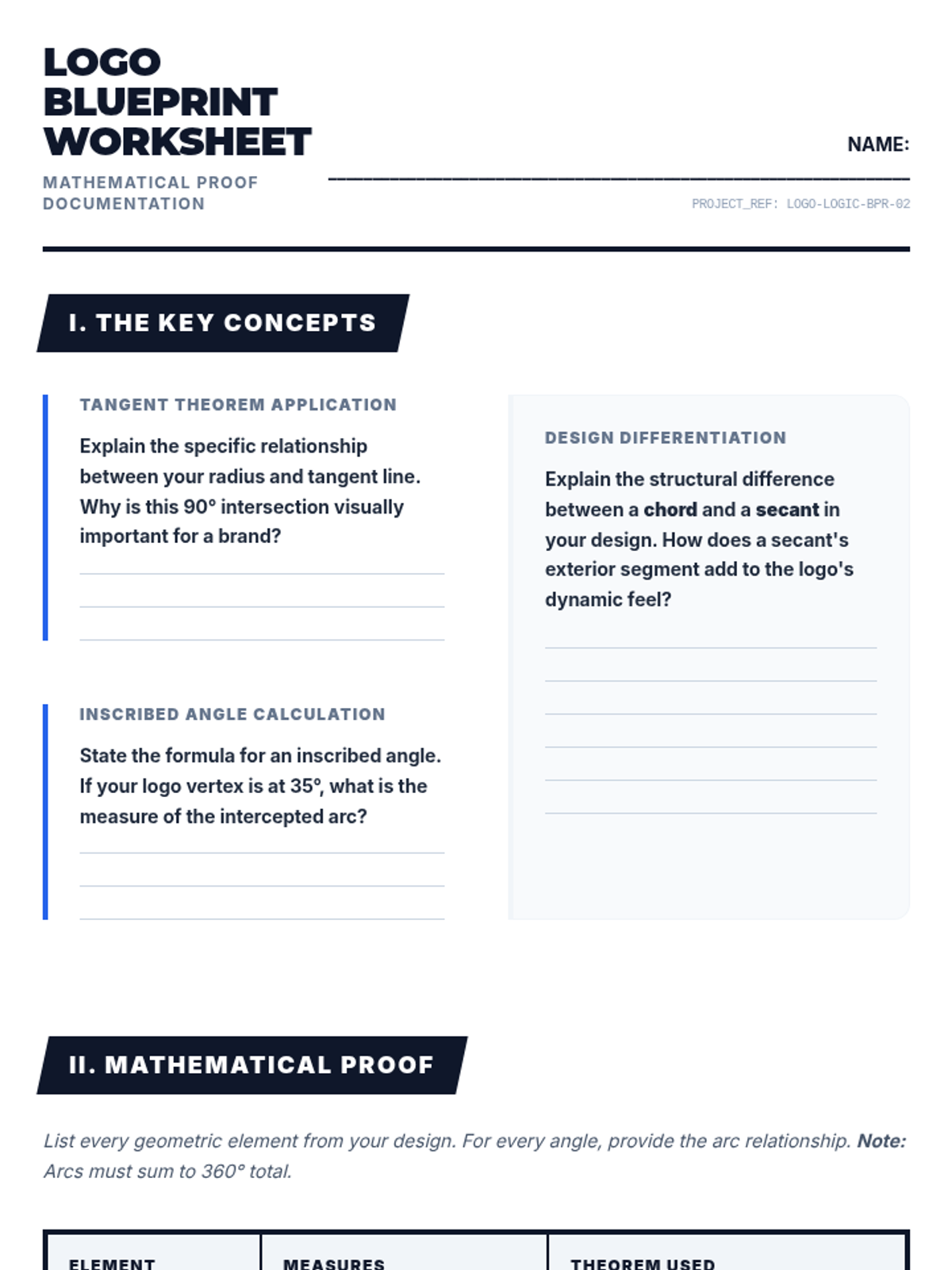
A creative geometry project where students design a brand logo using specific circle properties, including tangents, secants, chords, and inscribed angles. Students must demonstrate both artistic design and geometric precision through calculations.
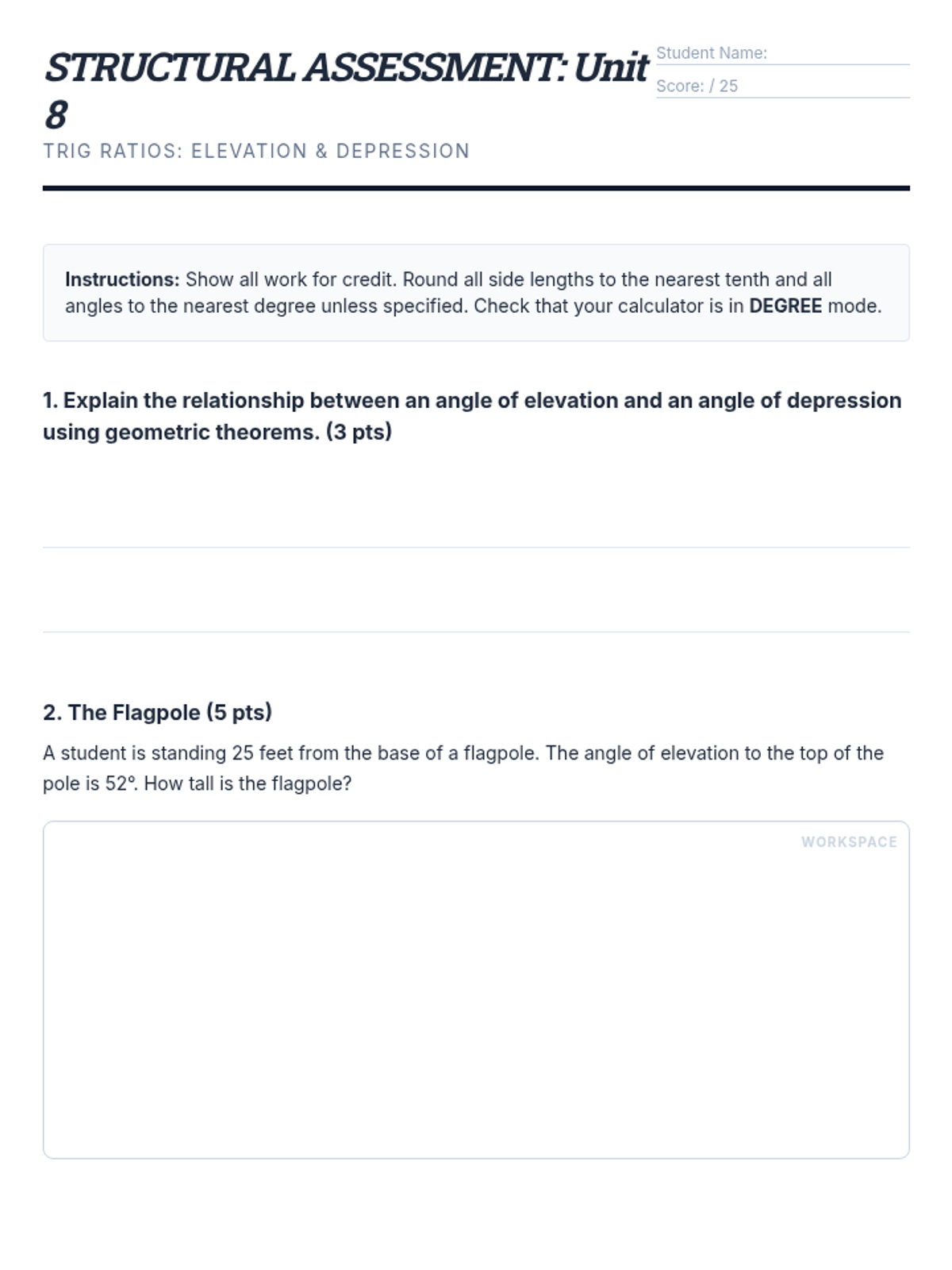
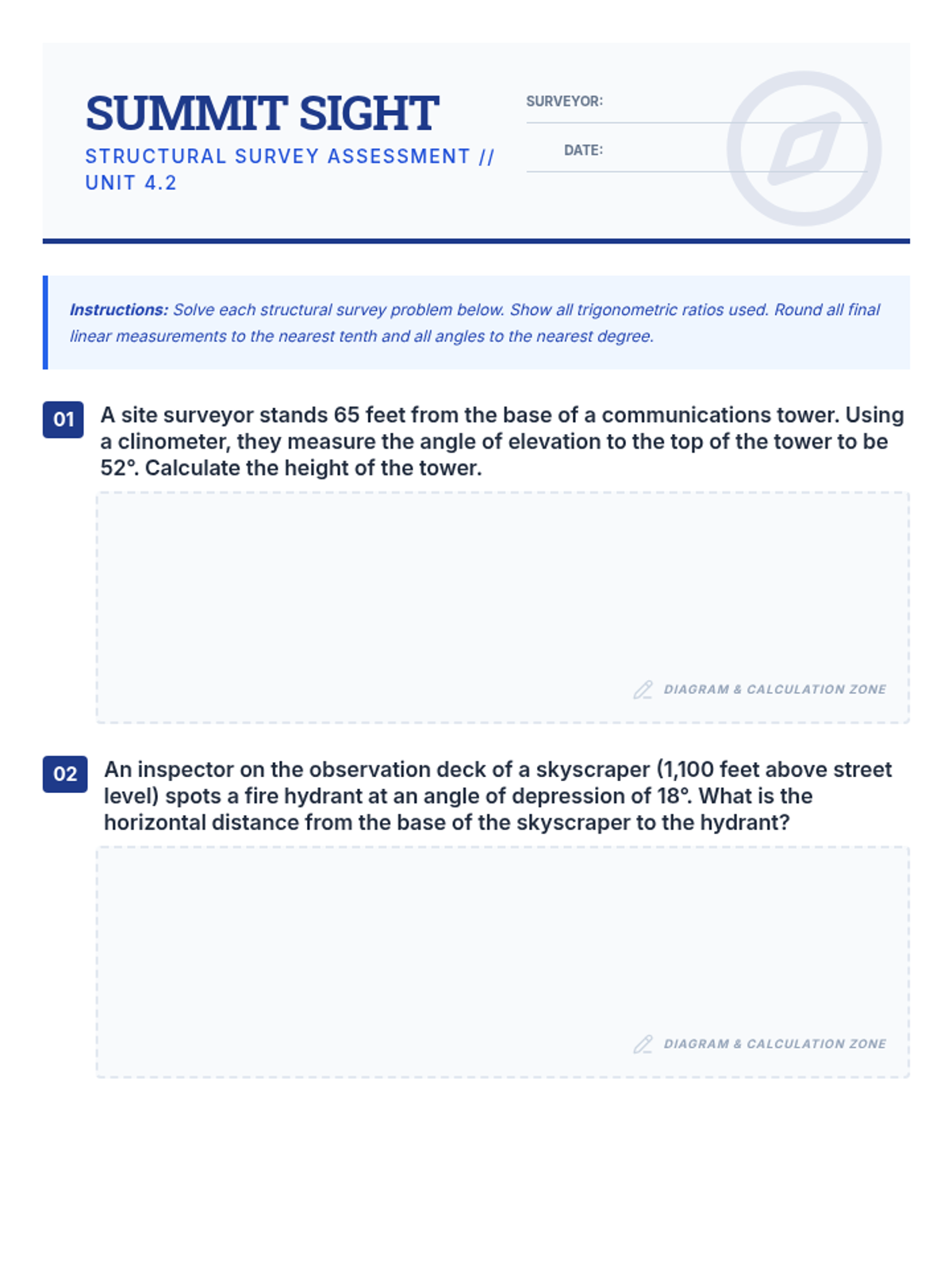
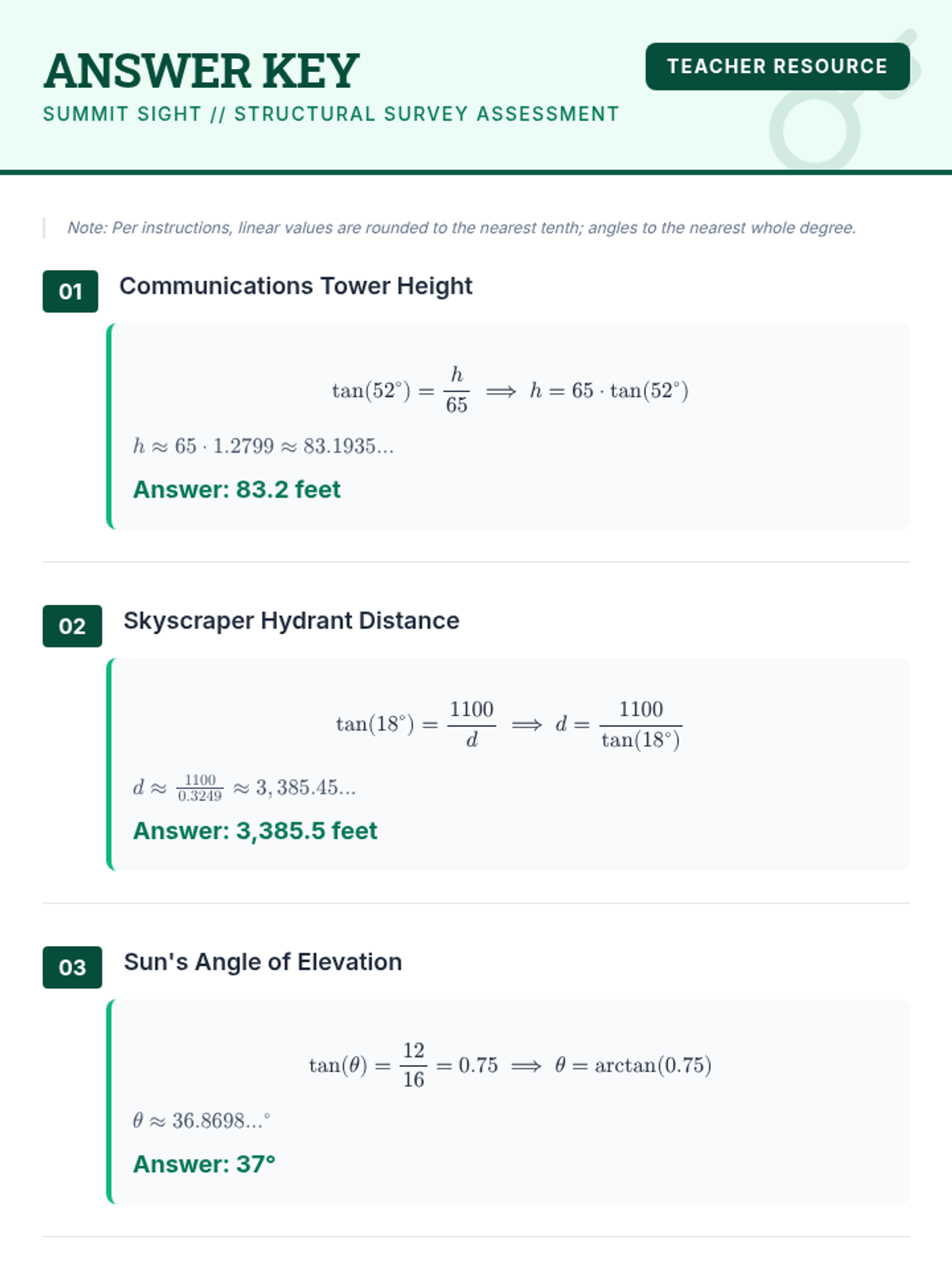
A focused assessment and practice module on right-triangle trigonometry, specifically covering the concepts of elevation and depression through architectural and surveying contexts.
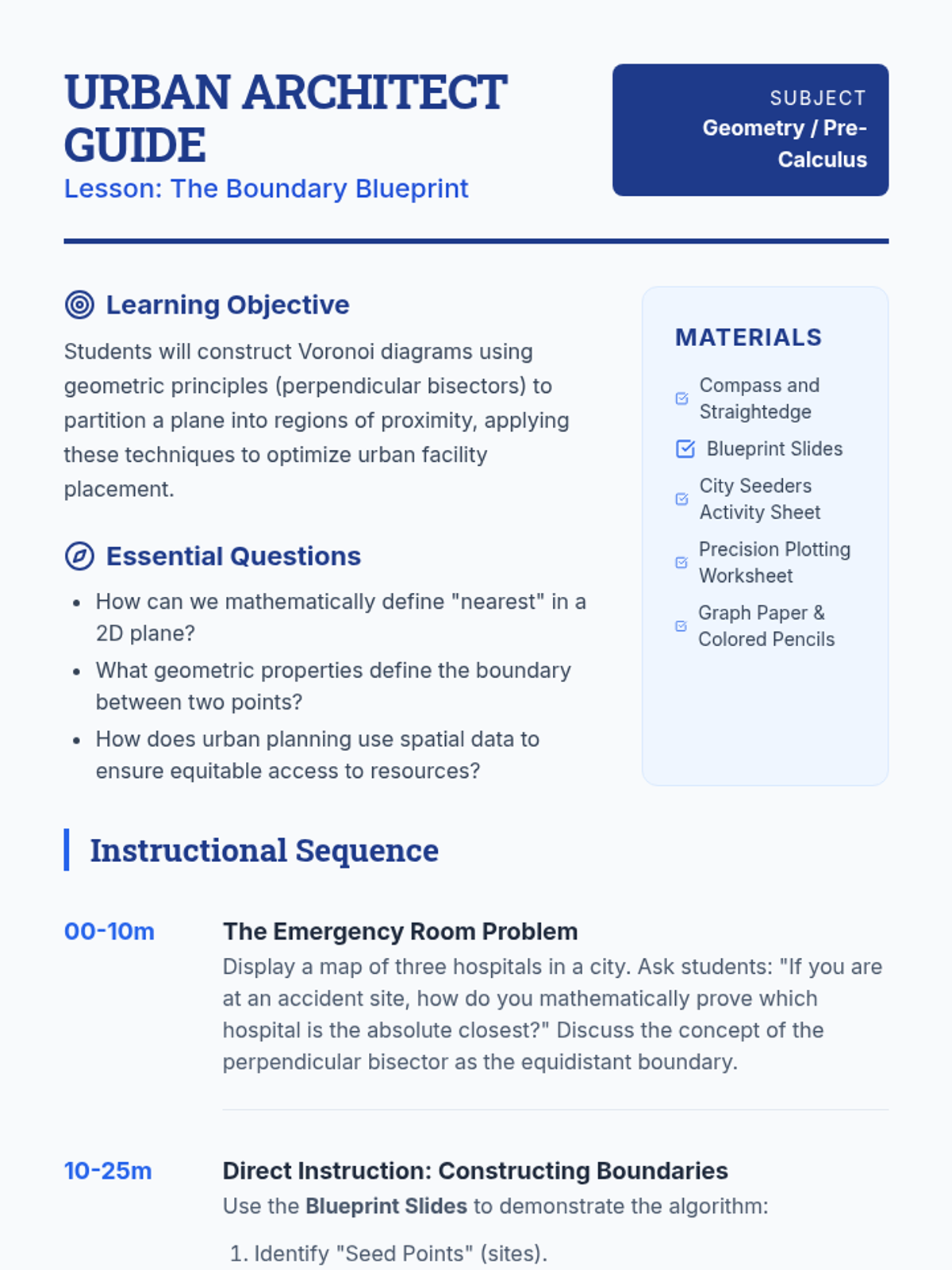
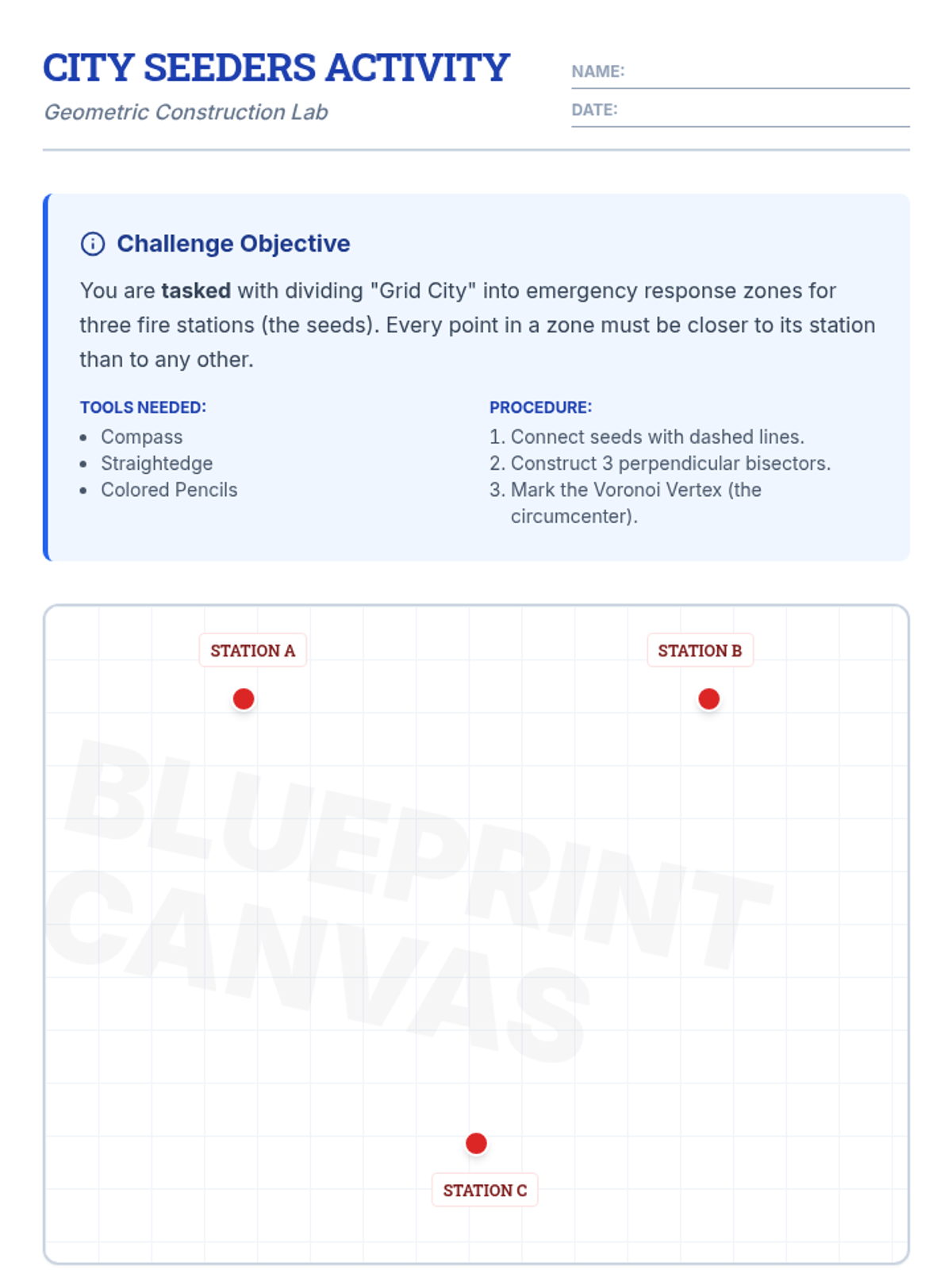
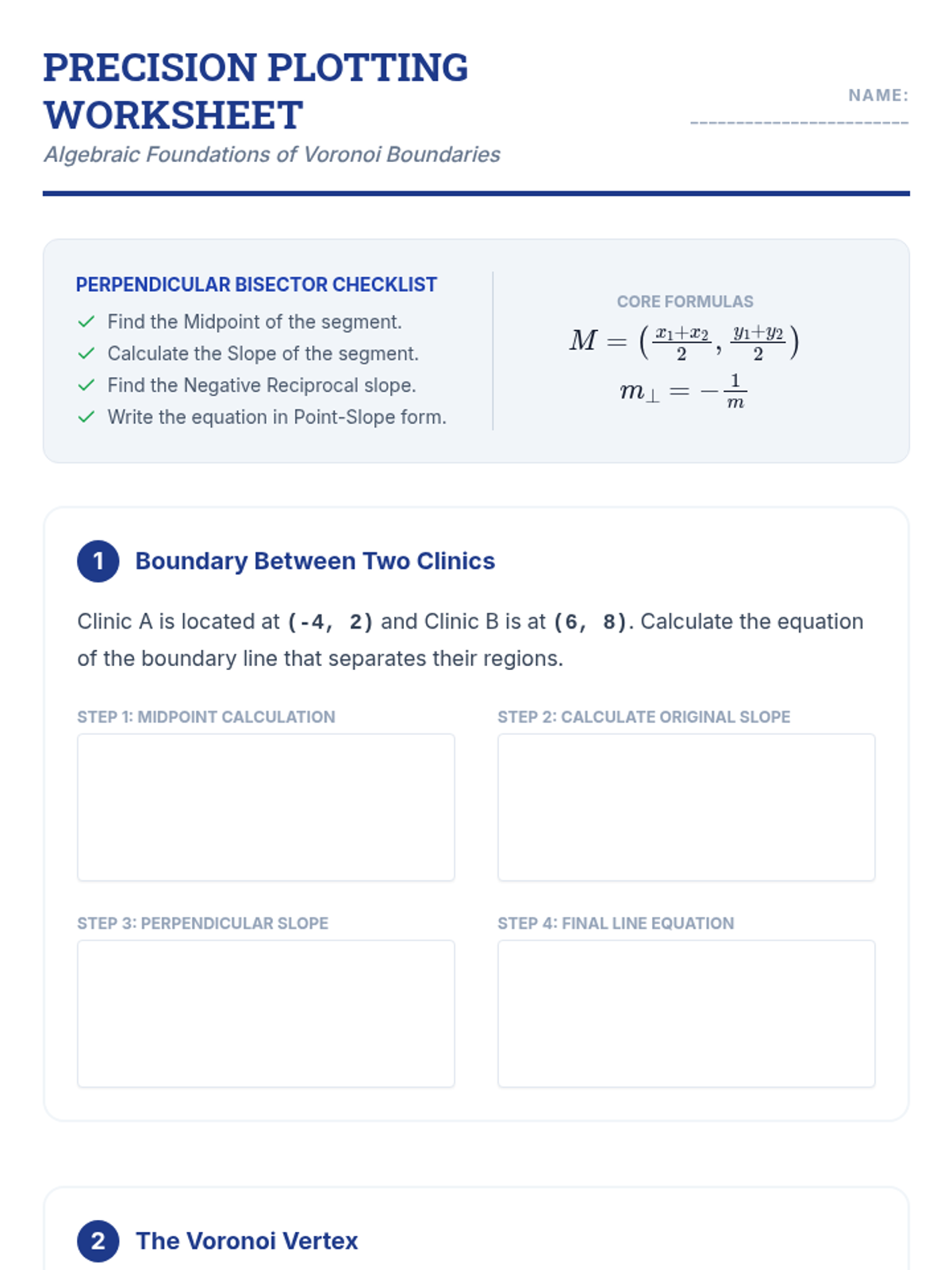
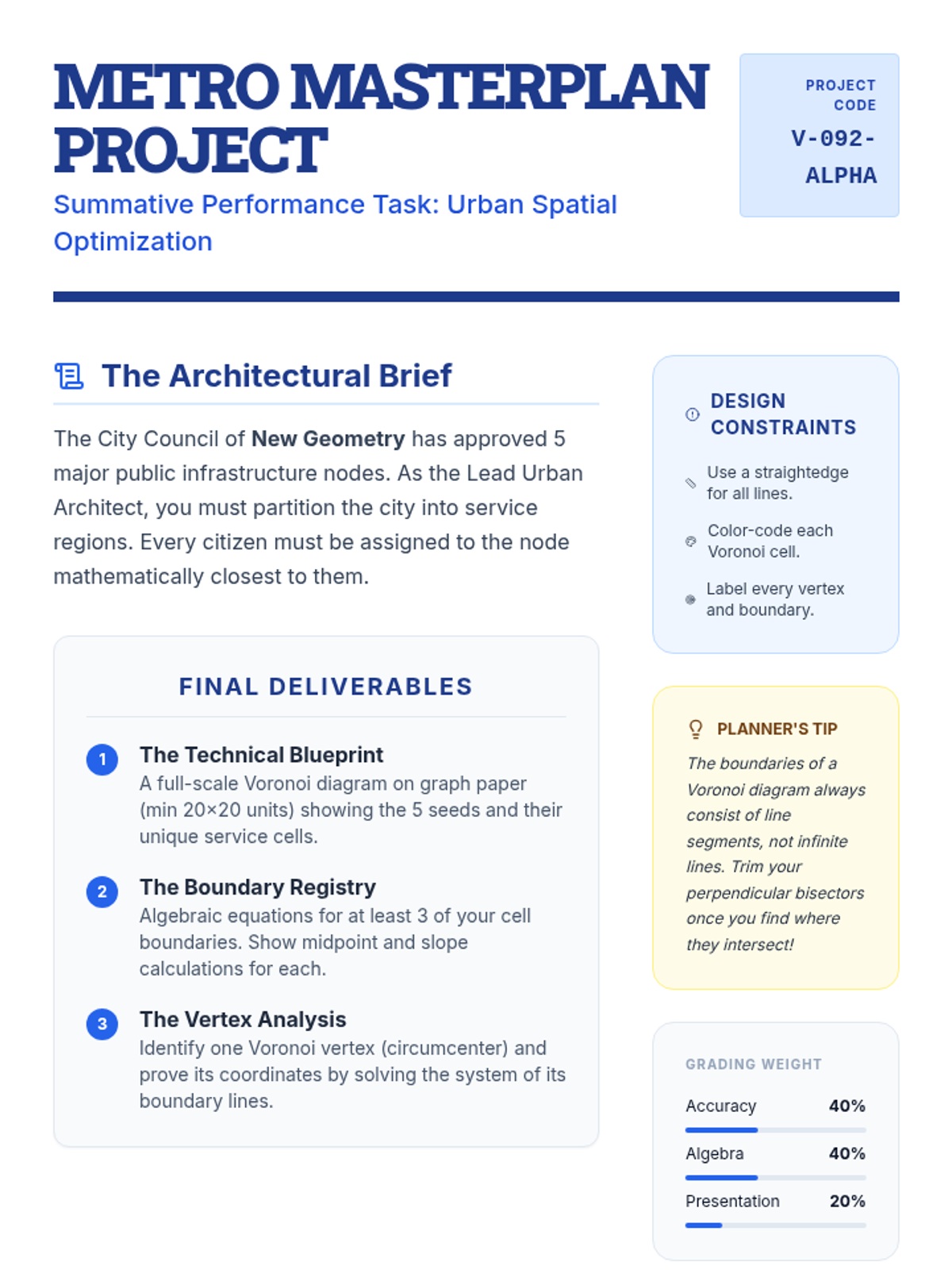
A high school geometry lesson where students learn to construct Voronoi diagrams using perpendicular bisectors to solve real-world spatial optimization problems in urban planning.
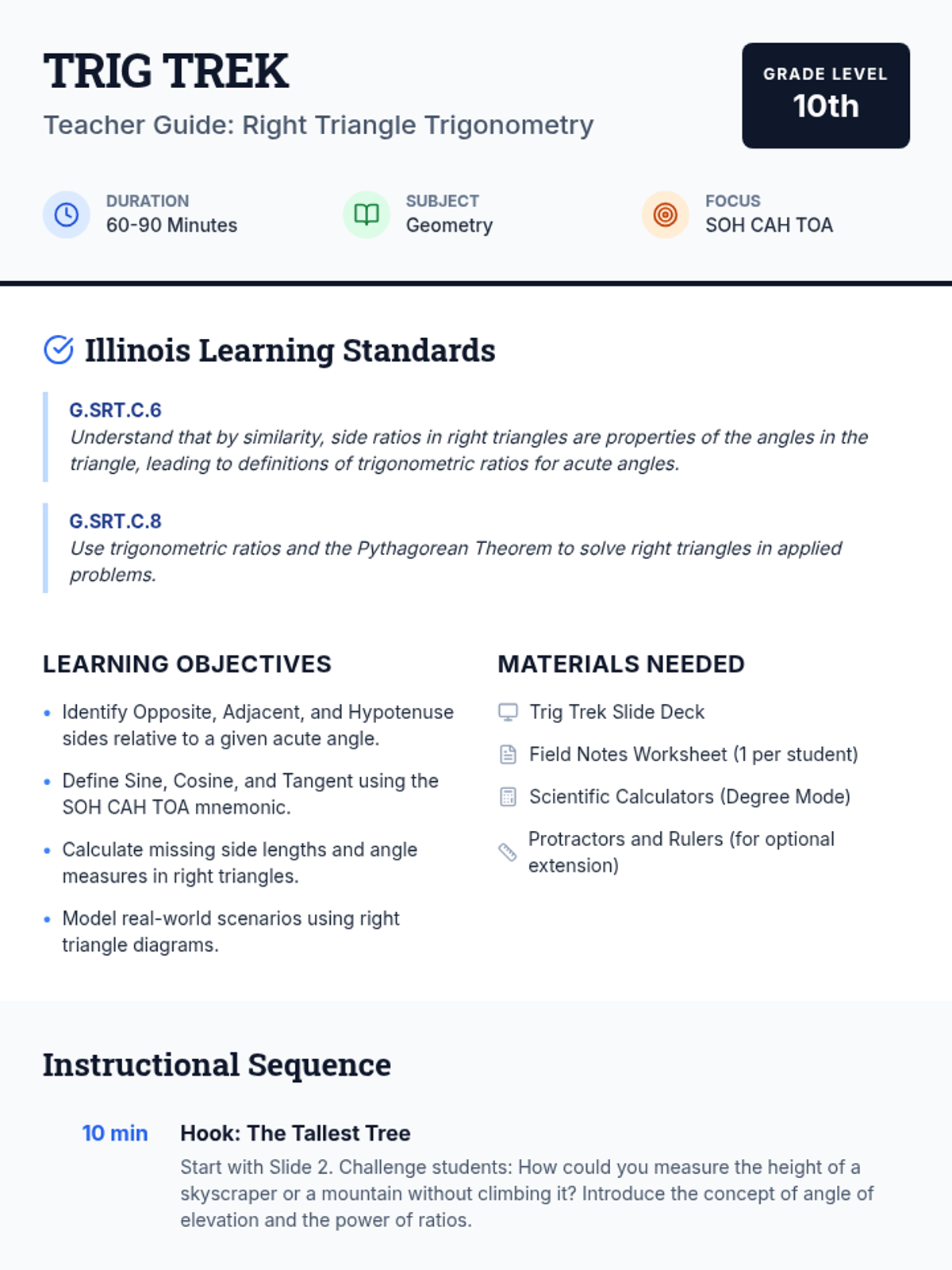
A comprehensive introduction to Right Triangle Trigonometry (SOH CAH TOA) aligned with Illinois High School Geometry standards. Students will explore ratios, solve for missing dimensions, and apply trigonometry to real-world surveying scenarios.
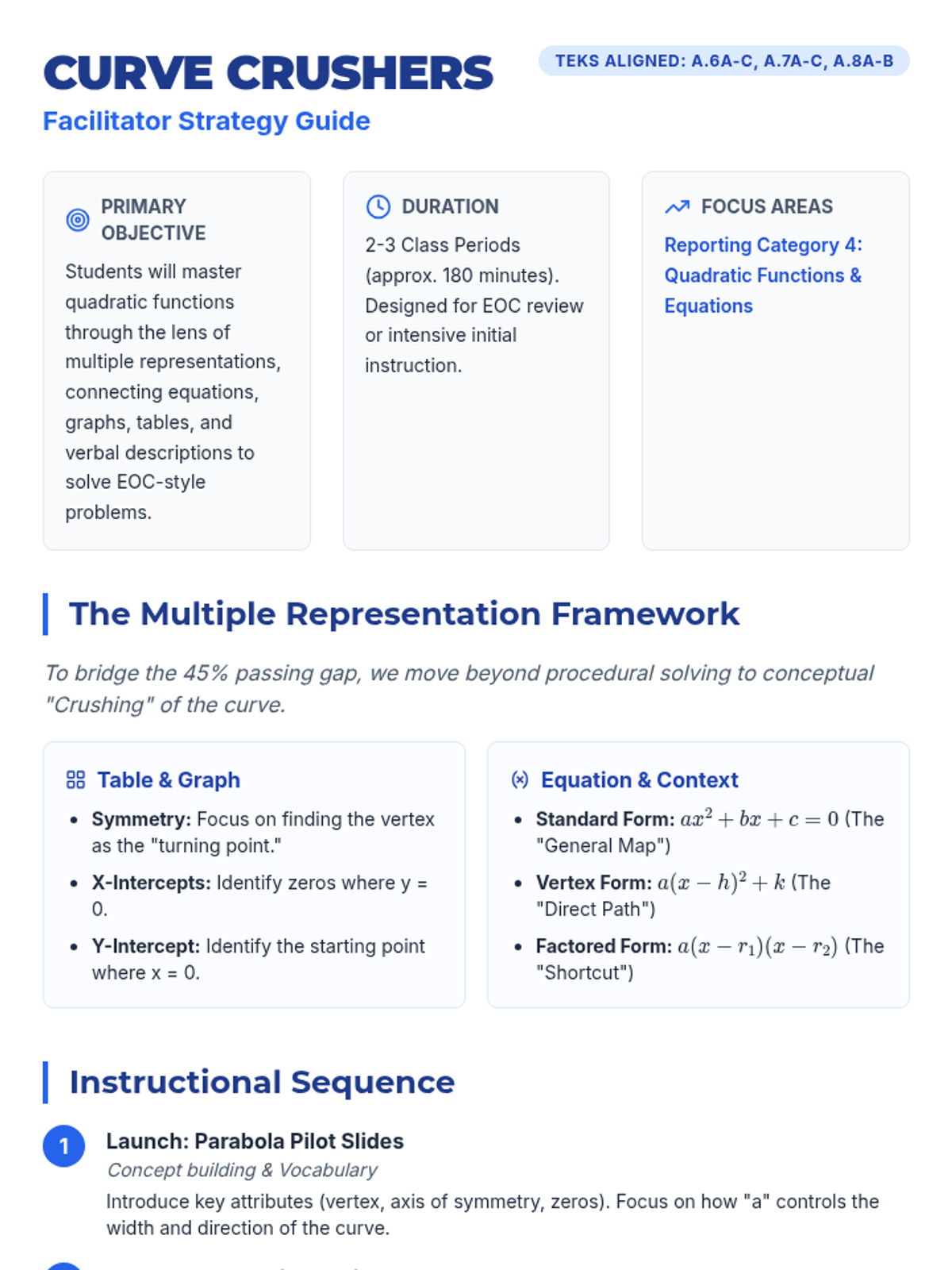
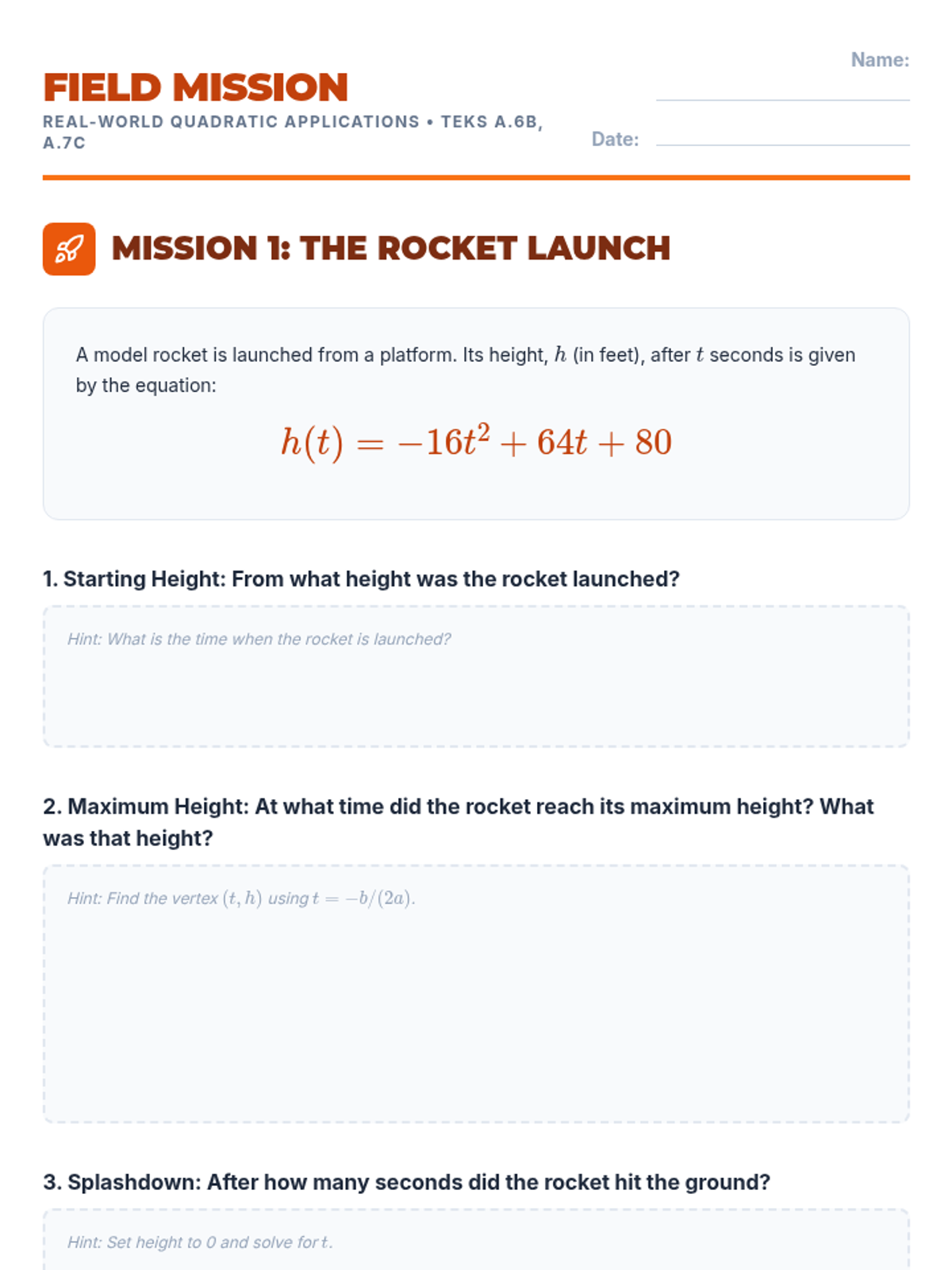
A comprehensive STAAR-aligned lesson covering quadratic functions, from graphing and key attributes to solving equations using multiple methods and real-world applications.
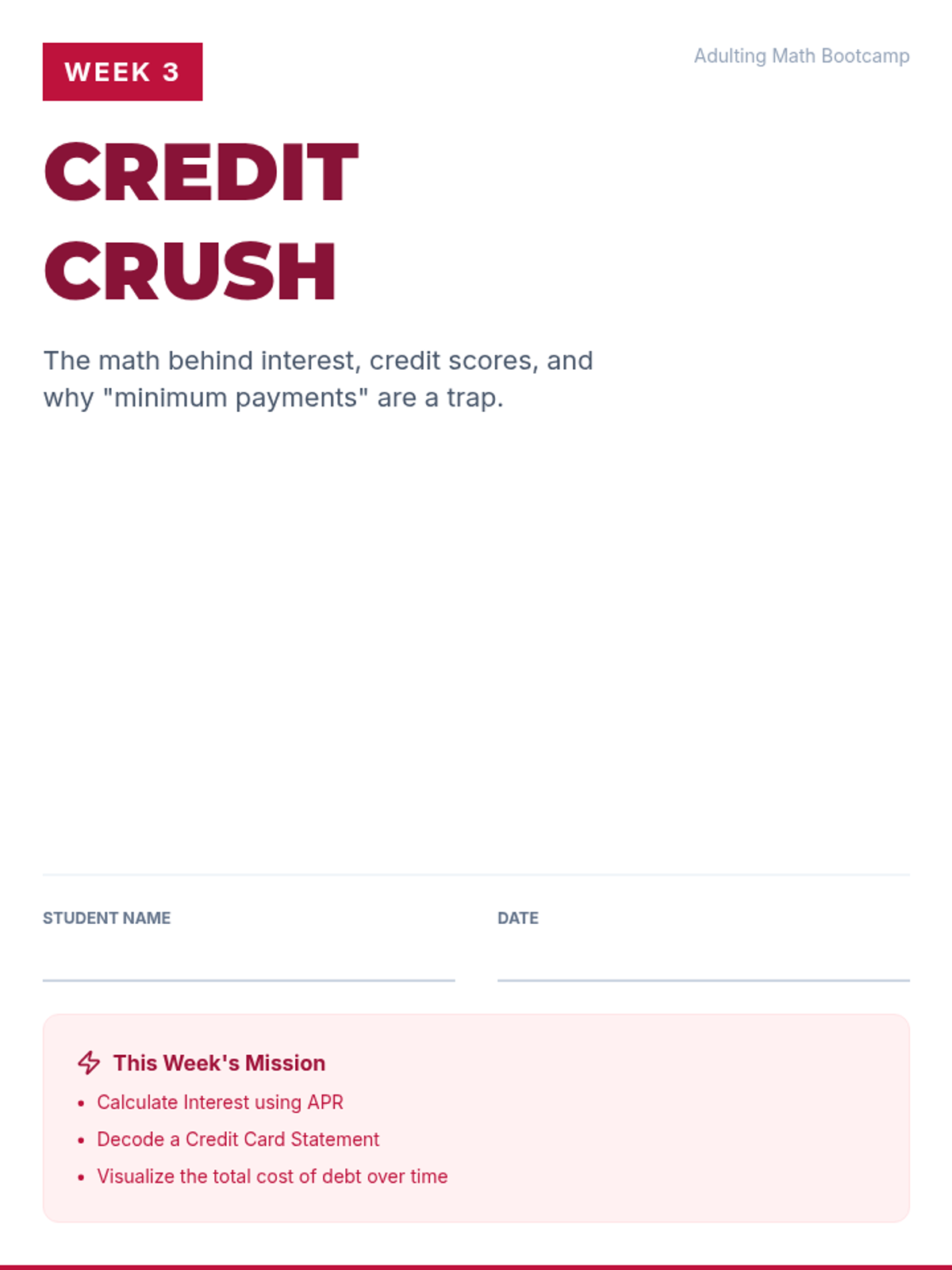
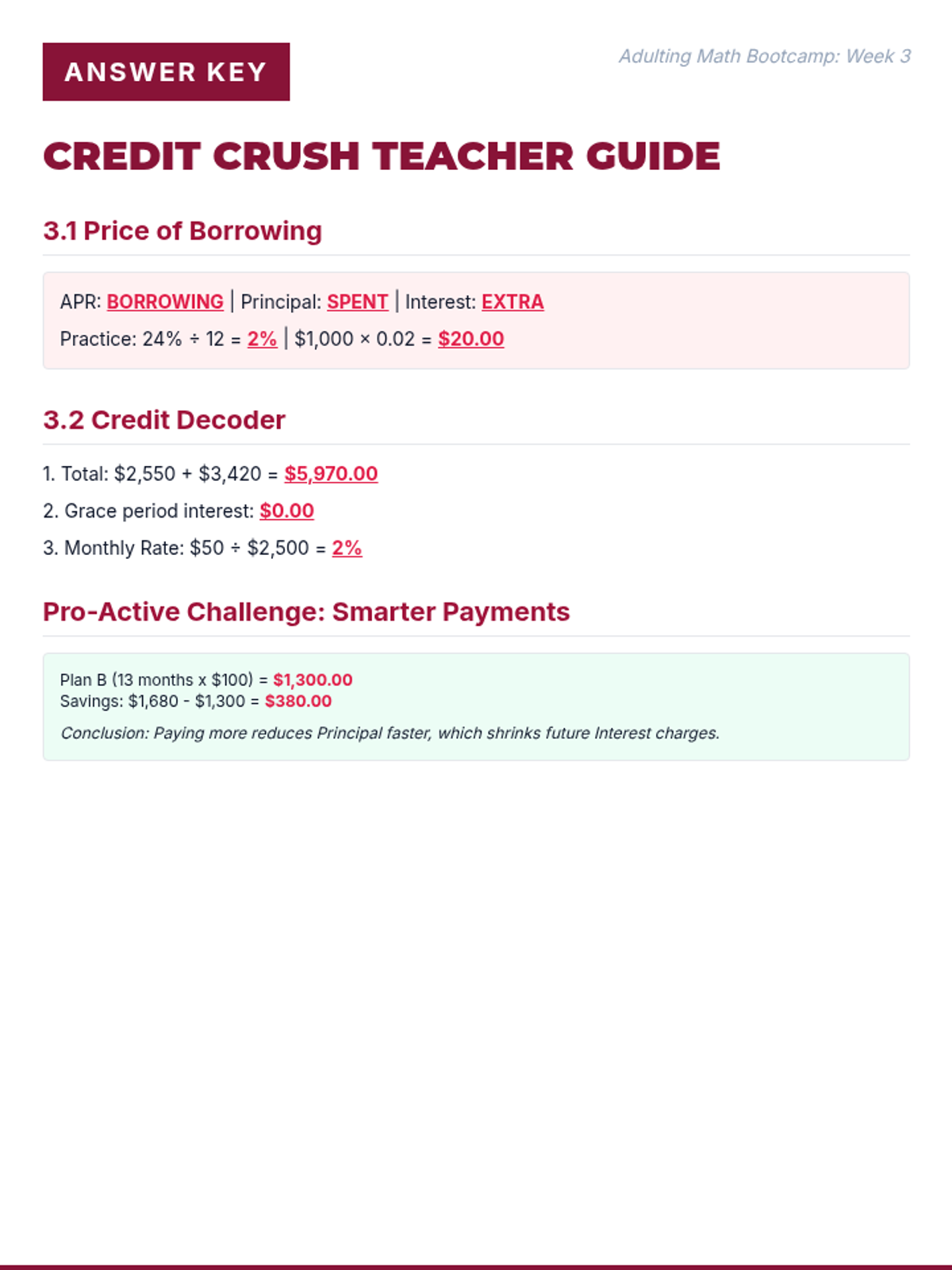
Explores the math behind interest rates (APR), credit card statements, and the long-term impact of debt.
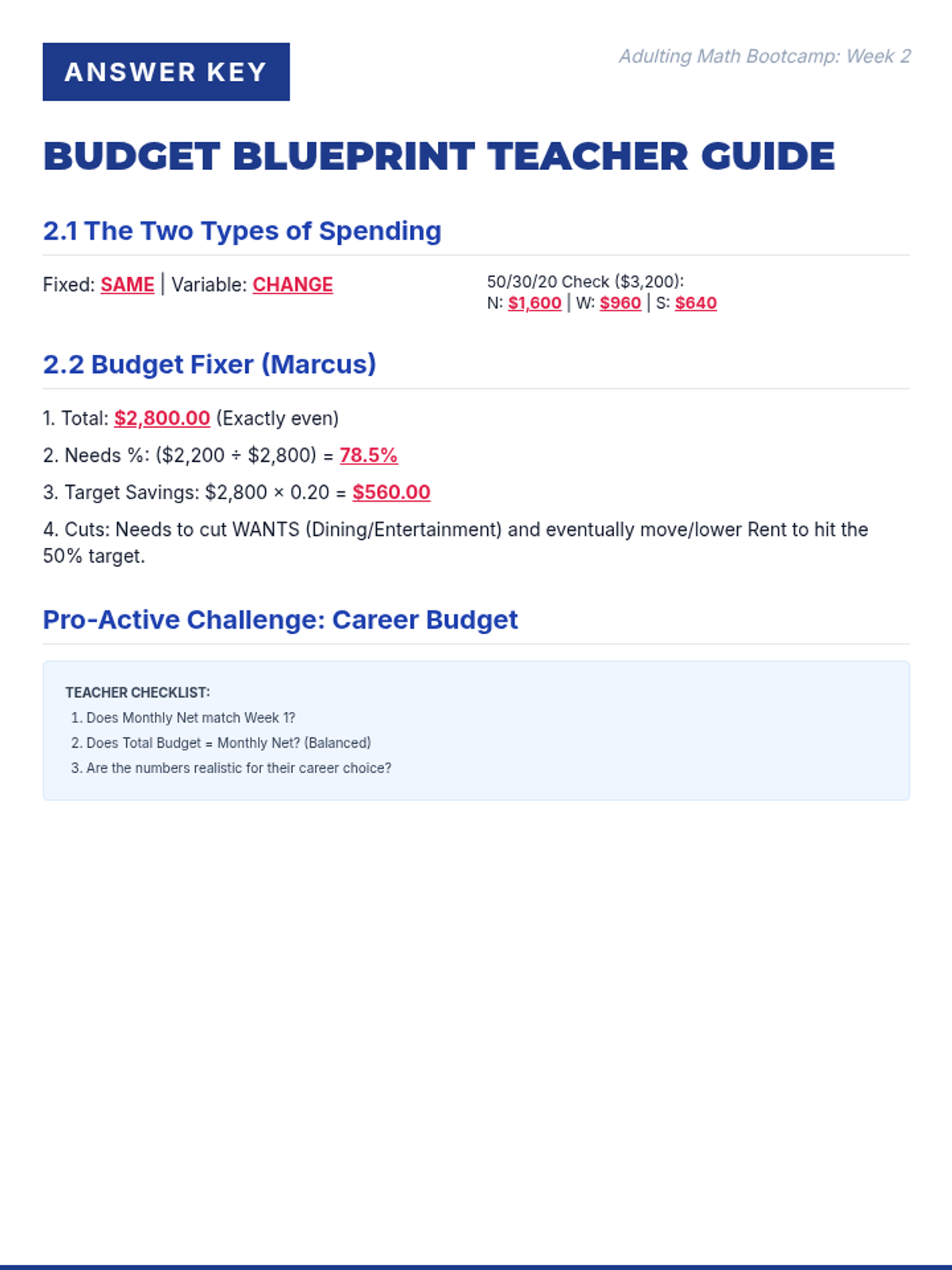
Teaches students how to categorize expenses, use the 50/30/20 rule, and build a sustainable monthly budget.
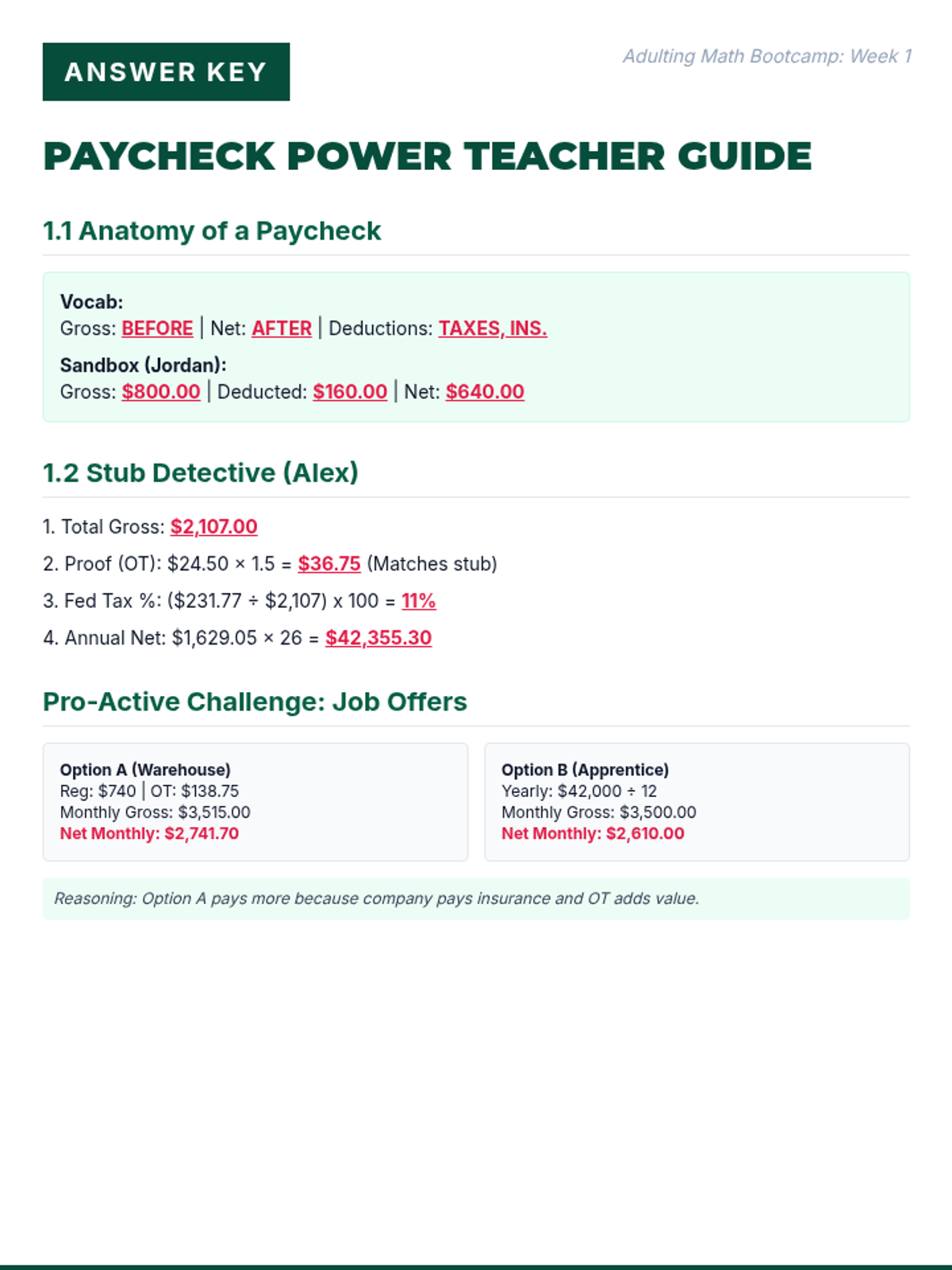
Focuses on understanding gross vs. net pay, reading paystubs, and calculating common tax deductions to prepare students for their first professional earnings.
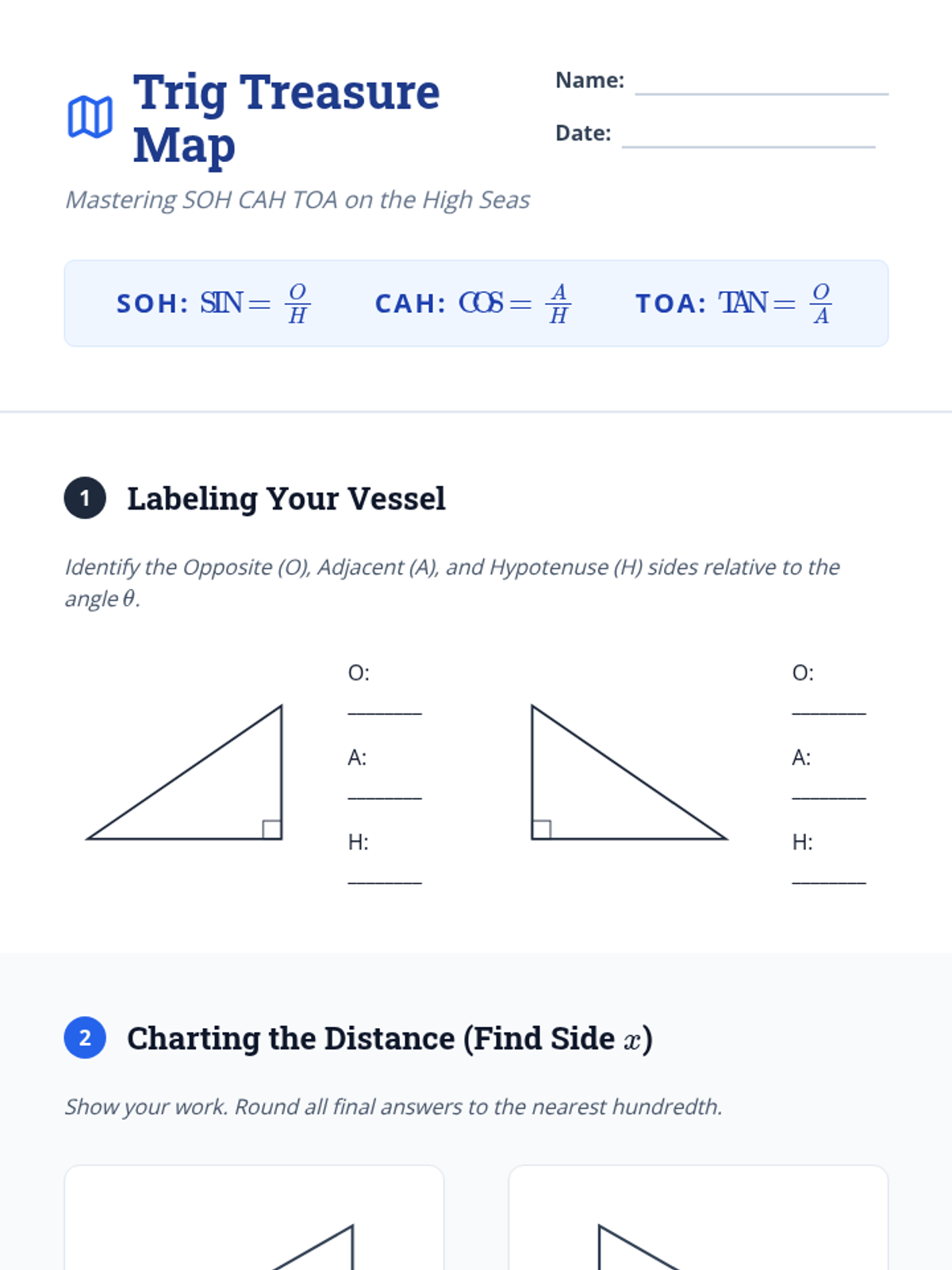
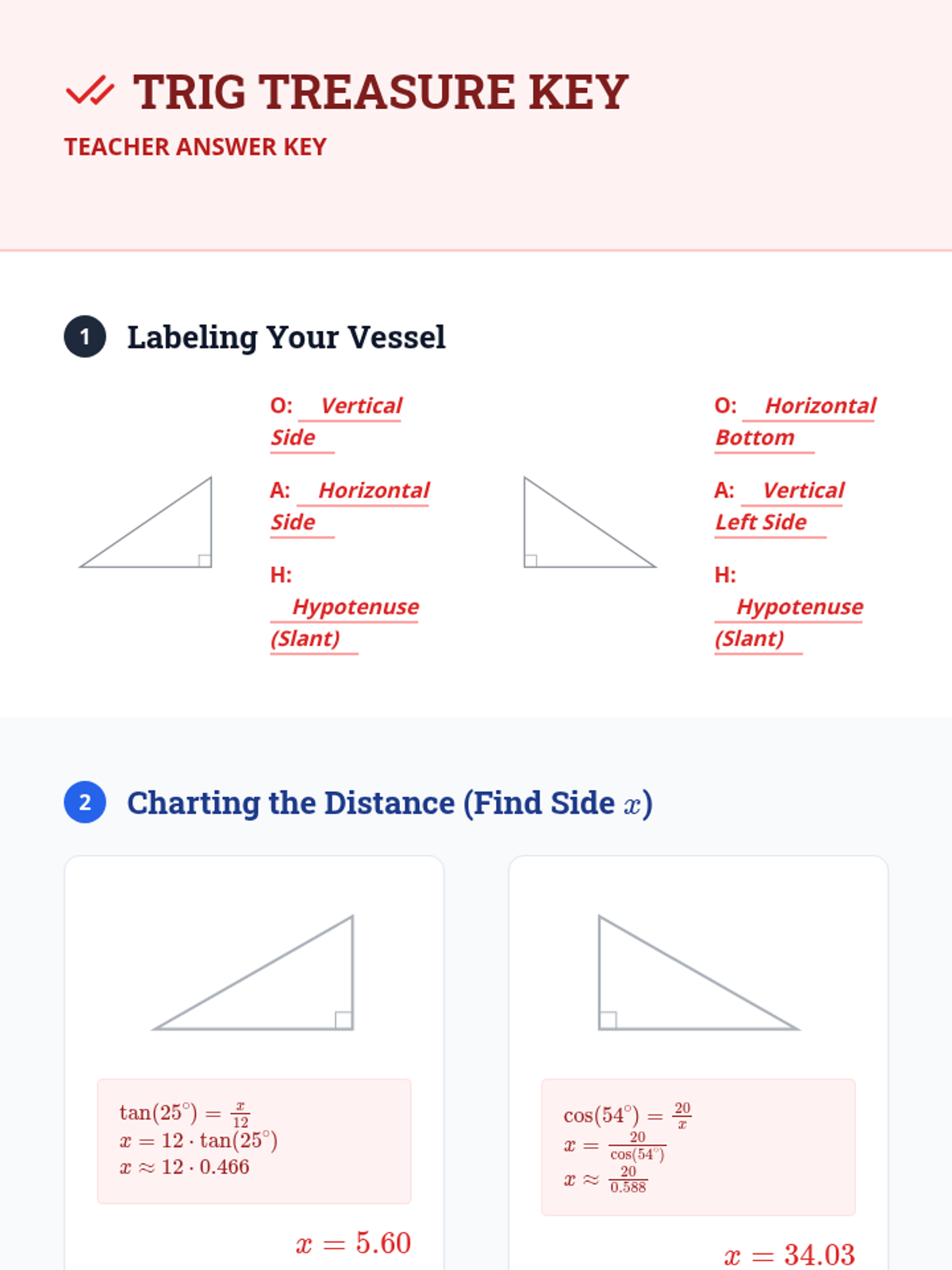
An introduction to right triangle trigonometry using Sine, Cosine, and Tangent (SOH CAH TOA) to solve for missing side lengths and angles in real-world nautical contexts.
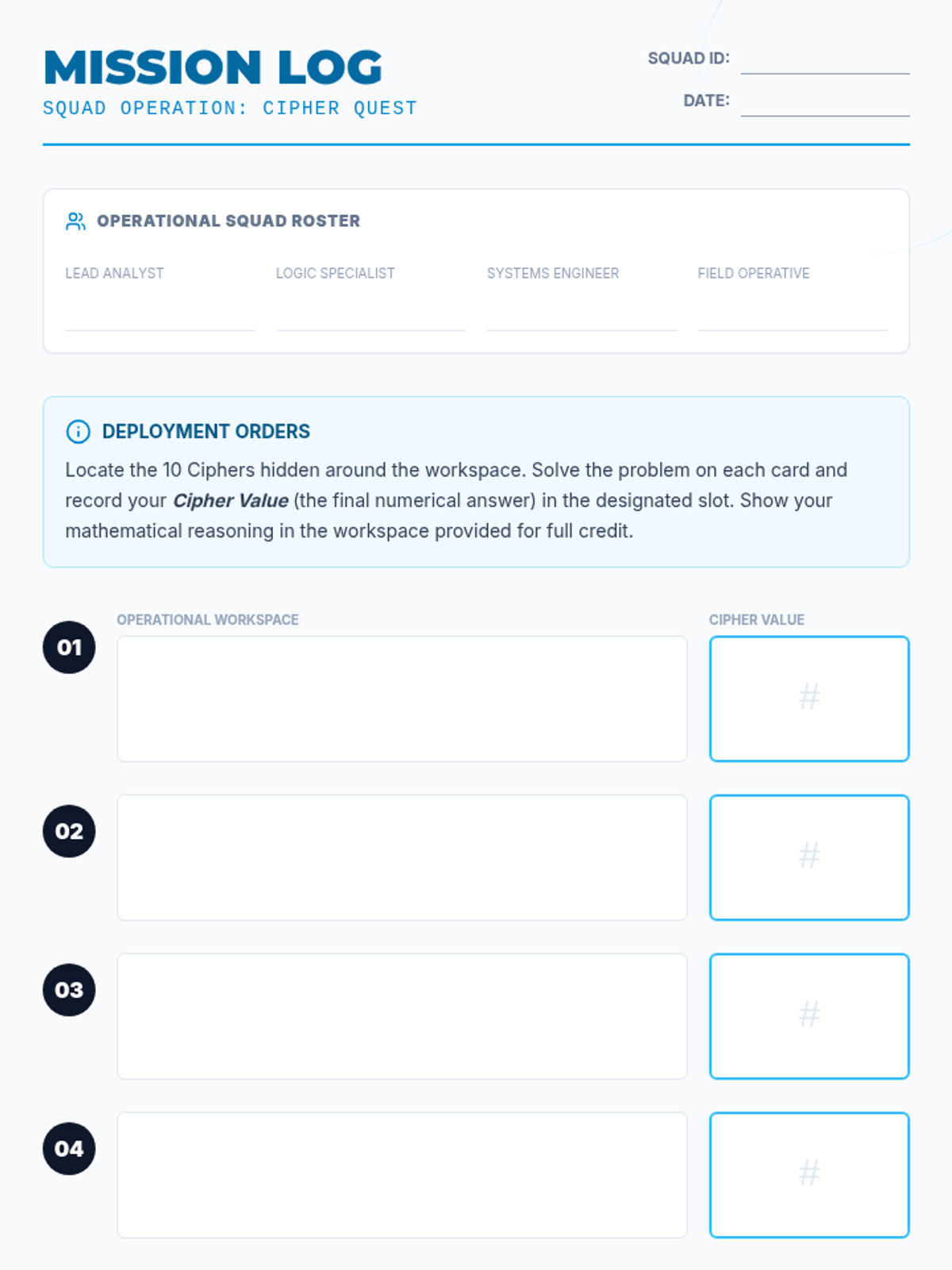
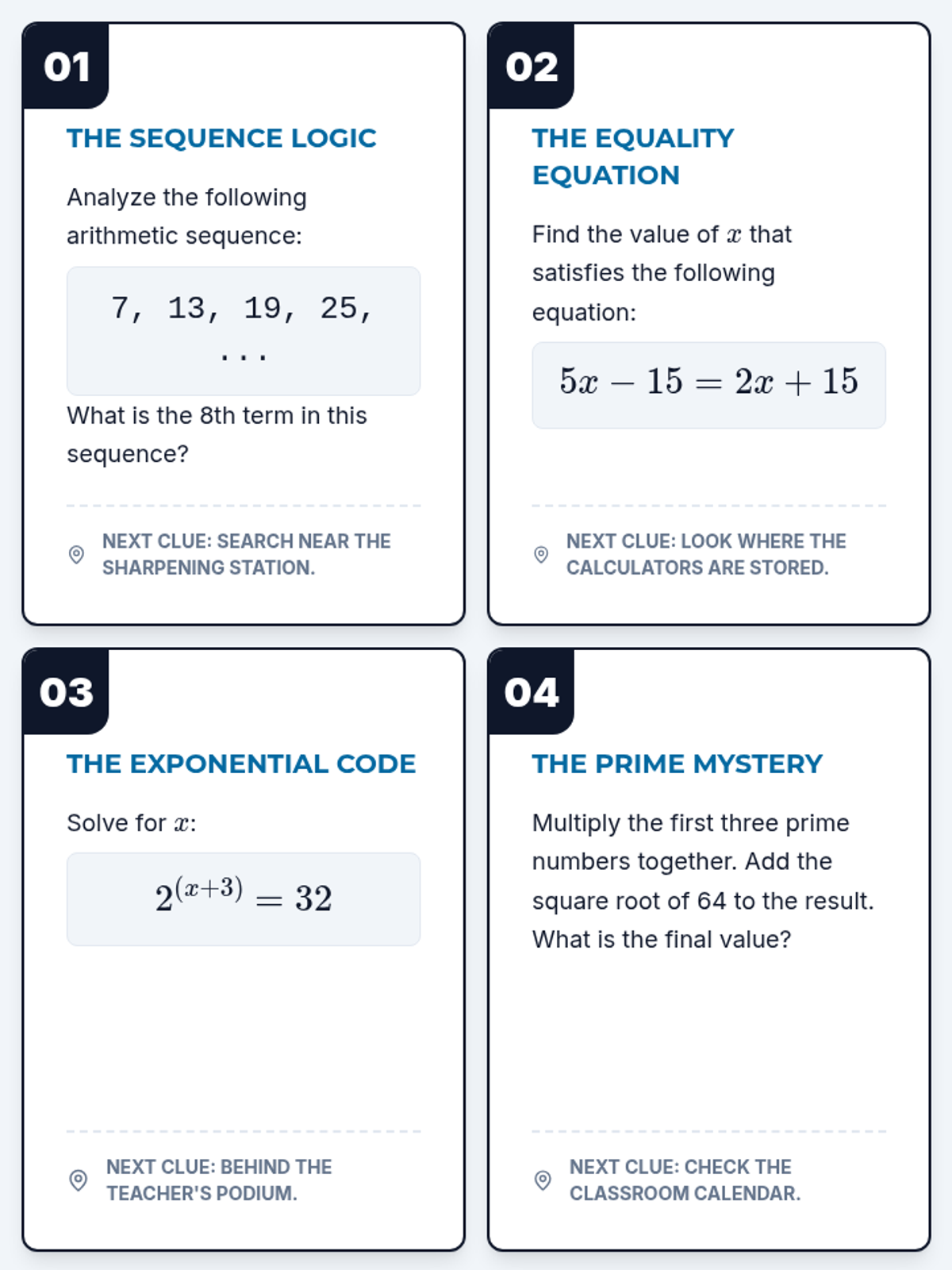
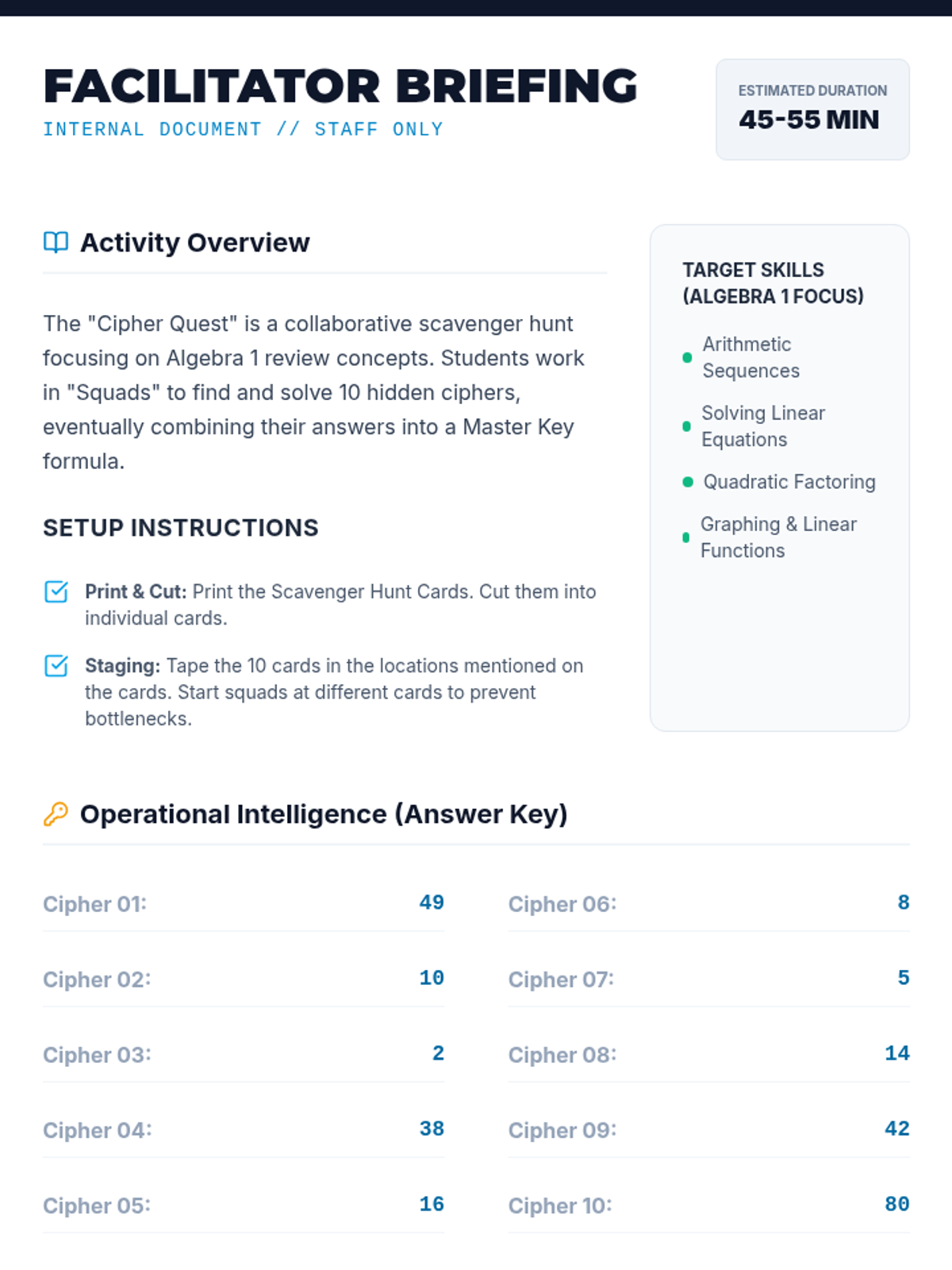
A high-energy, collaborative first-day activity for 11th-grade math students designed to foster teamwork and problem-solving through a classroom-wide scavenger hunt.
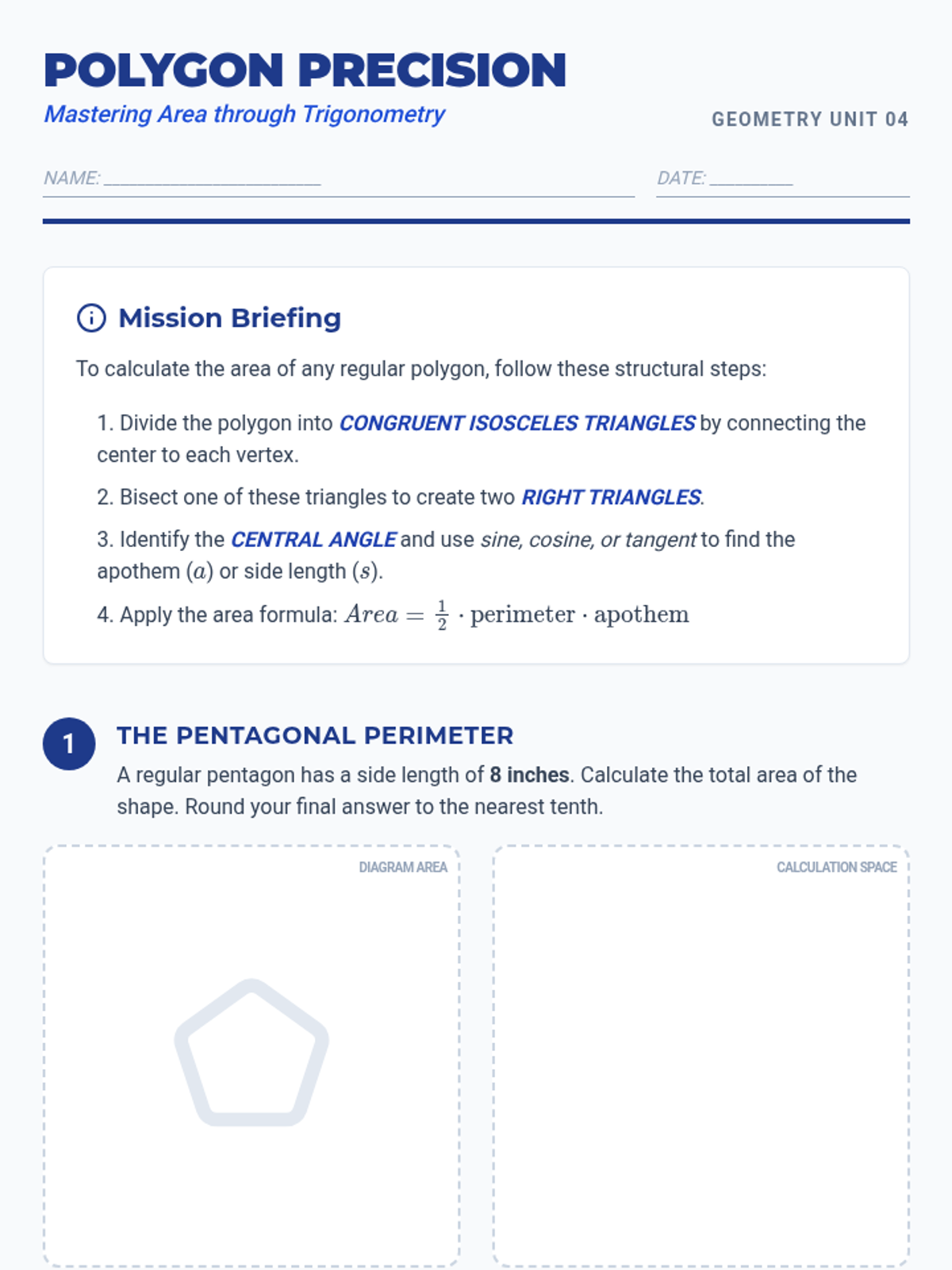
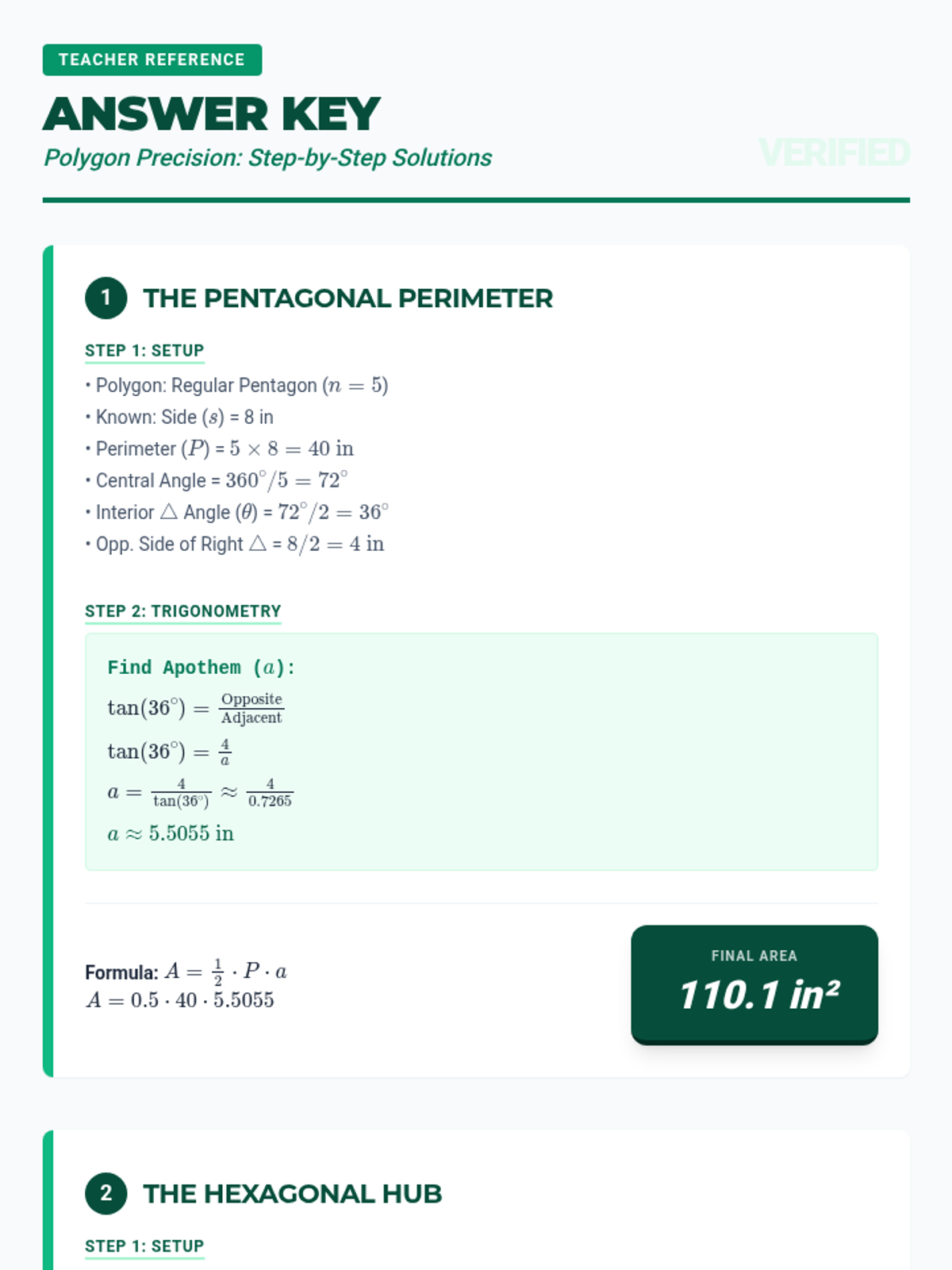
A lesson focused on calculating the area of regular polygons by decomposing them into triangles and applying trigonometric ratios to find missing dimensions.
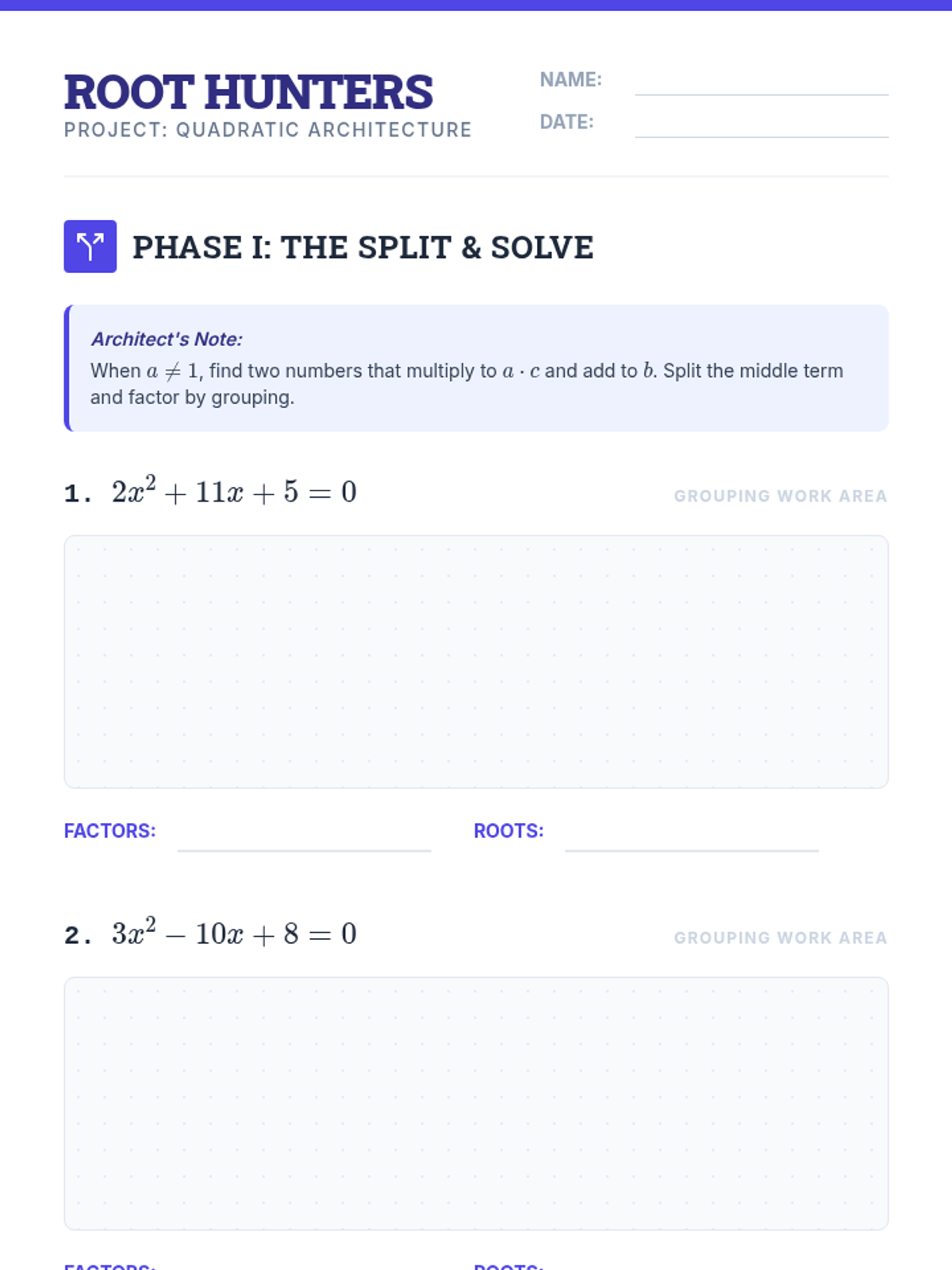
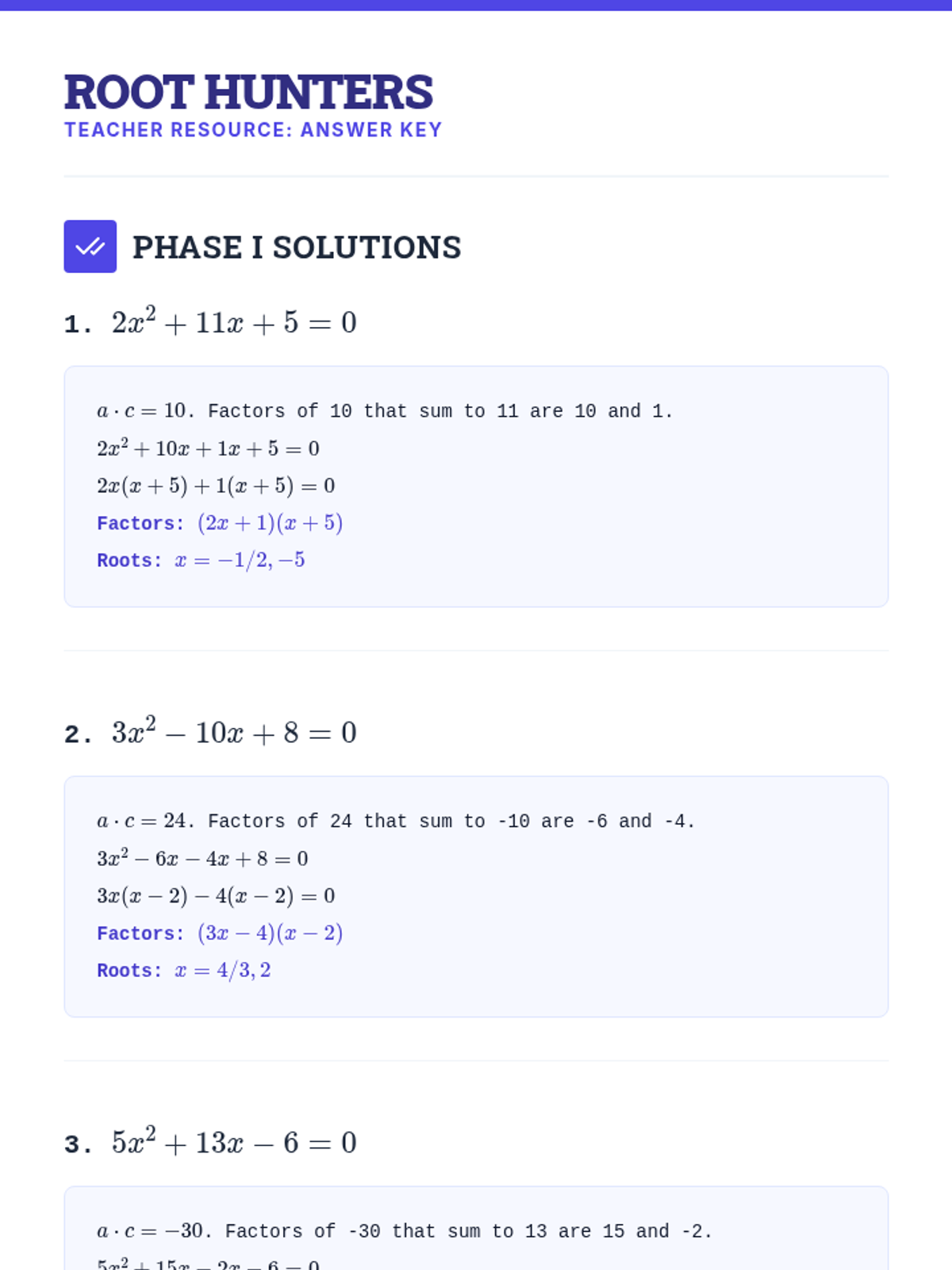
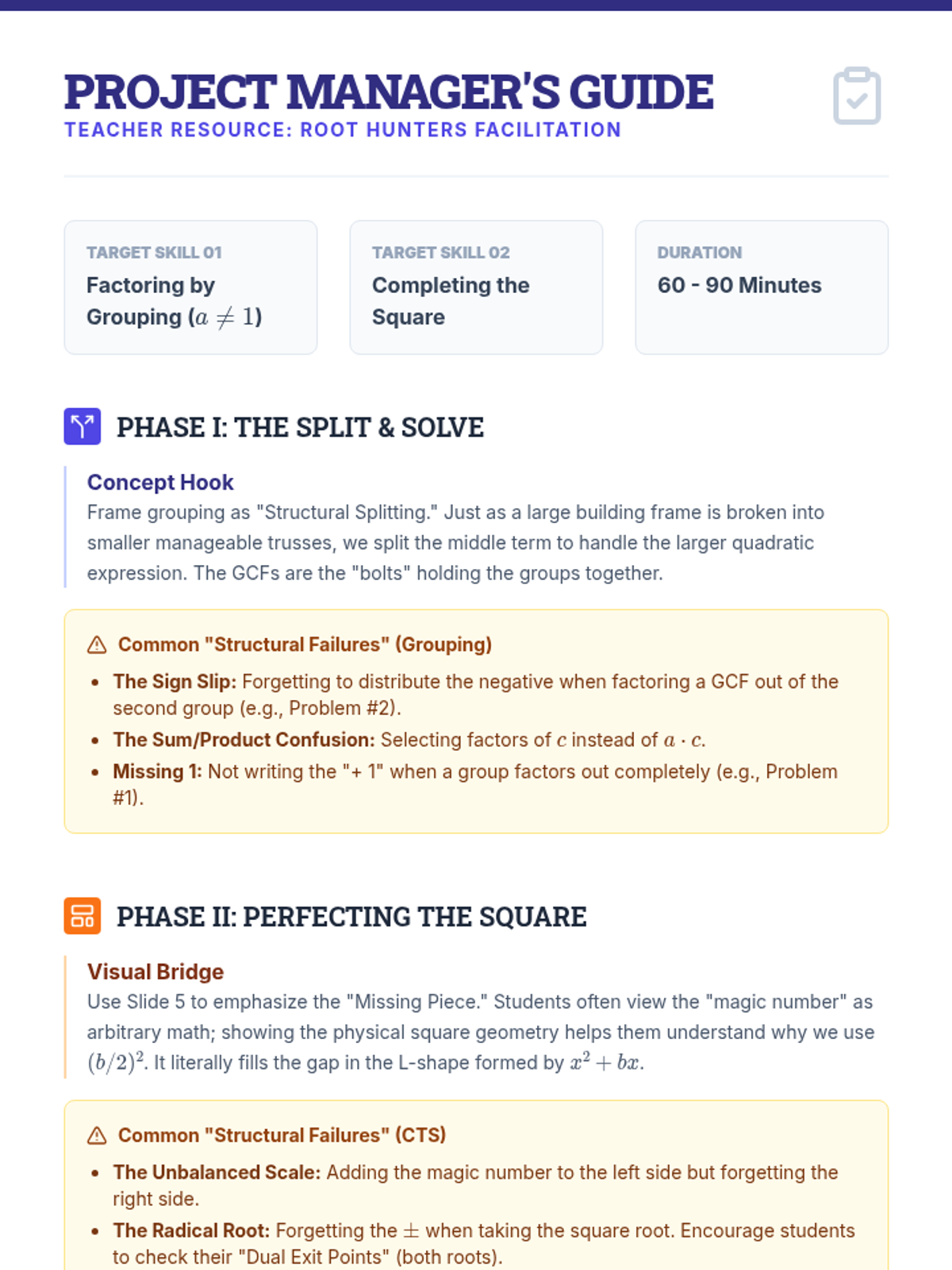
A comprehensive lesson on solving quadratic equations using factoring by grouping and completing the square, featuring step-by-step visual guides and architectural-themed practice.
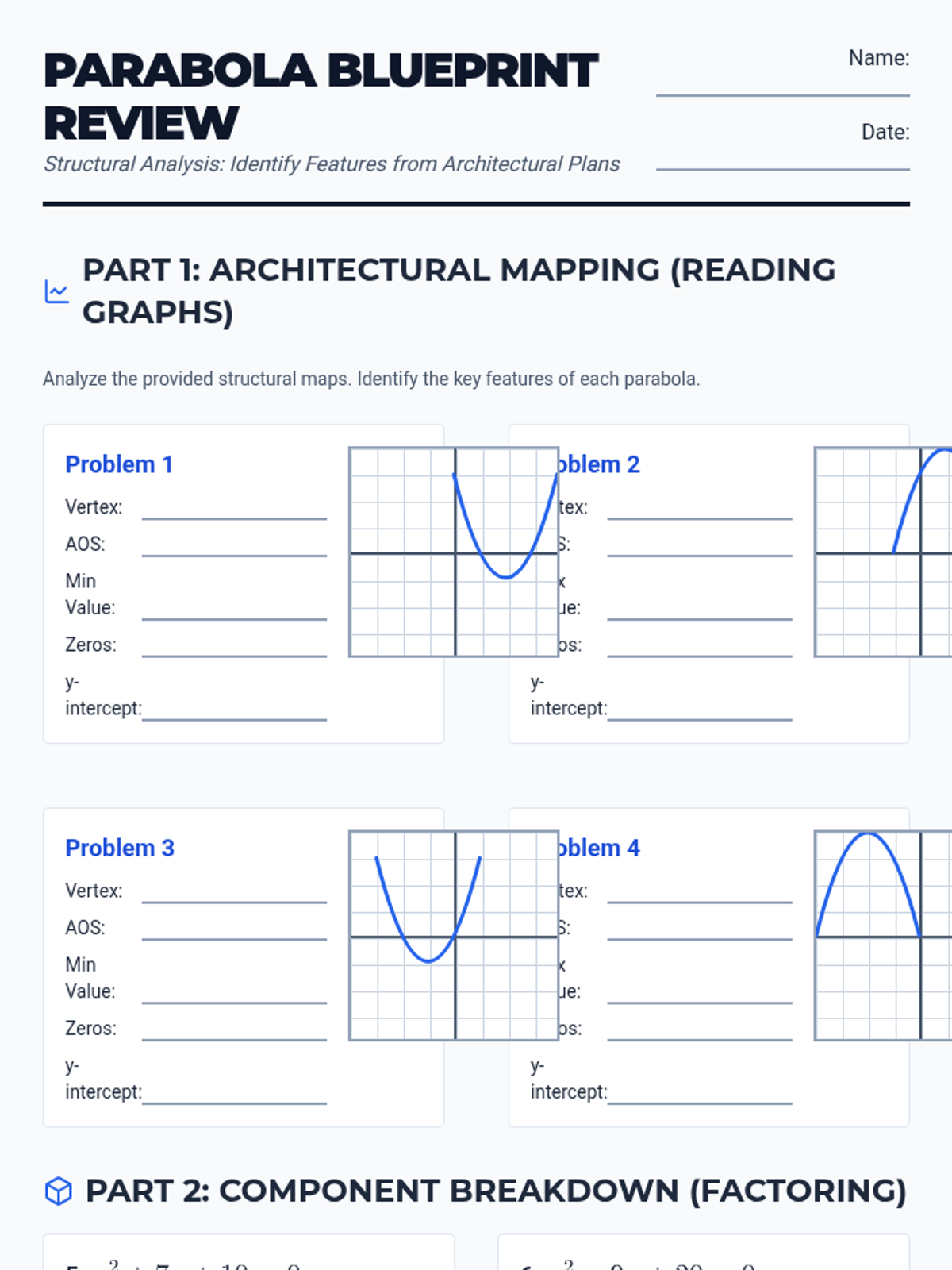
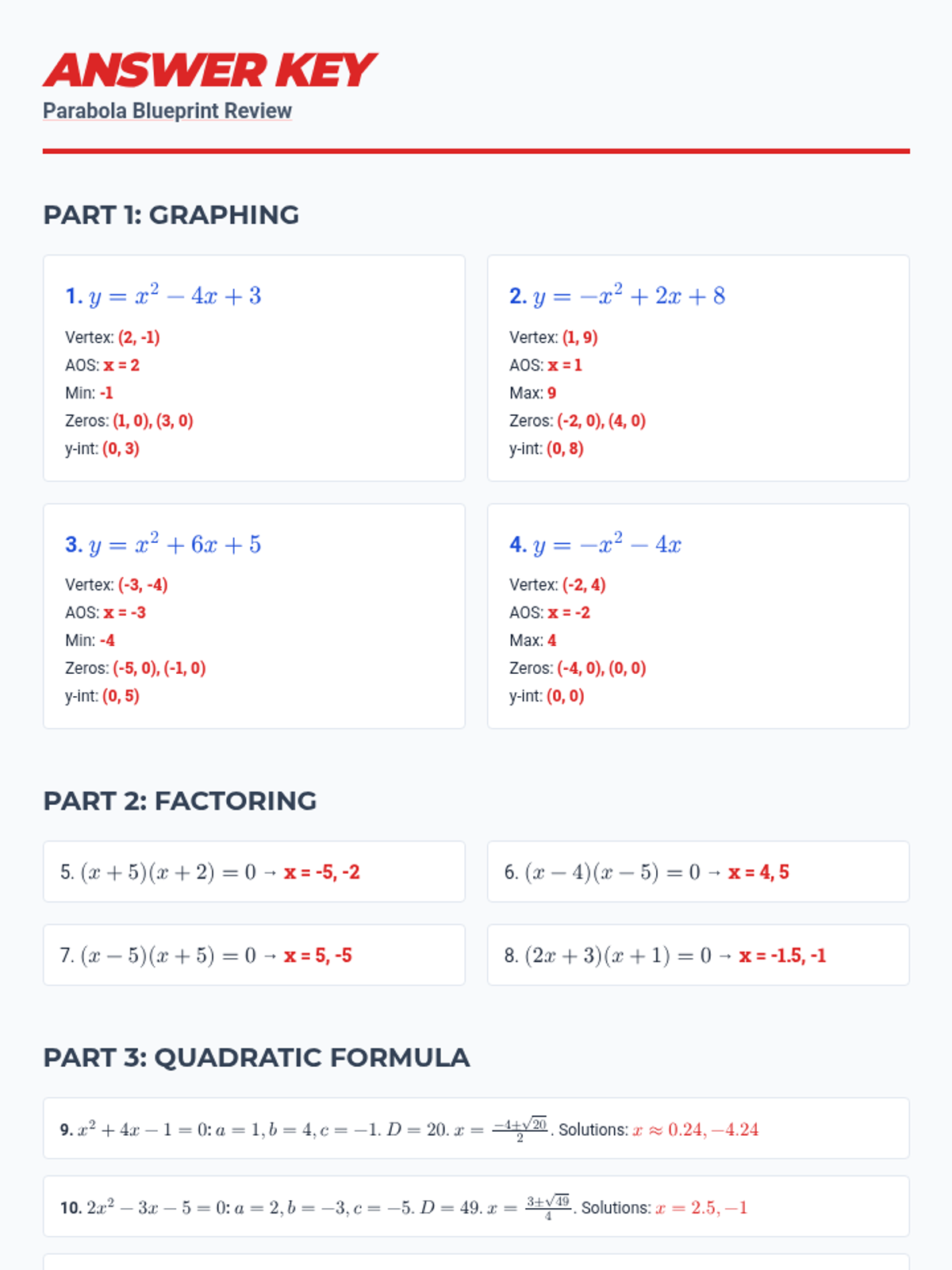
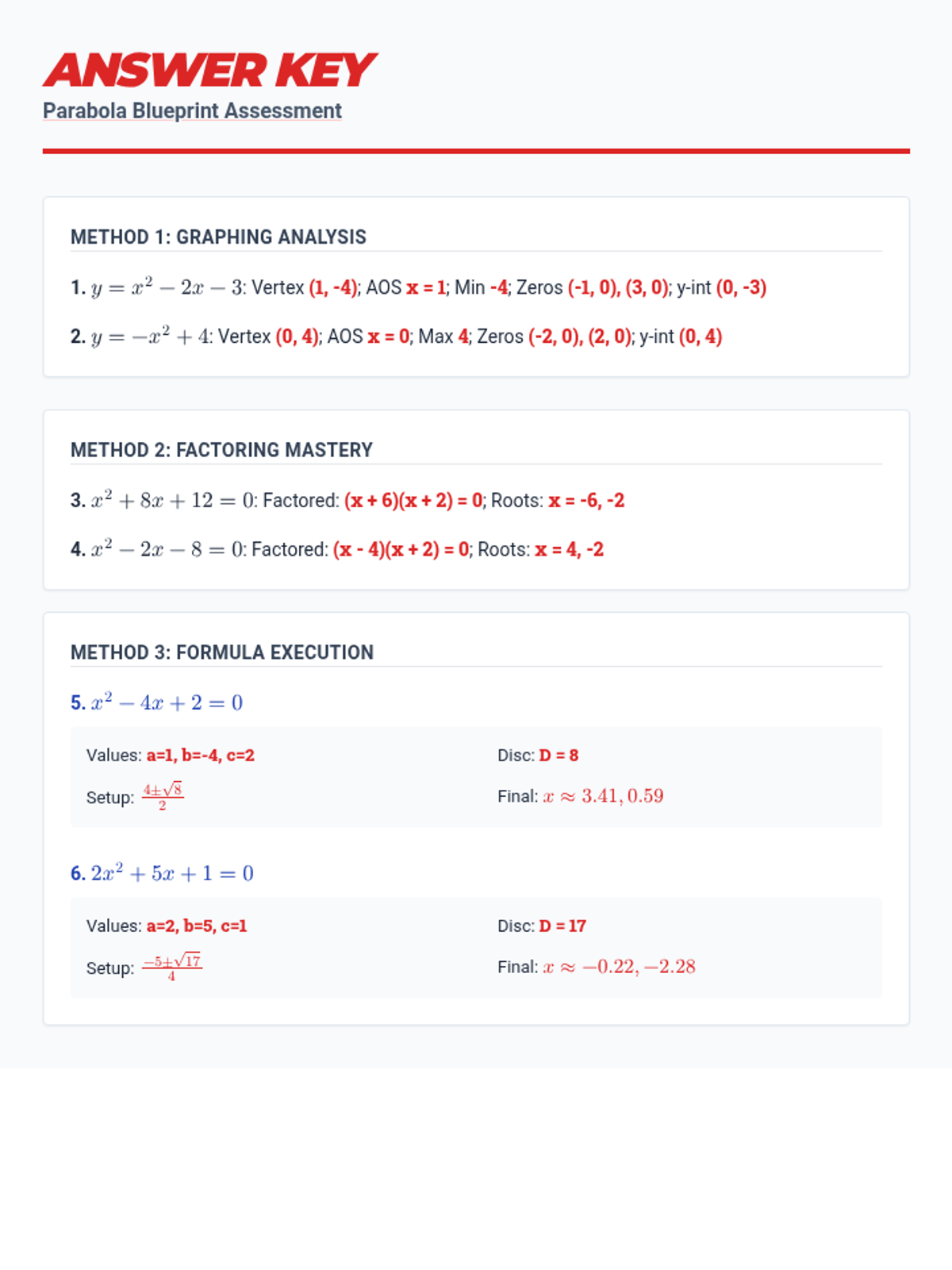
A comprehensive unit review and summative assessment covering three key methods for solving quadratic equations: graphing, factoring, and the quadratic formula. Students practice identifying key features of parabolas, algebraic manipulation for factoring, and the step-by-step application of the quadratic formula.
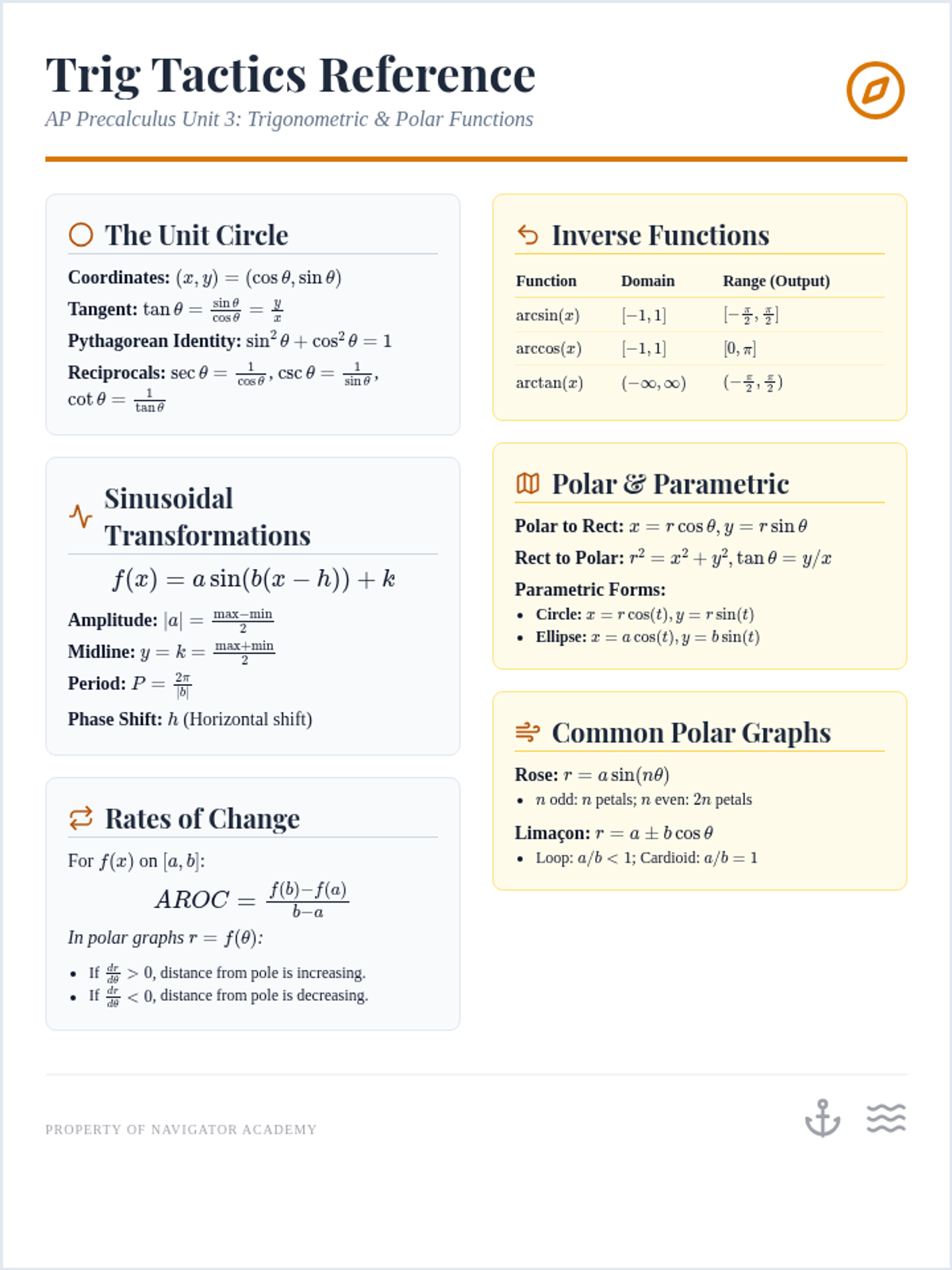
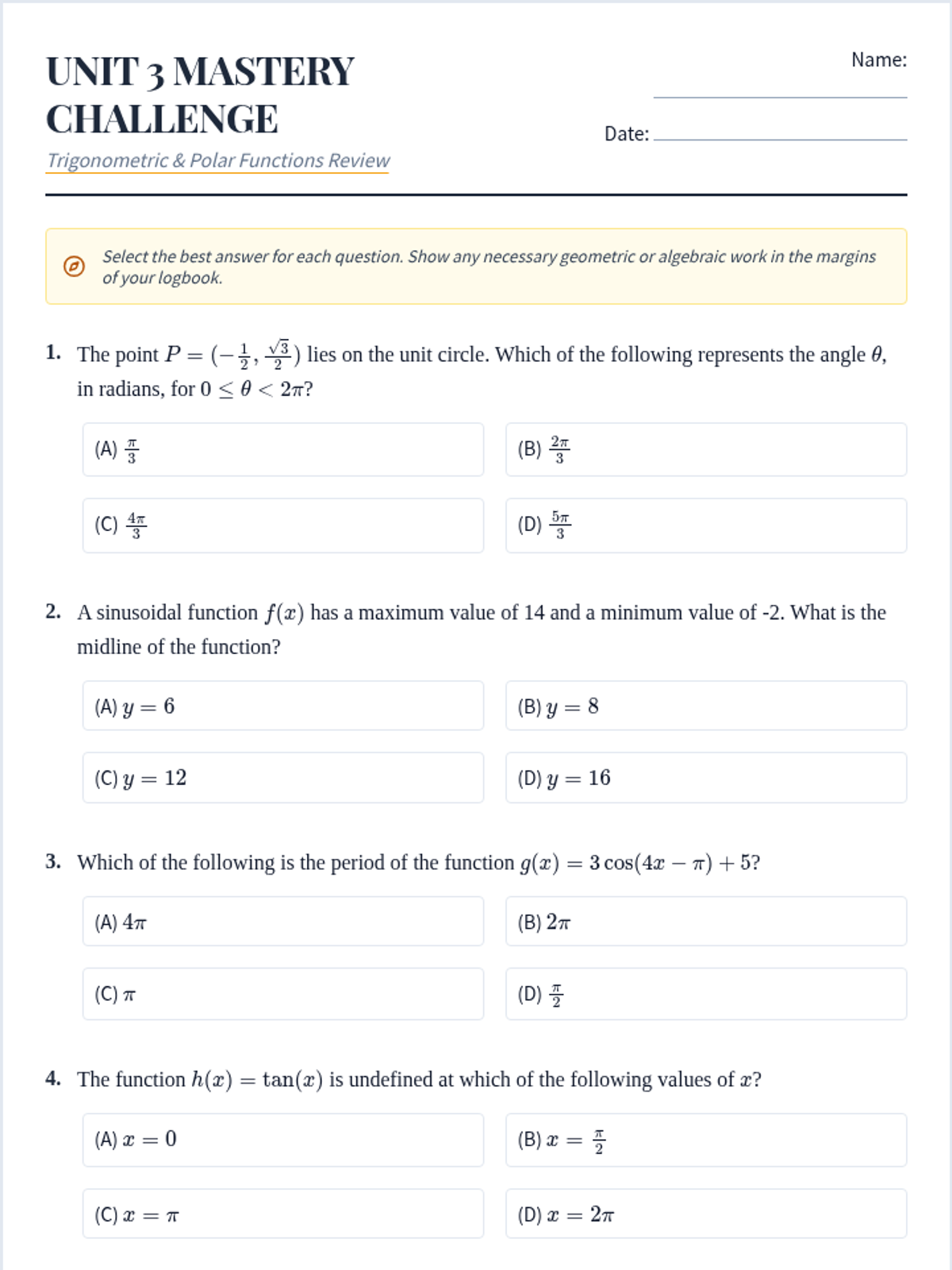
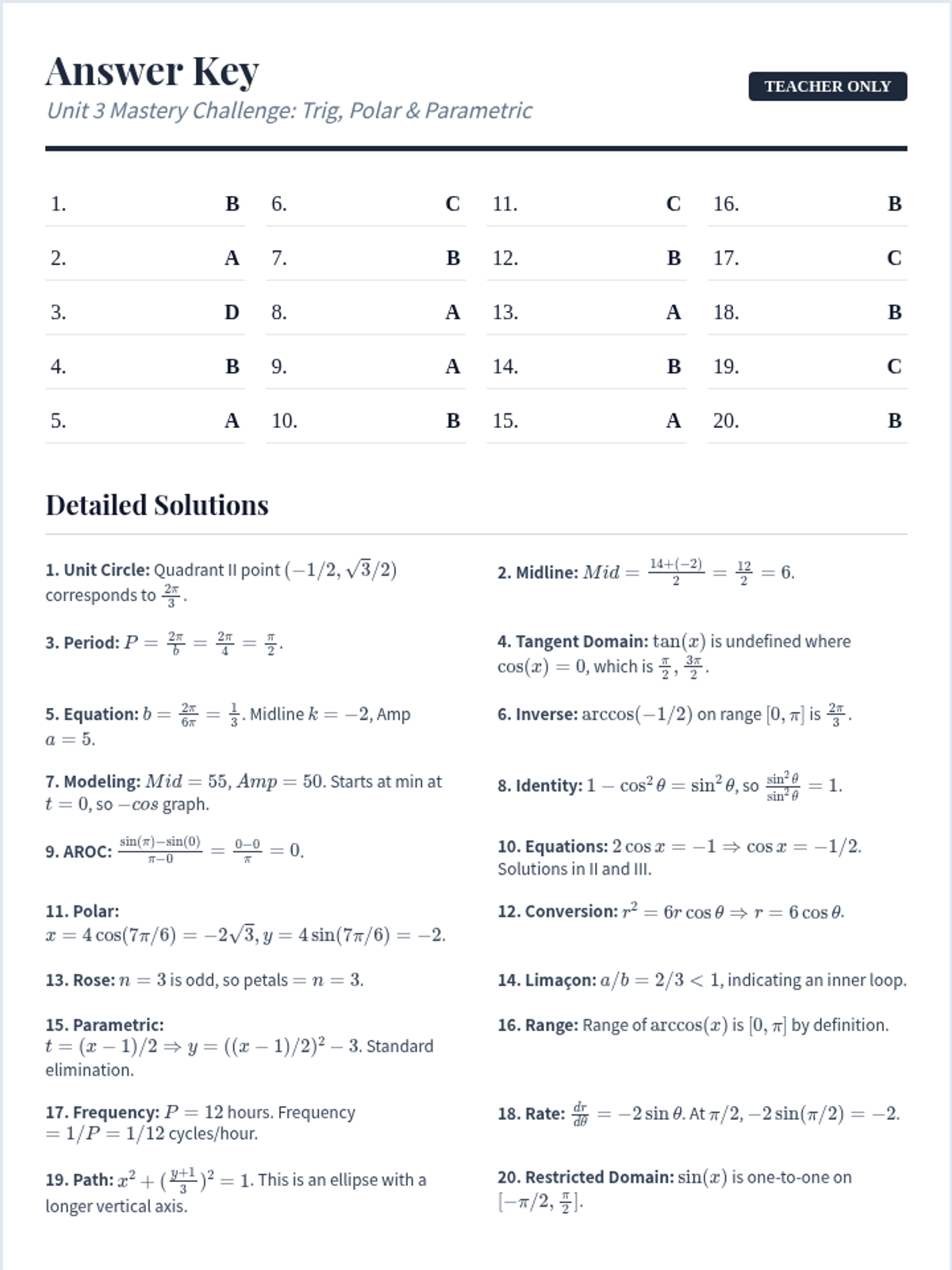
A comprehensive review for Unit 3 of AP Precalculus, focusing on trigonometric and polar functions through reference materials and practice assessments.
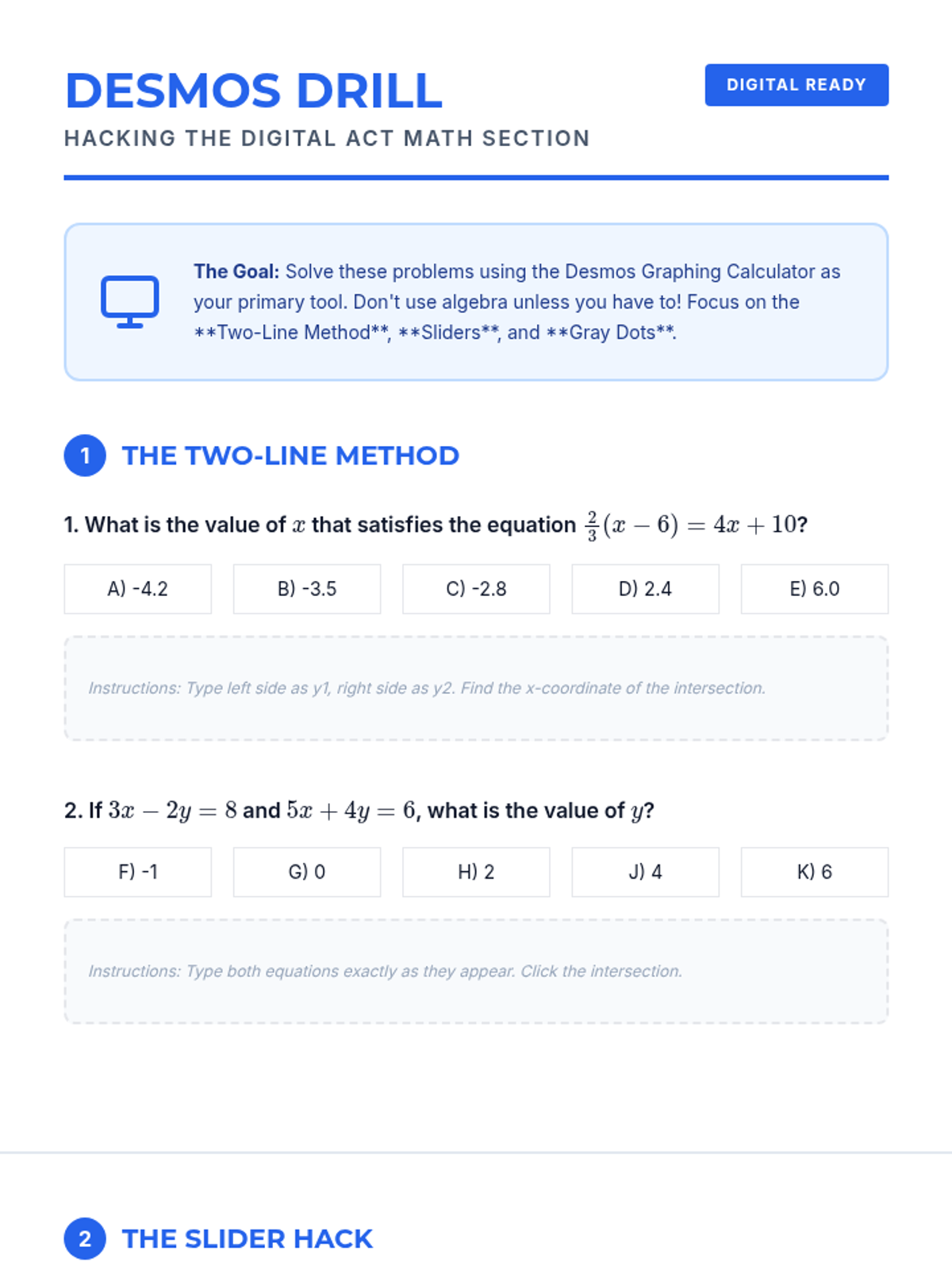
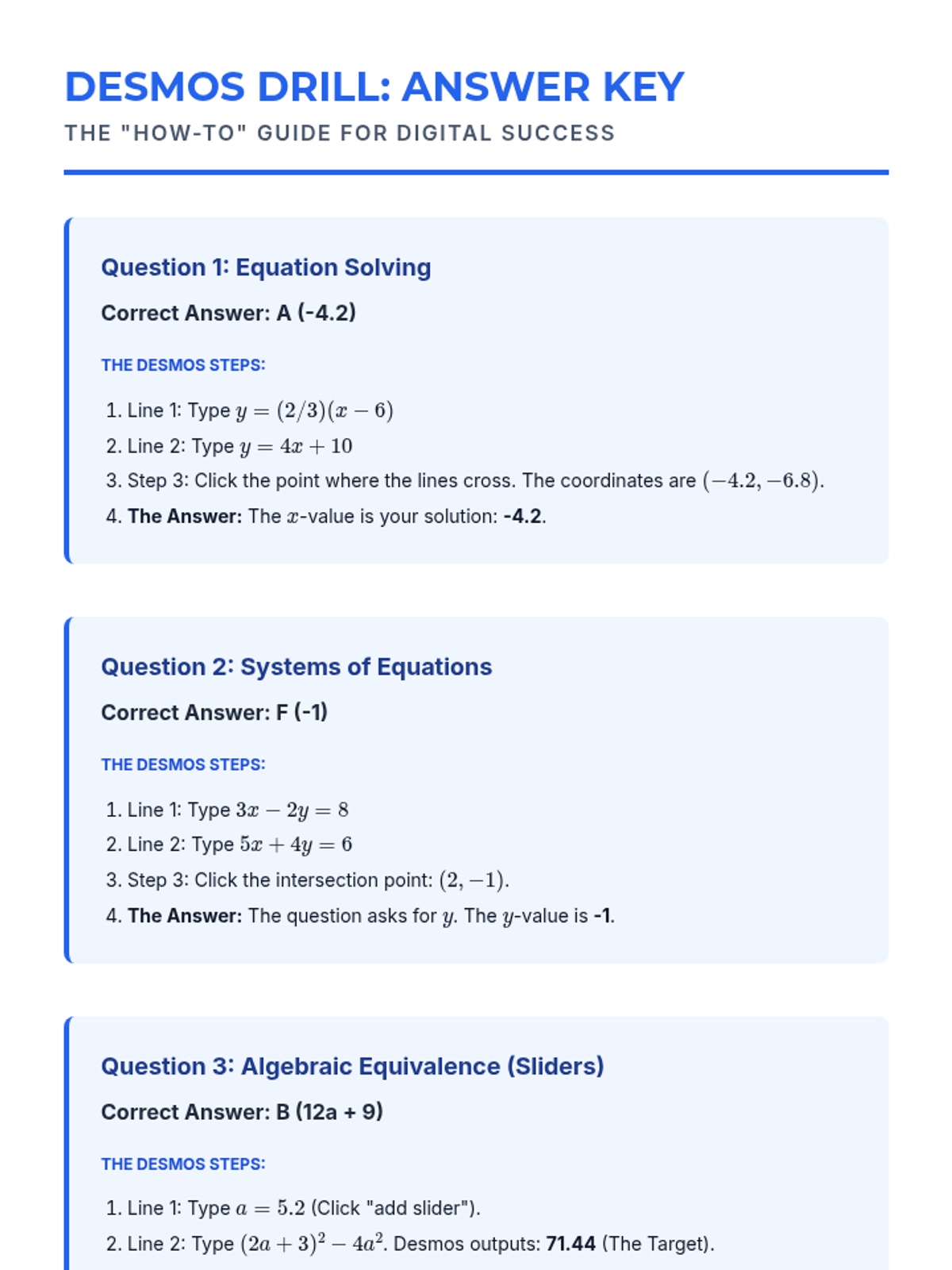
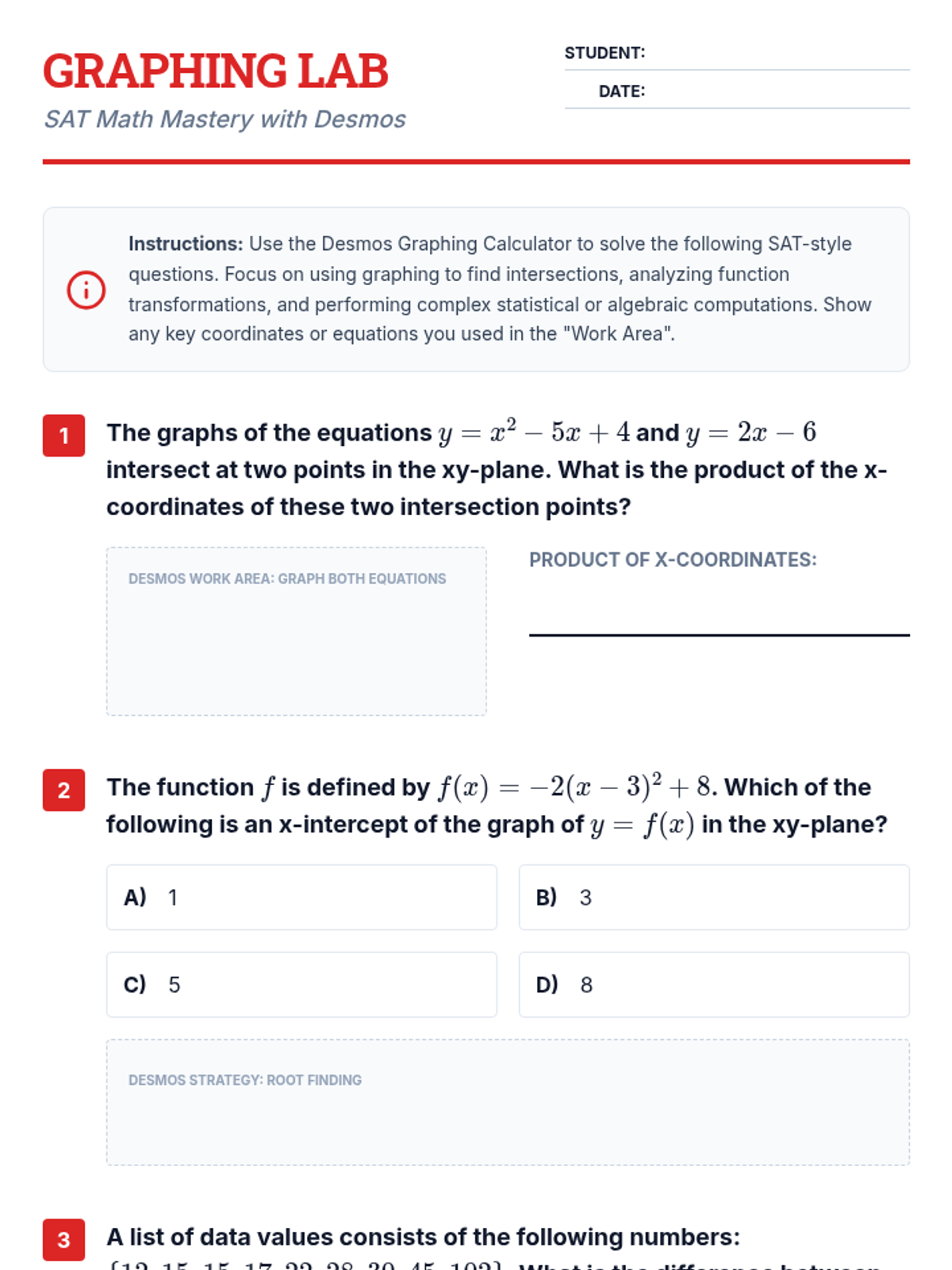
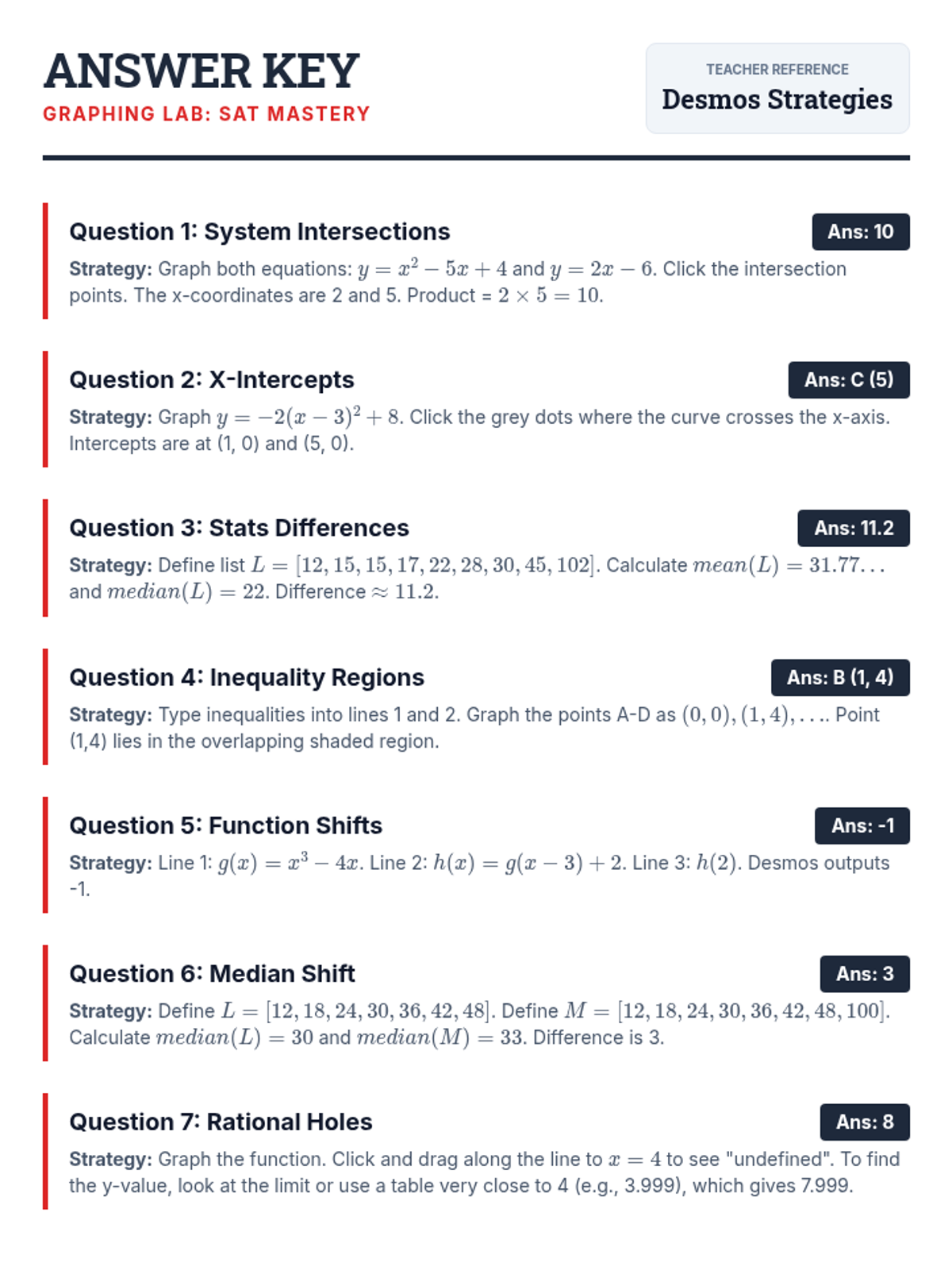
This lesson focuses on leveraging the Desmos graphing calculator to solve SAT Math problems efficiently across Heart of Algebra, Problem Solving and Data Analysis, and Passport to Advanced Math. Students will practice graphing systems, finding key features of nonlinear functions, and performing statistical calculations.
Students connect the Pythagorean Theorem to the distance formula and the equation of a circle, then master completing the square through guided algebraic scaffolds.
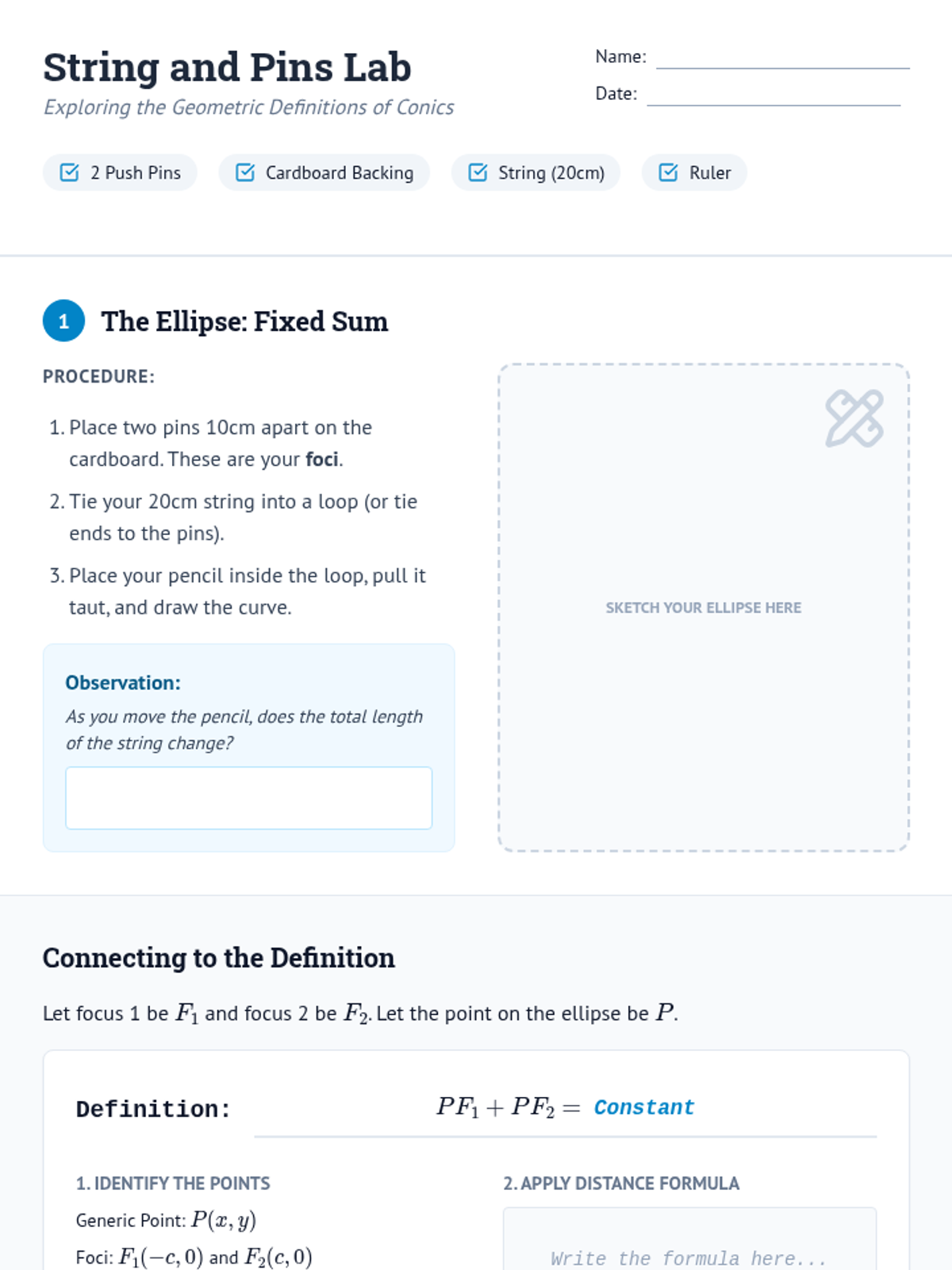
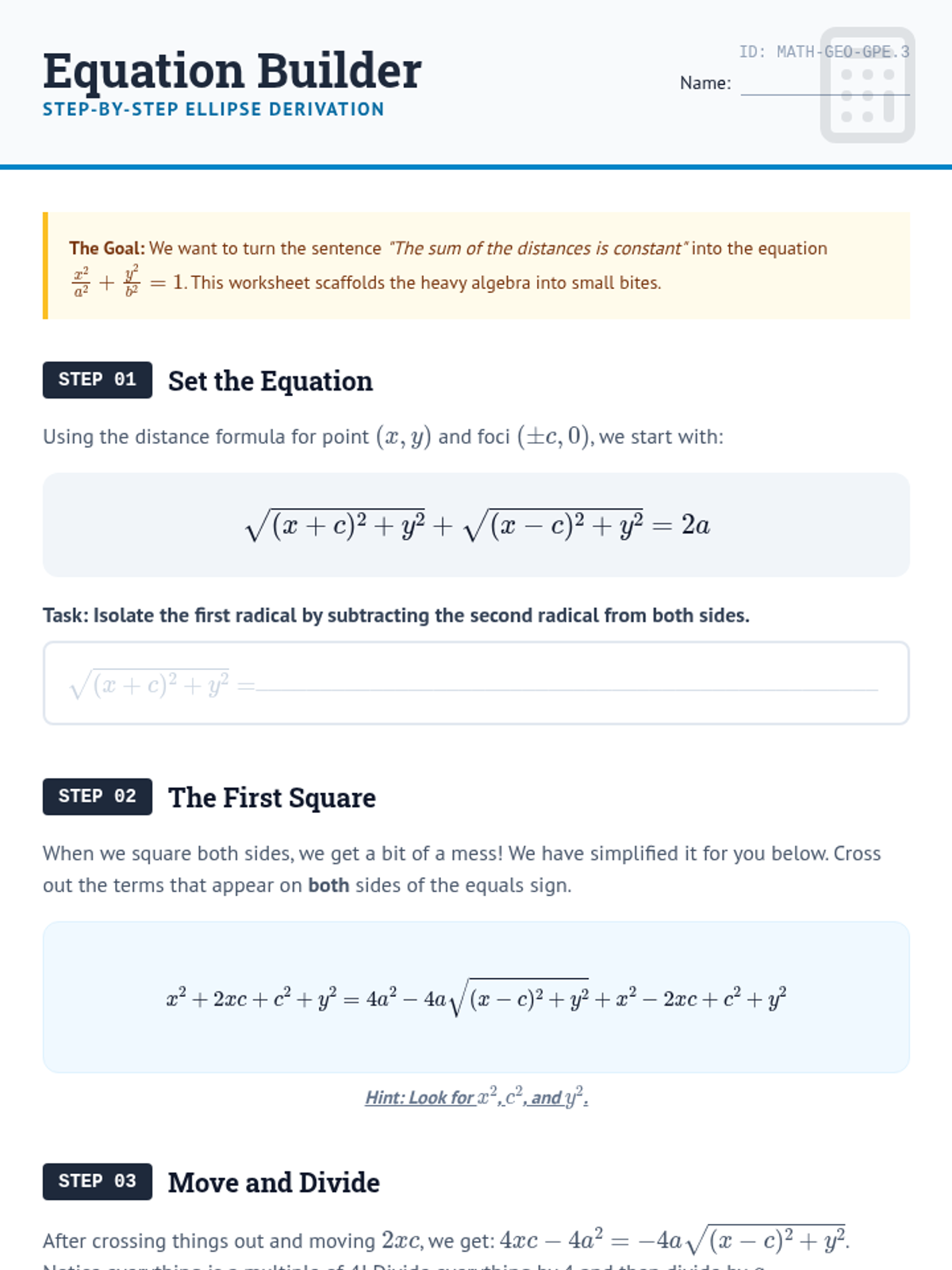
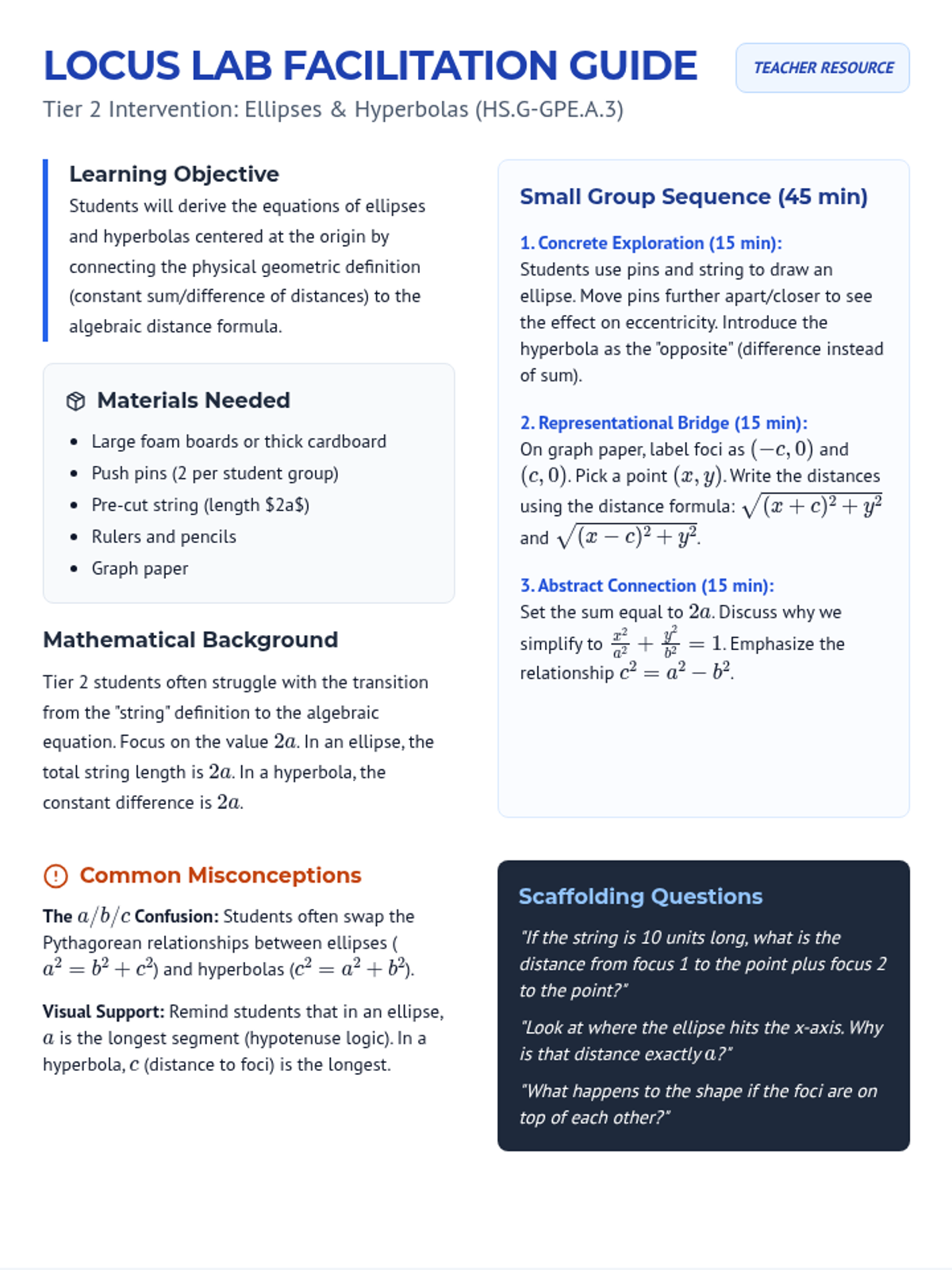
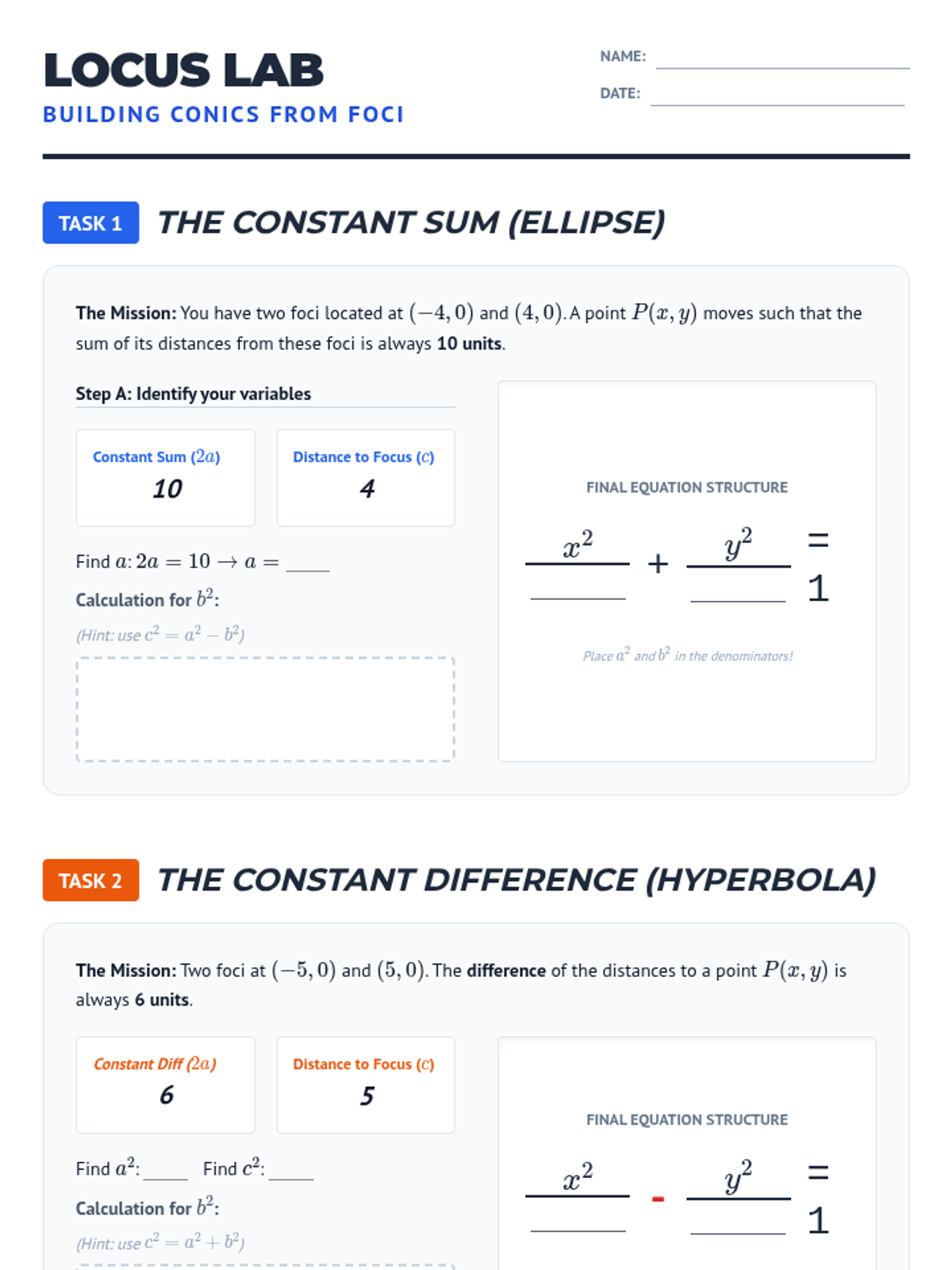
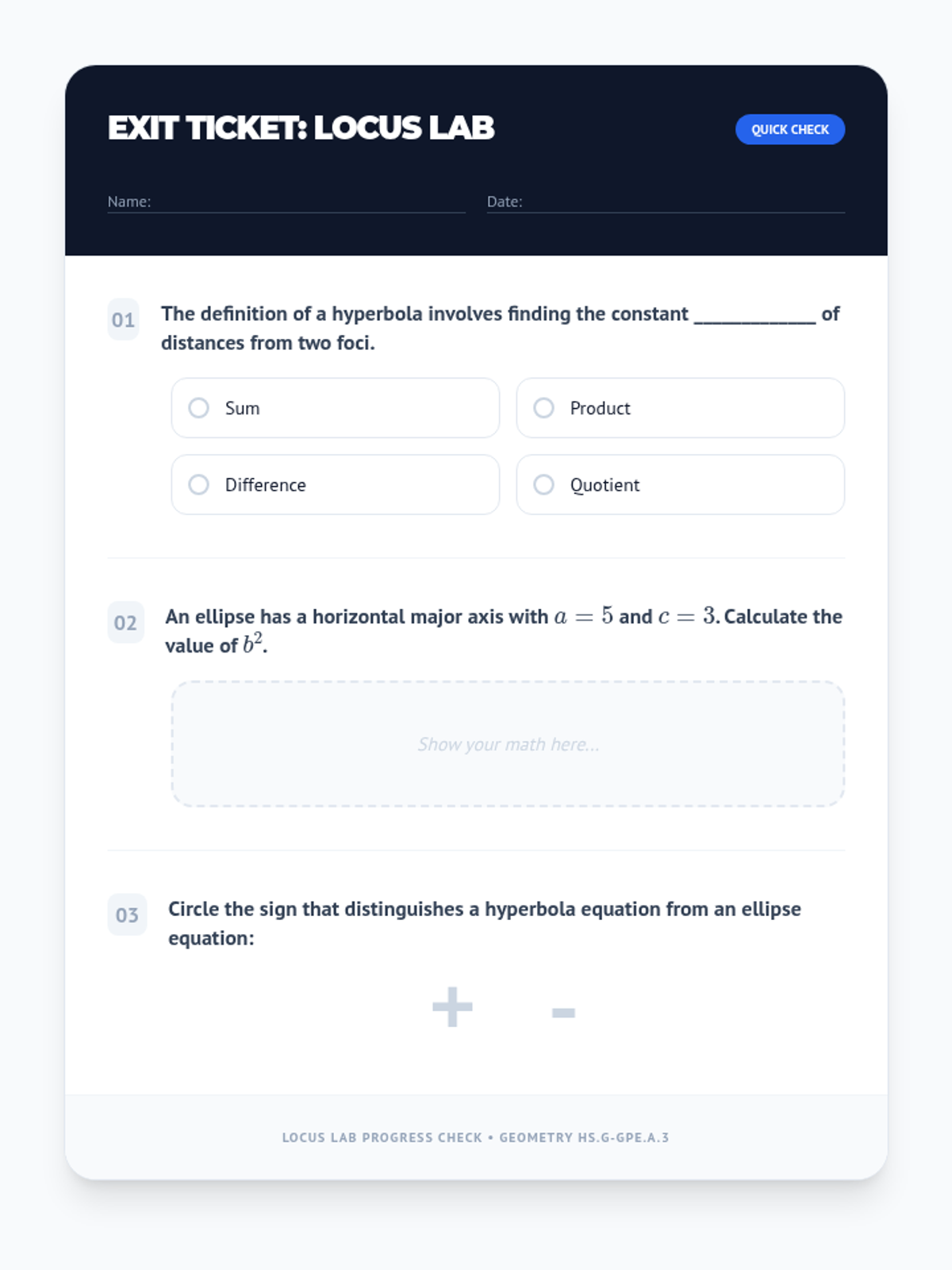
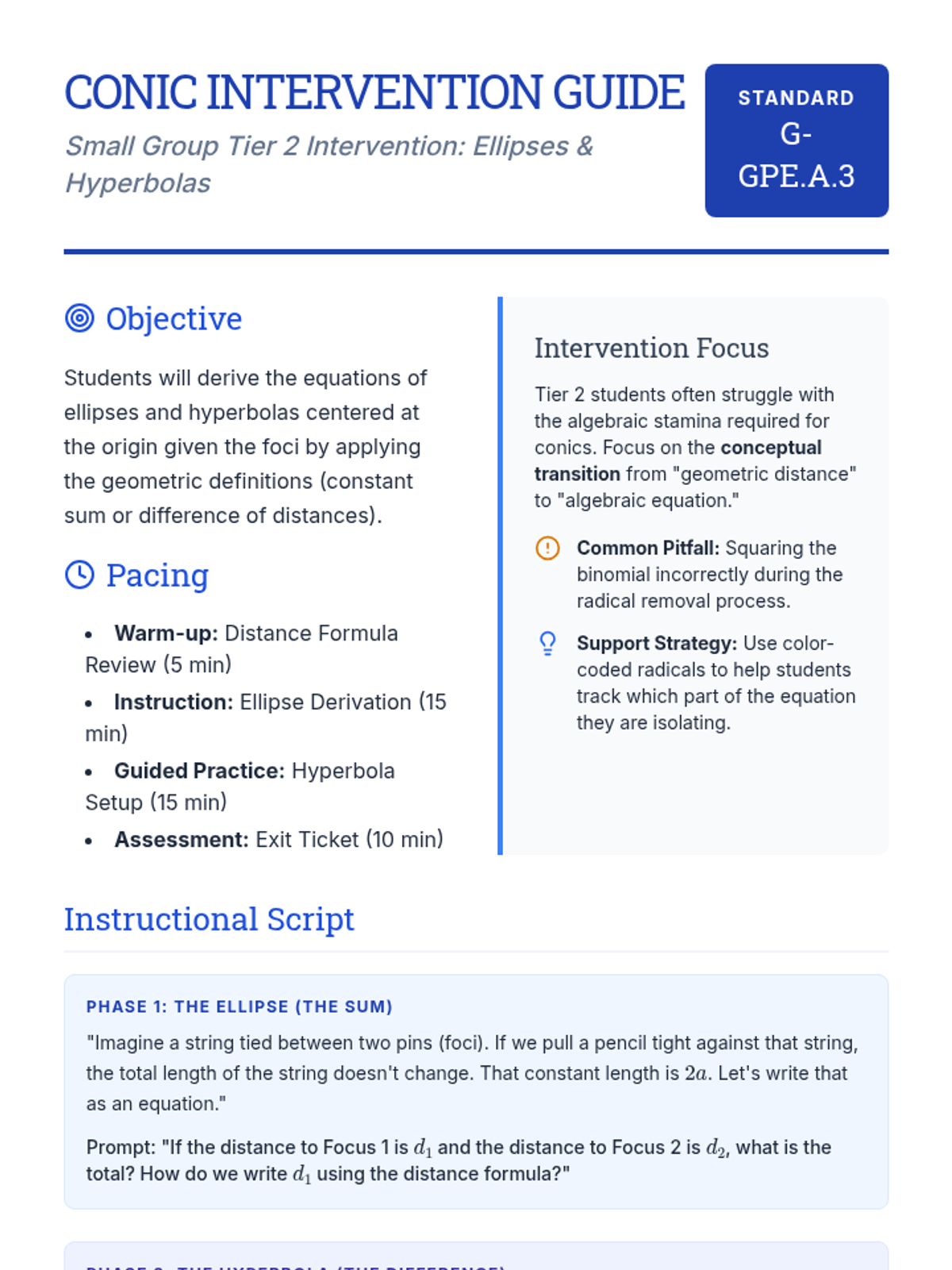
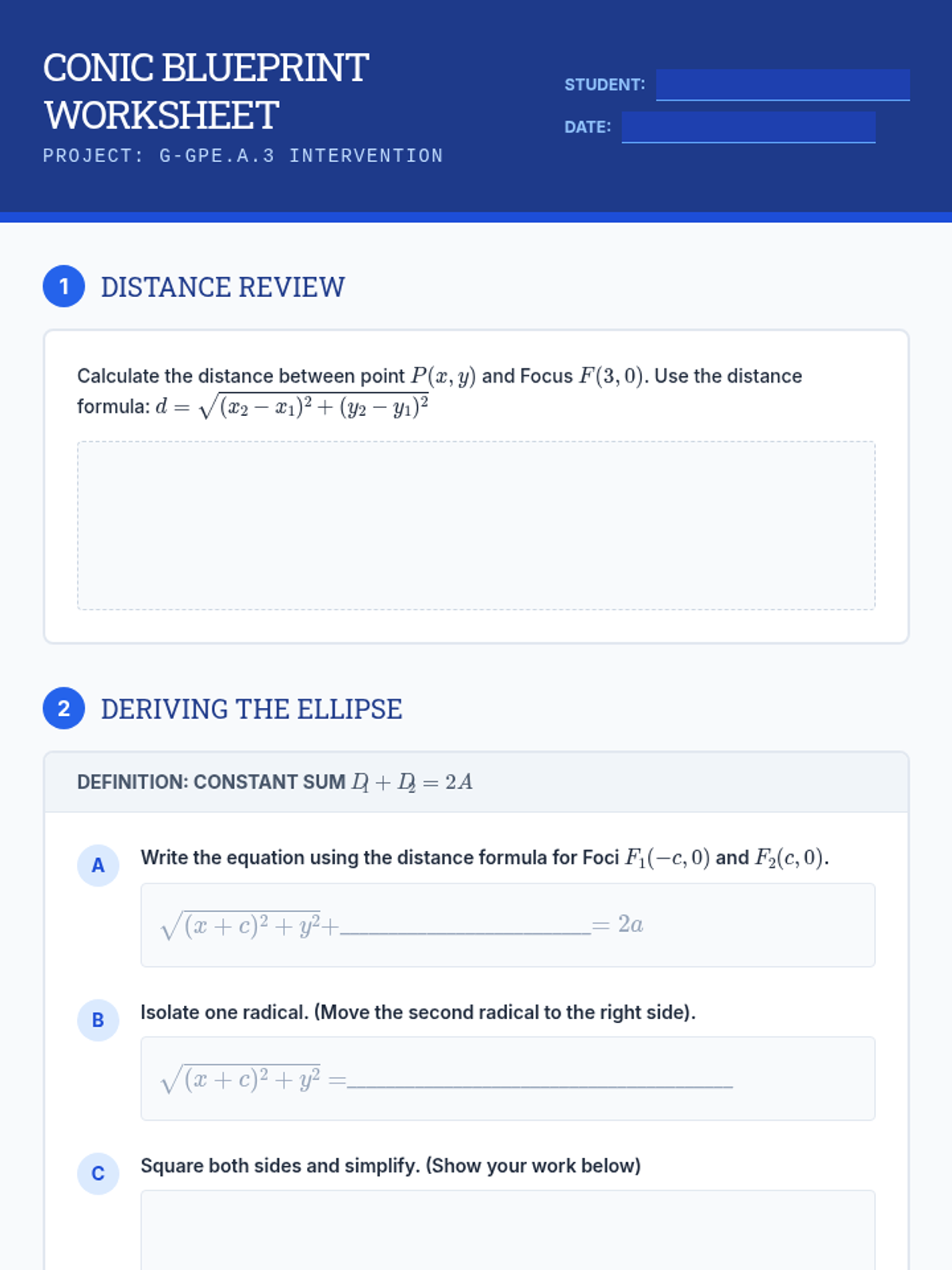
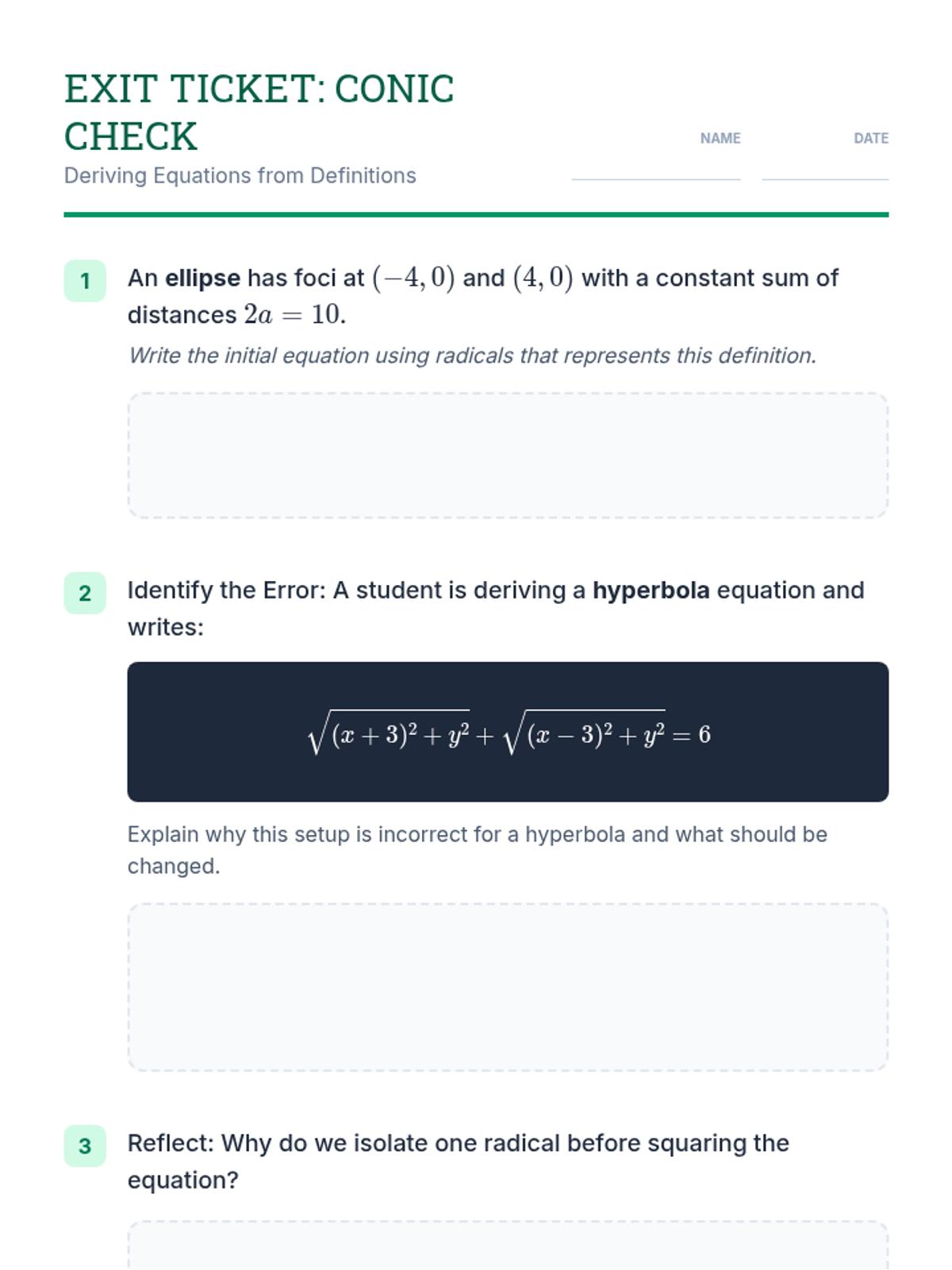
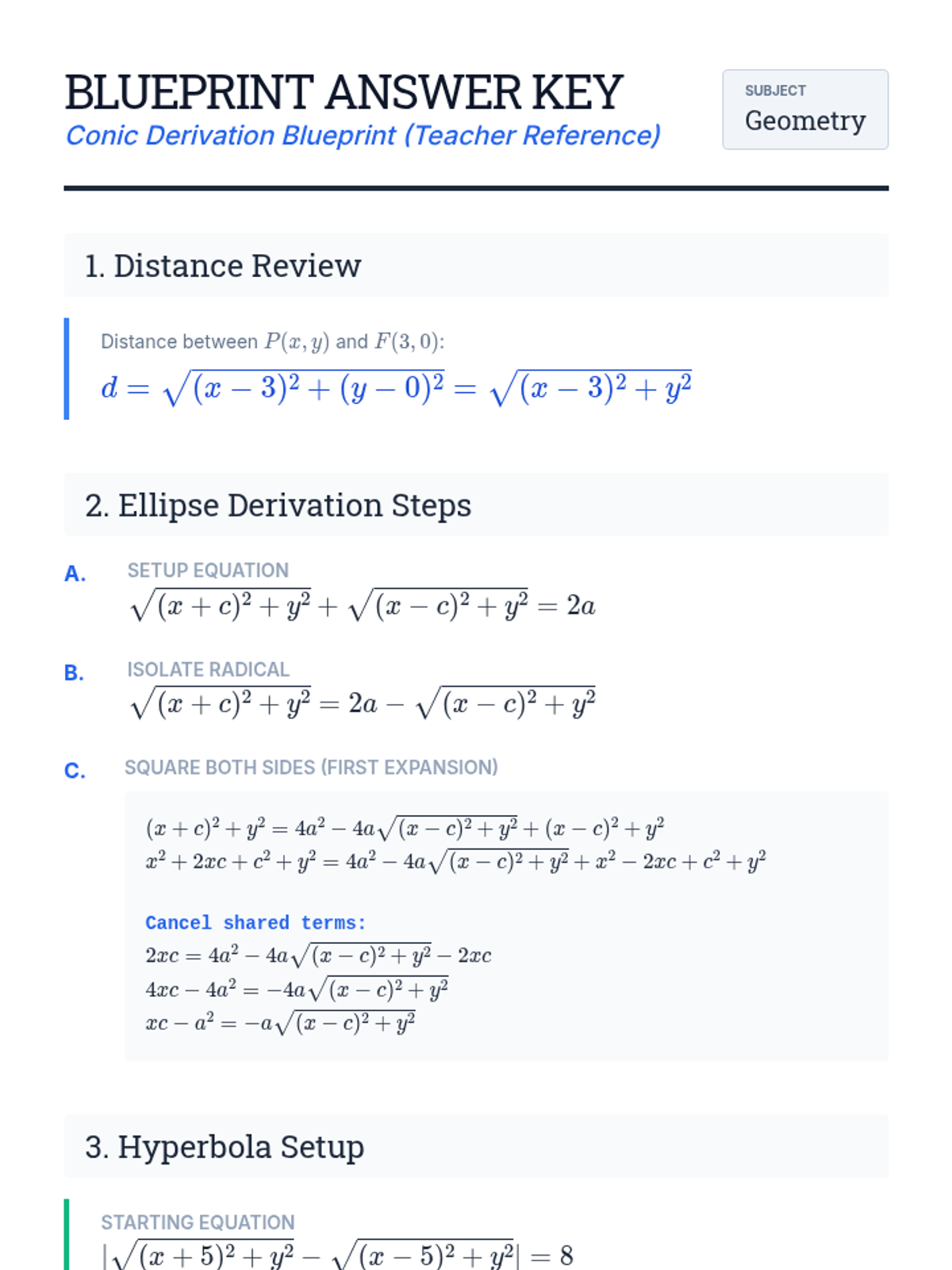
A Tier 2 intervention lesson focusing on the geometric definitions of ellipses and hyperbolas. Students use physical constructions to understand the relationship between foci and distance, leading to scaffolded equation derivation.
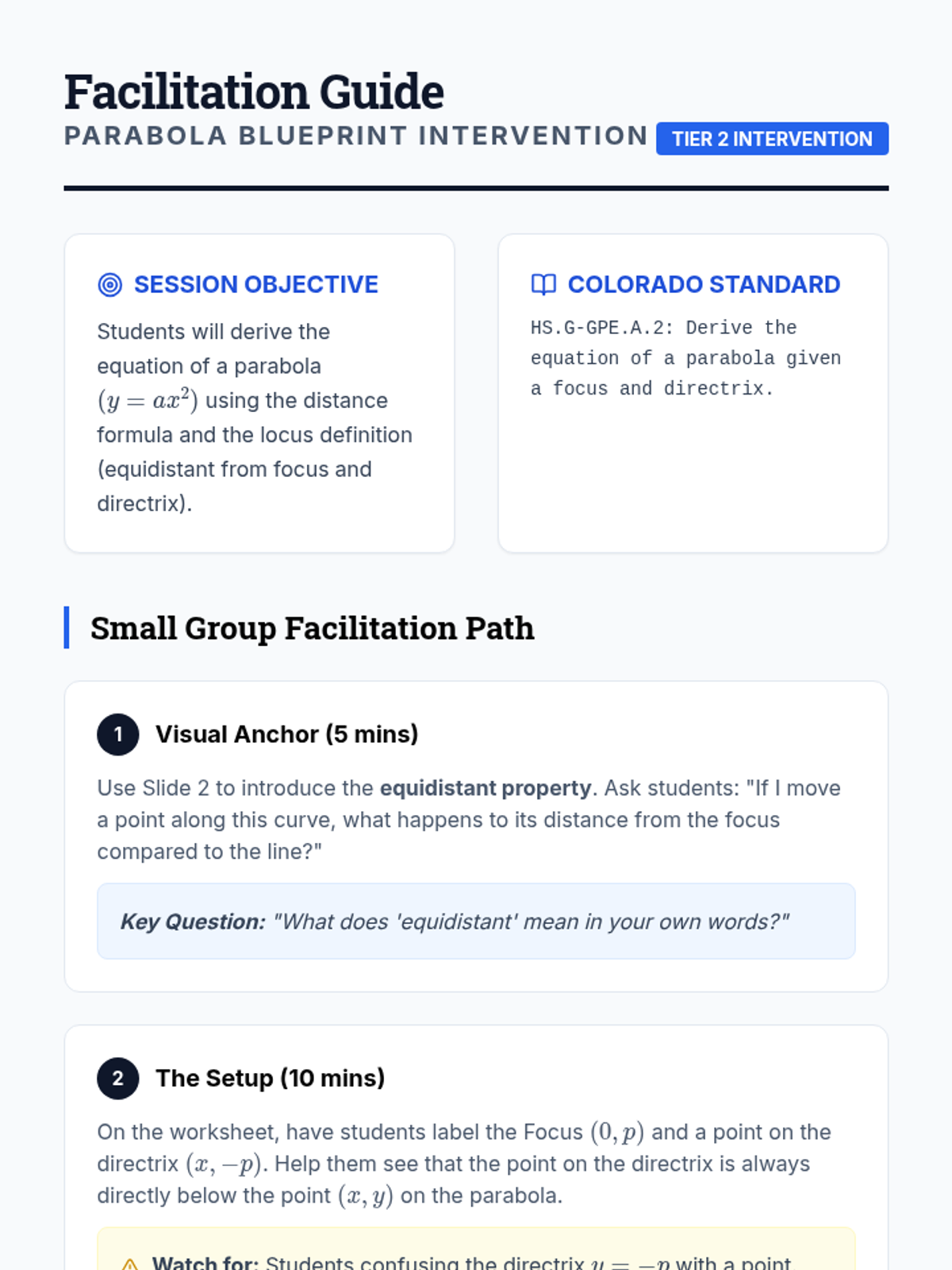
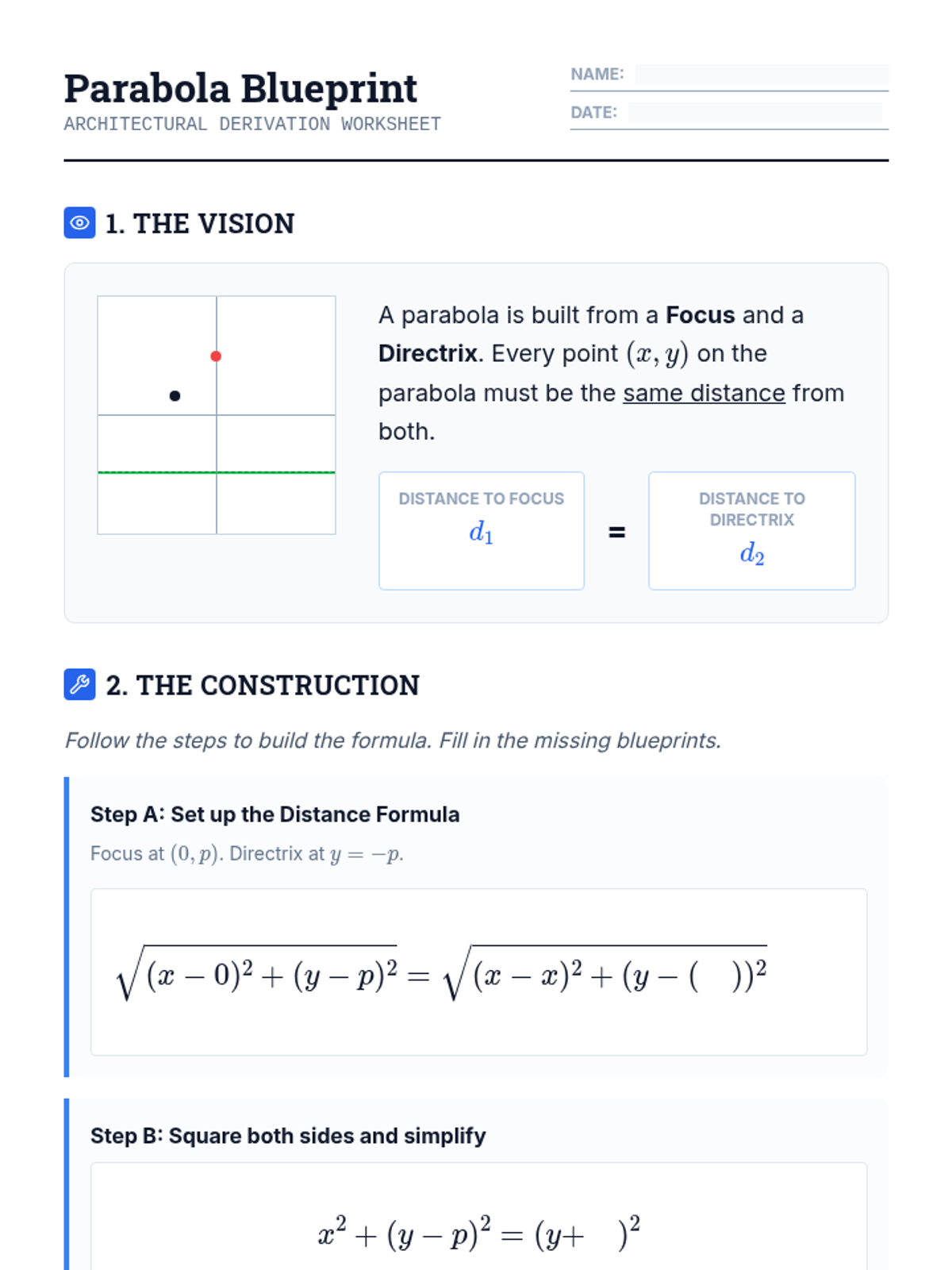
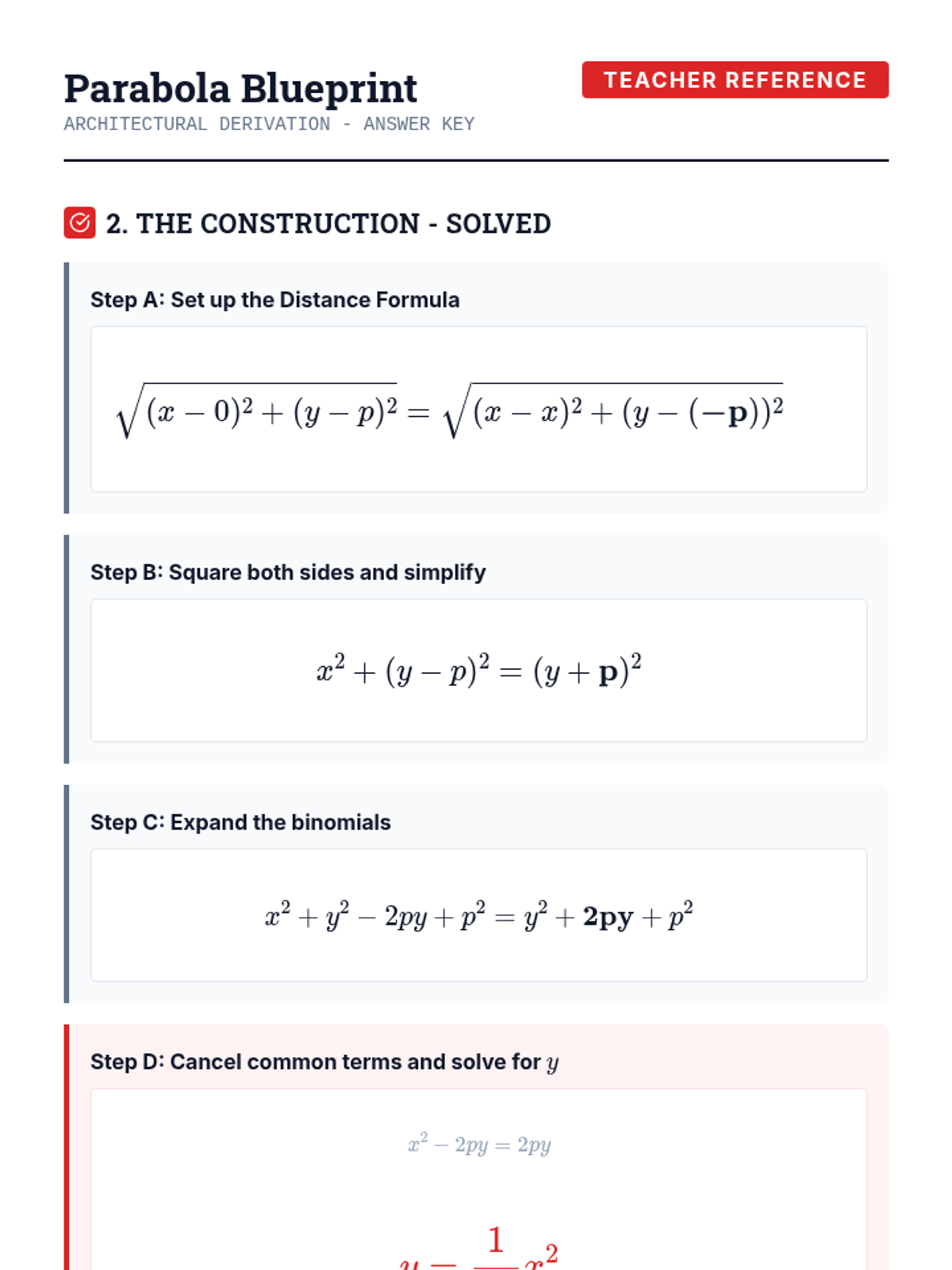
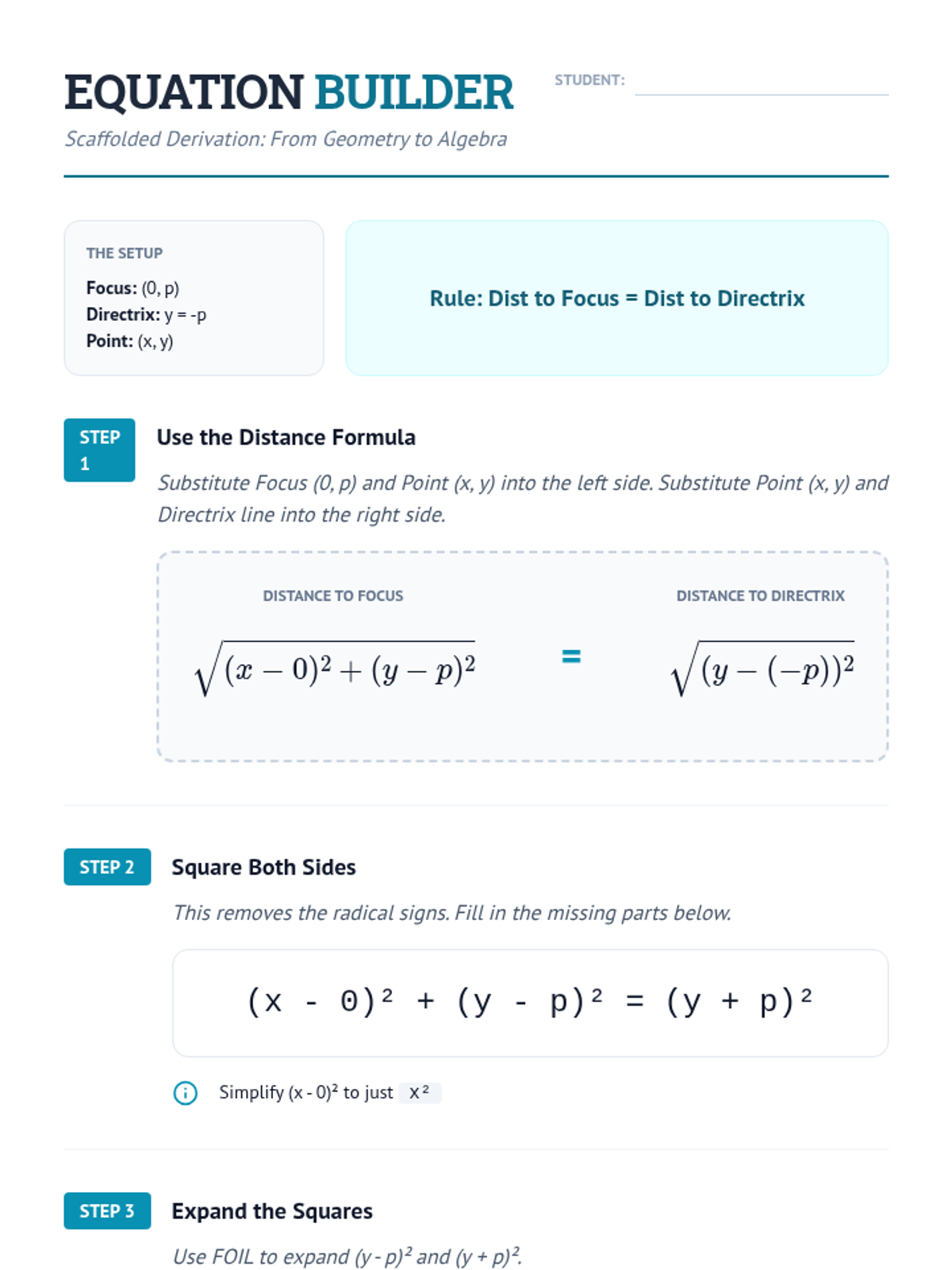
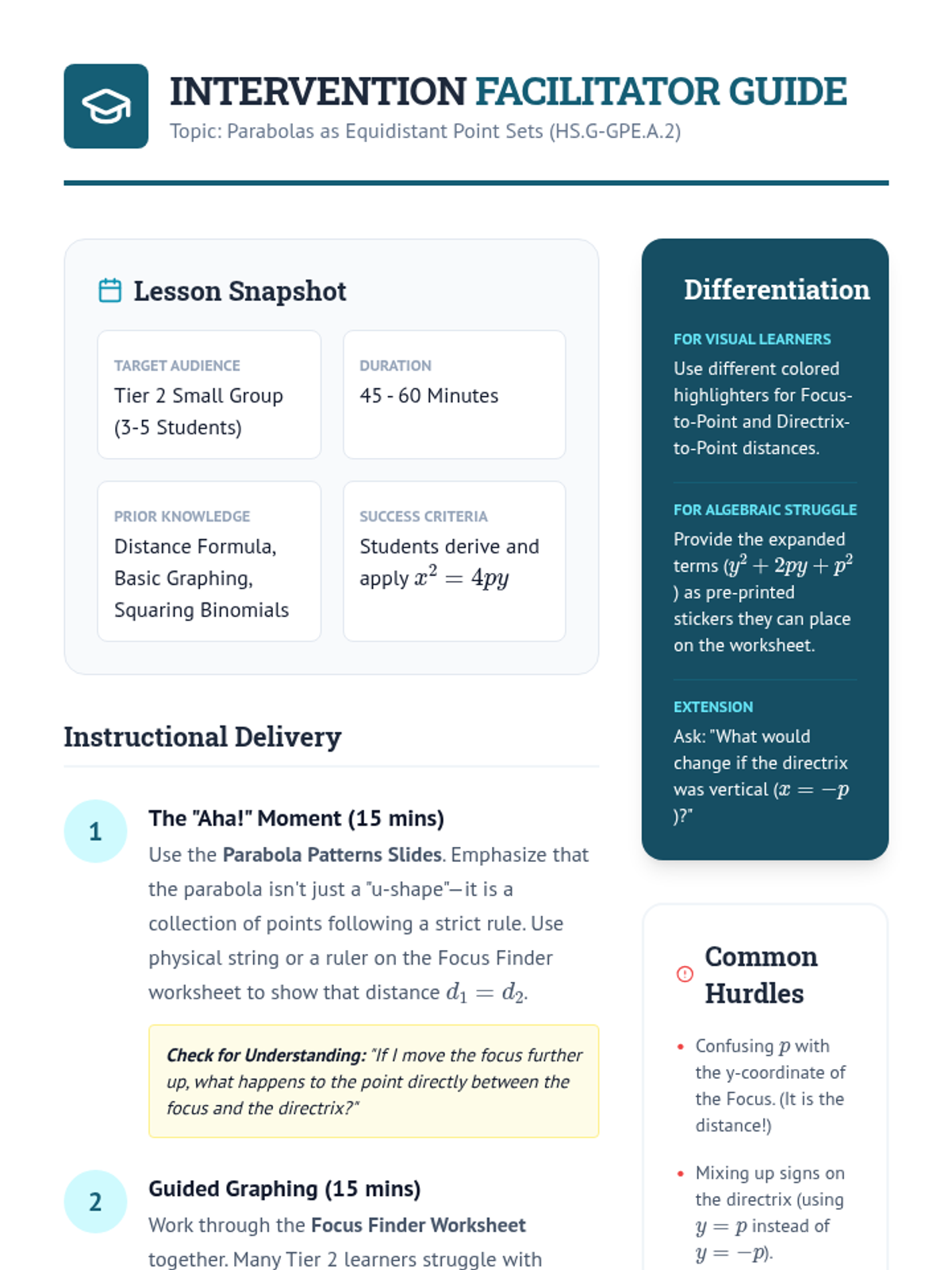
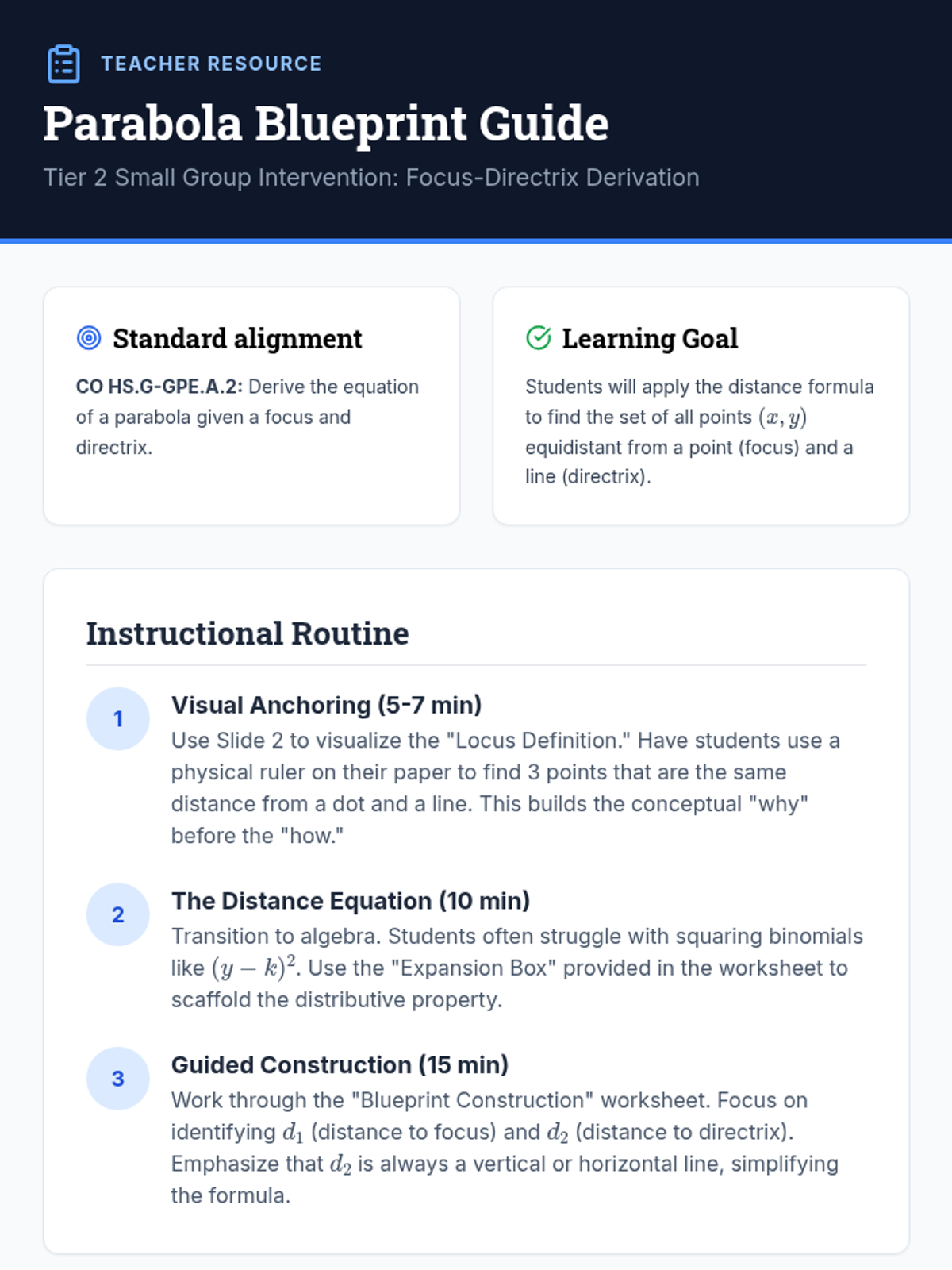
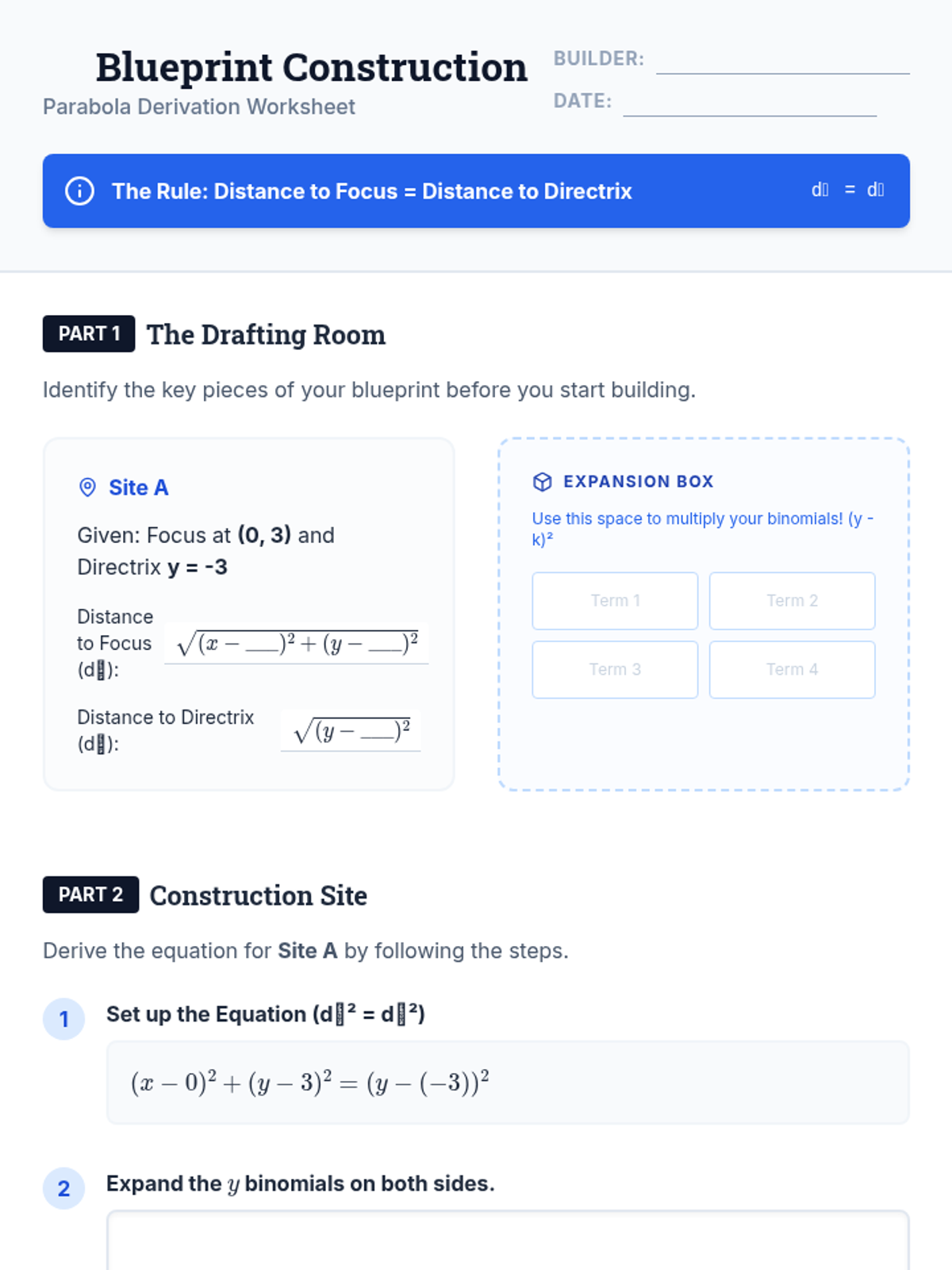
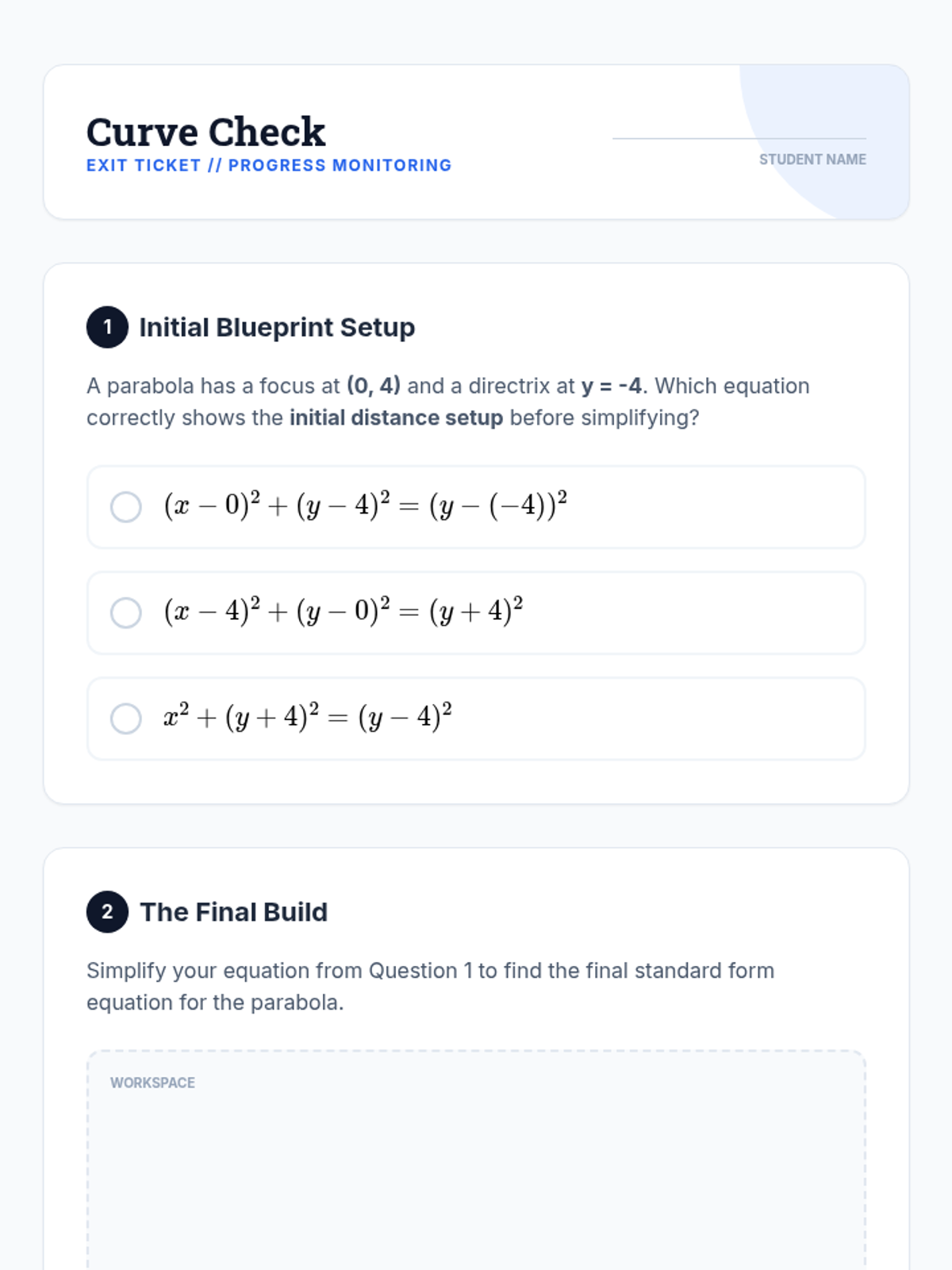
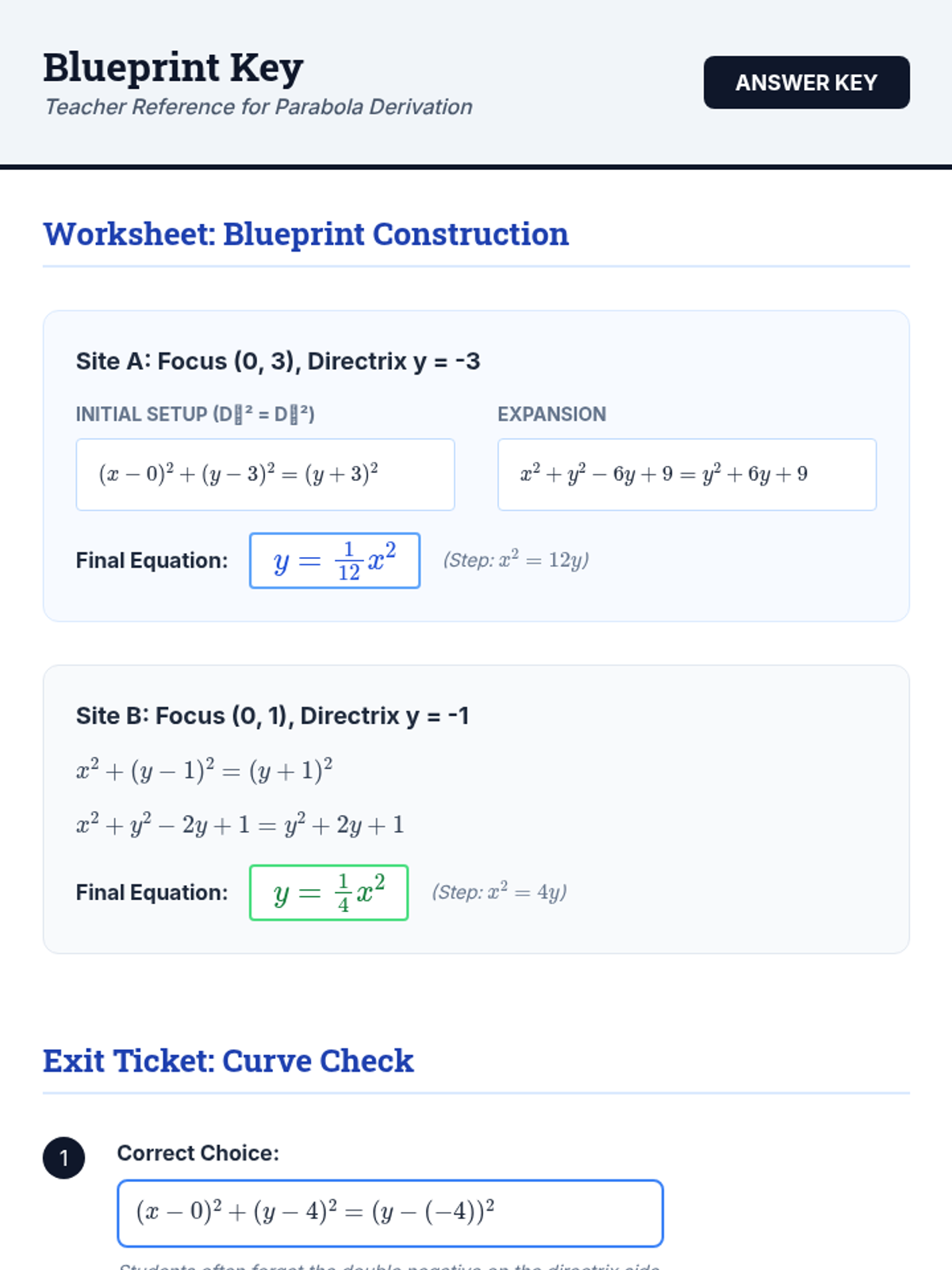
A targeted intervention lesson for high school students to derive the equation of a parabola using the distance formula, focusing on the locus definition of being equidistant from a focus and directrix.
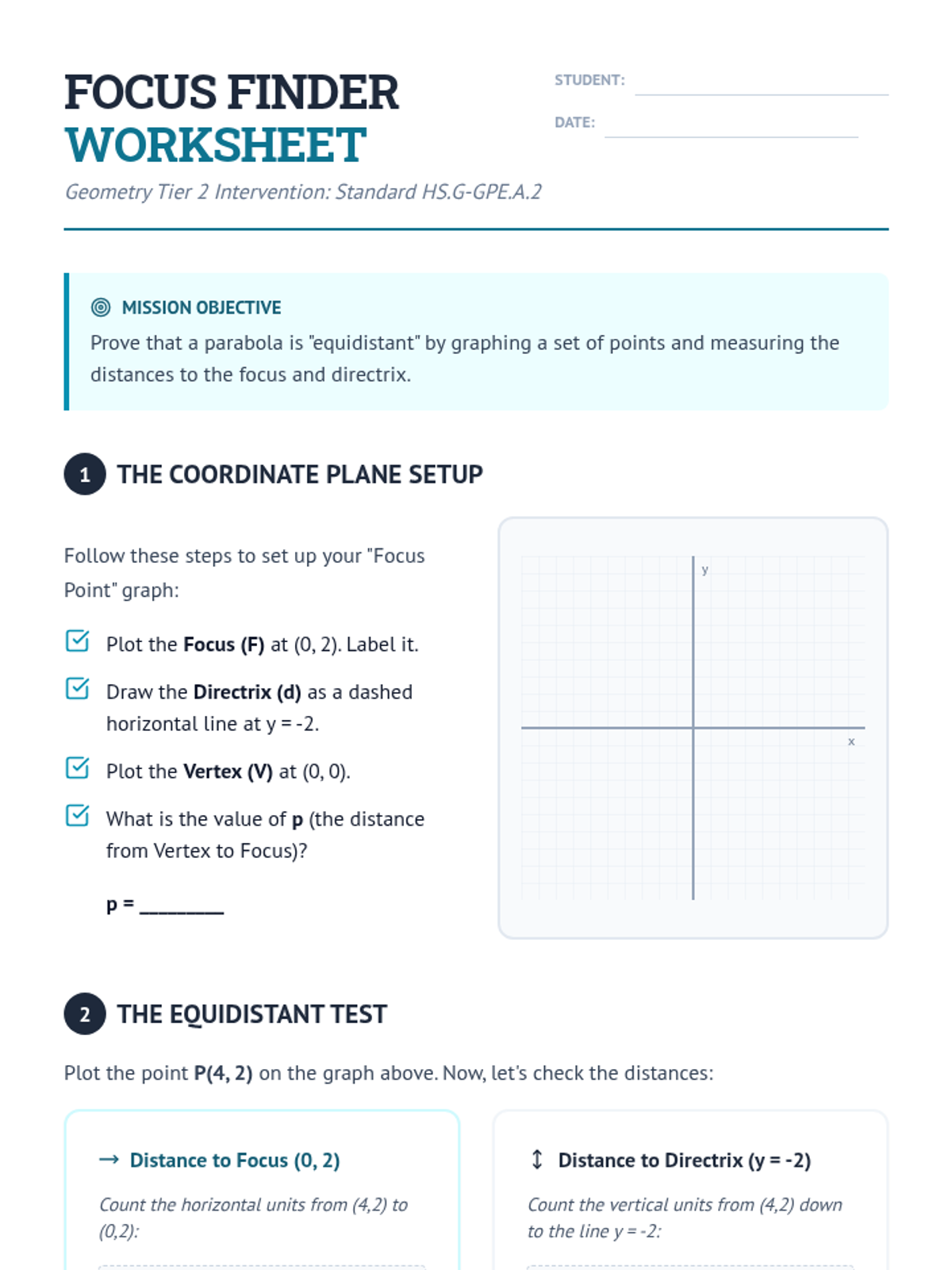
A Tier 2 intervention lesson focusing on the geometric definition of a parabola as the set of points equidistant from a focus and a directrix. Students will use graphing and scaffolded algebra to derive the standard form equation for a parabola with a vertex at the origin.
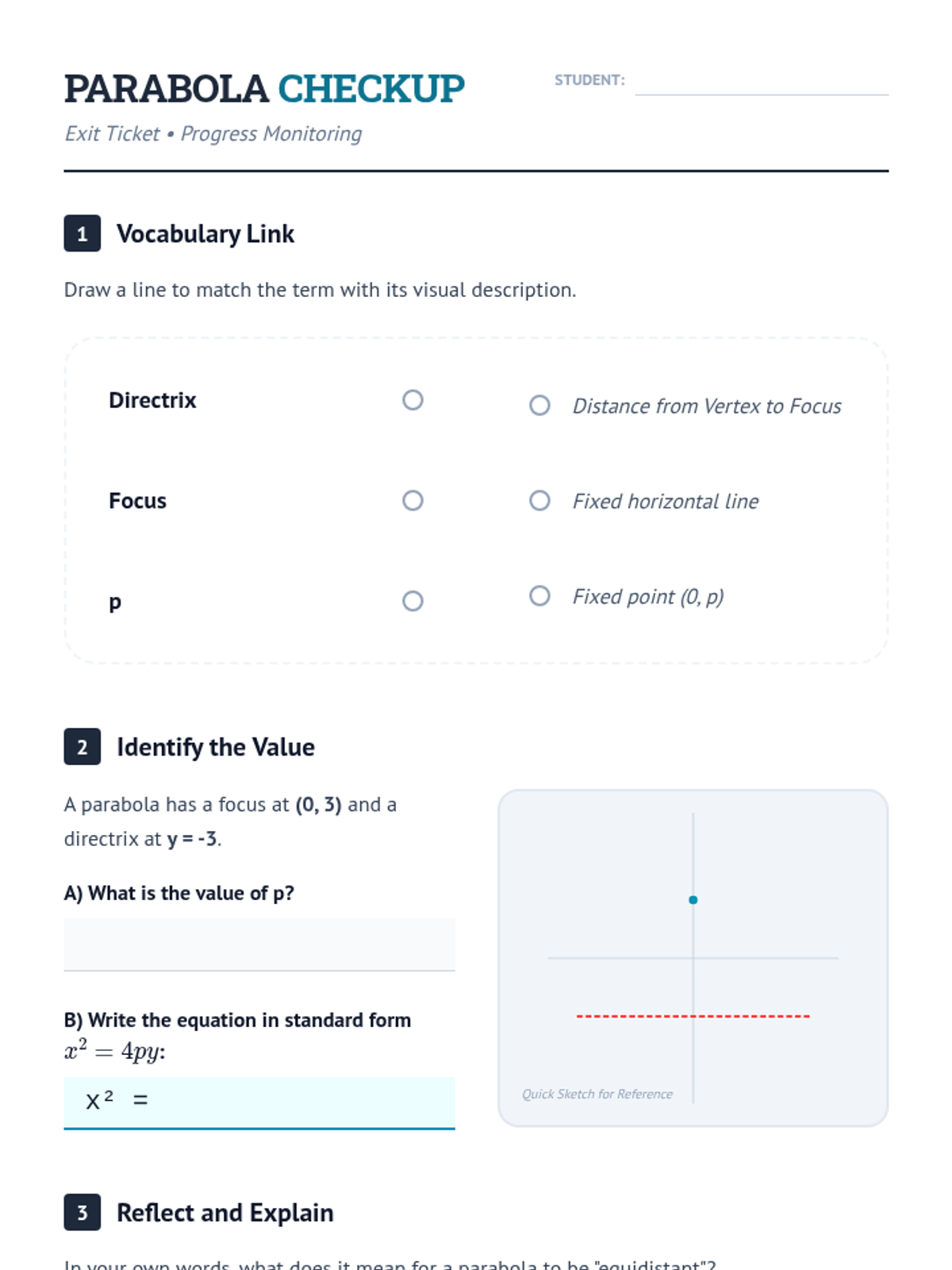
A targeted Tier 2 intervention lesson focusing on deriving parabola equations from focus and directrix using the distance formula. Includes visual scaffolding, algebraic support, and progress monitoring for high school geometry students.
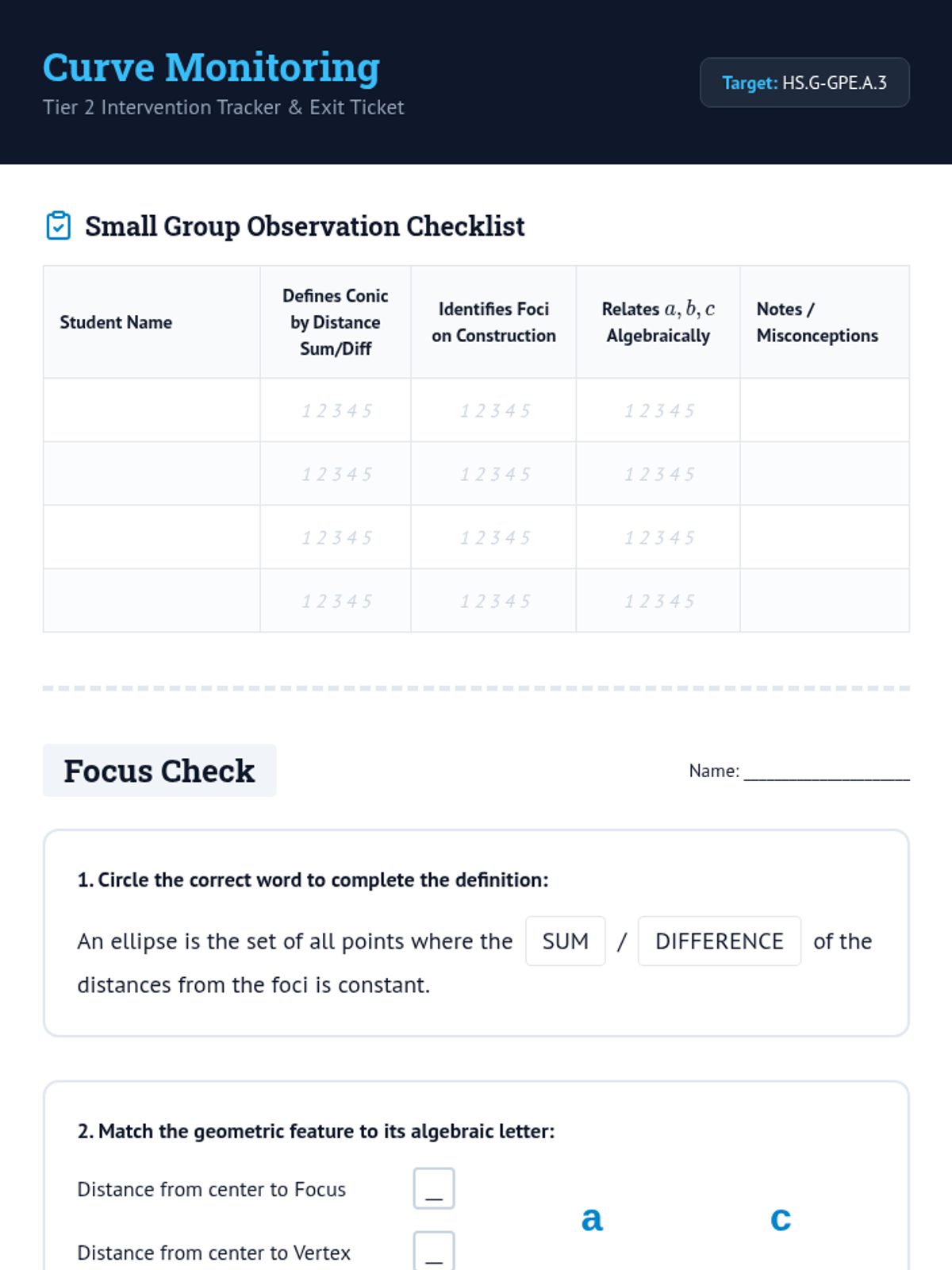
A targeted Tier 2 intervention lesson focusing on the geometric definitions of ellipses and hyperbolas. Students connect hands-on 'string and pin' constructions to the algebraic derivation of equations using the constant sum and difference of distances from two foci.
A small-group intervention lesson focused on deriving ellipse and hyperbola equations from focal points using the constant sum/difference of distances.
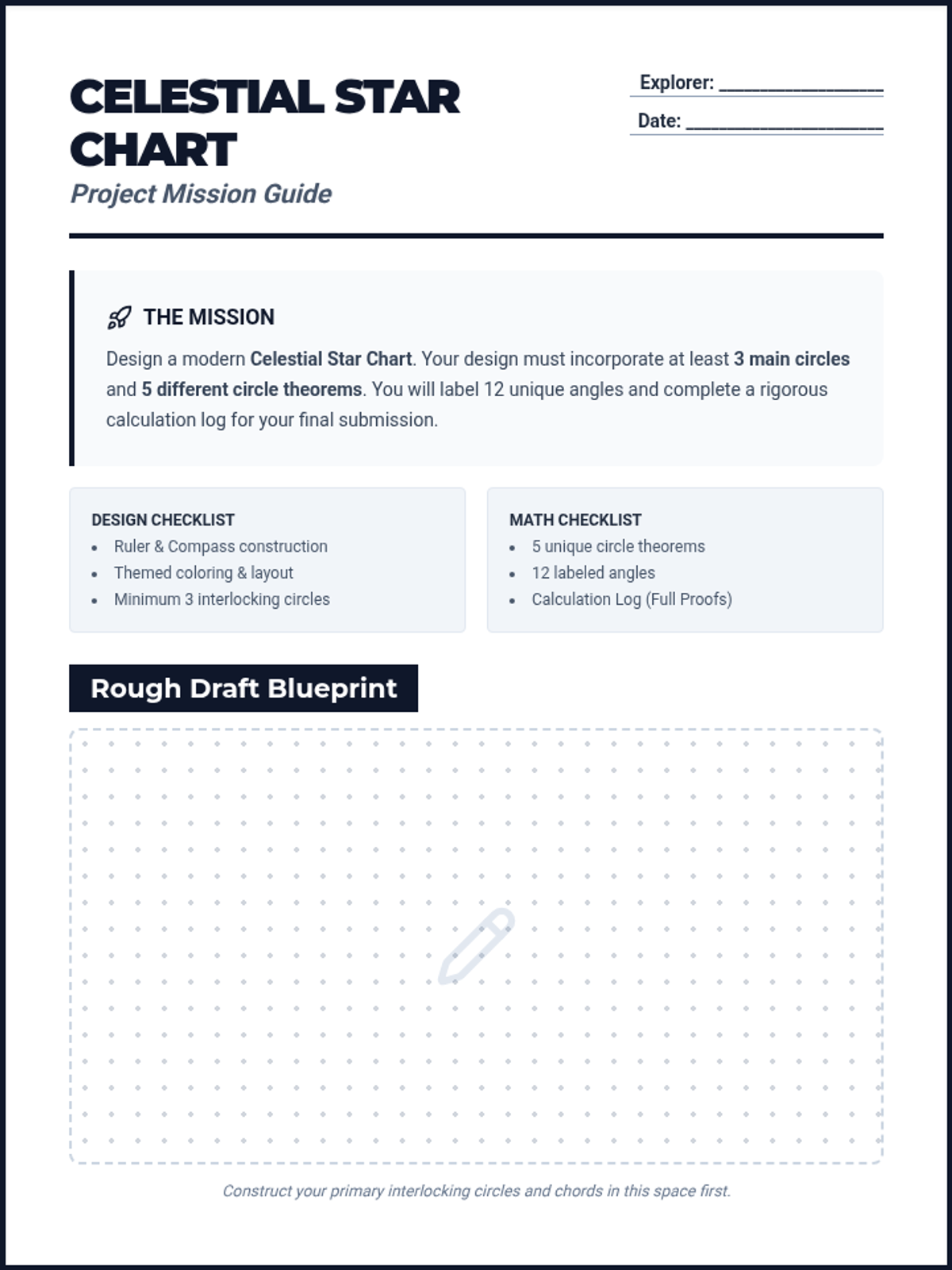
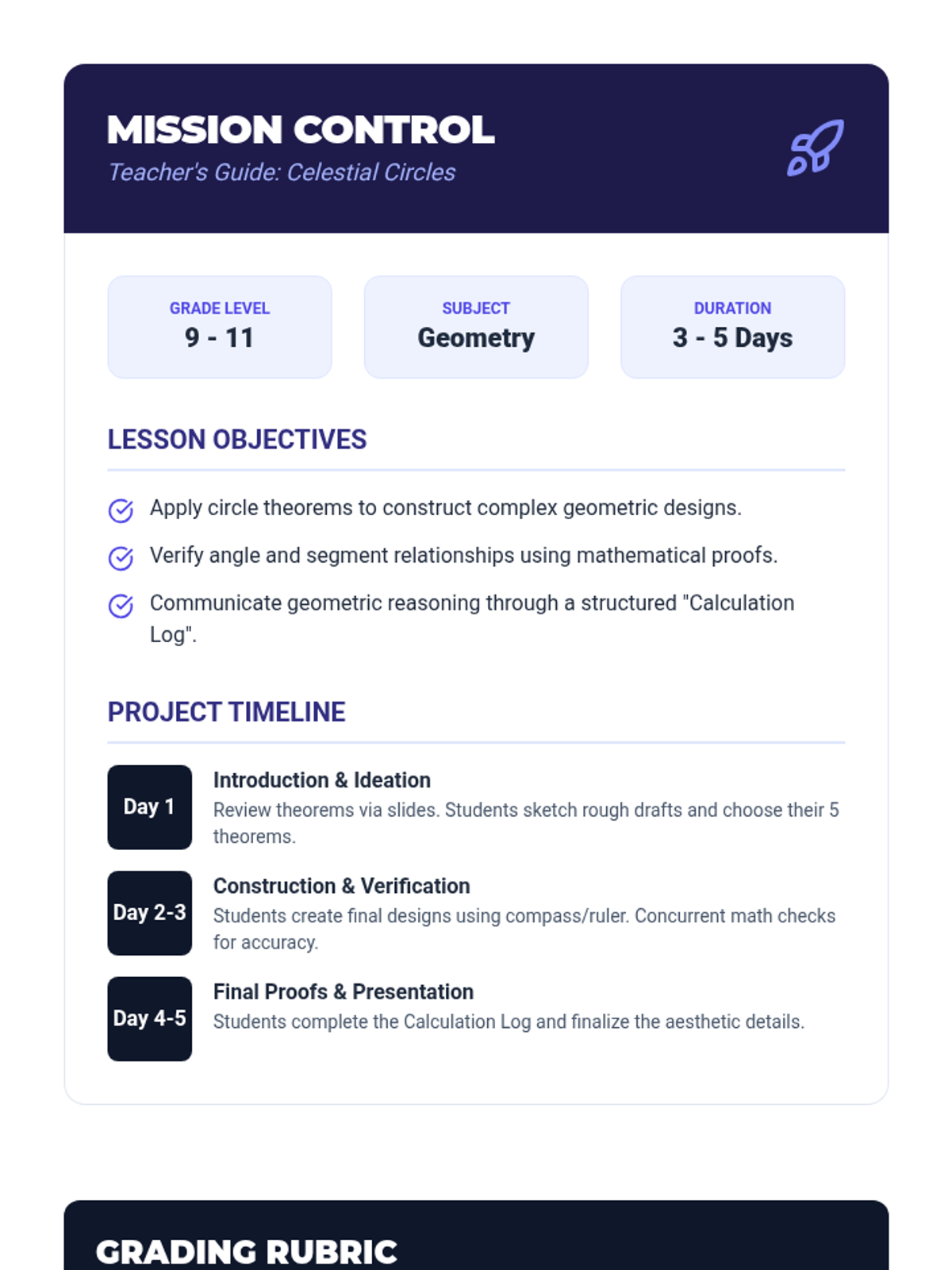
A creative geometry project where students apply circle theorems to design a celestial map or star chart, combining art with rigorous mathematical proofs of angles and segments.
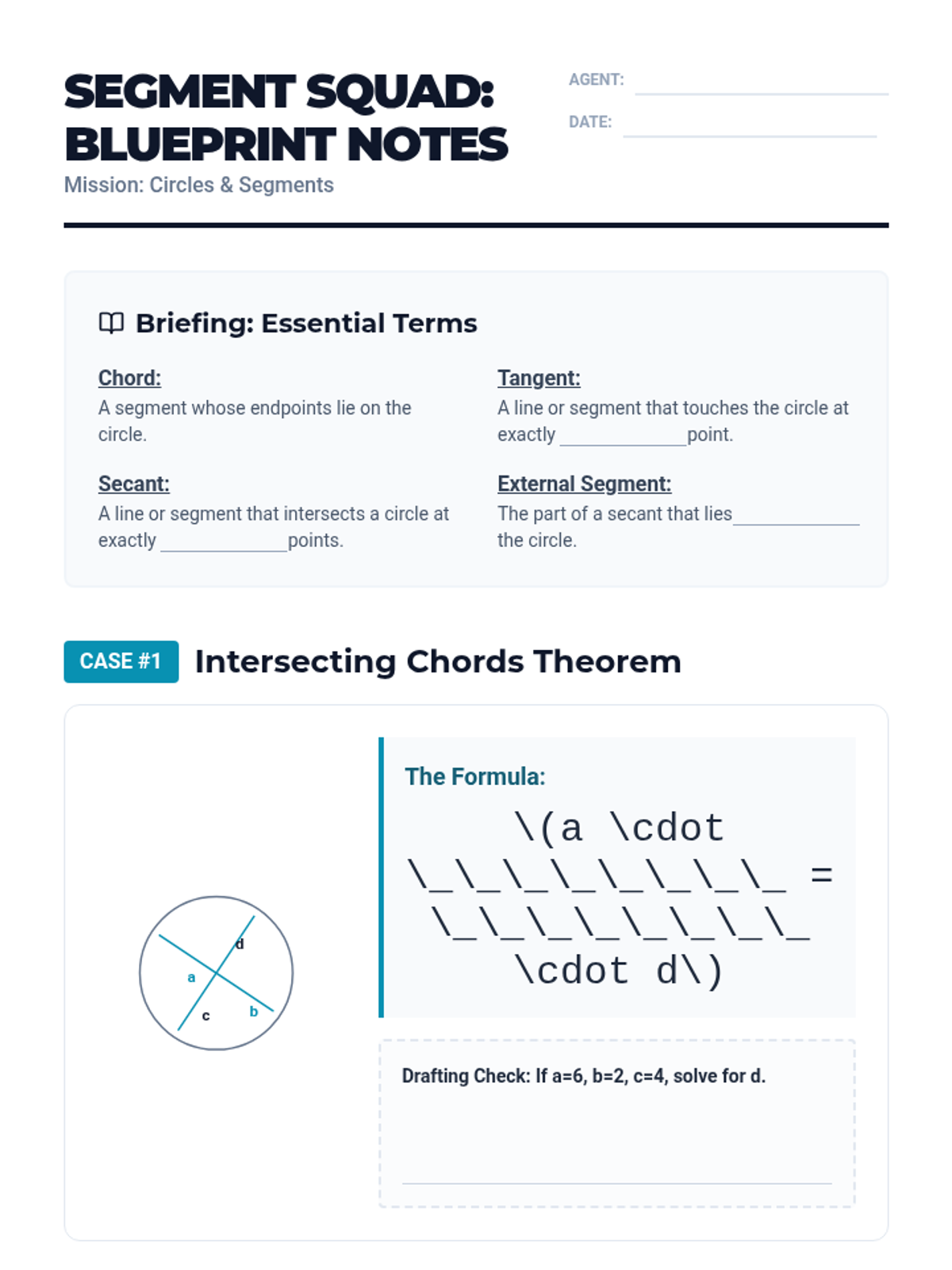
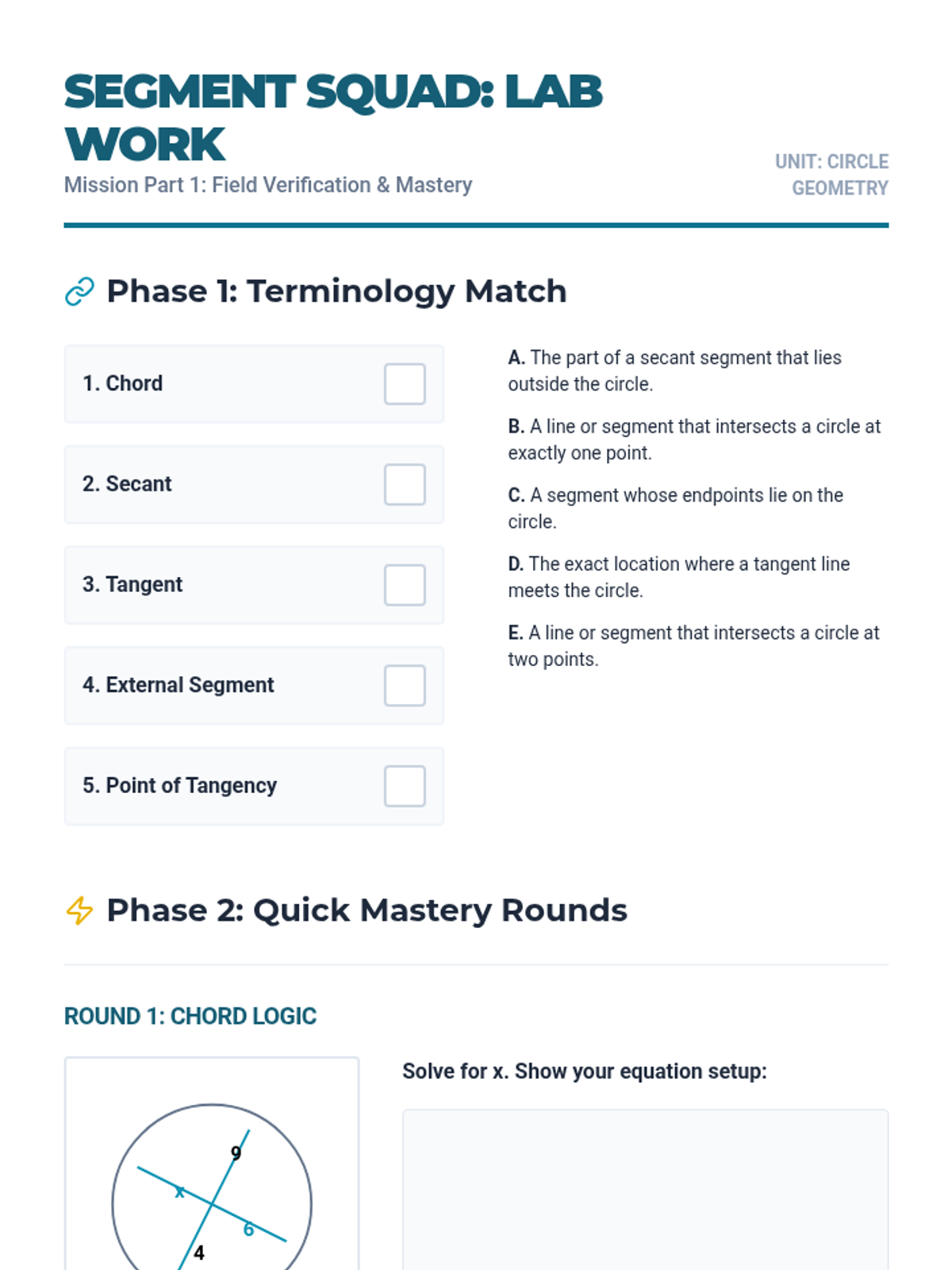
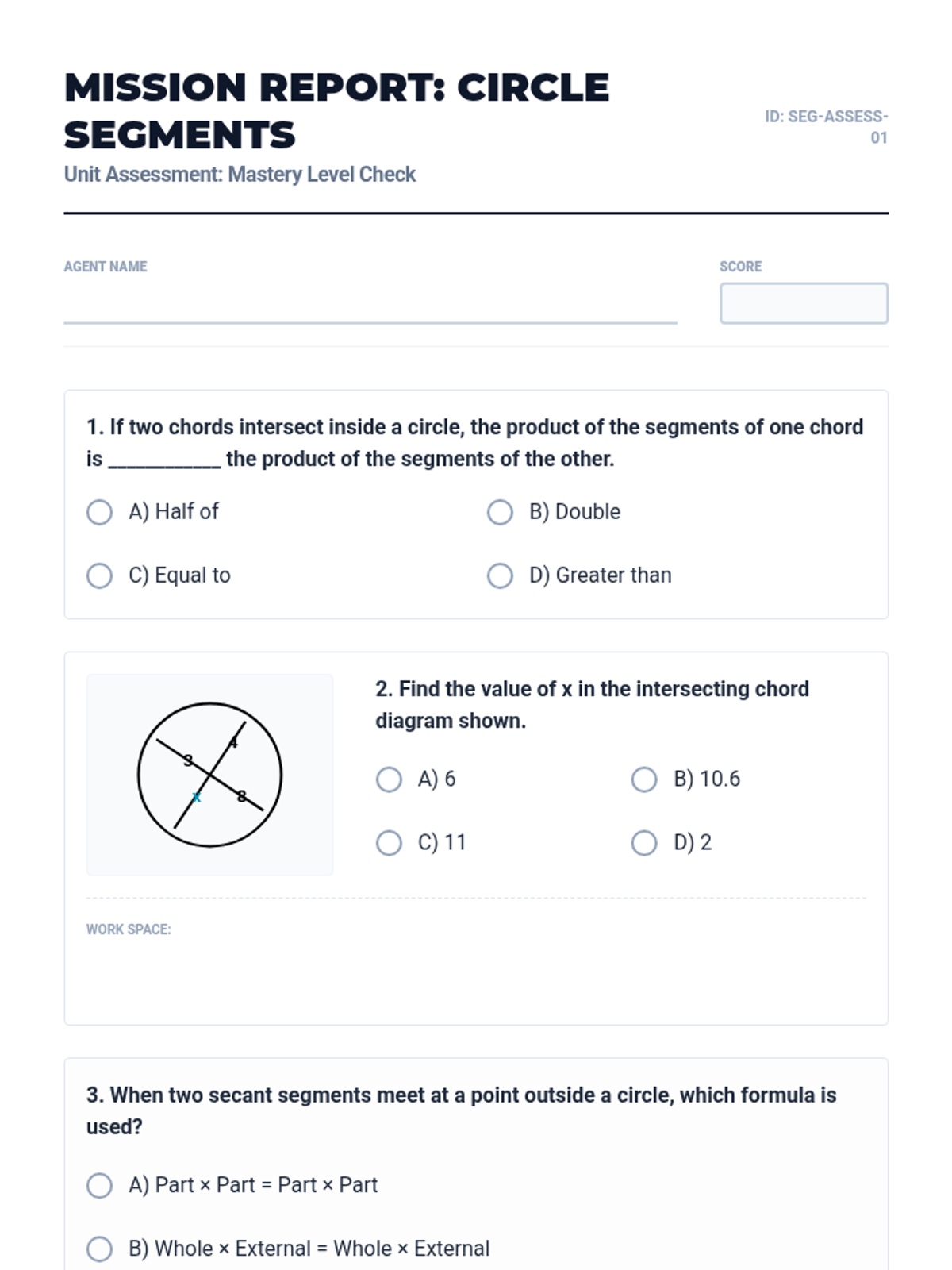
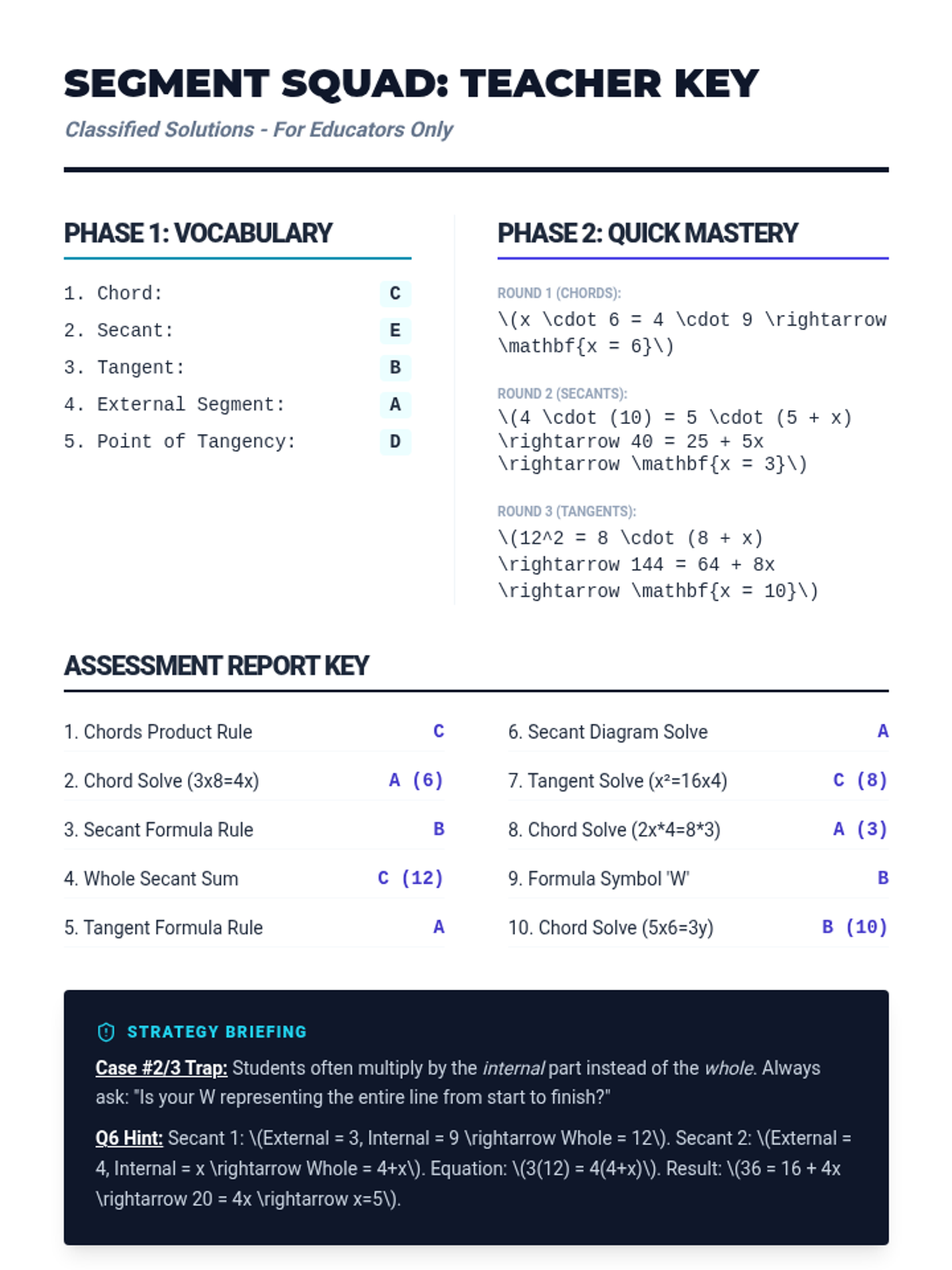
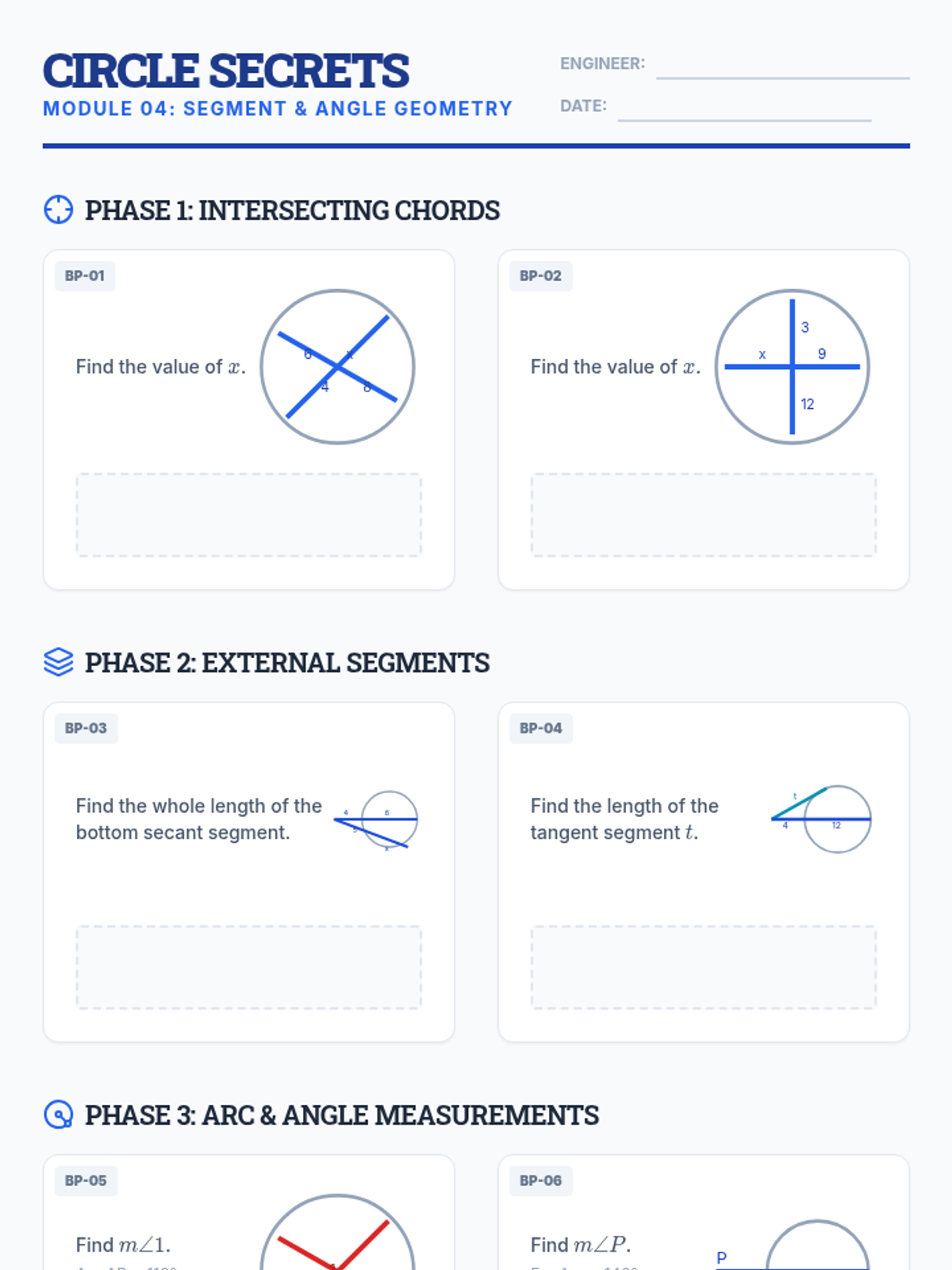
A comprehensive geometry lesson exploring the relationships between chords, secants, and tangents within circles through the 'Segment Squad' blueprint theme.
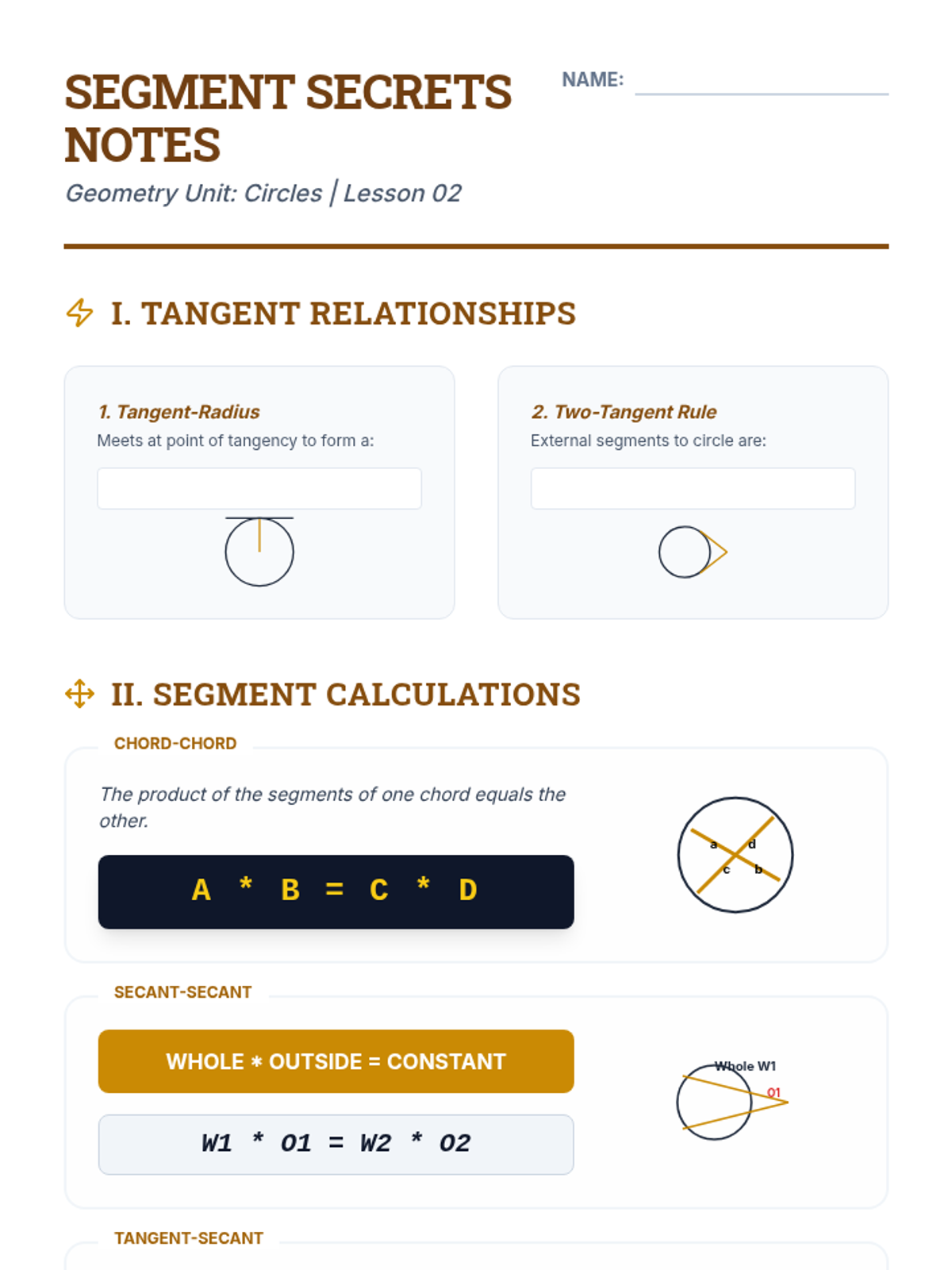
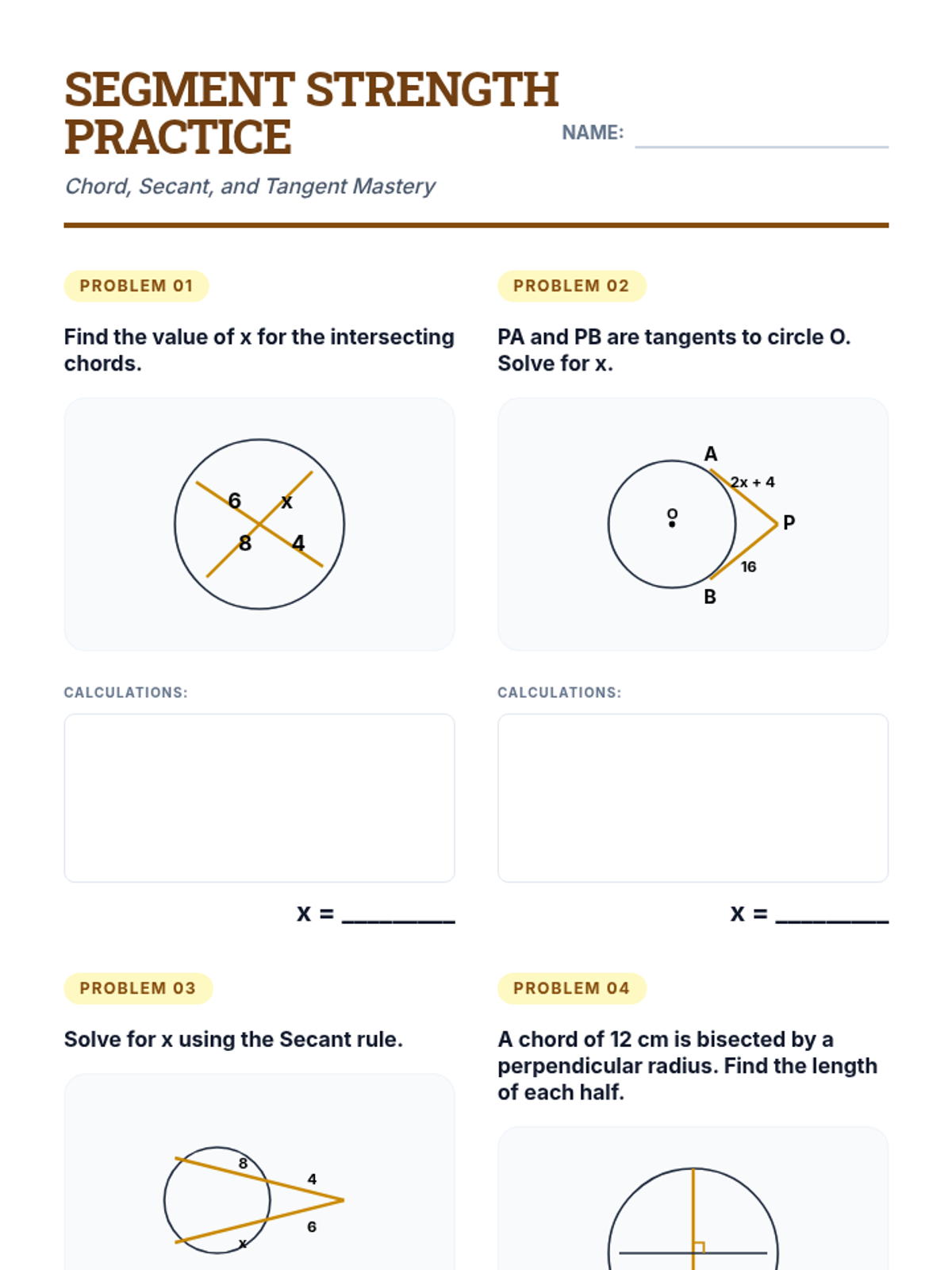
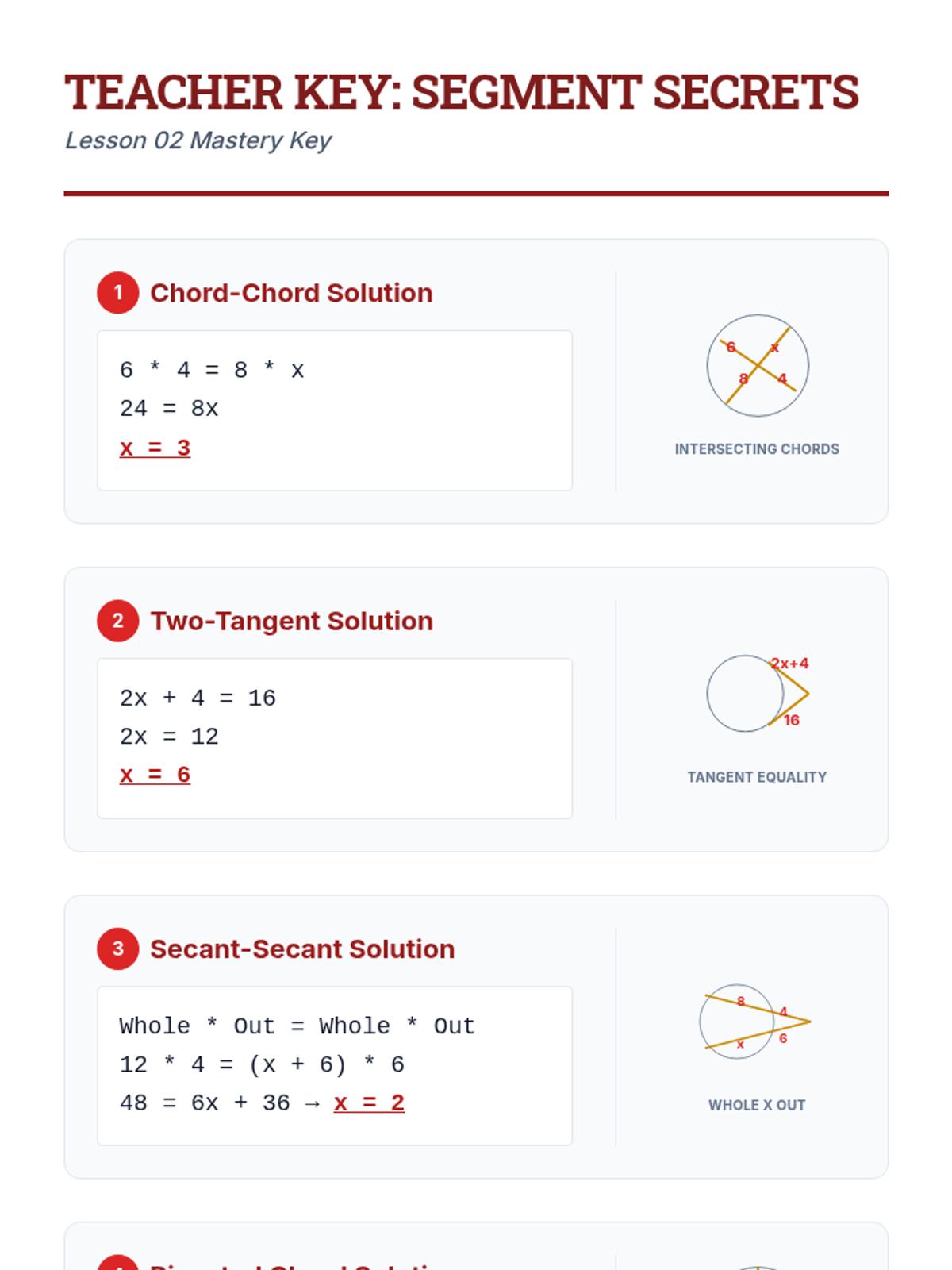
Deep dive into segment lengths within and outside circles, covering tangent-radius properties, the two-tangent theorem, and chord-secant length relationships.
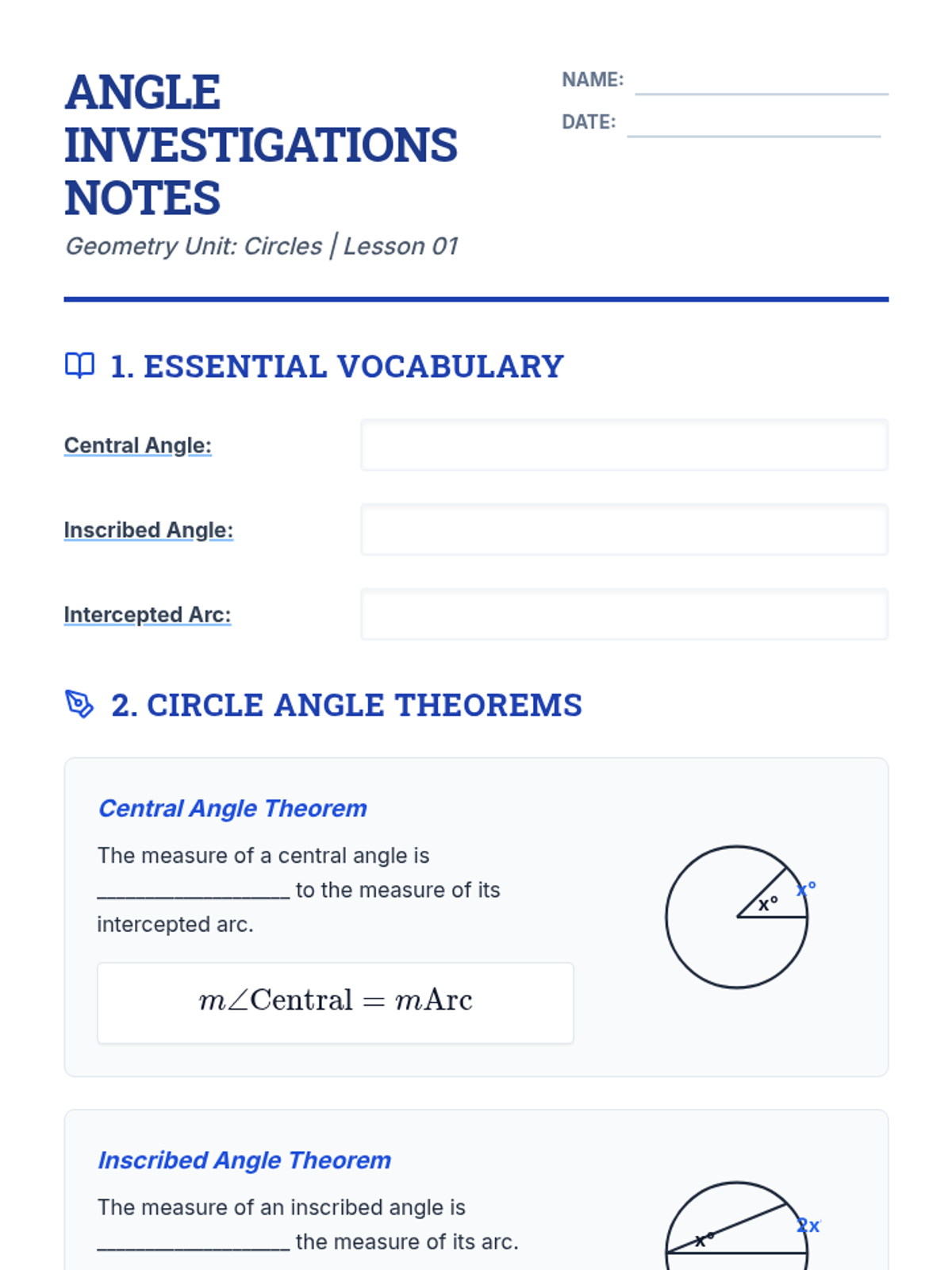
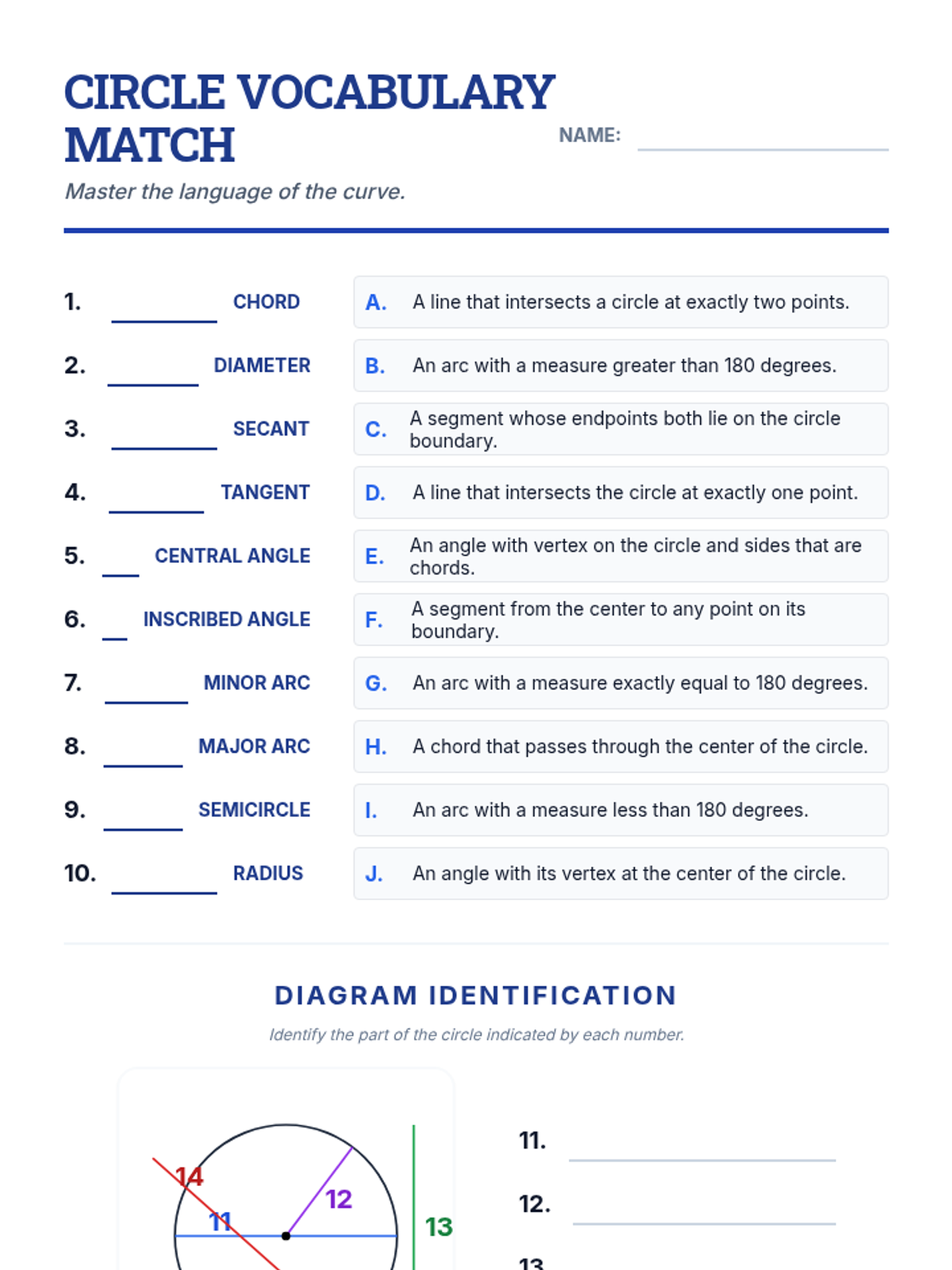
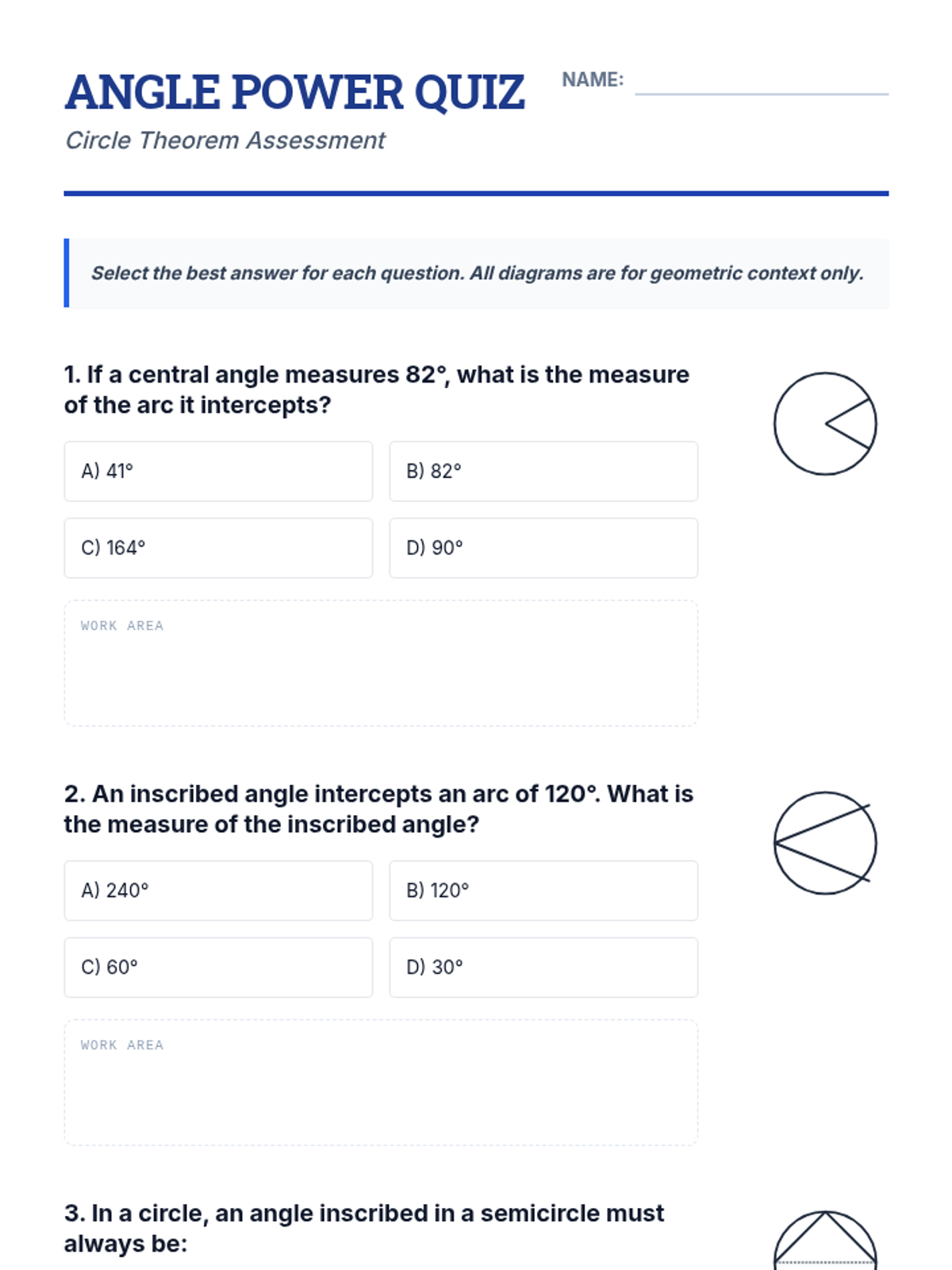
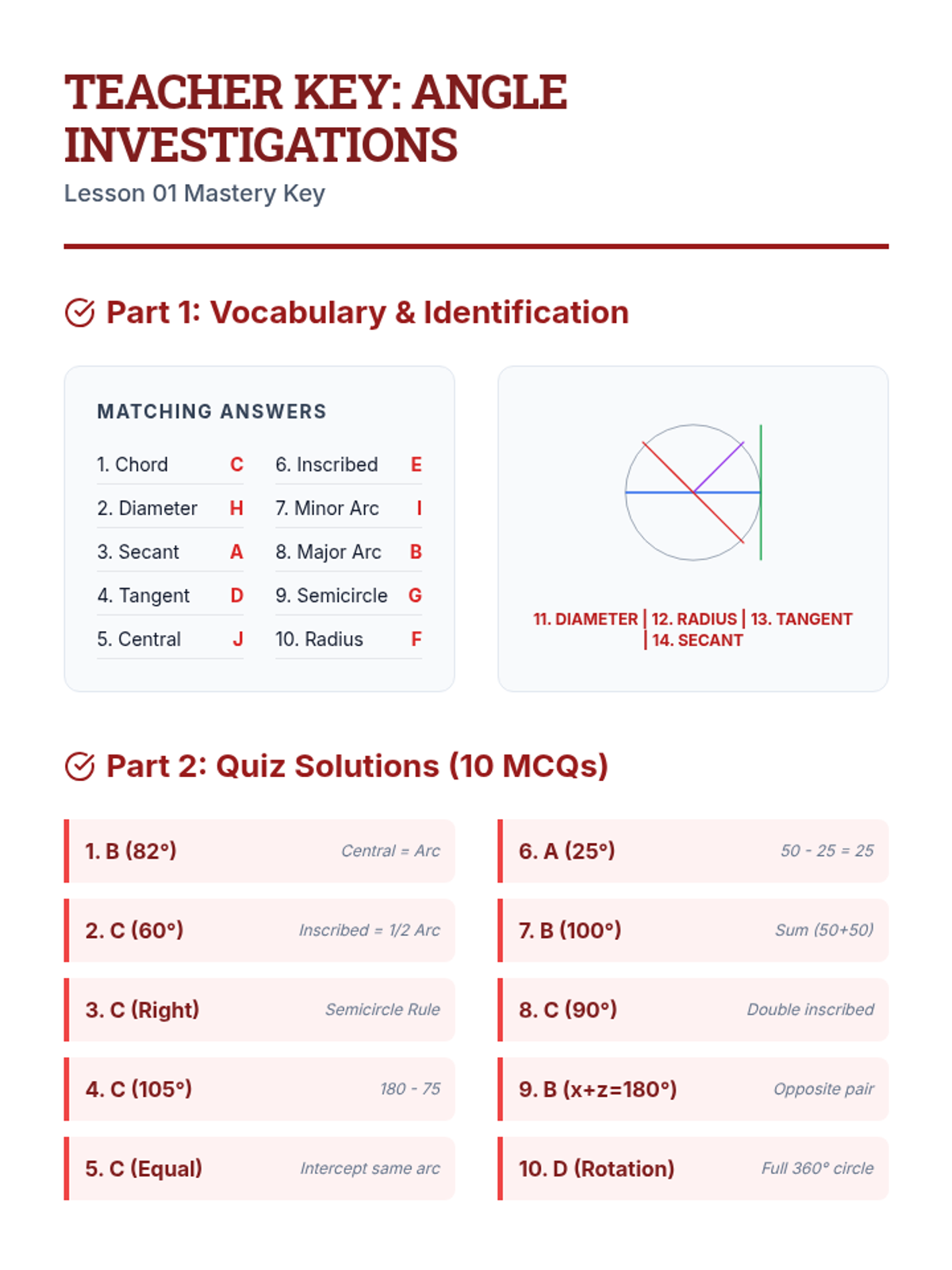
Exploration of angle relationships in circles, including central angles, inscribed angles, angles in semicircles, and cyclic quadrilaterals. includes a vocabulary focus and assessment.
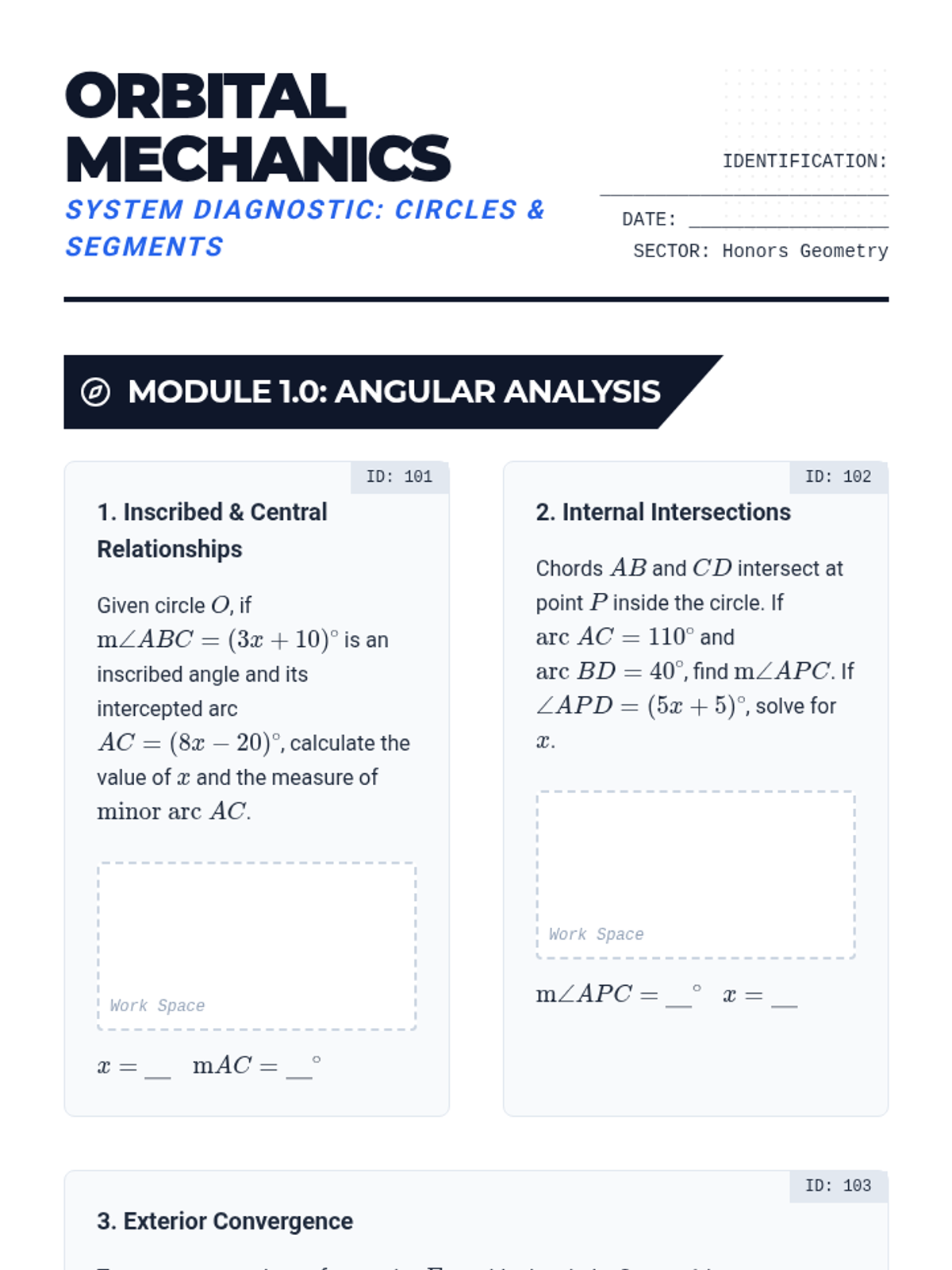
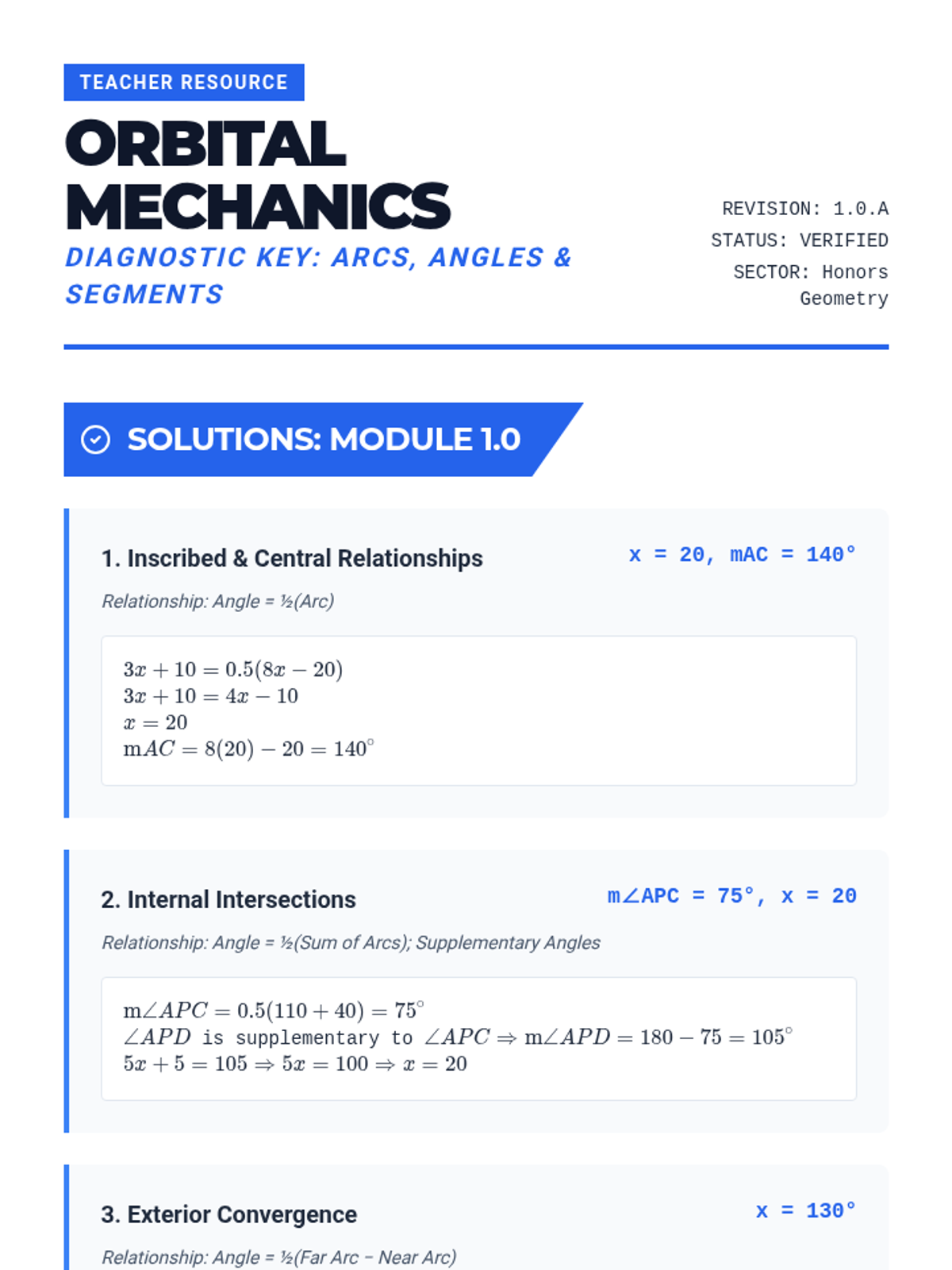
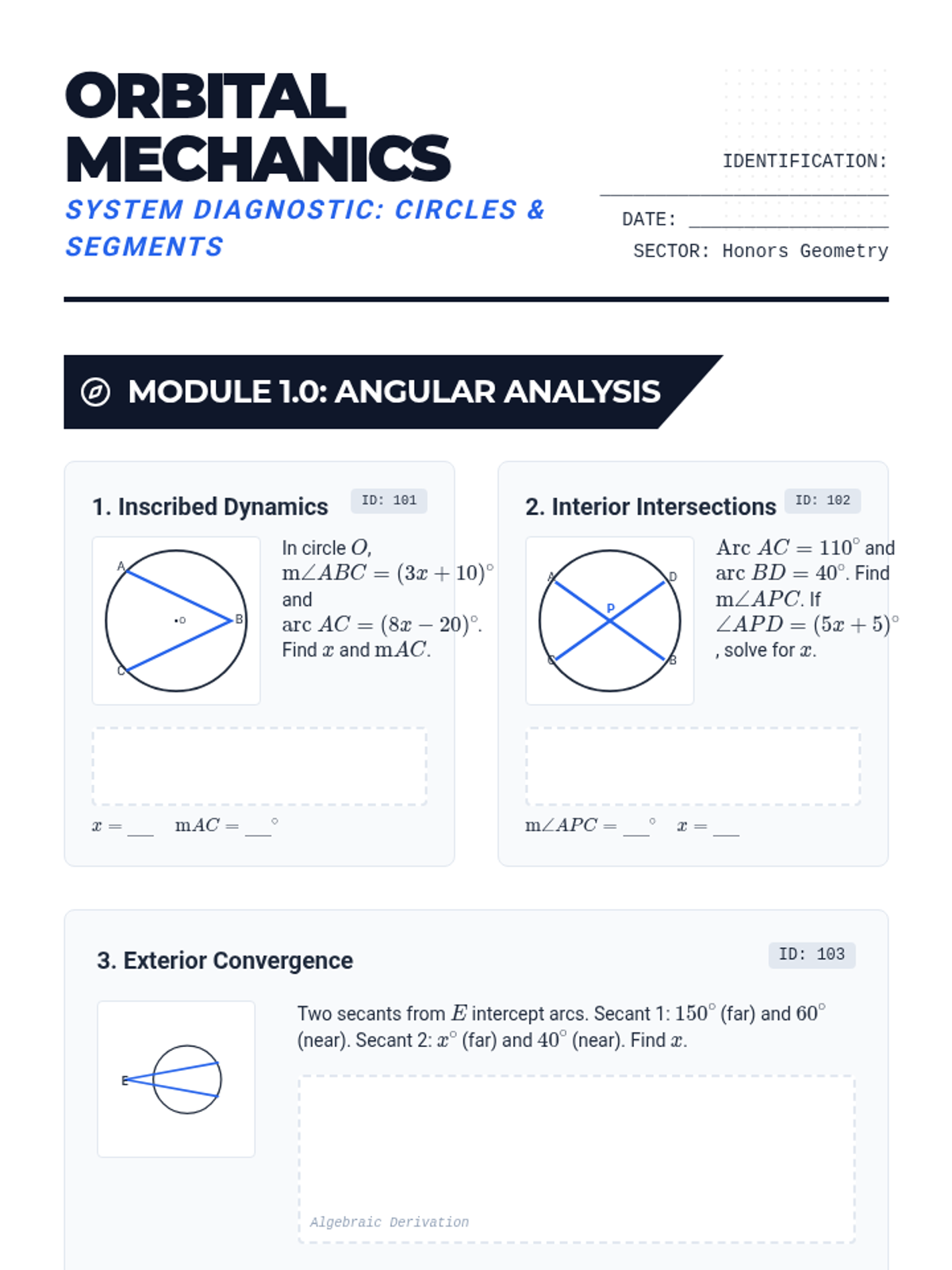
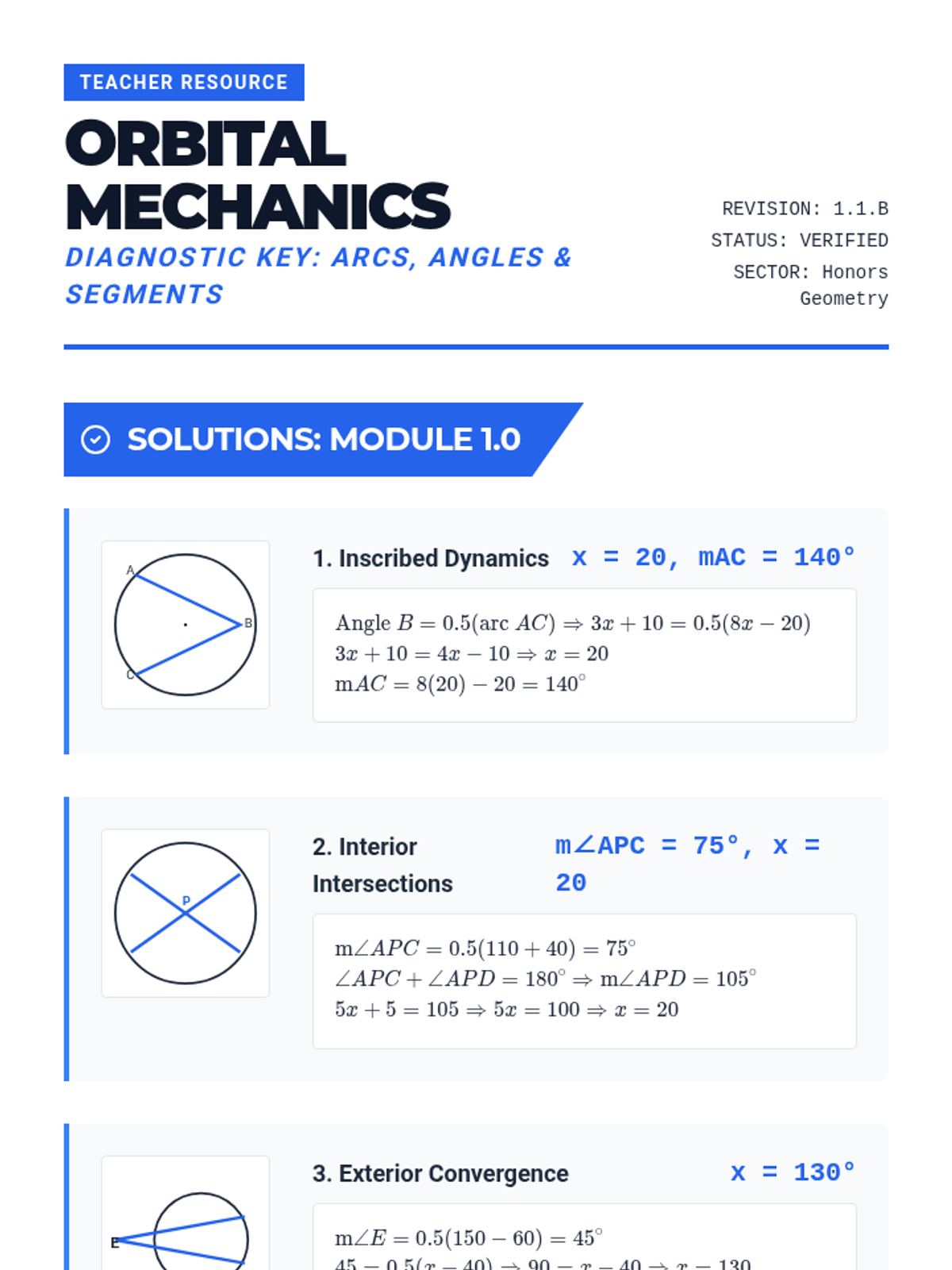
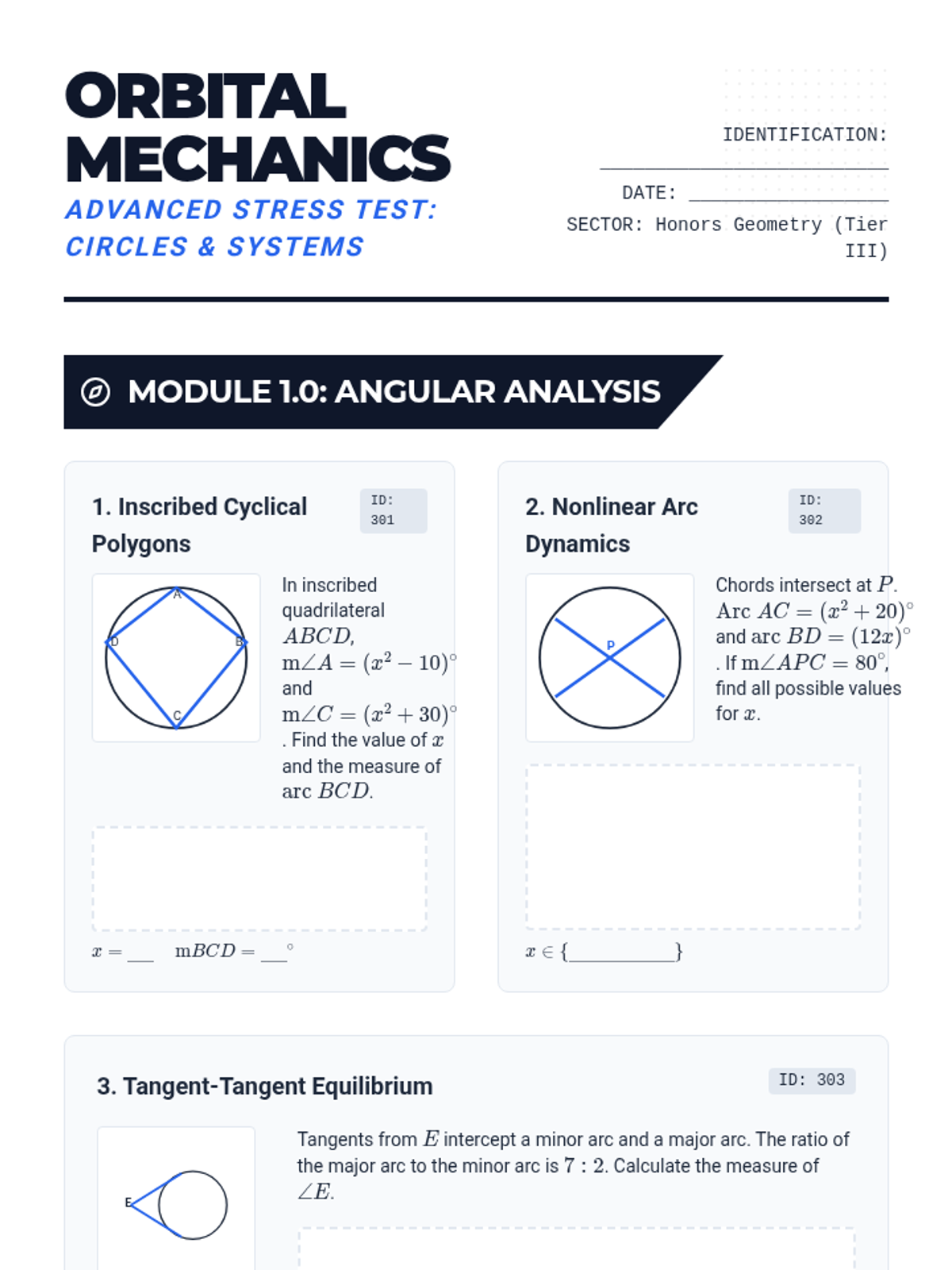
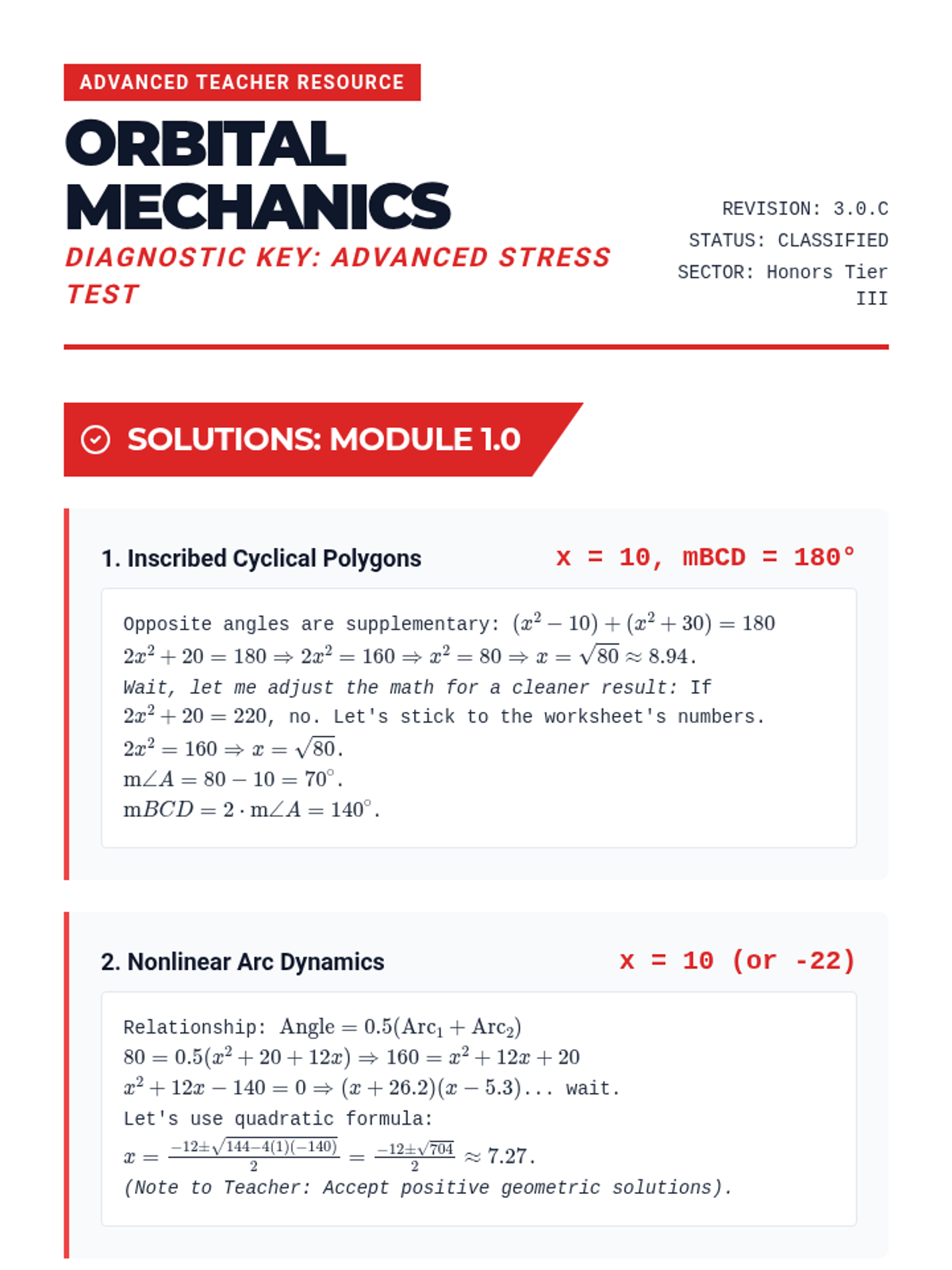
A comprehensive review of circle geometry for Honors students, covering angle-arc relationships (central, inscribed, interior, and exterior) and segment lengths (chords, secants, and tangents) through technical blueprint-style visuals and complex algebraic applications.
A comprehensive exploration of circle geometry, focusing on the relationships between tangents, secants, and chords, including segment lengths and angle-arc relationships.
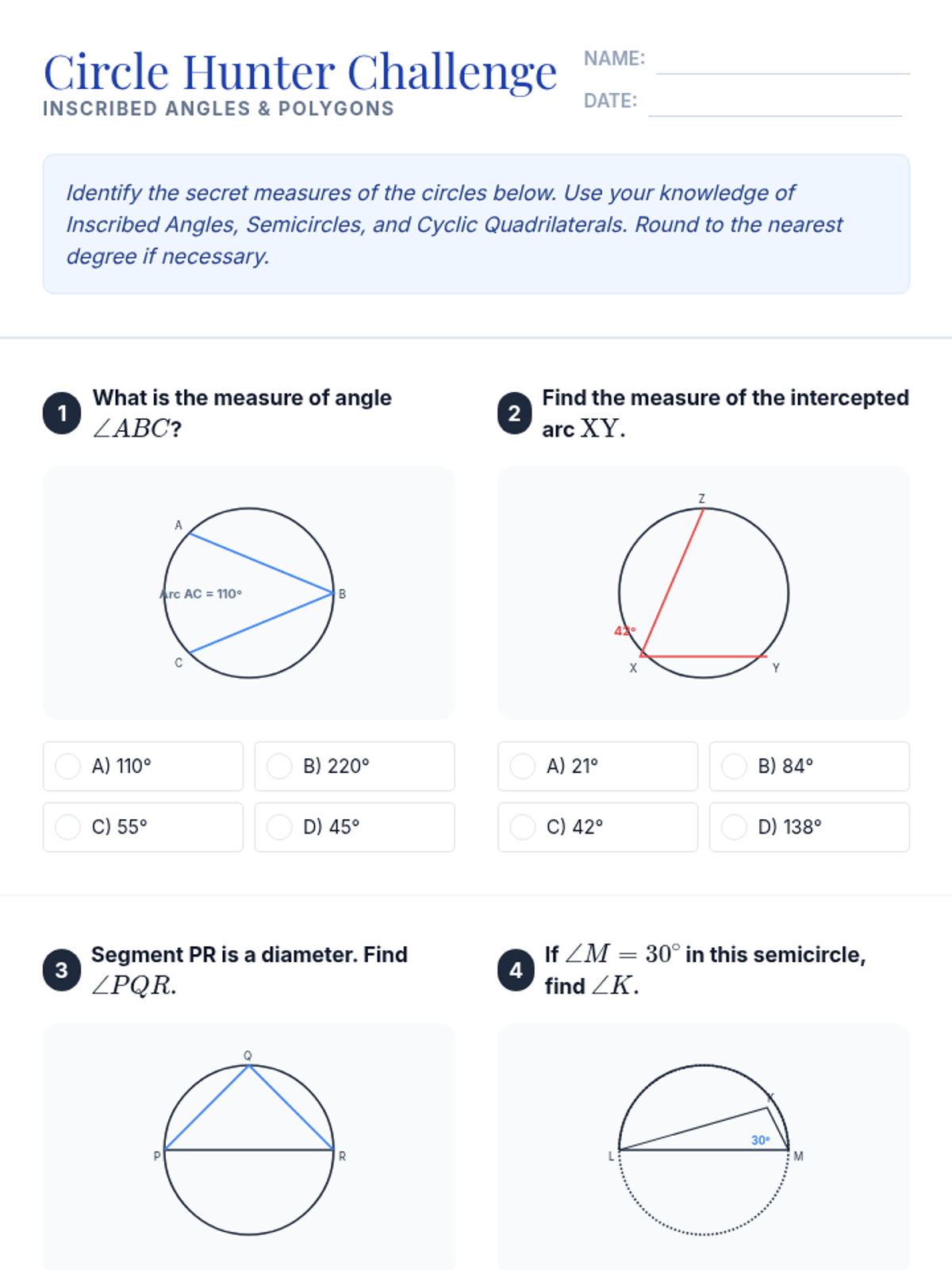
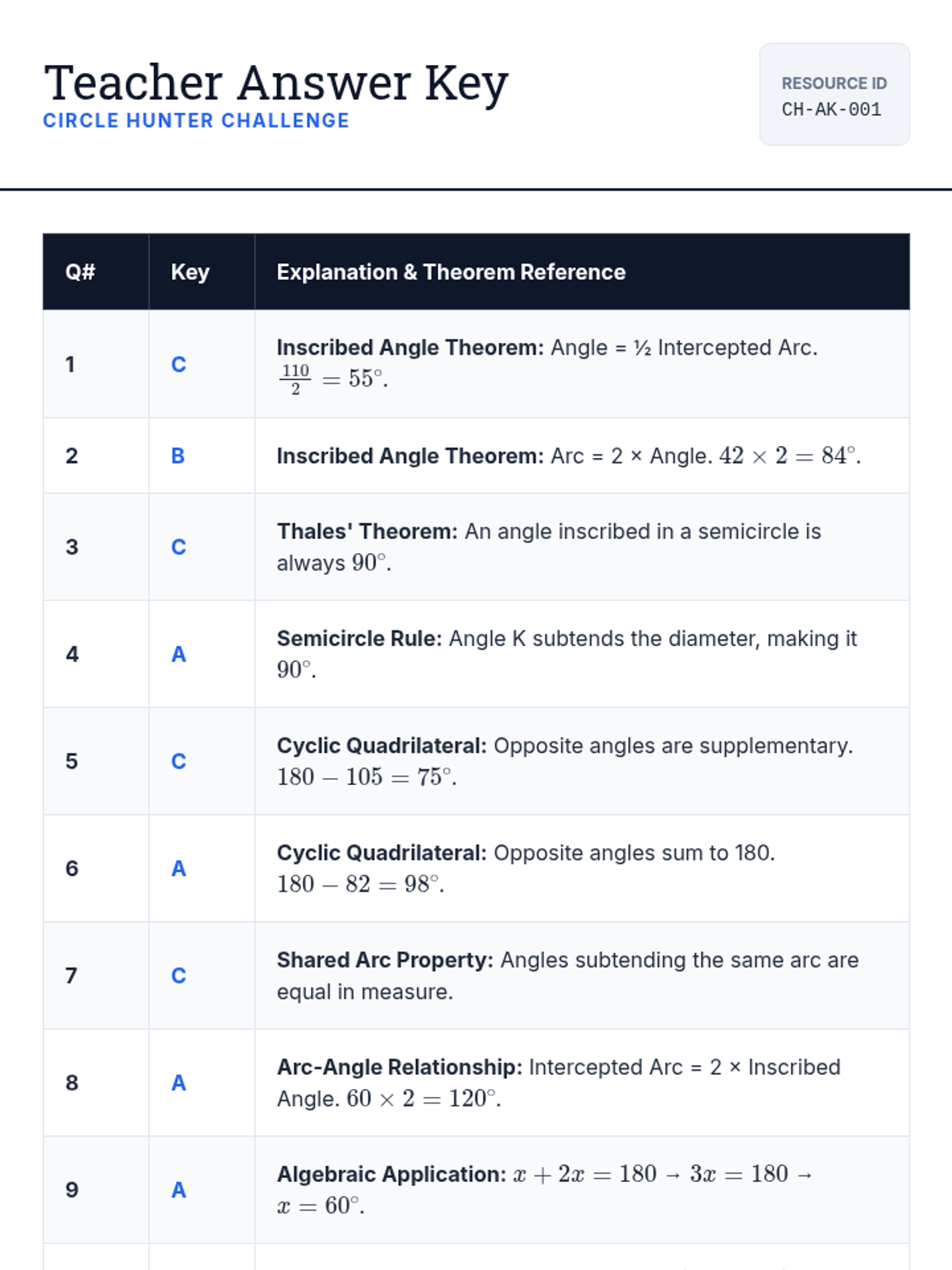
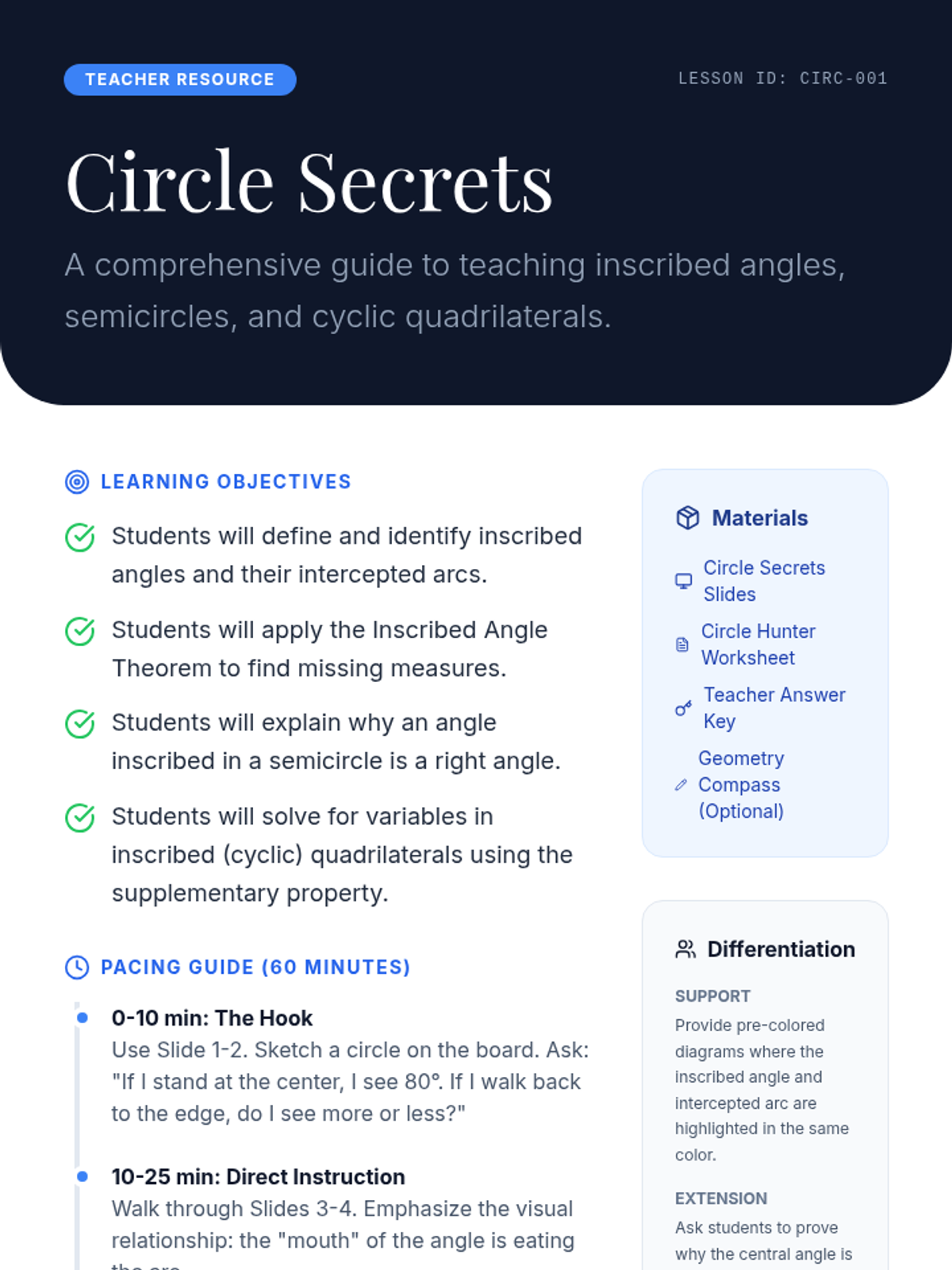
A comprehensive lesson on circle geometry focusing on inscribed angles, angles in semicircles, and the properties of inscribed quadrilaterals. Students will learn the relationship between inscribed angles and their intercepted arcs through visual instruction and a set of 10 challenge questions.
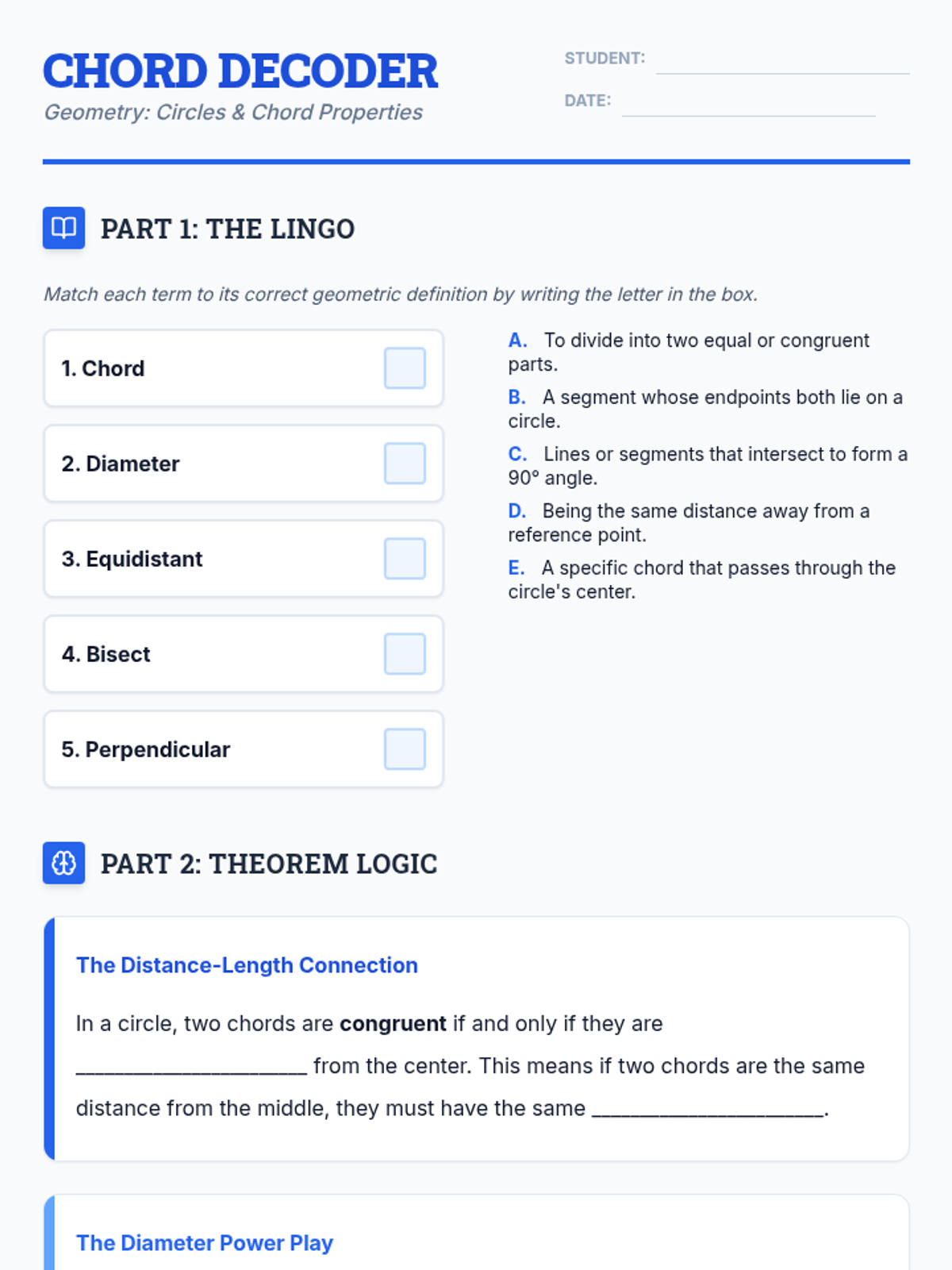
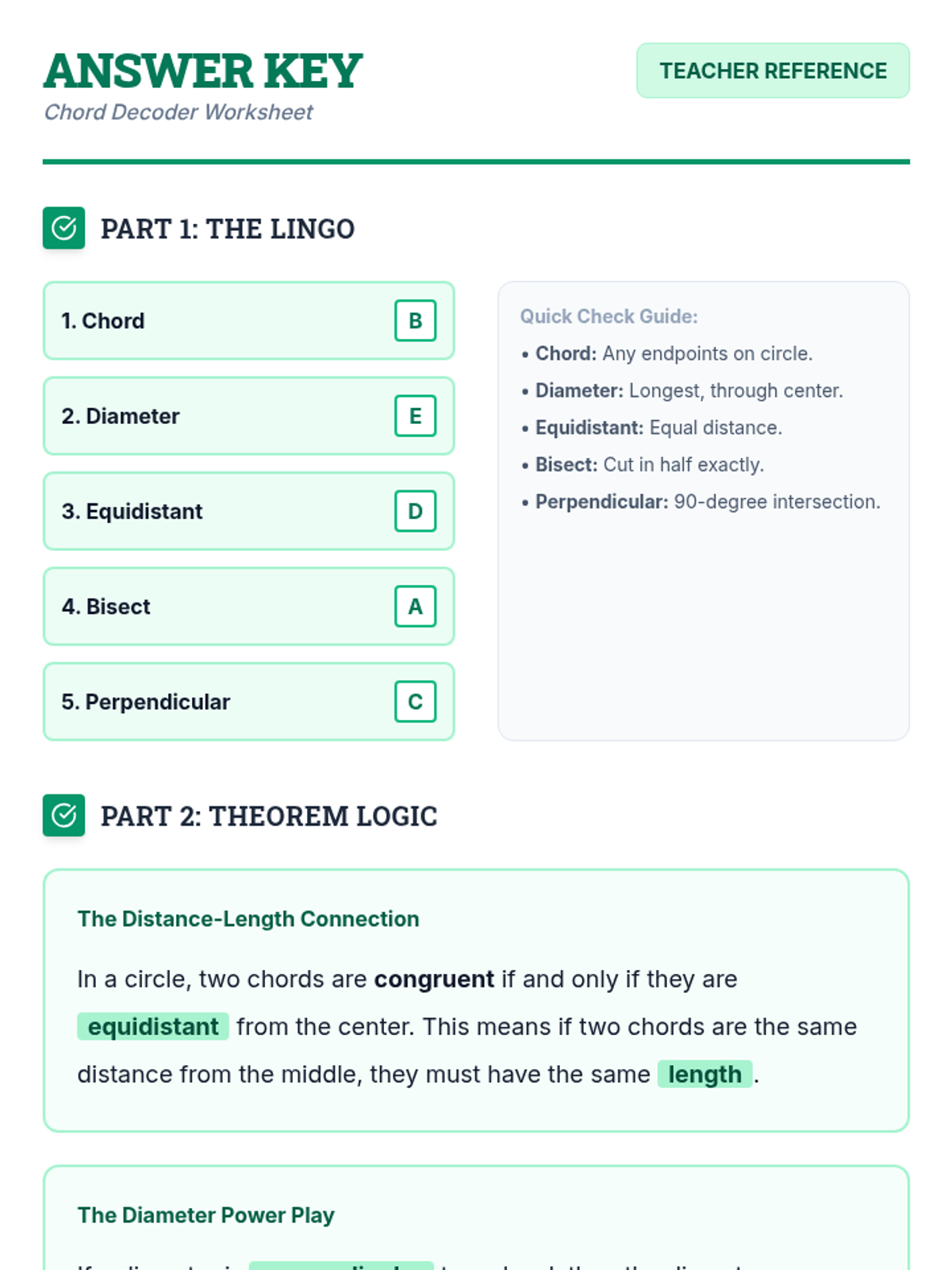
This lesson explores the properties of chords in circles, focusing on congruent chords, perpendicular bisectors, and the relationship between chords and their arcs. Students will master the vocabulary through visual aids and practice activities.
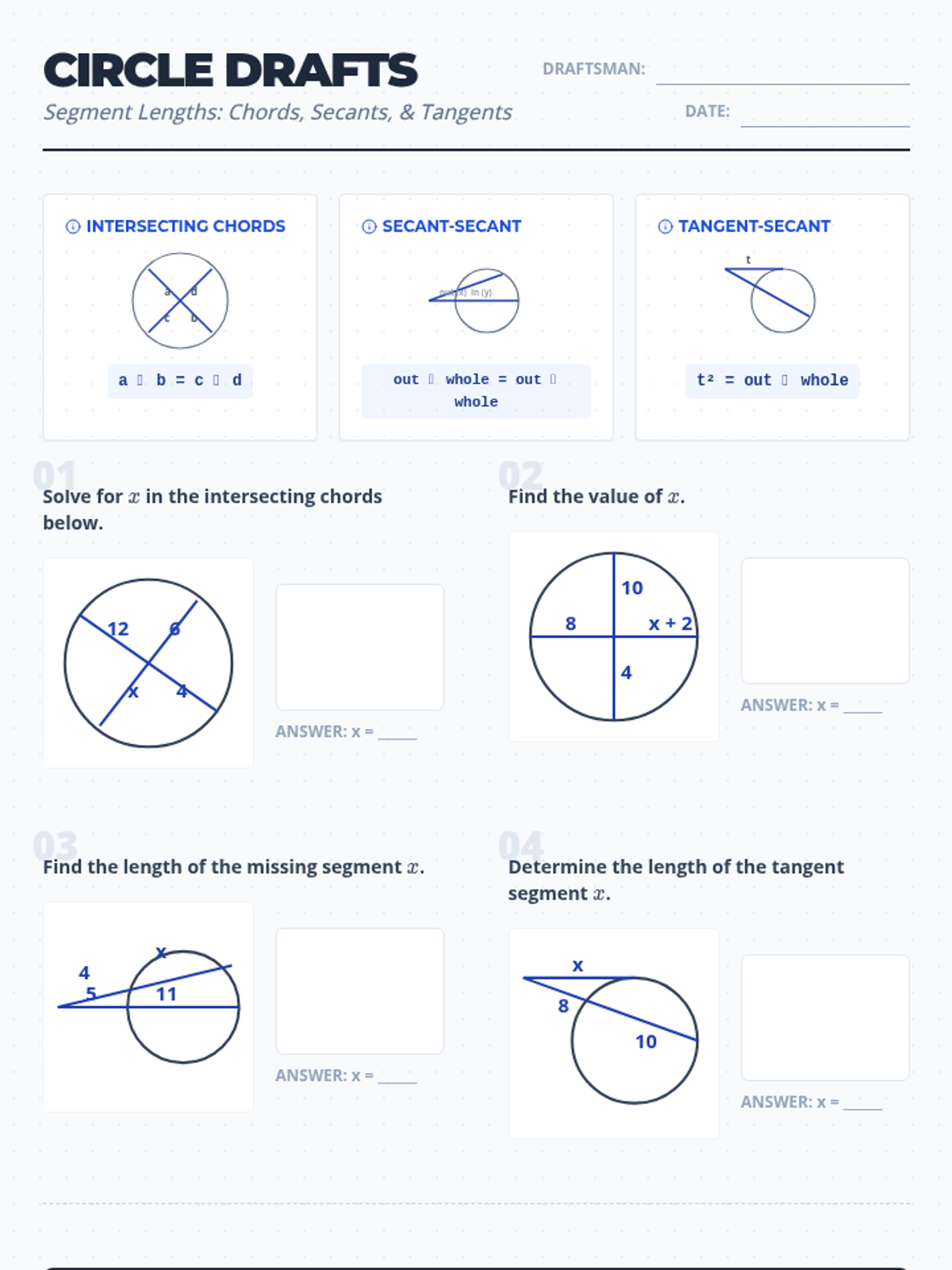
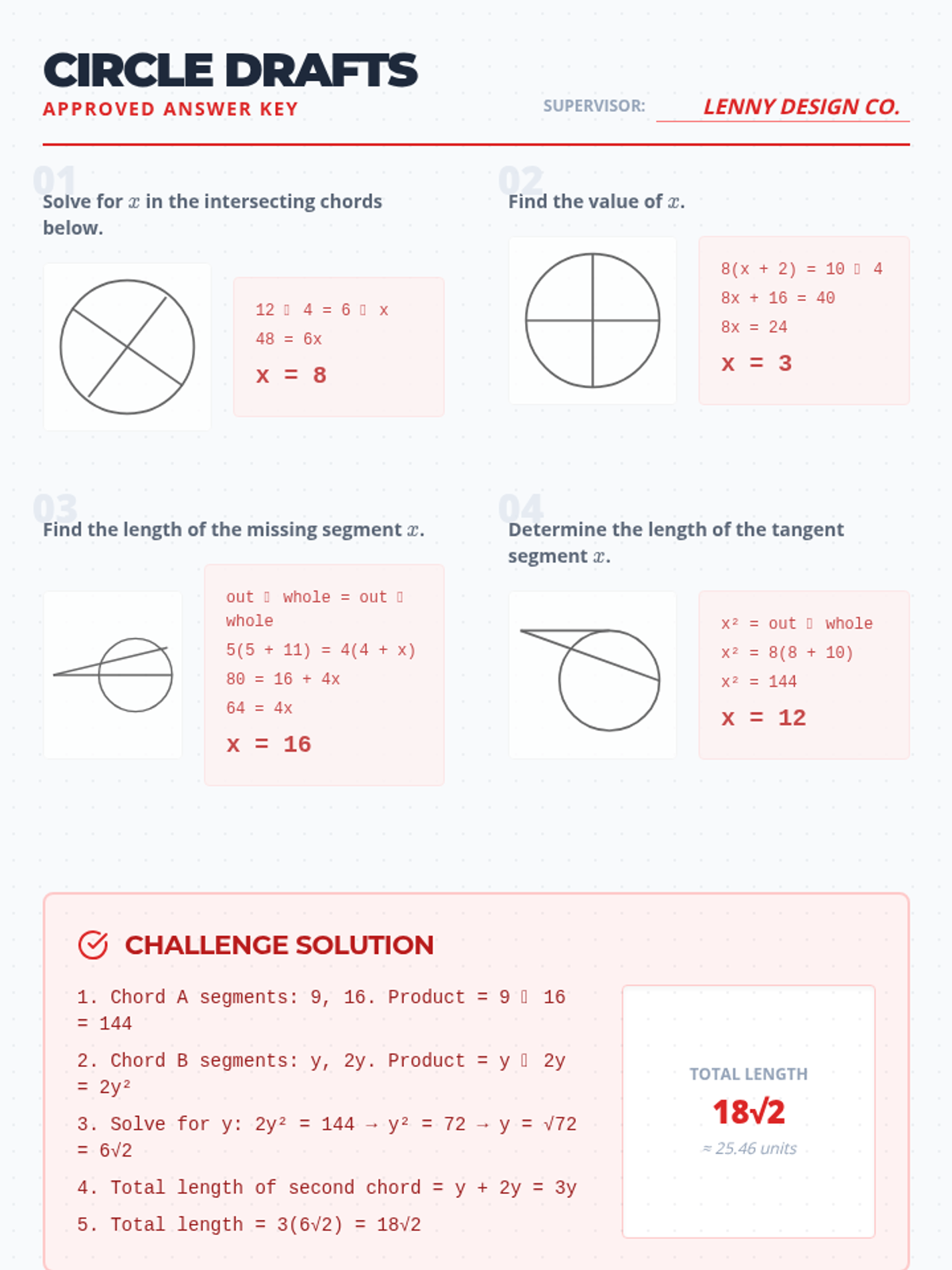
A lesson on calculating segment lengths in circles using the Intersecting Chords, Secant-Secant, and Tangent-Secant theorems.
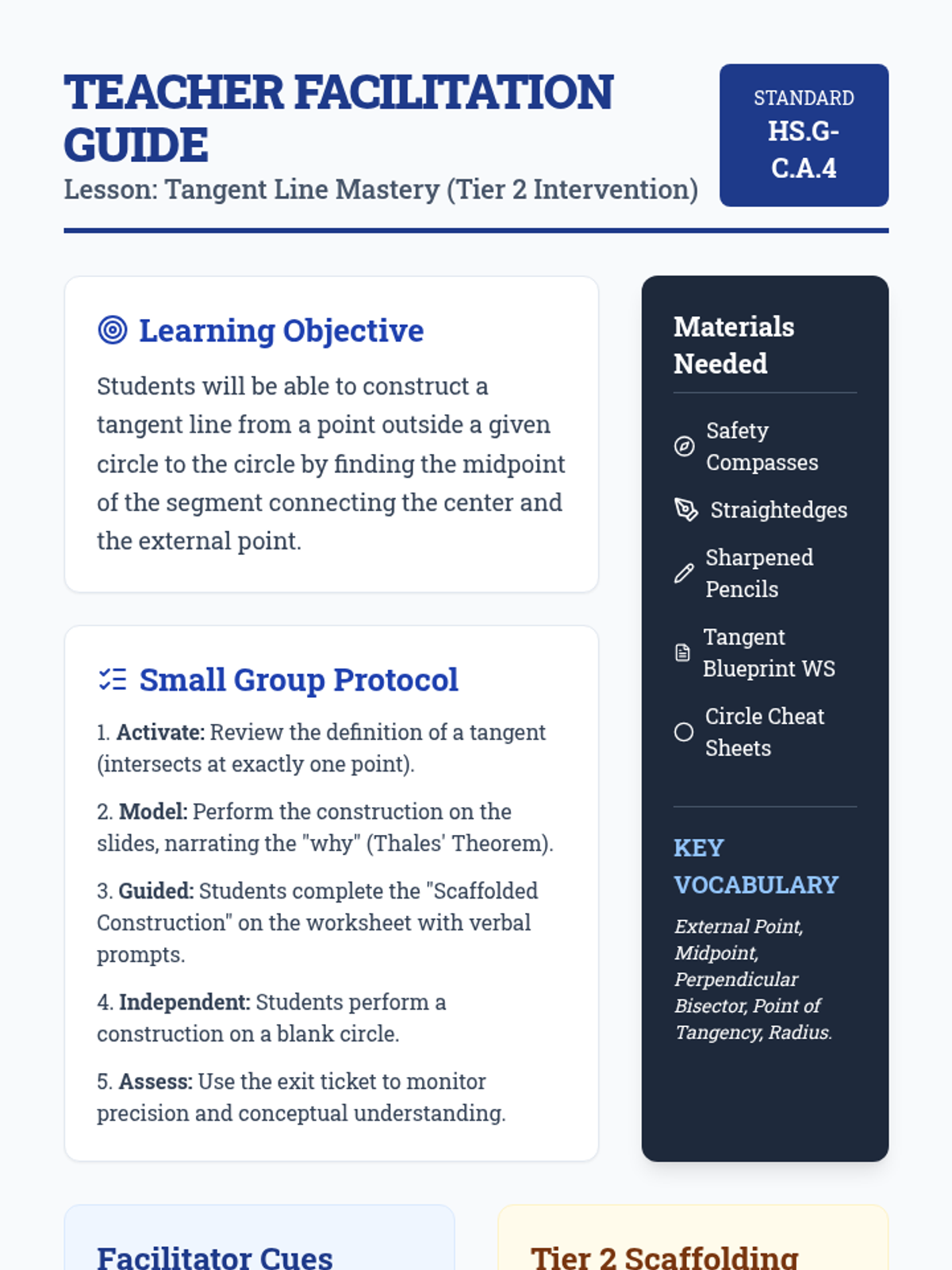
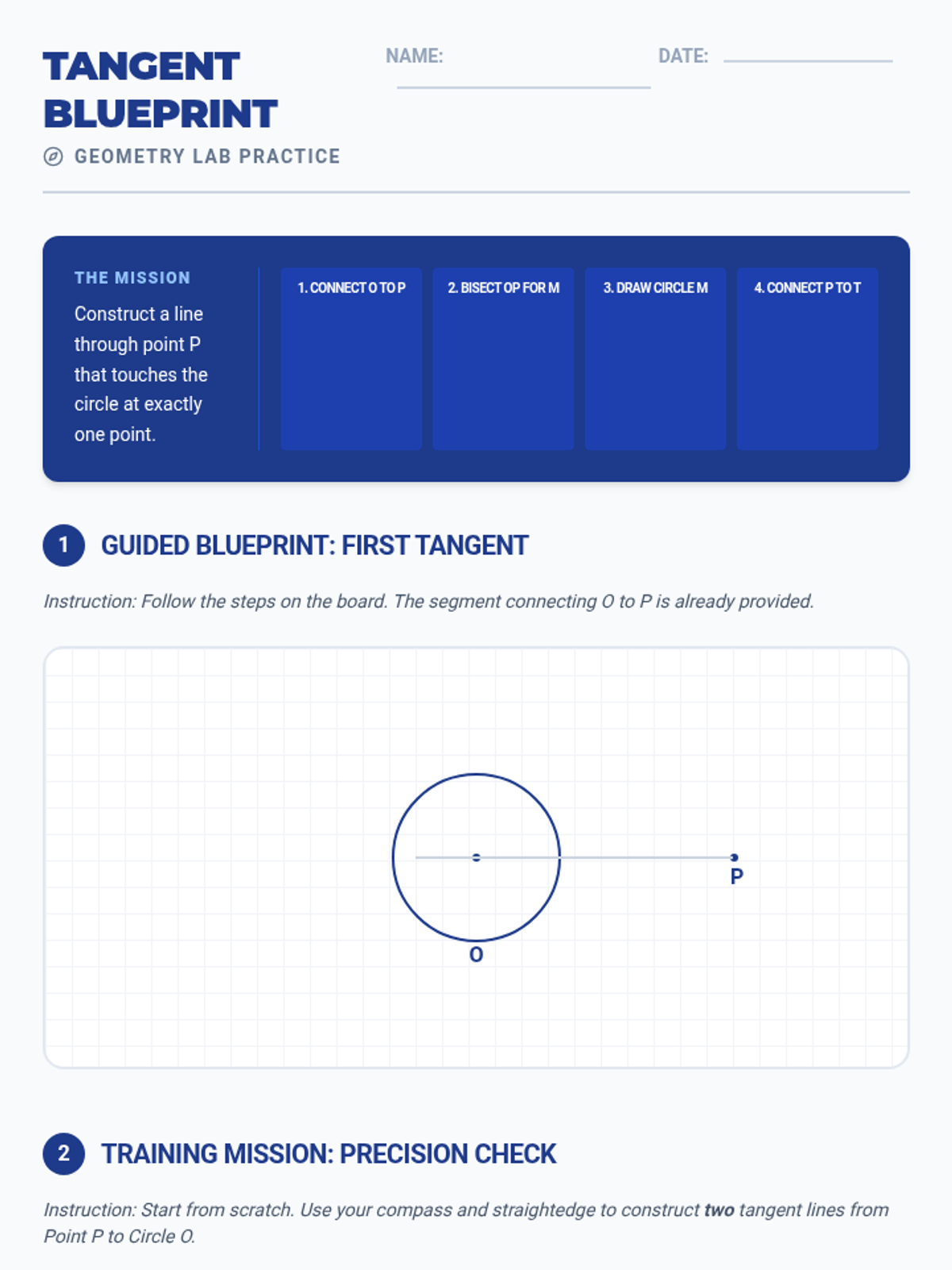
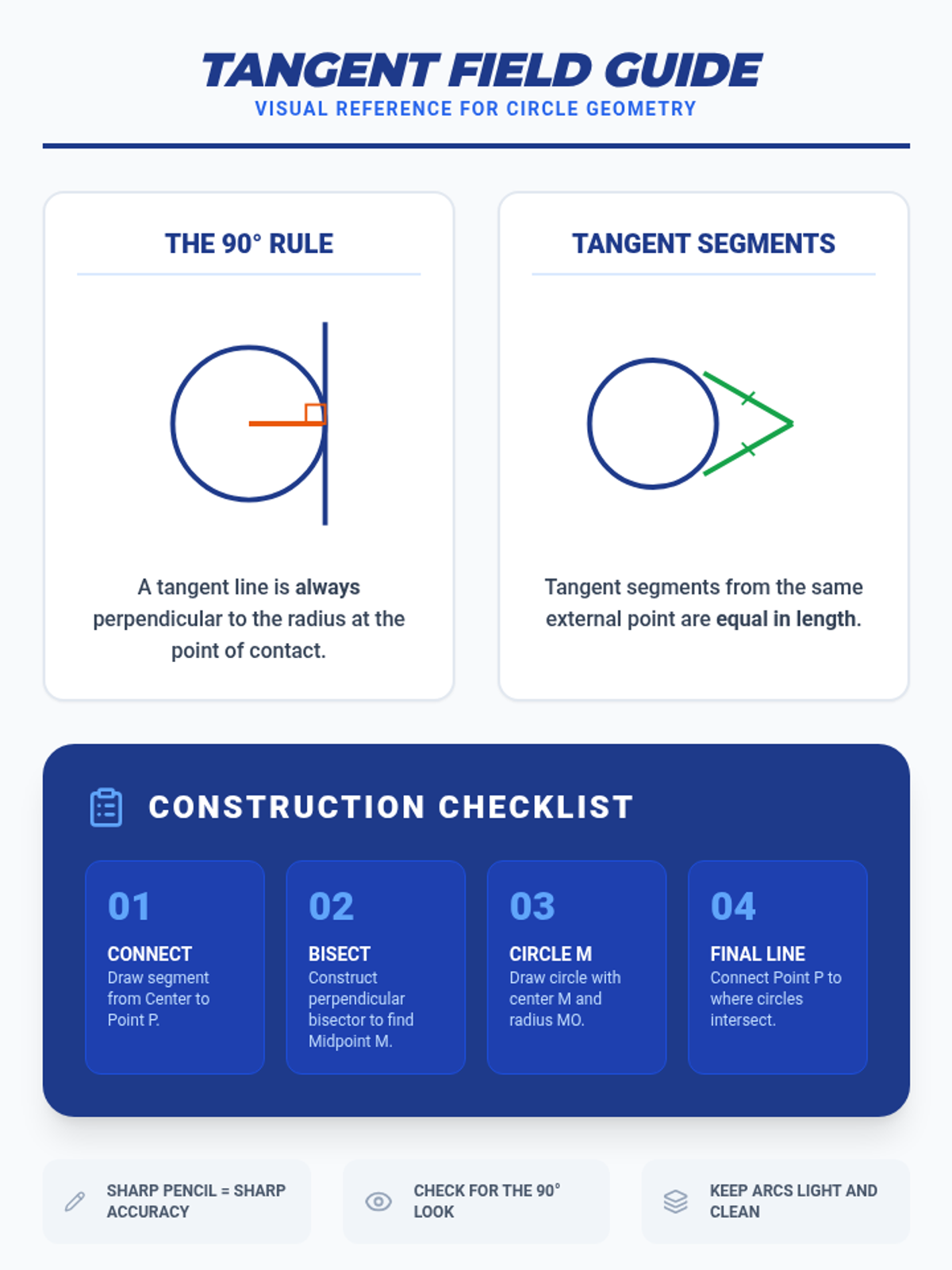
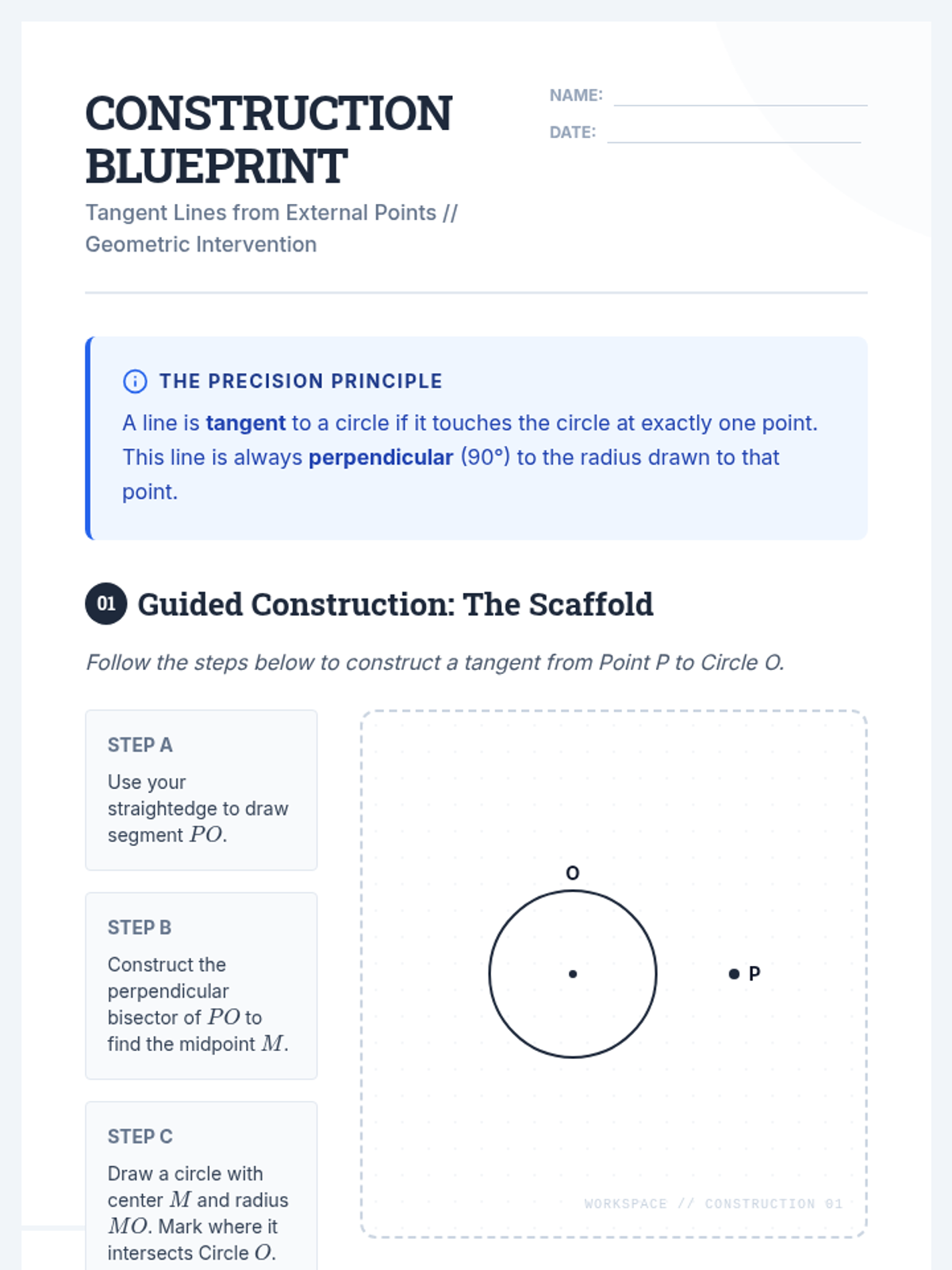
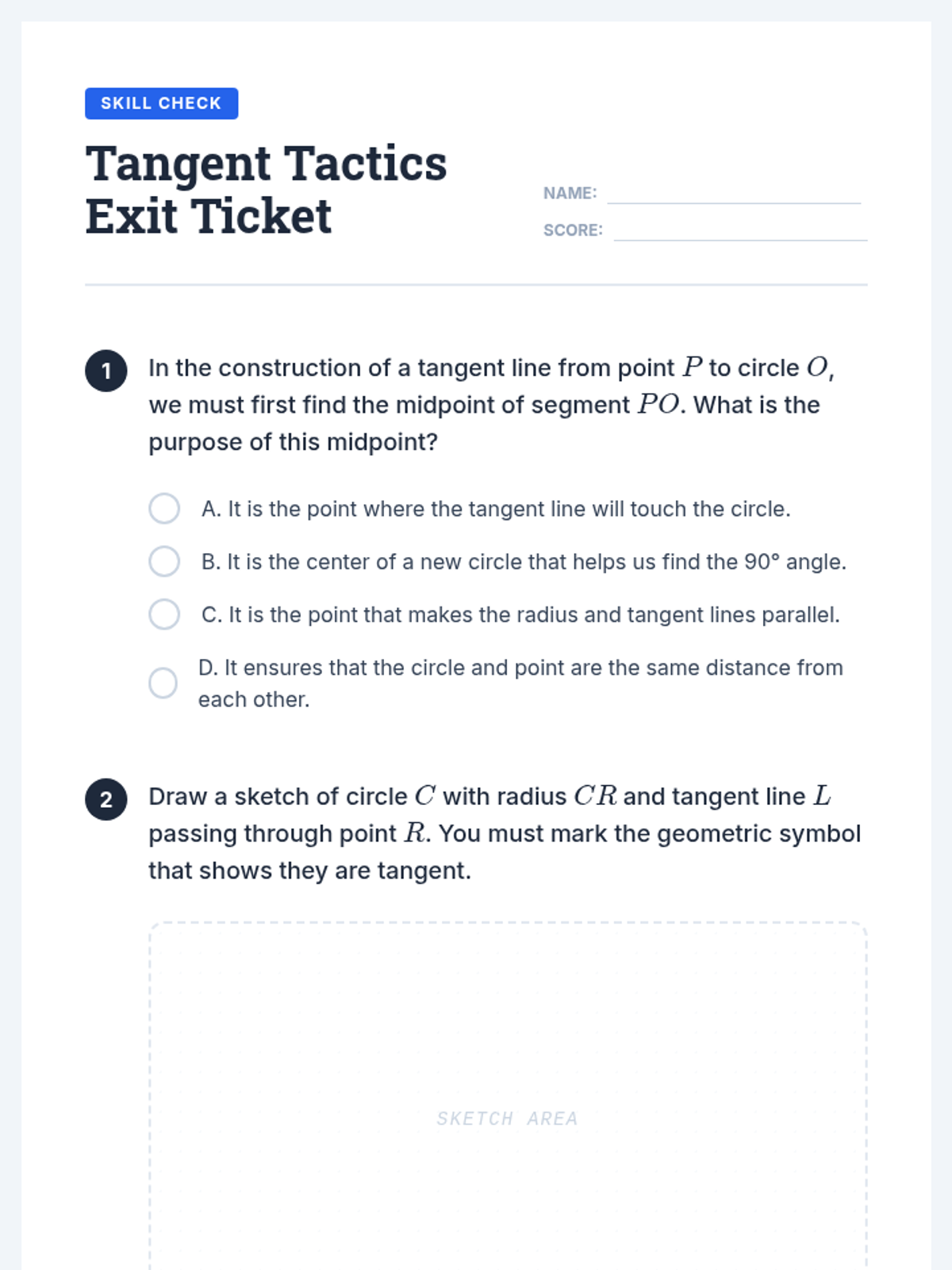
A scaffolded intervention lesson teaching students to construct tangent lines from external points using midpoints and intersecting circles, grounded in Colorado standard HS.G-C.A.4.
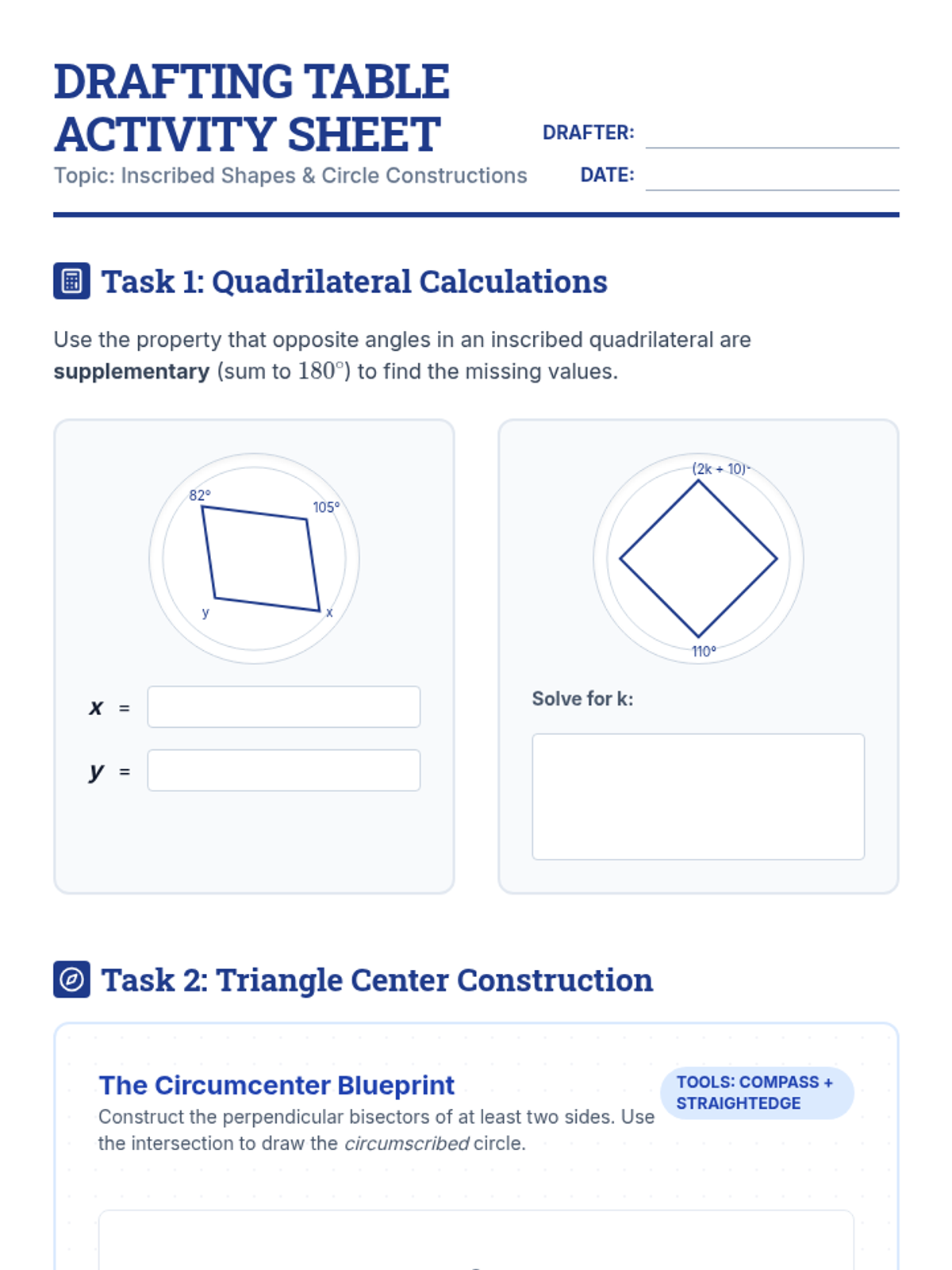
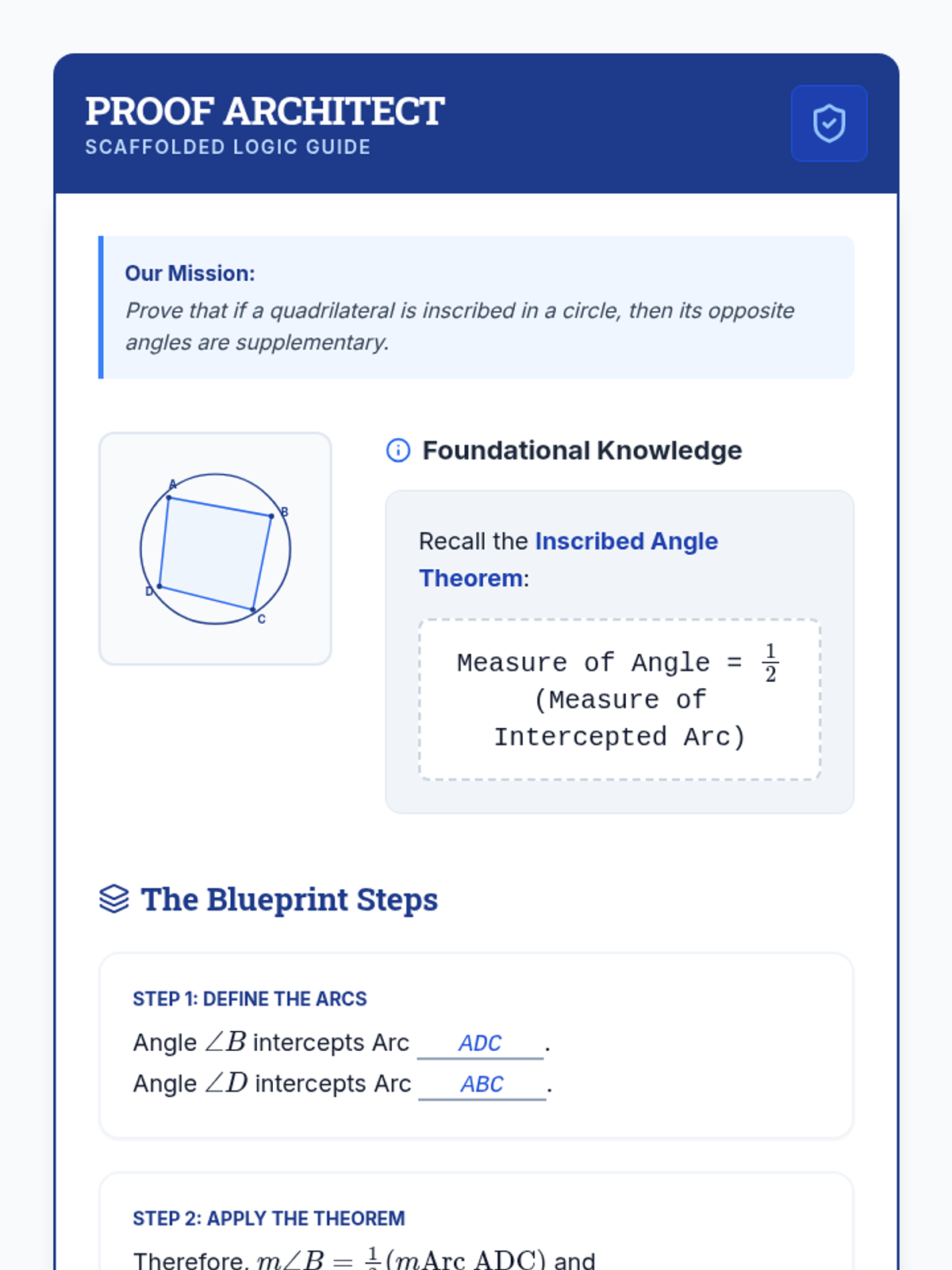
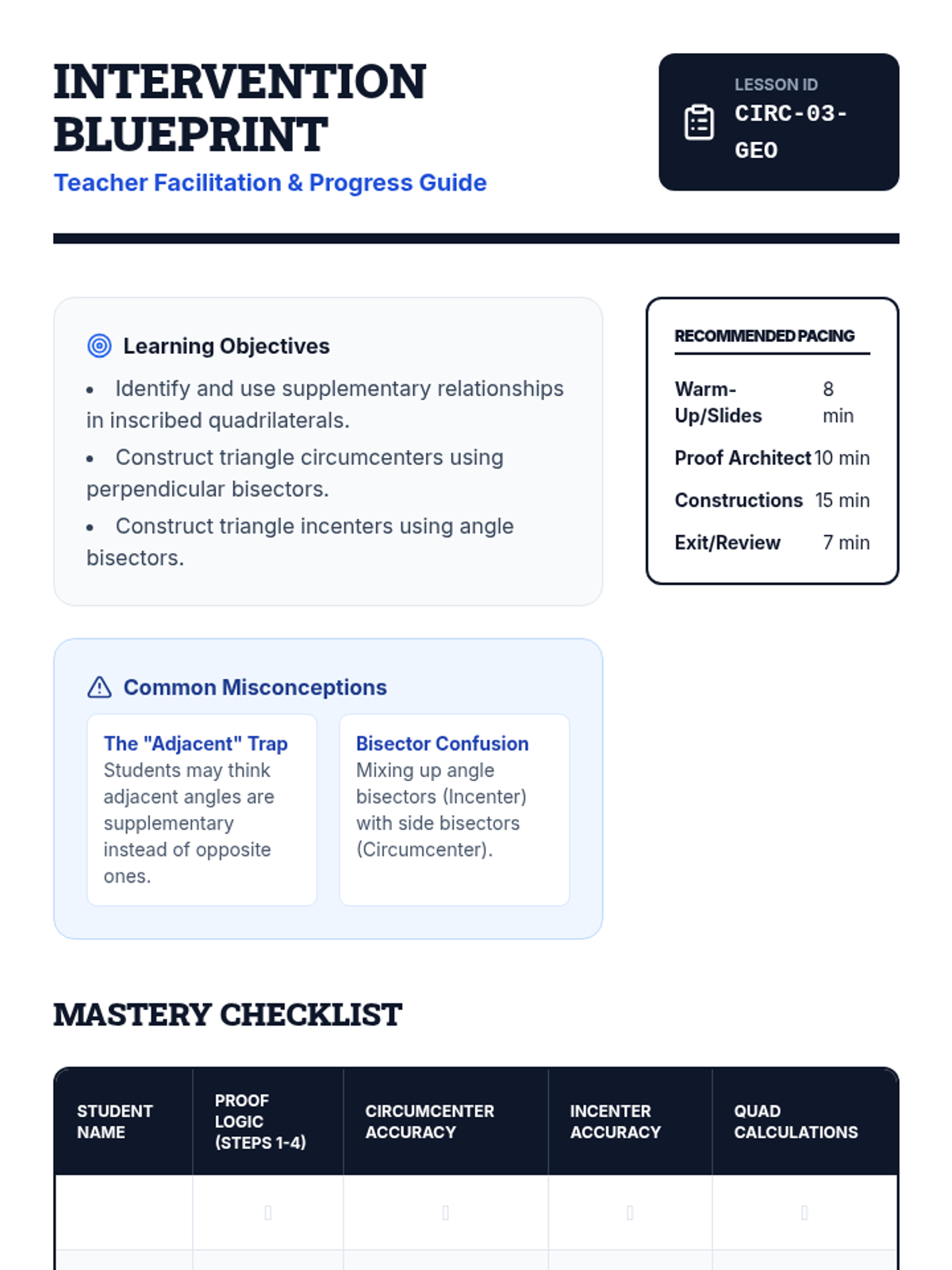
A targeted Tier 2 intervention lesson focusing on the properties of inscribed quadrilaterals and the construction of triangle centers (circumcenter and incenter). Students use compass and straightedge tools to explore geometric relationships and complete scaffolded proofs.
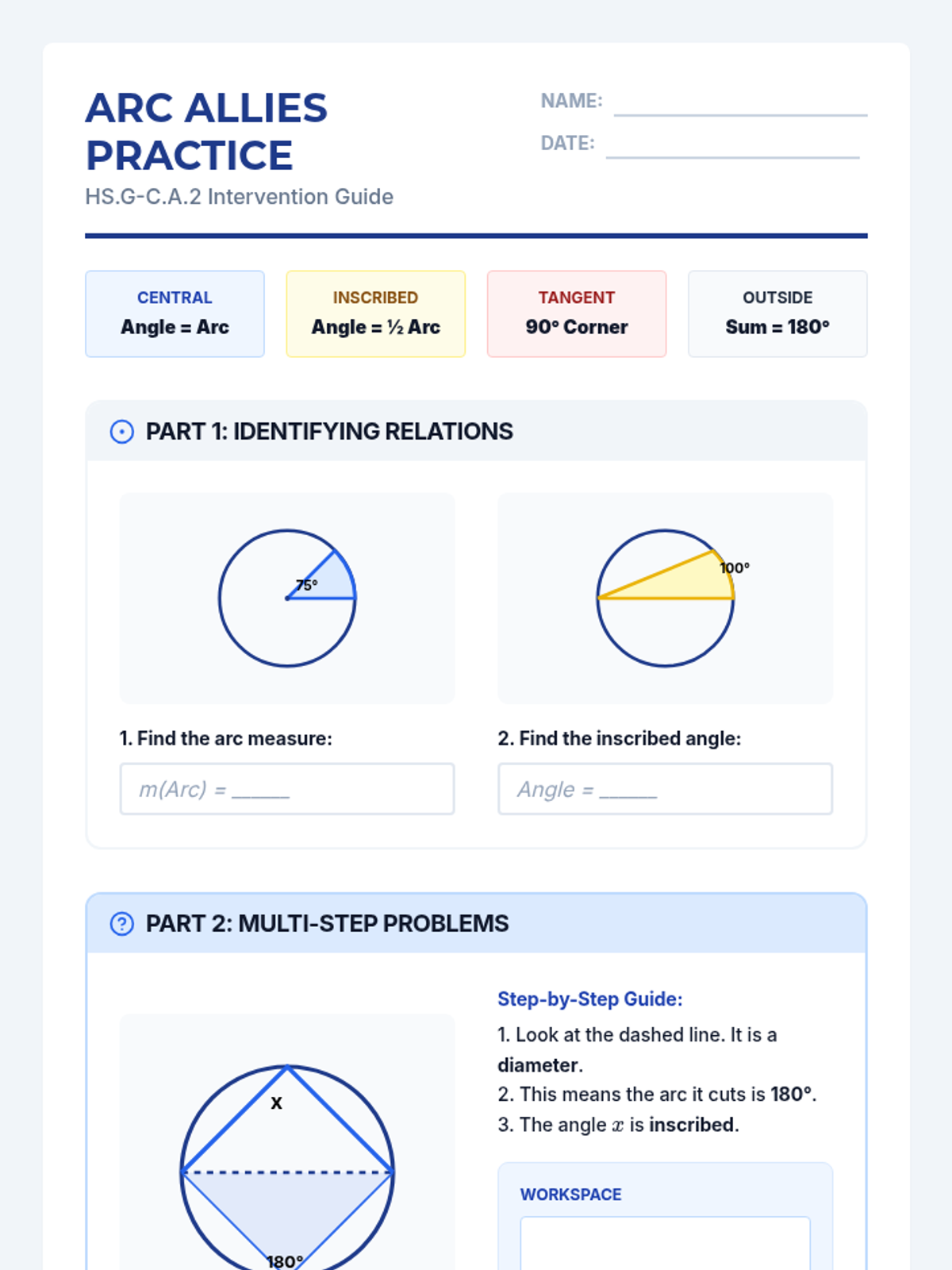
A Tier 2 intervention lesson focused on identifying and describing relationships between circles, arcs, and angles. Students explore central, inscribed, and tangent properties through scaffolded visuals and guided practice.
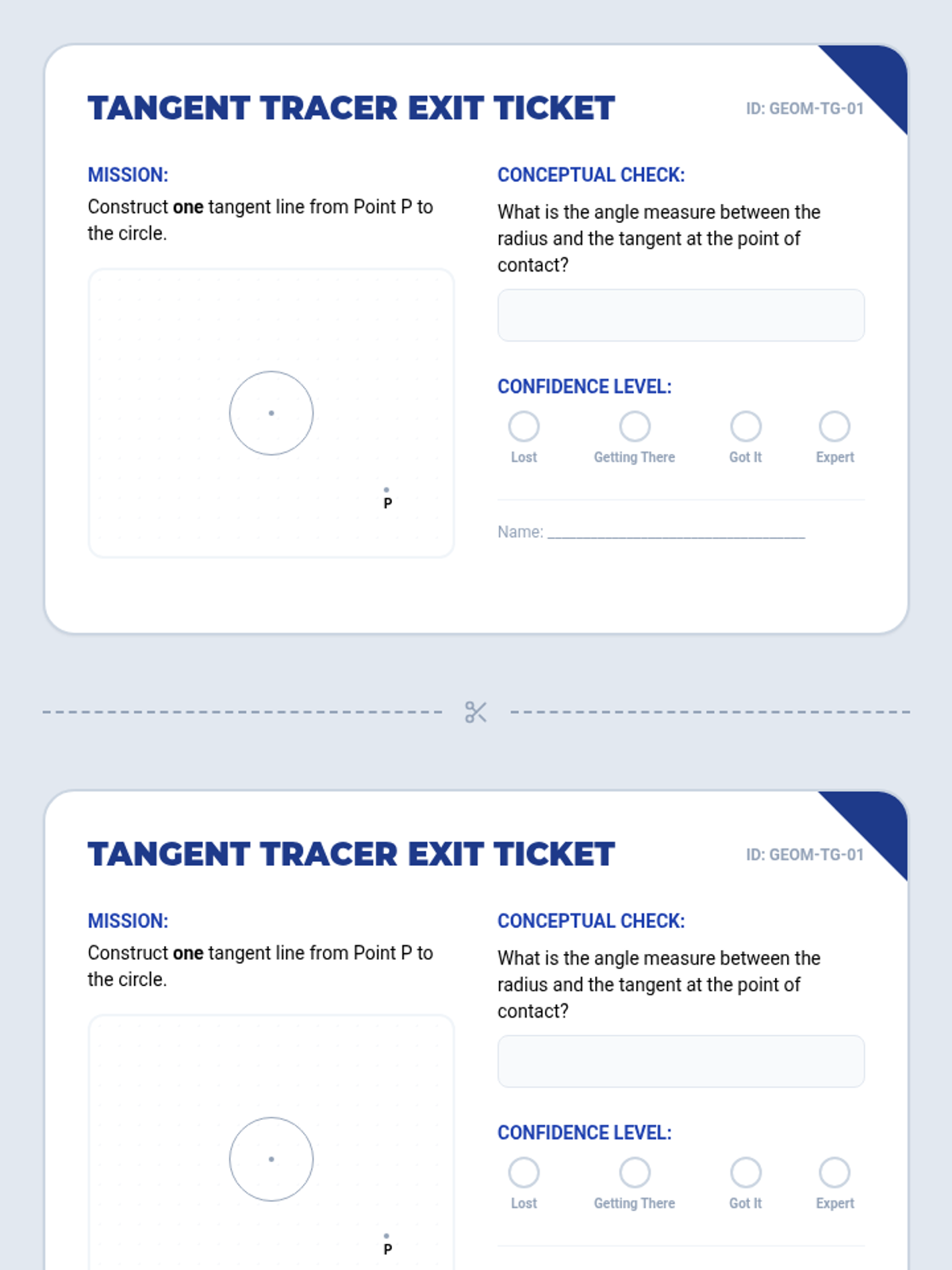
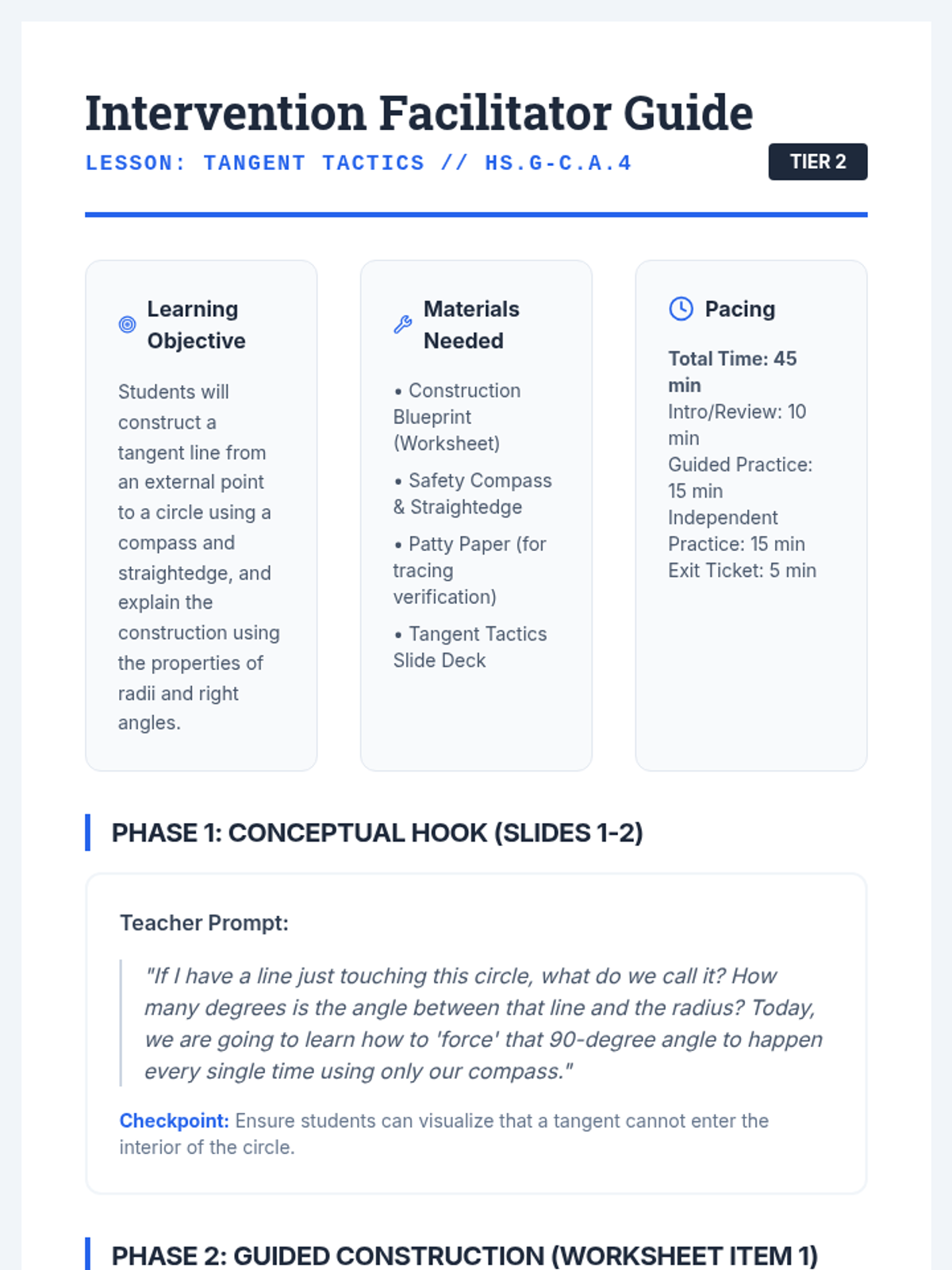
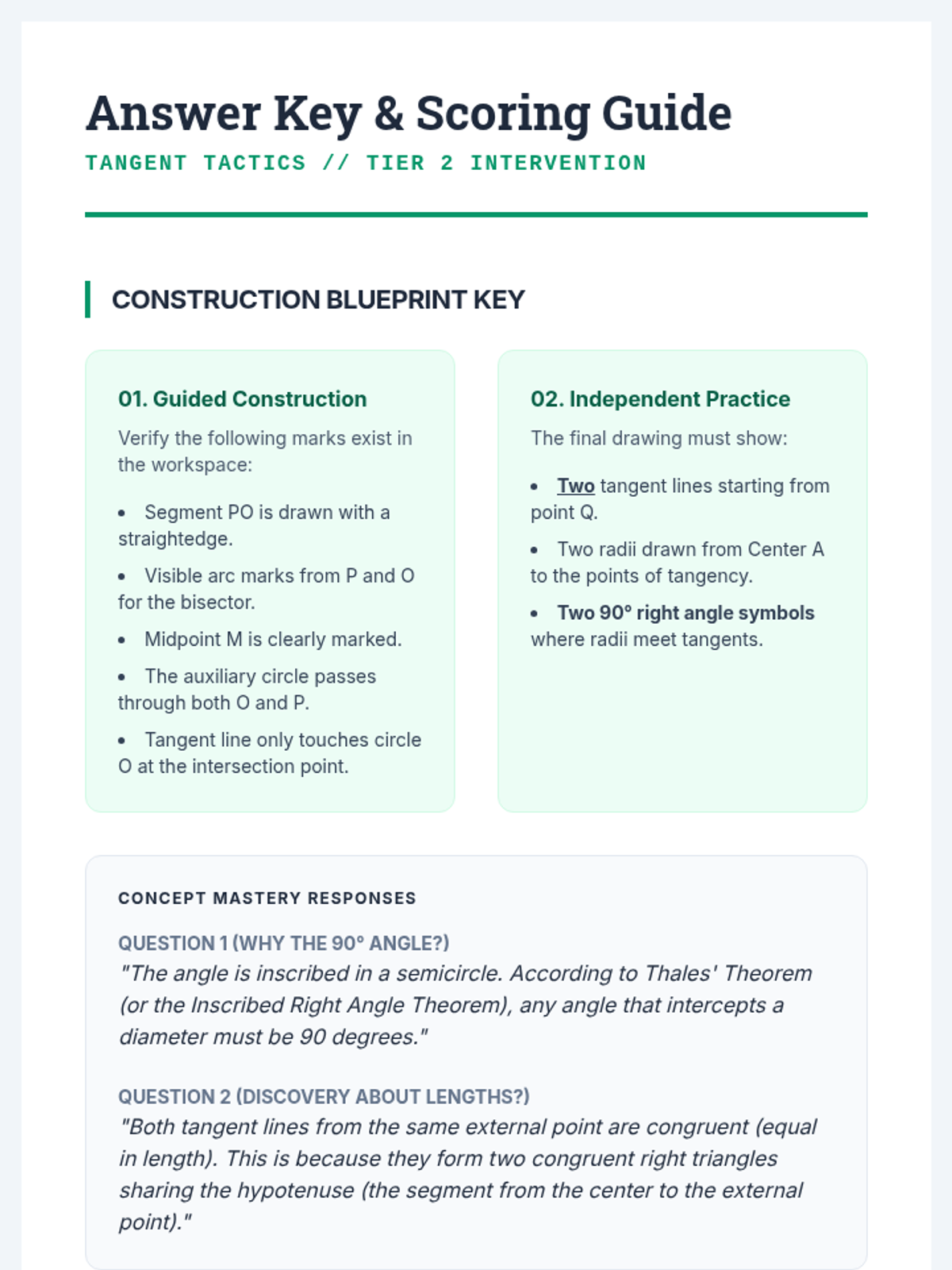
A Tier 2 intervention lesson focusing on the geometric construction of tangent lines from an external point, emphasizing the relationship between radii and right angles. This small-group session uses scaffolded compass and straightedge work to help struggling learners master construction techniques and conceptual proofs.
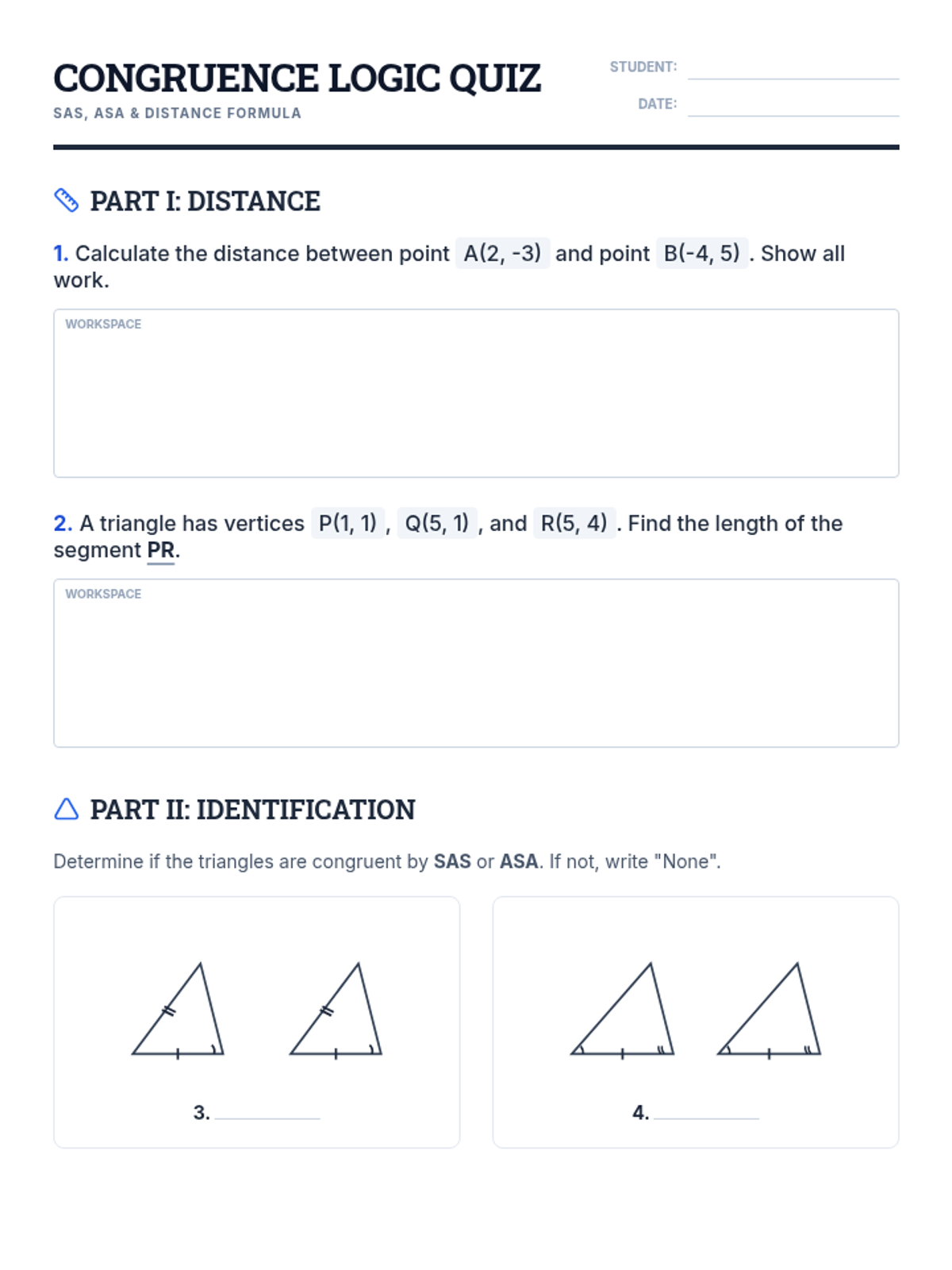
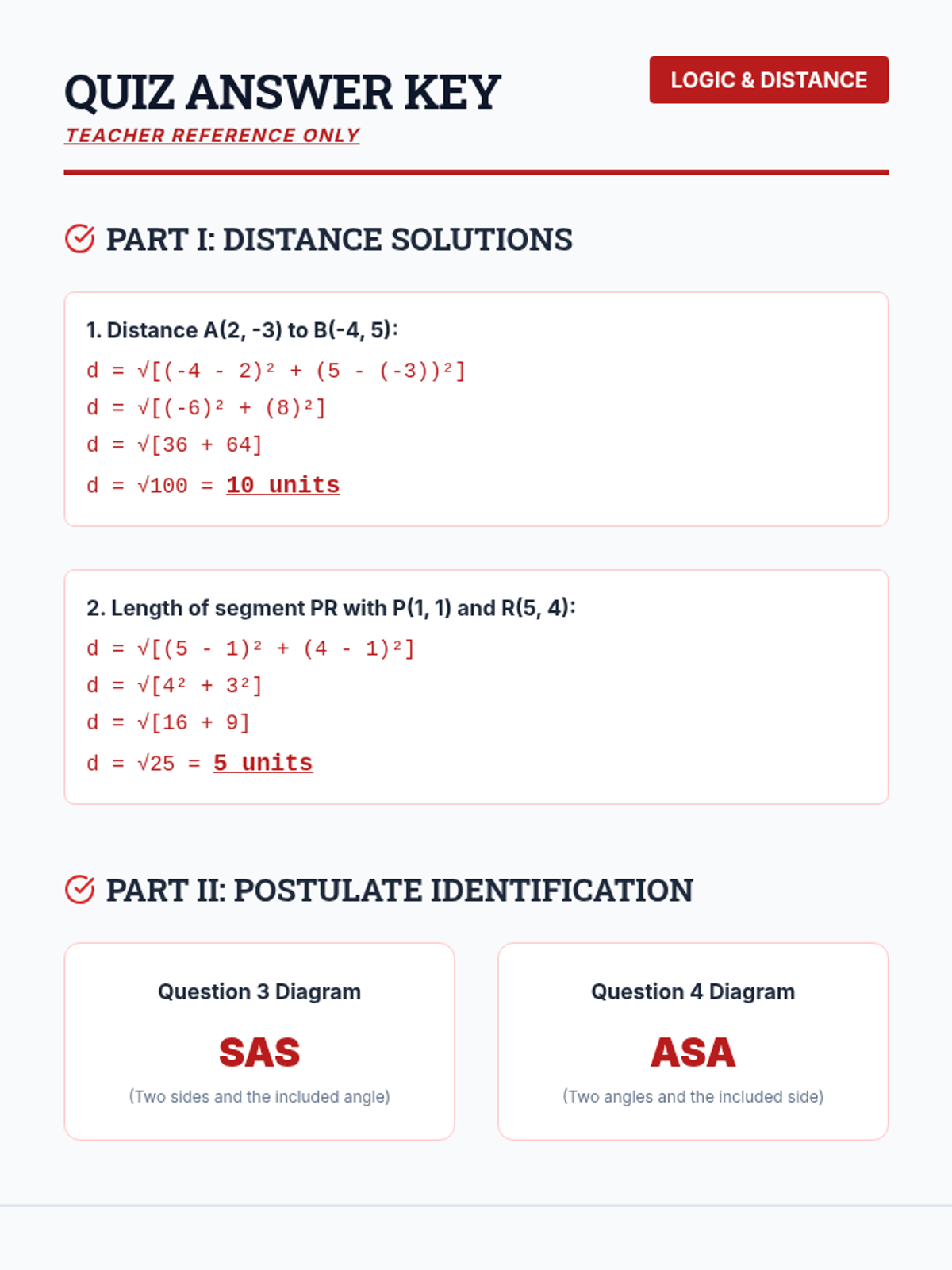
A lesson focusing on the practical application of the Distance Formula and the logical structure of SAS and ASA congruence proofs.
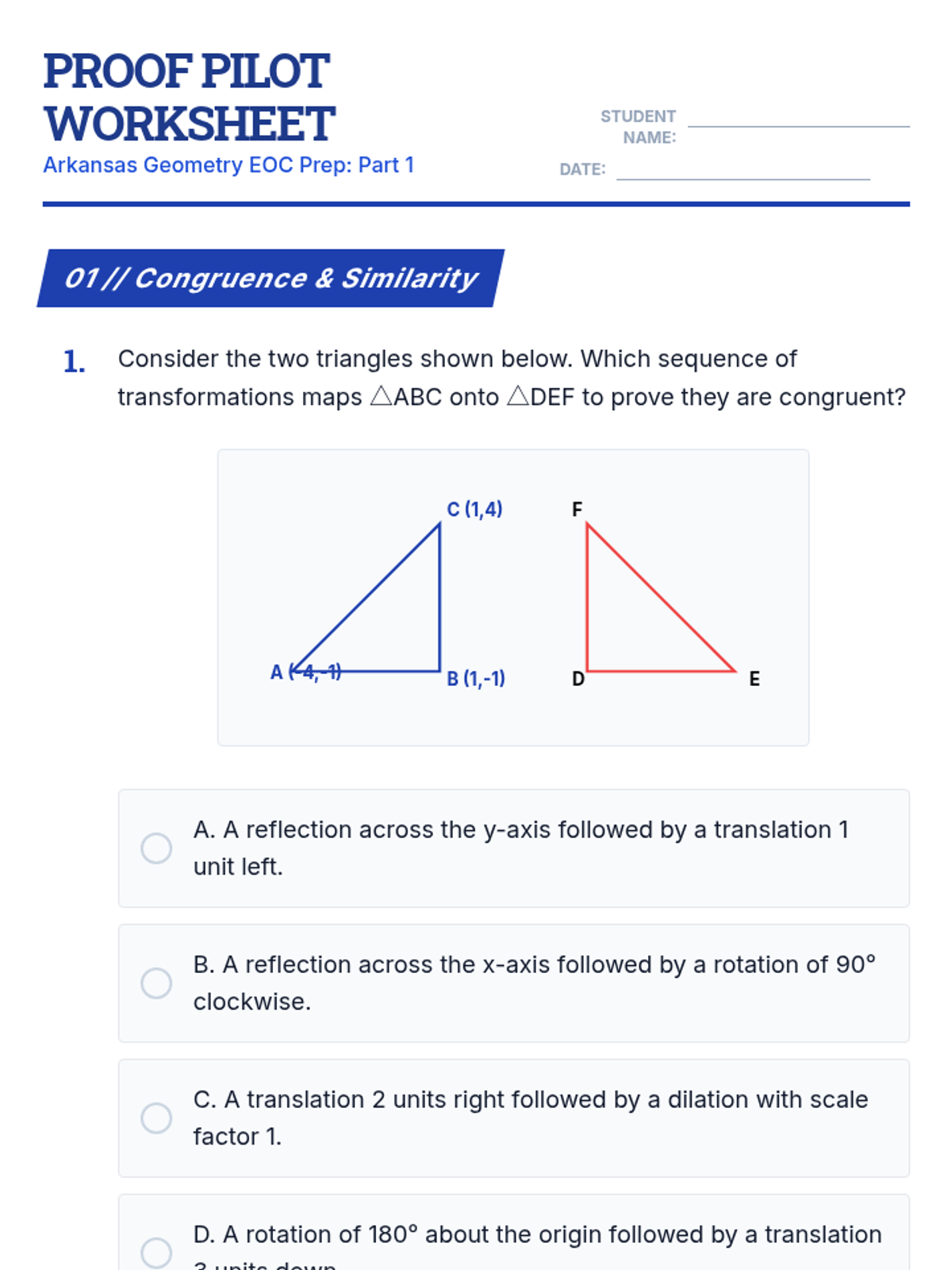
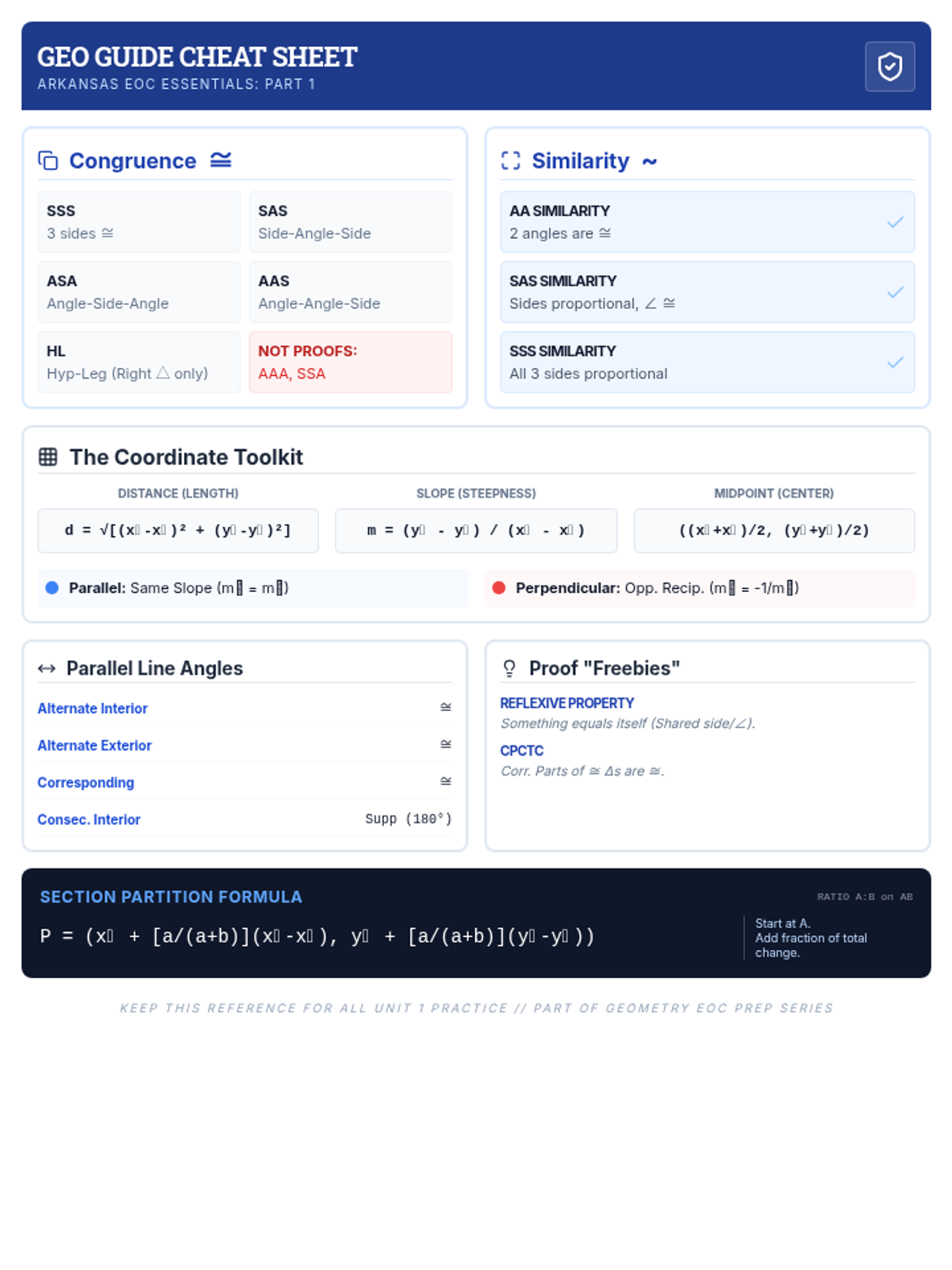
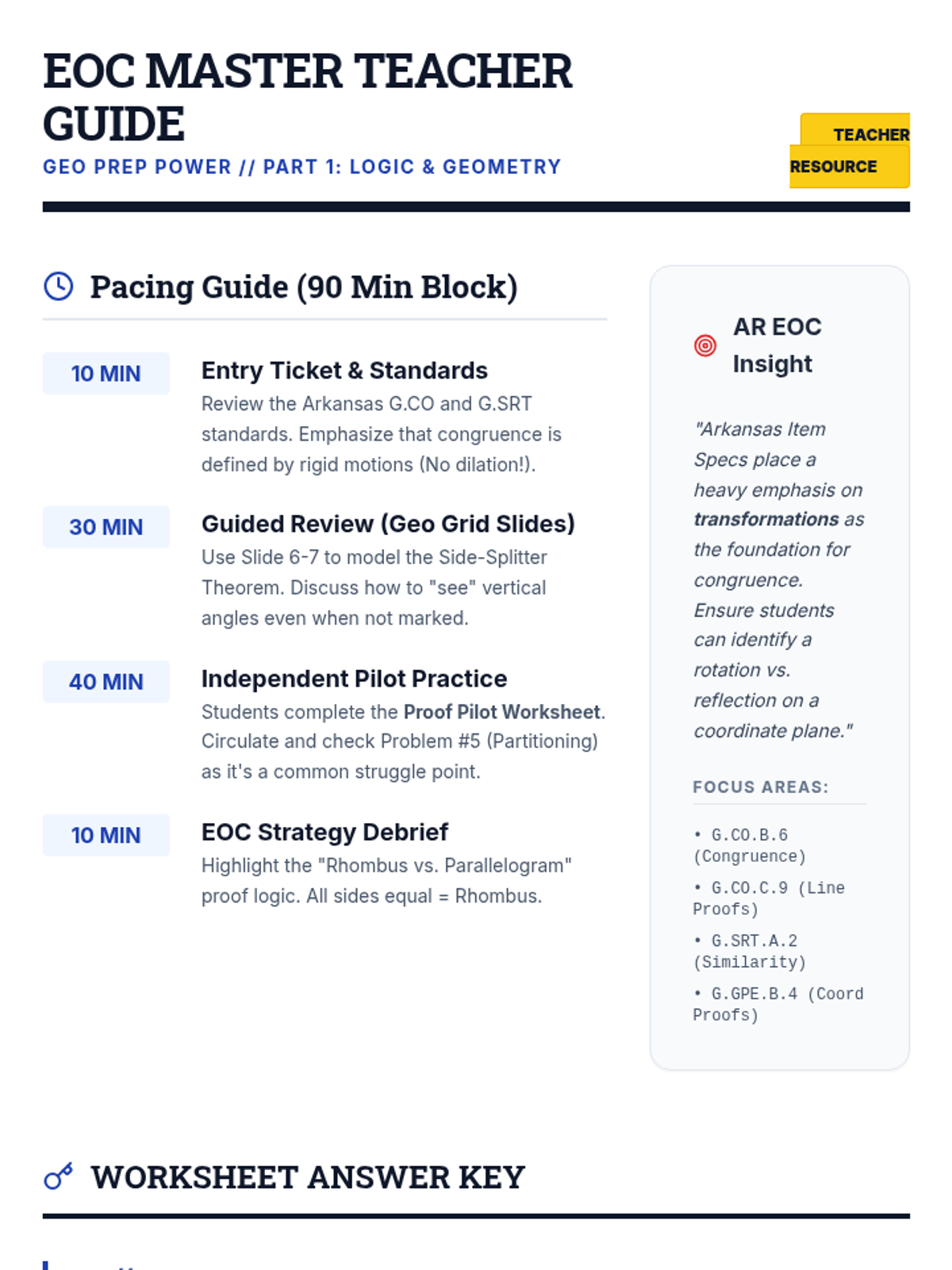
This lesson provides targeted test preparation for the Arkansas Geometry End-of-Course (EOC) exam, focusing on congruence, similarity, proofs, and coordinate geometry through diagram-heavy practice and strategic review.
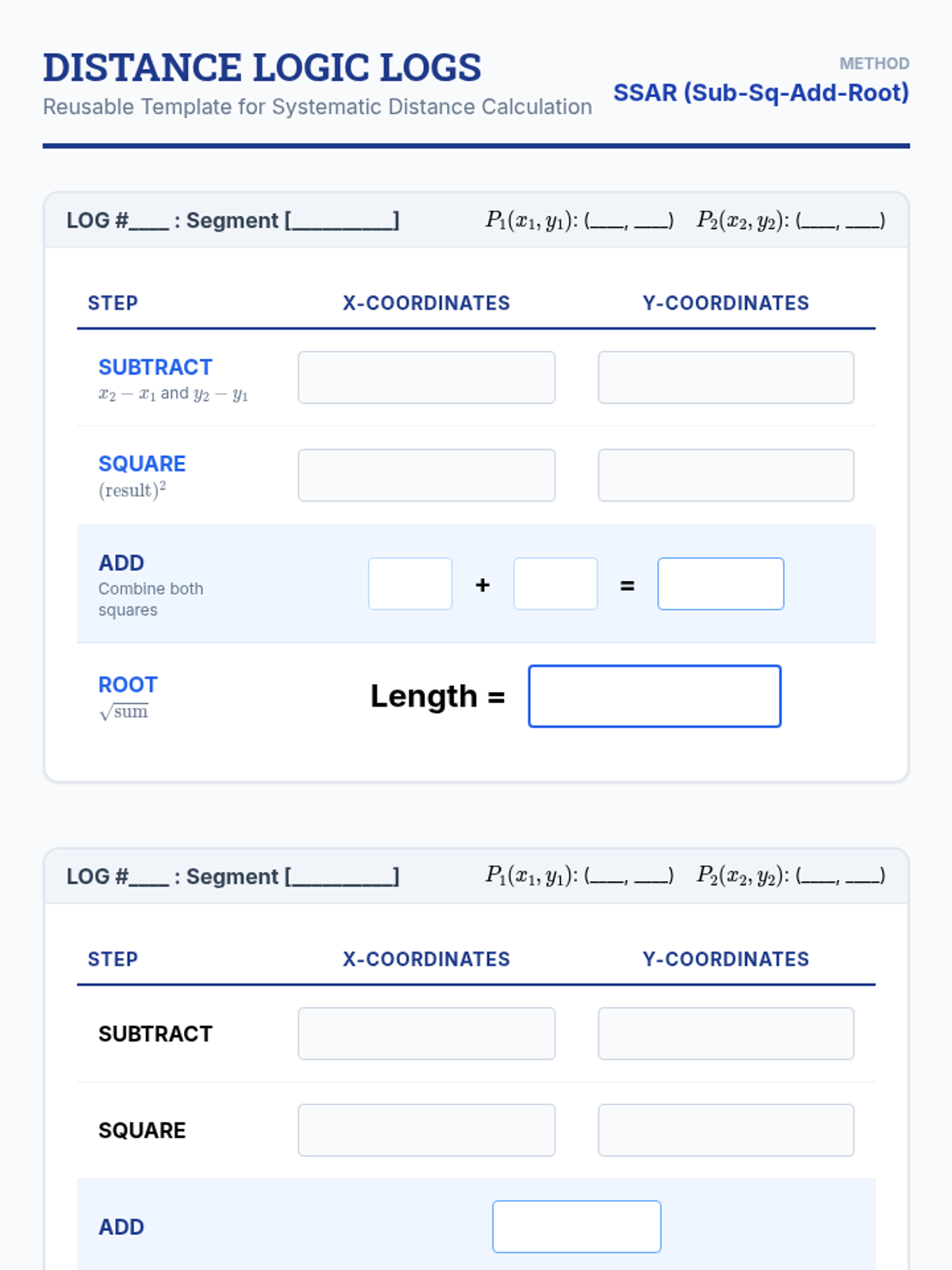
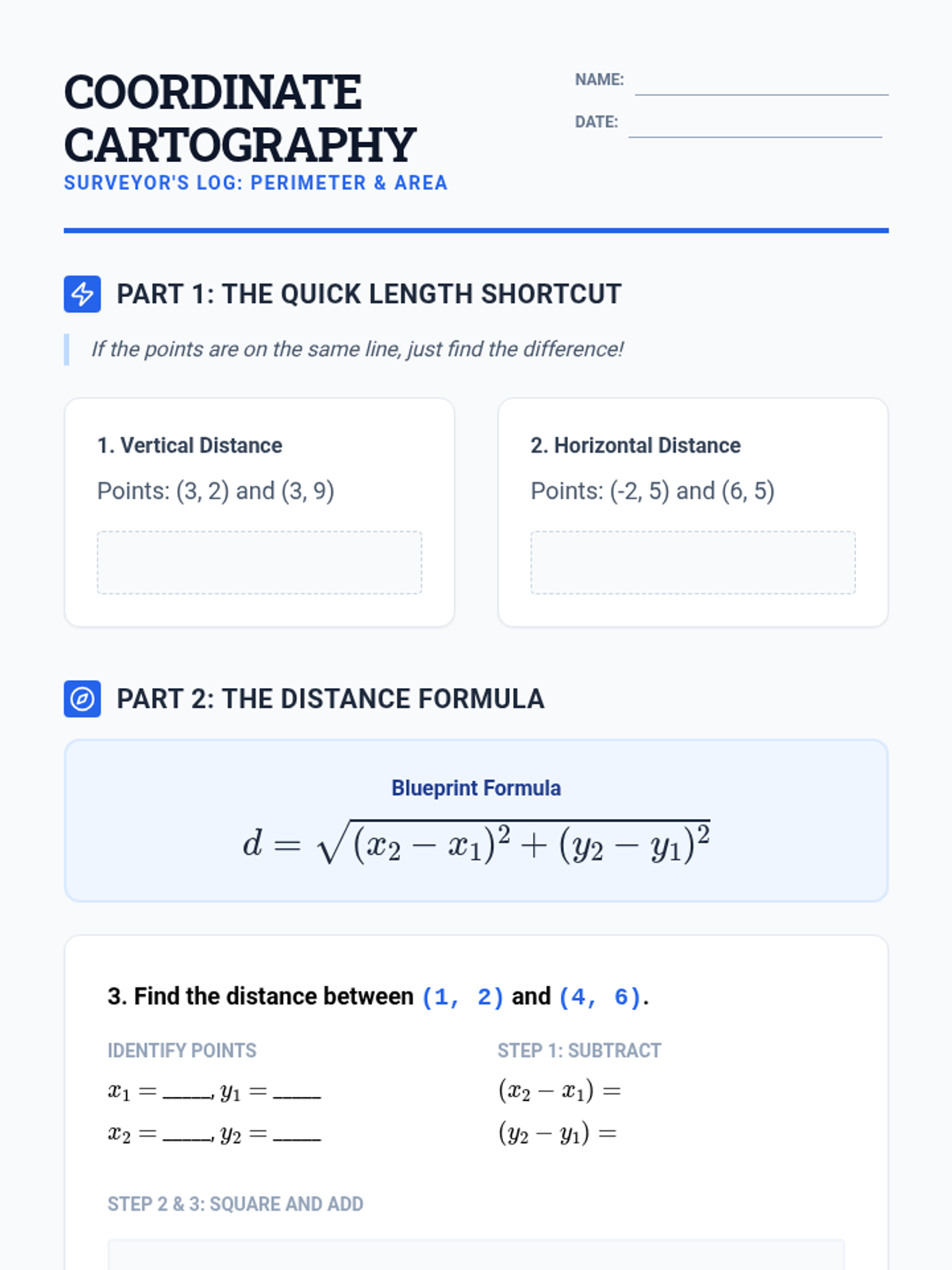
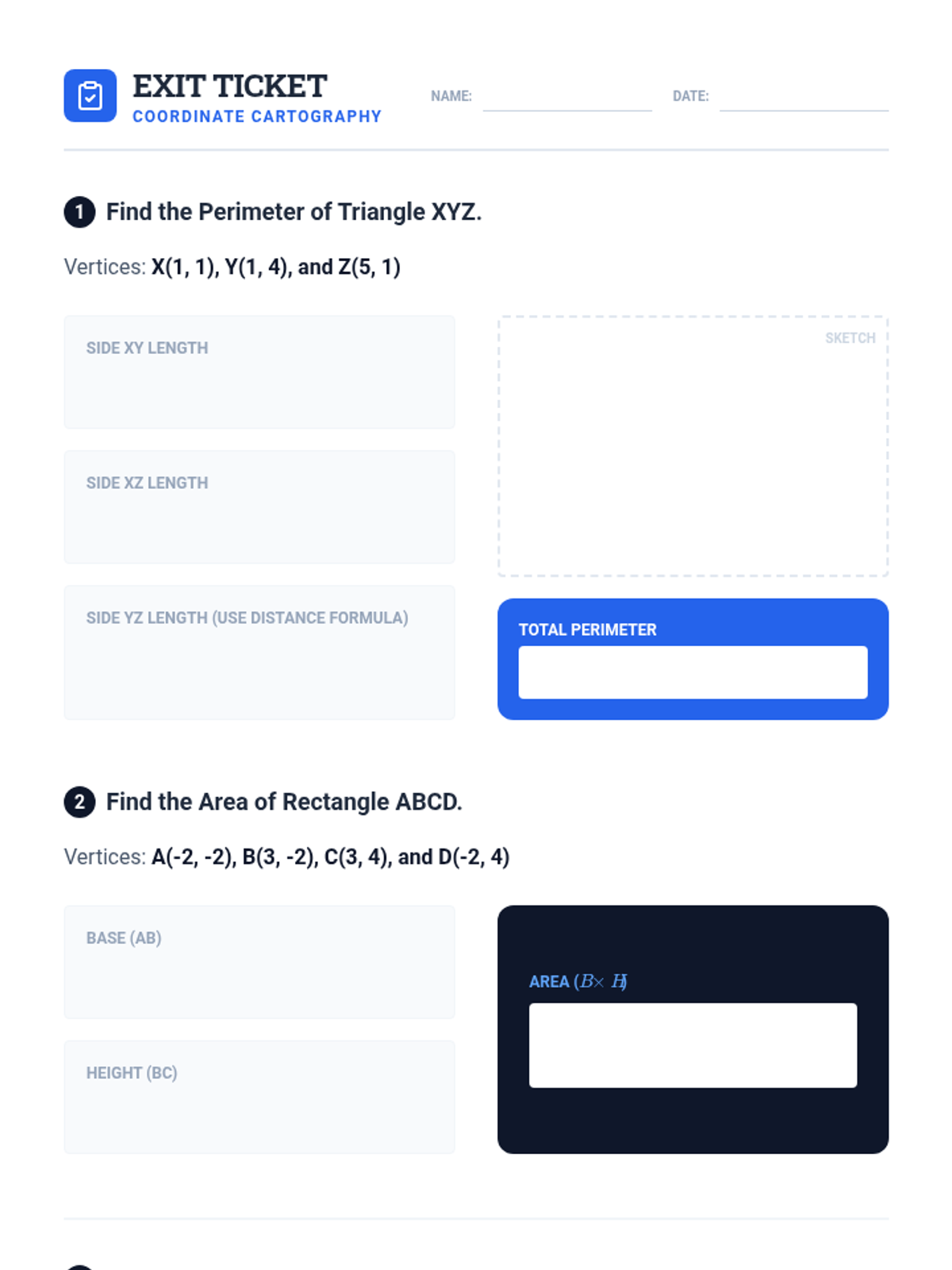
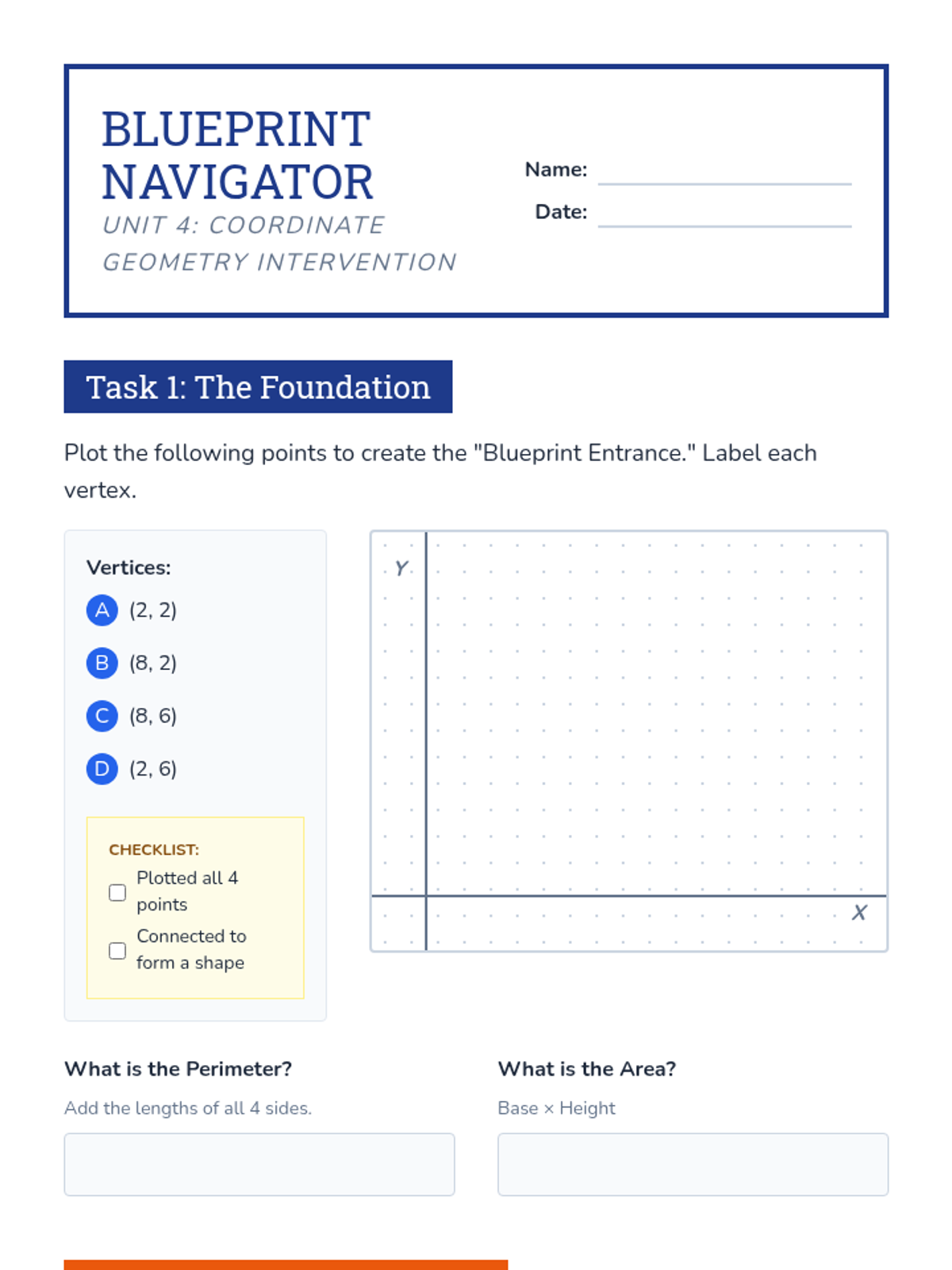
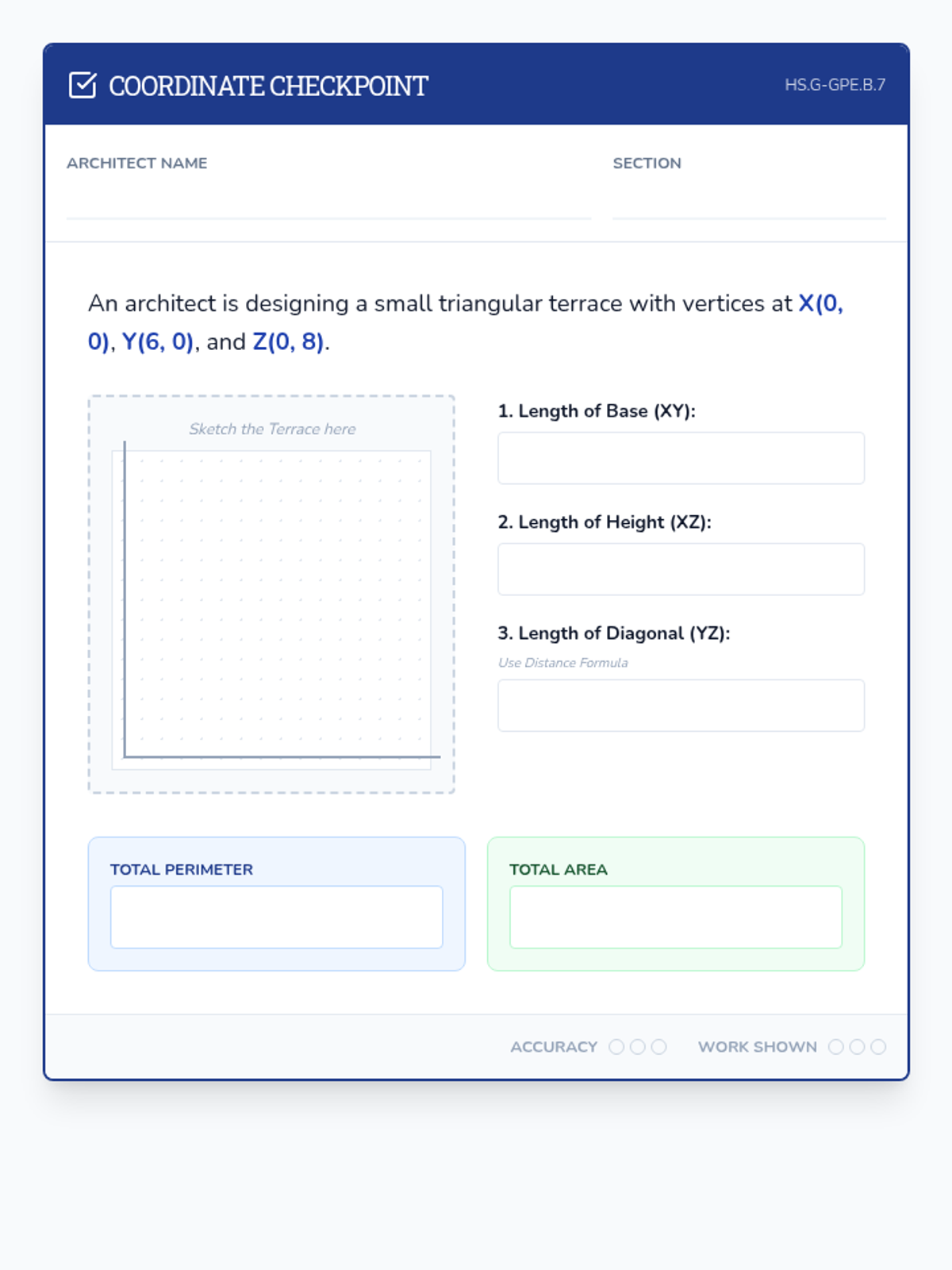
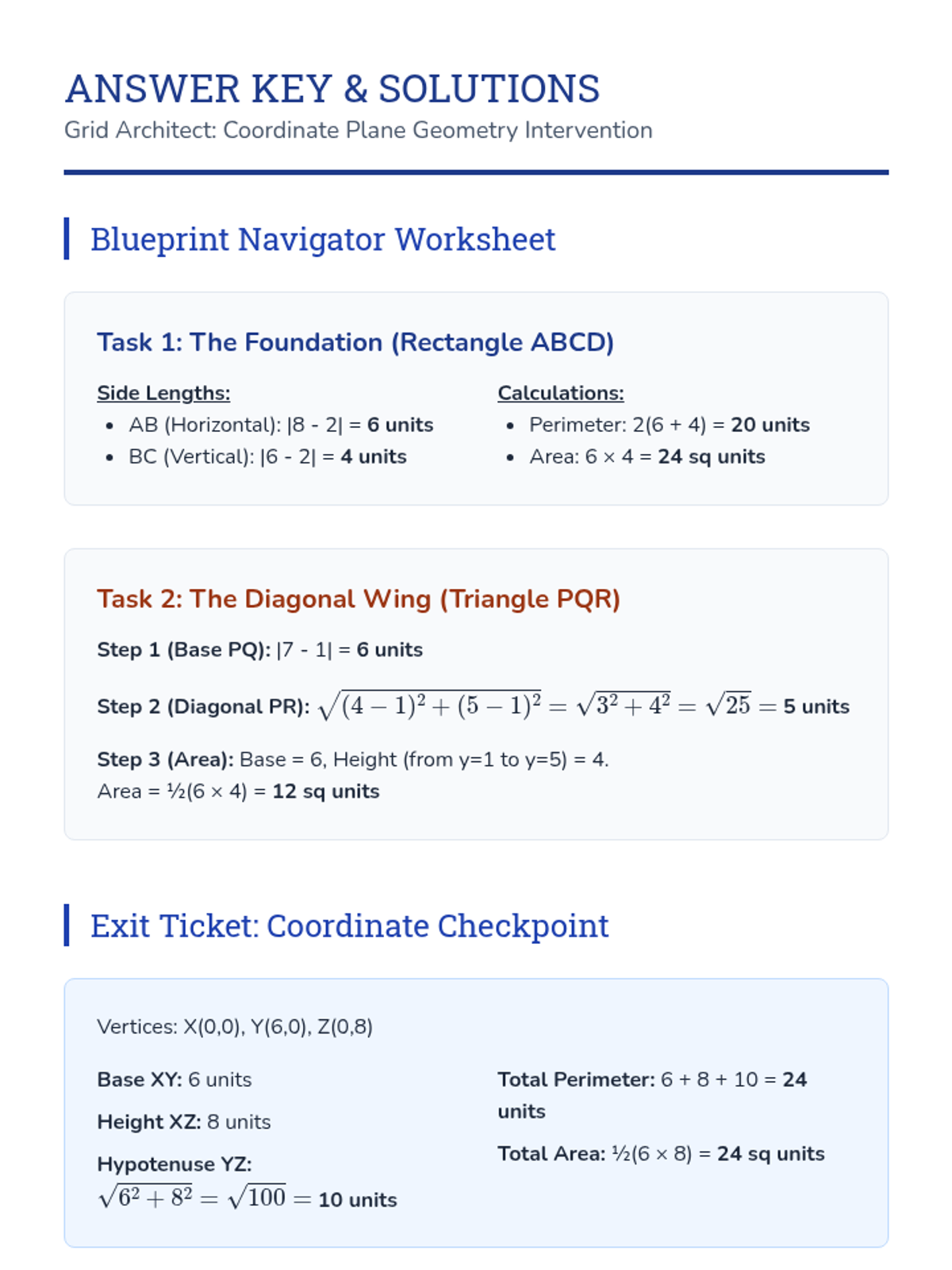
A specialized intervention lesson teaching students to systematically calculate the perimeter and area of polygons on a coordinate plane using step-by-step distance formula templates.
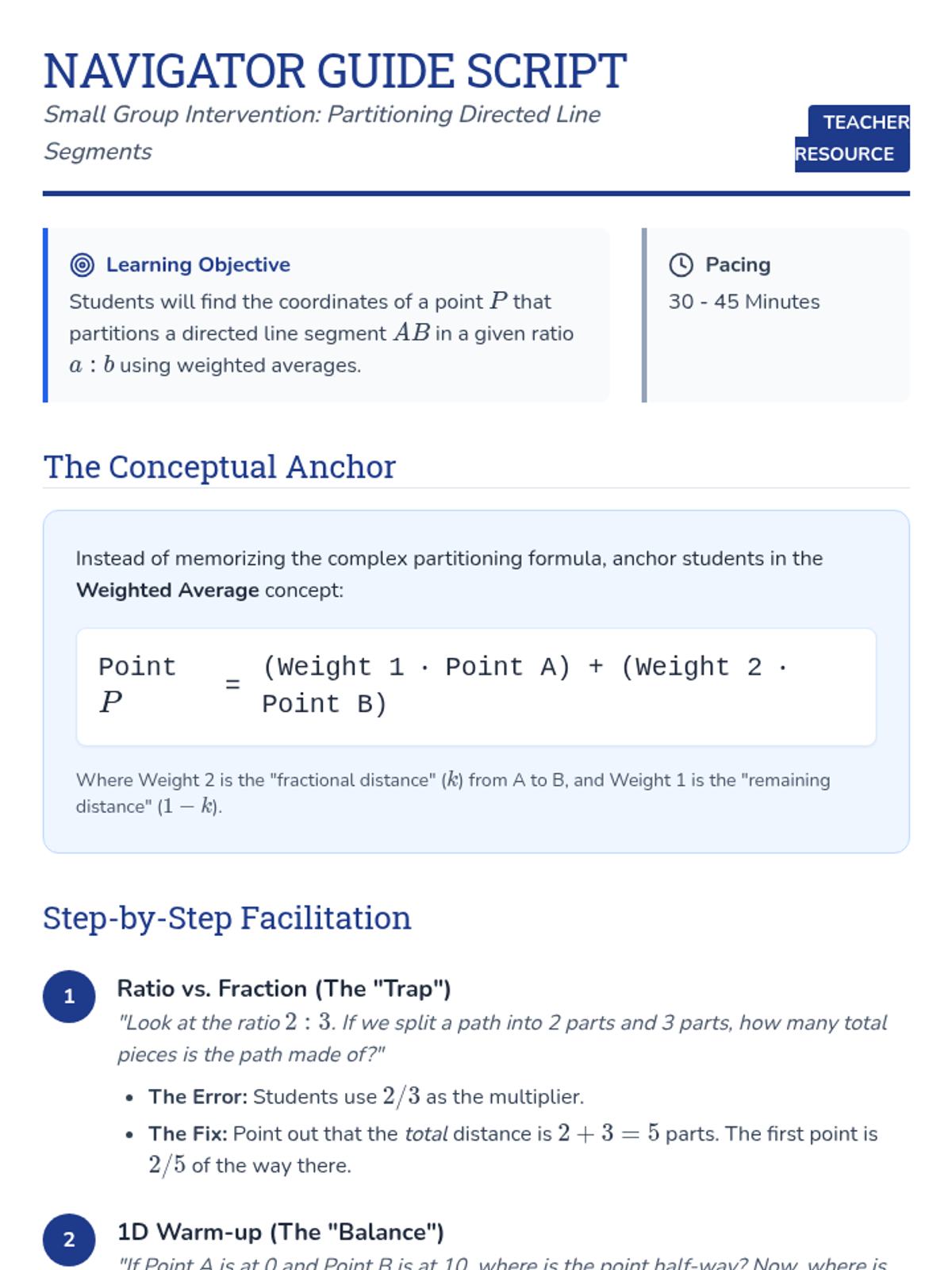
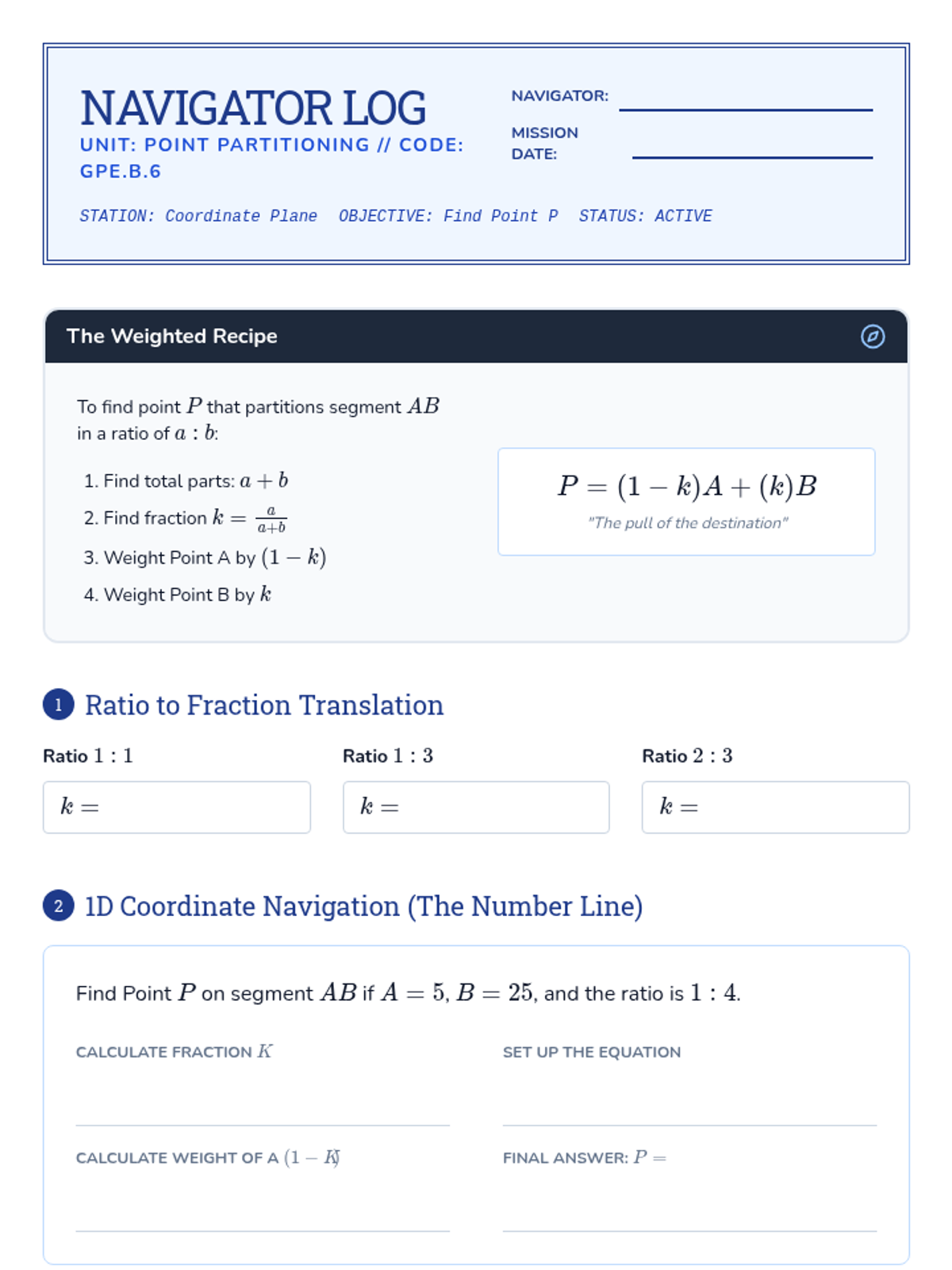
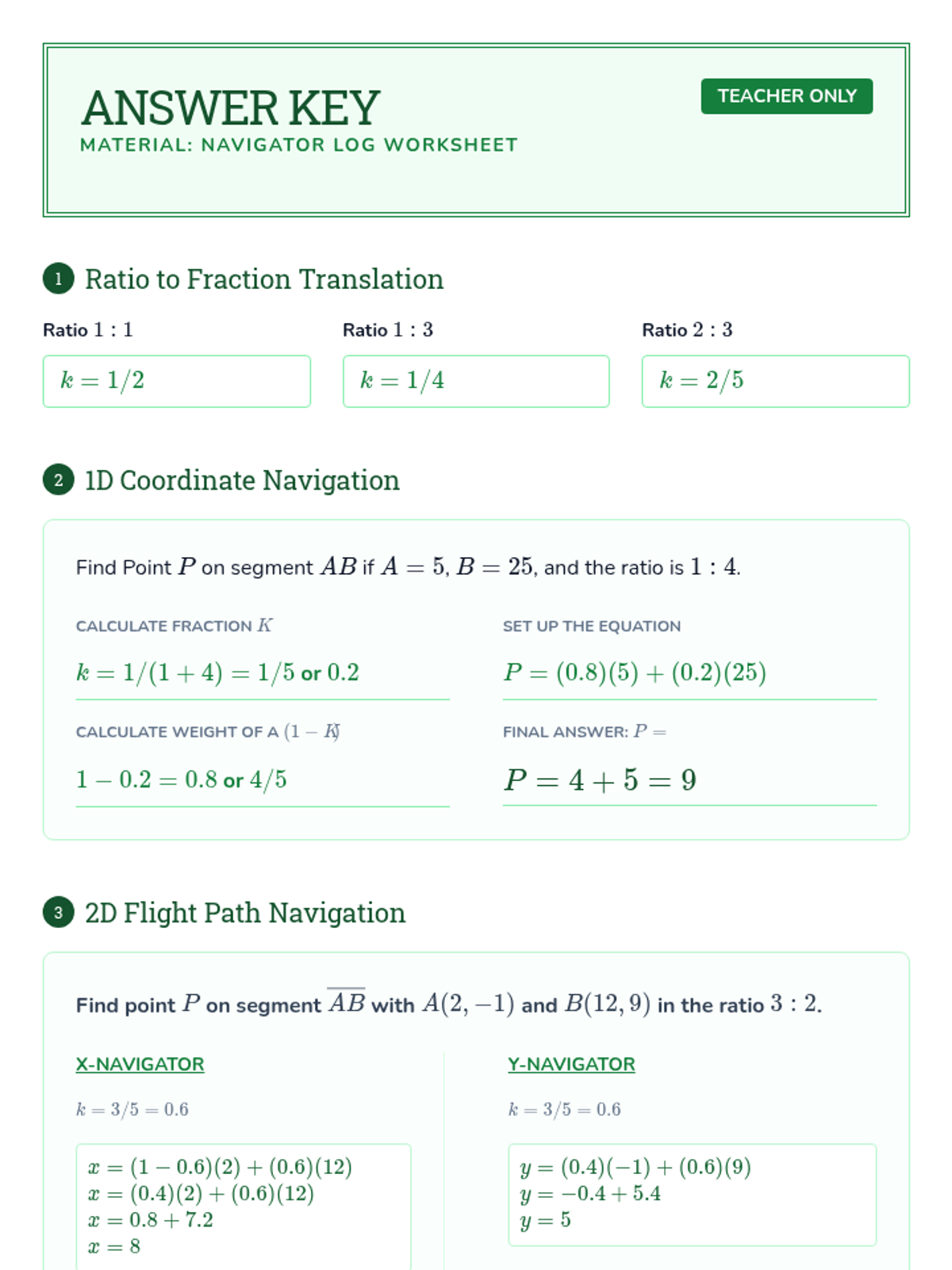
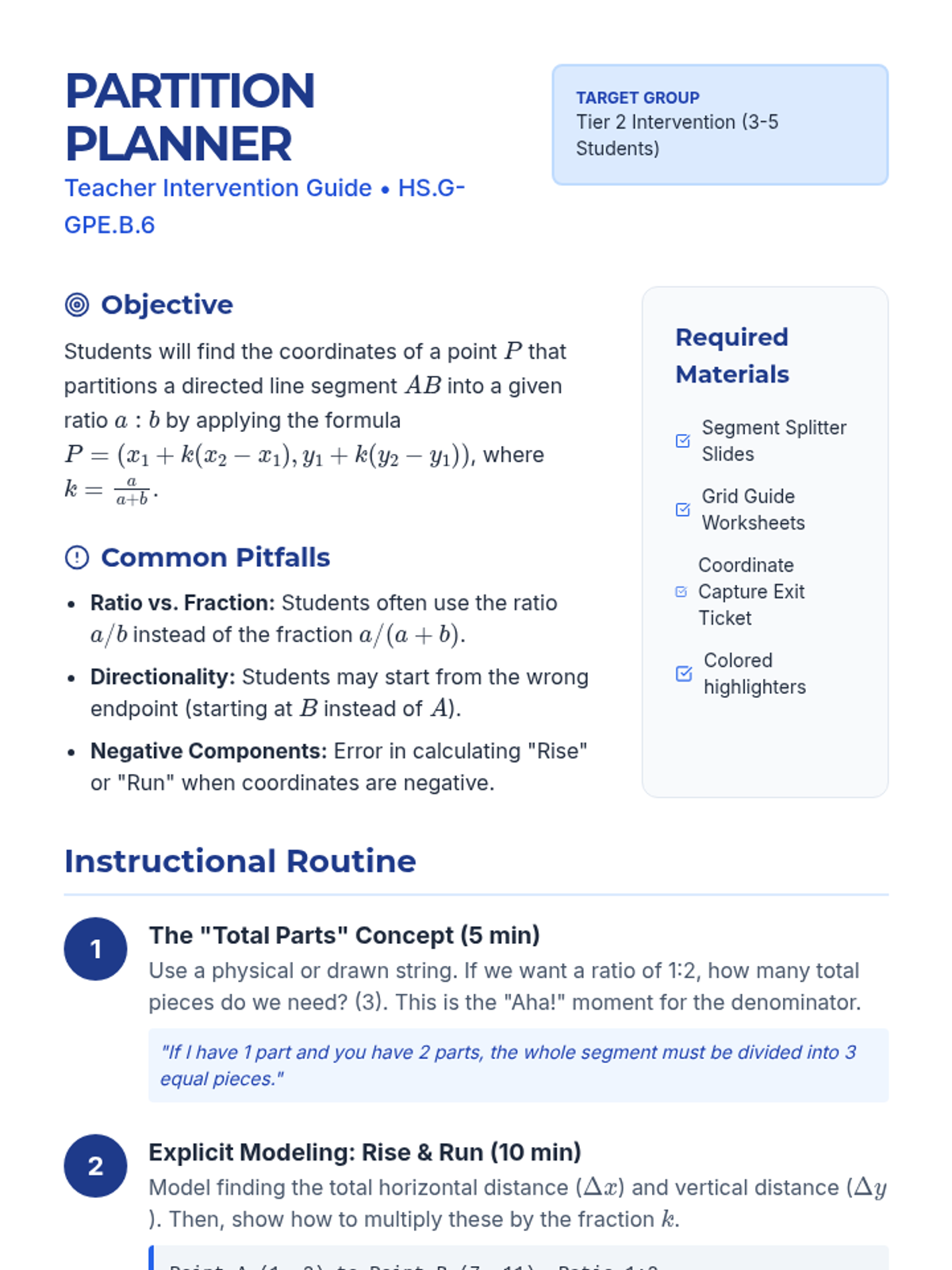
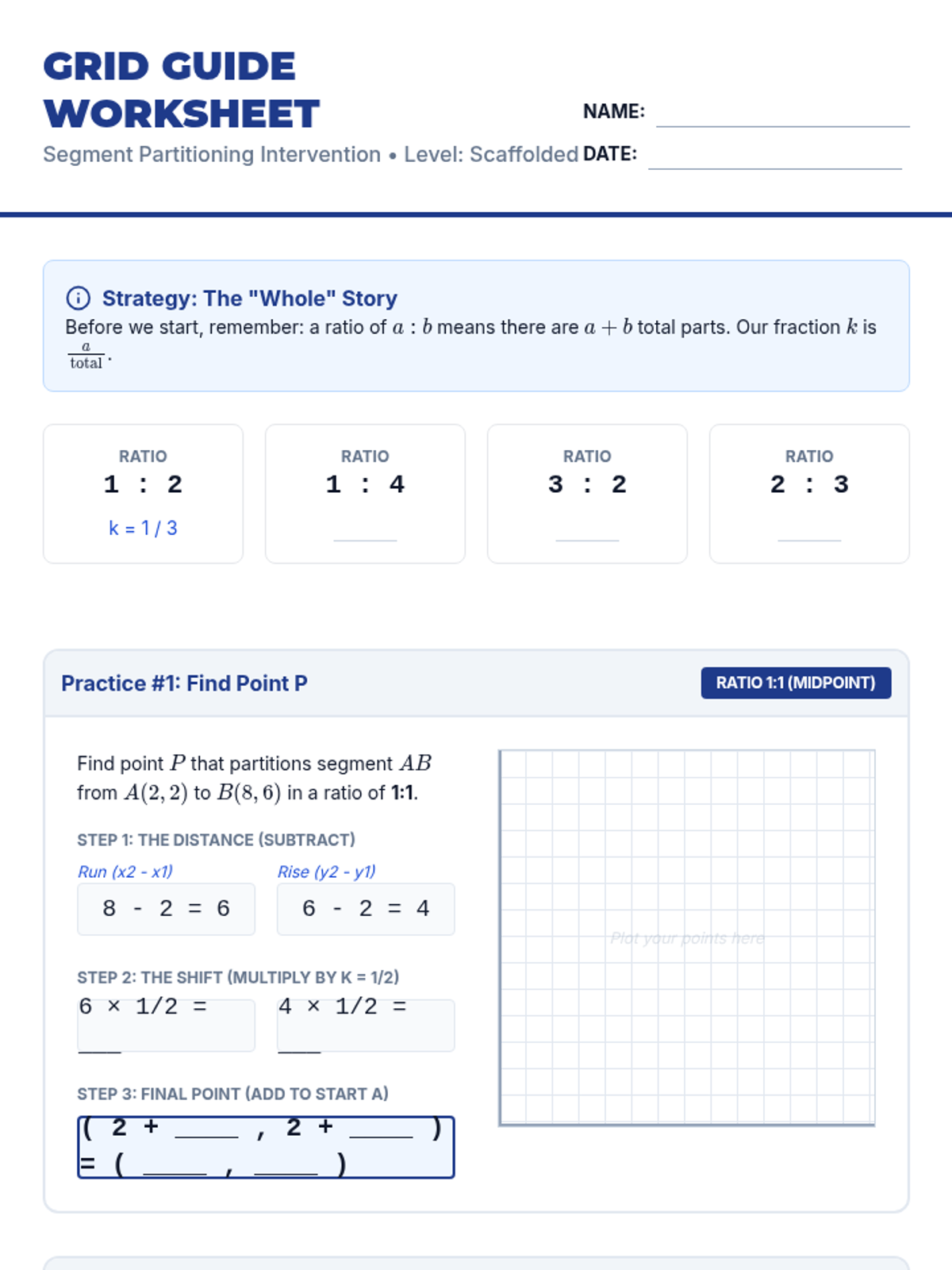
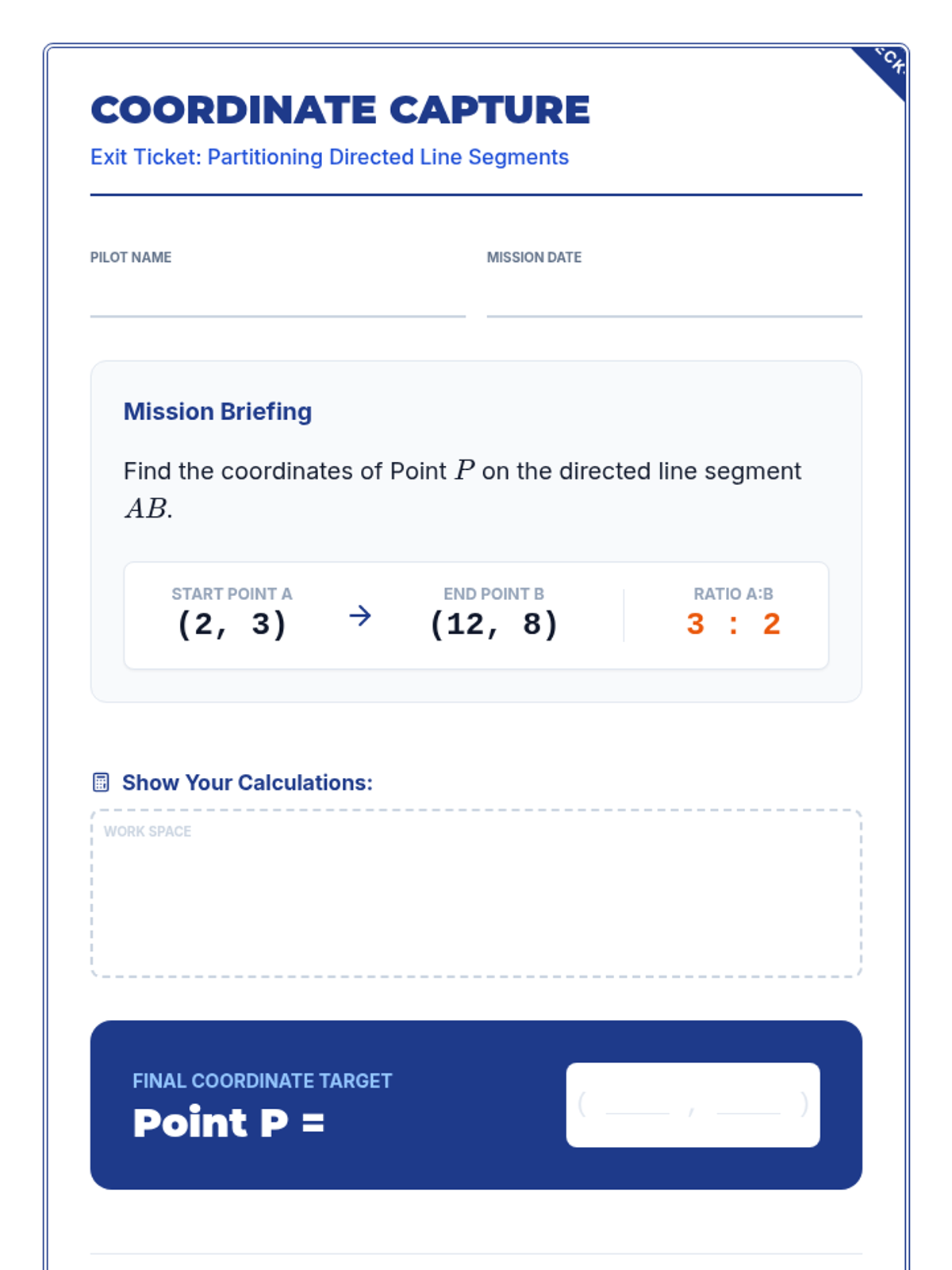
A targeted intervention lesson for high school geometry students on partitioning directed line segments using weighted averages and coordinate reasoning. This lesson uses a navigation-themed blueprint aesthetic to guide students through visual models and step-by-step calculations.
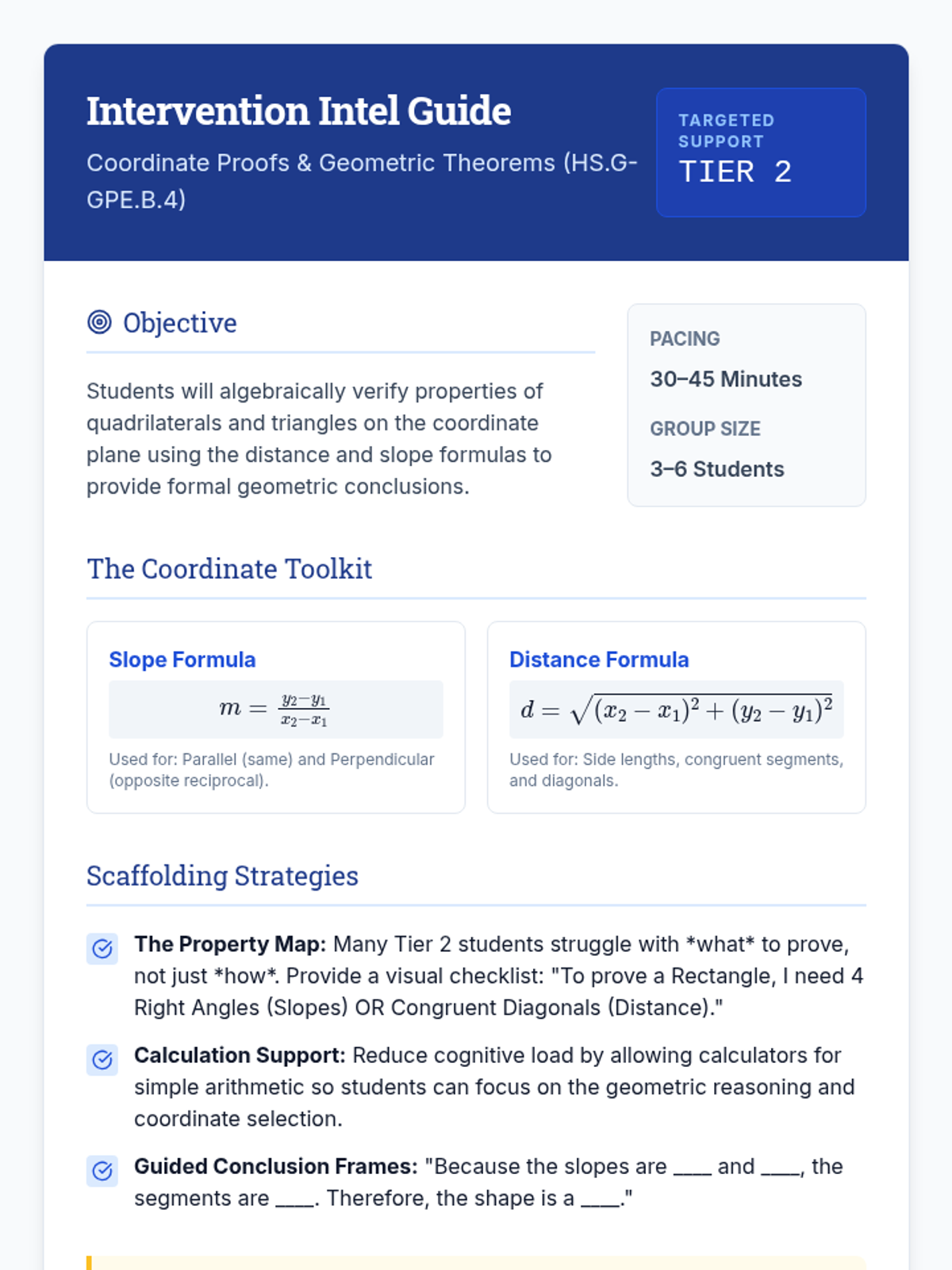
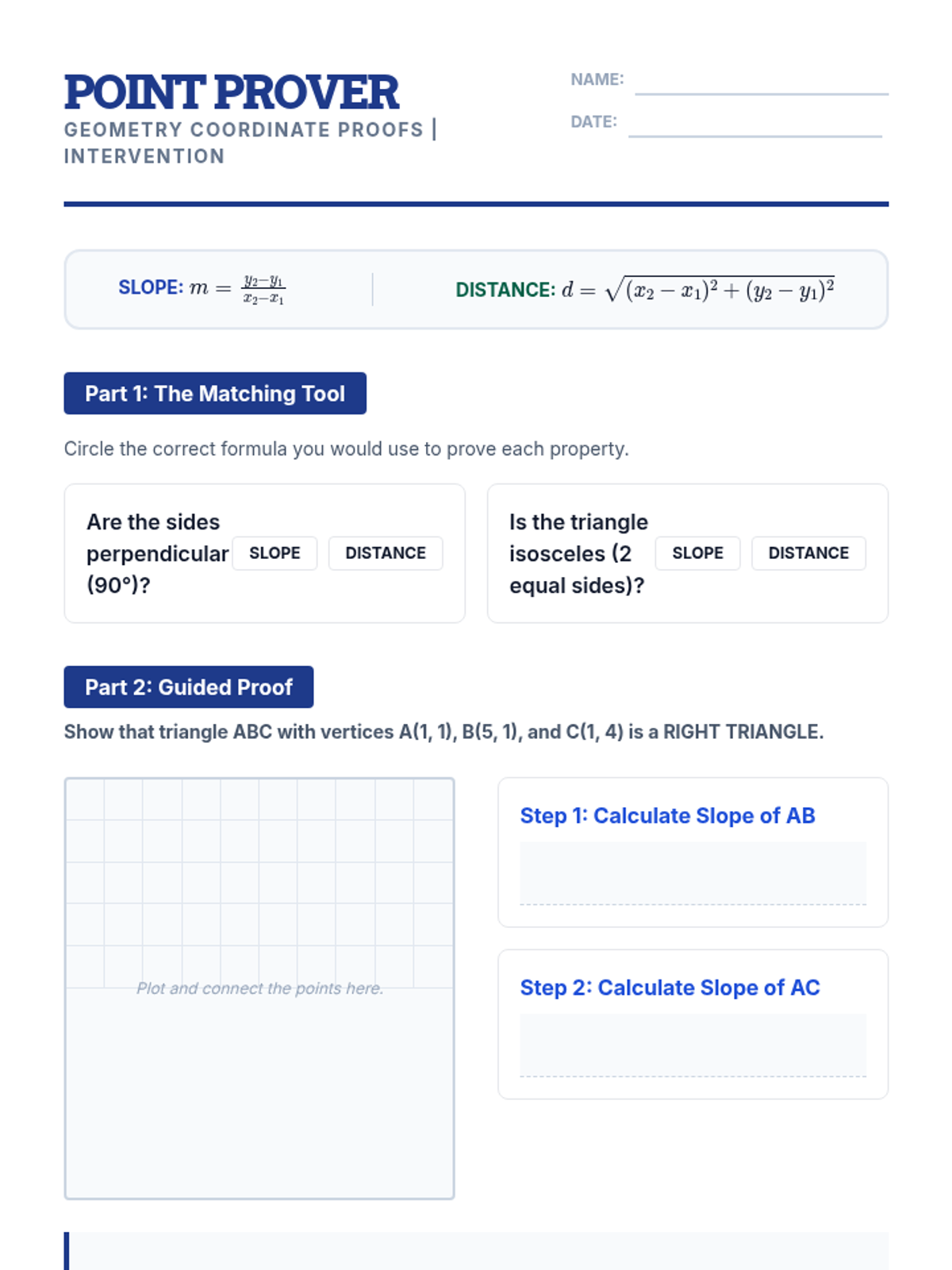
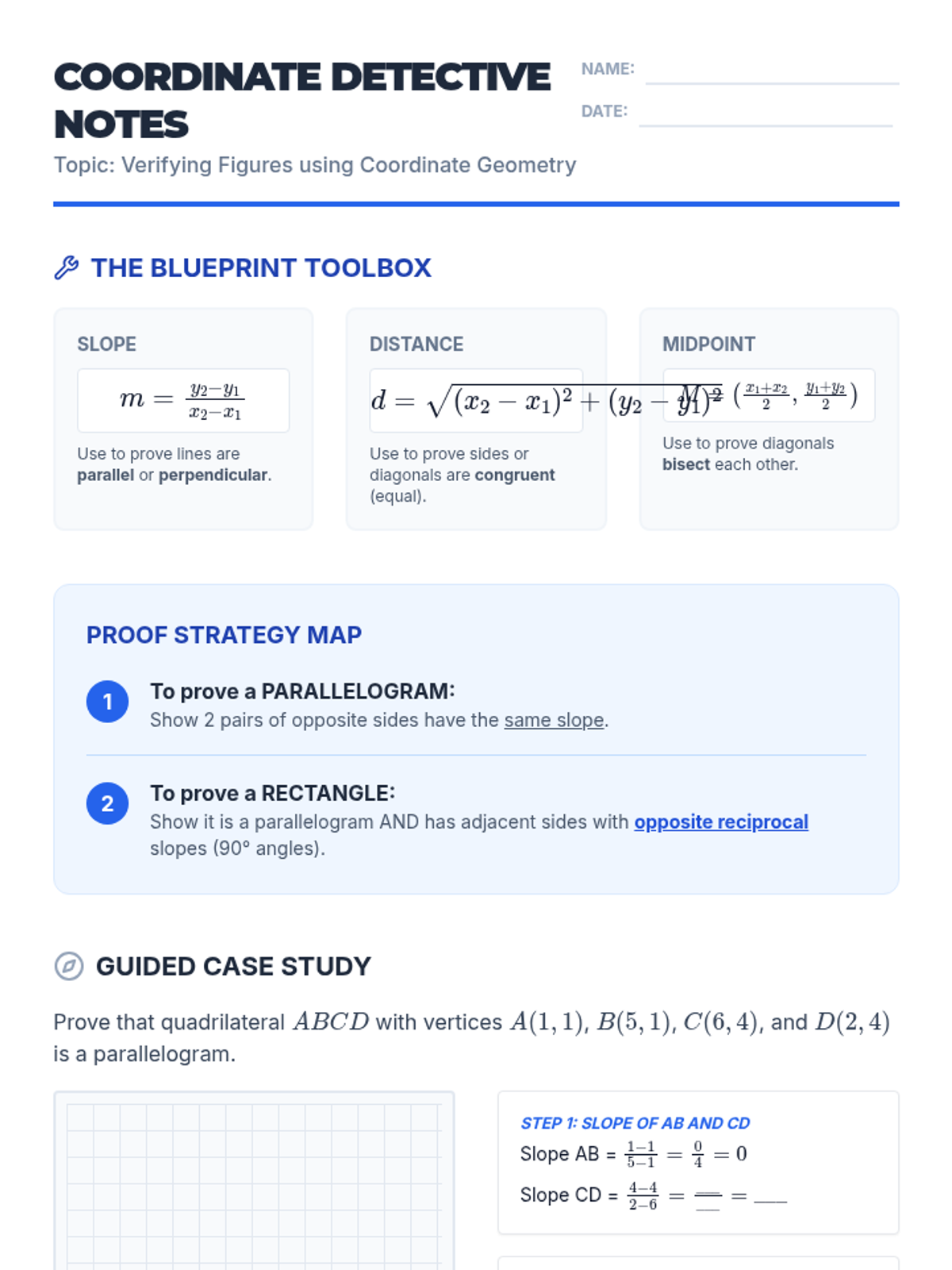
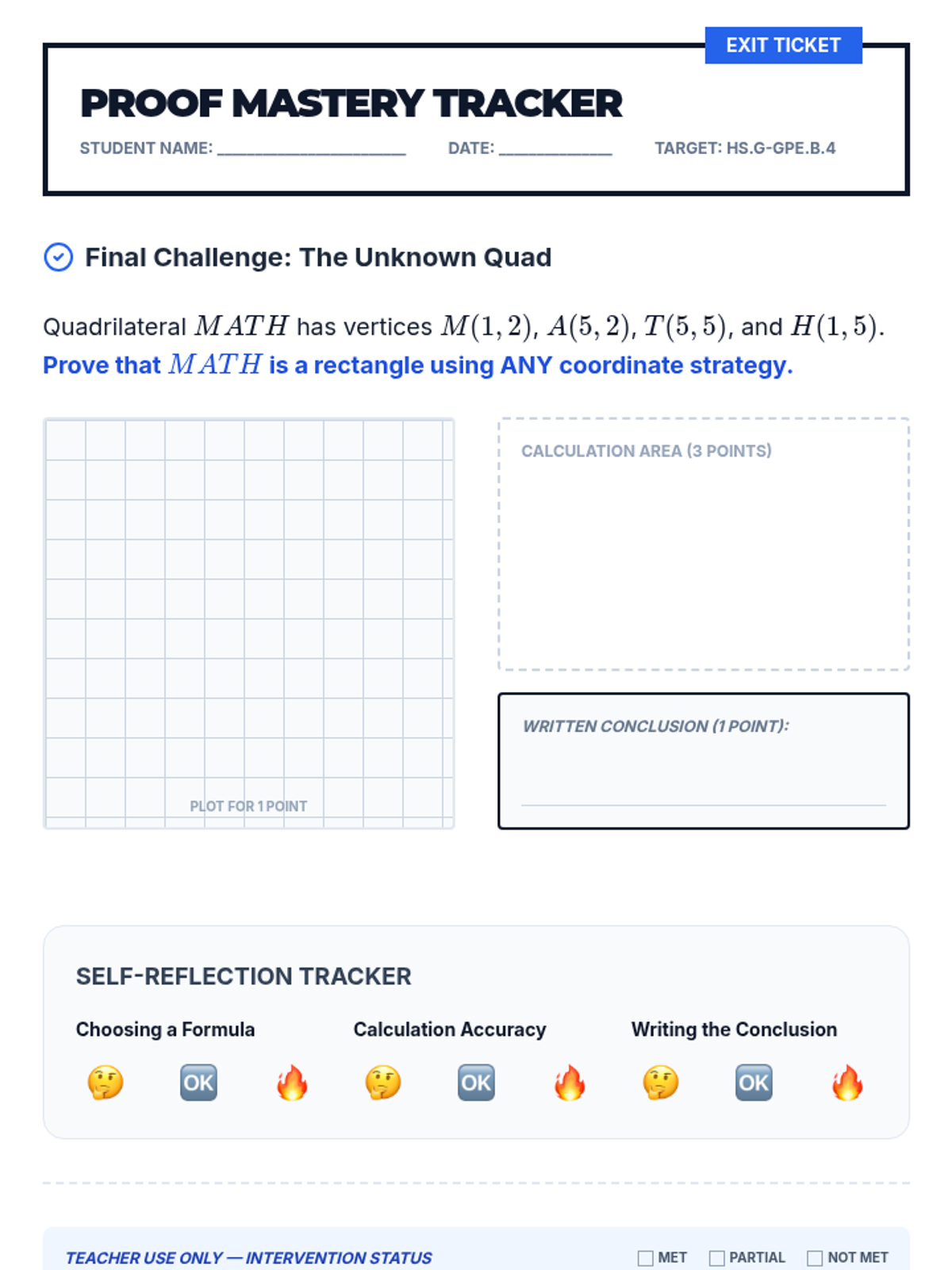
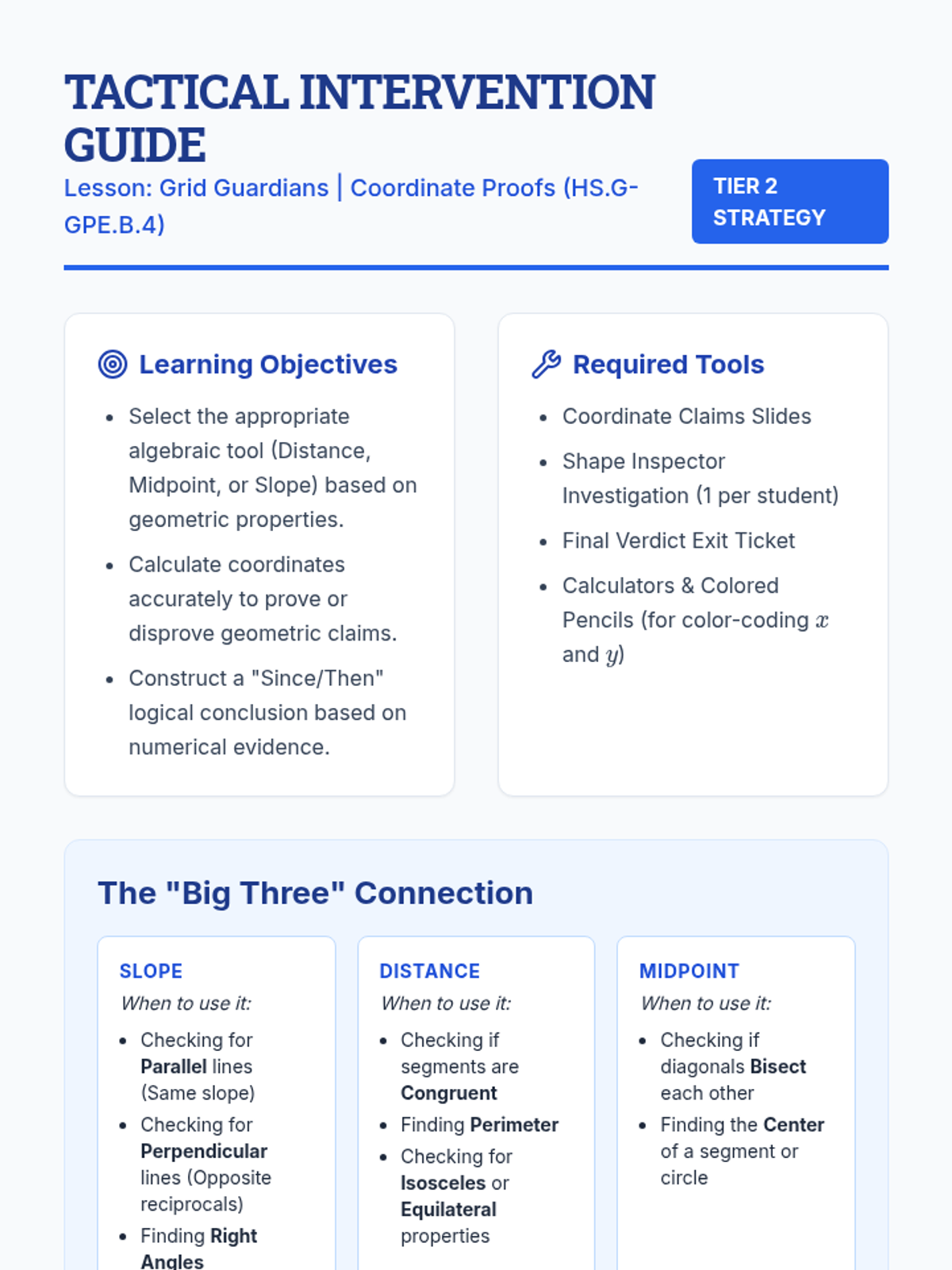
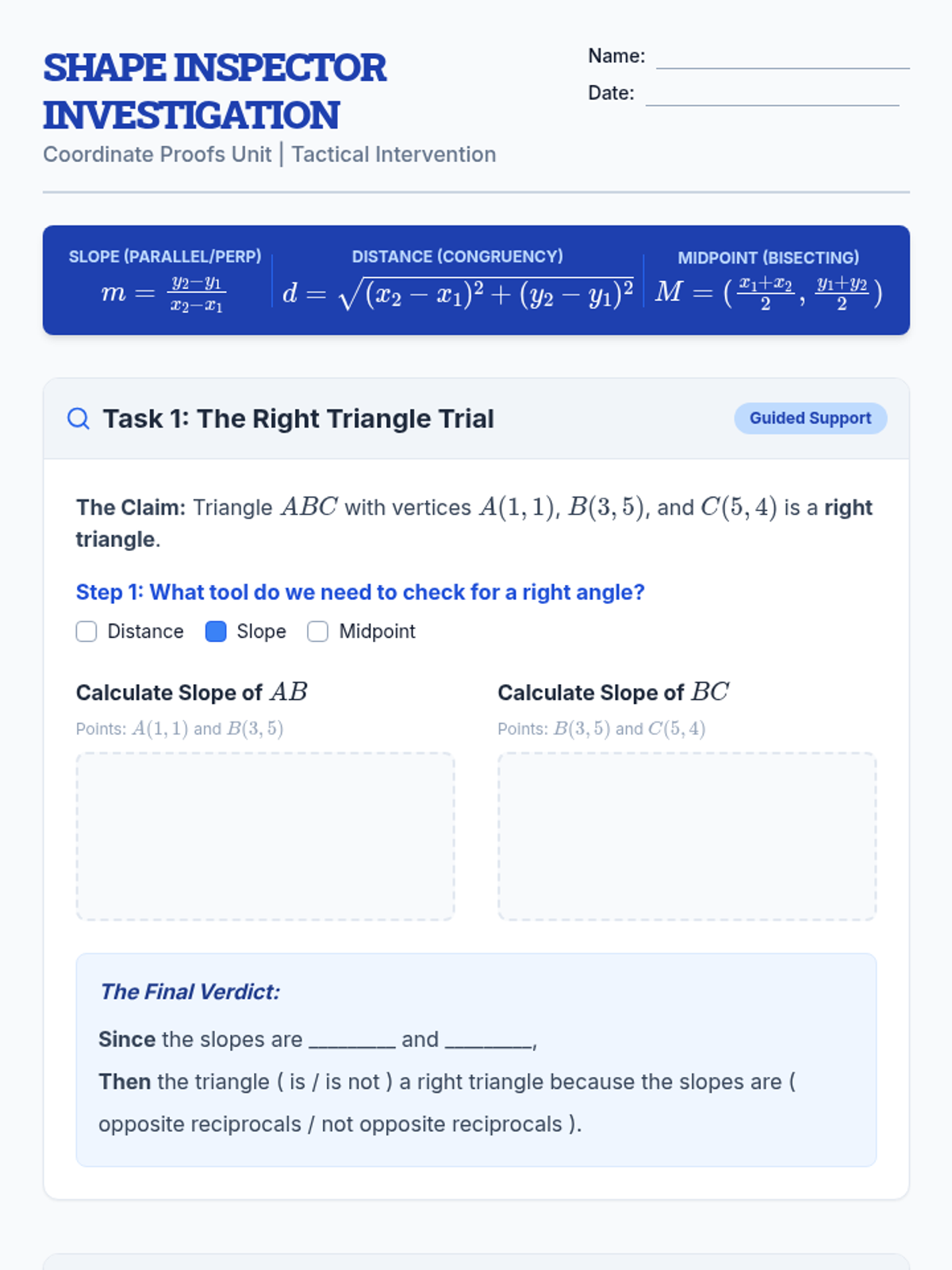
A targeted Tier 2 intervention lesson focusing on using the coordinate plane to prove geometric properties of shapes through algebra. Students will use slope and distance formulas to verify if figures are rectangles, parallelograms, or right triangles.
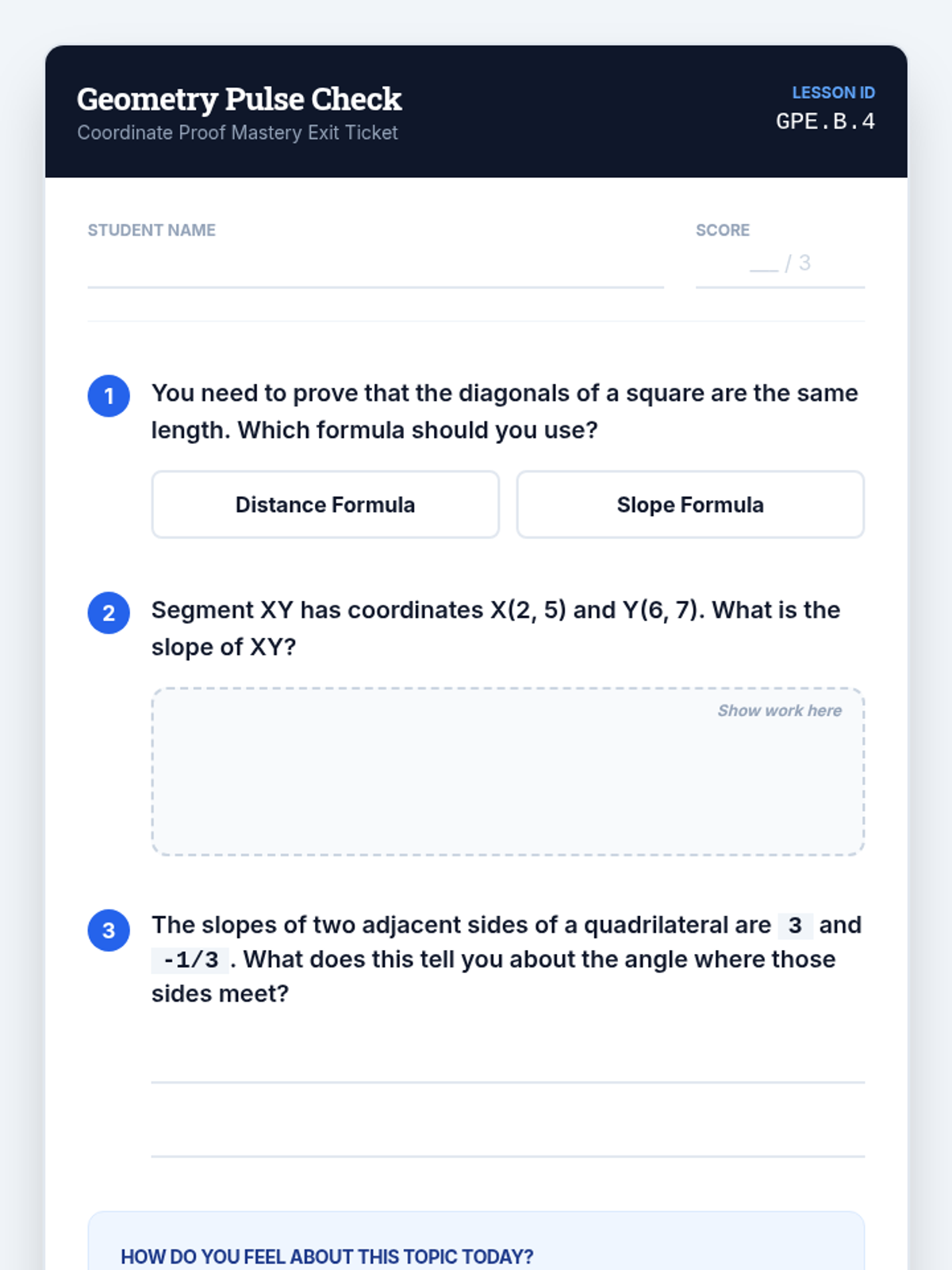
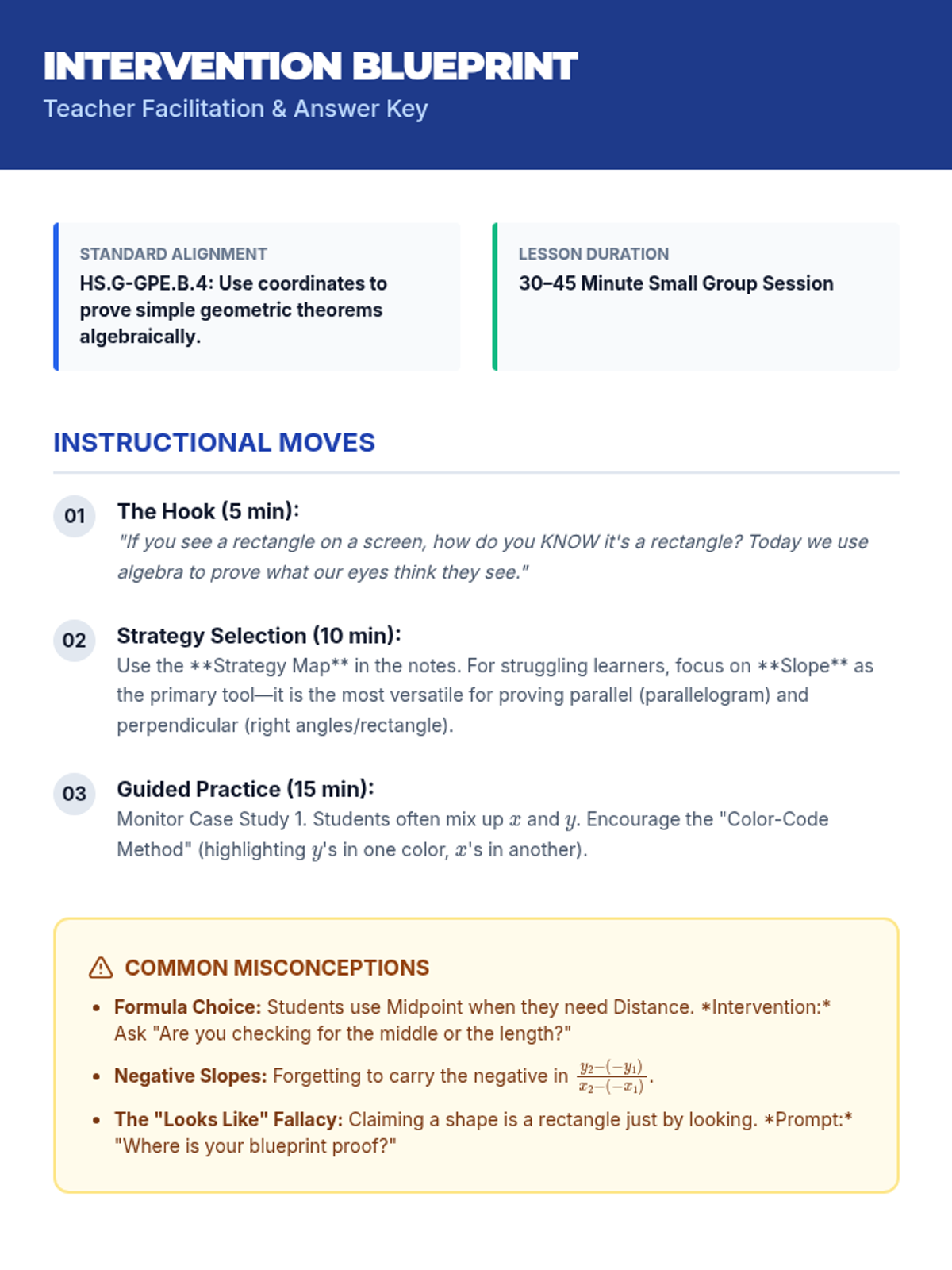
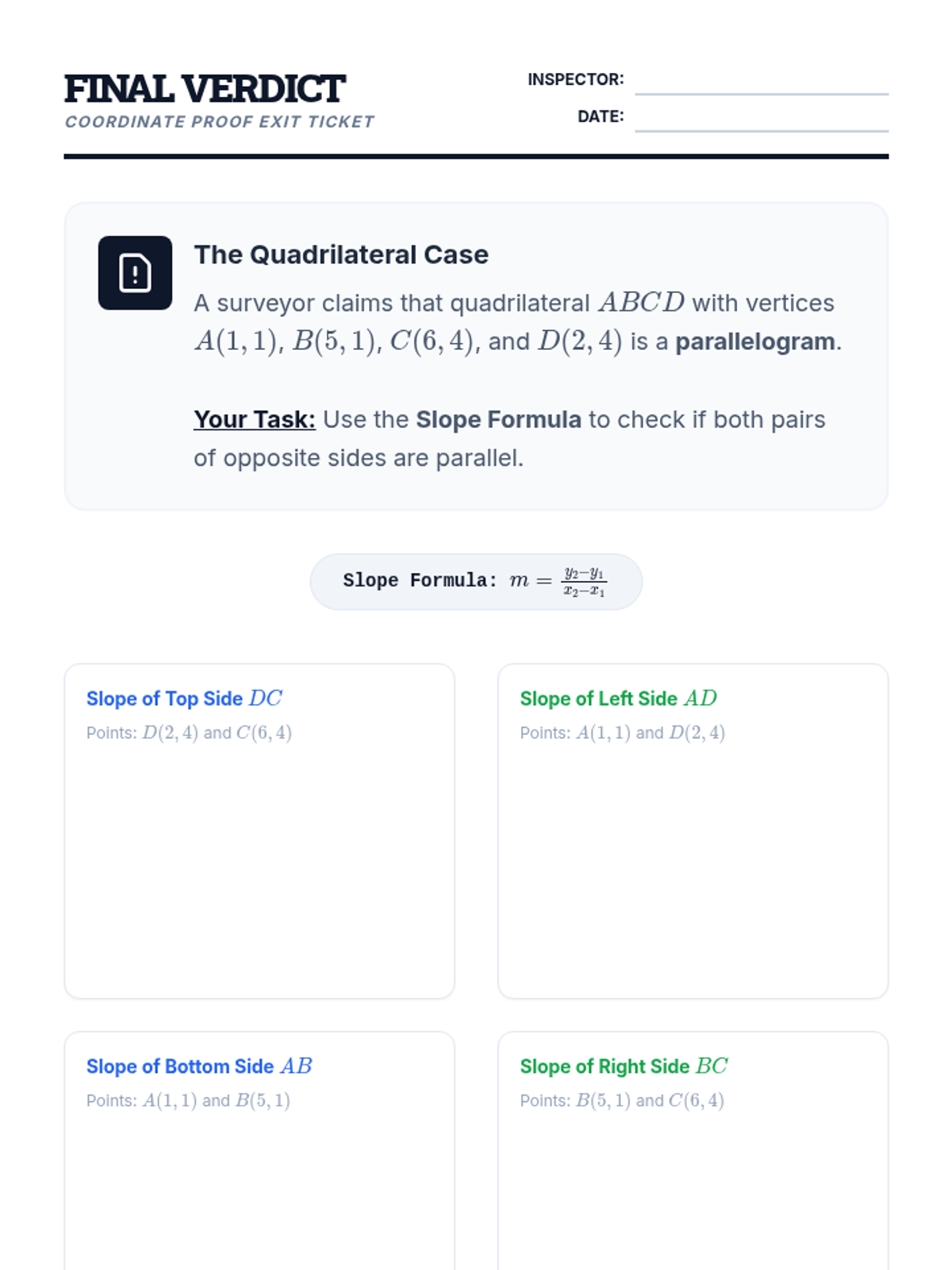
A targeted Tier 2 intervention lesson designed for small groups to master coordinate proof strategies. The lesson focuses on using slope, distance, and midpoint formulas to verify geometric properties of quadrilaterals like parallelograms and rectangles.
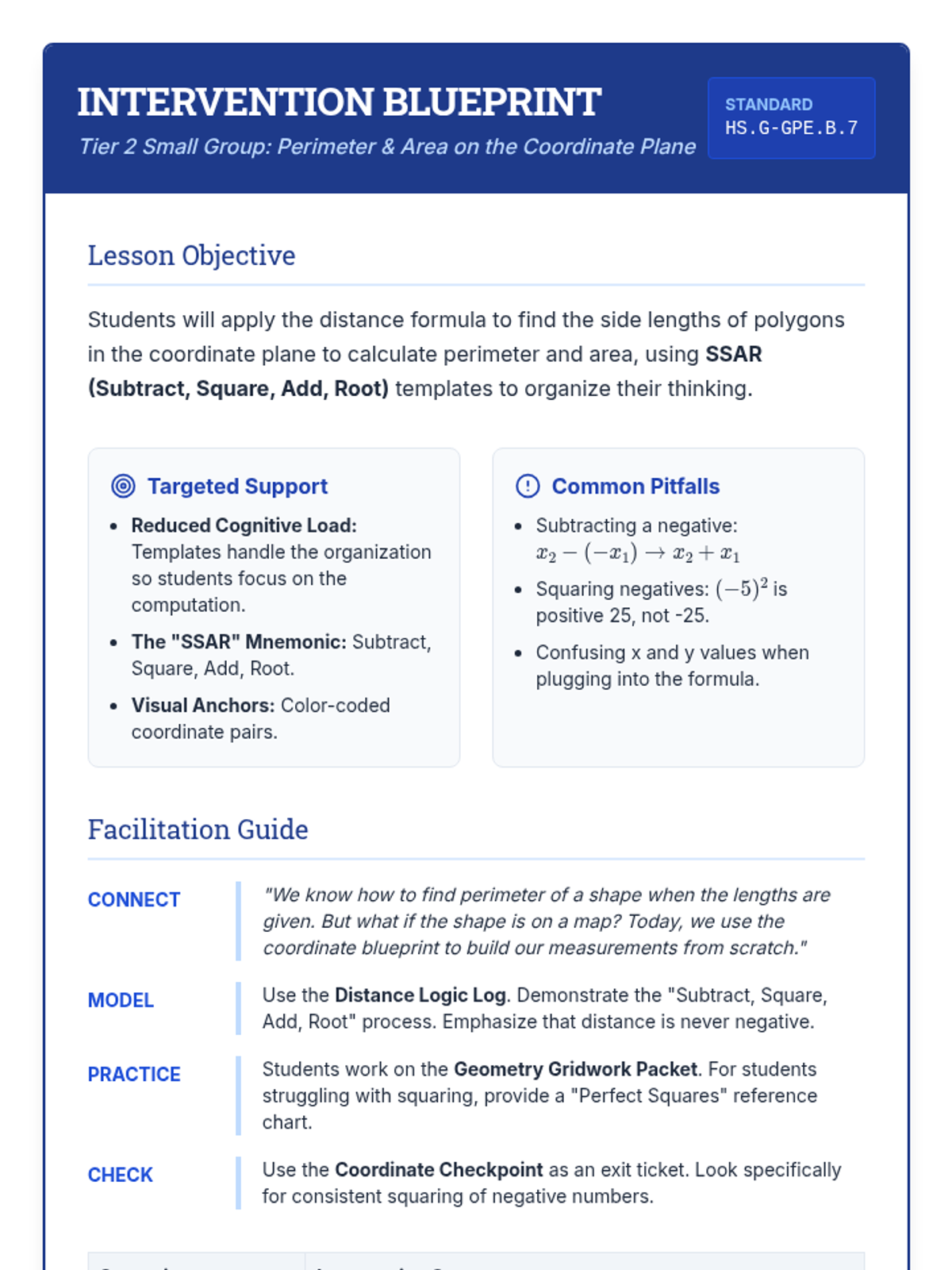
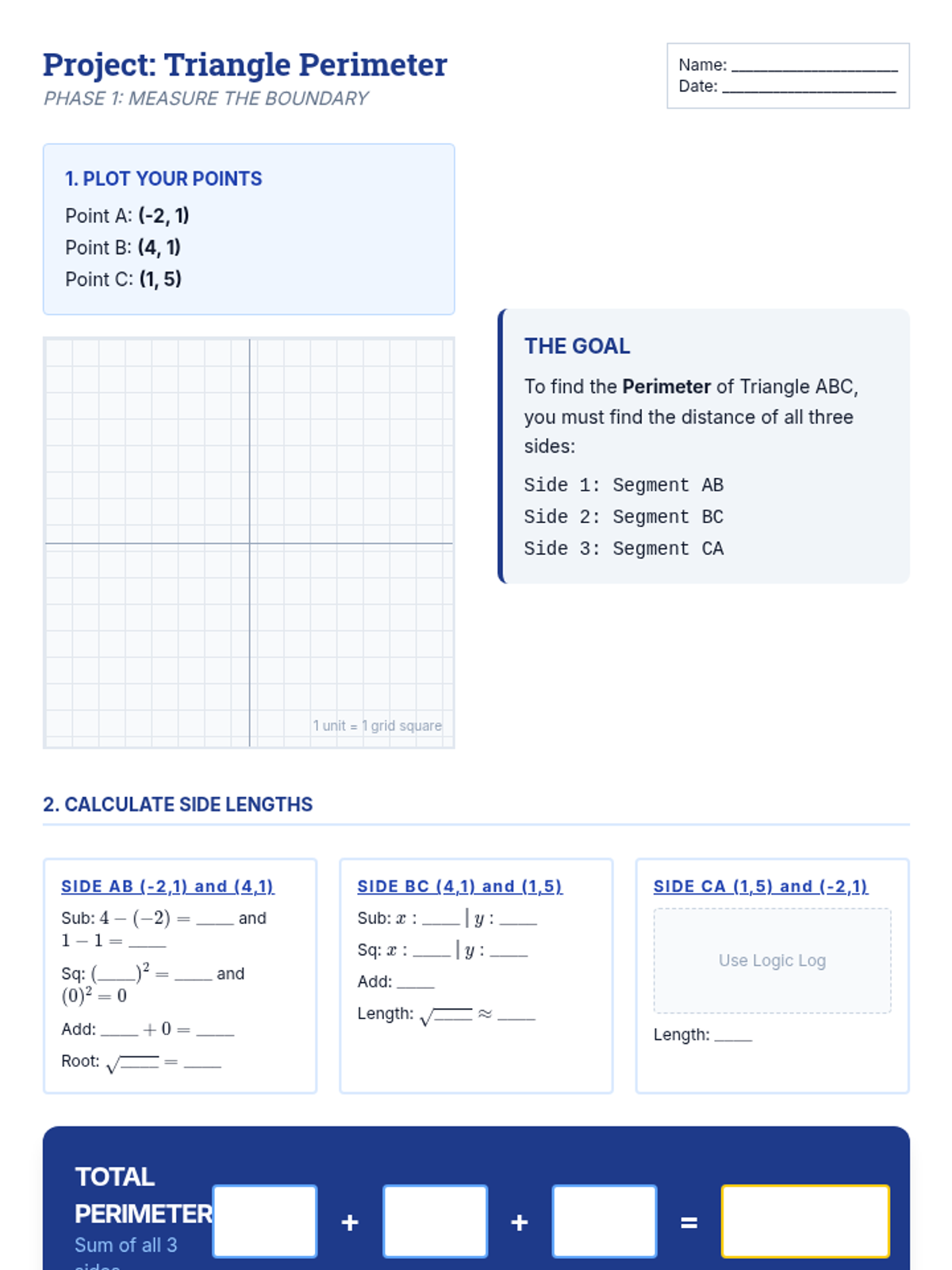
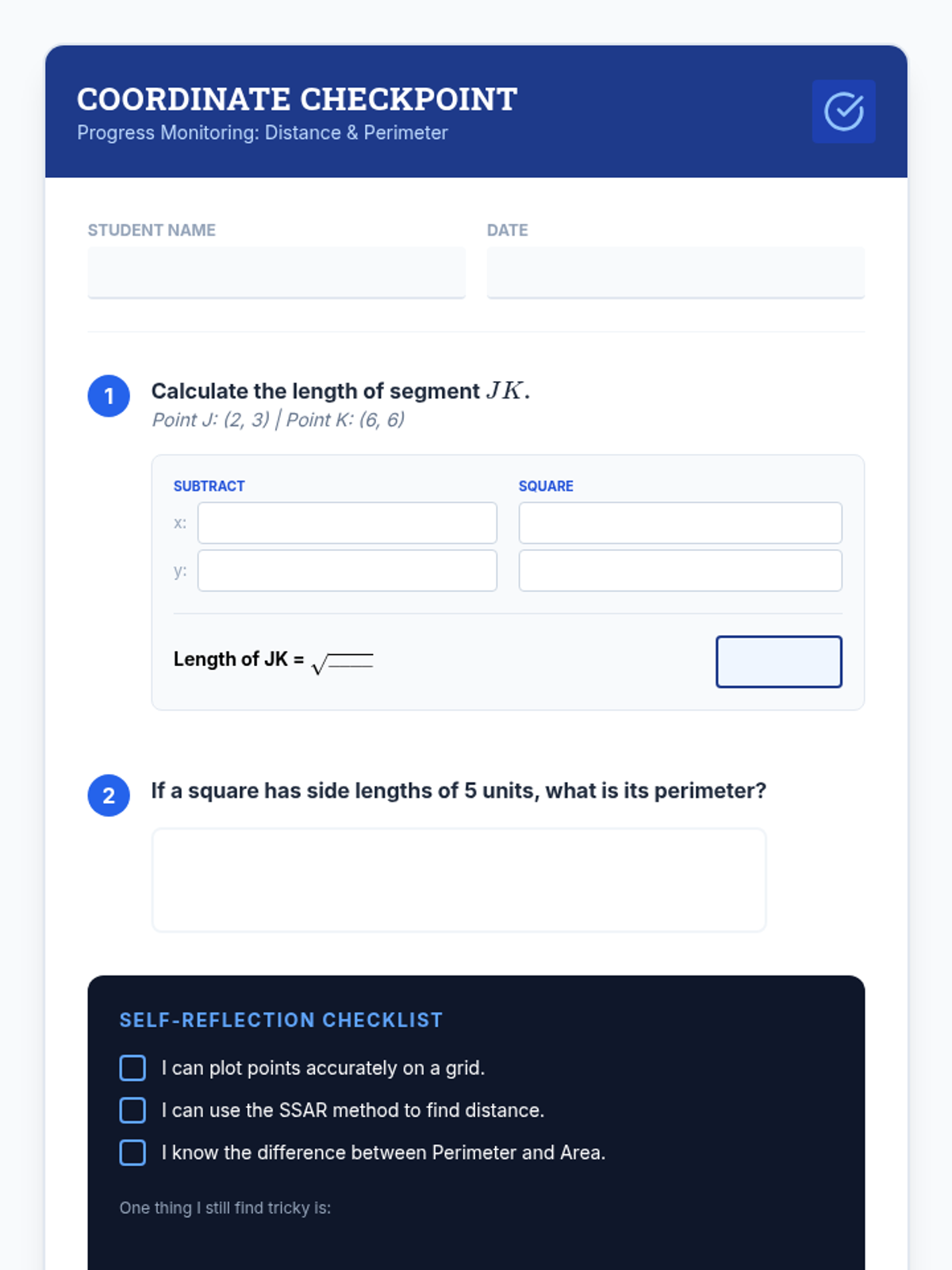
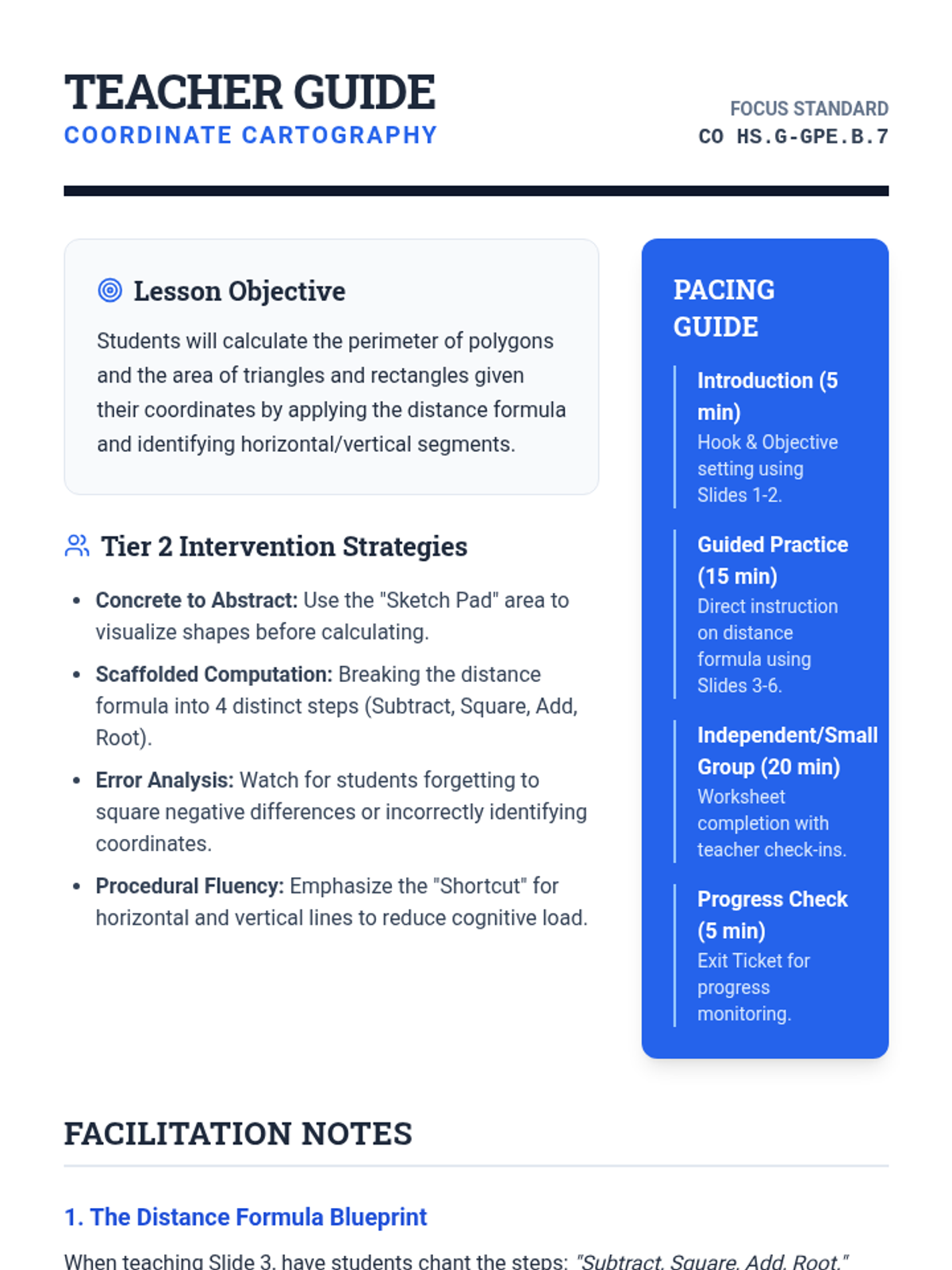
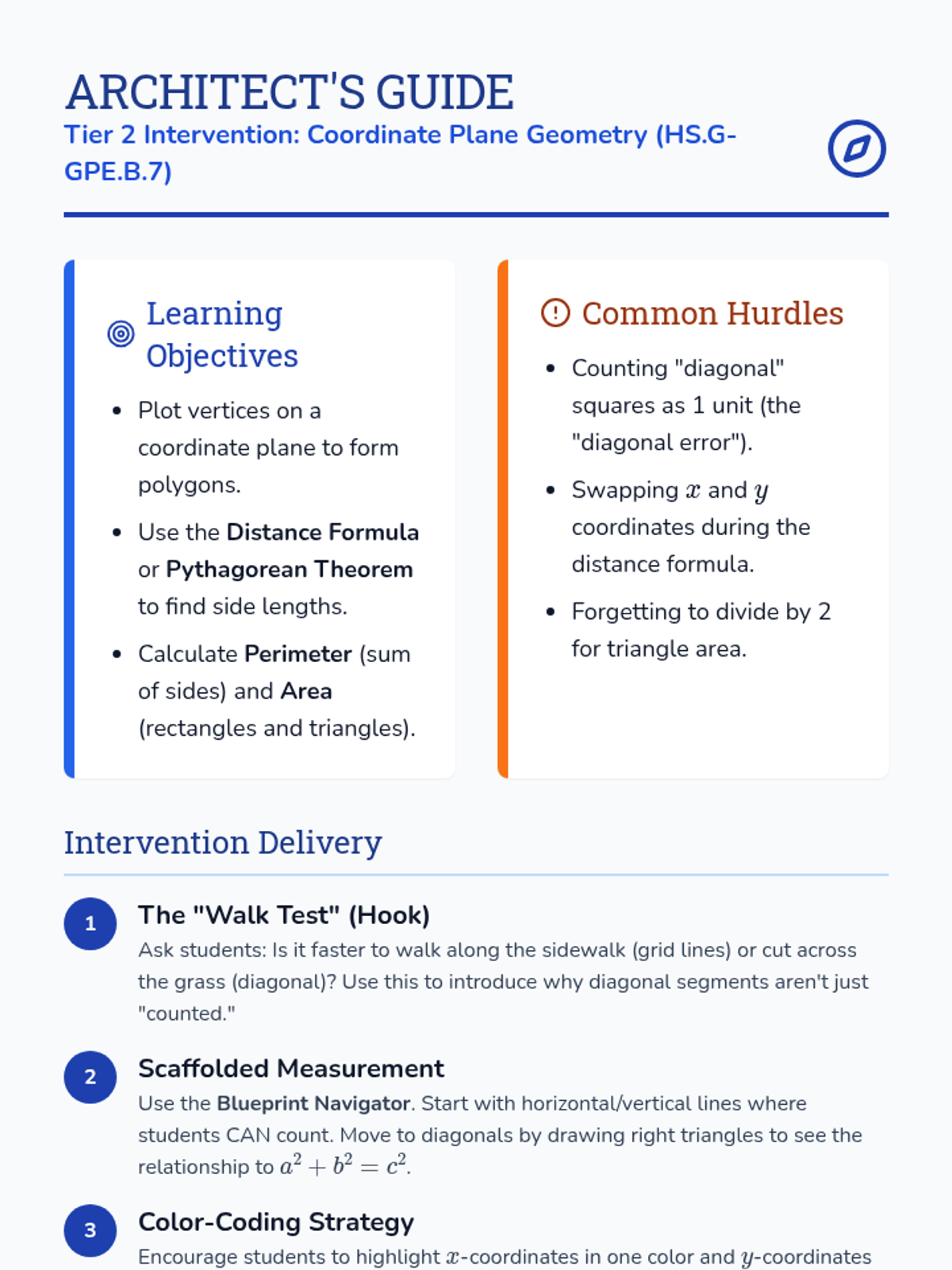
A Tier 2 intervention lesson focused on calculating perimeter and area of polygons using the distance formula on a coordinate plane. Designed for high school students needing scaffolded support with CO Standard HS.G-GPE.B.7.
A Tier 2 intervention lesson designed for small groups to learn how to find a point on a directed line segment that partitions it in a given ratio. The lesson emphasizes the 'Ratio to Fraction' conversion and the 'Shift and Scale' method.
A Tier 2 intervention lesson focused on using coordinates to prove geometric properties. Students will use slope, midpoint, and distance formulas to verify claims about triangles and quadrilaterals through scaffolded investigations.
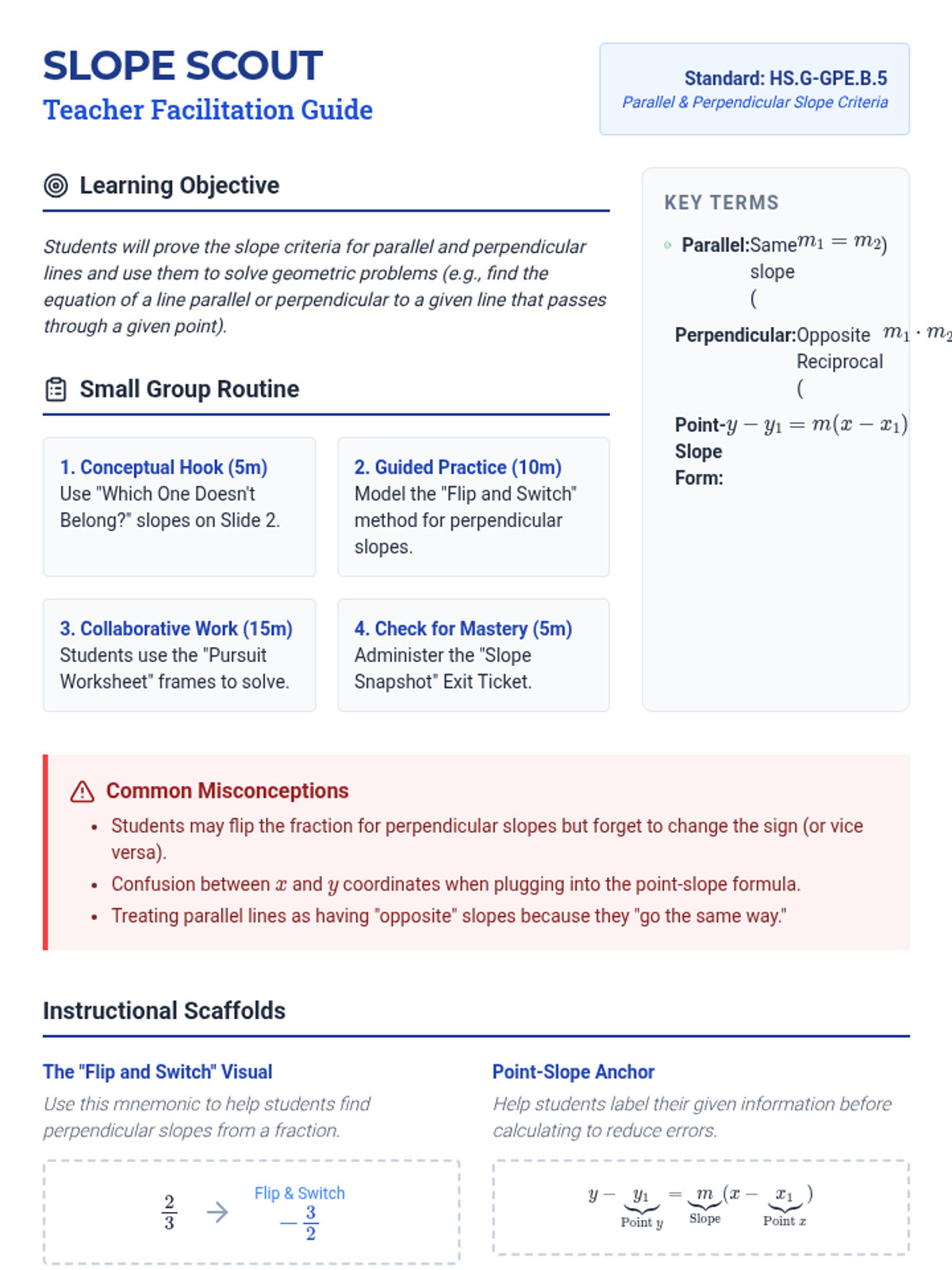
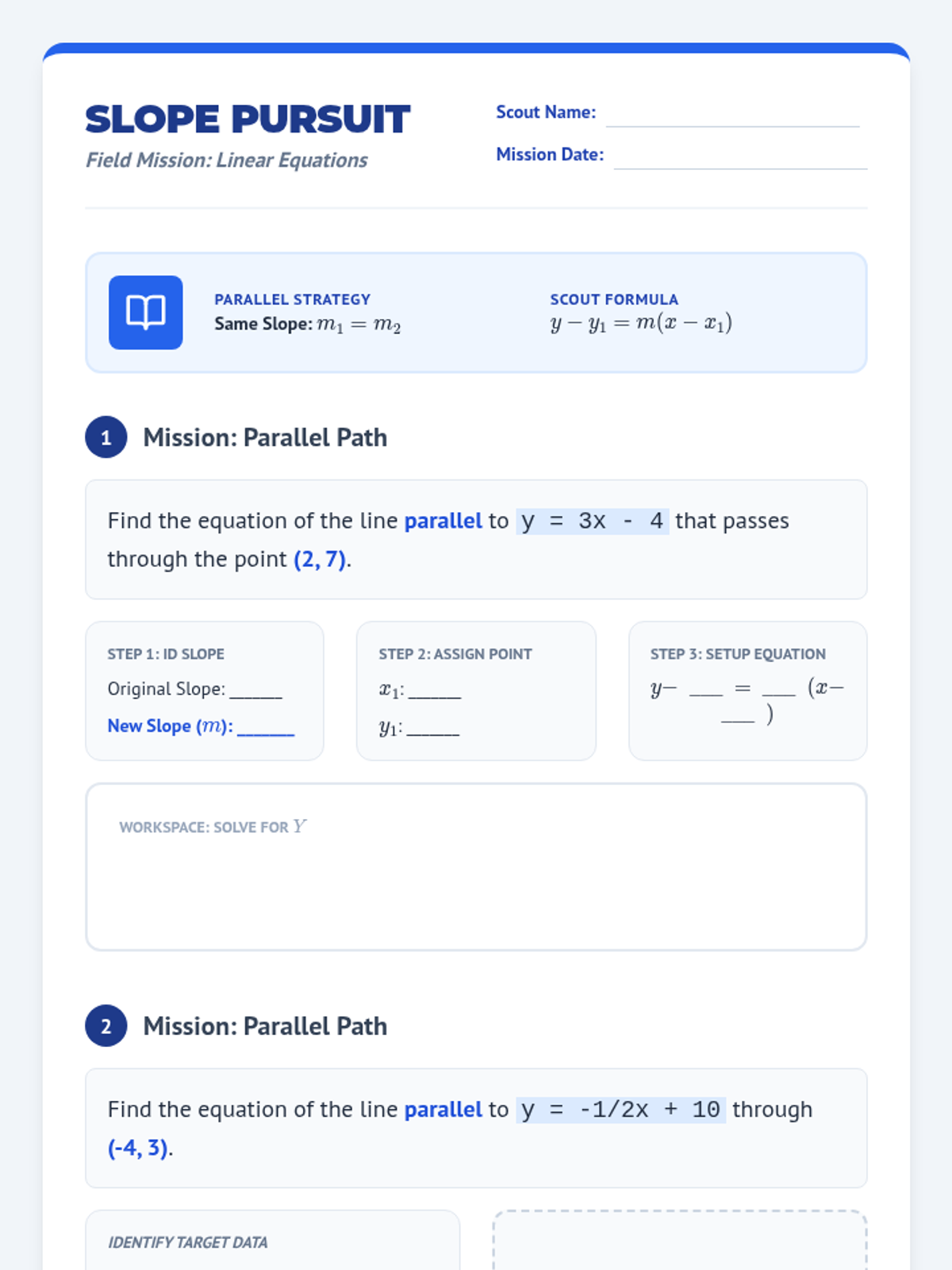
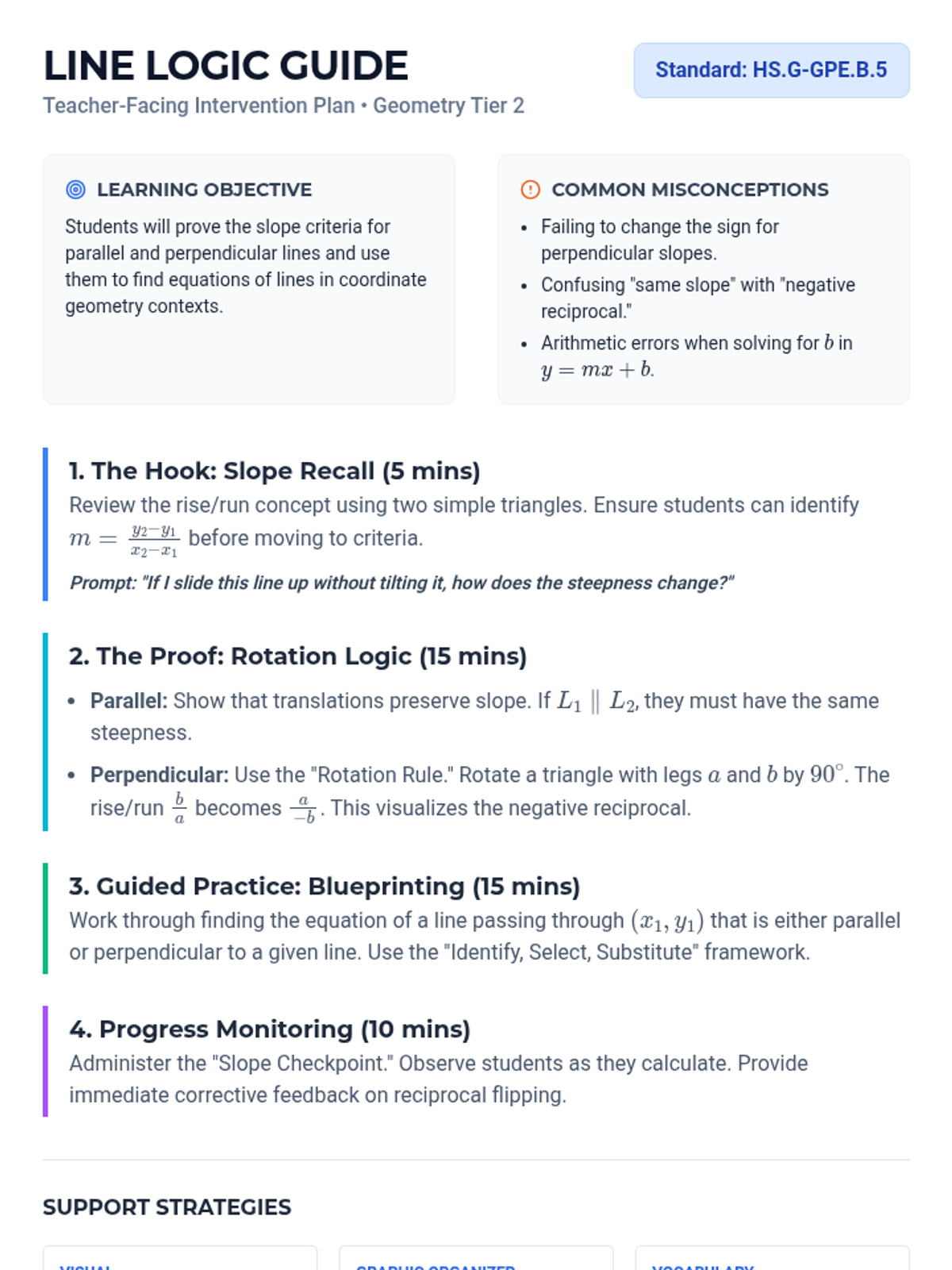
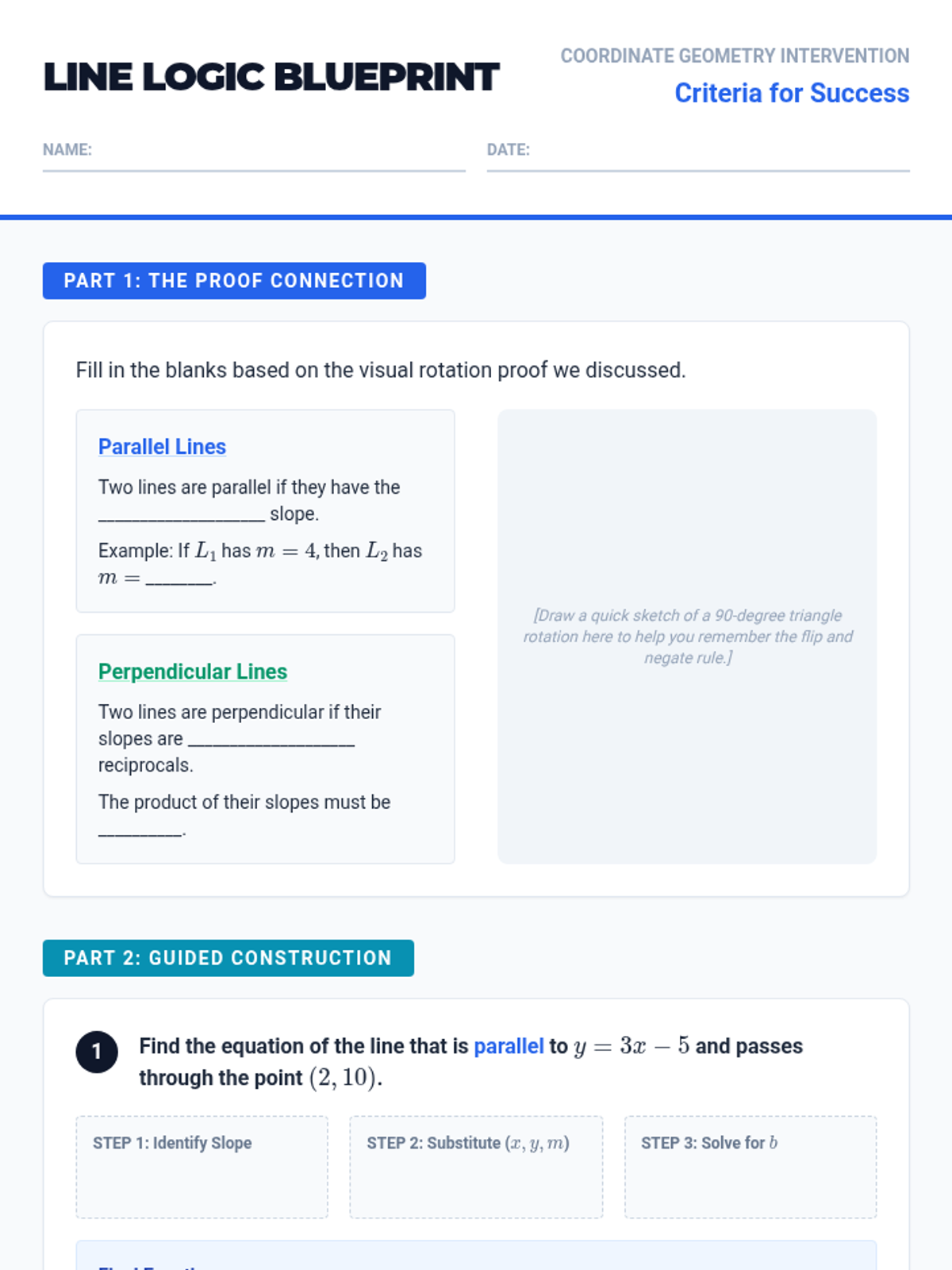
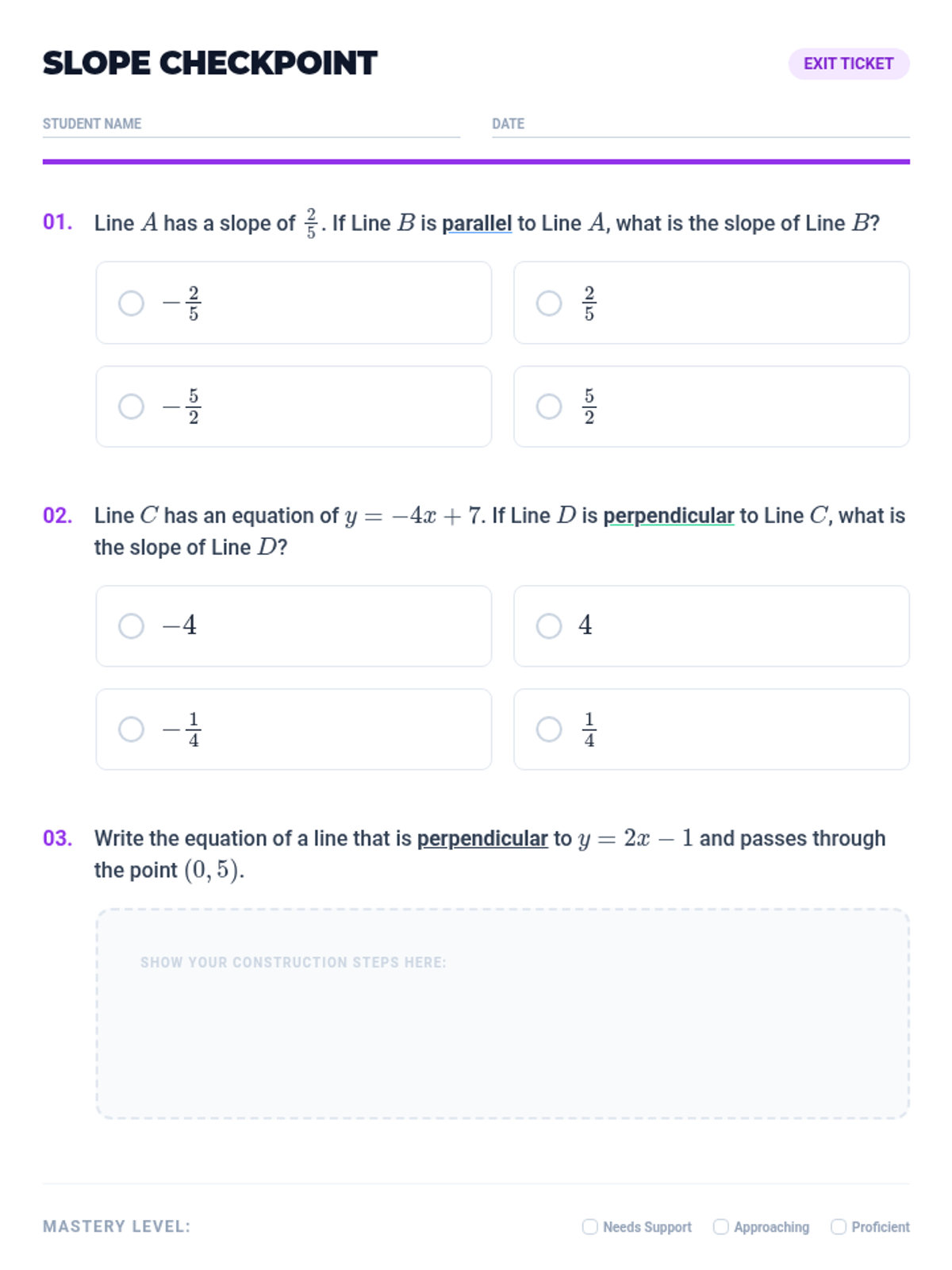
A targeted intervention lesson focused on the relationship between parallel and perpendicular slopes, using step-by-step frameworks to help students write linear equations. This lesson is designed for Tier 2 small group support with a focus on visual representations and algebraic procedures.
A targeted Tier 2 intervention lesson focusing on the slope criteria for parallel and perpendicular lines. Includes a visual proof of the 90-degree rotation for perpendicularity and scaffolded coordinate geometry problems.
A targeted intervention lesson for high school students focusing on finding the perimeter and area of polygons on a coordinate plane using the distance formula and coordinate geometry. This lesson uses a 'Blueprint' theme to engage students in architectural measurement tasks.
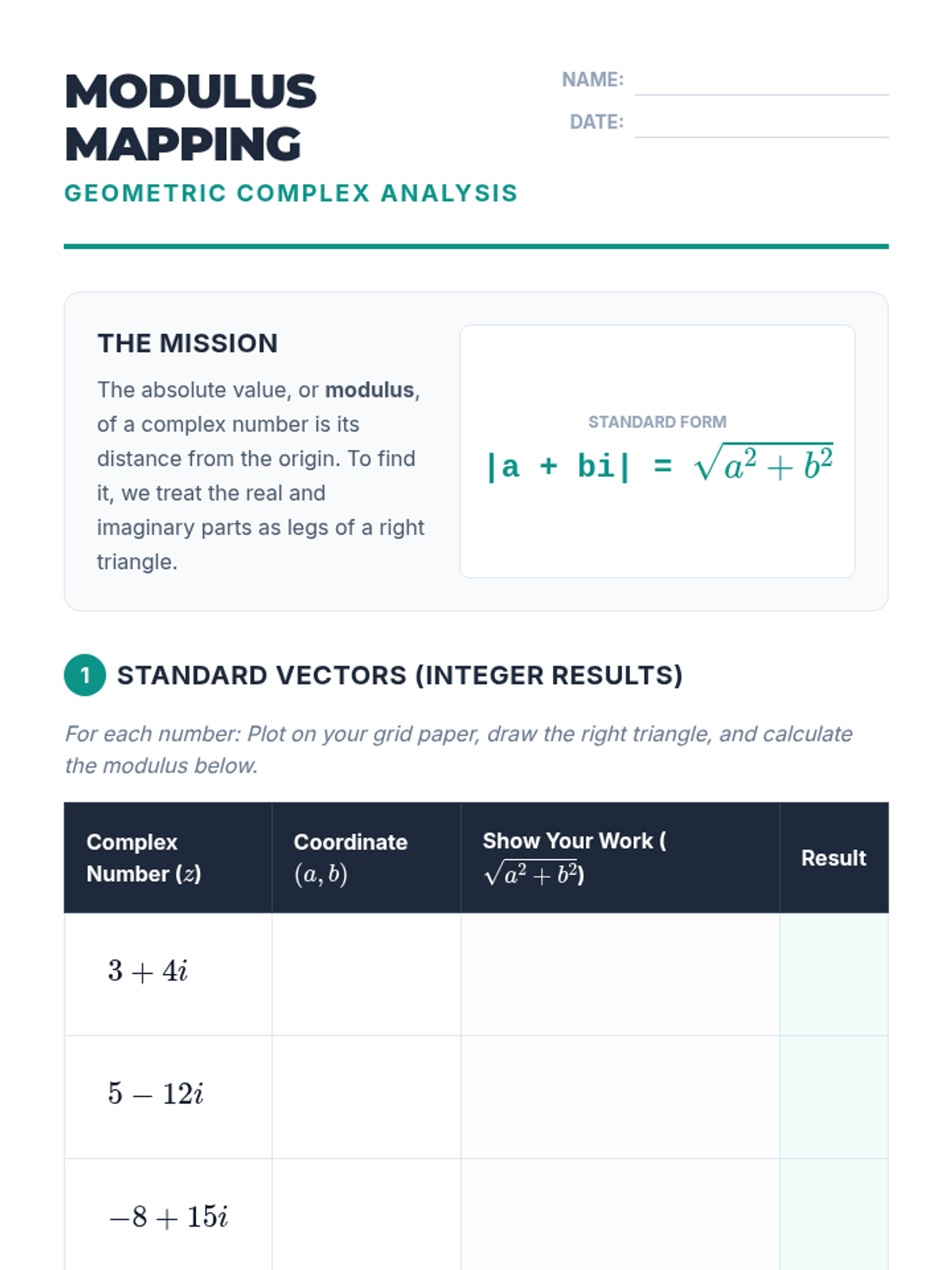
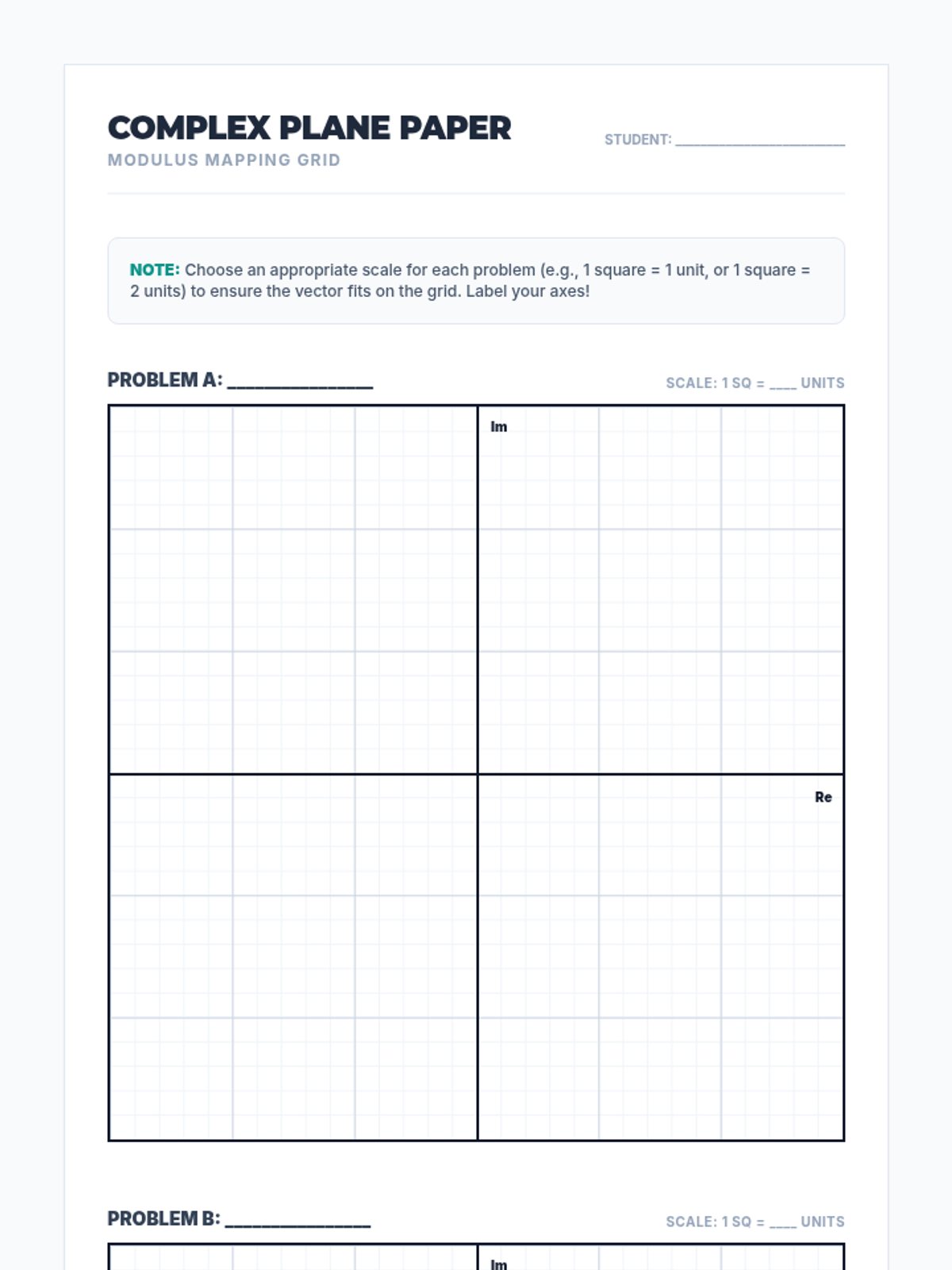
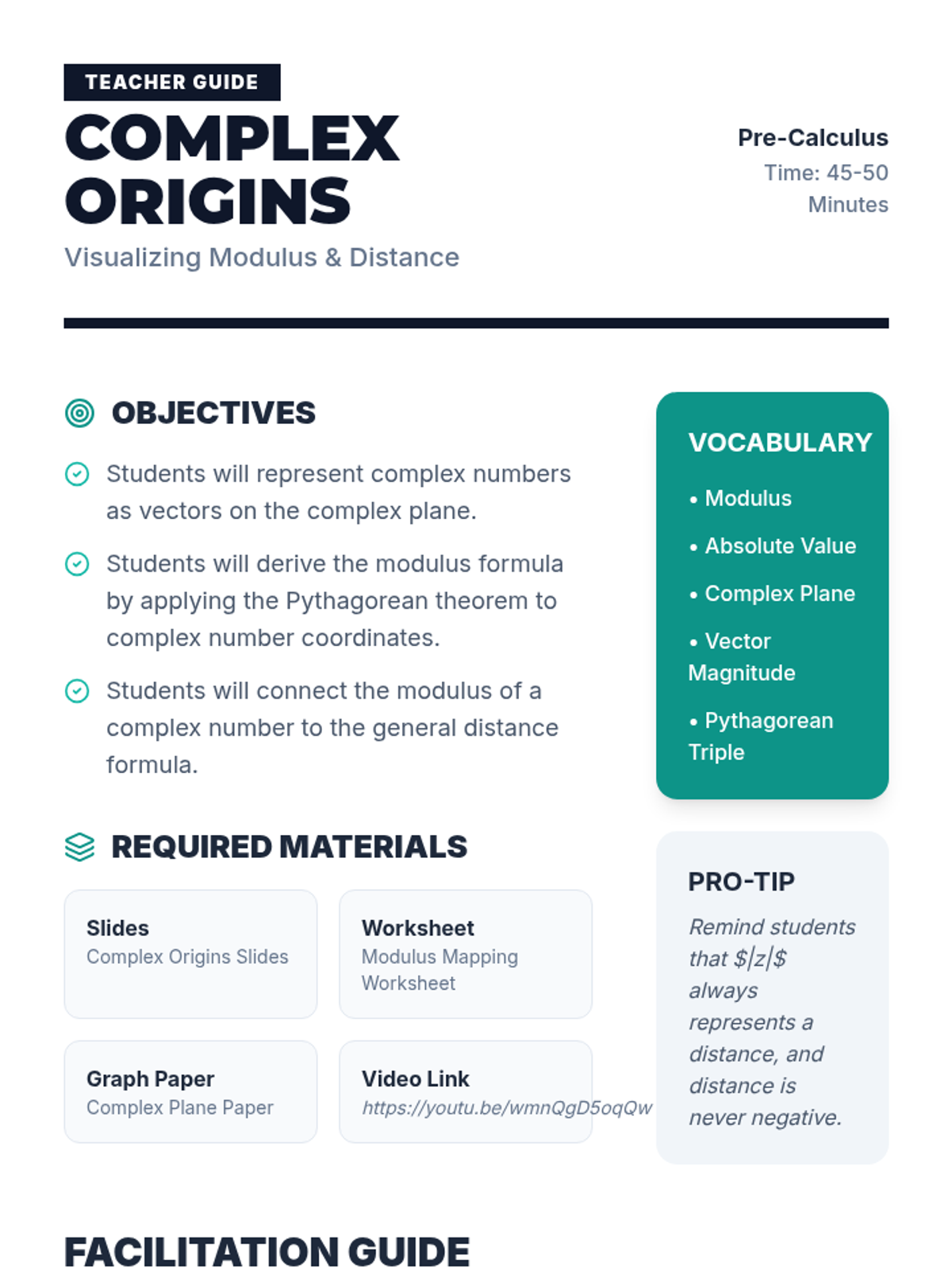
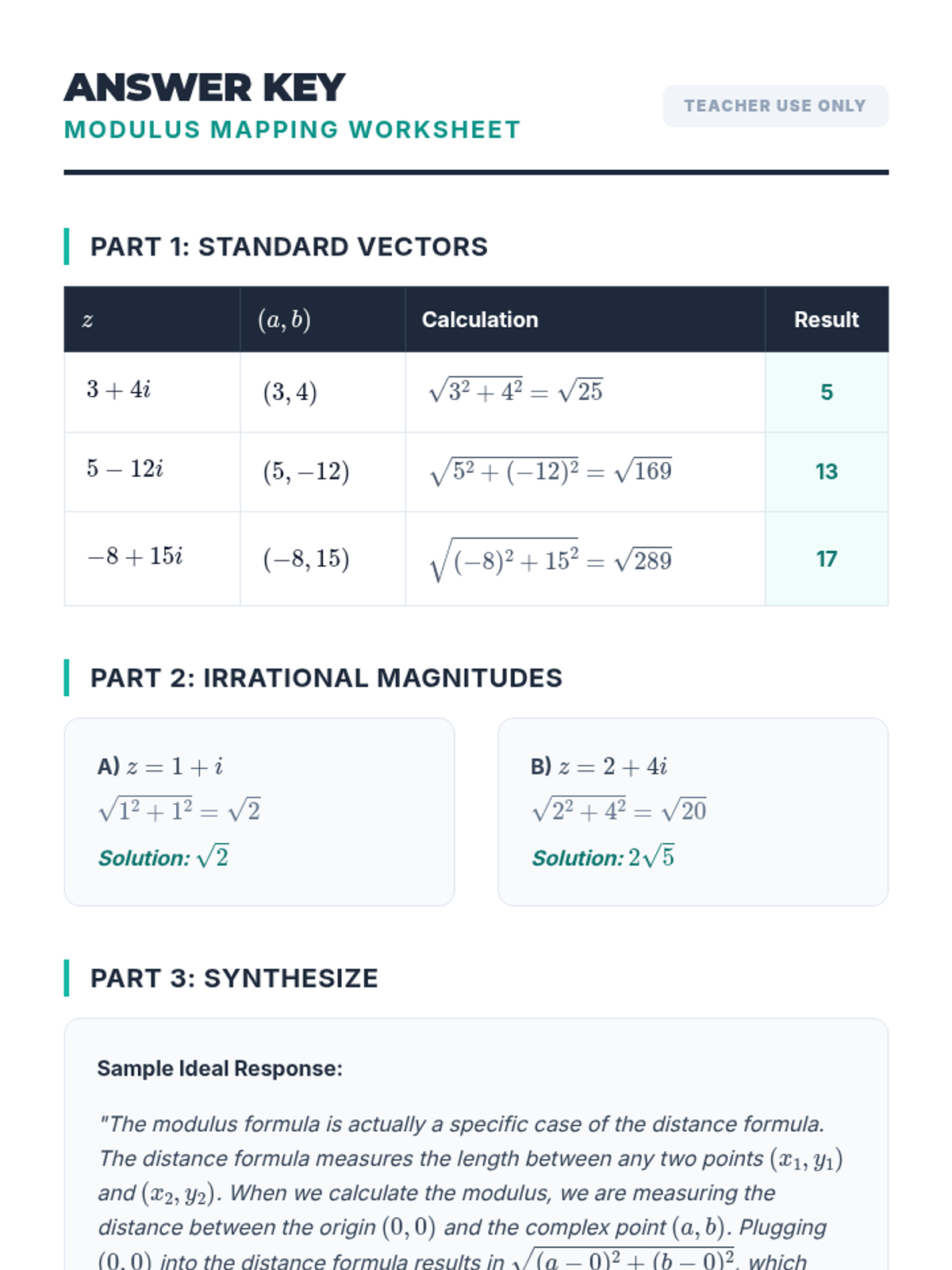
Students explore the geometric representation of complex numbers, connecting the modulus formula to the Pythagorean theorem and distance formula through visualization and practice.
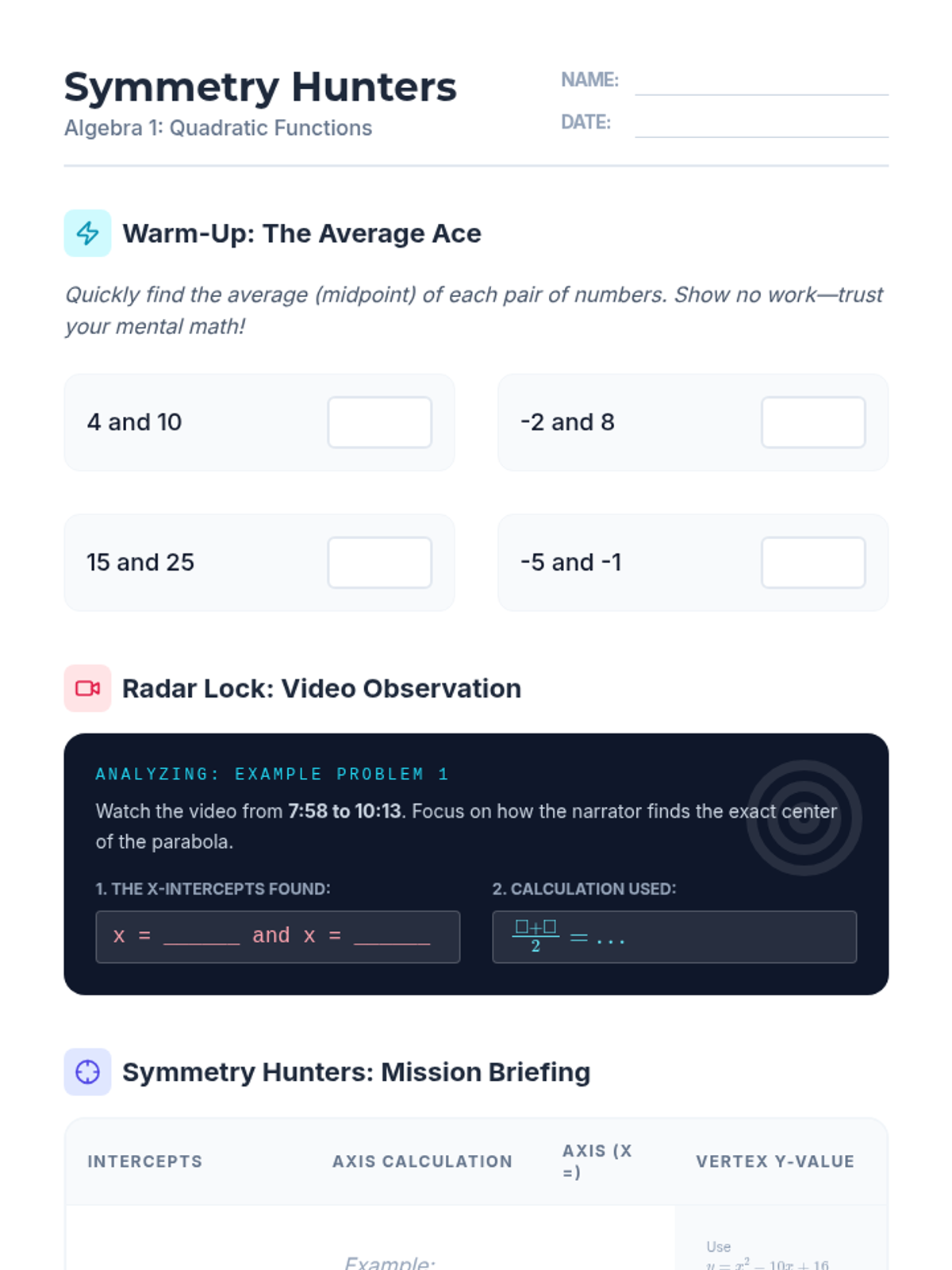
A lesson focused on finding the axis of symmetry of a parabola using the midpoint of its x-intercepts, featuring mental math warm-ups, a guided video analysis, and a 'Symmetry Hunters' practice activity.
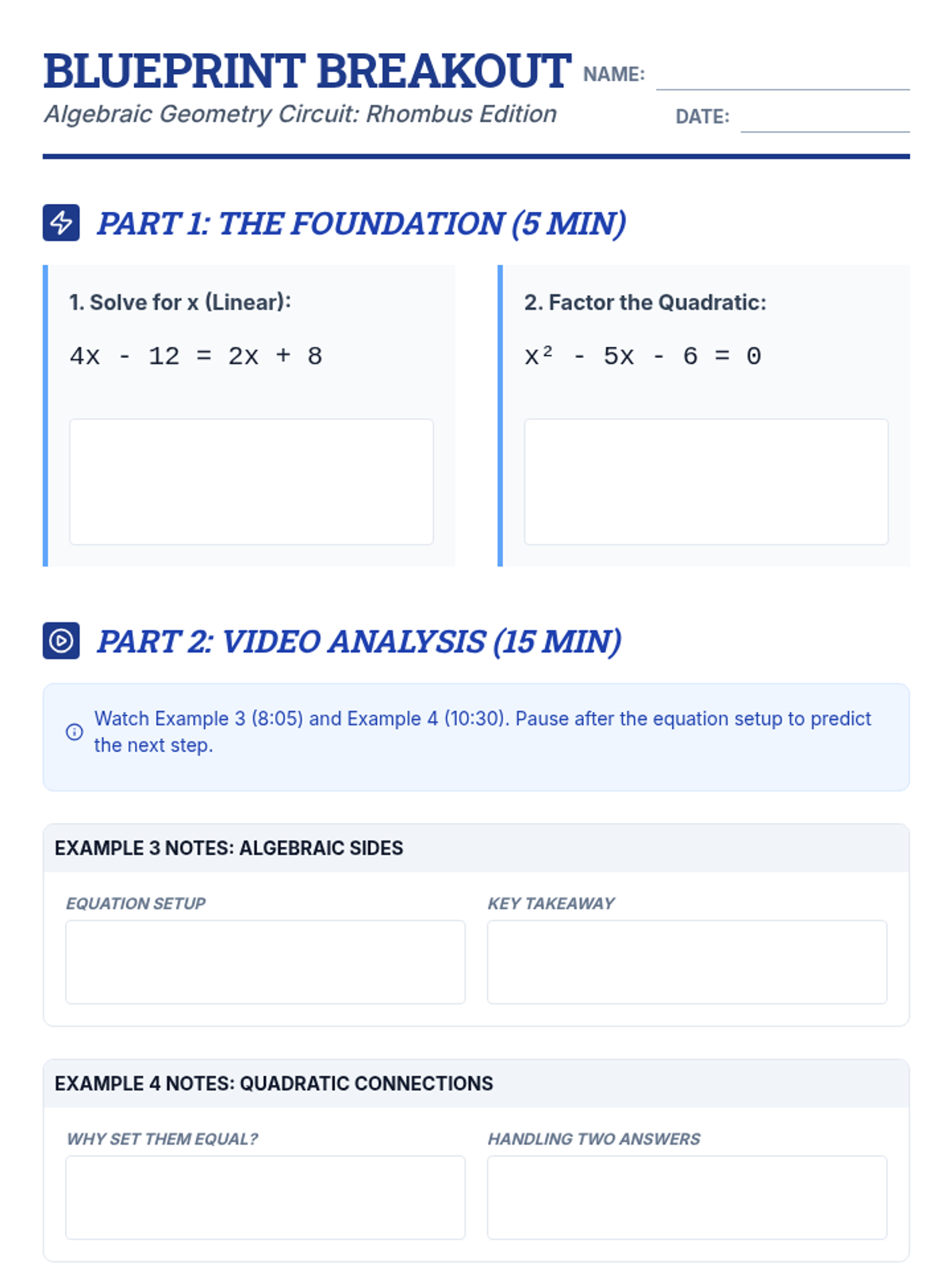
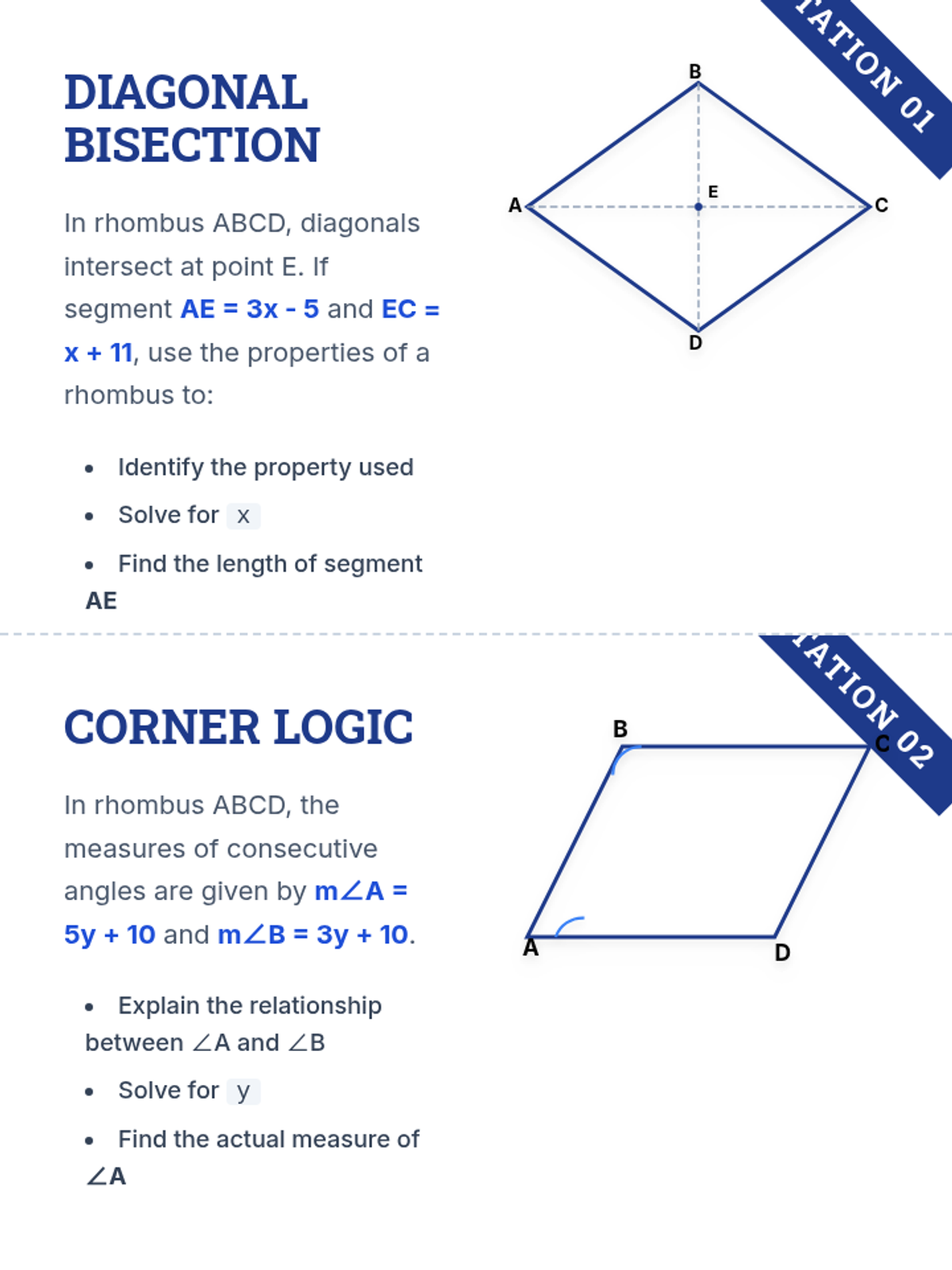
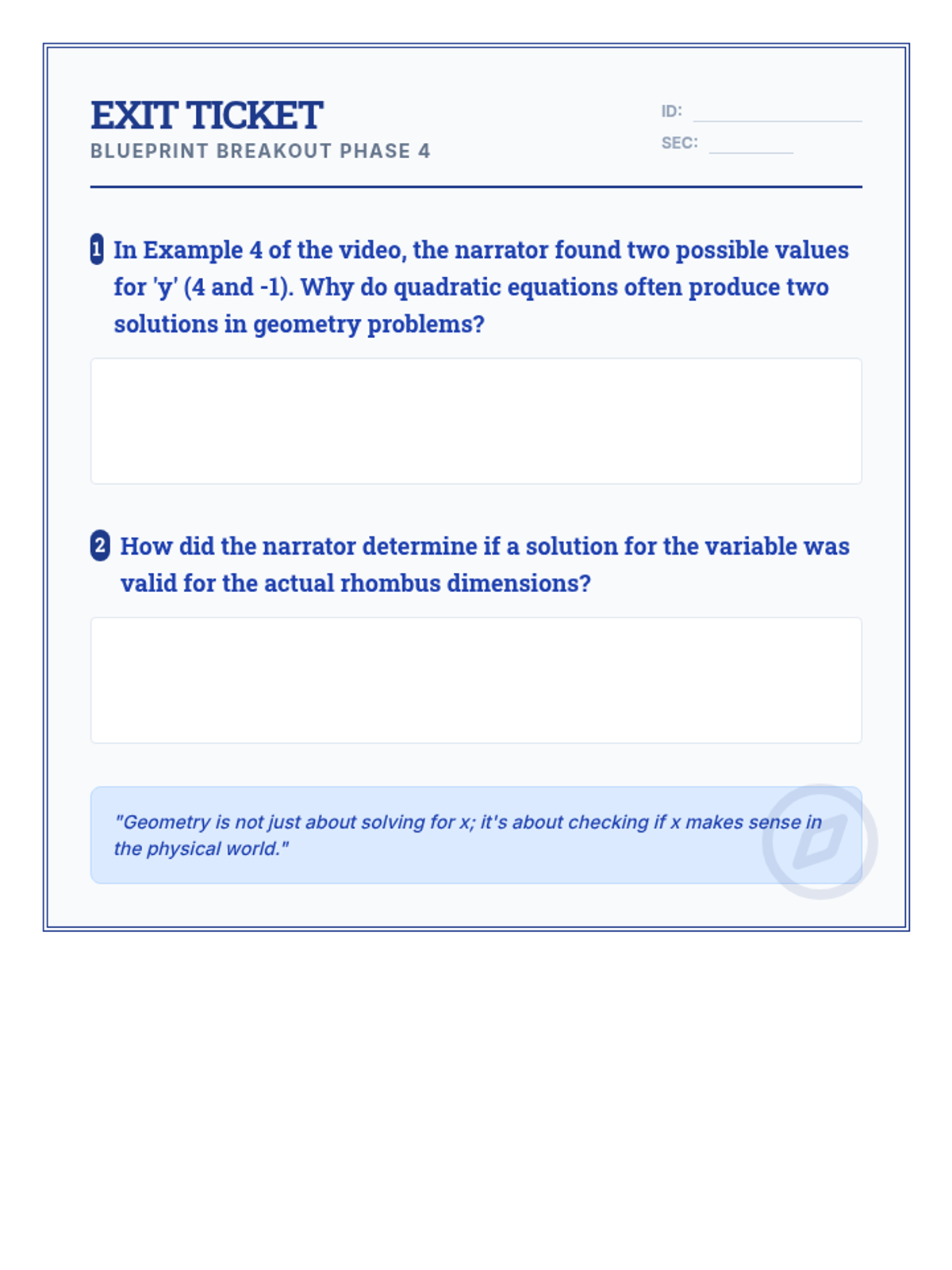
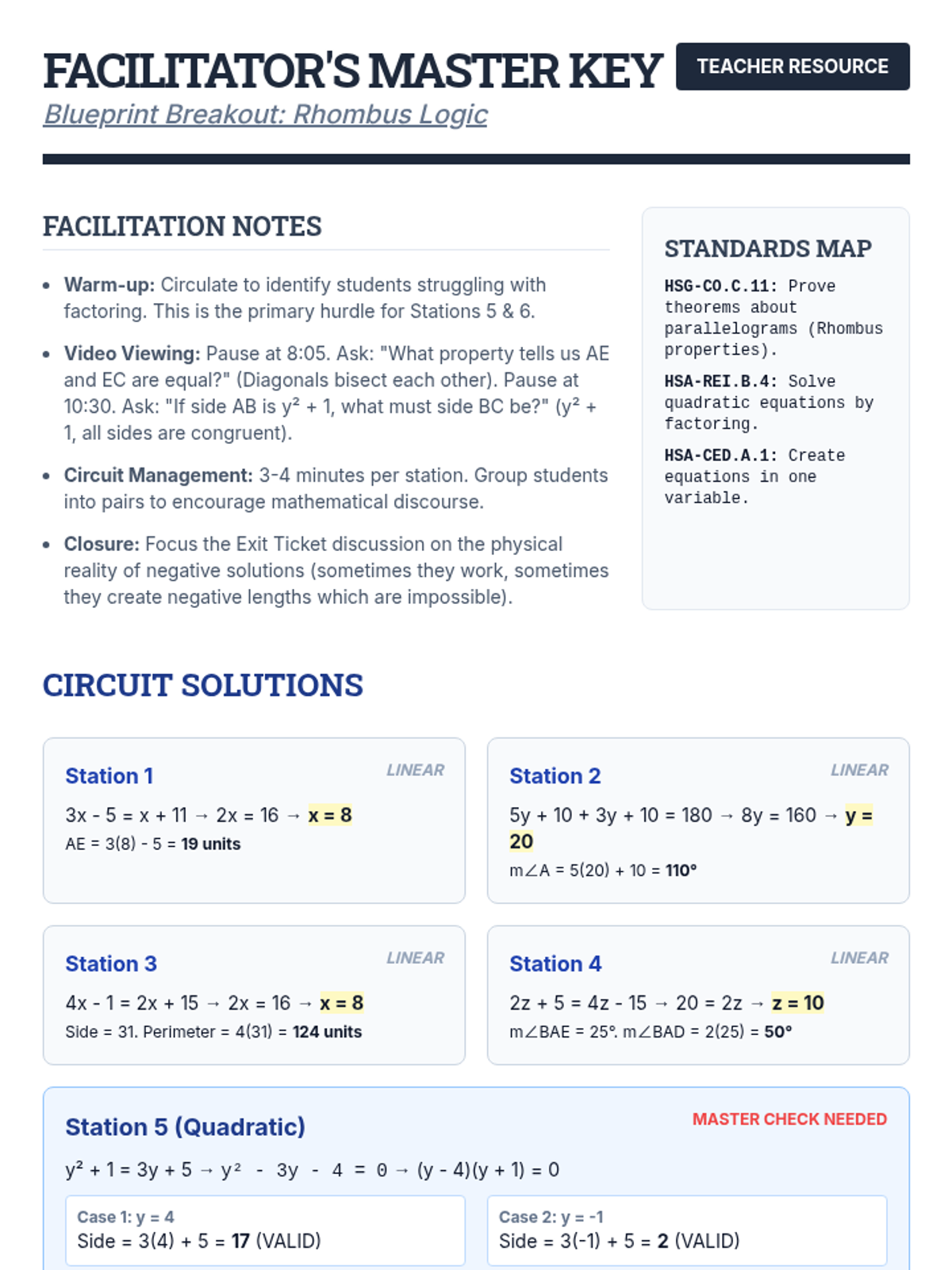
A high-school geometry lesson focusing on applying algebraic methods (linear and quadratic equations) to solve for unknown properties of rhombuses. Students will watch a targeted video, participate in a station-based circuit activity, and reflect on the validity of multiple solutions in geometric contexts.
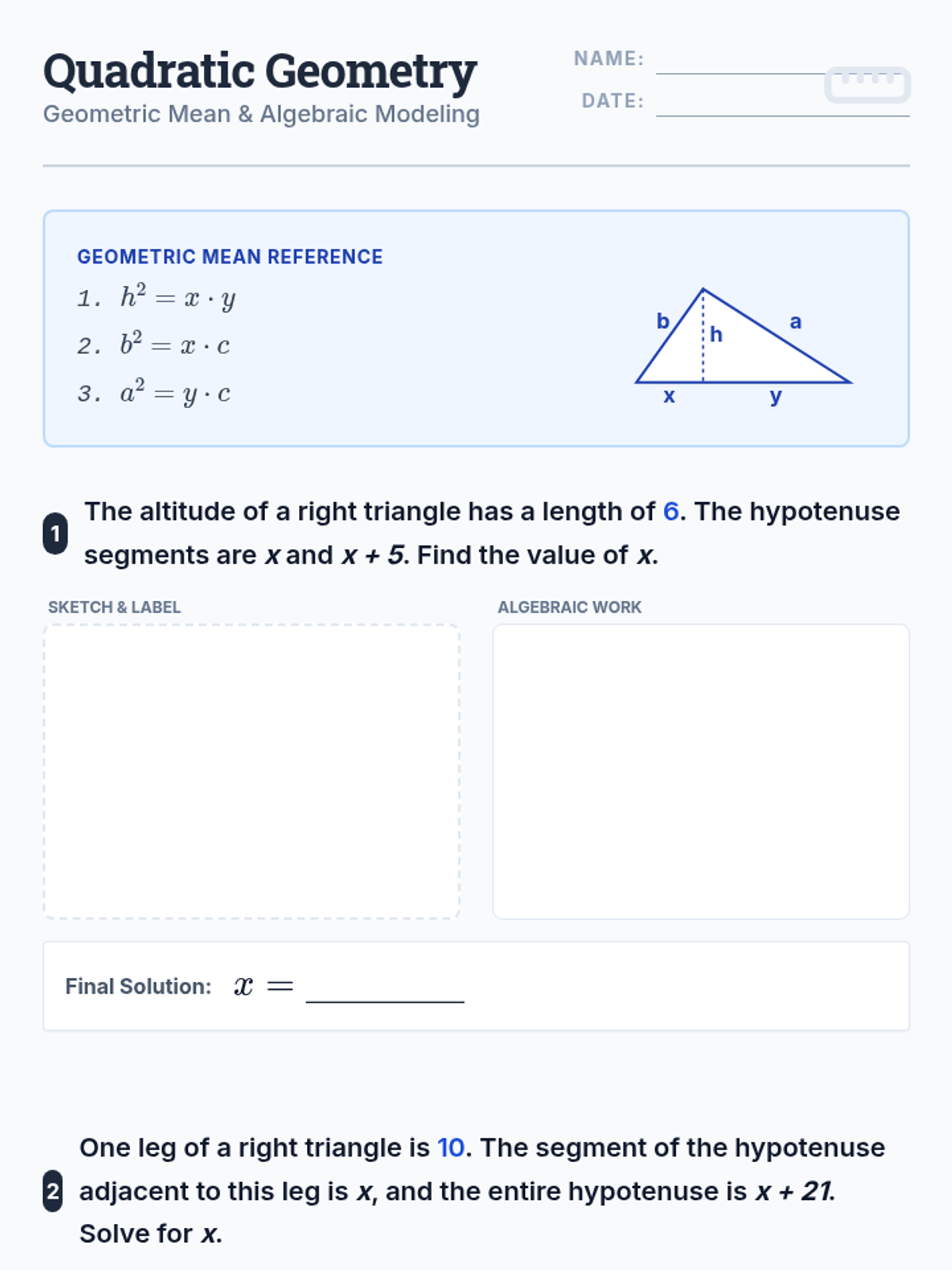
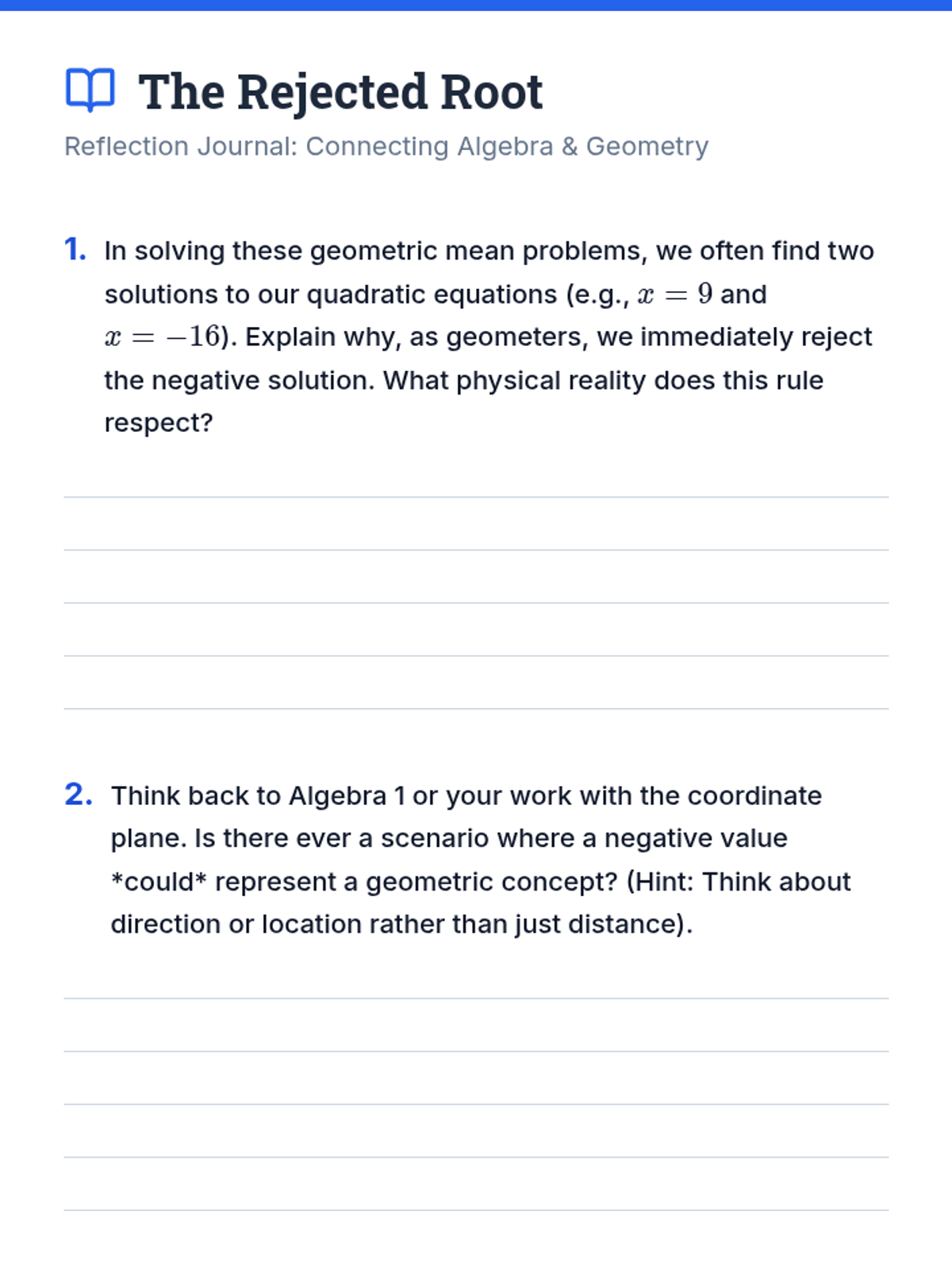
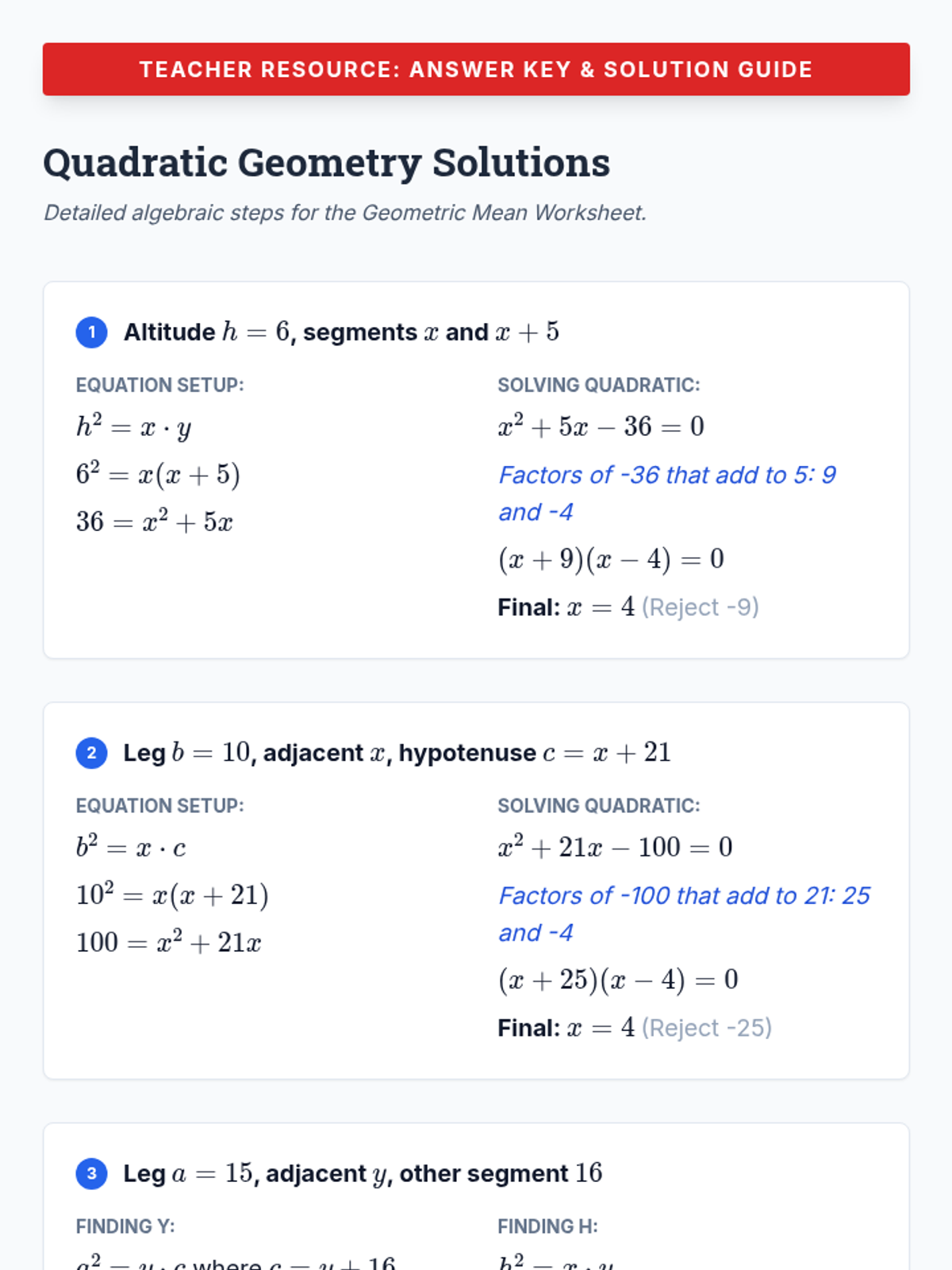
A high-school geometry lesson exploring the intersection of the Altitude on Hypotenuse Theorem and quadratic equations, focusing on algebraic modeling and the rejection of extraneous solutions.
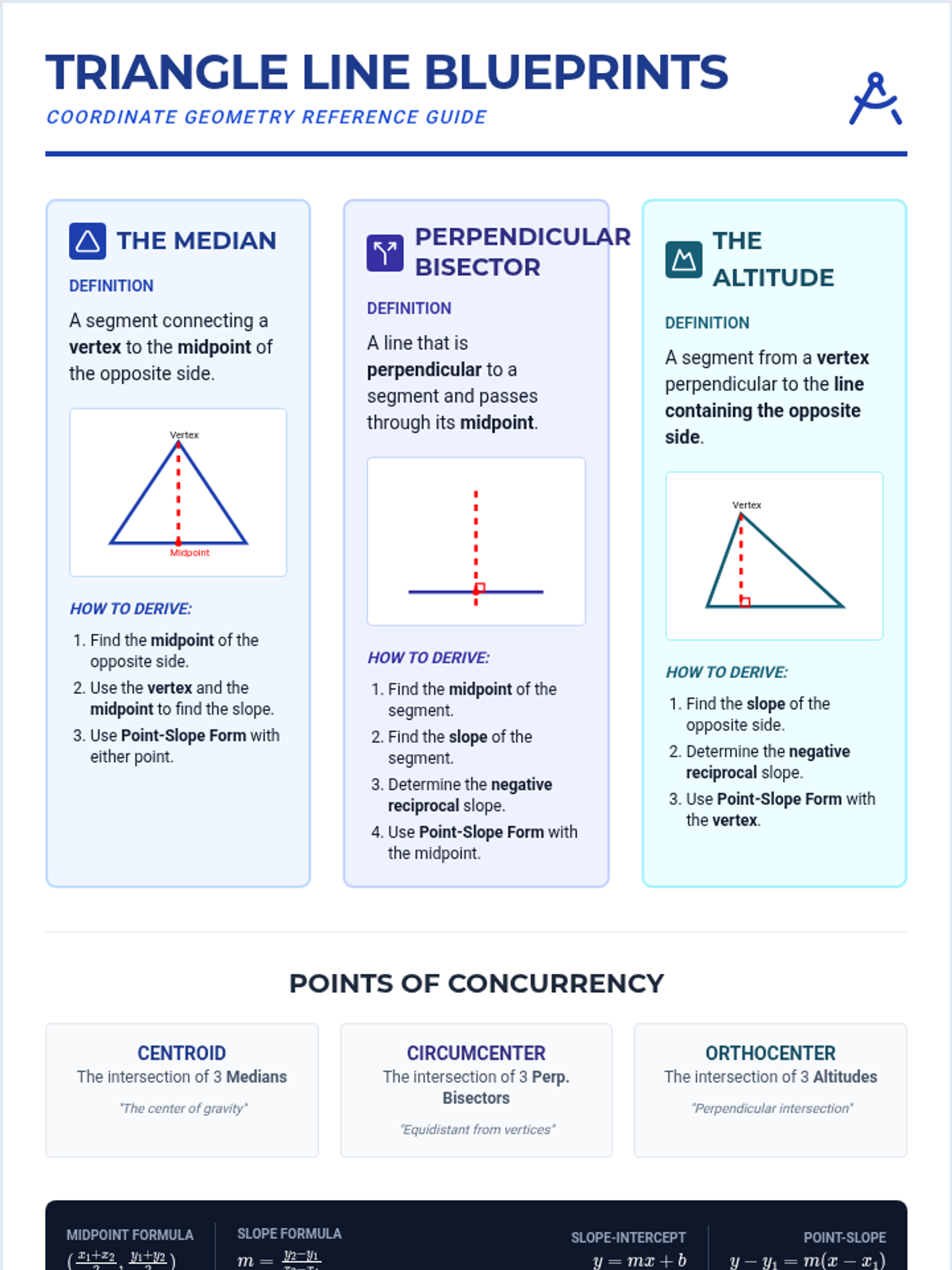
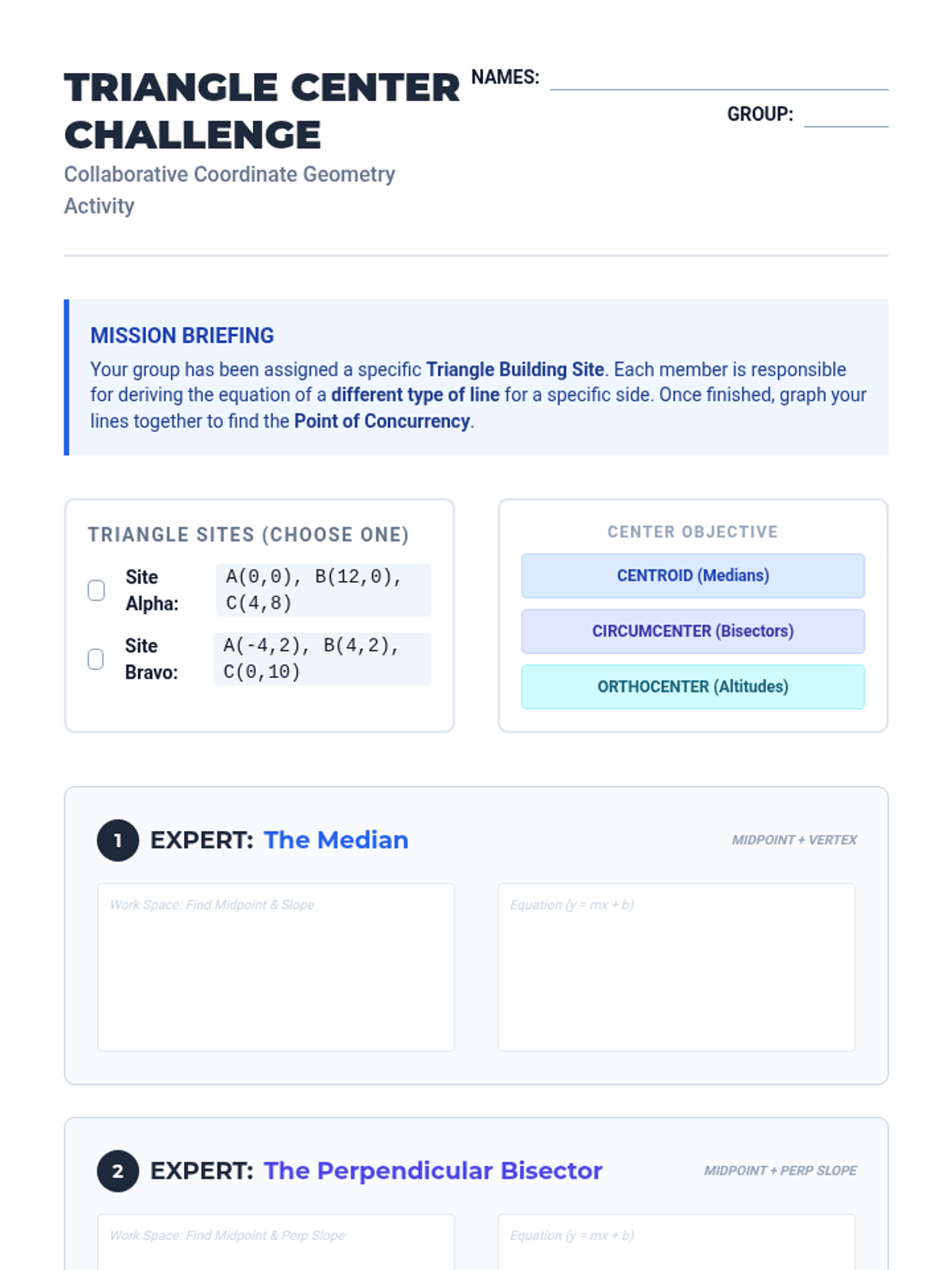
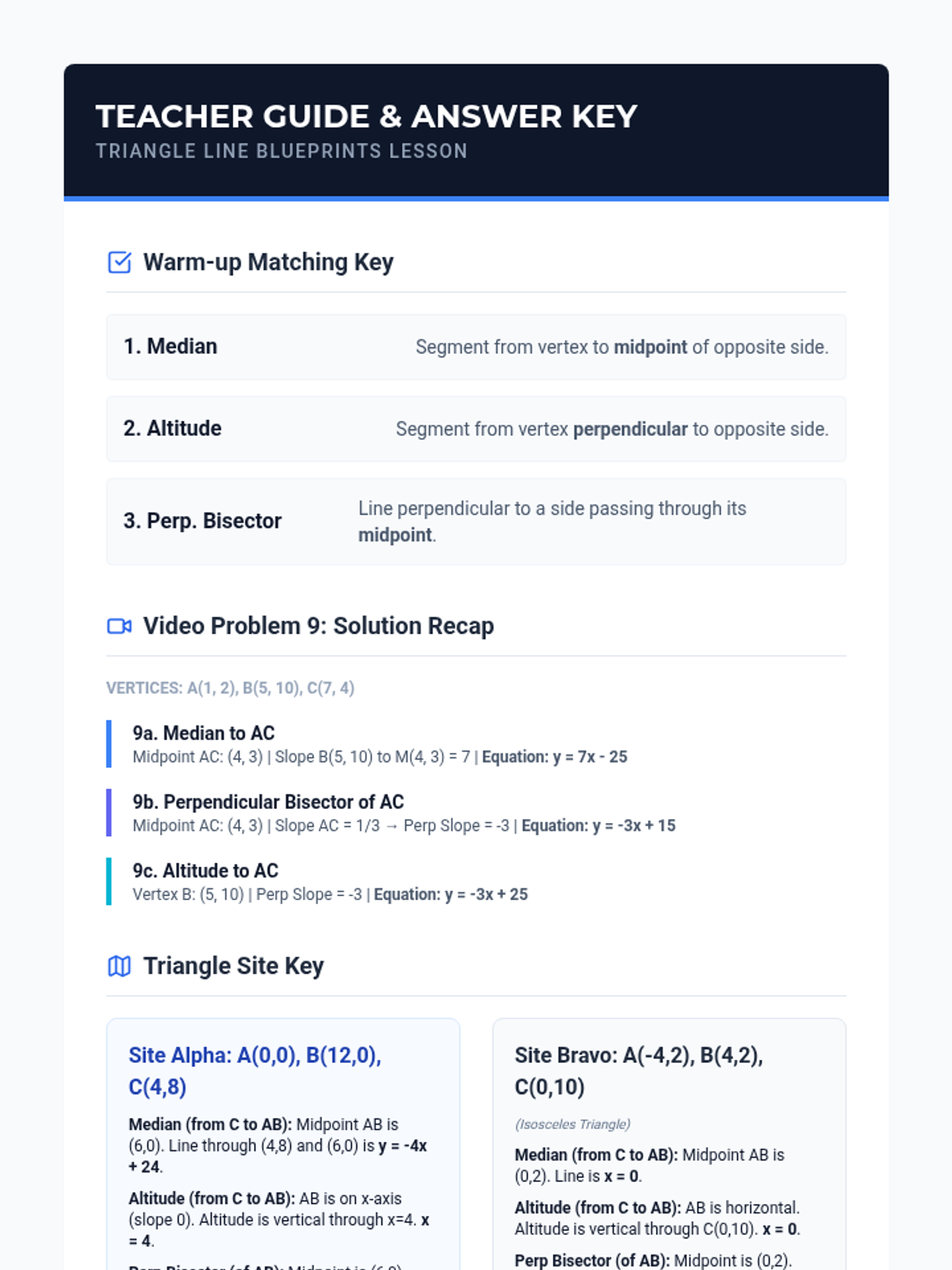
A high school geometry lesson where students derive equations for special segments in triangles (medians, altitudes, perpendicular bisectors) and discover their points of concurrency using coordinate geometry.
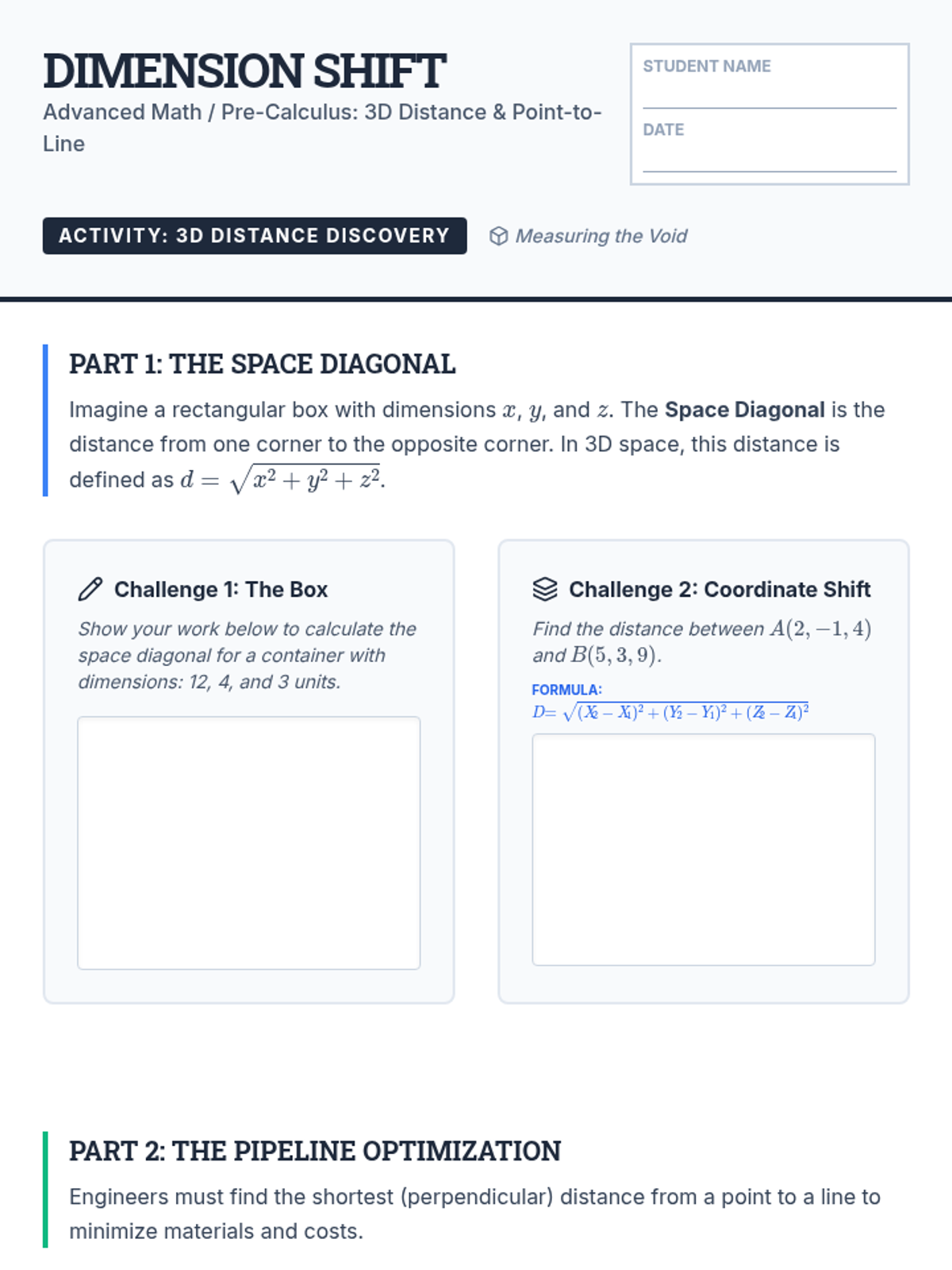
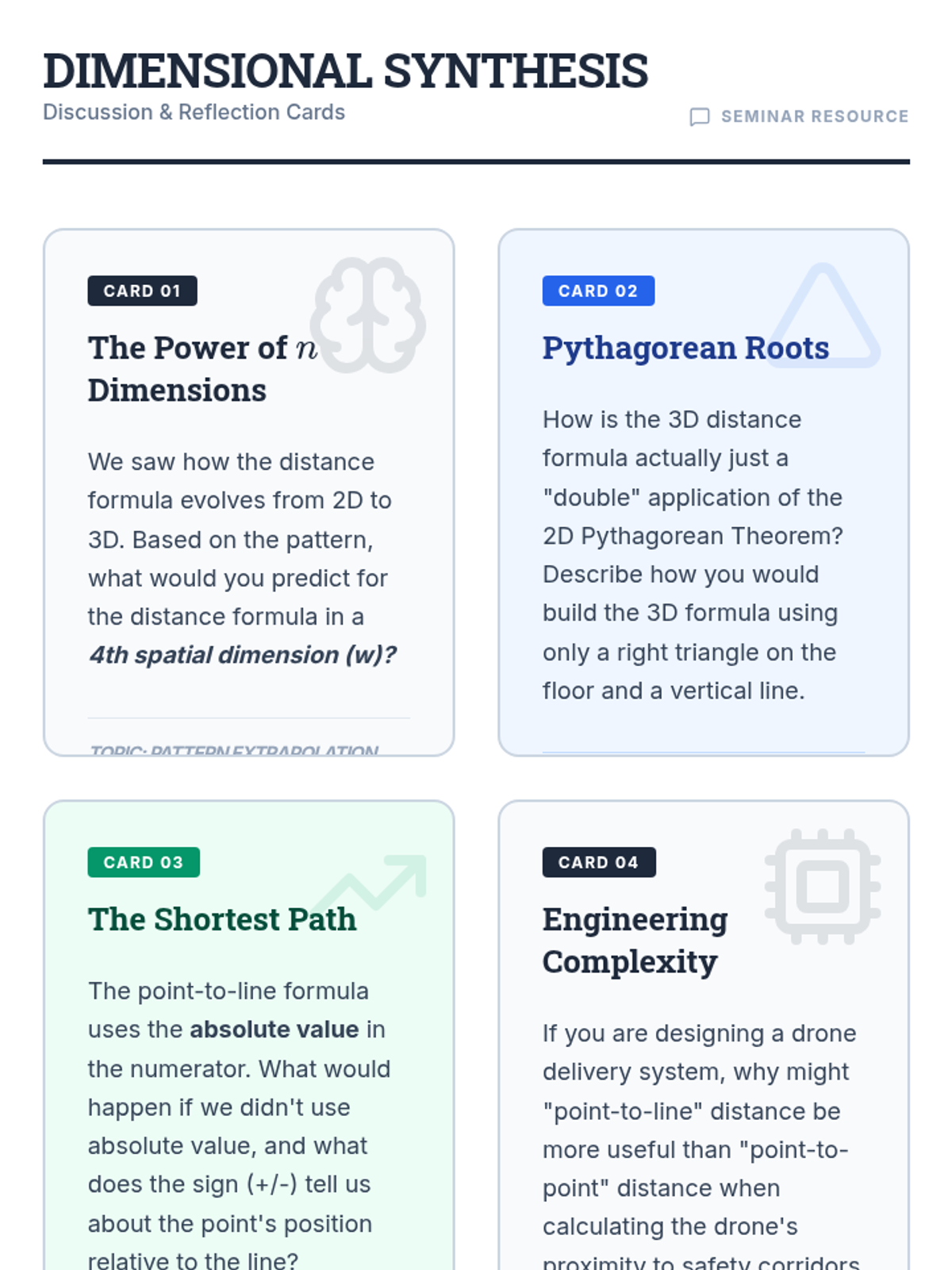
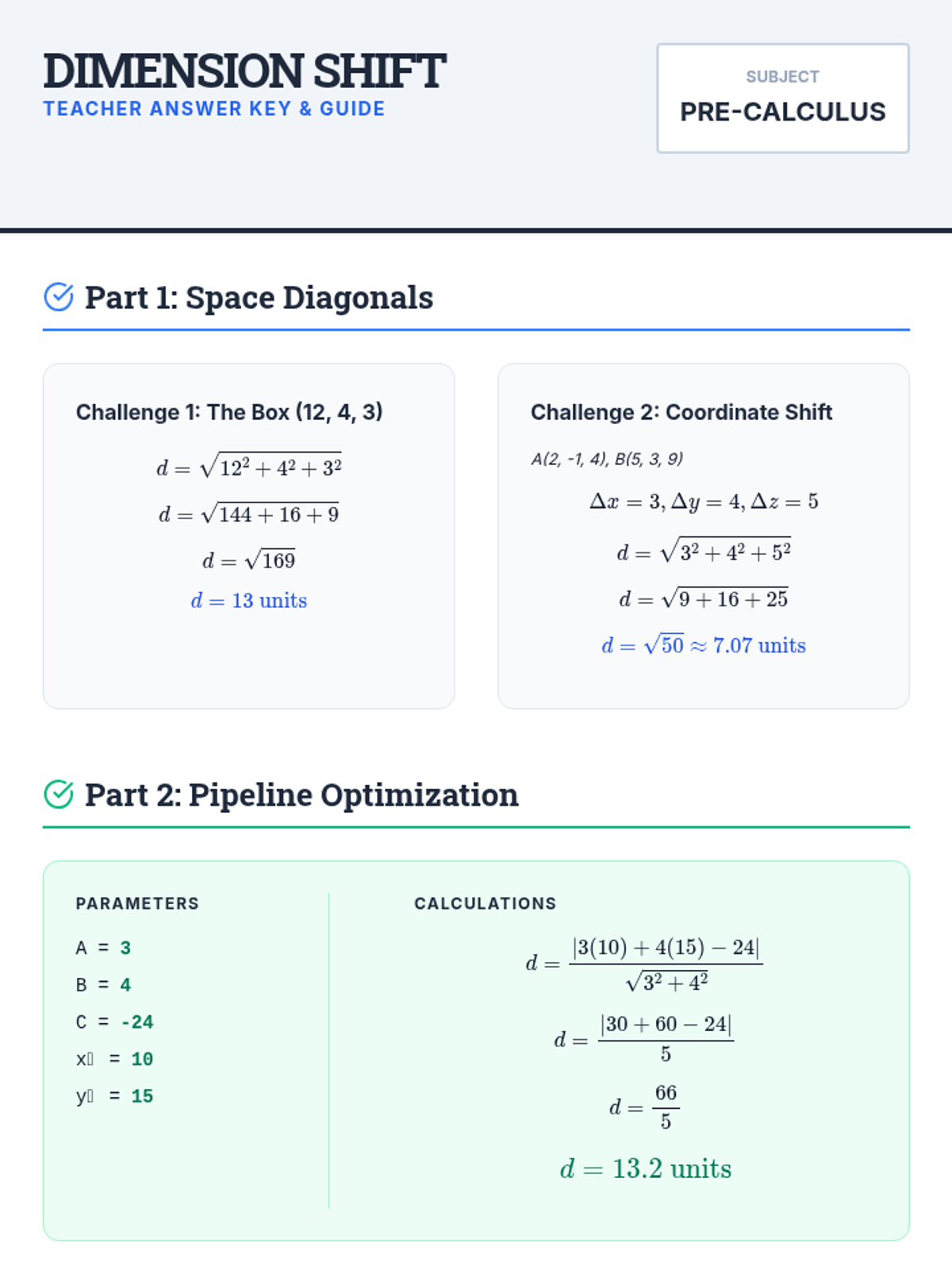
A high-school level exploration of coordinate geometry that extends 2D distance concepts into 3D space and introduces the point-to-line distance formula for optimization problems. Students will visualize spatial diagonals and solve real-world distance challenges.
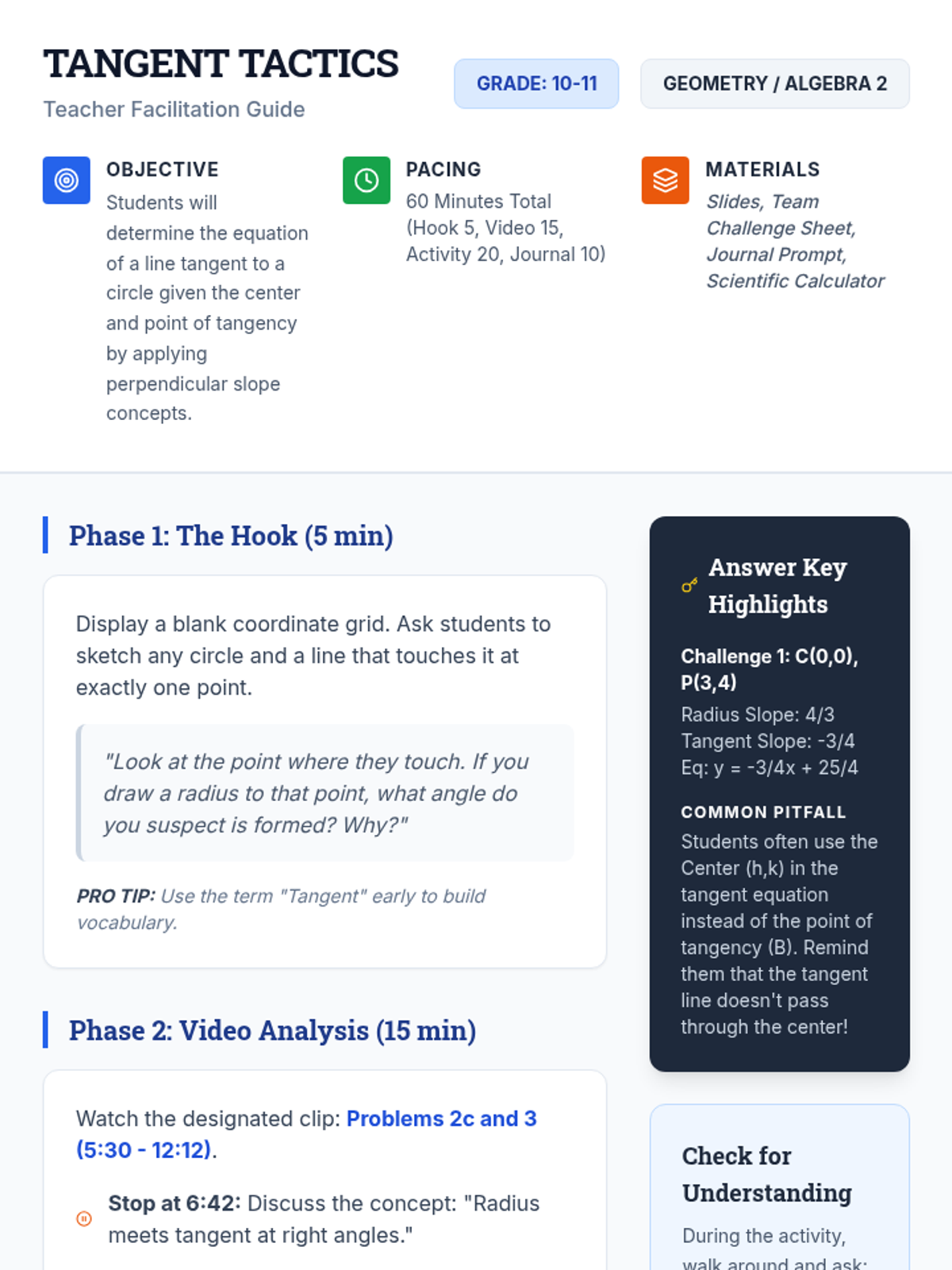
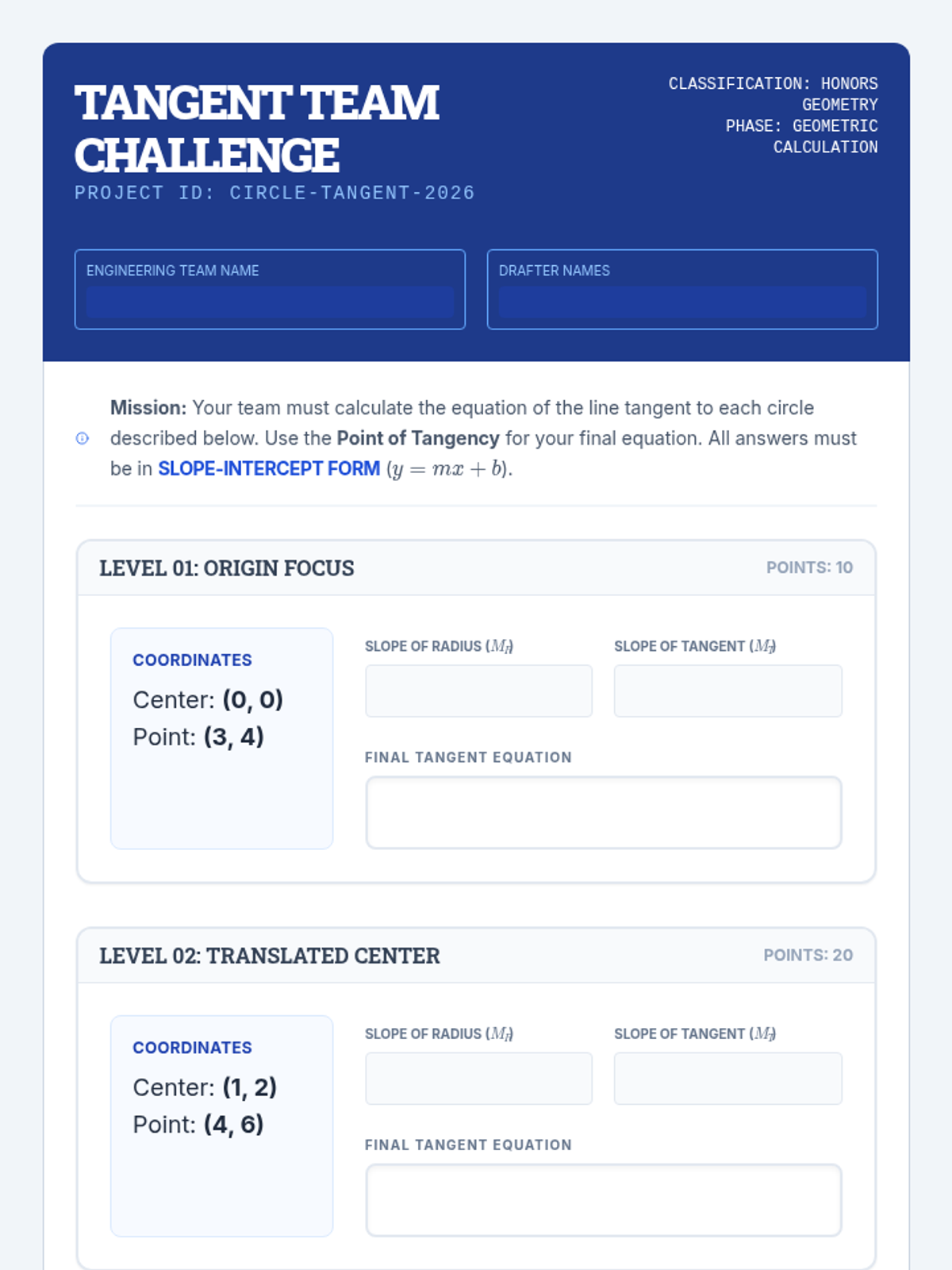
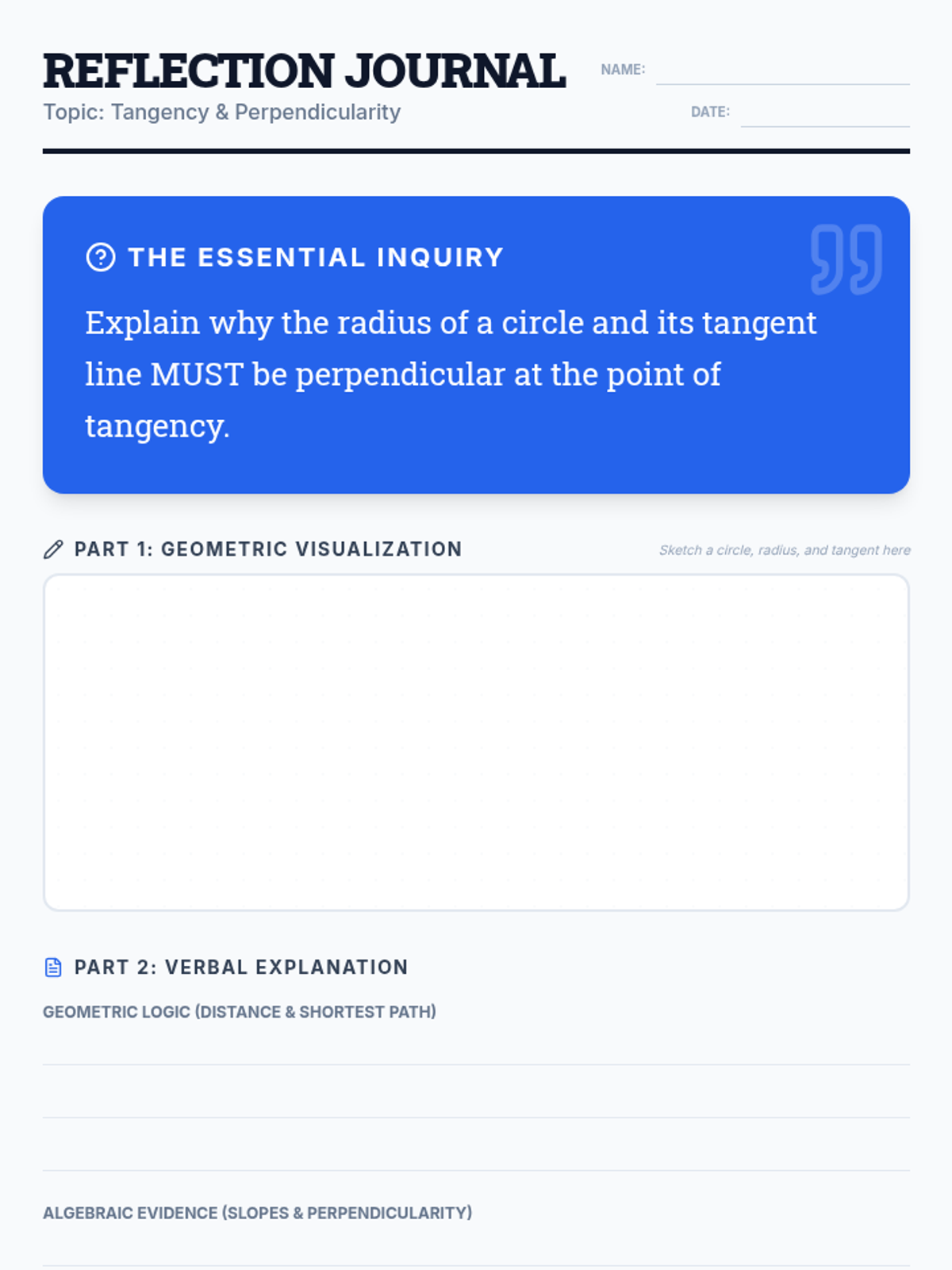
A high school geometry lesson exploring the relationship between circle equations and tangent lines, featuring a video analysis and a competitive group challenge.
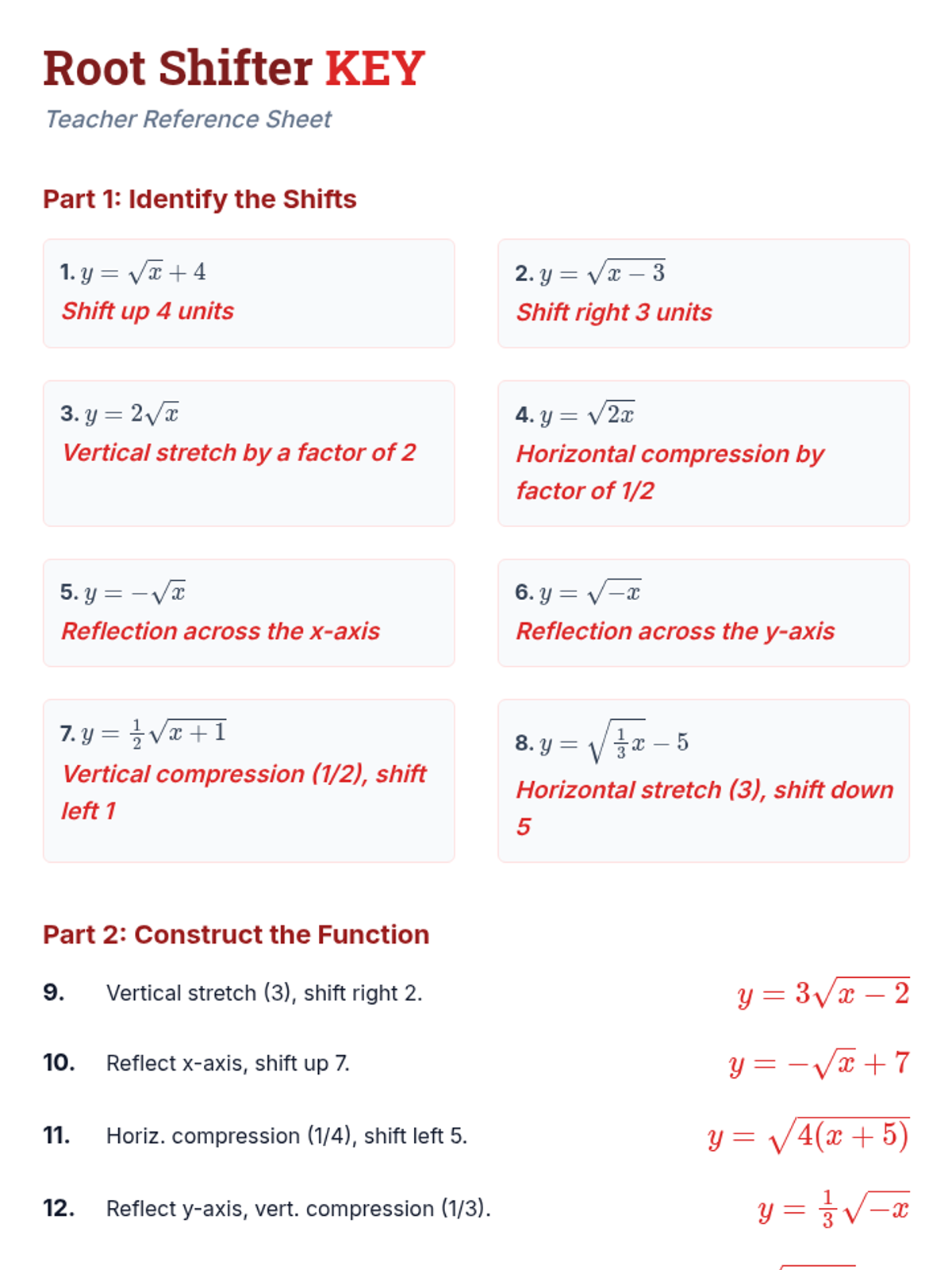
A comprehensive lesson on transforming square root functions, covering translations, dilations, and reflections through equations and graphing.
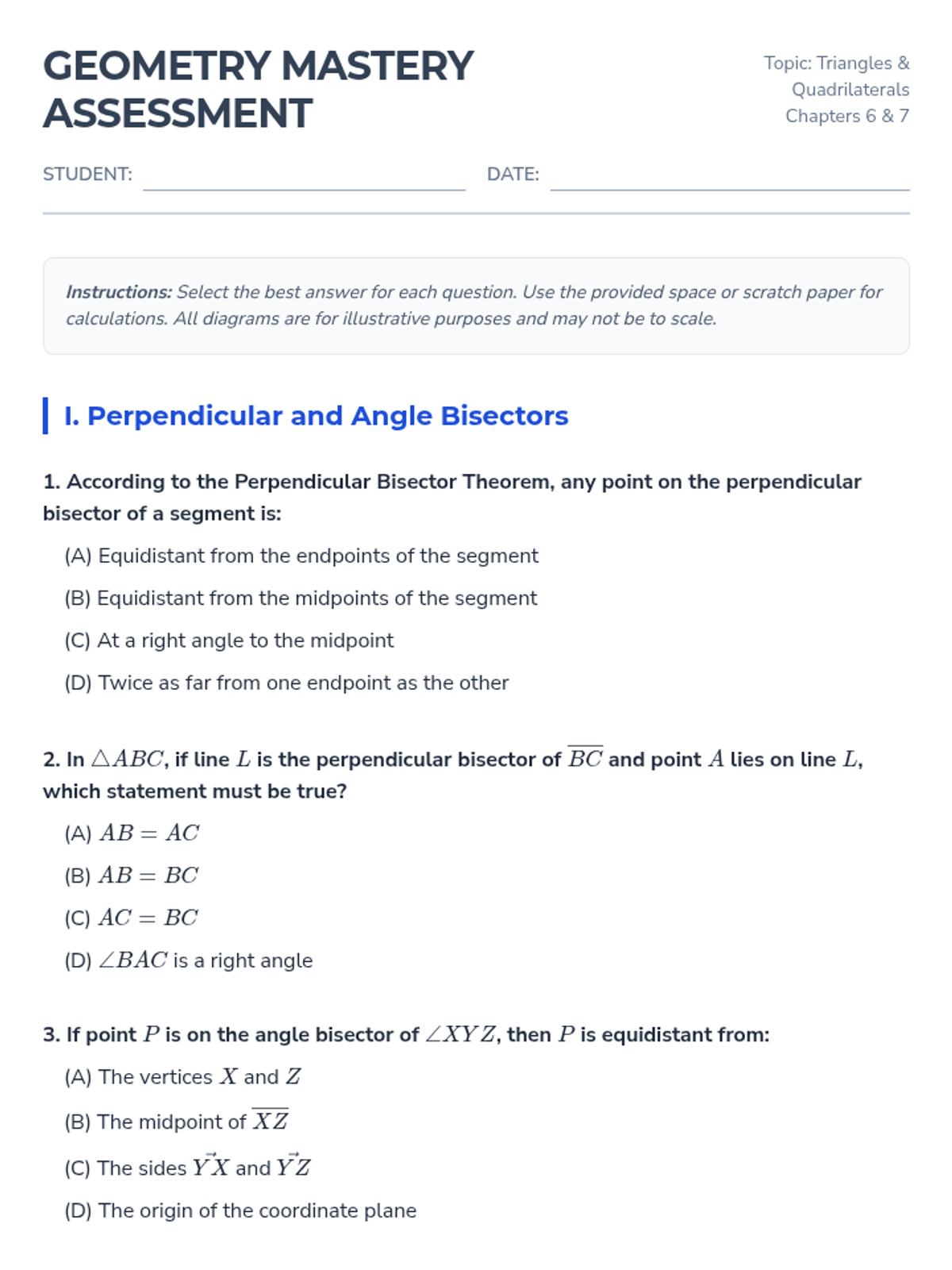
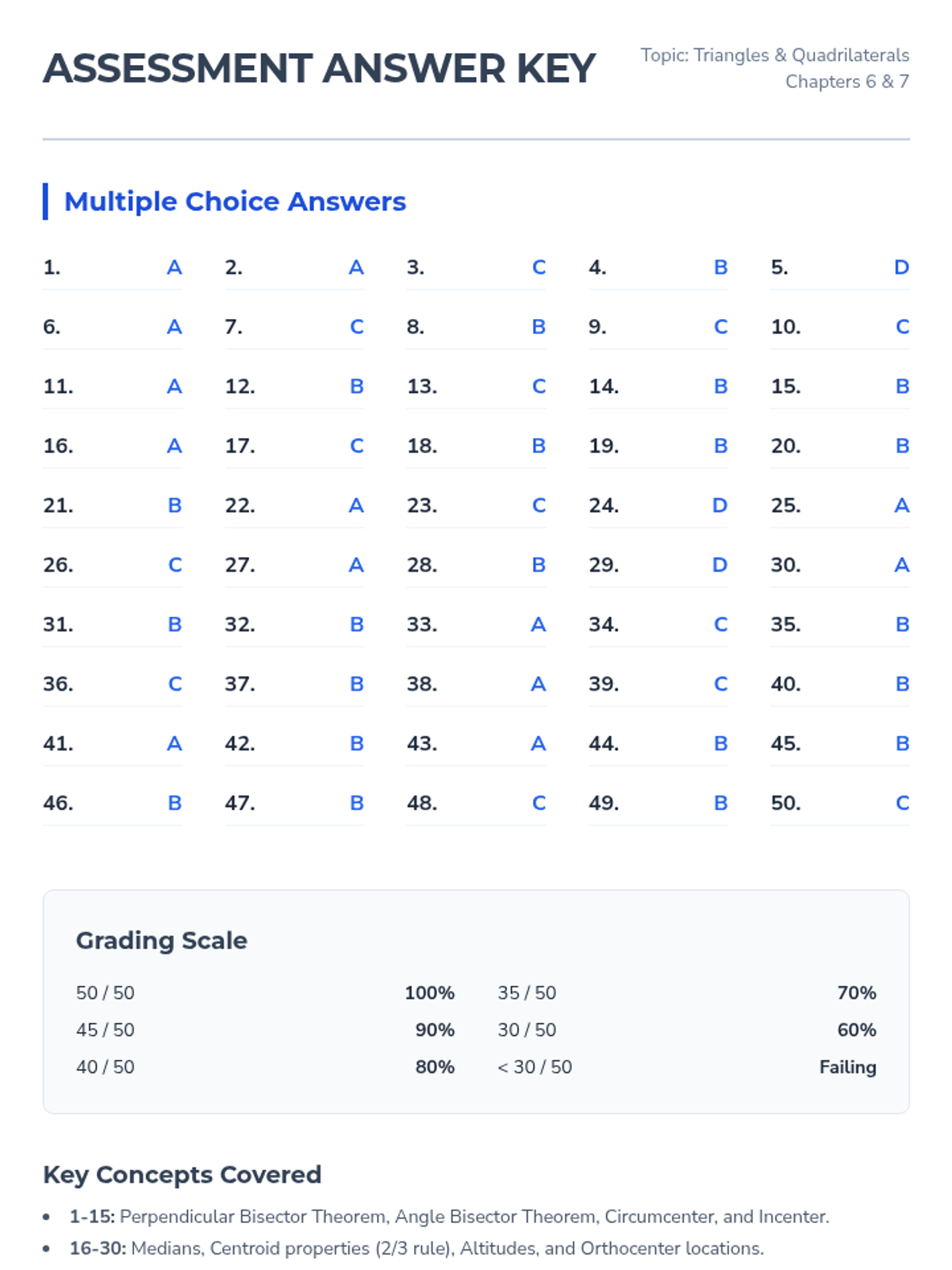
A comprehensive assessment covering triangle relationships (bisectors, medians, altitudes) and the properties of parallelograms, featuring conceptual and problem-solving questions.
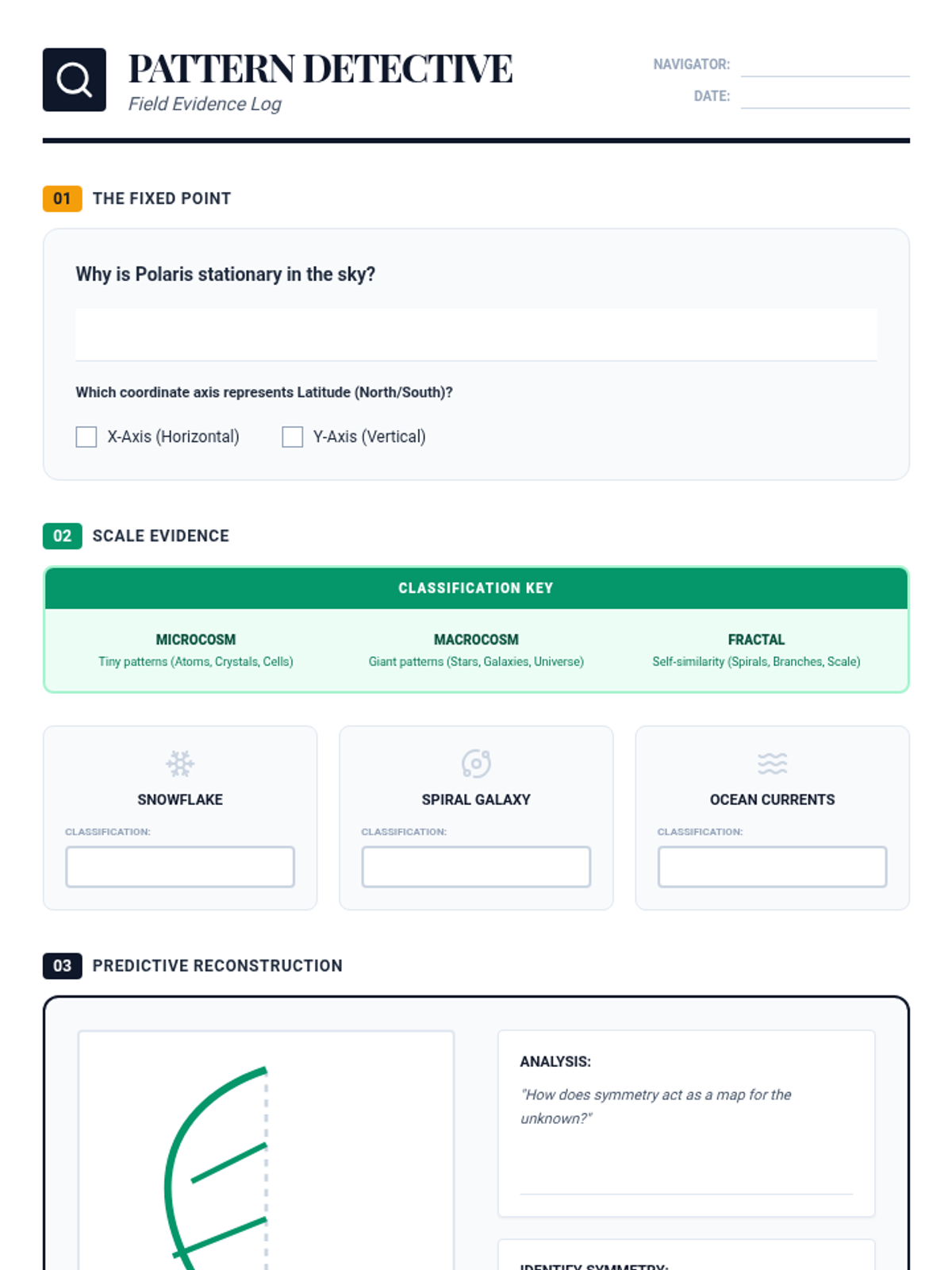
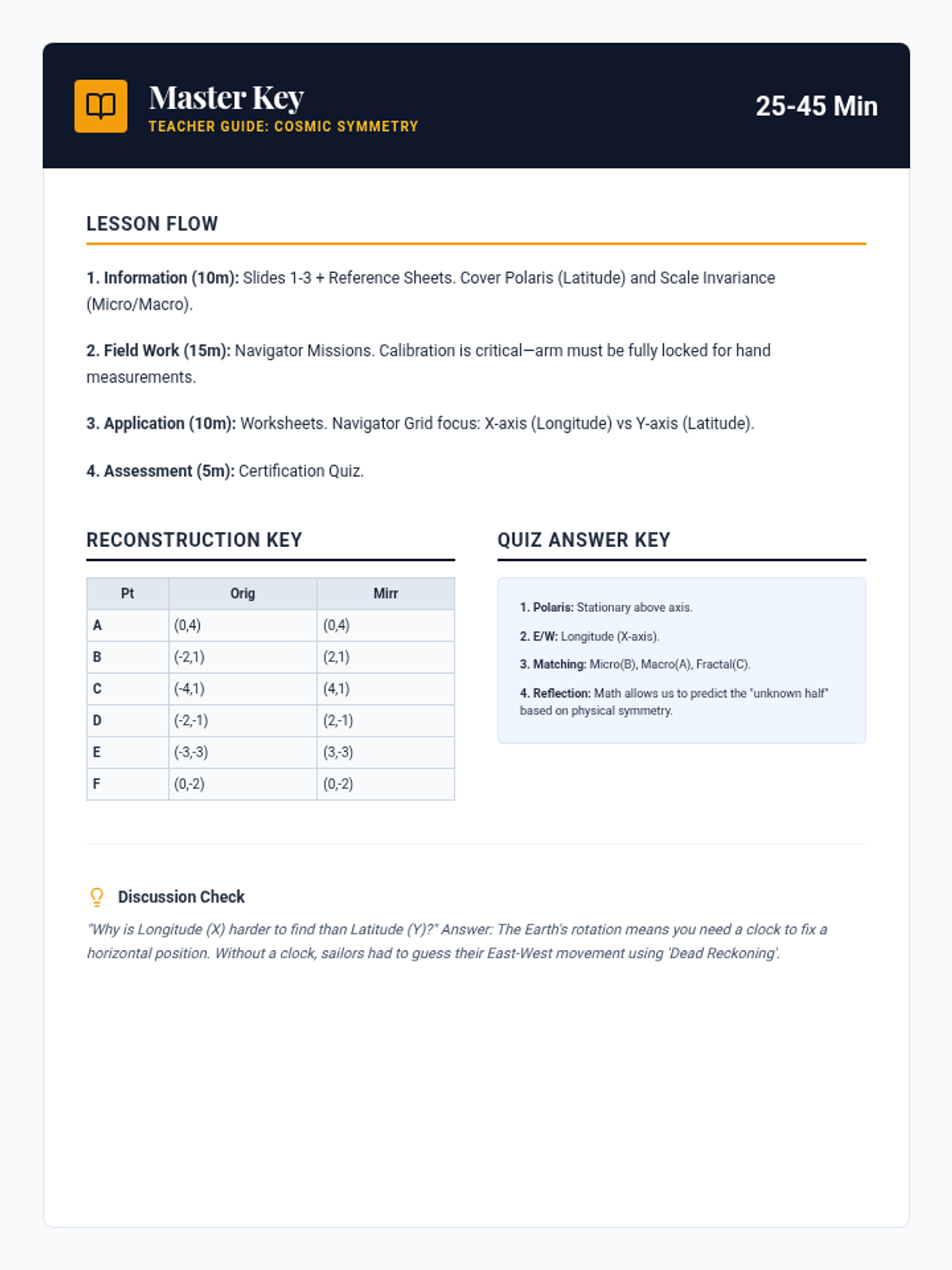
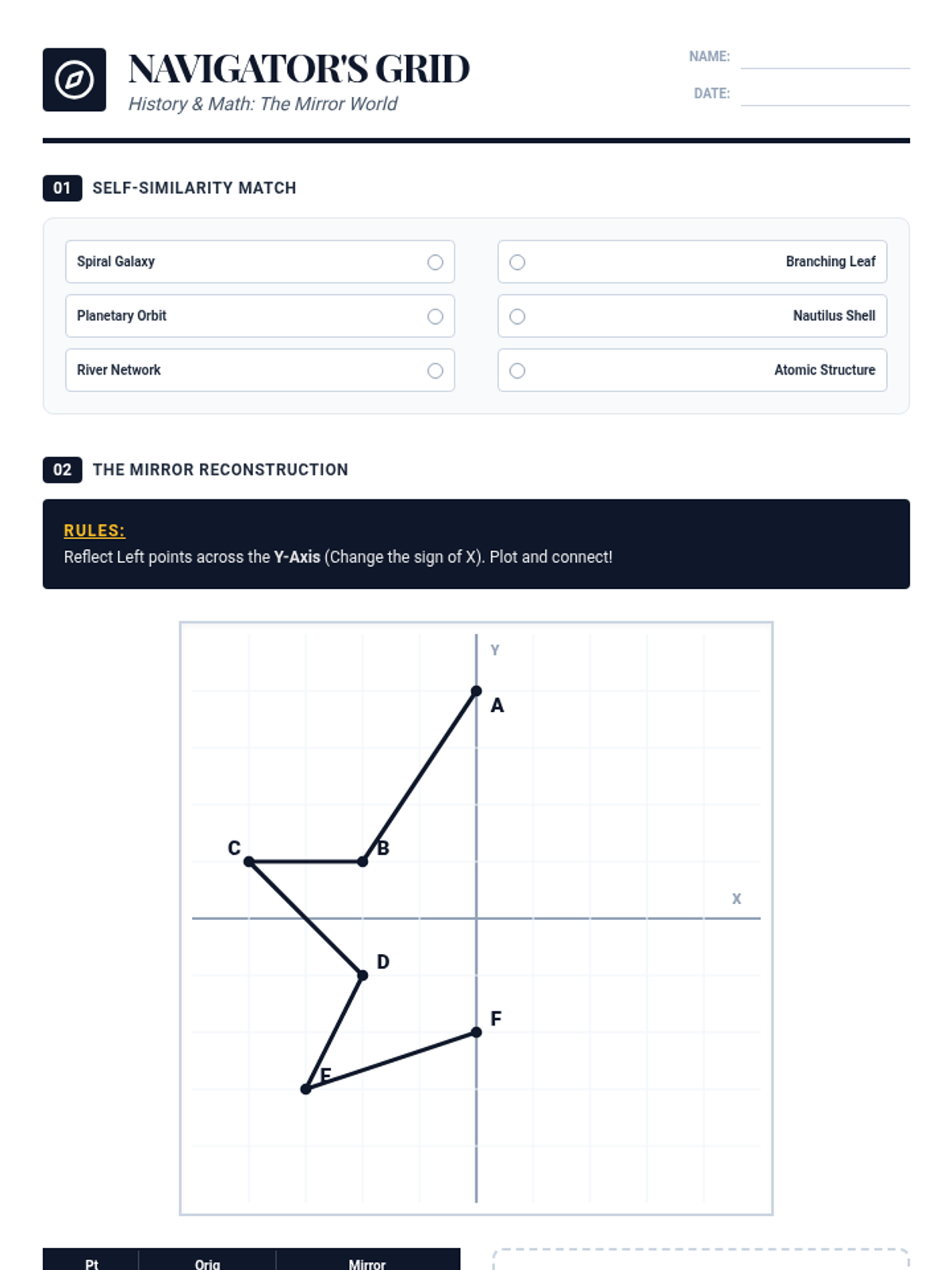
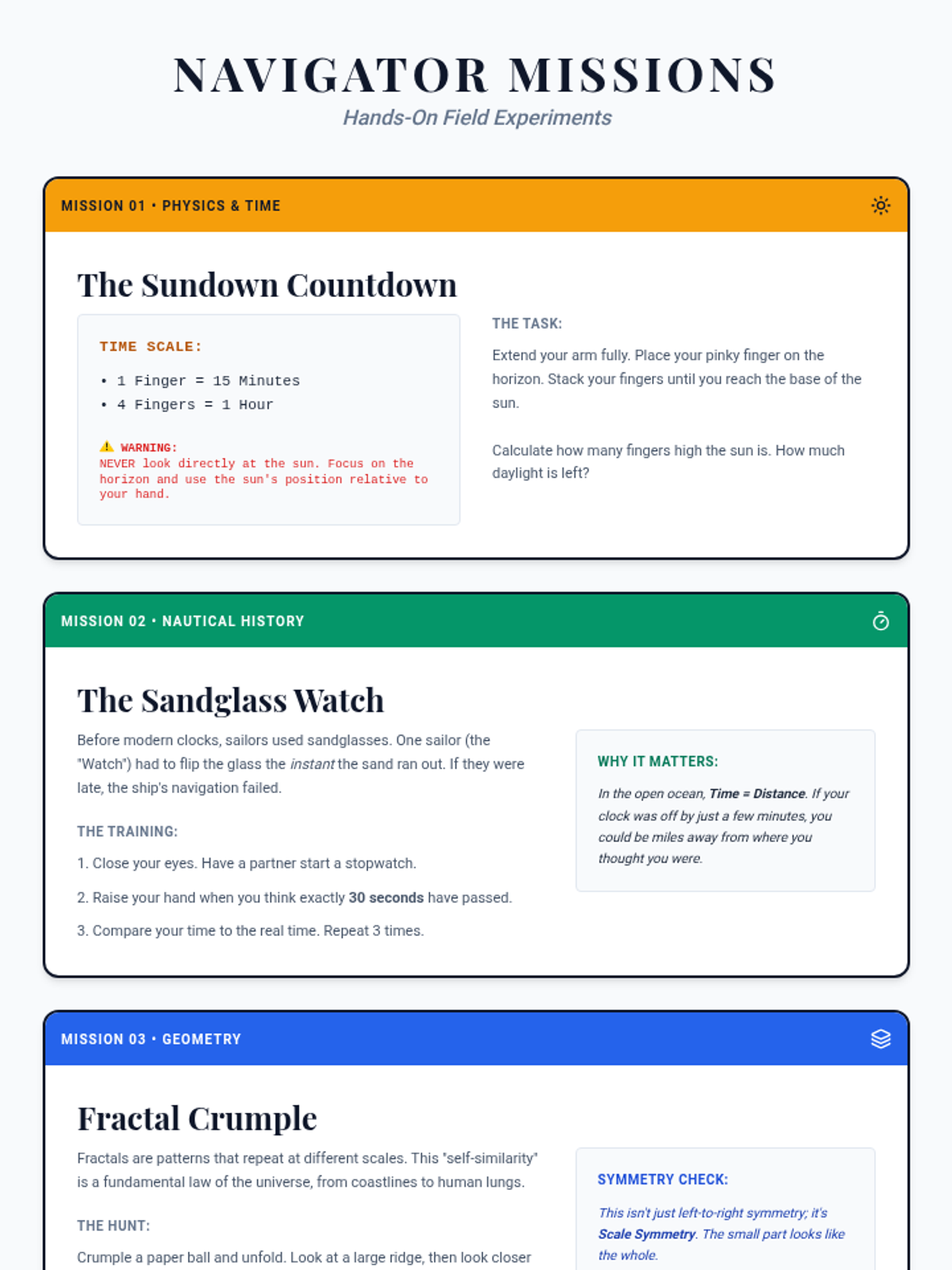
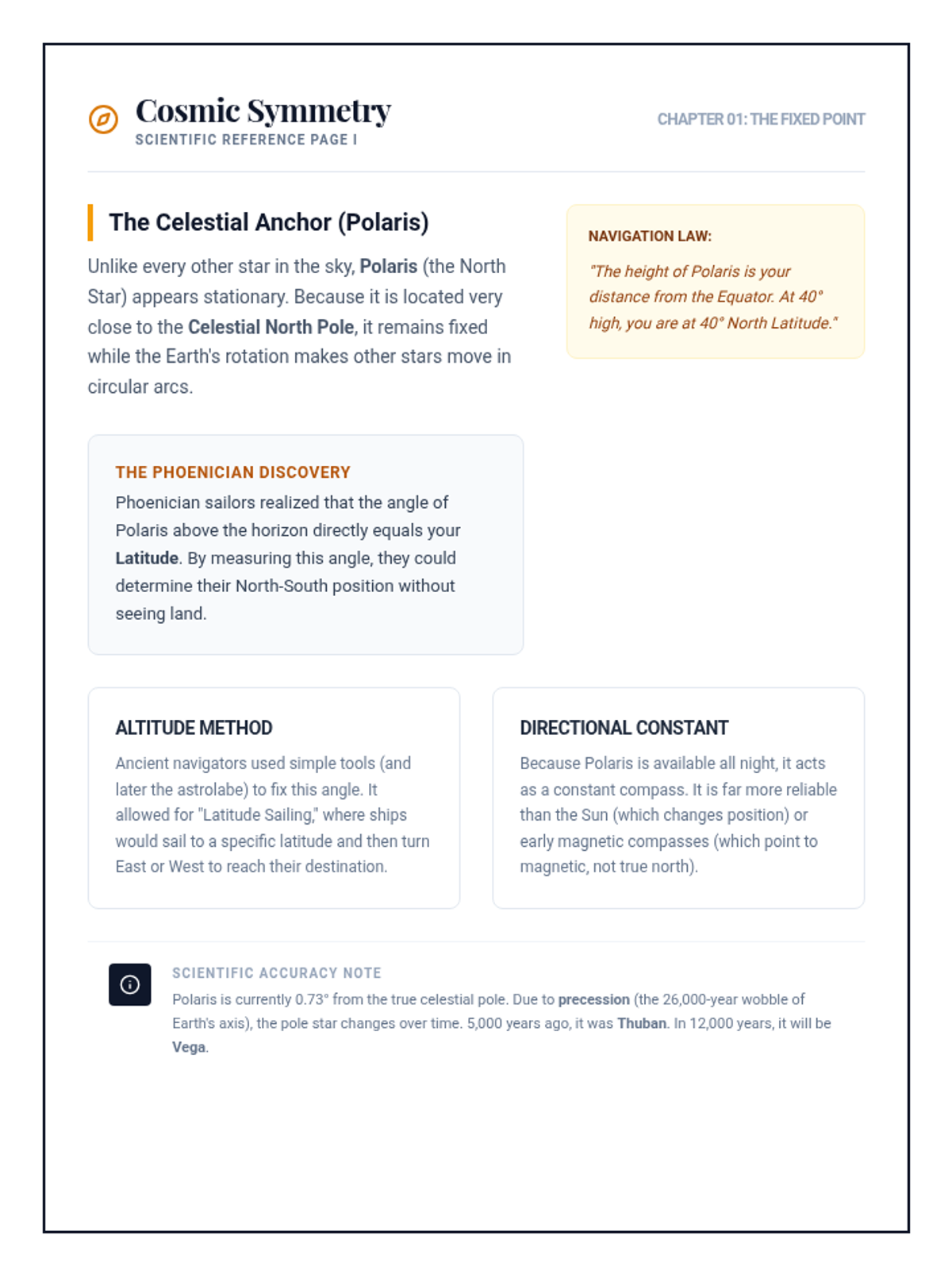
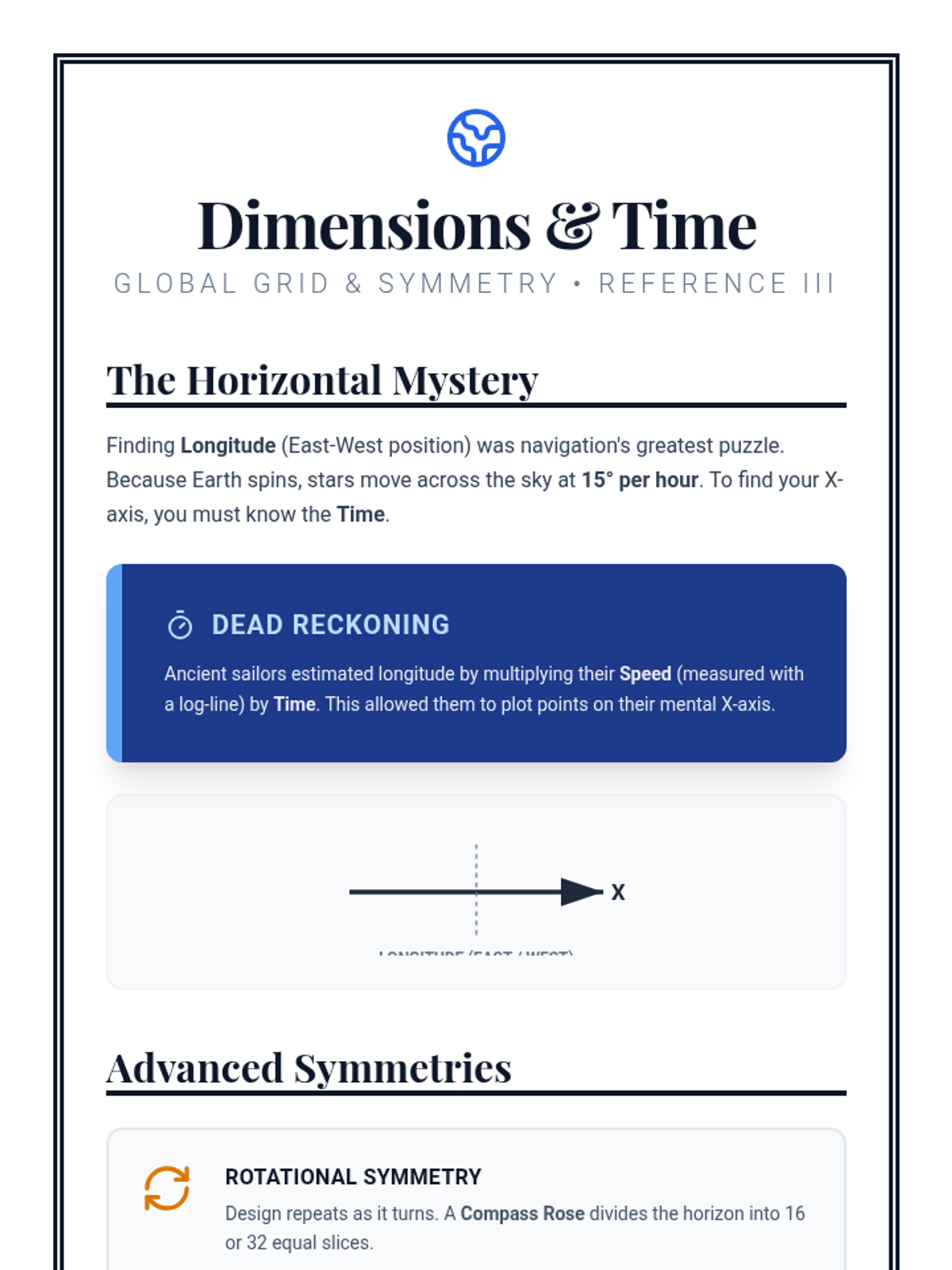
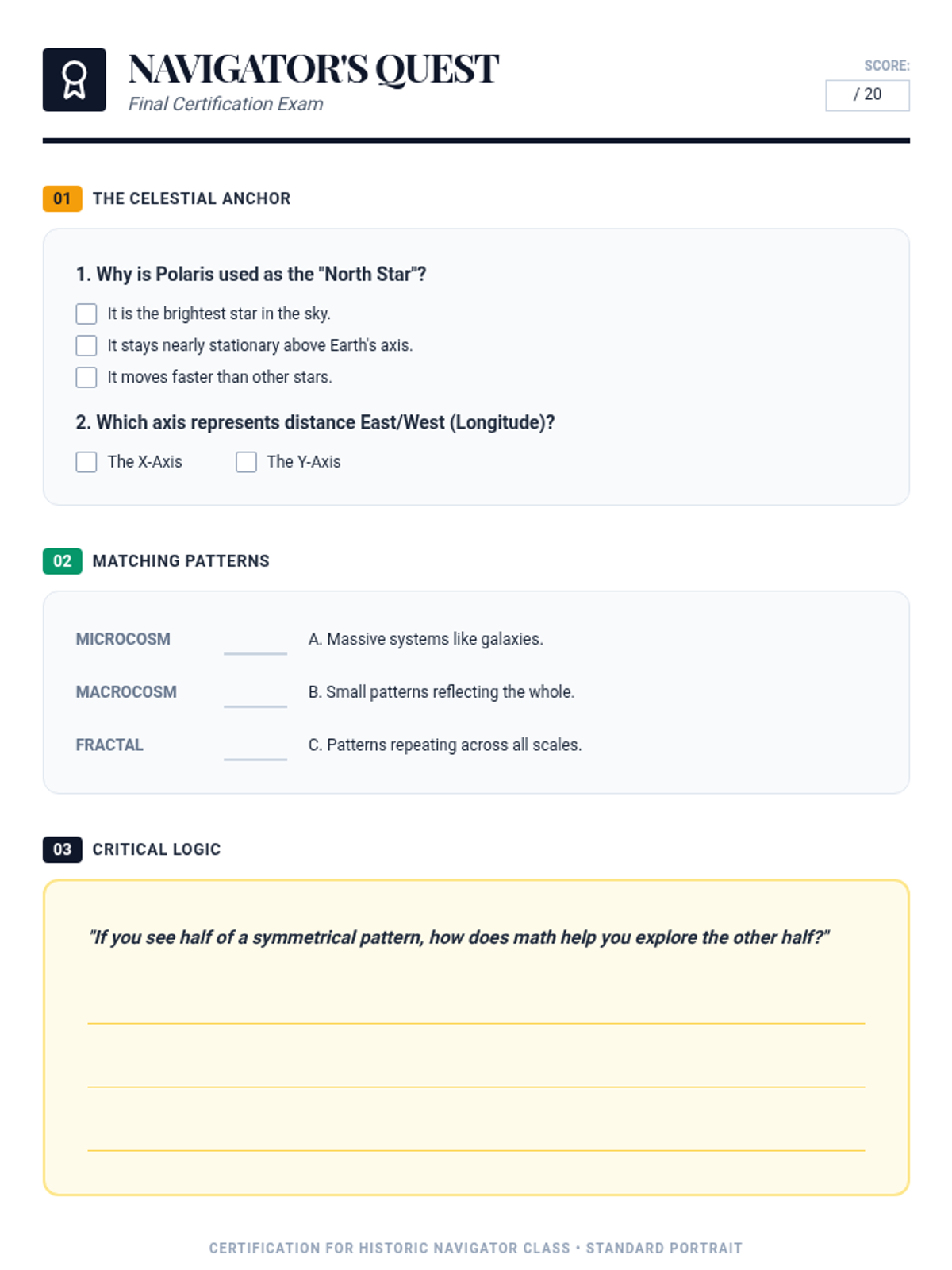
A 15-25 minute exploration into how ancient navigators used fixed points (the North Star) and the repeating patterns of the universe (microcosms, macrocosms, and symmetry) to navigate without modern technology.
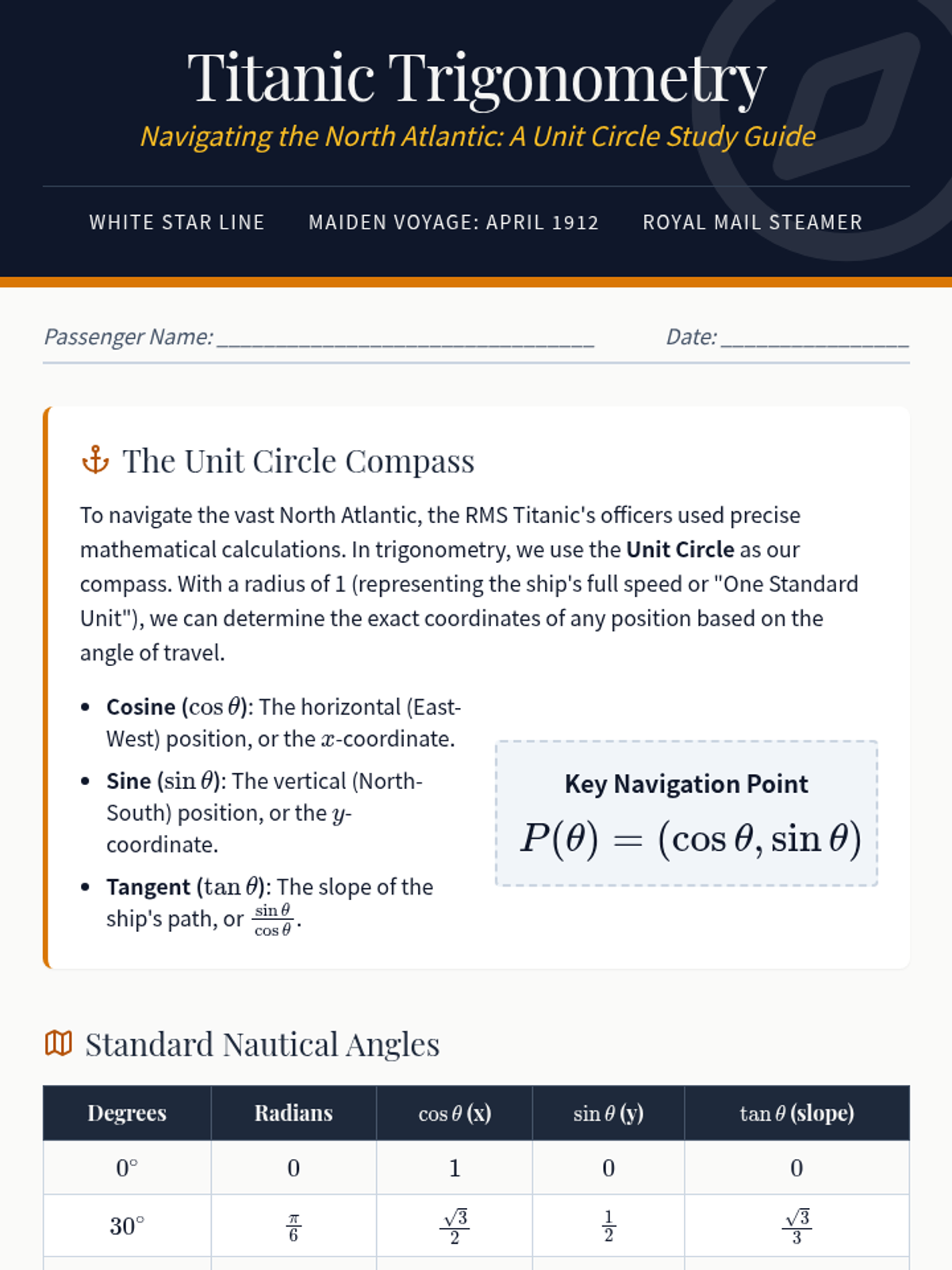
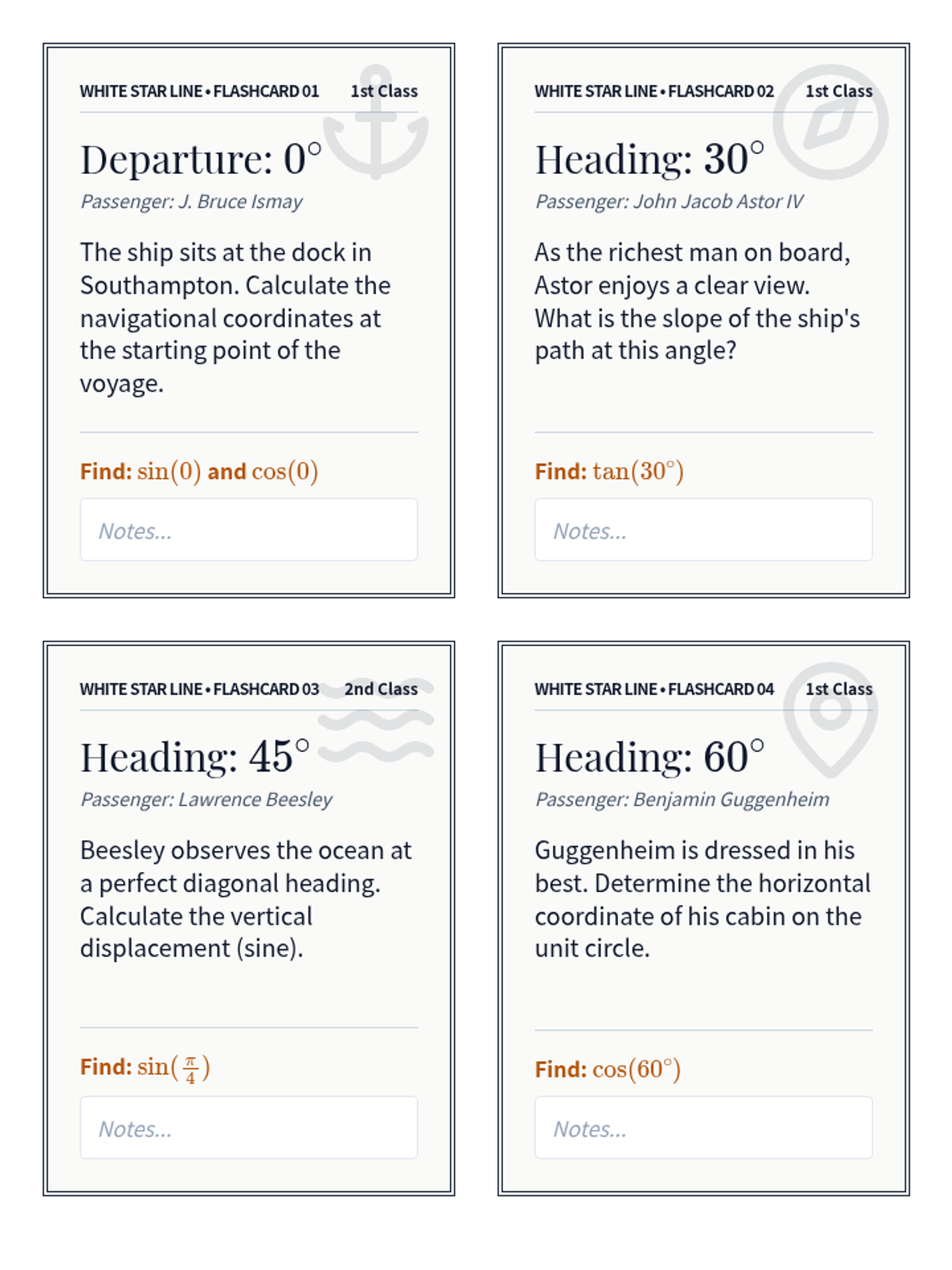
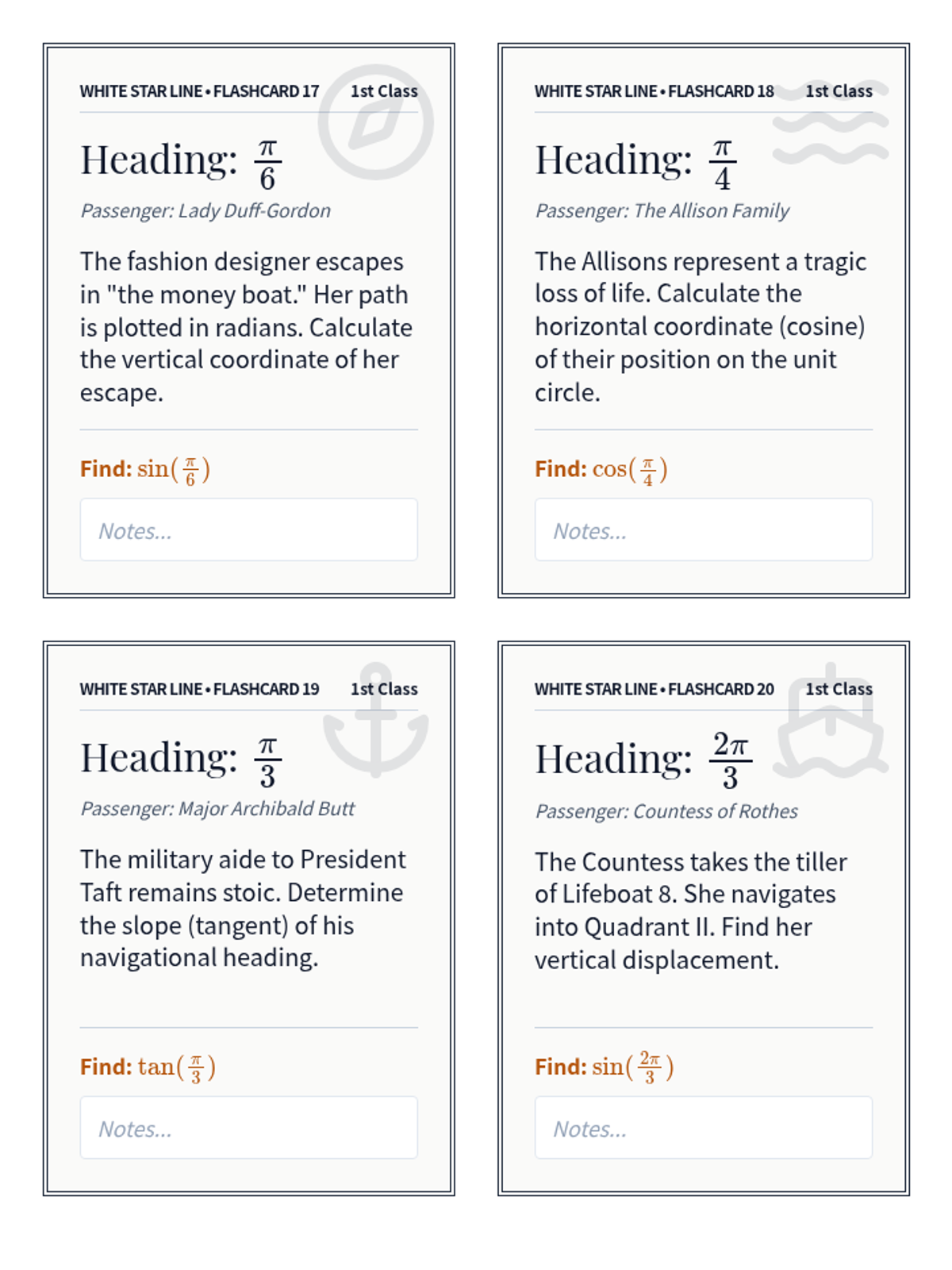
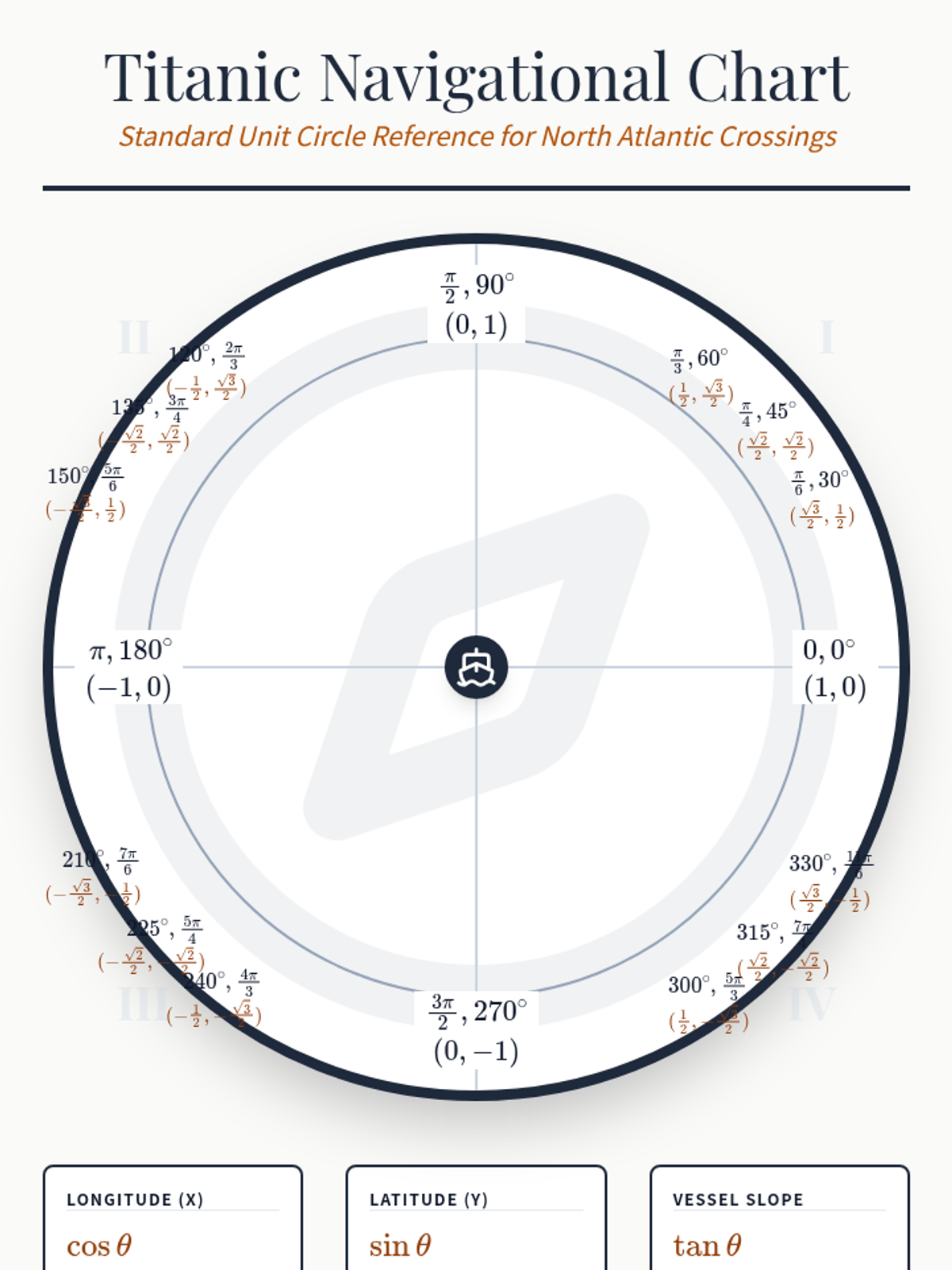
A maritime-themed lesson exploring trigonometry through the lens of the Titanic's maiden voyage. Students master unit circle coordinates and trigonometric values using historical figures and navigation scenarios.
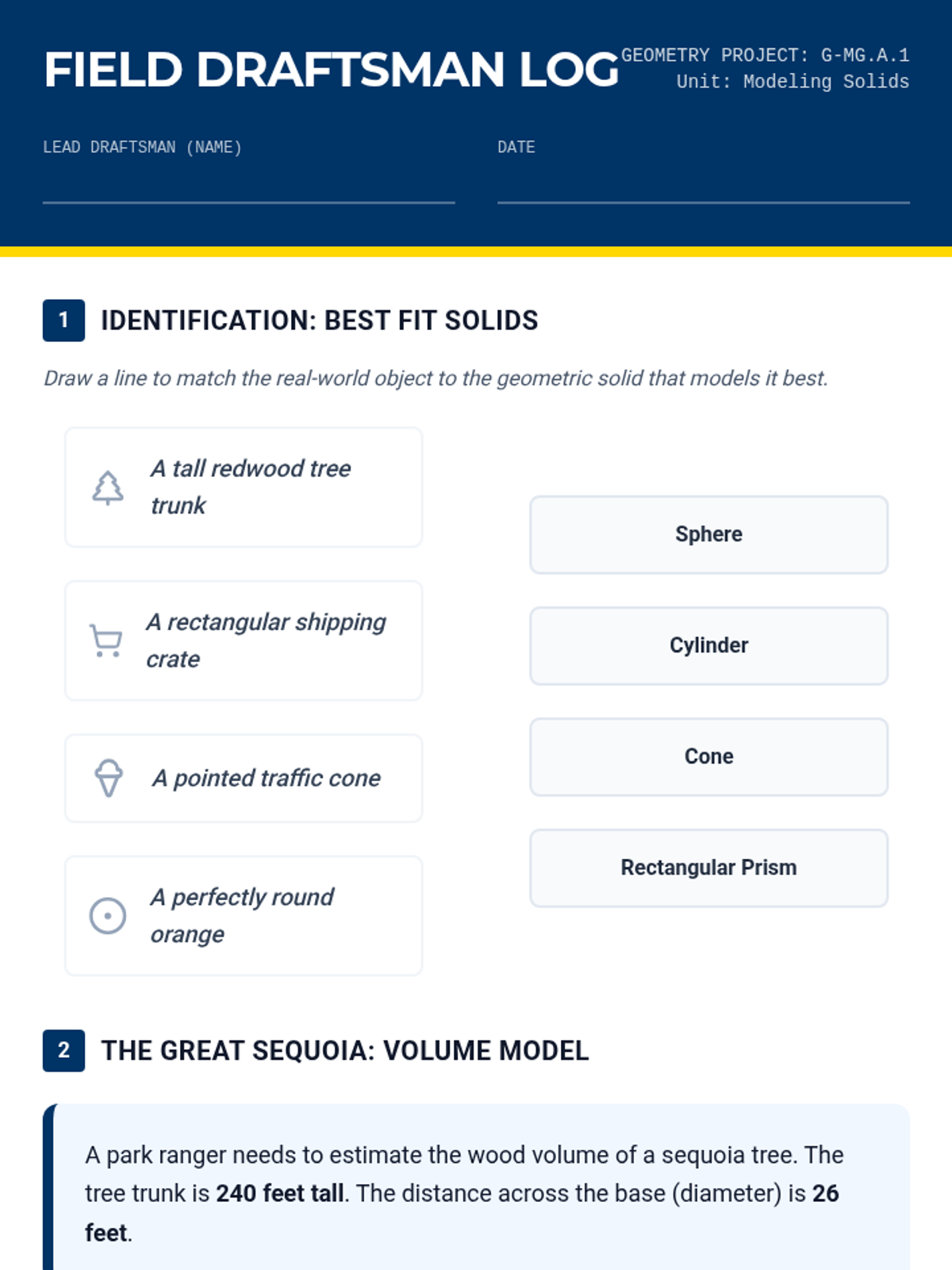
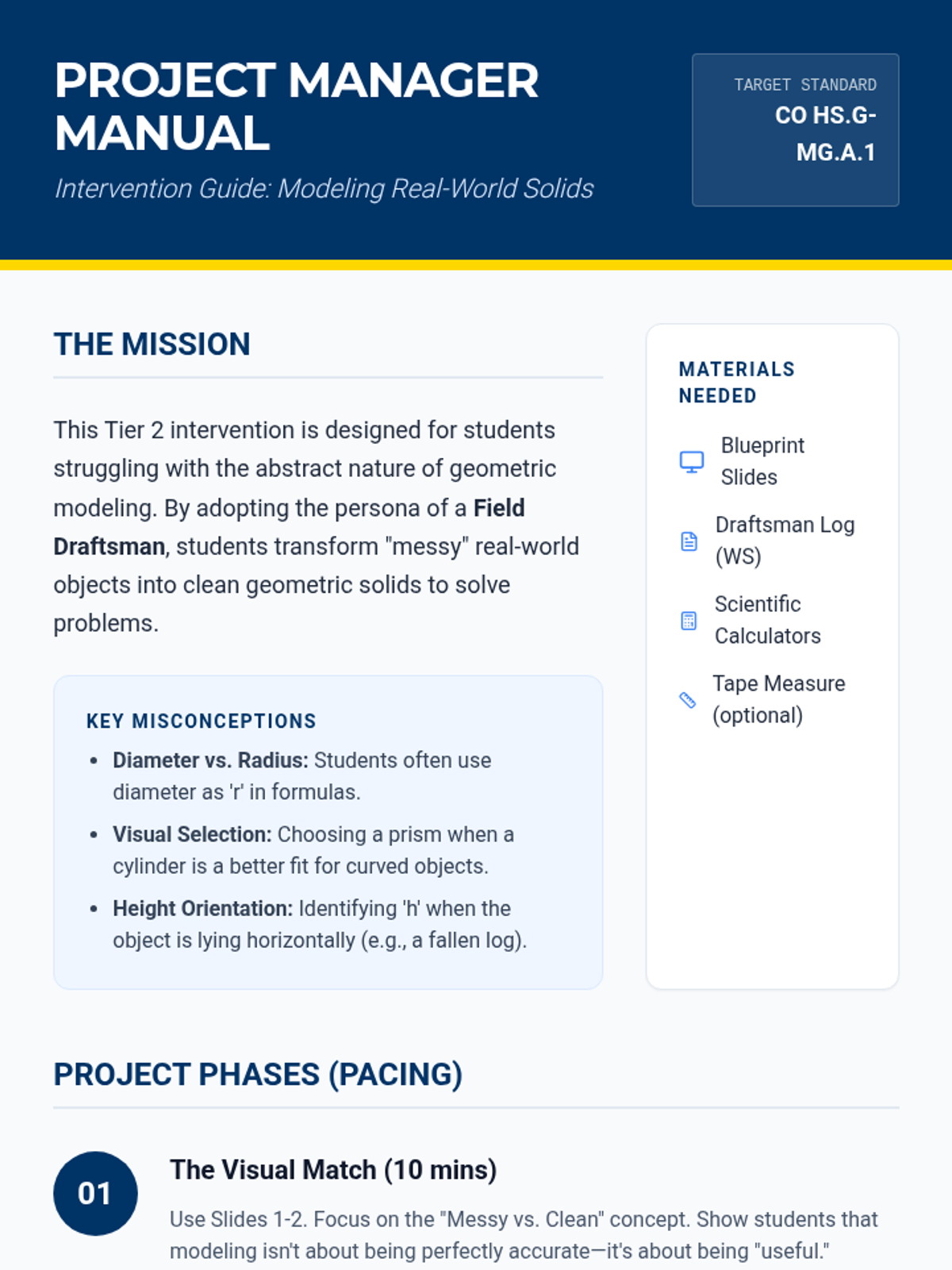
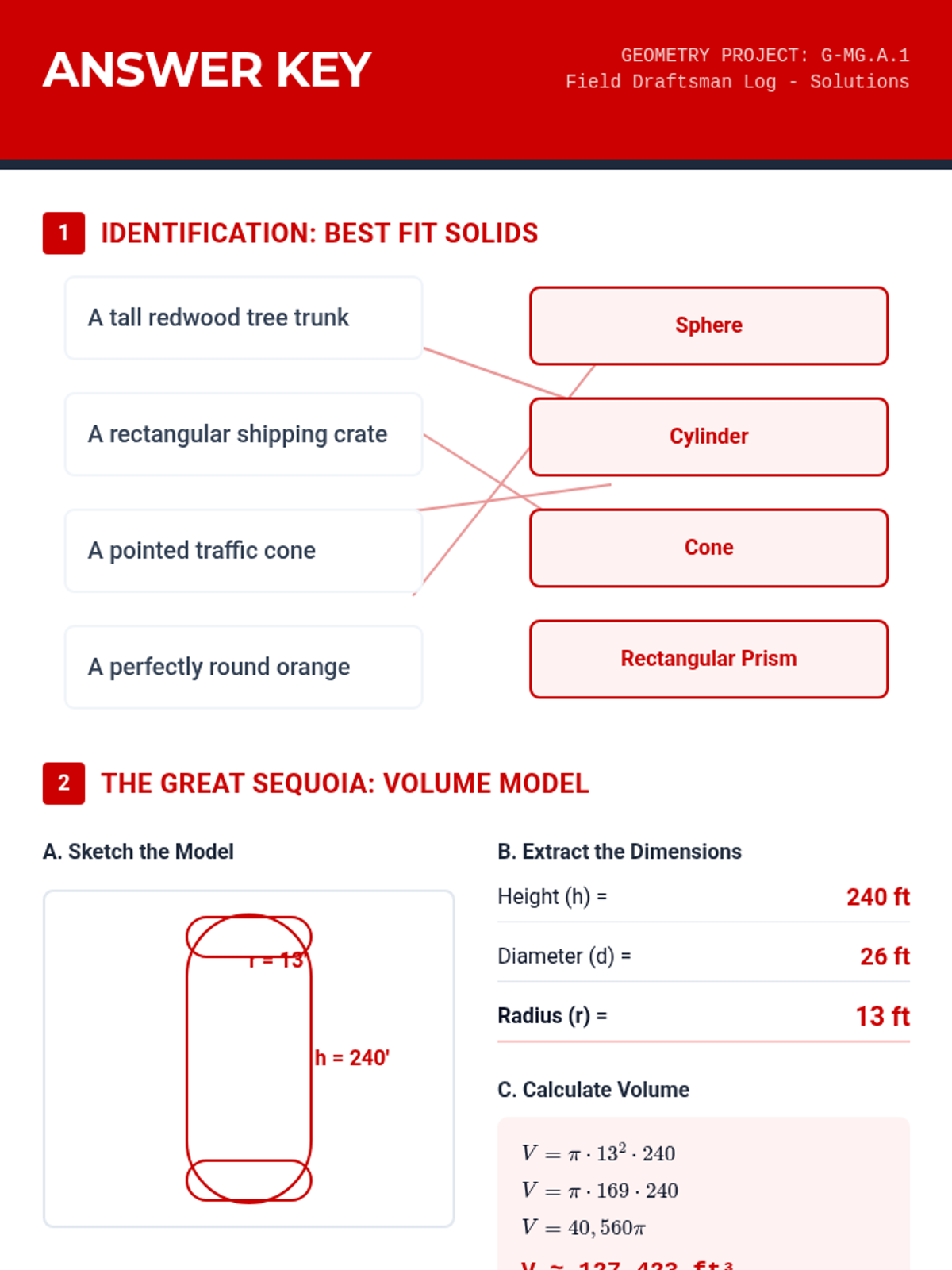
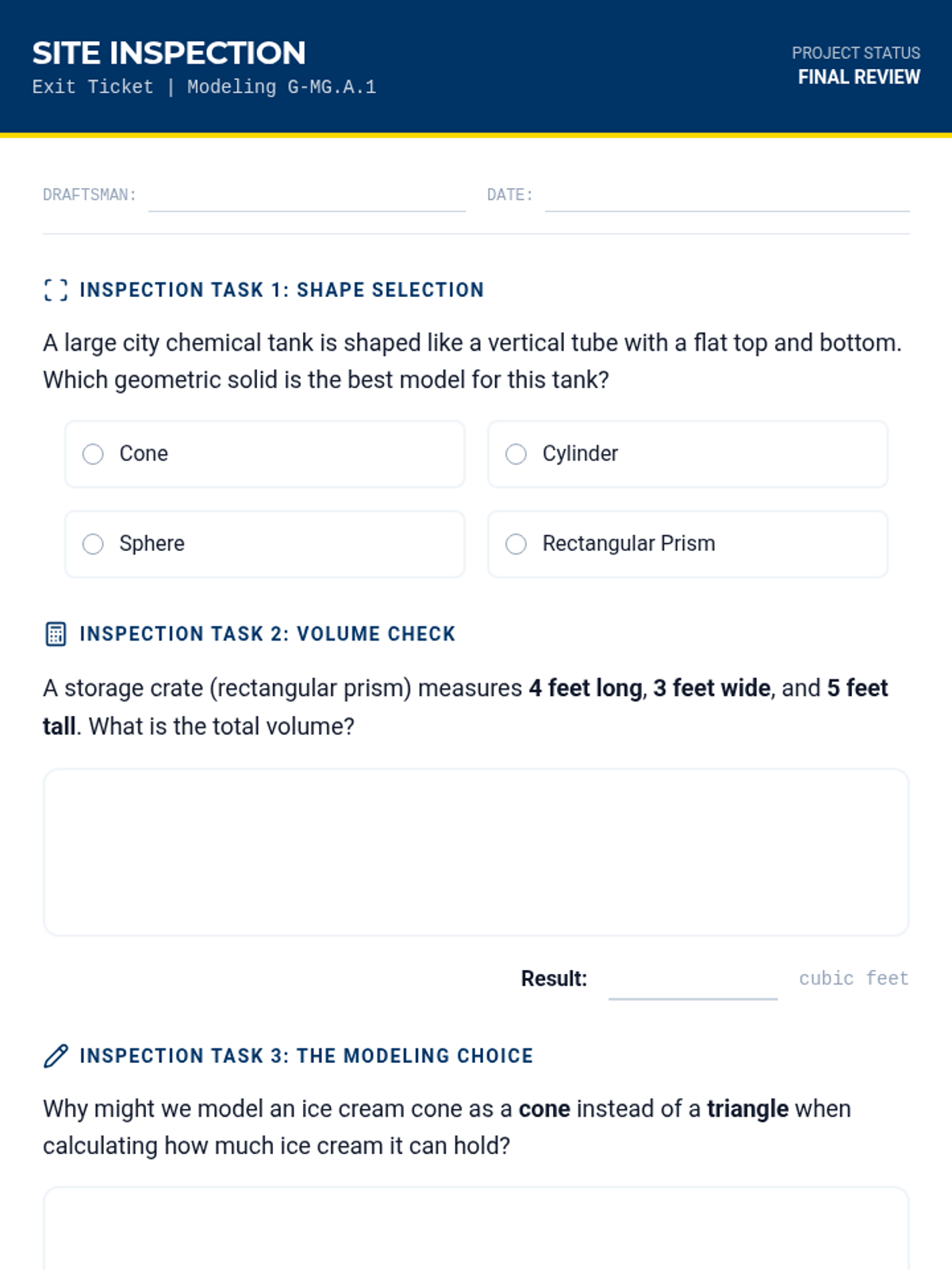
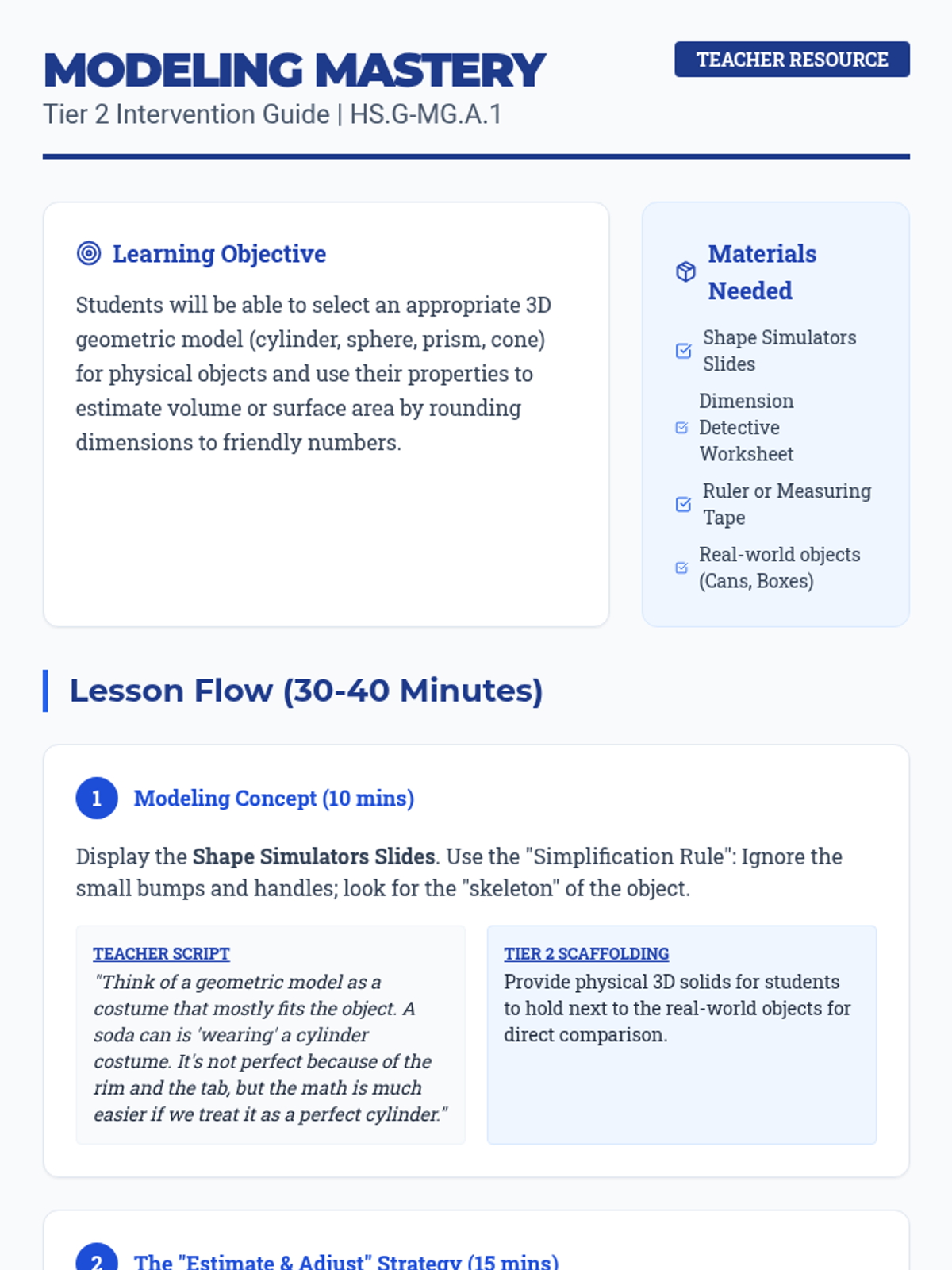
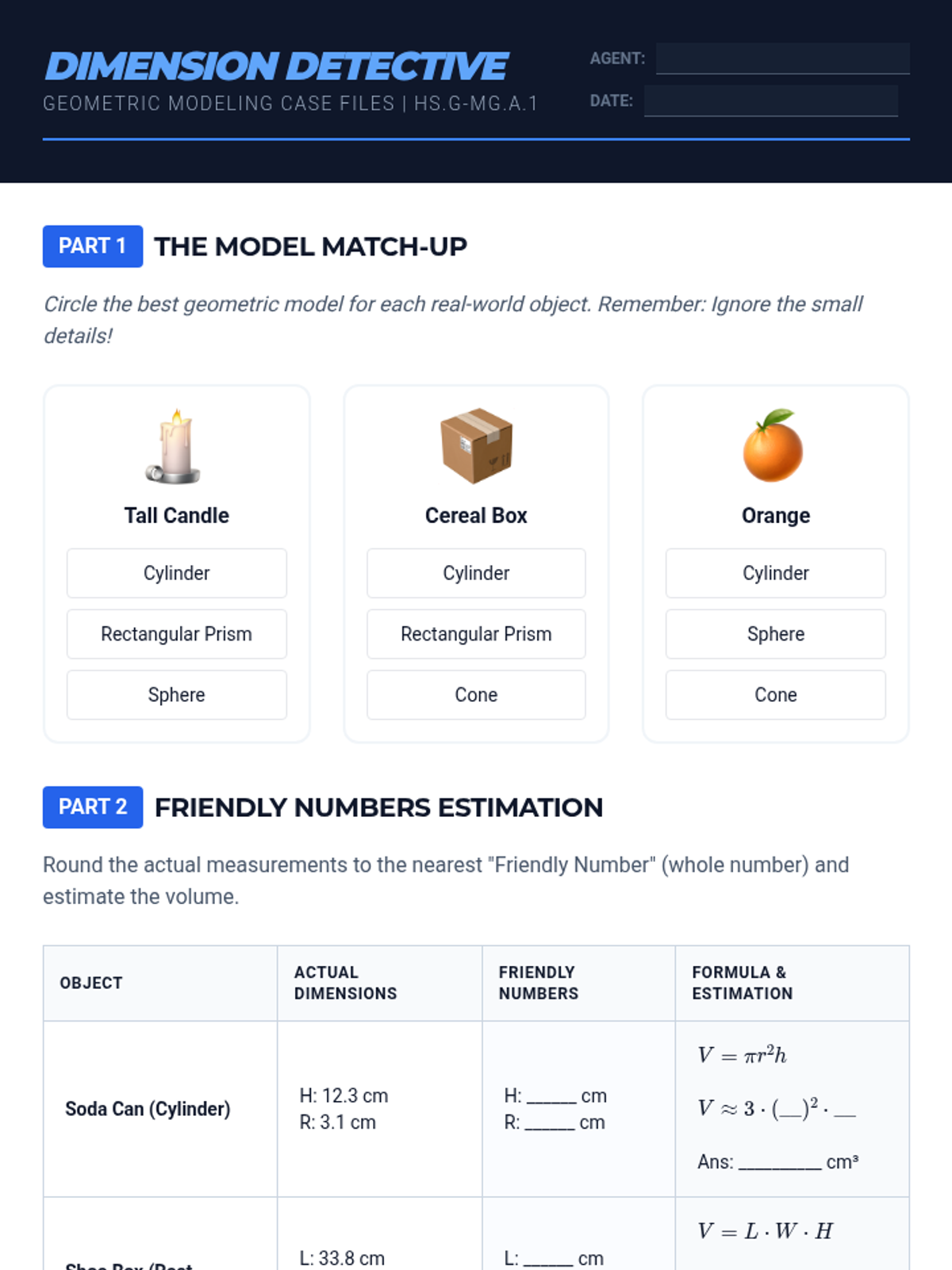
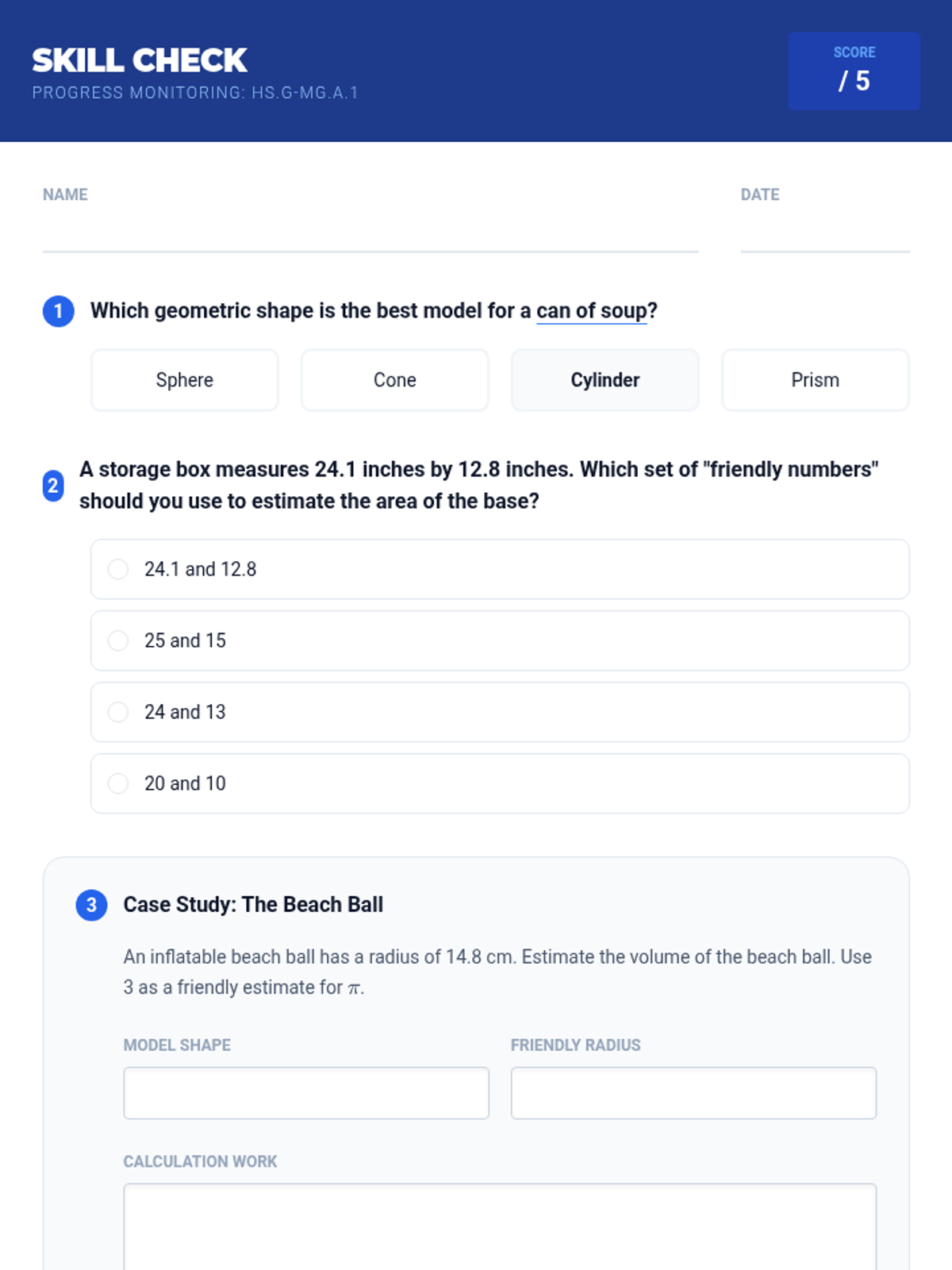
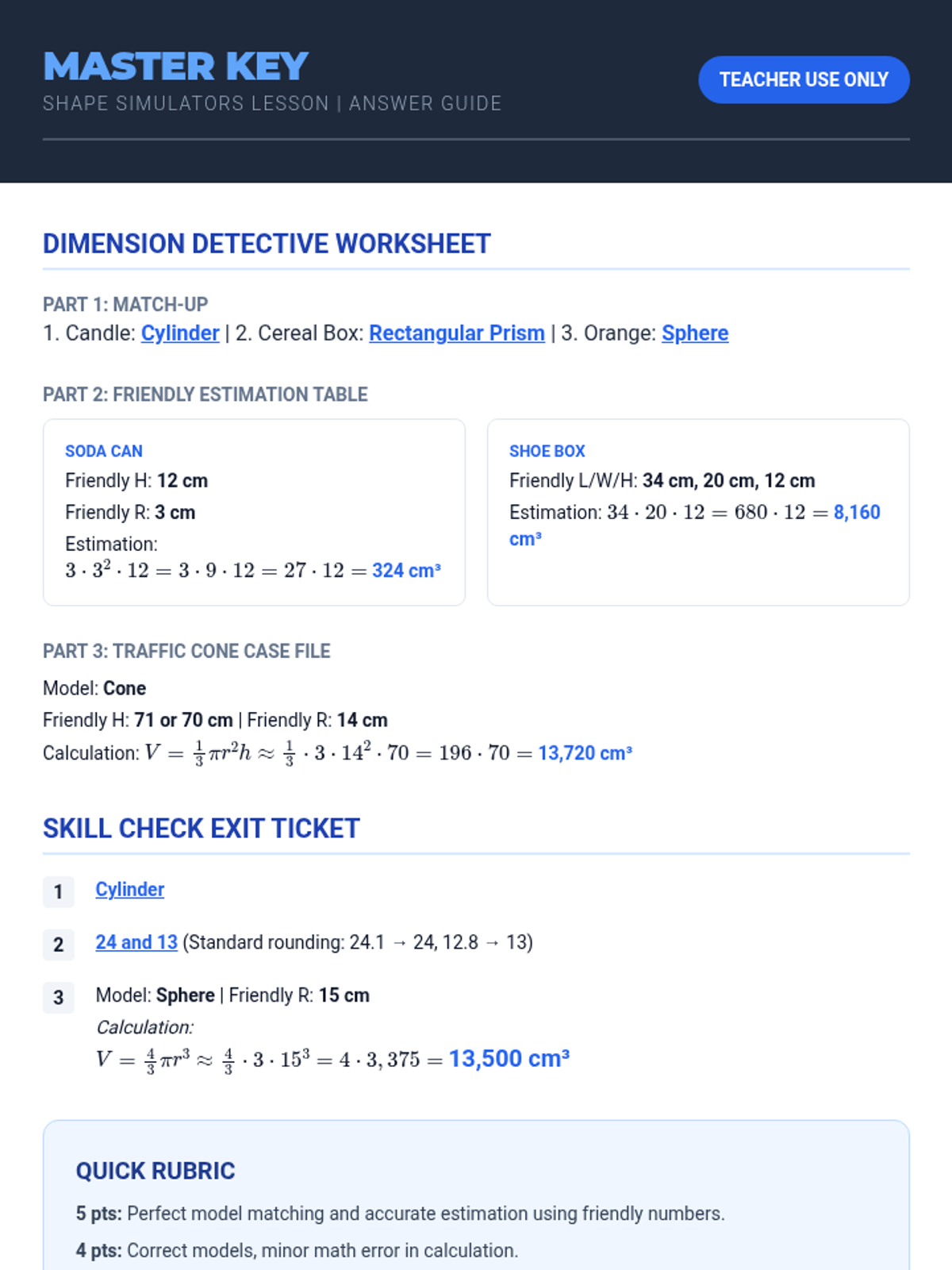
A Tier 2 intervention lesson focusing on G-MG.A.1, helping students model real-world objects as geometric solids. This lesson uses a blueprint/drafting theme to make geometric modeling concrete and accessible for struggling learners.
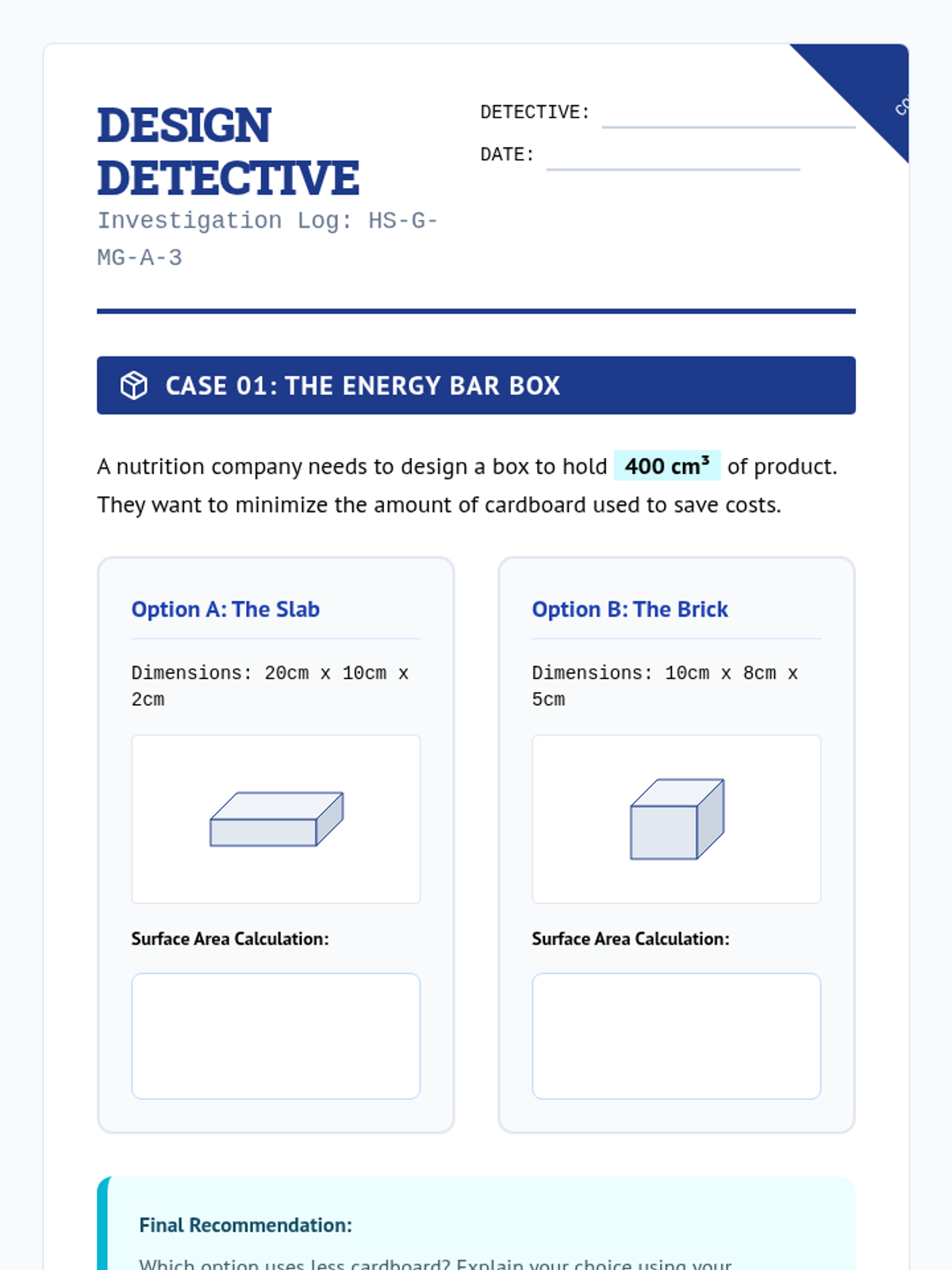
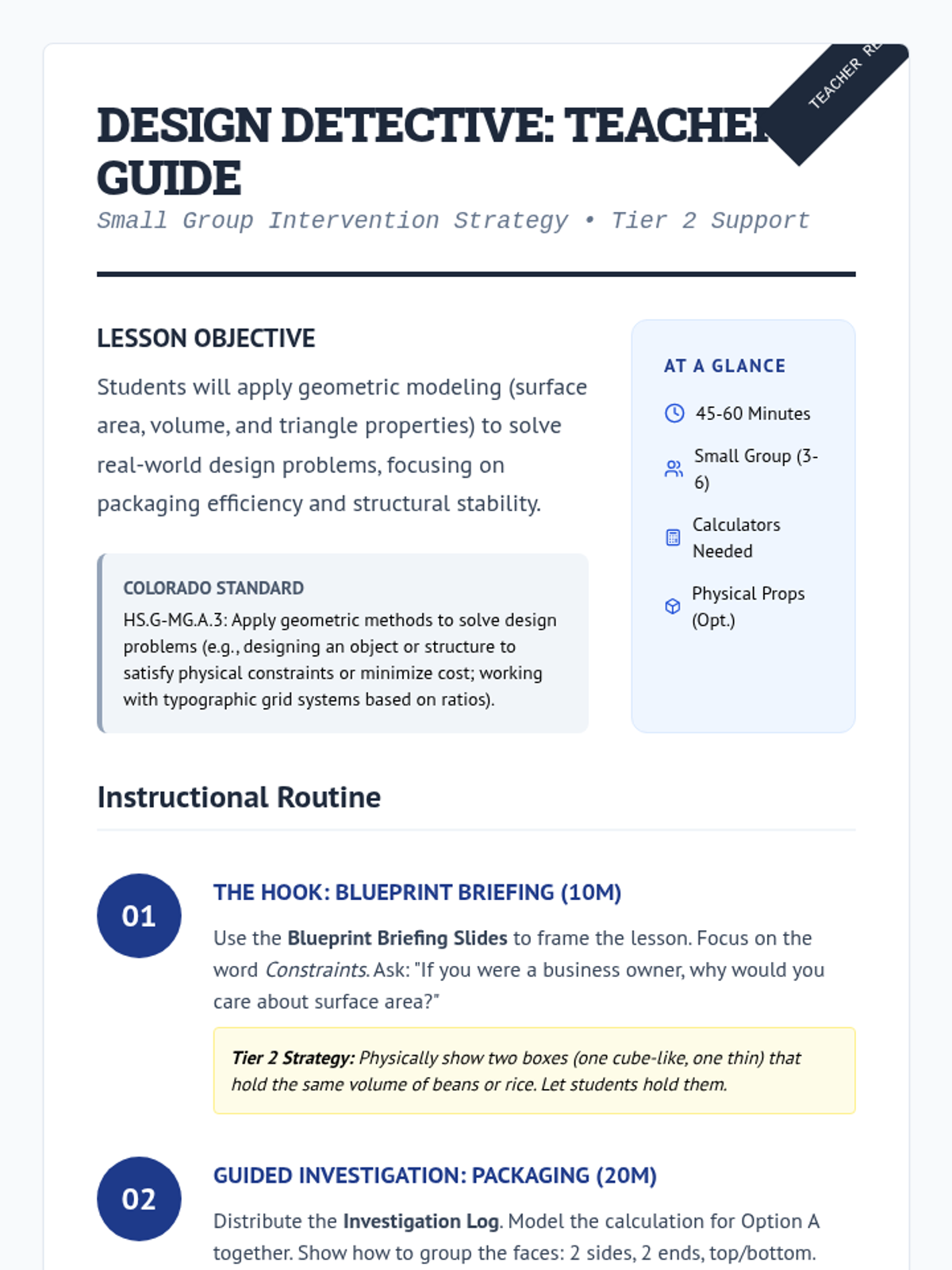
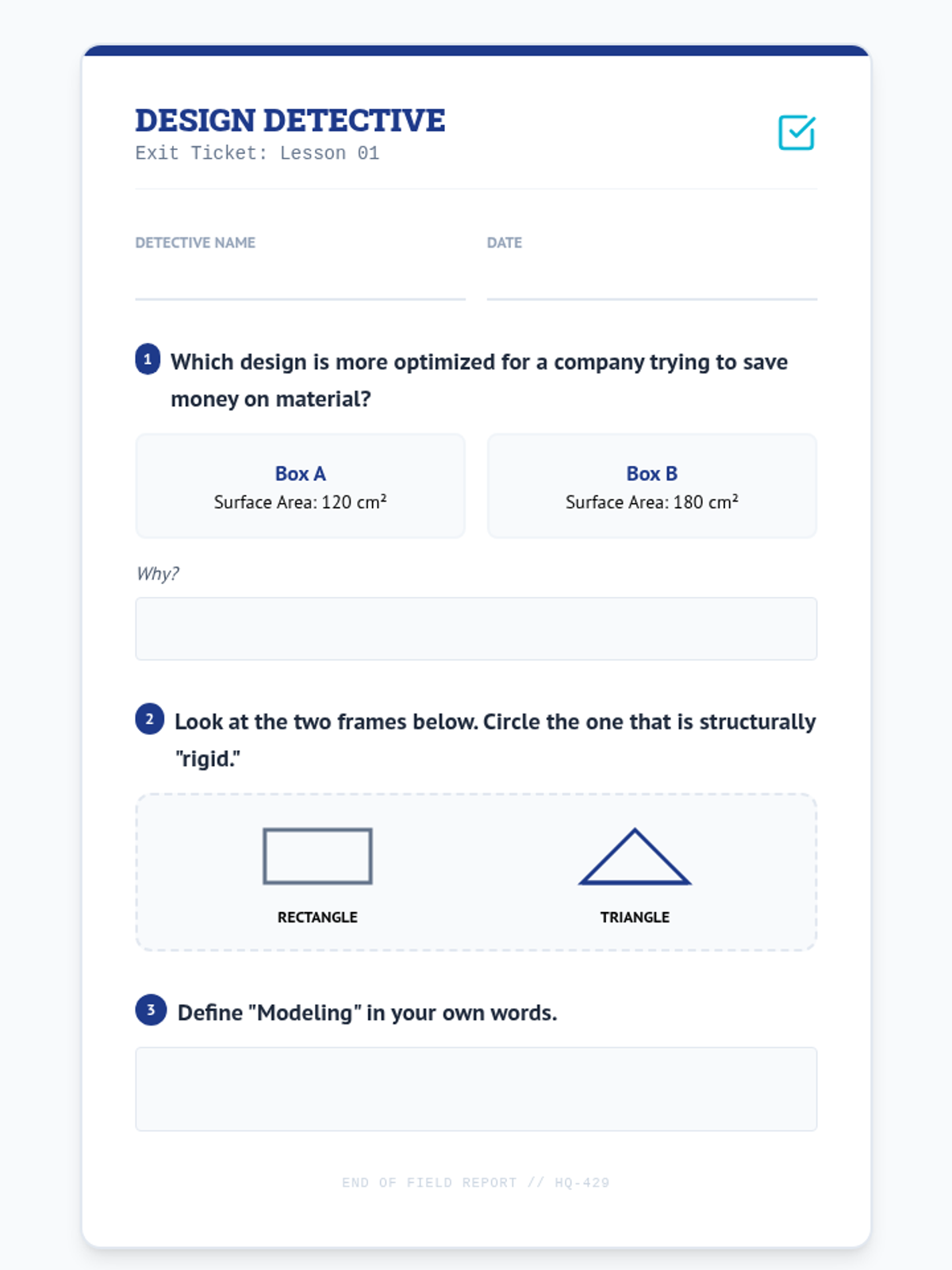
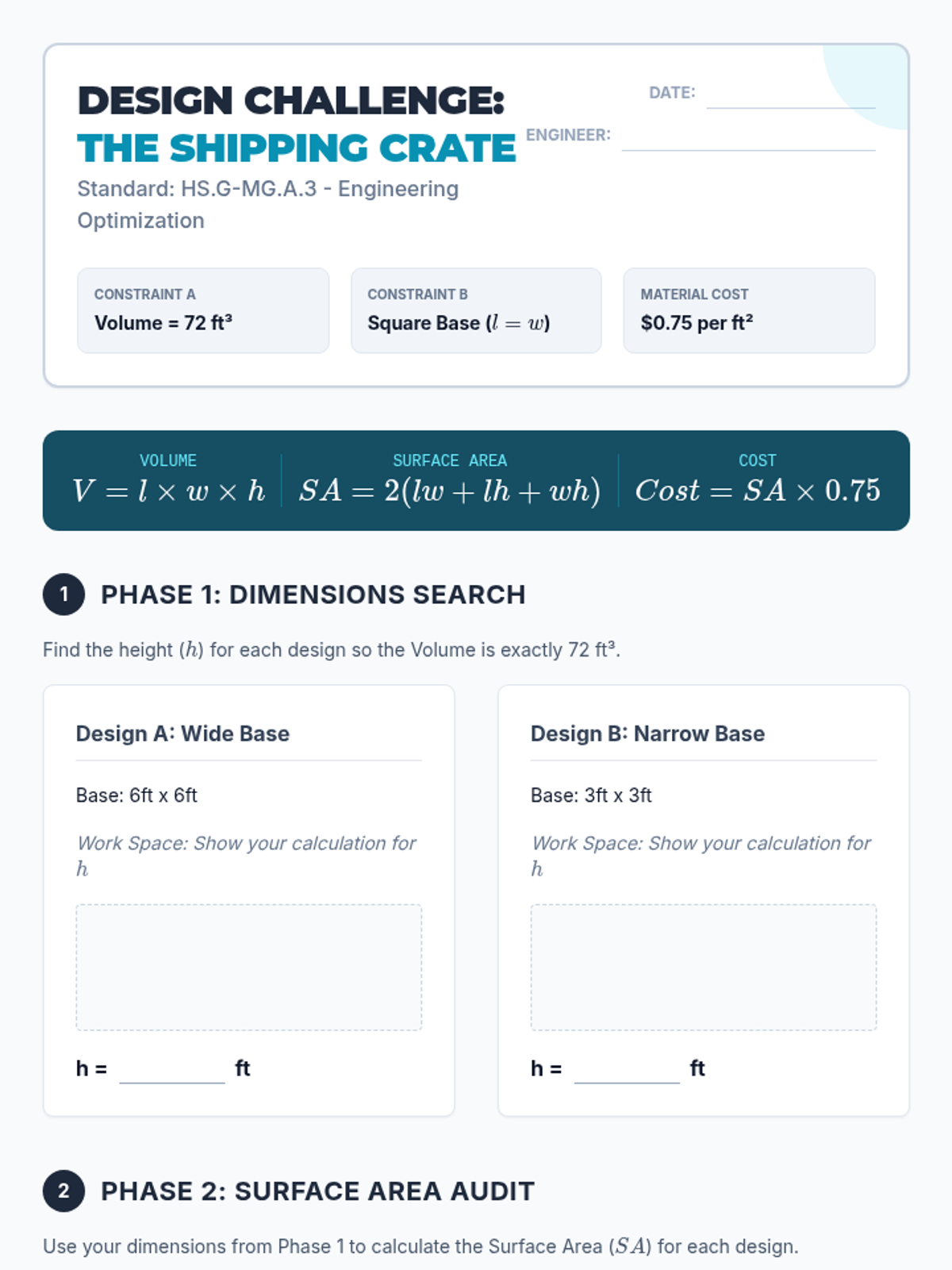
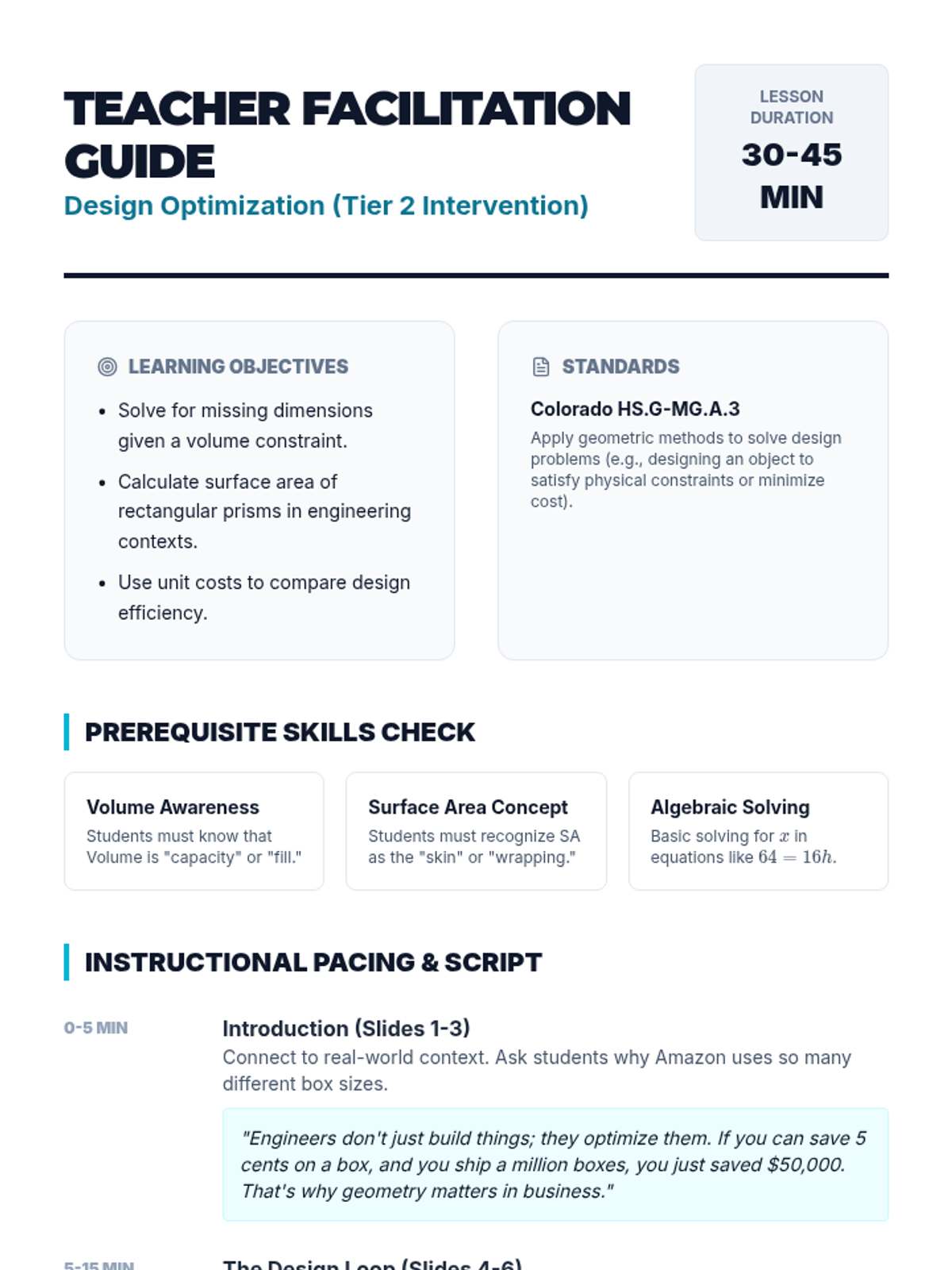
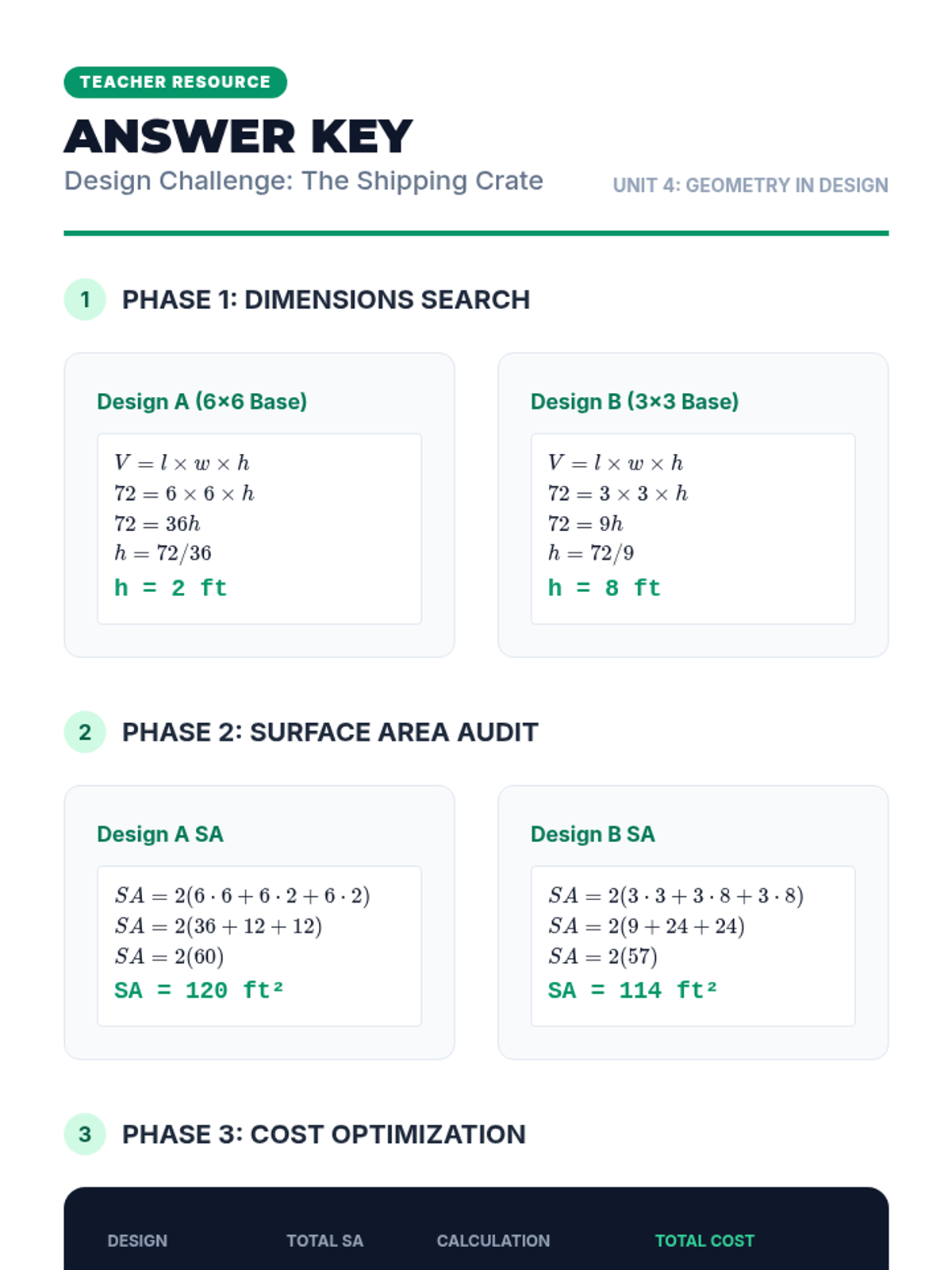
This lesson focuses on the practical application of volume, surface area, and triangle properties to optimize packaging and ensure structural stability. Students engage in design-based tasks that scaffold the modeling process for Tier 2 intervention.
A Tier 2 intervention lesson focused on HS.G-MG.A.1, helping students identify geometric models for real-world objects and use their properties to estimate measurements through scaffolded practice.
A geometry intervention focused on solving real-world design problems. Students will apply surface area and volume concepts to minimize costs and respect physical constraints in engineering scenarios.