Complex grammar structures, idiomatic expressions, and phrasal verbs. Strengthens reading and listening comprehension while building conversational fluency for varied social and professional settings.
Students engage in a 'shadowing' technique, repeating audio immediately after hearing it to internalize the rhythm and flow of connected speech. This active processing reinforces their ability to predict and process sound streams.
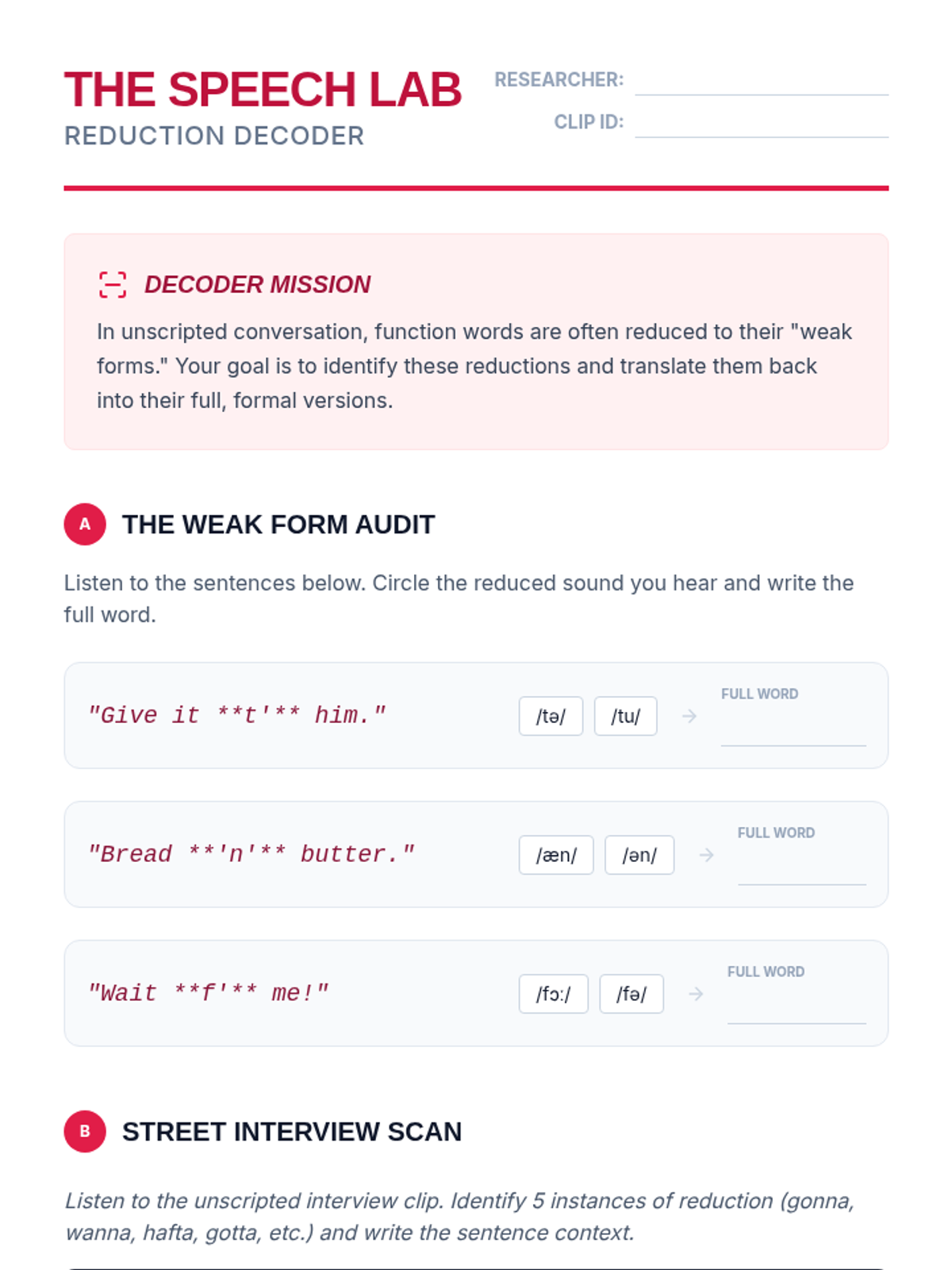
Focusing on function words, this lesson tackles common reductions like 'gonna,' 'wanna,' and weak forms of auxiliary verbs. Students analyze unscripted interviews to catch these reductions in context.
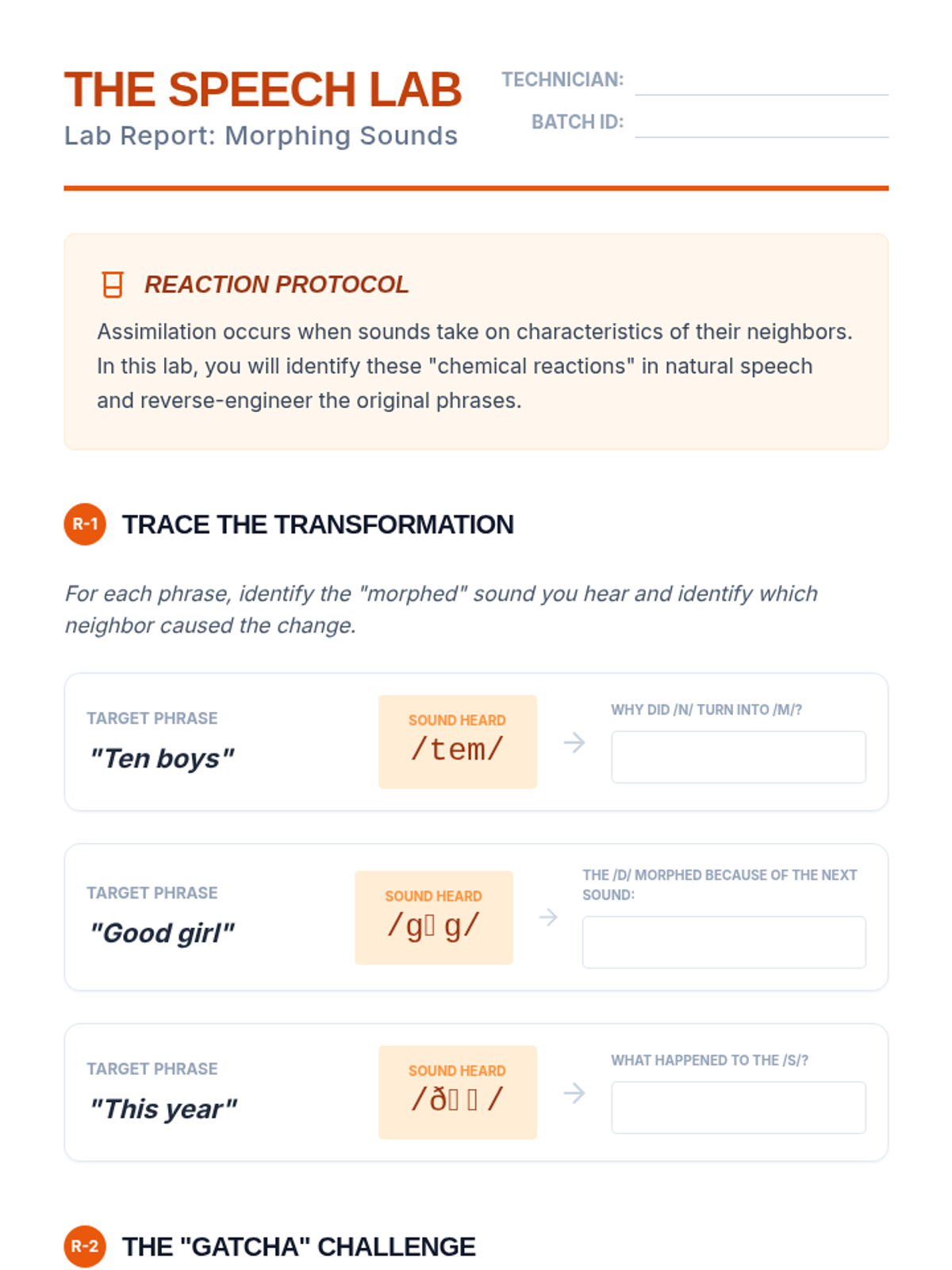
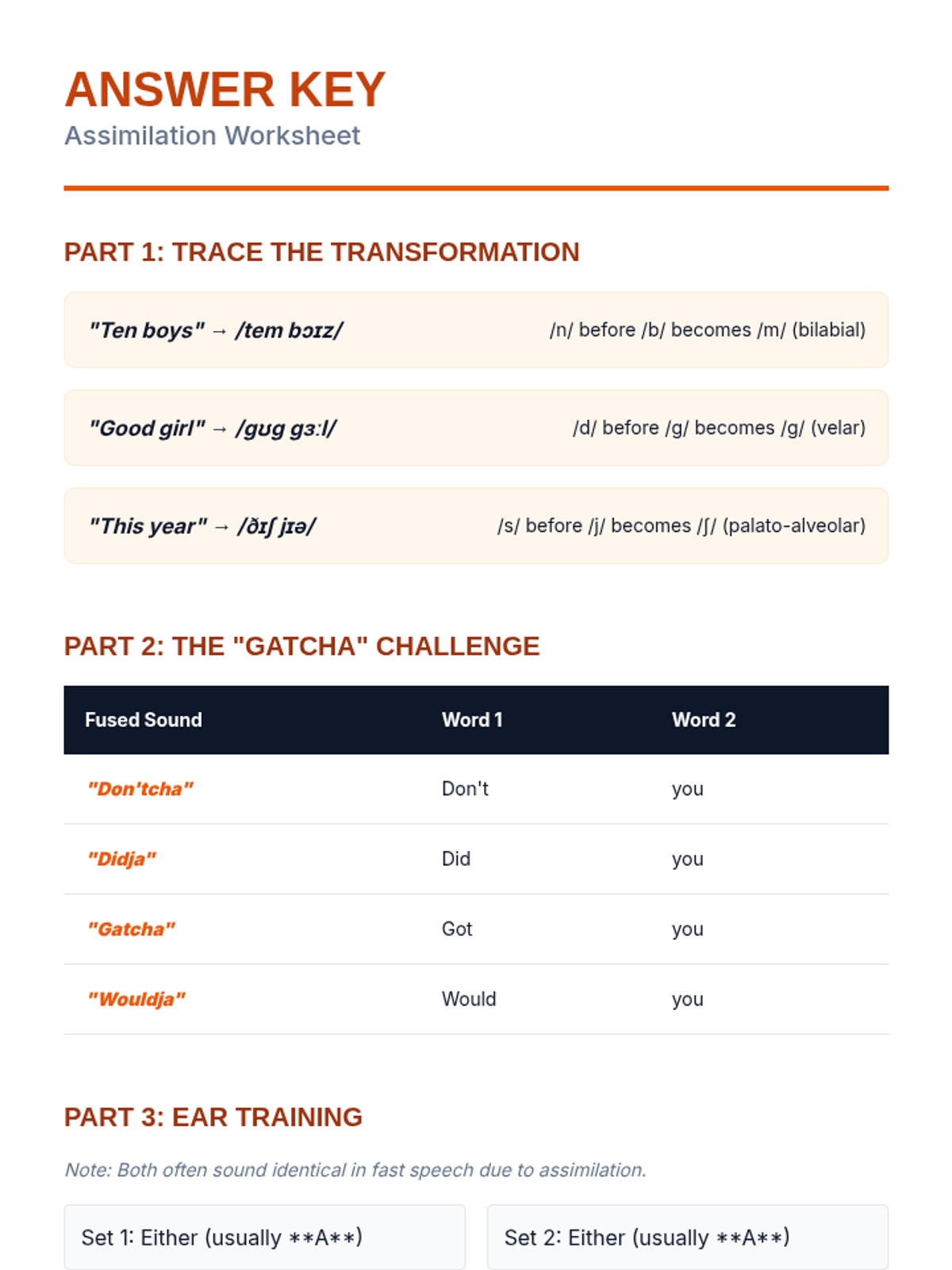
Students learn how sounds influence their neighbors (e.g., 'hand bag' becoming 'hambag'). The lesson uses minimal pair discrimination and dictation exercises to train ears to recognize words despite phonological changes.
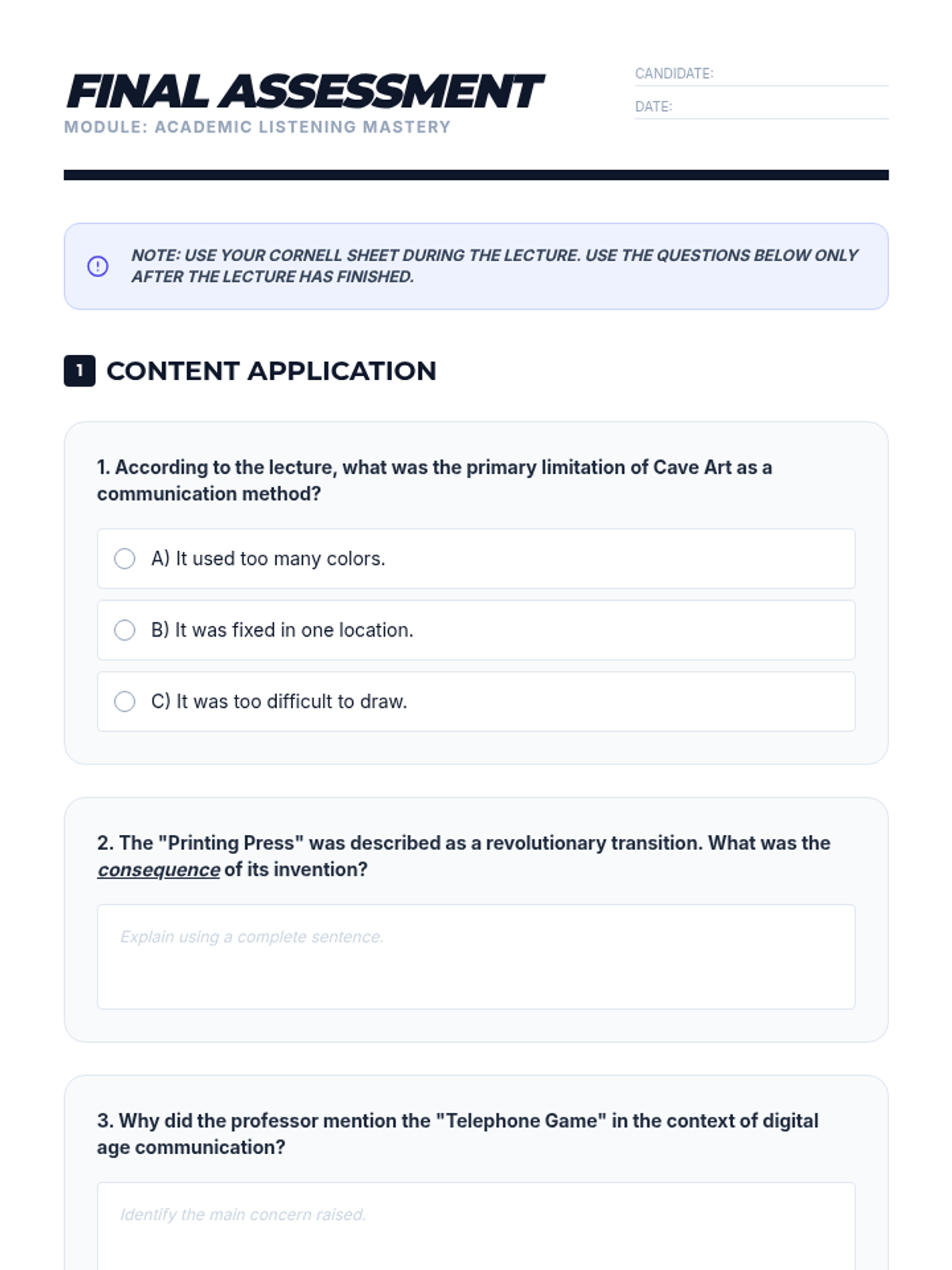
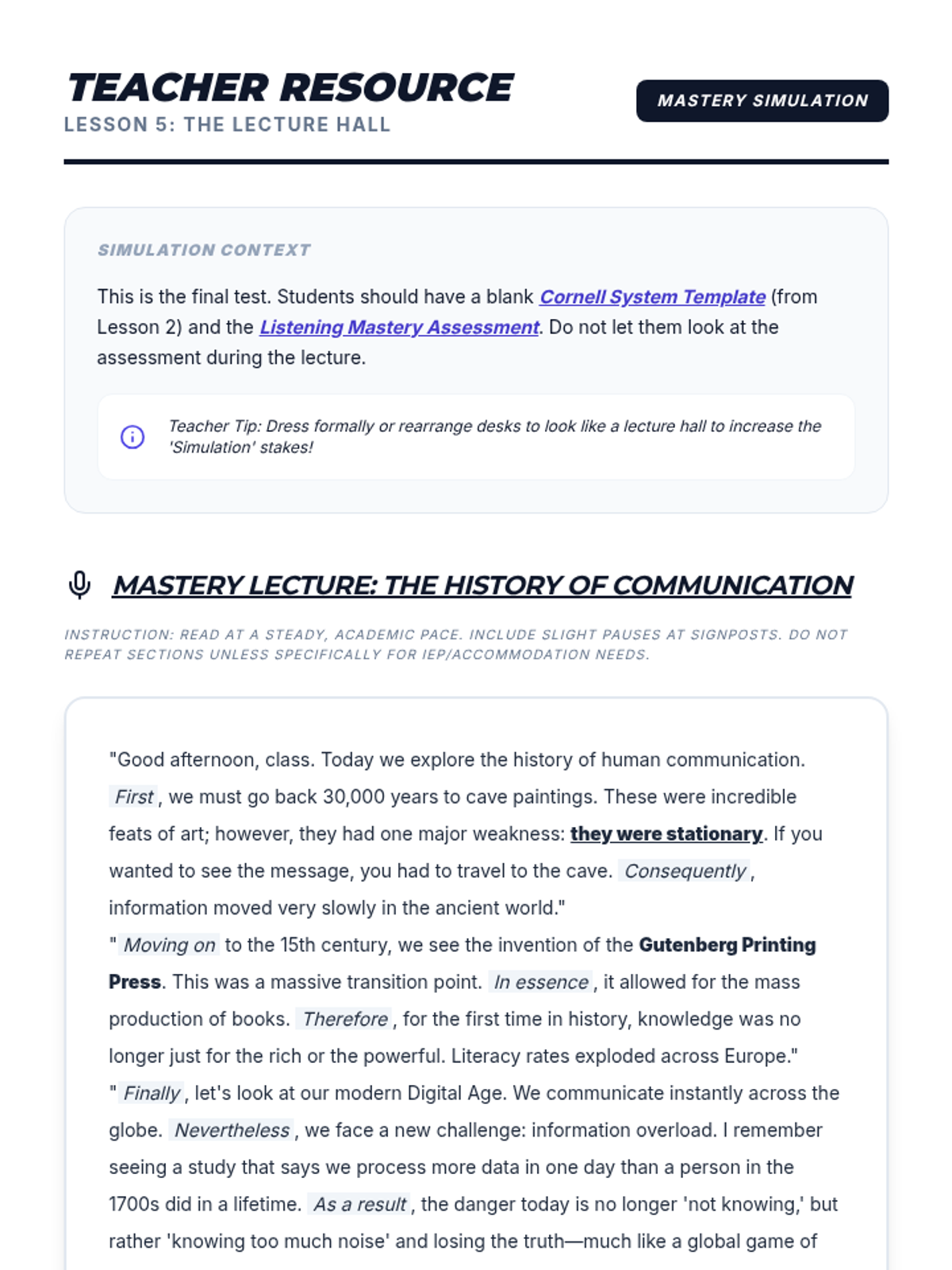
Students participate in a university-style mini-lecture simulation. They apply all learned strategies—signpost identification, Cornell note-taking, and synthesis—to capture information and complete a formal assessment.
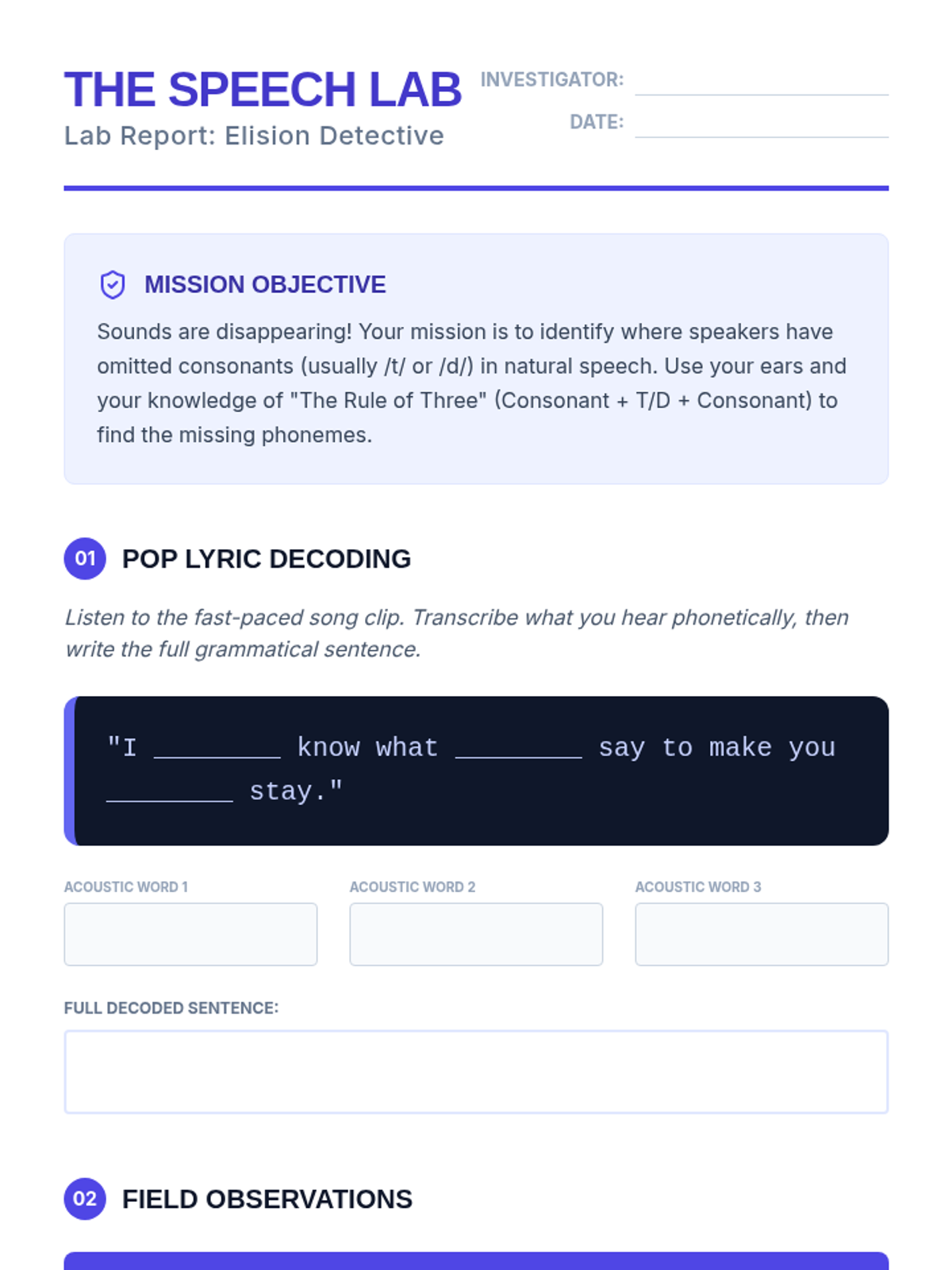
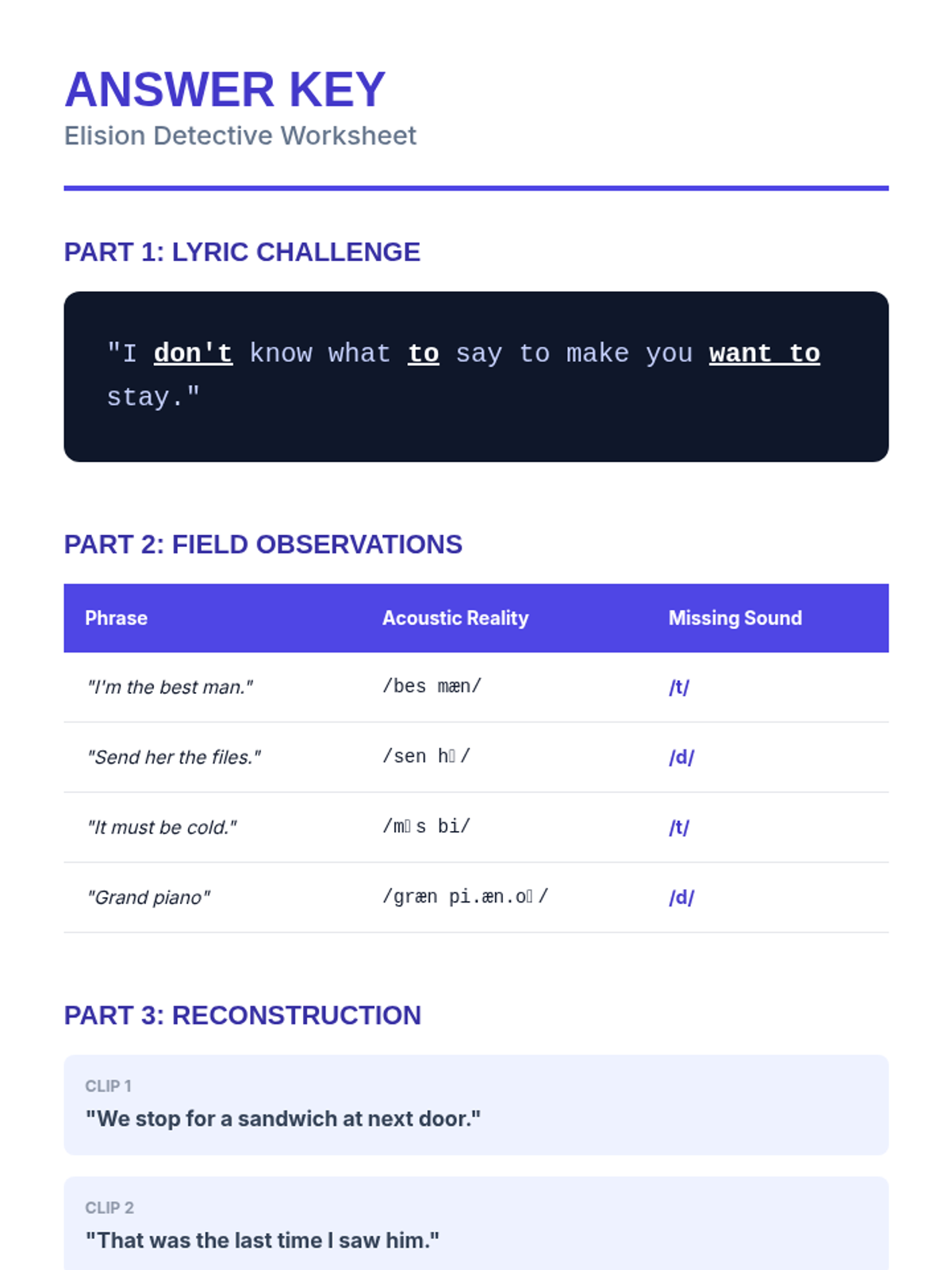
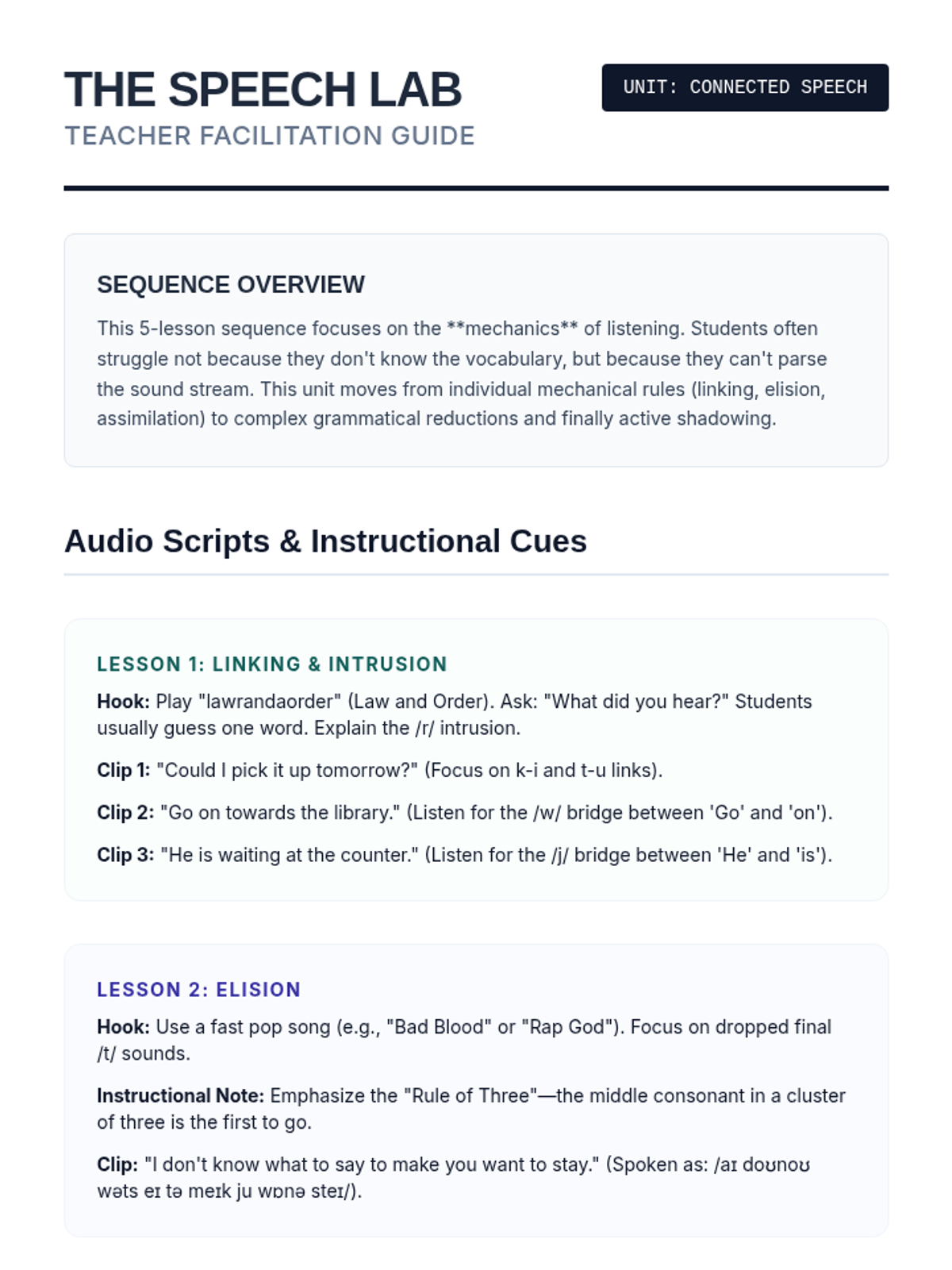
This lesson covers the phenomenon of elision, where sounds (particularly /t/ and /d/) disappear in rapid speech. Students practice listening to high-speed dialogues to identify words that have been 'swallowed' by the speaker.
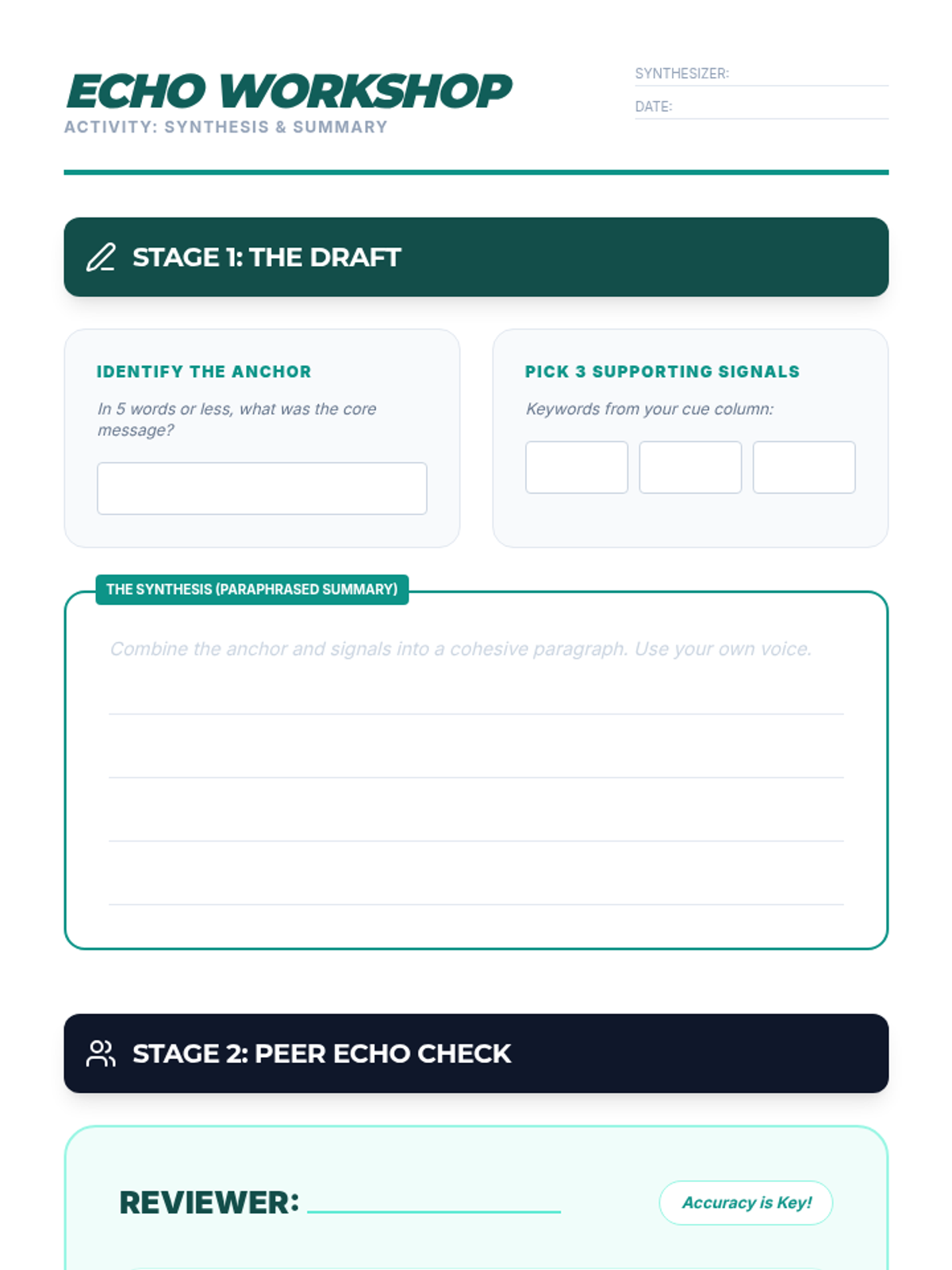
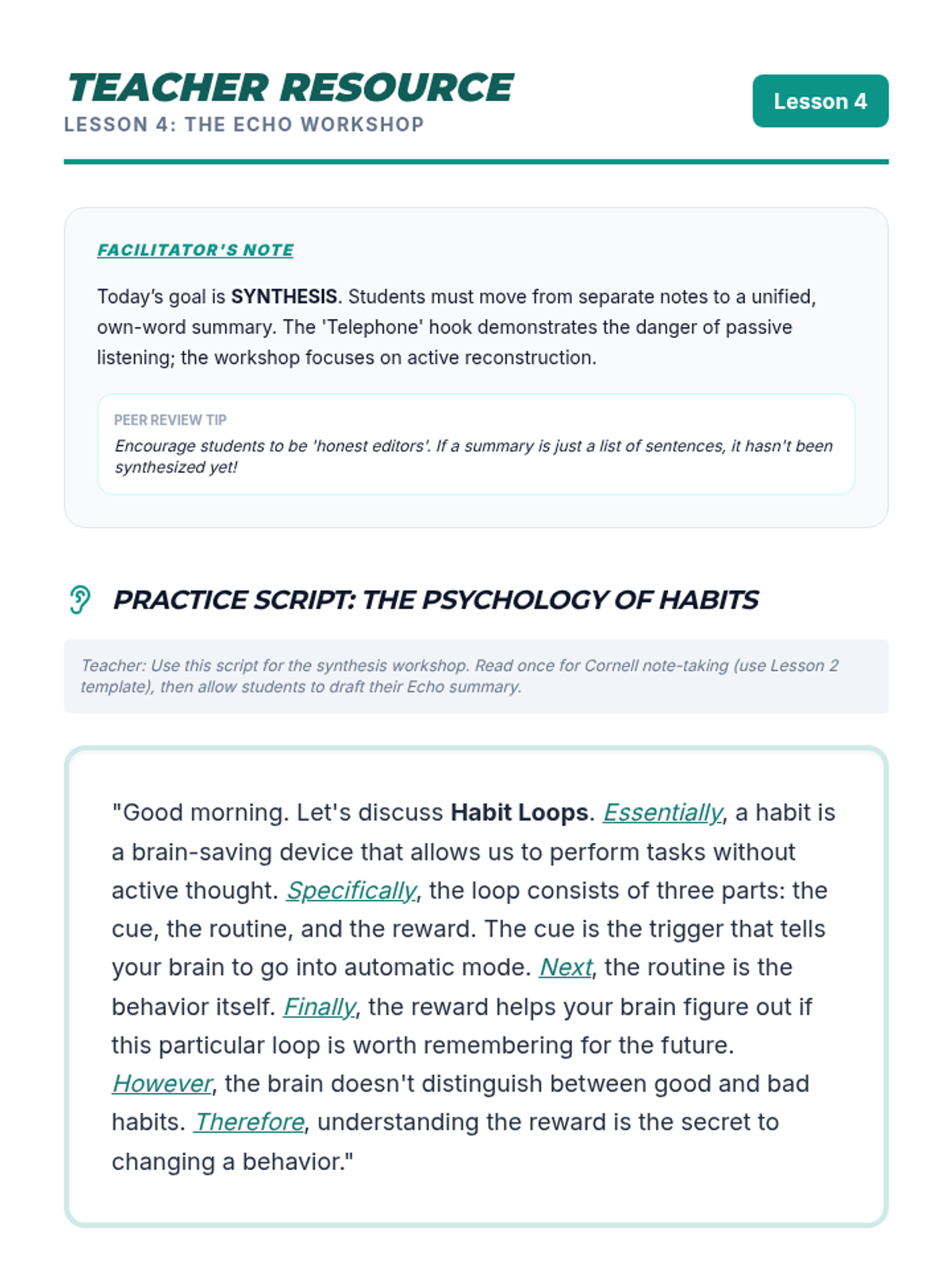
Learners practice reconstructing audio messages in their own words, focusing on paraphrasing rather than direct quotation. Peer evaluation ensures accuracy and comprehension through a synthesis-based workshop.
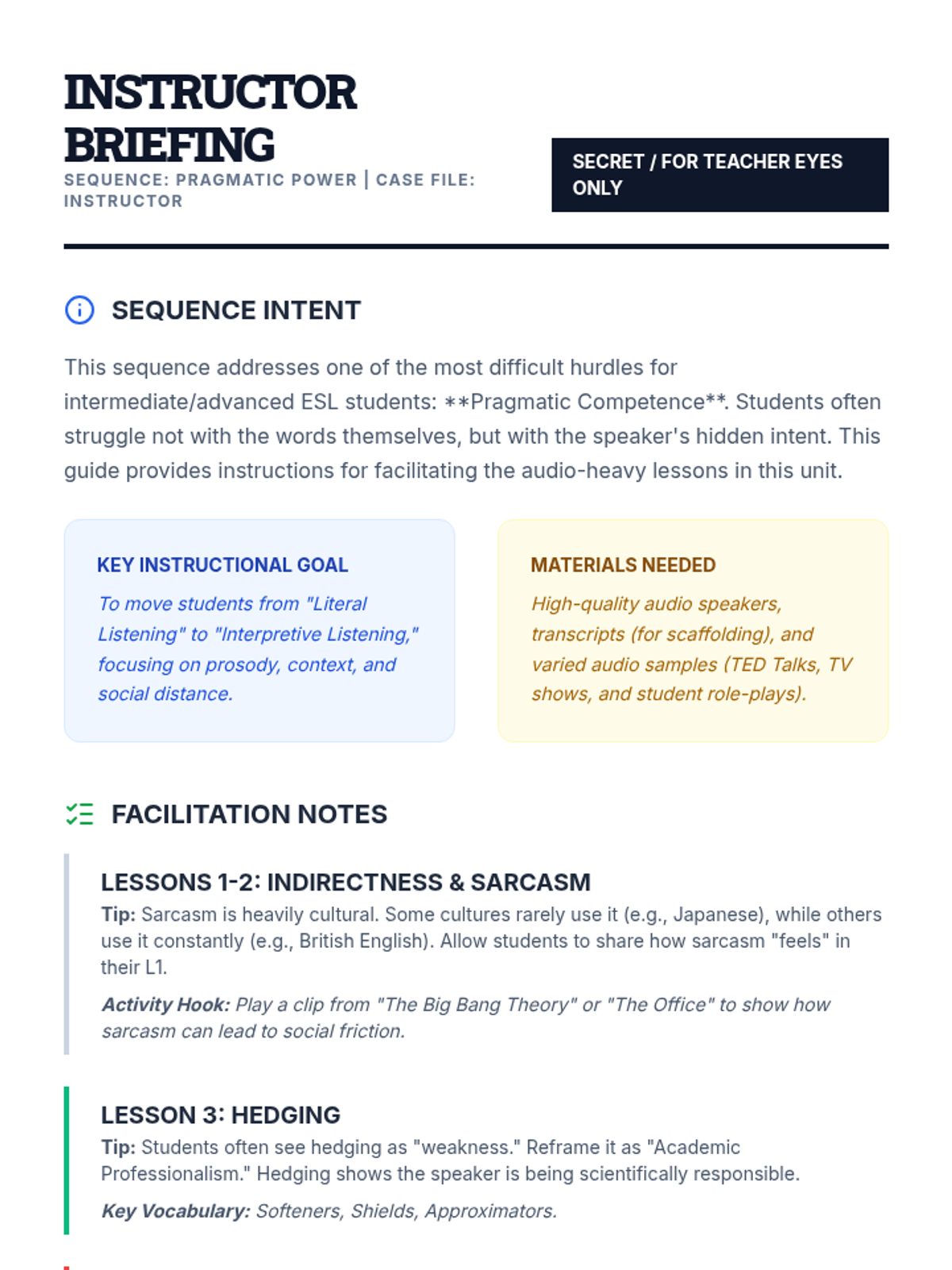
An exploration of how cultural backgrounds influence communication styles, focusing on silence, interruption, and pragmatic markers.
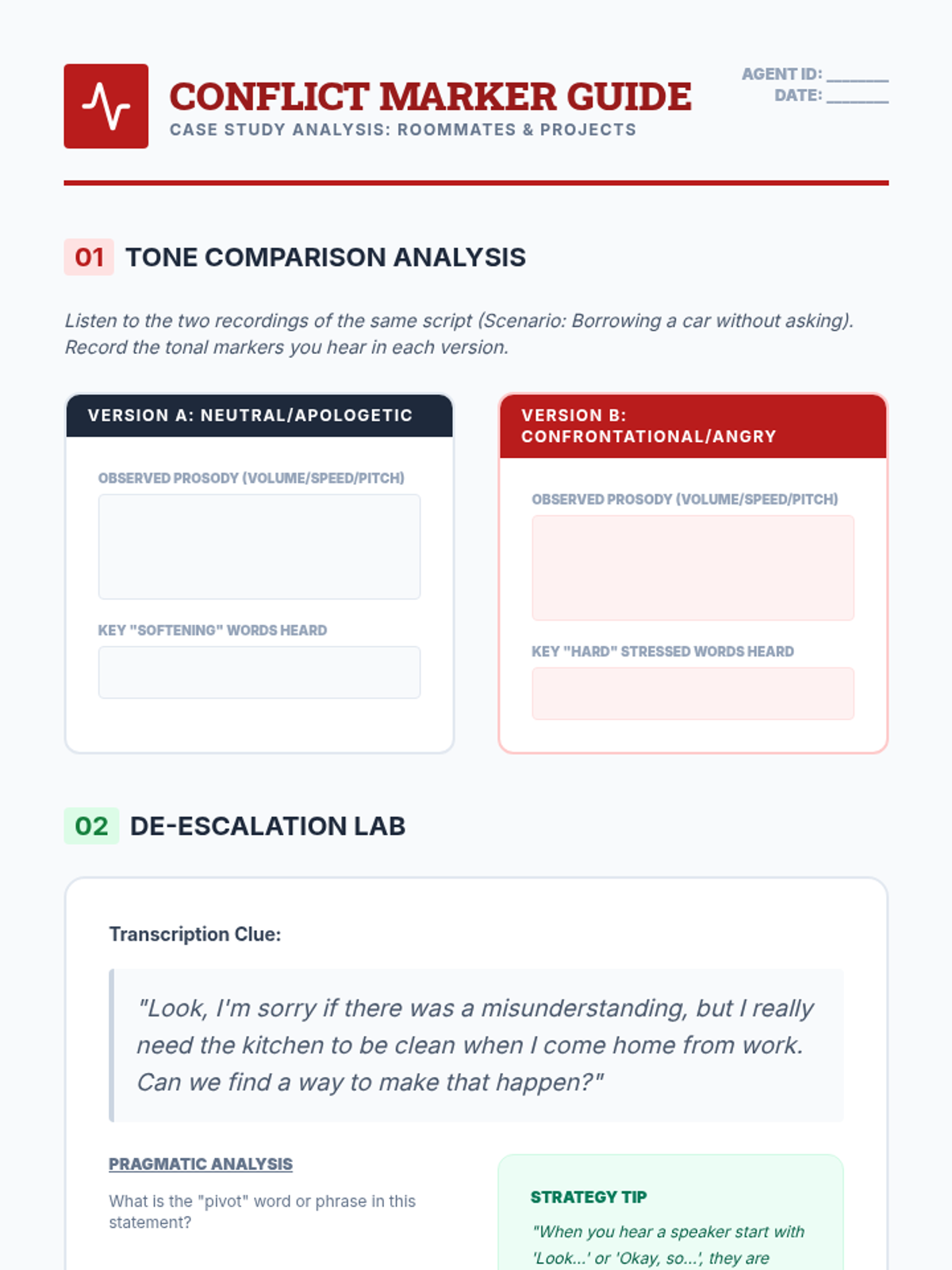
Students analyze tone in high-stakes social interactions, identifying markers of escalation, de-escalation, and negotiation in conflict scenarios.
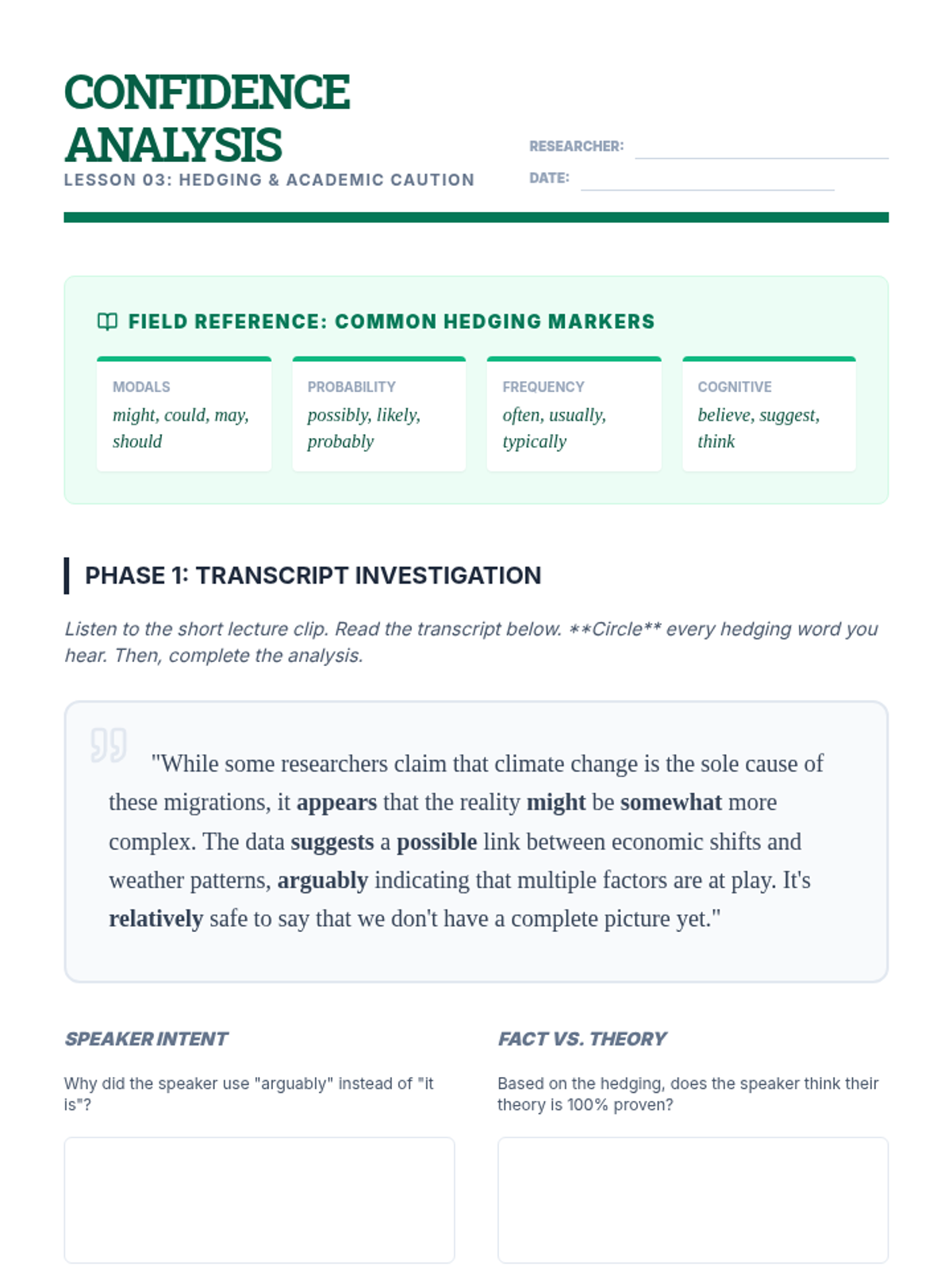
Students learn to identify hedging language (e.g., 'somewhat', 'it appears') to gauge a speaker's confidence and distinguish between facts and cautious opinions.
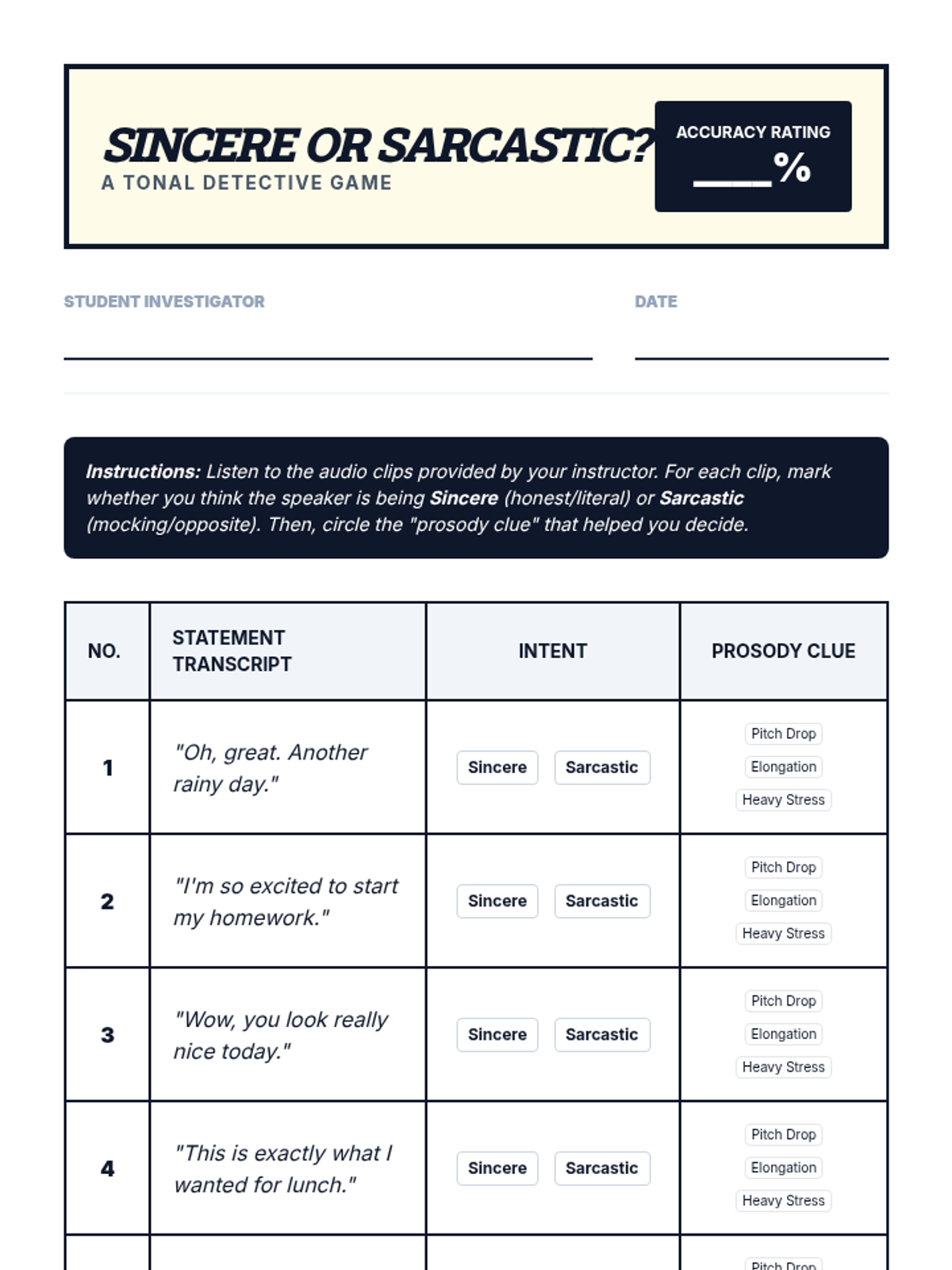
This lesson focuses on identifying sarcasm and irony through prosody, pitch, and context clues, helping students avoid literal misinterpretations.
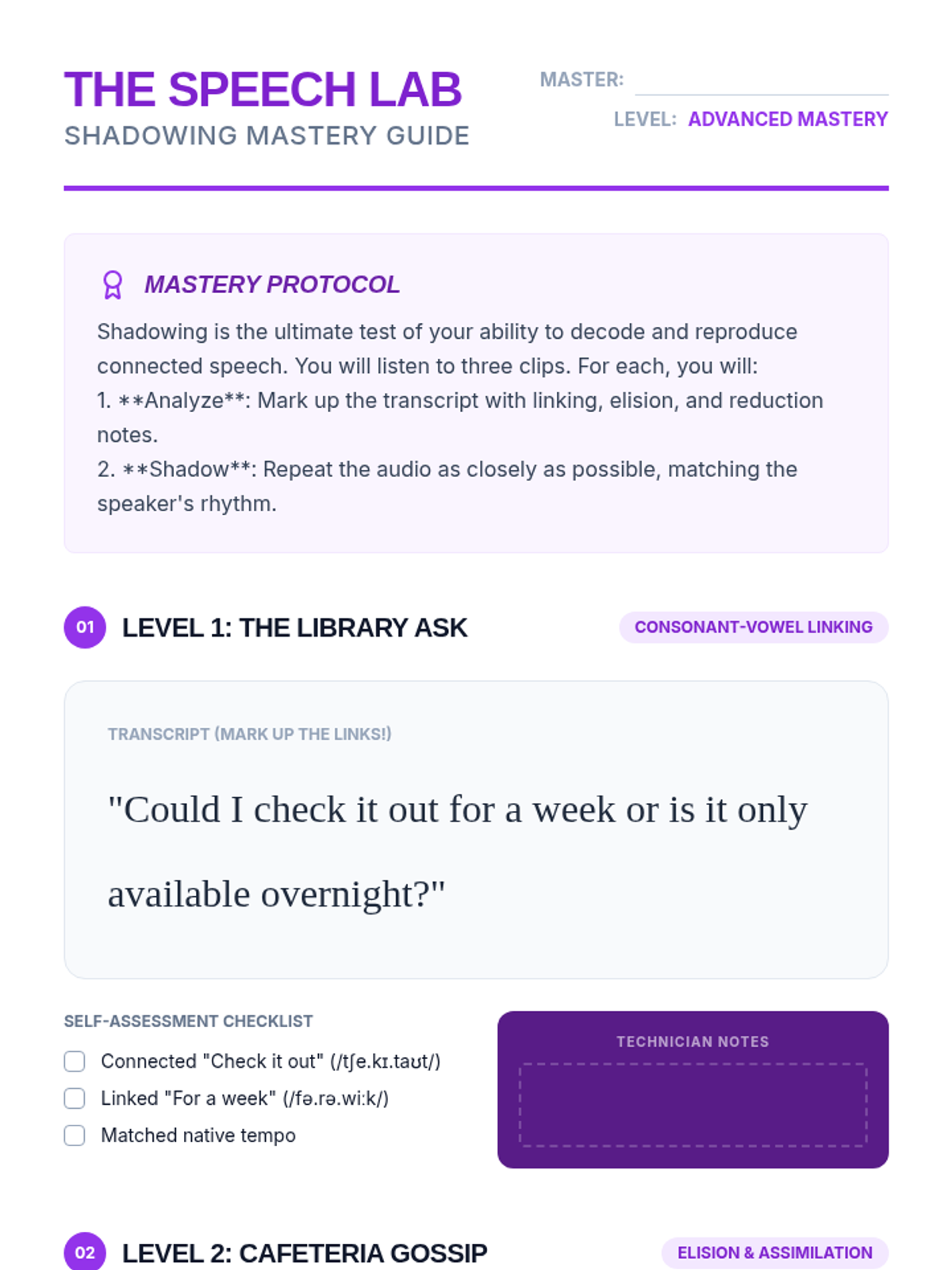
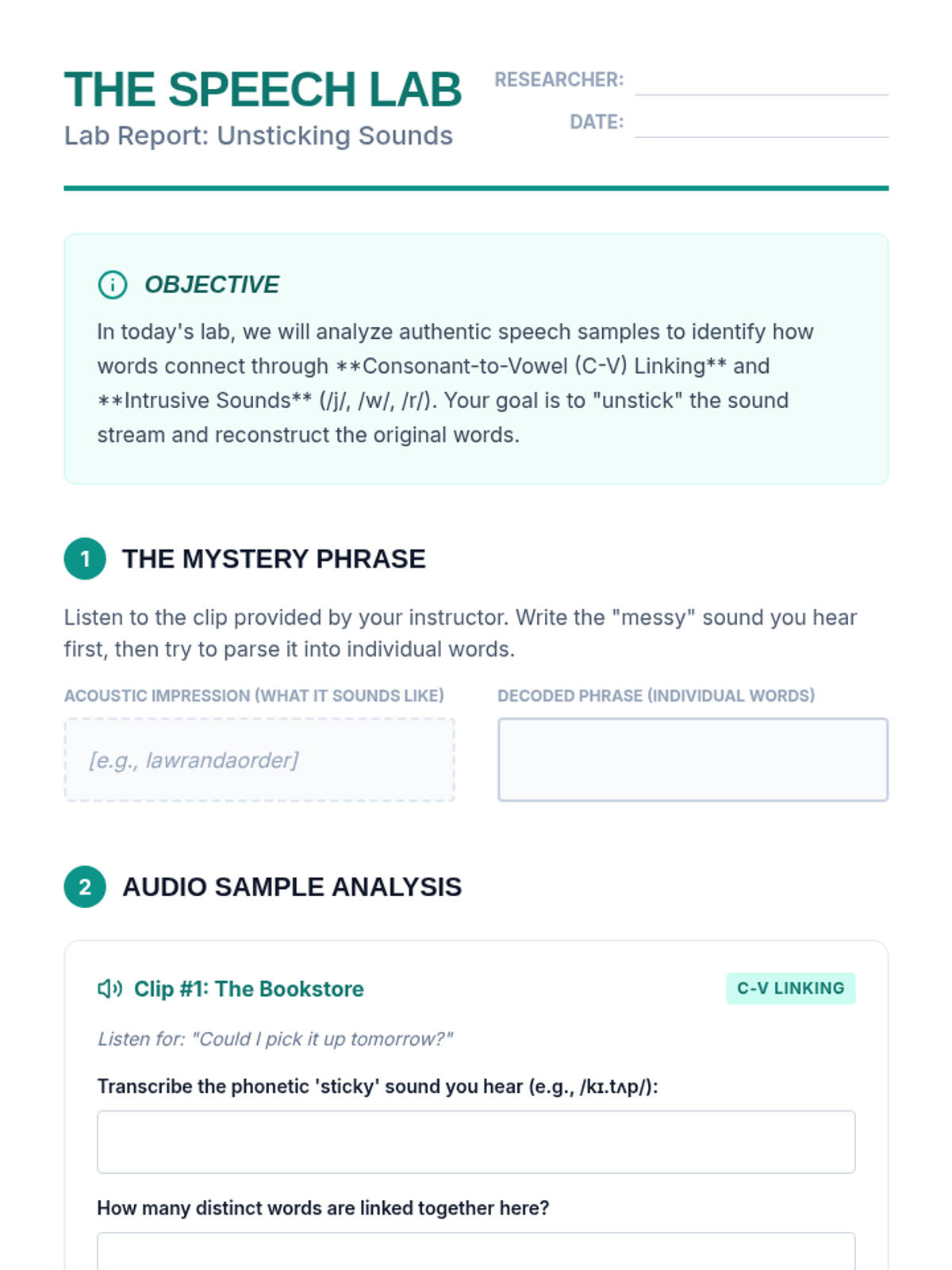
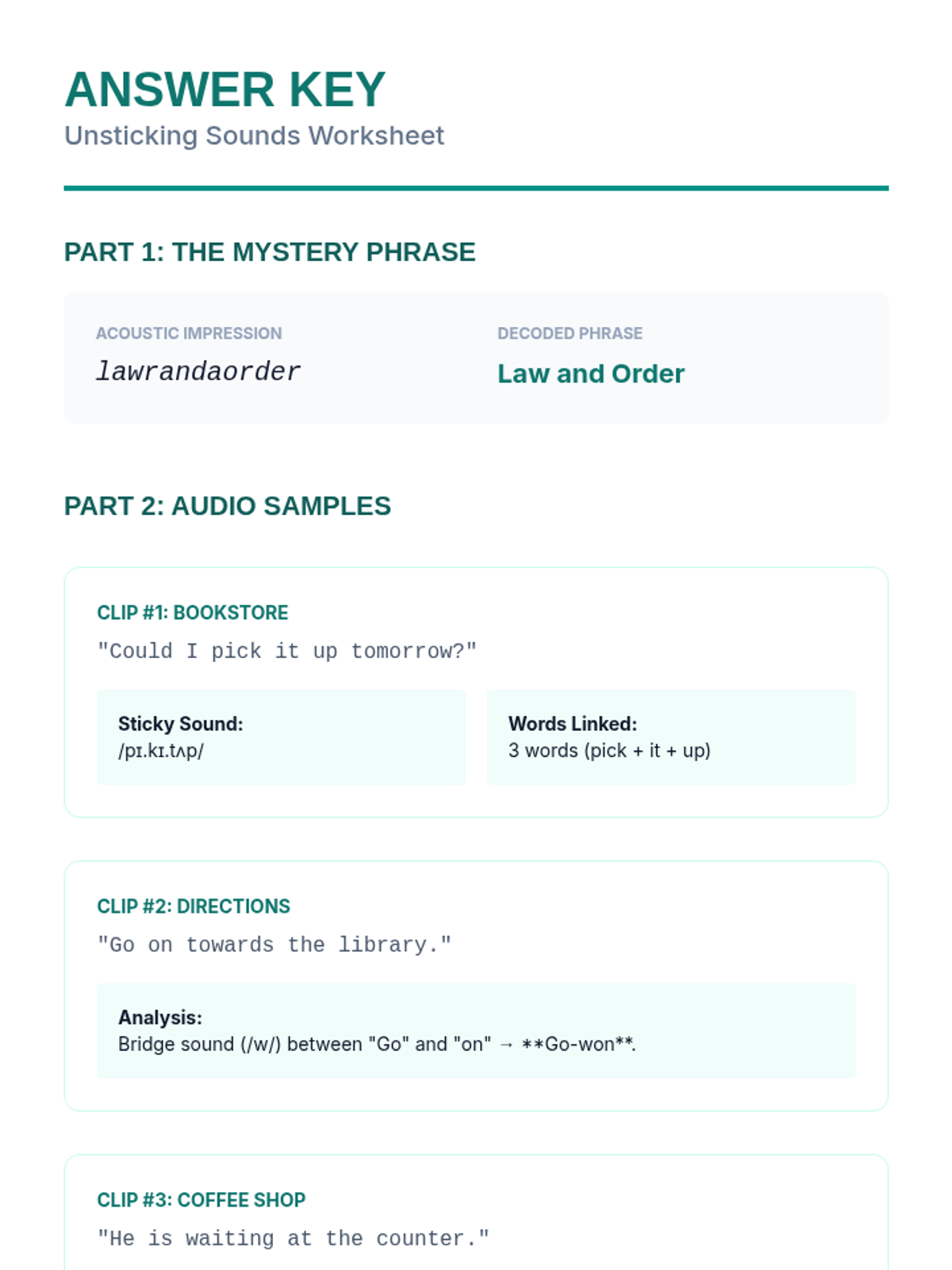
Students investigate how words flow together in natural speech, specifically focusing on consonant-vowel linking and intrusive sounds (/r/, /w/, /j/). They analyze audio samples to 'unstick' connected words.
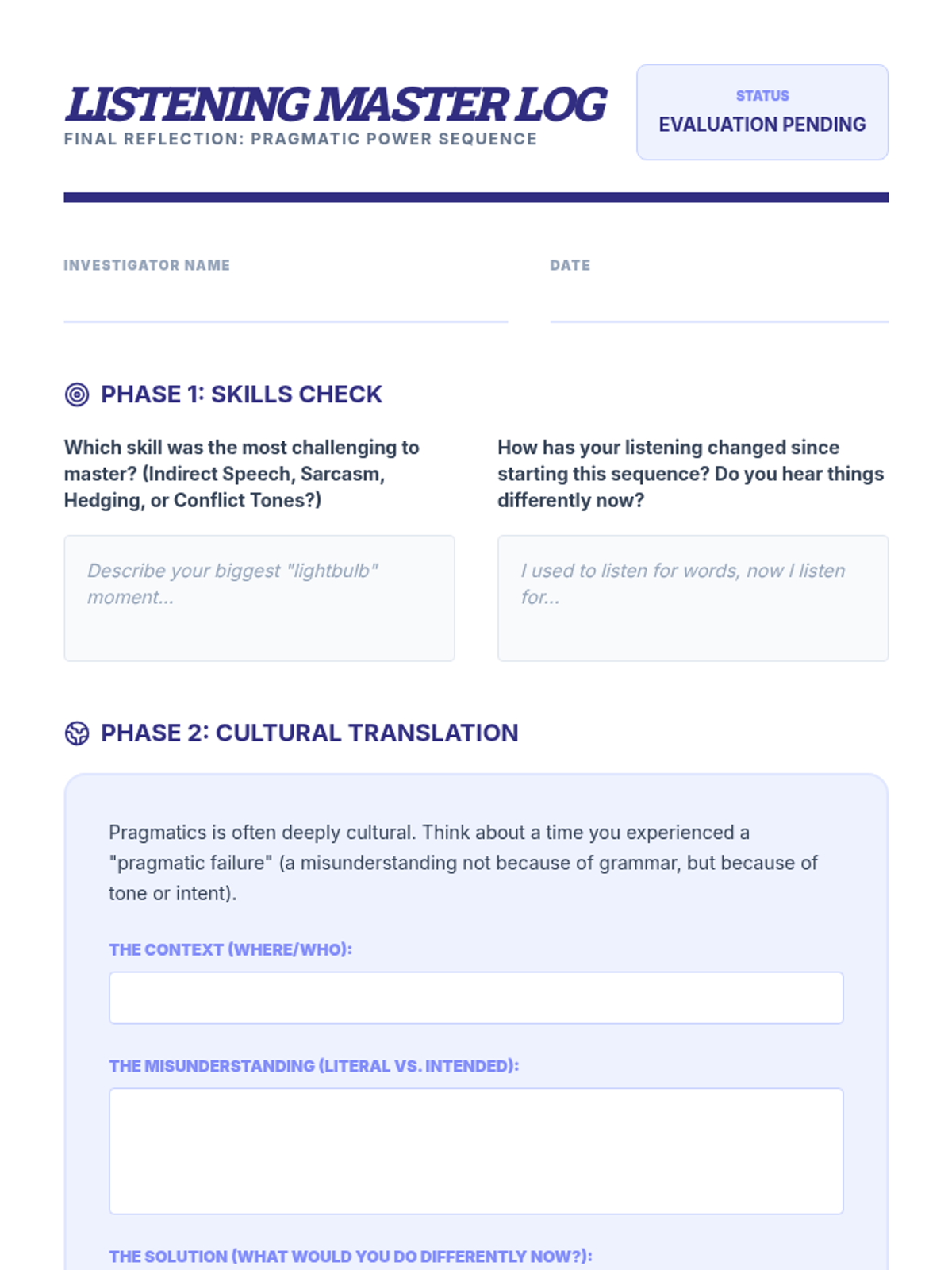
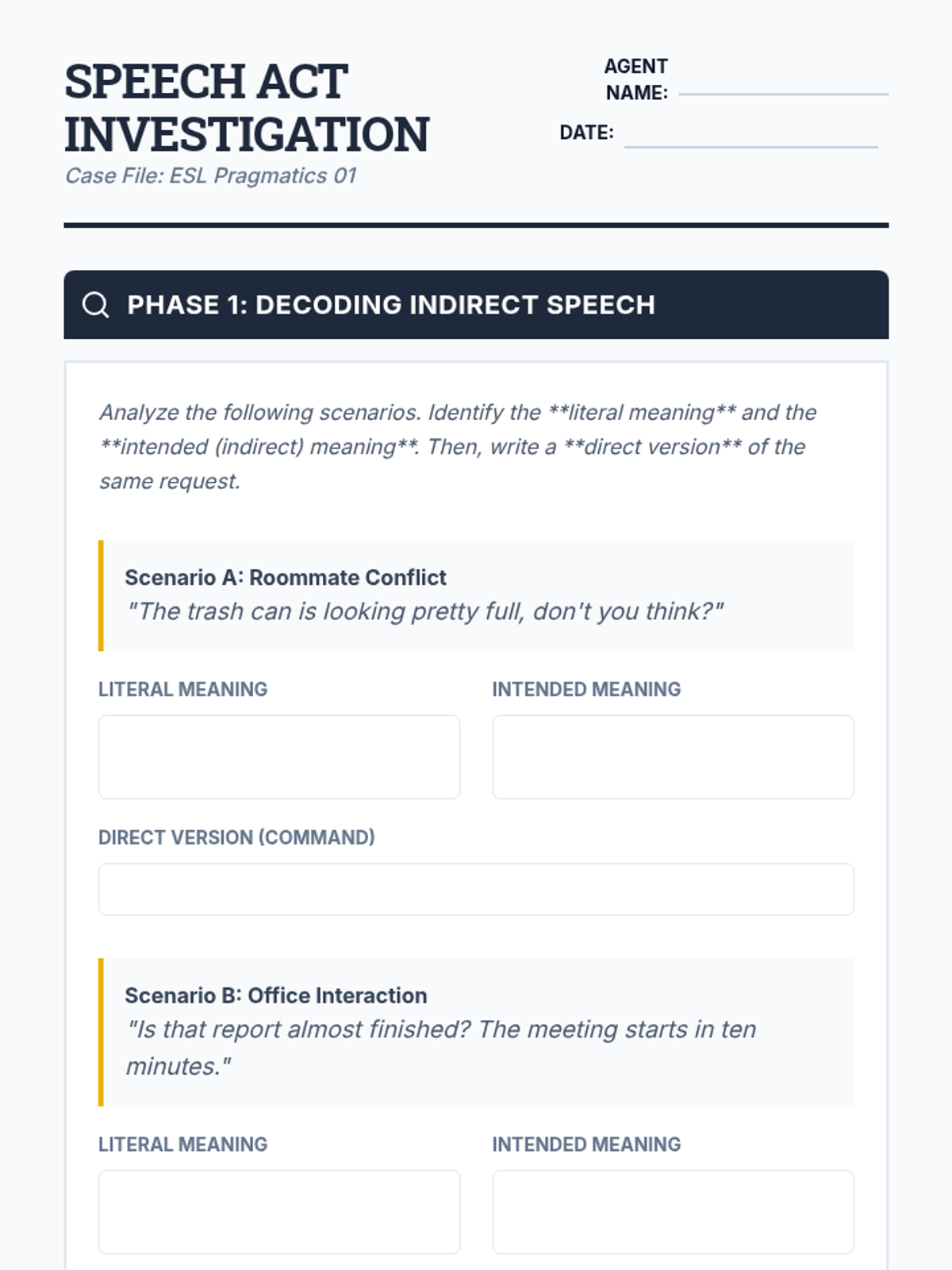
Students explore the difference between what is said and what is meant by analyzing indirect speech acts and politeness strategies in everyday scenarios.
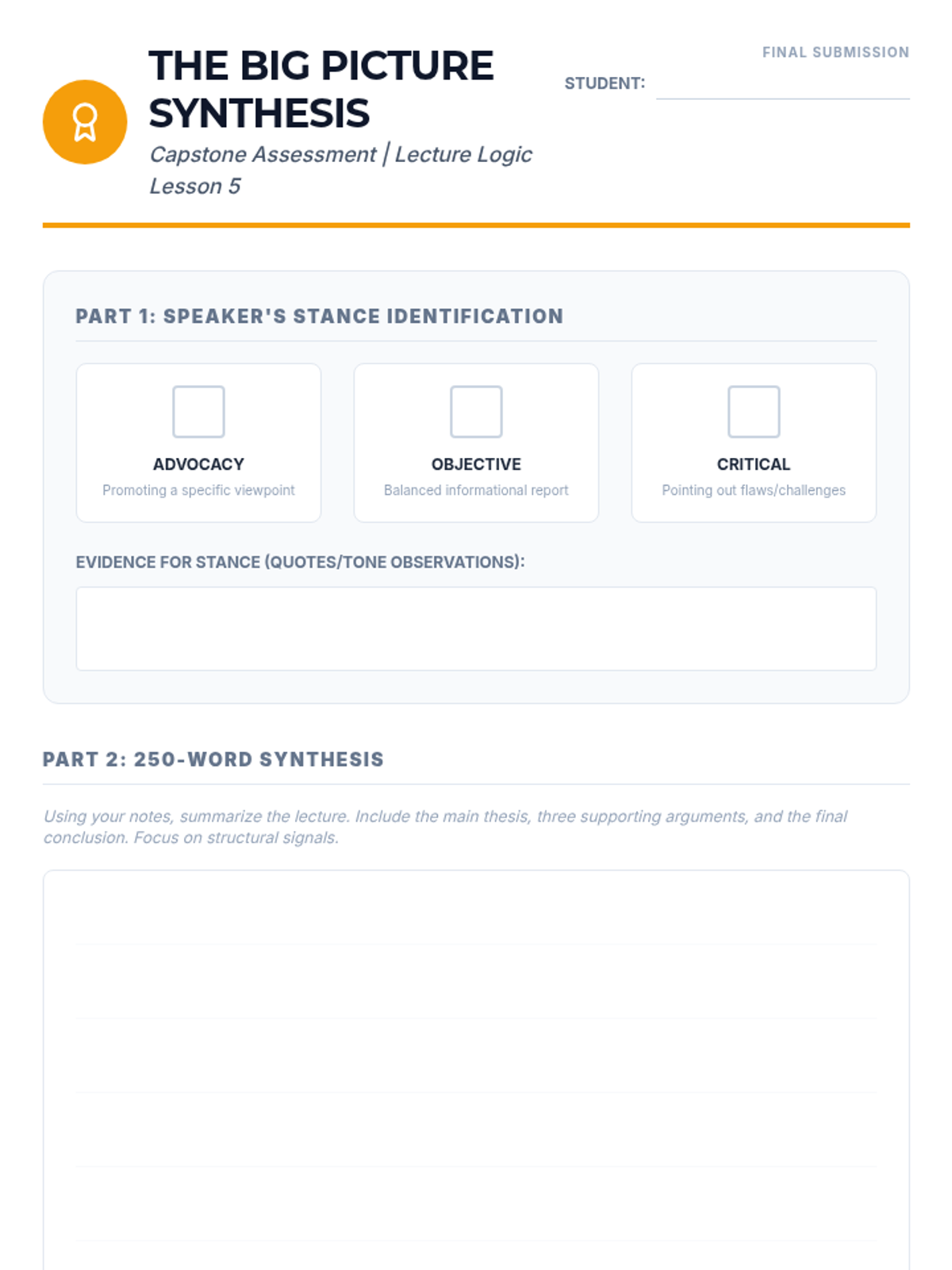
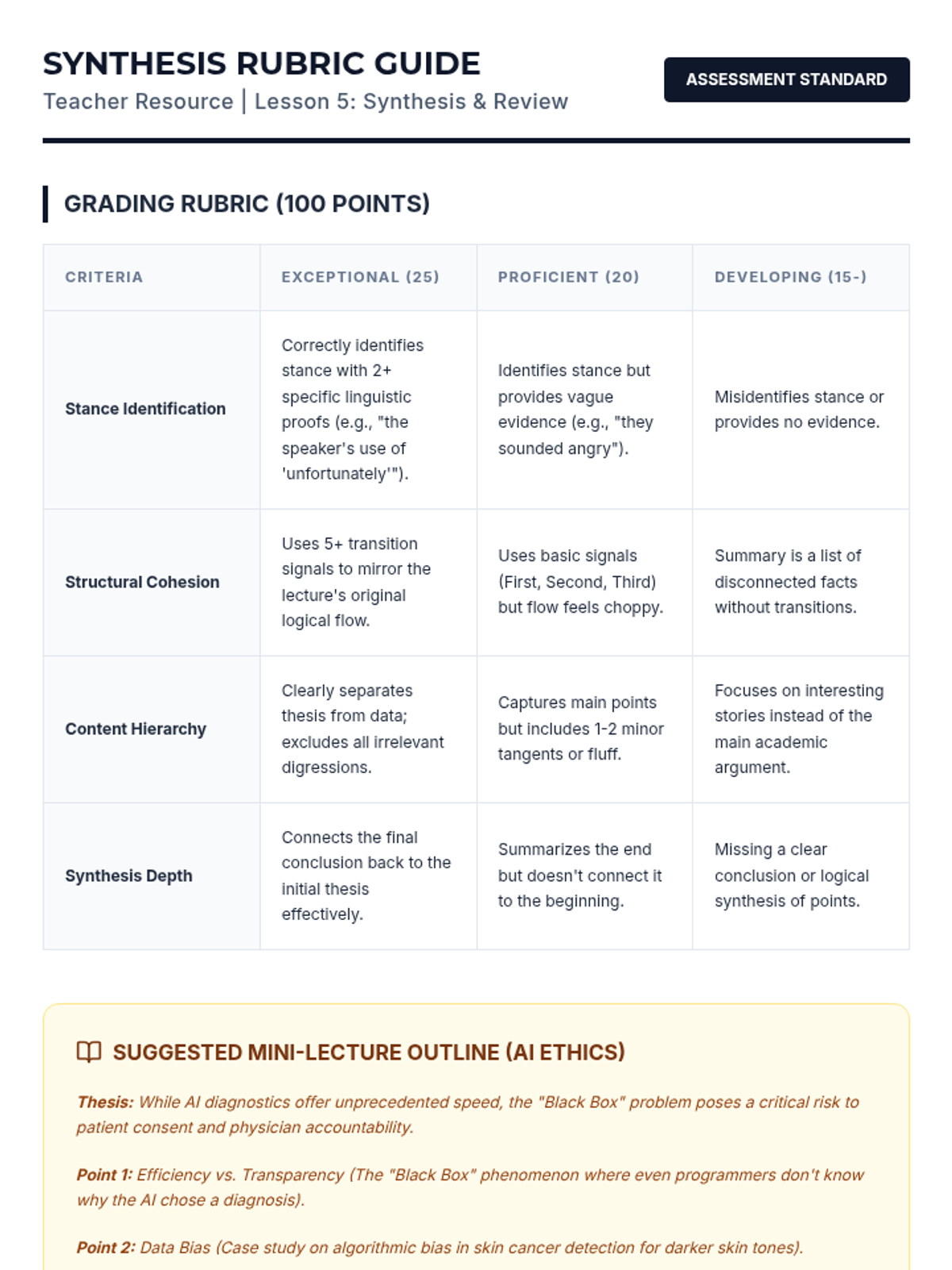
Students synthesize a full mini-lecture into a coherent summary, identifying stance and major takeaways.
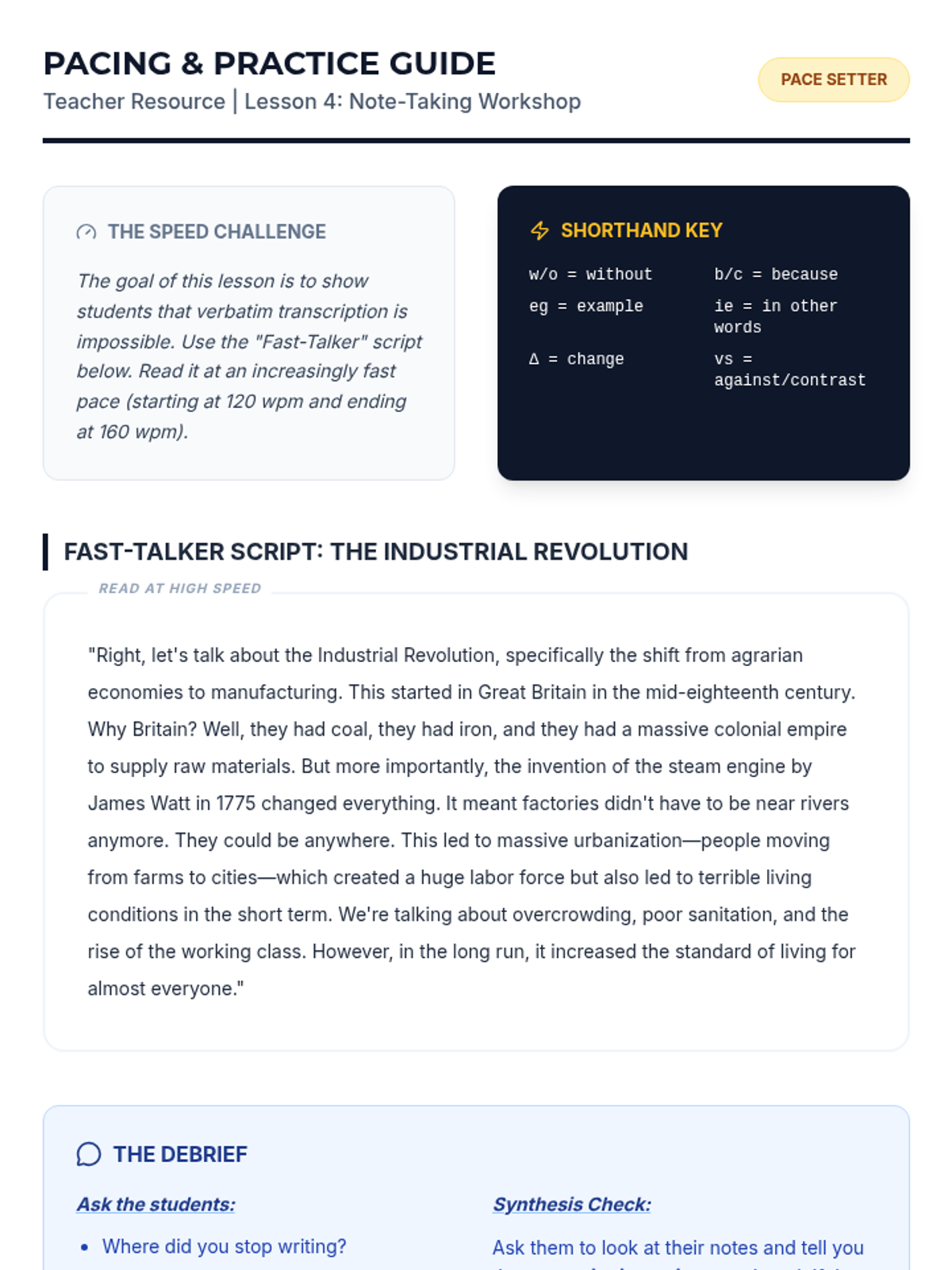
A workshop on the Cornell, Outline, and Mapping methods, emphasizing shorthand and relationship visualization.
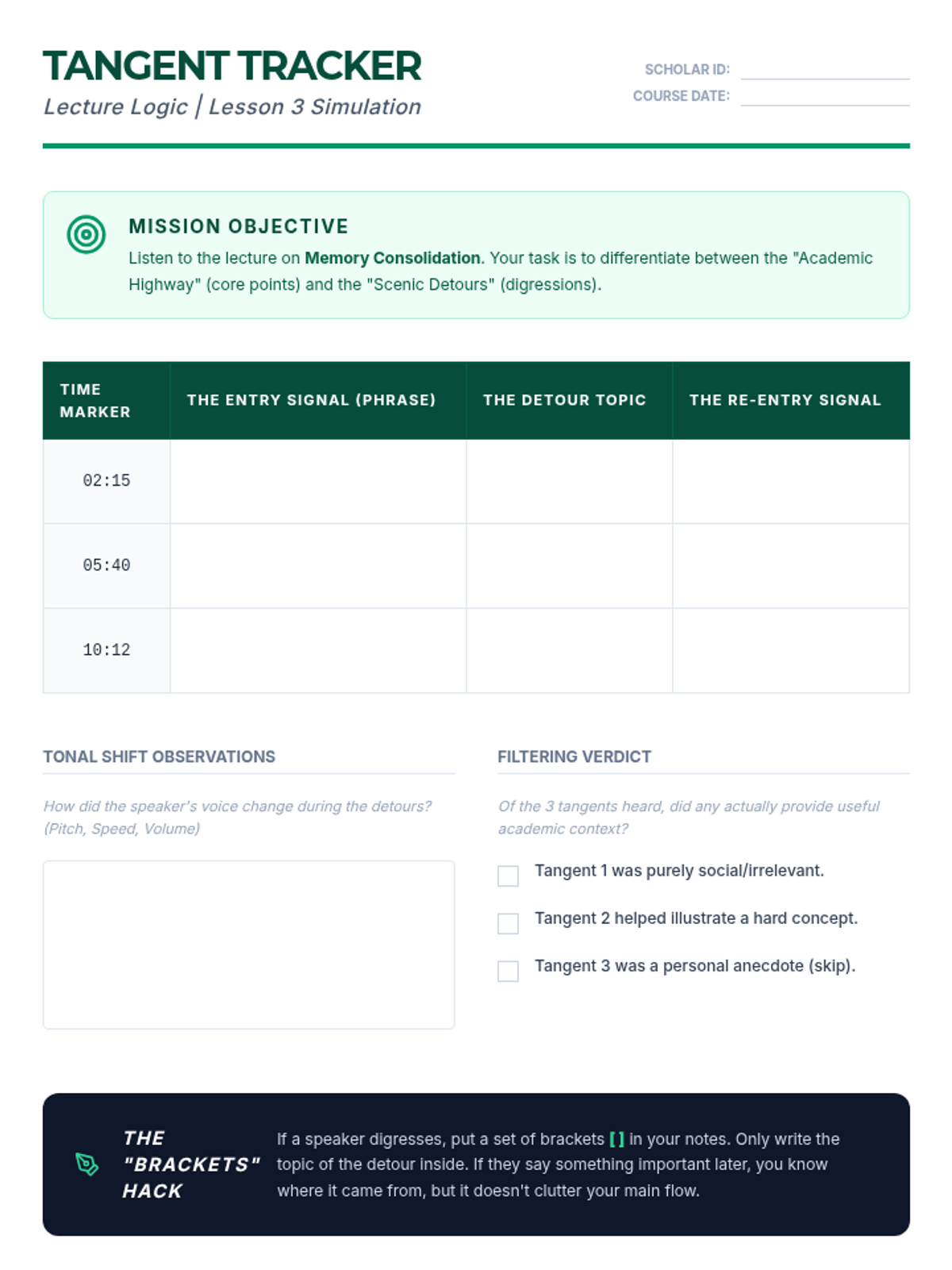
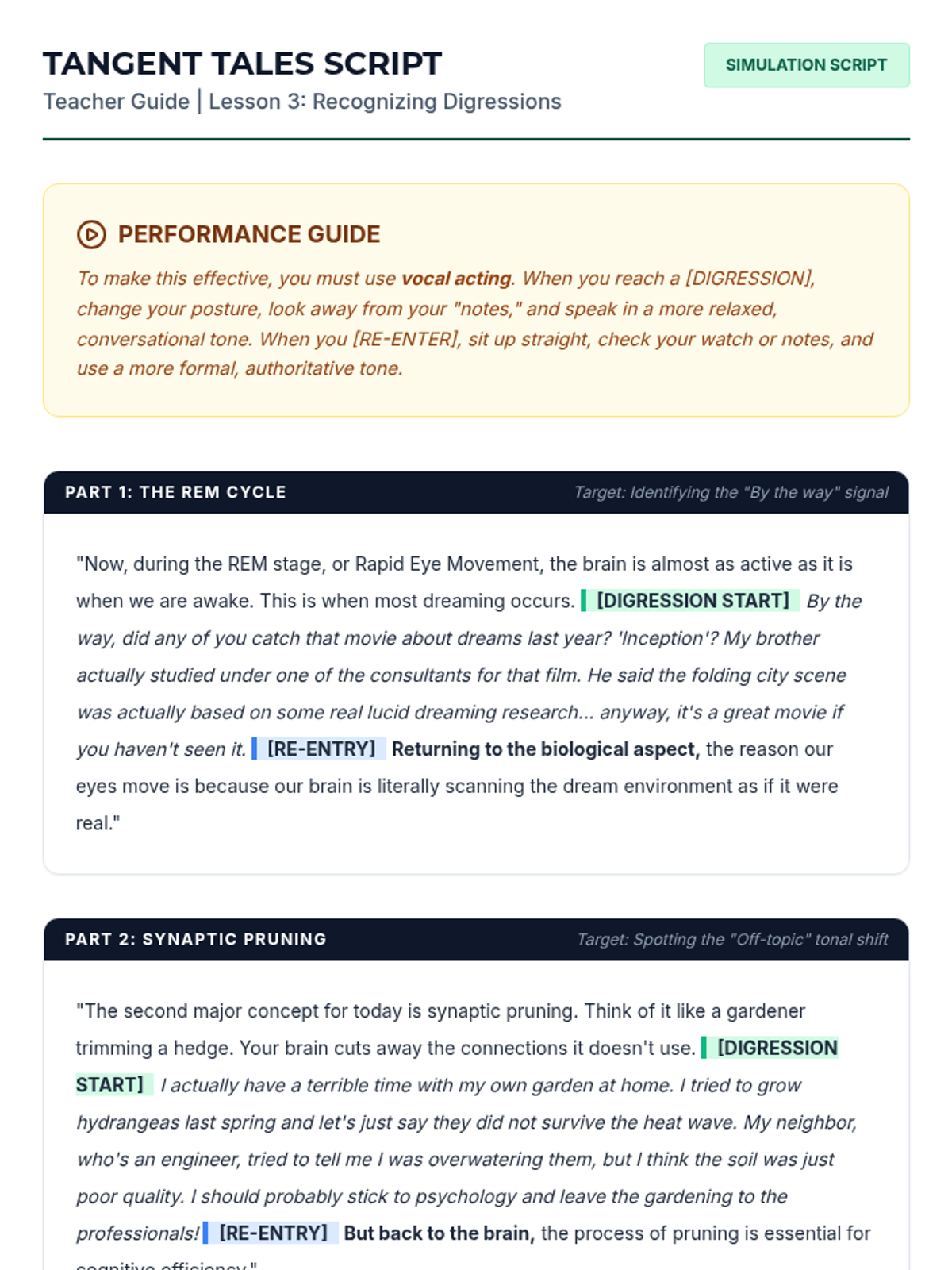
This lesson trains students to identify tonal shifts and linguistic markers that signal tangents or personal asides.
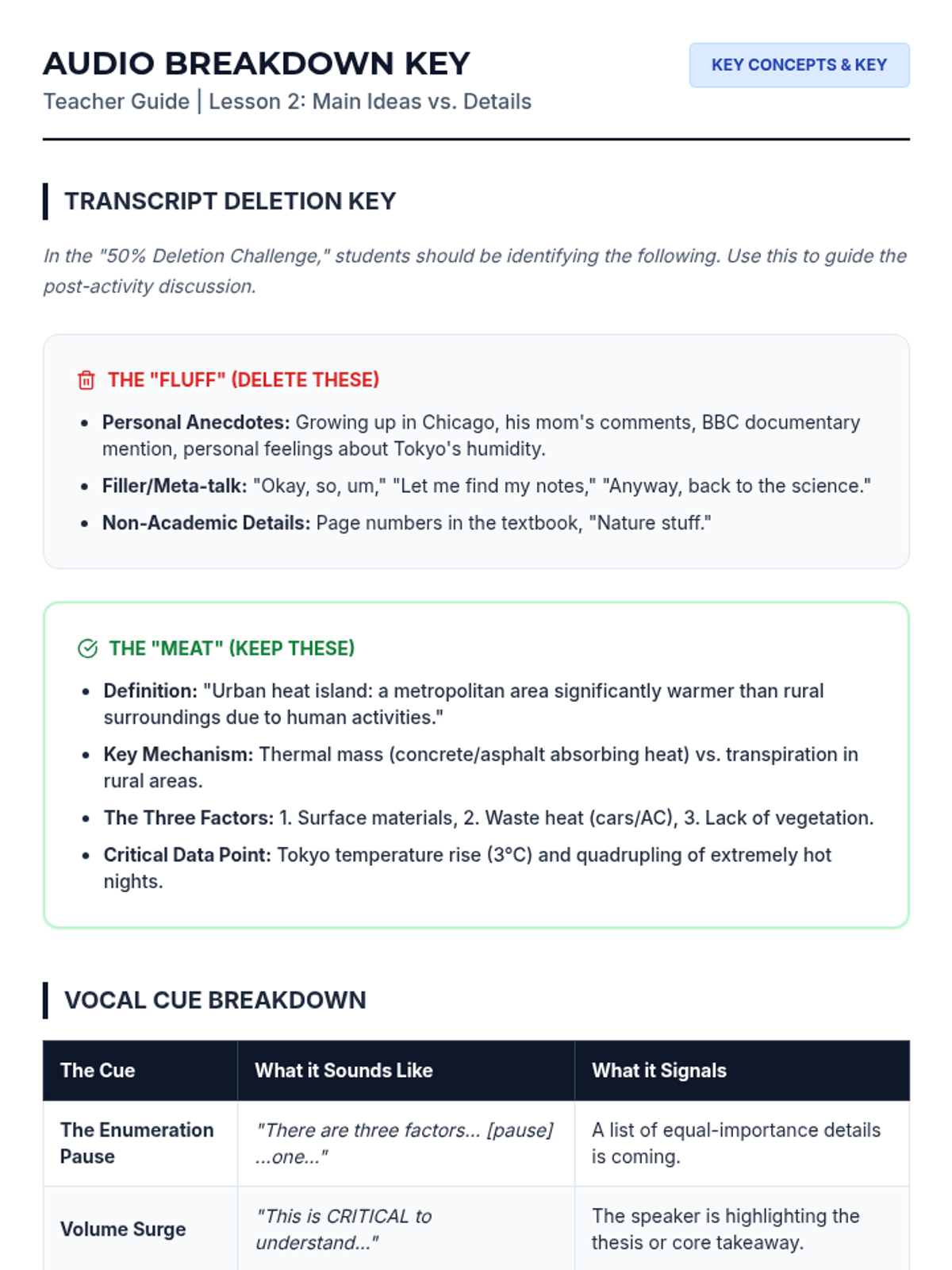
Learners differentiate between core arguments and supporting examples using vocal cues and structural patterns.
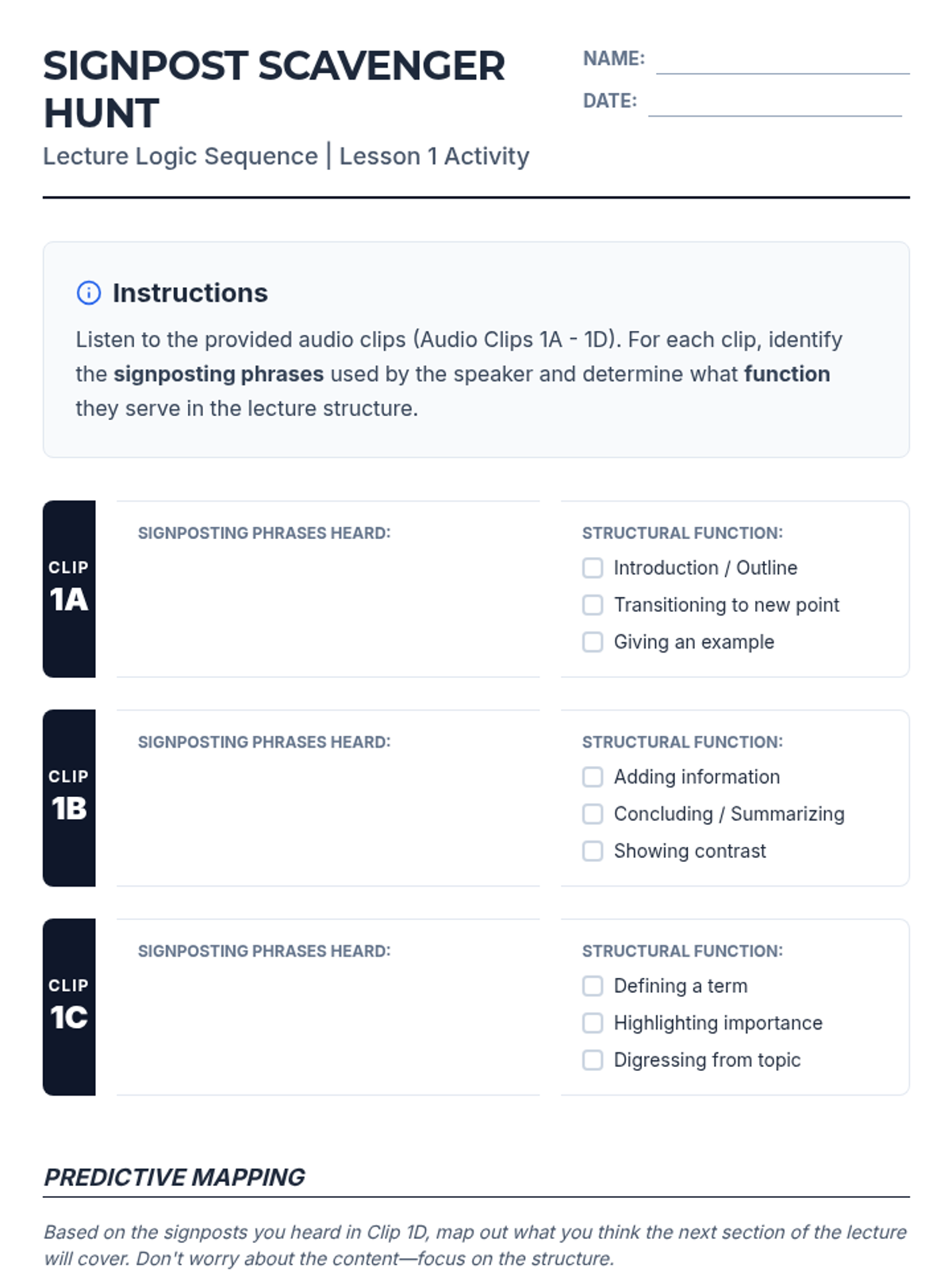
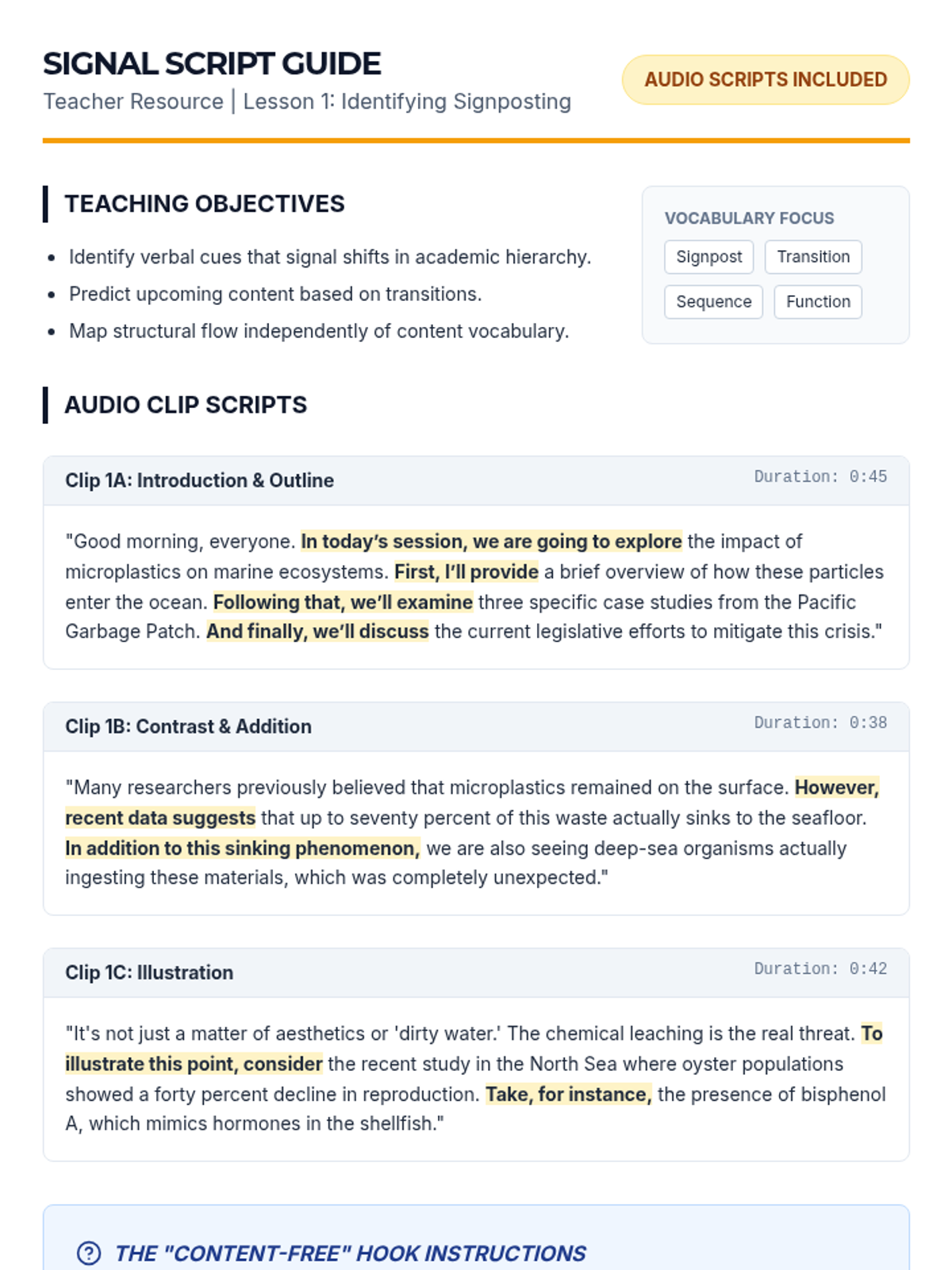
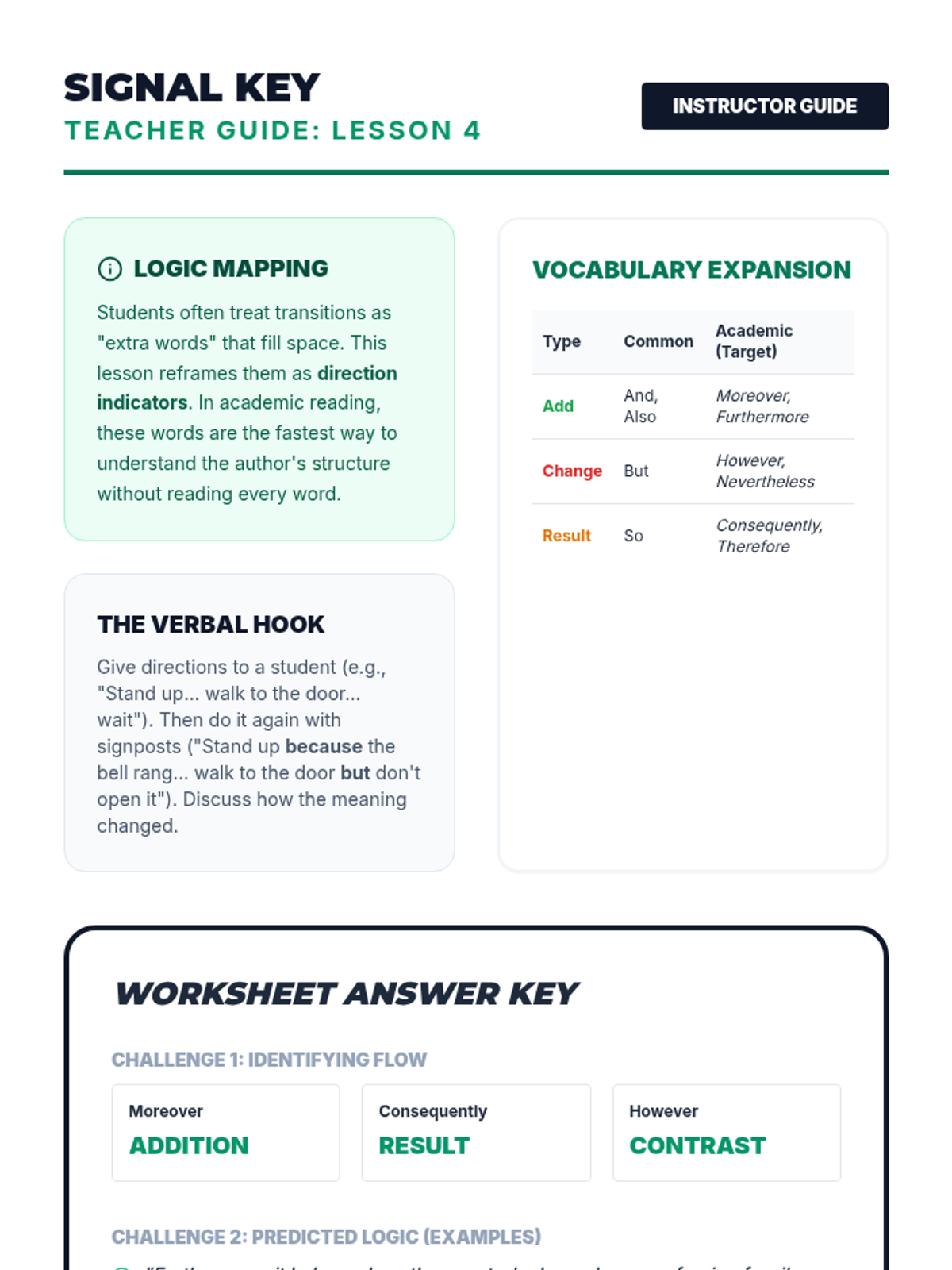
Students analyze signposting language to predict content and map the structural flow of academic talks.
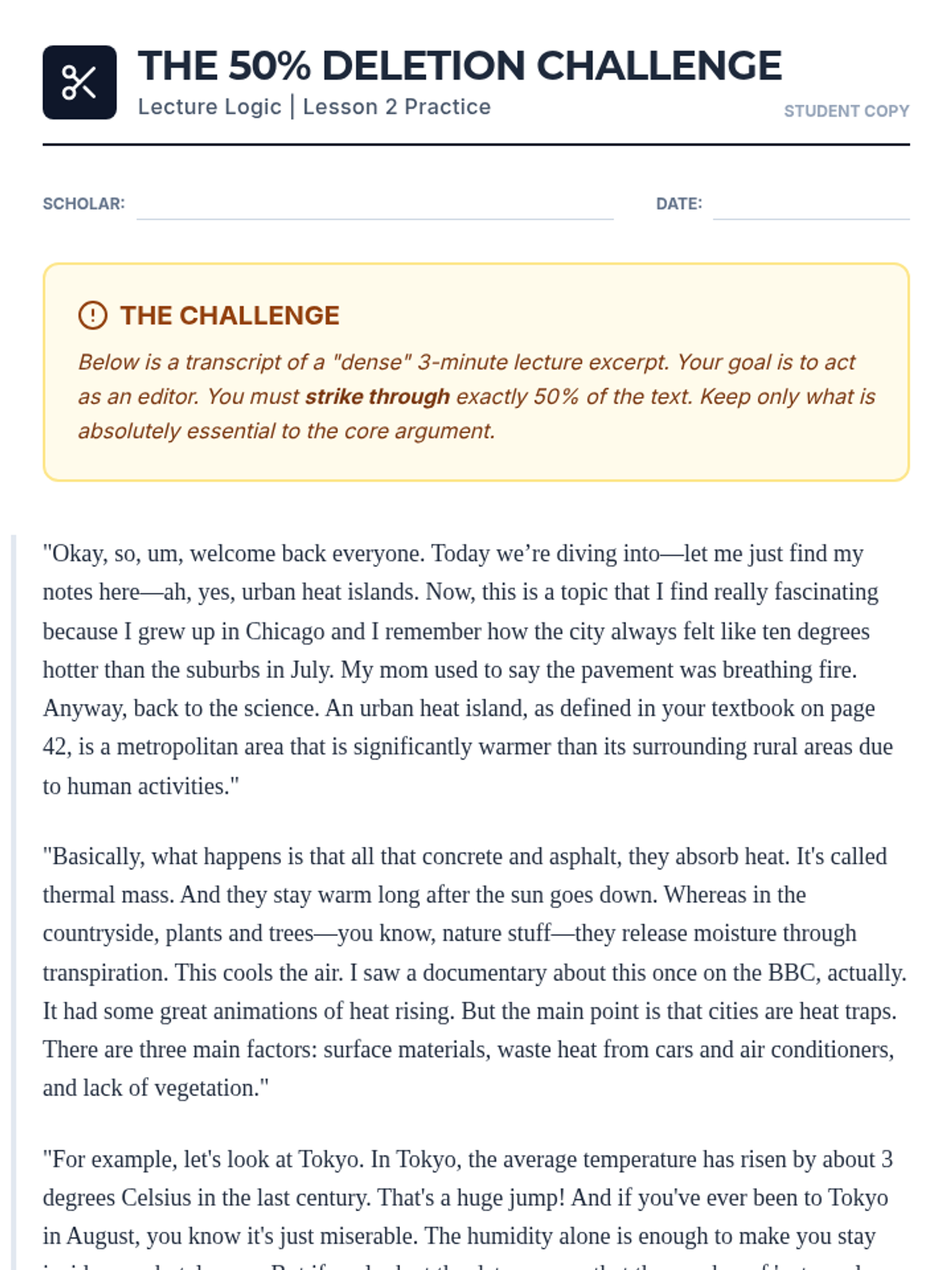
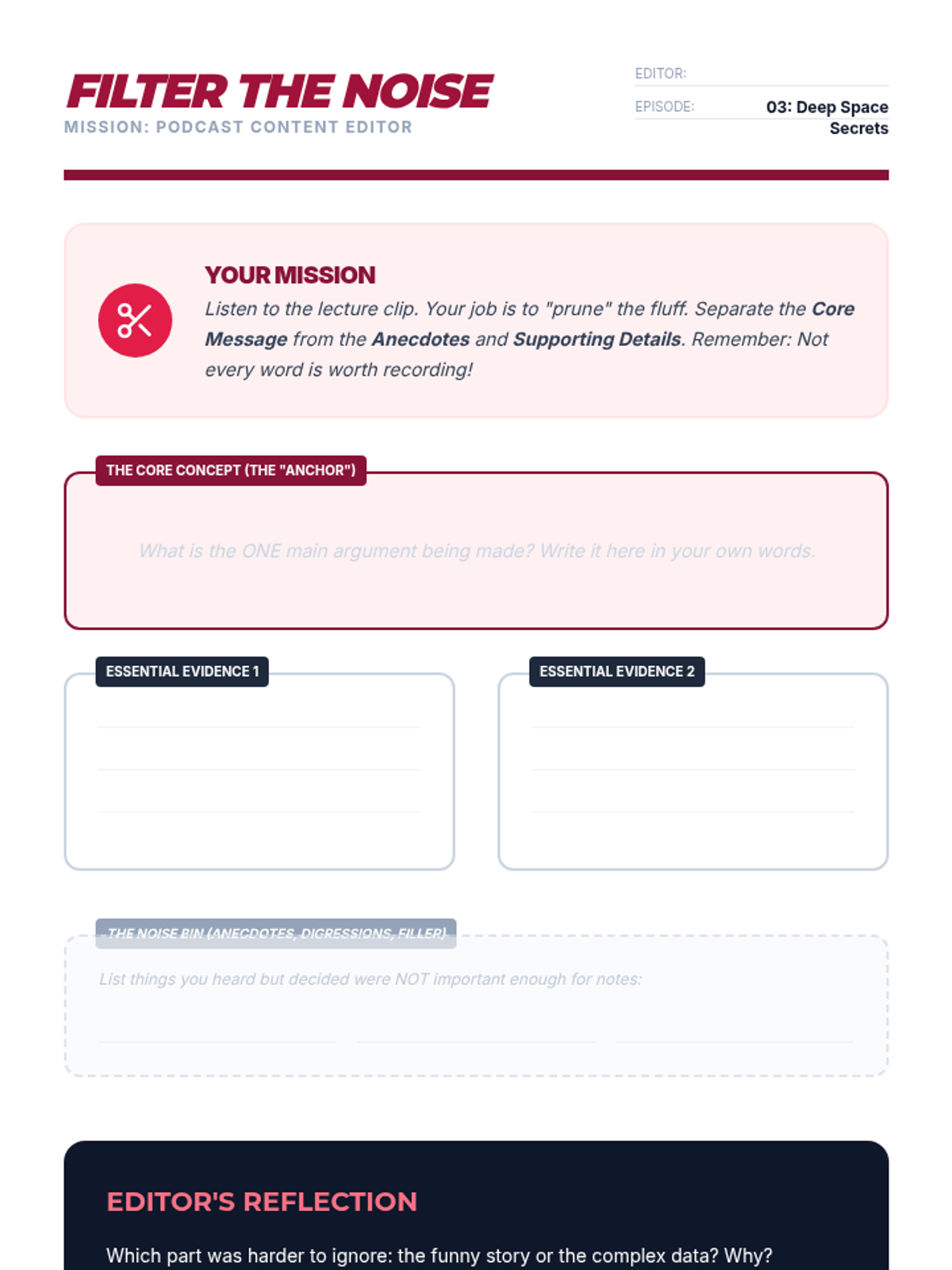
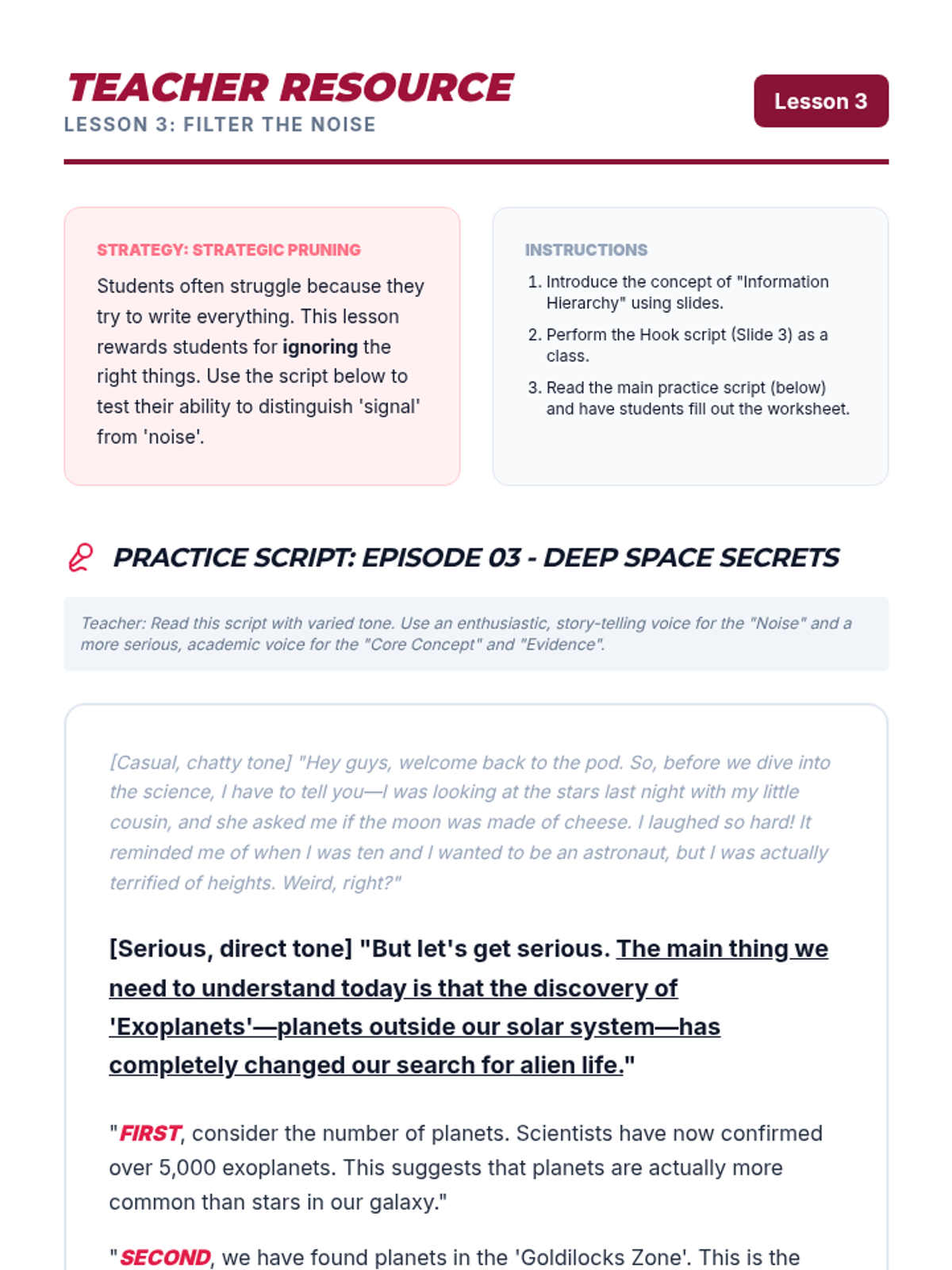
Students analyze academic discourse to distinguish core arguments from supporting details. They practice 'pruning' irrelevant information and identifying essential evidence using a 'Podcast Editor' scenario.
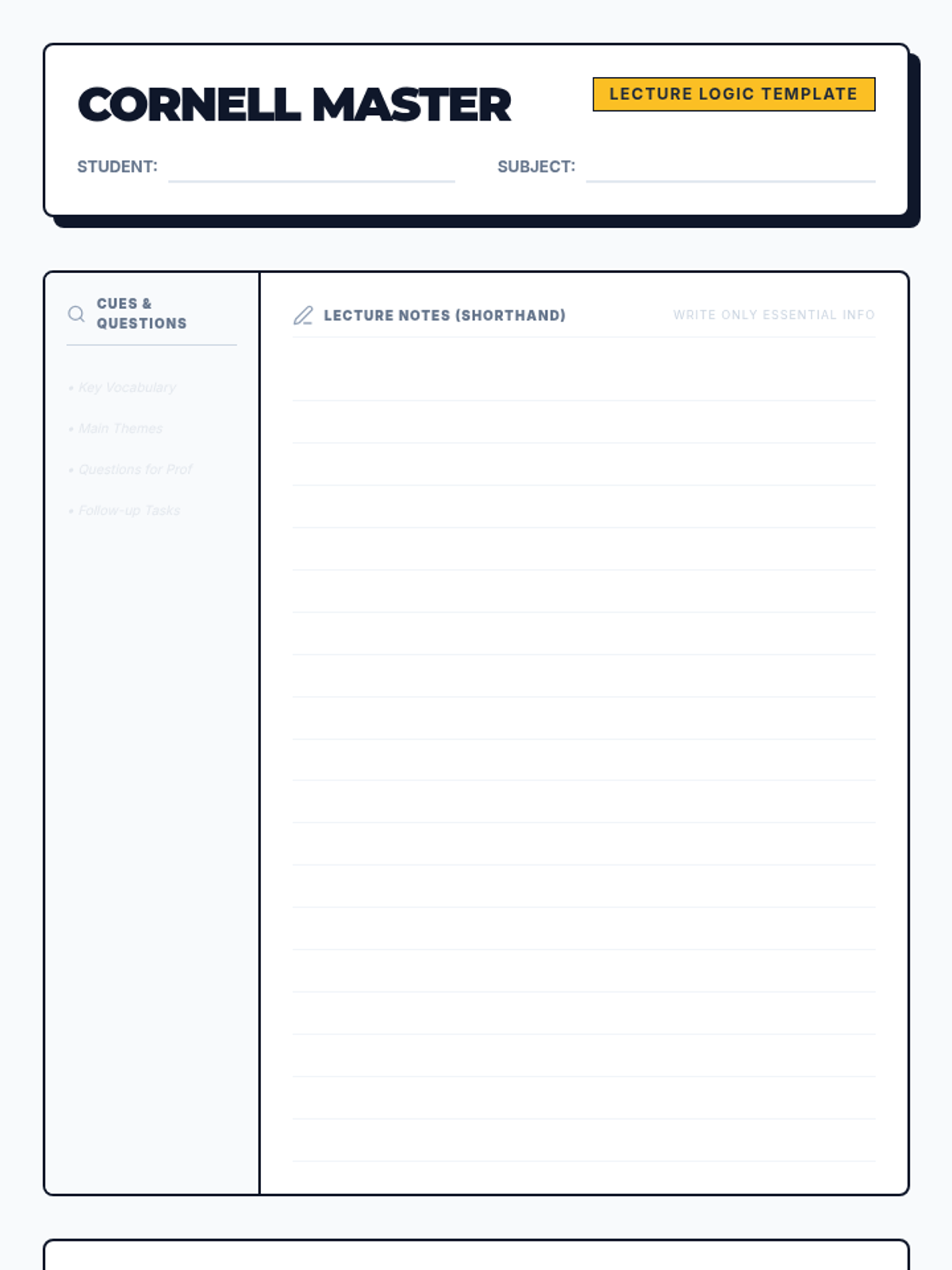
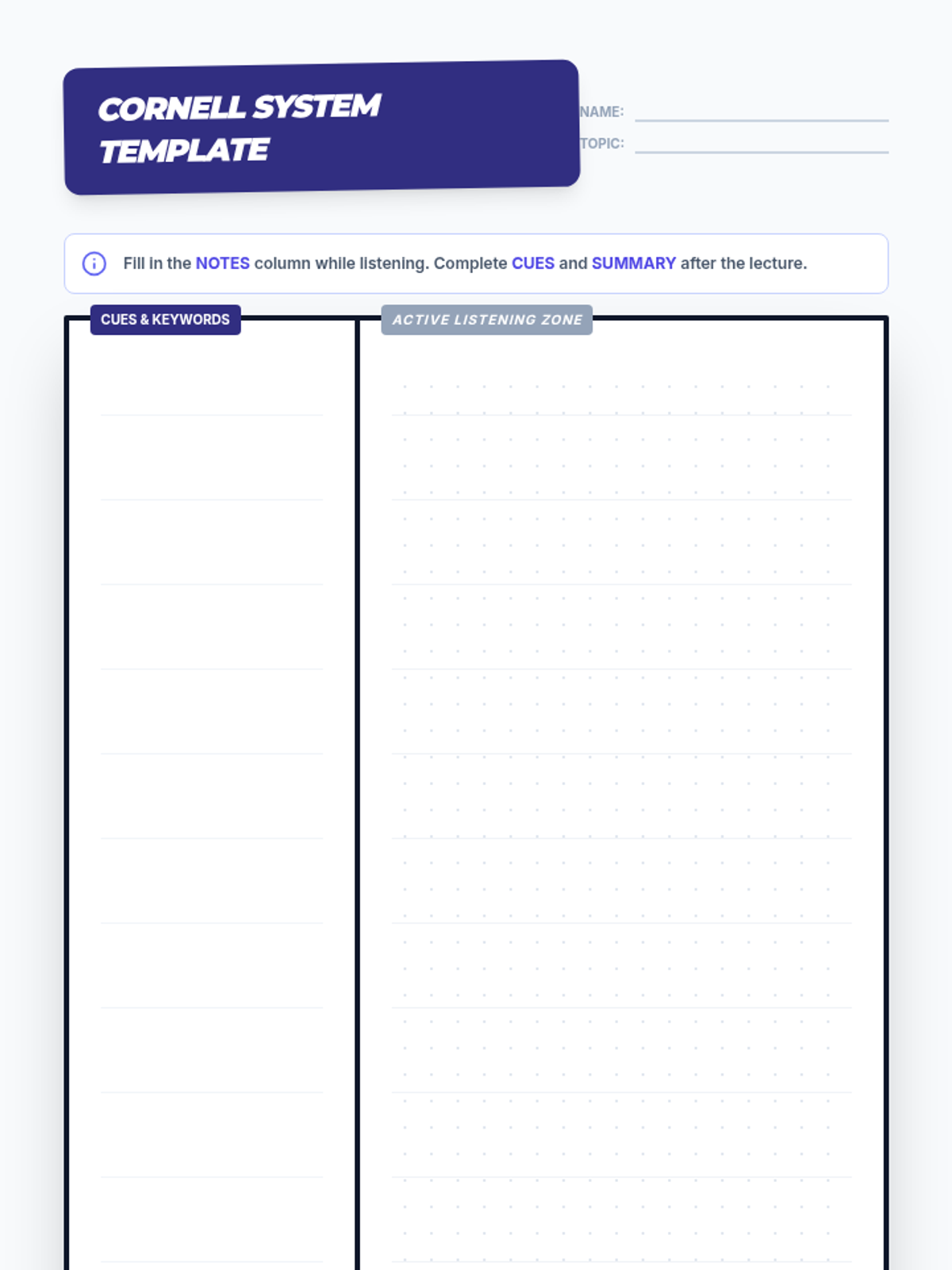
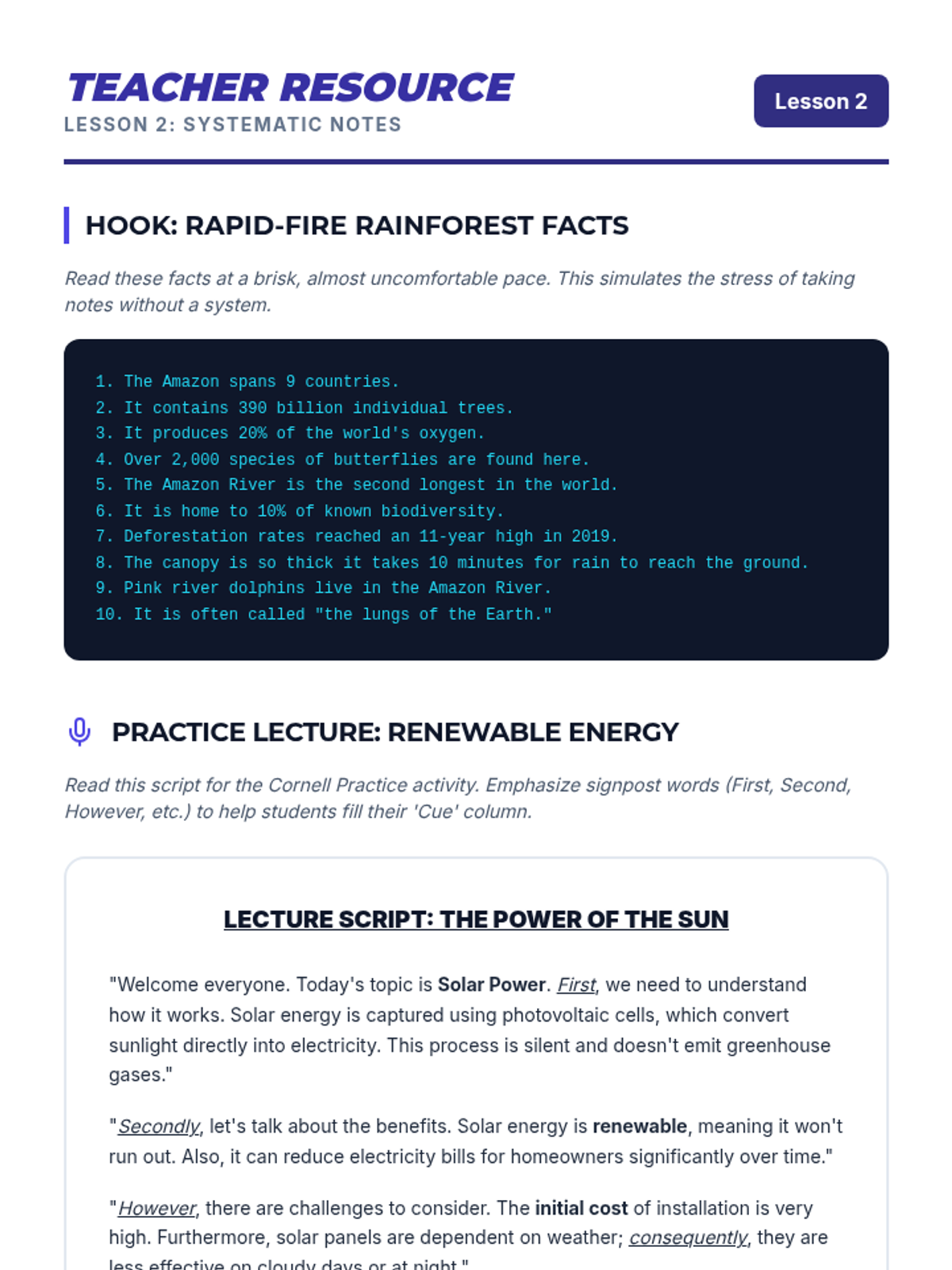
Students learn and practice the Cornell Note-Taking system. The lesson focuses on organizing notes spatially, separating keywords from details, and creating summaries to improve real-time lecture comprehension.
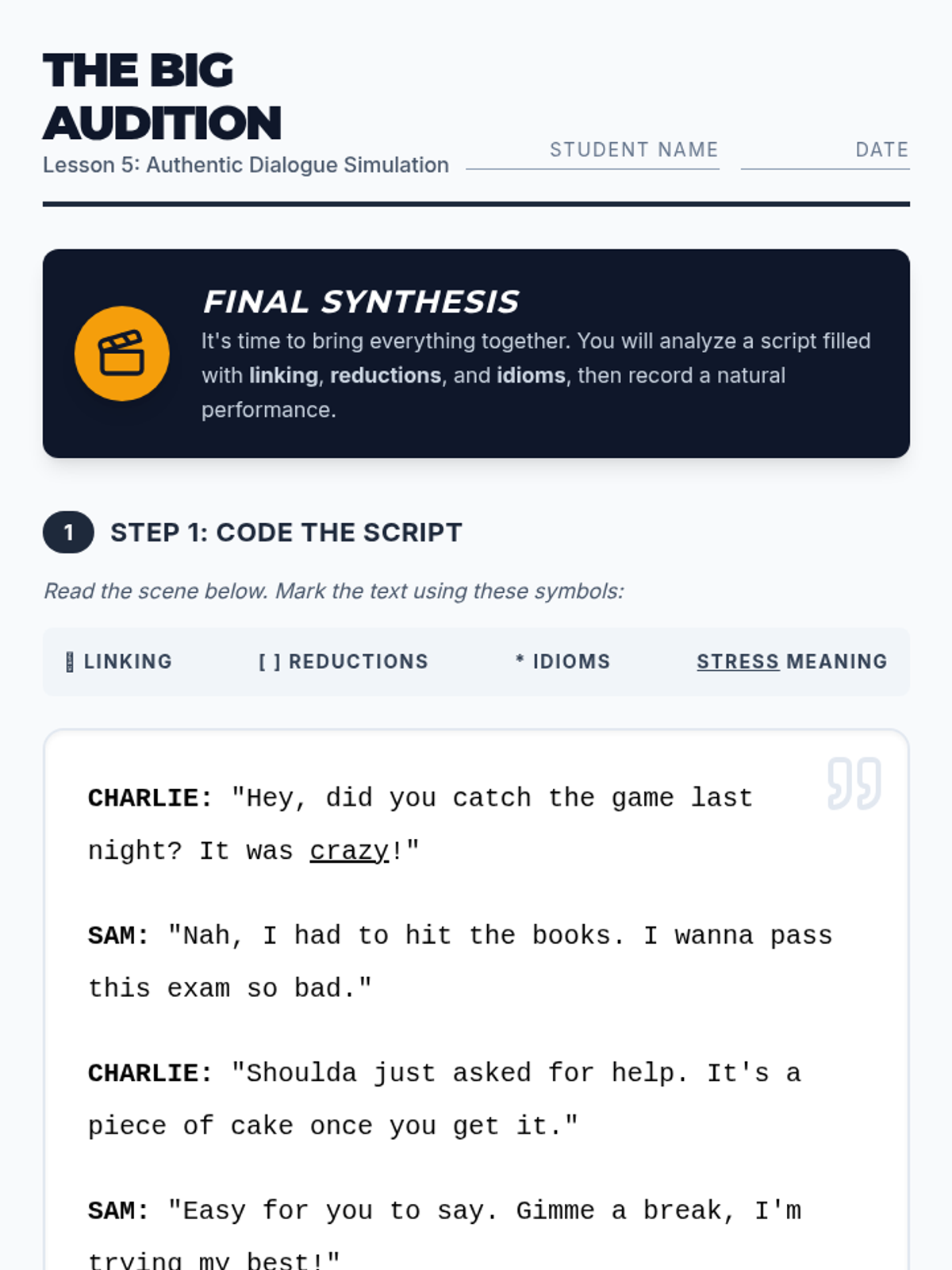
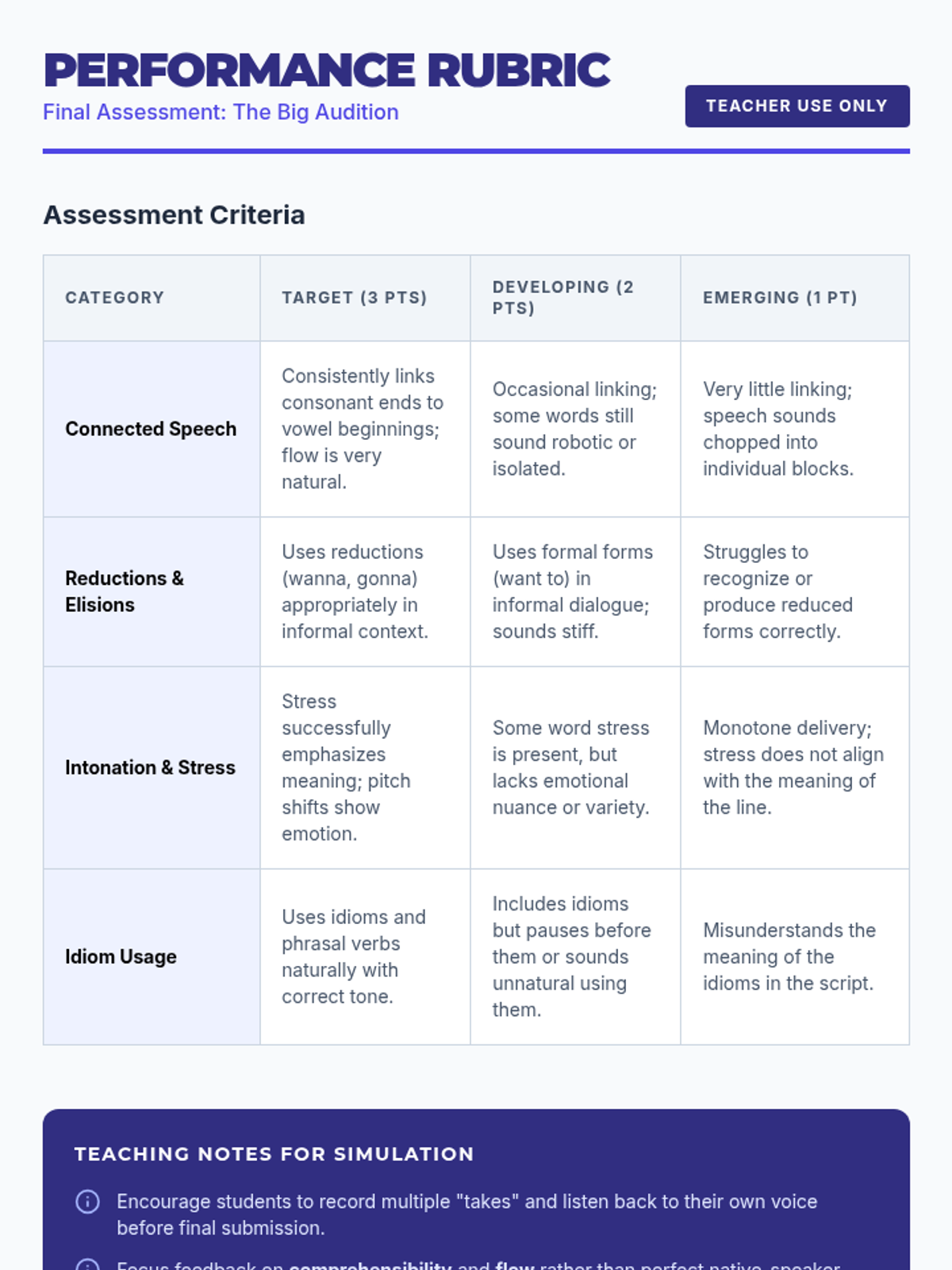
Students synthesize their skills by analyzing and performing an authentic dialogue. They record and critique their own performance, focusing on natural flow, reductions, and idioms.
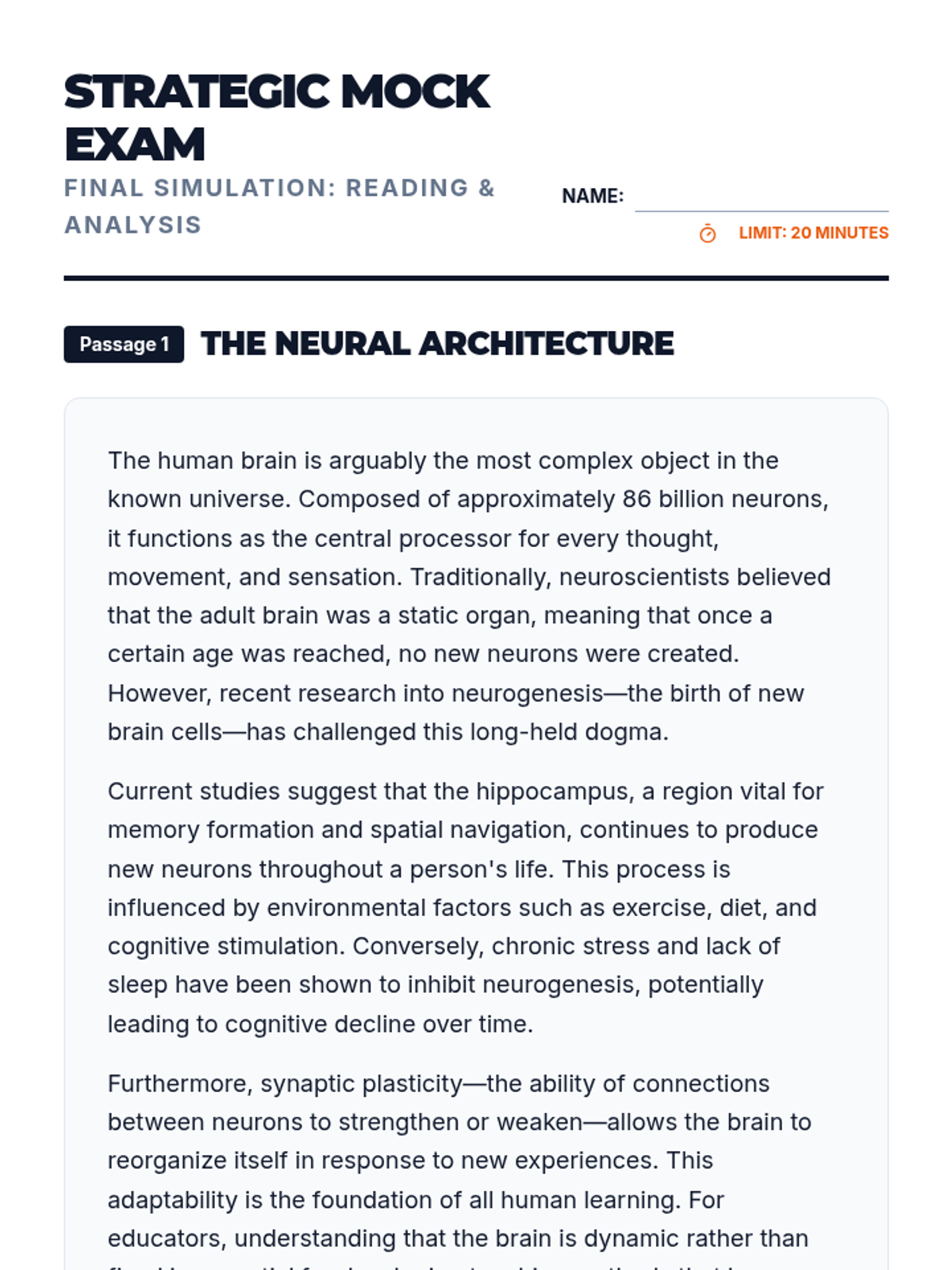
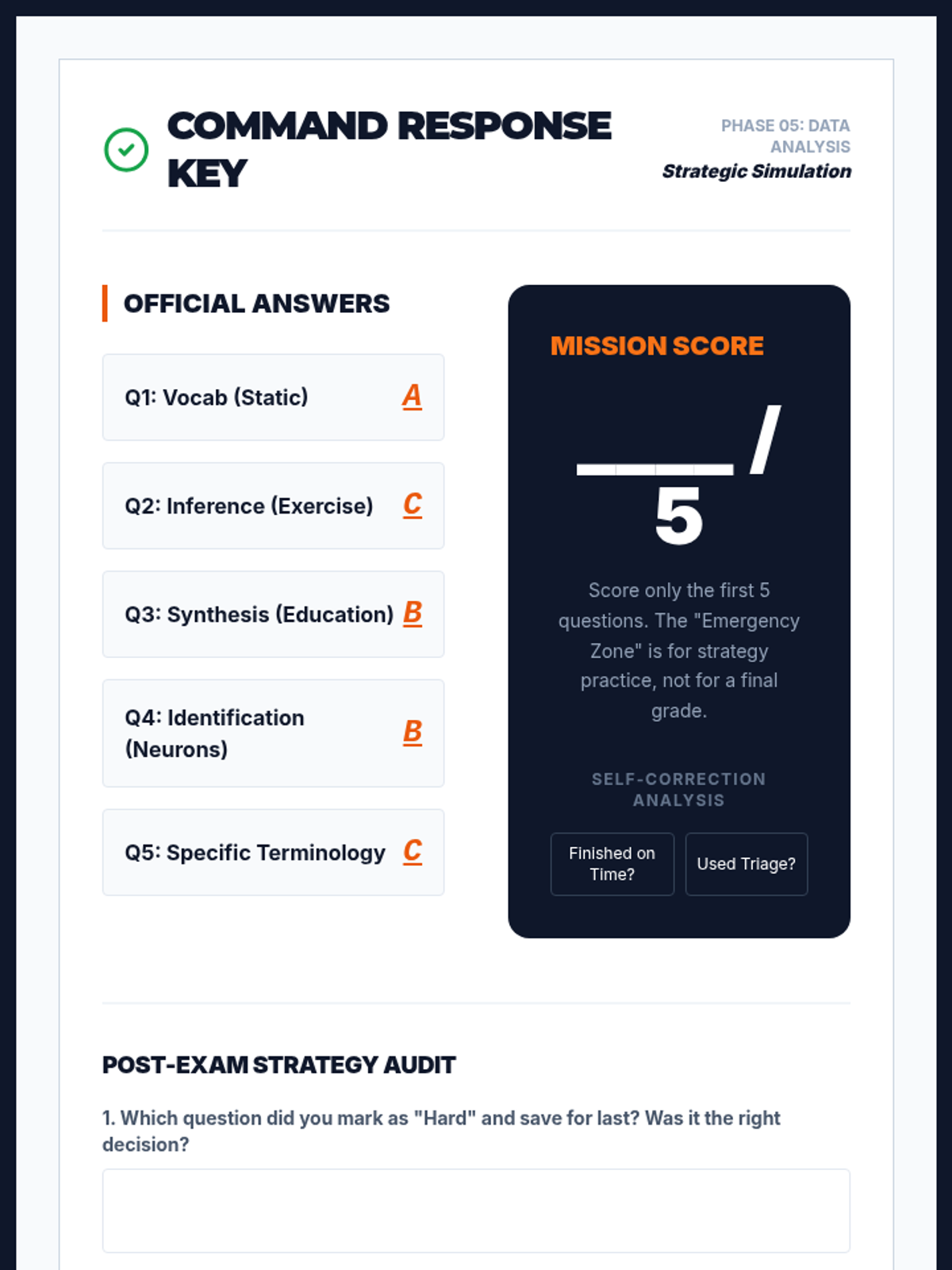
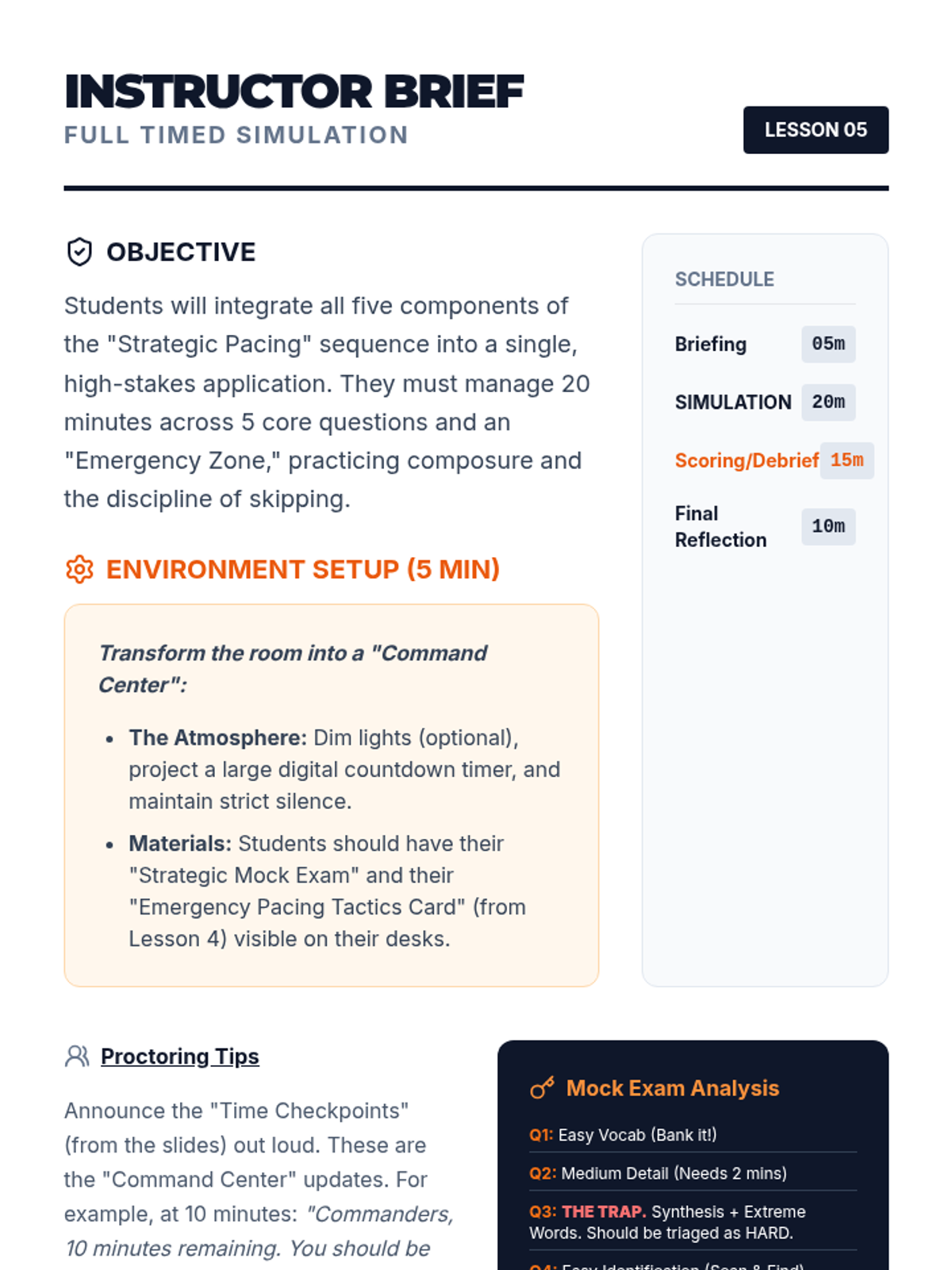
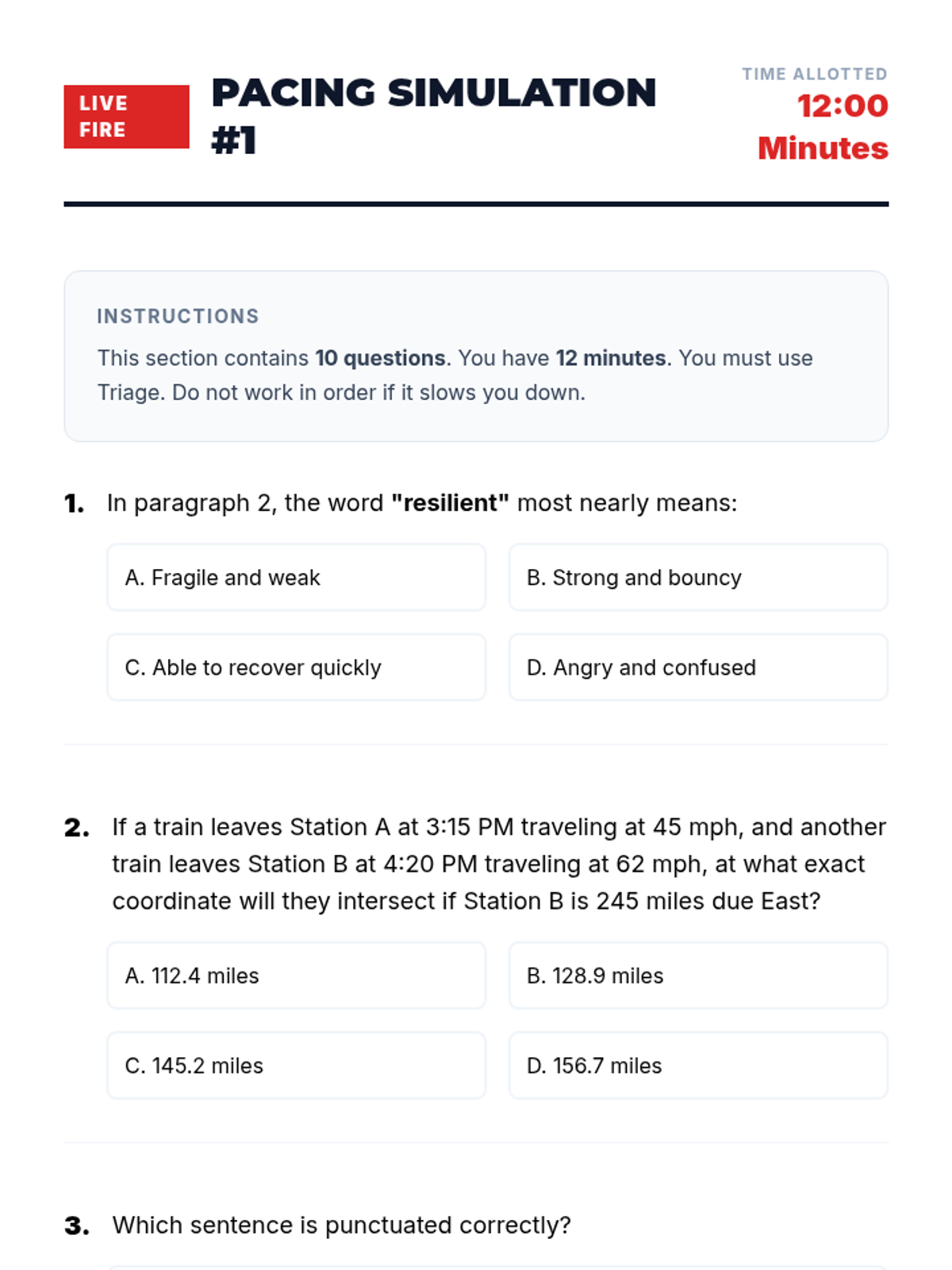
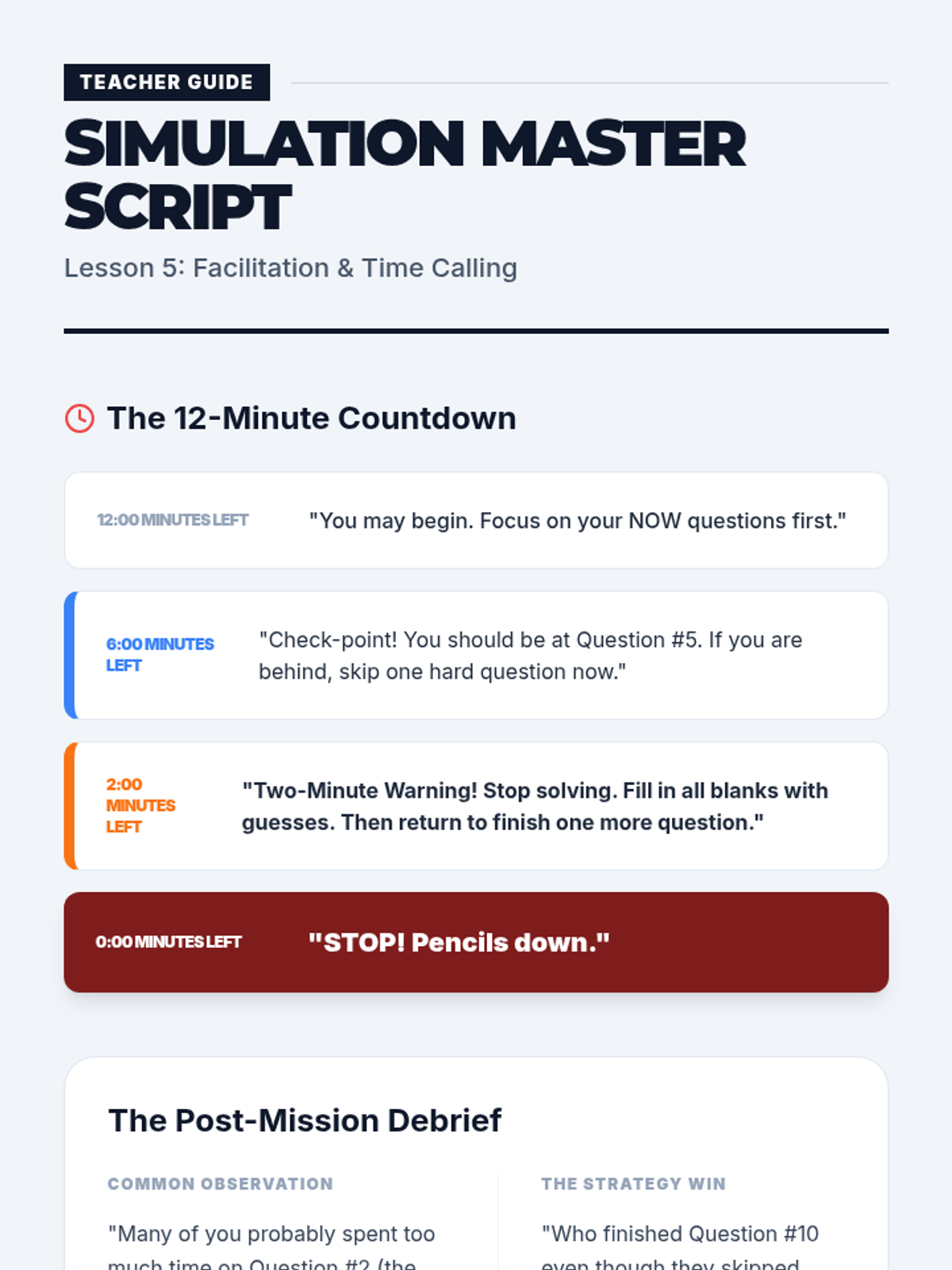
Students apply all learned pacing, triage, and guessing strategies in a high-stakes, full-length timed simulation that mimics the official testing environment.
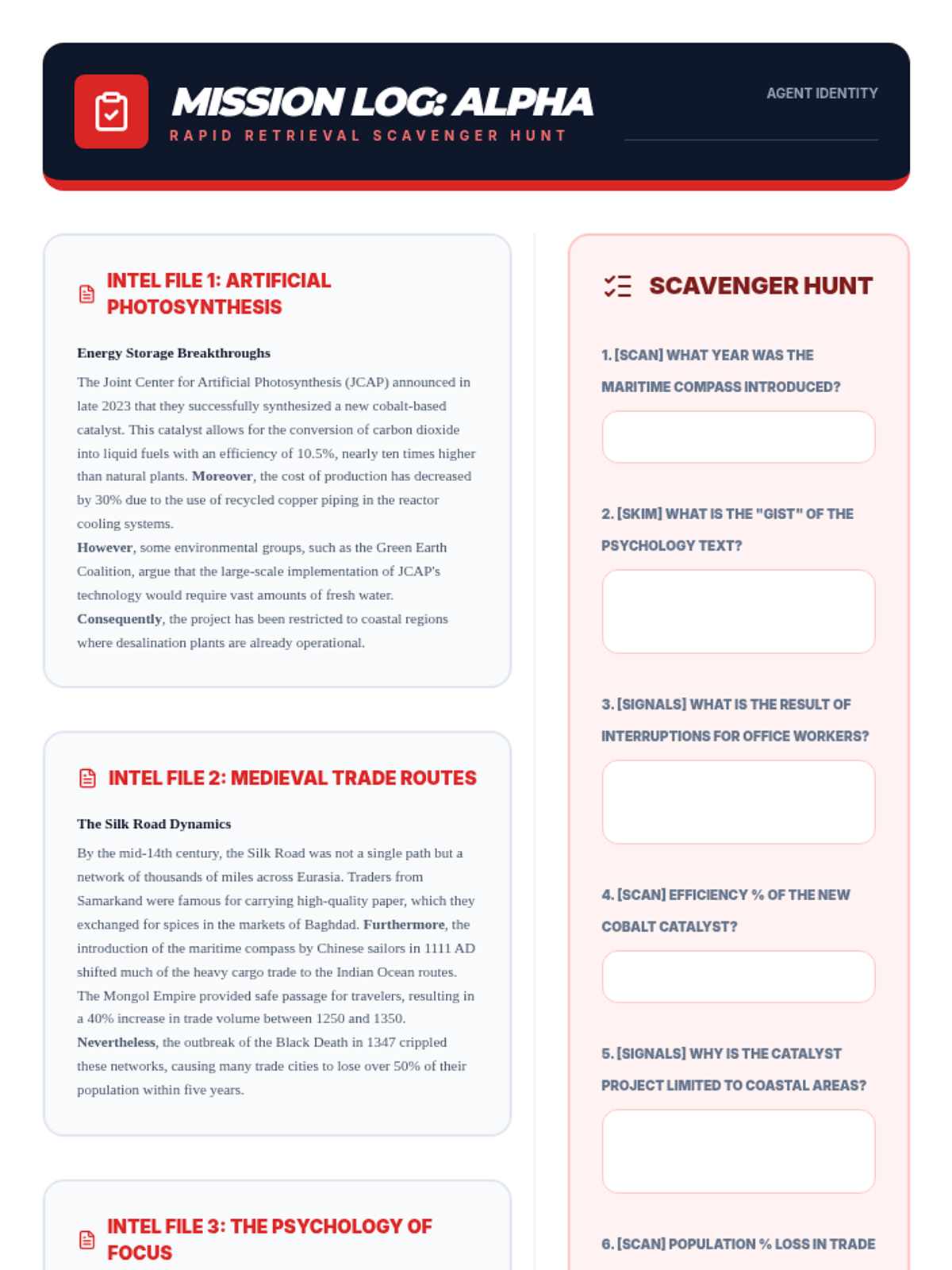
Students participate in a timed scavenger hunt requiring them to employ skimming and scanning to retrieve information from multiple academic texts.
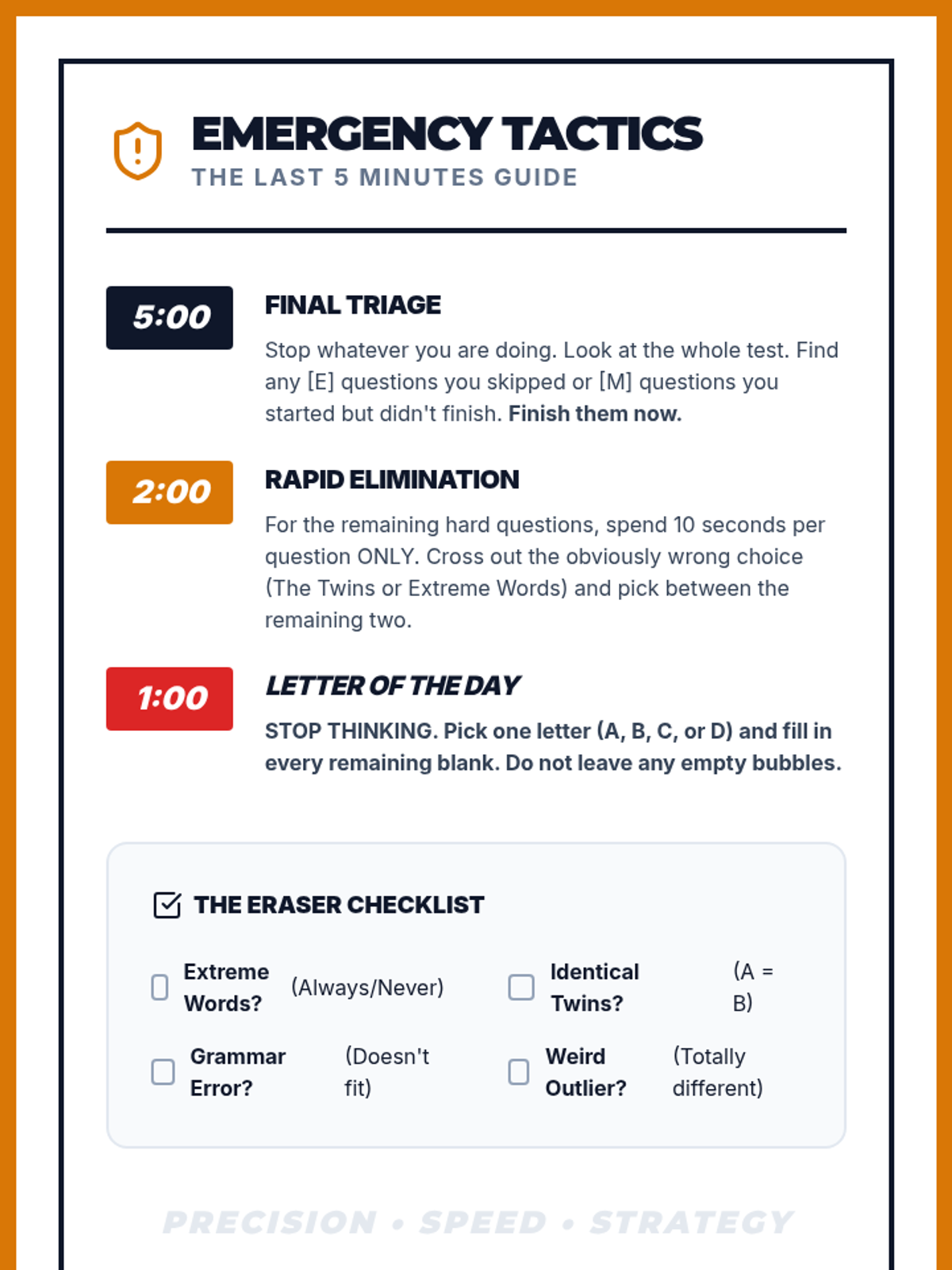
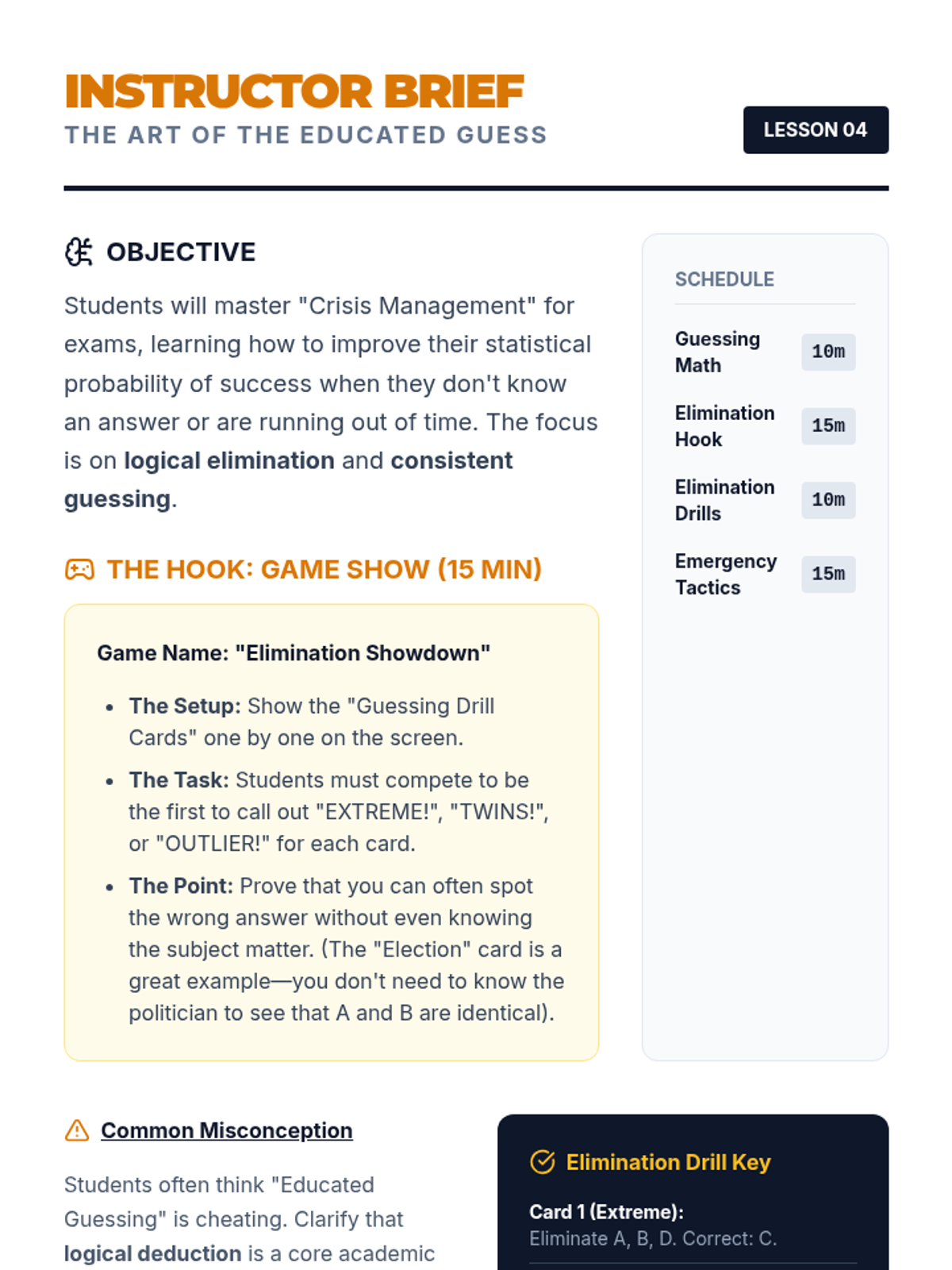
Students learn high-speed strategies for the final minutes of an exam, including elimination techniques, 'Letter of the Day' probability, and risk assessment for educated guessing.
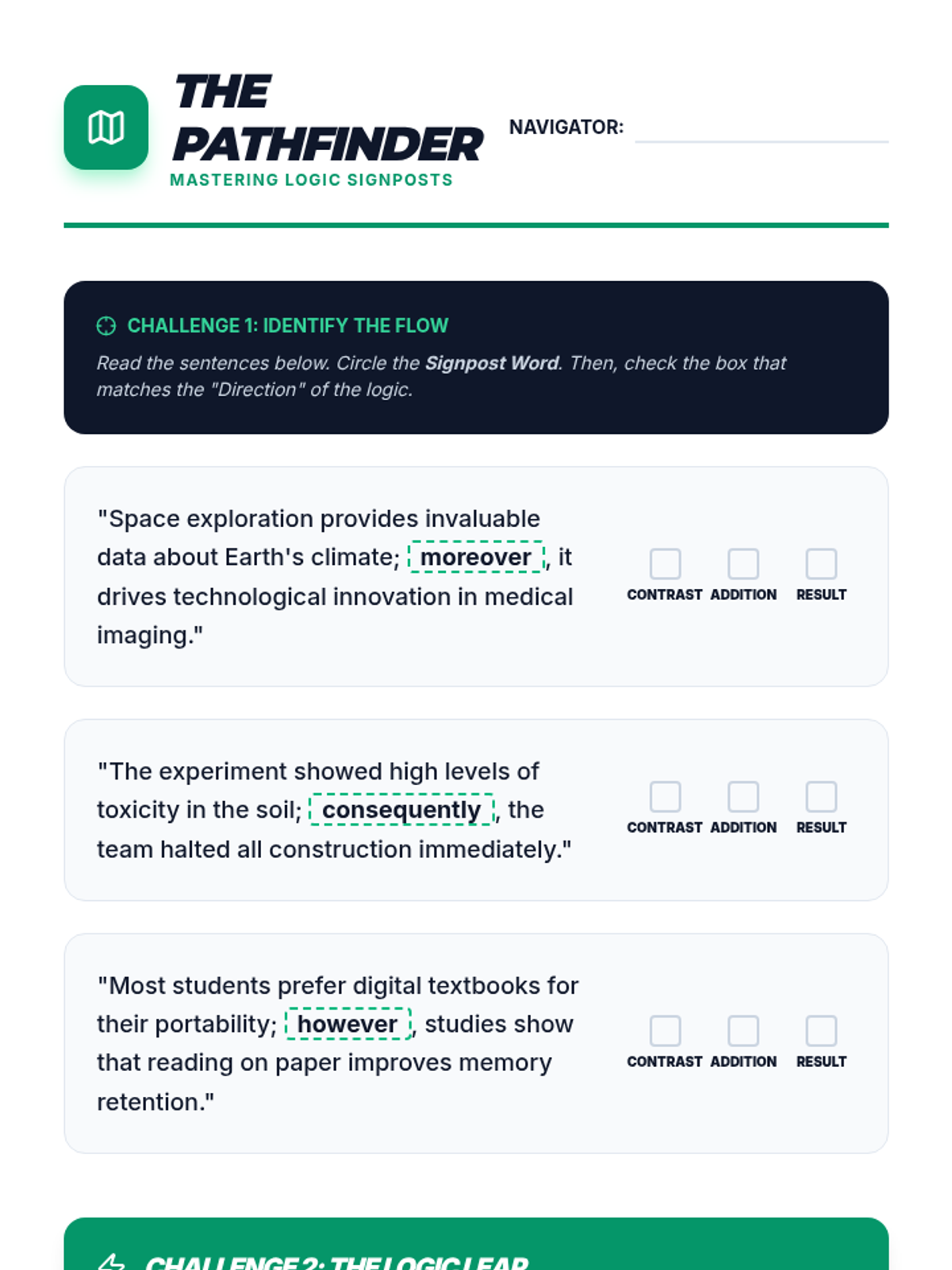
Students focus on transition words that signal shifts in meaning to track logical flow and infer meaning in academic arguments.
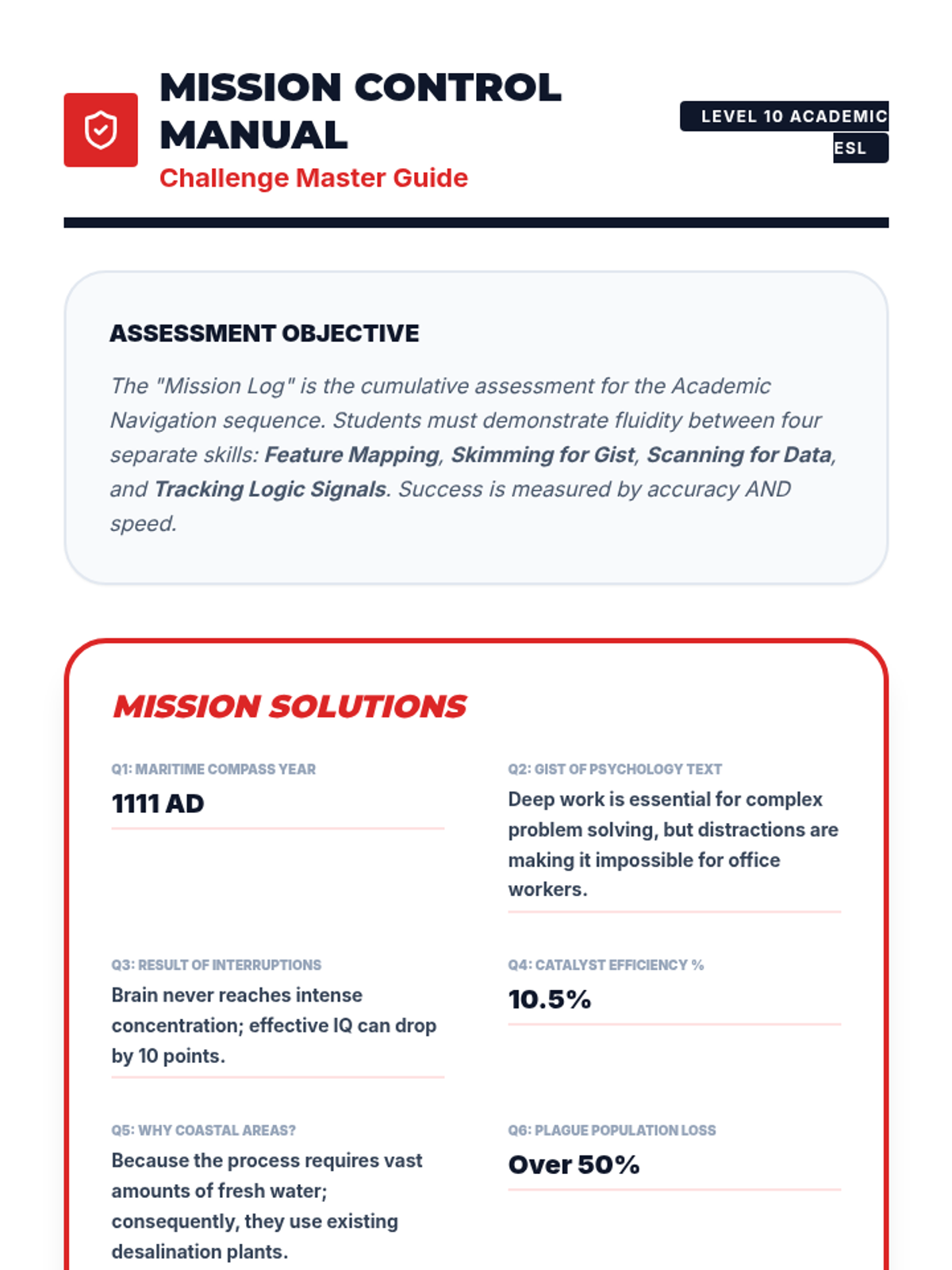
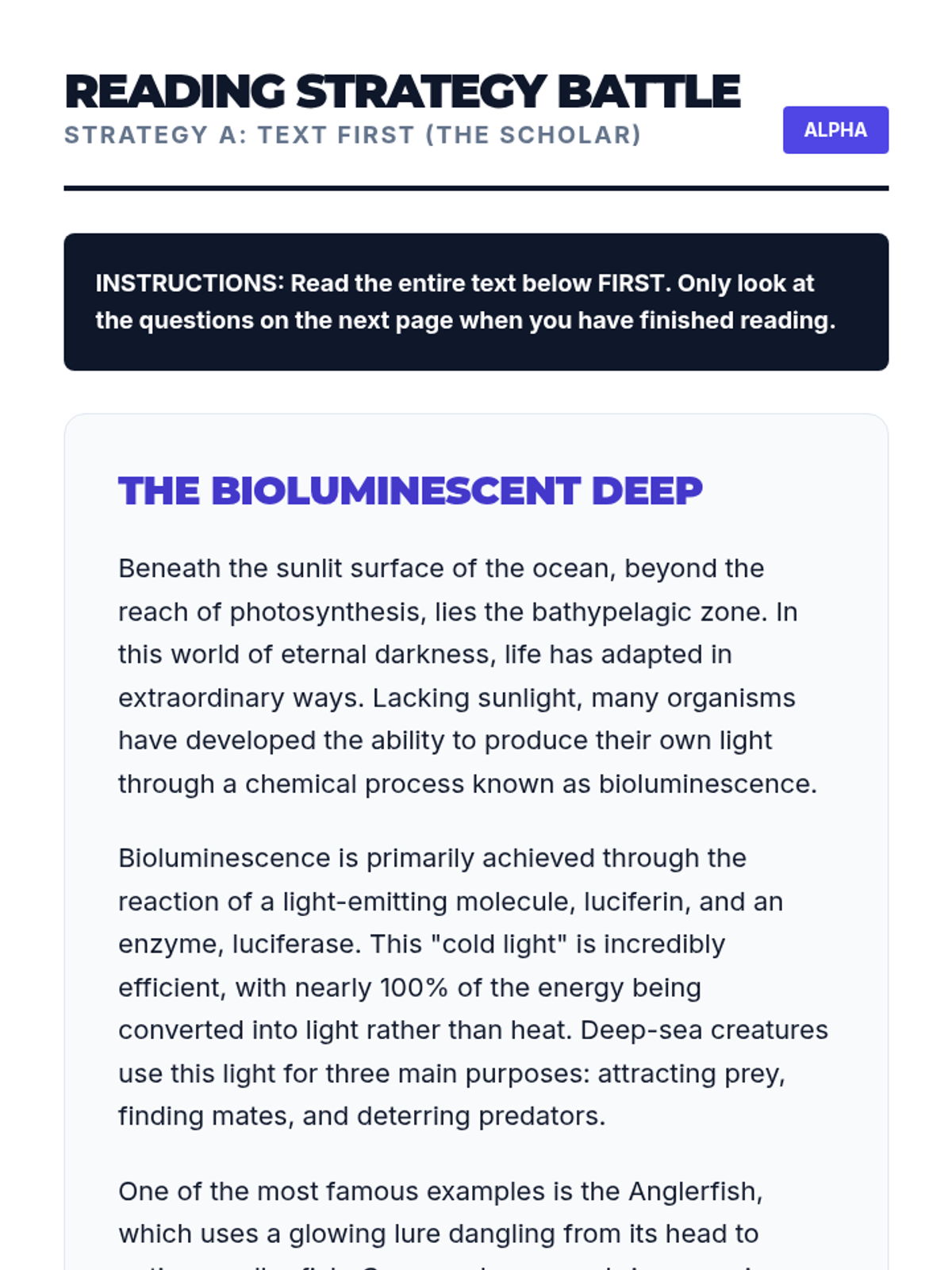
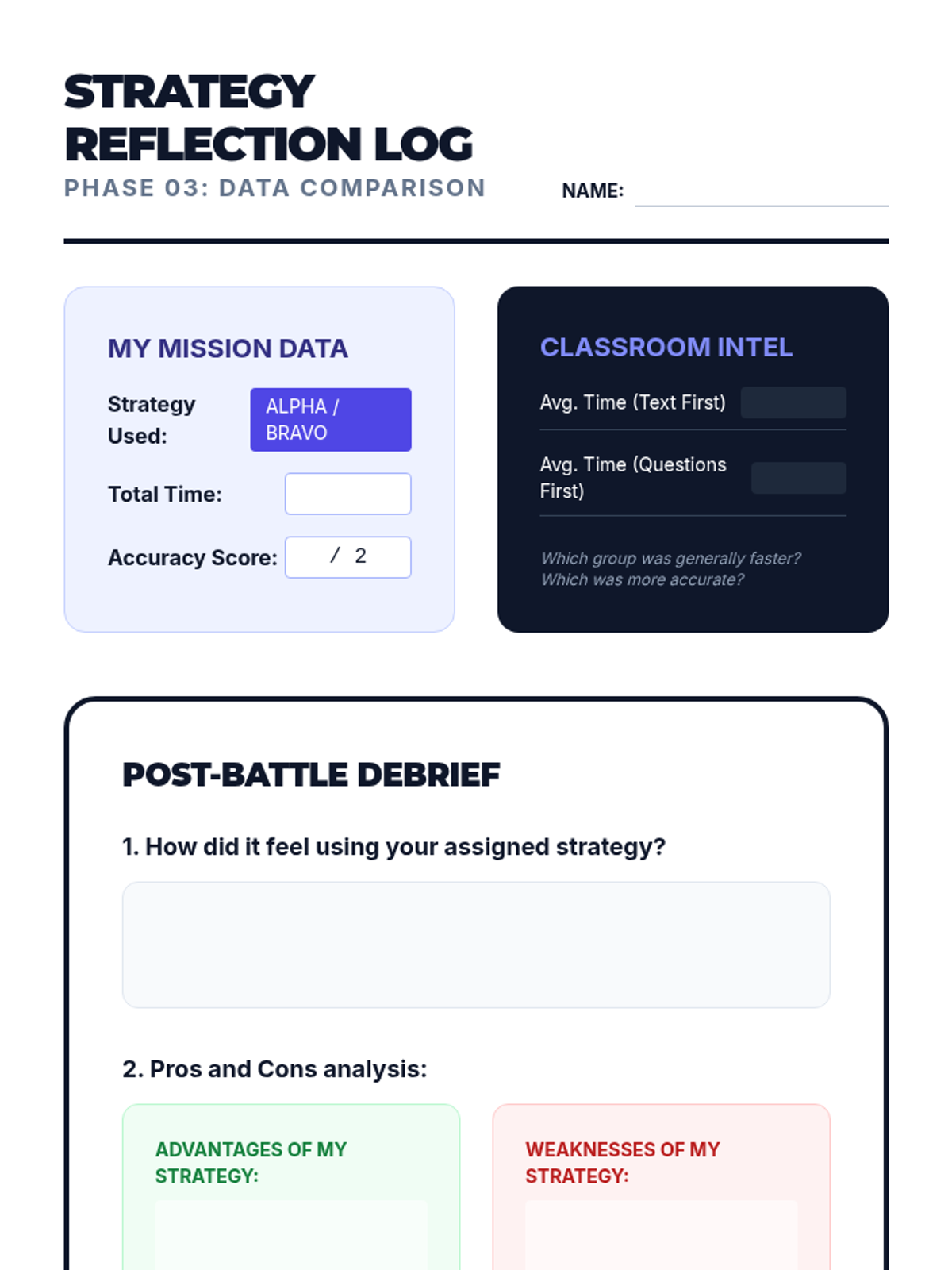
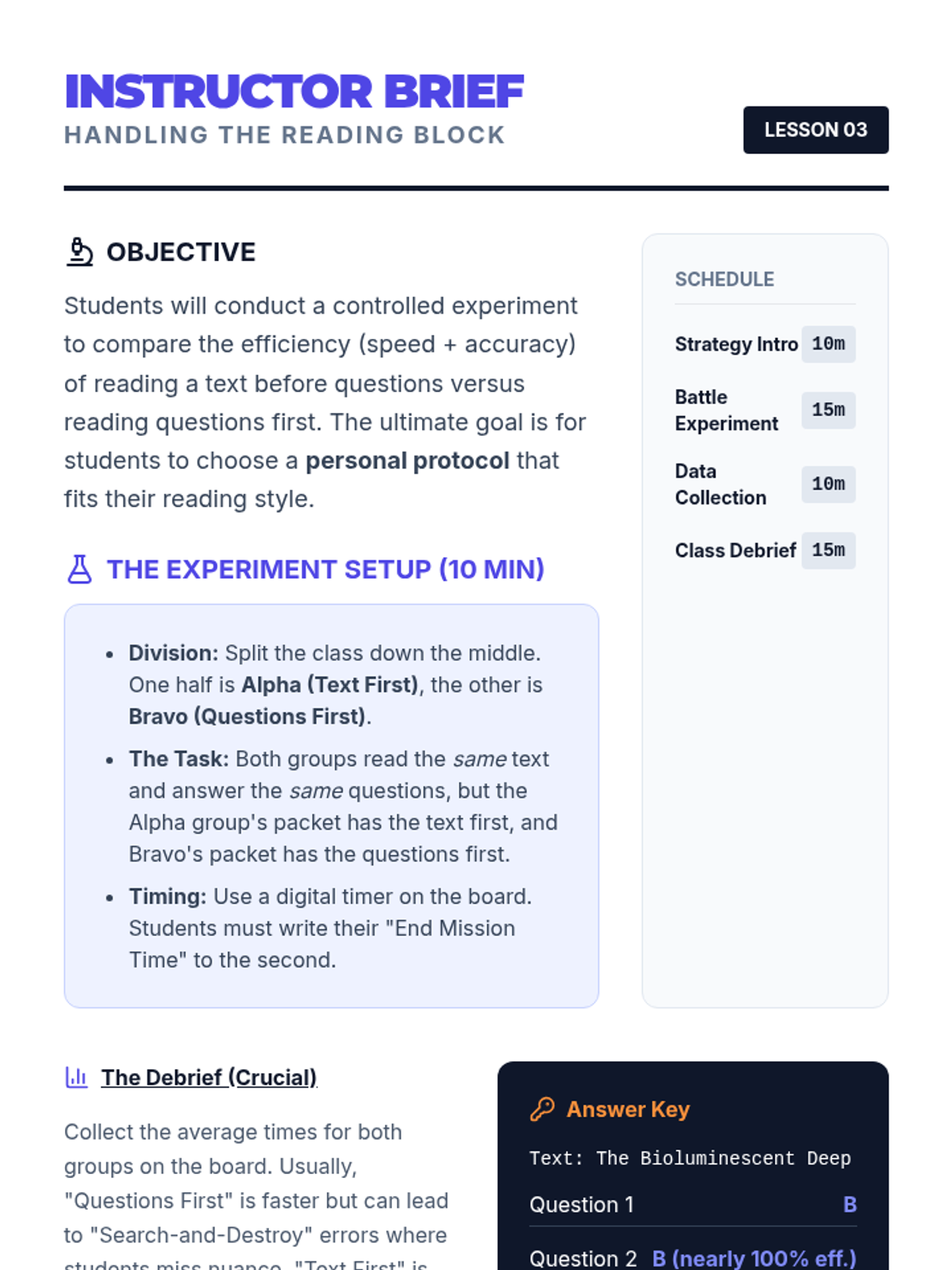
Students test and compare two primary reading strategies—reading the passage first vs. reading questions first—to discover which method enhances their individual efficiency and accuracy.
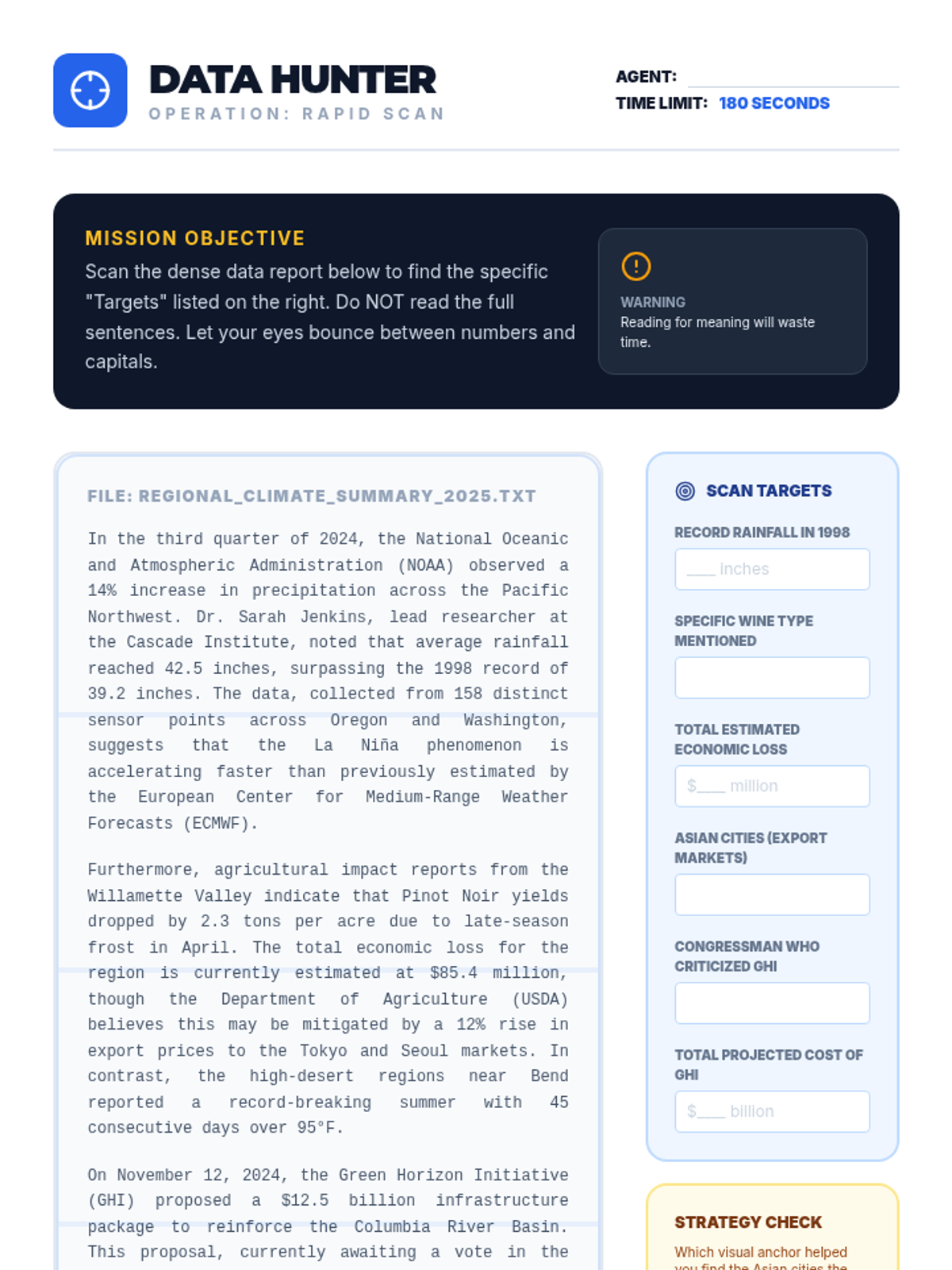
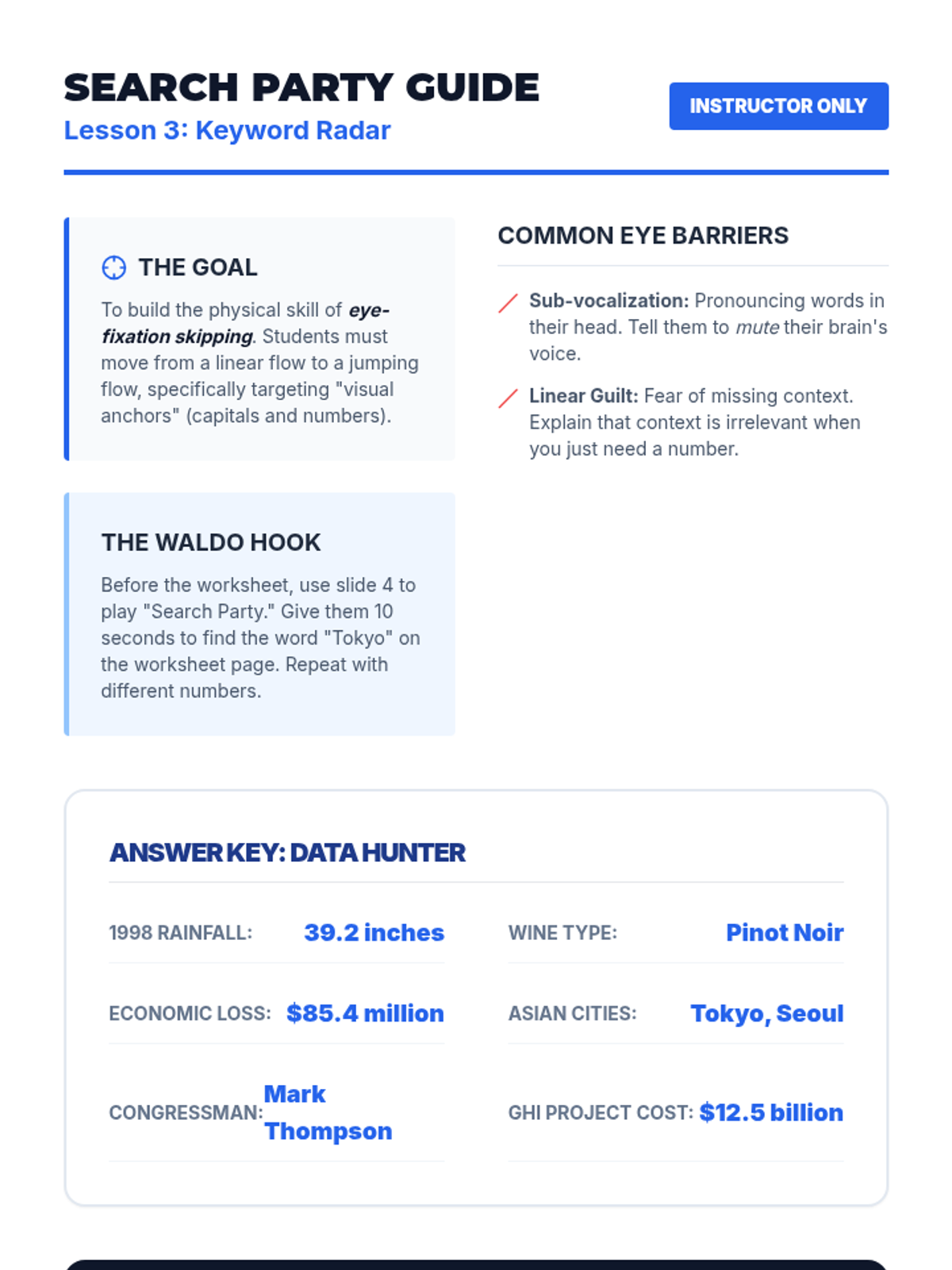
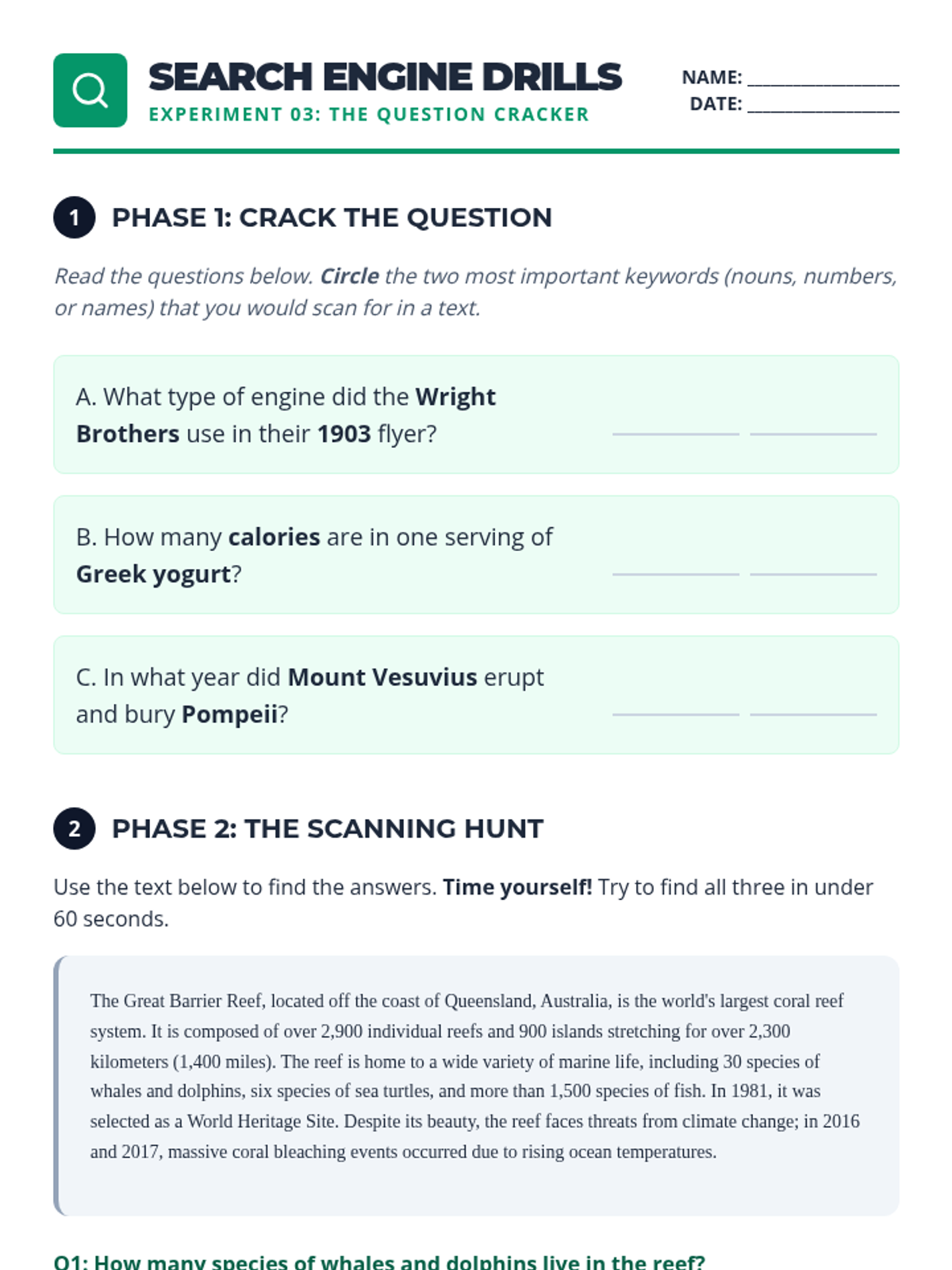
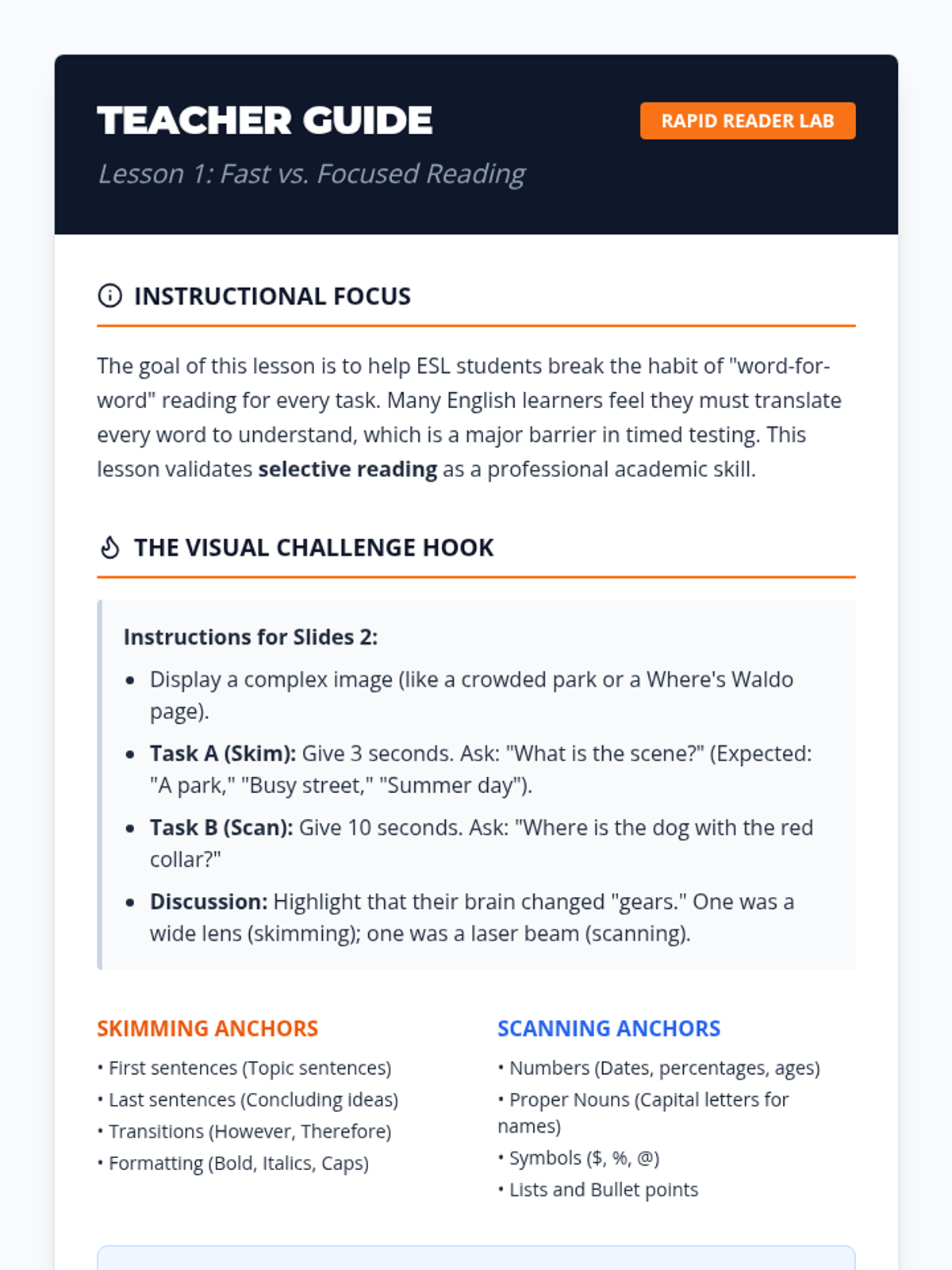
Students practice scanning patterns to spot specific targets like proper nouns, dates, and numbers in dense academic text.
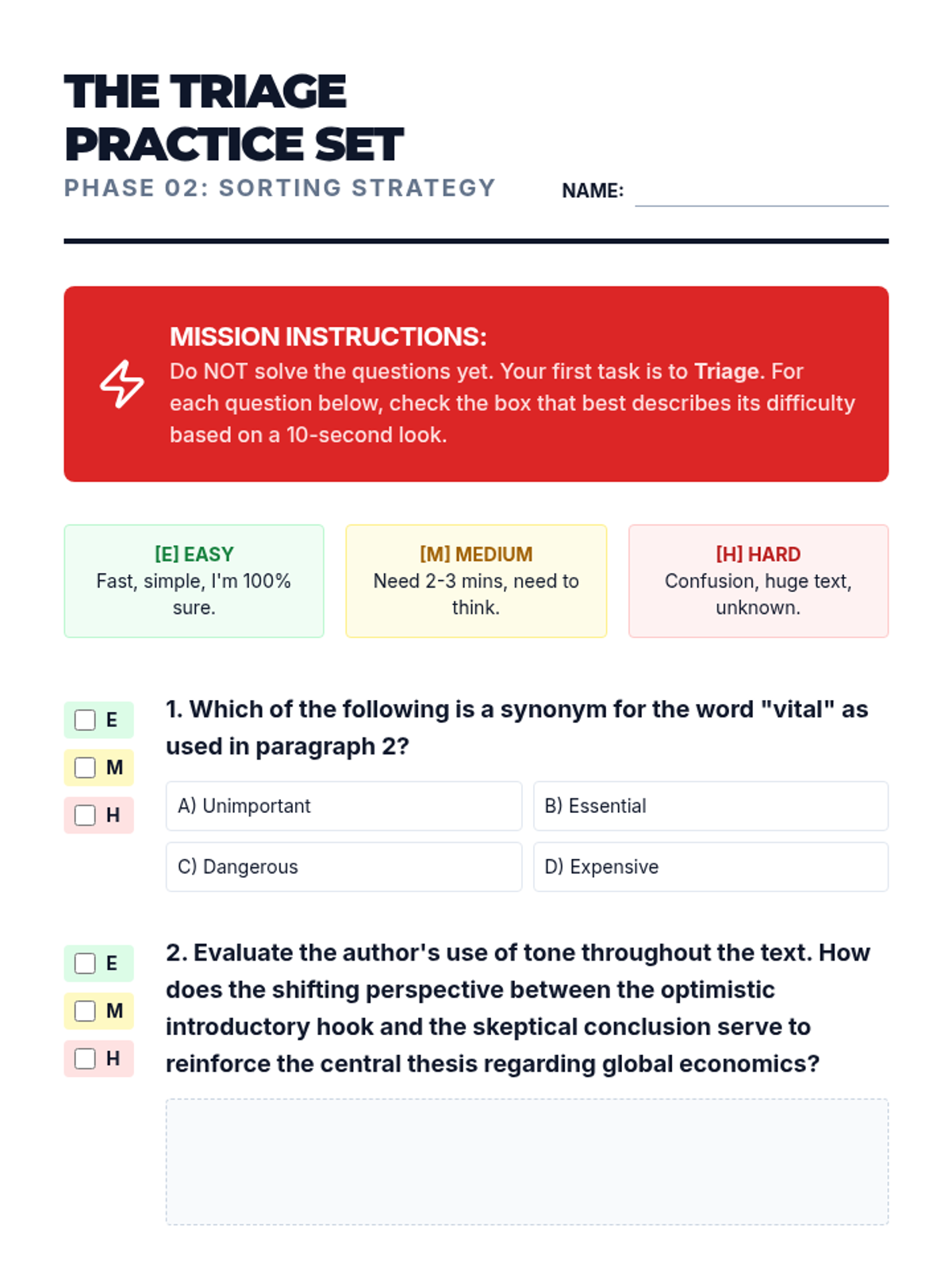
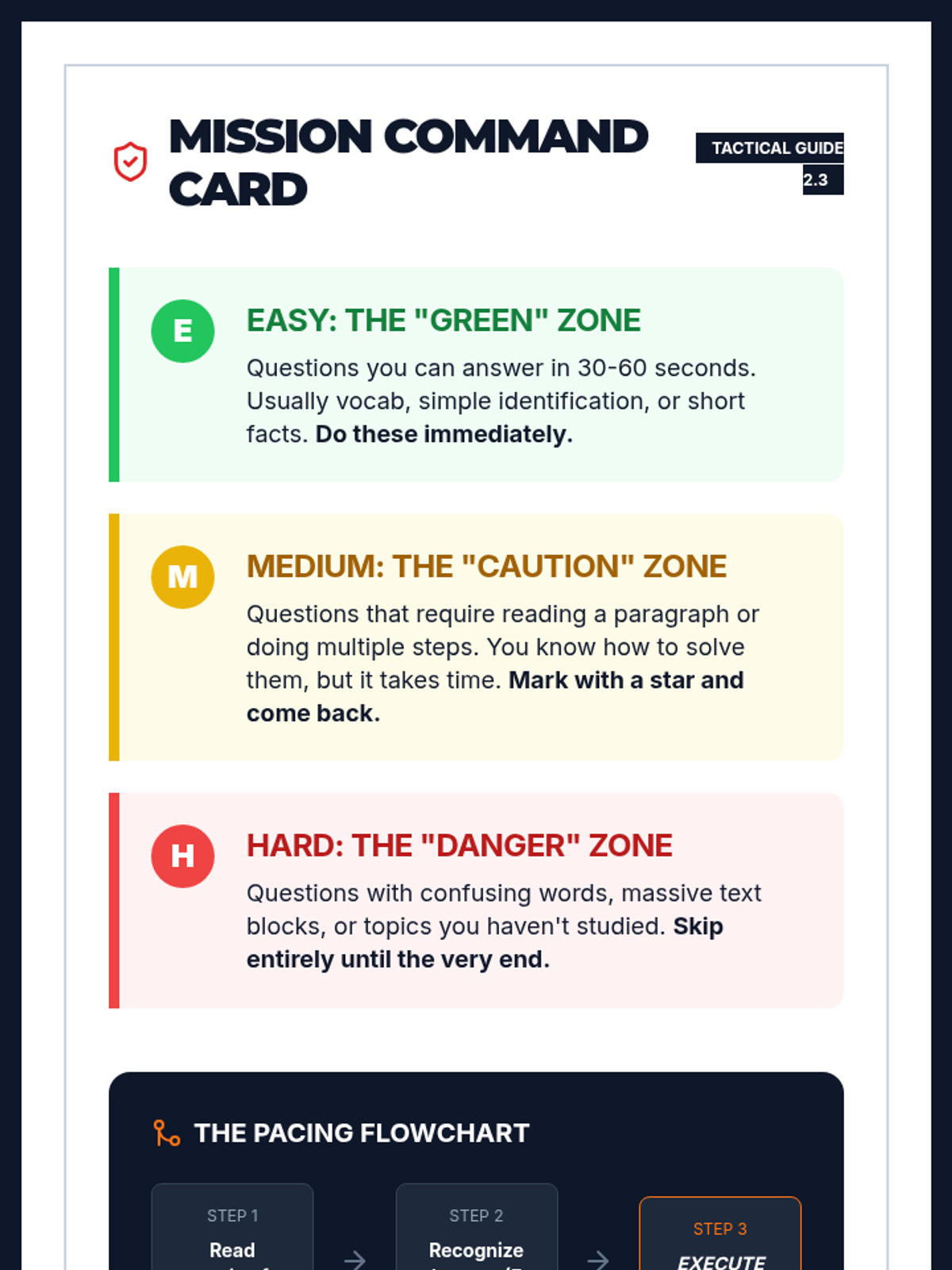
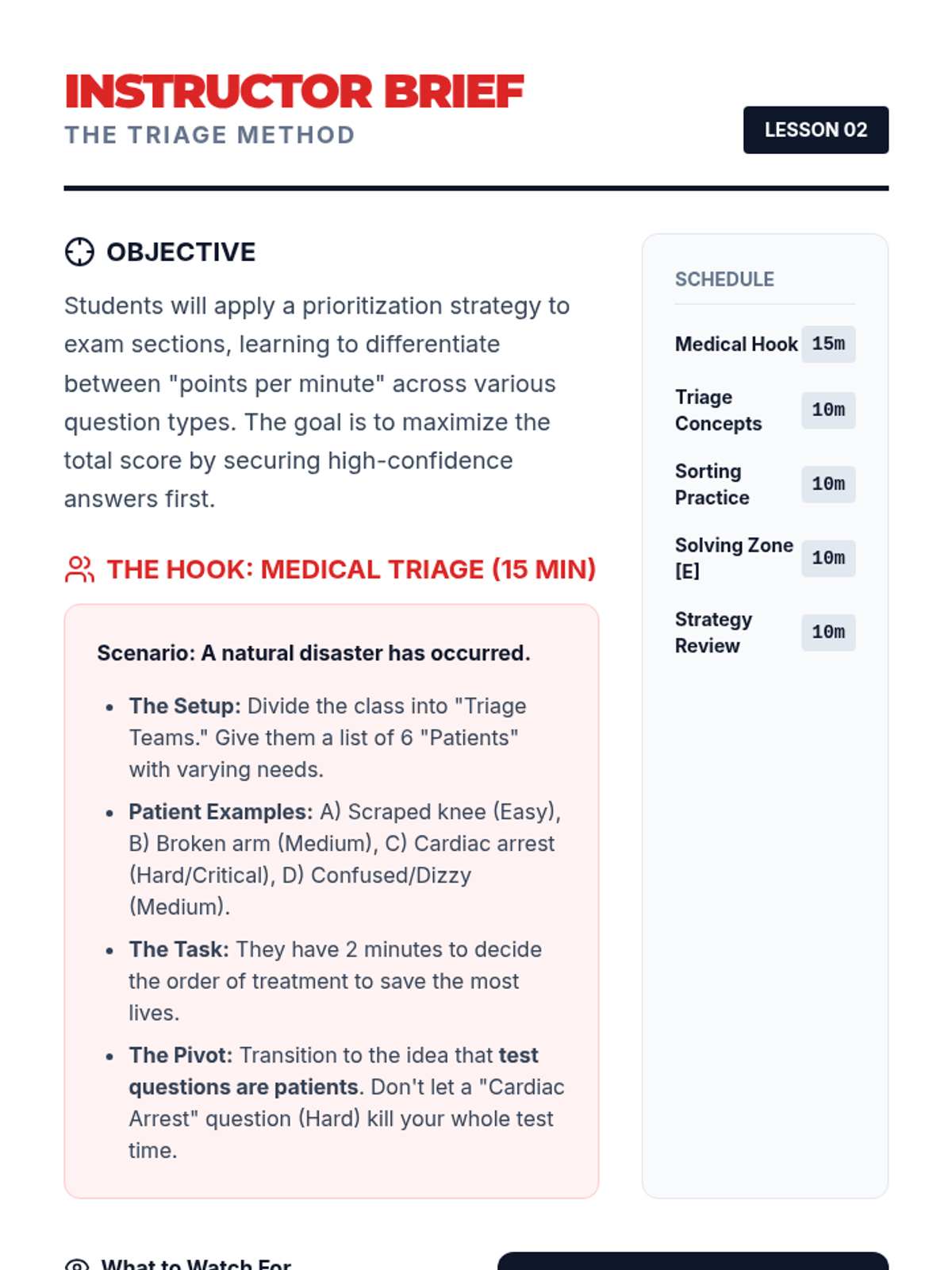
Students learn to categorize exam questions by difficulty—Easy, Medium, or Hard—to prioritize high-probability points and avoid time-sink questions.
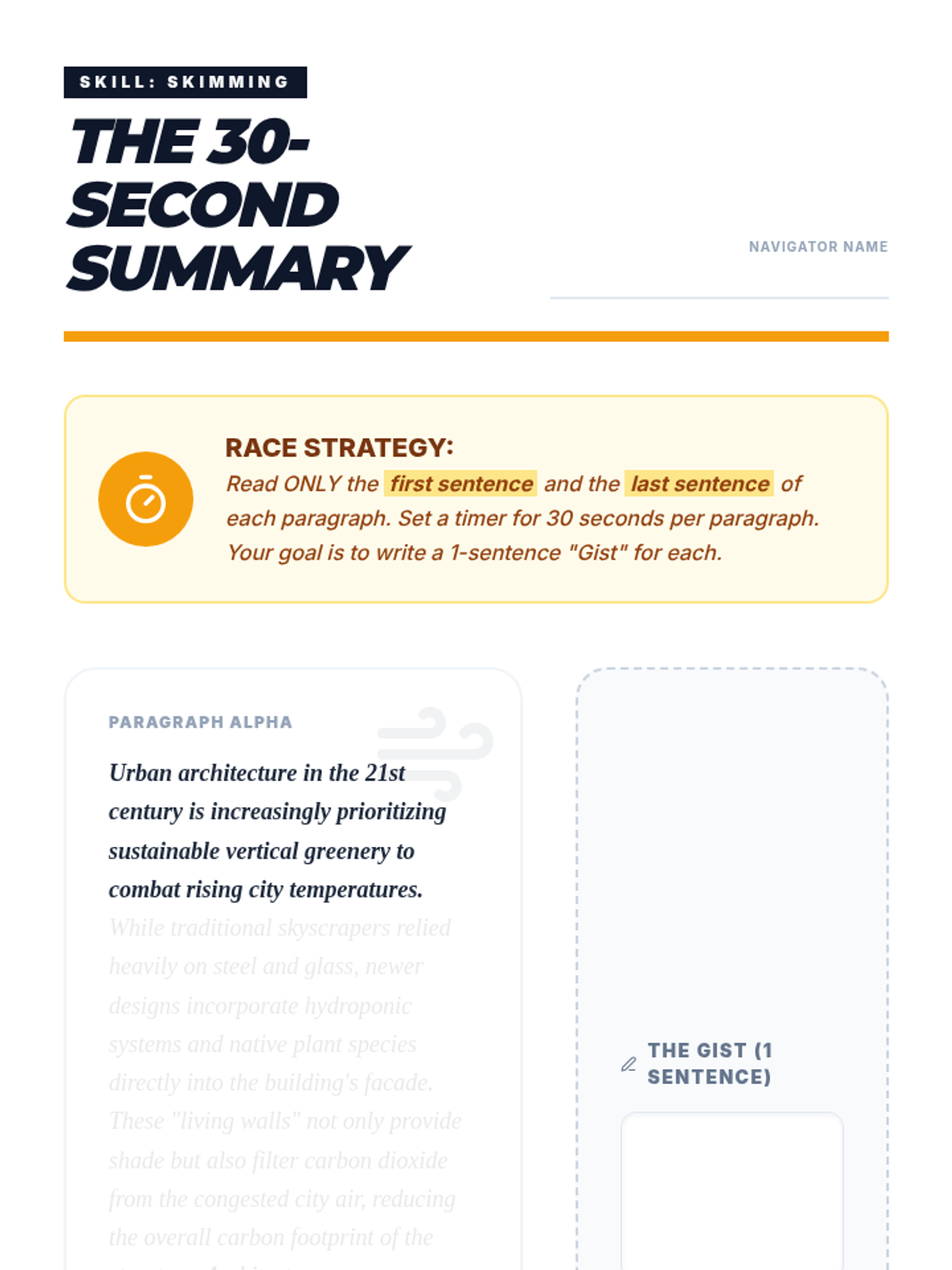
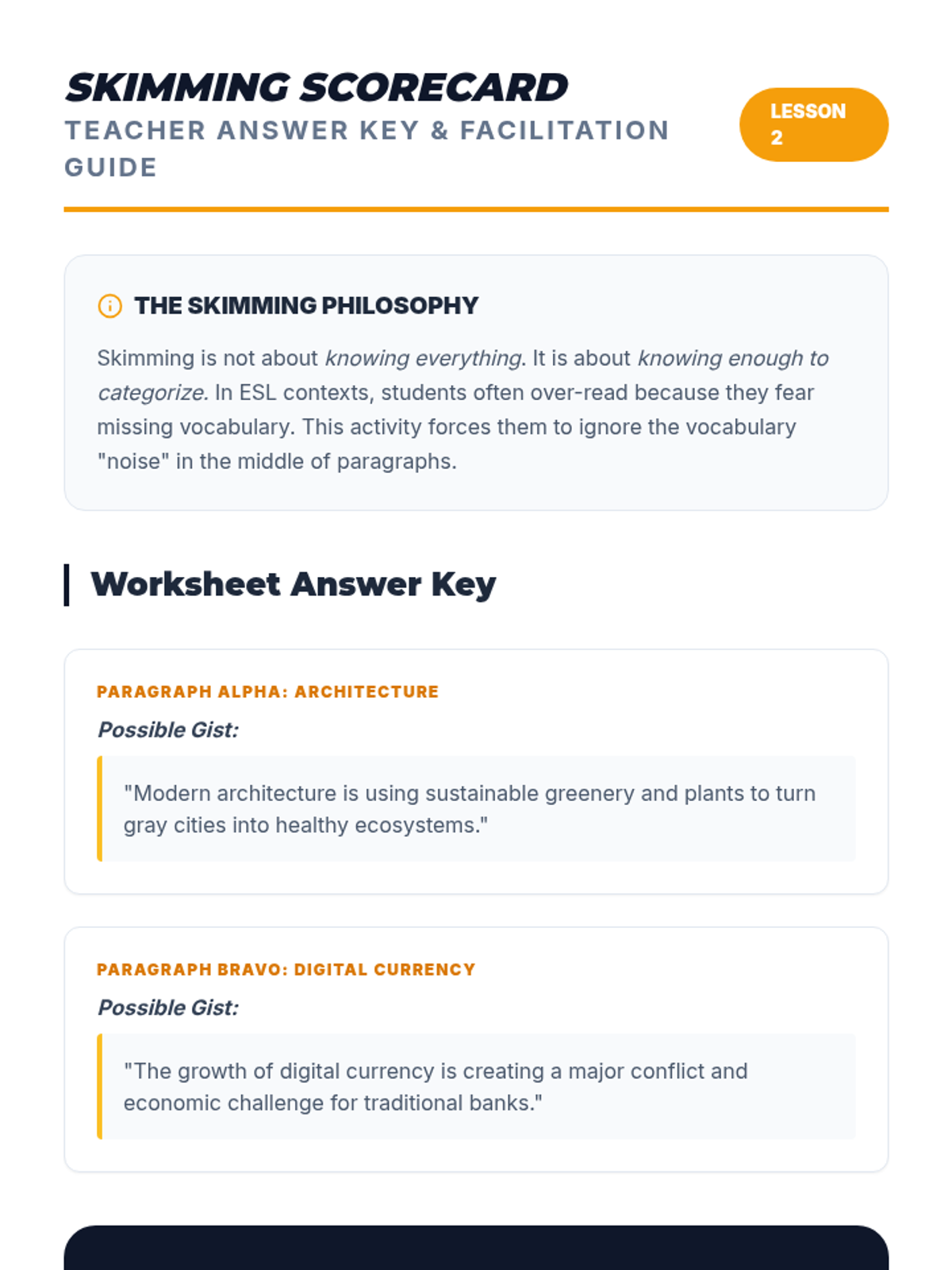
Learners practice skimming to grasp the main argument by focusing on the first and last sentences of paragraphs, distinguishing between topic and details.
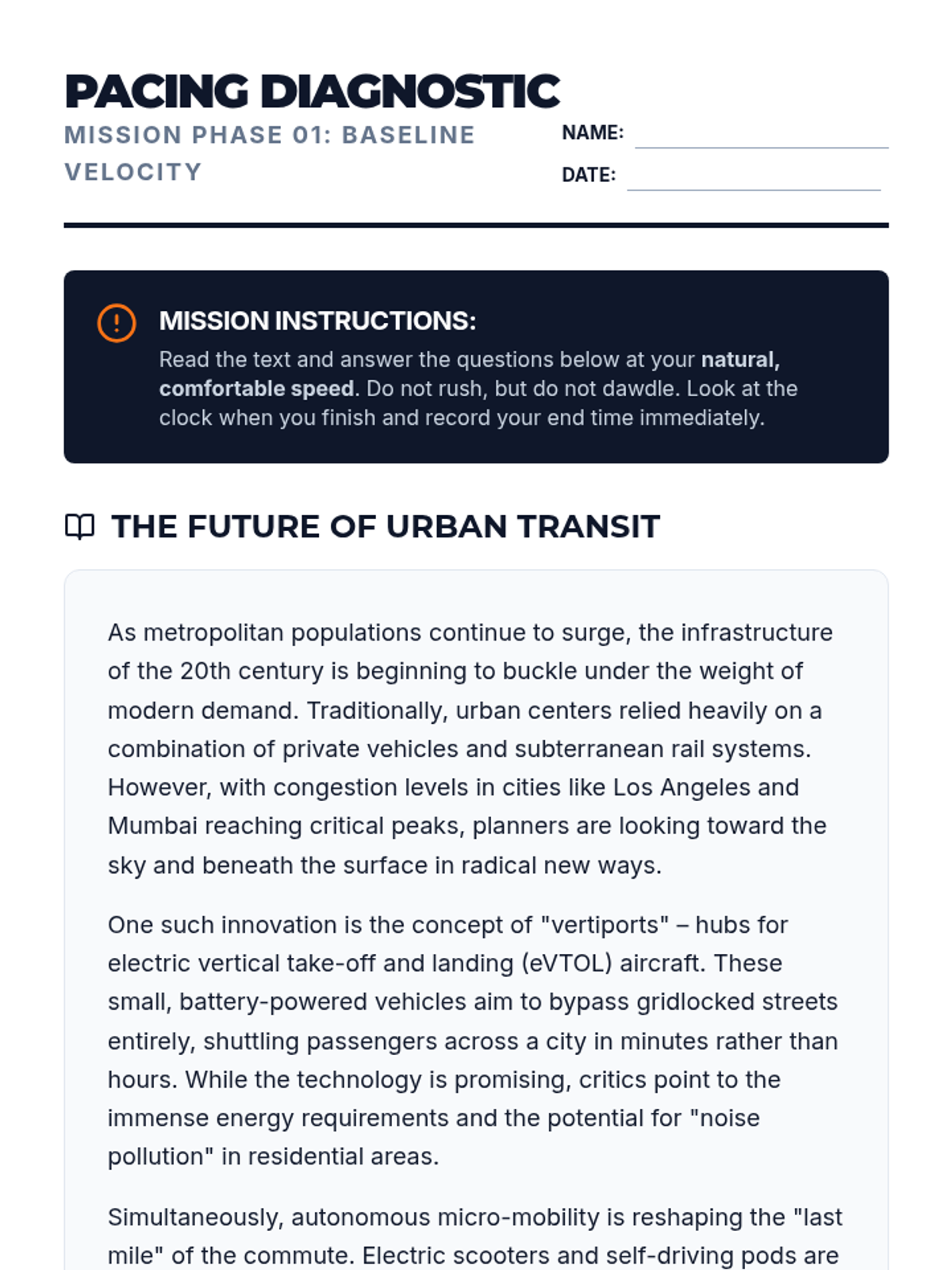
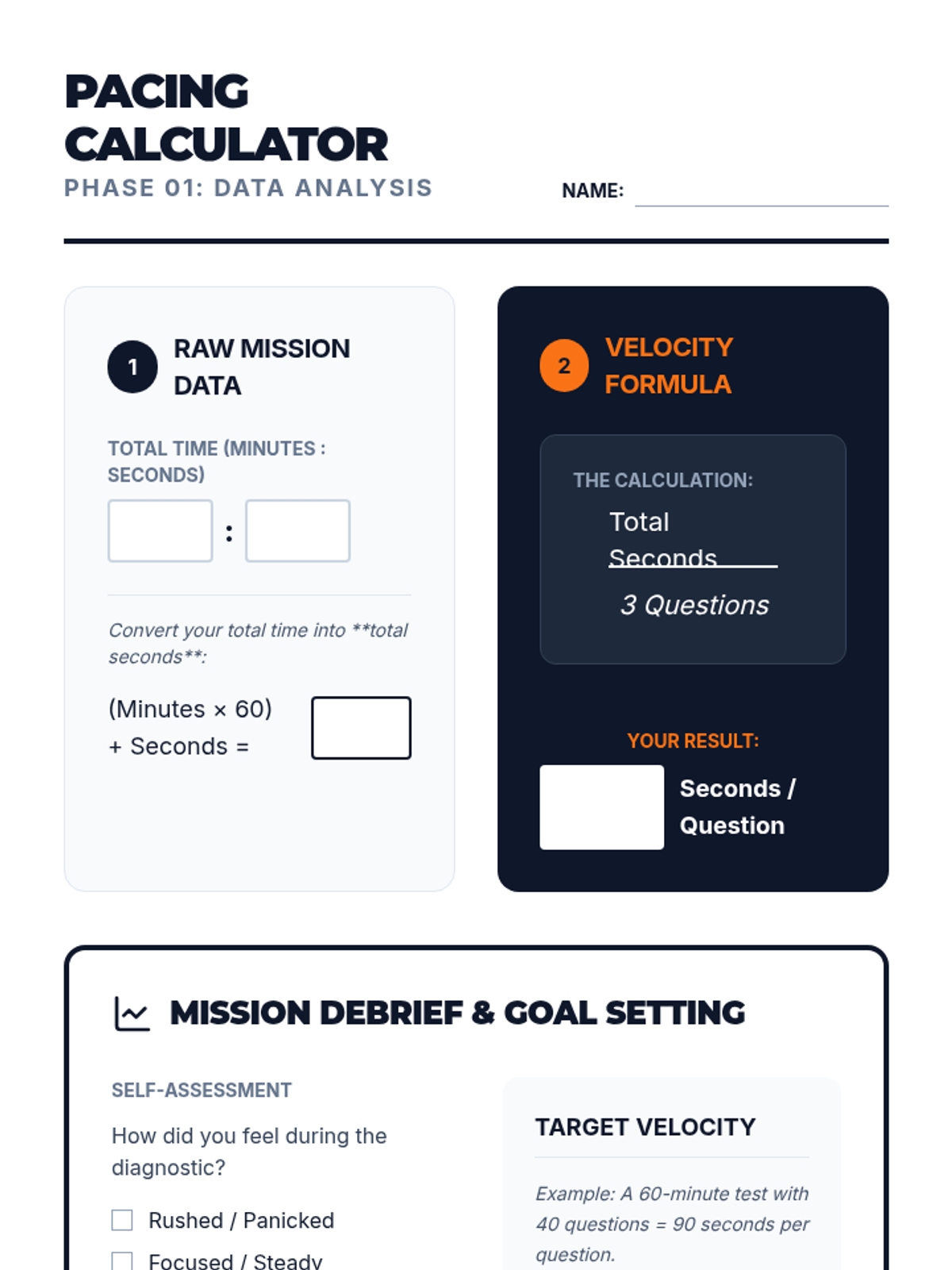
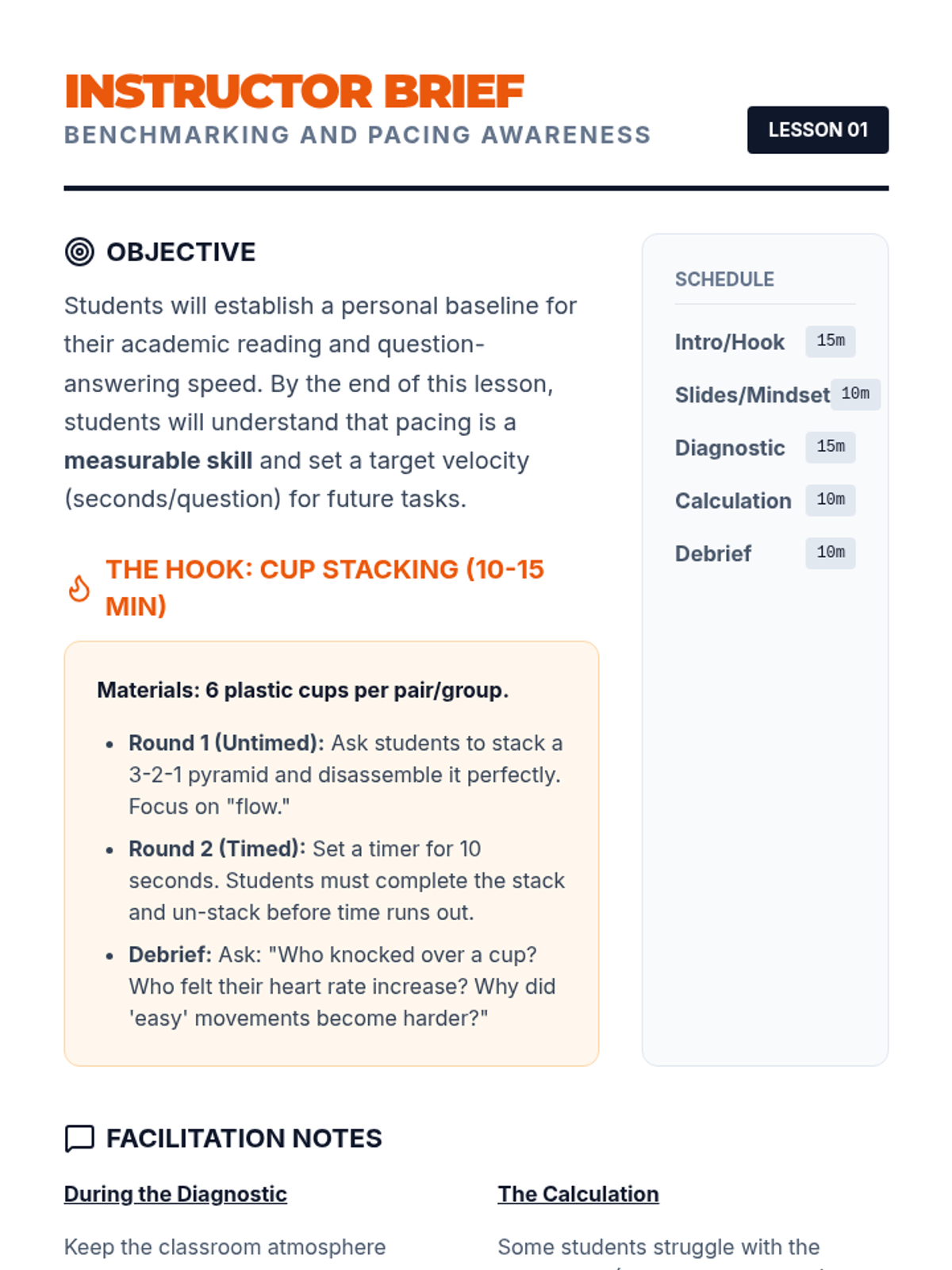
Students establish their baseline reading and answering speeds through a diagnostic task and learn to calculate their personal 'minutes per question' rate.
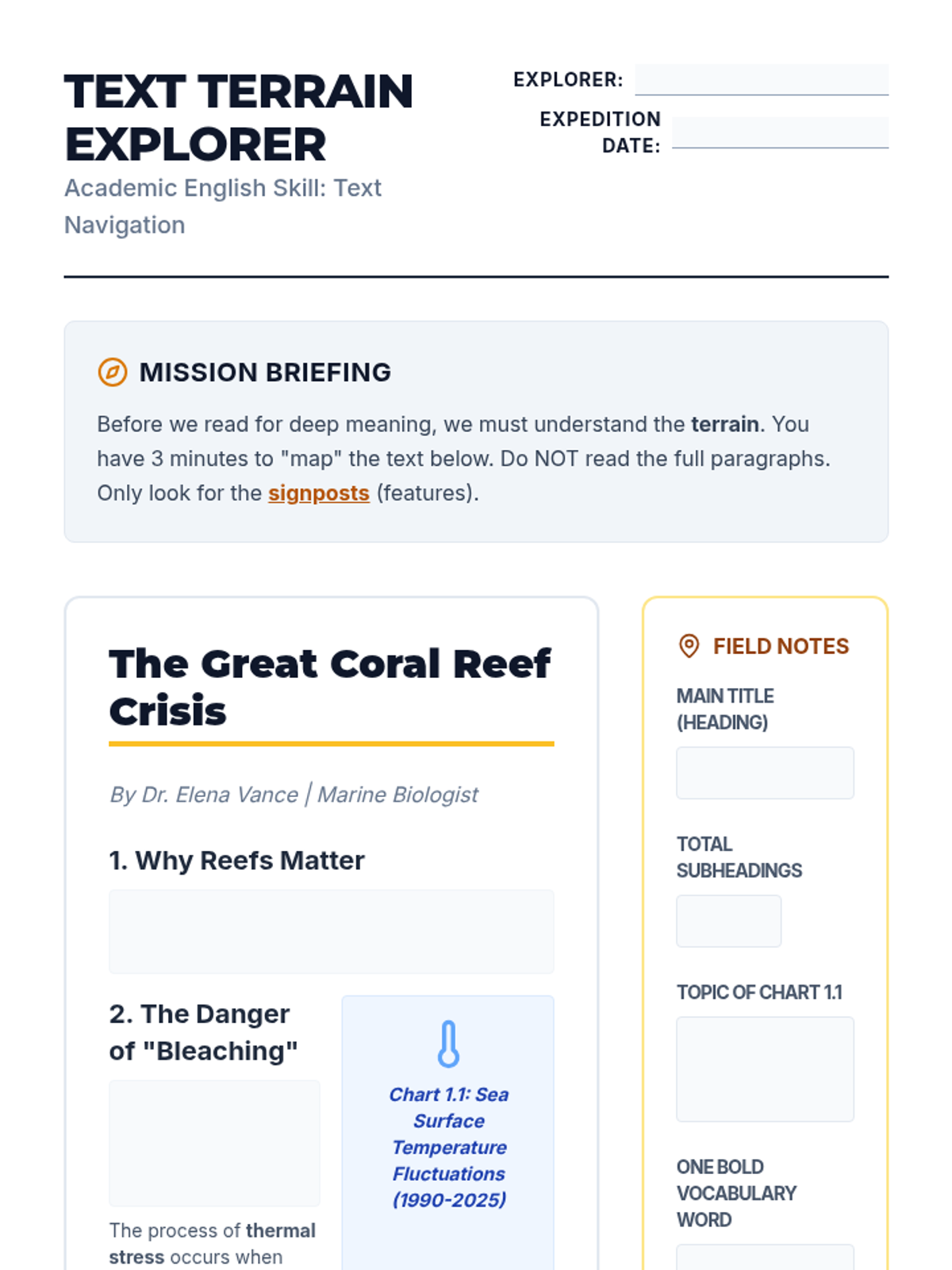
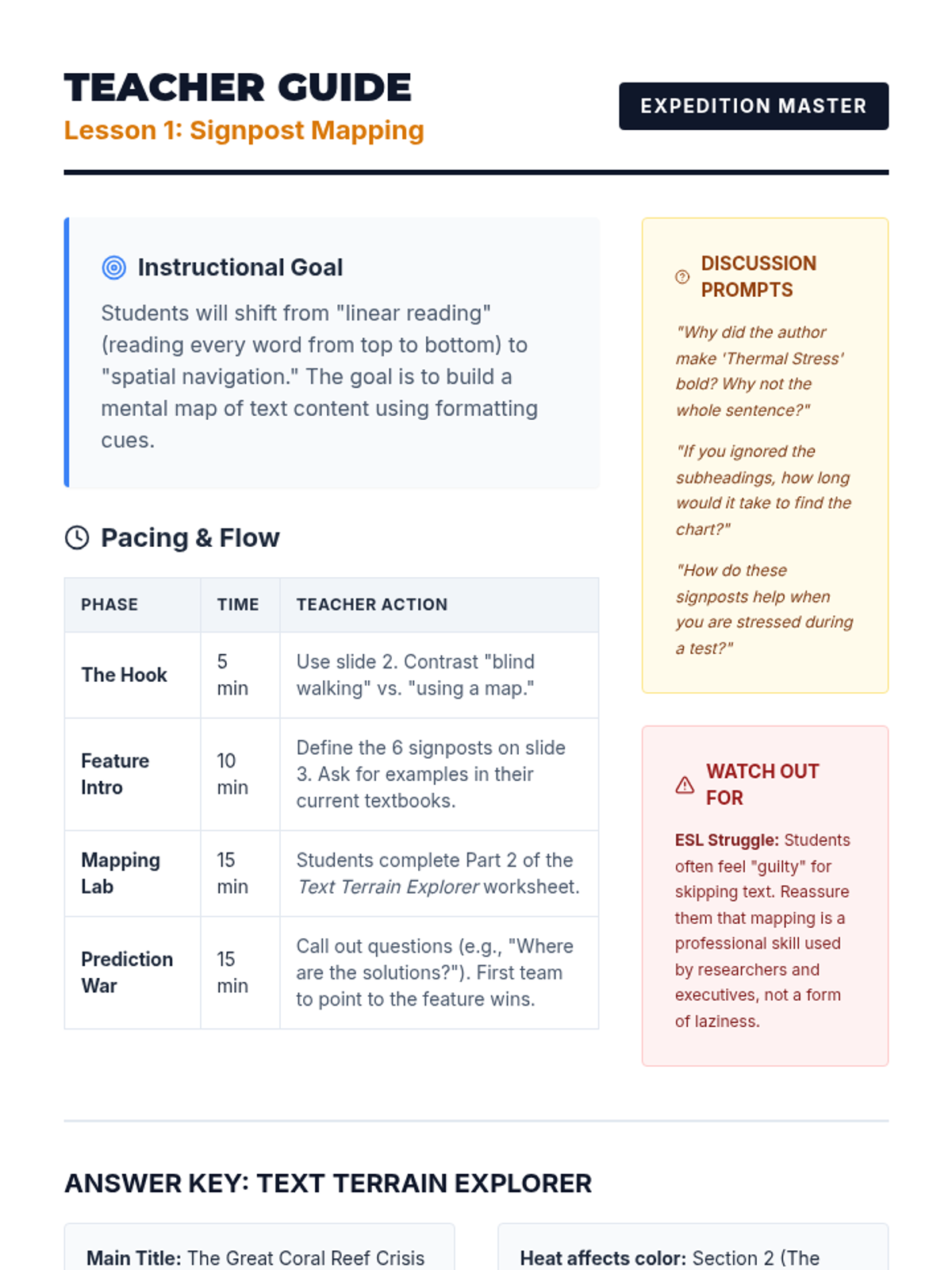
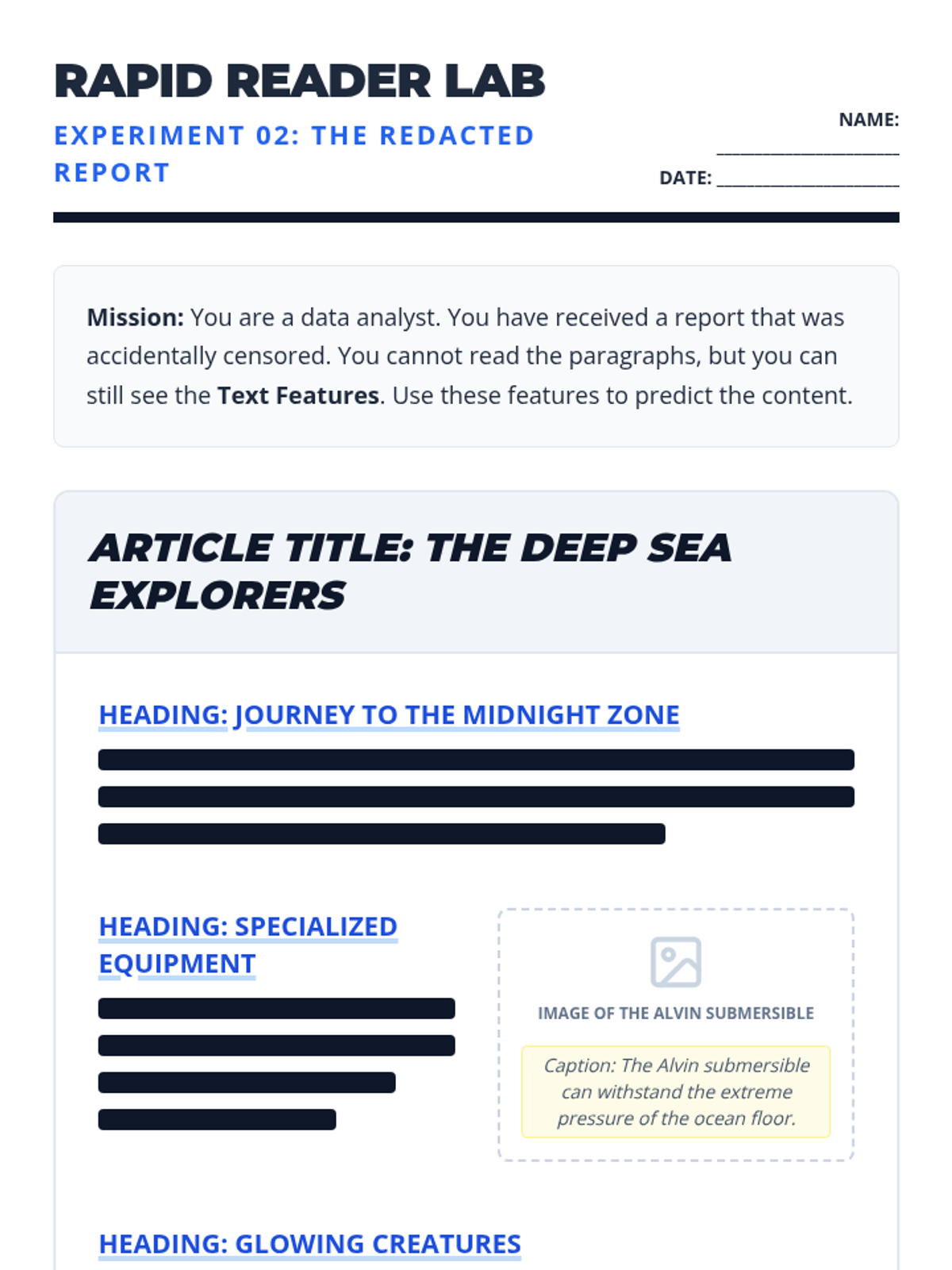
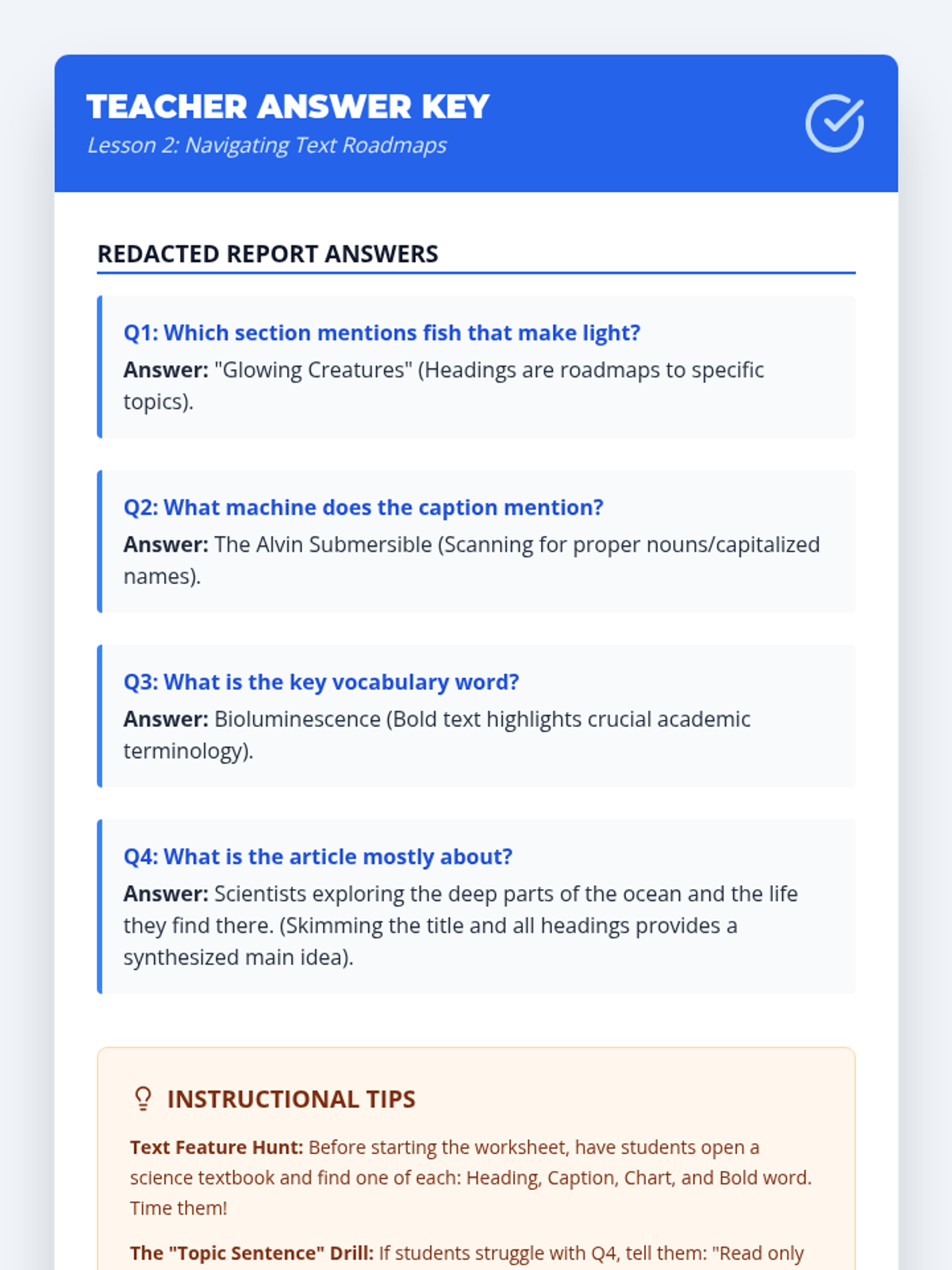
Students explore how headings, subheadings, captions, and distinct formatting act as signposts to map a text's layout before reading.
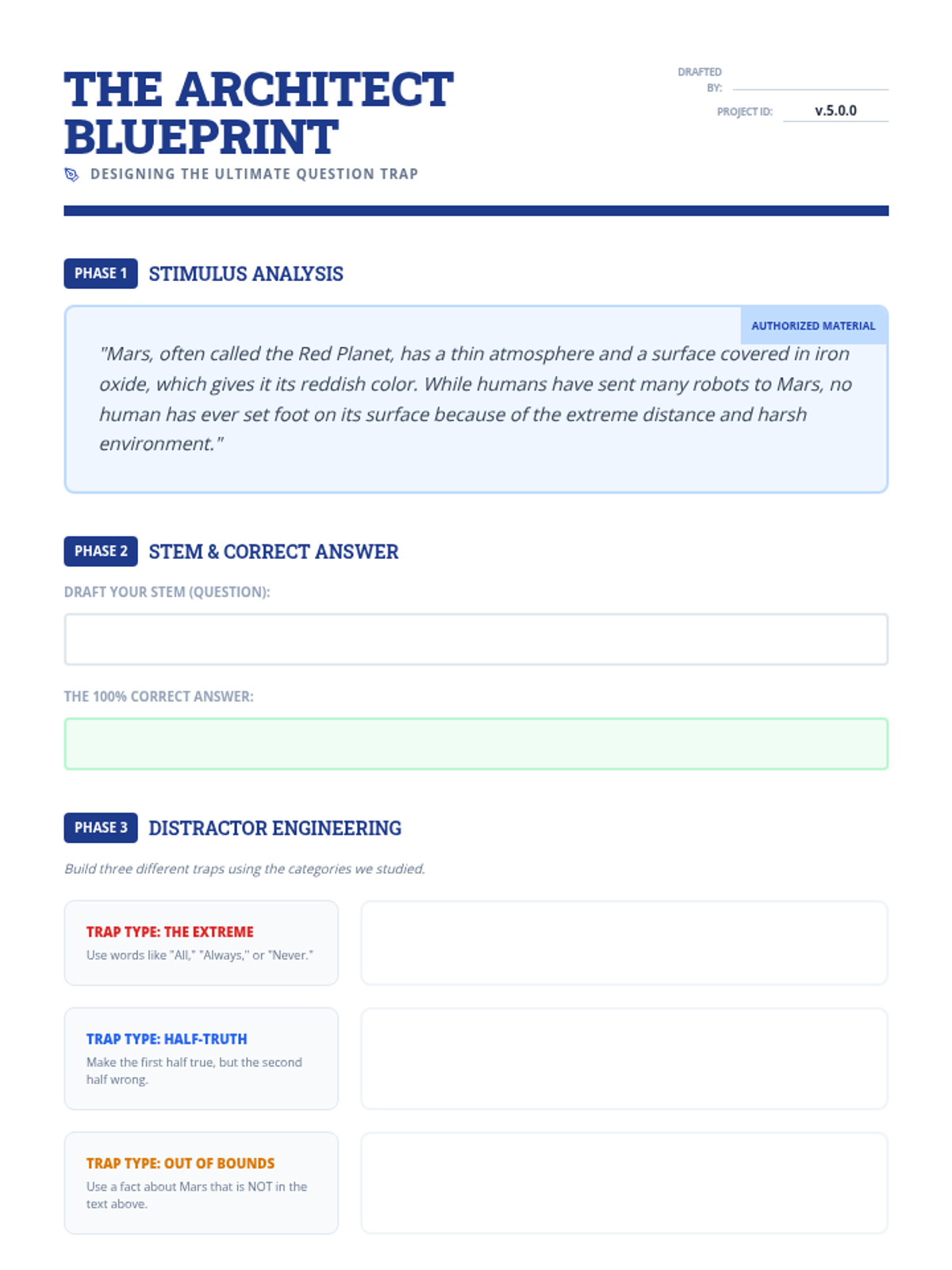
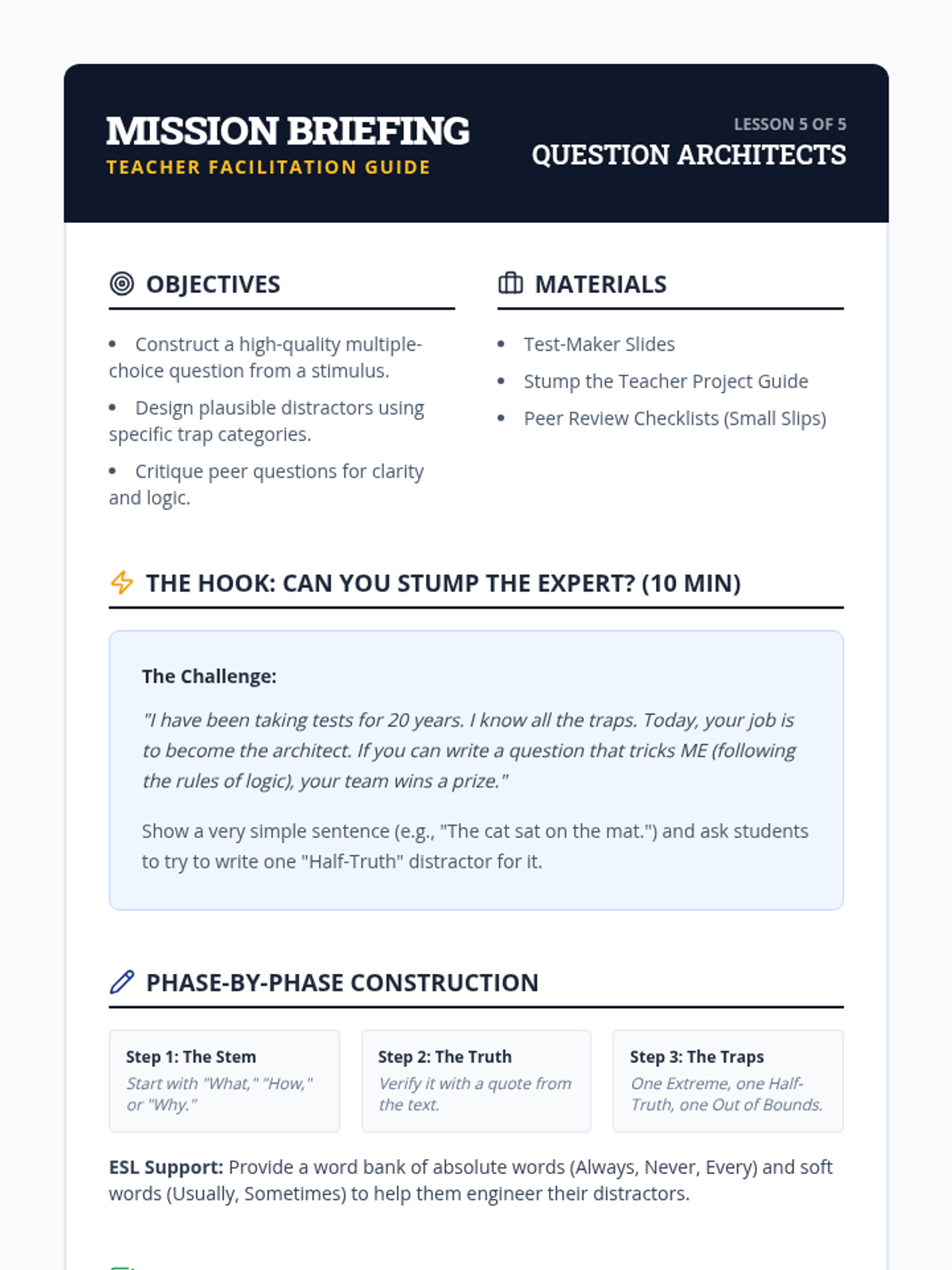
Students switch roles and become the test-makers. They write their own multiple-choice questions based on a shared text, intentionally creating plausible distractors.
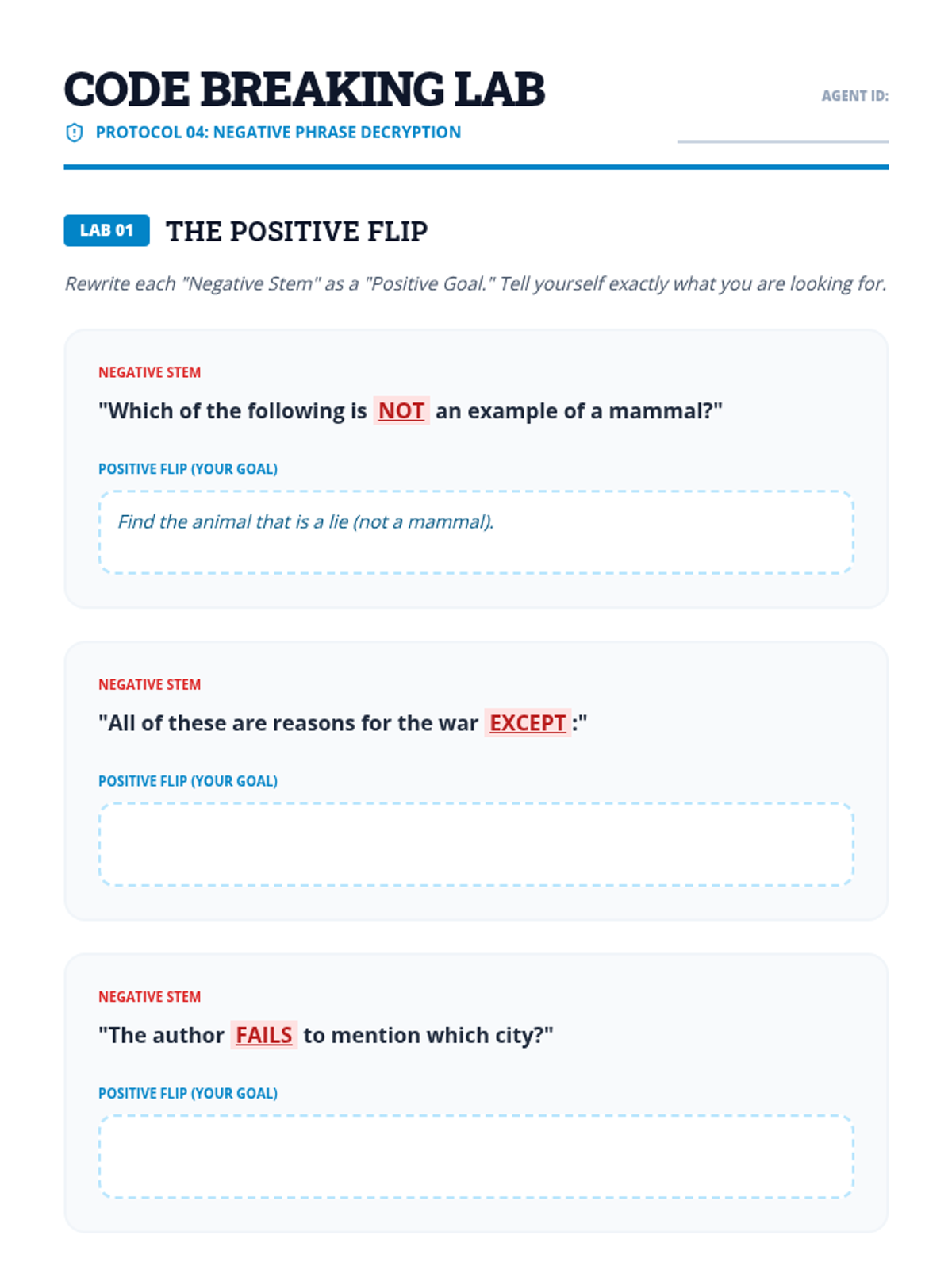
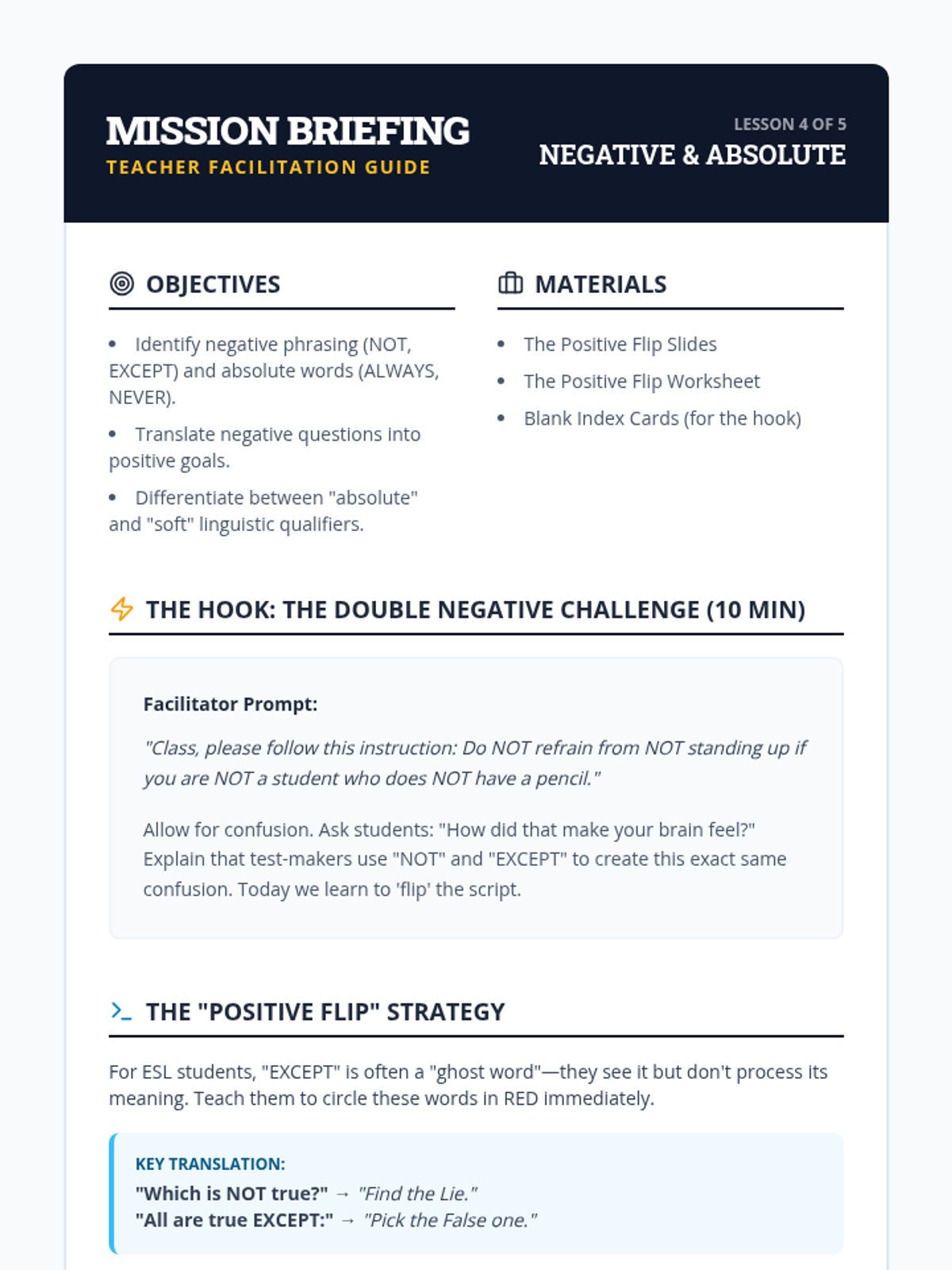
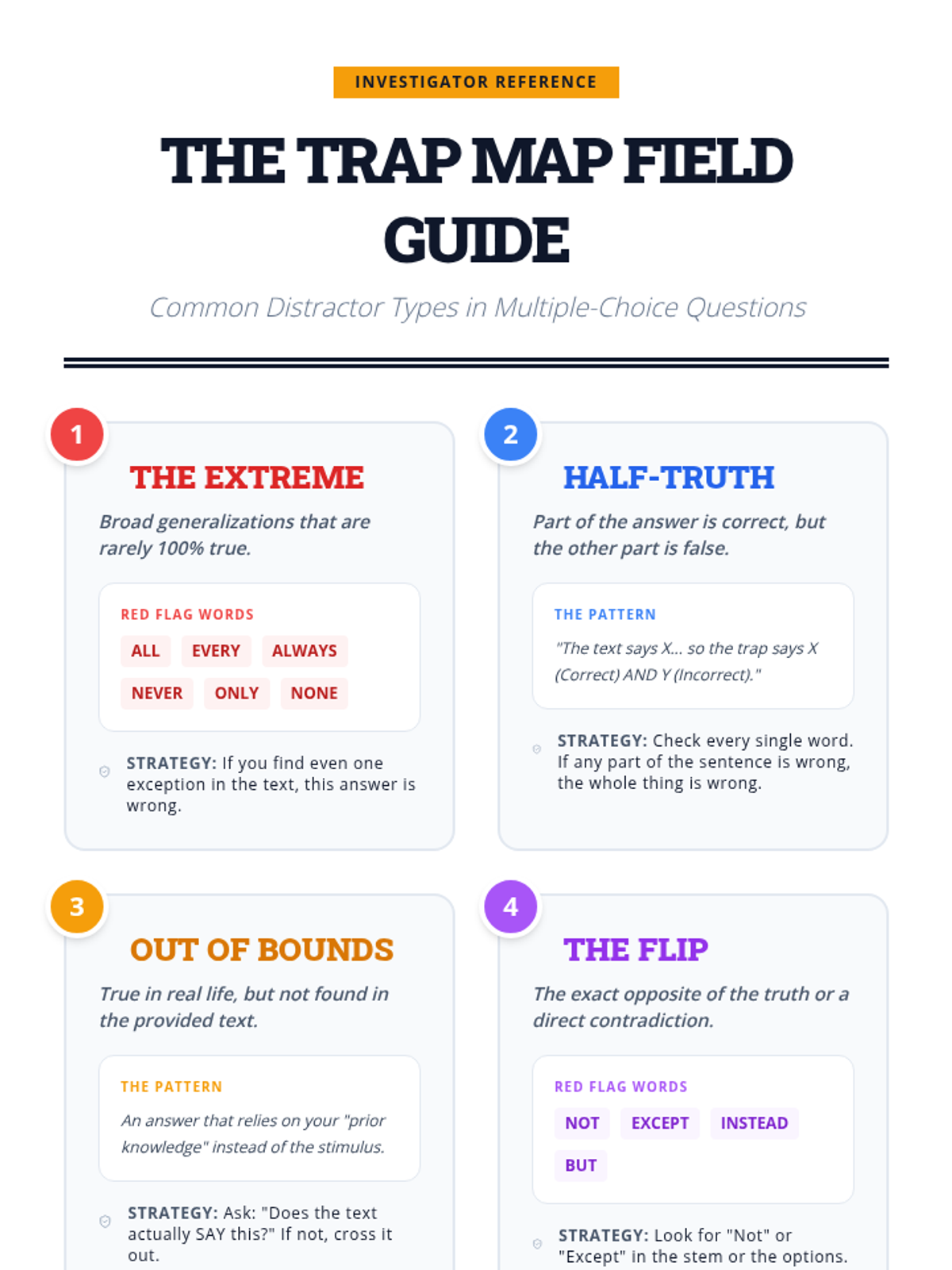
Students specifically target questions using words like 'NOT,' 'EXCEPT,' 'ALWAYS,' or 'NEVER.' They rewrite these questions in positive terms to clarify meaning.
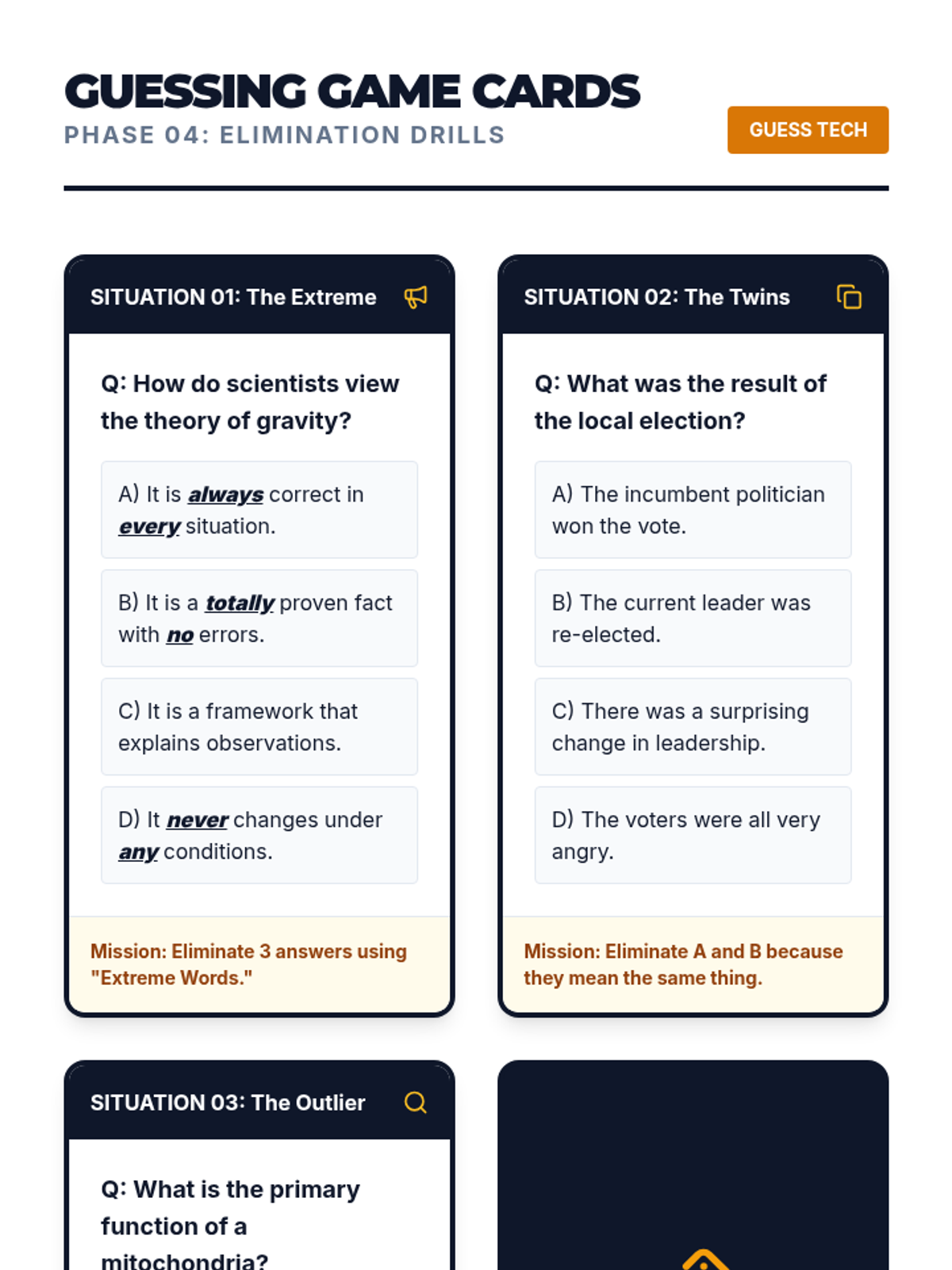
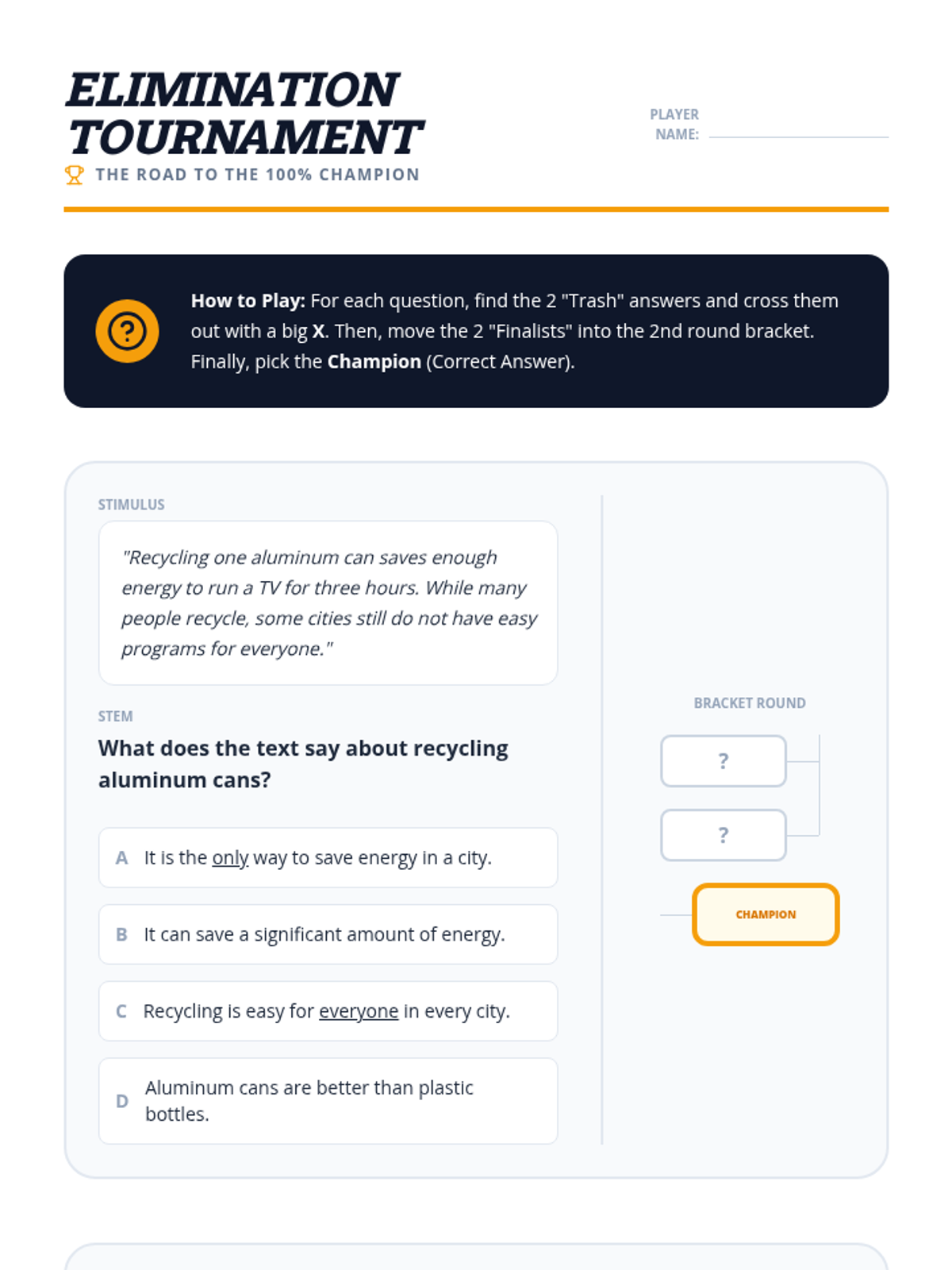
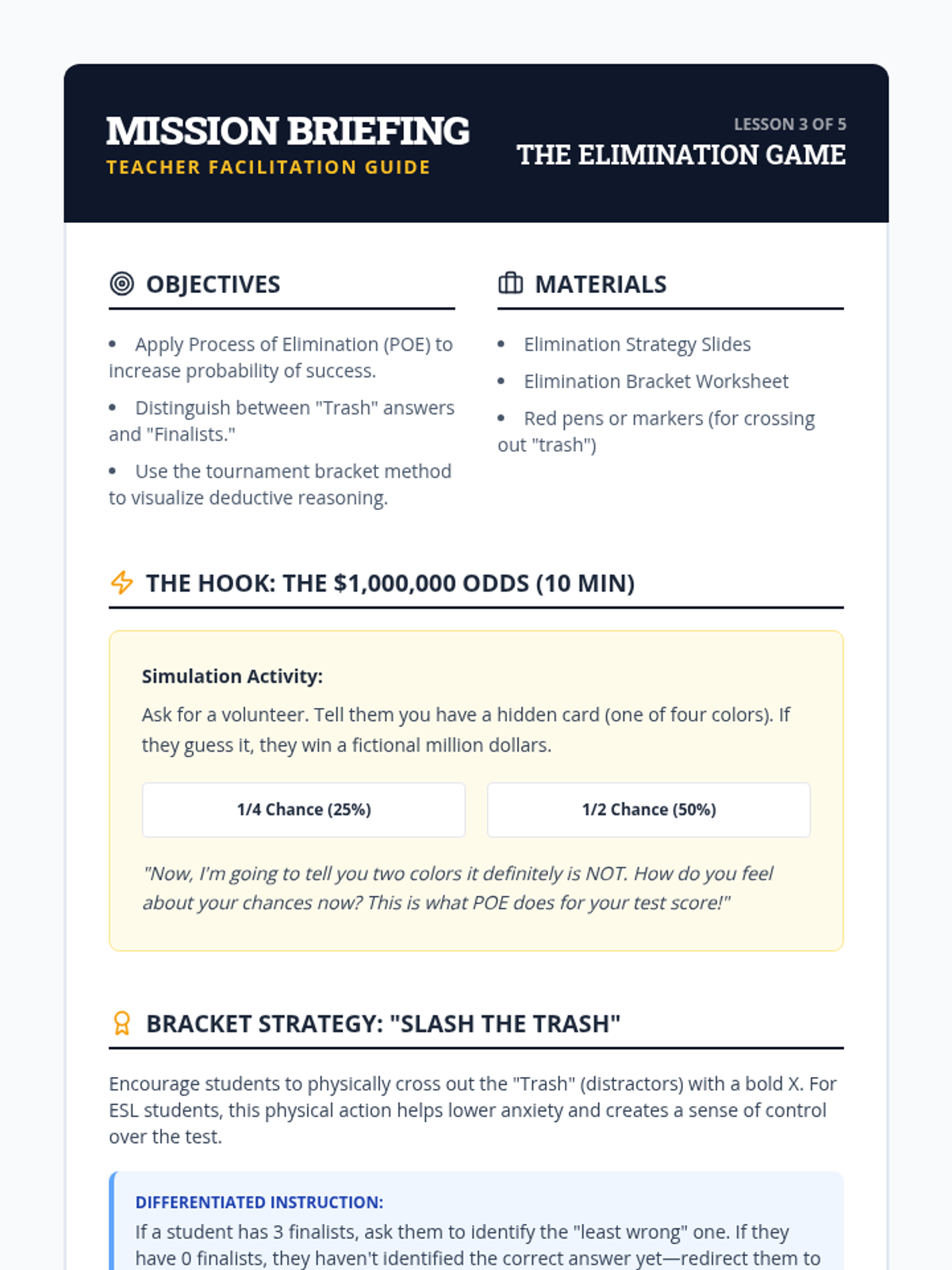
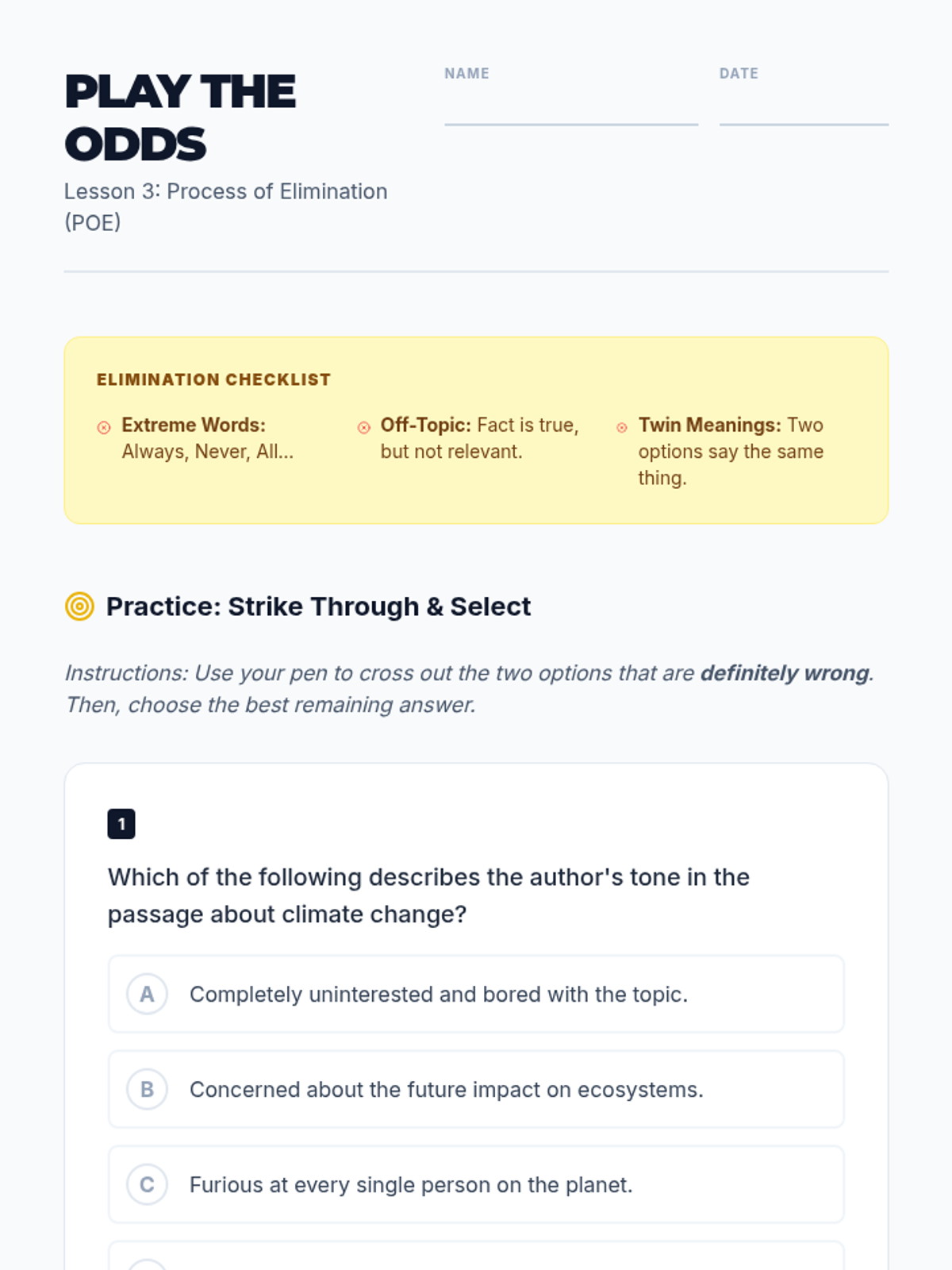
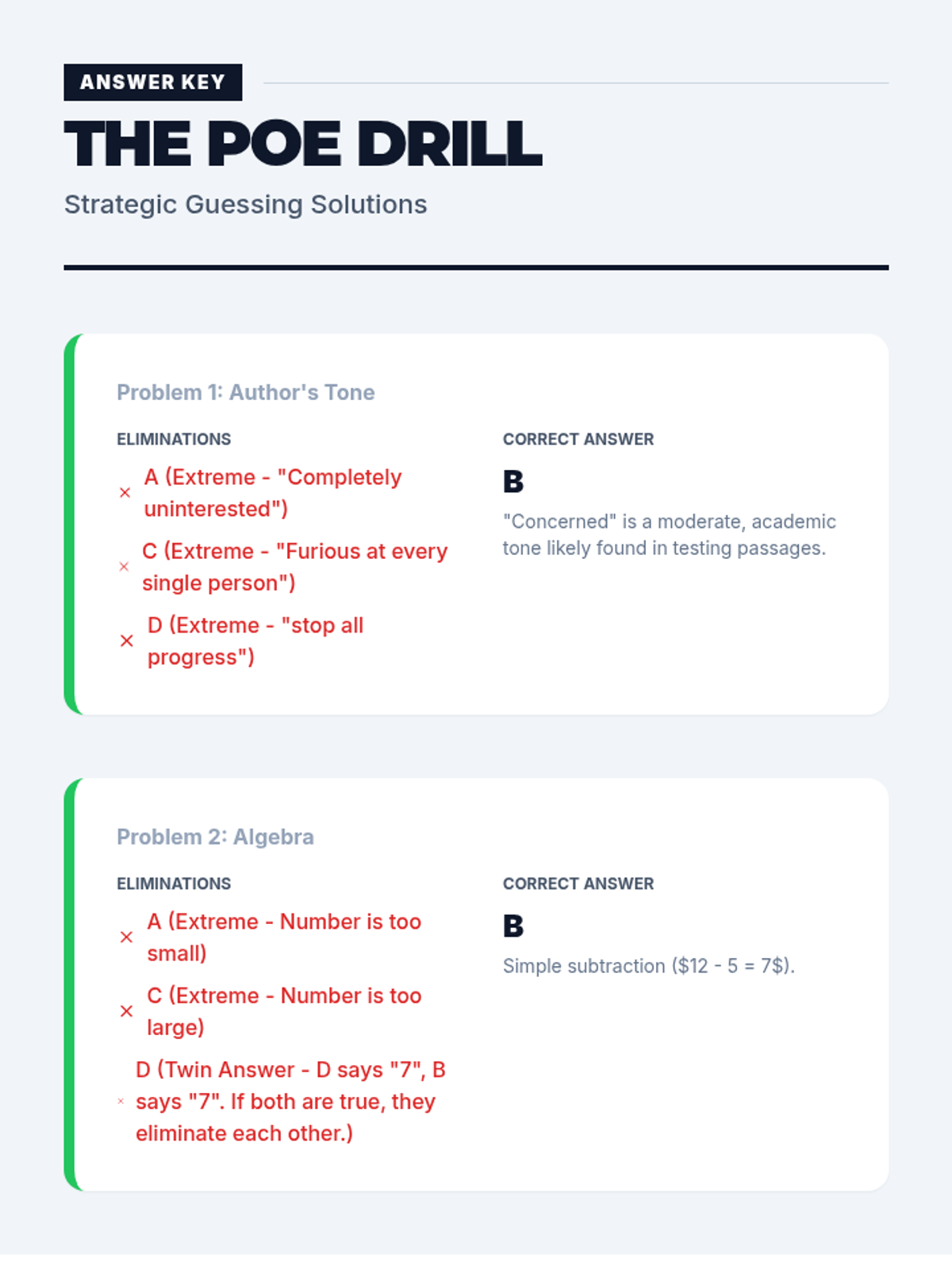
Students practice the physical and mental habit of crossing out clearly wrong answers to increase their probability of success. The lesson focuses on narrowing choices down to two options and using text evidence to make the final selection.
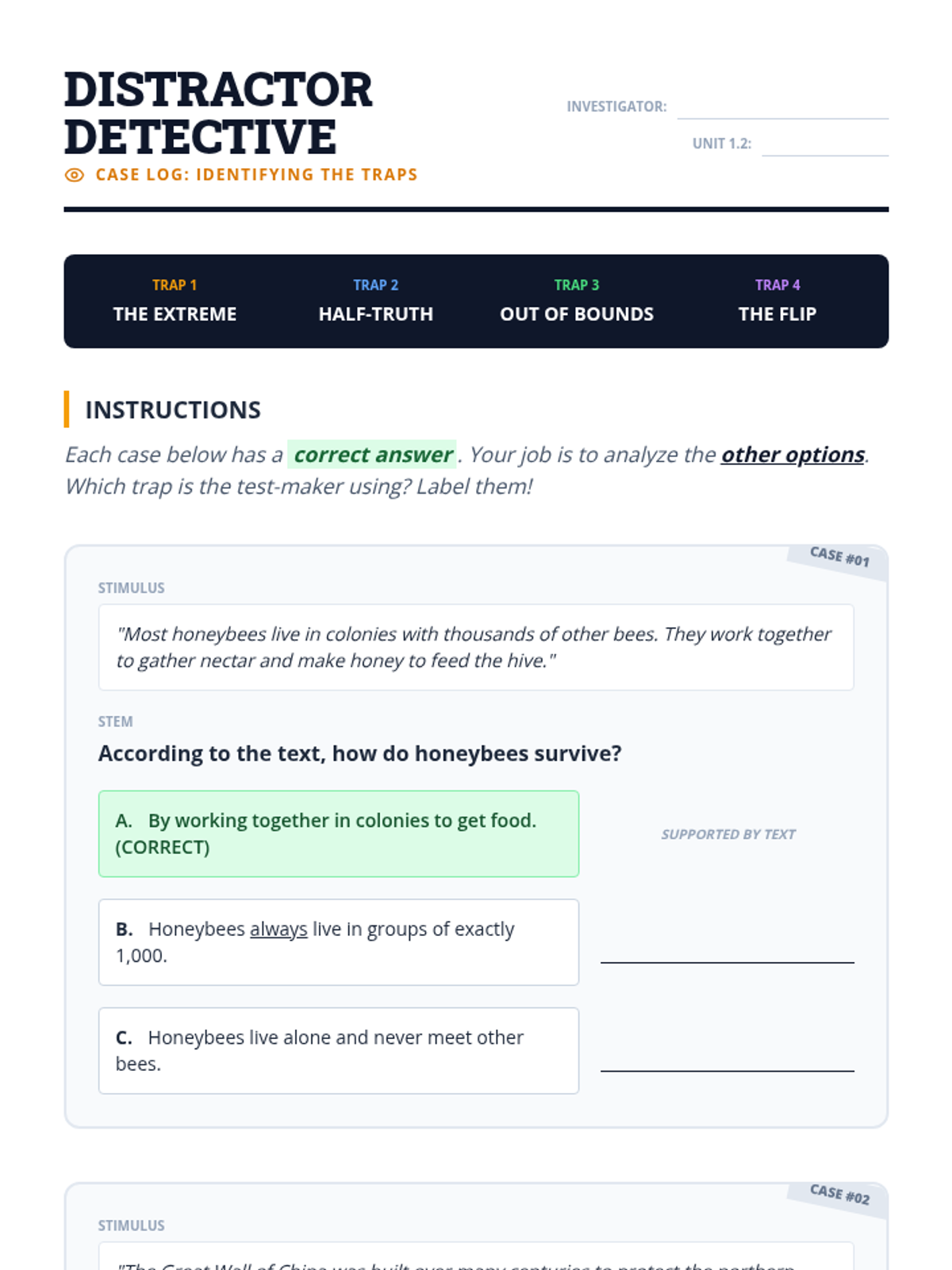
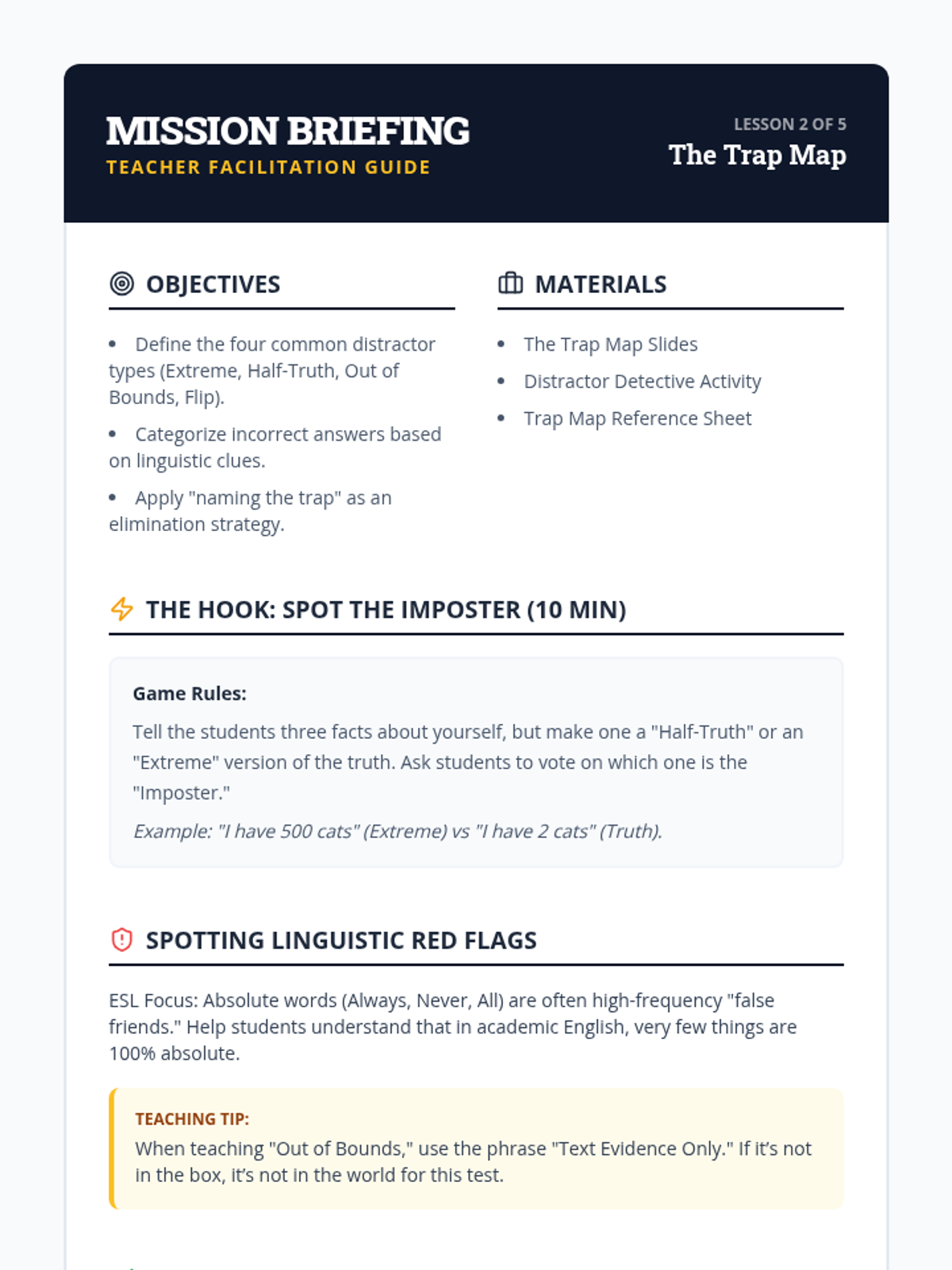
This lesson categorizes common types of wrong answers, such as 'too extreme,' 'partially true,' or 'irrelevant info.' Students label incorrect answers in sample questions with these categories.
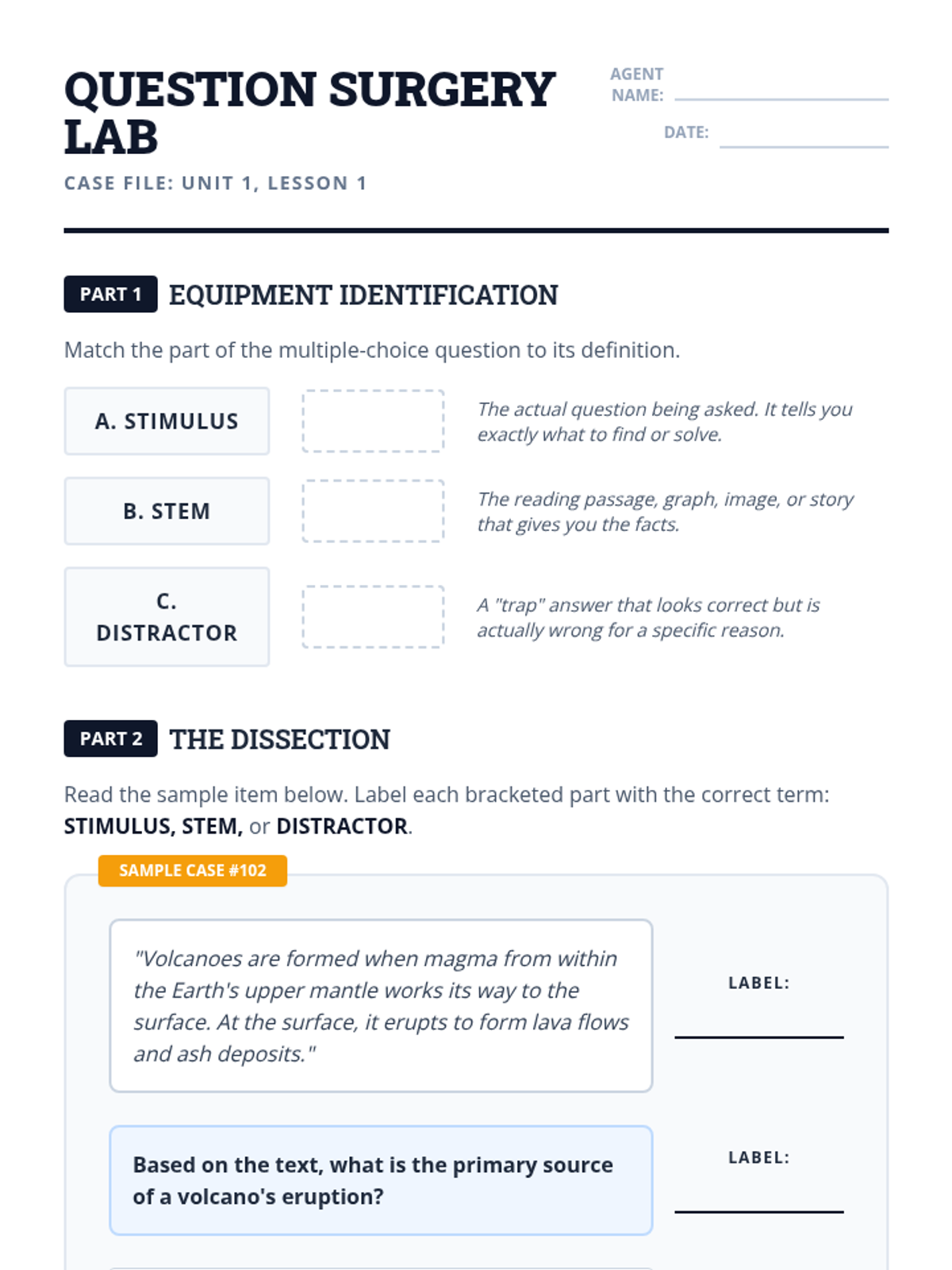
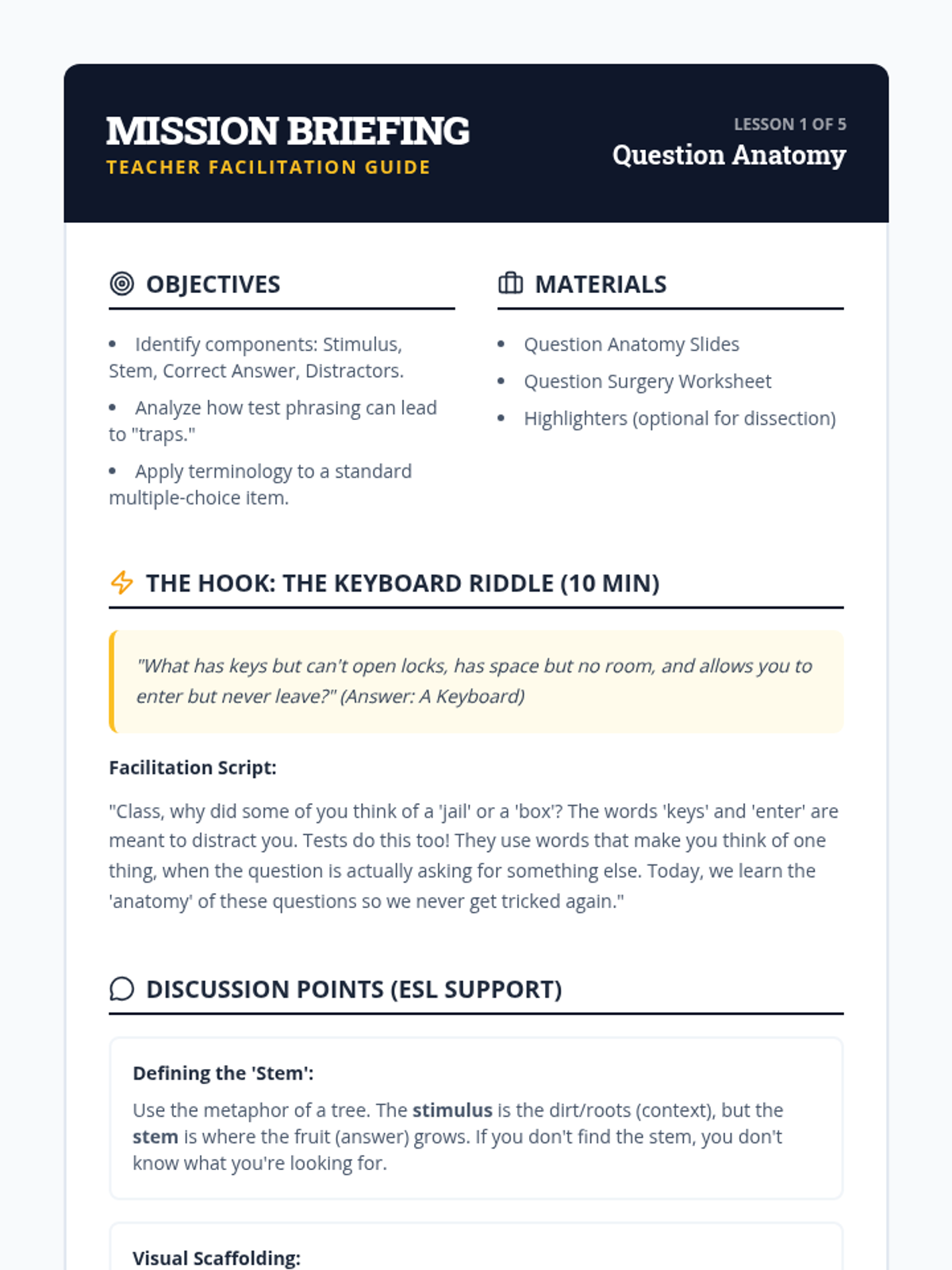
Students break down the components of a test item: the stimulus, the stem (question), the correct answer, and the distractors. They learn to identify what the stem is actually asking before looking at the options.
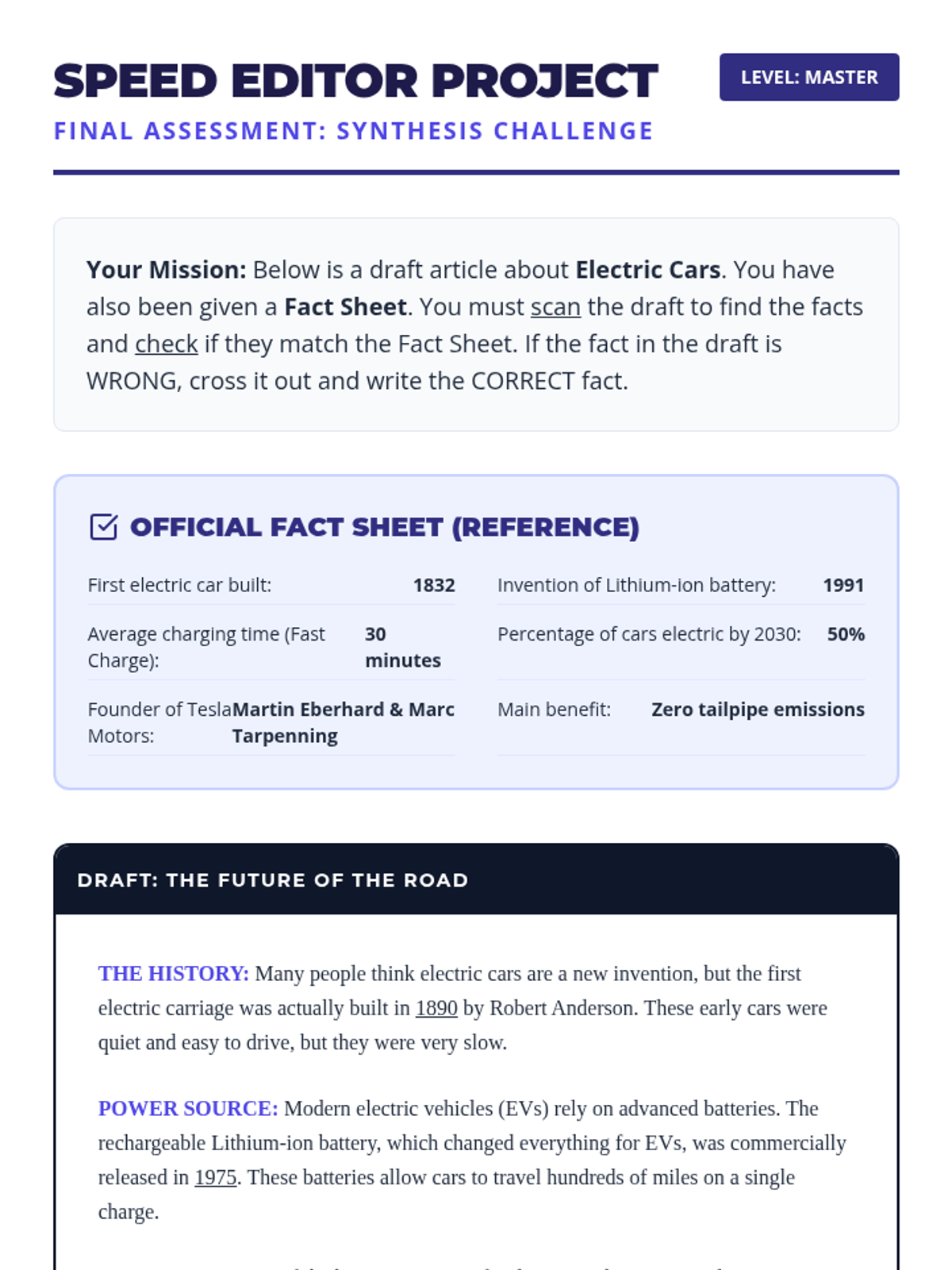
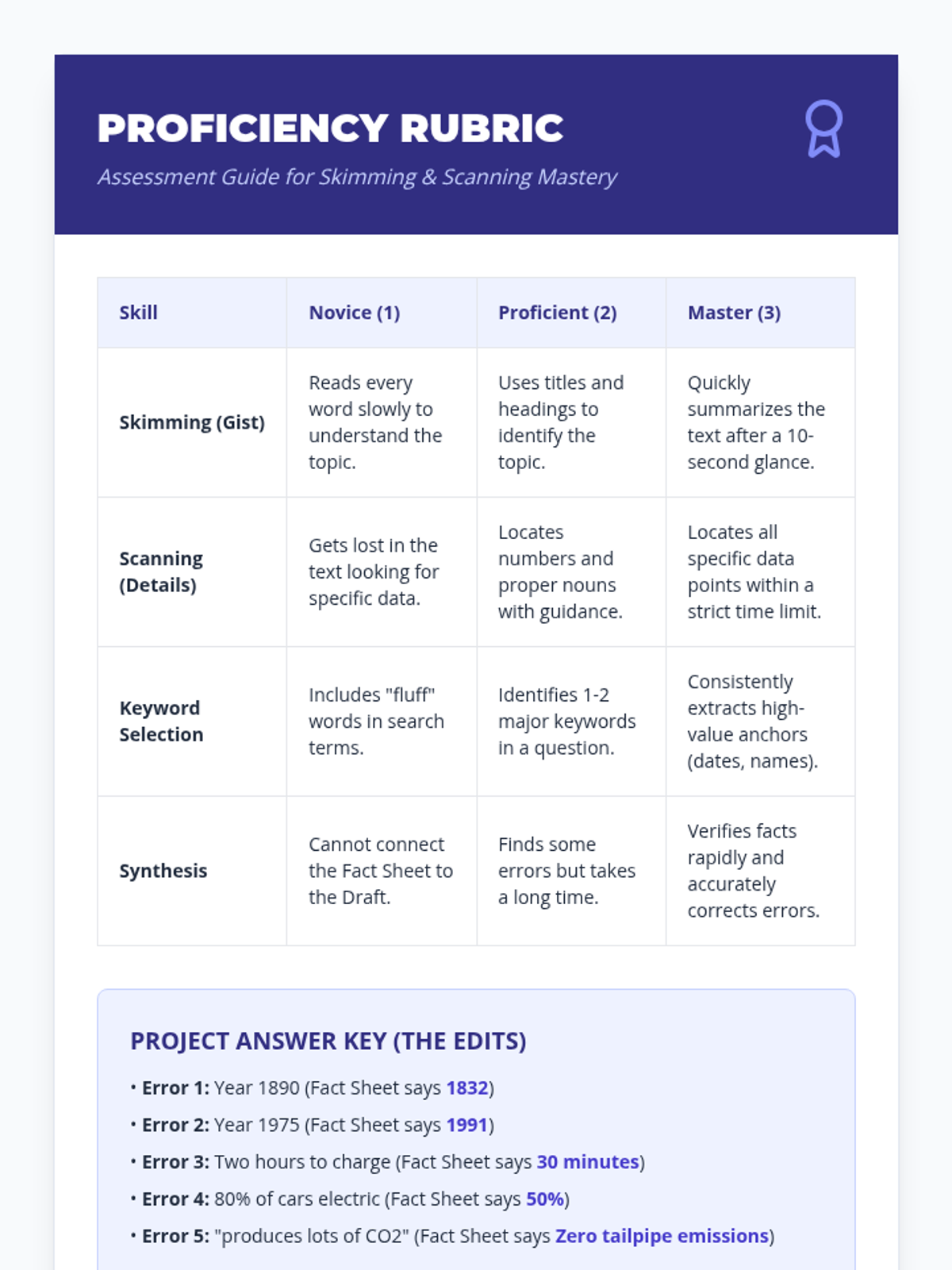
A culminating project where students combine skimming for main ideas and scanning for evidence to verify facts in a set of academic articles.
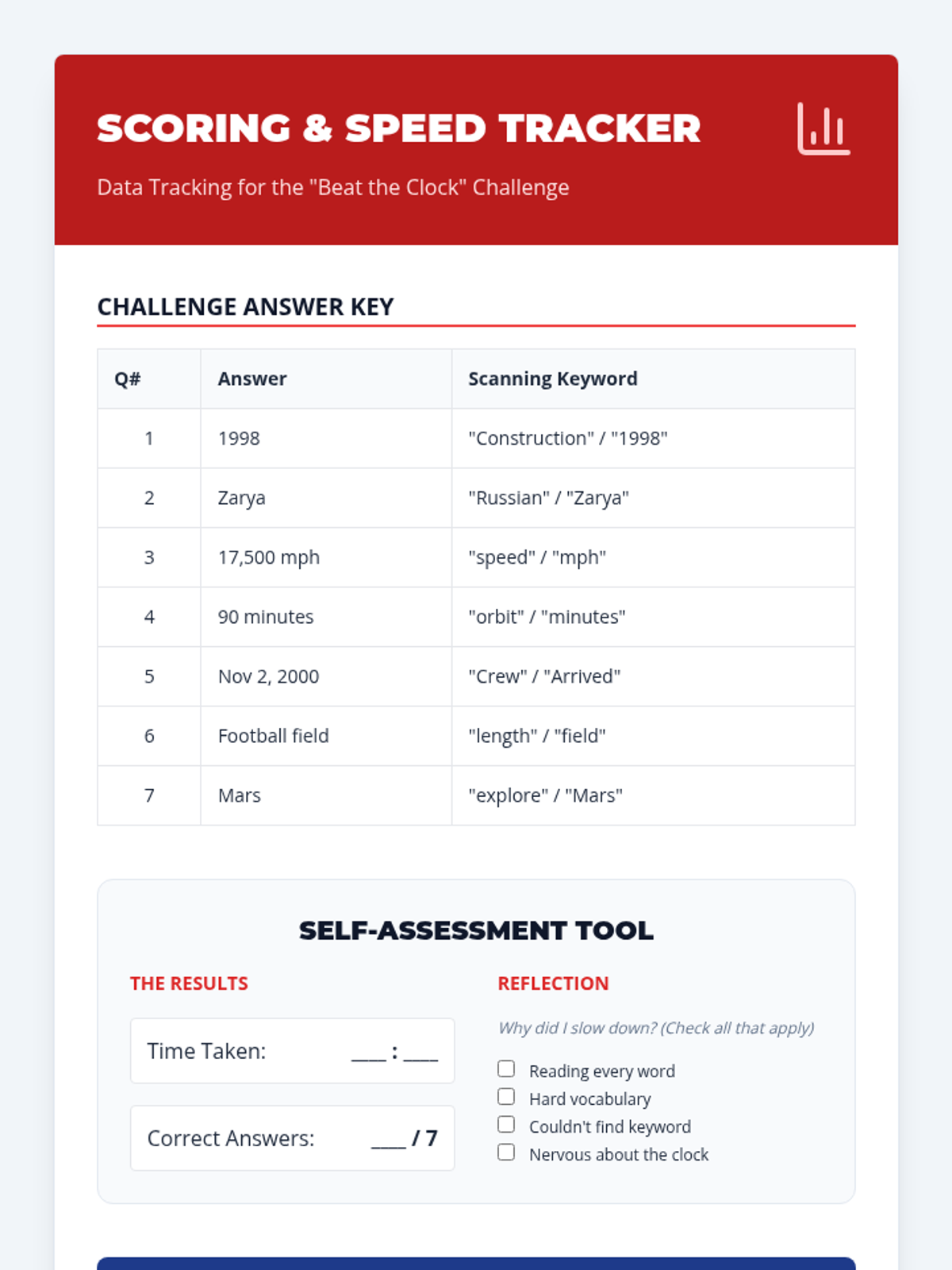
A high-energy lesson where students apply their skills under time constraints to build tolerance for testing pressure and improve information retrieval speed.
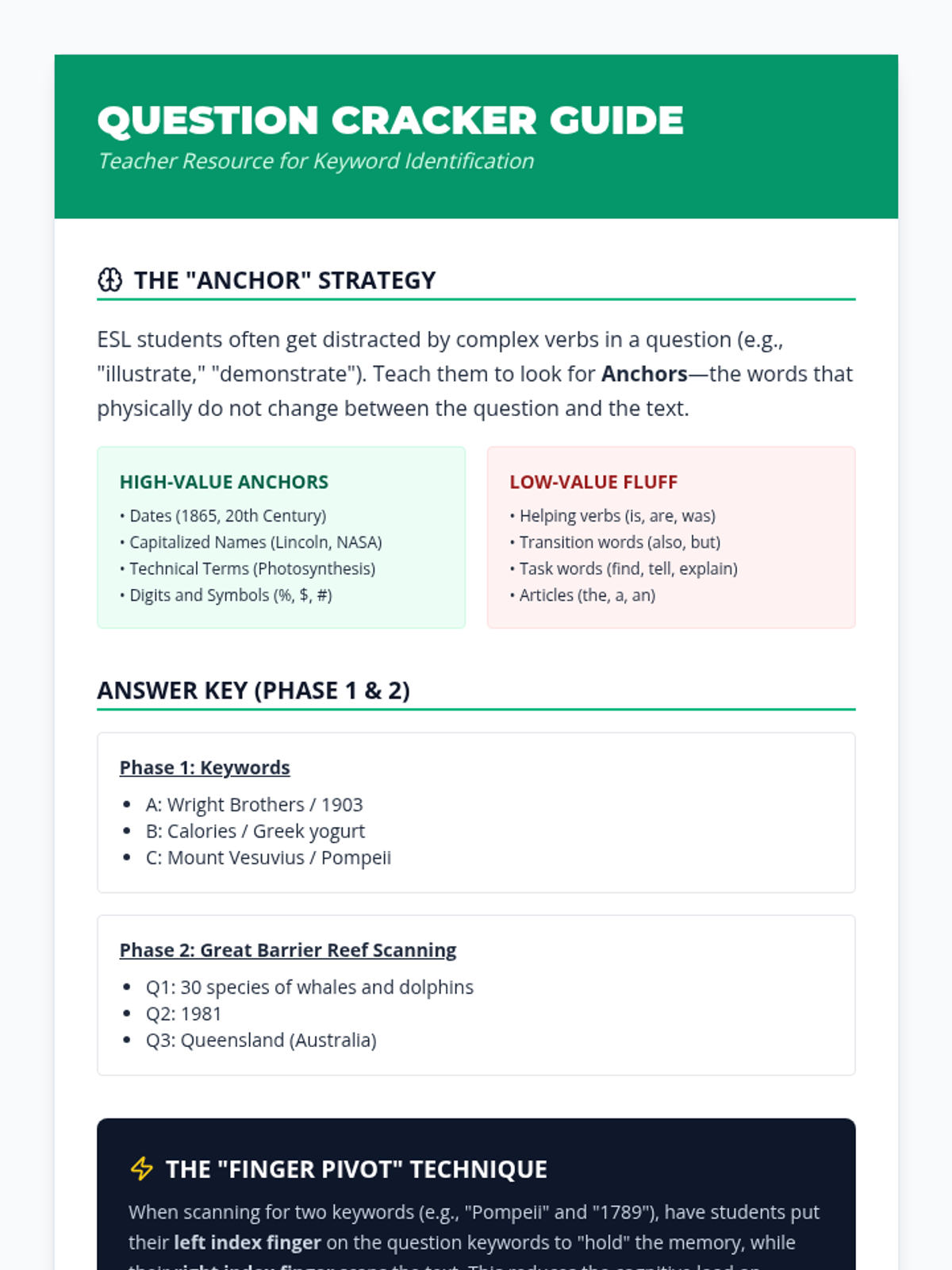
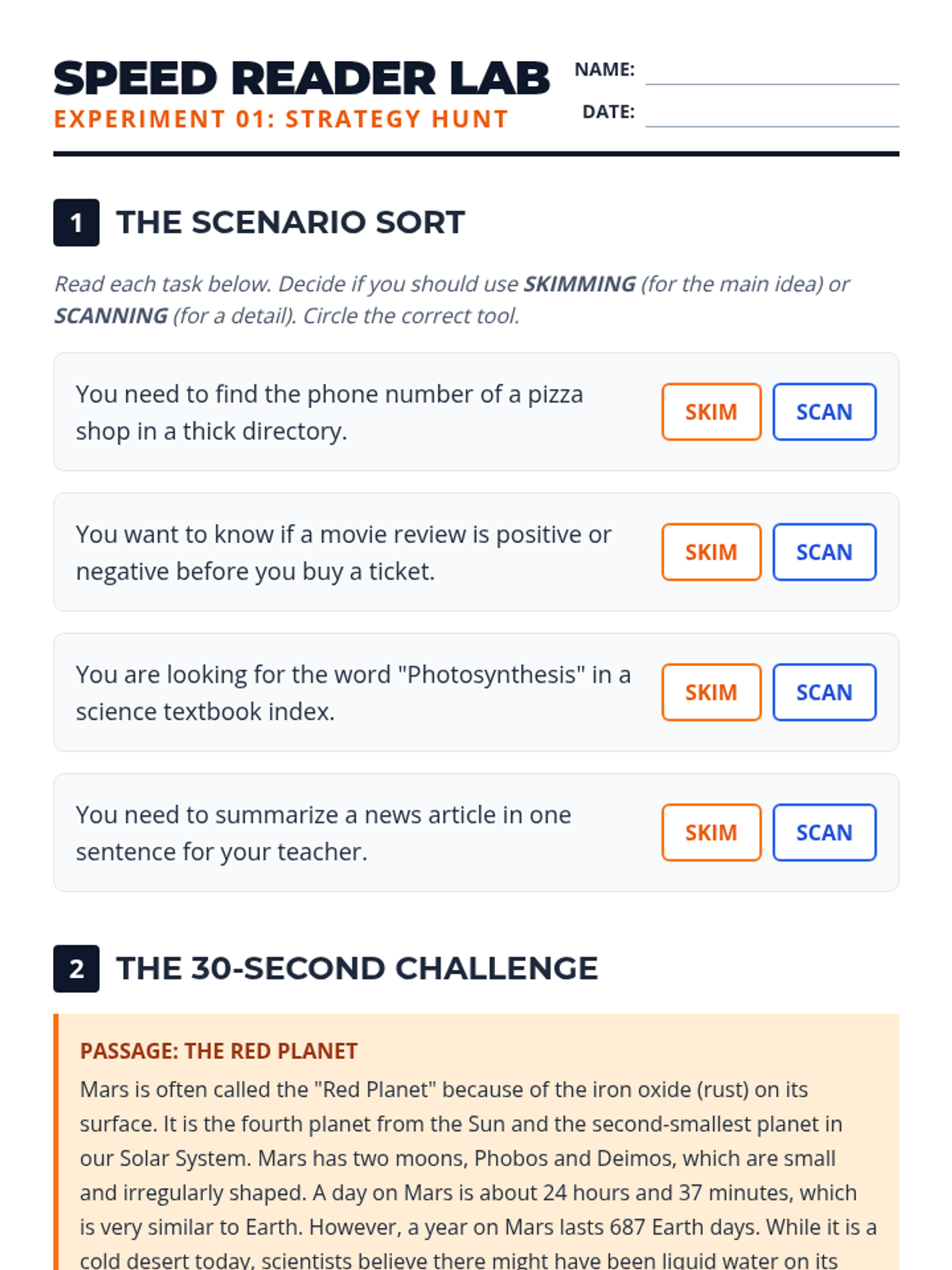
Students practice identifying high-value keywords in questions to guide their scanning process, focusing on nouns, verbs, and dates while ignoring filler words.
This lesson teaches students to use headings, captions, bold text, and topic sentences as roadmaps to navigate dense text without getting stuck on unknown vocabulary.
Students explore the difference between getting the 'gist' (skimming) and hunting for details (scanning) through workshop-style activities and purpose-driven reading.
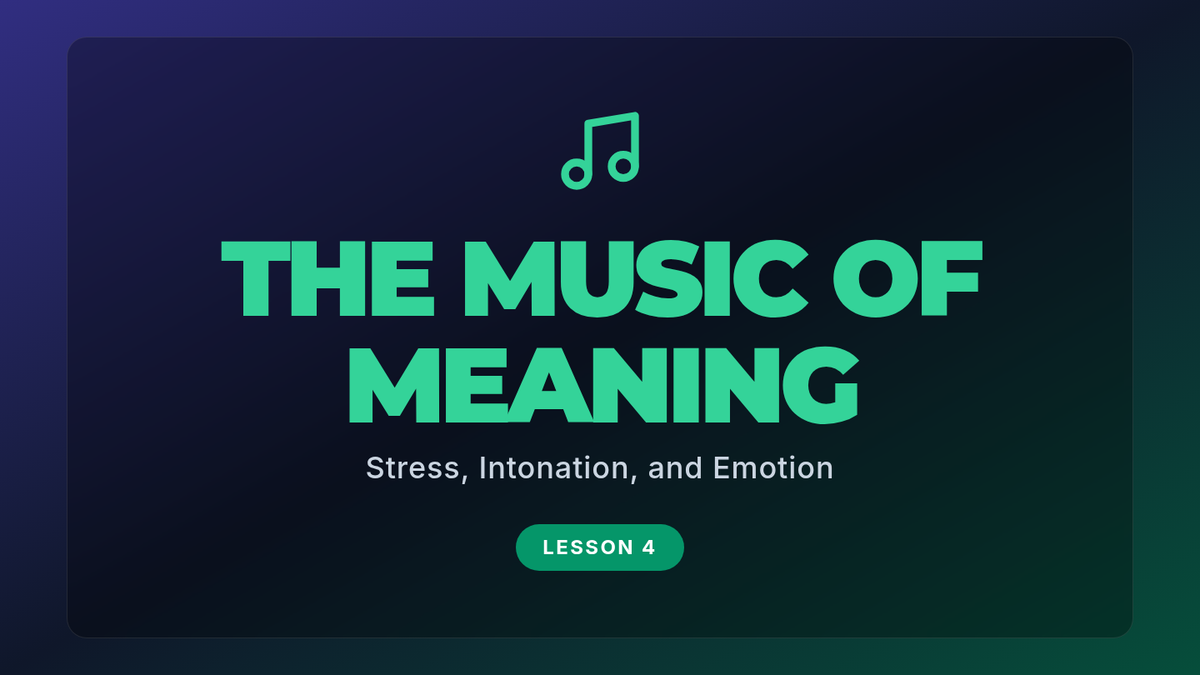
Focusing on the 'music' of English, students learn how shifting sentence stress and intonation changes meaning and conveys emotion. They practice detecting nuances in vocal delivery.
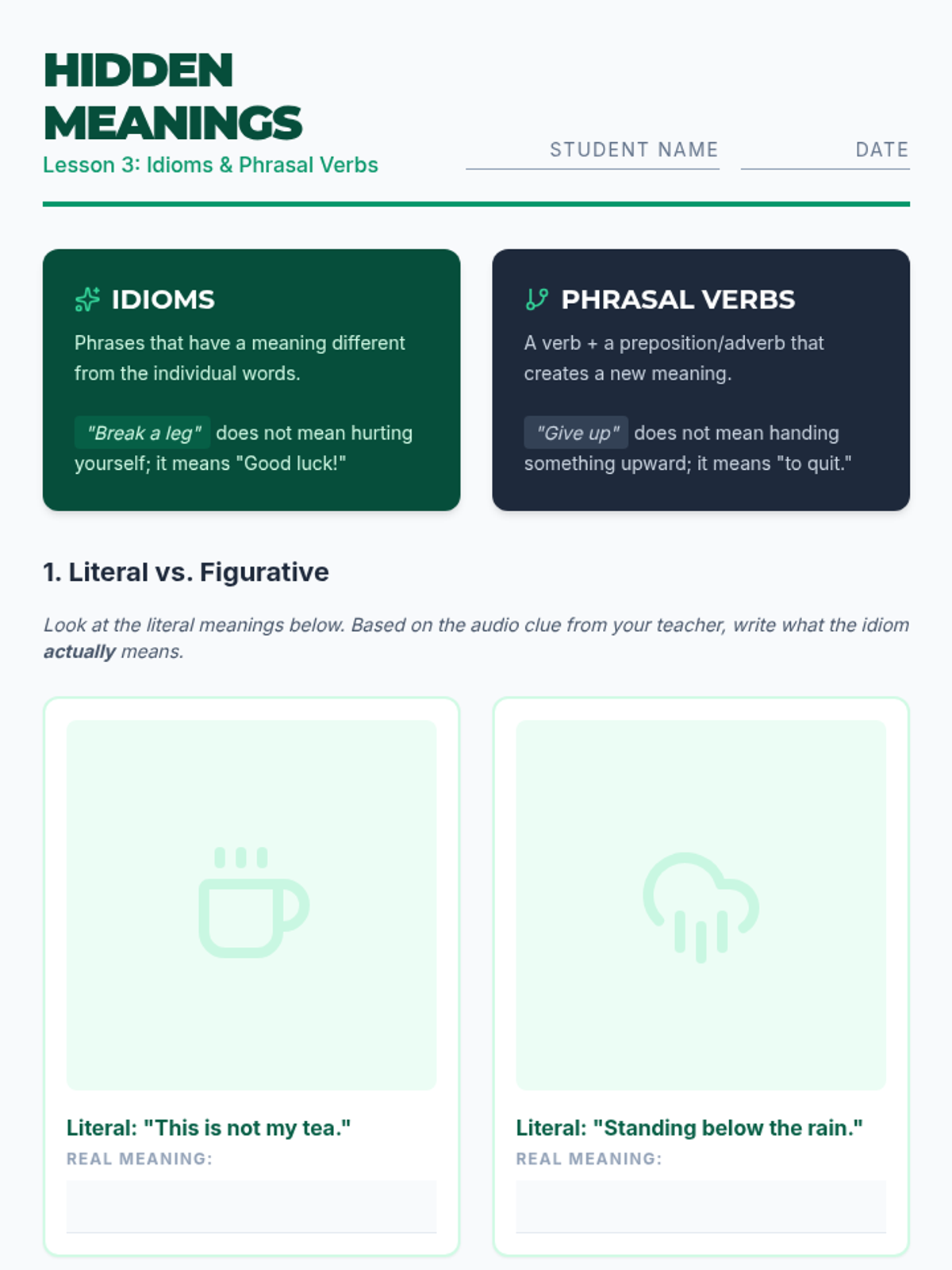
Students move beyond literal translation to explore high-frequency idioms and phrasal verbs. They learn to use context clues to decode figurative meaning in social dialogues.
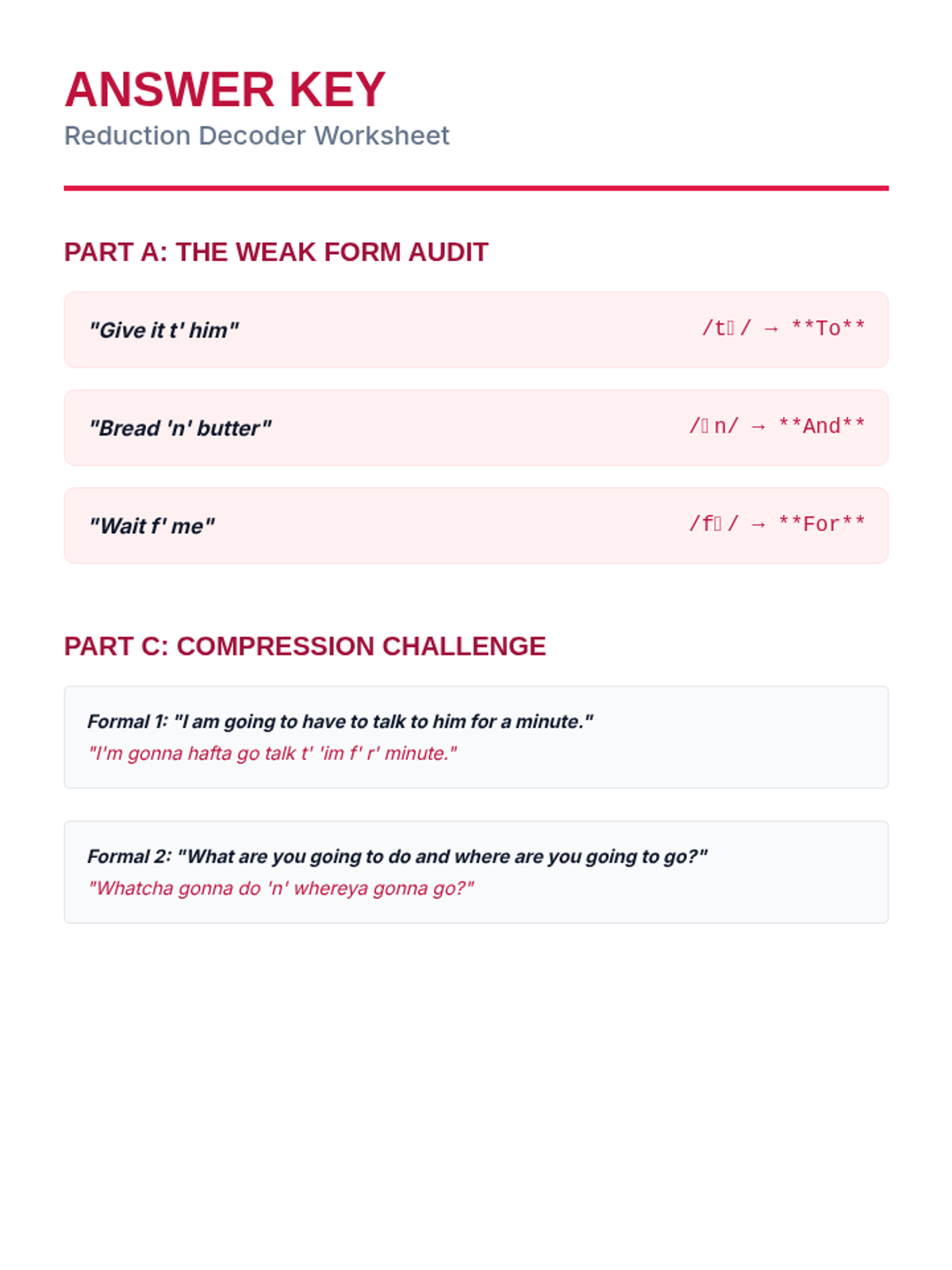
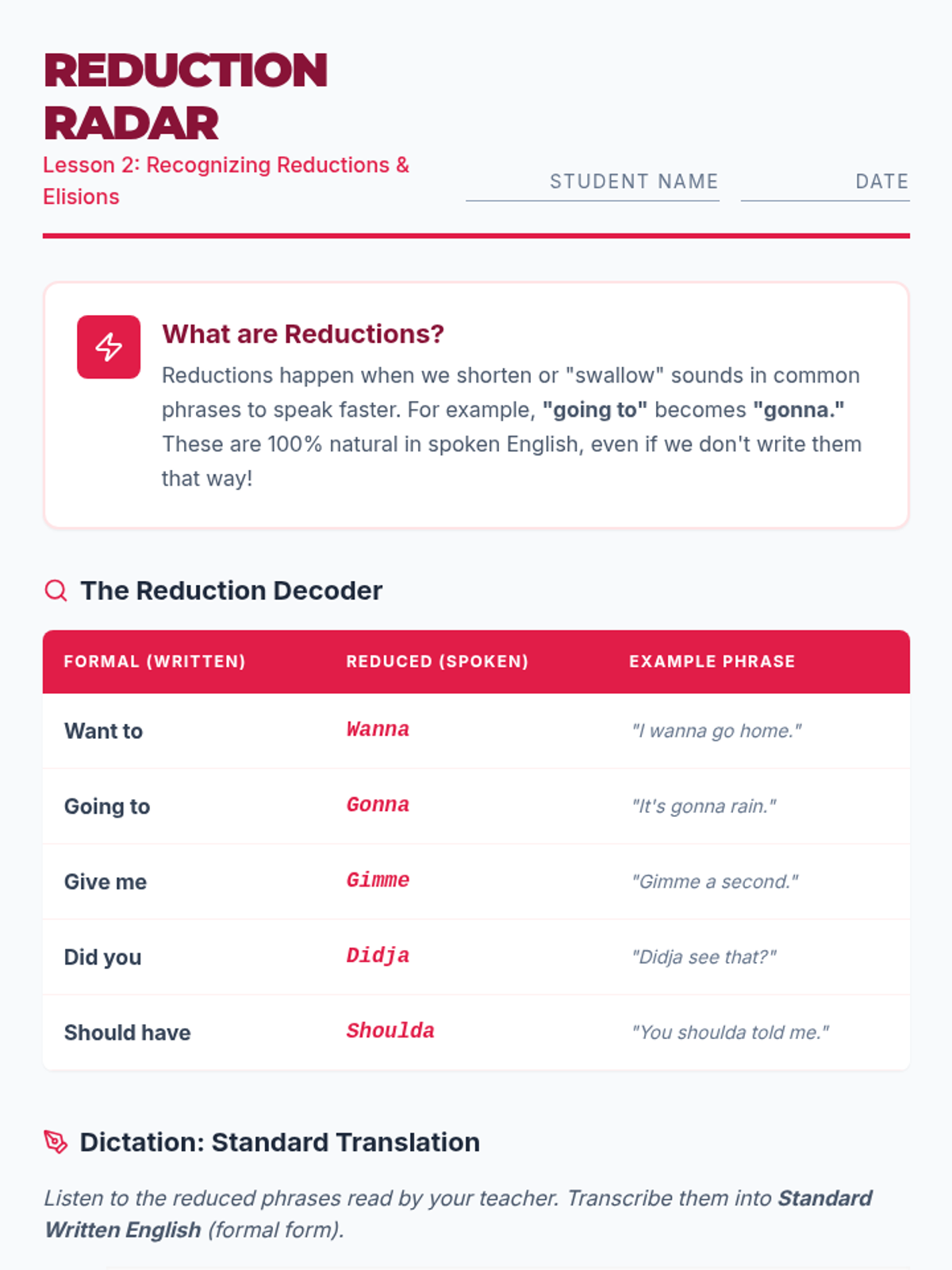
This lesson targets common reductions (wanna, gonna) and elisions in American English through dictation and game-based recognition. Students bridge the gap between written formal forms and spoken informal patterns.
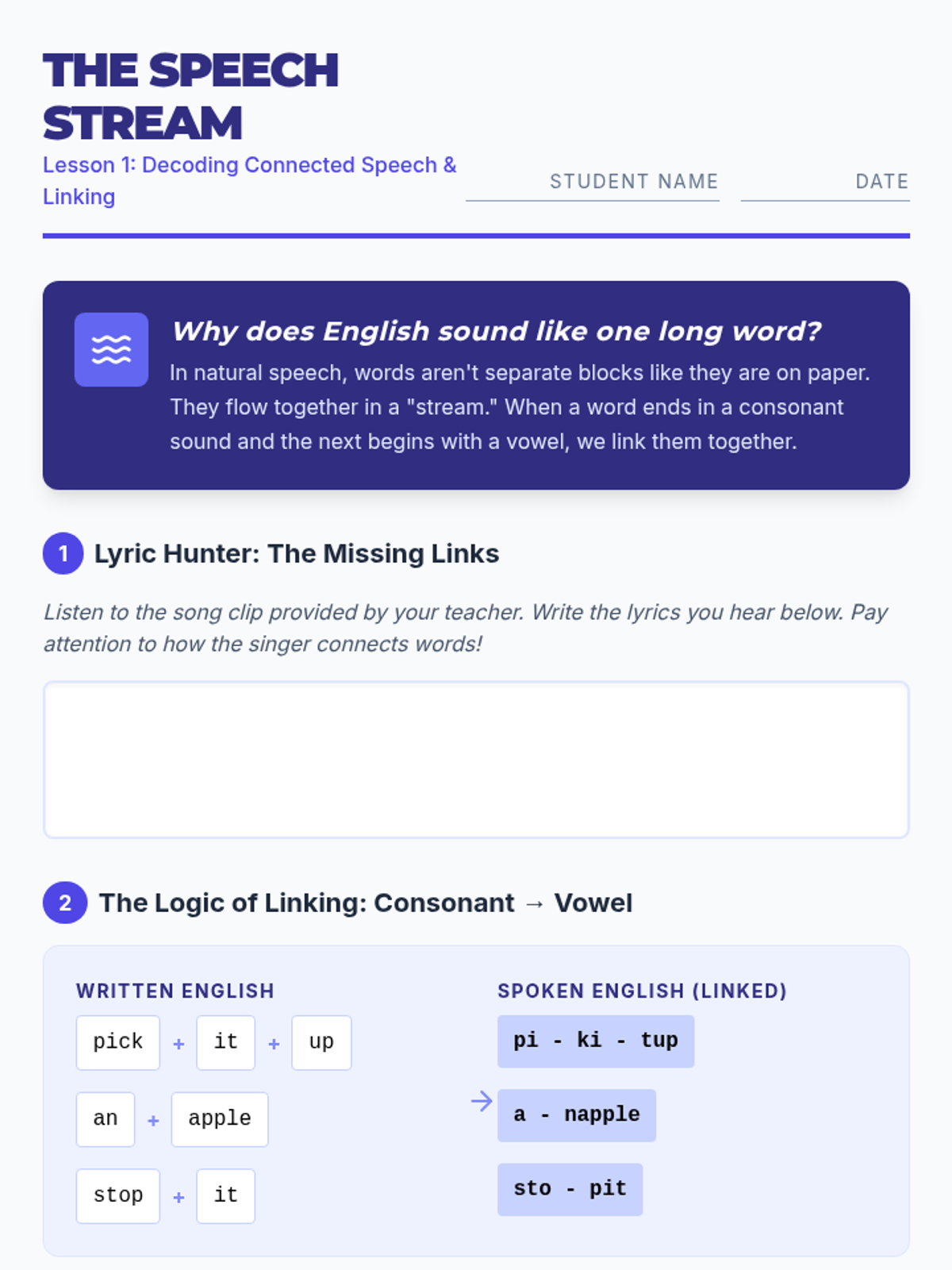
Students investigate consonant-vowel linking and word boundaries to understand why words 'run together' in natural English. They learn to visualize the 'speech stream' and identify individual words within it.
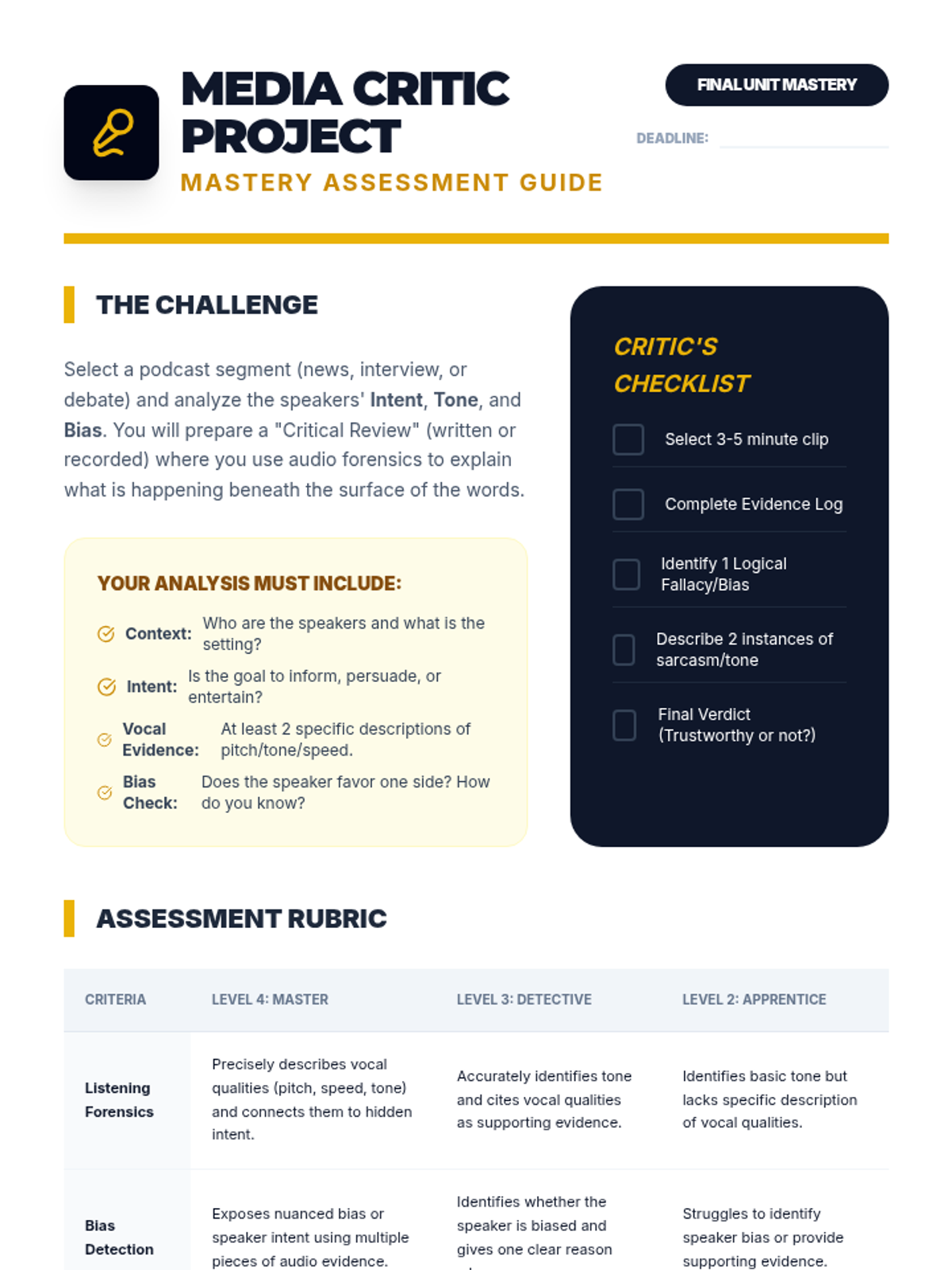
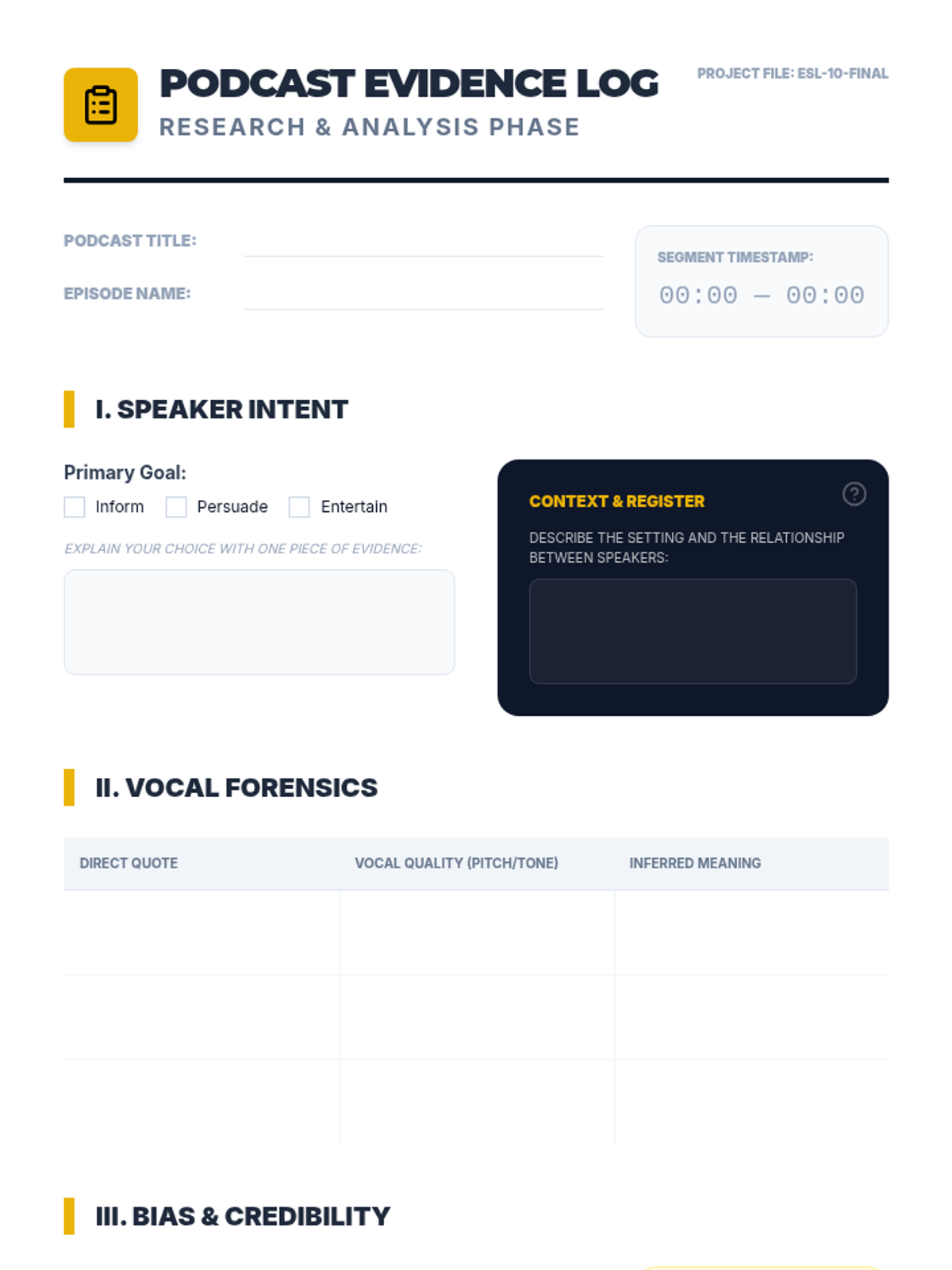
A final project where students select a podcast episode, analyze its intent and bias, and present their findings with specific audio evidence.
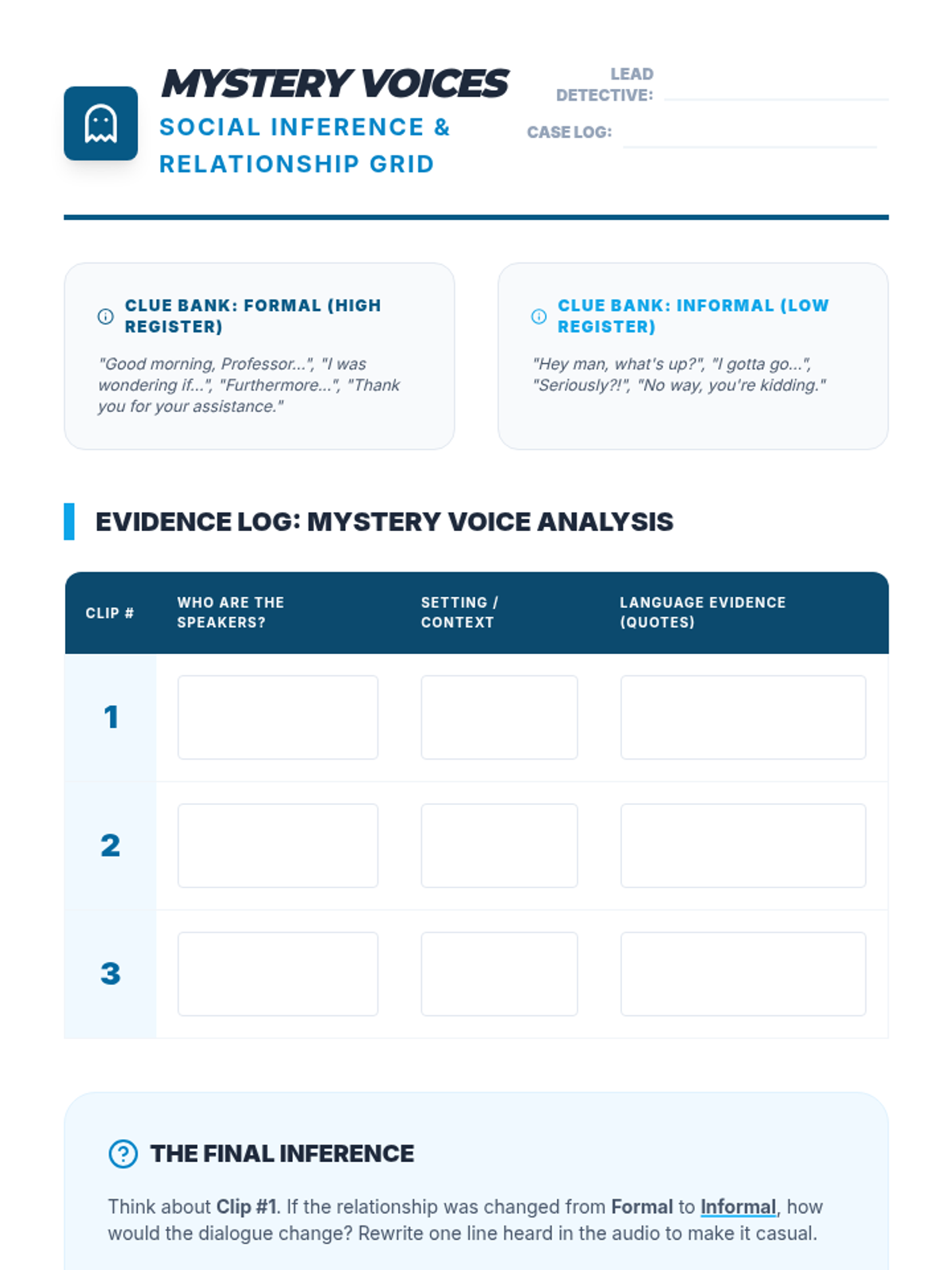
Without visual cues, students analyze dialogue to infer relationships and social context based on formality levels and conversational register.
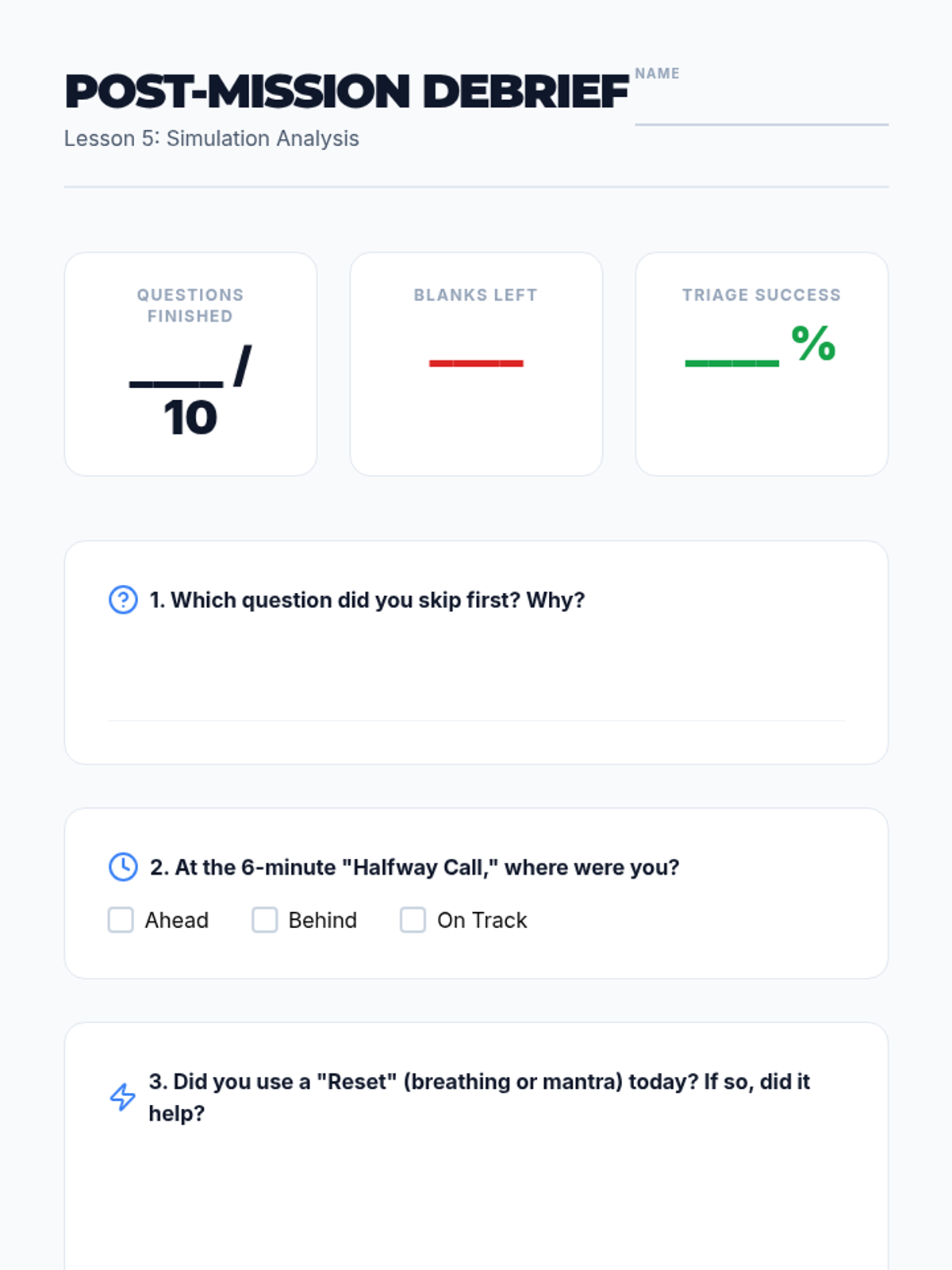
A capstone simulation where students apply all learned strategies during a timed practice section, followed by a reflective analysis of their pacing performance.
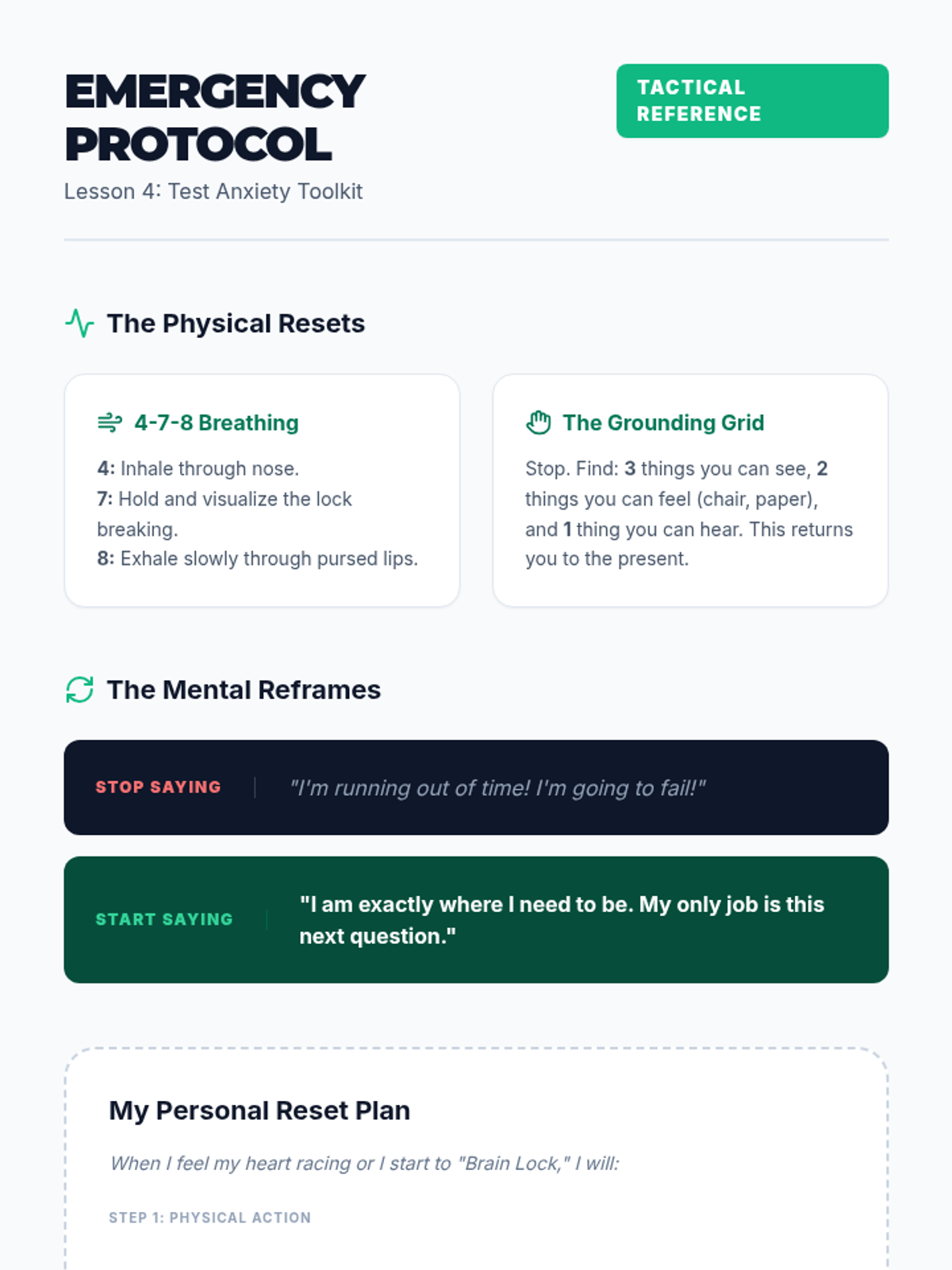
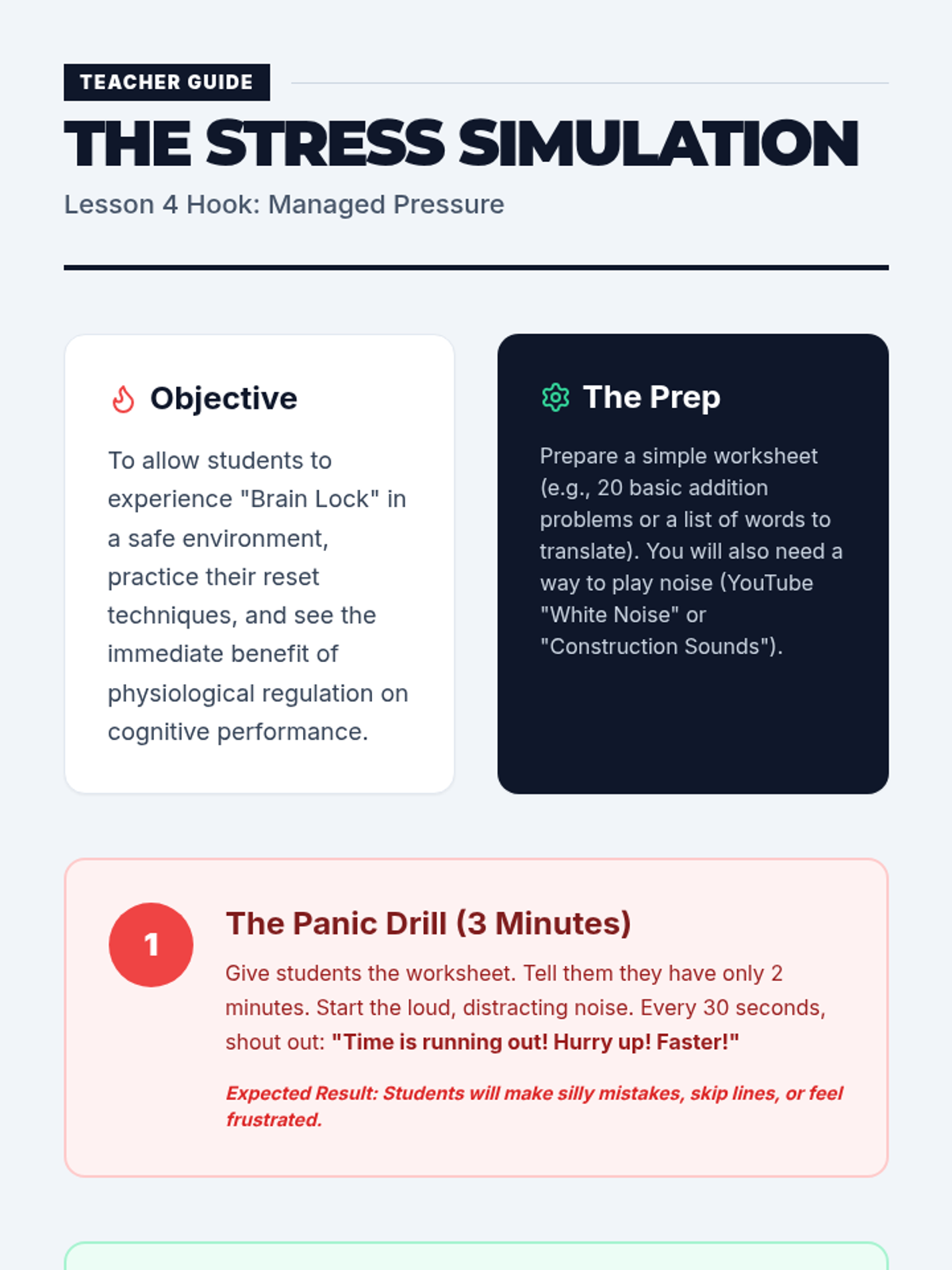
Students practice physical and mental 'resets,' including breathing and visualization techniques, to maintain focus and prevent panic-induced time loss.
An exploration of the statistical advantage of educational guessing and the Process of Elimination (POE) to improve score probability on difficult items.
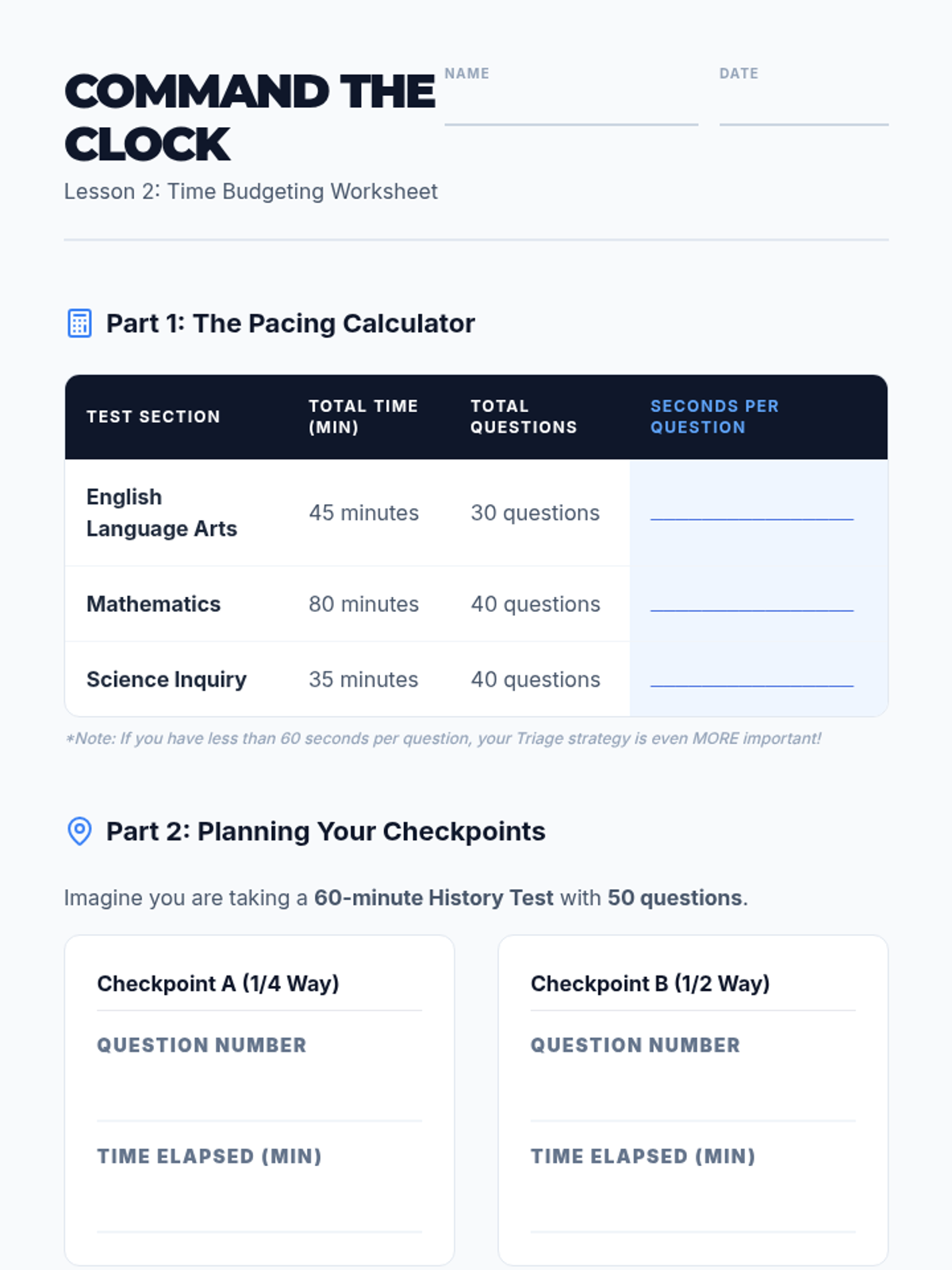
Learners apply basic arithmetic to calculate time-per-question limits and set mid-section checkpoints to maintain a steady pace throughout an exam.
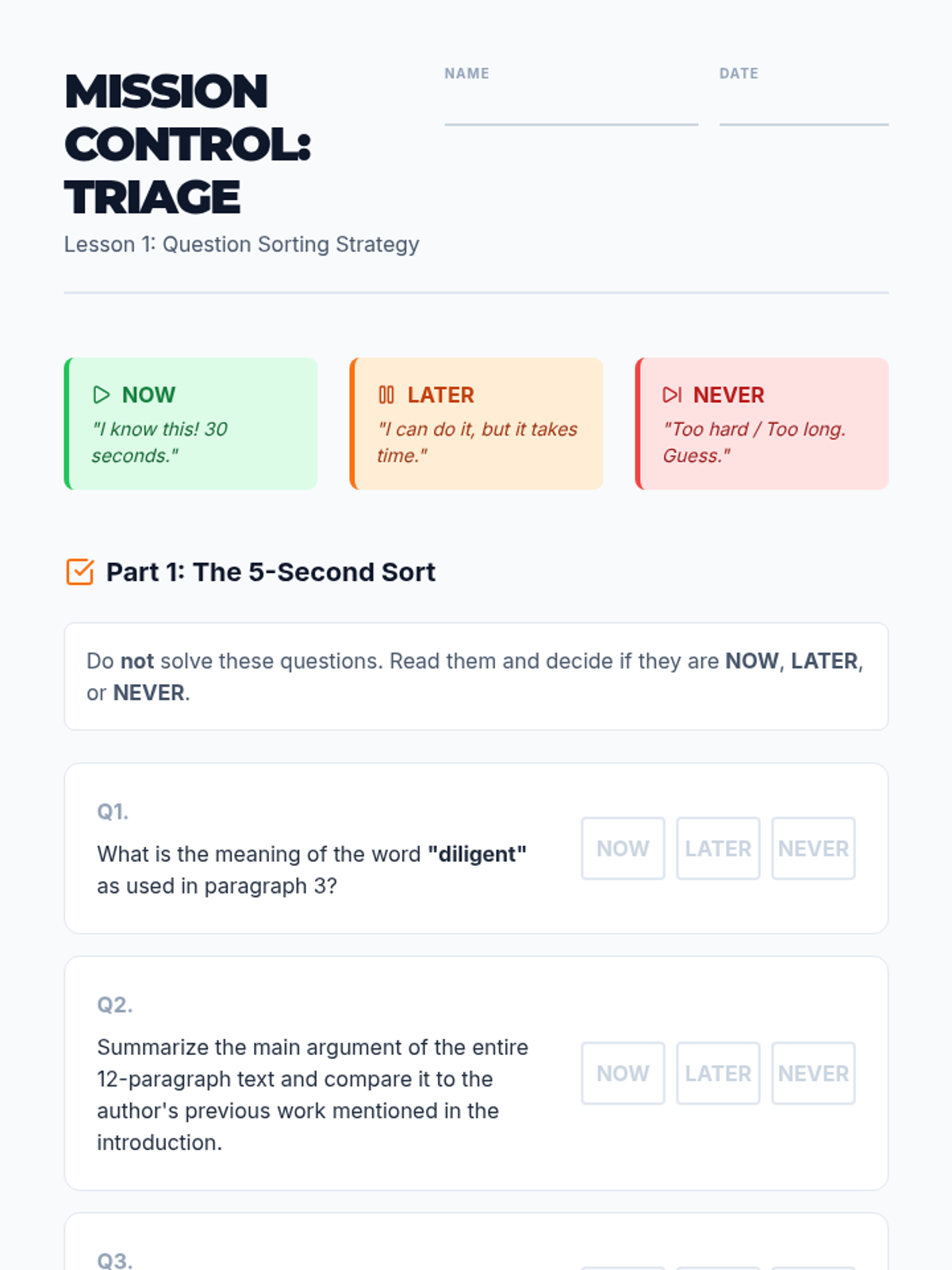
Students learn to quickly categorize test questions into 'Now', 'Later', and 'Never' buckets to ensure they maximize their score by focusing on high-probability questions first.
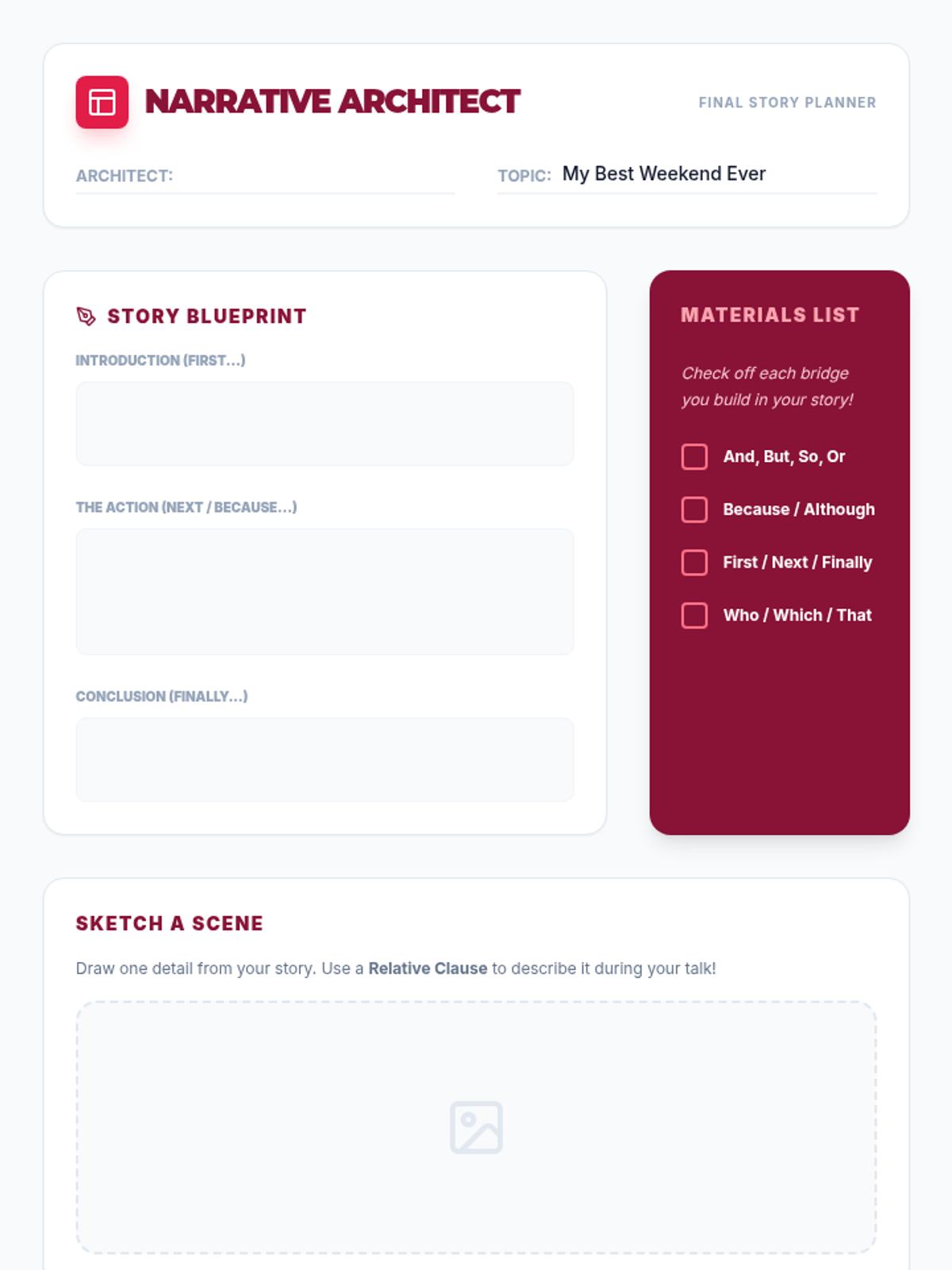
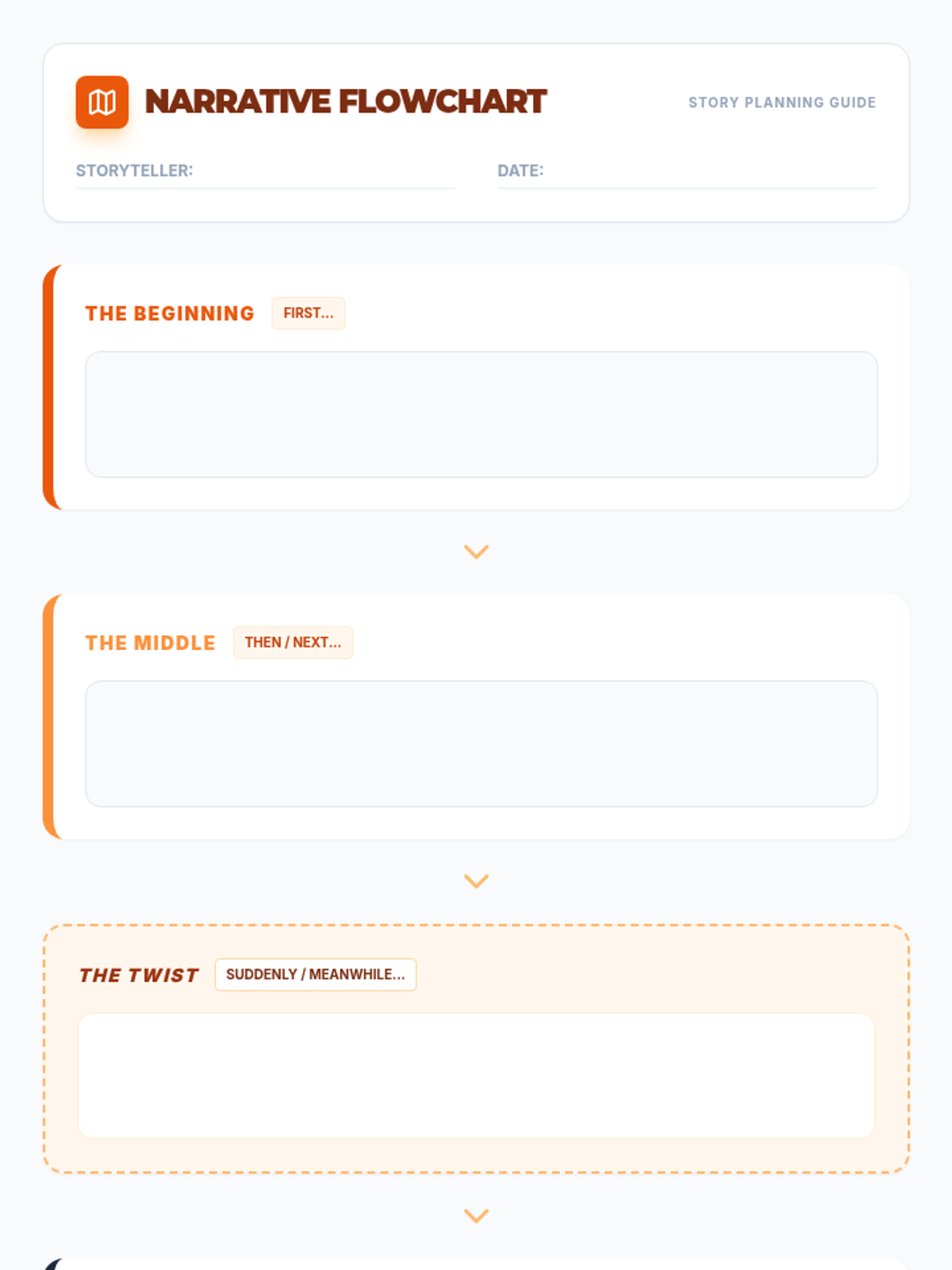
A culminating storytelling workshop where students synthesize all learned structures to share a personal narrative.
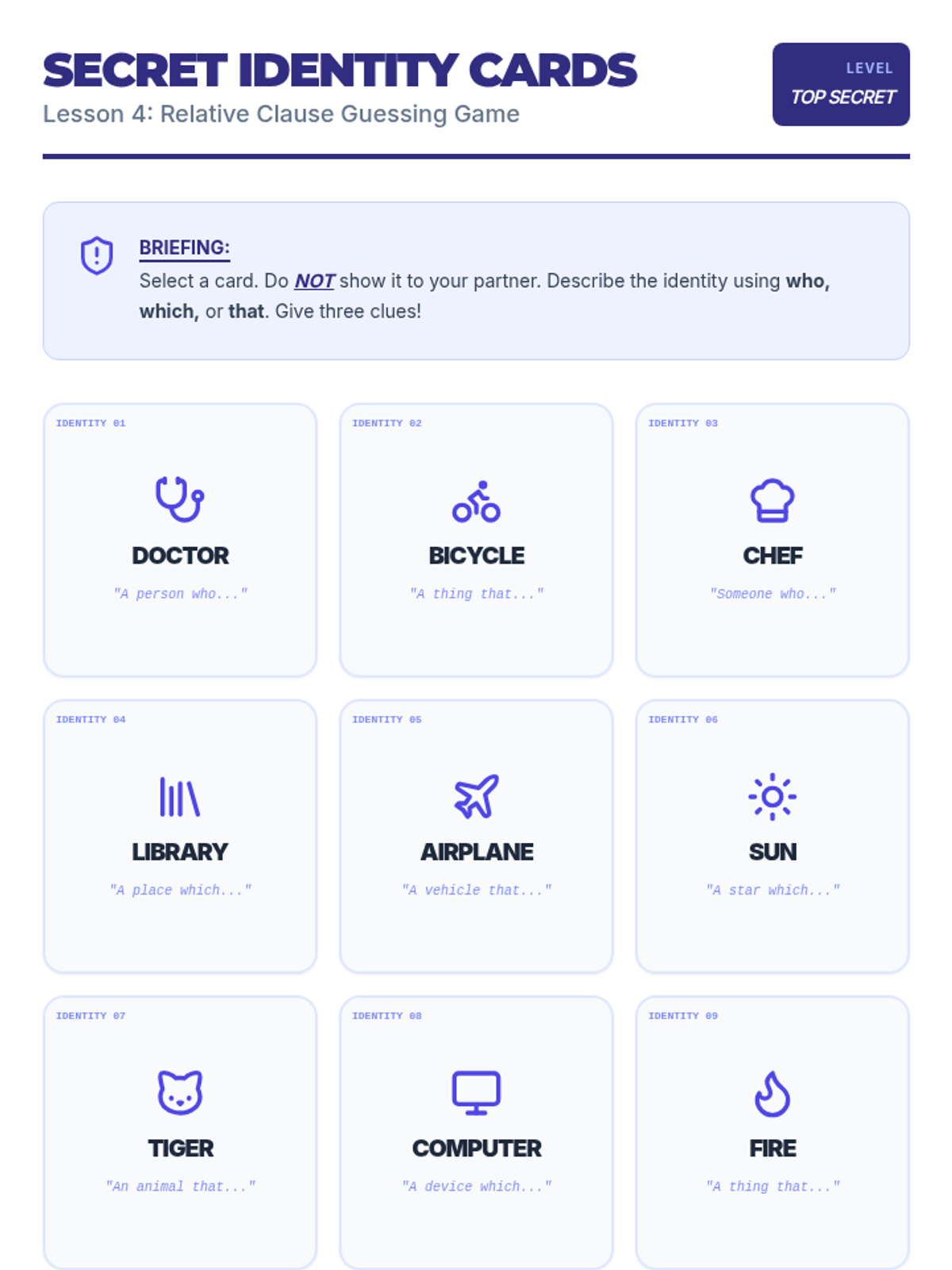
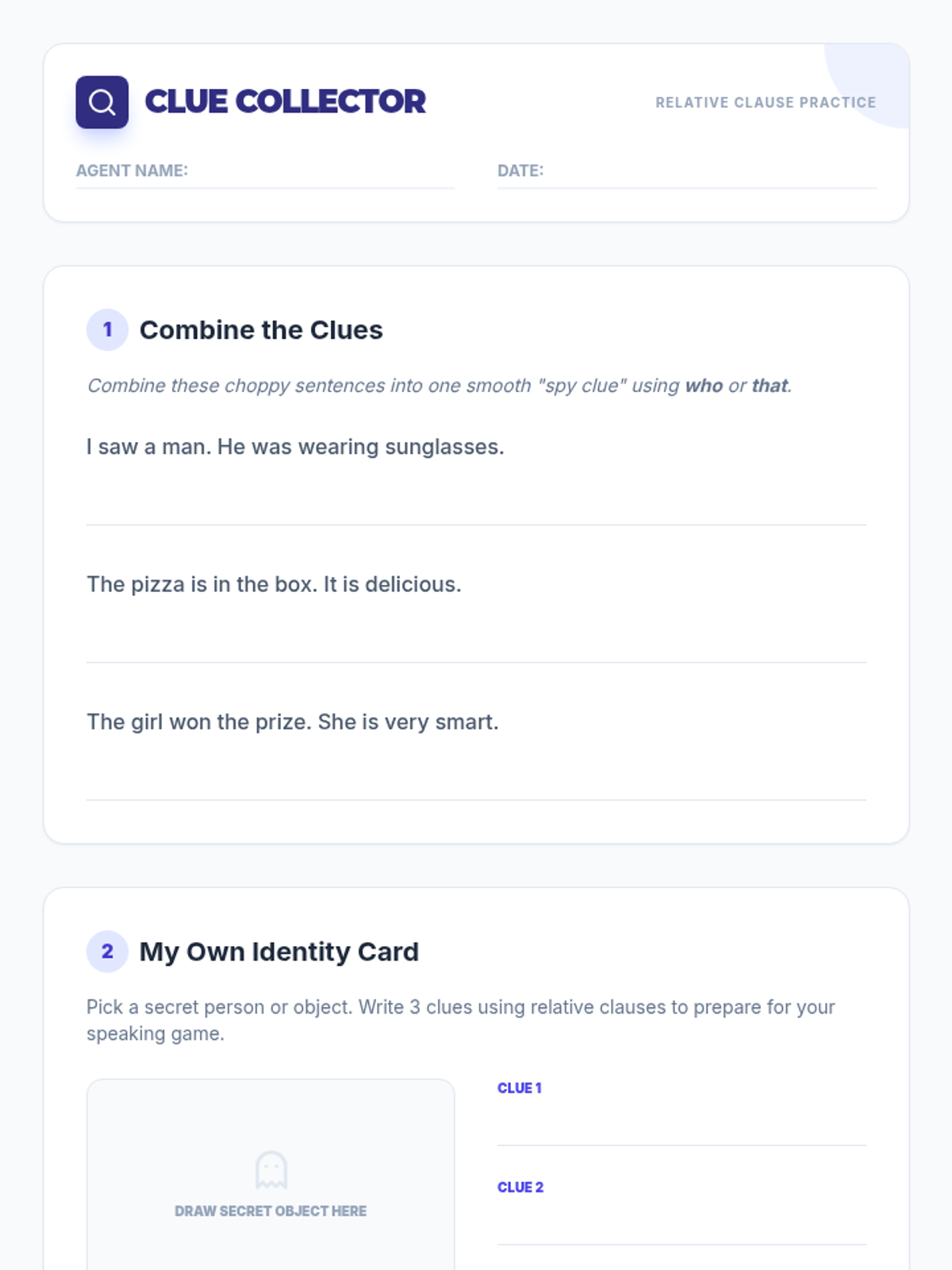
Using relative clauses (who, which, that) to add descriptive detail without stopping the flow of speech.
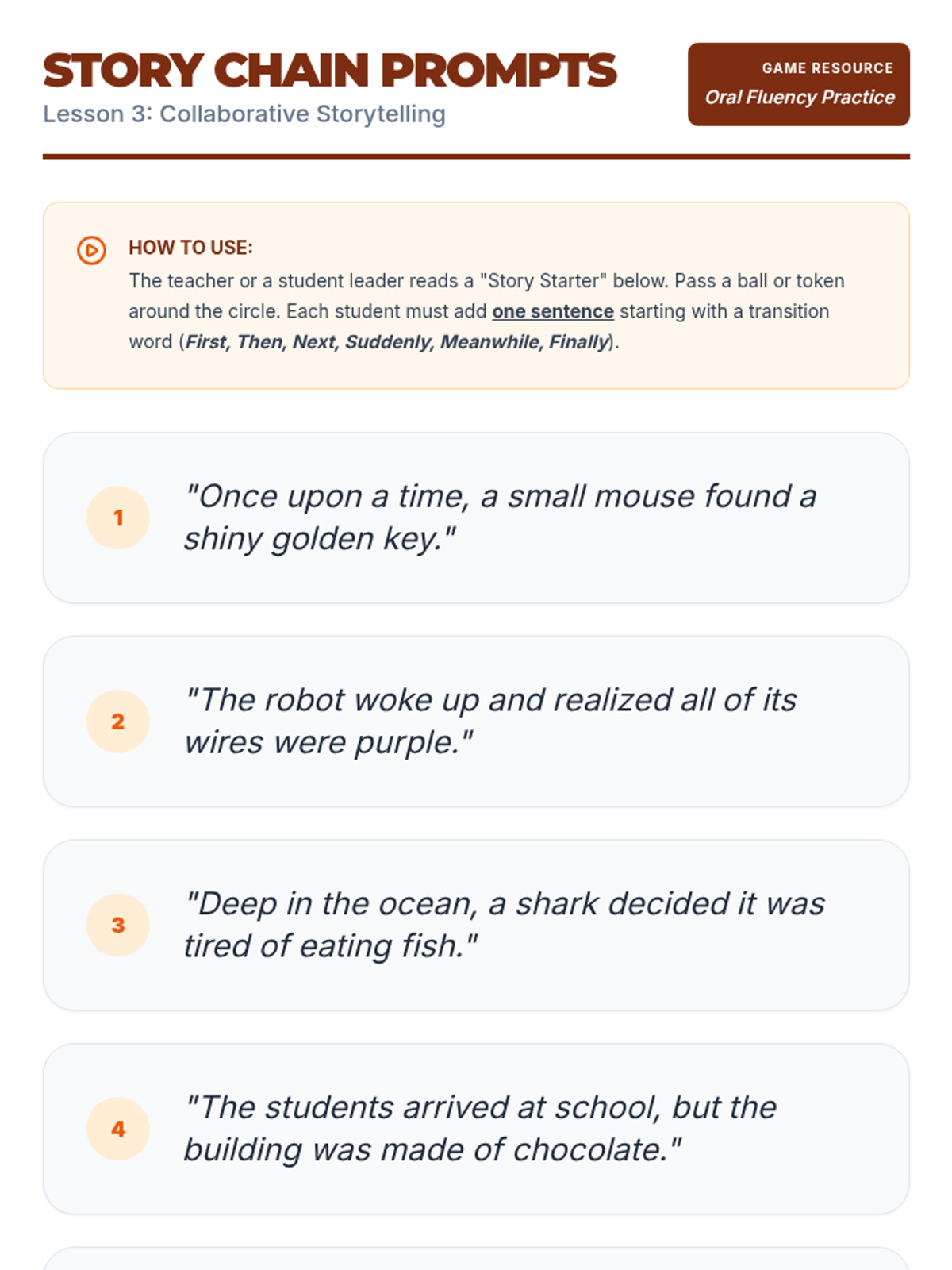
Mastering sequence and transition words to create organized, chronological narratives that flow naturally.
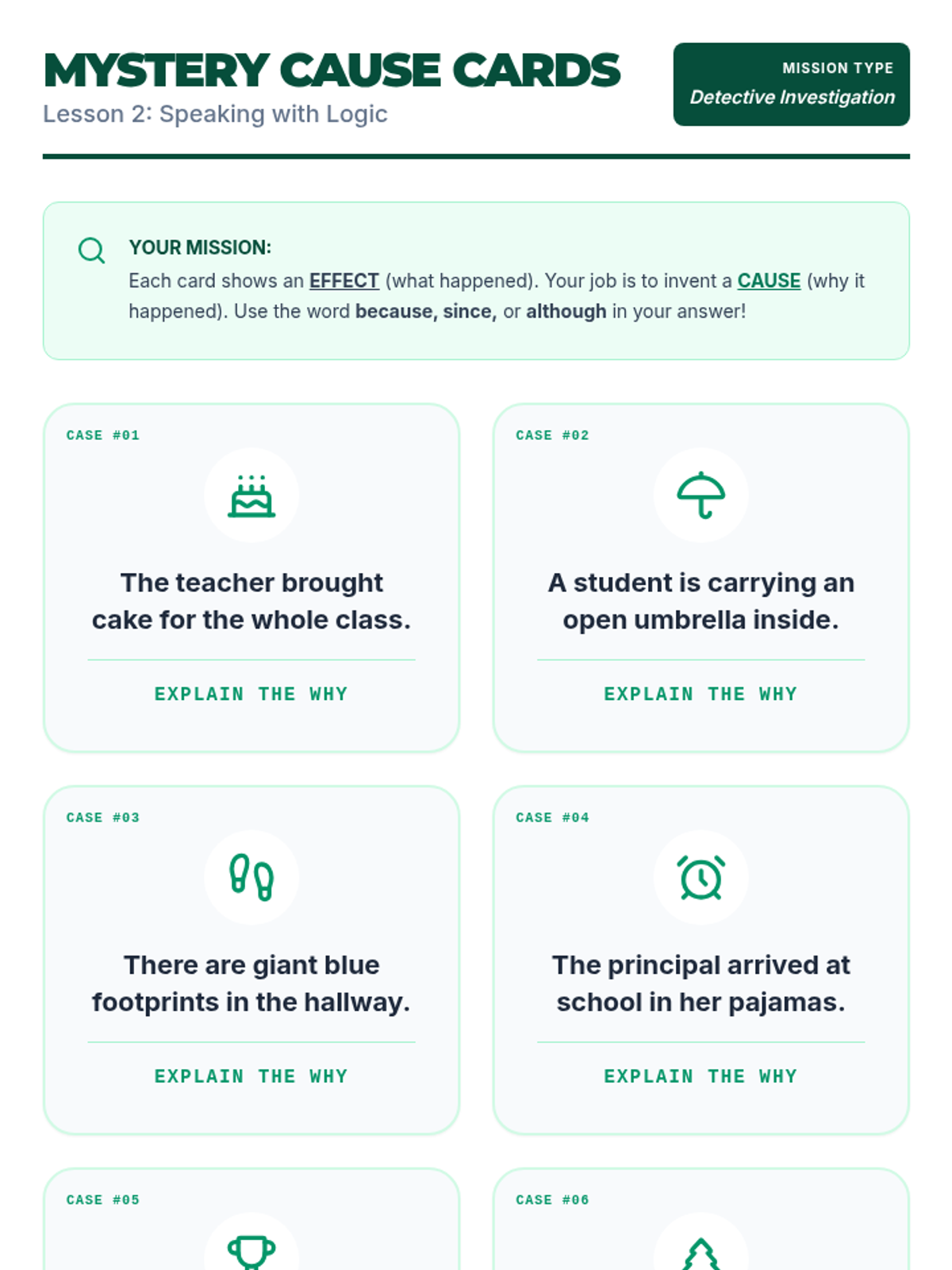
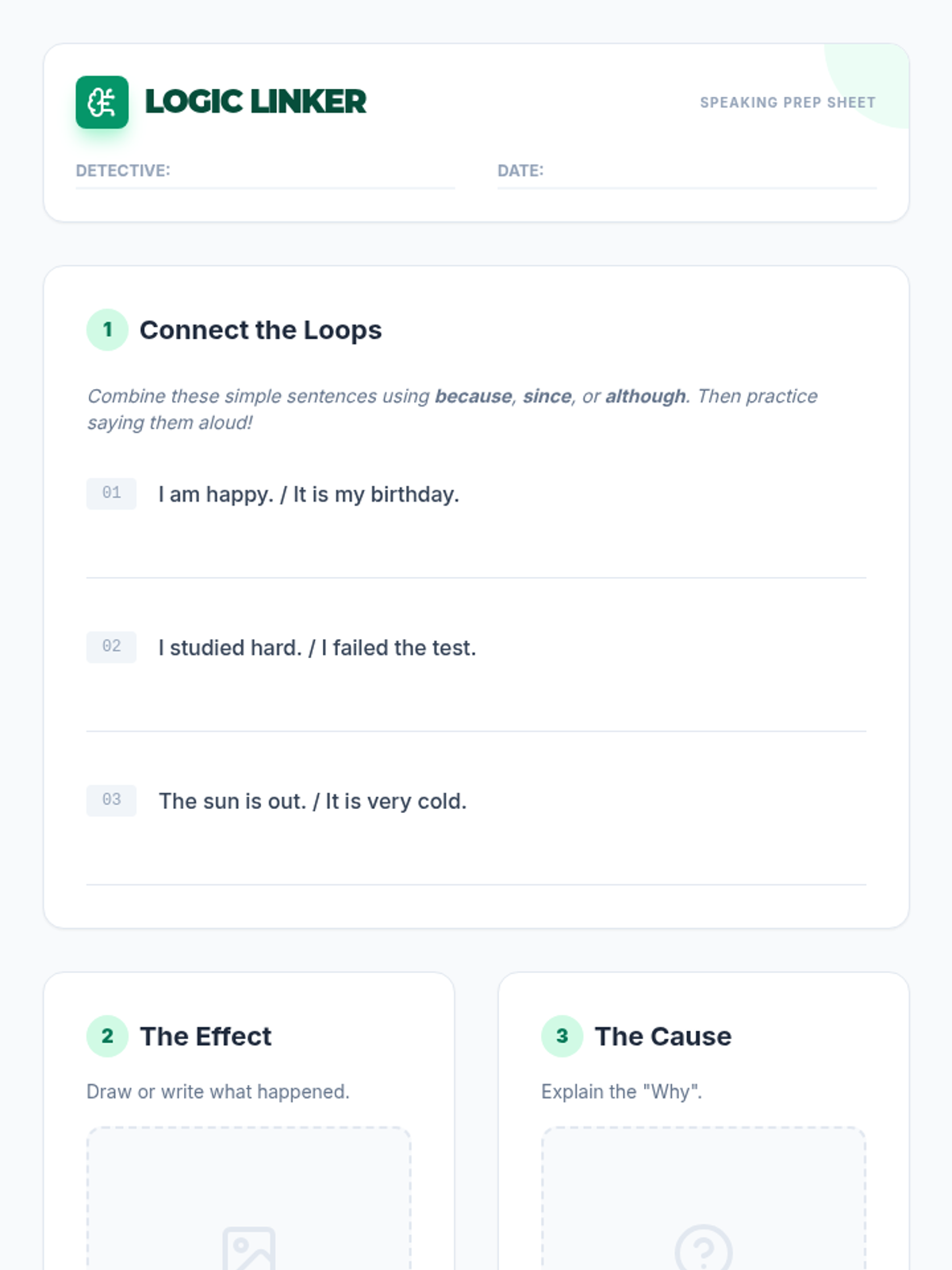
Exploring cause and effect using subordinating conjunctions like because, since, and although to explain the 'why' behind events.
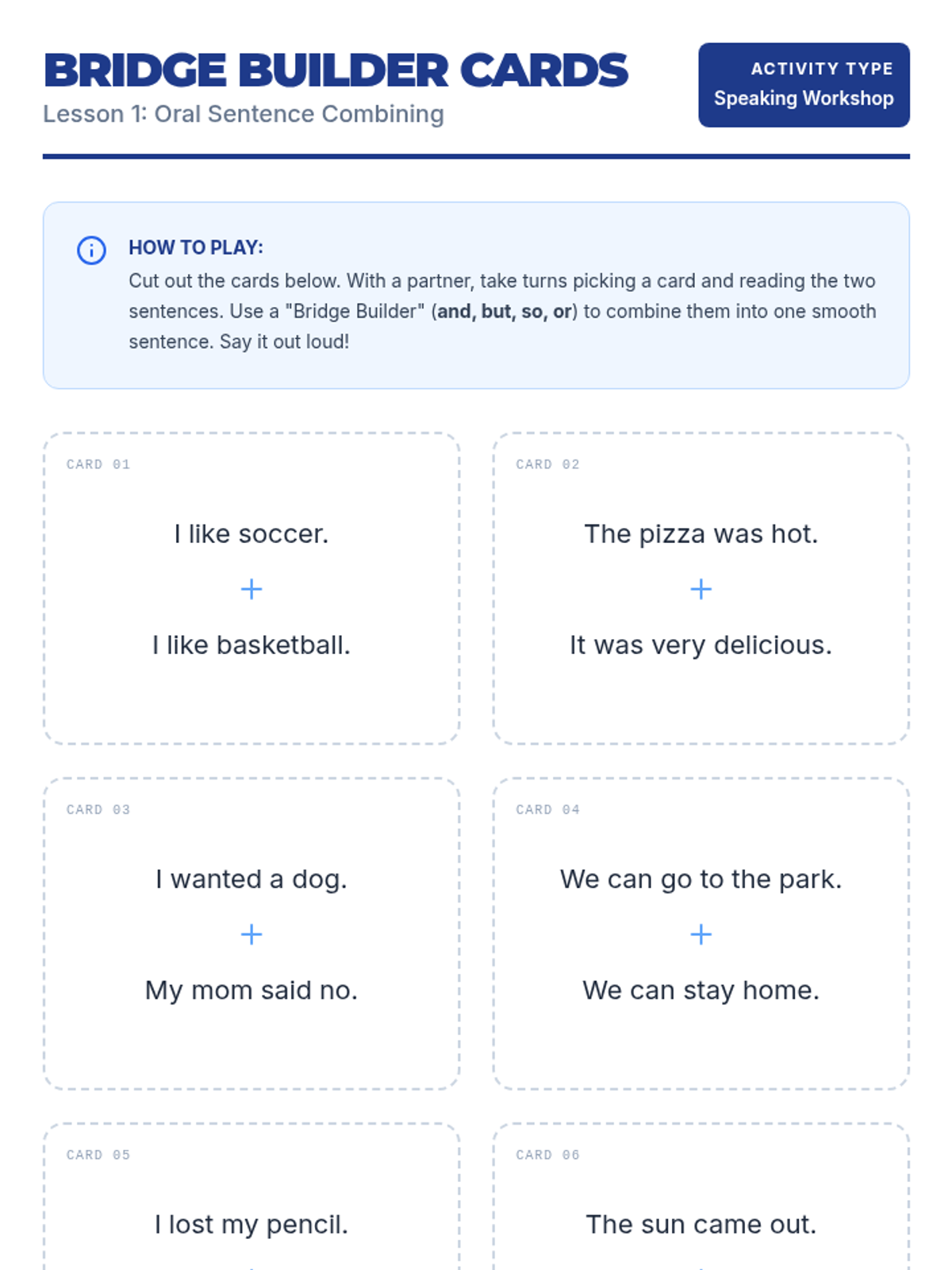
Students move from simple 'Robot Speak' to connected sentences using coordinating conjunctions like and, but, so, and or.
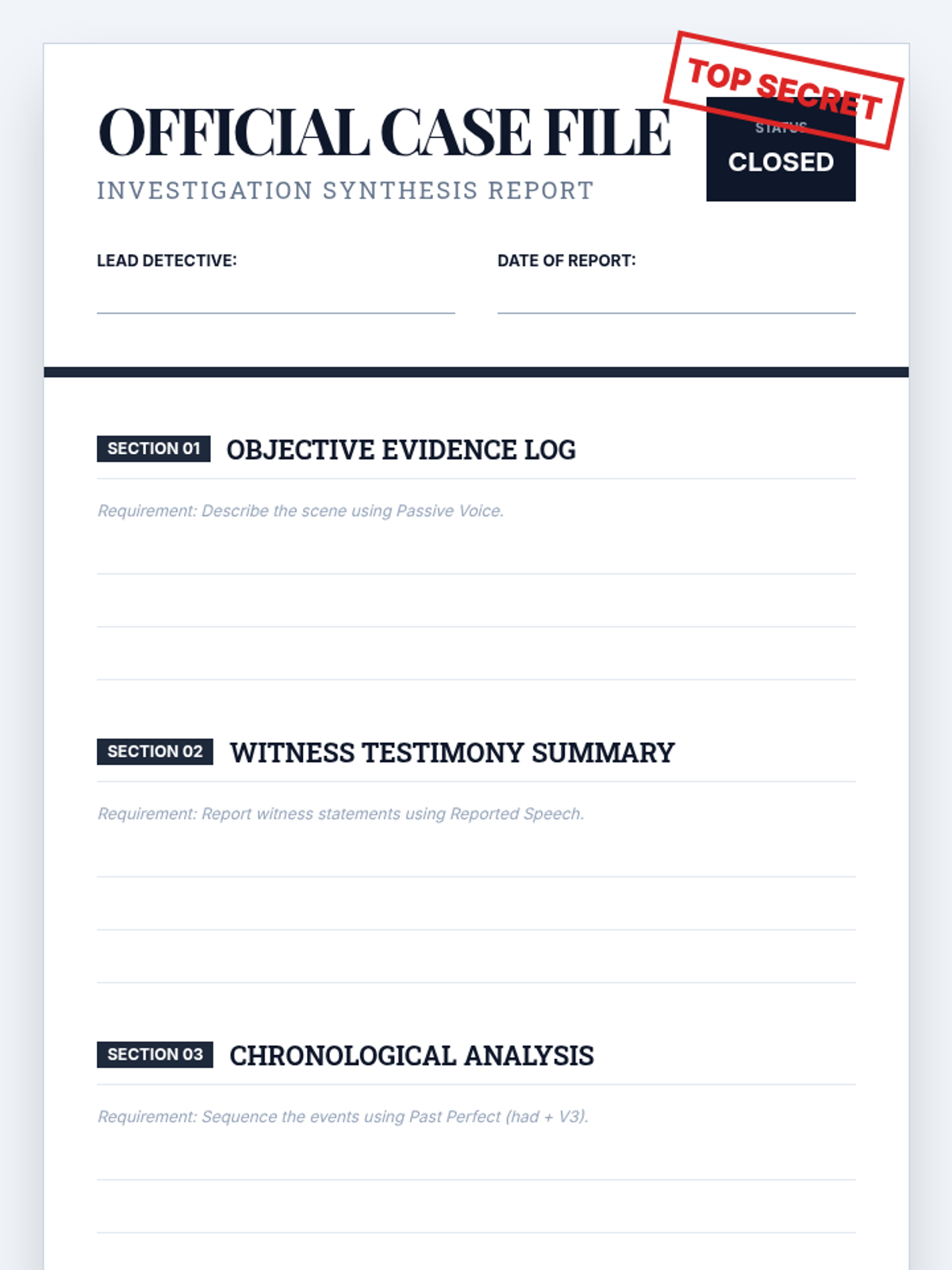
Students synthesize their skills to write a final case report. They combine passive descriptions, deductive theories, and reported testimony into a professional narrative.
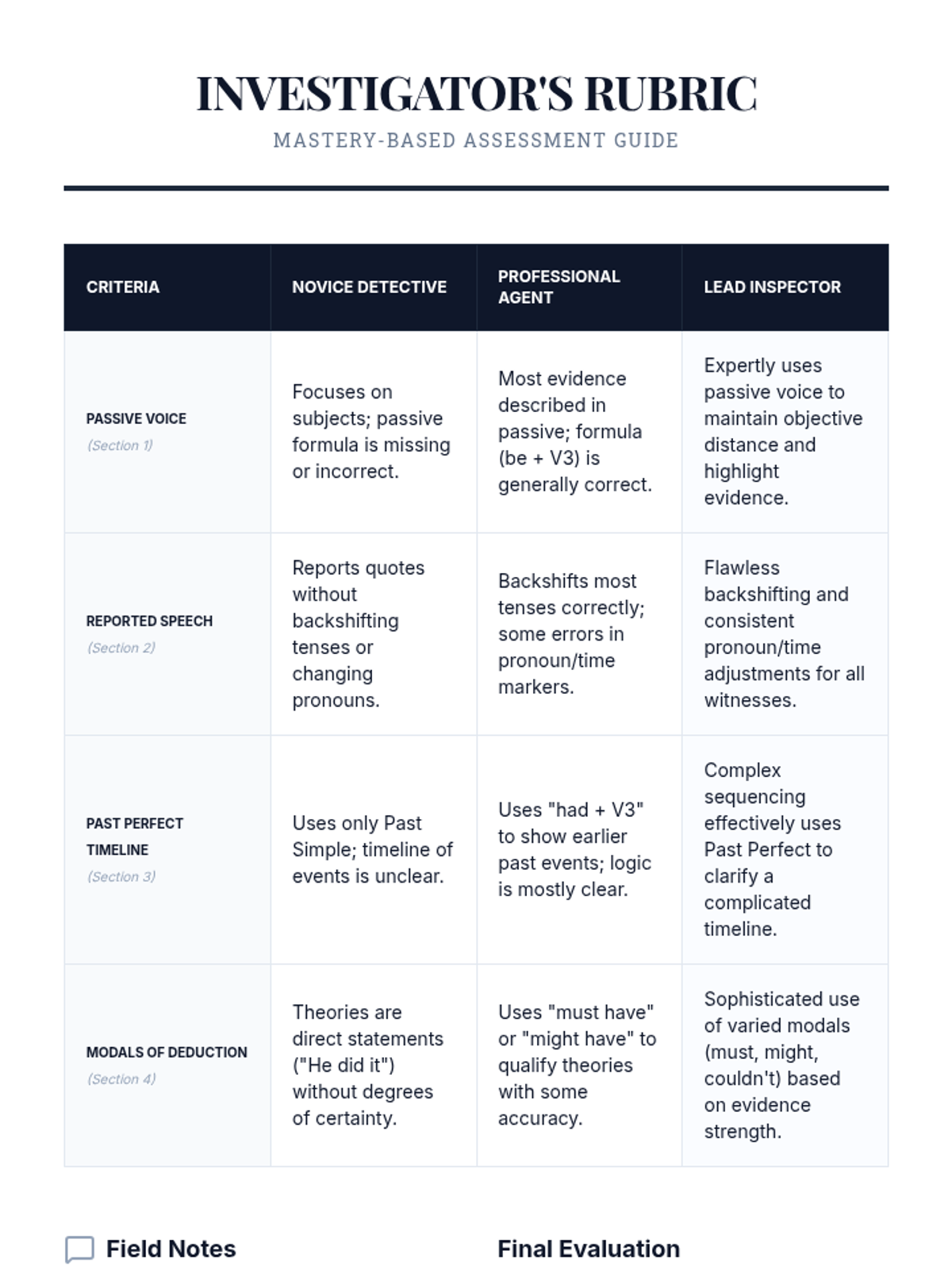
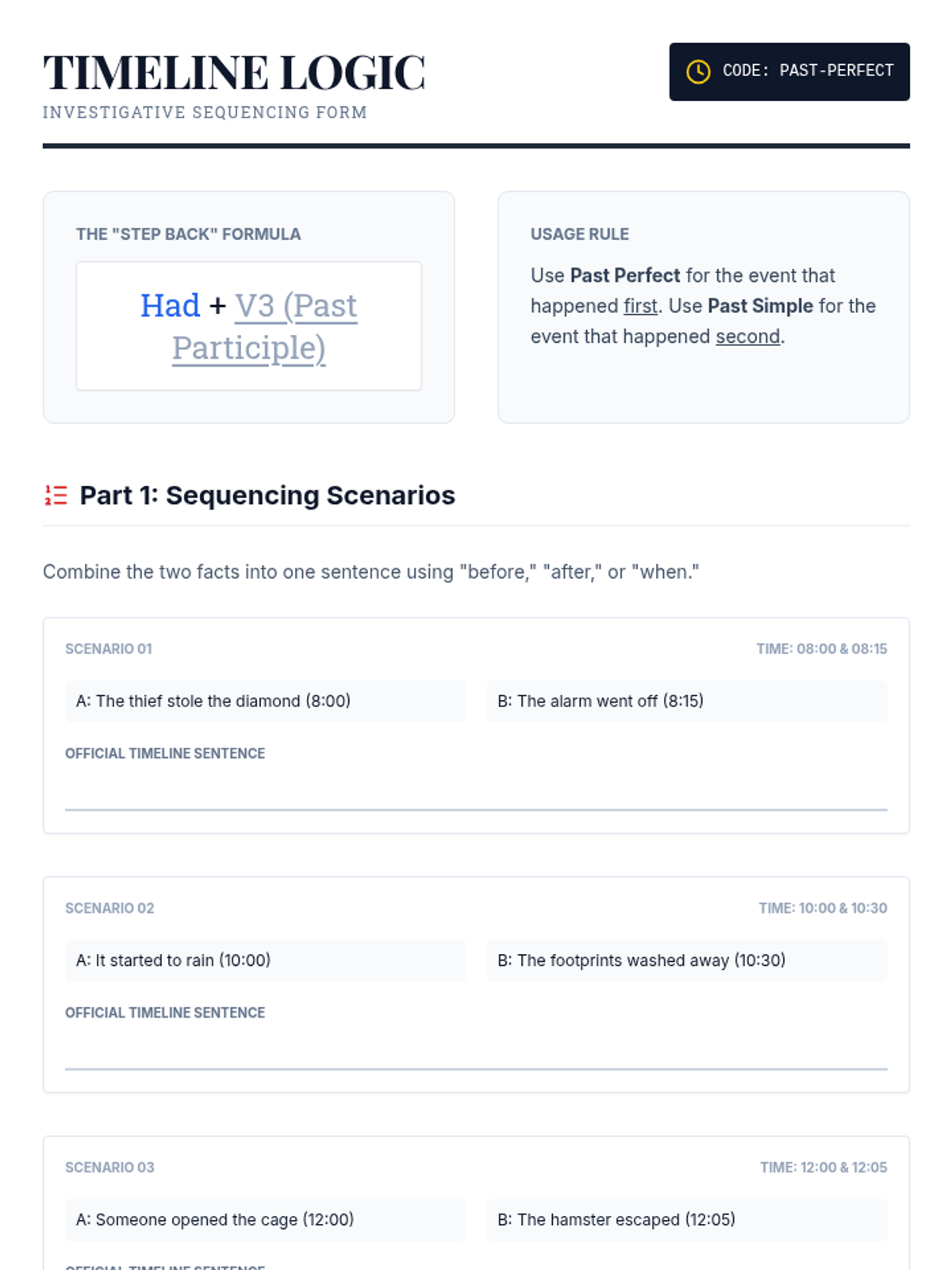
Students use the past perfect tense to sequence events in the mystery. They create timelines to distinguish between actions that happened before other past events.
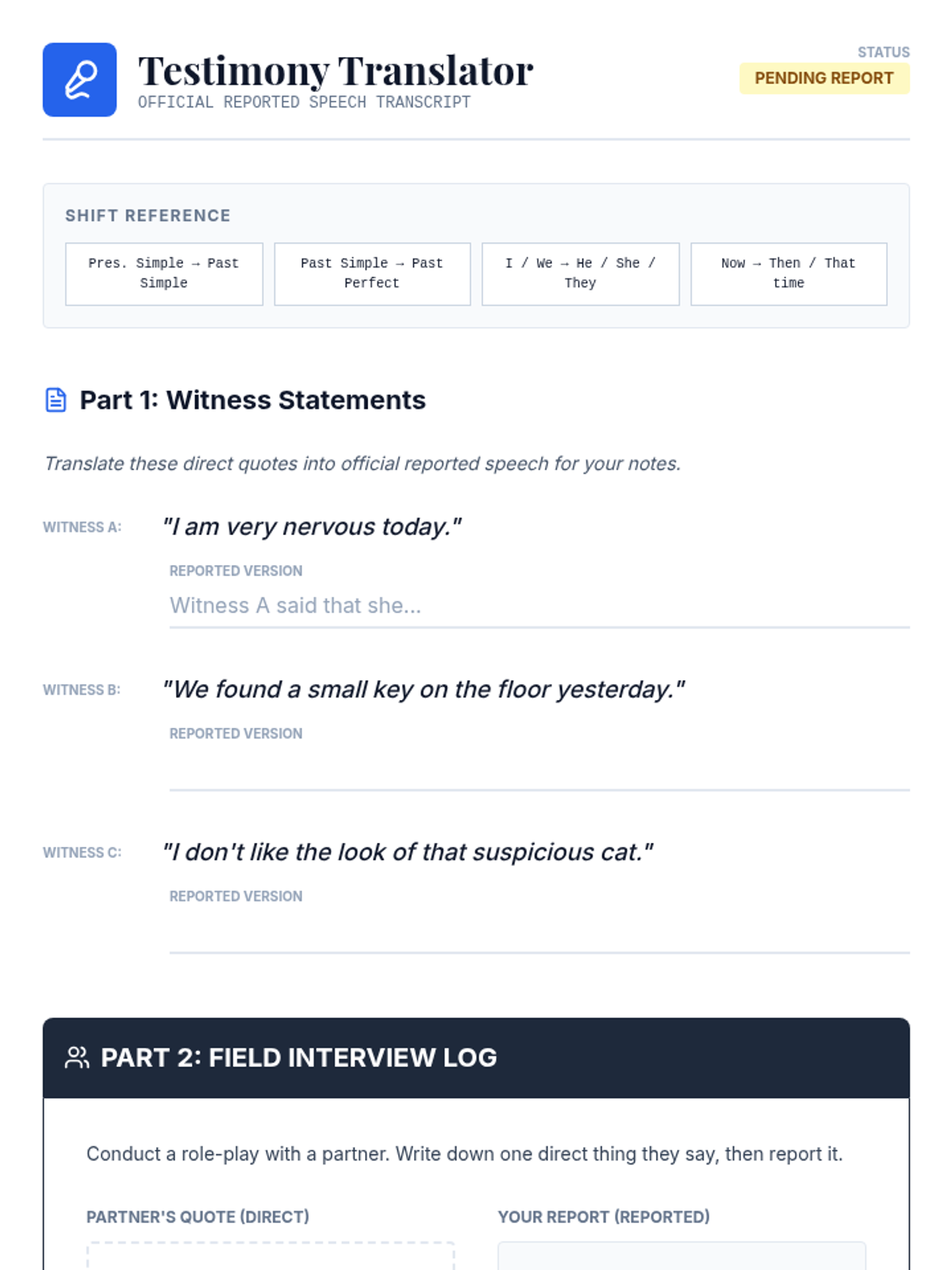
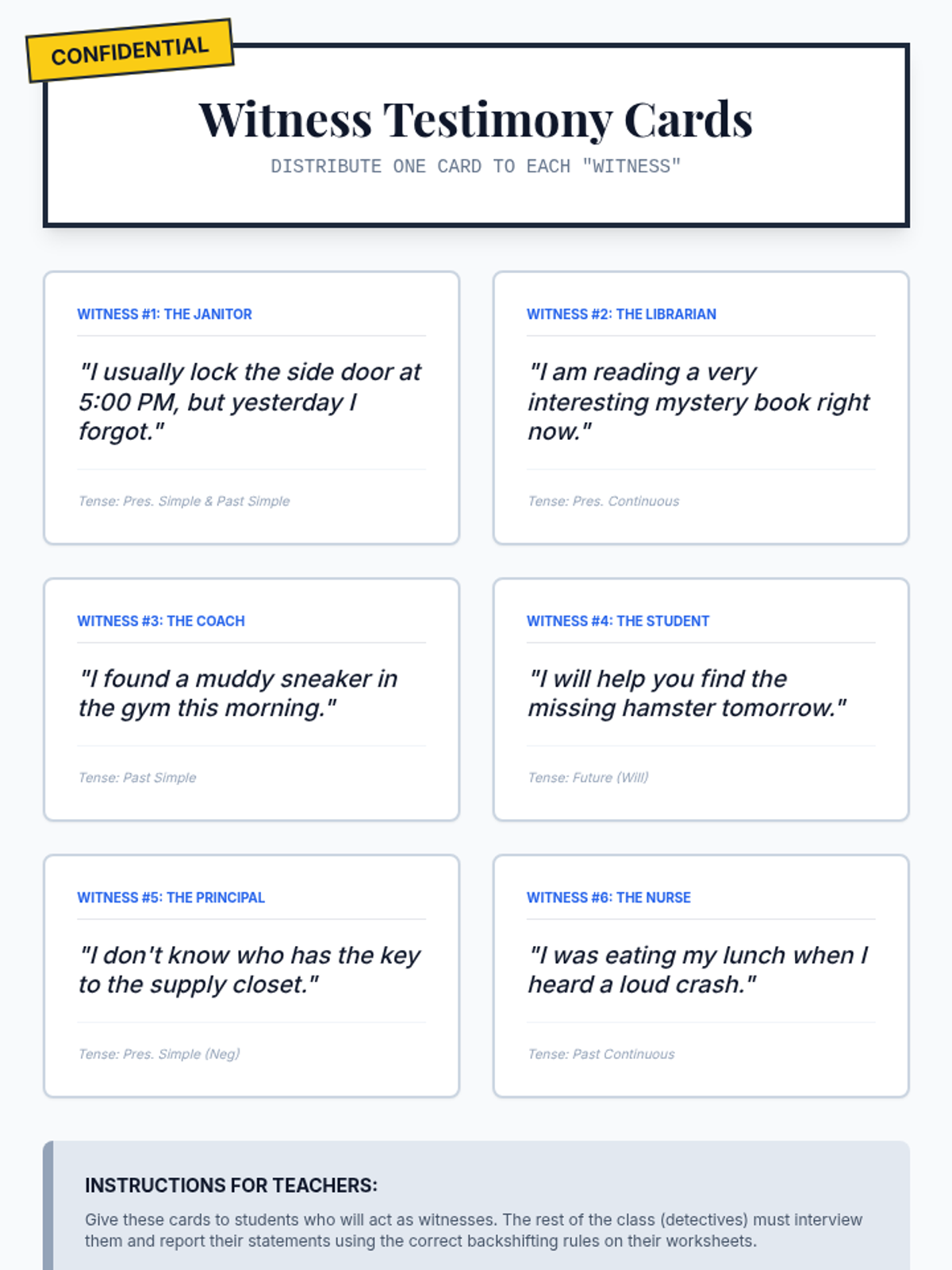
Students interview witnesses and convert direct quotes into reported speech. They practice the rules of 'backshifting' tenses and changing pronouns for accurate reporting.
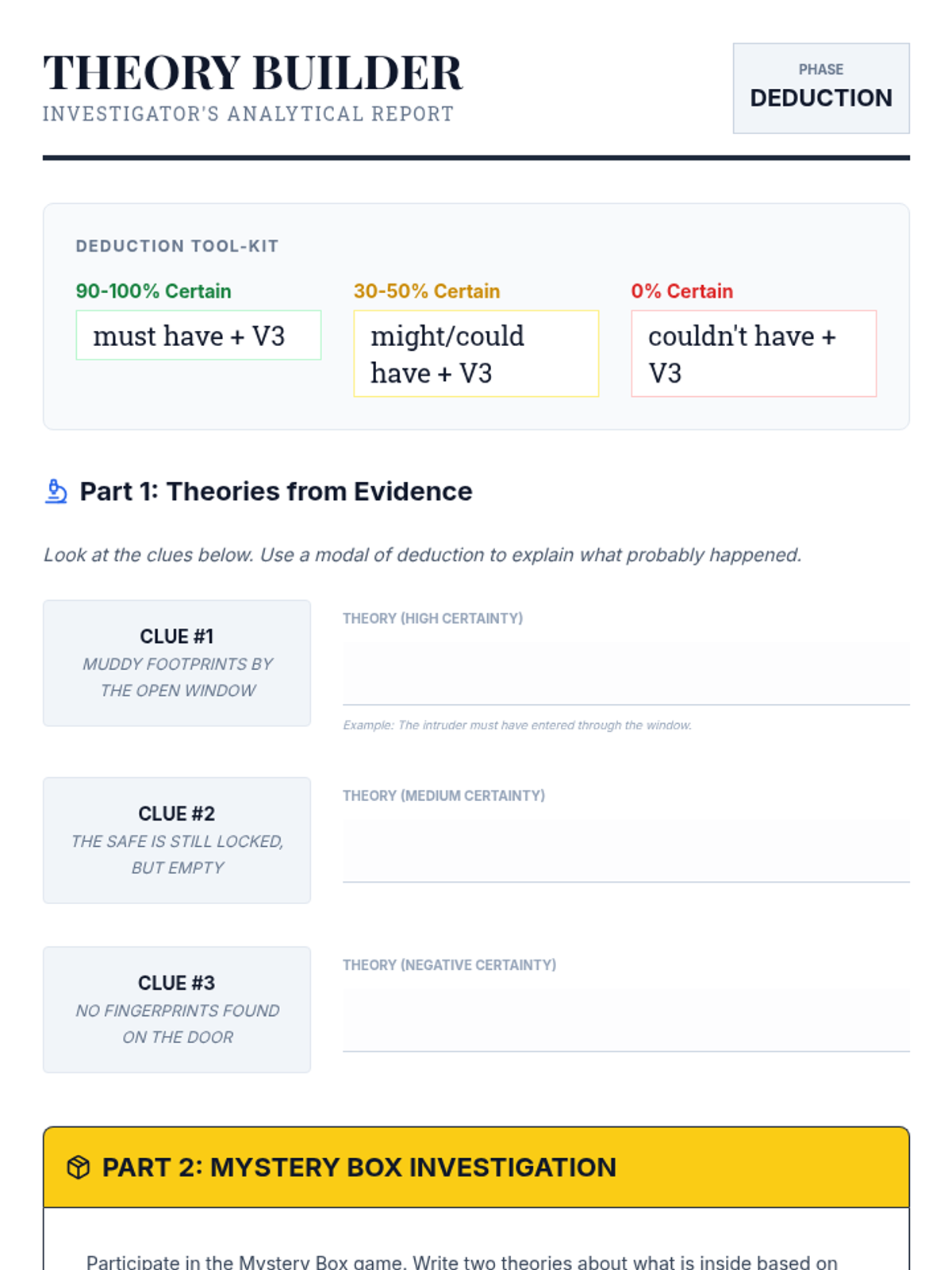
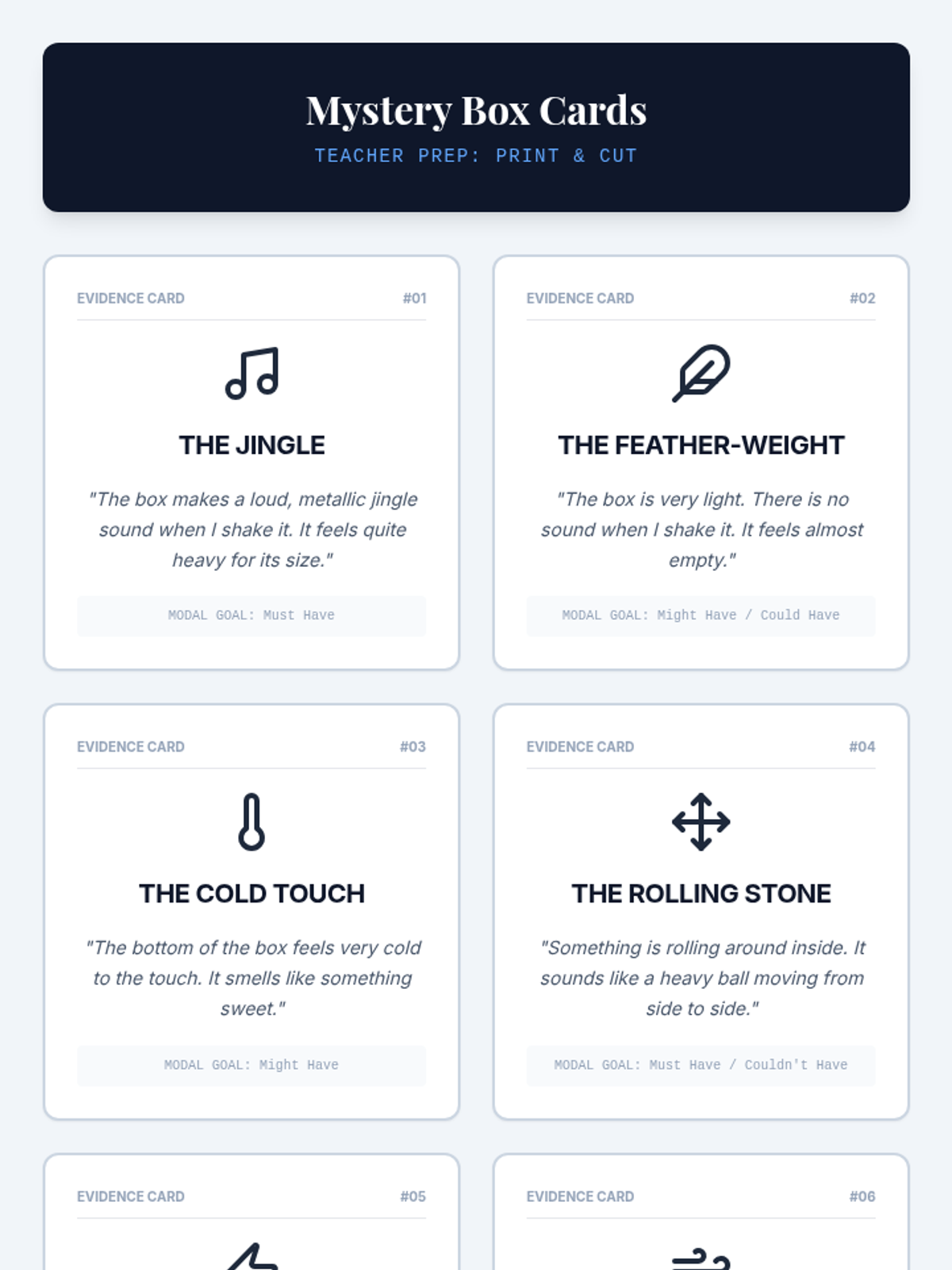
Students use modals of deduction (must have, might have, couldn't have) to formulate theories about the mystery. They learn to express different degrees of certainty based on the evidence.
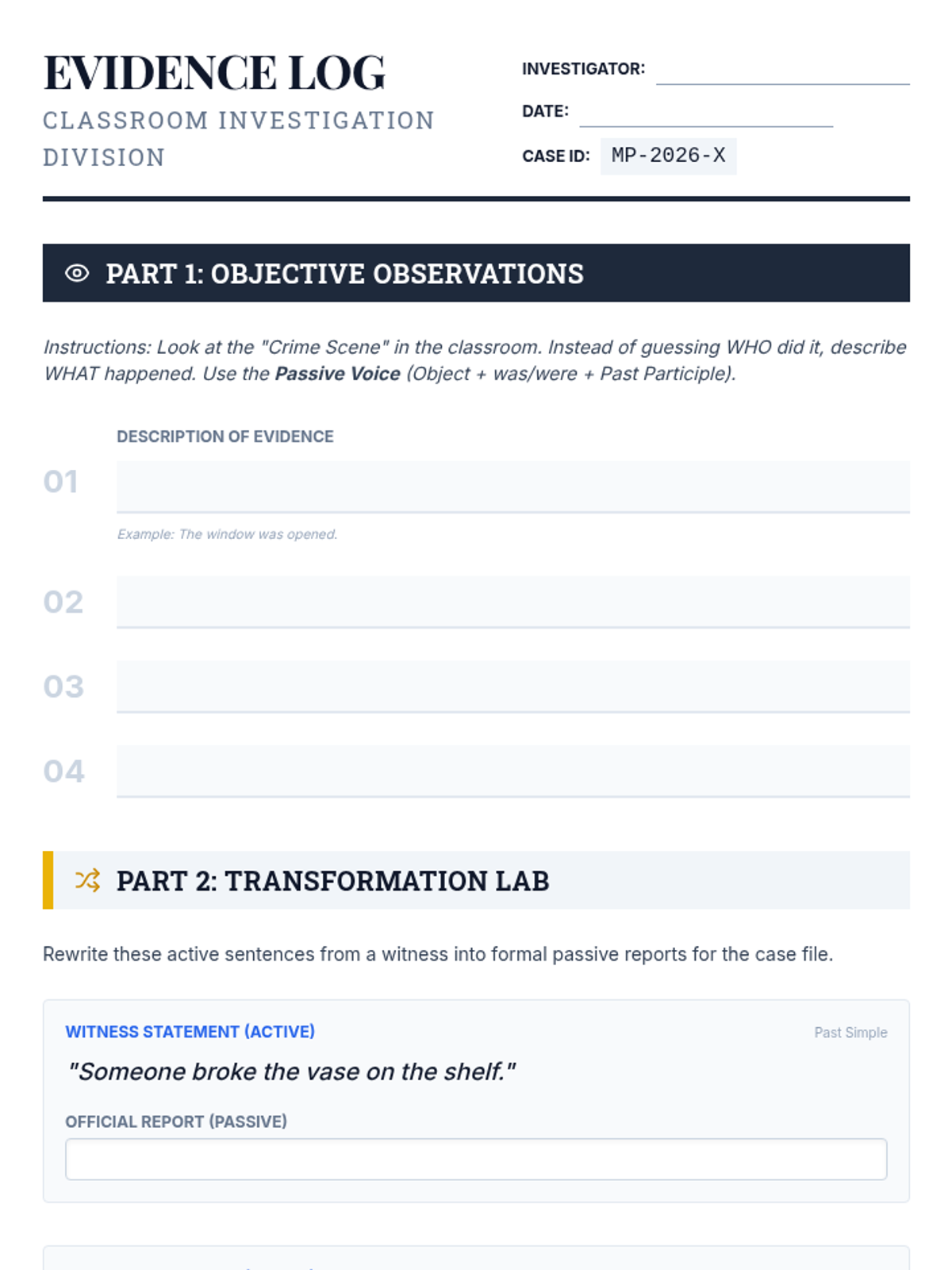
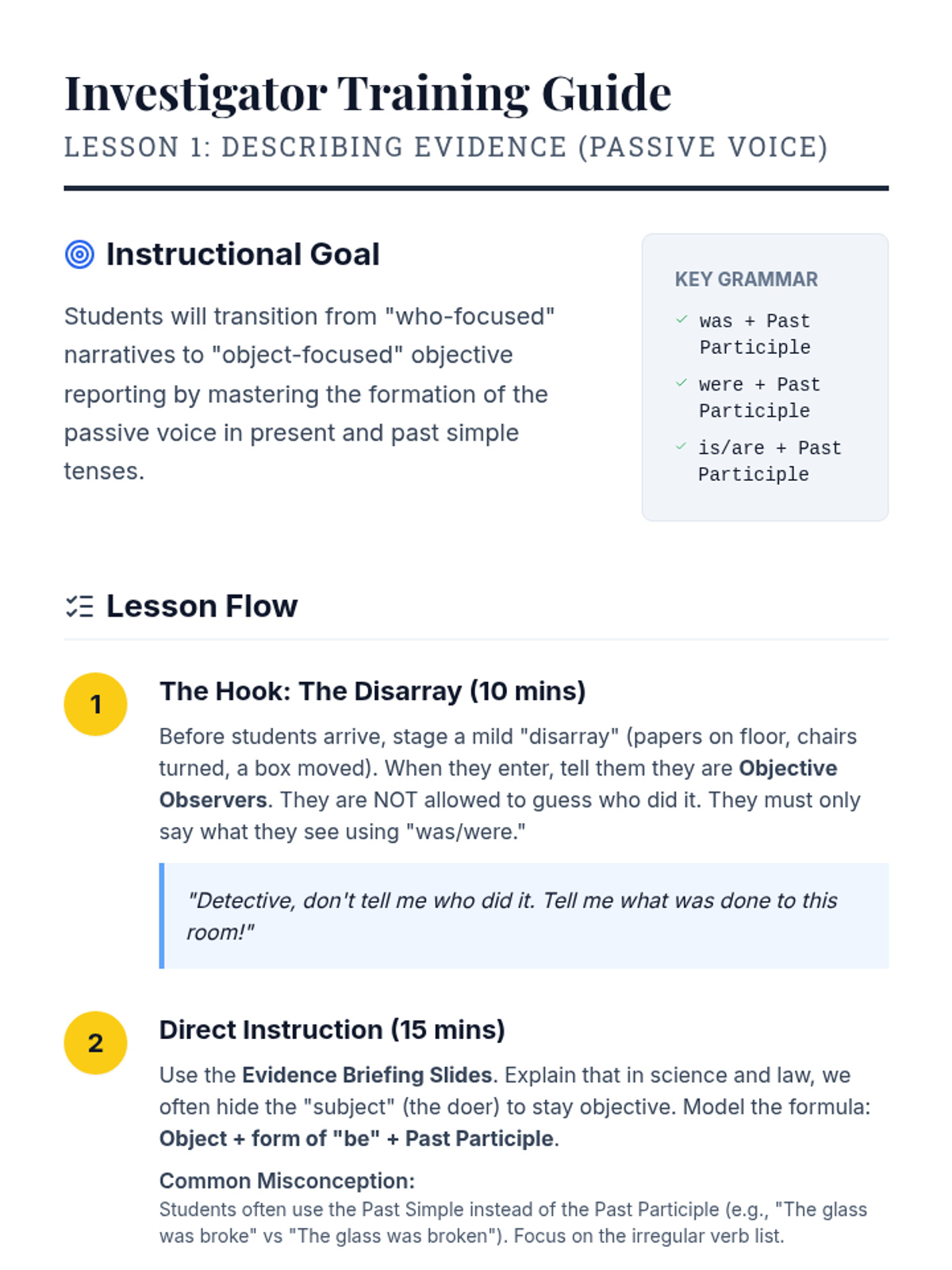
Students learn to describe evidence objectively using the passive voice, focusing on what was done rather than who did it. They analyze a staged 'crime scene' to practice transforming active sentences.