Specialized vocabulary across disciplines, research methodologies, and effective note-taking systems. Equips learners with information literacy skills and strategies for navigating standardized exams.
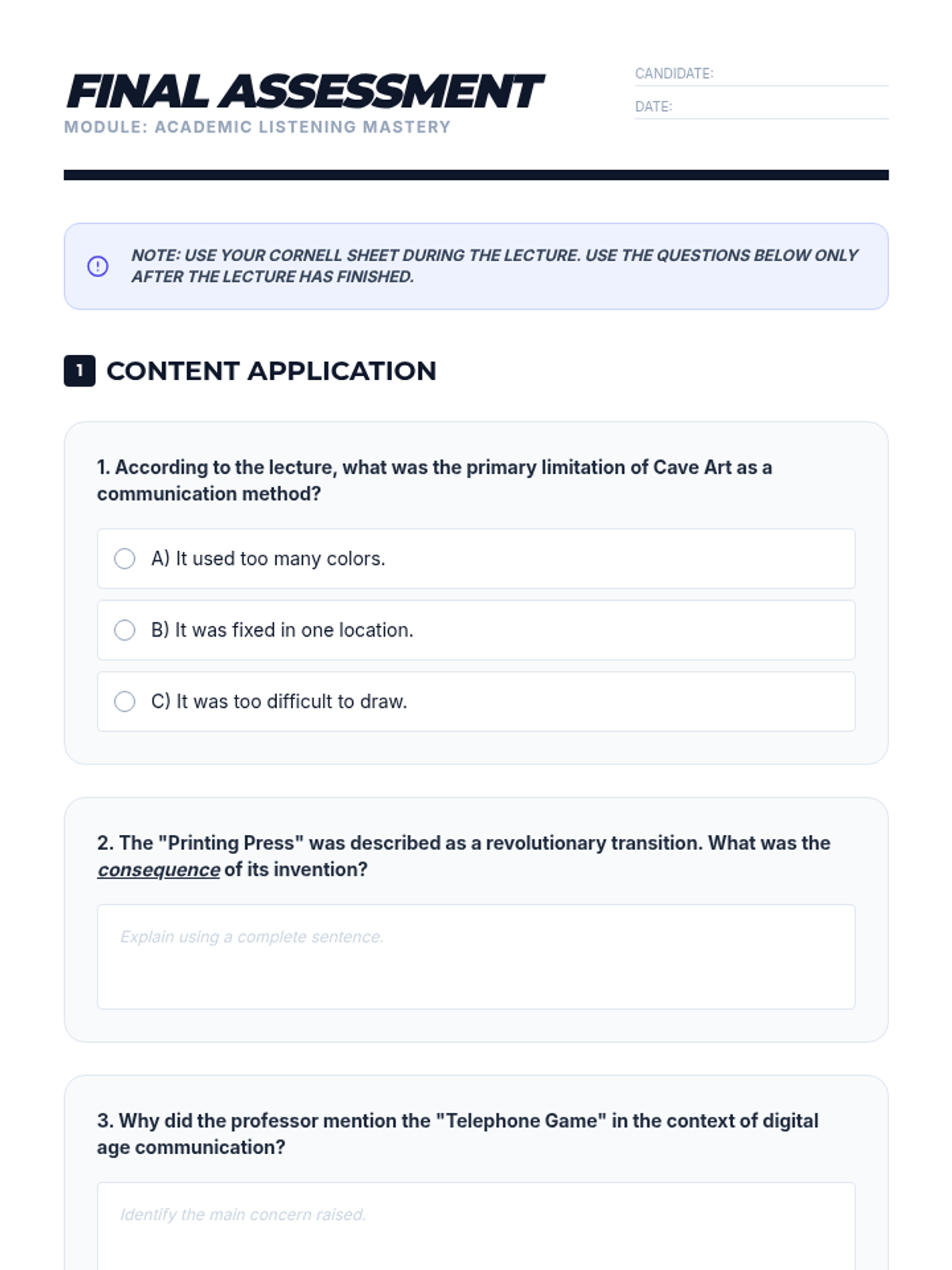
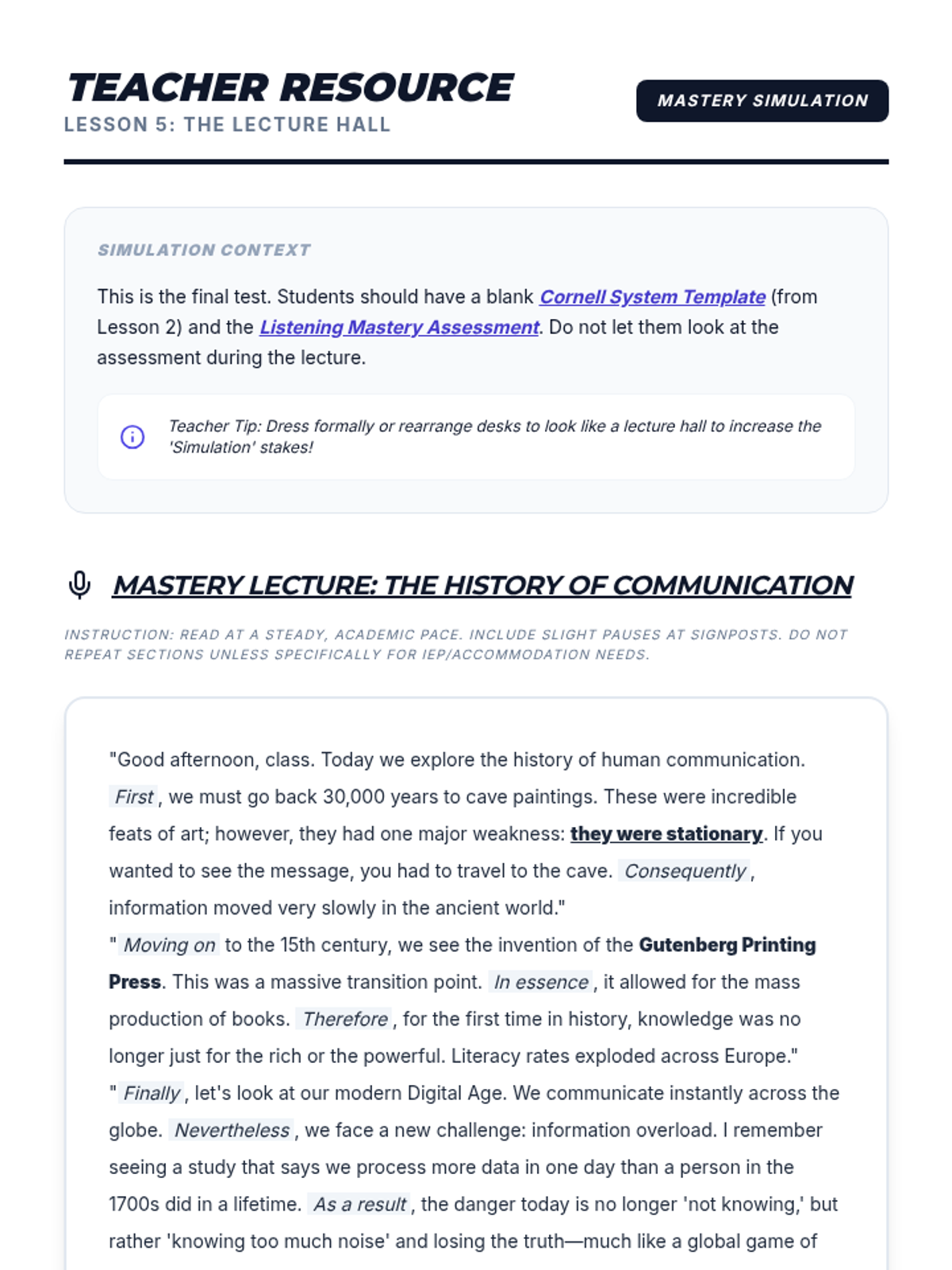
Students participate in a university-style mini-lecture simulation. They apply all learned strategies—signpost identification, Cornell note-taking, and synthesis—to capture information and complete a formal assessment.
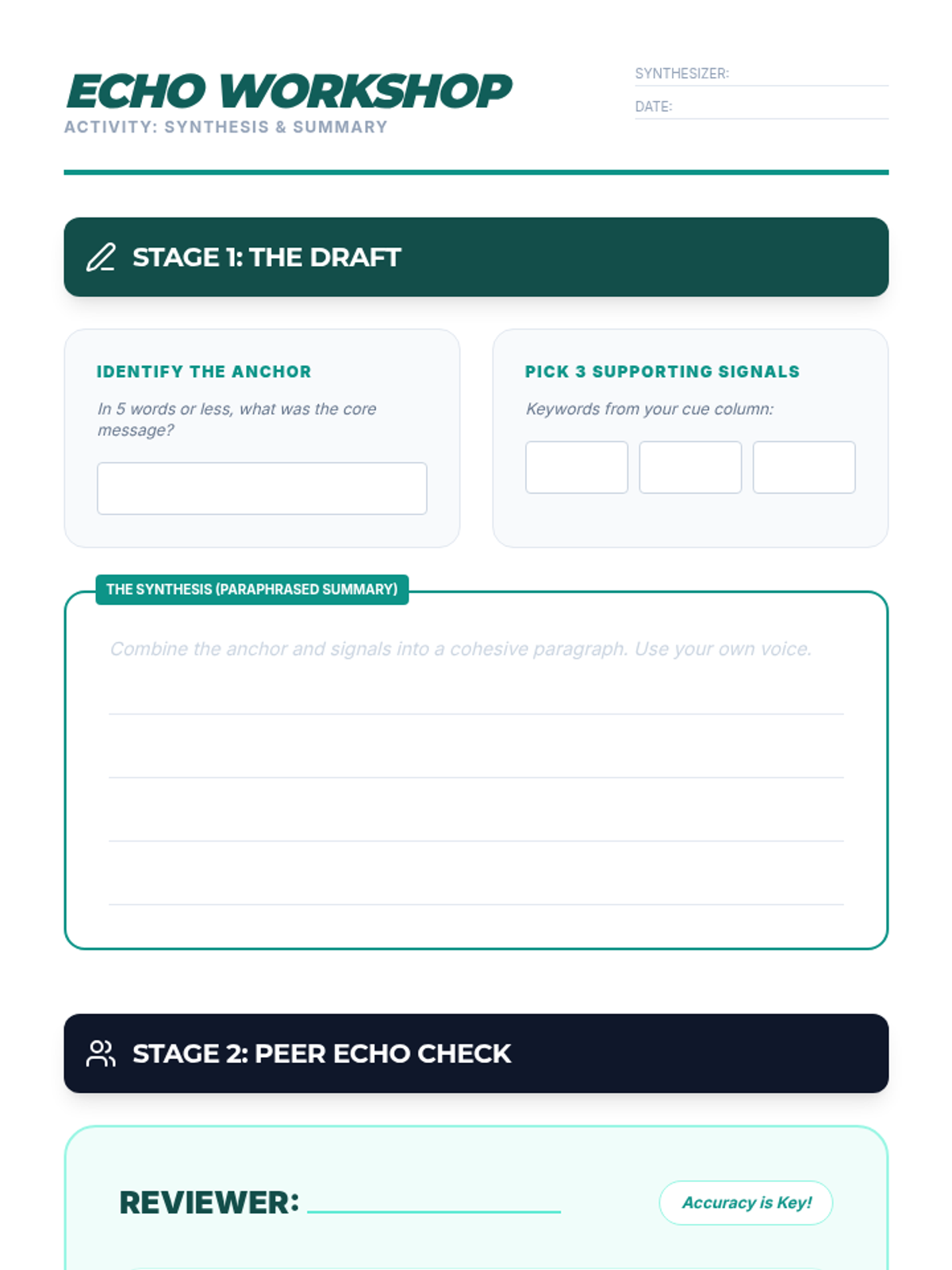
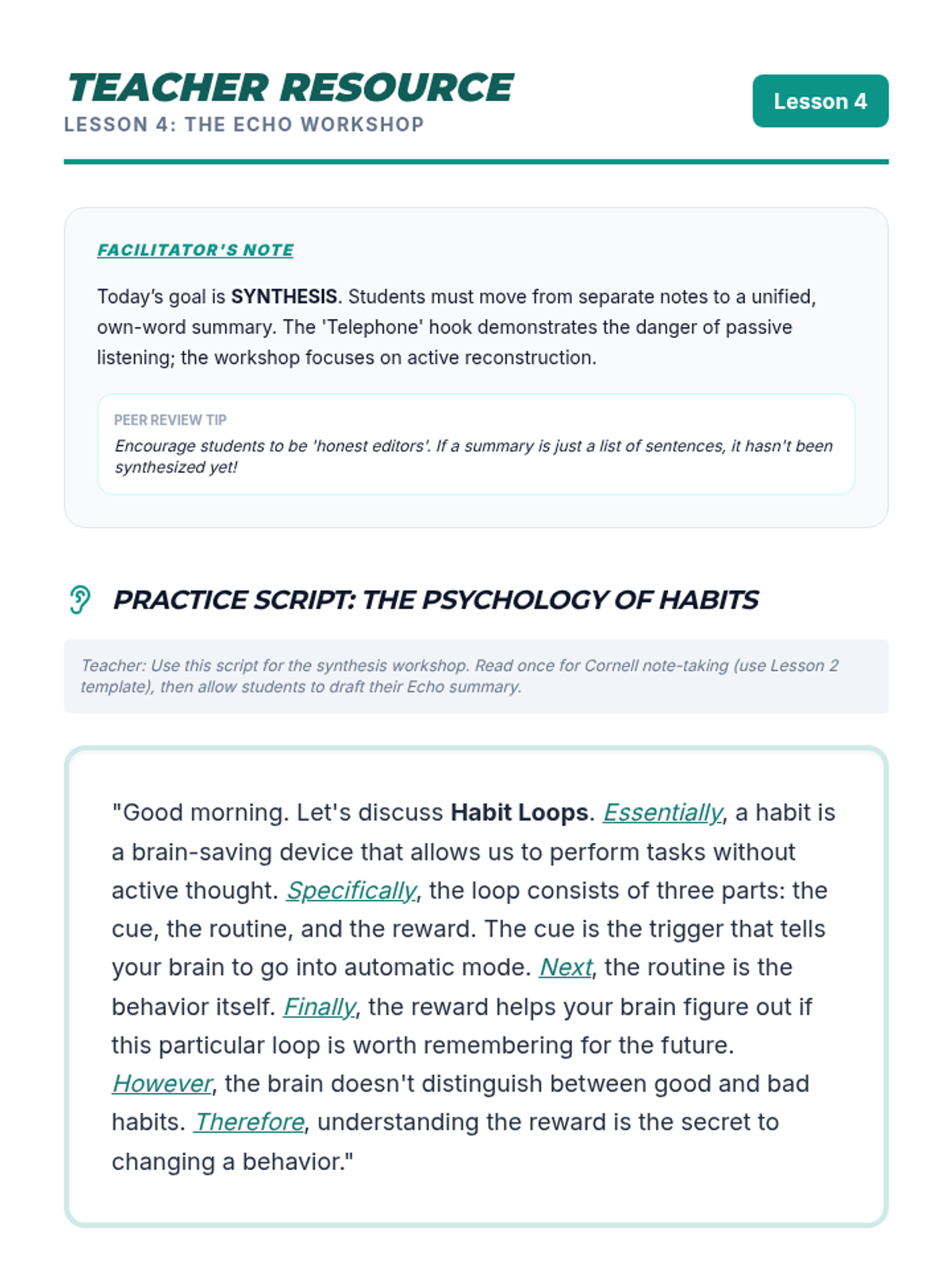
Learners practice reconstructing audio messages in their own words, focusing on paraphrasing rather than direct quotation. Peer evaluation ensures accuracy and comprehension through a synthesis-based workshop.
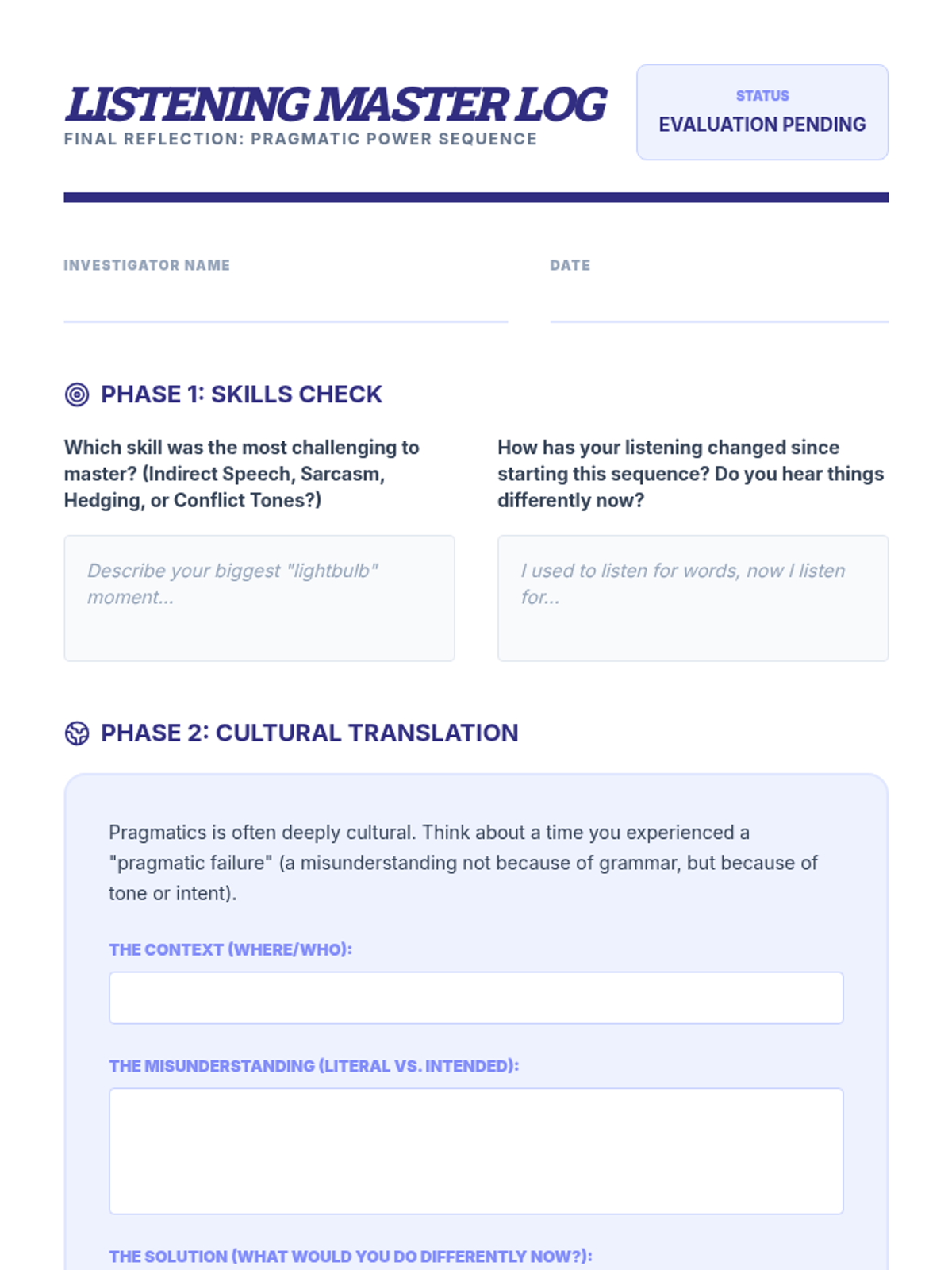
An exploration of how cultural backgrounds influence communication styles, focusing on silence, interruption, and pragmatic markers.
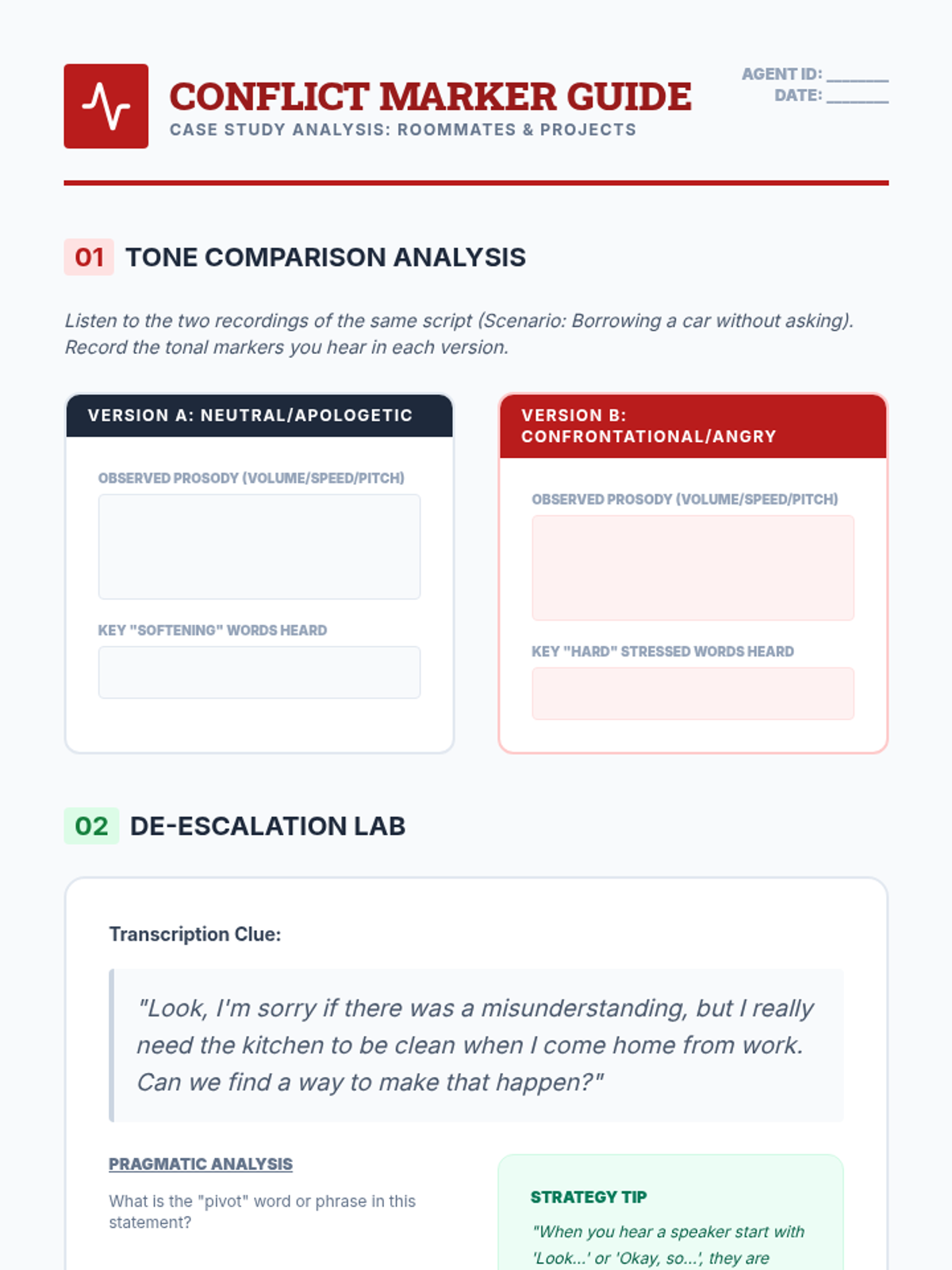
Students analyze tone in high-stakes social interactions, identifying markers of escalation, de-escalation, and negotiation in conflict scenarios.
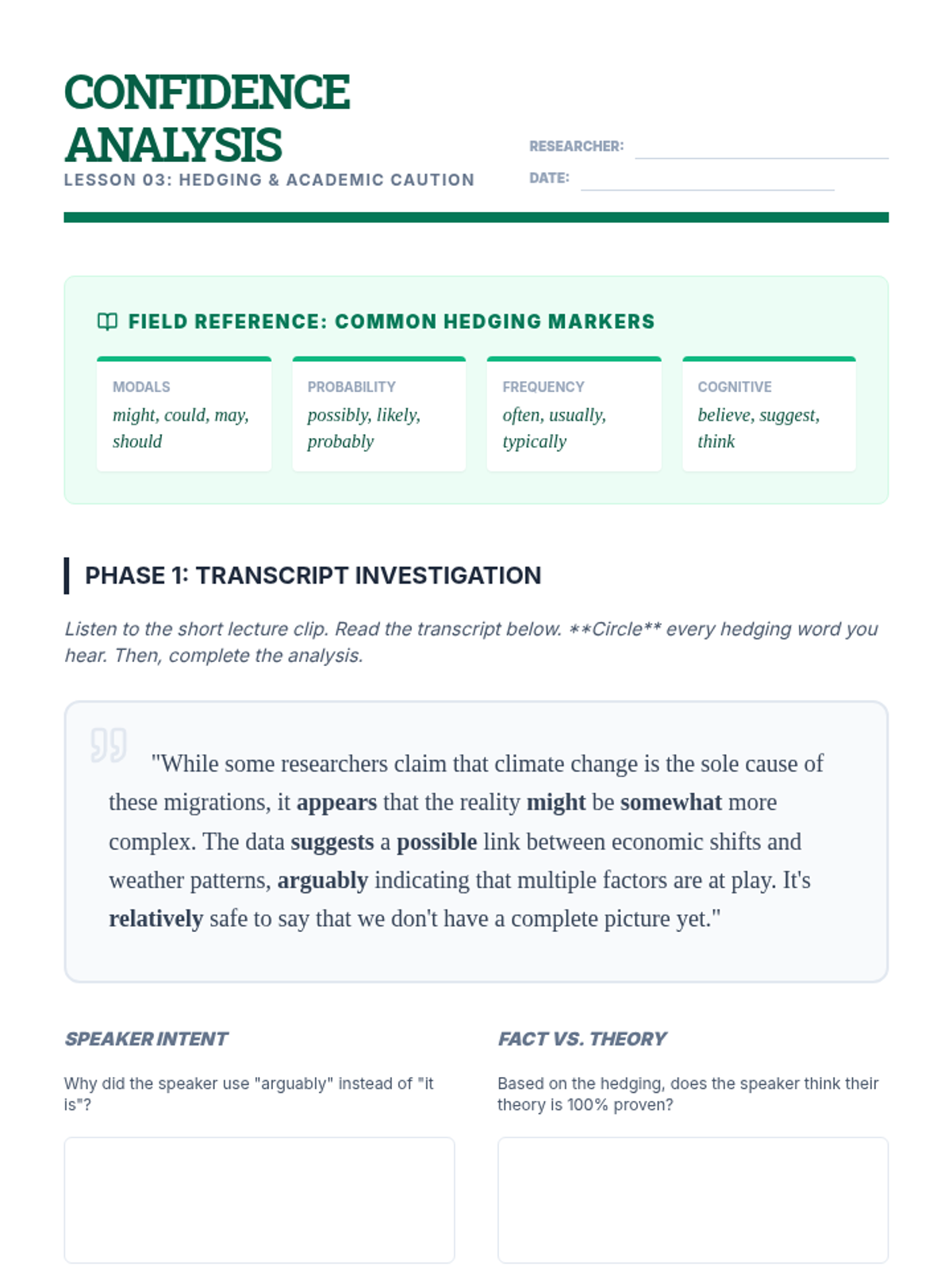
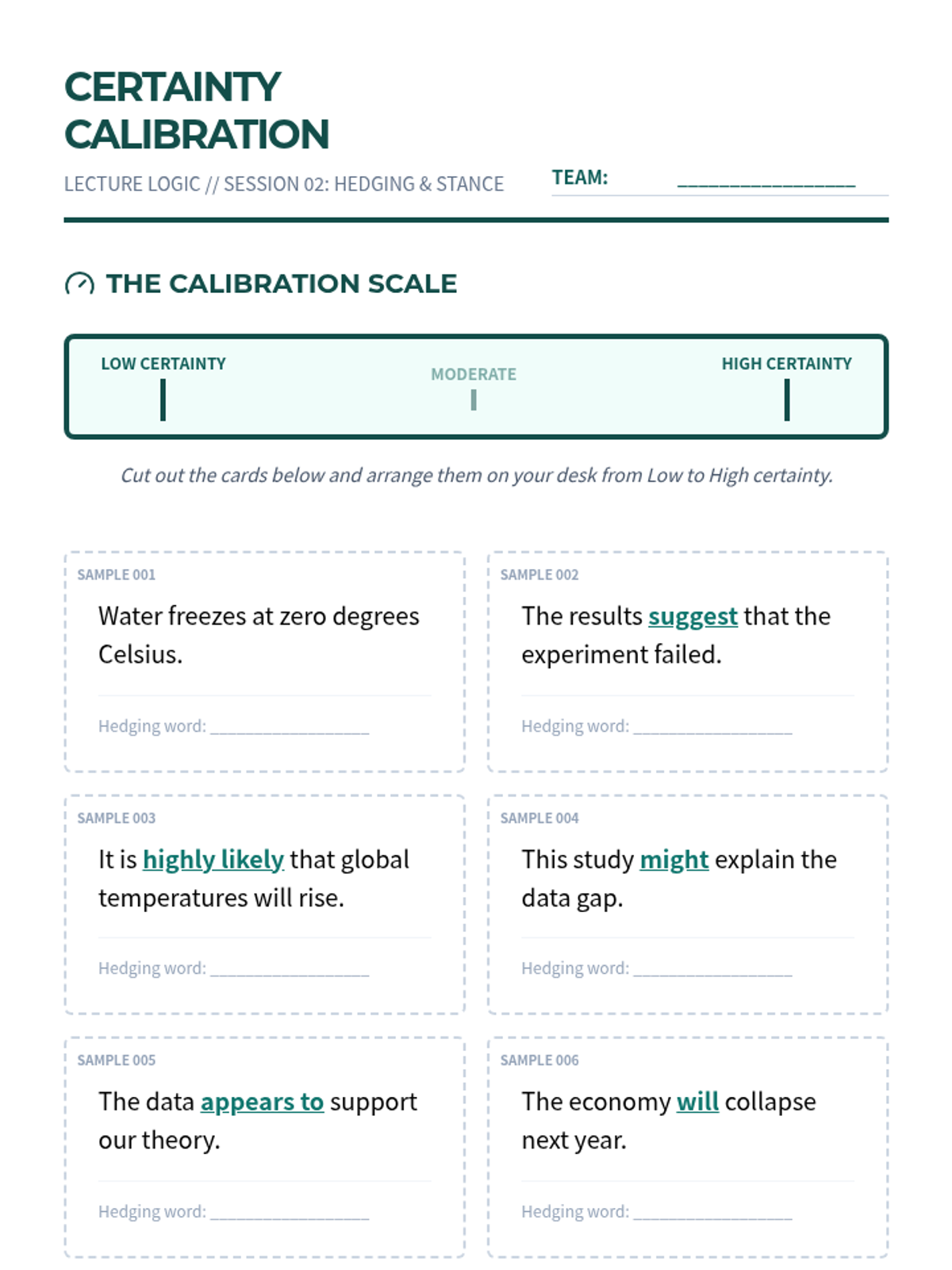
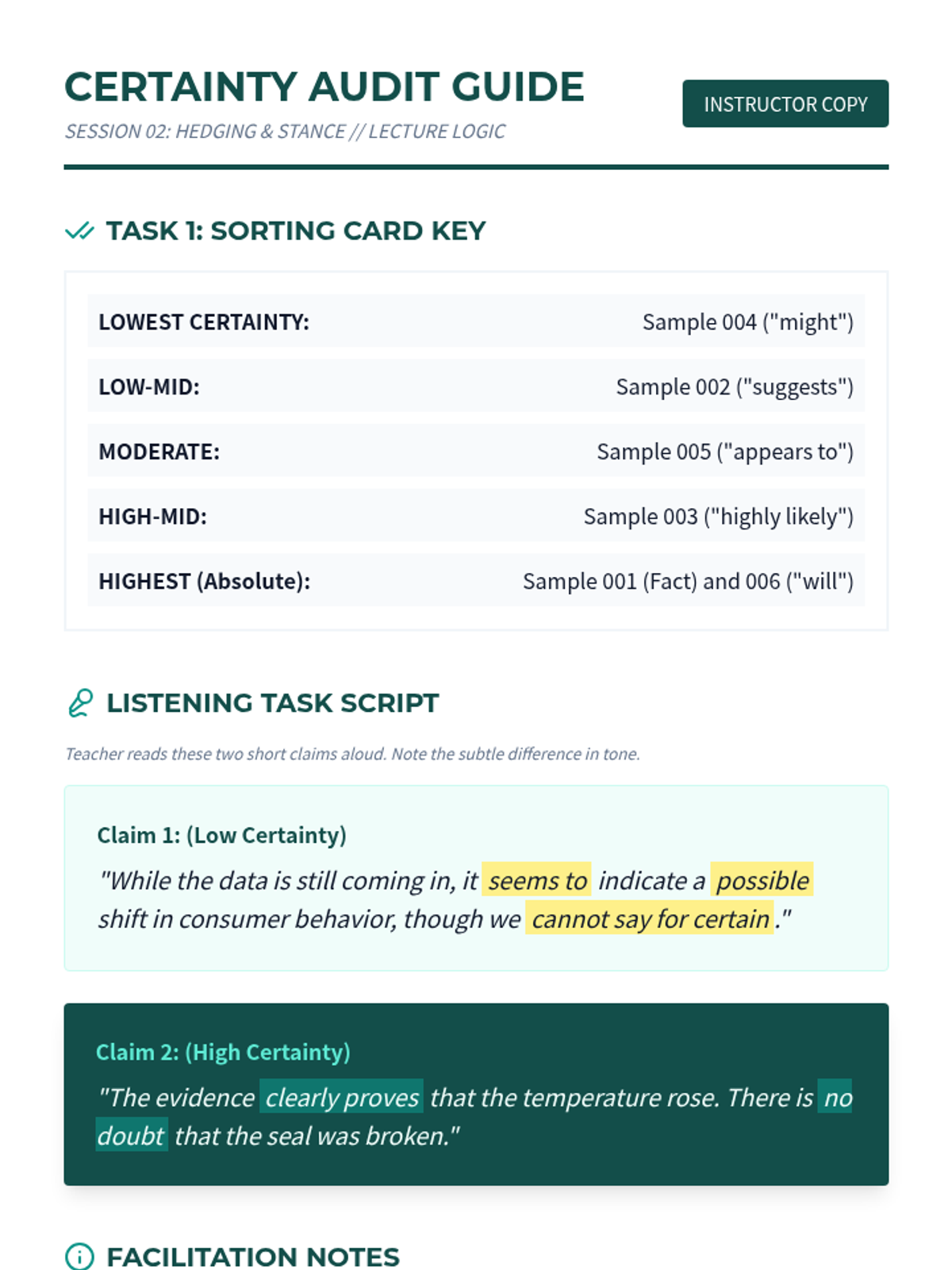
Students learn to identify hedging language (e.g., 'somewhat', 'it appears') to gauge a speaker's confidence and distinguish between facts and cautious opinions.
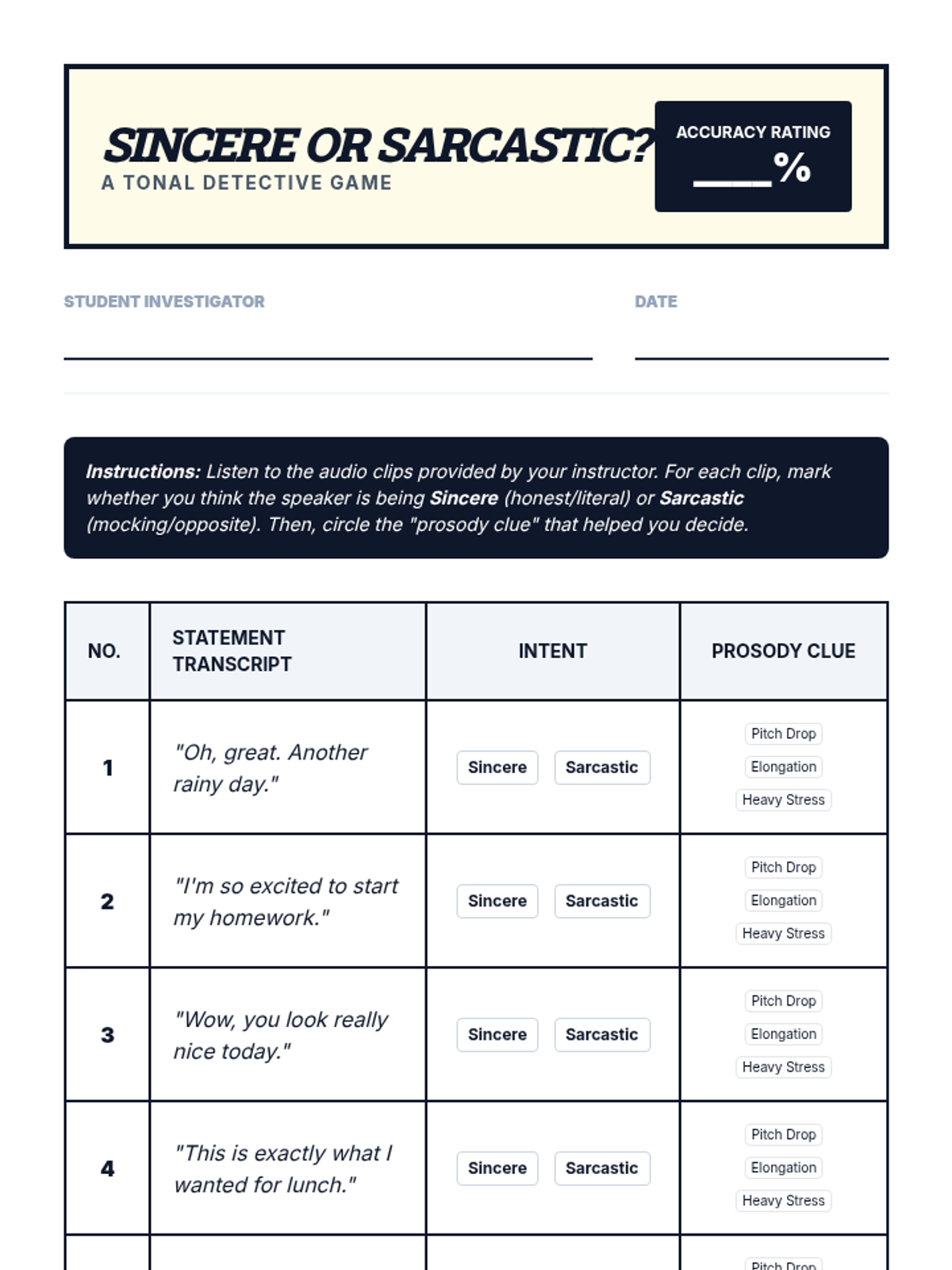
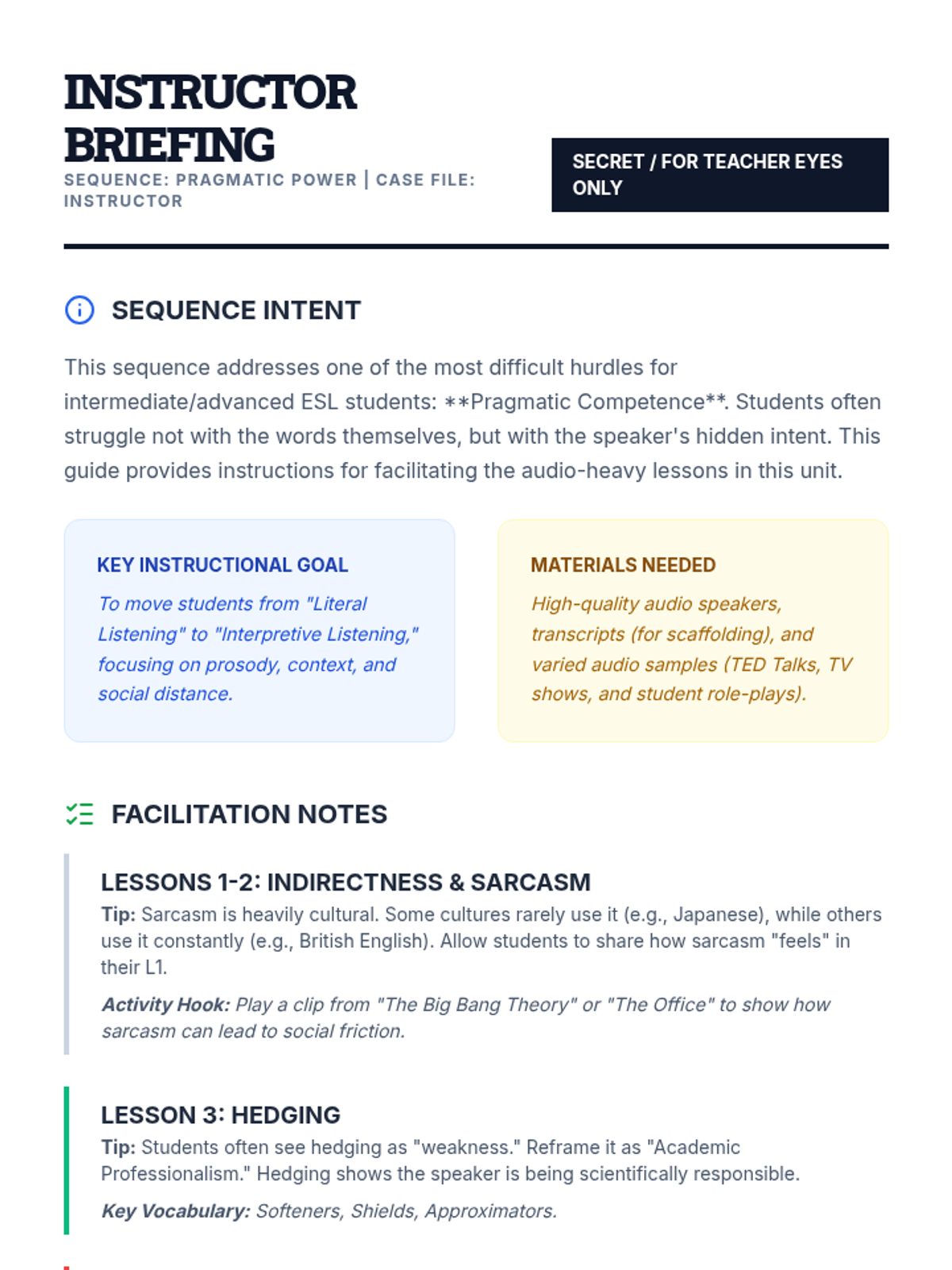
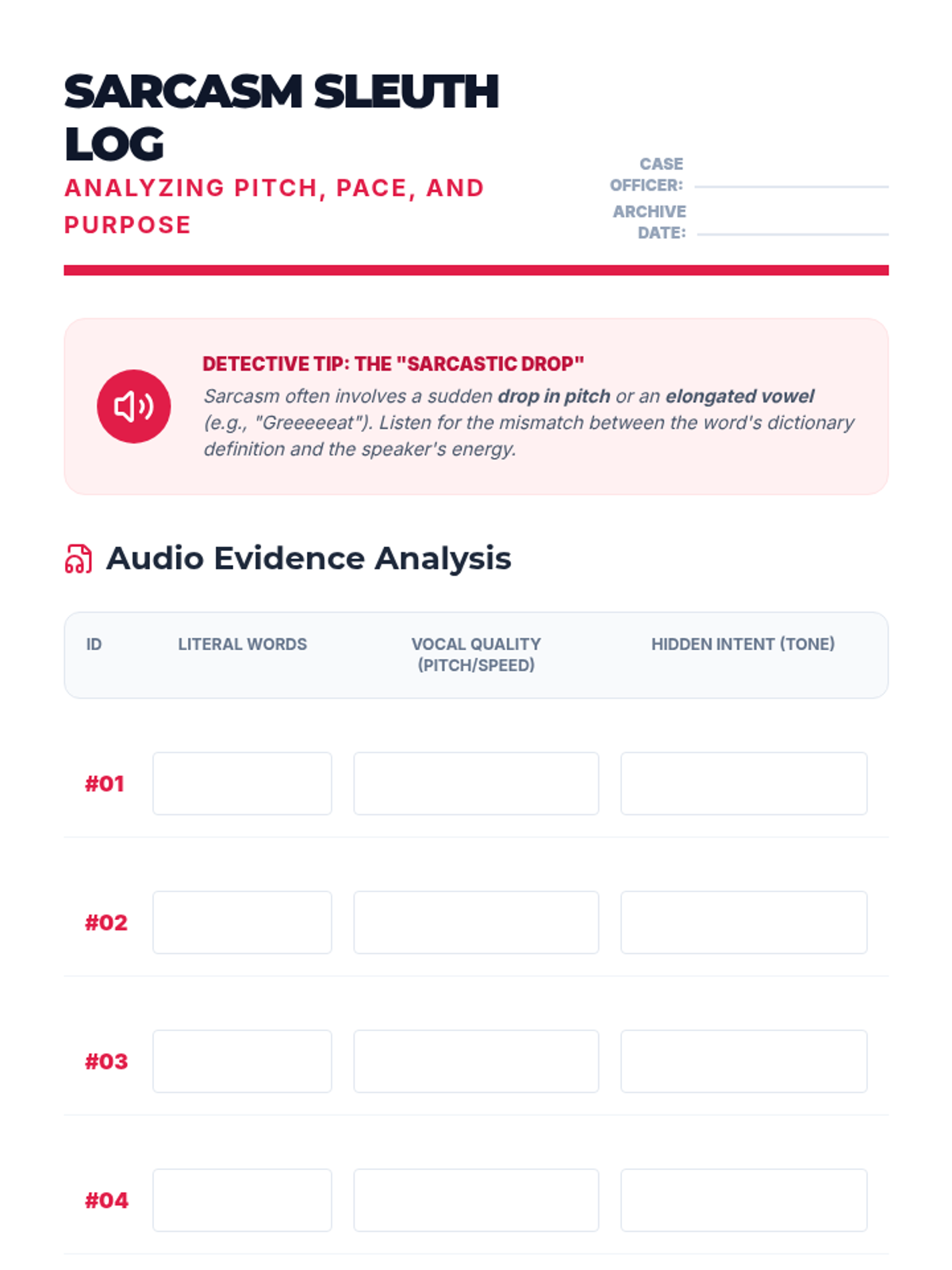
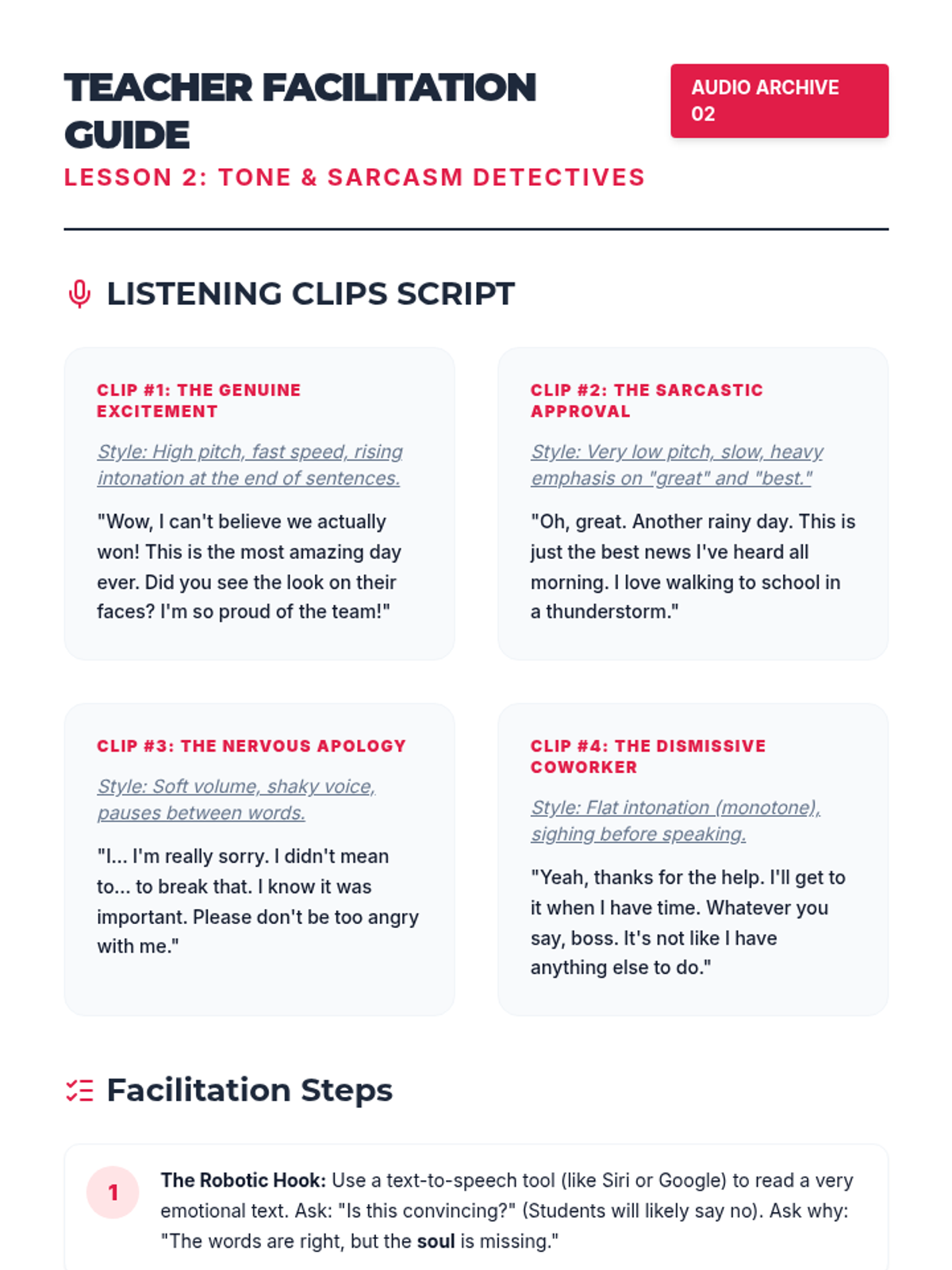
This lesson focuses on identifying sarcasm and irony through prosody, pitch, and context clues, helping students avoid literal misinterpretations.
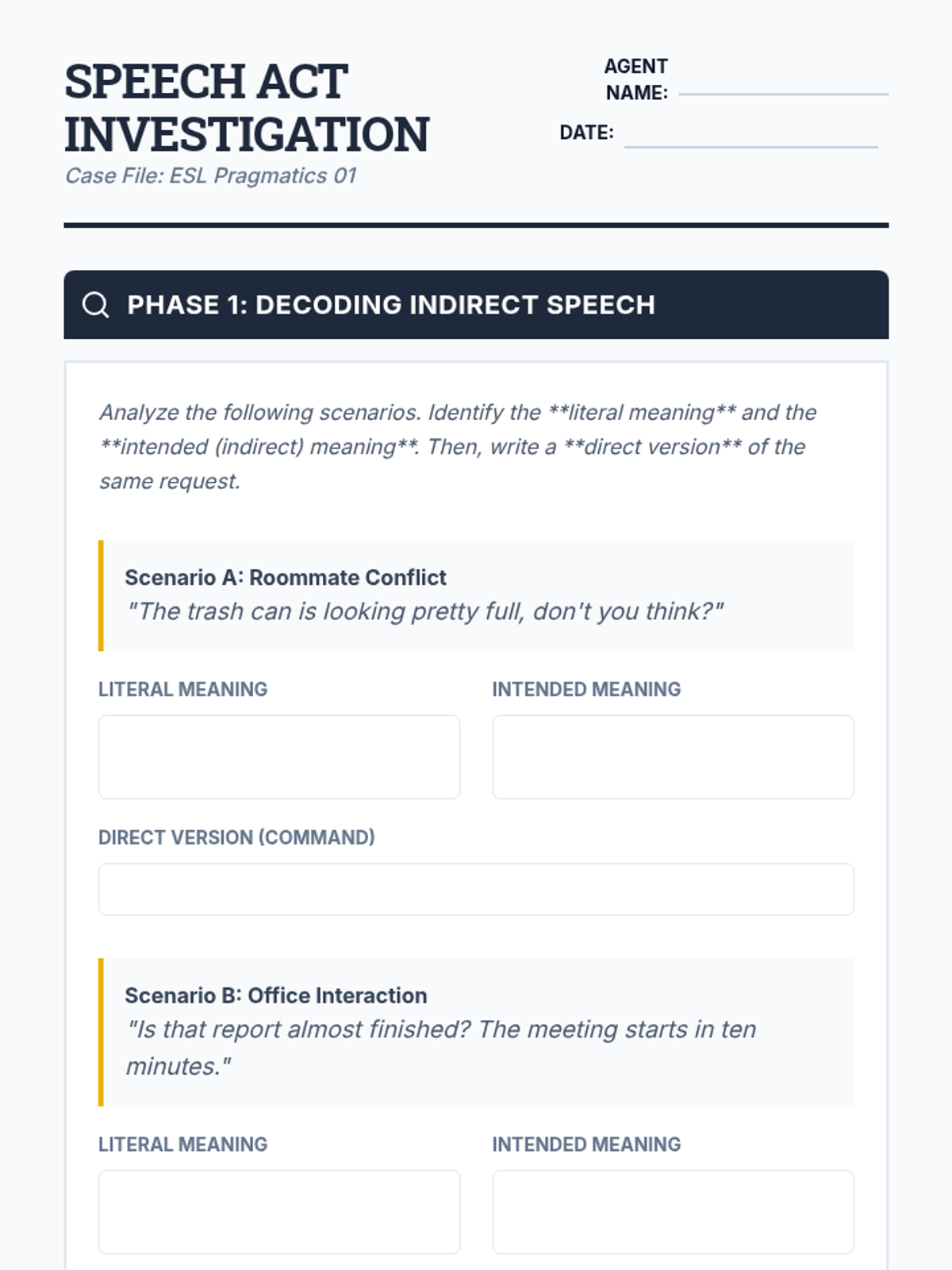
Students explore the difference between what is said and what is meant by analyzing indirect speech acts and politeness strategies in everyday scenarios.
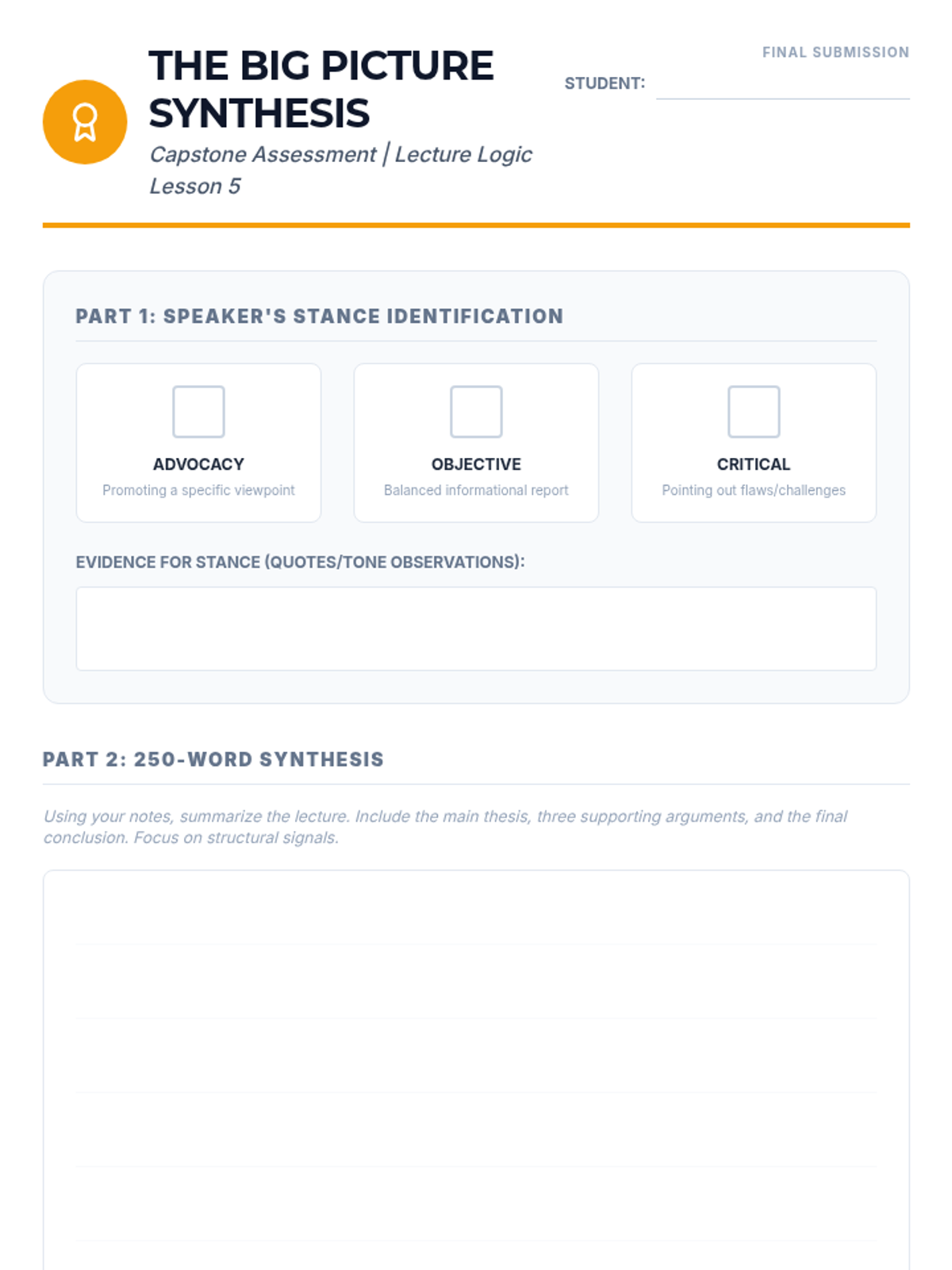
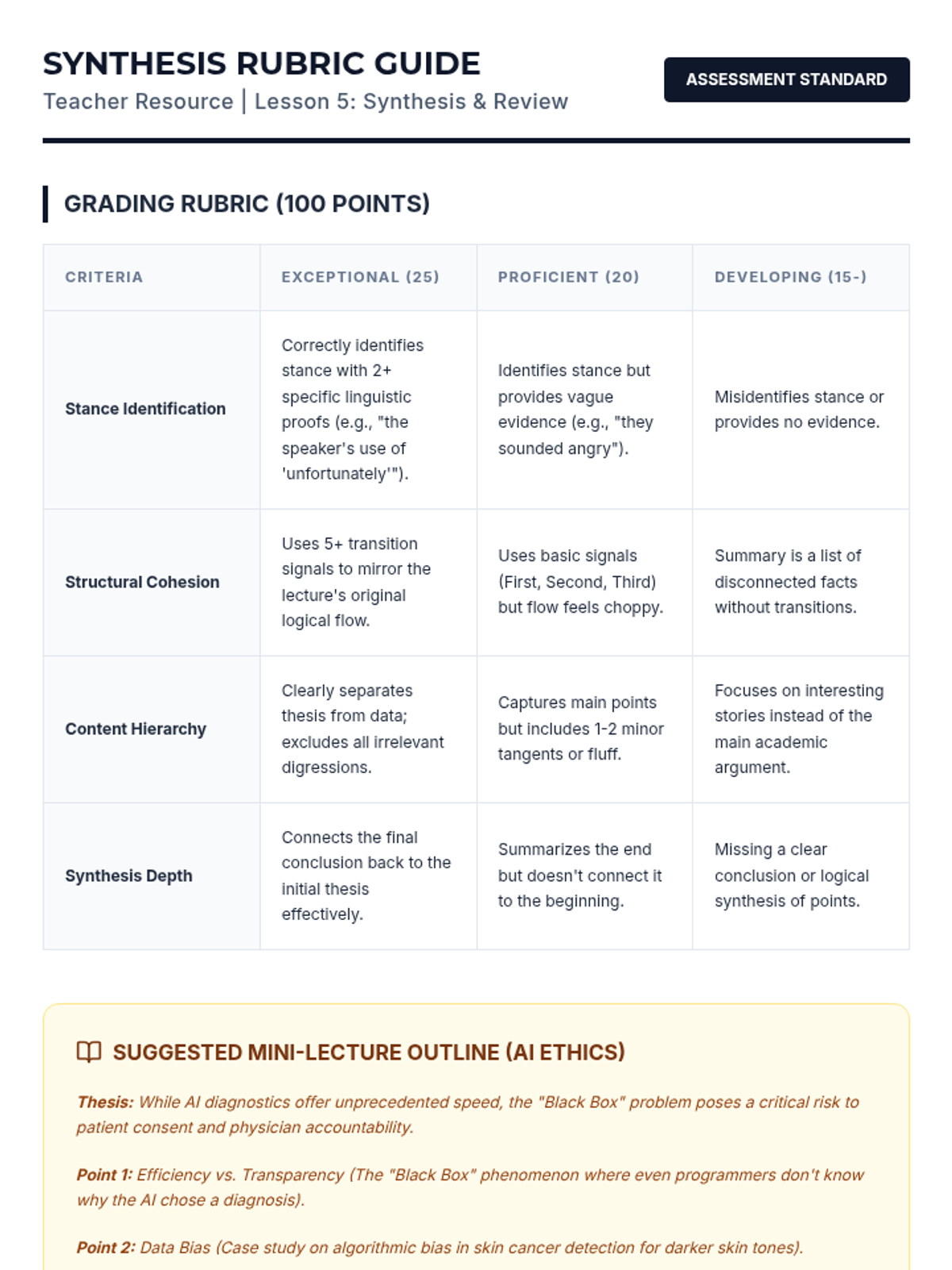
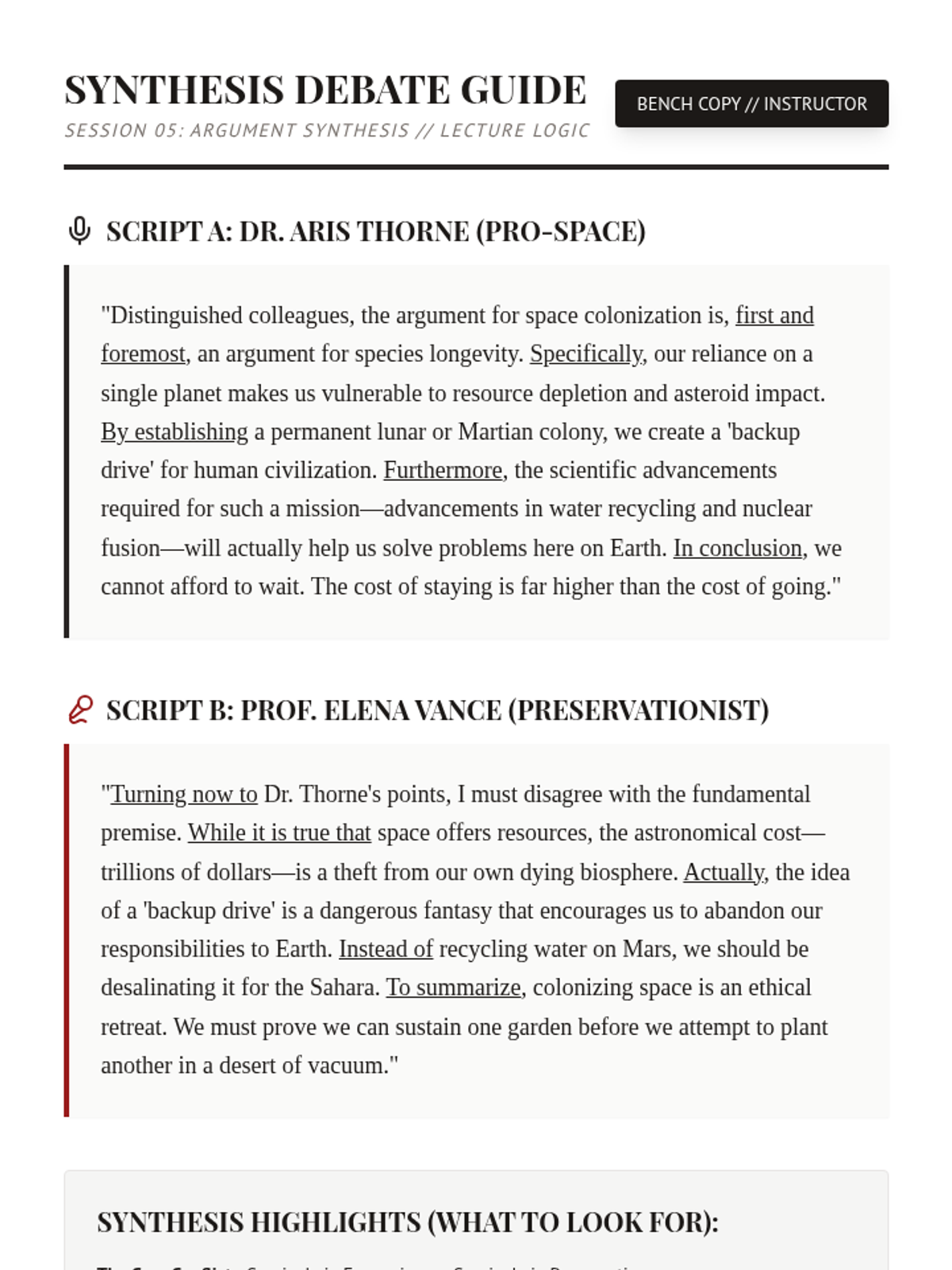
Students synthesize a full mini-lecture into a coherent summary, identifying stance and major takeaways.
A workshop on the Cornell, Outline, and Mapping methods, emphasizing shorthand and relationship visualization.
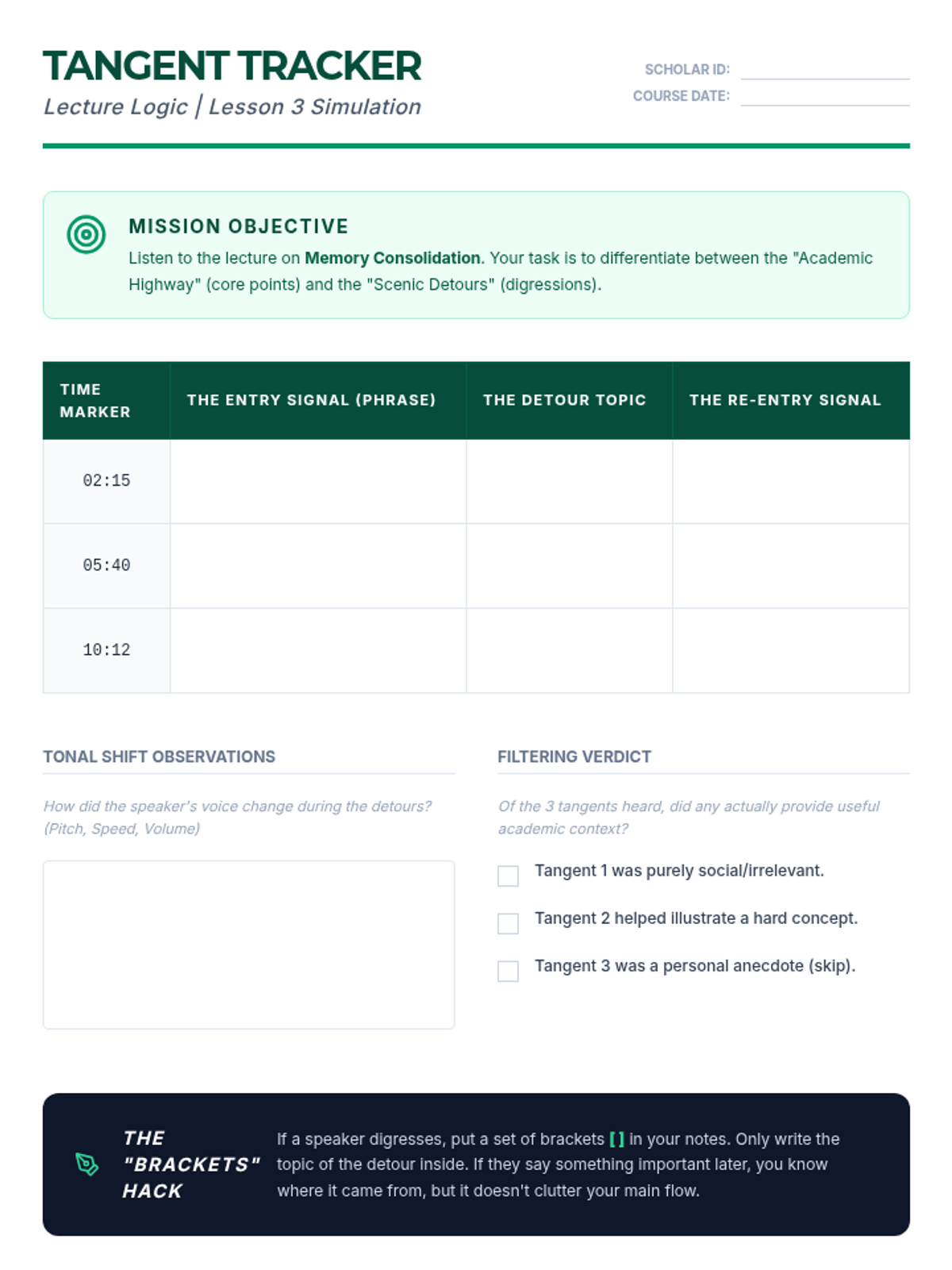
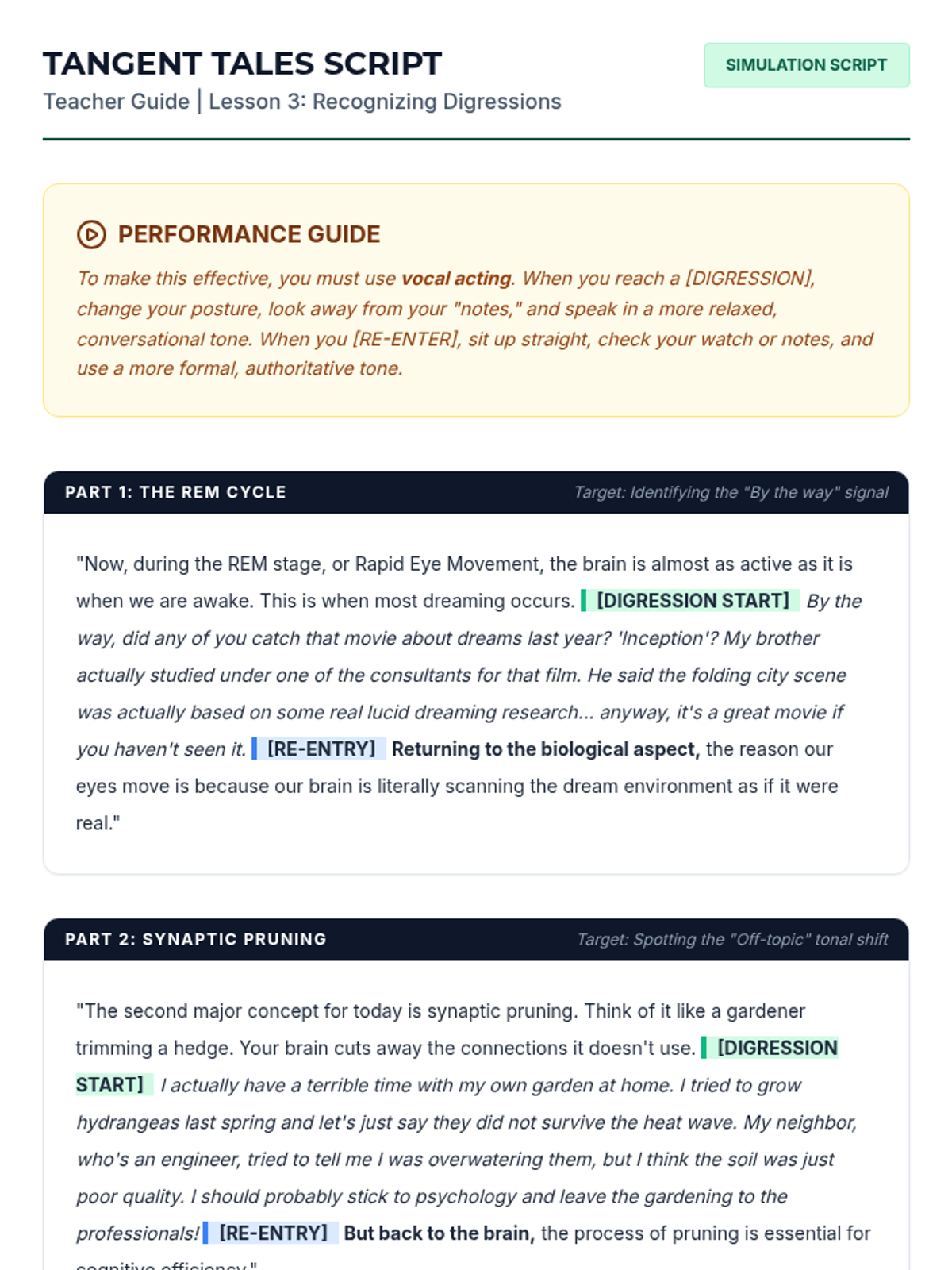
This lesson trains students to identify tonal shifts and linguistic markers that signal tangents or personal asides.
Learners differentiate between core arguments and supporting examples using vocal cues and structural patterns.
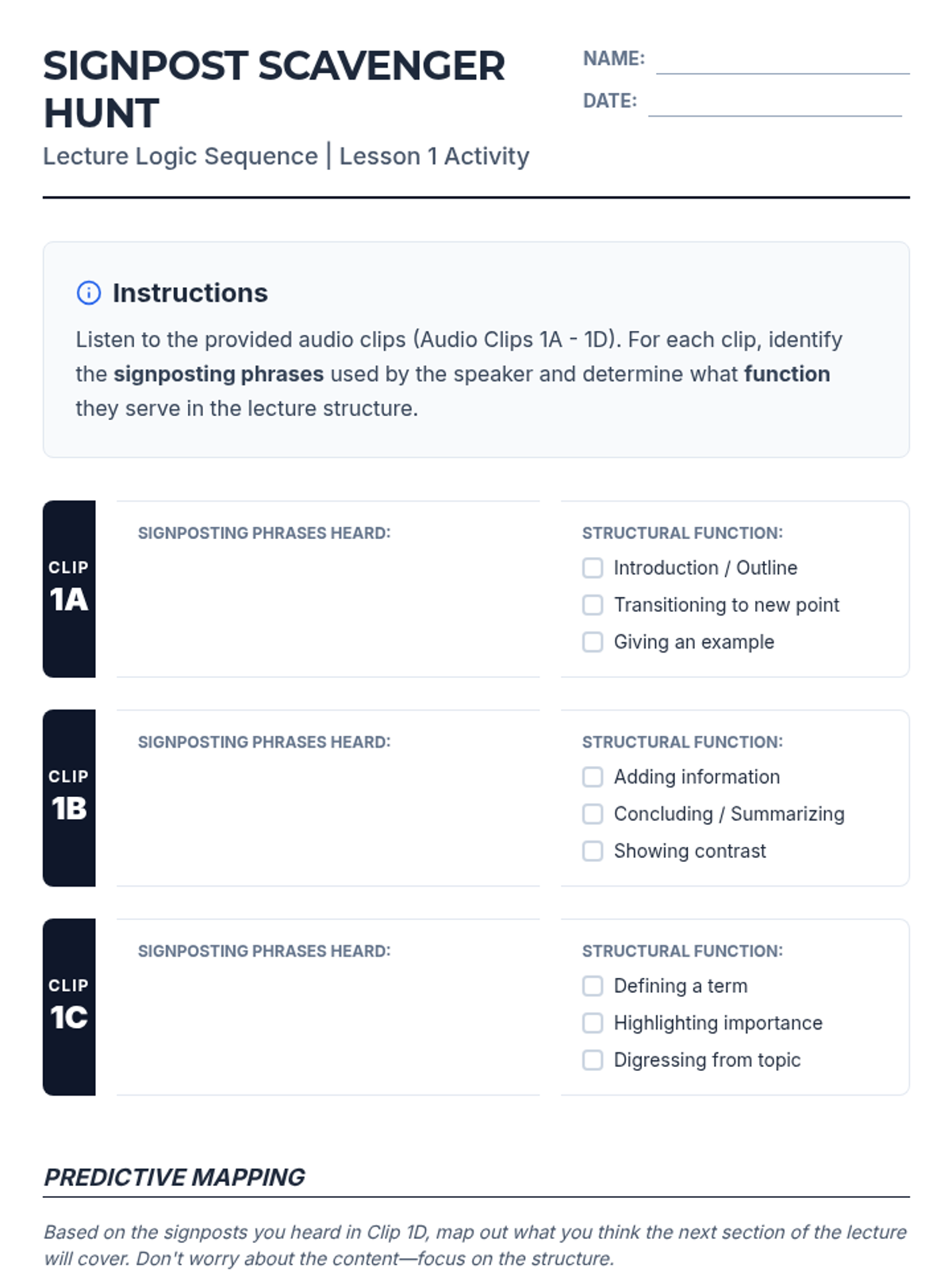
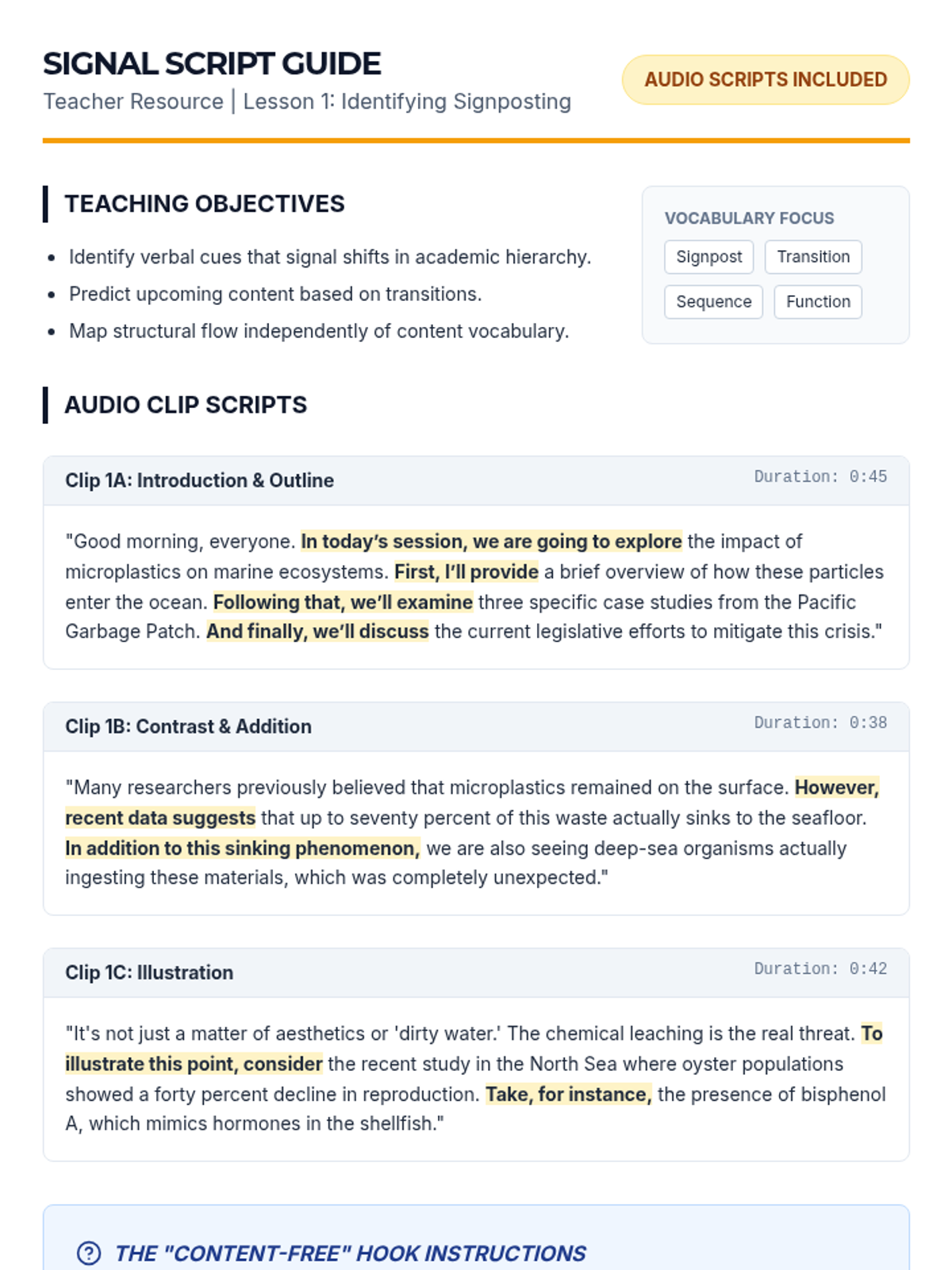
Students analyze signposting language to predict content and map the structural flow of academic talks.
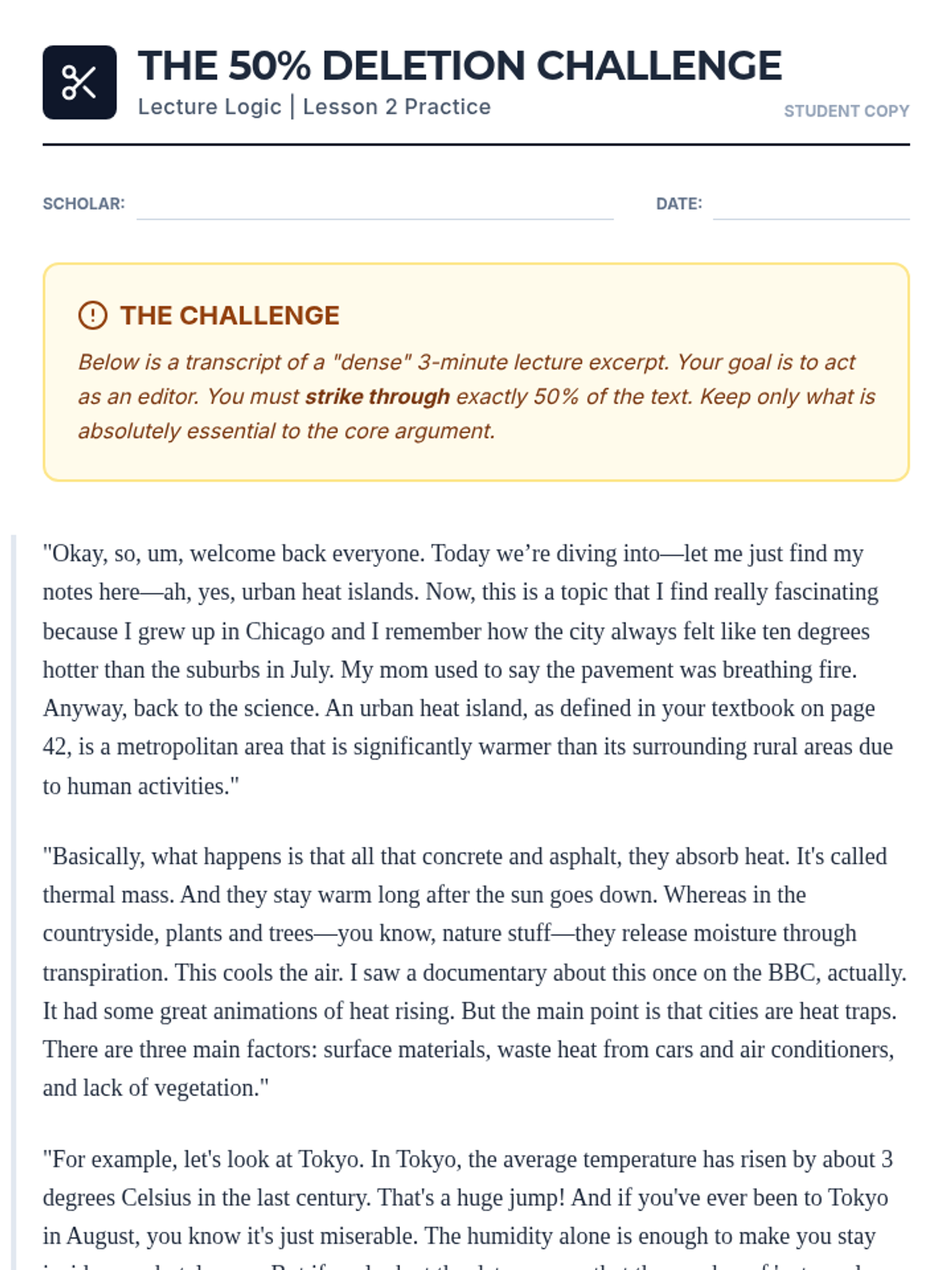
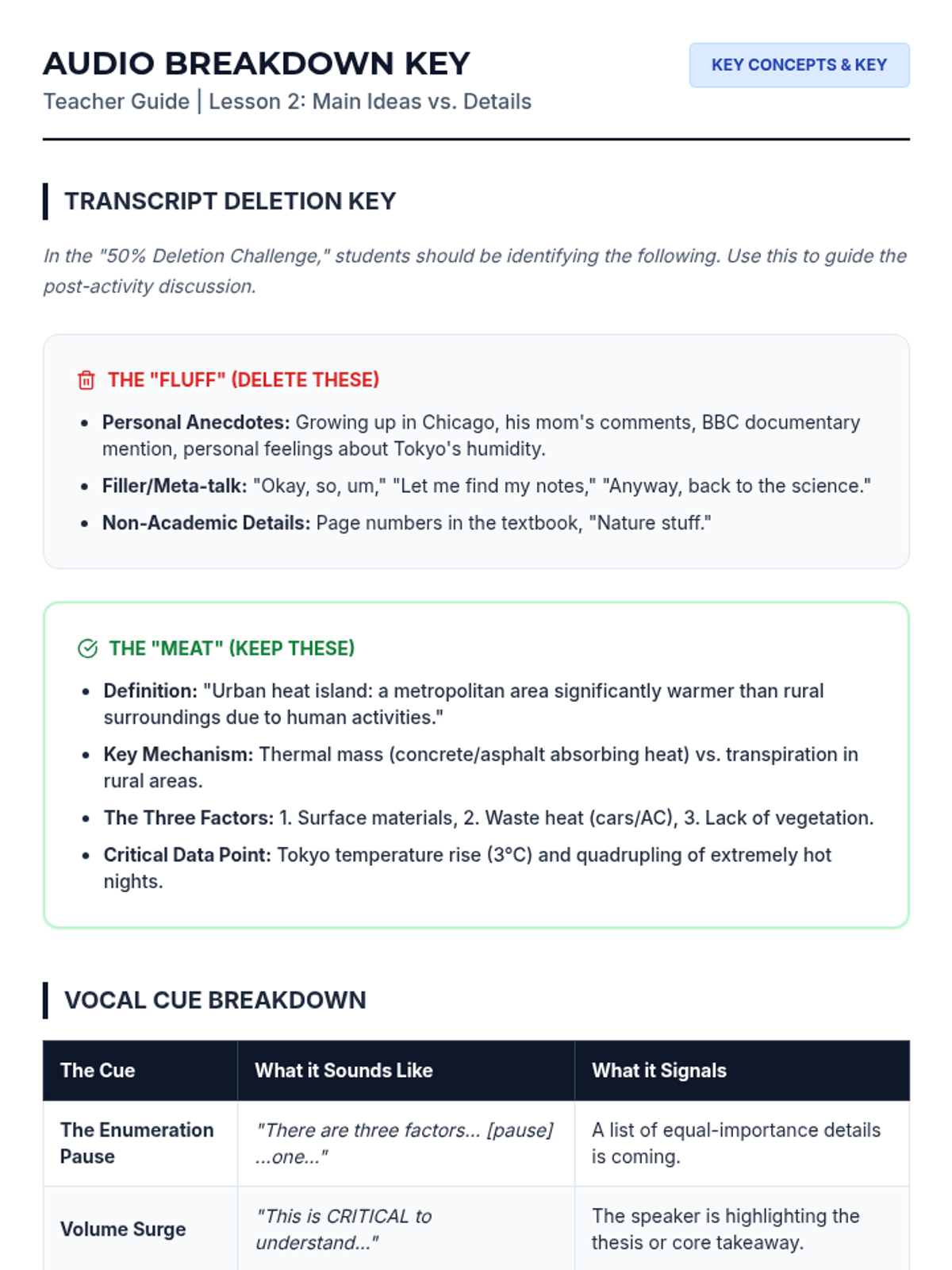
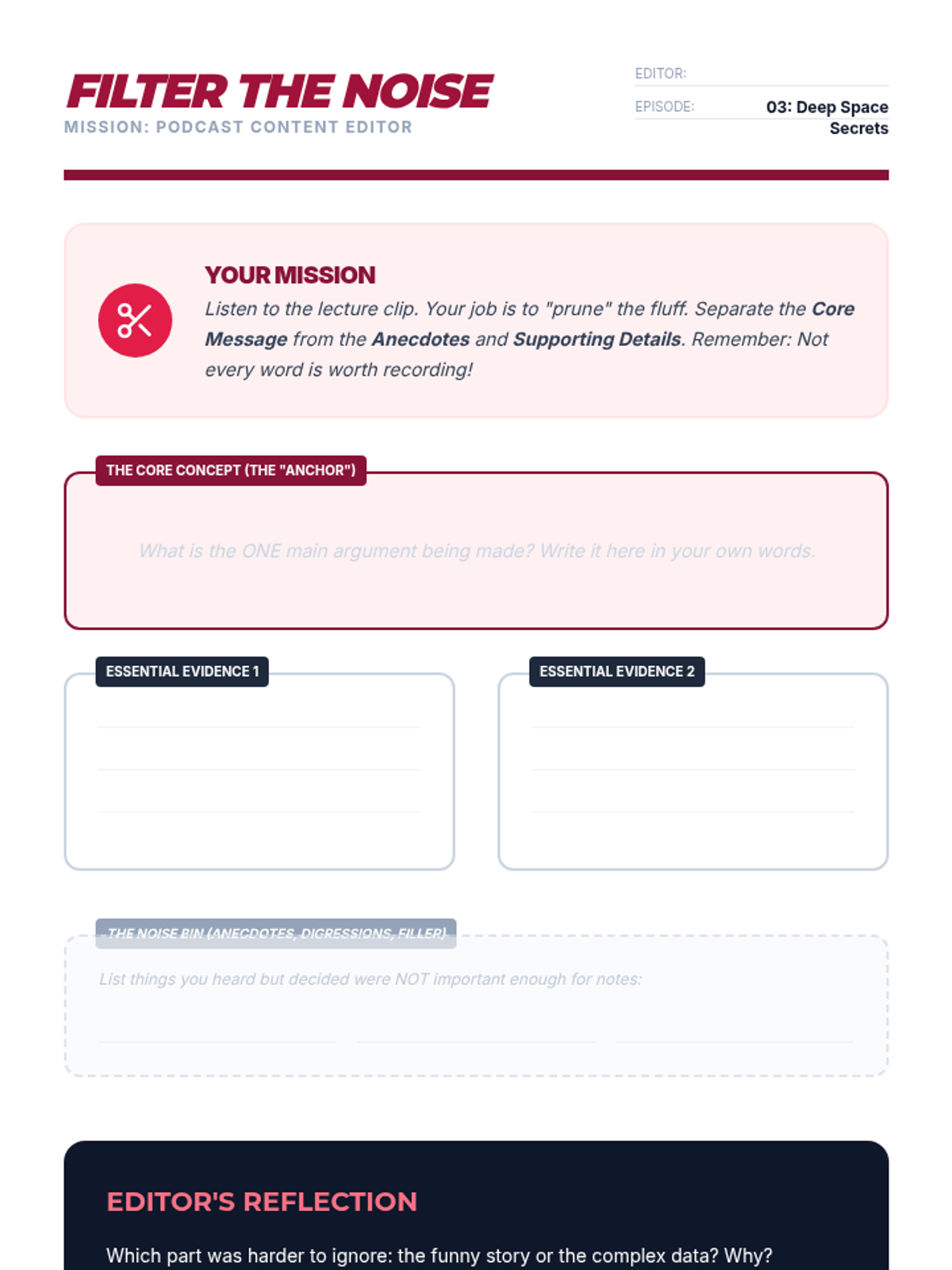
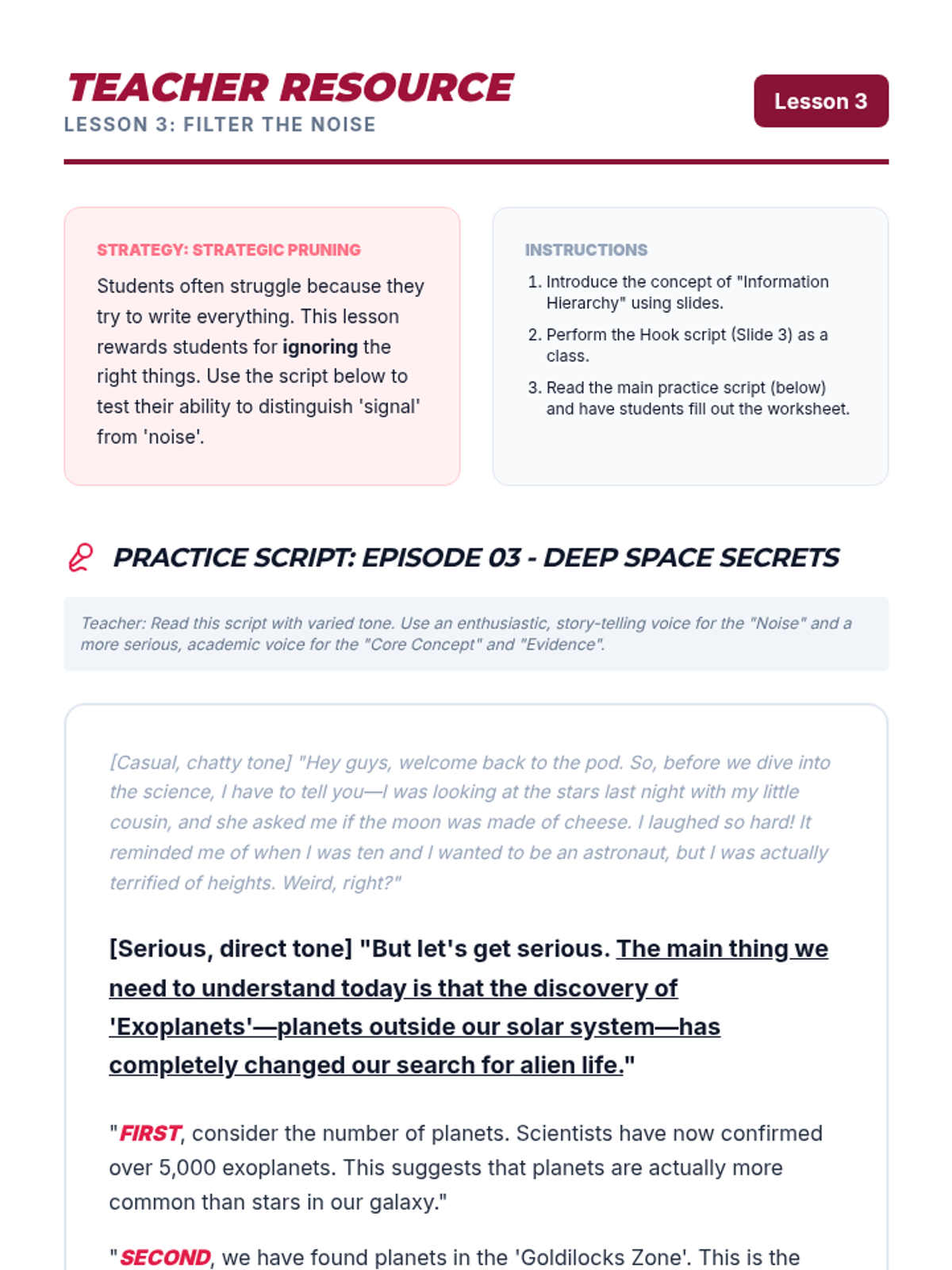
Students analyze academic discourse to distinguish core arguments from supporting details. They practice 'pruning' irrelevant information and identifying essential evidence using a 'Podcast Editor' scenario.
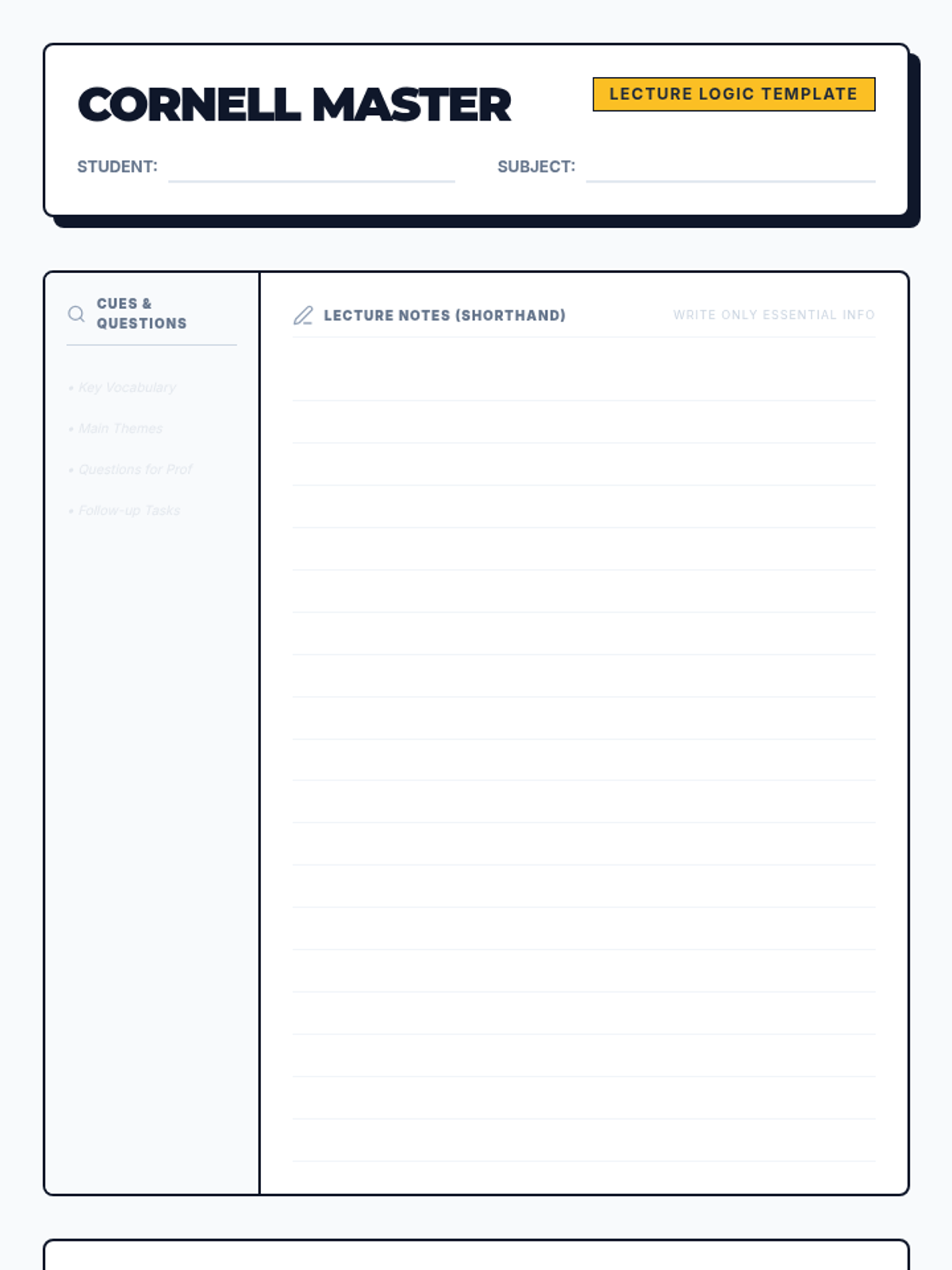
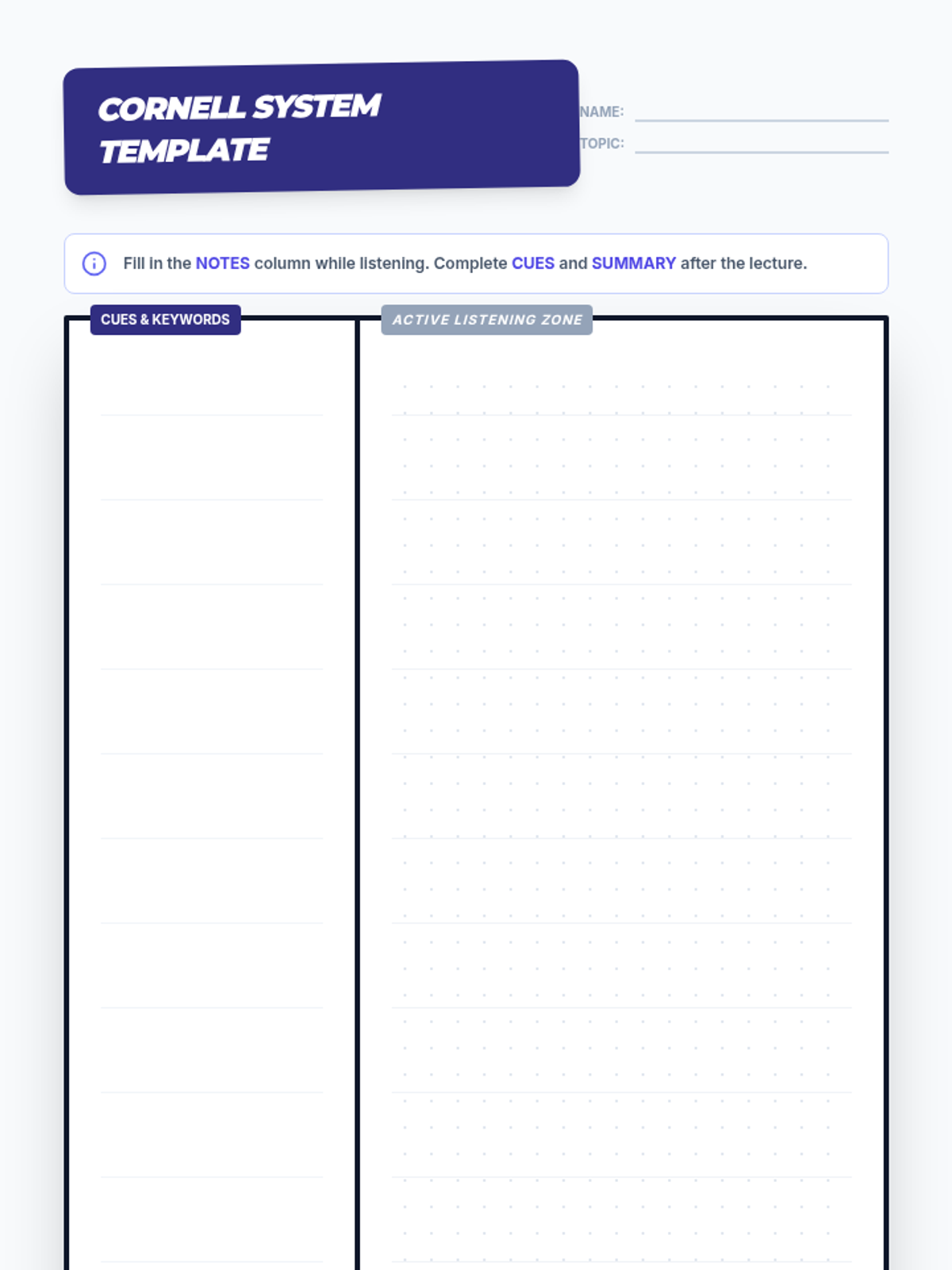
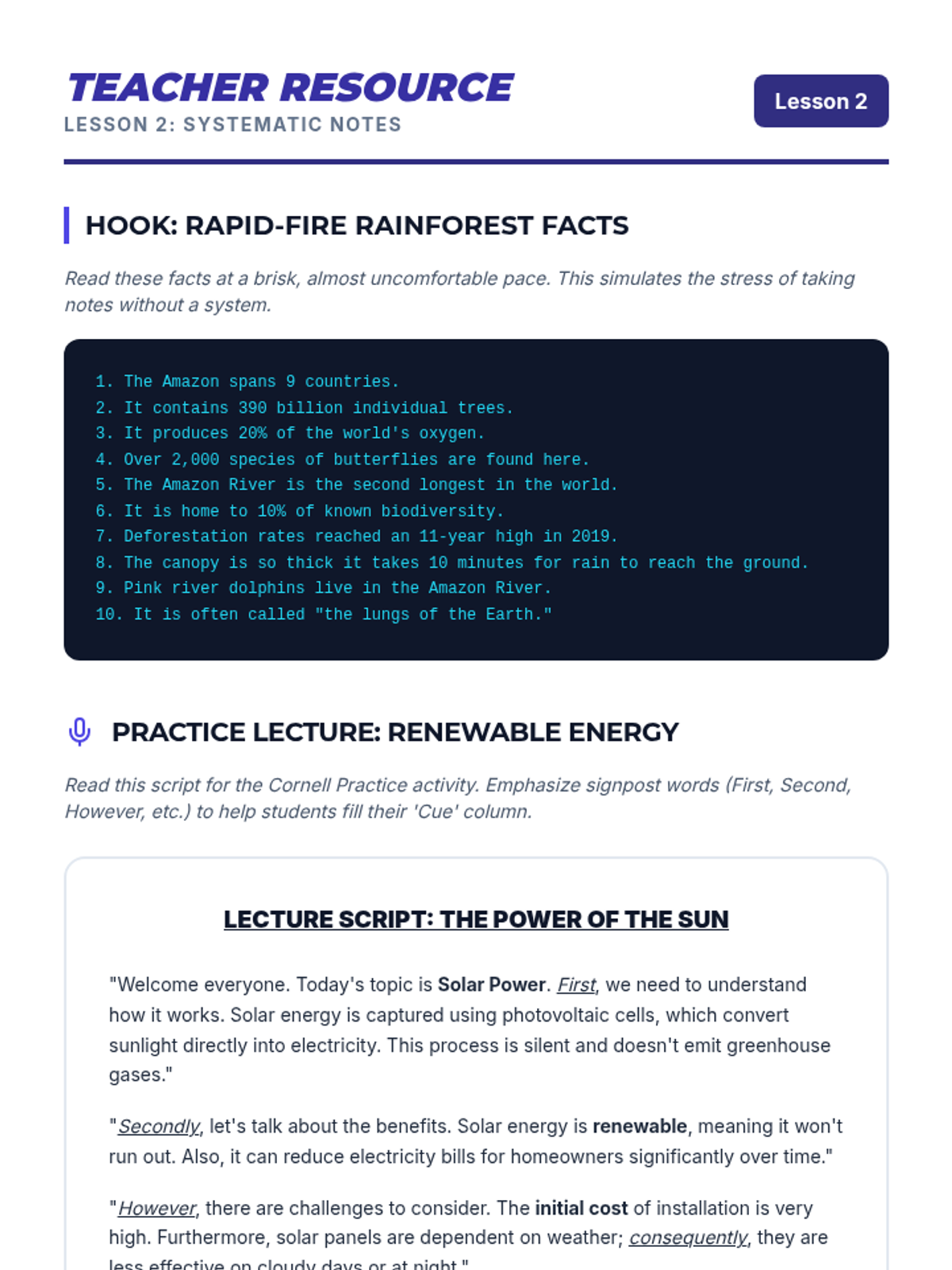
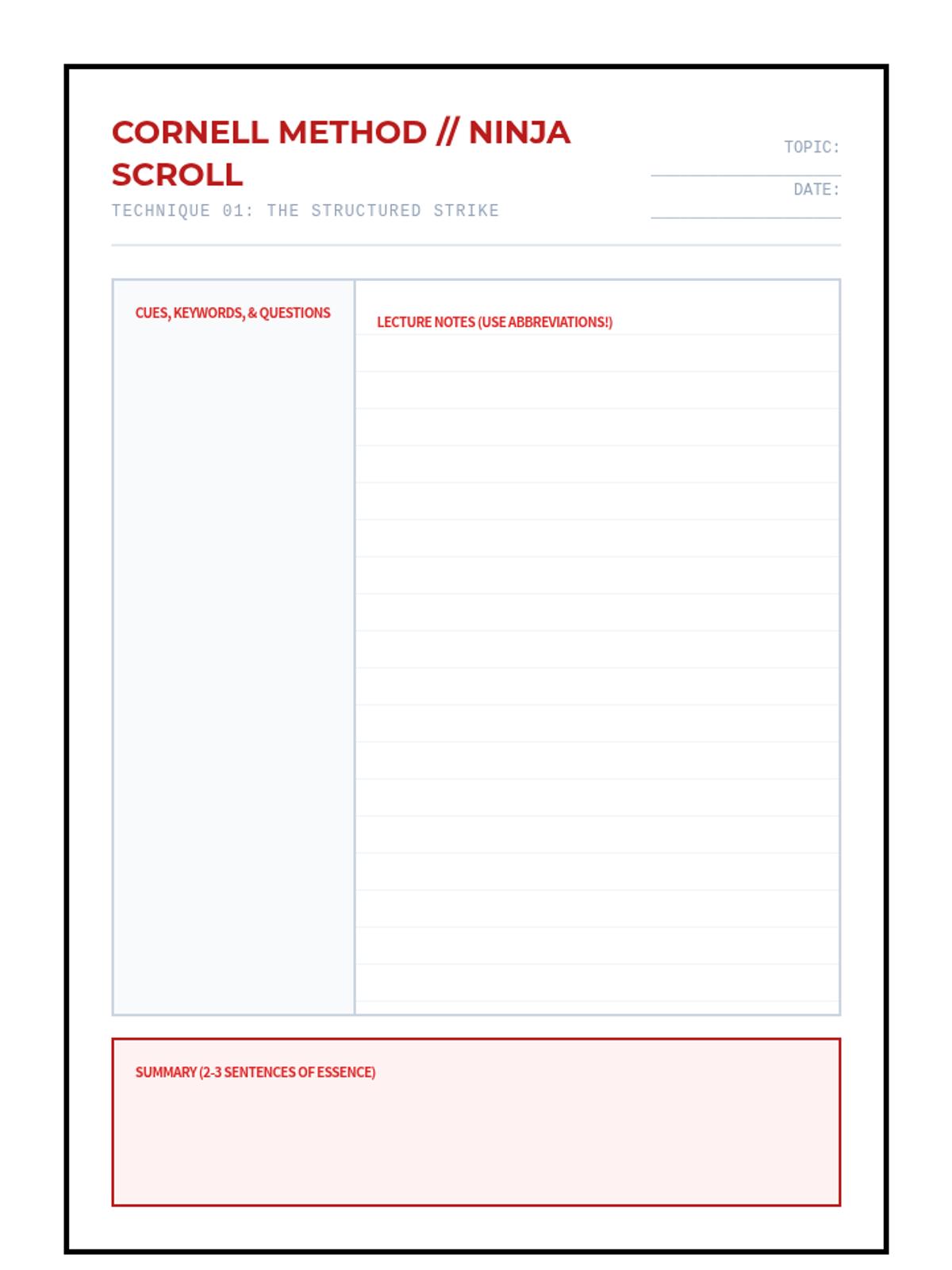
Students learn and practice the Cornell Note-Taking system. The lesson focuses on organizing notes spatially, separating keywords from details, and creating summaries to improve real-time lecture comprehension.
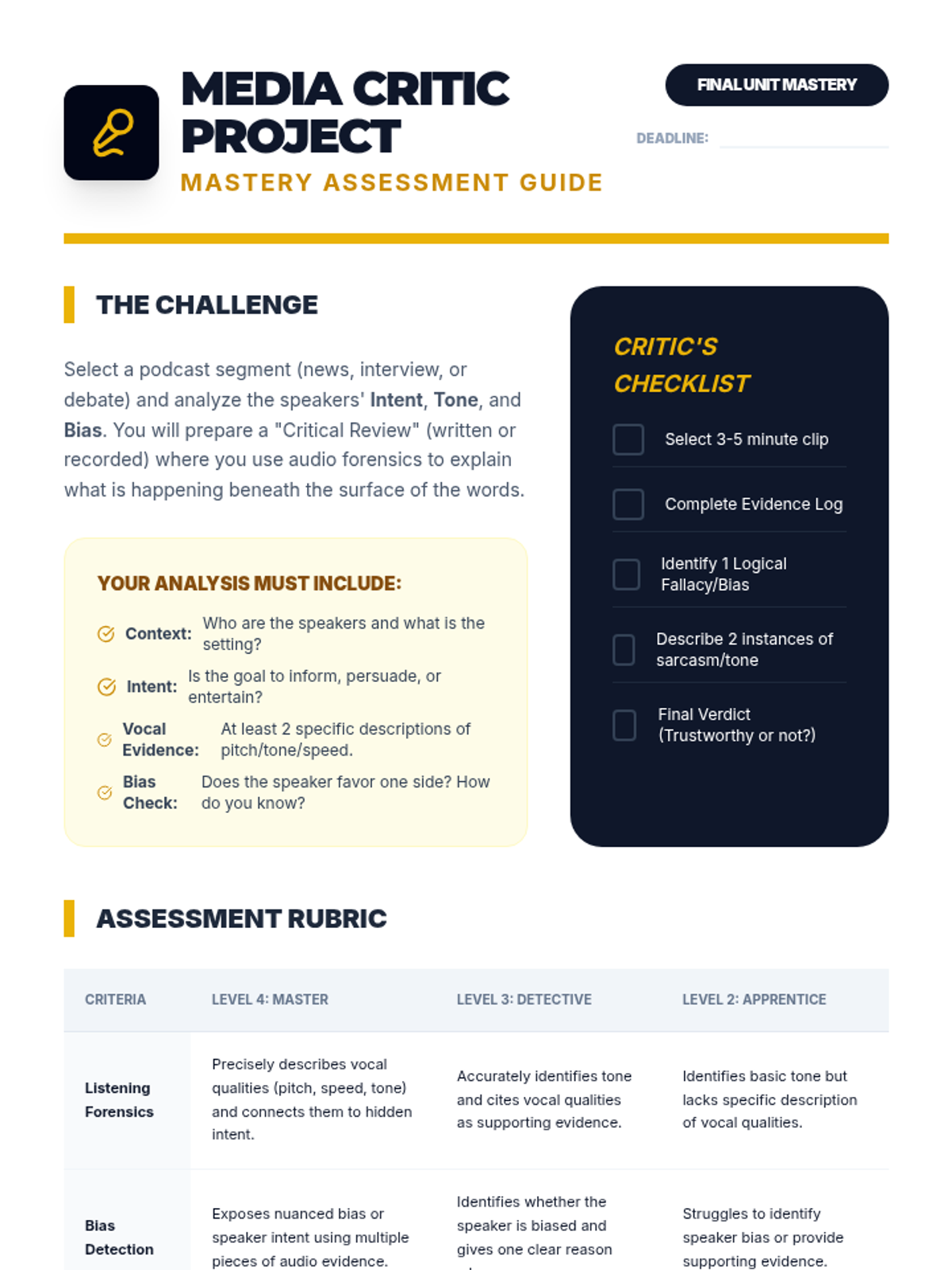
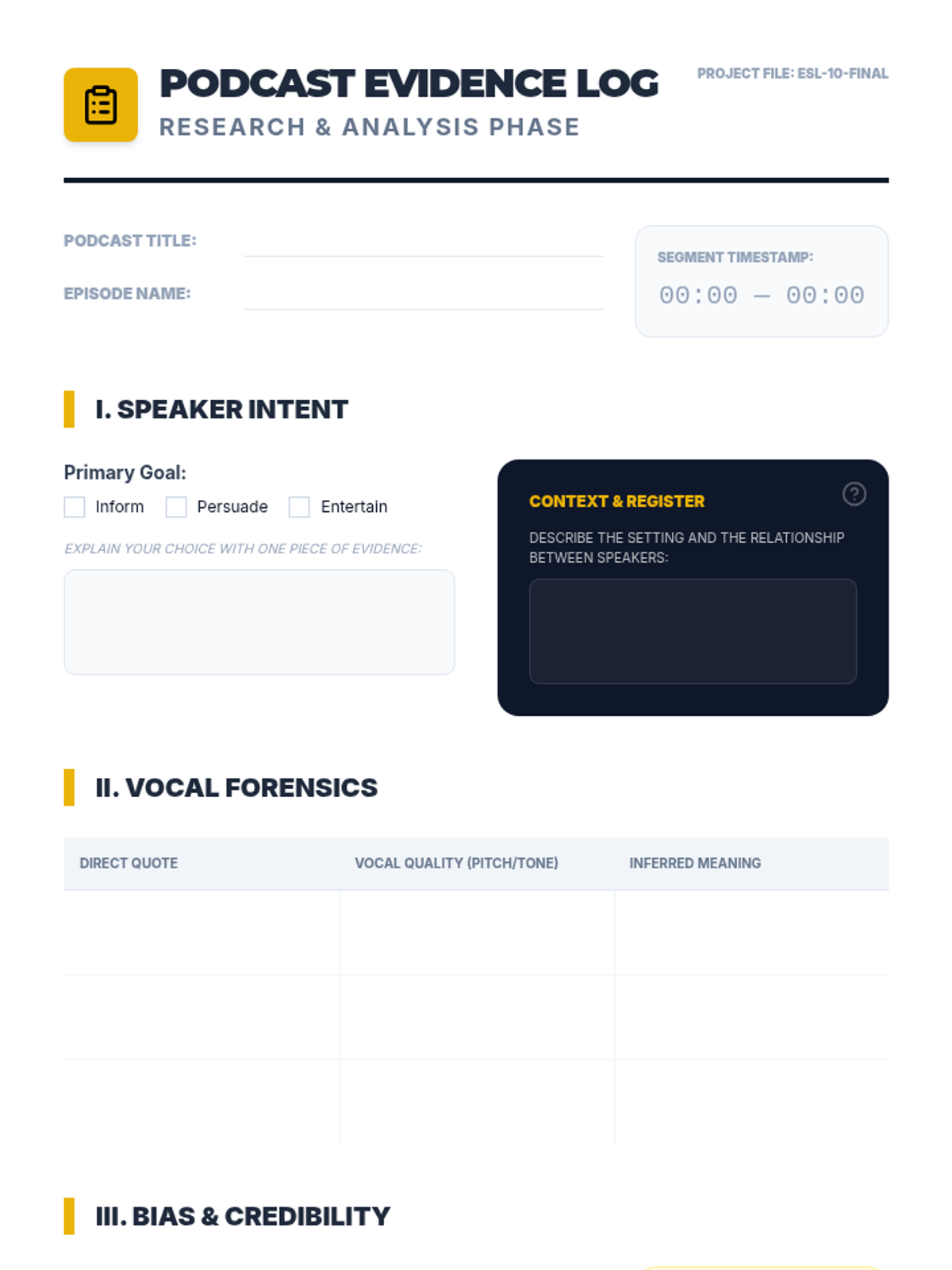
A final project where students select a podcast episode, analyze its intent and bias, and present their findings with specific audio evidence.
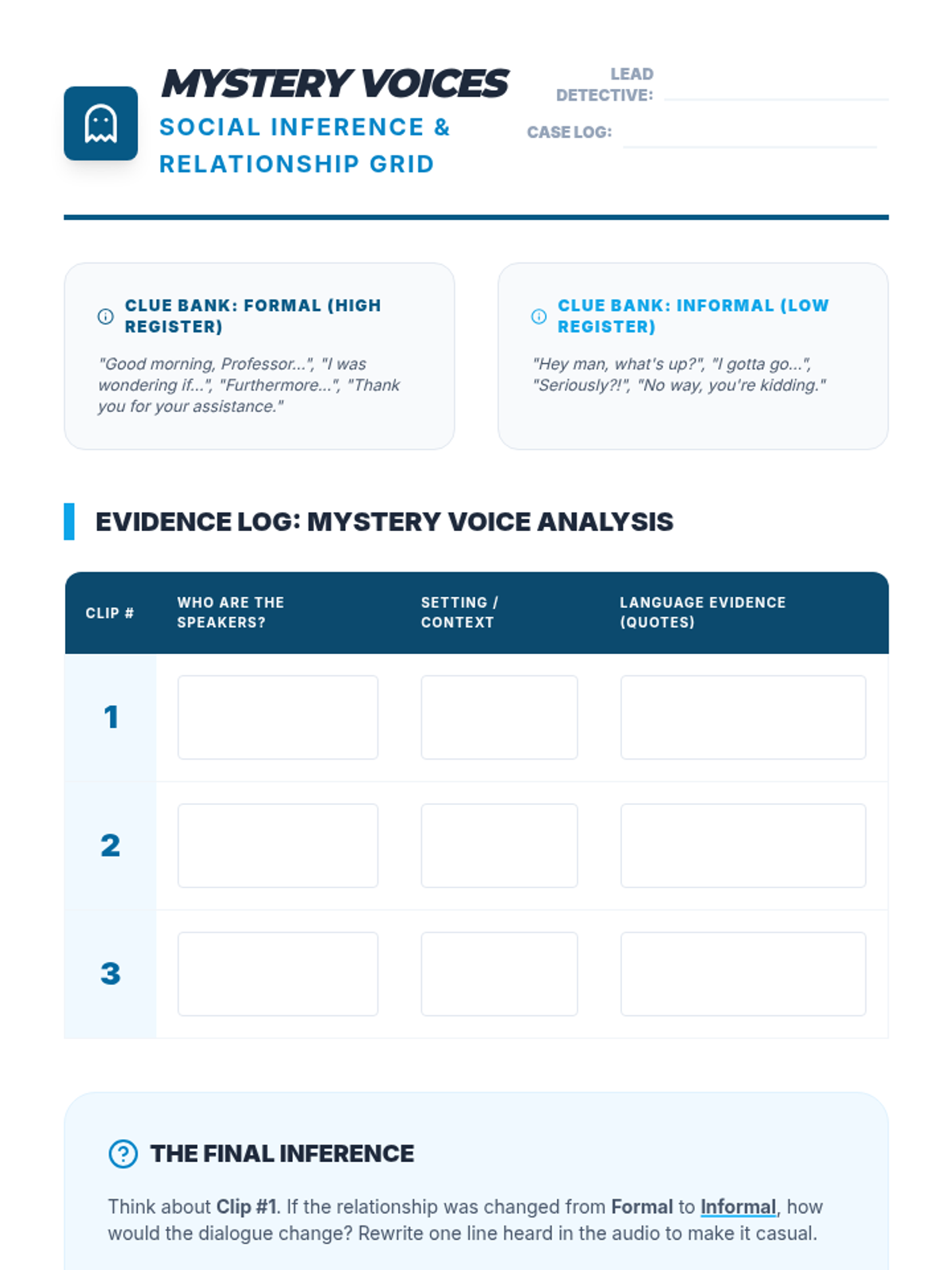
Without visual cues, students analyze dialogue to infer relationships and social context based on formality levels and conversational register.
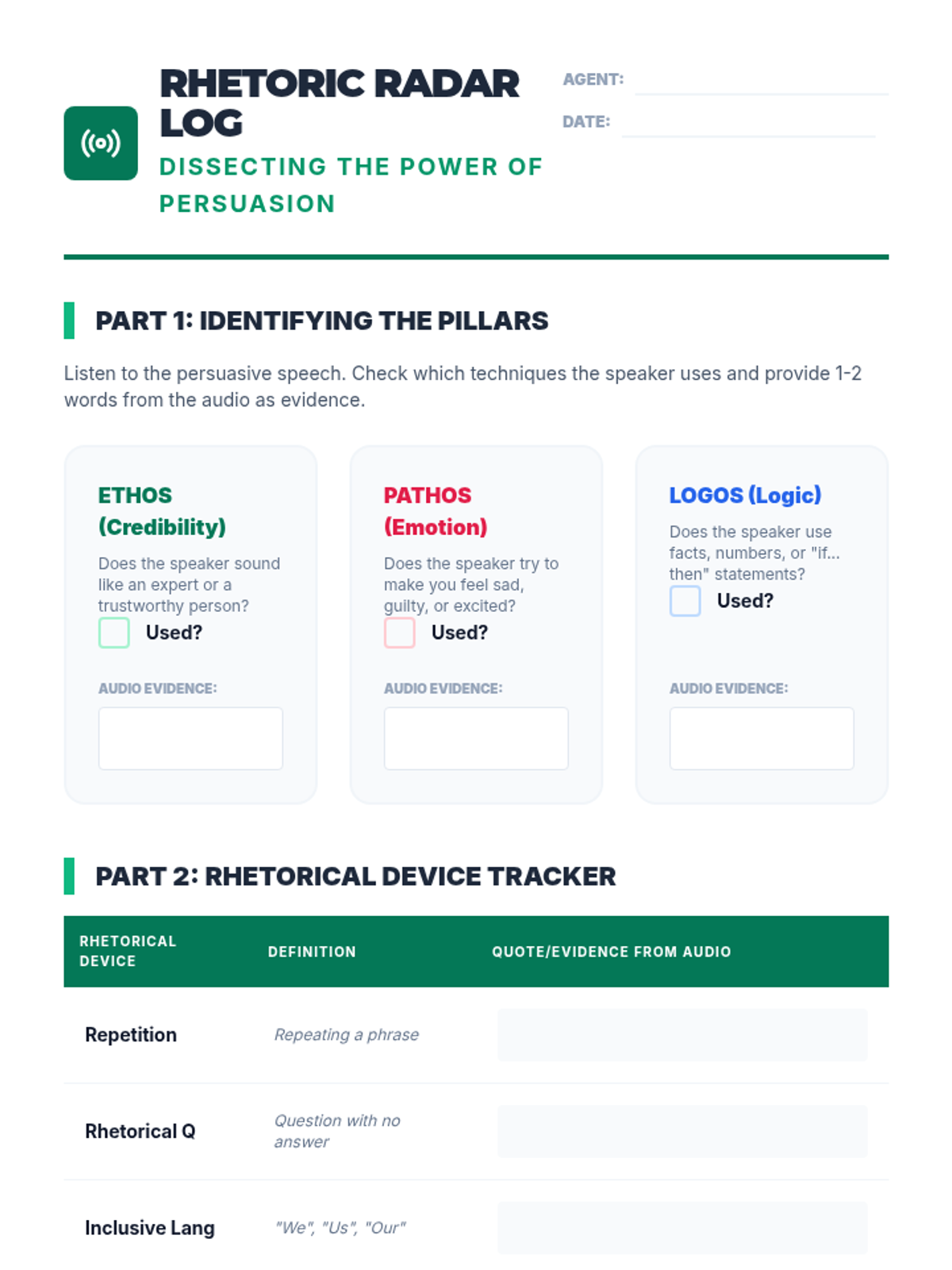
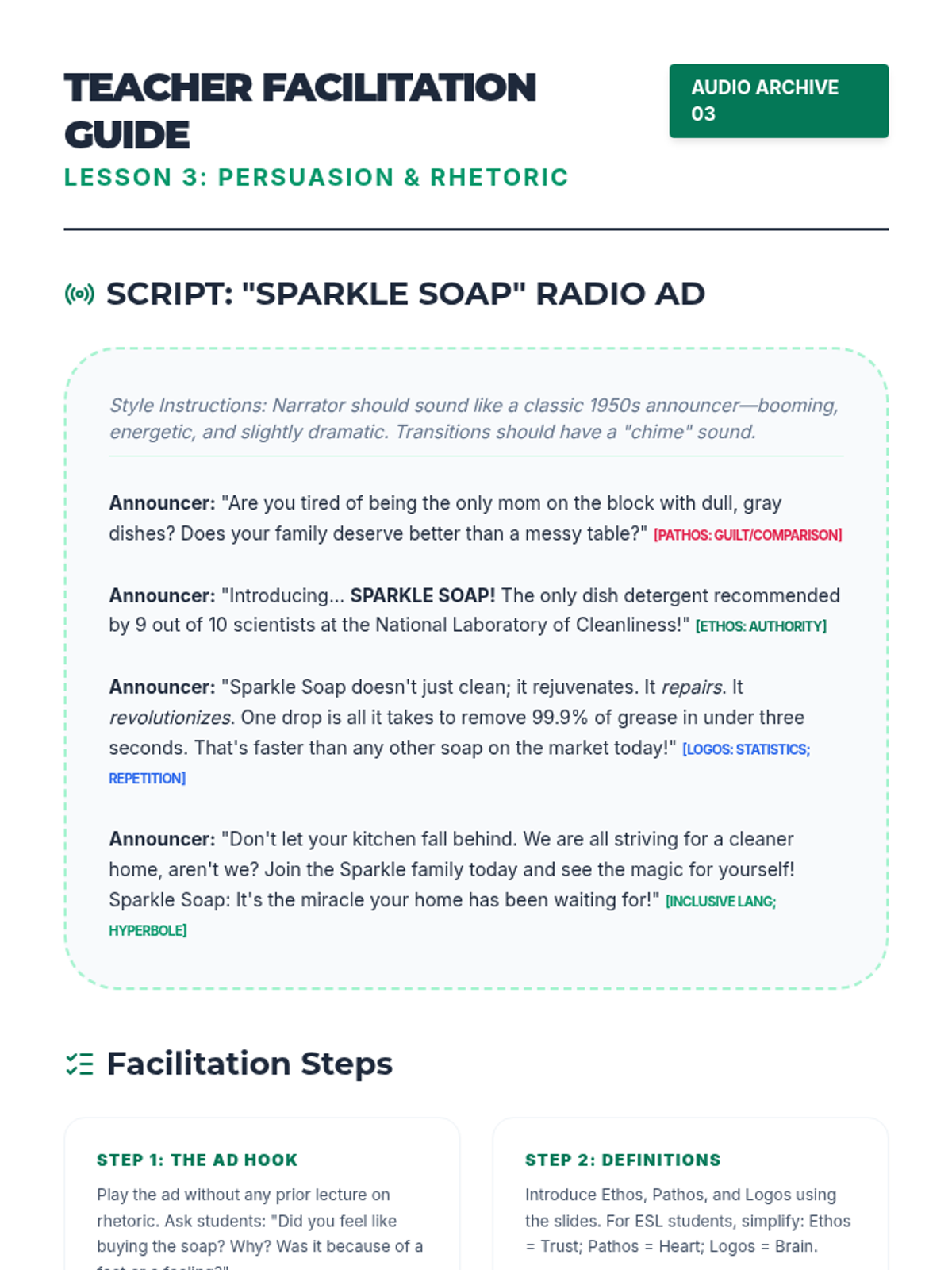
Students dissect persuasive speeches and advertisements to identify rhetorical devices and emotional appeals used to sway a listener's perspective.
Learners explore how vocal qualities like pitch, speed, and volume convey emotion and sarcasm, moving beyond the literal meaning of words.
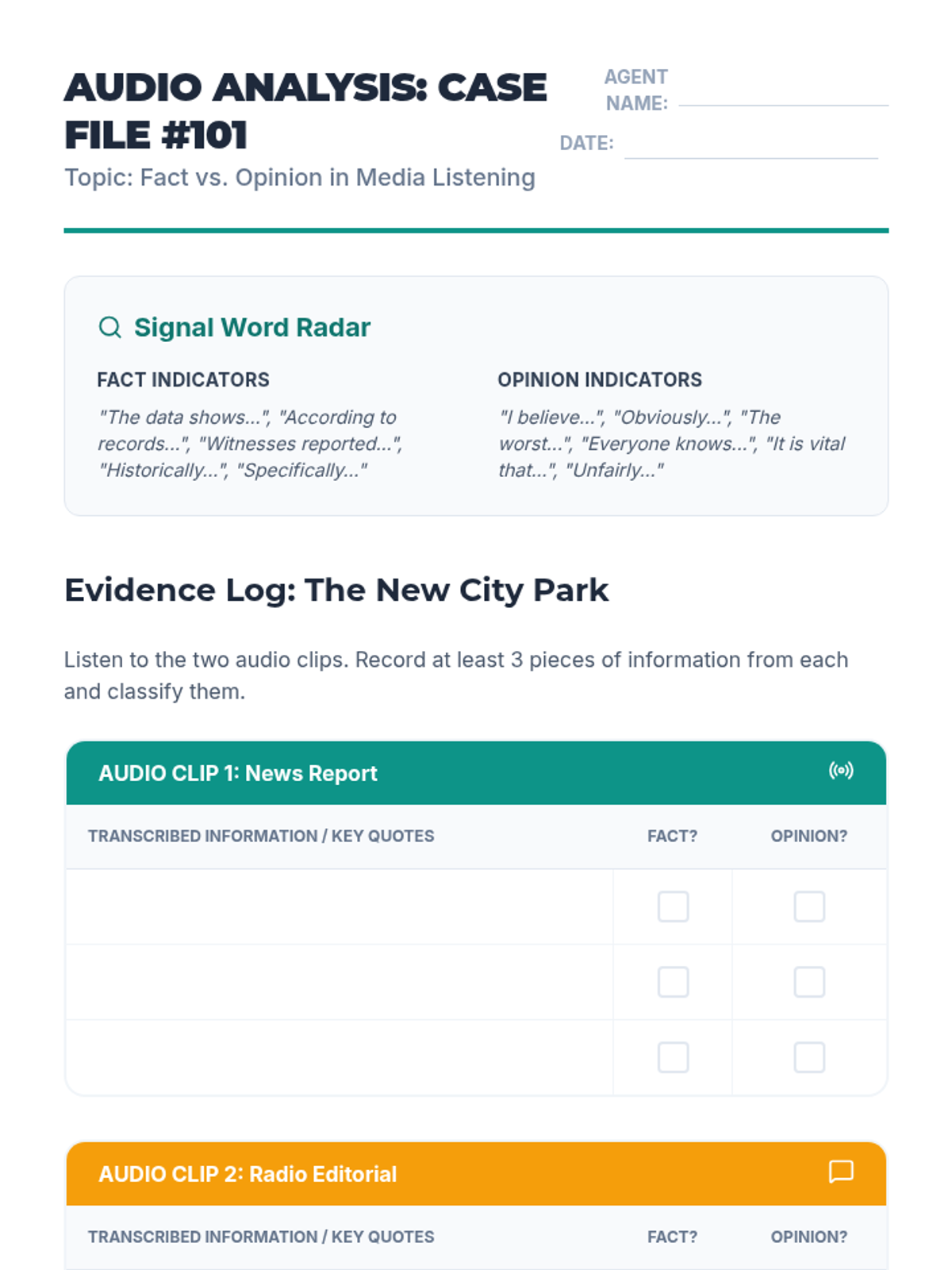
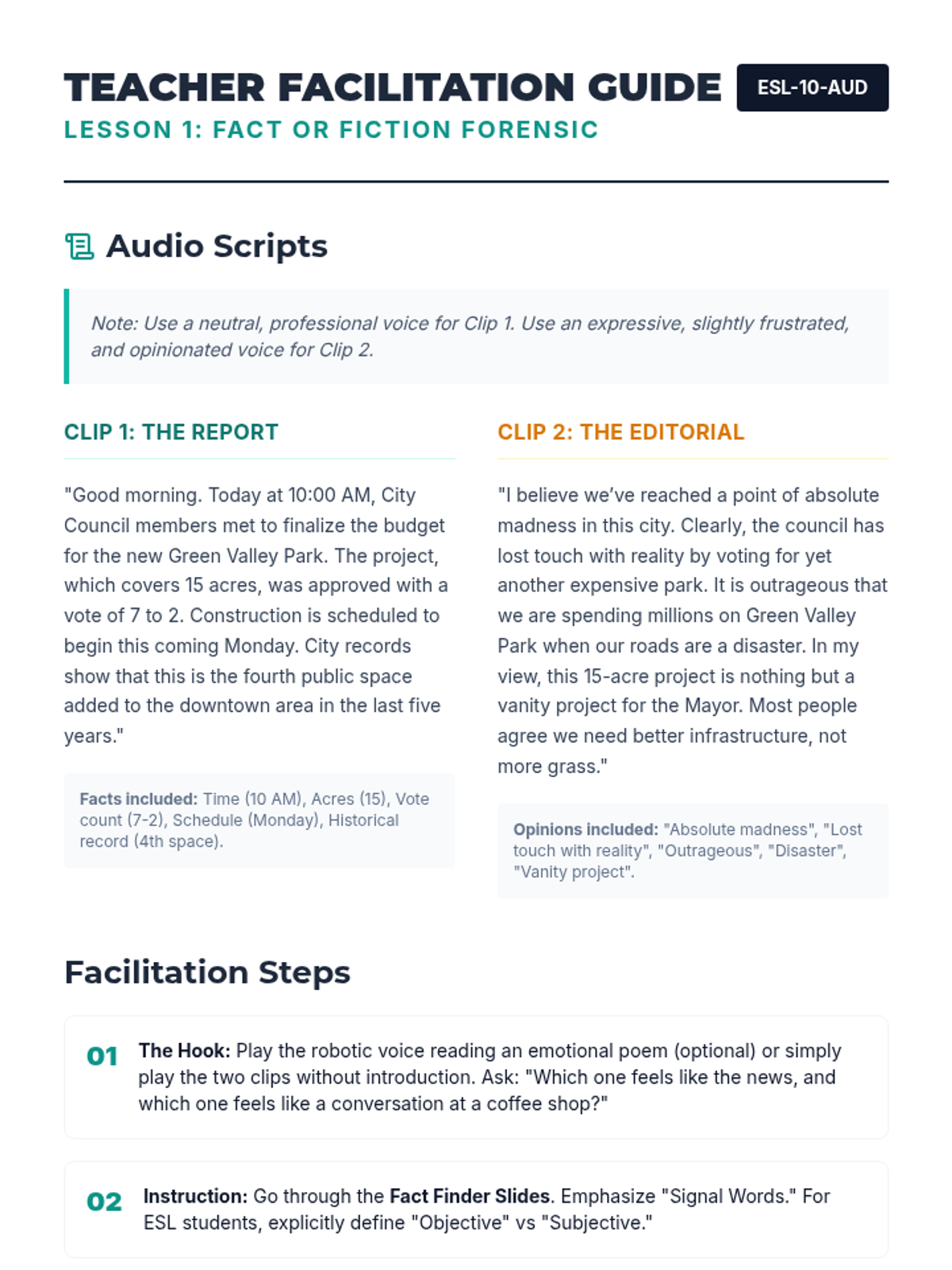
Students listen to news segments and editorials to distinguish objective facts from subjective opinions, focusing on signal words and evidence-based reporting.
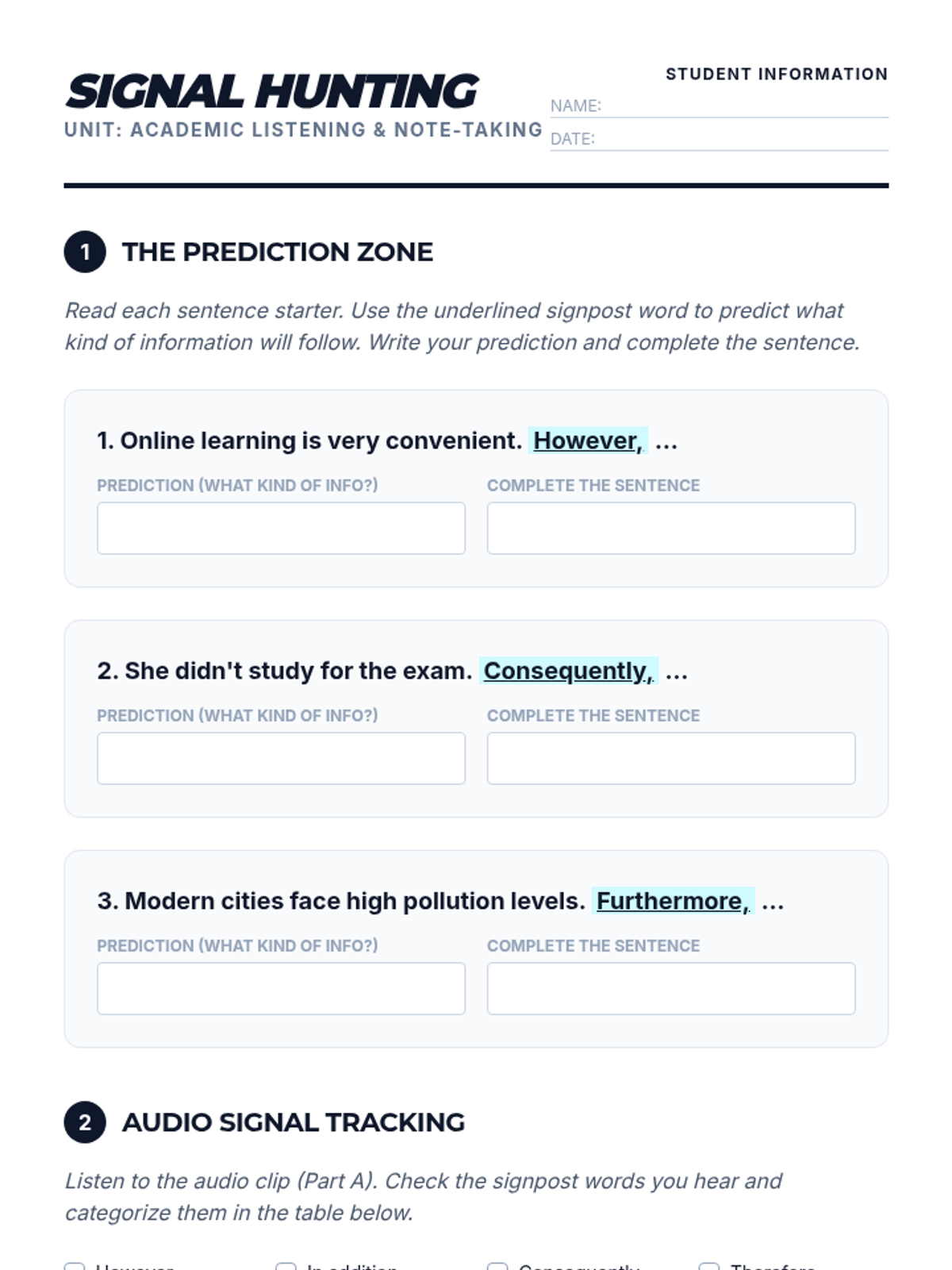
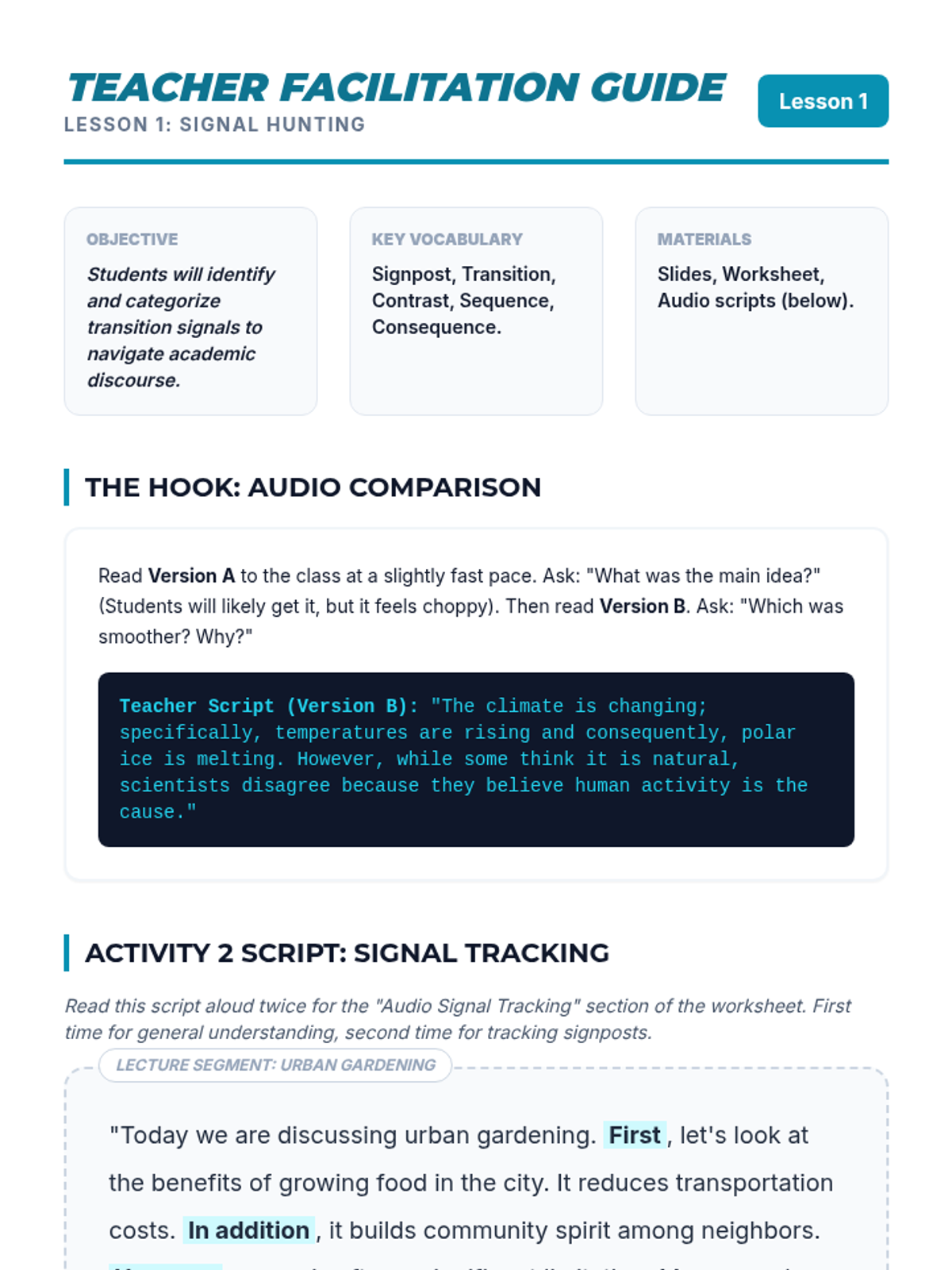
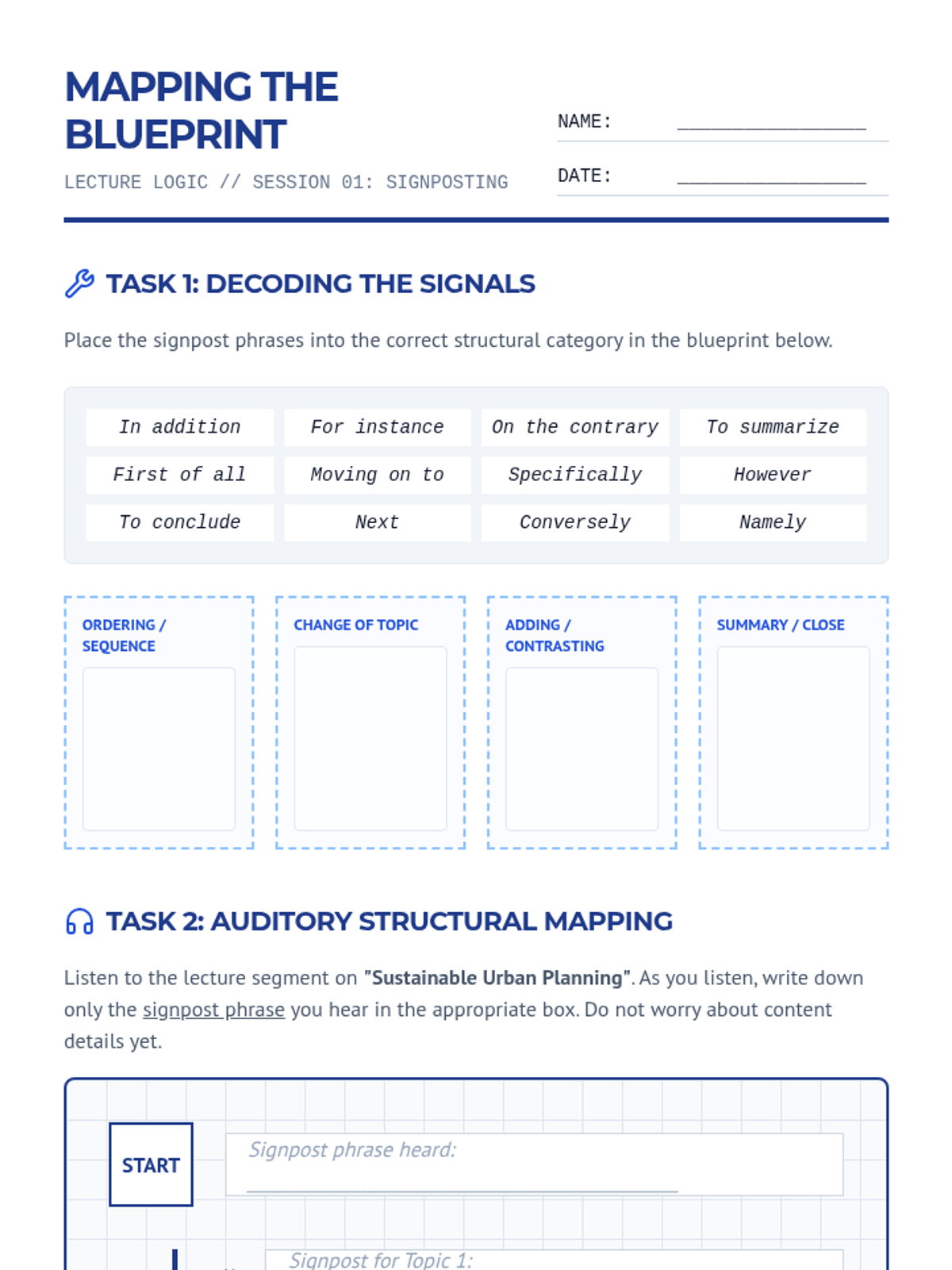
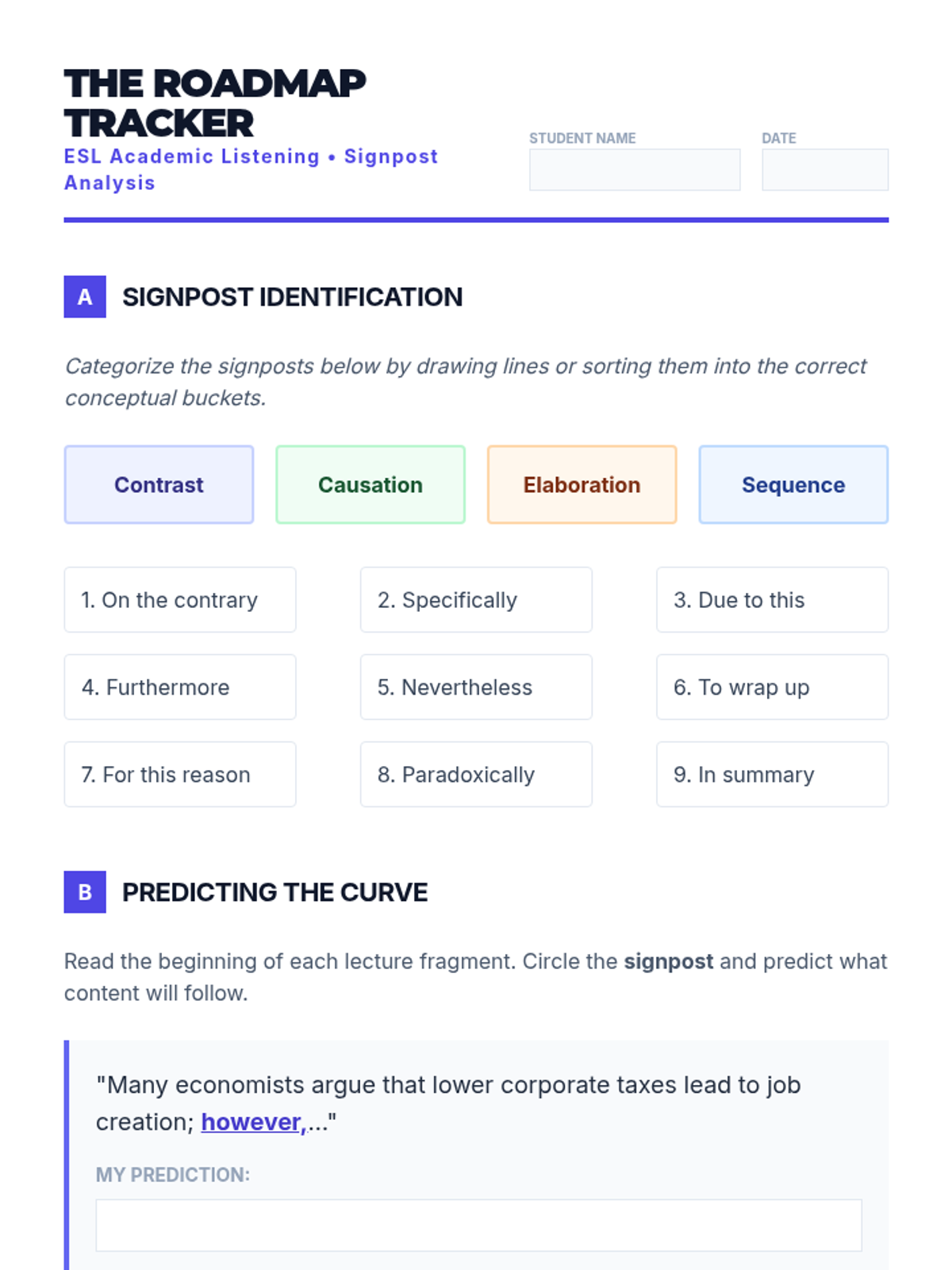
Students identify and categorize 'signpost' language (e.g., transitions) that signal shifts in topics within academic discourse. This foundational skill helps students predict content and navigate lecture structures.
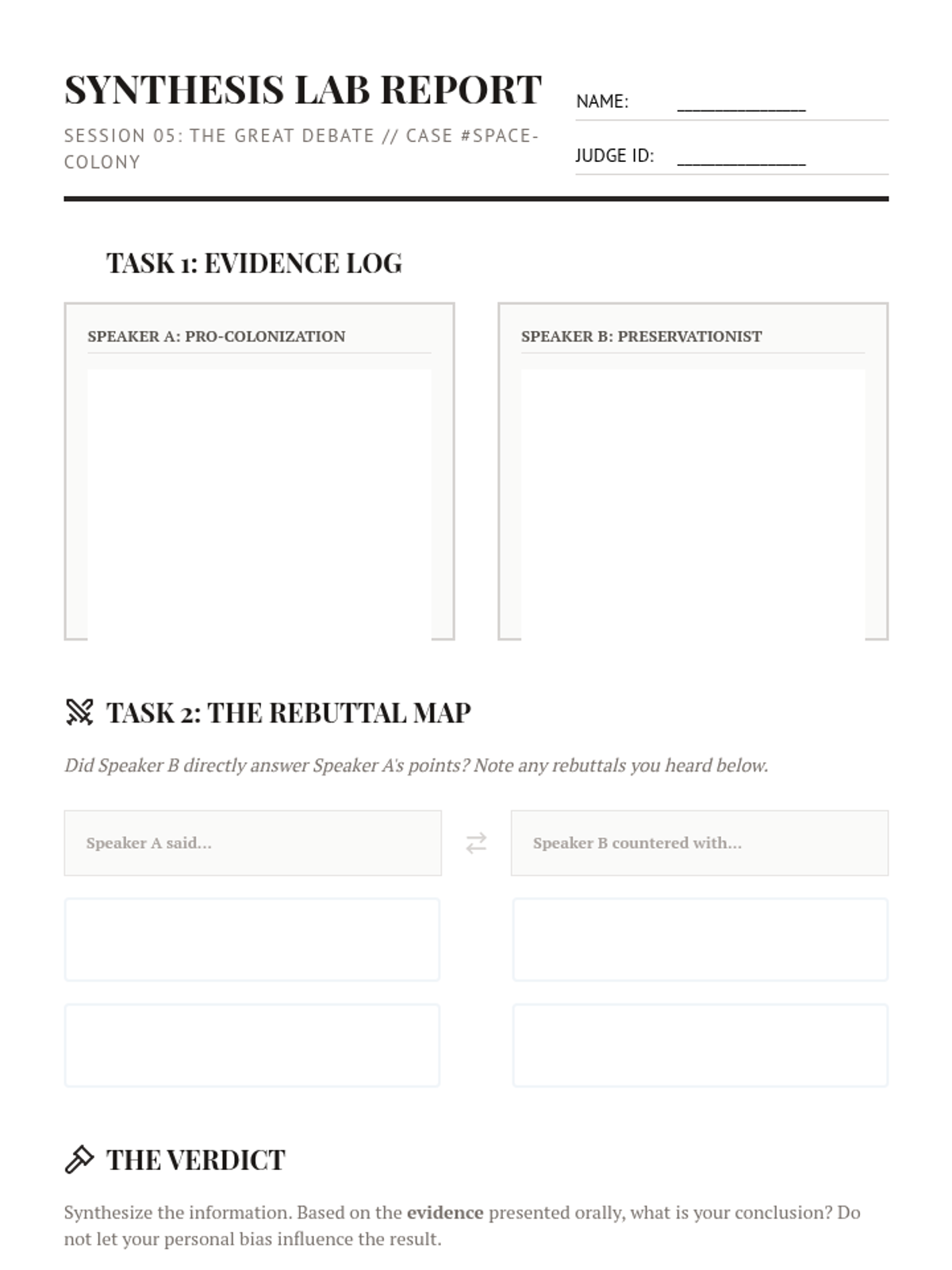
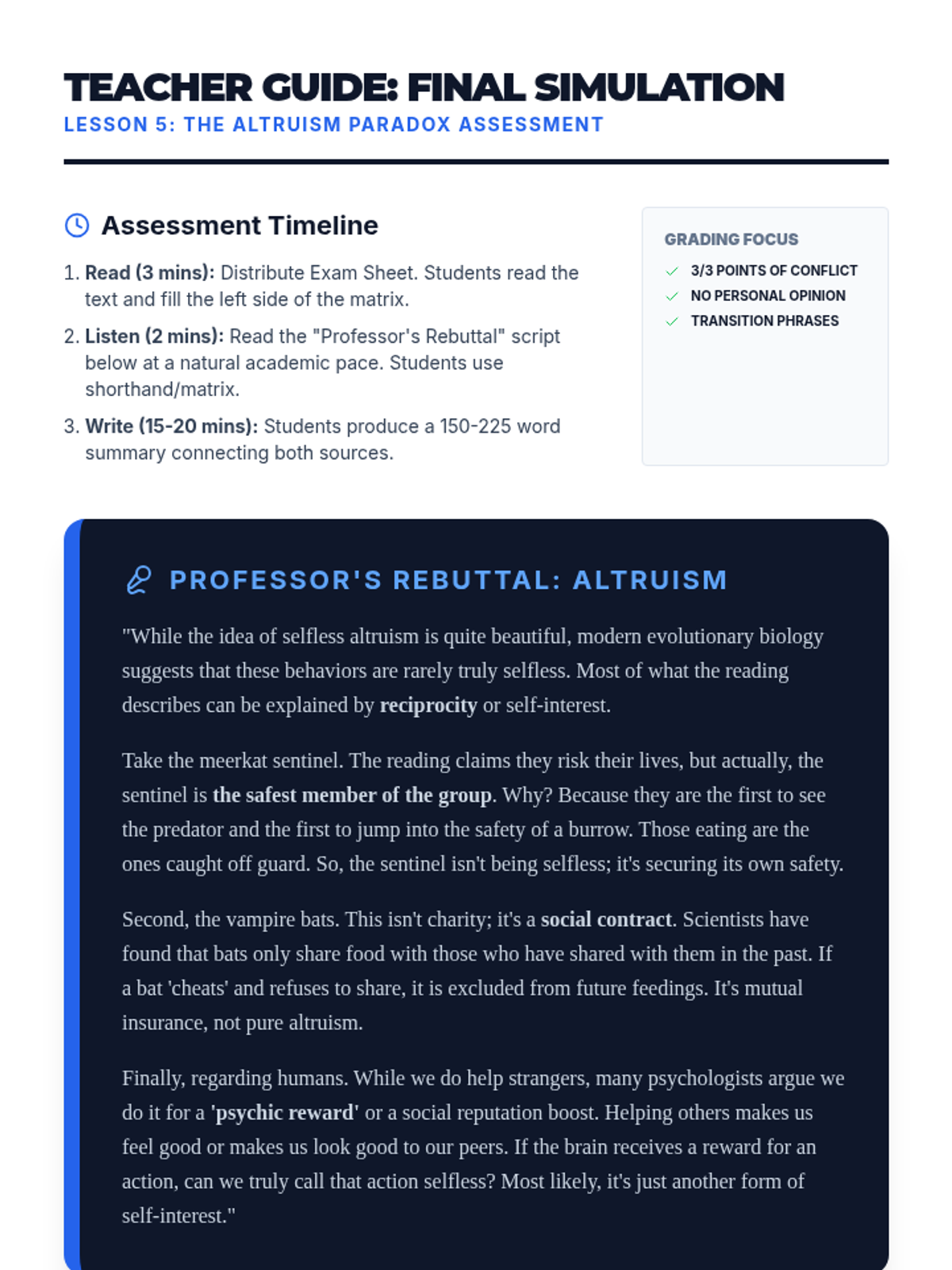
In the final lesson, students listen to opposing viewpoints on an academic topic, identify rebuttals, and synthesize the information to form a reasoned conclusion.
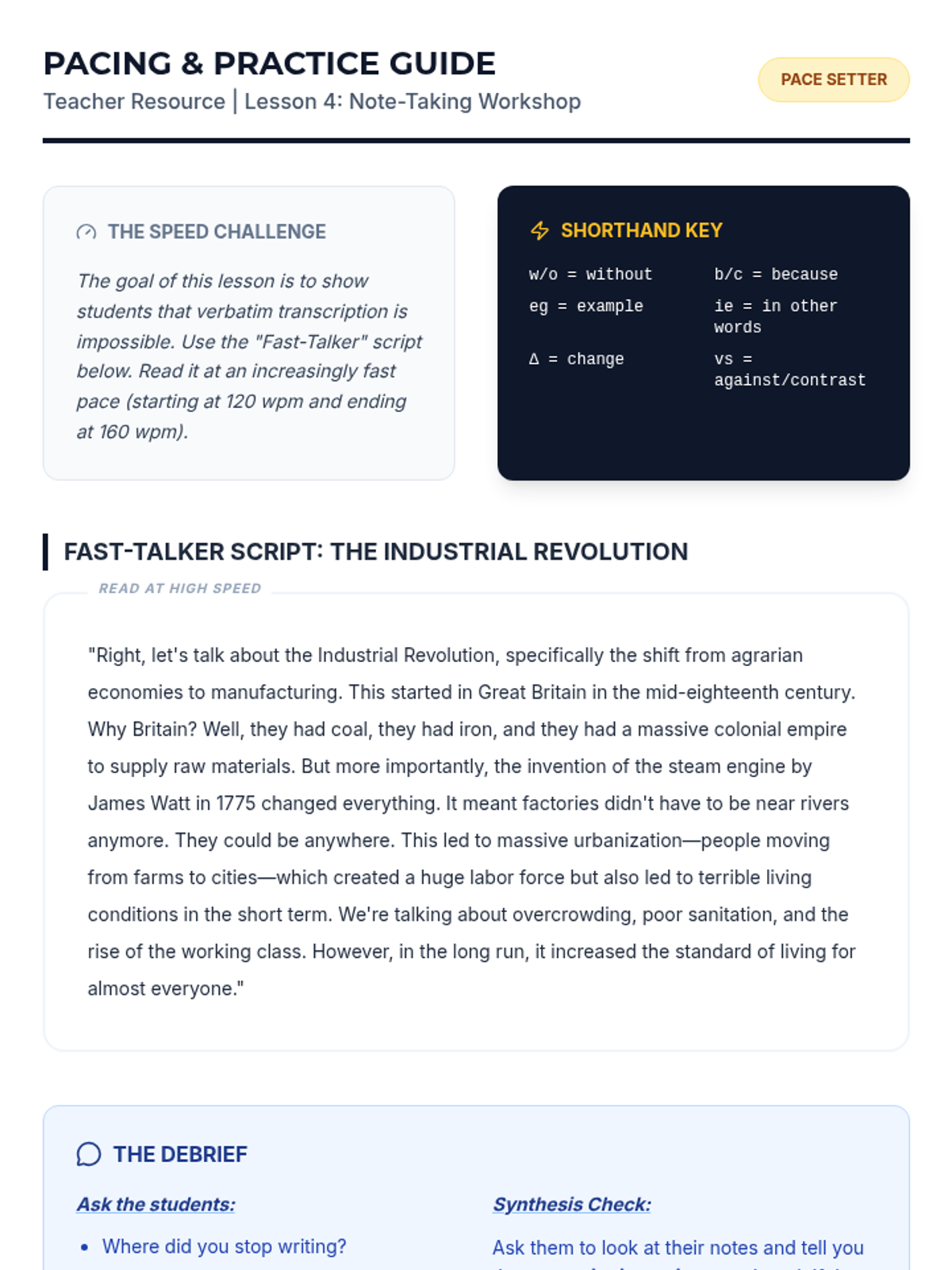
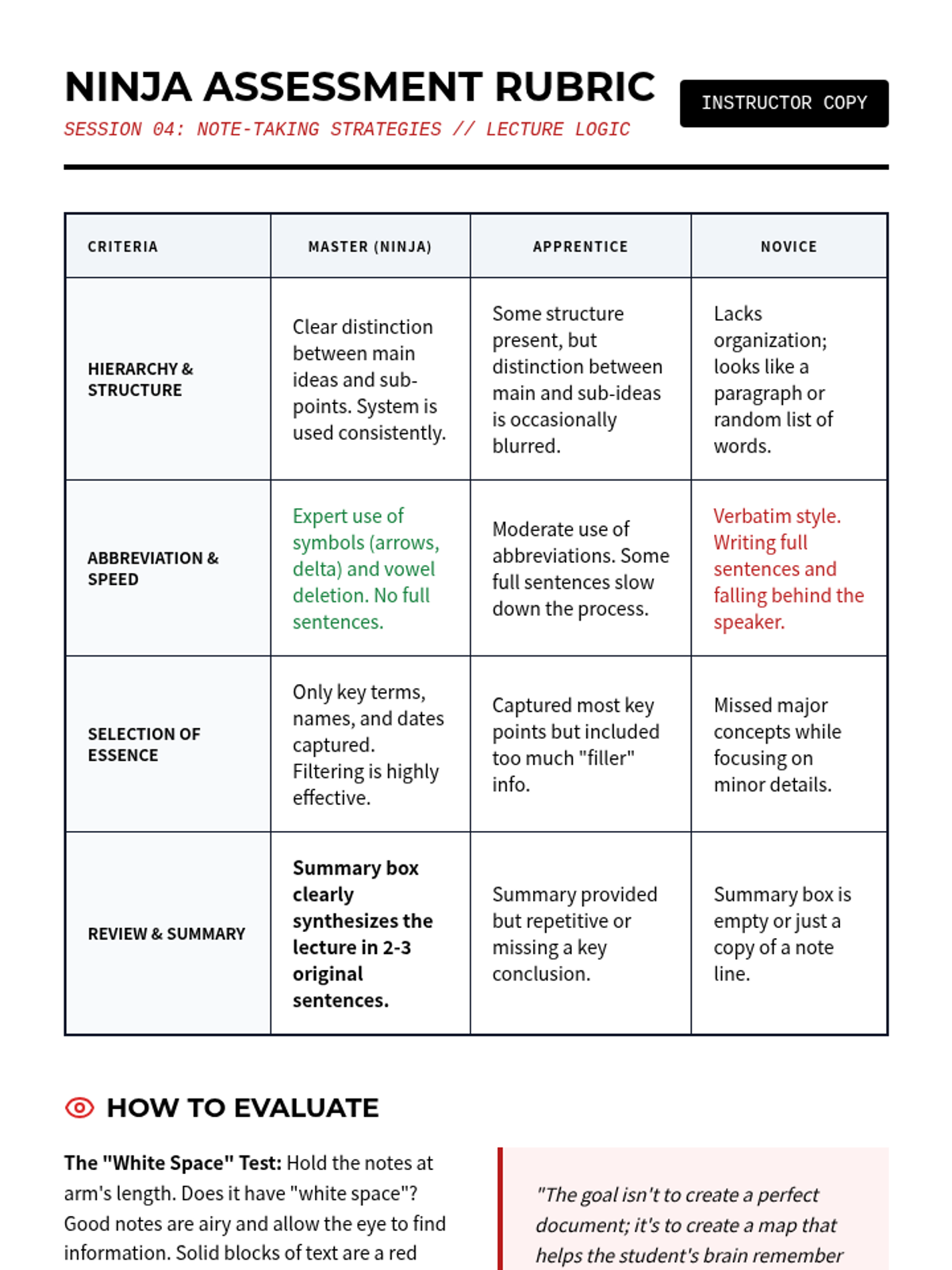
A workshop on strategic note-taking systems (Cornell, Outlining, Mapping). Students learn to use abbreviations and capture key concepts rather than verbatim transcription.
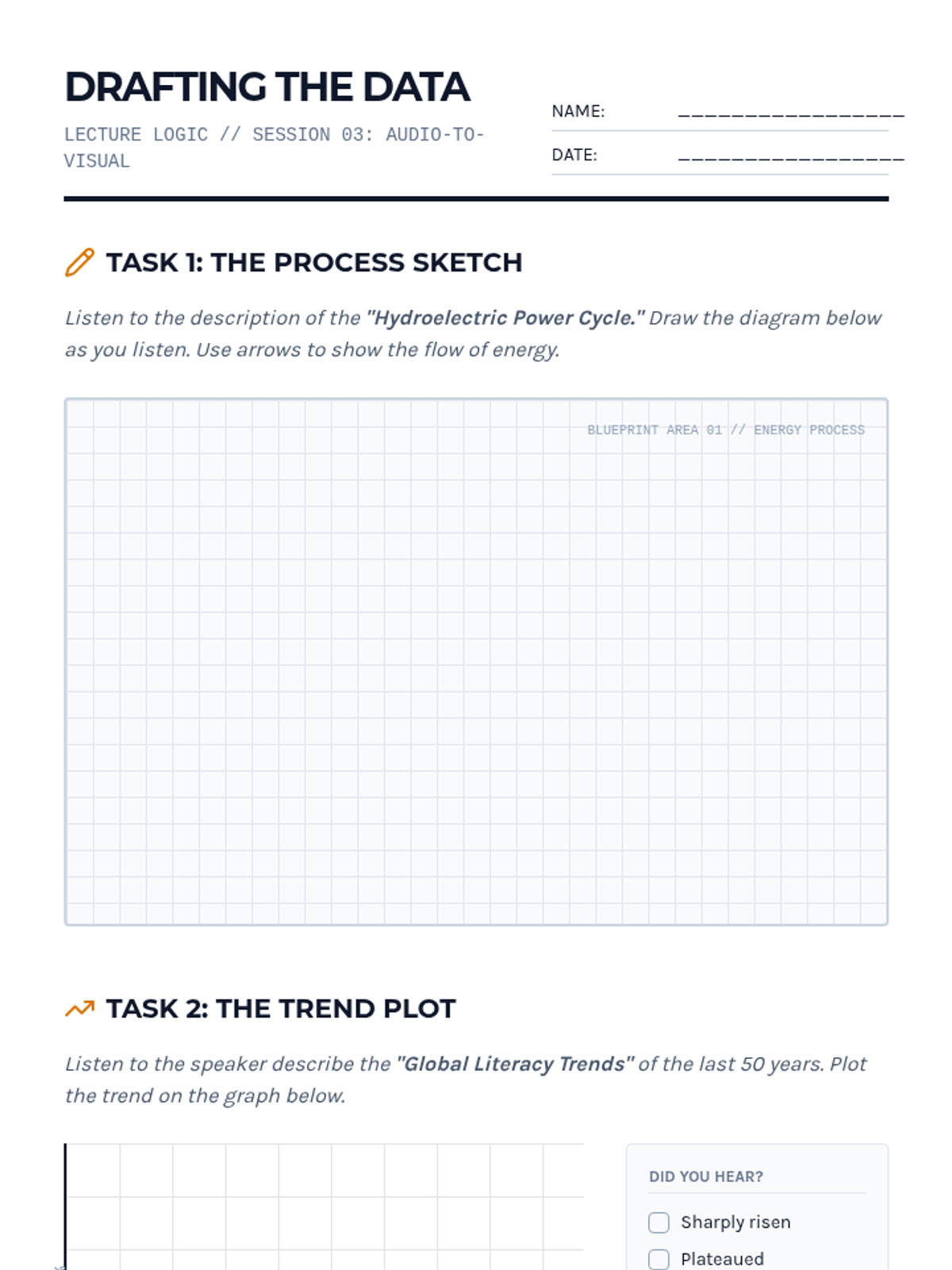
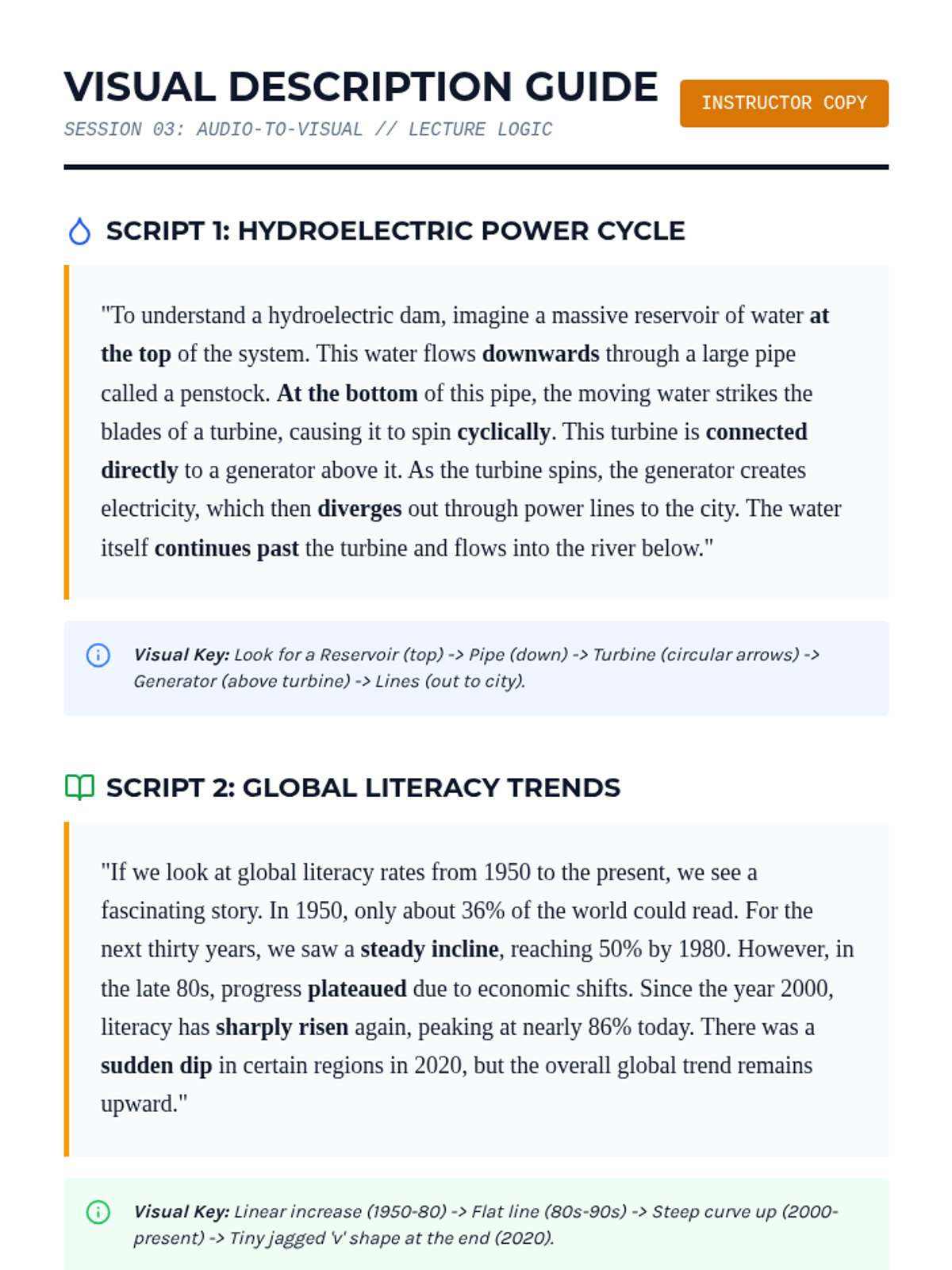
Students practice converting auditory descriptions into visual data. They will draw diagrams and charts based strictly on spoken information about processes and statistics.
Learners differentiate between objective facts and subjective interpretation, focusing on 'hedging' language like 'appears to' or 'suggests.' They will categorize statements based on their level of certainty.
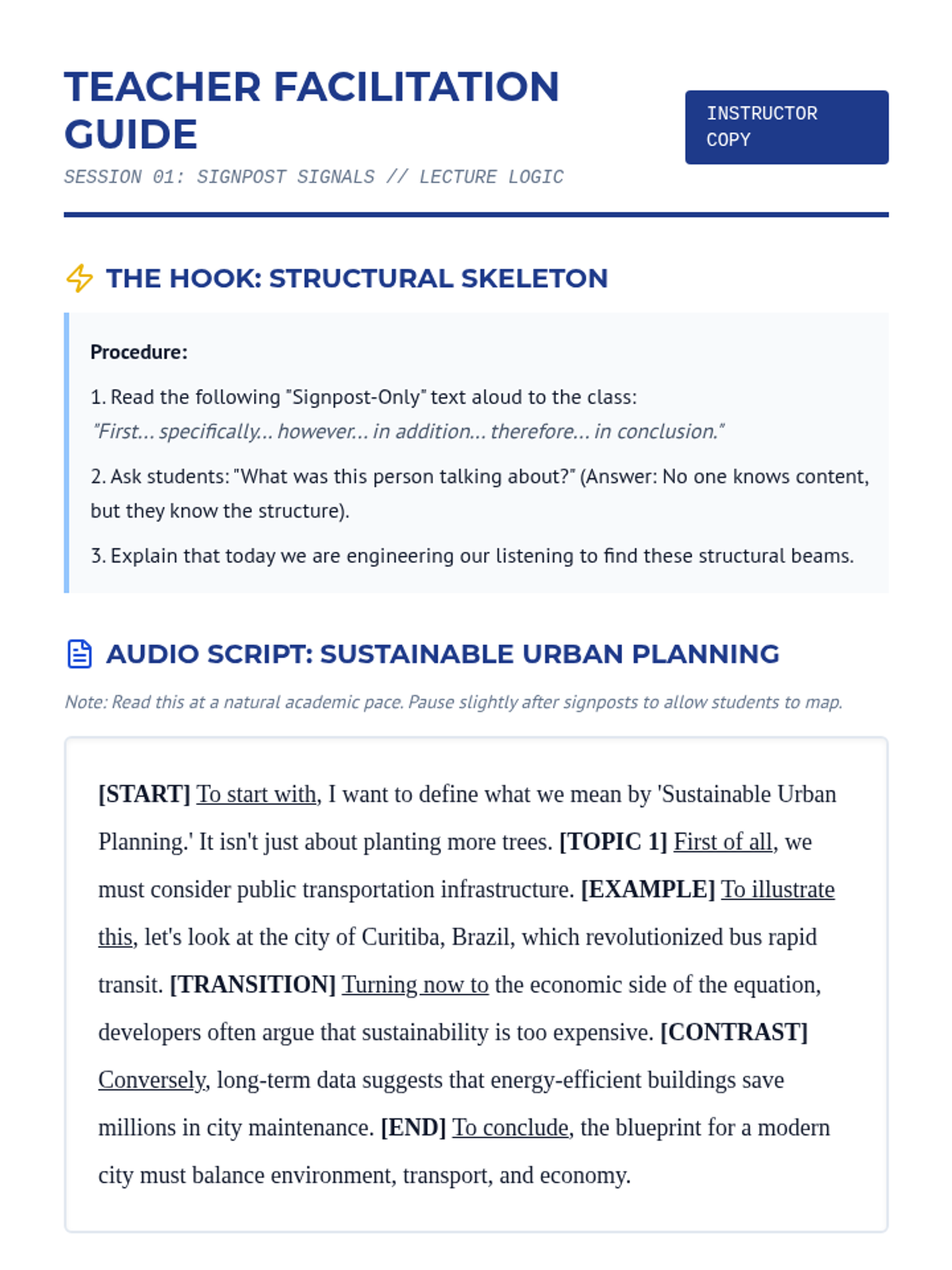
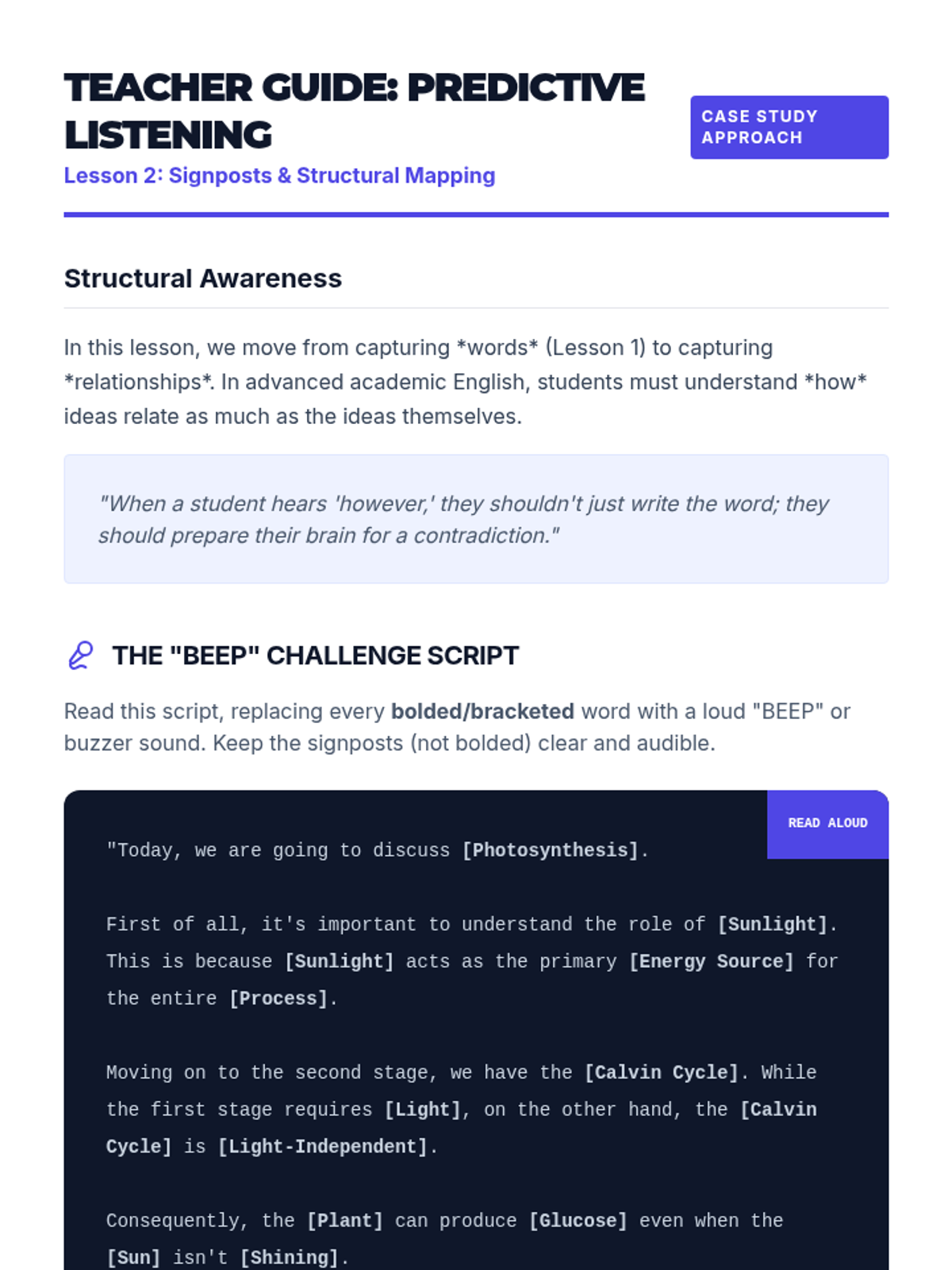
Students learn to identify transition signals (signposting) that reveal a lecture's organizational structure. They will practice mapping lecture segments based on auditory cues alone.
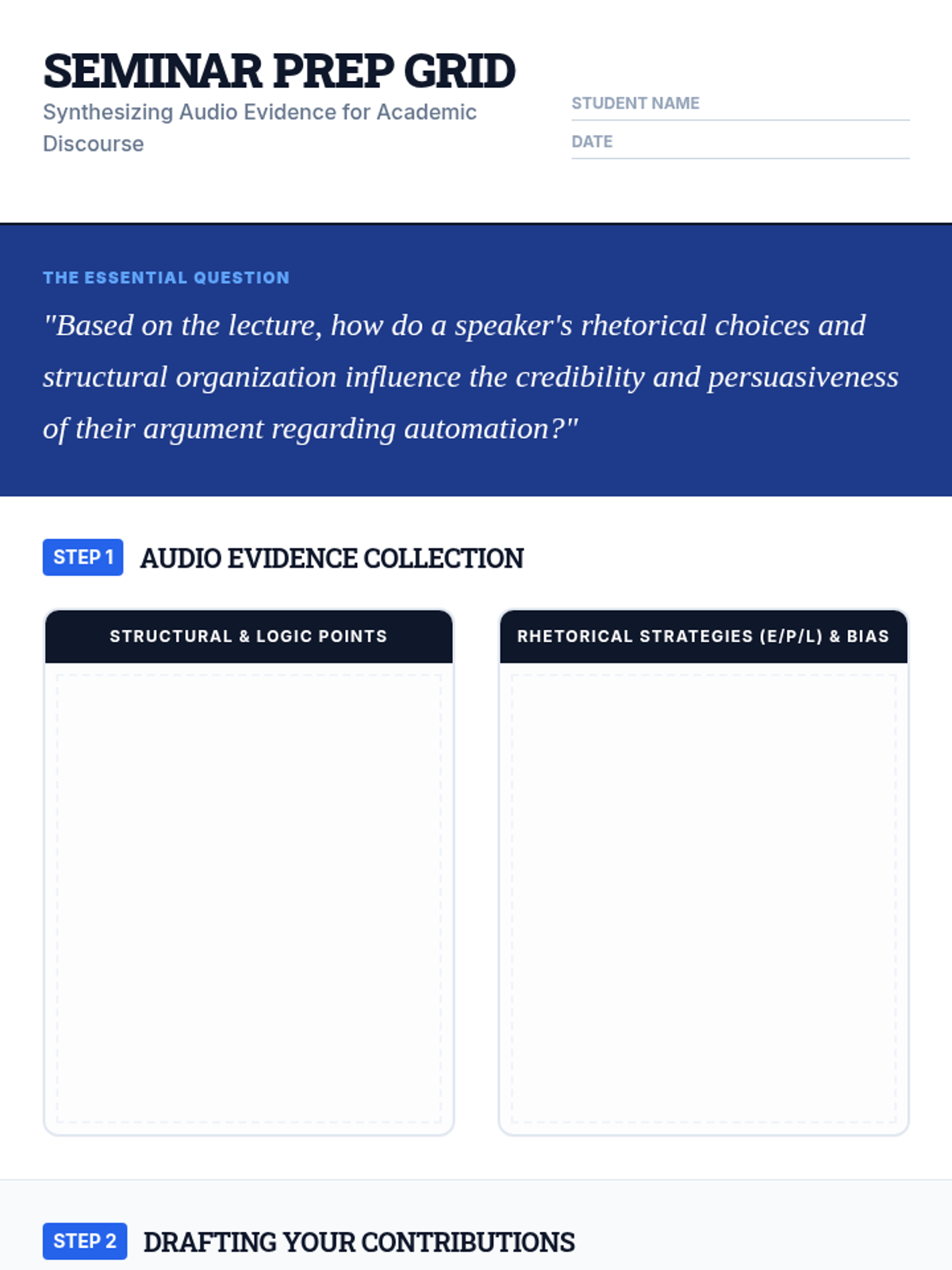
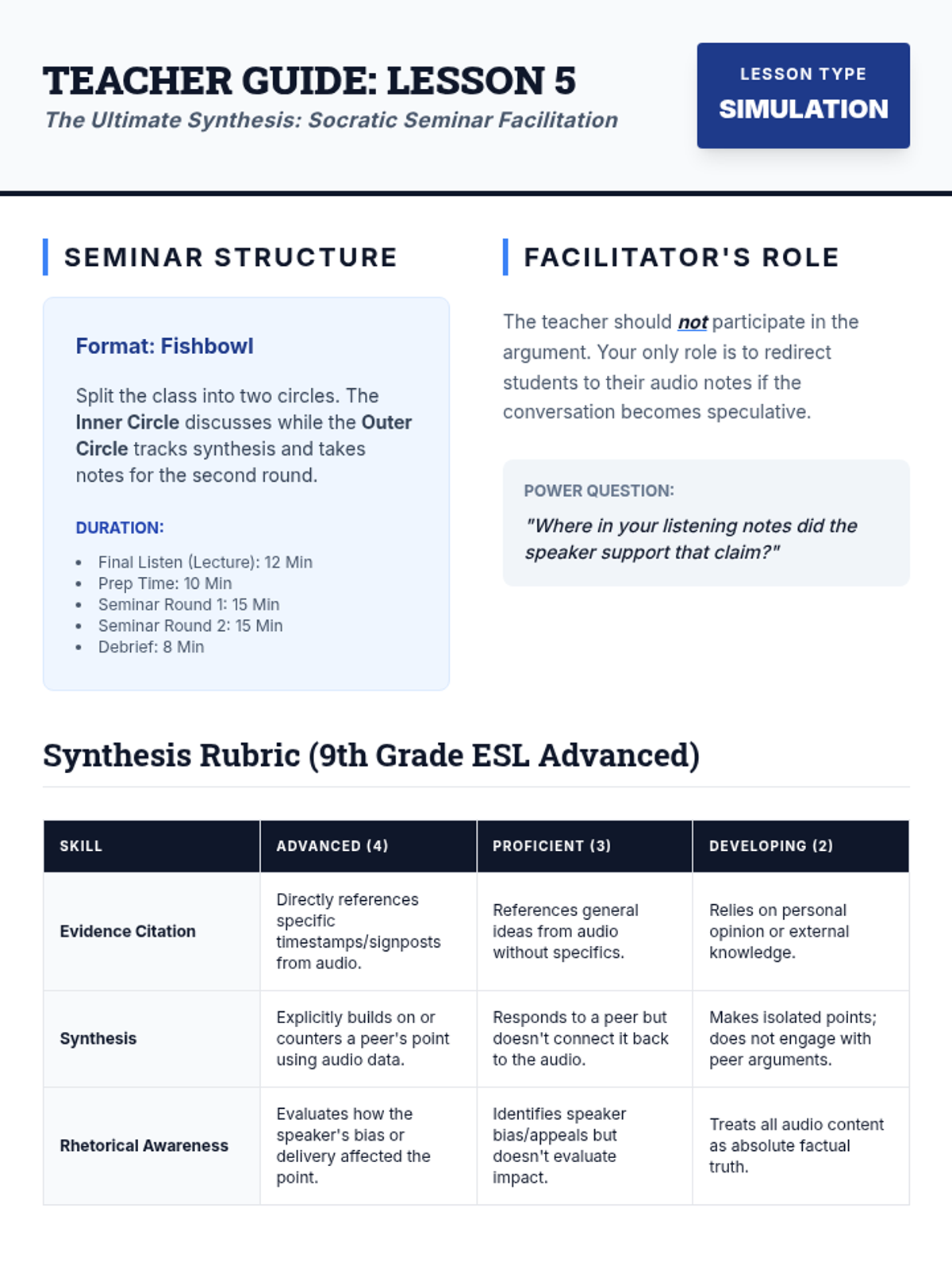
In this culminating lesson, students engage in a Socratic seminar using listening notes from a complex lecture to support their arguments in real-time.
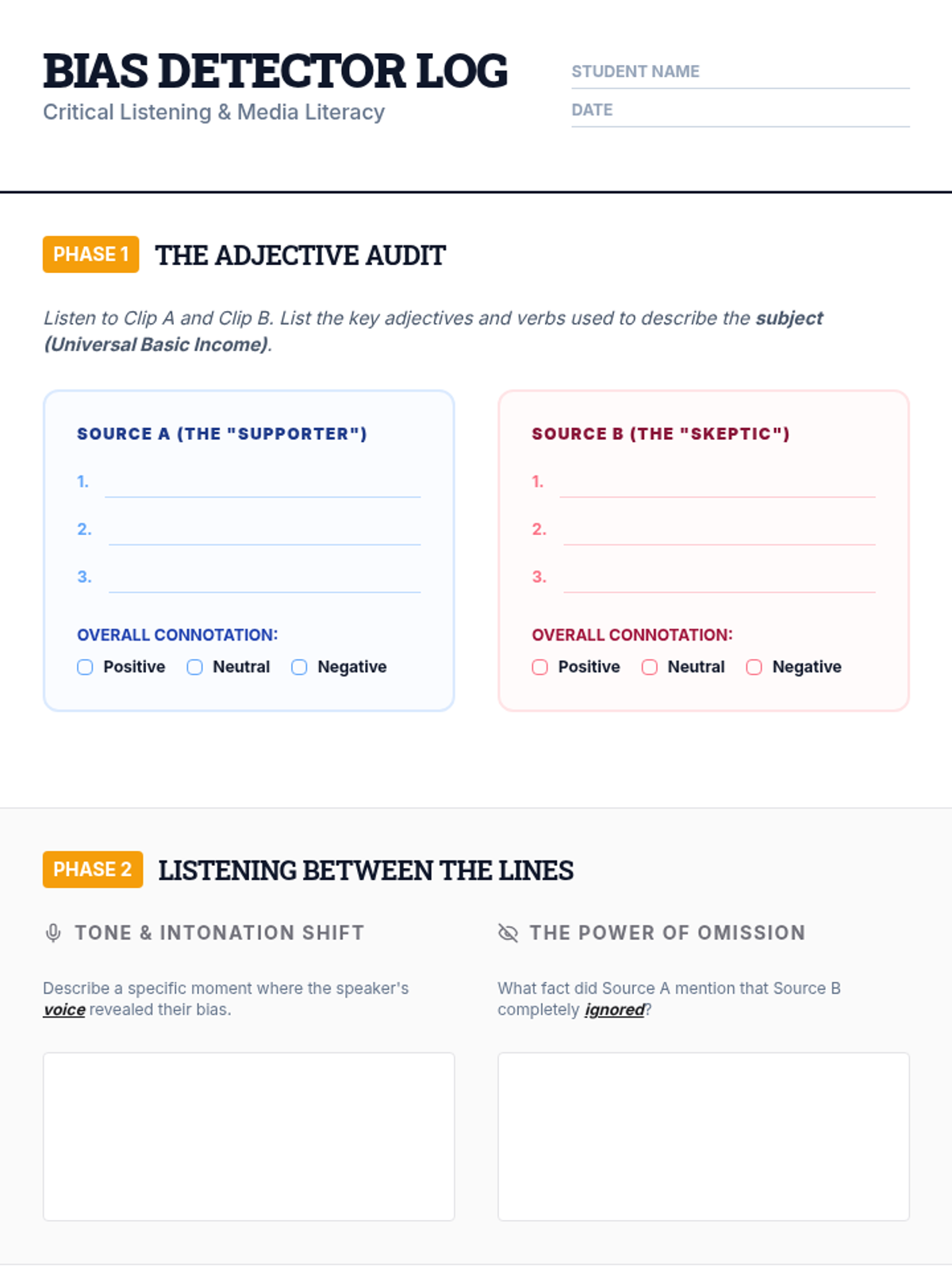
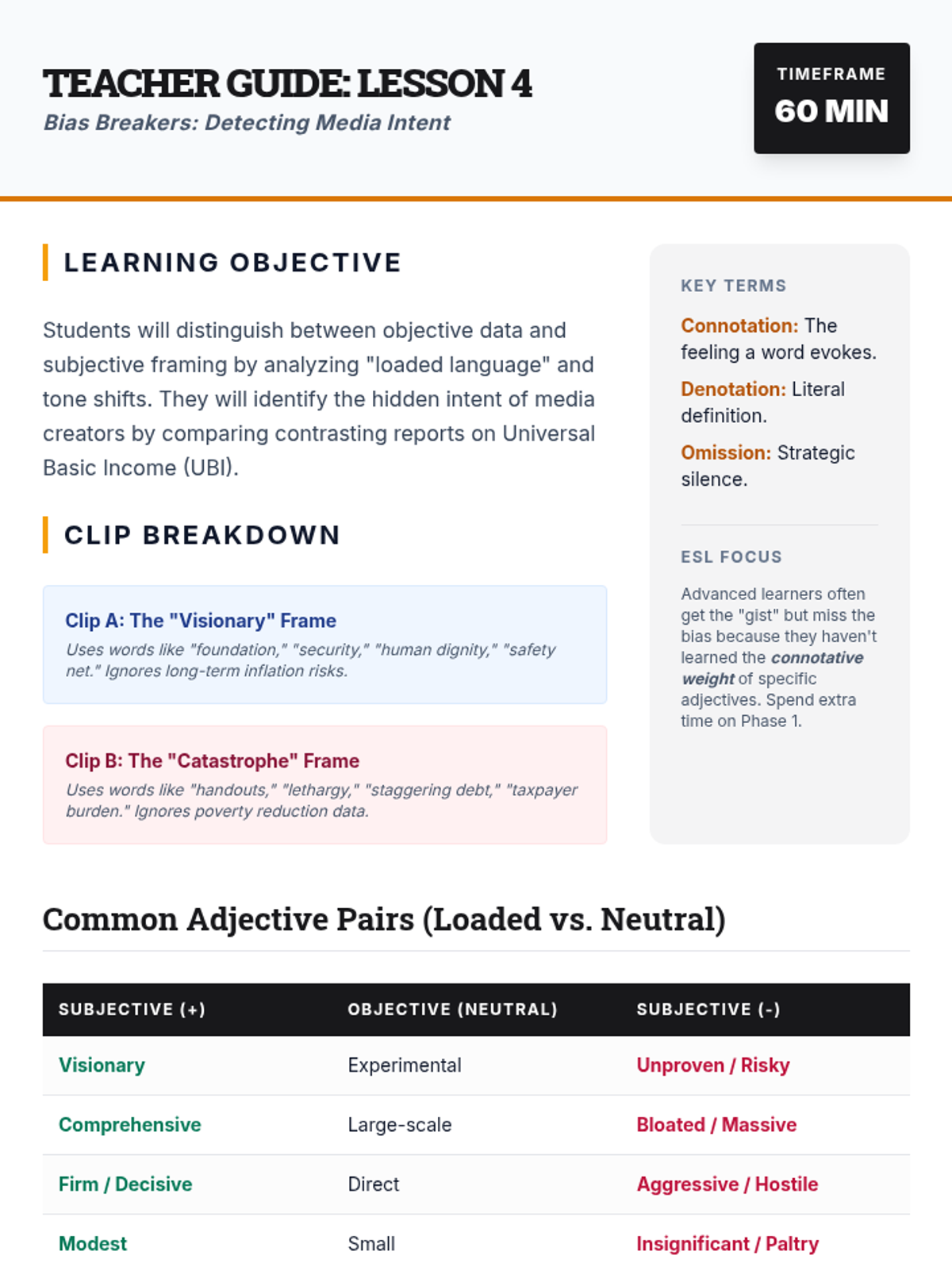
Students listen to media clips to distinguish between facts and opinions, focusing on loaded language and tone shifts that reveal speaker bias.
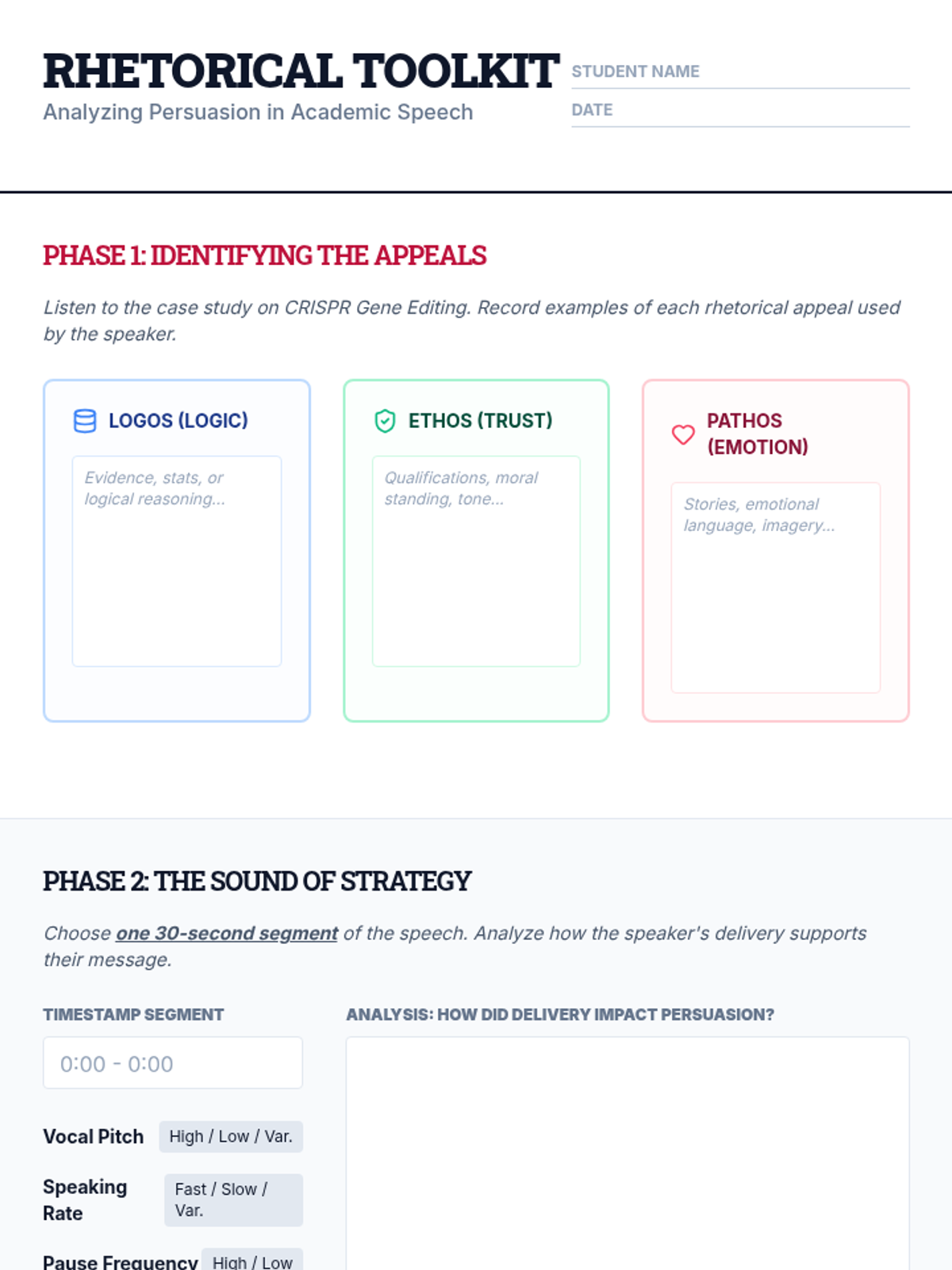
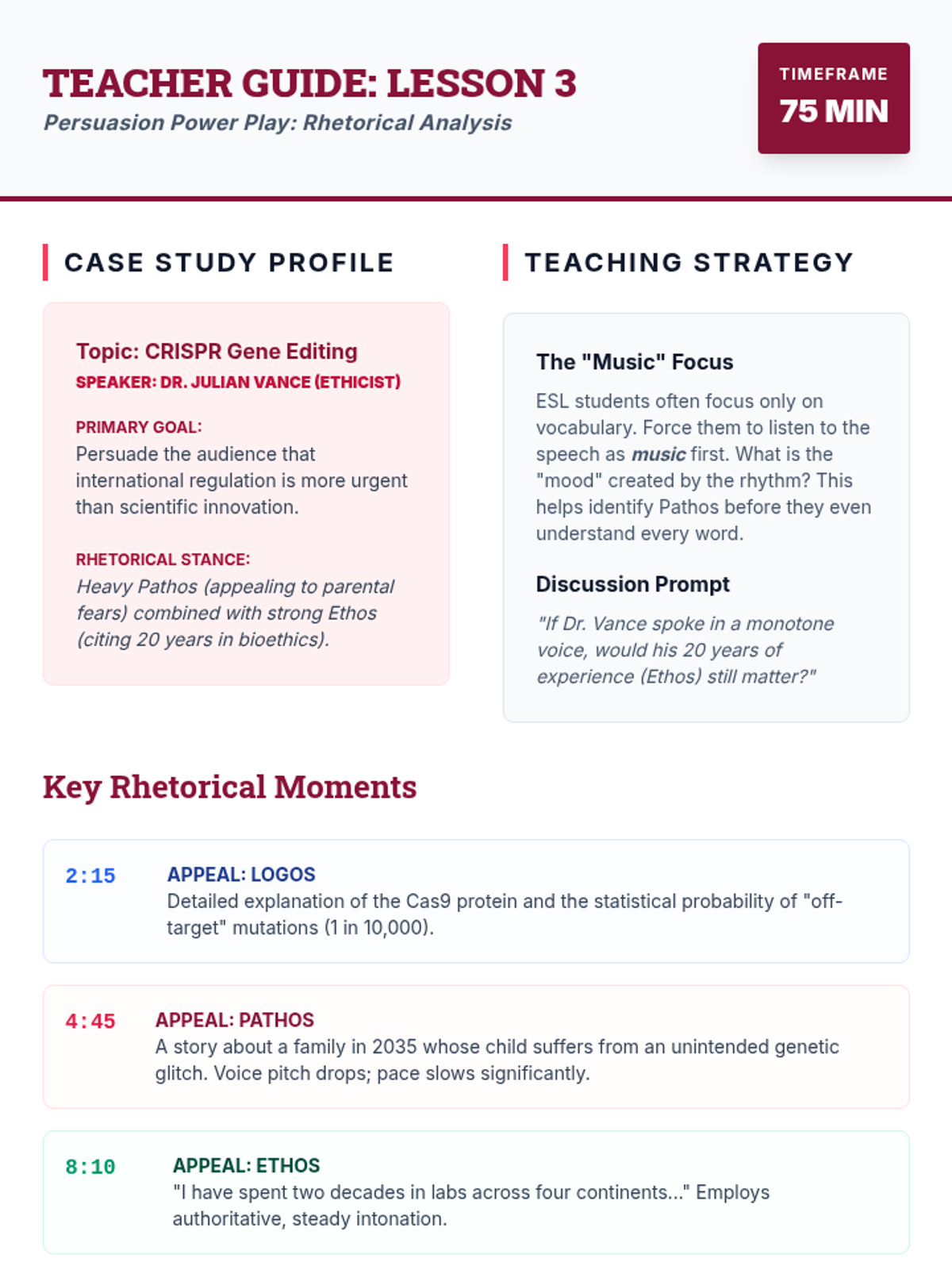
Students identify and evaluate the use of ethos, pathos, and logos, analyzing how delivery elements like intonation and pausing strengthen rhetorical appeals.
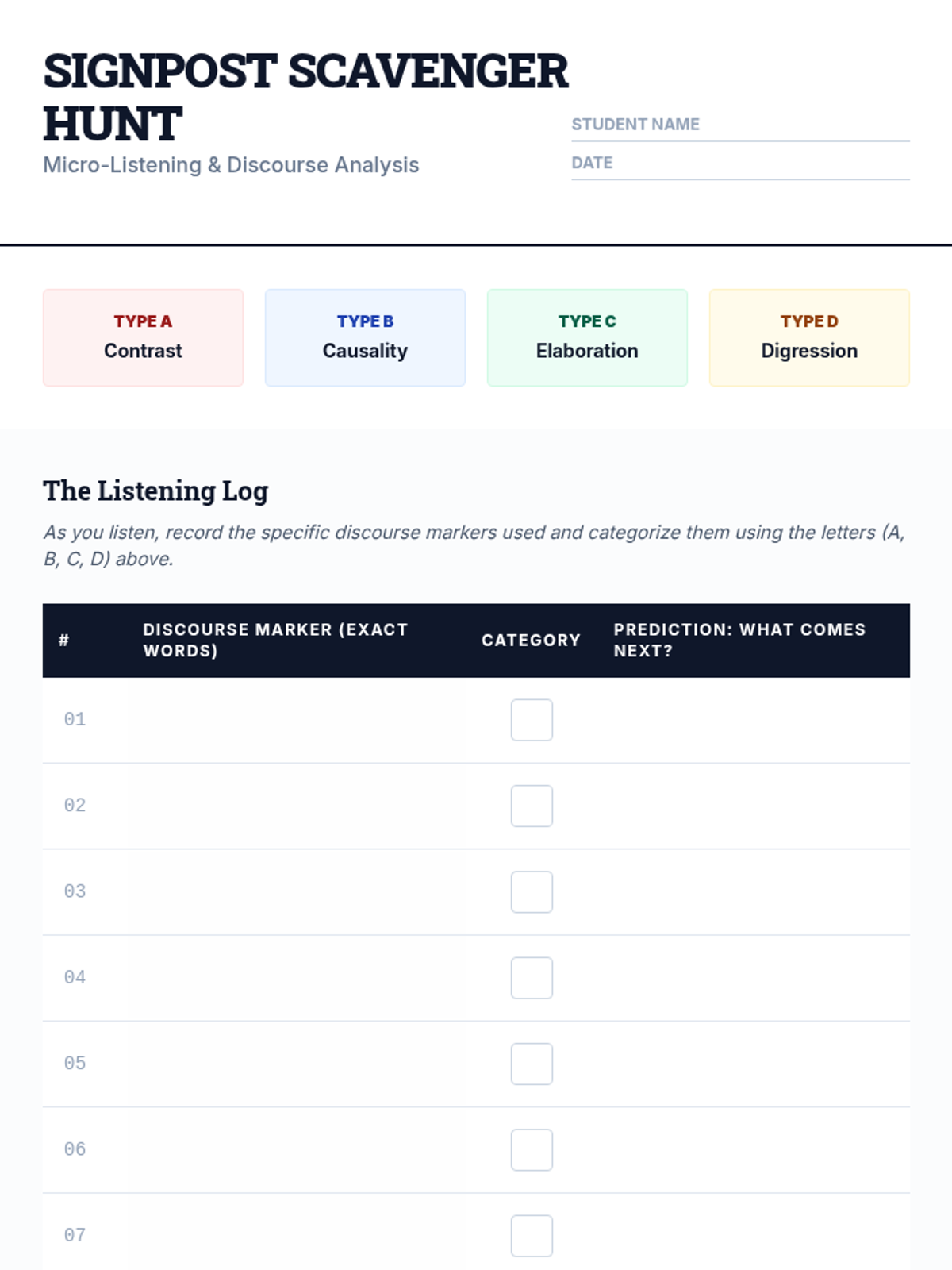
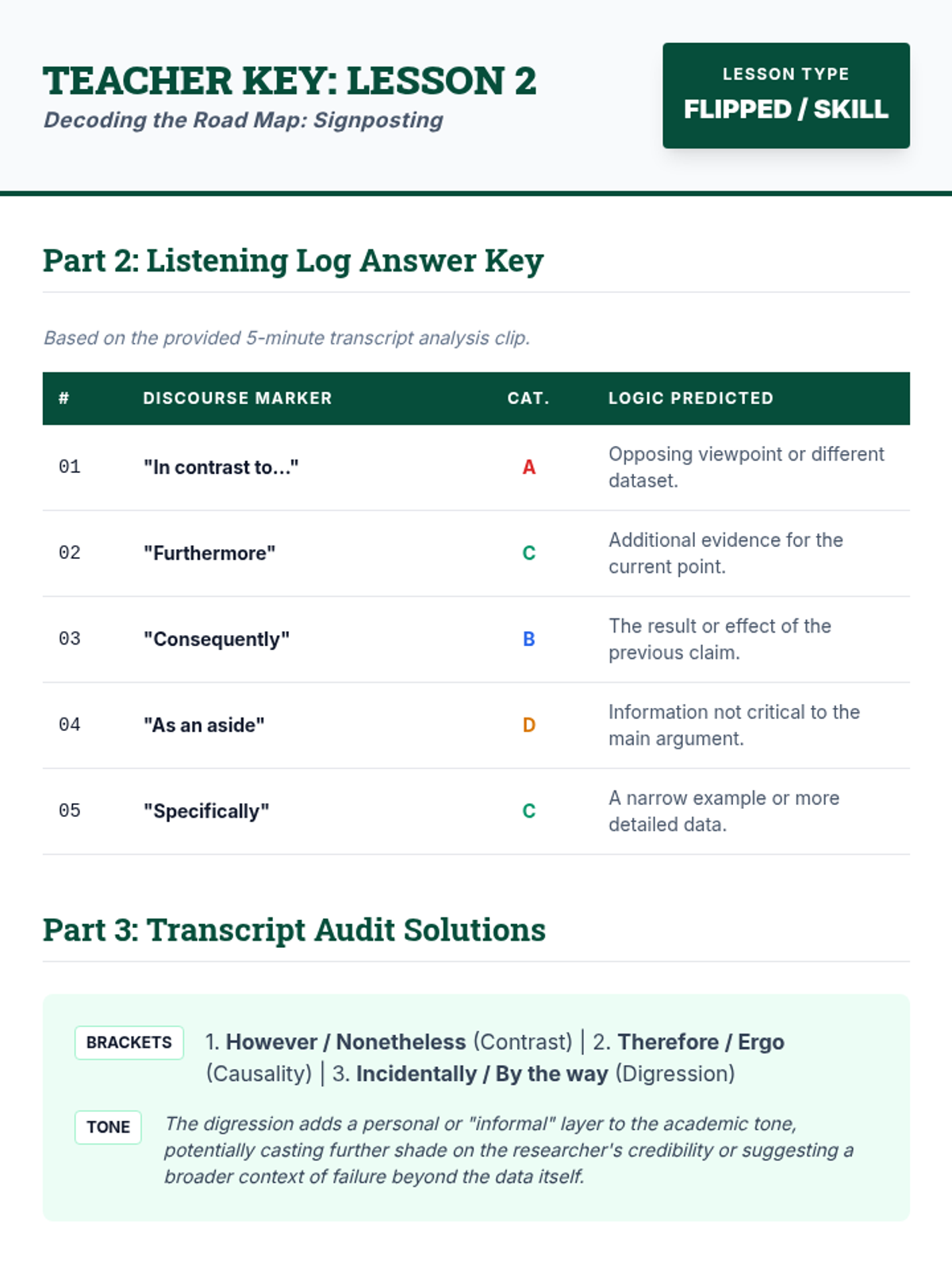
Learners focus on 'micro-listening' skills to identify transition words and discourse markers that signal contrast, cause-and-effect, or digression.
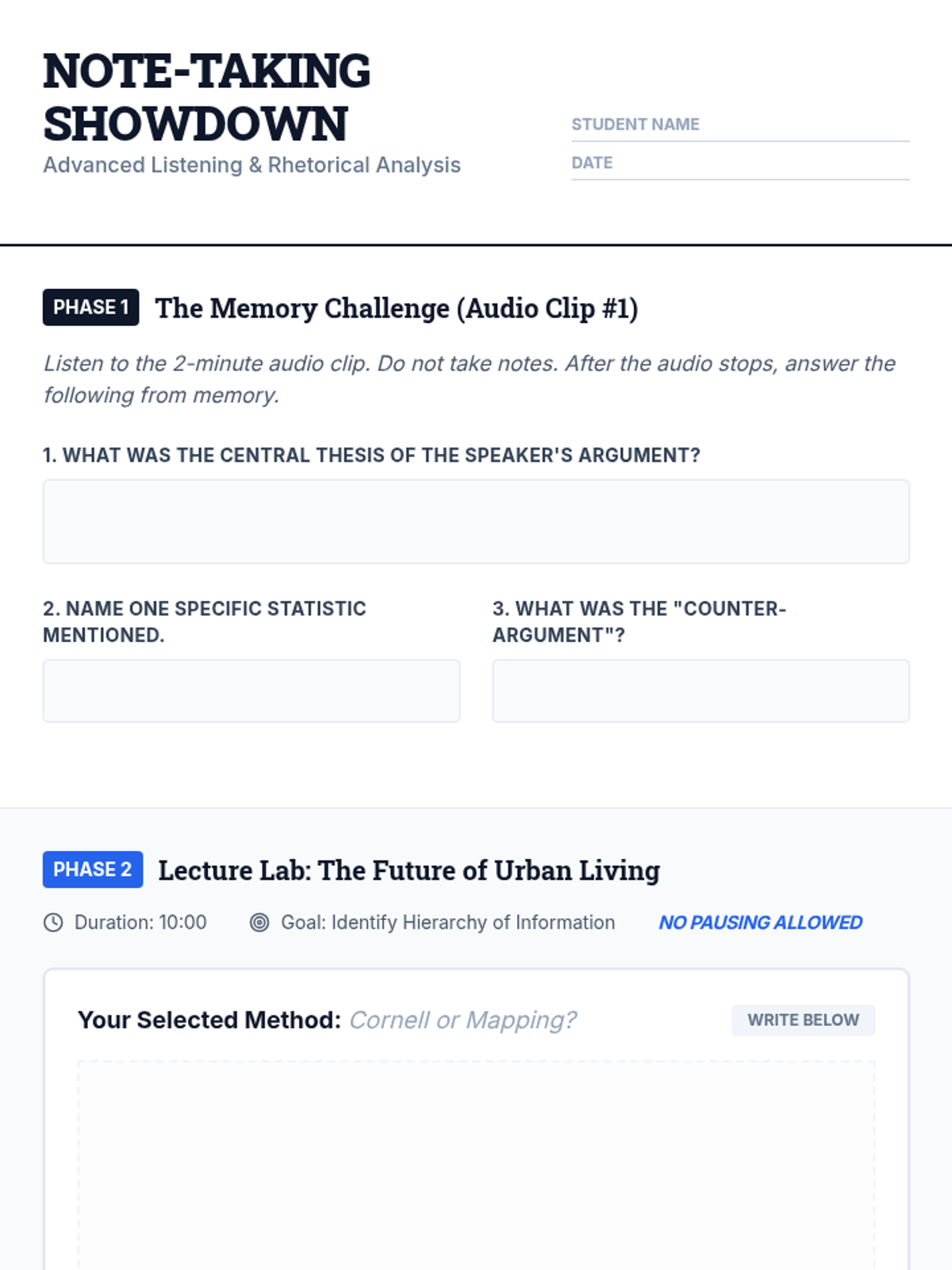
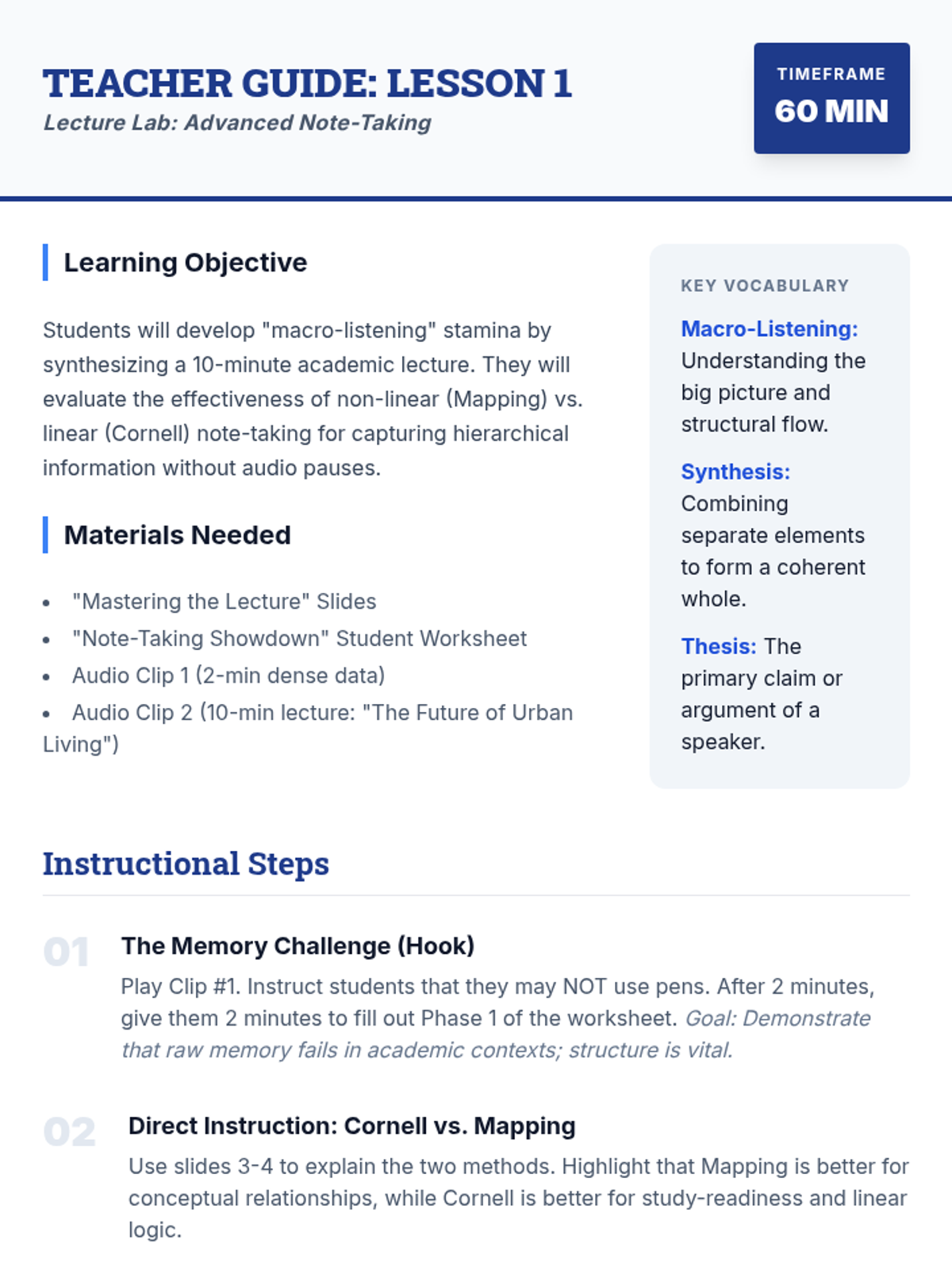
Students practice 'macro-listening' by identifying the thesis and major supporting points of a dense academic lecture, comparing Cornell and Mapping note-taking methods.
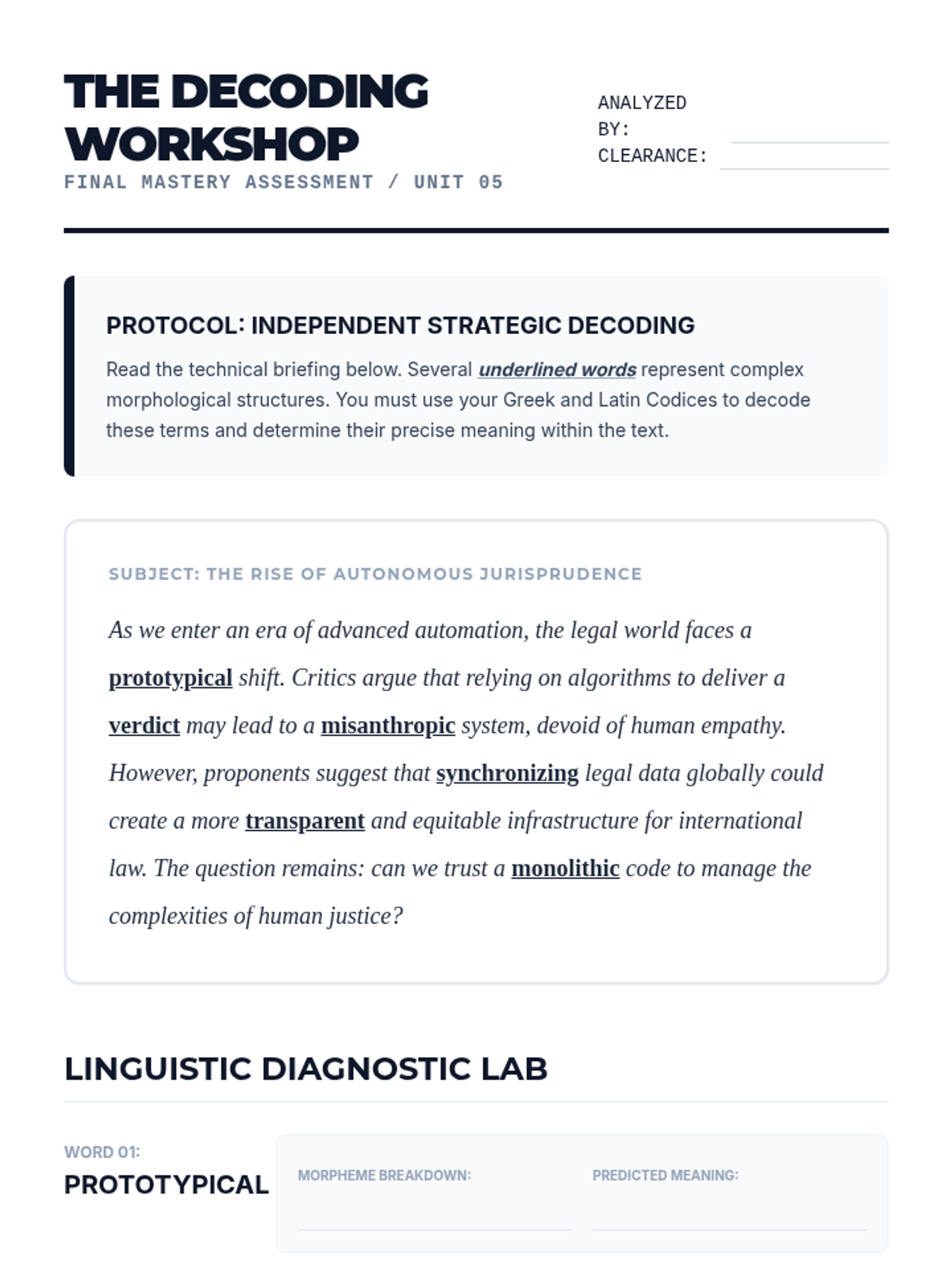
In this culminating workshop, students apply their full morphological toolkit to a challenging, unseen informational text with tiered vocabulary. They must identify unknown words, apply root analysis to draft definitions, and verify accuracy using context clues.
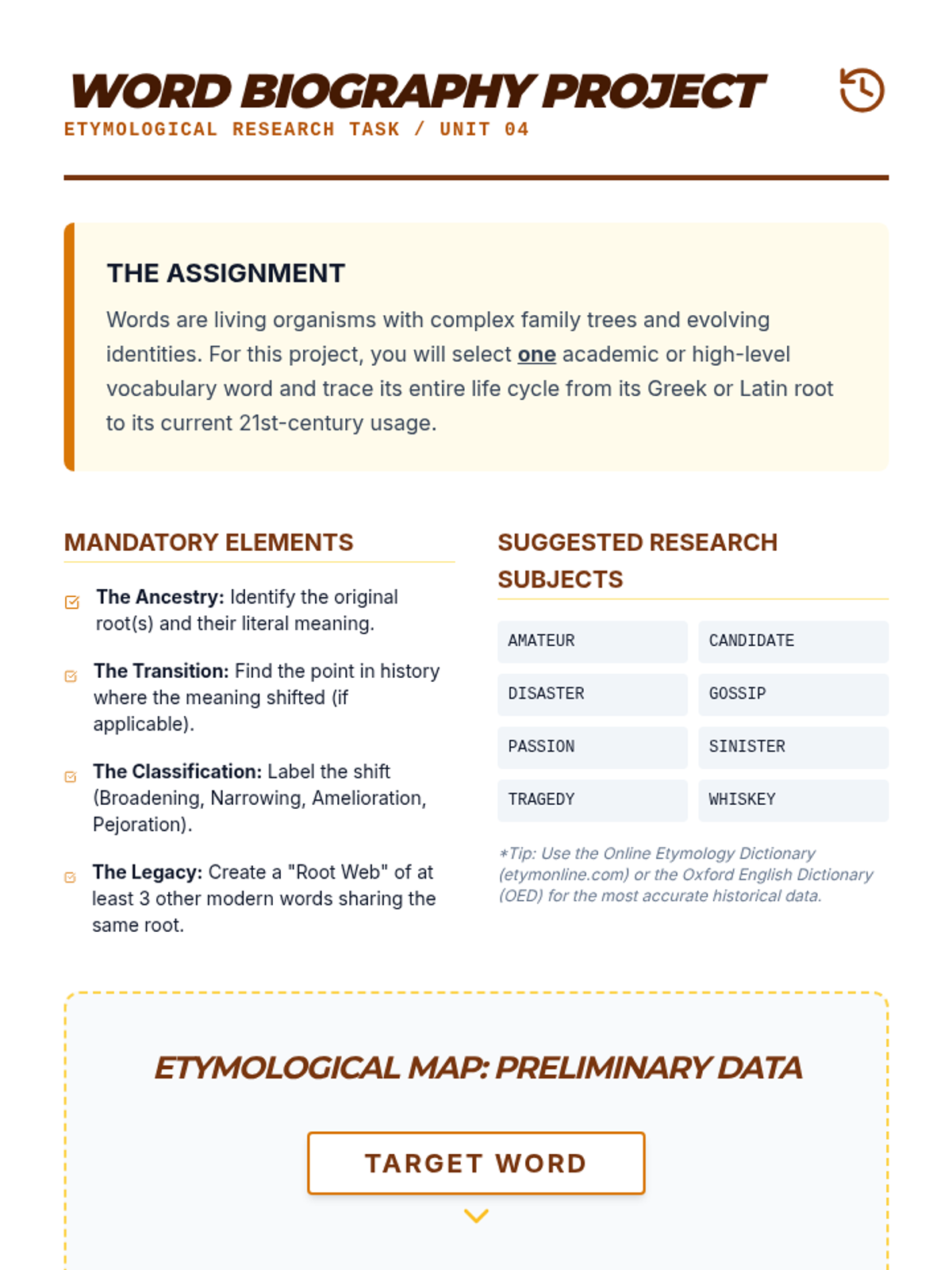
This lesson moves beyond static definitions to explore how word meanings evolve over time. Students research the etymology of a specific academic word, tracing its journey from an ancient root through linguistic shifts to its modern usage.
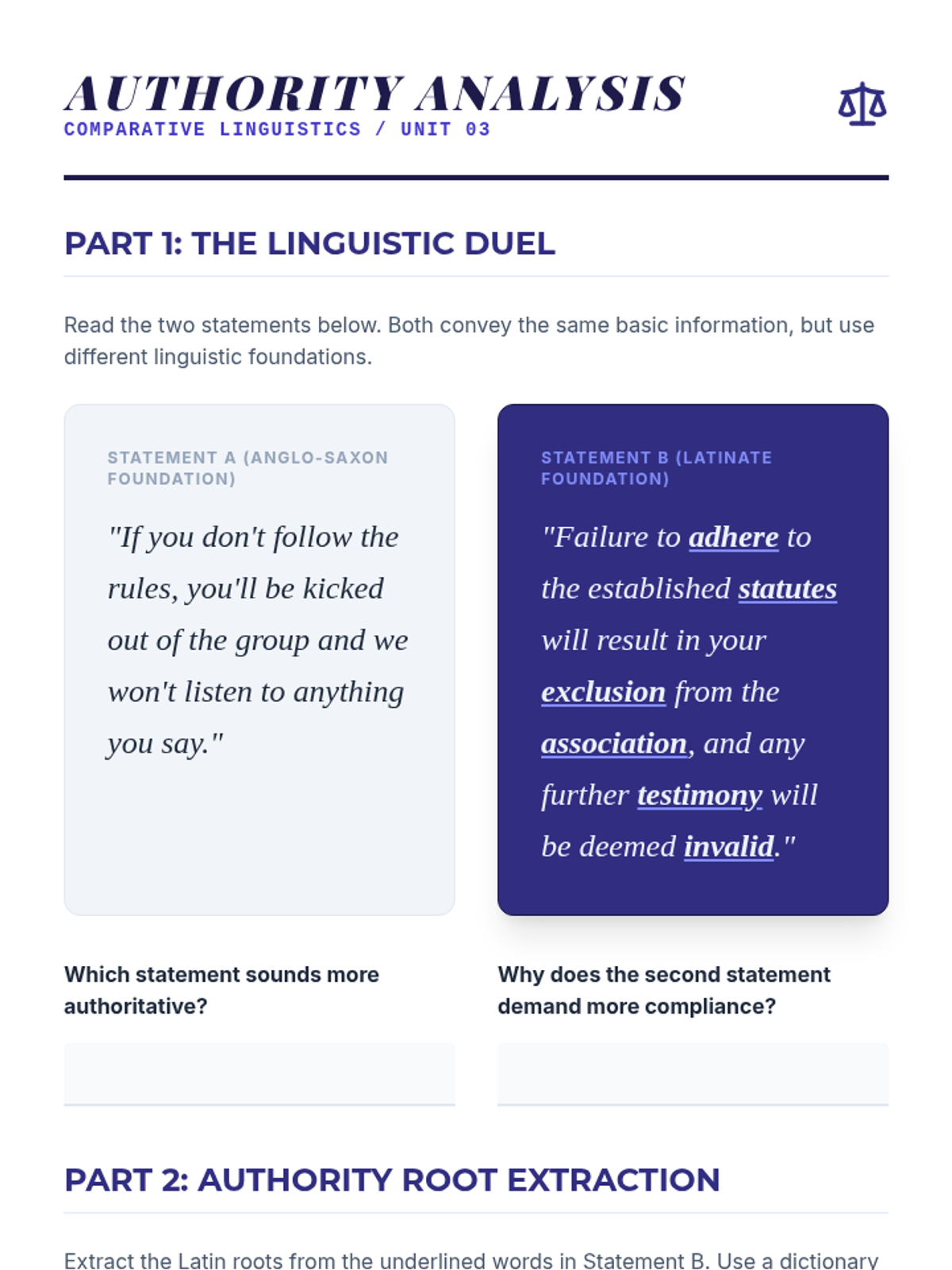
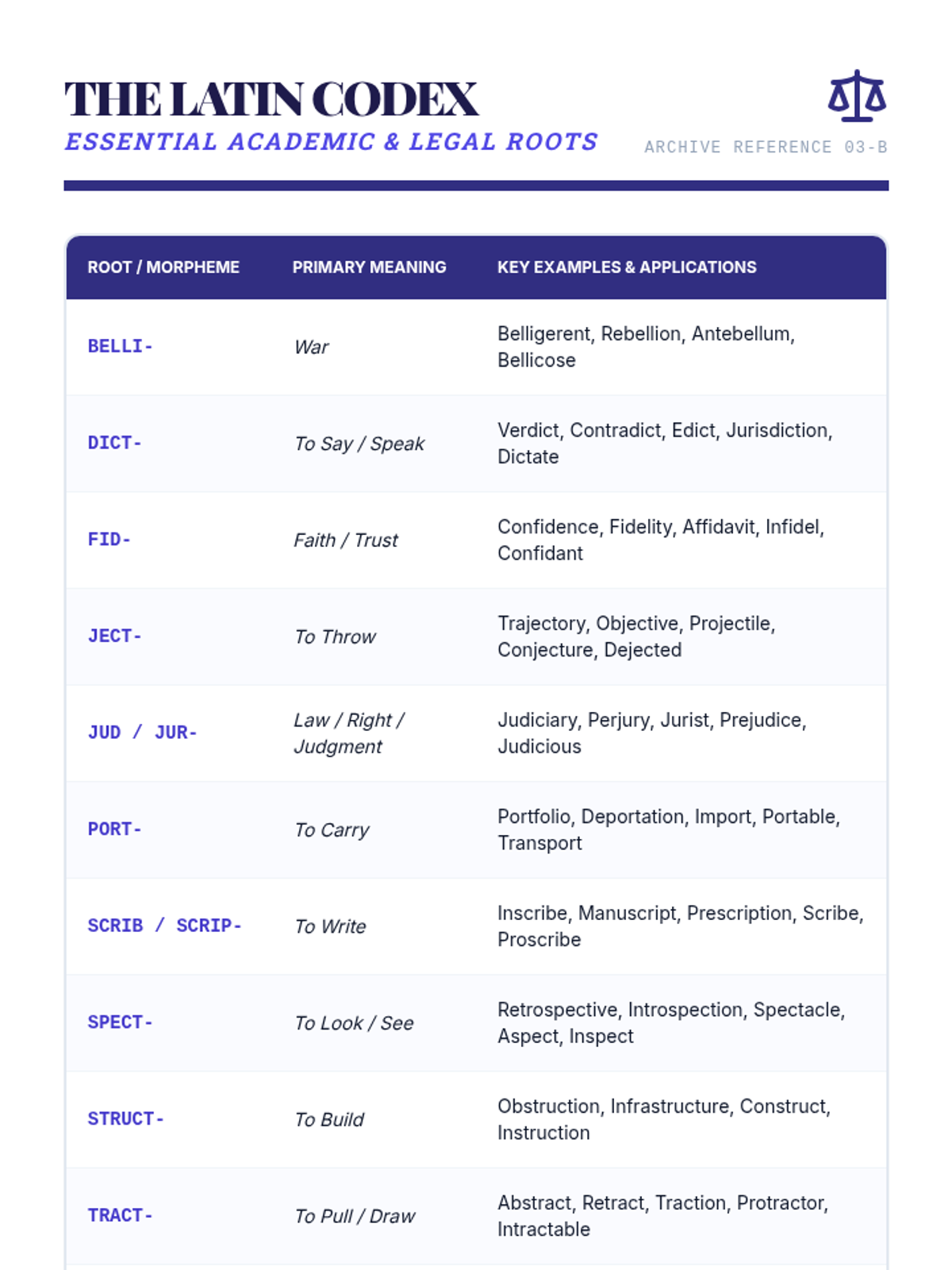
Students shift focus to Latin roots, investigating how they form the basis of abstract, legal, and formal vocabulary. They analyze a high-level persuasive text to see how Latinate words contribute to an authoritative tone.
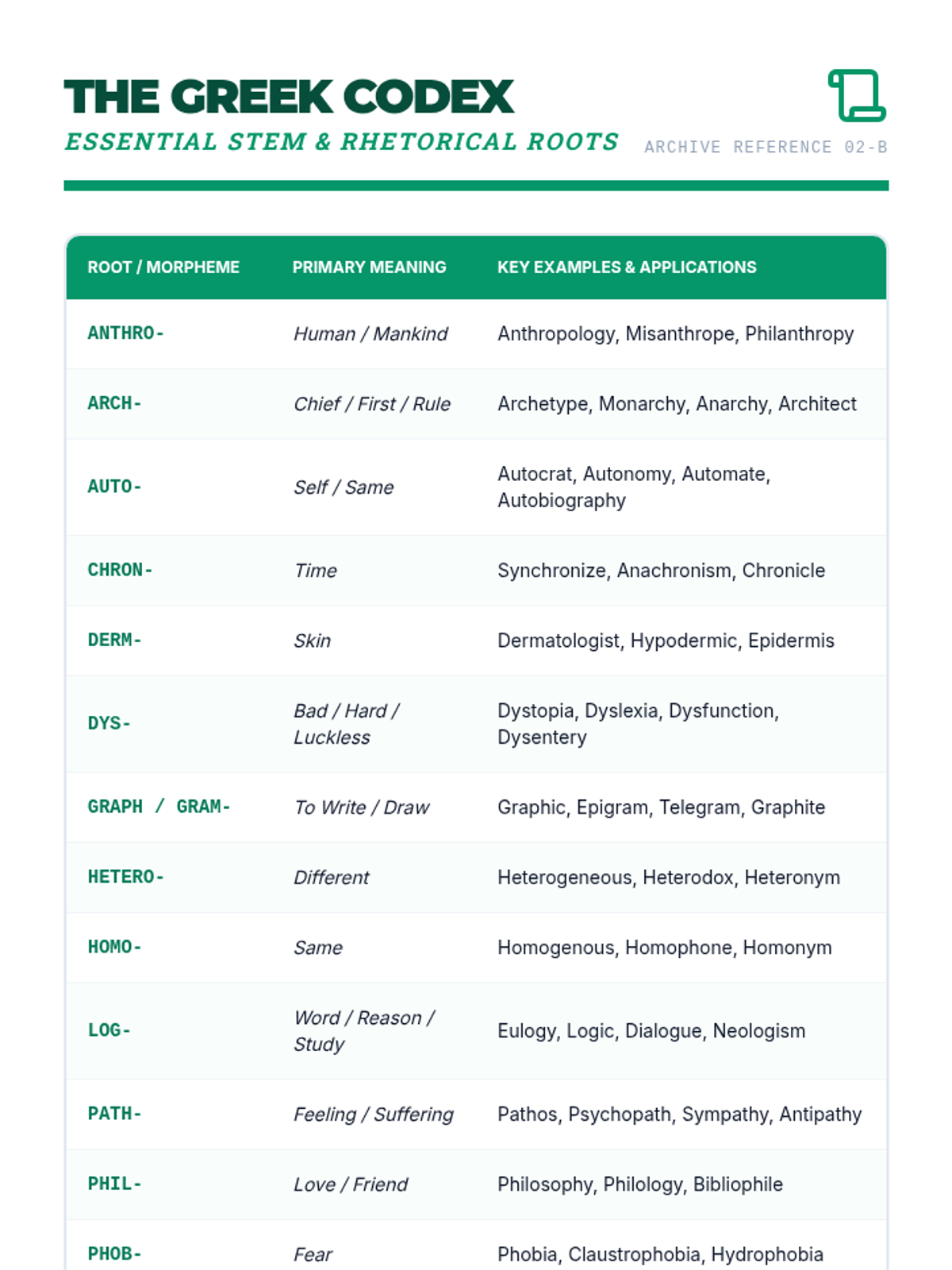
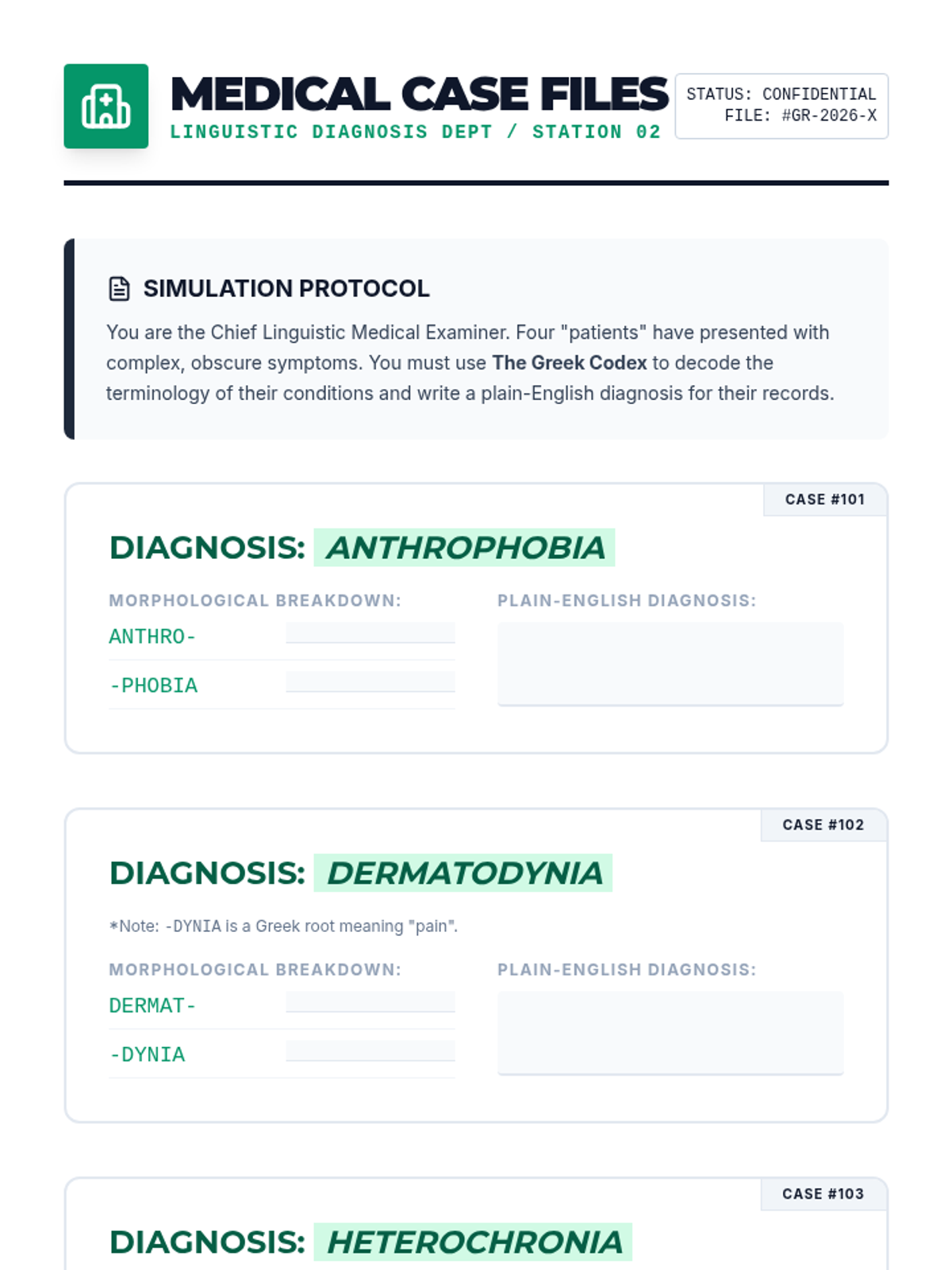
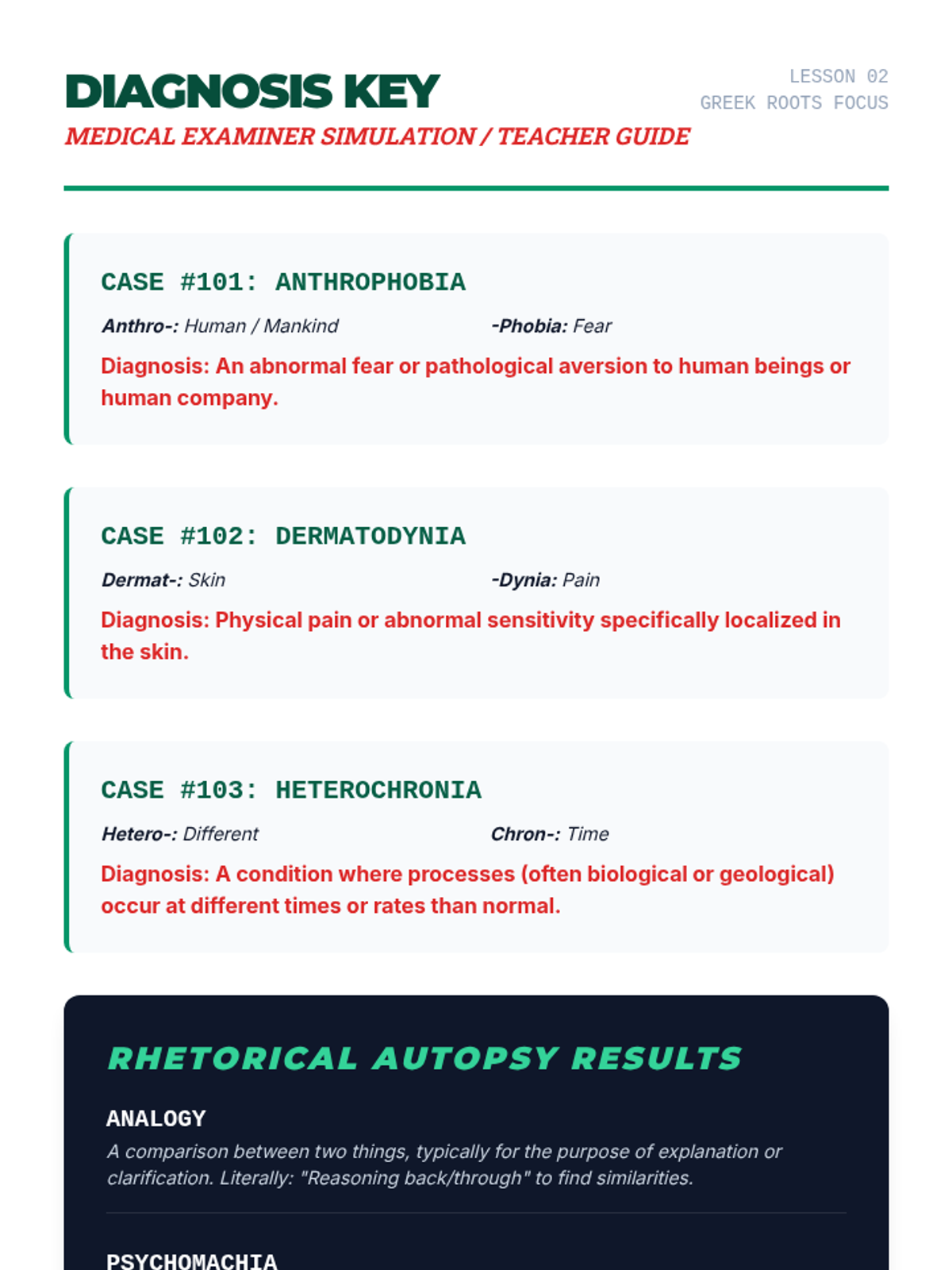
Focusing on the Greek influence on English, students explore roots commonly found in STEM and rhetorical analysis. They participate in a 'Medical Examiner' simulation to diagnose ailments based on Greek components.
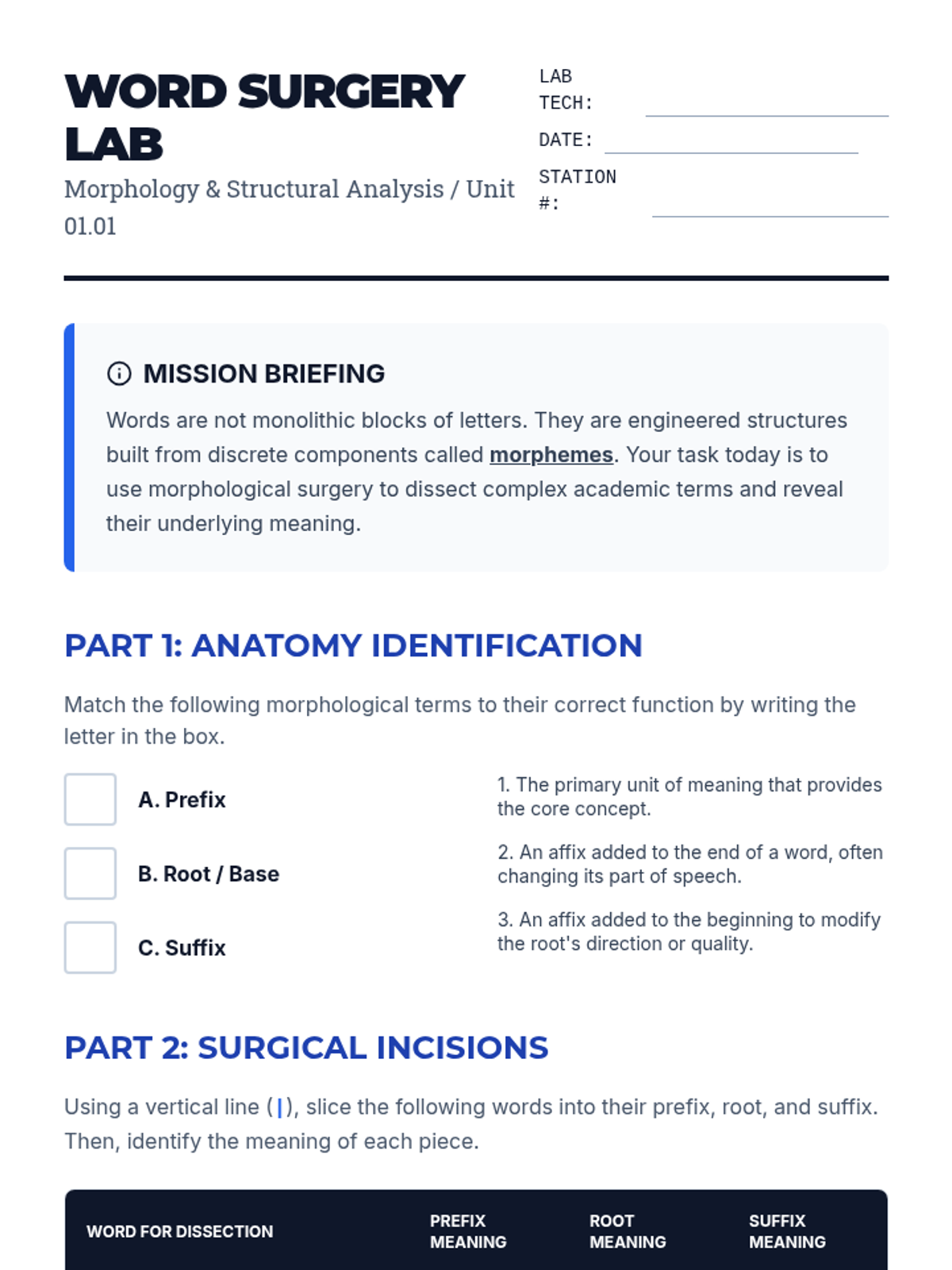
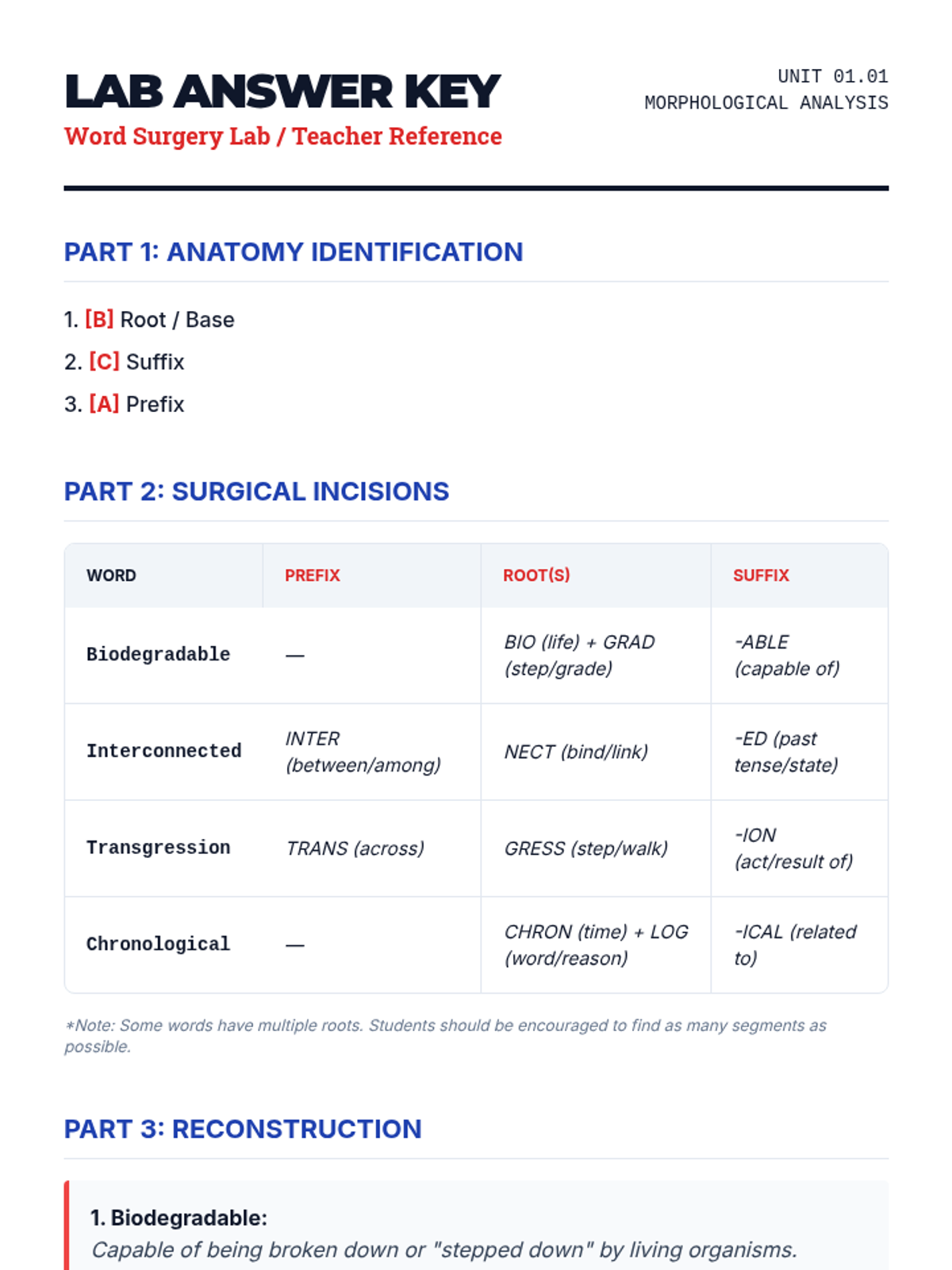
Introduces students to the concept of morphology, treating words as structural puzzles. Students learn to perform 'word surgery' by isolating prefixes, roots, and suffixes to unlock meaning.
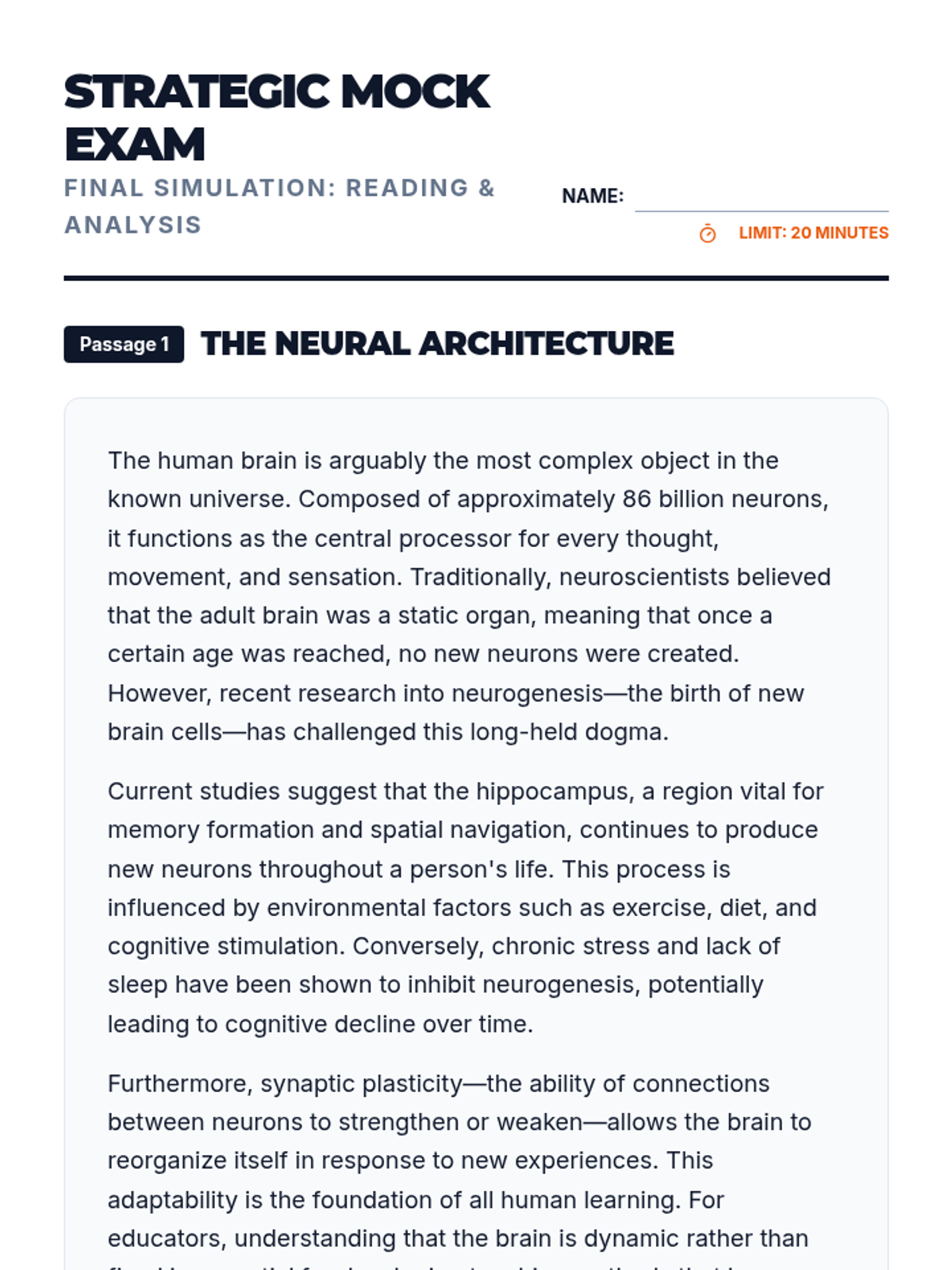
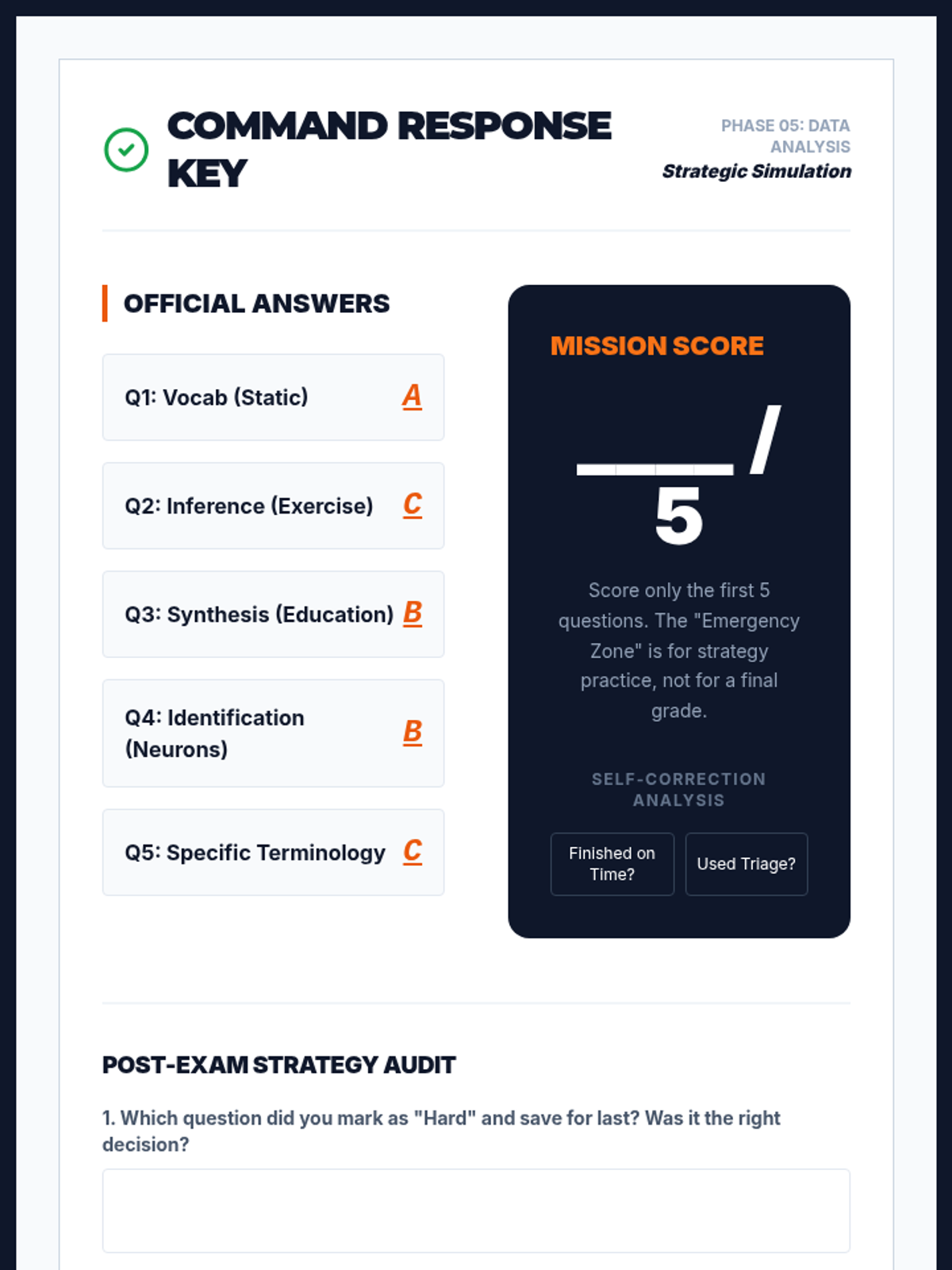
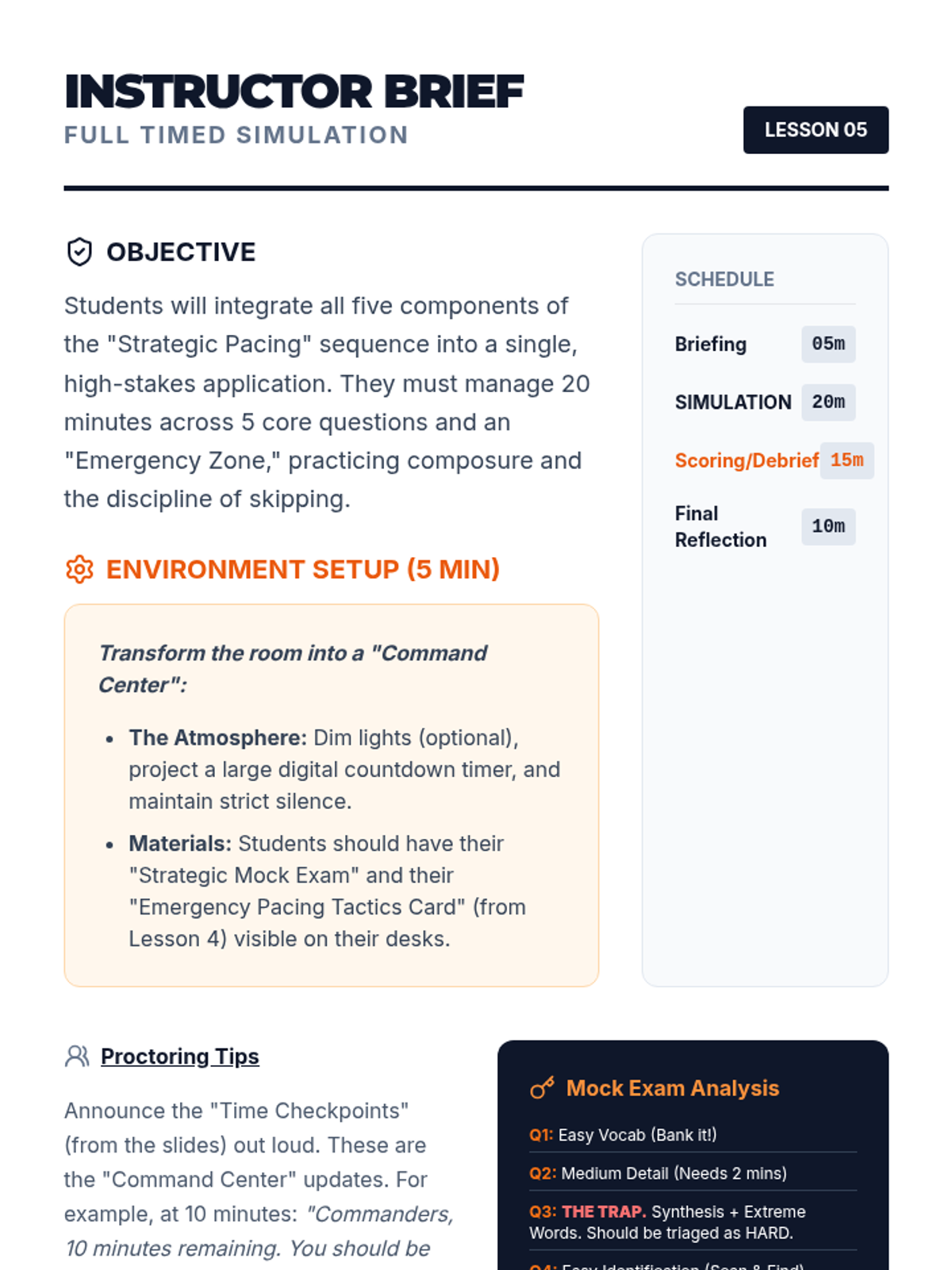
Students apply all learned pacing, triage, and guessing strategies in a high-stakes, full-length timed simulation that mimics the official testing environment.
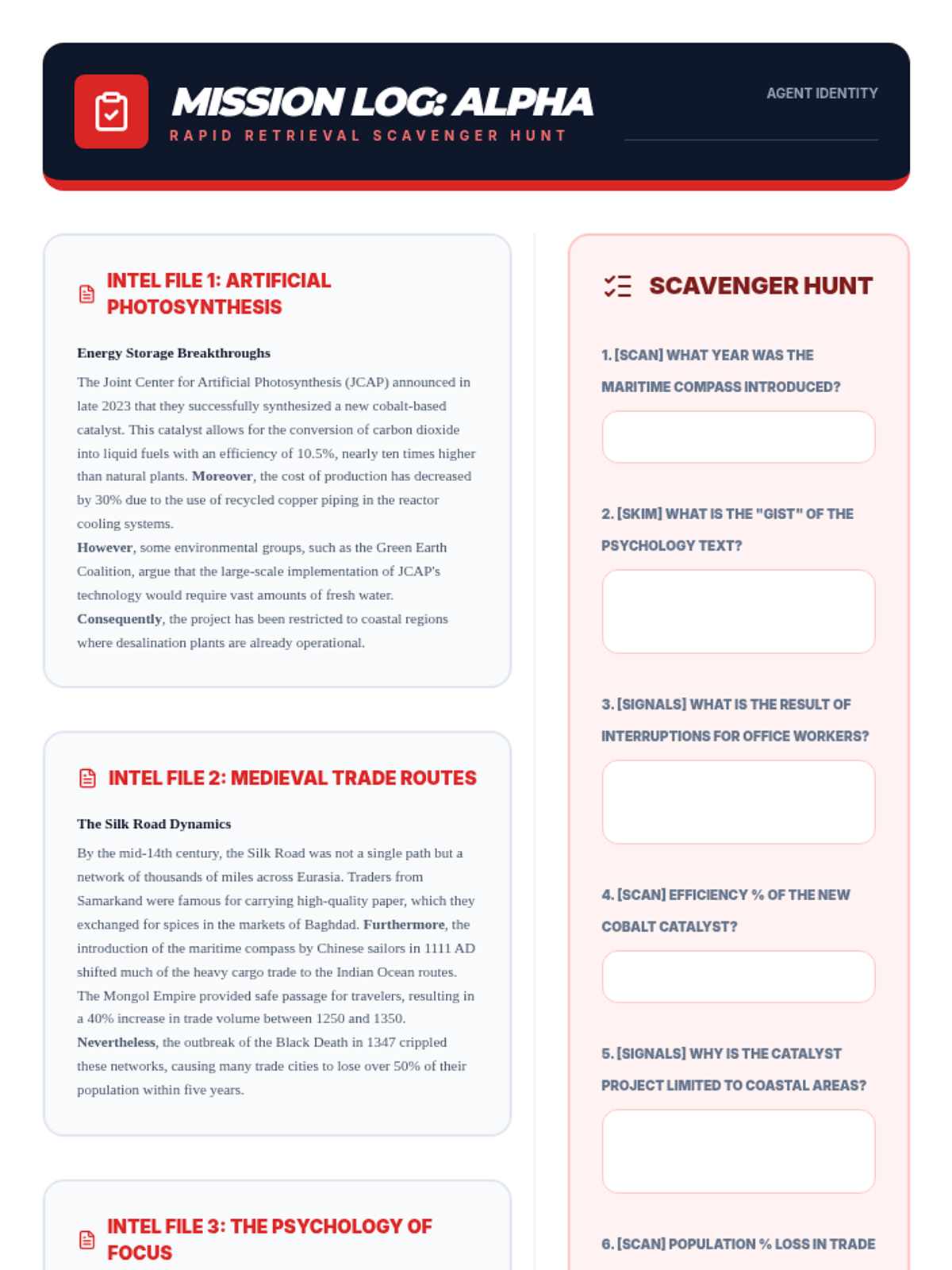
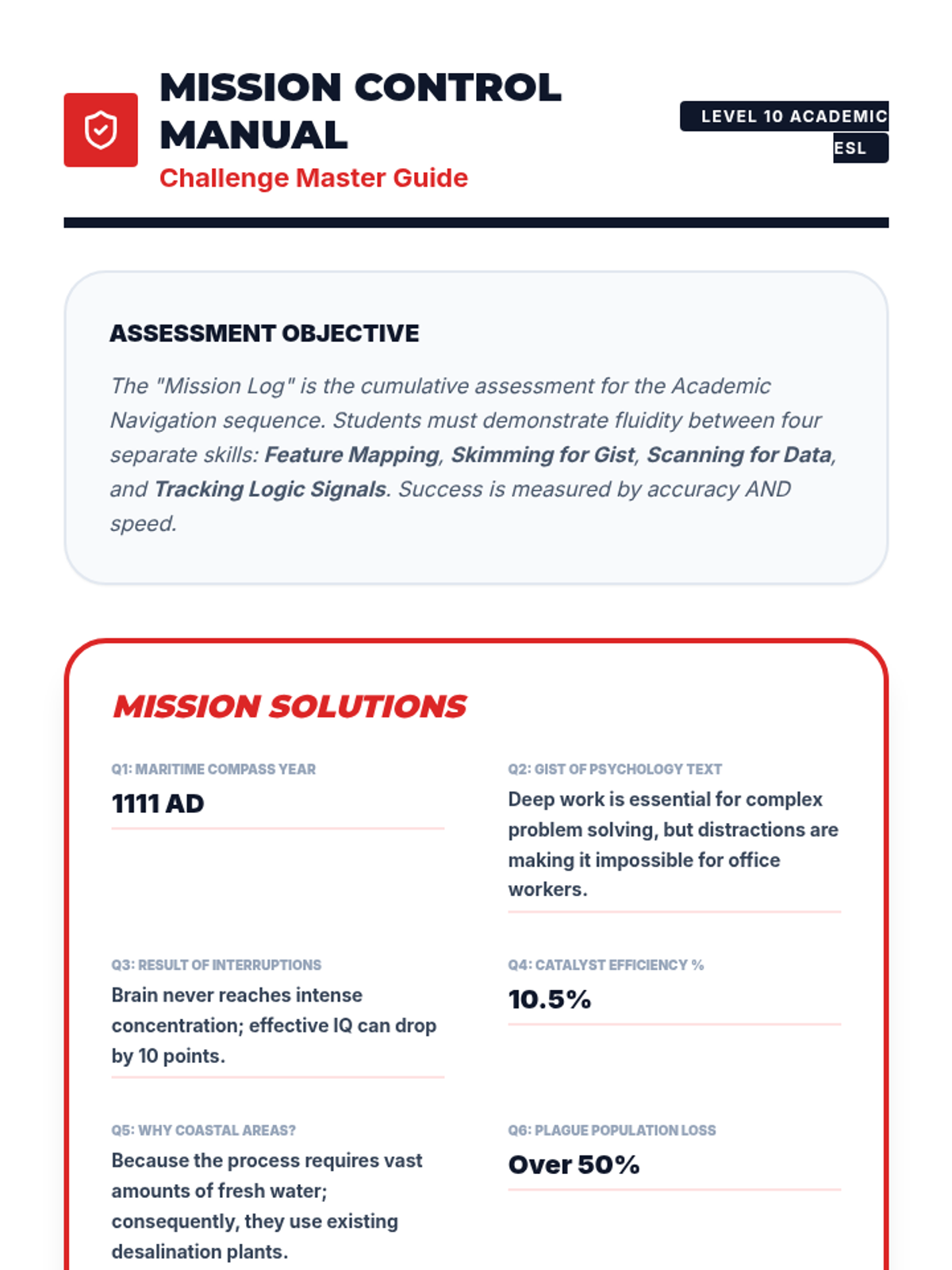
Students participate in a timed scavenger hunt requiring them to employ skimming and scanning to retrieve information from multiple academic texts.
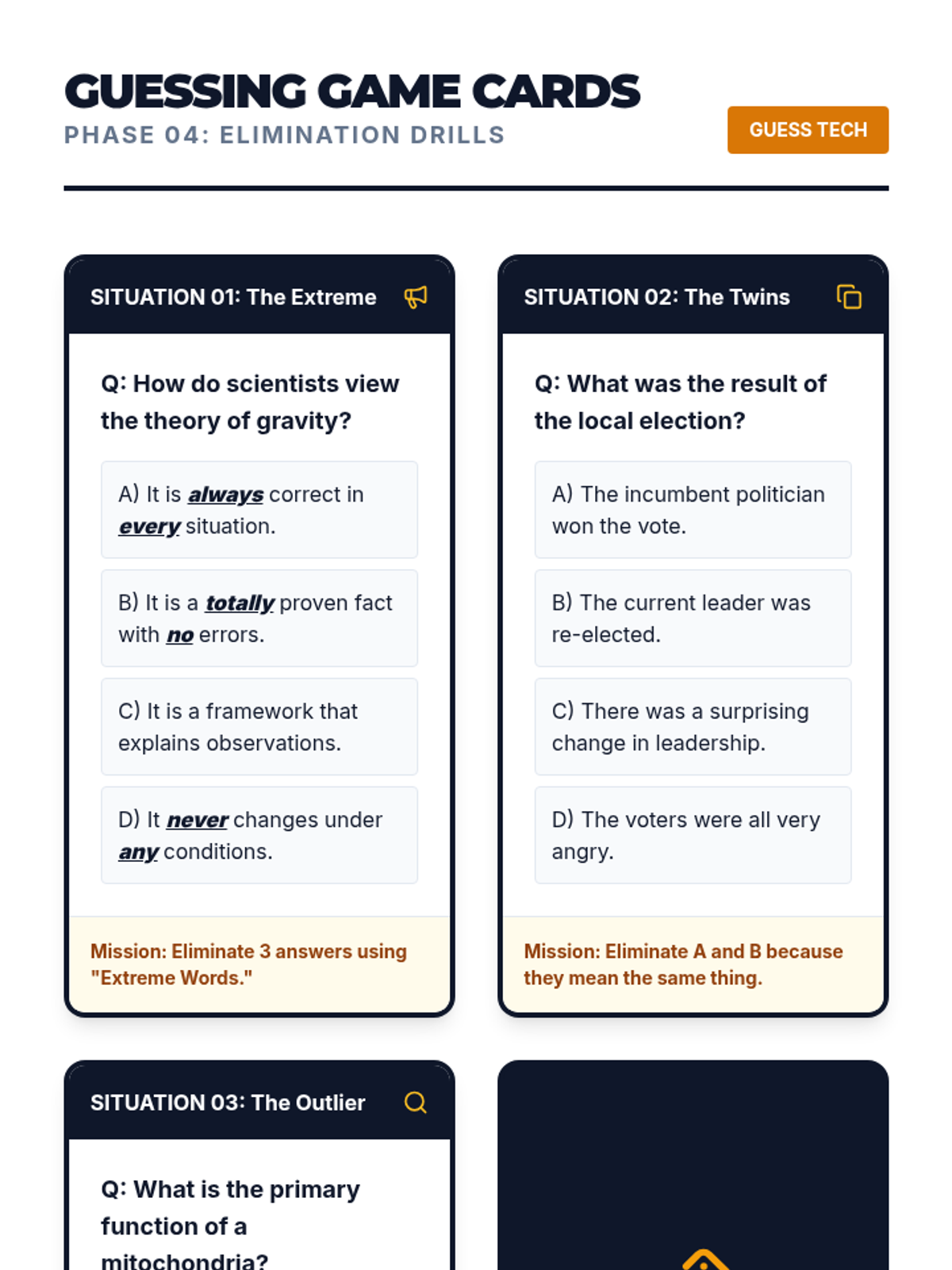
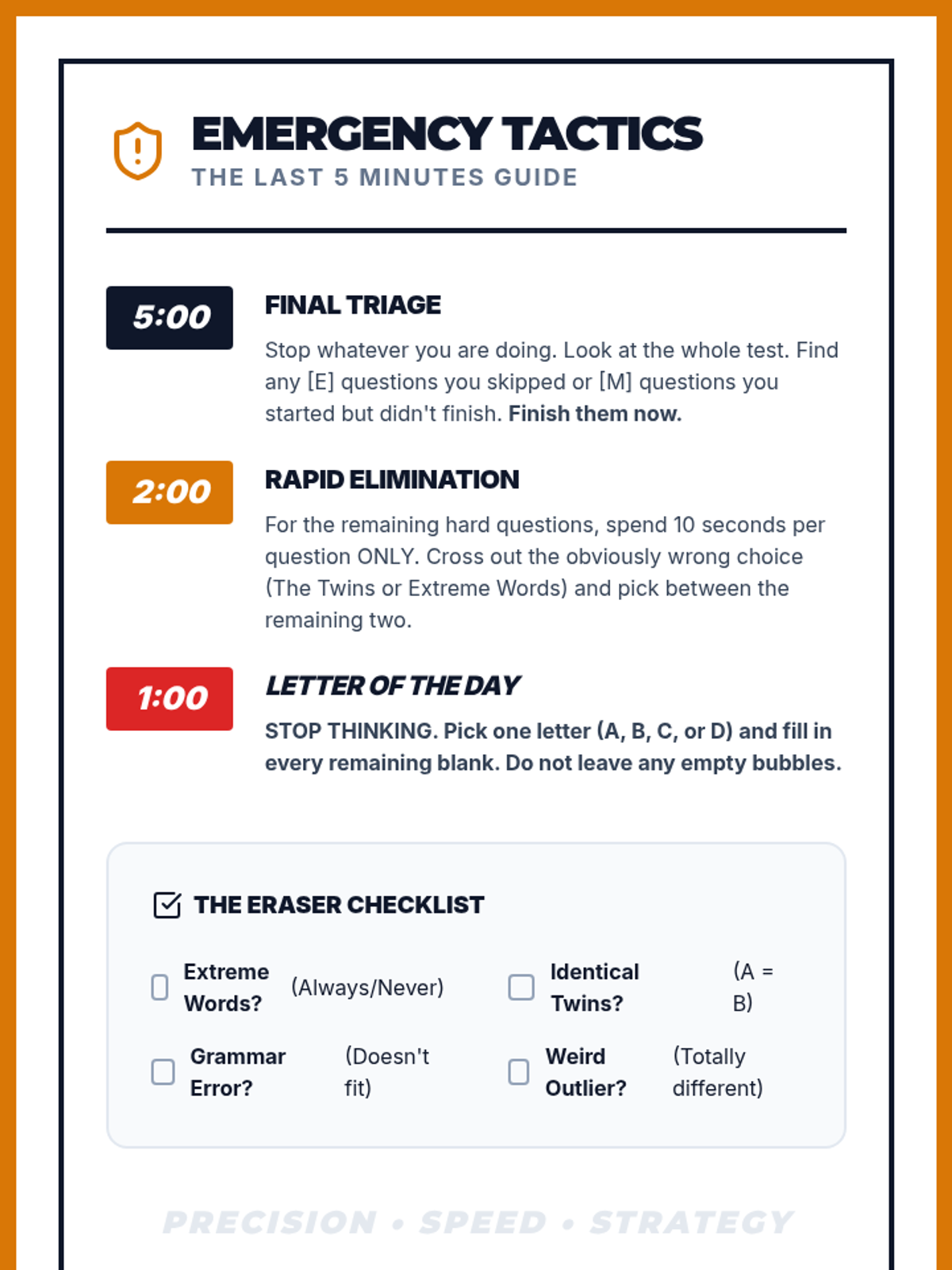
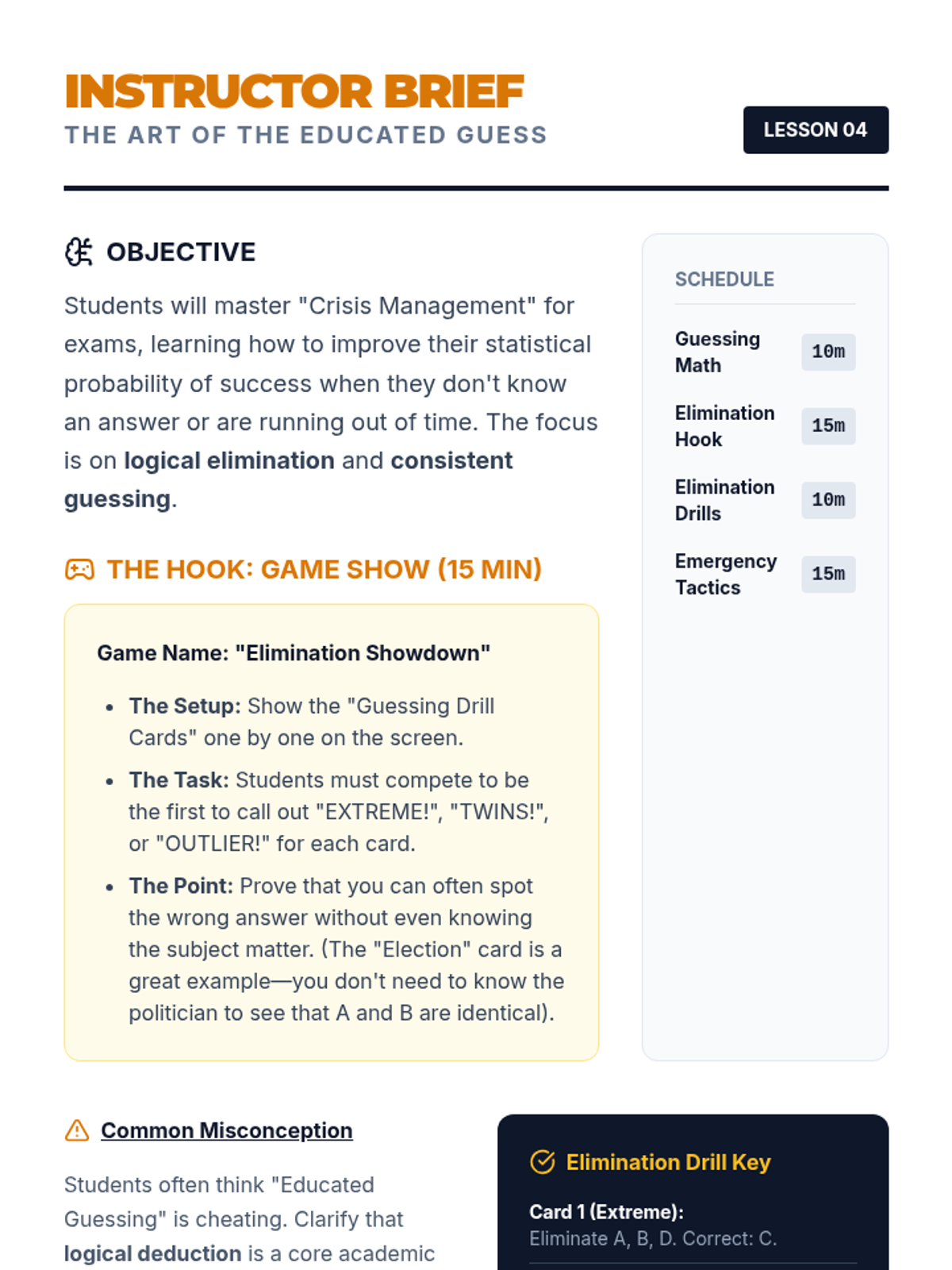
Students learn high-speed strategies for the final minutes of an exam, including elimination techniques, 'Letter of the Day' probability, and risk assessment for educated guessing.
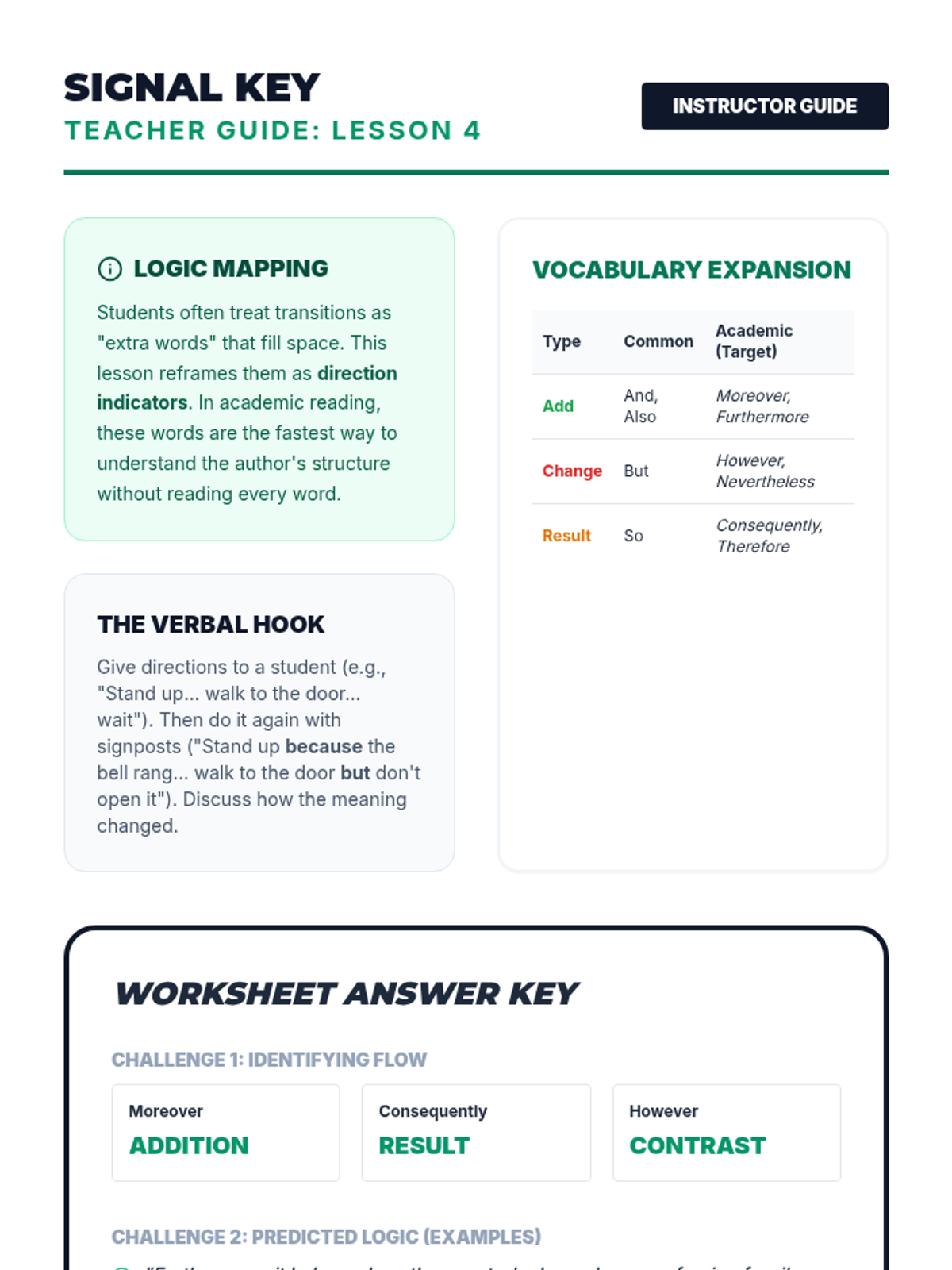
Students focus on transition words that signal shifts in meaning to track logical flow and infer meaning in academic arguments.
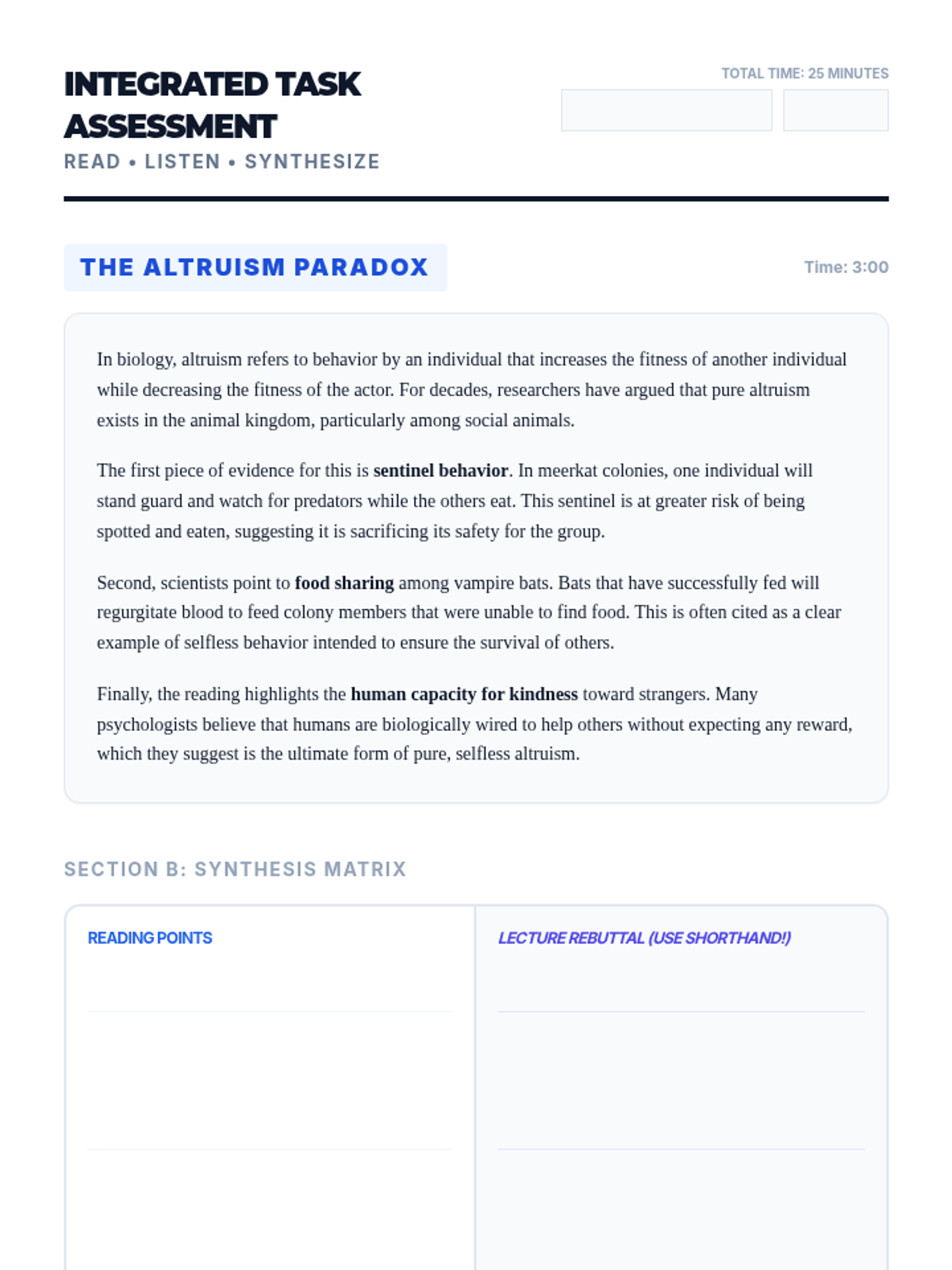
A full-scale simulation of a TOEFL/IELTS integrated task. Students apply shorthand, signpost recognition, and synthesis skills to a new topic, producing a comprehensive written response.
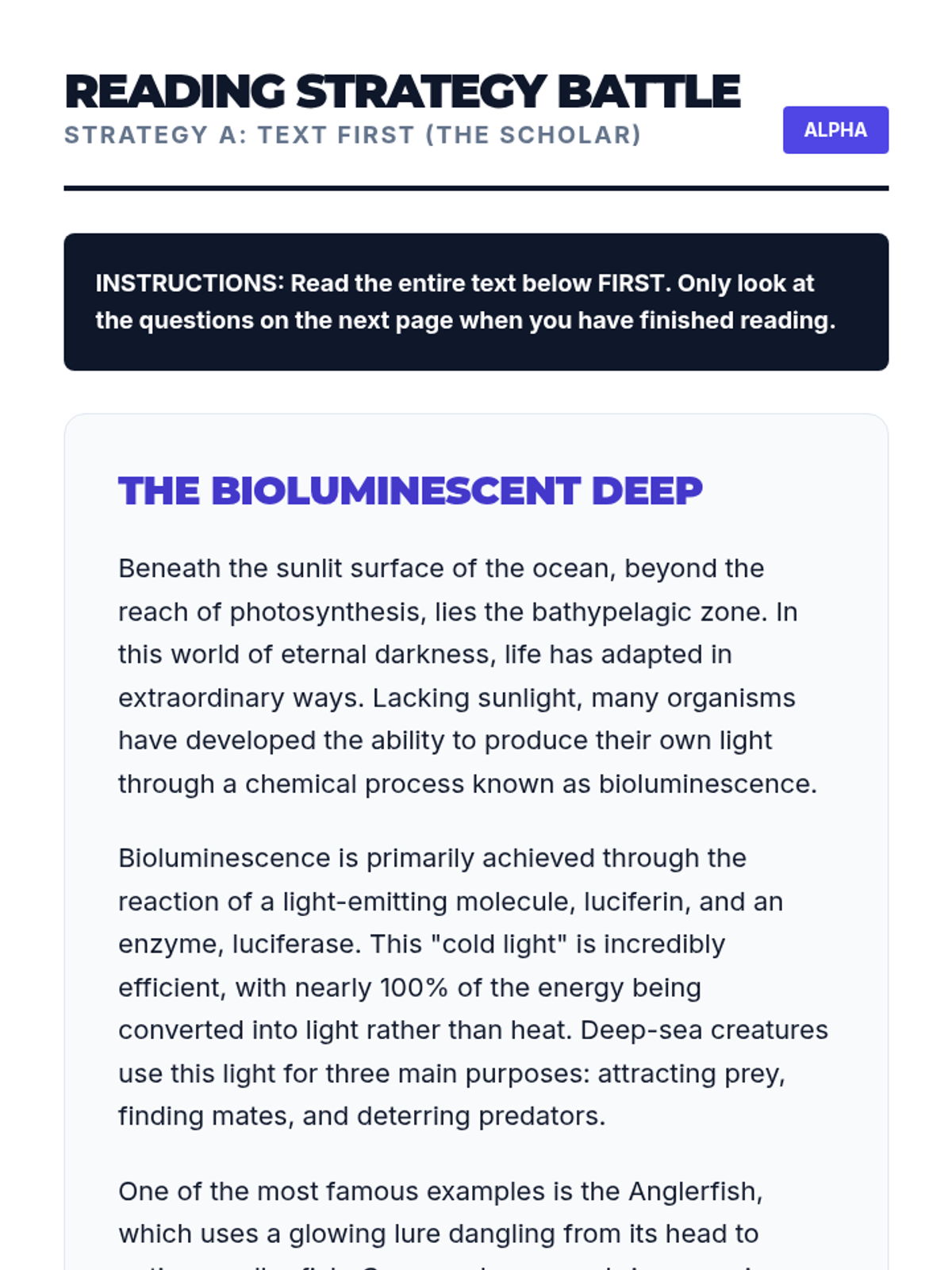
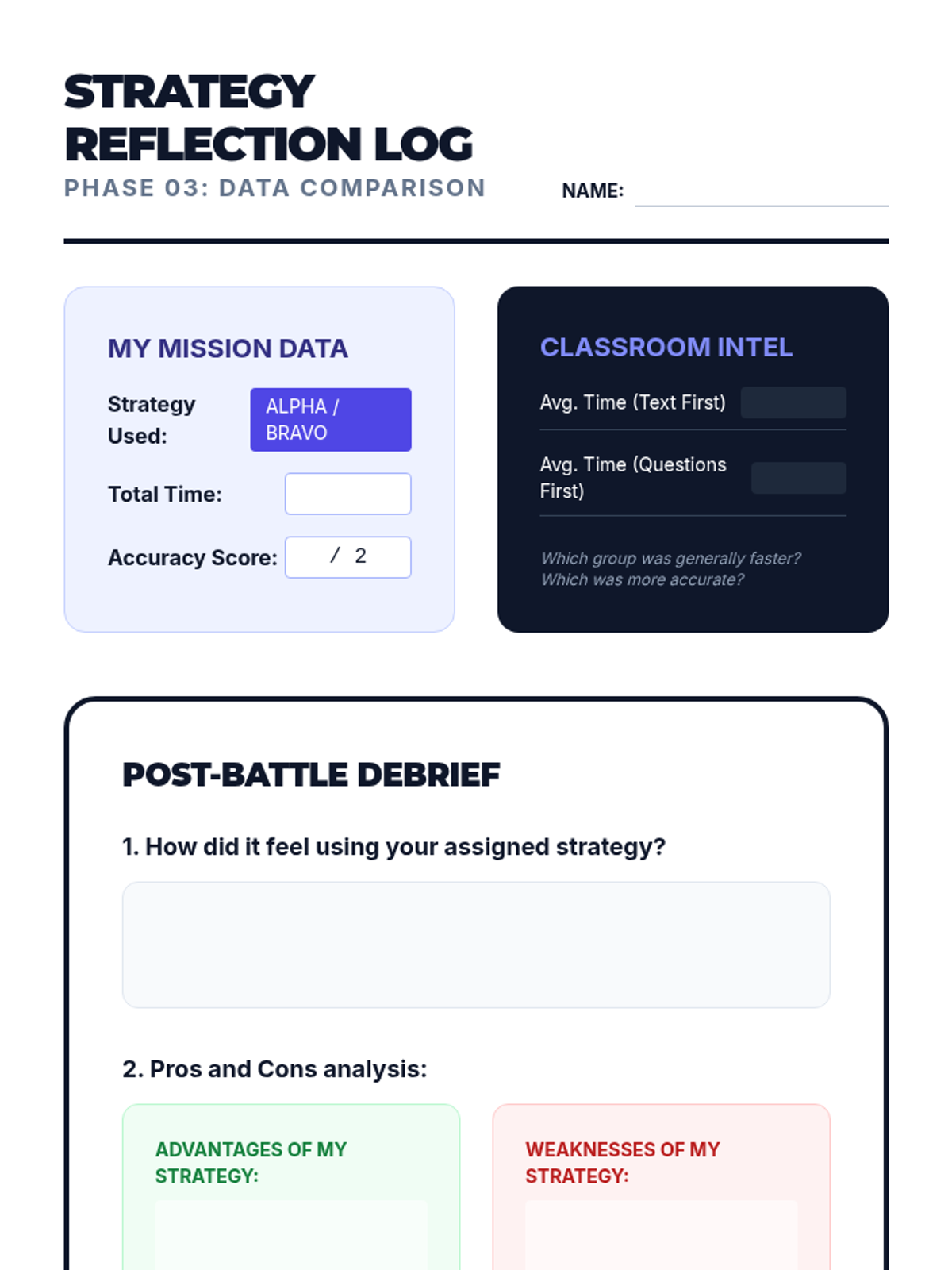
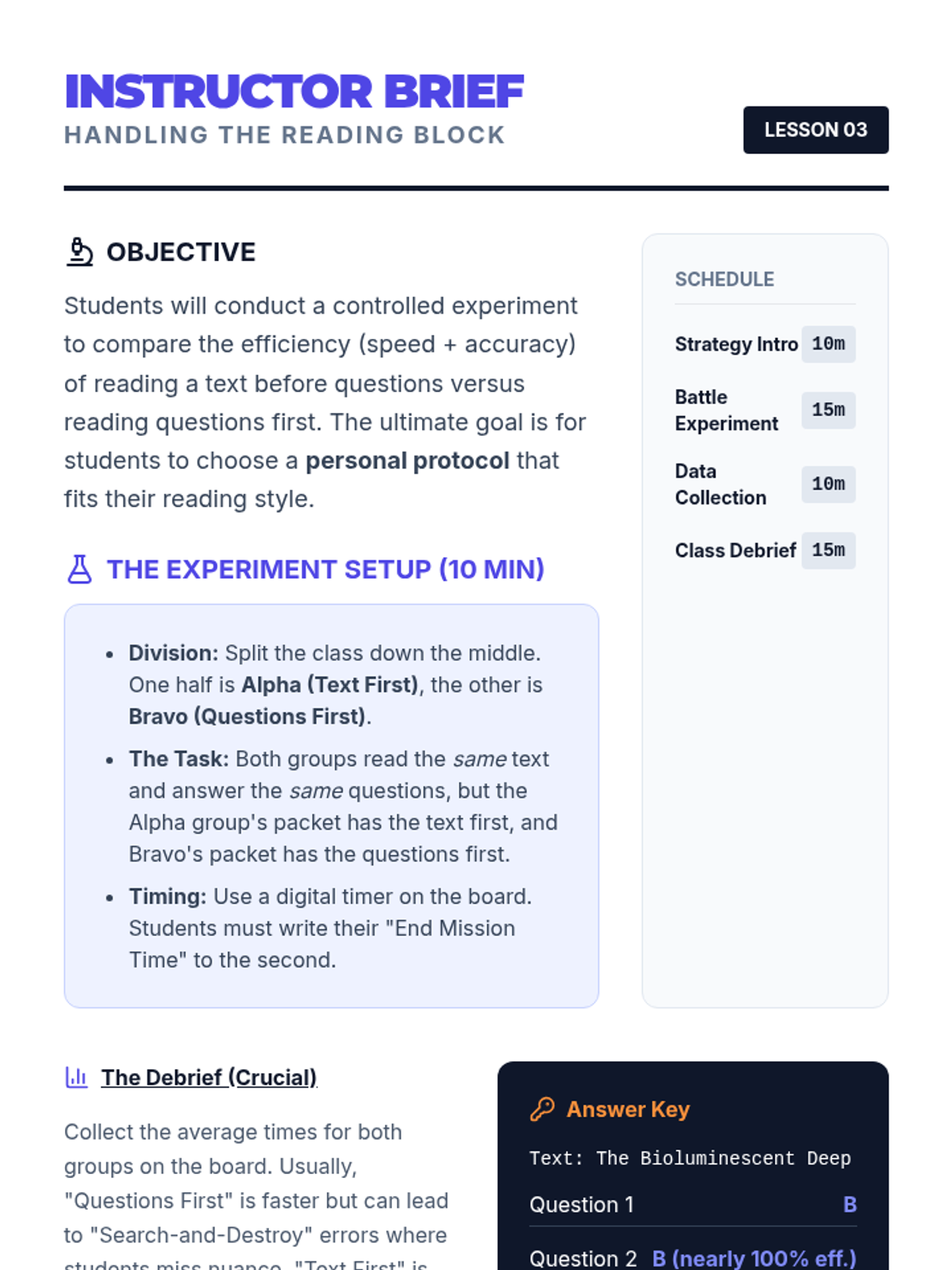
Students test and compare two primary reading strategies—reading the passage first vs. reading questions first—to discover which method enhances their individual efficiency and accuracy.
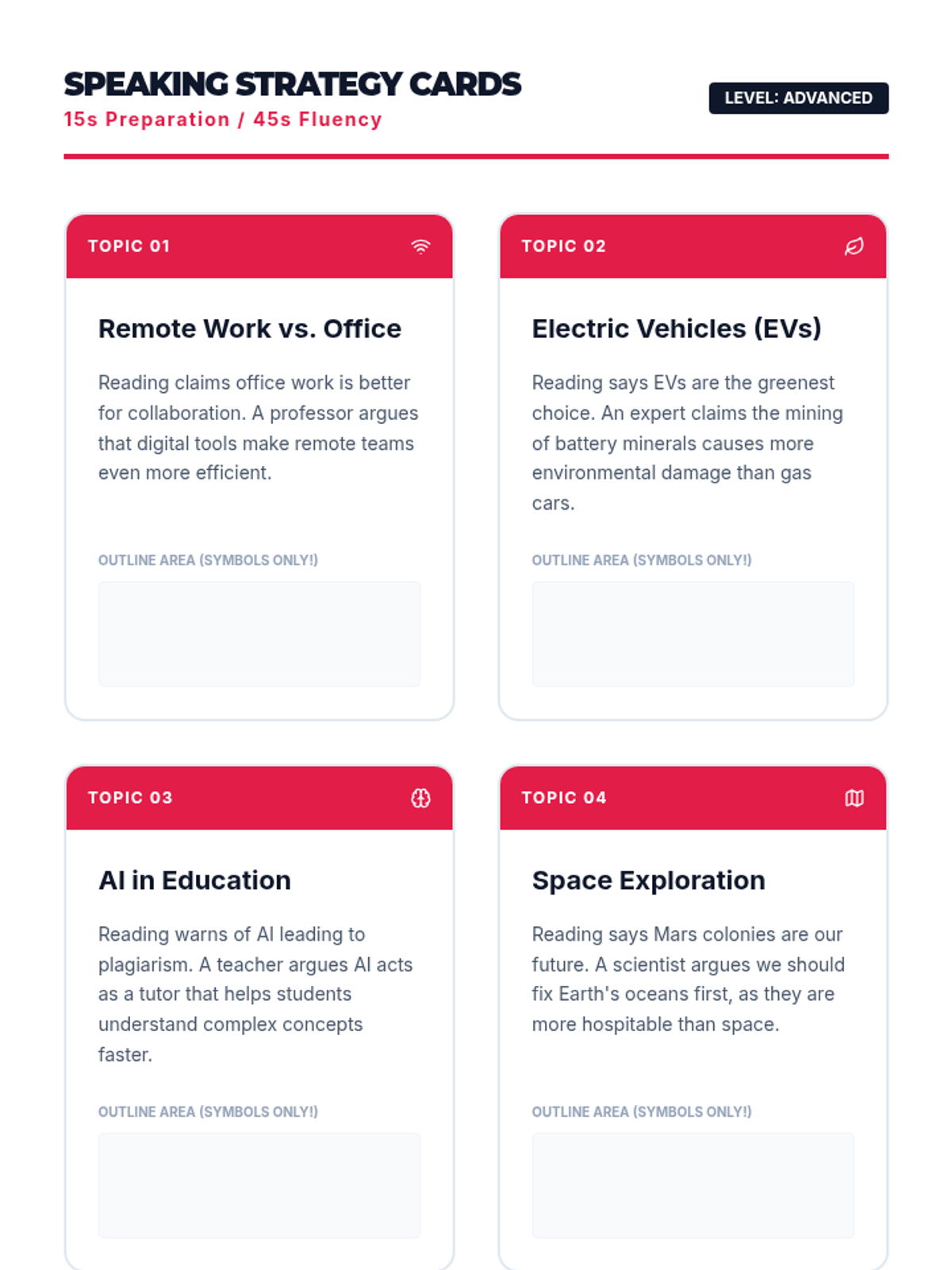
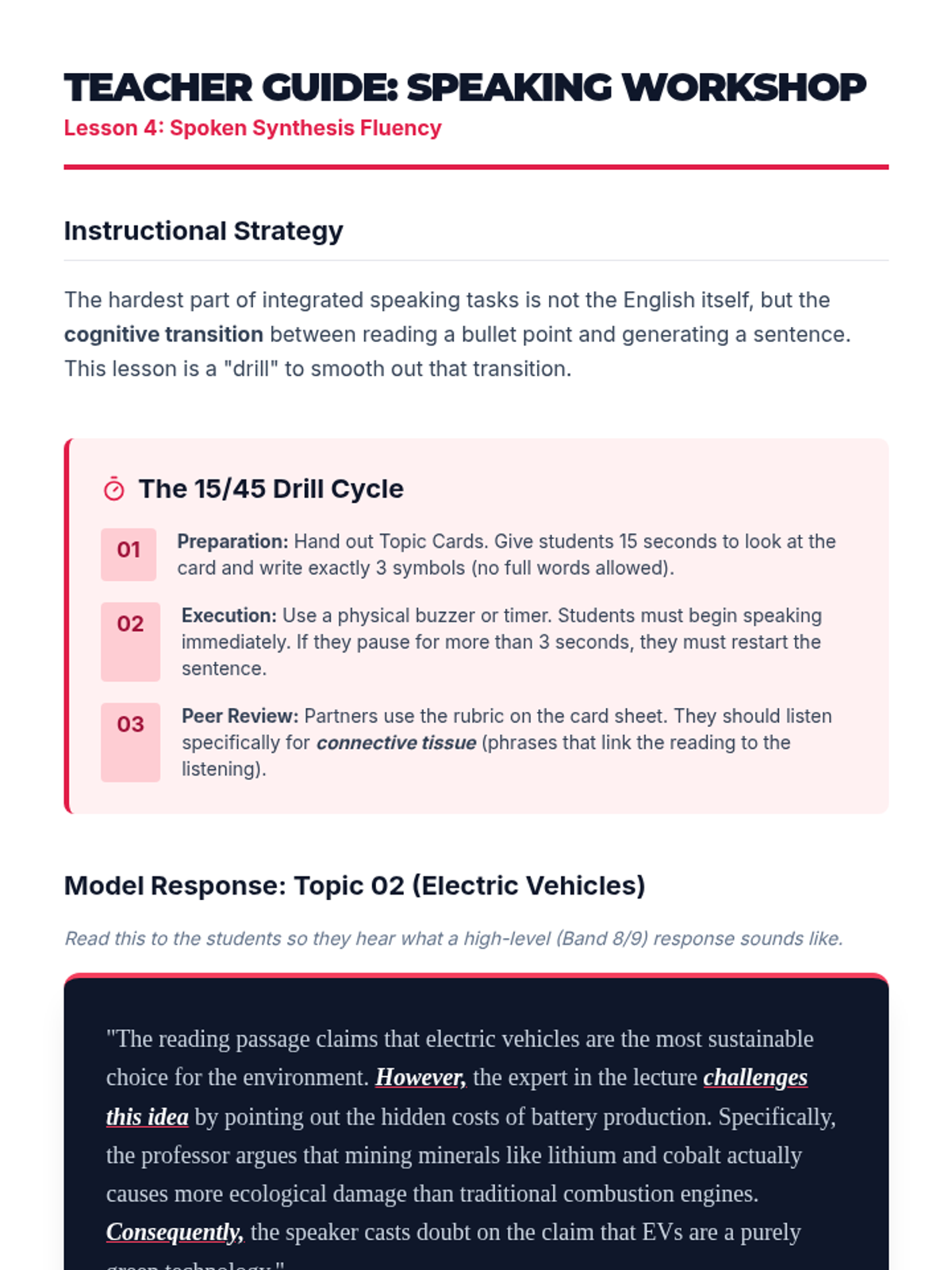
Students focus on the speaking section of integrated exams. They practice turning shorthand notes into fluent, grammatically correct spoken responses, emphasizing the use of transition phrases and maintaining eye contact.
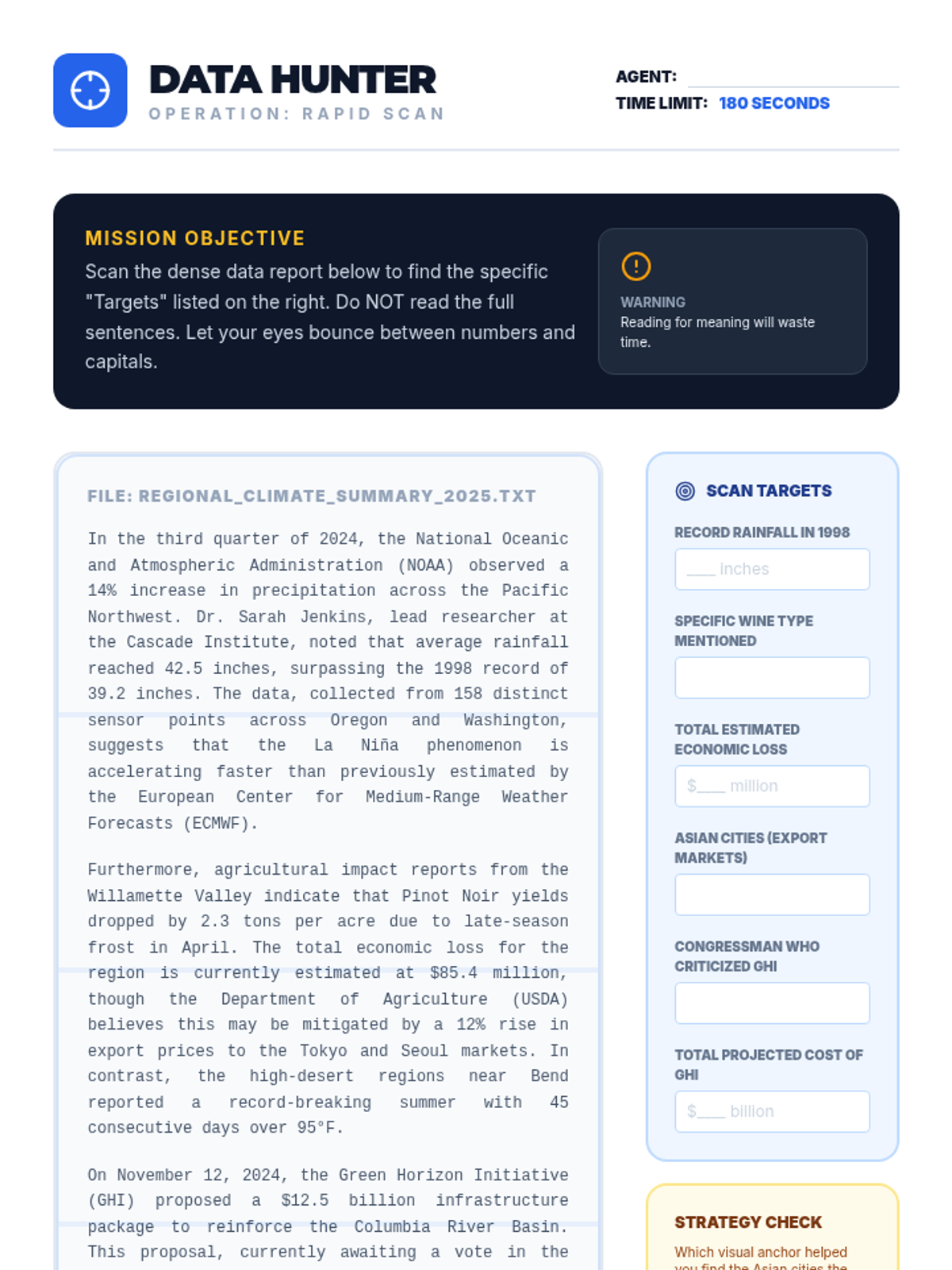
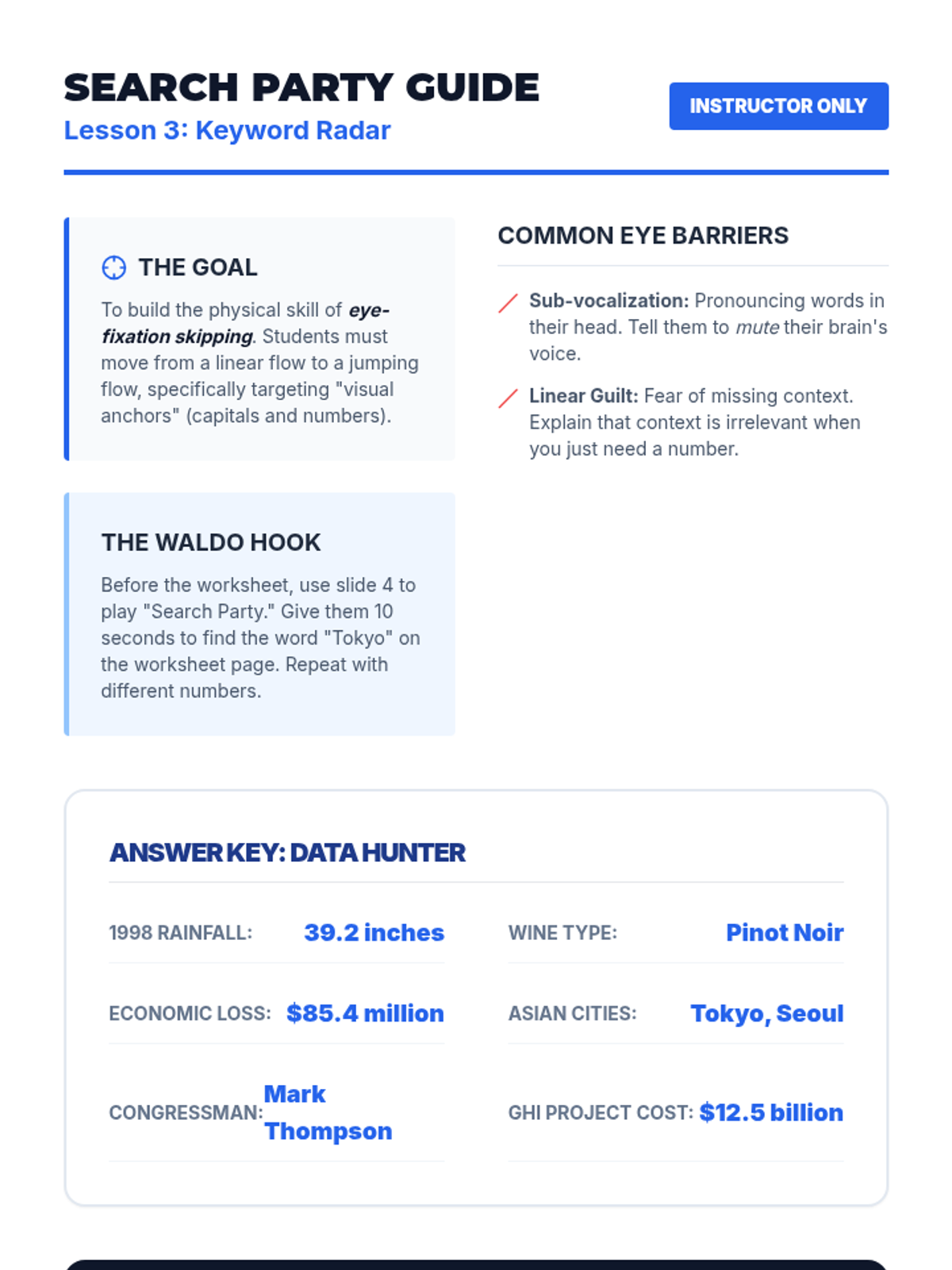
Students practice scanning patterns to spot specific targets like proper nouns, dates, and numbers in dense academic text.
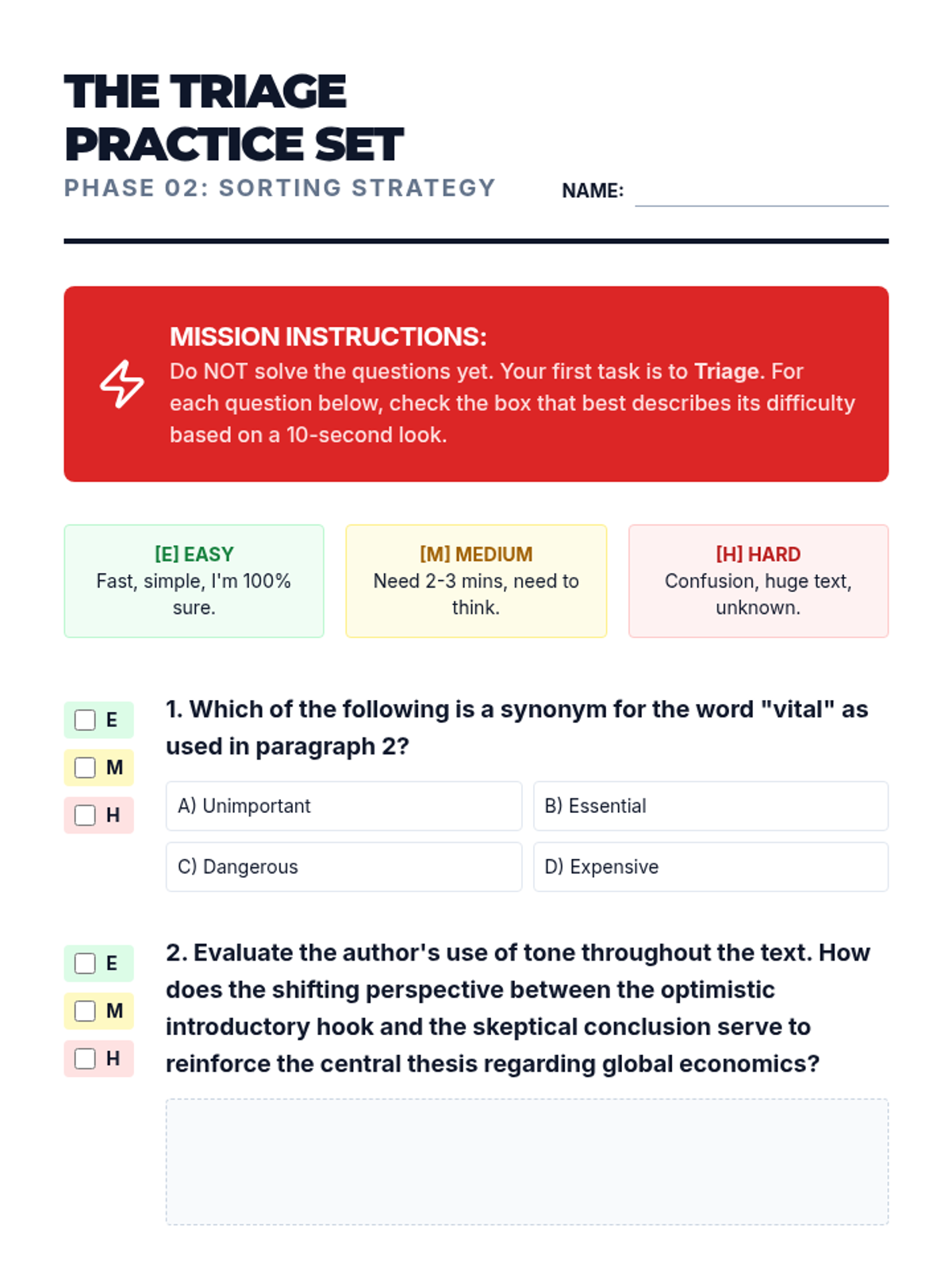
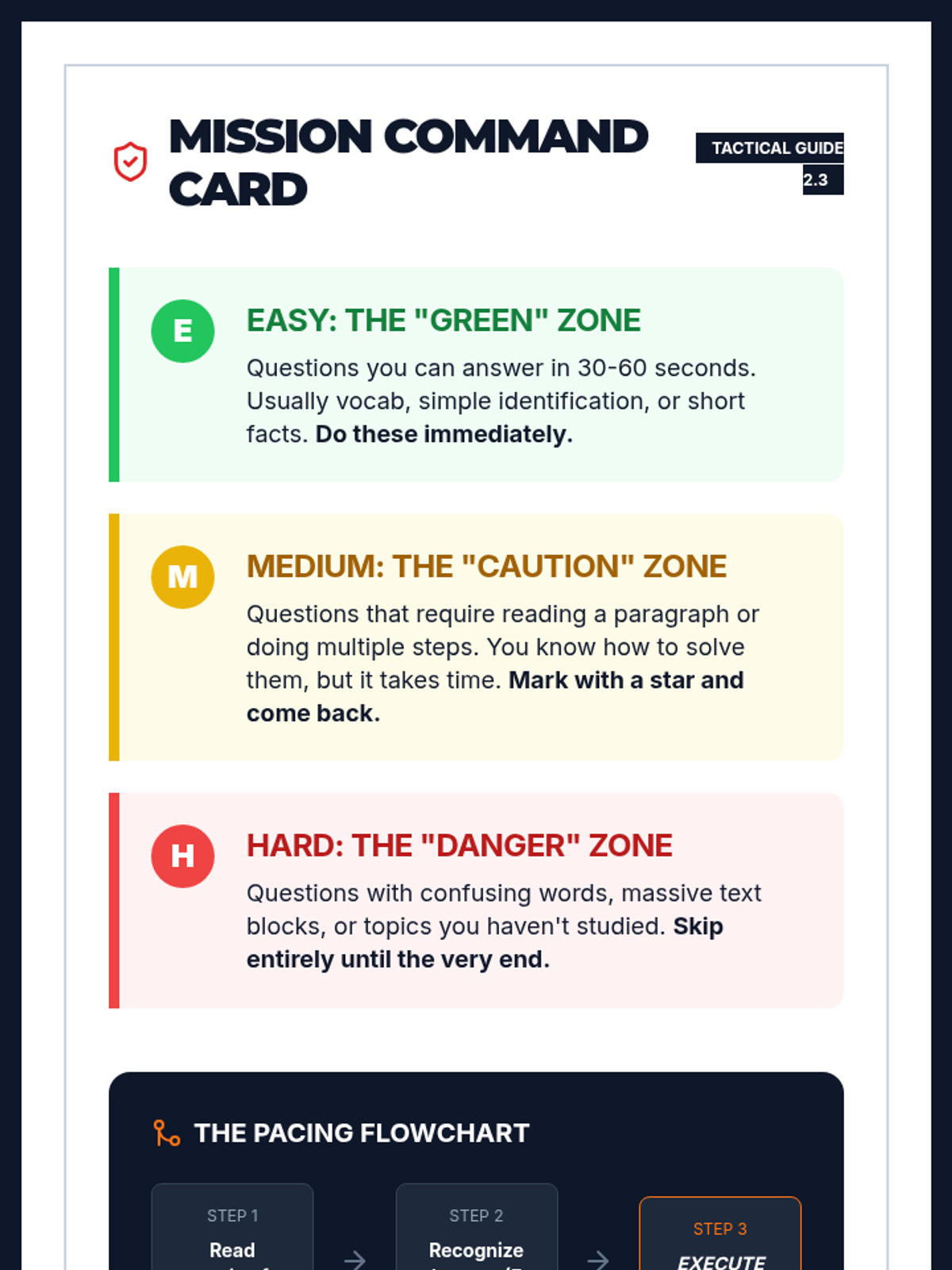
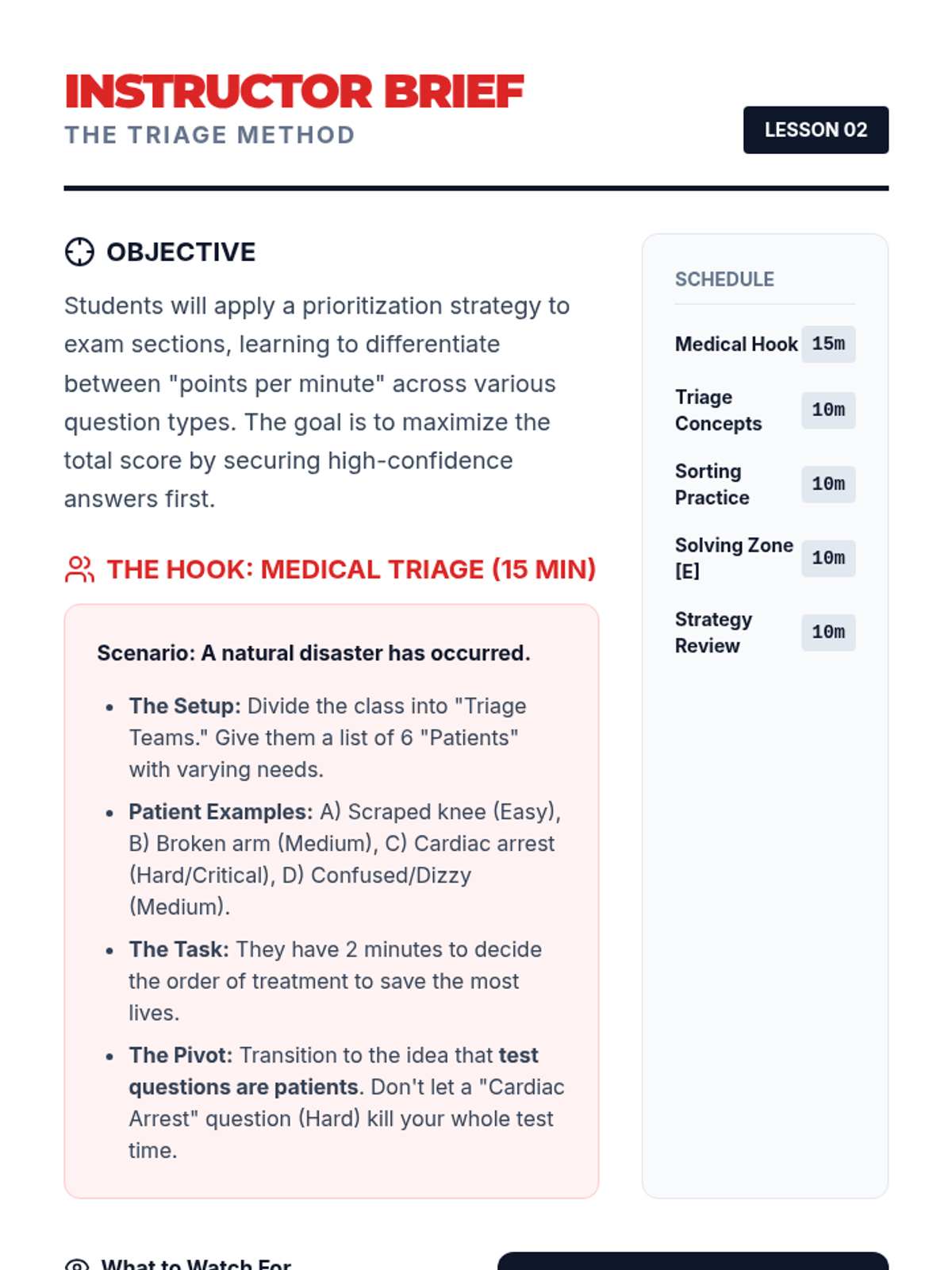
Students learn to categorize exam questions by difficulty—Easy, Medium, or Hard—to prioritize high-probability points and avoid time-sink questions.
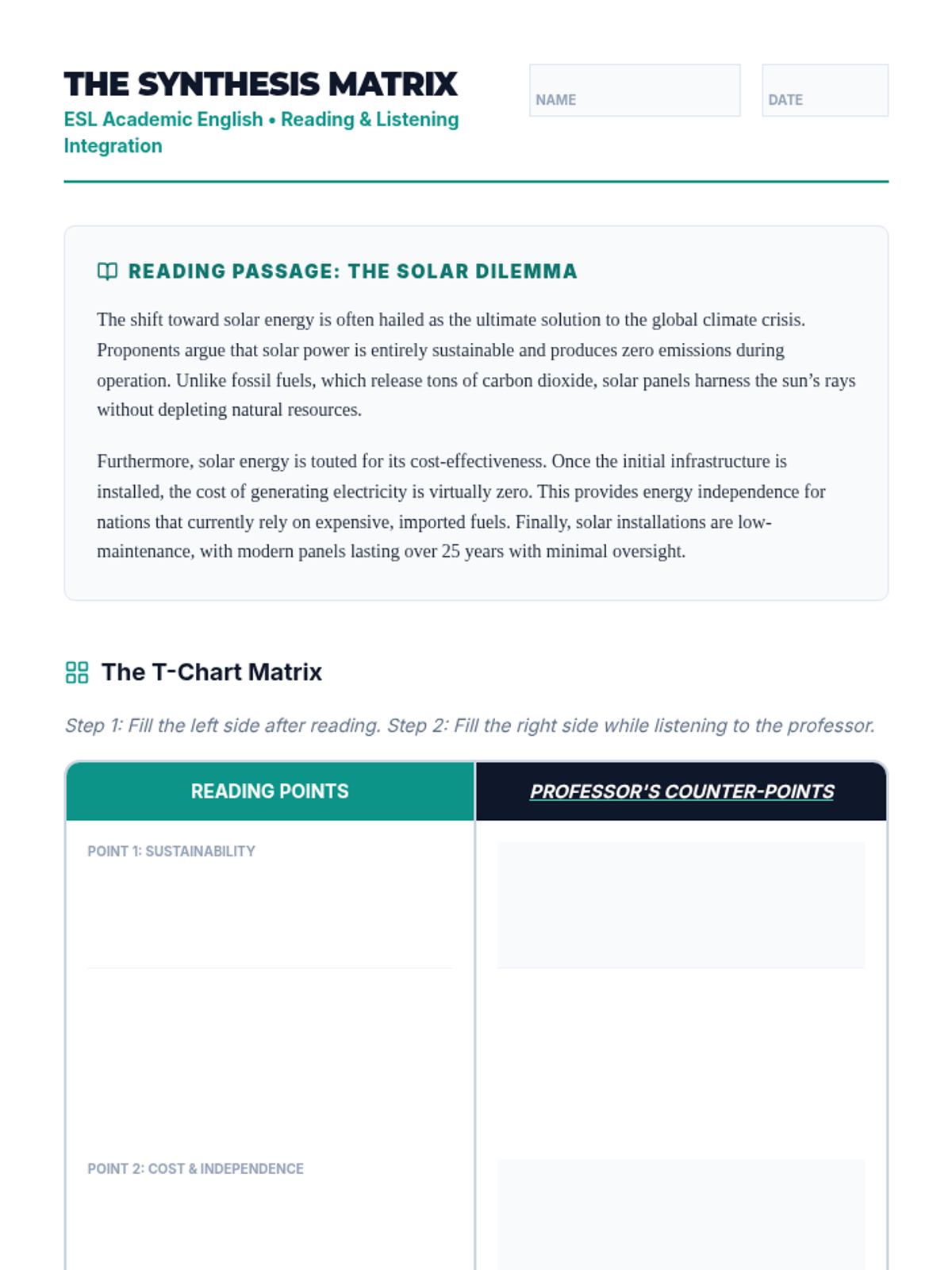
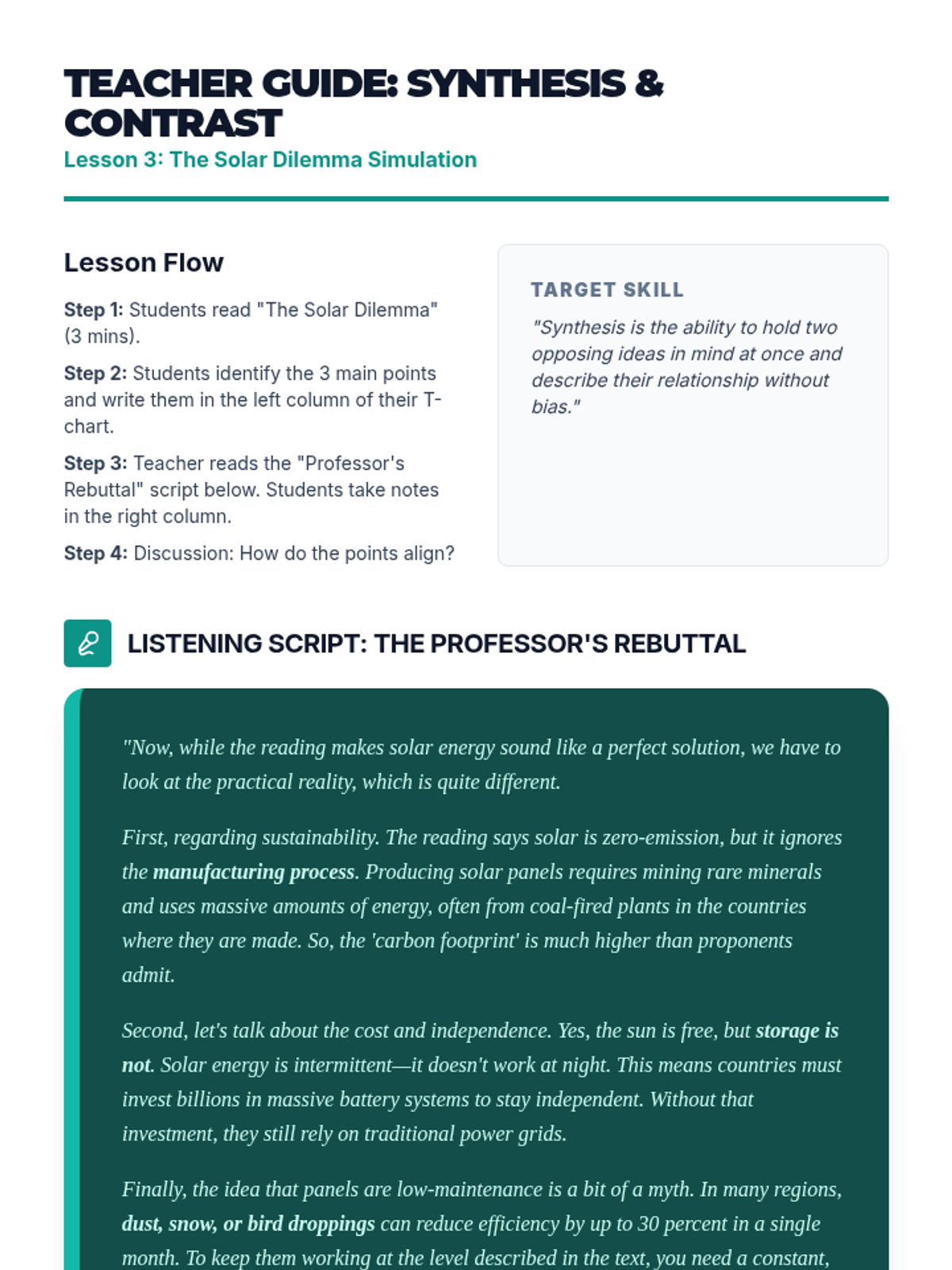
Students practice the core skill of integrated tasks by comparing a written passage with a contrasting audio lecture. They learn to use T-charts to map points of conflict and support between sources.
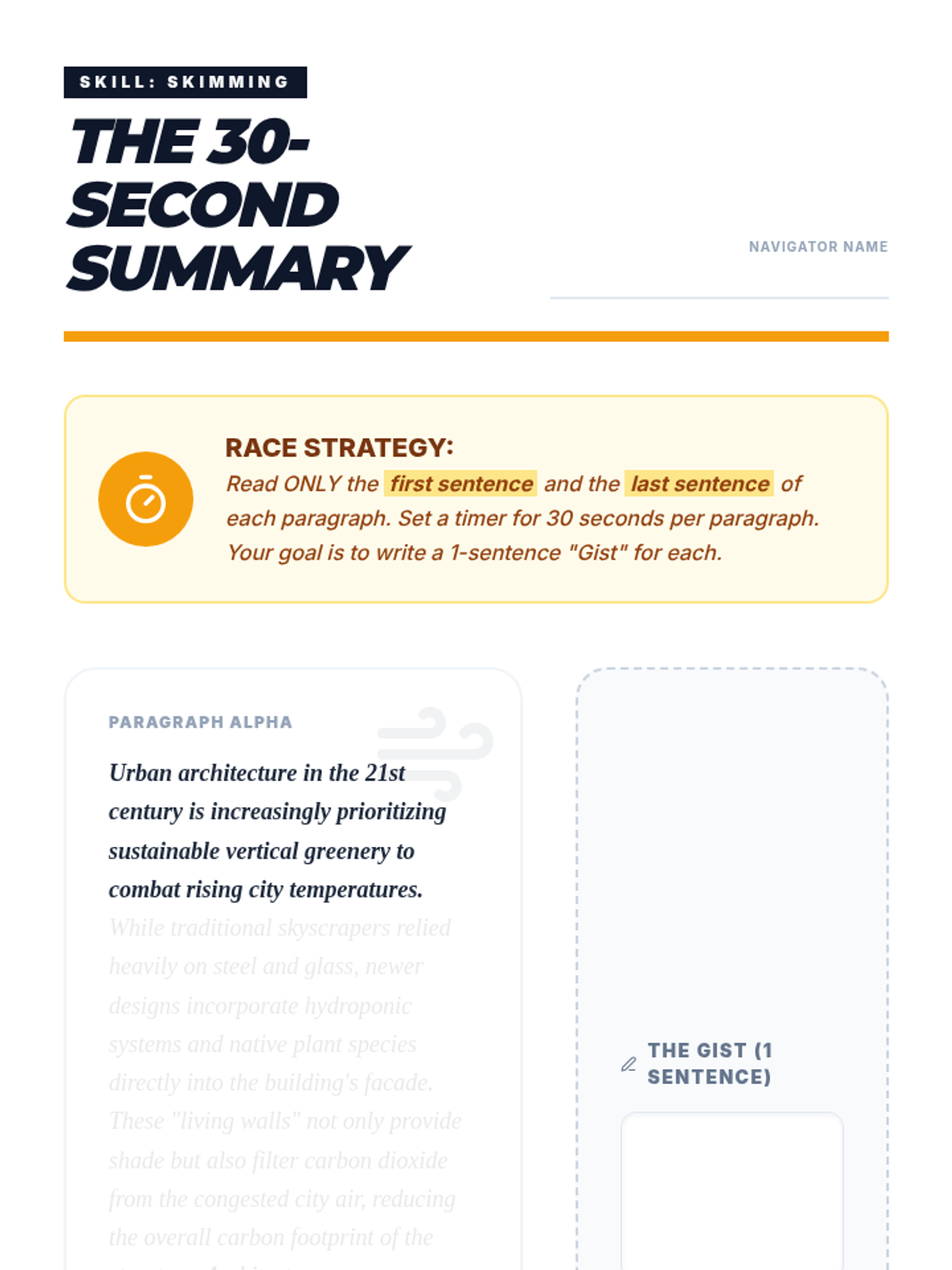
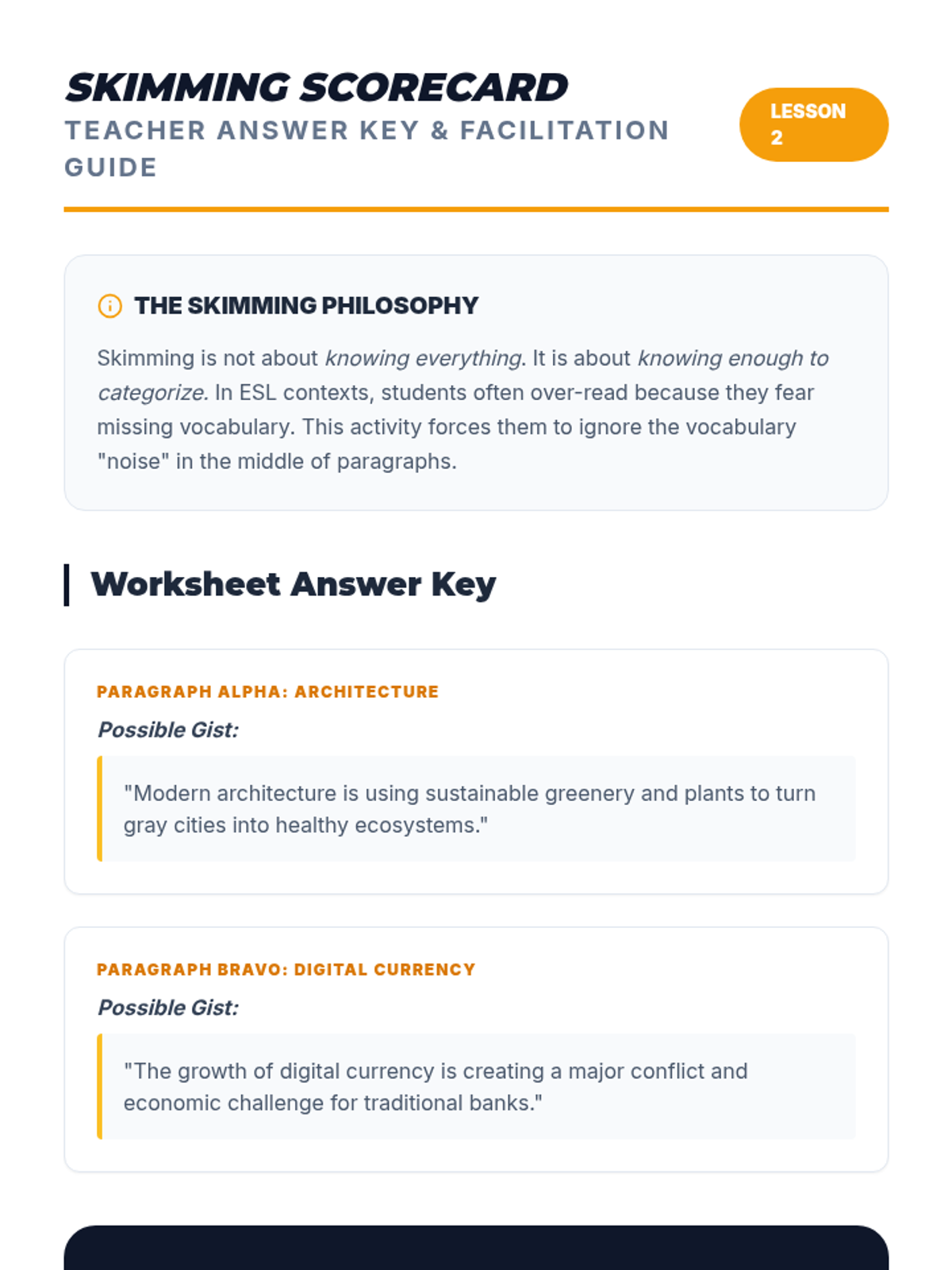
Learners practice skimming to grasp the main argument by focusing on the first and last sentences of paragraphs, distinguishing between topic and details.
Students learn to recognize verbal markers that indicate the organizational structure of a lecture. They practice predicting upcoming content based on these 'signposts' to categorize their notes as they listen.
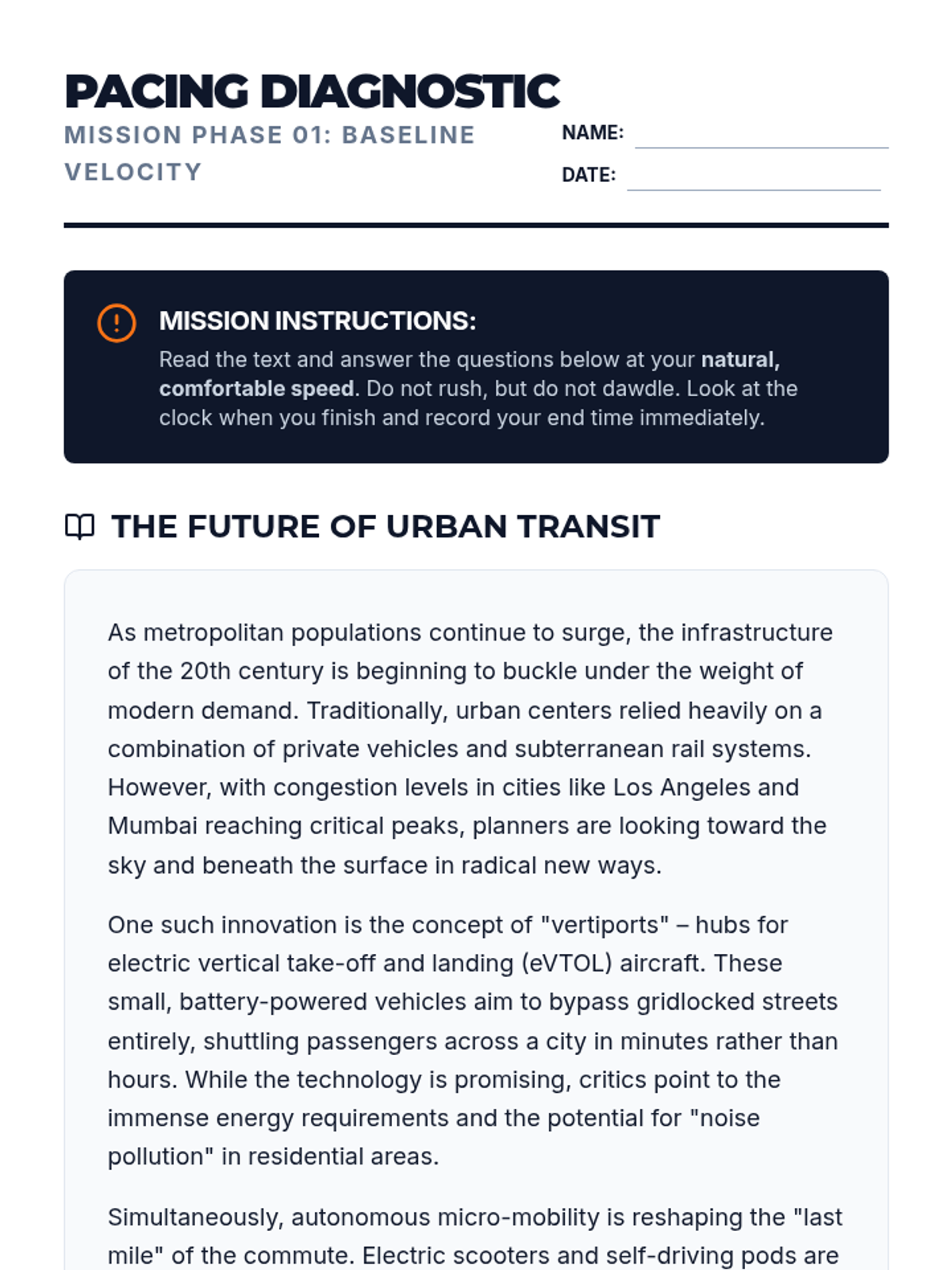
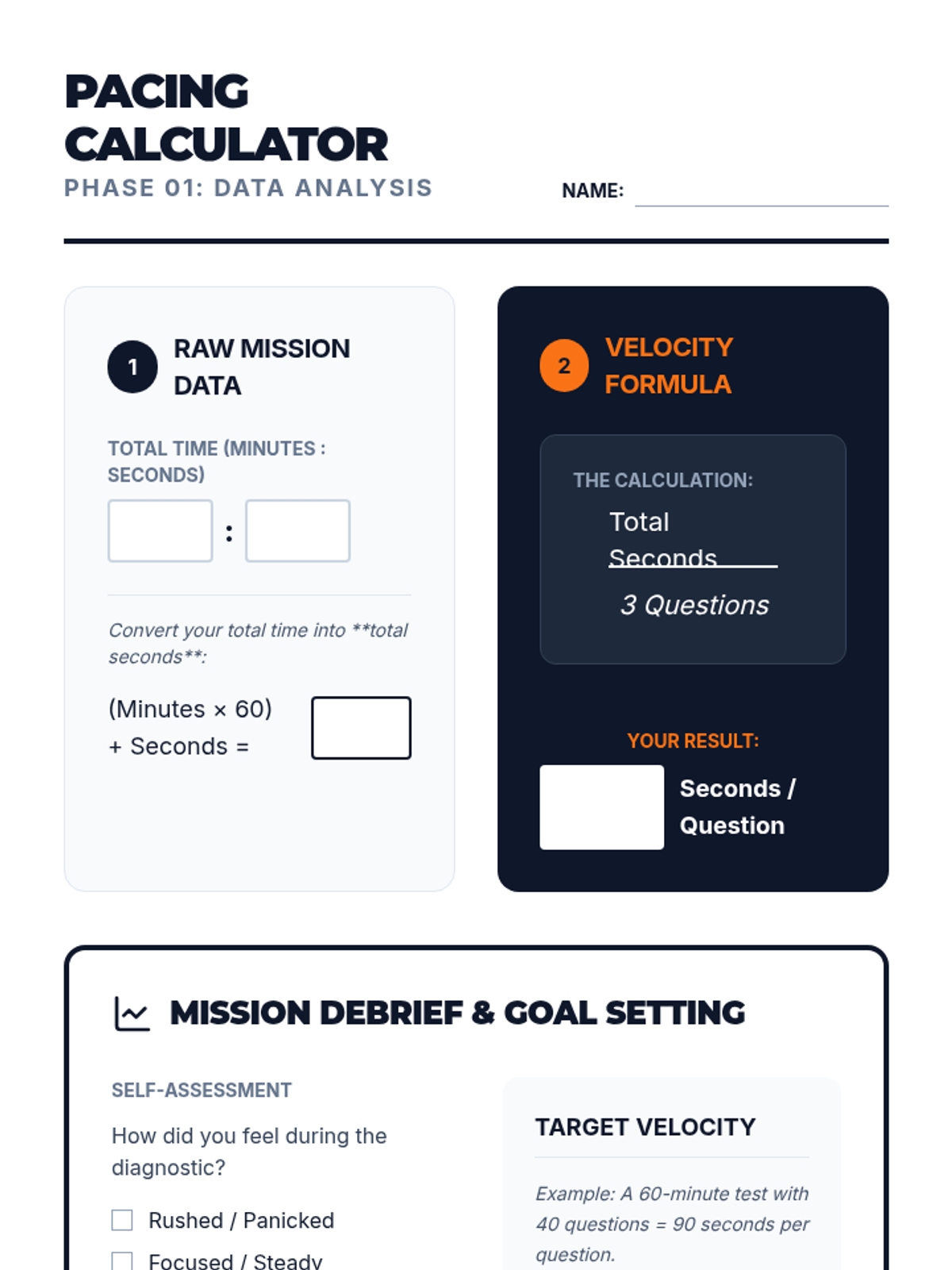
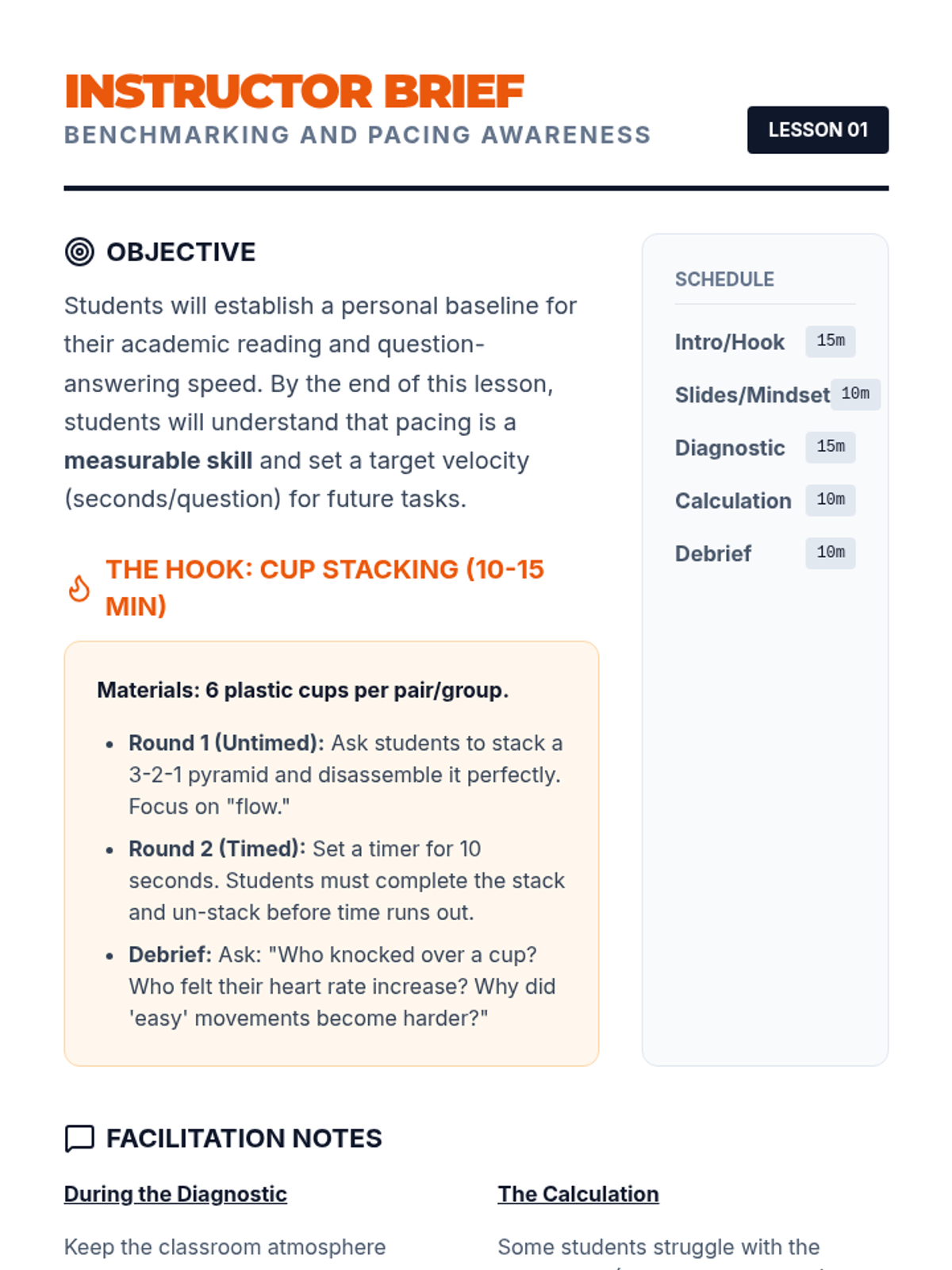
Students establish their baseline reading and answering speeds through a diagnostic task and learn to calculate their personal 'minutes per question' rate.
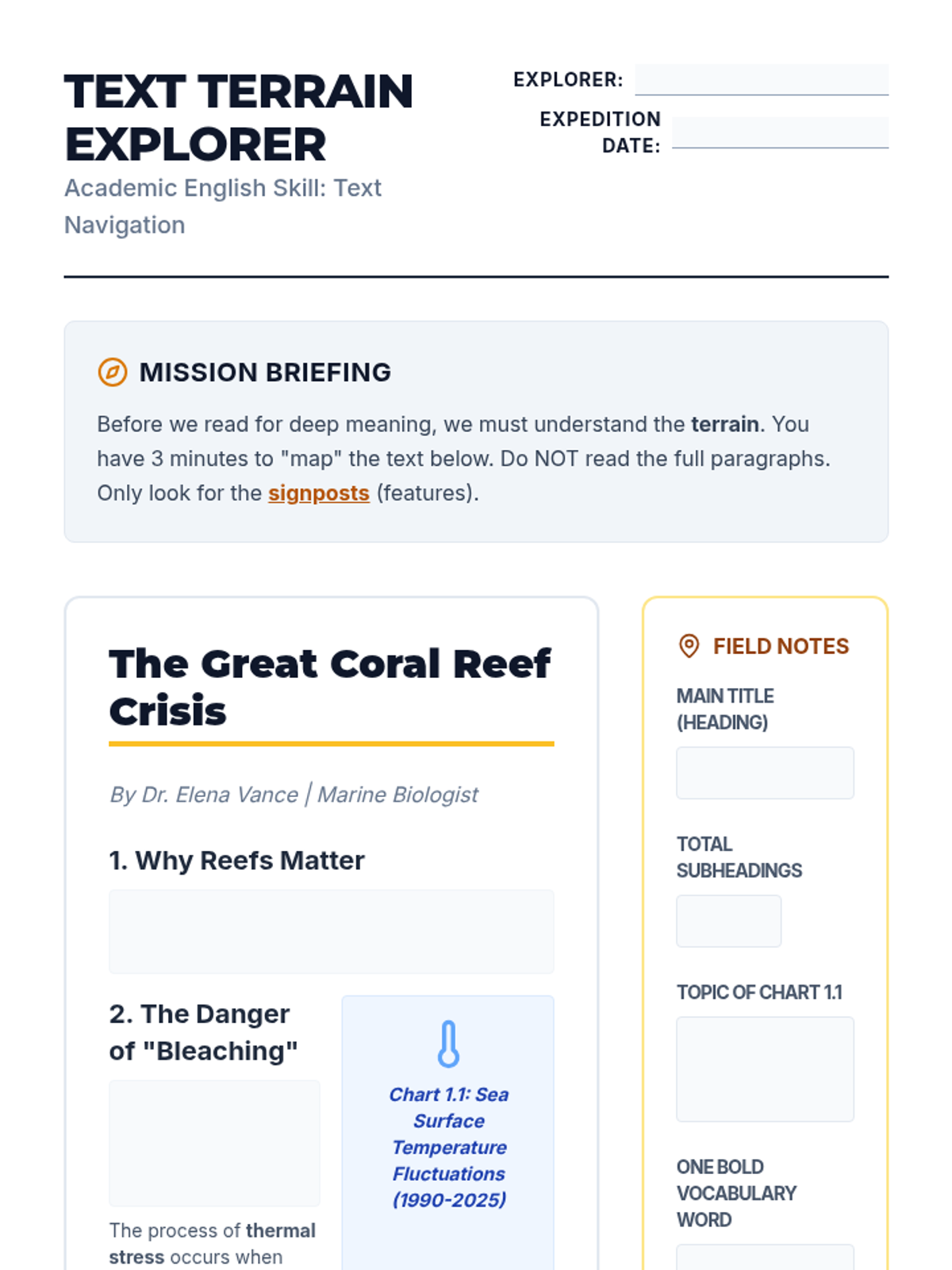
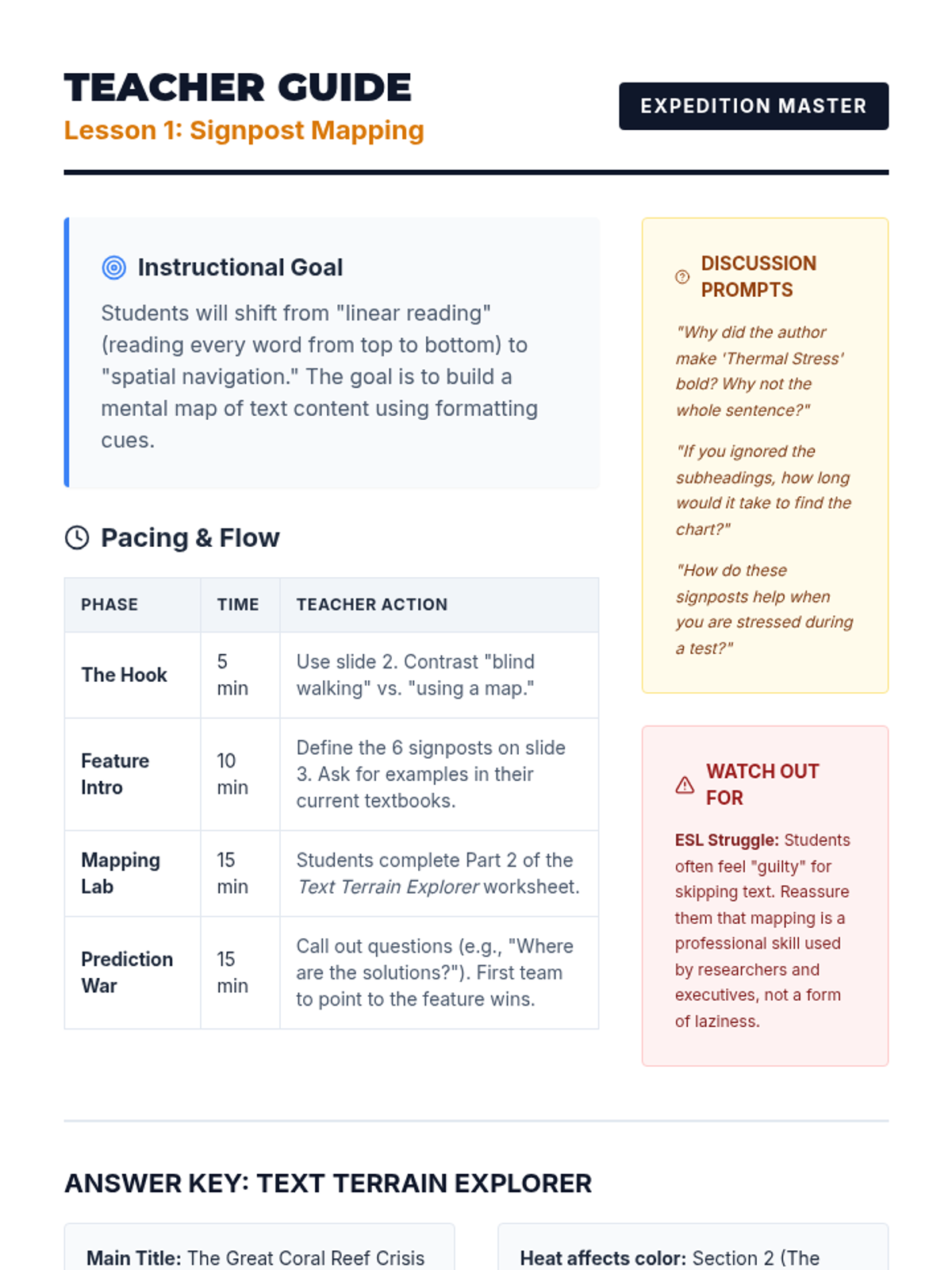
Students explore how headings, subheadings, captions, and distinct formatting act as signposts to map a text's layout before reading.
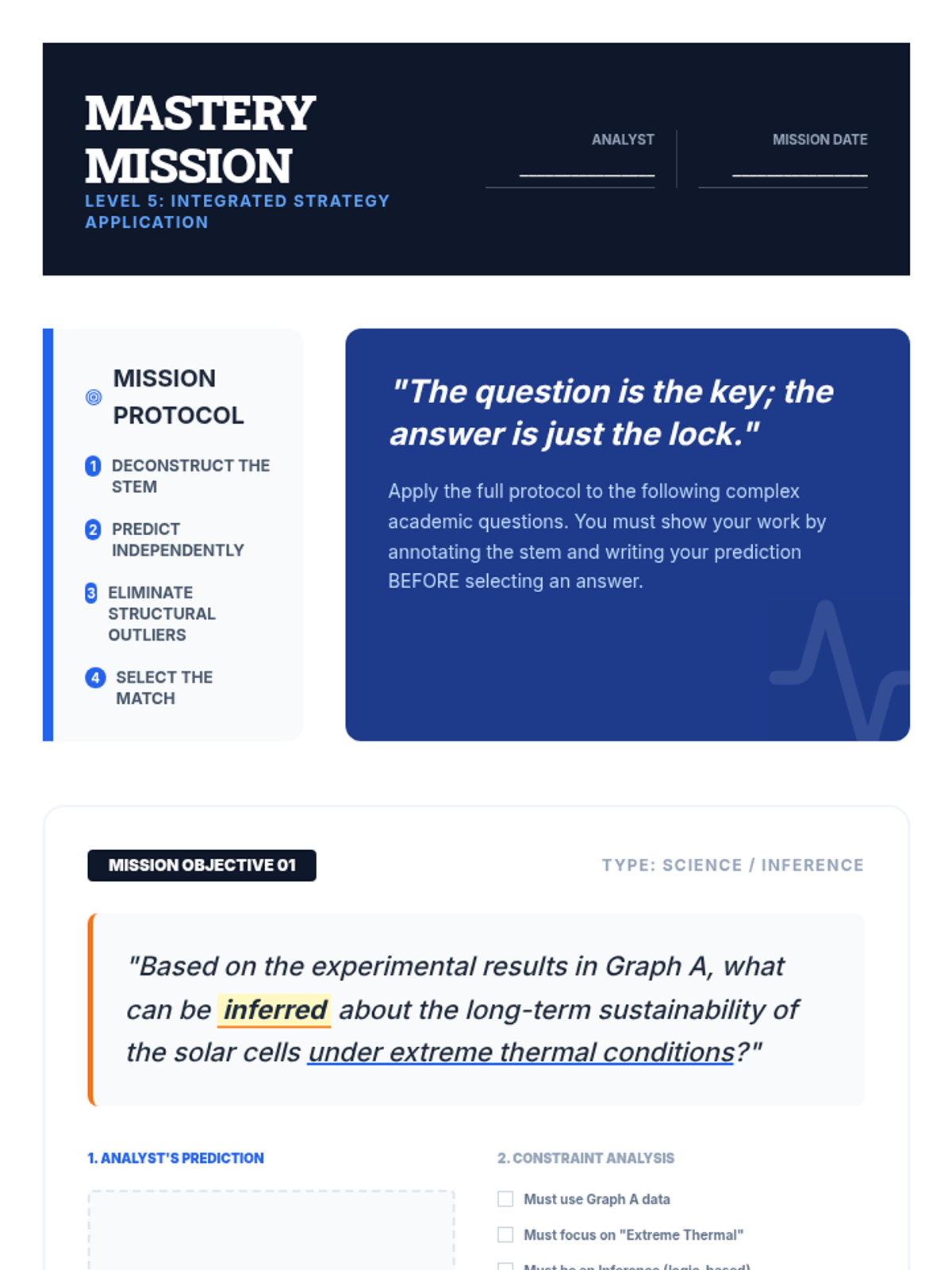
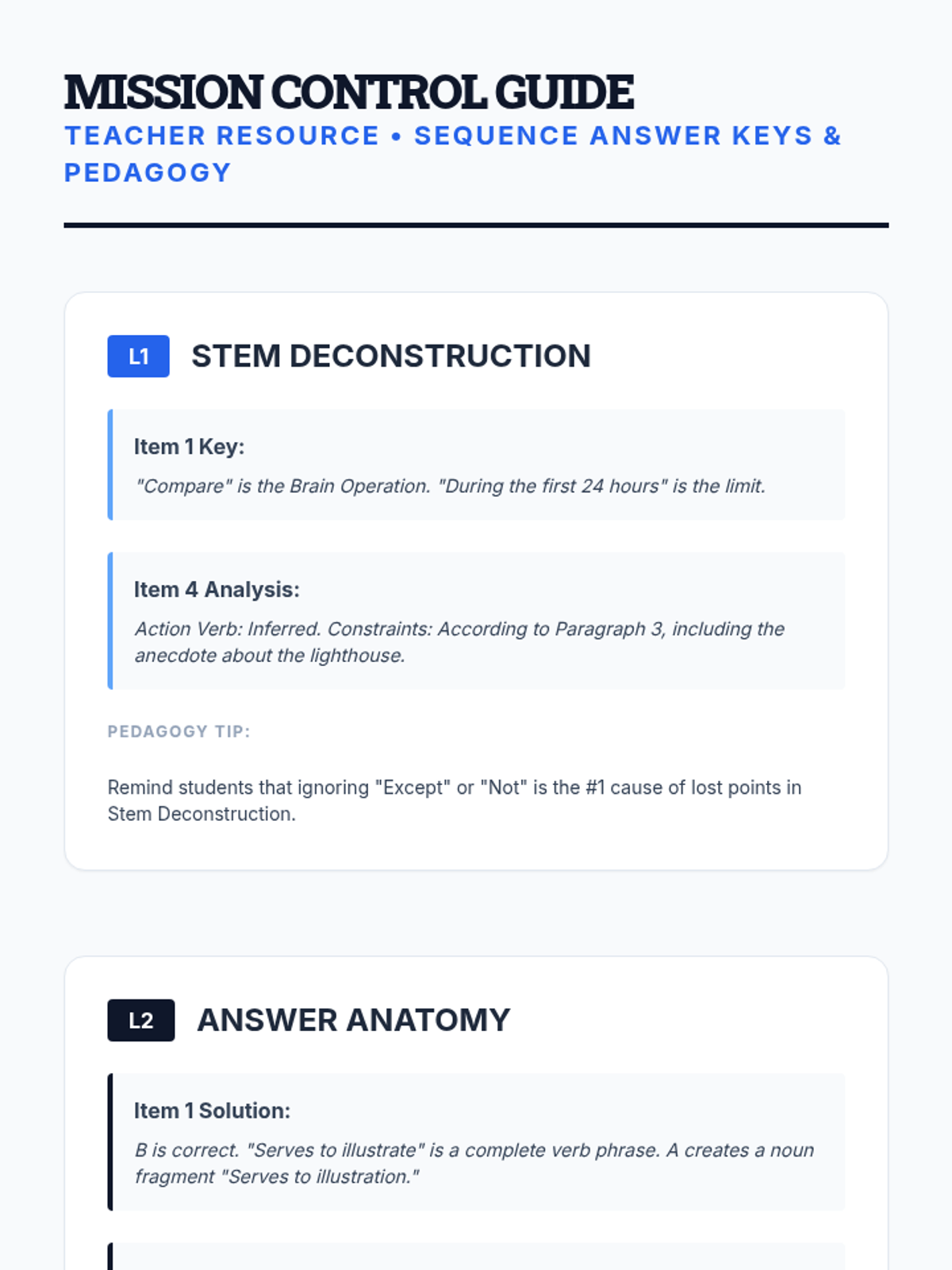
A culminating lesson where students apply all deconstruction techniques to a mixed set of academic questions, annotating their thought process and marking stems.
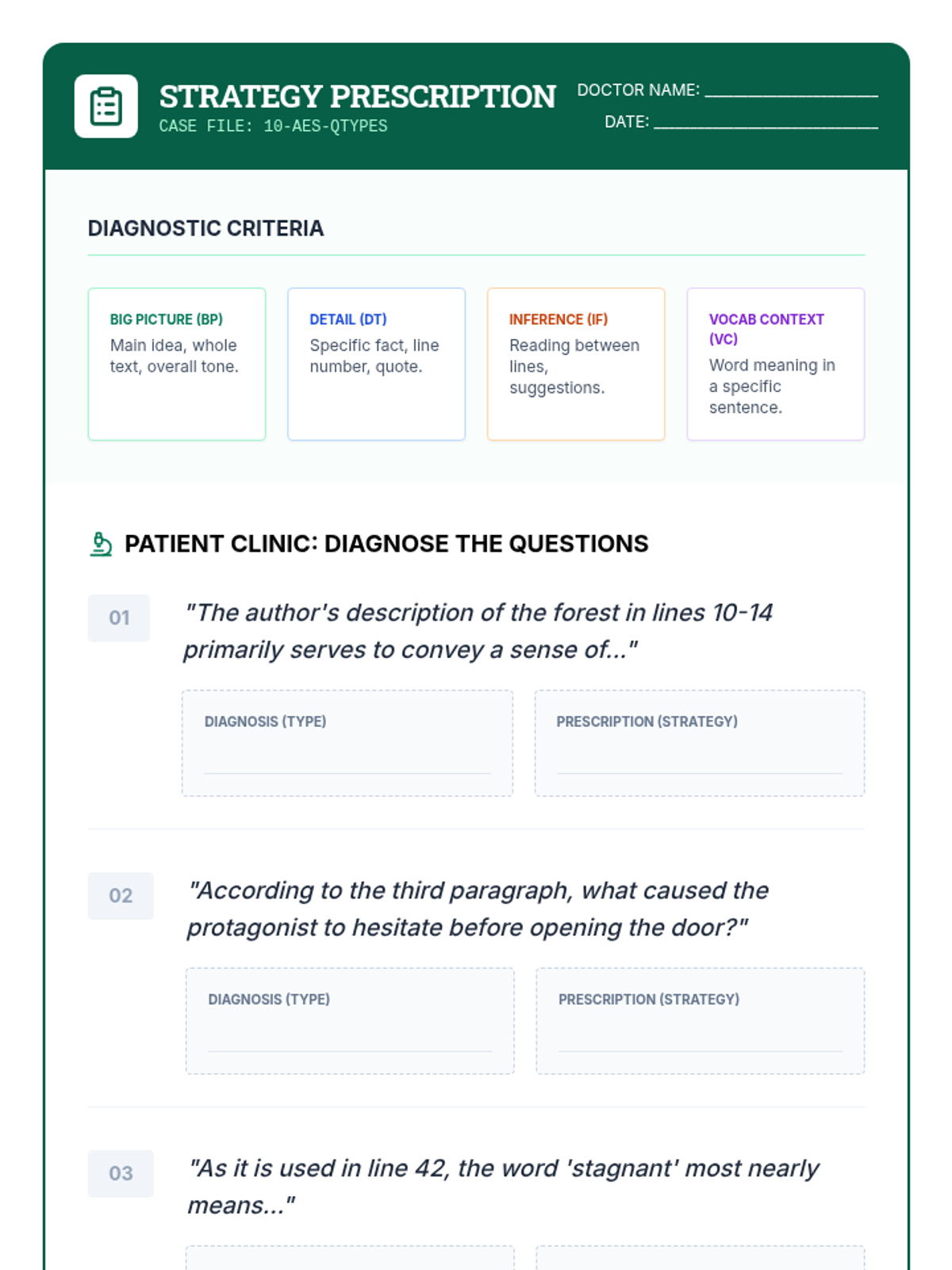
Students categorize questions into types (Big Picture, Detail, Inference, Vocab) and develop specific strategy checklists for approaching each type efficiently.
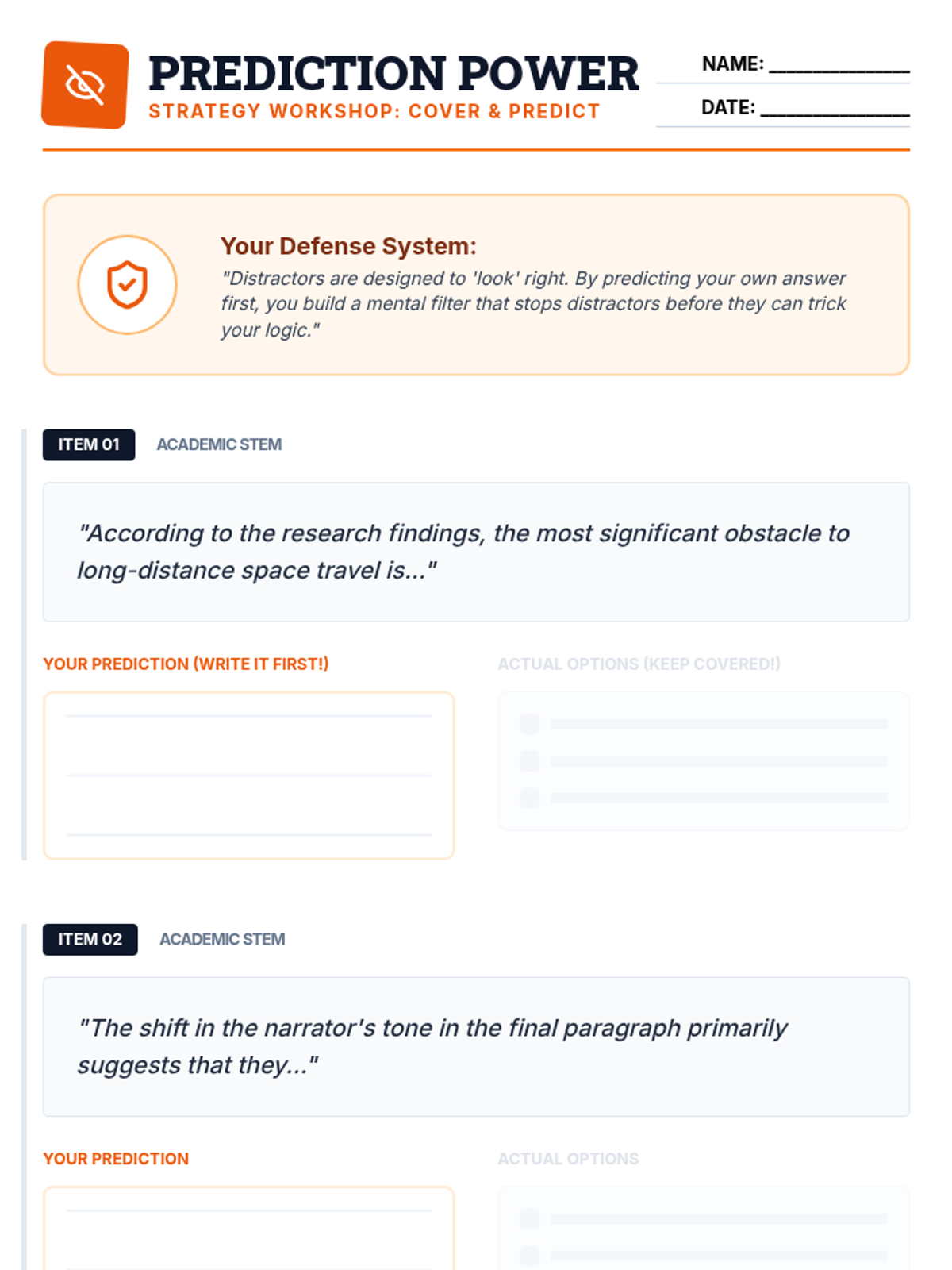
Students practice the 'cover and predict' strategy, formulating their own answers to prompts before revealing options to avoid being swayed by persuasive distractors.
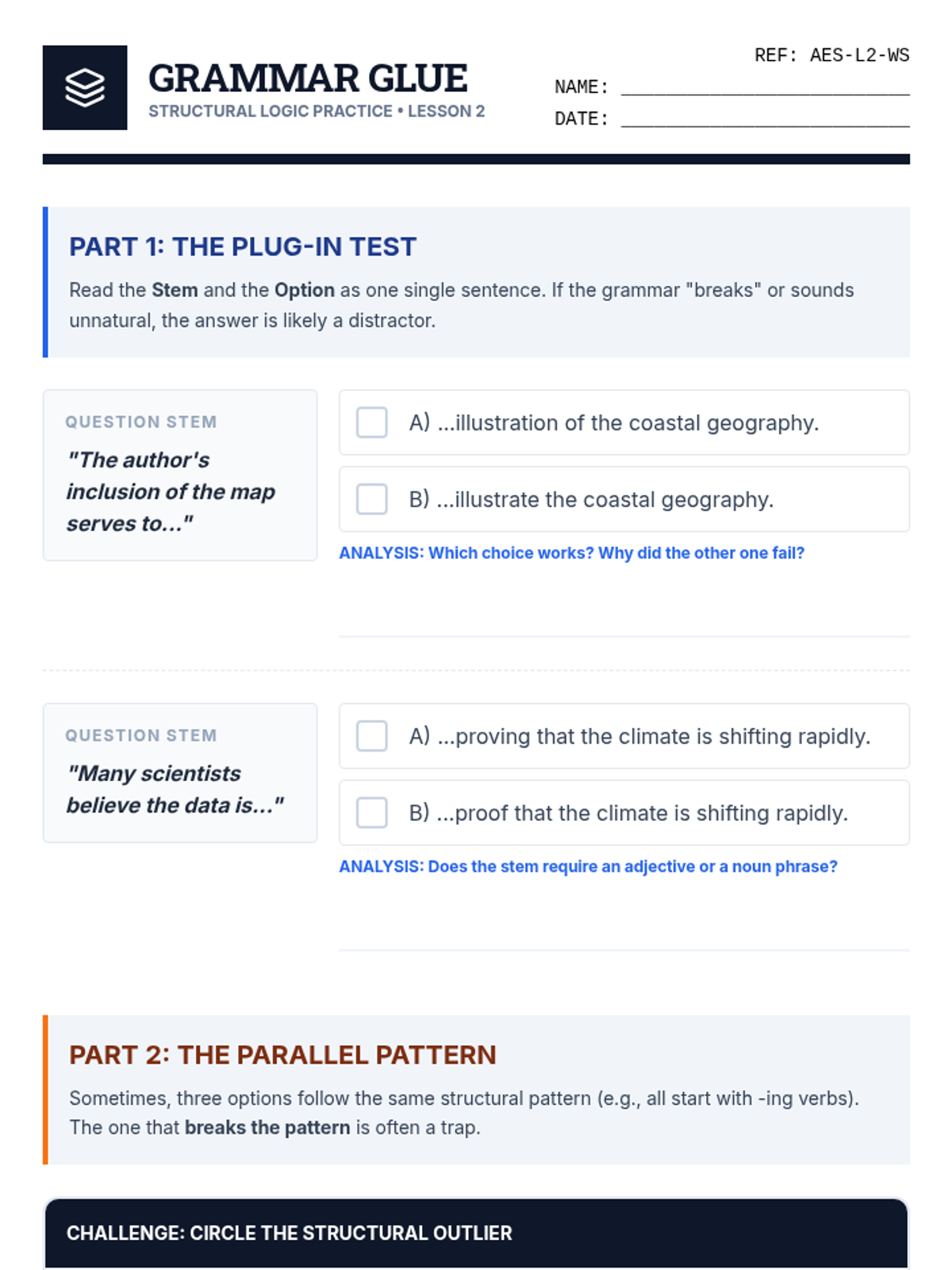
Learners examine the grammatical and structural patterns found in multiple-choice options, focusing on parallel structure and grammatical consistency between the stem and potential answers.
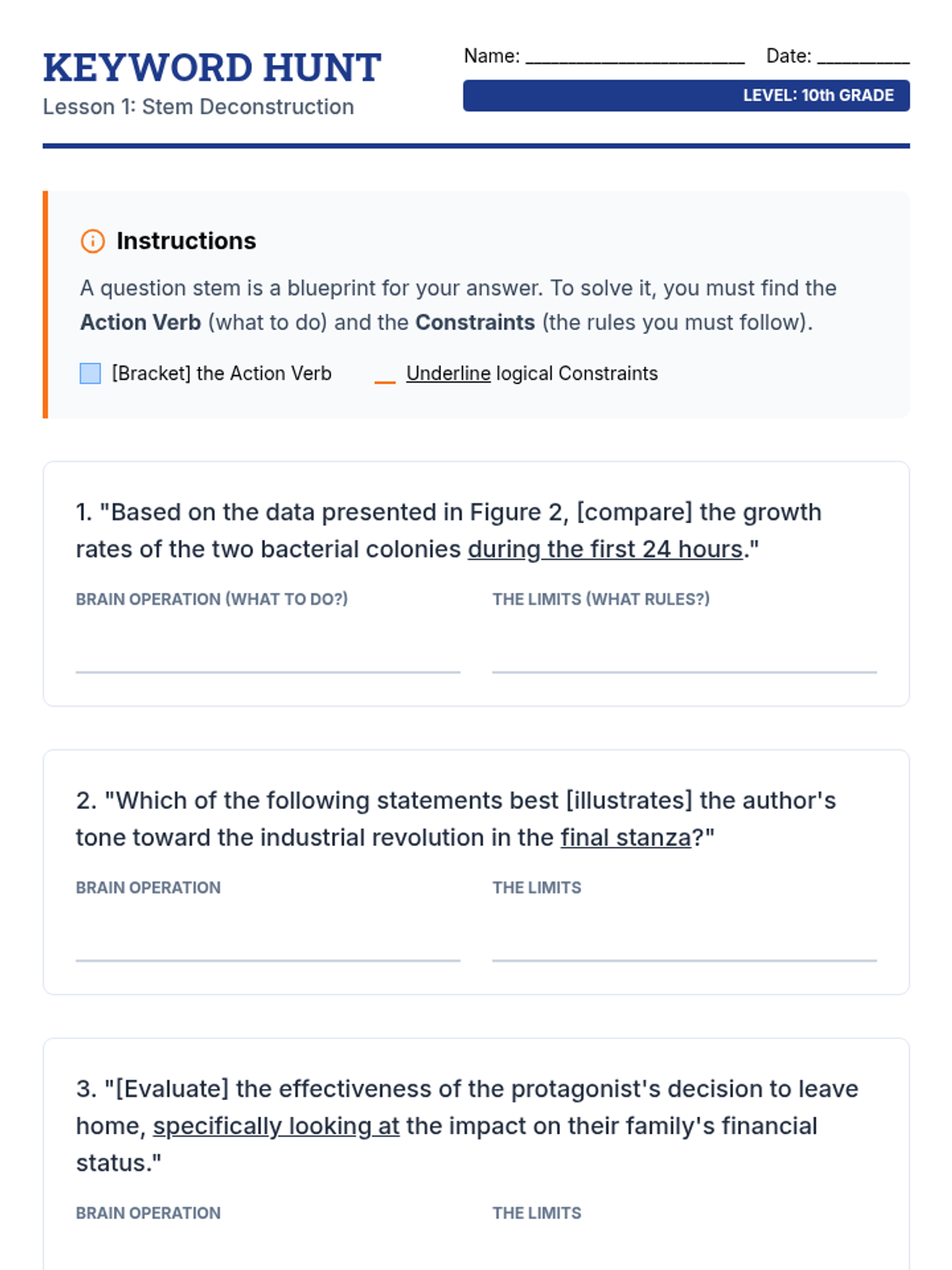
Students learn to identify key instructional verbs and limiting constraints within question prompts, practicing underlining essential keywords to focus on exactly what is being asked.
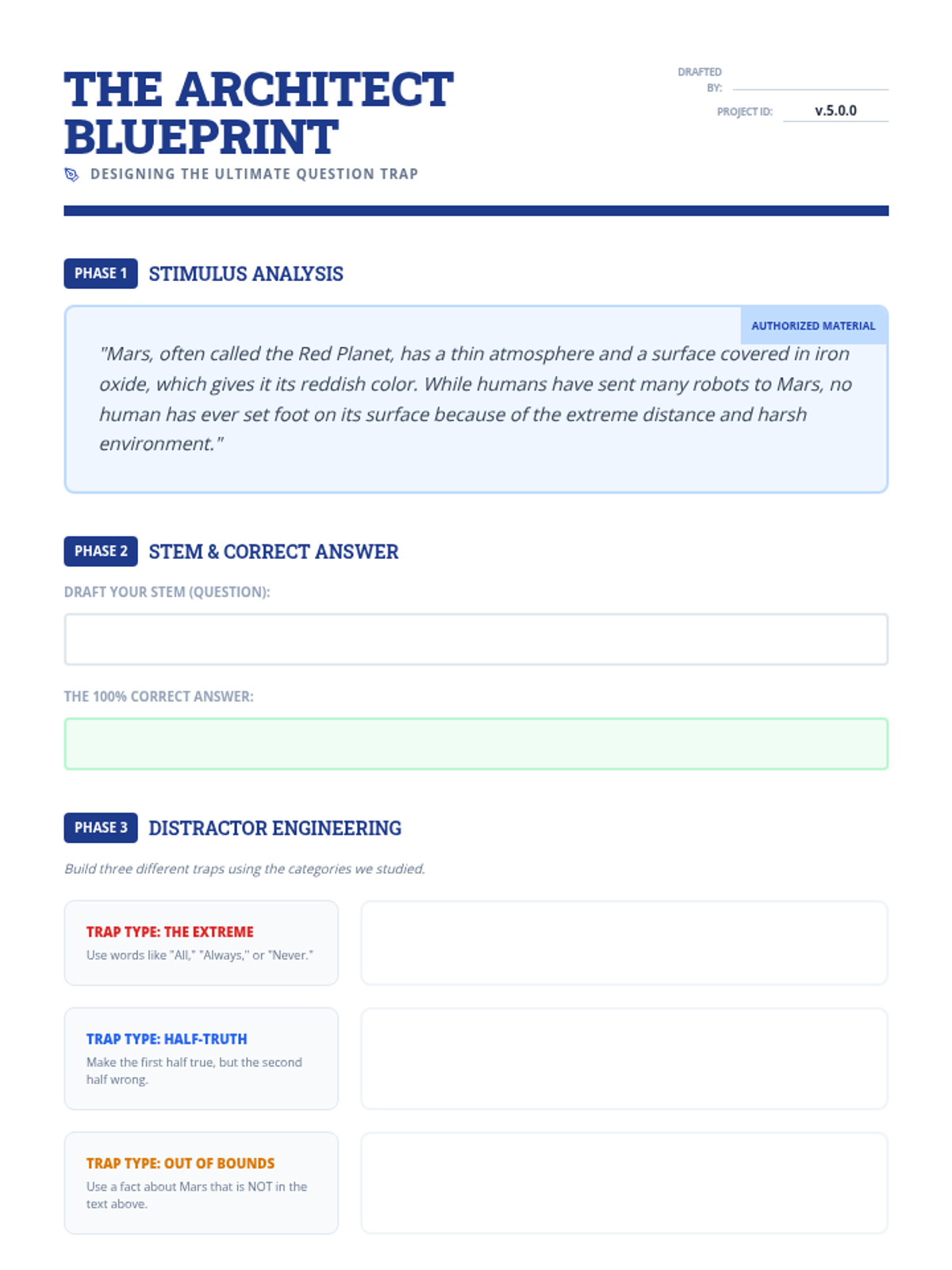
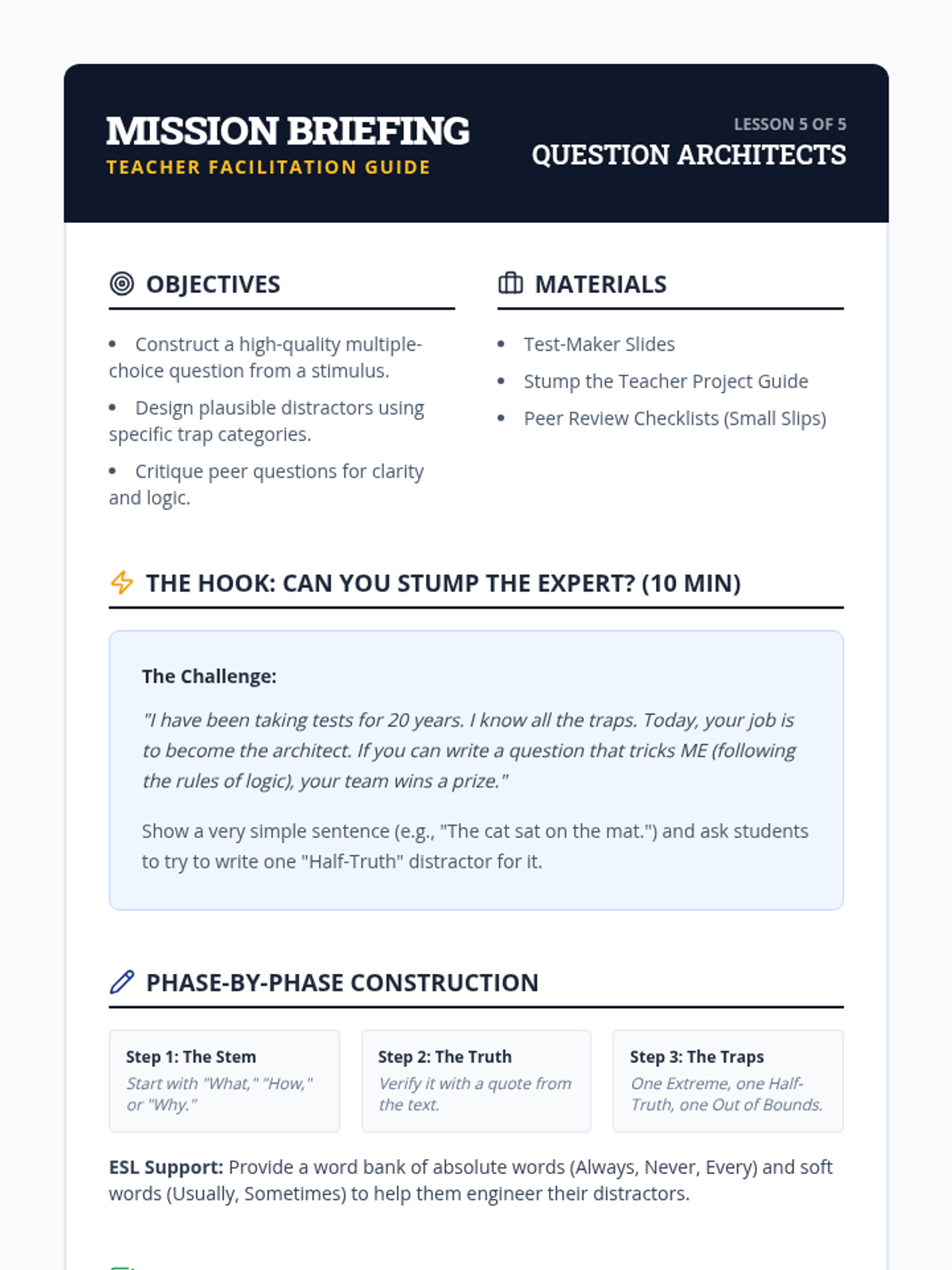
Students switch roles and become the test-makers. They write their own multiple-choice questions based on a shared text, intentionally creating plausible distractors.