Lenny LearningLenny
Create
Explore
Workspace
LoginSign up
MathEnglish Language ArtsScience & EngineeringSocial StudiesGlobal LanguagesHealth & Physical EducationSpecial EducationCounseling & Life SkillsArts & CreativityESL
Lenny LearningLenny
Lenny Learning
About
Training
Pricing
Support
Contact
© 2026 Lenny Learning Inc.

Reading Comprehension

SequencesLessonsMaterialsVideos
  1. English Language Arts

Reading Comprehension

SequencesLessonsMaterialsVideos

Critical analysis of text structure, authorial intent, and thematic development across fiction and nonfiction. Develops skills in inference, literary devices, and comparative analysis to deepen understanding of complex narratives and informational documents.

English Language ArtsPhonics & Reading FoundationsLetter IdentificationLearn Letters A-ZLowercase and Uppercase LettersConsonants and VowelsLetter-Sound AssociationsLetter-Sound Associations: LowercaseLetter-Sound Associations: UppercaseBeginning and Ending SoundsRhymingBlending And SegmentingShort VowelsShort Vowel SoundsConsonant BlendsConsonant DigraphsBlends, Digraphs, and TrigraphsDigraphs, Blends, and Silent LettersLong Vowel SoundsLong Vowel PatternsShort and Long VowelsShort and Long Vowel PatternsSilent EVowel SoundsVowel TeamsR-Controlled VowelsDiphthongs: Oi, Oy, Ou, OwVariant VowelsVariant, Diphthong, And R Vowel PatternsSoft G And CSight WordsIrregular WordsWord RecognitionSyllablesSyllable TypesTwo-Syllable WordsMultisyllabic WordsPhoneme ManipulationDecodable TextsVocabularyAction WordsQuestion WordsNouns and AdjectivesClassify WordsCompound WordsSynonyms and AntonymsHomophonesHomophones and HomonymsShades of MeaningContext CluesPrefixes and SuffixesGreek and Latin RootsAnalogiesIdioms and AdagesForeign Words and ExpressionsWord Choice and UsageReference SkillsReading ComprehensionRead-Along Literary TextsRead-Along Informational TextsReality vs. FictionStory ElementsCharacterSequenceMain IdeaCause And EffectCompare And ContrastReading StrategiesText StructureAuthor's PurposeAuthor's Purpose And ToneAuthor's PerspectivePoint Of ViewThemeInference And ThemeInference And AnalysisPoetry ElementsLiterary DevicesAnalyzing LiteratureAnalyzing Informational TextsComparing TextsAudience, Purpose, And ToneBusiness DocumentsNovel StudyNonfiction Book StudyGrammar & MechanicsSentencesNounsVerbsAdjectivesPronounsCapitalizationPunctuationContractionsConjunctionsPrepositionsArticlesAdjectives And AdverbsVerb TypesVerb TensePronouns And AntecedentsPronoun TypesSubject-Verb AgreementDirect And Indirect ObjectsSentences, Fragments, And Run-OnsPhrases And ClausesCommasSemicolons, Colons, And CommasDashes, Hyphens, And EllipsesSpellingAbbreviationsFormattingVerb Tense And MoodMisplaced ModifiersWritingDescriptive DetailsCreative WritingOpinion WritingTopic SentencesOrganizing WritingLinking WordsSentence VarietyIntroductions And ConclusionsPersuasive And Opinion WritingExpository WritingPersuasive StrategiesDeveloping And Supporting ArgumentsTopic Sentences And Thesis StatementsSummarizingResearch SkillsEditing And RevisingActive And Passive Voice=Writing Clearly And ConciselyDebate & Public SpeakingPublic Speaking BasicsPersuasive TechniquesClaims and EvidenceTypes of ArgumentsReasoning TypesLogical FallaciesTopic ResearchOrganizing EvidenceDebate Speech OrganizationAttacking and Defending ArgumentsClash and EngagementImpact CalculusQuestioning and Cross-ExaminationCritical ThinkingInformal LogicFormal LogicInductive Reasoning
Read-Along Literary TextsAudio-narrated stories and poems paired with highlighted text. Builds reading fluency and vocabulary through multisensory engagement with literature.
Read-Along Informational TextsAudio-supported non-fiction passages focusing on science, history, and real-world concepts. Develops reading fluency while building domain-specific vocabulary and comprehension skills.
Reality vs. FictionCriteria for distinguishing factual events from imaginative narratives in literature and media. Strengthens critical thinking through analysis of historical accuracy, character archetypes, and narrative structures.
Story ElementsIdentification and analysis of plot, characters, setting, conflict, and resolution. Strengthens reading comprehension by mapping narrative structures and examining how individual components shape a story.
CharacterExamination of personality traits, motivations, and growth arcs in literary figures. Builds skills in analyzing how character choices drive plot development and thematic depth.
SequenceArithmetic and geometric progressions defined by constant differences or ratios. Identifies patterns within ordered lists and calculates nth terms or limits.
No videos found
There are no videos available for this topic yet.
Video
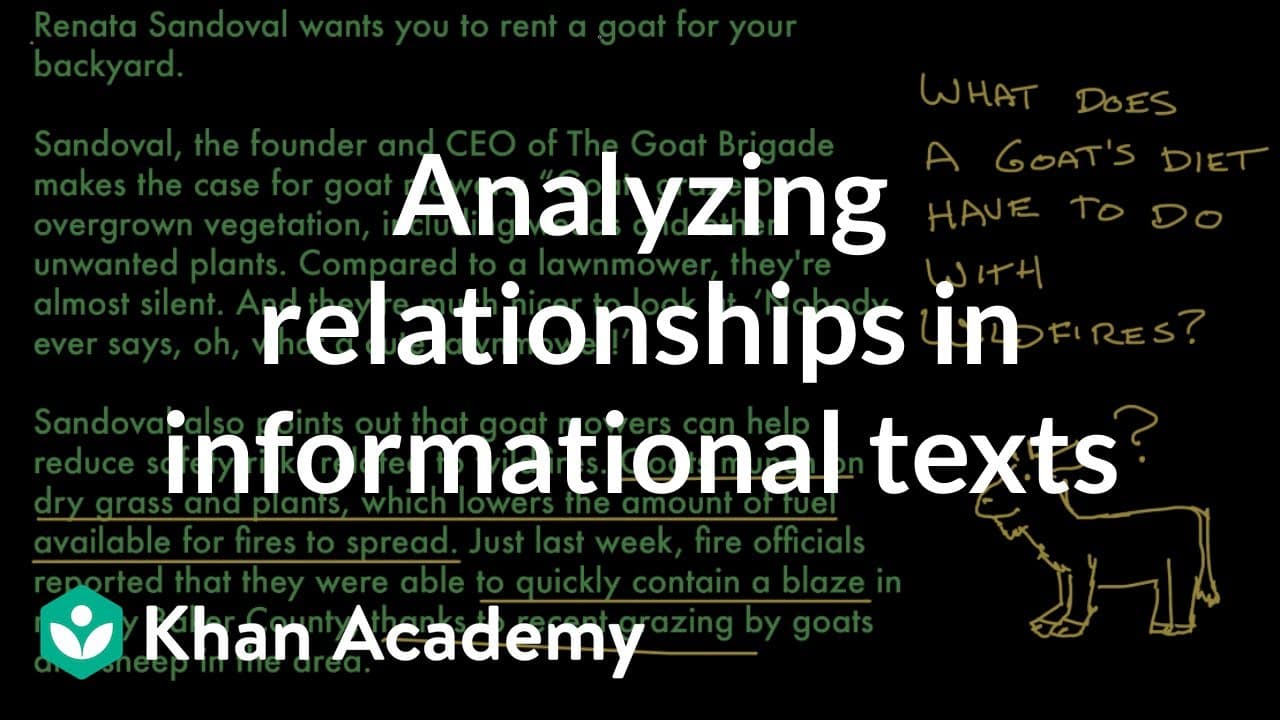
Making Connections: How Goats Help Prevent Wildfires

Making Connections: How Goats Help Prevent Wildfires

In this engaging English Language Arts video, narrators Hannah and David use a humorous personal anecdote and a fascinating real-world article to teach students how to identify connections between ideas in informational texts. The video defines connections as the "web of influence" linking people, events, and ideas, focusing specifically on cause-and-effect relationships. The narrators demonstrate how to trace these connections by analyzing how one event (mowing a lawn) can lead to unexpected outcomes (neighborhood noise complaints). The core of the lesson centers on a reading passage about "The Goat Brigade," a business that rents goats to graze on lawns. Through a guided close reading, the video models how to connect specific details in the text—such as a goat's diet of dry grass—to broader outcomes, like wildfire prevention. The narrators explicitly walk through the logic chain: goats eat dry plants (cause) → less fuel for fires (effect) → fires are easier to contain (outcome). This video is an excellent tool for 3rd through 5th grade classrooms to introduce or reinforce reading comprehension standards related to historical, scientific, or technical texts. It moves beyond simple recall to higher-order thinking, asking students to synthesize information and understand the "why" behind events. The humorous rapport between the narrators keeps students engaged while making abstract concepts concrete and understandable.

Khan AcademyKhan Academy

3mins 49s

Video
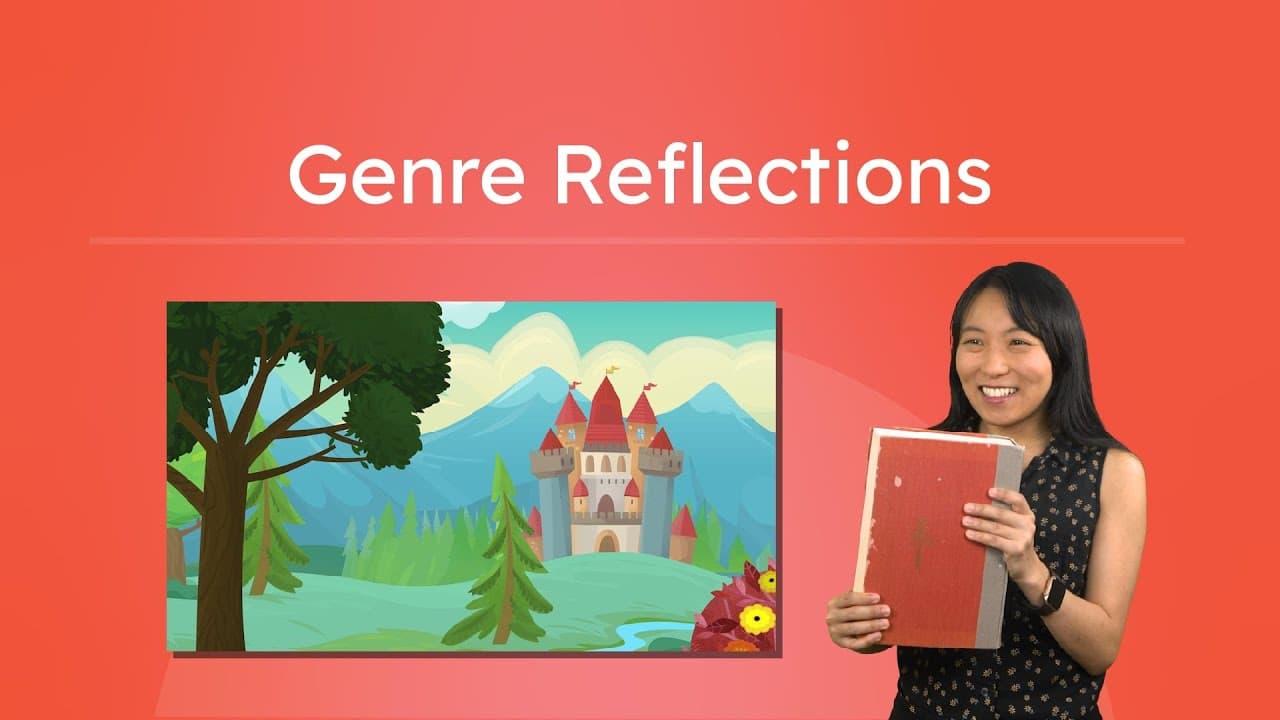
Defeating the Shadow: A Review of Literary Genres

Defeating the Shadow: A Review of Literary Genres

This video serves as the dramatic conclusion to a unit on literary genres, set in a fantasy world called "Genre Land." The narrator and a bard character named Storyweaver must defeat a villain known as the "Shadow of Monotony" to save storytelling from becoming dull and gray. To defeat the Shadow, they must pass three trials that require answering review questions about specific genres, including fantasy, science fiction, mystery, adventure, historical fiction, and realistic fiction. The video explores key themes of literary analysis, specifically focusing on the defining characteristics of various fiction genres. It covers concepts like "speculative fiction," techniques for creating suspense (such as pacing and information control), and the role of empathy in realistic and historical fiction. The narrative culminates in a song that celebrates the diversity of stories and the power of imagination. For educators, this video provides an engaging, gamified review of literary concepts suitable for upper elementary and middle school students. It models how to synthesize information to answer analytical questions and introduces a final creative project where students act as "Genre Experts." The video sets the stage for students to apply their learning by either writing a narrative story or creating an informational presentation about a chosen genre.

Miacademy & MiaPrep Learning ChannelMiacademy & MiaPrep Learning Channel

11mins 6s

Video
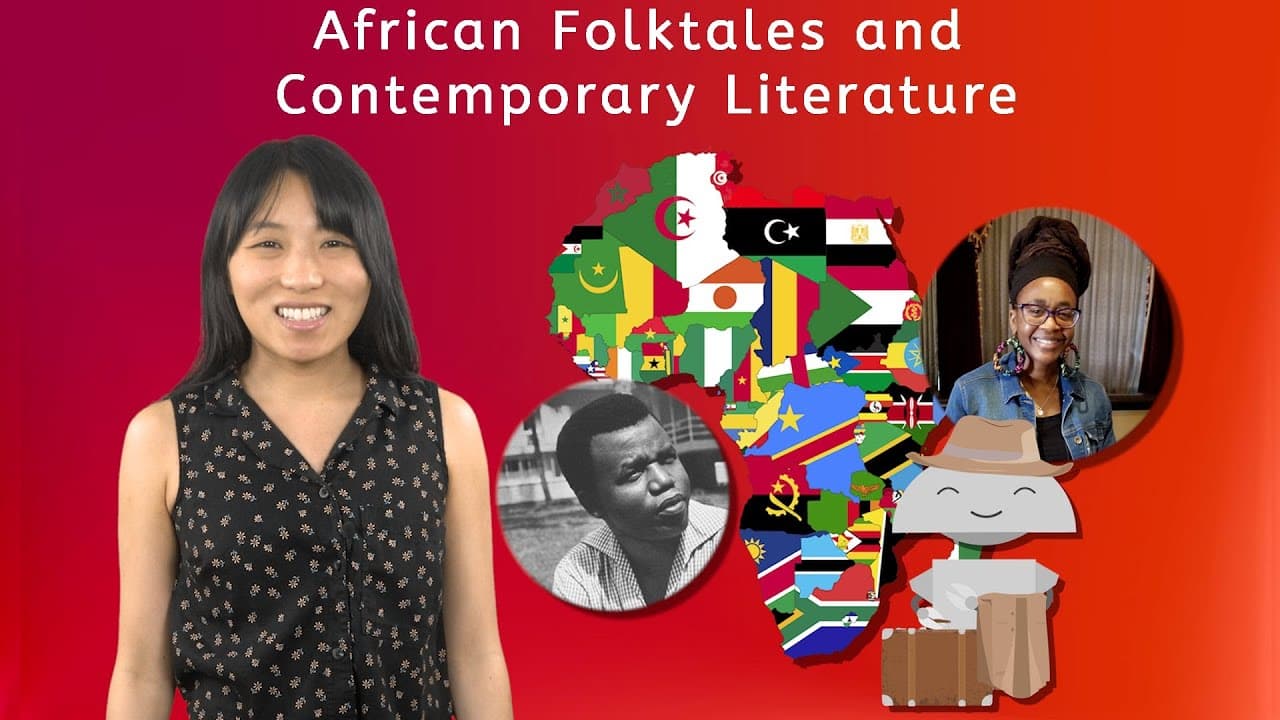
Exploring African Folktales and Contemporary Literature

Exploring African Folktales and Contemporary Literature

This educational video provides a comprehensive overview of African literary traditions, starting with the oral history of folktales and moving through the colonial, post-colonial, and modern eras of written literature. Set against the backdrop of Lagos, Nigeria, the narrator guides viewers through the cultural significance of storytelling, using the famous trickster character Anansi the Spider as a primary example of folklore that imparts moral lessons and preserves history. The video delves into complex historical themes, explaining how the Colonial and Post-Colonial periods shaped the narratives of African authors. It introduces key literary figures such as Chinua Achebe, Tsitsi Dangarembga, and Chimamanda Ngozi Adichie, categorized by the historical eras they represent. The content breaks down how political events, specifically the struggle for independence and the challenges of rebuilding nations, directly influenced the themes explored in African literature. Designed for middle and high school students, this resource is an excellent tool for Language Arts and World History classrooms. It connects geography, history, and literature, offering students a framework to understand how societal changes impact storytelling. The video includes built-in pause points for reading and reflection, making it ready-made for interactive classroom lessons on world cultures, literary archetypes, and historical analysis.

Miacademy & MiaPrep Learning ChannelMiacademy & MiaPrep Learning Channel

10mins 43s

Video
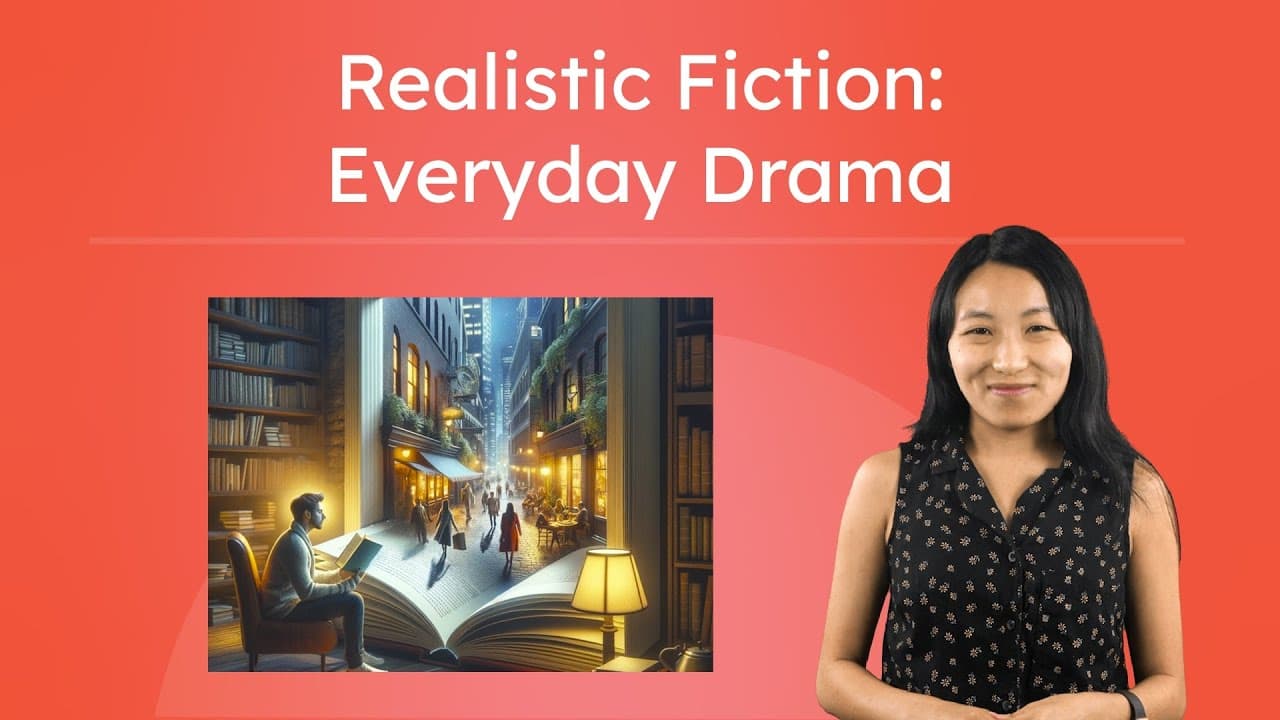
Understanding Realistic Fiction: Stories from Everyday Life

Understanding Realistic Fiction: Stories from Everyday Life

This video introduces students to the literary genre of realistic fiction within the context of a thematic journey through "Genre Land." The host finds herself in a seaside village where a sudden rainstorm ruins her beach plans, serving as a perfect metaphor for the everyday problems characters face in realistic fiction. Through this narrative frame, the video defines the genre as stories containing believable characters, settings, and events that could actually happen in real life, distinct from fantasy or science fiction.

Miacademy & MiaPrep Learning ChannelMiacademy & MiaPrep Learning Channel

11mins 52s

Video
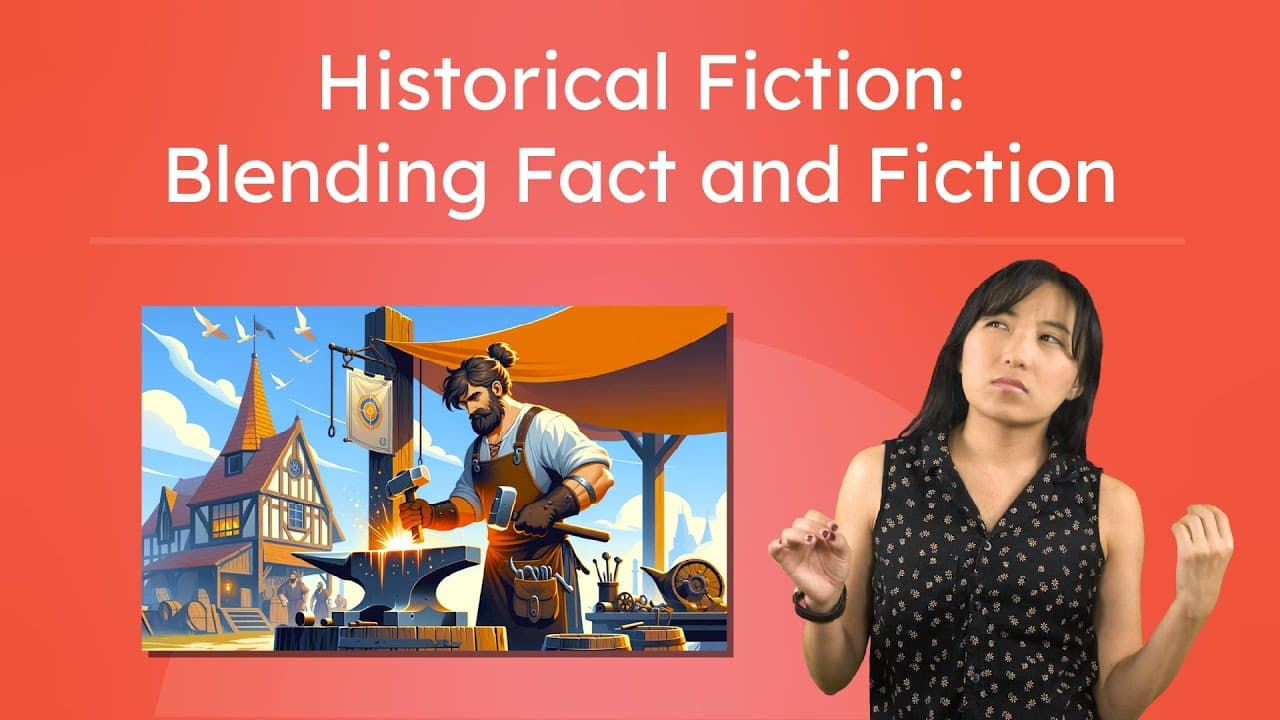
Unlocking the Genre of Historical Fiction

Unlocking the Genre of Historical Fiction

This educational video provides a comprehensive introduction to the genre of historical fiction, guiding students through the delicate balance between factual history and creative storytelling. Hosted by Caroline and featuring a humorous skit with a library curator, the lesson defines the genre, distinguishing it from fantasy by emphasizing plausibility and the absence of speculative elements like magic. It uses concrete examples, such as a Scottish blacksmith, to illustrate what counts as historical fiction and what does not. The video dives deep into the concept of "historical context," explaining how social norms, political climates, and geography shape a story's setting and plot. It emphasizes that while settings change, human themes like courage and resilience remain universal. Through interactive activities, students practice identifying factual elements versus fictional creations within a text, specifically analyzing a story about Leonardo da Vinci to understand how authors weave real historical figures into invented narratives. Finally, the content explores the purpose of reading historical fiction: to analyze history from a new perspective and to empathize with people from the past. By connecting emotionally with characters who lived through major events, students learn to view history not just as a collection of dates, but as human experiences. The video suggests practical classroom applications, such as using historical fiction to teach critical thinking by separating fact from fiction and fostering emotional intelligence through character analysis.

Miacademy & MiaPrep Learning ChannelMiacademy & MiaPrep Learning Channel

12mins 18s

Video
Exploring Science Fiction and Worldbuilding

Exploring Science Fiction and Worldbuilding

This engaging educational video introduces students to the literary genre of Science Fiction (Sci-Fi) through a fun, narrative-driven lesson. Hosted by a narrator named Caroline and her robot companion Mia, the video uses a framing story of a crashed spaceship to explore key concepts. It defines Science Fiction as a sub-genre of speculative fiction that grounds its imaginative elements in scientific concepts, distinguishing it from pure fantasy. The lesson breaks down complex literary terms into accessible segments, covering the definition of speculative fiction, the role of science (both hard sciences like physics and soft sciences like sociology), and the crucial concept of "worldbuilding." The video delves deep into the mechanics of storytelling within the genre, emphasizing "internal consistency"—the idea that a fictional world must follow its own established laws, even if they differ from reality. It explores common tropes such as space travel, time manipulation, and futuristic technology, explaining how these elements serve the narrative. Furthermore, the video encourages critical thinking by discussing how Science Fiction acts as a mirror to the real world, exploring themes like the ethical implications of technology, social justice issues, and the human drive for exploration. It highlights historical examples, such as how H.G. Wells inspired rocket pioneer Robert Goddard. For educators, this resource is an excellent tool for Language Arts units on genre study, narrative structure, or creative writing. It provides clear definitions and structured pause points for reflection or guided note-taking. The video not only teaches literary analysis but also bridges the gap between STEM and the humanities by showing how scientific innovation and creative imagination feed into one another. It can be used to spark discussions about the future, inspire creative writing projects where students build their own worlds, or serve as a foundational text before reading a class novel in the genre.
Miacademy & MiaPrep Learning ChannelMiacademy & MiaPrep Learning Channel

12mins 11s

Video
How to Evaluate, Use, and Cite Sources

How to Evaluate, Use, and Cite Sources

This educational video uses an engaging narrative about a fictional "sea monster" sighting in the town of Sourceville to teach students essential information literacy skills. Through the character of Mia, a robot investigator, the video breaks down how to navigate the sea of information by distinguishing between reliable facts and unverified rumors. It addresses the real-world problem of misinformation spreading via social media and provides a structured approach to verifying claims. The content covers several key themes central to research and writing skills: differentiating between primary and secondary sources, evaluating source credibility based on author credentials and publication dates, and the ethical use of information. It explicitly teaches the mechanics of avoiding plagiarism through quoting, paraphrasing, and citing sources. The video demonstrates specific techniques for paraphrasing, such as using synonyms and changing sentence structure, rather than just swapping a few words. For educators, this video serves as an excellent introduction to research projects or a standalone lesson on media literacy. It simplifies complex academic concepts like "credibility" and "citation" into concrete, relatable examples. The video includes built-in pause points for active learning, allowing students to practice identifying source types and paraphrasing text alongside the narrator. It is particularly useful for upper elementary and middle school students learning to write research papers or navigate online information.

Miacademy & MiaPrep Learning ChannelMiacademy & MiaPrep Learning Channel

11mins 13s

Video
Fantasy Fiction and the Hero's Journey Explained

Fantasy Fiction and the Hero's Journey Explained

This engaging educational video explores the Fantasy genre and the literary concept of the Hero's Journey, using a meta-narrative about a lost dragon named Clove to illustrate key points. The lesson breaks down the definition of fantasy as speculative fiction involving magic and supernatural elements, distinguishing it from science fiction. It then delves into the structural framework of the Hero's Journey, guiding viewers through its three main stages: Departure, Initiation, and Return. The content covers essential literary elements including worldbuilding, character archetypes (heroes, mentors, villains), and common themes like courage and good versus evil. The video uses the character of Clove to provide concrete examples of each stage of the Hero's Journey, helping students visualize abstract narrative concepts. Visual diagrams and clear definitions support the retention of vocabulary such as "speculative fiction," "archetype," and "narrative framework." Ideally suited for upper elementary and middle school Language Arts curriculums, this video serves as an excellent introduction to narrative structure and genre study. Teachers can use it to launch units on creative writing, novel studies of fantasy literature, or analysis of plot structures. The interactive components, where the narrator asks students to pause and reflect or answer questions, make it a ready-to-use tool for both individual learning and whole-class instruction.

Miacademy & MiaPrep Learning ChannelMiacademy & MiaPrep Learning Channel

12mins 40s

Video
How to Summarize Non-Fiction Text Using a Map Analogy

How to Summarize Non-Fiction Text Using a Map Analogy

This engaging instructional video explores the essential skill of summarizing non-fiction texts. Through a friendly and accessible narration, the video distinguishes between summarizing fiction stories and summarizing informational content like articles, textbooks, or scientific papers. It uses clear analogies and hypothetical scenarios to break down exactly what a summary should contain—and crucially, what it should leave out—helping students understand that a summary is a tool for capturing the "big picture" rather than a container for every single fact.

Khan AcademyKhan Academy

2mins 42s

Video
Easy as PIE: Identifying Author's Purpose in Nonfiction

Easy as PIE: Identifying Author's Purpose in Nonfiction

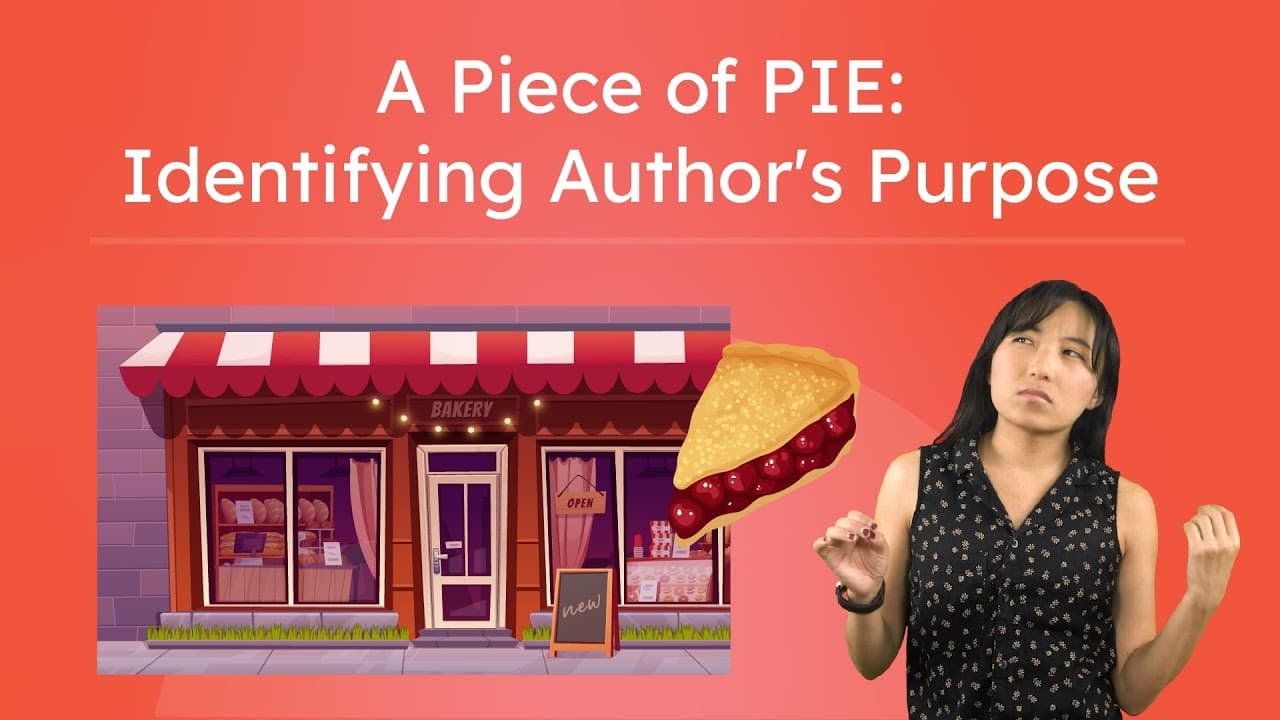
This engaging educational video introduces students to the concept of "Author's Purpose" using the popular "PIE" acronym (Persuade, Inform, Entertain). Set against a bakery backdrop, the host and her robot companion, Mia, guide viewers through analyzing nonfiction texts. They demonstrate how different texts about the same subject—pie—can have vastly different goals, helping students distinguish between opinions, facts, and narratives. The video breaks down the specific characteristics of each purpose, focusing on identifying the central idea, analyzing language choices (emotional vs. objective vs. descriptive), and recognizing text structures. It uses three distinct reading passages—"Pie for All" (persuasive), "Pie History" (informative), and "Pie Town" (entertaining)—as concrete examples for students to practice their analysis skills alongside the narrator. For educators, this video serves as an excellent introduction or review of nonfiction reading comprehension skills. It includes built-in pause points for students to read passages and complete accompanying activities (referenced as a PDF but easily replicable on paper). The content encourages critical thinking by asking students not just *what* a text says, but *why* the author wrote it, a crucial skill for media literacy and advanced reading comprehension.

Miacademy & MiaPrep Learning ChannelMiacademy & MiaPrep Learning Channel

10mins 30s

Video
Exploring Indigenous American Literature: Traditions and Modern Voices

Exploring Indigenous American Literature: Traditions and Modern Voices

This educational video provides a comprehensive introduction to Indigenous American literature, bridging the gap between ancient oral traditions and contemporary written works. The lesson begins by grounding the viewer in the geography and history of the Badlands (Makoshika) and the Lakota people, establishing the deep ancestral connections to the land. It transitions into defining Indigenous peoples and exploring the rich diversity of over 500 recognized nations in North America, moving beyond monolithic stereotypes to highlight unique cultures like the Cherokee, Navajo, and Iroquois. The video explores two main categories of literature: traditional storytelling lore and contemporary Indigenous literature. Through the lens of traditional lore, it examines common characteristics such as creation stories, deep respect for nature, and moral teachings, using the Iroquois story "The Creation of Turtle Island" as a primary example. The analysis then shifts to contemporary literature, discussing how modern authors like Louise Erdrich and Joseph Bruchac weave historical trauma—including colonization, disease, and forced relocation—into narratives that address current social injustices while celebrating cultural resilience. For educators, this video serves as an excellent anchor for units on American literature, US history, or cultural studies. It provides concrete examples of literary analysis, asking students to identify themes and symbolism, while also fostering social-emotional learning through discussions of identity, injustice, and the power of storytelling. The video includes built-in pause points for reflection and reading activities, making it a ready-made tool for sparking classroom dialogue about the enduring legacy and vitality of Indigenous cultures.

Miacademy & MiaPrep Learning ChannelMiacademy & MiaPrep Learning Channel

9mins 57s

Video
How to Distinguish Between Fantasy, Fairy Tales, and Realistic Fiction

How to Distinguish Between Fantasy, Fairy Tales, and Realistic Fiction

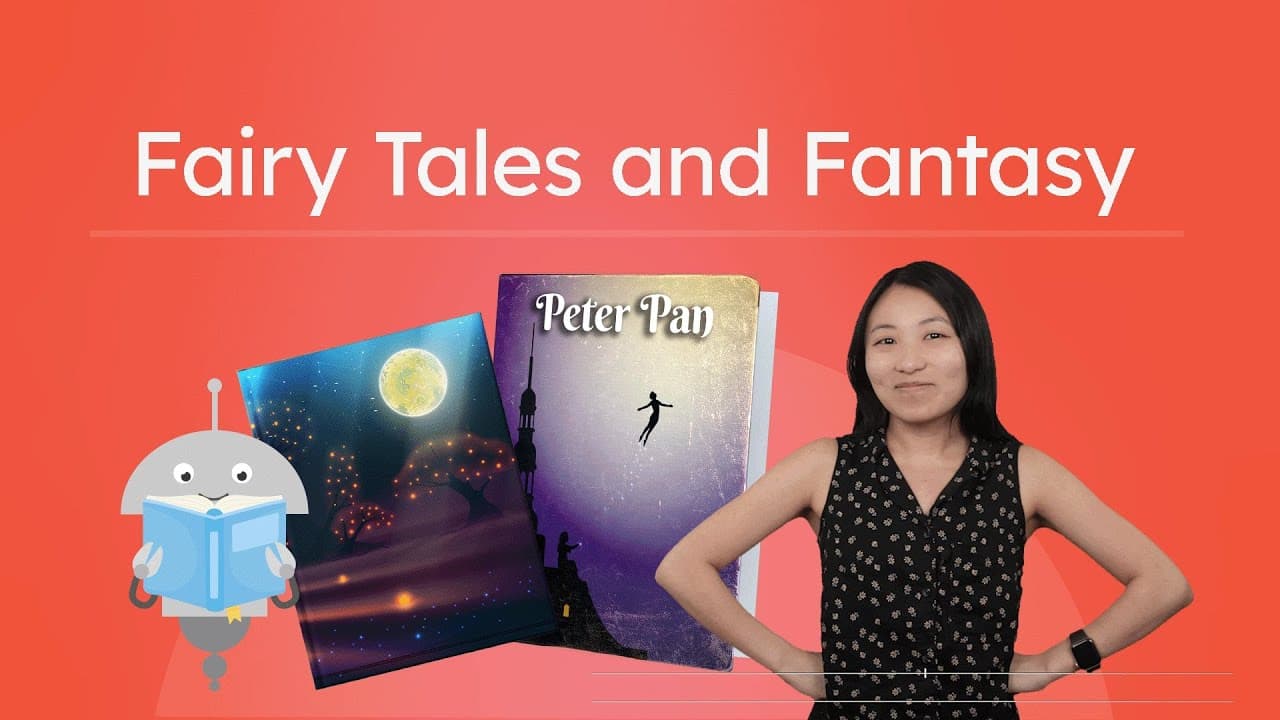
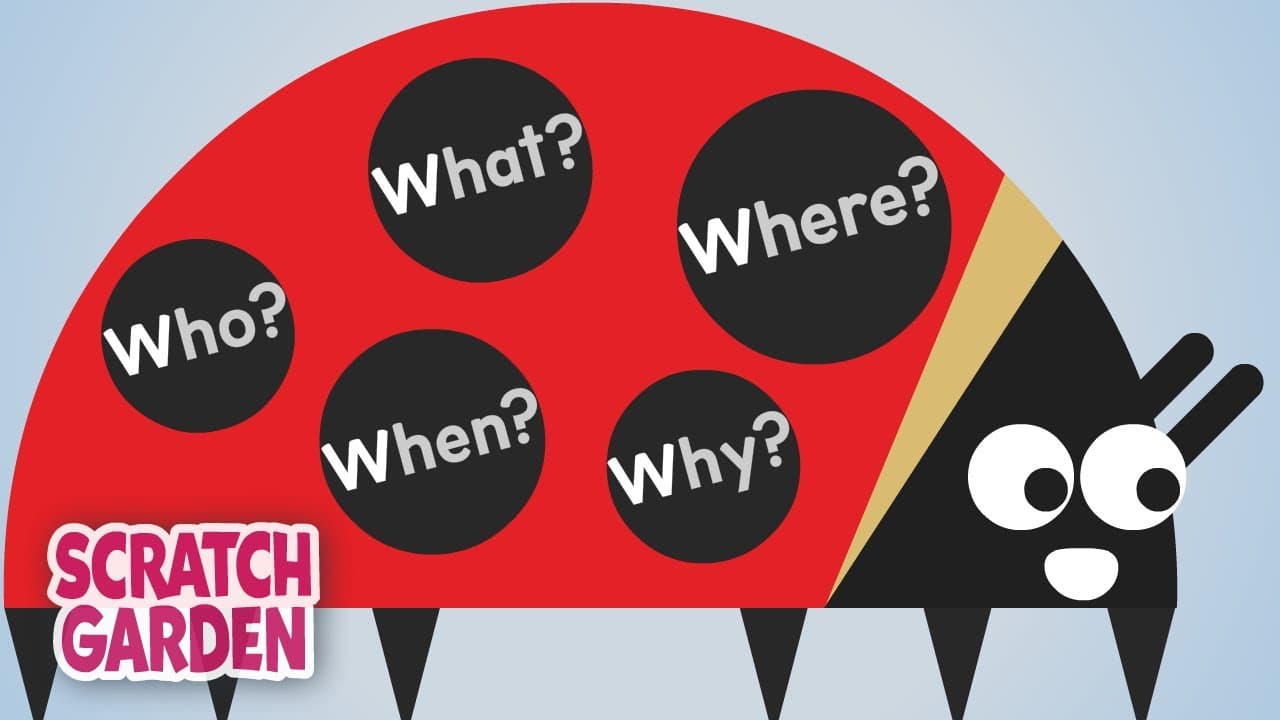
This engaging video introduces students to the concept of literary genres through a virtual visit to a bookstore. The host, Caroline, explains that genres are categories of stories with their own specific styles and rules. The video focuses on differentiating between three specific genres: Realistic Fiction, Fairy Tales, and Fantasy. Through clear definitions and illustrative examples, viewers learn how the same object—a golden key—functions differently within the narrative structure of each genre.
Miacademy & MiaPrep Learning ChannelMiacademy & MiaPrep Learning Channel

10mins 11s

Video
How to Use Metaphors to Make Creative Comparisons

How to Use Metaphors to Make Creative Comparisons

In this engaging language arts video, students explore the concept of metaphors—a figure of speech that compares two unlike things without using the words "like" or "as." Through clear definitions and relatable examples, the narrator breaks down how metaphors function as creative tools for description. The video carefully distinguishes metaphors from similes, helping viewers understand the subtle but important grammatical difference between these two common literary devices. The content focuses on three primary examples to illustrate the concept: comparing a fast runner to a cheetah, describing snow as a white blanket, and using the idiom "piece of cake" to describe ease of learning. Each example is deconstructed to show exactly what is being compared and why it qualifies as a metaphor. The video also addresses the literal versus figurative nature of these comparisons, ensuring students understand that metaphors are imaginative rather than factual statements. This resource is highly valuable for elementary classrooms introducing figurative language or creative writing. It provides a visual and auditory explanation that simplifies abstract concepts, making it easier for students to identify metaphors in their reading and incorporate them into their own writing. The humorous ending, featuring the narrator literally frozen in ice, serves as a memorable final check for understanding the difference between literal reality and metaphorical comparison.

Homeschool PopHomeschool Pop

6mins 12s

Video
Writing Literary Journalism: Balancing Creativity and Truth

Writing Literary Journalism: Balancing Creativity and Truth

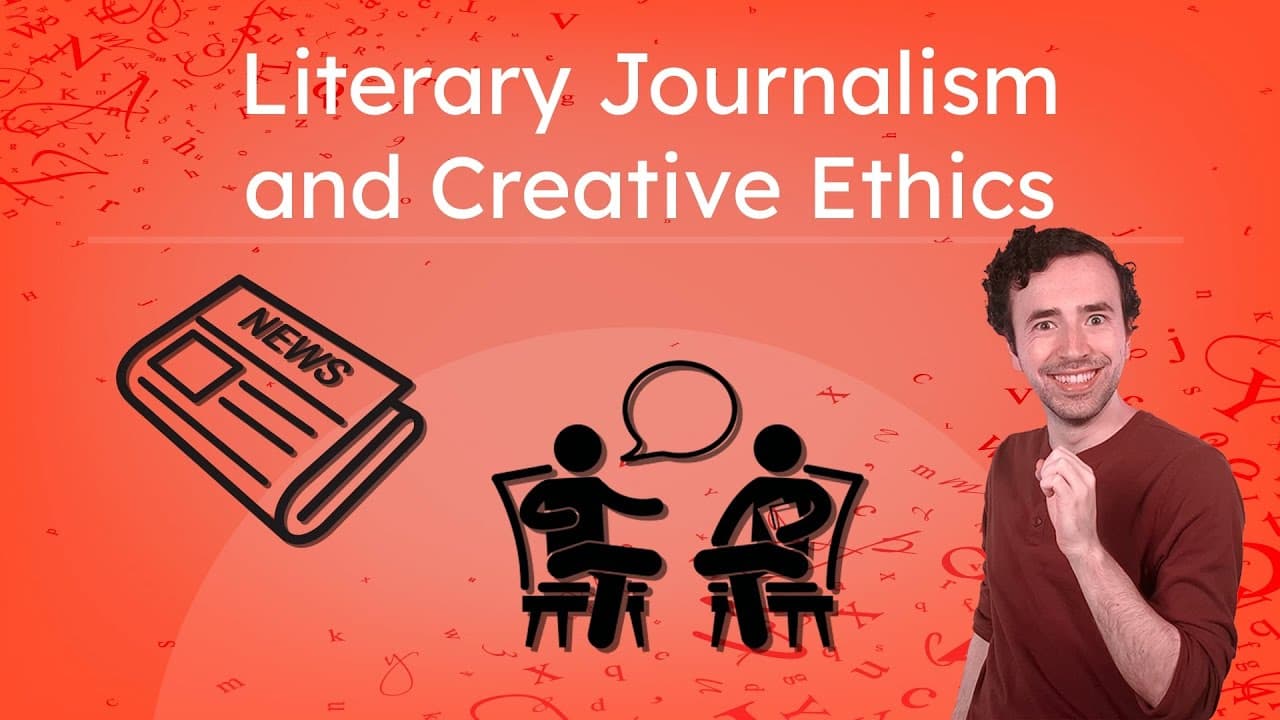
This engaging video lesson introduces students to the genre of literary journalism, distinguishing it from traditional objective reporting. Through a humorous framing device parodying a reality TV competition called "Write on the Money," the host explores how writers can blend factual reporting with narrative techniques like detailed descriptions, character development, and subjective perspectives to create compelling non-fiction. The content uses Jon Krakauer's "Into the Wild" as a primary text to demonstrate these techniques in action. A significant portion of the video is dedicated to the ethics of journalism, specifically the vital importance of accuracy, fact-checking, and transparency. It presents clear scenarios illustrating the real-world consequences of inaccurate reporting for business owners, the public, and the writer's own credibility. Ideal for English Language Arts and creative writing classrooms, this video provides a roadmap for students to write their own literary journalism. It offers practical strategies for research and interviewing while emphasizing that creativity must never come at the expense of the truth. The lesson concludes with a revised writing example that successfully balances narrative flair with factual integrity.

Miacademy & MiaPrep Learning ChannelMiacademy & MiaPrep Learning Channel

10mins 23s

Video
Mastering Figurative Language: Similes, Metaphors, and More

Mastering Figurative Language: Similes, Metaphors, and More

This engaging educational video provides a clear and humorous introduction to figurative language, distinguishing it from literal speech. Through the use of hand-drawn animations and dynamic text, the narrator breaks down five essential figures of speech: simile, metaphor, personification, hyperbole, and allusion. The video explains that figurative language involves saying one thing but meaning another to express truths more vividly, using the example of an "eagle-eyed editor" to demonstrate the concept. The content is structured systematically, dedicating a segment to each literary device. It defines similes as comparisons using "like" or "as" (e.g., "hungry as a wolf"), contrasts them with metaphors which make direct comparisons (e.g., "love is a rose"), and explores how personification attributes human traits to inanimate objects. It also covers hyperbole as purposeful exaggeration for effect and explains allusion as a reference to shared cultural knowledge, citing examples like Superman and Gollum. For educators, this video serves as an excellent primer or review tool for English Language Arts units on literary devices or creative writing. It provides accessible definitions and memorable visual examples that help students grasp abstract linguistic concepts. The humor and pacing make it suitable for upper elementary and middle school students, helping them move beyond literal interpretations to understand nuance, imagery, and emphasis in writing.

Khan AcademyKhan Academy

5mins 58s

Video
Learning Vocabulary with Moon Goblin Detectives

Learning Vocabulary with Moon Goblin Detectives

In this engaging vocabulary lesson, the narrator, David, turns a moment of personal disappointment into a learning opportunity. After receiving a rejection letter from a publisher for his fictional novel, 'Moon Goblin Detectives: Life on the Dark Side,' David analyzes the editor's critique to teach three high-utility academic vocabulary words: concept, conflict, and realistic. The video uses a humorous narrative framework to contextualize these terms, making abstract definitions concrete and memorable for students. The video breaks down each word individually, exploring their parts of speech and specific meanings. It specifically highlights the nuance of the word 'conflict,' explaining how its pronunciation and meaning shift when functioning as a noun versus a verb (heteronyms). The lesson also defines 'concept' as a general idea and 'realistic' as an adjective describing things true to life. The definitions are reinforced through whimsical animated examples, including dinosaurs on Mars and an evil mailman named Mr. Bricks. Teachers can use this video to introduce essential literary and academic vocabulary. It is particularly useful for English Language Arts units focused on story elements, as it defines 'conflict' in a literary sense. The video also supports instruction on context clues, word usage, and the difference between fantasy and realistic fiction. The humorous tone and simple visual animations keep students engaged while effectively delivering direct vocabulary instruction.

Khan AcademyKhan Academy

3mins 43s

Video
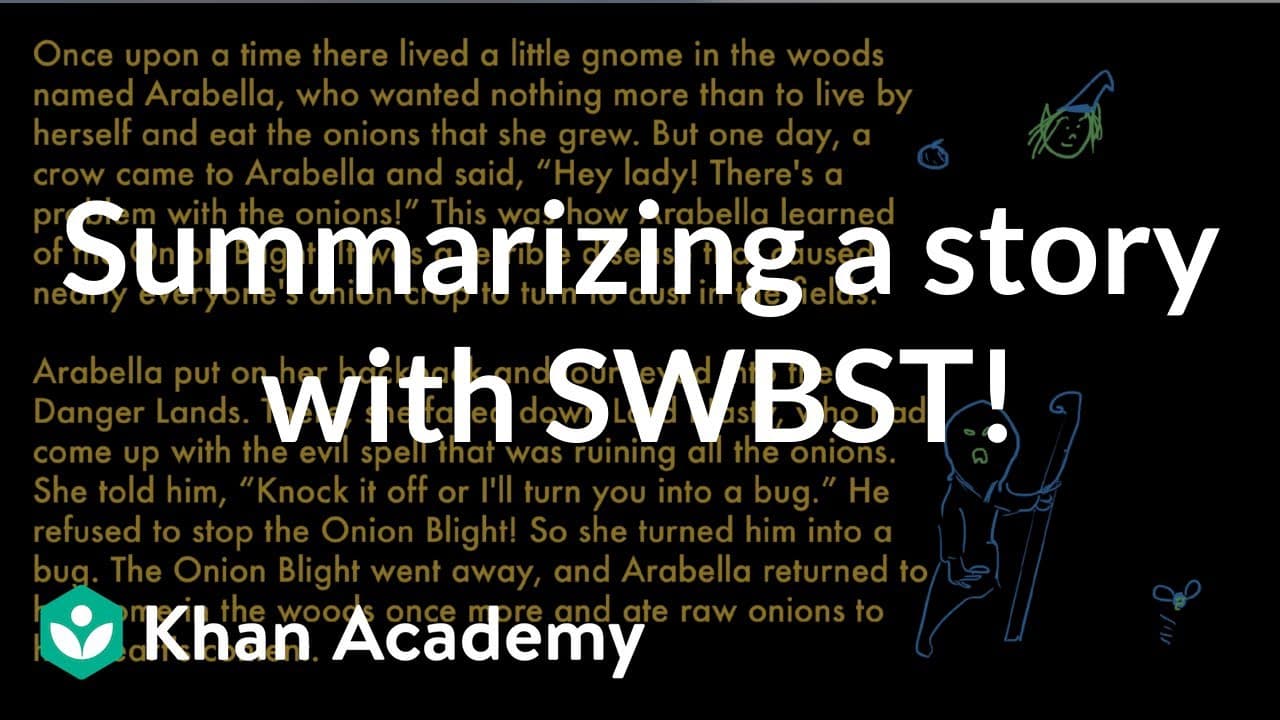
How to Summarize a Story

How to Summarize a Story

This engaging video lesson breaks down the skill of summarizing stories using a clever mix of humor, clear definitions, and a familiar example. The narrator defines a summary as a shorter version of a passage that retells only the main ideas, adopting a "reporter" persona to emphasize efficiency: "Get in, get the facts, get out." The video playfully starts by summarizing itself in ten seconds before diving deeper into the nuances of the skill. Using the fairy tale "The Three Little Pigs," the video demonstrates three types of summaries: the "Just Right" version that captures the characters, decisions, and outcomes; the "Too Little" version that misses the resolution; and the "Too Much" version that gets bogged down in irrelevant details like the pigs' middle school friendships and investment strategies. This "Goldilocks" approach helps clarify exactly what information belongs in a summary and what should be cut. This resource is an excellent tool for upper elementary classrooms working on reading comprehension and narrative writing. It specifically targets the common struggle students have with distinguishing between a summary and a retelling. By providing concrete non-examples (too short vs. too detailed), it gives teachers a shared language to use when guiding student writing. The clear checklist at the end—events in order, characters, and problems—provides a ready-made anchor chart for the classroom.

Khan AcademyKhan Academy

2mins 38s

Video
How to Plan a Short Story by Focusing on One Element

How to Plan a Short Story by Focusing on One Element

In this creative writing lesson, Justin guides students through the pre-writing phase of crafting a short story, introducing the concept of a "narrative focus" to overcome the intimidation of a blank page. The video emphasizes that because short stories are brief (typically 1,000 to 8,000 words), they require a unified approach where one element drives the others. Justin demonstrates how to choose one primary narrative element—character, setting, conflict, or plot—to serve as the foundation for the entire story plan.

Miacademy & MiaPrep Learning ChannelMiacademy & MiaPrep Learning Channel

8mins 42s

Video
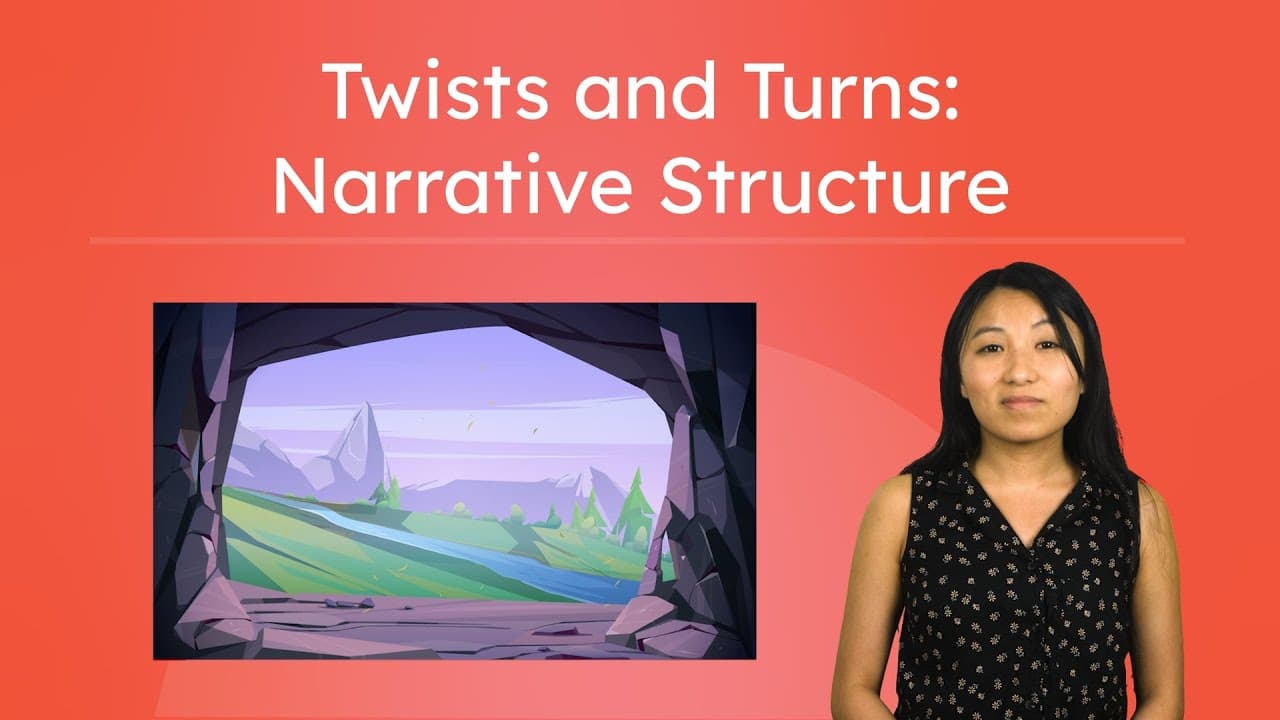
Mapping the Mountain: How Stories Are Structured

Mapping the Mountain: How Stories Are Structured

This engaging video introduces students to the core structural elements of narrative fiction using the classic "Story Mountain" diagram. The narrator breaks down the standard plot arc into six key components: Exposition, Conflict, Rising Action, Climax, Falling Action, and Resolution. By visualizing a story as a mountain journey, students can easily grasp how tension builds and releases throughout a narrative. To solidify these abstract concepts, the video applies them to a creative, humorous example: a sci-fi reboot of "The Three Little Pigs" titled "TLP: Starbound." This retelling transforms the classic fairy tale into a space opera, demonstrating exactly how each plot point functions within a familiar yet fresh context. From straw spaceships to a cyborg wolf pirate, the example makes literary analysis memorable and fun. This resource is highly valuable for English Language Arts classrooms, specifically for reading comprehension and creative writing units. It provides a shared vocabulary for discussing literature and offers a clear template that students can use to analyze books they read or structure stories they write. The video effectively bridges the gap between simple storytelling and formal literary analysis.

Khan AcademyKhan Academy

5mins 14s

Video
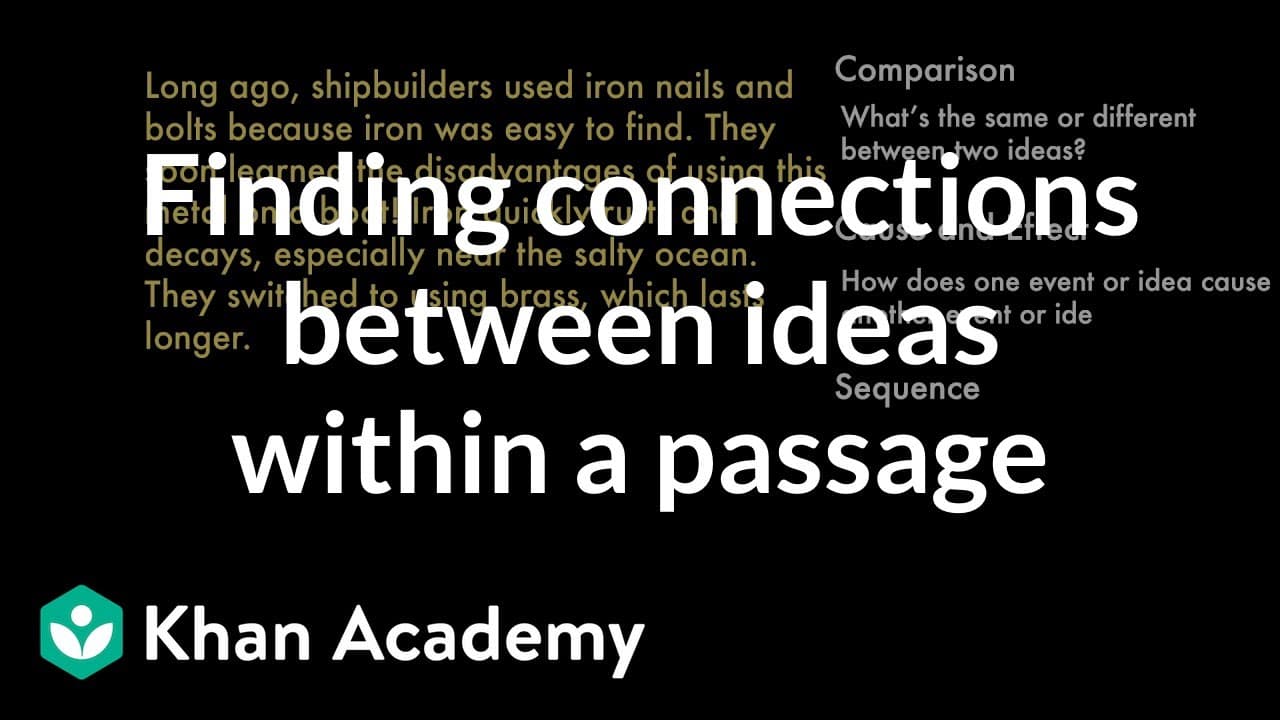
How Good Readers Connect Ideas in a Text

How Good Readers Connect Ideas in a Text

This video introduces the critical reading comprehension strategy of making connections between ideas within a text. Using an accessible analogy of a social network where friends are connected in different ways, the narrator explains how sentences and concepts in a passage relate to one another to build a larger meaning. The video transitions from this analogy to a concrete demonstration using a nonfiction passage about the history of shipbuilding. The content focuses on three specific types of text connections: Comparison (identifying similarities and differences), Cause and Effect (understanding how one event leads to another), and Sequence (tracking the order of events). Through a step-by-step close reading of a paragraph about iron versus brass nails in ships, the narrator explicitly models how to identify these structures using textual evidence. For educators, this resource provides a clear, visual model for teaching text structure and close reading. It moves beyond the common "text-to-self" connection strategy to the more rigorous "text-to-text" internal analysis required for higher-level comprehension. It is an excellent tool for introducing informational text structures or for supporting students who struggle to see the "big picture" when reading complex nonfiction.

Khan AcademyKhan Academy

3mins 3s

Video
How to Structure and Outline a Novel's Plot

How to Structure and Outline a Novel's Plot

This video serves as a comprehensive guide for student writers on how to transform a general story idea into a structured plot outline. Hosted by Justin, it introduces "Challenge Six" in a creative writing series, focusing on "Plotting the Campaign." The lesson distinguishes between a simple plot summary and a detailed plot outline, emphasizing the importance of intentional design in storytelling to manage the reader's experience. The content explores the traditional narrative arc, breaking it down into five stages: exposition, rising action, climax, falling action, and resolution. A key feature of the video is the concept of "transition points"—specific moments that shift the story from one stage to the next, visualized as gears driving the plot forward. The host guides viewers through a three-step outlining process: identifying these transition points, planning the scenes that bridge them, and revising for flow. Ideally suited for English Language Arts classrooms, this video provides actionable strategies for creative writing units. It encourages students to shift their perspective from writer (omniscient) to reader (linear experience), asking critical questions about what the audience should know and feel at each stage. The video includes modeling with a sample story about a detective named Julius, making abstract structural concepts concrete and easy to apply for novice writers.

Miacademy & MiaPrep Learning ChannelMiacademy & MiaPrep Learning Channel

9mins 42s

Video
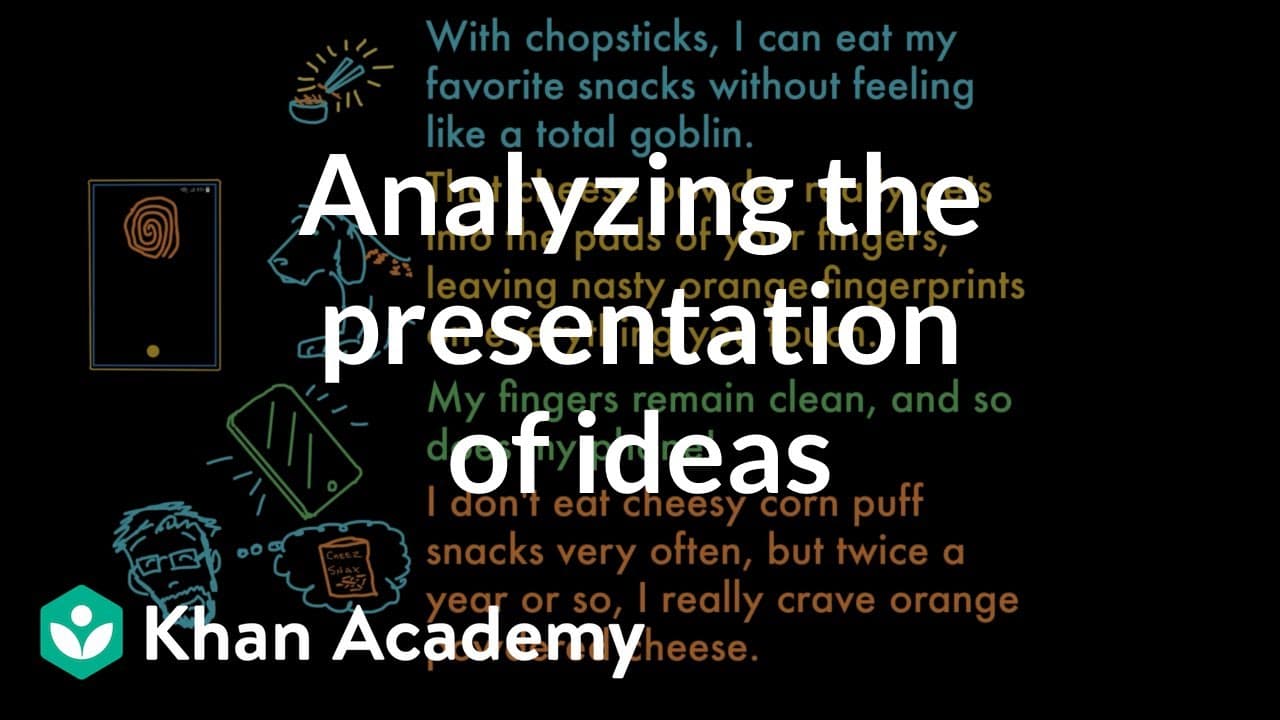
Ordering Ideas: Why Structure Matters in Writing

Ordering Ideas: Why Structure Matters in Writing

This video uses a humorous and relatable example—eating messy snacks with chopsticks—to demonstrate the importance of logically ordering ideas in writing. The narrator presents a jumbled paragraph that makes little sense, challenges the viewer to unscramble it, and then reveals the correct sequence to show how structure creates clarity and persuasion. The video explores key themes of writing structure, specifically the logical flow from context to problem to solution to evidence. It draws a parallel between reading and writing, explaining that understanding structure helps students become 'stronger readers' who can evaluate authors' choices and 'stronger writers' who can craft clear arguments. For educators, this video serves as an excellent hook for lessons on paragraph structure, editing, or persuasive writing. Its interactive nature (asking viewers to pause and reorder the text) makes it an active learning tool rather than passive consumption. It concretizes the abstract concept of 'flow' using a low-stakes, funny example that is accessible to upper elementary and middle school students.

Khan AcademyKhan Academy

3mins 28s

Video
How to Write an Objective Summary

How to Write an Objective Summary

This instructional video provides a clear, step-by-step guide on how to create an objective summary of a fiction text. It distinguishes between subjective opinions (which belong in analysis) and objective facts (which belong in summaries), emphasizing that summaries serve as the "bones" upon which literary analysis is built. The narrator breaks down the process into four actionable steps: reading the text, identifying essential plot points, removing unnecessary details or opinions, and rewriting the events in chronological order using one's own words. The video explores key themes of reading comprehension, writing skills, and the critical difference between objectivity and subjectivity. It specifically addresses the challenge of distinguishing between what is "interesting" versus what is "essential" to a plot, a common stumbling block for students. The video uses a specific example story about a sailor named Wilky and Captain Martello to demonstrate the process in real-time, showing how to filter a raw text down to a concise paragraph. For educators, this resource is highly valuable for English Language Arts classrooms, particularly when introducing plot analysis or preparing students for essay writing. It directly supports standards related to summarizing texts and determining central themes. The video's visual style—handwritten neon text on a black background—mimics a blackboard, making it familiar and engaging. It effectively models the thinking process required to strip away bias and fluff, providing a concrete strategy students can immediately apply to novels, short stories, or articles.

Khan AcademyKhan Academy

5mins 14s

Video
How to Map a Story Using Plot Elements

How to Map a Story Using Plot Elements

This animated educational video uses a gamified narrative to teach students about the six core elements of plot structure. Set in a mysterious "Maze of Plot," the narrator and her robot companion, Mia, must correctly identify and order parts of a story to illuminate their path through a dark cavern. The video breaks down the classic narrative arc (often referred to as Freytag's Pyramid) into specific components: Exposition, Inciting Incident, Rising Action, Climax, Falling Action, and Resolution.
Miacademy & MiaPrep Learning ChannelMiacademy & MiaPrep Learning Channel

9mins 55s

Video
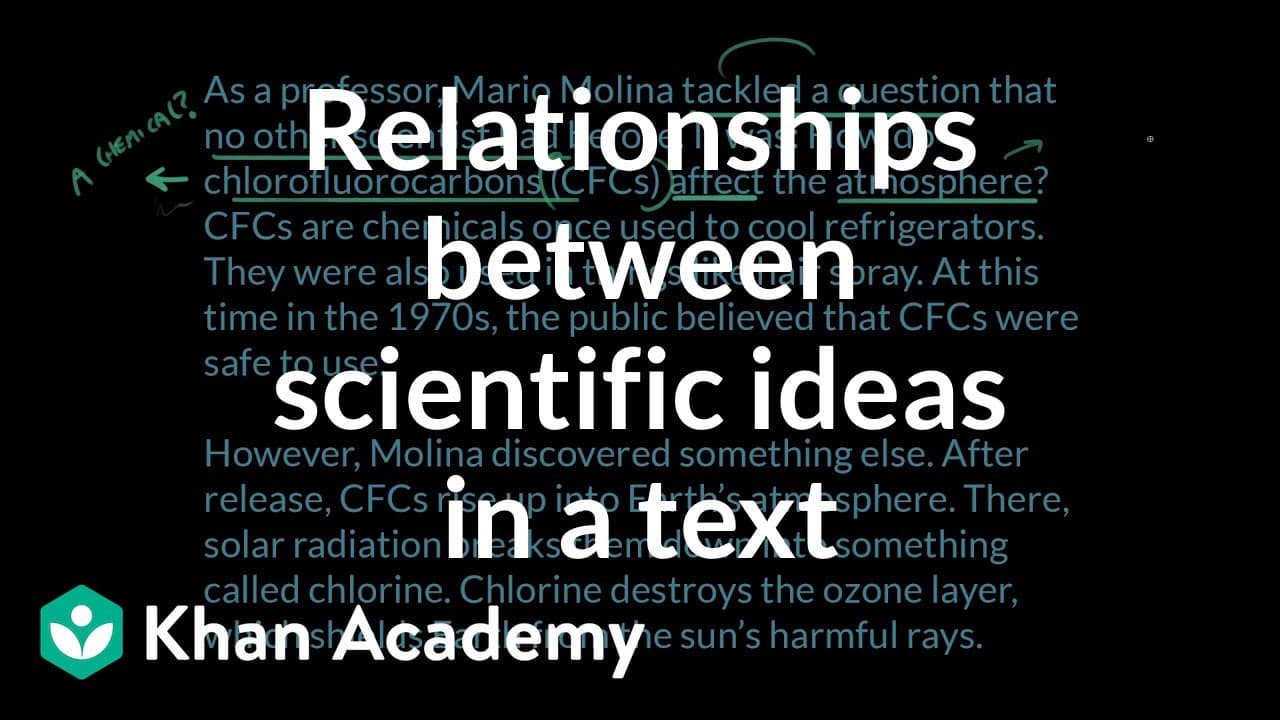
How to Connect Ideas in Scientific Texts

How to Connect Ideas in Scientific Texts

This educational video teaches students how to draw connections within scientific texts, using the real-world example of Nobel Prize winner Dr. Mario Molina's research on the ozone layer. The narrator begins with a simple, relatable analogy involving a bowl of pasta to explain four types of logical connections: why something happened, how it happened, how one event impacts another, and cause-and-effect relationships. This scaffolding helps prepare viewers for the more complex scientific text that follows. The video then transitions to a guided reading of a passage about Dr. Molina's discovery of the link between Chlorofluorocarbons (CFCs) and ozone depletion. The narrator models active reading strategies by highlighting key terms, decoding acronyms like 'CFCs' using context clues (parentheses), and identifying signal words like 'However' that indicate a shift in the argument. The analysis breaks down the complex chemical chain reaction described in the text—from hairspray cans to the stratosphere—demonstrating how to map linear events from a dense paragraph. This resource is highly valuable for both English Language Arts and Science classrooms. It bridges the gap between literacy and scientific understanding, showing students that reading science requires active engagement to construct meaning. Teachers can use this video to introduce annotation strategies, teach text structure, or launch a unit on environmental science. It effectively models how to slow down, ask questions of the text, and visualize processes to comprehend complex informational writing.
Khan AcademyKhan Academy

7mins 41s

Video
Understanding Point of View and Tone Through Text Messages

Understanding Point of View and Tone Through Text Messages

This video uses a relatable text message conversation between two friends to teach students about literary point of view, tone, and perspective-taking. A narrator guides viewers through an unfolding drama between Liz, who wants to hang out spontaneously, and Kim, who keeps saying no. By analyzing the word choice and brevity of the text messages, the narrator demonstrates how characters' differing situations influence their perspectives and communication styles. The video explores key themes of empathy, miscommunication in digital spaces, and the difference between explicit statements and implied meanings. It highlights how a lack of context can lead to false assumptions, as seen when Liz interprets Kim's refusal as dislike rather than an inability to be spontaneous due to family responsibilities. The resolution teaches students to look beyond surface-level reactions to understand the underlying reality of others. For the classroom, this is an excellent tool for English Language Arts lessons on analyzing character interactions and determining point of view. It also serves as a strong social-emotional learning resource regarding digital citizenship and empathy. Teachers can use the video to spark discussions about how text-based communication strips away tone, leading to conflicts that can only be resolved by understanding another person's "reality" or context.

Miacademy & MiaPrep Learning ChannelMiacademy & MiaPrep Learning Channel

5mins 35s

Video
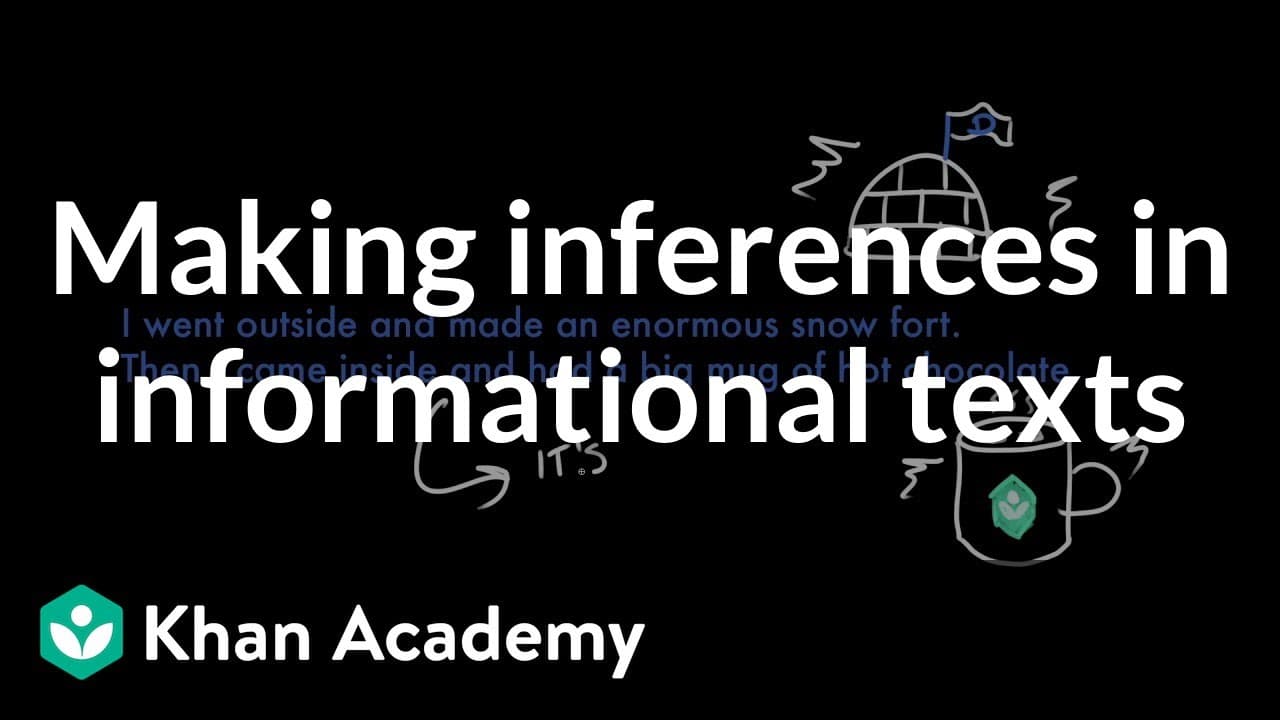
Making Inferences: The Detective Work of Reading

Making Inferences: The Detective Work of Reading

This educational video introduces the concept of making inferences in reading comprehension through a playful, noir-detective theme. The narrator, adopting a "detective voice" due to a cold, defines an inference as a conclusion drawn from evidence in a text combined with the reader's own background knowledge. He emphasizes that inferring is the "detective work of reading," requiring active engagement to uncover meanings that are implied rather than explicitly stated. The video explores key themes of critical thinking, close reading, and the use of textual evidence. It distinguishes between making a supported inference and simply guessing, highlighting that valid inferences must always be rooted in clues found within the passage. Two distinct examples are analyzed: a simple scenario involving snow forts and hot chocolate to infer the season, and a biographical passage about ballerina Michaela DePrince to infer character traits like talent and perseverance. For educators, this video serves as an engaging introduction to a difficult reading standard. It provides a memorable visual metaphor—the reader as a detective (

Khan AcademyKhan Academy

5mins 8s

Video
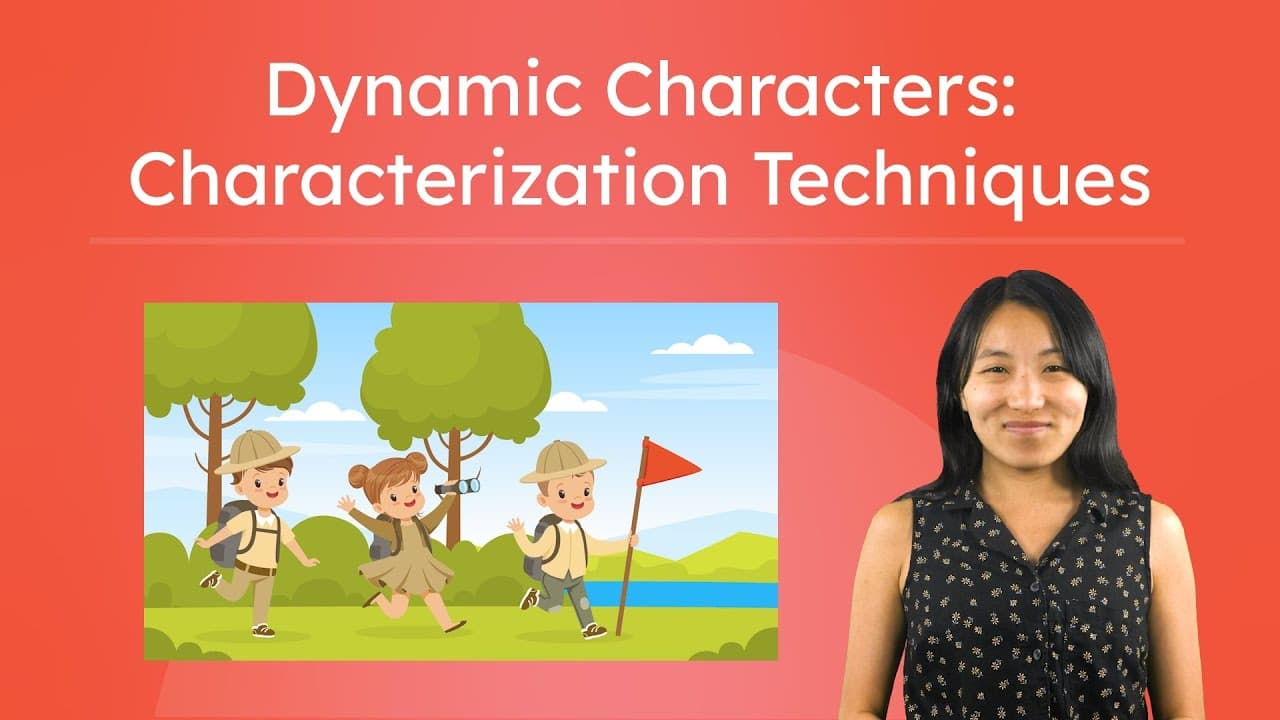
Unlocking Character Traits with the STEAL Method

Unlocking Character Traits with the STEAL Method

This educational video introduces students to the literary concepts of direct and indirect characterization through a narrative set in "Character Grove." Hosted by Caroline, the lesson features a talking tree character named Timotree who helps illustrate how authors reveal personality traits. The video contrasts direct descriptions with the more subtle "show, don't tell" method of indirect characterization, using specific examples to make the abstract concepts concrete. The core of the lesson focuses on the STEAL acronym (Speech, Thoughts, Effect on others, Actions, Looks) as a tool for analyzing indirect characterization. Viewers are guided through a text excerpt about a "young man" to identify evidence for each category of the STEAL method. The video then moves from identification to interpretation, demonstrating how to infer specific character traits like "caring," "trustworthy," and "practical" based on the text evidence gathered. This resource is highly valuable for Language Arts classrooms as it breaks down a complex analytical skill into manageable steps. It encourages critical thinking by asking students not just to find details, but to interpret what those details imply about a character's internal nature. The use of visual aids, on-screen text, and a memorable acronym makes it an excellent tool for introducing character analysis or supporting students who struggle with making inferences.

Miacademy & MiaPrep Learning ChannelMiacademy & MiaPrep Learning Channel

10mins 16s

Video
Reading Characters' Minds: Understanding Thoughts and Feelings

Reading Characters' Minds: Understanding Thoughts and Feelings

This engaging video lesson explores the literary concept of 'mind reading,' or how readers gain access to a character's internal world. Through simple animations and clear narration, it demonstrates how authors reveal character thoughts and feelings, distinguishing between first-person narration where a character speaks directly to the reader, and third-person narration where an outside voice reveals internal states. The video delves into complex emotional nuances, explaining that characters can experience conflicting emotions simultaneously or act in ways that contradict their internal feelings. It provides concrete examples, such as a character who climbs a tree despite fearing heights, or a sculptor who smiles politely while feeling frustrated by a friend's criticism. These scenarios illustrate the difference between internal traits (thoughts/feelings) and external traits (actions/dialogue). For educators, this resource is an excellent tool for teaching character analysis, point of view, and inference in English Language Arts. It moves students beyond basic plot comprehension to deeper analytical skills, helping them understand character motivation and the 'evidence' provided by text. The relatable examples serve as perfect anchors for classroom discussions about social-emotional cues and narrative structure.

Khan AcademyKhan Academy

3mins 21s

Video
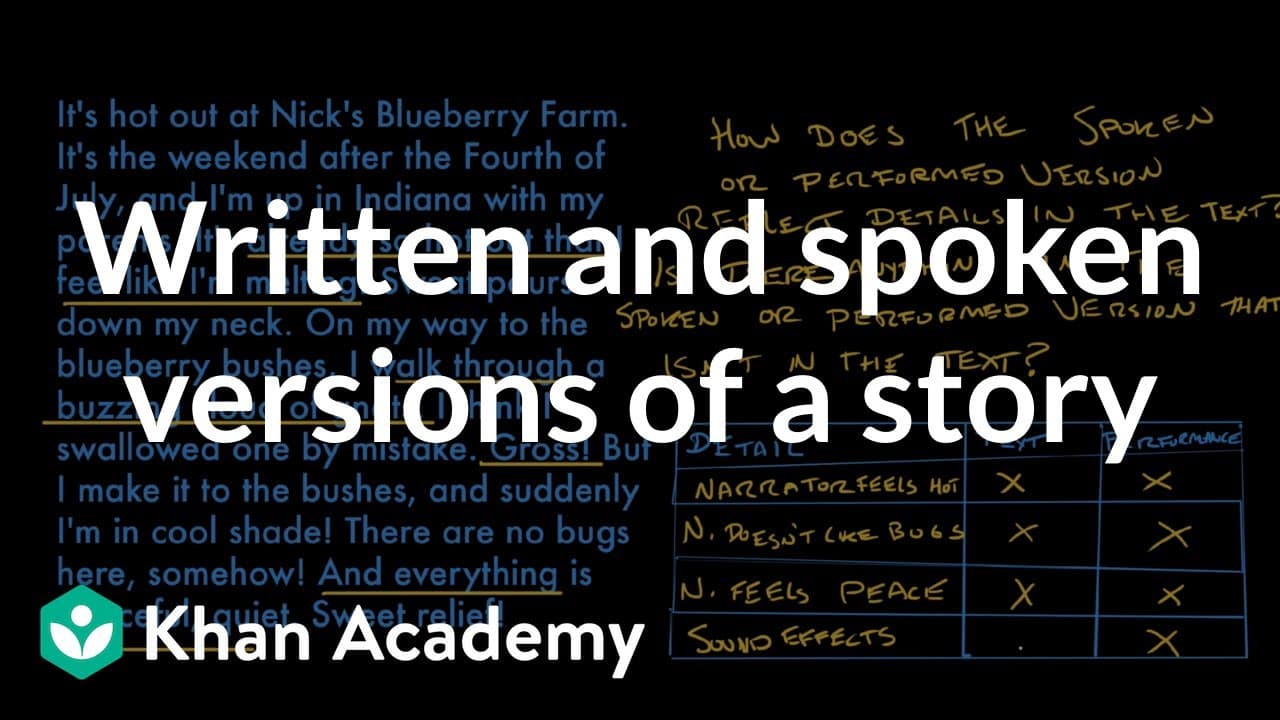
Comparing Written Text to Audio Performance

Comparing Written Text to Audio Performance

This video serves as an engaging English Language Arts lesson that explores the differences between reading a text silently and experiencing it as an oral performance. The narrator guides students through a comparative analysis using a short story set on a blueberry farm, first asking them to read it to themselves, and then performing it with expressive vocal modulation and sound effects. This side-by-side comparison helps illuminate how a reader's internal experience differs from an external performance. The content focuses on key literary and dramatic concepts such as tone, mood, pacing, and sensory details. It specifically highlights how a performer makes creative choices—such as stretching out words to indicate heat or tightening lips to show disgust—to reflect the narrator's feelings. Additionally, the video introduces the concept of non-textual elements, like sound effects, and how they contribute to atmosphere and storytelling without changing the actual words of the text. For educators, this video is an excellent tool for teaching standards related to comparing and contrasting different versions of a story (text vs. audio). It models critical thinking by using a T-chart to map textual details to performance choices, providing a clear framework for students to analyze media. It can spark lessons on reading fluency, the importance of expression in oral reading, and how multimedia elements influence a viewer's understanding and emotional engagement with a narrative.

Khan AcademyKhan Academy

3mins 56s

Video
Mastering Literary Point of View: First, Second, and Third Person

Mastering Literary Point of View: First, Second, and Third Person

This engaging educational video guides students through the literary concept of "Point of View" (POV) using a fantasy-themed narrative involving a quest to find a "Crystal Quill." The host, accompanied by an animated robot named Mia, explains the three main types of POV: First-Person, Second-Person, and Third-Person. Through clear definitions and visual examples, students learn to identify these perspectives by looking for specific pronouns (I/we, you, he/she/they). The video goes beyond simple identification by analyzing the impact each point of view has on a story and the reader. Using a "three ponds" metaphor, the host presents three versions of the same narrative event—the villain "The Silencer" approaching a pond—told from different perspectives. Students are asked to match "engraved stones" describing specific literary effects (such as emotional connection, reliability, or immersion) to the correct point of view. Designed for upper elementary and middle school students, this resource combines direct instruction with interactive checking for understanding. It effectively demonstrates how authorial choices shape a narrative, helping students become more critical readers and more intentional writers. The gamified elements keep viewers engaged while tackling core English Language Arts standards regarding narrative structure.

Miacademy & MiaPrep Learning ChannelMiacademy & MiaPrep Learning Channel

10mins 36s

Video
Reading the Room: How to Identify Mood in Stories

Reading the Room: How to Identify Mood in Stories

In this engaging Language Arts adventure, viewers join a narrator and her robot companion, Mia, on a quest through the "Valley of Vibes." To succeed, they must face the "Vibe Master" and pass a series of "vibe checks" by correctly identifying the mood of various narrative passages. The video combines a fantasy storyline with direct instruction to teach students how to analyze literature, moving beyond simple emotional descriptors to more precise literary vocabulary. The video focuses on the concept of "mood" in narrative writing, defining it as the emotional atmosphere an author creates for the reader. It systematically breaks down how writers construct mood using specific tools: characterization, setting, conflict, and word choice. The lesson guides students through three distinct examples, transitioning from guided analysis to independent practice, and introduces sophisticated vocabulary words such as "melancholy," "exuberant," "triumphant," and "foreboding" to replace simpler terms like "sad," "happy," or "scary." This resource is highly valuable for upper elementary and middle school classrooms as it models the thought process behind literary analysis. By explicitly highlighting text evidence—such as "plodded" versus "strode" or "gloomy" versus "emerald grass"—it shows students exactly how to locate and interpret clues within a text. The video includes built-in pause points for student reflection and participation, making it an excellent tool for interactive whole-class instruction or self-paced learning stations focused on reading comprehension and author's craft.

Miacademy & MiaPrep Learning ChannelMiacademy & MiaPrep Learning Channel

10mins 49s

Video
How Point of View Shapes a Story

How Point of View Shapes a Story

This video provides an in-depth exploration of "Point of View" (POV) in literature, moving beyond simple definitions of first, second, and third-person perspectives to analyze how an author's choice of narrator shapes a story. Through a creative thought experiment involving a rocket scientist and a mouse, the narrator demonstrates how two characters experiencing the exact same event can tell vastly different stories based on their unique knowledge, priorities, and physical limitations. The video covers key literary concepts including close third-person perspective, character development, and the unreliable narrator. It emphasizes that stories are constructed through deliberate decisions made by authors, challenging students to consider *why* a specific perspective was chosen. The content also addresses the critical distinction between an author and their character, using a humorous example to illustrate that a writer's creation does not necessarily reflect their own reality. For educators, this resource serves as an excellent tool for deepening reading comprehension and literary analysis skills. It effectively models how to identify narrative bias and limitations, helping students transition from passive reading to active critical thinking. The visual examples make abstract concepts concrete, providing a strong foundation for lessons on narrative voice, creative writing, and analyzing complex texts with unreliable narrators.

Khan AcademyKhan Academy

5mins 14s

Video
How to Write Powerful Starts and Satisfying Endings

How to Write Powerful Starts and Satisfying Endings

This engaging creative writing lesson guides aspiring writers through the critical process of crafting opening and closing scenes for a novel. Hosted by an energetic presenter in a library setting, the video breaks down the specific goals of these pivotal moments: grabbing the reader's investment at the start and rewarding that investment at the end. It distinguishes between the plot events themselves and the "craft" of how those events are presented to the audience. The content introduces specific literary techniques and terminology for structuring narratives. For beginnings, it covers strategies like "In Medias Res" (starting in the middle of action), setting-focused openings, and character-focused introductions. For endings, it explores the use of epilogues, ambiguous endings that leave room for interpretation, and "callbacks" that reference earlier story details. Each concept is illustrated with clear definitions and relatable examples. Ideal for middle and high school English Language Arts classrooms, this video serves as a practical workshop tool. It includes built-in pause points that prompt students to reflect on their own reading experiences and apply the concepts to their own writing projects. Teachers can use this resource to introduce narrative structure units, support NaNoWriMo projects, or help students revise their creative writing pieces for greater impact.

Miacademy & MiaPrep Learning ChannelMiacademy & MiaPrep Learning Channel

9mins 58s

Video
Baking a Story: Part-Whole Relationships in Literature

Baking a Story: Part-Whole Relationships in Literature

In this engaging educational video, Justin uses a relatable analogy—baking a birthday cake—to explain the complex literary concept of part-whole relationships. The video begins with a narrative about planning a surprise party and segues into a text message conversation between a character named Liz and her mother. As Liz encounters a missing ingredient (buttermilk) while baking, Justin explains the scientific function of that ingredient, setting the stage for a deeper analytical connection.

Miacademy & MiaPrep Learning ChannelMiacademy & MiaPrep Learning Channel

8mins 58s

Video
Exploring Adventure Fiction and Pacing Techniques

Exploring Adventure Fiction and Pacing Techniques

This educational video explores the genre of adventure fiction, guiding viewers through its defining characteristics and the literary techniques used to create suspense. Set within a meta-narrative of exploring an "ancient temple of adventure fiction," the host and an animated robot character named Mia encounter tropes of the genre firsthand while teaching concepts. The video breaks down the essential elements of adventure stories, including courageous protagonists, dangerous settings, and action-packed plots, before diving deep into the specific craft of "pacing." The second half of the video provides a focused lesson on literary pacing—the speed and rhythm at which a story unfolds. Using the analogy of riding a bike, the narrator explains how authors manipulate time to build tension. Three specific techniques are analyzed in detail: structure (using short sentences and fragments), dialogue (rapid back-and-forth exchange), and information control (foreshadowing and cliffhangers). The video uses specific textual examples to demonstrate how these techniques look on the page, helping students visualize the mechanics of writing. Ideal for English Language Arts classrooms, this resource combines literary analysis with creative writing concepts. It offers clear definitions, visual examples of text annotation, and guided practice opportunities where students are asked to identify techniques in provided excerpts. Teachers can use this video to introduce genre units, teach narrative structure, or run a creative writing workshop focused on building suspense and writing action scenes.

Miacademy & MiaPrep Learning ChannelMiacademy & MiaPrep Learning Channel

11mins 55s

Video
Mapping the Mountain: How Stories Are Structured

Mapping the Mountain: How Stories Are Structured

This engaging video introduces students to the core structural elements of narrative fiction using the classic "Story Mountain" diagram. The narrator breaks down the standard plot arc into six key components: Exposition, Conflict, Rising Action, Climax, Falling Action, and Resolution. By visualizing a story as a mountain journey, students can easily grasp how tension builds and releases throughout a narrative. To solidify these abstract concepts, the video applies them to a creative, humorous example: a sci-fi reboot of "The Three Little Pigs" titled "TLP: Starbound." This retelling transforms the classic fairy tale into a space opera, demonstrating exactly how each plot point functions within a familiar yet fresh context. From straw spaceships to a cyborg wolf pirate, the example makes literary analysis memorable and fun. This resource is highly valuable for English Language Arts classrooms, specifically for reading comprehension and creative writing units. It provides a shared vocabulary for discussing literature and offers a clear template that students can use to analyze books they read or structure stories they write. The video effectively bridges the gap between simple storytelling and formal literary analysis.

Khan AcademyKhan Academy

5mins 14s

Video
How Images Change the Meaning of Text

How Images Change the Meaning of Text

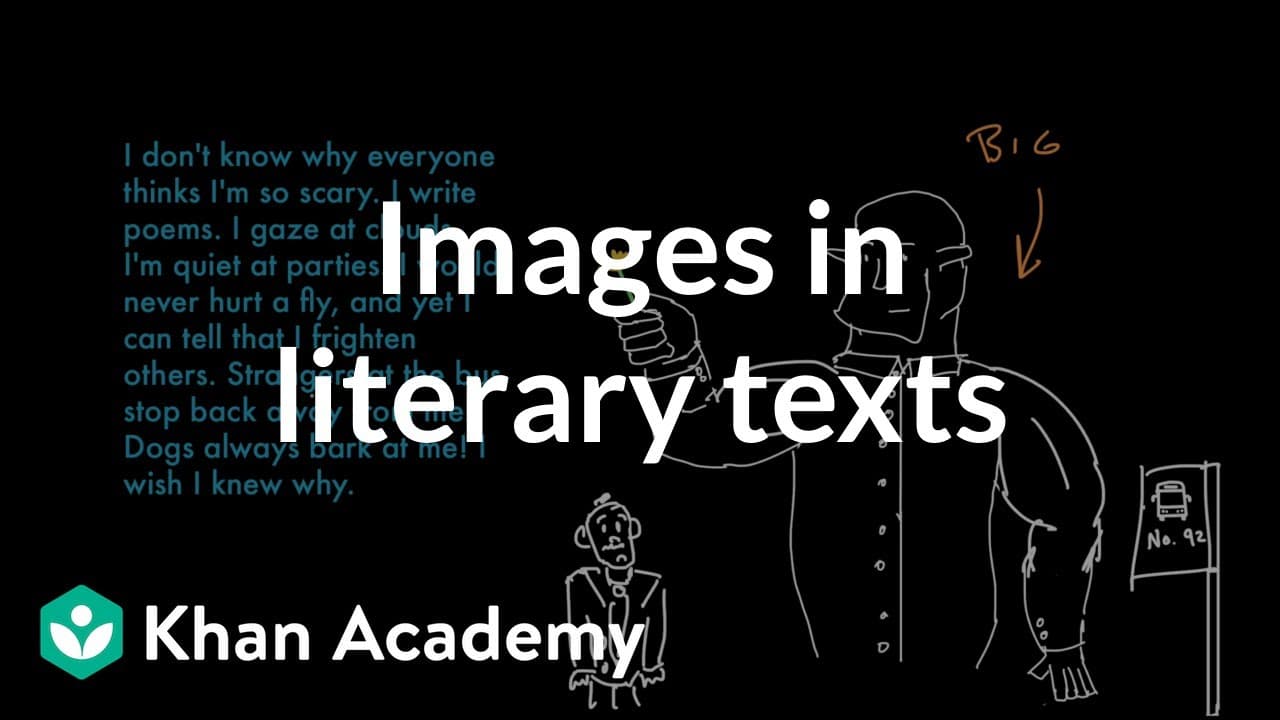
This engaging educational video explores the critical relationship between text and illustrations in reading comprehension. Using a lively narration and simple line drawings, the video introduces a two-step strategy for analyzing images: asking what new information the image provides that the text does not, and determining how that information changes the reader's understanding. The narrator uses a "cherries and chocolate" analogy to describe the powerful combination of words and pictures. The video centers on a poem about a character who is gentle but feared by others. The narrator reads the poem first without visuals, then reveals a drawing of a giant man holding a flower, demonstrating how the image solves the mystery of why people are scared. To further illustrate the point, the narrator swaps in alternative drawings—a man with antlers and a man with "stink lines"—to show how changing the visual context completely alters the narrative even when the words remain exactly the same. This resource is highly valuable for elementary ELA classrooms focusing on visual literacy and inference. It moves students beyond passively looking at pictures to actively interrogating them for meaning. The clear, explicit questions provided give students a repeatable framework they can apply to picture books, graphic novels, and textbooks to deepen their comprehension.

Khan AcademyKhan Academy

3mins 17s

Video
How Ballads Tell Stories Through Song

How Ballads Tell Stories Through Song

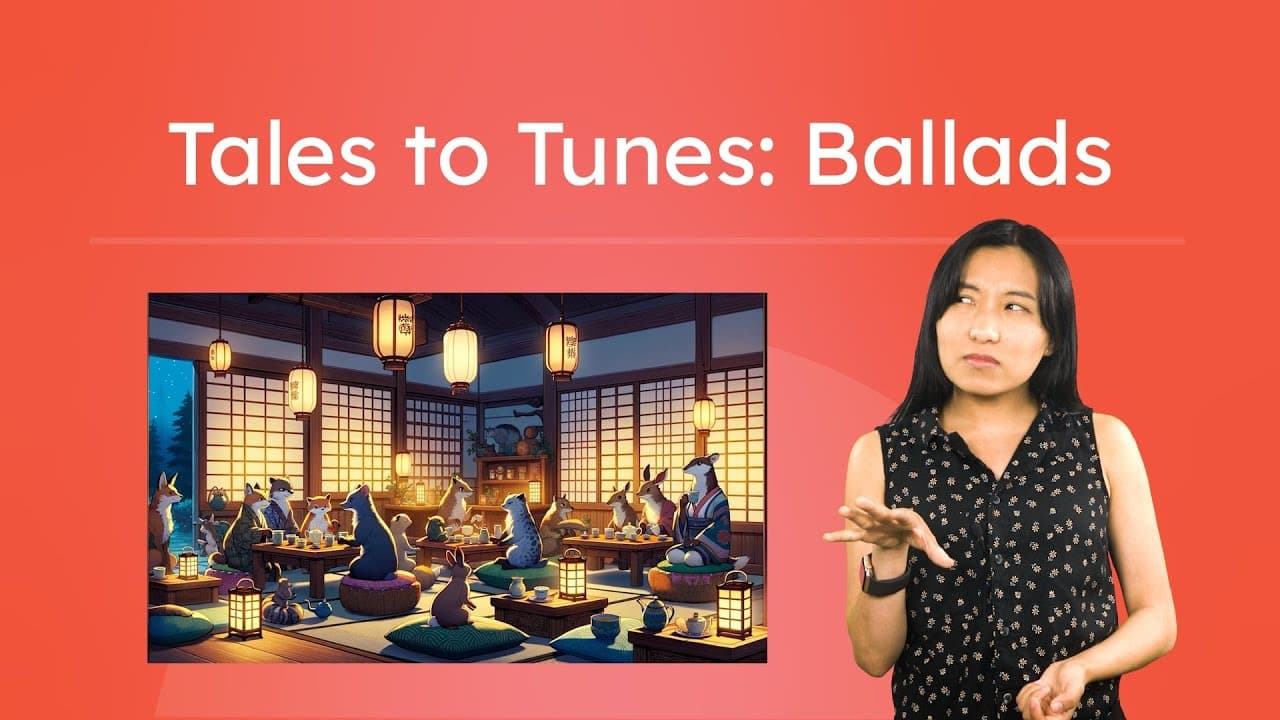
This educational video takes students on a journey to the fictional 'Traveler's Teahouse' to explore the literary form of ballads. Guided by a host and a character named Storyweaver the Bard, viewers learn how ballads serve as a bridge between storytelling and music. The video contextualizes the history of ballads within the oral tradition, explaining how stories were preserved through song before literacy was widespread.

Miacademy & MiaPrep Learning ChannelMiacademy & MiaPrep Learning Channel

10mins 16s

Video
Understanding Narrative Writing: Conflict and Plot Structure Explained

Understanding Narrative Writing: Conflict and Plot Structure Explained

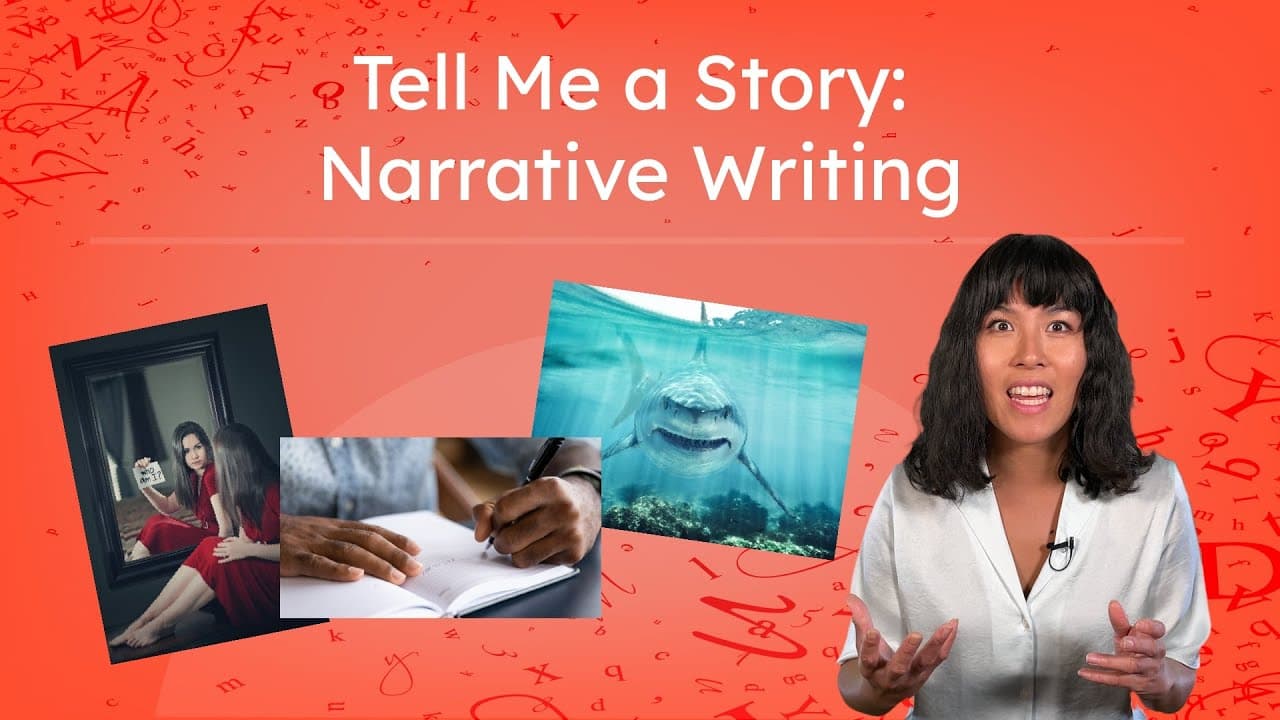
This engaging educational video provides a comprehensive introduction to narrative writing, designed specifically for high school students. It begins by defining narrative writing not just as fiction, but as any writing that tells a story, including legal arguments, journalism, and personal essays. The host creates an immersive atmosphere by starting in a movie theater, drawing a parallel between getting lost in a movie and effective writing. The core of the lesson focuses on two major pillars of storytelling: conflict and structure. It breaks down five distinct types of conflict—Person vs. Person, Self, Society, Nature, and Technology—providing clear, relatable examples for each. The video then transitions to the "Plot Mountain" diagram, visually explaining the standard narrative arc from exposition and inciting incidents through rising action, the climax, falling action, and finally, resolution. This resource is highly valuable for English Language Arts classrooms as a foundational lesson for a creative writing unit. It simplifies complex literary concepts into digestible definitions and visual models. Teachers can use this video to scaffold assignments where students analyze existing stories or begin drafting their own personal narratives, as suggested by the specific homework prompts outlined at the end of the video.

Miacademy & MiaPrep Learning ChannelMiacademy & MiaPrep Learning Channel

9mins 28s

Video
How to Plan a Short Story by Focusing on One Element

How to Plan a Short Story by Focusing on One Element

In this creative writing lesson, Justin guides students through the pre-writing phase of crafting a short story, introducing the concept of a "narrative focus" to overcome the intimidation of a blank page. The video emphasizes that because short stories are brief (typically 1,000 to 8,000 words), they require a unified approach where one element drives the others. Justin demonstrates how to choose one primary narrative element—character, setting, conflict, or plot—to serve as the foundation for the entire story plan.

Miacademy & MiaPrep Learning ChannelMiacademy & MiaPrep Learning Channel

8mins 42s

Video
Understanding Realistic Fiction: Stories from Everyday Life

Understanding Realistic Fiction: Stories from Everyday Life

This video introduces students to the literary genre of realistic fiction within the context of a thematic journey through "Genre Land." The host finds herself in a seaside village where a sudden rainstorm ruins her beach plans, serving as a perfect metaphor for the everyday problems characters face in realistic fiction. Through this narrative frame, the video defines the genre as stories containing believable characters, settings, and events that could actually happen in real life, distinct from fantasy or science fiction.

Miacademy & MiaPrep Learning ChannelMiacademy & MiaPrep Learning Channel

11mins 52s

Video
How to Write Dialogue to Show Character Personality

How to Write Dialogue to Show Character Personality

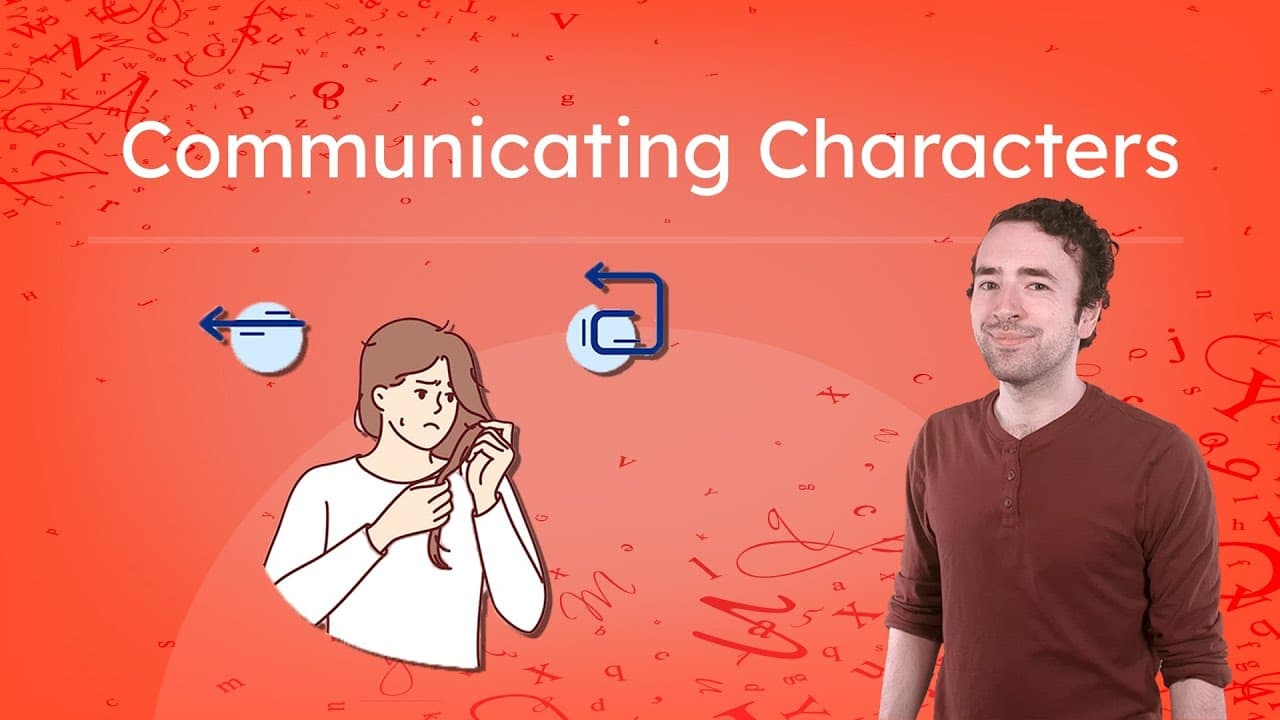
This engaging video lesson explores the art of creative writing with a specific focus on using dialogue to develop characters. Through a humorous narrative involving a writer named Justin and his fictional creation Julius, the video breaks down the difference between direct and indirect characterization. It emphasizes the "show, don't tell" principle, demonstrating how dialogue can reveal personality, background, and relationships without explicitly stating them. The content covers five key strategies for writing effective dialogue: word choice, manner of speaking, character interactions, subtext, and surrounding words. The video uses "mentor texts"—contrasting a poorly written scene with a well-crafted one—to illustrate how these elements work together to create tension and believability. It specifically defines direct characterization as factual description and indirect characterization as revealing traits through speech, thoughts, and actions. For educators, this video serves as an excellent anchor for a narrative writing unit. It provides clear definitions, concrete examples, and scaffolded practice opportunities. The video includes built-in pause points that ask students to predict definitions, analyze text for character traits, and plan their own dialogue scenarios. It is designed to move students from understanding the concept of indirect characterization to applying it practically in their own creative writing.

Miacademy & MiaPrep Learning ChannelMiacademy & MiaPrep Learning Channel

10mins 17s

Video
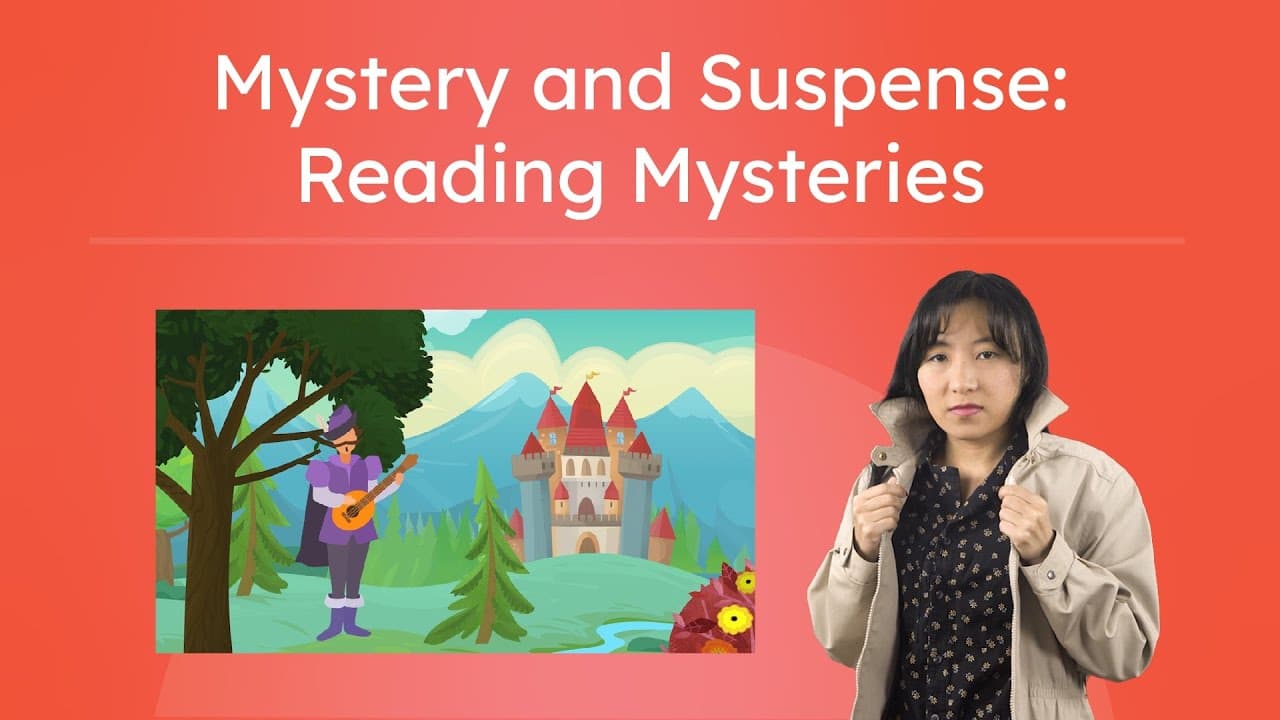
Exploring the Mystery Genre: Plot, Mood, and Deduction

Exploring the Mystery Genre: Plot, Mood, and Deduction

This engaging educational video introduces students to the mystery and suspense genre through an interactive narrative set in "Genre Land." Hosted by a narrator who acts as a detective, the lesson uses a meta-mystery about a missing bard named Storyweaver to teach core literary concepts. Viewers are guided through the "Misty Woods" to understand how authors construct mysteries, build tension, and resolve plots through deduction.

Miacademy & MiaPrep Learning ChannelMiacademy & MiaPrep Learning Channel

12mins 46s

Video
Fantasy Fiction and the Hero's Journey Explained

Fantasy Fiction and the Hero's Journey Explained

This engaging educational video explores the Fantasy genre and the literary concept of the Hero's Journey, using a meta-narrative about a lost dragon named Clove to illustrate key points. The lesson breaks down the definition of fantasy as speculative fiction involving magic and supernatural elements, distinguishing it from science fiction. It then delves into the structural framework of the Hero's Journey, guiding viewers through its three main stages: Departure, Initiation, and Return. The content covers essential literary elements including worldbuilding, character archetypes (heroes, mentors, villains), and common themes like courage and good versus evil. The video uses the character of Clove to provide concrete examples of each stage of the Hero's Journey, helping students visualize abstract narrative concepts. Visual diagrams and clear definitions support the retention of vocabulary such as "speculative fiction," "archetype," and "narrative framework." Ideally suited for upper elementary and middle school Language Arts curriculums, this video serves as an excellent introduction to narrative structure and genre study. Teachers can use it to launch units on creative writing, novel studies of fantasy literature, or analysis of plot structures. The interactive components, where the narrator asks students to pause and reflect or answer questions, make it a ready-to-use tool for both individual learning and whole-class instruction.

Miacademy & MiaPrep Learning ChannelMiacademy & MiaPrep Learning Channel

12mins 40s

Video
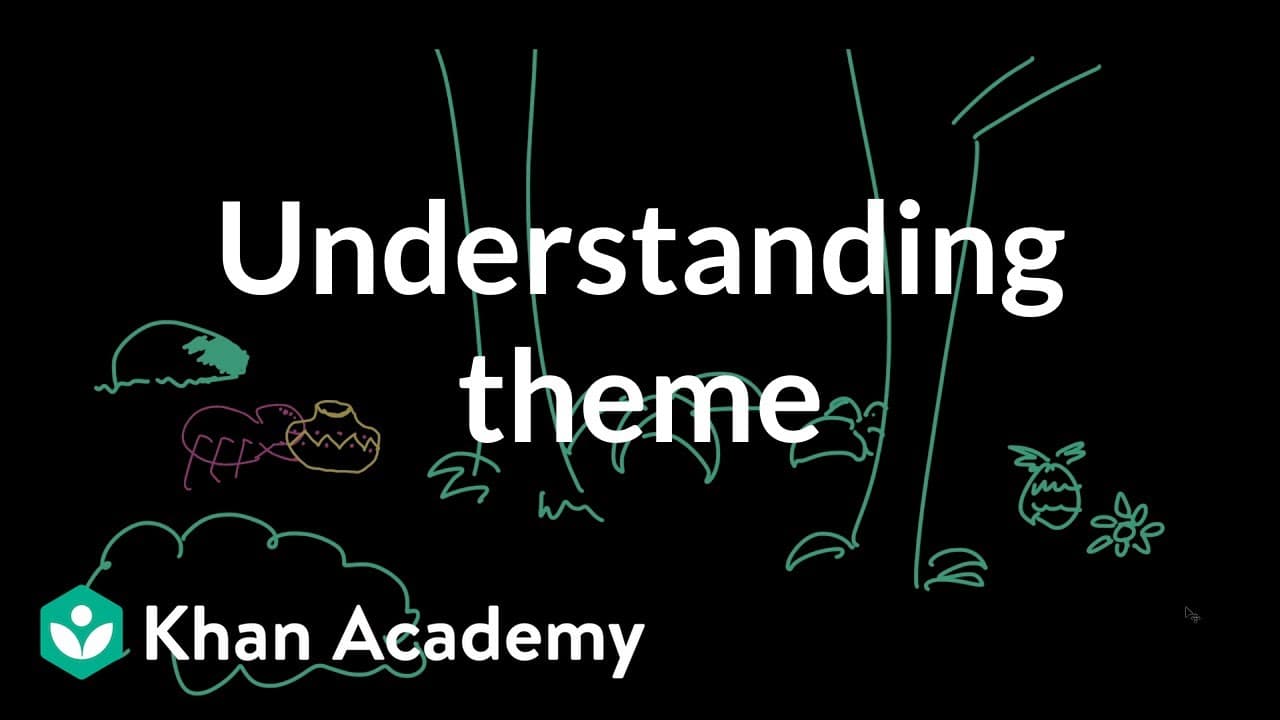
How to Find the Theme of a Story

How to Find the Theme of a Story

This educational video provides a clear and engaging guide to understanding literary themes, distinguishing them from plots, summaries, and main ideas. The narrator explains that a theme is a universal message or lesson woven throughout a story that connects the text's action to big ideas about the world. To illustrate this abstract concept, the video uses relatable analogies, such as a humorous anecdote about food poisoning, to differentiate between what happens (plot) and what is learned (theme). The core of the video features a detailed retelling of the West African folktale of Anansi the Spider. In this story, the trickster Anansi attempts to hoard all the world's wisdom in a clay pot, only to be outsmarted by his young son. The narrative serves as a practical case study for the viewer, demonstrating how to apply specific analytical questions—such as "How did the characters grow?" and "What stays with you?"—to uncover the deeper meaning of a text. For educators, this resource is an excellent tool for scaffolding literary analysis skills in upper elementary and middle school classrooms. It offers a concrete framework of "Big Questions" that students can apply to any text to identify themes. The video addresses common confusion between themes and morals, provides a culturally responsive text example, and models the critical thinking process required to move from surface-level comprehension to deeper interpretation.

Khan AcademyKhan Academy

6mins 18s

Video
Unlocking Character Traits with the STEAL Method

Unlocking Character Traits with the STEAL Method

This educational video introduces students to the literary concepts of direct and indirect characterization through a narrative set in "Character Grove." Hosted by Caroline, the lesson features a talking tree character named Timotree who helps illustrate how authors reveal personality traits. The video contrasts direct descriptions with the more subtle "show, don't tell" method of indirect characterization, using specific examples to make the abstract concepts concrete. The core of the lesson focuses on the STEAL acronym (Speech, Thoughts, Effect on others, Actions, Looks) as a tool for analyzing indirect characterization. Viewers are guided through a text excerpt about a "young man" to identify evidence for each category of the STEAL method. The video then moves from identification to interpretation, demonstrating how to infer specific character traits like "caring," "trustworthy," and "practical" based on the text evidence gathered. This resource is highly valuable for Language Arts classrooms as it breaks down a complex analytical skill into manageable steps. It encourages critical thinking by asking students not just to find details, but to interpret what those details imply about a character's internal nature. The use of visual aids, on-screen text, and a memorable acronym makes it an excellent tool for introducing character analysis or supporting students who struggle with making inferences.

Miacademy & MiaPrep Learning ChannelMiacademy & MiaPrep Learning Channel

10mins 16s

Video
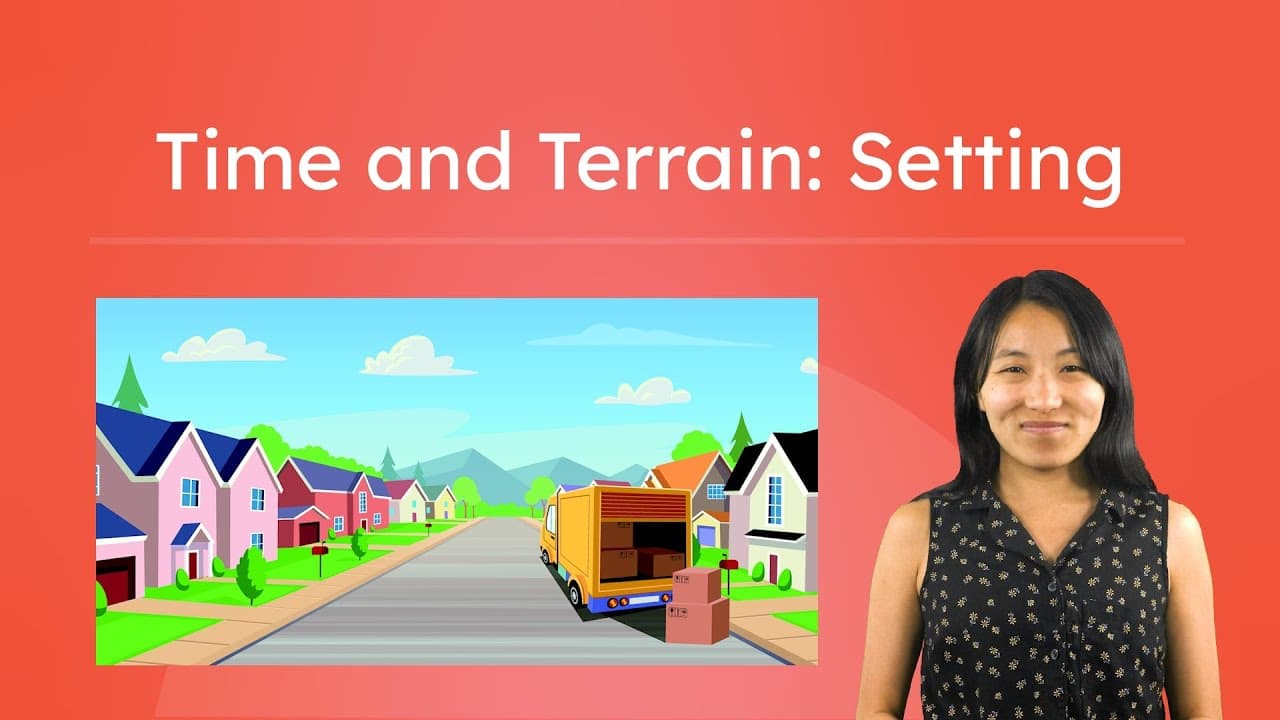
How Setting Shapes a Story

How Setting Shapes a Story

This engaging educational video explores the literary concept of "setting" through a fun, sci-fi narrative involving parallel dimensions. The host, accompanied by an animated robot named Mia, encounters three lost versions of Mia from different worlds: a historical lady from London, a festival-goer from contemporary Venezuela, and a survivor from a futuristic wasteland. Through this "World Warp" storyline, students learn that setting is not just a backdrop but a crucial element comprised of time and place that deeply influences characters and plot. The video breaks down the concept of setting into identifiable clues, teaching viewers how to infer time and location from textual details like vocabulary, technology, and cultural references. It uses a visual puzzle piece metaphor to demonstrate how setting interlocks with plot and character development. Specifically, it analyzes three distinct genres—historical fiction, contemporary realistic fiction, and science fiction—to show how the environment creates specific conflicts and challenges for the characters living within them. Teachers can use this video to introduce or reinforce the concept of setting in literature units. It provides a perfect springboard for lessons on making inferences, analyzing story elements, and creative writing. The interactive nature of the video, which includes built-in pause points for reflection and prediction, makes it an excellent tool for active classroom viewing, allowing students to practice being "setting detectives" alongside the host.

Miacademy & MiaPrep Learning ChannelMiacademy & MiaPrep Learning Channel

10mins 31s

Video
Understanding Realistic Fiction: Stories from Everyday Life

Understanding Realistic Fiction: Stories from Everyday Life

This video introduces students to the literary genre of realistic fiction within the context of a thematic journey through "Genre Land." The host finds herself in a seaside village where a sudden rainstorm ruins her beach plans, serving as a perfect metaphor for the everyday problems characters face in realistic fiction. Through this narrative frame, the video defines the genre as stories containing believable characters, settings, and events that could actually happen in real life, distinct from fantasy or science fiction.

Miacademy & MiaPrep Learning ChannelMiacademy & MiaPrep Learning Channel

11mins 52s

Video
Exploring African Folktales and Contemporary Literature

Exploring African Folktales and Contemporary Literature

This educational video provides a comprehensive overview of African literary traditions, starting with the oral history of folktales and moving through the colonial, post-colonial, and modern eras of written literature. Set against the backdrop of Lagos, Nigeria, the narrator guides viewers through the cultural significance of storytelling, using the famous trickster character Anansi the Spider as a primary example of folklore that imparts moral lessons and preserves history. The video delves into complex historical themes, explaining how the Colonial and Post-Colonial periods shaped the narratives of African authors. It introduces key literary figures such as Chinua Achebe, Tsitsi Dangarembga, and Chimamanda Ngozi Adichie, categorized by the historical eras they represent. The content breaks down how political events, specifically the struggle for independence and the challenges of rebuilding nations, directly influenced the themes explored in African literature. Designed for middle and high school students, this resource is an excellent tool for Language Arts and World History classrooms. It connects geography, history, and literature, offering students a framework to understand how societal changes impact storytelling. The video includes built-in pause points for reading and reflection, making it ready-made for interactive classroom lessons on world cultures, literary archetypes, and historical analysis.

Miacademy & MiaPrep Learning ChannelMiacademy & MiaPrep Learning Channel

10mins 43s

Video
Mapping the Mountain: How Stories Are Structured

Mapping the Mountain: How Stories Are Structured

This engaging video introduces students to the core structural elements of narrative fiction using the classic "Story Mountain" diagram. The narrator breaks down the standard plot arc into six key components: Exposition, Conflict, Rising Action, Climax, Falling Action, and Resolution. By visualizing a story as a mountain journey, students can easily grasp how tension builds and releases throughout a narrative. To solidify these abstract concepts, the video applies them to a creative, humorous example: a sci-fi reboot of "The Three Little Pigs" titled "TLP: Starbound." This retelling transforms the classic fairy tale into a space opera, demonstrating exactly how each plot point functions within a familiar yet fresh context. From straw spaceships to a cyborg wolf pirate, the example makes literary analysis memorable and fun. This resource is highly valuable for English Language Arts classrooms, specifically for reading comprehension and creative writing units. It provides a shared vocabulary for discussing literature and offers a clear template that students can use to analyze books they read or structure stories they write. The video effectively bridges the gap between simple storytelling and formal literary analysis.

Khan AcademyKhan Academy

5mins 14s

Video
Baking a Story: Part-Whole Relationships in Literature

Baking a Story: Part-Whole Relationships in Literature

In this engaging educational video, Justin uses a relatable analogy—baking a birthday cake—to explain the complex literary concept of part-whole relationships. The video begins with a narrative about planning a surprise party and segues into a text message conversation between a character named Liz and her mother. As Liz encounters a missing ingredient (buttermilk) while baking, Justin explains the scientific function of that ingredient, setting the stage for a deeper analytical connection.

Miacademy & MiaPrep Learning ChannelMiacademy & MiaPrep Learning Channel

8mins 58s

Video
Mastering Literary Point of View: First, Second, and Third Person

Mastering Literary Point of View: First, Second, and Third Person

This engaging educational video guides students through the literary concept of "Point of View" (POV) using a fantasy-themed narrative involving a quest to find a "Crystal Quill." The host, accompanied by an animated robot named Mia, explains the three main types of POV: First-Person, Second-Person, and Third-Person. Through clear definitions and visual examples, students learn to identify these perspectives by looking for specific pronouns (I/we, you, he/she/they). The video goes beyond simple identification by analyzing the impact each point of view has on a story and the reader. Using a "three ponds" metaphor, the host presents three versions of the same narrative event—the villain "The Silencer" approaching a pond—told from different perspectives. Students are asked to match "engraved stones" describing specific literary effects (such as emotional connection, reliability, or immersion) to the correct point of view. Designed for upper elementary and middle school students, this resource combines direct instruction with interactive checking for understanding. It effectively demonstrates how authorial choices shape a narrative, helping students become more critical readers and more intentional writers. The gamified elements keep viewers engaged while tackling core English Language Arts standards regarding narrative structure.

Miacademy & MiaPrep Learning ChannelMiacademy & MiaPrep Learning Channel

10mins 36s

Video
How to Map a Story Using Plot Elements

How to Map a Story Using Plot Elements

This animated educational video uses a gamified narrative to teach students about the six core elements of plot structure. Set in a mysterious "Maze of Plot," the narrator and her robot companion, Mia, must correctly identify and order parts of a story to illuminate their path through a dark cavern. The video breaks down the classic narrative arc (often referred to as Freytag's Pyramid) into specific components: Exposition, Inciting Incident, Rising Action, Climax, Falling Action, and Resolution.

Miacademy & MiaPrep Learning ChannelMiacademy & MiaPrep Learning Channel

9mins 55s

Video
Reading the Room: How to Identify Mood in Stories

Reading the Room: How to Identify Mood in Stories

In this engaging Language Arts adventure, viewers join a narrator and her robot companion, Mia, on a quest through the "Valley of Vibes." To succeed, they must face the "Vibe Master" and pass a series of "vibe checks" by correctly identifying the mood of various narrative passages. The video combines a fantasy storyline with direct instruction to teach students how to analyze literature, moving beyond simple emotional descriptors to more precise literary vocabulary. The video focuses on the concept of "mood" in narrative writing, defining it as the emotional atmosphere an author creates for the reader. It systematically breaks down how writers construct mood using specific tools: characterization, setting, conflict, and word choice. The lesson guides students through three distinct examples, transitioning from guided analysis to independent practice, and introduces sophisticated vocabulary words such as "melancholy," "exuberant," "triumphant," and "foreboding" to replace simpler terms like "sad," "happy," or "scary." This resource is highly valuable for upper elementary and middle school classrooms as it models the thought process behind literary analysis. By explicitly highlighting text evidence—such as "plodded" versus "strode" or "gloomy" versus "emerald grass"—it shows students exactly how to locate and interpret clues within a text. The video includes built-in pause points for student reflection and participation, making it an excellent tool for interactive whole-class instruction or self-paced learning stations focused on reading comprehension and author's craft.

Miacademy & MiaPrep Learning ChannelMiacademy & MiaPrep Learning Channel

10mins 49s

Video
How to Plan a Short Story by Focusing on One Element

How to Plan a Short Story by Focusing on One Element

In this creative writing lesson, Justin guides students through the pre-writing phase of crafting a short story, introducing the concept of a "narrative focus" to overcome the intimidation of a blank page. The video emphasizes that because short stories are brief (typically 1,000 to 8,000 words), they require a unified approach where one element drives the others. Justin demonstrates how to choose one primary narrative element—character, setting, conflict, or plot—to serve as the foundation for the entire story plan.

Miacademy & MiaPrep Learning ChannelMiacademy & MiaPrep Learning Channel

8mins 42s

Video
Reading Characters' Minds: Understanding Thoughts and Feelings

Reading Characters' Minds: Understanding Thoughts and Feelings

This engaging video lesson explores the literary concept of 'mind reading,' or how readers gain access to a character's internal world. Through simple animations and clear narration, it demonstrates how authors reveal character thoughts and feelings, distinguishing between first-person narration where a character speaks directly to the reader, and third-person narration where an outside voice reveals internal states. The video delves into complex emotional nuances, explaining that characters can experience conflicting emotions simultaneously or act in ways that contradict their internal feelings. It provides concrete examples, such as a character who climbs a tree despite fearing heights, or a sculptor who smiles politely while feeling frustrated by a friend's criticism. These scenarios illustrate the difference between internal traits (thoughts/feelings) and external traits (actions/dialogue). For educators, this resource is an excellent tool for teaching character analysis, point of view, and inference in English Language Arts. It moves students beyond basic plot comprehension to deeper analytical skills, helping them understand character motivation and the 'evidence' provided by text. The relatable examples serve as perfect anchors for classroom discussions about social-emotional cues and narrative structure.

Khan AcademyKhan Academy

3mins 21s

Video
How to Read a Play Script

How to Read a Play Script

This educational video serves as an engaging introduction to the structural elements of drama, specifically focusing on how to read and understand a play script. The narrator, David, defines drama as a specialized form of storytelling meant for performance and distinguishes it from poetry or prose. Using a sample script titled "My Unusual Aunt," the video breaks down the unique text features found in plays, guiding viewers through the layout that makes dramatic writing distinct from standard narratives. The content explores key literary and structural themes including the Cast of Characters, scenes as organizational units of time and place, and the crucial distinction between spoken dialogue and italicized stage directions. The video explicitly demonstrates how stage directions function as instructions for actors and the production team rather than words to be read aloud, using simple drawings to visualize how text translates to physical action on a stage. For the classroom, this video is an excellent tool for English Language Arts units focused on literature and creative writing. It provides a clear visual model for students learning to identify the parts of a drama (RL.3.5, RL.4.5) or preparing to write their own scripts. Teachers can use this resource to scaffold lessons on reading fluency for Reader's Theater, helping students understand which words to speak and how to interpret behavioral cues within a text.

Khan AcademyKhan Academy

3mins 14s

Video
How Point of View Shapes a Story

How Point of View Shapes a Story

This video provides an in-depth exploration of "Point of View" (POV) in literature, moving beyond simple definitions of first, second, and third-person perspectives to analyze how an author's choice of narrator shapes a story. Through a creative thought experiment involving a rocket scientist and a mouse, the narrator demonstrates how two characters experiencing the exact same event can tell vastly different stories based on their unique knowledge, priorities, and physical limitations. The video covers key literary concepts including close third-person perspective, character development, and the unreliable narrator. It emphasizes that stories are constructed through deliberate decisions made by authors, challenging students to consider *why* a specific perspective was chosen. The content also addresses the critical distinction between an author and their character, using a humorous example to illustrate that a writer's creation does not necessarily reflect their own reality. For educators, this resource serves as an excellent tool for deepening reading comprehension and literary analysis skills. It effectively models how to identify narrative bias and limitations, helping students transition from passive reading to active critical thinking. The visual examples make abstract concepts concrete, providing a strong foundation for lessons on narrative voice, creative writing, and analyzing complex texts with unreliable narrators.

Khan AcademyKhan Academy

5mins 14s

Video
Exploring Adventure Fiction and Pacing Techniques

Exploring Adventure Fiction and Pacing Techniques

This educational video explores the genre of adventure fiction, guiding viewers through its defining characteristics and the literary techniques used to create suspense. Set within a meta-narrative of exploring an "ancient temple of adventure fiction," the host and an animated robot character named Mia encounter tropes of the genre firsthand while teaching concepts. The video breaks down the essential elements of adventure stories, including courageous protagonists, dangerous settings, and action-packed plots, before diving deep into the specific craft of "pacing." The second half of the video provides a focused lesson on literary pacing—the speed and rhythm at which a story unfolds. Using the analogy of riding a bike, the narrator explains how authors manipulate time to build tension. Three specific techniques are analyzed in detail: structure (using short sentences and fragments), dialogue (rapid back-and-forth exchange), and information control (foreshadowing and cliffhangers). The video uses specific textual examples to demonstrate how these techniques look on the page, helping students visualize the mechanics of writing. Ideal for English Language Arts classrooms, this resource combines literary analysis with creative writing concepts. It offers clear definitions, visual examples of text annotation, and guided practice opportunities where students are asked to identify techniques in provided excerpts. Teachers can use this video to introduce genre units, teach narrative structure, or run a creative writing workshop focused on building suspense and writing action scenes.

Miacademy & MiaPrep Learning ChannelMiacademy & MiaPrep Learning Channel

11mins 55s

Video
How to Summarize a Story Using the SWBST Method

How to Summarize a Story Using the SWBST Method

This video introduces students to the "SWBST" (Someone, Wanted, But, So, Then) strategy, a mnemonic device designed to help learners effectively summarize fiction stories. The narrator acknowledges the difficulty of summarizing without rambling and presents this acronym as a "thought technology" to identify the most critical elements of a narrative: the main character, their goal, the conflict, the action taken to resolve it, and the resolution.

Khan AcademyKhan Academy

2mins 51s

Video
The 5 Ws of Storytelling: Who, What, Where, When, and Why

The 5 Ws of Storytelling: Who, What, Where, When, and Why

This animated video introduces young learners to the "5 Ws" of storytelling: Who, What, Where, When, and Why. Using a cast of ladybugs holding signboards, the video visually defines each question word by opening a storybook to reveal relevant examples, such as characters for "Who" and settings for "Where." The video relies primarily on music and visuals rather than narration to convey these concepts, making it a flexible tool for teacher-led instruction. The key themes explore narrative structure and reading comprehension strategies. By breaking down a story into these five fundamental components, the video helps students understand the building blocks of narrative writing and information gathering. It essentially provides a visual checklist for students to use when analyzing a story or planning their own writing. In the classroom, this video serves as an engaging hook for literacy lessons. It is particularly useful for introduction to journalism, creative writing, or reading comprehension activities. The humorous ending, featuring a late arrival by the "How" ladybug, provides a natural segue into discussing the "H" that often accompanies the 5 Ws, allowing teachers to extend the lesson to include process and method.

Scratch GardenScratch Garden

1min 40s

Video
How to Write Powerful Starts and Satisfying Endings

How to Write Powerful Starts and Satisfying Endings

This engaging creative writing lesson guides aspiring writers through the critical process of crafting opening and closing scenes for a novel. Hosted by an energetic presenter in a library setting, the video breaks down the specific goals of these pivotal moments: grabbing the reader's investment at the start and rewarding that investment at the end. It distinguishes between the plot events themselves and the "craft" of how those events are presented to the audience. The content introduces specific literary techniques and terminology for structuring narratives. For beginnings, it covers strategies like "In Medias Res" (starting in the middle of action), setting-focused openings, and character-focused introductions. For endings, it explores the use of epilogues, ambiguous endings that leave room for interpretation, and "callbacks" that reference earlier story details. Each concept is illustrated with clear definitions and relatable examples. Ideal for middle and high school English Language Arts classrooms, this video serves as a practical workshop tool. It includes built-in pause points that prompt students to reflect on their own reading experiences and apply the concepts to their own writing projects. Teachers can use this resource to introduce narrative structure units, support NaNoWriMo projects, or help students revise their creative writing pieces for greater impact.

Miacademy & MiaPrep Learning ChannelMiacademy & MiaPrep Learning Channel

9mins 58s

Video
Fantasy Fiction and the Hero's Journey Explained

Fantasy Fiction and the Hero's Journey Explained

This engaging educational video explores the Fantasy genre and the literary concept of the Hero's Journey, using a meta-narrative about a lost dragon named Clove to illustrate key points. The lesson breaks down the definition of fantasy as speculative fiction involving magic and supernatural elements, distinguishing it from science fiction. It then delves into the structural framework of the Hero's Journey, guiding viewers through its three main stages: Departure, Initiation, and Return. The content covers essential literary elements including worldbuilding, character archetypes (heroes, mentors, villains), and common themes like courage and good versus evil. The video uses the character of Clove to provide concrete examples of each stage of the Hero's Journey, helping students visualize abstract narrative concepts. Visual diagrams and clear definitions support the retention of vocabulary such as "speculative fiction," "archetype," and "narrative framework." Ideally suited for upper elementary and middle school Language Arts curriculums, this video serves as an excellent introduction to narrative structure and genre study. Teachers can use it to launch units on creative writing, novel studies of fantasy literature, or analysis of plot structures. The interactive components, where the narrator asks students to pause and reflect or answer questions, make it a ready-to-use tool for both individual learning and whole-class instruction.

Miacademy & MiaPrep Learning ChannelMiacademy & MiaPrep Learning Channel

12mins 40s

Video
Exploring Indigenous American Literature: Traditions and Modern Voices

Exploring Indigenous American Literature: Traditions and Modern Voices

This educational video provides a comprehensive introduction to Indigenous American literature, bridging the gap between ancient oral traditions and contemporary written works. The lesson begins by grounding the viewer in the geography and history of the Badlands (Makoshika) and the Lakota people, establishing the deep ancestral connections to the land. It transitions into defining Indigenous peoples and exploring the rich diversity of over 500 recognized nations in North America, moving beyond monolithic stereotypes to highlight unique cultures like the Cherokee, Navajo, and Iroquois. The video explores two main categories of literature: traditional storytelling lore and contemporary Indigenous literature. Through the lens of traditional lore, it examines common characteristics such as creation stories, deep respect for nature, and moral teachings, using the Iroquois story "The Creation of Turtle Island" as a primary example. The analysis then shifts to contemporary literature, discussing how modern authors like Louise Erdrich and Joseph Bruchac weave historical trauma—including colonization, disease, and forced relocation—into narratives that address current social injustices while celebrating cultural resilience. For educators, this video serves as an excellent anchor for units on American literature, US history, or cultural studies. It provides concrete examples of literary analysis, asking students to identify themes and symbolism, while also fostering social-emotional learning through discussions of identity, injustice, and the power of storytelling. The video includes built-in pause points for reflection and reading activities, making it a ready-made tool for sparking classroom dialogue about the enduring legacy and vitality of Indigenous cultures.

Miacademy & MiaPrep Learning ChannelMiacademy & MiaPrep Learning Channel

9mins 57s