Lenny LearningLenny
Create
Explore
Workspace
LoginSign up
MathEnglish Language ArtsScience & EngineeringSocial StudiesGlobal LanguagesHealth & Physical EducationSpecial EducationCounseling & Life SkillsArts & CreativityESL
Lenny LearningLenny
Lenny Learning
About
Training
Pricing
Support
Contact
© 2026 Lenny Learning Inc.
English Language ArtsPhonics & Reading FoundationsLetter IdentificationLearn Letters A-ZLowercase and Uppercase LettersConsonants and VowelsLetter-Sound AssociationsLetter-Sound Associations: LowercaseLetter-Sound Associations: UppercaseBeginning and Ending SoundsRhymingBlending And SegmentingShort VowelsShort Vowel SoundsConsonant BlendsConsonant DigraphsBlends, Digraphs, and TrigraphsDigraphs, Blends, and Silent LettersLong Vowel SoundsLong Vowel PatternsShort and Long VowelsShort and Long Vowel PatternsSilent EVowel SoundsVowel TeamsR-Controlled VowelsDiphthongs: Oi, Oy, Ou, OwVariant VowelsVariant, Diphthong, And R Vowel PatternsSoft G And CSight WordsIrregular WordsWord RecognitionSyllablesSyllable TypesTwo-Syllable WordsMultisyllabic WordsPhoneme ManipulationDecodable TextsVocabularyAction WordsQuestion WordsNouns and AdjectivesClassify WordsCompound WordsSynonyms and AntonymsHomophonesHomophones and HomonymsShades of MeaningContext CluesPrefixes and SuffixesGreek and Latin RootsAnalogiesIdioms and AdagesForeign Words and ExpressionsWord Choice and UsageReference SkillsReading ComprehensionRead-Along Literary TextsRead-Along Informational TextsReality vs. FictionStory ElementsCharacterSequenceMain IdeaCause And EffectCompare And ContrastReading StrategiesText StructureAuthor's PurposeAuthor's Purpose And ToneAuthor's PerspectivePoint Of ViewThemeInference And ThemeInference And AnalysisPoetry ElementsLiterary DevicesAnalyzing LiteratureAnalyzing Informational TextsComparing TextsAudience, Purpose, And ToneBusiness DocumentsNovel StudyNonfiction Book StudyGrammar & MechanicsSentencesNounsVerbsAdjectivesPronounsCapitalizationPunctuationContractionsConjunctionsPrepositionsArticlesAdjectives And AdverbsVerb TypesVerb TensePronouns And AntecedentsPronoun TypesSubject-Verb AgreementDirect And Indirect ObjectsSentences, Fragments, And Run-OnsPhrases And ClausesCommasSemicolons, Colons, And CommasDashes, Hyphens, And EllipsesSpellingAbbreviationsFormattingVerb Tense And MoodMisplaced ModifiersWritingDescriptive DetailsCreative WritingOpinion WritingTopic SentencesOrganizing WritingLinking WordsSentence VarietyIntroductions And ConclusionsPersuasive And Opinion WritingExpository WritingPersuasive StrategiesDeveloping And Supporting ArgumentsTopic Sentences And Thesis StatementsSummarizingResearch SkillsEditing And RevisingActive And Passive Voice=Writing Clearly And ConciselyDebate & Public SpeakingPublic Speaking BasicsPersuasive TechniquesClaims and EvidenceTypes of ArgumentsReasoning TypesLogical FallaciesTopic ResearchOrganizing EvidenceDebate Speech OrganizationAttacking and Defending ArgumentsClash and EngagementImpact CalculusQuestioning and Cross-ExaminationCritical ThinkingInformal LogicFormal LogicInductive Reasoning

Vocabulary

SequencesLessonsMaterialsVideos
  1. English Language Arts

Vocabulary

SequencesLessonsMaterialsVideos

Builds word mastery through parts of speech, Greek and Latin roots, and morphological analysis of prefixes and suffixes. Develops nuanced comprehension using context clues, shades of meaning, and idiomatic expressions.

Action WordsIdentification and usage of dynamic verbs to describe physical and mental activities. Builds proficiency in subject-verb agreement and sentence construction.
Question WordsIdentifies and applies common interrogatives including who, what, where, when, why, and how to form accurate inquiries. Strengthens sentence structure and conversational fluency through targeted grammar practice.
Classify WordsSemantic categorization, part-of-speech identification, and grouping by shared attributes. Strengthens vocabulary organization and linguistic pattern recognition.
Video
Mastering High-Frequency Sight Words Through Song: List 3

Mastering High-Frequency Sight Words Through Song: List 3

This engaging educational music video is designed to help early elementary students master a specific set of high-frequency sight words often found in "List 3" of common sight word curriculums. Through a catchy, rhythmic song, the video visually presents each word on a colorful background while the narrator sings the word clearly multiple times. This multisensory approach helps reinforce word recognition, spelling, and pronunciation for developing readers. The video focuses on key literacy themes including reading fluency, word recognition, and vocabulary development. It covers a diverse list of functional words ranging from number words like "six" and "seven" to common verbs like "grow," "laugh," and "carry," as well as abstract concepts like "about" and "if." The repetition built into the song structure ensures that students have ample opportunity to encode these words into their visual memory. For the classroom, this video serves as an excellent warm-up, transition activity, or center station for literacy blocks. It supports differentiated learning by providing auditory cues for students who struggle with traditional flashcards. Teachers can use this video to introduce new vocabulary, review previously taught words, or as a fun "brain break" that keeps the focus on learning. The steady pacing allows students to read along, making it a valuable tool for building confidence in reading aloud.

Have Fun TeachingHave Fun Teaching

4mins 5s

Video
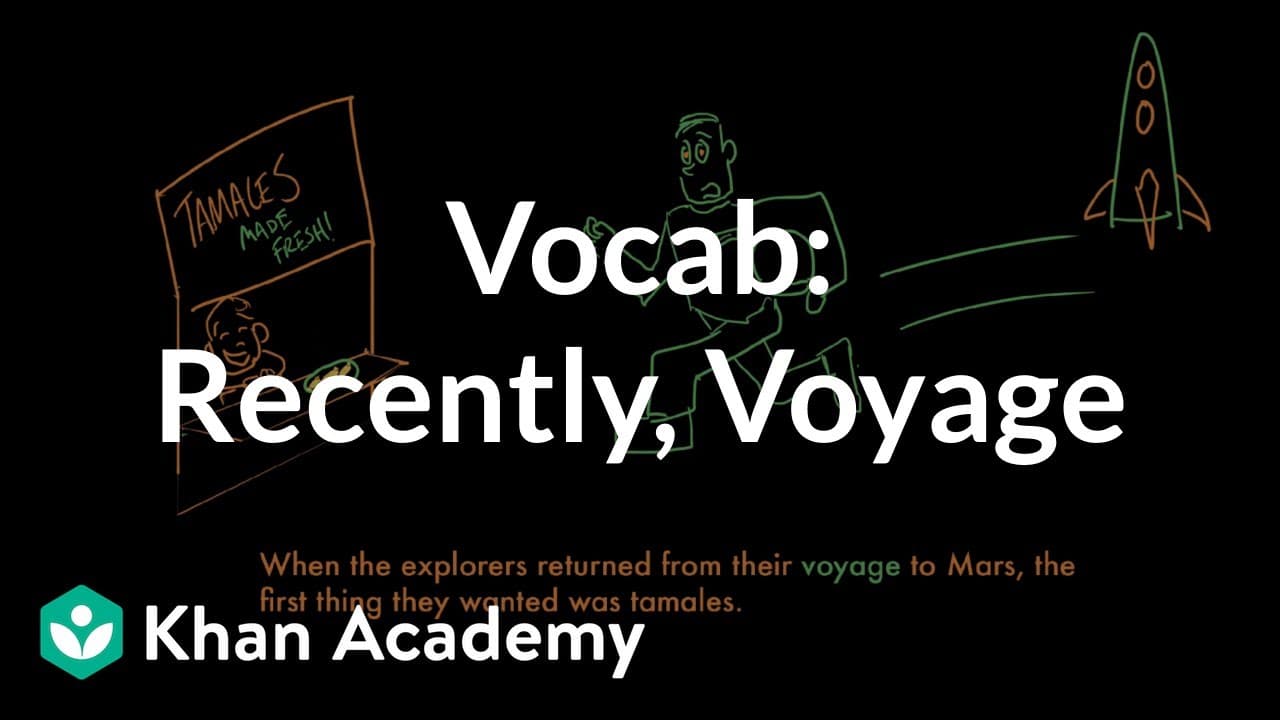
Exploring the Vocabulary Words Recently and Voyage

Exploring the Vocabulary Words Recently and Voyage

In this engaging vocabulary lesson, the narrator introduces students to two specific words: "recently" and "voyage." Through a blend of humor, storytelling, and simple illustrations, the video breaks down the definitions, parts of speech, and grammatical rules associated with each word. Specifically, it explains how the suffix "-ly" transforms adjectives into adverbs and how a single word like "voyage" can function as both a noun and a verb. The video explores key grammatical concepts in an accessible way. It defines "recently" as an adverb meaning "happening a short time ago" and demonstrates how adjectives like "happy" and "quick" become adverbs with the addition of "-ly." It then defines "voyage" as a long journey, providing examples of its use as a noun (taking a trip) and a verb (the act of traveling). The narrator uses humorous example sentences involving astronomers and astronauts craving tamales to solidify understanding. For educators, this video is a valuable tool for reinforcing parts of speech and expanding vocabulary. It can be used to introduce the concept of suffixes, specifically how word endings change grammatical function. The clear definitions and contextual examples make it an excellent resource for ELA lessons focused on grammar, reading comprehension, and creative writing, encouraging students to use new vocabulary in their own sentences.

Khan AcademyKhan Academy

2mins 29s

Video
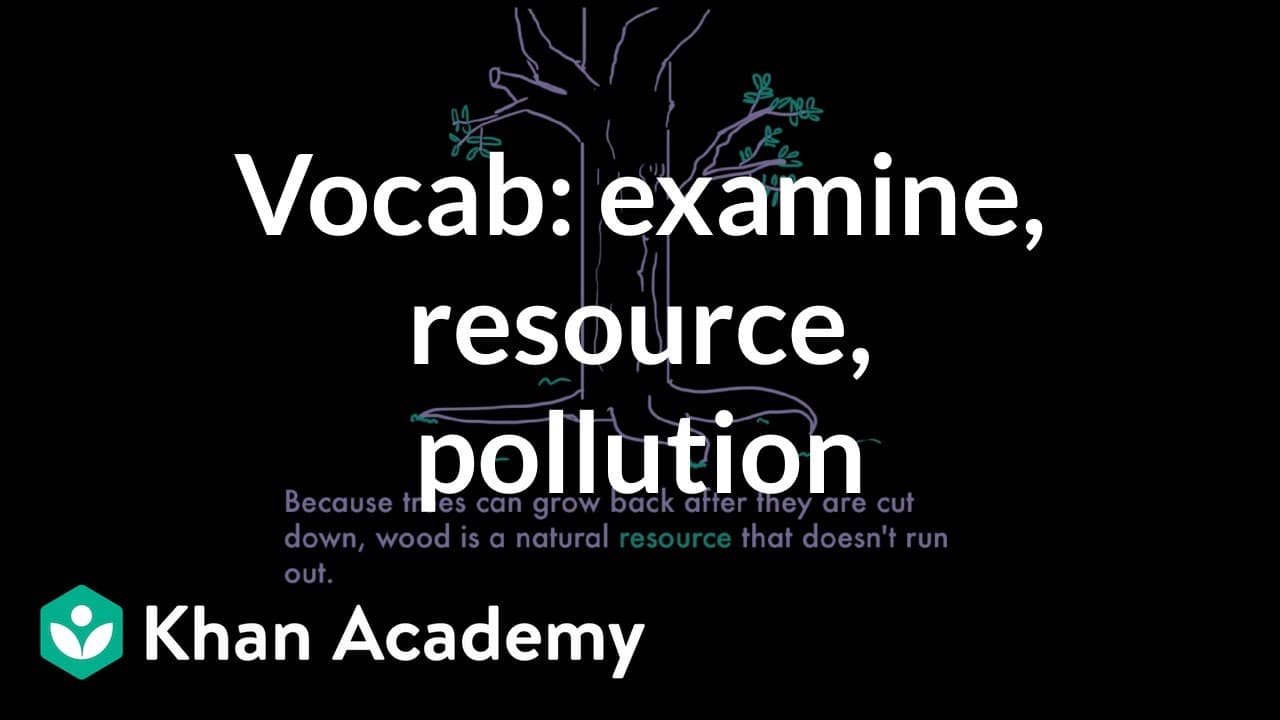
Defining and Using the Words Examine, Resource, and Pollution

Defining and Using the Words Examine, Resource, and Pollution

This educational video introduces and defines three specific vocabulary words: "examine," "resource," and "pollution." Using a "blackboard" style visual approach with colorful handwritten text and simple illustrations, the narrator breaks down each word by identifying its part of speech (verb or noun), providing a clear definition, and explaining its etymology or morphological structure (such as the suffix "-tion"). The video explores the meanings in depth before showing them in context. For example, it connects "examine" to the familiar concept of taking an "exam," expands the definition of "resource" from natural materials to school libraries, and breaks down "pollution" as the act of dirtying the environment. Each segment concludes with an illustrated sentence that demonstrates the word being used correctly in a real-world scenario. Teachers can use this video as a versatile tool for both English Language Arts and Science instruction. It serves as an excellent model for how to learn new vocabulary—by defining, connecting to known words, and using in context. Additionally, the specific words chosen bridge nicely into science units regarding scientific observation (examining), natural resources, and environmental stewardship (pollution).

Khan AcademyKhan Academy

2mins 59s

Video
Learning to Spell and Use the Sight Word 'Buy'

Learning to Spell and Use the Sight Word 'Buy'

This high-energy music video is designed to teach early learners the sight word "buy." Through a catchy, repetitive song, students are guided to recognize the word by sight, spell it aloud letter-by-letter, and understand its meaning through context sentences. The video utilizes simple, high-contrast visuals with white text against a purple background to focus student attention specifically on the target vocabulary. The content covers three main literacy skills: word recognition, spelling (B-U-Y), and usage in sentences. The song introduces the conditional phrase structure "If I had some money, I would buy..." followed by rhyming or humorous animal examples like a puppy, pony, monkey, and donkey. This helps students associate the word "buy" with the concept of purchasing items using money. For educators, this video serves as an engaging hook or review tool for literacy lessons. It transforms rote memorization into a kinetic and auditory experience, making it particularly effective for auditory learners and students who benefit from musical mnemonics. The predictable pattern of the song allows for immediate student participation, while the sentence frames provide excellent models for writing activities.

Have Fun TeachingHave Fun Teaching

2mins 17s

Video
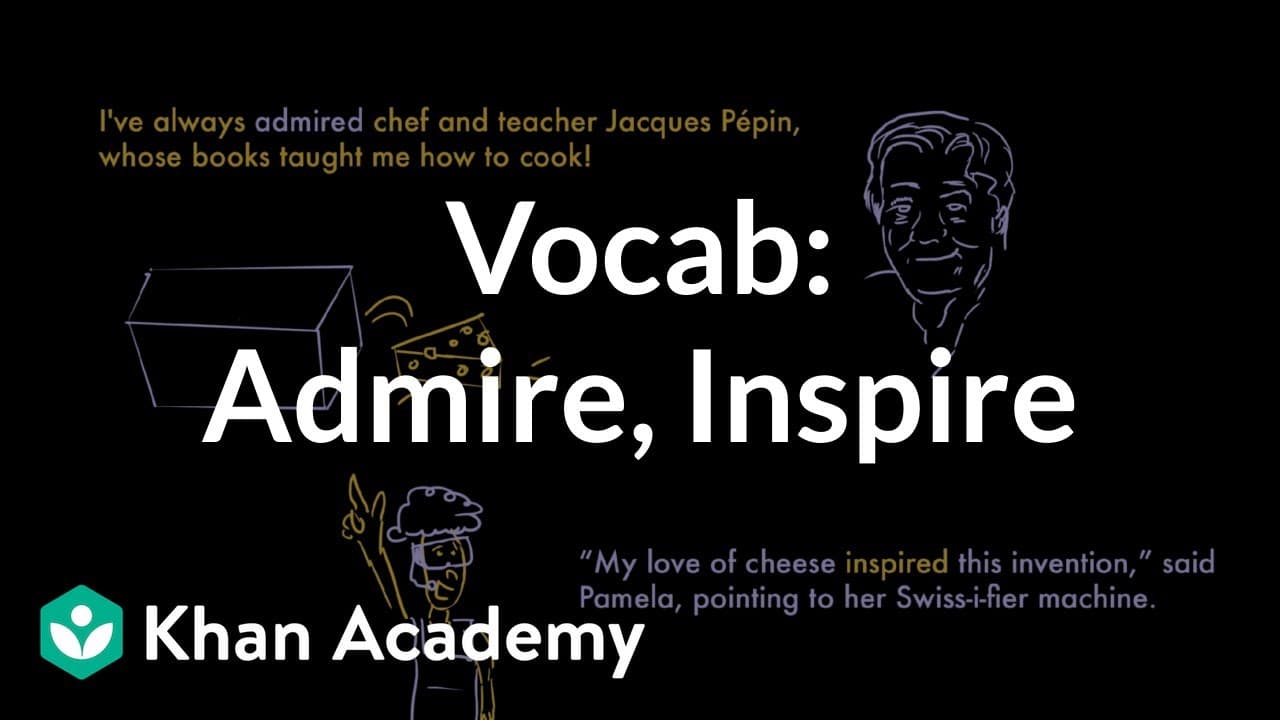
Defining and Understanding Admire and Inspire

Defining and Understanding Admire and Inspire

This educational video provides a clear and engaging breakdown of two related vocabulary words: "admire" and "inspire." Using a digital blackboard format, the narrator defines both verbs, explores their etymological roots (including prefixes and Latin origins), and illustrates their meanings through distinct examples. The lesson moves from definitions to word analysis, explaining how "admire" relates to looking and respecting, while "inspire" relates to breathing life and motivation into someone. Key themes include vocabulary acquisition, etymology (word roots), and the concepts of respect and motivation. The video specifically highlights the Latin roots "mirar" (to look) and "spire" (breath), helping students understand how the history of a word informs its current meaning. It also touches on role models through the example of Chef Jacques Pépin and creative invention through a humorous example about Swiss cheese. For educators, this video is an excellent tool for introducing Tier 2 vocabulary and the concept of morphology (prefixes and roots). It bridges simple definitions with deeper linguistic understanding, making it suitable for word study lessons. The video supports social-emotional learning by encouraging students to identify who they admire and what inspires them, while the specific examples provide a template for students to use these words correctly in their own writing and speech.

Khan AcademyKhan Academy

2mins 35s

Video
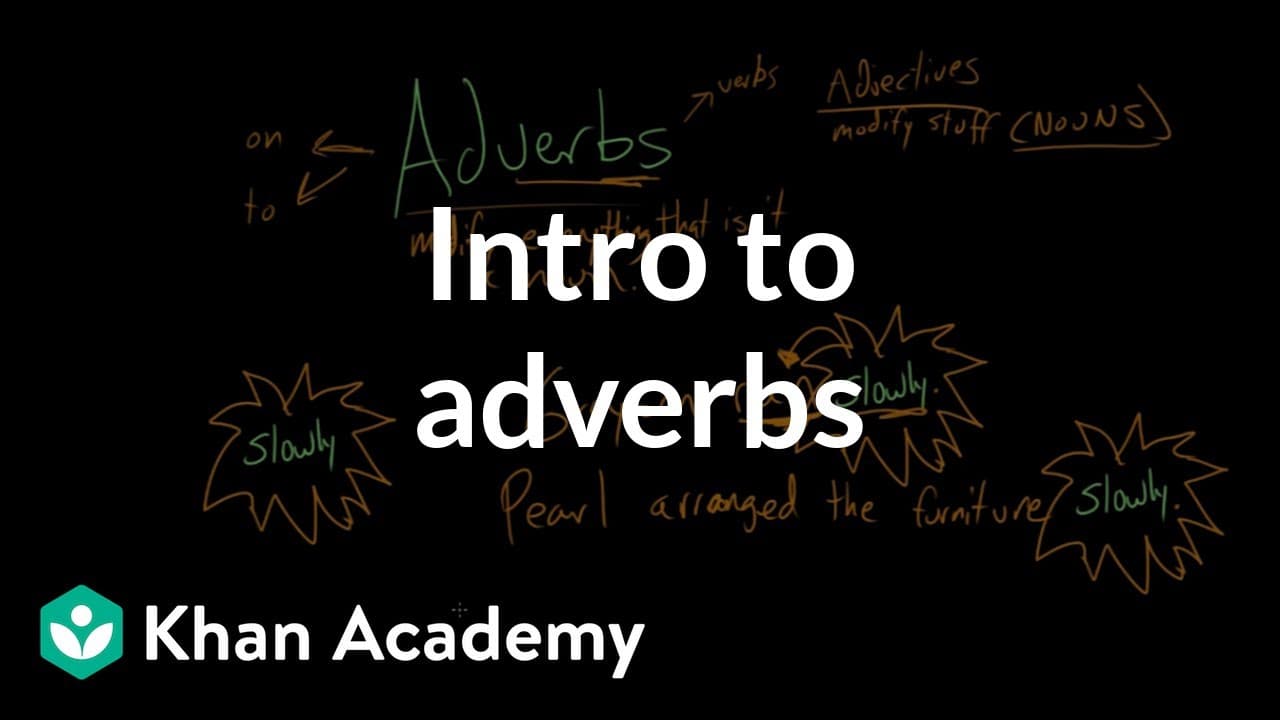
What Adverbs Are and How to Use Them

What Adverbs Are and How to Use Them

This engaging grammar tutorial introduces students to the concept of adverbs by contrasting them with adjectives. The narrator clarifies that while adjectives modify nouns, adverbs modify "everything else"—specifically verbs and adjectives. Using a helpful visual analogy, the video treats adverbs like "stickers" that can be applied to action words to describe how an action is performed, such as running "slowly." The video explores two main functions of adverbs: modifying verbs (action words) and modifying adjectives (descriptive words). Through clear handwritten examples, the narrator demonstrates how adverbs like "very" or "slightly" change the intensity of an adjective like "hungry." The lesson concludes by explaining the common structural rule that many adverbs are formed by simply adding "-ly" to an existing adjective, providing examples like converting "nice" to "nicely" and "cheerful" to "cheerfully." For educators, this video serves as an excellent foundational lesson on parts of speech. The "sticker" analogy provides a concrete visual metaphor that helps abstract grammatical concepts stick for younger learners. Teachers can use this resource to introduce sentence expansion, precise writing skills, and the mechanics of word formation. It effectively simplifies the definition of adverbs without oversimplifying the usage, making it a versatile tool for elementary language arts instruction.

Khan AcademyKhan Academy

4mins 10s

Video
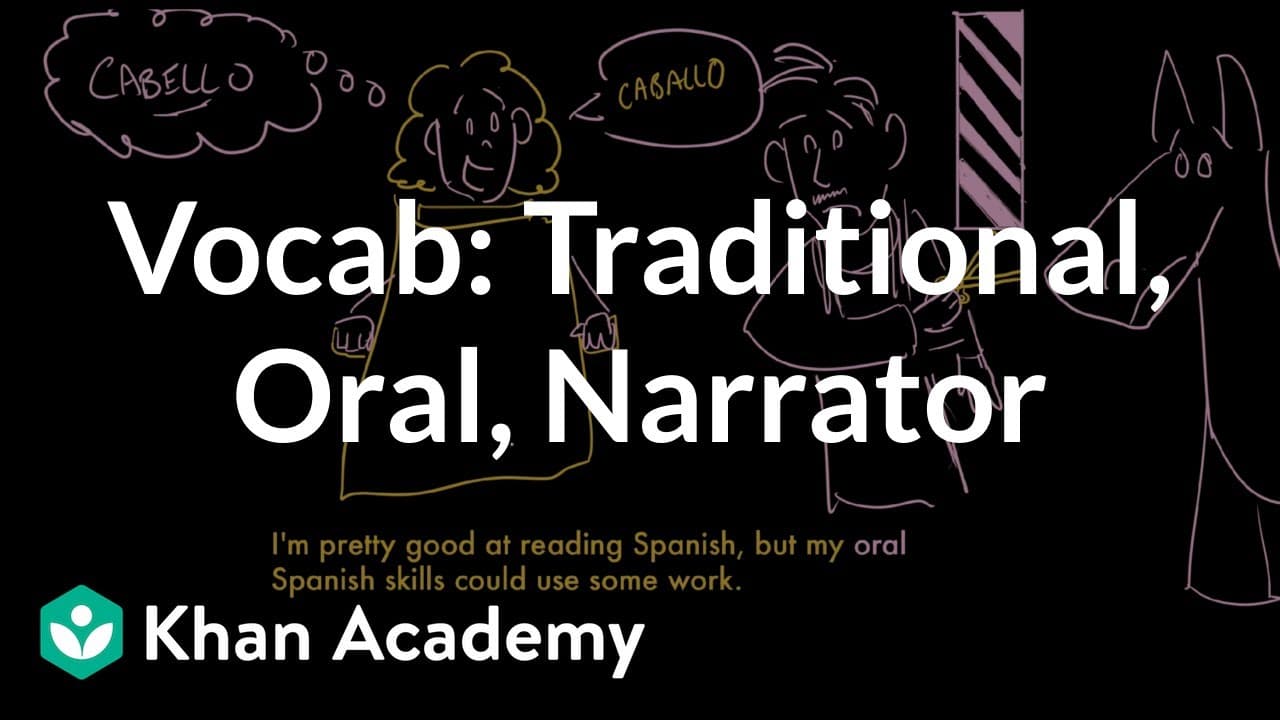
Learning Storytelling Vocabulary: Traditional, Oral, and Narrator

Learning Storytelling Vocabulary: Traditional, Oral, and Narrator

This educational video serves as a vocabulary mini-lesson focused on three specific terms: "traditional," "oral," and "narrator." Set against the backdrop of a virtual "vocabulary circle" campfire, the narrator breaks down each word by examining its part of speech, definition, and etymological structure. The lesson specifically highlights how suffixes like "-al" and "-or" function to change a word's meaning or grammatical category, such as transforming the noun "tradition" into the adjective "traditional." Key themes explored include morphology (how words change forms), parts of speech, and storytelling concepts. The video provides concrete examples for each term, including a personal anecdote about naming pets after literary detectives, a humorous linguistic mix-up involving Spanish vocabulary, and a scene depicting a thief in ancient Greece to illustrate the role of a narrator. These examples help contextualize abstract definitions into relatable scenarios. For educators, this video is a valuable tool for English Language Arts instruction, particularly for building vocabulary and teaching structural analysis of words. It can be used to introduce a unit on storytelling, to reinforce understanding of suffixes and root words, or to spark discussions about family traditions and oral histories. The engaging, informal tone makes complex grammatical concepts accessible and memorable for elementary and middle school students.

Khan AcademyKhan Academy

3mins 33s

Video
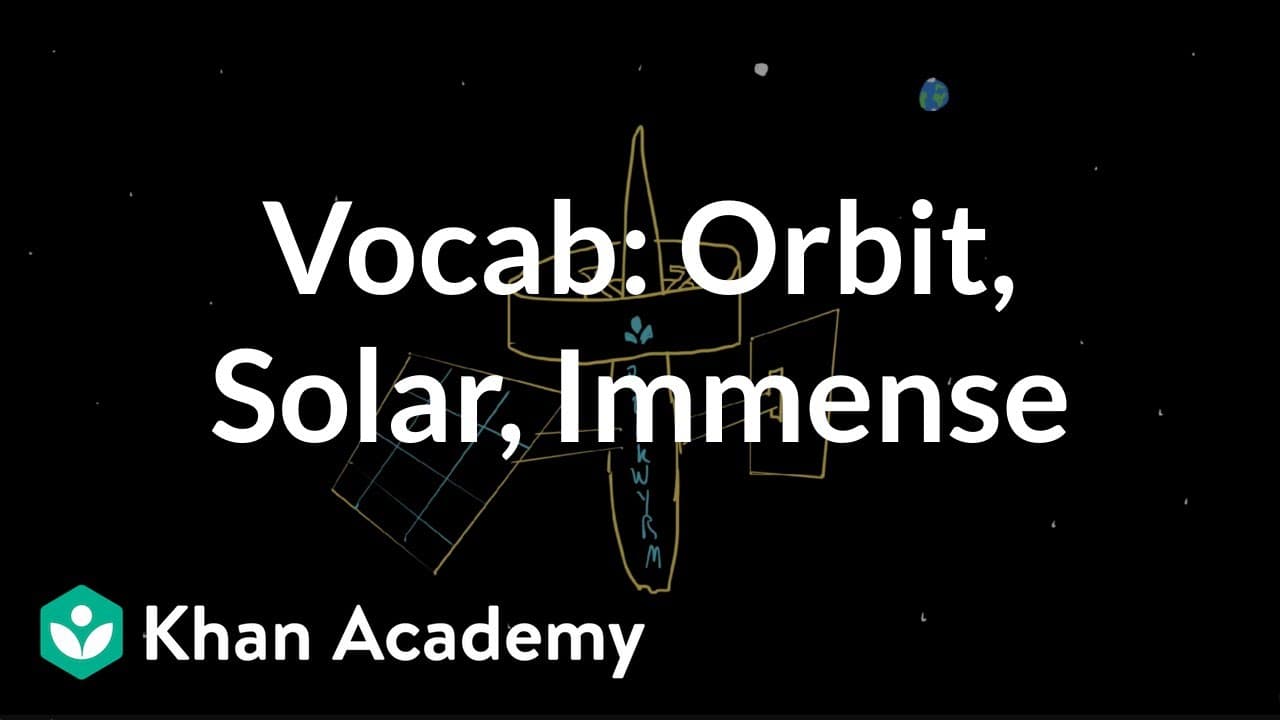
Mastering the Words Orbit, Solar, and Immense

Mastering the Words Orbit, Solar, and Immense

In this engaging vocabulary lesson set aboard the fictional "KAS Bookworm" space station, narrator David introduces students to three space-themed words: "orbit," "solar," and "immense." Through a mix of humor, simple hand-drawn animations, and clear definitions, the video breaks down each word's part of speech and meaning. The lesson uses relatable analogies, such as comparing planetary orbits to an ice cream truck circling a neighborhood, to make abstract concepts concrete for young learners. Key themes include space exploration, the solar system, and vocabulary acquisition. The video specifically focuses on distinguishing between verbs, nouns, and adjectives, and demonstrates how to use these new terms in context. The narrative builds a playful atmosphere, culminating in a humorous cliffhanger involving an "immense" alien spaceship, which serves to reinforce the final vocabulary word in a memorable way. For educators, this video is an excellent tool for integrating English Language Arts with Science. It provides a natural bridge between vocabulary instruction and units on the solar system. The clear definitions and contextual examples allow teachers to check for understanding immediately, while the open-ended conclusion offers a perfect jumping-off point for creative writing or storytelling activities.

Khan AcademyKhan Academy

3mins 16s

Video
Singing and Spelling the Sight Word "Bring"

Singing and Spelling the Sight Word "Bring"

This energetic music video focuses on teaching early readers the high-frequency sight word "bring" through repetition, spelling, and contextual usage. Set to an upbeat electronic track, the video uses high-contrast text on a simple background to ensure visual focus remains entirely on the target vocabulary. The structure moves from word recognition to spelling, then to sentence application, and finally back to reinforcement. The video explores key literacy themes including letter recognition, phonemic awareness, and sentence structure. It specifically highlights the spelling pattern B-R-I-N-G and demonstrates the word's meaning through a relatable narrative about packing for a trip to the beach. The repeated sentence frame "I go to the beach and I bring my..." helps students understand how the verb functions transitively in English grammar. For educators, this resource serves as an excellent "bell ringer" or transition activity during literacy blocks. Its repetitive nature supports memory retention for struggling readers, while the rhythmic spelling section offers a multisensory hook for kinesthetic learners. The clear sentence examples provide a perfect template for writing activities, allowing teachers to easily scaffold creative writing assignments by changing the destination and the items being "brought."

Have Fun TeachingHave Fun Teaching

2mins 30s

Video
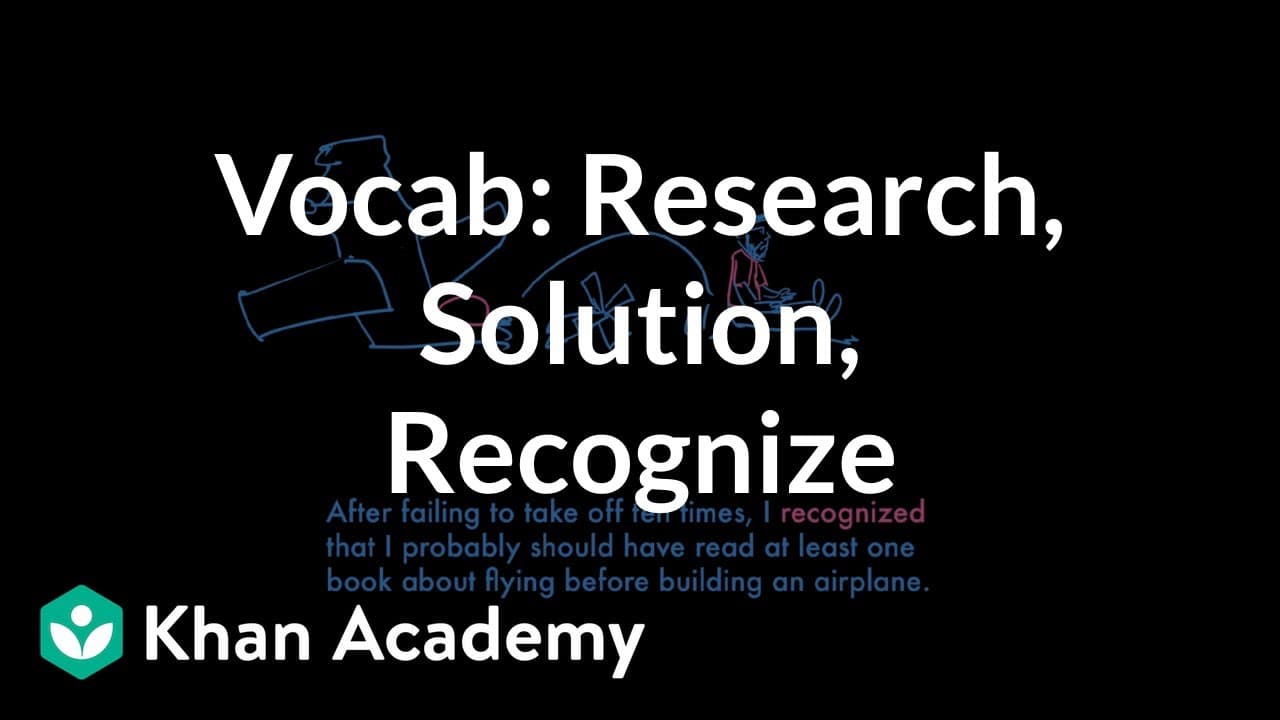
Understanding Solution, Research, and Recognize

Understanding Solution, Research, and Recognize

This educational video provides a clear and engaging deep dive into three high-utility vocabulary words: "solution," "research," and "recognize." Starting with a warm-up crossword puzzle hook, the narrator breaks down each word individually, exploring their parts of speech, spellings, and word origins. The video specifically highlights how suffixes like "-tion" change verbs into nouns and discusses how context determines whether a word is acting as a noun or a verb. The lesson delves into the nuances of multiple meanings and pronunciations. For instance, it explains the two valid pronunciations of "research" and the distinct definitions of "recognize" (identifying someone vs. realizing a truth). These concepts are crucial for developing reading comprehension and morphological awareness in elementary students. To ensure retention, the video concludes with humorous and relatable illustrated examples for each word. From a pilot realizing he should have studied flying, to a character named Loretta proposing an explosive solution to plumbing problems, these scenarios help students understand how to apply these terms in varied contexts. This makes the video an excellent tool for introducing vocabulary in a way that is memorable and linguistically rich.

Khan AcademyKhan Academy

3mins 37s

Video
Learning to Read and Spell the Sight Word Carry

Learning to Read and Spell the Sight Word Carry

This energetic educational music video focuses on teaching young readers the sight word "carry" through rhythm, repetition, and visual reinforcement. Set to a catchy hip-hop beat, the video helps students link the auditory pronunciation of the word with its visual spelling, breaking down the learning process into recognizing the whole word, spelling it letter-by-letter, and hearing it used in context. The content highlights the specific spelling pattern of the word, emphasizing the double "r" and the "y" ending. It progresses from simple word recognition to usage by presenting four clear sentences that demonstrate the word's meaning in a school context: carrying books, a bag, lunch, and a flag. This structure supports both decoding skills and reading comprehension. For classroom application, this video serves as an engaging tool for literacy centers, morning meetings, or transition times. The rhythmic nature of the song aids memory retention, making it particularly effective for kinesthetic and auditory learners who benefit from musical mnemonics when mastering high-frequency words. Teachers can use it to introduce the specific word or as part of a larger unit on action verbs and sentence structure.

Have Fun TeachingHave Fun Teaching

2mins 30s

Video
Mastering Adjectives and Adverbs in the Desert of Description

Mastering Adjectives and Adverbs in the Desert of Description

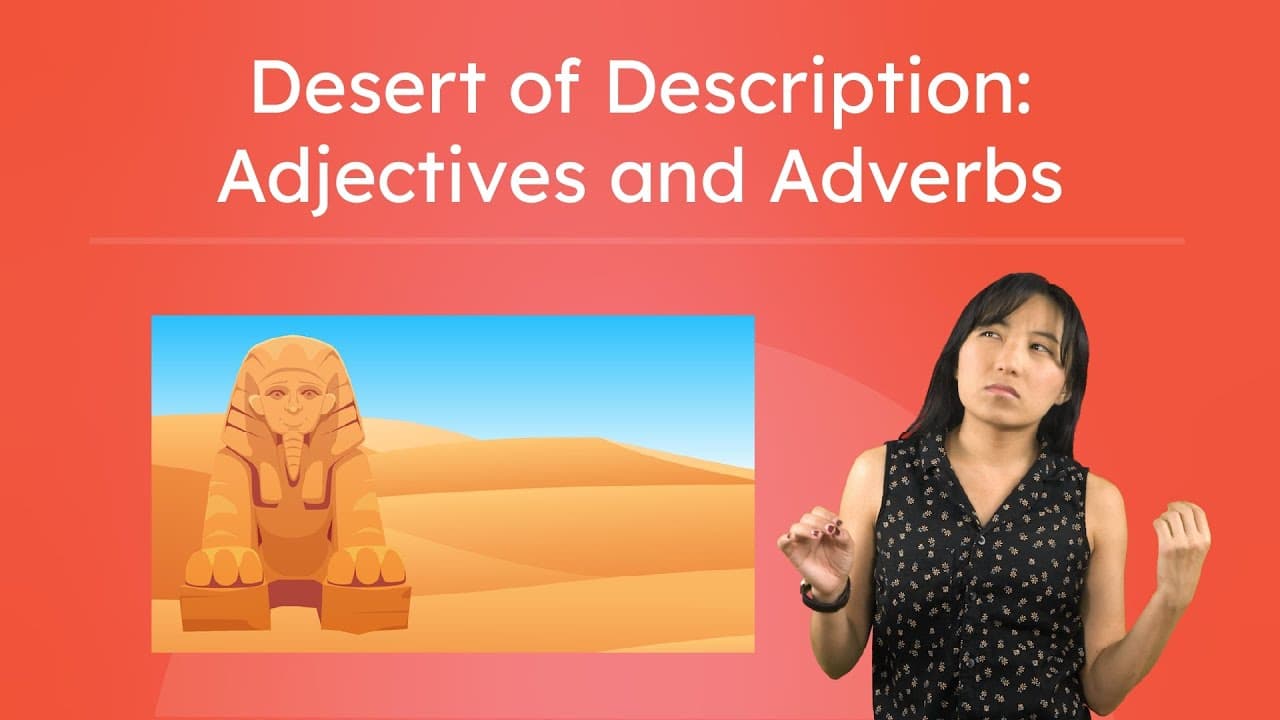
This engaging educational video takes students on a narrative adventure into the "Desert of Description," where a character named Caroline and her robot companion, Mia, must solve riddles posed by a Sphinx to survive. The video creatively integrates grammar instruction within this storyline, focusing specifically on the definitions and applications of adjectives and adverbs. Through the narrative of passing the Sphinx's trials, viewers learn how these parts of speech modify nouns, verbs, and even other adjectives to create more vivid and precise language. The content covers key grammatical concepts, starting with basic definitions of adjectives as words that describe nouns (people, places, things) and adverbs as words that describe actions (verbs) or qualities (adjectives). The video provides clear visual examples and sentences to demonstrate how adding these modifiers changes the meaning and depth of a sentence. It distinguishes between adverbs modifying verbs (e.g., "drinks quickly") and adverbs modifying adjectives (e.g., "incredibly clear"), a nuance often missed in introductory lessons. Ideally suited for elementary and middle school language arts classrooms, this video serves as both an introduction and a practice session for descriptive writing. It includes built-in pause points for student participation, asking them to solve riddles, predict definitions, and craft their own sentences using specific constraints. Teachers can use this video to launch a unit on descriptive writing, reinforce grammar rules, or as an interactive activity where students write alongside the characters to complete the quest.

Miacademy & MiaPrep Learning ChannelMiacademy & MiaPrep Learning Channel

9mins 7s

Video
How to Use Descriptive Language to Bring Stories to Life

How to Use Descriptive Language to Bring Stories to Life

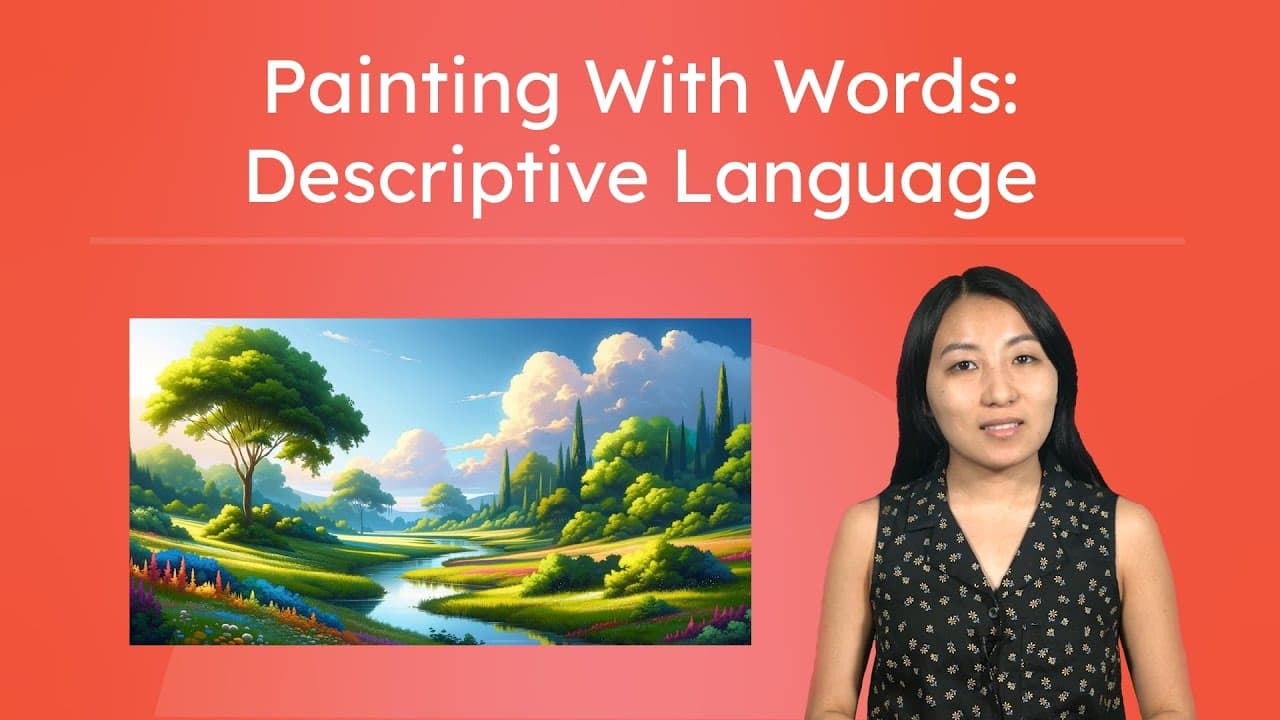
This engaging educational video teaches students how to elevate their writing using descriptive language. Set within a gamified narrative, the host and her robot companion arrive at 'Palette Plains,' a world that has lost its color and turned gray. To restore the vibrancy of the land and earn a 'Crystal Quill fragment,' the viewer must transform a dull, factual paragraph into a vivid, descriptive scene using adjectives, adverbs, and sensory details. The video breaks down the writing process into actionable strategies. It first reviews the roles of adjectives and adverbs before introducing two key techniques: 'Sensory Language' (appealing to the five senses) and 'Emotional Language' (establishing mood and feeling). Through clear examples—such as comparing a boring description of a beach to a vivid one—the narrator demonstrates how specific word choices help readers visualize a setting. The video also models close reading by analyzing a text to find descriptive elements. Ideally suited for upper elementary and middle school English Language Arts classrooms, this resource combines direct instruction with interactive practice. It includes specific pause points where students are prompted to complete tasks in a companion PDF (or on paper), such as matching definitions, analyzing a text, planning sensory details, and rewriting a paragraph. Teachers can use this video to introduce a descriptive writing unit, reinforce the concept of 'showing not telling,' or as a self-paced revision workshop.

Miacademy & MiaPrep Learning ChannelMiacademy & MiaPrep Learning Channel

10mins 4s

Video
Understanding the Meanings of Culture and Influence

Understanding the Meanings of Culture and Influence

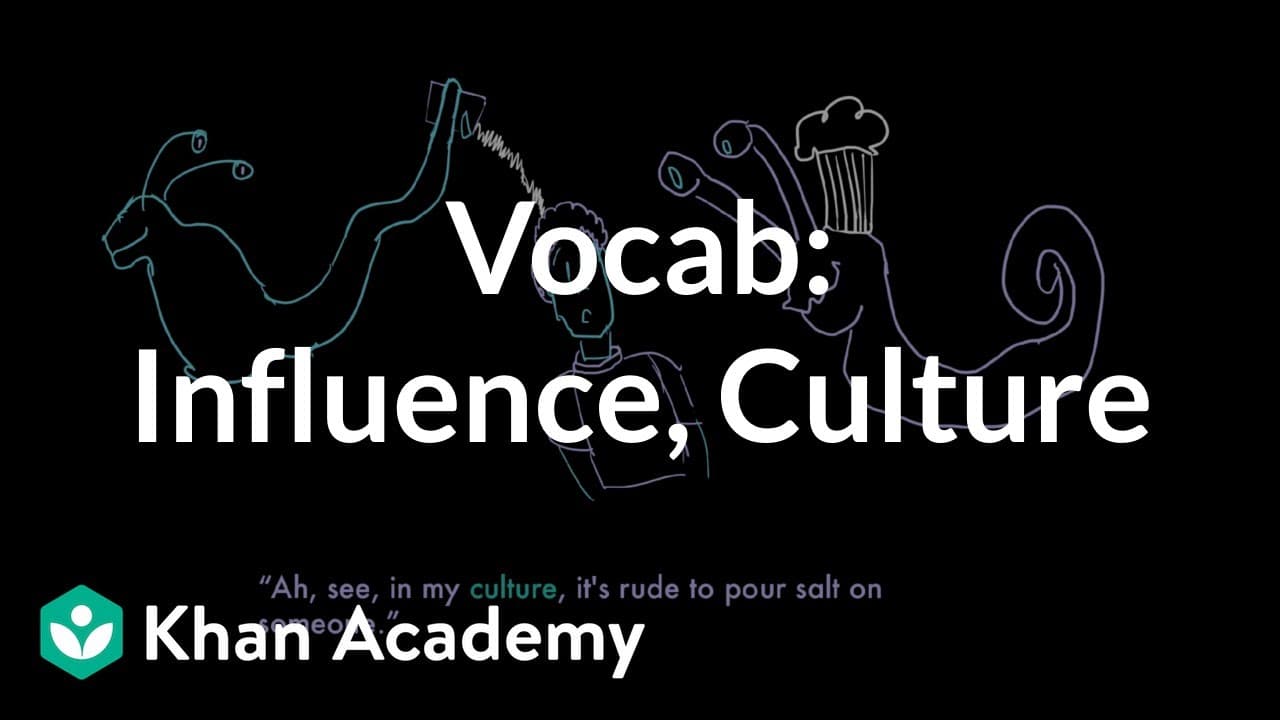
In this engaging vocabulary lesson, the narrator, David, introduces the concepts of "culture" and "influence" while pretending to visit an art museum. Through a blend of humor and clear definitions, the video breaks down these abstract terms into understandable components, exploring their grammatical forms as nouns, verbs, and adjectives. The black-screen format with handwritten text focuses the viewer's attention directly on the words and their meanings. The video explores key themes of cultural identity and social influence. It defines culture as the shared customs and values of a group, using relatable examples like food preferences in Chicago. It then defines influence as the power to have an effect on someone, illustrated through career choices within a family. The lesson culminates in two humorous scenarios: an intergalactic cultural misunderstanding involving salt, and a whimsical look at artistic inspiration featuring Bigfoot. This video is highly valuable for English Language Arts and Social Studies classrooms. It helps students grasp the nuance of essential vocabulary often used in history and literature. Teachers can use this video to launch discussions about students' own cultural backgrounds, the people who shape their lives, or as a model for understanding how word forms change parts of speech. The humorous tone makes abstract definitions memorable and accessible.

Khan AcademyKhan Academy

2mins 41s

Video
Rhythmic Reading: High-Frequency Sight Words in Context

Rhythmic Reading: High-Frequency Sight Words in Context

This educational music video features a high-energy, rhythmic song designed to teach early readers common sight words (high-frequency words) that often cannot be sounded out phonetically. Through a structured call-and-response format, the video introduces words individually, pronouncing them clearly, and then immediately places them into a simple, relatable sentence to demonstrate proper usage and context. The content covers a vast array of essential sight words found in early literacy curriculums (like Dolch and Fry lists), grouped into color-coded sections (Blue, Pink, Green, and Orange backgrounds) to help with visual categorization. Key themes include reading fluency, vocabulary acquisition, sentence structure, and word recognition. The repetition and catchy beat utilize the 'earworm' effect to aid memorization. For educators, this video serves as a versatile classroom tool. It can be used as a daily warm-up to build reading confidence, a transition activity to settle students, or a direct instructional tool for introducing new vocabulary. The consistent visual pattern—word, then sentence—makes it accessible for non-readers to follow along, bridging the gap between isolated word recognition and fluent reading comprehension.

Have Fun TeachingHave Fun Teaching

18mins 12s

Video
Learning Spatial Prepositions: Above, Below, Inside, and Outside

Learning Spatial Prepositions: Above, Below, Inside, and Outside

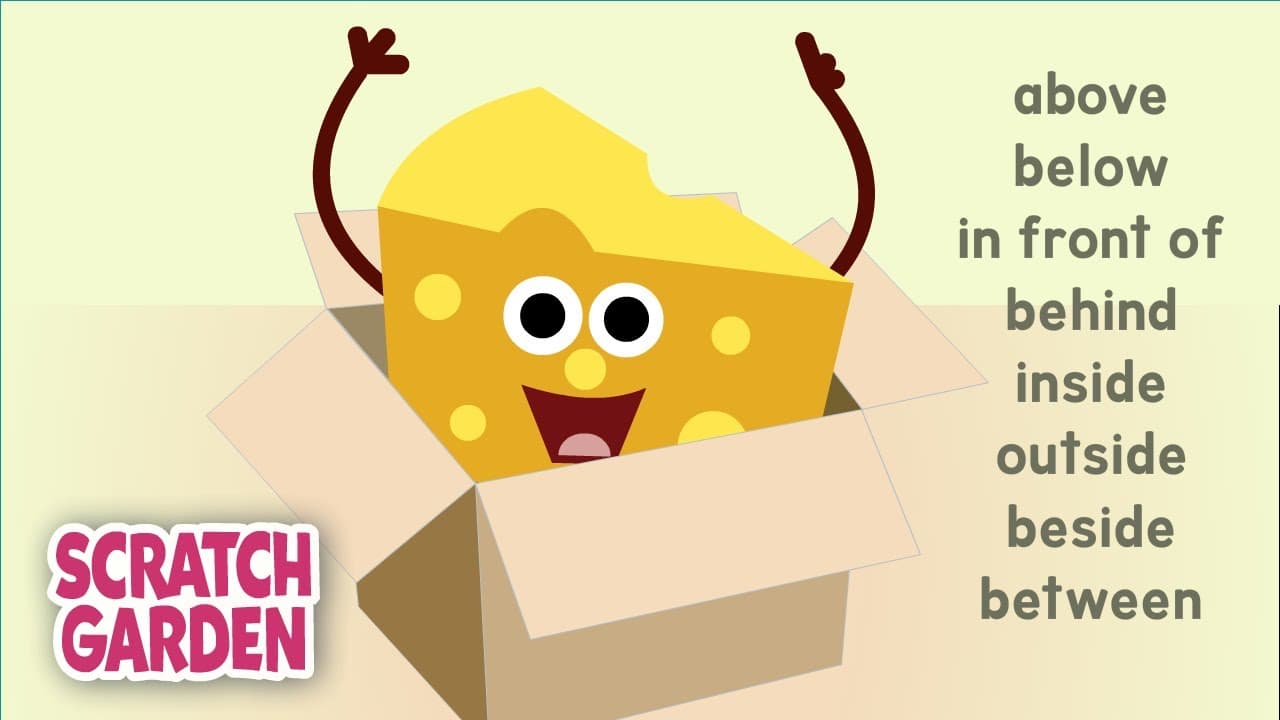
This engaging animated music video introduces young learners to fundamental spatial prepositions through catchy rhymes and clear visual demonstrations. Hosted by a friendly cheese character, the video uses a cast of colorful animals (a cat, bat, rat, and fox) and simple props like boxes and blocks to illustrate pairs of positional words including above/below, in front of/behind, inside/outside, and beside/between. The content is structured into two main musical verses, each followed by an interactive "sing with me" section that encourages active participation. The first half focuses on relative vertical and horizontal positioning (above, below, in front, behind), while the second half explores containment and proximity (inside, outside, beside, between). The repetitive nature of the song reinforces memory retention of these vocabulary terms. This video is an excellent resource for early childhood classrooms, ESL/ELL instruction, and special education settings to teach spatial awareness and basic grammar. Teachers can use it as a high-energy hook to start a lesson, a movement break where students act out the positions, or a review tool for positional vocabulary. The clear isolation of concepts against simple backgrounds makes it easy for students to focus on the specific spatial relationships being demonstrated.
Scratch GardenScratch Garden

2mins 20s

Video
Mastering Sight Words Set 3: Reading Practice with Music

Mastering Sight Words Set 3: Reading Practice with Music

This engaging musical video introduces students to a specific set of high-frequency sight words (List 3), combining auditory and visual learning styles to support reading fluency. Set to an energetic beat, the video systematically presents each word individually, followed by a simple sentence that uses the word in context. This structure helps early readers not only memorize the spelling and pronunciation of the words but also understand how they function within a sentence structure. Key themes include reading readiness, vocabulary development, and sentence comprehension. The video covers over 40 essential sight words ranging from simple two-letter words like "if" to more complex words like "together" and "laugh." By repeating the pattern of Word -> Sentence -> Reading, it reinforces recognition through repetition and context, which are critical strategies for developing literacy skills in young learners. For educators, this video serves as an excellent tool for daily warm-ups, transition activities, or a fun review session for spelling and reading blocks. It transforms rote memorization into a rhythmic activity that encourages active participation. Teachers can use this resource to support differentiated instruction, allowing students to practice reading along with the narrator or challenging them to read the words before the audio cue.

Have Fun TeachingHave Fun Teaching

4mins 4s

Video
Mastering High-Frequency Sight Words Through Song: List 3

Mastering High-Frequency Sight Words Through Song: List 3

This engaging educational music video is designed to help early elementary students master a specific set of high-frequency sight words often found in "List 3" of common sight word curriculums. Through a catchy, rhythmic song, the video visually presents each word on a colorful background while the narrator sings the word clearly multiple times. This multisensory approach helps reinforce word recognition, spelling, and pronunciation for developing readers. The video focuses on key literacy themes including reading fluency, word recognition, and vocabulary development. It covers a diverse list of functional words ranging from number words like "six" and "seven" to common verbs like "grow," "laugh," and "carry," as well as abstract concepts like "about" and "if." The repetition built into the song structure ensures that students have ample opportunity to encode these words into their visual memory. For the classroom, this video serves as an excellent warm-up, transition activity, or center station for literacy blocks. It supports differentiated learning by providing auditory cues for students who struggle with traditional flashcards. Teachers can use this video to introduce new vocabulary, review previously taught words, or as a fun "brain break" that keeps the focus on learning. The steady pacing allows students to read along, making it a valuable tool for building confidence in reading aloud.

Have Fun TeachingHave Fun Teaching

4mins 5s

Video
Rapping the First 100 High-Frequency Sight Words

Rapping the First 100 High-Frequency Sight Words

This energetic educational music video transforms high-frequency word practice into an engaging rap battle between two animated microphones. Hosted by a slow-speaking sloth in a foggy forest, the video transitions into a fast-paced musical performance that integrates 100 common sight words into rhyming verses. As the characters rap, the lyrics appear on screen with the specific target sight words highlighted in bright white text against a darker sentence structure, helping students distinguish and focus on the key vocabulary. The content focuses entirely on early literacy and reading fluency, specifically targeting the 'Fry' or 'Dolch' high-frequency word lists commonly used in primary education. The video explores phonological awareness through rhyming couplets and demonstrates how these standalone words function within the context of full sentences. The contrast between the sloth's slow introduction and the rapid-fire rap offers a unique lesson in pacing and fluency. For teachers, this video serves as a high-energy review tool or a 'brain break' that reinforces literacy skills. It is particularly useful for auditory learners who benefit from rhythm and rhyme to memorize spelling and pronunciation. The 'rap battle' format encourages students to read quickly and builds automaticity—the ability to recognize words instantly without sounding them out—which is a critical step in developing reading comprehension.

Scratch GardenScratch Garden

2mins 44s

Video
Rhythmic Reading: High-Frequency Sight Words in Context

Rhythmic Reading: High-Frequency Sight Words in Context

This educational music video features a high-energy, rhythmic song designed to teach early readers common sight words (high-frequency words) that often cannot be sounded out phonetically. Through a structured call-and-response format, the video introduces words individually, pronouncing them clearly, and then immediately places them into a simple, relatable sentence to demonstrate proper usage and context. The content covers a vast array of essential sight words found in early literacy curriculums (like Dolch and Fry lists), grouped into color-coded sections (Blue, Pink, Green, and Orange backgrounds) to help with visual categorization. Key themes include reading fluency, vocabulary acquisition, sentence structure, and word recognition. The repetition and catchy beat utilize the 'earworm' effect to aid memorization. For educators, this video serves as a versatile classroom tool. It can be used as a daily warm-up to build reading confidence, a transition activity to settle students, or a direct instructional tool for introducing new vocabulary. The consistent visual pattern—word, then sentence—makes it accessible for non-readers to follow along, bridging the gap between isolated word recognition and fluent reading comprehension.

Have Fun TeachingHave Fun Teaching

18mins 12s

Video
When to Use Less Versus Fewer: A Grammar Guide

When to Use Less Versus Fewer: A Grammar Guide

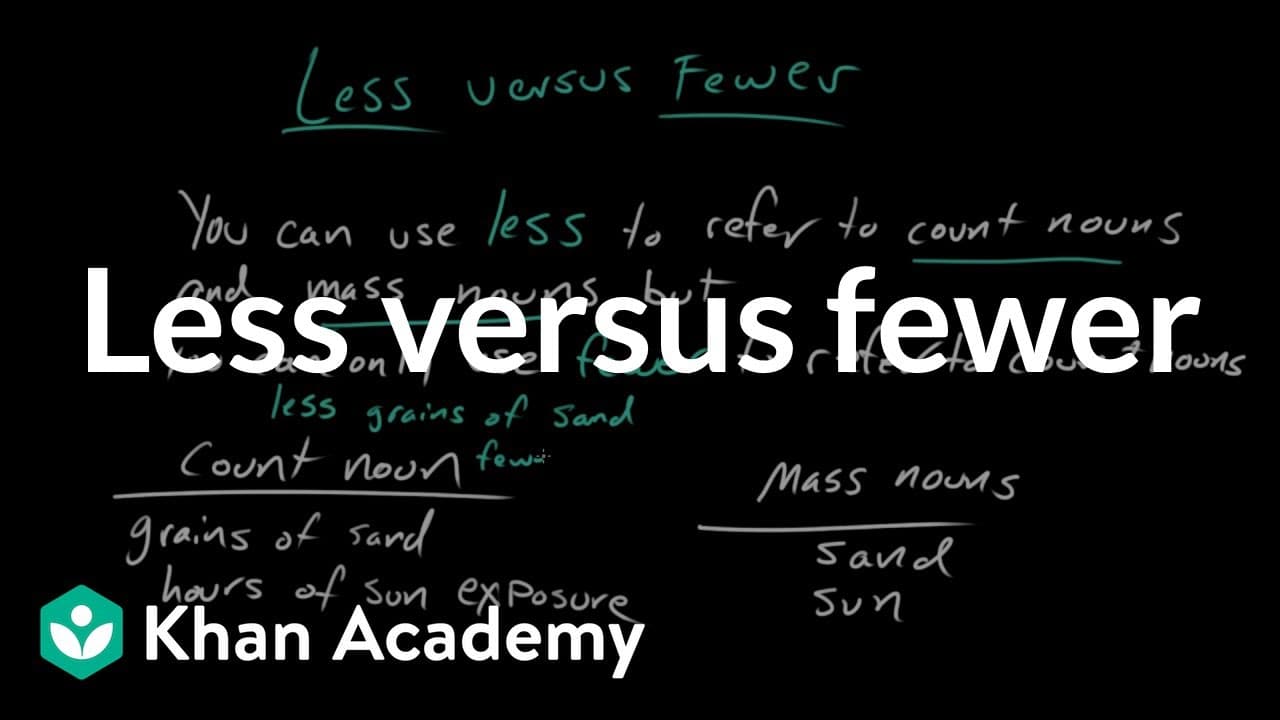
In this engaging grammar exploration, two narrators, David and Rosie, debate the rules surrounding the usage of "less" versus "fewer." While many people believe there is a strict rule separating the two, the video reveals a more nuanced reality involving count nouns and mass nouns. Rosie argues that while "fewer" is restricted to countable items, "less" has historically been used for both, challenging common grammar superstitions. The video dives into the technical definitions of count nouns (like grains of sand or hours) versus mass nouns (like sand or sun). Through clear examples written on a digital whiteboard, the narrators demonstrate how these noun types interact with the words less and fewer. The discussion highlights how native speakers naturally distinguish between these categories, even if they can't explicitly define them. Crucially, the lesson explores the historical origins of this grammar rule, tracing it back to a personal preference expressed by Robert Baker in 1770 rather than an inherent law of language. This historical context turns a dry grammar lesson into a fascinating discussion about how language evolves and how rules are made. It concludes with practical advice: while the strict rule might be arbitrary, adhering to it in formal writing remains a marker of "strictly proper" standard English.

Khan AcademyKhan Academy

7mins 12s

Video
Sing and Practice Primer Sight Words

Sing and Practice Primer Sight Words

This educational music video introduces and reinforces the "Primer" level sight words, which are high-frequency words essential for early reading fluency. Through a catchy, rhythmic song, the video presents a comprehensive list of words drawn from standard sight word lists (like Dolch), displaying each word on screen while chanting it aloud twice to ensure retention. The simple visual design focuses entirely on the text, minimizing distractions to help young learners associate the visual word form with its pronunciation. Key themes include literacy development, reading fluency, vocabulary acquisition, and pattern recognition. The video systematically covers over 50 essential words such as "he," "was," "that," "she," "on," "they," and "but." The repetition and consistent beat provide a predictable structure that supports memory and engagement for early childhood learners. For educators, this video serves as an excellent warm-up, transition activity, or core component of a literacy block. It can be used for whole-class choral reading, individual practice at a listening station, or as a background track for movement-based learning. The clear audio and distinct visual presentation make it accessible for diverse learners, including those needing extra phonics support or English Language Learners.

Have Fun TeachingHave Fun Teaching

4mins 51s

Video
Singing and Spelling the Sight Word Both

Singing and Spelling the Sight Word Both

This engaging literacy video introduces young readers to the high-frequency sight word "both" through music and repetition. Set to a catchy, rhythmic beat, the video focuses on auditory and visual recognition by repeatedly displaying the word on screen while a narrator pronounces it clearly. The content transitions from simple word recognition to spelling practice, chanting the letters "B-O-T-H" to help students memorize the orthography. To deepen understanding, the song provides concrete examples of how to use "both" in sentences, employing a comparative structure that highlights shared characteristics between two nouns. Examples like "Dogs and cats. They both are pets" and "Apples and bananas. They both are fruit" demonstrate the word's meaning in a context that is familiar and accessible to early learners. The simple, high-contrast visuals ensure that students' attention remains focused on the text. This resource is an excellent tool for early childhood and elementary classrooms focusing on literacy and reading fluency. It effectively combines phonics, spelling, and vocabulary instruction in a format that appeals to auditory and visual learners. Teachers can use this video as a warm-up activity during morning meetings, a transition tool, or a core component of a sight word curriculum to reinforce reading skills in a fun, low-pressure environment.

Have Fun TeachingHave Fun Teaching

2mins 19s