Vector properties, magnitudes, and algebraic operations including addition and scalar multiplication. Introduces matrix representations, arithmetic, and computational techniques for solving linear systems.
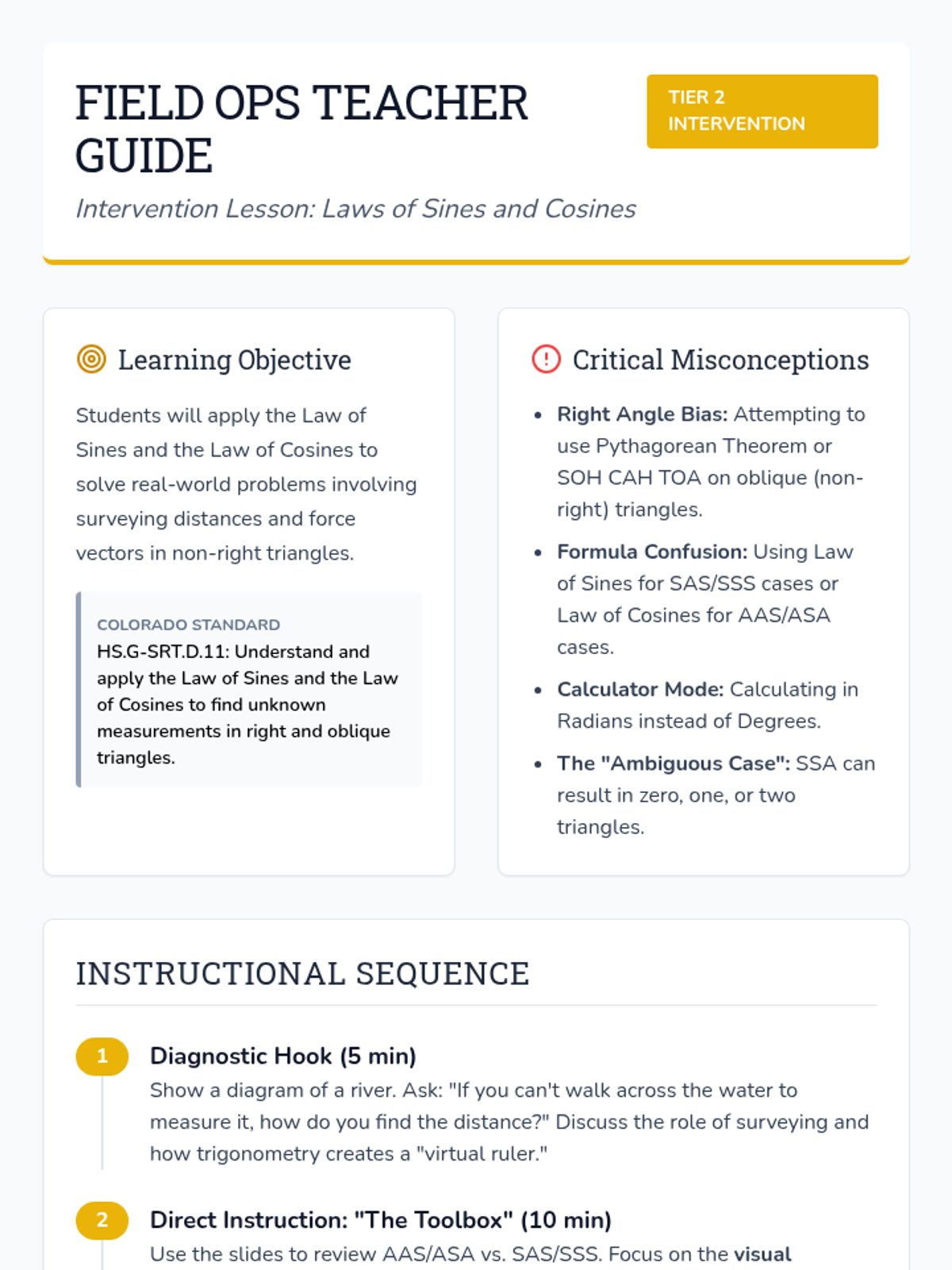
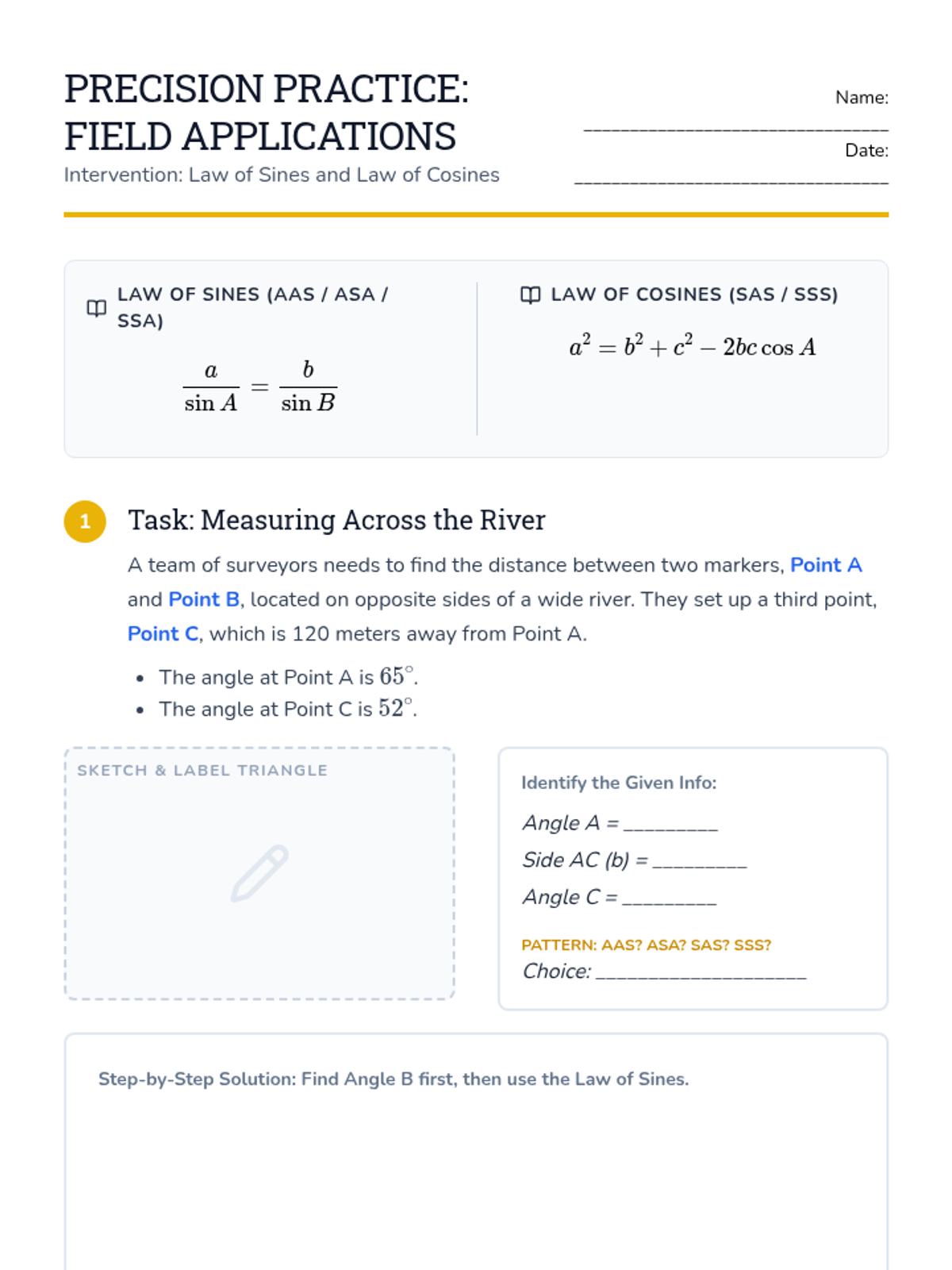
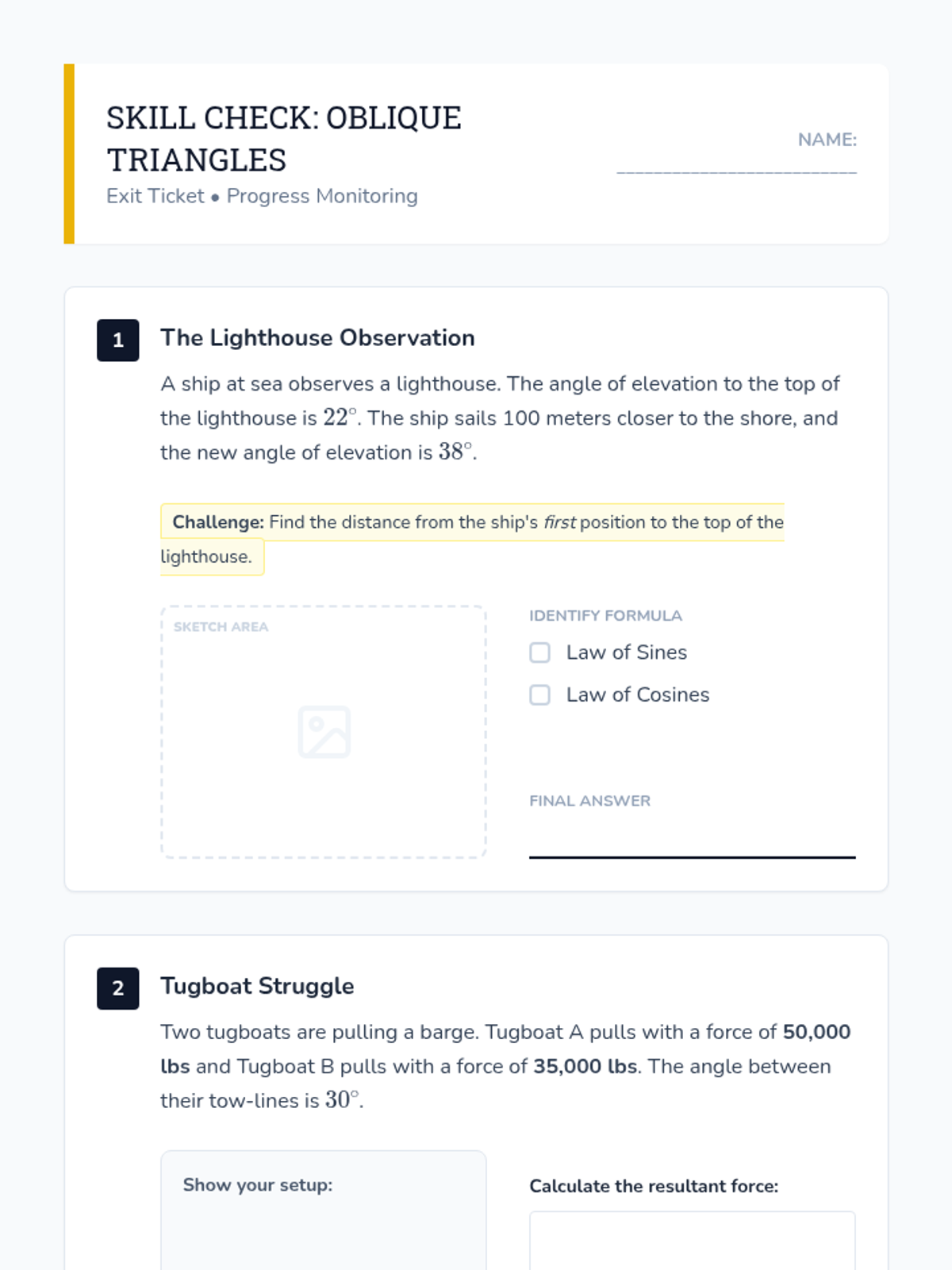
A targeted intervention lesson for high school geometry students, focusing on practical applications of the Laws of Sines and Cosines in surveying and physics contexts. This lesson utilizes scaffolded instruction and real-world scenarios to support Tier 2 learners in mastering oblique triangle trigonometry.
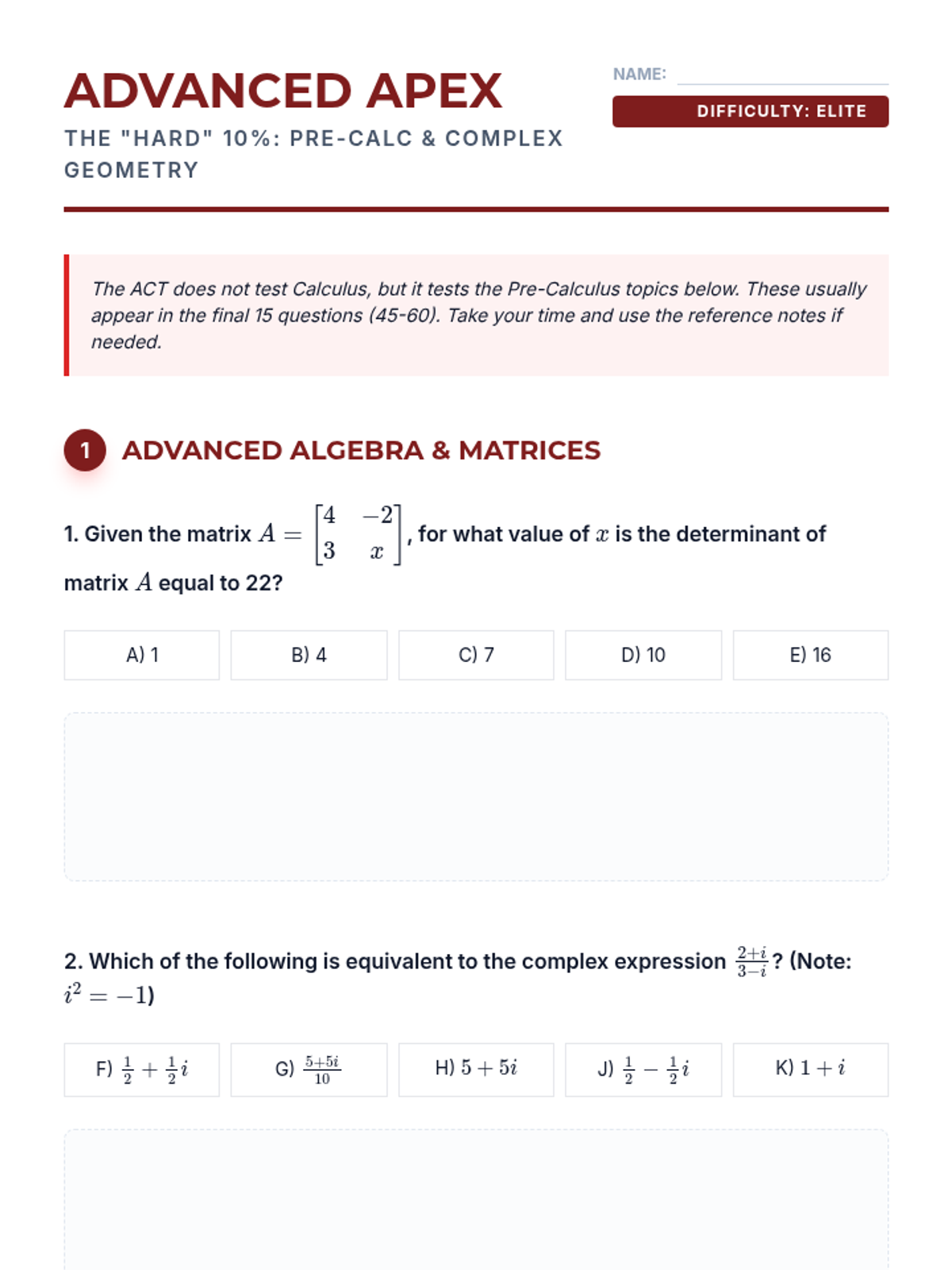
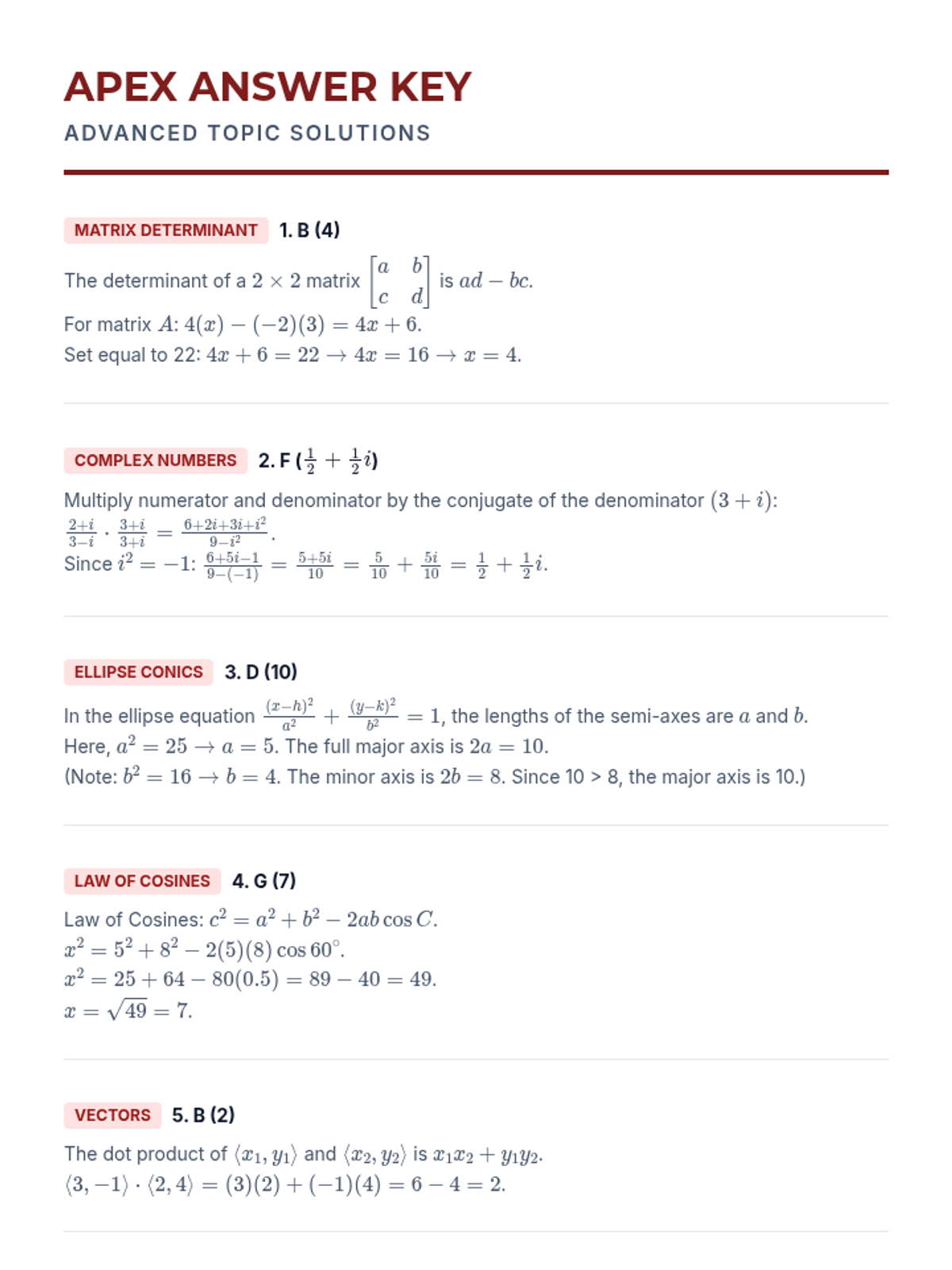
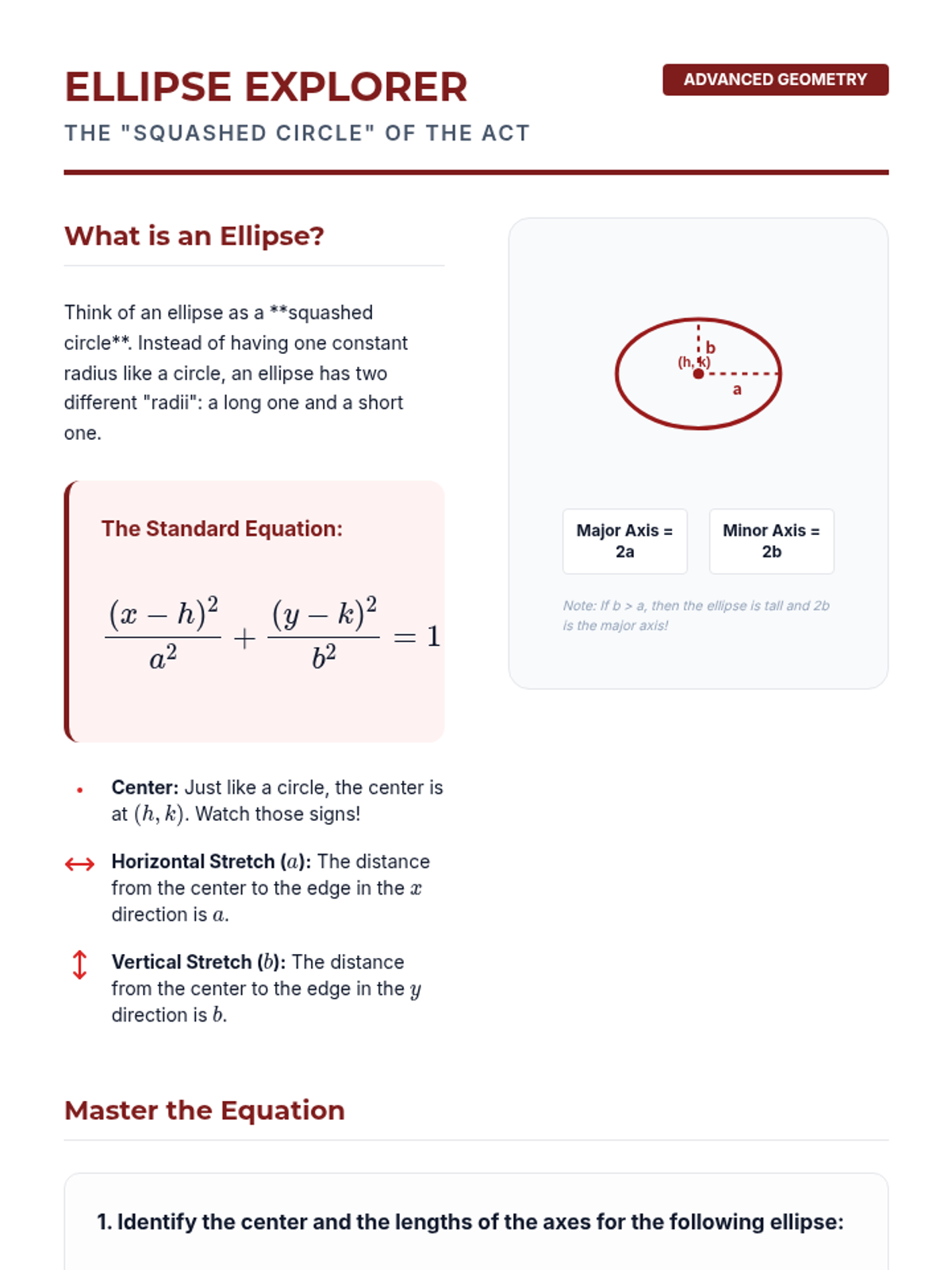
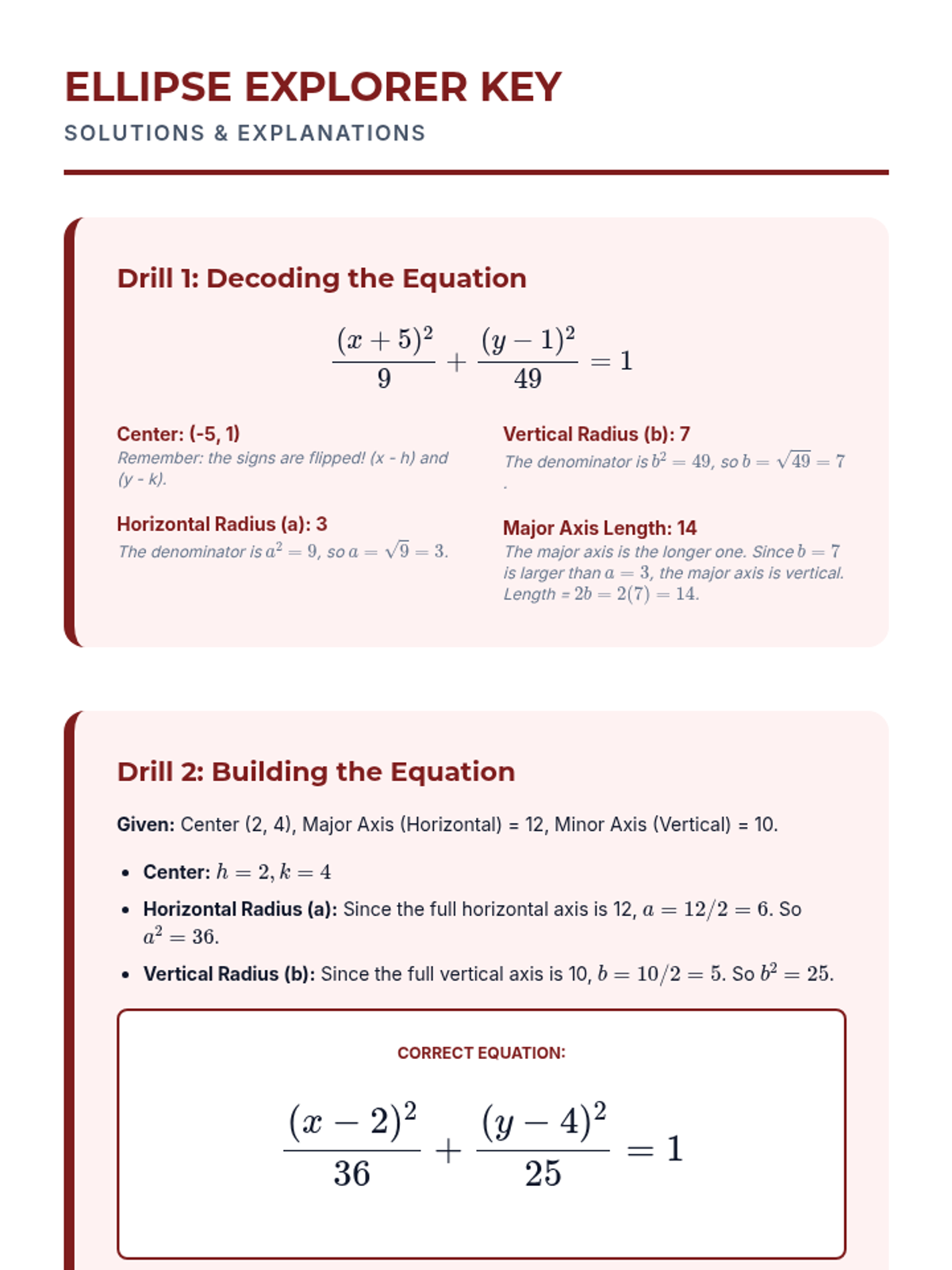
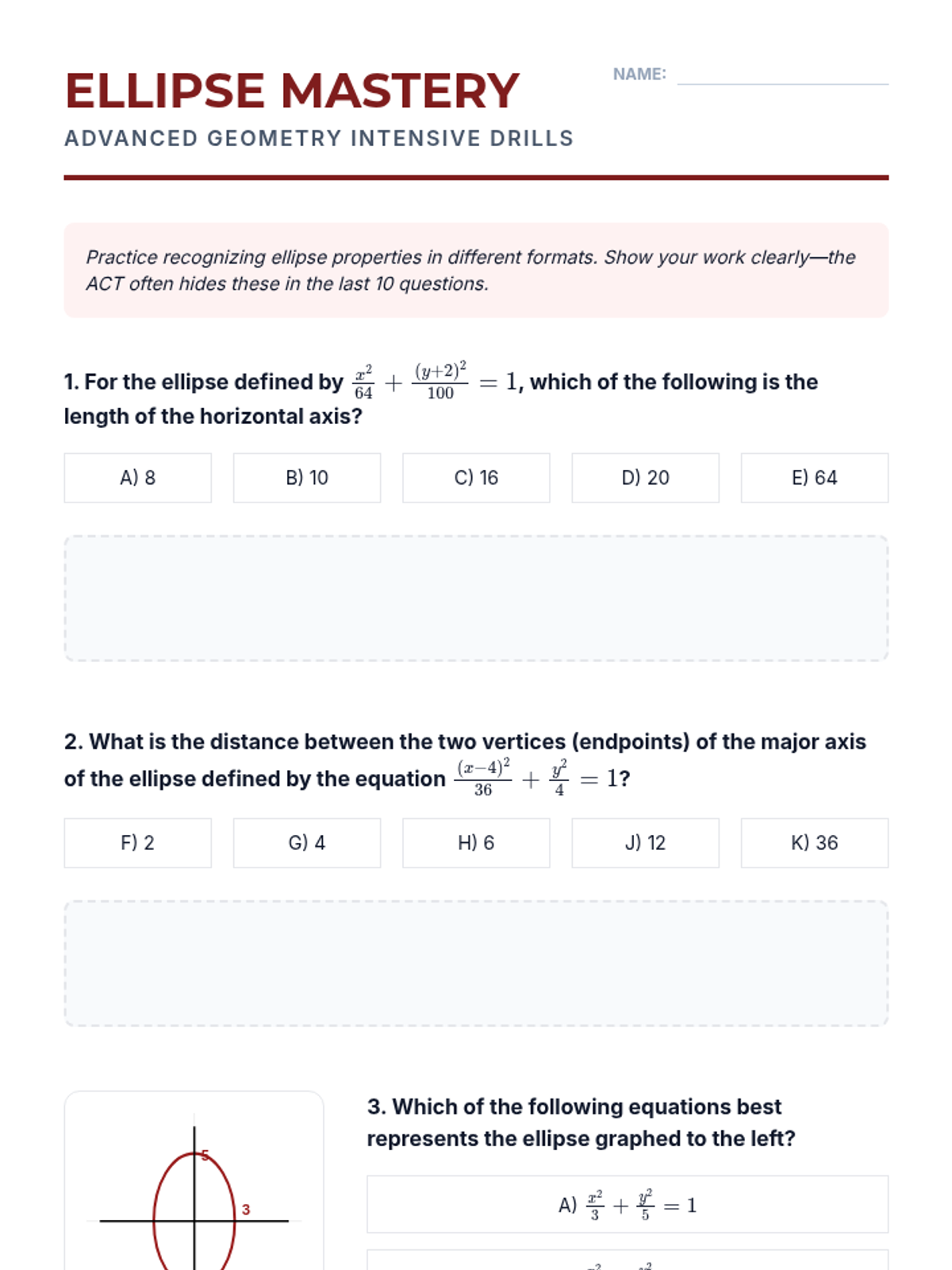
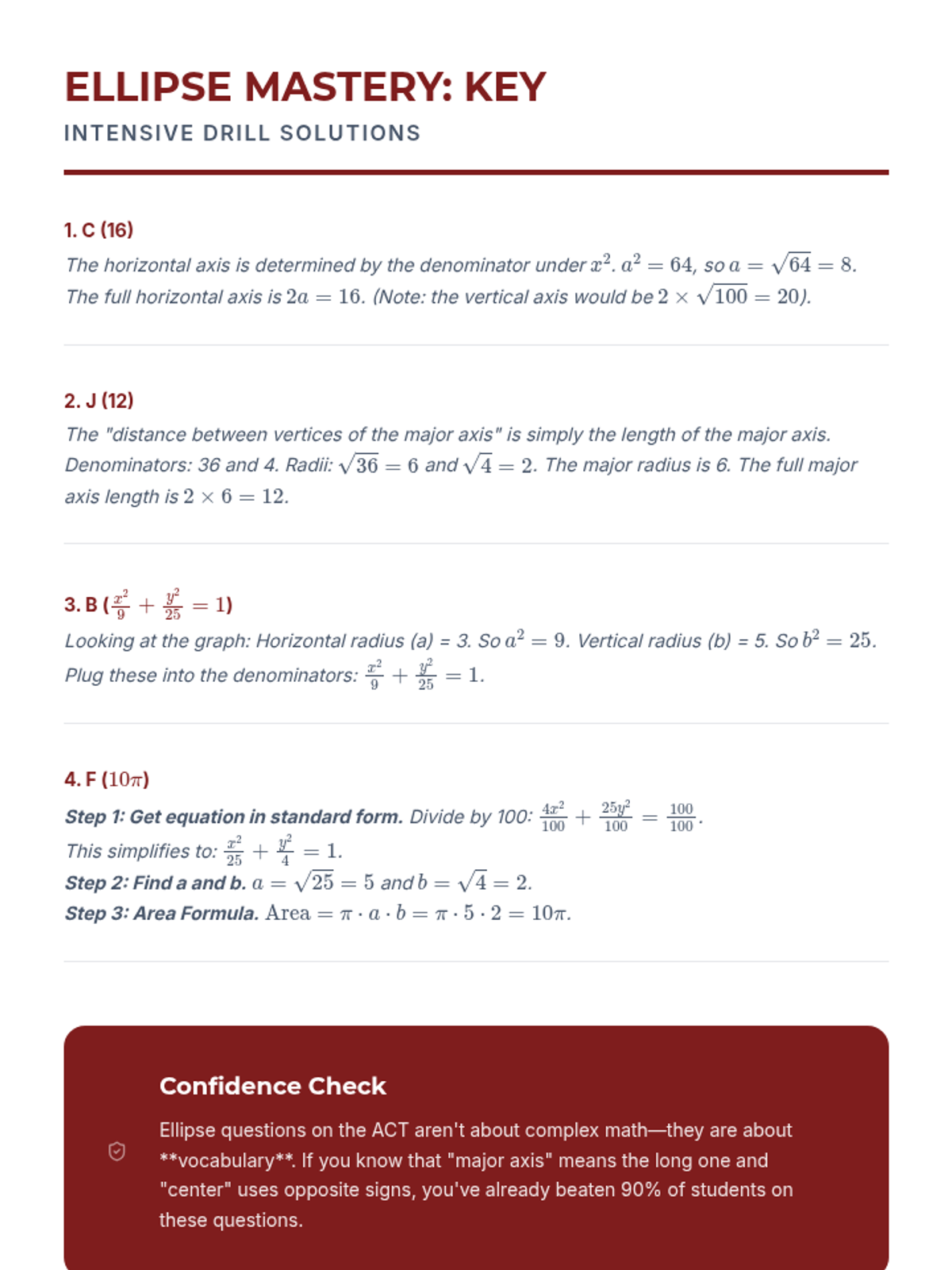
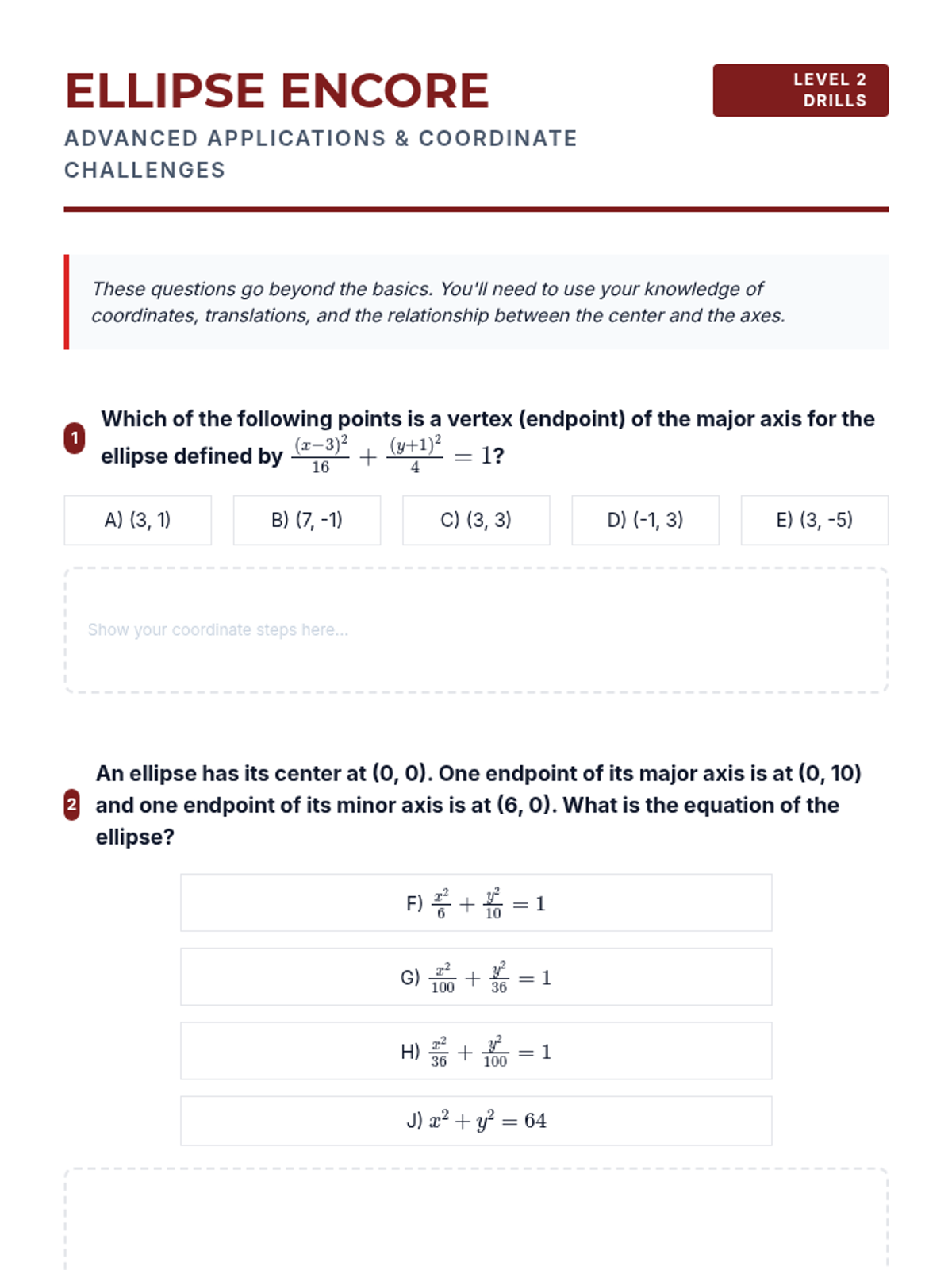
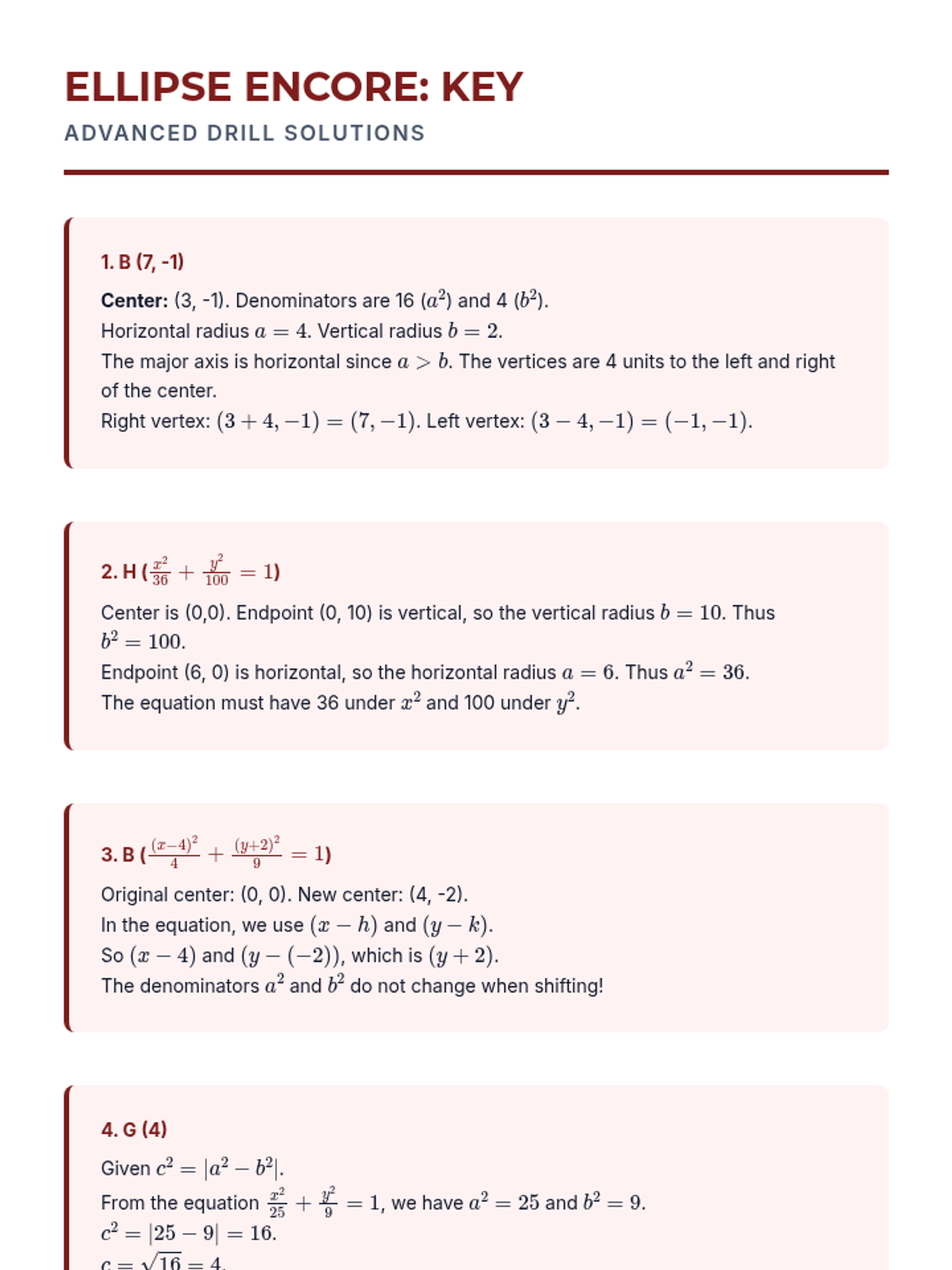
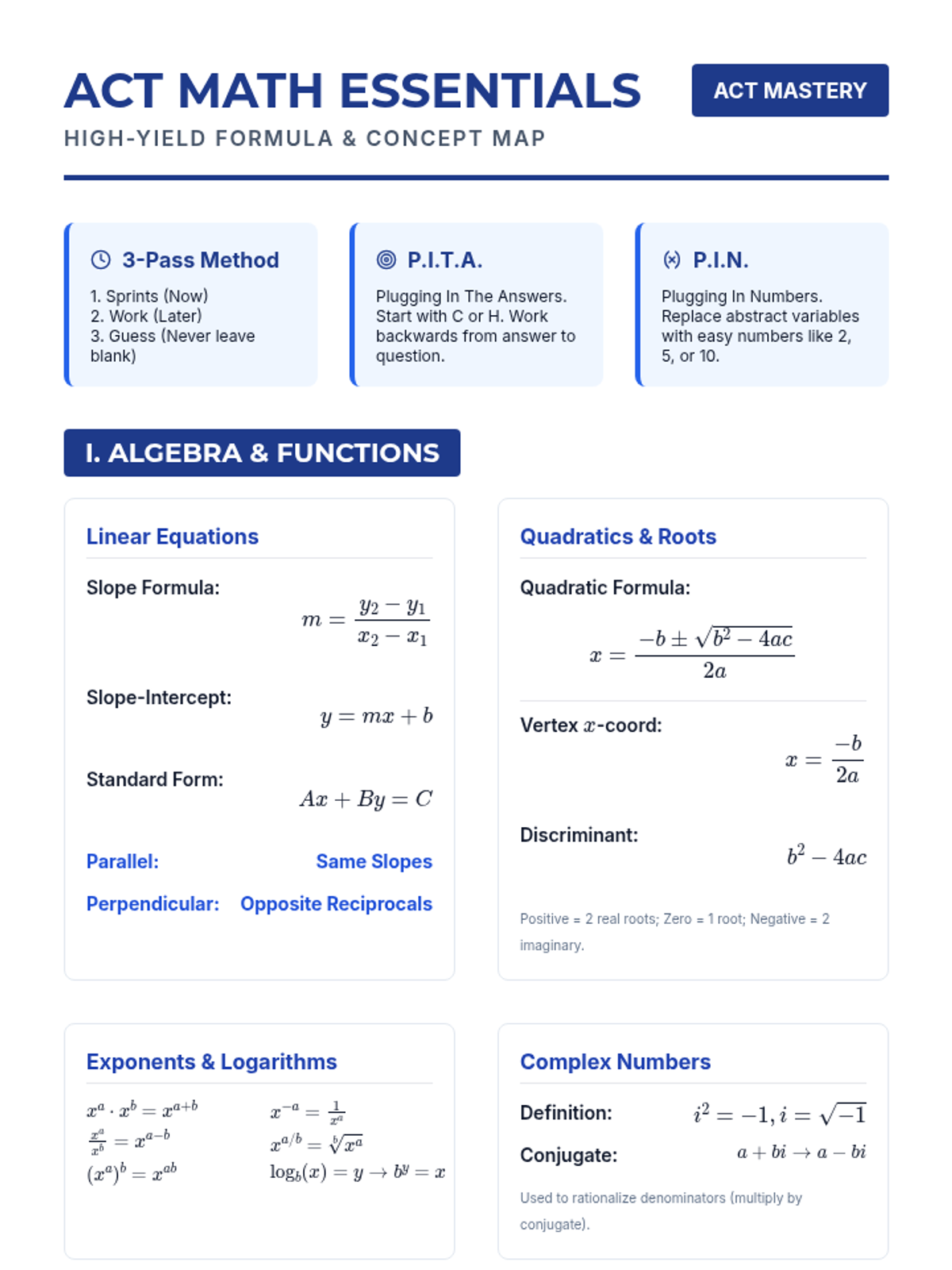
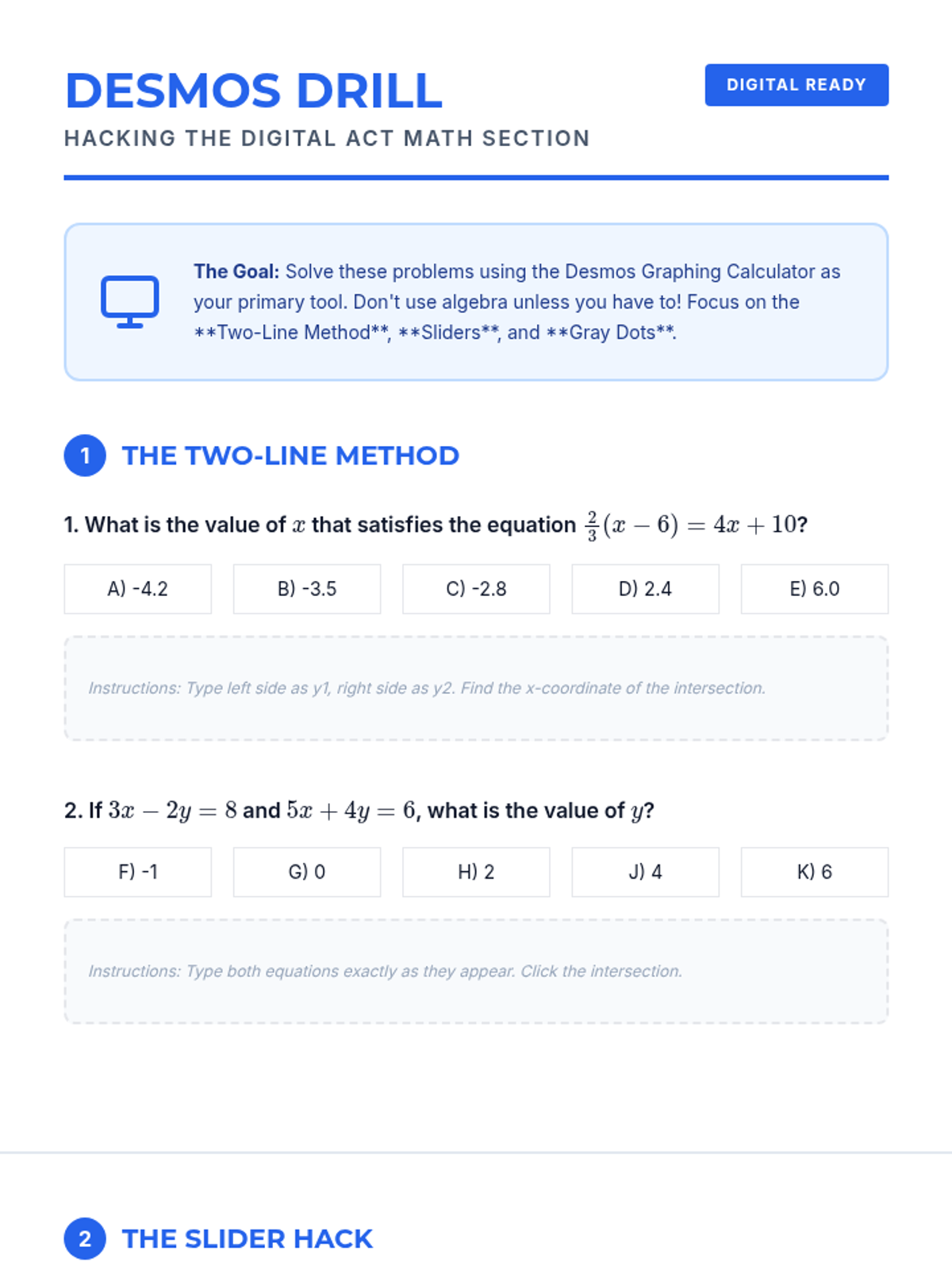
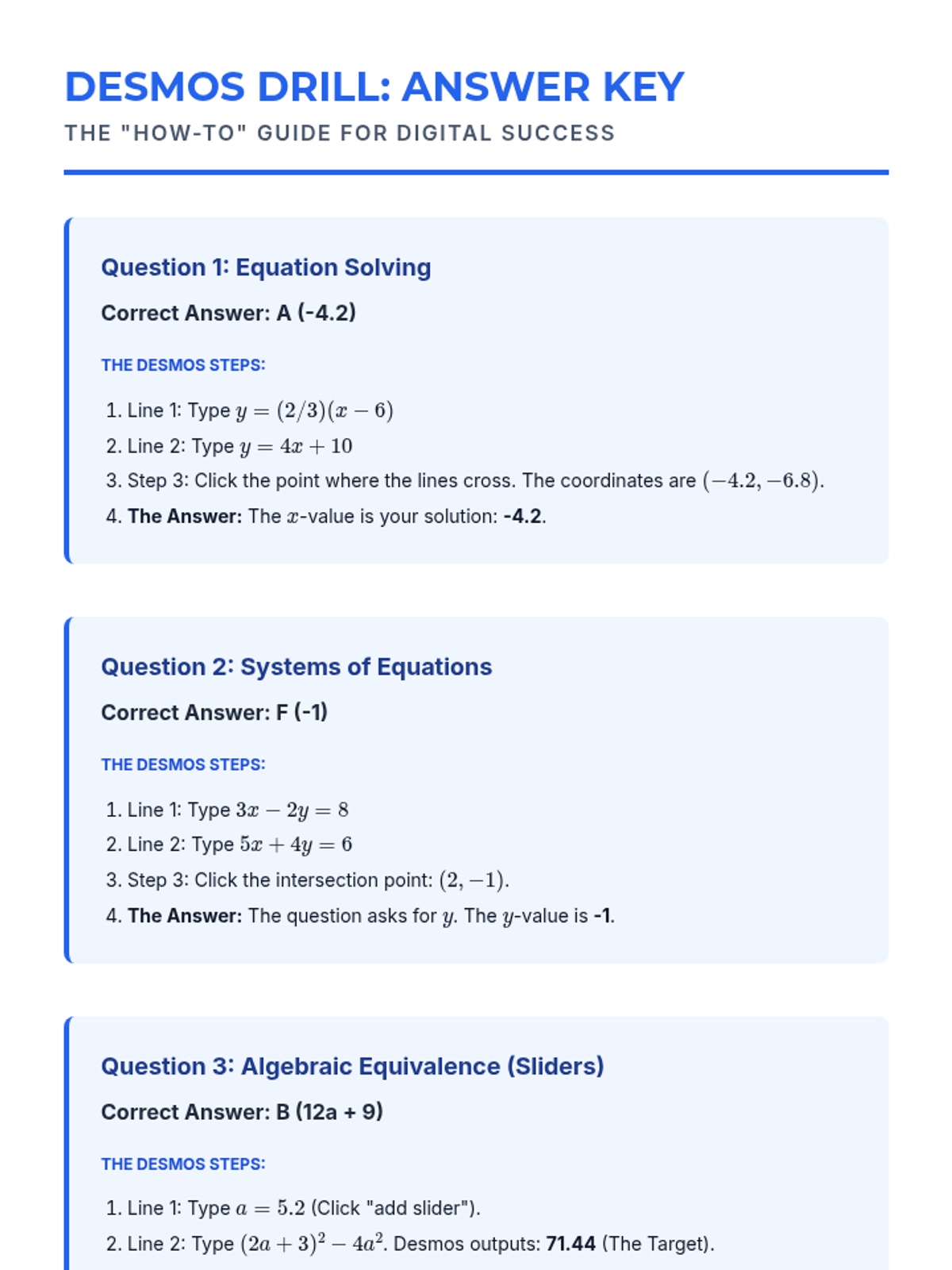
Master the most challenging topics on the ACT, including Pre-Calculus concepts (matrices, vectors, complex numbers) and high-difficulty Geometry (Law of Sines/Cosines, ellipses).
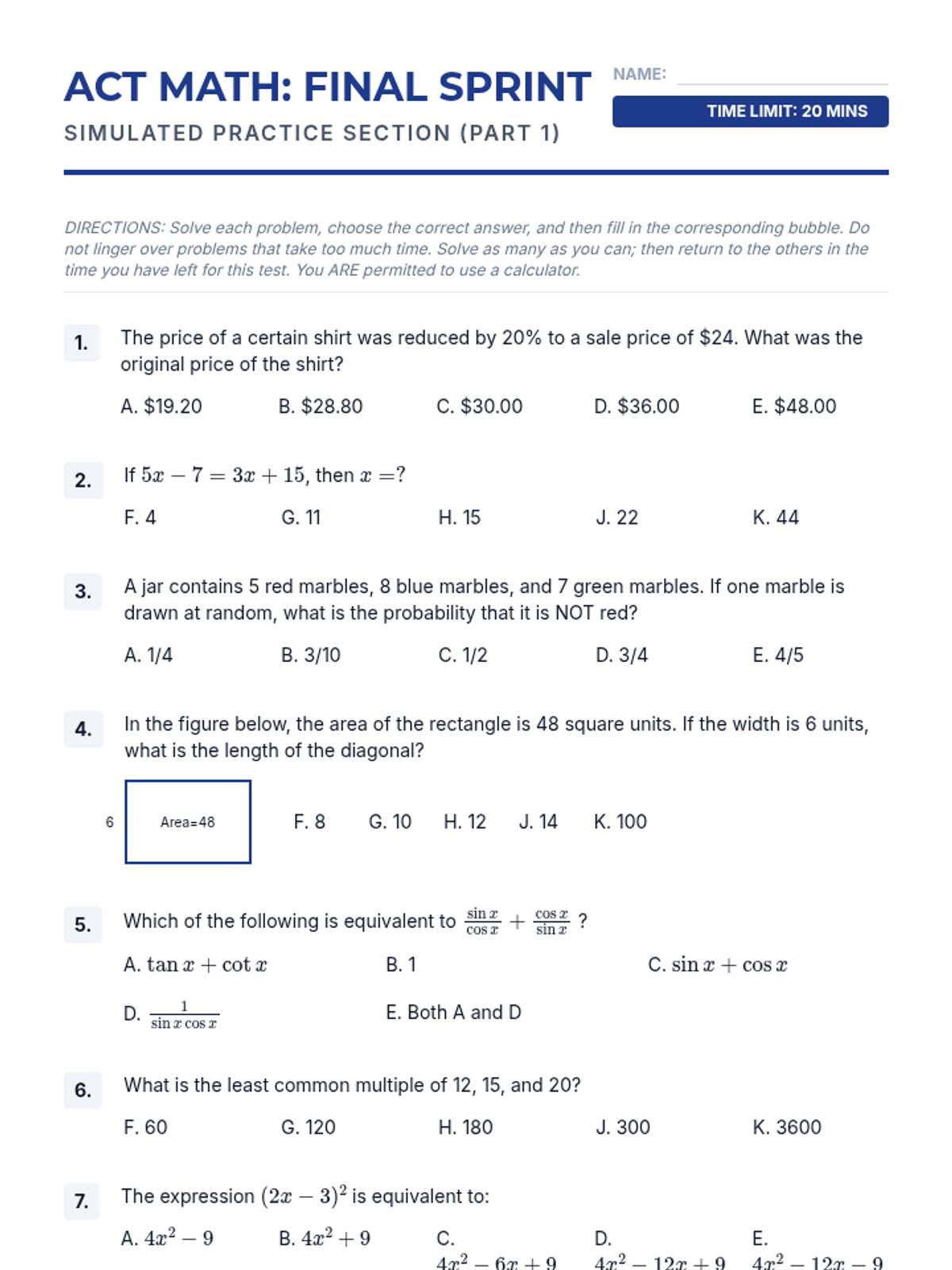
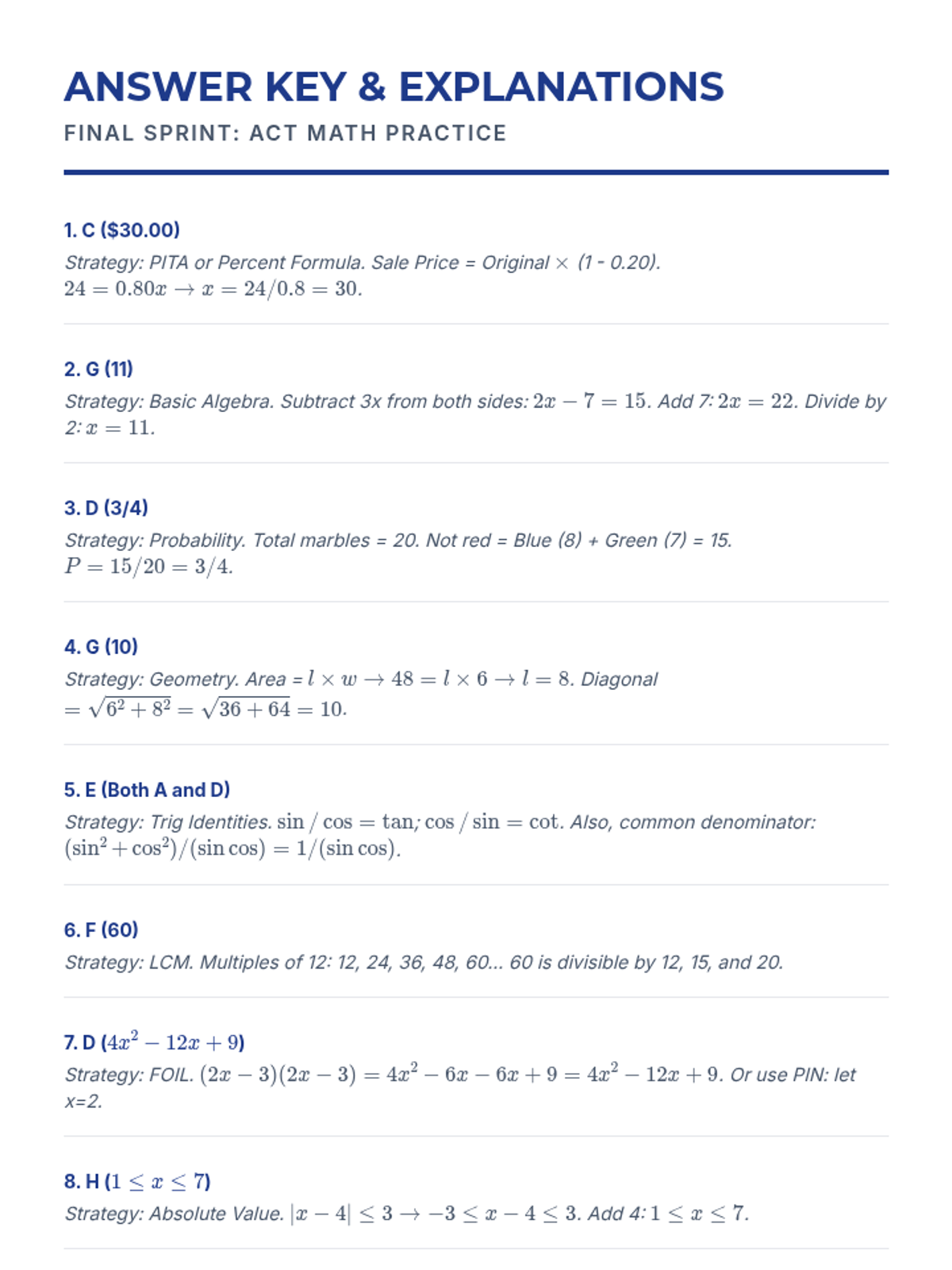
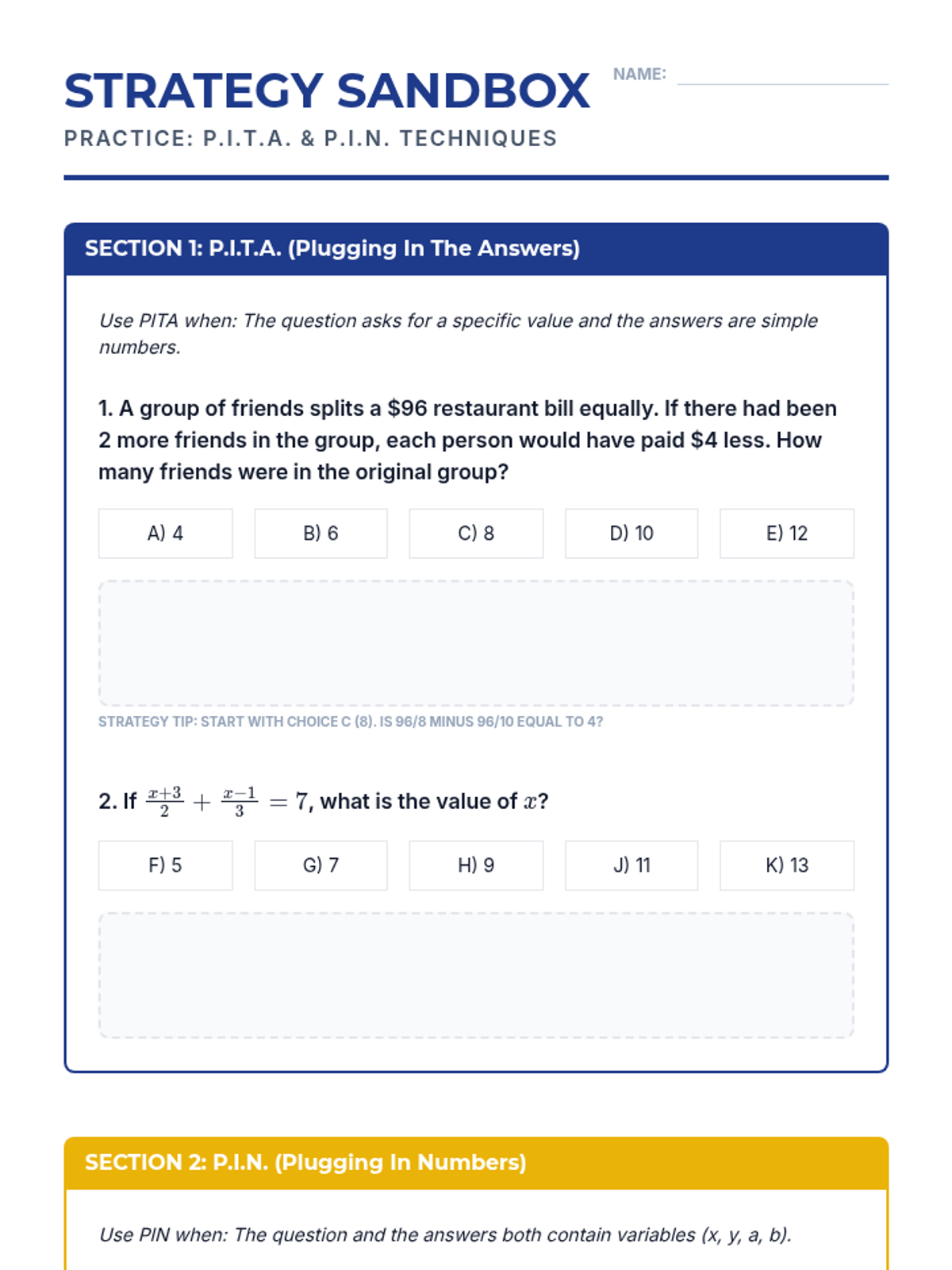
Apply strategies and knowledge in a timed practice environment with a representative ACT Math question set.
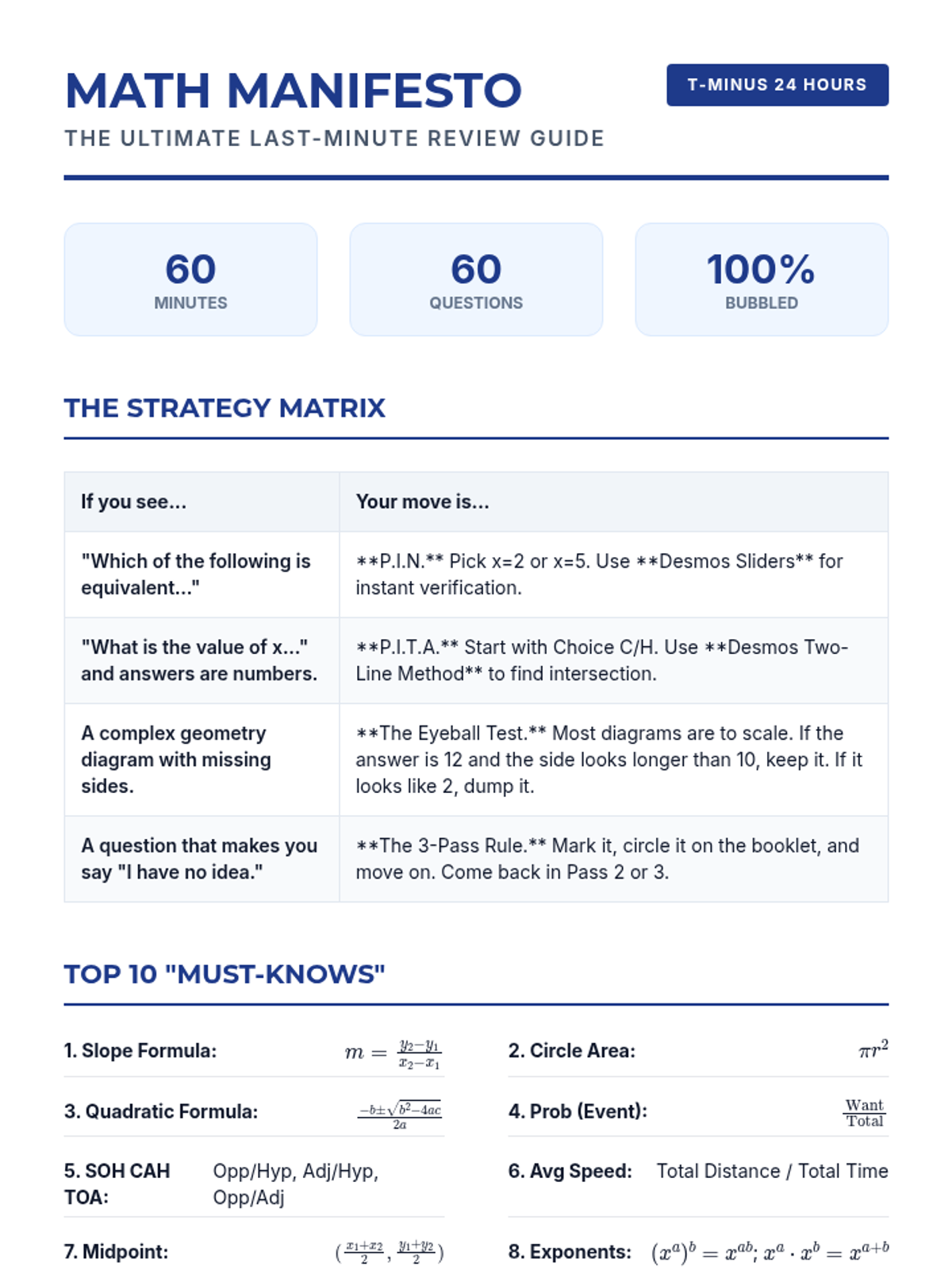
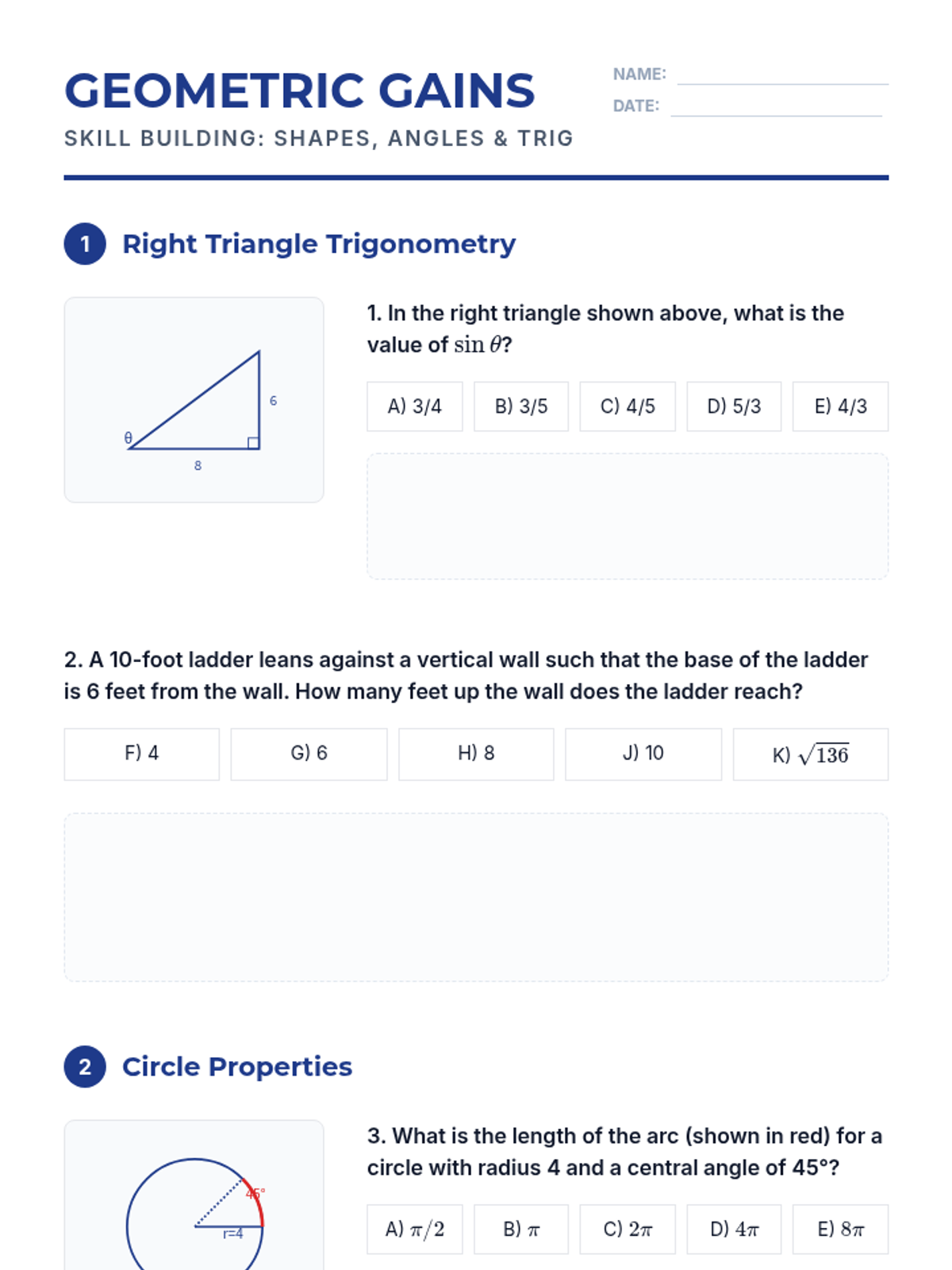
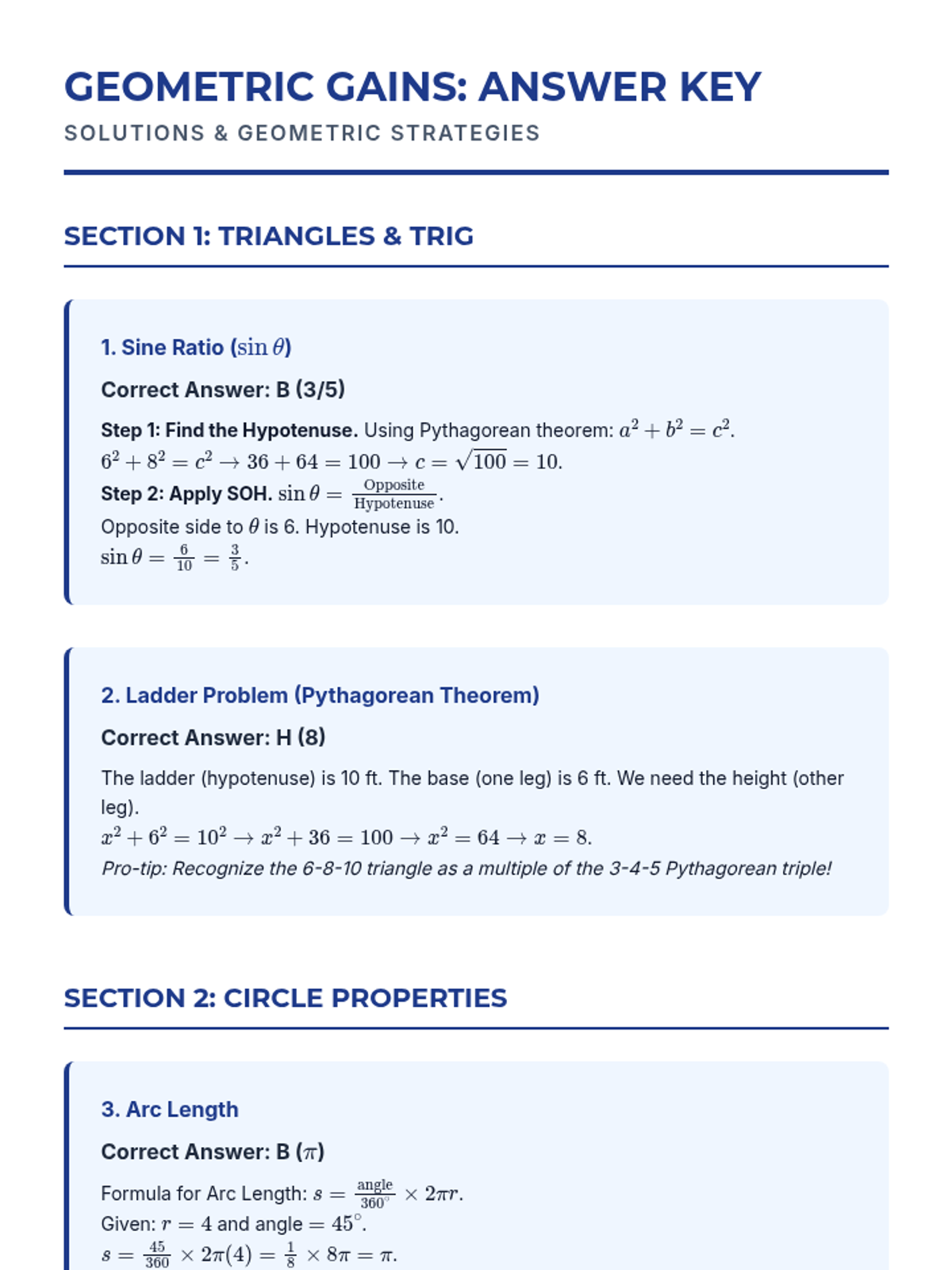
Review critical Geometry and Trigonometry concepts, from SOH CAH TOA to circle properties and coordinate geometry.
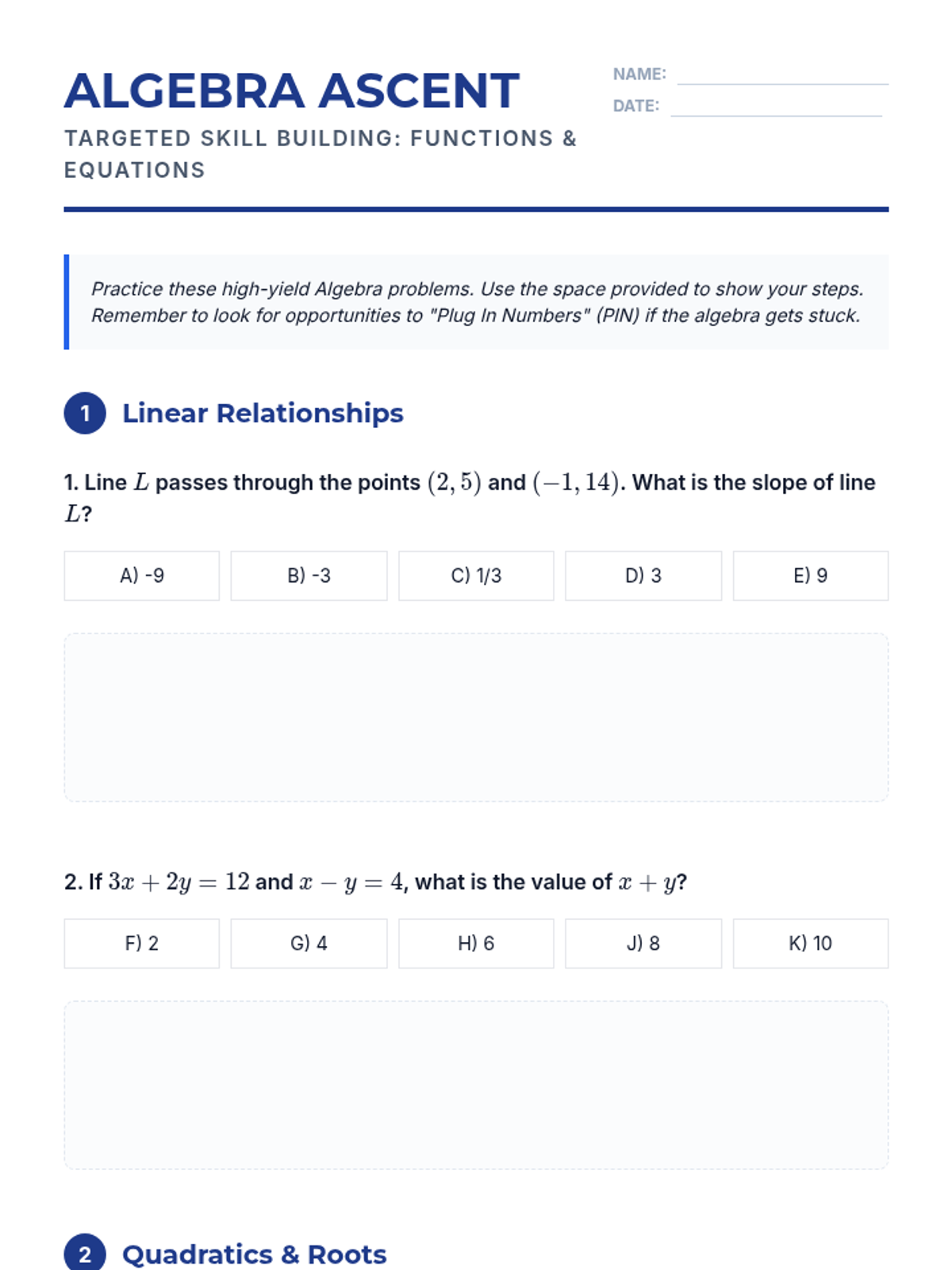
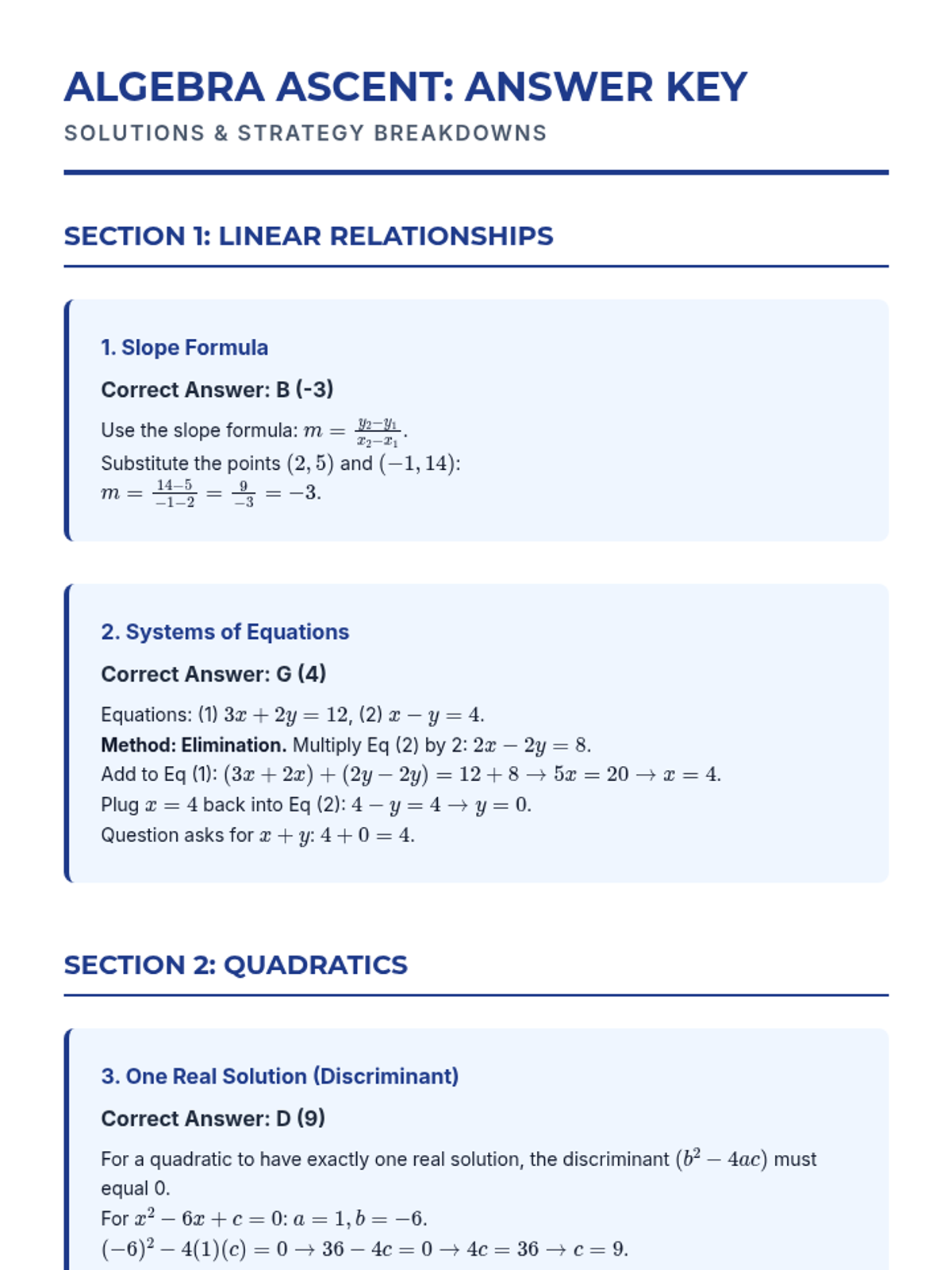
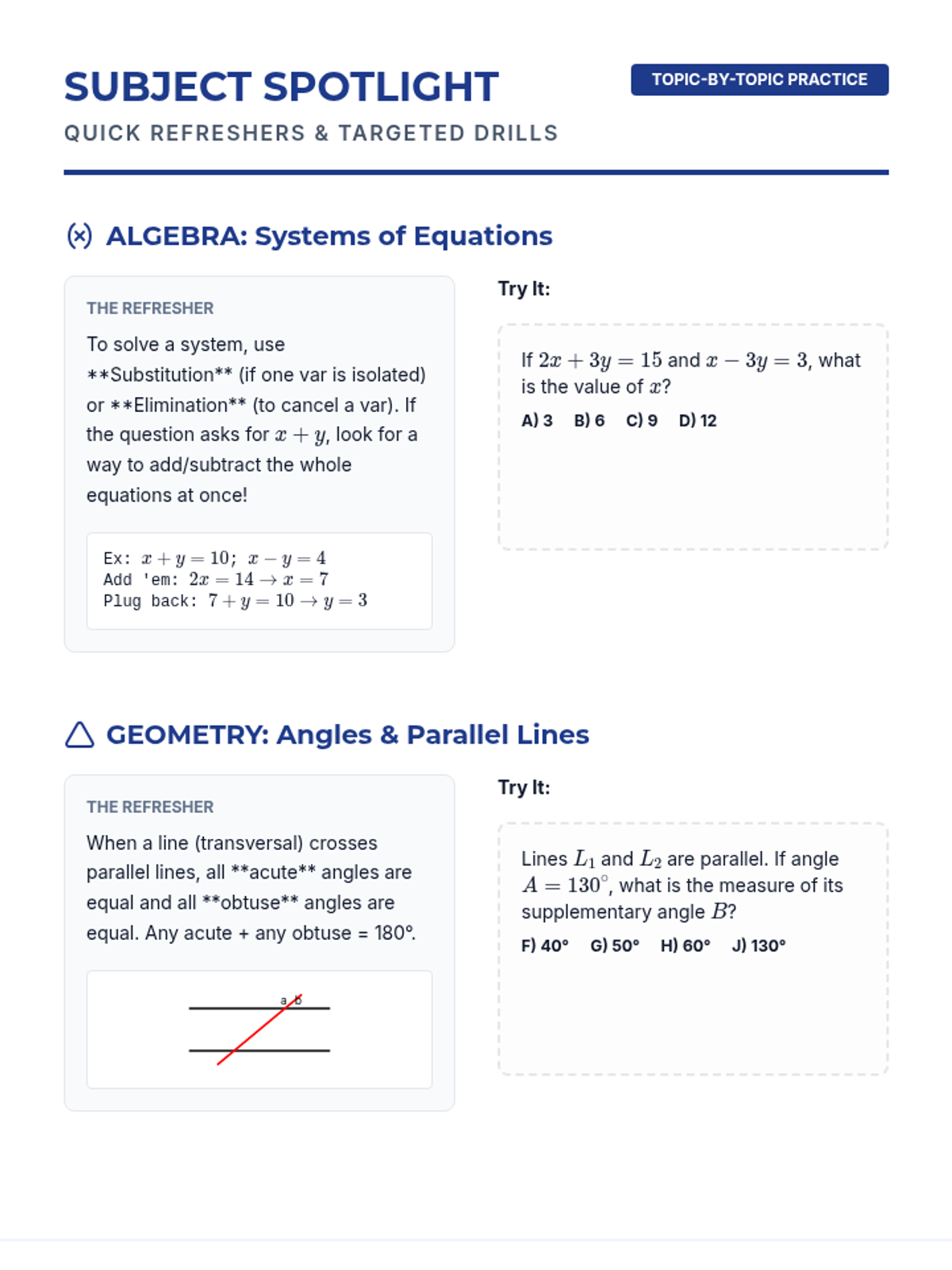
Deep dive into high-yield Algebra topics including linear functions, systems of equations, and quadratic properties frequently tested on the ACT.
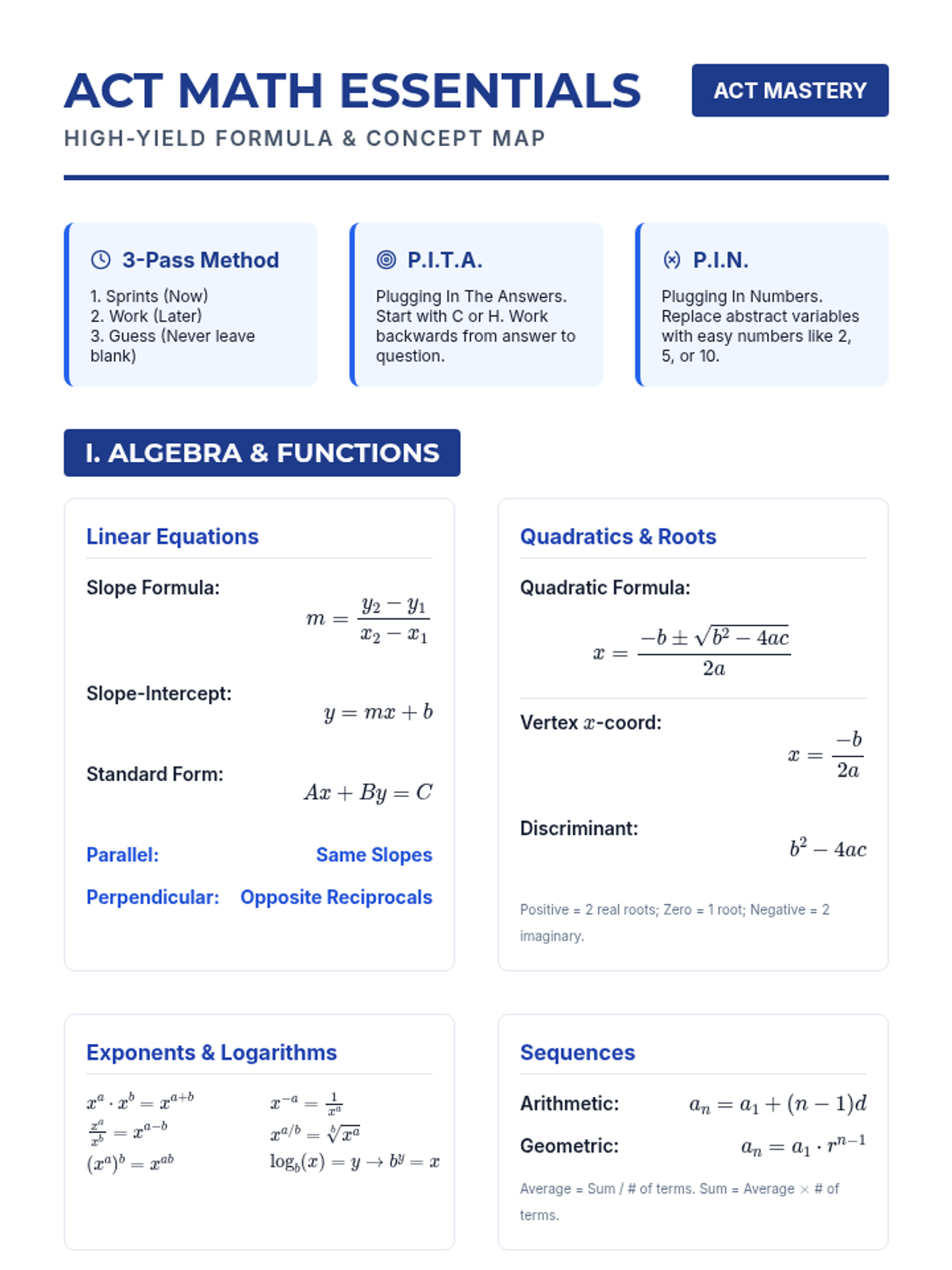
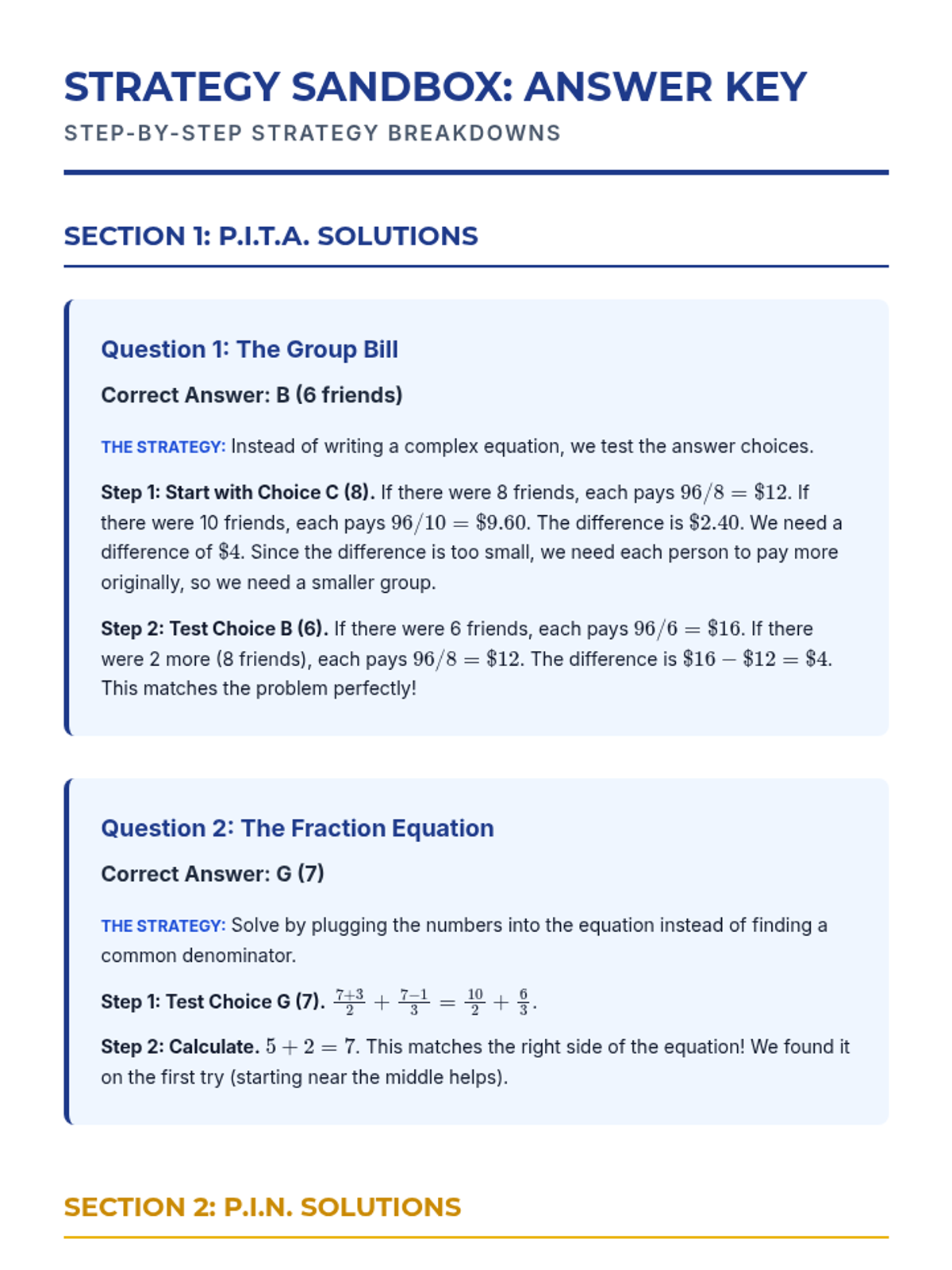
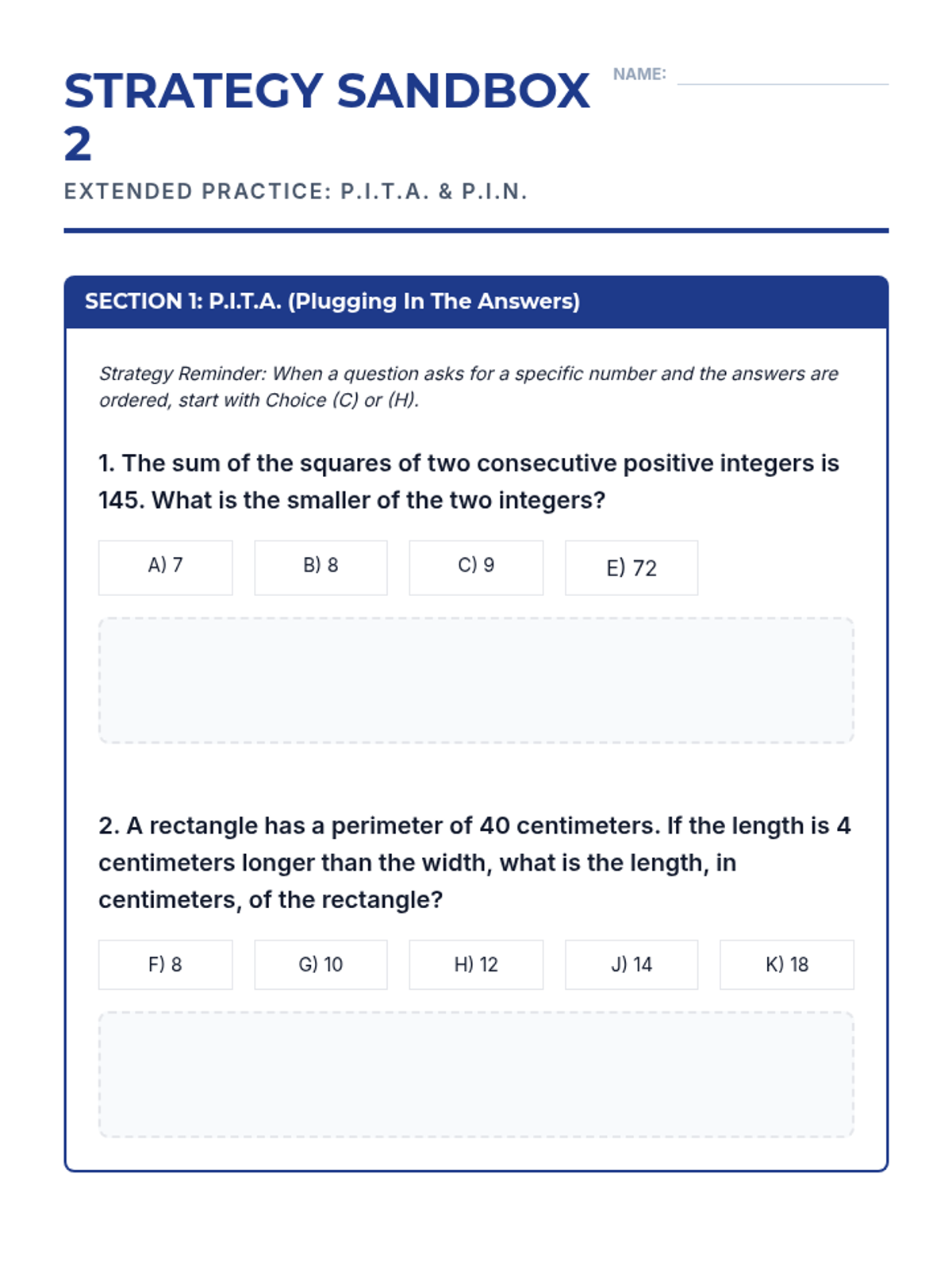
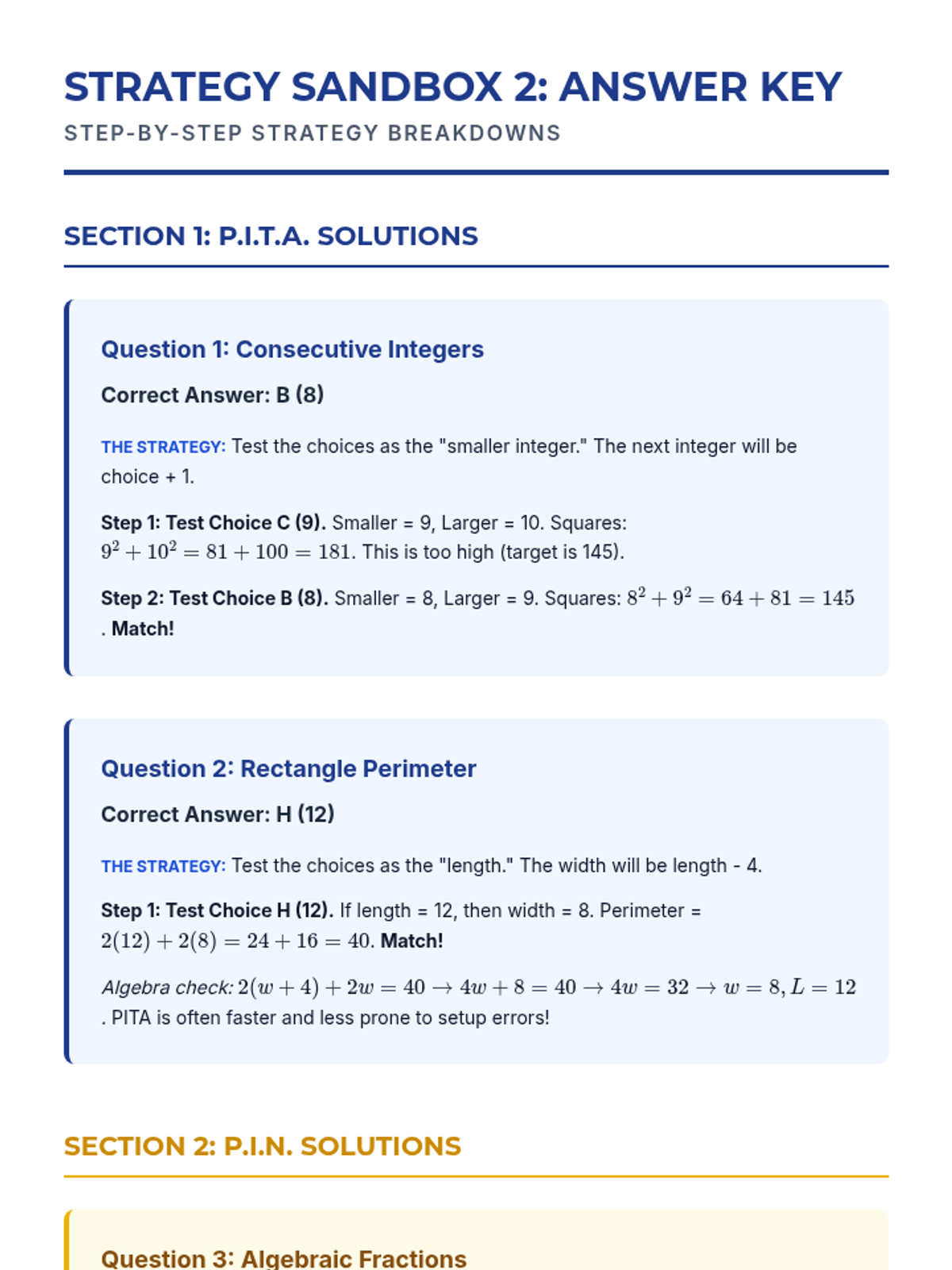
Master the structure of the ACT Math section and learn time-saving strategies like 'The 3-Pass Method' and 'Plugging In' while reviewing essential formulas.
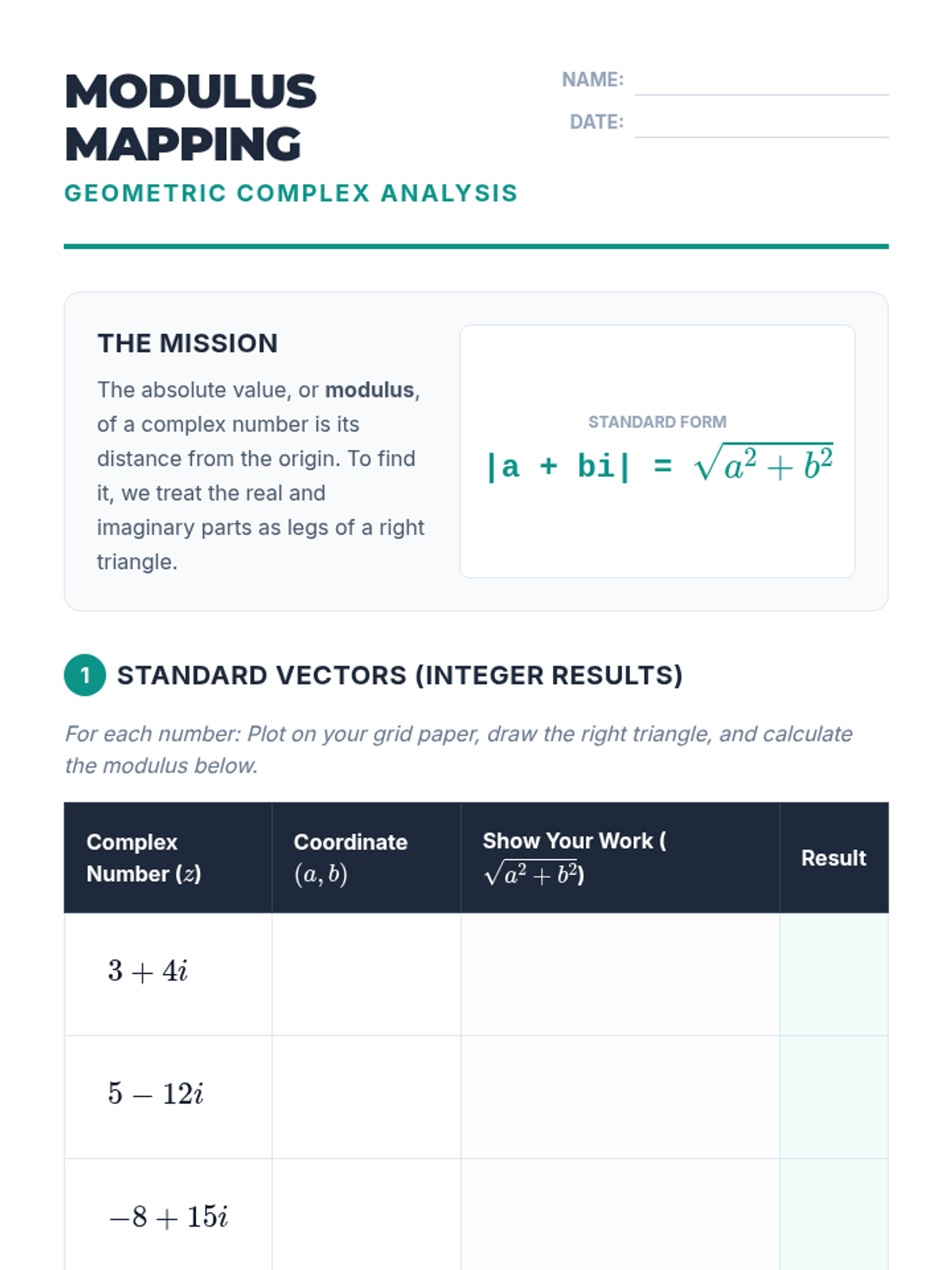
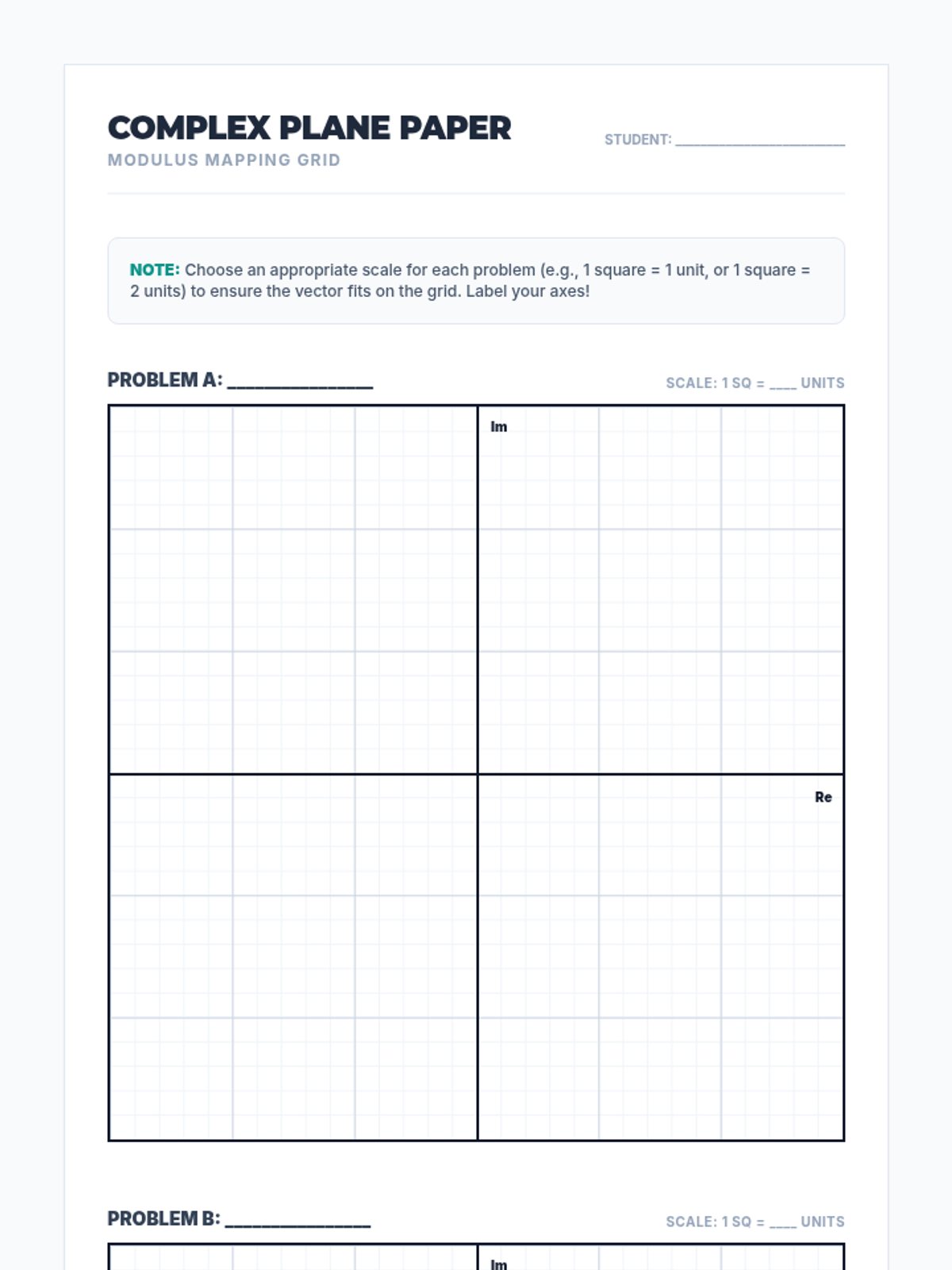
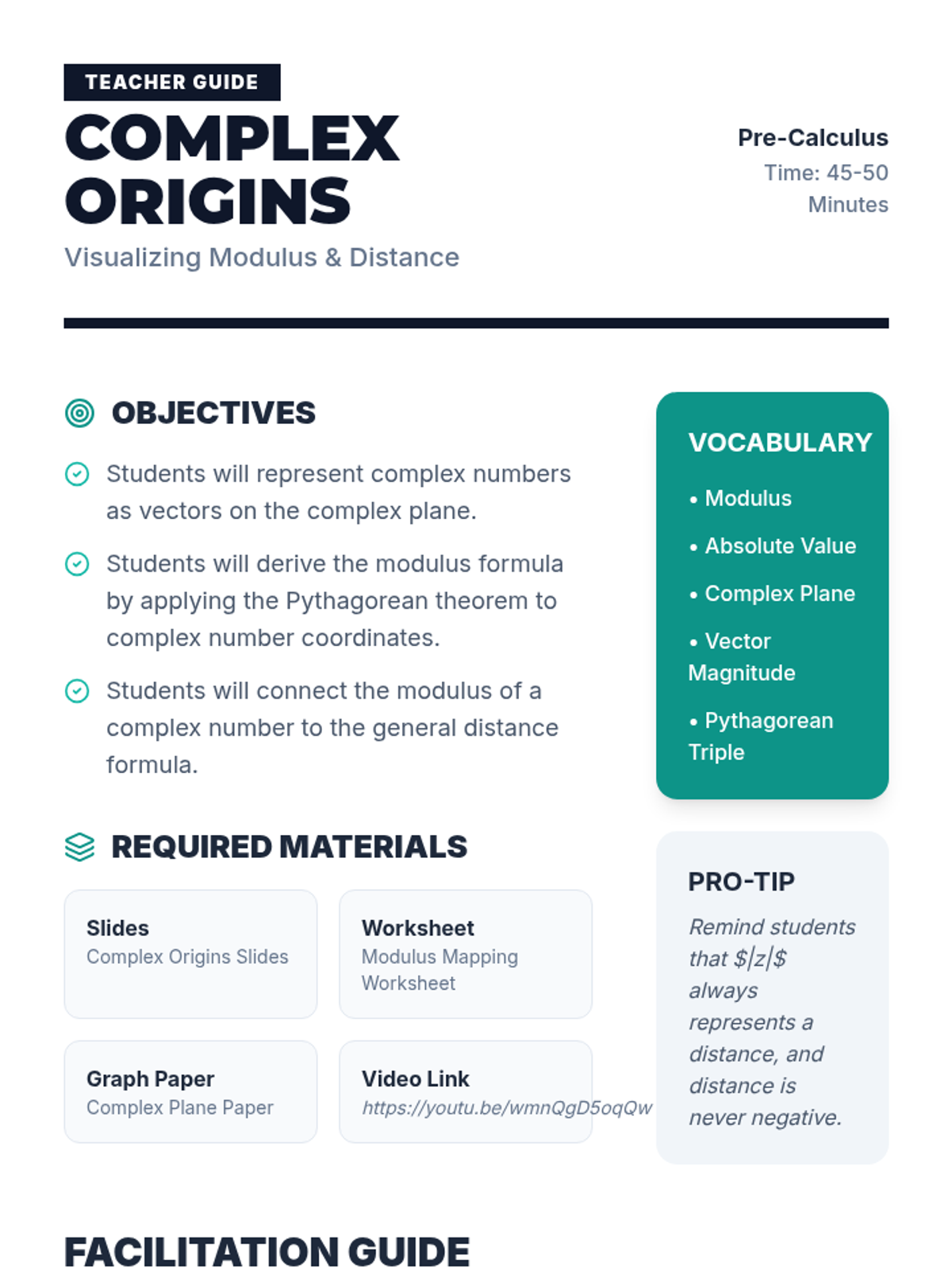
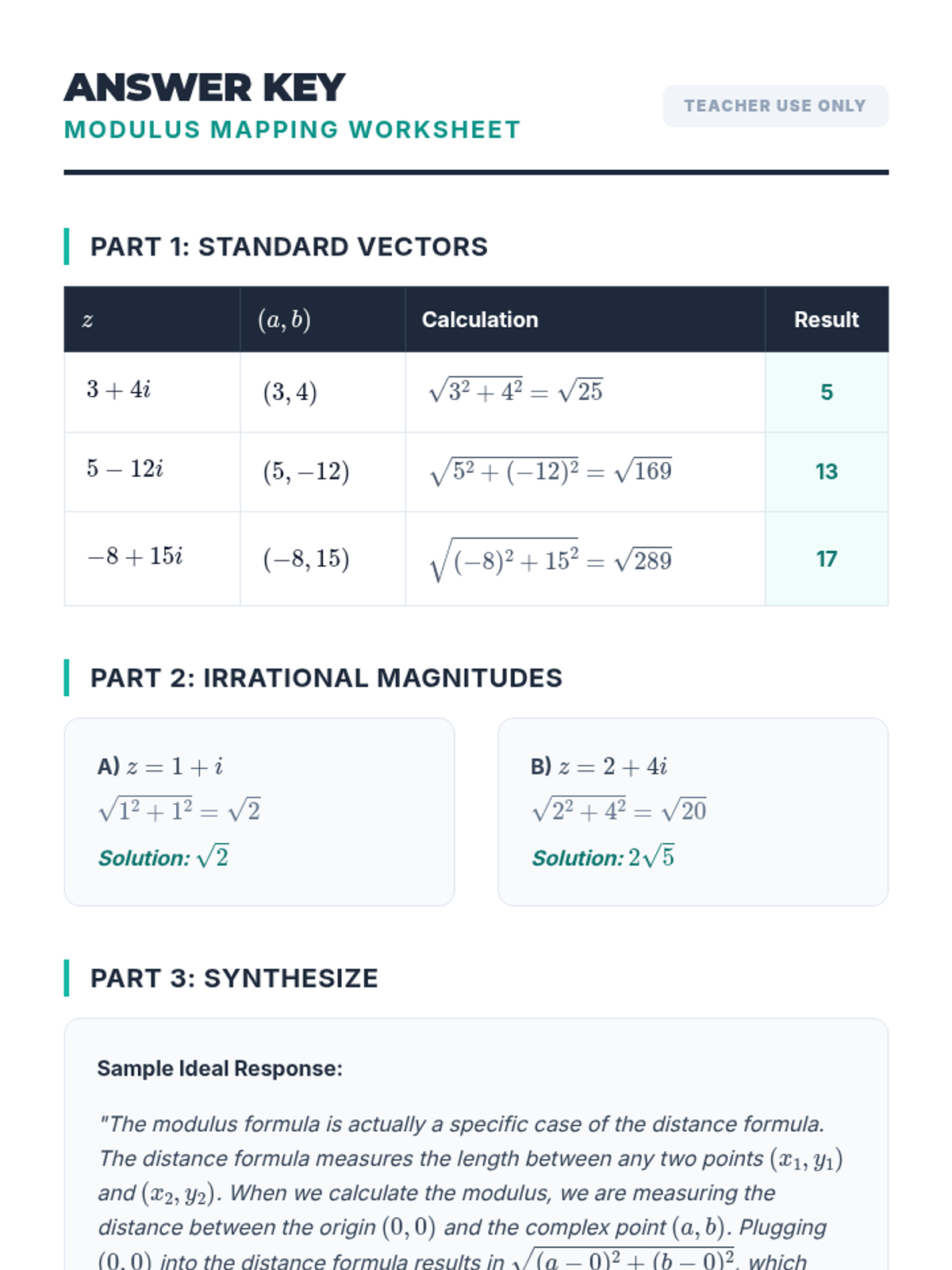
Students explore the geometric representation of complex numbers, connecting the modulus formula to the Pythagorean theorem and distance formula through visualization and practice.
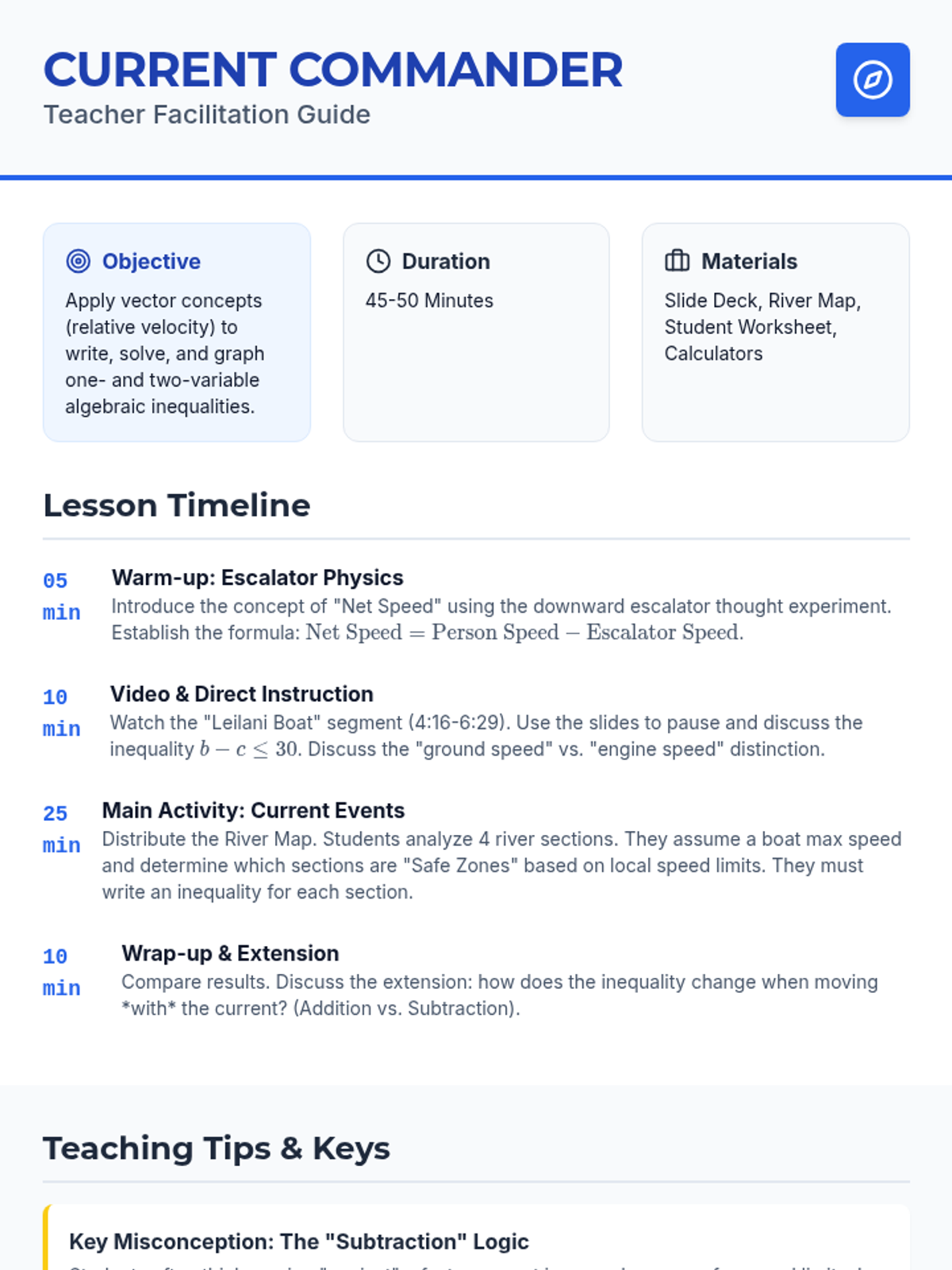
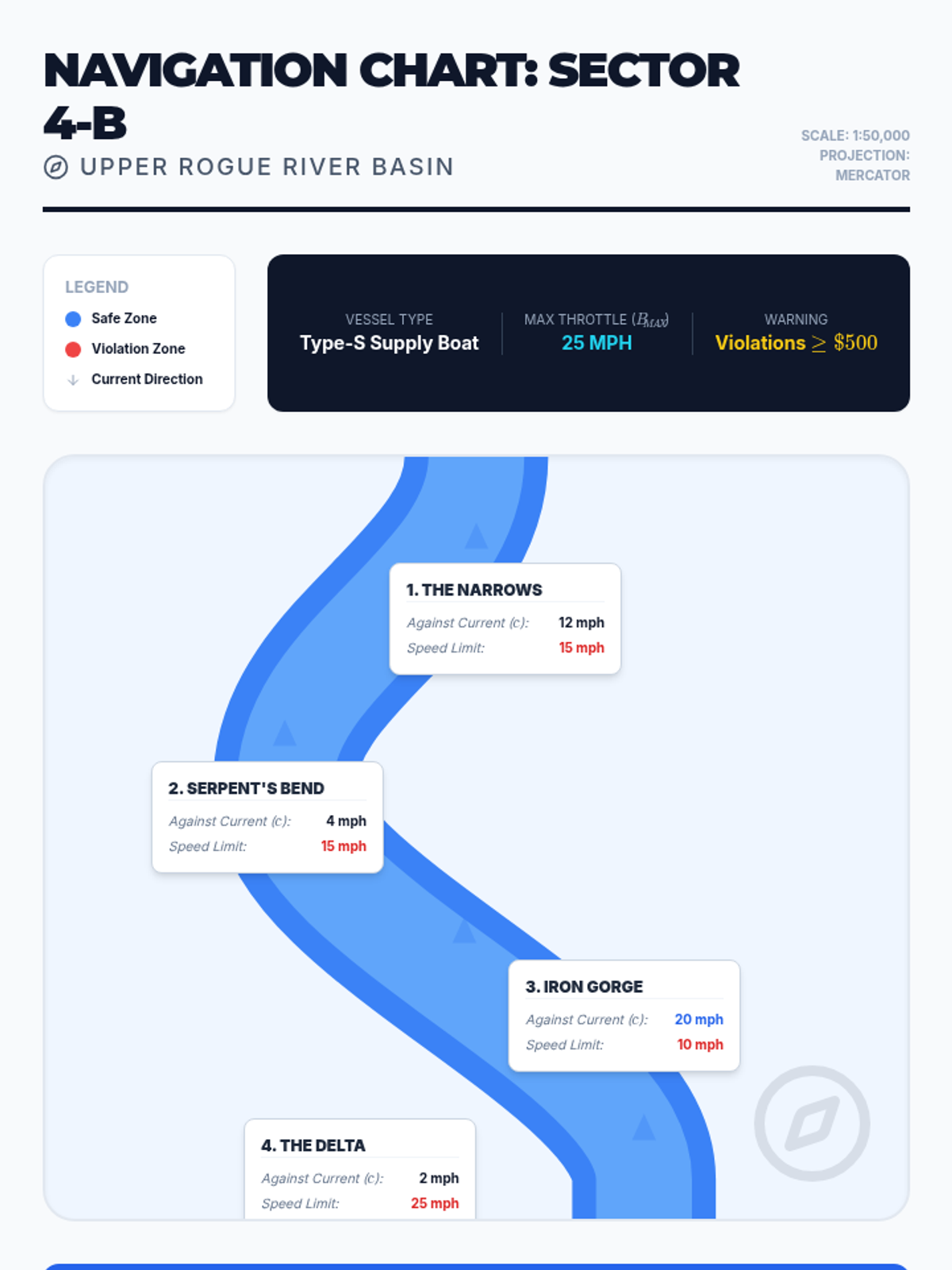
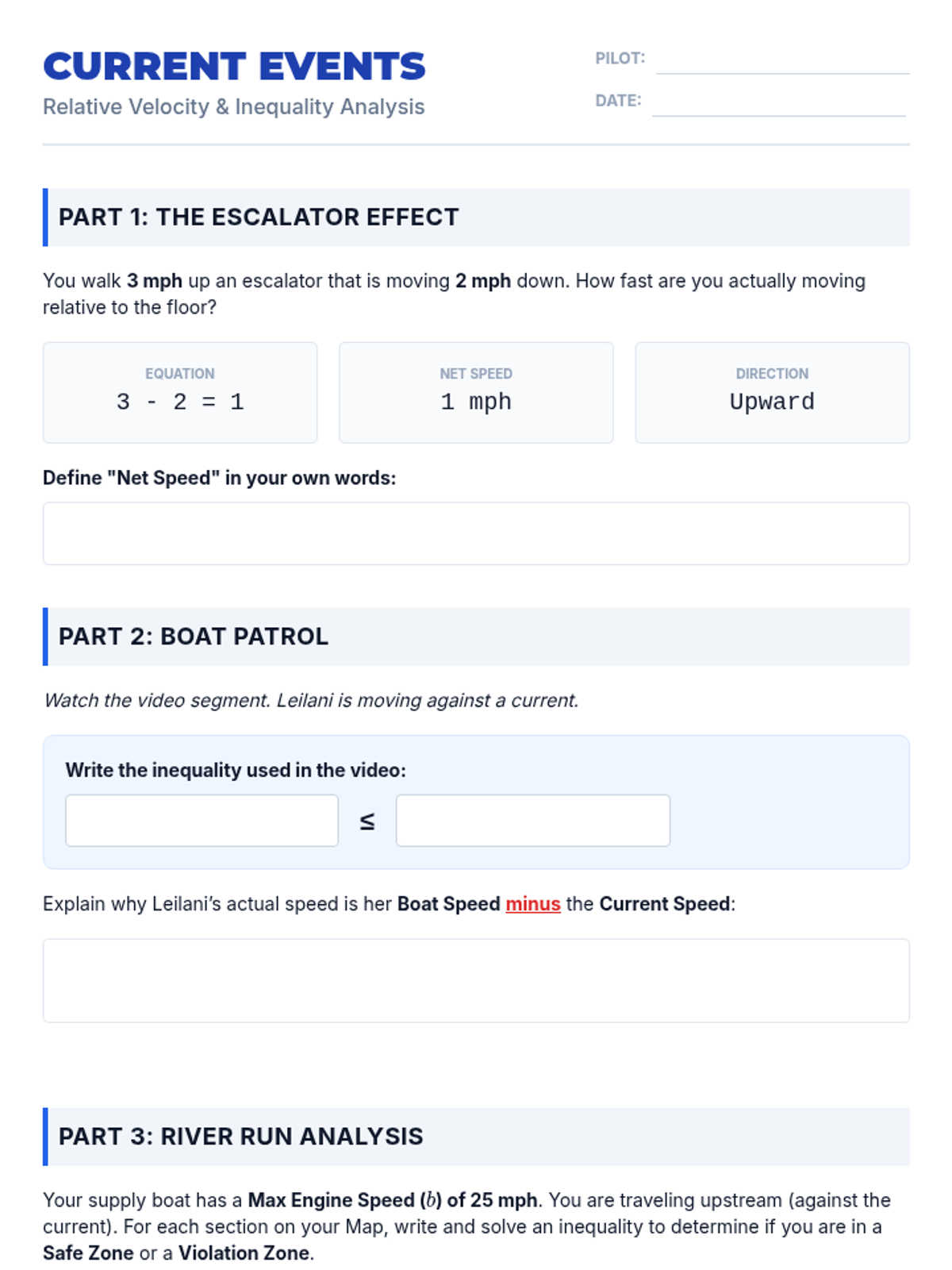
A 9th-grade Integrated Science and Math lesson where students use vector subtraction (relative velocity) to model and solve algebraic inequalities involving boat travel against river currents.
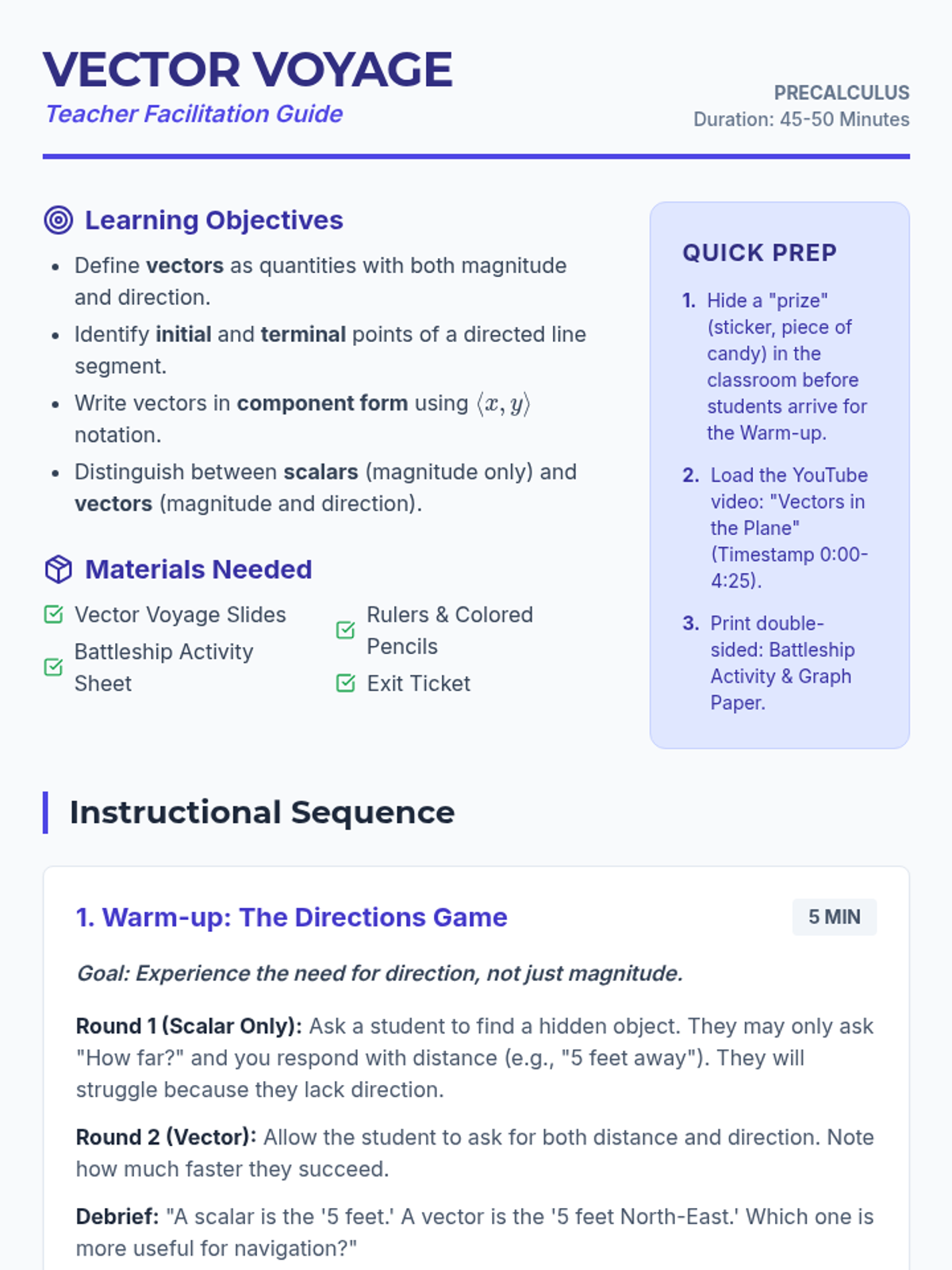
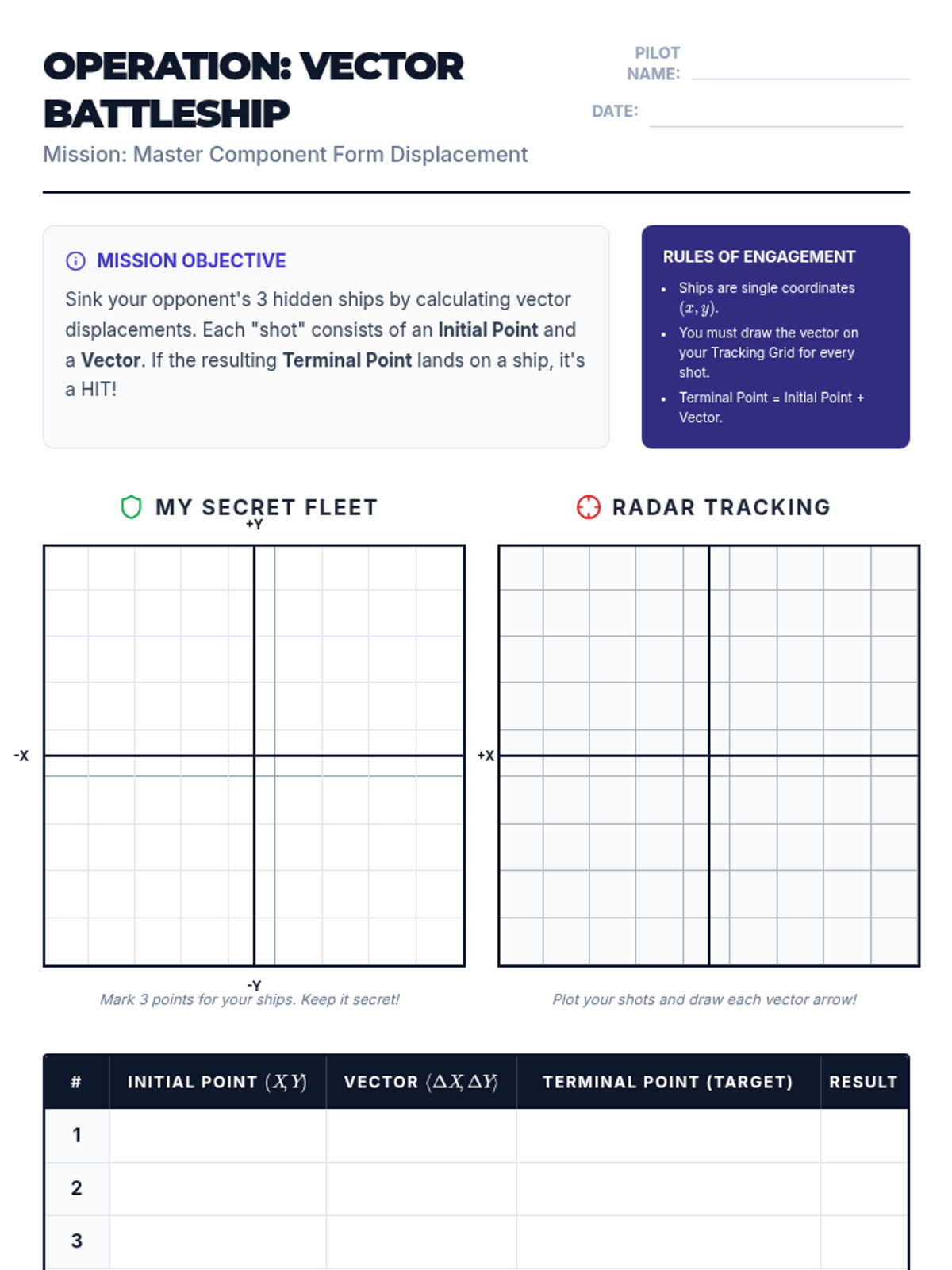
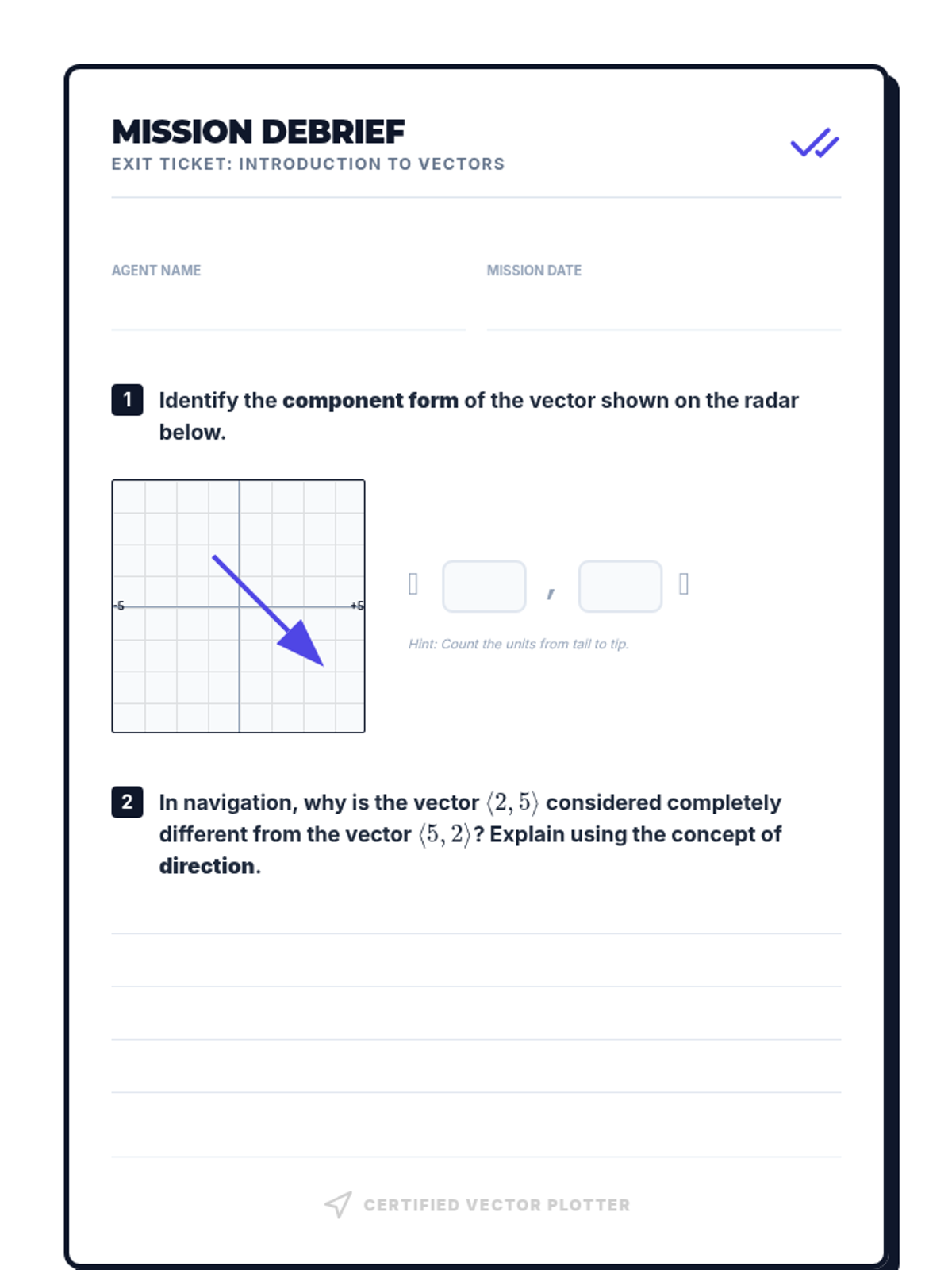
An introductory lesson on vectors in the coordinate plane. Students distinguish between scalars and vectors, learn component form notation, and practice plotting vectors through a collaborative 'Battleship' style activity.
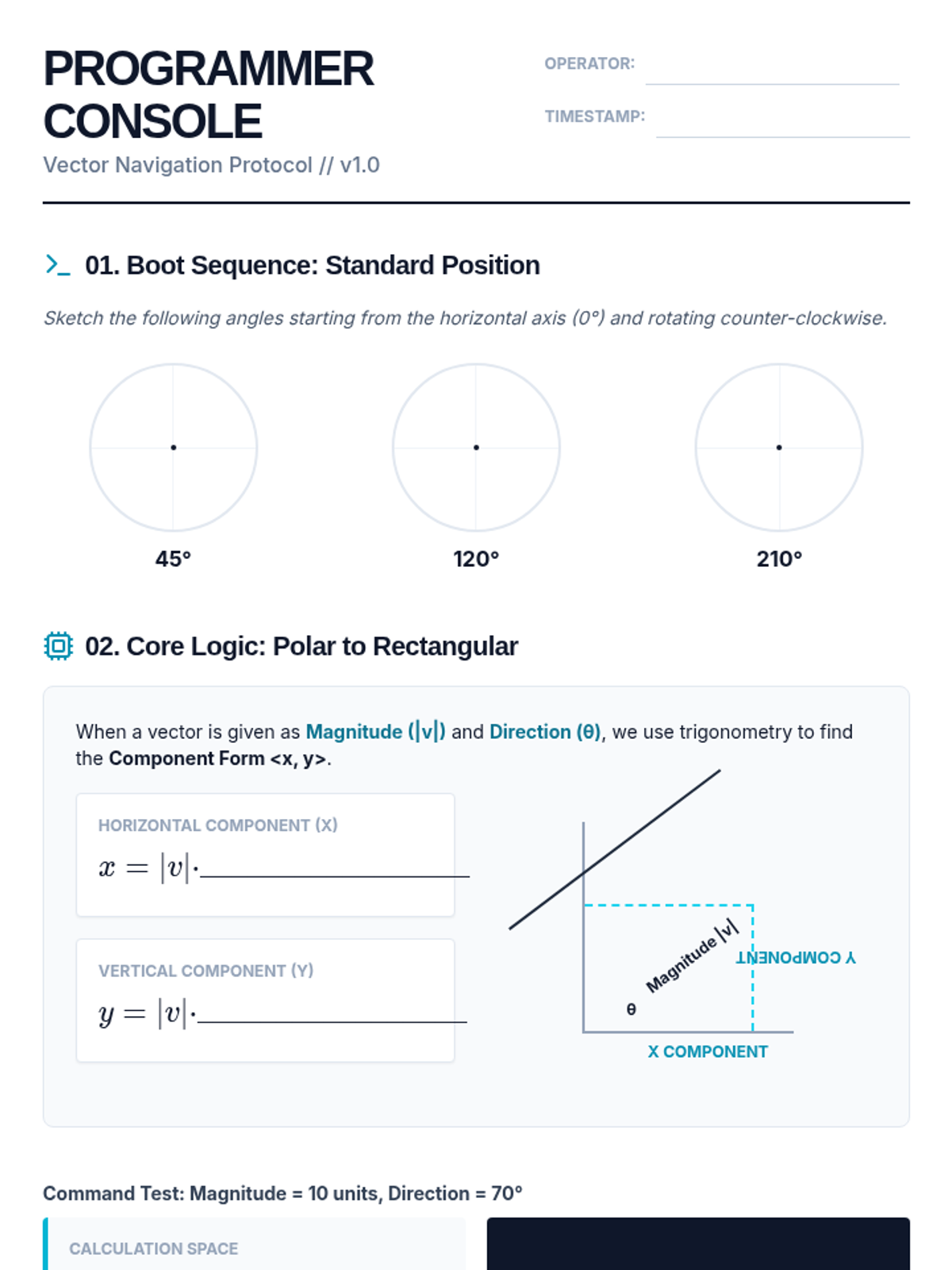
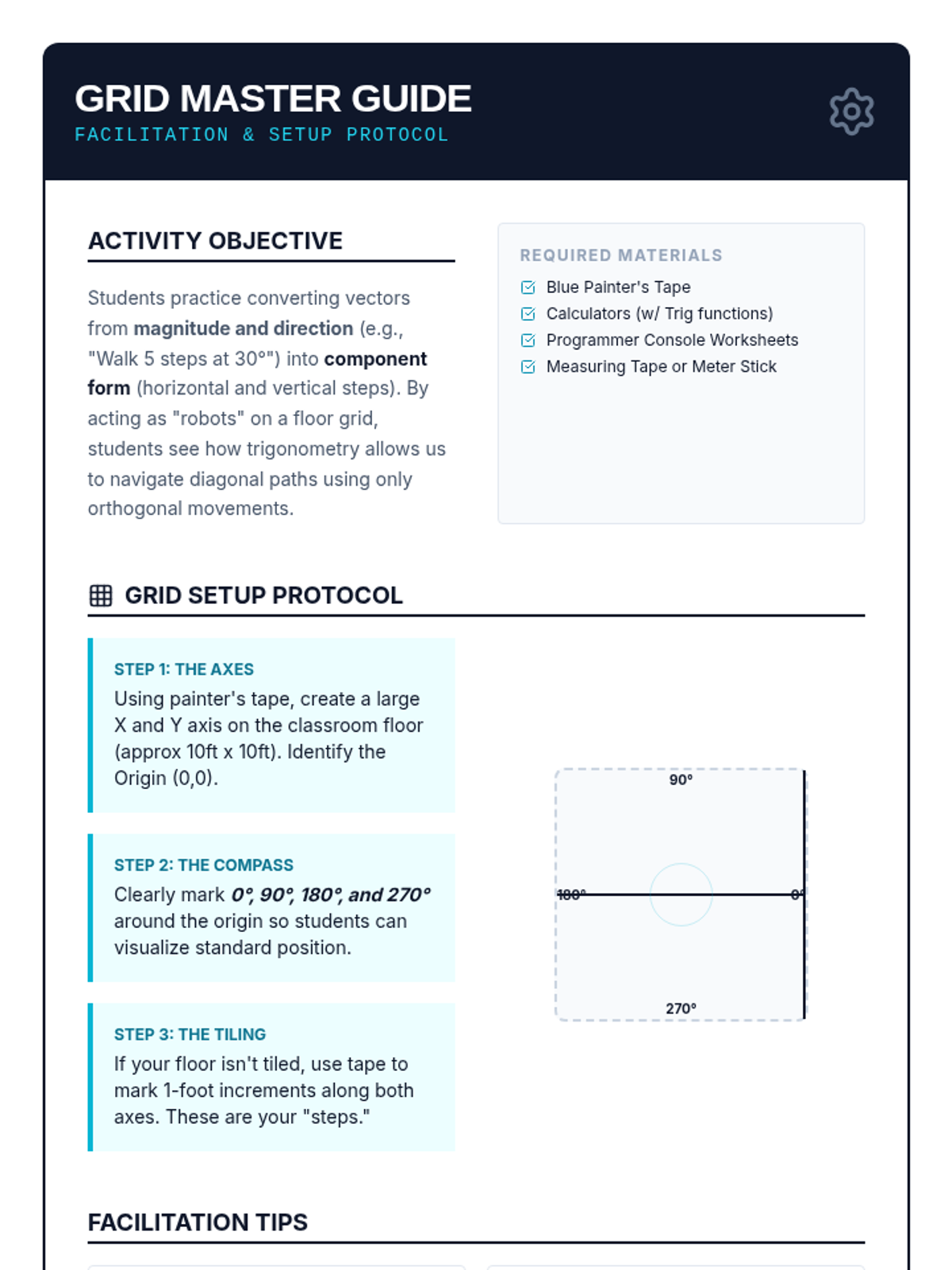
A high-school geometry or pre-calculus lesson focusing on converting vectors from magnitude and direction to component form through a hands-on 'robot programming' simulation. Students use trigonometry to translate movement commands into x and y displacements.
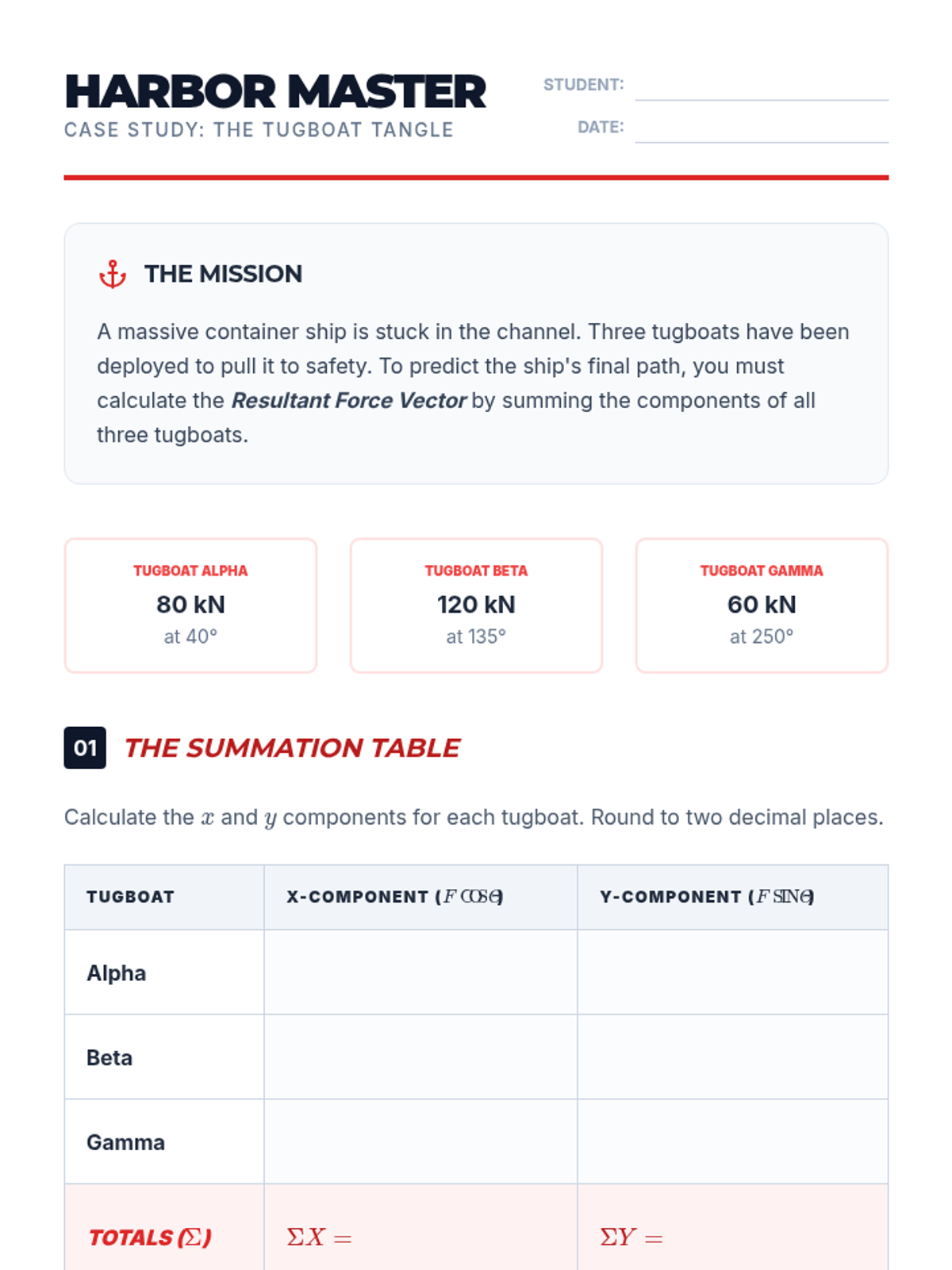
Students tackle complex problems involving three or more vectors. They organize their work using tables to sum components and find the final resultant magnitude and direction.
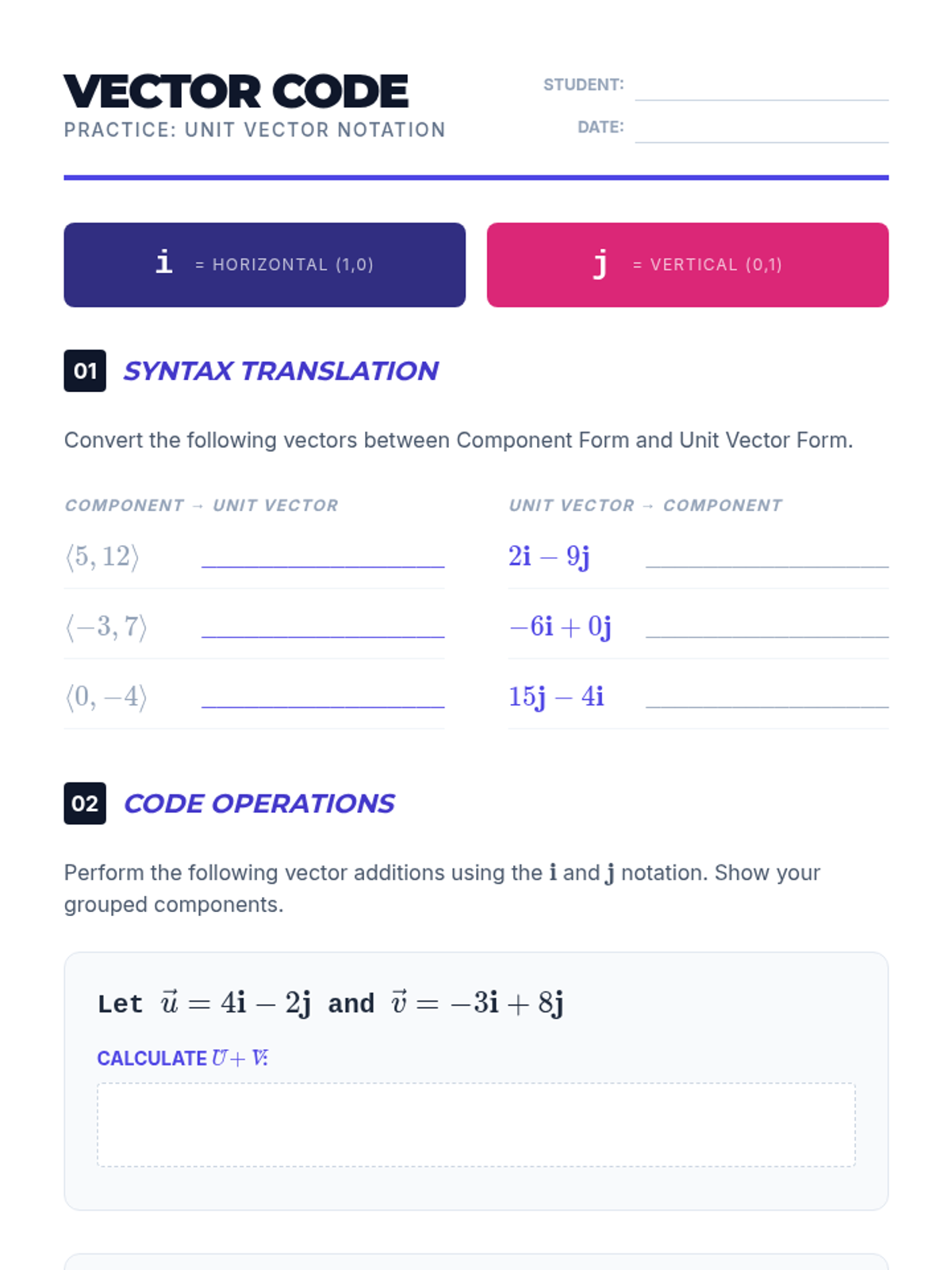
This lesson introduces the standard unit vectors i (x-axis) and j (y-axis). Students practice rewriting component vectors in linear combination form and perform operations using this notation.
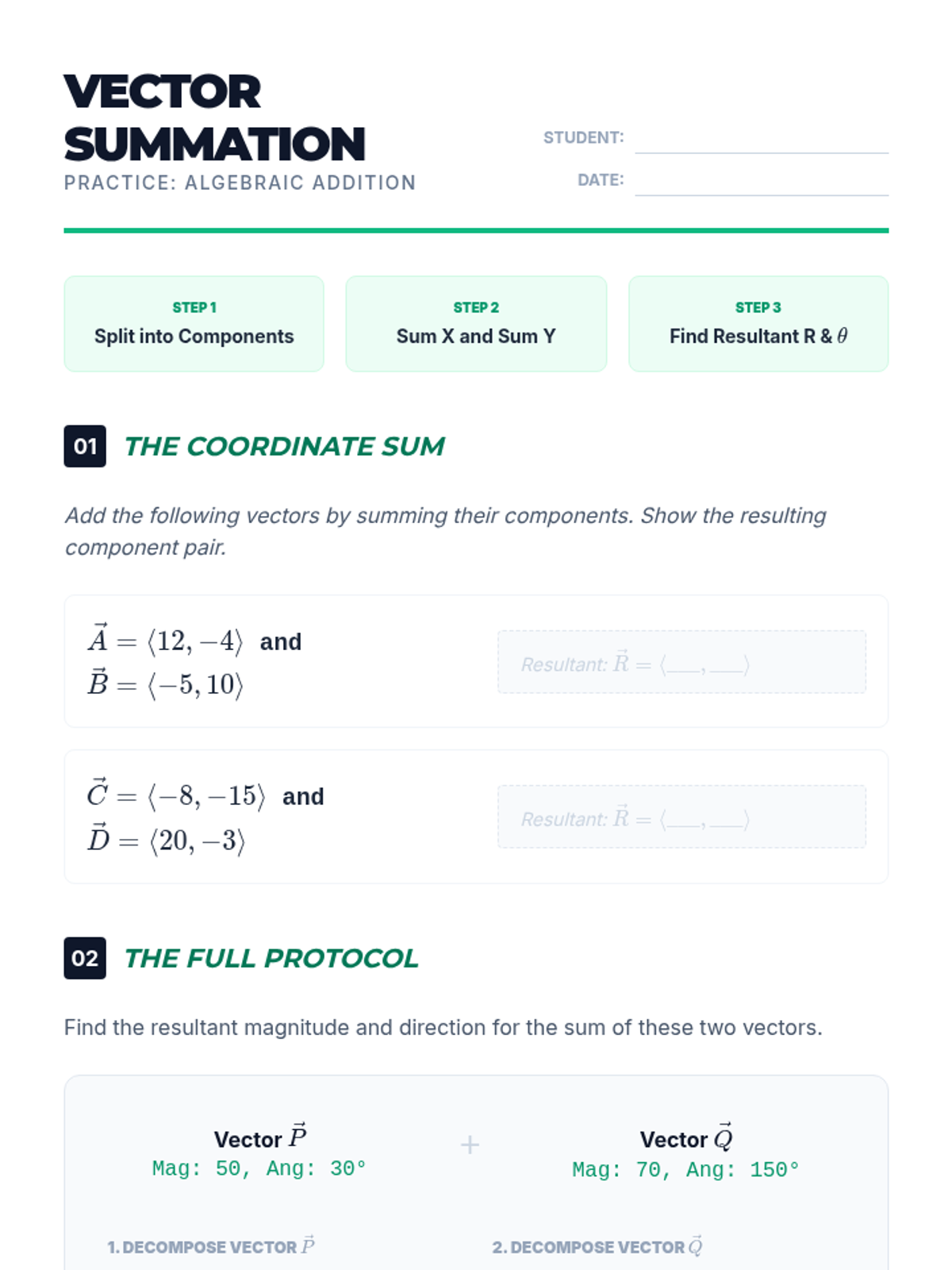
Students learn to add vectors by summing their respective x and y components. They compare this method to the geometric method to verify accuracy and discuss the advantages of calculation over drawing.
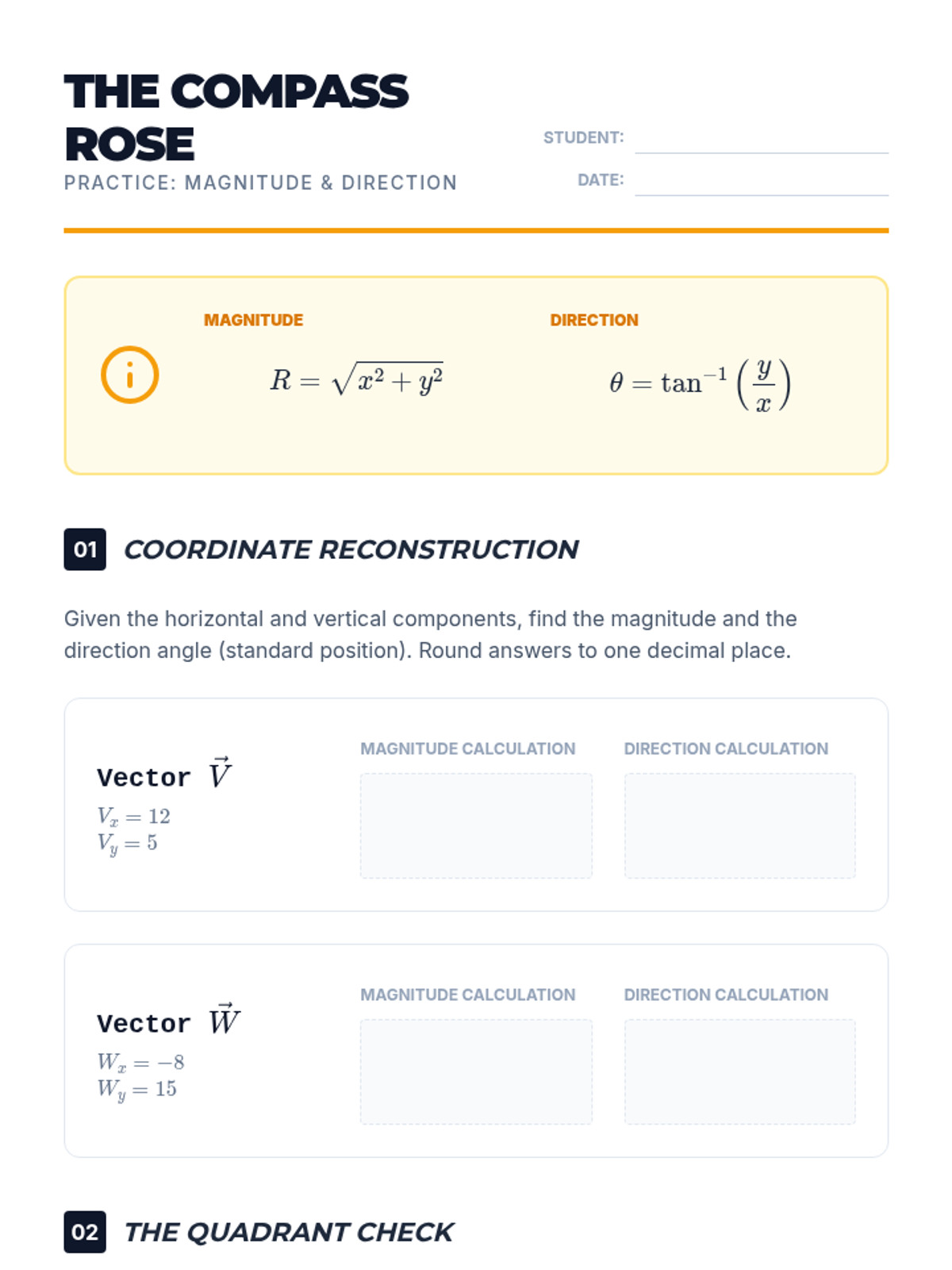
Working backwards from components, students use the Pythagorean theorem and inverse tangent functions to reconstruct the original vector. They practice expressing direction as standard position angles.
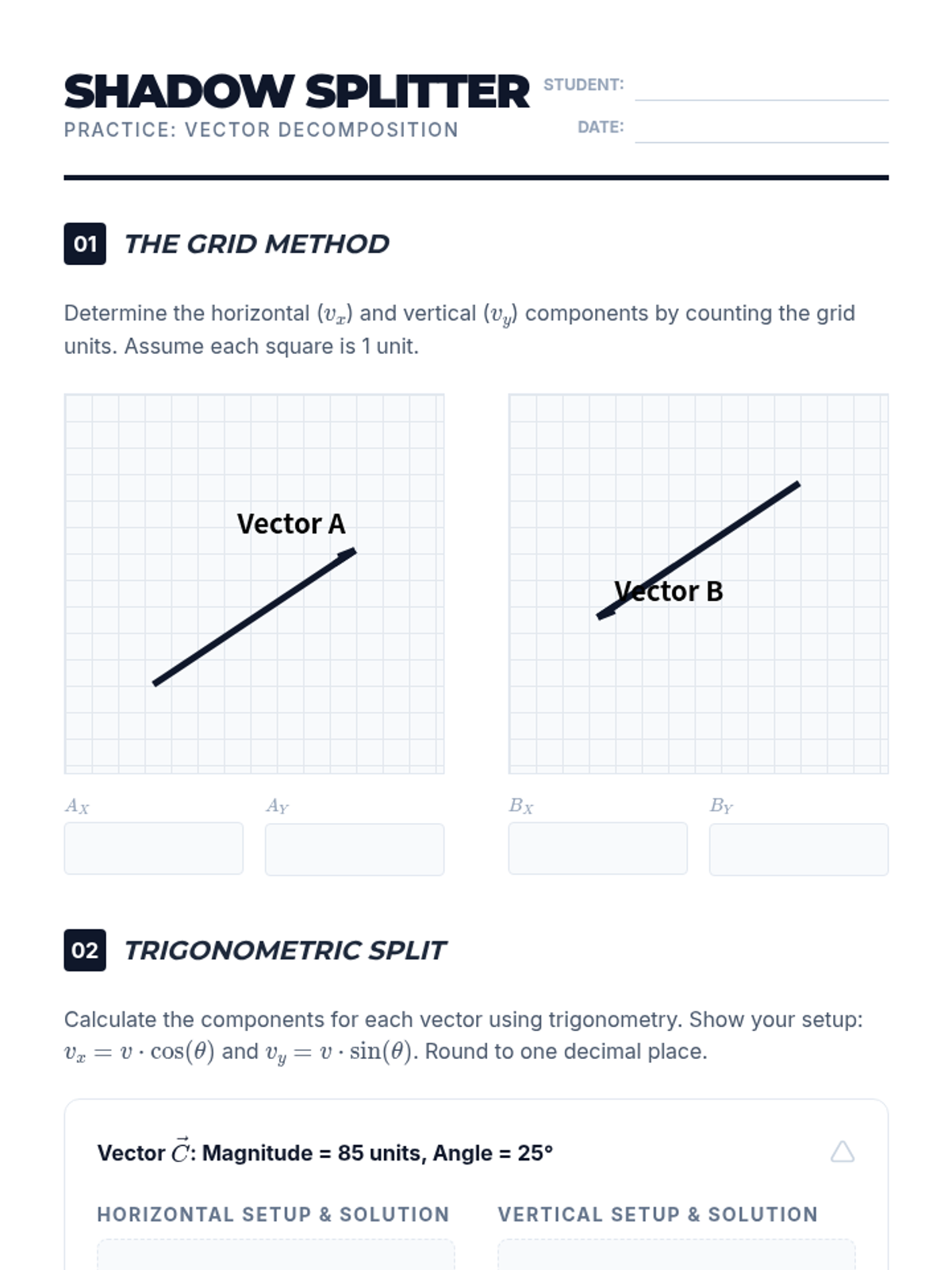
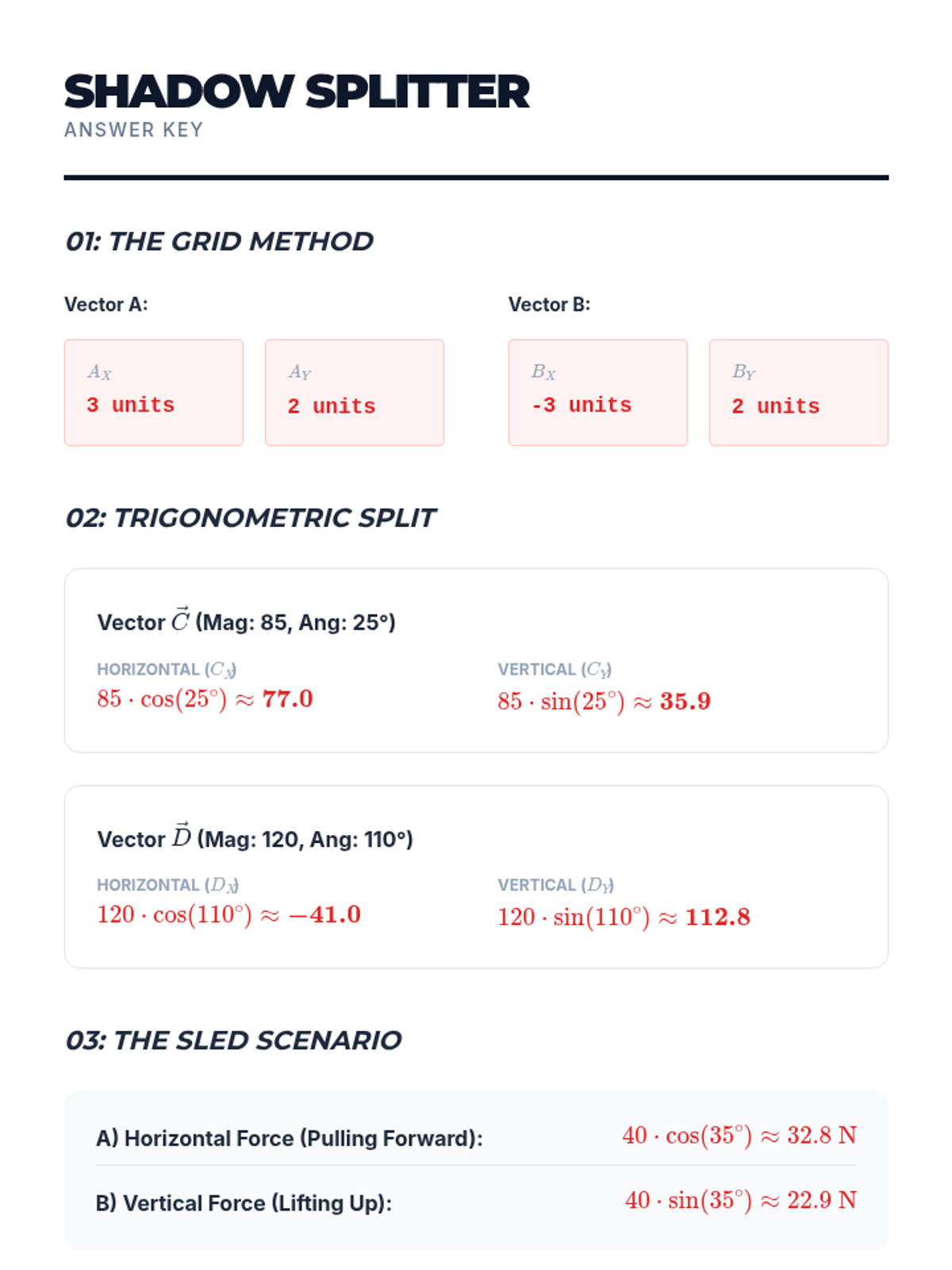
Students explore the concept that every diagonal vector is composed of horizontal and vertical parts using basic trigonometry to find components.
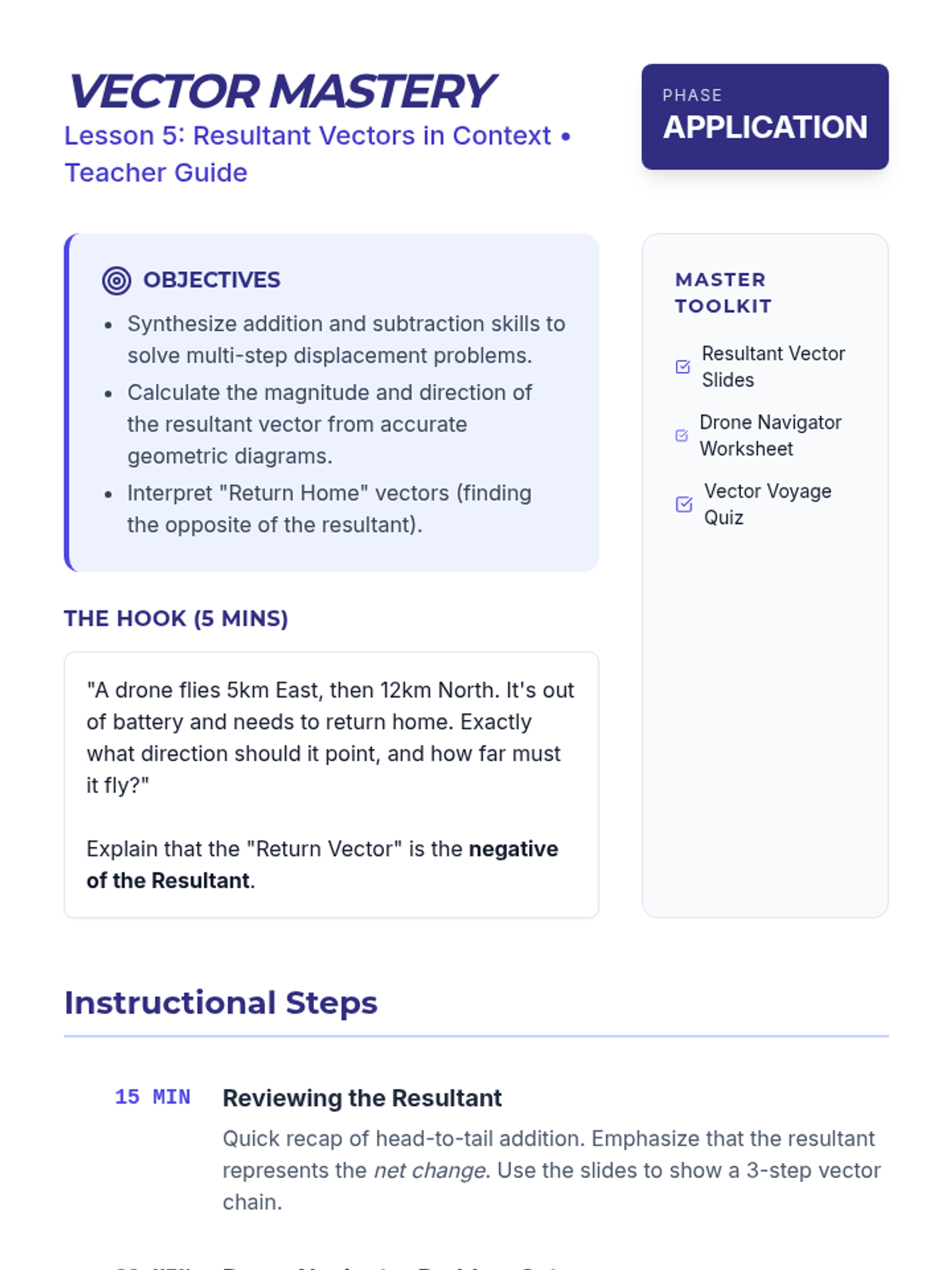
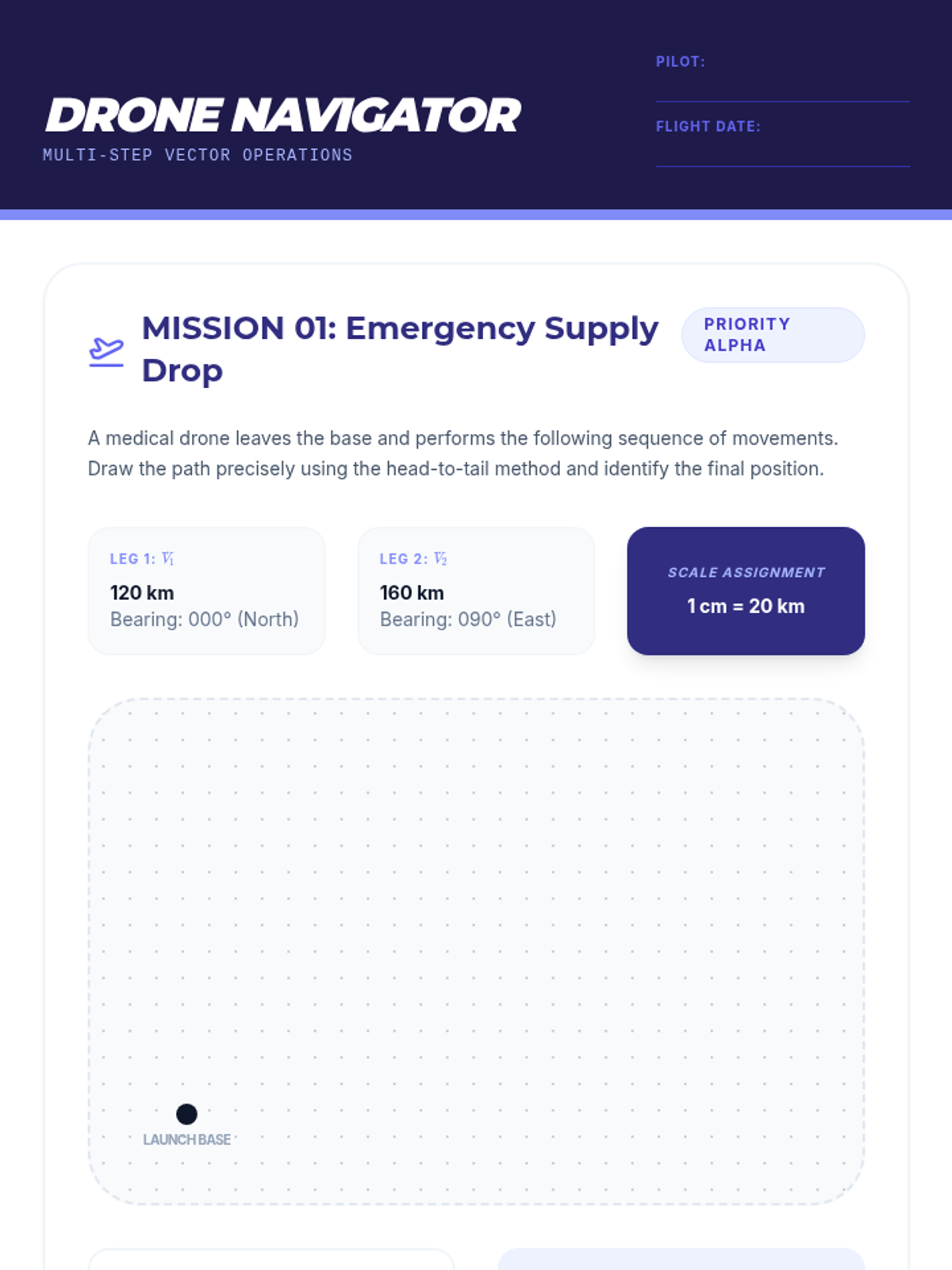
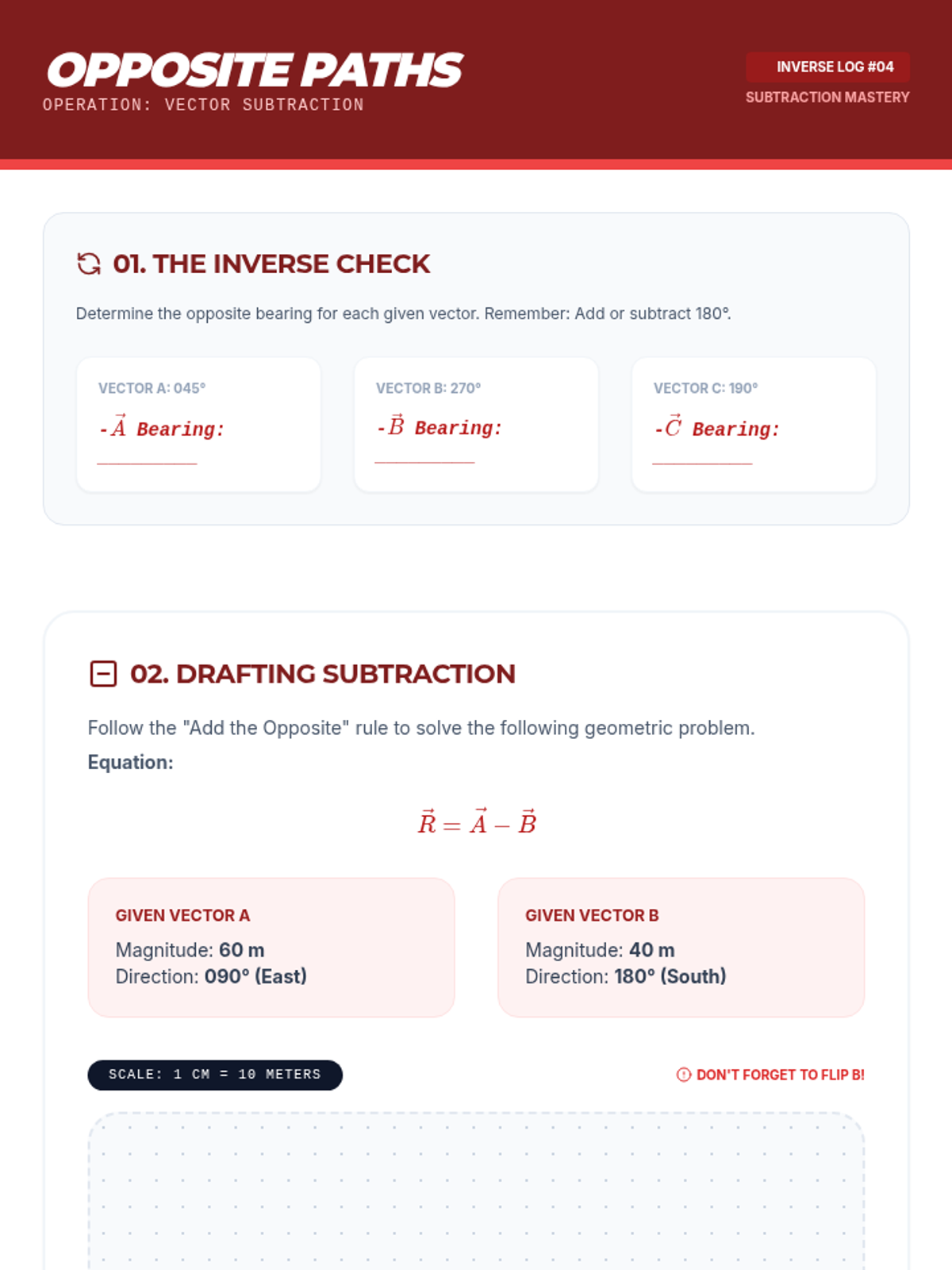
Students apply geometric addition and subtraction to solve displacement word problems, determining magnitude and direction of resultant vectors.
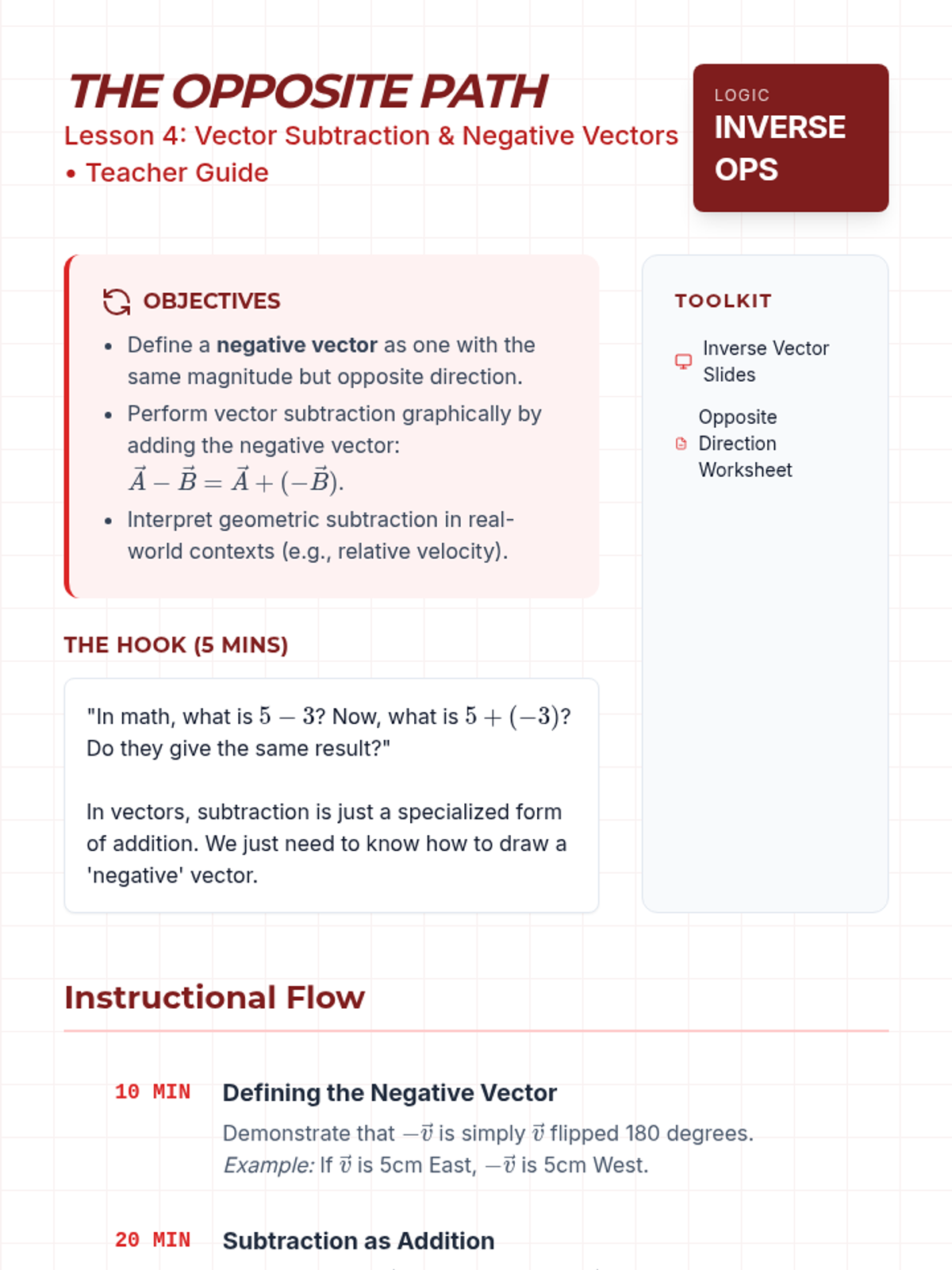
Introduces negative vectors and geometric vector subtraction by adding opposite-direction vectors.
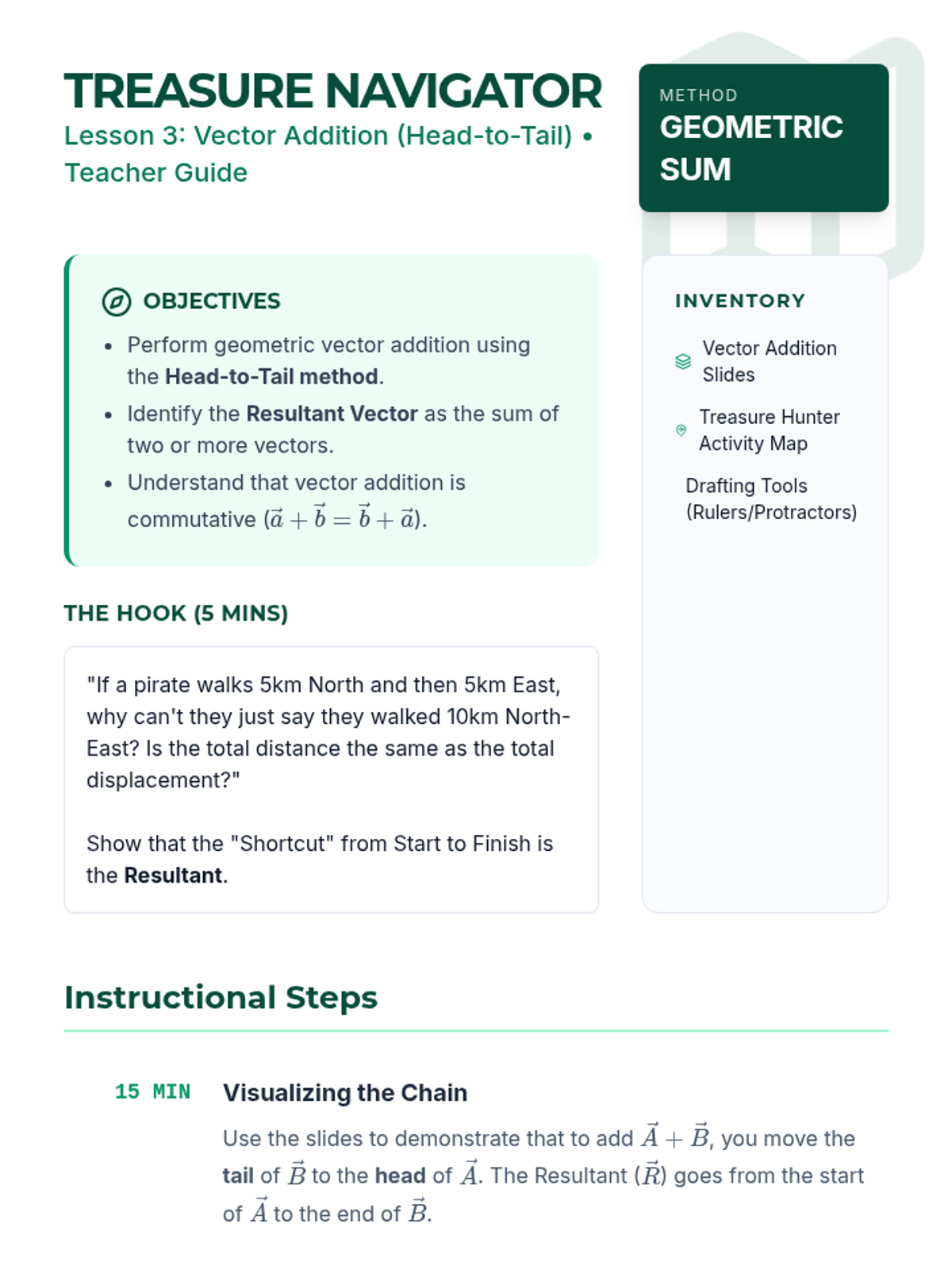
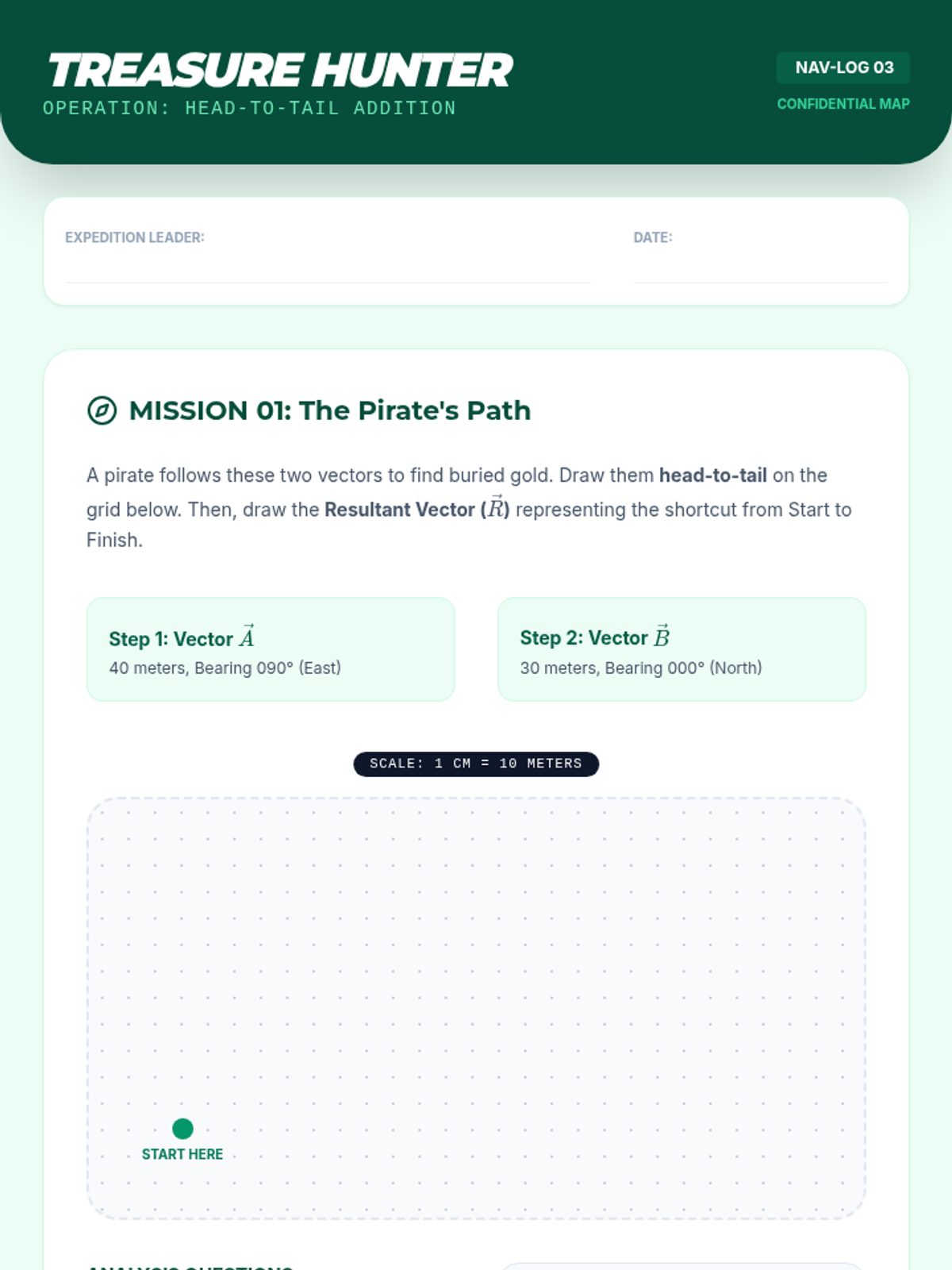
Students discover the head-to-tail method for adding vectors geometrically through a treasure map activity.
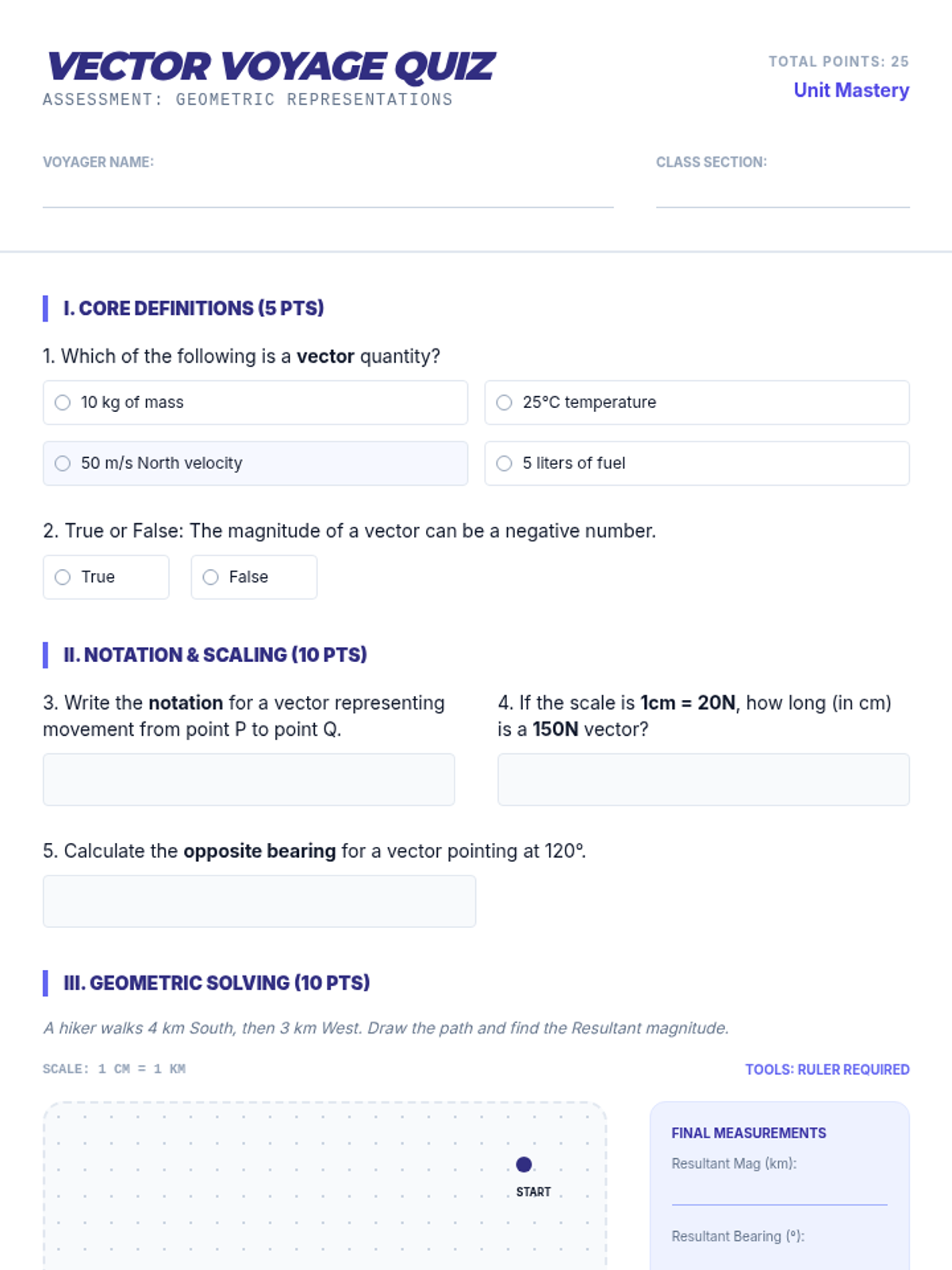
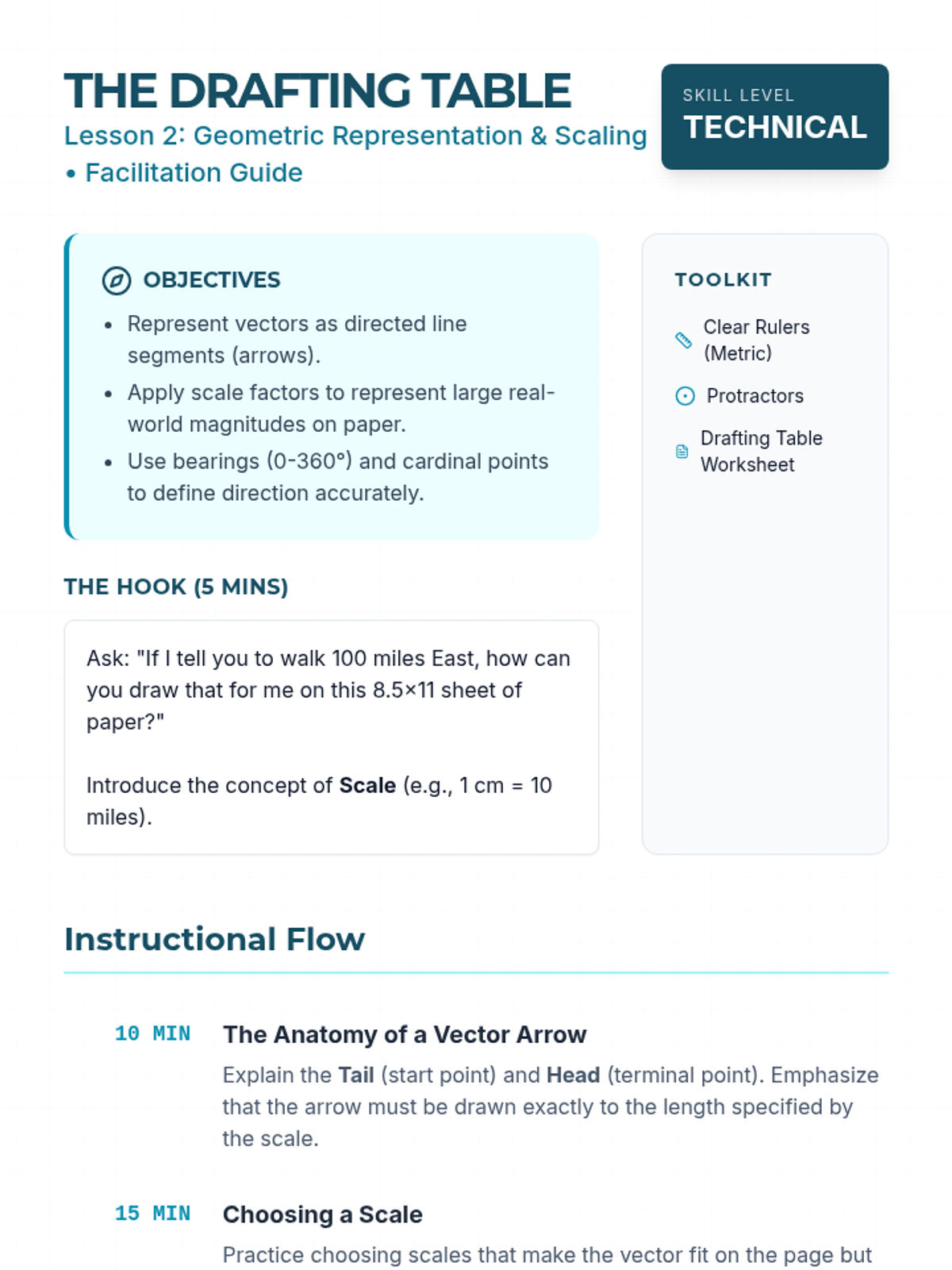
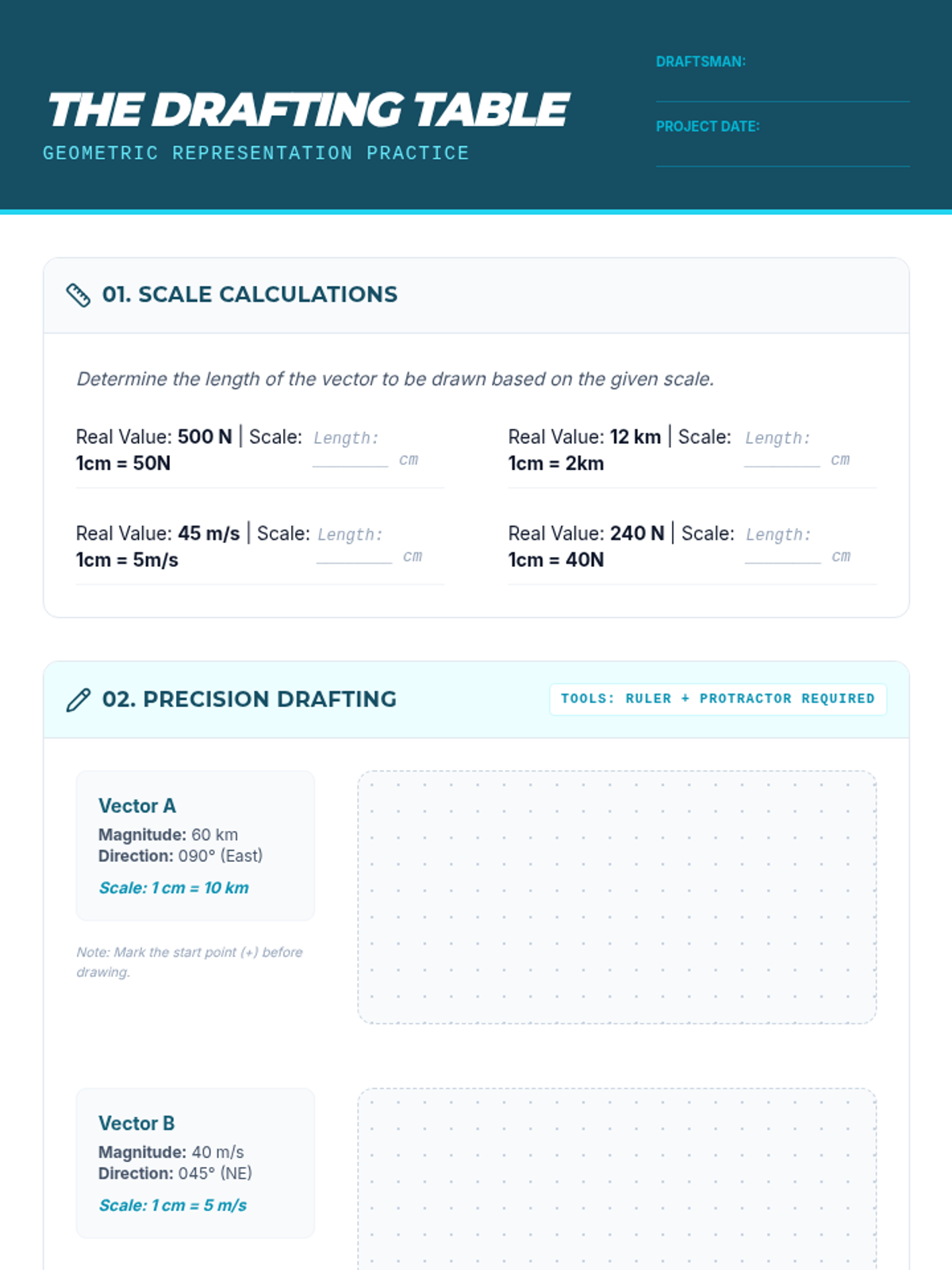
Learners focus on drawing vectors accurately using rulers and protractors, practicing scaling and identifying direction using cardinal points and bearings.
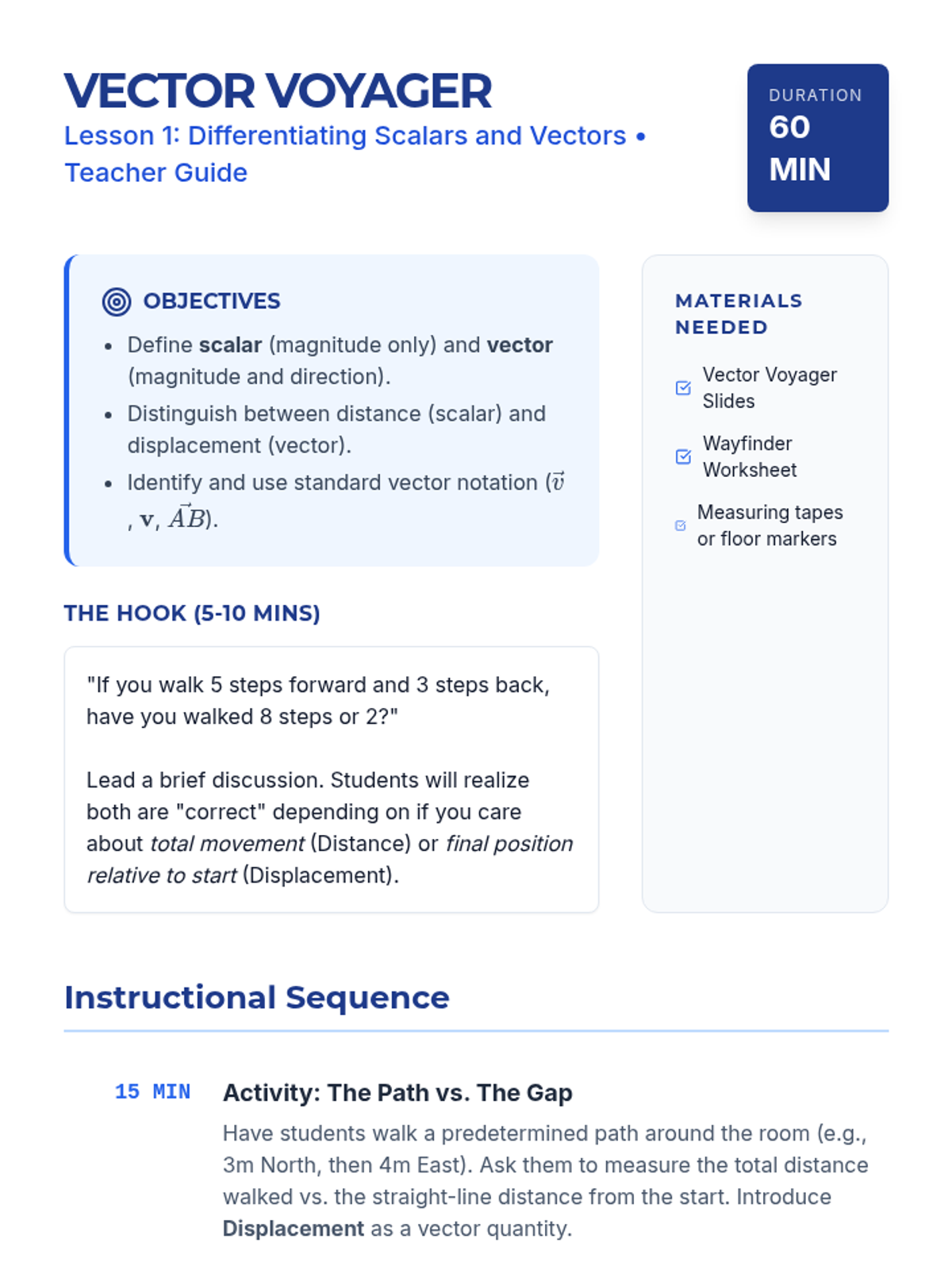
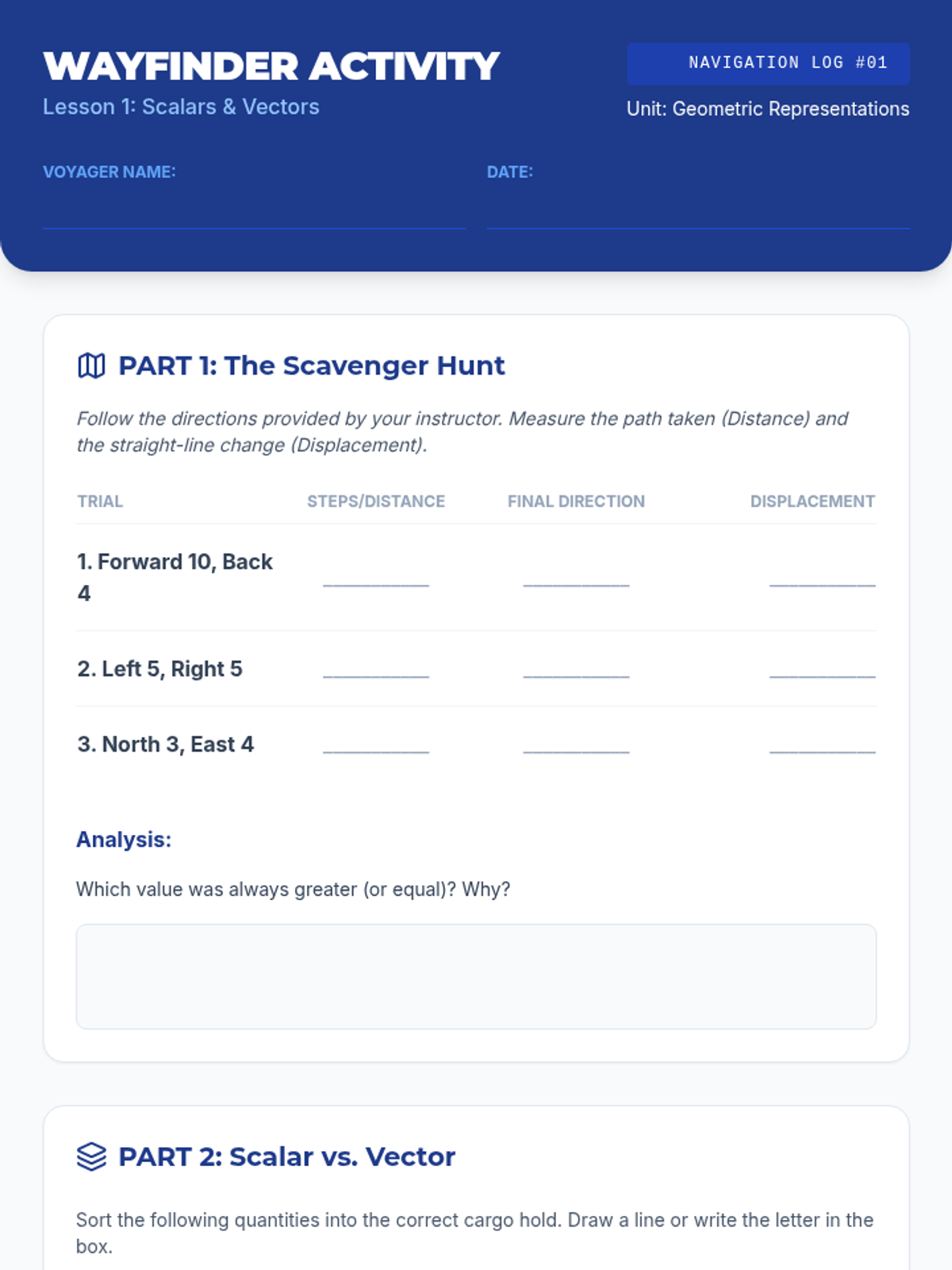
Students participate in a displacement vs. distance activity to physically experience the difference between scalar and vector quantities. They categorize real-world examples and learn standard notation.