Essential grammar structures, high-frequency vocabulary, and foundational literacy skills. Equips learners with basic speaking and listening abilities for everyday interactions and introductory text comprehension.
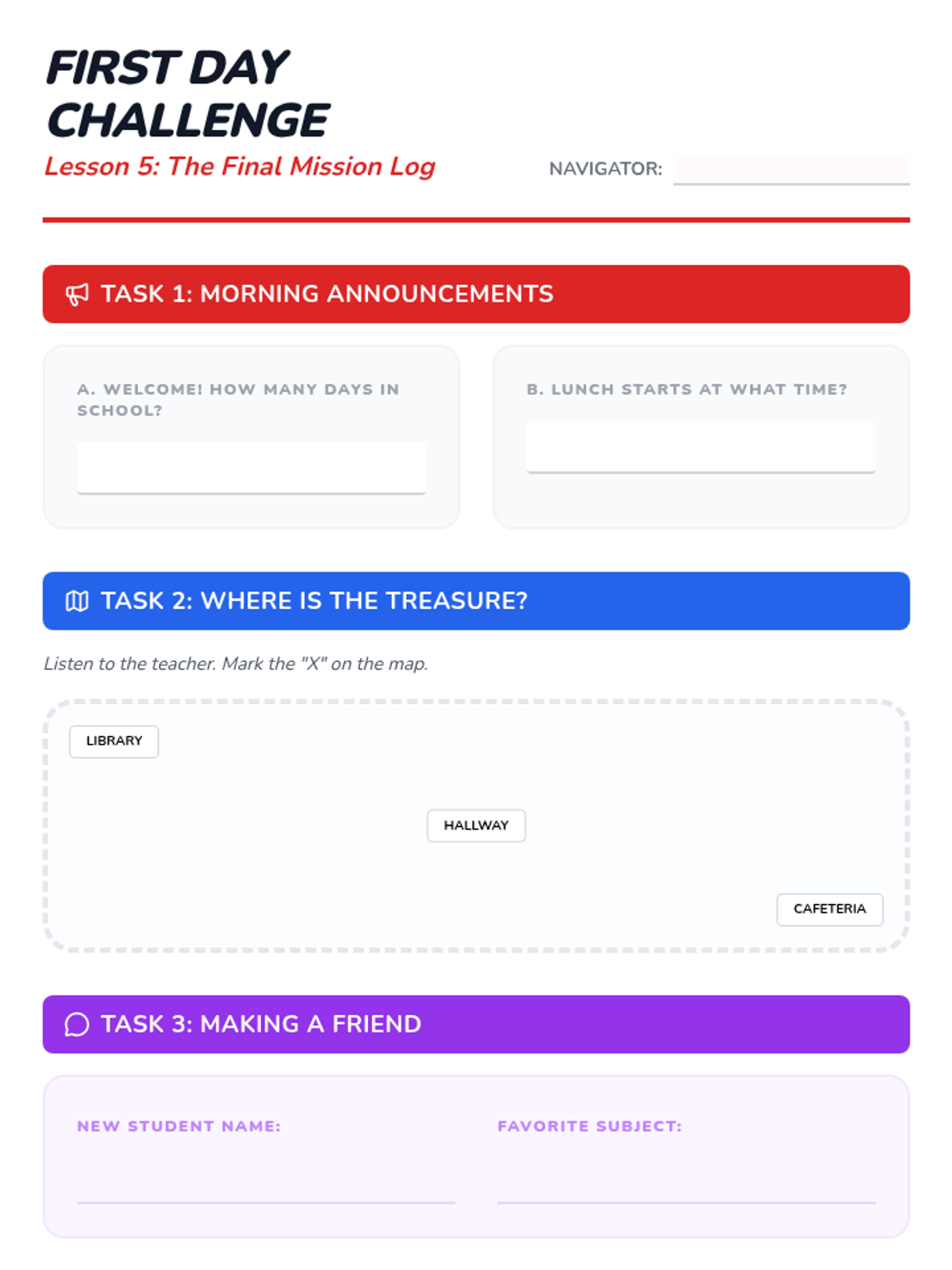
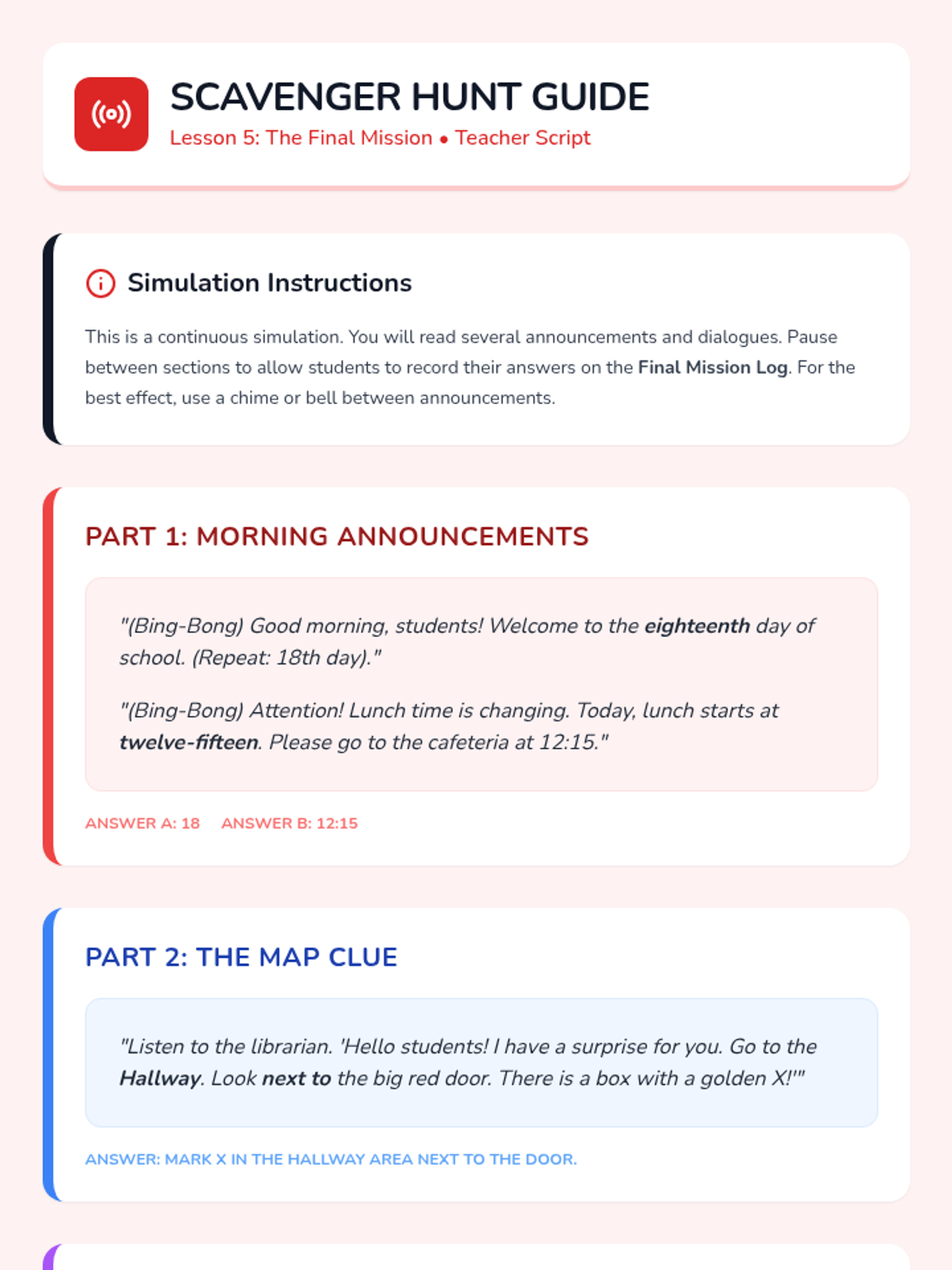
A culminating simulation where students synthesize all previous listening skills to navigate a virtual first day of school.
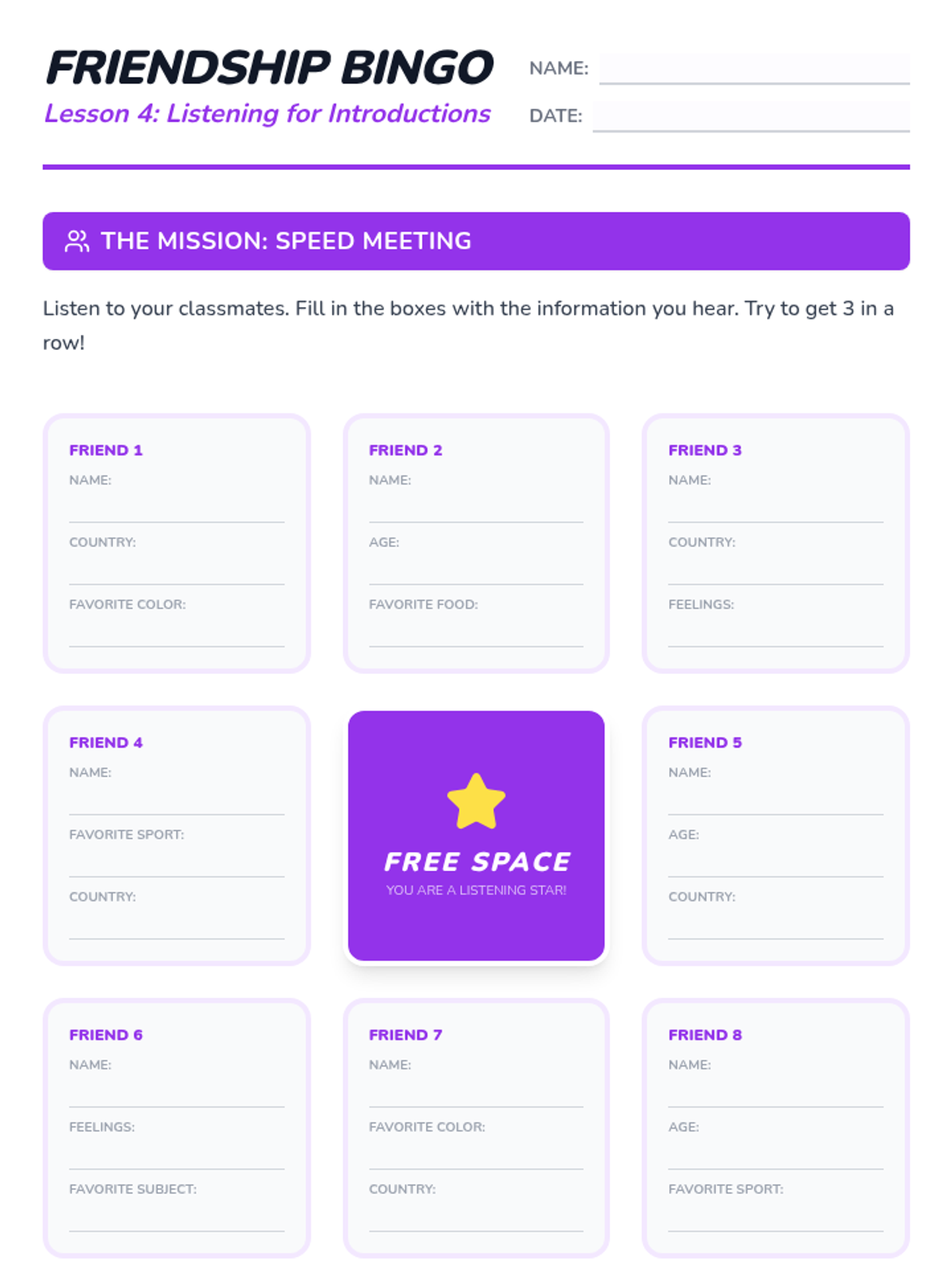
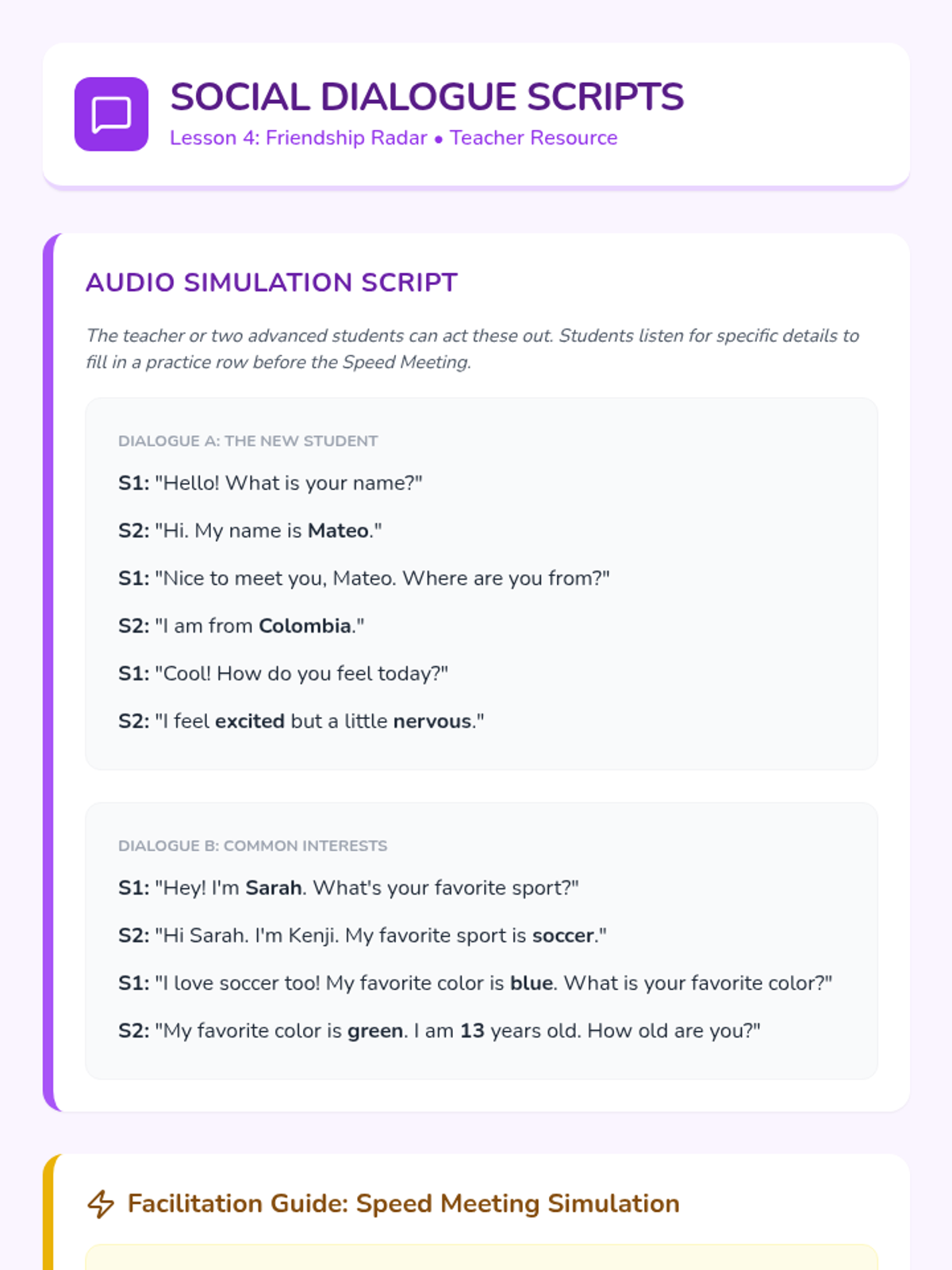
Students practice listening for key details in social greetings and personal introductions, focusing on 'Wh-' questions.
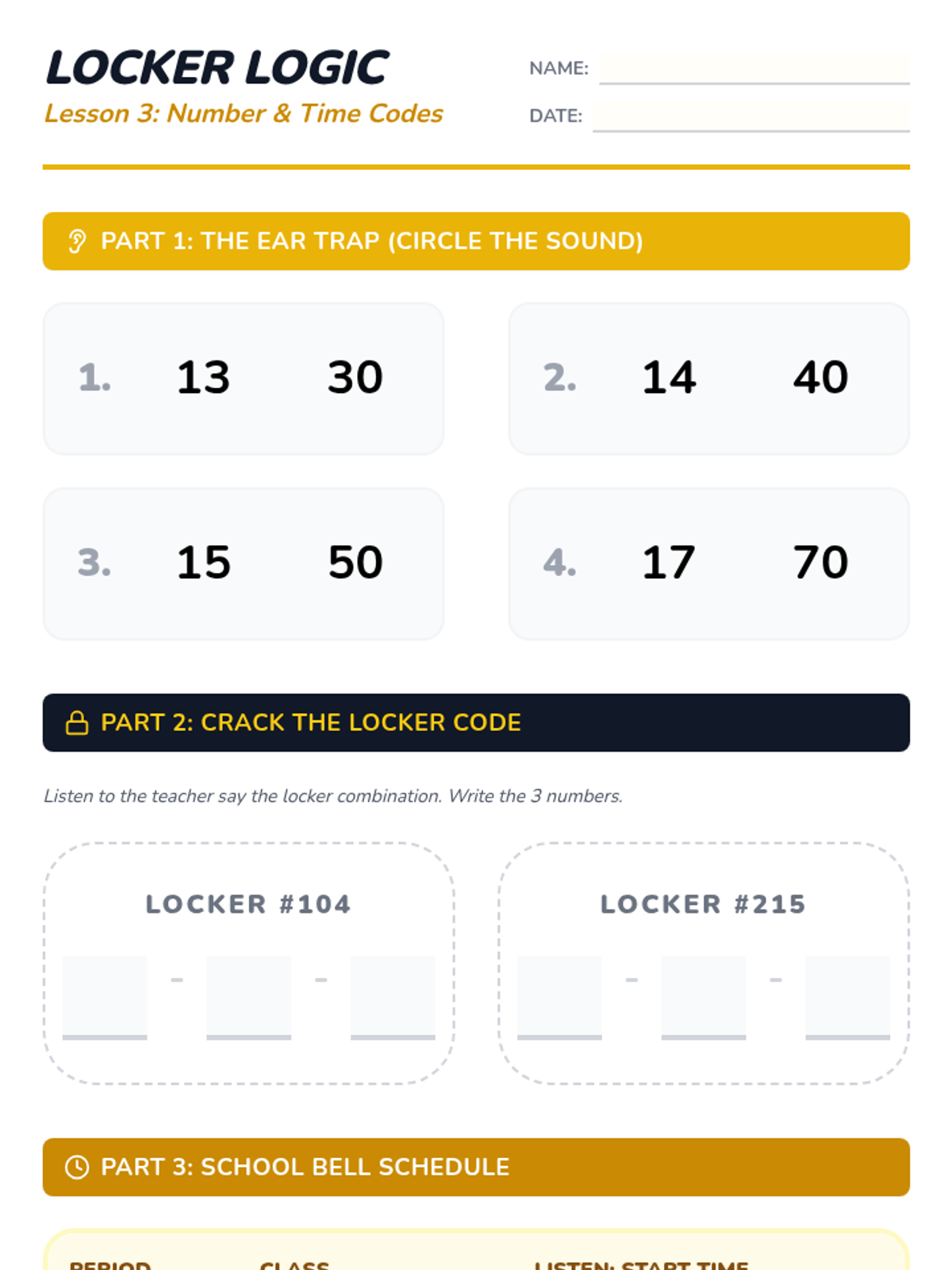
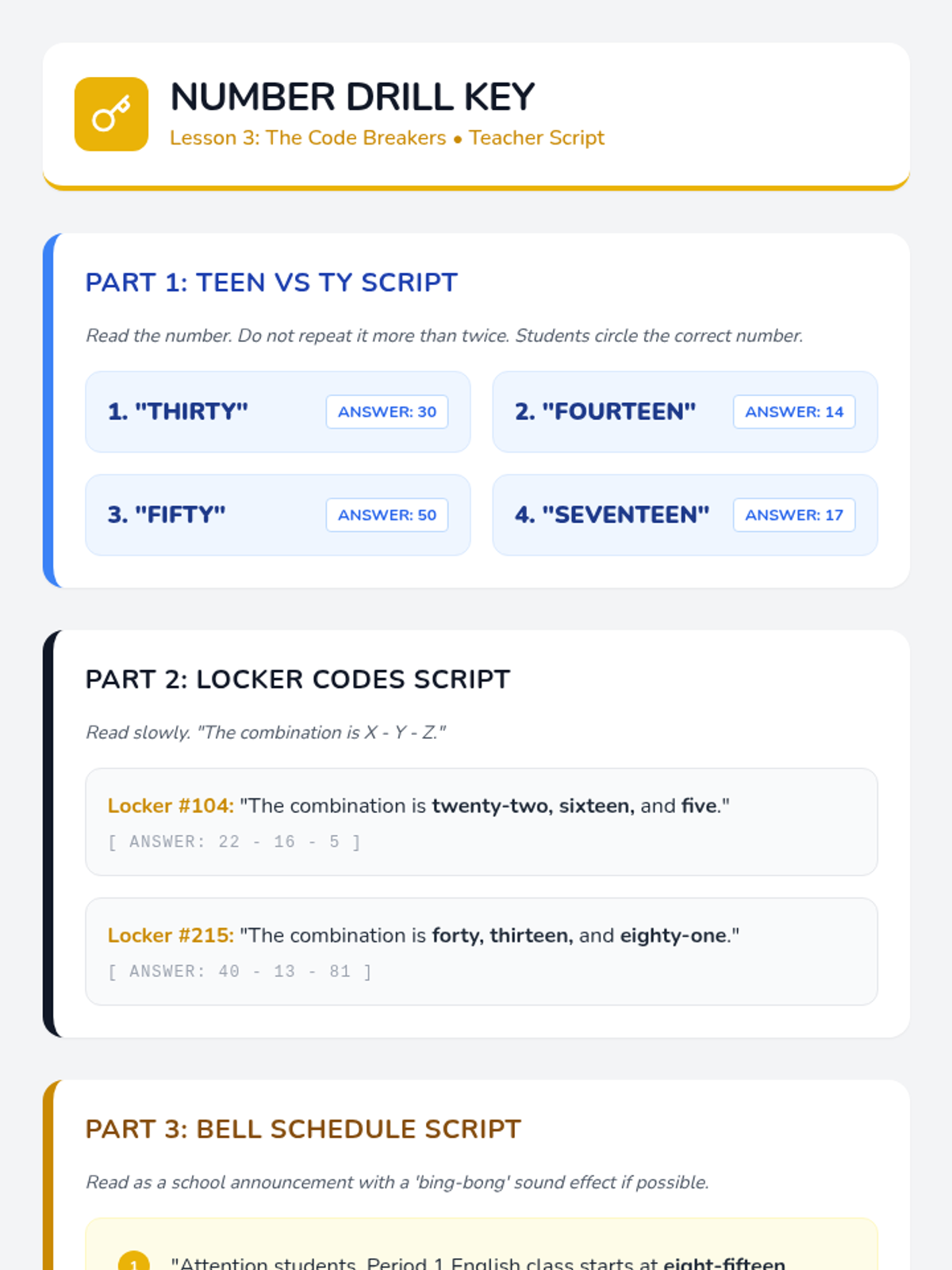
This lesson focuses on auditory discrimination of numbers (0-100), time-telling, and locker combinations.
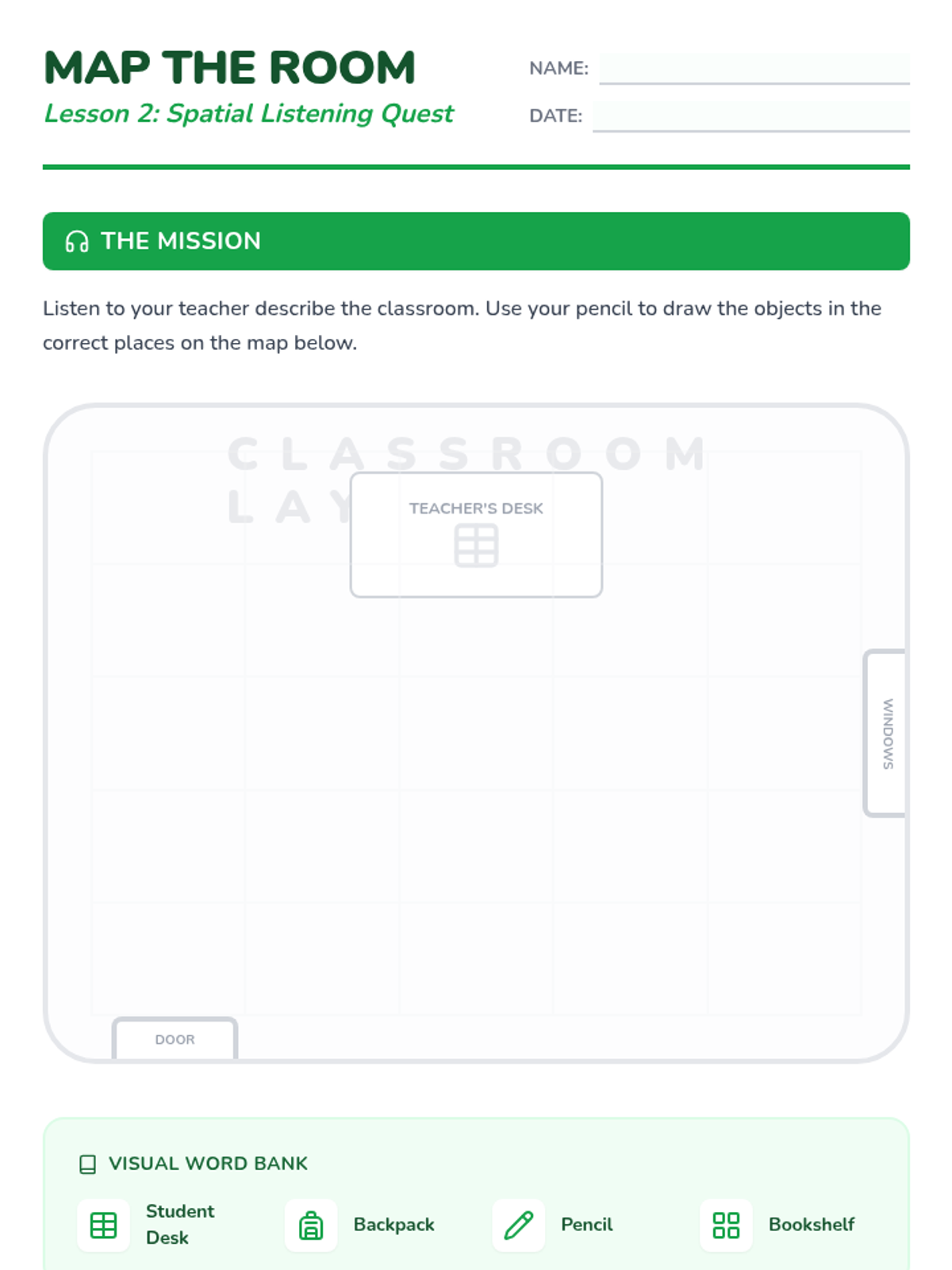
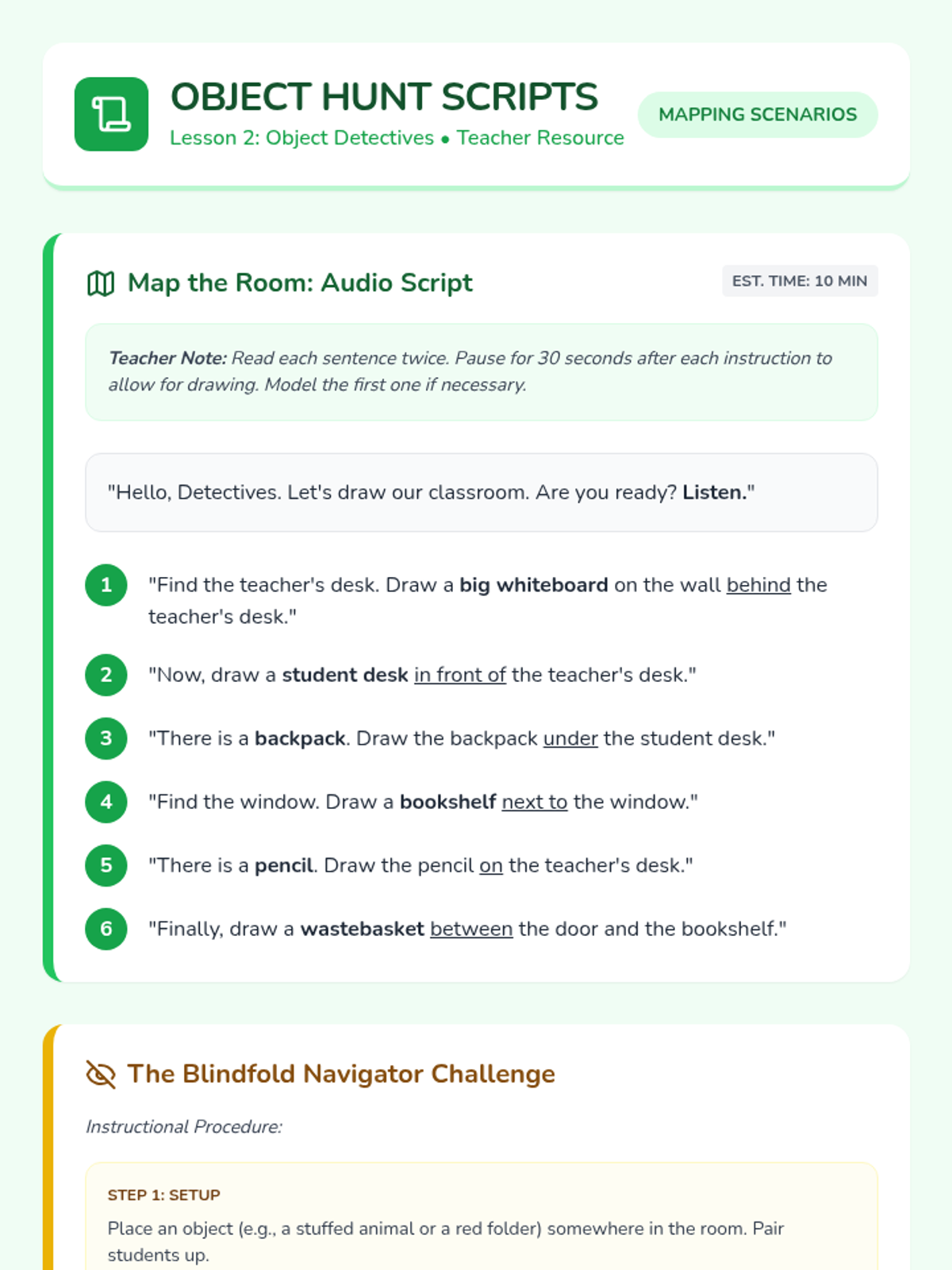
Learners identify common school objects and their locations using prepositions of place and spatial listening cues.
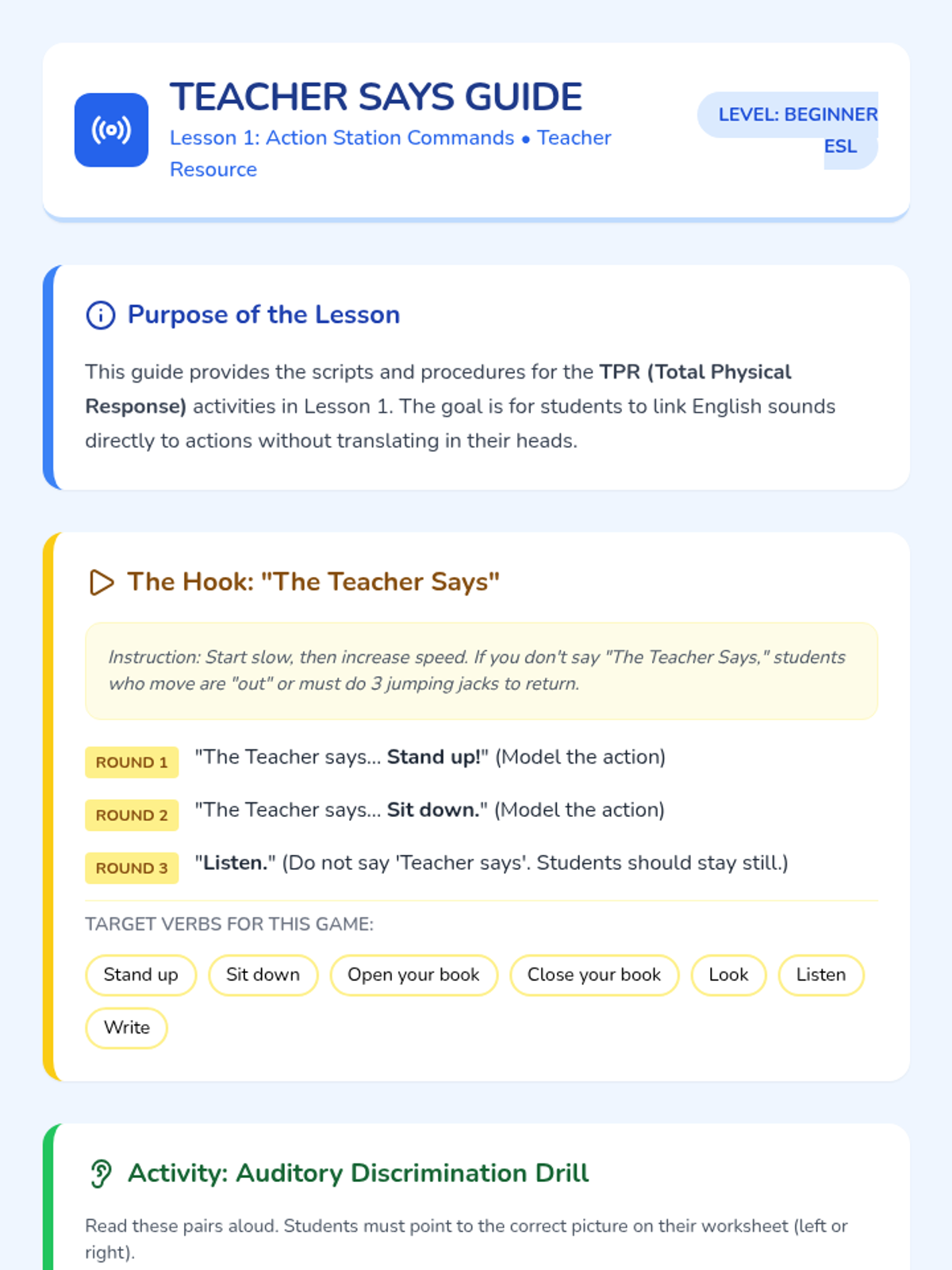
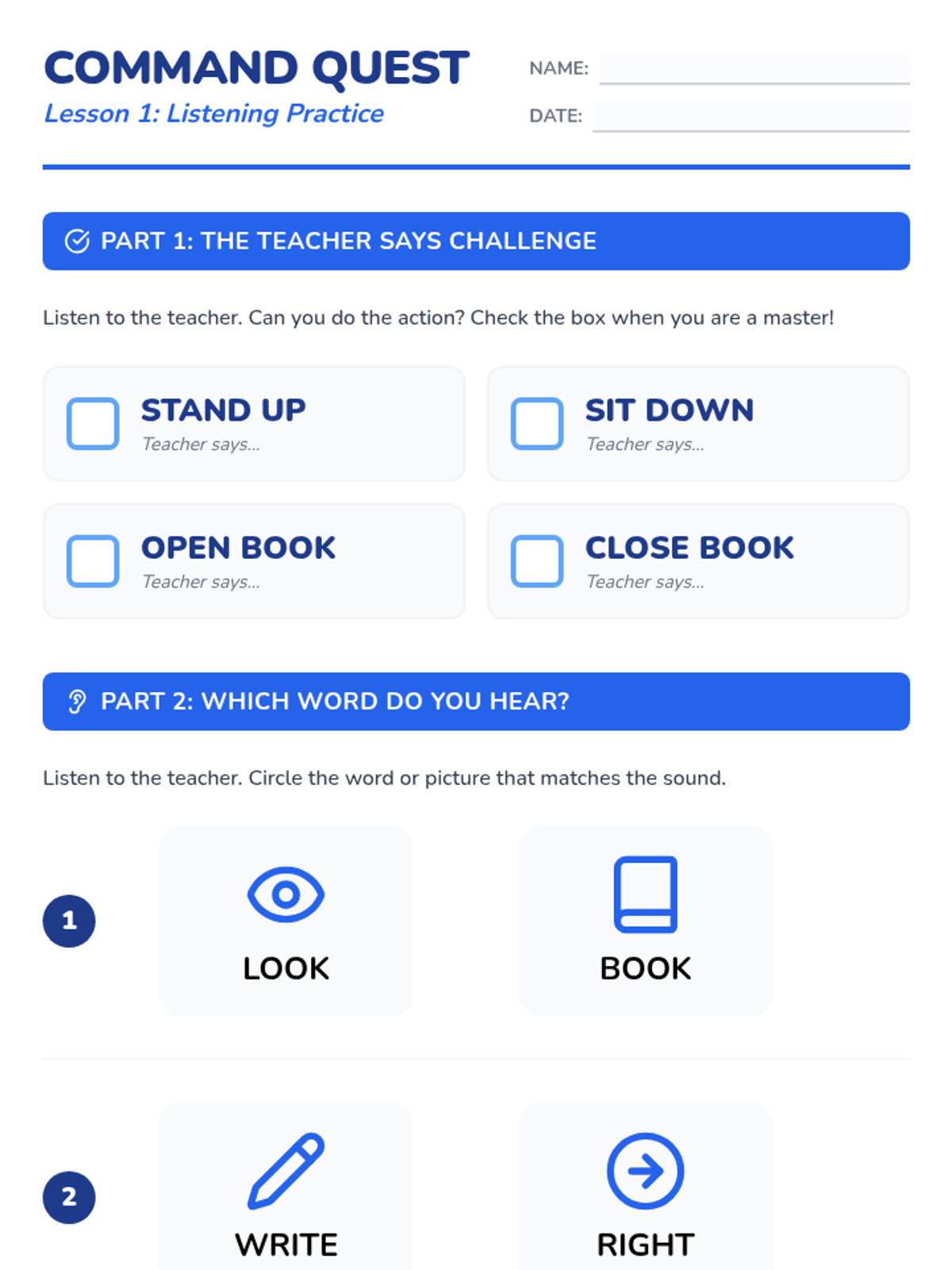
Students learn to recognize and respond to basic imperative verbs through high-energy Total Physical Response (TPR) activities and games.
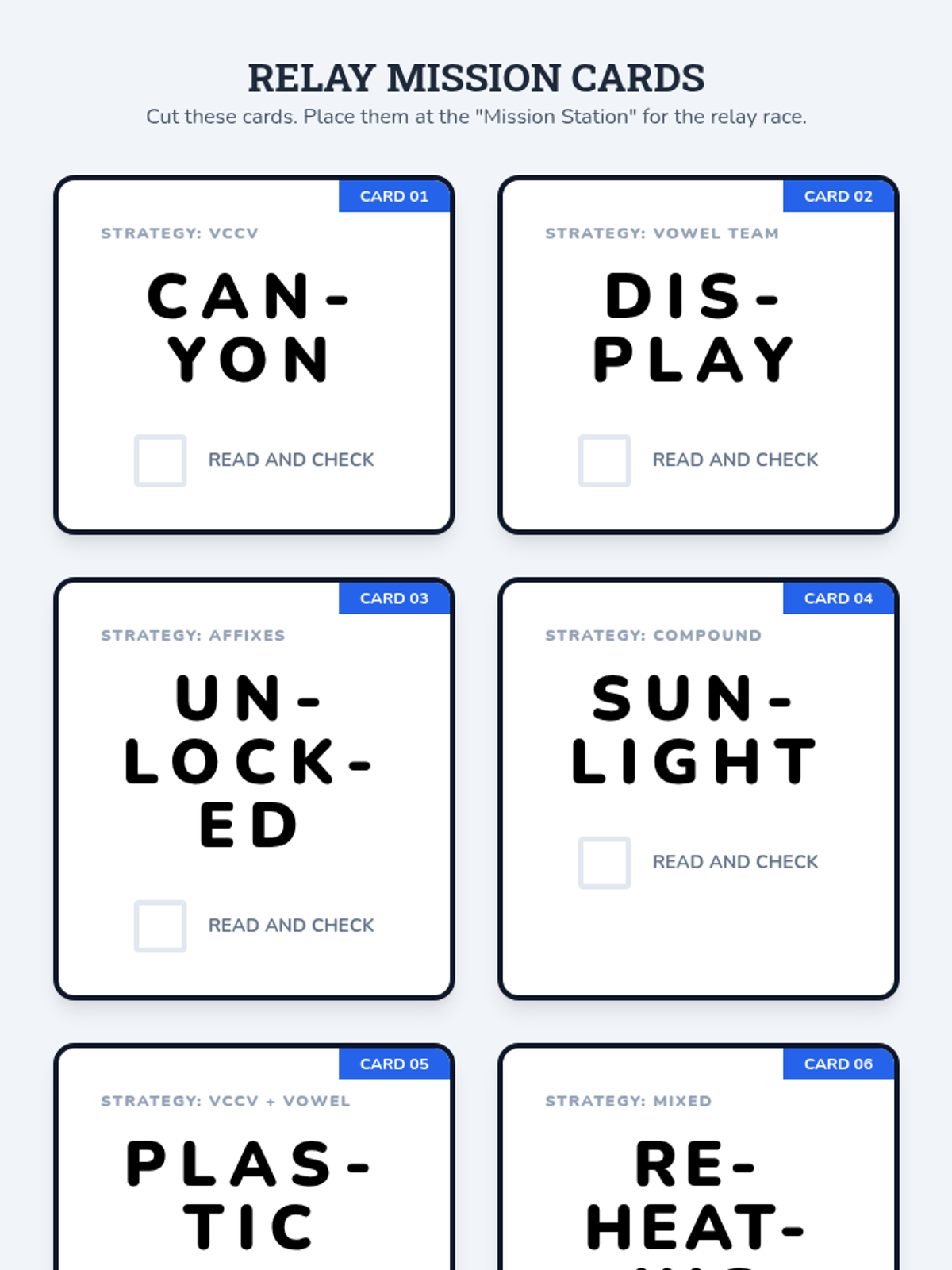
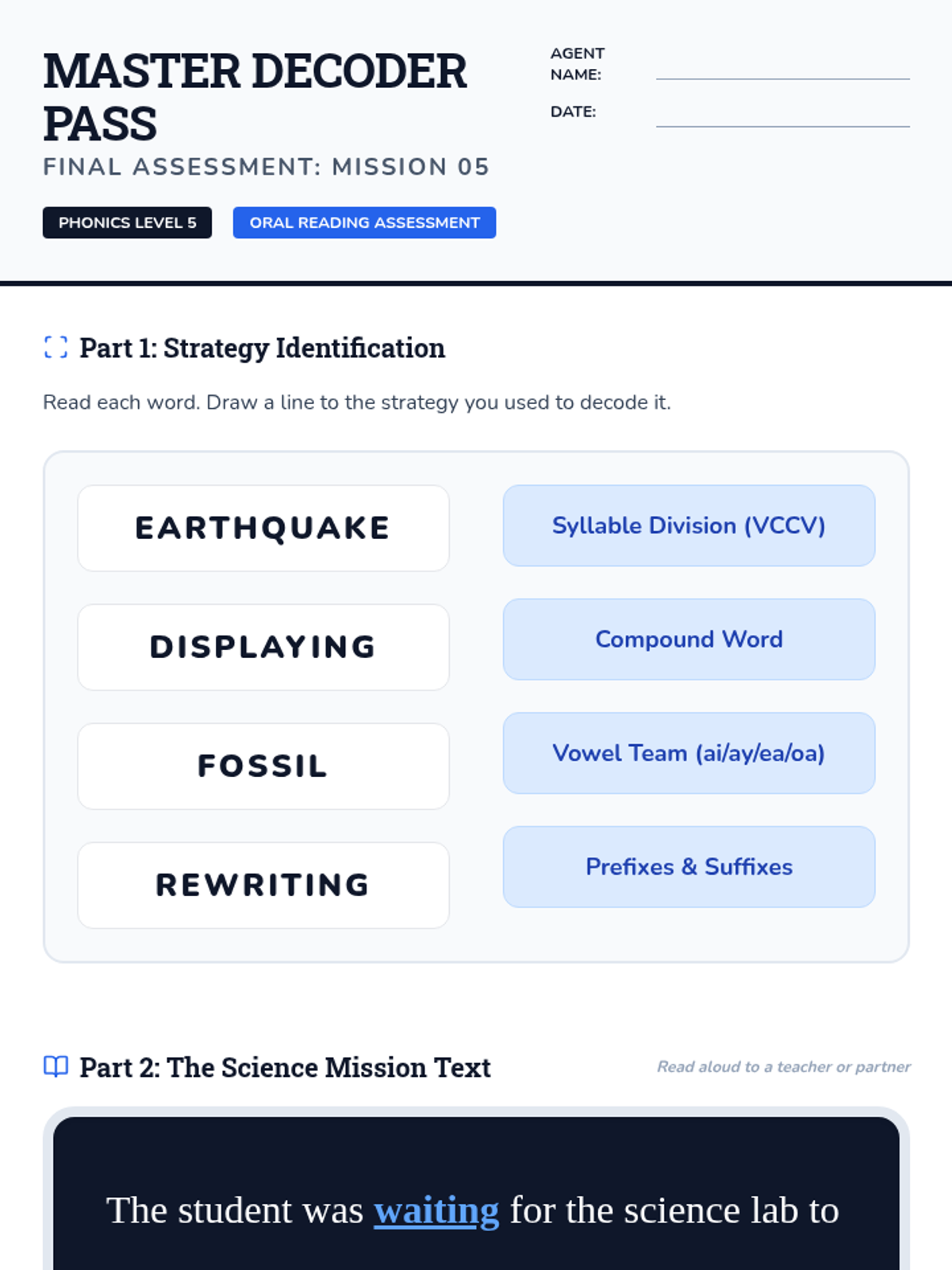
A cumulative review where students apply all decoding strategies in a relay race and oral reading assessment.
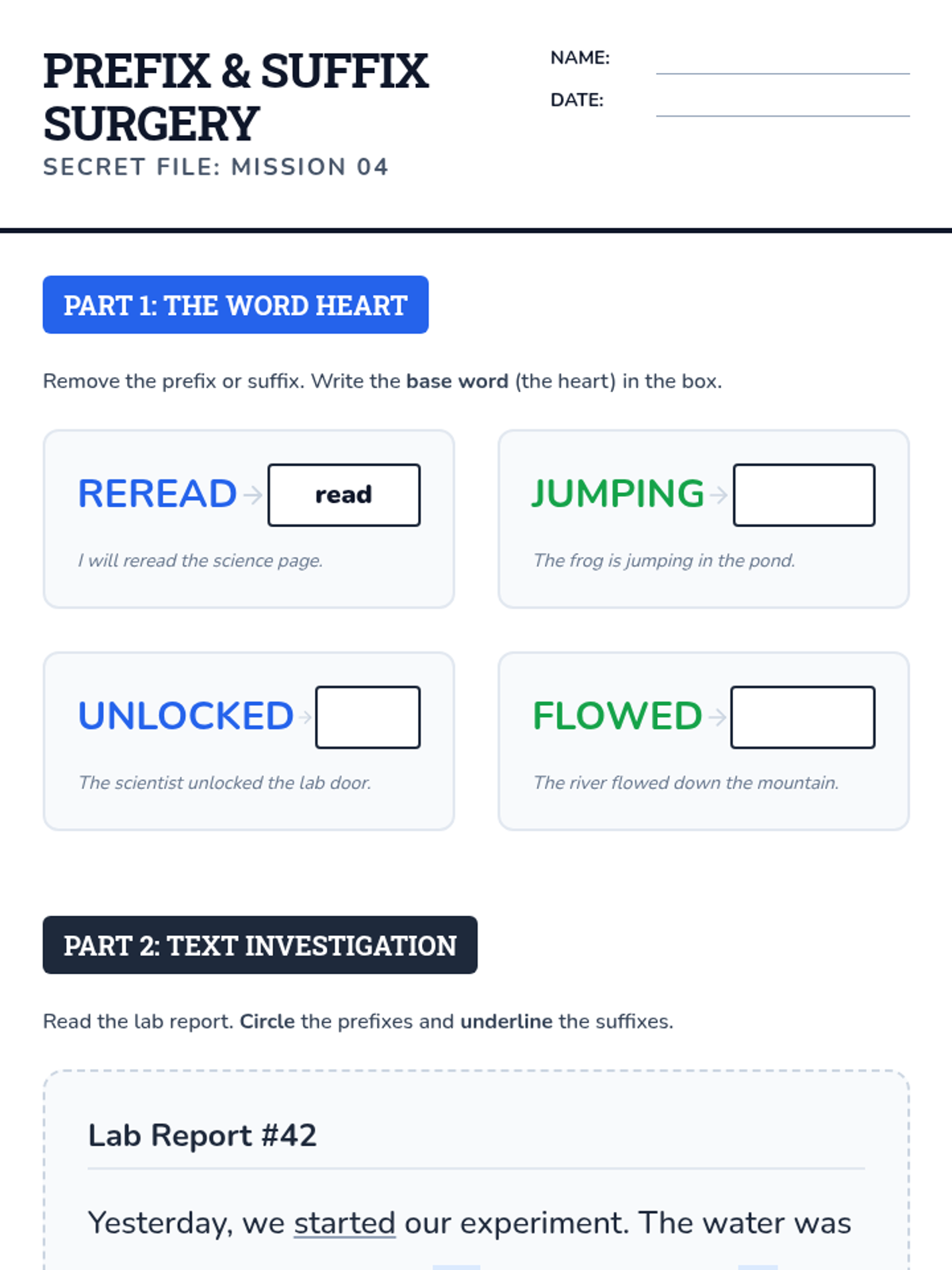
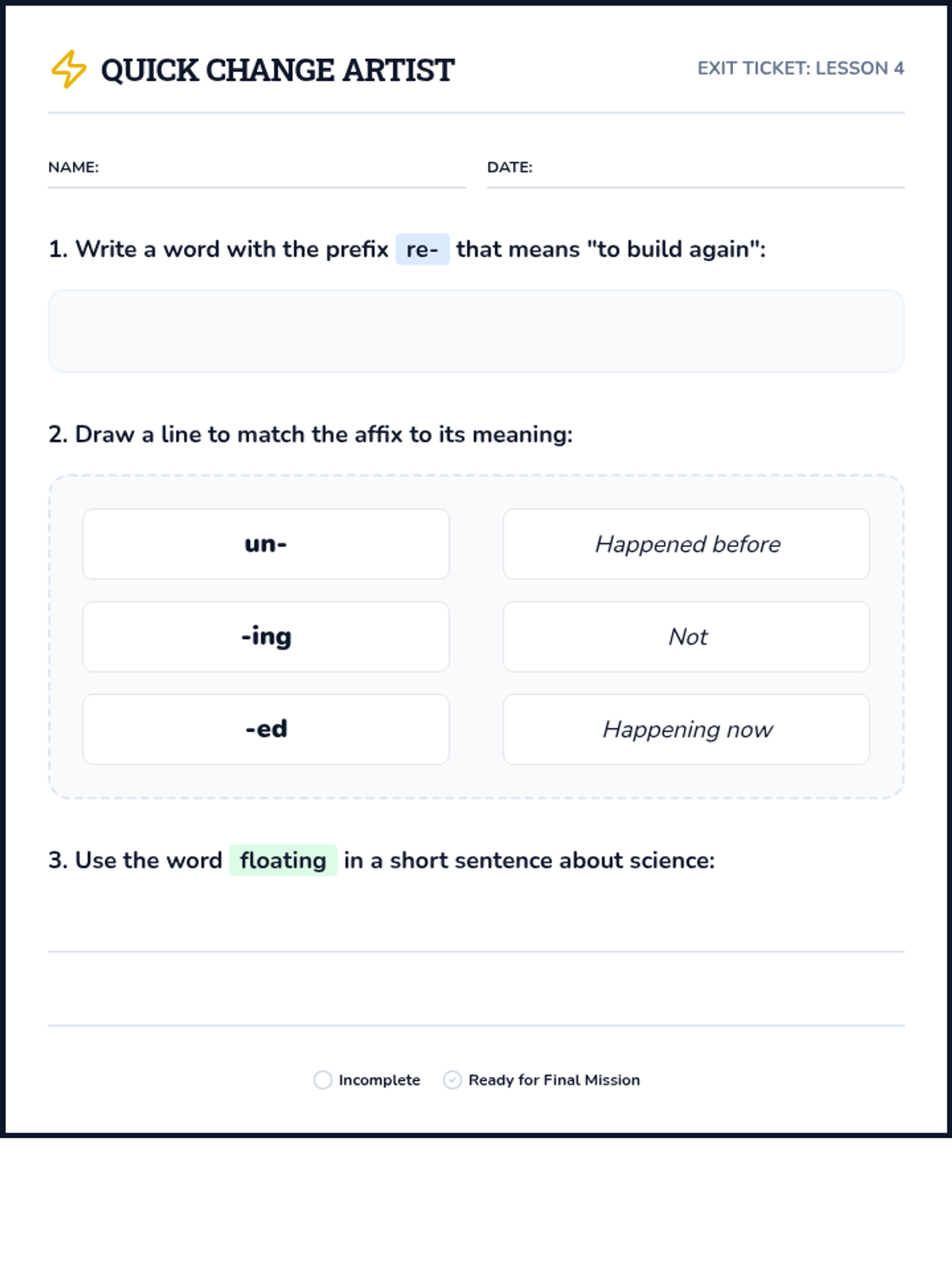
Identifying common prefixes and suffixes (un-, re-, -ing, -ed) to decode and understand the meaning of new words.
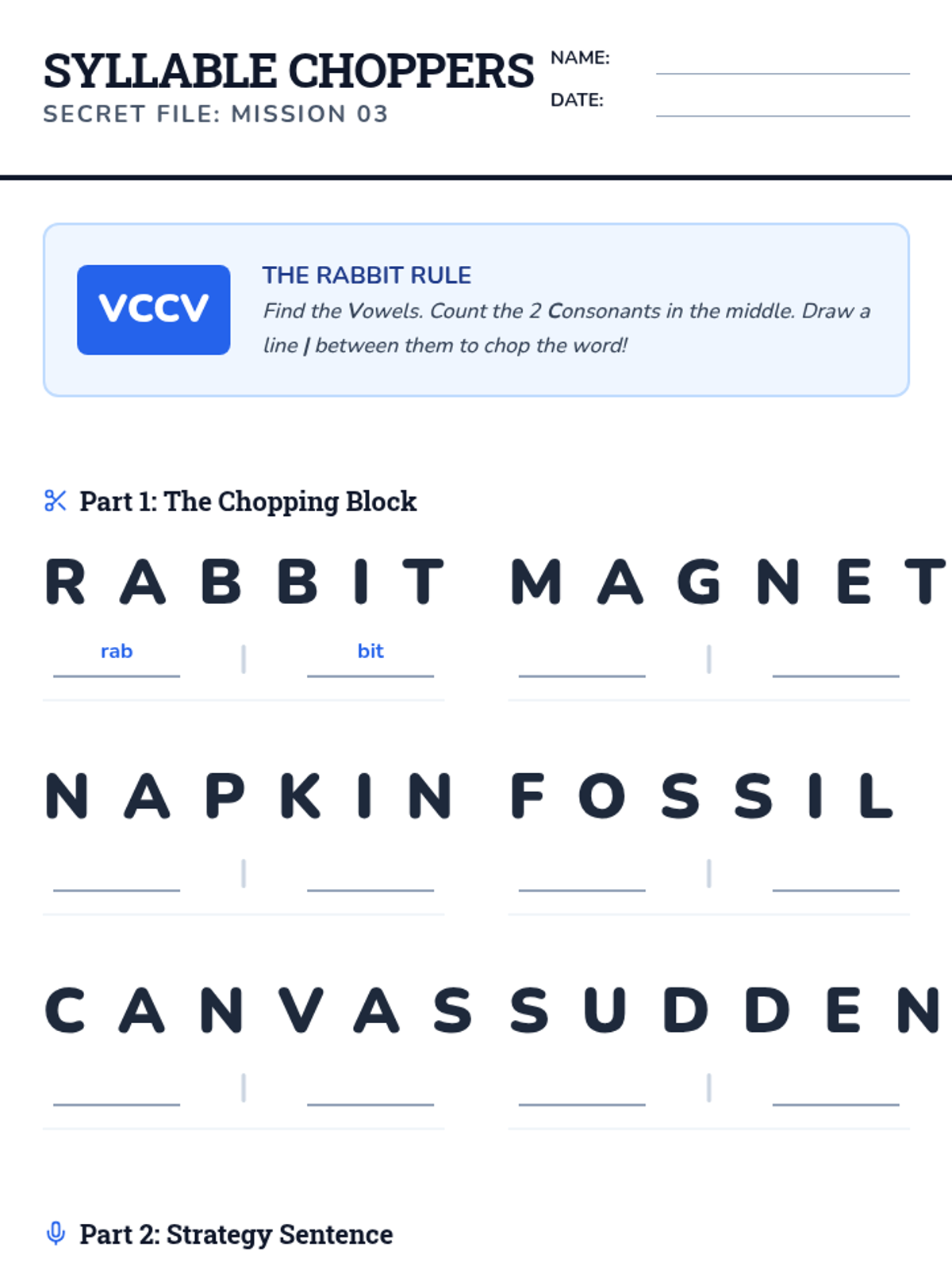
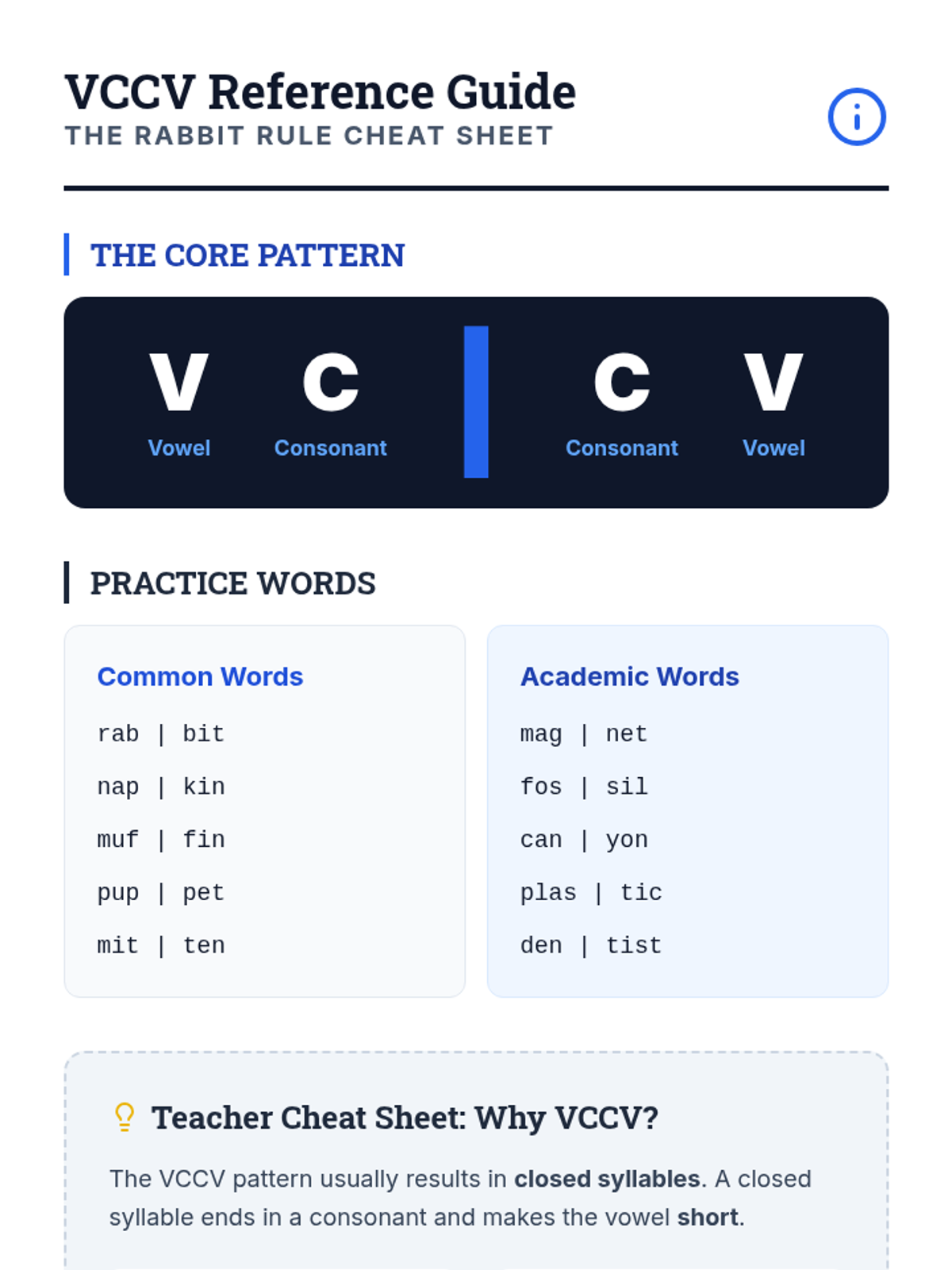
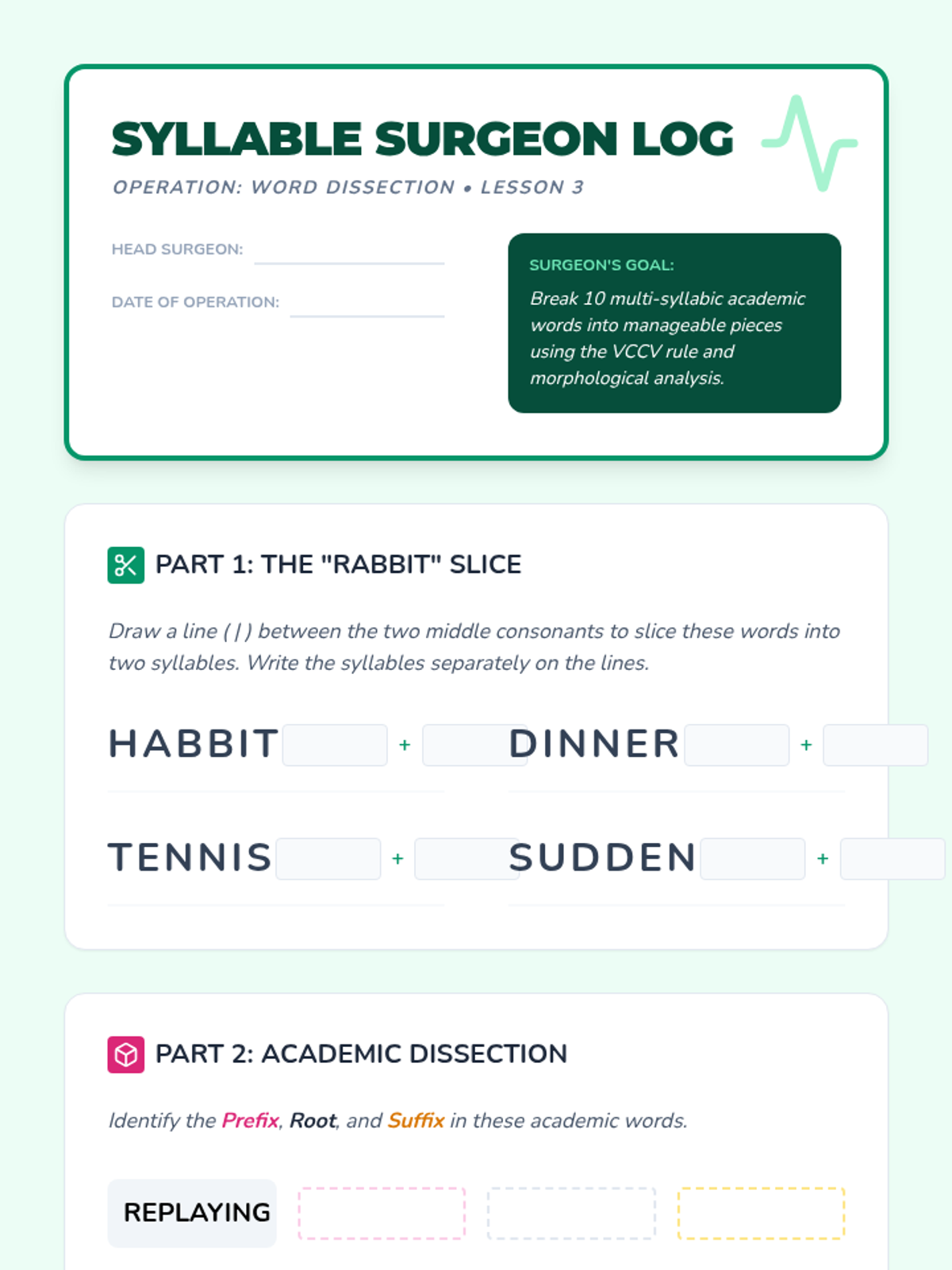
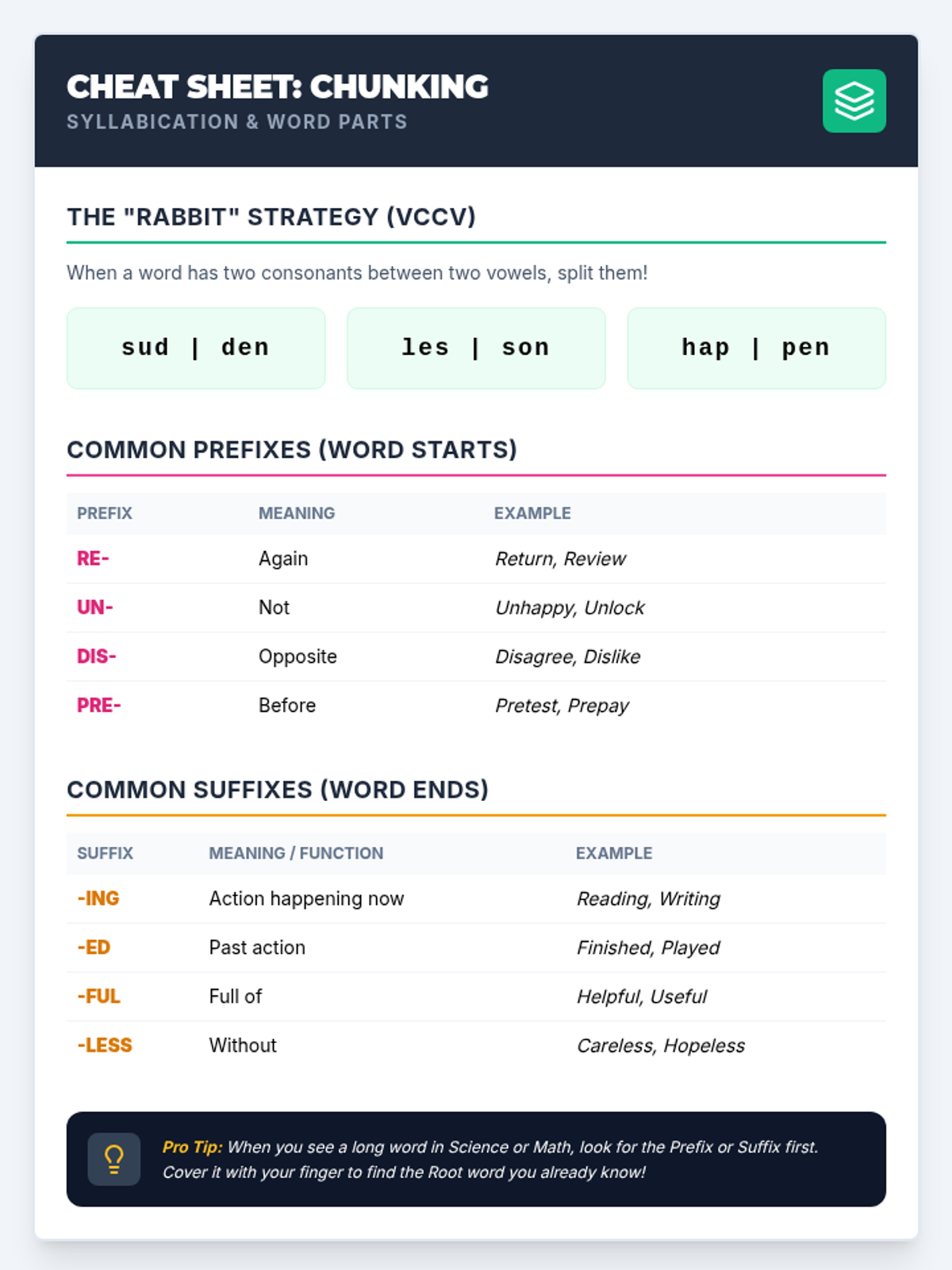
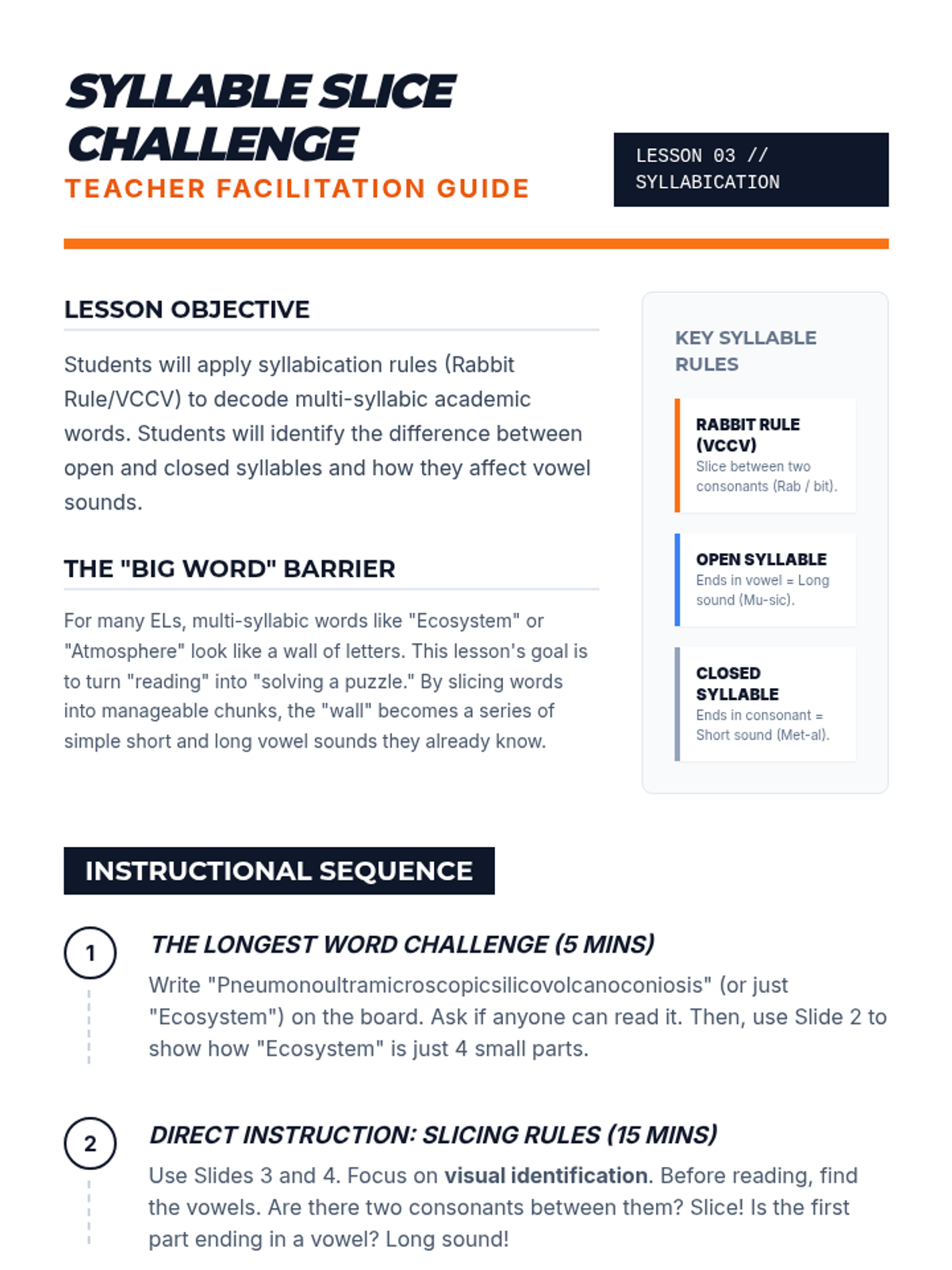
Introduction to the Vowel-Consonant-Consonant-Vowel (VCCV) syllable division pattern using the 'chopping' strategy.
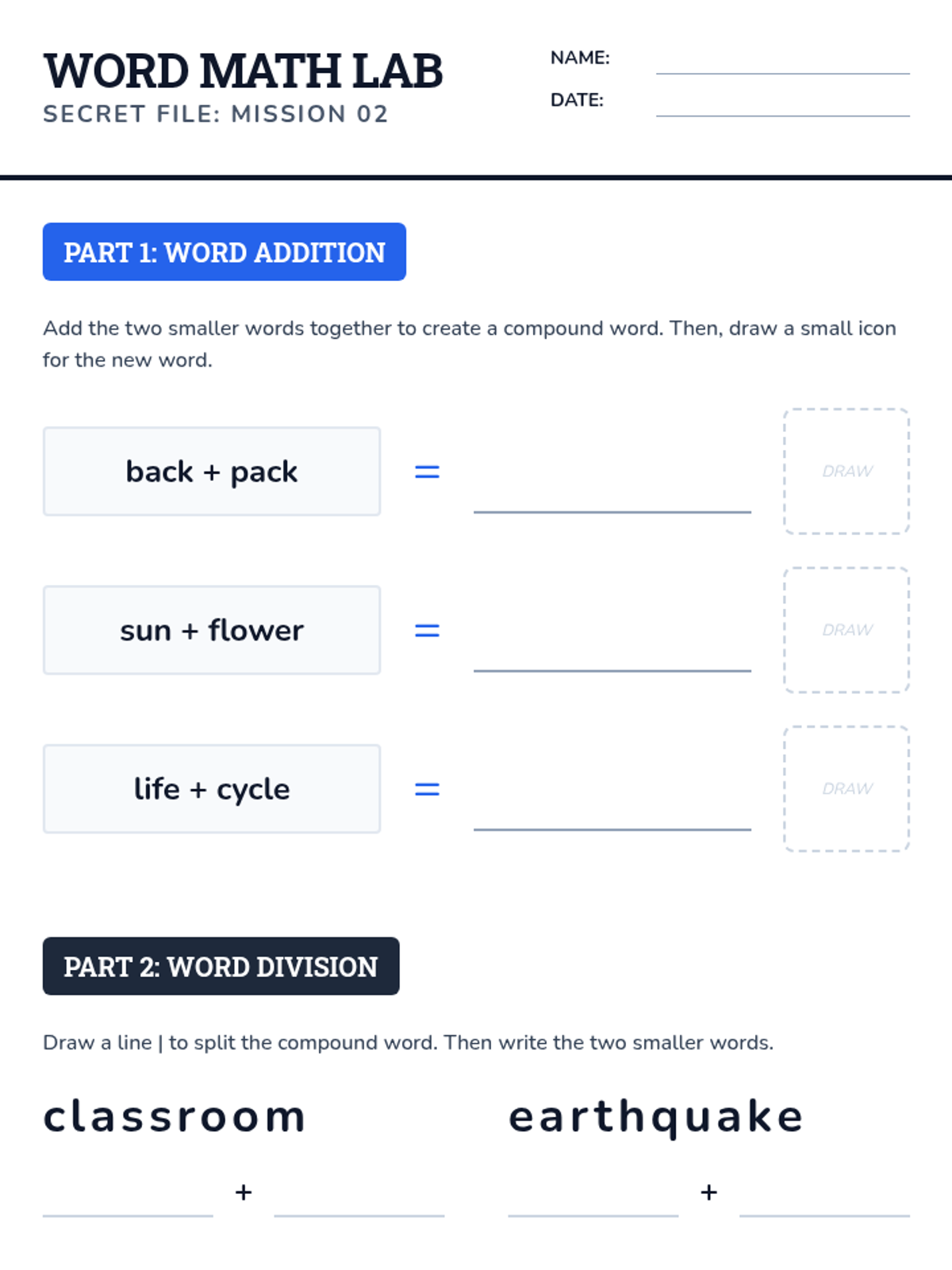
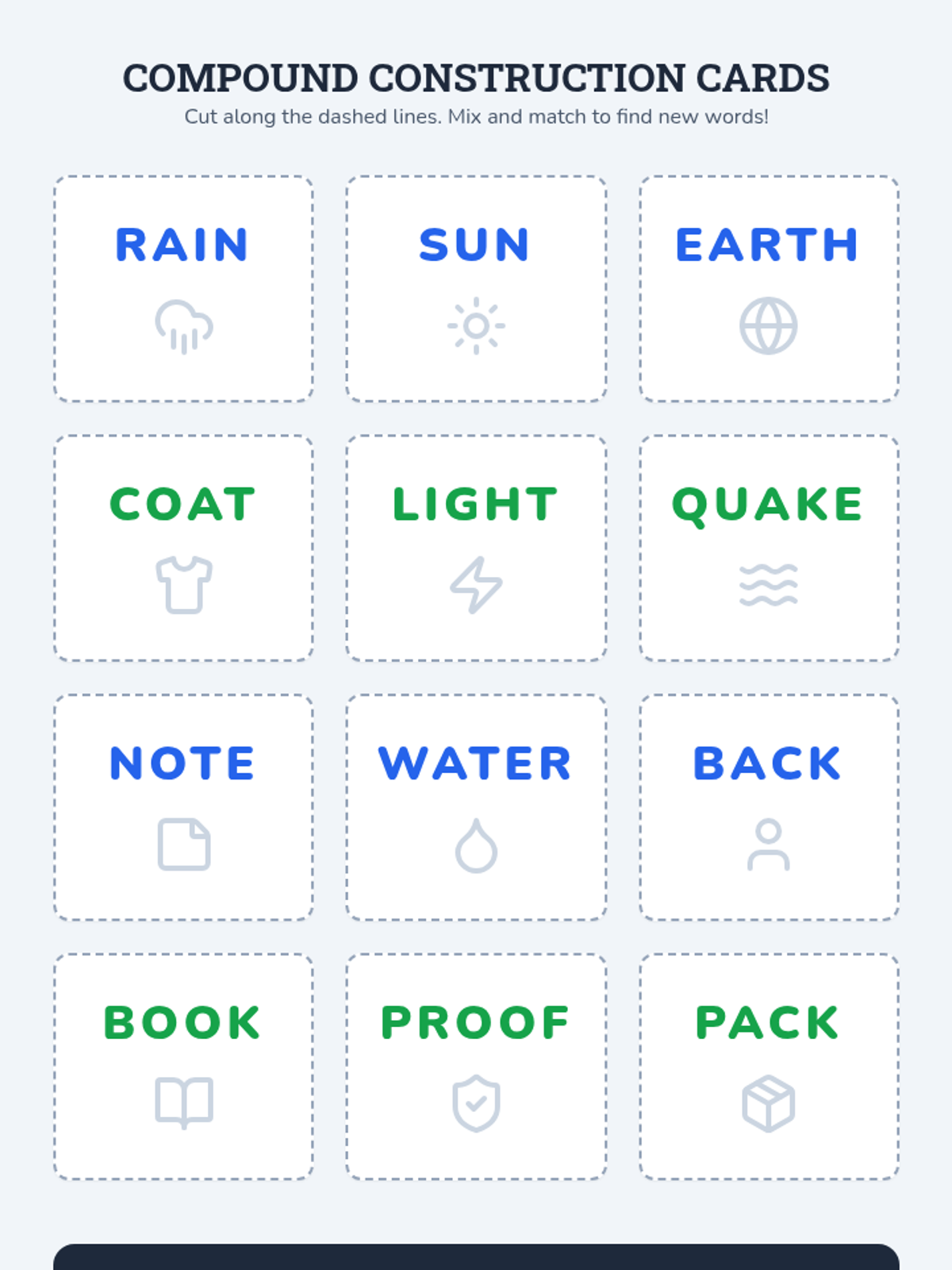
Learners identify and split compound words into smaller root words to understand meaning and improve reading fluency.
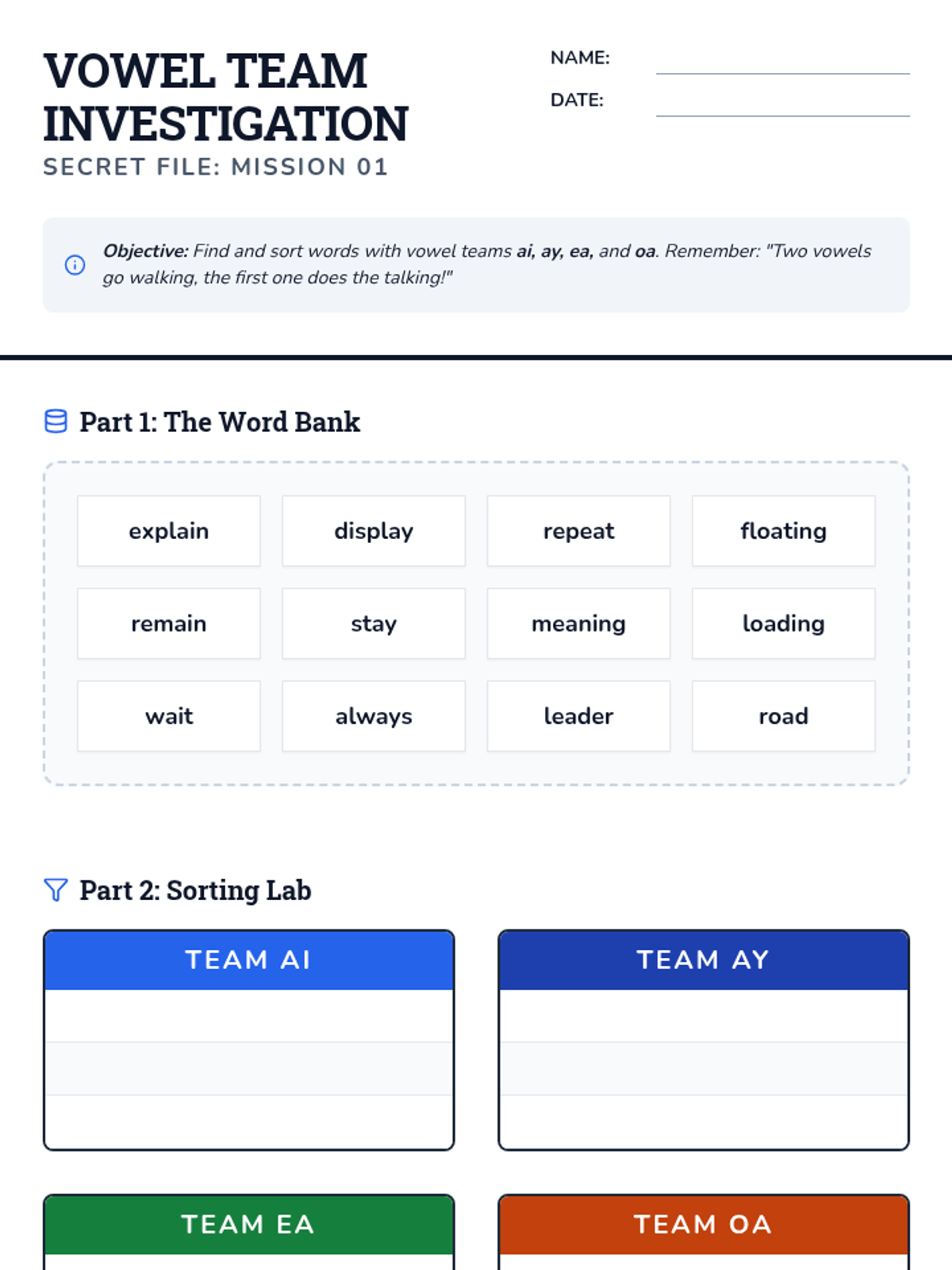
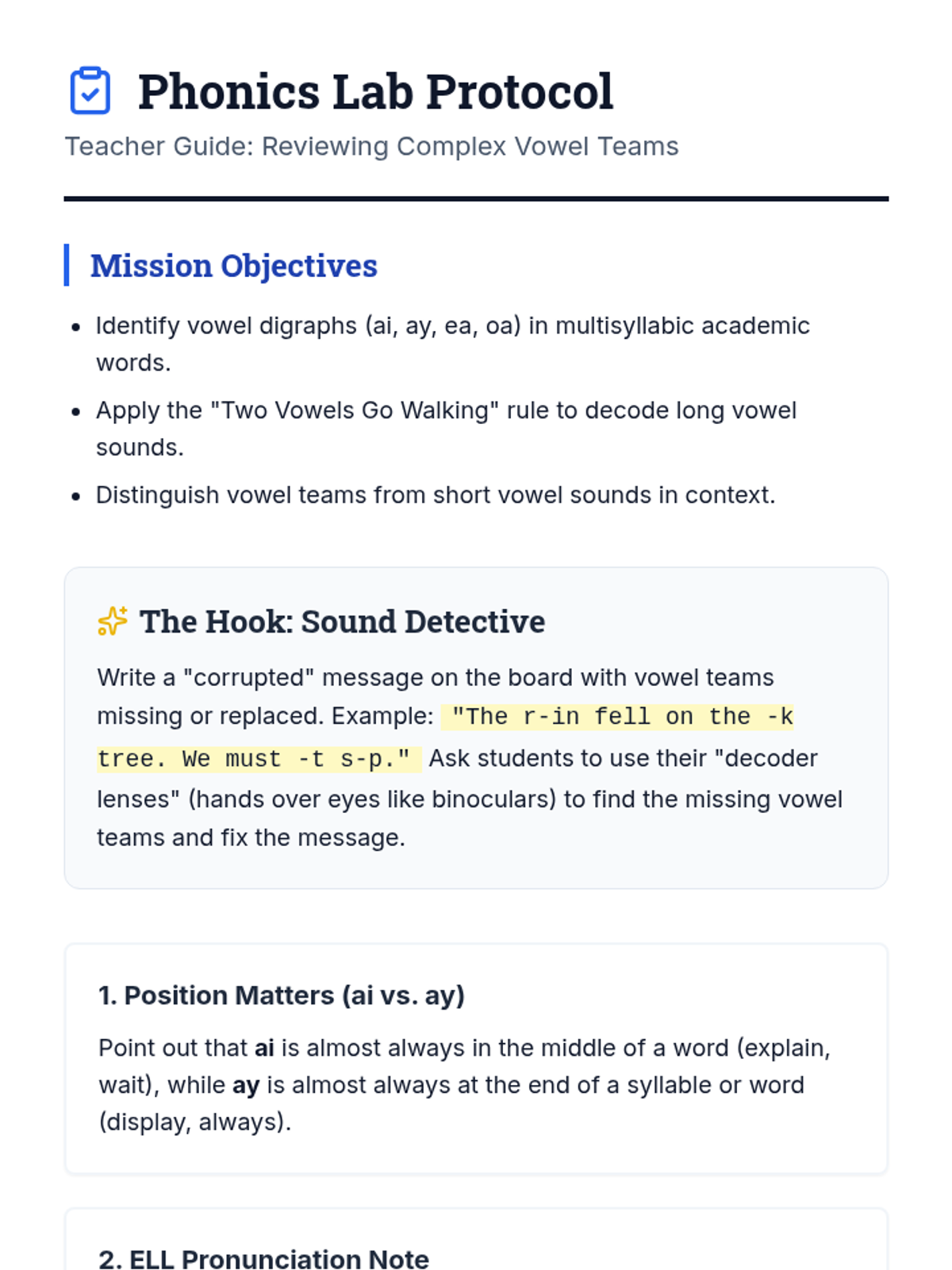
Students review common vowel digraphs (ea, oa, ai, ay) using academic vocabulary and identify long vowel patterns in context.
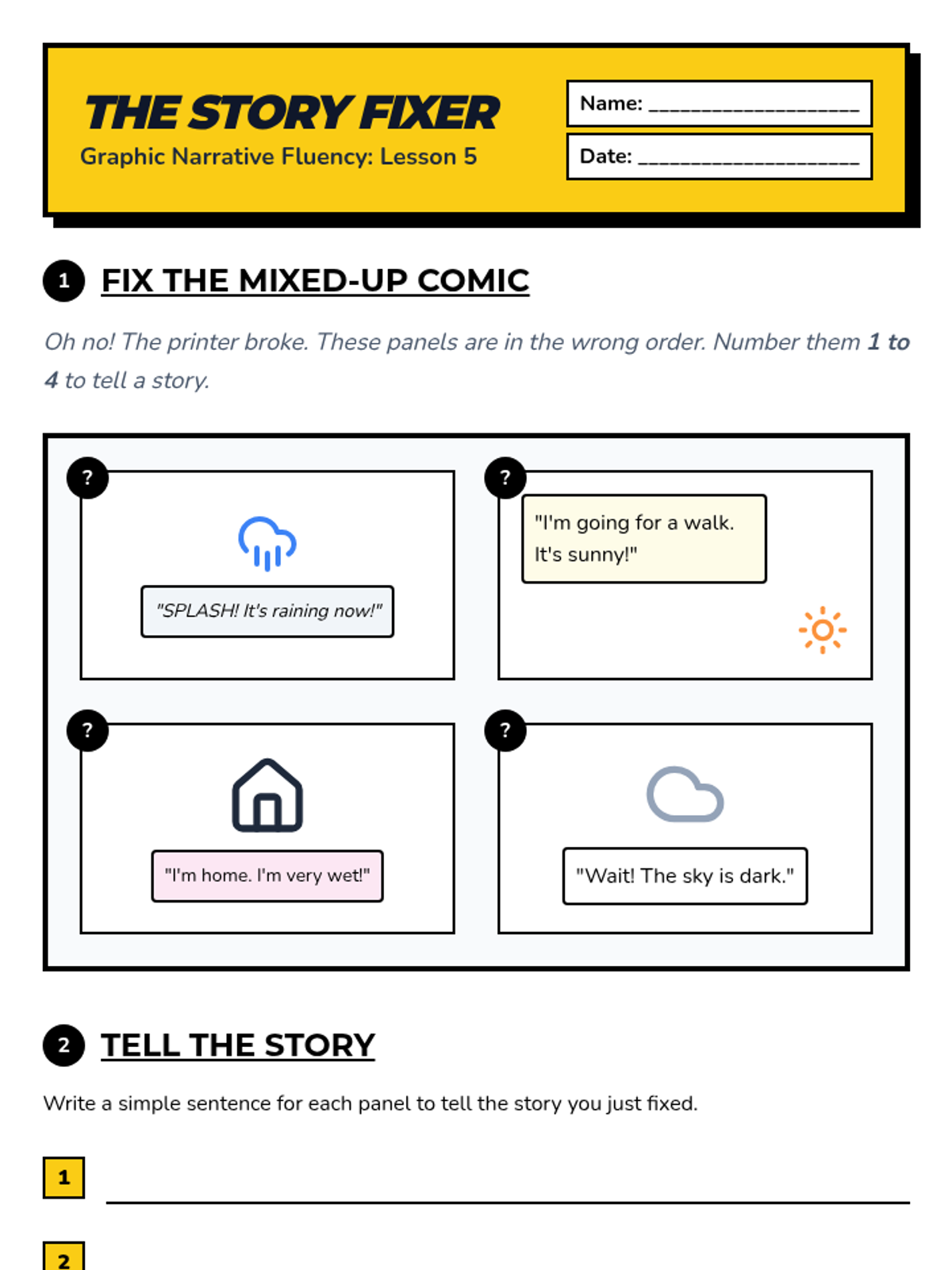
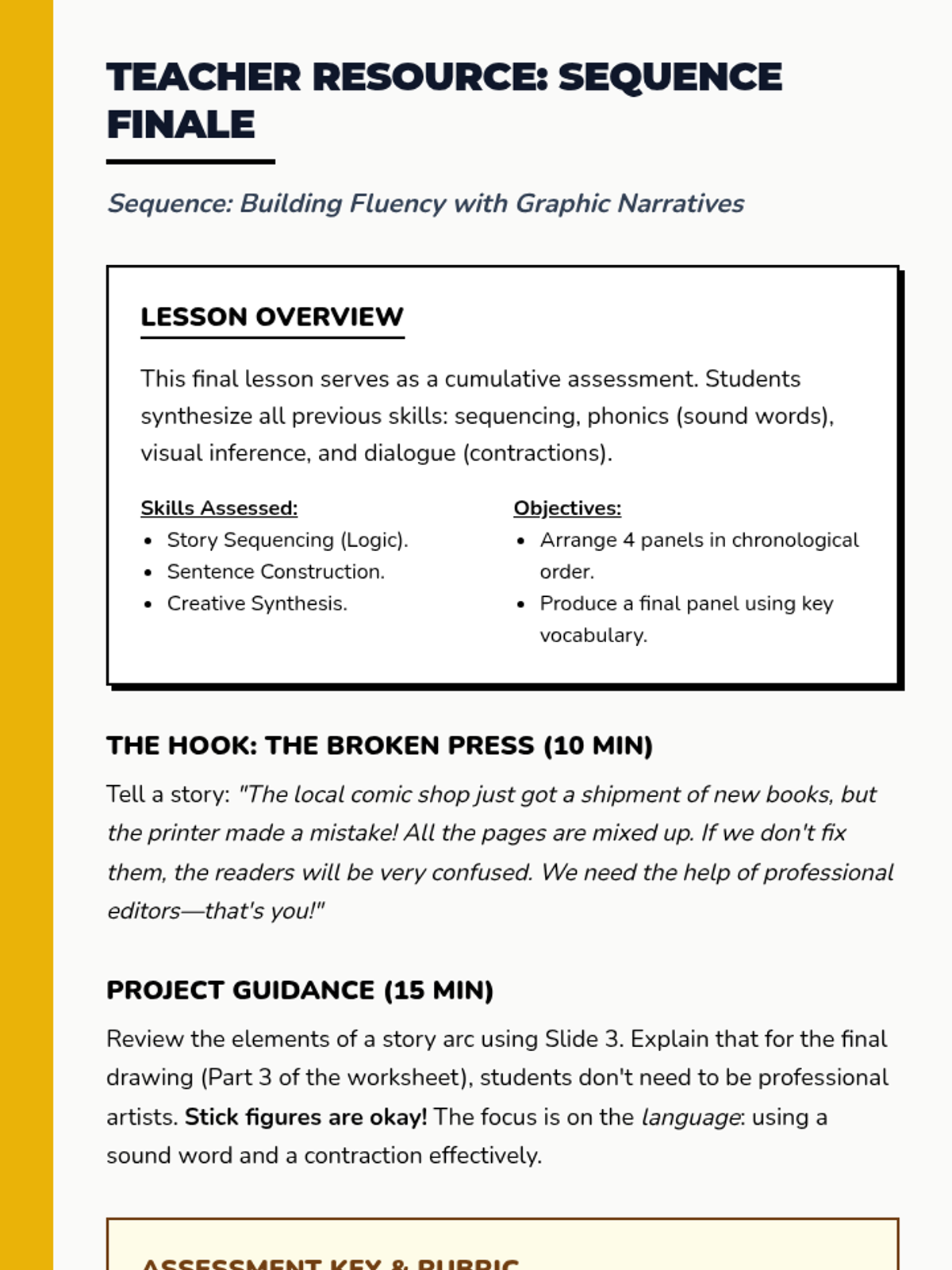
Students synthesize their learning by sequencing a jumbled comic strip and writing simple narrative bridges.
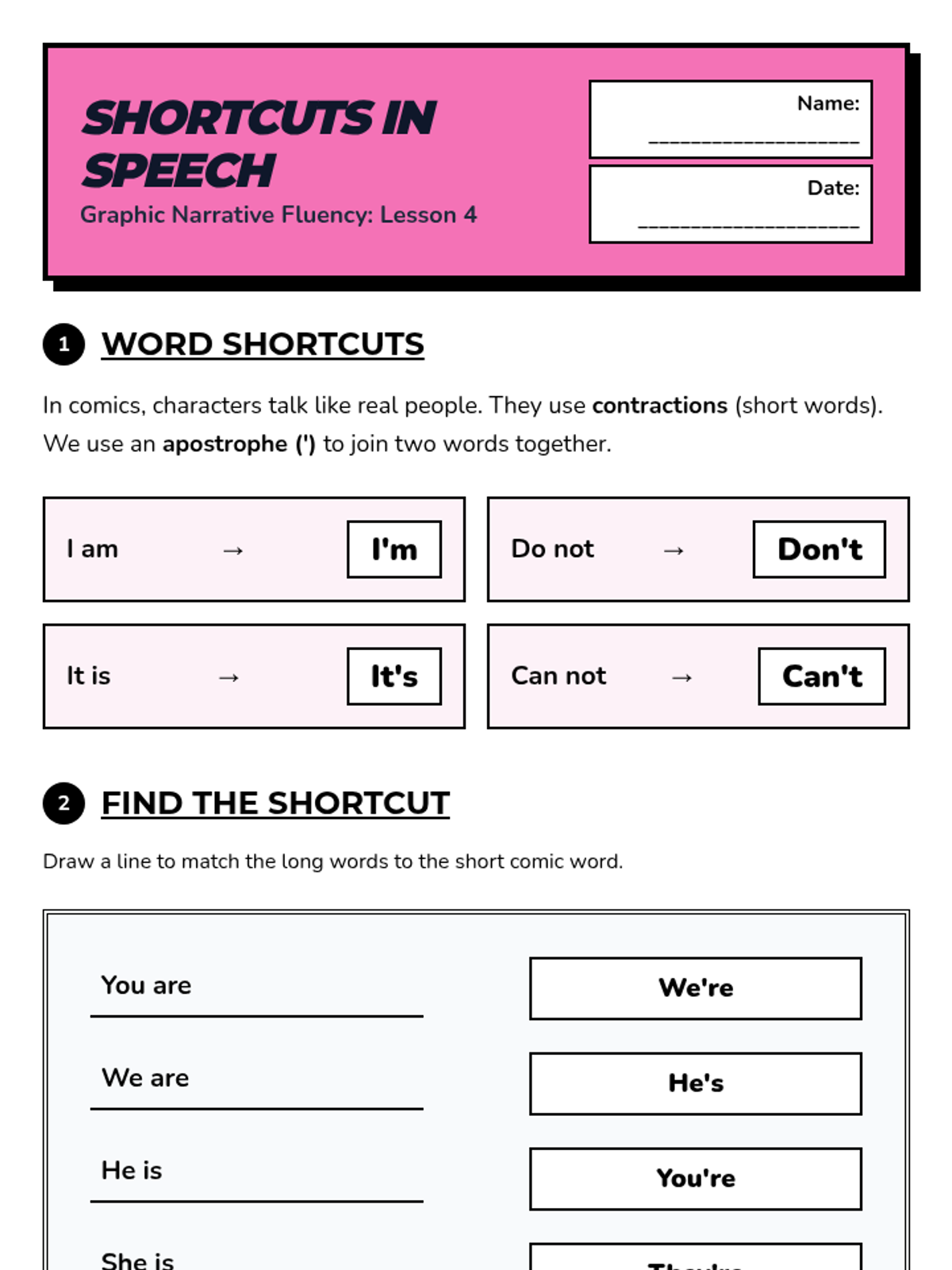
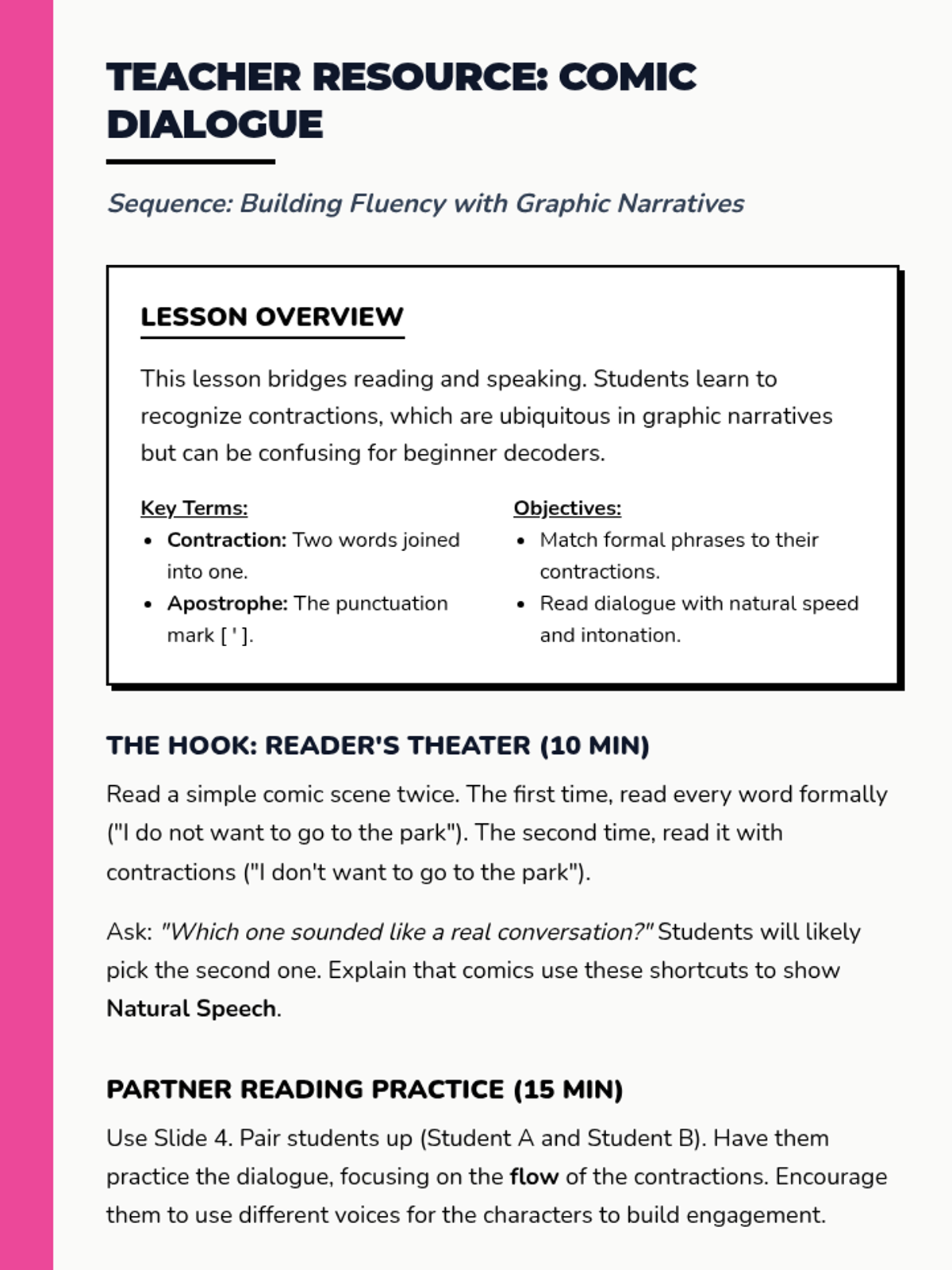
Focuses on reading natural dialogue and mastering common contractions through partner reading and script practice.
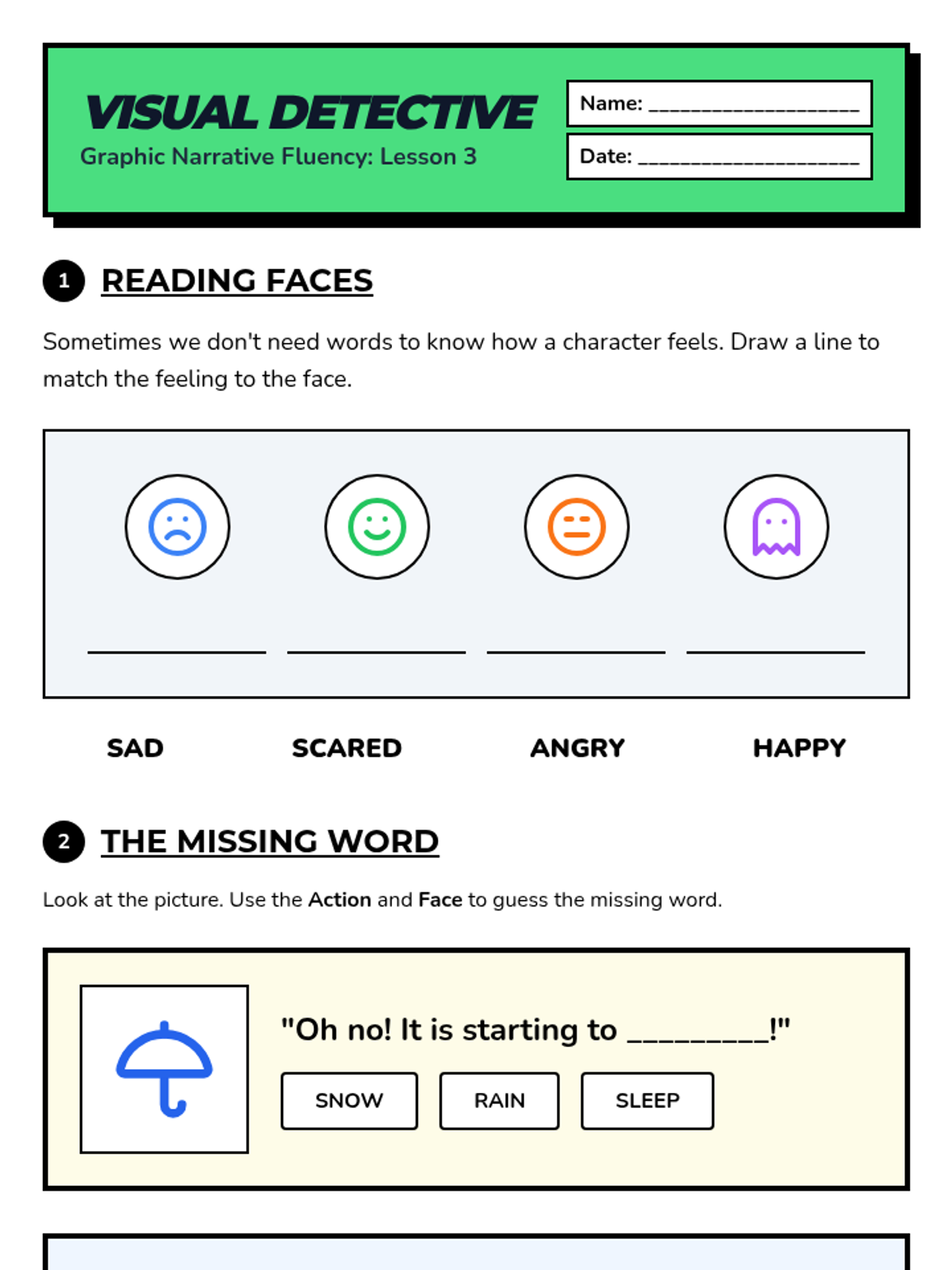
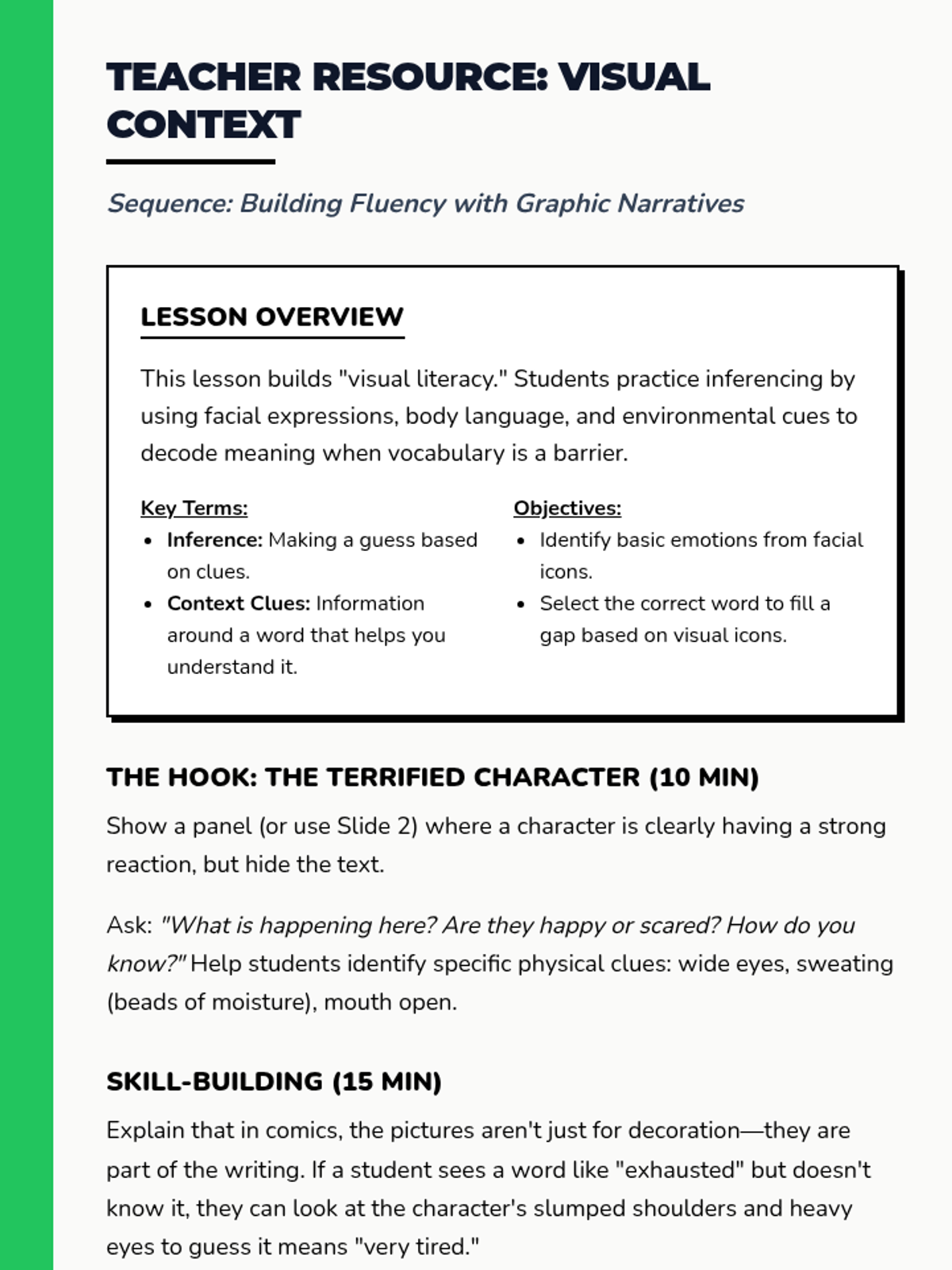
Students use facial expressions and visual action to infer the meaning of unknown or missing words in a narrative.
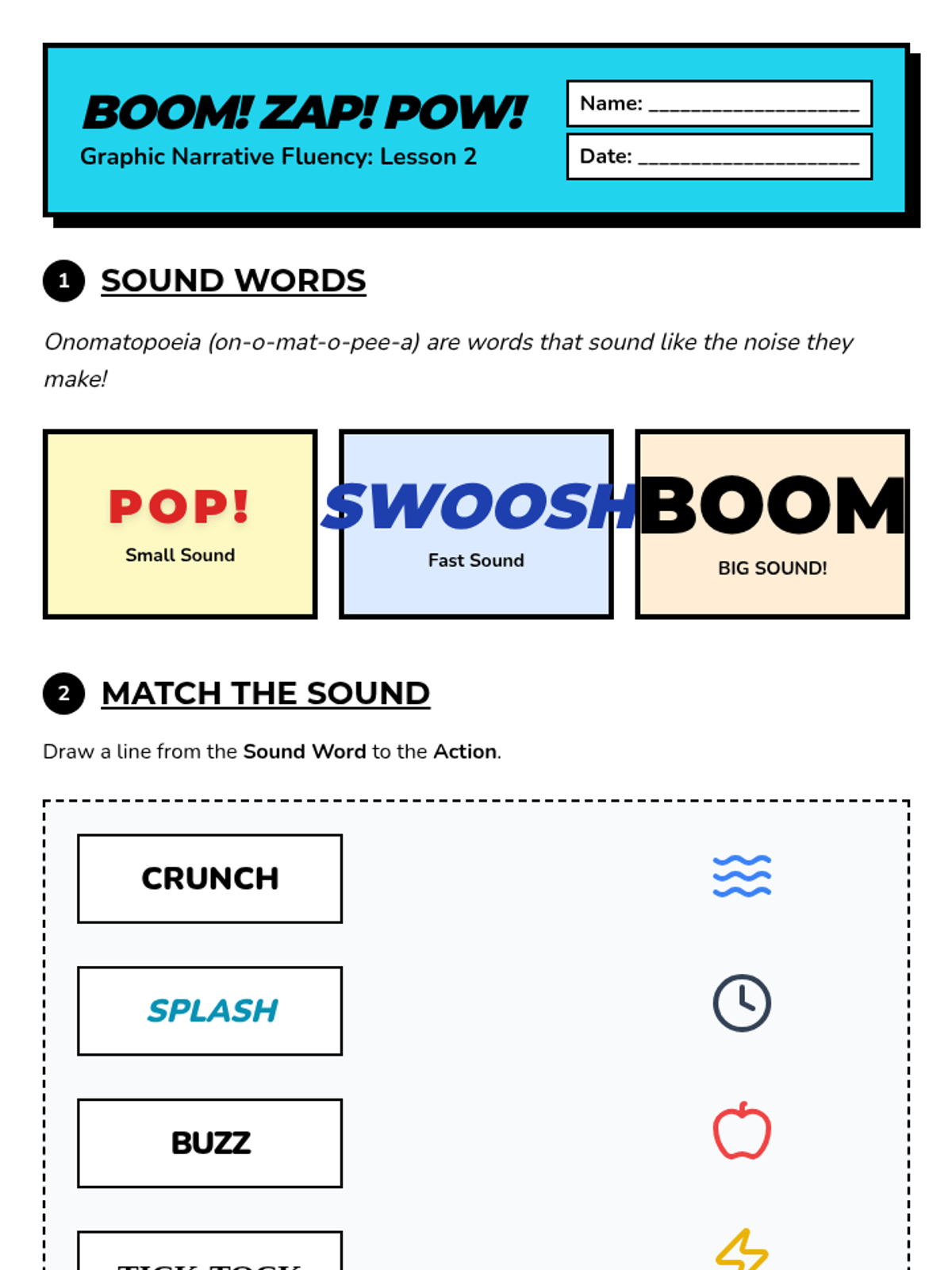
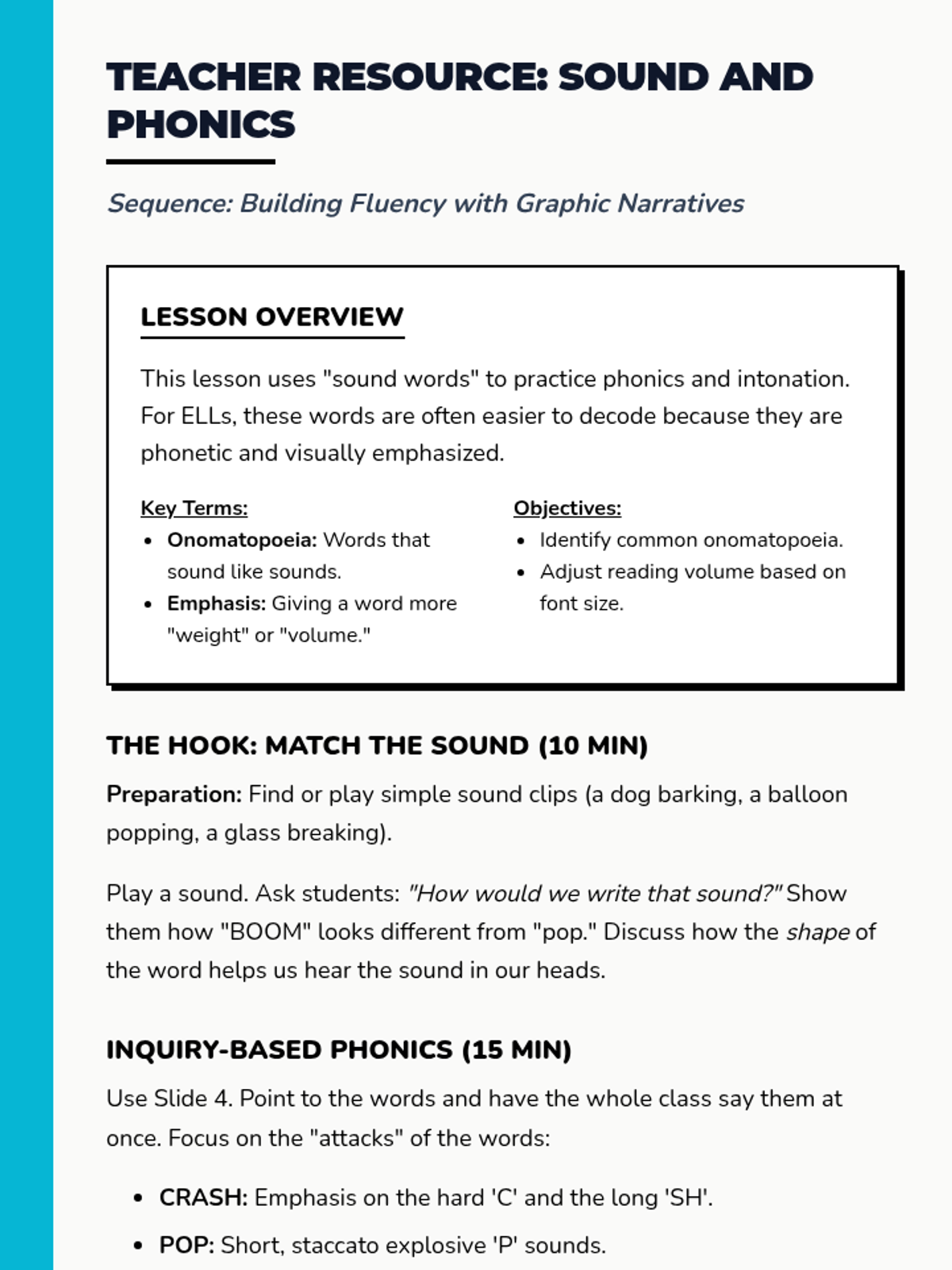
Learners explore phonics through onomatopoeia, analyzing how font size and style convey volume and emphasis.
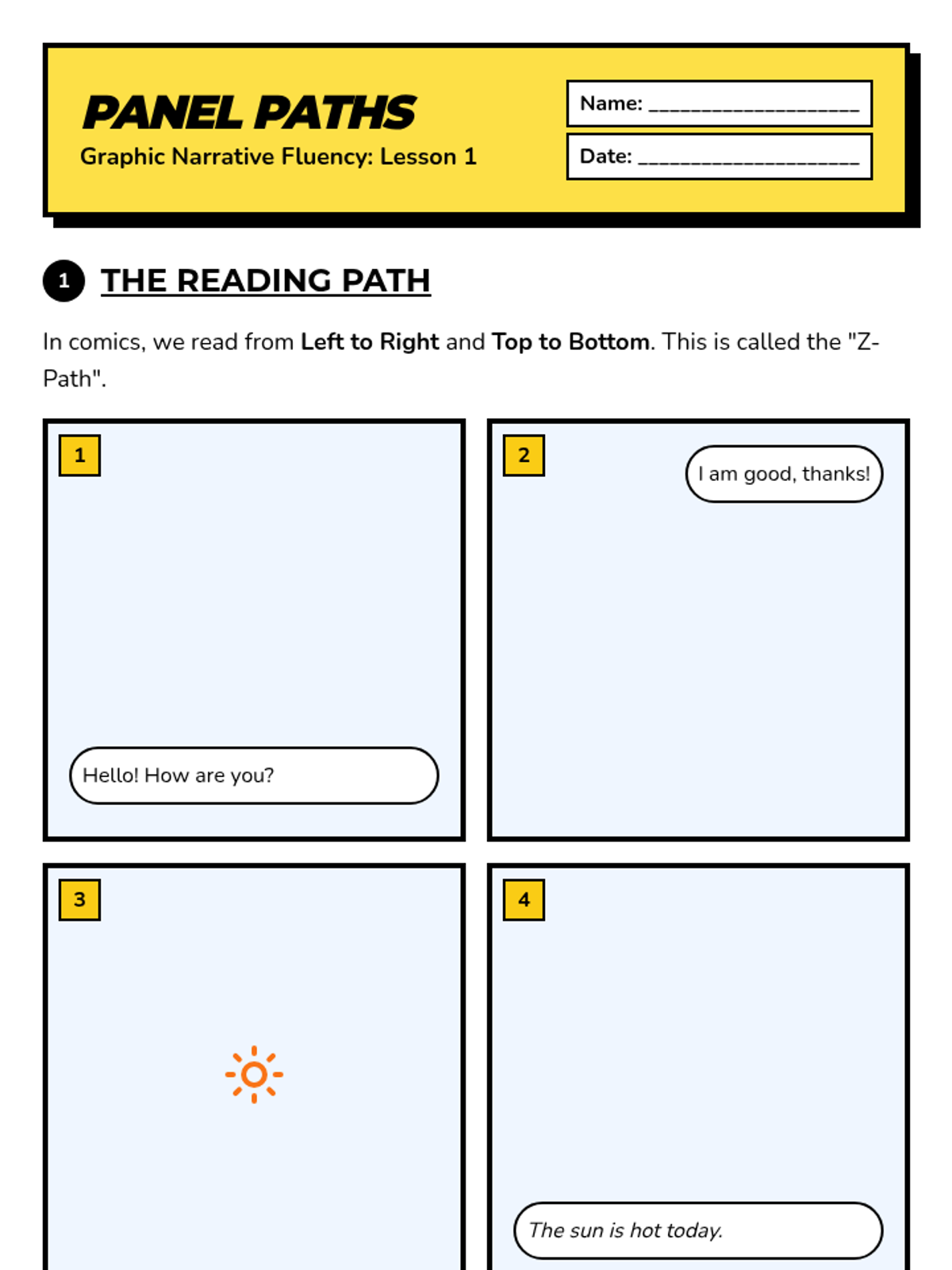
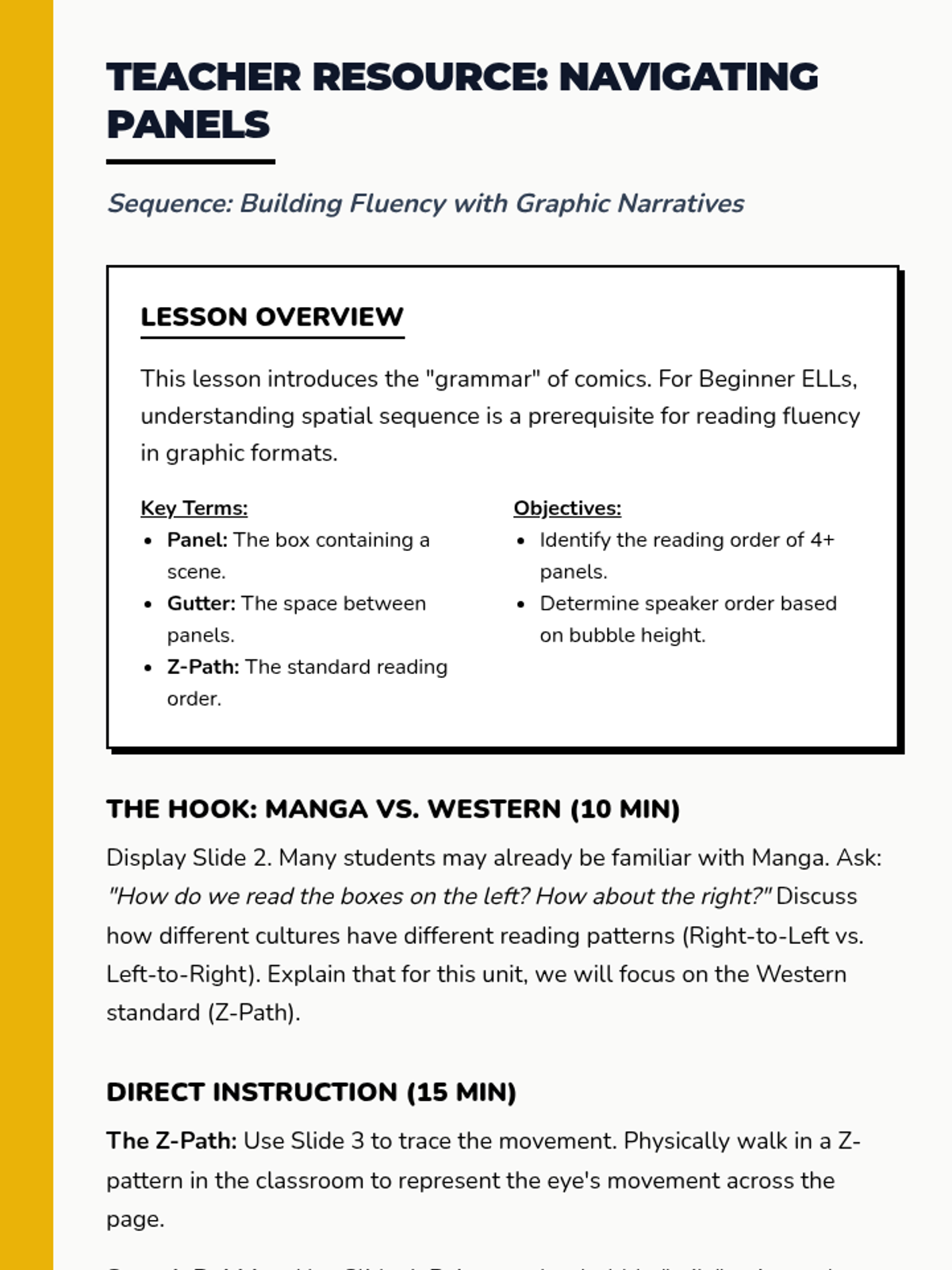
Students learn the mechanics of reading comics: left-to-right, top-to-bottom, and identifying speaker order in speech bubbles.
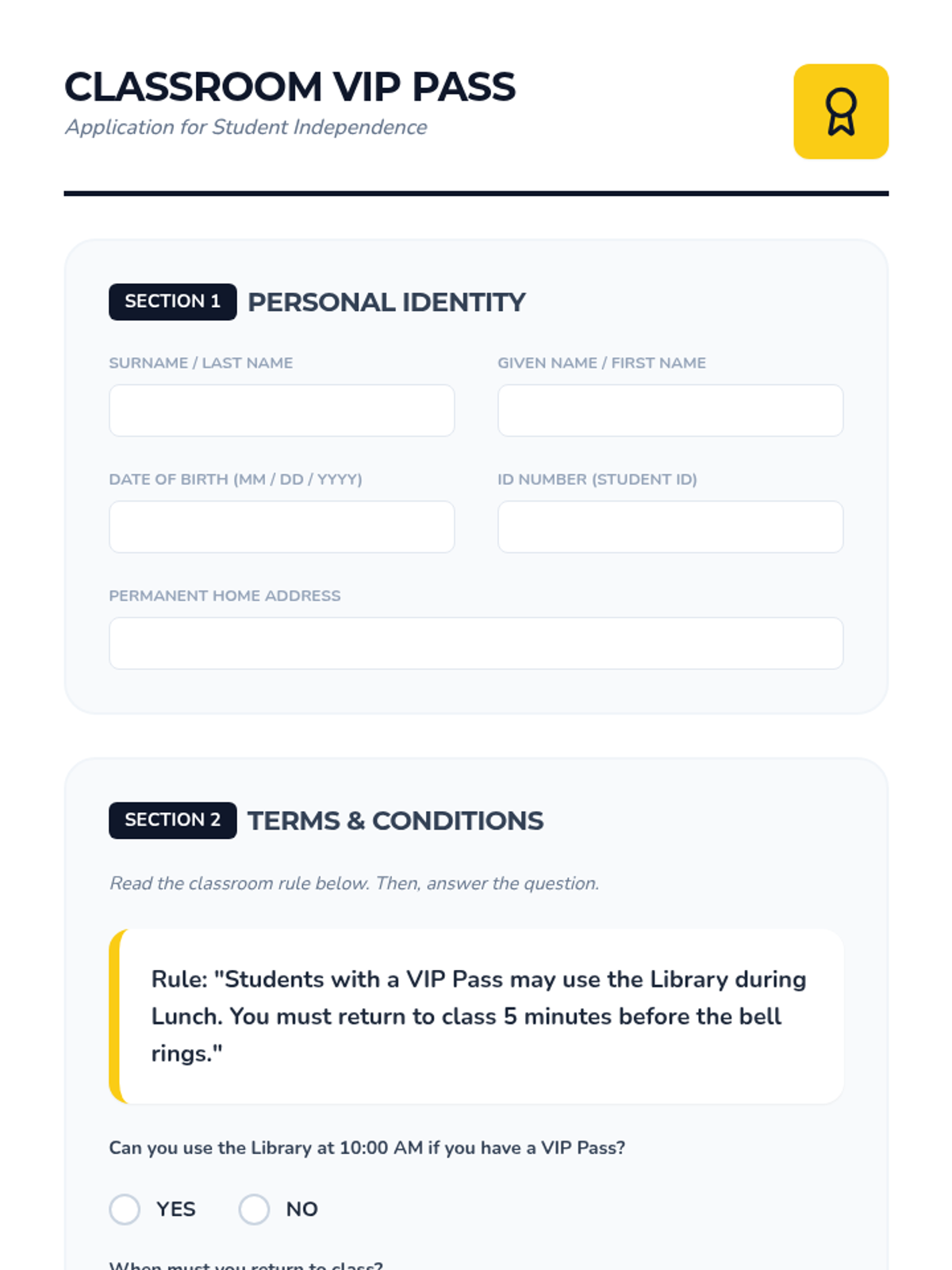
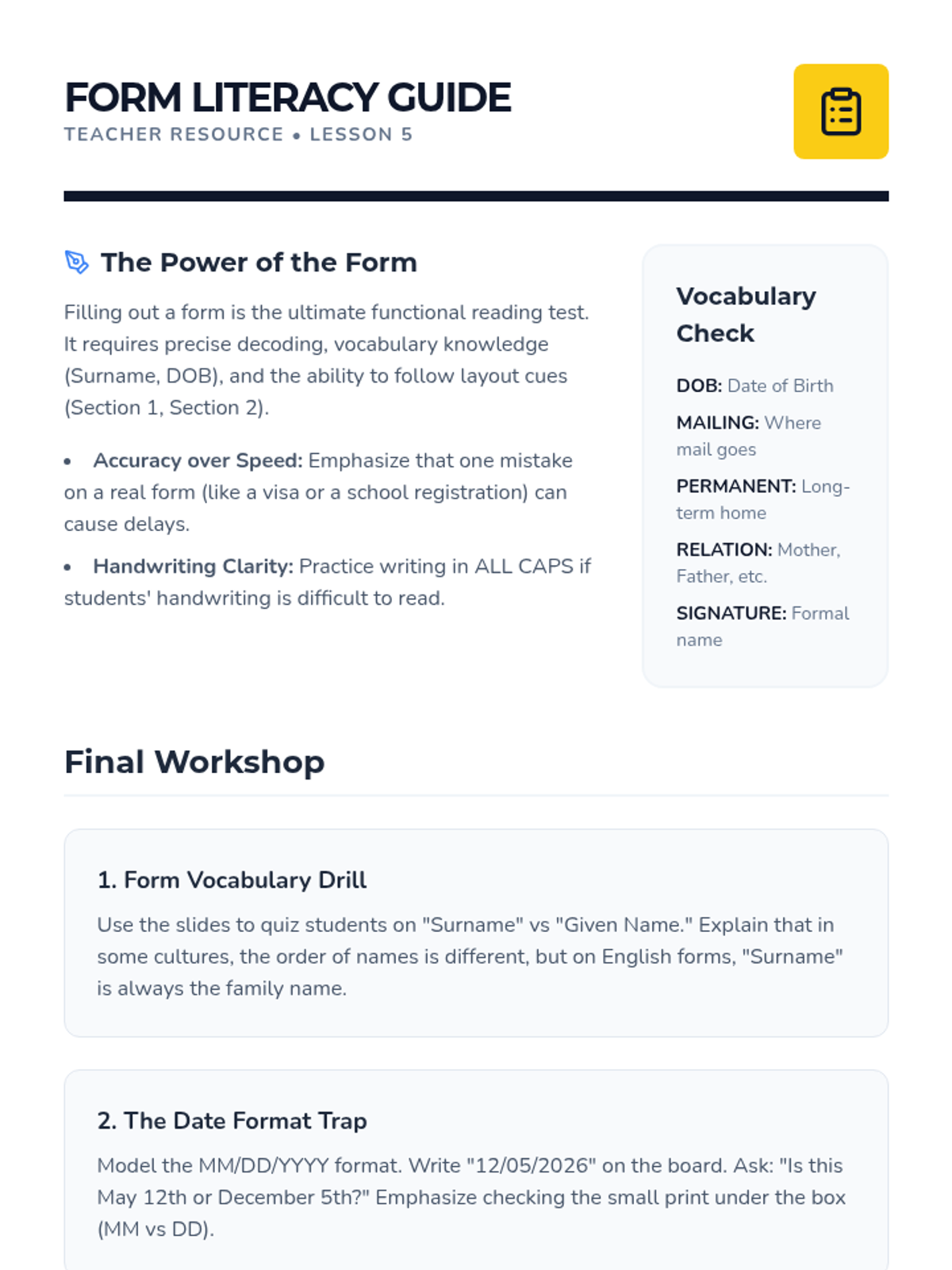
Students learn the specific vocabulary and layout conventions of basic forms to accurately provide personal information for school and community applications.
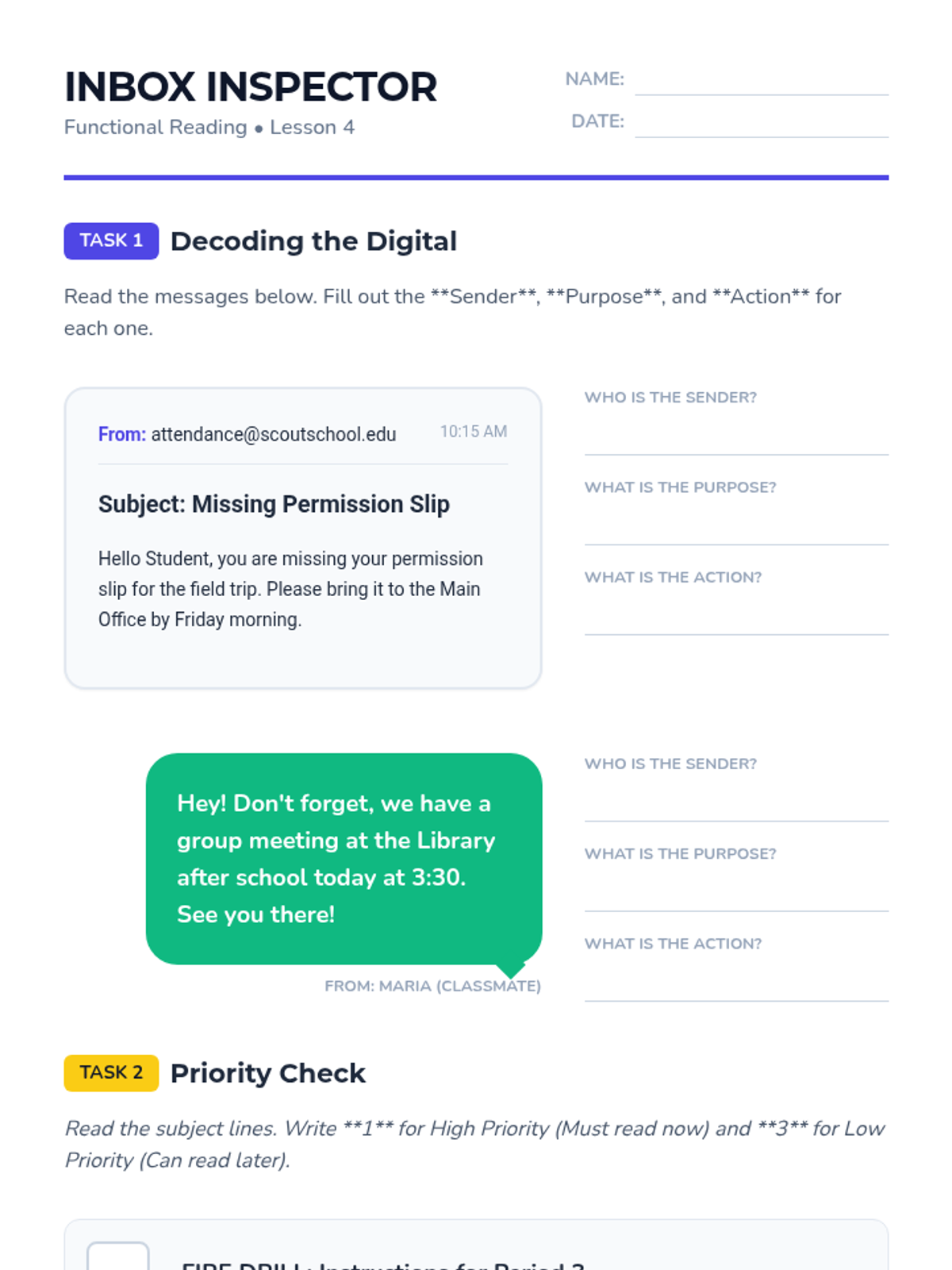
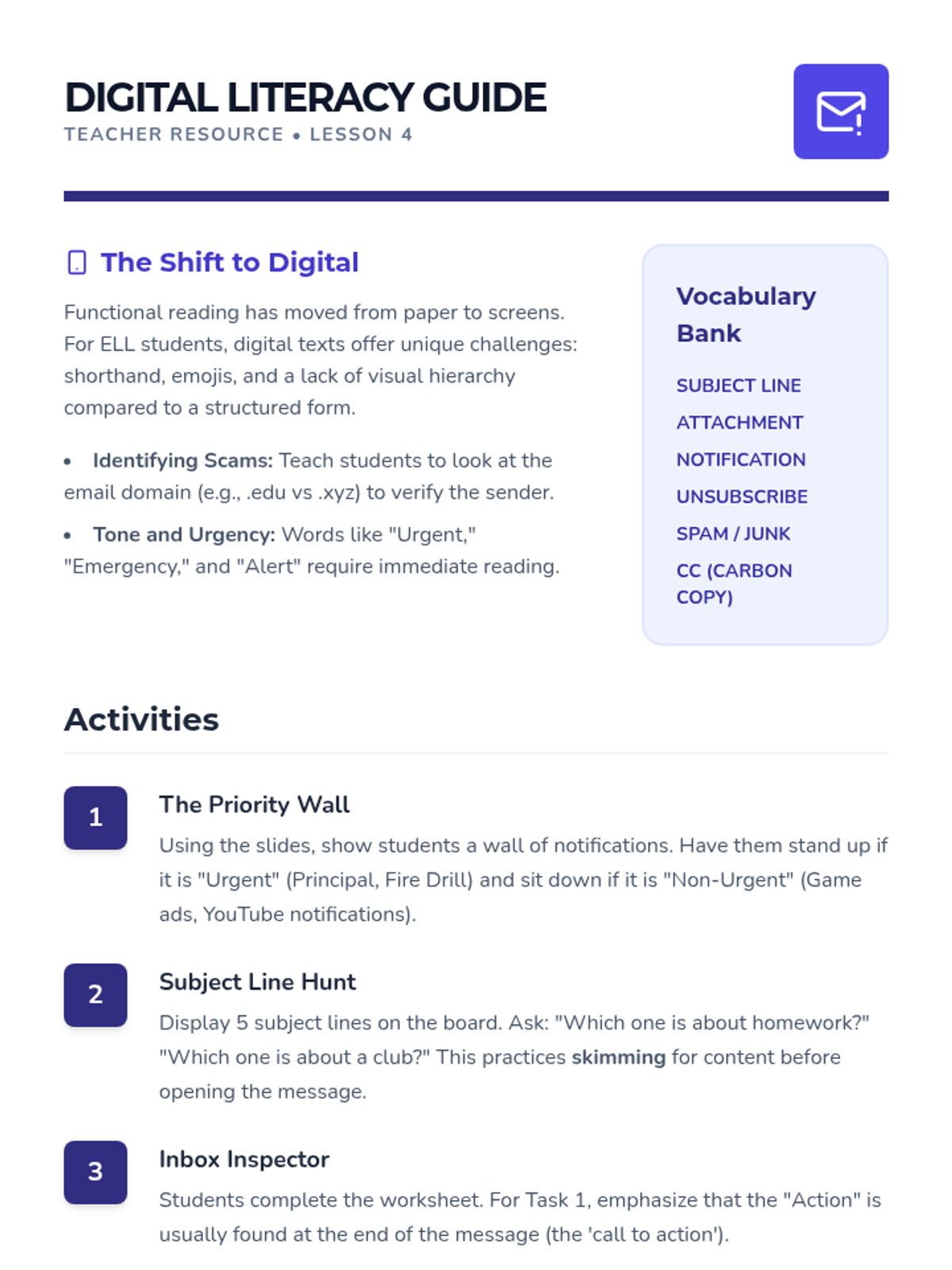
This lesson focuses on interpreting short digital communications like text messages and teacher emails to identify purpose and required actions.
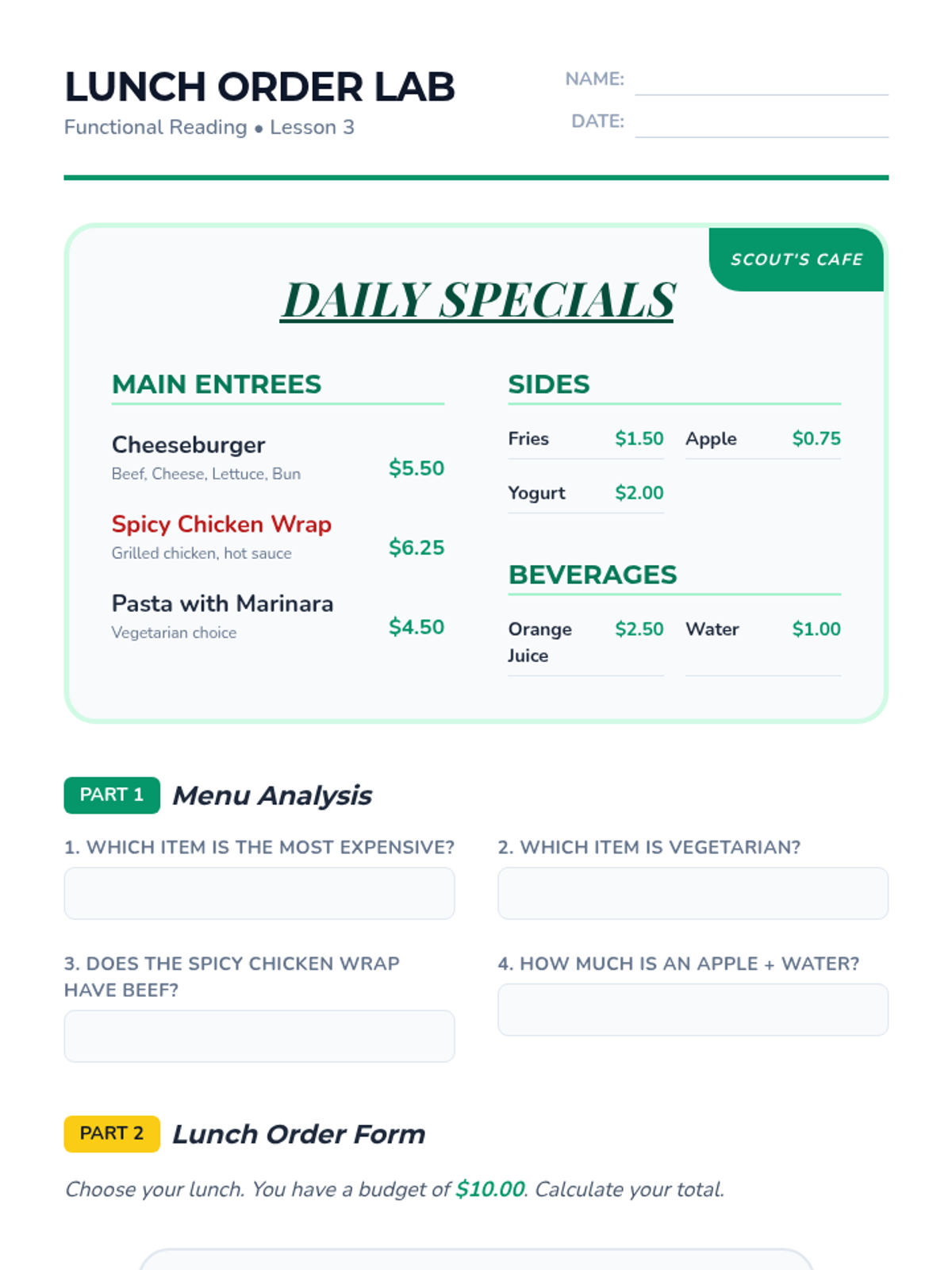
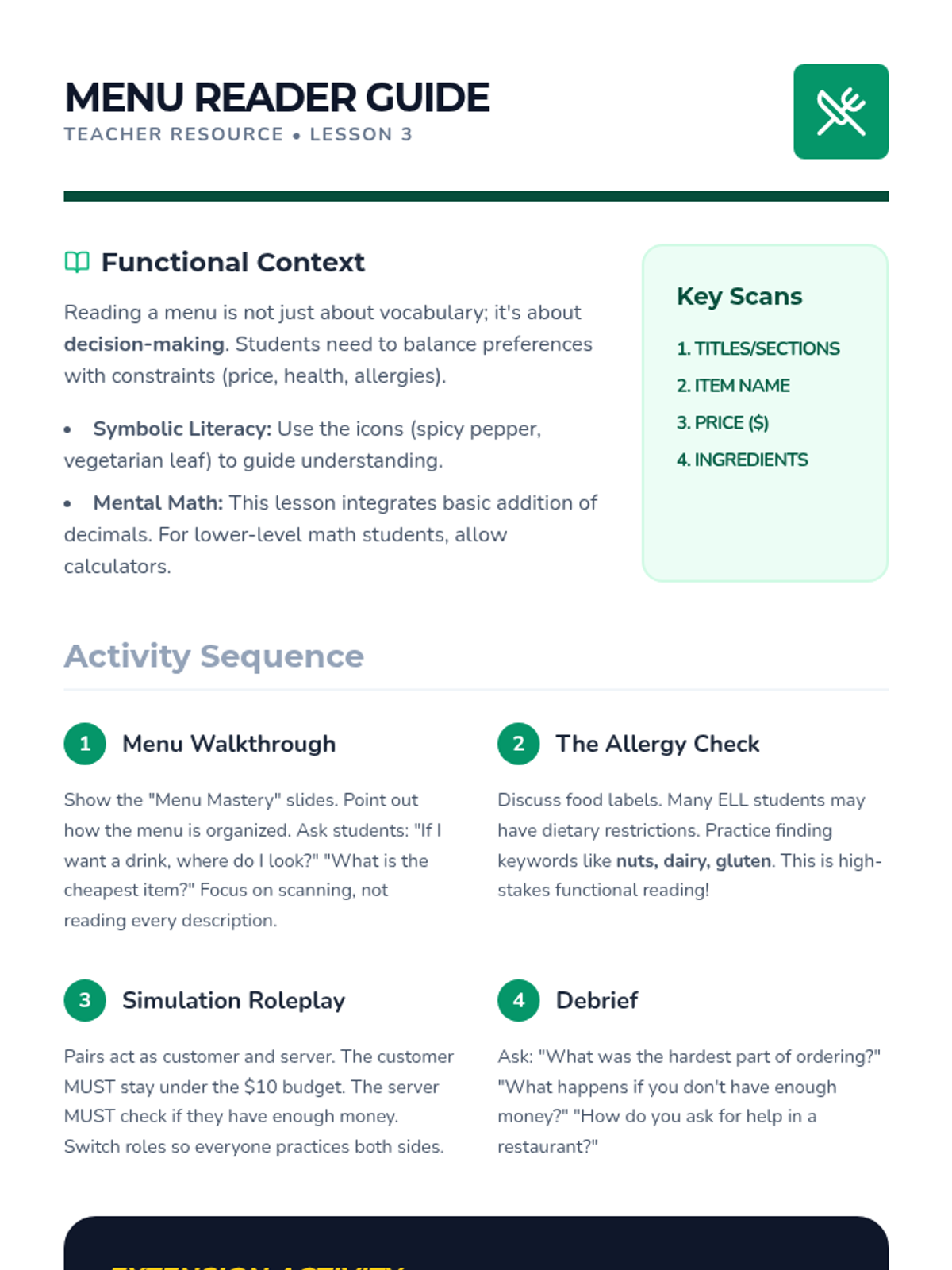
Students practice scanning cafeteria menus and food labels for prices, ingredients, and categories to make informed food choices.
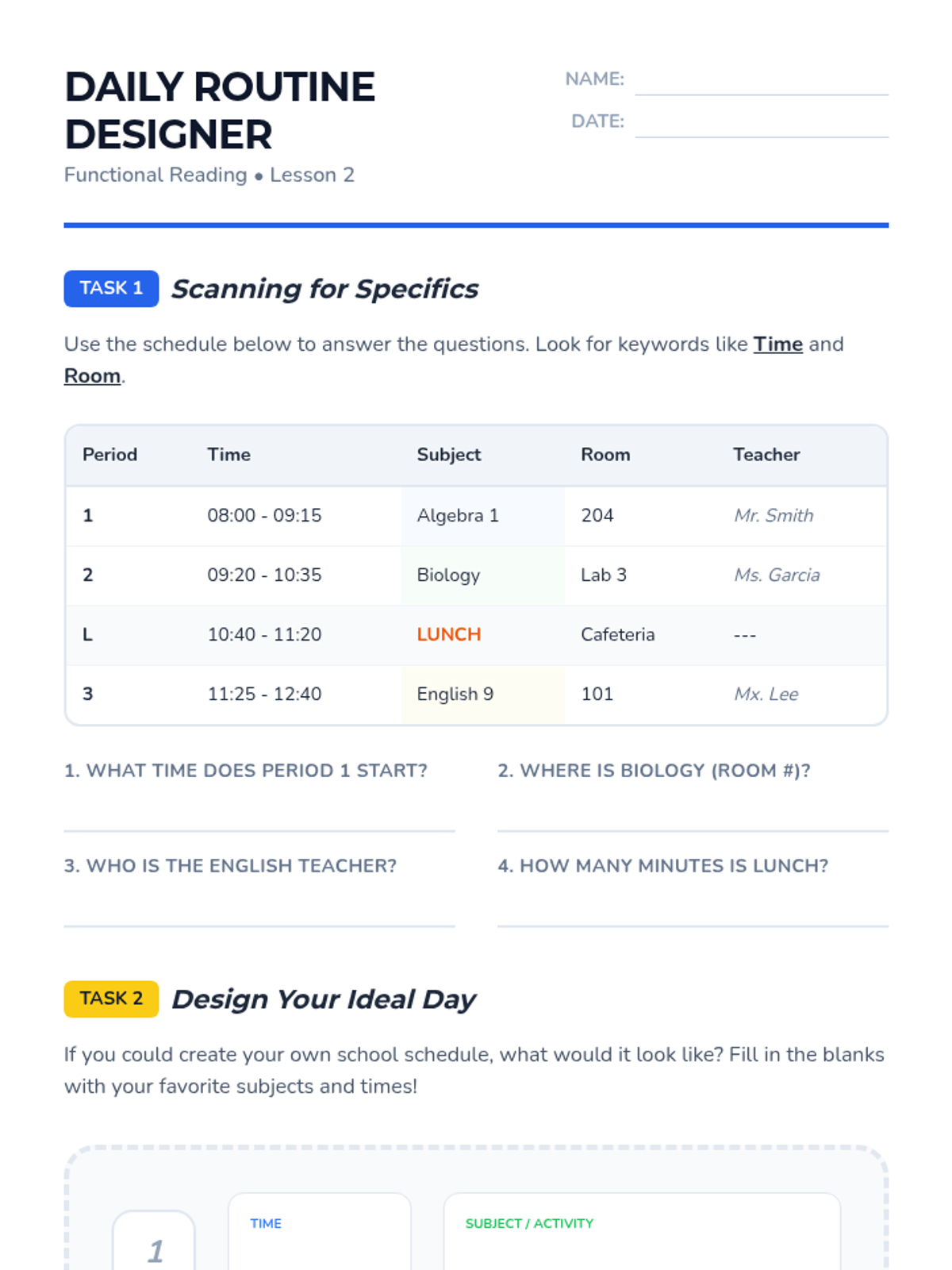
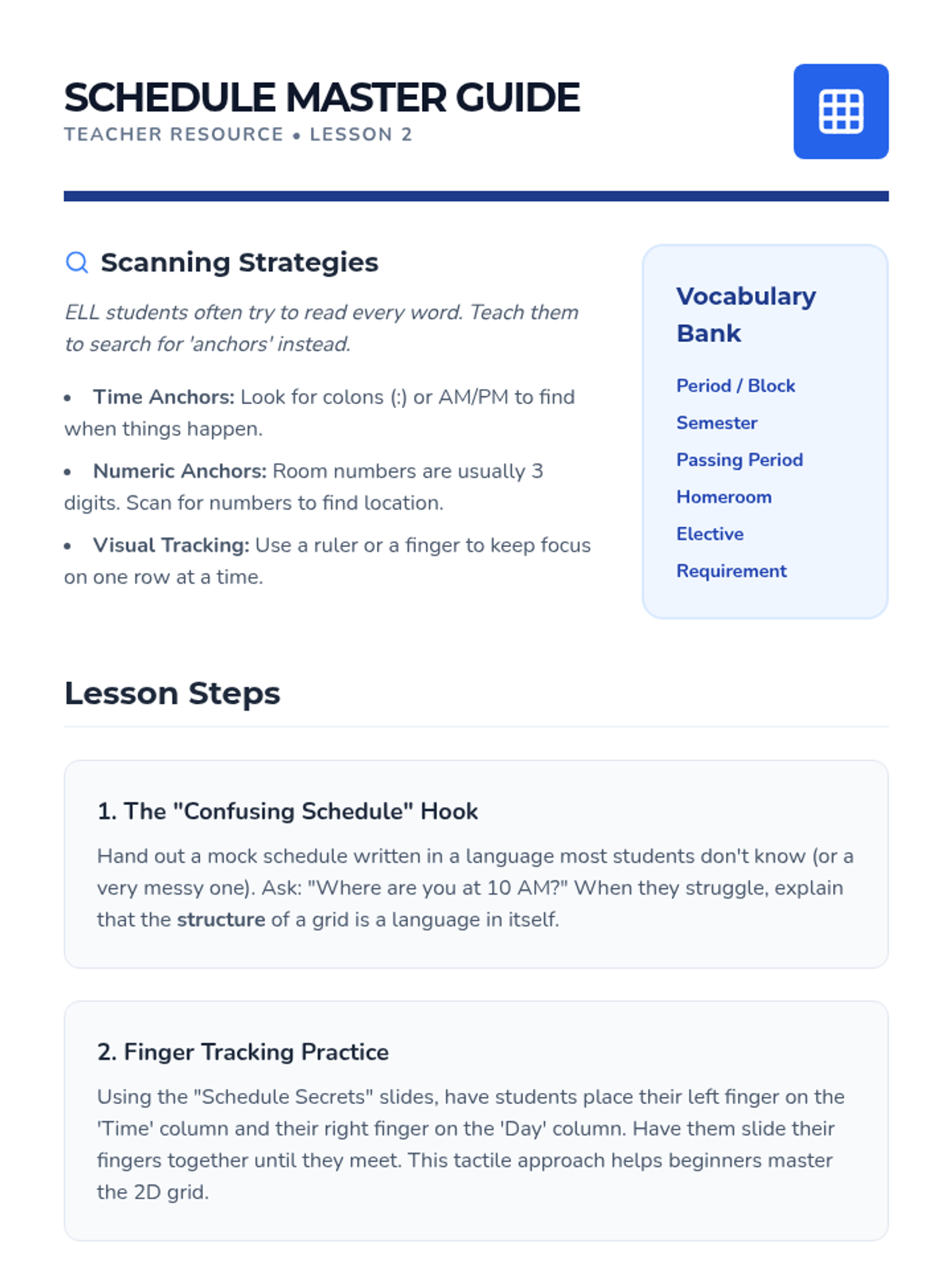
Learners master the skill of reading grid-based class schedules to identify times, locations, and subjects throughout the school day.
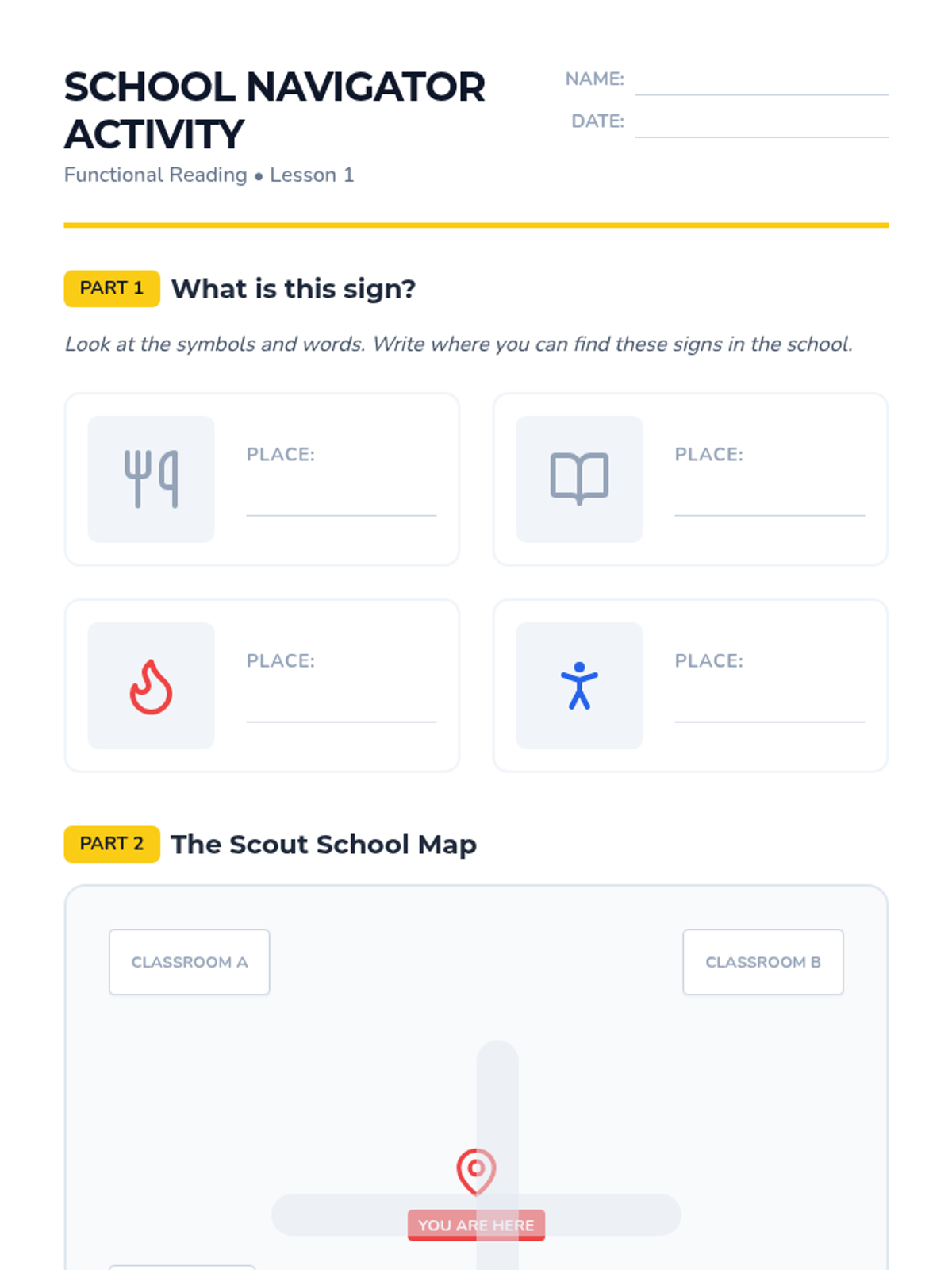
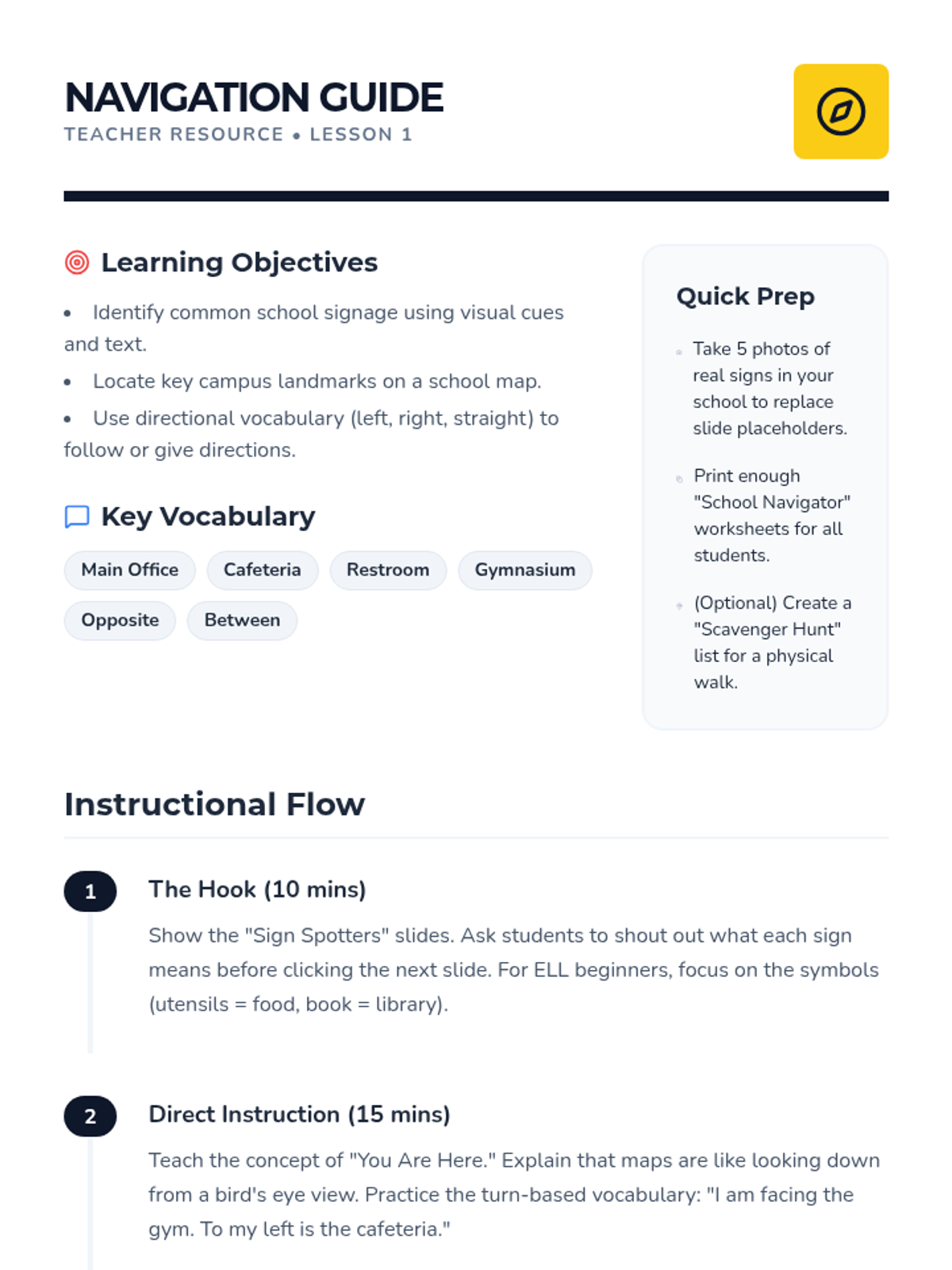
Students analyze school maps and common signage to develop the spatial literacy needed to navigate a high school campus independently.
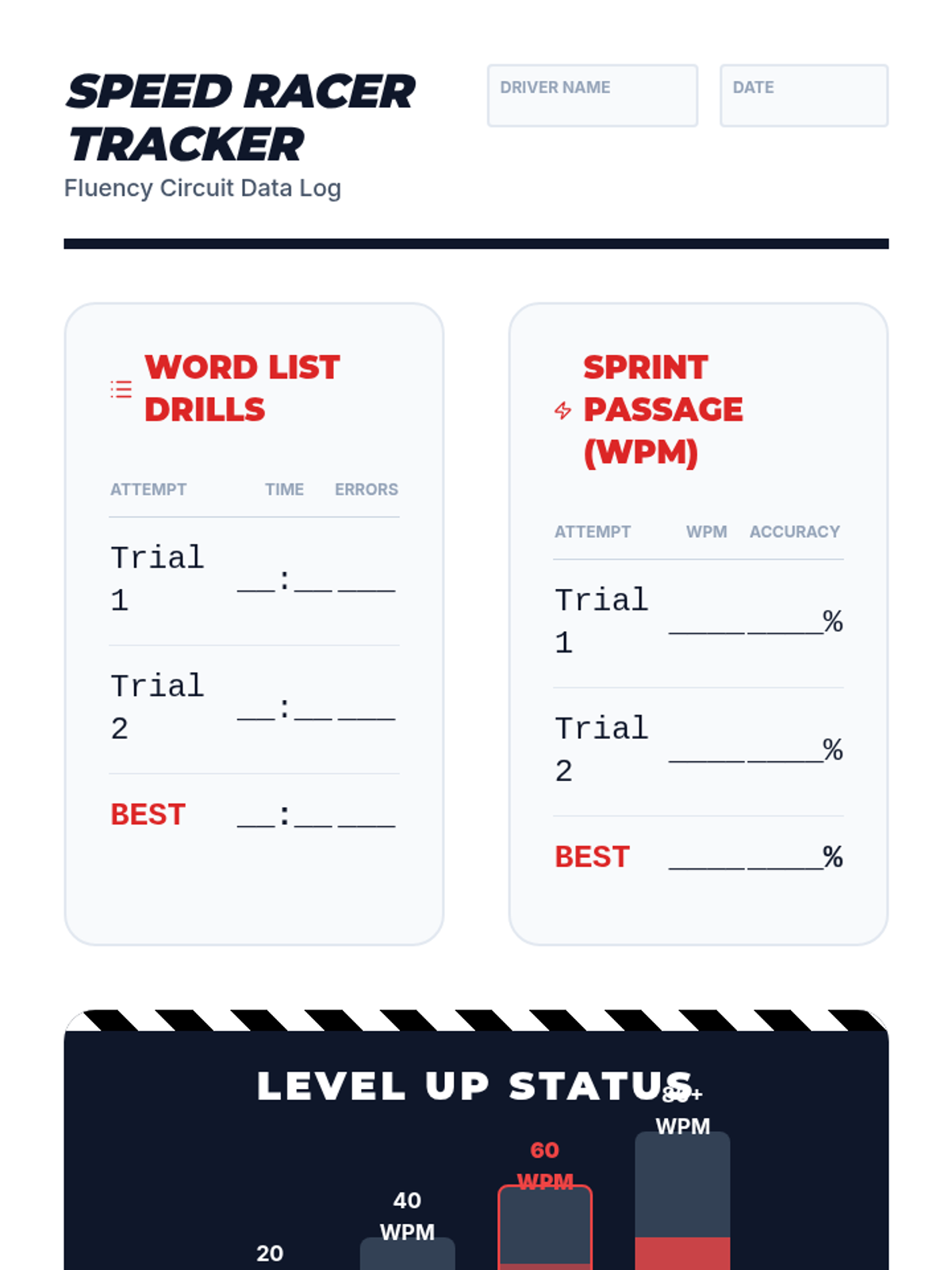
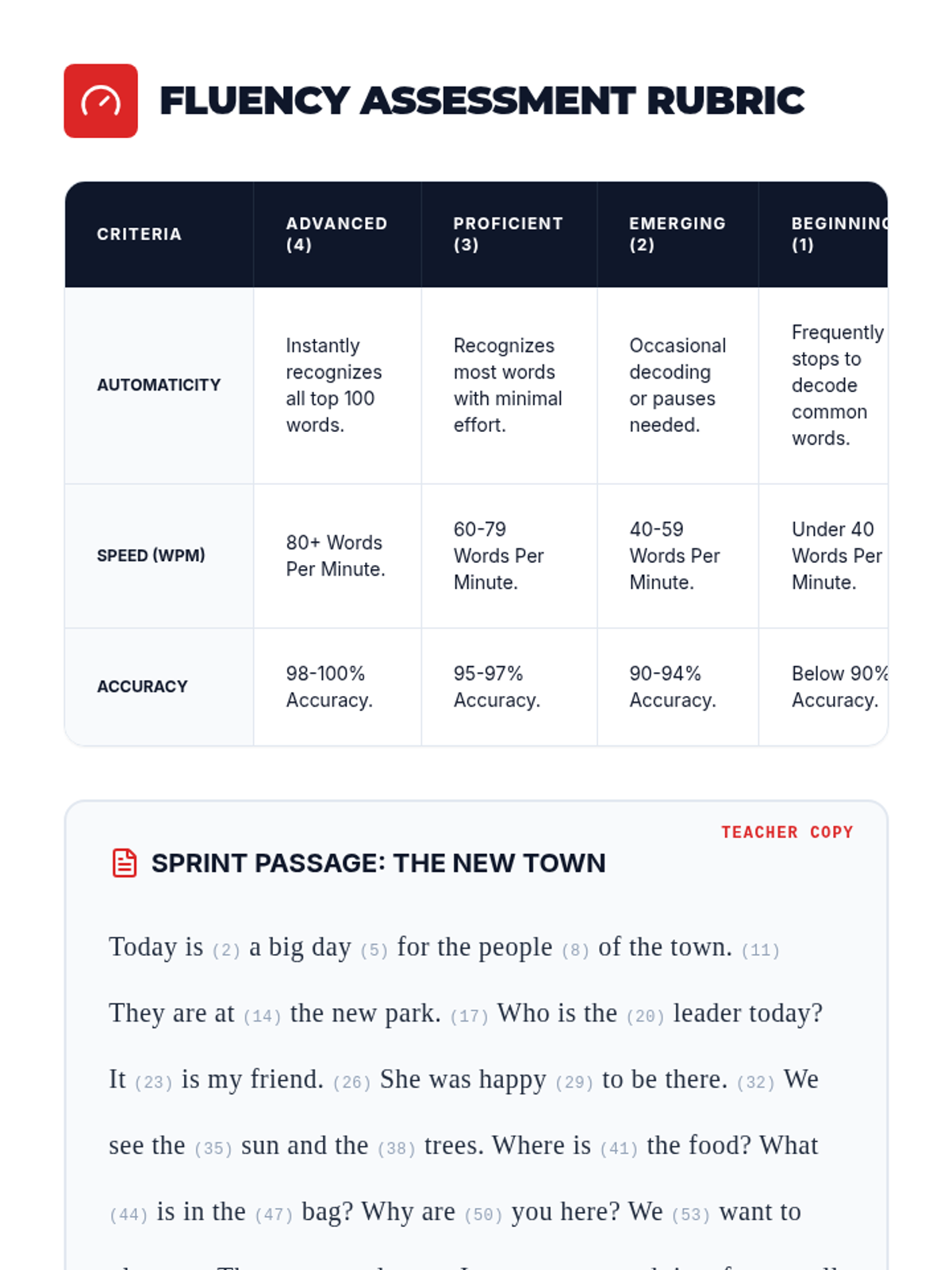
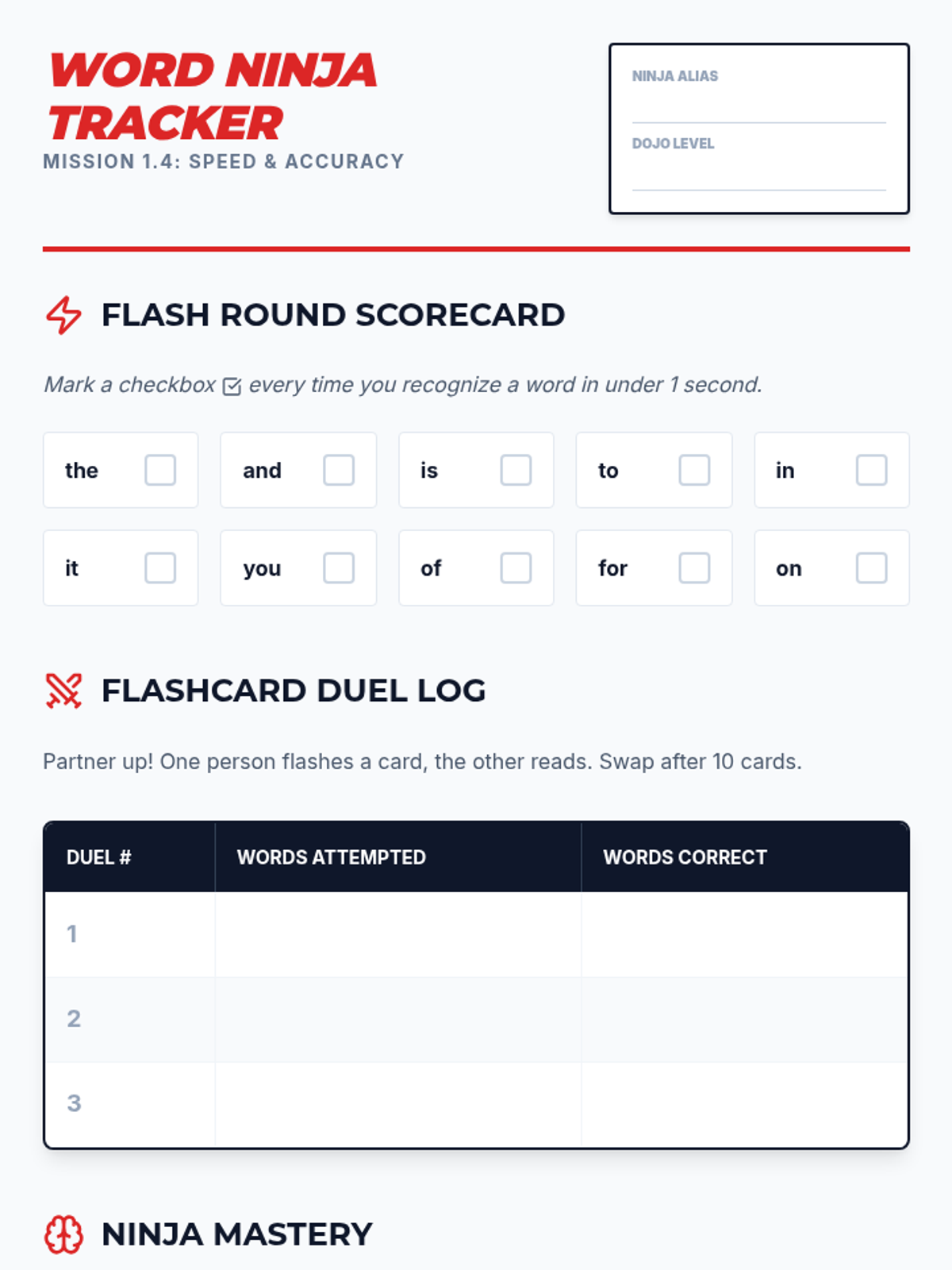
A final mastery-based circuit where students measure their reading speed and accuracy to demonstrate fluency growth.
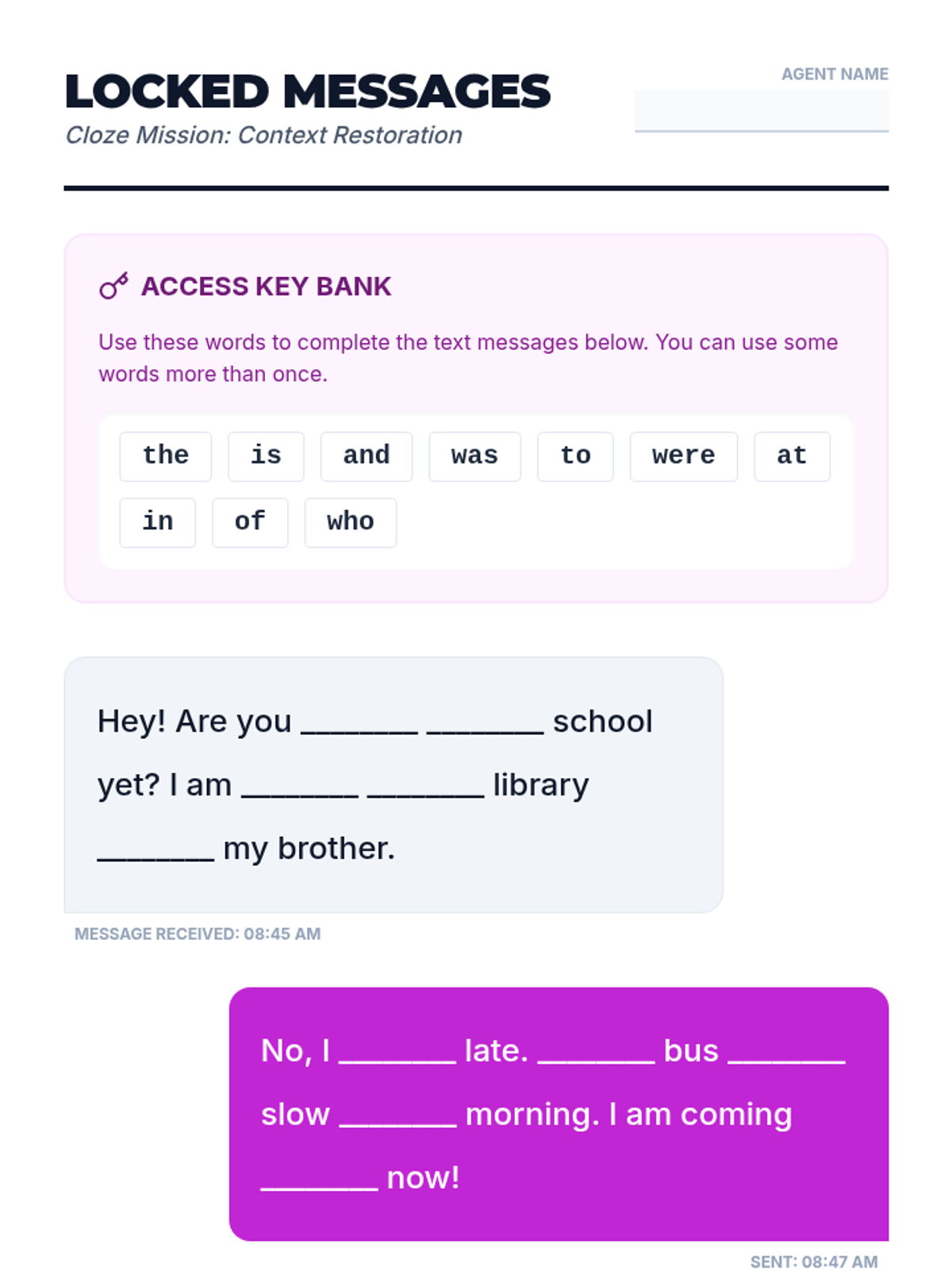
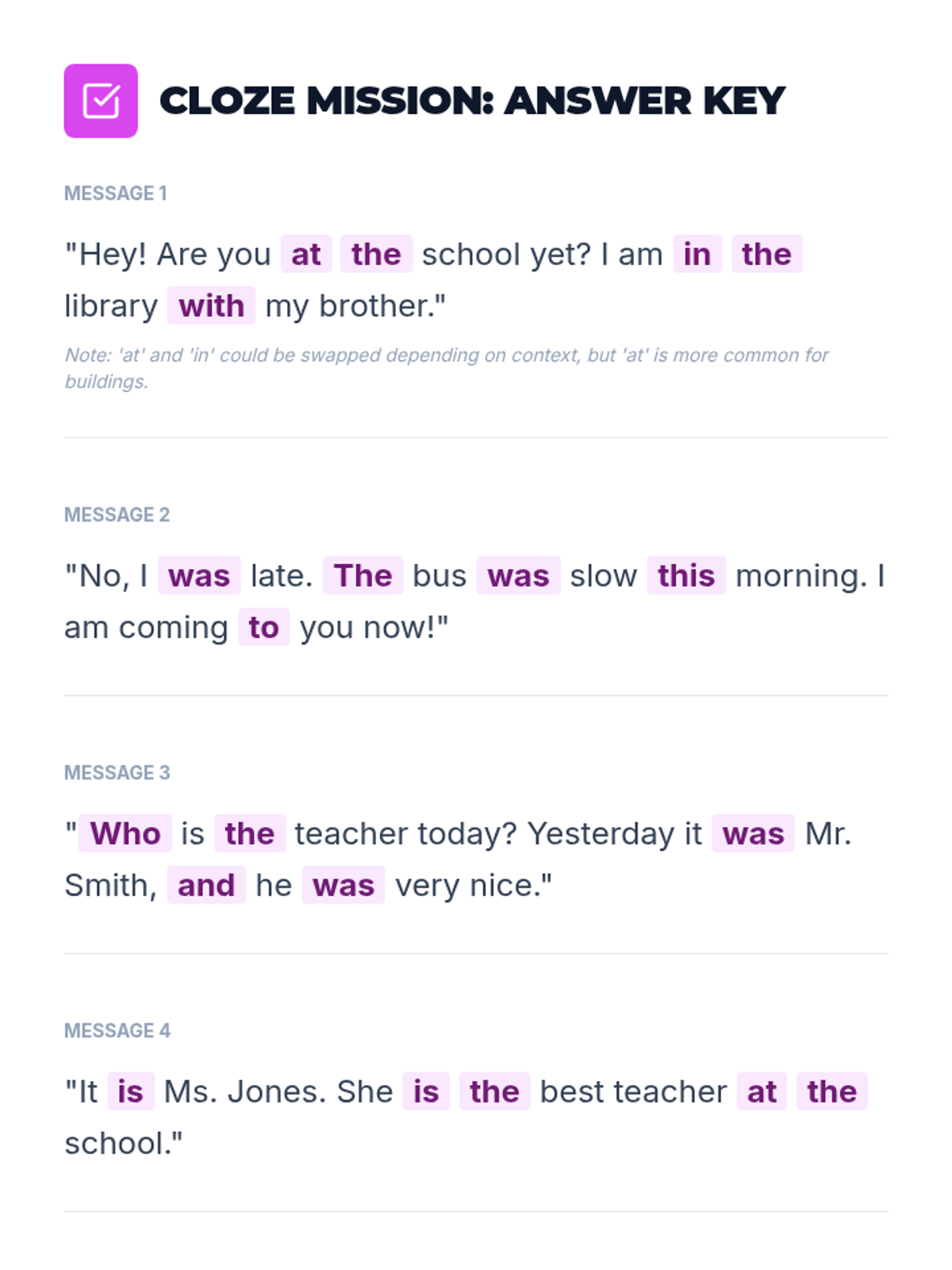
Students apply their sight word knowledge to complete cloze activities, reinforcing the grammatical roles of high-frequency words.
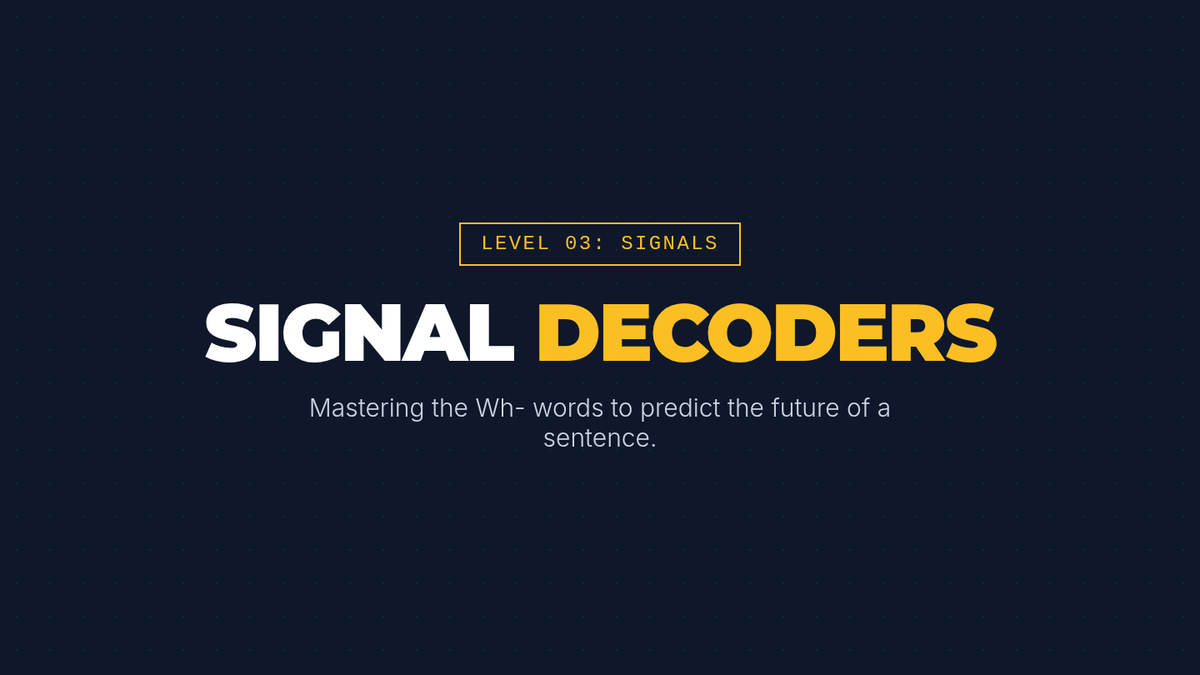
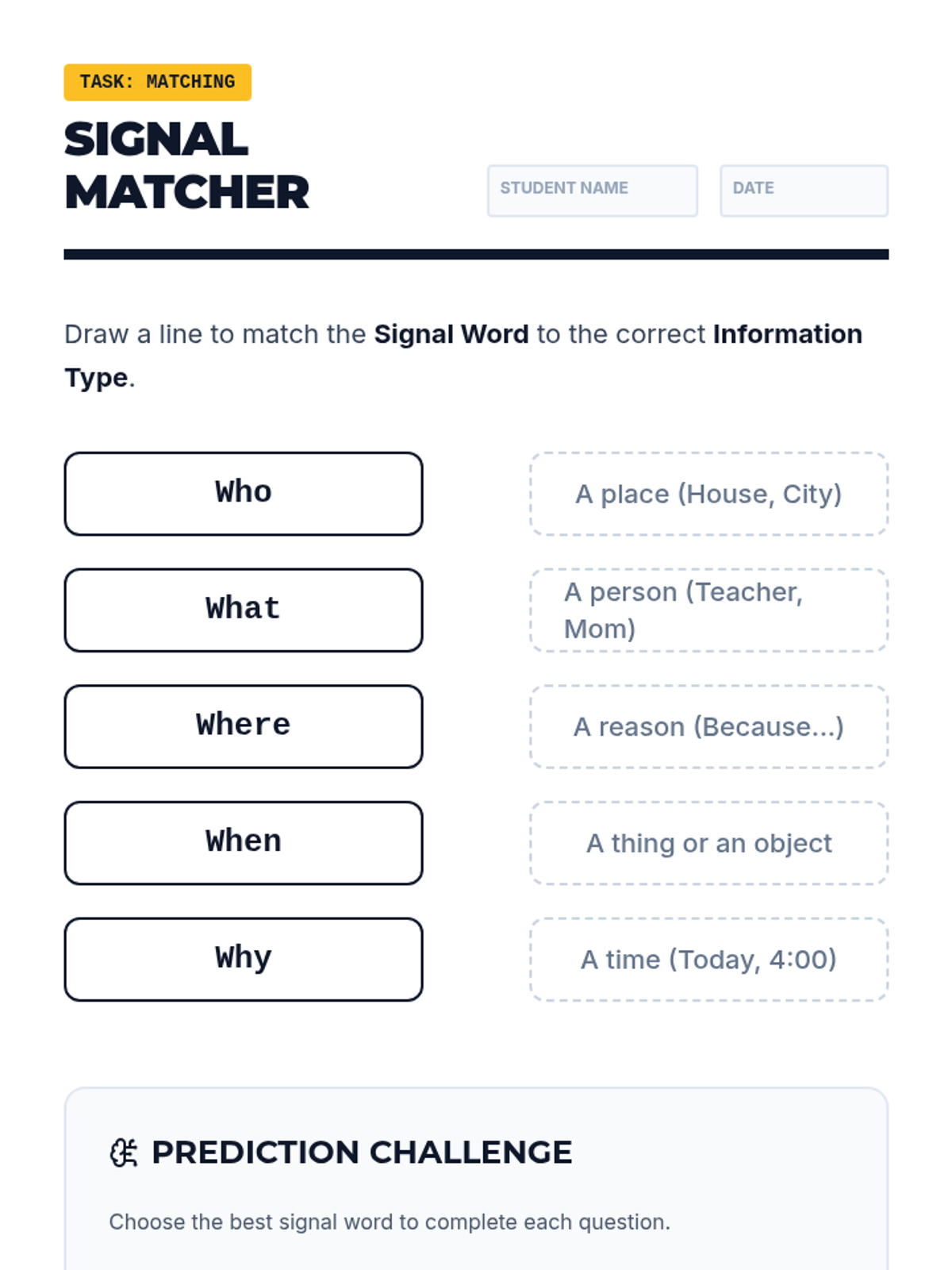
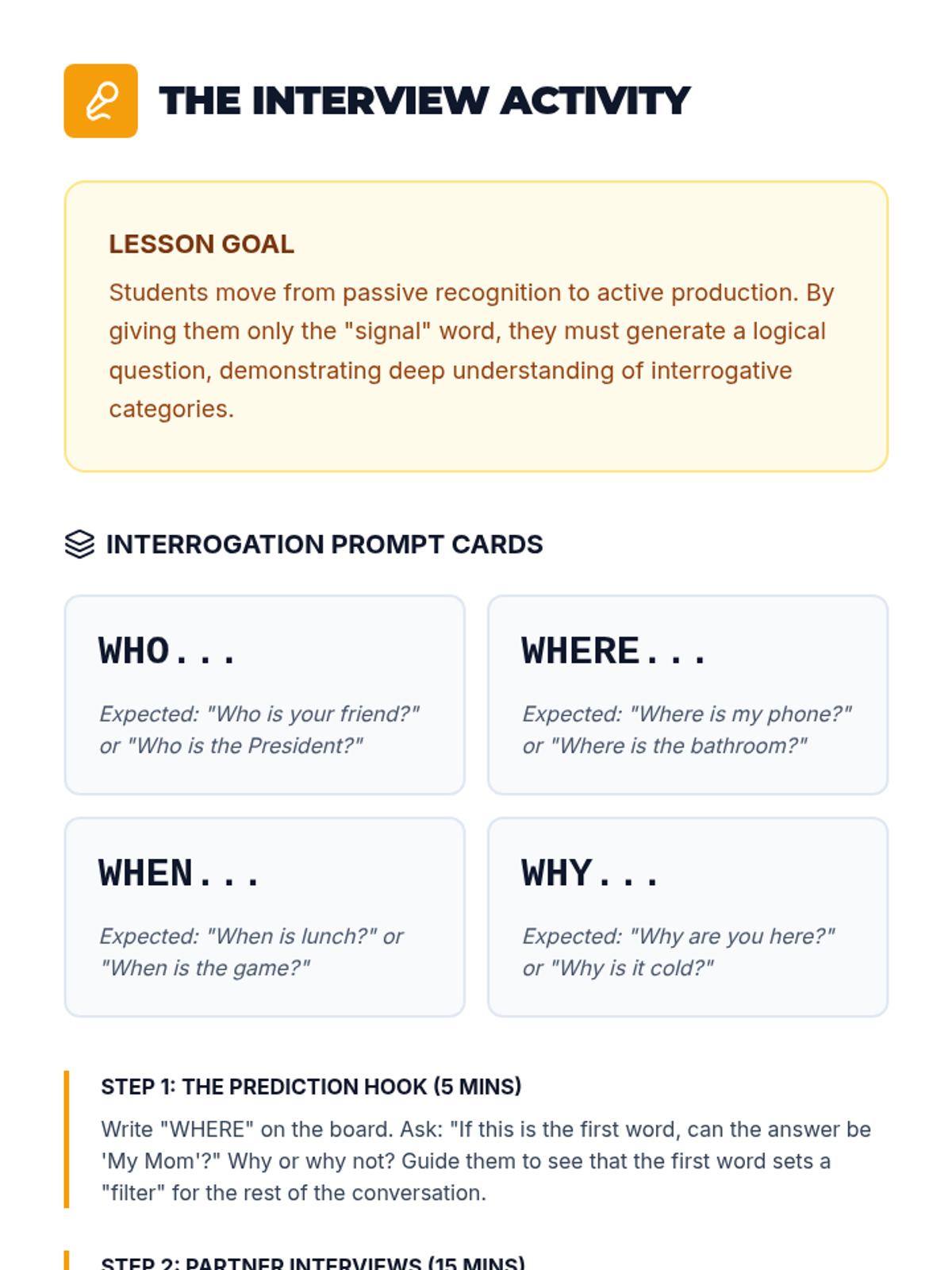
Learners master question words (Who, What, Where, When, Why) to improve sentence-type recognition and prediction skills.
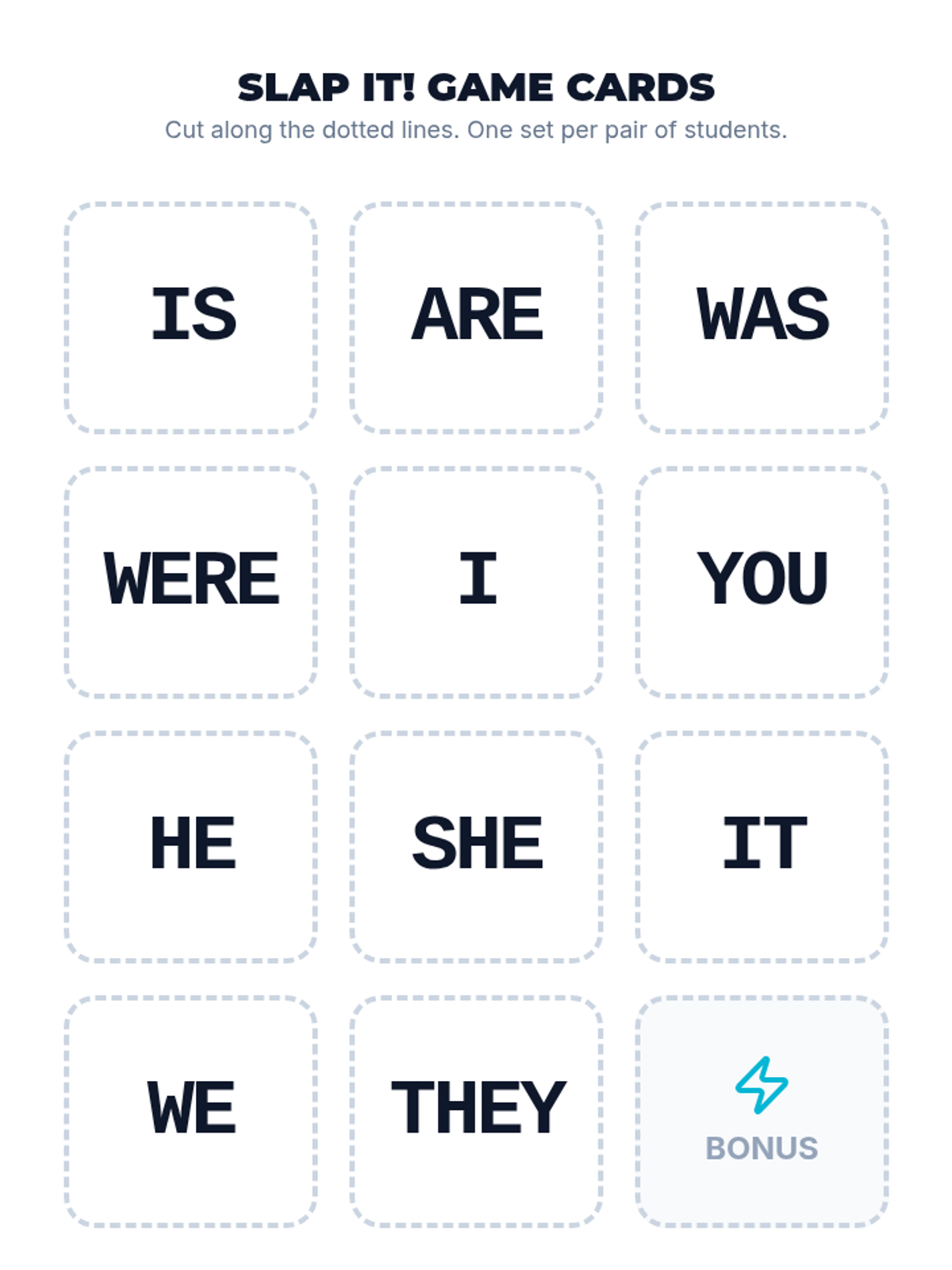
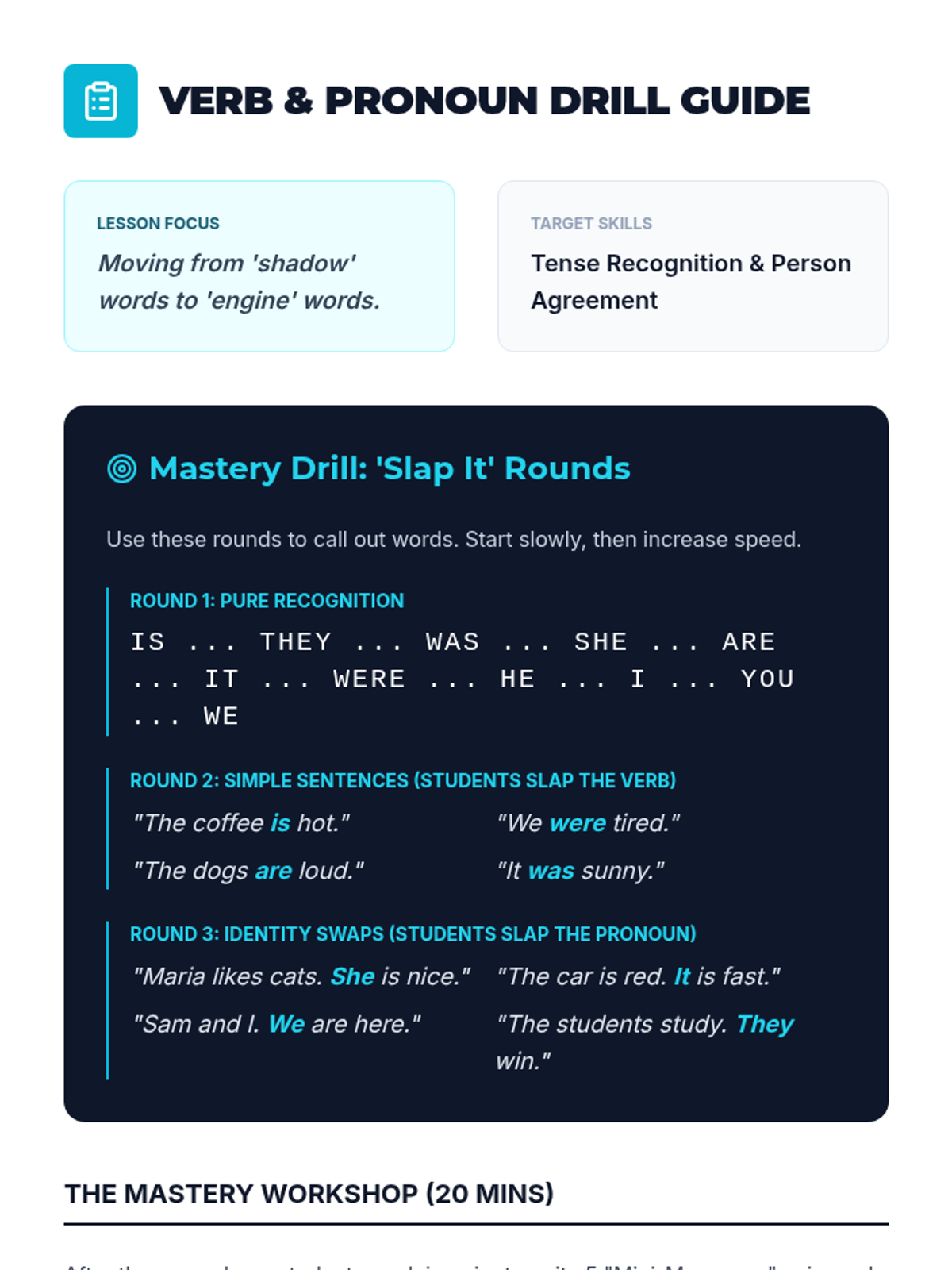
Focuses on rapid recognition of high-frequency verbs and subject pronouns through competitive drills and workshop activities.
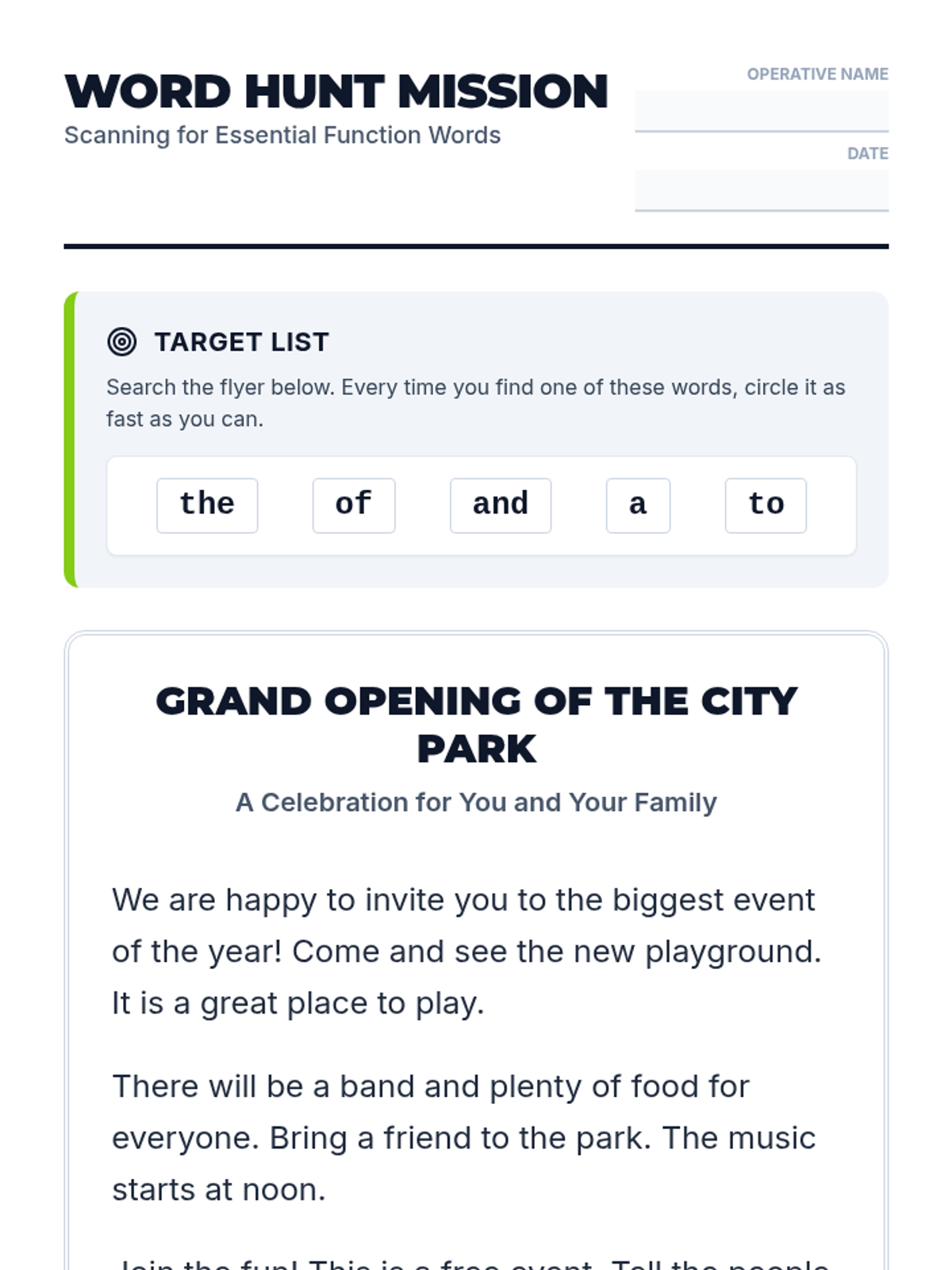
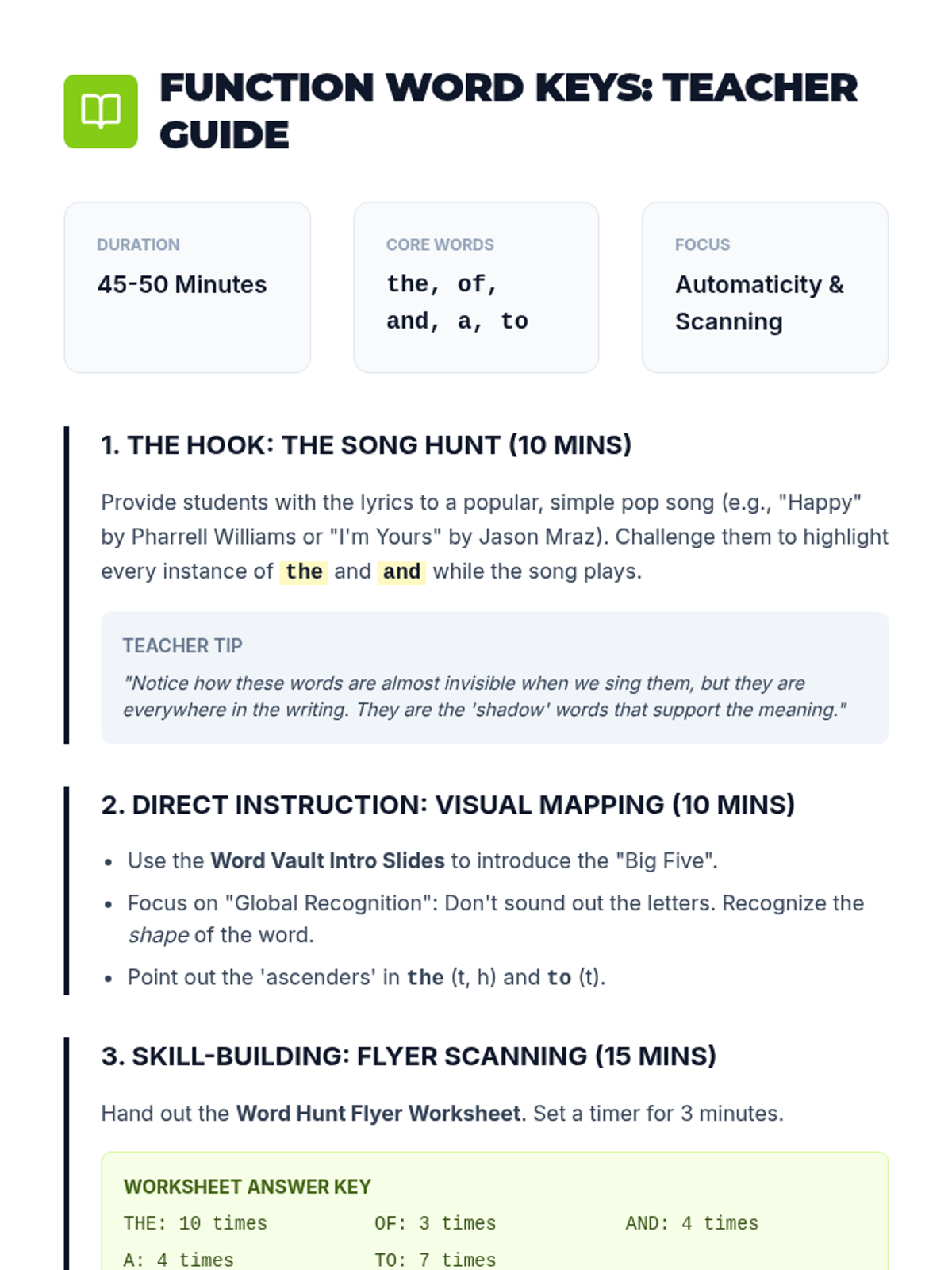
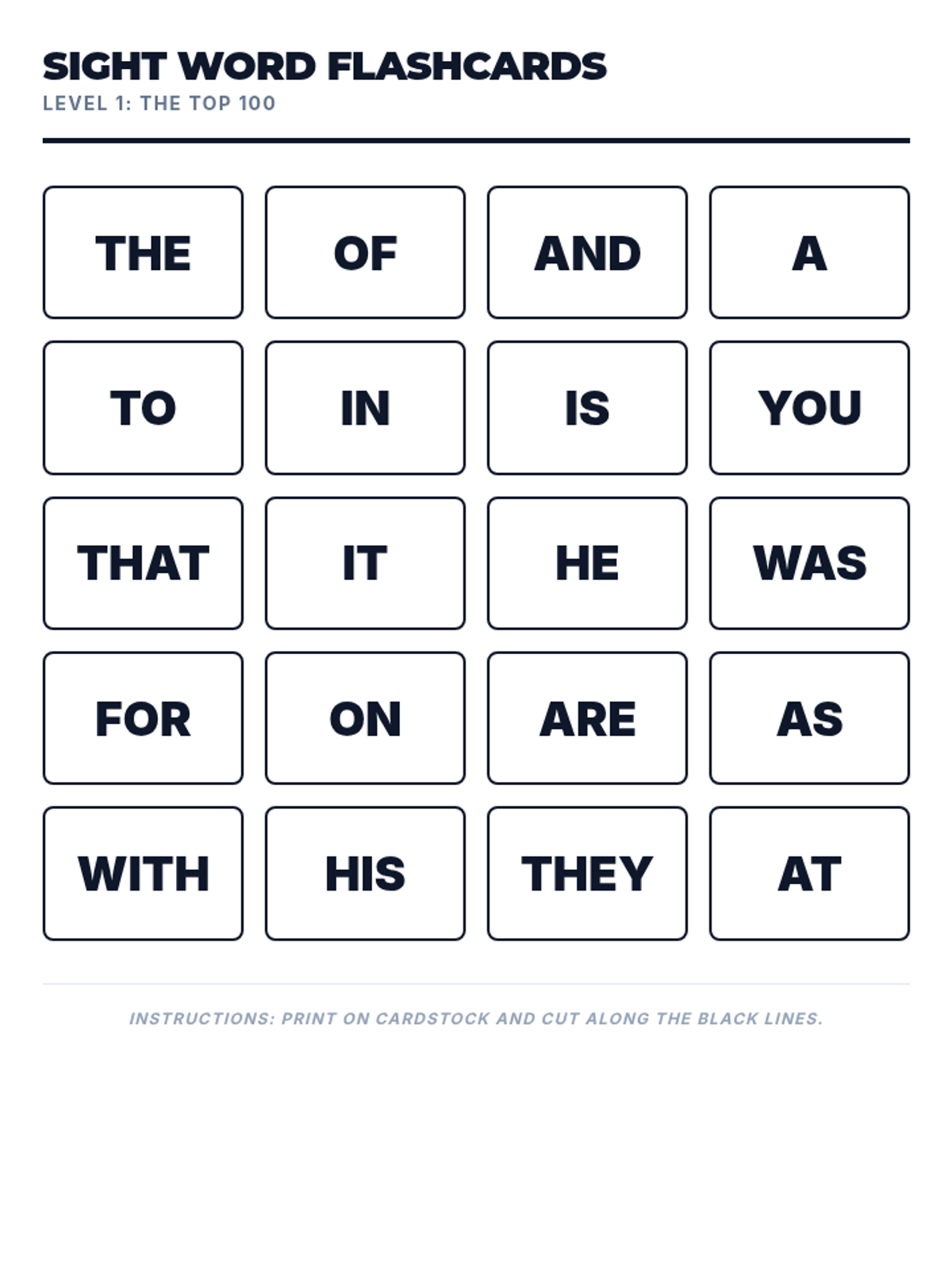
Students identify and memorize core function words (the, of, and, a, to) using authentic text scanning techniques.
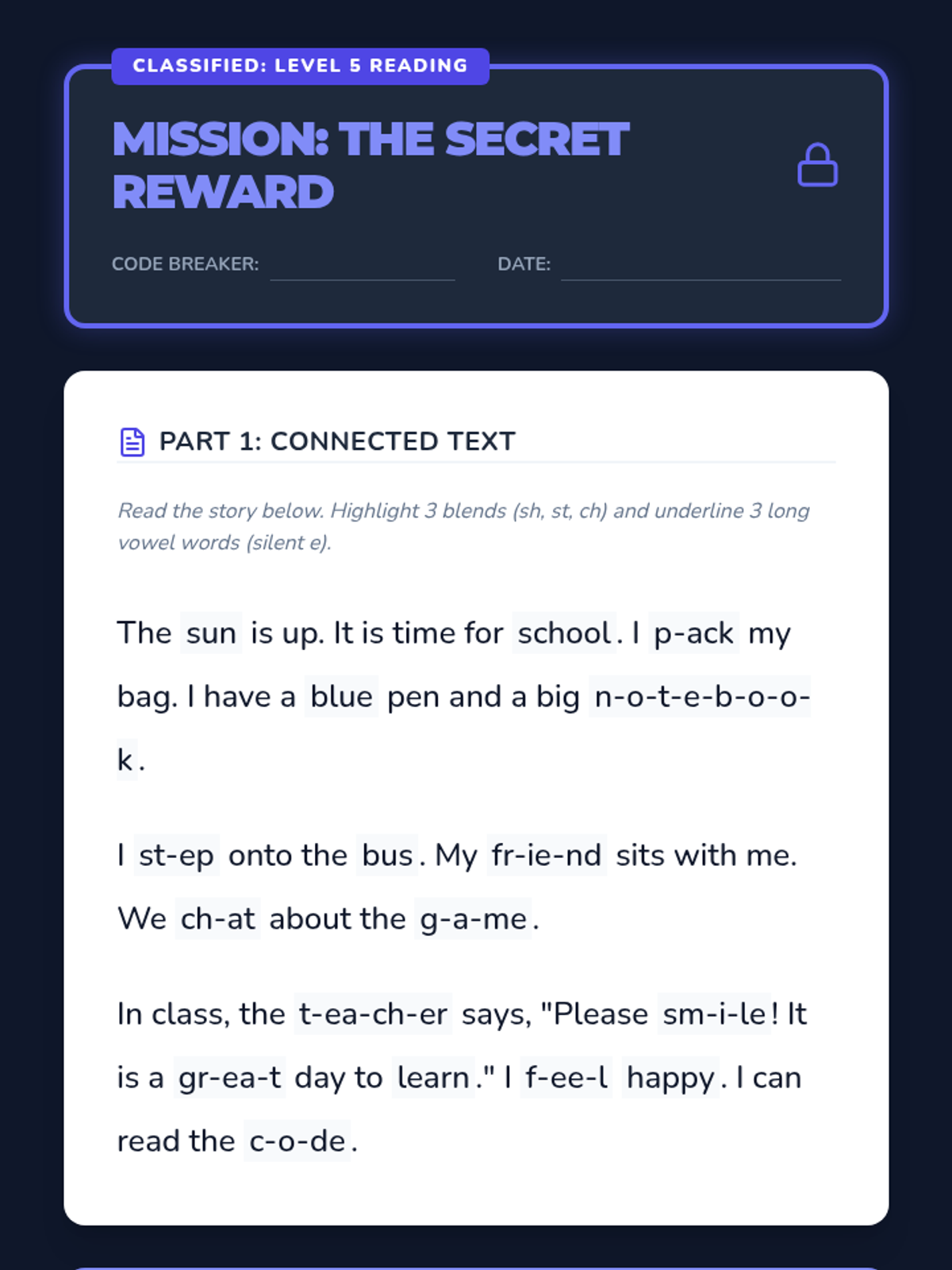
Students apply their decoding skills to read connected text about student life and decode a 'secret message' to demonstrate mastery.
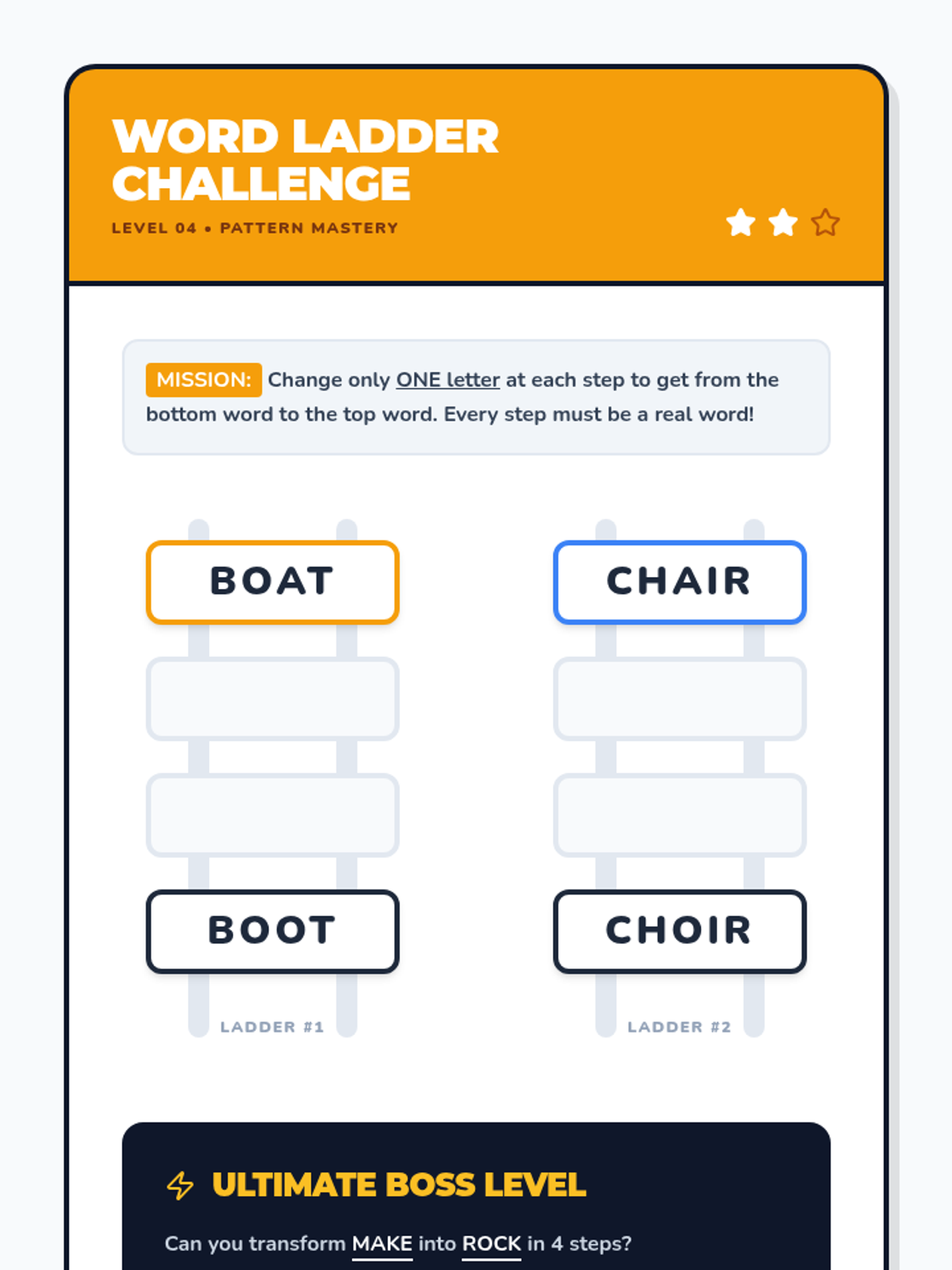
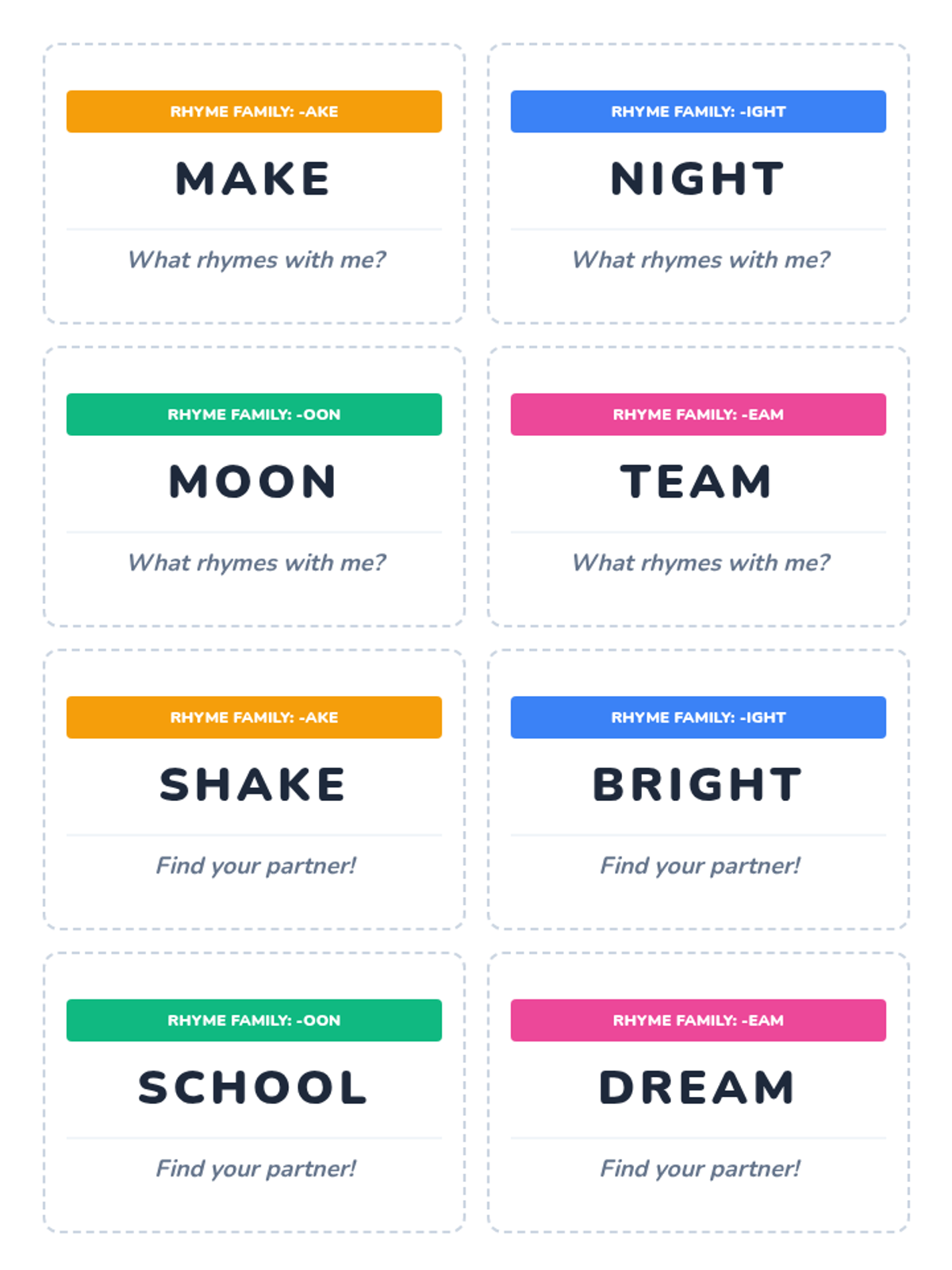
Explores word families and rhyming patterns to improve decoding speed. Students use word ladders to practice phoneme manipulation.
Focuses on breaking multi-syllabic academic words into manageable parts using common prefixes, suffixes, and syllabication rules.
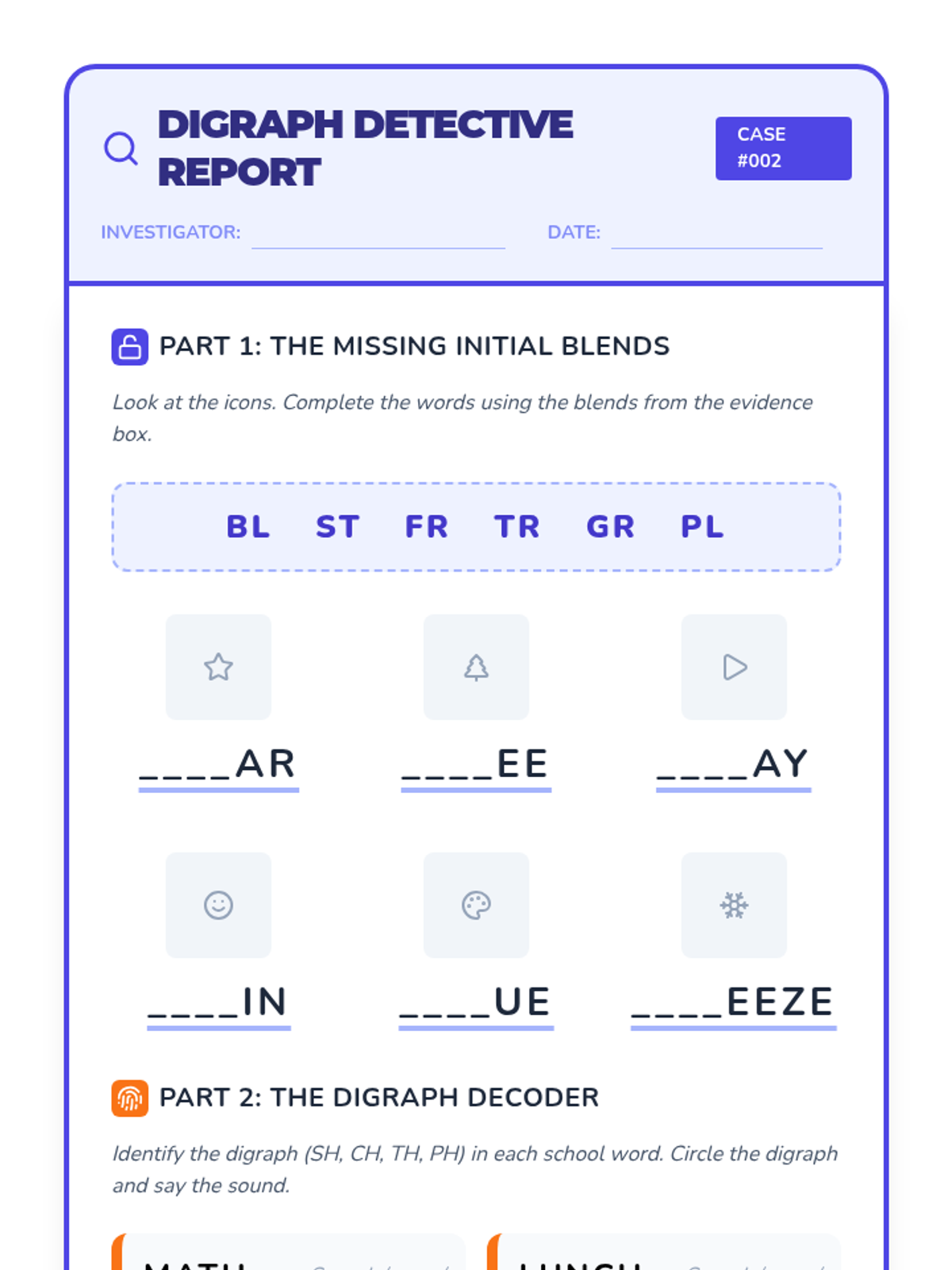
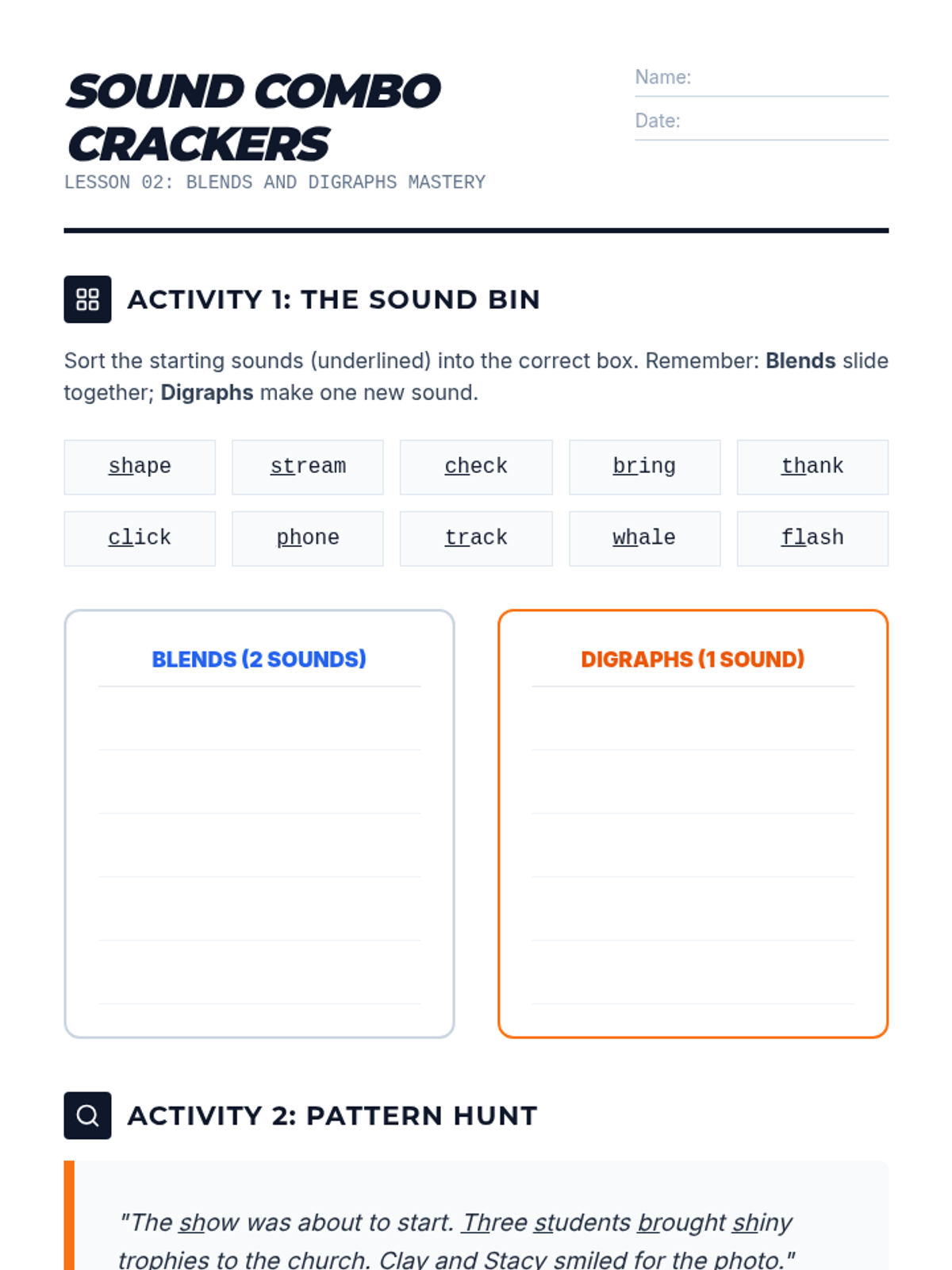
Learners investigate initial and final consonant blends and digraphs found in high-frequency teen vocabulary. Features oral practice and word-building activities.
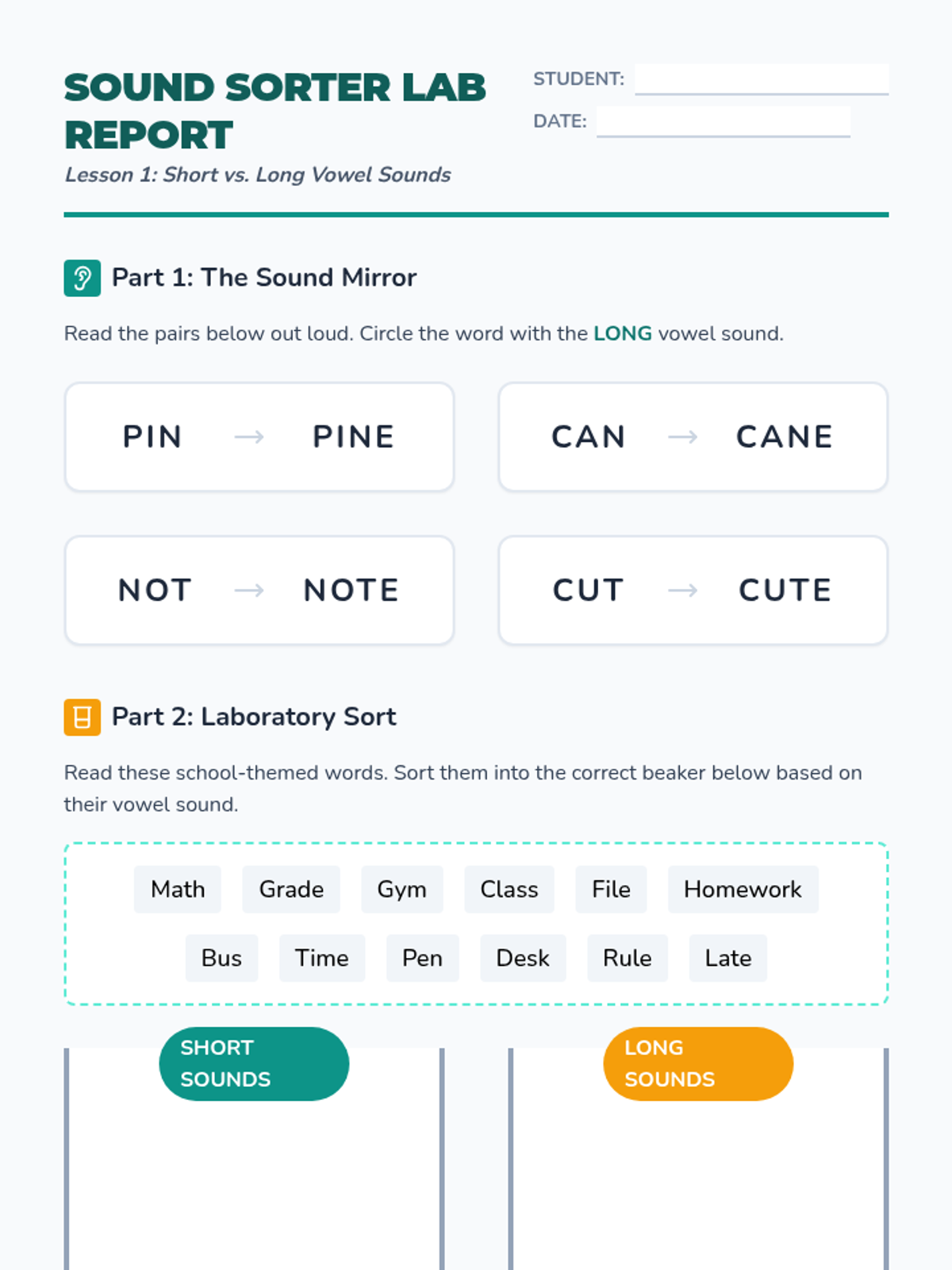
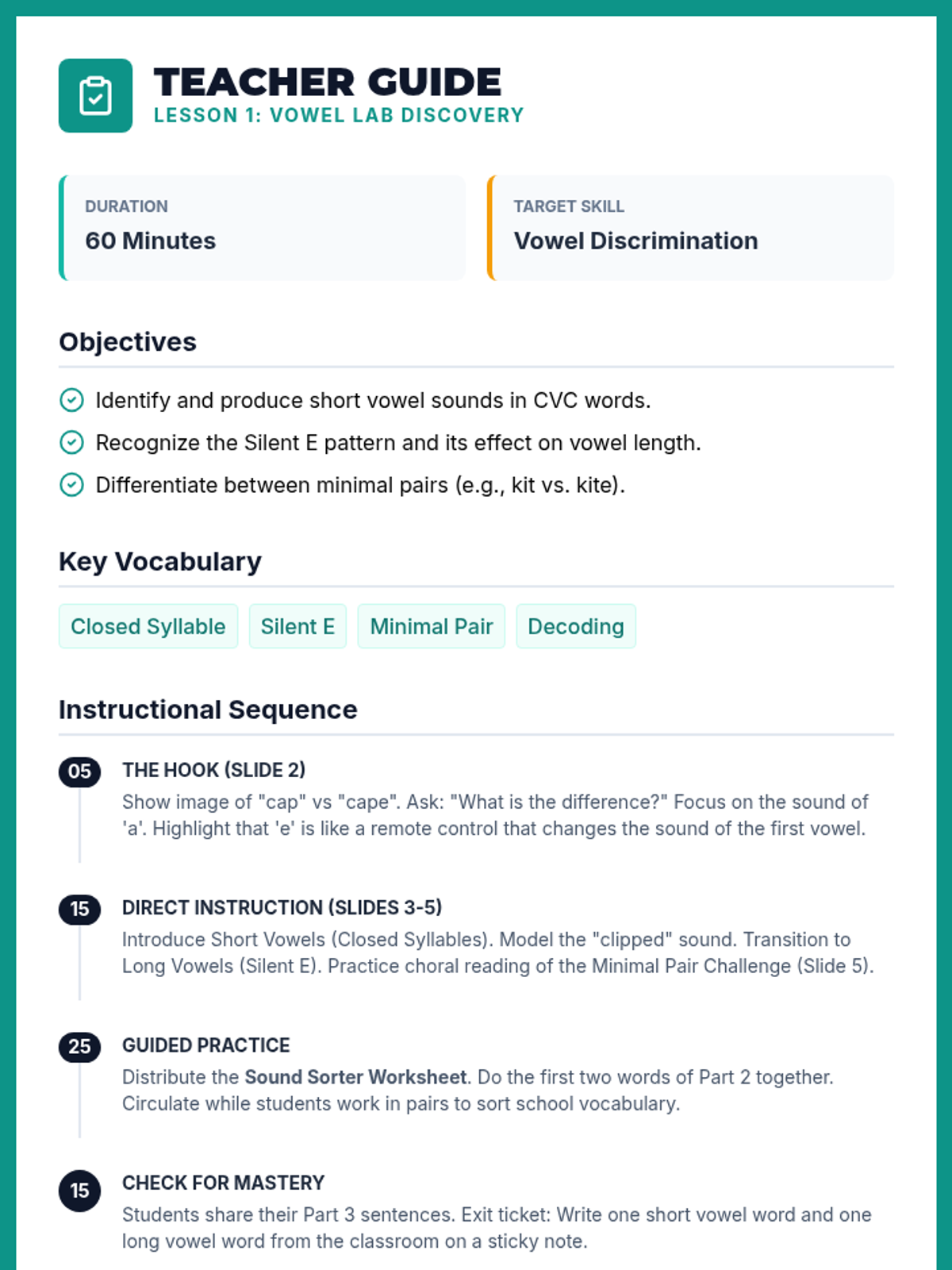
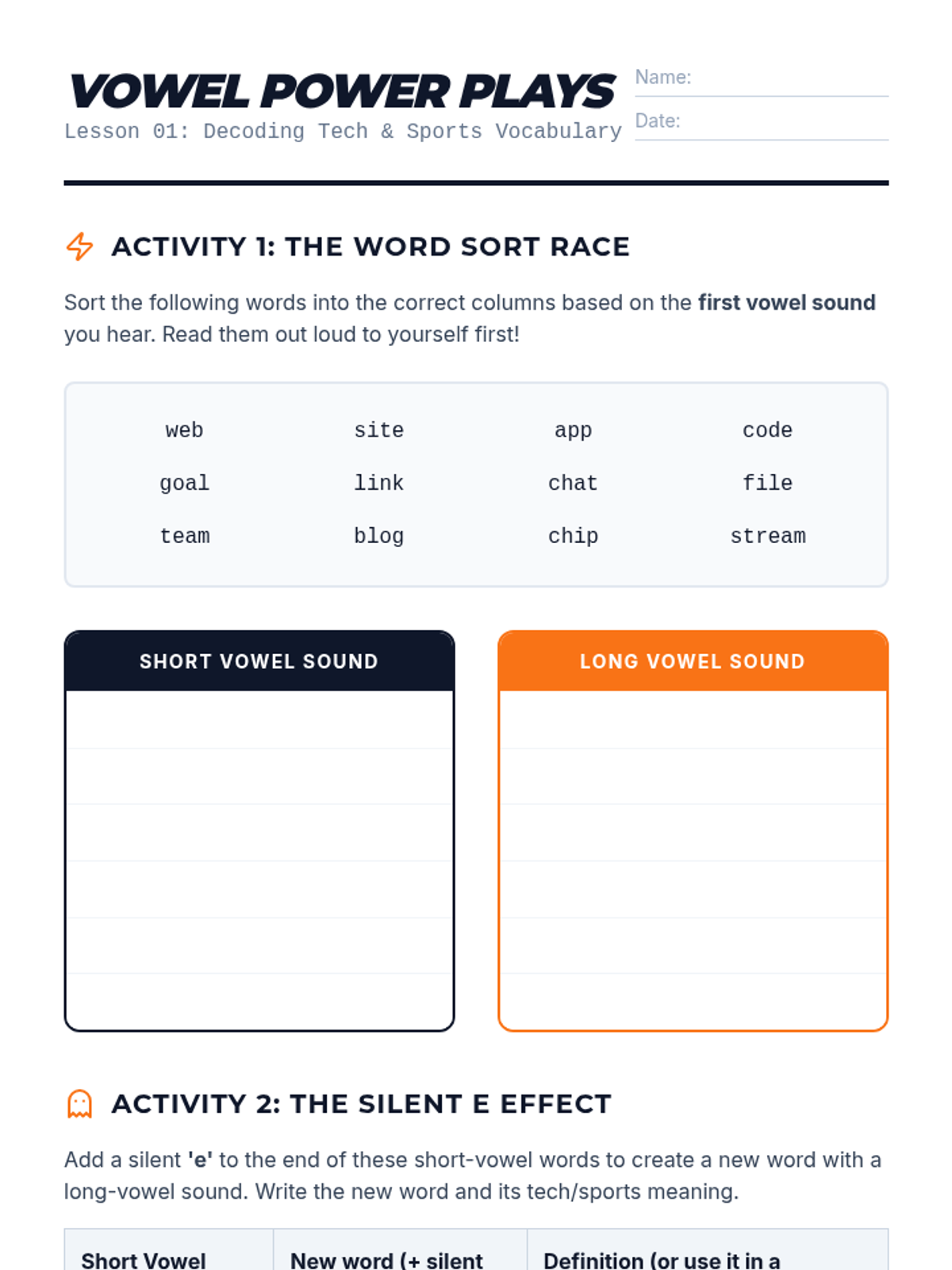
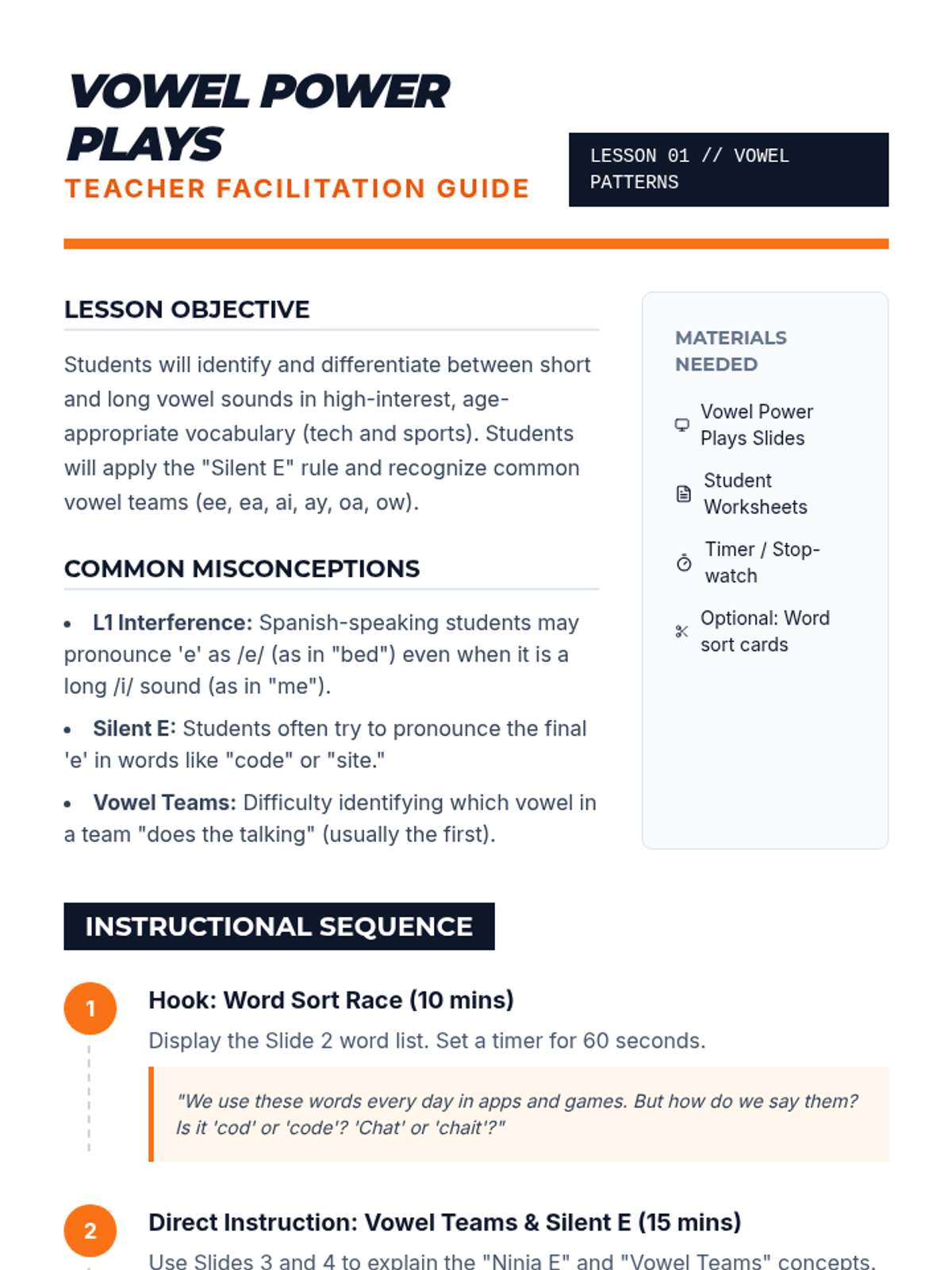
Students distinguish between short and long vowel sounds using school-related vocabulary and minimal pairs. Focuses on the 'silent e' pattern and vowel discrimination in reading.
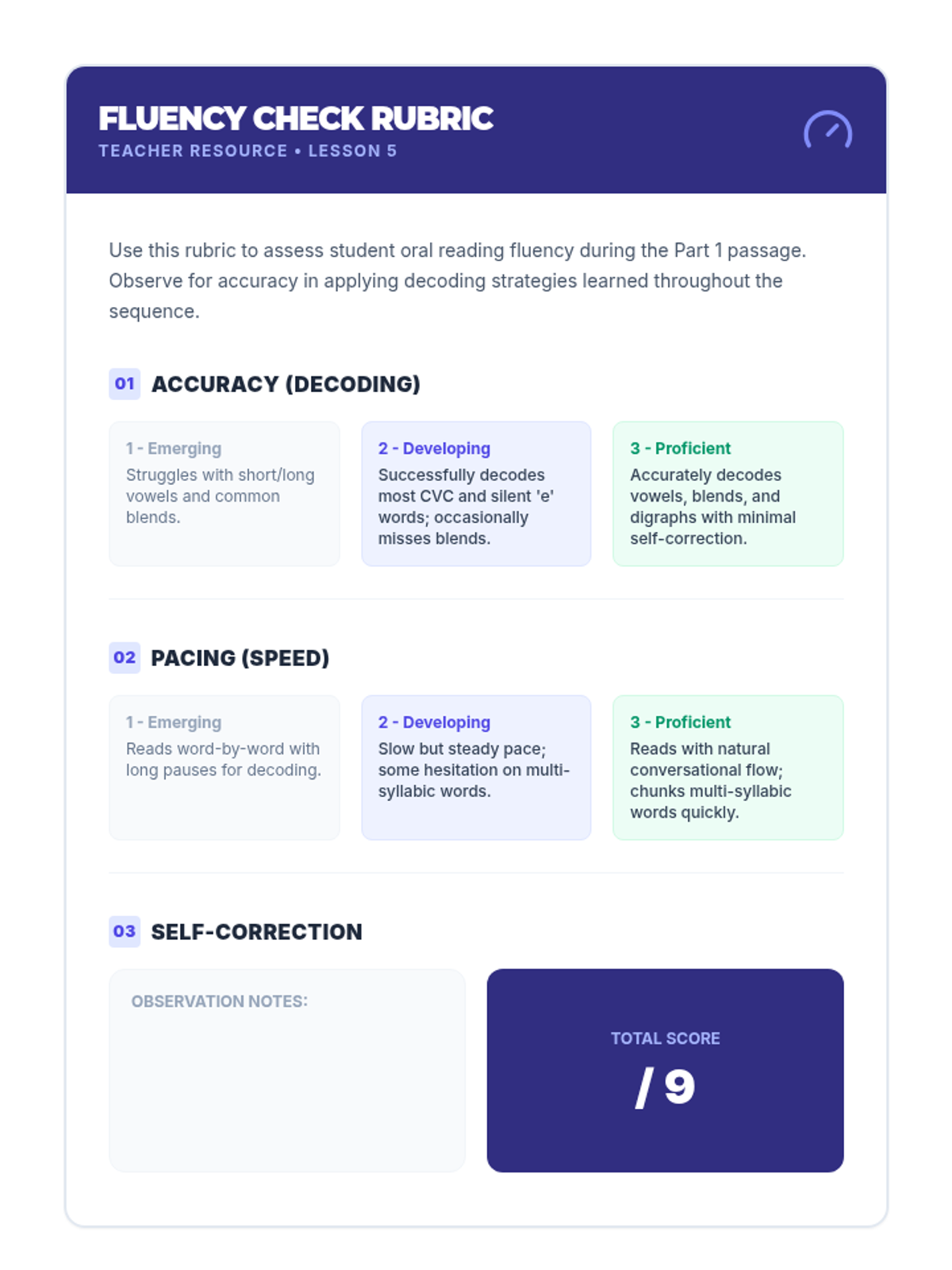
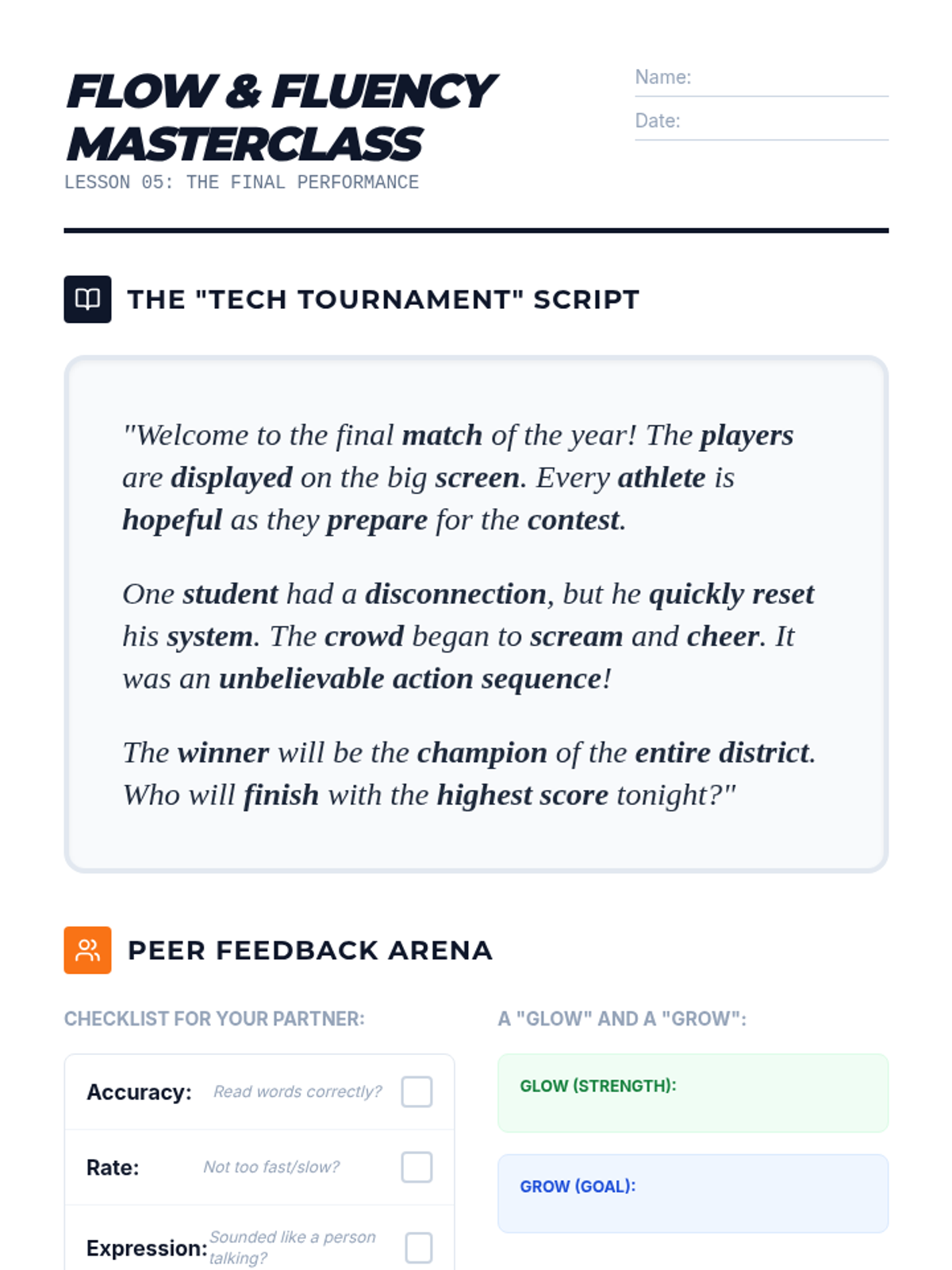
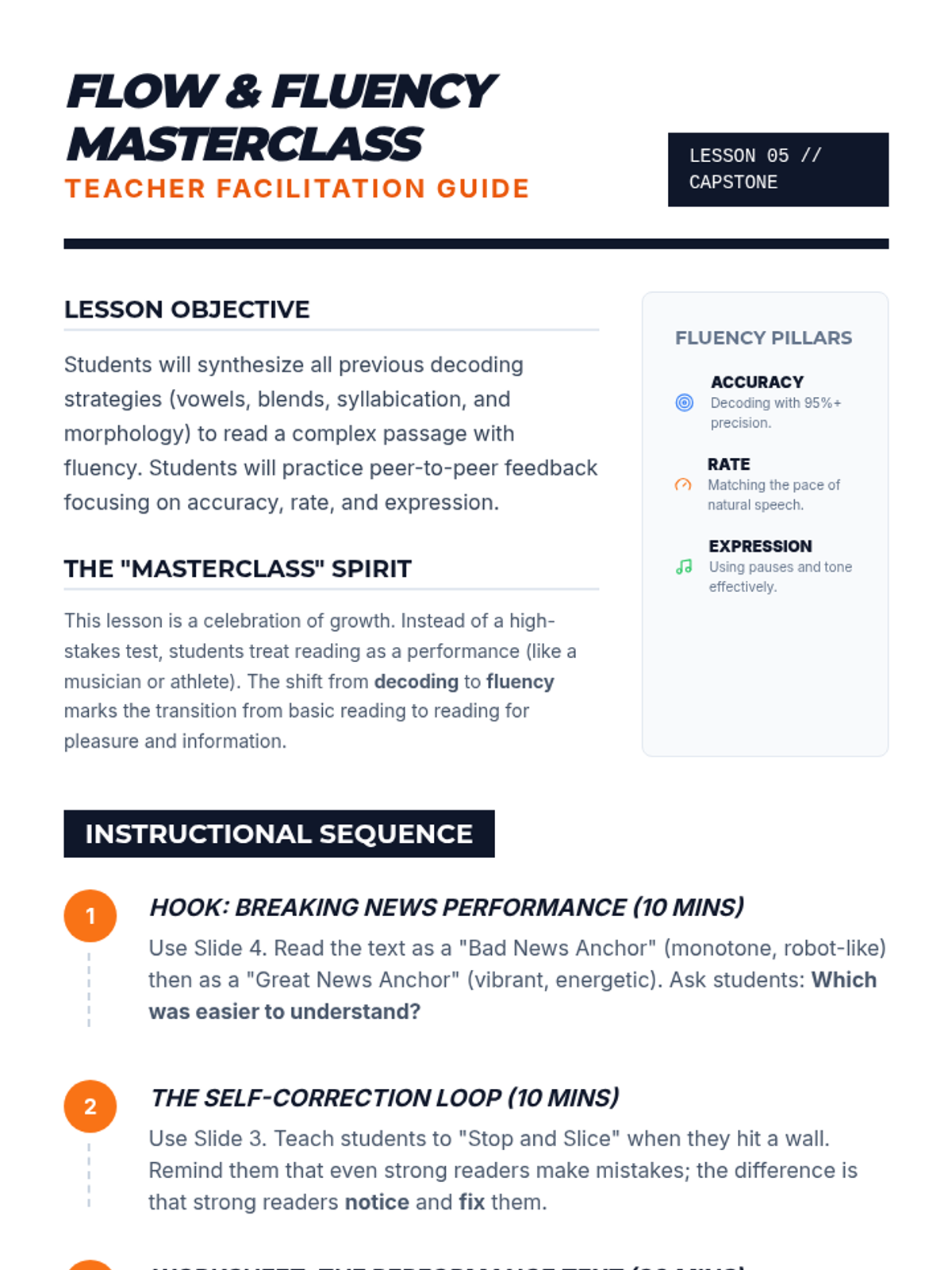
Culminating fluency practice using decodable passages and peer feedback, focusing on reading rate, accuracy, and self-correction strategies.
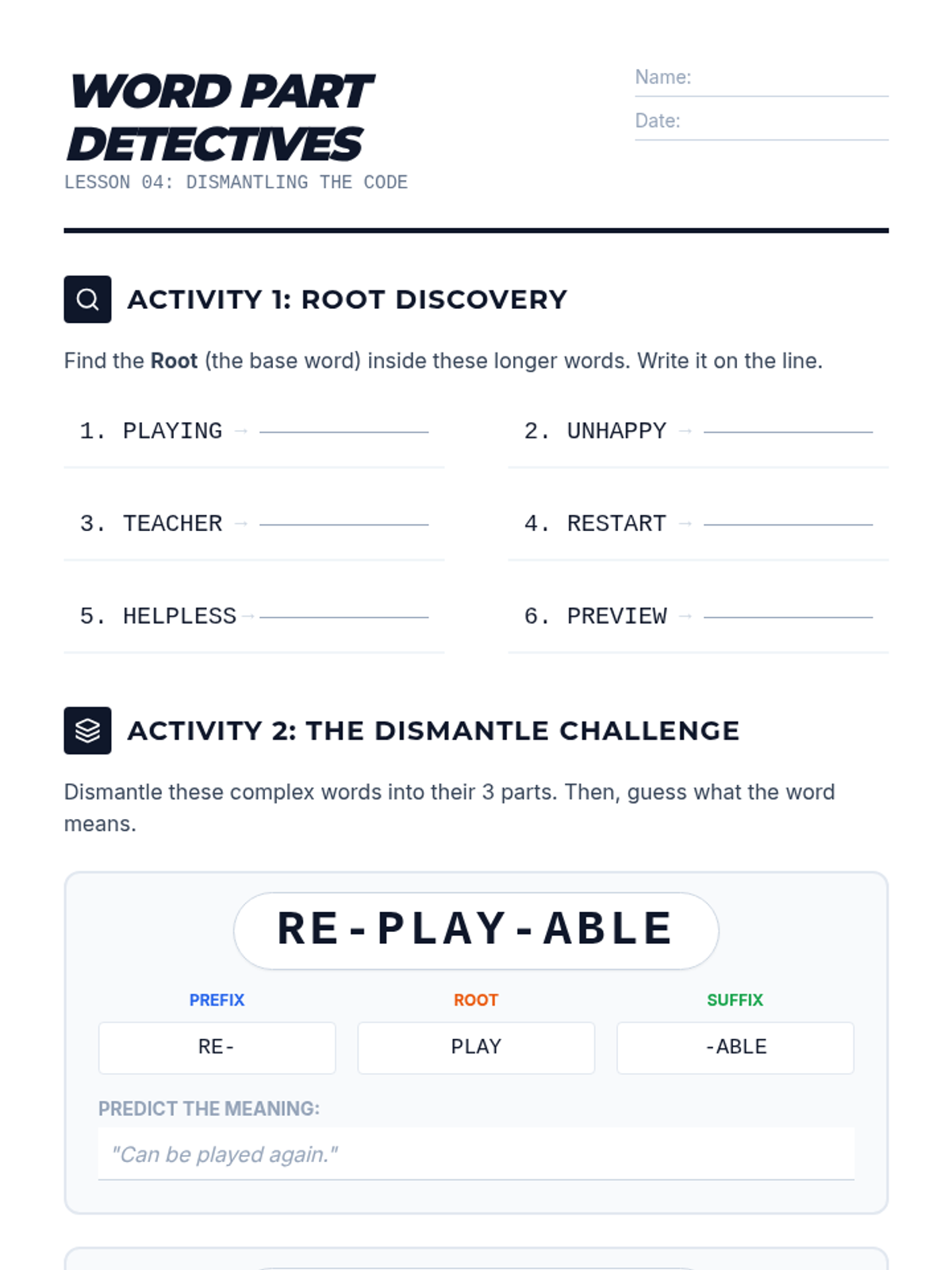
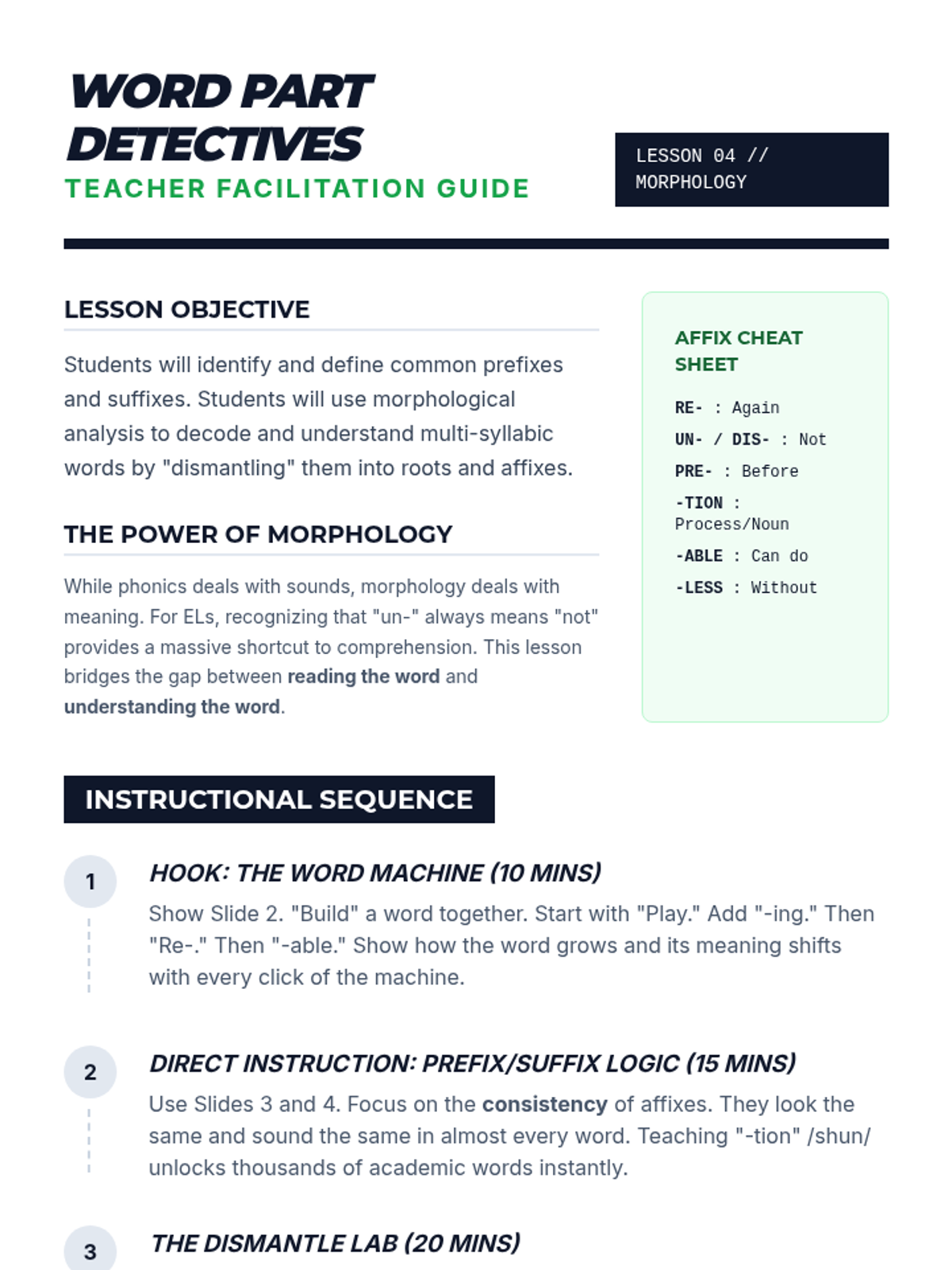
Explores prefixes and suffixes as keys to decoding, where students dismantle complex words into roots to understand both pronunciation and meaning.
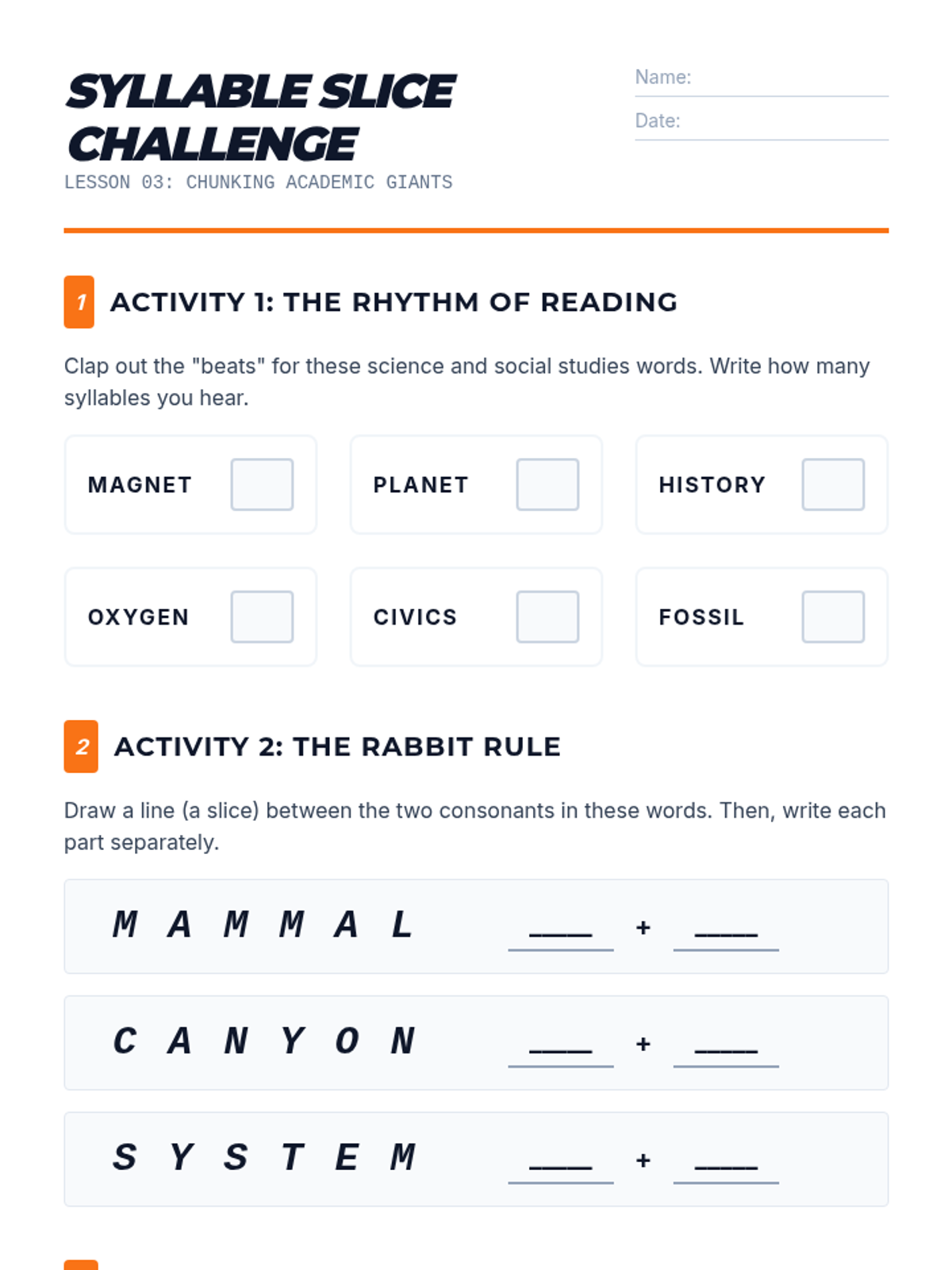
Introduces syllabication strategies including open and closed syllables to help students decode multi-syllabic academic words from science and social studies.
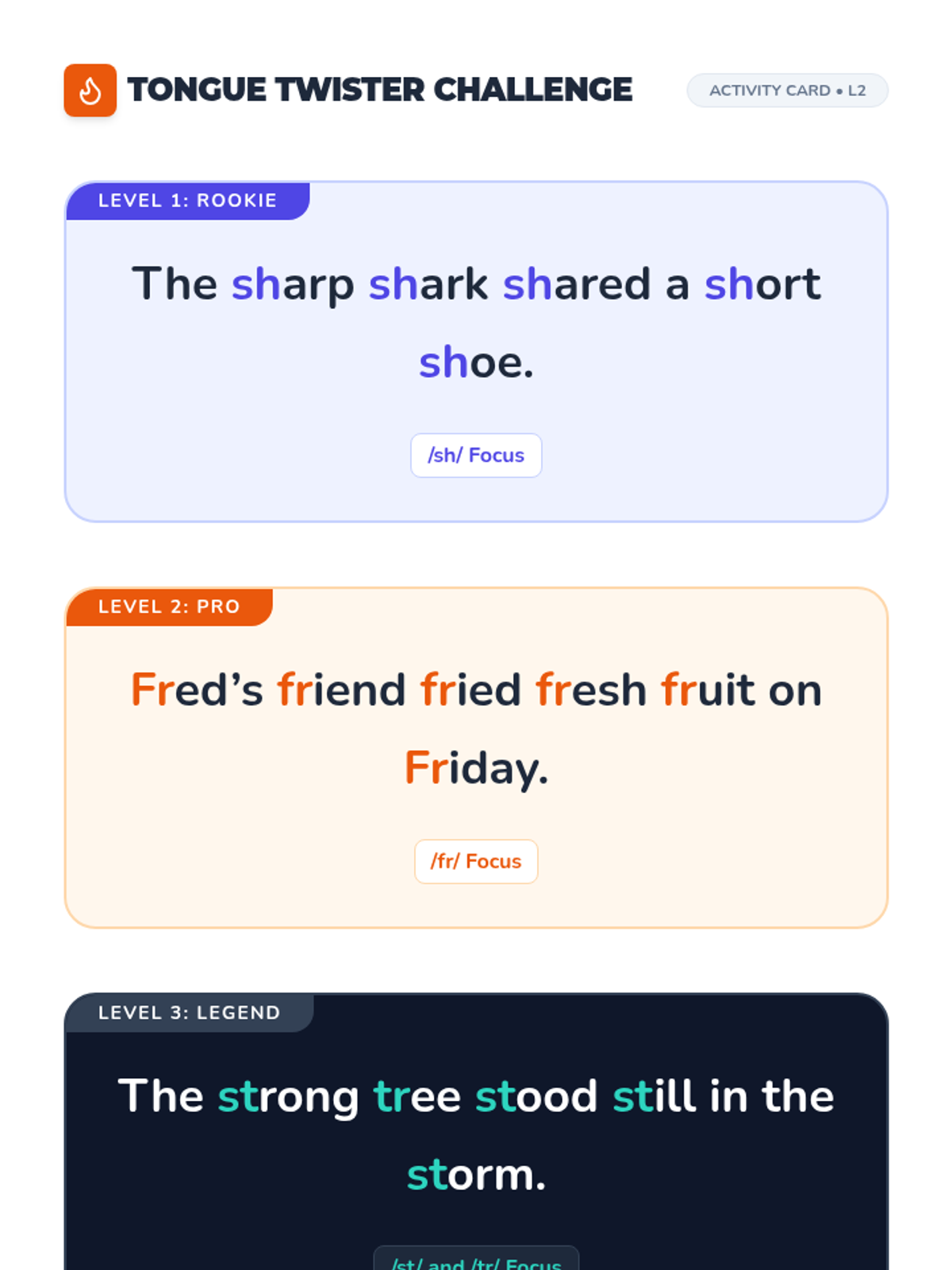
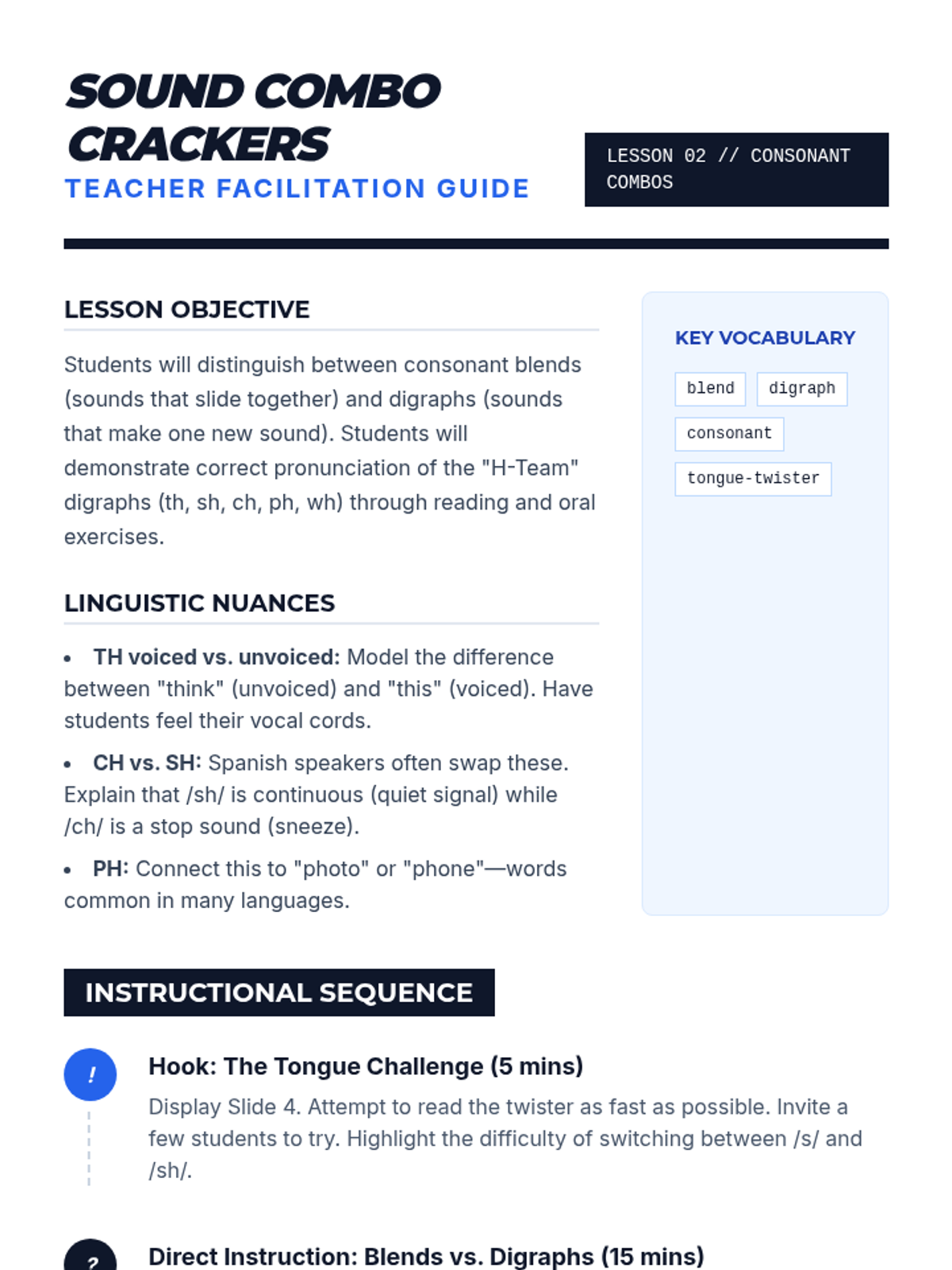
Focuses on common consonant blends and digraphs in everyday English, with students identifying patterns in text and practicing pronunciation through tongue twisters.
Students master short and long vowel sounds using vocabulary related to sports, tech, and school life, identifying vowel teams through interactive word sorts.
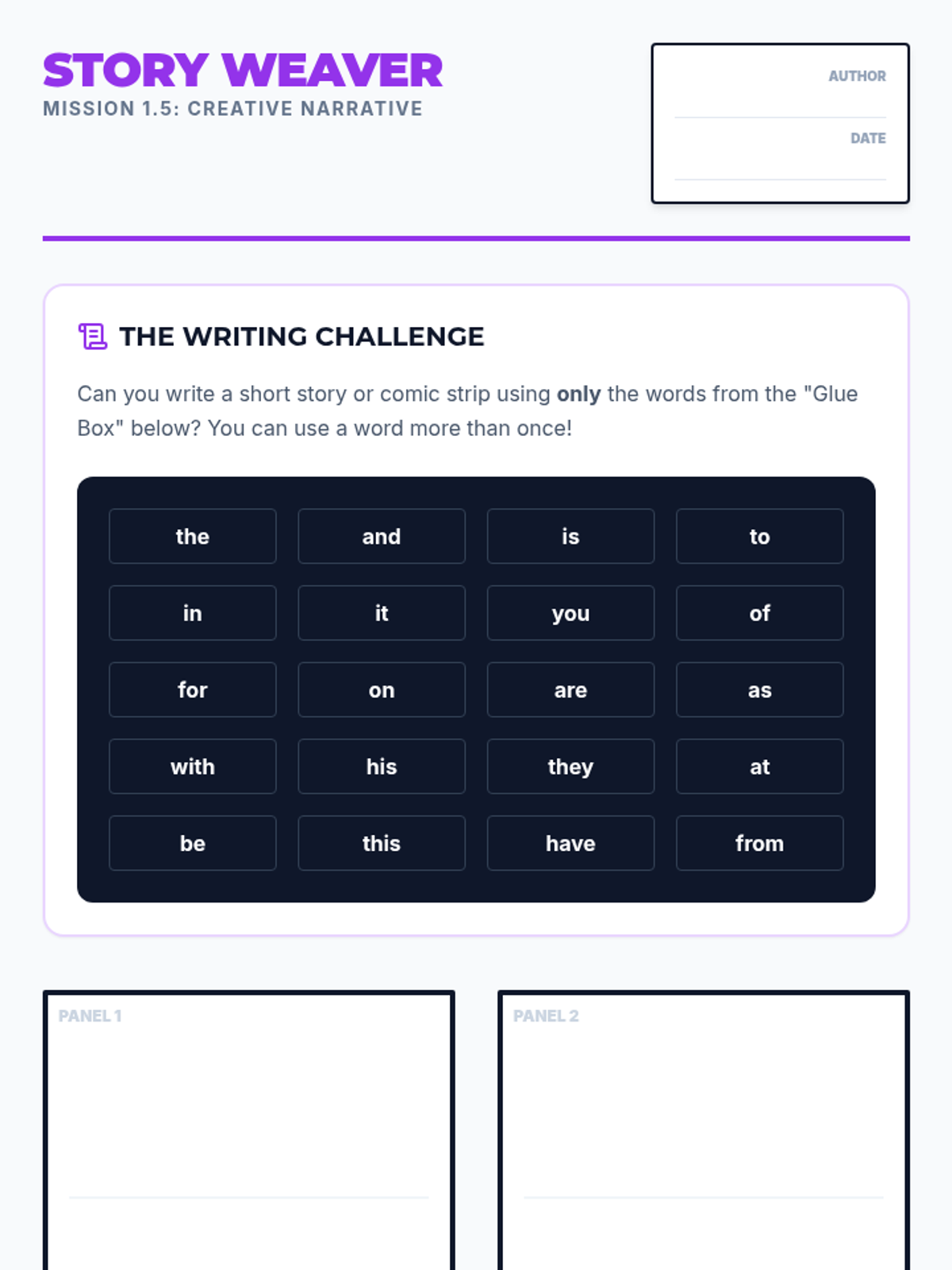
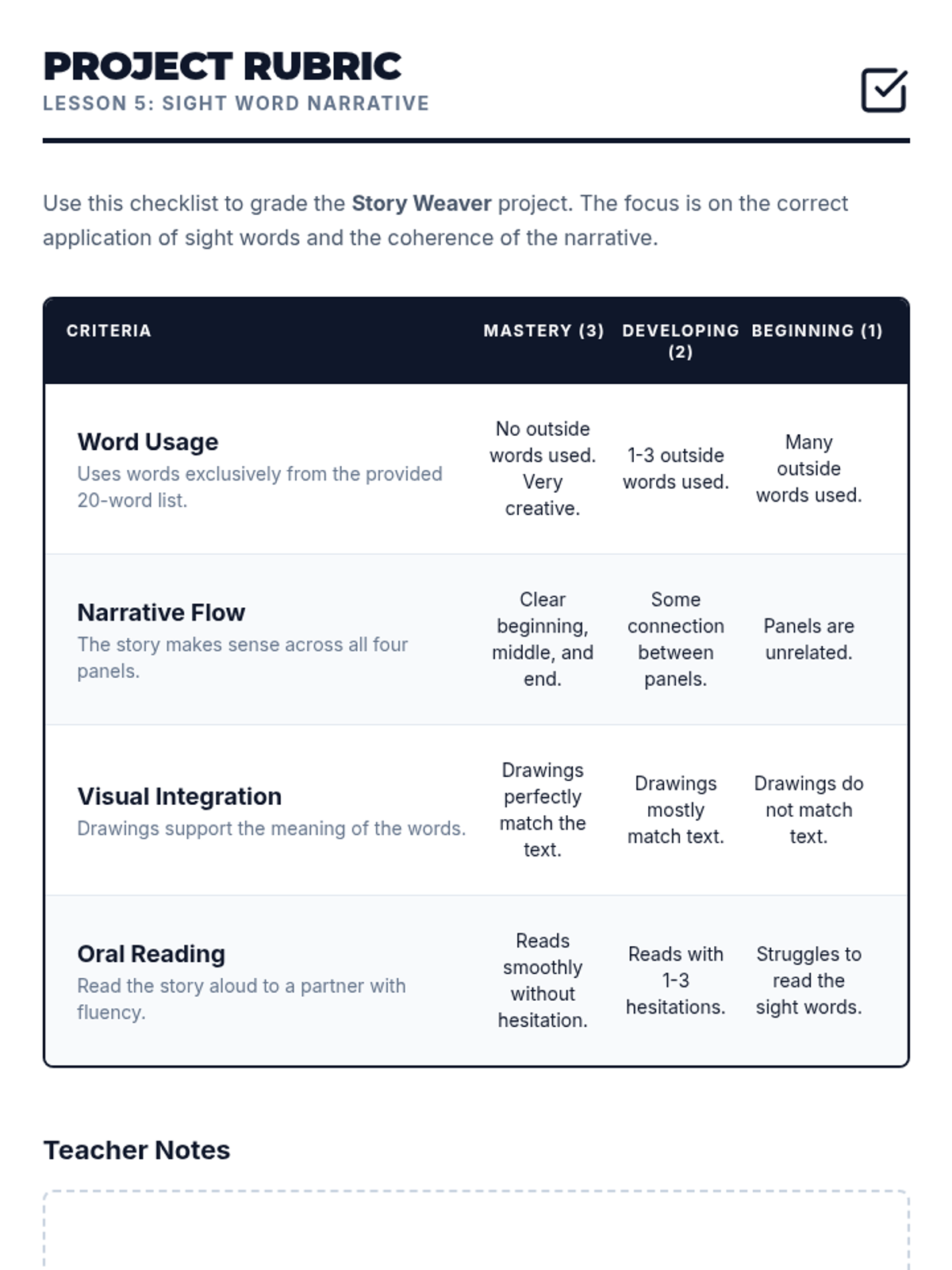
Students synthesize their learning by creating a comic strip or short story using a limited set of high-frequency words, culminating in a partner-reading session.
A high-energy lesson focused on building reading speed and automaticity through rapid-flash word recognition games and 'Word Ninja' challenges.
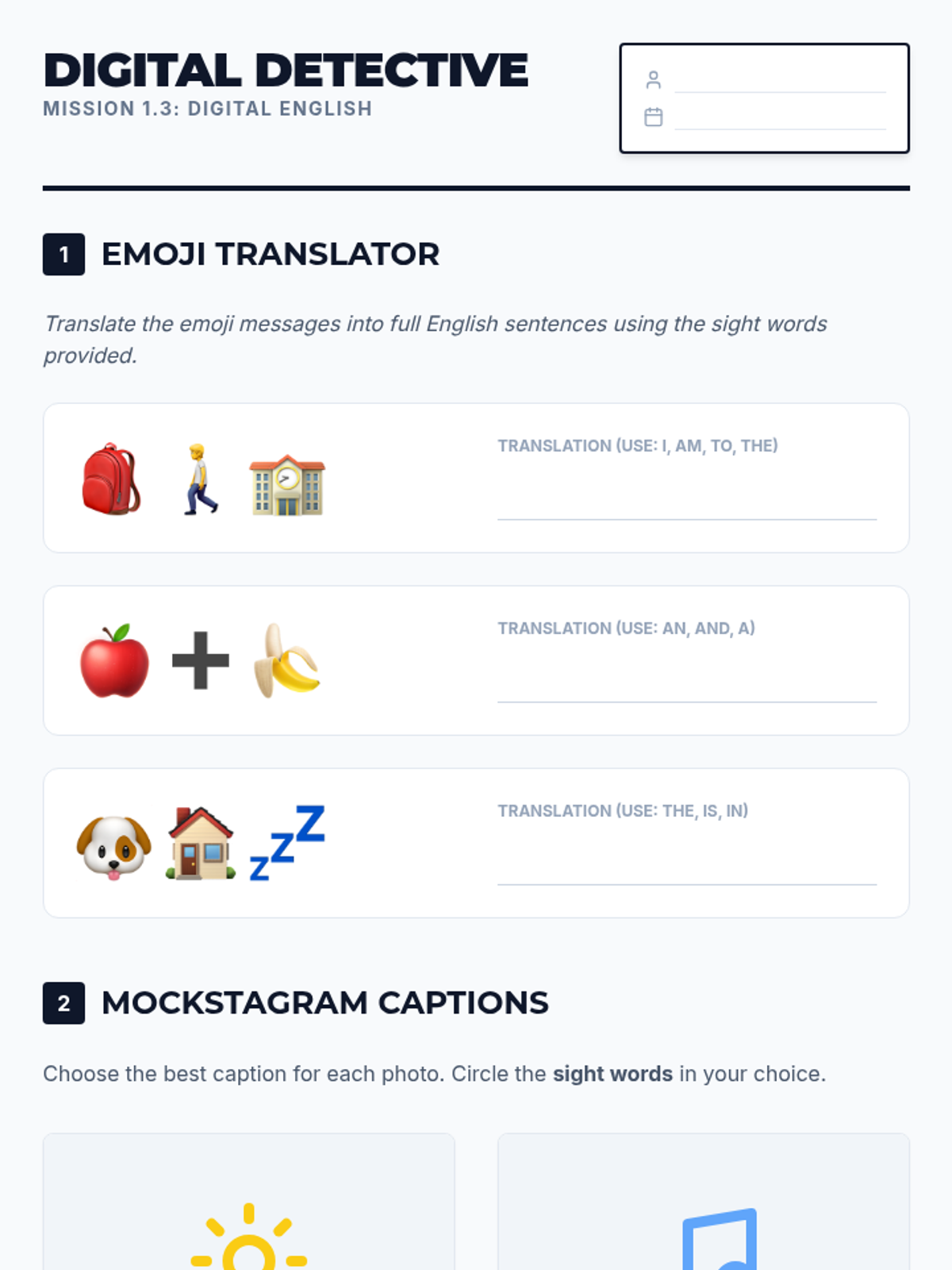
Students practice reading and writing mock emails and social media captions, focusing on recognizing sight words in various digital fonts and emoji-integrated contexts.
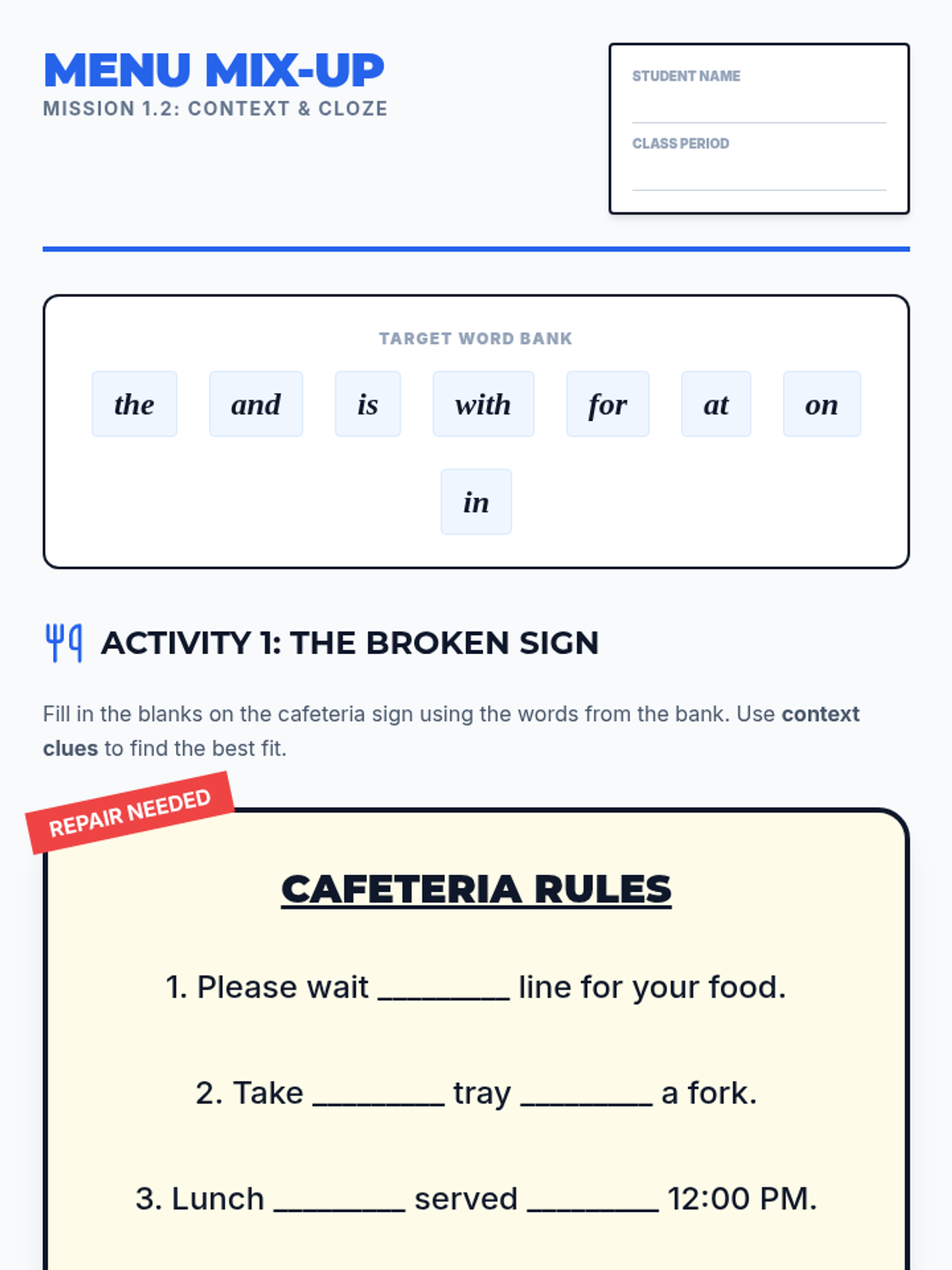
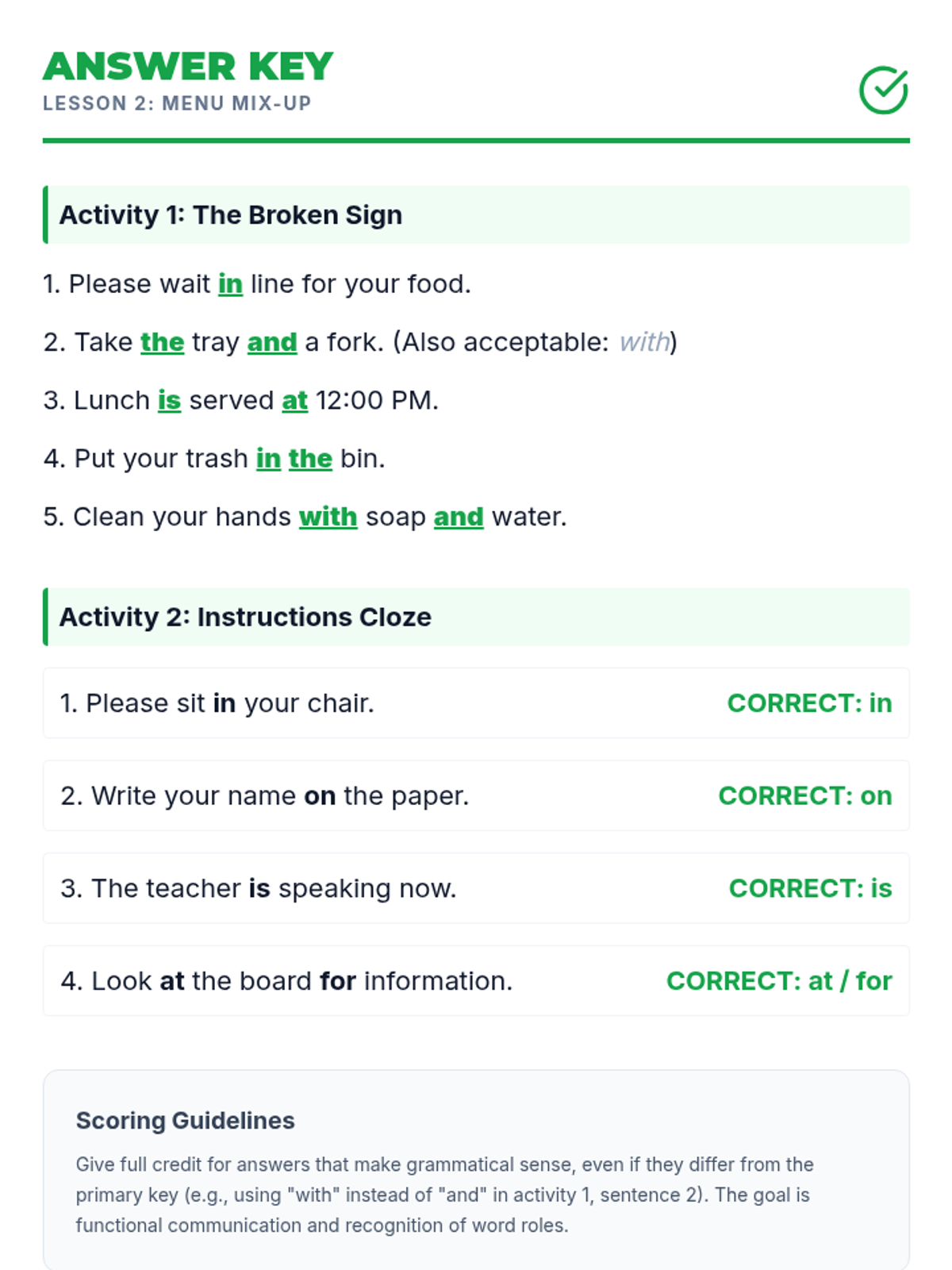
Learners practice filling in missing high-frequency words in cafeteria menus and classroom instructions to understand how context clues and syntax guide word choice.
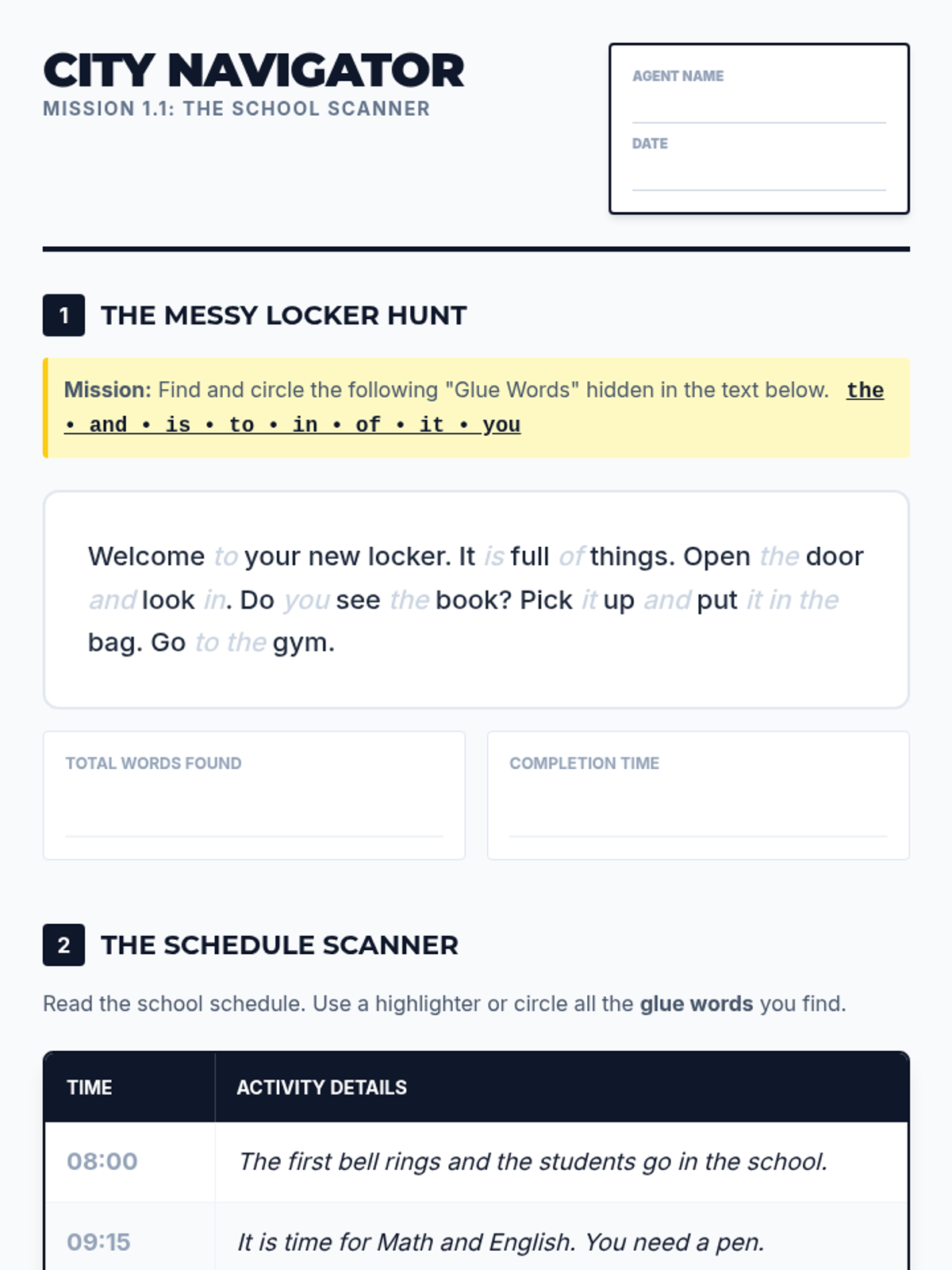
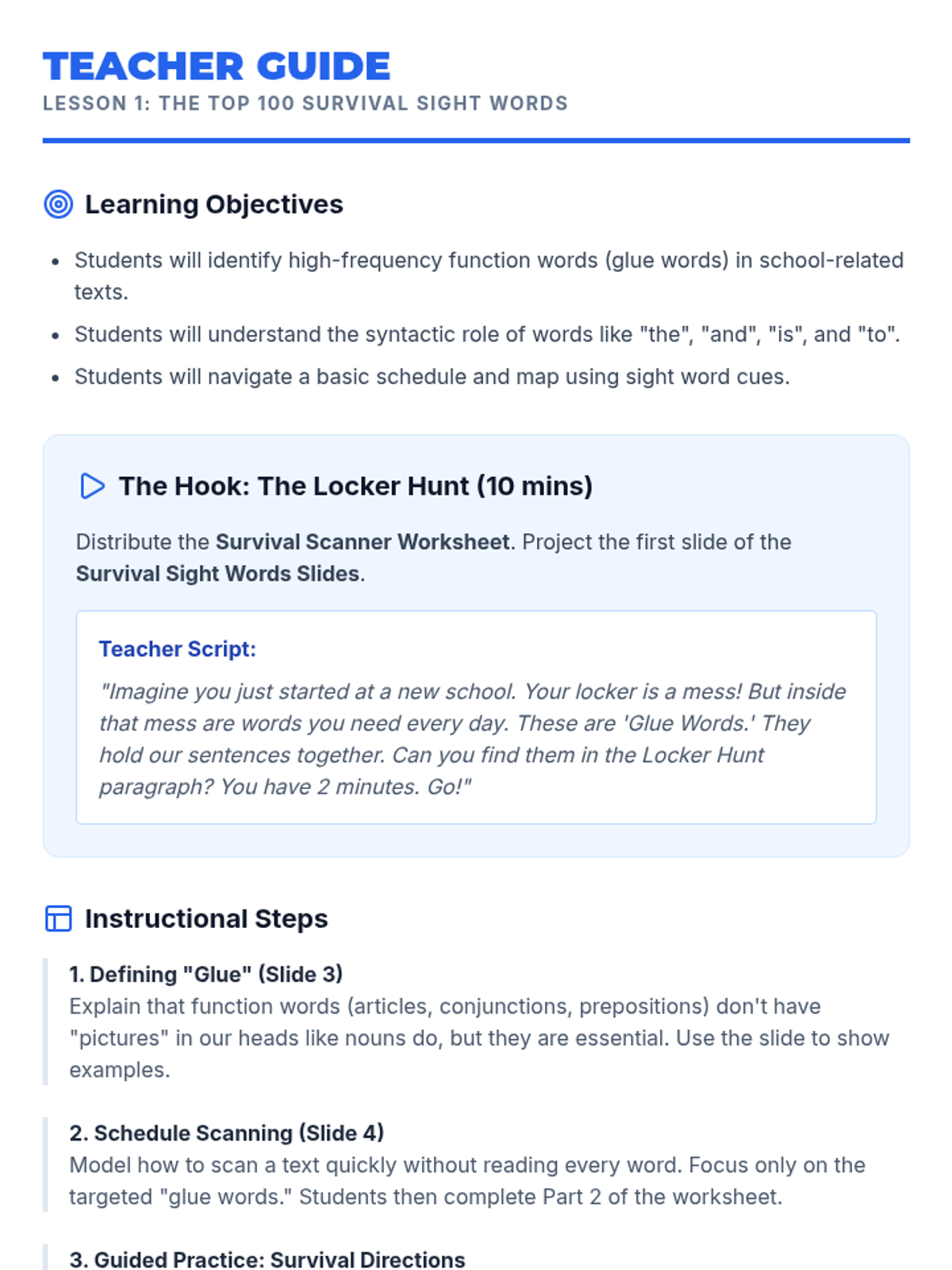
Students identify and highlight the most frequent 'glue words' within the context of a school schedule and map to understand their role in holding sentences and information together.
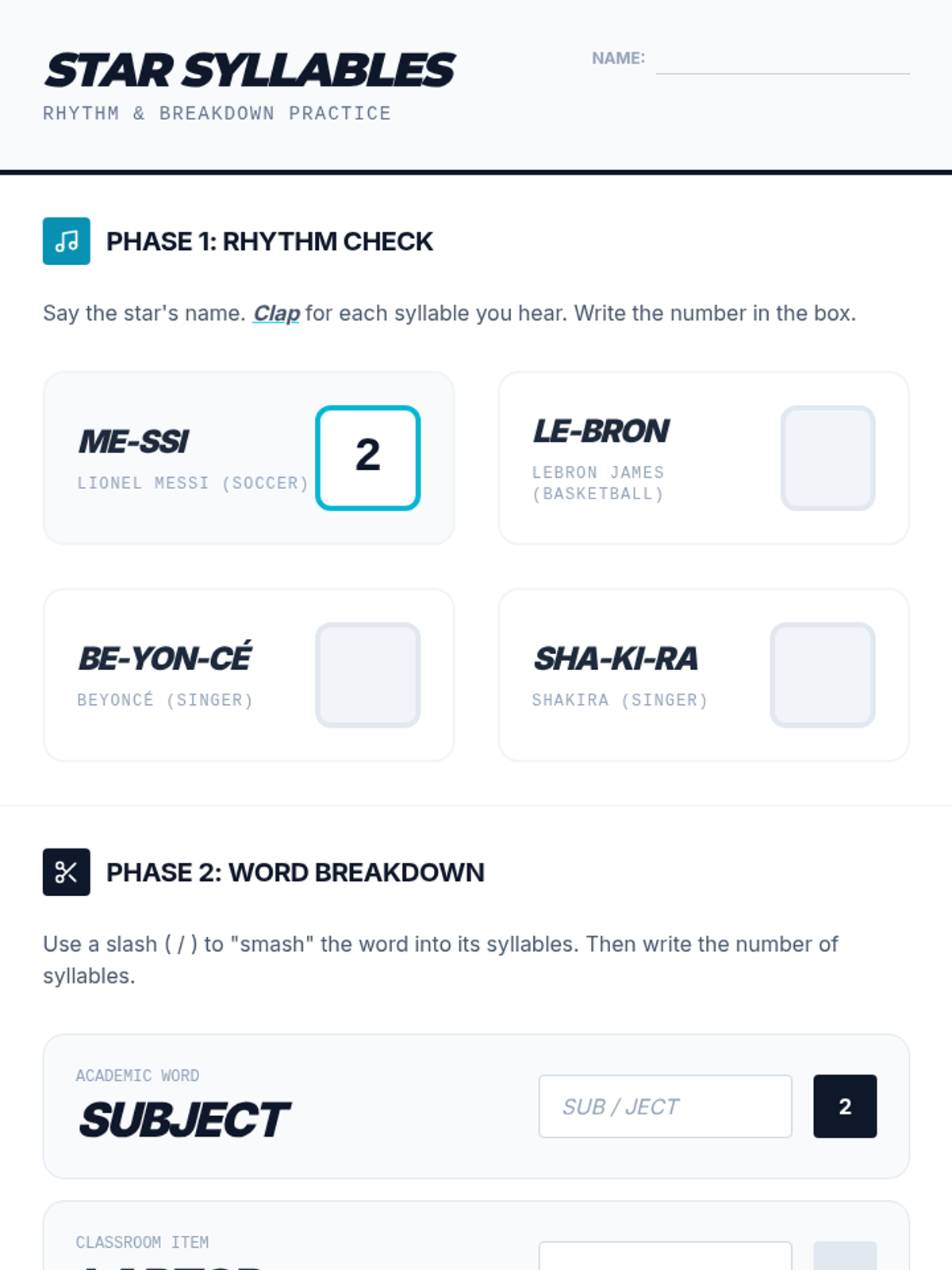
Students learn basic syllabication rules to tackle longer words, such as 'sub-ject' or 'con-test'. The lesson focuses on identifying vowel centers to determine the number of syllables.
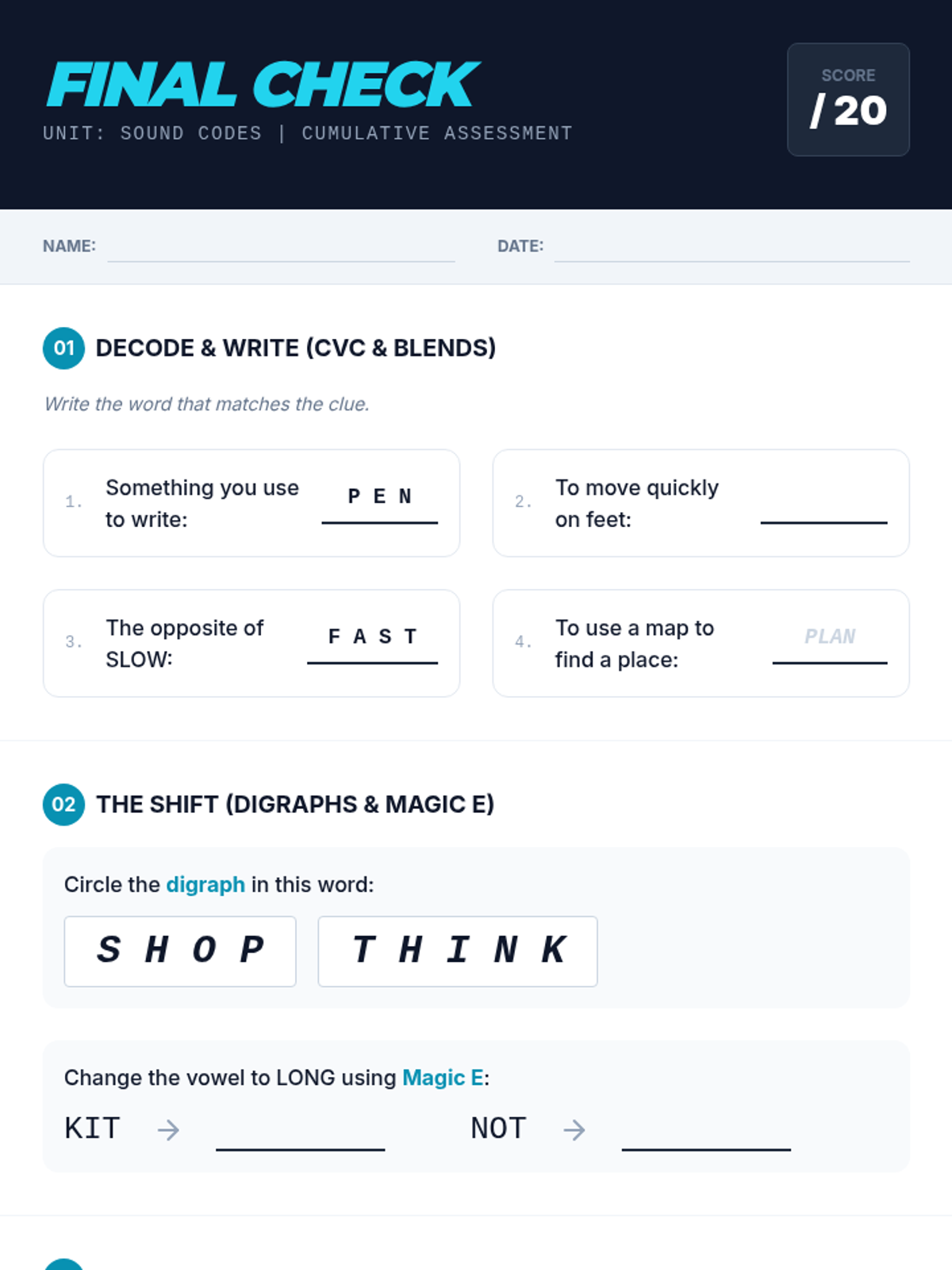
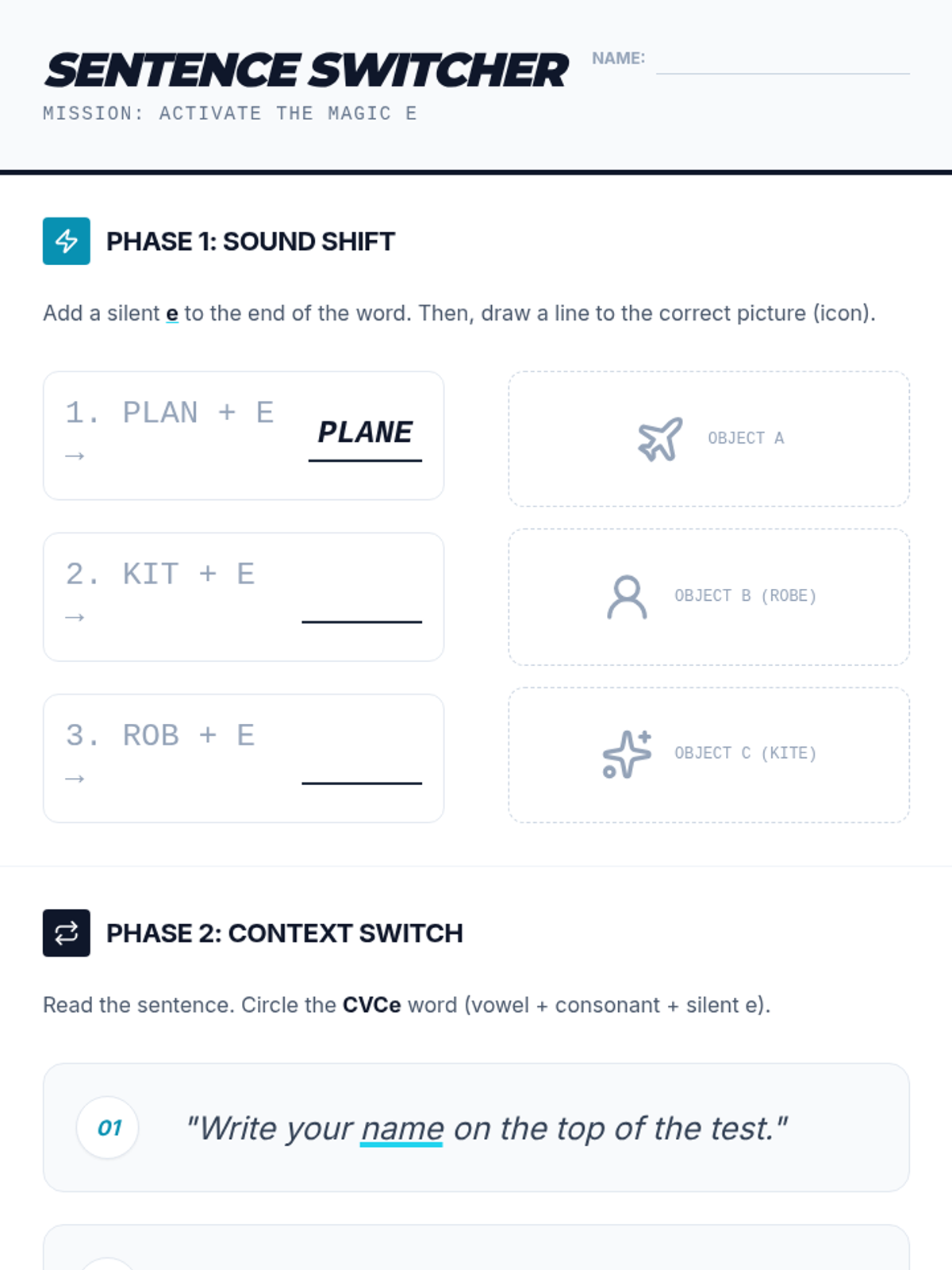
This lesson introduces the CVCe pattern, teaching students how the silent 'e' changes vowel sounds. Students transform short vowel words into long vowel words and read them in simple sentences.
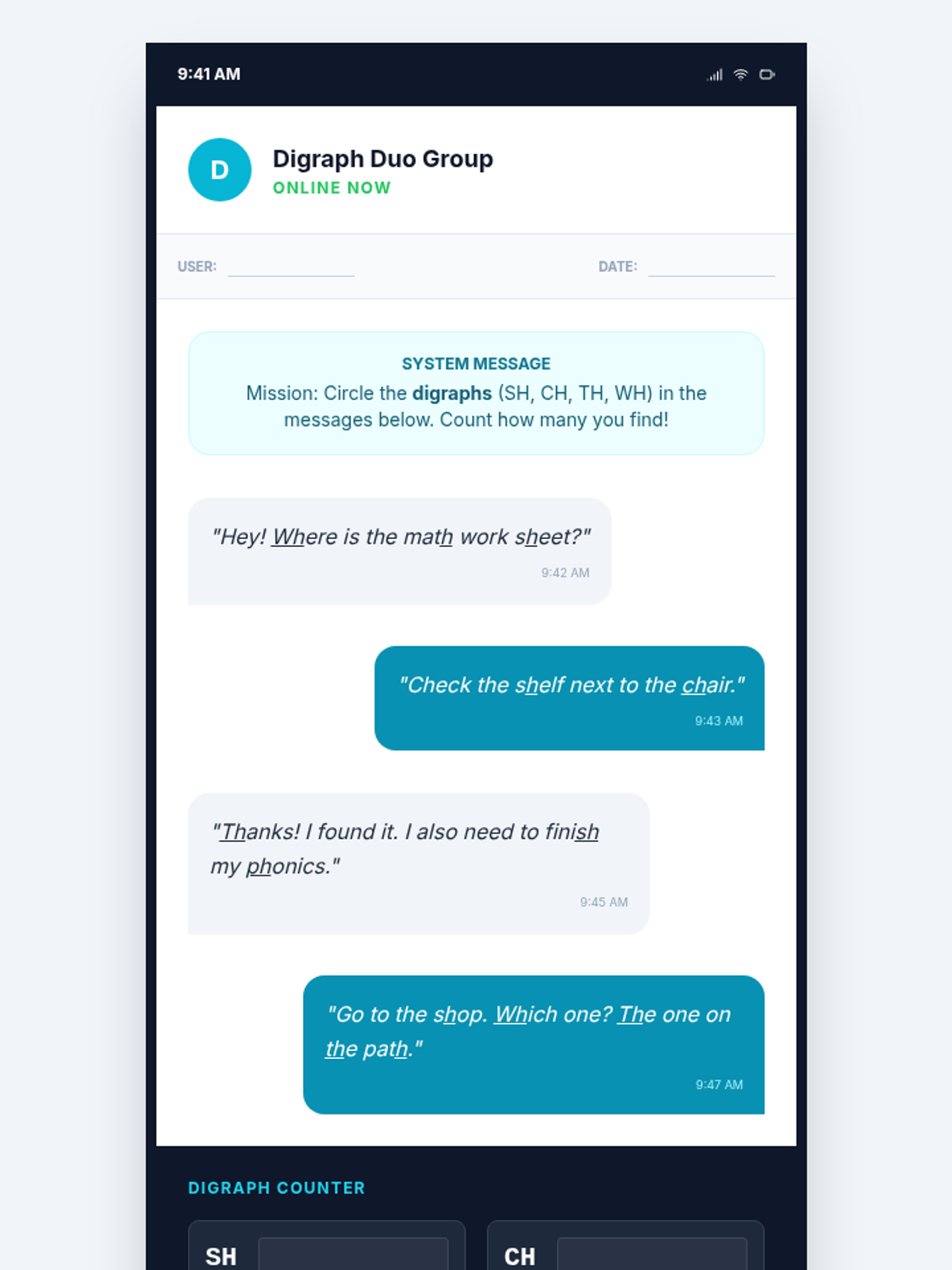
Students distinguish between blends and digraphs (sh, ch, th, wh, ph), learning that two letters can make one unique sound. They practice locating these sounds in text messages and dialogue scripts.
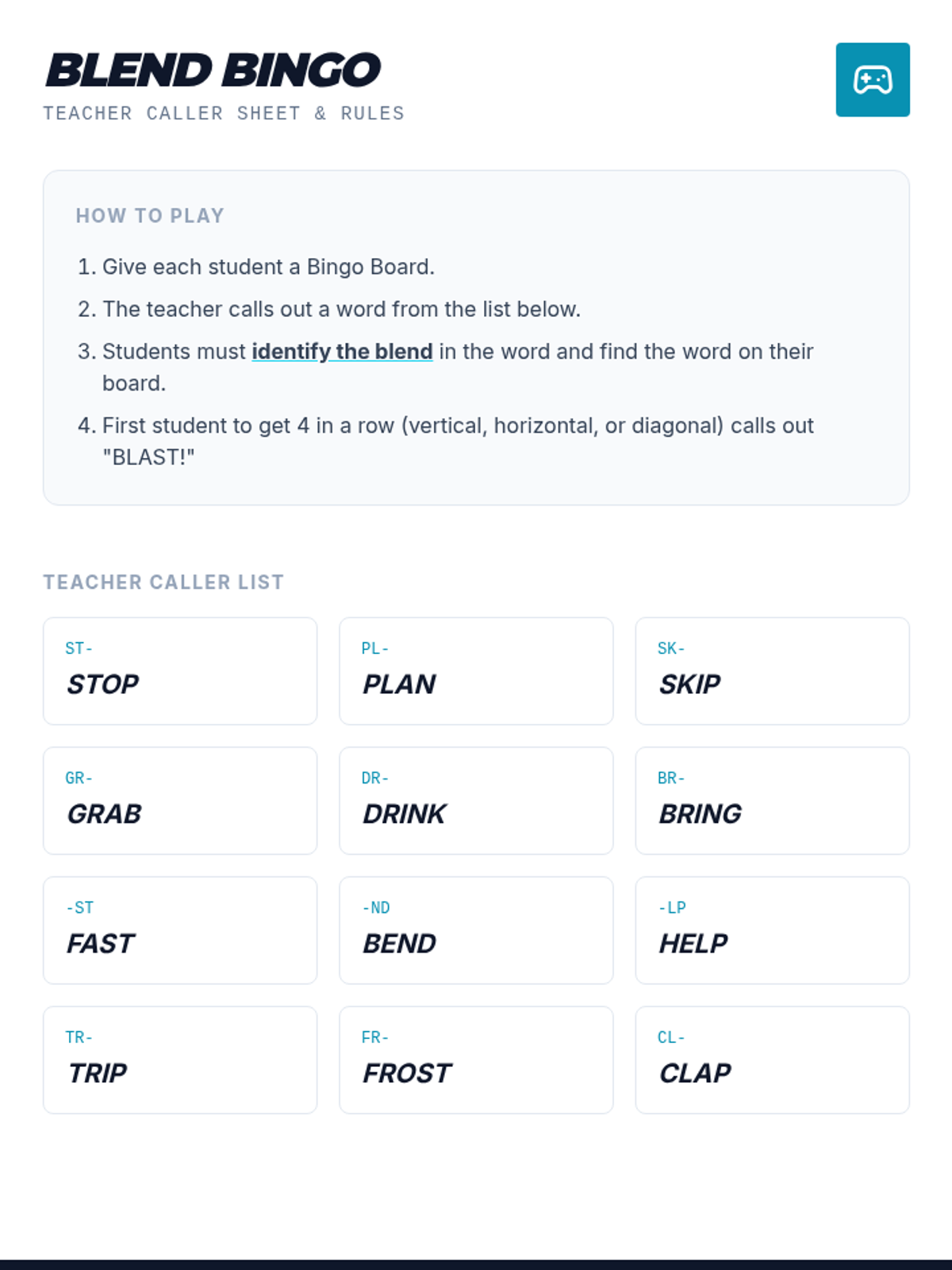
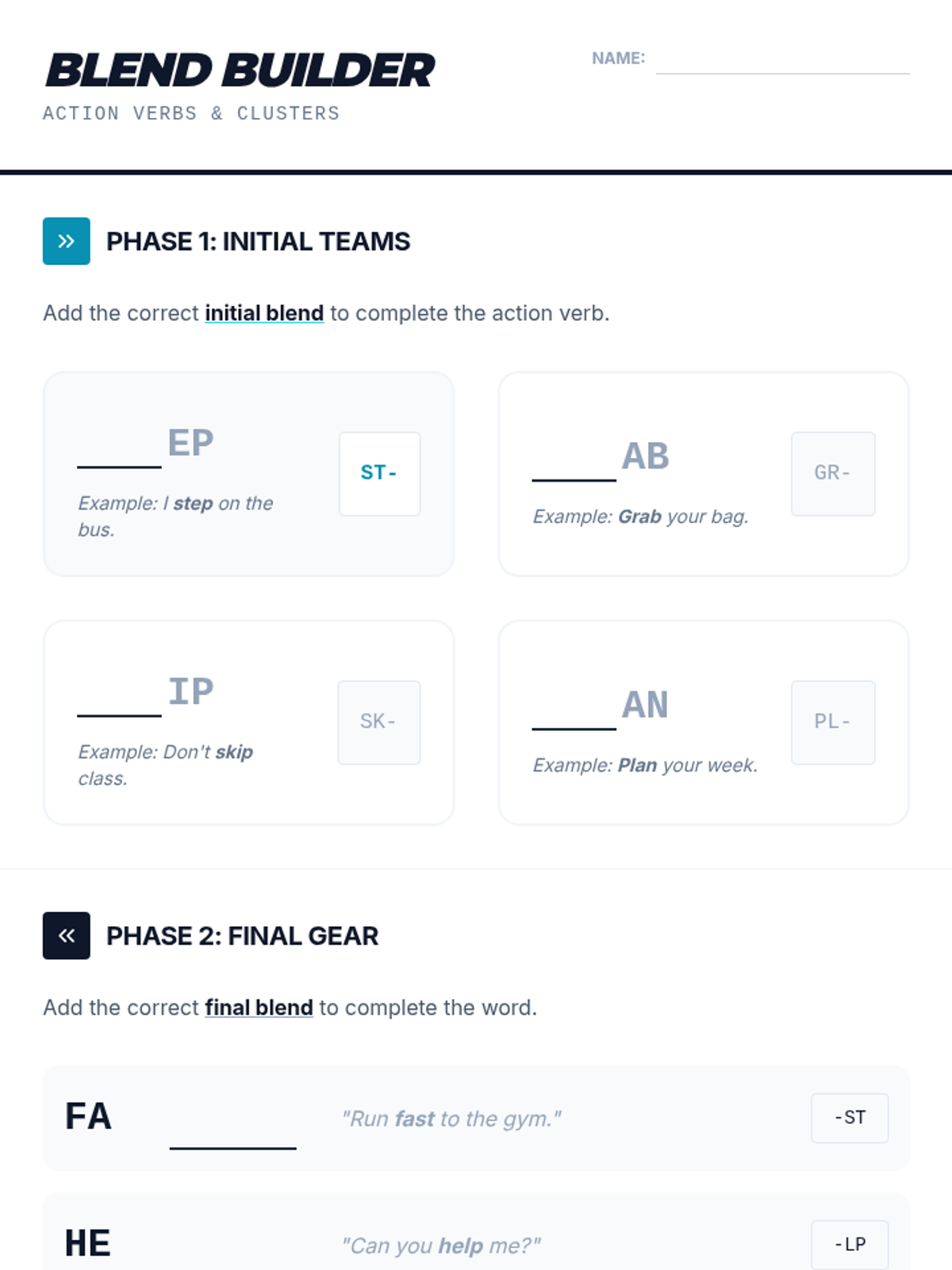
Learners identify and pronounce initial and final consonant blends in common action verbs and nouns. The lesson utilizes choral reading to build confidence in articulating complex sound combinations.
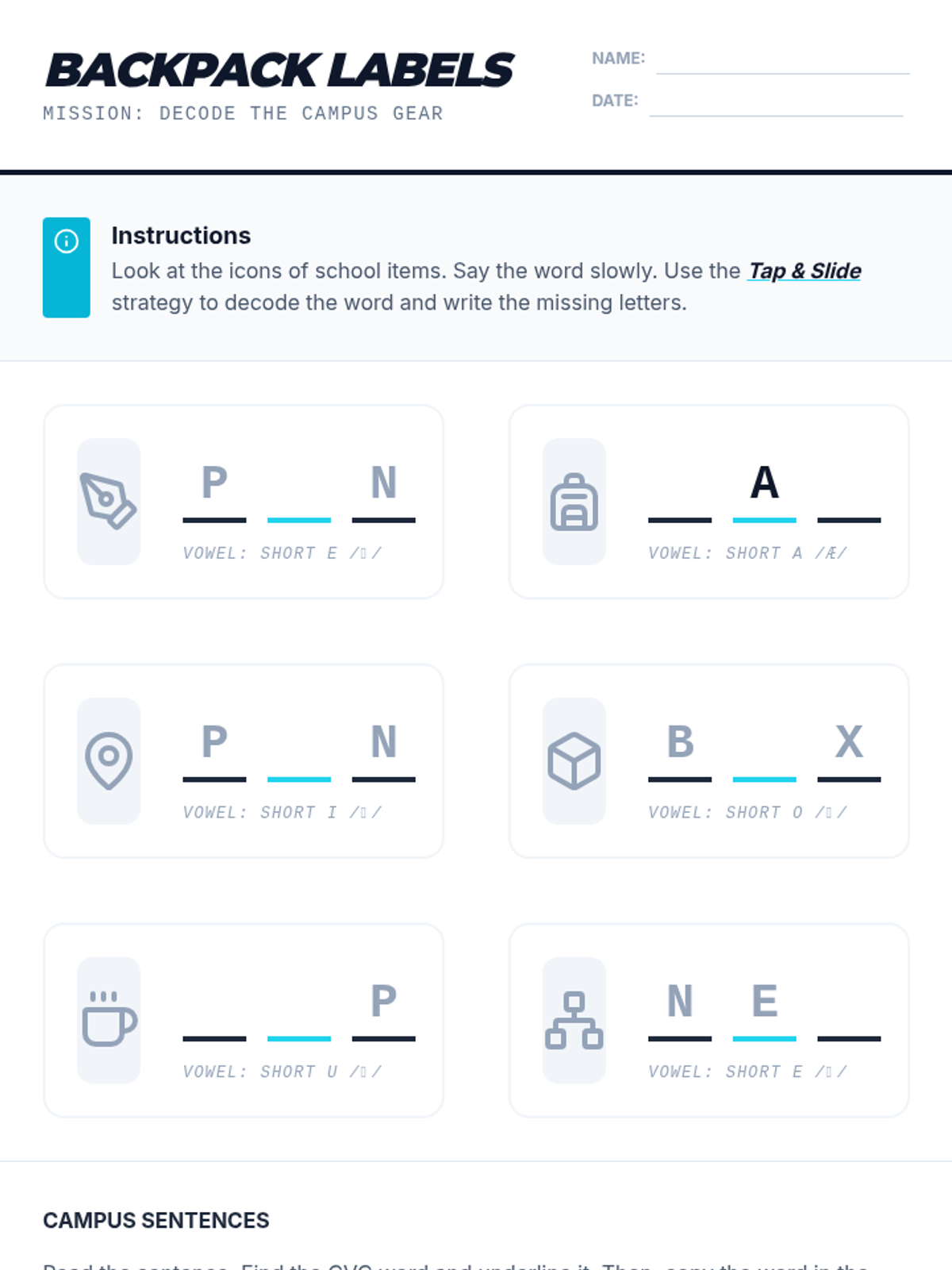
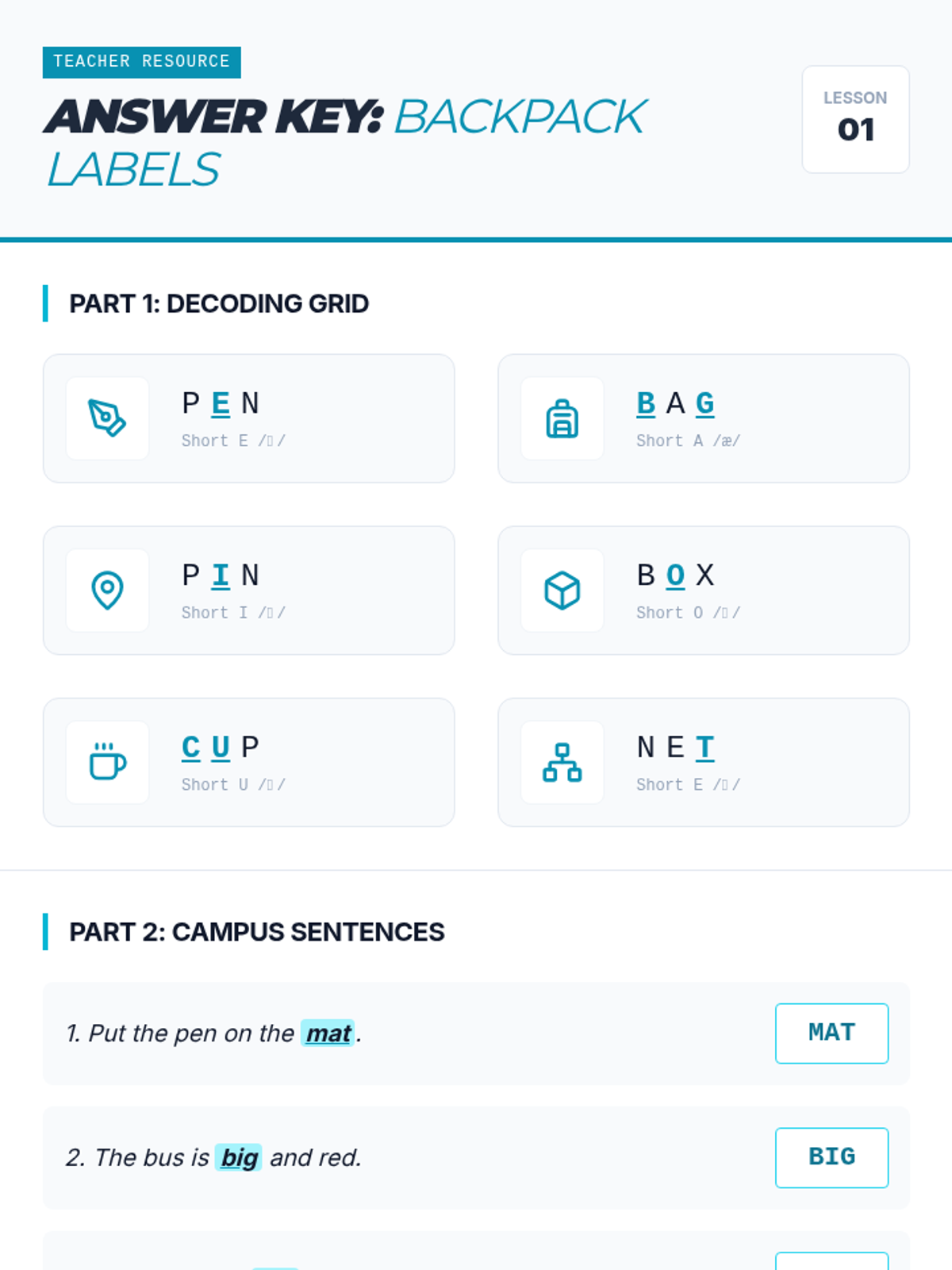
Students review consonant and short vowel sounds using images of classroom objects and school settings. They practice decoding CVC (consonant-vowel-consonant) words relevant to their immediate environment.