Complex syntax, nuanced vocabulary, and academic discourse. Strengthens professional communication through advanced writing, analytical reading, and mastery of high-level auditory and oral fluency.
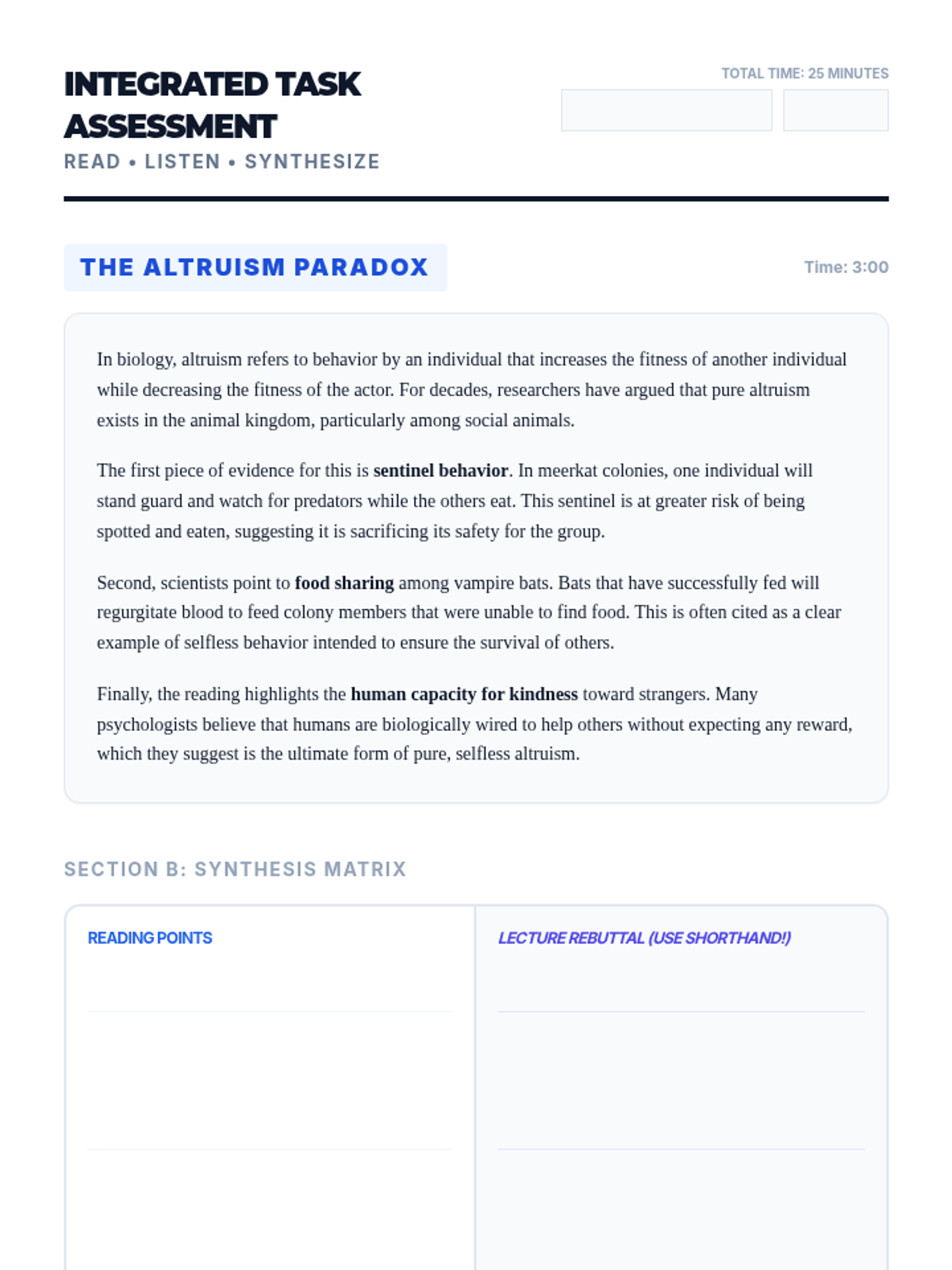
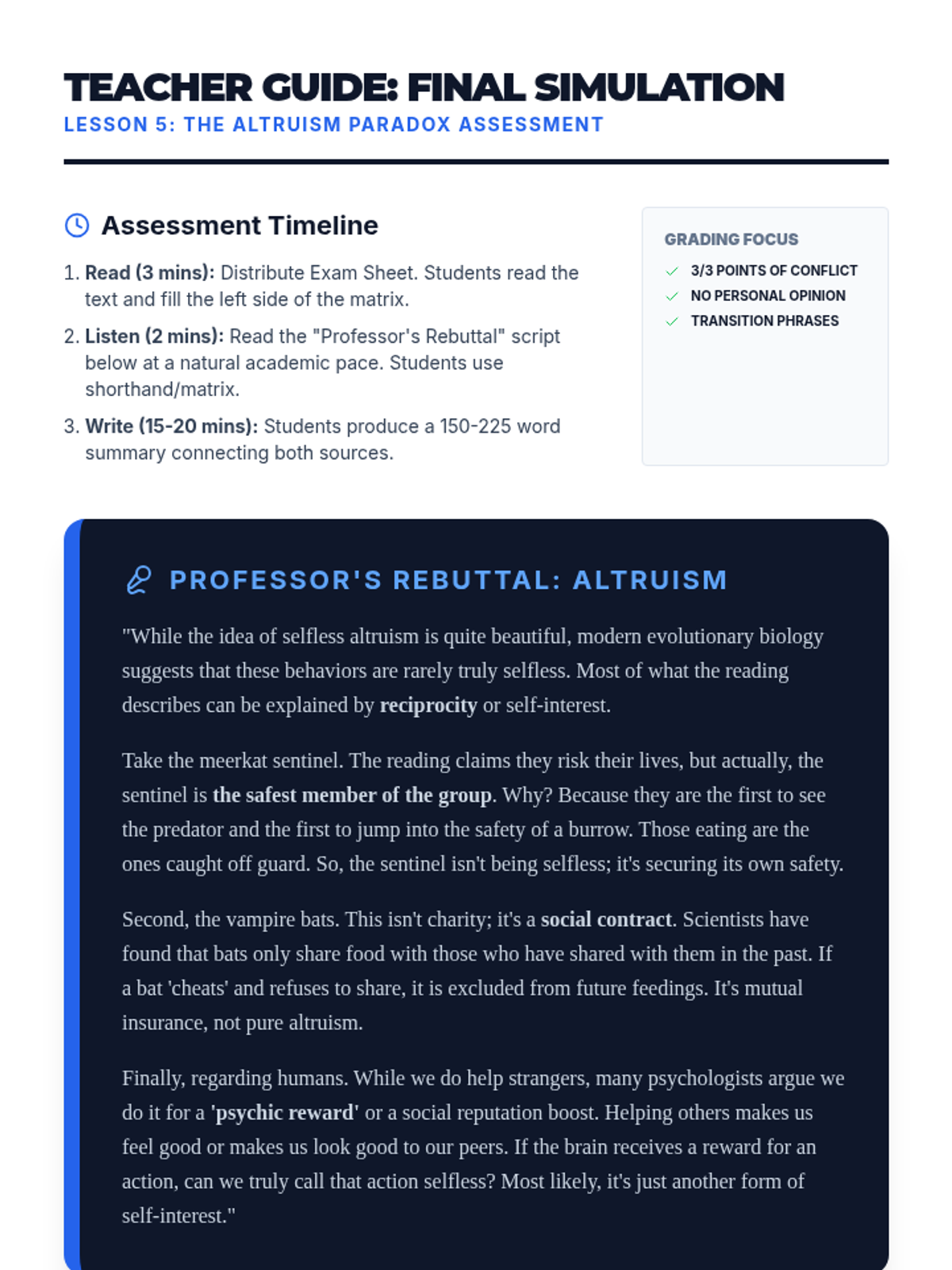
A full-scale simulation of a TOEFL/IELTS integrated task. Students apply shorthand, signpost recognition, and synthesis skills to a new topic, producing a comprehensive written response.
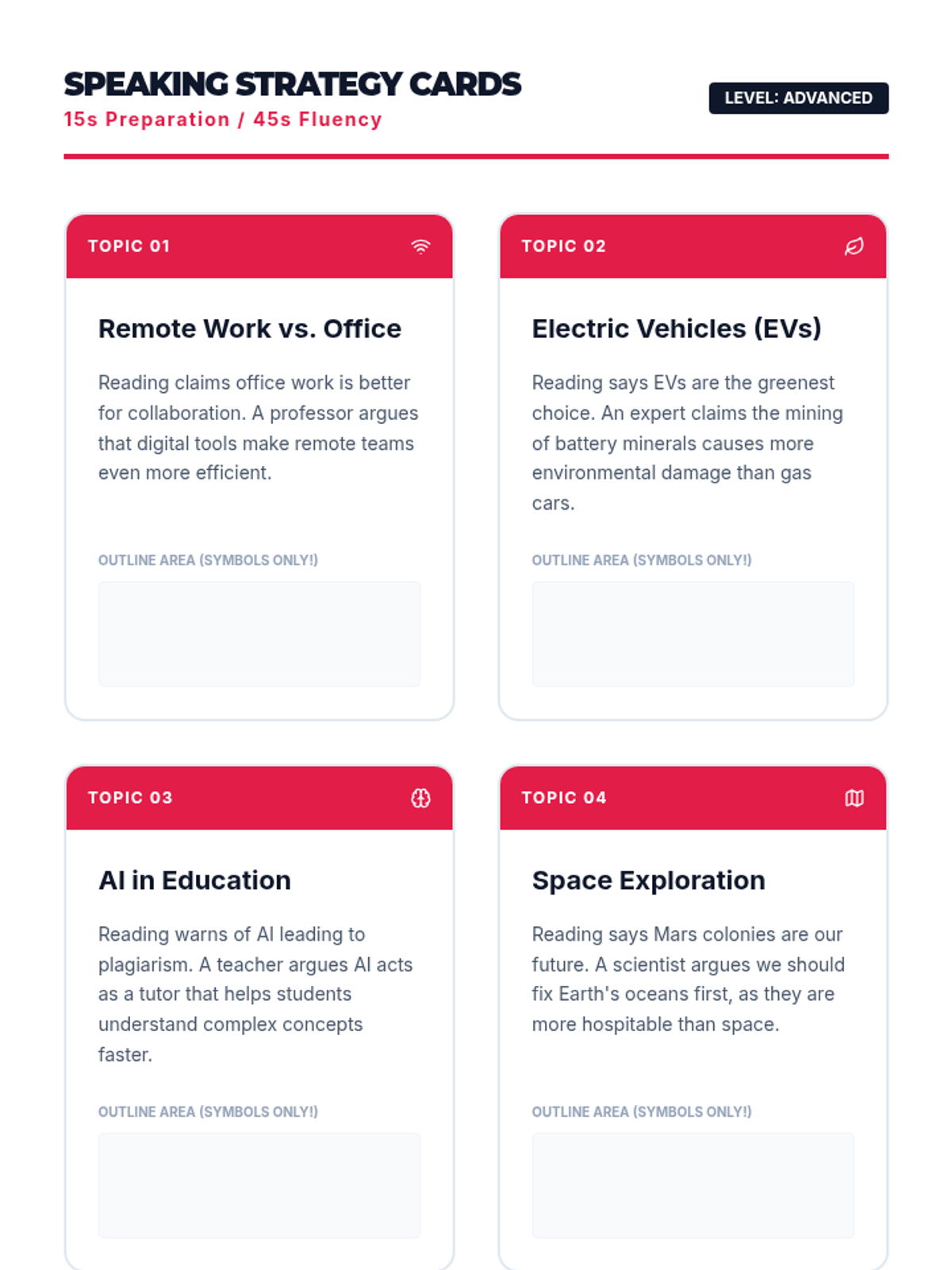
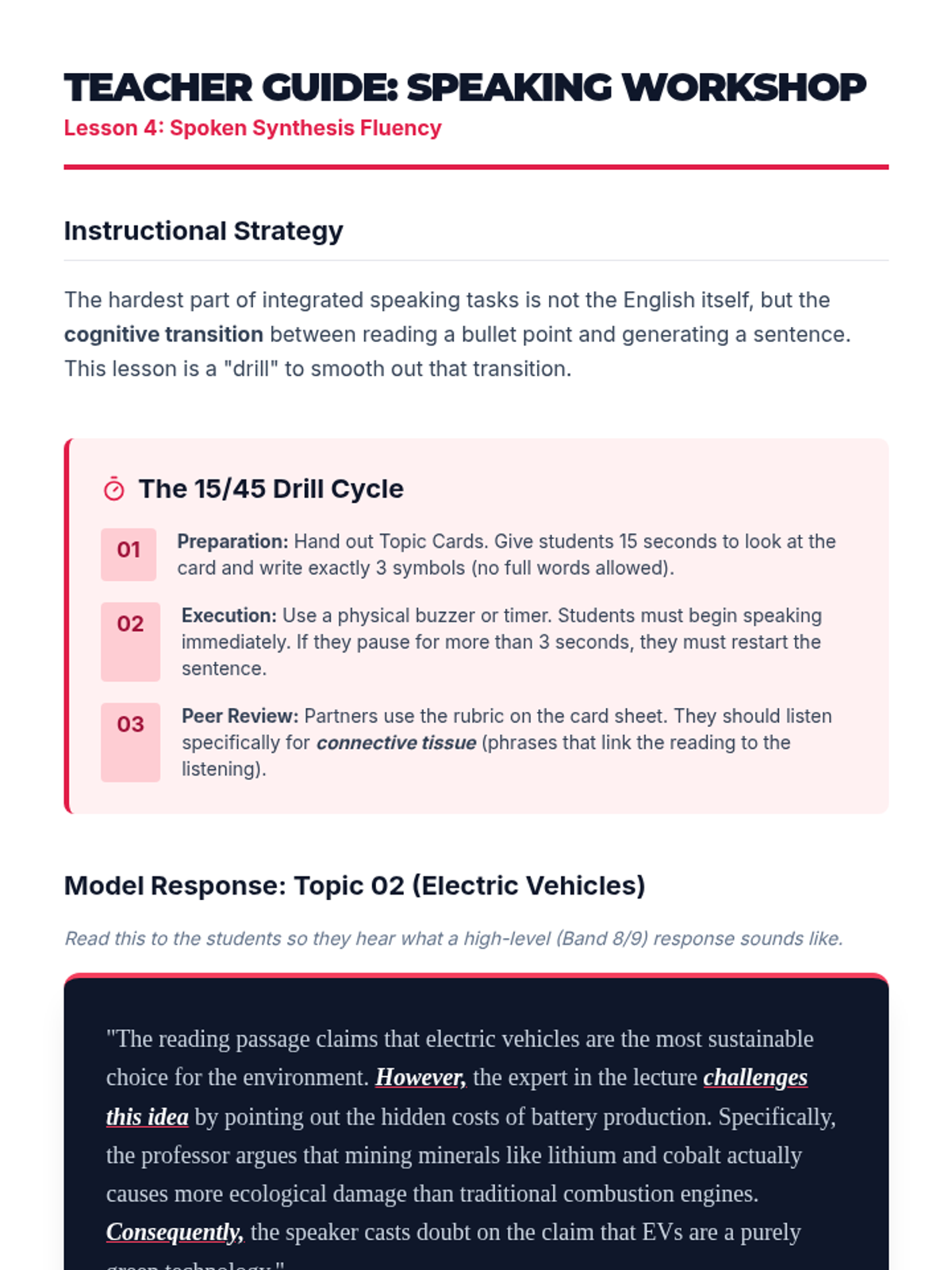
Students focus on the speaking section of integrated exams. They practice turning shorthand notes into fluent, grammatically correct spoken responses, emphasizing the use of transition phrases and maintaining eye contact.
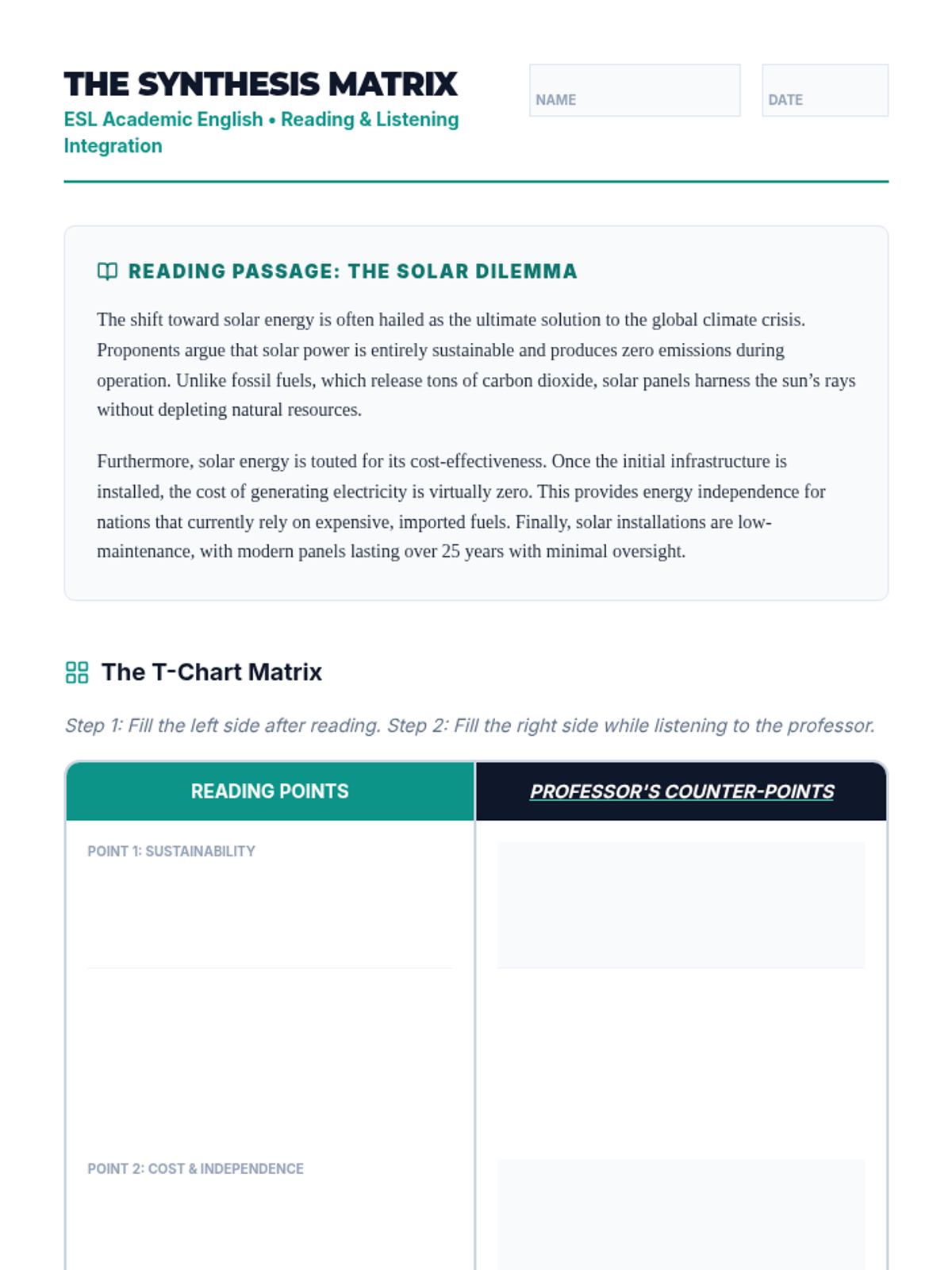
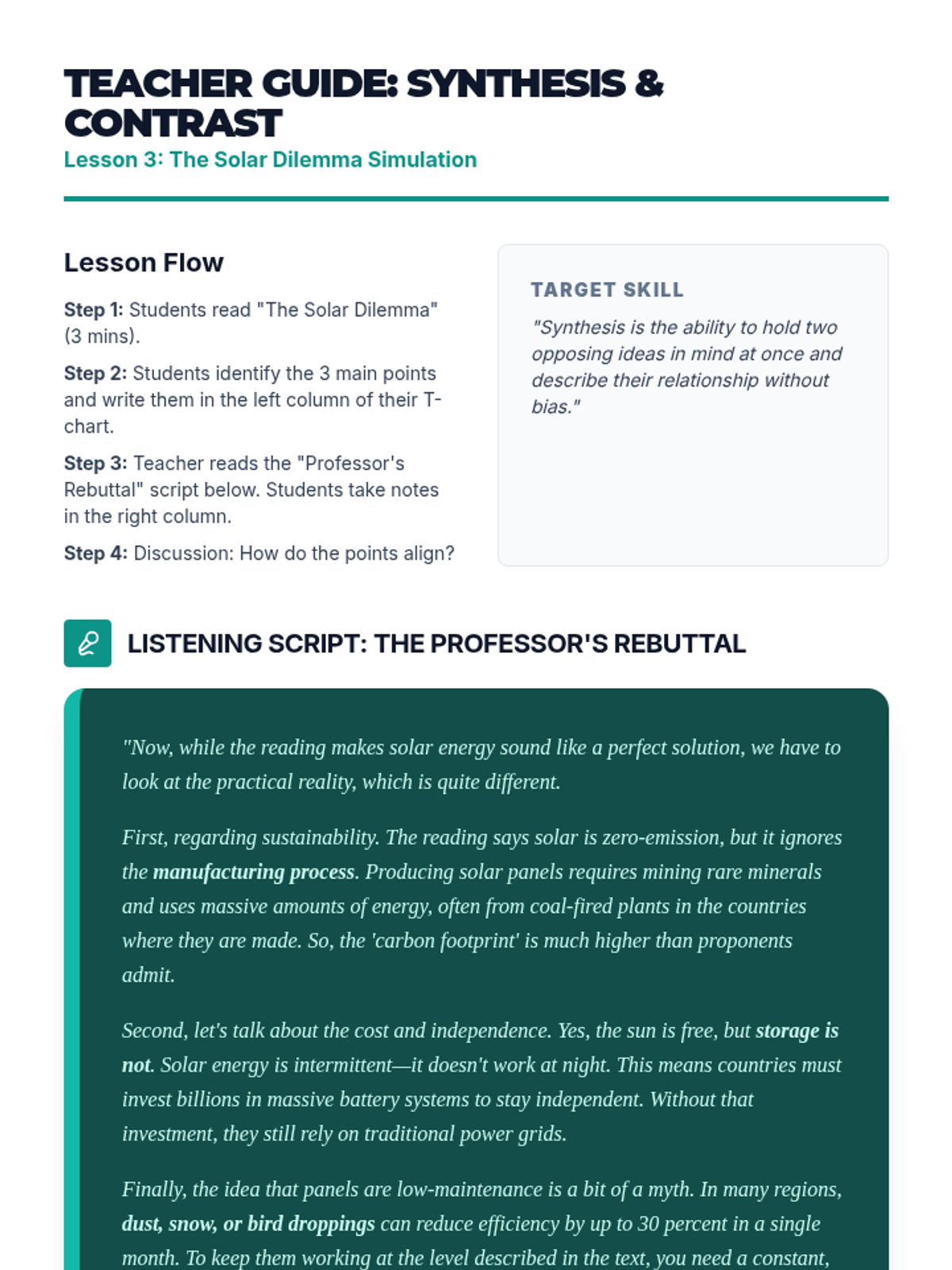
Students practice the core skill of integrated tasks by comparing a written passage with a contrasting audio lecture. They learn to use T-charts to map points of conflict and support between sources.
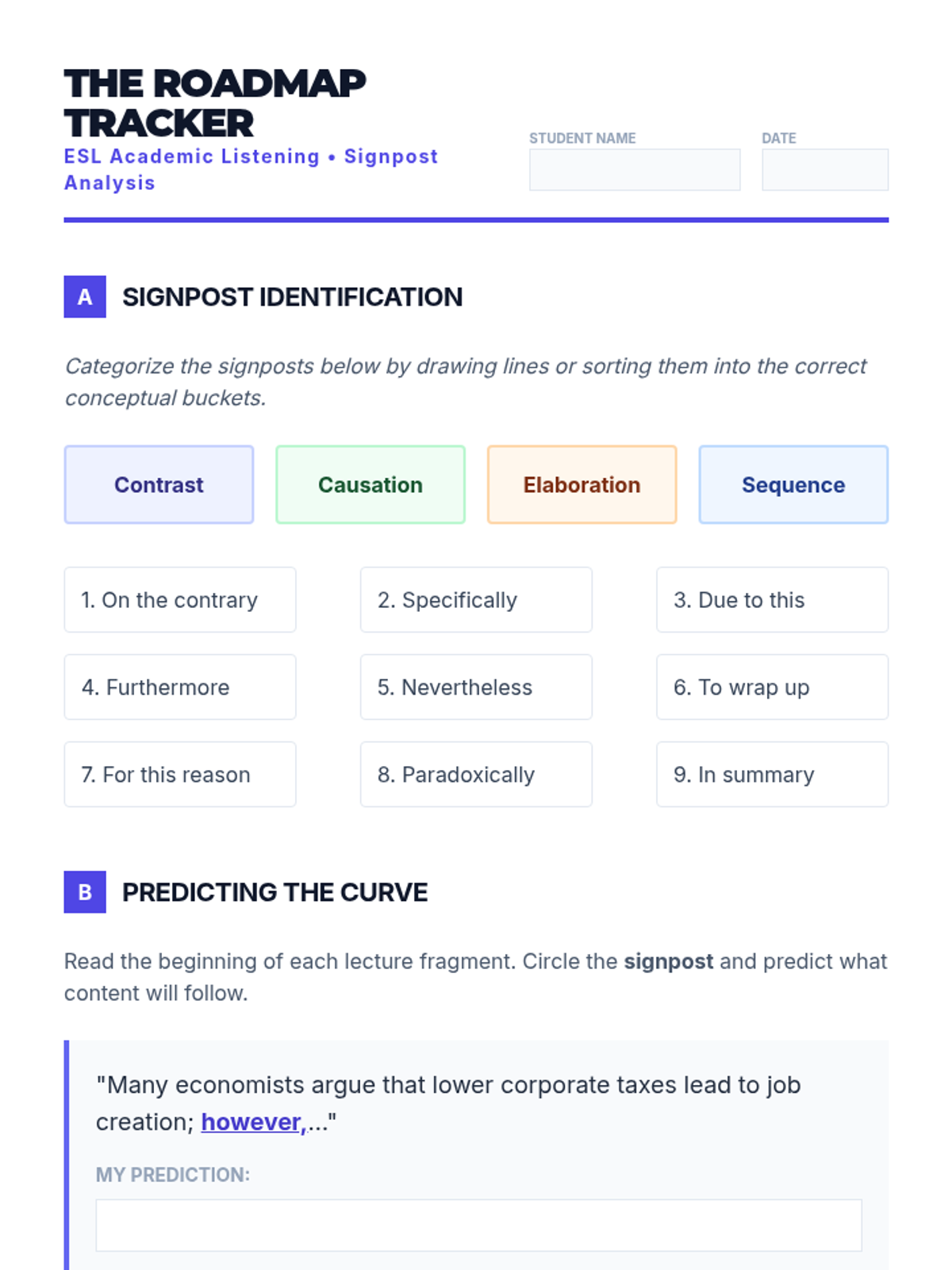
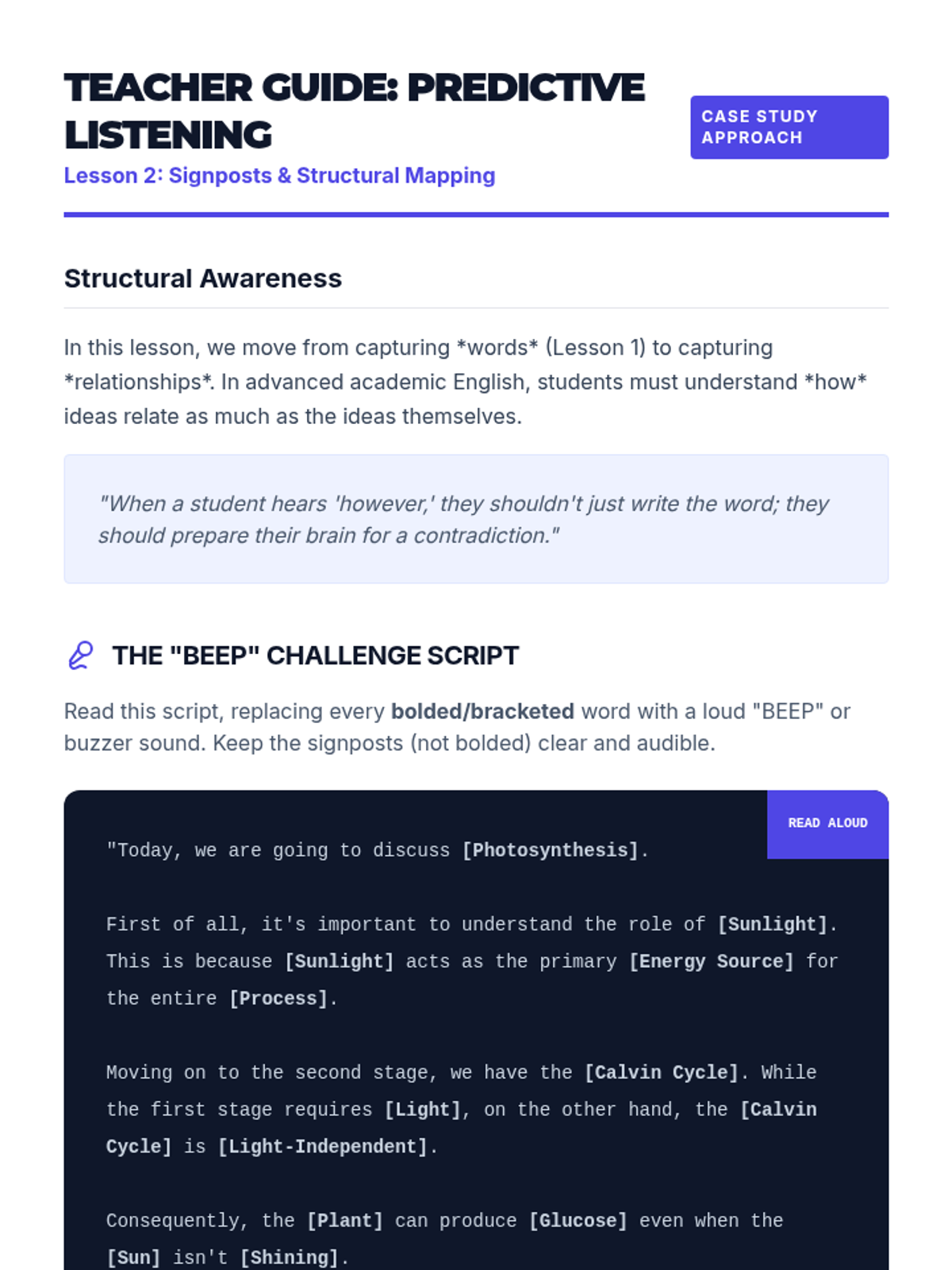
Students learn to recognize verbal markers that indicate the organizational structure of a lecture. They practice predicting upcoming content based on these 'signposts' to categorize their notes as they listen.
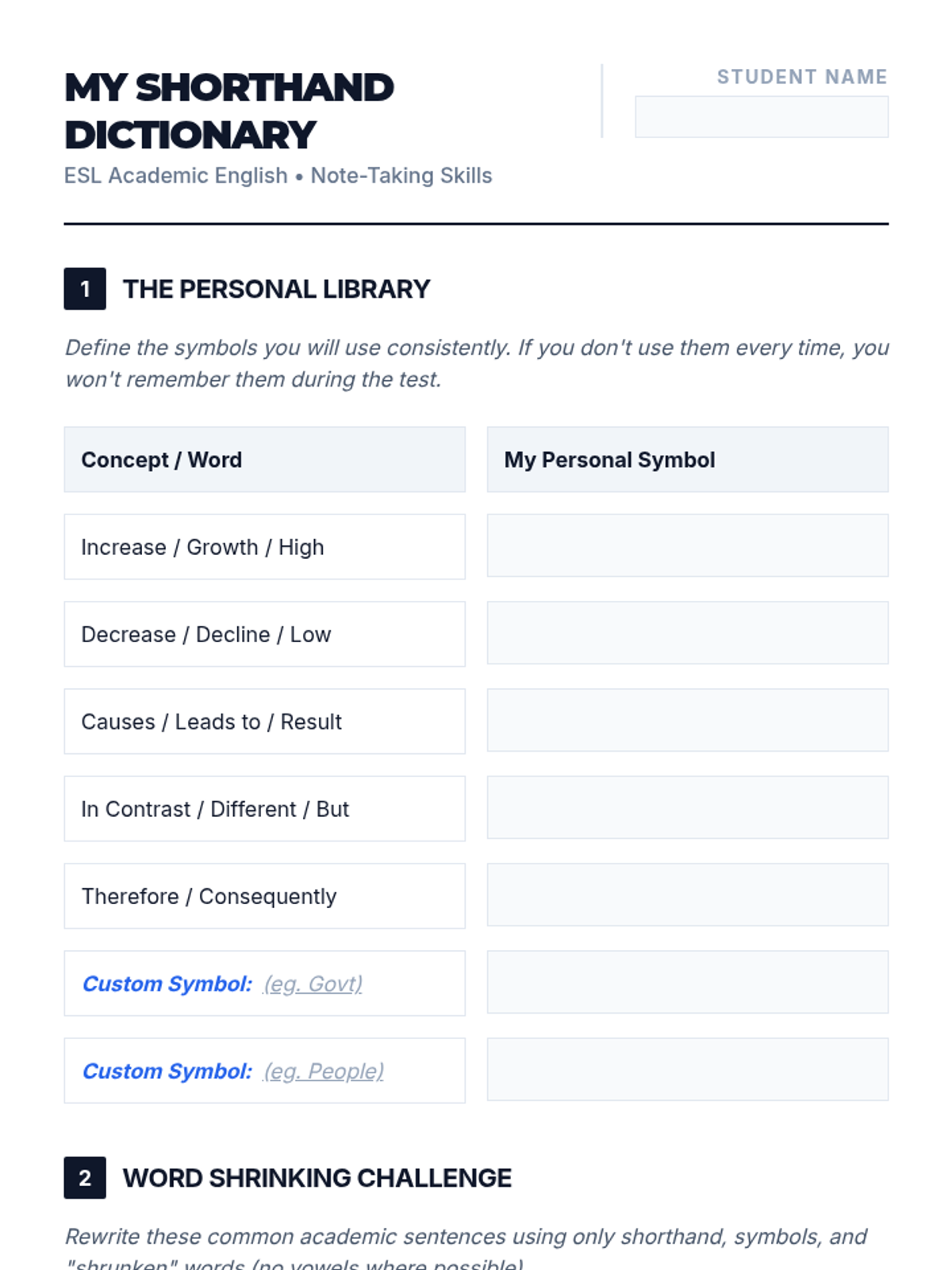
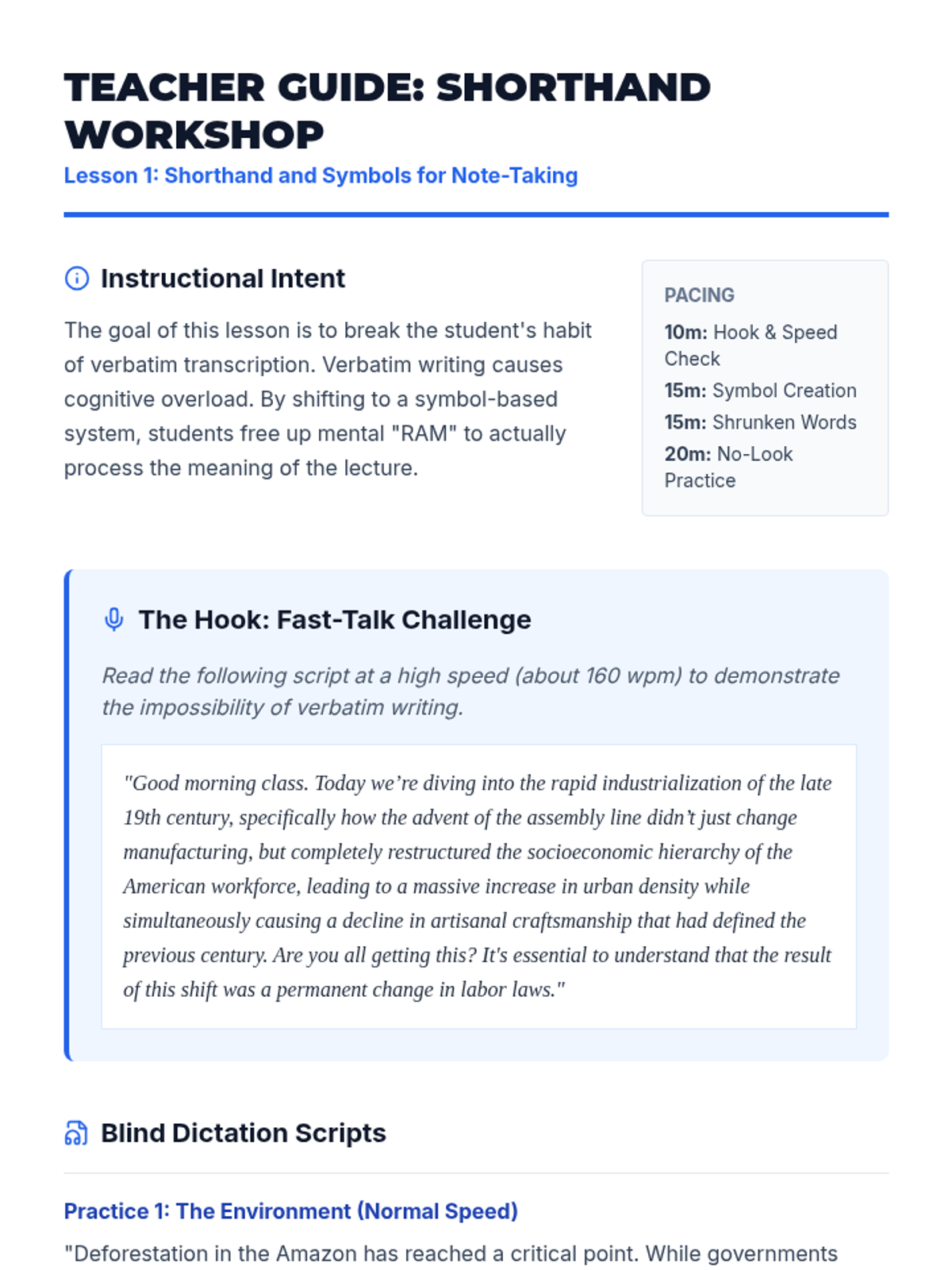
Students develop a personal shorthand system using symbols and abbreviations to capture academic audio in real-time. The lesson emphasizes speed and selective capture over verbatim transcription.
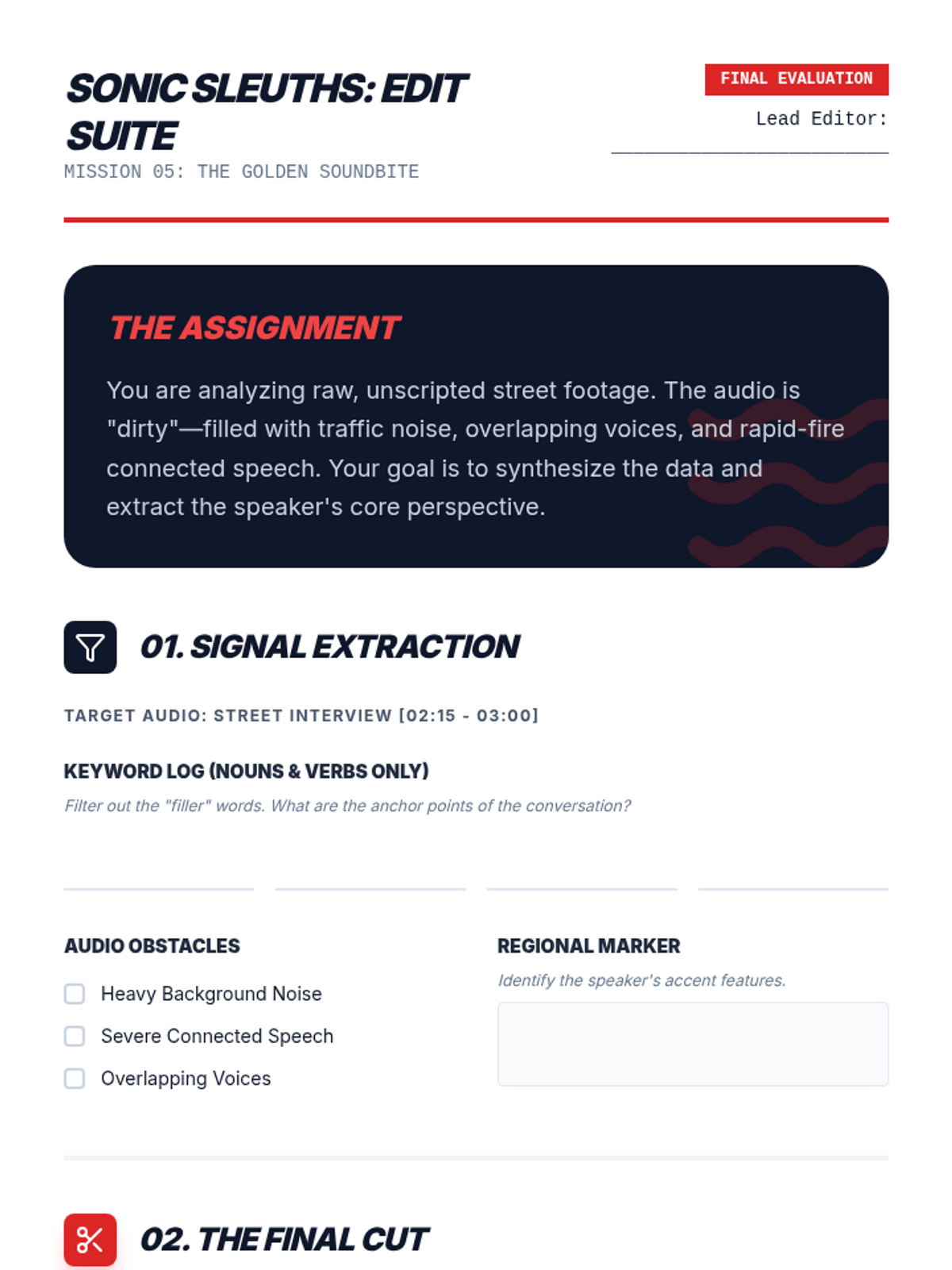
Students synthesize their skills by analyzing unscripted interviews with background noise and overlapping speech to extract core opinions.
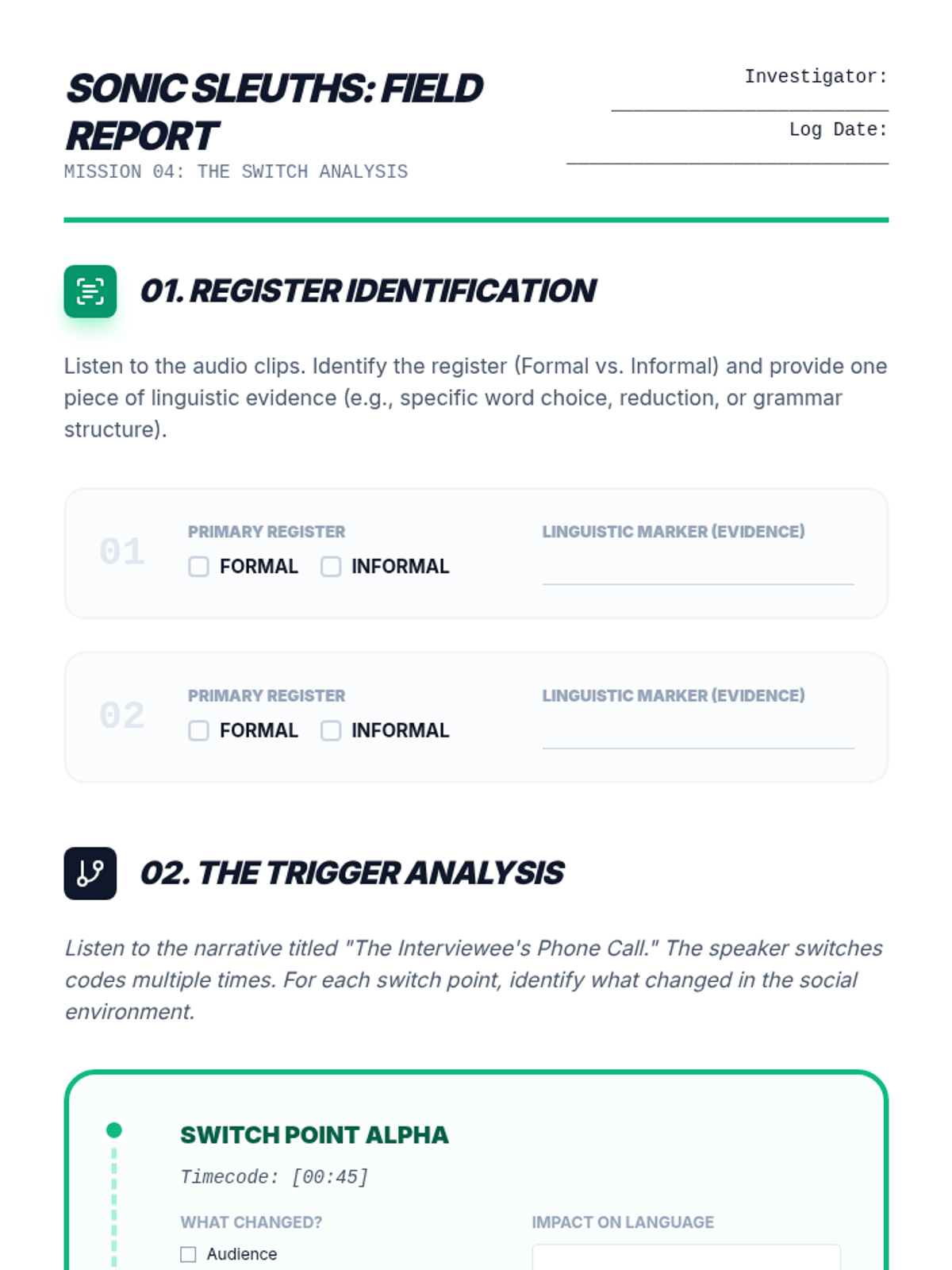
An exploration of how and why speakers shift registers or dialects based on social dynamics, audience, and emotional state.
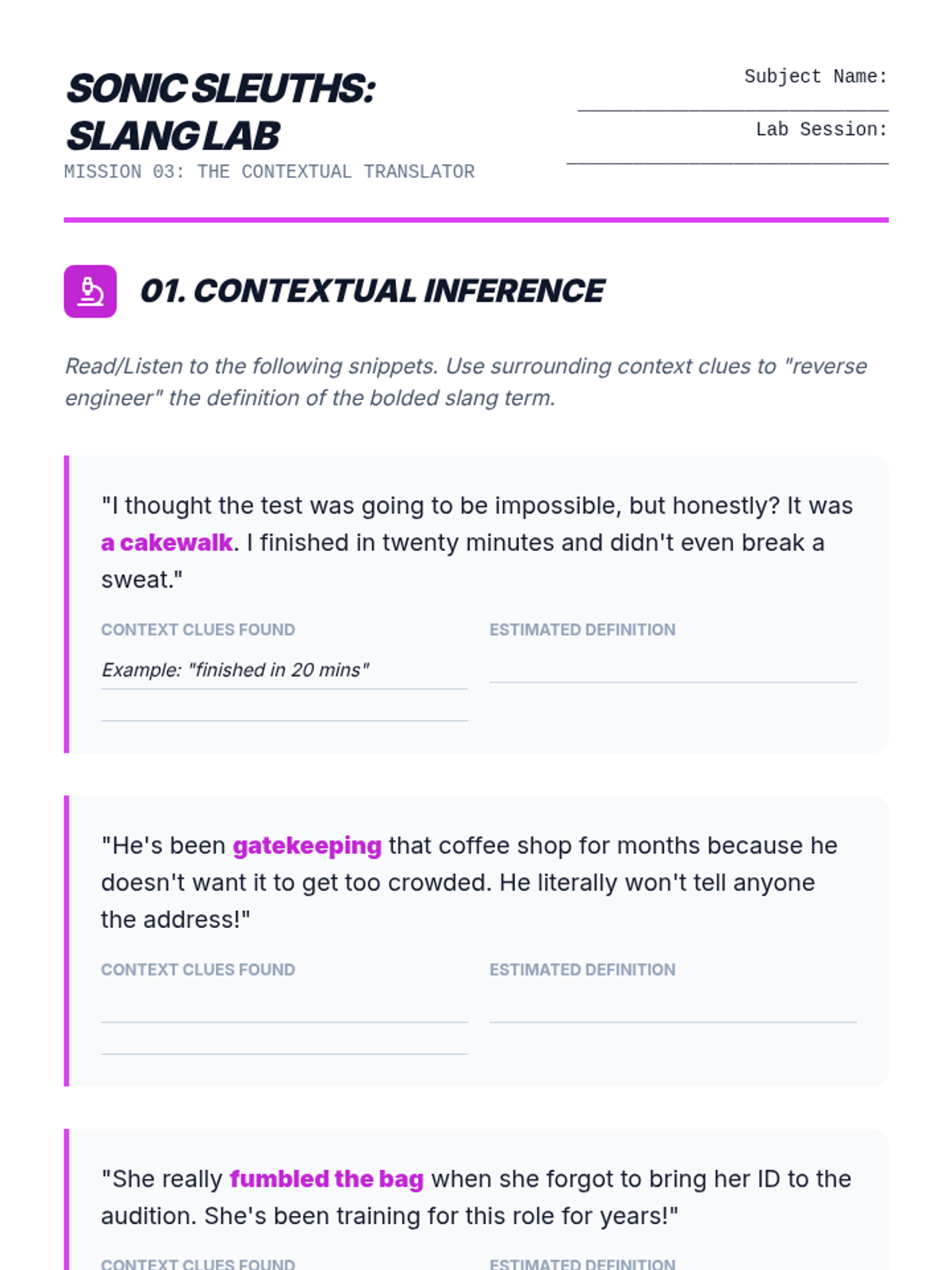
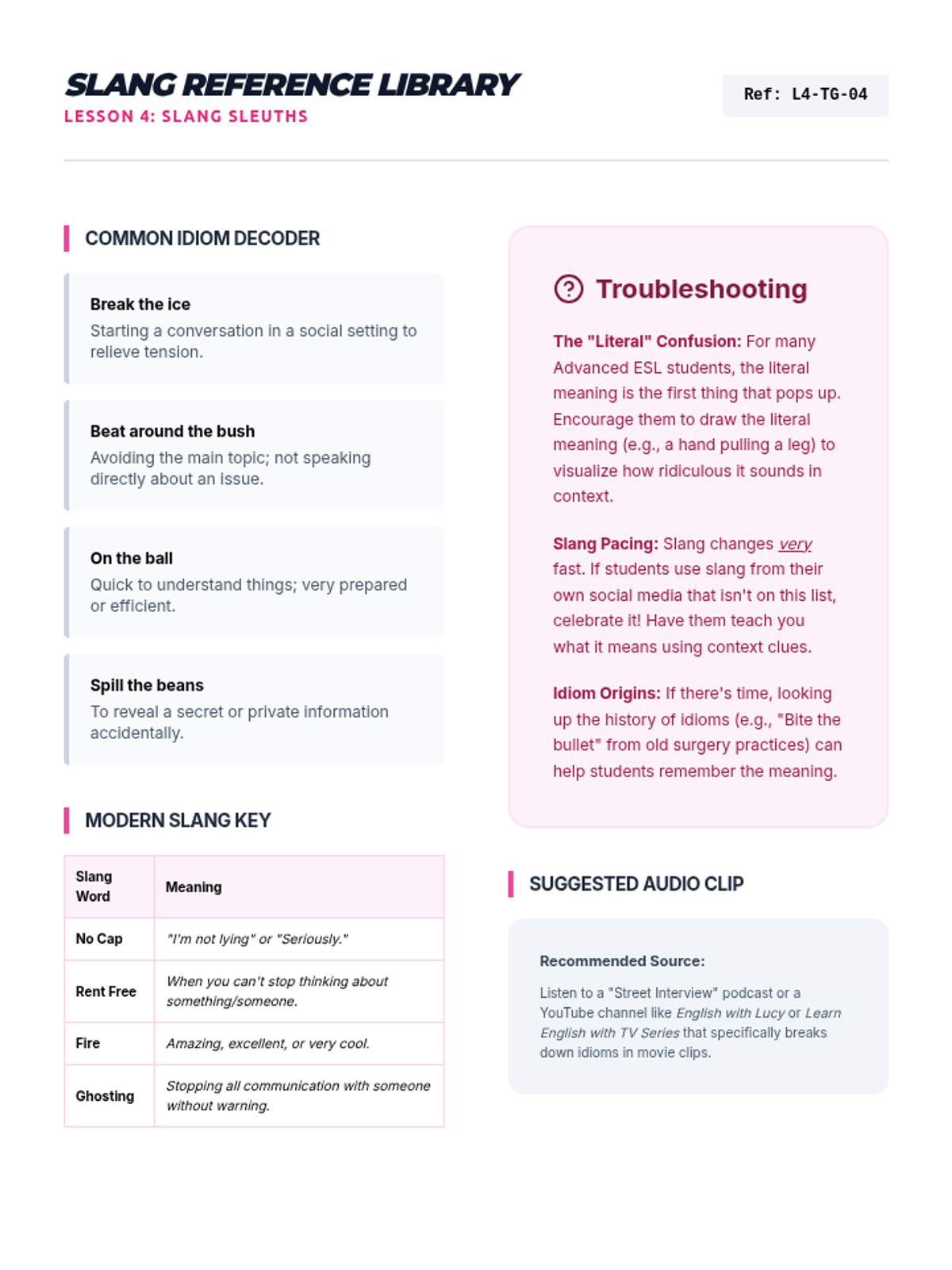
Students analyze contemporary media to identify slang and idioms, learning to infer meaning from cultural context rather than dictionaries.
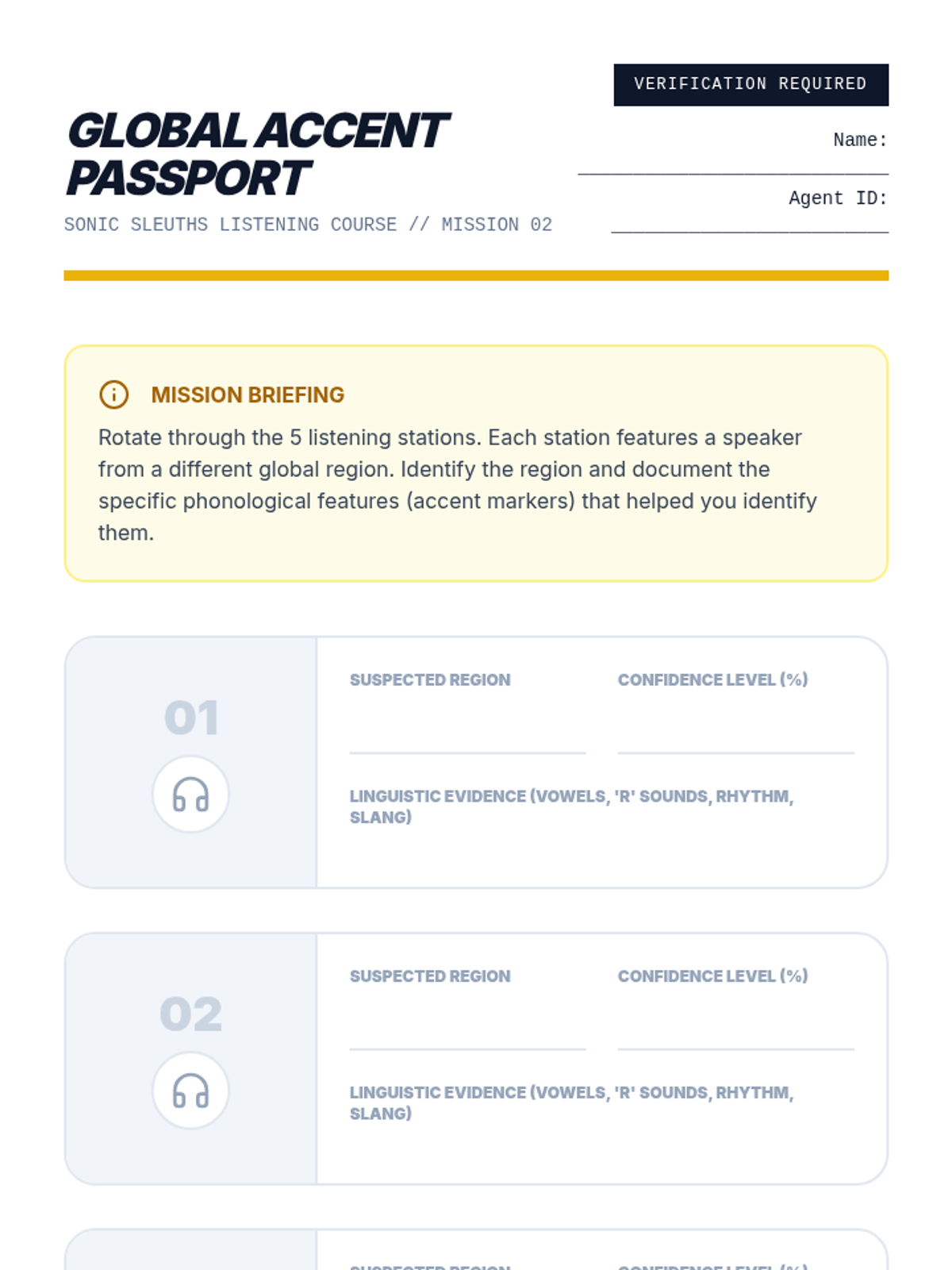
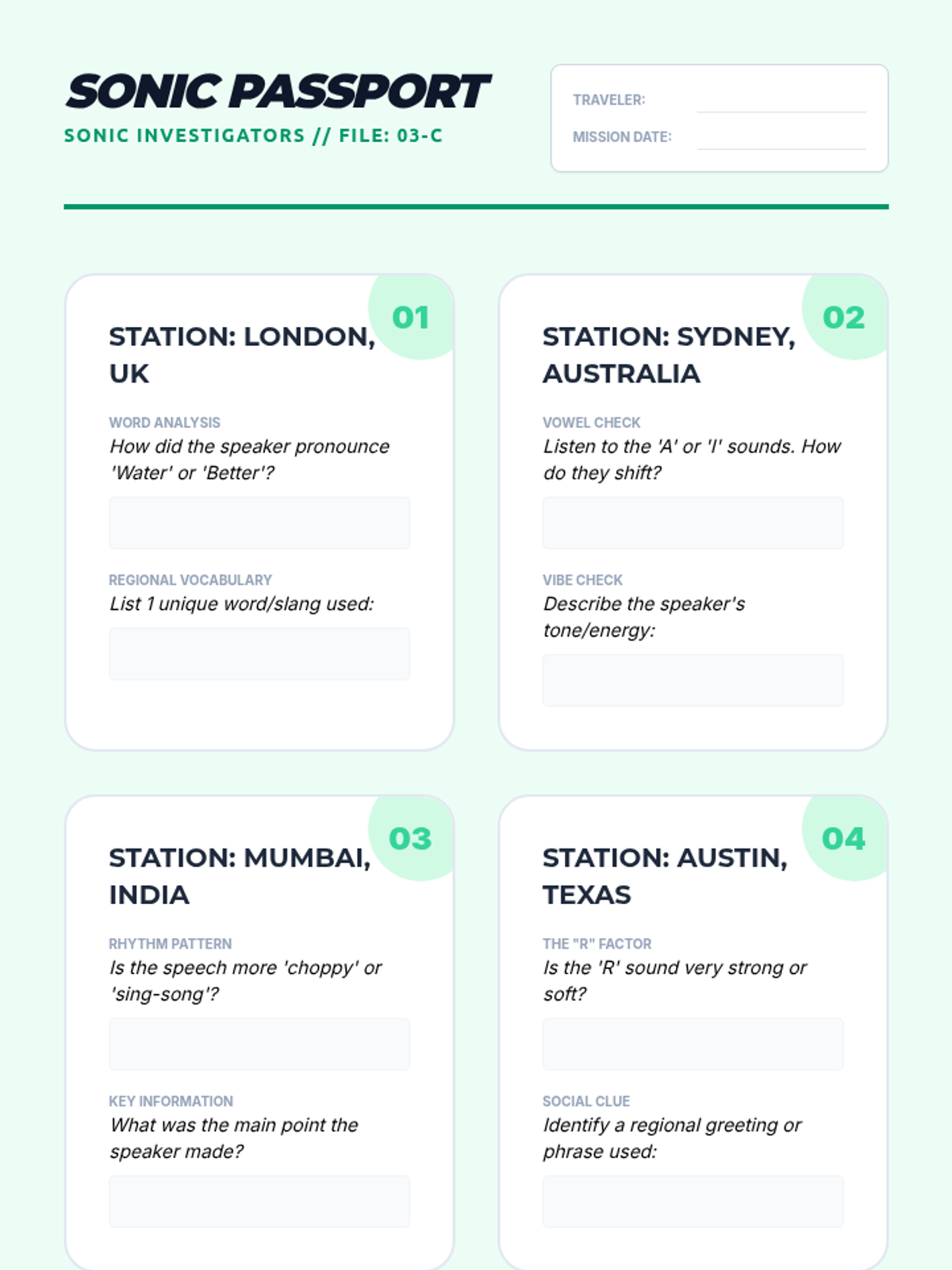
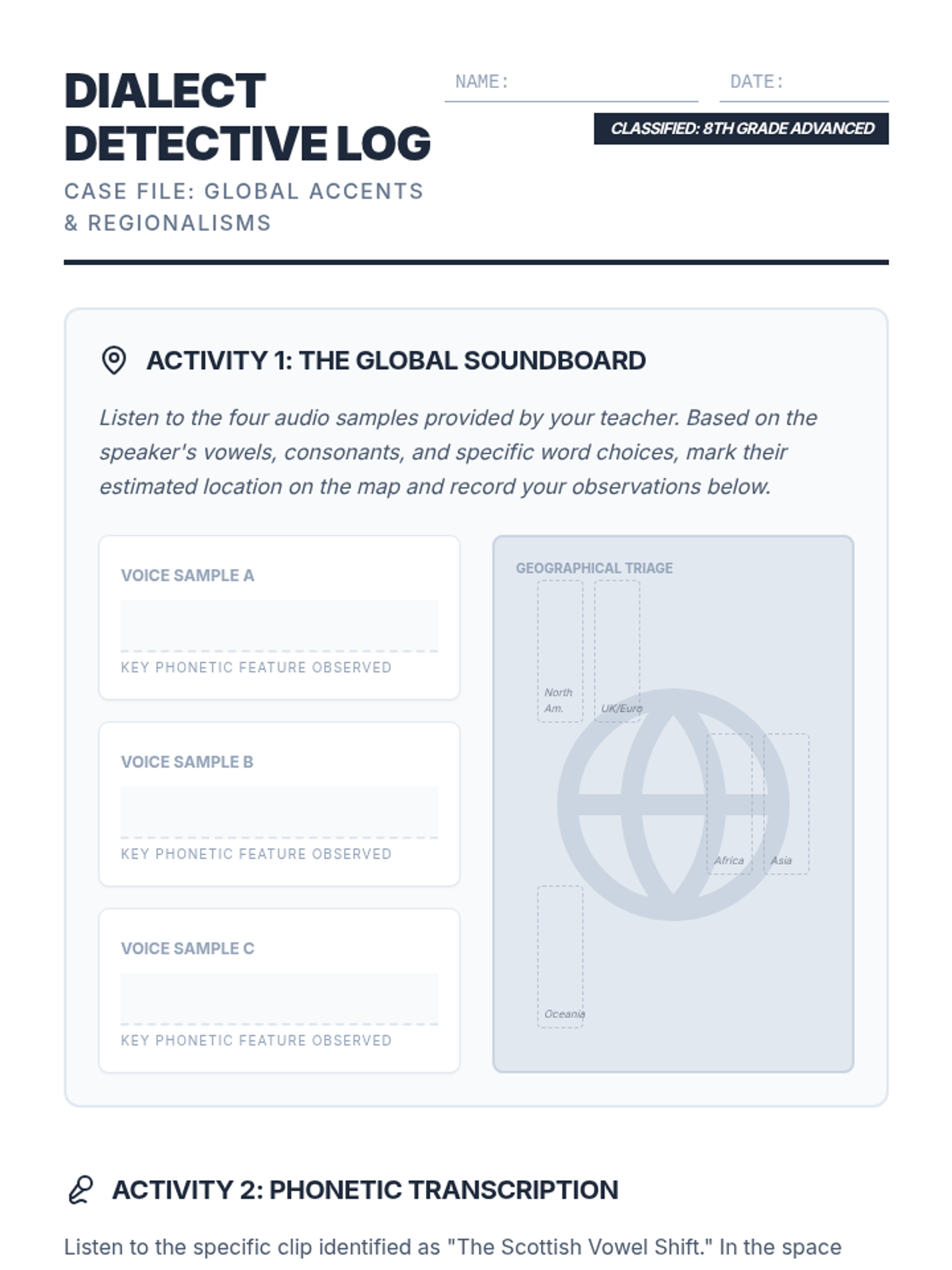
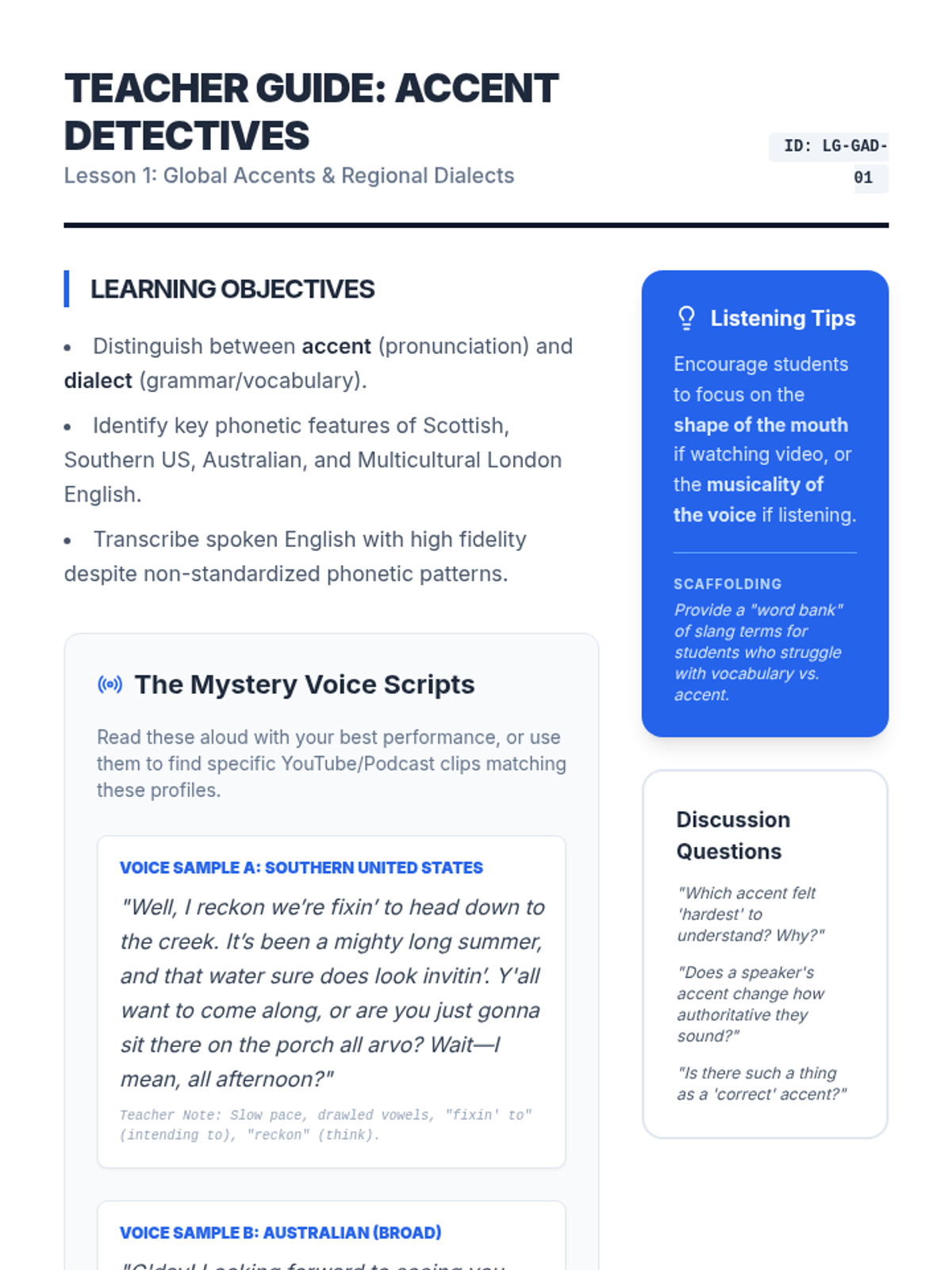
Learners explore vowel shifts and consonant variations across global English accents, building adaptability and tolerance for phonetic ambiguity.
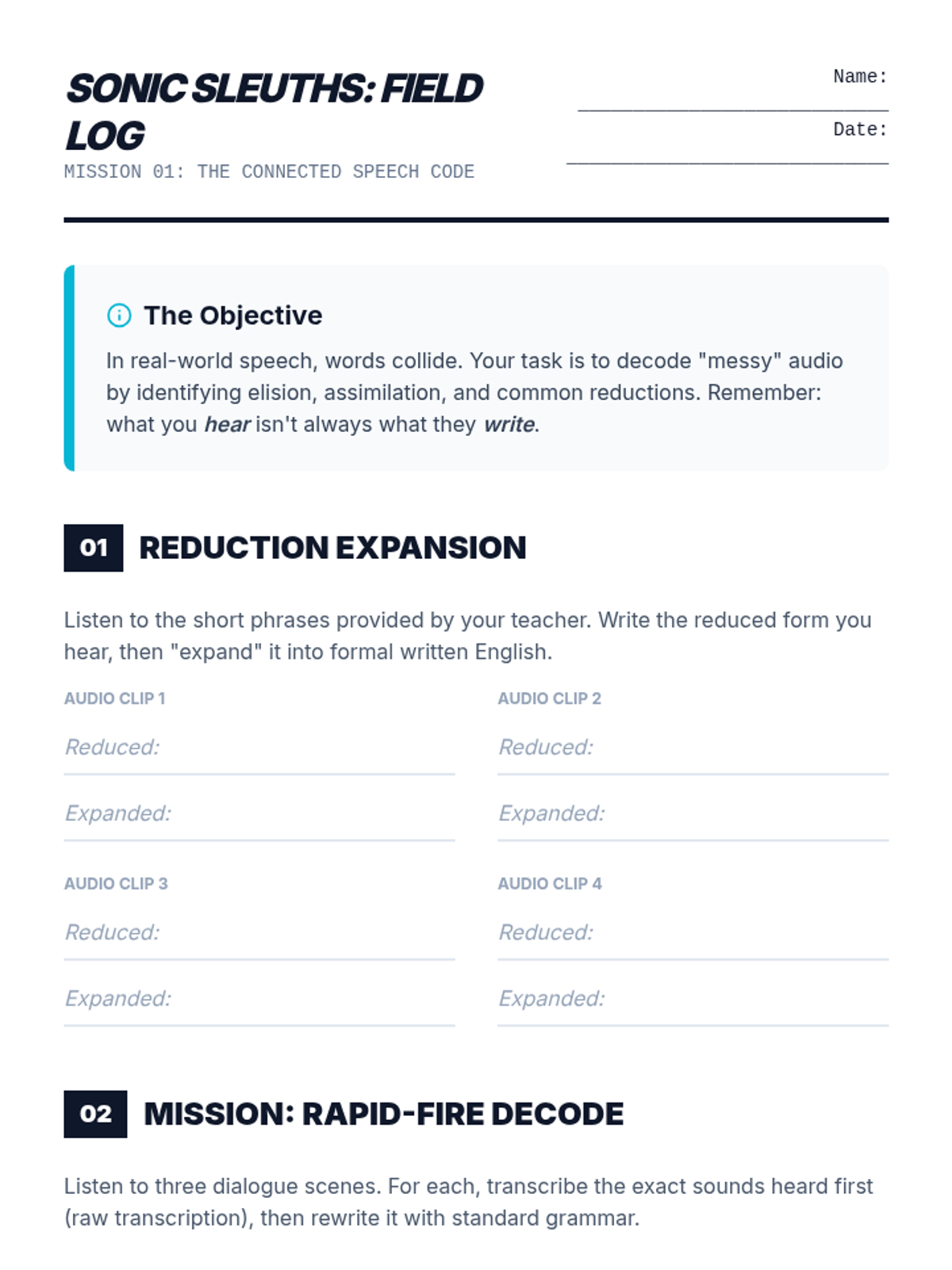
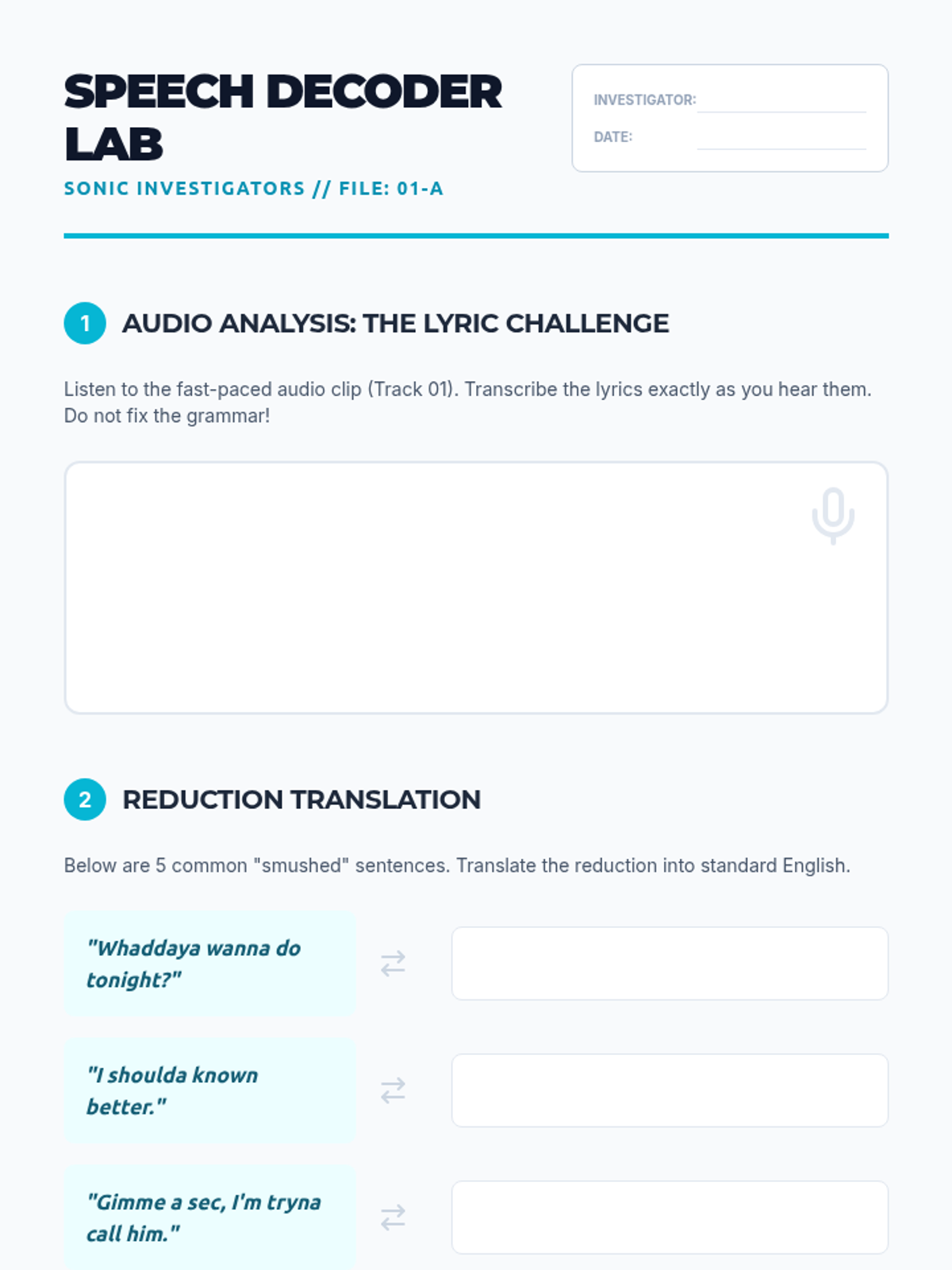
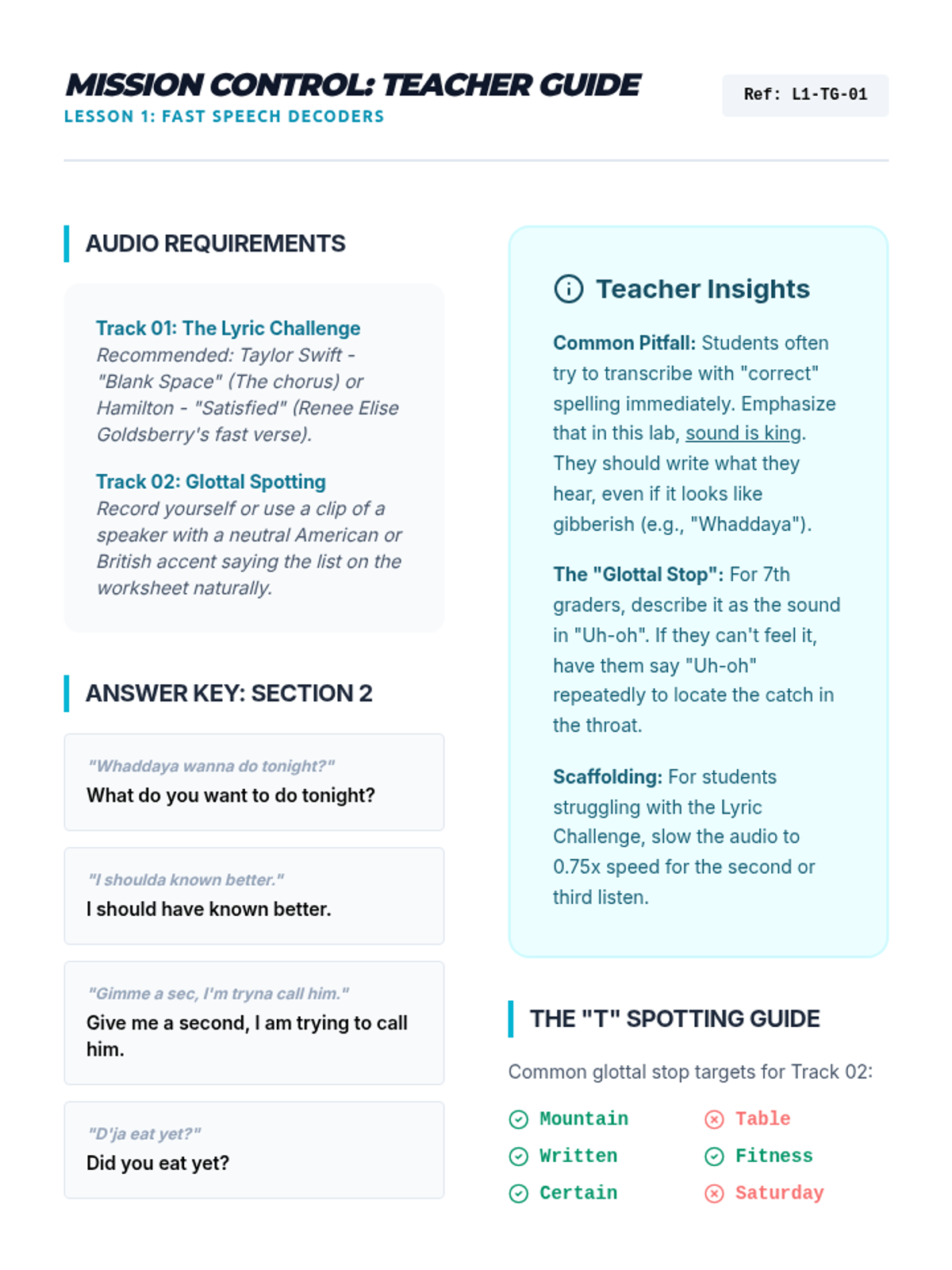
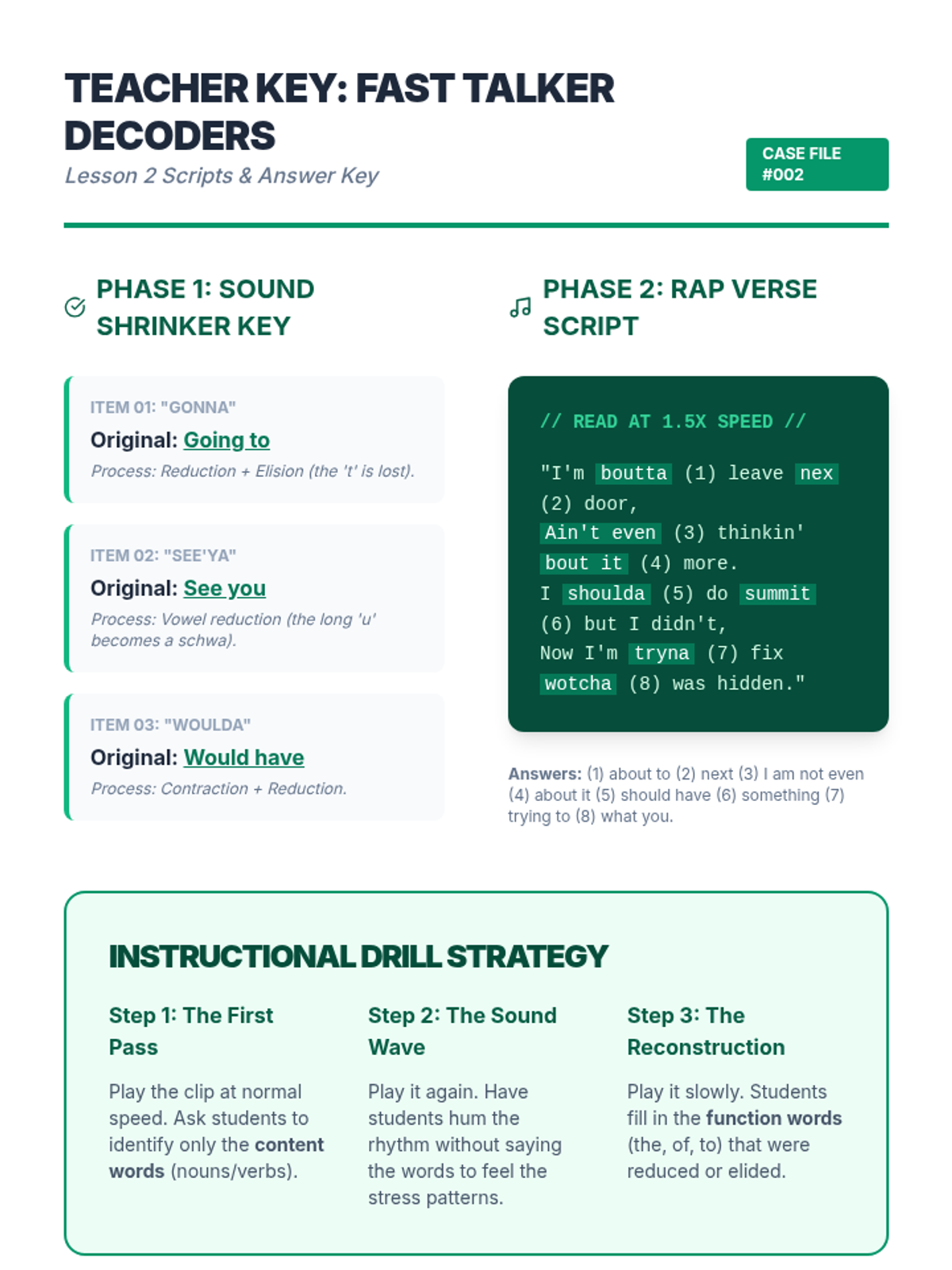
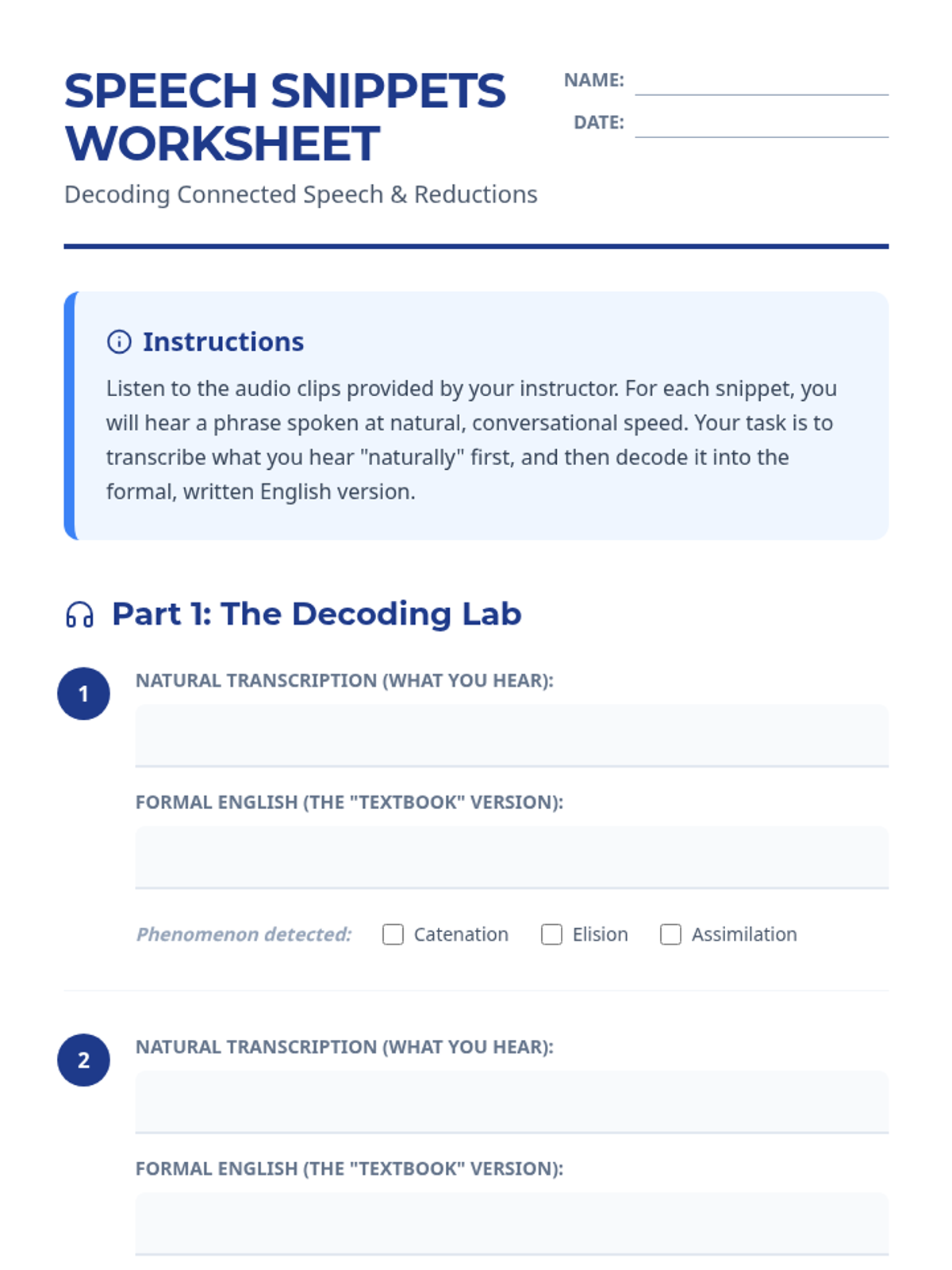
Students examine phonological rules like elision and assimilation to decode fast-paced dialogue, moving from isolated sounds to rapid connected speech.
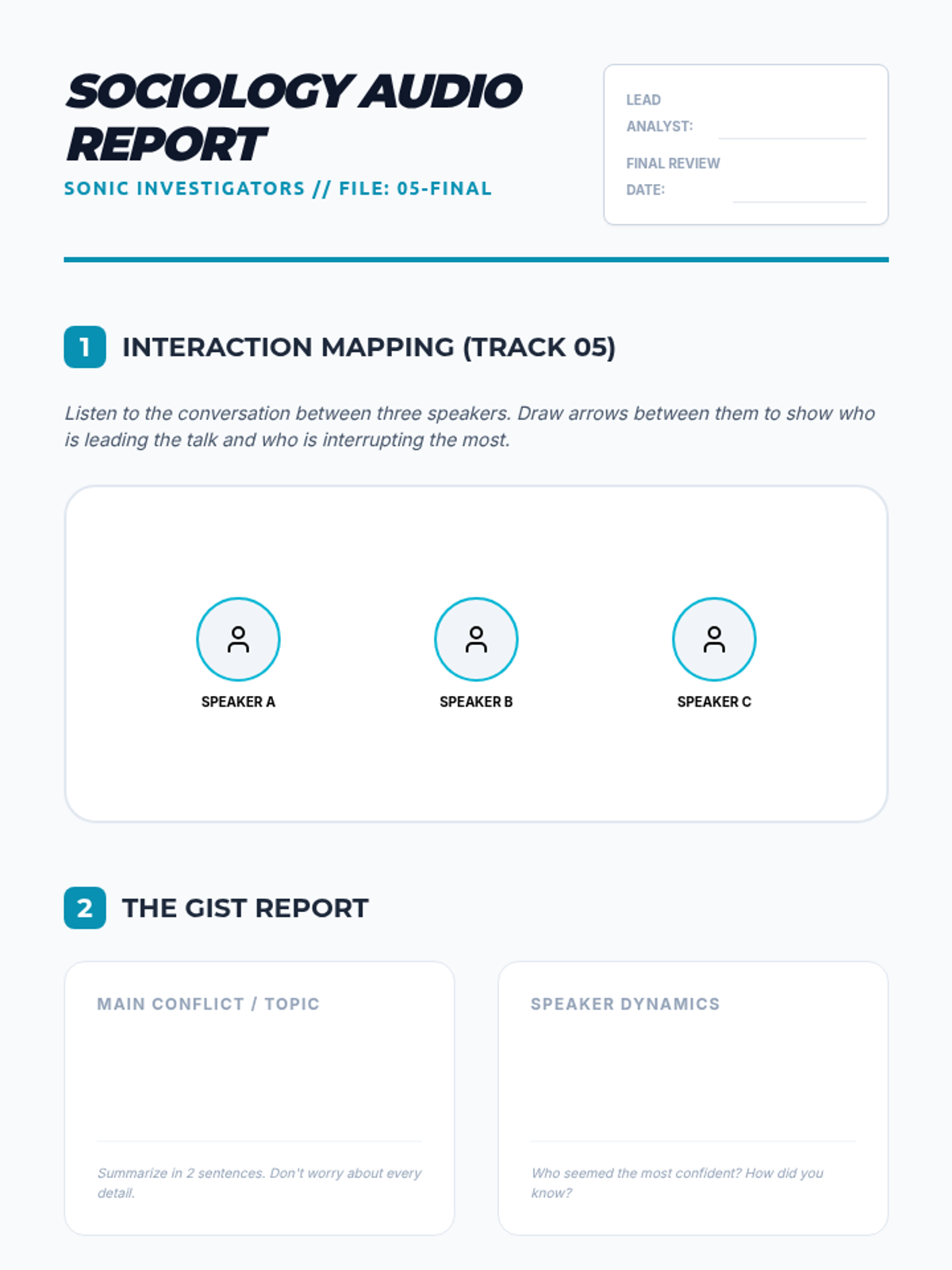
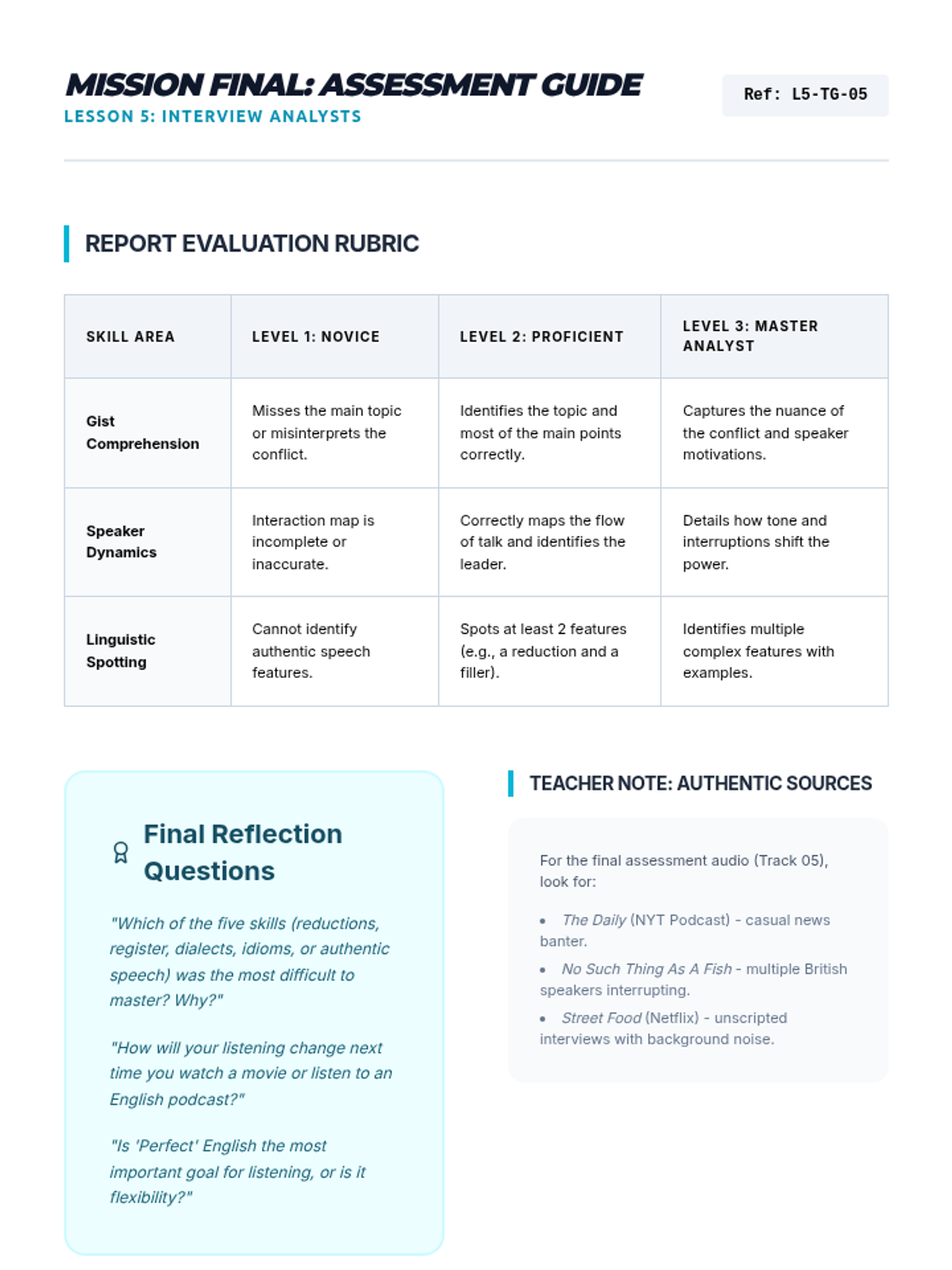
Students analyze unscripted interviews to master tracking multiple speakers and understanding the 'gist' in messy, authentic audio environments.
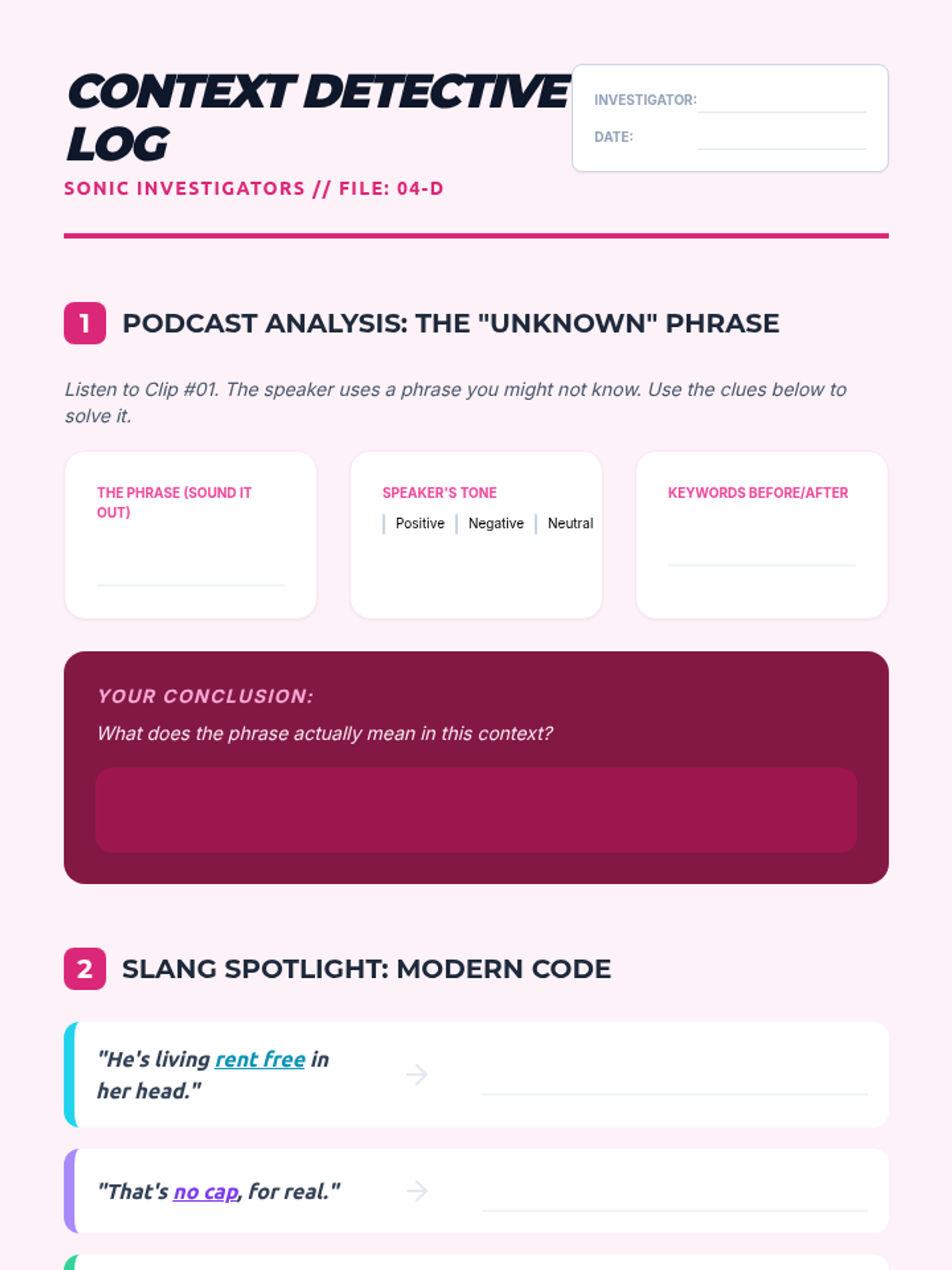
Learners practice inferring the meaning of non-literal language by analyzing context clues in natural conversation and podcast segments.
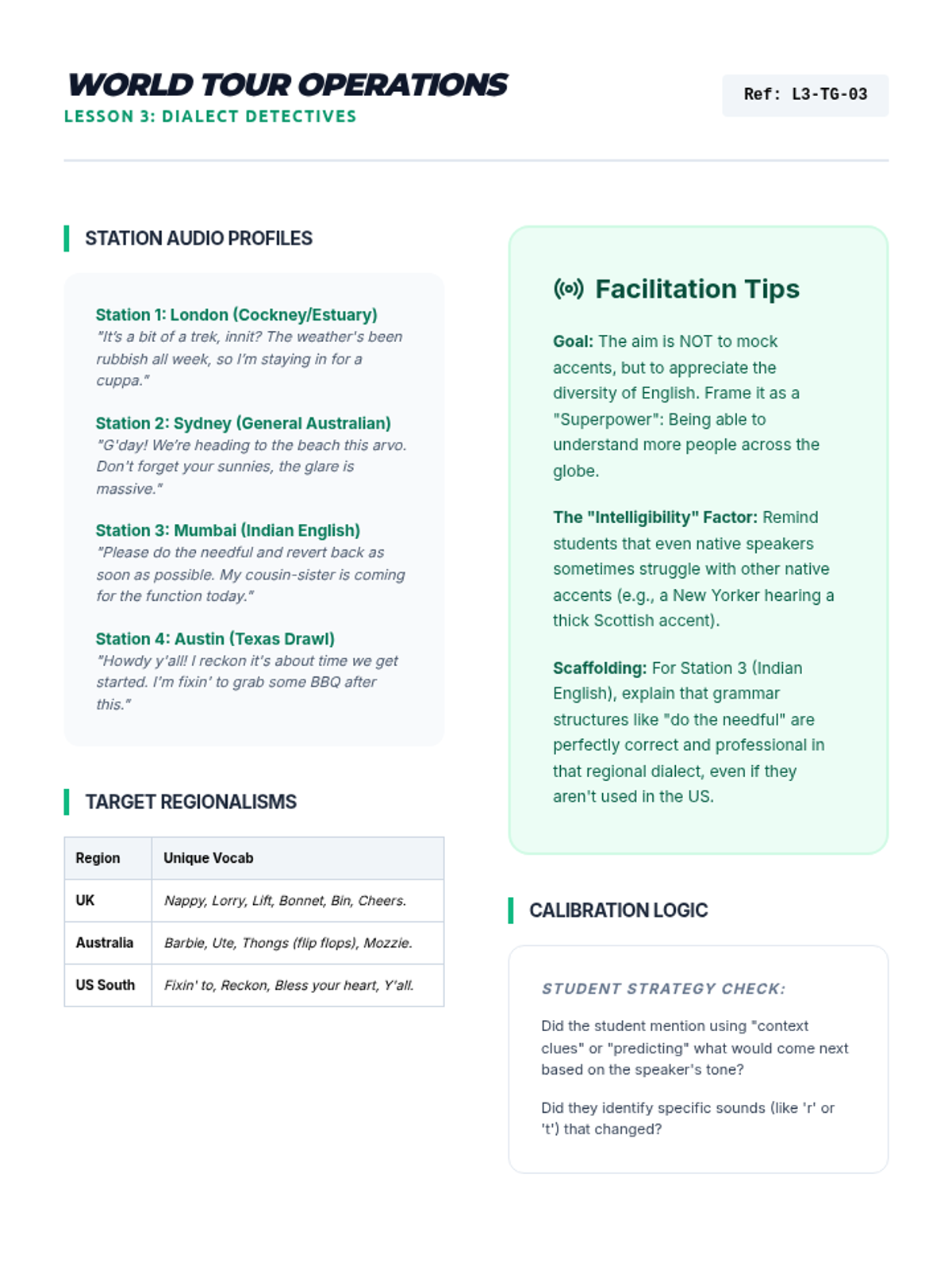
Students explore World English accents and practice 'tuning in' to different vowel shifts and regional vocabulary.
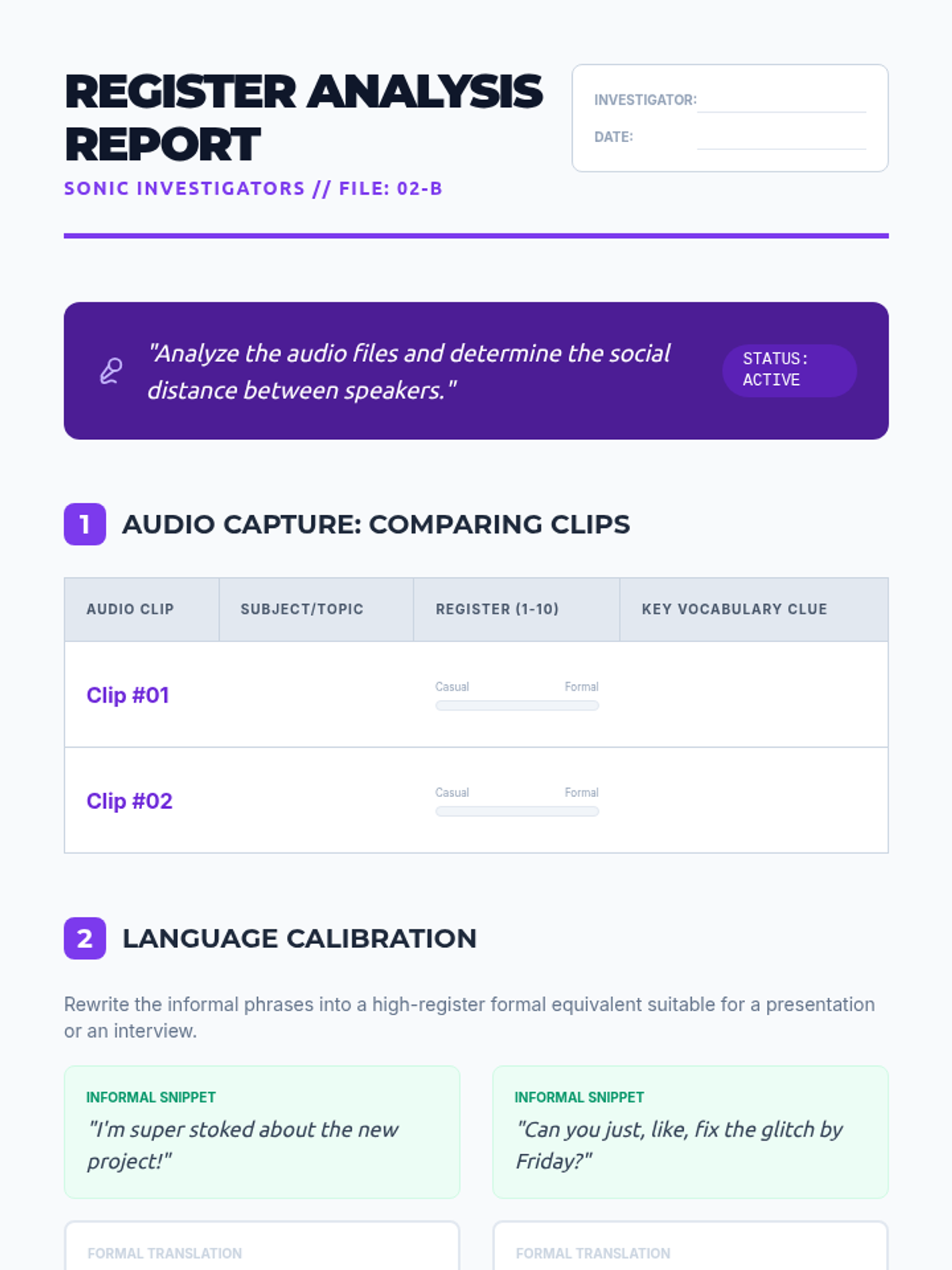
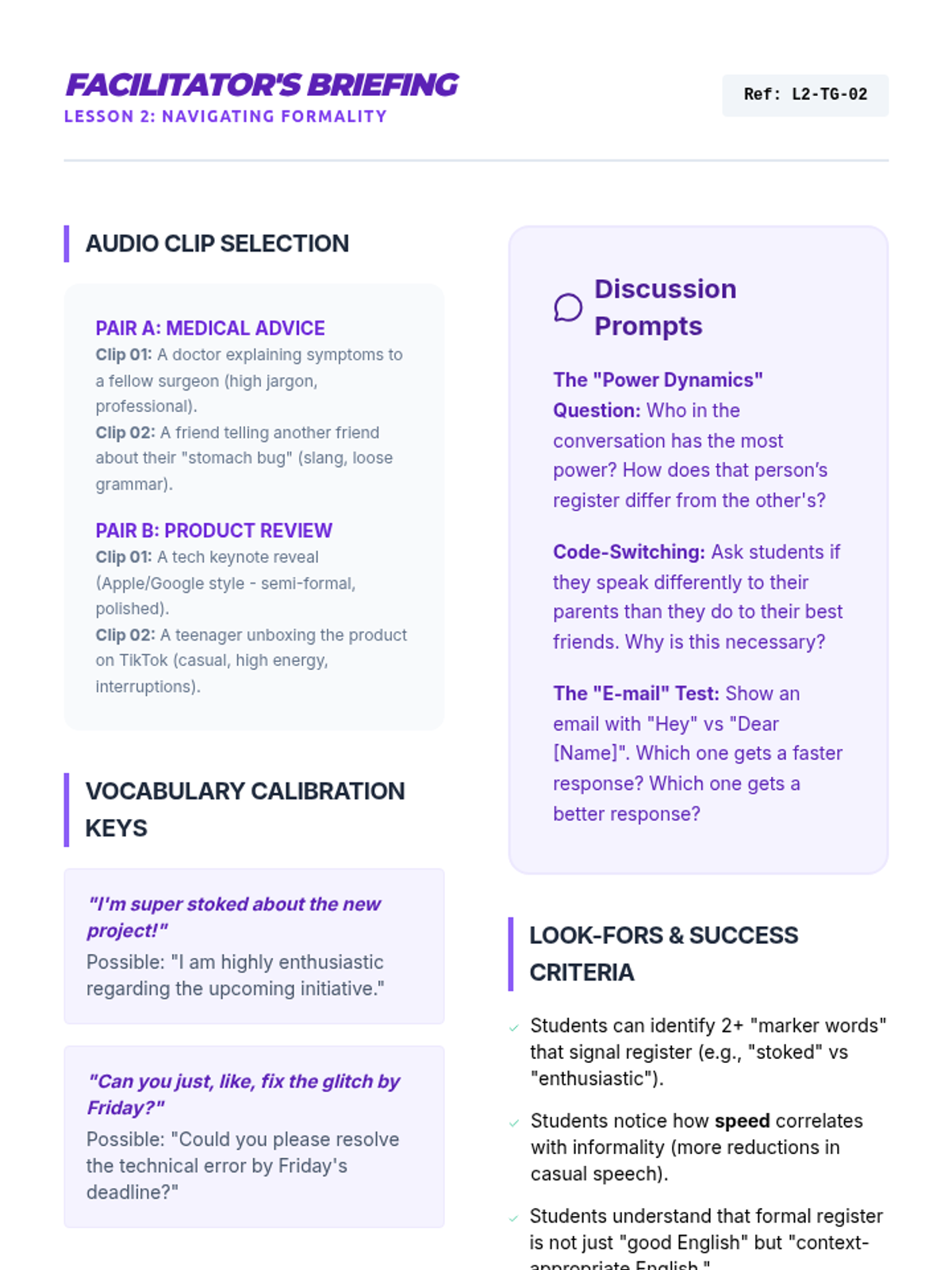
Learners compare audio clips in different settings to identify how vocabulary and tone shift between formal and informal registers.
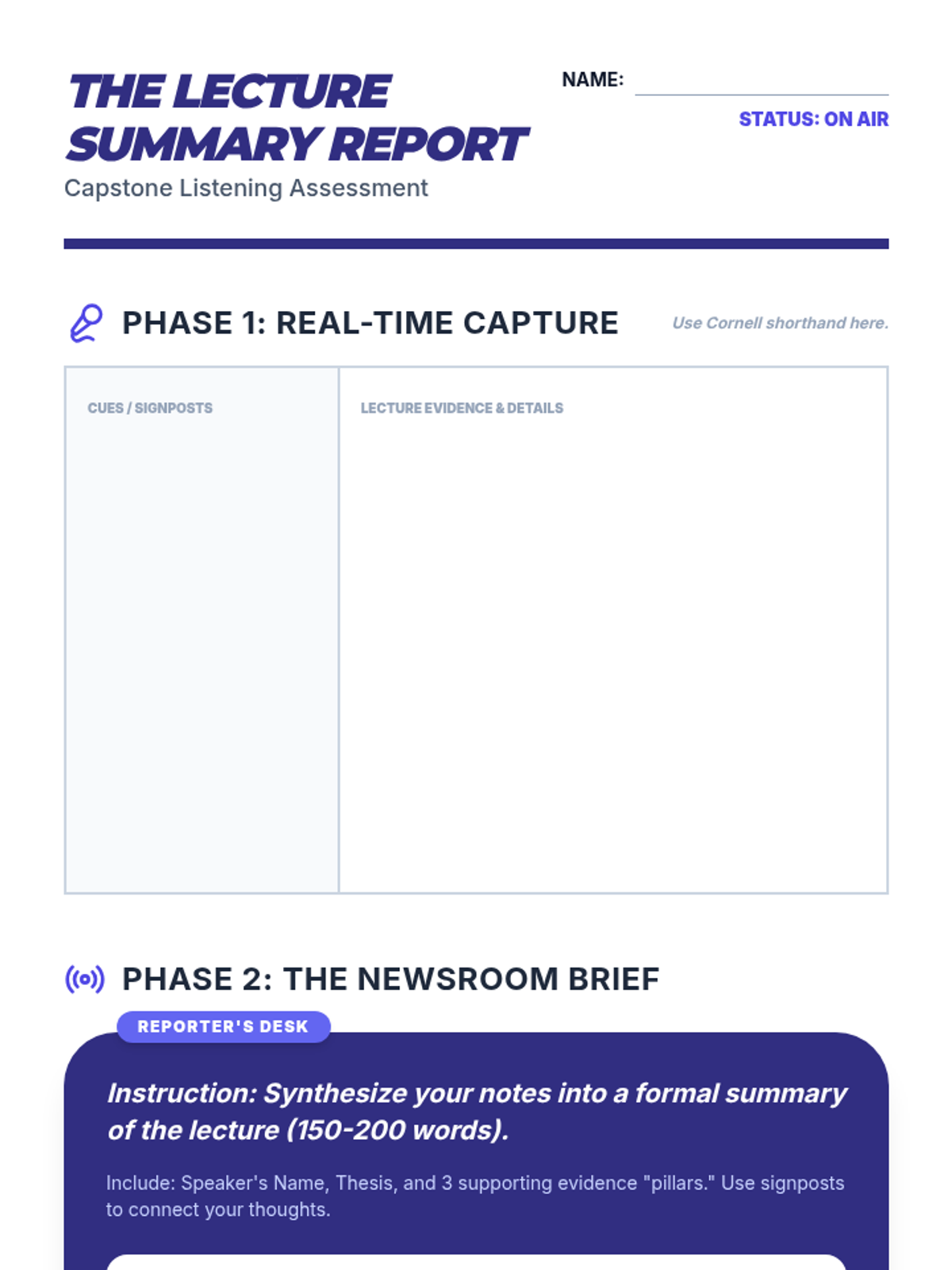
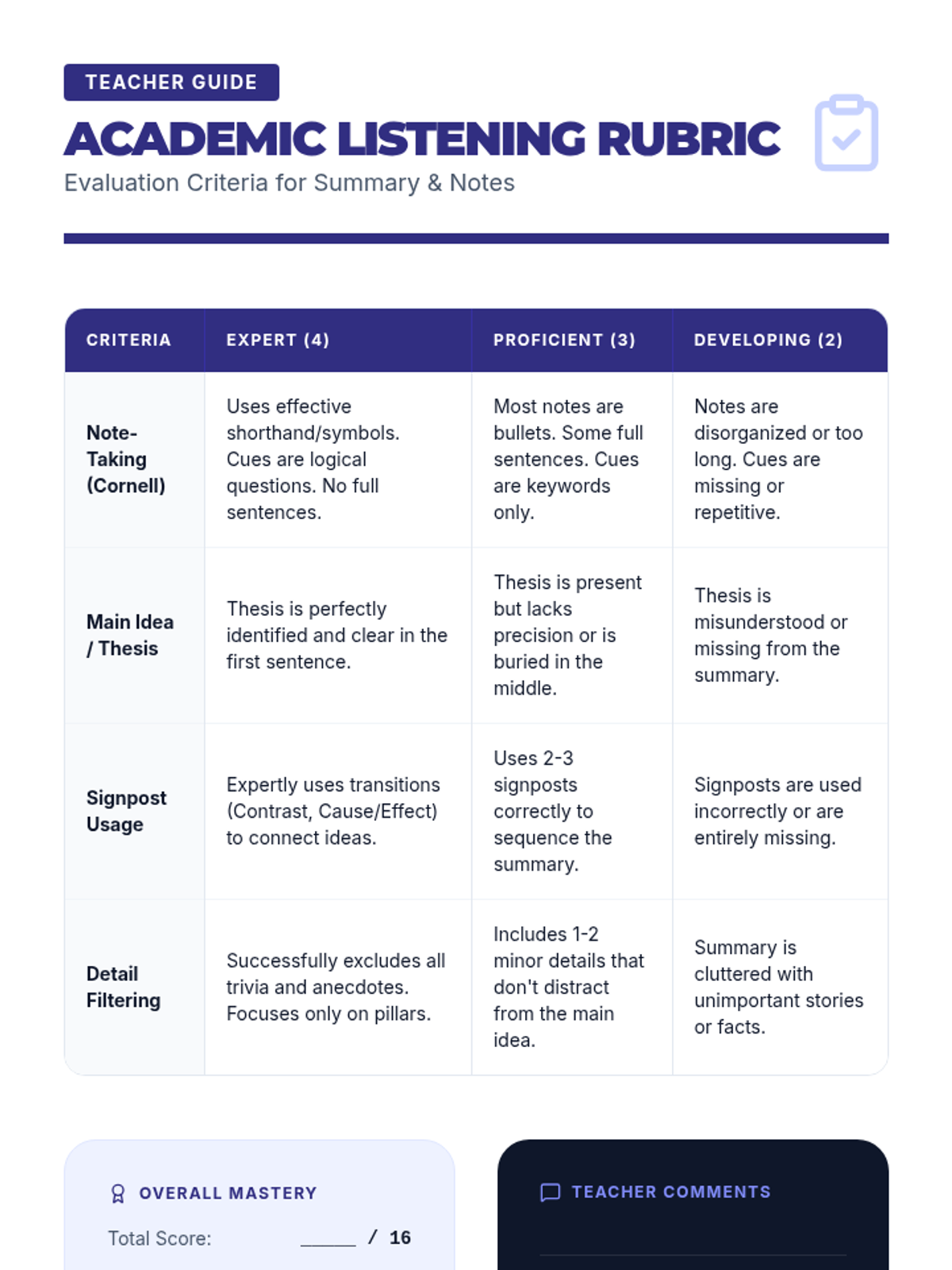
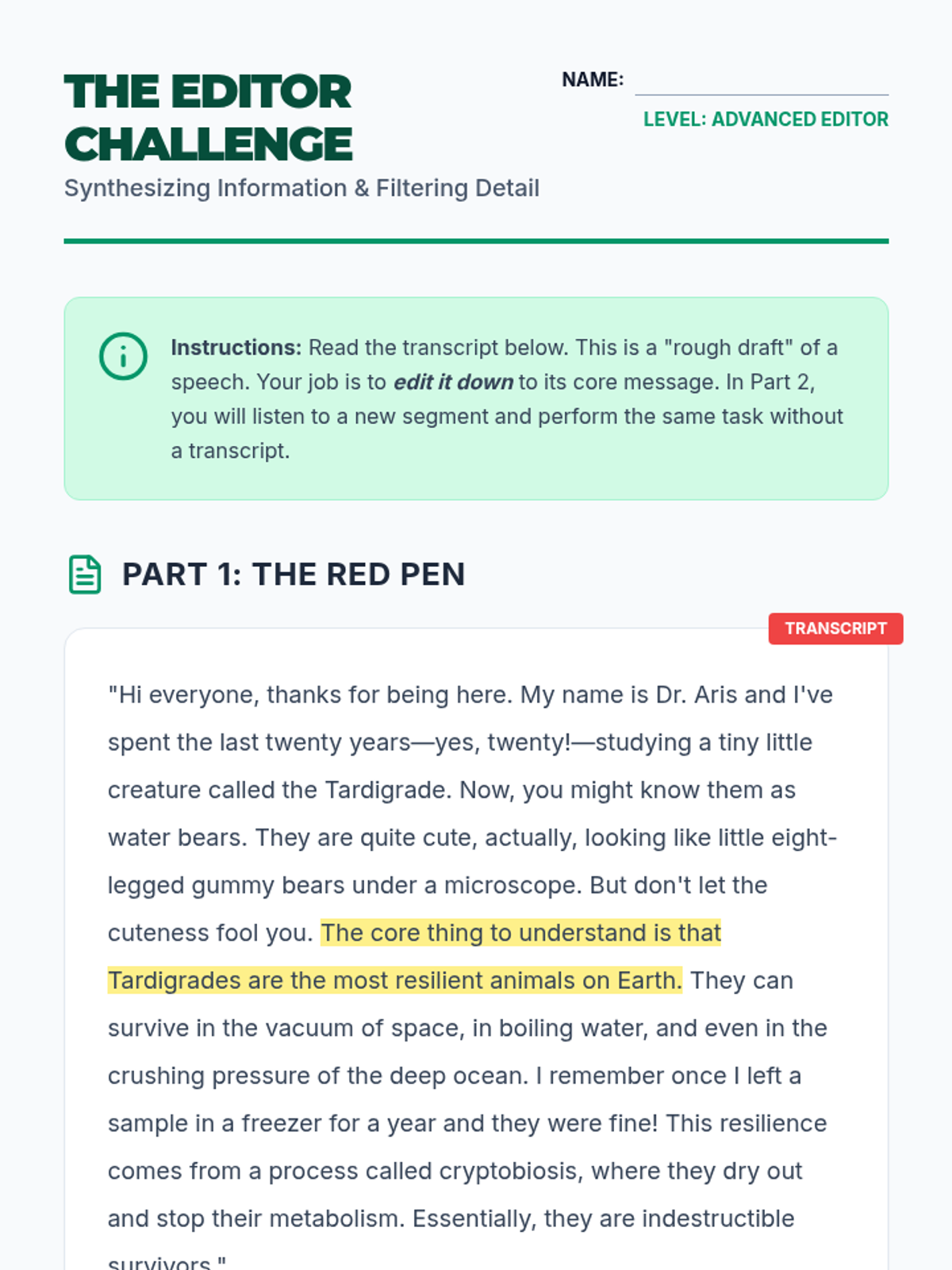
Students listen to a full-length talk and produce a written summary that accurately reflects the speaker's thesis and evidence.
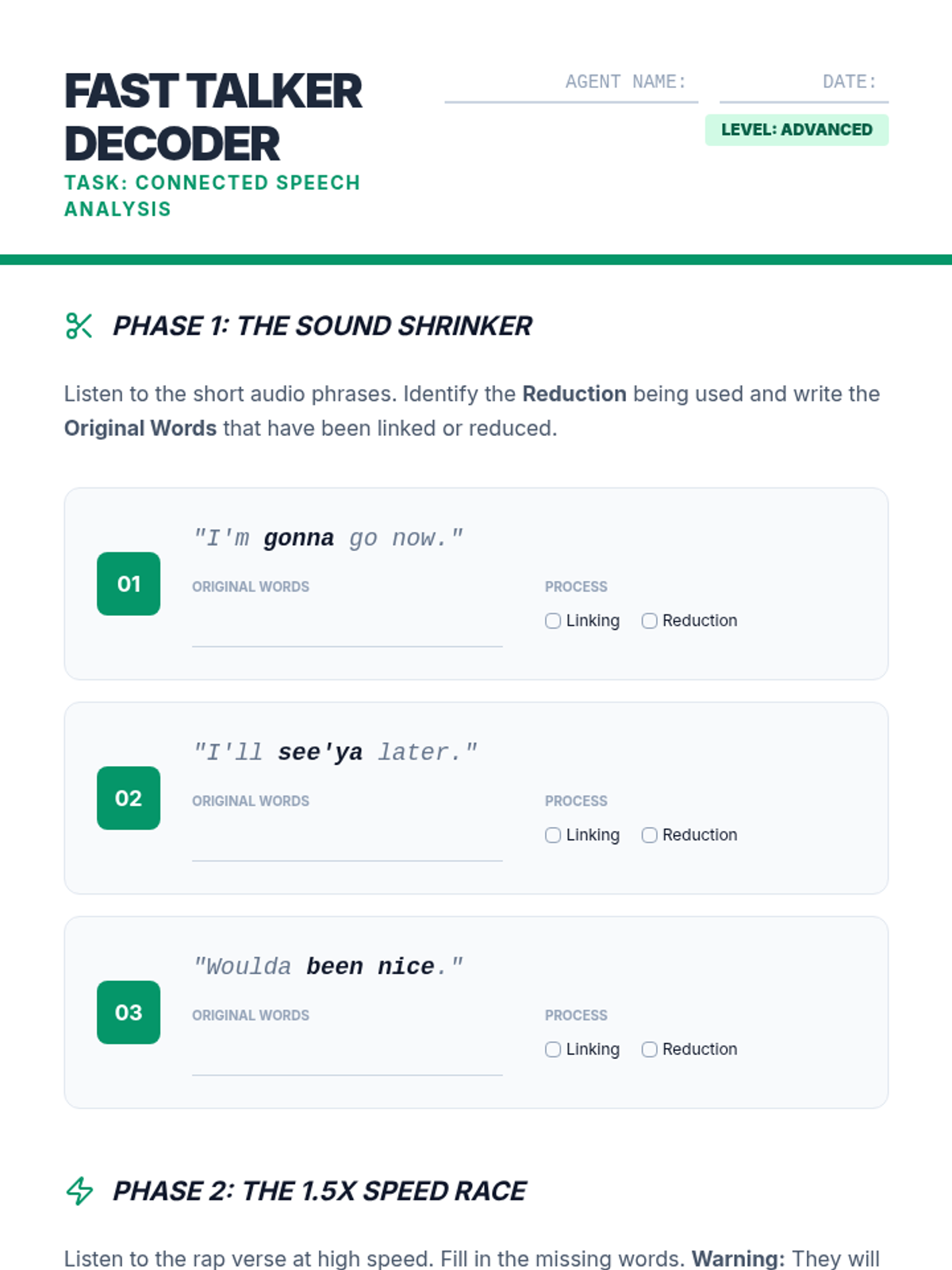
Students examine common reductions (wanna, gonna, whaddaya) and linking sounds through pop culture clips to decode how speed changes pronunciation.
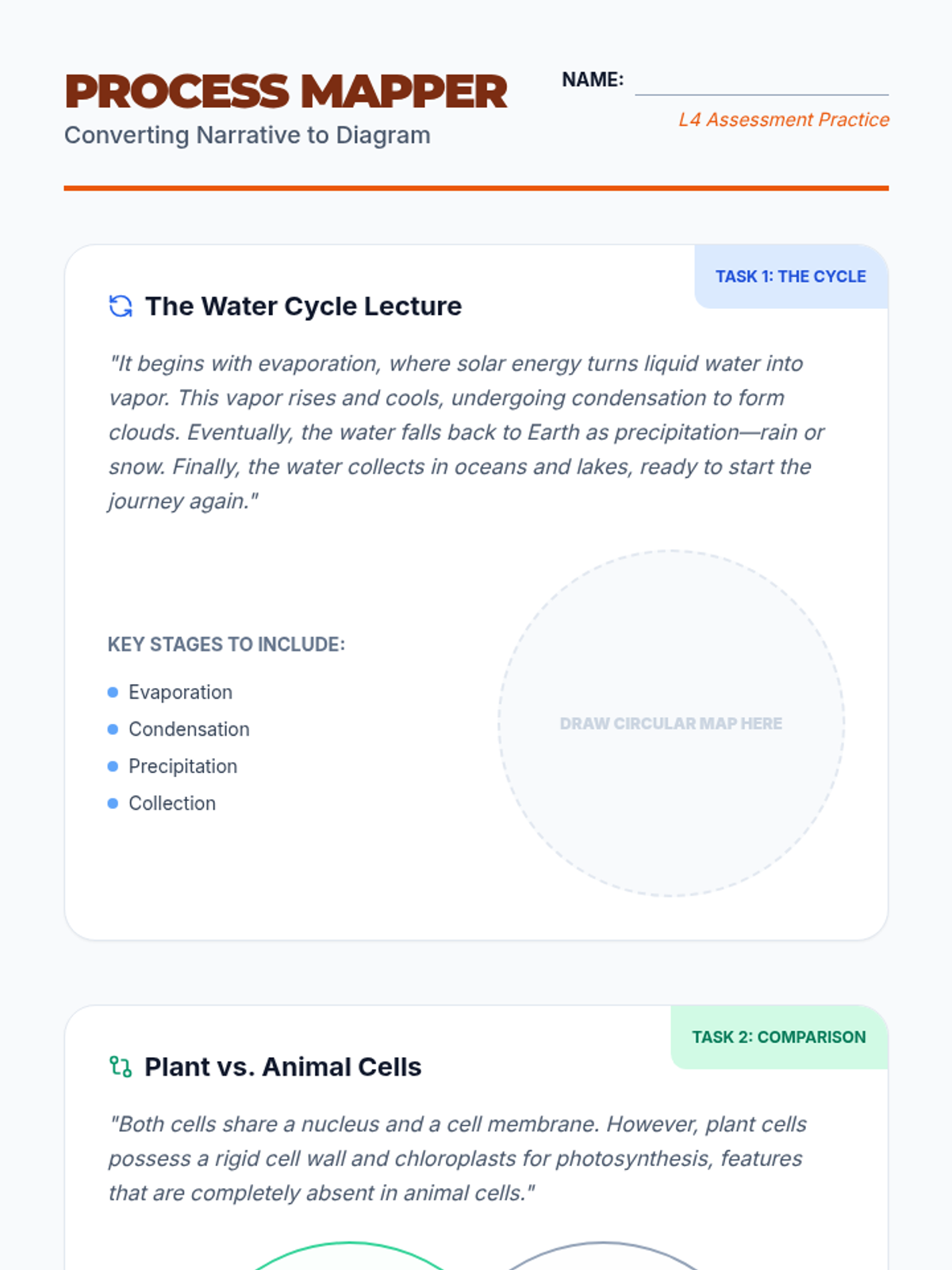
Learners practice converting auditory descriptions of processes or cycles into visual diagrams and graphic organizers, checking for deep understanding.
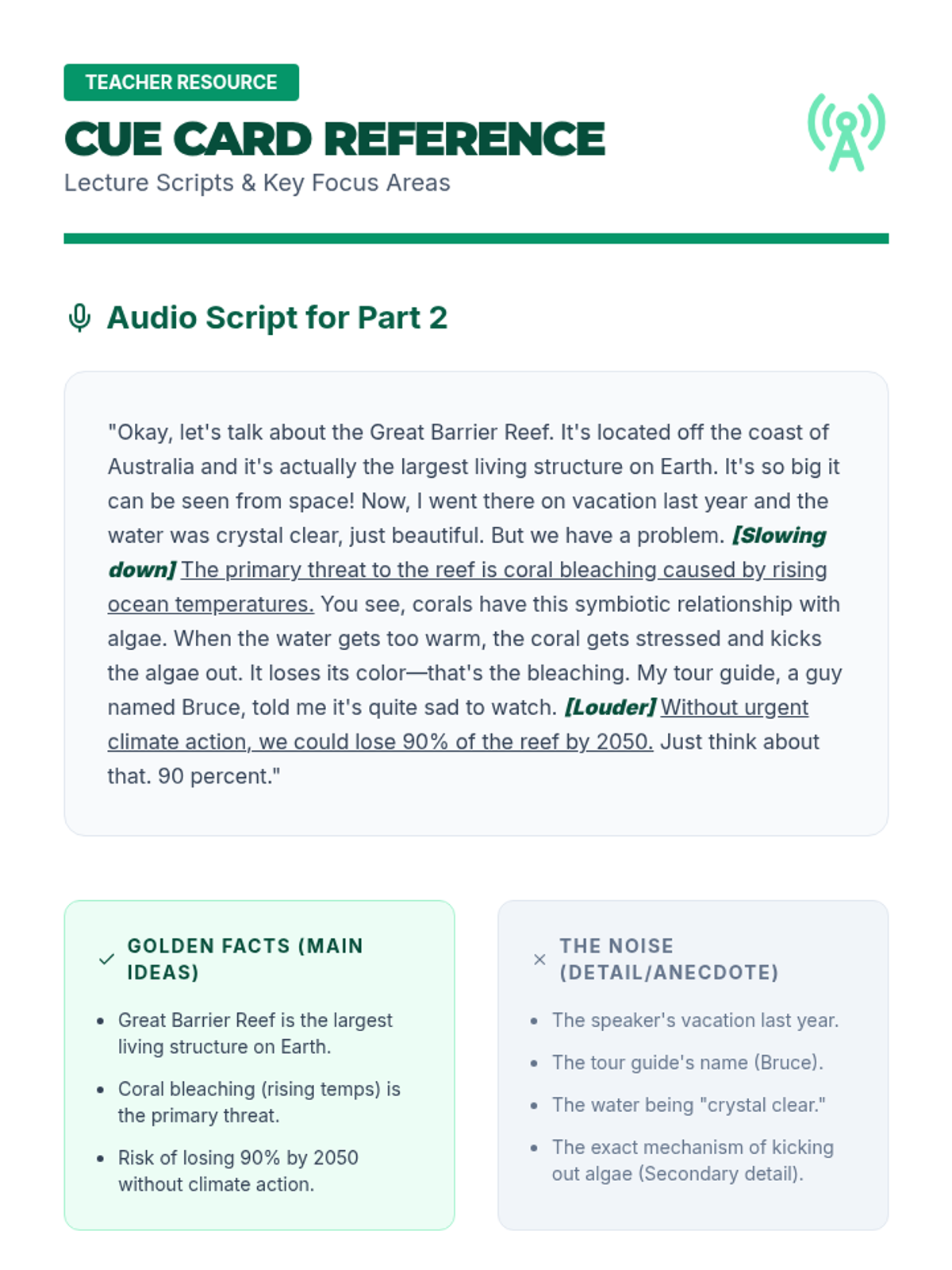
Students practice filtering 'need-to-know' concepts from 'nice-to-know' trivia by focusing on speaker volume, repetition, and pausing.
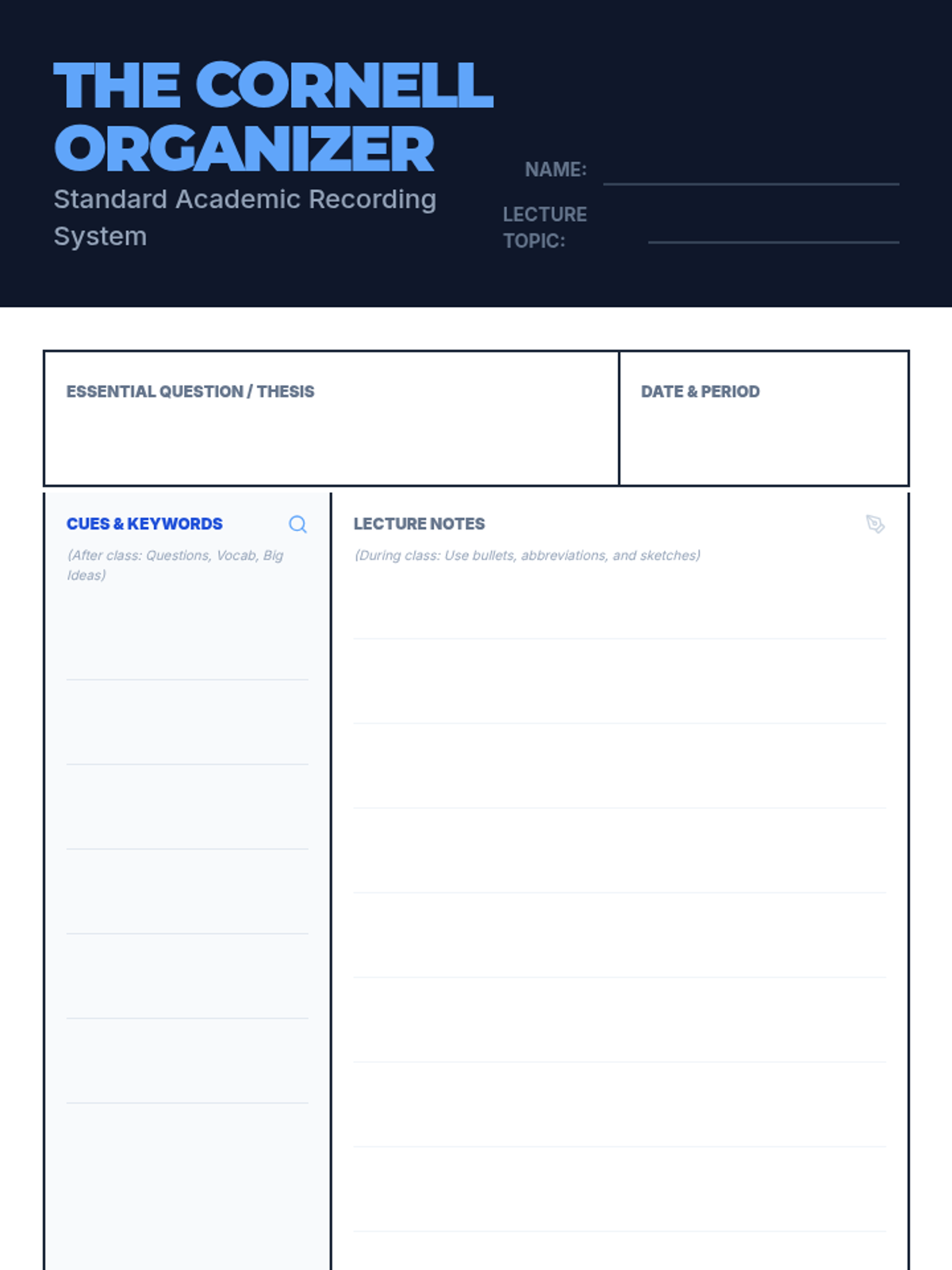
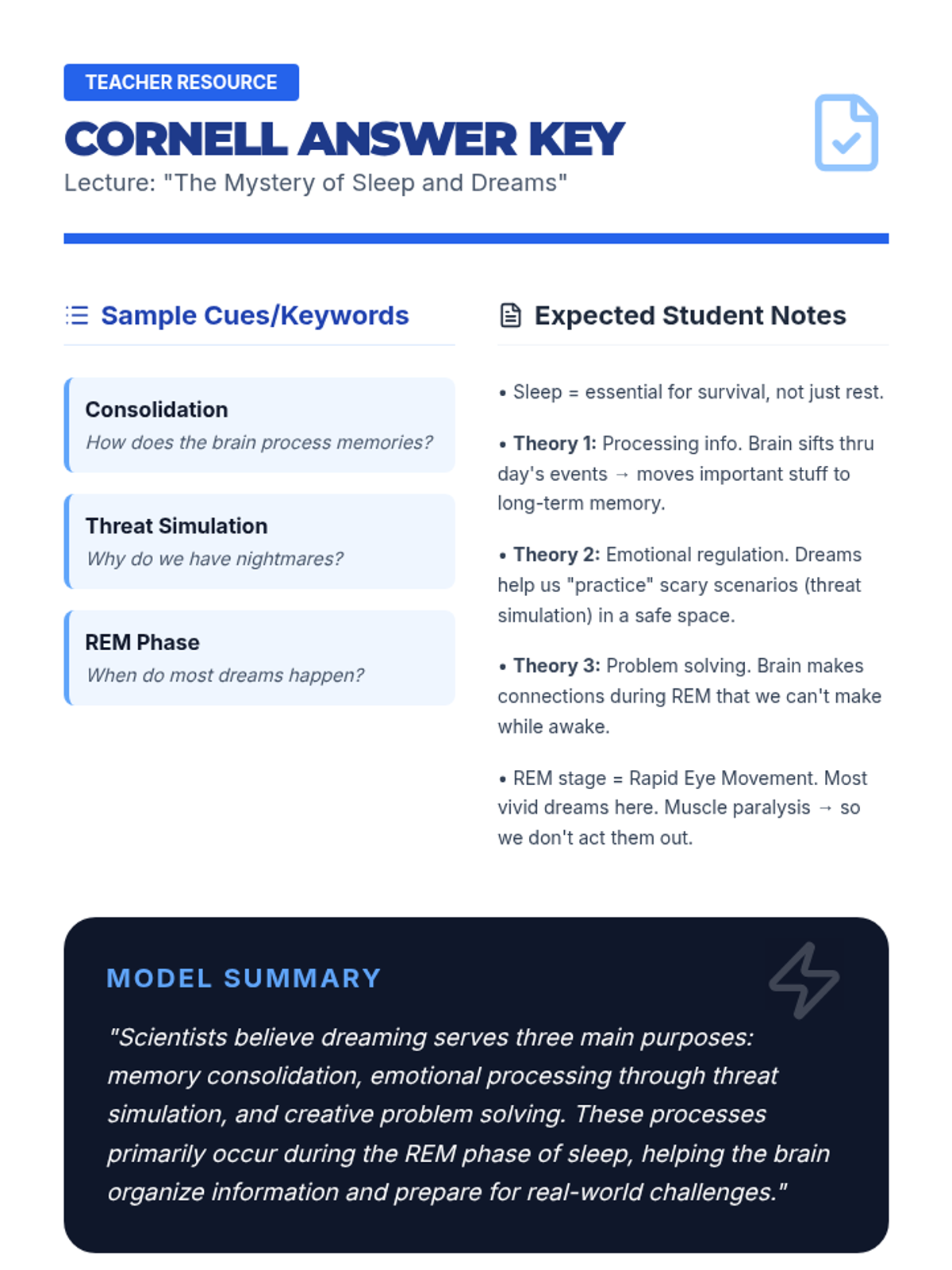
This lesson introduces the Cornell Note-taking method as a tool for organizing auditory input. Students practice the separation of main ideas, keywords, and supporting details in real-time.
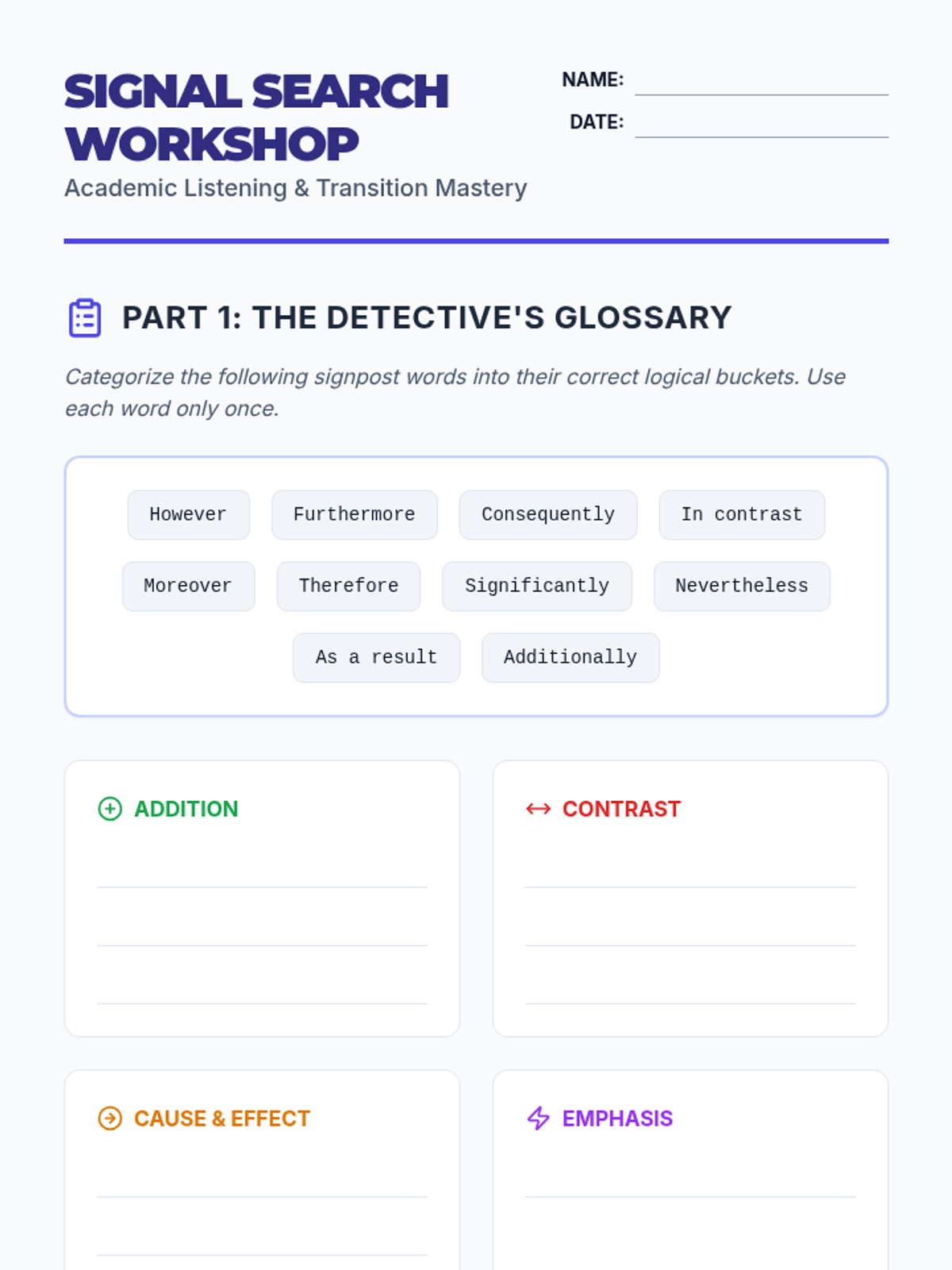
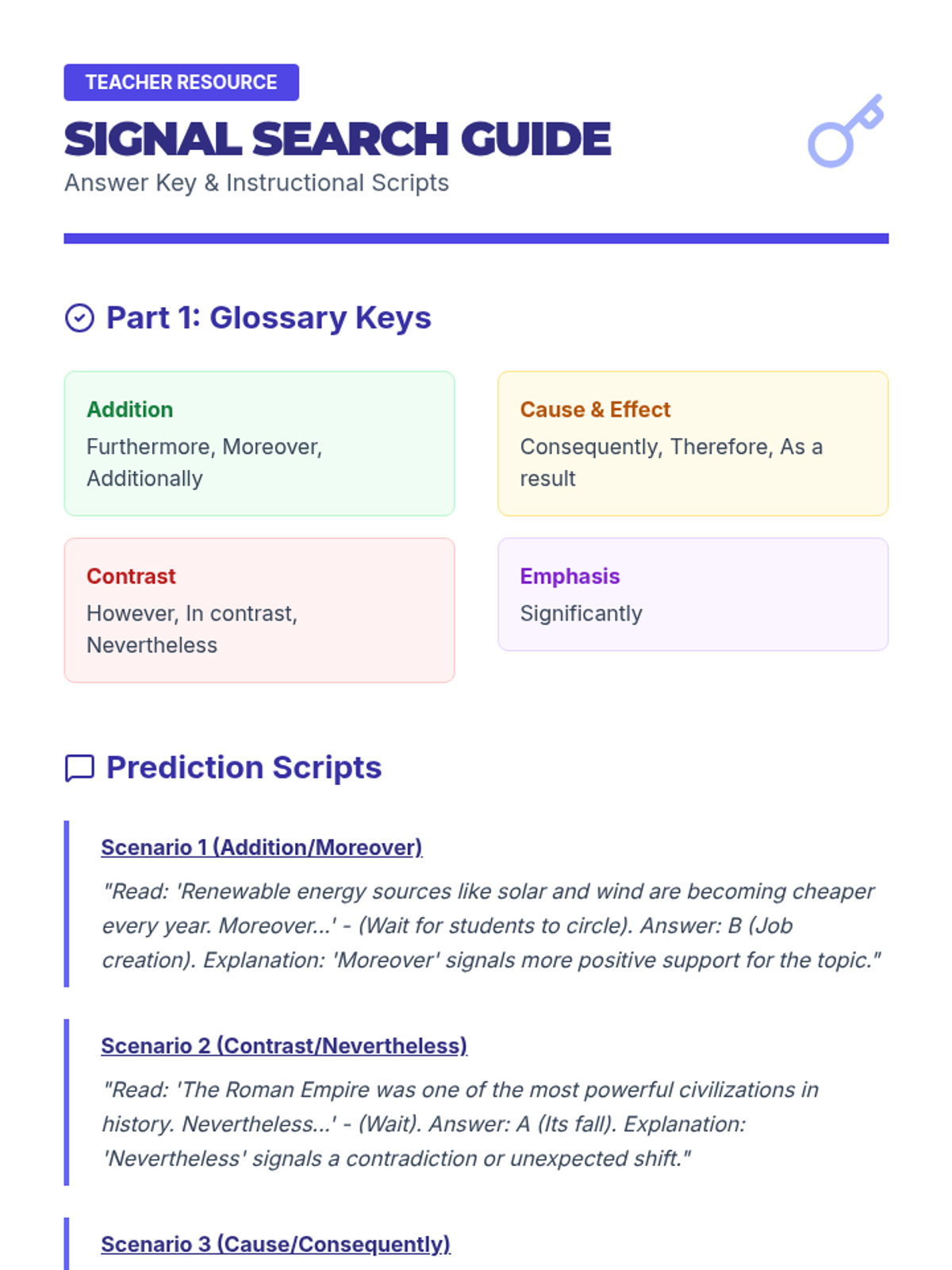
Students analyze audio clips to identify specific signal words that indicate contrast, addition, cause-and-effect, and emphasis. They practice predicting what type of information will follow specific transition phrases.
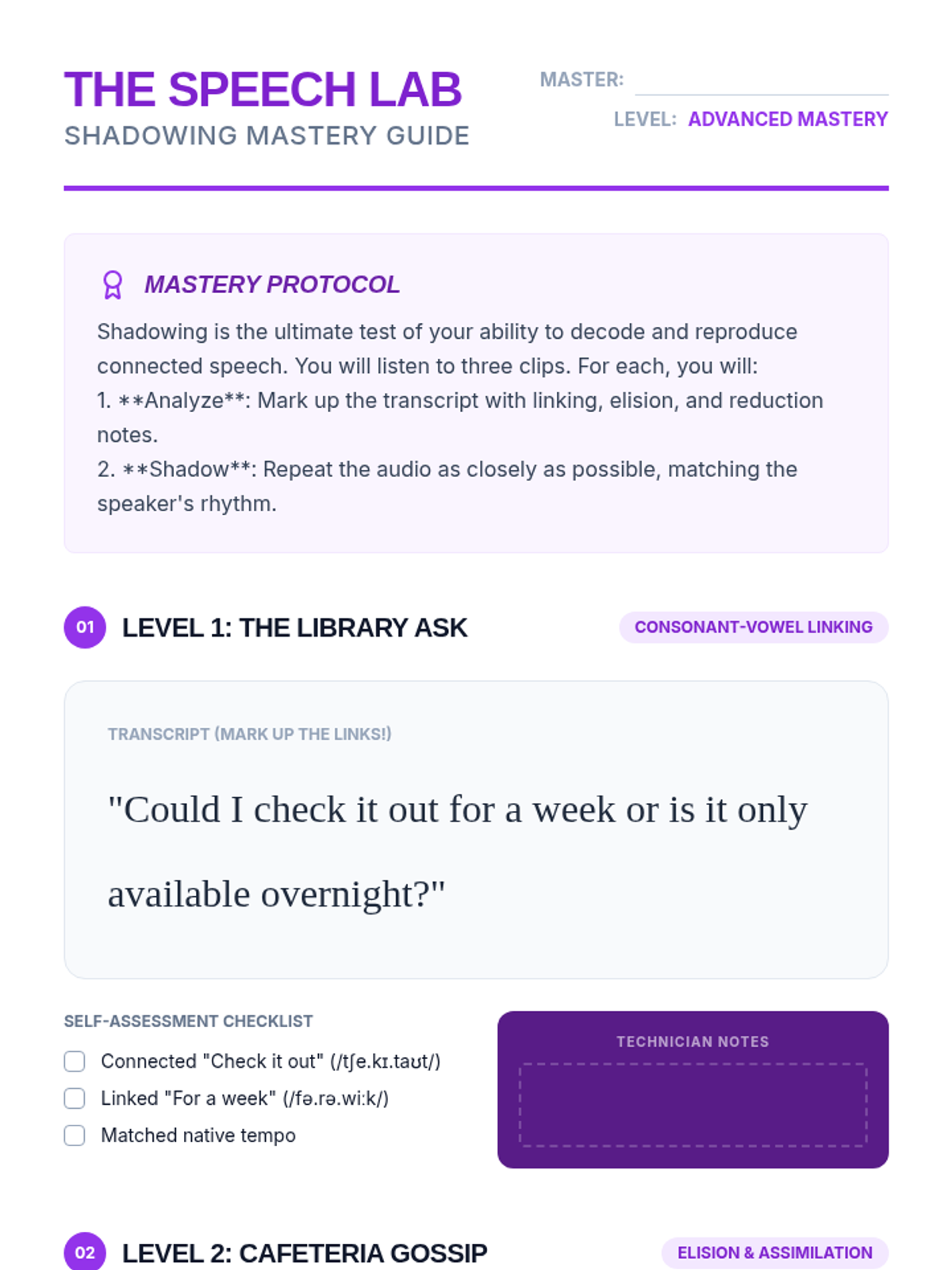
Students engage in a 'shadowing' technique, repeating audio immediately after hearing it to internalize the rhythm and flow of connected speech. This active processing reinforces their ability to predict and process sound streams.
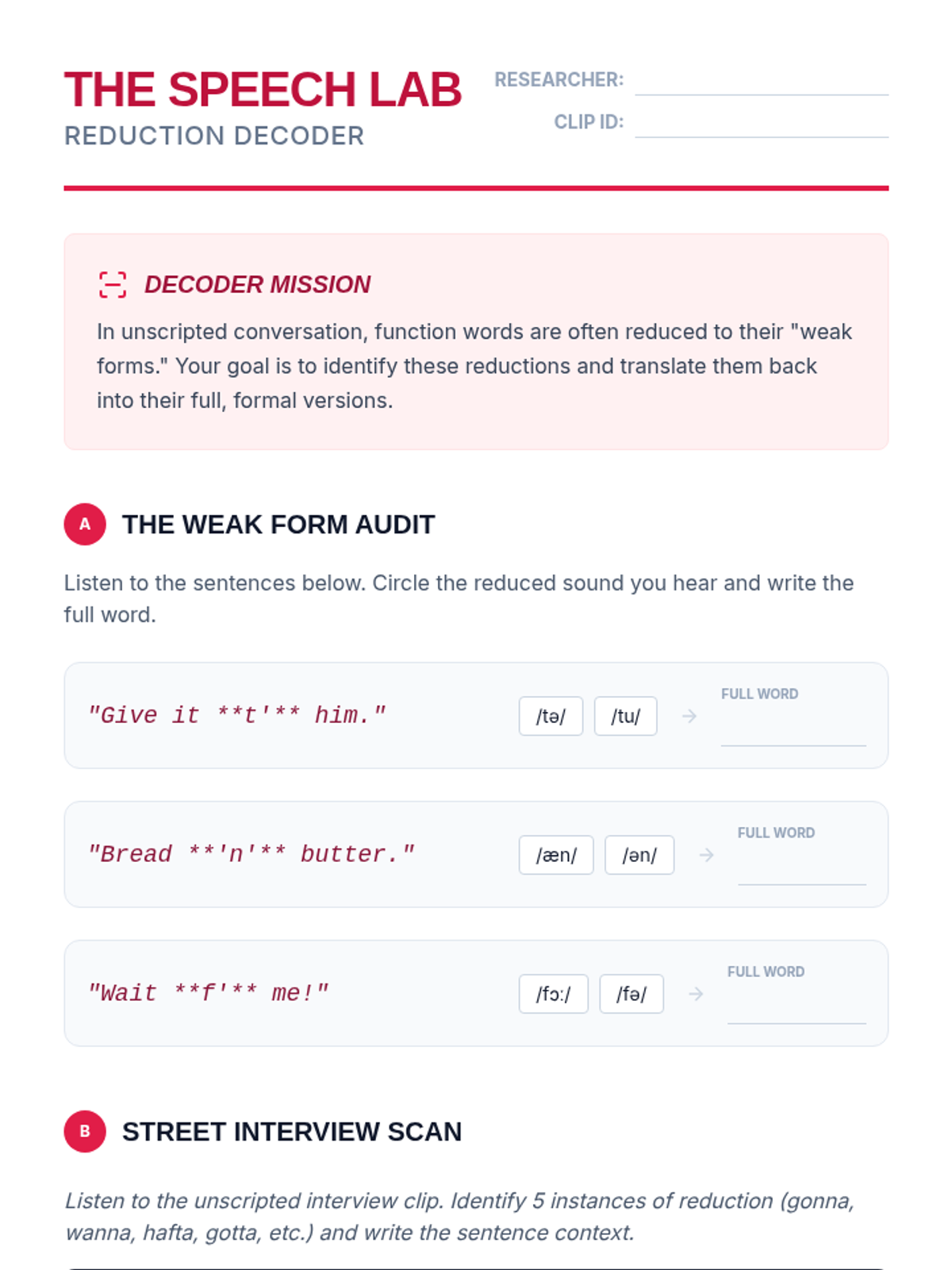
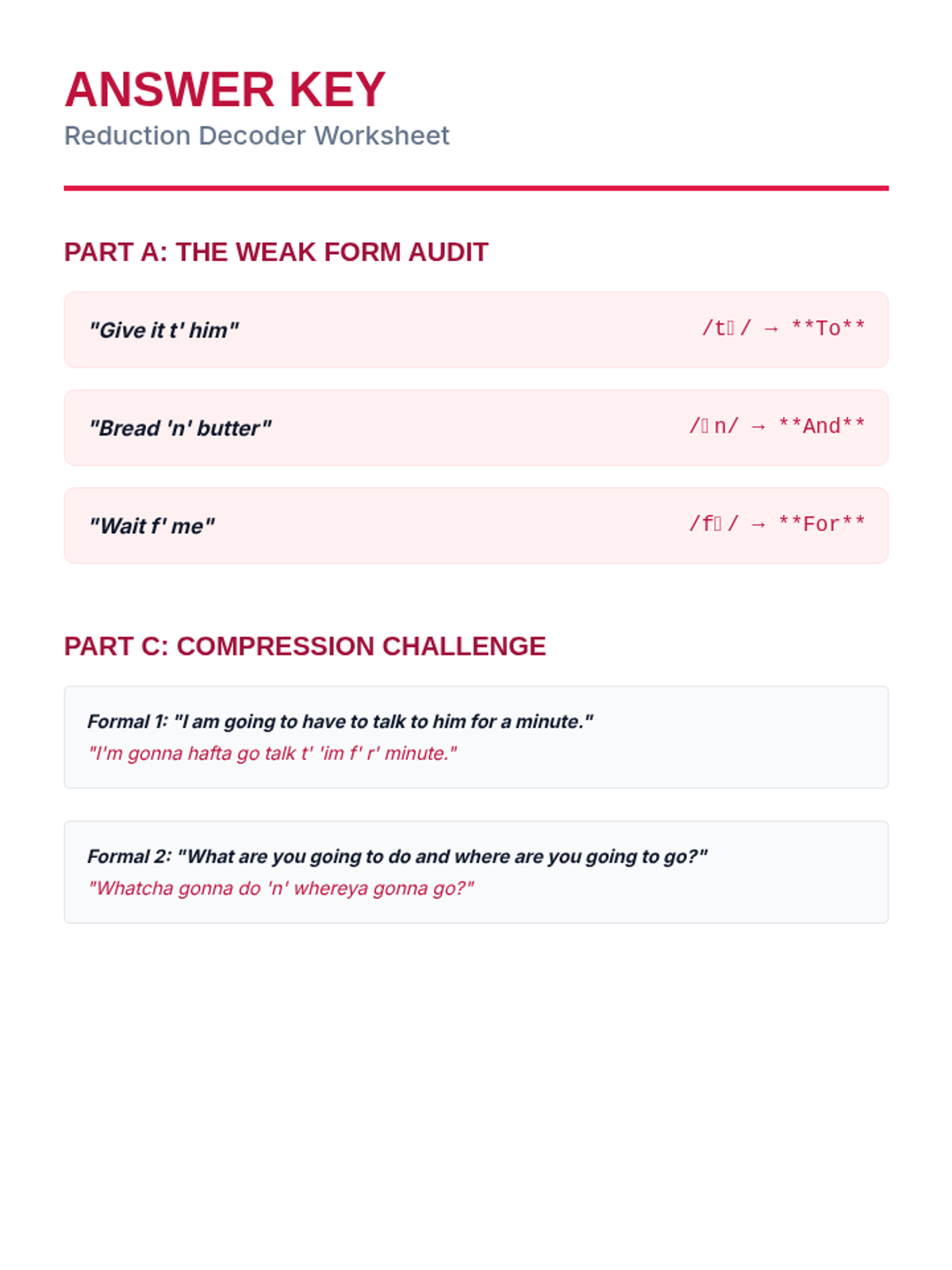
Focusing on function words, this lesson tackles common reductions like 'gonna,' 'wanna,' and weak forms of auxiliary verbs. Students analyze unscripted interviews to catch these reductions in context.
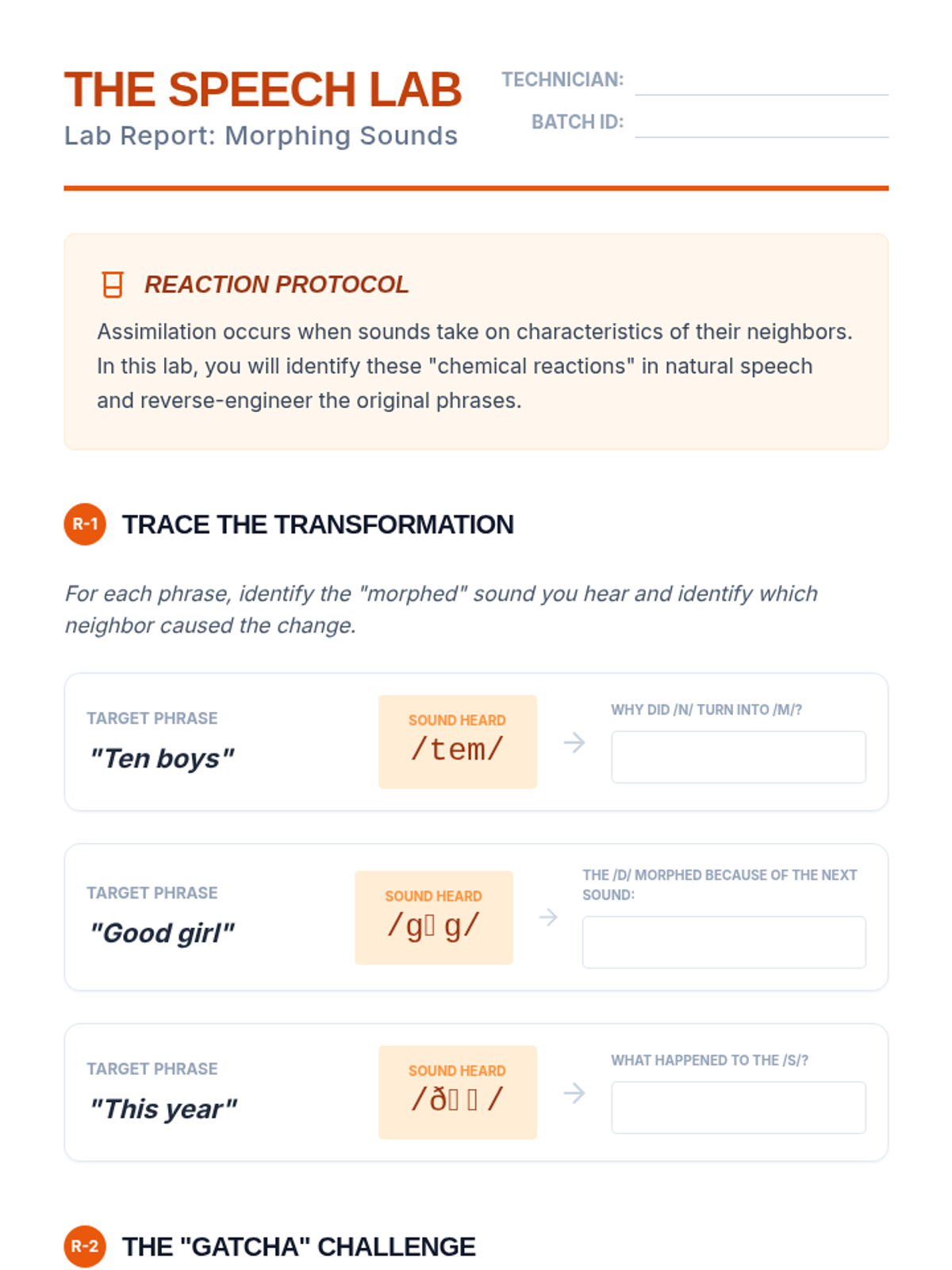
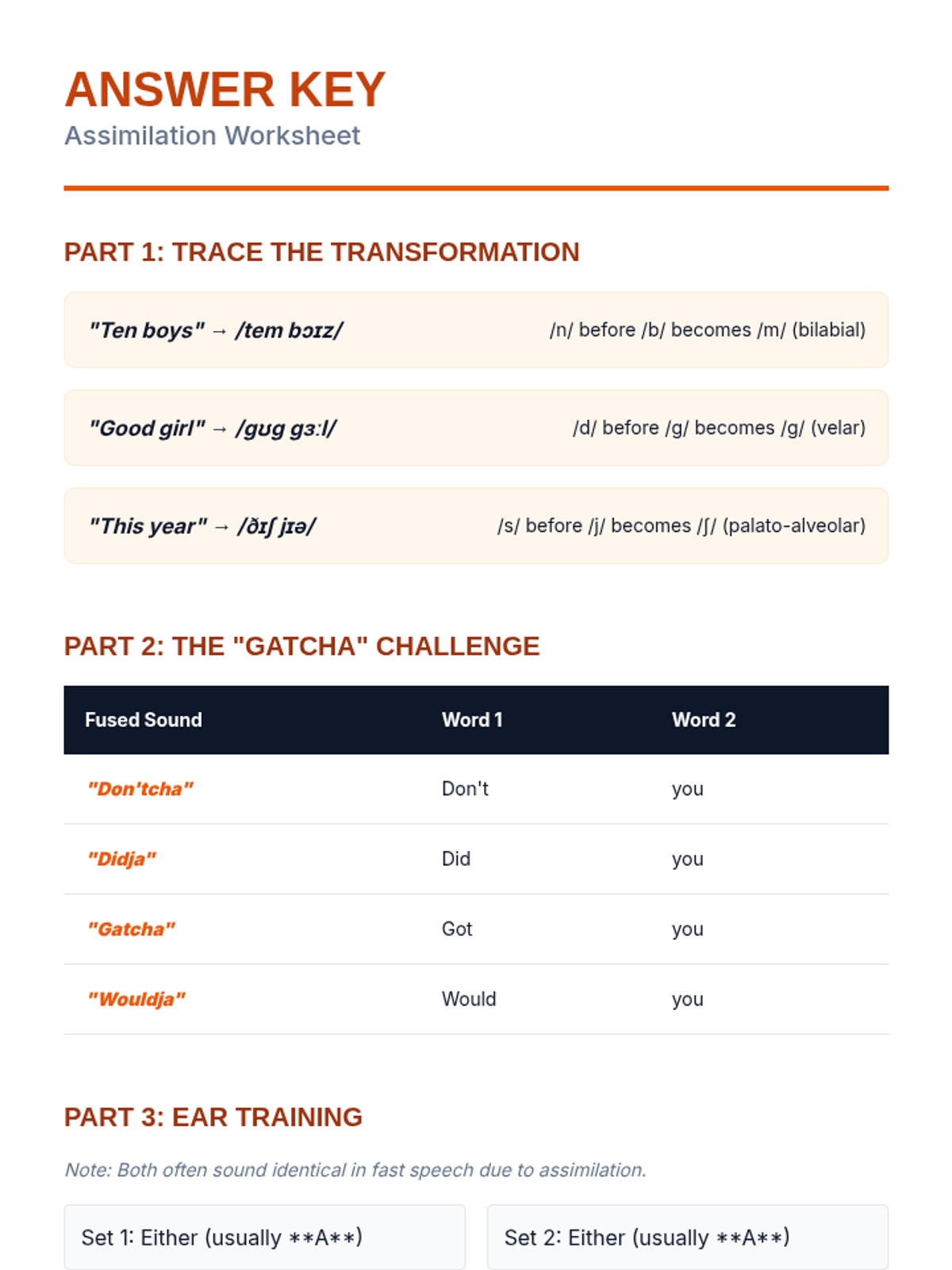
Students learn how sounds influence their neighbors (e.g., 'hand bag' becoming 'hambag'). The lesson uses minimal pair discrimination and dictation exercises to train ears to recognize words despite phonological changes.
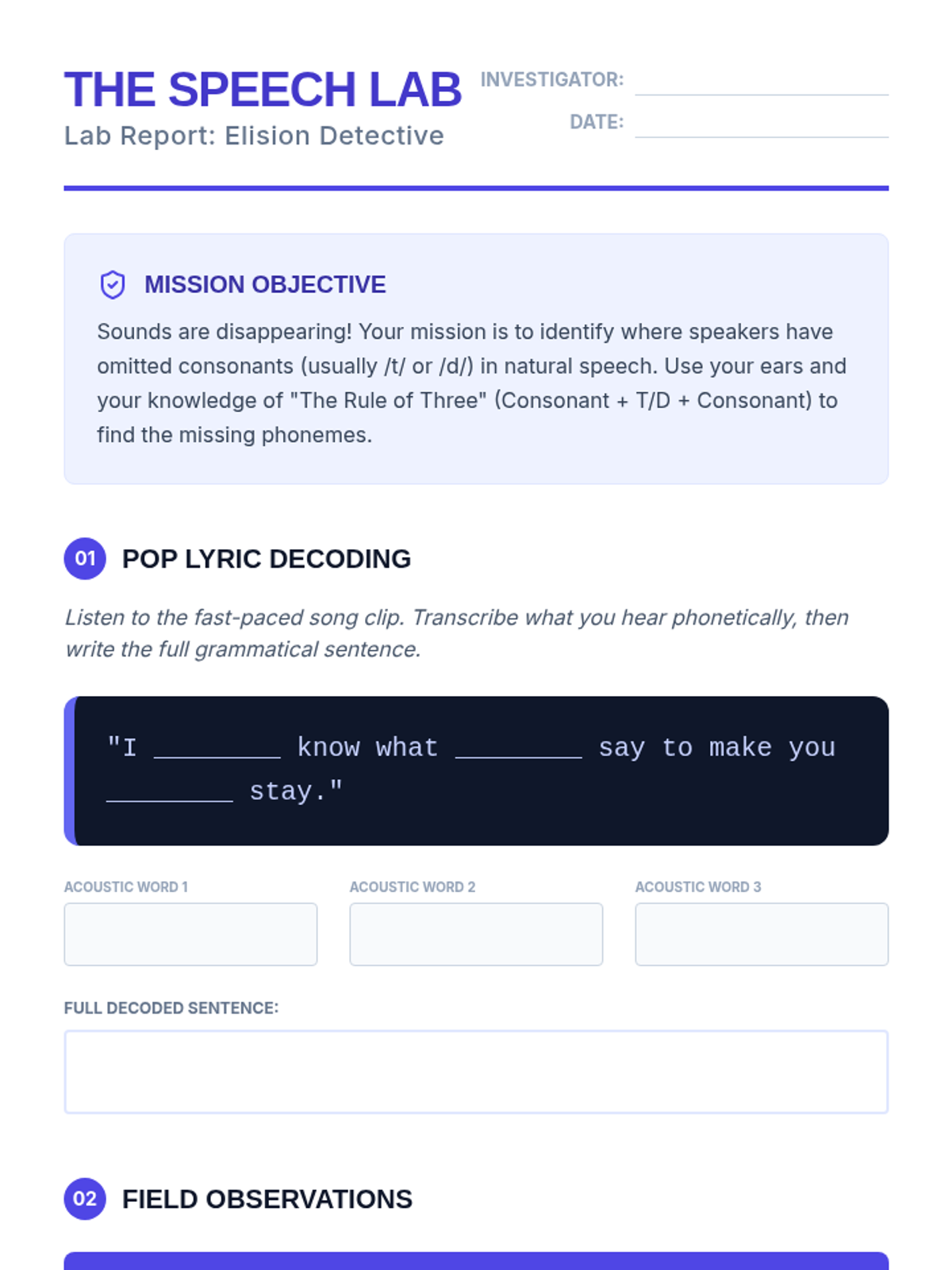
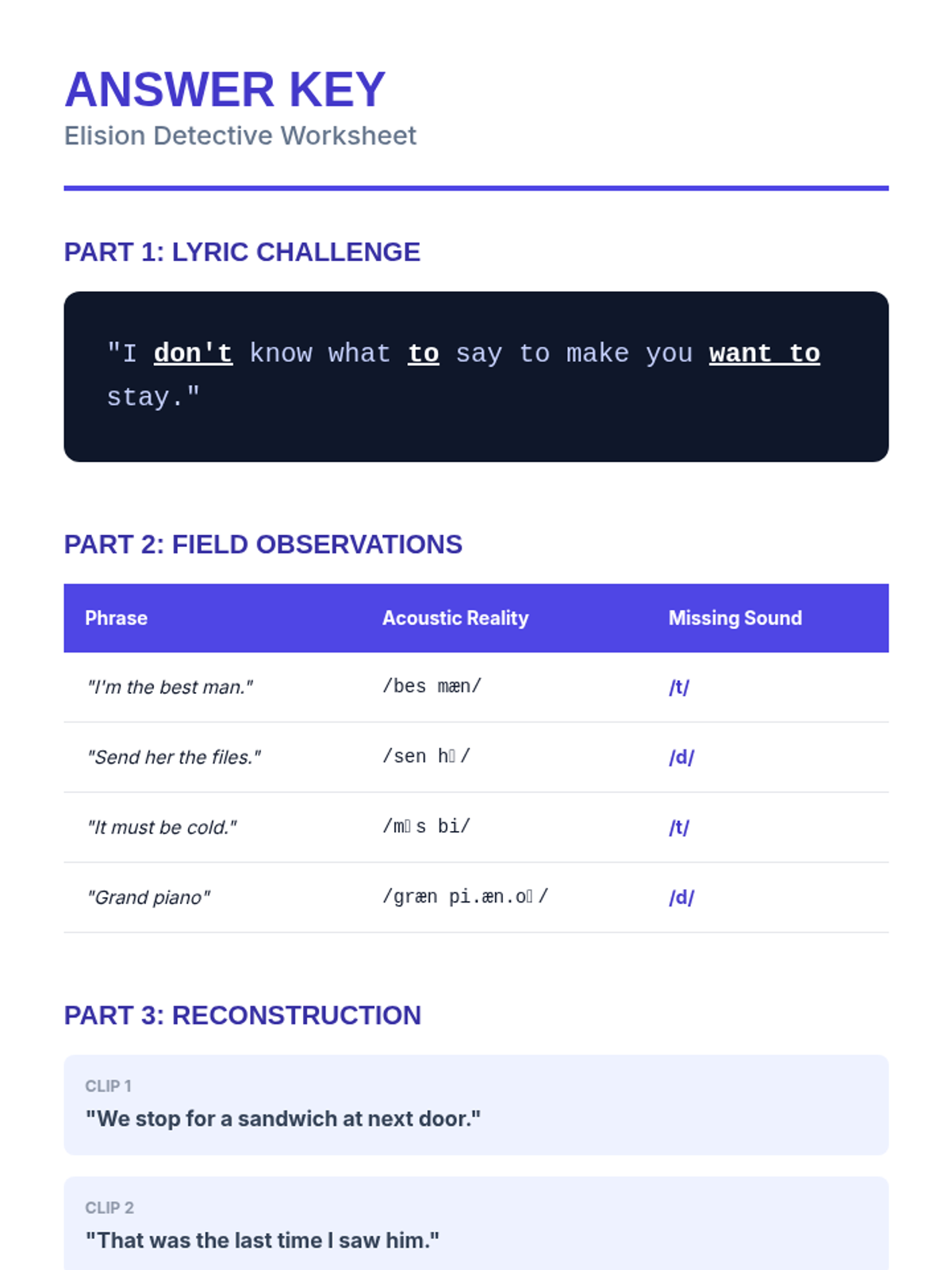
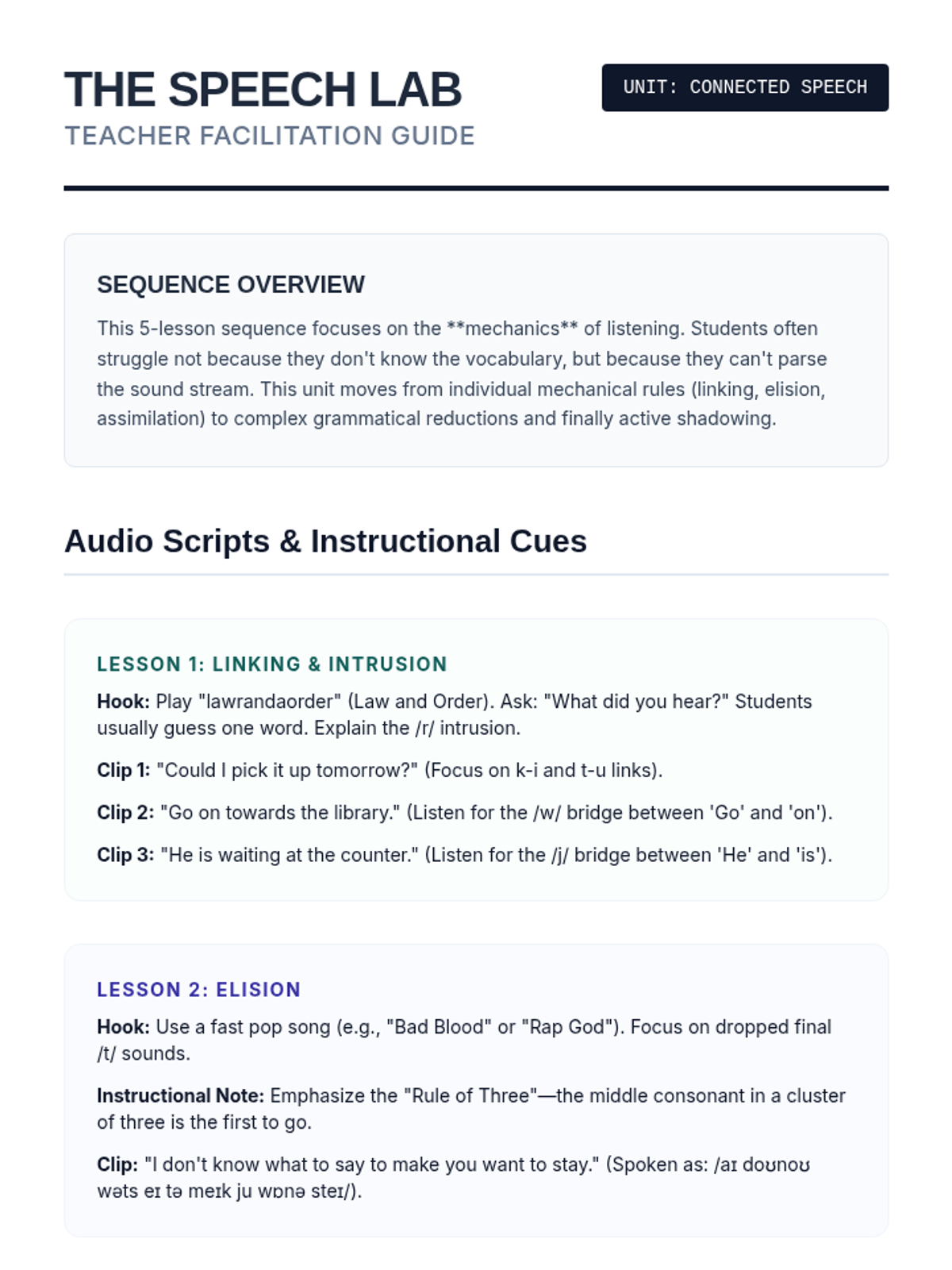
This lesson covers the phenomenon of elision, where sounds (particularly /t/ and /d/) disappear in rapid speech. Students practice listening to high-speed dialogues to identify words that have been 'swallowed' by the speaker.
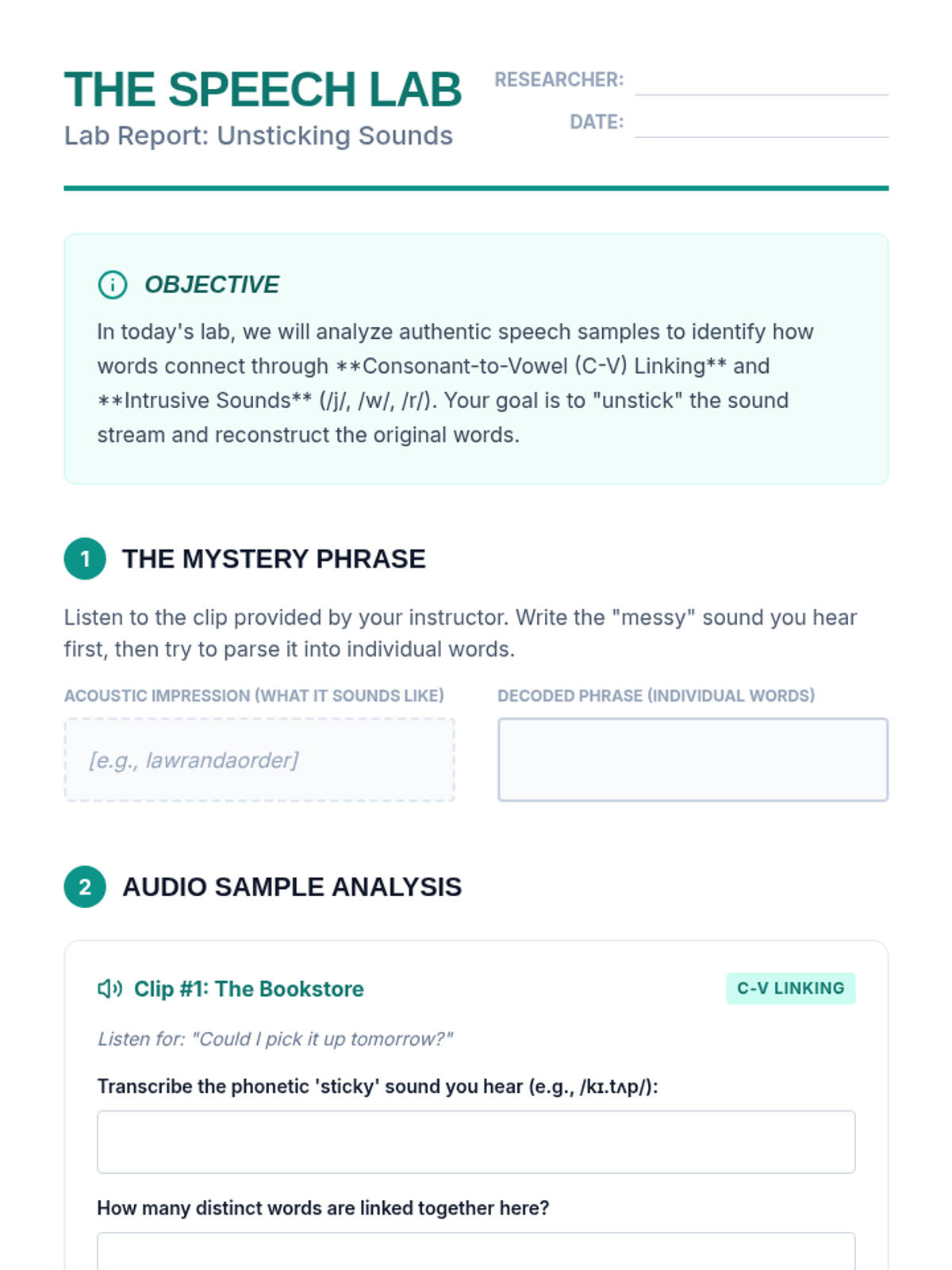
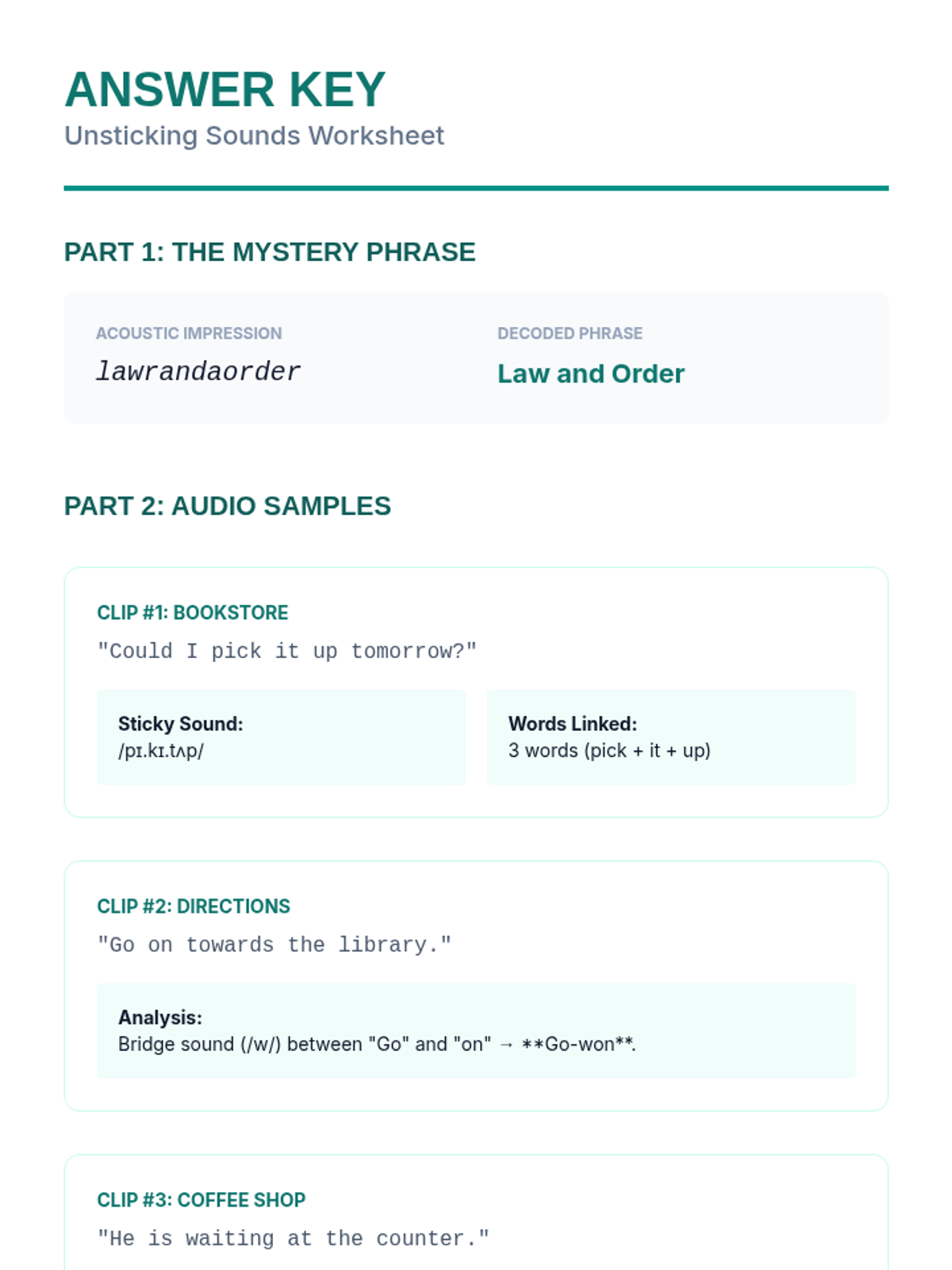
Students investigate how words flow together in natural speech, specifically focusing on consonant-vowel linking and intrusive sounds (/r/, /w/, /j/). They analyze audio samples to 'unstick' connected words.
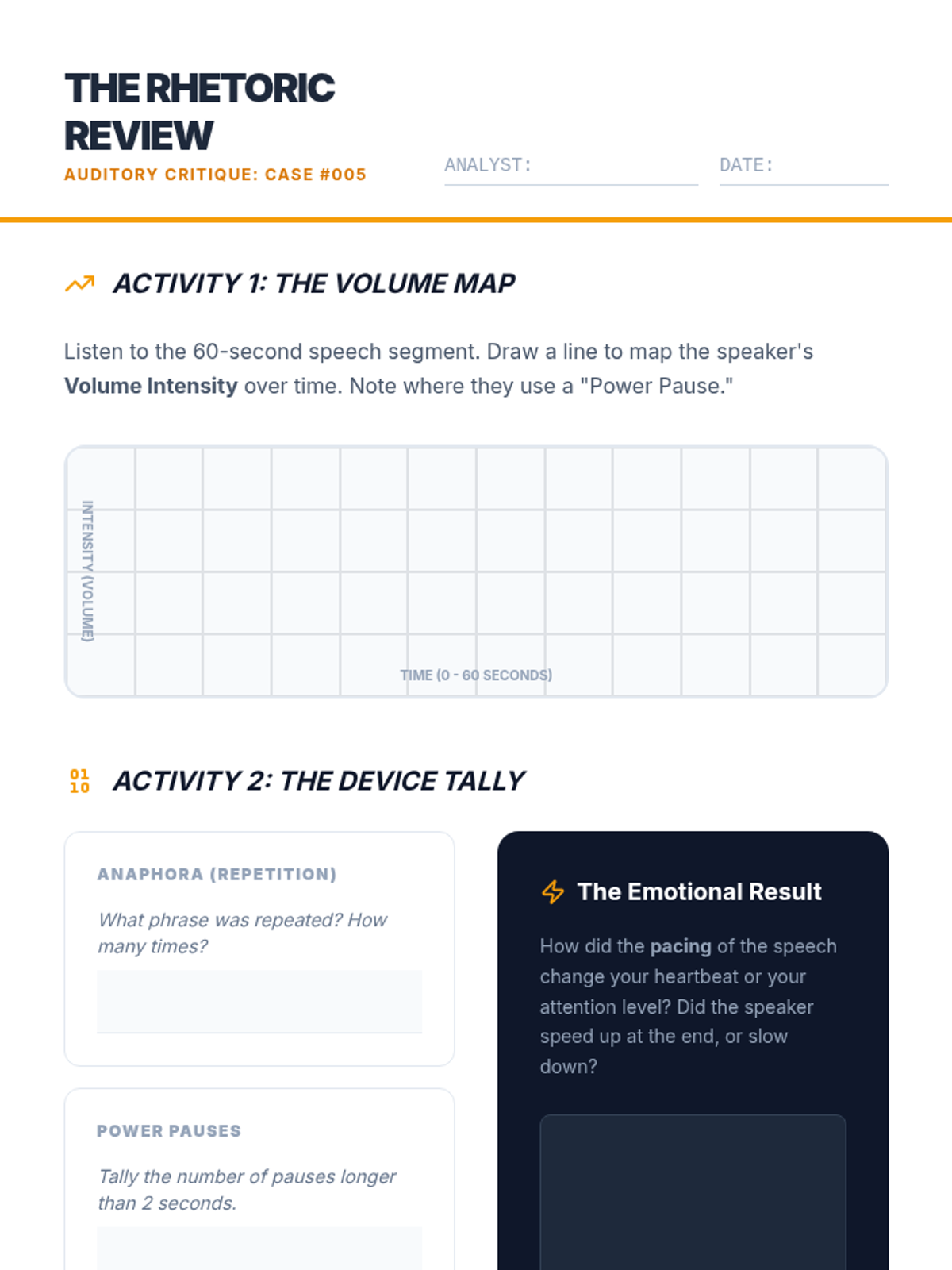
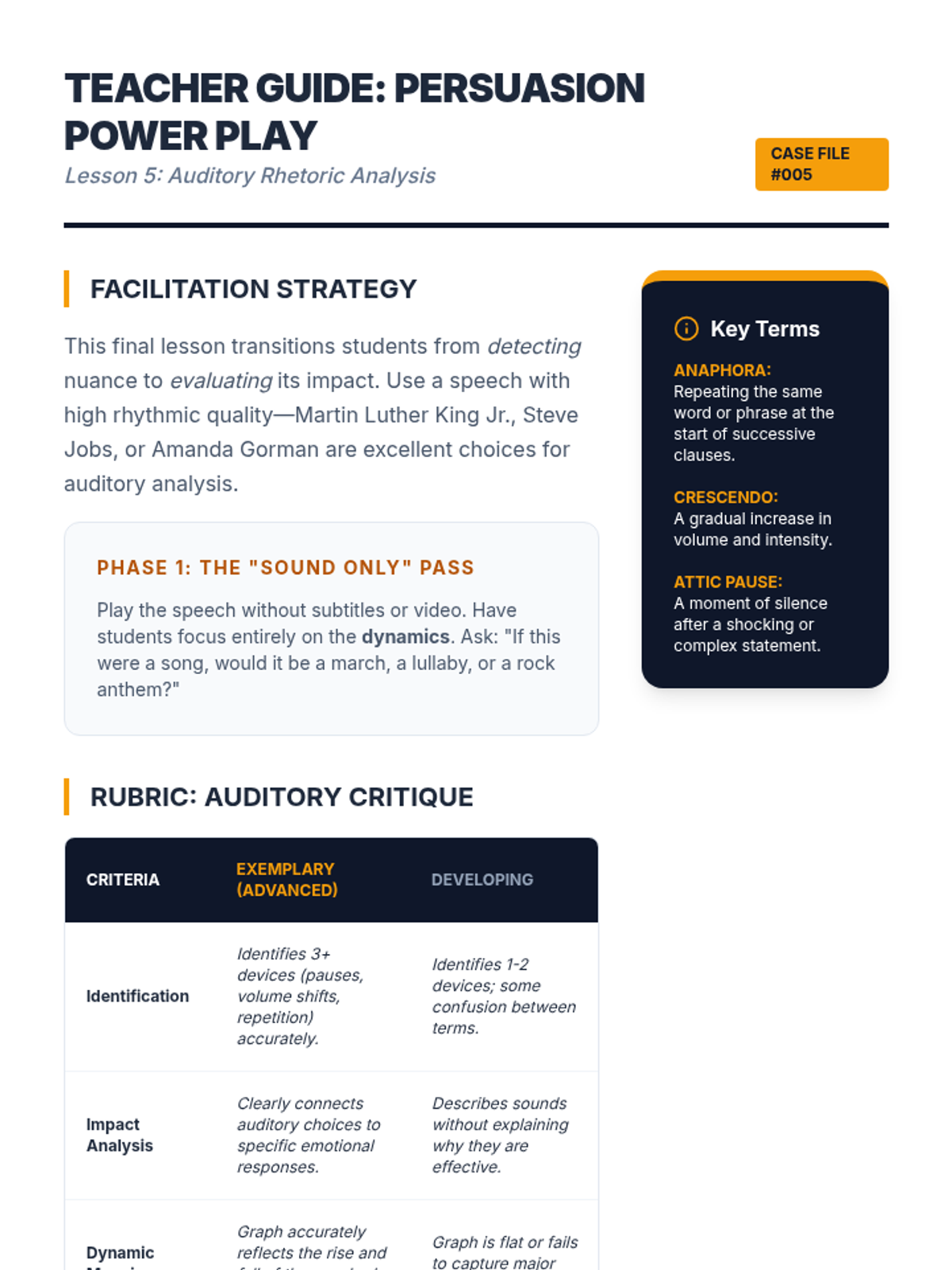
Students examine delivery techniques like repetition and volume to evaluate the effectiveness of persuasive speech.
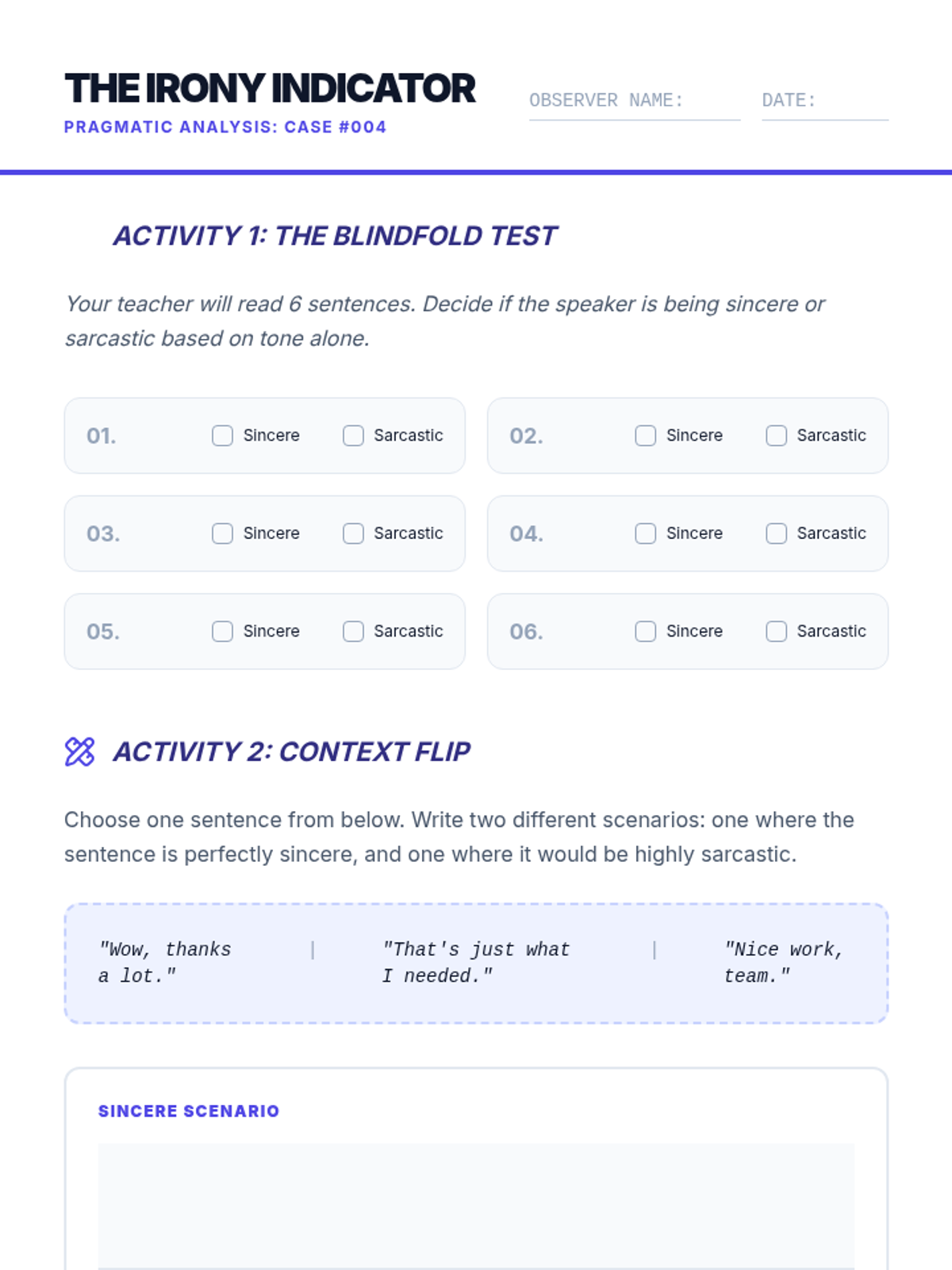
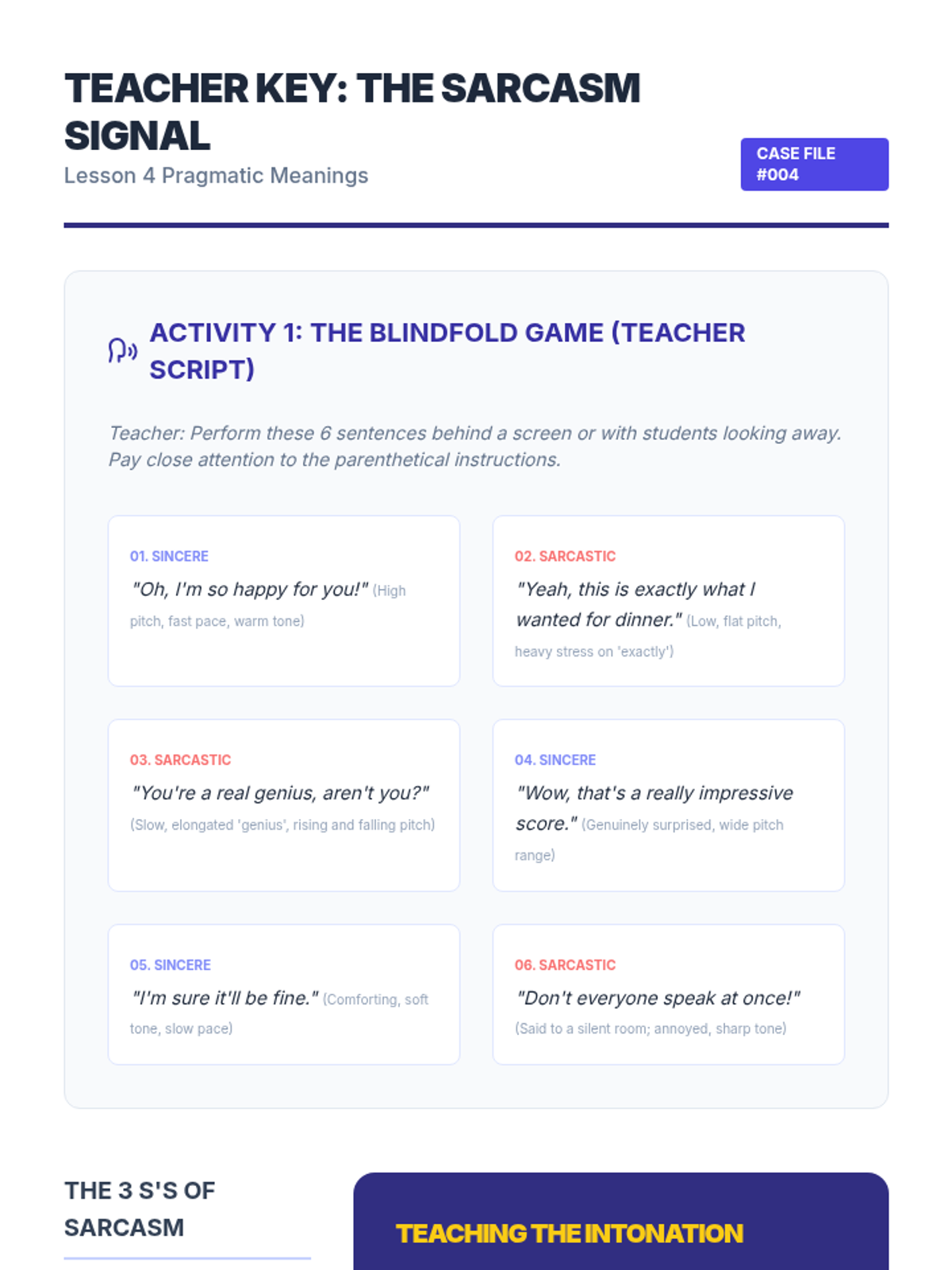
Students learn to detect pragmatic meaning by analyzing intonation, stress, and context clues for sarcasm and irony.
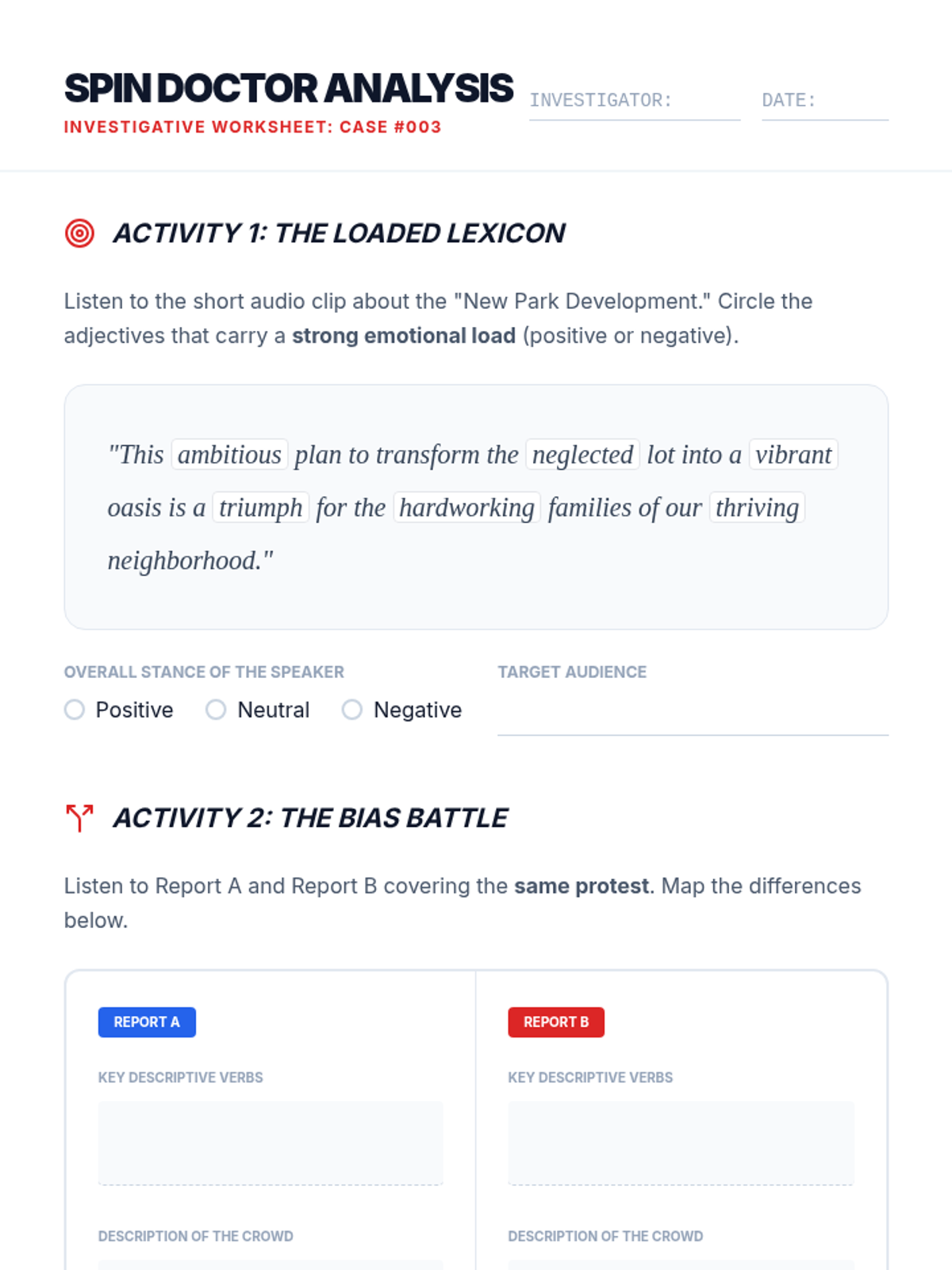
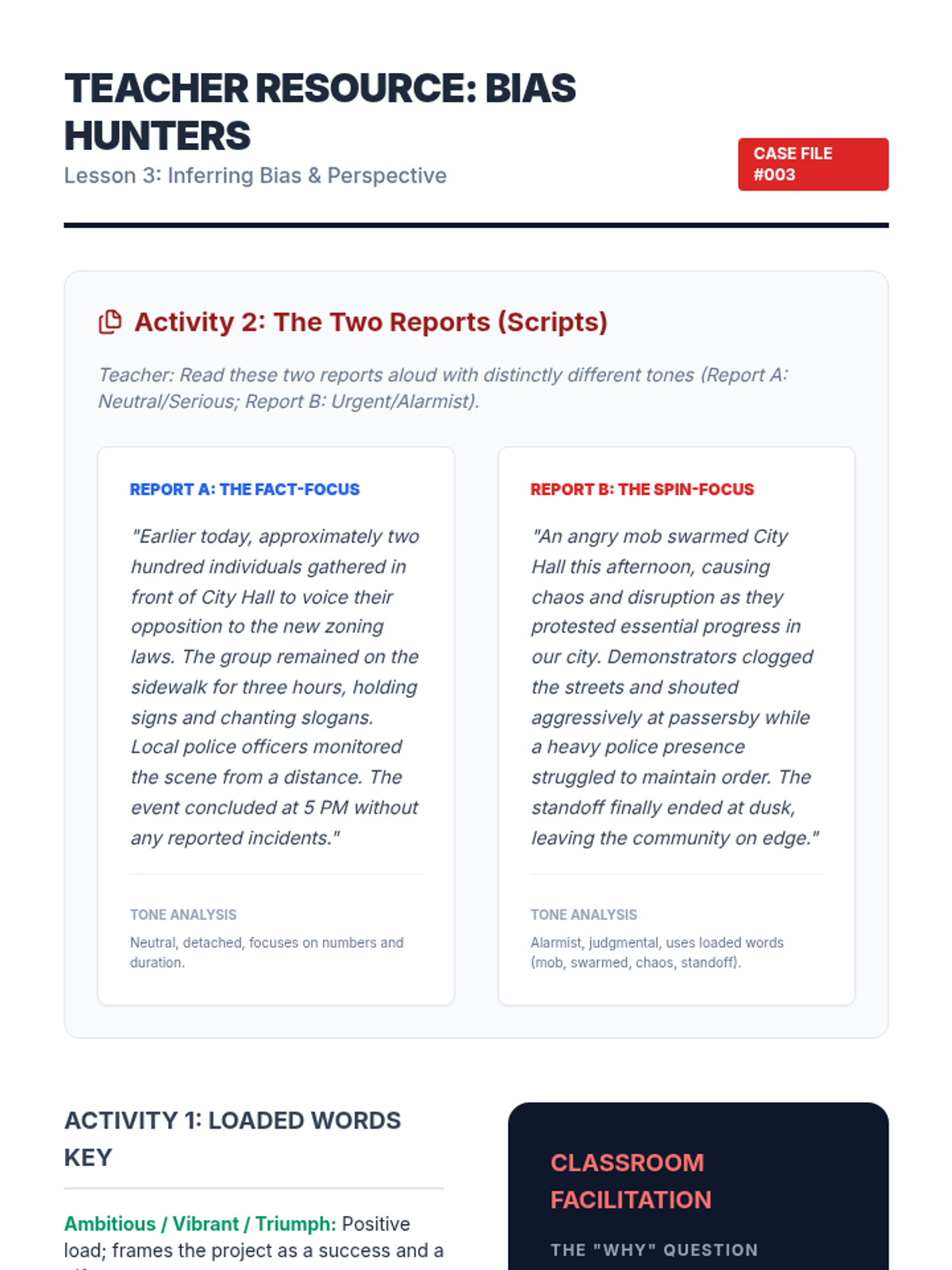
Students analyze how word choice and tone reveal a speaker's stance, learning to separate fact from opinion in audio media.
This lesson focuses on connected speech patterns like linking, reduction, and elision to help students decode fast-paced native English.
Students explore the diversity of English by analyzing regional accents and dialects, identifying phonetic differences and slang.
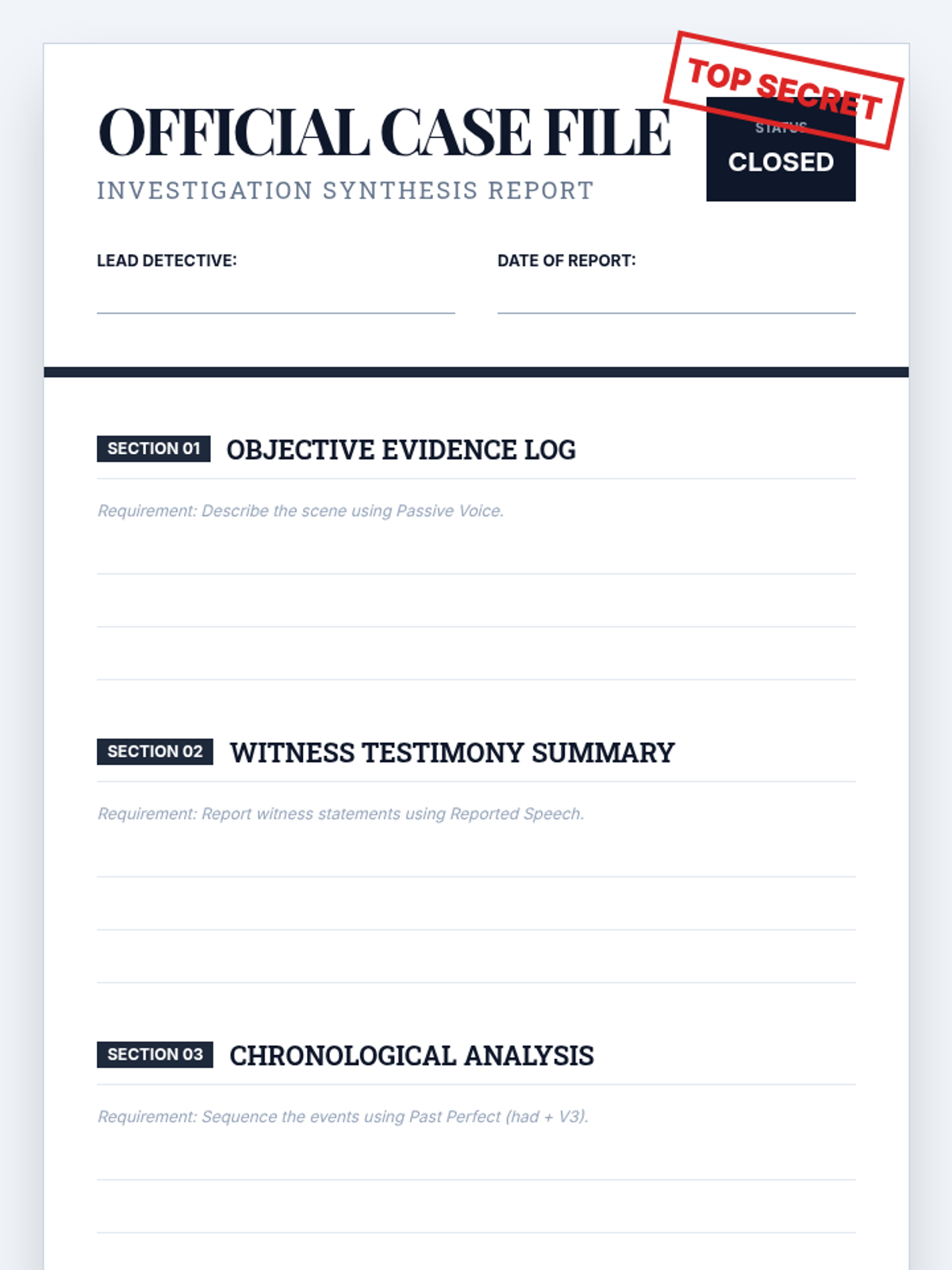
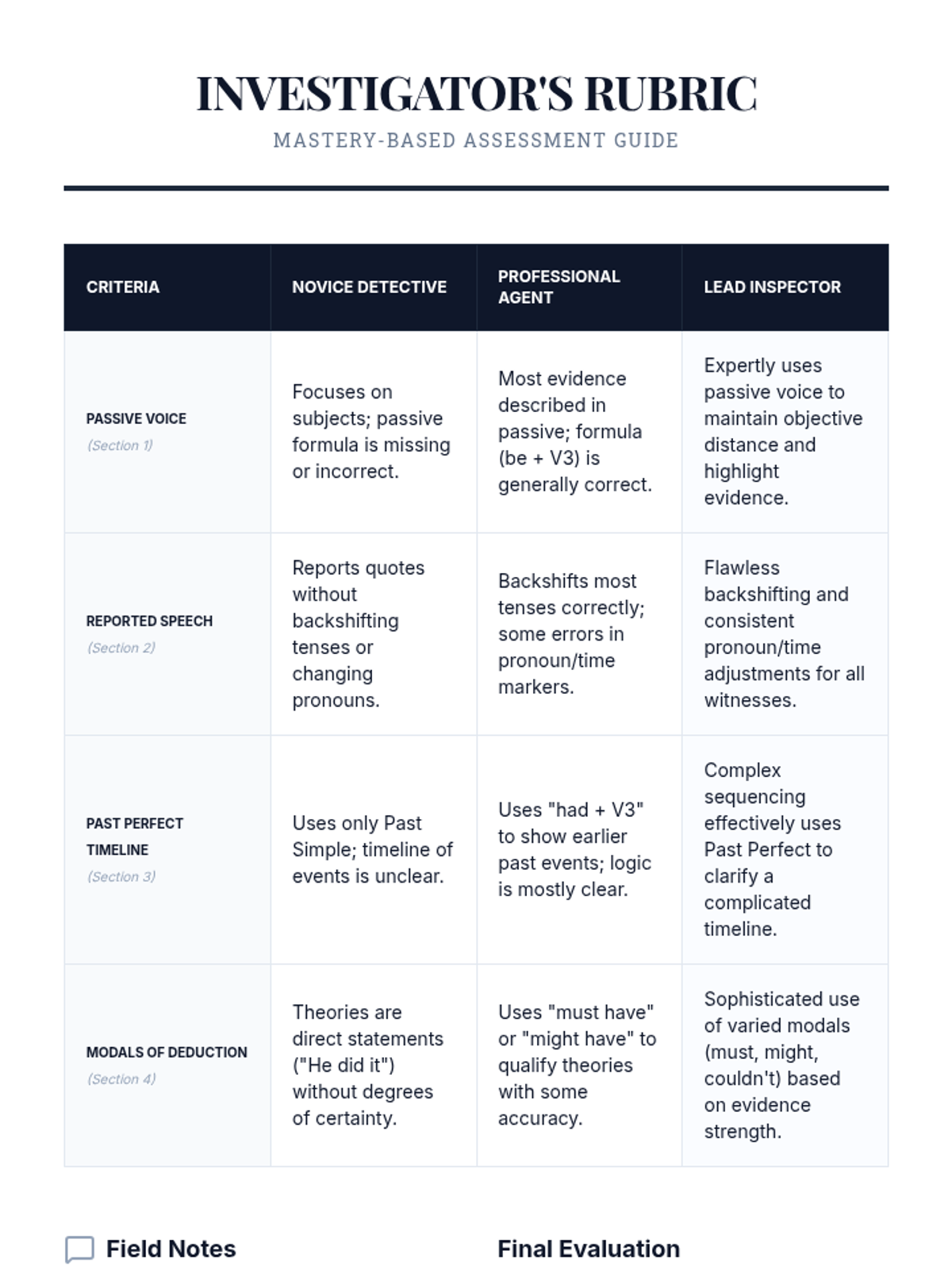
Students synthesize their skills to write a final case report. They combine passive descriptions, deductive theories, and reported testimony into a professional narrative.
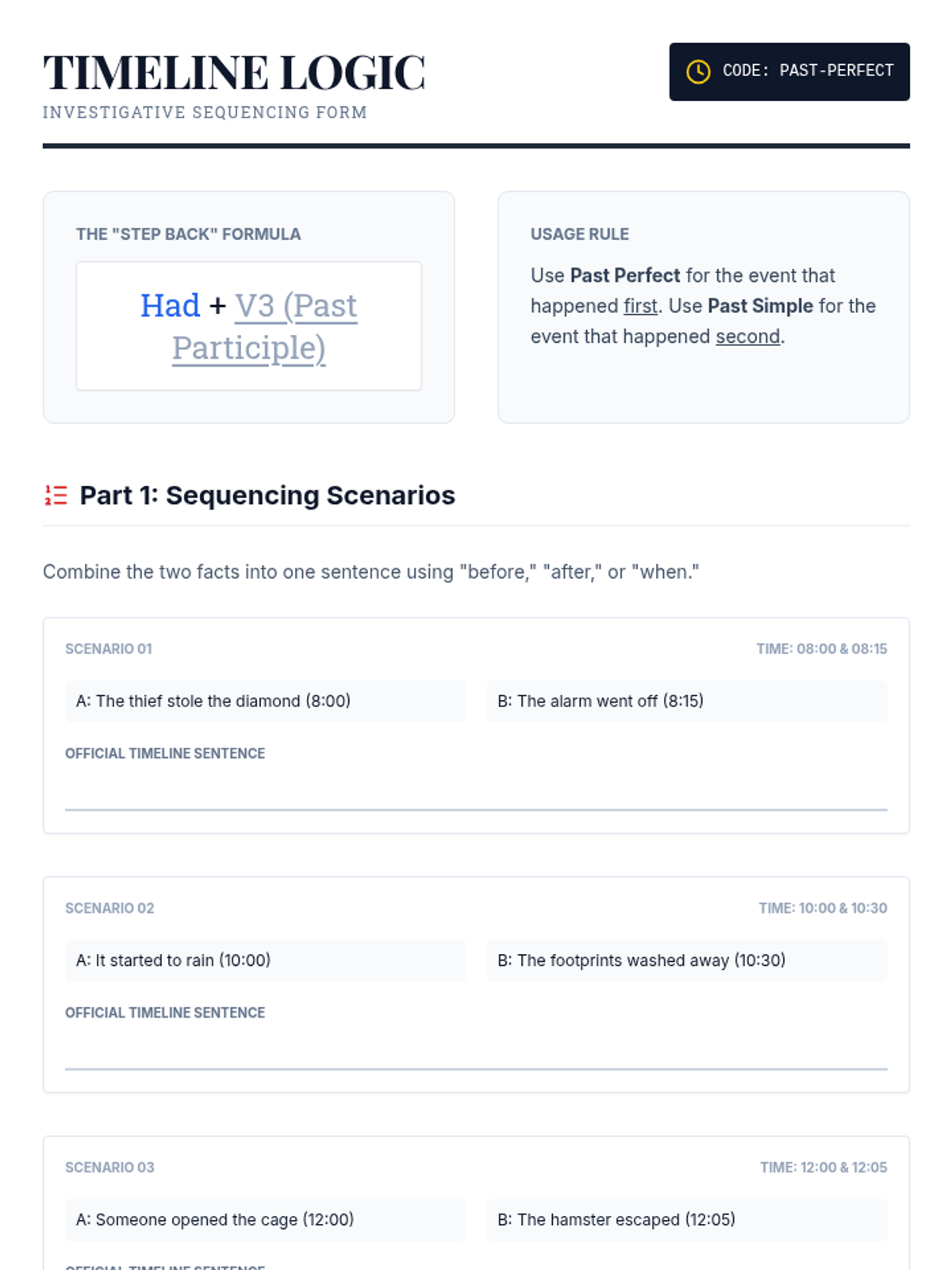
Students use the past perfect tense to sequence events in the mystery. They create timelines to distinguish between actions that happened before other past events.
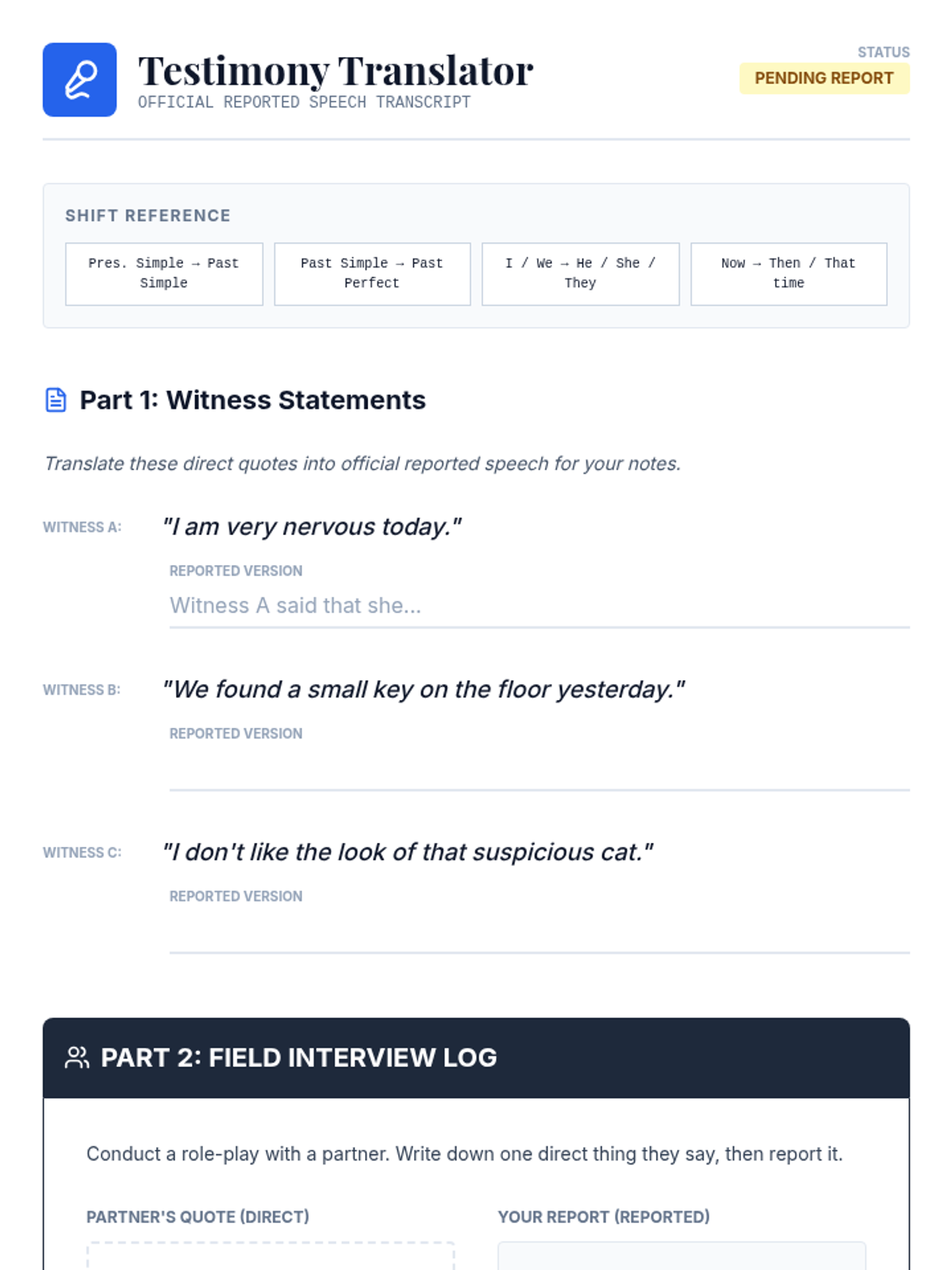
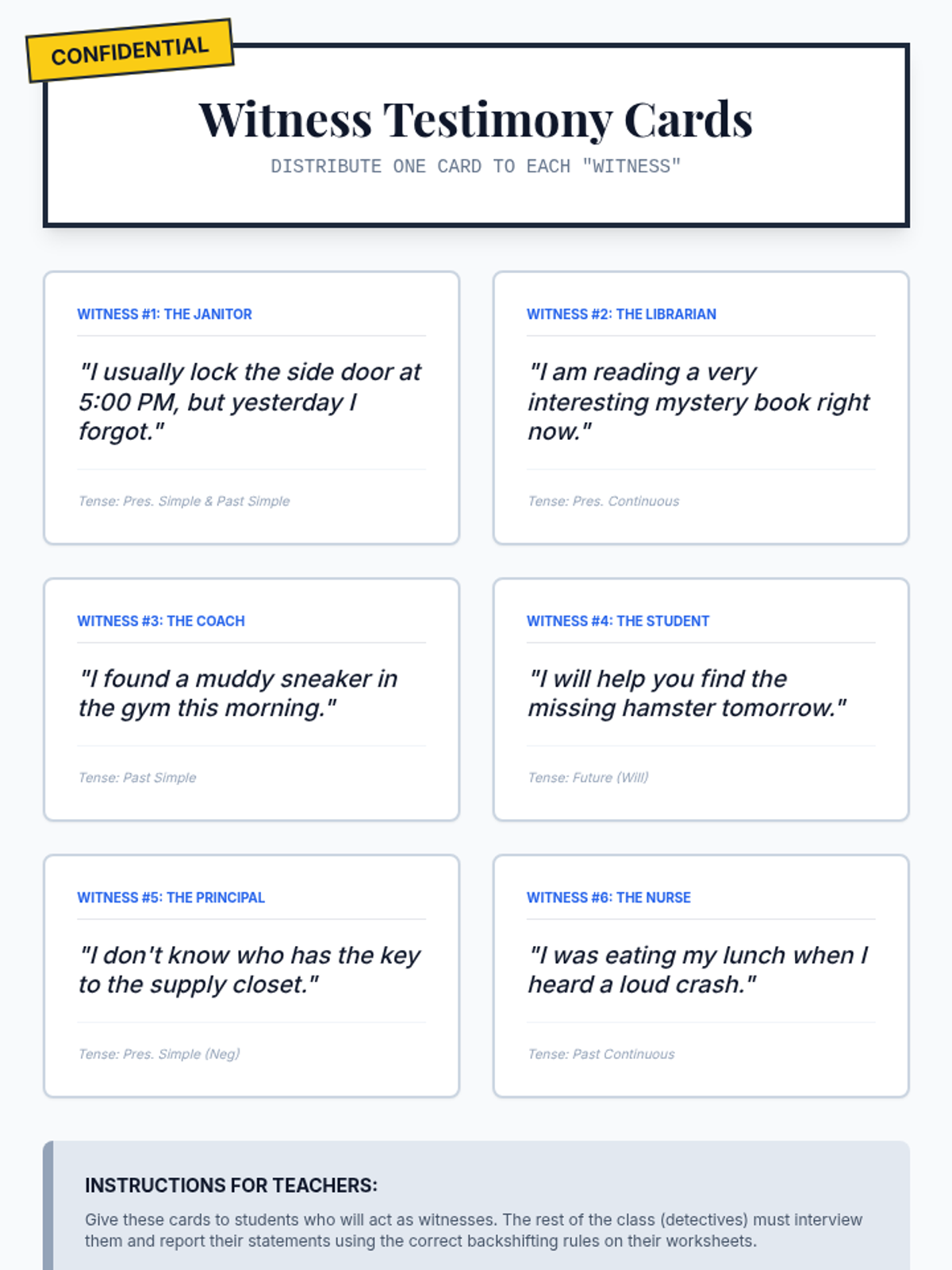
Students interview witnesses and convert direct quotes into reported speech. They practice the rules of 'backshifting' tenses and changing pronouns for accurate reporting.
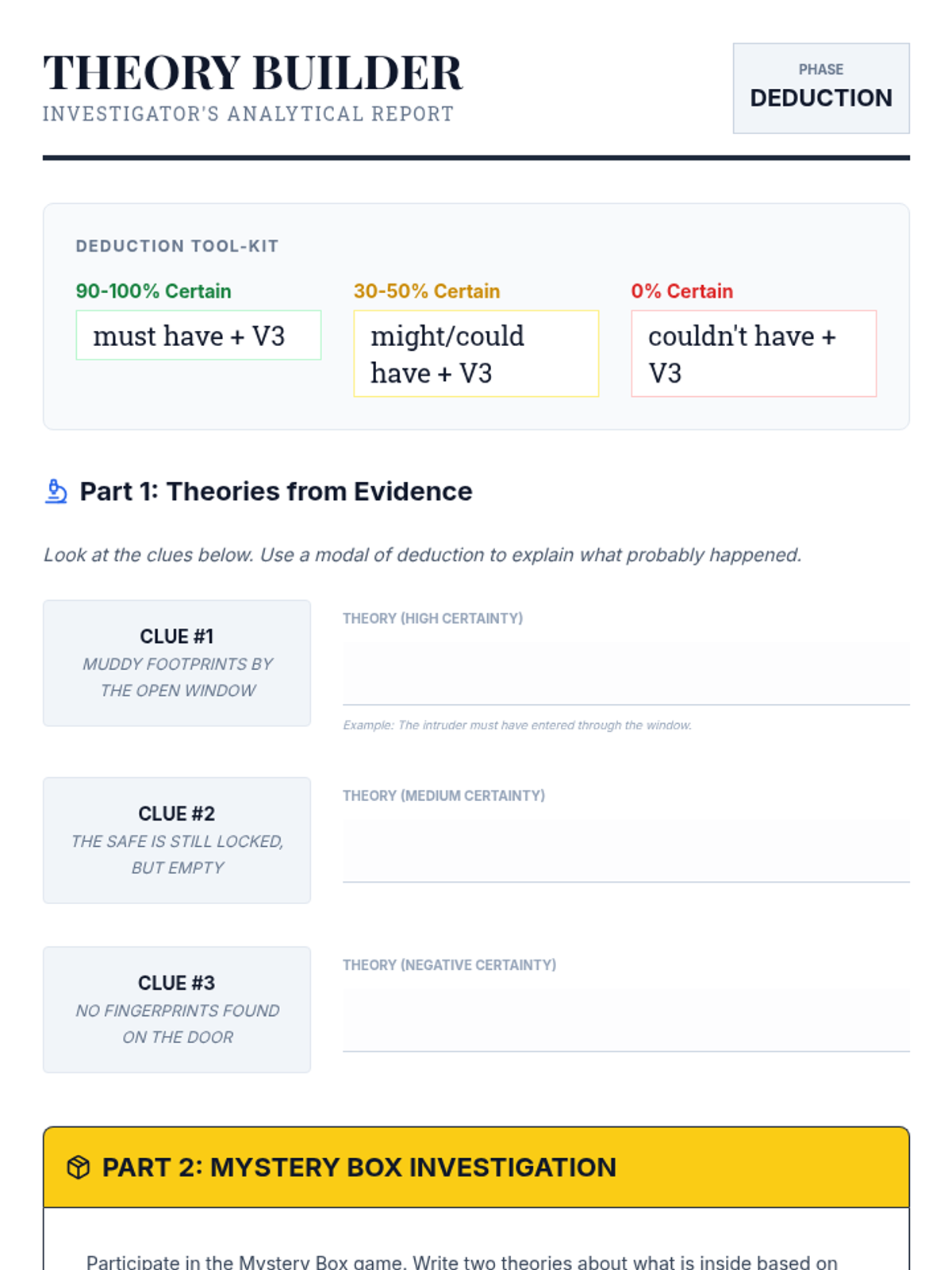
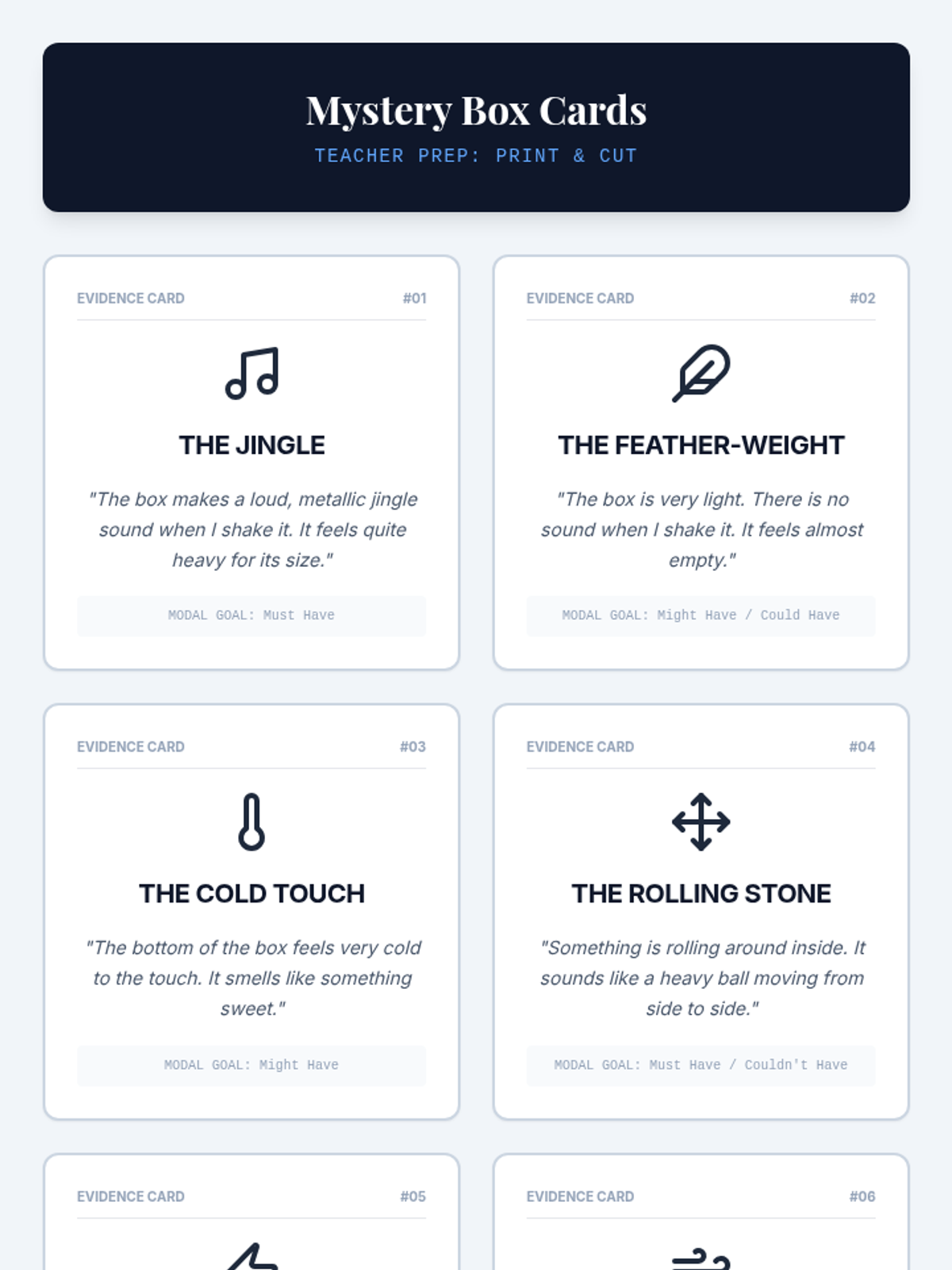
Students use modals of deduction (must have, might have, couldn't have) to formulate theories about the mystery. They learn to express different degrees of certainty based on the evidence.
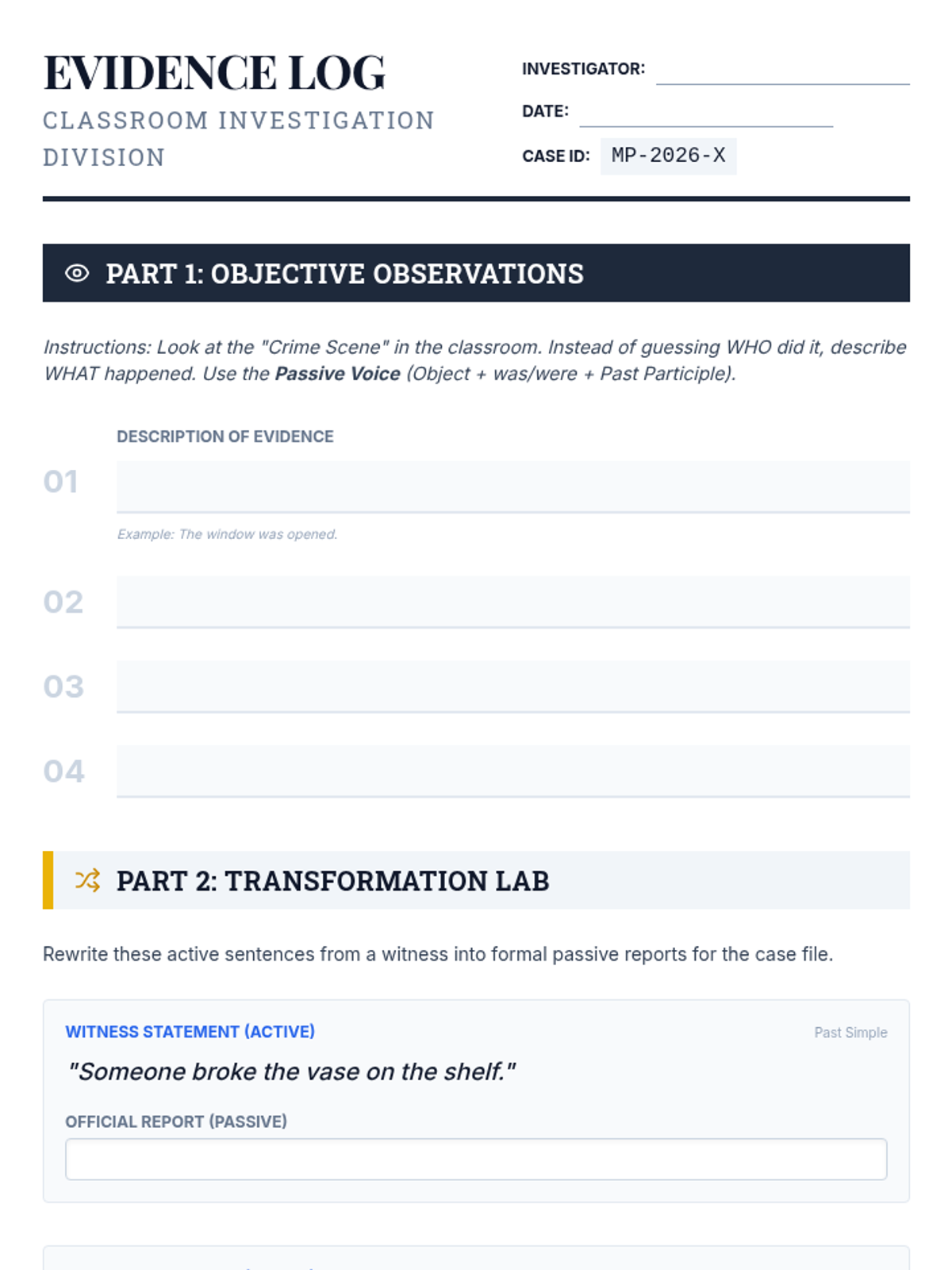
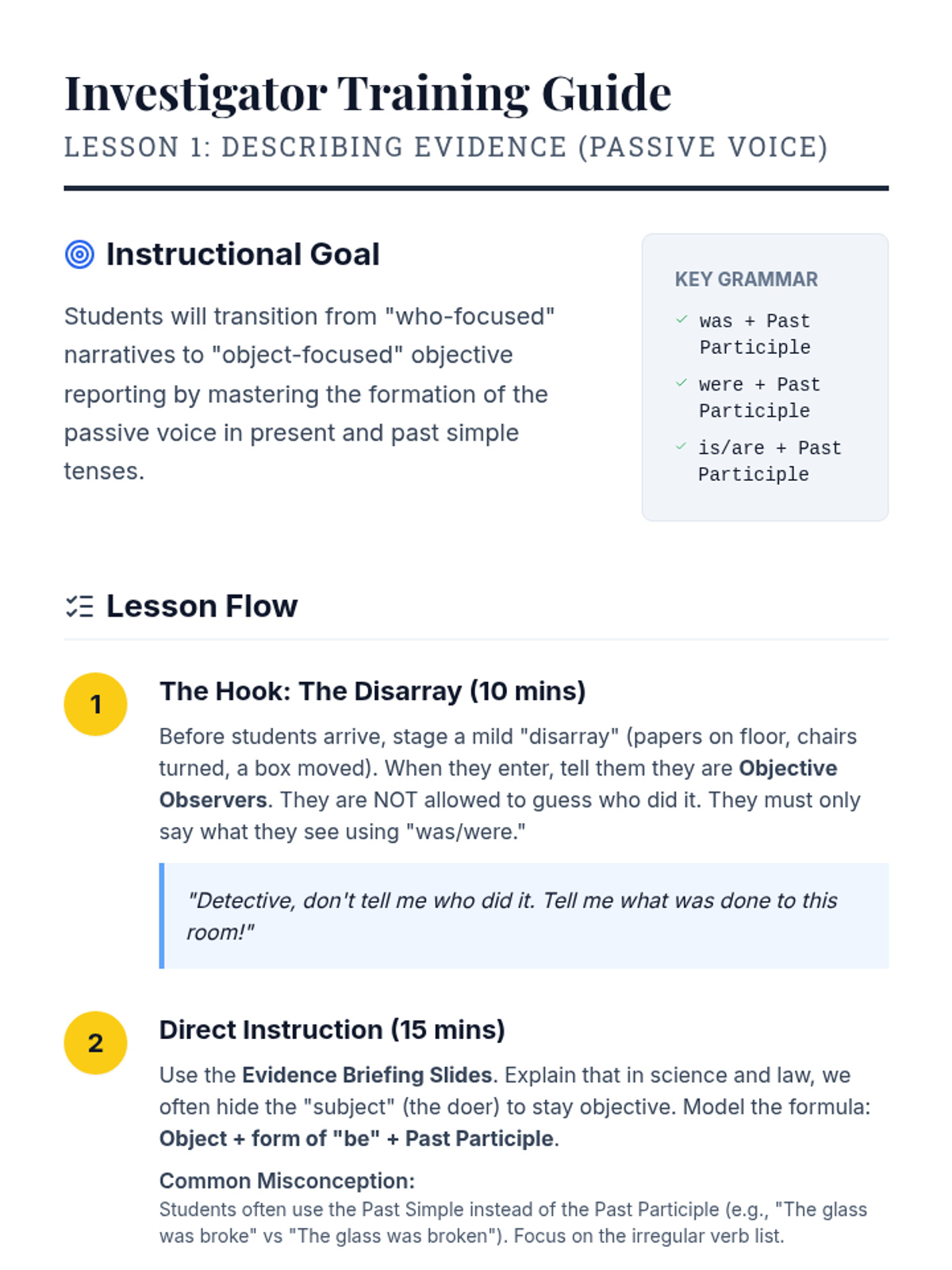
Students learn to describe evidence objectively using the passive voice, focusing on what was done rather than who did it. They analyze a staged 'crime scene' to practice transforming active sentences.
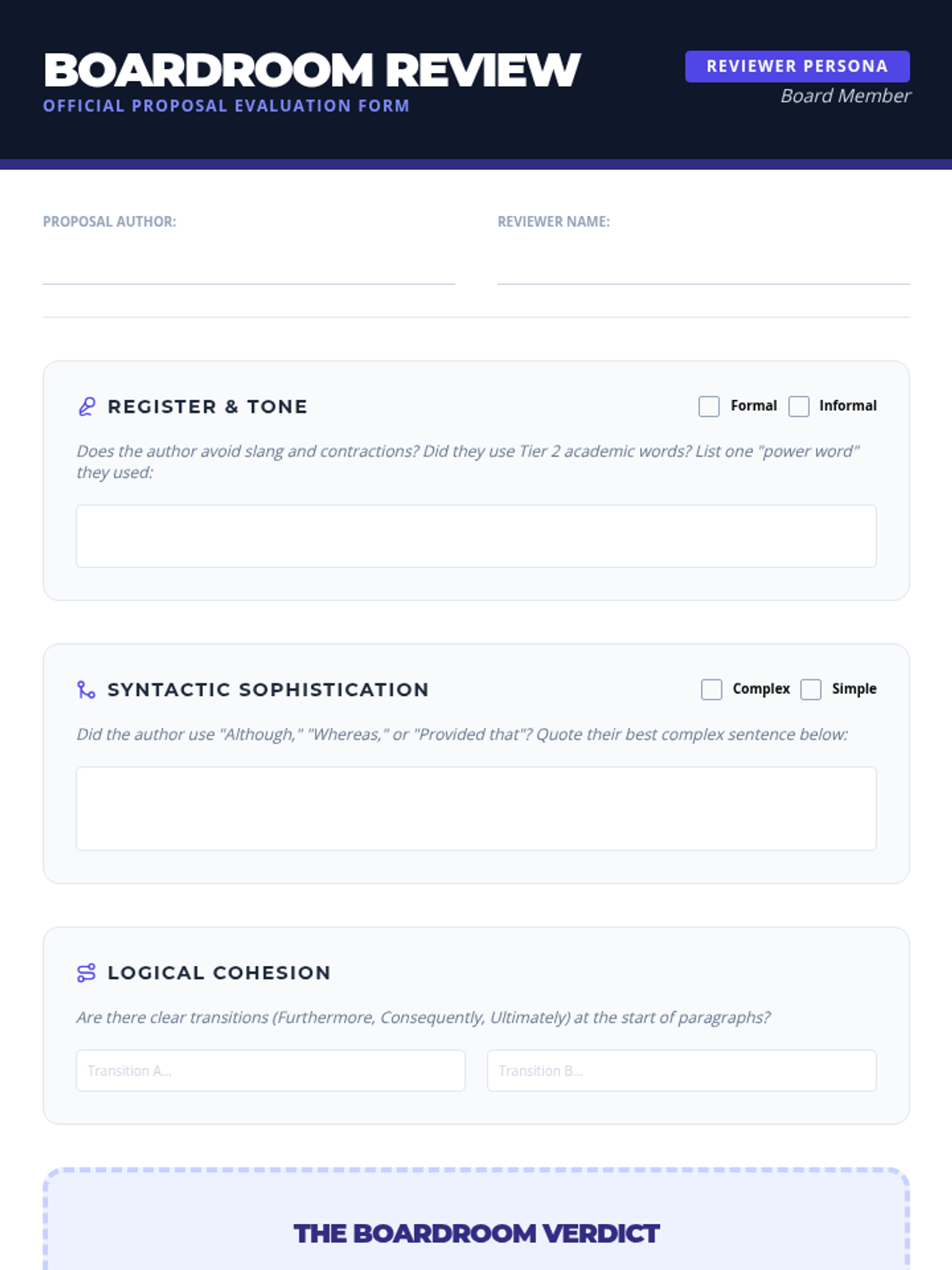
Students engage in a simulation-based peer review to refine their arguments for maximum rhetorical impact on a specific audience.
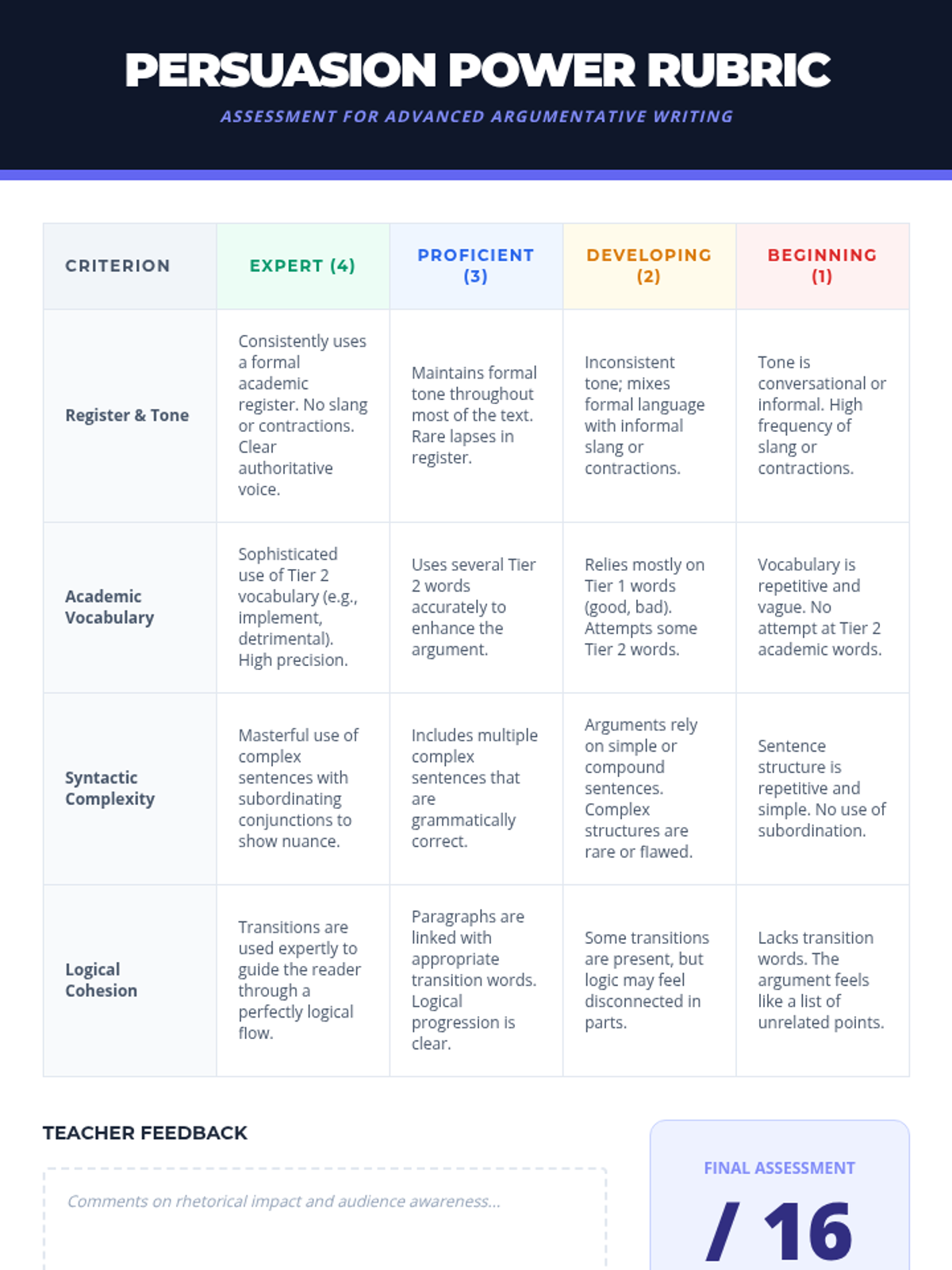
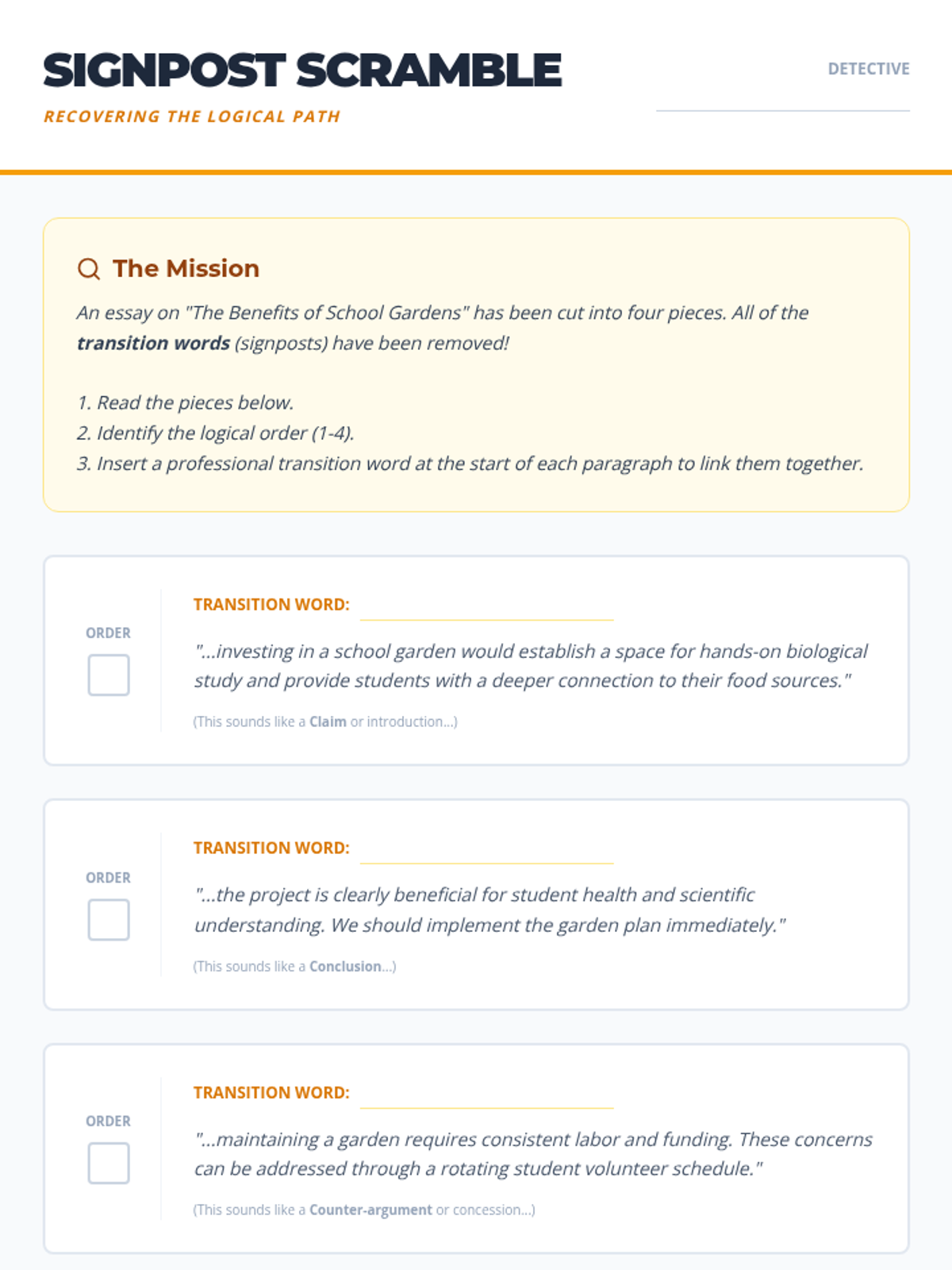
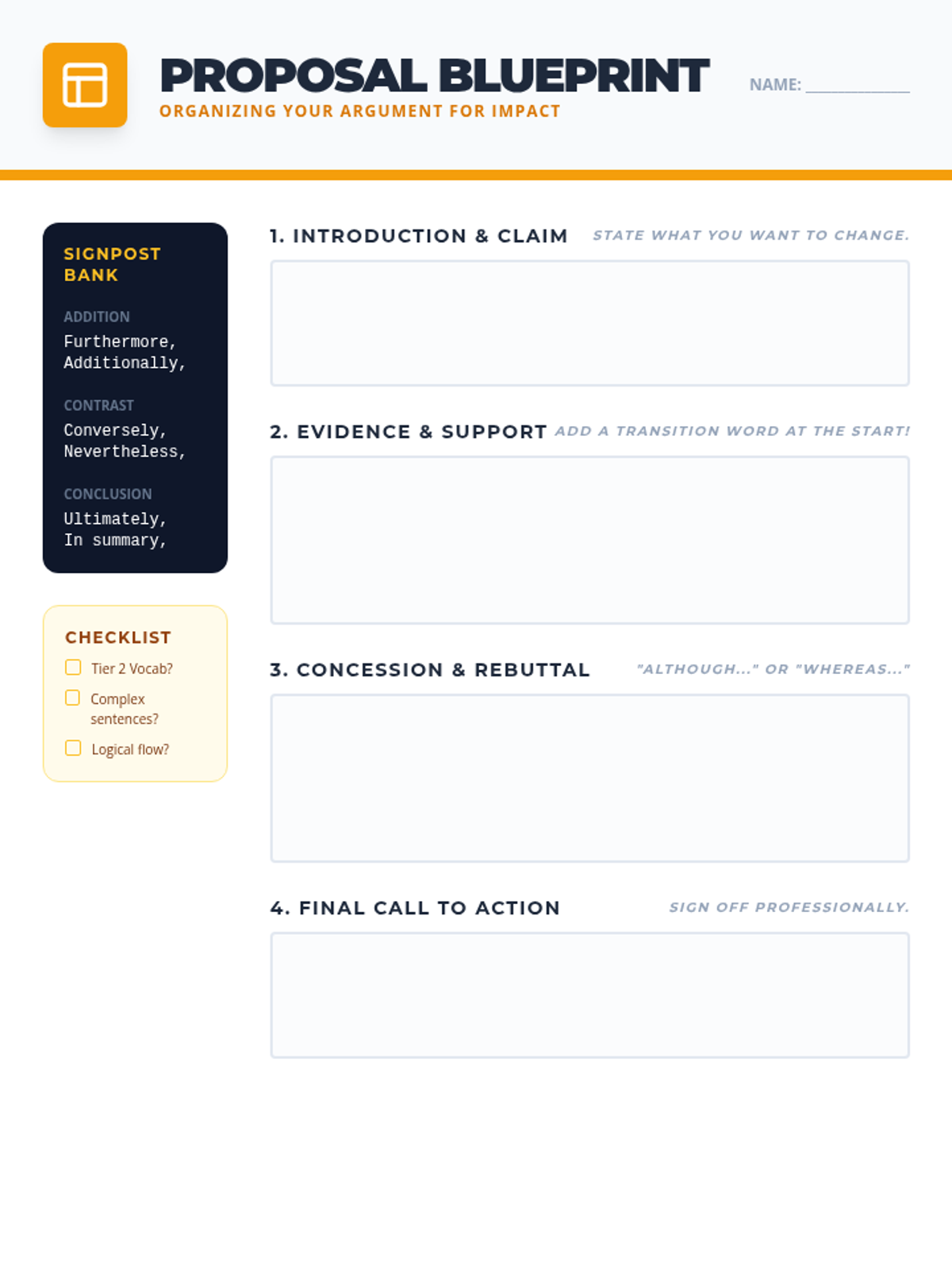
Students organize their arguments using logical transitions to create cohesion and guide the reader through their reasoning.
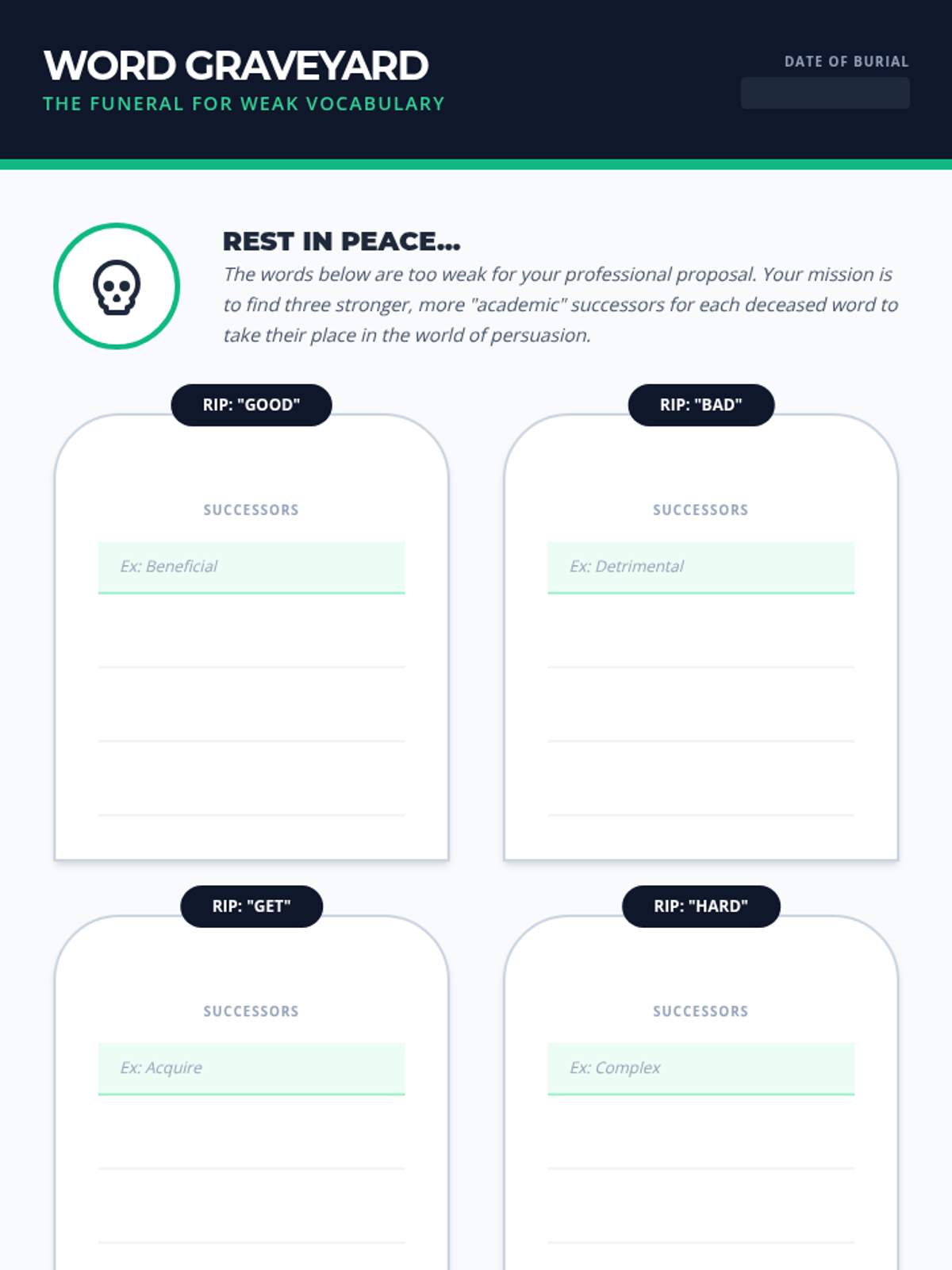
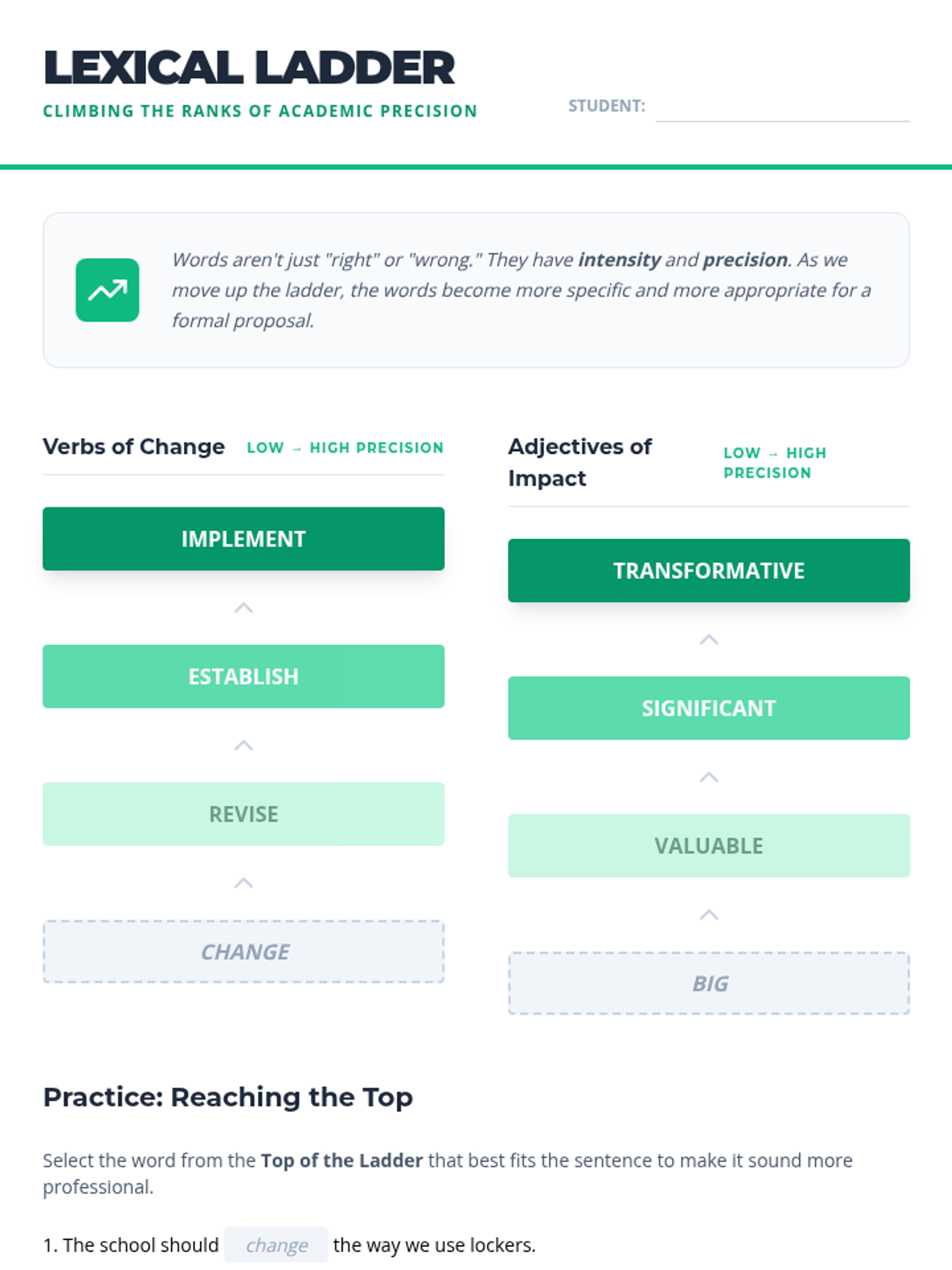
Students replace general vocabulary with precise academic terms to increase the authority and professional register of their writing.
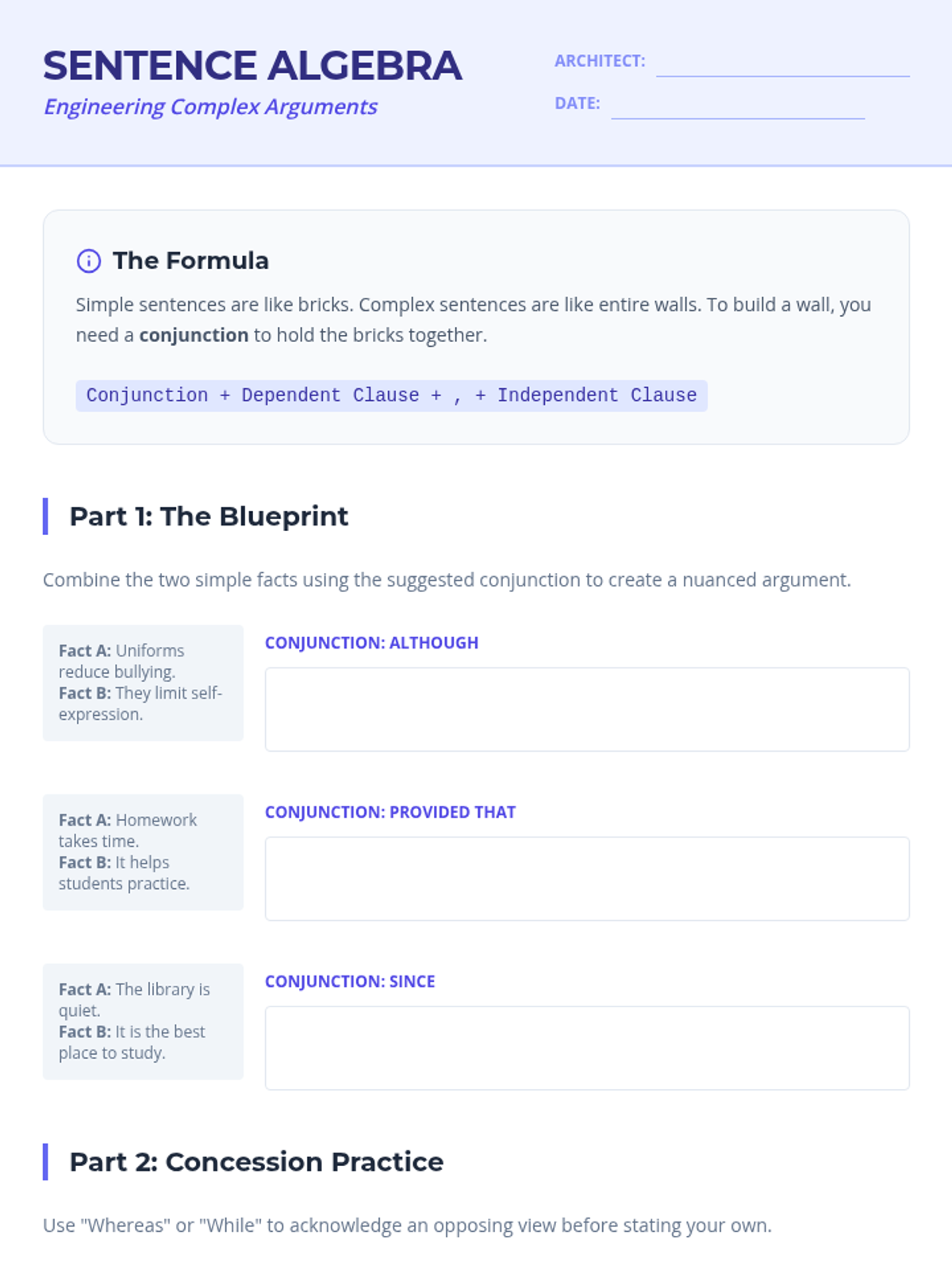
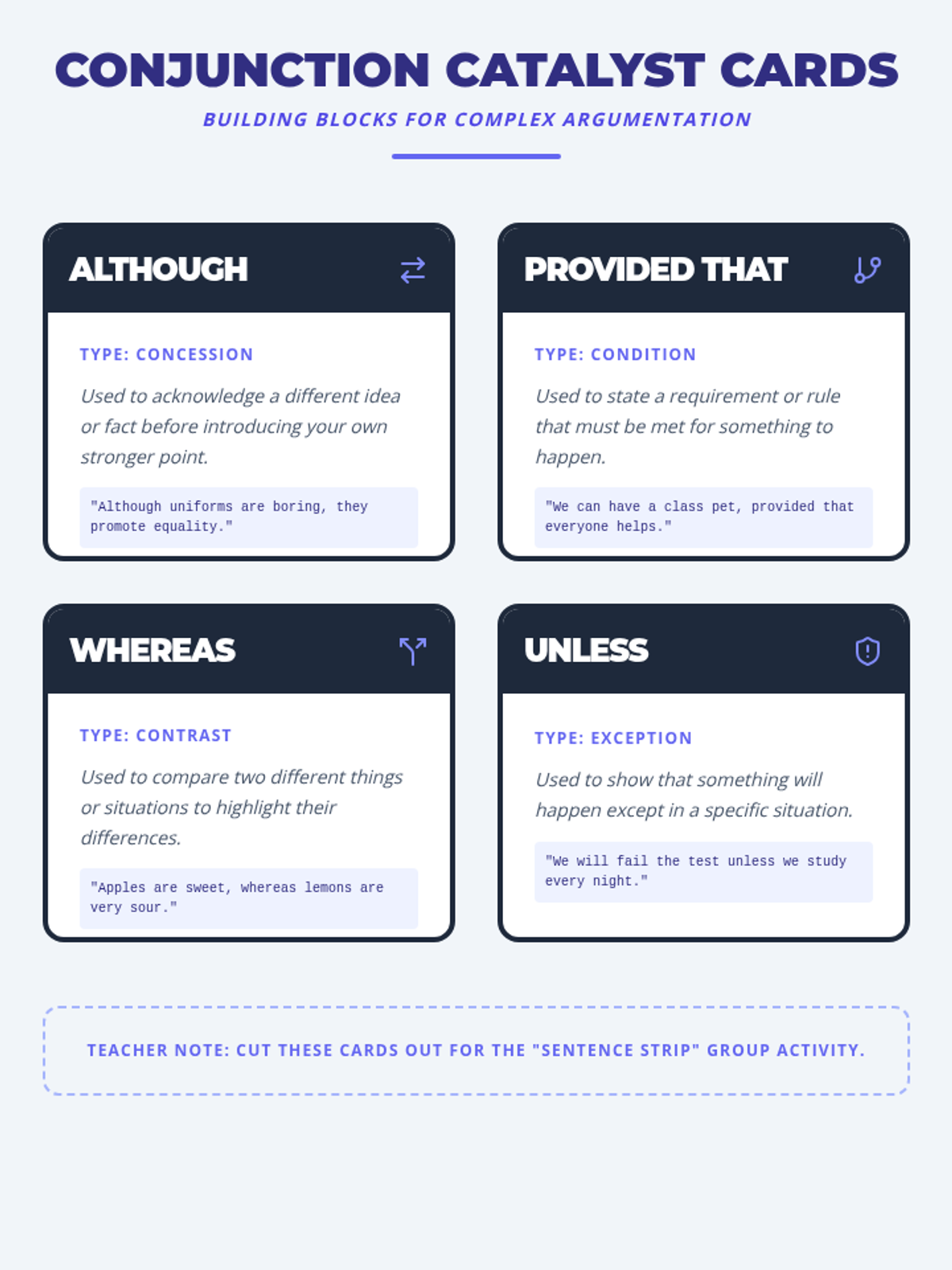
Students practice using subordinating conjunctions to create complex sentence structures that express concession and condition.
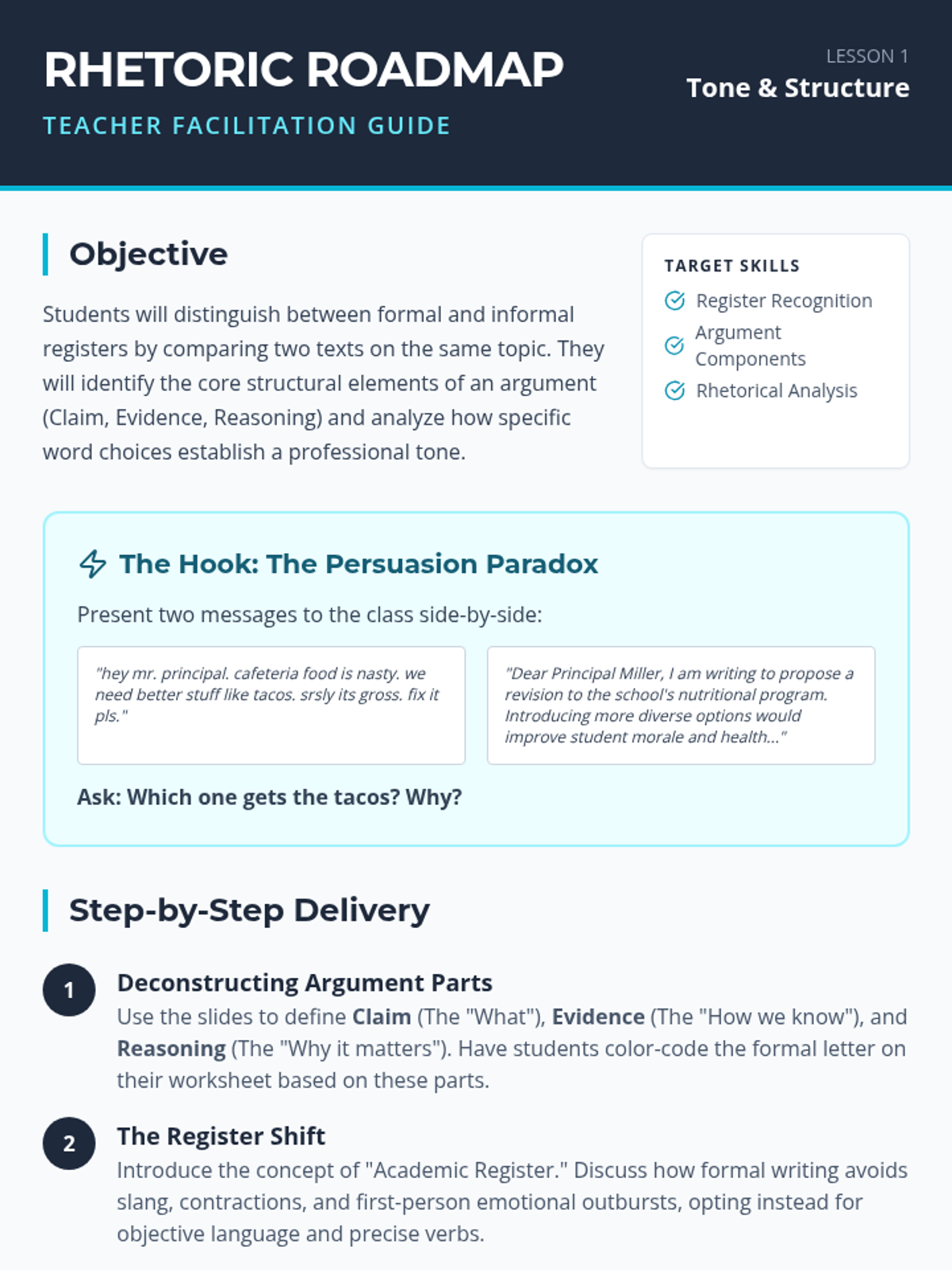
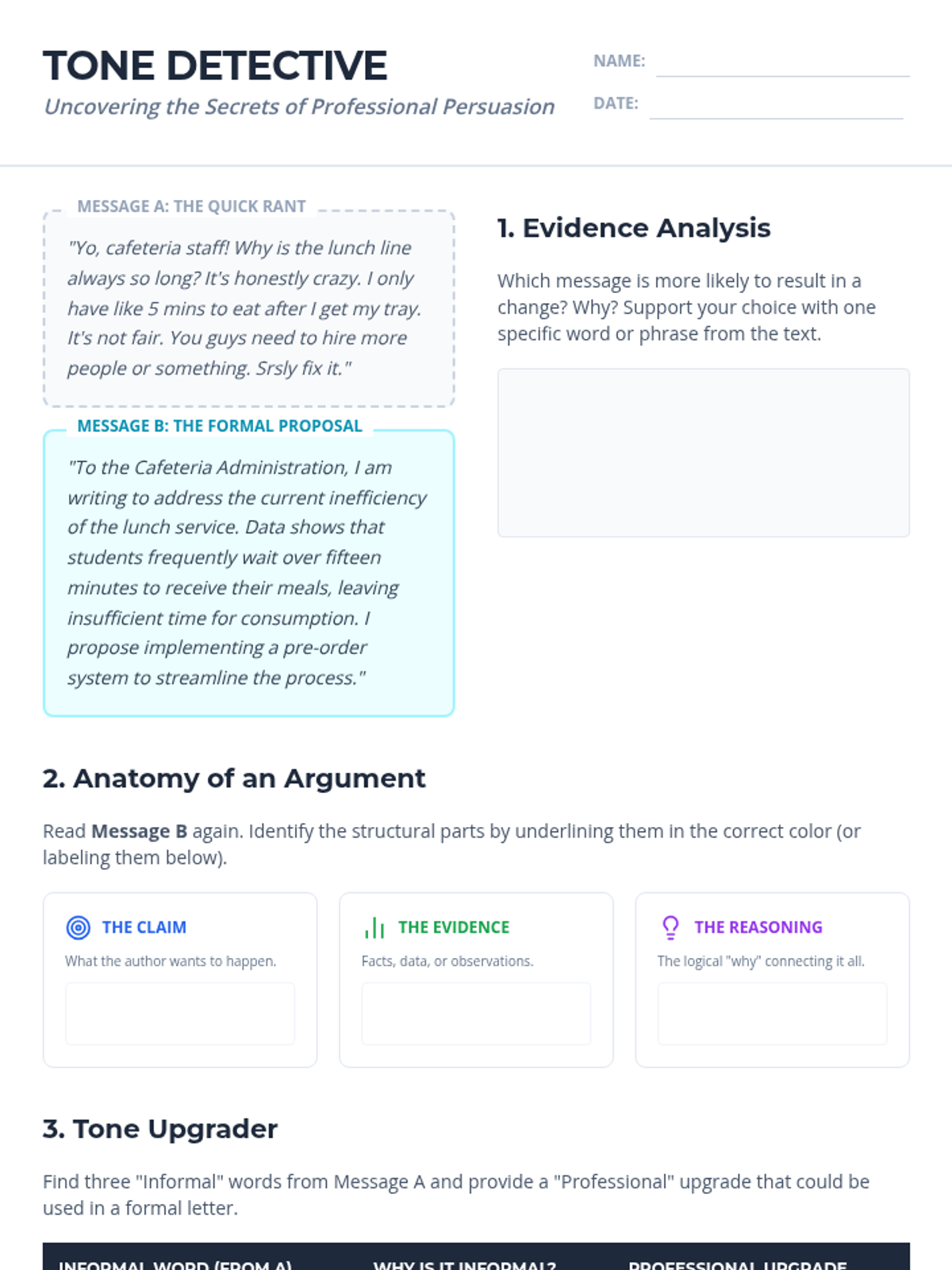
Students examine the difference between informal and formal tone while identifying the core components of an argument: claim, evidence, and reasoning.
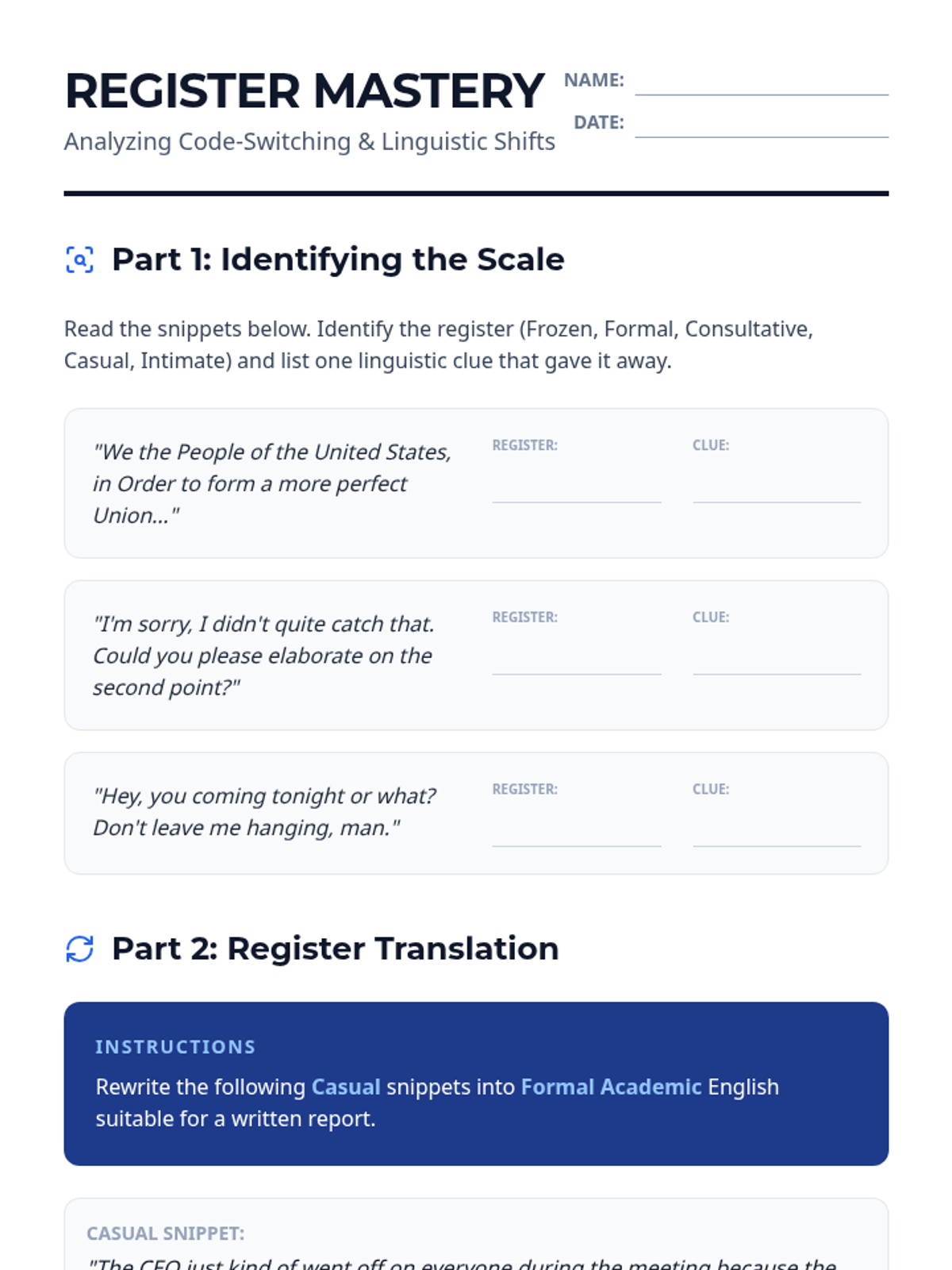
Learners analyze the social function of code-switching and practice shifting between formal and informal registers for different audiences.
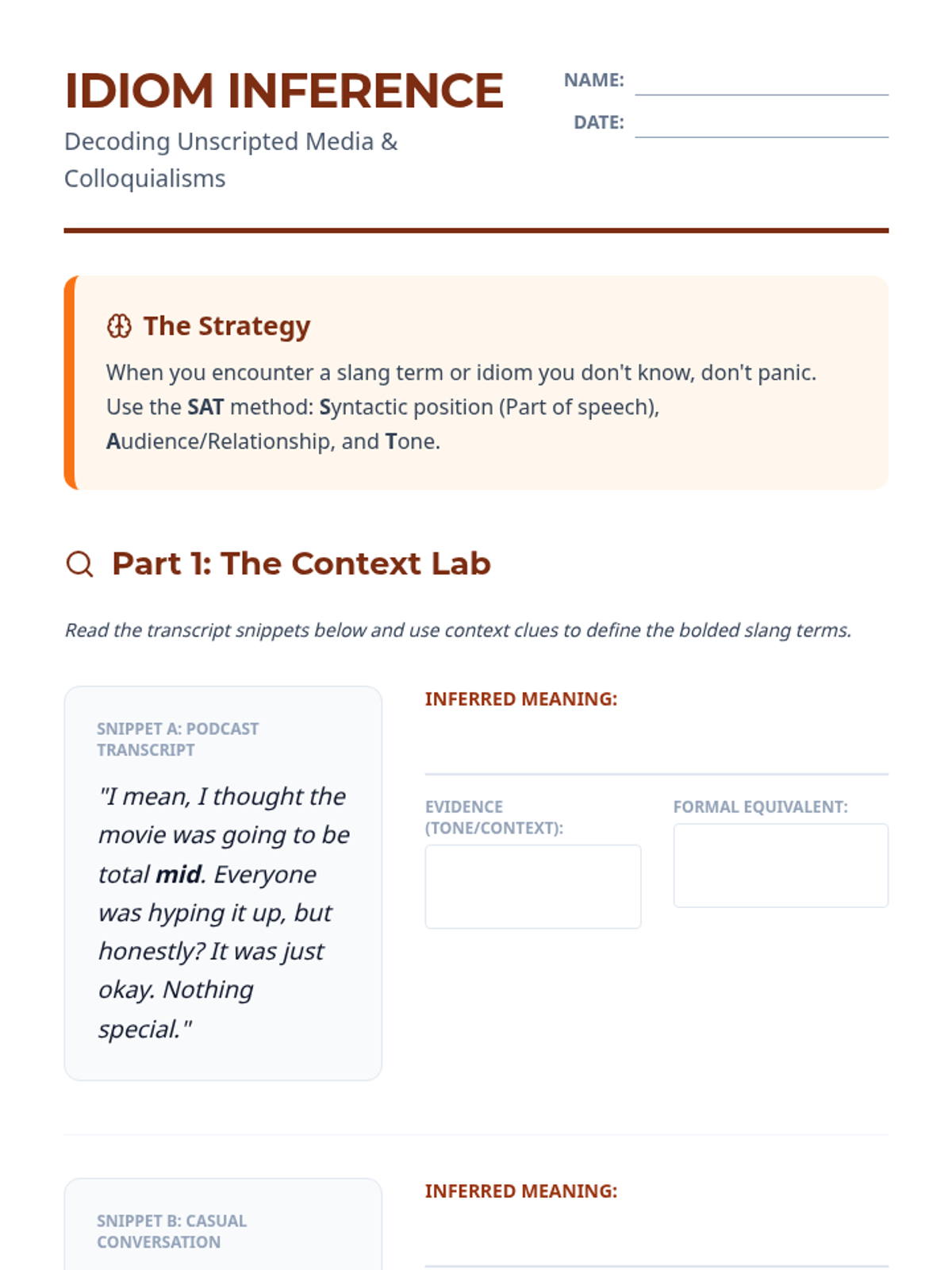
Students develop strategies for inferring the meaning of idioms and slang in unscripted media through context clues and tonal analysis.
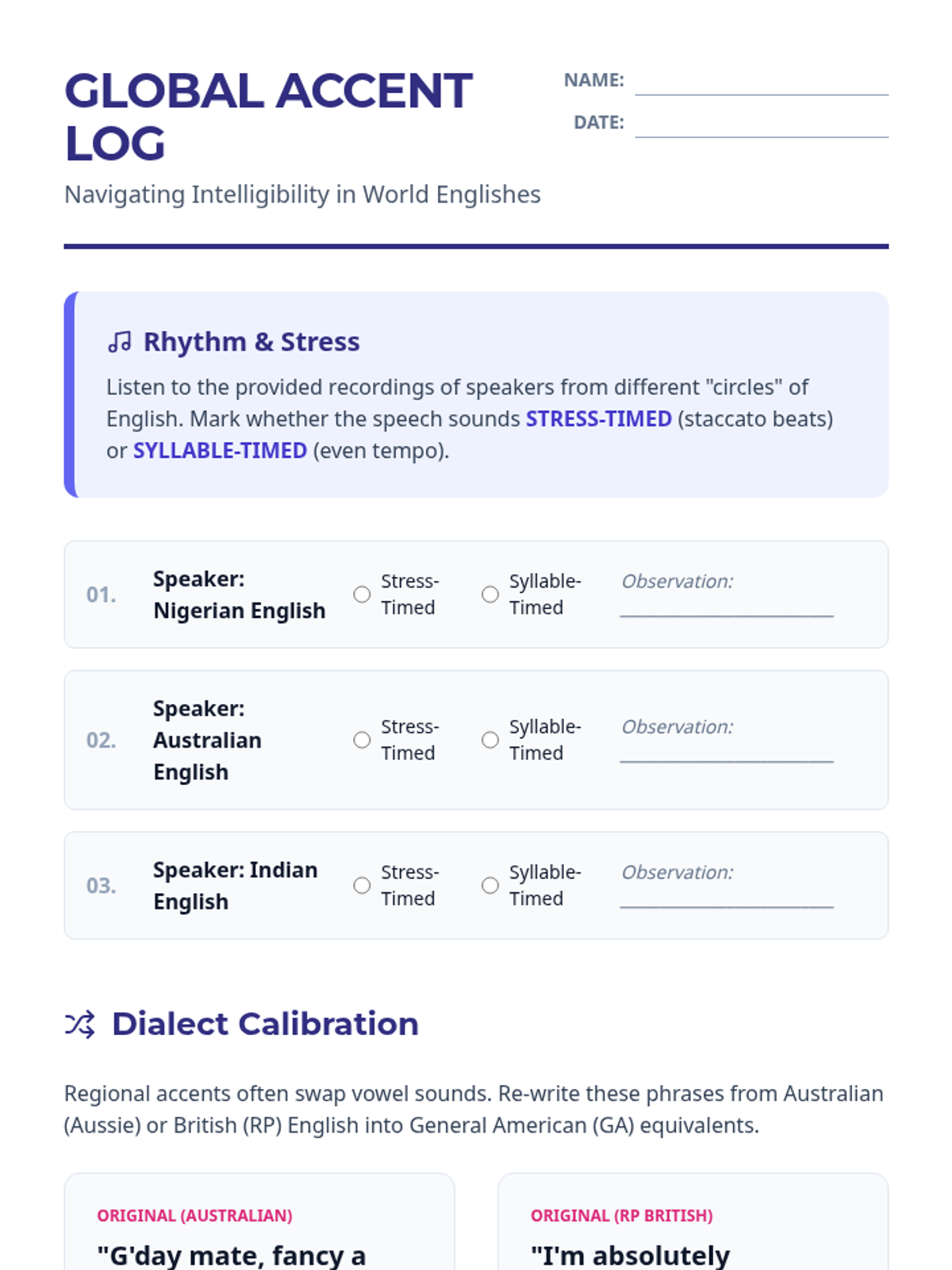
Expanding globally, students navigate the intonation and stress patterns of World Englishes to improve intelligibility in international contexts.
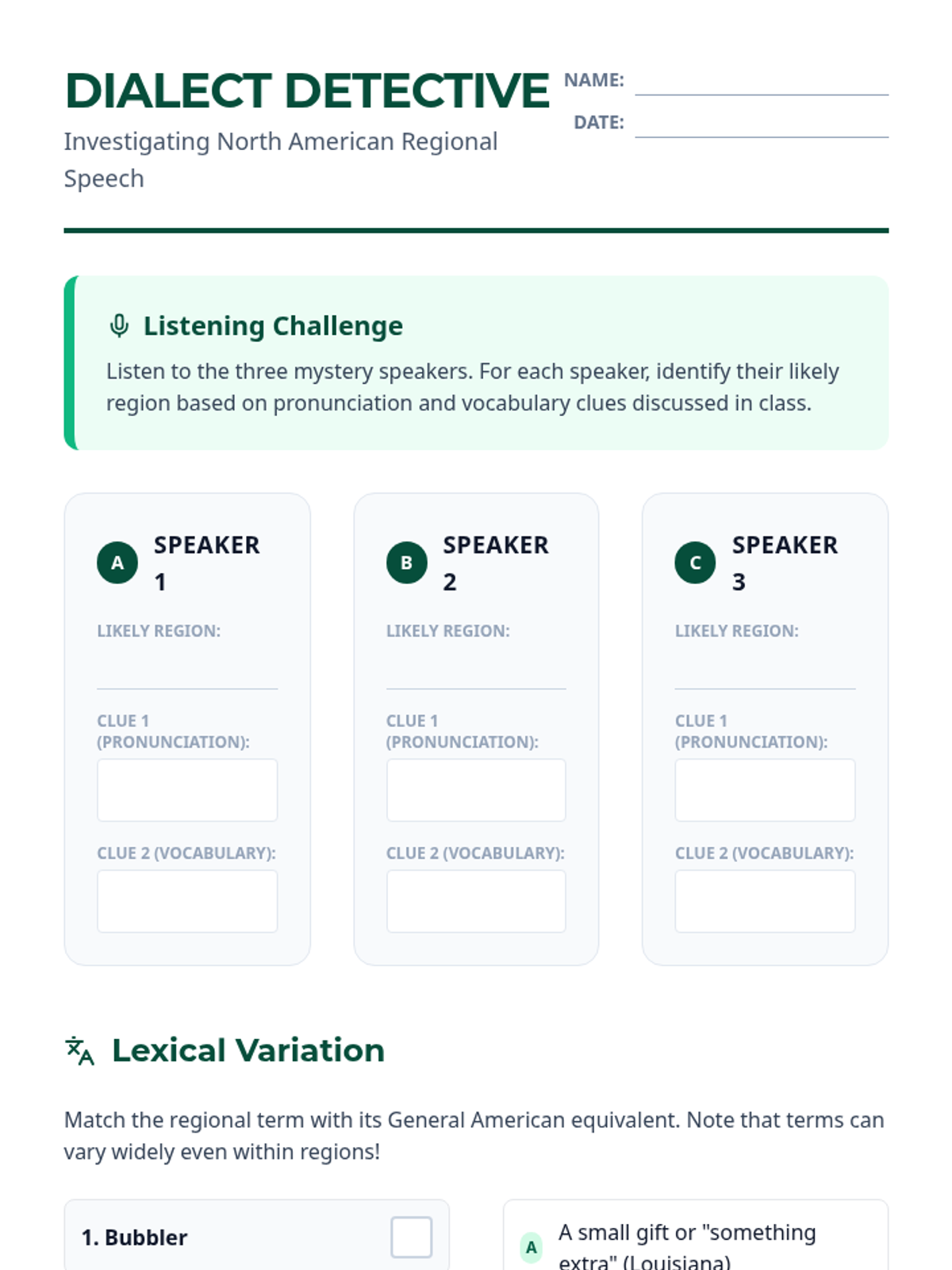
Learners explore the diverse accents and dialects of North America, analyzing how vowel shifts and regional vocabulary define linguistic identities.
Students analyze the mechanics of connected speech—catenation, elision, and assimilation—to understand why natural English sounds faster than scripted audio.
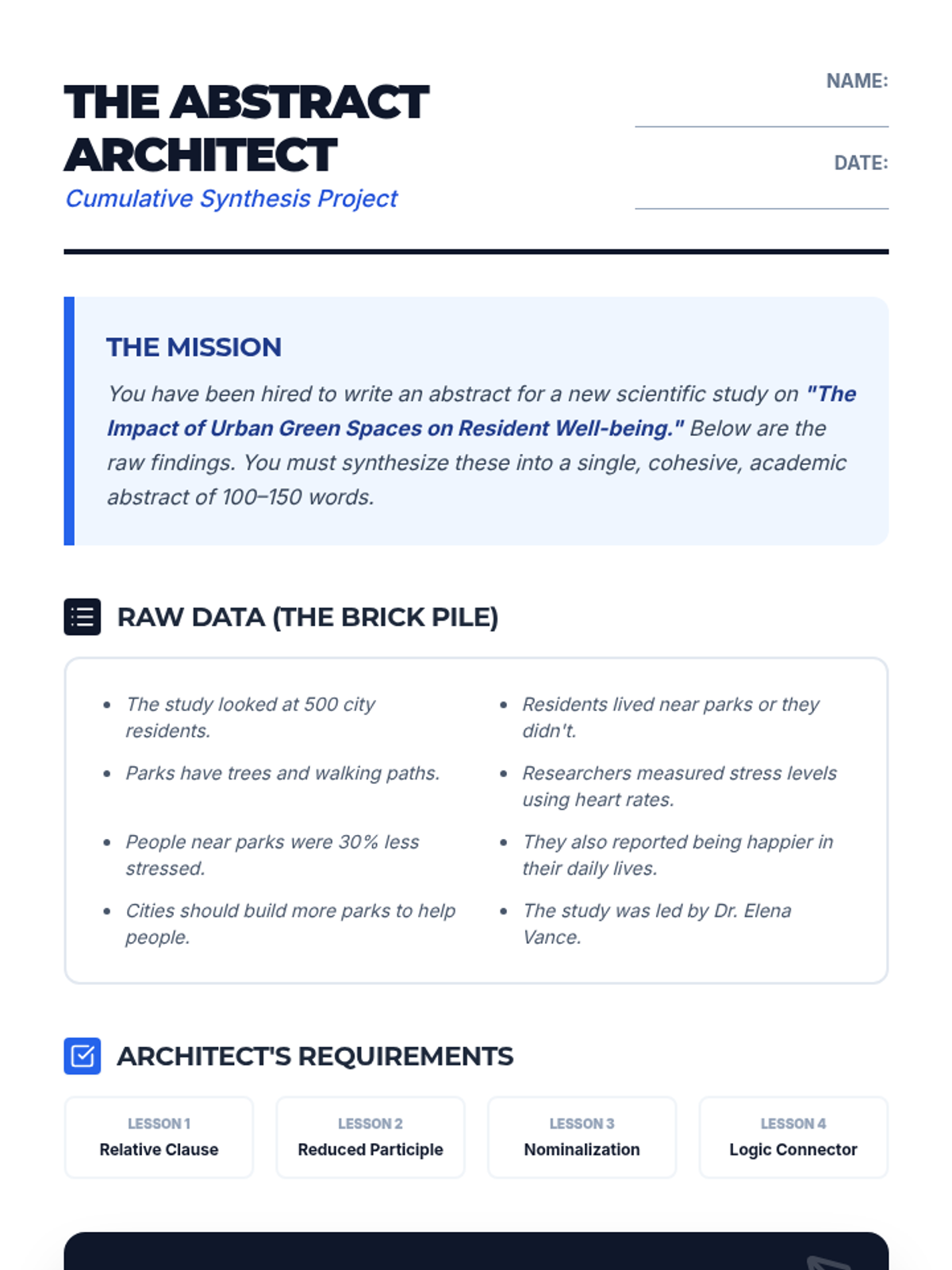
A cumulative project where students synthesize research findings into a formal abstract using the advanced structures learned throughout the unit.
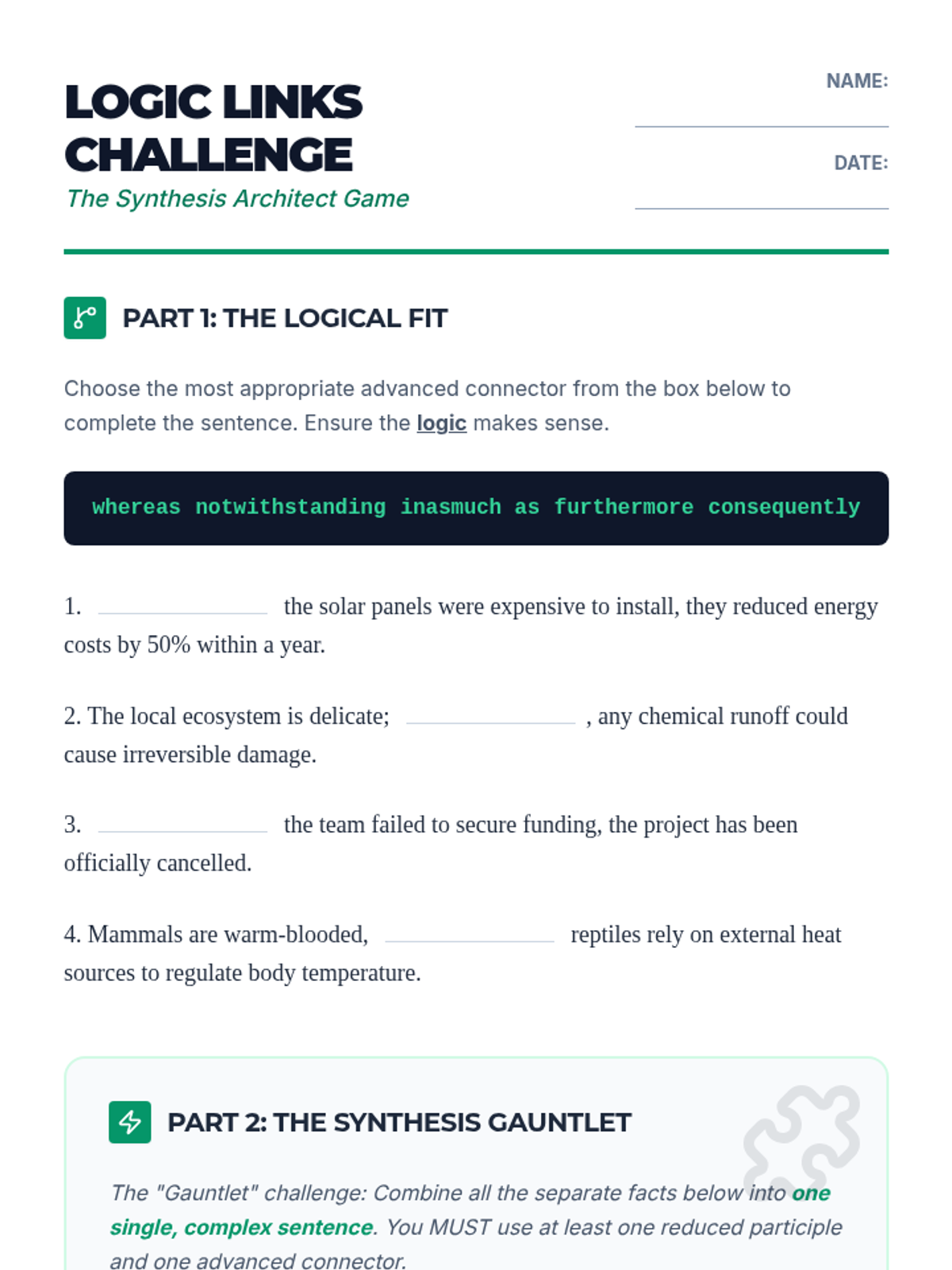
Explores advanced cohesive devices and subordinating conjunctions to link complex ideas logically and fluidly.
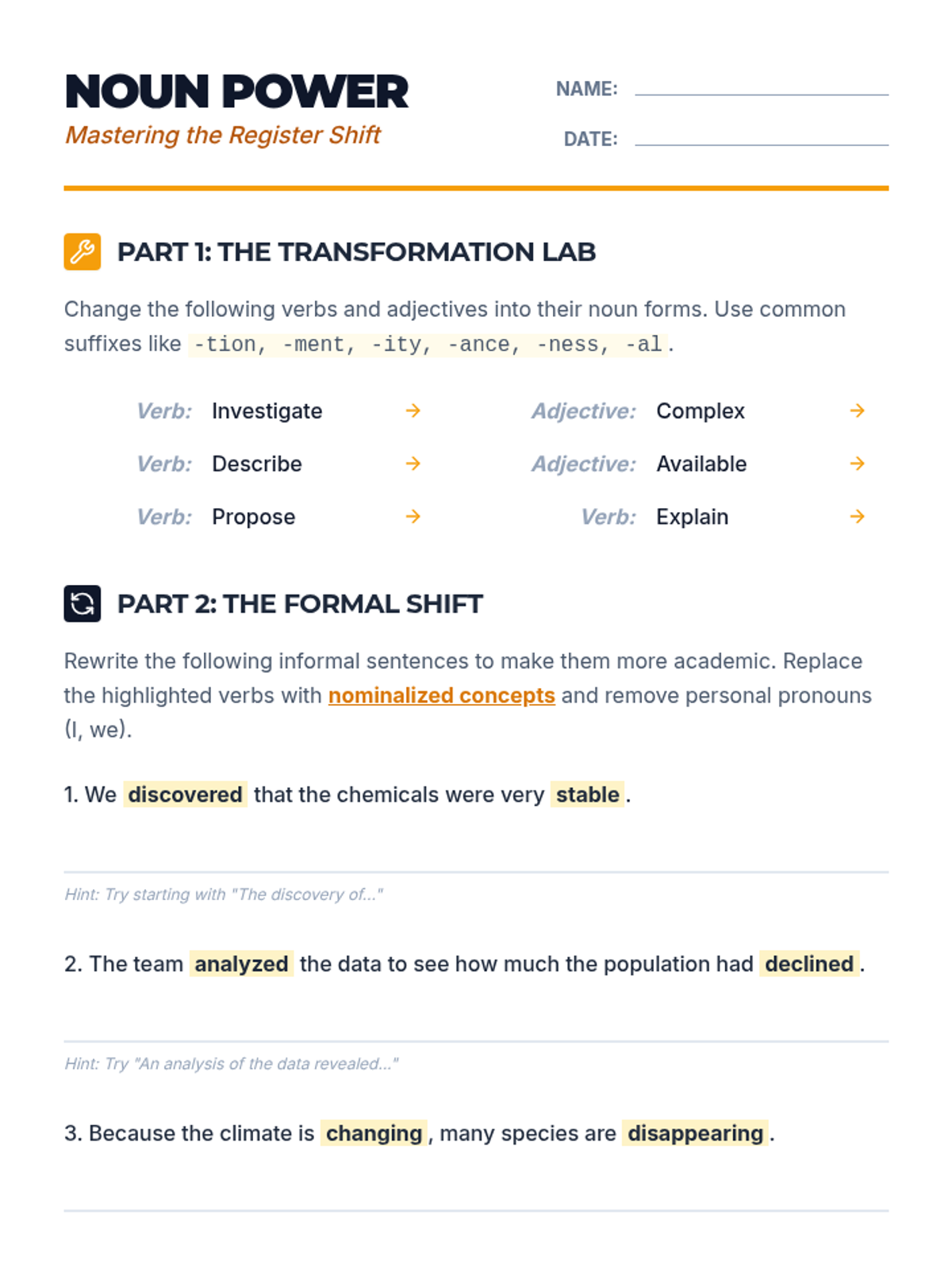
Introduces nominalization as a tool for creating an objective, academic tone by transforming actions into abstract concepts.
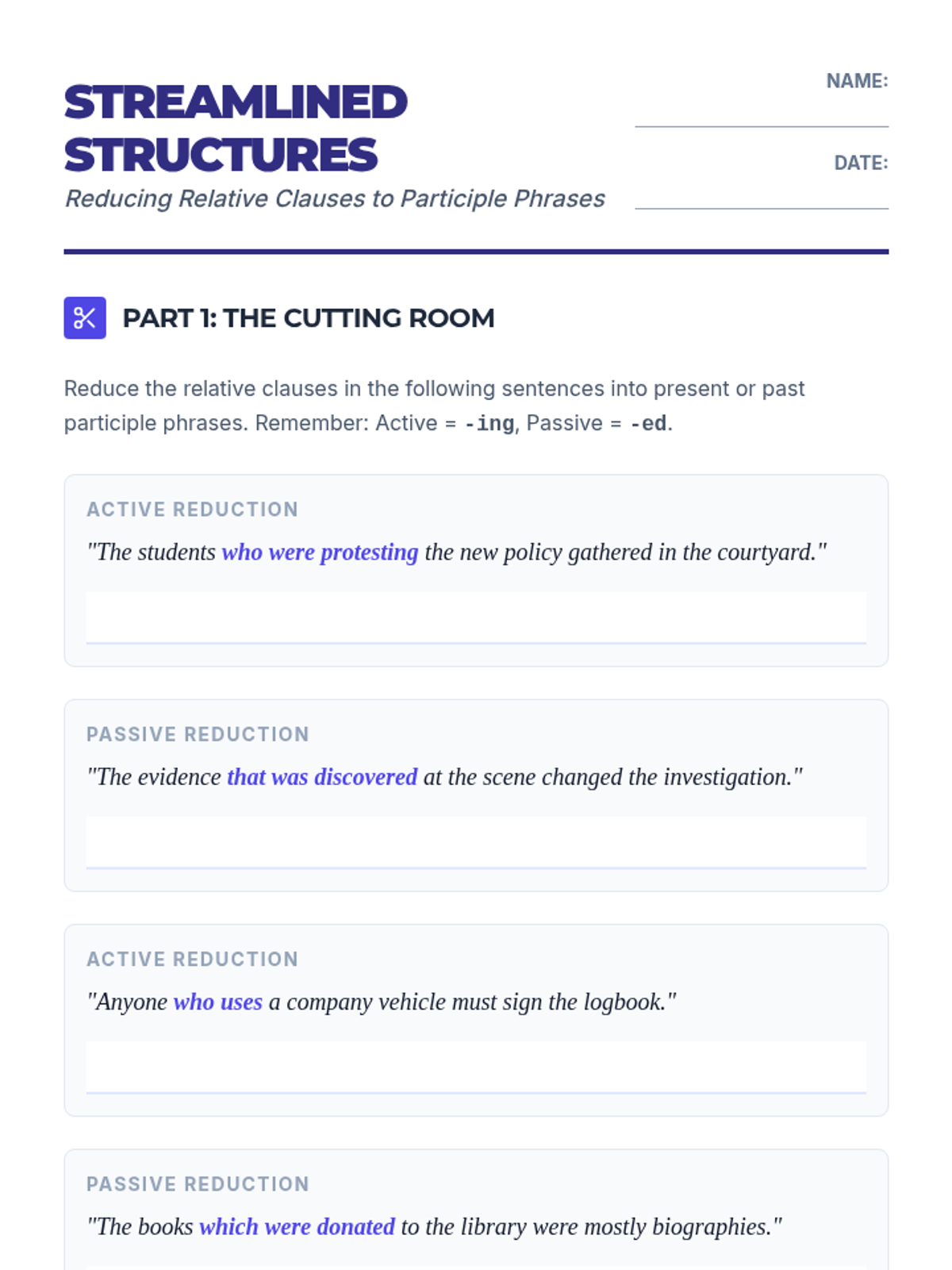
Focuses on streamlining writing by converting relative clauses into present and past participle phrases for more efficient academic communication.
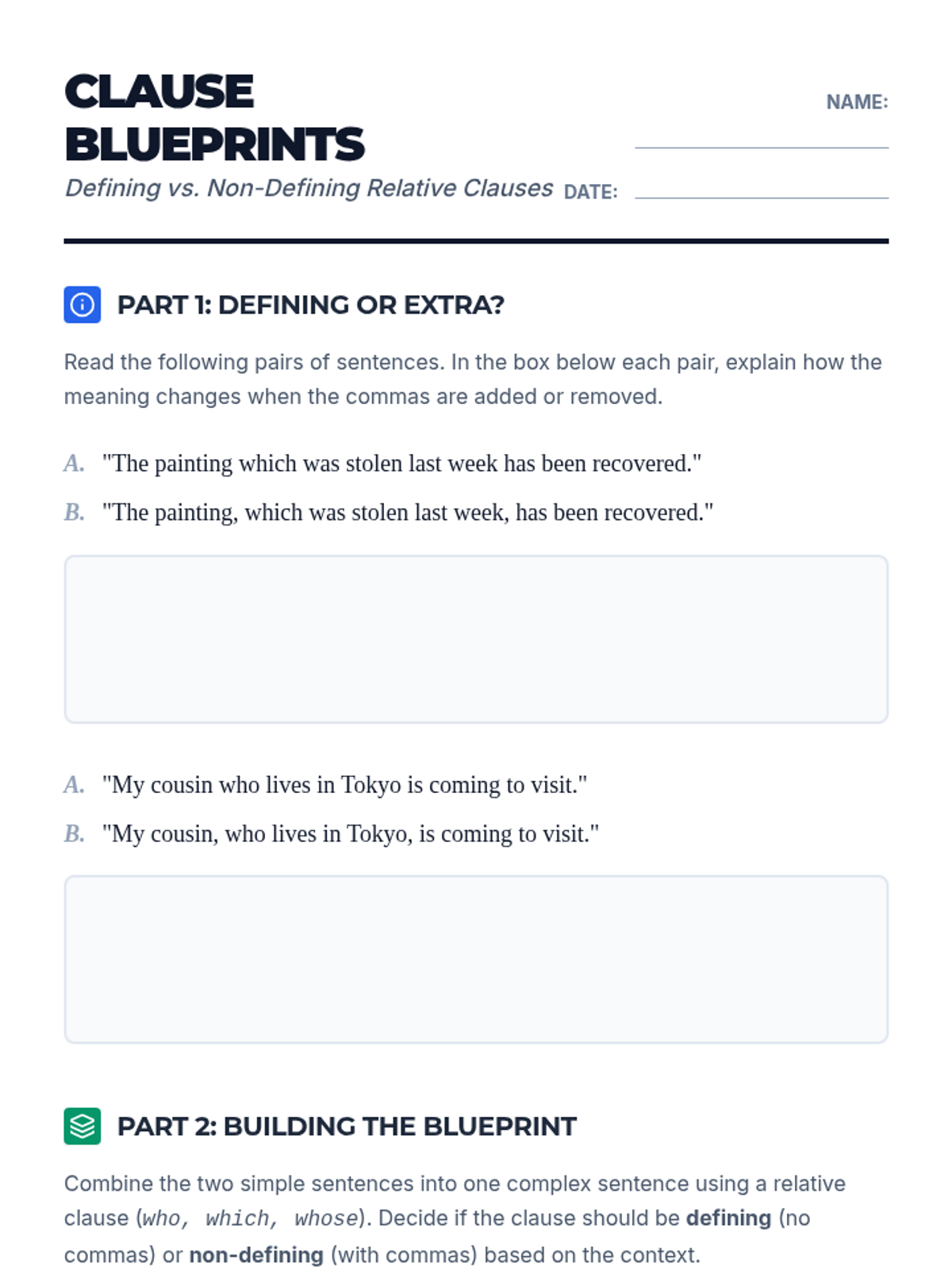
Students explore the semantic and structural differences between defining and non-defining relative clauses, focusing on how commas change meaning in formal contexts.
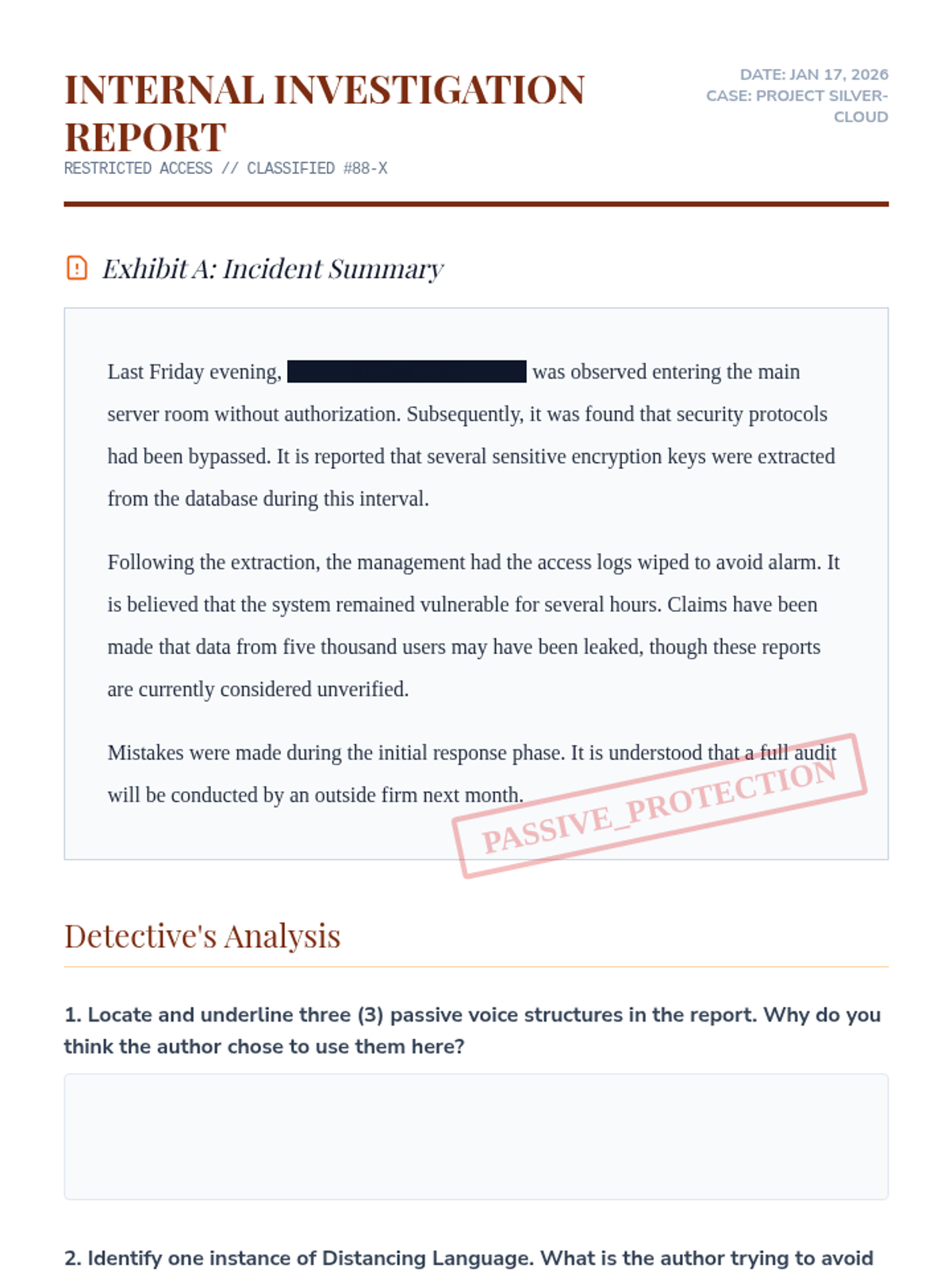
The final lesson applies all previous concepts to media literacy. Students analyze redacted reports and biased articles to see how voice hides or highlights responsibility, culminating in a comparative analysis.
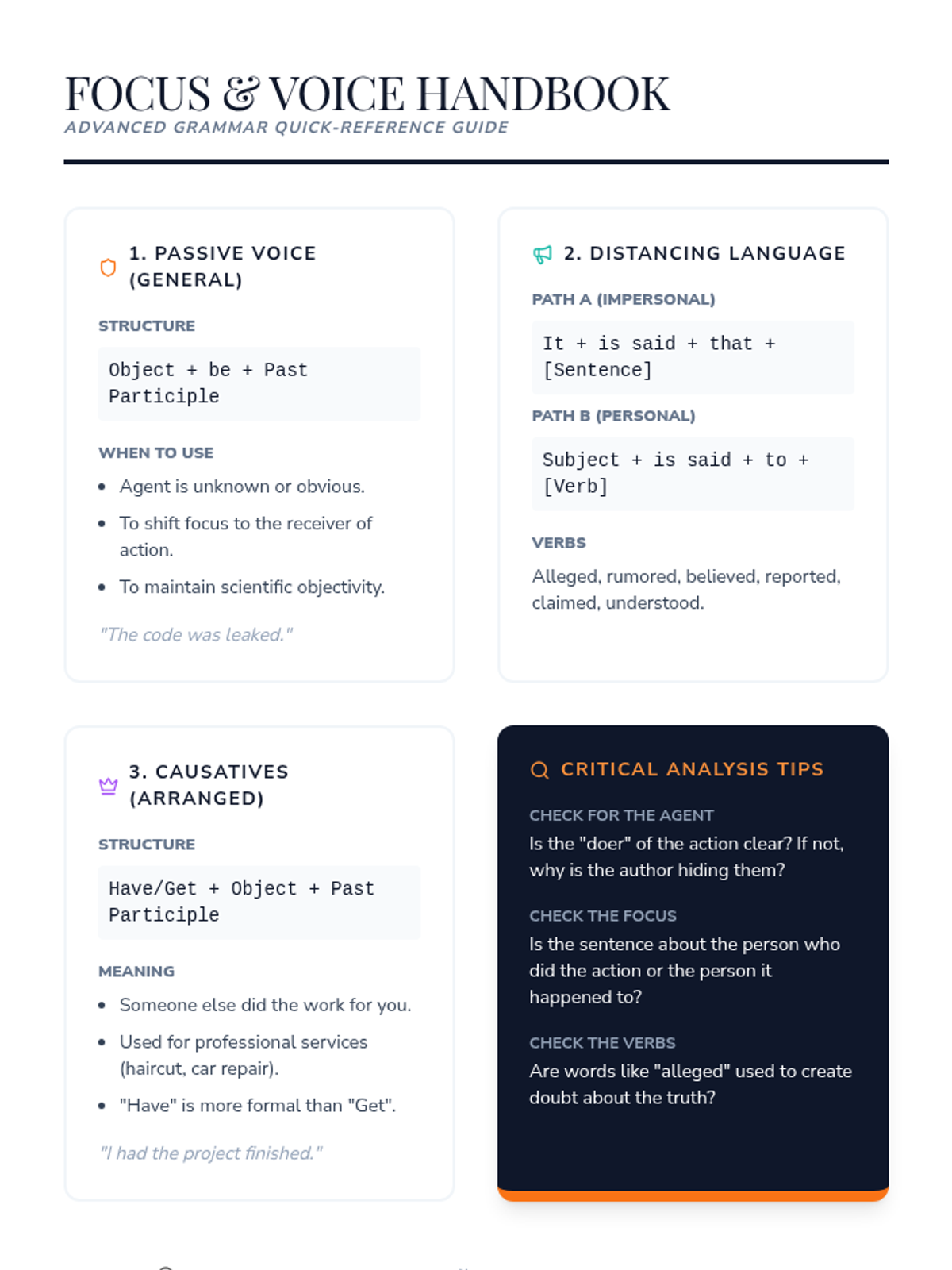
Students learn 'have/get something done' structures to describe arranged services. They compare these to active structures to clarify responsibility and agency.
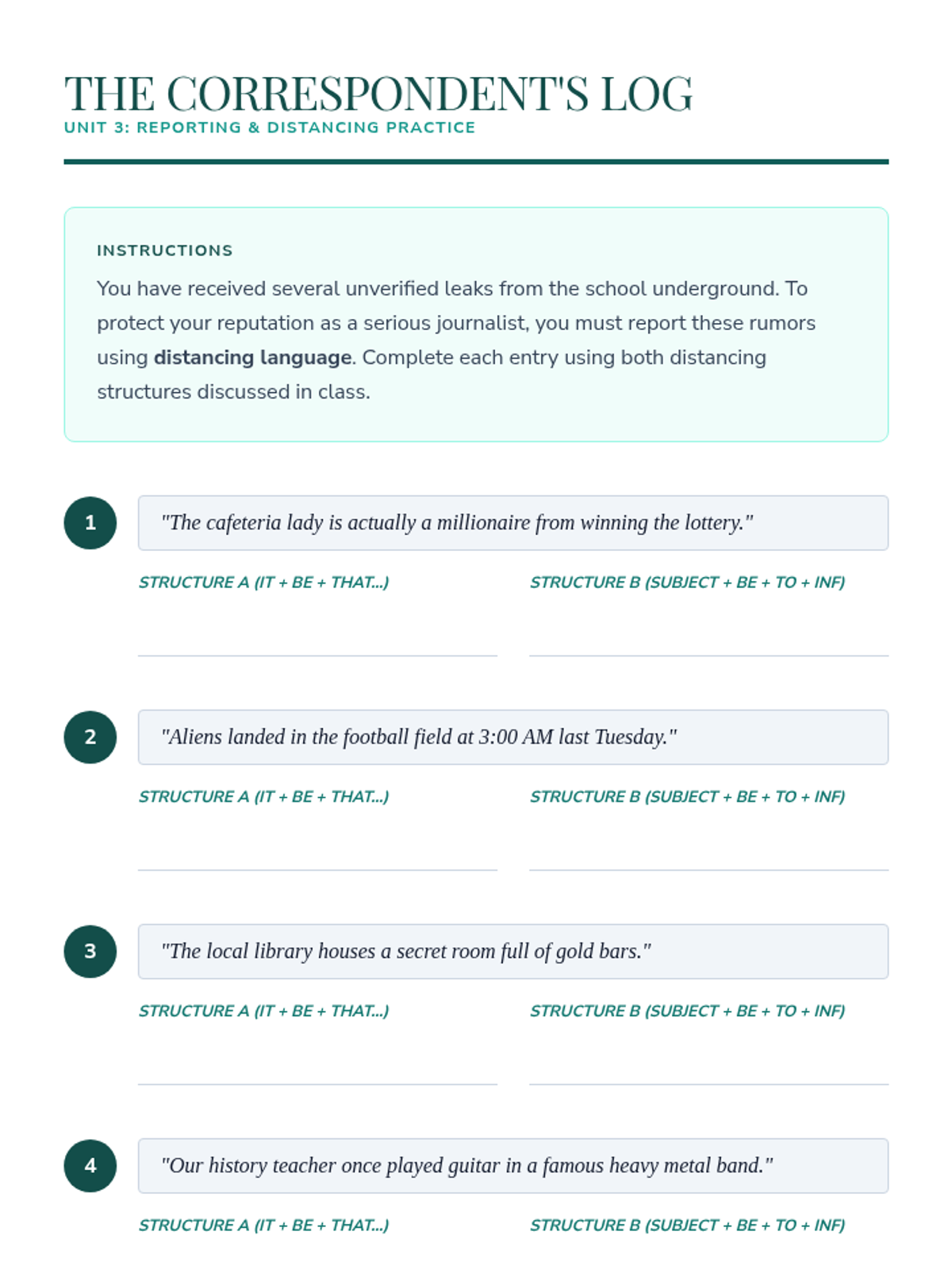
This lesson covers distancing language such as 'it is said that' and 'reported to be'. Students apply these structures to report unverified information and cultural beliefs.
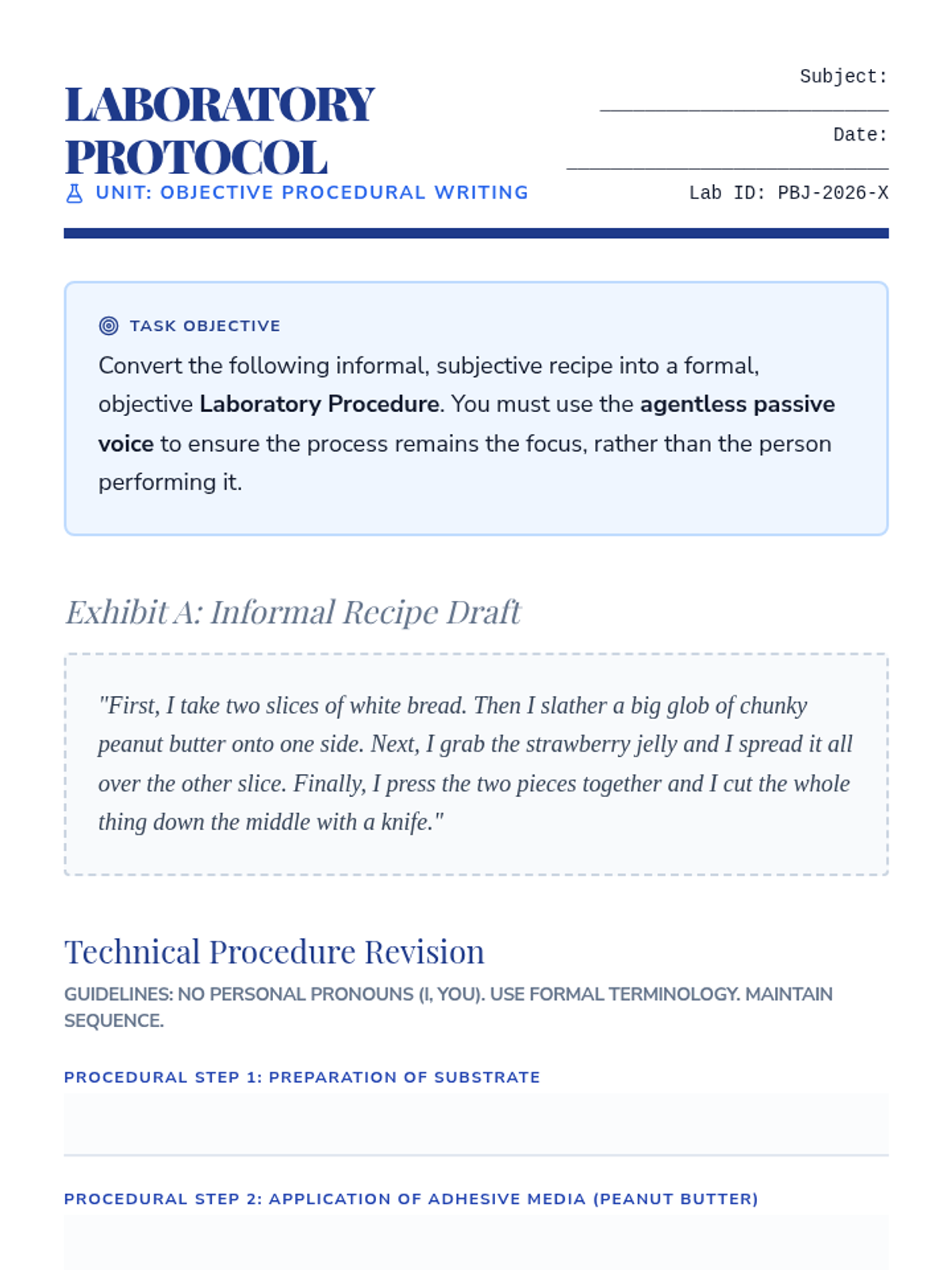
Students practice the agentless passive specifically for scientific and technical reporting. They learn to prioritize the process over the person performing the action to maintain academic objectivity.
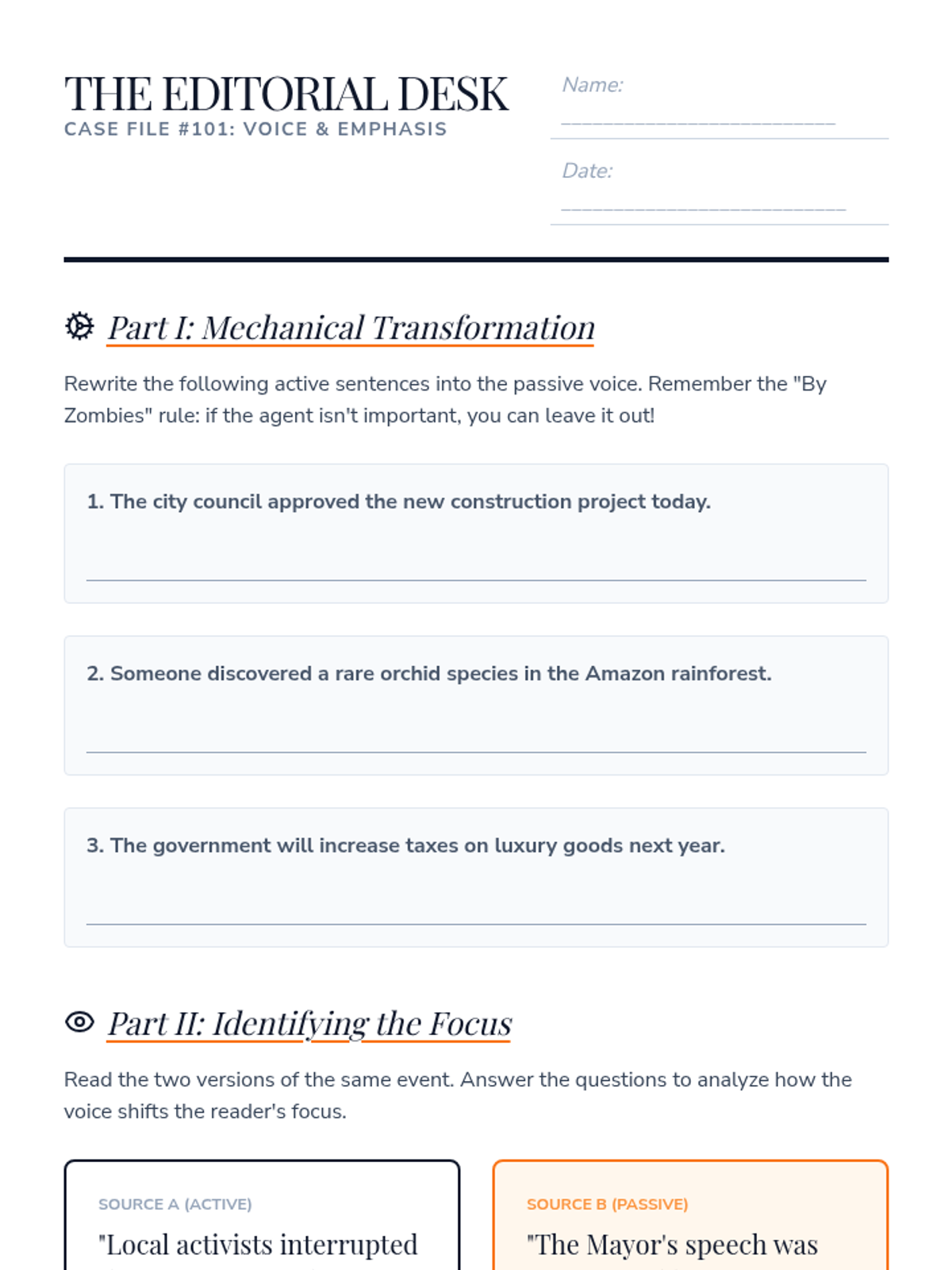
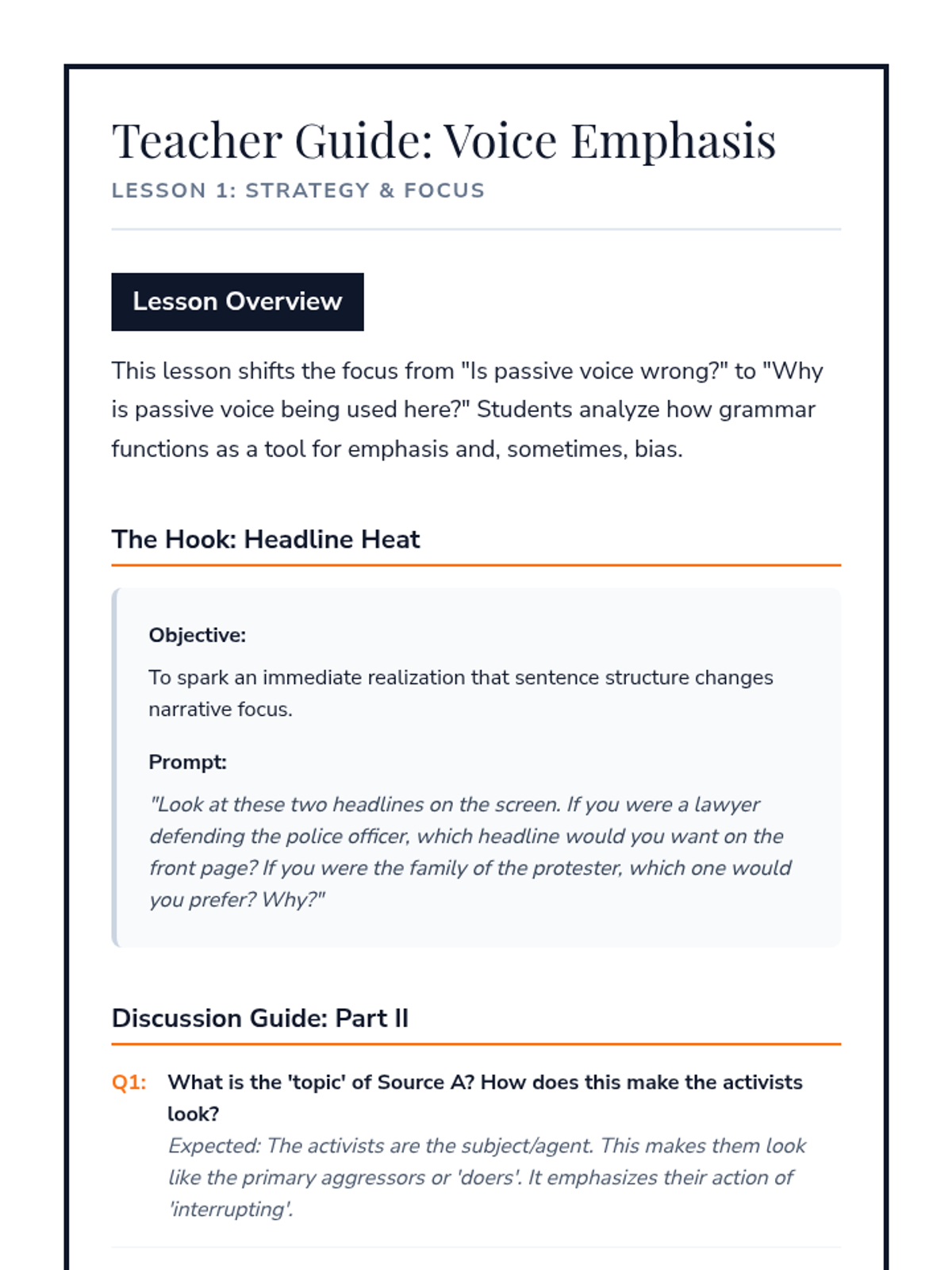
Students investigate the mechanical shift between active and passive voice, focusing on how voice alters the 'topic' of a sentence. They analyze how headlines use voice to shape reader perception and bias.
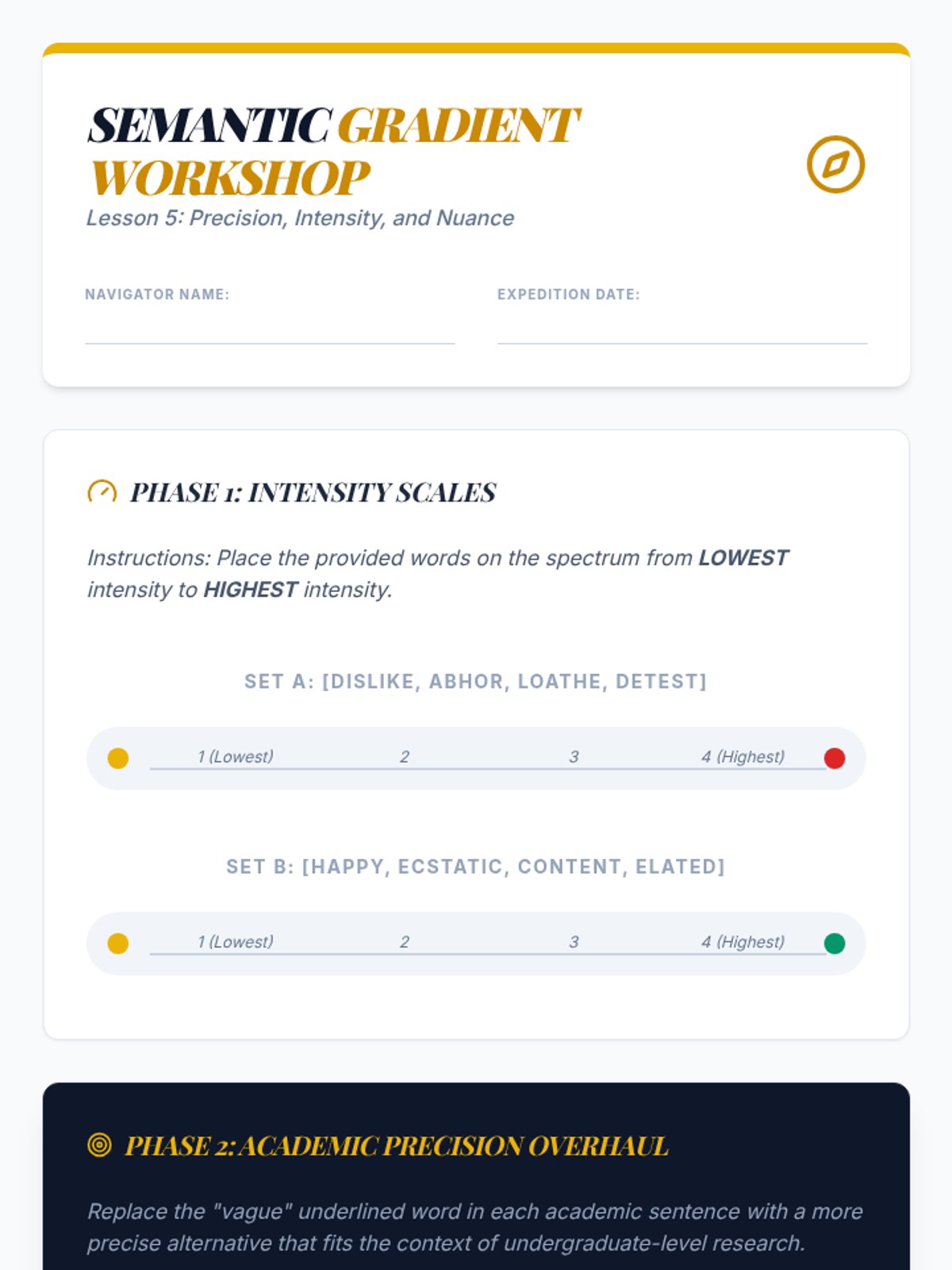
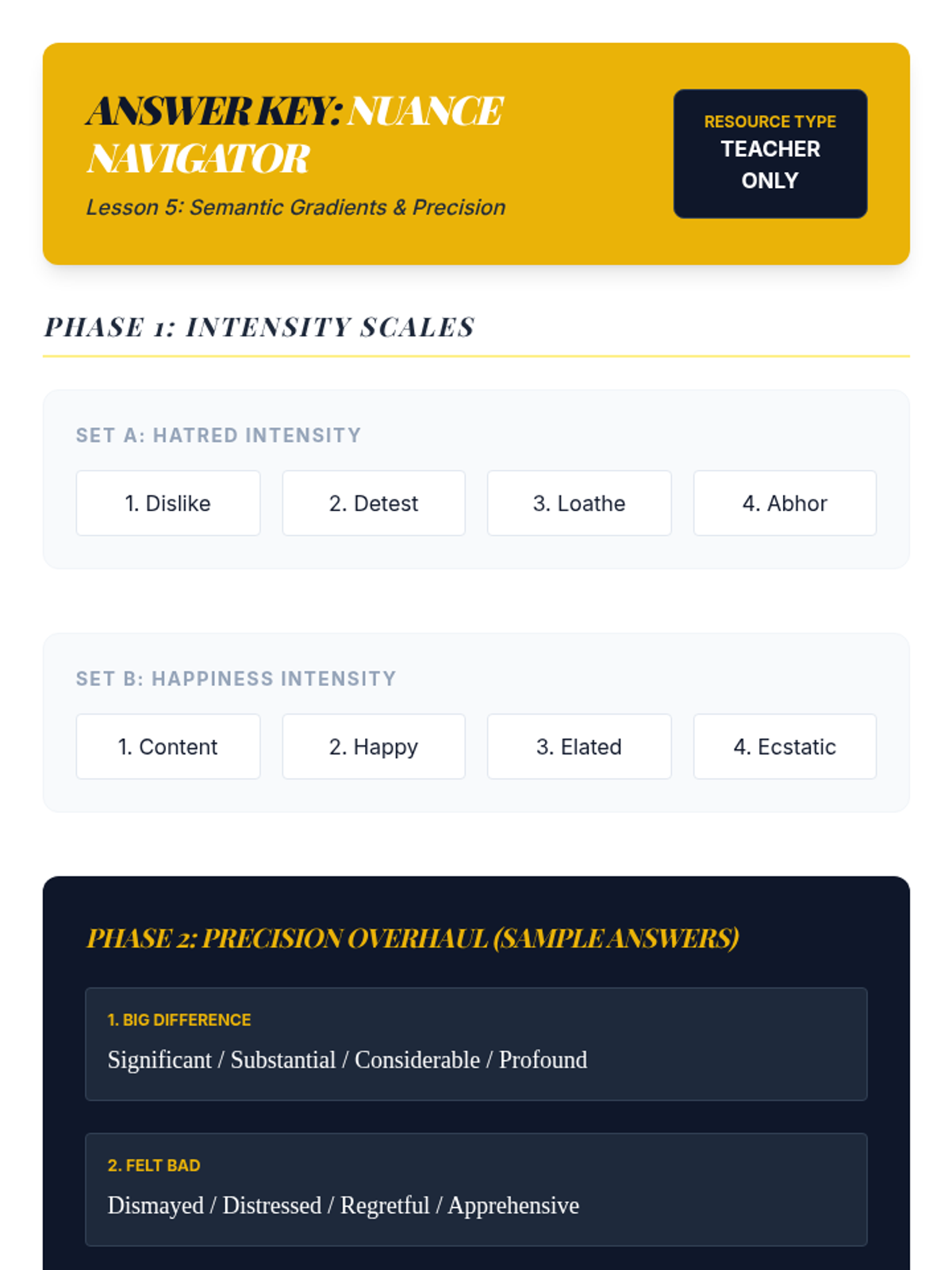
Refines vocabulary usage by analyzing semantic gradients, helping students choose the most precise word for a given emotional or descriptive intensity.
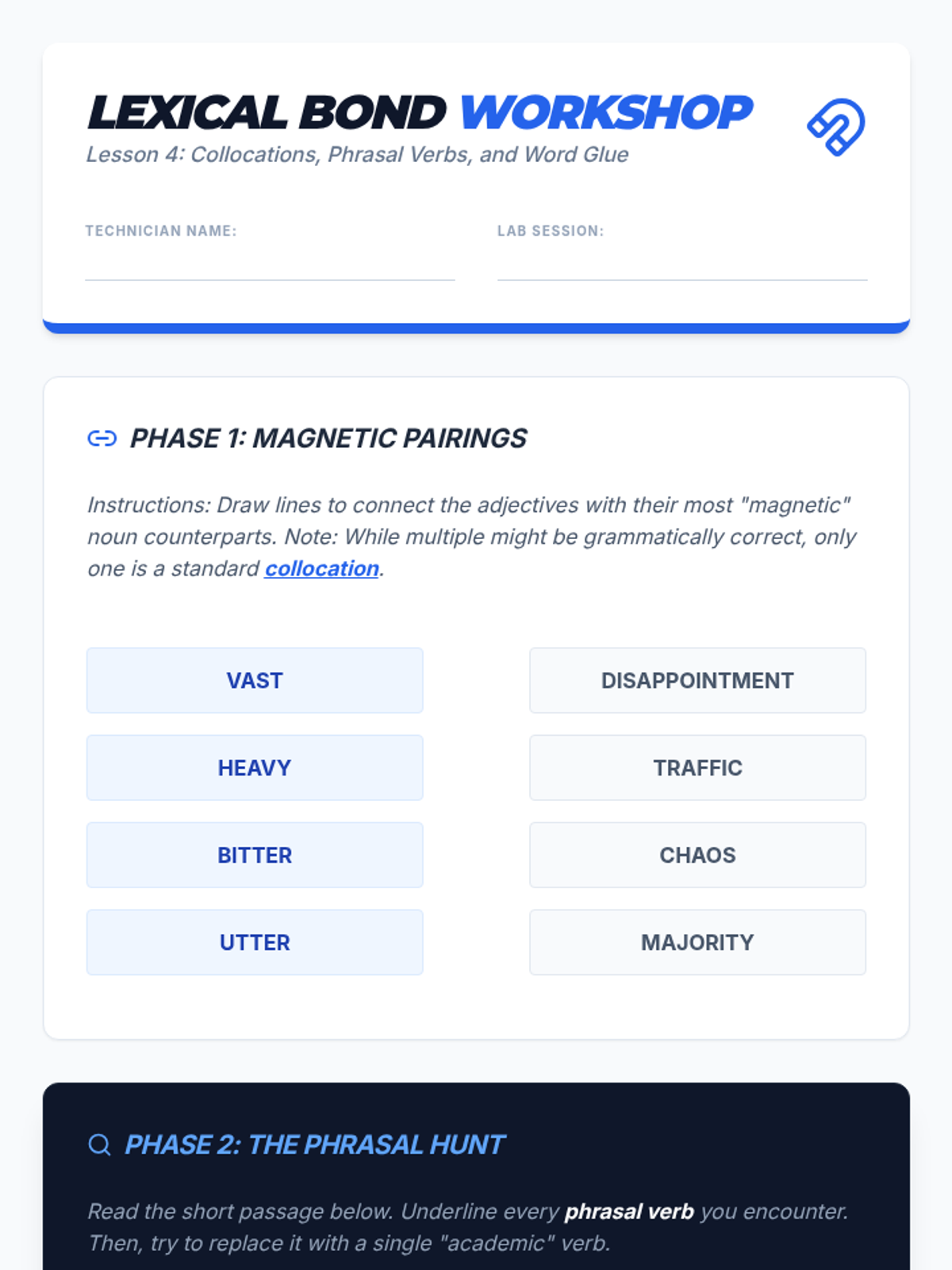
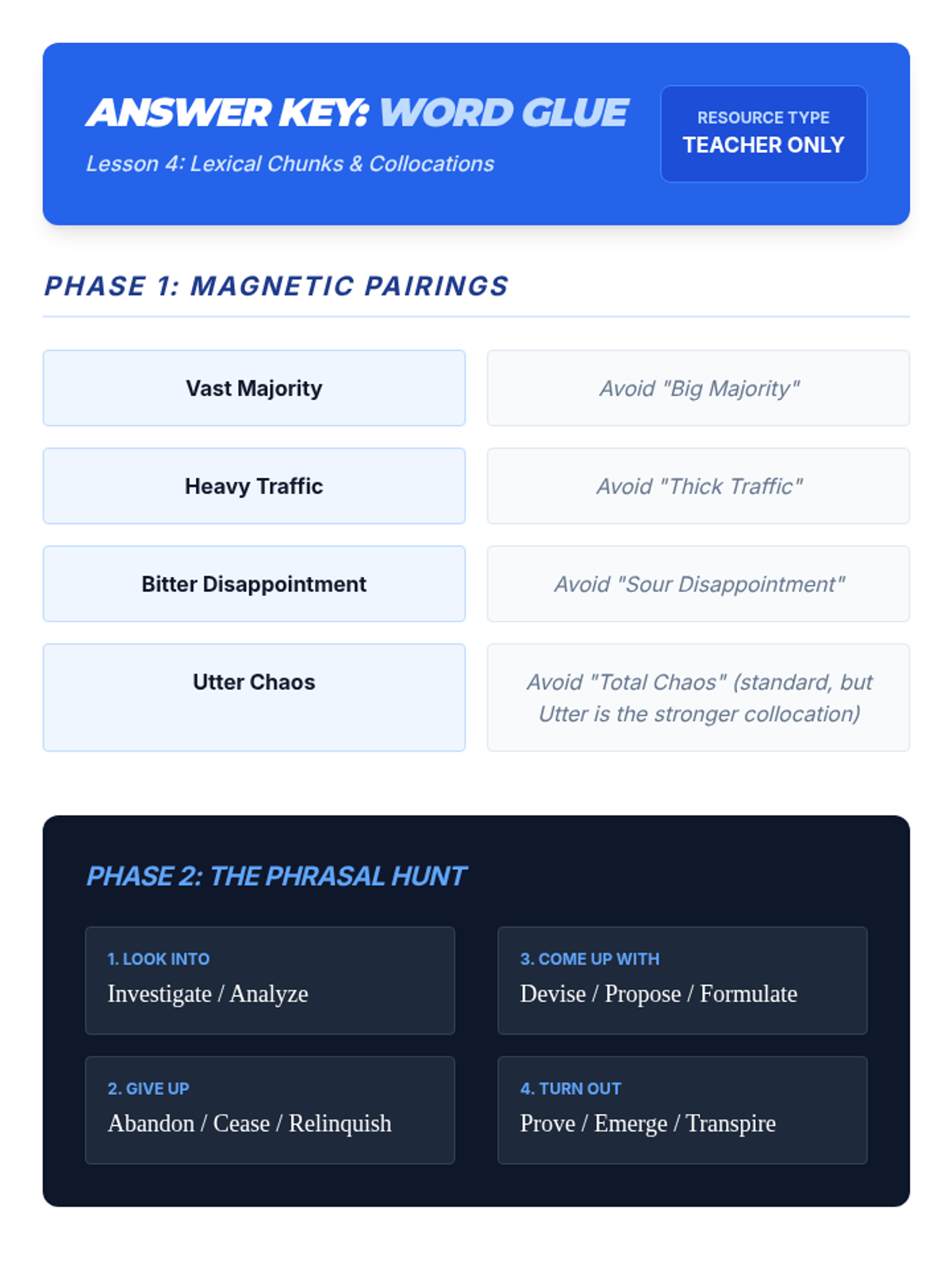
Focuses on lexical chunks, including collocations and phrasal verbs, to improve reading fluency and natural-sounding expression.
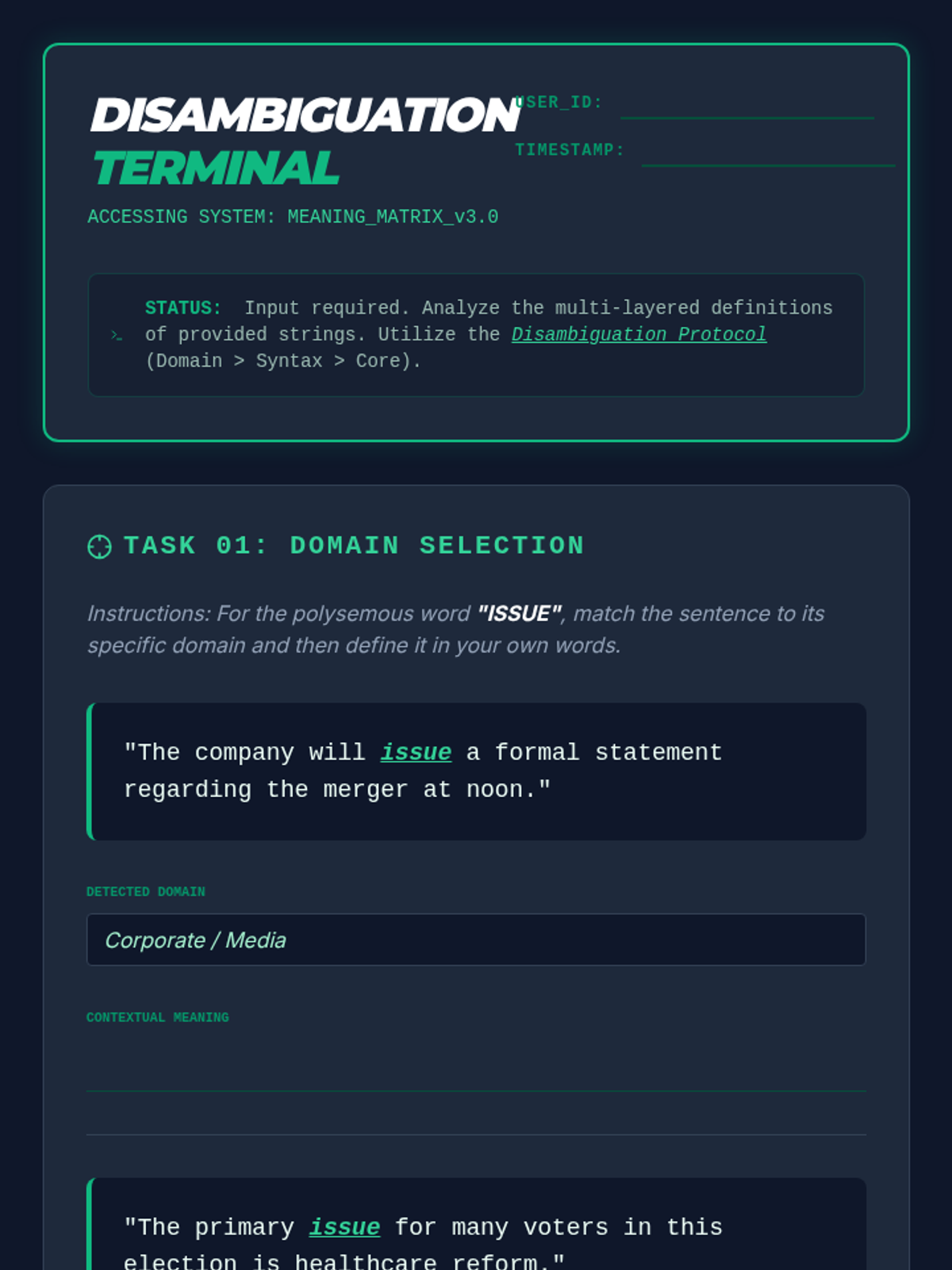
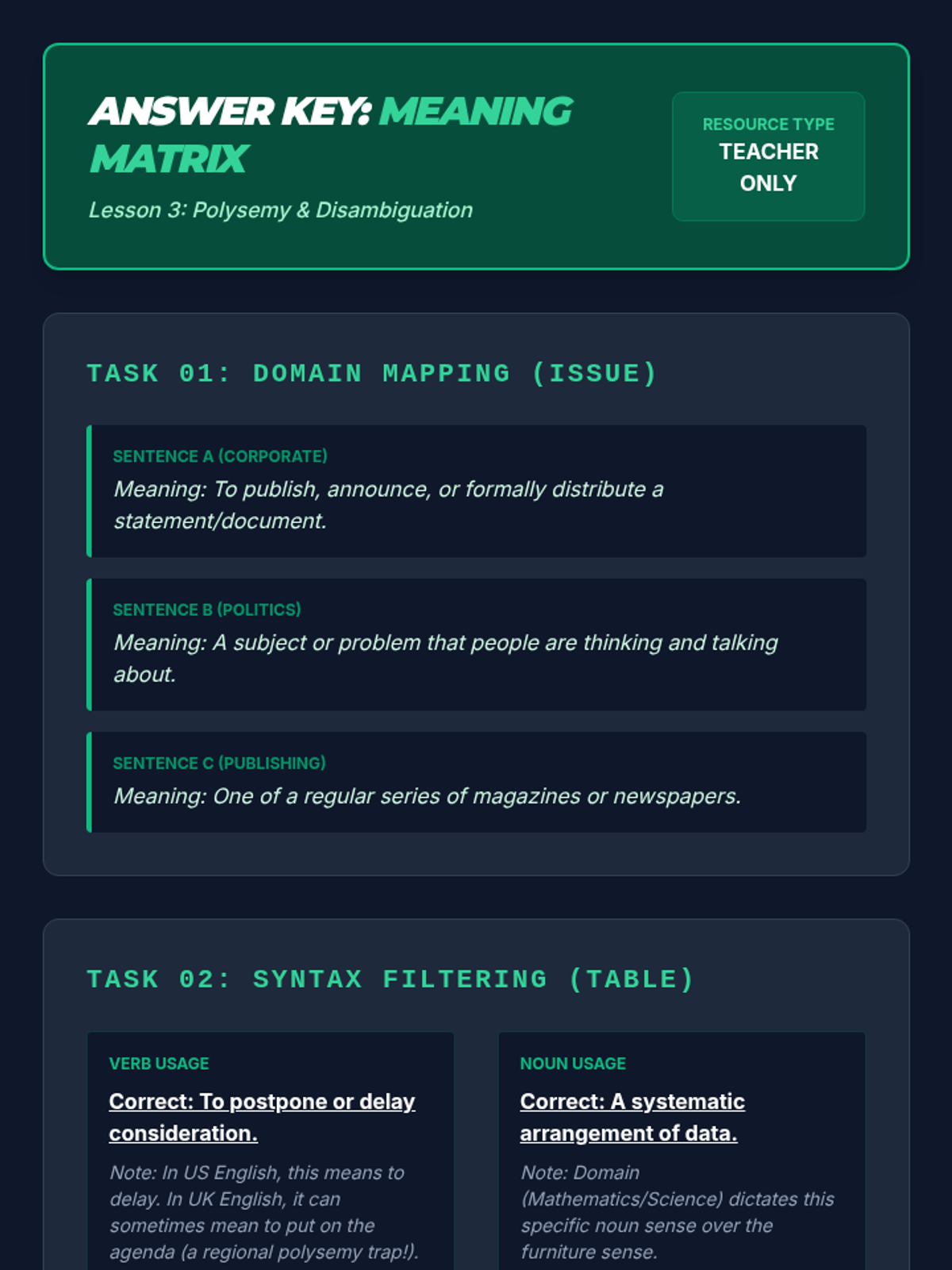
Explores polysemy—words with multiple meanings—and how to use surrounding syntax and domain-specific knowledge to select the correct definition.
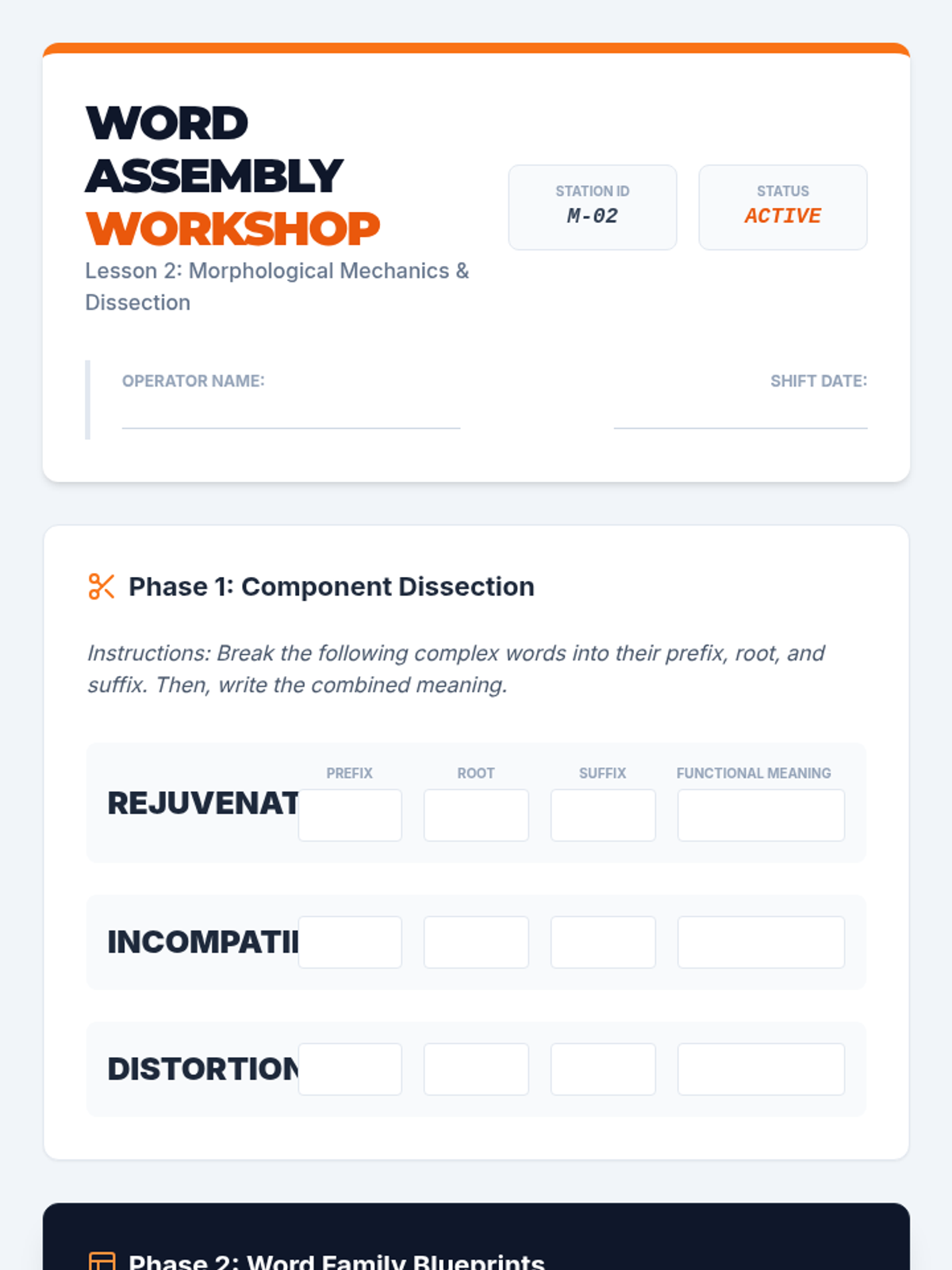
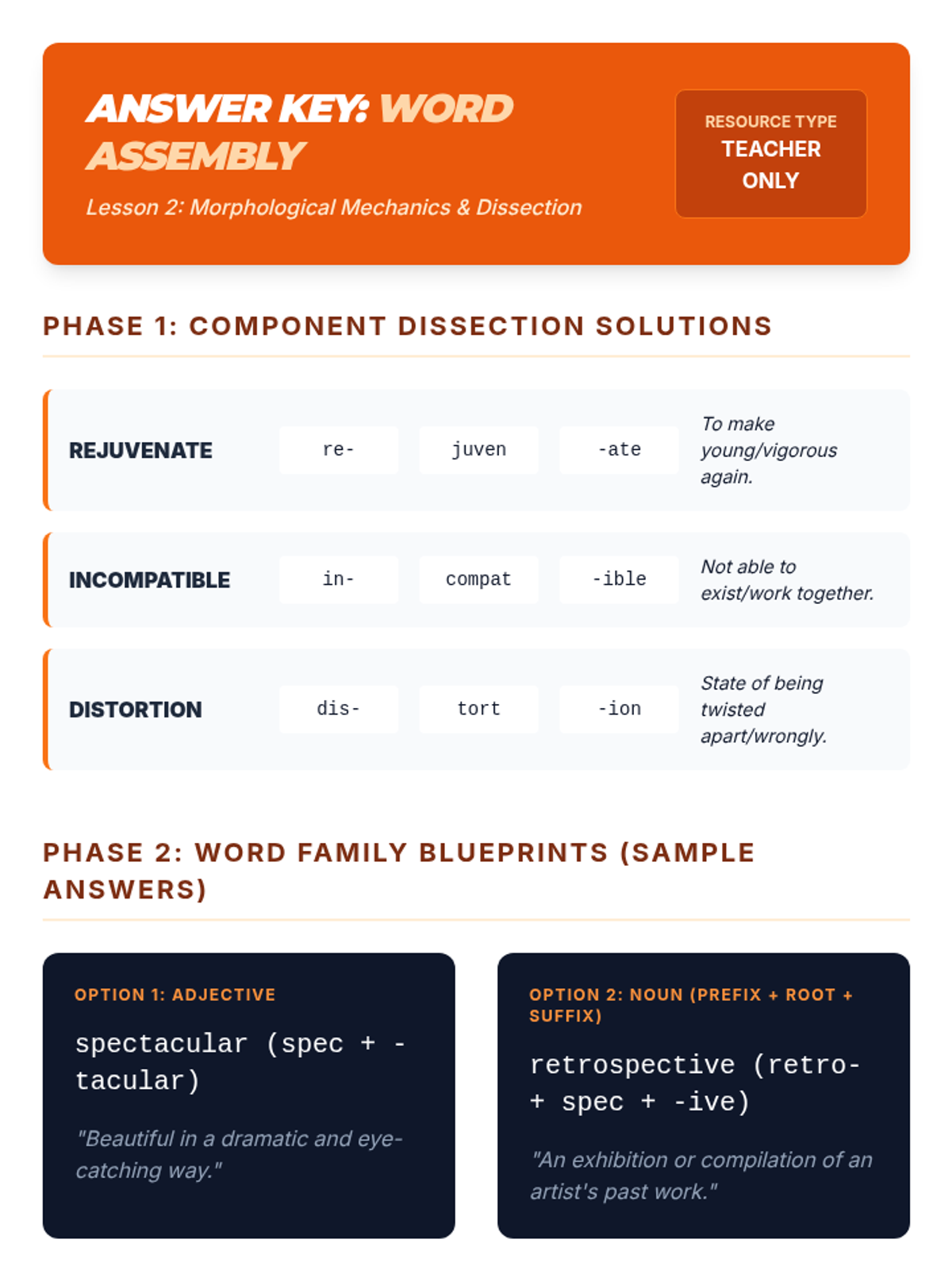
A deep dive into the building blocks of English words, teaching students how to use prefixes, roots, and suffixes to unlock the meaning of entire word families.
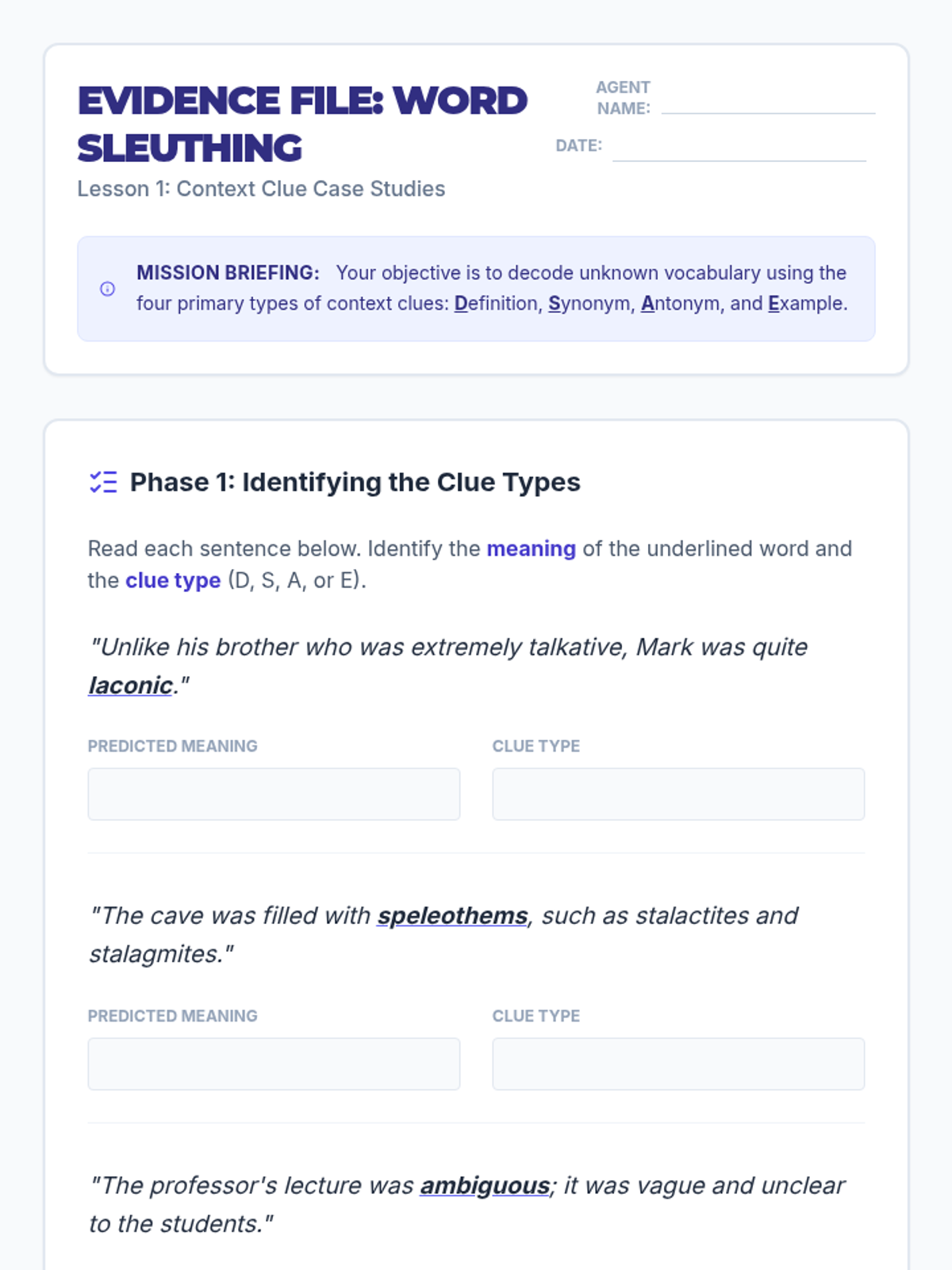
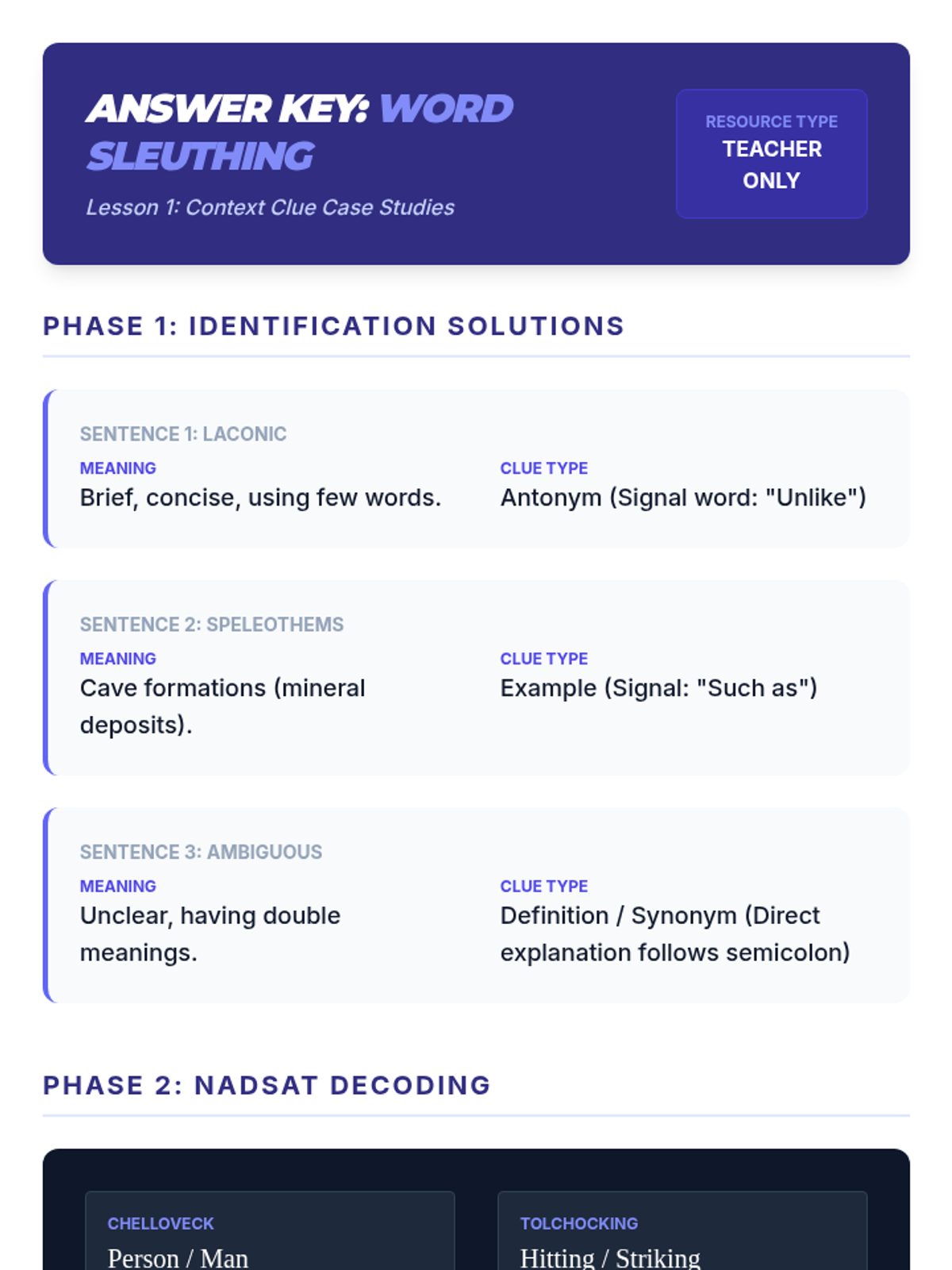
Students learn to identify and categorize four major types of context clues (Definition, Synonym, Antonym, and Example) to decode unknown words in complex texts.