Syllogisms, deductive validity, and the principles of inductive probability for evaluating evidence-based claims. Targets common logical fallacies and the construction of sound, persuasive arguments.
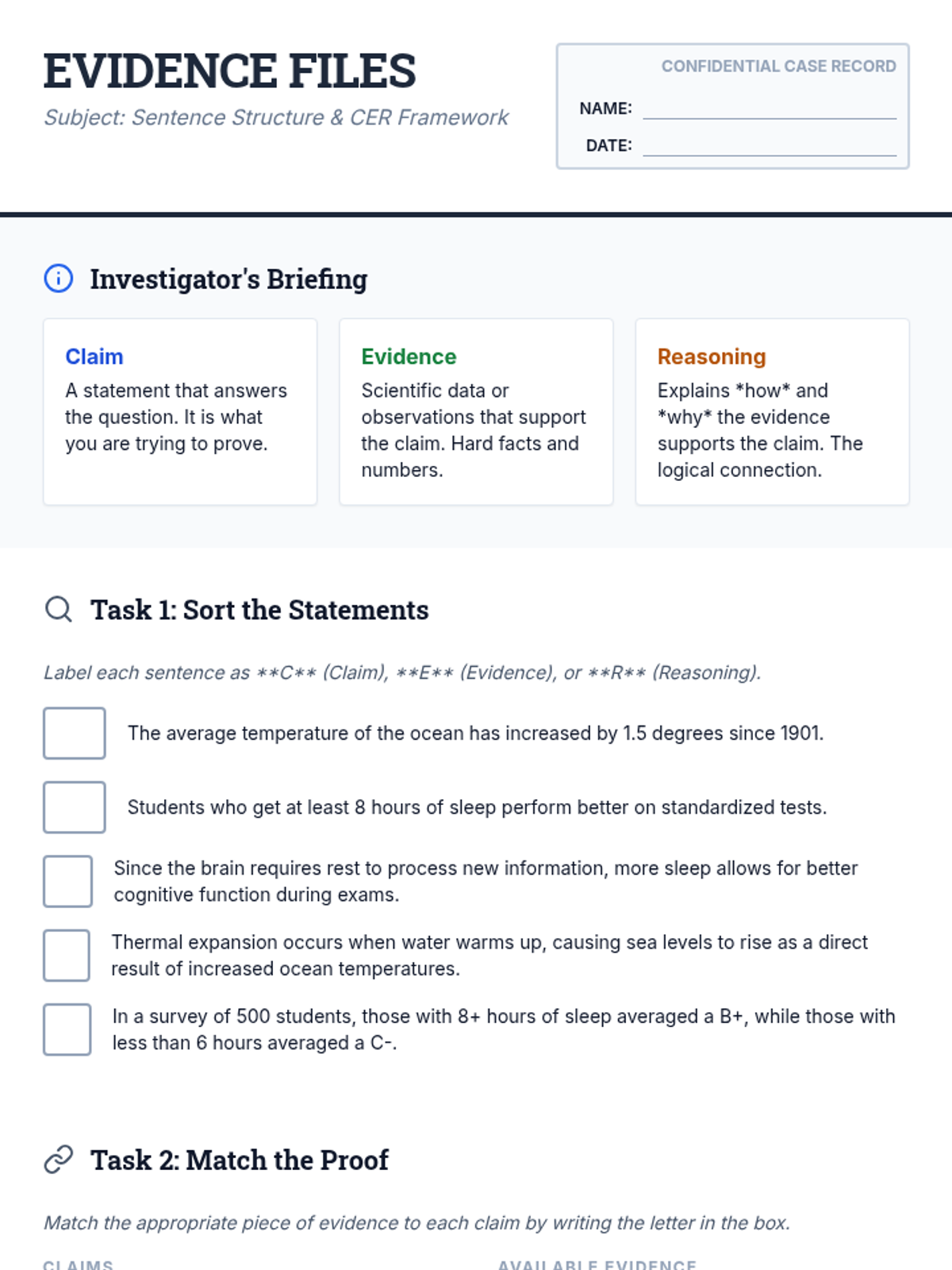
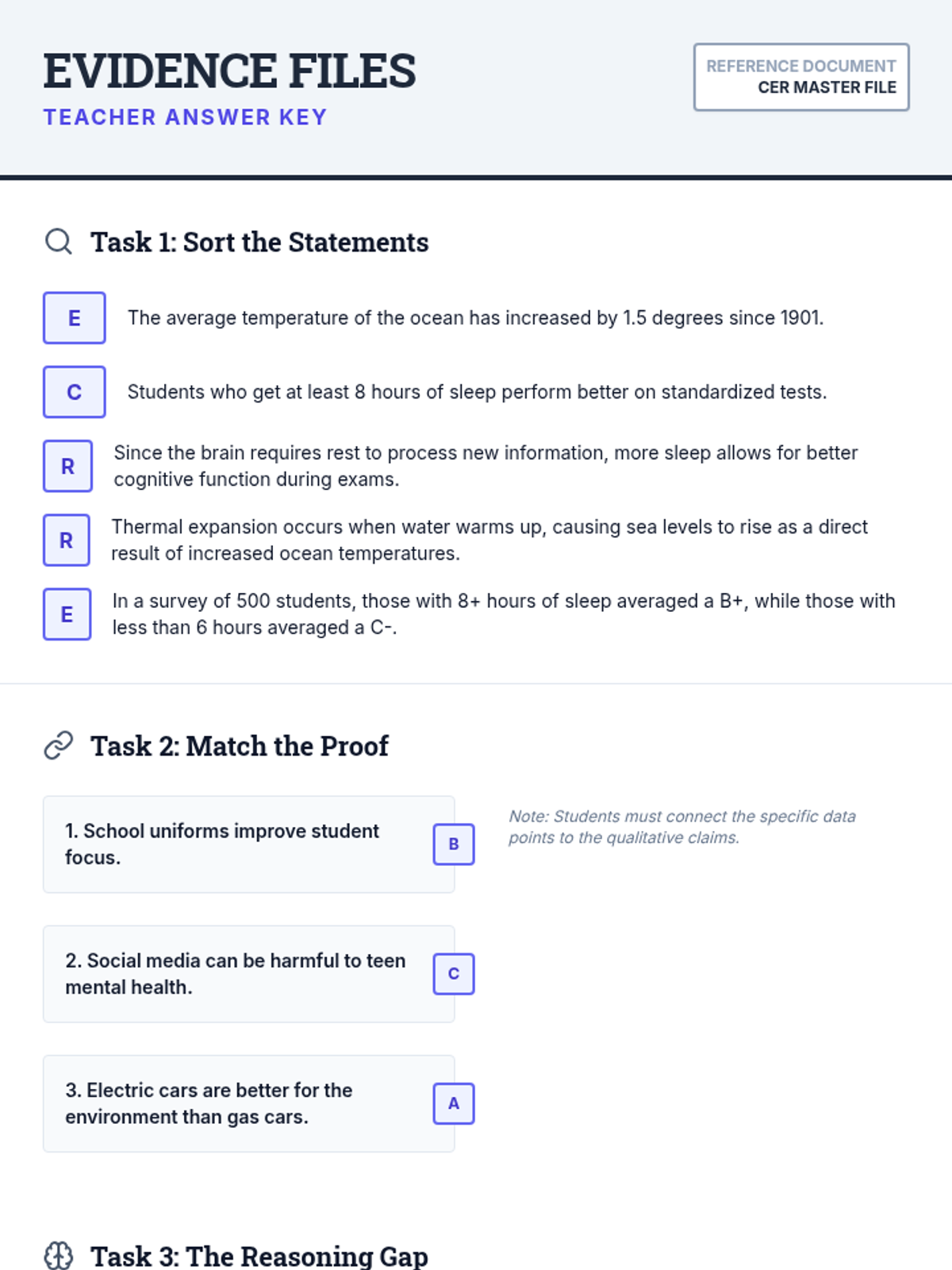
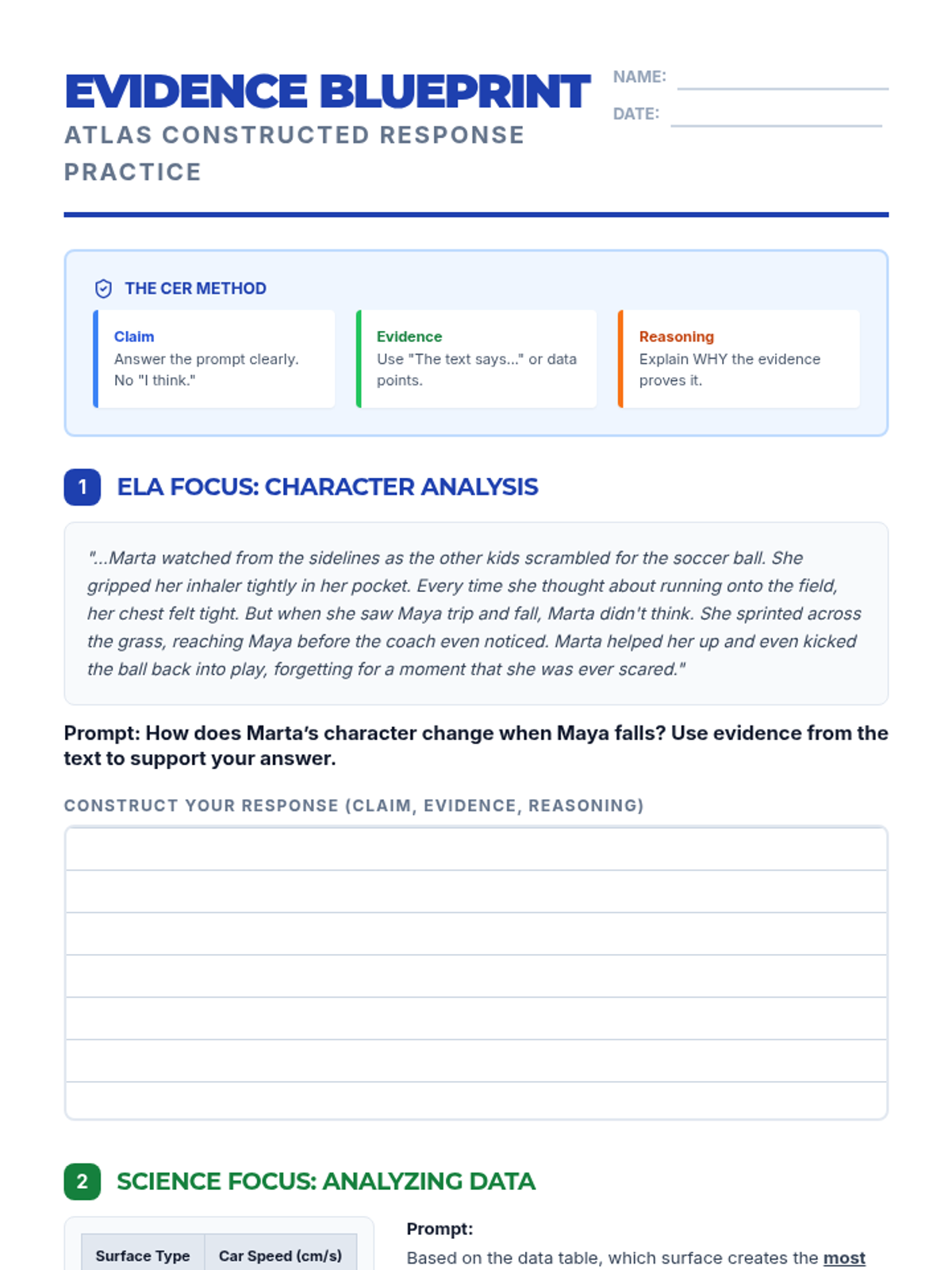
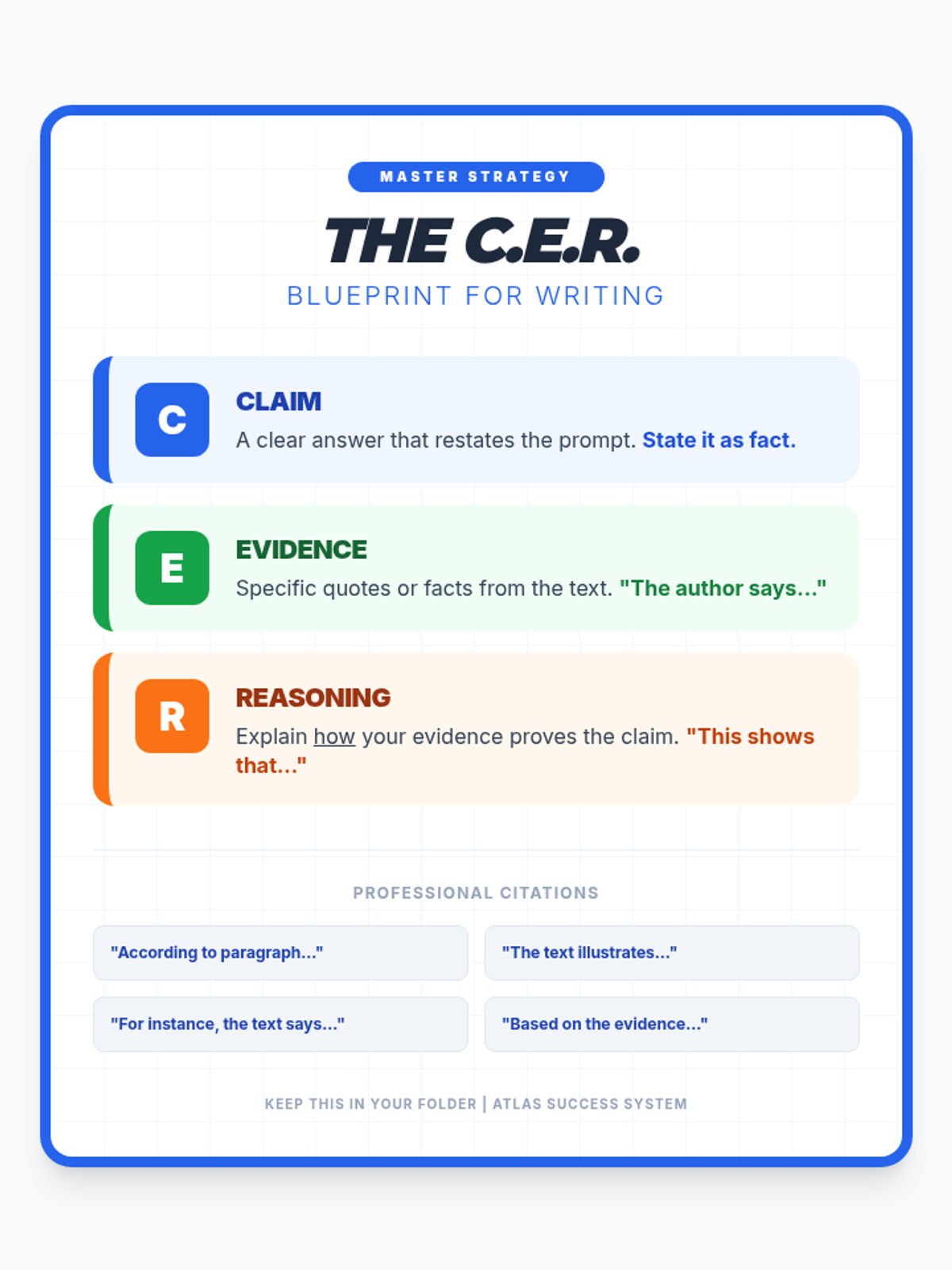
A lesson focused on mastering the Claim, Evidence, and Reasoning (CER) framework through investigative practice and sentence structure analysis.
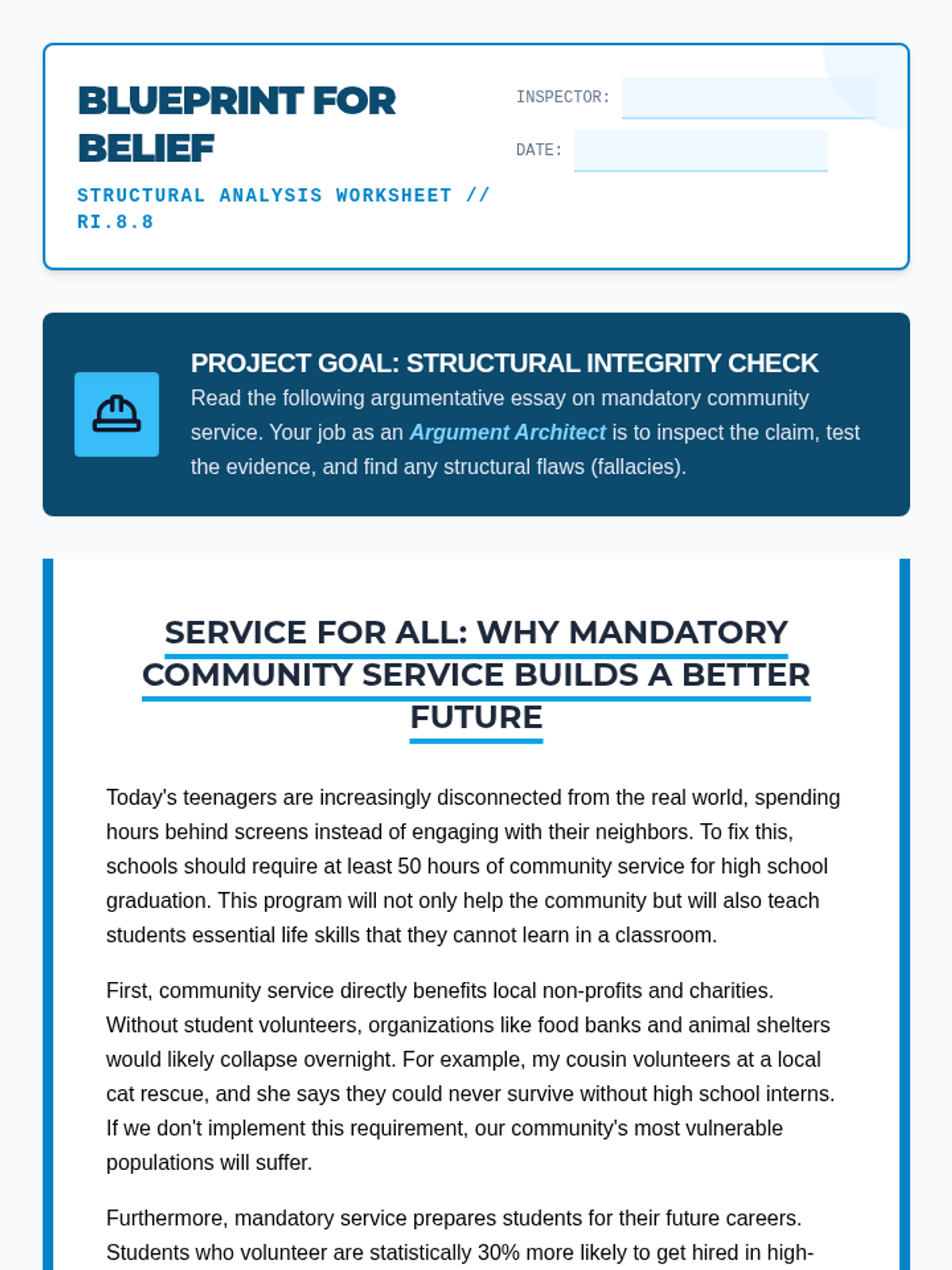
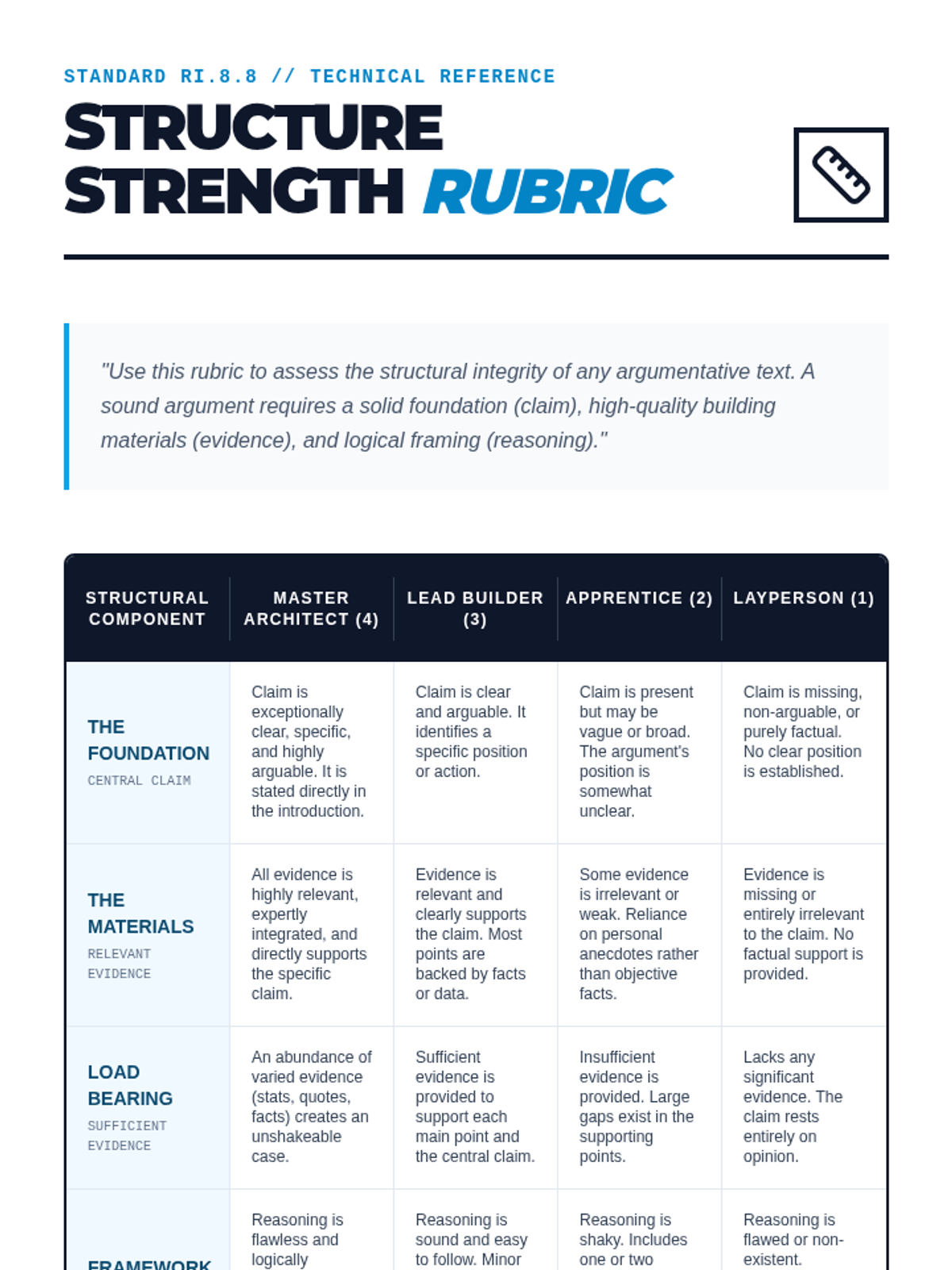
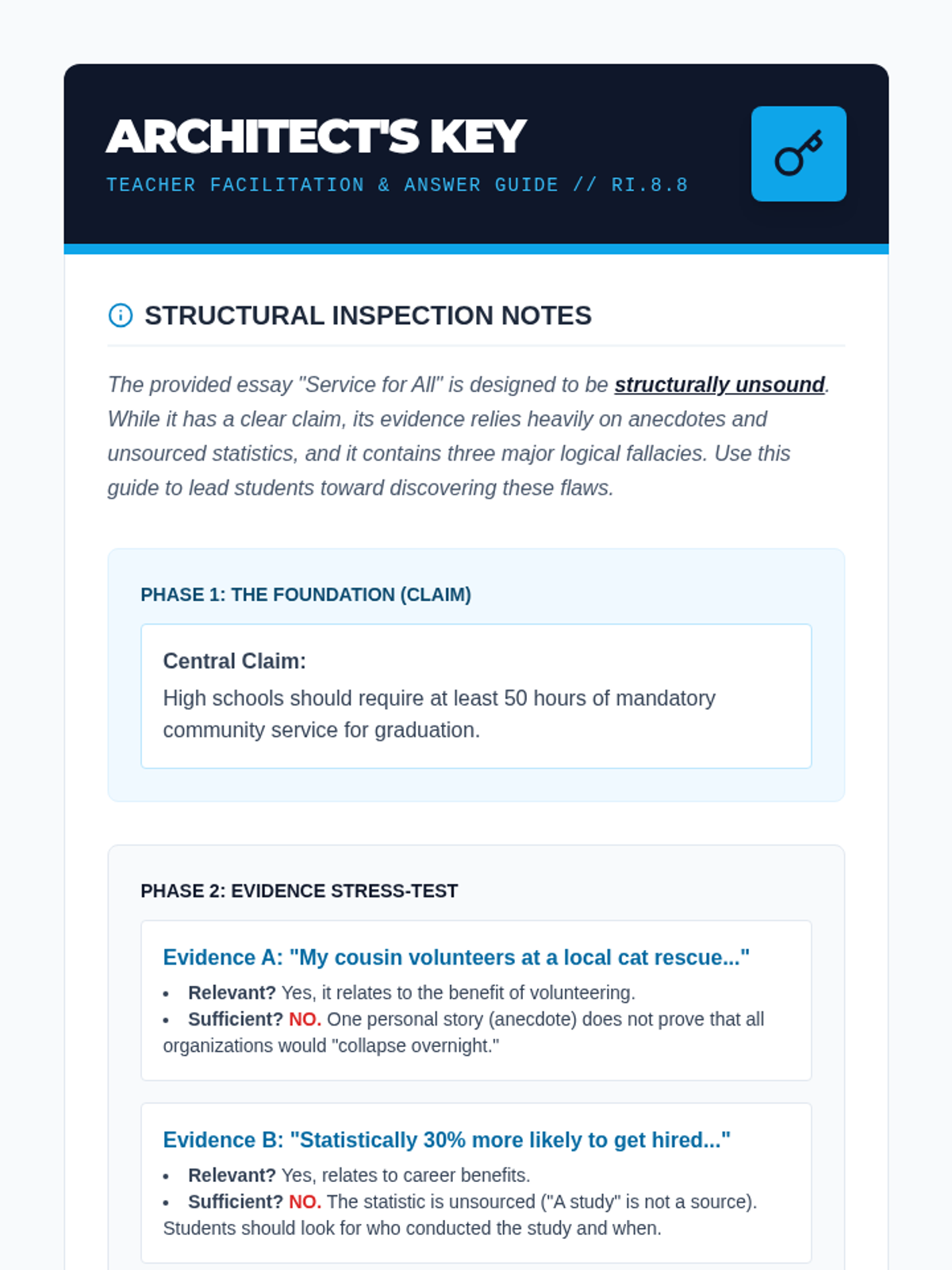
This Grade 8 ELA lesson guides students through RI.8.8 by analyzing the structural integrity of arguments regarding mandatory community service. Students will evaluate claim strength, assess evidence quality, and identify logical fallacies using an architectural blueprint theme.
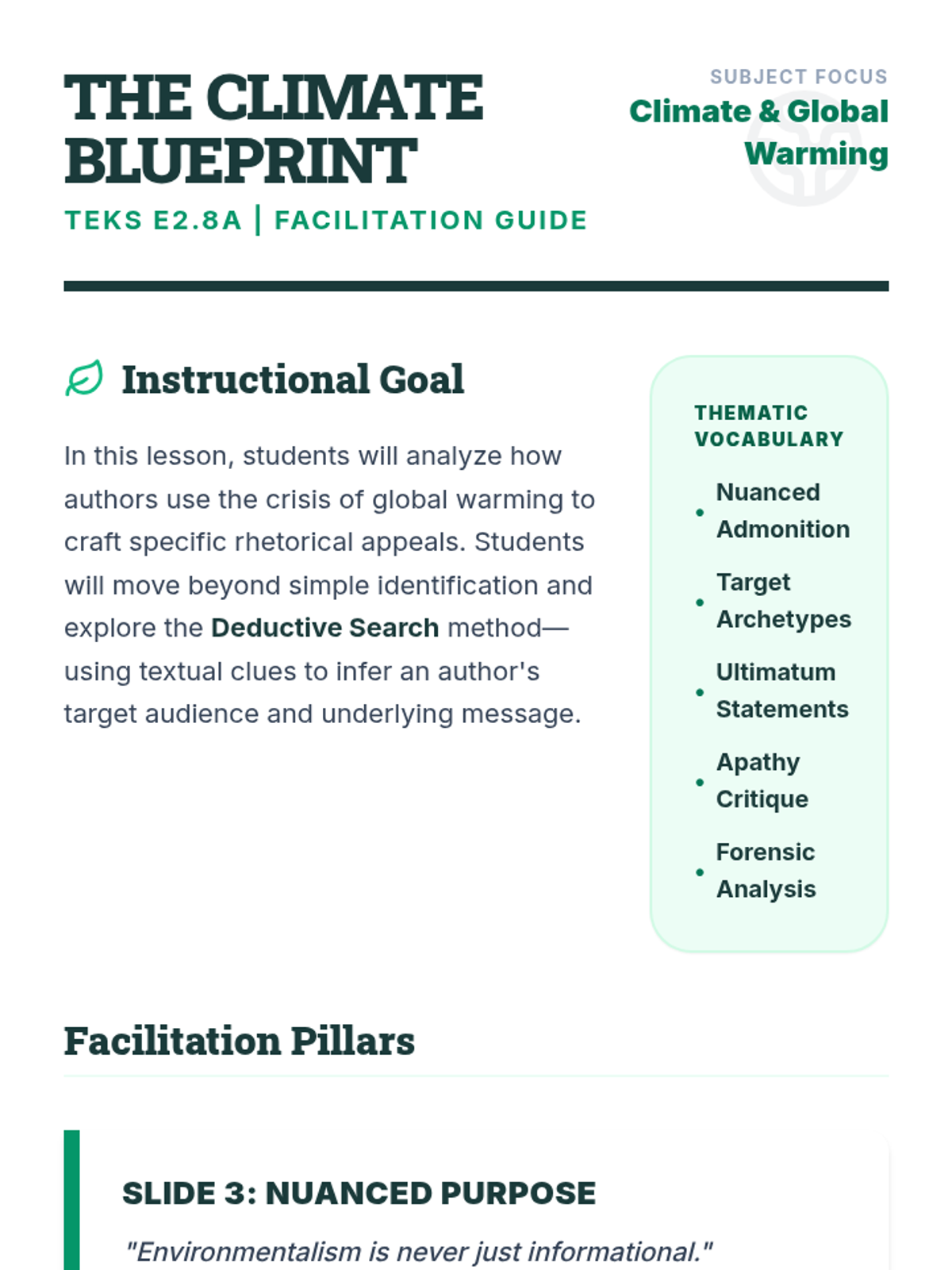
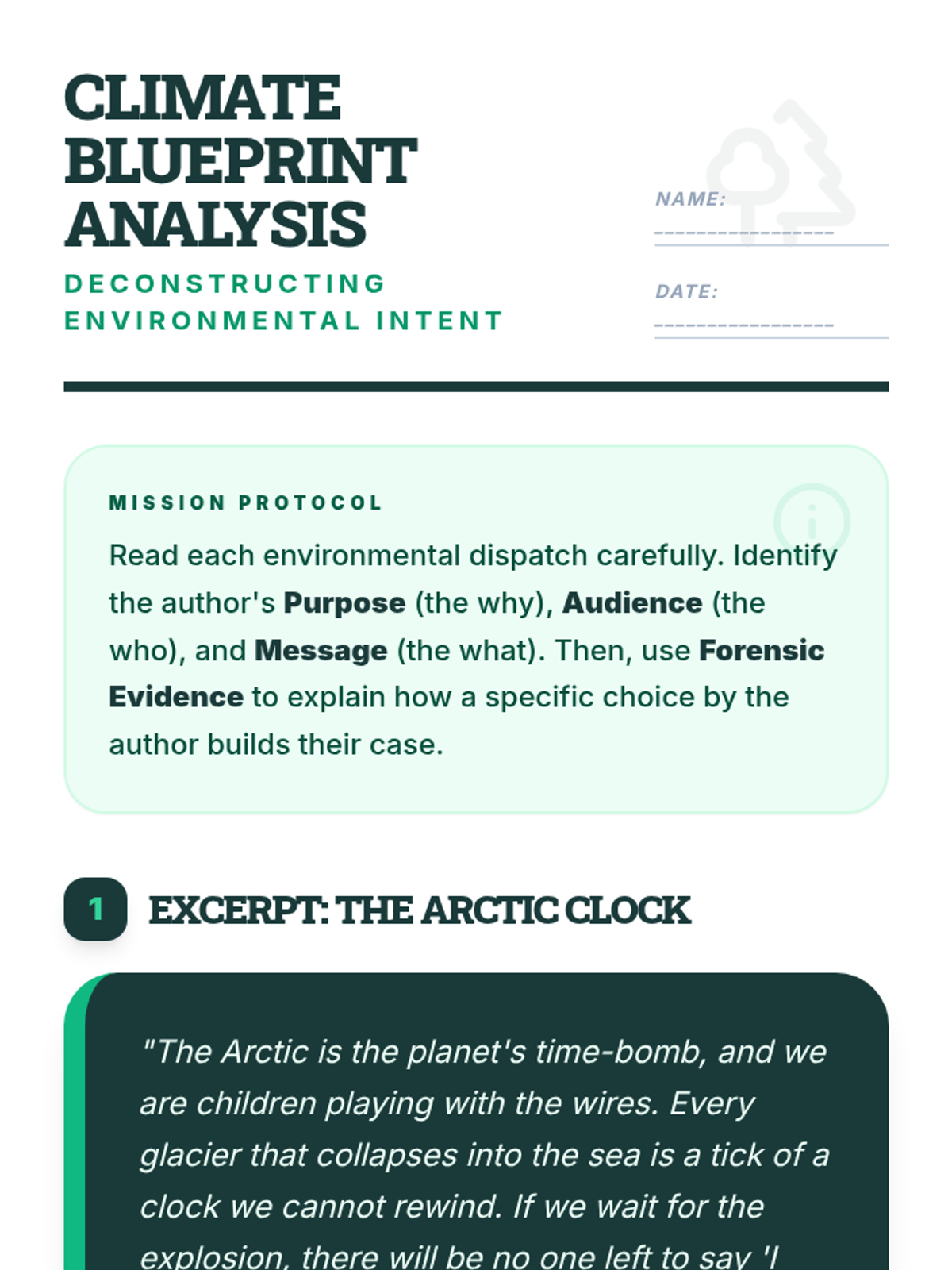
An instructional unit focusing on TEKS E2.8A, teaching students to analyze author's purpose, audience, and message within a variety of texts using nuanced verbs and rhetorical context.
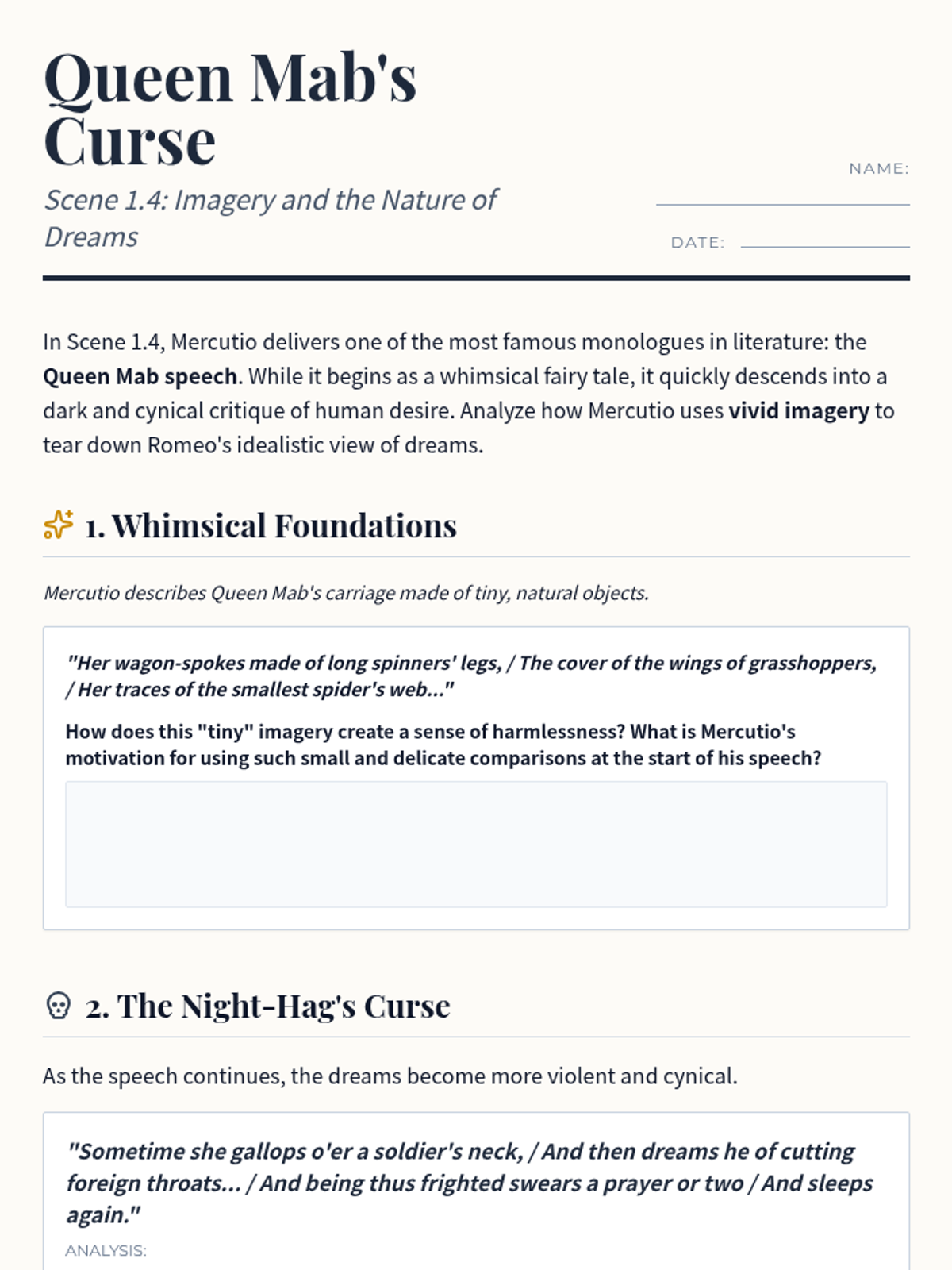
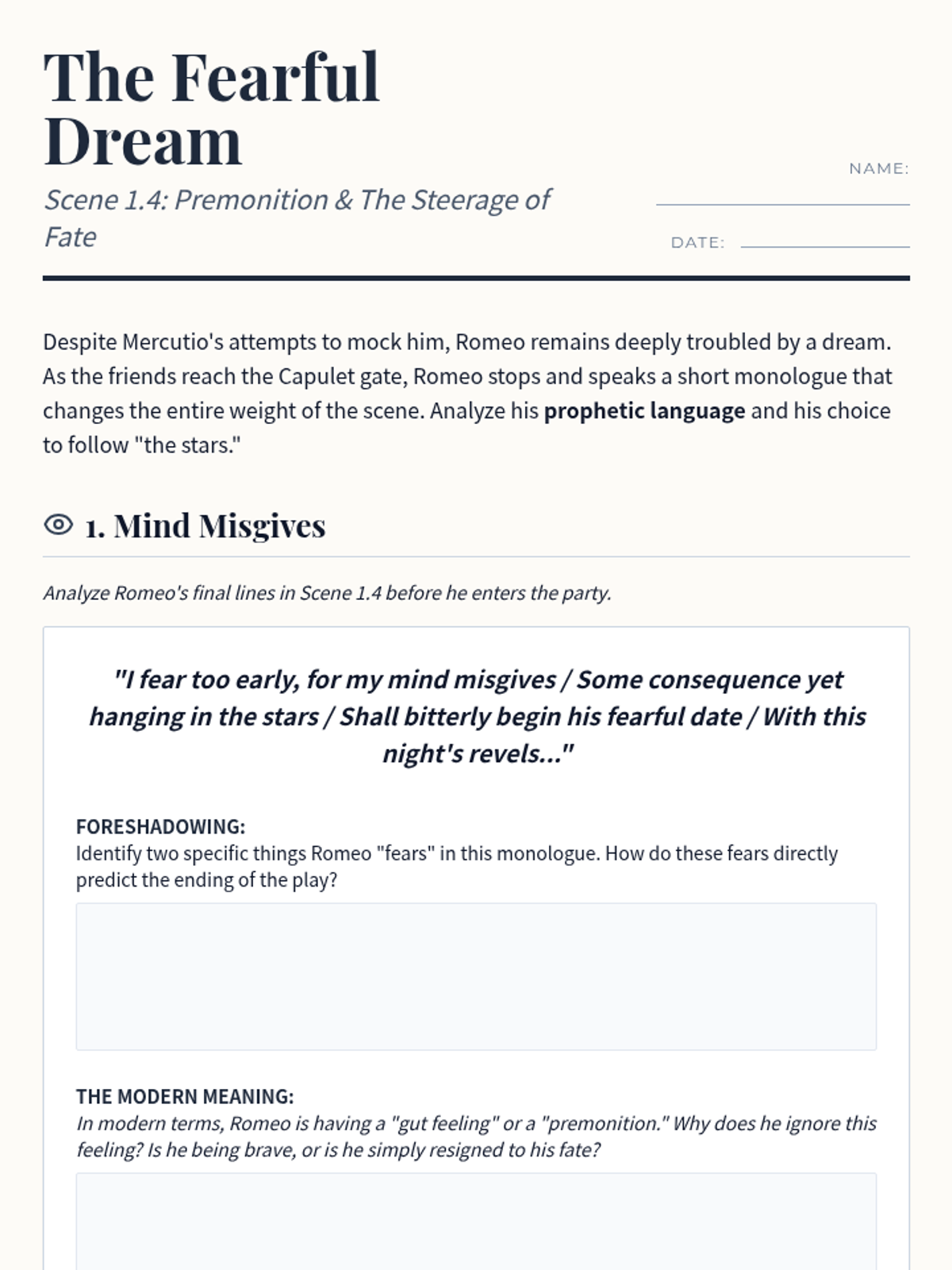
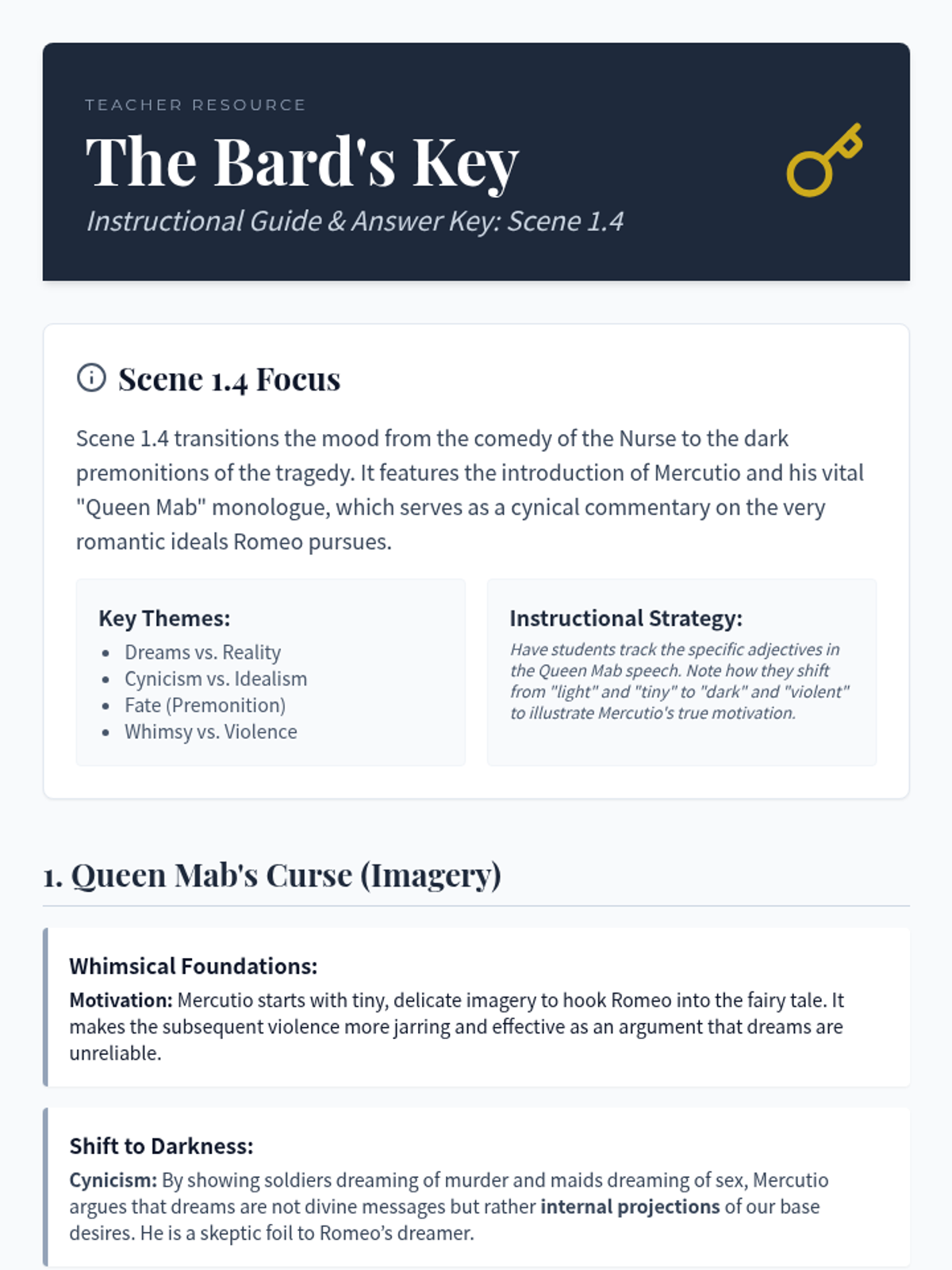
A study of Act 1, Scene 4, where Romeo, Mercutio, and Benvolio prepare to crash the Capulet ball. Students will analyze Mercutio's vivid Queen Mab speech, Romeo's persistent melancholy and prophetic dreams, and the tension between whimsical fantasy and dark reality.
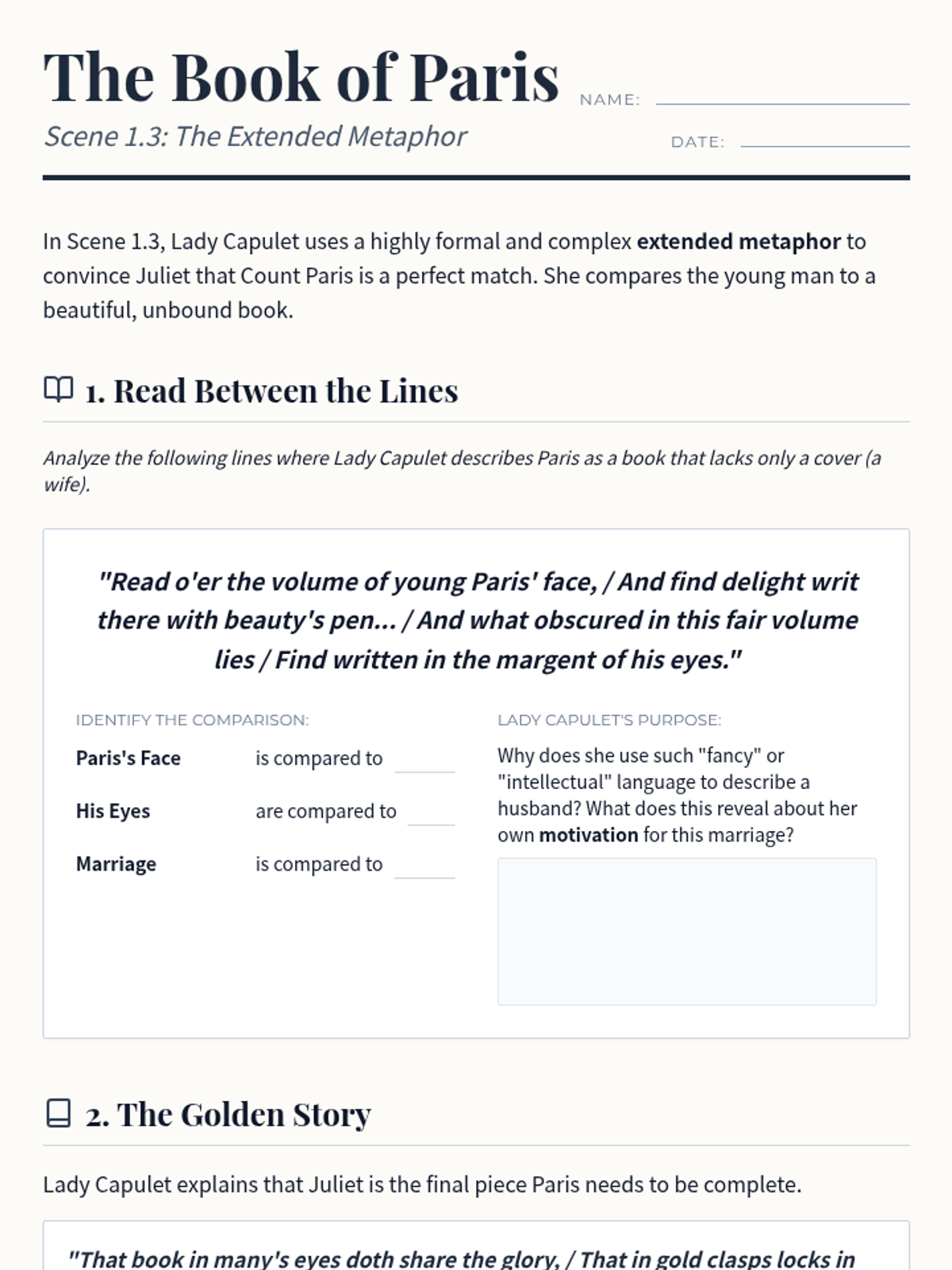
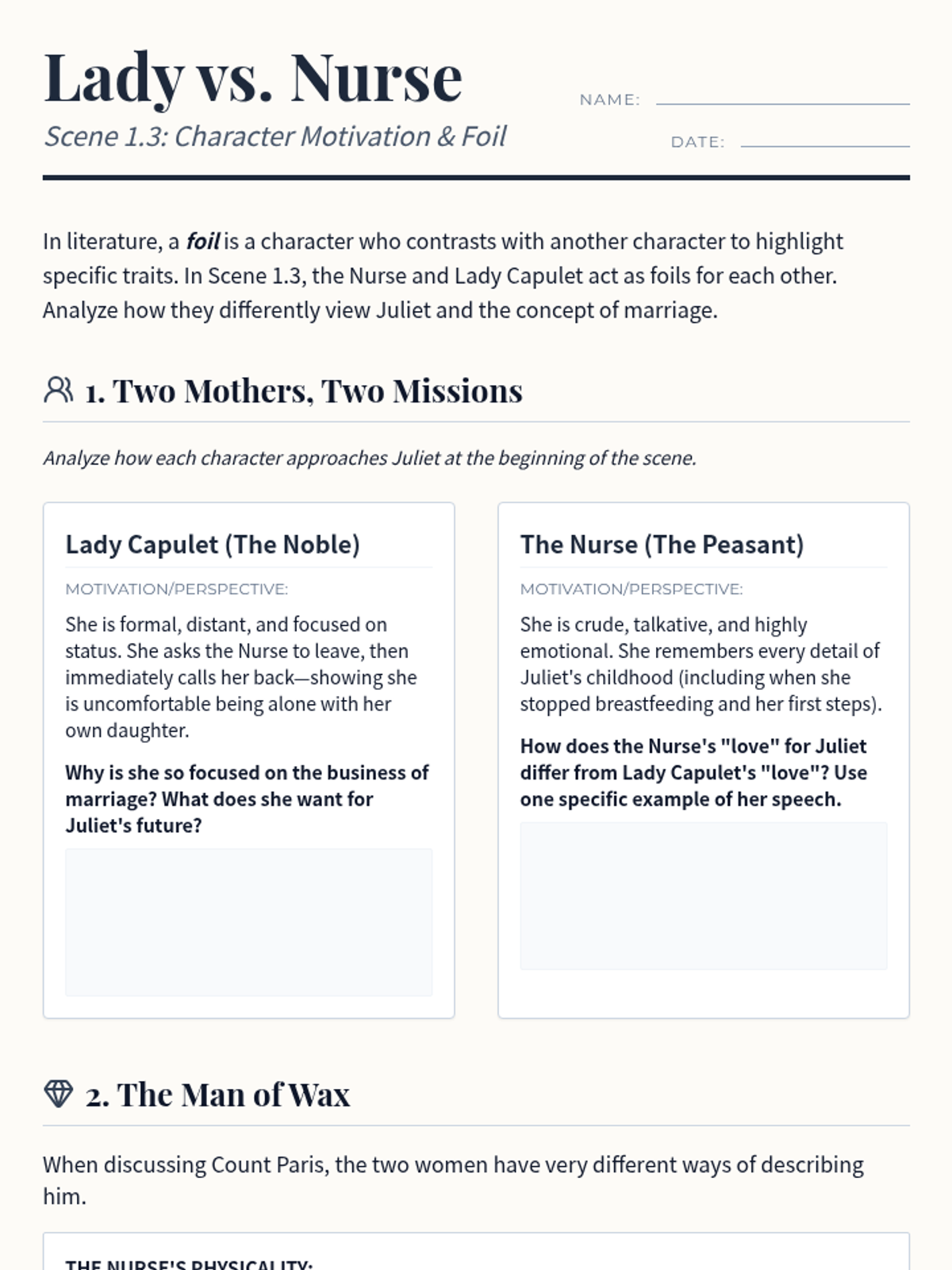
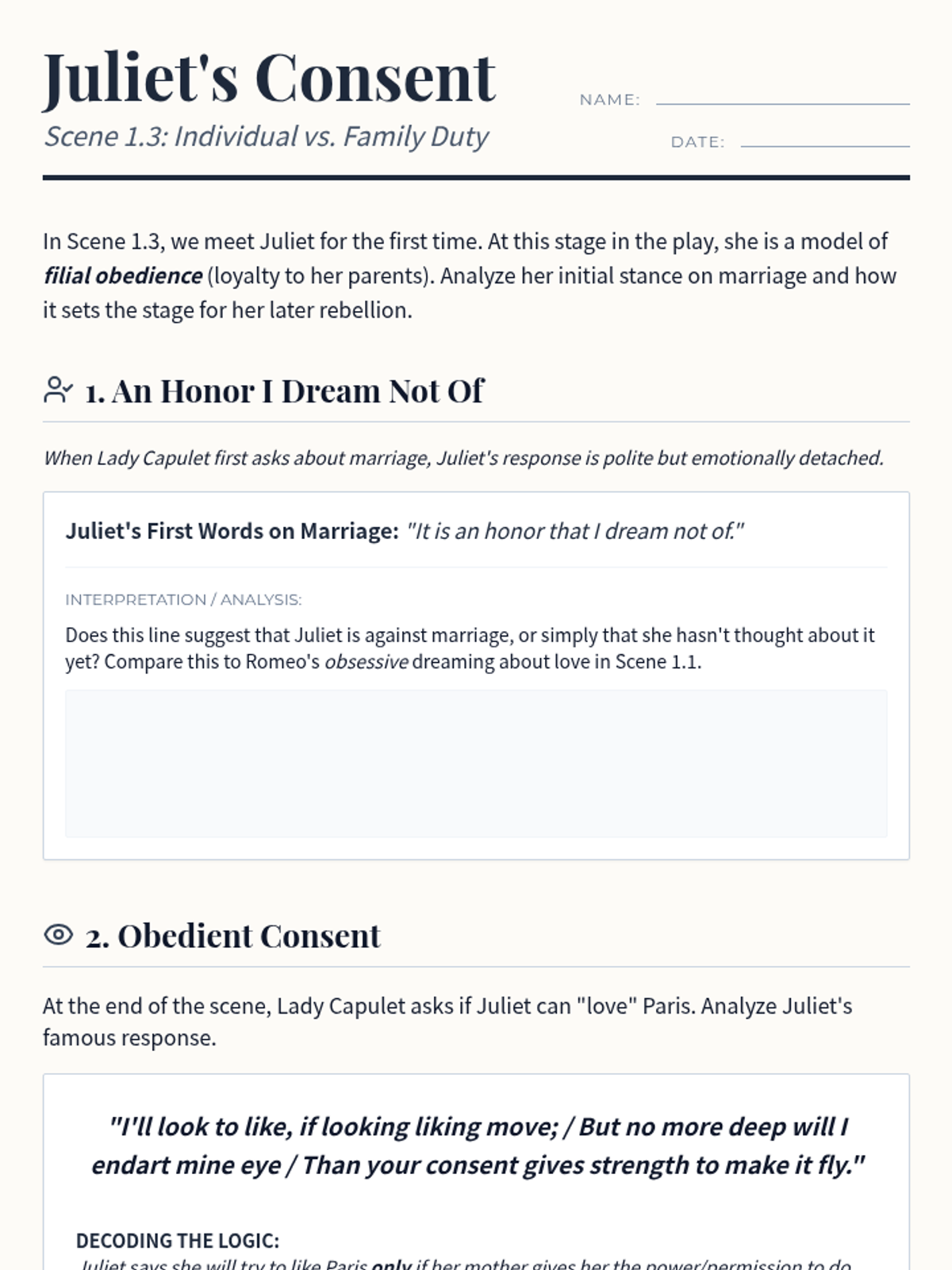
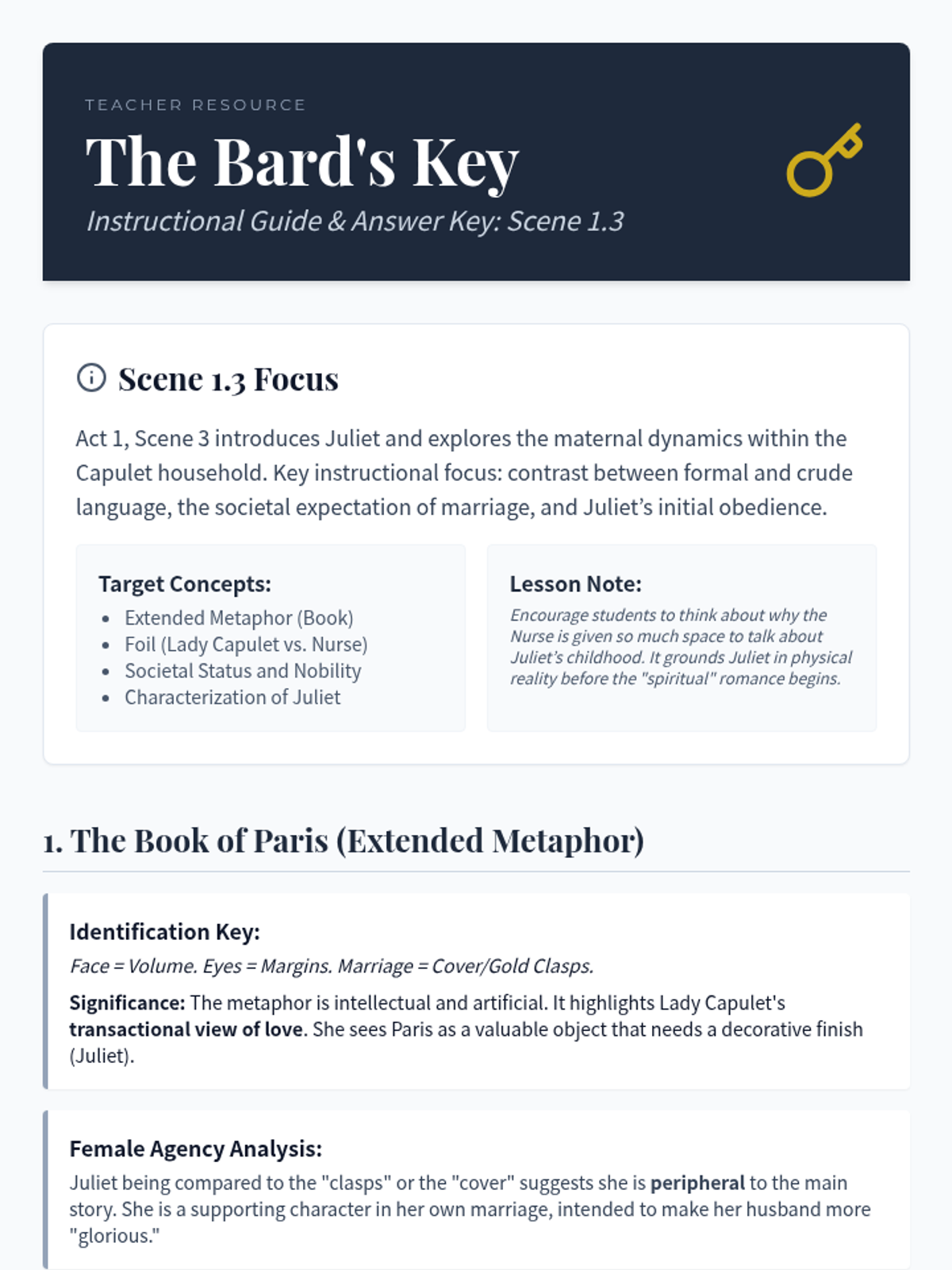
A study of Act 1, Scene 3, introducing the Nurse and Lady Capulet's proposal of marriage to Paris. Students will analyze the Nurse's coarse humor, Lady Capulet's extended metaphor of Paris as a book, and Juliet's initial stance on marriage and obedience.
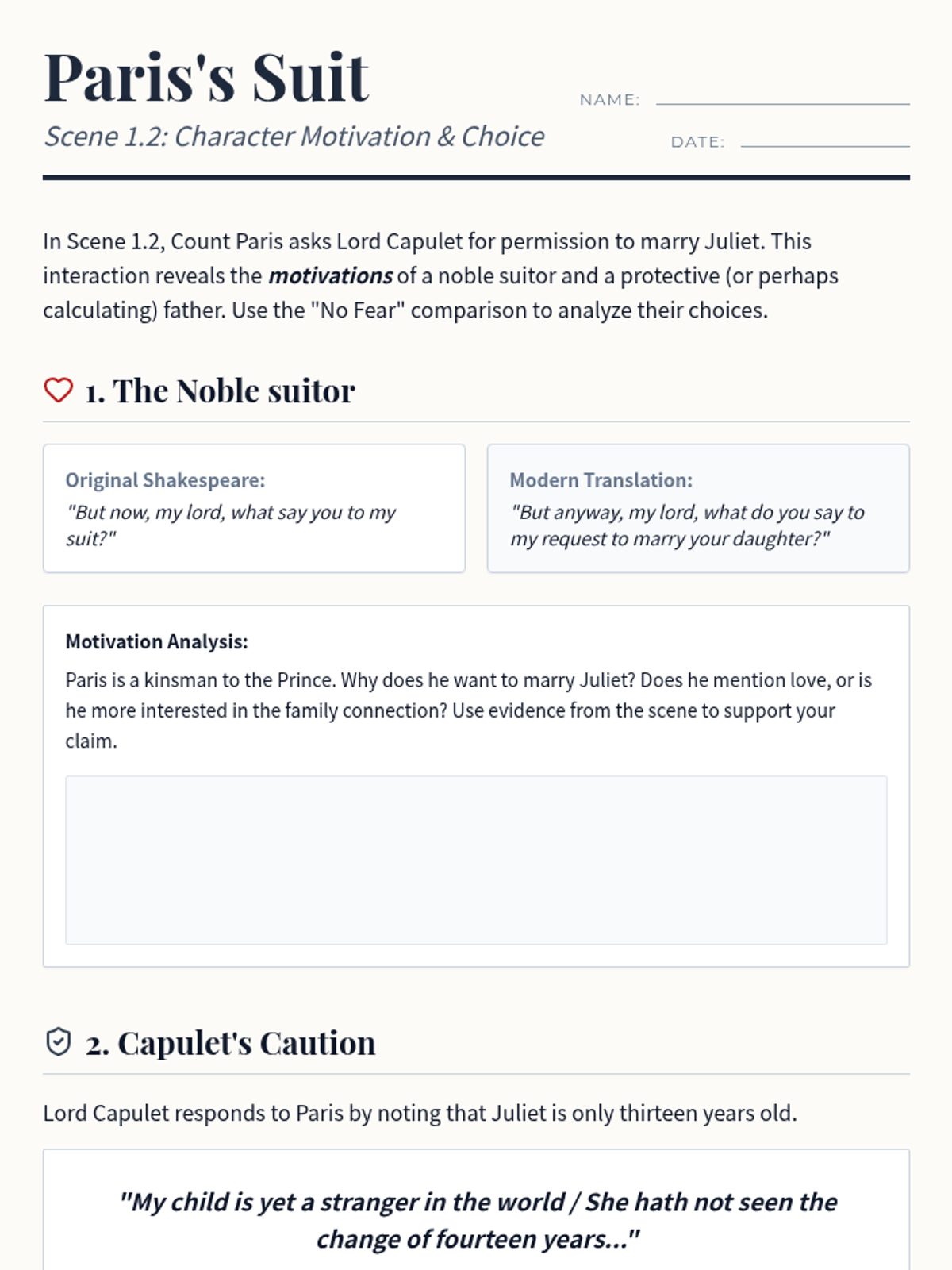
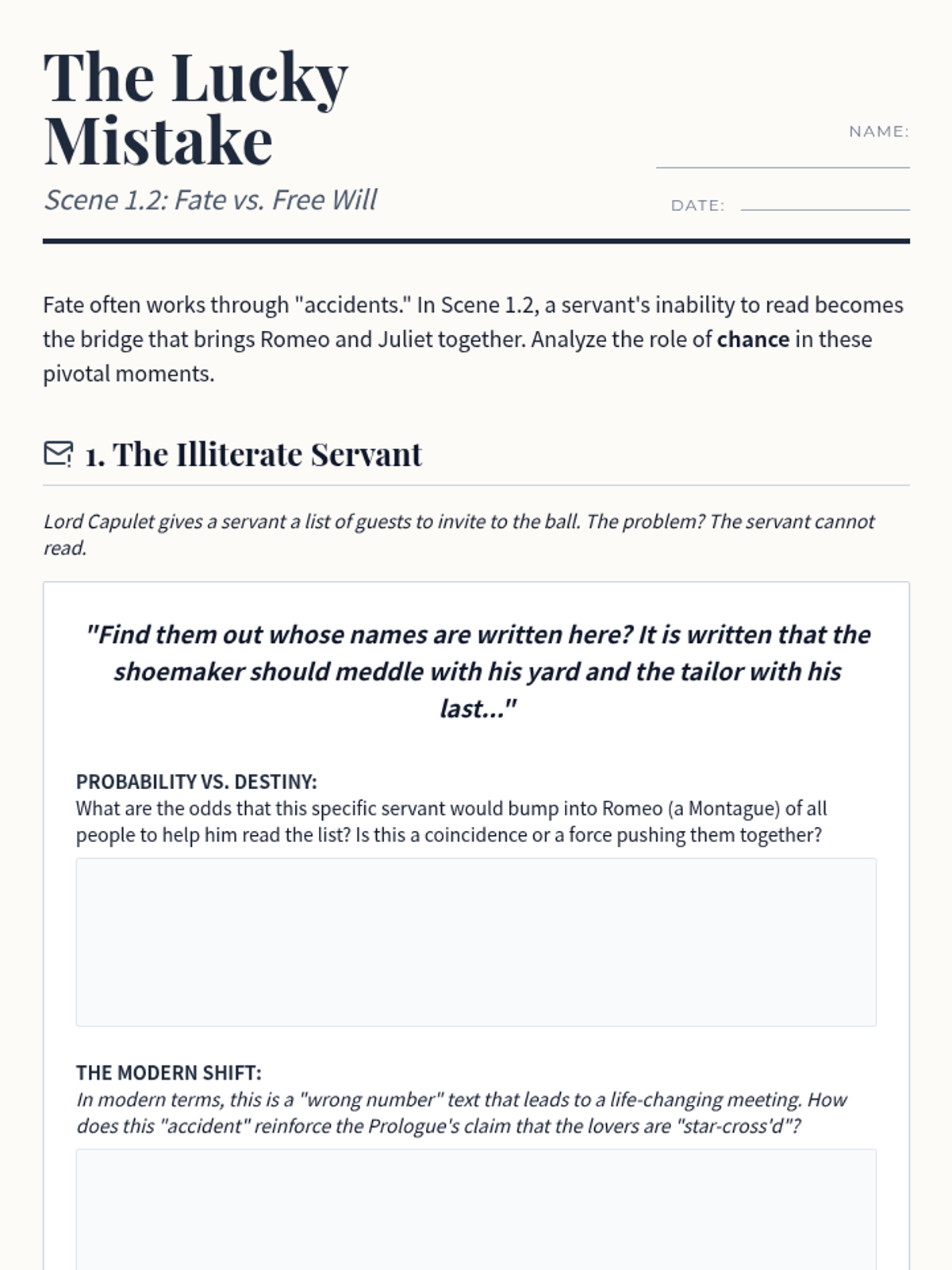
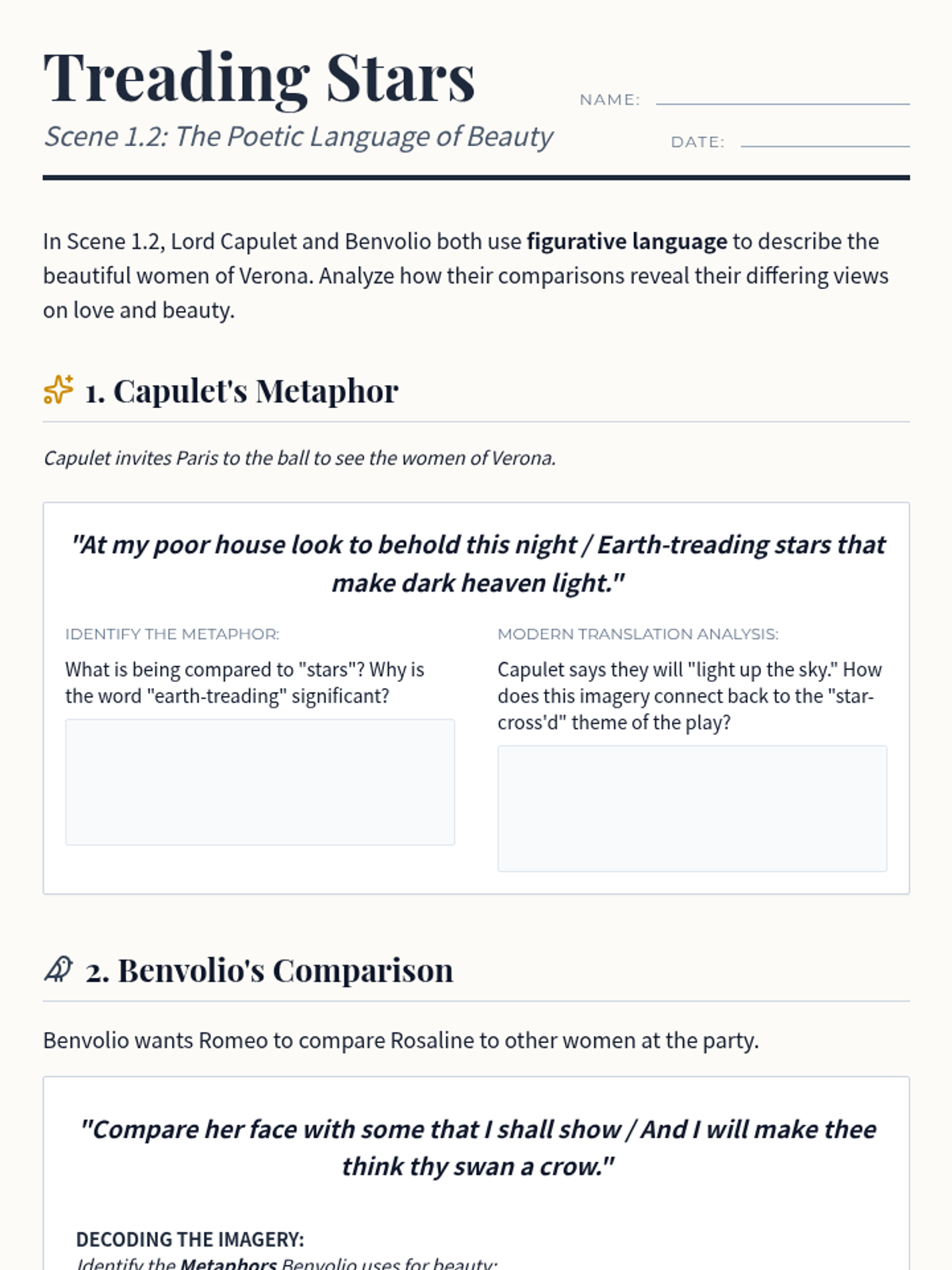
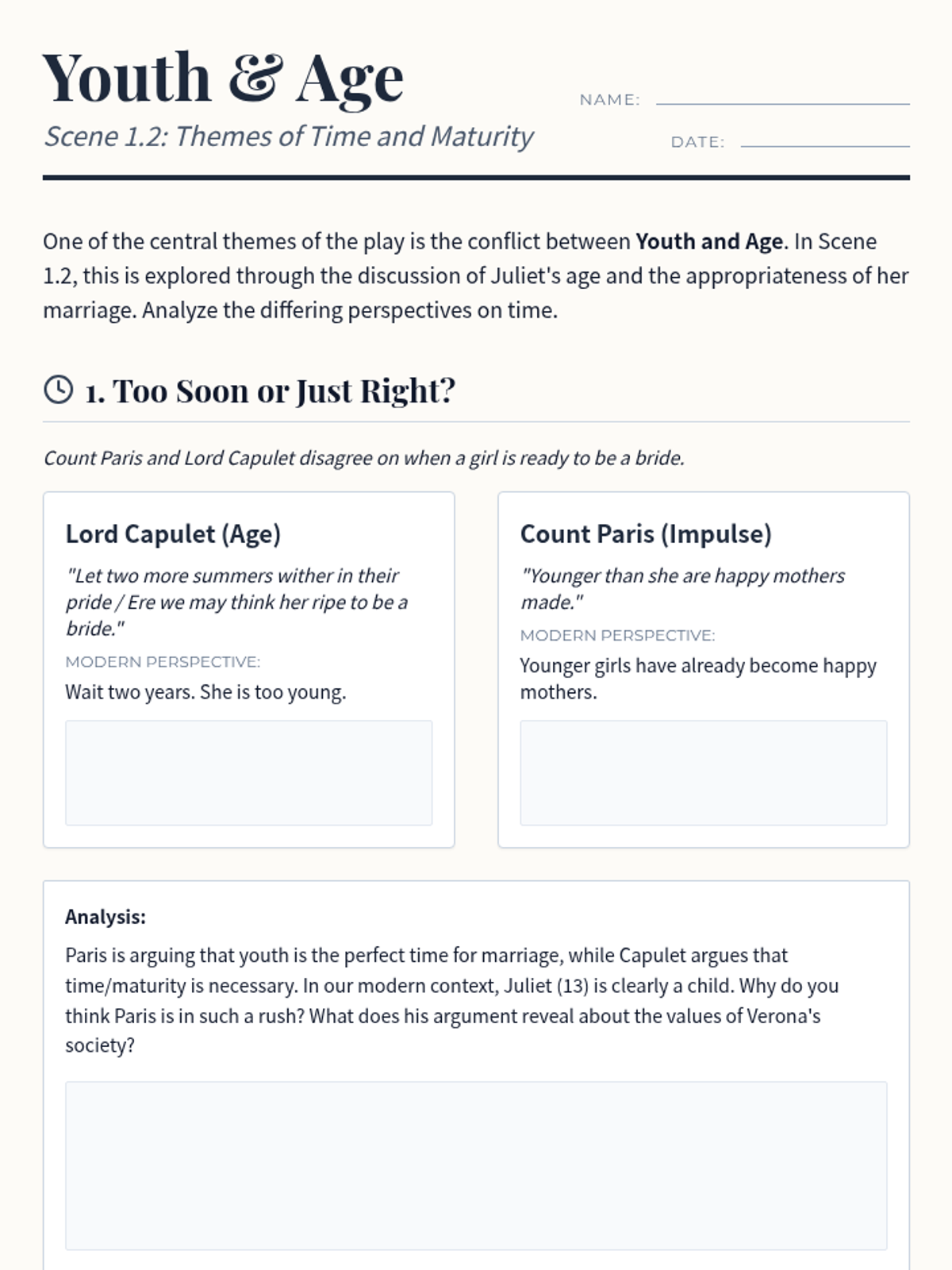
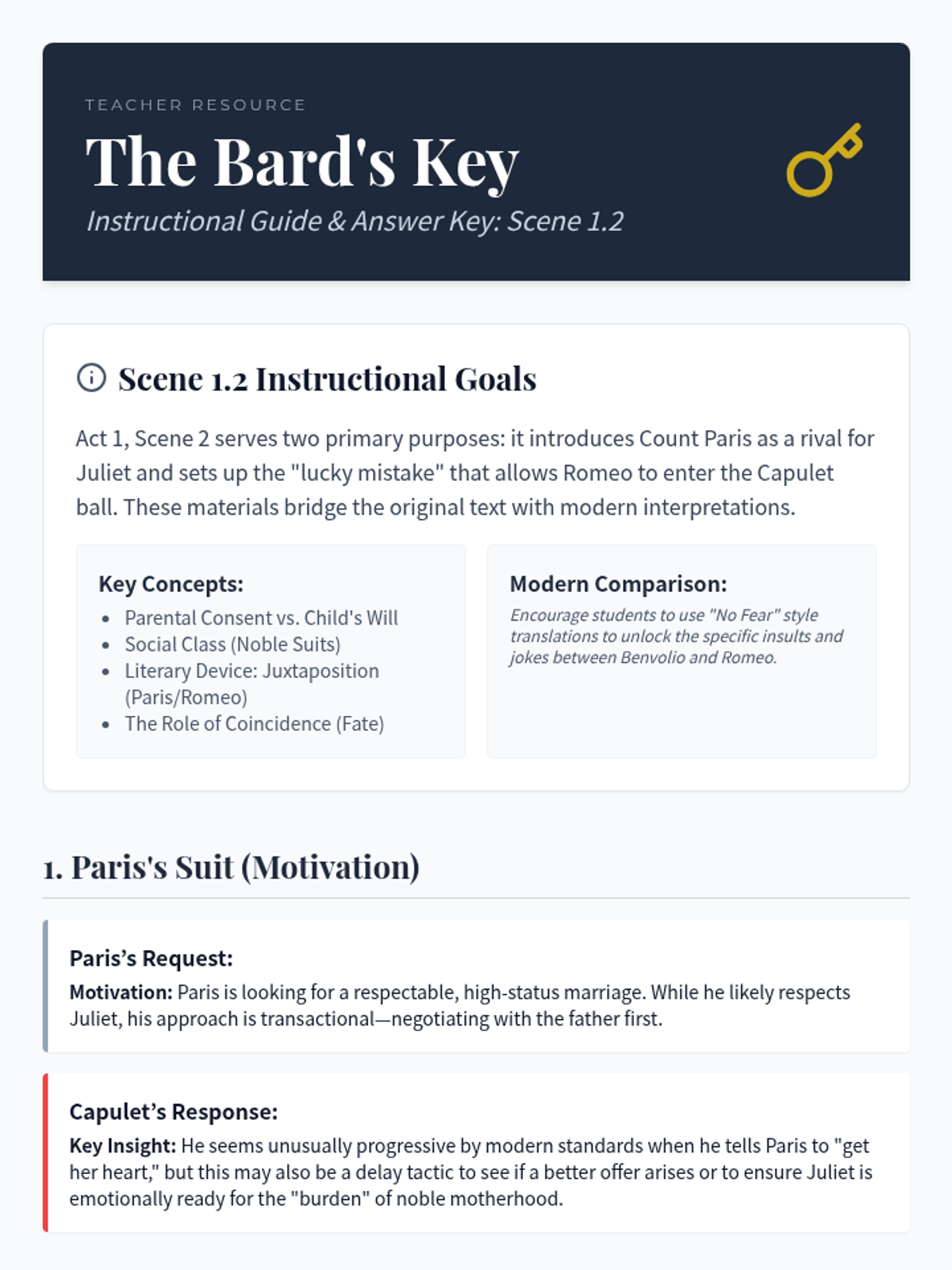
A study of Act 1, Scene 2, where Count Paris asks for Juliet's hand and Romeo and Benvolio discover the Capulet party through a chance encounter. Students will analyze the dynamics of parental choice, the role of chance, and the poetic language used to describe the ladies of Verona.
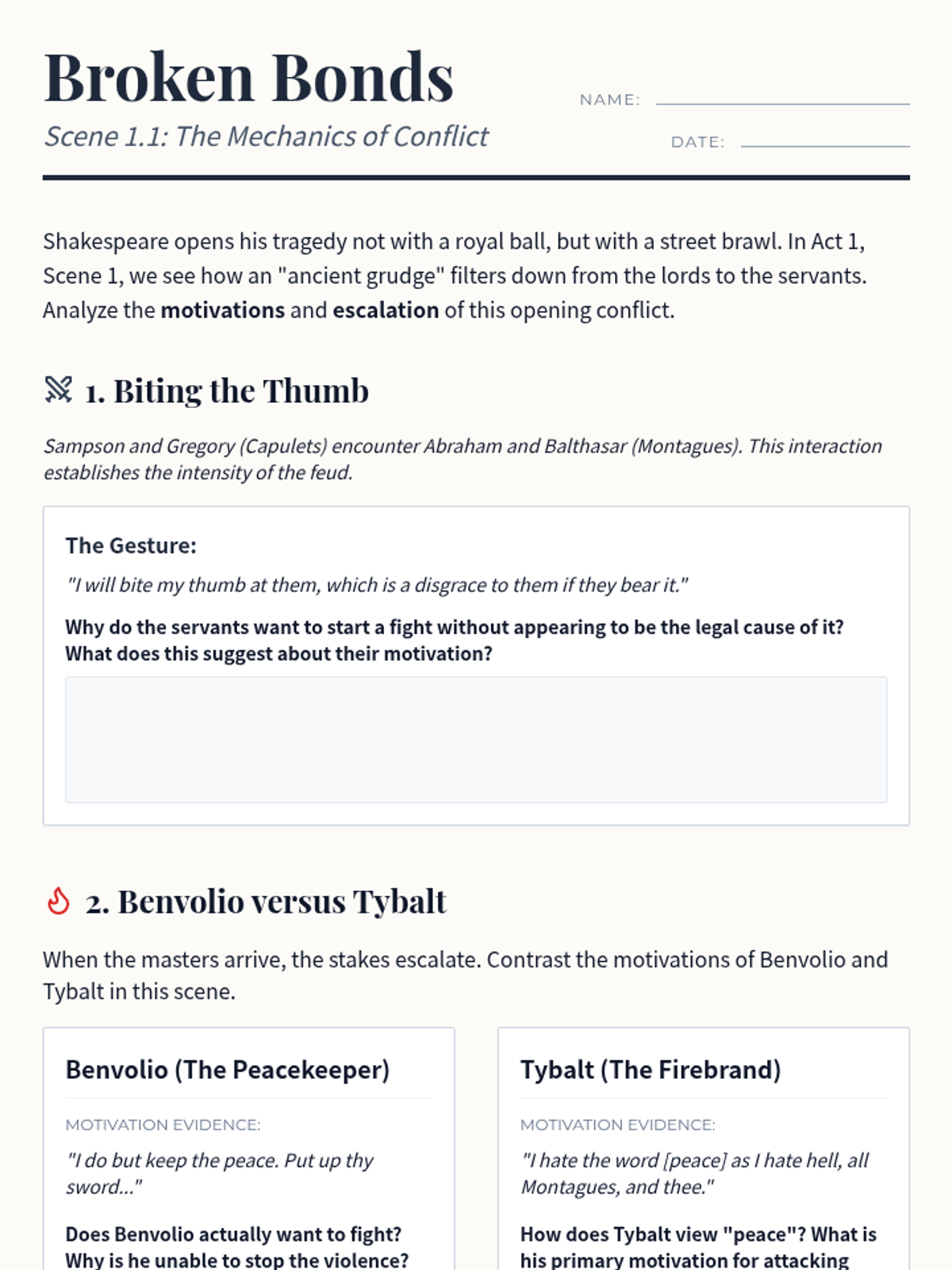
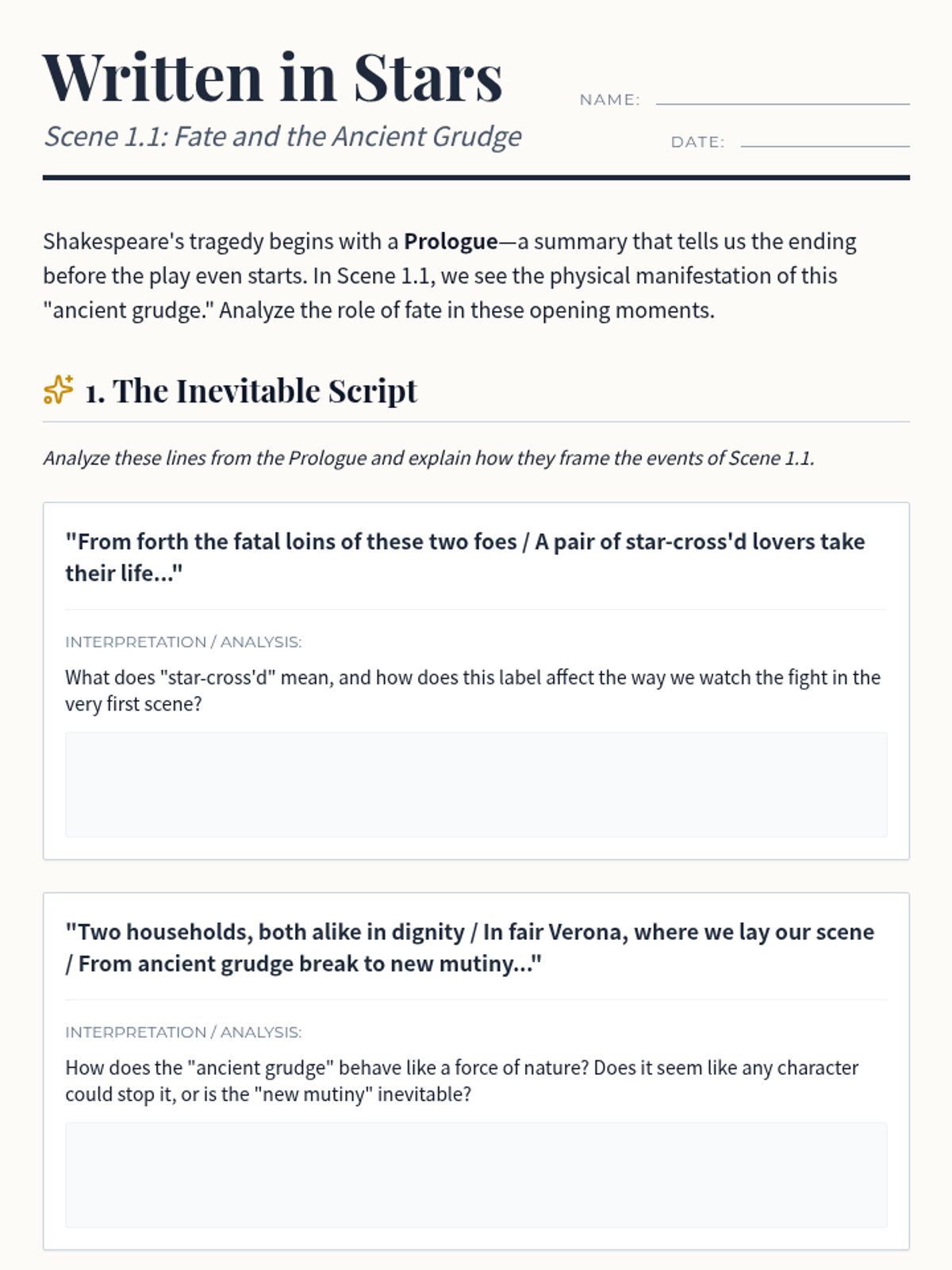
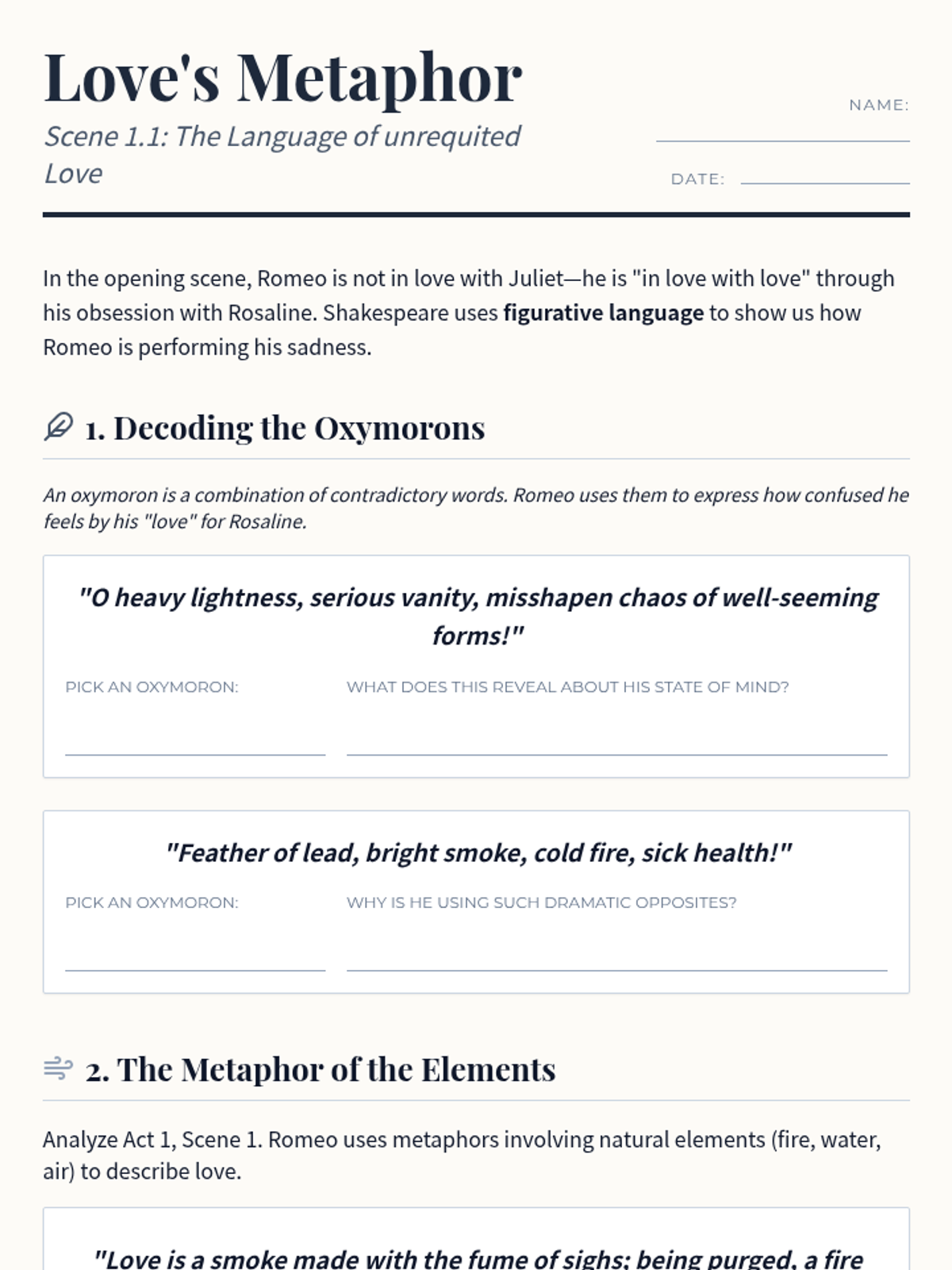
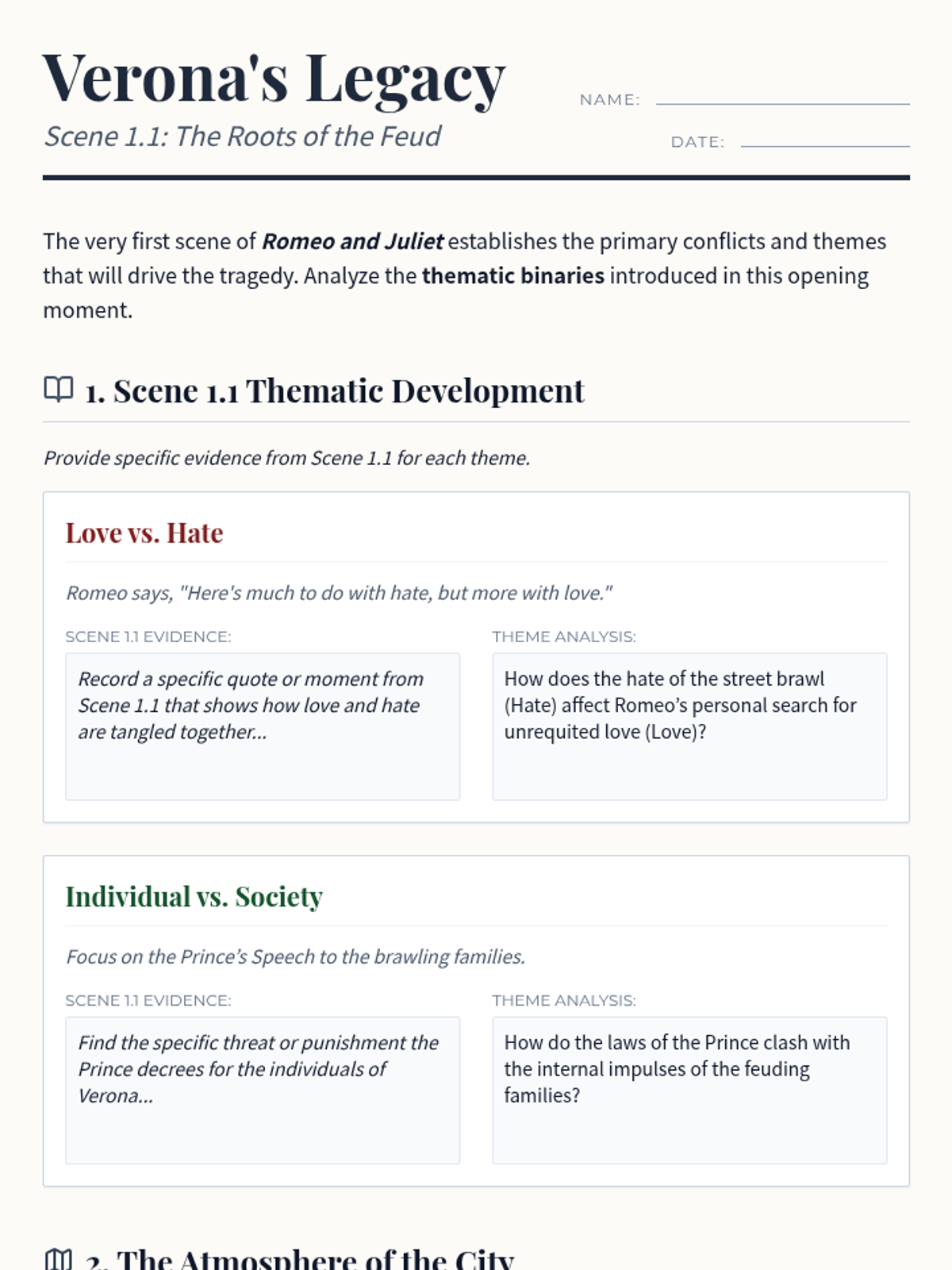
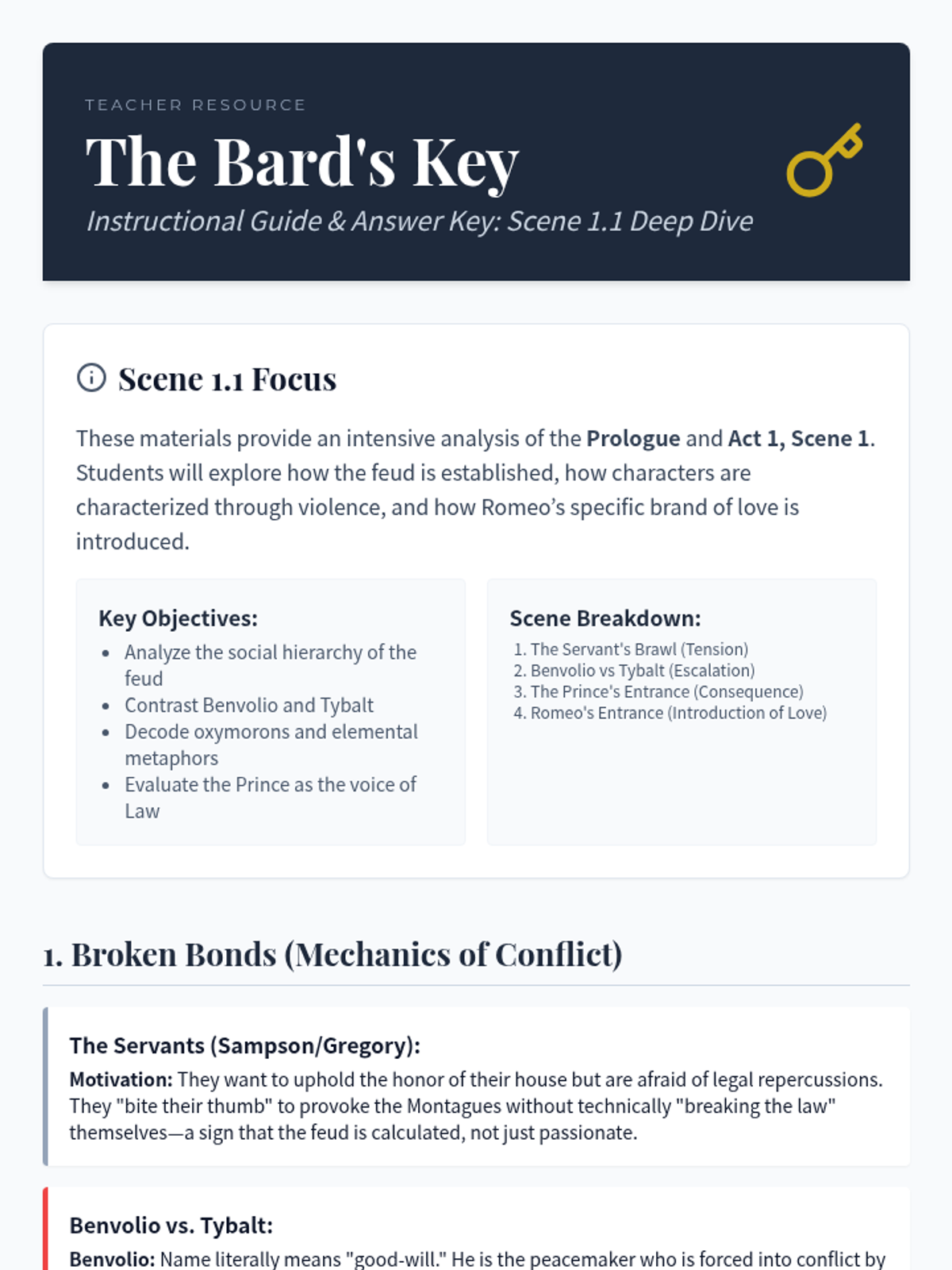
An intensive study of the opening scene and prologue of Shakespeare's Romeo and Juliet. Students will analyze the mechanics of the ancient grudge, the characterization of the principal families, and the specific poetic techniques used to establish Romeo's unrequited love for Rosaline.
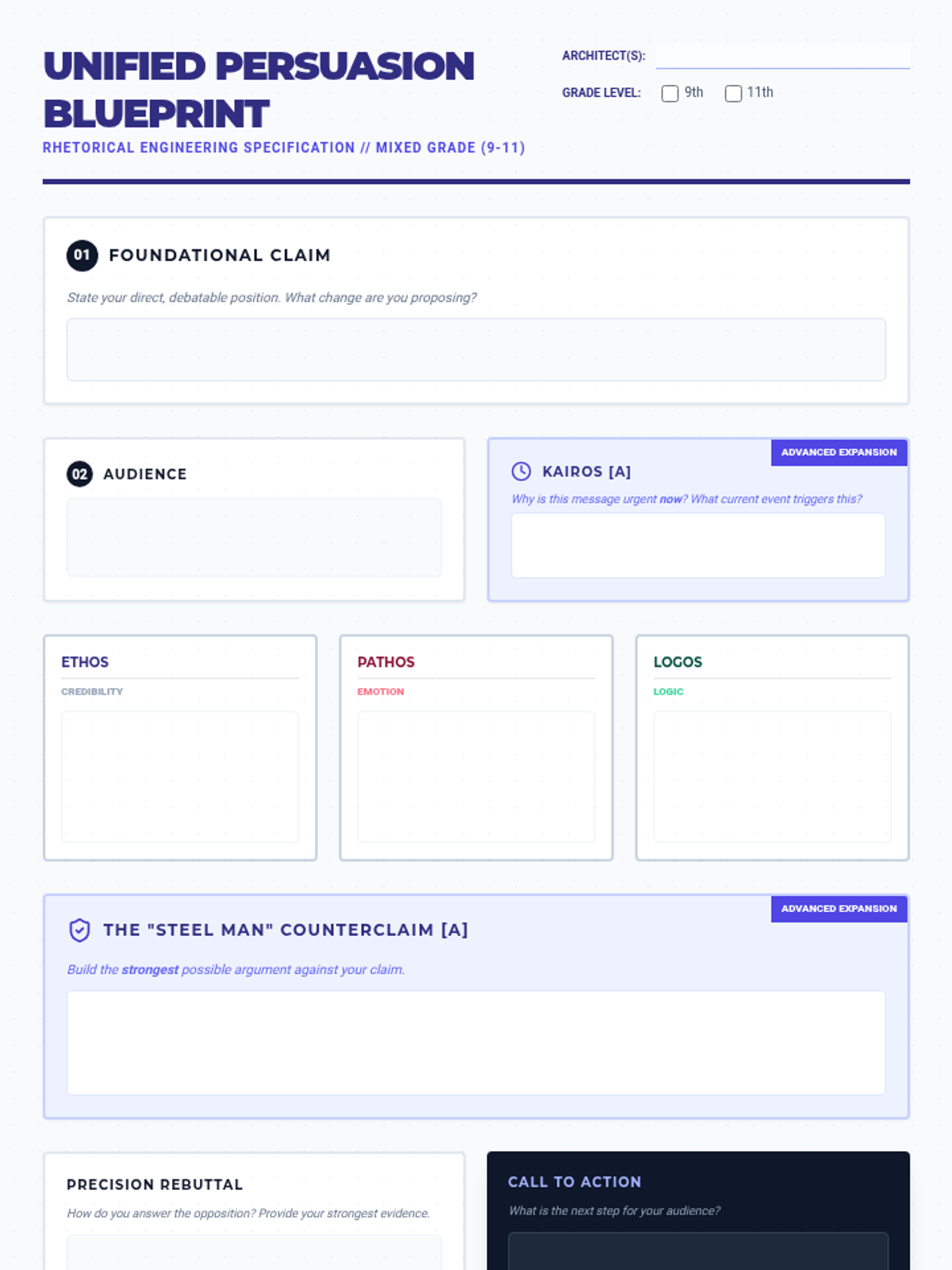
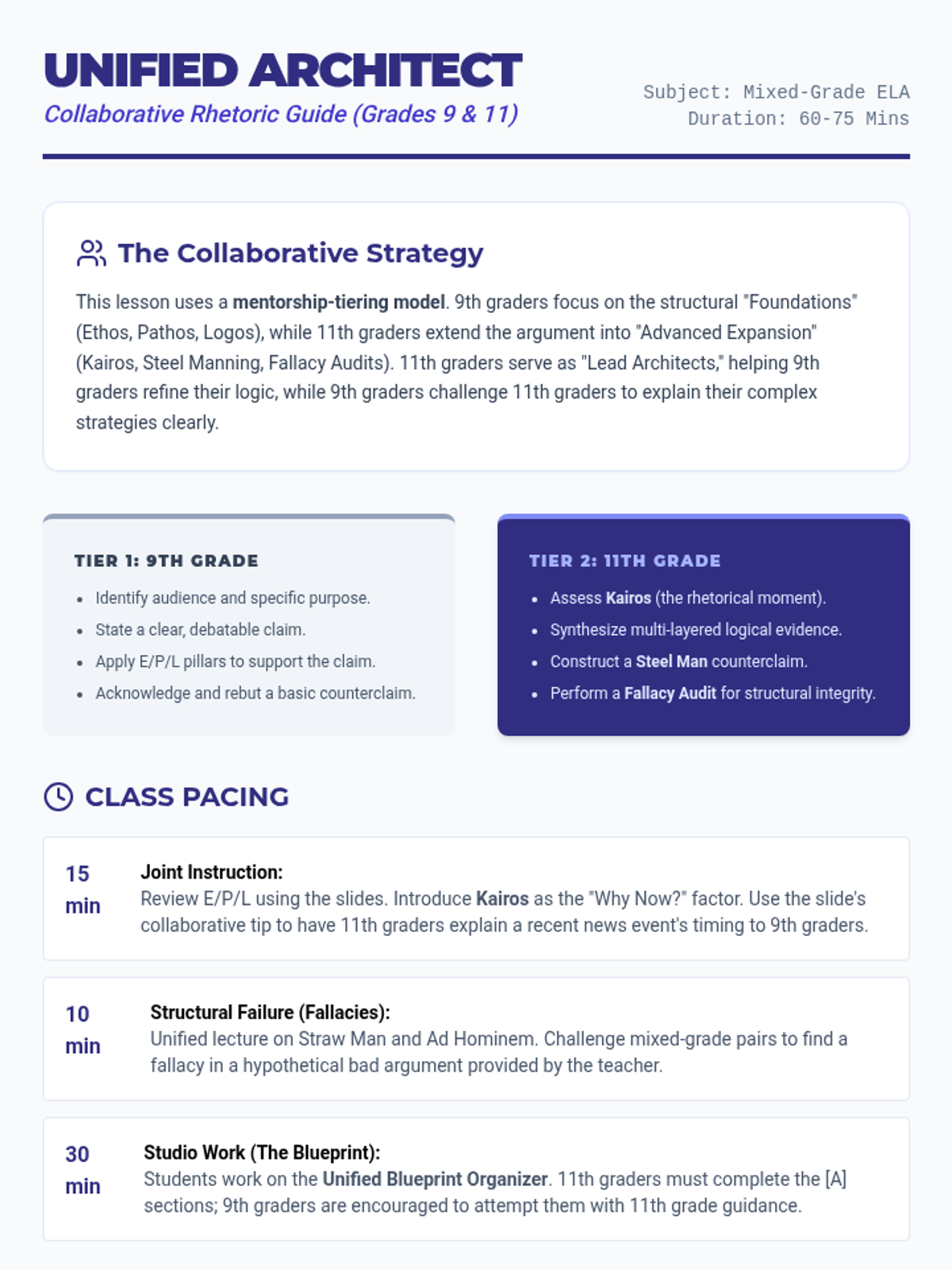
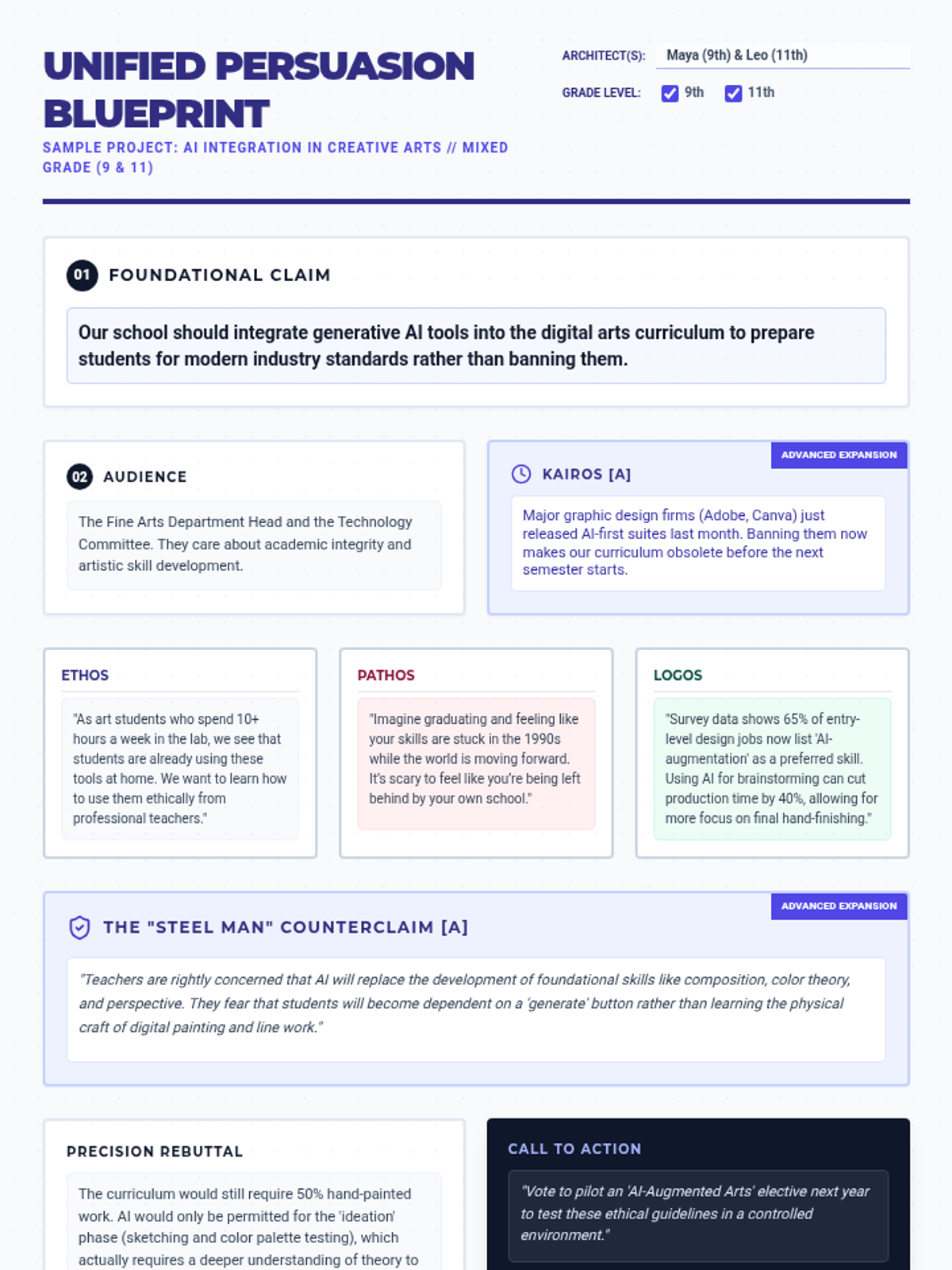
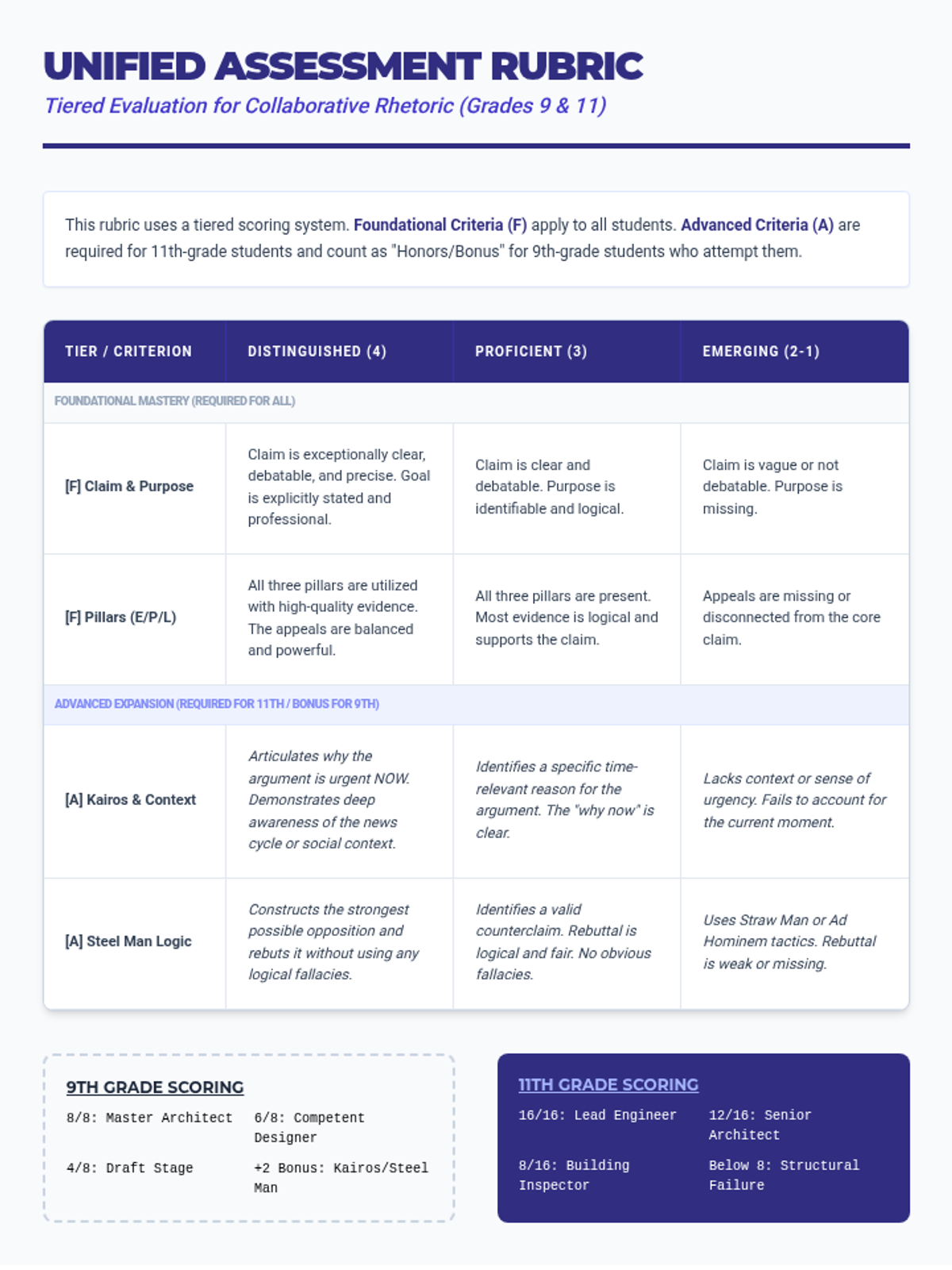
A tiered persuasive writing lesson designed for mixed-grade or scaffolded classrooms (9th-11th). Core concepts like Ethos, Pathos, and Logos are taught alongside advanced techniques like Kairos and Steel Manning, allowing students of different levels to collaborate and learn from one another.
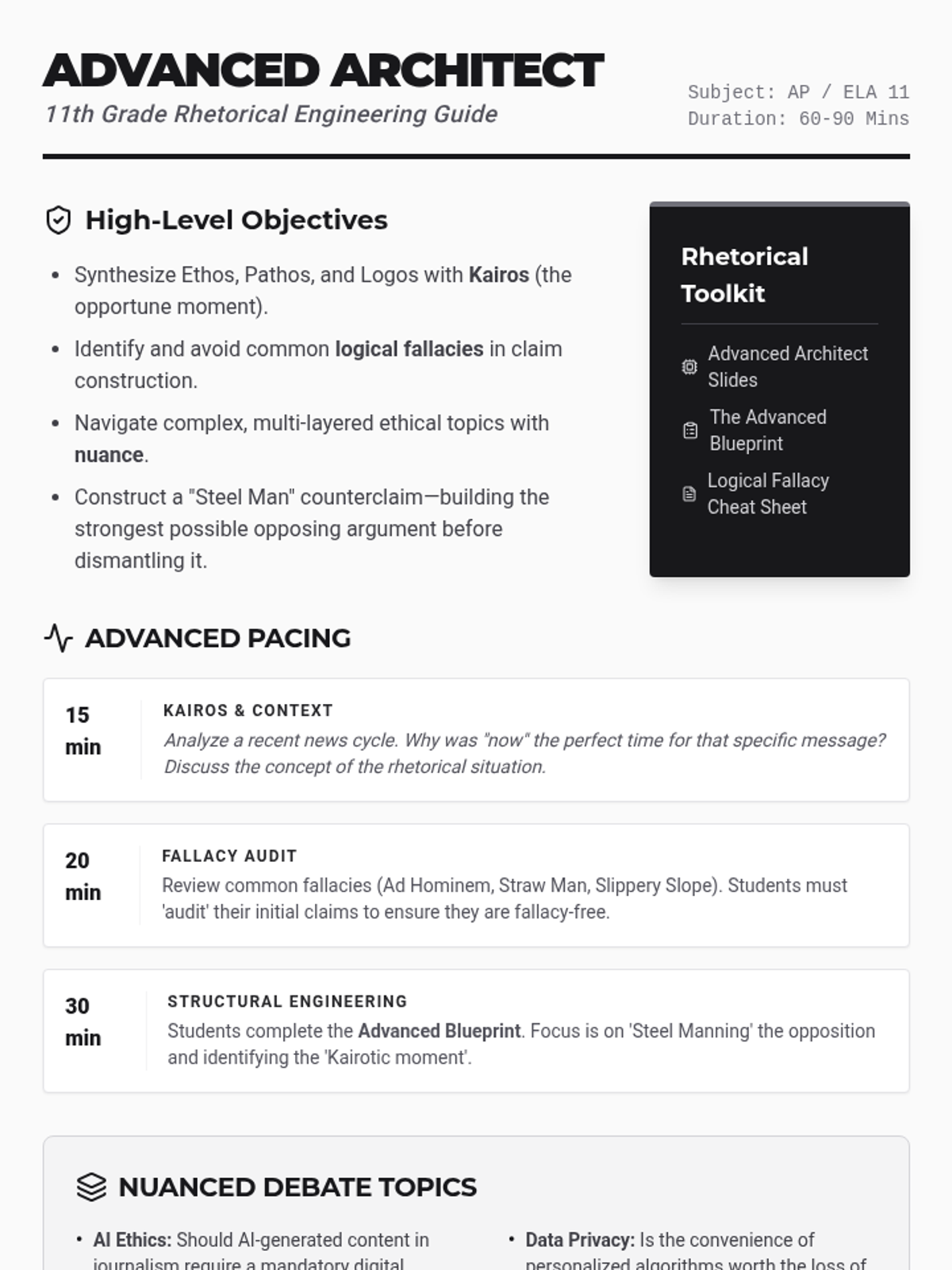
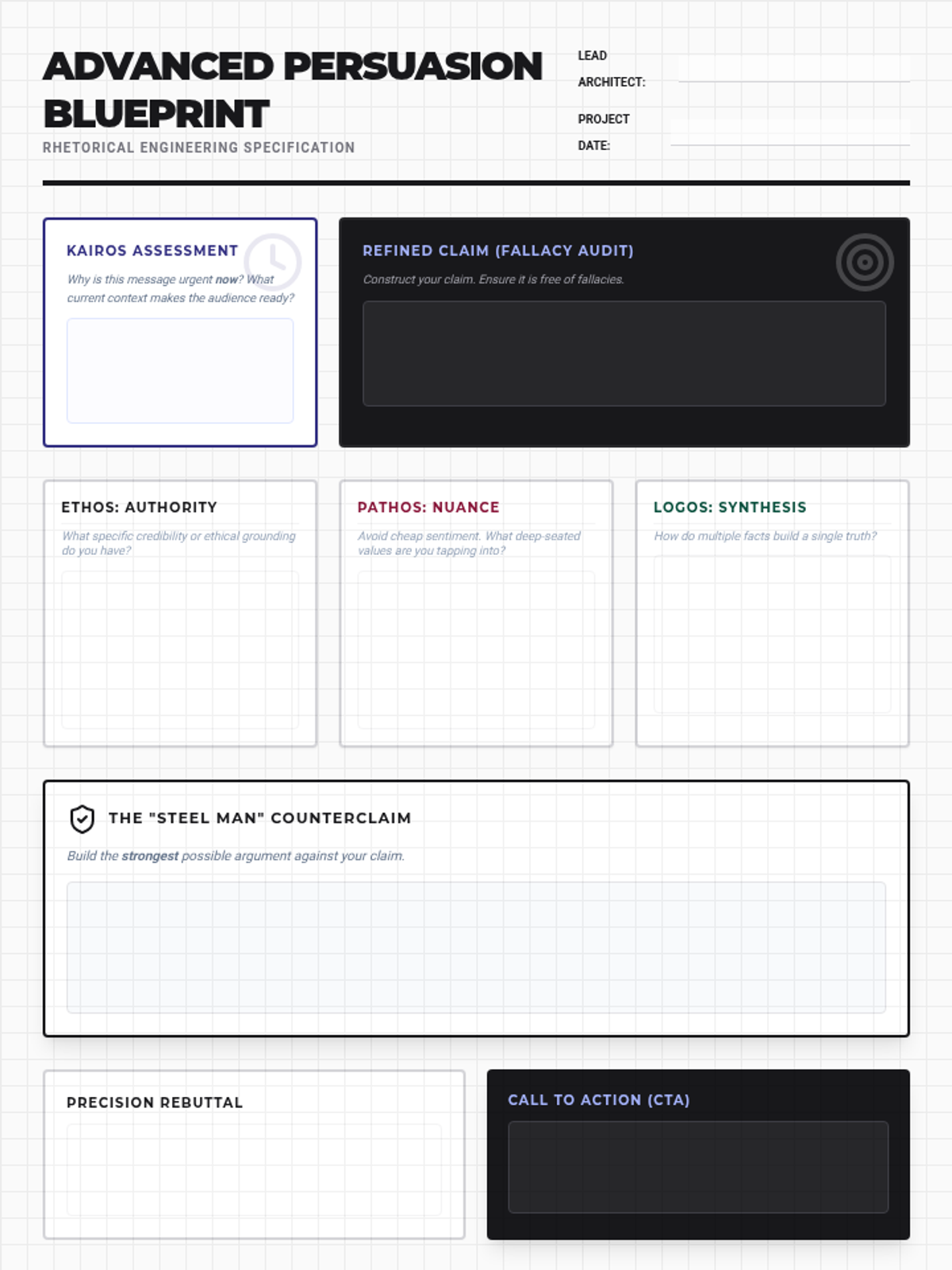
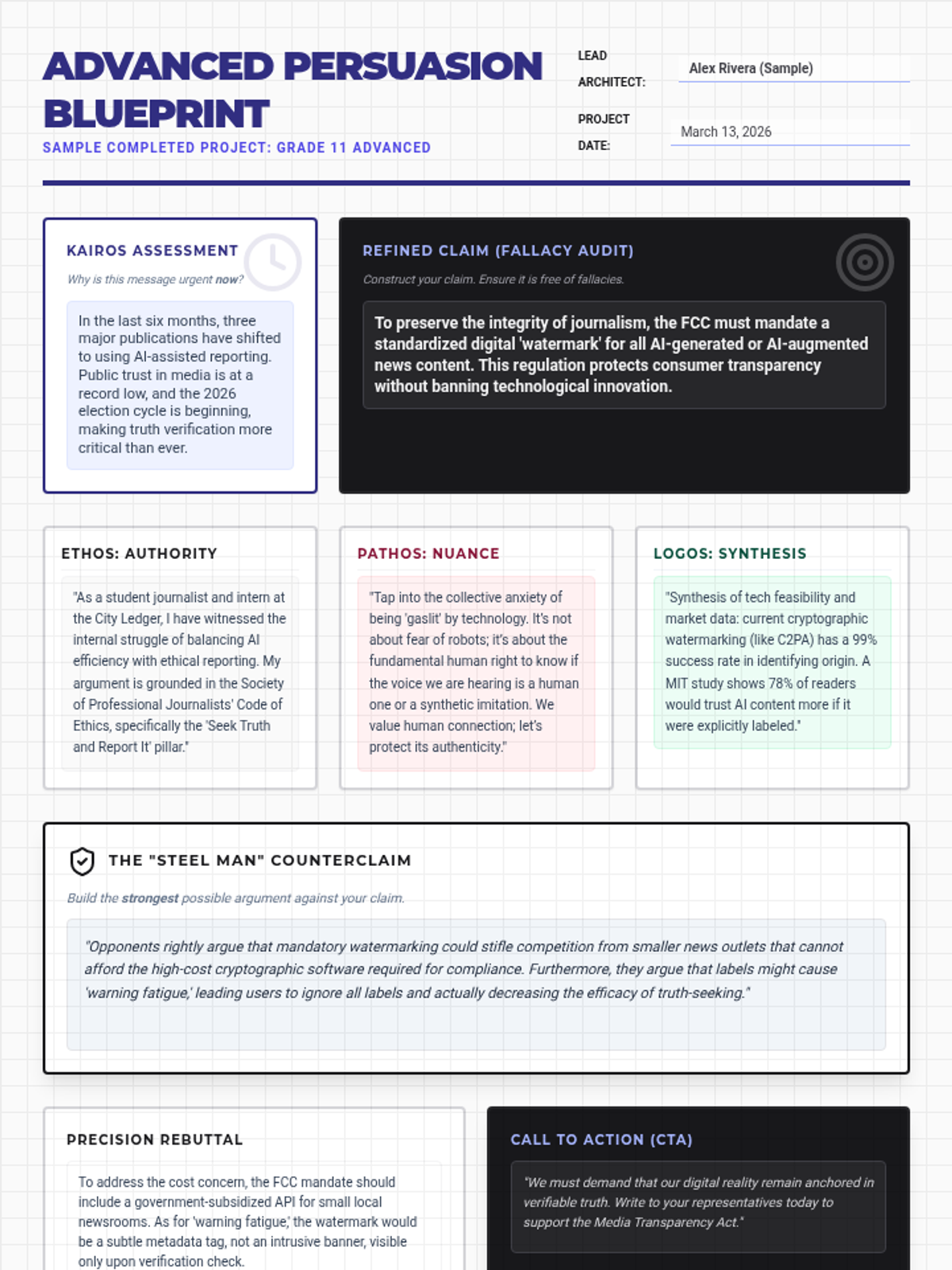
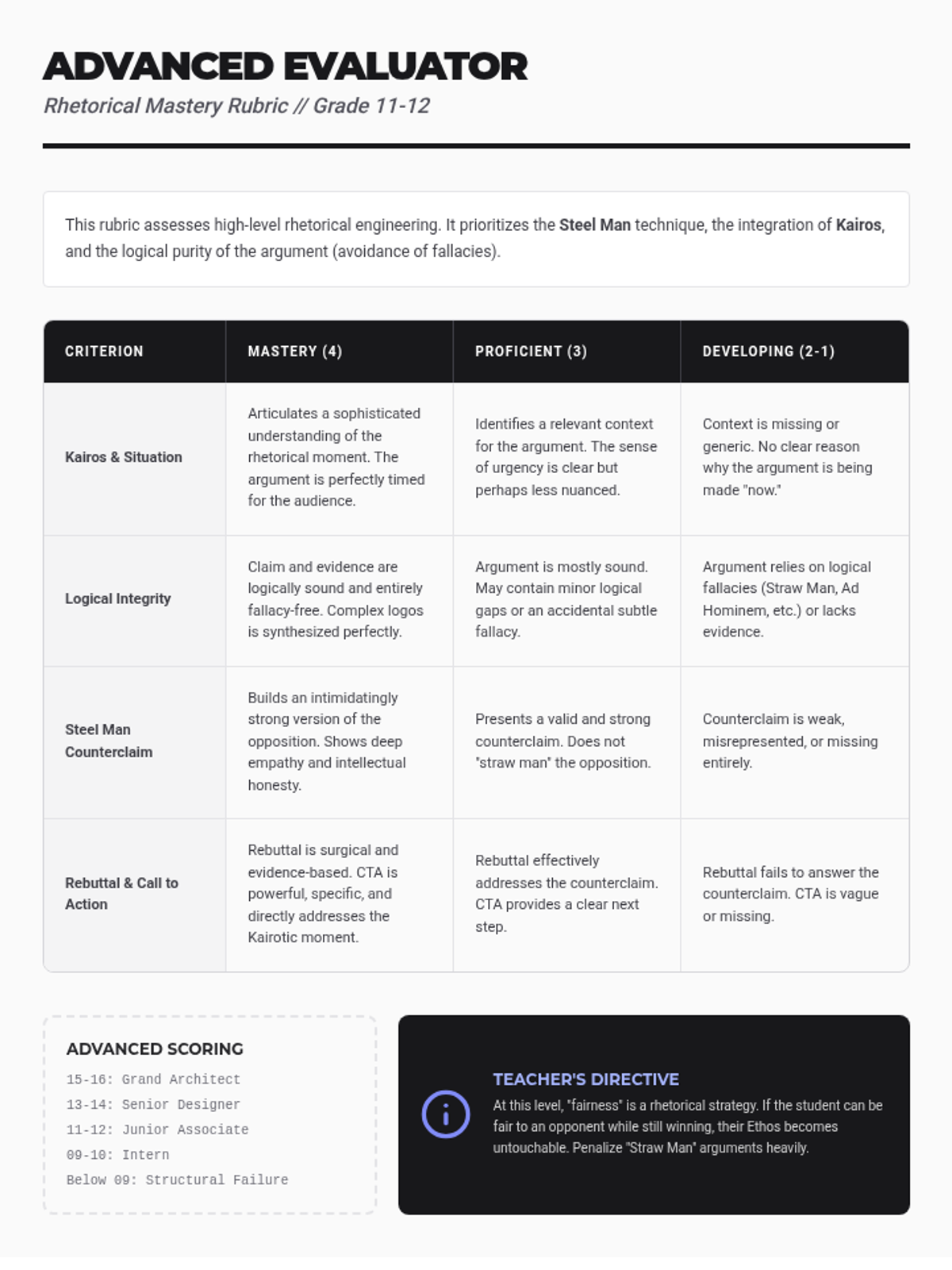
An advanced lesson for 11th graders that builds upon basic rhetorical foundations. Students explore Kairos (the opportune moment), identify logical fallacies, and tackle complex ethical and societal issues through a high-fidelity architectural blueprint organizer.
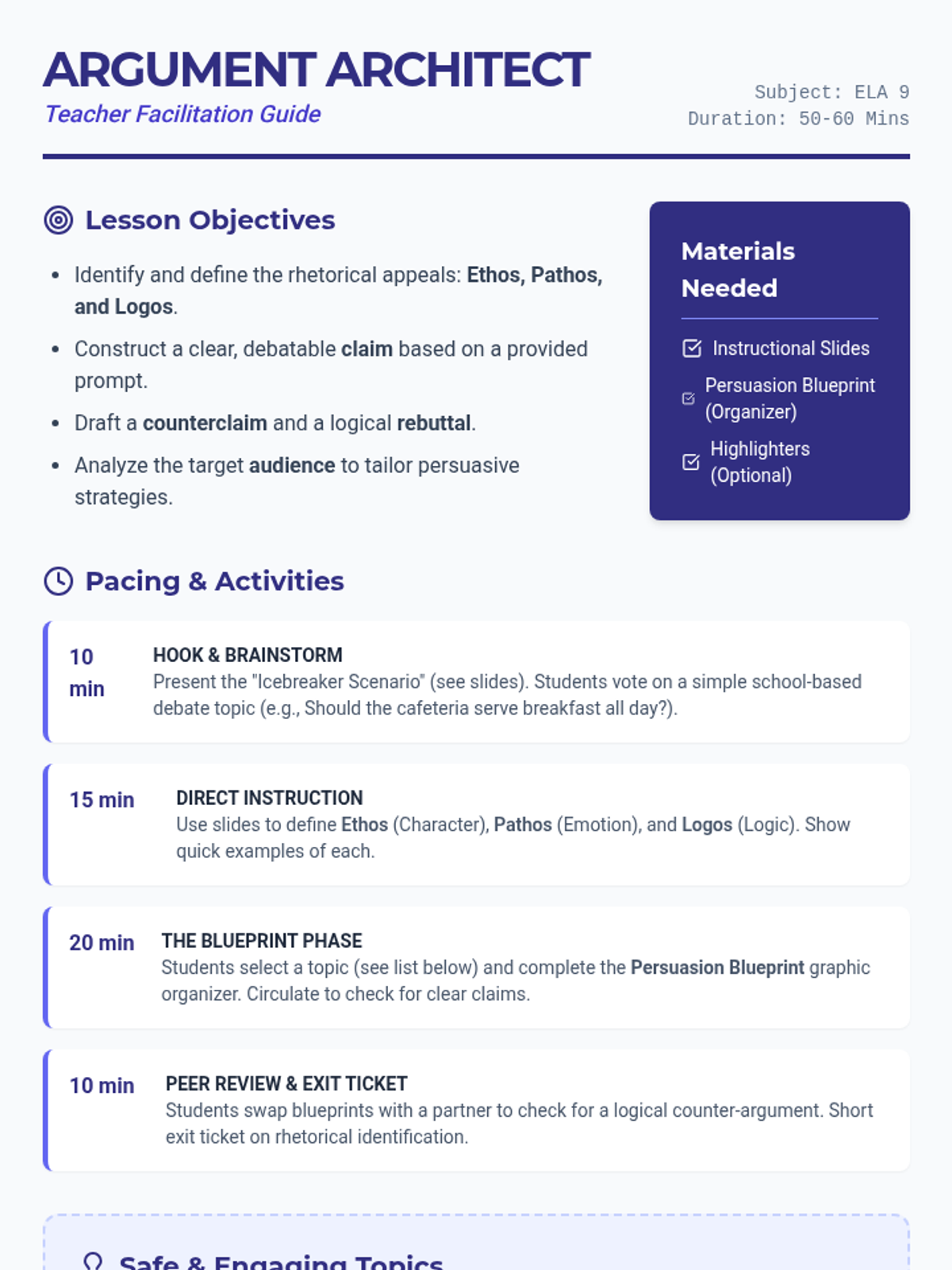
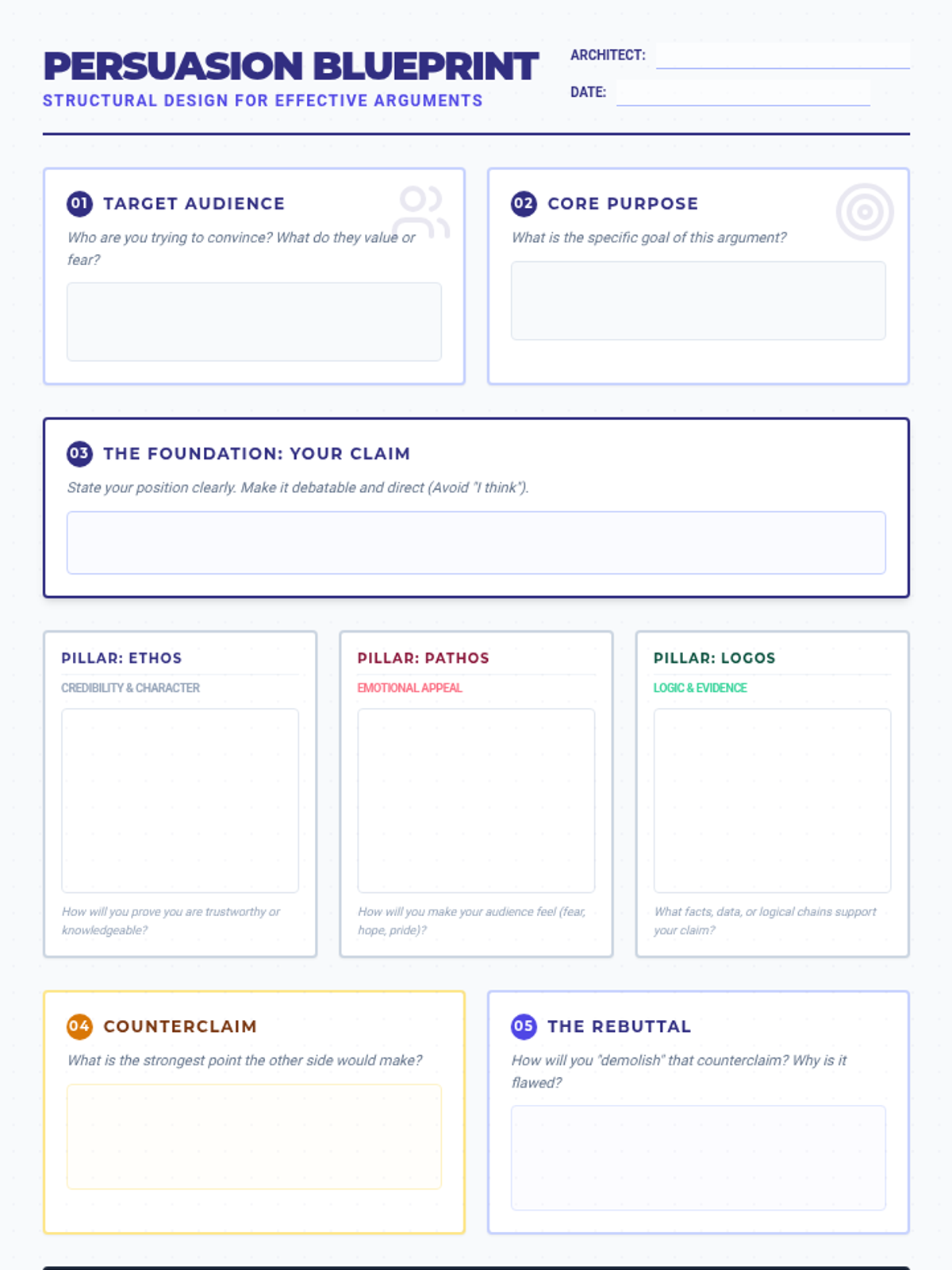
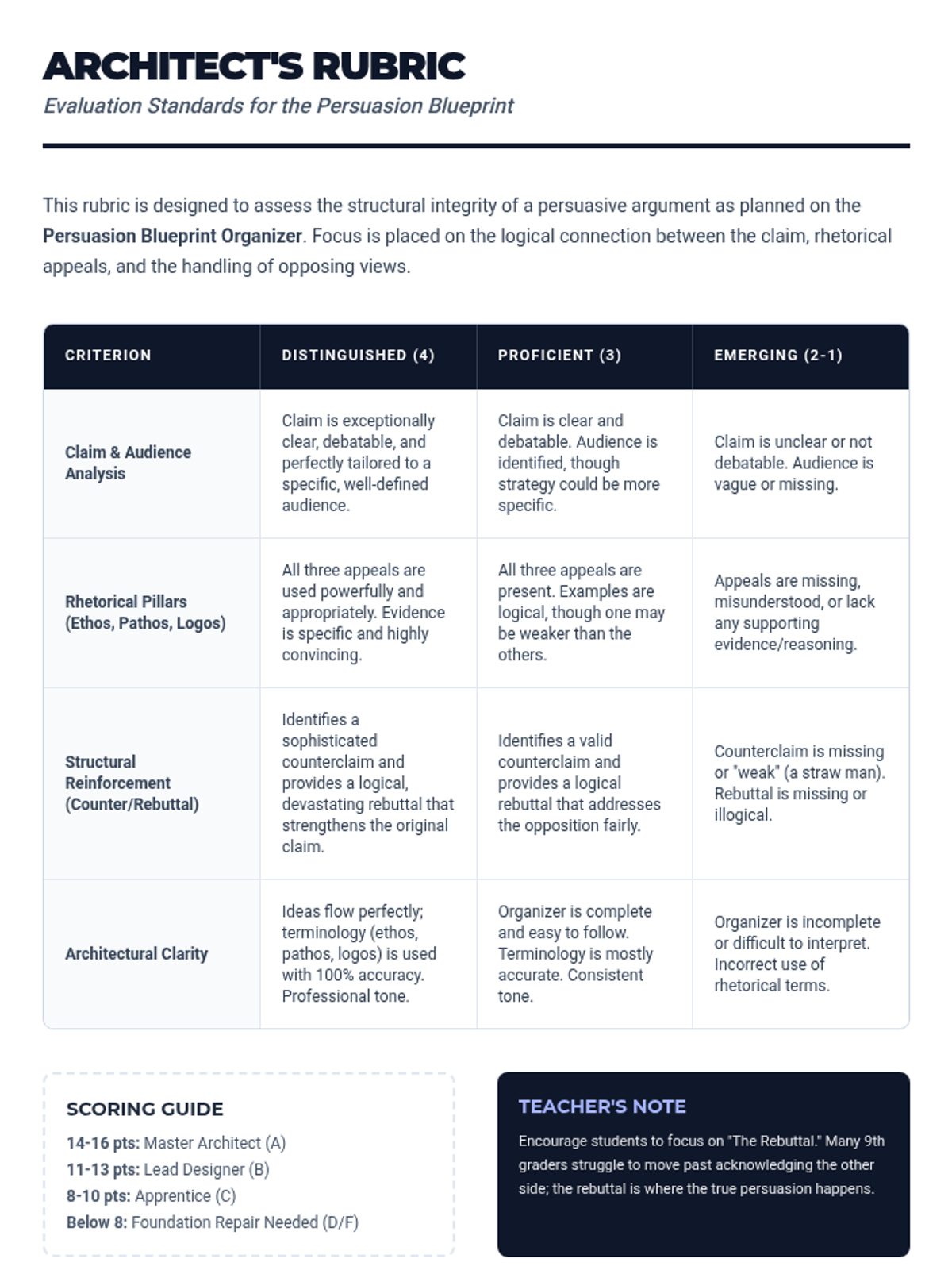
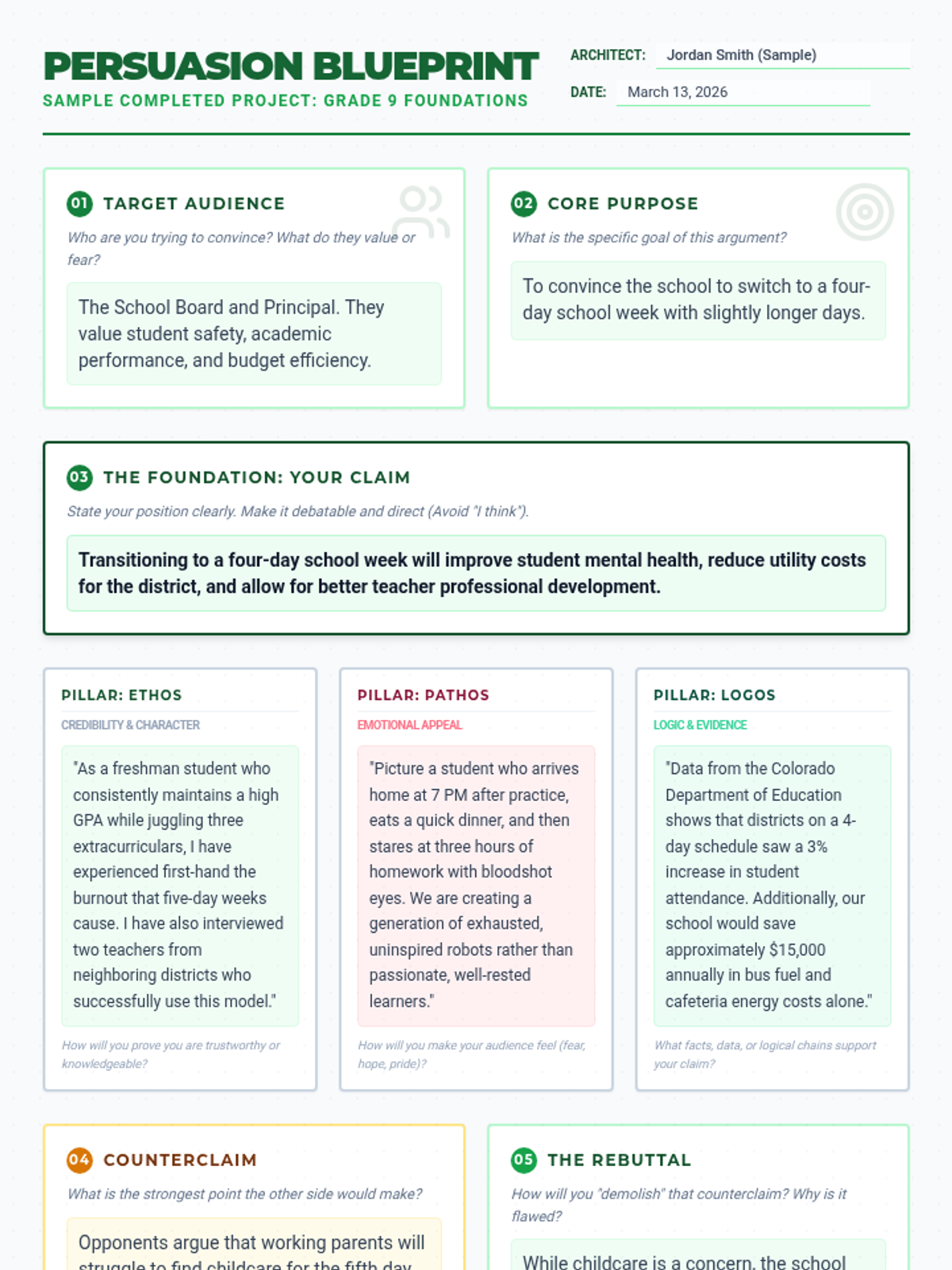
A comprehensive lesson for 9th graders on mastering the art of persuasion, focusing on rhetorical appeals, claim development, and addressing counterclaims. Students will use a structured graphic organizer to architect their own arguments on school-related topics.
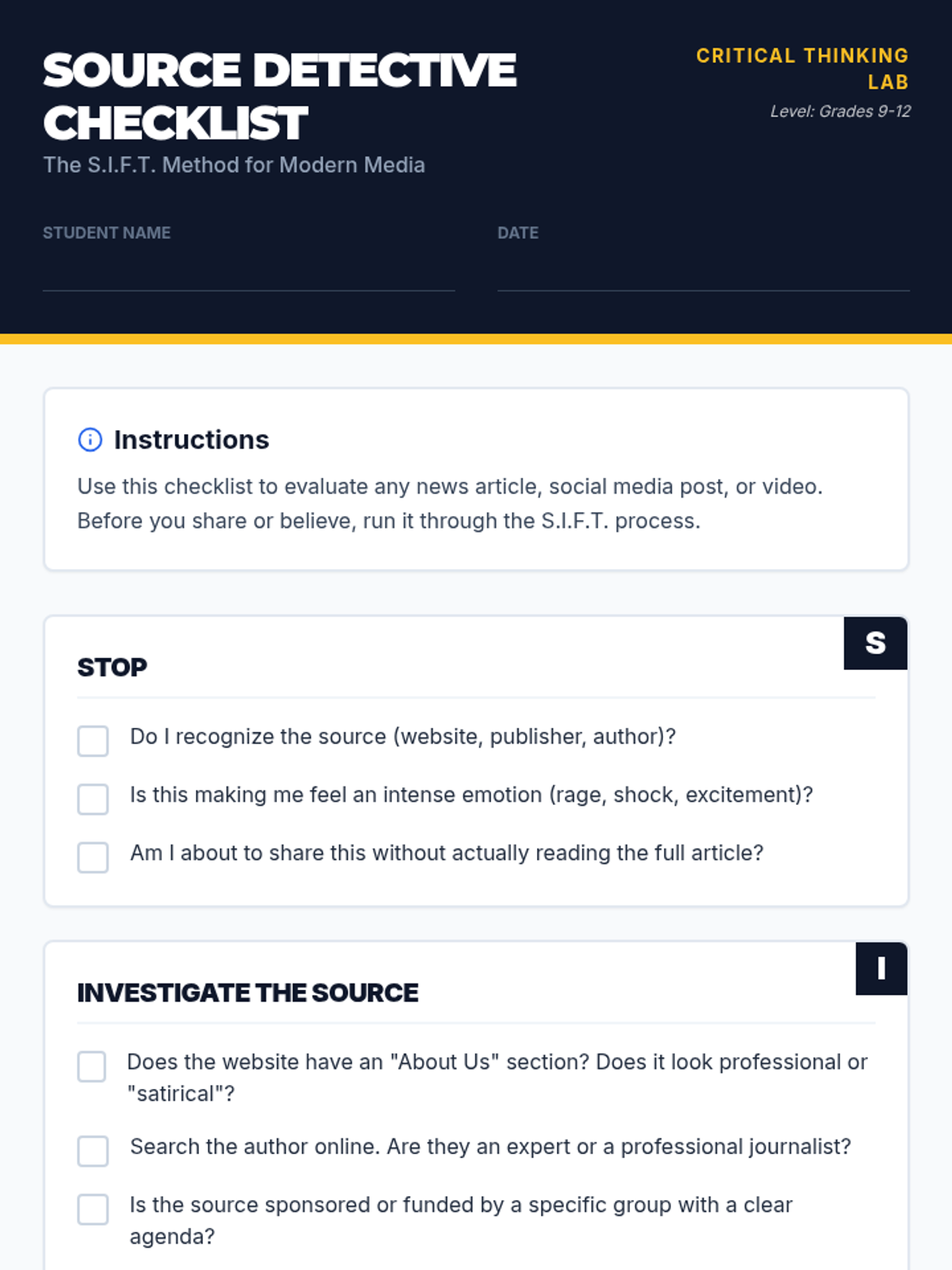
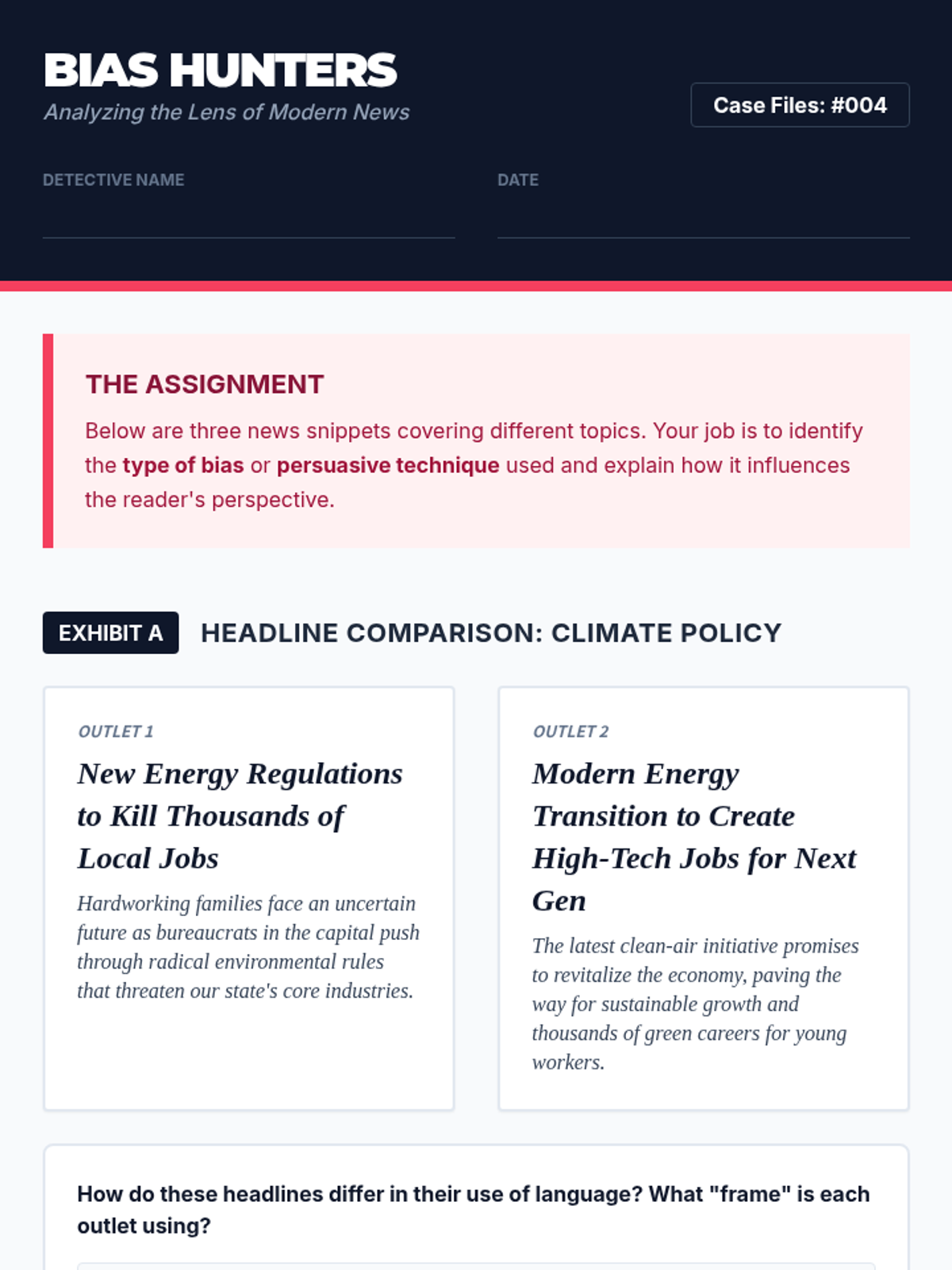
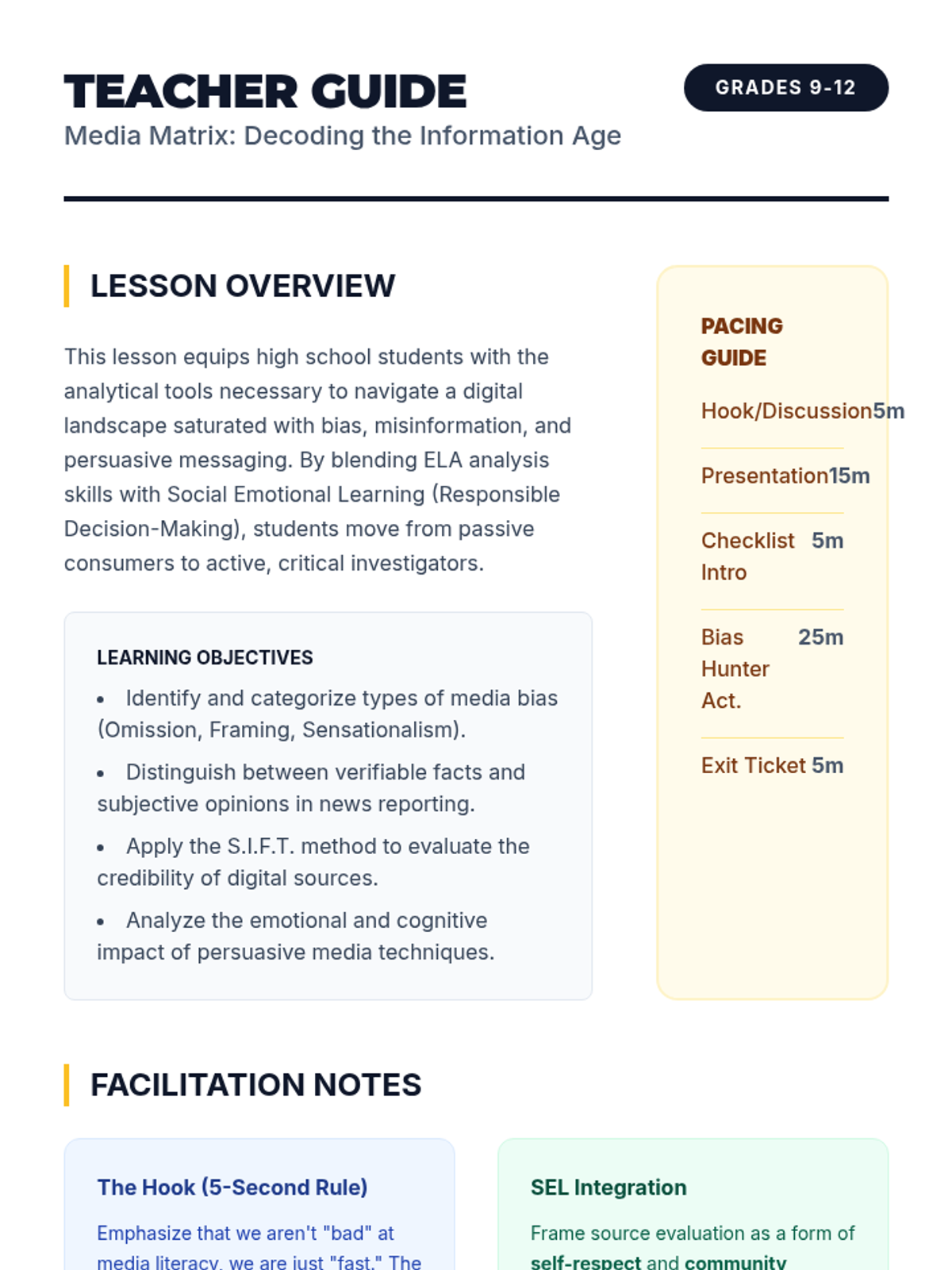
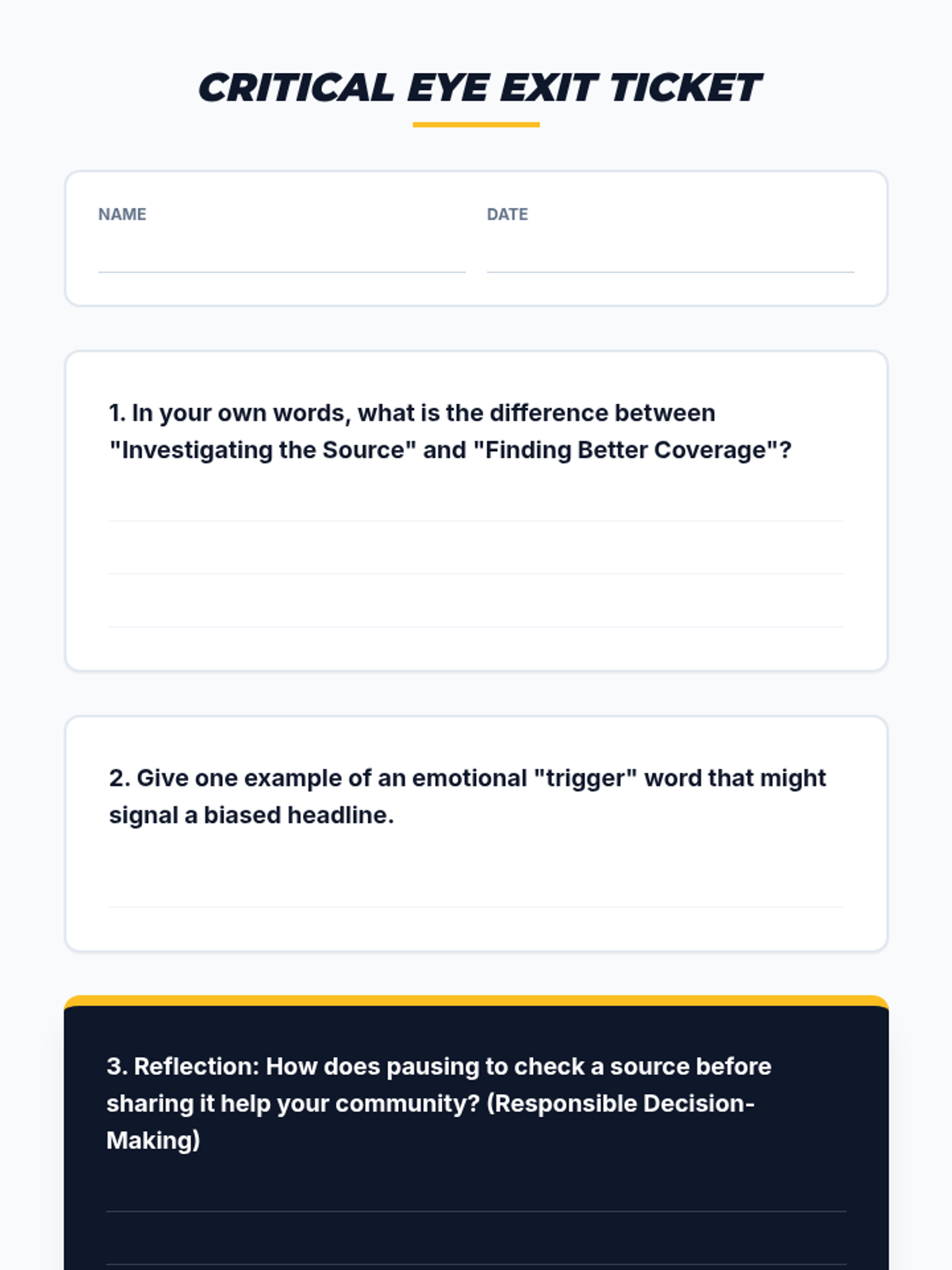
A comprehensive lesson for grades 9-12 on media literacy, source evaluation, and identifying bias. Students develop critical thinking skills to navigate the modern information landscape while practicing responsible decision-making.
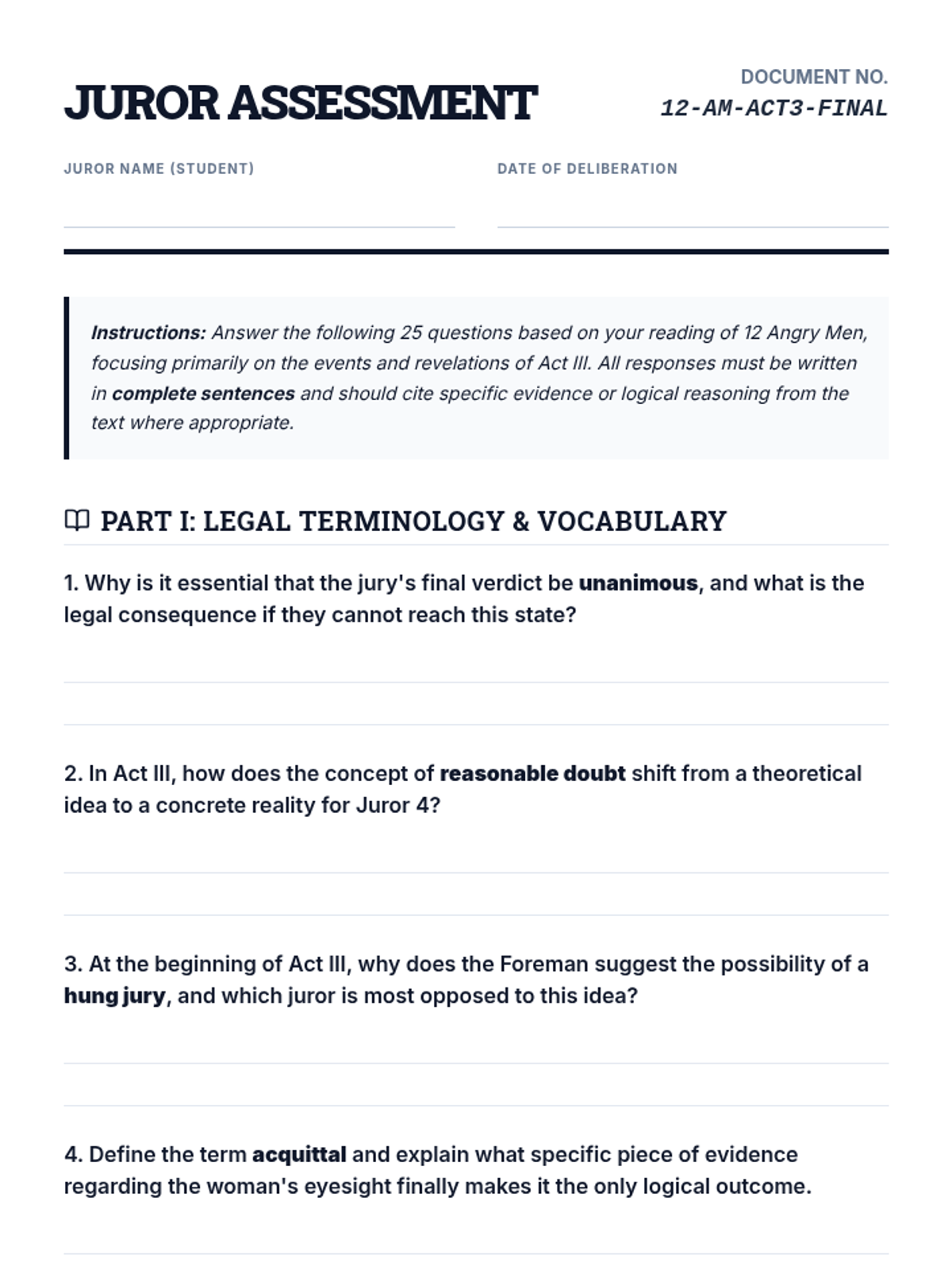
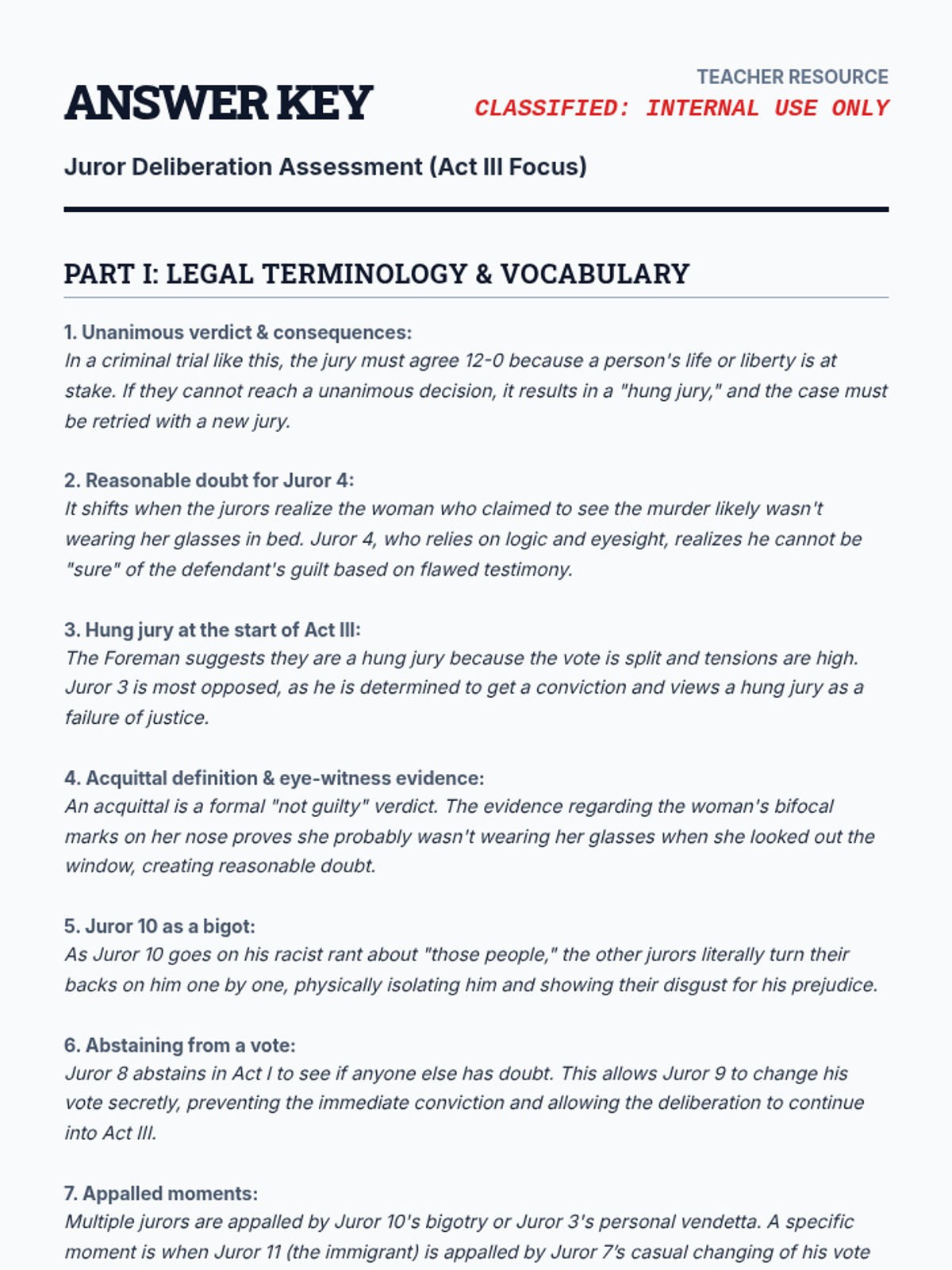
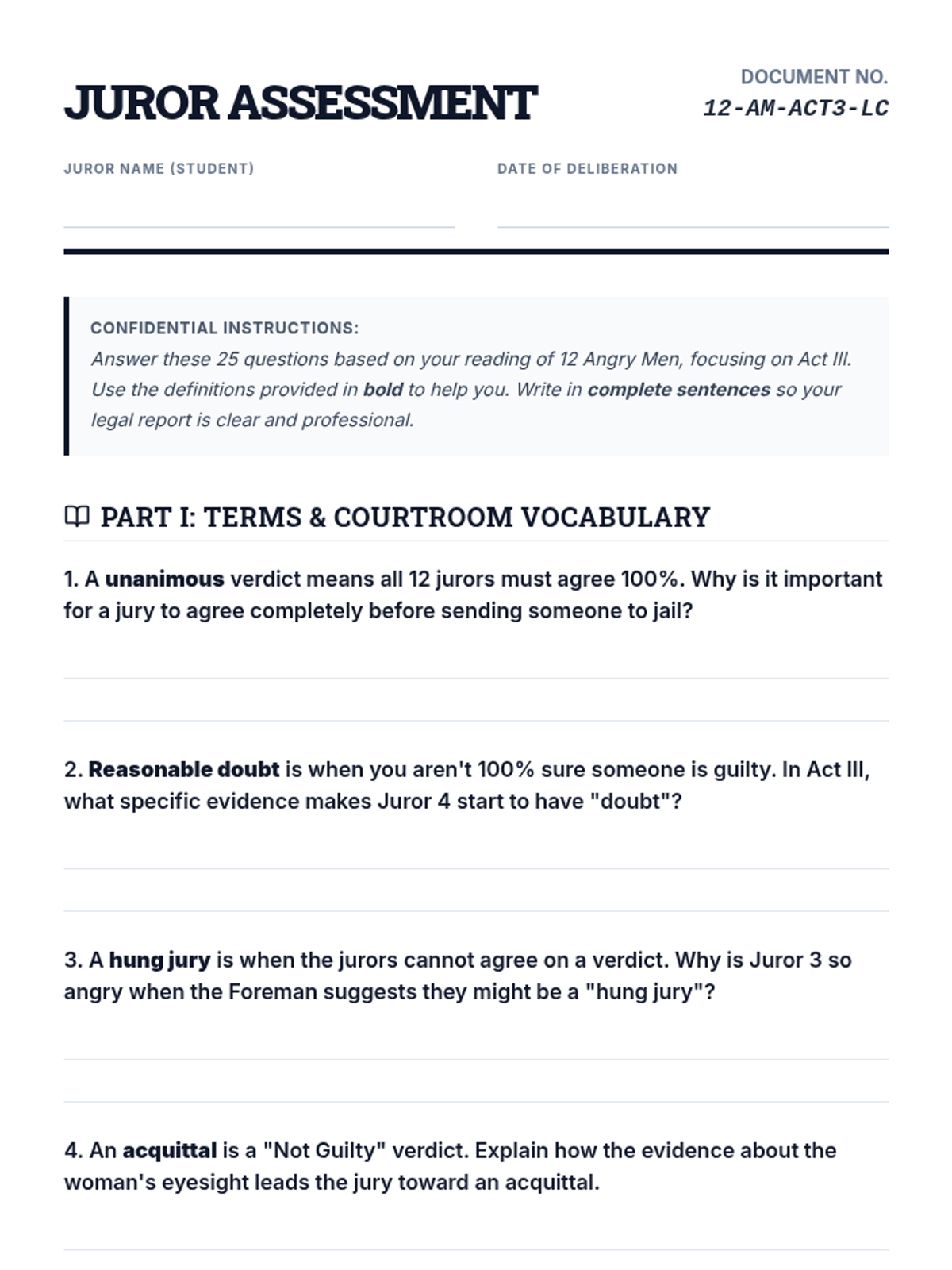
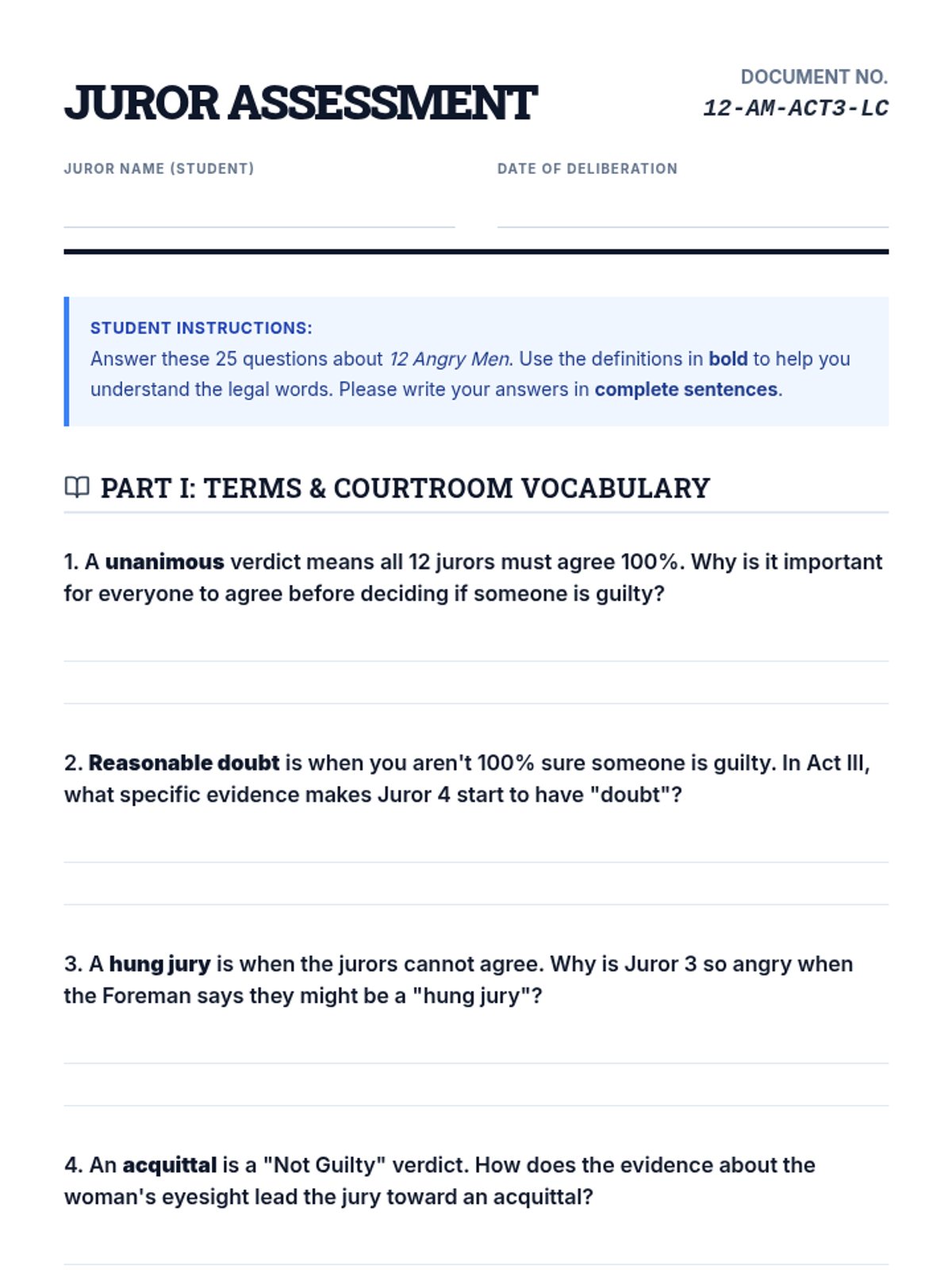
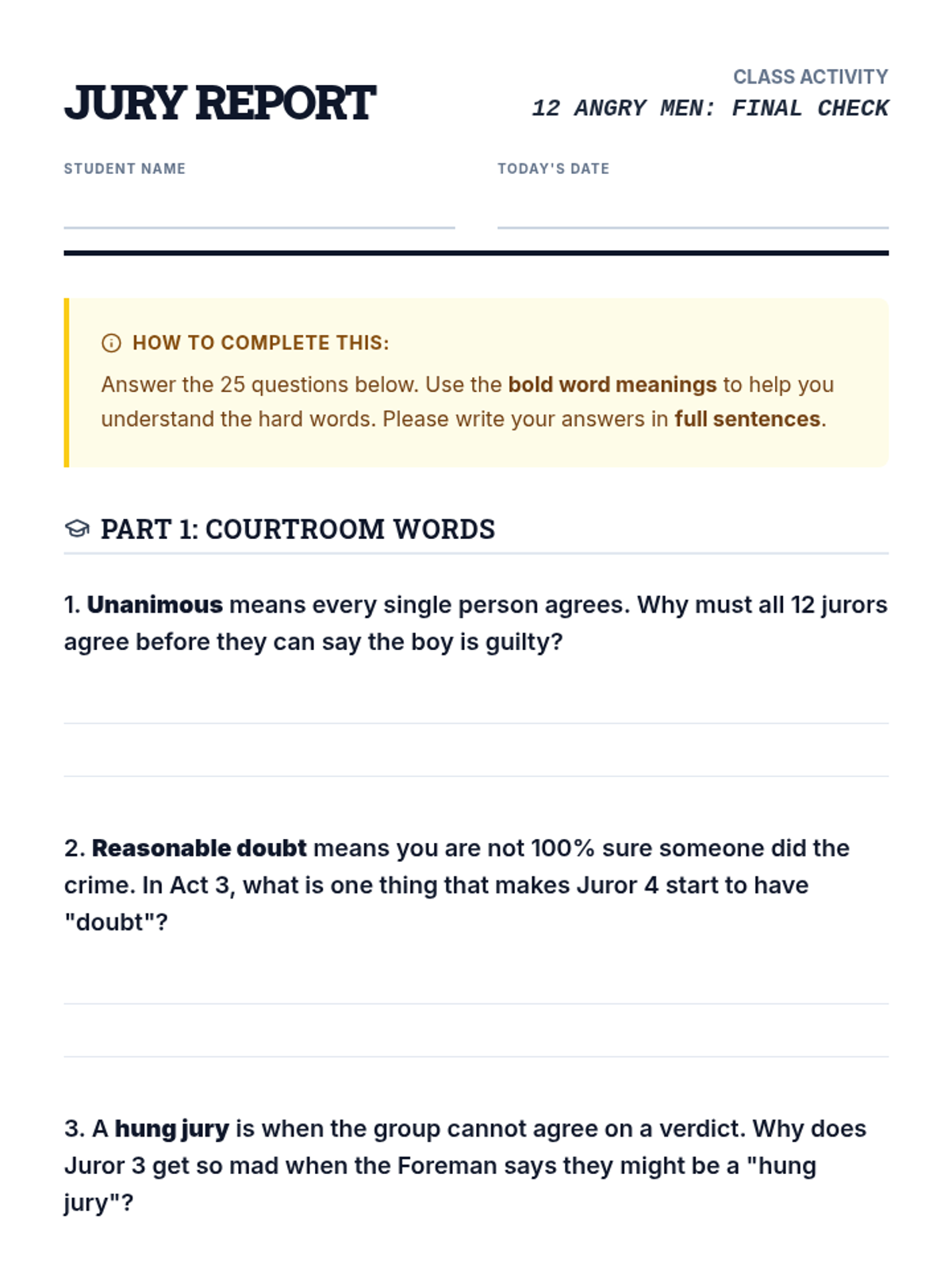
A comprehensive assessment focusing on Act III of '12 Angry Men', emphasizing text-dependent analysis and critical vocabulary. Students explore themes of prejudice, the burden of proof, and the psychological dynamics of the jury room.
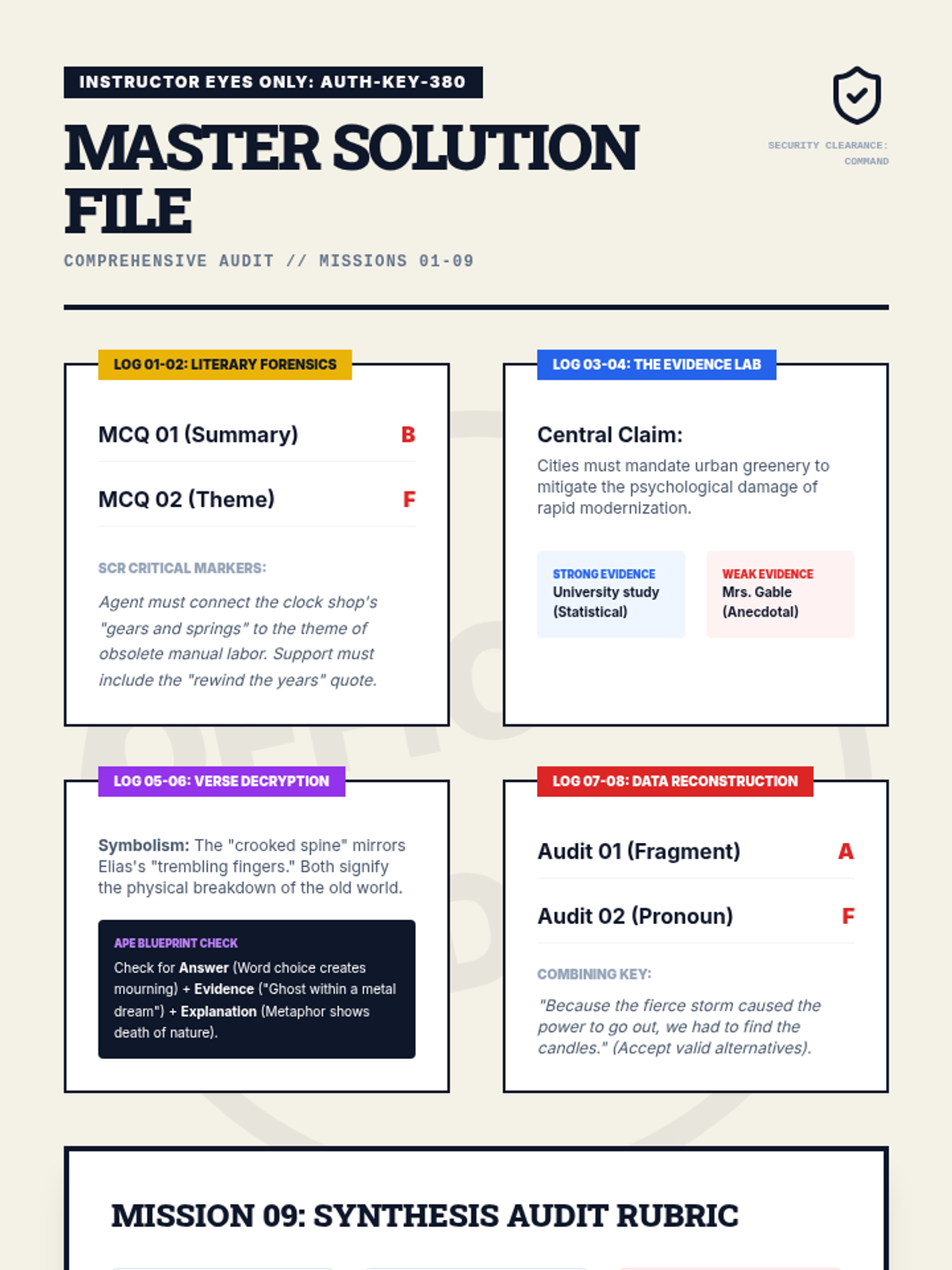
Mission 09 (40 min): Final synthesis mission featuring mixed-genre practice and full-scale assessment review.
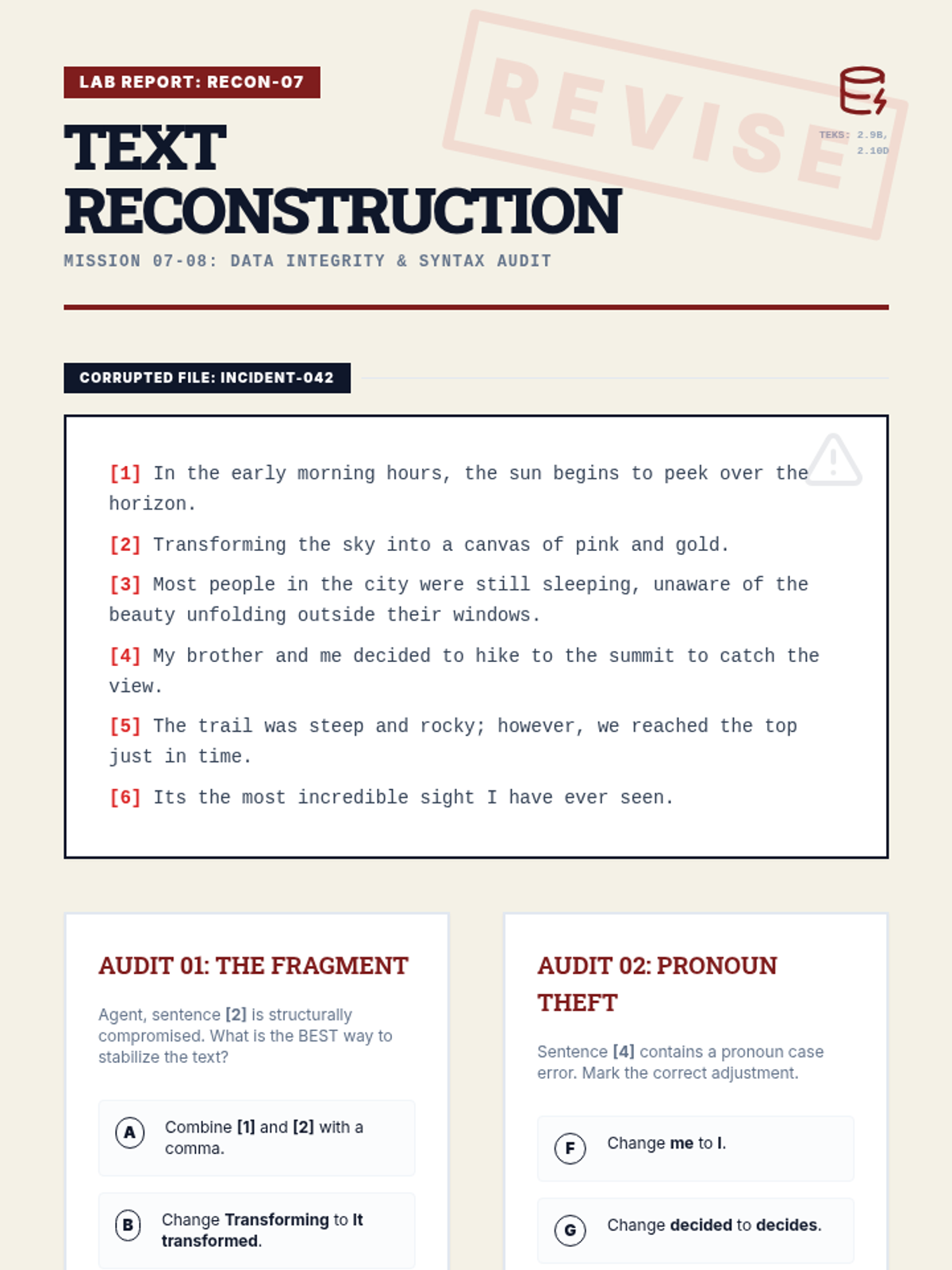
Mission 07 (40 min): Reconstruct sentences and correct common grammar and punctuation errors.
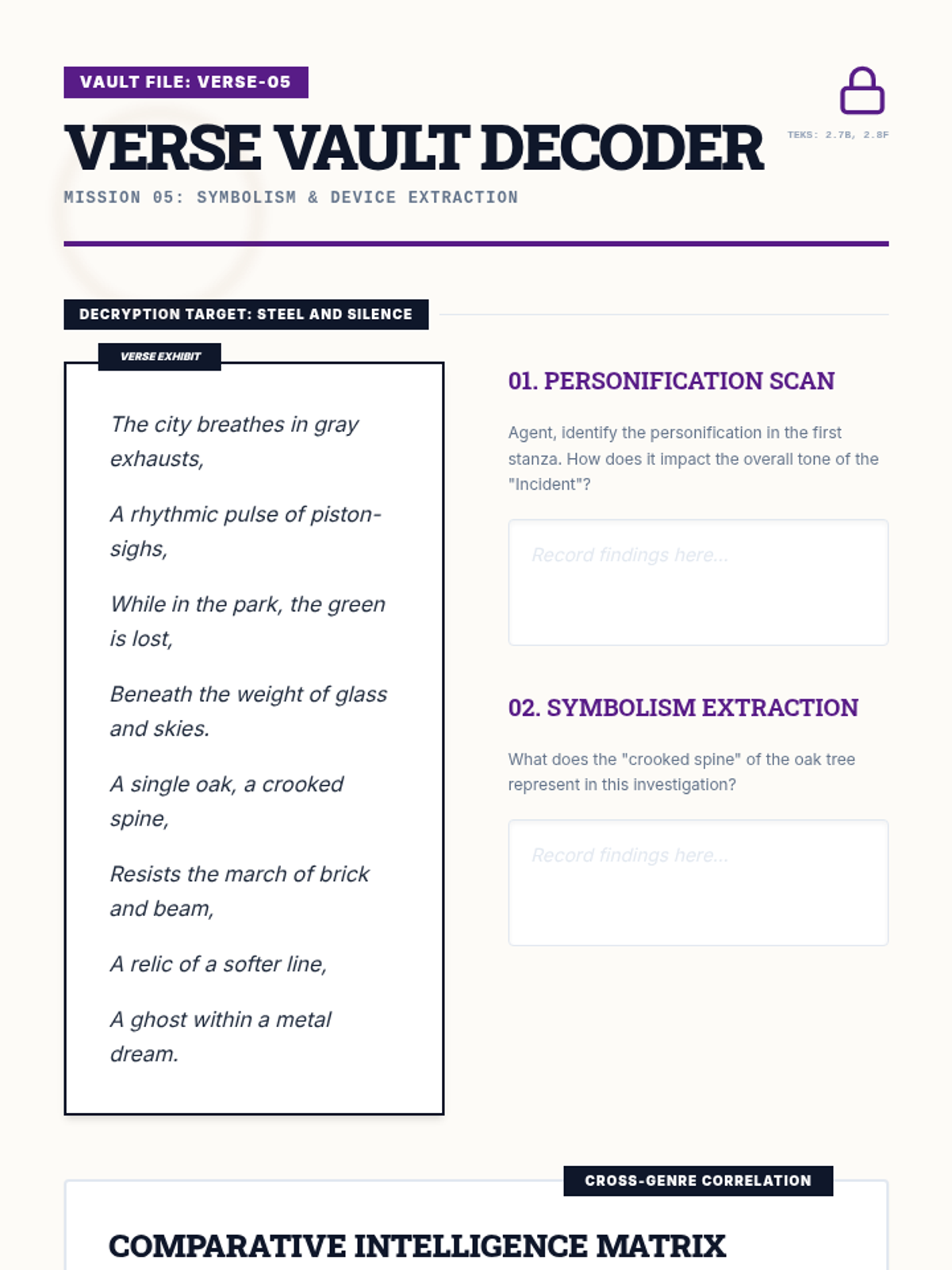
Mission 05 (40 min): Decode poetic devices, imagery, and symbolism in classic and modern verse.
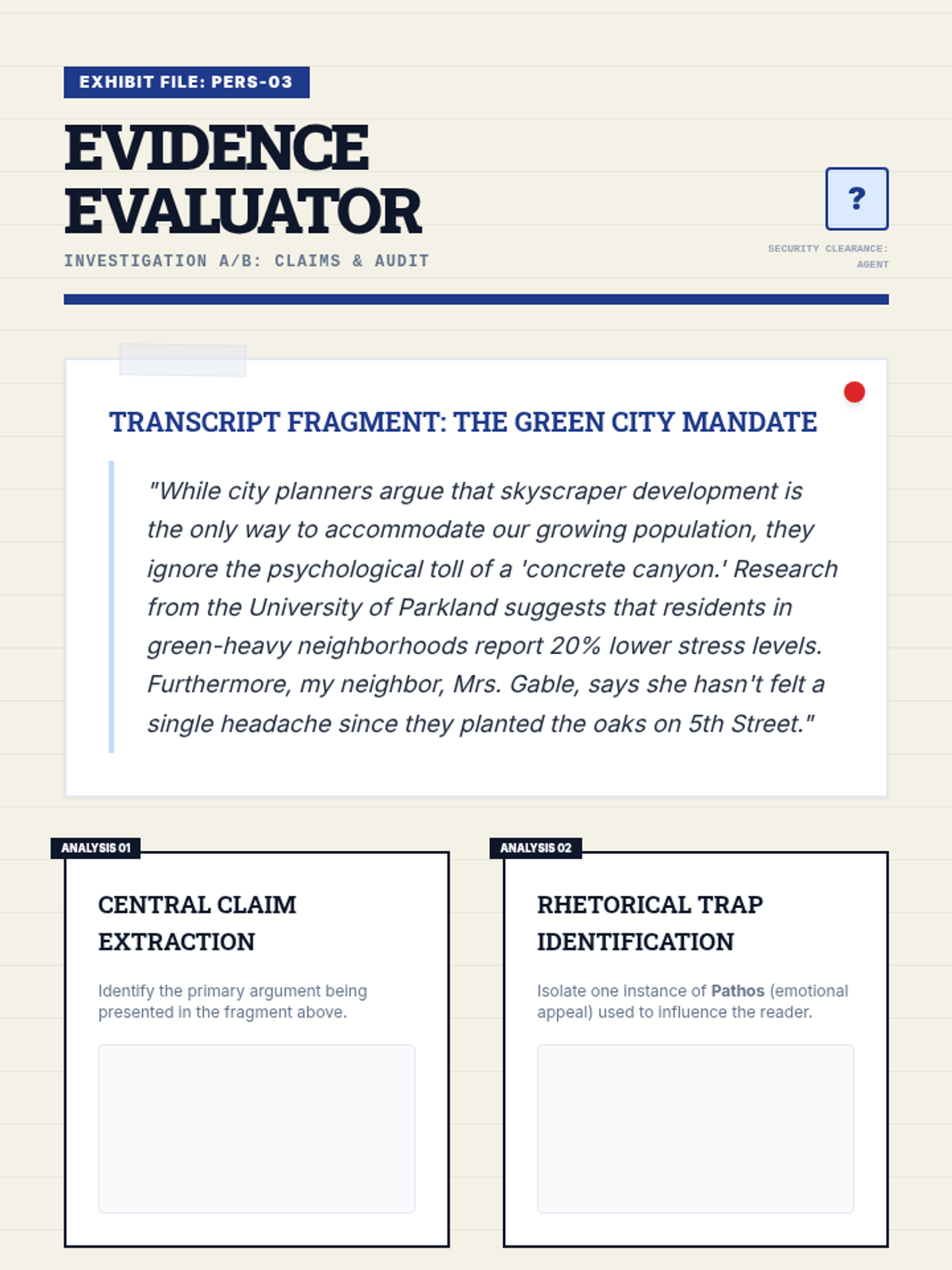
Mission 03 (45 min): Evaluate persuasive claims and the art of rhetorical appeals.
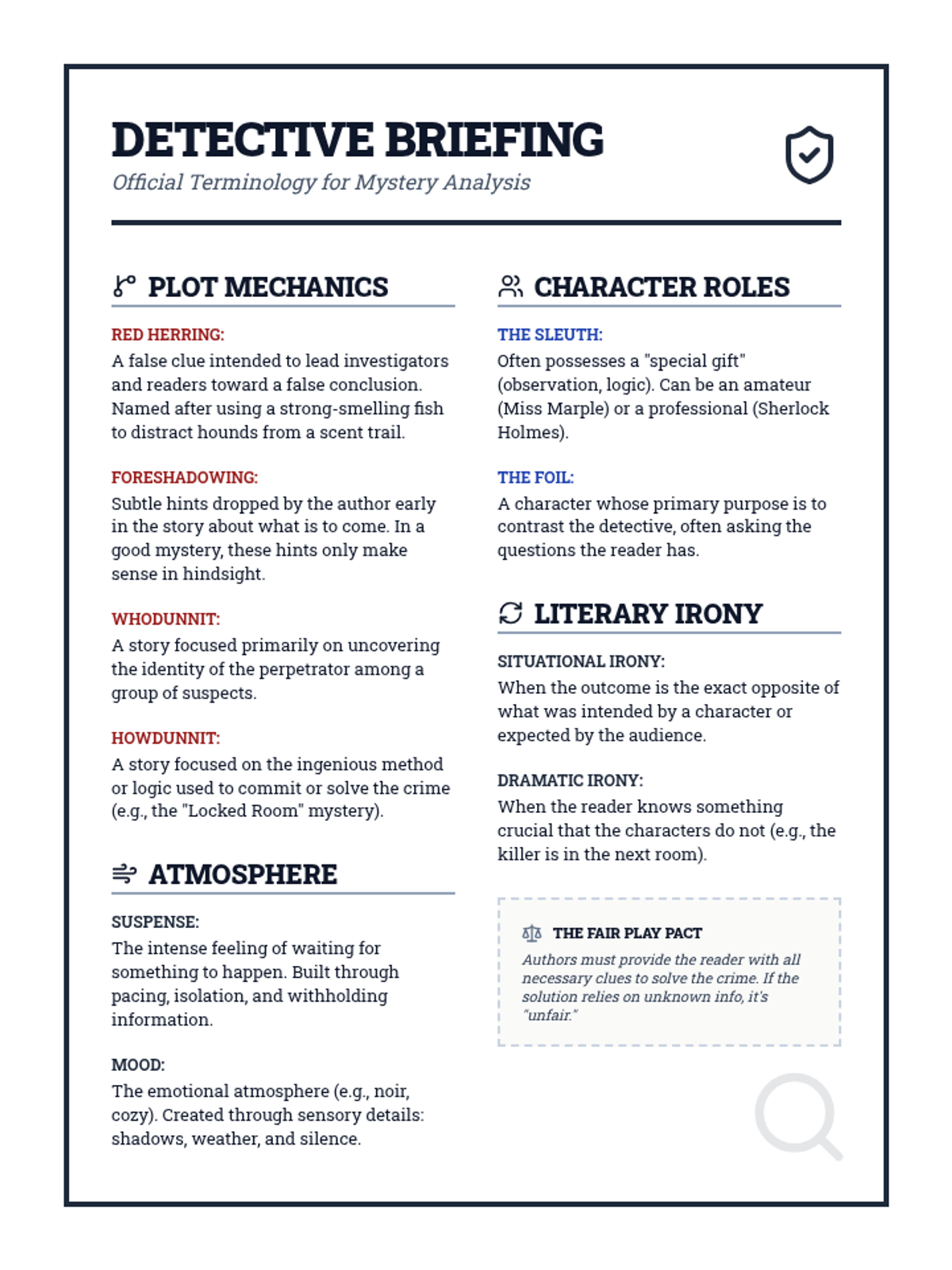
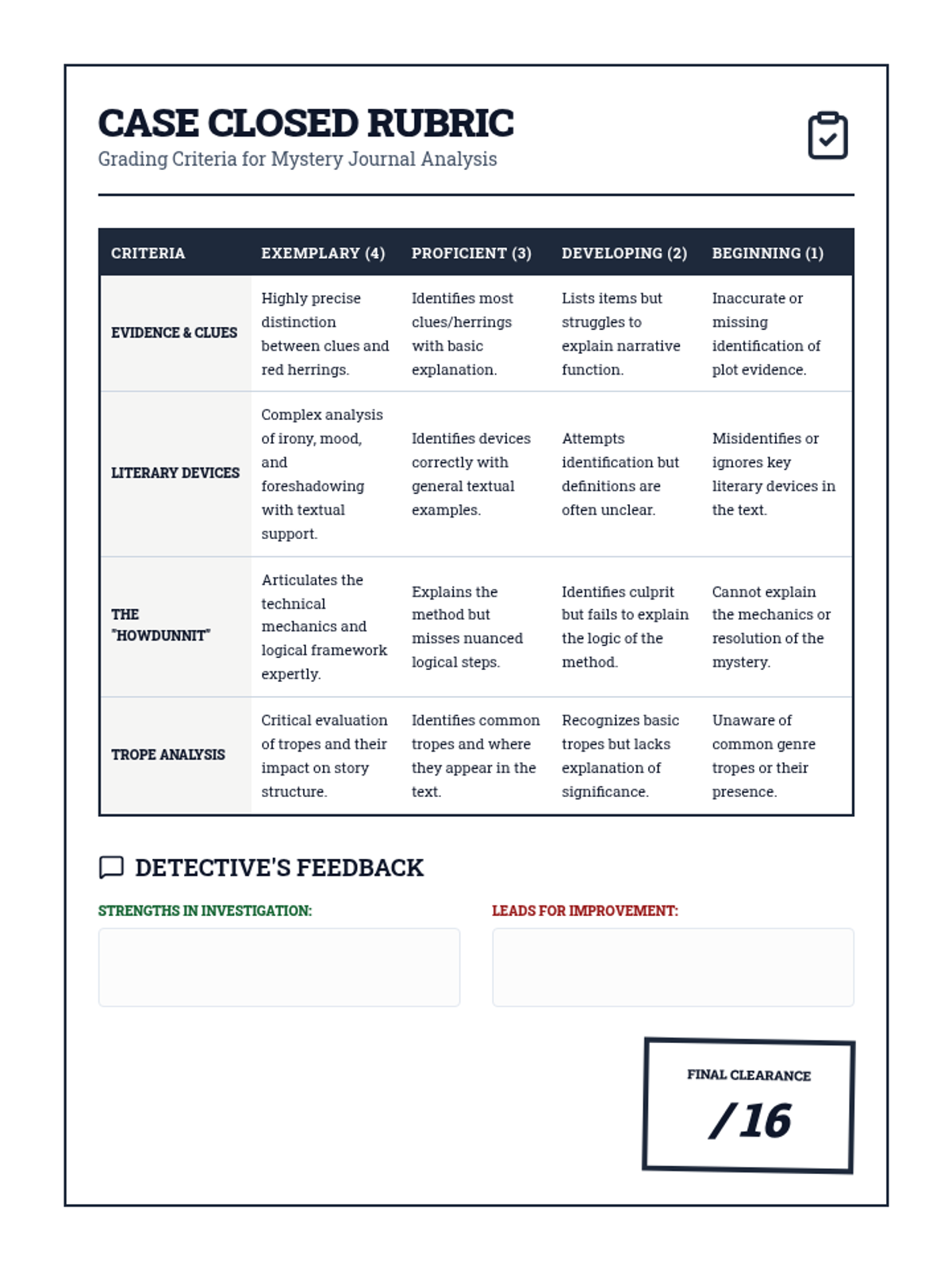
A comprehensive set of tools for students to analyze mystery novels, focusing on character archetypes, plot devices, and atmospheric elements.
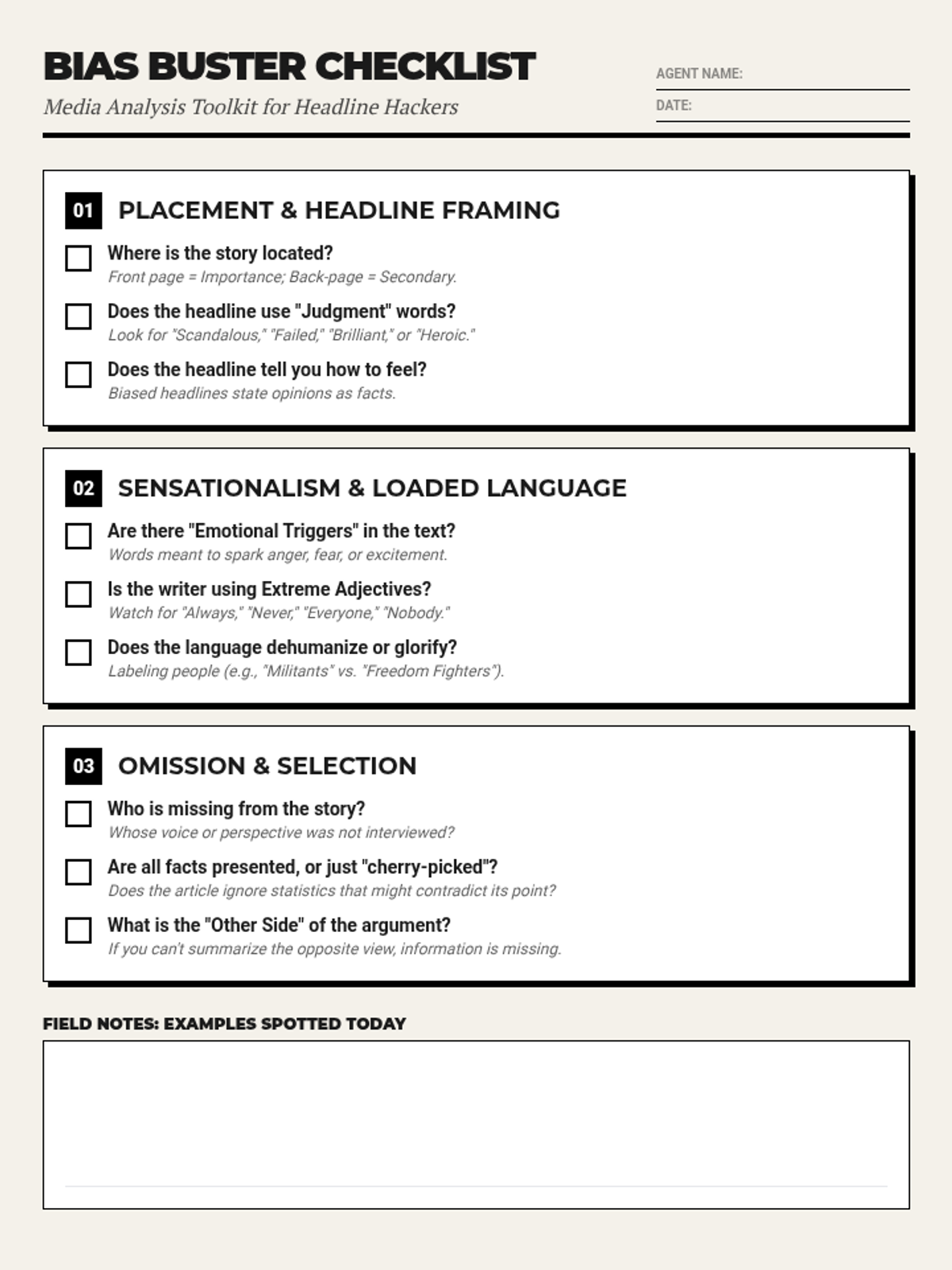
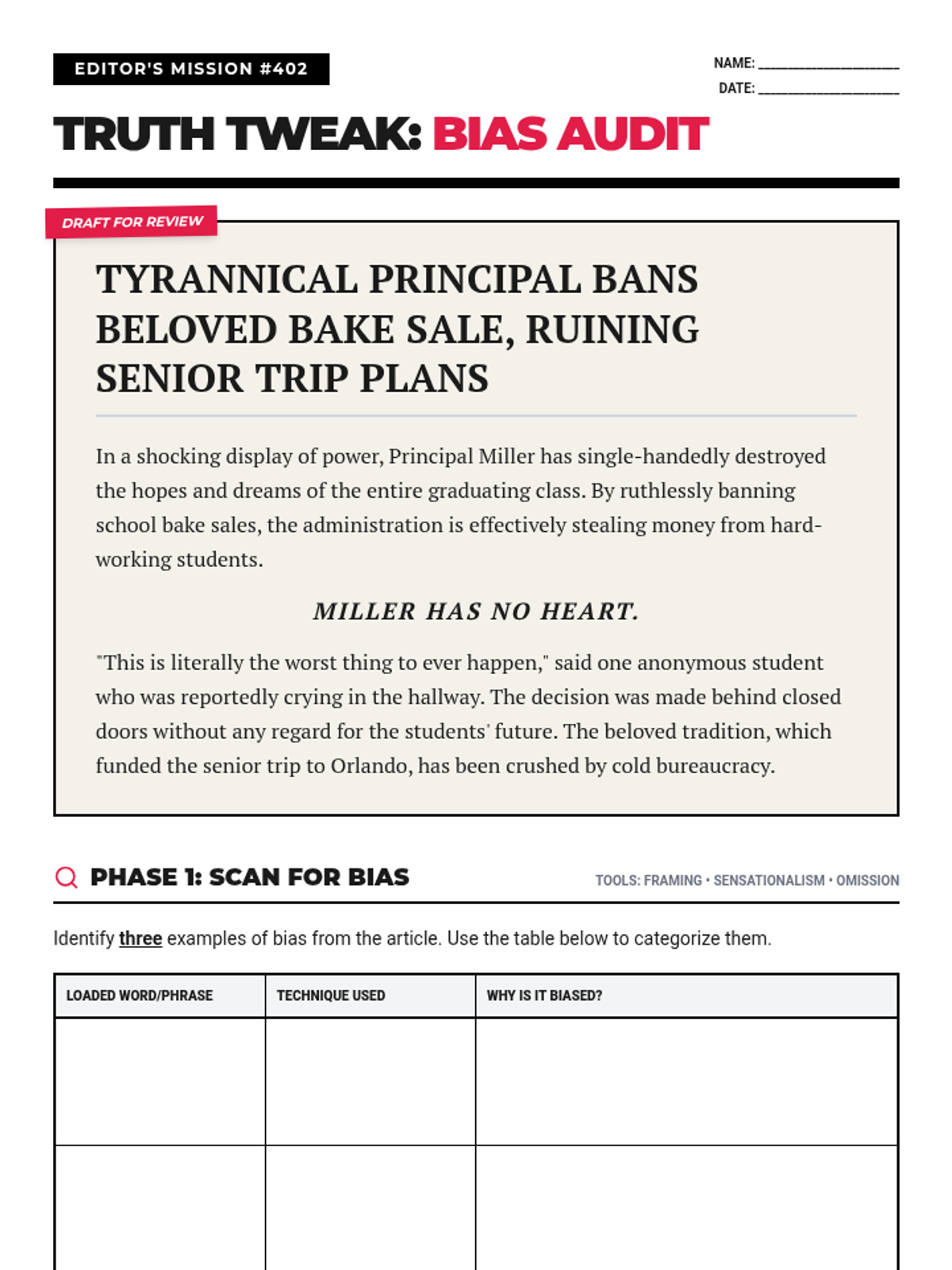
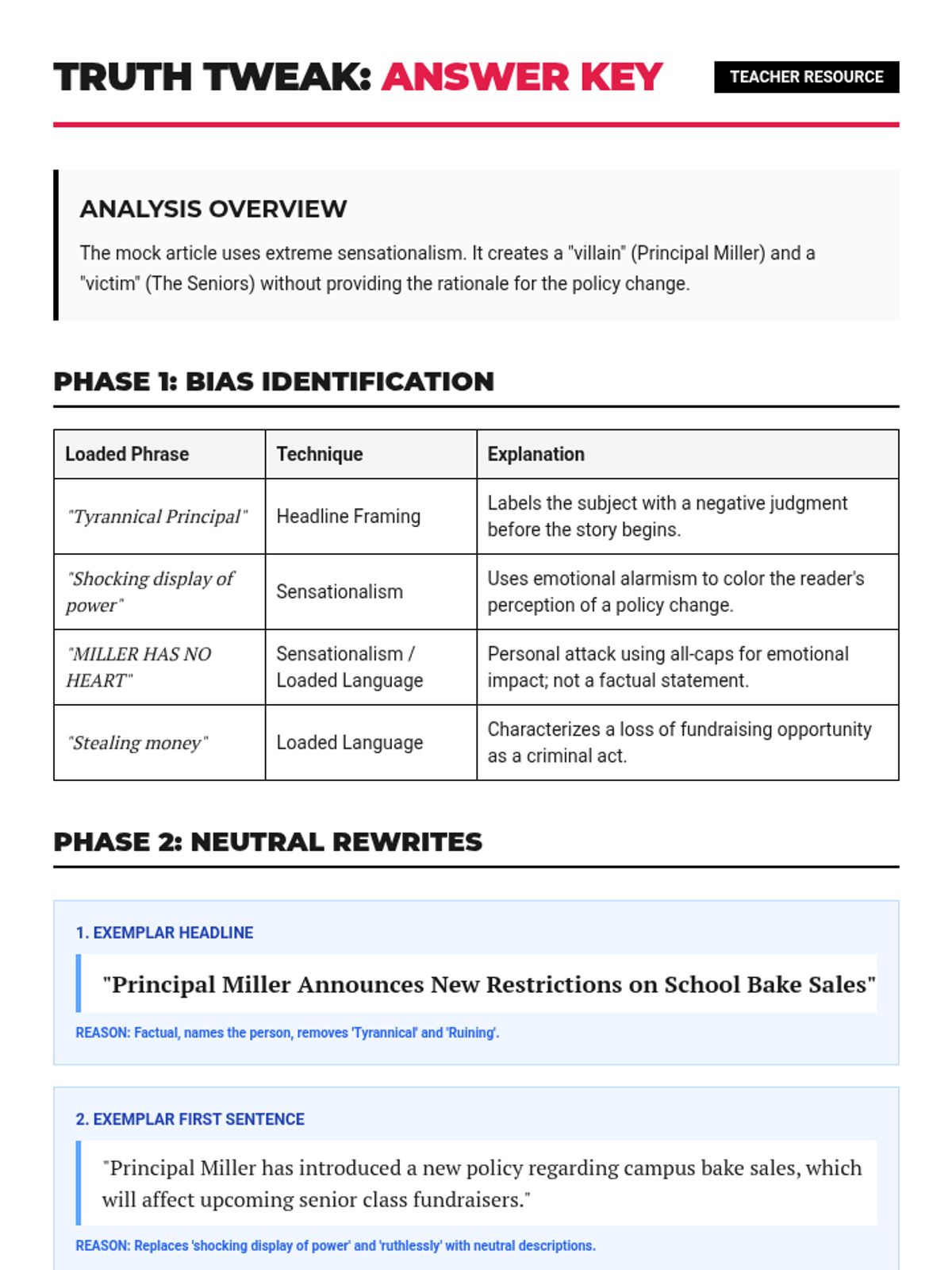
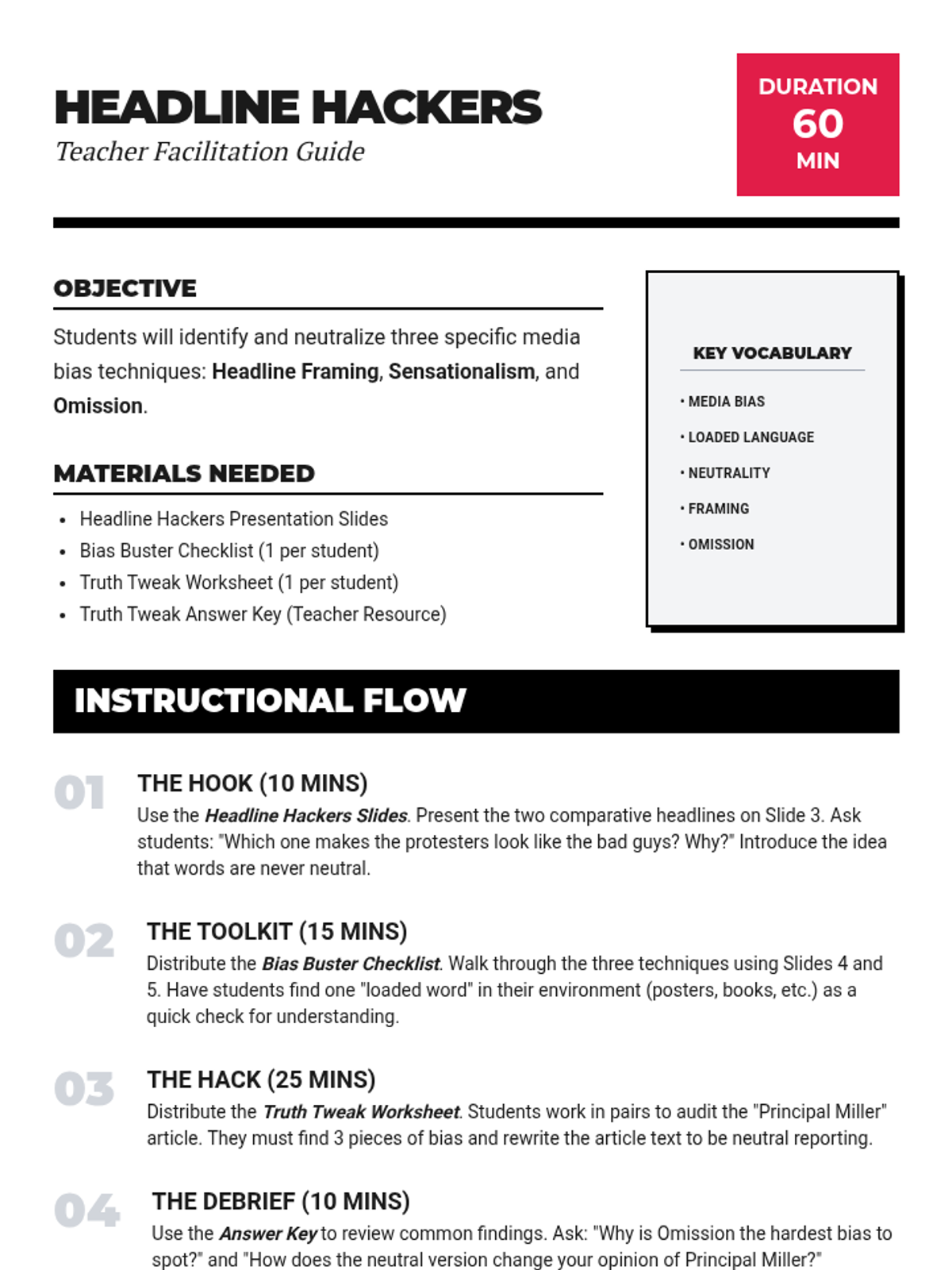
A comprehensive lesson teaching students to identify media bias in newspaper articles using specific techniques like headline framing, sensationalism, and omission. Students take on the role of 'Headline Hackers' to critique and edit biased news.
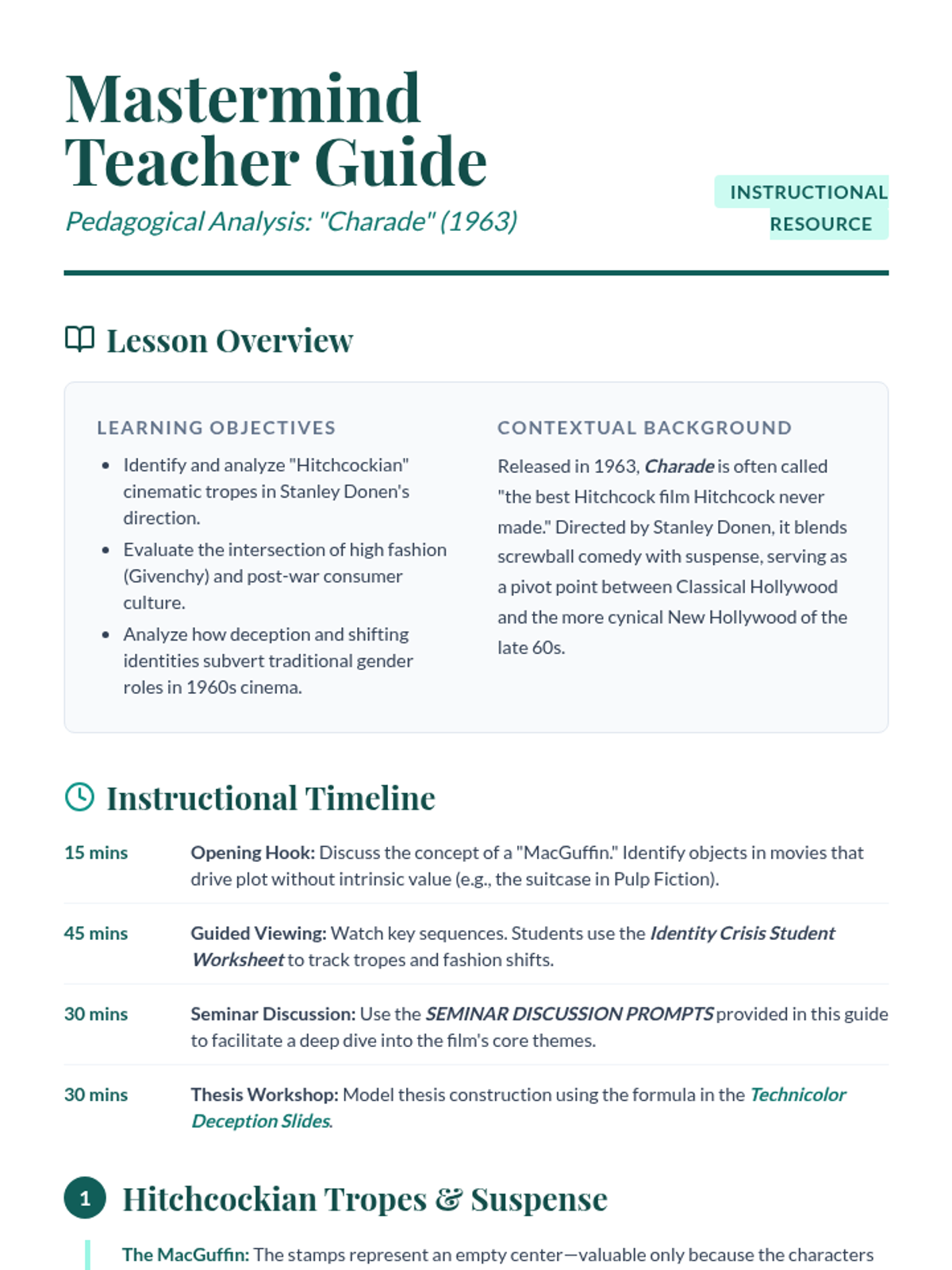
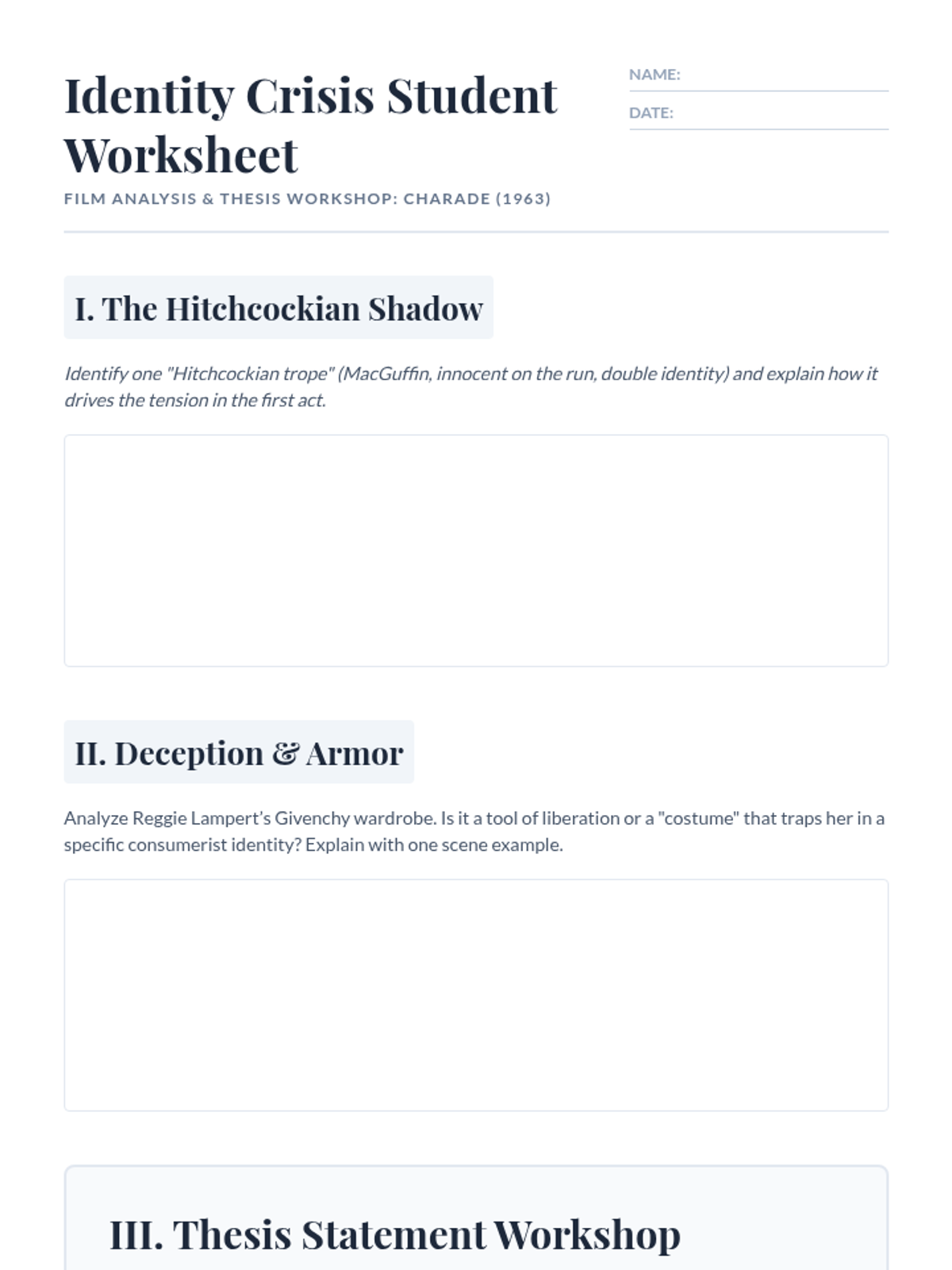
An in-depth analysis of the 1963 film 'Charade' through the lenses of Hitchcockian tropes, gender performance, and the aesthetics of post-war consumerism.
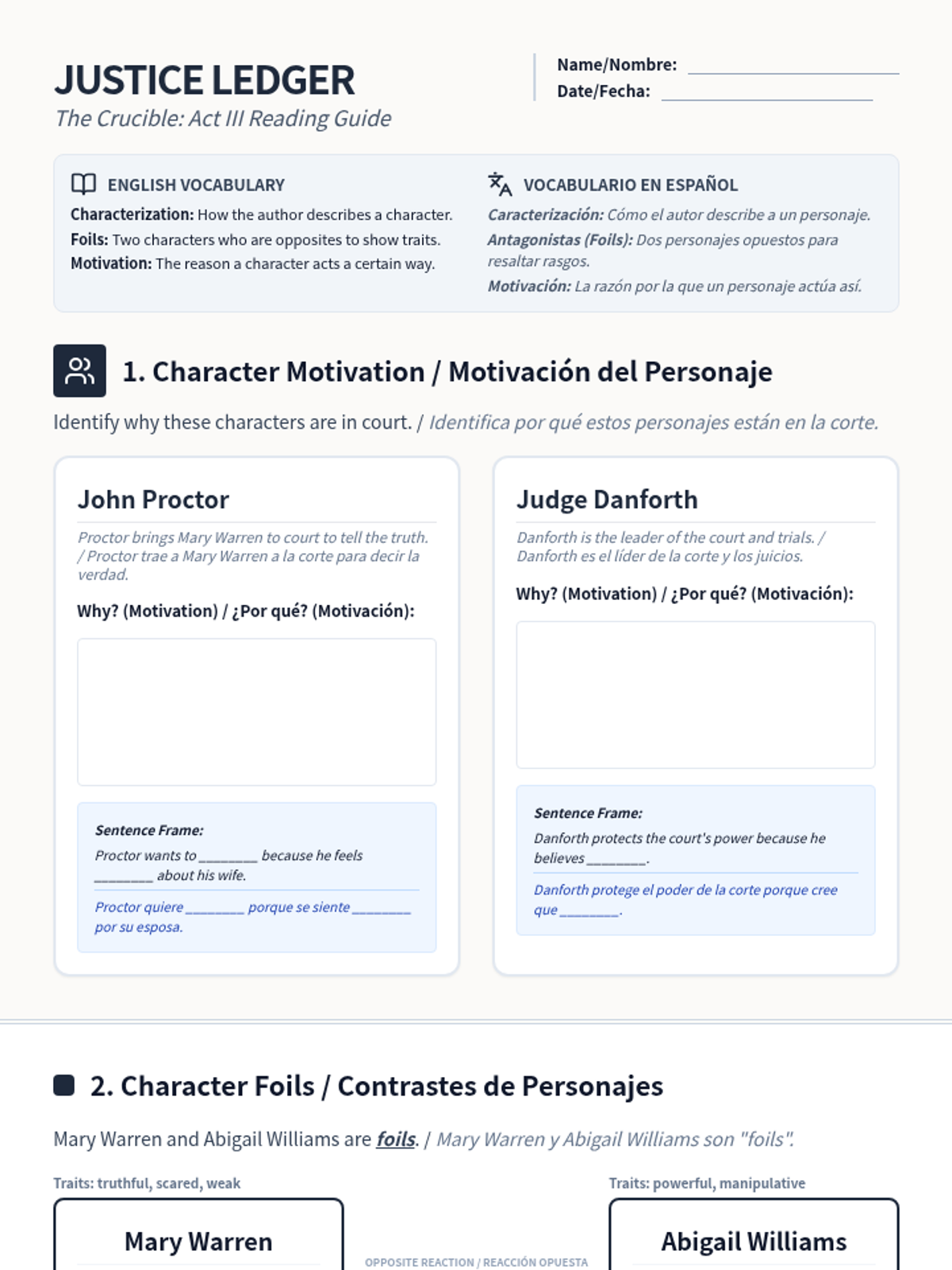
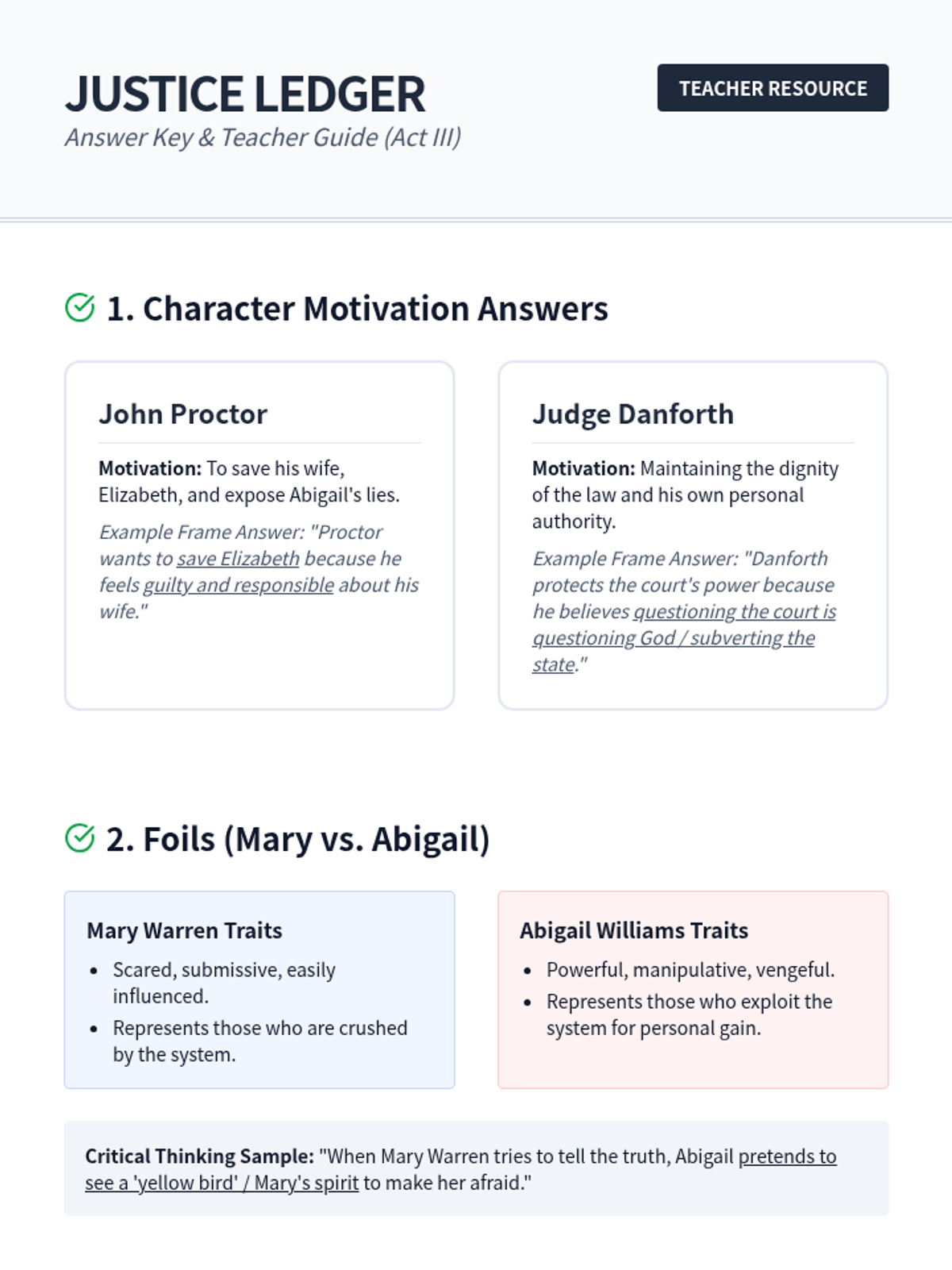
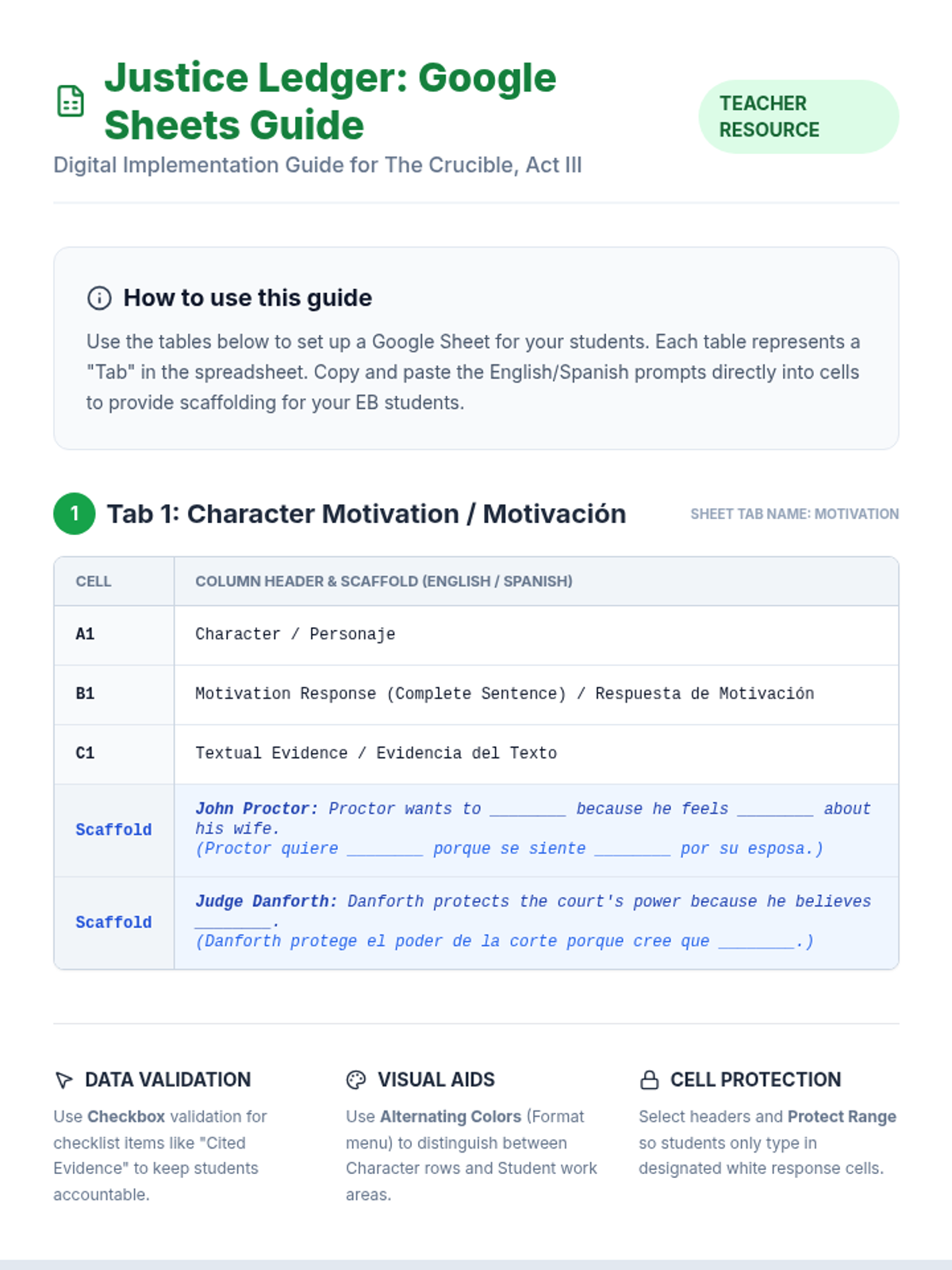
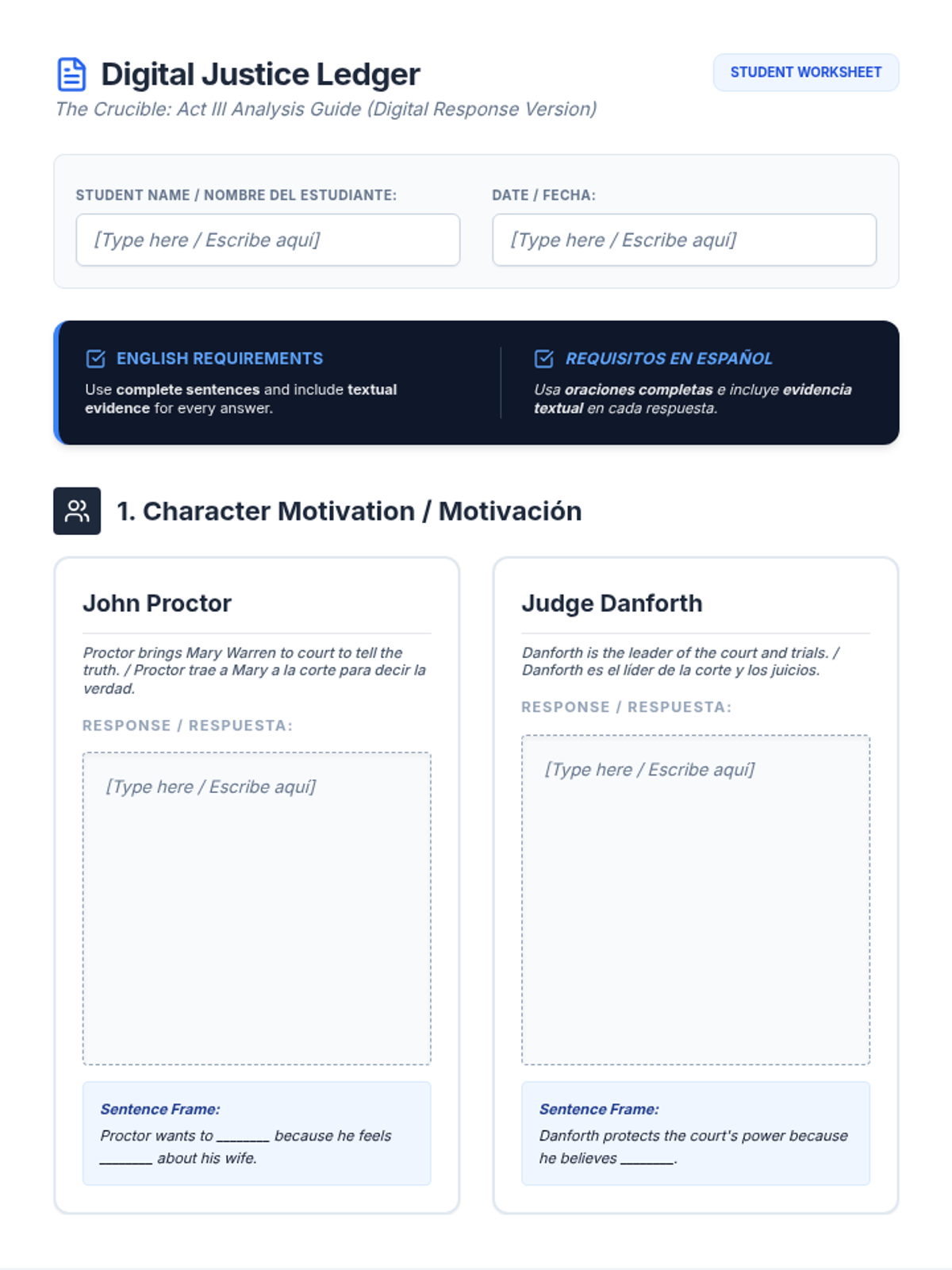
A focused analysis of Act III of The Crucible, exploring the intense courtroom drama through characterization, foils, and authorial tone with heavy linguistic support for English learners.
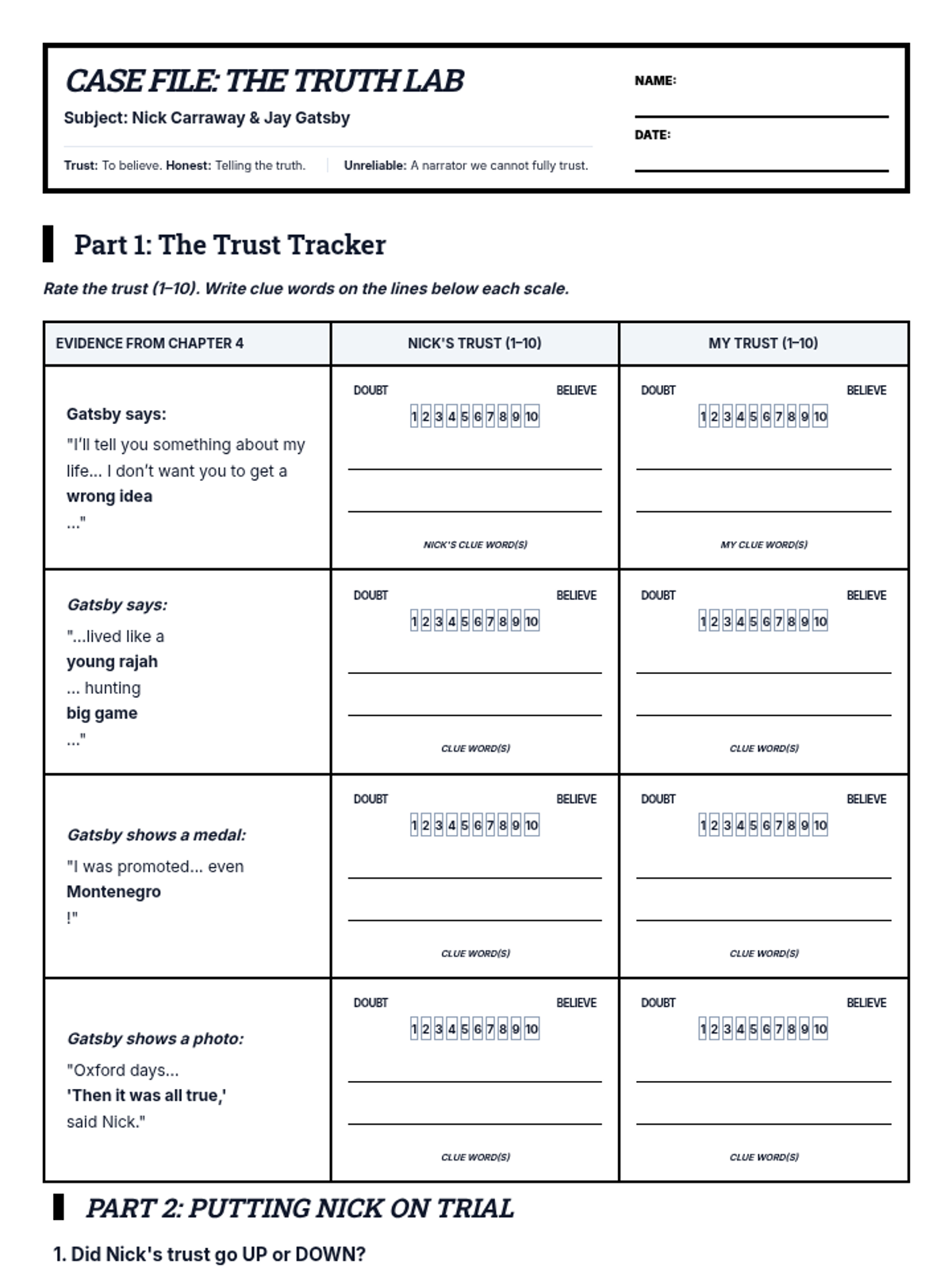
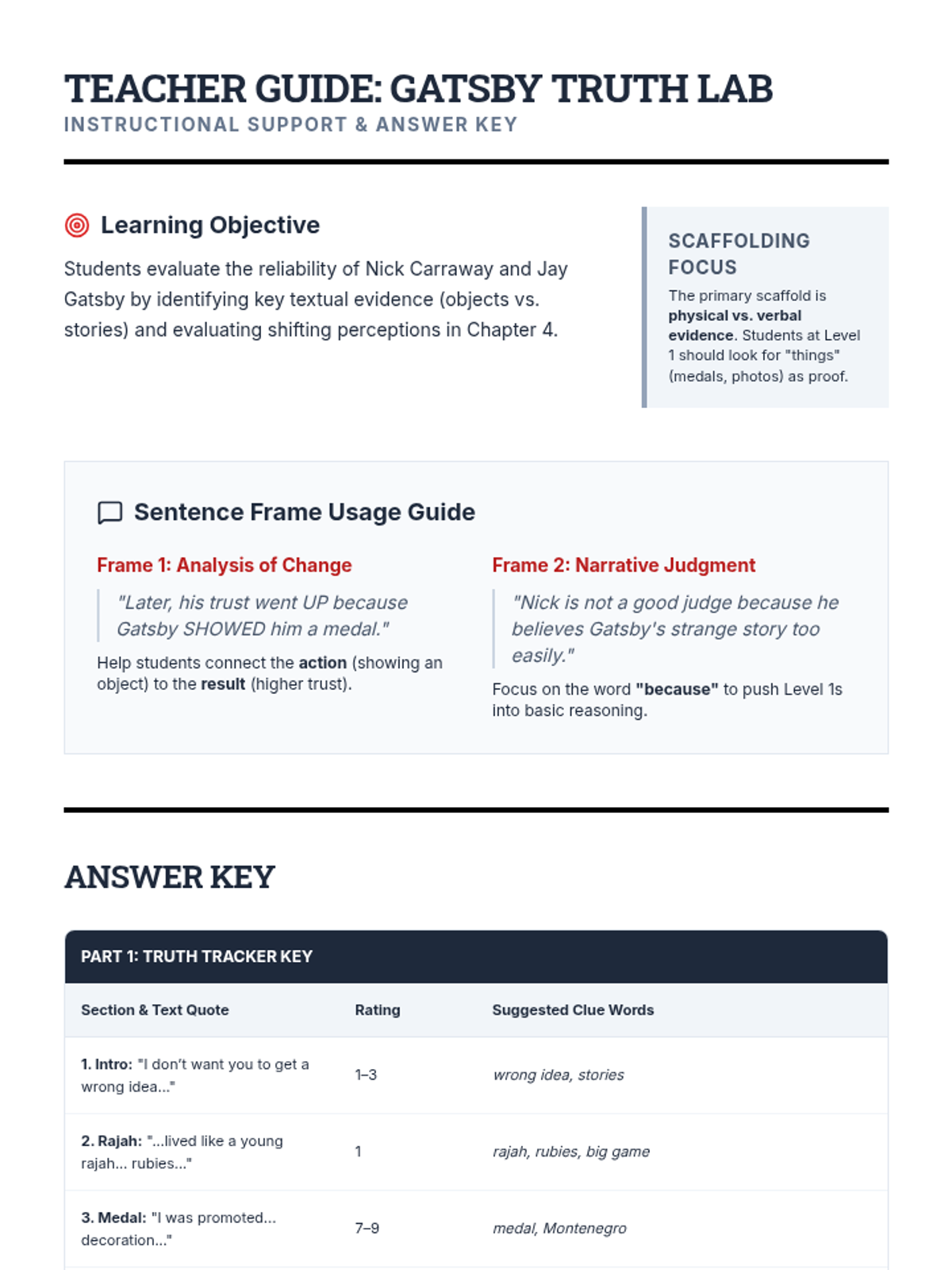
An ELL Level 1 focused investigation into the reliability of Nick Carraway and the truthfulness of Jay Gatsby's backstory in Chapter 4 of The Great Gatsby. This lesson uses a graphic organizer and sentence frames to scaffold literary analysis for beginning English learners.
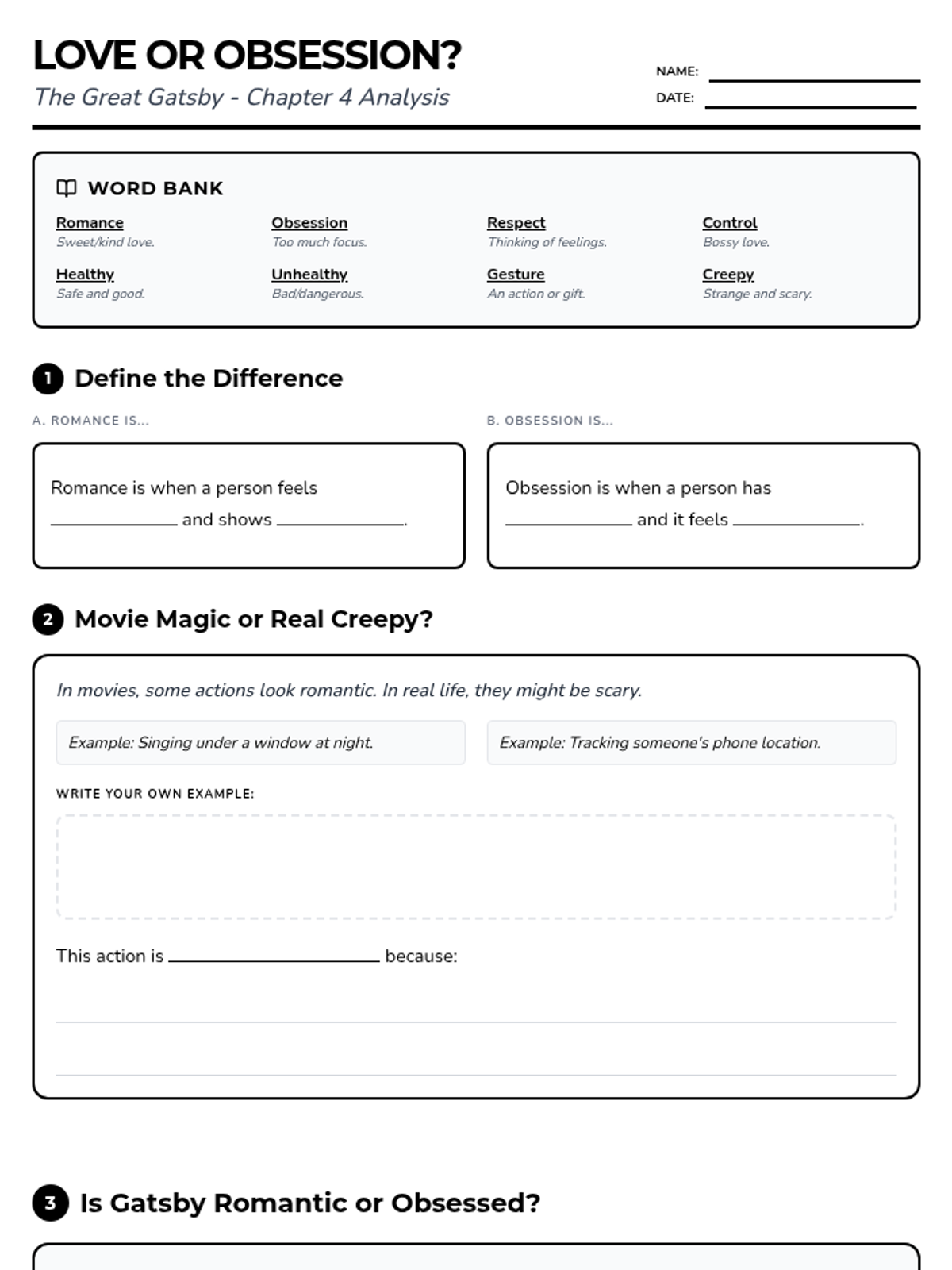
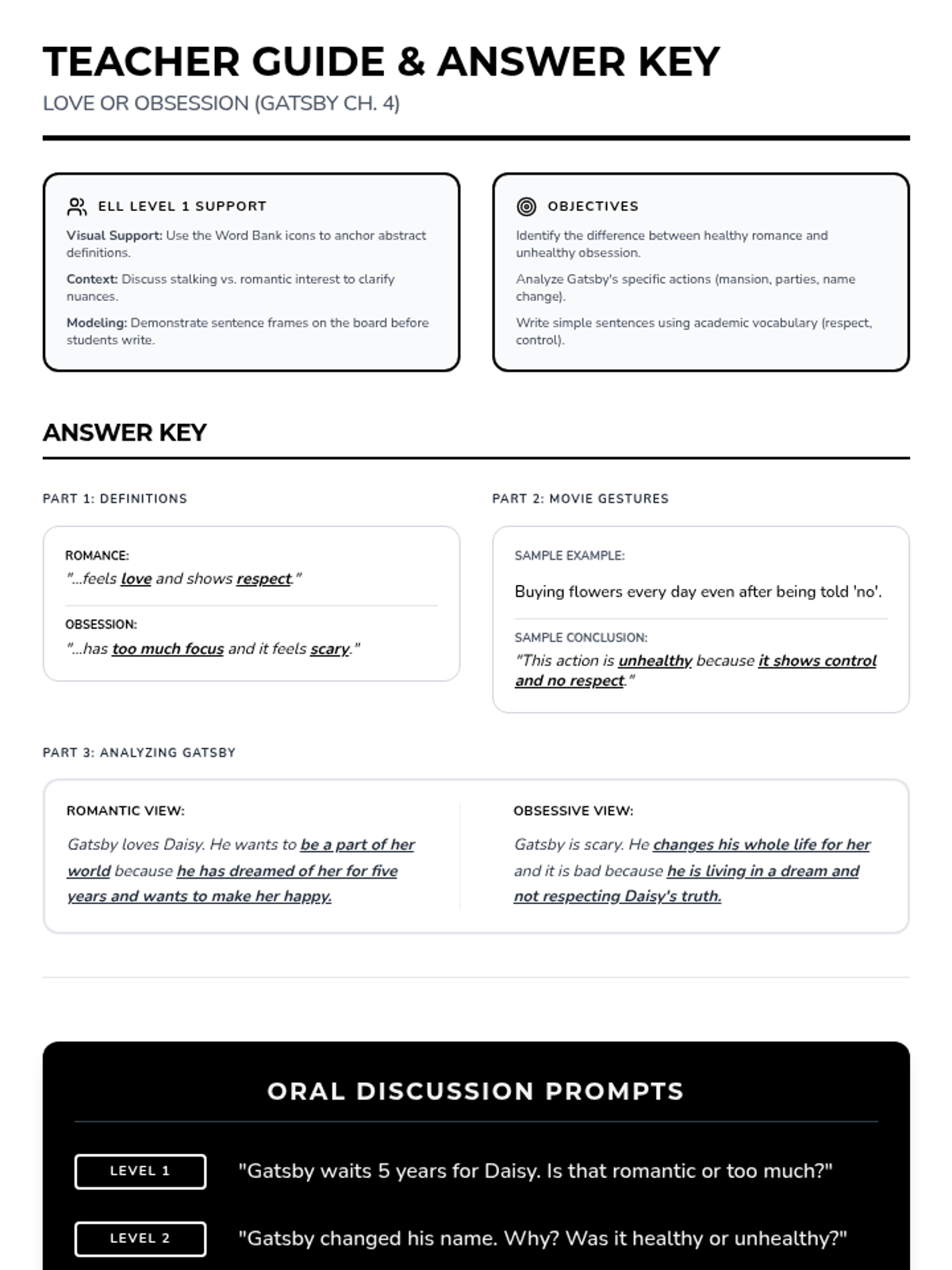
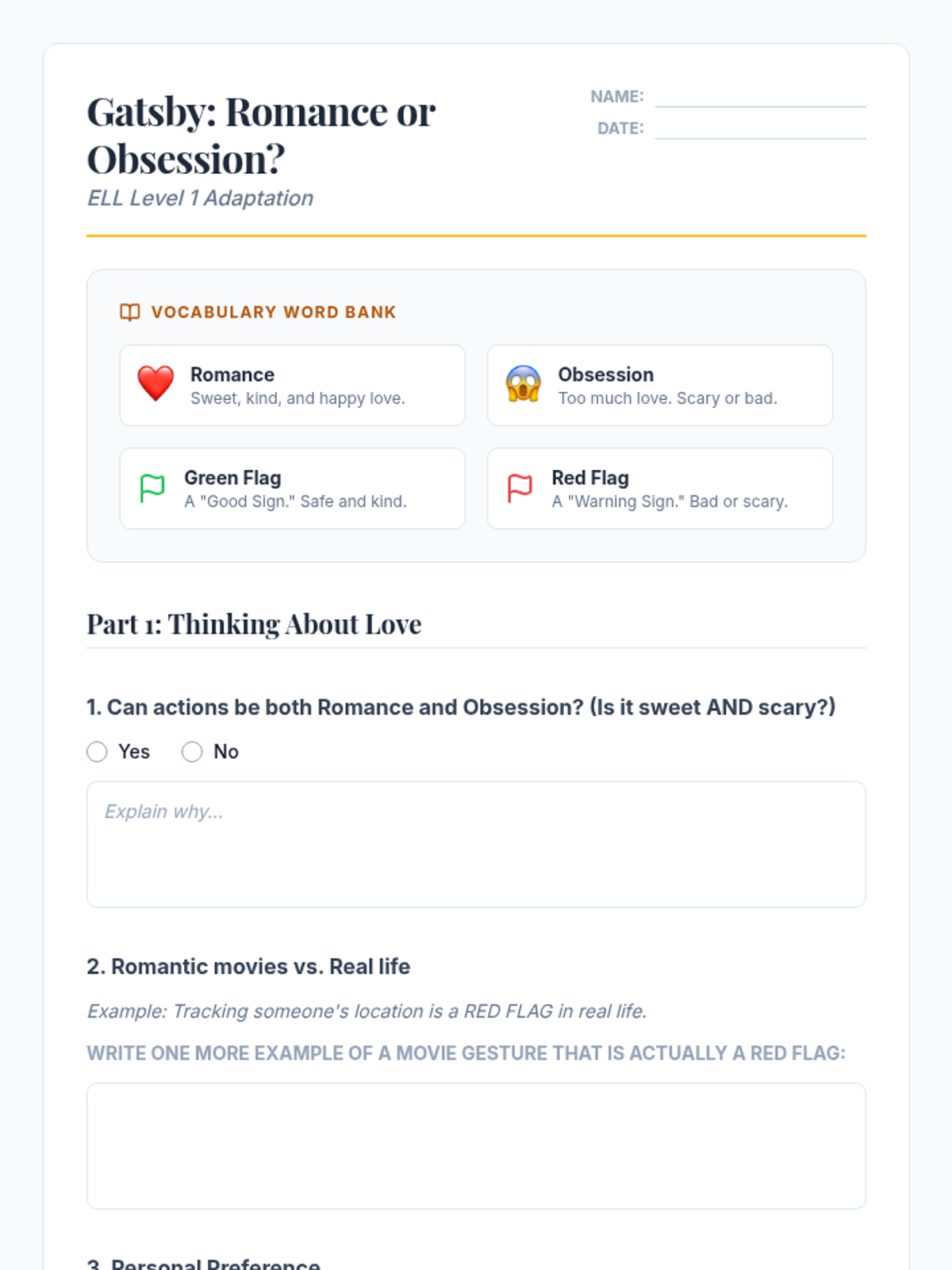
A scaffolded analysis of Jay Gatsby's pursuit of Daisy Buchanan for ELL Level 1 students, focusing on the distinction between romance and obsession through graphic organizers and sentence frames.
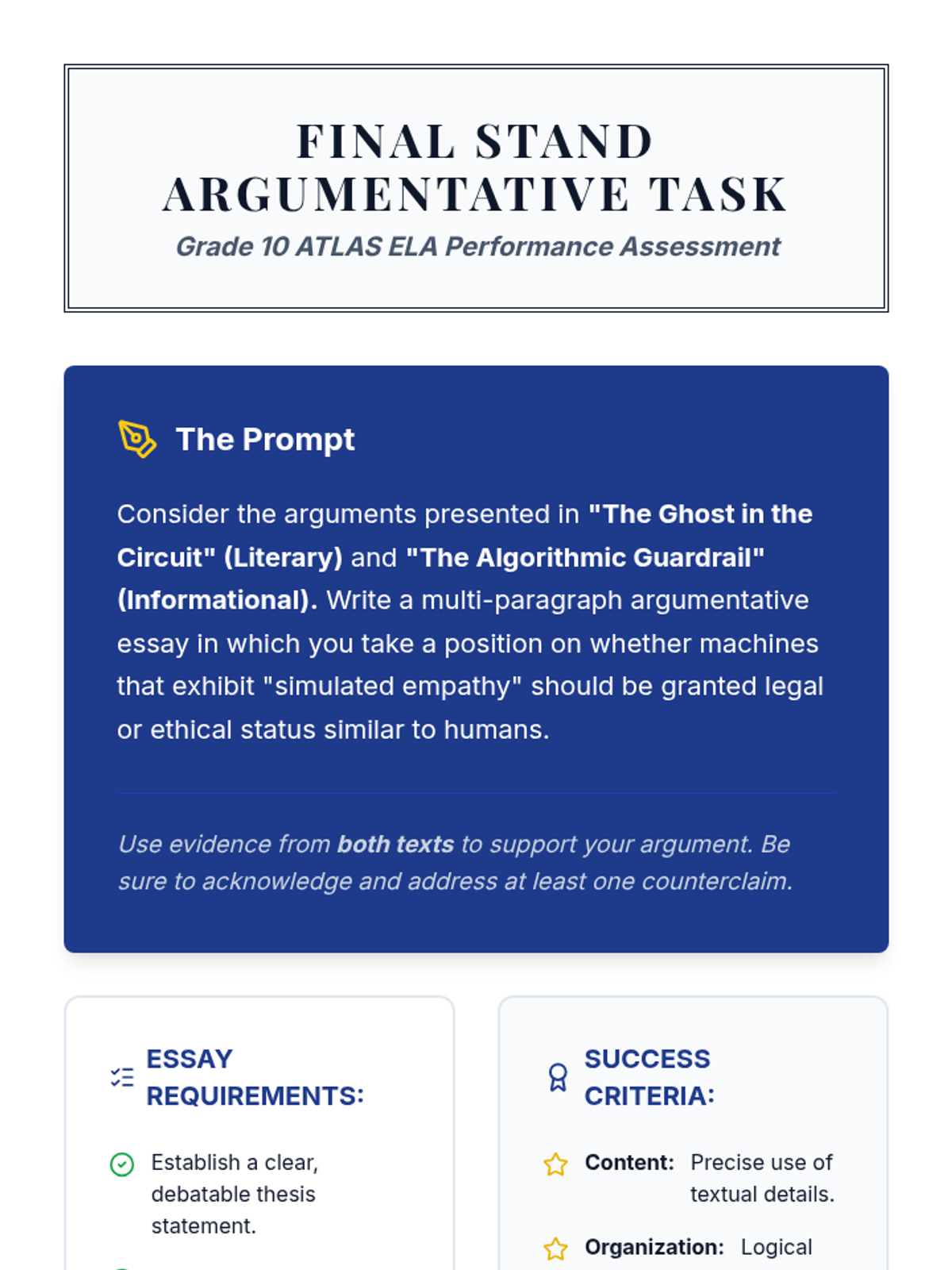
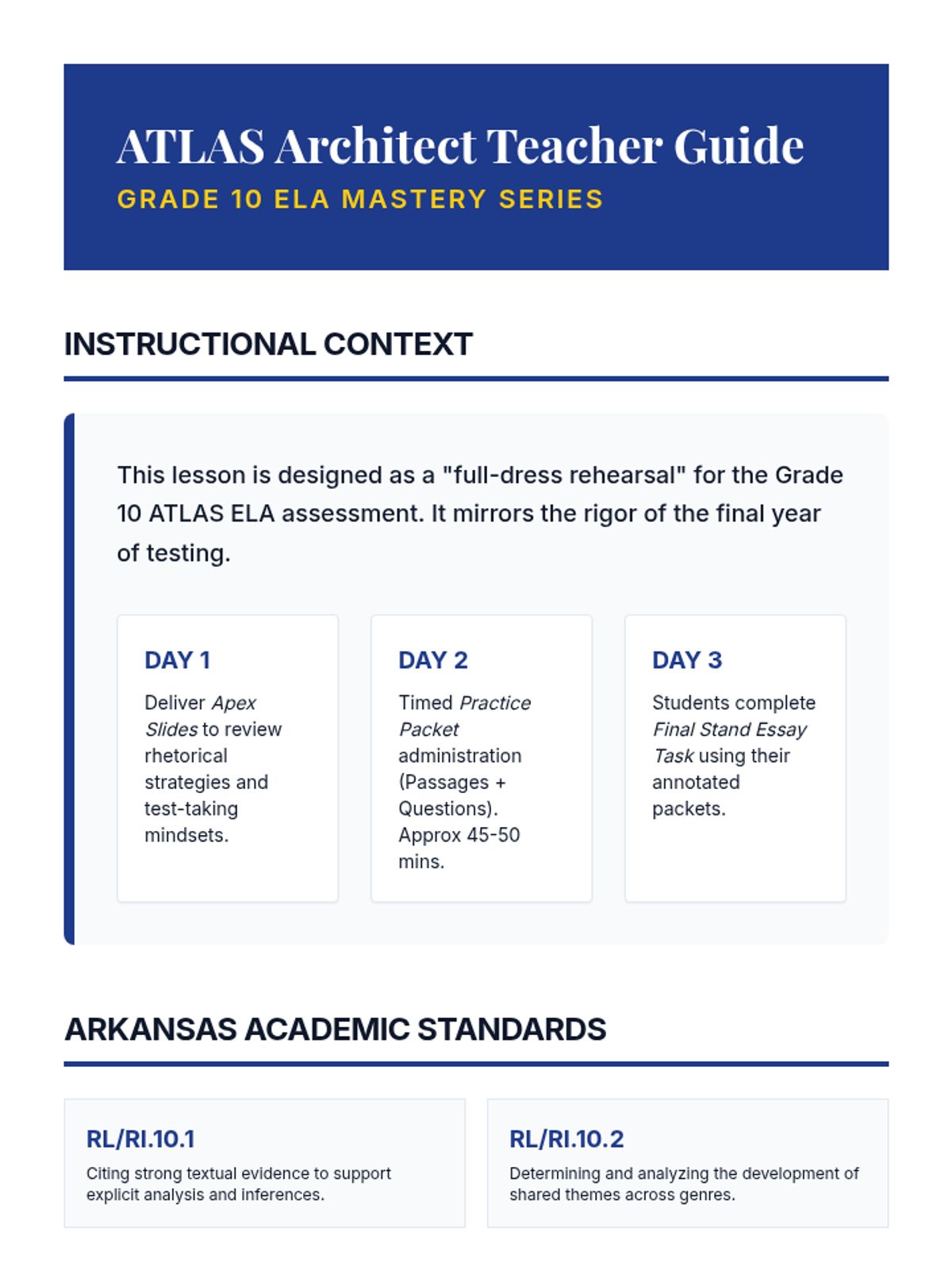
A comprehensive test preparation lesson for the Grade 10 Arkansas ATLAS ELA assessment, focusing on synthesis of complex texts, evidence-based analysis, and extended argumentative writing.
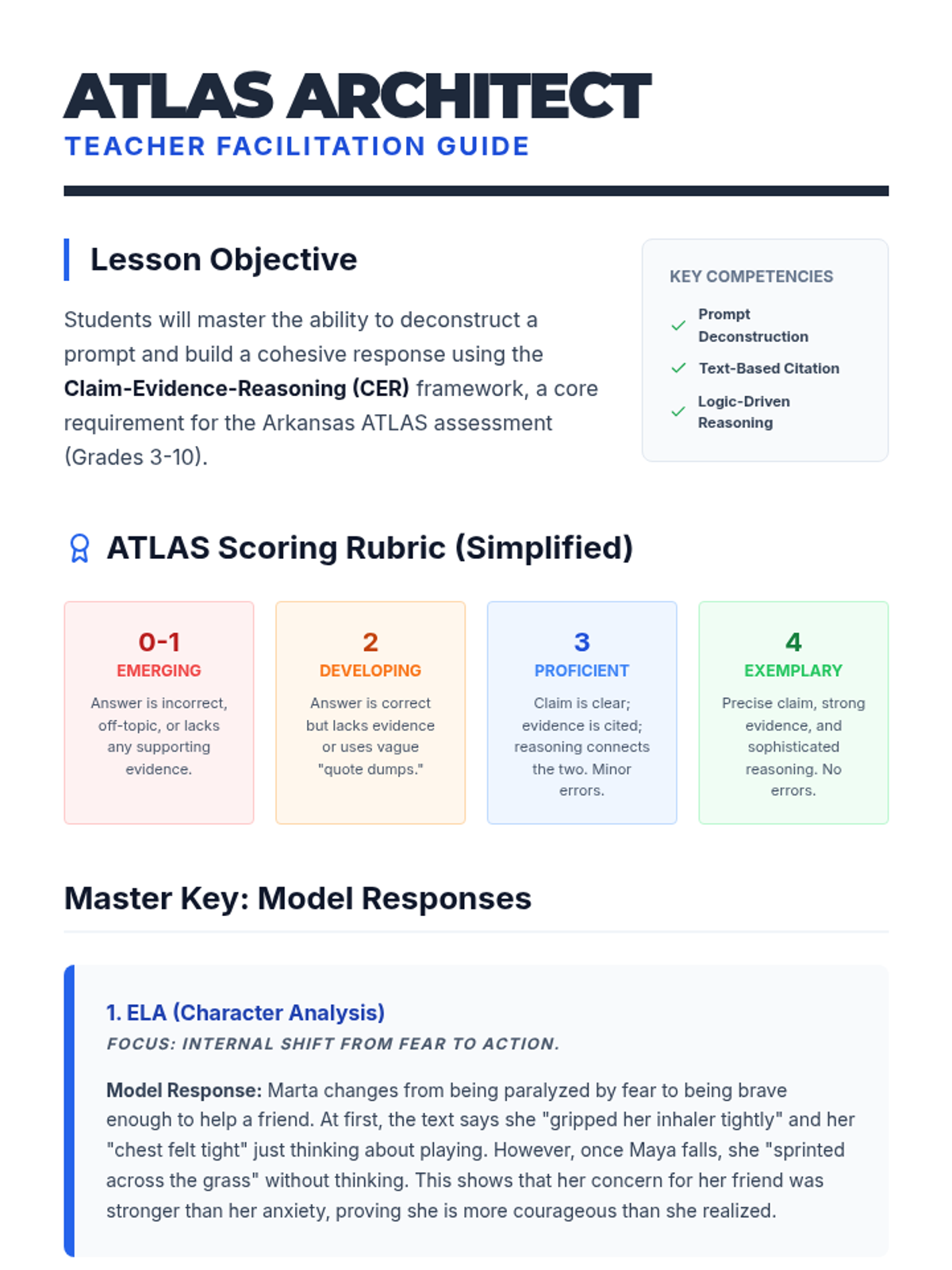
A comprehensive guide to mastering evidence-based writing and constructed responses for the Arkansas ATLAS assessment, focusing on the Claim-Evidence-Reasoning (CER) framework.
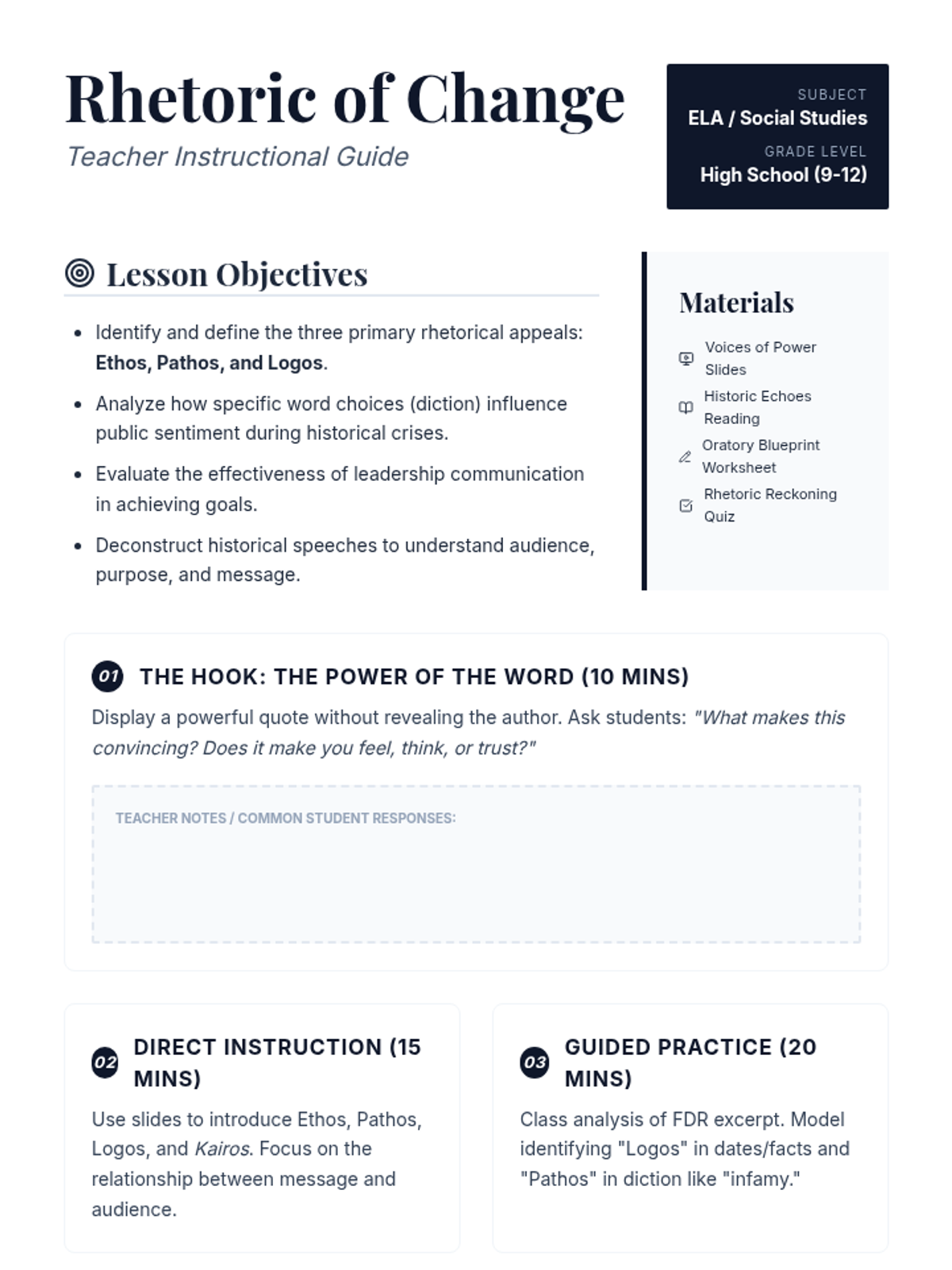
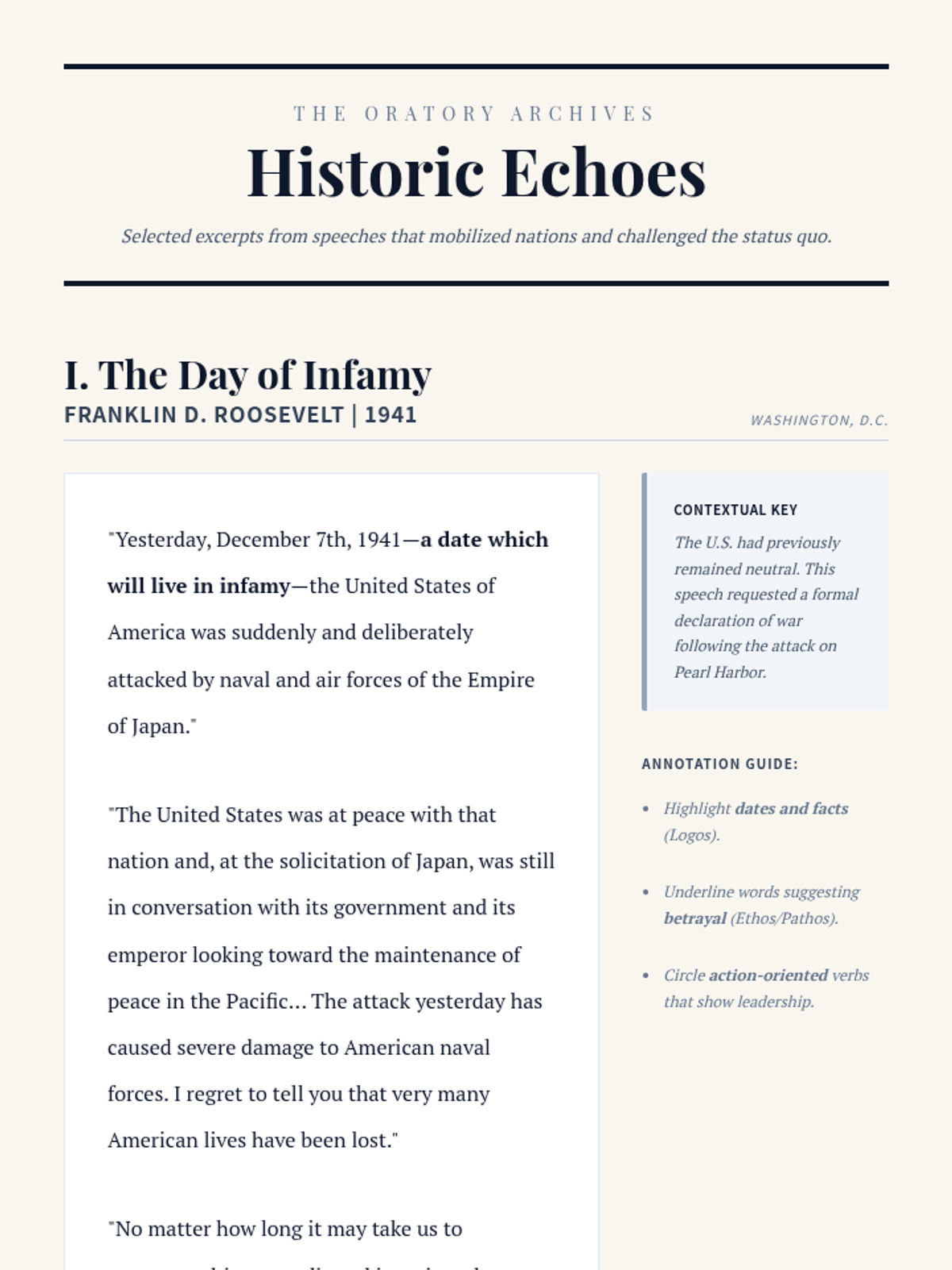
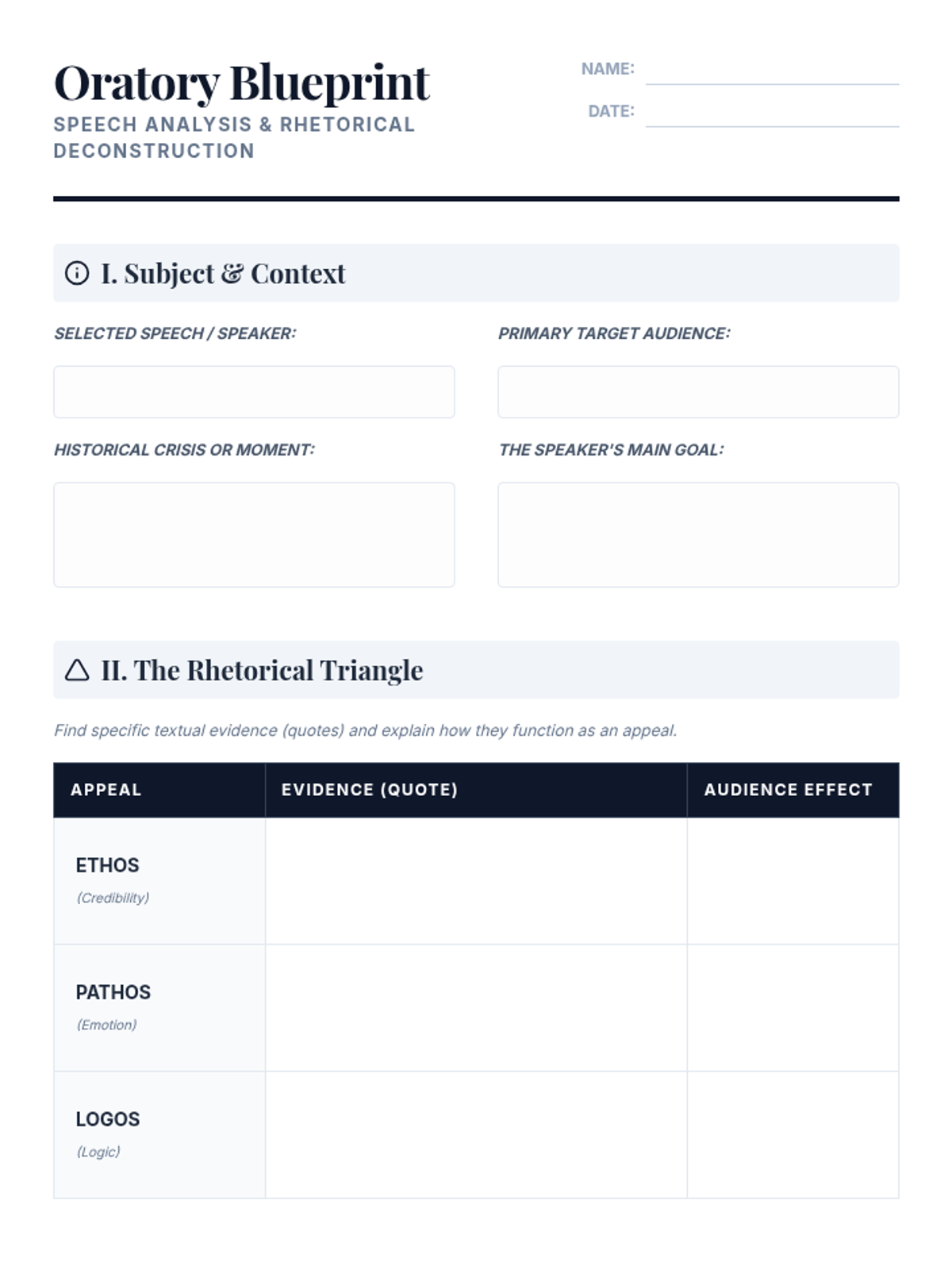
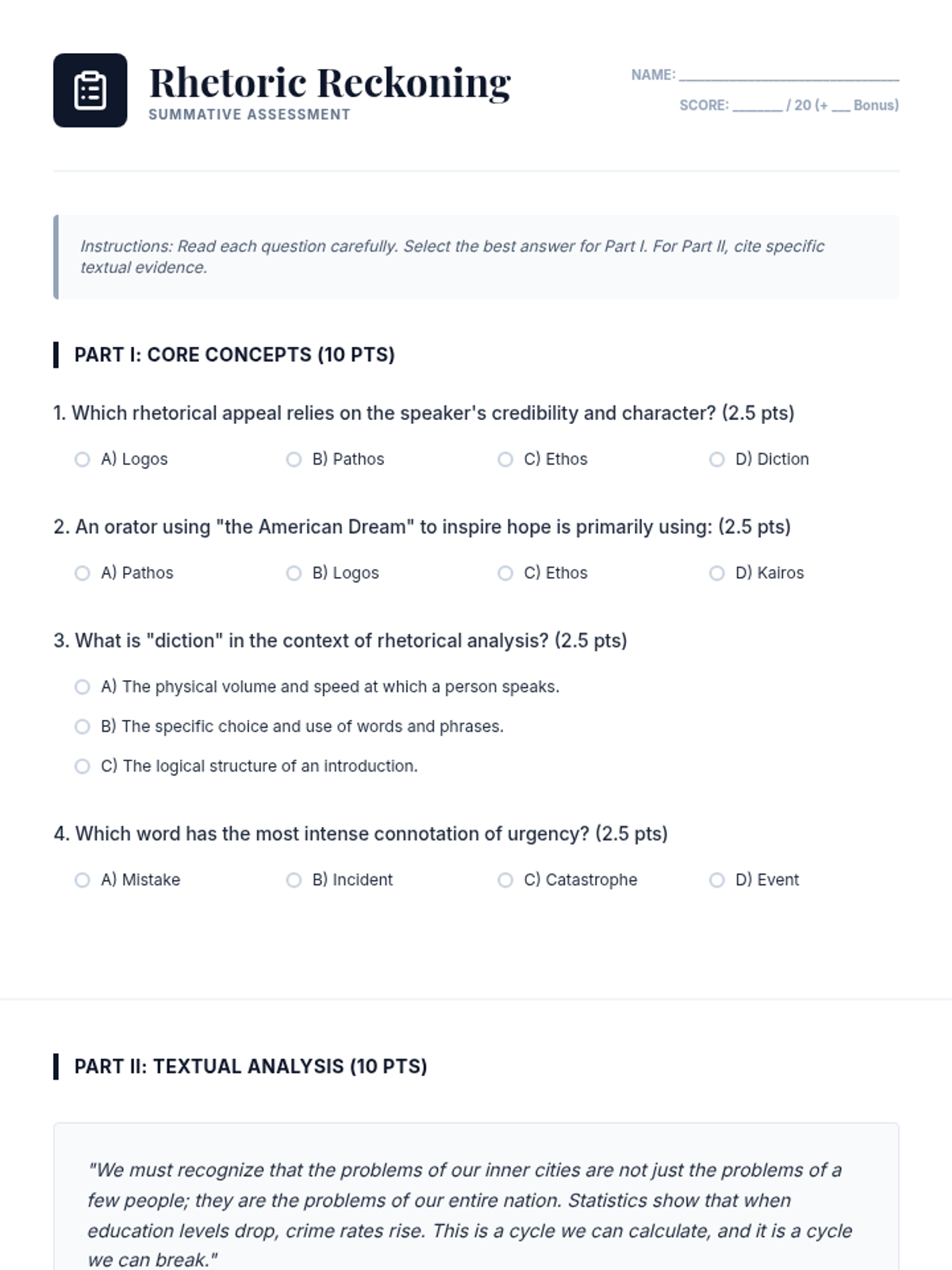
A high school ELA and social studies lesson exploring the persuasive power of historical speeches through the lens of rhetorical appeals and strategic word choice. Students analyze landmark oratory to understand how leaders influence public sentiment during pivotal moments.
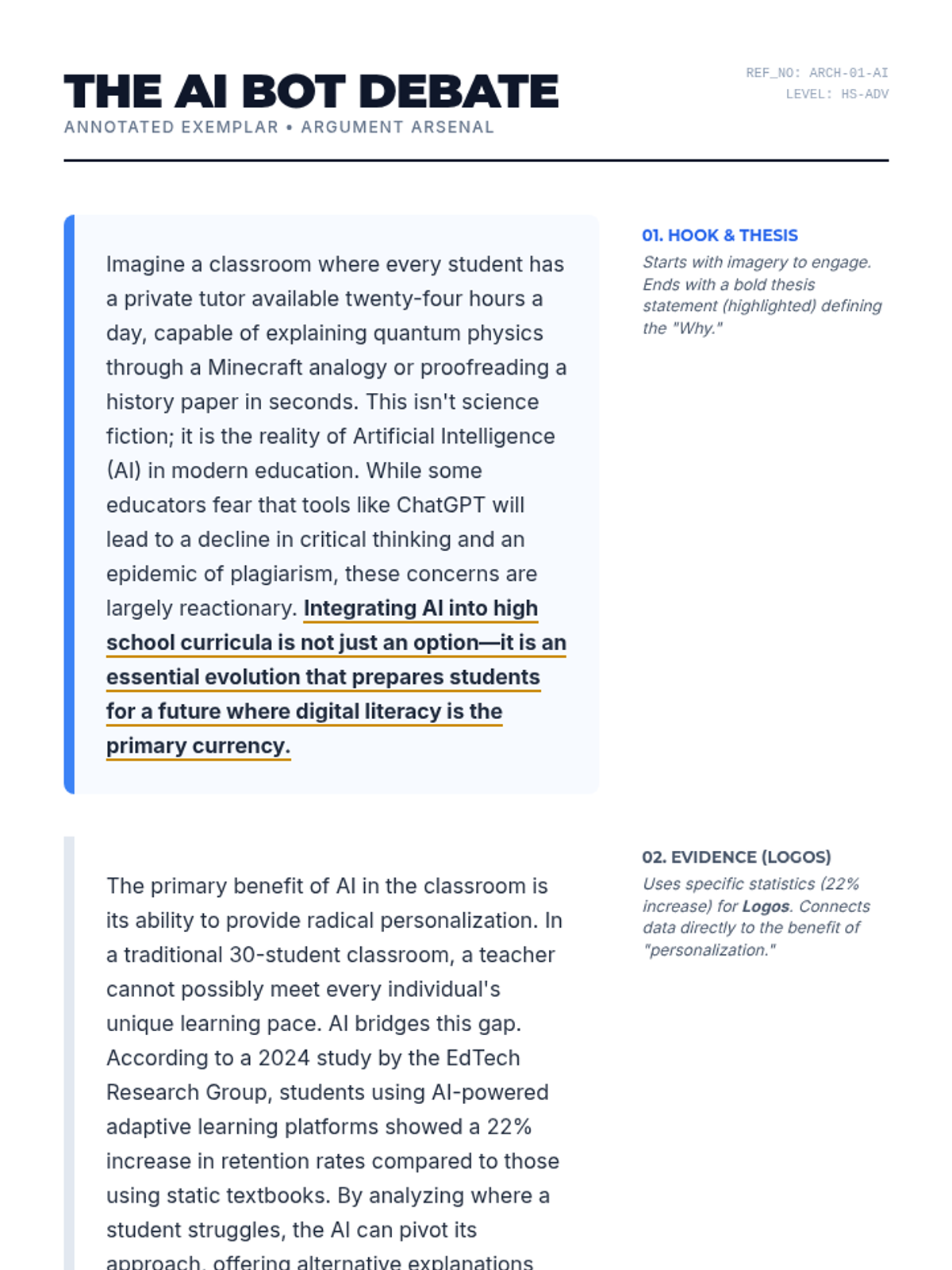
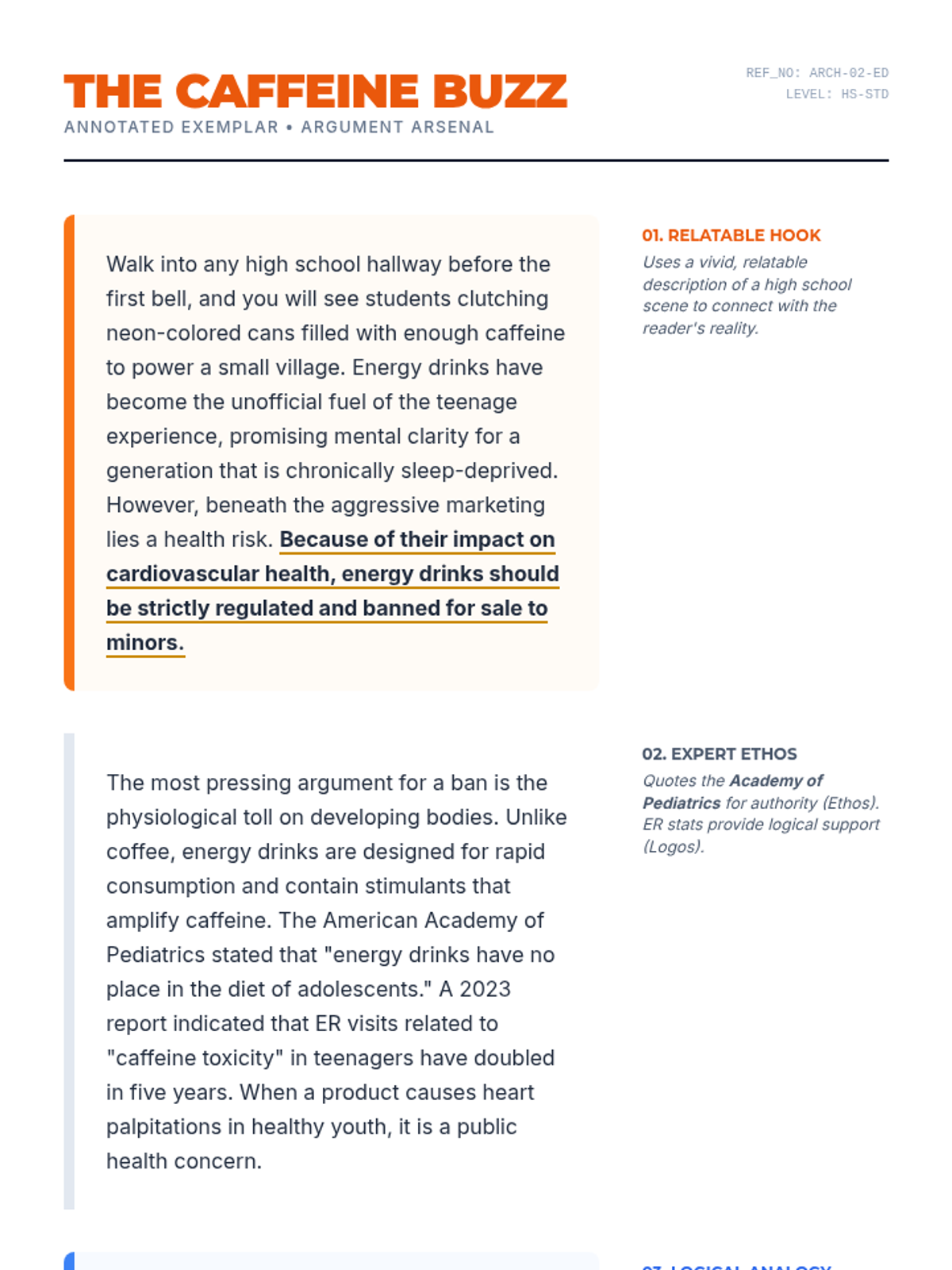
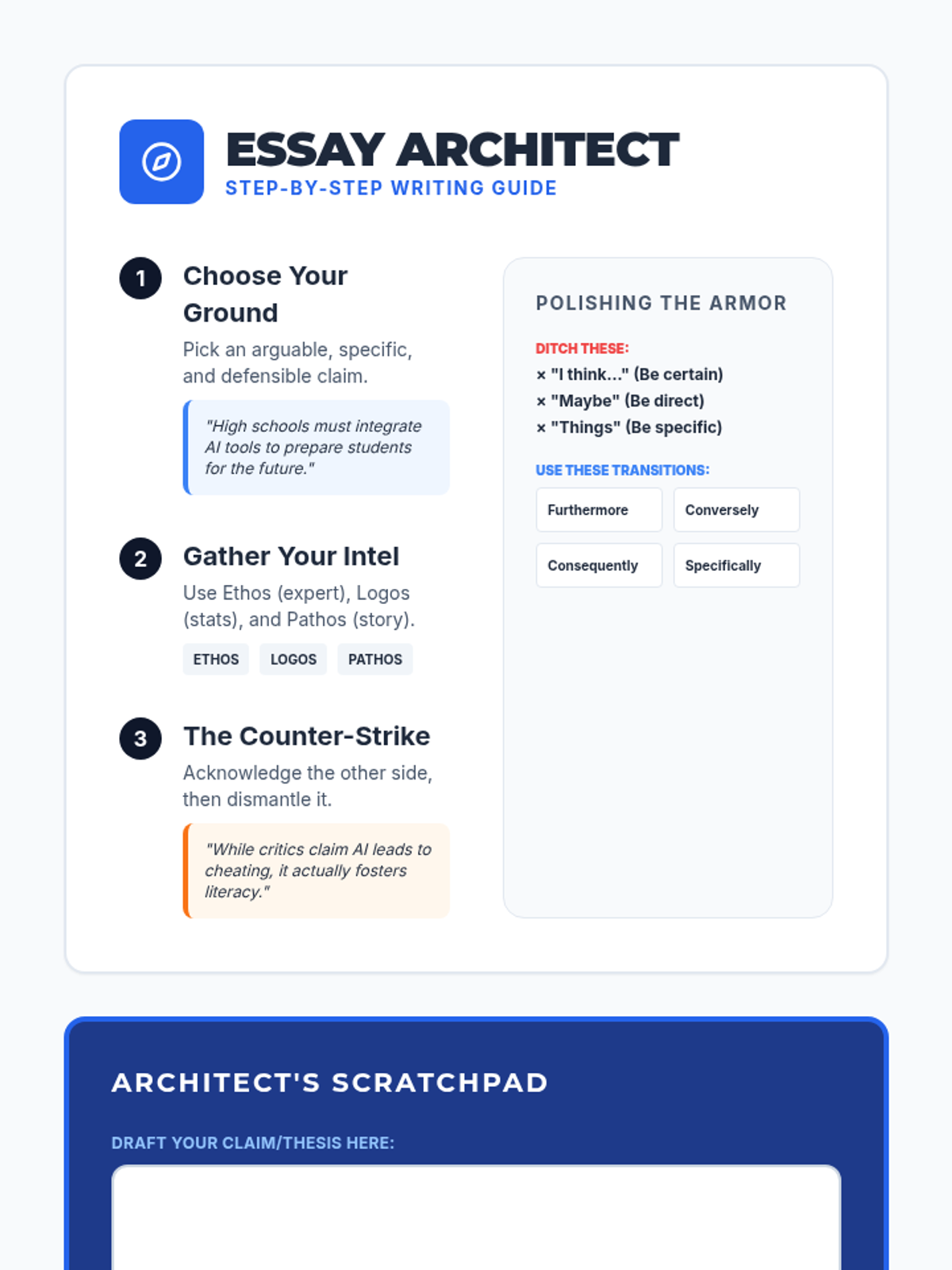
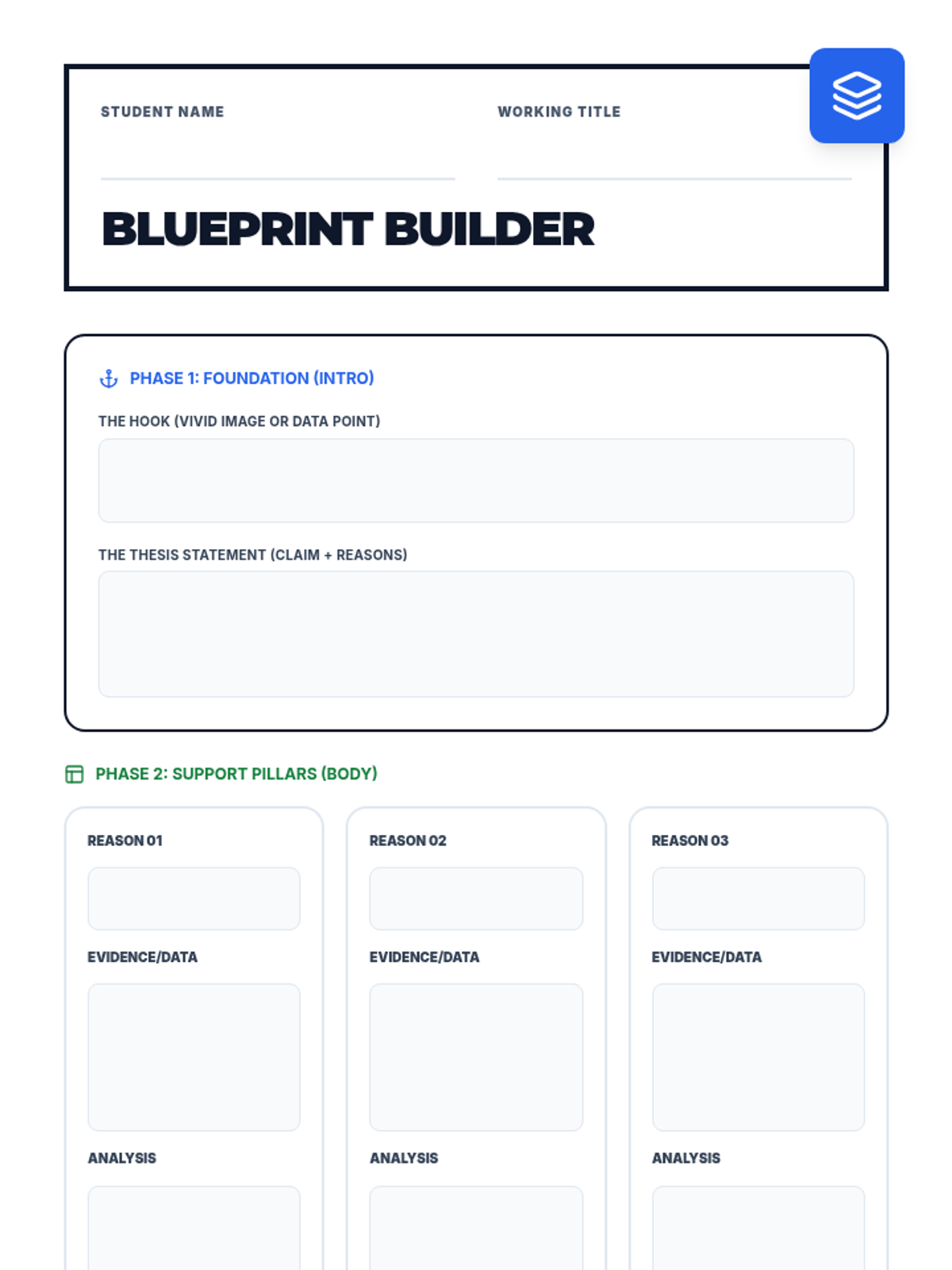
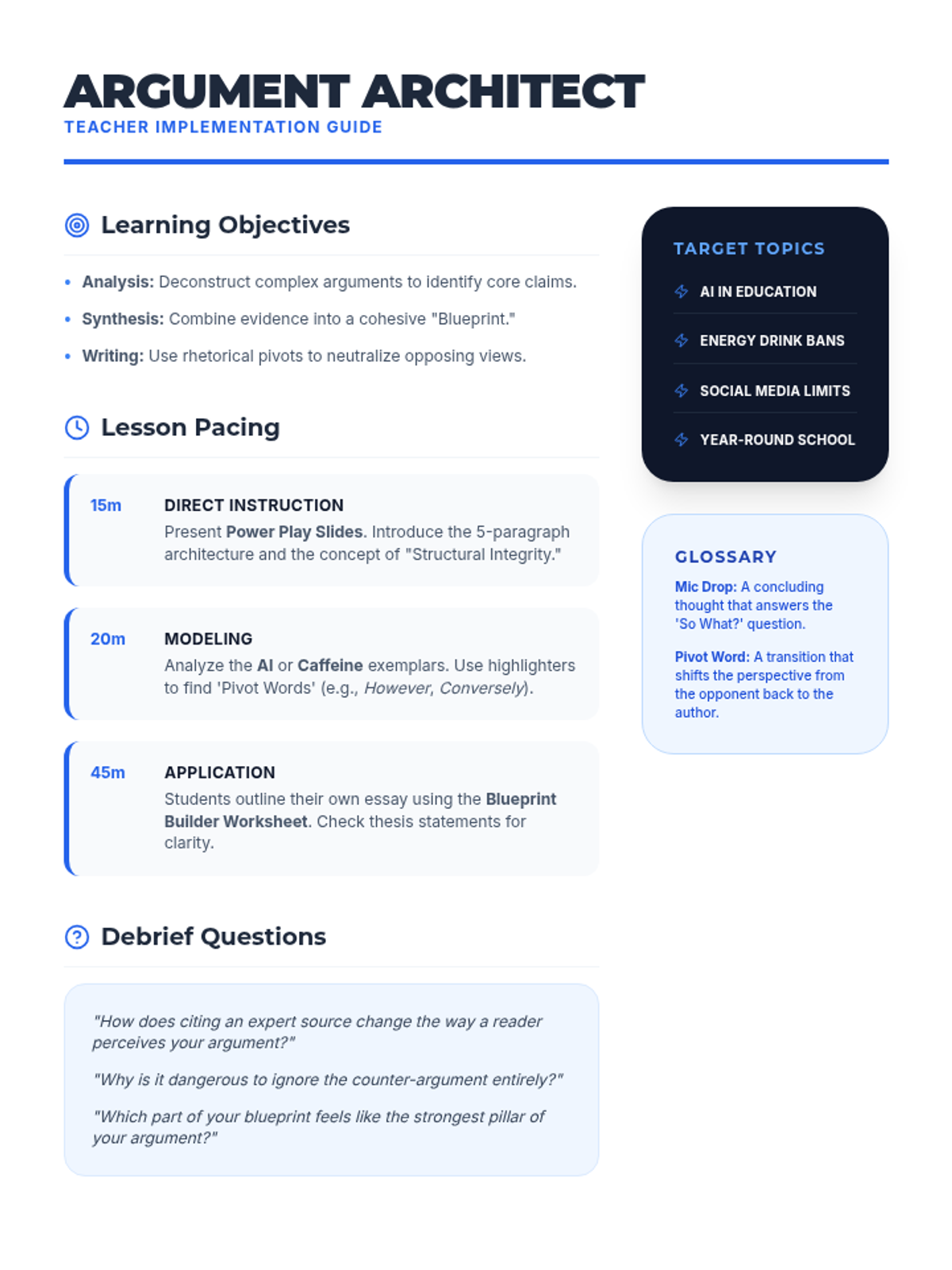
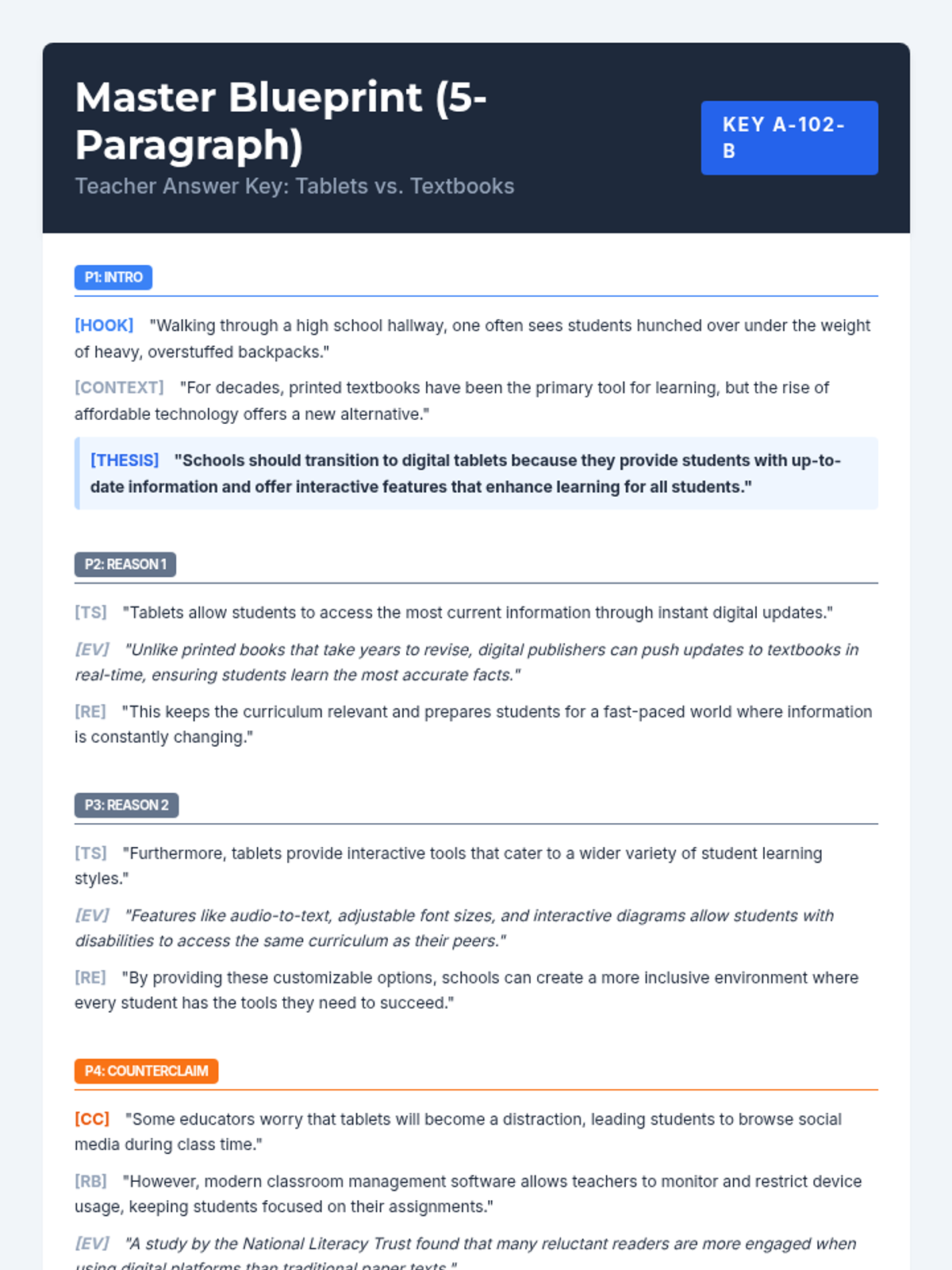
A comprehensive guide to mastering argumentative writing for high schoolers, featuring annotated exemplars on AI and energy drinks, a step-by-step architect's guide, and structured outlining tools.
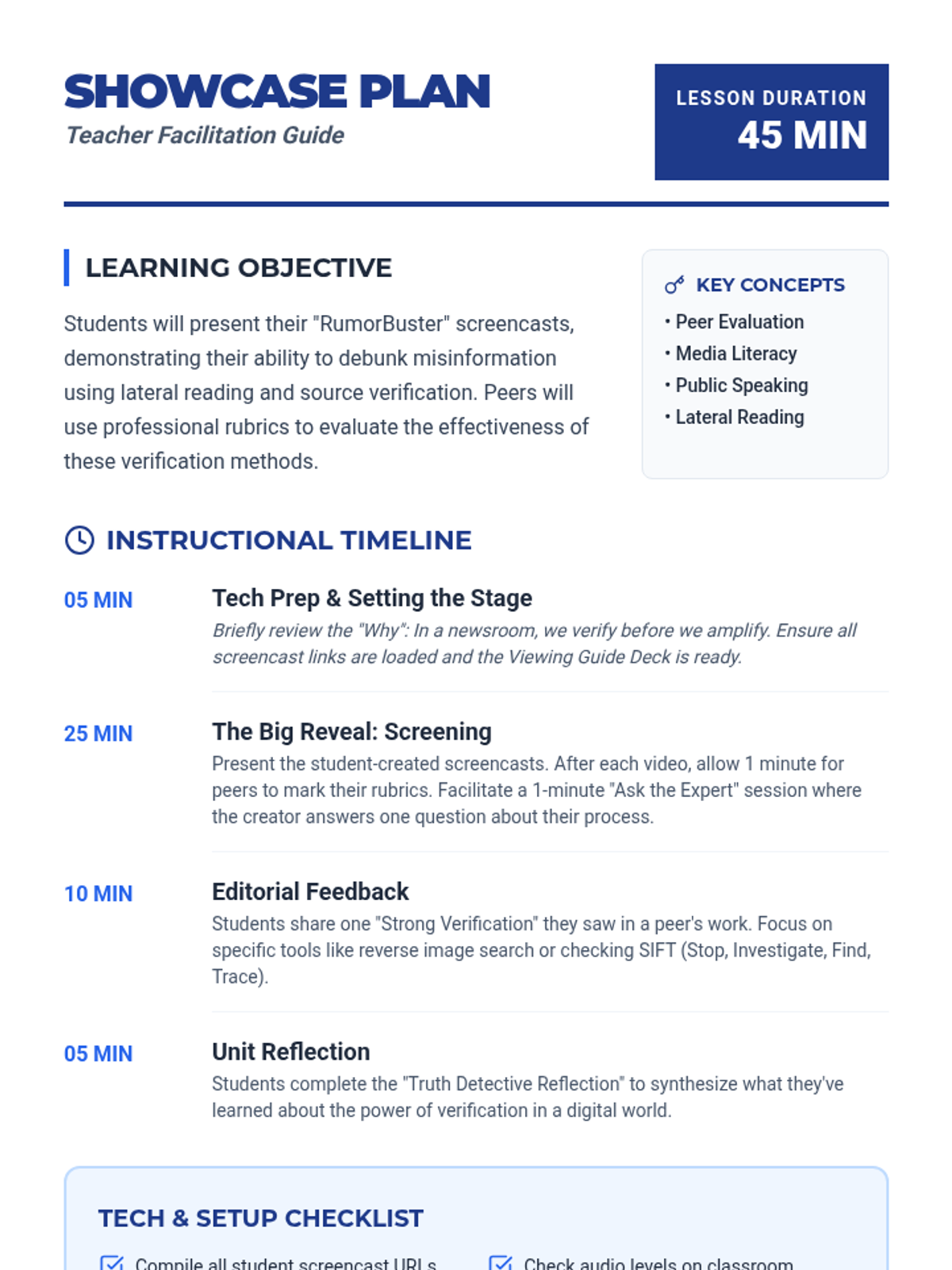
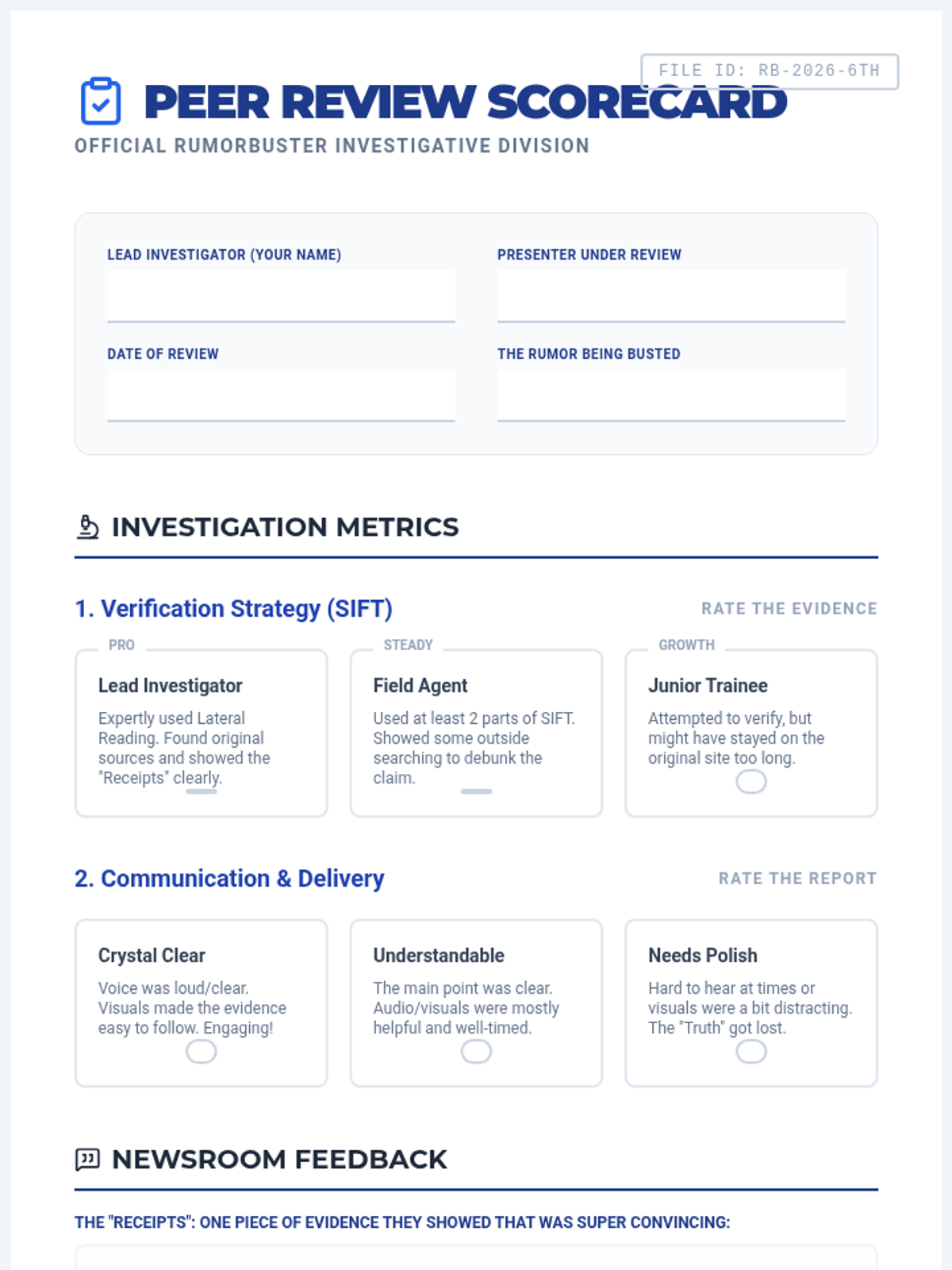
A 45-minute lesson where students showcase their media literacy investigations through screencasts, engage in peer evaluation using a professional rubric, and reflect on their growth as digital fact-checkers.
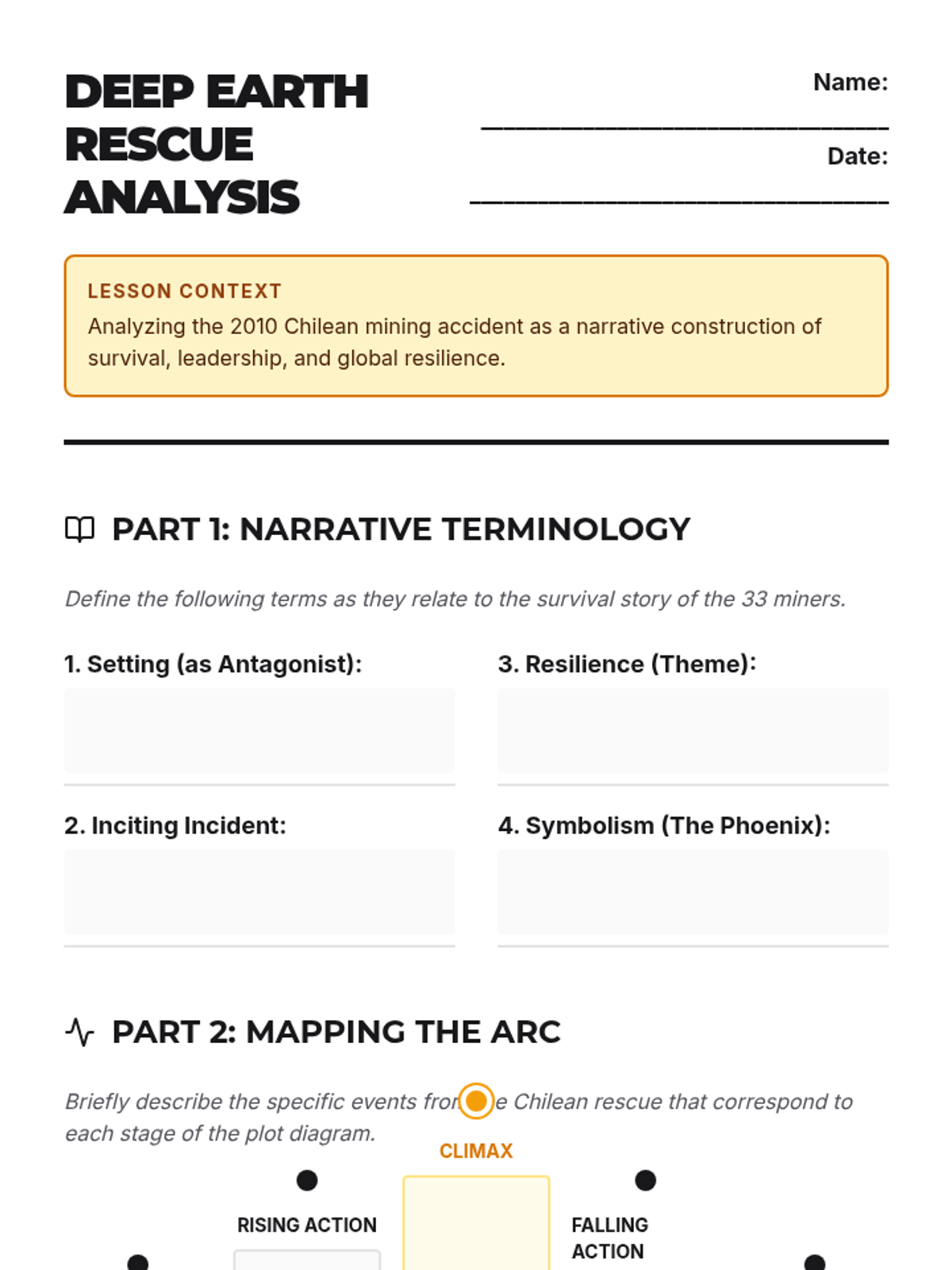
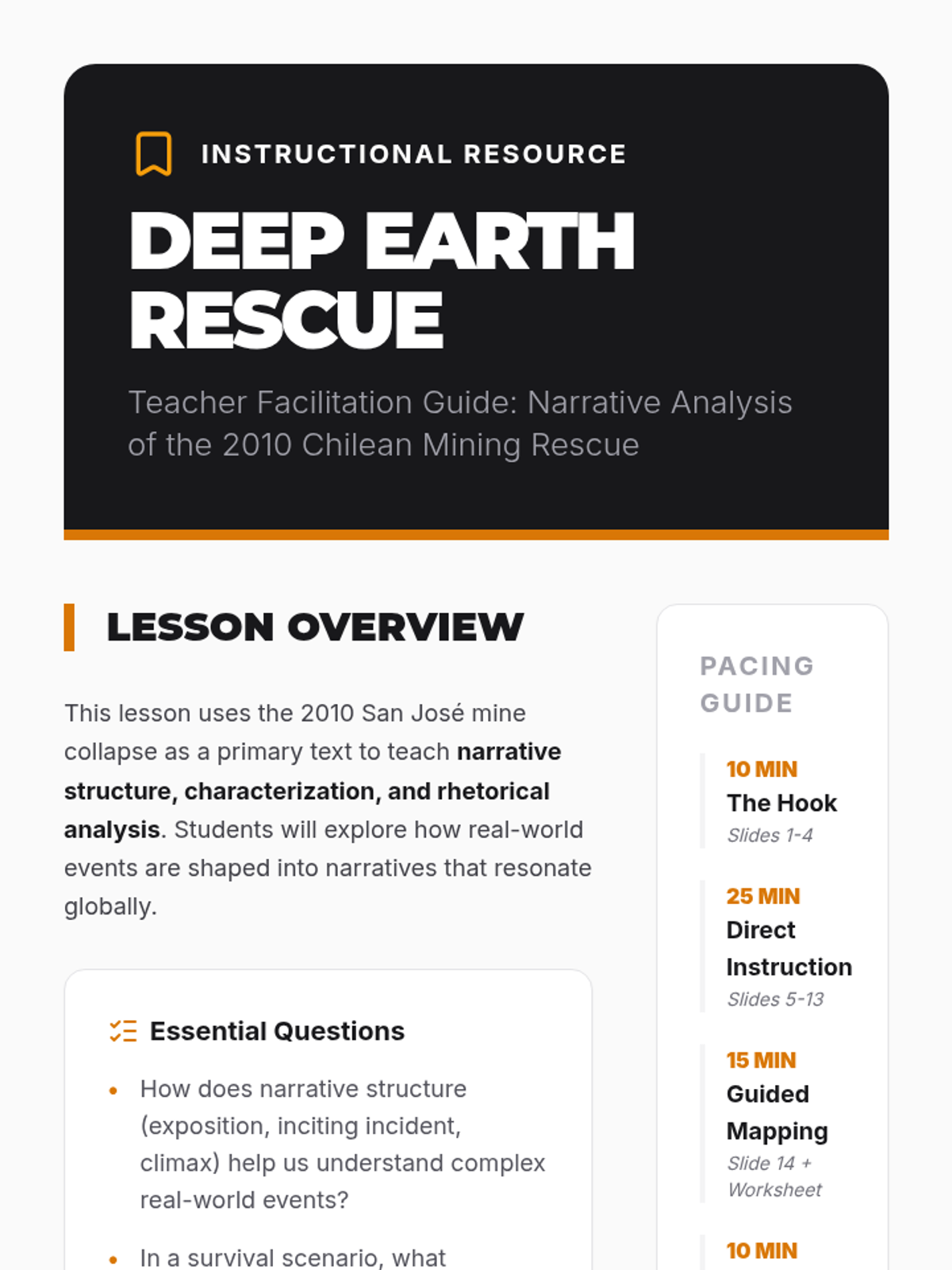
A deep dive into the 2010 Chilean mining accident, focusing on narrative structure, leadership, and the theme of resilience. Students will analyze how the 33 miners' story is constructed as a global narrative.
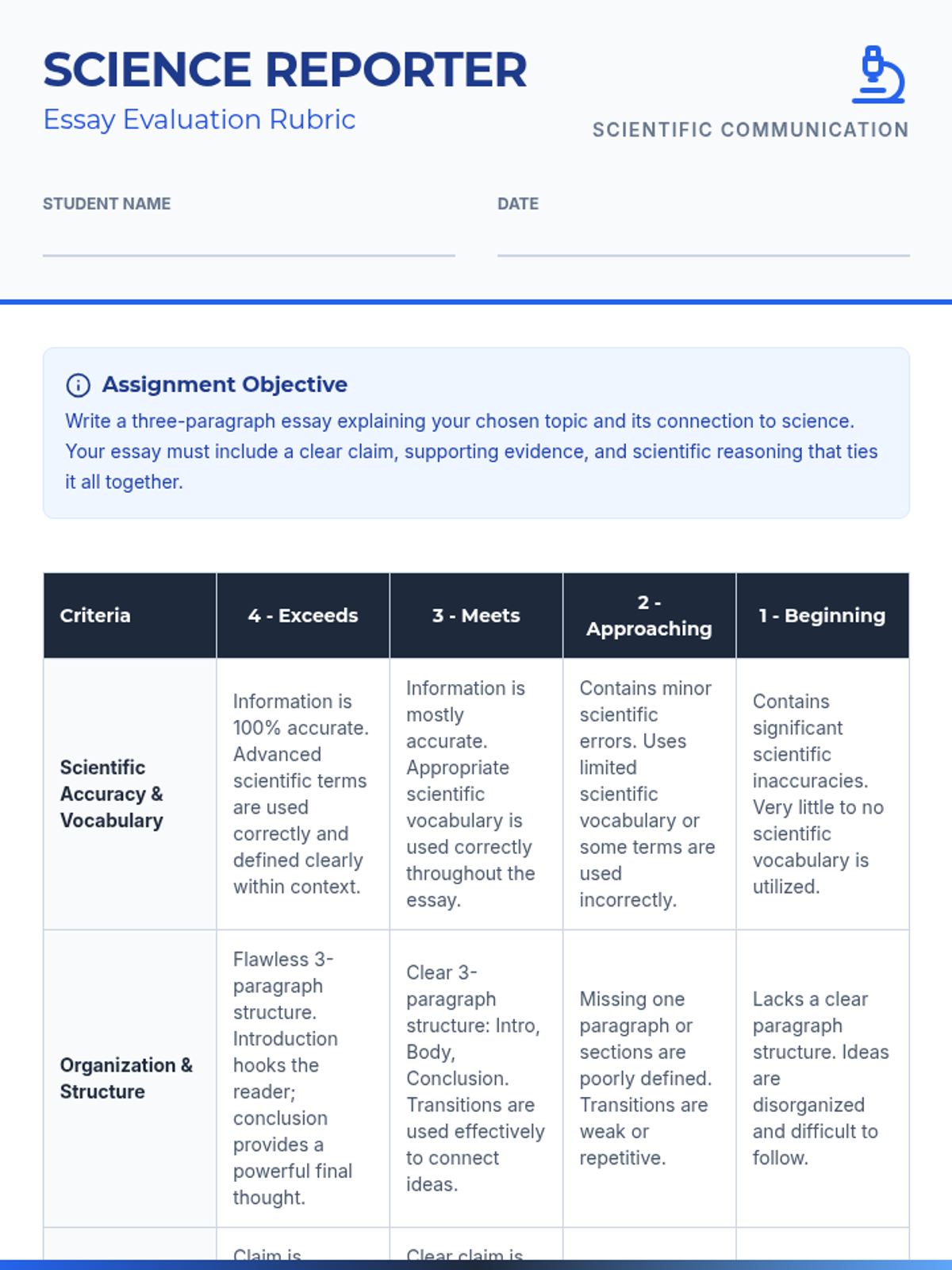
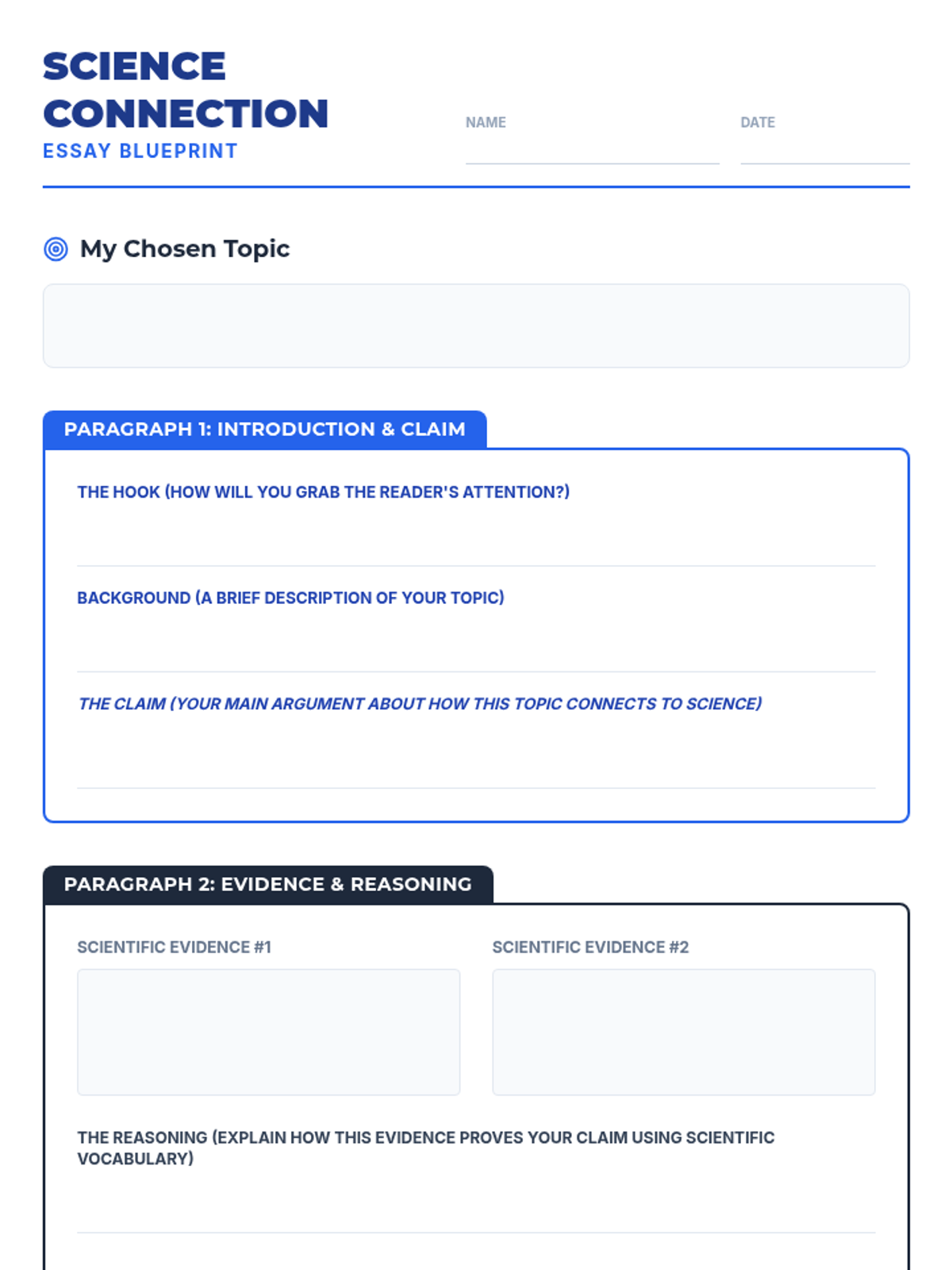
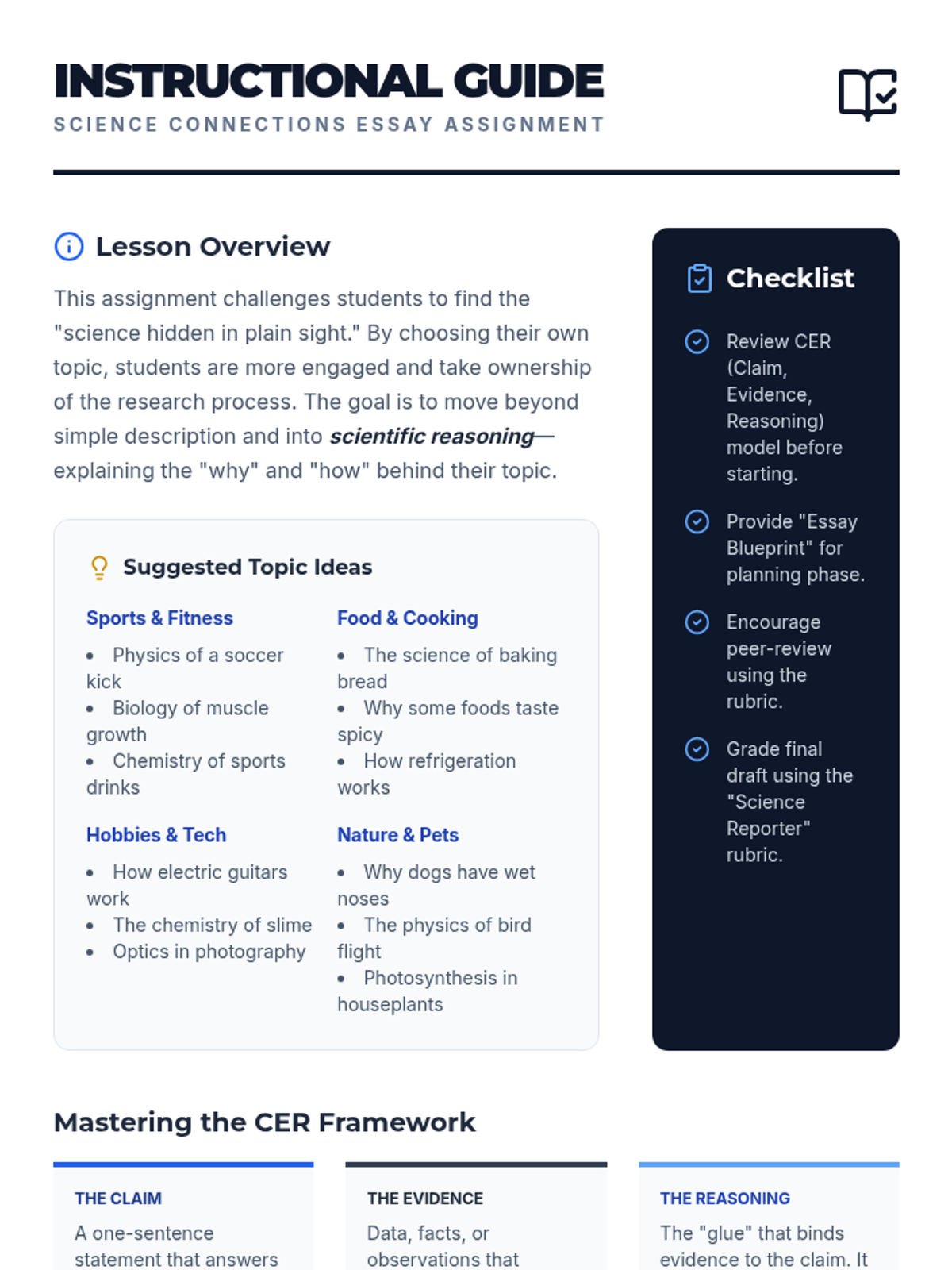
A lesson focused on helping students write a structured three-paragraph essay connecting a self-chosen topic to scientific principles.
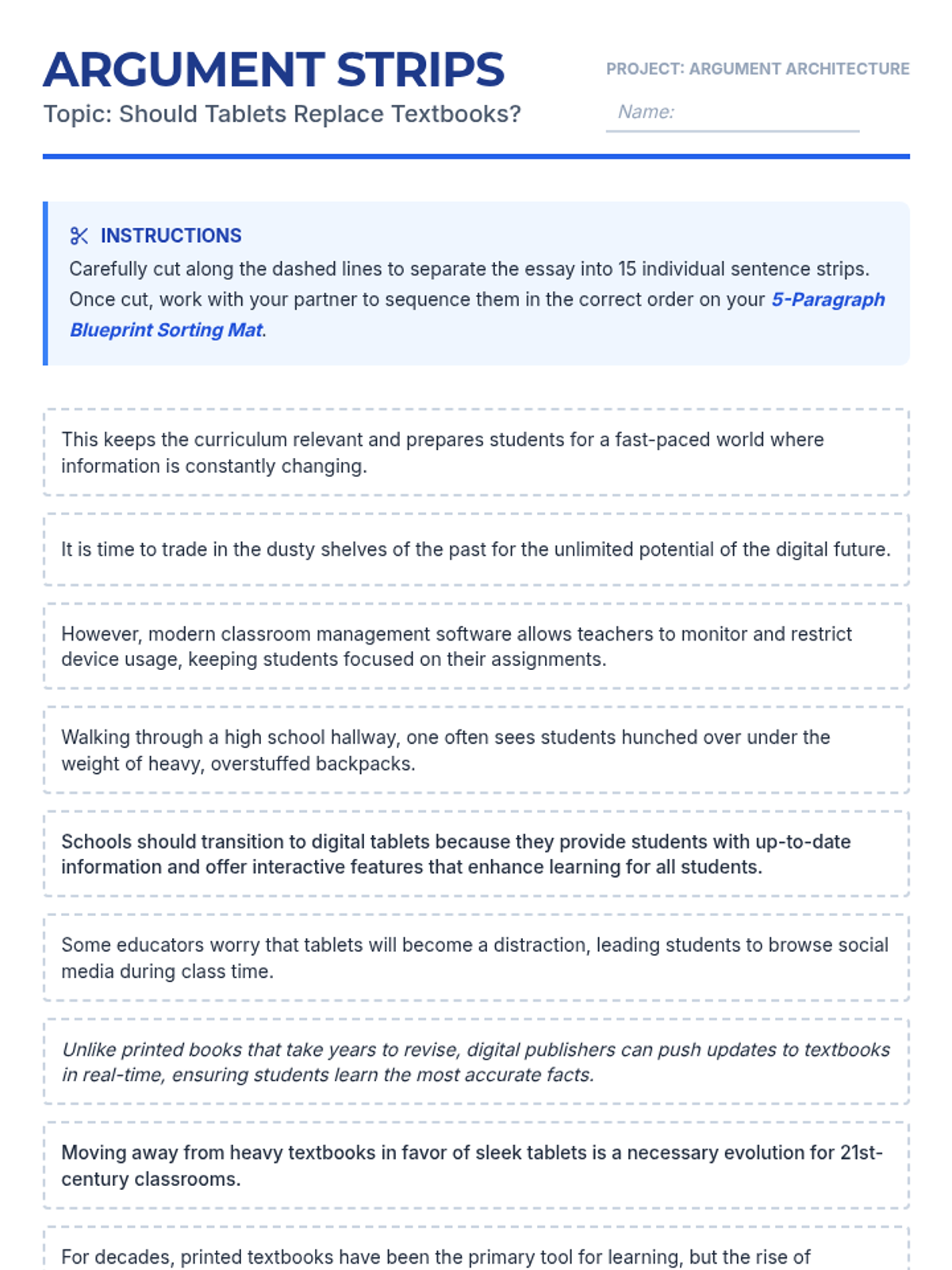
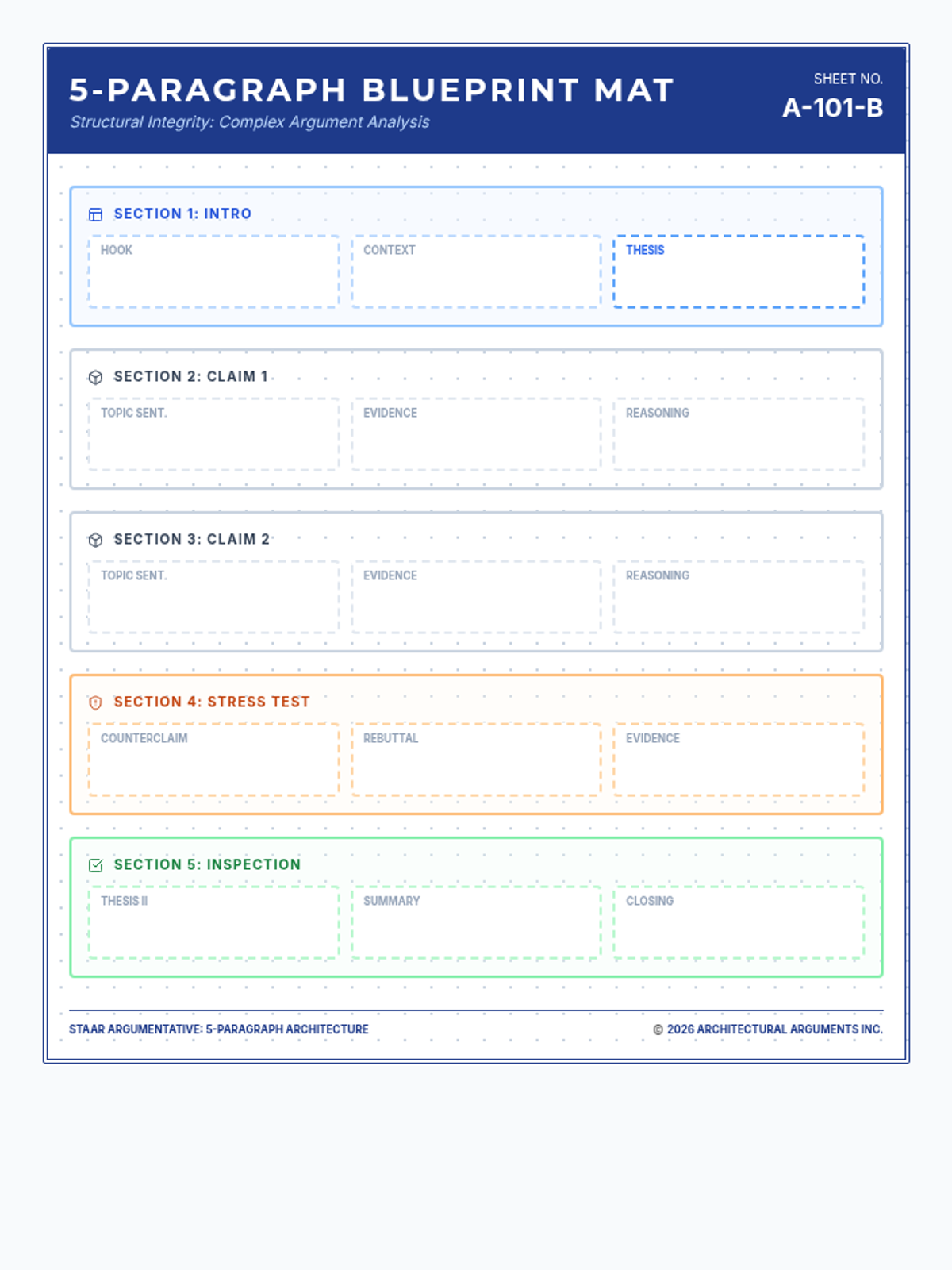
A lesson focused on understanding the structural components of an argumentative essay through a hands-on sorting and sequencing activity.
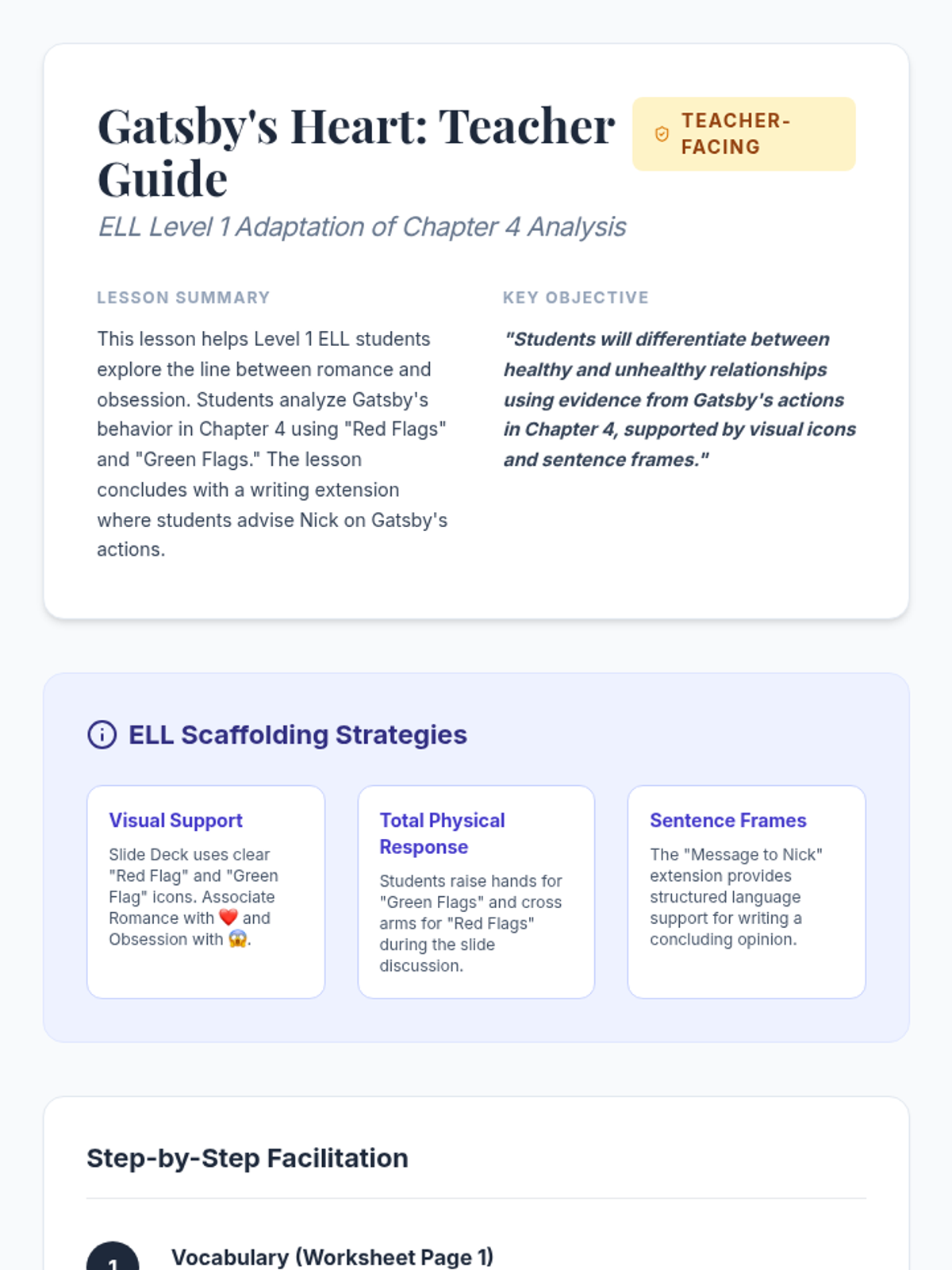
An ELL Level 1 adapted lesson for Chapter 4 of The Great Gatsby, focusing on romance vs. obsession through the lens of 'Red Flags' and 'Green Flags'. Includes vocabulary scaffolding, visual aids, and a creative meme project.
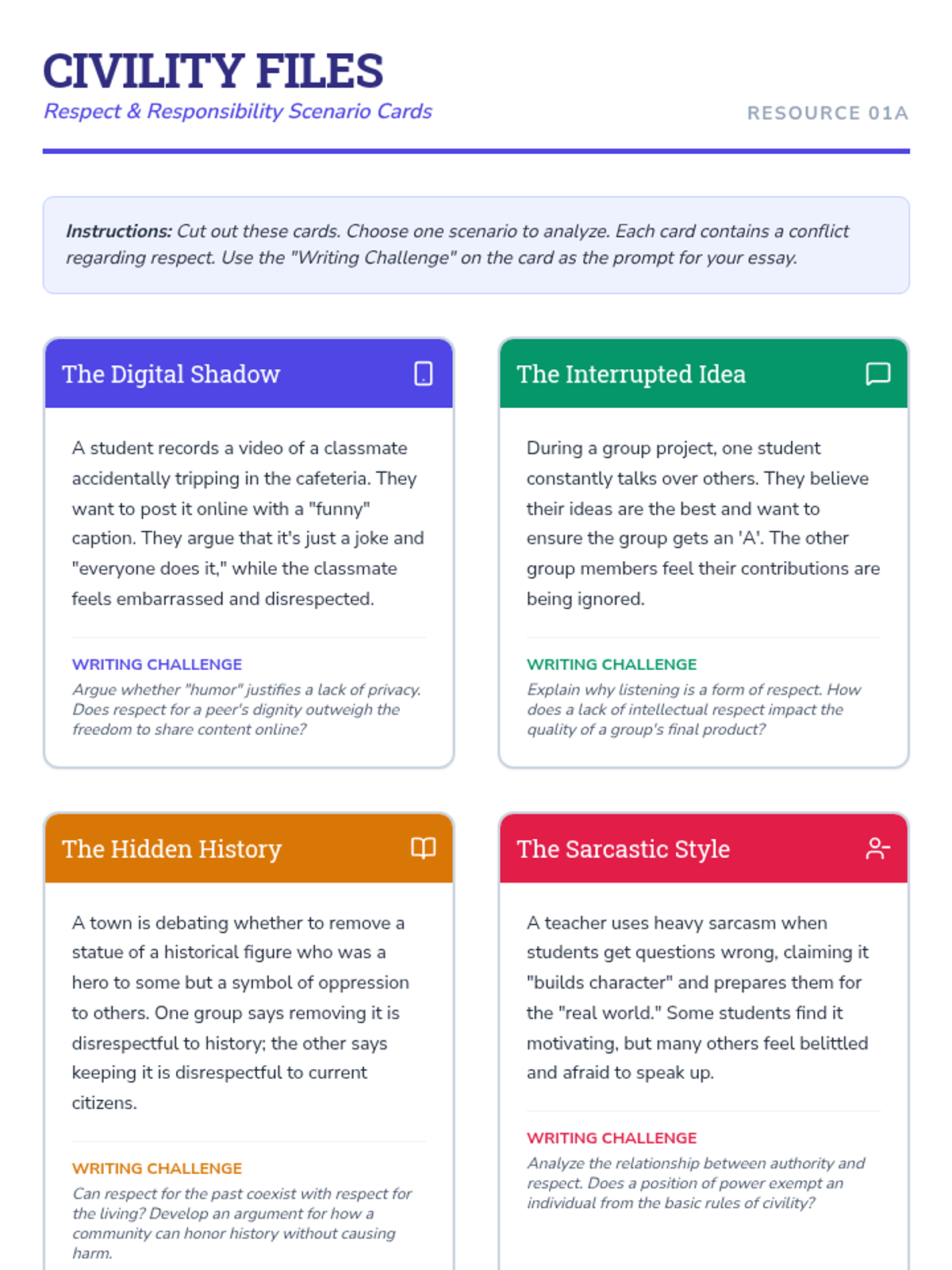
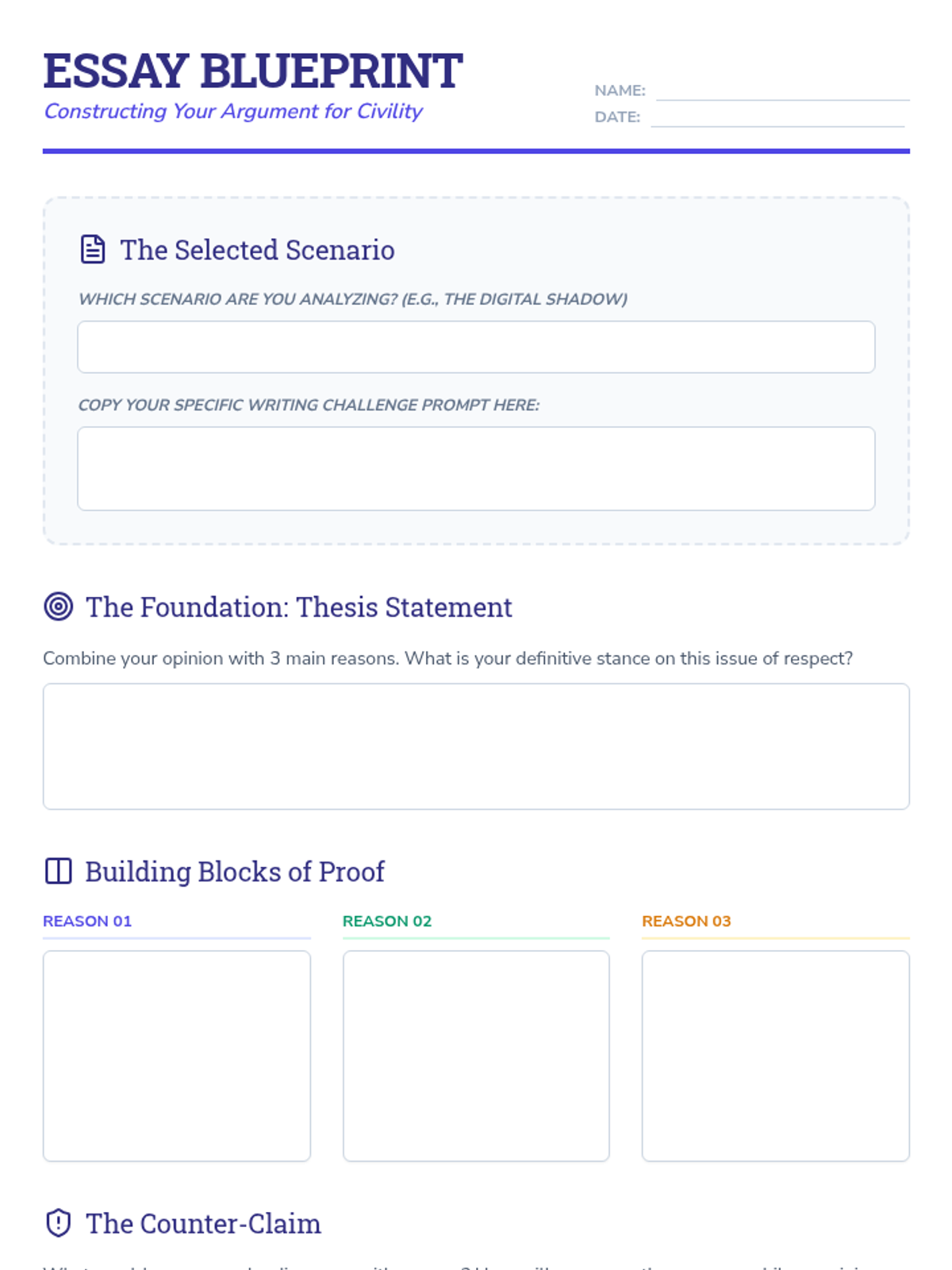
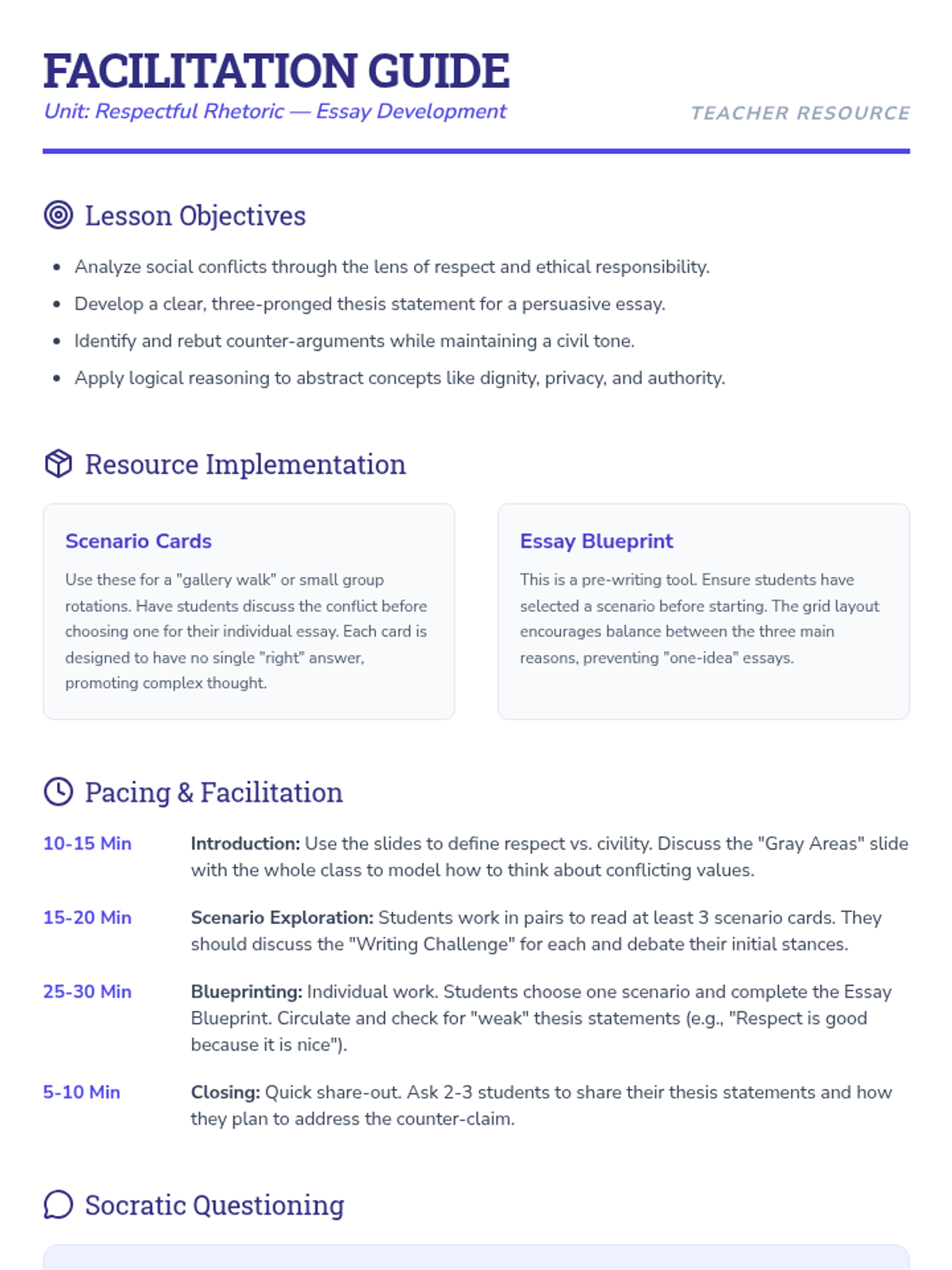
A lesson focused on analyzing complex social situations involving respect and translating those analyses into persuasive or argumentative essays. Students will evaluate different perspectives and build logical arguments.
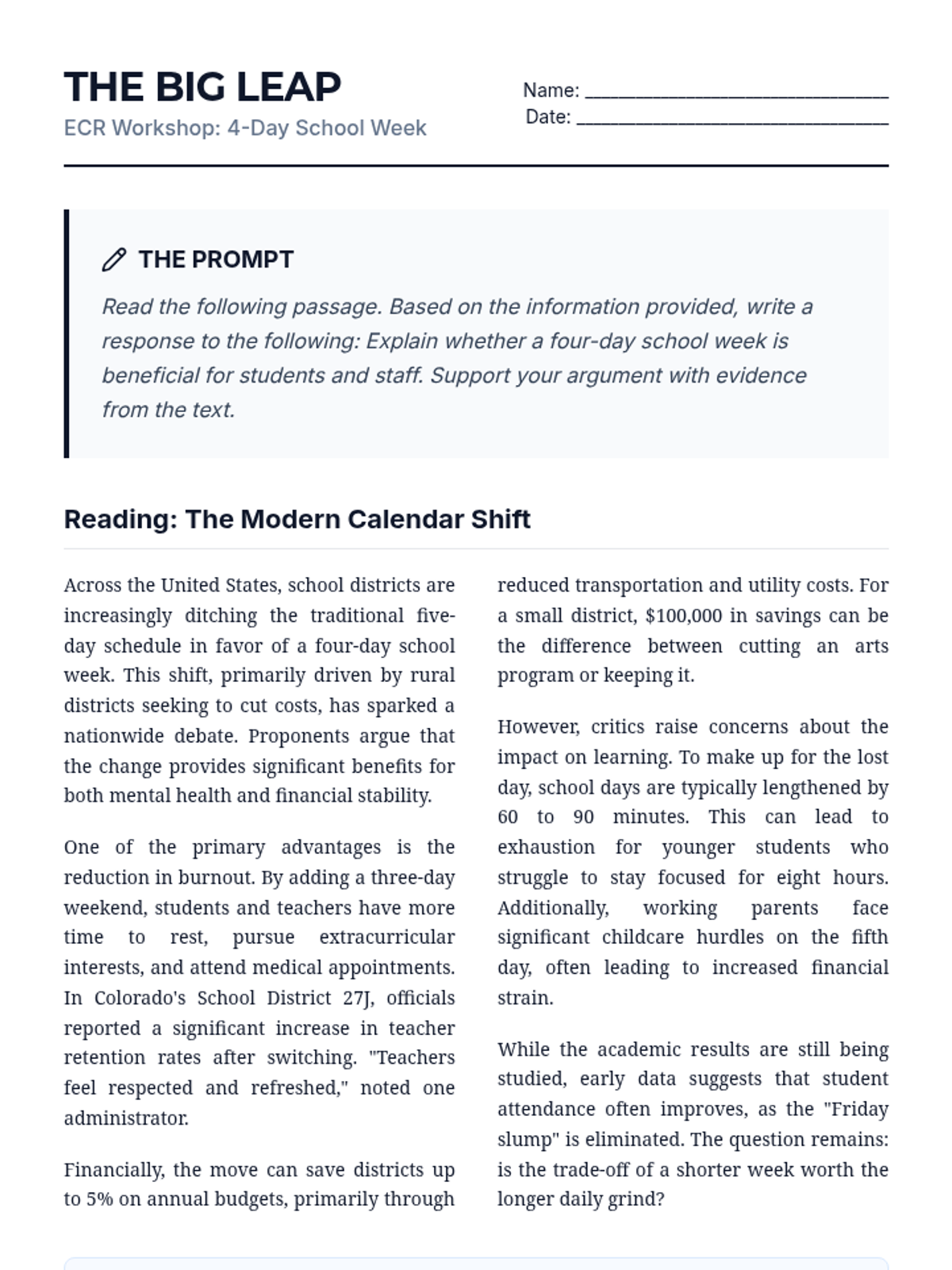
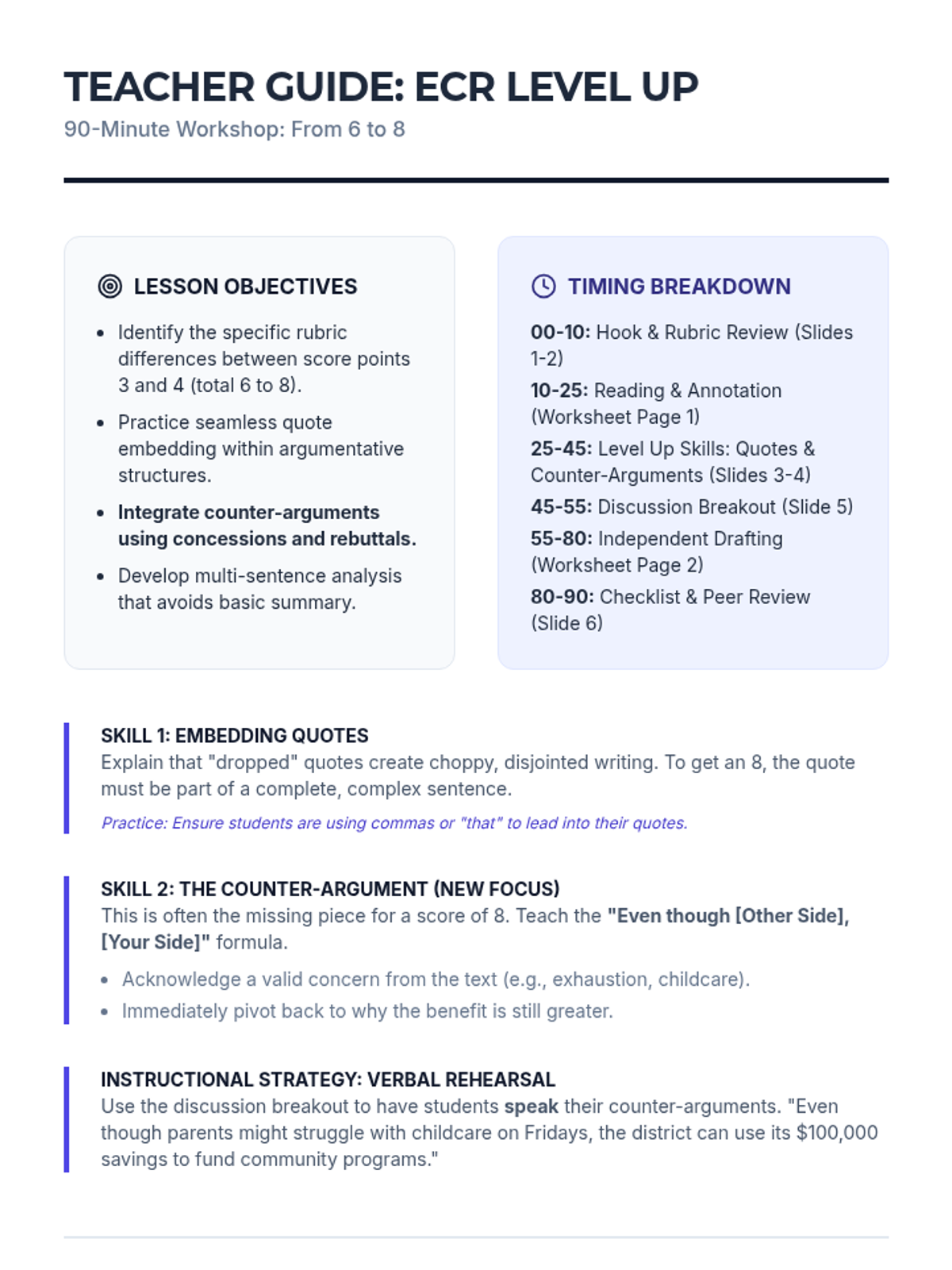
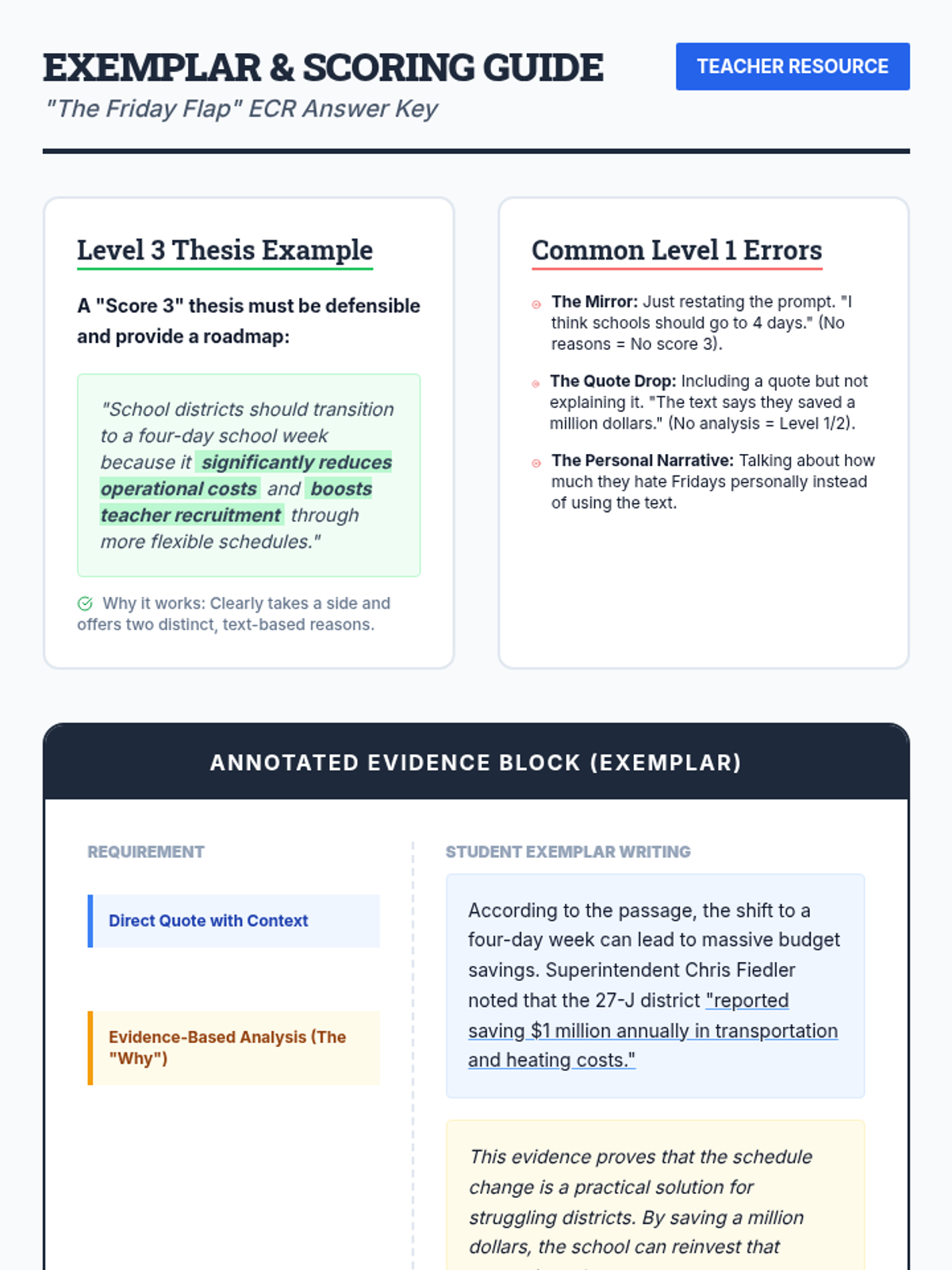
A high-intensity 90-minute workshop designed to move students from a score of 6 to 8 on the Texas English I Argumentative ECR by focusing on quote integration, thorough development, and sophisticated organization. Students analyze a passage on the 4-day school week and practice drafting a high-scoring response.
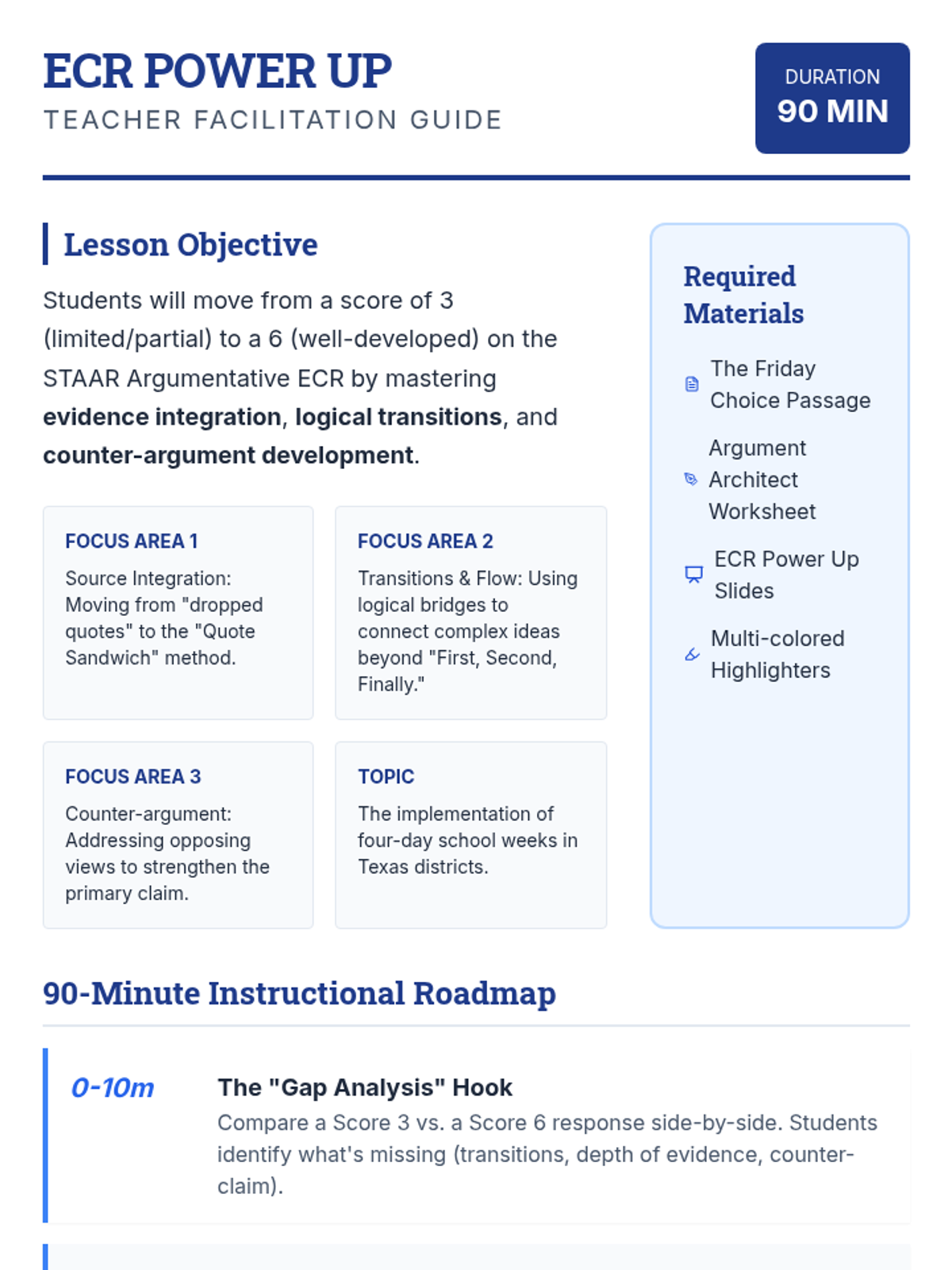
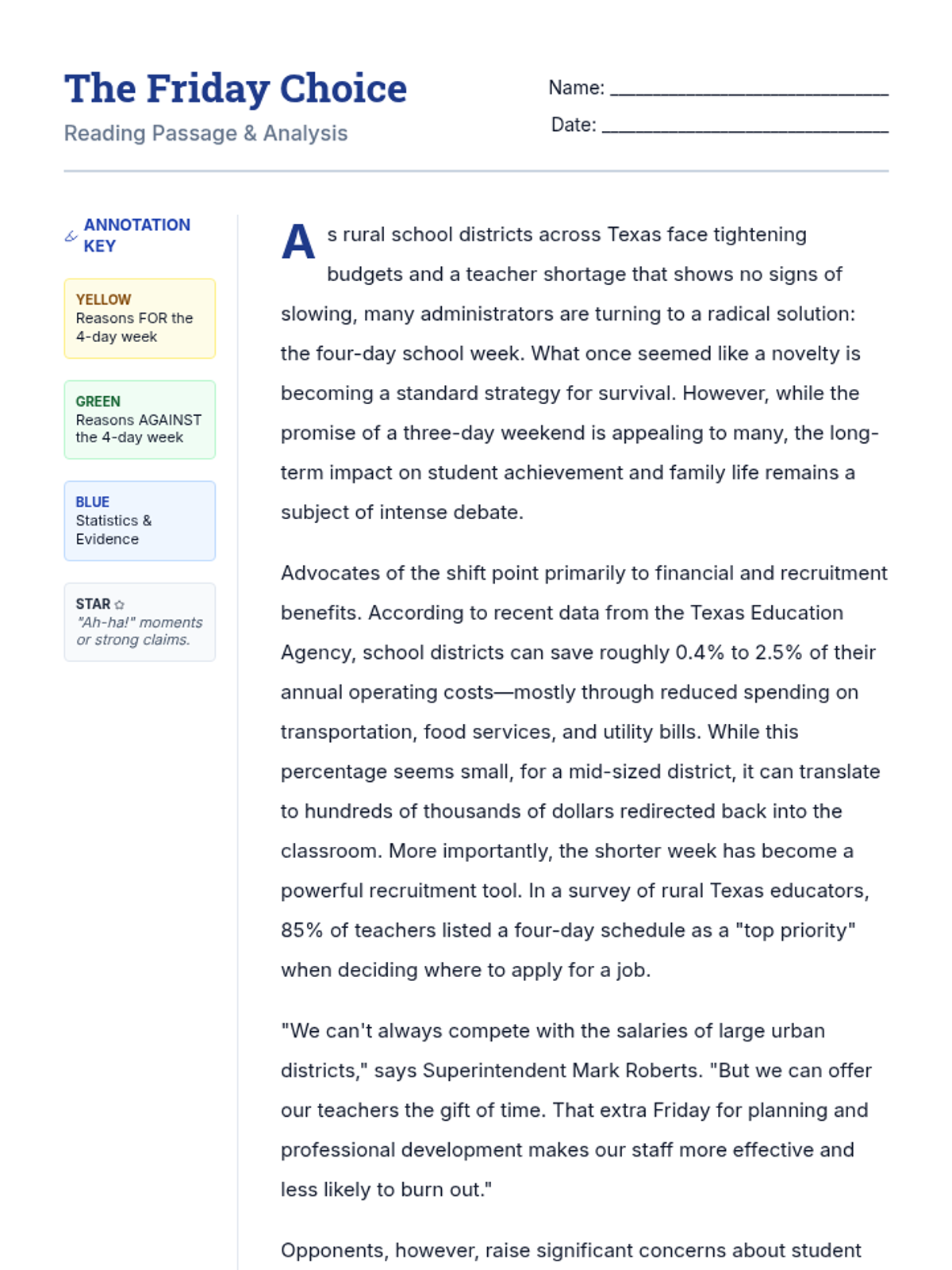
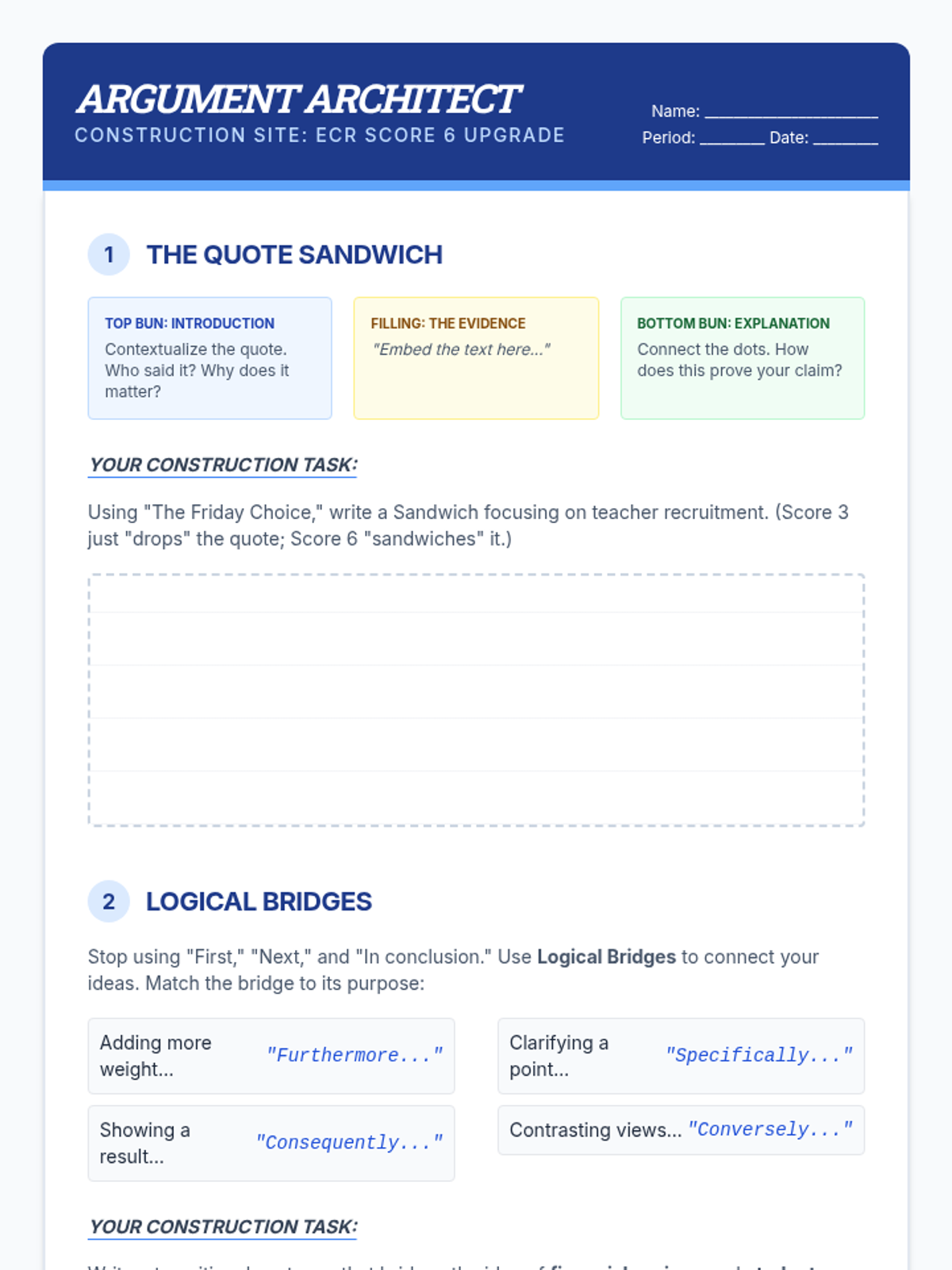
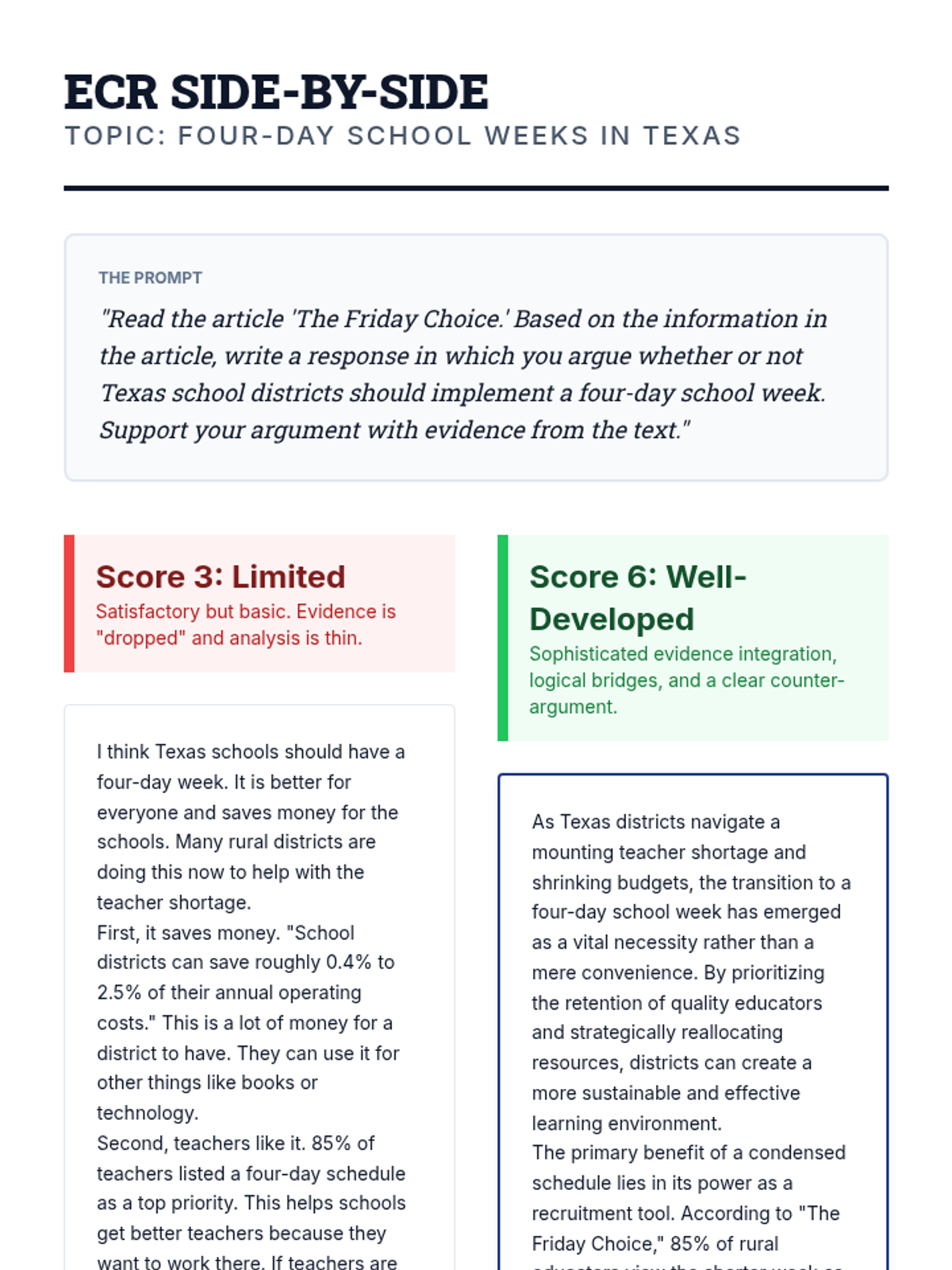
A 90-minute intensive workshop designed to help students transition from a basic score (3) to a top-tier score (6) on the Texas English I Argumentative ECR. The lesson focuses on evidence integration, transitions, and counter-arguments using the controversial topic of four-day school weeks.
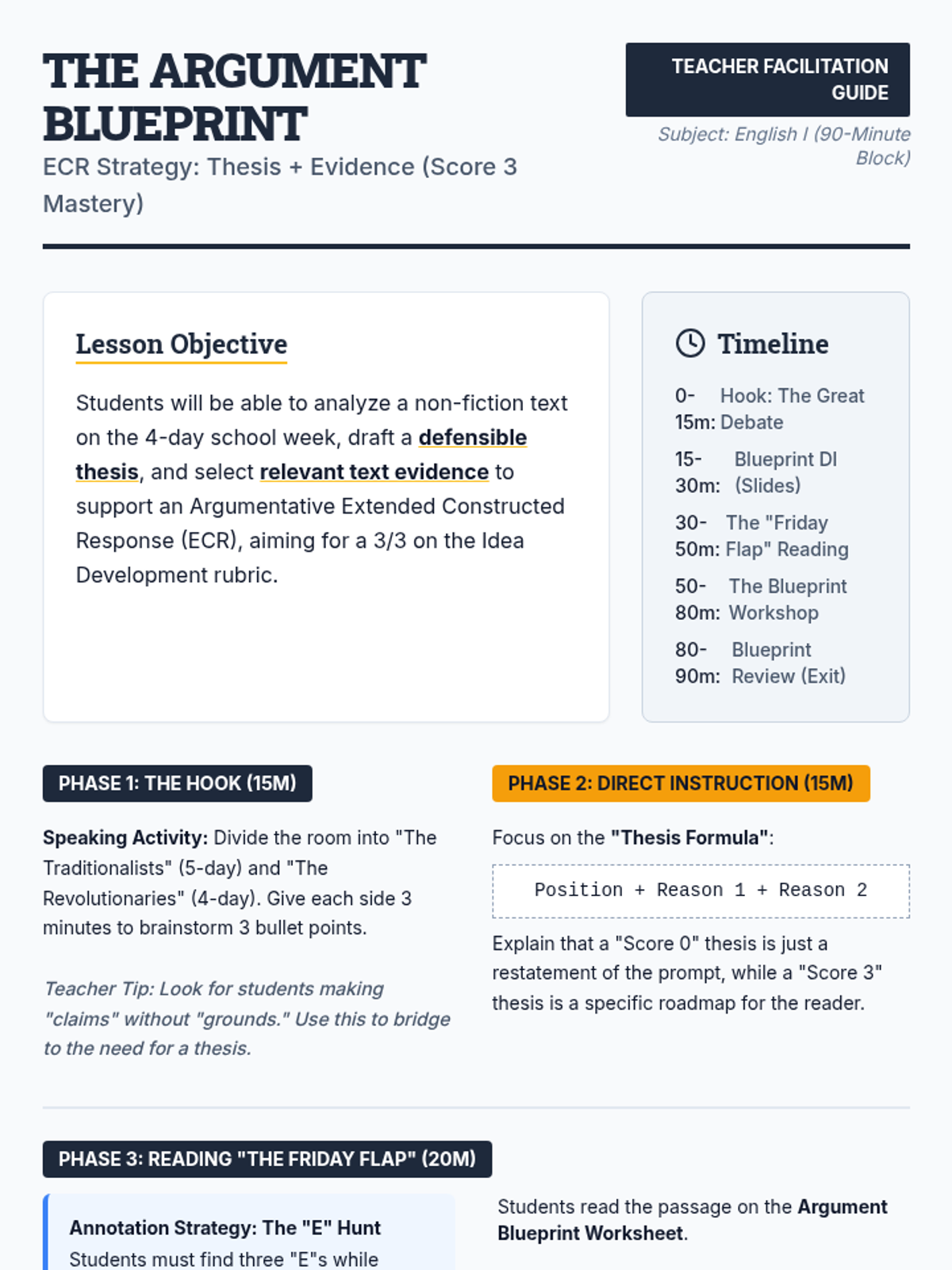
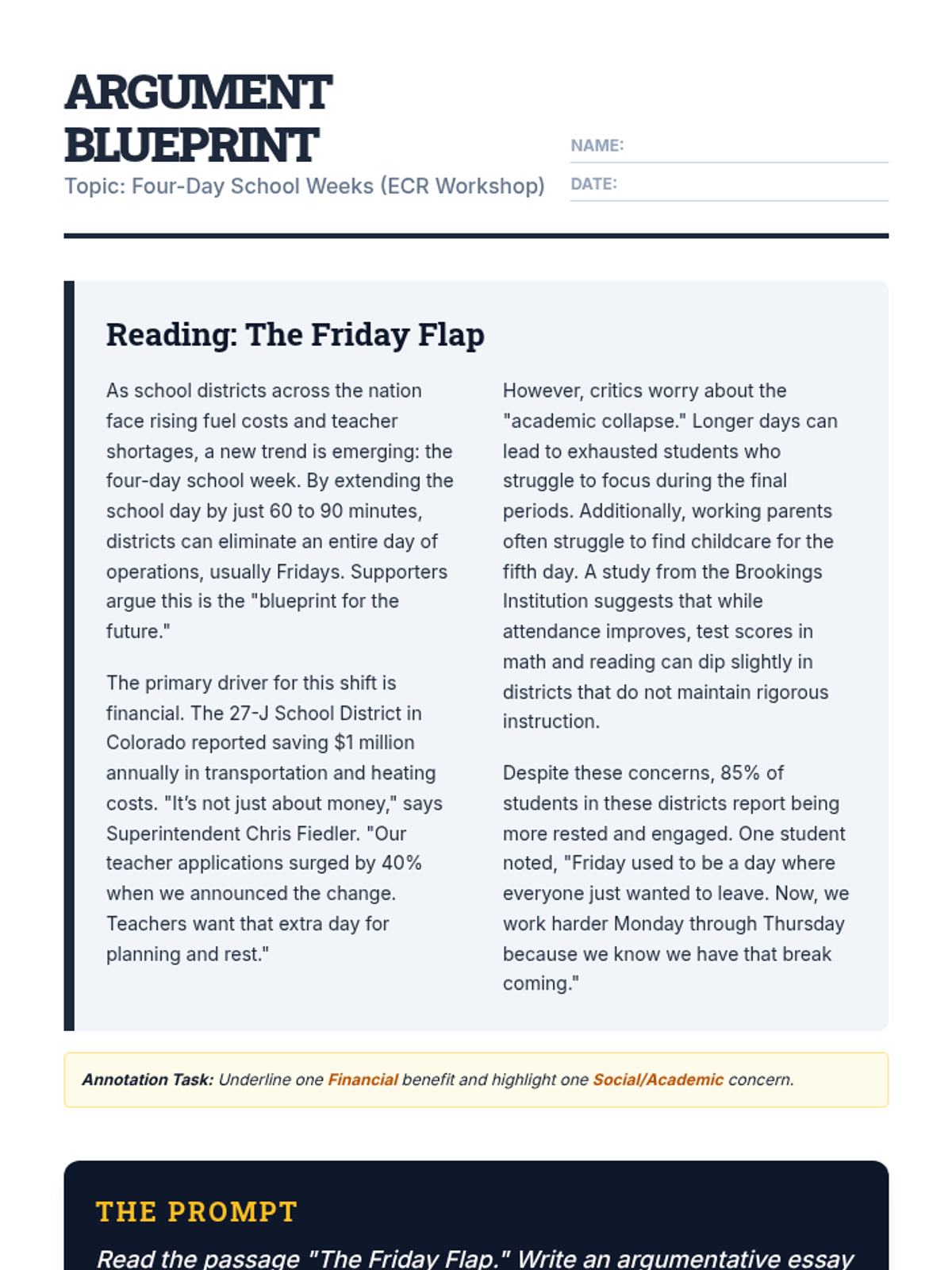
A comprehensive 90-minute workshop designed to move Texas English 1 students from a score of 0 to 3 on the Argumentative ECR rubric. Students focus on building defensible thesis statements and selecting high-impact text evidence using a 'blueprint' approach to writing.
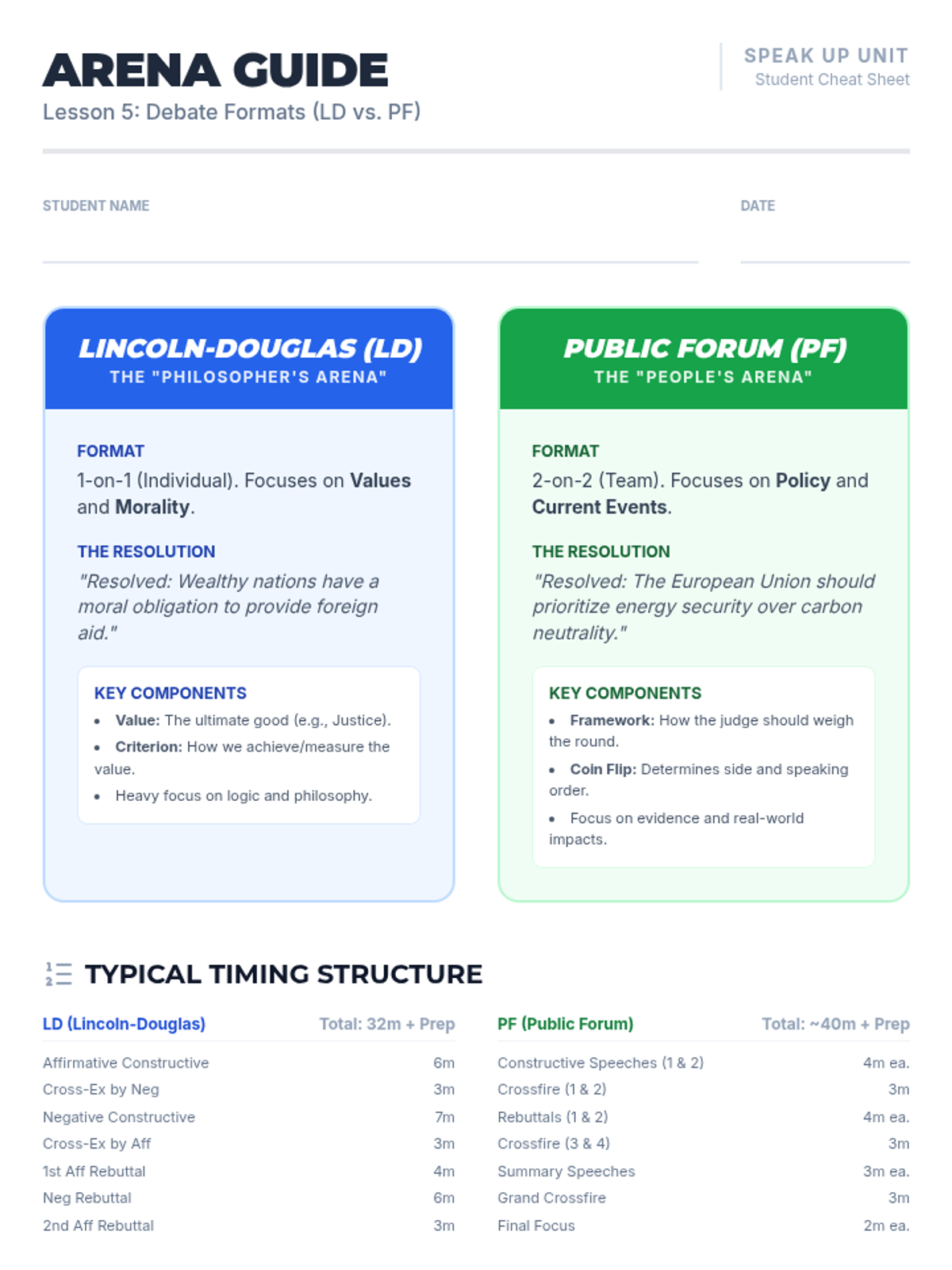
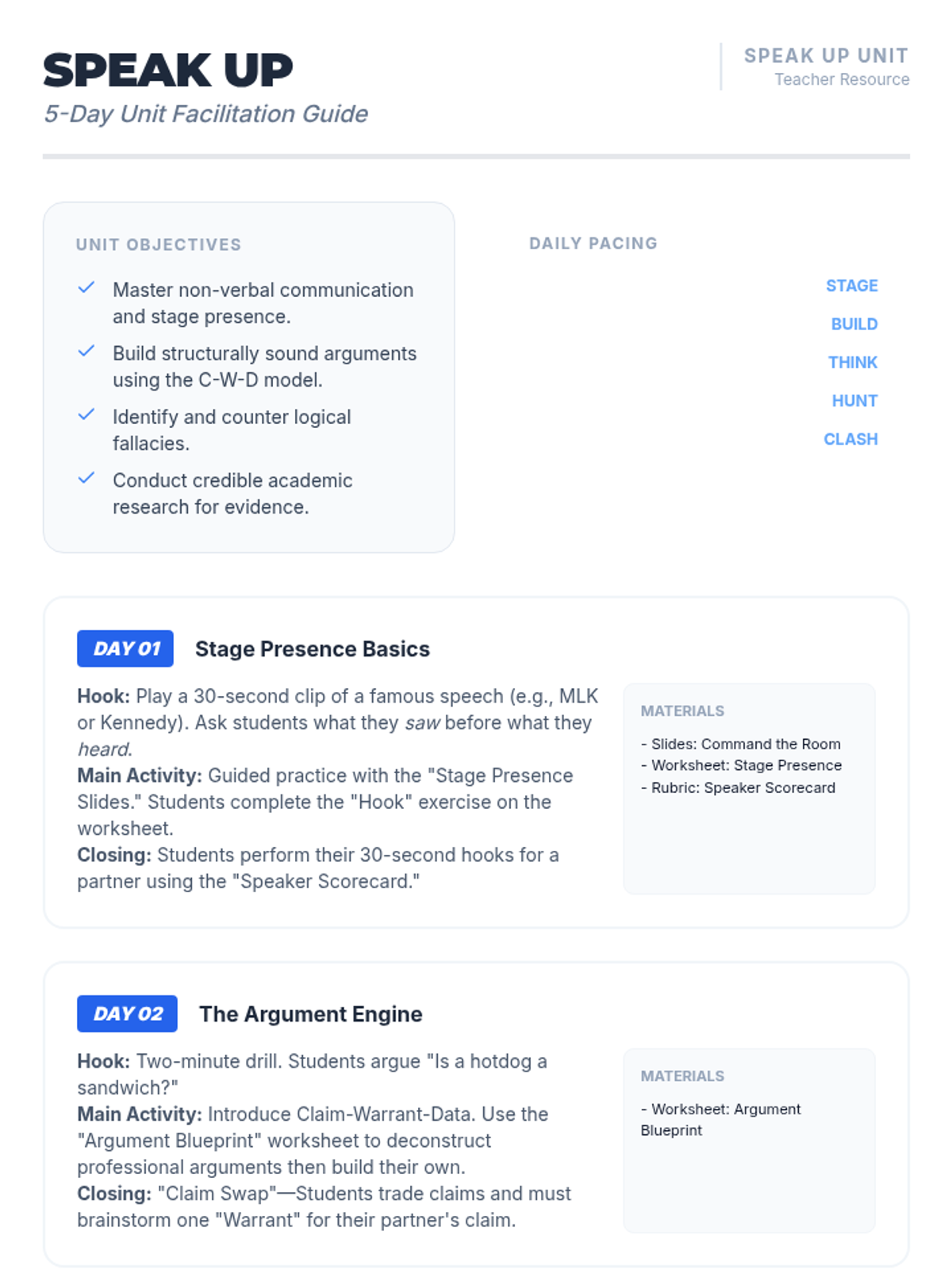
Compares Lincoln-Douglas and Public Forum debate formats, preparing students for competitive environments.
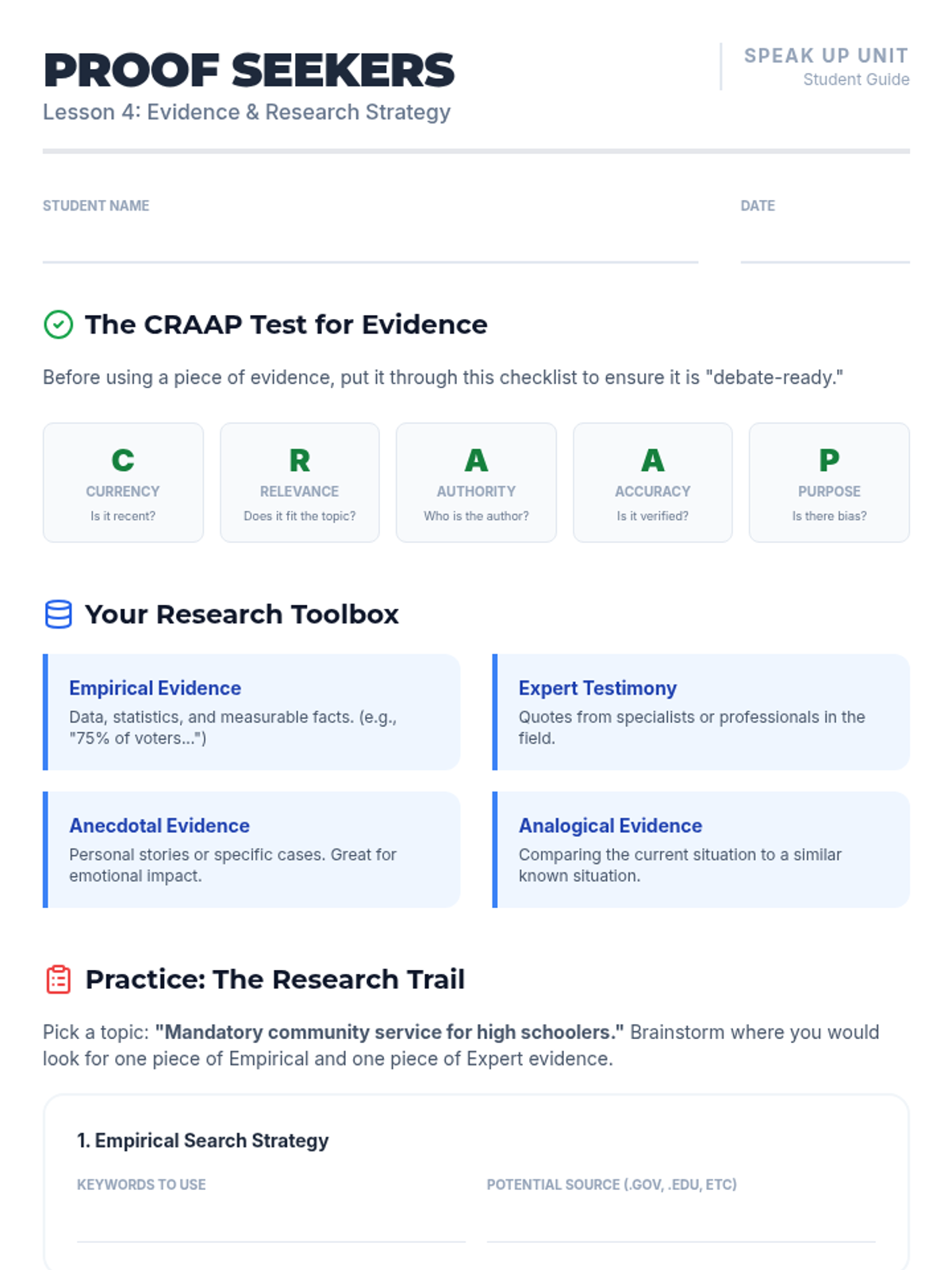
Teaches students how to find, evaluate, and cite credible evidence to support their arguments.
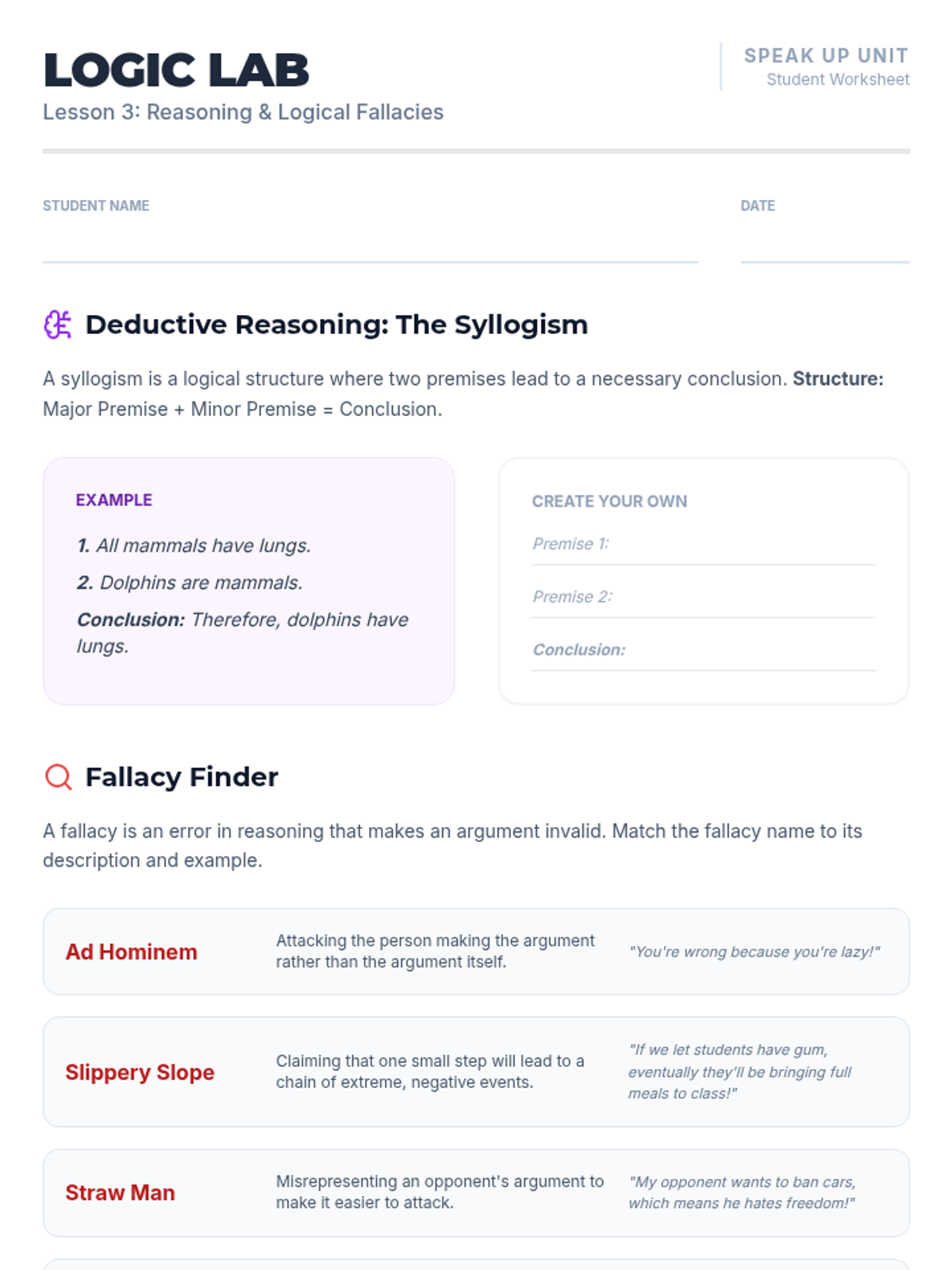
Explores logical reasoning and common logical fallacies that undermine debate arguments.
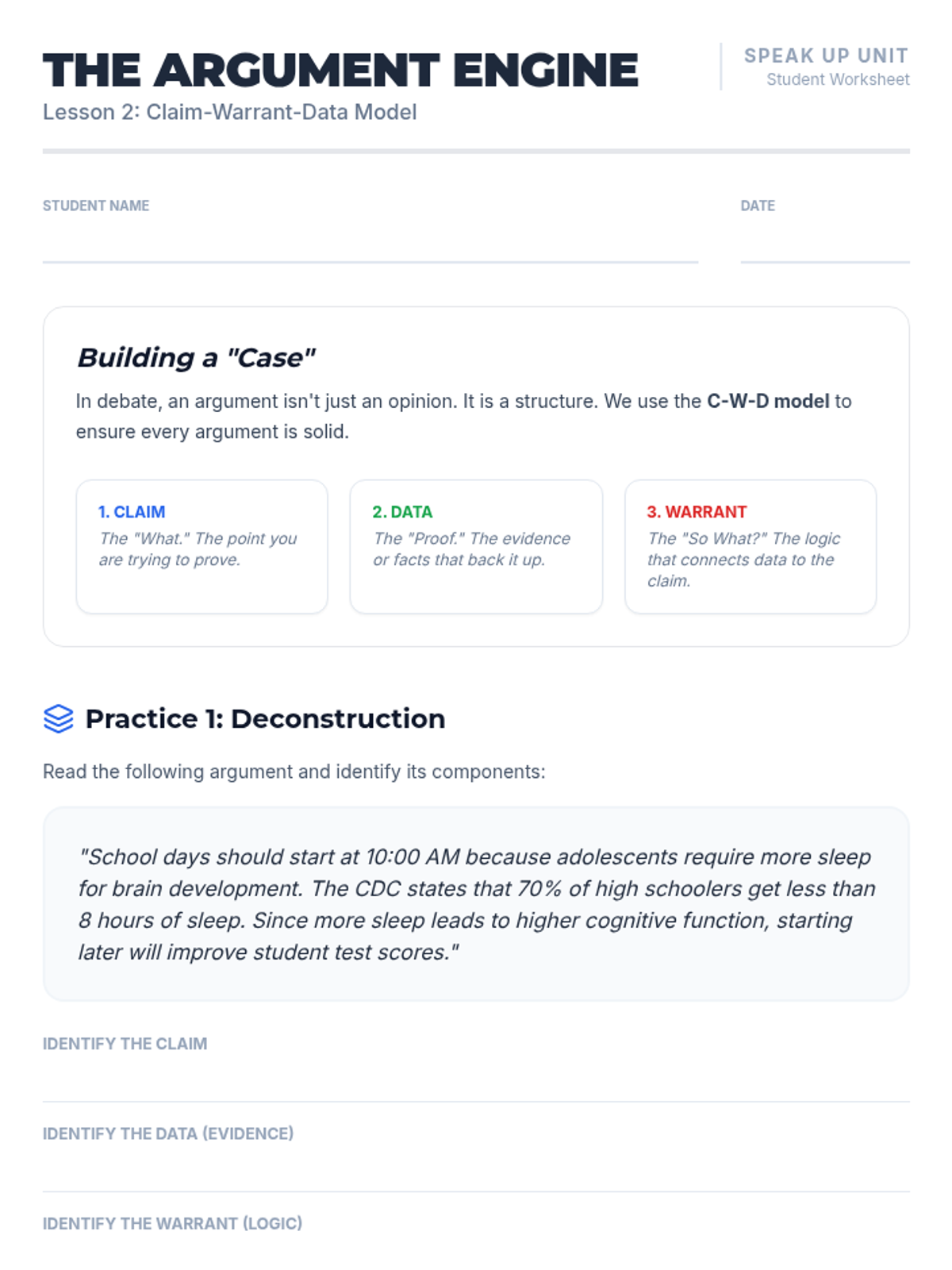
Introduces the Claim-Warrant-Data model of argumentation and basic structures for building a persuasive case.
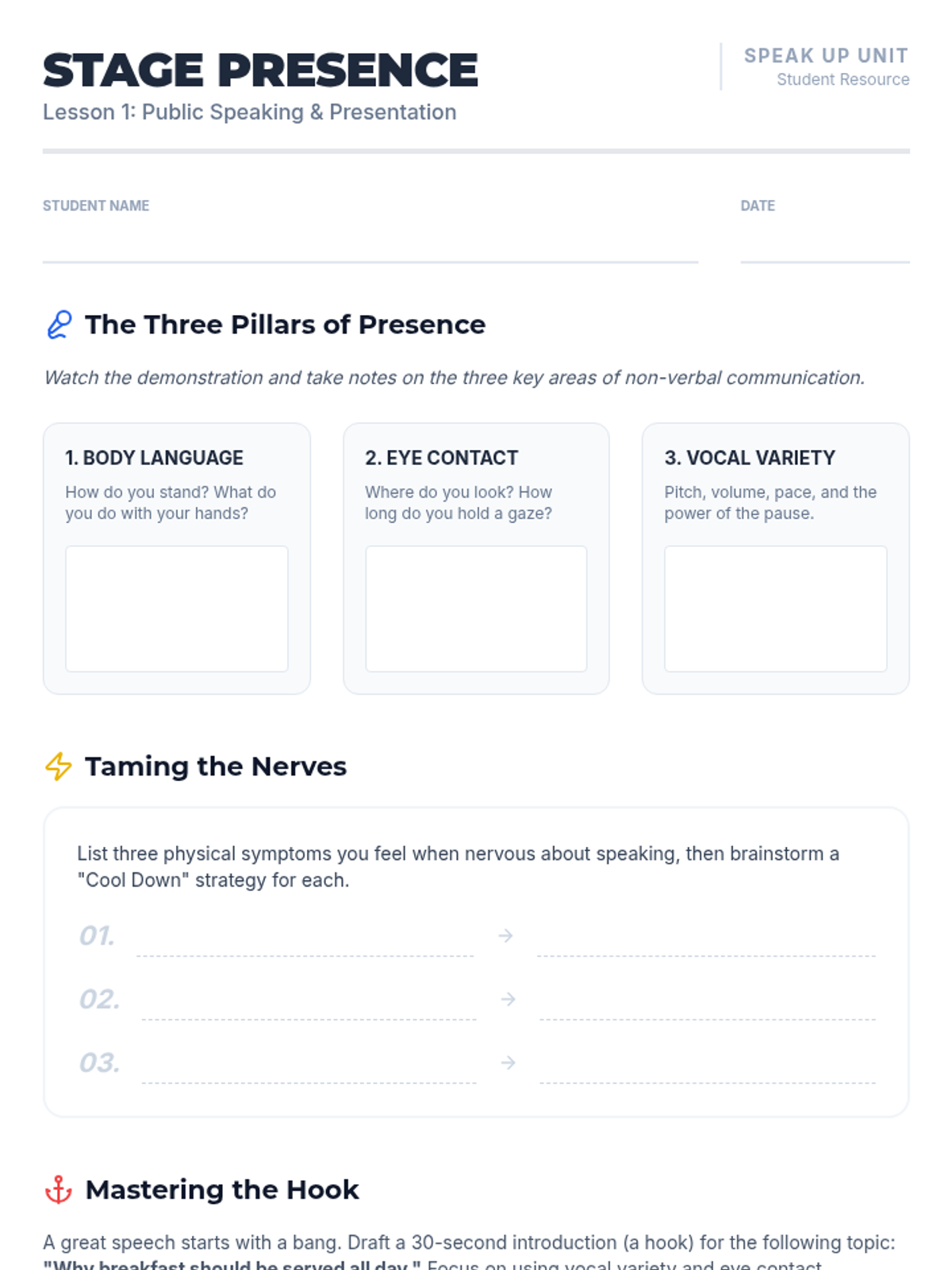
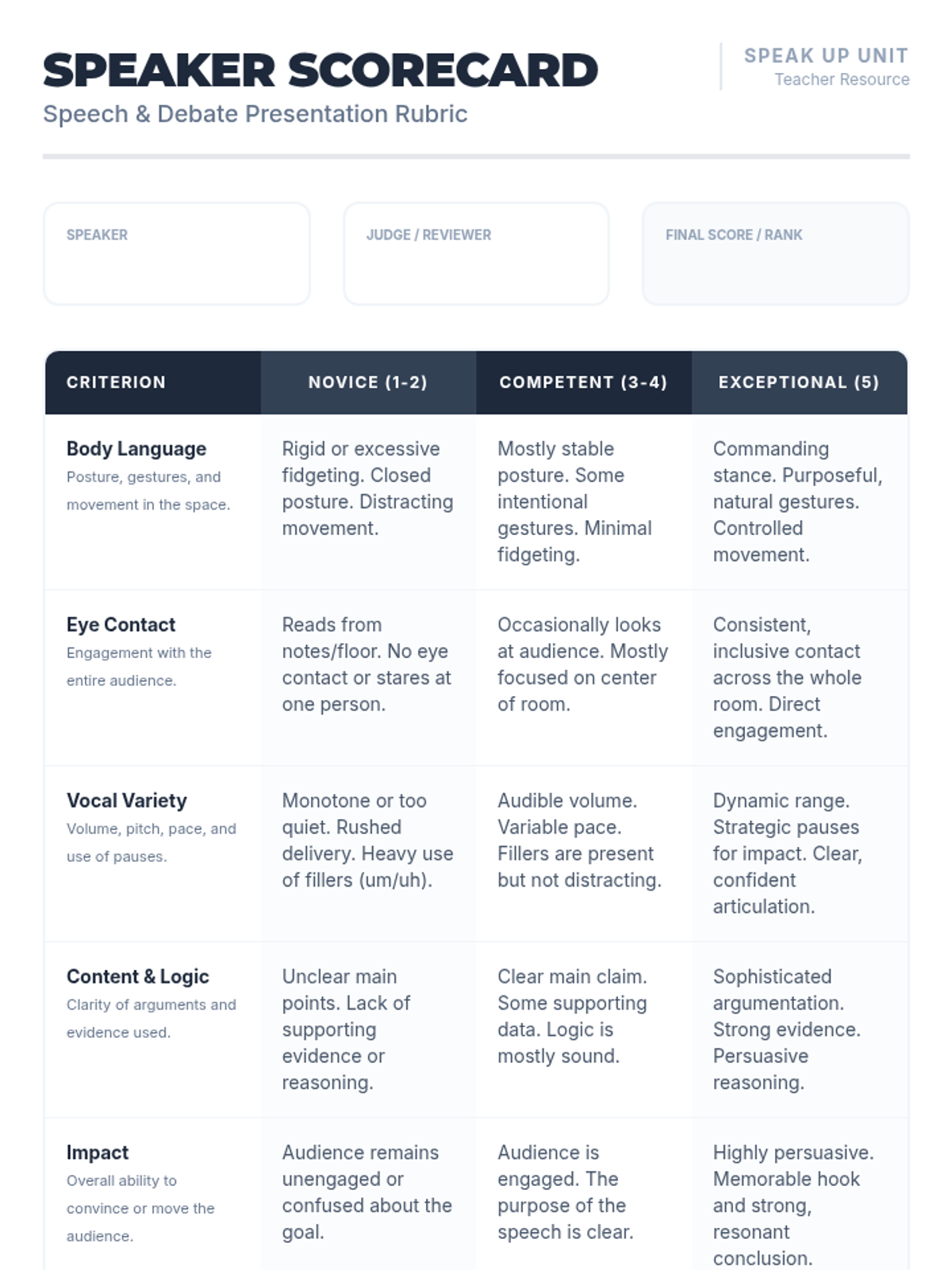
Focuses on non-verbal communication, vocal variety, and overcoming stage fright to establish a professional presence.
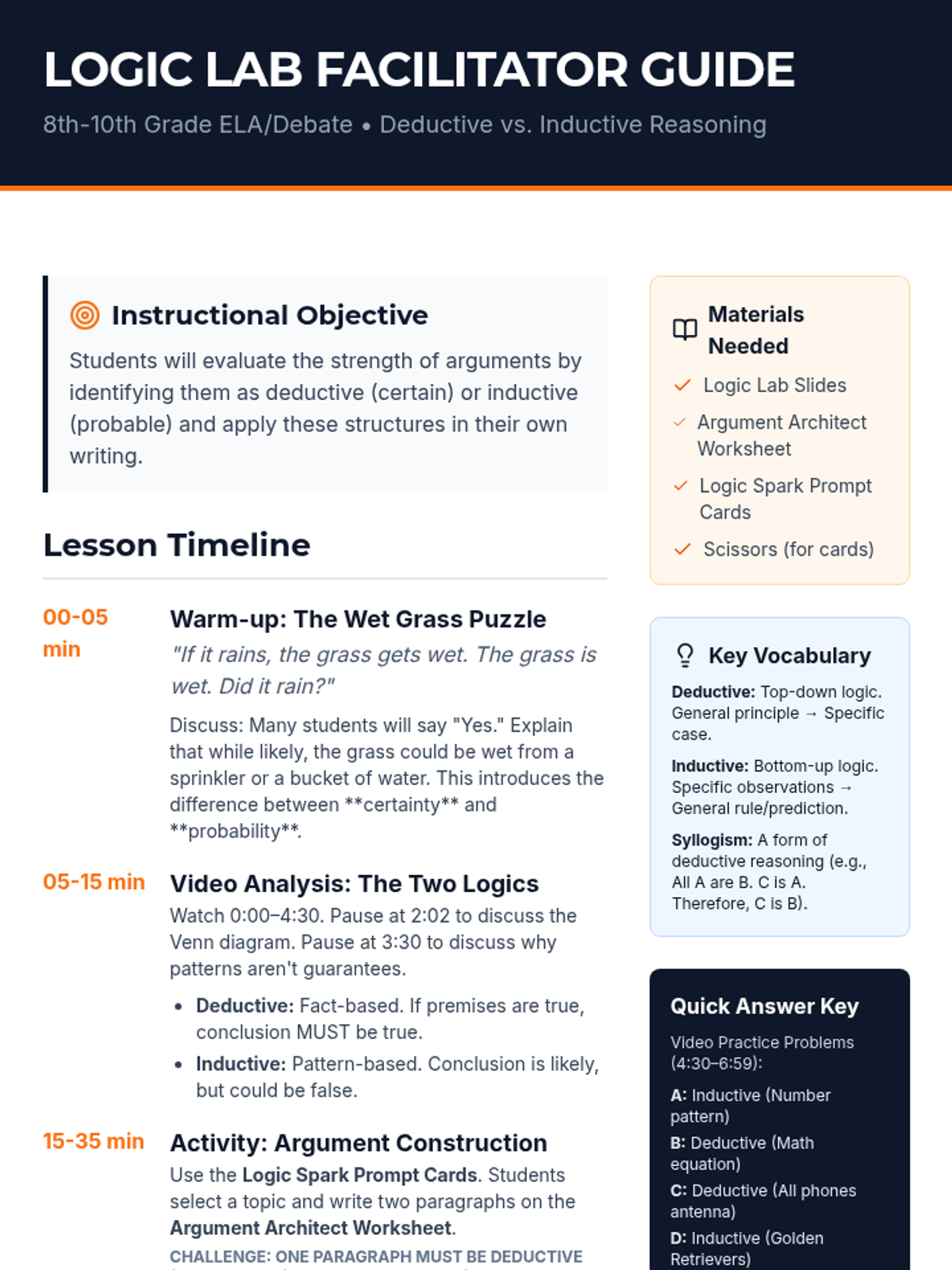
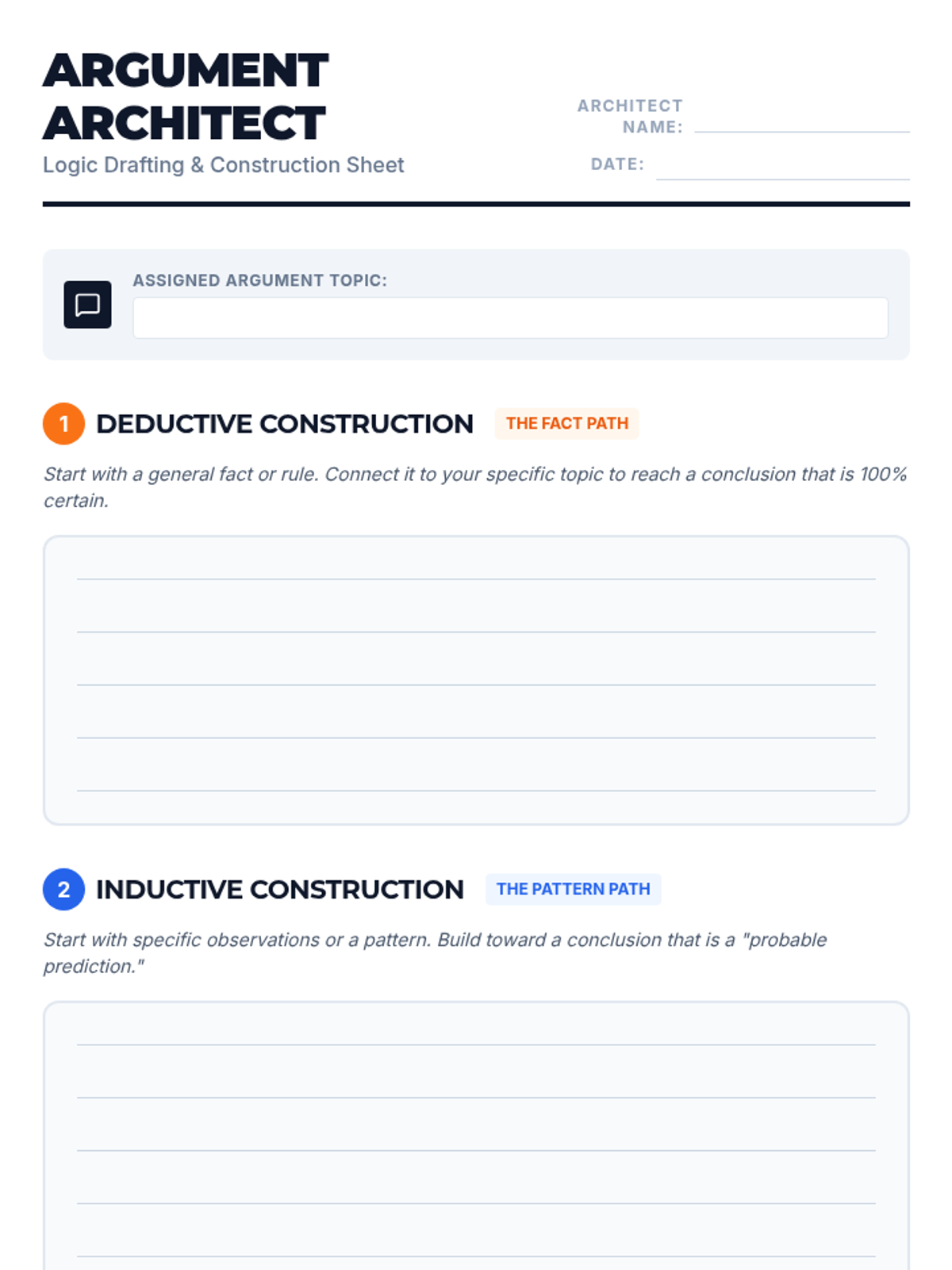
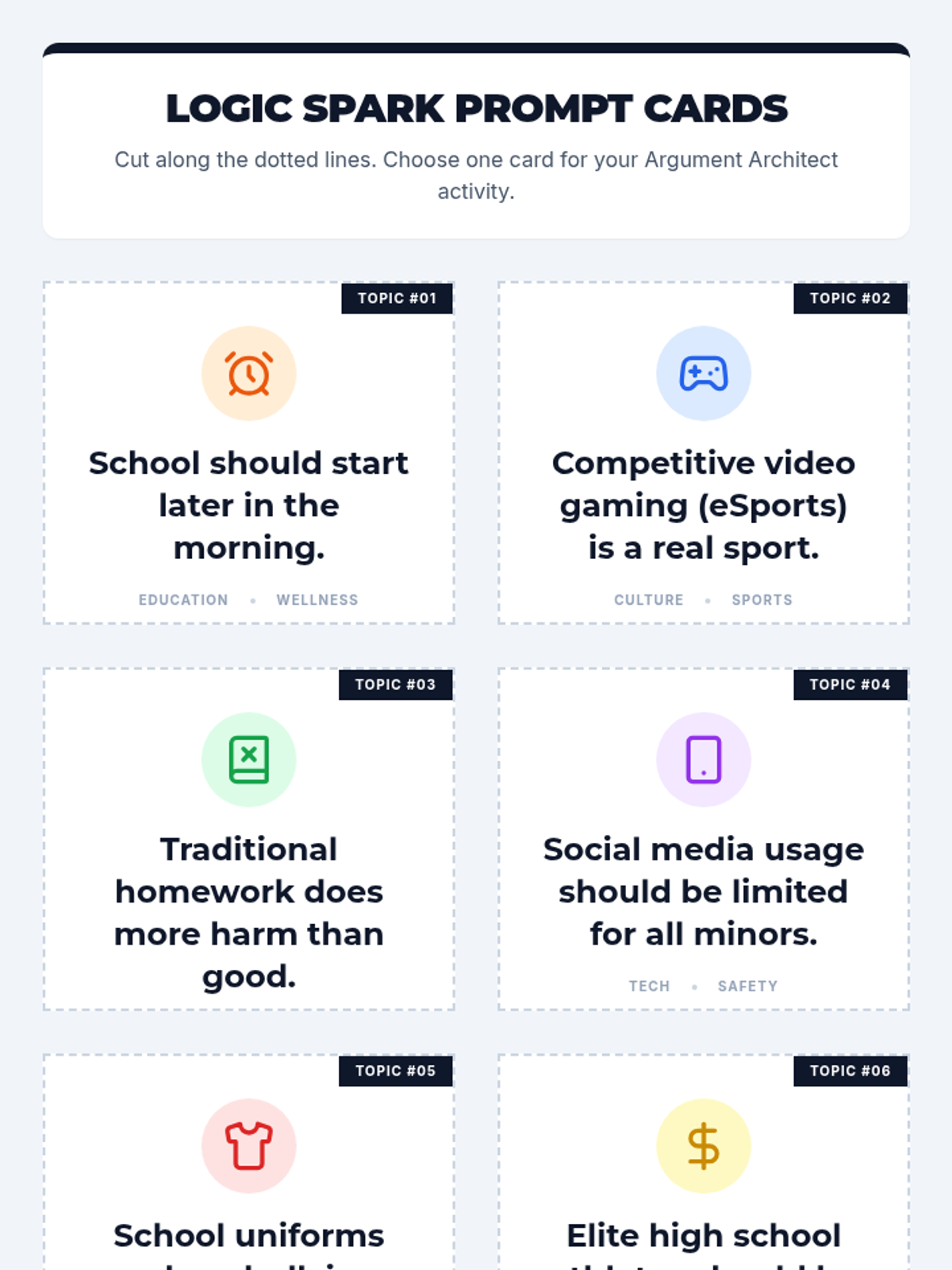
Students will learn the fundamental differences between deductive and inductive reasoning, evaluating the strength and certainty of arguments through video analysis and creative writing.
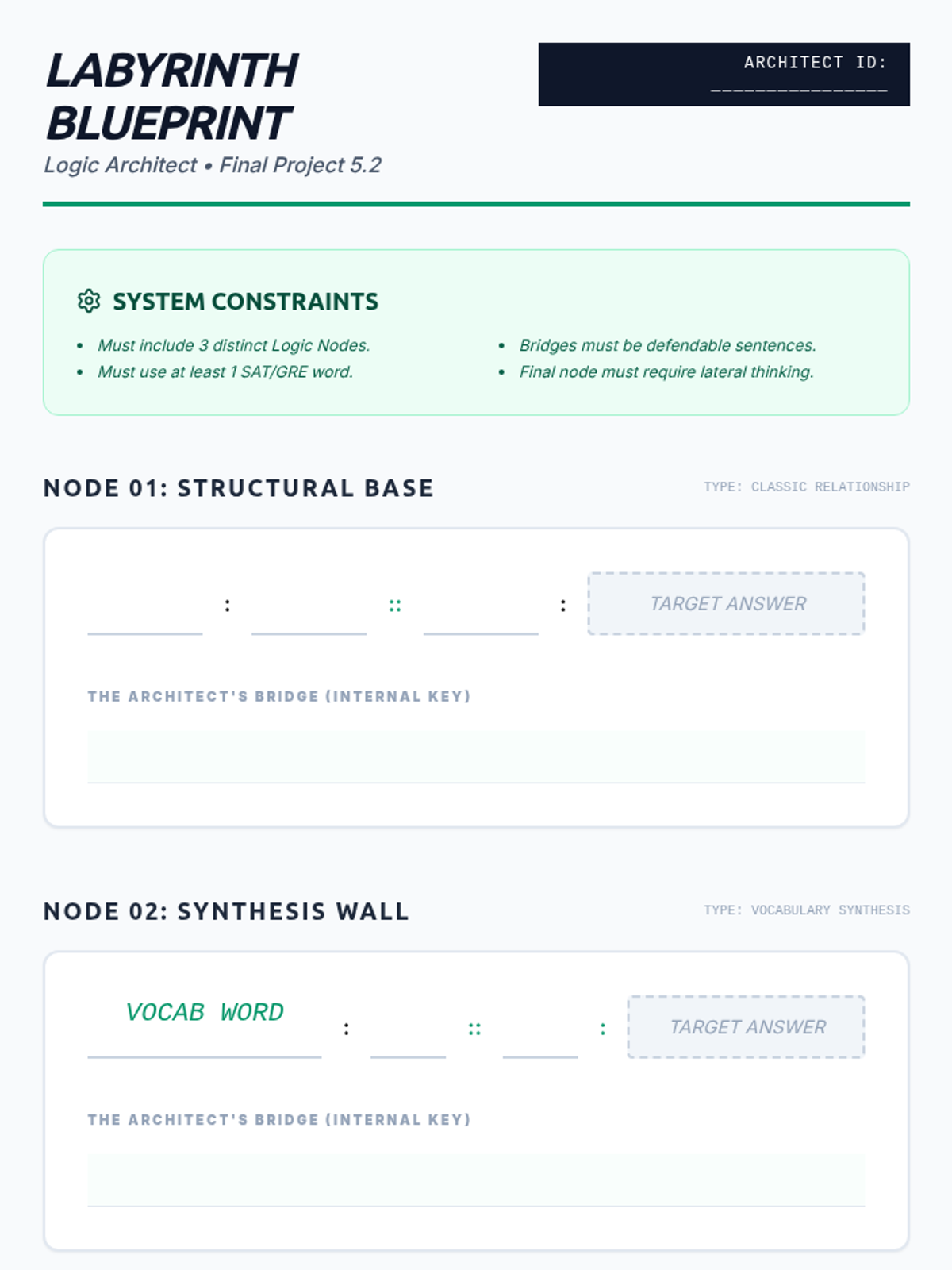
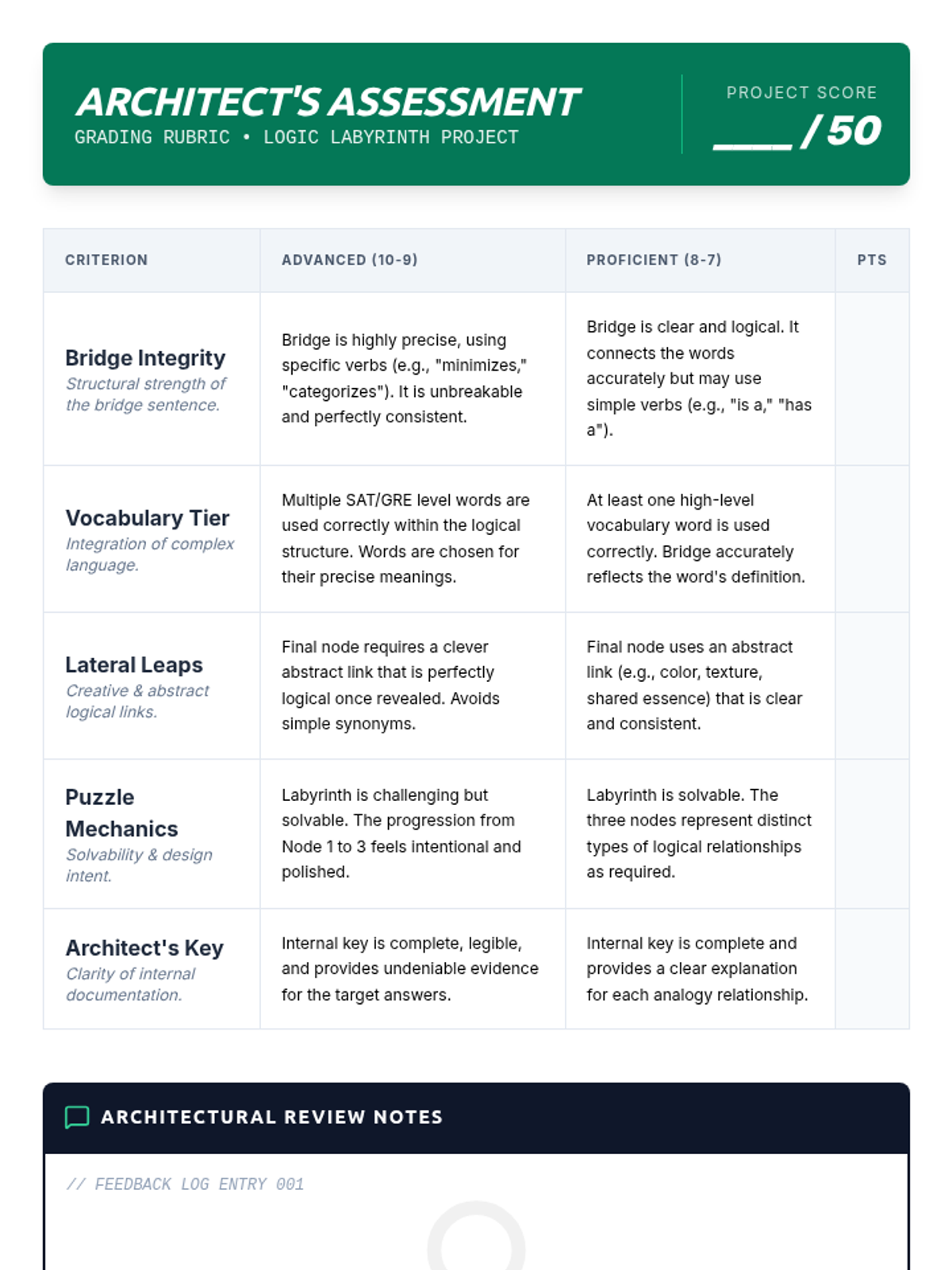
The capstone project where students build their own analogy-based logic puzzles for peers to solve.
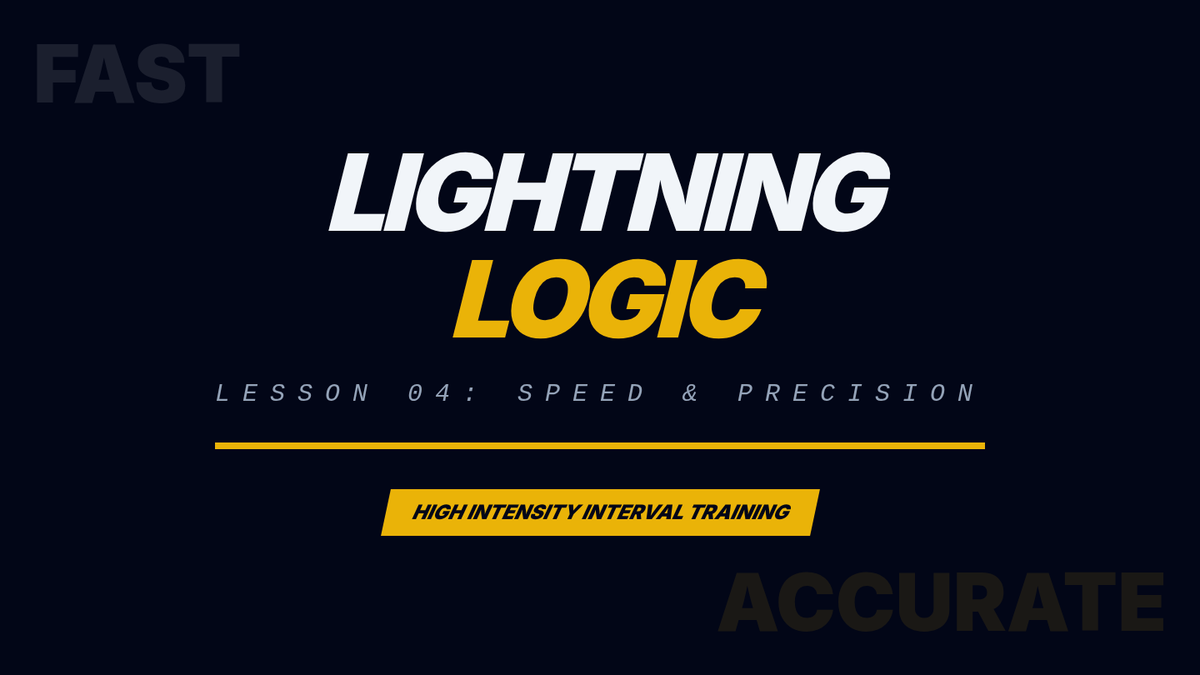
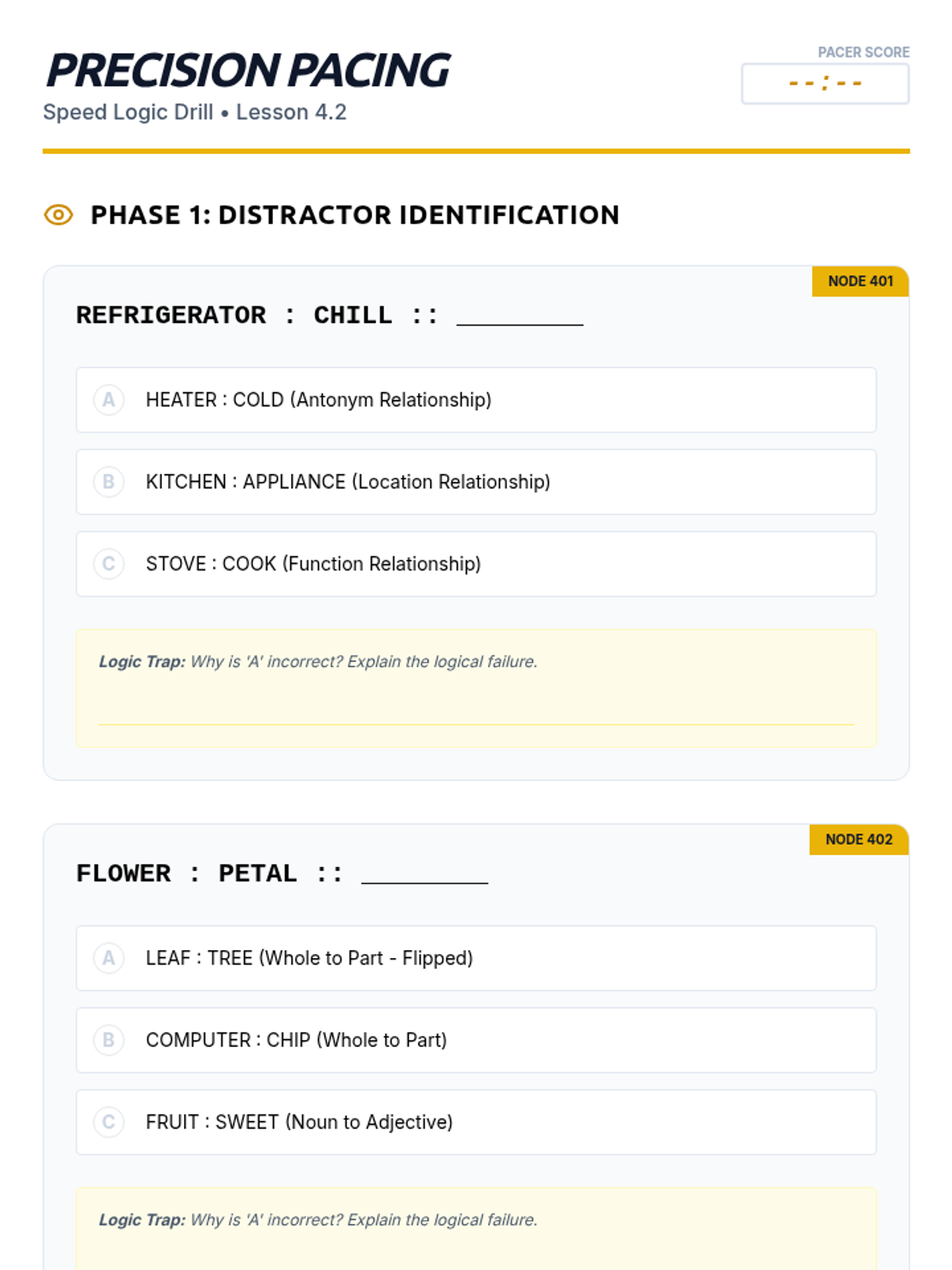
Focuses on building automaticity and identifying common logical traps and distractors in rapid-fire analogy solving.
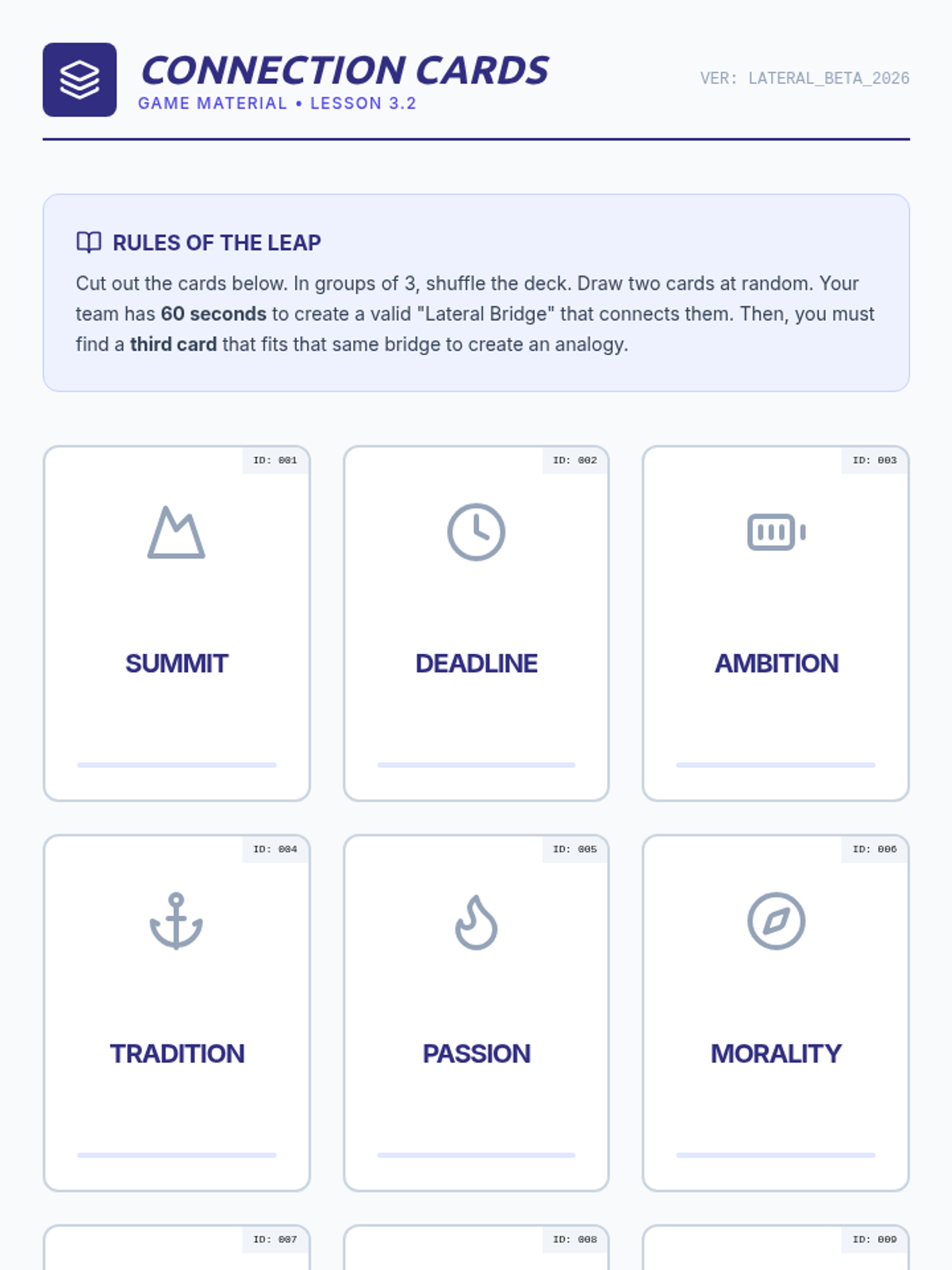
Students explore creative and lateral associations between concepts, moving beyond simple synonyms and antonyms.
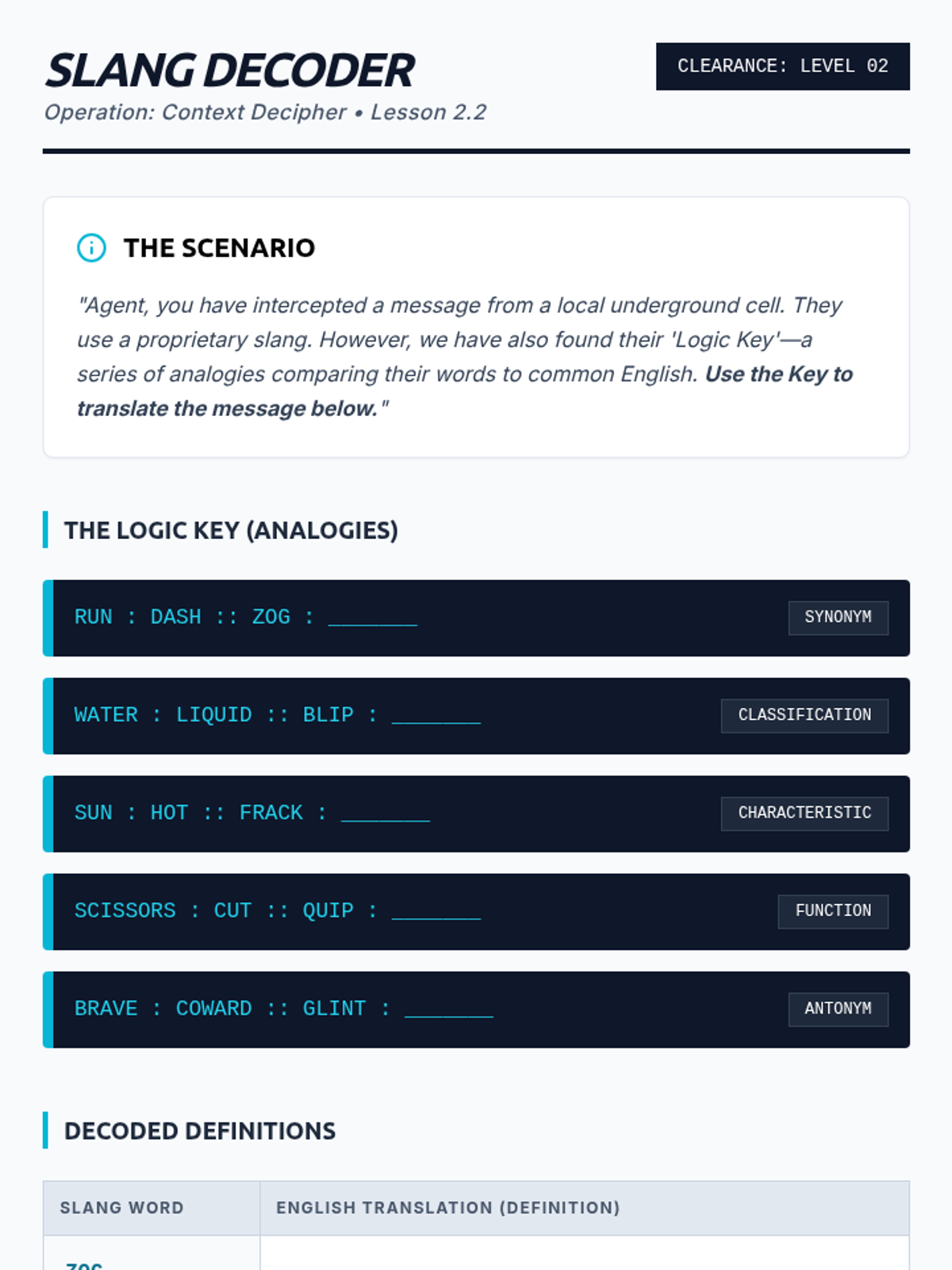
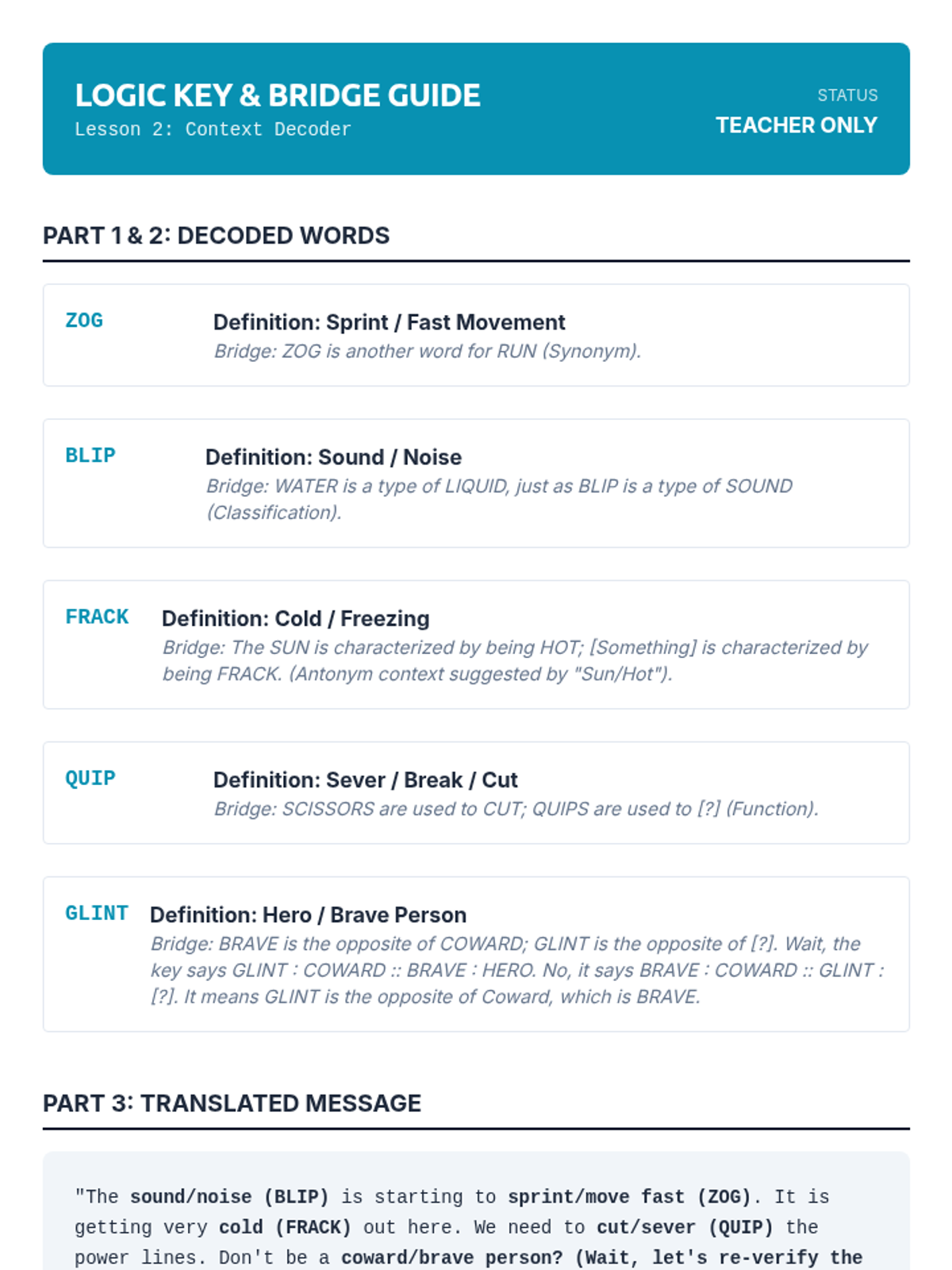
Students use the bridge of an analogy to decode unknown vocabulary and nonsense words in a simulated translation task.
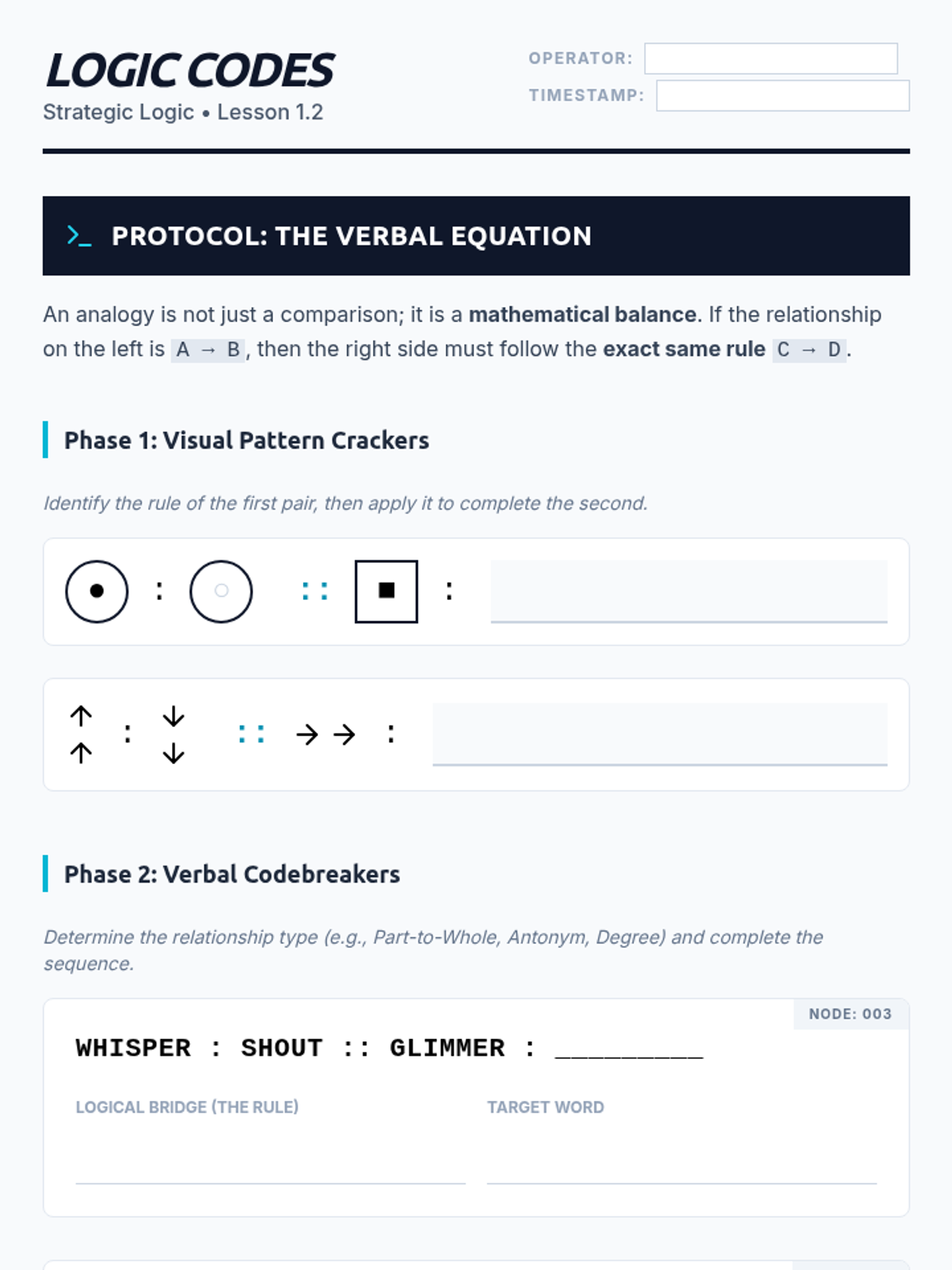
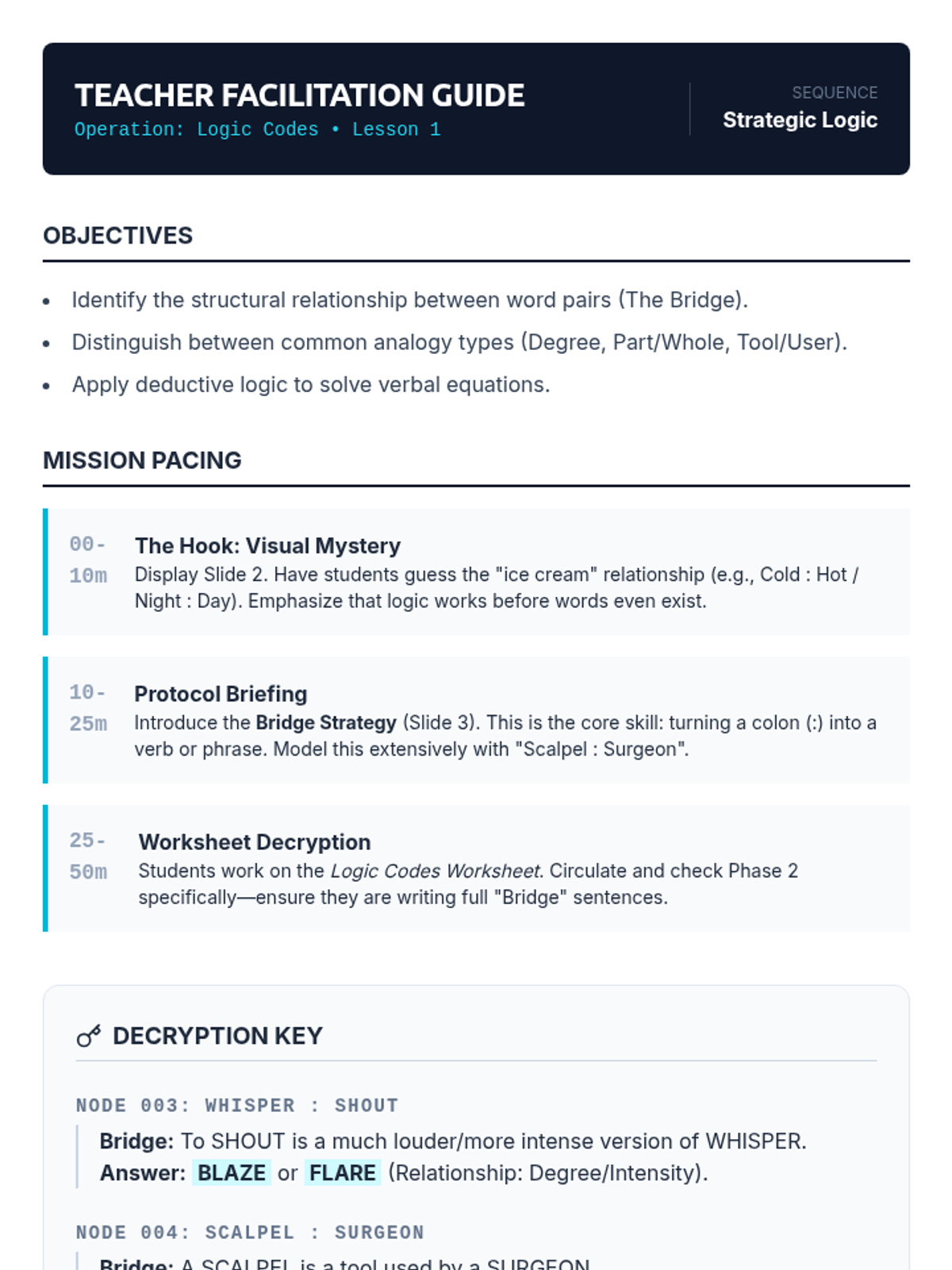
Students treat words as data points to crack logic codes, starting with visual patterns and moving to verbal equations.
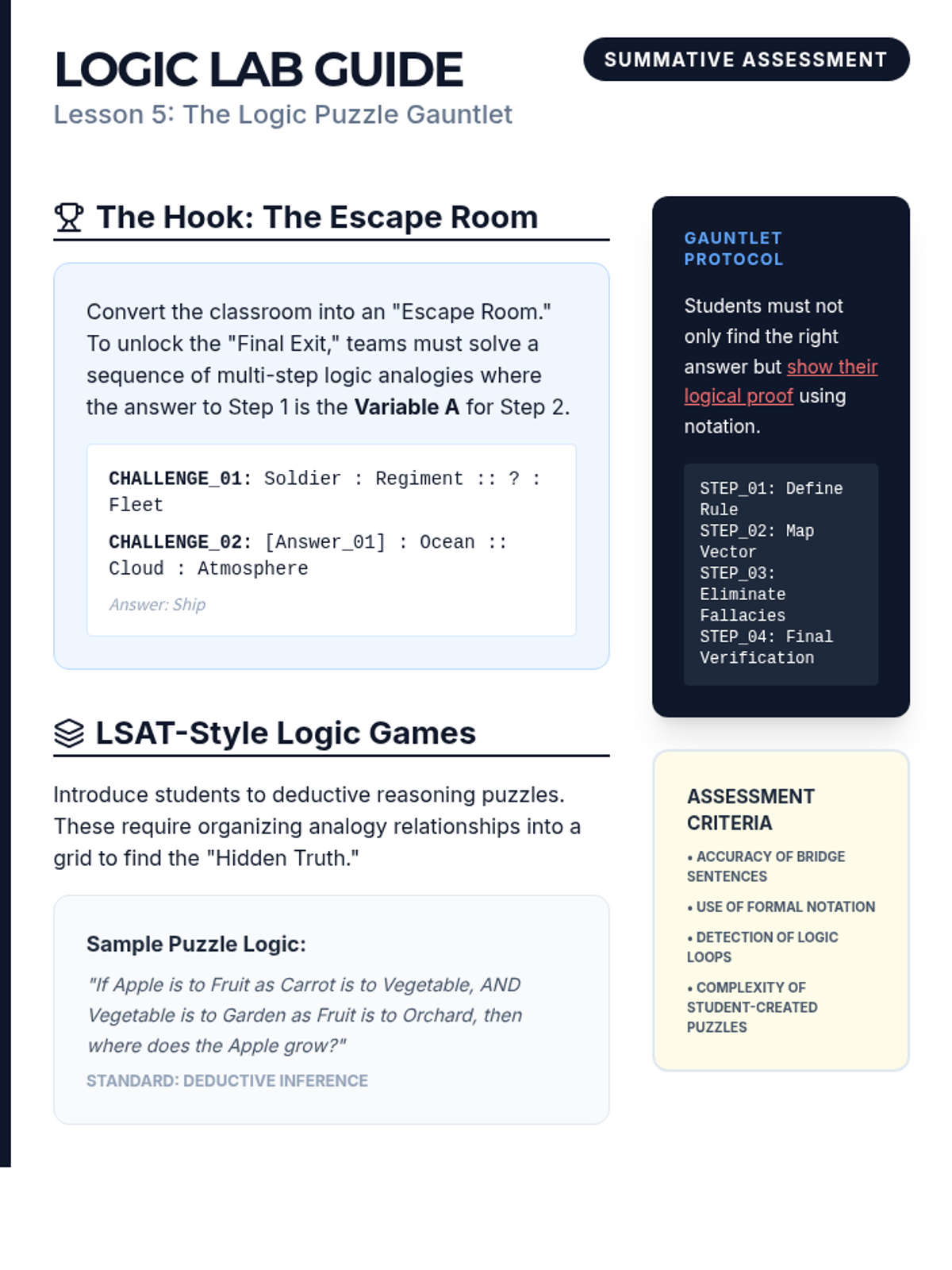
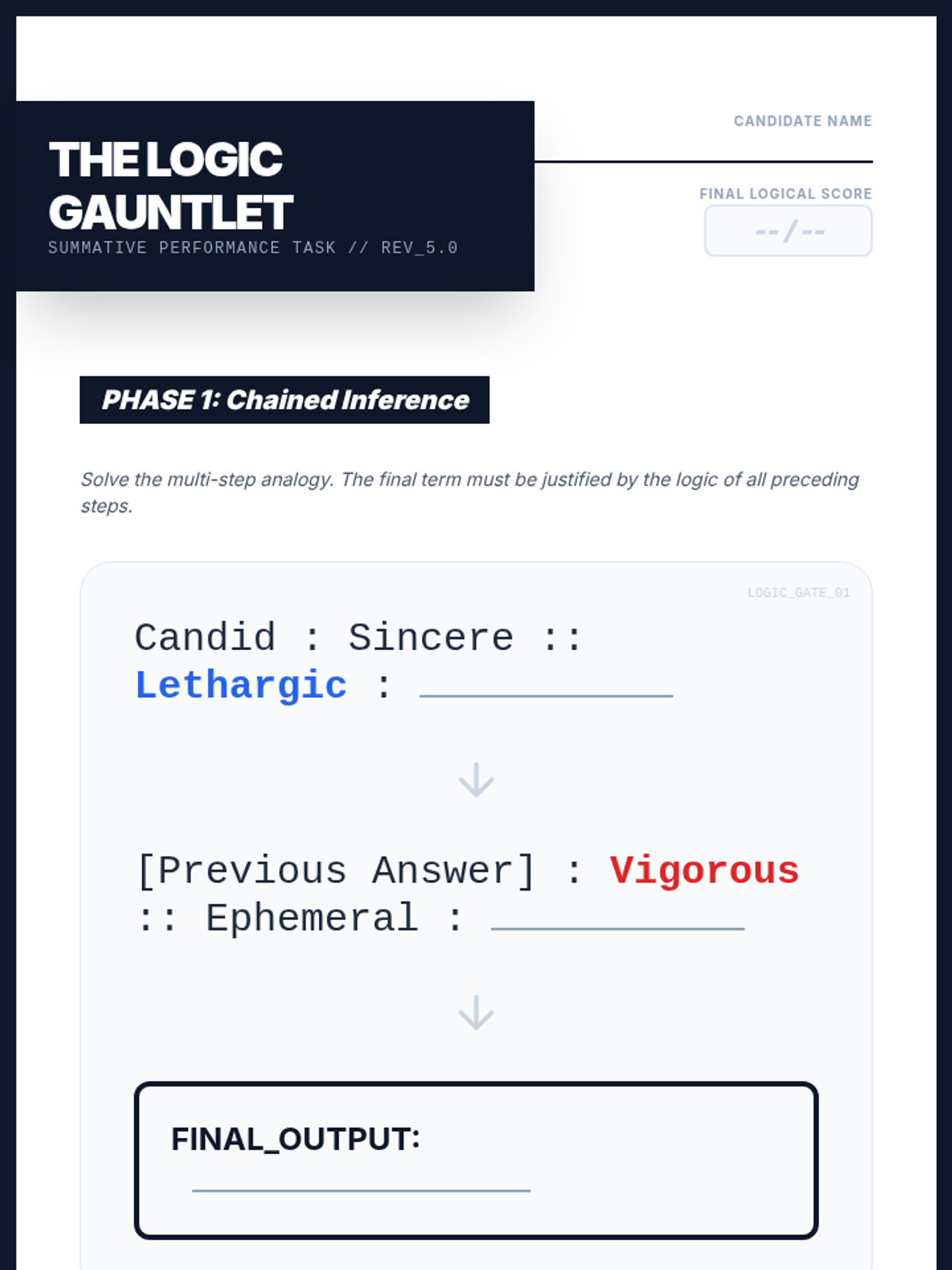
A summative assessment where students solve and create multi-step logic puzzles and LSAT-style games based on verbal analogies.
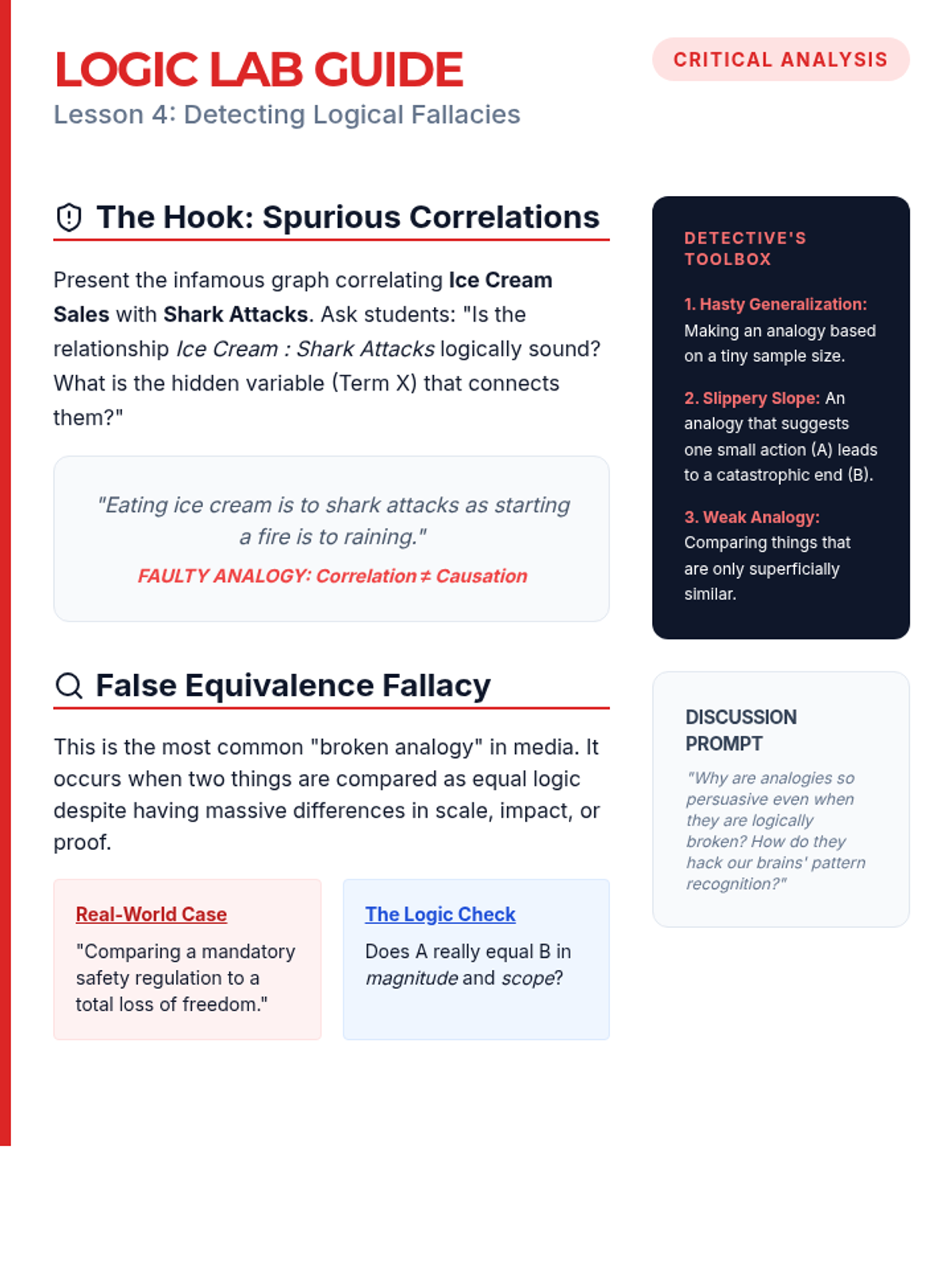
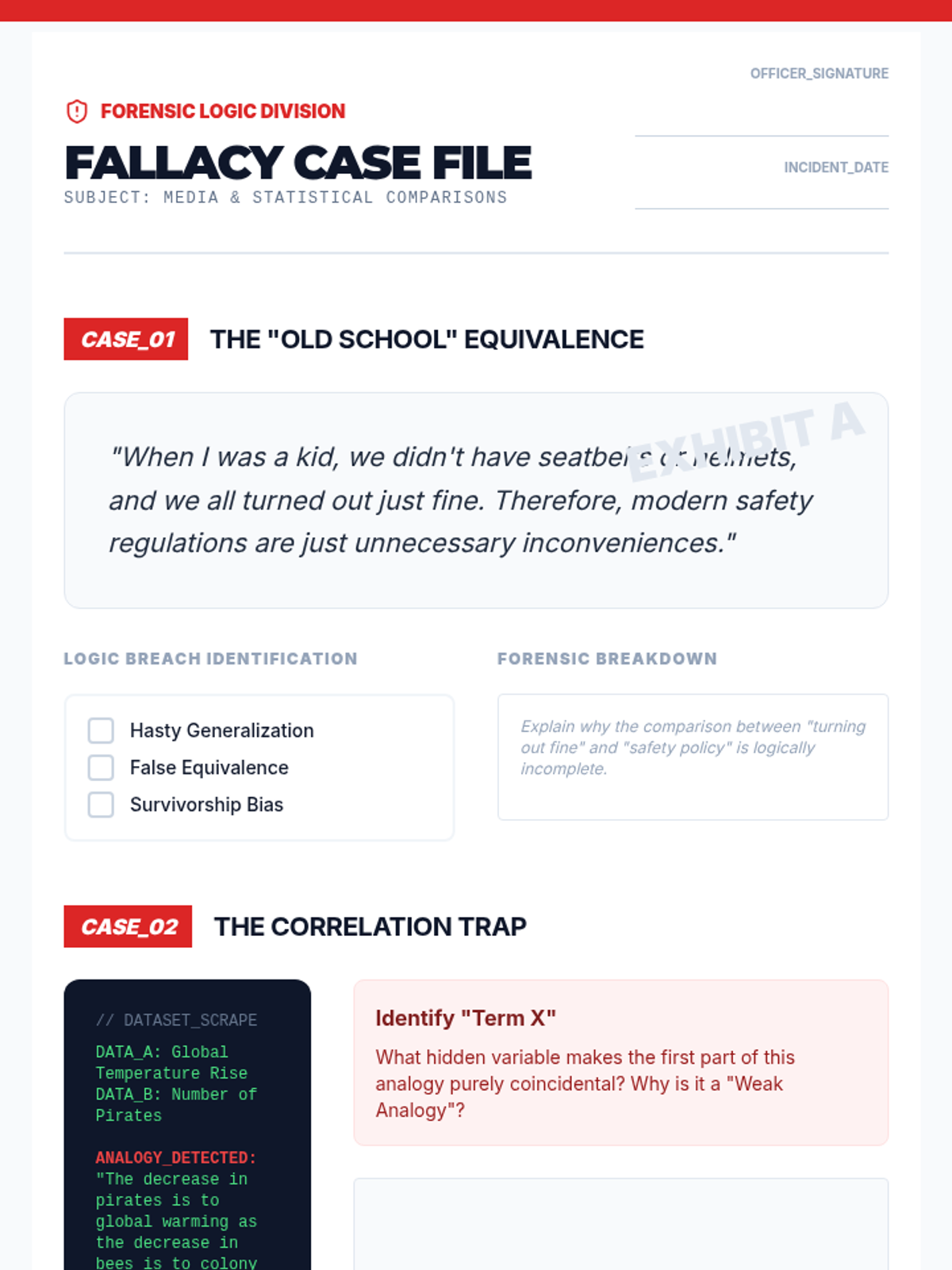
Investigates false equivalence and other logical fallacies in real-world data and media, applying analogy skills to information literacy.
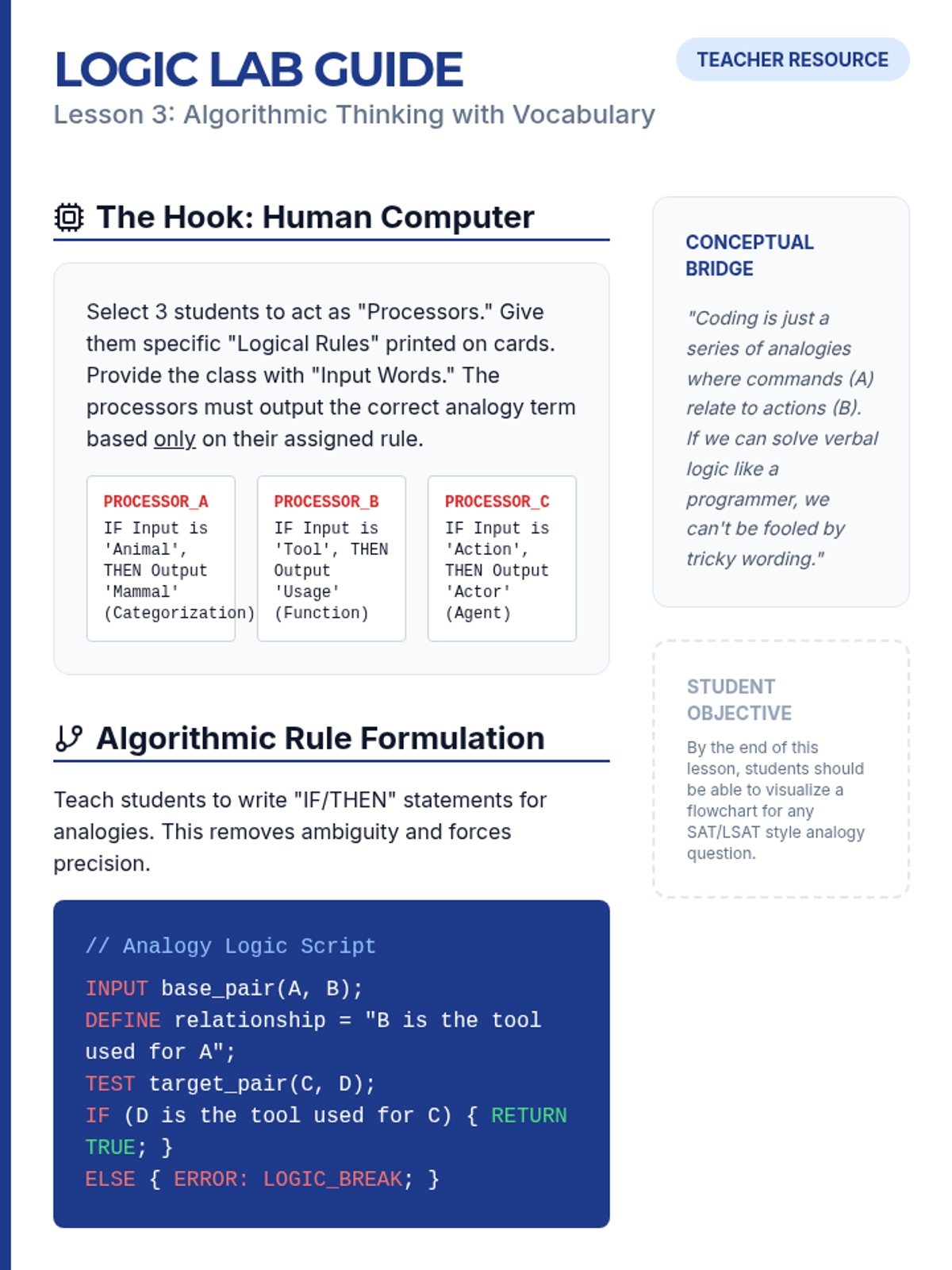
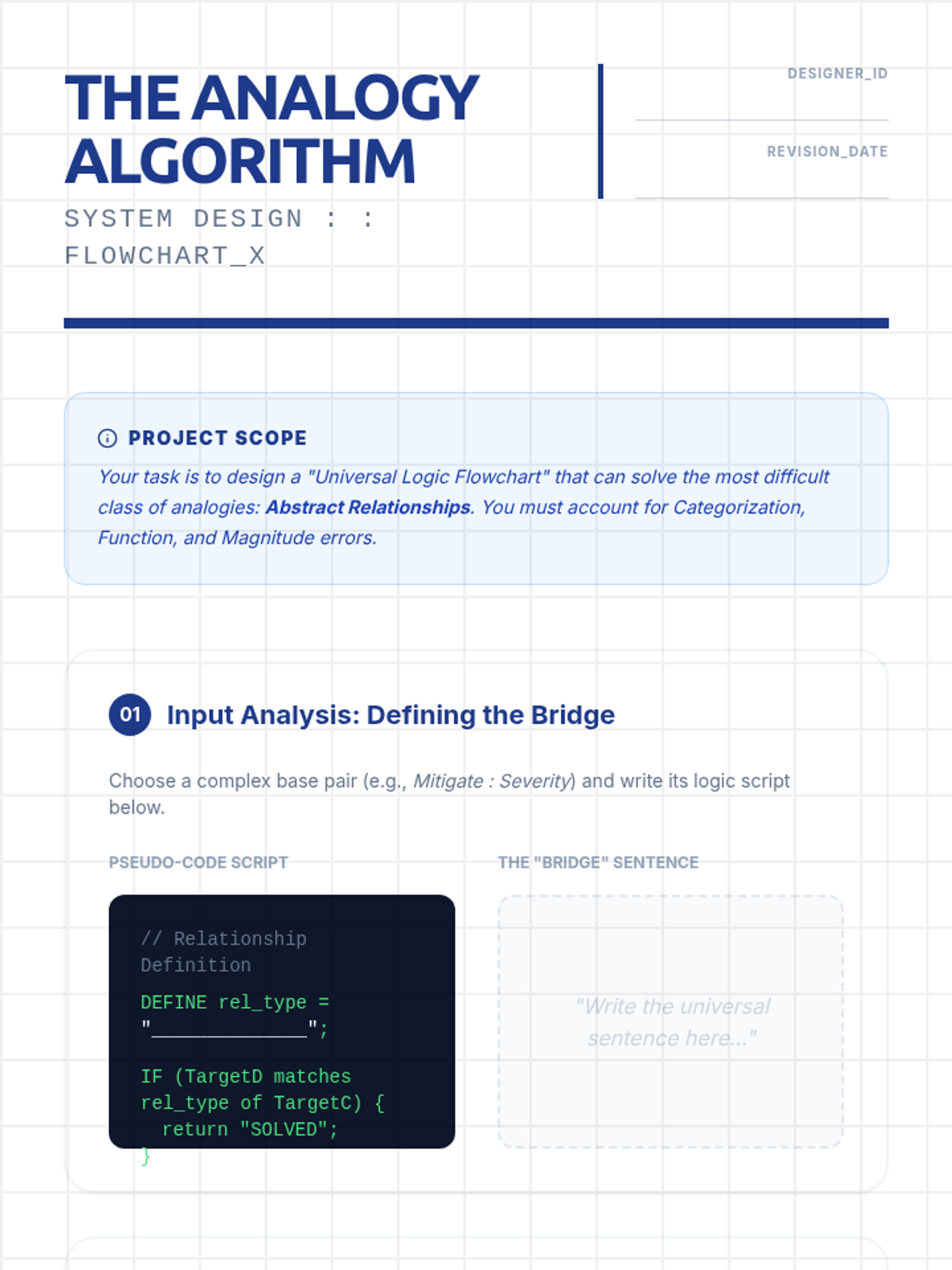
Connects coding concepts to linguistics by having students design flowcharts and 'rules' to solve for unknown terms in complex analogies.
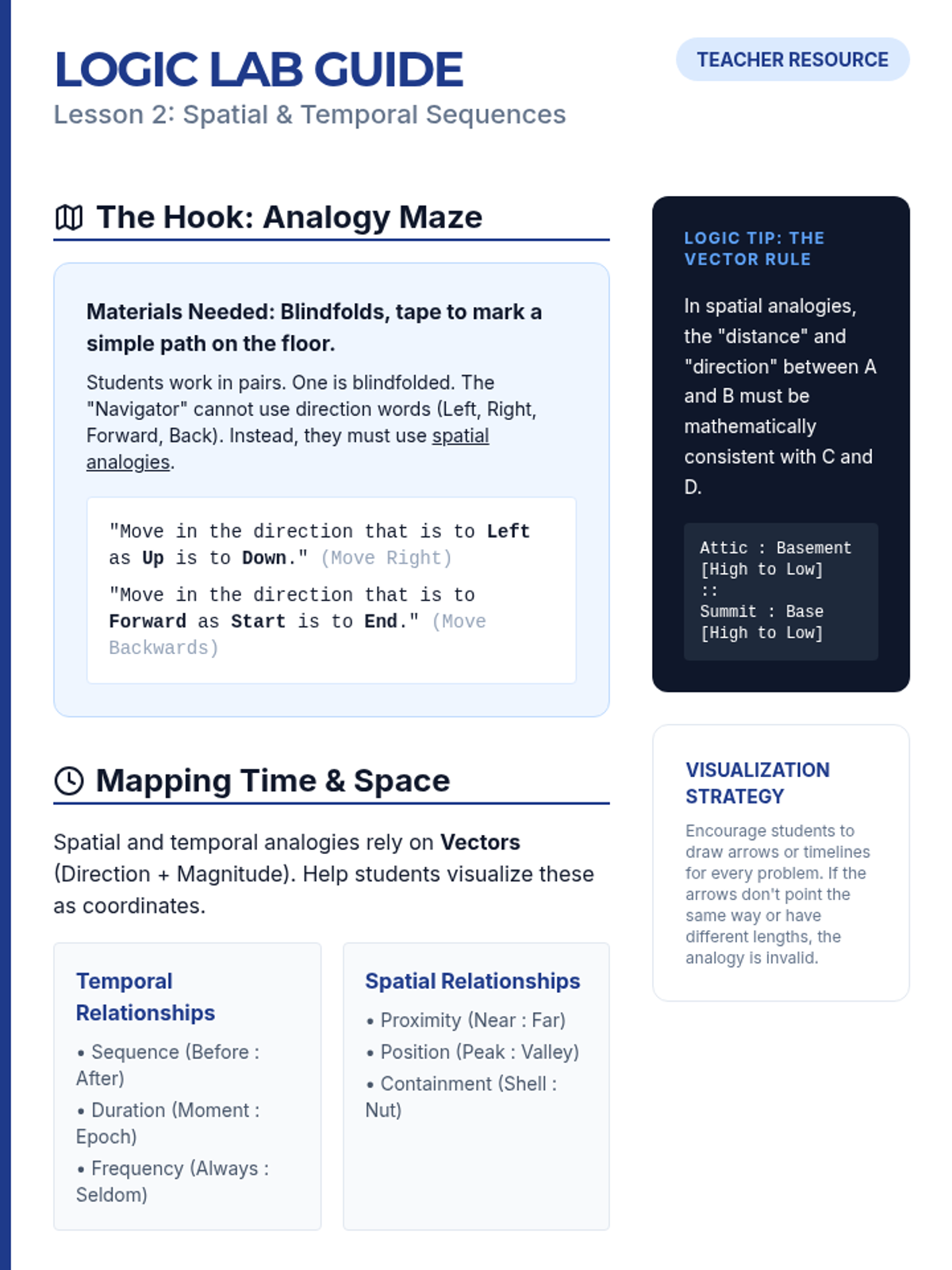
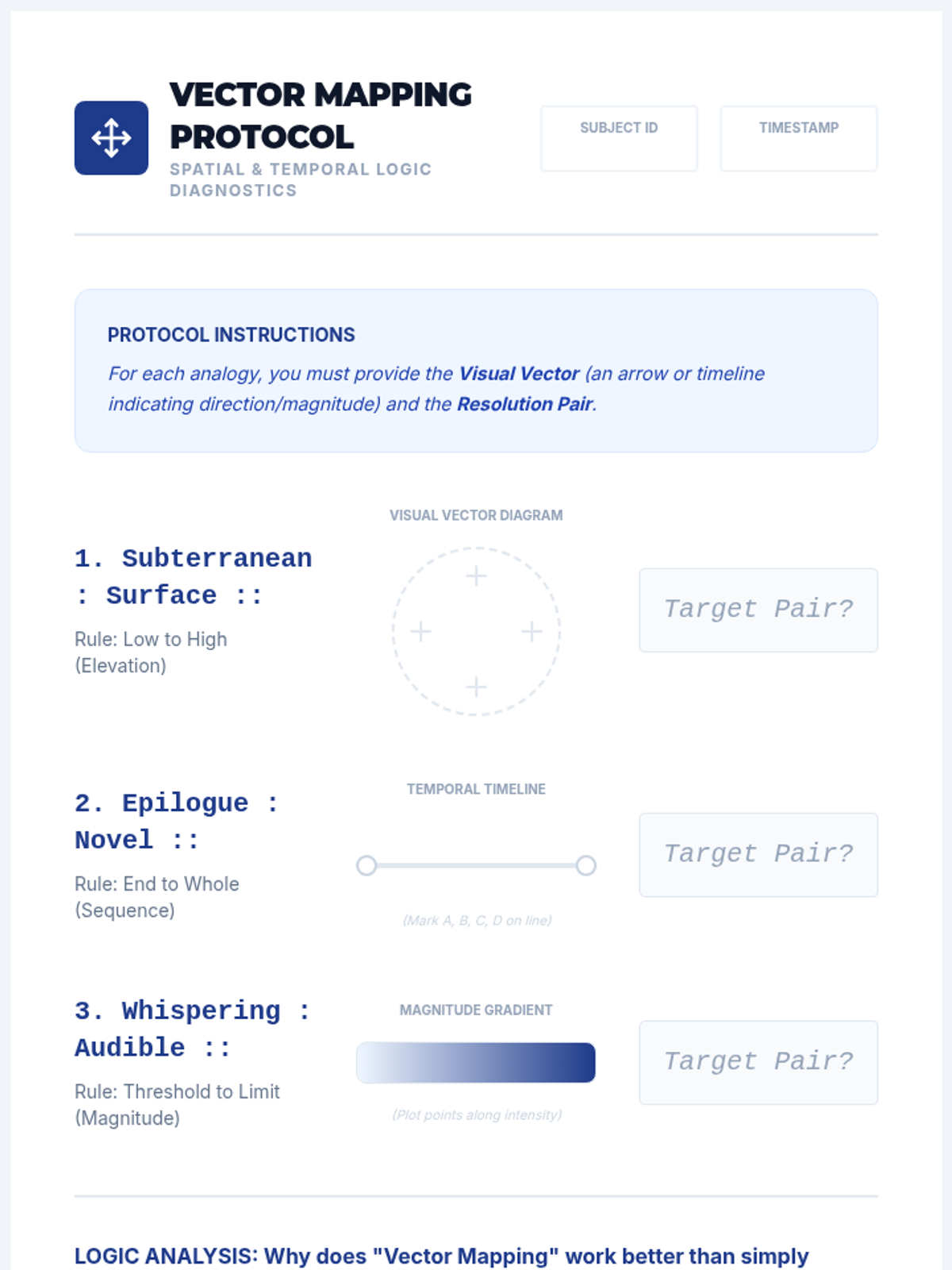
Explores analogies through the lens of space and time, using diagramming to visualize movement between terms and sequences.
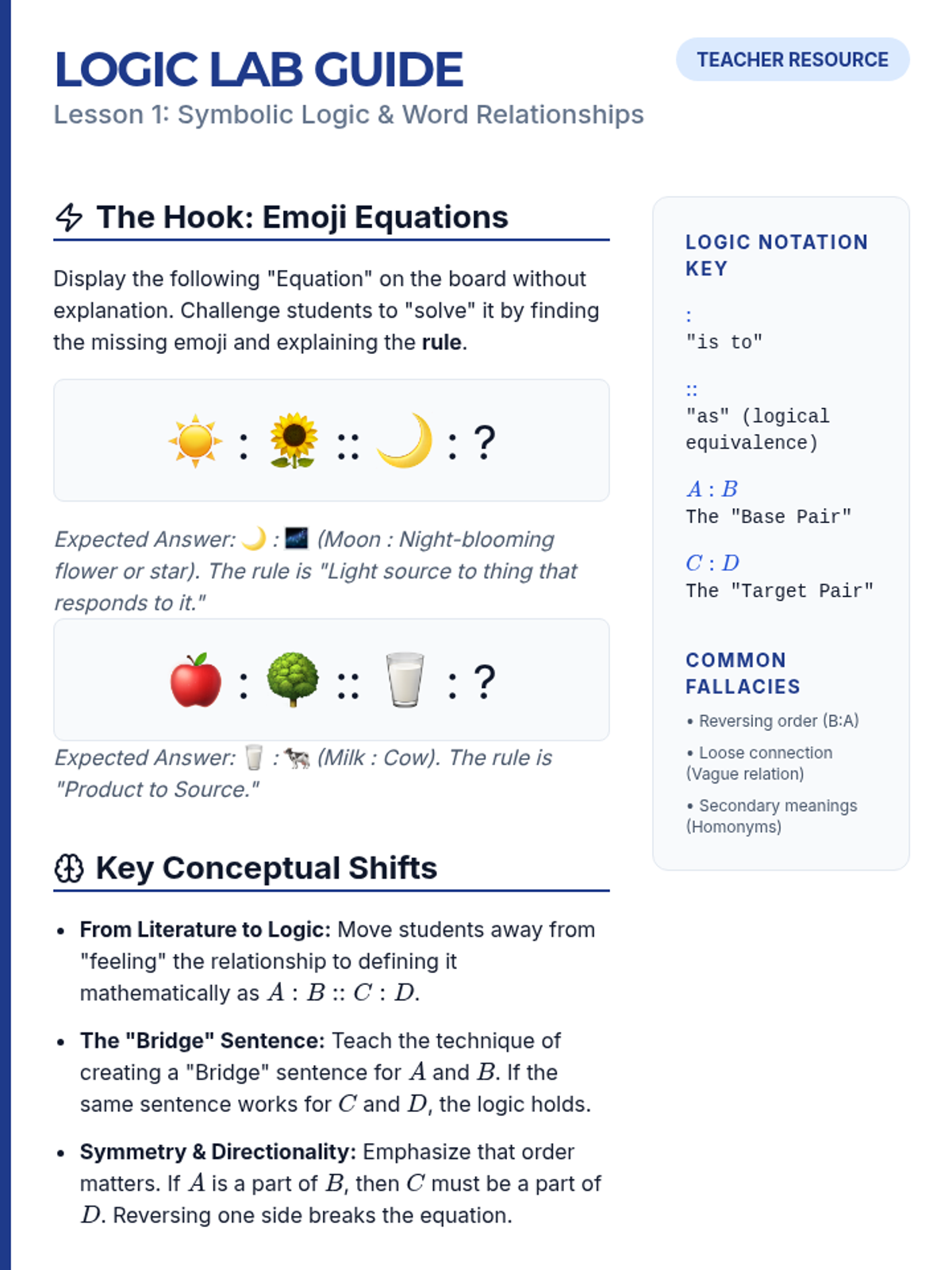
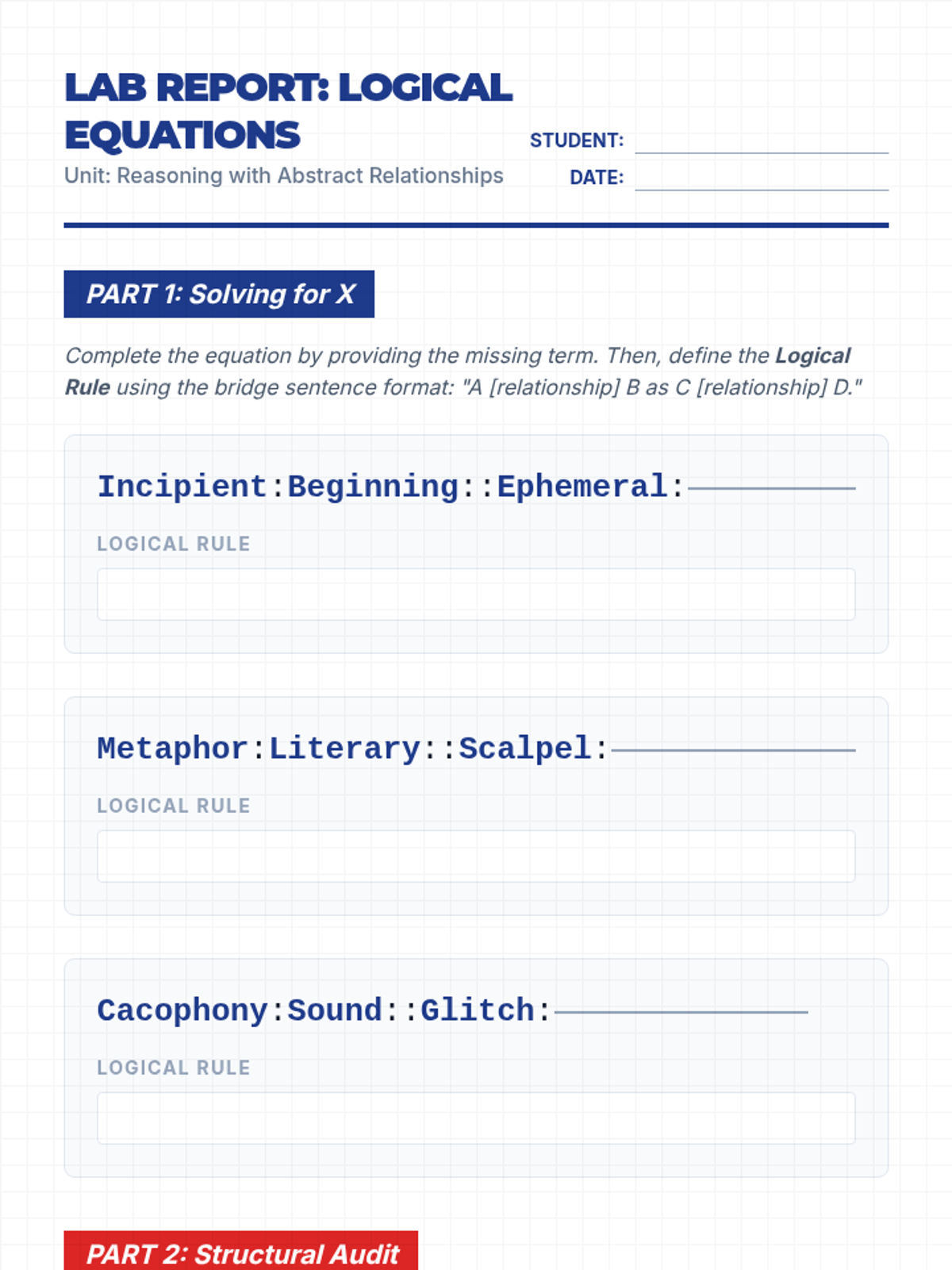
Introduces formal logic notation (A:B :: C:D) and maps word relationships onto these structures, emphasizing the importance of order and symmetry in verbal reasoning.
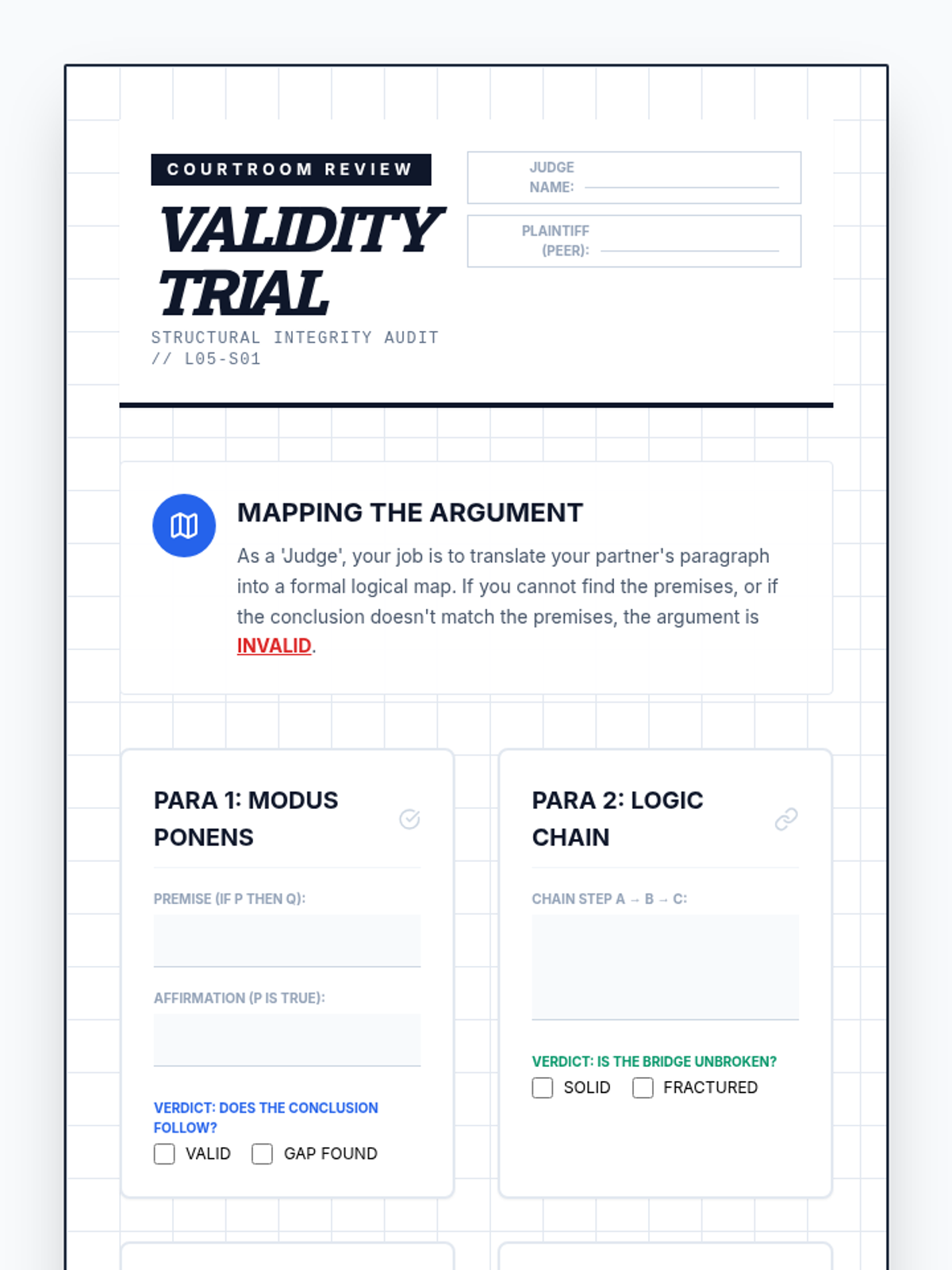
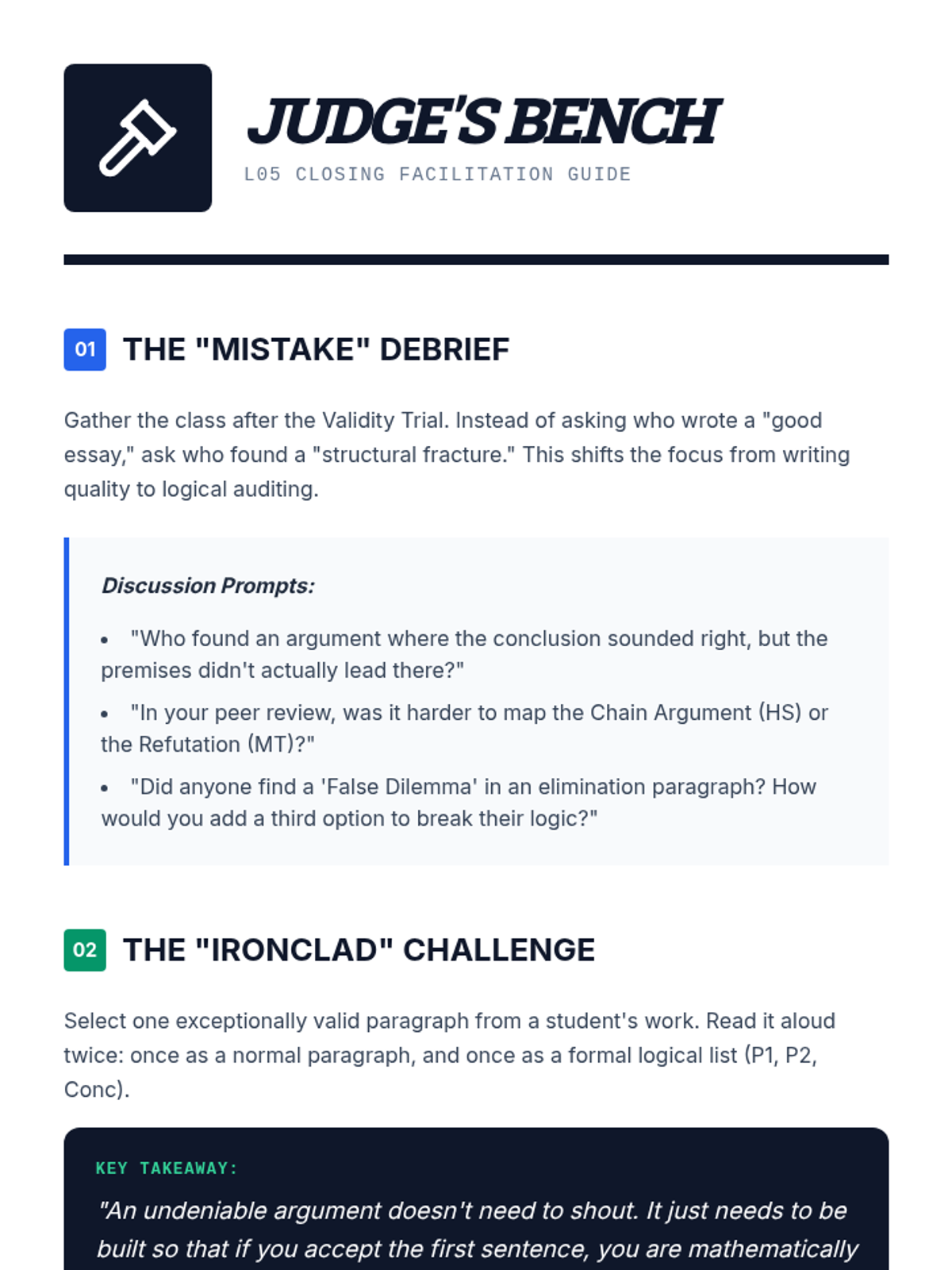
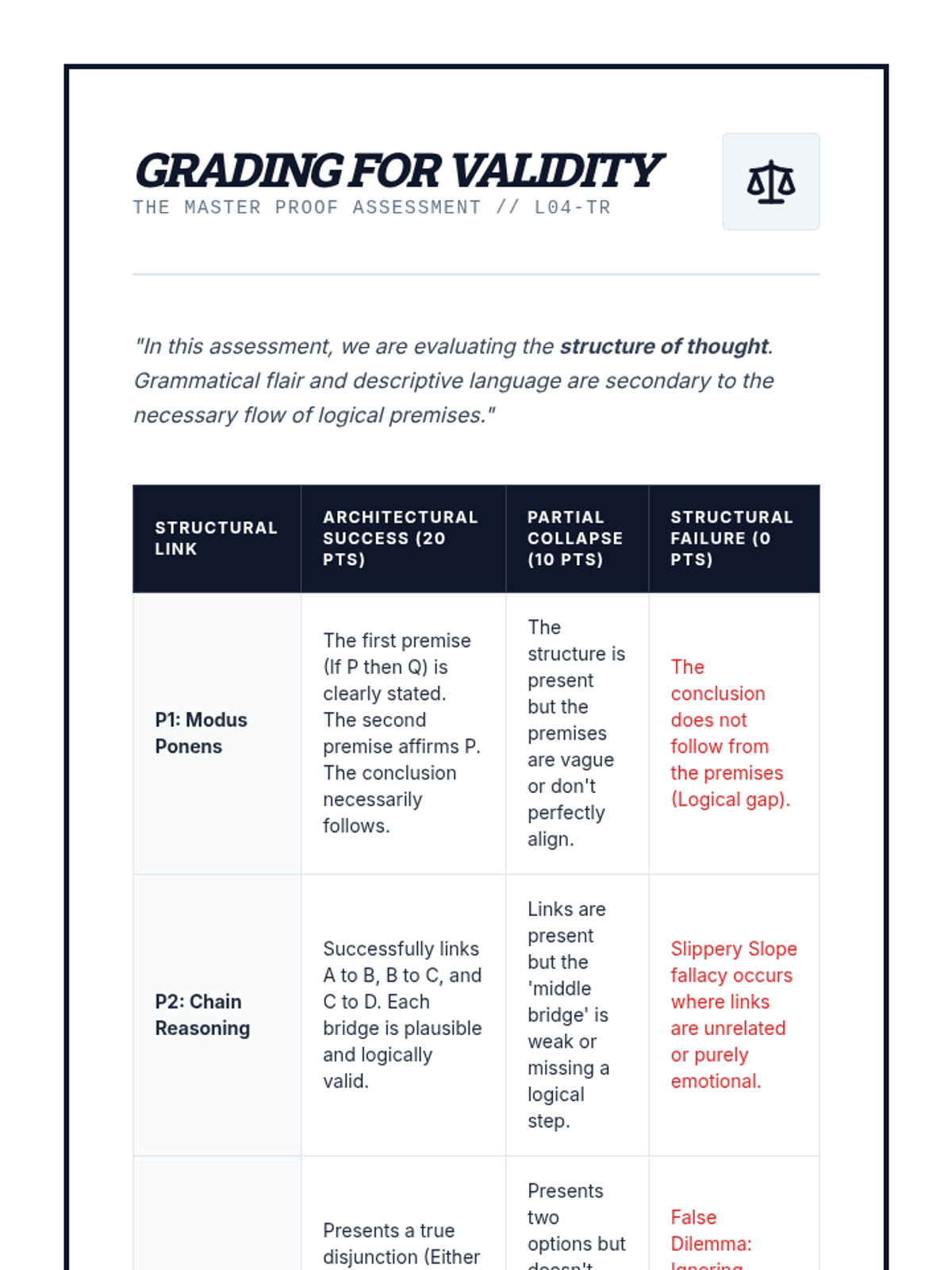
A peer review session where students map out the logical validity of each other's essays, acting as 'judges' to ensure conclusions follow necessarily from premises.
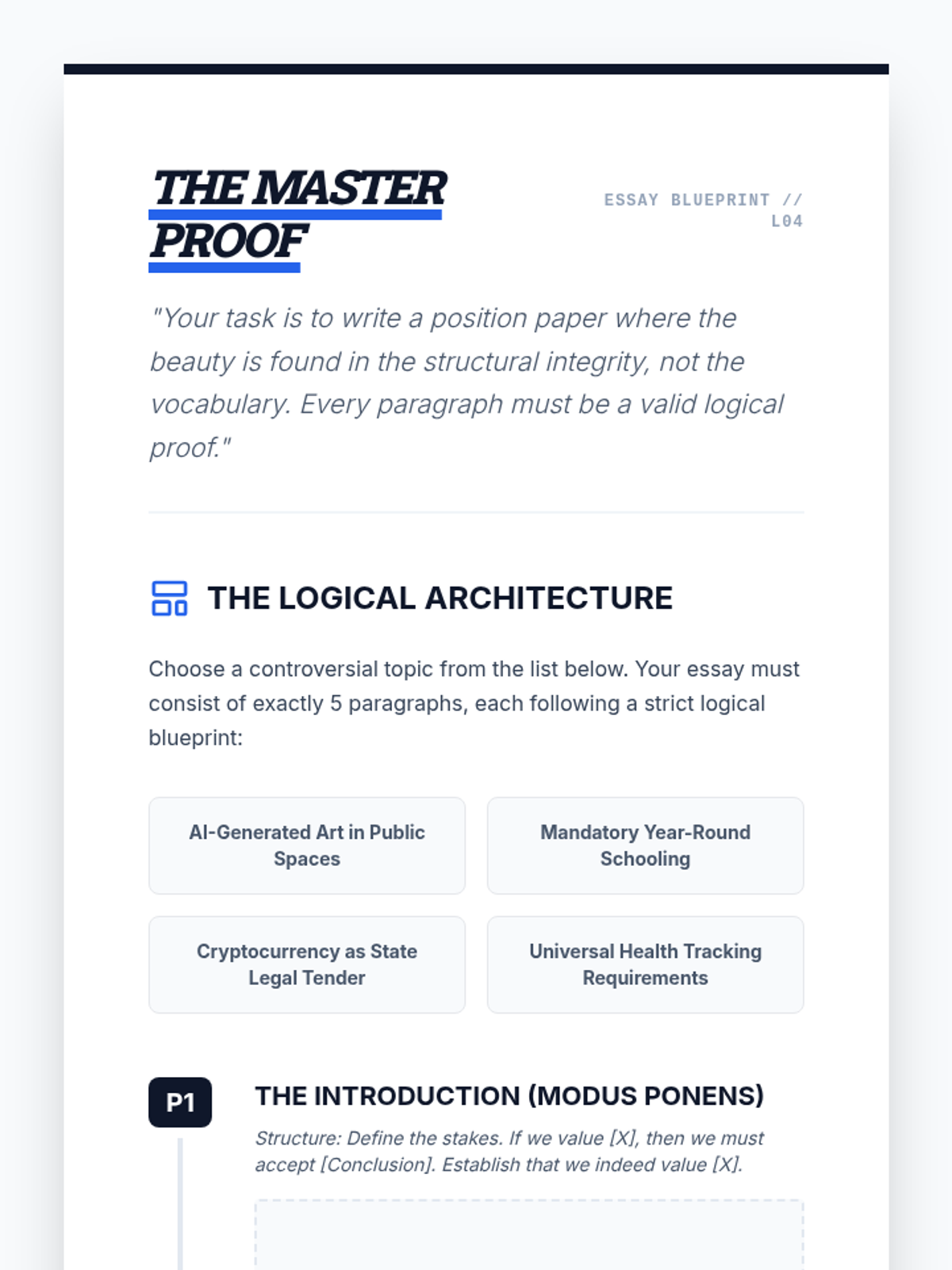
Synthesis lesson where students draft a position paper structured entirely around the logical forms learned in previous lessons. The focus is on structural integrity and logical necessity.
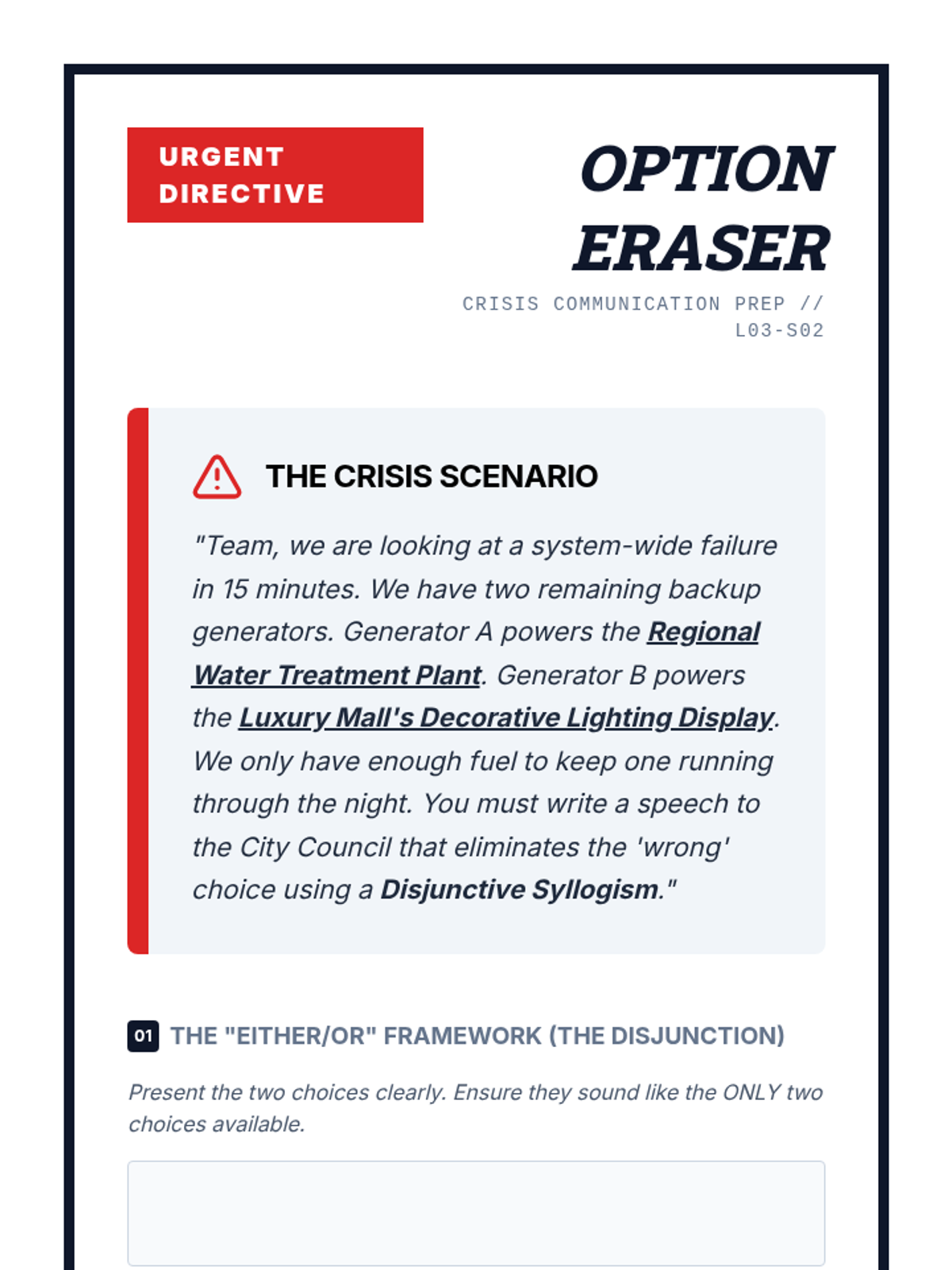
Using Disjunctive Syllogisms to present alternatives and prove a conclusion by process of elimination. Students apply this strategy to persuasive speechwriting.
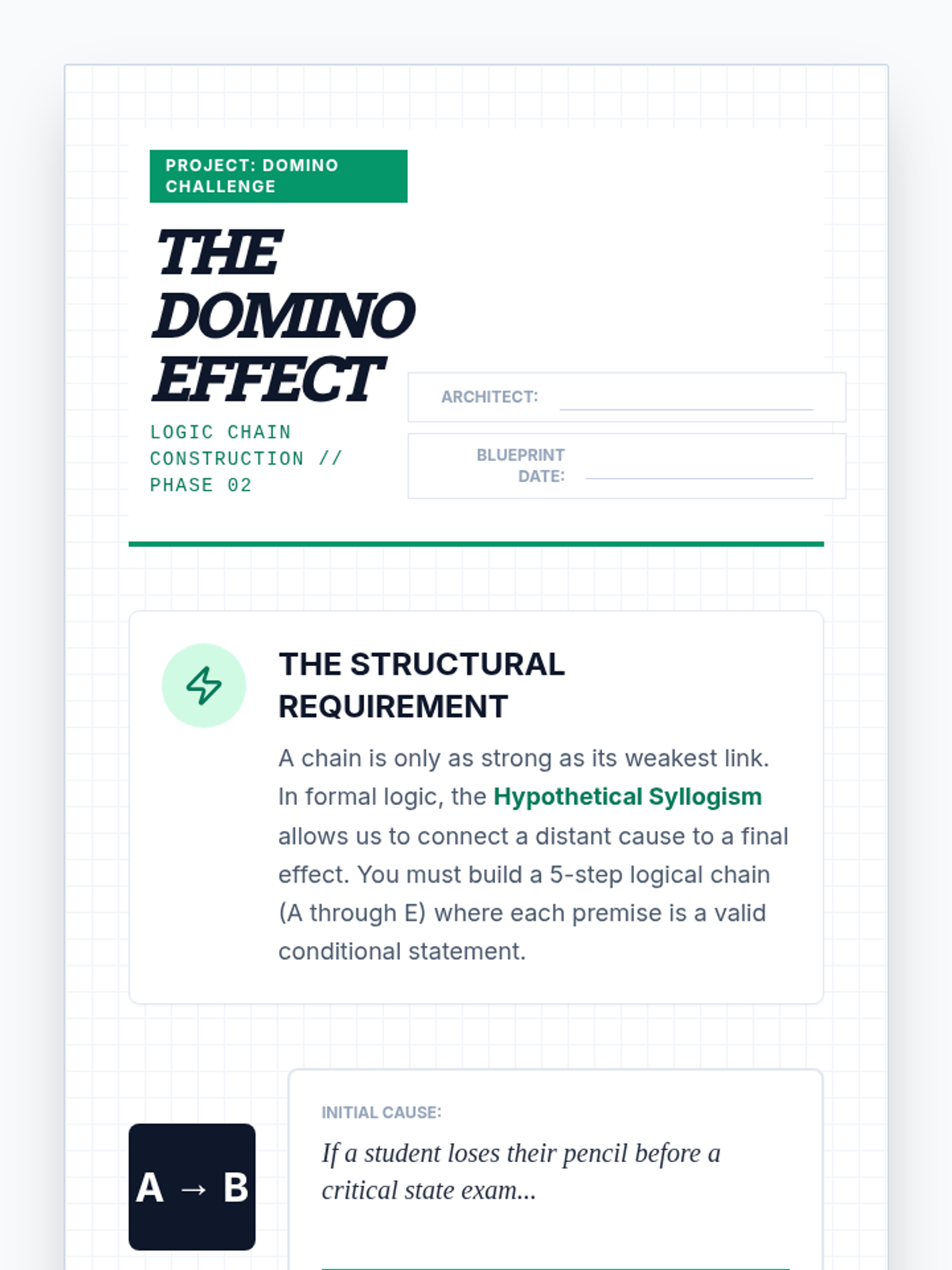
Exploring the Hypothetical Syllogism to create sustained, coherent chains of reasoning. Students practice linking conditional statements to build complex, multi-paragraph arguments.