Lenny.com
Explore
Sign in
Create
MathEnglish Language ArtsScience & EngineeringSocial StudiesGlobal LanguagesHealth & Physical EducationSpecial EducationCounseling & Life SkillsArts & CreativityESL
Lenny.com
Lenny.com

Solutions

For educatorsFor schoolsFor districts

Product

ExploreSign inCreateSupport

Resources

Getting startedGrant-funded pilotMTSS Foundations program

© 2026 Lenny Learning Inc.

TermsPrivacyLinkedInInstagramX

Lenny

Social StudiesSocial Studies PracticesLocation WordsMapsOrder EventsChronology and CausationEvaluating SourcesHistorical ThinkingGeography, Humans, & the EnvironmentAmerican Symbols and LandmarksCitiesStatesState CapitalsRegions of the United StatesGeographic SkillsPhysical GeographyHuman GeographyRegional GeographyGeography of AfricaGeography of AsiaGeography of EuropeGeography of OceaniaGeography of the AmericasSociety and Environment of EuropeSociety and Environment of AsiaSociety and Environment of The AmericasSociety and Environment of the Middle EastSociety and Environment of AfricaHistoryPrehistoryComparing Ancient River CivilizationsAncient MesopotamiaAncient Egypt and KushAncient South AsiaEarly ChinaGreeceRome and the Byzantine EmpireAncient World HistoryNative Peoples of North AmericaNative Peoples of Mesoamerica and South AmericaAfrican EmpiresMedieval AsiaMedieval EuropeThe Silk RoadMedieval HistoryIslamic EmpiresWorld ReligionsRenaissance PeriodAge of ExplorationThe Thirteen ColoniesThe American RevolutionUS History Early RepublicFounding of the United StatesUS History AntebellumUS Civil WarReconstruction PeriodThe Gilded AgeUS ImperialismWorld ImperialismWorld War IUS History 1920sGreat DepressionWorld War IIThe Cold WarUS History 1950-60sUS History 1960s-70sWorld History 20th CenturyContemporary US HistoryContemporary World HistoryHolidaysCivics and GovernmentCitizenshipGovernment FoundationsThe ConstitutionUS ConstitutionExecutive BranchLegislative BranchJudicial BranchState and LocalPolitical ParticipationPublic PolicyPolitical SystemsPower and AuthoritySocial MovementsDefining DevianceTheories of DevianceCrime and Criminal JusticeEconomicsBasic Economic PrinciplesSupply and DemandWhat is MoneyEconomic FundamentalsMicroeconomicsMacroeconomicsBanking and FinanceEconomic SystemsGlobal EconomicsCorporations and PowerThe Changing WorkplaceUnemployment and LaborClass and InequalitySocial MobilityGlobal InequalityPsychologyHistory of PsychologyPsychology as a ScienceBrain and Nervous SystemNeuroscience and BehaviorGenetics and BehaviorSleep and ConsciousnessSensory ProcessesPerceptual OrganizationClassical ConditioningOperant ConditioningObservational LearningCognitive LearningMemory ProcessesThinking and Problem SolvingLanguage and CognitionTheories of MotivationStress and CopingPrenatal and Infant DevelopmentChildhood DevelopmentAdolescent DevelopmentAdulthood and AgingSelf and IdentitySocial CognitionSocial InfluenceAttraction and RelationshipsGroup BehaviorPrejudice and DiscriminationAnxiety and Mood DisordersClinical PsychologyForensic PsychologyPhilosophy & EthicsIntroduction to PhilosophyMajor Philosophers & IdeasMind and Body ProblemFree Will vs DeterminismEthics & MoralityReligion & PhilosophyPolitical Philosophy

History

SequencesLessonsMaterialsVideos
  1. Social Studies

History

SequencesLessonsMaterialsVideos

Chronological developments of global civilizations from prehistoric foundations to contemporary international relations. Examines ancient empires, medieval societies, and the socio-political evolution of the United States through various historical lenses.

PrehistoryHuman evolution, archaeological methods, and the transition from hunter-gatherer societies to settled agricultural communities. Examines tool development, cave art, and migration patterns throughout the Paleolithic and Neolithic eras.
GreeceAncient Greek mythology, philosophy, and the birth of democracy in city-states like Athens and Sparta. Examines historical impacts from the Bronze Age through the Hellenistic period.
Native Peoples of North AmericaDiverse cultures, languages, and histories of Indigenous nations across North American regions. Analyzes traditional environmental adaptations, social structures, and the long-term impacts of European colonization.
HolidaysHistorical origins and cultural traditions of global celebrations, including religious, secular, and seasonal events. Connects specific customs to their geographical, social, and historical contexts.
How the American Colonies Won Their Independence

How the American Colonies Won Their Independence

This educational video provides a comprehensive overview of the American Revolutionary War and the creation of the Declaration of Independence. It traces the journey of the American colonies from their initial dissatisfaction with British trade laws and taxes to the formation of the Continental Congress and the outbreak of war. The narrative details the escalating tensions, including the Boston Tea Party and the "No taxation without representation" movement, that eventually led to the colonies separating from British rule. Key historical themes explored include political representation, the economic impact of taxation, and the philosophical foundations of American independence. The video highlights significant historical figures such as George Washington, Thomas Jefferson, and Betsy Ross, while also covering major military turning points like the Battle of Saratoga and the surrender at Yorktown. It connects the ideological struggle for liberty with the practical realities of the war effort, including the crucial role of foreign alliances. For educators, this resource serves as an excellent introduction or review of the Revolutionary era. It effectively condenses complex historical timelines into an accessible narrative, making it easy for students to understand the cause-and-effect relationships between British policies and colonial reactions. The inclusion of primary source text from the Declaration of Independence provides a natural springboard for document analysis, while the clear timeline supports lessons on chronological thinking and historical sequence.

Miacademy & MiaPrep Learning ChannelMiacademy & MiaPrep Learning Channel

7mins 27s

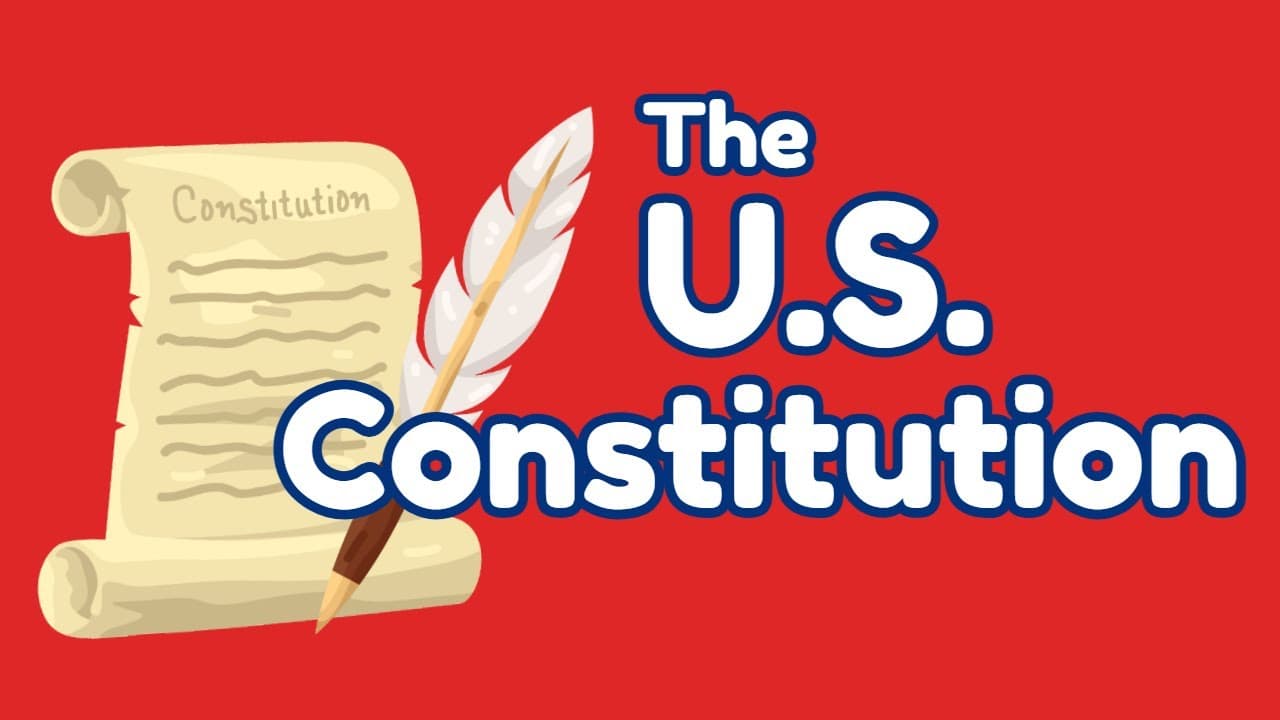
Understanding the U.S. Constitution and Bill of Rights

Understanding the U.S. Constitution and Bill of Rights

This engaging educational video provides a comprehensive and child-friendly introduction to the United States Constitution. It breaks down the document's structure into three main parts: the Preamble, the seven Articles, and the Amendments. The narrator simplifies complex civics concepts, explaining that the Constitution is the "highest law in the land" and establishes a government that is "for the people, by the people." A significant portion of the video is dedicated to the Bill of Rights, walking students through the first ten amendments with relatable examples and clear definitions of rights and freedoms. Key themes include the structure of the U.S. government, individual liberties, and the historical context of the nation's founding. The video highlights specific amendments, such as the freedom of speech (1st), the right to a speedy trial (6th), and the abolition of slavery (13th). It also covers the historical significance of the Constitutional Convention of 1787, introducing key figures like George Washington and James Madison, known as the "Father of the Constitution." The connection between Constitution Day and Citizenship Day is also explored, emphasizing the value of American citizenship. For educators, this video is a versatile tool for social studies and civics curricula. It transforms abstract political concepts into concrete examples students can understand, such as comparing the 4th Amendment to privacy in one's home or the 9th Amendment to the right to build a snowman. It serves as an excellent anchor for lessons on the three branches of government, the importance of laws, or commemorative activities for Constitution Day in September.

Homeschool PopHomeschool Pop

17mins 40s

Exploring the People and Culture of Central America

Exploring the People and Culture of Central America

This educational video provides a comprehensive overview of the diverse demographics and rich cultural heritage of Central America. It explores the region's unique population blend, examining the distinct histories of African, Native American, European, and Mestizo communities. The narrator breaks down specific demographic data for countries like Belize, Panama, Guatemala, and Costa Rica, explaining historical reasons for these population distributions, such as the formation of Maroon communities by escaped slaves and indigenous groups.

Miacademy & MiaPrep Learning ChannelMiacademy & MiaPrep Learning Channel

8mins 39s

The True History Behind July 4th Celebrations

The True History Behind July 4th Celebrations

In this engaging episode of Crash Course US History, John Green explores the history, myths, and traditions surrounding Independence Day in the United States. The video clarifies the confusion regarding the actual date of independence—distinguishing between the approval of the Lee Resolution on July 2nd, the adoption of the Declaration's text on July 4th, and the physical signing in August. It also traces the evolution of the holiday from early raucous celebrations involving bonfires and rum to modern traditions of fireworks, cookouts, and hot dog eating contests. Key themes include historical accuracy versus cultural memory, the evolution of national holidays, and the specific traditions that define American patriotism. The video highlights the contributions of Founding Fathers like John Adams and Richard Henry Lee, while also providing interesting trivia about presidents who died (or were born) on the holiday. It touches upon the tension between public celebration and public safety, referencing fireworks regulations and celebratory gunfire. For educators, this video serves as an excellent hook for units on the American Revolution or American culture. It models critical thinking by questioning established historical narratives and encourages students to analyze primary sources, such as John Adams' famous letter to his wife. Its fast-paced, humorous delivery makes it an effective tool for engaging students in a discussion about how and why we remember history the way we do.

CrashCourseCrashCourse

5mins 28s

The Symbols and Meaning of the American Flag

The Symbols and Meaning of the American Flag

This engaging educational video introduces young learners to the American flag as a primary symbol of the United States. Through a friendly host and animated characters, the video breaks down the specific meanings behind the flag's colors (red for courage, white for purity, blue for justice) and its design elements (stars for the 50 states, stripes for the 13 original colonies). The video goes beyond just the physical description to explain abstract civics concepts in age-appropriate terms. It connects the flag to the concept of freedom—specifically the freedom to vote and practice religion—and briefly touches upon the historical sacrifices made for those freedoms. It also covers practical knowledge, such as where students might see the flag in their community (post offices, schools, the White House) and important dates like Flag Day. Ideal for early elementary social studies, this resource helps teachers explain national identity and symbolism. It includes a "man on the street" segment that models how different citizens interpret the flag's meaning, encouraging students to develop their own sense of civic pride and understanding. The video concludes with a brief introduction to the National Anthem, tying music and lyrics to the visual symbol of the flag.

Miacademy & MiaPrep Learning ChannelMiacademy & MiaPrep Learning Channel

6mins 10s

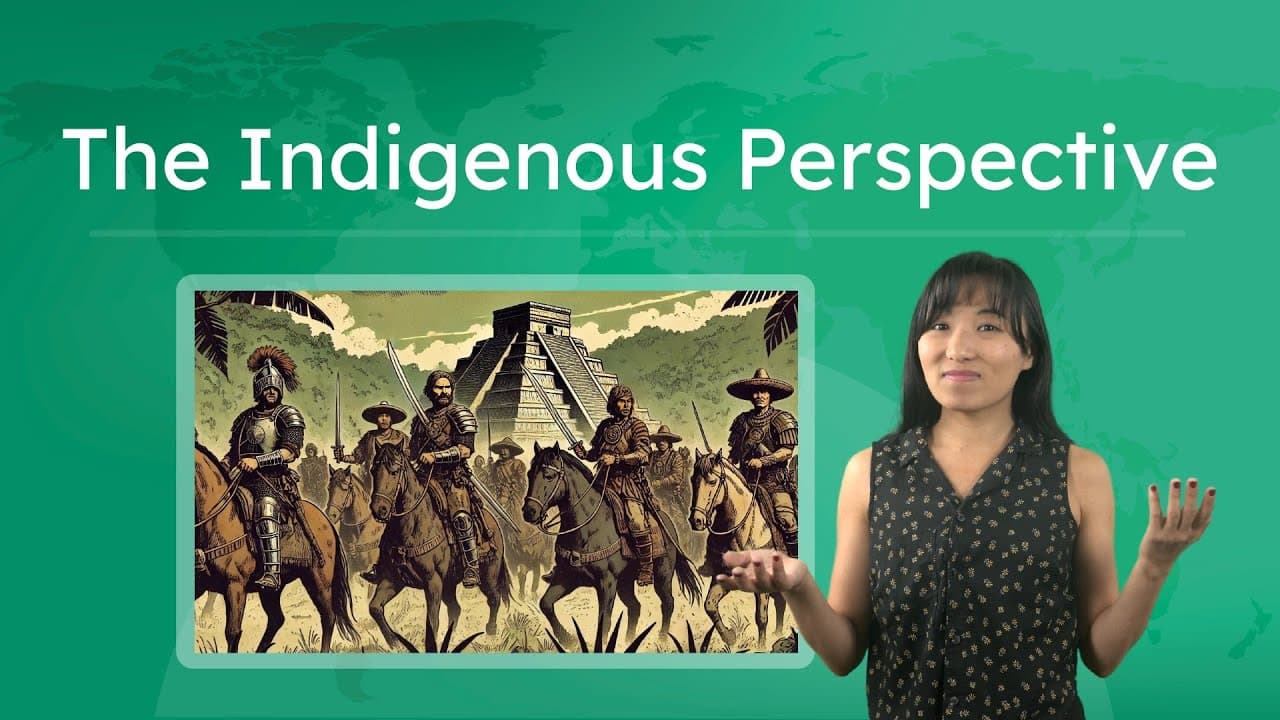
The Indigenous Perspective: How European Exploration Changed the Americas

The Indigenous Perspective: How European Exploration Changed the Americas

This educational video explores the Age of Exploration from the perspective of the Indigenous peoples of the Americas. Moving beyond the traditional narrative of European discovery, it examines the profound and often devastating impacts of colonization on Native societies. The video categorizes these impacts into three main areas: the loss of land and culture, the loss of freedom through systems like the encomienda, and the catastrophic loss of life due to introduced diseases.

Miacademy & MiaPrep Learning ChannelMiacademy & MiaPrep Learning Channel

12mins 30s

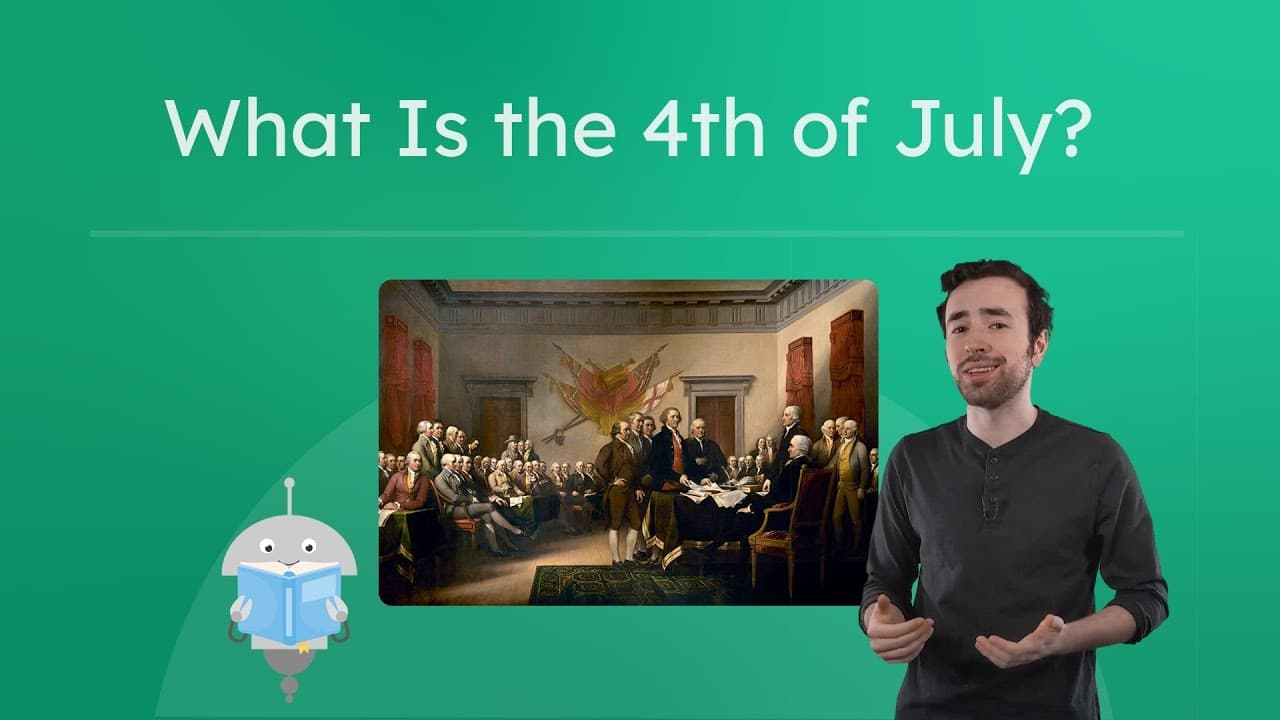
Why We Celebrate the 4th of July

Why We Celebrate the 4th of July

In this engaging episode of Clubhouse Social Studies, the host and his alien friend Plato explore the meaning and history behind the 4th of July. The video begins by explaining the concept of a birthday for a country, using Plato's confusion about personal birthdays as a humorous hook. It transitions into a simplified historical narrative explaining how the United States began, moving from being part of Great Britain to becoming a free and independent nation through the Declaration of Independence signed in 1776. The video highlights key themes of independence, freedom, and national identity. It introduces young learners to historical figures like King George and the Founding Fathers (visually represented through classic paintings) and explains the significance of the Declaration of Independence as a document that told the world America was free. The narrative connects past events to present-day traditions, illustrating how modern celebrations like parades, cookouts, and fireworks serve as a remembrance of the nation's "birthday." For educators, this video serves as an excellent introduction to American holidays and civics for early elementary students. It breaks down complex historical concepts like "independence" into age-appropriate analogies, such as a country having a birthday. The "Mia on the Move" segment provides diverse perspectives on how different community members celebrate, modeling how to ask questions and share traditions. This resource can spark discussions about family traditions, community events, and the basic history of the United States.

Miacademy & MiaPrep Learning ChannelMiacademy & MiaPrep Learning Channel

6mins 16s

Exploring the People, Culture, and Traditions of Mexico

Exploring the People, Culture, and Traditions of Mexico

This educational video provides a comprehensive overview of Mexico's demographics, cultural heritage, and modern traditions. It breaks down the country's population composition, explaining the blend of Indigenous and European ancestries (Mestizo) while highlighting the diversity of indigenous groups that still thrive today. The video utilizes population pyramids to analyze demographic shifts, such as an aging population and a shrinking workforce, connecting statistical data to societal changes. Key themes include the rich linguistic diversity beyond Spanish (specifically Nahuatl and Maya), the dominance of Roman Catholicism alongside reviving indigenous spiritual practices, and regional variations in cuisine. The video also explores significant cultural markers like the Day of the Dead (Día de los Muertos), Quinceañeras, and the evolution of Mexican art from ancient carvings to modern murals by artists like Frida Kahlo and Diego Rivera. This resource is highly valuable for Social Studies, Geography, and Spanish classrooms. It moves beyond stereotypes to present a nuanced view of Mexican identity. Teachers can use the segments on population pyramids for cross-curricular math lessons, while the cultural sections provide excellent prompts for comparing traditions, understanding cultural syncretism, and exploring the geography of food.

Miacademy & MiaPrep Learning ChannelMiacademy & MiaPrep Learning Channel

6mins 42s

How Native History Differs in Alaska and Hawai'i

How Native History Differs in Alaska and Hawai'i

This educational video explores the distinct and complex histories of Indigenous peoples in the two non-contiguous United States: Alaska and Hawai'i. It contrasts the legal status of Native tribes in both states, highlighting a stark statistic: while 40% of all federally recognized tribes in the U.S. are in Alaska, there are zero in Hawai'i. The host, Che Jim, guides viewers through the timeline of colonization for both regions—from Russian fur traders and the U.S. purchase of Alaska to the overthrow of the Hawaiian Kingdom by American businessmen. The video delves into key themes of sovereignty, land rights, and the lasting impacts of colonization. It explains the unique "corporation" model established by the Alaska Native Claims Settlement Act (ANCSA) and contrasts it with the reservation system found in the lower 48 states. For Hawai'i, it covers the cultural history of the Kānaka Maoli, the illegal overthrow of Queen Liliʻuokalani, and the ongoing debate within the Native Hawaiian community regarding federal recognition versus independence. For educators, this resource is invaluable for teaching U.S. History, Civics, and Indigenous Studies. It moves beyond the standard narrative of westward expansion to cover the specific legal and political mechanisms used to acquire these territories. It provides clear explanations of complex concepts like "subsistence lifestyles," "sovereignty," and "annexation," making it an excellent tool for stimulating high-level classroom discussions about government responsibility, indigenous rights, and historical justice.

CrashCourseCrashCourse

11mins 42s

Why We Study US History: Context, Perspectives, and Themes

Why We Study US History: Context, Perspectives, and Themes

This introductory video for a U.S. History course establishes the fundamental reasons for studying history: to better understand the present, to contextualize events through multiple perspectives, and to develop the skills necessary for civic engagement. Hosted by Anthony with assistance from an animated robot named Mia, the lesson uses relatable analogies and historical examples to demystify abstract concepts like 'contextualization' and 'historical perspective.' It moves beyond memorizing dates to emphasize critical thinking and the application of historical knowledge to modern life. The video introduces three core themes that will guide the course: Community & Belonging, People & The Environment, and the Role of Government. Through specific examples—such as George Washington's mandate for smallpox inoculations during the Revolutionary War—the narrator demonstrates how understanding the circumstances surrounding a decision changes our interpretation of it. The lesson also distinguishes between learning 'about' history versus learning 'from' it, positioning the student as an active participant in society. Educators can use this video to launch a history curriculum by setting expectations for critical inquiry. It provides a perfect framework for teaching students how to analyze primary sources, consider bias, and understand historical empathy. The segment featuring different personas reacting to a single public policy statement is an excellent tool for introducing debate and perspective-taking in the classroom.

Miacademy & MiaPrep Learning ChannelMiacademy & MiaPrep Learning Channel

10mins 51s

How the US Grew: Westward Expansion and the Civil War

How the US Grew: Westward Expansion and the Civil War

This educational video provides a comprehensive overview of United States history from the late 1700s through the end of the Civil War in 1865. Narrated by Maya, the video chronicles the rapid growth of the nation, starting with immigration from Europe and the addition of new states, moving through major land acquisitions like the Louisiana Purchase, and detailing the conflicts that arose from this expansion, including the War of 1812 and the Mexican-American War. It explains how economic differences and the moral crisis of slavery drove a wedge between the North and South, leading to the secession of Southern states. Key historical themes include Westward Expansion, the displacement of Native Americans, the industrial revolution's impact (railroads, cotton, coal), and the political turmoil surrounding slavery. The video introduces critical figures such as Meriwether Lewis, William Clark, Abraham Lincoln, Ulysses S. Grant, and Robert E. Lee. It also covers significant events like the Gold Rush, the Oregon Trail, and the assassination of President Lincoln. For educators, this video serves as an excellent timeline anchor, helping students visualize the chronological progression of the 19th century. It connects geography to history by showing how physical expansion fueled political conflict. The content is well-suited for introducing a unit on the Civil War or Westward Expansion, providing a high-level summary that can be paused for deeper dives into specific topics like the treatment of Indigenous peoples or the economics of the plantation system.

Miacademy & MiaPrep Learning ChannelMiacademy & MiaPrep Learning Channel

8mins 18s

How the First People Migrated to the Americas

How the First People Migrated to the Americas

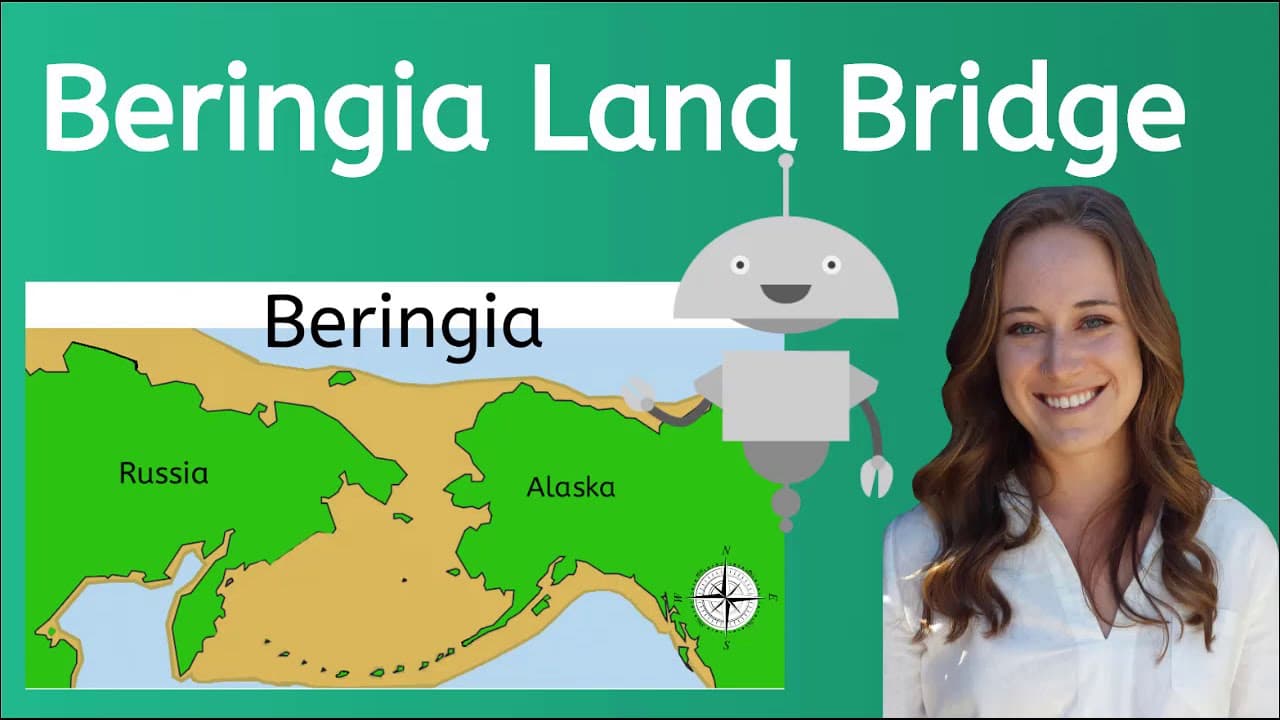
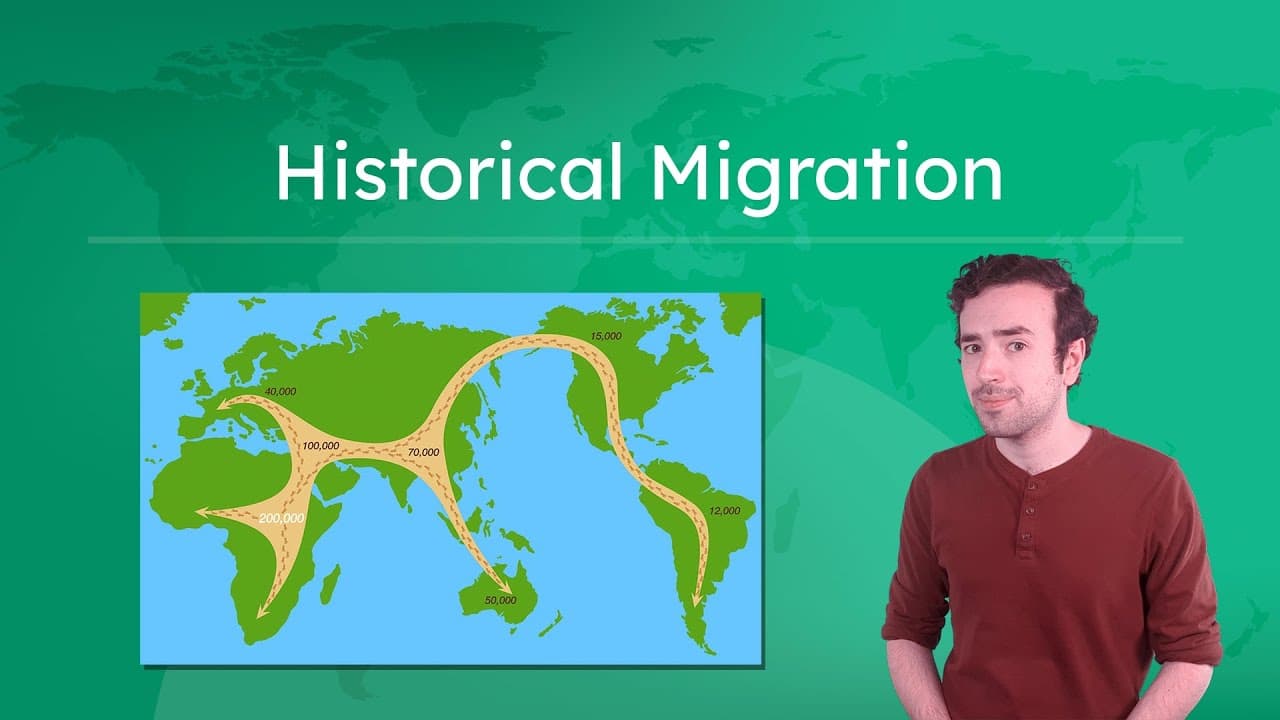
This educational video explores the scientific theory of how the first humans migrated to the Americas via the Beringia Land Bridge. It explains the geographical and climatic conditions of the Ice Age that lowered sea levels, exposing a land connection between present-day Russia and Alaska. The video details the migration routes taken by these early people as they moved through North America down to South America. The content covers key interdisciplinary concepts including geography, earth science, and anthropology. It defines important terms like "migration" and explains the push factors that cause populations to move, such as the search for food, resources, or safety. The video also introduces students to how scientists use evidence to reconstruct the past, specifically looking at how anthropologists use DNA analysis and how archaeologists use artifacts like bronze tools and jade masks to trace human origins. This resource is highly valuable for social studies and history classrooms studying early human civilizations or Native American history. It provides a clear visual representation of complex concepts like changing coastlines and migration patterns. Teachers can use this video to illustrate the intersection of geography and history, demonstrating how physical landscapes shape human movement and settlement patterns.

Miacademy & MiaPrep Learning ChannelMiacademy & MiaPrep Learning Channel

4mins 50s

How Geography Shapes Global Food Security

How Geography Shapes Global Food Security

This educational video explores the complex field of agricultural geography, examining why food insecurity persists in a world that produces enough calories to feed everyone. Host Alizé Carrère guides viewers through the intricate web of historical, political, economic, and environmental factors that determine who has access to food. The narrative moves from local examples of farming to global systems, explaining how colonialism, the Columbian Exchange, and various agricultural revolutions have shaped our modern food landscape. The video covers critical themes including the distinction between subsistence and commercial farming, the shift from polyculture to monoculture, and the impact of the Green Revolution. It delves into the geography of hunger, explaining concepts like food deserts and the difference between food availability and food access. Significant attention is paid to how historical events, such as the triangular trade and colonization, disrupted indigenous food systems and established export-oriented economies that still influence global food distribution today. For educators, this resource serves as a powerful tool to connect geography, history, and economics. It moves beyond simple definitions to show students the systems thinking required to understand global challenges. The video provides excellent opportunities for classroom discussions on food justice, the environmental impacts of industrial agriculture, and the importance of biodiversity. It is particularly useful for units on human geography, economic development, and sustainability.

CrashCourseCrashCourse

11mins 32s

Native American Cultures and Spanish Colonization

Native American Cultures and Spanish Colonization

This high-energy educational video serves as the introductory episode to US History, challenging traditional narratives about pre-Columbian America and early Spanish colonization. Host John Green deconstructs the concept of "primitive" versus "civilized" societies, arguing against the Eurocentric view that Native Americans were backward simply because they lacked specific technologies like the wheel or written language. The video provides a sweeping overview of the diverse and complex Native American cultures that existed before 1492, ranging from the Pueblo peoples of the Southwest to the Iroquois Confederacy in the Northeast, highlighting their sophisticated political structures, religious beliefs, and approaches to property ownership. The narrative transitions to the arrival of the Spanish, detailing their exploration and colonization efforts in Florida and the American Southwest. It covers key figures like Ponce de León and Cabeza de Vaca, the devastating impact of European diseases, and the imposition of the Encomienda system. A significant portion of the video is dedicated to the Pueblo Revolt of 1680, a successful indigenous uprising that forced the Spanish to retreat and subsequently alter their colonial policies. The episode concludes by introducing the "Black Legend"—the idea that the English exaggerated Spanish cruelty to justify their own imperial ambitions—and emphasizes the importance of recognizing historical biases inherent in written records. For educators, this video is an invaluable tool for launching a US History course because it immediately establishes critical thinking habits regarding historical perspective and historiography. It moves beyond rote memorization of explorers' names to explore deep cultural clashes regarding gender roles, religion, and land use. The content is specifically aligned with AP US History (Period 1) frameworks but is accessible to general high school audiences. It provides rich opportunities to discuss how history is constructed, who gets to tell the story, and the complexity of cultural interactions beyond simple conqueror/conquered narratives.

CrashCourseCrashCourse

11mins 20s

The Fish Wars and the Fight for Native American Food Sovereignty

The Fish Wars and the Fight for Native American Food Sovereignty

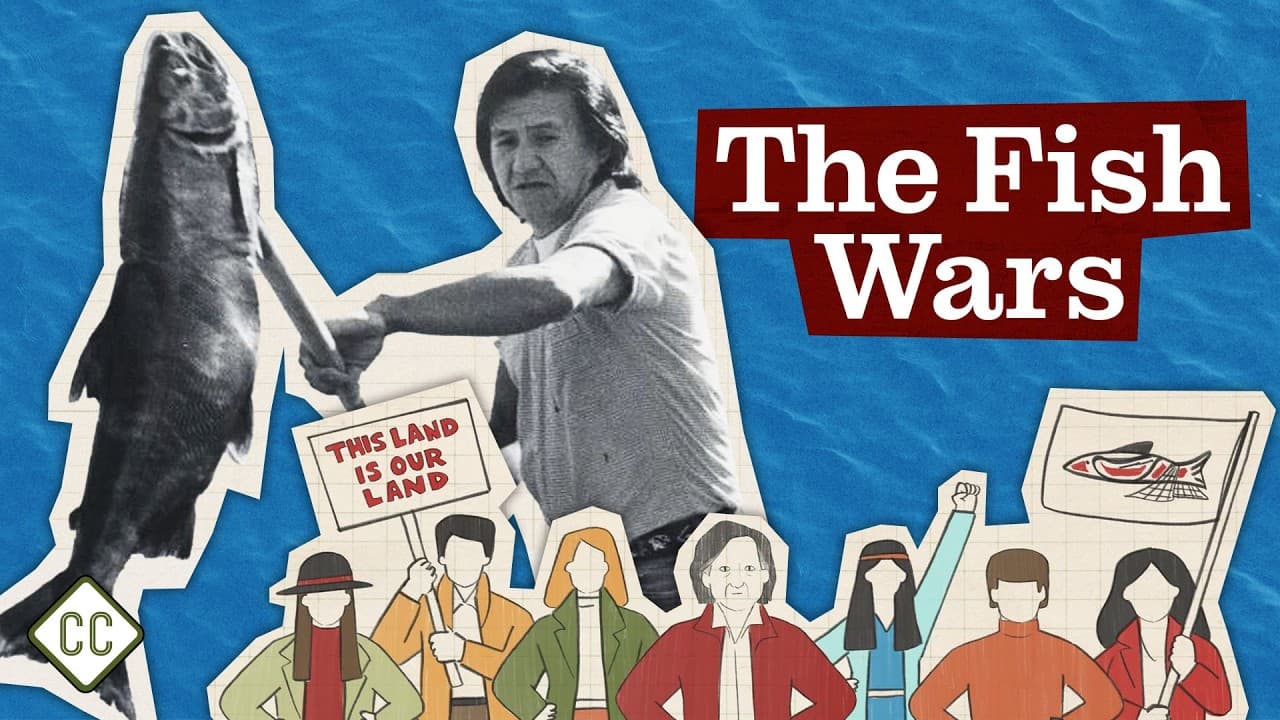
This educational video explores the critical concept of "Food Sovereignty" within Native American history, using the dramatic story of Billy Frank Jr. and the Fish Wars as a central narrative. It details how Native nations in the Pacific Northwest fought to protect their treaty-guaranteed fishing rights against state encroachment, culminating in the landmark 1974 Boldt Decision. The host explains that food sovereignty is not just about nutrition, but about the legal and cultural right of Indigenous peoples to define their own food systems and manage the resources that have sustained them for millennia. The video covers several key historical and cultural themes, including the devastating impact of colonization on Indigenous food sources—most notably the mass slaughter of the buffalo to subjugate the Great Sioux Nation. It also examines the complicated history of frybread, tracing its origins to the rations provided during forced displacements like the Navajo Long Walk, and discussing its dual status today as both a symbol of resilience and a contributor to health disparities. The narrative connects these historical events to modern revitalization efforts, such as the "Three Sisters" agricultural projects and the rise of Indigenous chefs. For educators, this video serves as a powerful interdisciplinary tool connecting American history, civics, environmental science, and health. It provides concrete examples of civil disobedience and legal battles outside the typical Civil Rights Movement curriculum. Teachers can use it to spark discussions about the importance of treaties, the ecological relationship between people and the land, and how historical policies continue to shape modern health and economic realities for Native communities.

CrashCourseCrashCourse

10mins 56s

Defining Heroes and Traitors in American History

Defining Heroes and Traitors in American History

This educational video explores the complex and often subjective definitions of "hero" and "traitor" through three distinct case studies from American history. The narrator challenges students to look beyond simple definitions and consider how historical context, personal values, and perspective shape these labels. The video examines John Adams' controversial defense of British soldiers after the Boston Massacre, Colonel John Chivington's role in the horrific Sand Creek Massacre, and Carry Nation's radical "hatchetations" during the temperance movement. The video delves into deep ethical questions about justice, duty, and morality. It asks students to evaluate whether John Adams was a traitor to the colonial cause or a hero of justice for defending the enemy. It contrasts Chivington's self-proclaimed heroism in protecting settlers with the brutal reality of massacring peaceful Cheyenne and Arapaho people. Finally, it analyzes Carry Nation's crusade against alcohol, asking if her violent methods undermined her virtuous goals. Each segment includes pauses for reflection and specific guiding questions. Teachers can use this video to foster critical thinking and historical analysis skills. It serves as an excellent anchor for lessons on the American Revolution, Native American history, or the Prohibition era. By presenting historical figures who defy easy categorization, the video encourages students to engage with nuance and ambiguity. It is particularly useful for sparking debates about the rule of law, the ethics of war, and the validity of different protest methods.

Miacademy & MiaPrep Learning ChannelMiacademy & MiaPrep Learning Channel

11mins 30s

How to Read a Cultural Landscape in Cities

How to Read a Cultural Landscape in Cities

This educational video takes students on a virtual field trip to explore the concept of "cultural landscapes" through the lens of human geography. Hosted by a guide named Justin, the video uses Flushing Chinatown in Queens, New York, as a primary case study to demonstrate how human culture leaves visible imprints on the physical environment. Viewers learn to "read" a neighborhood by analyzing its built environment, land use patterns, signage, architecture, and cultural markers, revealing deep insights into the values and identity of the people who live there. The video delves into complex geographical concepts such as "sequent occupance"—the notion that successive societies leave their cultural imprints on a place, contributing to the cumulative cultural landscape. It traces the history of Queens from the indigenous Lenape people through European colonization, industrialization, and modern immigration. The lesson then shifts to Istanbul, Turkey, providing a comparative analysis of how history (Byzantine, Ottoman, and modern Turkey) is layered within the architecture of the Hagia Sophia. Ideal for geography and social studies classrooms, this resource transforms abstract definitions into concrete visual examples. It encourages students to become active observers of their own communities, prompting them to look for evidence of history, economy, and culture in their everyday surroundings. The video models critical thinking skills by asking students to make inferences based on visual evidence, making it a strong tool for developing visual literacy and geographical reasoning.

Miacademy & MiaPrep Learning ChannelMiacademy & MiaPrep Learning Channel

11mins 14s

The Power, Resilience, and History of Native American Women

The Power, Resilience, and History of Native American Women

Hosted by Lily Gladstone, this episode of Crash Course Native American History explores the pivotal and diverse roles of Native women, Femmes, and Two-Spirit people from pre-contact times to the present day. It challenges the monolithic view of Native gender roles by highlighting the existence of matriarchal and matrilineal societies, such as the Diné (Navajo), where women hold significant economic and decision-making power. The video details historical figures like the warrior Buffalo Calf Road Woman and the diplomat Jikonsaseh, who helped found the Haudenosaunee Confederacy, illustrating that Native women have always served as leaders, healers, and protectors of their nations. The video also tackles the dark history of colonization and its specific targeting of Indigenous women to destabilize tribal societies. It addresses difficult topics including the imposition of European patriarchal values, the forced sterilization of thousands of Native women in the 1970s, and the ongoing crisis of Missing and Murdered Indigenous Women (MMIW). The narrative explains how settler colonialism disrupted traditional gender balances and how systemic failures in law enforcement continue to impact Native communities today. Despite these challenges, the video emphasizes resilience and modern activism. It profiles influential leaders like Elouise Cobell, who successfully sued the U.S. government for billions in mismanagement of funds, and Deb Haaland, the first Native American cabinet secretary. For the classroom, this resource is invaluable for teaching about gender studies, civil rights, and the complex legal and social history of Native Americans. It provides students with a nuanced understanding of how historical trauma and contemporary triumph coexist in Indigenous communities.

CrashCourseCrashCourse

13mins 42s

Exploring Colonial America: Quakers, Rebellion, and Women's Roles

Exploring Colonial America: Quakers, Rebellion, and Women's Roles

In this installment of Crash Course US History, John Green explores the complex landscape of the American colonies beyond the typical stories of Jamestown and Plymouth. The video delves into the diverse origins of colonies like New Amsterdam (later New York) and Pennsylvania, highlighting the role of the Dutch and Quakers in shaping early American commerce and religious tolerance. It also examines the darker aspects of colonial expansion, including the 'Walking Purchase' fraud against the Lenape Indians and the establishment of a slavery-based economy in South Carolina.

CrashCourseCrashCourse

11mins 38s

How Termination and Relocation Policies Threatened Native Sovereignty

How Termination and Relocation Policies Threatened Native Sovereignty

This episode of Crash Course Native American History explores the tumultuous "Relocation and Termination Era" (1953-1968), a period when the United States government sought to end its treaty obligations to Native nations. Host Che Jim explains how post-WWII economic pressures led to policies designed to assimilate Native Americans by moving them to urban centers and legally dissolving tribal governments. The video details the devastating economic and cultural impacts of these policies, specifically using the Menominee tribe of Wisconsin as a case study. The narrative examines the specifics of the Indian Relocation Act and the Termination Act, highlighting the gap between the government's promises of "freedom" and equality versus the reality of poverty, loss of land, and discrimination. It illustrates how tribes like the Menominee, who were economically self-sufficient, were targeted and subsequently plunged into financial ruin when their federal status was revoked. The video also touches on the experiences of those who moved to cities, facing systemic barriers and isolation. Critically, the video concludes with a story of resilience and civic action. It details how the Menominee, led by figures like Ada Deer and the organization DRUMS, successfully fought to reverse these policies and achieve the restoration of their tribal status in 1973. This video is an excellent resource for teaching about tribal sovereignty, the impacts of federal policy on marginalized groups, and the power of political organizing to effect change.

CrashCourseCrashCourse

12mins 8s

From Grave Robbing to Repatriation: A History of Native American Archaeology

From Grave Robbing to Repatriation: A History of Native American Archaeology

This episode of Crash Course Native American History explores the complex and often dark relationship between the fields of anthropology and archaeology and Native American communities. Host Che Jim guides viewers through the history of how early scientific curiosity led to the widespread unethical treatment of Indigenous peoples, including the looting of graves, the collection of human remains for museums, and the pseudo-scientific racism used to justify these actions. The video highlights specific historical figures like Thomas Jefferson and Franz Boas, illustrating how even renowned thinkers contributed to these harmful practices under the guise of 'salvage anthropology.' The narrative shifts to the Civil Rights era, focusing on the American Indian Movement (AIM) and the fight for legal protections. It details key legislation such as the National Historic Preservation Act and the landmark Native American Graves Protection and Repatriation Act (NAGPRA) of 1990. The video explains the significance of repatriation—returning ancestors and artifacts to their tribes—and the ongoing challenges tribes face in reclaiming their heritage from institutions. Finally, the video concludes with a look at modern, decolonized archaeology. It contrasts the extractive methods of the past with collaborative projects like the excavation of the Ozette site with the Makah tribe. By showcasing how Indigenous knowledge and scientific methods can work together, the video offers a hopeful perspective on the future of the field, making it an excellent resource for discussing ethics in science, civil rights history, and the importance of cultural sovereignty.

CrashCourseCrashCourse

11mins 37s

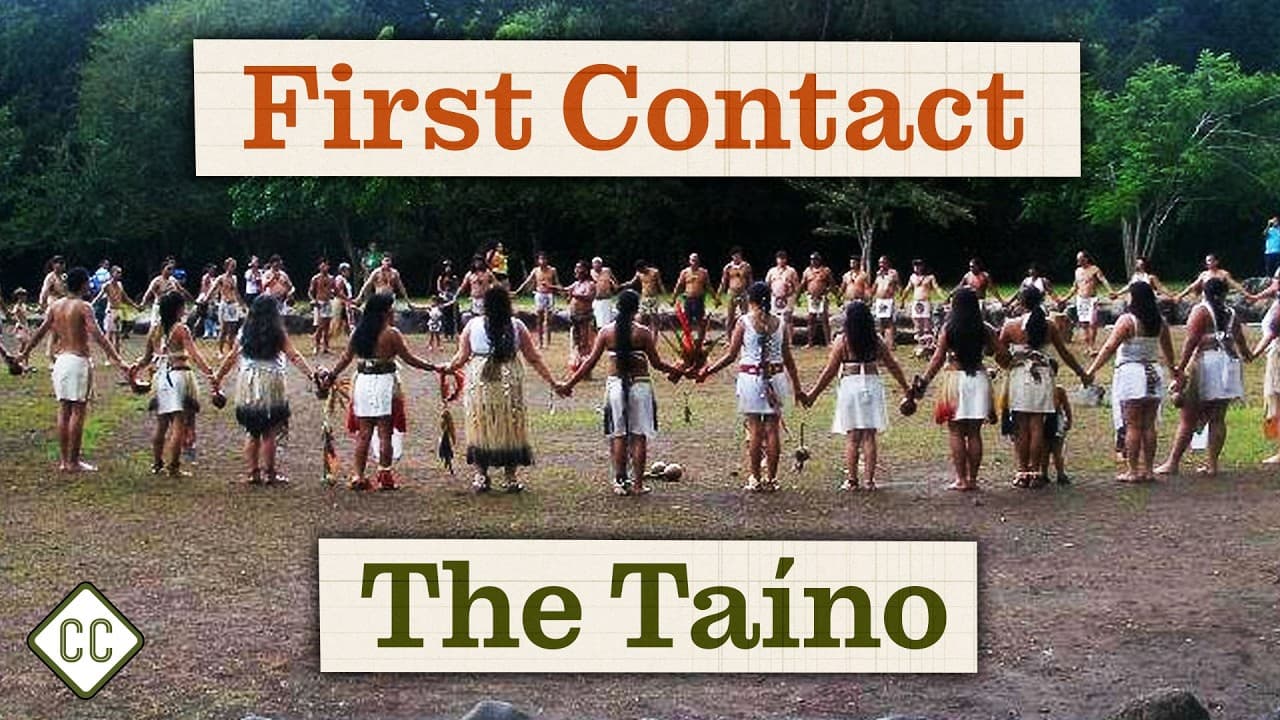
The True History of First Contact and Native American Resistance

The True History of First Contact and Native American Resistance

This episode of Crash Course Native American History challenges the traditional narrative of "First Contact" between Indigenous peoples and Europeans. Hosted by Che Jim, the video deconstructs the simplified story of Christopher Columbus's 1492 voyage, exposing the misconceptions surrounding his discovery and highlighting the devastating impact of colonization, including disease, enslavement, and genocide. It moves beyond the single moment of contact to explore a centuries-long process of interaction, resistance, and survival. The video explores complex historical themes such as the Doctrine of Discovery, which provided the legal justification for land seizure, and the "virgin soil" epidemic myth, arguing that disease was only one factor alongside war and starvation. It highlights specific events like the California Genocide during the Gold Rush, the strategic alliances formed by tribes during the colonial wars, and the legal battles of the Lakota Sioux regarding the Black Hills. The narrative emphasizes Indigenous agency, showing that Native peoples were not merely passive victims but active participants who utilized diplomacy, trade, and warfare to survive. For educators, this resource provides a critical lens for teaching U.S. History. It offers opportunities to analyze primary sources like Papal Bulls and government decrees, discuss the long-term impacts of historical labels (such as "extinct" populations), and connect history to modern science through the discussion of Taino DNA evidence. It is an essential tool for helping students understand the nuances of colonization and the resilience of Native American cultures.

CrashCourseCrashCourse

12mins 9s

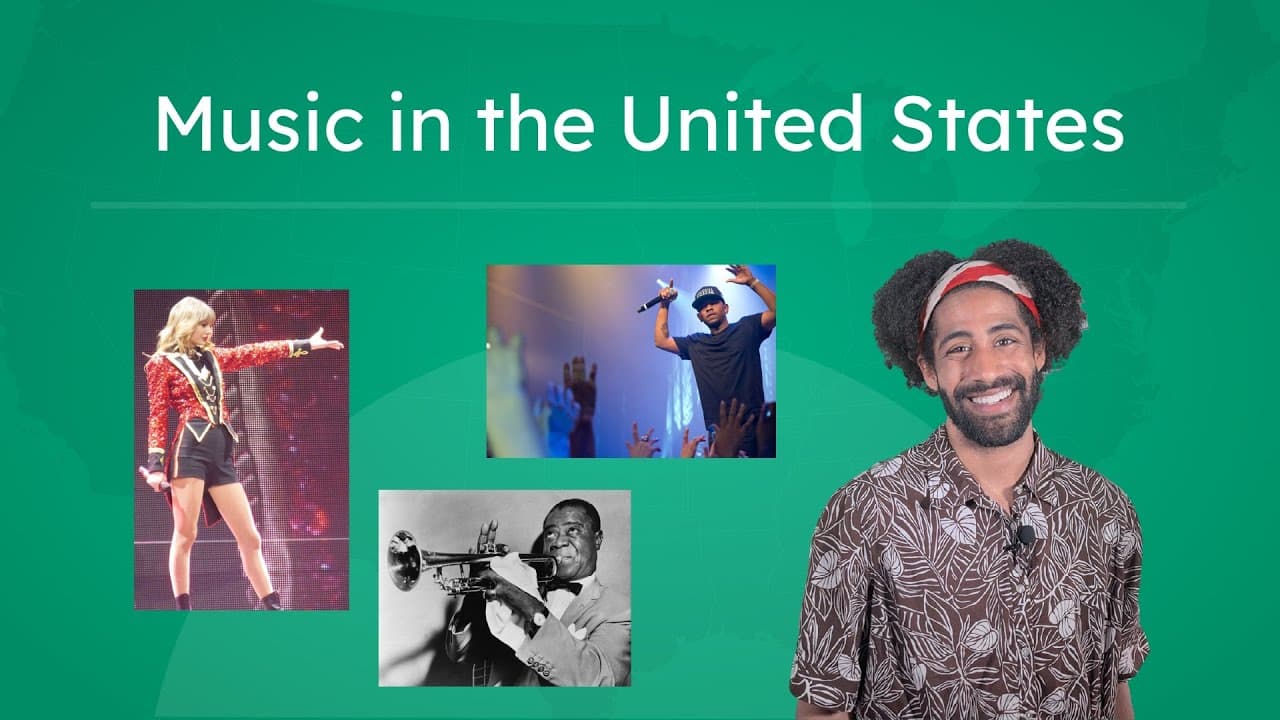
Exploring the Roots and Revolution of American Music

Exploring the Roots and Revolution of American Music

This engaging educational video takes students on a journey through the history and evolution of American music, framed as a virtual music festival called "Miapalooza." Hosted by an energetic narrator, the lesson explores how diverse cultural influences—particularly Indigenous, African American, and European traditions—blended to create uniquely American genres. The video covers key styles including Indigenous music, Folk, Country, Blues, Jazz, Rock and Roll, and Hip-Hop, while also discussing the commercial history of Tin Pan Alley. The content highlights the specific origins and characteristics of each genre, providing audio clips and historical context for famous artists like Woody Guthrie, Bessie Smith, Duke Ellington, and Chuck Berry. It explicitly connects musical evolution to broader historical themes, such as the African American experience during slavery giving rise to Spirituals and Blues, and the technological shifts from sheet music to recorded sound. The video emphasizes how marginalized groups, particularly African Americans, have had the most profound impact on America's global musical identity. For educators, this video serves as an excellent cross-curricular tool linking Social Studies, US History, and Music Appreciation. It provides structured pause points with guiding questions, making it ready-made for classroom interaction. The video helps students understand cultural synthesis, the geography of cultural movements (e.g., Mississippi Delta to Chicago), and how art reflects the social realities of its time.
Miacademy & MiaPrep Learning ChannelMiacademy & MiaPrep Learning Channel

13mins 14s

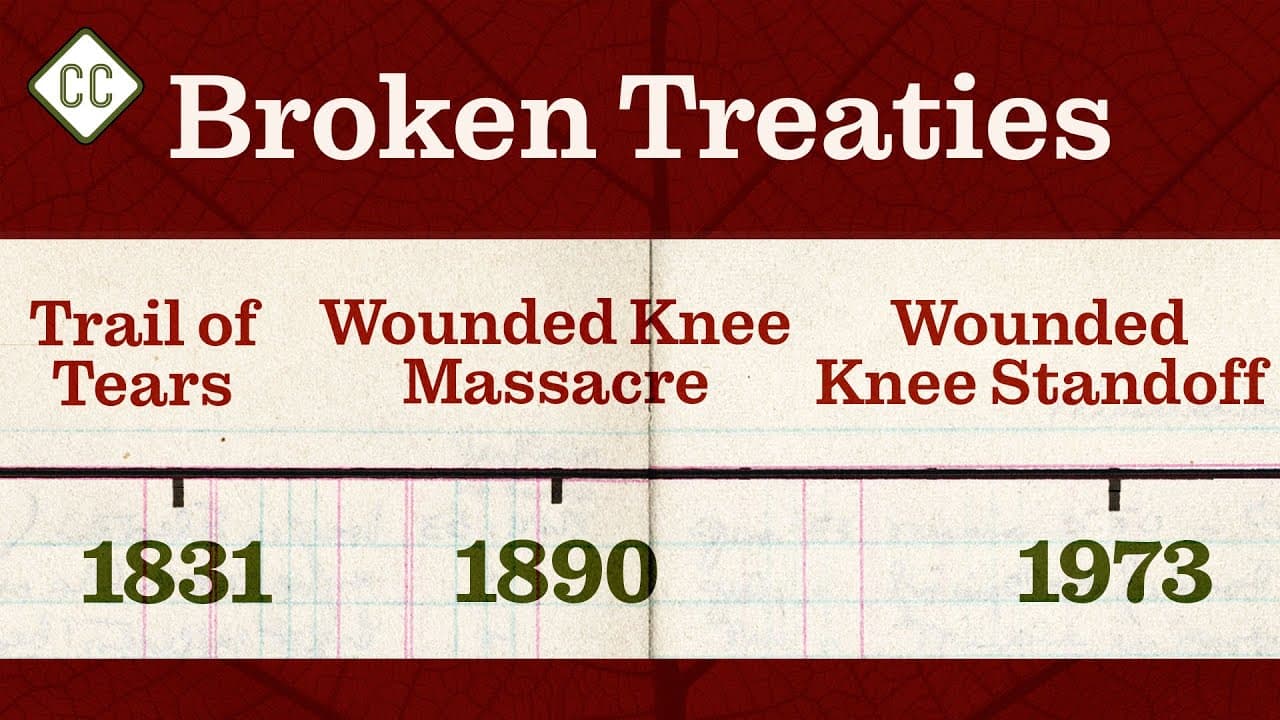
How Broken Treaties Shaped Native American History

How Broken Treaties Shaped Native American History

This educational video from Crash Course Native American History provides a comprehensive overview of the complex history of treaties and reservations in the United States. Host Che Jim guides viewers through the timeline of Indigenous-U.S. relations, starting with the 1973 Wounded Knee Occupation and tracing its roots back to early colonial interactions. The video explains the legal and cultural misunderstandings that plagued early land deals, such as the sale of Manhattan, and details how the U.S. government shifted strategies from diplomatic treaties to forced removal and eventually to the reservation system. The content explores several critical eras: the Treaty Era, the Removal Era (including the Trail of Tears), and the Reservation Era. It highlights key legislative turning points like the Indian Removal Act of 1830 and the Indian Appropriations Act of 1871, which ended the practice of treaty-making. The narrative emphasizes the consistent pattern of broken promises and the resilience of Native nations, featuring historical figures like Red Cloud, John Ross, and Sitting Bull. For educators, this video serves as an essential resource for teaching U.S. History, Civics, and Government. It provides a nuanced look at Westward Expansion from an Indigenous perspective, challenging standard narratives about land acquisition. The video is particularly useful for helping students understand the legal frameworks behind tribal sovereignty, the concept of land ownership differences between cultures, and the direct line between historical policies and modern Indigenous activism like the Standing Rock protests.

CrashCourseCrashCourse

11mins 8s

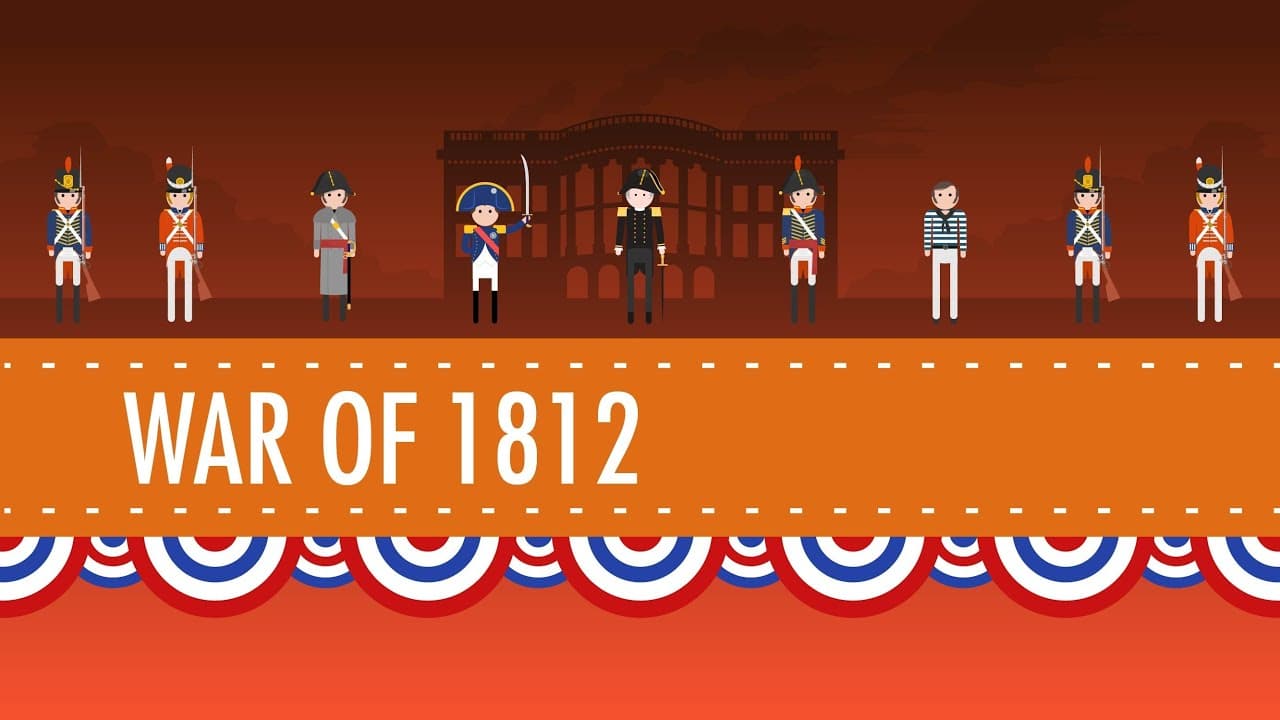
Understanding the War of 1812 and its Consequences

Understanding the War of 1812 and its Consequences

This fast-paced educational video explores the complexities, causes, and consequences of the War of 1812, often cited as America's first declared war. Host John Green breaks down the primary motivations behind the conflict, ranging from British impressment of American sailors and trade restrictions to the desire for Canadian land and the expansion into Native American territories. The video challenges the traditional narrative by highlighting that while the war ended in a military stalemate between the U.S. and Britain, it had devastating and permanent consequences for Native American tribes.

CrashCourseCrashCourse

12mins 43s

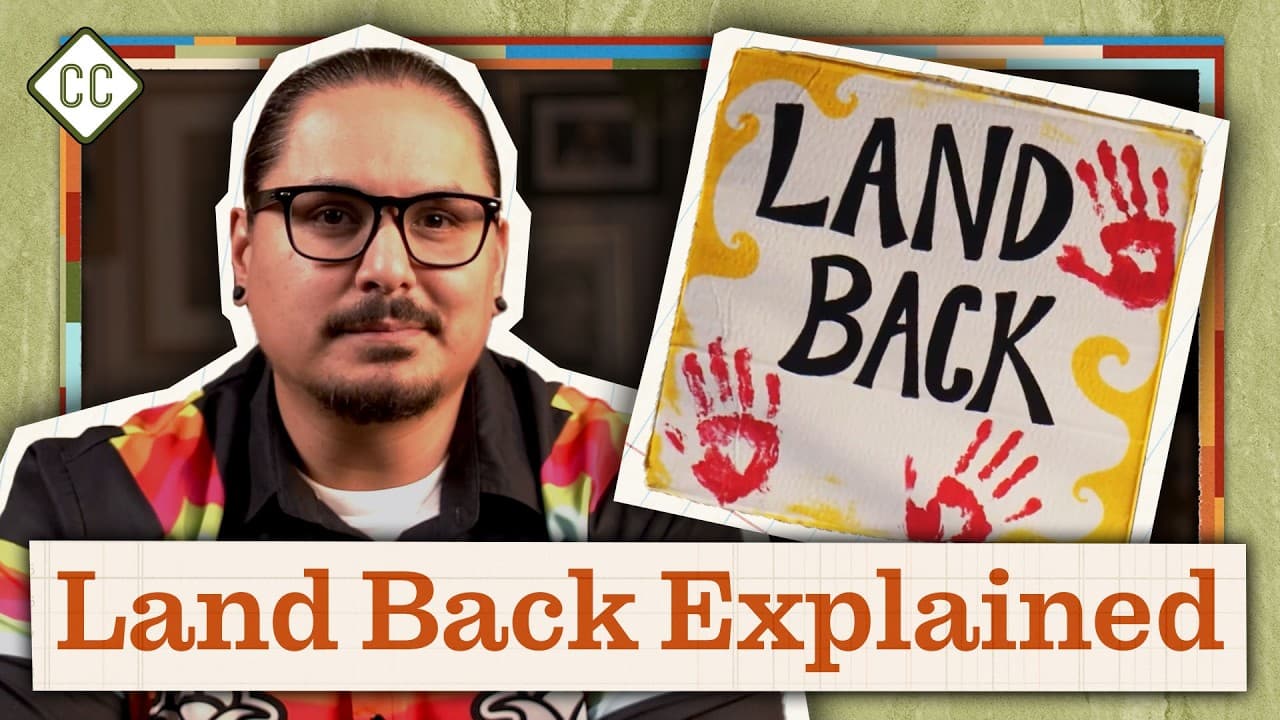
Reclaiming Sovereignty: The Land Back Movement Explained

Reclaiming Sovereignty: The Land Back Movement Explained

This episode of Crash Course Native American History explores the "Land Back" movement, a decentralized effort by Indigenous peoples to reclaim authority over stolen land and resources. Hosted by Che Jim, the video breaks down the concept beyond slogans and hashtags, defining it as a multifaceted approach to asserting tribal sovereignty. It examines various methods used to achieve these goals, ranging from legal battles and government settlements to voluntary "settler rent" and direct action protests like blockades.

CrashCourseCrashCourse

10mins 19s

How the Relocation Era Shaped Urban Native Identity

How the Relocation Era Shaped Urban Native Identity

This episode of Crash Course Native American History explores the complex legacy of the Relocation and Termination Era (1950s-1960s). It details the U.S. government's attempt to assimilate Native Americans by moving them from reservations to urban centers through the Bureau of Indian Affairs' relocation program. The video explains the motivations behind these policies, led by figures like Dillon S. Myer, and contrasts the government's promises of prosperity with the harsh realities of poverty and discrimination that many Native people faced in cities like Chicago, Denver, and Los Angeles. The video delves into the unintended consequences of these policies, specifically the rise of "Pan-Indianism" and the formation of intertribal activist groups like the American Indian Movement (AIM). It examines the demographic shifts that have led to a significant urban Native population today and discusses the challenges of census data and identity. The narrative highlights the resilience of Native communities who, instead of disappearing, created new support systems, cultural centers, and housing projects like Little Earth in Minneapolis. For educators, this video serves as a crucial resource for teaching modern Native American history, Civil Rights, and sociology. It challenges the stereotype that Native people only live on reservations and provides a nuanced look at government policy, identity politics, and community organizing. It connects historical events to contemporary issues, such as underfunding in urban Indian health services and the complexities of tribal enrollment versus self-identification on the U.S. Census.

CrashCourseCrashCourse

11mins 16s

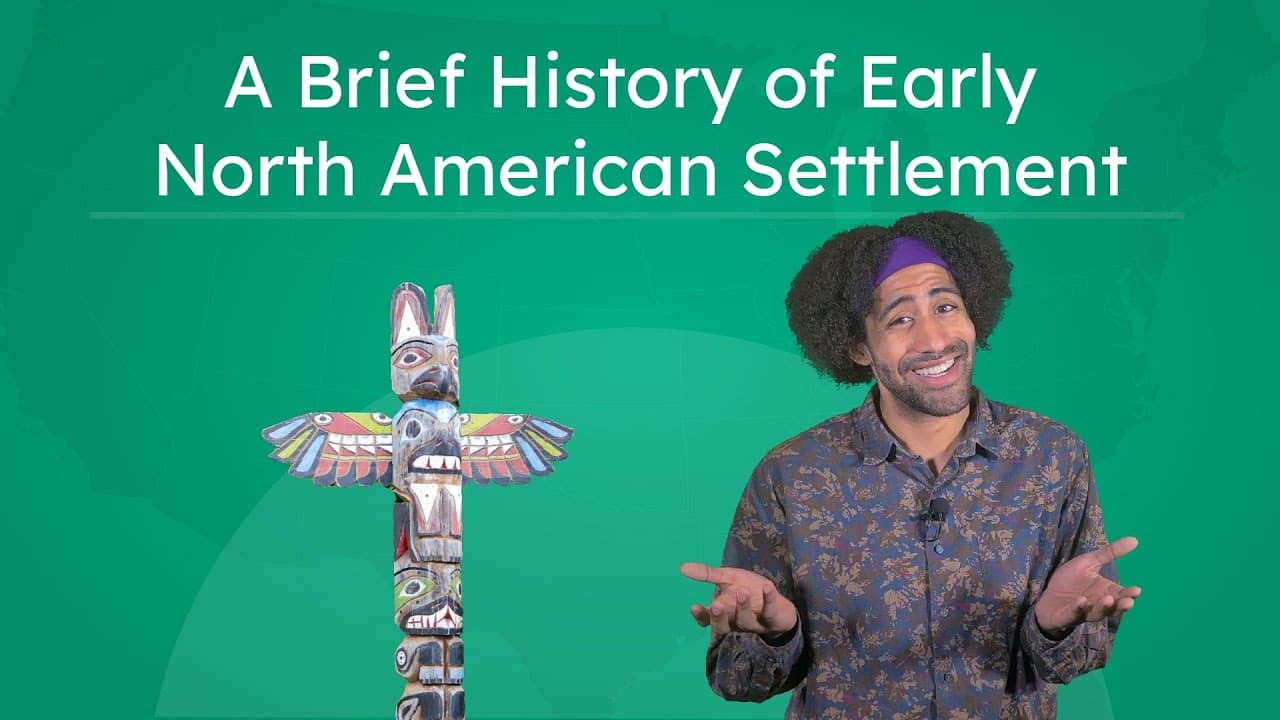
Exploring Early North American Settlement and Indigenous Cultures

Exploring Early North American Settlement and Indigenous Cultures

This educational video provides a comprehensive overview of early North American settlement, tracing the migration of the first peoples across the Beringia land bridge through various developmental periods including the Paleoindian, Archaic, Woodland, and Mississippian eras. It explores how geography influenced the development of distinct cultures across different regions, from the Arctic Inuit to the Southwest Pueblo peoples, highlighting specific adaptations in shelter, food sources, and social structures. Key themes include human migration, environmental adaptation, and cultural diversity. The video breaks down the timeline of pre-contact history, distinguishing between nomadic bands and complex tribal societies. It also addresses important sociological concepts, such as the distinction between a "tribe" and a "band," and provides a nuanced discussion on the terminology of "Indigenous Peoples" versus "Native Americans," emphasizing the importance of using specific self-identifiers. For educators, this resource serves as an excellent introduction to pre-Columbian US History. It encourages critical thinking by asking students to consider the utility and limitations of historical generalizations. The video includes built-in pause points with guiding questions, making it ready-to-use for checking comprehension and sparking classroom discussions about identity, geography, and the deep history of the American continent.

Miacademy & MiaPrep Learning ChannelMiacademy & MiaPrep Learning Channel

10mins 26s

Exploring the History and Forms of Democracy

Exploring the History and Forms of Democracy

This educational video provides a comprehensive overview of the history, definitions, and forms of democracy. It begins by tracing the roots of democratic government back to Ancient Athens, introducing key historical figures like Cleisthenes and explaining foundational Greek concepts such as the Boule and Ecclesia. The narration breaks down the etymology of the word "democracy" and connects ancient practices to modern civic responsibilities. The core of the video analyzes three distinct forms of democracy: Direct, Pluralist, and Representative. Using relatable analogies like a family vacation planning session, it explains how direct democracy functions versus the efficiency and challenges of representative systems. It also explores the concept of pluralism, where various interest groups compete to influence policy, and contrasts this with authoritarian or single-view systems. For educators, this resource serves as an excellent primer for Civics and Government units. It moves beyond simple definitions to explore the "how" and "why" of government structures. The video emphasizes the critical role of the citizen, encouraging students not just to understand the system, but to actively participate through voting, debating, and staying informed. It is particularly useful for introducing the concept of a Republic and the balance between government efficiency and individual accountability.

Miacademy & MiaPrep Learning ChannelMiacademy & MiaPrep Learning Channel

11mins 24s

Why the Bronze Age Civilizations Collapsed

Why the Bronze Age Civilizations Collapsed

In this episode of Crash Course World History, John Green explores the mysterious collapse of the Bronze Age civilizations in the Eastern Mediterranean around 1200 BCE. The video challenges the traditional narrative of separate, isolated civilizations by demonstrating how Egypt, the Hittites, the Mycenaeans, and others formed a highly interconnected international system defined by trade, diplomacy, and war. It examines the evidence for this interdependence, including the famous Uluburun shipwreck and the Amarna Letters.

CrashCourseCrashCourse

12mins 58s

Life and Government in Ancient Sparta

Life and Government in Ancient Sparta

This engaging educational video transports students back to Ancient Greece to explore the unique and rigorous society of Sparta. Unlike its neighbor Athens, which focused on arts and philosophy, Sparta is presented as a military-centric polis where life revolved around discipline, strength, and service to the state. The video breaks down the complex Spartan political structure, including its dual kingship and the powerful Ephors, while also detailing the rigid social hierarchy of Citizens, Perioikoi, and Helots. Key themes include the contrast between individual freedom and collective duty, the role of geography in shaping political alliances, and the cultural prioritization of military readiness. The narrative covers the intense upbringing of Spartan children, the formation of the Peloponnesian League, and the eventual conflict with Athens. Through animated characters and historical imagery, complex concepts like oligarchy and social stratification are made accessible. For educators, this video serves as an excellent resource for comparing Ancient Greek city-states. It provides clear definitions of specific historical terms and offers natural pause points for discussions about government types and social values. The content connects well with lessons on the Peloponnesian War, ancient political systems, and the diverse cultures within the ancient Mediterranean world.

Miacademy & MiaPrep Learning ChannelMiacademy & MiaPrep Learning Channel

9mins

How History Defined Europe as a Functional Region

How History Defined Europe as a Functional Region

This educational video explores the concept of Europe as a "functional region," examining how its boundaries and influence have been defined not just by physical geography, but by historical connections, trade networks, and cultural legacies. The narrator guides viewers through a chronological journey, starting with the Greco-Roman era and moving through the Crusades, the Age of Exploration, the Scramble for Africa, the Cold War, and finally the modern European Union. The video explains how these events created networks of interaction that extended Europe's "functional" borders far beyond its physical continent. Key themes include the difference between formal and functional regions, the lasting impact of Roman infrastructure and language, the spread of religion (Christianity and Islam), the geopolitical consequences of colonization, and the role of economic integration in the modern era. It specifically addresses how political ideologies during the Cold War divided the continent into two distinct functional zones and how the EU has since worked to reintegrate them through trade and a common currency. For educators, this video serves as an excellent bridge between geography and history, demonstrating how spatial relationships change over time. It provides concrete examples of abstract geographic concepts like "functional regions" and "spheres of influence." Teachers can use this resource to help students understand complex topics such as why French Guiana is part of Europe, how the Roman Empire laid the groundwork for modern Western culture, and the economic rationale behind the European Union.
Miacademy & MiaPrep Learning ChannelMiacademy & MiaPrep Learning Channel

9mins 54s

Why Democracy Feels Broken: Models, Critiques, and Theory

Why Democracy Feels Broken: Models, Critiques, and Theory

This educational video from Crash Course Political Theory explores the complex nature of democracy, addressing the common modern sentiment that democratic systems are "broken." Hosted by Dr. Ellie Anderson, the video investigates whether dissatisfaction with democracy is a new phenomenon or an inherent feature of the system. It traces critiques of democracy back to ancient philosophers like Plato, who worried about the chaos of "unmixed freedom," and contrasts historical Athenian practices with the egalitarian decision-making of indigenous hunter-gatherer societies.

CrashCourseCrashCourse

12mins 5s

How War Shaped Civilization and State Building

How War Shaped Civilization and State Building

In this thought-provoking episode of Crash Course World History, John Green challenges the conventional wisdom that war is exclusively destructive. While acknowledging the tragic human cost of conflict, the video explores the counter-intuitive historical theory that war—or the threat of it—was a primary driver in the development of civilization itself. Green argues that the need for defense against raids may have spurred humans to congregate in walled cities even before the full development of agriculture, suggesting that war might be the mother of invention for the state itself. The video covers a sweeping timeline, moving from ancient hunter-gatherer societies to the Zulu Kingdom, the Roman Empire, and the Gunpowder Revolution of the early modern era. Key themes include the relationship between military technology and state bureaucracy (how cannons required taxes), the shift from citizen militias to mercenaries, and the eventual transition from conquest-based economies to trade-based economies. The episode examines how the rising cost of war and the mutual benefits of global trade have, in modern times, made large-scale conflict between major powers less economically viable. For educators, this video is an excellent tool for teaching AP World History concepts regarding state formation and the consolidation of power. It models high-level historical thinking by asking students to consider complex causality and the unintended consequences of historical events. It is particularly useful for units on the rise of empires, the development of political systems, or discussions about the economic motivations behind historical conflicts versus modern diplomacy.

CrashCourseCrashCourse

12mins 48s

How Nationalism Shaped 19th Century Europe

How Nationalism Shaped 19th Century Europe

This educational video provides a comprehensive overview of nationalism in 19th-century Europe, using an accessible analogy of a college intramural sports team to explain complex political concepts. It explores how a shared sense of identity can act as a double-edged sword, serving as both a unifying force for scattered principalities and a divisive tool that tears multi-ethnic empires apart. The narrative covers three specific types of nationalist movements: unification, separation, and state-building, using historical examples like the formation of Germany and Italy, the Greek revolt against the Ottomans, and the shifting dynamics of the Austrian and Russian Empires. The video delves into key historical events, including the Austro-Prussian War, the Greek War of Independence, and the policy of Russification. It candidly addresses the darker side of nationalism, including the "us versus them" mentality that fueled ethnic cleansing, such as the Armenian Genocide, and eventually set the stage for World War I. By contrasting the rise of democratic self-rule with the dangers of persecution and authoritarianism, the content helps students understand the nuances of political ideology. For educators, this resource serves as an excellent anchor for World History units on the 19th century or political science lessons on ideology. It effectively simplifies abstract concepts through clear definitions, maps, and cause-and-effect analysis. The built-in guiding questions and pause points make it ready-made for interactive classroom viewing, encouraging students to weigh the benefits of national unity against the costs of exclusion and conflict.

Miacademy & MiaPrep Learning ChannelMiacademy & MiaPrep Learning Channel

14mins 18s

The Persians and Greeks: Comparing Empires and Democracies

The Persians and Greeks: Comparing Empires and Democracies

In this episode of Crash Course World History, John Green challenges the traditional Western narrative that depicts the Persian Wars as a simple struggle between the 'good, democratic' Greeks and the 'bad, totalitarian' Persians. He explores the vast, efficient, and relatively tolerant Persian Empire under Cyrus and Darius, contrasting it with the fragmented, slave-dependent Greek city-states. The video dissects the concept of historical bias, particularly through the lens of the Greek historian Herodotus, often called the 'Father of History' (and the 'Father of Lies'). Key themes include the complexities of ancient governance, the definition of freedom versus security, and the origins of political realism. The video delves into the Persian administrative structure, Zoroastrianism, and their ban on slavery, while juxtaposing this with the Athenian 'Golden Age,' which produced incredible art and philosophy but was underpinned by slavery, the exclusion of women, and imperialist aggression towards other Greek states. The darker side of Athenian democracy is highlighted through the Melian Dialogue during the Peloponnesian War. For educators, this video is an excellent tool for teaching students how to critically analyze historical sources and question received wisdom. It provides a nuanced view of the ancient world that moves beyond binary moral judgments. Classroom applications include debates on the merits of different political systems, discussions on the role of bias in history, and ethical evaluations of the phrase 'the strong do what they can and the weak suffer what they must' in the context of international relations.

CrashCourseCrashCourse

11mins 39s

How Weather and Climate Shape Our Lives

How Weather and Climate Shape Our Lives

This engaging educational video explores the fundamental differences between weather and climate, using clear analogies and real-world examples to distinguish between short-term atmospheric conditions and long-term patterns. Hosted by a narrator named Brian alongside a robot character, the video bridges the gap between Earth science and social studies by examining how these environmental factors have influenced human history, mythology, and daily life. From ancient civilizations praying to weather gods to modern meteorology, the content provides a holistic view of how humans interact with their environment. Key themes include the scientific definitions of weather and climate, the specific factors that influence climate (such as latitude, altitude, and terrain), and the profound impact these forces have on human culture. The video specifically highlights how regional climates dictate food sources (like rice in Vietnam versus cactus in the Sonoran Desert) and architectural styles (igloos in the Arctic versus thatched huts in Africa). It also touches upon human adaptation and the concept of geographic diversity leading to cultural diversity. For educators, this video is a versatile tool that connects science standards regarding Earth's systems with geography and history standards. It features built-in pause points with reflection questions, making it ready-made for interactive classroom viewing. The clear distinction made between "what you wear today" (weather) versus "what is in your closet" (climate) offers a memorable hook for students to grasp complex meteorological concepts.

Miacademy & MiaPrep Learning ChannelMiacademy & MiaPrep Learning Channel

7mins 59s

Introduction to Geography: From Ancient Maps to Modern Satellites

Introduction to Geography: From Ancient Maps to Modern Satellites

This engaging educational video introduces students to the study of geography, framing it as an expedition to understand our "wondrous and diverse" world. It begins by defining geography beyond simple textbook definitions, encouraging viewers to see it as a way to know, love, and care for the planet. The narrative transitions from the perspective of early humans facing an unknown world to the sophisticated methods used today, effectively bridging the gap between ancient curiosity and modern science. Key themes include the history of geographic thought, highlighting Eratosthenes' incredible calculation of the Earth's circumference using simple geometry and shadows. The video also explores the evolution of geographic tools, contrasting ancient travel-based data collection with modern technologies like Sonar, Satellites, GPS, and GIS (Geographic Information Systems). It emphasizes that while tools change, the fundamental human drive to map and understand our surroundings remains the same. For educators, this video serves as an excellent introduction to a geography unit or a social studies course. It provides concrete examples of how geography intersects with math (geometry), history, and environmental science. The built-in pause points and reflection questions make it an interactive tool for the classroom, prompting students to consider how geographic data is used for resource management, conservation, and urban planning in the real world.
Miacademy & MiaPrep Learning ChannelMiacademy & MiaPrep Learning Channel

10mins 12s

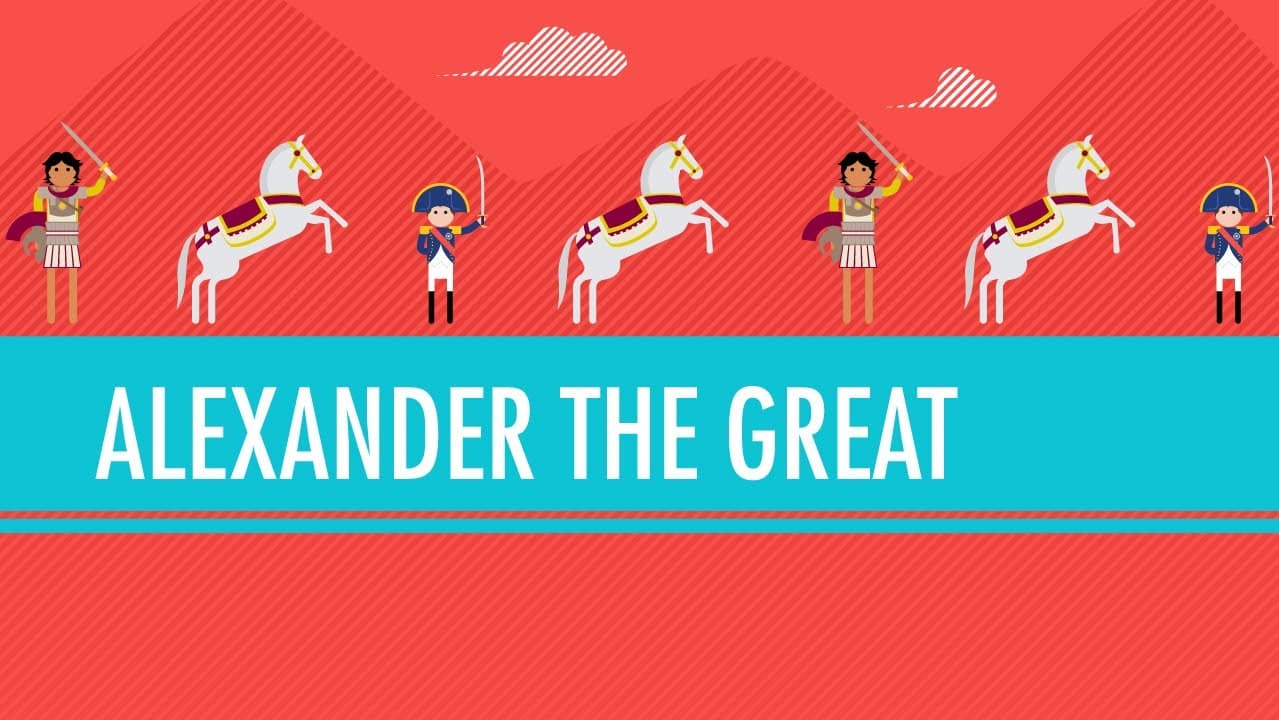
The Legend and Legacy of Alexander the Great

The Legend and Legacy of Alexander the Great

In this fast-paced and humorous installment of Crash Course World History, John Green explores the life, death, and enduring legacy of Alexander the Great. Rather than a simple biography, the video uses Alexander's story to interrogate the concept of "greatness" itself, comparing historical fame to modern celebrity culture. Green challenges the traditional "Great Man" theory of history, asking whether individuals shape history or if history shapes individuals, while covering the vast expansion of the Macedonian empire and the subsequent Hellenistic period. The video breaks down Alexander's significance through three distinct lenses: his military accomplishments (conquering the Persian Empire), his historical impact (spreading Greek culture and language, known as Hellenism), and his legend (the myths that surrounded him). It covers key historical figures like Philip II, King Darius, and Napoleon, and introduces concepts like absolute monarchy and the fragmentation of Alexander's empire into the Antigonid, Ptolemaic, and Seleucid kingdoms. For educators, this video is an excellent tool for moving students beyond rote memorization of dates and battles into higher-level historiographical thinking. It provides a perfect launching pad for discussions about how history is written, who gets remembered, and the biases inherent in historical narratives—specifically addressing the erasure of women in historical texts through an "Open Letter" segment. The video's modern analogies help make abstract concepts of legacy and fame relatable to high school students.

CrashCourseCrashCourse

11mins 2s

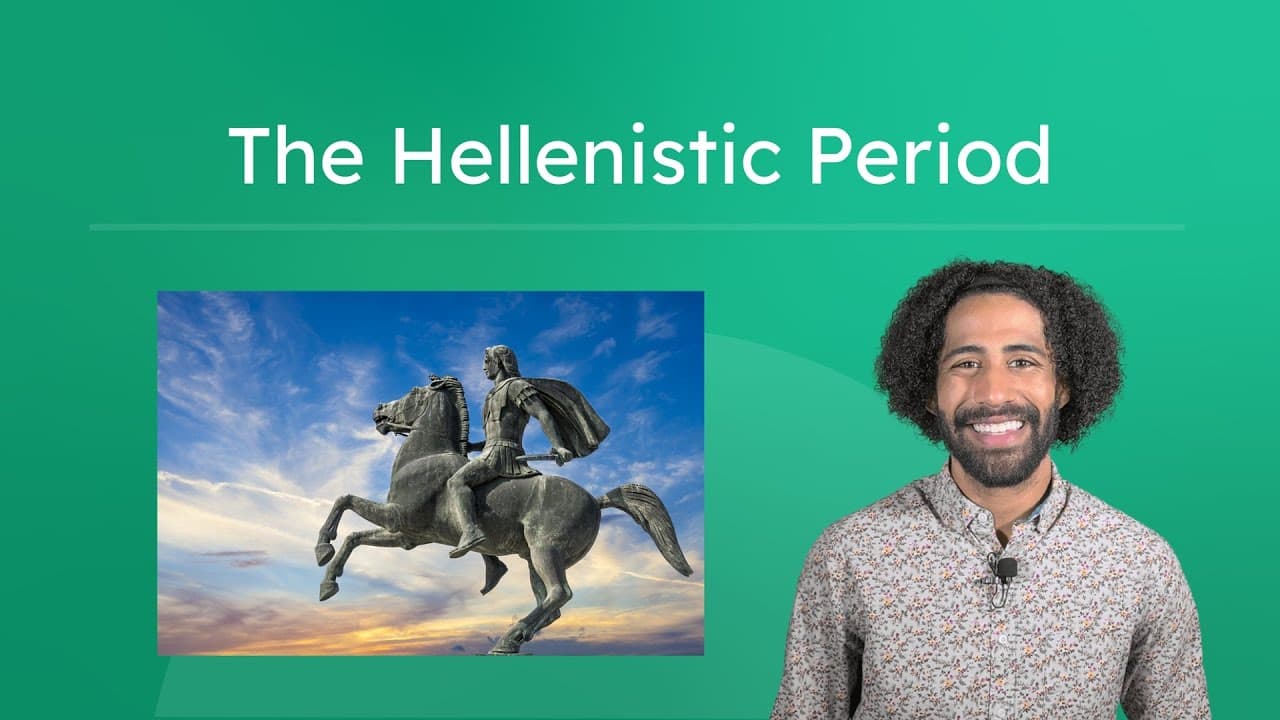
How Alexander the Great Changed the World

How Alexander the Great Changed the World

This educational video provides a comprehensive overview of the life and legacy of Alexander the Great, one of history's most significant military leaders. It traces his journey from a young prince in Macedonia, tutored by Aristotle, to the conqueror of a vast empire stretching from Greece to India. The narrative details his education, his ascent to the throne after King Philip's assassination, and the specific military tactics—like the phalanx and cavalry—that allowed him to defeat the massive Persian Empire.

Miacademy & MiaPrep Learning ChannelMiacademy & MiaPrep Learning Channel

8mins 53s

Exploring Citizenship and the Rise of the Nation-State

Exploring Citizenship and the Rise of the Nation-State

This educational video provides a comprehensive overview of two fundamental political concepts: citizenship and the nation-state. It explores the relationship between individuals and their government, defining citizenship not just as a legal status but as a collection of rights, privileges, and responsibilities. The narration breaks down complex political science terminology into accessible definitions, explaining how personal identity connects to broader local, state, and national communities. The video traces the historical evolution of these concepts, starting from the Greek city-states (polis) and Roman civic virtue, through the religious conflicts of the Thirty Years' War, to the Peace of Westphalia which established modern sovereignty. It distinguishes between the general definition of a nation-state based on shared ethnicity and culture, and the unique political culture that defines American national identity amidst its diversity. Ideal for Civics, Government, and World History classes, this resource helps students understand the structural foundations of the modern world map. It explains why countries have borders, what "sovereignty" actually means, and why being a citizen carries specific legal protections. The video uses humor, clear text overlays, and historical context to make abstract political theories concrete and relevant for students.

Miacademy & MiaPrep Learning ChannelMiacademy & MiaPrep Learning Channel

12mins 27s

How Art Shapes Politics: From Plato to Modern Protest

How Art Shapes Politics: From Plato to Modern Protest

This educational video from Crash Course Political Theory explores the complex and enduring relationship between art and politics, tracing the debate from ancient philosophy to modern social movements. Host Ellie Anderson investigates whether art can ever truly be separated from politics, starting with Plato's concept of the "Ancient Quarrel" between rational philosophy and emotional art. The video examines how political regimes, specifically Nazi Germany, recognized the power of art to shape public consciousness and used it as a tool for propaganda while suppressing "degenerate" modernism. The narrative then shifts to how artists themselves engage with politics, contrasting two major theoretical approaches: "Committed Art" (represented by Bertolt Brecht), which places its political agenda front and center to spark critical thinking, and "Autonomous Art" (represented by Theodor Adorno), which argues that art is most political when it refuses to engage directly with political topics and remains obscure or avant-garde. The video also touches on Walter Benjamin's ideas about the democratization of art through mechanical reproduction. Finally, the video connects these theories to contemporary issues by analyzing the controversy surrounding Confederate monuments in Richmond, Virginia. It highlights artist Kehinde Wiley's "Rumors of War" sculpture as a powerful example of how modern art can reclaim public spaces and challenge historical narratives. This resource is excellent for helping students understand media literacy, the function of propaganda, the role of monuments in society, and the power of artistic expression in shaping political discourse.

CrashCourseCrashCourse

12mins 45s

The History and Legacy of Ancient Athens

The History and Legacy of Ancient Athens

This engaging educational video takes students on a virtual field trip to Ancient Athens, exploring the city's profound impact on Western civilization. Through a mix of live-action narration, animated characters, and historical imagery, viewers learn about the city's cultural achievements, including the contributions of famous figures like Socrates, Pythagoras, and Hippocrates. The video breaks down complex historical concepts into accessible segments, covering everything from philosophy and theater to the architectural marvels atop the Acropolis. A significant portion of the video is dedicated to the political innovations of Athens, specifically the birth of democracy. It explains the mechanics of the Athenian government, such as the Assembly and the unique lottery system used to select officials, while encouraging students to draw parallels between ancient political structures and modern democratic societies. The narration emphasizes how radical the concept of "people power" was in the ancient world. Ideal for upper elementary and middle school social studies curriculums, this resource serves as an excellent introduction to Ancient Greece. It provides a holistic view of Athenian life, touching on education, religion, and the Delian League, while highlighting the enduring legacy of Athenian ideas. Teachers can use this video to spark discussions about the origins of government, the importance of questioning the world, and how ancient history shapes our modern lives.

Miacademy & MiaPrep Learning ChannelMiacademy & MiaPrep Learning Channel

8mins 31s

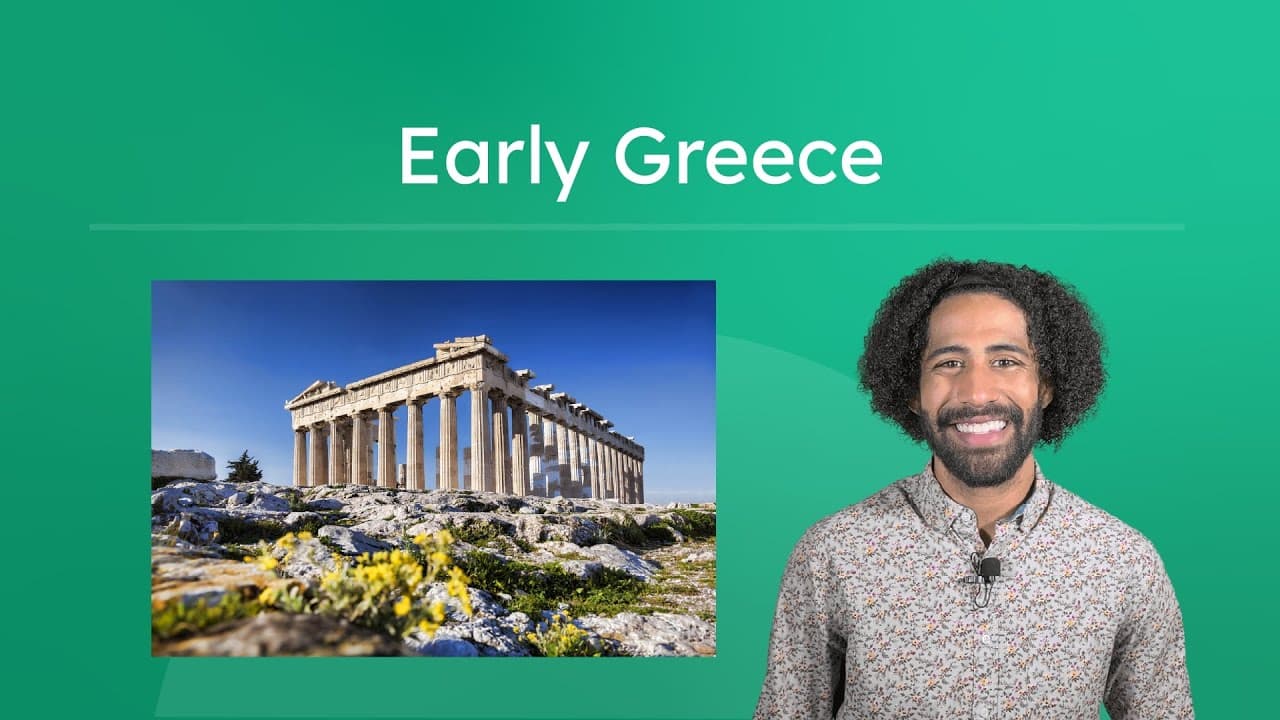
Exploring Ancient Greece: From Troy to the Olympics

Exploring Ancient Greece: From Troy to the Olympics

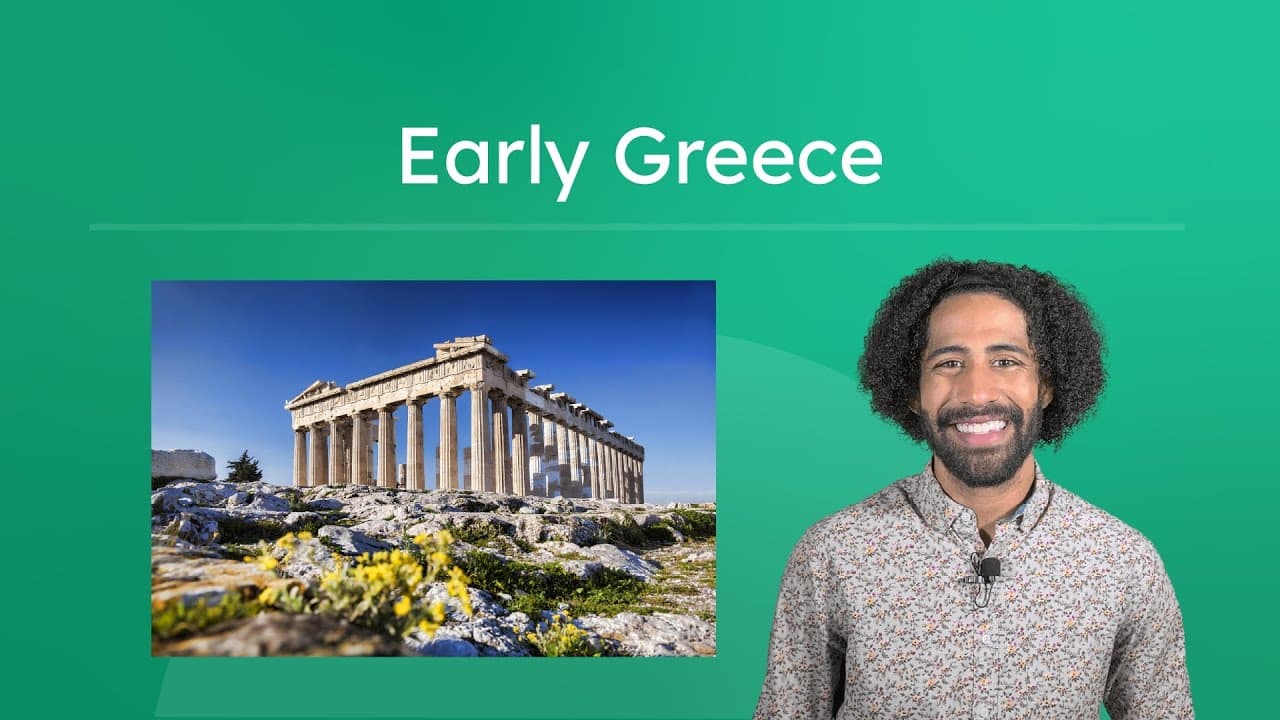
This engaging educational video takes students on a comprehensive journey through the history, geography, and culture of Ancient Greece. Beginning with the legendary tale of the Trojan Horse, the narrator transitions into factual history, exploring how the geography of the region—islands, mountains, and seas—shaped the development of independent city-states. The video breaks down complex historical periods by introducing the "parents" of Greek civilization: the artistic Minoans on Crete and the warrior-like Mycenaeans on the mainland, explaining how their influences merged to form the foundation of Greek culture. Key themes include the relationship between geography and society, the concept of the "polis" (city-state), and the importance of shared cultural traditions like the Olympic Games and mythology. The video highlights specific cultural elements such as the Agora as a gathering place, the significance of the Olympic truce, and the roles of major deities like Zeus and Poseidon. It carefully distinguishes between myth (like the Minotaur) and historical evidence (archeological ruins), helping students understand how historians piece together the past. For the classroom, this video serves as an excellent anchor for a unit on Ancient Civilizations. It provides clear definitions of vocabulary like "polis," "polytheistic," and "agora," while using visuals like maps and artifacts to make abstract concepts concrete. Teachers can use this resource to spark discussions about how environment impacts lifestyle, compare ancient political structures to modern ones, or introduce a creative project on Greek mythology. The content is chunked into distinct sections, allowing educators to pause and check for understanding or focus on specific topics like geography or the Olympics.

Miacademy & MiaPrep Learning ChannelMiacademy & MiaPrep Learning Channel

11mins 22s

How Disease Shaped Human History

How Disease Shaped Human History

This episode of Crash Course World History explores the profound impact of disease on human history, challenging the traditional view that history is driven solely by human decisions and actions. Host John Green argues that microorganisms have often been more influential than emperors or generals, shaping the rise and fall of civilizations from ancient river valleys to the modern era. The video covers how the development of agriculture and cities created breeding grounds for epidemics and how trade networks facilitated their spread across continents. Key historical events analyzed include the Plague of Athens, the decline of the Roman Empire, and most notably, the Black Death in medieval Europe. The video details the biological origins of the bubonic plague, its transmission via the Silk Road, and its massive demographic, economic, and religious consequences. It also addresses the "Great Dying" in the Americas following the Columbian Exchange, highlighting the devastating effect of Old World diseases on indigenous populations. For educators, this video serves as an excellent tool for teaching historical causality, human-environment interaction, and the interconnectedness of world regions. It connects biological concepts with historical events, making it suitable for interdisciplinary lessons. The "Thought Bubble" segment provides a clear case study on how demographic shifts (mass death) can lead to economic restructuring (higher wages) and cultural changes, offering tangible examples for students to analyze.

CrashCourseCrashCourse

11mins 37s

How Venetian-Ottoman Trade Sparked the Renaissance

How Venetian-Ottoman Trade Sparked the Renaissance

This fast-paced World History video explores the surprising and mutually beneficial relationship between the Republic of Venice and the Ottoman Empire during the 15th and 16th centuries. It argues that this specific economic partnership was a primary driver for two of the most significant events in European history: the Renaissance and the Age of Exploration. By examining how trade transcended religious and political differences, the video challenges the traditional narrative of a continuous "clash of civilizations" between East and West. The content covers the geographical necessity that turned Venice into a maritime trading superpower and details the unique political and social structures of the Ottoman Empire, including the rule of Suleiman the Magnificent and the controversial Devshirme system (the "slave aristocracy"). It contrasts the Venetian Republic's elected Doge with the Ottoman Sultanate, highlighting how different political systems managed stability and succession. For educators, this video is an excellent tool for teaching economic cause-and-effect in history. It connects abstract concepts like trade monopolies and supply chains to concrete outcomes like Christopher Columbus's voyages and the artistic explosion in Italy. The video provides rich material for discussions on how economic incentives often override ideological differences and how the control of trade routes shapes global geopolitics.

CrashCourseCrashCourse

10mins 12s

Exploring the People and Settlement of Latin America

Exploring the People and Settlement of Latin America

This educational video provides a comprehensive overview of the human geography of Latin America, focusing on the diverse origins of its people and their unique settlement patterns. The narrator breaks down the population into three primary historical groups: Native peoples who migrated across Beringia, European colonizers (primarily Spanish and Portuguese), and Africans brought via the slave trade. It further explores how these groups mixed over centuries to create distinct cultural identities like Mestizo and Mulatto, explaining the historical context and modern implications of these terms. The second half of the video shifts to settlement geography, analyzing where people live and why. It highlights the traditional preference for coastal living due to trade and transportation, but also examines the unique high-altitude settlements of the Andes, such as La Paz and La Rinconada. A significant portion is dedicated to the concept of a "forward capital," using Brasília as a case study for how governments attempt to shift population density and economic opportunity inland from the coast. For educators, this video serves as an excellent resource for World Geography, Social Studies, and Latin American History units. It connects historical events (colonization, slavery) directly to modern demographics and urban planning. The content covers essential geography concepts like urbanization, migration push/pull factors, and human-environment interaction, making it a versatile tool for teaching how history shapes the physical distribution of people today.

Miacademy & MiaPrep Learning ChannelMiacademy & MiaPrep Learning Channel

8mins 55s

Voyaging to Oceania and the Secrets of Antarctica

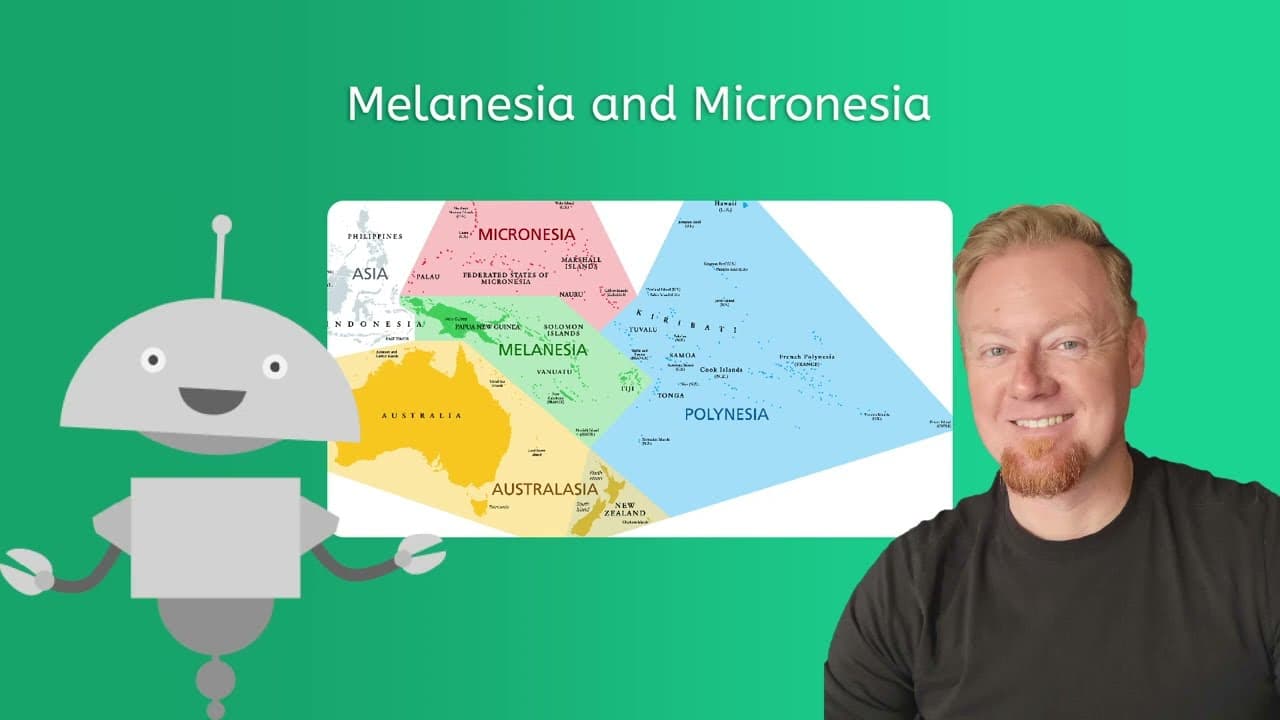
Voyaging to Oceania and the Secrets of Antarctica

This engaging video takes students on a geographic and historical journey through Oceania and Antarctica. It contrasts modern travel preparations with the incredible feats of ancient Austronesian navigators who used the stars and ocean currents to traverse thousands of miles of open ocean. The video highlights the settlement of diverse islands from Madagascar to Rapa Nui, emphasizing the skill and bravery of these early explorers. Key themes include the migration of Austronesian peoples, the unique biodiversity of Australia (Terra Australis Incognita), and the history of Antarctic exploration. The video specifically challenges traditional Eurocentric narratives by introducing Ui-Te-Rangiora, a Maori chieftain who likely encountered Antarctic waters centuries before European explorers. It also touches on modern scientific research in Antarctica. For educators, this video serves as an excellent launchpad for units on world geography, exploration history, or indigenous cultures. It is structured with built-in pause points that ask students to predict, hypothesize, and reflect, making it an interactive tool rather than a passive viewing experience. It effectively bridges geography, biology, and critical history skills.

Miacademy & MiaPrep Learning ChannelMiacademy & MiaPrep Learning Channel

6mins 40s

How the First People Migrated to the Americas

How the First People Migrated to the Americas

This educational video explores the scientific theory of how the first humans migrated to the Americas via the Beringia Land Bridge. It explains the geographical and climatic conditions of the Ice Age that lowered sea levels, exposing a land connection between present-day Russia and Alaska. The video details the migration routes taken by these early people as they moved through North America down to South America. The content covers key interdisciplinary concepts including geography, earth science, and anthropology. It defines important terms like "migration" and explains the push factors that cause populations to move, such as the search for food, resources, or safety. The video also introduces students to how scientists use evidence to reconstruct the past, specifically looking at how anthropologists use DNA analysis and how archaeologists use artifacts like bronze tools and jade masks to trace human origins. This resource is highly valuable for social studies and history classrooms studying early human civilizations or Native American history. It provides a clear visual representation of complex concepts like changing coastlines and migration patterns. Teachers can use this video to illustrate the intersection of geography and history, demonstrating how physical landscapes shape human movement and settlement patterns.

Miacademy & MiaPrep Learning ChannelMiacademy & MiaPrep Learning Channel

4mins 50s

Exploring the Geography and Cultures of Melanesia and Micronesia

Exploring the Geography and Cultures of Melanesia and Micronesia

This educational video provides a comprehensive geographical and cultural tour of two major subregions of Oceania: Melanesia and Micronesia. Hosted by "Brian from Oceania Explorers," the video uses maps, historical context, and cultural facts to distinguish these regions from one another and from Polynesia. It covers the etymology of the region names, their geological history (Sahul), and the specific island nations contained within each, including Fiji, Papua New Guinea, the Solomon Islands, Vanuatu, the Federated States of Micronesia, Kiribati, the Marshall Islands, Nauru, and Palau. Key themes include the interplay between physical geography and human history, specifically how vast ocean distances influence culture and governance. The video delves into the genetic and linguistic origins of the indigenous populations, differentiating Melanesians (Papuan/Austronesian mix) from Micronesians (Austronesian/Taiwanese origins). It also addresses complex historical topics such as the "Cannibal Isles" stereotype of Fiji, the impact of colonialism, WWII battles like Guadalcanal, and the modern geopolitical significance of US territories and military bases in the region. For educators, this video is a valuable tool for World Geography and Social Studies classrooms. It moves beyond simple map identification to explore concepts like "perceptual vs. formal regions," "Exclusive Economic Zones" (EEZ), and matriarchal societies. The video includes built-in pause points with reflection questions, making it ready-to-use for structured lessons on Pacific history, indigenous migration theories, and the challenges of island governance.

Miacademy & MiaPrep Learning ChannelMiacademy & MiaPrep Learning Channel

10mins 23s

Uncovering the Past: Sources, Artifacts, and Timelines

Uncovering the Past: Sources, Artifacts, and Timelines

This engaging educational video introduces students to the foundational methods historians use to study the past. Using a playful "breaking news" scenario involving a robot named Mia, the host clearly distinguishes between primary sources (first-hand accounts) and secondary sources (interpretations by others). The video explains how historians rely on these sources to construct accurate narratives of ancient civilizations.

Miacademy & MiaPrep Learning ChannelMiacademy & MiaPrep Learning Channel

12mins 37s

How Humans Harnessed Energy to Build Civilization

How Humans Harnessed Energy to Build Civilization

Hosted by Stan Muller, this episode of Crash Course World History explores the fundamental history of human energy consumption based on Alfred Crosby's book "Children of the Sun." The video traces humanity's journey from relying solely on muscle power to mastering fire, domesticating plants and animals, and eventually unlocking the massive energy stores within fossil fuels. It explains how these advancements allowed for civilization building, from the pyramids to modern metropolises, while emphasizing that almost all energy sources ultimately originate from the sun. The video covers key historical turning points including the Agricultural Revolution, the Industrial Revolution, and the modern reliance on electricity and the internal combustion engine. It provides a balanced look at different fuel sources—wood, coal, oil, and nuclear power—analyzing their efficiency, historical impact, and downsides. Significant attention is given to the exponential increase in energy usage since 1850 and the geopolitical and environmental consequences of this shift. For educators, this resource bridges the gap between science and history, demonstrating how physical laws (thermodynamics) shape human progress. It is an excellent tool for discussing the Anthropocene, the trade-offs of technological advancement, and the complex challenge of sustainability. The video sets up discussions on climate change, resource management, and the future of energy, making it highly relevant for both social studies and environmental science curriculums.

CrashCourseCrashCourse

7mins 21s

Why Democracy Feels Broken: Models, Critiques, and Theory

Why Democracy Feels Broken: Models, Critiques, and Theory

This educational video from Crash Course Political Theory explores the complex nature of democracy, addressing the common modern sentiment that democratic systems are "broken." Hosted by Dr. Ellie Anderson, the video investigates whether dissatisfaction with democracy is a new phenomenon or an inherent feature of the system. It traces critiques of democracy back to ancient philosophers like Plato, who worried about the chaos of "unmixed freedom," and contrasts historical Athenian practices with the egalitarian decision-making of indigenous hunter-gatherer societies.

CrashCourseCrashCourse

12mins 5s

Unlocking History Through the Five Themes of Geography

Unlocking History Through the Five Themes of Geography

This educational video provides a comprehensive introduction to the Five Themes of Geography—Location, Movement, Place, Region, and Human-Environment Interaction—and demonstrates their critical role in shaping human history. The host, Justin, moves beyond simple map-reading to explain geography as the study of the Earth and how humans interact with it. Using water as a central unifying concept, the video illustrates why early civilizations like Mesopotamia and Egypt developed where they did, emphasizing the necessity of fresh water for drinking, irrigation, and transportation. The video explores each theme individually while also highlighting their interconnected nature. It defines concepts such as absolute versus relative location, cultural diffusion through trade and war, and the distinction between adapting to and modifying the environment. Historical examples are woven throughout, including the construction of mud-brick homes in timber-scarce Mesopotamia, the spread of culture from the Olmecs to the Aztecs, and the shifting political boundaries of the Persian Empire and Alexander the Great's territory. Ideal for middle school social studies and geography curricula, this resource helps students transition from viewing geography as just memorizing capitals to understanding it as a dynamic force that drives historical development. It offers clear definitions, visual examples, and interactive pause points that encourage critical thinking about government structures and map analysis, making it a versatile tool for introducing units on ancient civilizations or world geography.

Miacademy & MiaPrep Learning ChannelMiacademy & MiaPrep Learning Channel

11mins 13s

Exploring Early North American Settlement and Indigenous Cultures

Exploring Early North American Settlement and Indigenous Cultures

This educational video provides a comprehensive overview of early North American settlement, tracing the migration of the first peoples across the Beringia land bridge through various developmental periods including the Paleoindian, Archaic, Woodland, and Mississippian eras. It explores how geography influenced the development of distinct cultures across different regions, from the Arctic Inuit to the Southwest Pueblo peoples, highlighting specific adaptations in shelter, food sources, and social structures. Key themes include human migration, environmental adaptation, and cultural diversity. The video breaks down the timeline of pre-contact history, distinguishing between nomadic bands and complex tribal societies. It also addresses important sociological concepts, such as the distinction between a "tribe" and a "band," and provides a nuanced discussion on the terminology of "Indigenous Peoples" versus "Native Americans," emphasizing the importance of using specific self-identifiers. For educators, this resource serves as an excellent introduction to pre-Columbian US History. It encourages critical thinking by asking students to consider the utility and limitations of historical generalizations. The video includes built-in pause points with guiding questions, making it ready-to-use for checking comprehension and sparking classroom discussions about identity, geography, and the deep history of the American continent.

Miacademy & MiaPrep Learning ChannelMiacademy & MiaPrep Learning Channel

10mins 26s

Depend, Modify, Adapt: How Humans Change the Environment

Depend, Modify, Adapt: How Humans Change the Environment

This educational video explores the dynamic relationship between humans and the Earth through three distinct categories of interaction: depending on the environment, modifying the environment, and adapting to the environment. The host, Caroline, guides viewers through a chronological journey of human history to illustrate how these interactions have evolved from the days of early hunter-gatherers to modern industrialized society. The narrative emphasizes that while human needs have remained consistent, the scale and impact of our actions on the planet have grown exponentially alongside our population. The video is structured around three major historical eras: the Hunter-Gatherer society, the Agricultural Revolution, and the Industrial Revolution. It details specific characteristics of each period, such as the low-waste lifestyle of nomadic tribes versus the habitat destruction caused by early farming, and the technological advancements of the industrial age versus the resulting pollution and urbanization. Key concepts like selective breeding, crop rotation, and the extinction of megafauna due to overhunting are explained to show the complexity of human impact. For educators, this resource serves as an excellent bridge between social studies and environmental science. It provides a clear framework for analyzing history through an ecological lens, helping students understand the trade-offs inherent in human progress. The video encourages critical thinking about sustainability by asking students to weigh the benefits of societal advancement—like reliable food sources and medicine—against environmental costs like deforestation and resource depletion, ultimately empowering them to think about future solutions.

Miacademy & MiaPrep Learning ChannelMiacademy & MiaPrep Learning Channel

9mins 53s

Introduction to Geography: From Ancient Maps to Modern Satellites

Introduction to Geography: From Ancient Maps to Modern Satellites

This engaging educational video introduces students to the study of geography, framing it as an expedition to understand our "wondrous and diverse" world. It begins by defining geography beyond simple textbook definitions, encouraging viewers to see it as a way to know, love, and care for the planet. The narrative transitions from the perspective of early humans facing an unknown world to the sophisticated methods used today, effectively bridging the gap between ancient curiosity and modern science. Key themes include the history of geographic thought, highlighting Eratosthenes' incredible calculation of the Earth's circumference using simple geometry and shadows. The video also explores the evolution of geographic tools, contrasting ancient travel-based data collection with modern technologies like Sonar, Satellites, GPS, and GIS (Geographic Information Systems). It emphasizes that while tools change, the fundamental human drive to map and understand our surroundings remains the same. For educators, this video serves as an excellent introduction to a geography unit or a social studies course. It provides concrete examples of how geography intersects with math (geometry), history, and environmental science. The built-in pause points and reflection questions make it an interactive tool for the classroom, prompting students to consider how geographic data is used for resource management, conservation, and urban planning in the real world.

Miacademy & MiaPrep Learning ChannelMiacademy & MiaPrep Learning Channel

10mins 12s

How Geography Shaped the First Civilization: Mesopotamia Explained

How Geography Shaped the First Civilization: Mesopotamia Explained

This educational video explores the rise of the first civilization in Mesopotamia, located in modern-day Iraq between the Tigris and Euphrates rivers. It explains how geography played a crucial role in the development of human society, transforming nomadic hunter-gatherers into settled farmers through the fertile soil of the "Fertile Crescent." The narrator guides students through the transition from the Stone Age to the Bronze Age, highlighting key innovations like irrigation, the plow, and the domestication of animals. The video delves into the challenges posed by the region's geography, such as unpredictable flooding and lack of natural defenses, and how early humans engineered solutions like levees, canals, and city walls. It connects these environmental factors to the growth of urban centers, job specialization, and the creation of a stable food surplus, which are identified as the foundational elements of civilization. Finally, the concept of cultural diffusion is introduced to explain how Mesopotamian innovations in farming, writing, and government spread to other regions like Egypt. The video includes built-in pauses for critical thinking and prediction, making it an excellent tool for middle school social studies classrooms to introduce Ancient History, human-environment interaction, and the economic foundations of society.

Miacademy & MiaPrep Learning ChannelMiacademy & MiaPrep Learning Channel

7mins 43s

Analyzing Cause and Effect in World History

Analyzing Cause and Effect in World History

This educational video introduces students to the historical thinking concept of "Cause and Effect" through a series of dramatic and interconnected historical case studies. It opens with a narrative hook about the "Summer of the Fire Ants" in 1518 Hispaniola to demonstrate how unintended consequences—specifically the introduction of plantains and aphids—can alter a region's history. The video establishes that nothing in history happens in a vacuum, using examples like Alexander the Great's education and Neolithic migrations to show how motivations and environmental changes drive human action. The core of the video analyzes the "Worst Year in History" (536 C.E.) to illustrate a complex chain of events. It details how a volcanic eruption (Krakatoa) led to global cooling, which destroyed food sources, causing the Avar migration and war, while simultaneously creating biological conditions that allowed the Bubonic Plague to decimate the Byzantine and Sasanian Empires. It breaks down the specific biological mechanism involving fleas and temperature to show how environmental factors influence major historical outcomes. This resource is highly valuable for middle and high school World History classrooms as it moves students beyond memorizing dates to understanding the "why" behind events. It models historical inquiry by connecting geography, biology, and human behavior, providing a framework for analyzing how small changes can trigger massive domino effects across civilizations.

Miacademy & MiaPrep Learning ChannelMiacademy & MiaPrep Learning Channel

10mins 51s

How the Agricultural Revolution Transformed Human Society

How the Agricultural Revolution Transformed Human Society

In this fast-paced and engaging overview of early human history, John Green introduces students to the monumental shift from hunting and gathering to agriculture. Using the relatable example of a double cheeseburger, the video traces the complex supply chains and historical processes required to produce modern food, contrasting this with the 15,000-year history of human foraging. It challenges the common assumption that agricultural life was an immediate improvement over foraging, presenting evidence that early farmers often had poorer health and worked longer hours than their hunter-gatherer counterparts. The video explores key themes including the independent invention of agriculture across different global regions, the domestication of plants and animals, and the rise of pastoralism (herding) as an alternative lifestyle. It breaks down the advantages of farming—such as controllable food supplies and food surpluses that allow for specialization of labor—against the disadvantages, including environmental degradation, social inequality, and the necessity of hard labor. For educators, this resource serves as an excellent introduction to the Neolithic Revolution and the dawn of civilization. It prompts critical thinking about what "progress" actually means, asking students to consider whether the move to agriculture was a net positive or a "trap" that humanity couldn't escape. The video successfully links ancient history to modern life, making abstract concepts like specialization of labor and social stratification concrete and relevant for students.

CrashCourseCrashCourse

11mins 11s

Why Humans Fight: The Evolutionary and Historical Roots of War

Why Humans Fight: The Evolutionary and Historical Roots of War

This video investigates the complex historical and philosophical question of why humans engage in war. Host John Green navigates the debate between two primary schools of thought: Thomas Hobbes's view of early human life as "nasty, brutish, and short," and Jean-Jacques Rousseau's concept of the peaceful "noble savage." The video examines anthropological evidence, archaeological findings, and evolutionary theories to determine if violence is an innate part of human nature or a cultural development. The content explores several key themes, including the distinction between biological imperatives (genes seeking to reproduce) and cultural behaviors. It delves into the role of resource scarcity—specifically food and mates—in driving early human conflict, which typically manifested as raiding rather than organized warfare. The video also touches on the psychology of soldiers, using powerful quotes from Vietnam veteran Karl Marlantes to discuss the "savage joy" and transcendence some find in combat, while balancing this with the concept of free will and the evolution of human institutions. For educators, this resource is a powerful tool to bridge history, biology, and philosophy. It challenges students to think critically about "inevitability" in history and encourages them to analyze how modern institutions have evolved to mitigate biological aggressive tendencies. It provides a nuanced look at the difference between interpersonal violence and state-sponsored war, making it an excellent launchpad for discussions on ethics, psychology, and the future of global conflict.

CrashCourseCrashCourse

10mins 37s

From Farms to Factories: The Origins of the Industrial Revolution

From Farms to Factories: The Origins of the Industrial Revolution

This engaging educational video explores the origins and profound global impact of the Industrial Revolution, tracing its roots from prehistoric hunter-gatherer societies through the agrarian age to the explosion of industry in 18th-century England. The narrator uses vivid storytelling and direct address to help students visualize the dramatic shift in daily life, moving from self-sufficient farming to repetitive factory work. It breaks down complex economic and social changes into digestible concepts, explaining how the Enclosure Movement pushed peasants into cities and how technological innovations in textiles catalyzed a new world order. Key themes include the transition from agrarian to industrial societies, the specific geographic and political reasons why the revolution began in England, and the major technological inventions that drove mass production (like the Spinning Jenny and Water Frame). Crucially, the video does not shy away from the darker side of this progress, explicitly connecting the boom in English textile manufacturing to the entrenchment of slavery in the American South following the invention of the cotton gin. For educators, this video serves as a perfect anchor for a World History unit on industrialization. It is structured with built-in pause points and guiding questions that facilitate active learning and checking for understanding. By connecting English factories to American history, it also provides an excellent cross-curricular bridge between European and American history standards, illustrating early concepts of global economic interdependence.

Miacademy & MiaPrep Learning ChannelMiacademy & MiaPrep Learning Channel

13mins 56s

How the Polynesians Migrated Across the Pacific

How the Polynesians Migrated Across the Pacific

This educational video provides a comprehensive overview of the Polynesian migration, explaining how ancient explorers traveled across the vast Pacific Ocean to settle within the Polynesian Triangle. It details the geographical boundaries of the region, identifying key islands like Hawaii, New Zealand, and Easter Island, and traces the ancestral roots of the Polynesian people back to Taiwan and Southeast Asia using linguistic and archaeological evidence.

Miacademy & MiaPrep Learning ChannelMiacademy & MiaPrep Learning Channel

4mins 37s

How Tacos Explain the History of Human Migration

How Tacos Explain the History of Human Migration

This engaging educational video uses the ingredients of a simple taco—corn tortillas, steak, and toppings—as a narrative framework to explore the entire history of human migration and globalization. Hosted by Justin, the video breaks down complex historical eras by tracing how these ingredients originated in different parts of the world and eventually came together. It covers major historical milestones including the "Out of Africa" theory, the Neolithic Revolution, the Age of Exploration, the Columbian Exchange, and the Industrial Revolution. The video explores key themes of geography and history, specifically focusing on the concept of "movement." It details the push and pull factors that have driven human migration throughout history, ranging from basic survival and the search for resources to trade routes, colonization, forced migration (slavery), and economic opportunities in industrializing cities. It addresses sensitive topics such as the devastation of indigenous populations and the Transatlantic Slave Trade within the context of global demographic shifts. For educators, this video serves as an excellent hook for World History or World Geography units. By grounding abstract historical forces in a relatable food item, it helps students understand how distant historical events directly shape their modern lives. It provides a structured timeline of human movement, defines academic terms like "nomadic" and "sedentary," and encourages critical thinking about the cultural blends that constitute modern societies.

Miacademy & MiaPrep Learning ChannelMiacademy & MiaPrep Learning Channel

11mins 3s

Island Hopping: A Journey Through Polynesian History and Culture

Island Hopping: A Journey Through Polynesian History and Culture

This educational video takes students on a comprehensive tour of Polynesia, exploring its geography, history, and rich cultural traditions. Hosted by an engaging narrator named Brian, the journey begins by defining the Polynesian Triangle—anchored by Hawaii, New Zealand, and Easter Island—and tracing the incredible maritime migration of the Lapita people thousands of years before European explorers. The video uses maps, historical photos, and animations to visualize the vast distances traveled by early settlers in outrigger canoes.

Miacademy & MiaPrep Learning ChannelMiacademy & MiaPrep Learning Channel

10mins 34s

How Farming Transformed Human History

How Farming Transformed Human History

In this installment of Crash Course Big History, John Green and guest host Hank Green explore the monumental shift from foraging to agriculture—a transition that fundamentally altered human existence. The video examines the "Agrarian Era," questioning why humans would abandon the relatively leisurely lifestyle of foraging for the back-breaking labor of farming. It presents the "energy" perspective of history, framing agriculture as a method for humans to harness more solar energy via photosynthesis, leading to population explosions and complex societies.

CrashCourseCrashCourse

13mins 41s