Lenny LearningLenny
Create
Explore
Workspace
LoginSign up
MathEnglish Language ArtsScience & EngineeringSocial StudiesGlobal LanguagesHealth & Physical EducationSpecial EducationCounseling & Life SkillsArts & CreativityESL
Lenny LearningLenny
Lenny Learning
About
Training
Pricing
Support
Contact
© 2026 Lenny Learning Inc.

Fractions & Decimals

SequencesLessonsMaterialsVideos
  1. Math

Fractions & Decimals

SequencesLessonsMaterialsVideos

Foundational fraction equivalence, ordering, and operations across the rational number system. Addresses multi-digit computation, decimal conversions, and the distinction between rational and irrational numbers.

Building FractionsPart-whole relationships, unit fractions, and numerator-denominator identification. Develops foundational understanding through visual area models, sets, and number line representations.
MathNumbers & CountingCounting ObjectsNumber NamesComparing NumbersNumber OperationsCounting SequenceNumbers 0-10Place Value Understanding and SystemAdd and Subtract Within 20Addition and Subtraction ConceptsAddition and Subtraction EquationsAddition and Subtraction ProblemsFoundations for MultiplicationMultiplication and Division PropertiesMultiply and Divide Within 100Multiplication and Division ProblemsFactors and MultiplesProperties of OperationsPatterns and RelationshipsGenerate and Analyze PatternsMulti-Digit ArithmeticPlace Value OperationsMulti-Digit and Decimal OperationsNumerical ExpressionsFour Operations and PatternsFour Operations Problem SolvingMeasurement & DataMeasurable AttributesMeasuring LengthsMeasure and Estimate Lengths in Standard UnitsRelate Addition and Subtraction to LengthClassifying and Counting ObjectsTime and MoneyArea Concepts and MeasurementPerimeter and Area MeasuresAngle Concepts and MeasurementTime, Volume, and MassMeasurement Unit ConversionsGeometryIdentifying ShapesShapes and AttributesShape Attributes and ReasoningShapes and CompositionClassifying 2D FiguresGeometric Figures and RelationshipsLines, Angles, and ShapesAngle, Area, and VolumeGeometric MeasurementVolume of 3D ShapesCoordinate Plane ApplicationsTransformations in the PlaneCongruence and SimilarityUnderstand congruence in terms of rigid motionsSimilarity and TransformationsProve Theorems Involving SimilarityPythagorean TheoremTrigonometry for General TrianglesMake Geometric ConstructionsProve Geometric TheoremsTheorems About CirclesFind Arc Lengths And Areas of Sectors of CirclesVolume FormulasRelationships Between Two-Dimensional and Three-Dimensional ObjectsProve Simple Geometric Theorems AlgebraicallyTranslate Between Geometric Description and Equation for Conic SectionApply Geometric Concepts in Modeling SituationsFractions & DecimalsFractions as NumbersBuilding FractionsFraction Equivalence and OrderingAdding and Subtracting FractionsMultiplying and Dividing FractionsDividing FractionsDecimal FractionsMulti-Digit Computation and FactorsAdd, Subtract, Multiply, and Divide Rational NumbersRational Number SystemIrrational Numbers and ApproximationsRatiosRatios and ProportionsProportional RelationshipsUnit RateAlgebraAlgebraic ExpressionsGenerate Equivalent ExpressionsQuantitative RelationshipsProportional Relationships and Linear EquationsEquations and InequalitiesEquation Solving and ReasoningLinear Equations and SystemsGraph Equations and InequalitiesSystems of EquationsReal-World Algebraic ProblemsQuantitative Reasoning with UnitsExpression StructureEquivalent Expression FormsRadicals and Integer ExponentsRational ExponentsRational and Irrational NumbersPolynomial OperationsPolynomial IdentitiesPolynomial Zeros and FactorsRational ExpressionsComplex Number OperationsComplex Numbers in PolynomialsComplex Numbers on PlaneStatistics & ProbabilityRepresent and Interpret DataData DistributionsStatistical VariabilityProbability ModelsCompound Event ProbabilitiesStatistical SamplingInterpret Categorical and Quantitative DataBivariate Data PatternsInterpret Linear ModelsComparing Two PopulationsRandom Processes in StatisticsIndependence and Conditional ProbabilityExpected ValuesProbability-Based Decision MakingStatistical Inference and ConclusionsFunctionsFunction Concepts and NotationDefine and Compare FunctionsInterpret Functions in ContextAnalyze Function RepresentationsModel Relationships with FunctionsIdentify Linear vs Exponential GrowthDistinguish Between Function TypesCompare Growth RatesInterpret Function ExpressionsBuild Functions from RelationshipsConstruct and Model FunctionsTransform and Combine FunctionsModel Comparison and SelectionSolve Exponential EquationsTrigonometryTrigonometric Ratios Involving Right TrianglesTrigonometric Functions and Unit CircleModel with Trigonometric FunctionsTrigonometric IdentitiesVectors & MatricesIntroduction to Vectors and MatricesVector QuantitiesVector OperationsMatrix OperationsCalculusLimits and ContinuityDerivative Concepts and NotationDerivative Rules and TechniquesApplications of DerivativesOptimization ProblemsRelated RatesCurve Sketching and AnalysisIntegration Concepts and NotationAntiderivatives and Indefinite IntegralsDefinite Integrals and AreaFundamental Theorem of CalculusIntegration TechniquesApplications of IntegrationDifferential EquationsSequences and SeriesParametric and Polar FunctionsVector-Valued Functions
Video
Understanding and Converting Improper and Mixed Fractions

Understanding and Converting Improper and Mixed Fractions

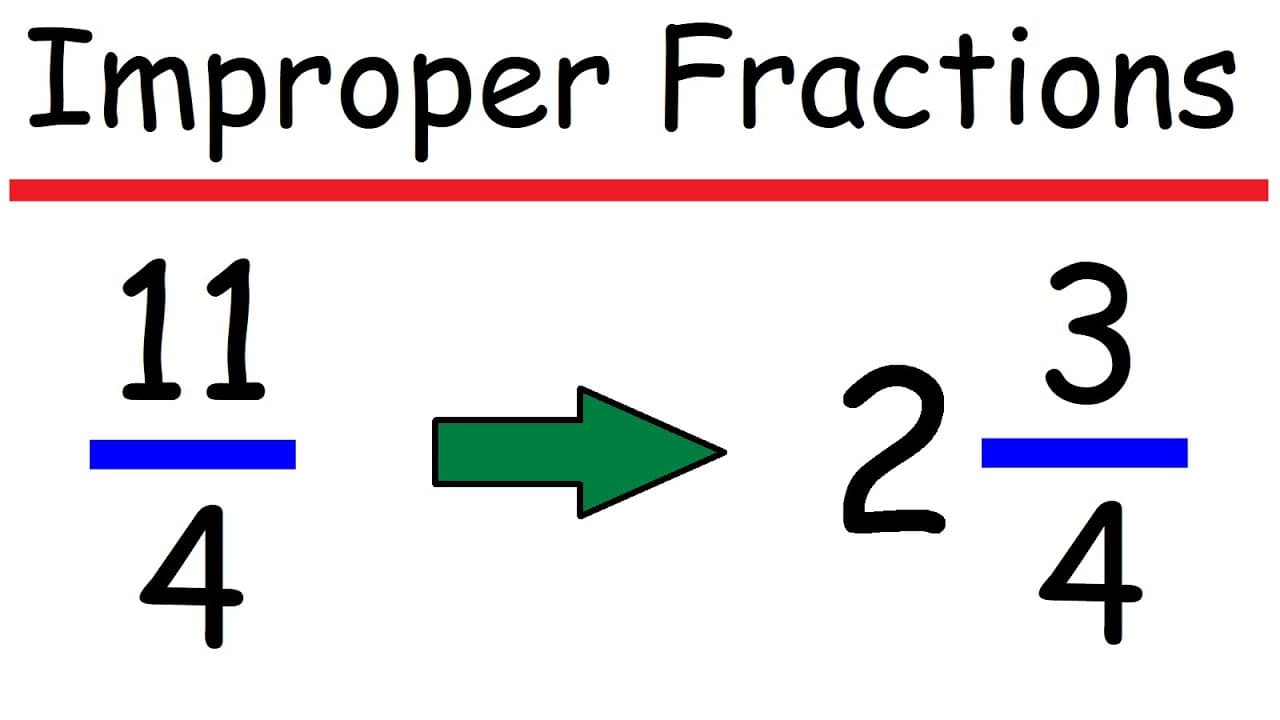
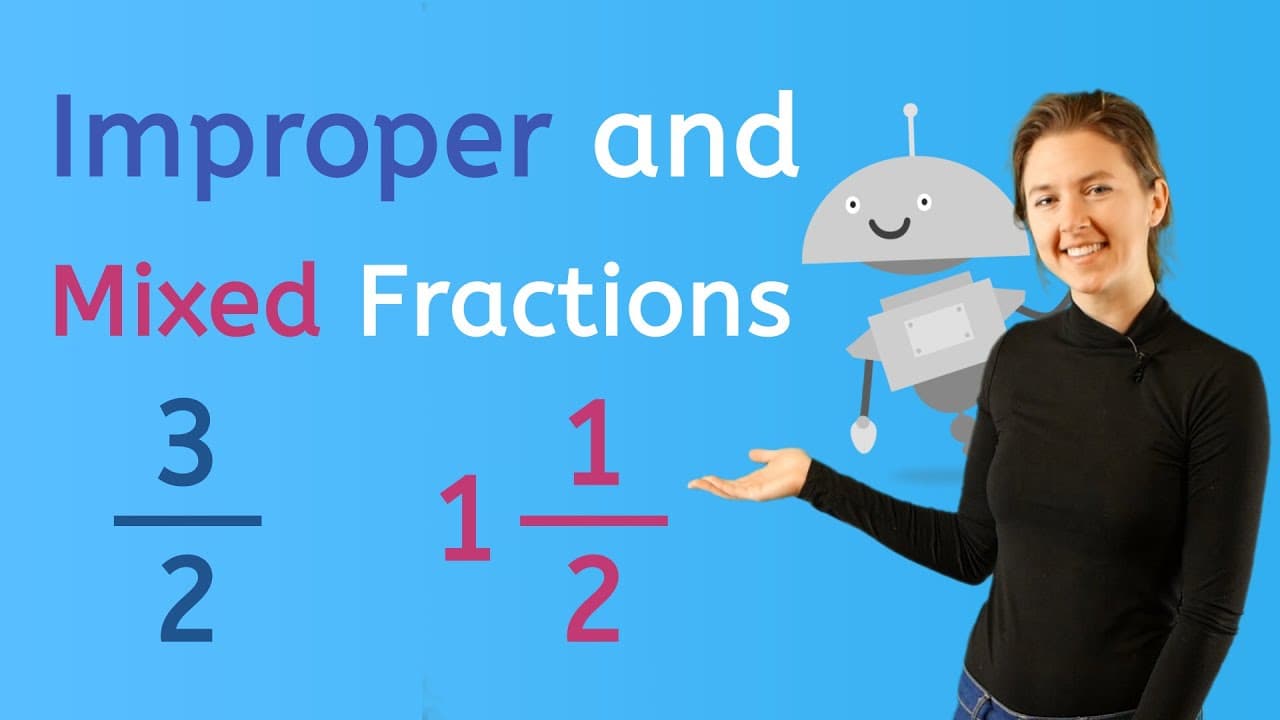
This educational video provides a clear and accessible introduction to the three main types of fractions: proper fractions, improper fractions, and mixed numbers. The host, Kylie, uses simple visual aids and on-screen text to define each term, helping students distinguish between fractions where the numerator is smaller than the denominator and those where it is greater. The pacing is deliberate and friendly, making potentially confusing terminology easy to digest for elementary learners. The core of the video focuses on the relationship between improper fractions and mixed numbers. Using the example of 3/2, the video visually demonstrates how three halves fill up one whole circle and half of another, proving that 3/2 is equivalent to 1 1/2. This visual proof is followed by a procedural "secret trick"—an algorithm for converting mixed numbers back into improper fractions by multiplying the whole number by the denominator and adding the numerator. Teachers can use this video to introduce fraction classification or to support lessons on converting mixed numbers. The dual approach—conceptual (using visual circle models) and procedural (using the multiplication algorithm)—supports different learning styles. The video is particularly useful for bridging the gap between understanding what a fraction represents and performing calculations with them.

Miacademy & MiaPrep Learning ChannelMiacademy & MiaPrep Learning Channel

6mins 23s

Video
Adding Mixed Numbers and Regrouping Improper Fractions

Adding Mixed Numbers and Regrouping Improper Fractions

This engaging animated musical video teaches students how to add mixed numbers with like denominators through catchy lyrics and real-world story problems. The video follows characters in two distinct scenarios—harvesting pears in an orchard and buying trail mix at a grocery store—to demonstrate why and how we add mixed numbers in daily life. It uses visual models (circles divided into fractional parts) alongside standard vertical addition algorithms to solidify conceptual understanding. The content focuses on the specific skill of adding mixed numbers where the sum of the fractions is greater than one, requiring the student to "carry the one" or regroup. It breaks down the process into clear steps: adding the fractions, recognizing improper fractions, regrouping them into whole numbers, and then adding the whole numbers. The video also introduces the concept of decomposing mixed numbers into unit fractions, providing a deeper look at the structure of these numbers. For educators, this video serves as an excellent hook or review tool for 4th and 5th-grade math units on fractions. It provides multiple representations of the concept—visual, auditory, and algorithmic—helping to reach diverse learners. The inclusion of word problems helps students contextualize the math, while the "decomposing" section offers a natural extension for advanced understanding of fraction composition.

Math Songs by NUMBEROCKMath Songs by NUMBEROCK

3mins 56s

Video
Comparing Quantities Using Ratios and Fractions

Comparing Quantities Using Ratios and Fractions

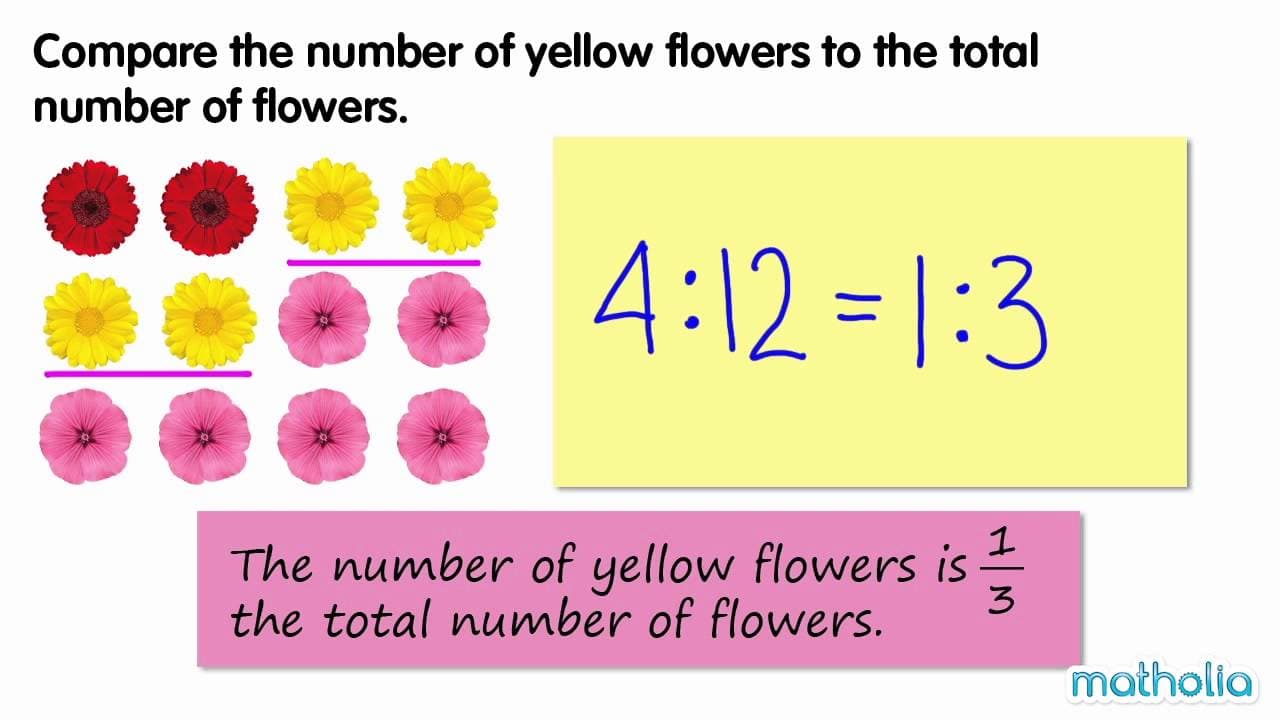
This educational video provides a clear, step-by-step introduction to understanding and calculating ratios. Through three distinct examples—flower colors and building heights—it demonstrates how to compare quantities using both ratio notation (2:4) and fraction notation (1/2). The video moves from simple visual counting exercises to more complex word problems that require calculating totals before determining the ratio. Key mathematical themes include differentiating between part-to-part ratios (comparing one group to another) and part-to-whole ratios (comparing a group to the total). It emphasizes the importance of simplifying ratios to their lowest terms, similar to simplifying fractions, and explicitly connects the concept of ratios to fractions to help students see the relationship between the two forms of representation. For educators, this resource serves as an excellent visual aid for introducing the concept of ratios or reviewing how to simplify them. The clear animations allow teachers to pause and ask students to predict the ratio or the simplified form before it is revealed. The progression from simple counting to a multi-step real-world application (the office building) makes it suitable for scaffolded instruction in upper elementary and middle school mathematics classrooms.

MatholiaChannelMatholiaChannel

1min 57s

Video
Virtual Manipulatives for Singapore Mathematics

Virtual Manipulatives for Singapore Mathematics

This video provides an overview of virtual manipulatives designed to support the Singapore Mathematics curriculum, specifically focusing on the Concrete-Pictorial-Abstract (CPA) pedagogical approach. It demonstrates a wide variety of digital tools that replicate physical math manipulatives, such as number bonds, linking cubes, bar models, and place value discs, showing how they can bridge the gap between hands-on learning and abstract conceptual understanding. The content highlights how these digital resources can be integrated into different learning environments, including traditional classroom instruction, flipped classroom models, and autonomous home learning. It emphasizes the versatility of the tools in supporting visual modeling for concepts ranging from basic arithmetic to geometry and measurement, catering to various international currencies and measurement systems. For educators and parents, this video serves as a professional development resource introducing the rationale behind using digital manipulatives. It explains how visual models help students deepen their abstract understanding of concepts like multiplication, fractions, and word problems. The video demonstrates specific software tools that teachers can incorporate into lesson plans to enhance student engagement and conceptual clarity.

MatholiaChannelMatholiaChannel

2mins 3s

Video
Simplifying a Product of Logarithms with Different Bases

Simplifying a Product of Logarithms with Different Bases

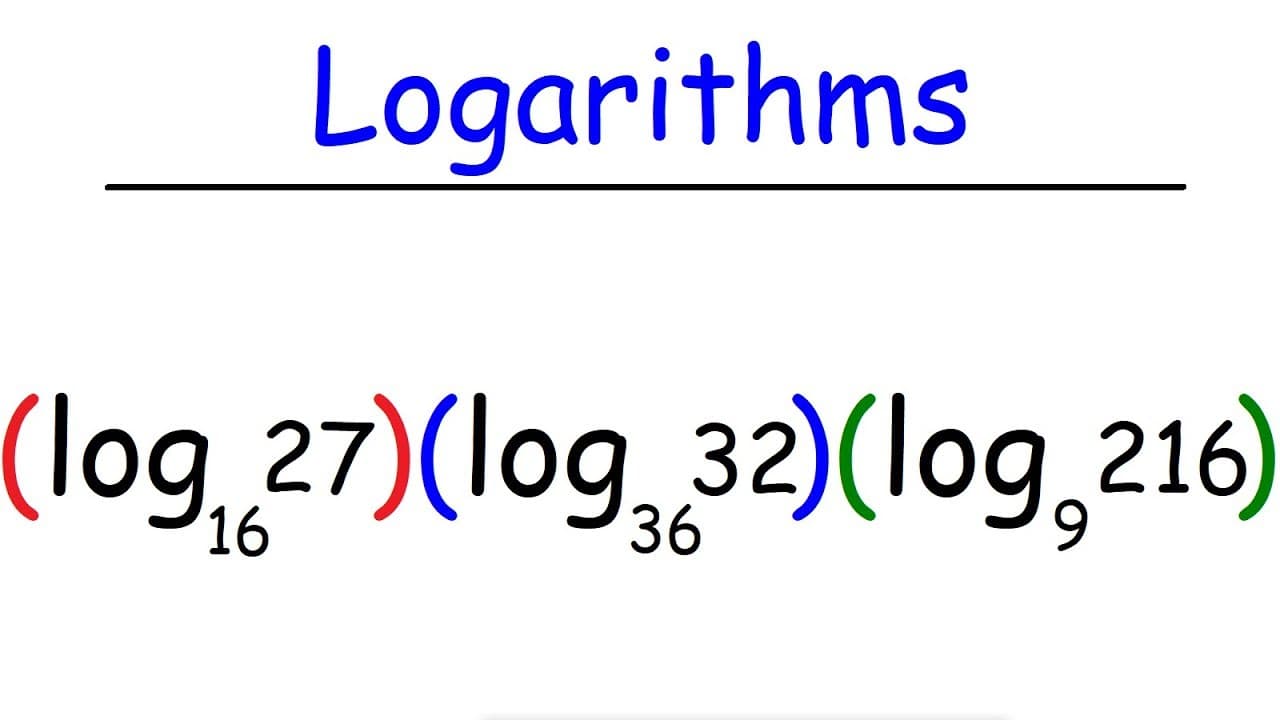
This video provides a step-by-step tutorial on how to evaluate a complex logarithmic expression involving the product of three logarithms with different bases. The narrator demonstrates how to solve the expression $(\log_{16} 27)(\log_{36} 32)(\log_{9} 216)$ without using a calculator. The method involves breaking down the composite numbers into prime bases with exponents and applying fundamental logarithmic properties to simplify the terms.

The Organic Chemistry TutorThe Organic Chemistry Tutor

5mins 27s

Video
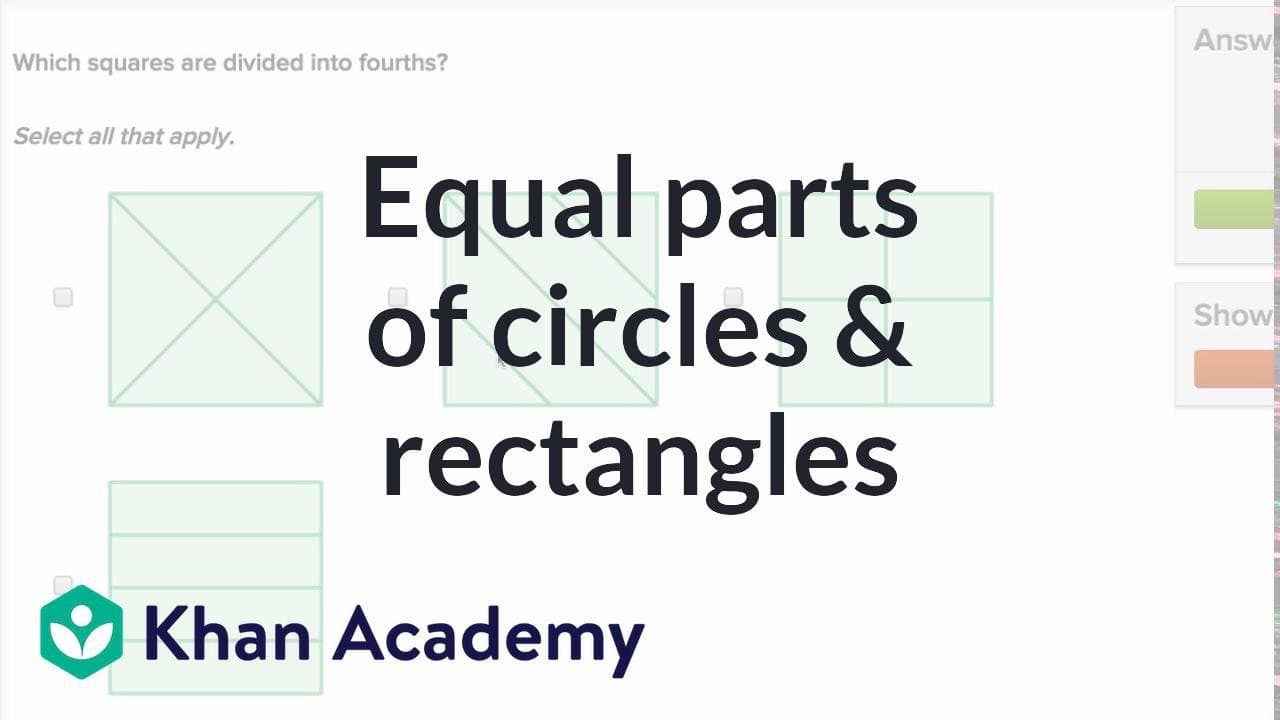
Identifying Equal Parts: Halves, Thirds, and Fourths

Identifying Equal Parts: Halves, Thirds, and Fourths

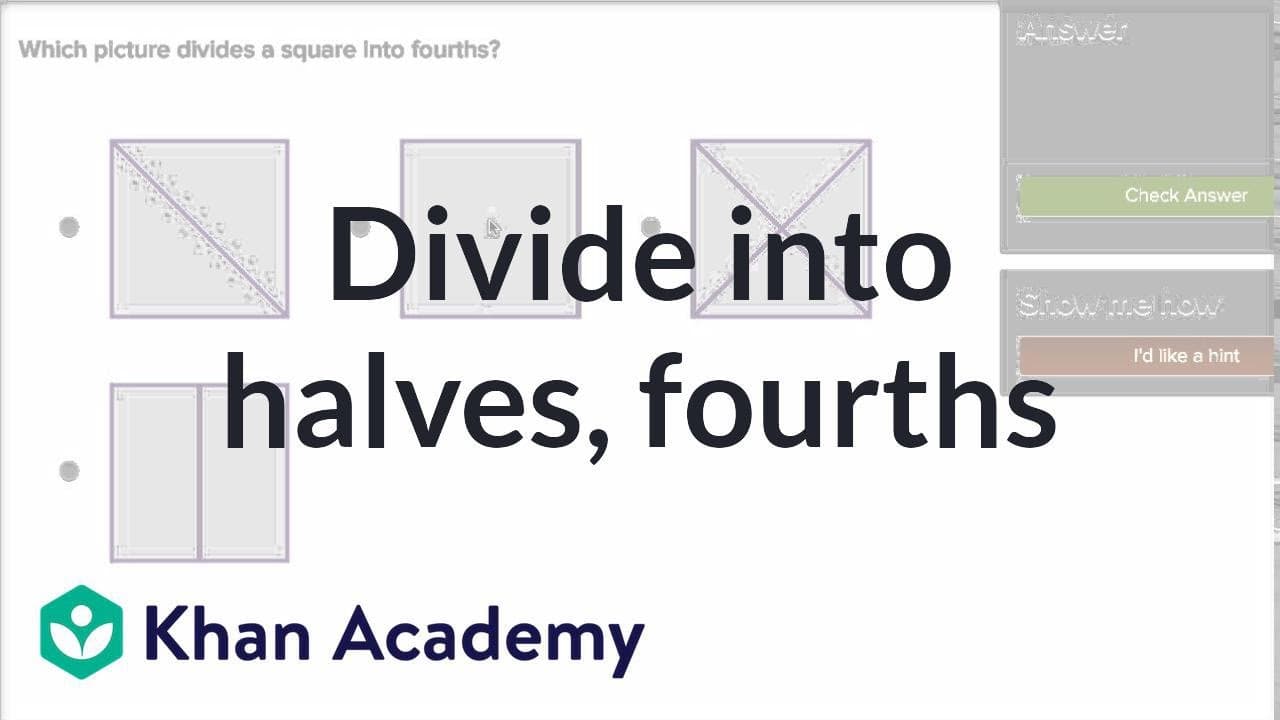
This video serves as an engaging and practical introduction to basic geometry and fractions, specifically focusing on partitioning shapes. Through a series of multiple-choice problems, the narrator guides viewers in identifying which shapes—rectangles, circles, and squares—are correctly divided into halves, thirds, and fourths (quarters). The core concept emphasized throughout is that for a shape to be divided into fractions, the resulting sections must be equal in size or area. The video explores key geometric themes including visual estimation of area, the definition of specific fractional terms (halves, thirds, fourths), and the critical distinction between merely dividing a shape and dividing it into equal shares. By presenting non-examples (shapes divided into unequal parts or the wrong number of parts), the video directly addresses common student misconceptions, such as thinking any two parts constitute a "half." For educators, this resource is an excellent tool for early elementary math instruction, particularly for 1st and 2nd grade. It provides clear visual models that can be used to introduce the concept of equal shares before moving to numerical fractions. Teachers can use this video to model mathematical thinking, asking students to justify why certain options are incorrect before revealing the answer, thus promoting critical thinking and mathematical vocabulary usage.
Khan AcademyKhan Academy

2mins 24s

Video
Mastering Essential Fraction Vocabulary with a Quiz

Mastering Essential Fraction Vocabulary with a Quiz

This video serves as an interactive "Mastery Check" for 5th-grade mathematics students focusing on essential fraction vocabulary. Unlike a standard lecture, this resource is designed as a formative assessment tool where students are encouraged to test their own knowledge before receiving the answers. The video presents seven key terms—numerator, denominator, mixed number, proper fraction, improper fraction, like fractions, and unlike fractions—and asks students to pause the video to write down definitions or examples for each. The content covers the fundamental building blocks of fraction terminology. After the pause break, the narrator (Mr. J) walks through each term, providing clear handwritten examples on a digital chalkboard. He distinguishes between easily confused concepts, such as proper vs. improper fractions and like vs. unlike fractions. The video concludes with a bonus concept regarding fractions where the numerator and denominator are equal, reinforcing the concept of "one whole." For educators, this video is an excellent low-stakes assessment or review activity. It can be used at the start of a unit to gauge prior knowledge or at the end to check for understanding. The format promotes active learning by requiring students to commit to an answer before seeing the solution. It addresses common vocabulary deficits that often hinder students when they move on to more complex operations like adding or subtracting fractions with unlike denominators.

Math with Mr. JMath with Mr. J

4mins 2s

Video
Understanding Turns and Directions: Clockwise and Anticlockwise

Understanding Turns and Directions: Clockwise and Anticlockwise

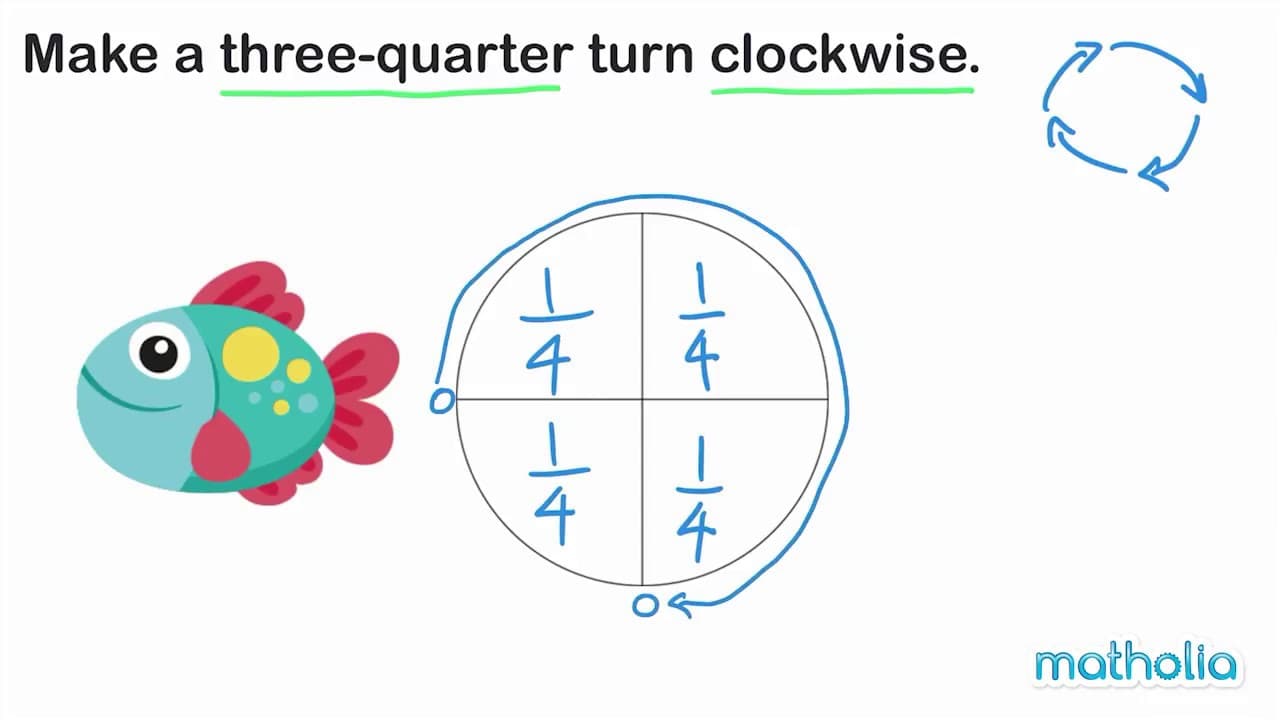
This educational video introduces young learners to the geometric concepts of turns and directionality. It systematically breaks down rotational movement into four key types: quarter turns, half turns, three-quarter turns, and full turns. For each type, the narrator explains both the magnitude of the turn (connected to fractions) and the direction of movement (clockwise versus anticlockwise). The video uses clear visual aids, including a circle divided into quadrants and relatable objects like pencils and animals, to demonstrate how orientation changes after rotation. The key themes explored include spatial reasoning, directional vocabulary (clockwise and anticlockwise), and the connection between fractions and geometry. The video explicitly links the concept of a "quarter" to one out of four equal parts and a "half" to one out of two equal parts, helping students visualize these abstract mathematical terms. It also emphasizes the circular nature of rotation, demonstrating that a full turn returns an object to its original position. For educators, this video serves as an excellent visual anchor for geometry lessons on position and movement. It is particularly useful for helping students distinguish between left/right turns by using standard mathematical vocabulary. The clear animations allow teachers to pause and predict the new orientation of an object before the turn is completed, making it a highly interactive tool for checking understanding and developing spatial prediction skills in early elementary classrooms.

MatholiaChannelMatholiaChannel

3mins 15s

Video
Converting Improper Fractions to Mixed Numbers Without Long Division

Converting Improper Fractions to Mixed Numbers Without Long Division

This educational math tutorial provides a clear, step-by-step guide on converting improper fractions to mixed numbers using a decomposition method rather than traditional long division. The video demonstrates four examples of increasing difficulty, showing how to break down the numerator into a sum containing the highest multiple of the denominator. This mental math strategy helps students build stronger number sense by reinforcing the relationship between multiplication, division, and fractions. The content explores key arithmetic themes including multiples, fraction decomposition, and the inverse relationship between improper fractions and mixed numbers. By listing out multiples for larger numbers, the narrator models a practical problem-solving strategy that aids students who may not have their multiplication tables perfectly memorized. The video concludes by demonstrating how to check the answer by converting the mixed number back into an improper fraction. For educators, this video serves as an excellent alternative instructional method for students who struggle with the procedural steps of long division. It promotes algebraic thinking by having students decompose numbers, a skill valuable for future math concepts. The clear, high-contrast visuals and focused narration make it an ideal resource for introduction, remediation, or a flipped classroom assignment for upper elementary and middle school students learning fraction operations.

The Organic Chemistry TutorThe Organic Chemistry Tutor

3mins

Video
Introduction to Basic Fractions: Equal Parts and Fair Shares

Introduction to Basic Fractions: Equal Parts and Fair Shares

This engaging educational video introduces early elementary students to the mathematical concept of fractions through the familiar social concept of "fair sharing." Hosted by Kylie, the video bridges the gap between social-emotional learning and mathematics by defining sharing as dividing something into parts for others. It illustrates various types of sharing—from taking turns with toys to splitting a sandwich—before focusing on the mathematical necessity of "equal parts" to make a share truly "fair." The video systematically explores three key fractional concepts: sharing a set of discrete objects (jellybeans) and sharing a continuous whole (a cake). It visually demonstrates the difference between arbitrary cuts and equal partitions, introducing specific vocabulary including "halves" (1/2), "fourths" or "quarters" (1/4), and "tenths" (1/10). The visual of a "sprinkle cake" being cut incorrectly versus correctly serves as a powerful model for understanding that fractions must be equal in size. For teachers, this video provides an ideal entry point for a fractions unit. It directly addresses the common misconception that any piece of a whole is a fraction, clarifying that pieces must be identical in size to be named mathematically (e.g., halves). It offers clear visual models for partitioning rectangles and sets, making it a versatile tool for lessons on geometry, division basics, and introductory fractions in 1st and 2nd grade classrooms.

Miacademy & MiaPrep Learning ChannelMiacademy & MiaPrep Learning Channel

6mins 9s

Video
Understanding Basic Fractions Using Visual Models

Understanding Basic Fractions Using Visual Models

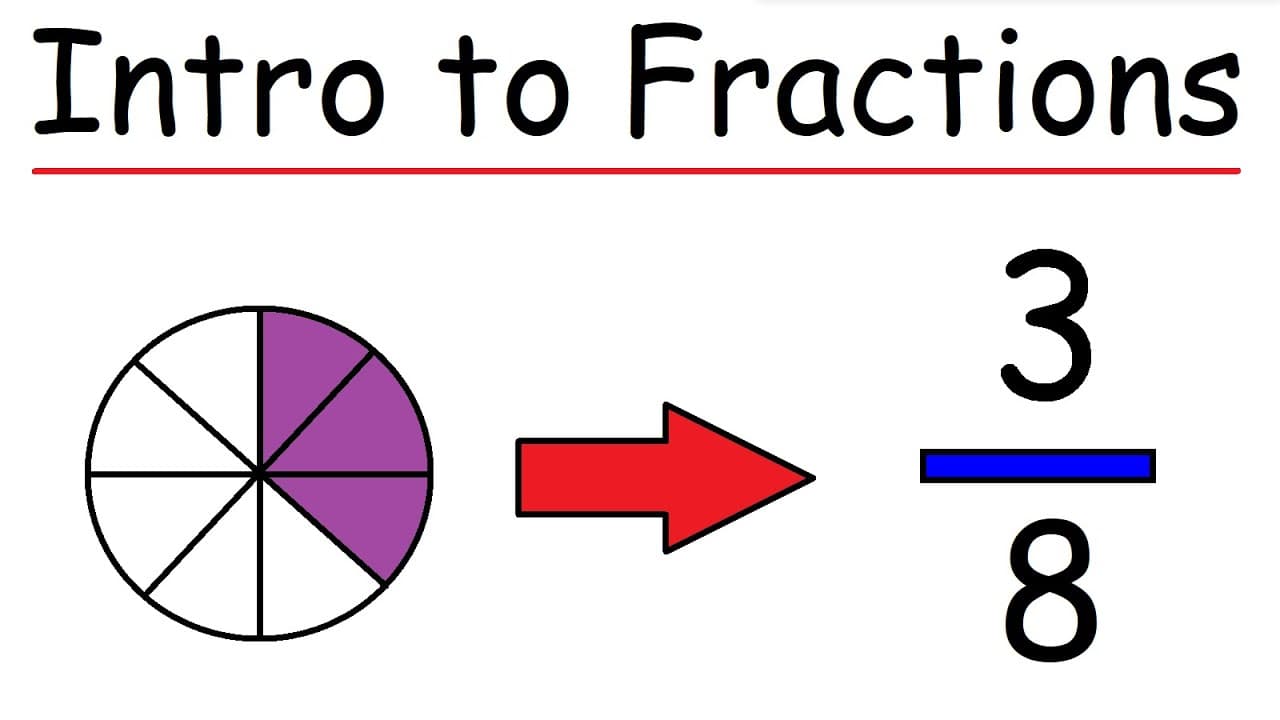
This concise educational video serves as a fundamental introduction to the concept of fractions, defining them simply as "a part of a whole." Through clear, hand-drawn visual examples, the narrator demonstrates how to identify and write fractions based on shaded regions of geometric shapes. The video progresses from simple examples like one-half and one-fourth to slightly more complex practice problems involving eighths and fifths, encouraging viewer participation along the way. The key themes explored include visual representation of numbers, the relationship between parts and a whole, and the basic notation of fractions (numerator and denominator, though these specific terms are demonstrated rather than defined). The video emphasizes counting total parts to find the denominator and counting specific (shaded) parts to find the numerator. For educators, this video is an excellent tool for introducing fractions to early elementary students or for providing remediation to students struggling with the concept. Its use of both circular (pie) and rectangular (bar) models helps students understand that fractions can be represented by various shapes. The built-in pause points for practice problems allow for immediate formative assessment and active engagement in the classroom.

The Organic Chemistry TutorThe Organic Chemistry Tutor

2mins 48s

Video
Identifying and Writing Basic Fractions

Identifying and Writing Basic Fractions

This engaging mathematics video introduces students to the fundamental concept of fractions as parts of a whole and parts of a set. Through relatable real-world examples like pizza slices, cookies, flowers, and collections of toys, the host Kylie demystifies what fractions represent in daily life. The video transitions from identifying visual representations of fractions to teaching the specific mathematical vocabulary required to read and write them correctly.

Miacademy & MiaPrep Learning ChannelMiacademy & MiaPrep Learning Channel

5mins 49s

Video
Learning Fractions with Pizza and Shapes

Learning Fractions with Pizza and Shapes

This engaging animated video introduces students to the fundamental concept of fractions using relatable real-world examples like pizza, watermelon, and cake. It defines a fraction as "a part of a whole" and carefully breaks down the anatomy of a fraction, clearly defining the terms "numerator" (the top number representing parts counted) and "denominator" (the bottom number representing total equal parts). The video employs humor and a clever mnemonic device involving "North Dakota" to help students remember the position of these terms. Themes explored include identifying equal parts, understanding fraction notation, and the relationship between division and fractions. The video visualizes common fractions such as 1/2, 1/3, 1/4, 2/3, 3/4, 4/5, and 3/8 through clear animations of food and geometric shapes. It emphasizes that for a fraction to be valid, the whole must be divided into equal parts. For the classroom, this video is an excellent instructional tool that combines direct instruction with interactive practice. It features a built-in "Game Time" segment where students must identify the shaded fraction of various shapes, providing an immediate opportunity for formative assessment. The pacing allows for natural pauses, making it perfect for whole-group instruction where teachers can check for understanding before revealing the answers.

Homeschool PopHomeschool Pop

10mins 34s

Video
Comparing Quantities Using Multiples and Fractions

Comparing Quantities Using Multiples and Fractions

This educational math video demonstrates how to compare two quantities using both multiplication (finding multiples) and division (finding fractions). Through four distinct examples—counting fruits, measuring length, and measuring volume—the narrator explains the relationship between two numbers by showing the forward comparison (e.g., "three times as many") and the reverse comparison (e.g., "one-third the number"). The video covers fundamental concepts of multiplicative comparison and fractions as division. It progresses from simple countable objects like tomatoes and apples to continuous measurements involving length (centimeters) and volume (milliliters). Each example follows a structured pattern: stating the quantities, setting up the division equation, solving for the whole number multiple, and then reversing the comparison to find the fractional relationship. This resource is highly valuable for upper elementary classrooms introducing ratios, fractions, or multiplicative comparisons. The visual representation of grouping items and side-by-side measurements helps students bridge the gap between concrete counting and abstract algebraic thinking. It provides a clear model for how to articulate mathematical comparisons, supporting both computational skills and mathematical vocabulary development.

MatholiaChannelMatholiaChannel

2mins 43s

Video
How to Write Division Remainders as Fractions

How to Write Division Remainders as Fractions

This instructional math video guides students through the process of converting division remainders into fractions, effectively turning quotients into mixed numbers. The lesson transitions students away from the elementary method of writing "R" for remainders and introduces the more advanced concept of expressing left-over amounts as part of a whole. The video uses a clear, digital whiteboard format to demonstrate the step-by-step procedure for long division problems with single and double-digit numbers. Key themes include long division mechanics, identifying the components of a division problem (divisor, dividend, quotient, remainder), and fraction construction. The video specifically focuses on the rule: the remainder becomes the numerator, and the divisor becomes the denominator. It progressively increases difficulty, starting with basic single-digit division and culminating in double-digit division that requires simplifying the resulting fraction. This resource is highly valuable for 5th and 6th-grade math classrooms bridging the gap between whole number arithmetic and rational numbers. It provides a visual and procedural model that teachers can use to introduce standard 5.NF.B.3 (interpreting fractions as division). The step-by-step examples serve as excellent anchors for students learning to represent precise values in real-world contexts, such as measurement or sharing, where a "Remainder of 1" is less useful than "1/3."

Miacademy & MiaPrep Learning ChannelMiacademy & MiaPrep Learning Channel

5mins 11s

Video
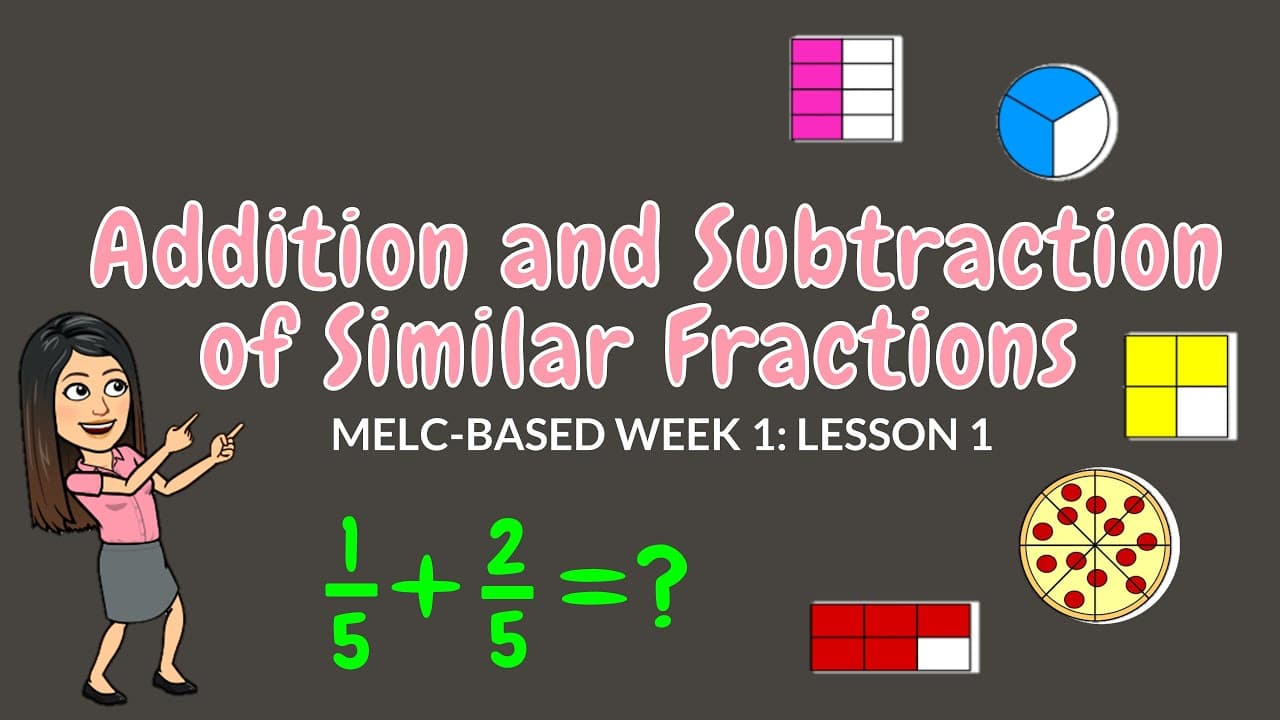
How to Add and Subtract Similar Fractions and Mixed Numbers

How to Add and Subtract Similar Fractions and Mixed Numbers

This comprehensive math tutorial guides students through the process of adding and subtracting similar fractions, moving from basic operations to more complex concepts like simplifying fractions and handling mixed numbers. The video utilizes a clear, step-by-step approach featuring a teacher avatar, Ms. Doria, who explains the rules of operations: adding or subtracting numerators while keeping the denominator constant, and then simplifying the result. Visual bar models are used extensively to provide a concrete representation of the abstract numerical concepts, helping students visualize why the denominator remains the same. The content covers a wide range of fraction skills, including identifying the Greatest Common Factor (GCF) to reduce fractions to their lowest terms, recognizing when a fraction equals one whole, and converting improper fractions into mixed numbers. The video progresses logically, starting with simple proper fractions, introducing subtraction, handling answers that result in improper fractions, and finally demonstrating how to add and subtract mixed numbers with similar fractional parts. For educators, this video serves as an excellent instructional tool for introducing or reviewing fraction operations. The combination of procedural rules and conceptual visual aids supports diverse learning styles. The video's segmented structure allows teachers to pause after each concept (basic addition, simplifying, improper fractions, mixed numbers) for practice and discussion. It also provides a built-in opportunity for error analysis, as one visual example contains a discrepancy that can be used to test student attentiveness and understanding.

Sheena DoriaSheena Doria

8mins 35s

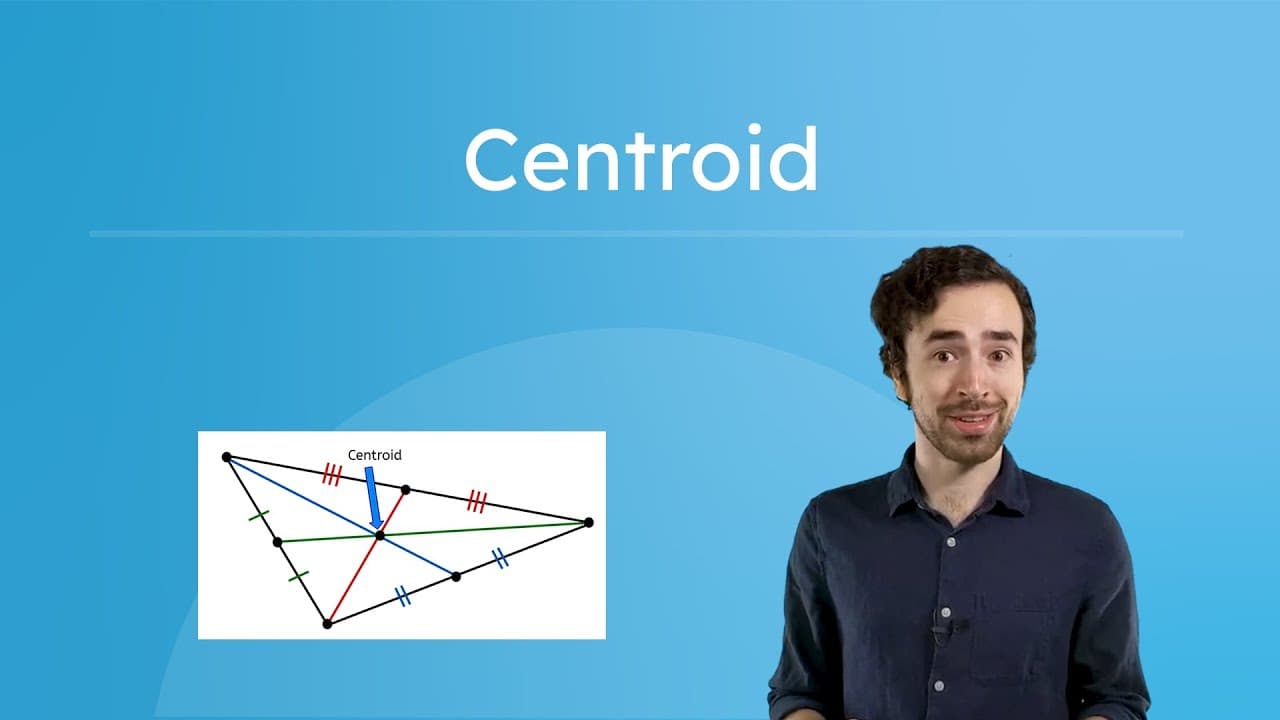
Video
Mastering the Centroid: Medians and Segment Ratios in Triangles

Mastering the Centroid: Medians and Segment Ratios in Triangles

This video provides a comprehensive geometry lesson focused on understanding the centroid of a triangle. The narrator, Justin, guides students through the fundamental concepts of medians—segments connecting a vertex to the midpoint of the opposite side—and explains how the intersection of these three medians forms the centroid. The video uses clear visual aids, including color-coded diagrams and tick marks, to illustrate these geometric properties. The core of the lesson explores the specific mathematical relationship created by the centroid. It details the 2:1 ratio property, explaining that the distance from the vertex to the centroid is always twice the distance from the centroid to the opposite side. The video also breaks this down into fractional parts, helping students visualize the segments as 1/3 and 2/3 of the entire median length. This conceptual framework is then applied to solving algebraic and numerical geometry problems. For educators, this video is an excellent resource for introducing or reinforcing triangle centers in a high school geometry curriculum. It is designed to be interactive, encouraging students to pause and take notes using color-coded pencils, and includes a "pause-and-try" example problem that scaffolds learning from simple identification to multi-step calculation. The lesson concludes by teasing a hands-on "pencil balance" activity, connecting the abstract geometric concept to the physical property of the center of gravity.

Miacademy & MiaPrep Learning ChannelMiacademy & MiaPrep Learning Channel

7mins 32s

Video
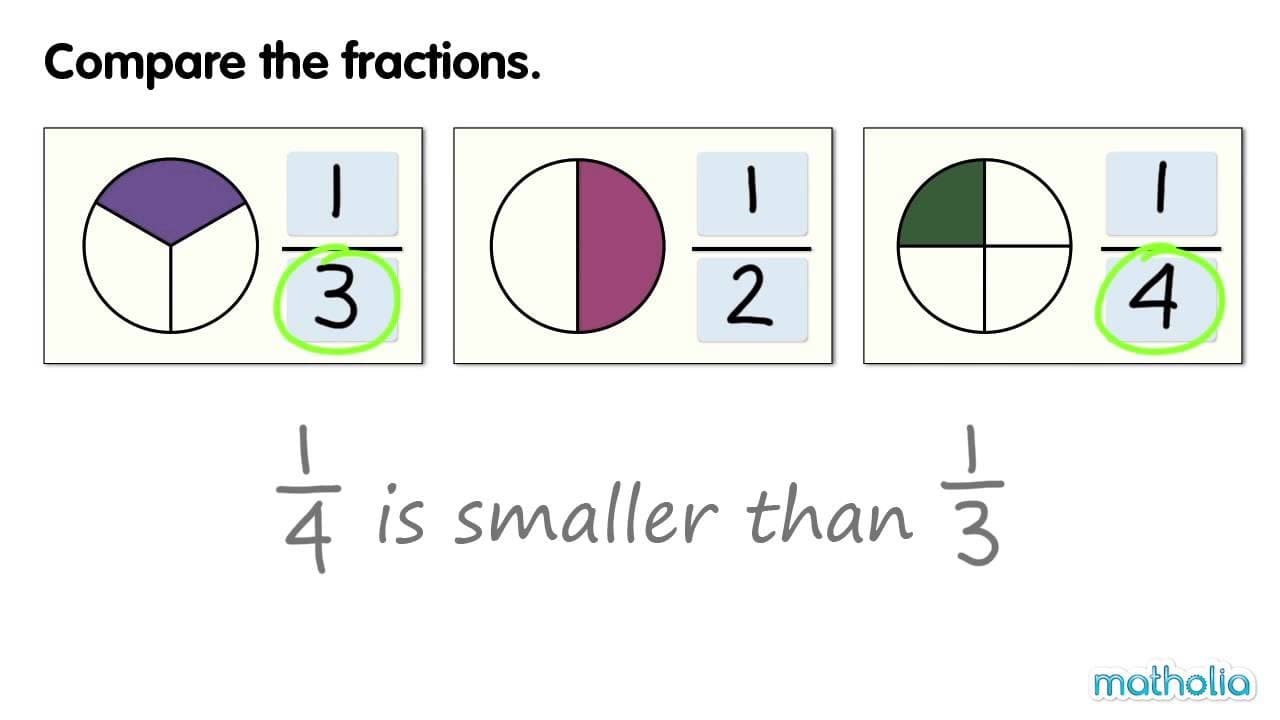
Comparing Unit Fractions: Why Bigger Denominators Mean Smaller Parts

Comparing Unit Fractions: Why Bigger Denominators Mean Smaller Parts

This educational video provides a clear, visual introduction to comparing and ordering unit fractions—fractions where the numerator is always one. Using circular models (like pie charts), the video demonstrates the counter-intuitive relationship between the denominator and the size of the fraction. It explains that as the denominator (the bottom number) gets larger, the size of each piece gets smaller because the whole is being divided into more parts. The content is structured around two main examples. First, it compares commonly used fractions like one-half, one-third, and one-quarter. Then, it moves to fractions with larger denominators such as one-fifth, one-ninth, and one-tenth. In both instances, the video guides viewers through identifying the fractions visually, comparing their denominators, and then arranging them from greatest to smallest using animated characters to scaffold the ordering process. For educators, this video is an excellent resource for addressing the common student misconception that a larger denominator means a larger number. By explicitly showing the visual difference alongside the numerical comparison, it bridges the gap between concrete understanding and abstract rules. It serves as a perfect introduction to Common Core standards regarding fraction comparison or as a remediation tool for students struggling with the inverse relationship in fraction values.

MatholiaChannelMatholiaChannel

3mins 19s

Video
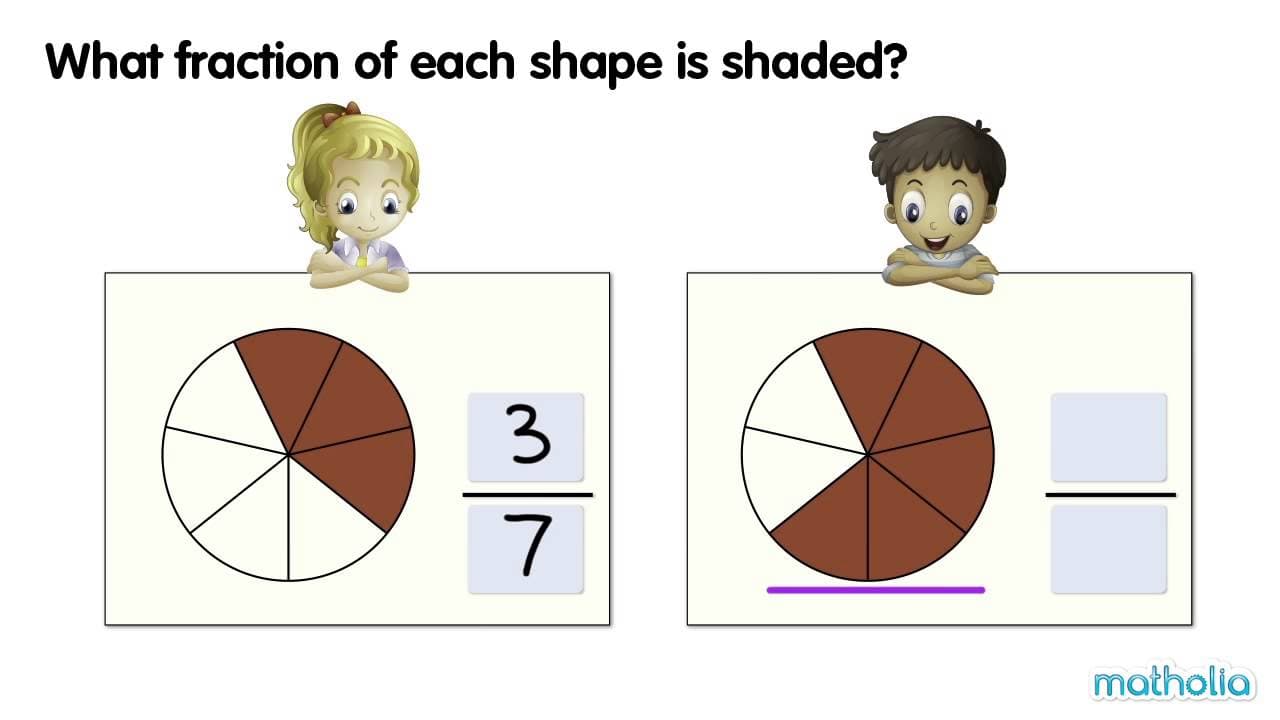
Identifying Like Fractions Using Shapes

Identifying Like Fractions Using Shapes

This educational video provides a clear, step-by-step visual demonstration of how to identify and name fractions using geometric shapes. Through three distinct sets of examples, the video introduces the concept of "like fractions"—fractions that share the same denominator—by displaying pairs of identical shapes divided into the same number of equal parts but with different amounts shaded. The content moves from simple circles divided into fifths, to circles divided into sevenths, and finally to squares divided into ninths. For each example, the narrator guides the viewer to first count the total number of equal parts to determine the denominator, and then count the shaded parts to find the numerator. The corresponding numbers are animated on screen to reinforce the connection between the visual representation and the numerical fraction. This video is an excellent resource for early elementary classrooms introducing fractions or solidifying the concept of parts of a whole. It effectively models the thinking process required to identify fractions ("How many parts in total? How many are shaded?") and visually scaffolds the concept of common denominators, preparing students for comparing and ordering fractions. Its pacing allows for interactive pausing, making it ideal for whole-class choral response or individual whiteboard practice.

MatholiaChannelMatholiaChannel

1min 45s

Video
Identifying Equal Parts to Understand Fractions

Identifying Equal Parts to Understand Fractions

This educational video serves as an interactive walkthrough of foundational geometry and fraction concepts, focusing specifically on identifying "thirds" and "fourths." Using a digital exercise interface, the narrator guides viewers through multiple choice problems where they must select shapes (circles, squares, and rectangles) that are correctly partitioned into specific fractional parts. The video methodically analyzes why certain shapes fit the criteria while others do not. The central theme of the video is the critical distinction between simply dividing a shape into parts versus dividing it into *equal* parts. The narrator repeatedly emphasizes that for a shape to represent fourths or thirds, it must be split into sections of equal area. This addresses a common primary-level misconception where students count the number of parts without verifying their size equality. For educators, this video is an excellent tool for reinforcing the concept of equal shares, a prerequisite for understanding fractions. It provides clear, visual examples of non-examples (unequal parts) alongside correct examples, helping students develop the visual discrimination skills needed for geometry and early fraction arithmetic. It is ideal for introducing partitioning shapes in 1st and 2nd grade math curriculums.

Khan AcademyKhan Academy

3mins 4s