Develops proficiency in estimating and measuring length, area, volume, and mass using standard units and unit conversions. Integrates time, money, angle measurement, and data classification through counting and arithmetic applications.
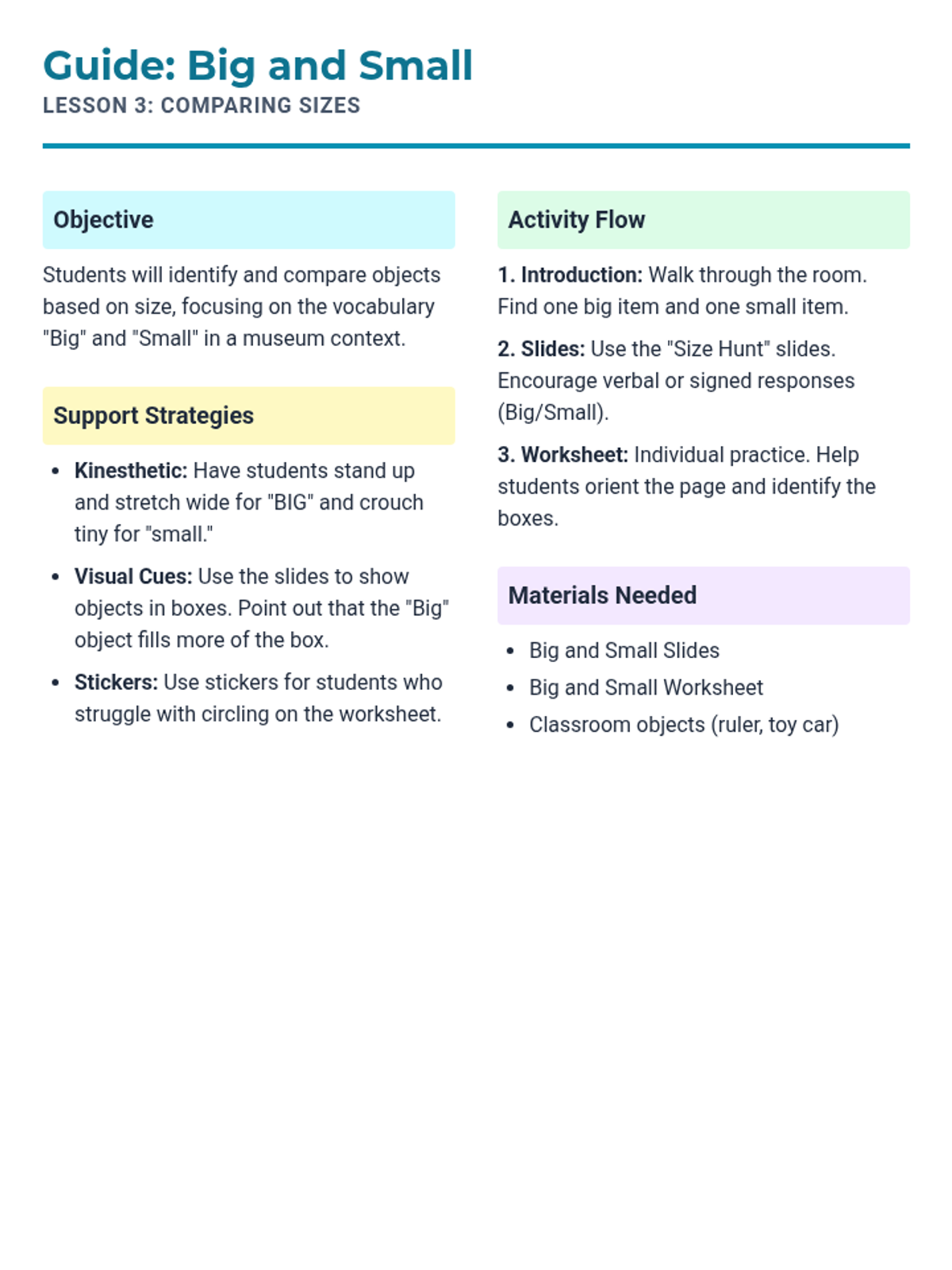
A facilitation guide for teaching size comparison, focusing on pre-field trip vocabulary and kinesthetic learning strategies for special needs preschool.
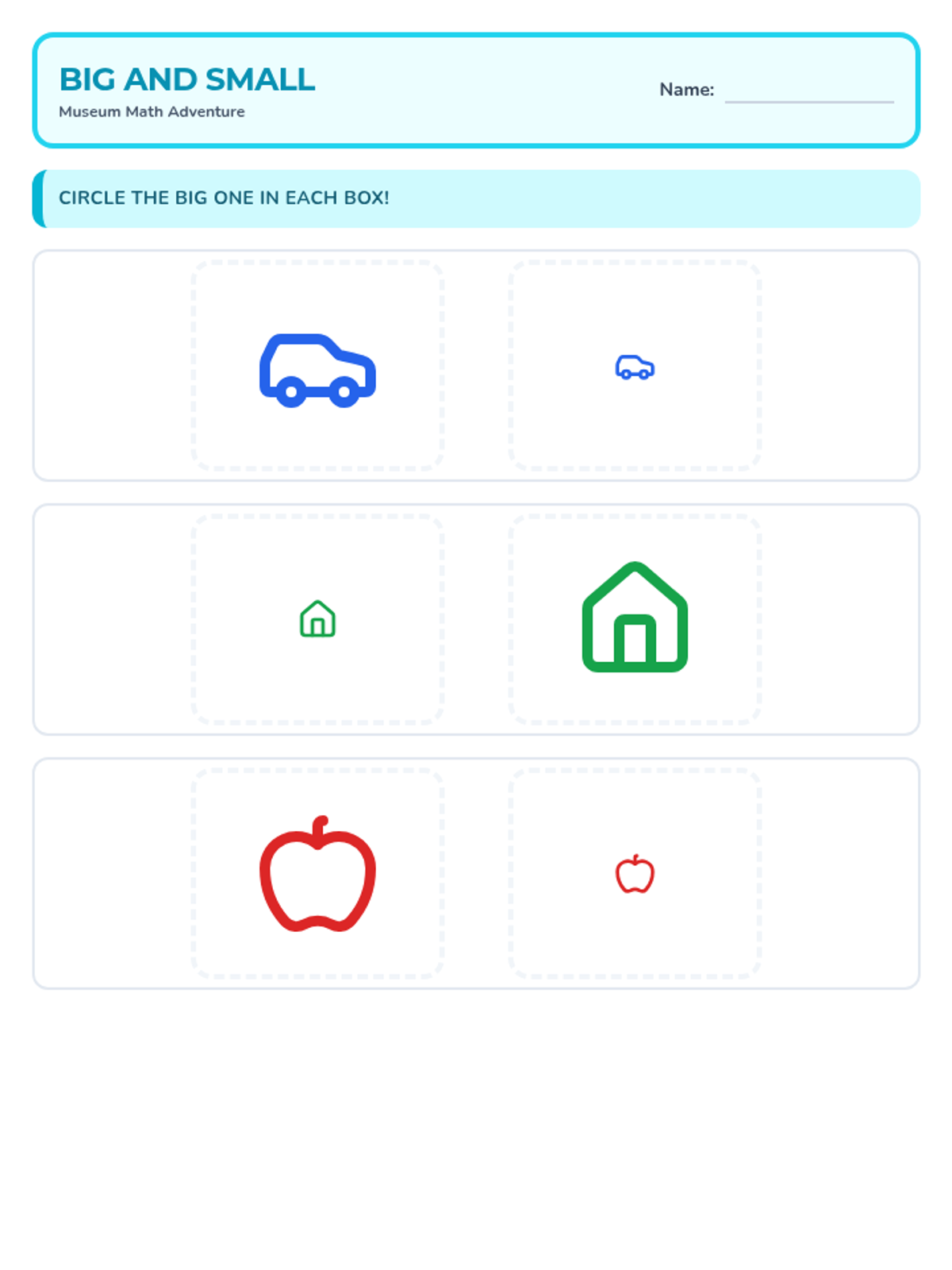
A size comparison worksheet where students circle the larger of two museum-themed objects, designed with clear, high-contrast icons for preschool accessibility.
A visual slide deck focusing on size comparison using museum-themed items (trucks, fruit, blocks) to develop vocabulary and discrimination skills for preschool students.
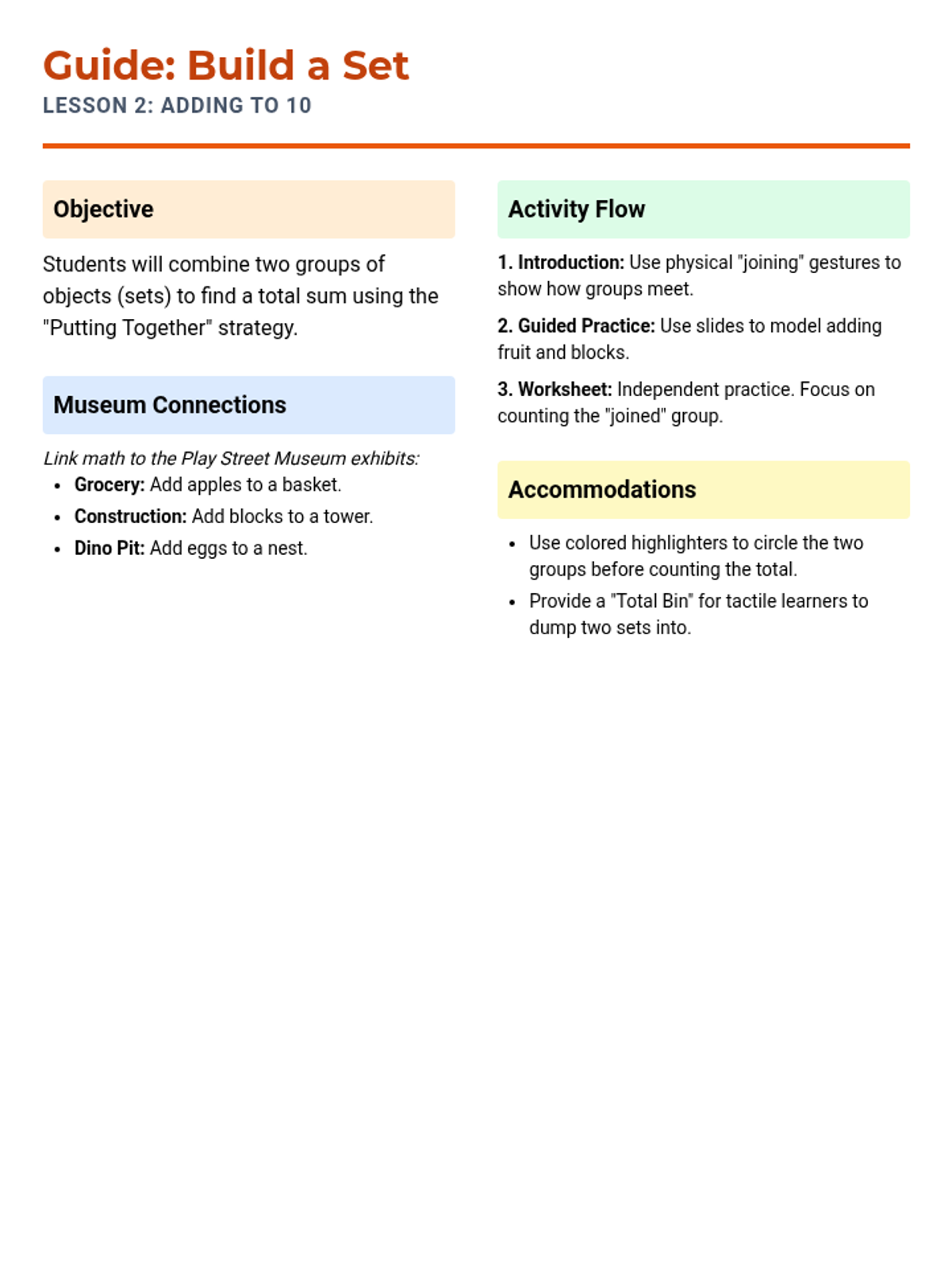
A facilitation guide for teaching simple addition, featuring the 'Putting Together' strategy and sensory-based accommodations for special needs learners.
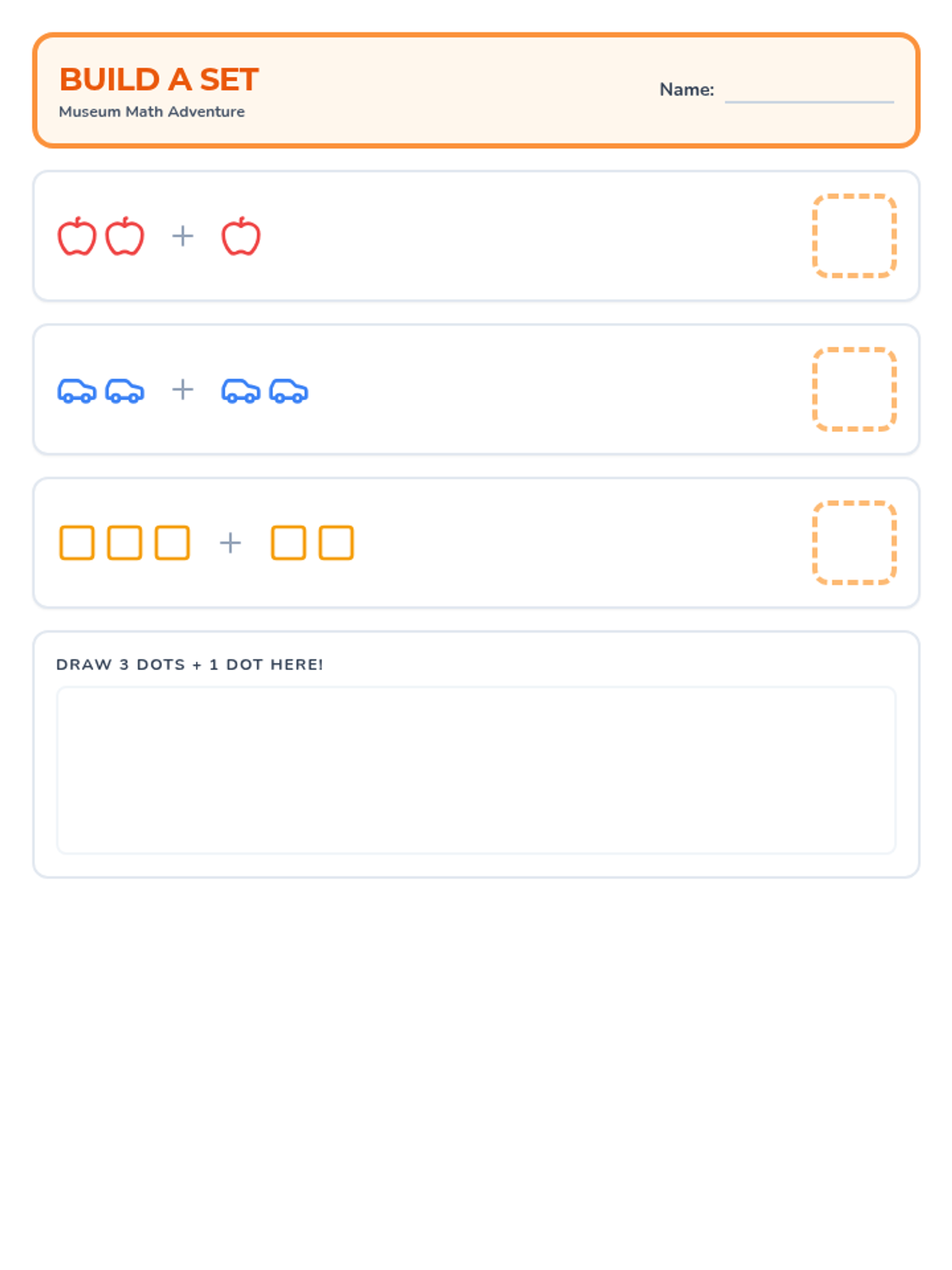
An addition worksheet with visual prompts and large work areas for preschool students to practice combining groups of museum-themed objects.
Visual addition slides using museum-themed objects (fruit, blocks) to teach the concept of 'putting together' sets up to 10 for preschool special education.
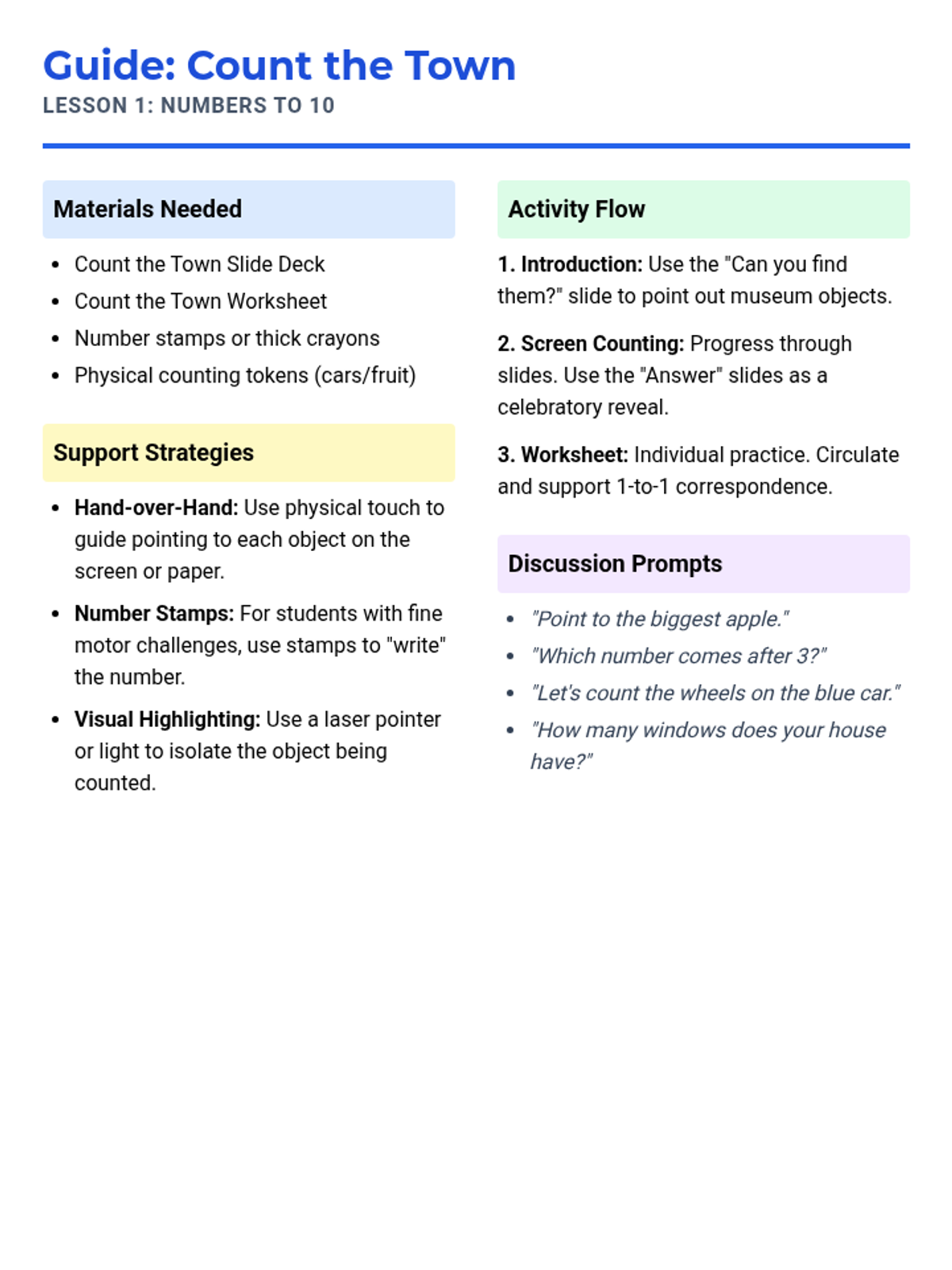
A detailed teacher's guide with specific accommodations for special needs students, activity flow, and discussion prompts for teaching numbers to 10.
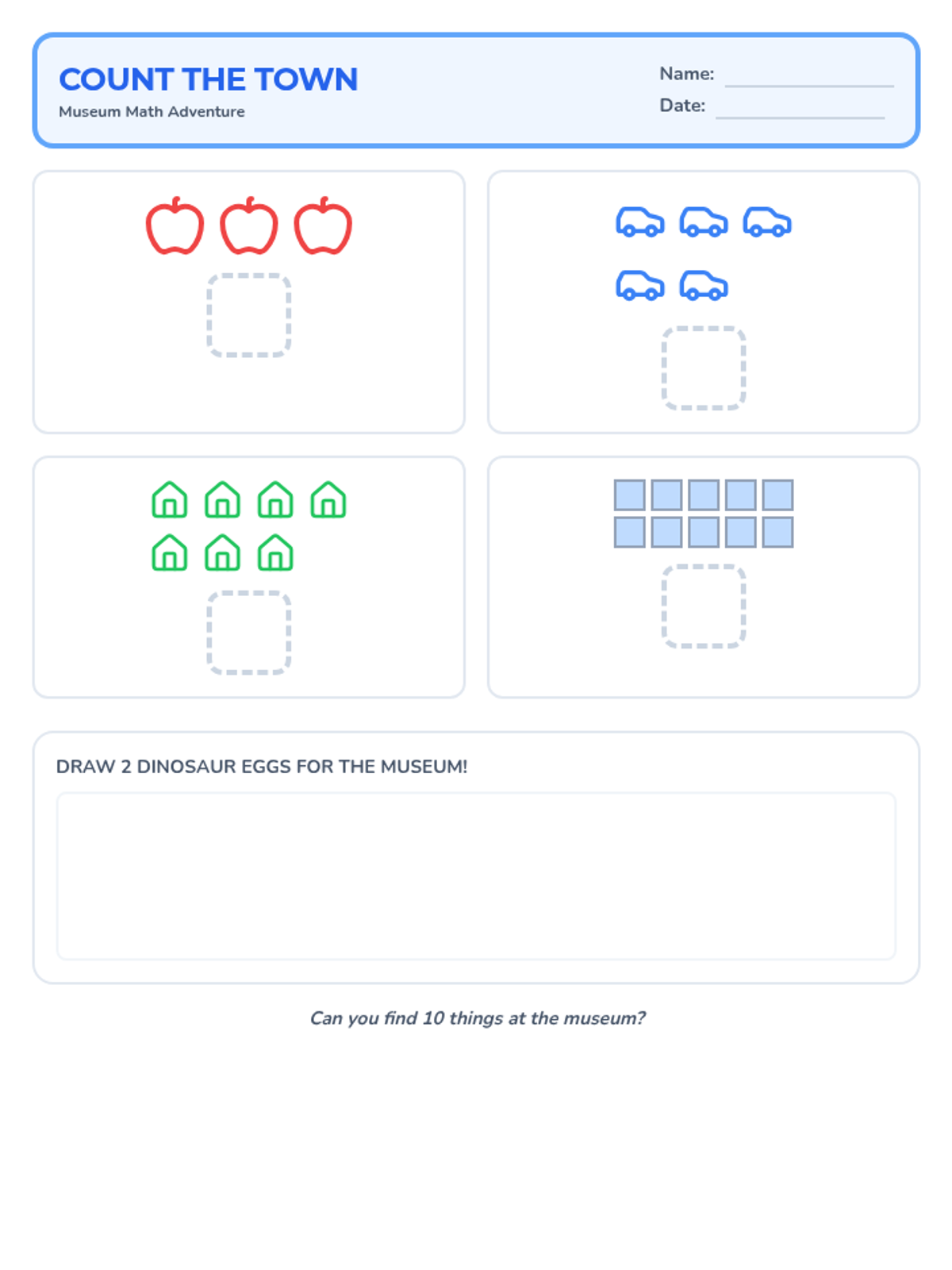
A clean, accessible worksheet with large icons and dedicated writing boxes for preschool students to practice counting items up to 10.
A brightly colored slide deck featuring large icons and high-contrast numbers to help preschool students with special needs practice counting objects from 1 to 10 in a museum town setting.
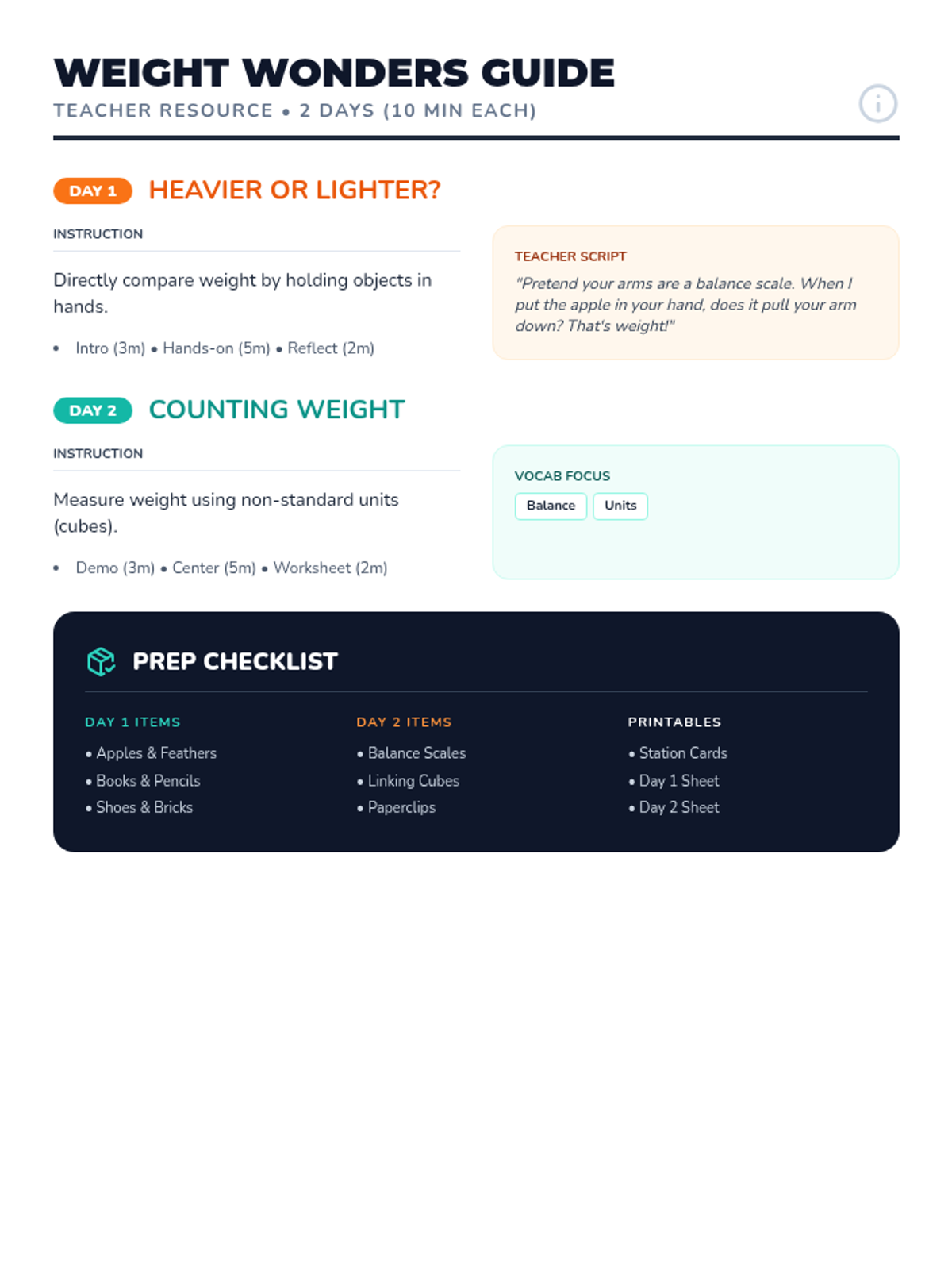
A teacher facilitation guide for the 2-day weight sequence. Revised with better layout management to ensure the checklist stays together on one page.
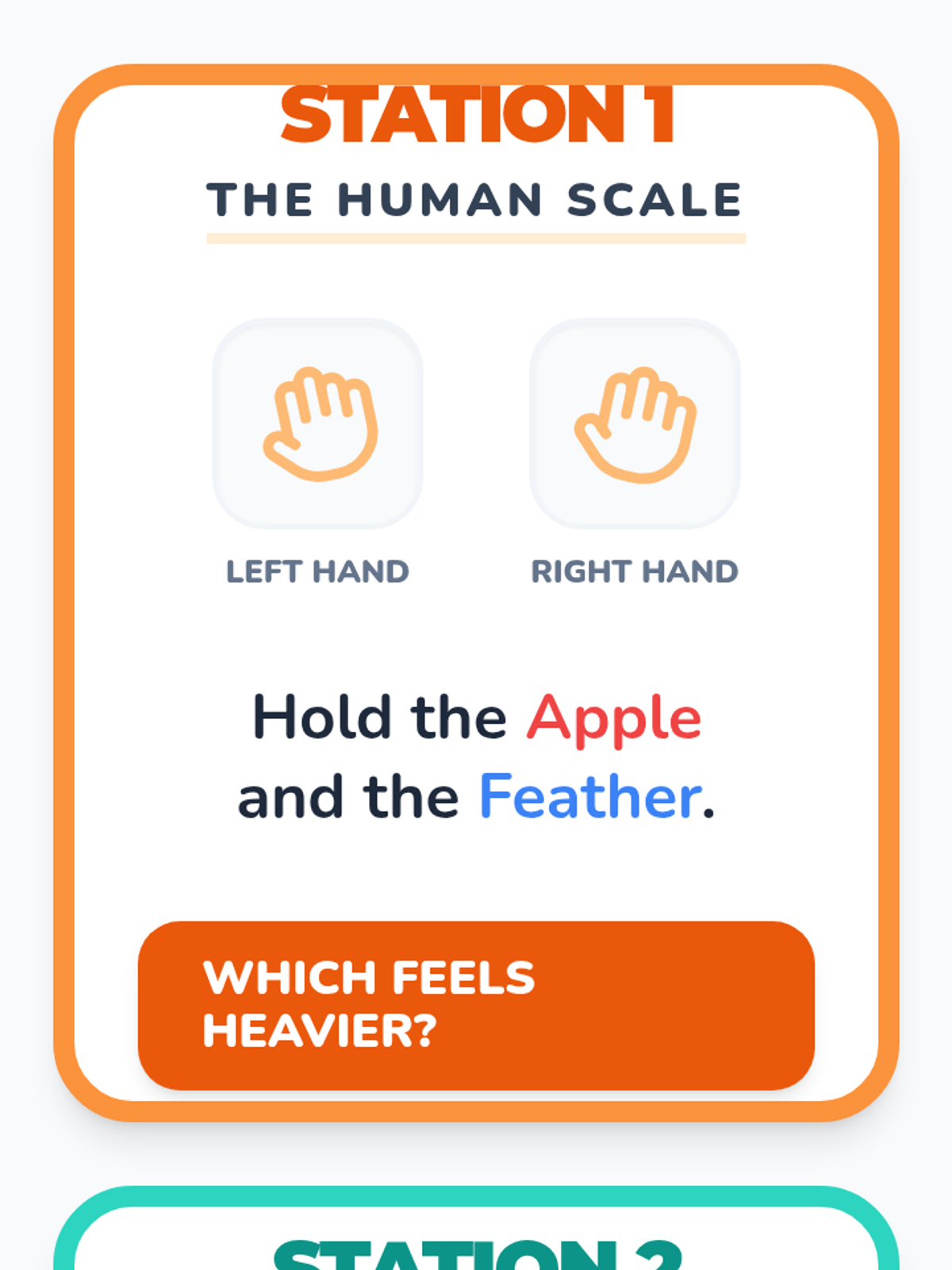
Large, colorful station cards for hands-on activities. Revised with one card per page and better layout for visibility and durability.
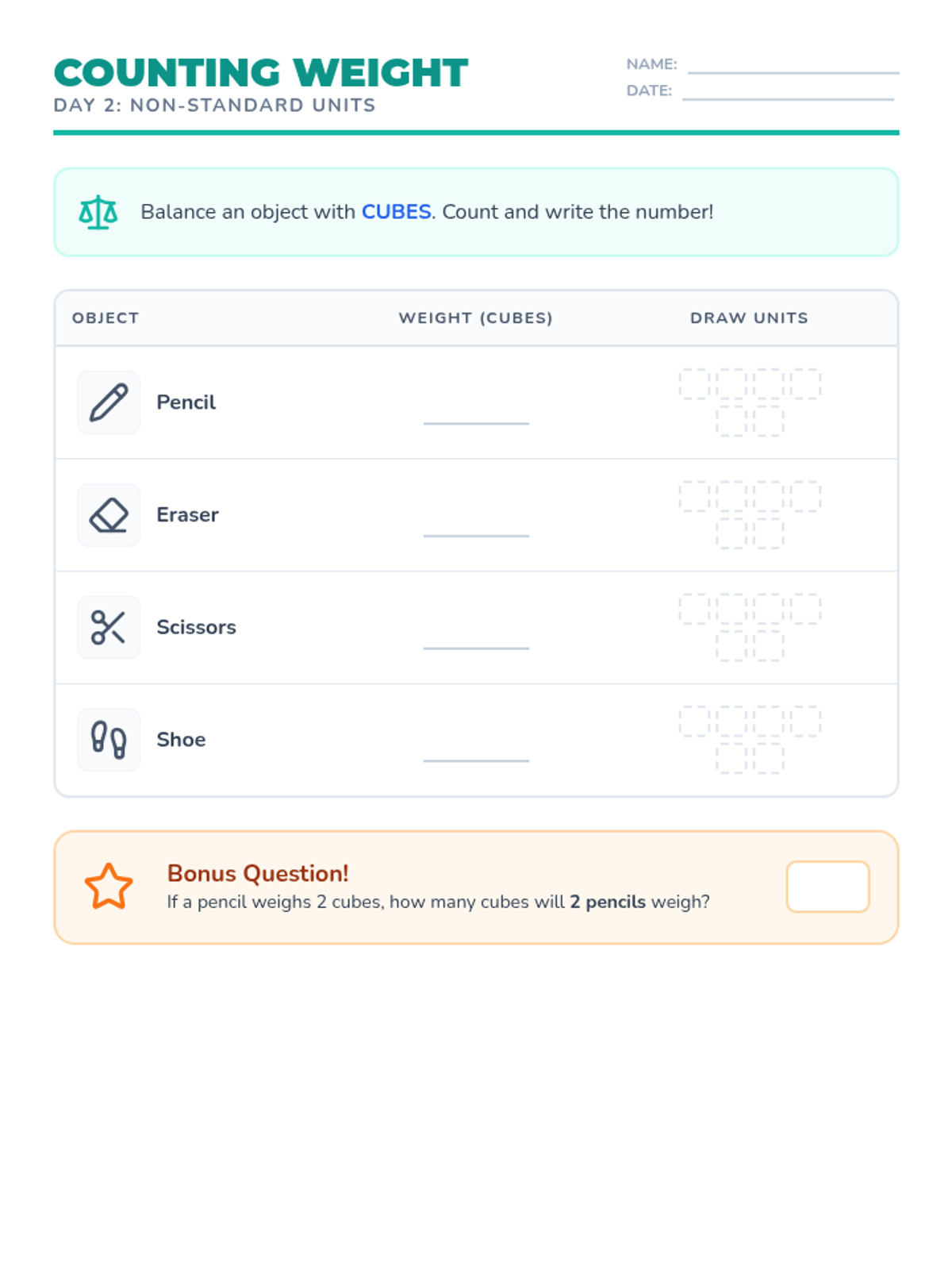
A recording sheet for Day 2 where students use a balance scale to measure objects using non-standard cube units. Revised for better layout, dashed guides, and page-break prevention.
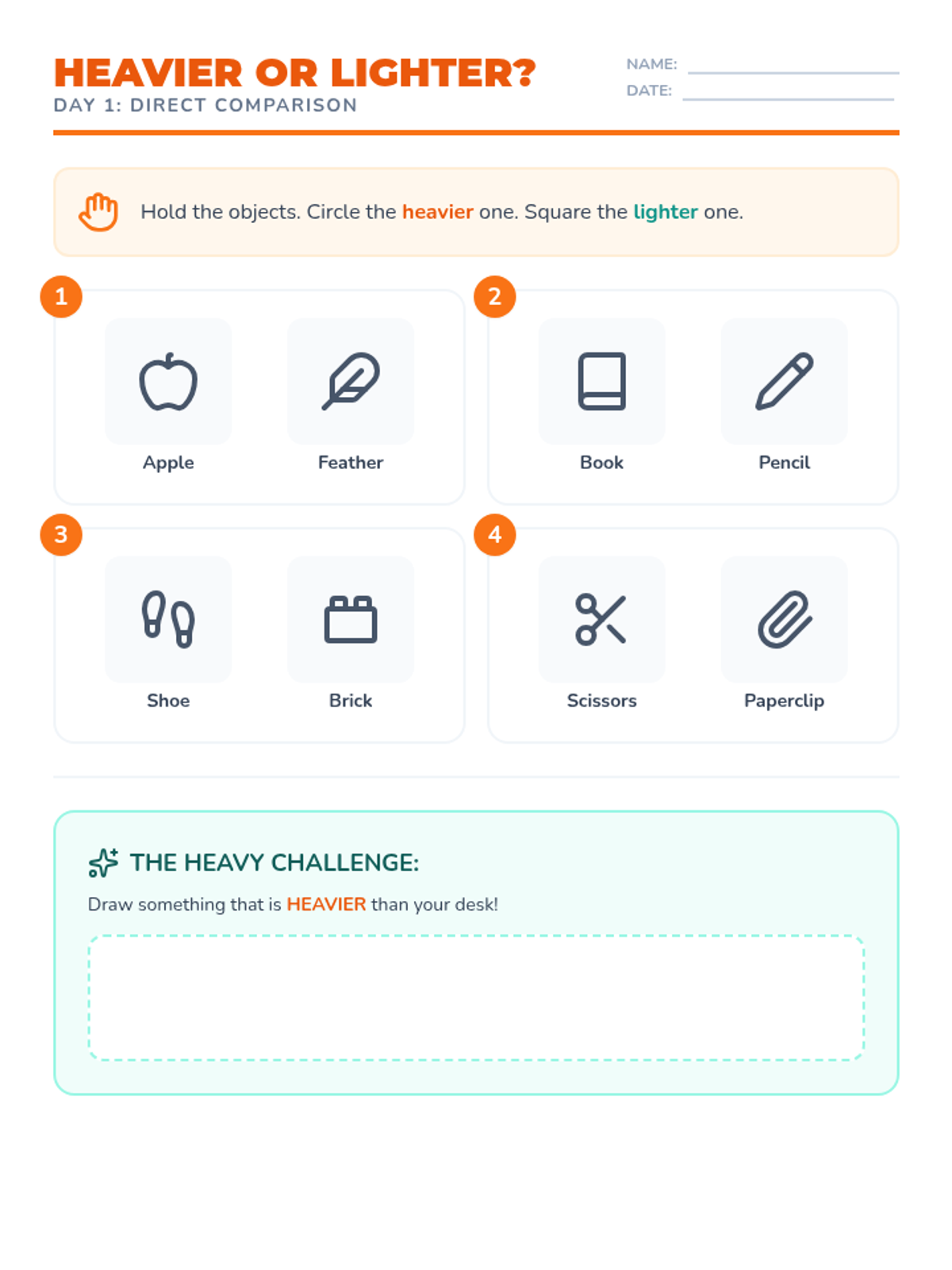
A recording sheet for Day 1 where students compare pairs of objects by holding them. Revised for better layout, icon contrast, and page-break prevention.
A visual slide deck for a two-day lesson on weight, covering direct comparison (heavier/lighter) and measuring with non-standard units using balance scales. Revised to include a better visual for unbalanced scales.
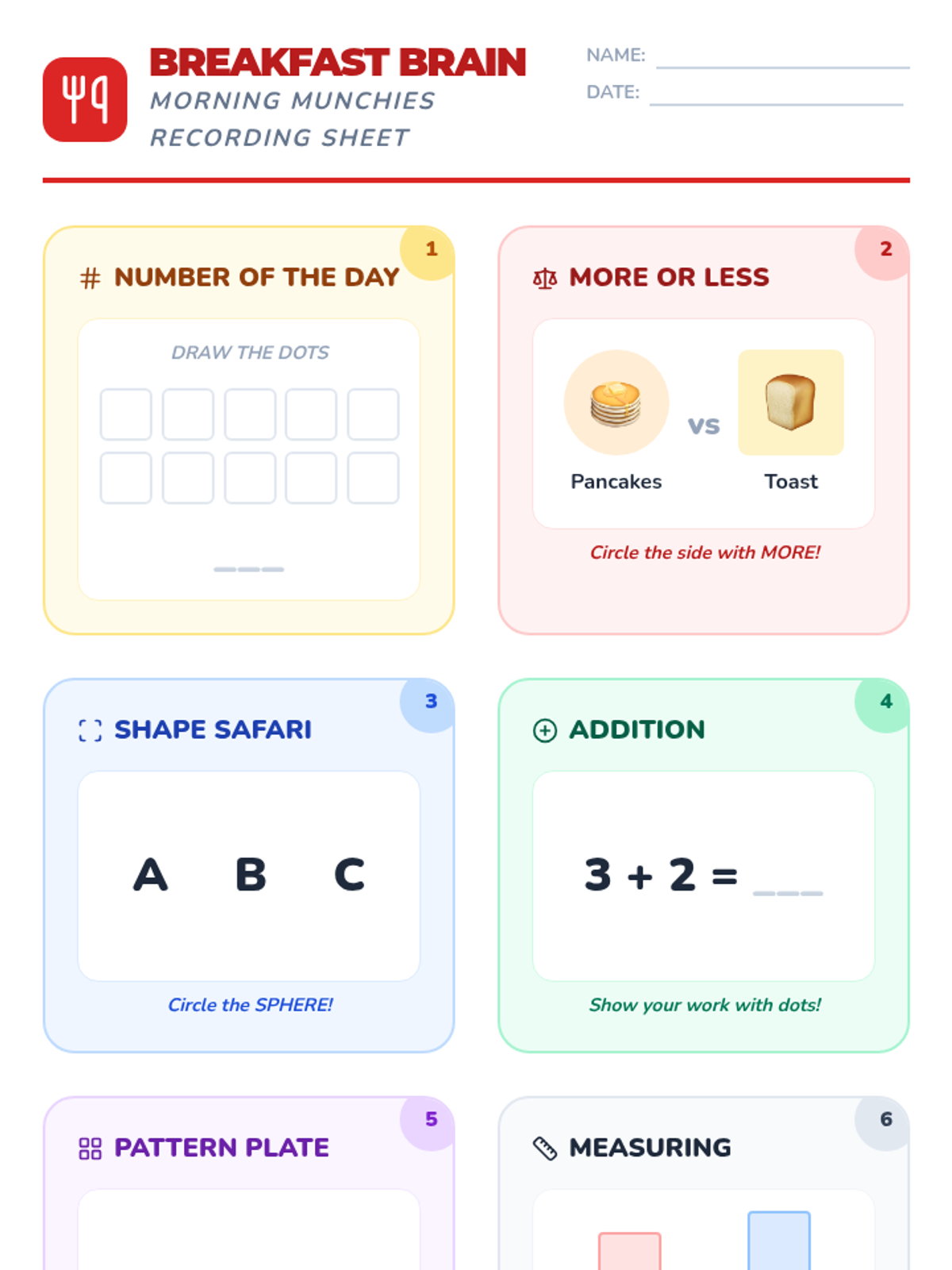
A student-facing recording sheet for the Morning Math Munchies routine, designed with visual icons and ample workspace for Kindergarten students to record their answers while eating.
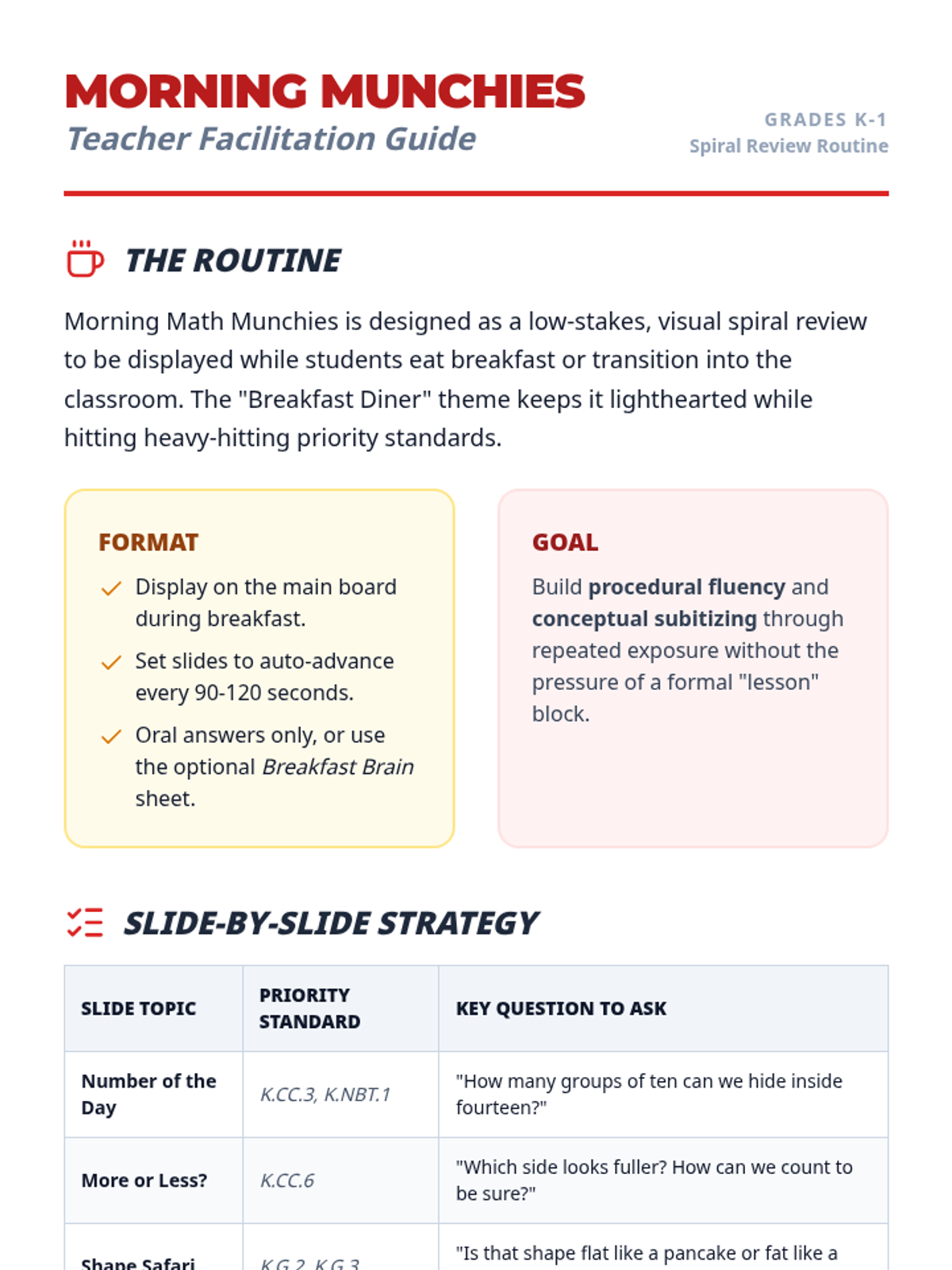
A facilitation guide for teachers to effectively use the Morning Math Munchies slide deck during breakfast or morning routines, including standard alignment and engagement strategies.
A visually engaging 16:9 slide deck for Kindergarten math spiral review, featuring a 'Breakfast Diner' theme. It covers priority standards like teen numbers, counting, addition, shapes, patterns, and measurement.
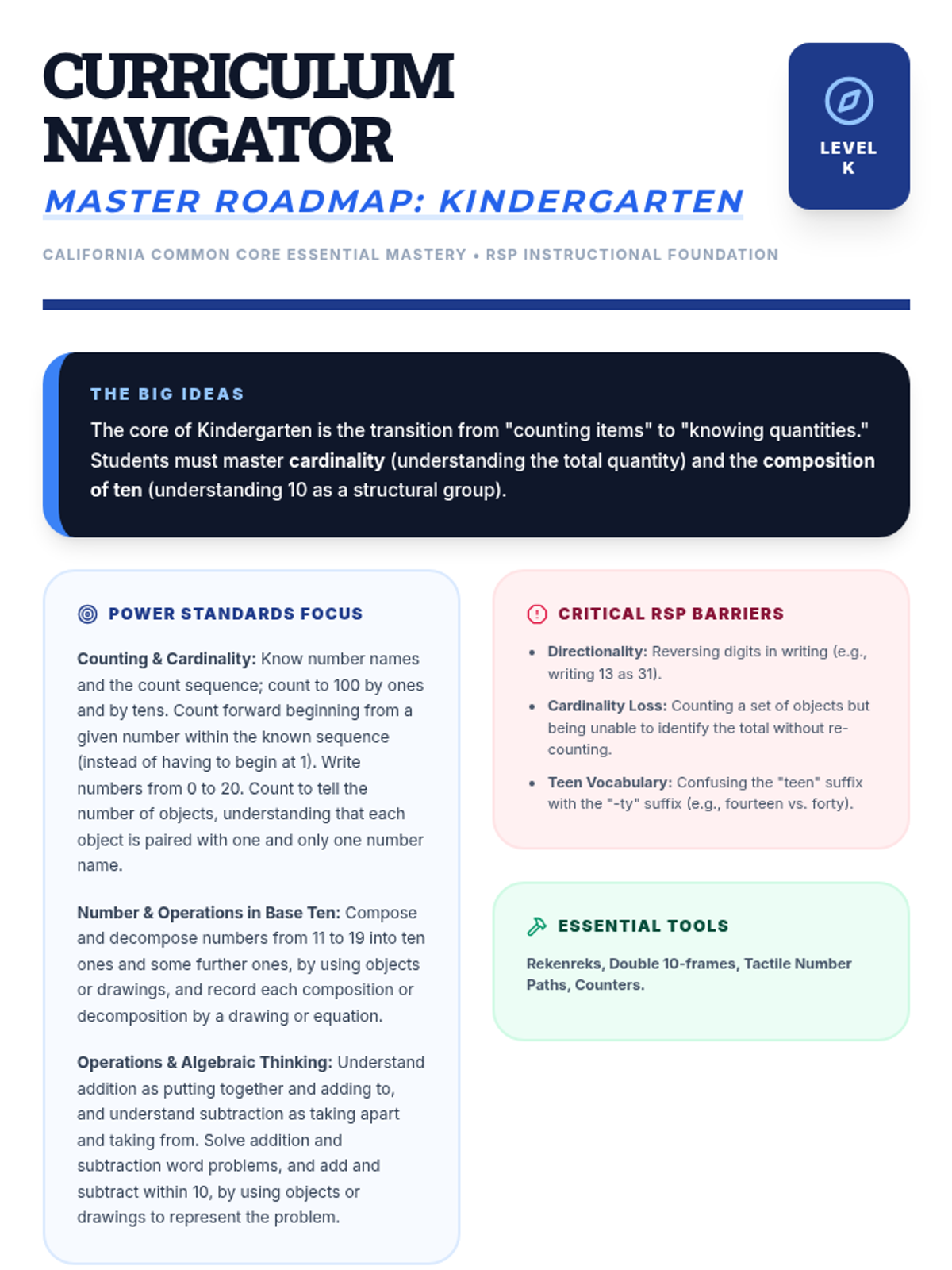
An ultra-comprehensive 7-page Master Map for K-5 math curriculum planning in an RSP setting. It organizes California Common Core Power Standards by grade level (one page per grade), providing deep dives into big ideas with full descriptive language (no shorthand), specific critical barriers, essential manipulatives, and measurable IEP goal clusters. All mentions of the word "bible" have been removed. The vertical progression thread maps and gap analysis matrix have been removed. The word "node" has been replaced with "Level" throughout.
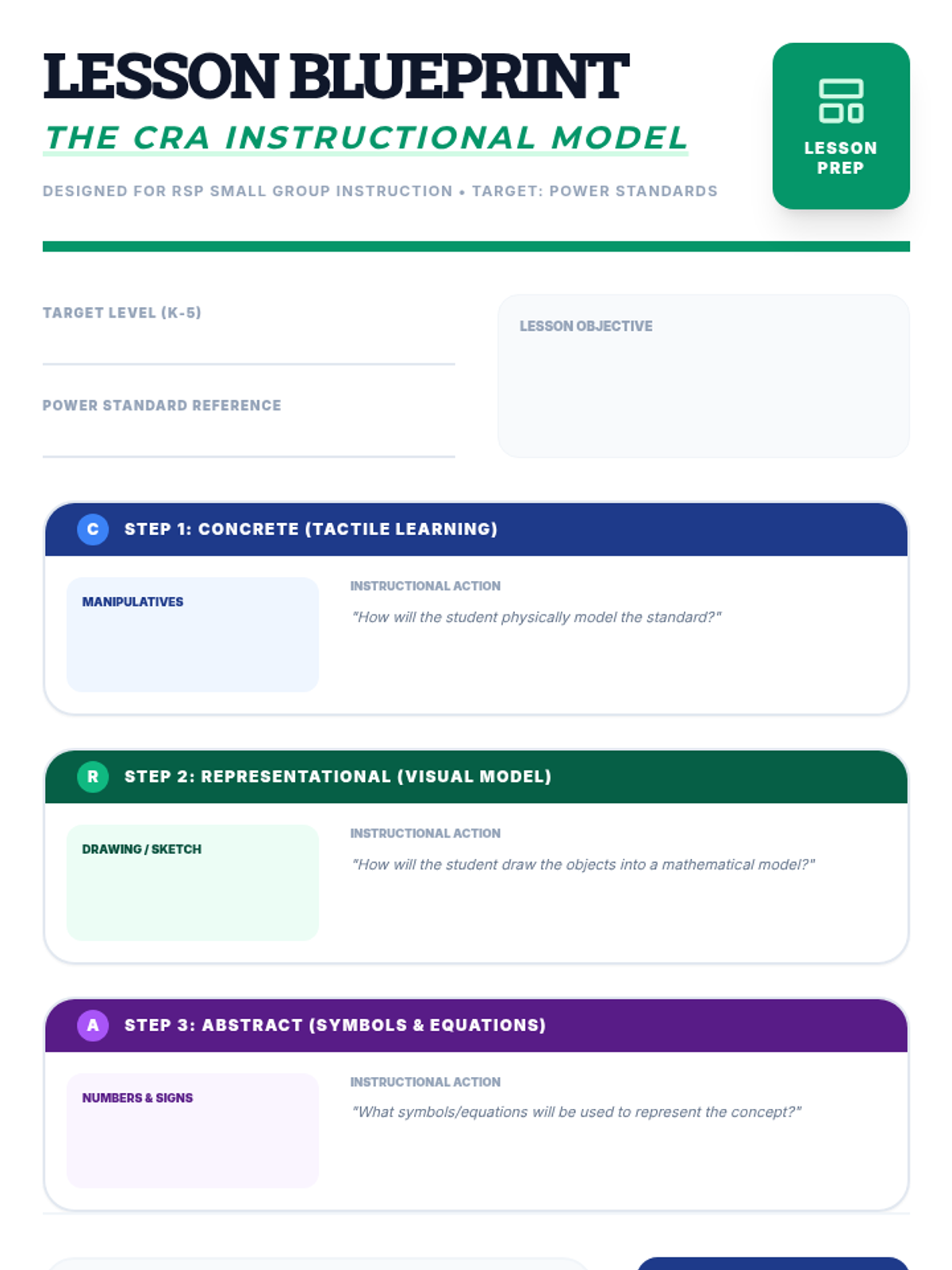
A planning template for RSP teachers following the Concrete-Representational-Abstract (CRA) instructional model. It provides a structured workspace to plan small-group interventions for math Power Standards, ensuring students move through tactile and visual stages before symbolic computation.
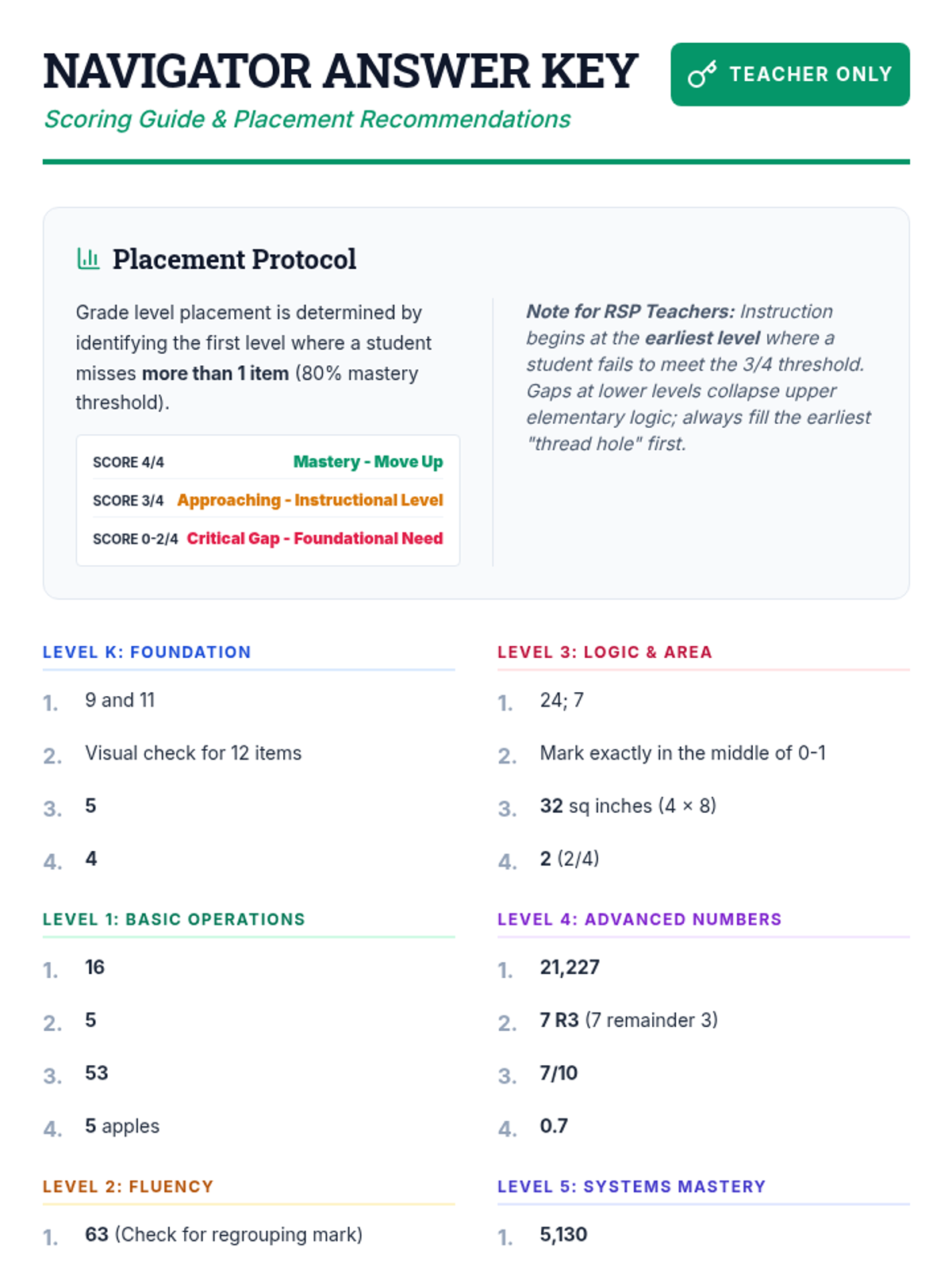
A teacher answer key and scoring guide for the Math Level Navigator Exam, renumbered to match the level-based item scheme (1-4 per level) and mastery criteria for grade placement.
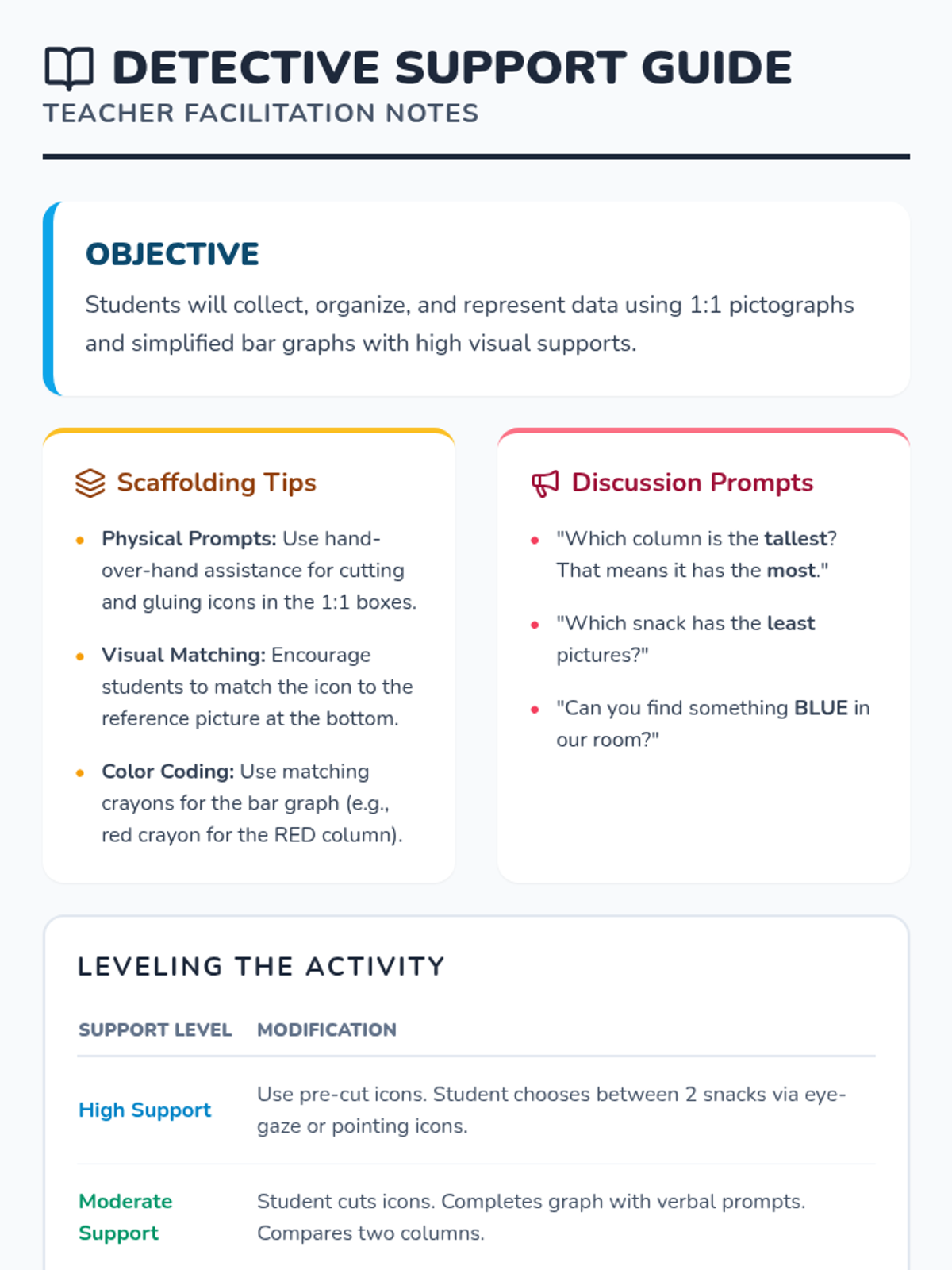
A teacher support guide providing scaffolding strategies, discussion prompts, and level-based modifications for the graphing activities. Includes tips for IEP alignment and physical accessibility.
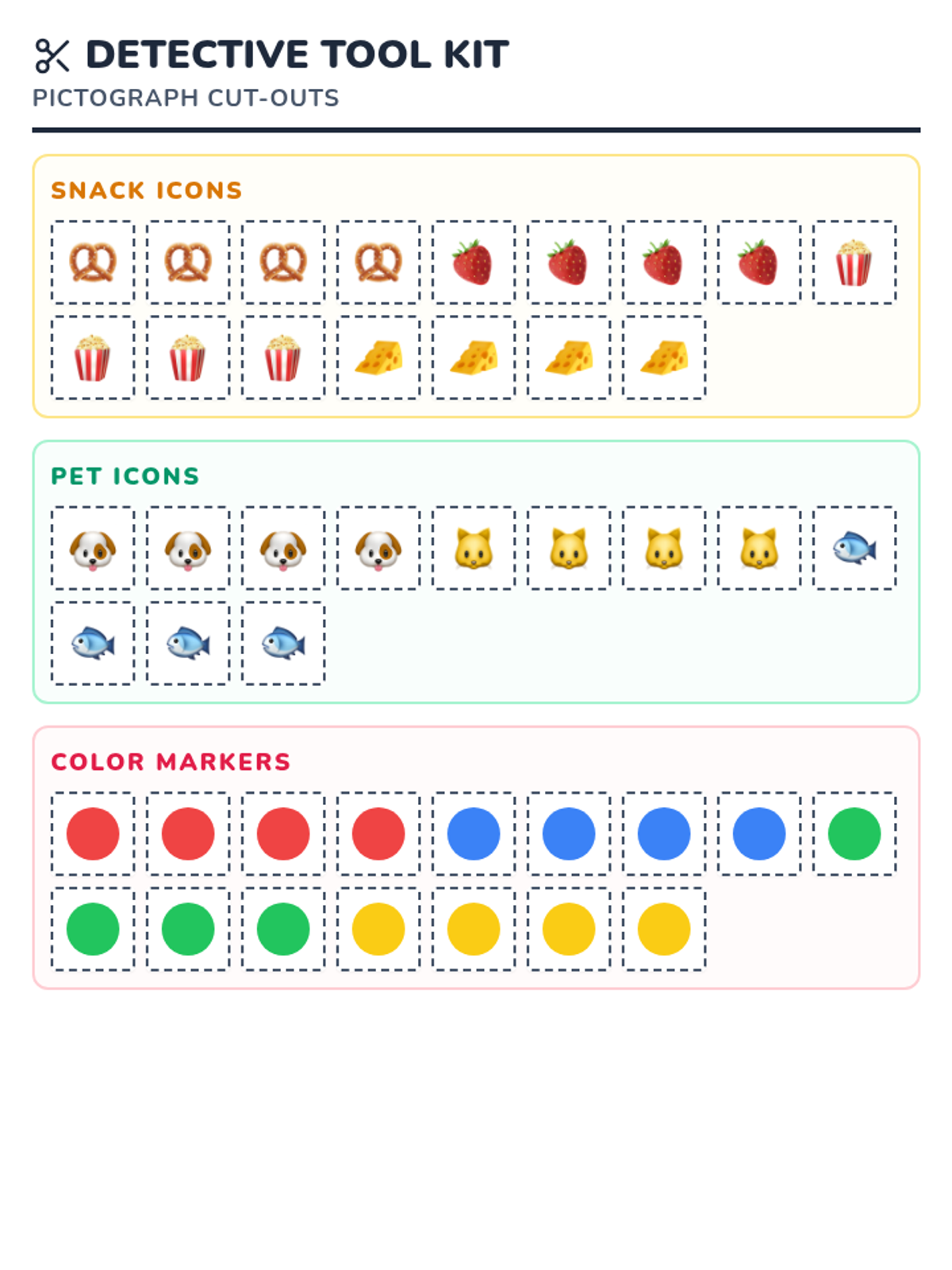
A collection of cut-out icons (snacks, pets, and colors) to be used with the pictograph activities. Designed with large dotted borders and high contrast to assist students with developing fine motor and visual skills.
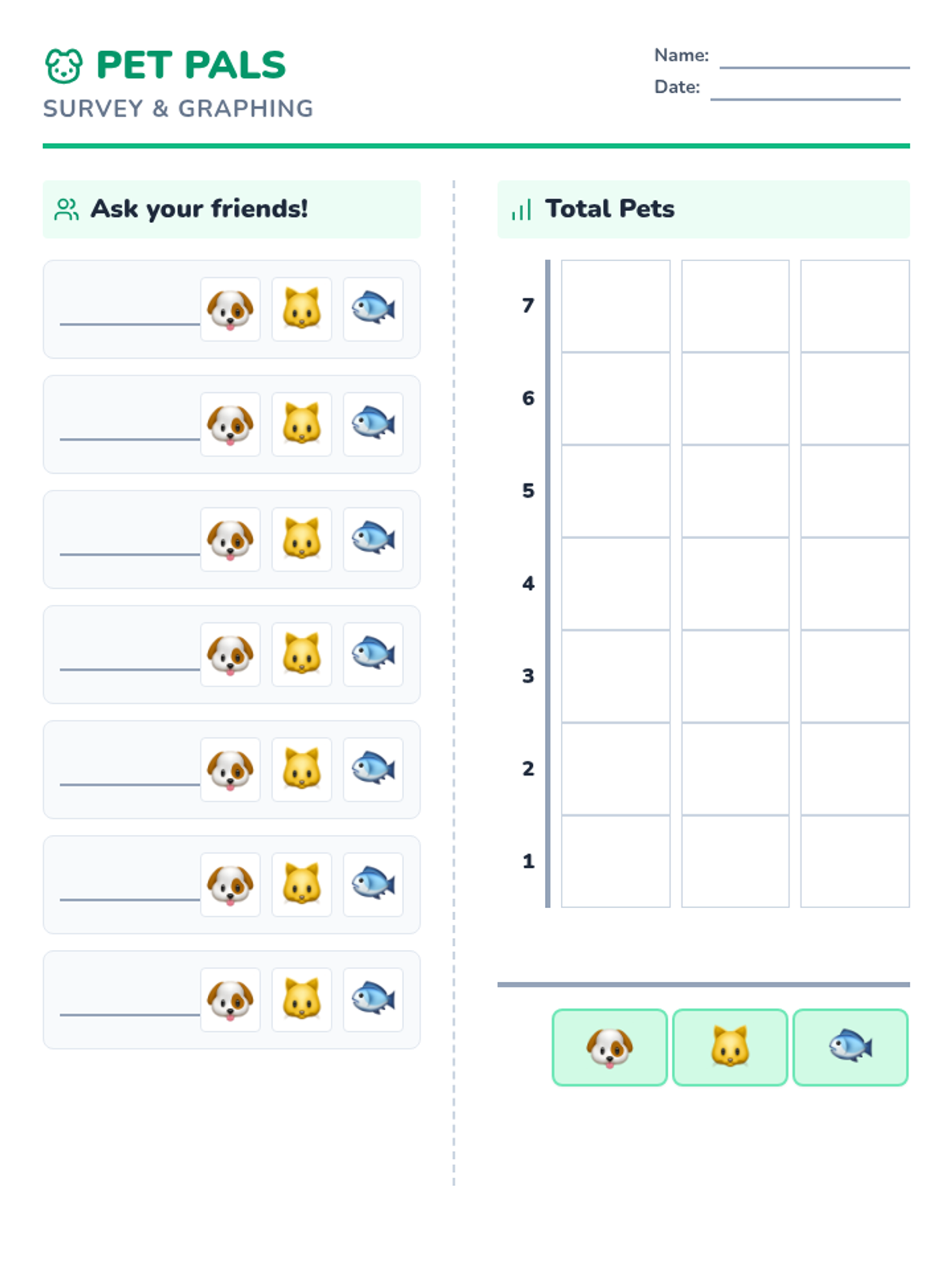
A two-part student activity sheet for pet preferences. Includes a survey section for peer interaction and a corresponding graphing area with visual supports for dogs, cats, and fish.
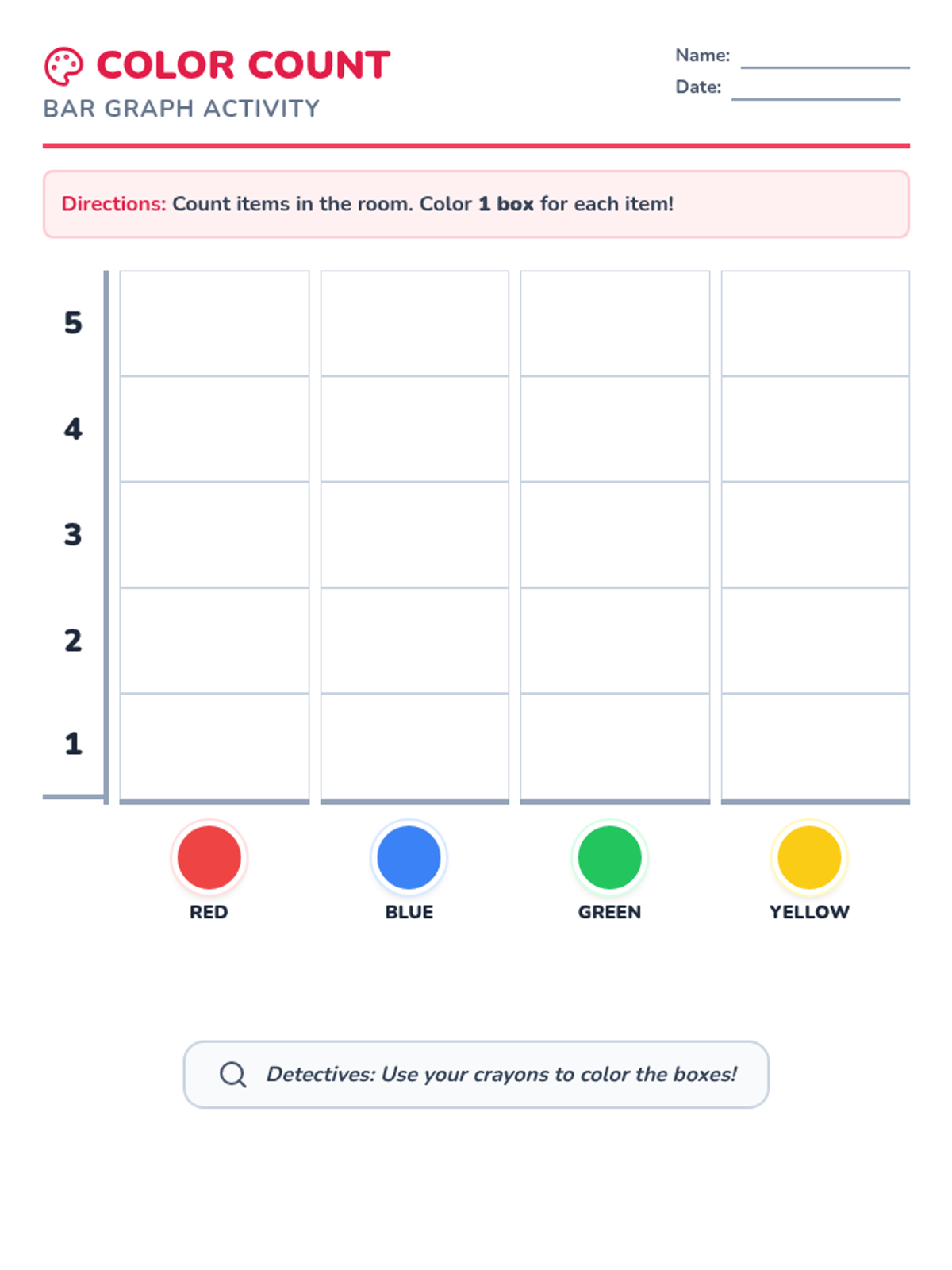
A bar graph worksheet for identifying and counting classroom colors (Red, Blue, Green, Yellow). Includes large grid boxes for coloring and visual color-swatch labels to support non-readers.
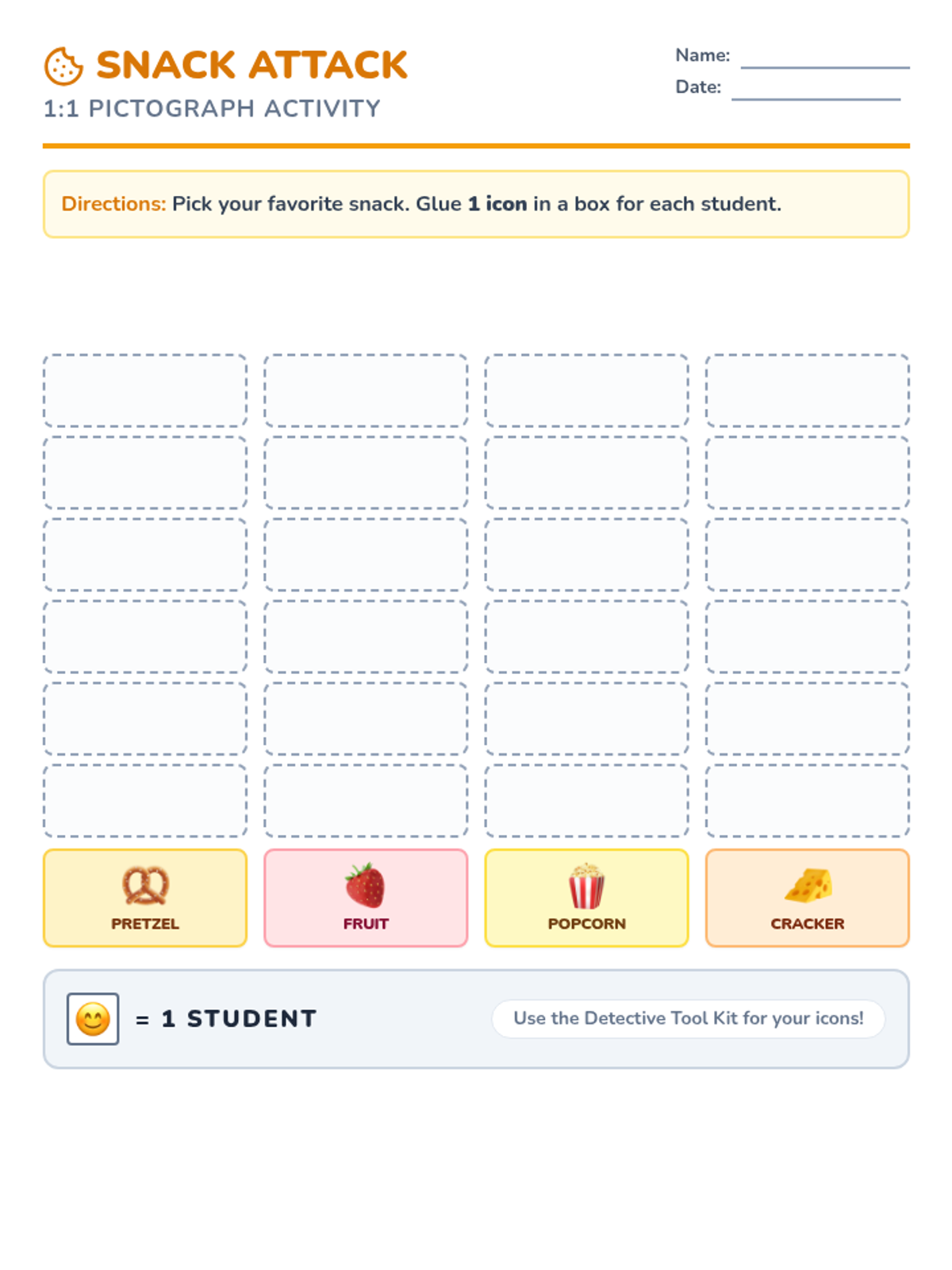
A 1:1 pictograph worksheet for student snack preferences. Features large, high-contrast columns with designated spaces for glue-on icons and clear emoji supports for pretzels, fruit, popcorn, and crackers.
A 5-slide visual presentation introducing graphing concepts with 1:1 pictographs and bar graphs using snack, color, and pet themes. Includes large icons and clear, simplified explanations for Essential Skills students.
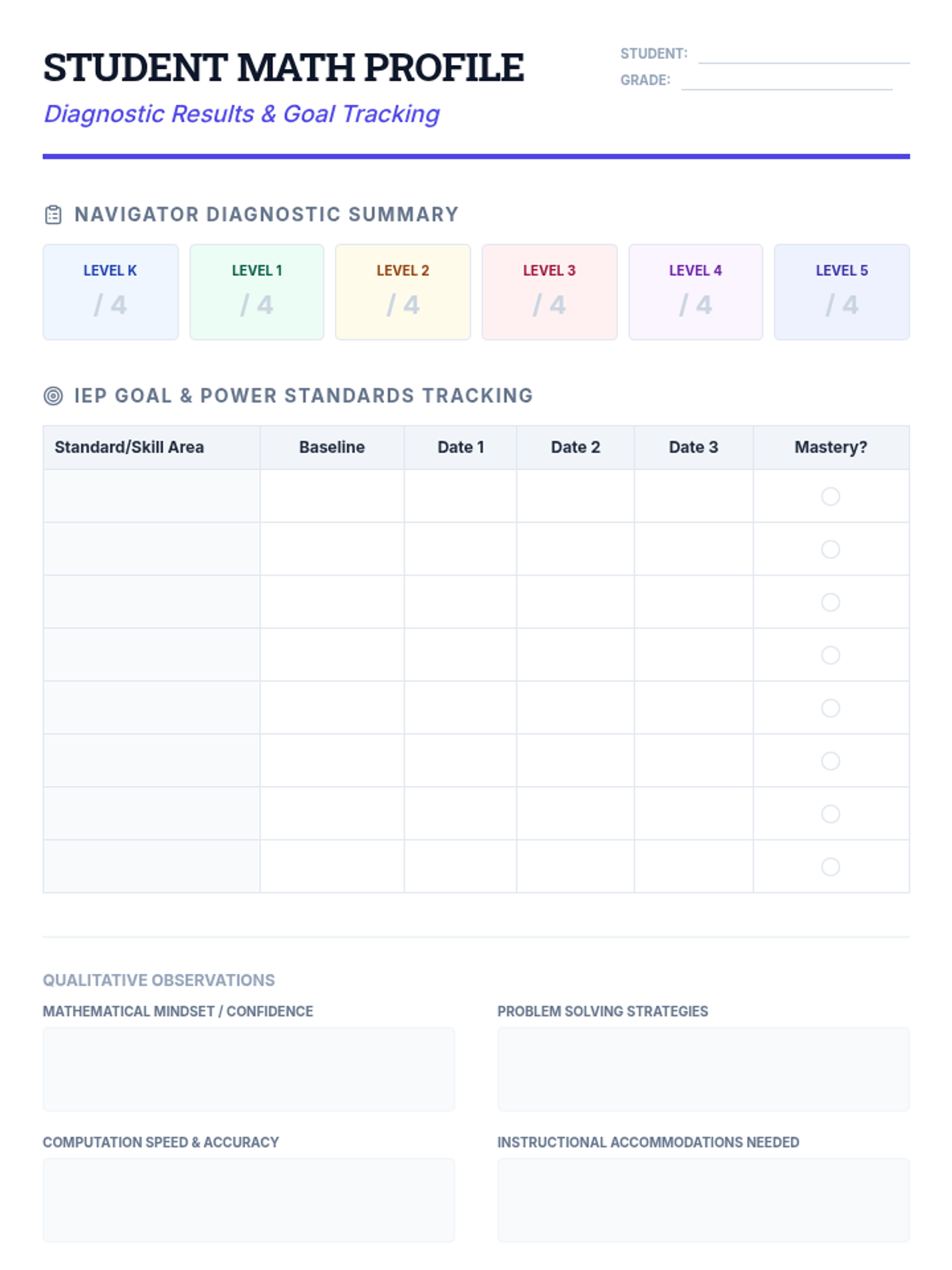
A student-specific tracking document for recording diagnostic results and monitoring mastery of California Math Power Standards over time.
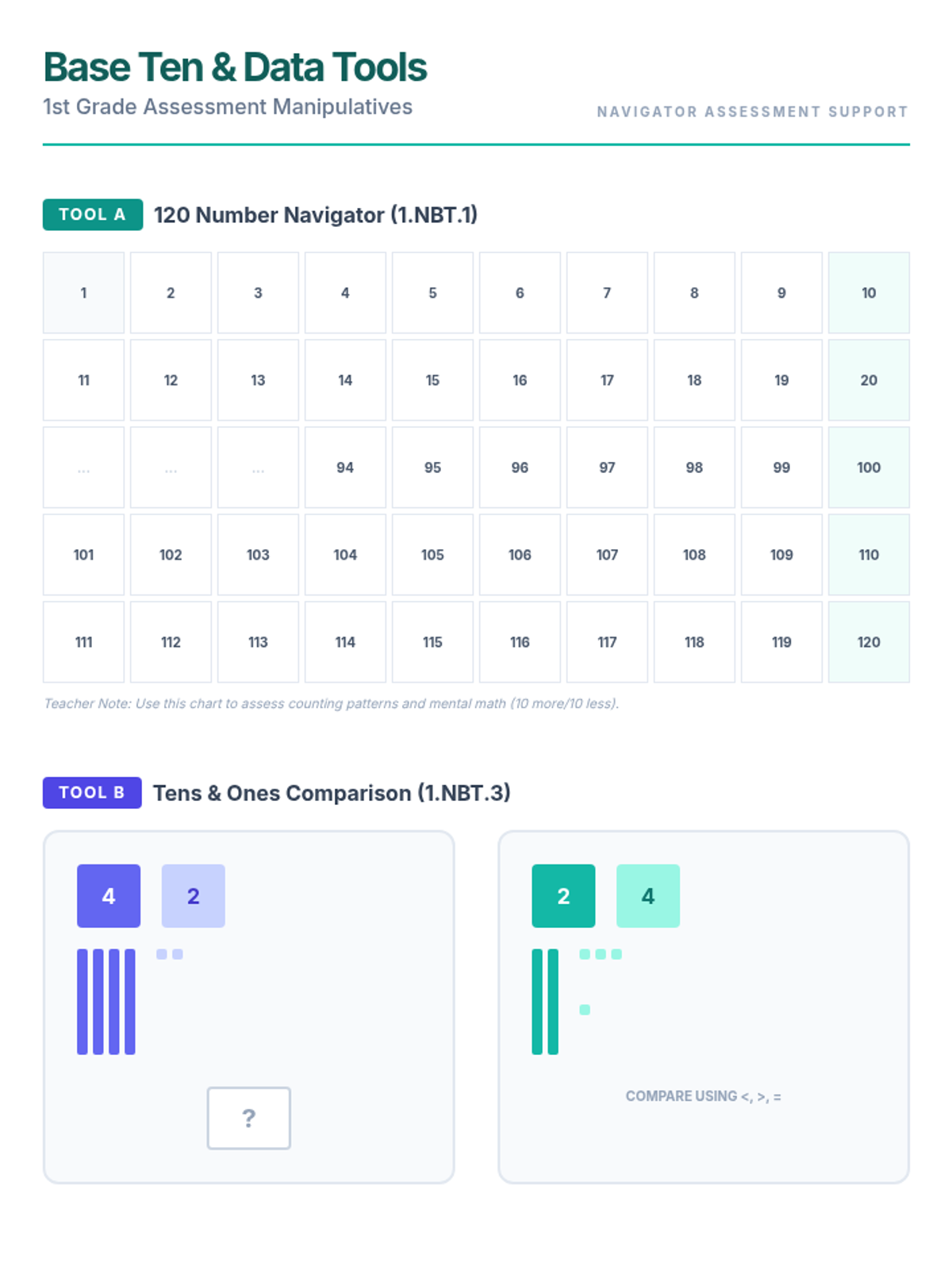
A comprehensive set of assessment tools for 1st Grade, including a 1-120 number chart, base ten comparison models, geometry partitioning visuals for halves and fourths, and an analog/digital clock template.