Essential grammar structures, high-frequency vocabulary, and foundational literacy skills. Equips learners with basic speaking and listening abilities for everyday interactions and introductory text comprehension.
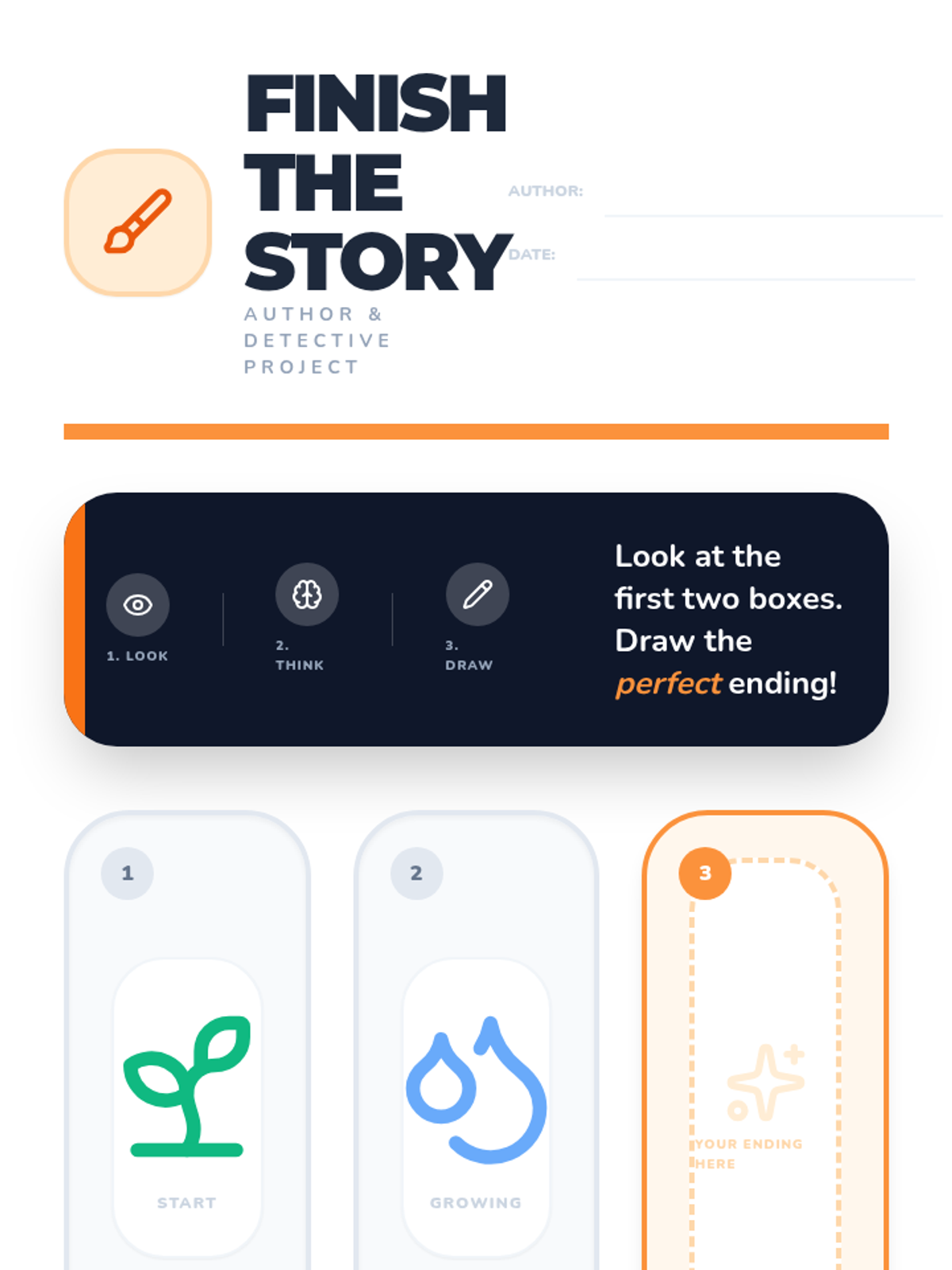
The final project worksheet for Lesson 5. Students observe a 2-panel sequence of a sprouting seed being watered and must draw the logical ending in the third panel, plus explain their reasoning.
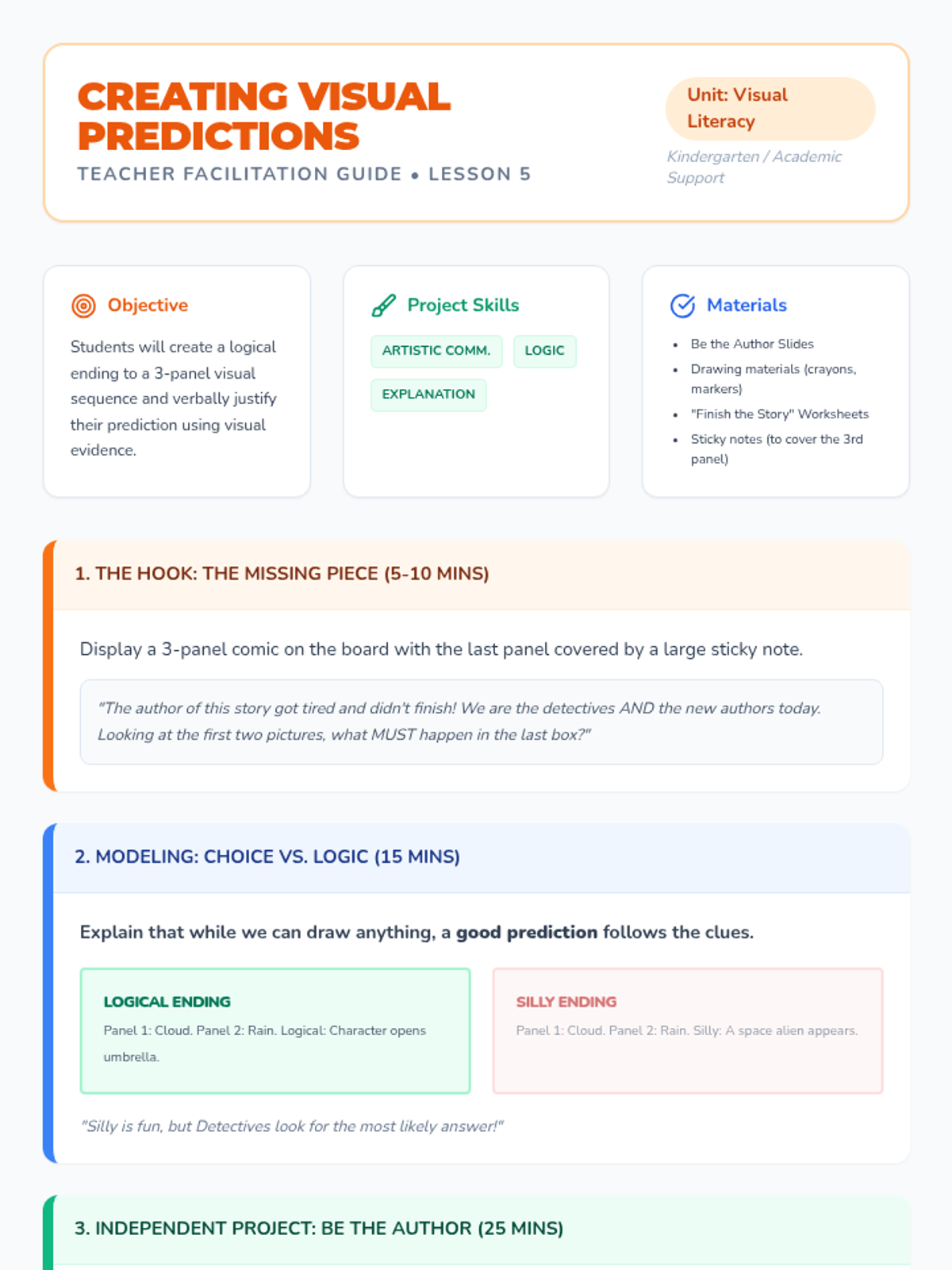
Teacher guide for Lesson 5, the final project. Focuses on helping students distinguish between 'silly' and 'logical' endings, and provides prompts for teacher conferences during independent work.
A slide deck for Lesson 5 where students apply everything they've learned to finish a 3-panel visual story. They practice looking for clues, thinking logically, and sharing their reasoning with others.
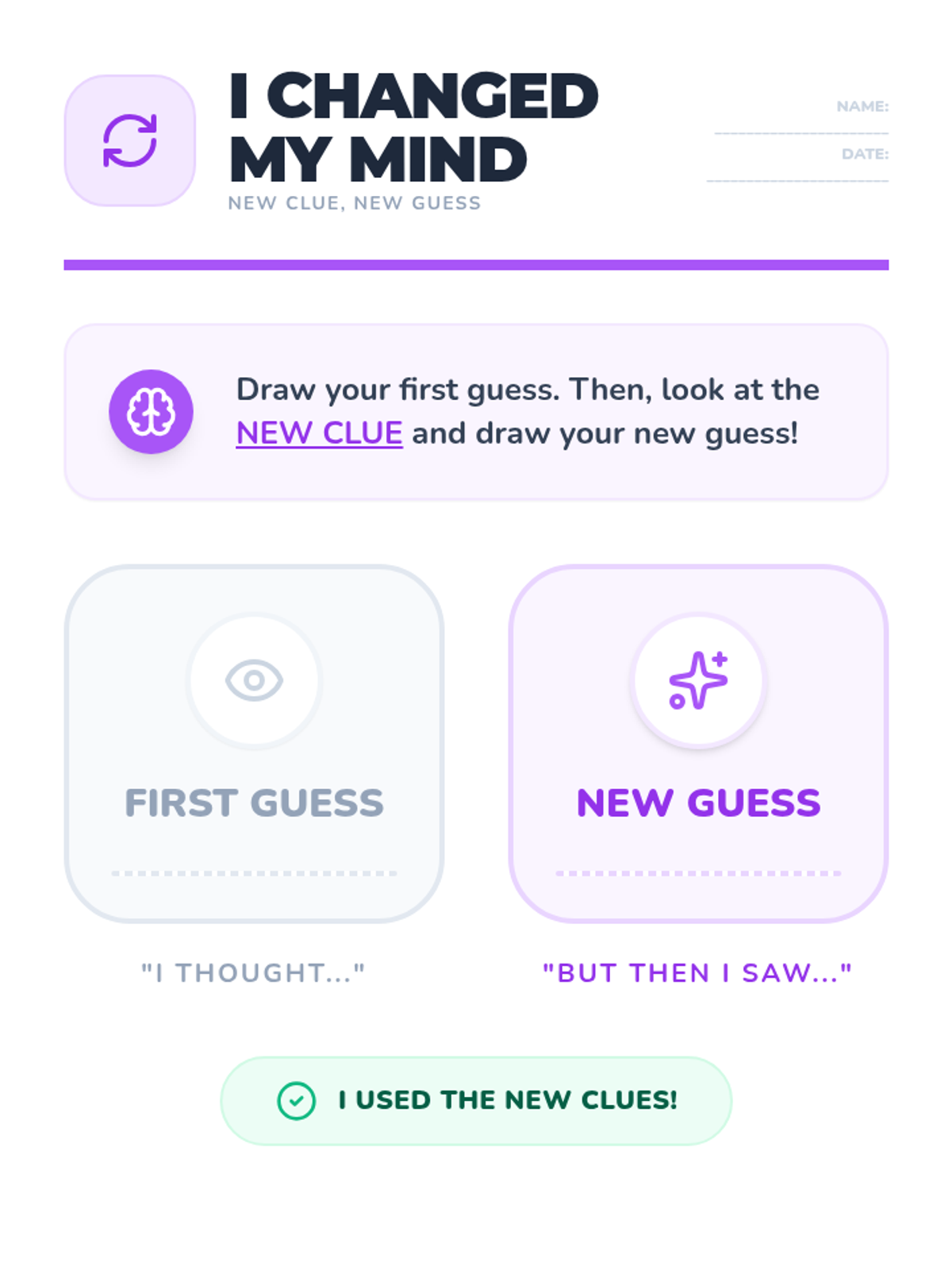
A student worksheet for Lesson 4 that provides side-by-side drawing areas for a student's 'First Guess' and their 'New Guess' after being presented with a surprise visual clue.
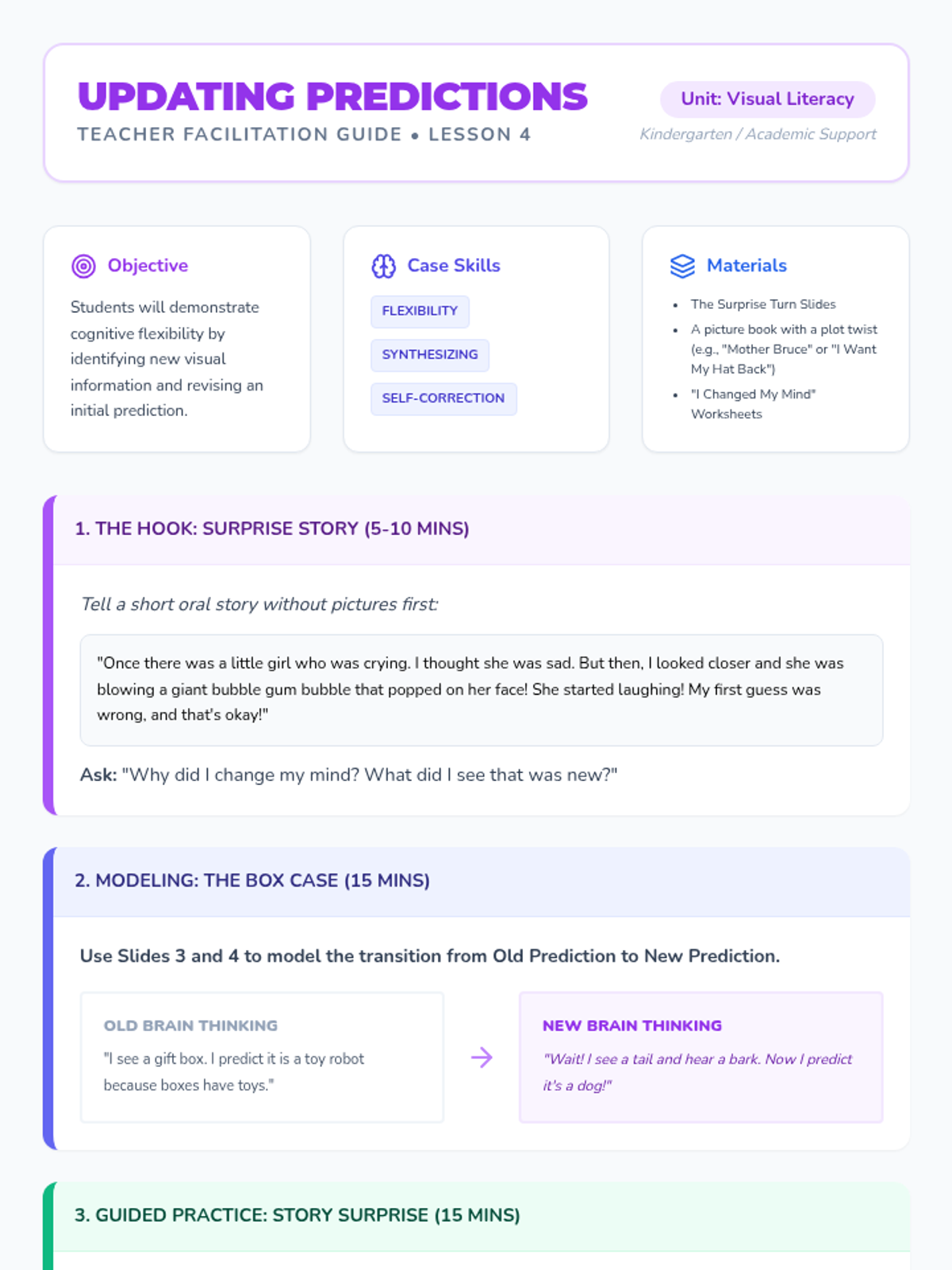
Teacher guide for Lesson 4, focusing on cognitive flexibility. Includes an oral 'Surprise Story' hook, modeling for old vs. new brain thinking, and specific strategies to support students with cognitive rigidity or language delays.
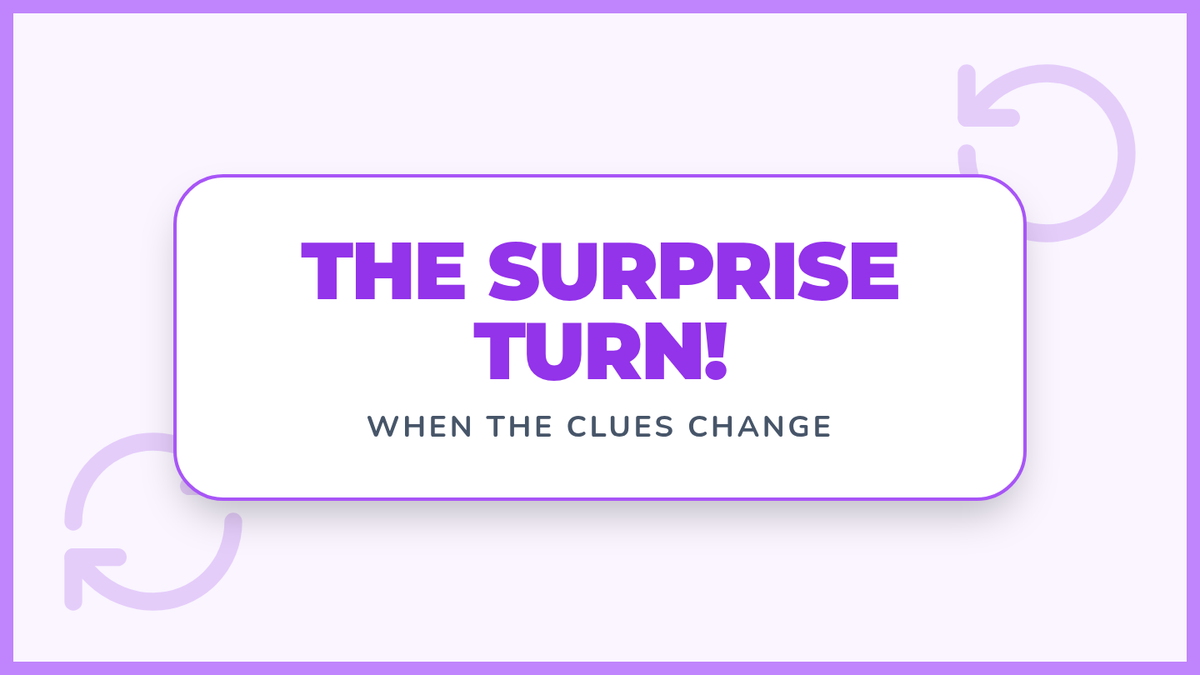
A slide deck for Lesson 4 that introduces the concept of cognitive flexibility. Students learn that it is okay to revise their predictions when new, surprising visual information (like a barking gift box) is presented.
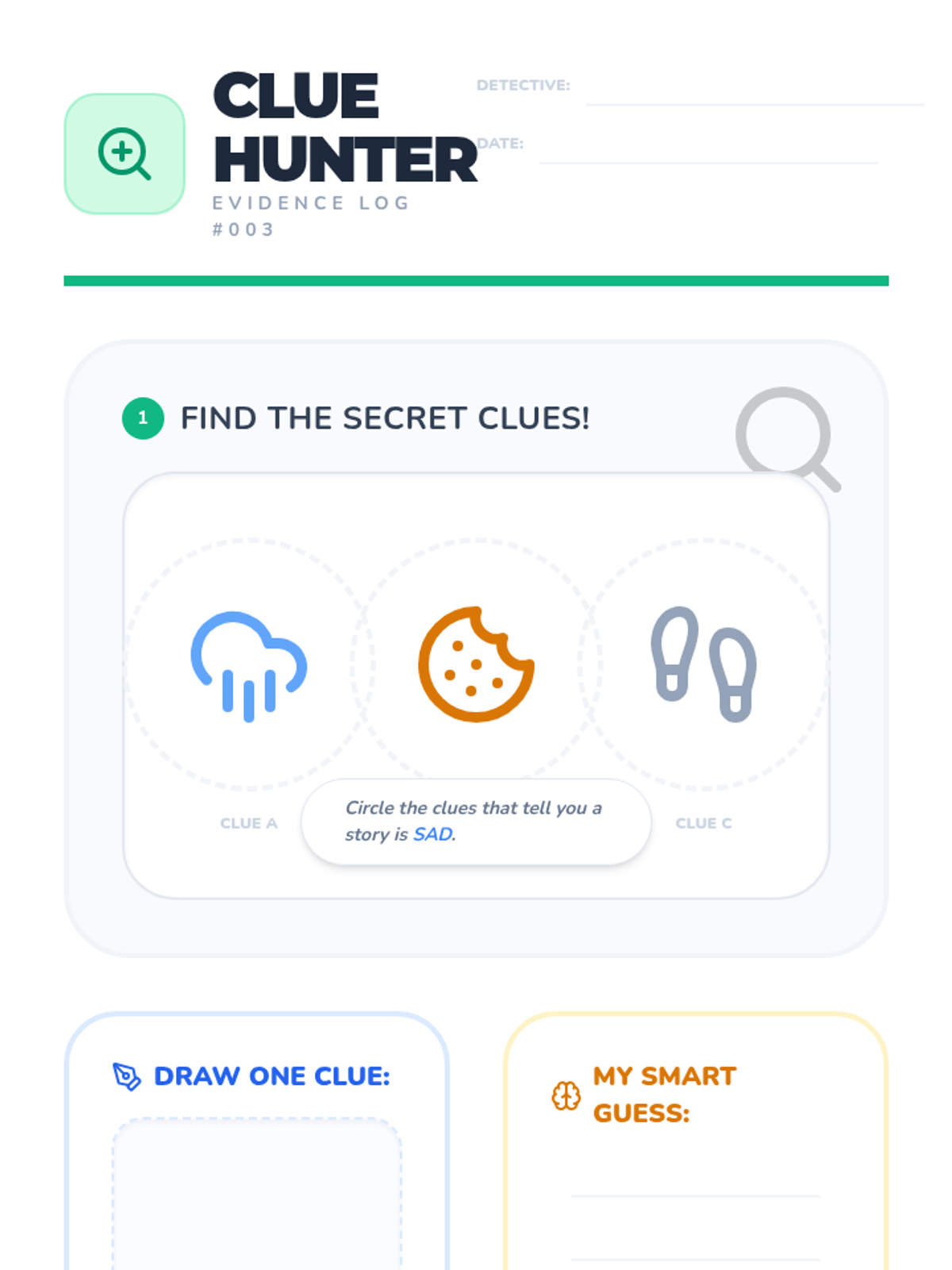
A student worksheet for Lesson 3 where Kindergarten students hunt for specific visual clues, circle them, and then draw their own clue and prediction.
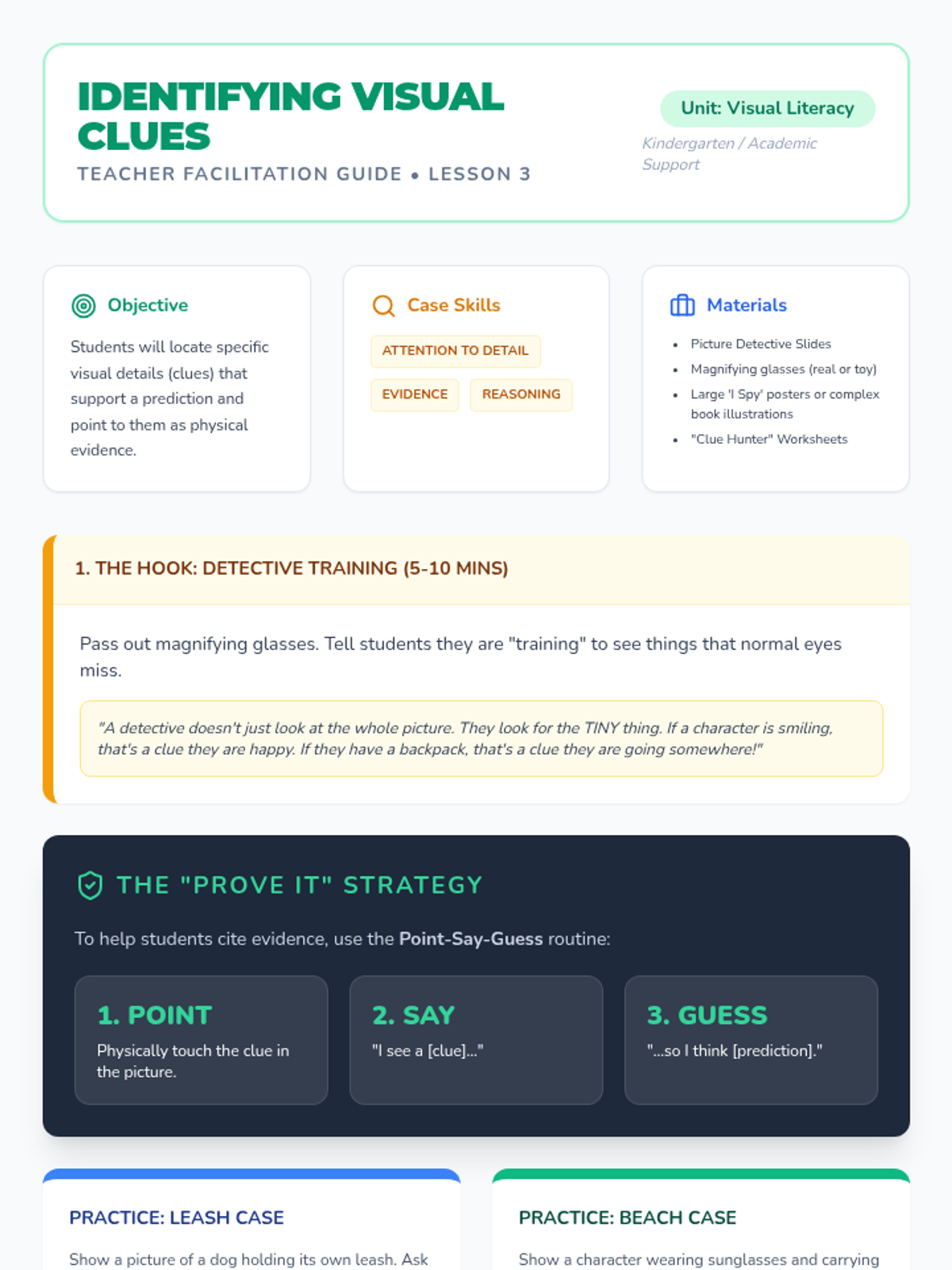
Teacher guide for Lesson 3, introducing the 'Point-Say-Guess' routine to help Kindergarten students cite visual evidence for their predictions. Includes specific practice scenarios and support strategies for diverse learners.
A slide deck for Lesson 3 that introduces the 'Picture Detective' theme, teaching students to identify small visual clues like leashes, umbrellas, or clouds to support their predictions.
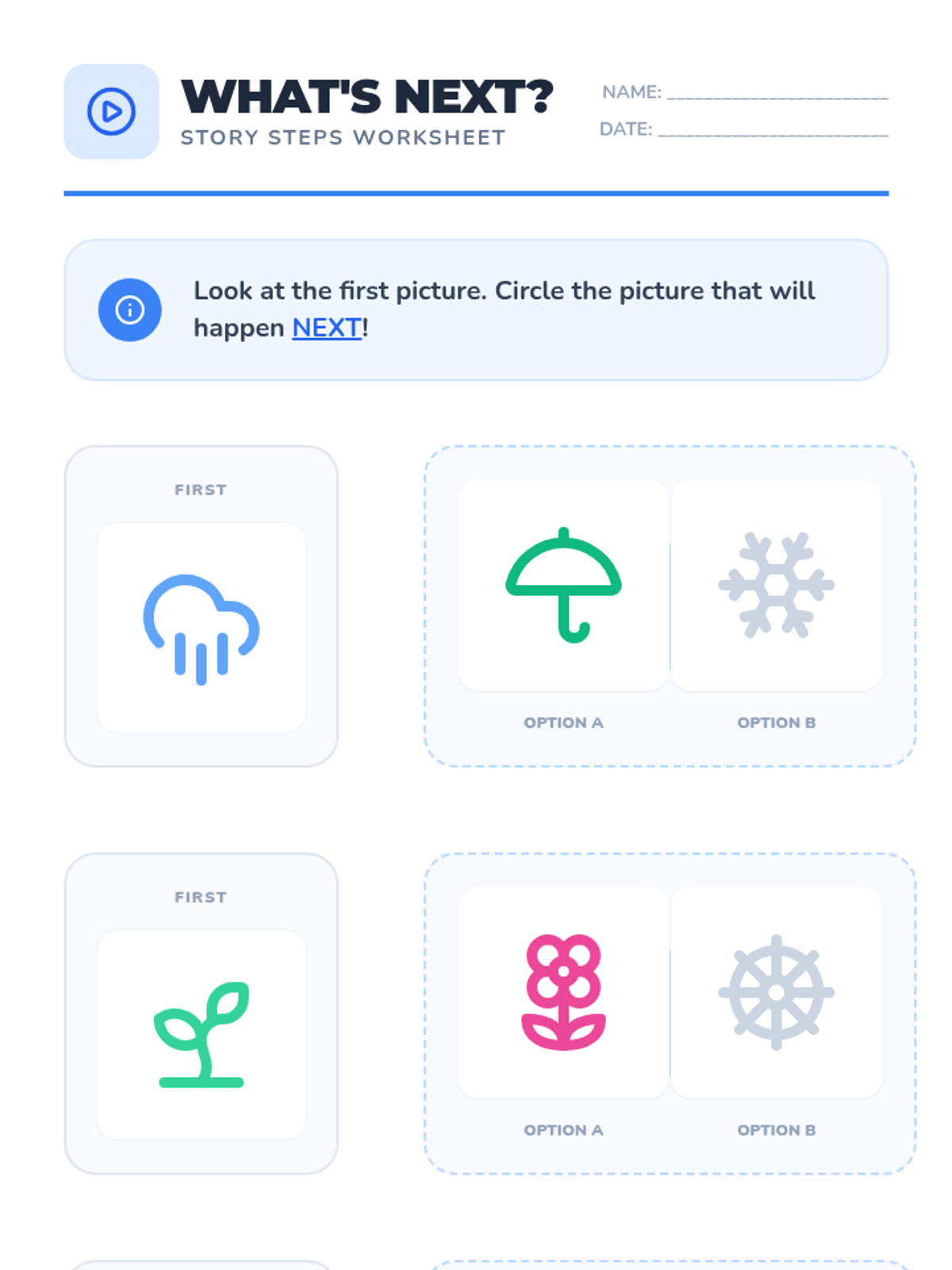
A student worksheet for Lesson 2 featuring three visual scenarios. Students must look at an initial 'First' image and circle the most logical 'Next' action from two provided choices.
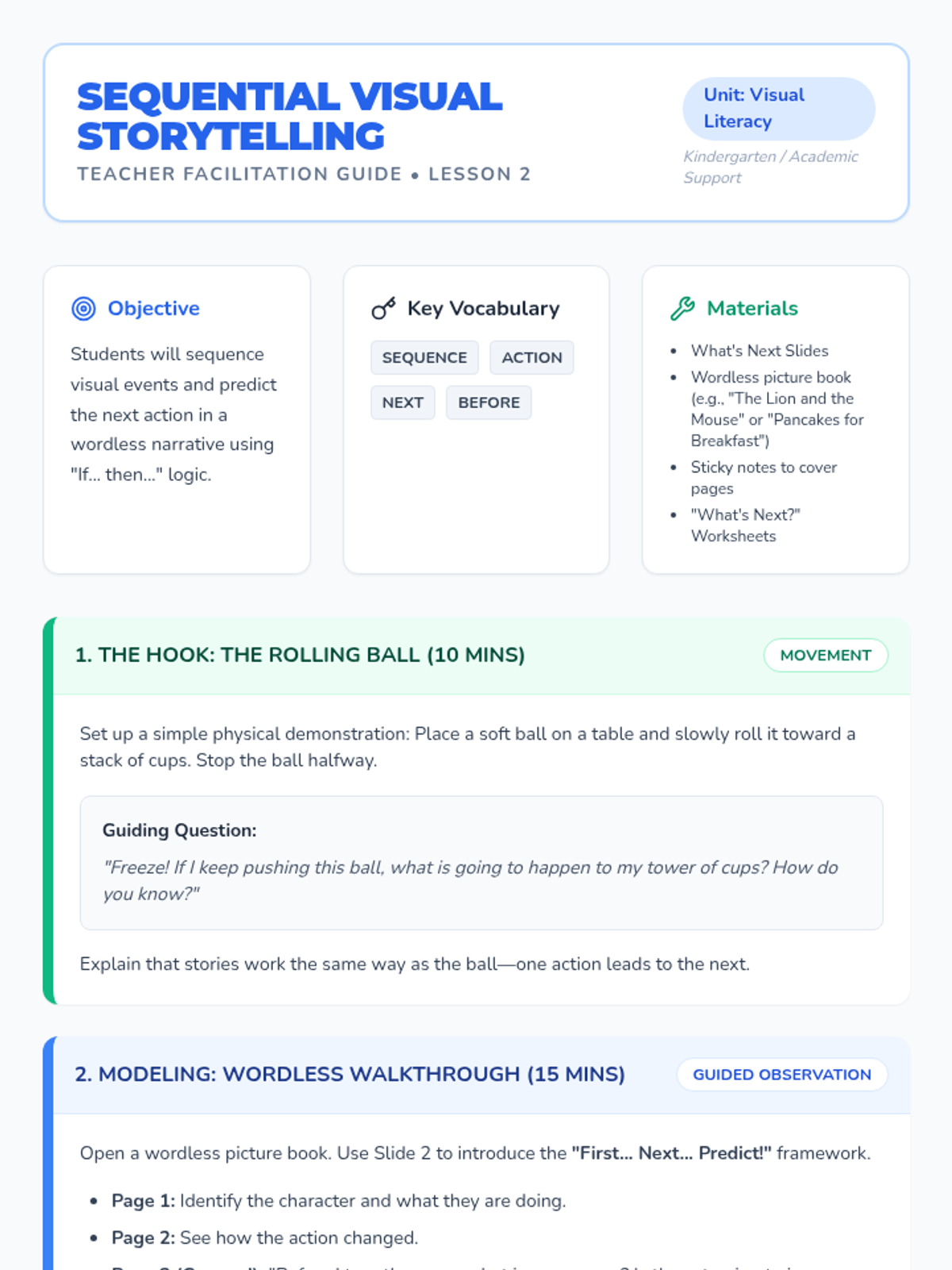
Teacher guide for Lesson 2, focusing on sequential storytelling. Includes a physical 'rolling ball' hook and a step-by-step 'First... Next... Predict!' framework for navigating wordless picture books.
A slide deck for Lesson 2 that teaches Kindergarten students how to track visual narratives in wordless picture books, focusing on predicting the next action based on current illustrations.
A Kindergarten student worksheet for Lesson 1 where students draw their prediction based on a book cover and check off the types of visual clues (character, setting, action) they identified.
A comprehensive teacher guide for Lesson 1, detailing the 'Mystery Book' hook, guided discussion prompts for analyzing book covers, and specific academic support strategies for Kindergarten students.
A slide deck introducing Kindergarten students to the 'Picture Detective' concept, focusing on how characters, settings, and actions on a book cover can help us predict the story's content.
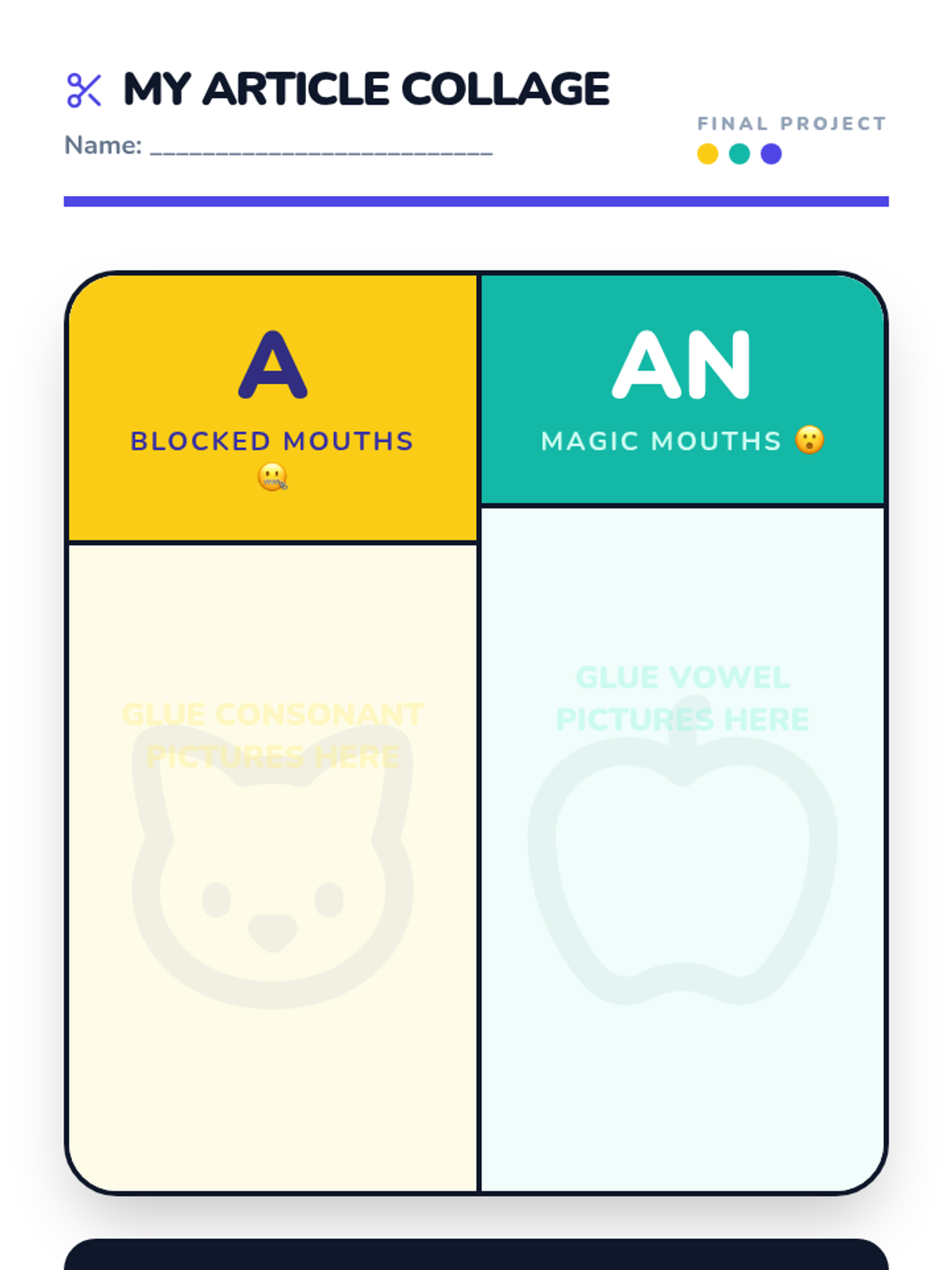
Final T-chart template for the student collage project, featuring dedicated areas for 'A' and 'An' with visual cues for vowels and consonants.
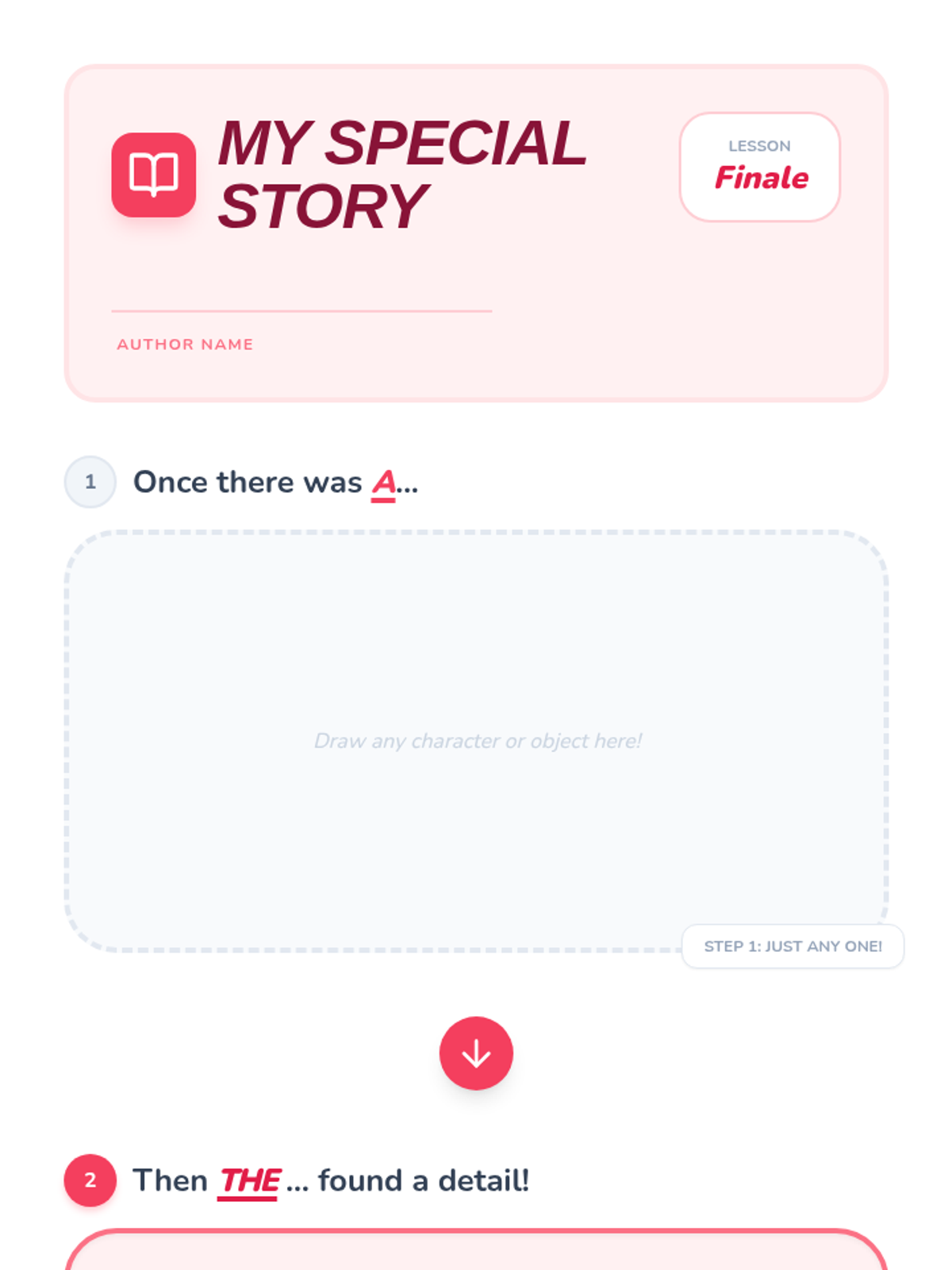
A student storyboard worksheet for Lesson 5, where they draw a character transition from generic ('a') to specific ('the').
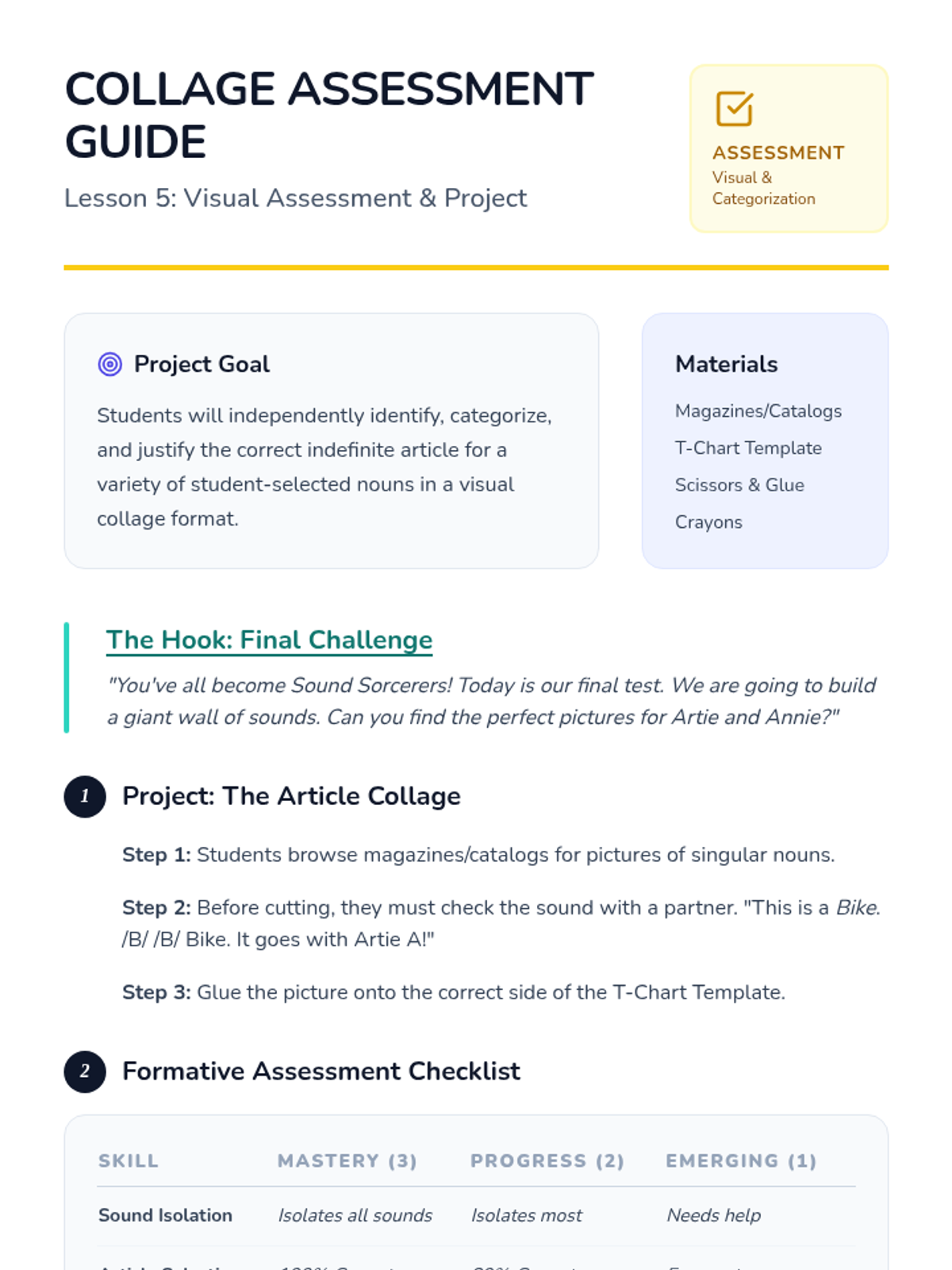
Teacher guide for the final assessment project, including a mastery rubric and instructional steps for the collage activity.
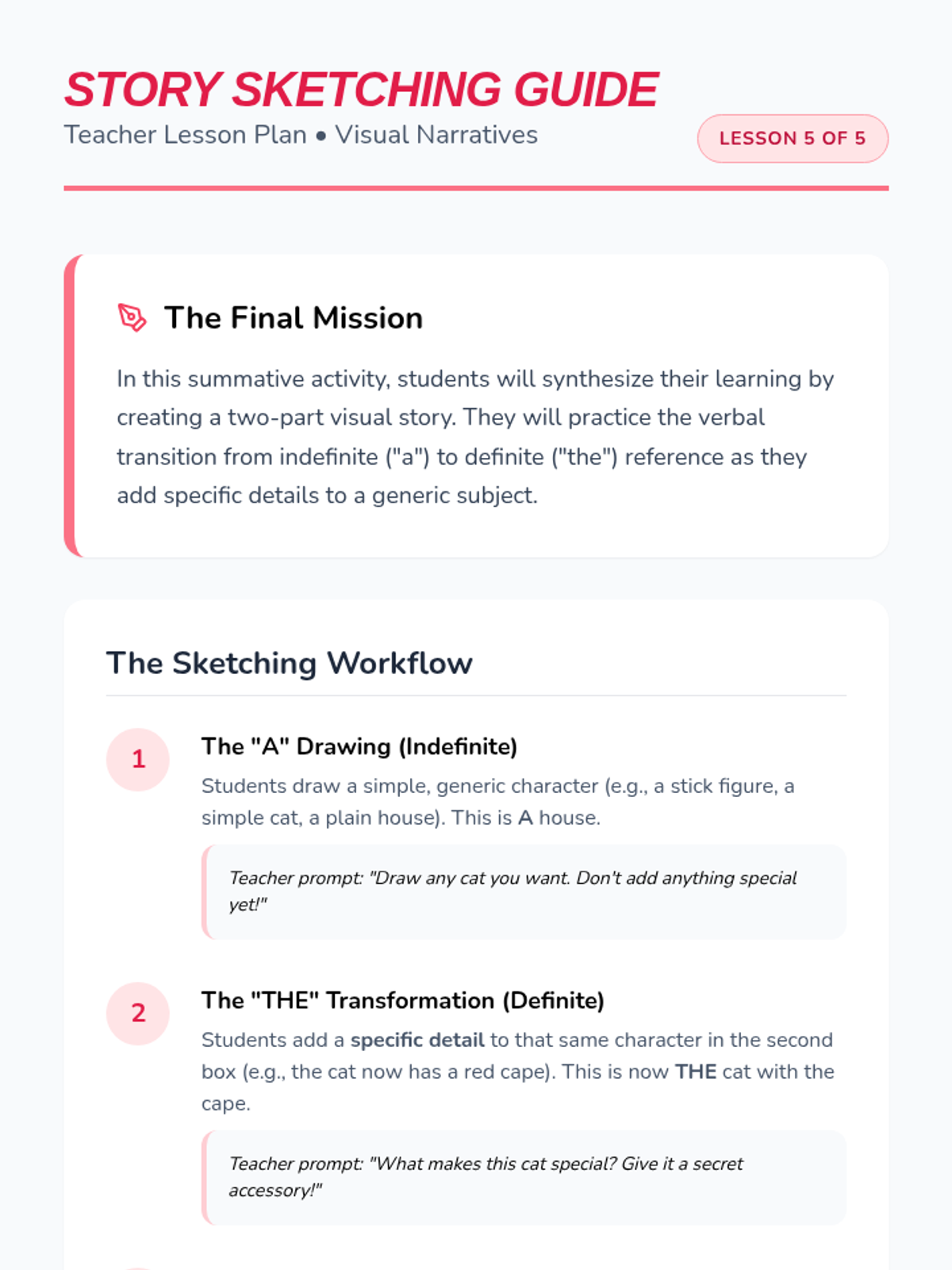
A teacher guide for Lesson 5, focusing on how to facilitate the narrative drawing activity and verbal storytelling.
Final slide deck for Lesson 5, introducing the Article Collage project and reviewing the core rules.
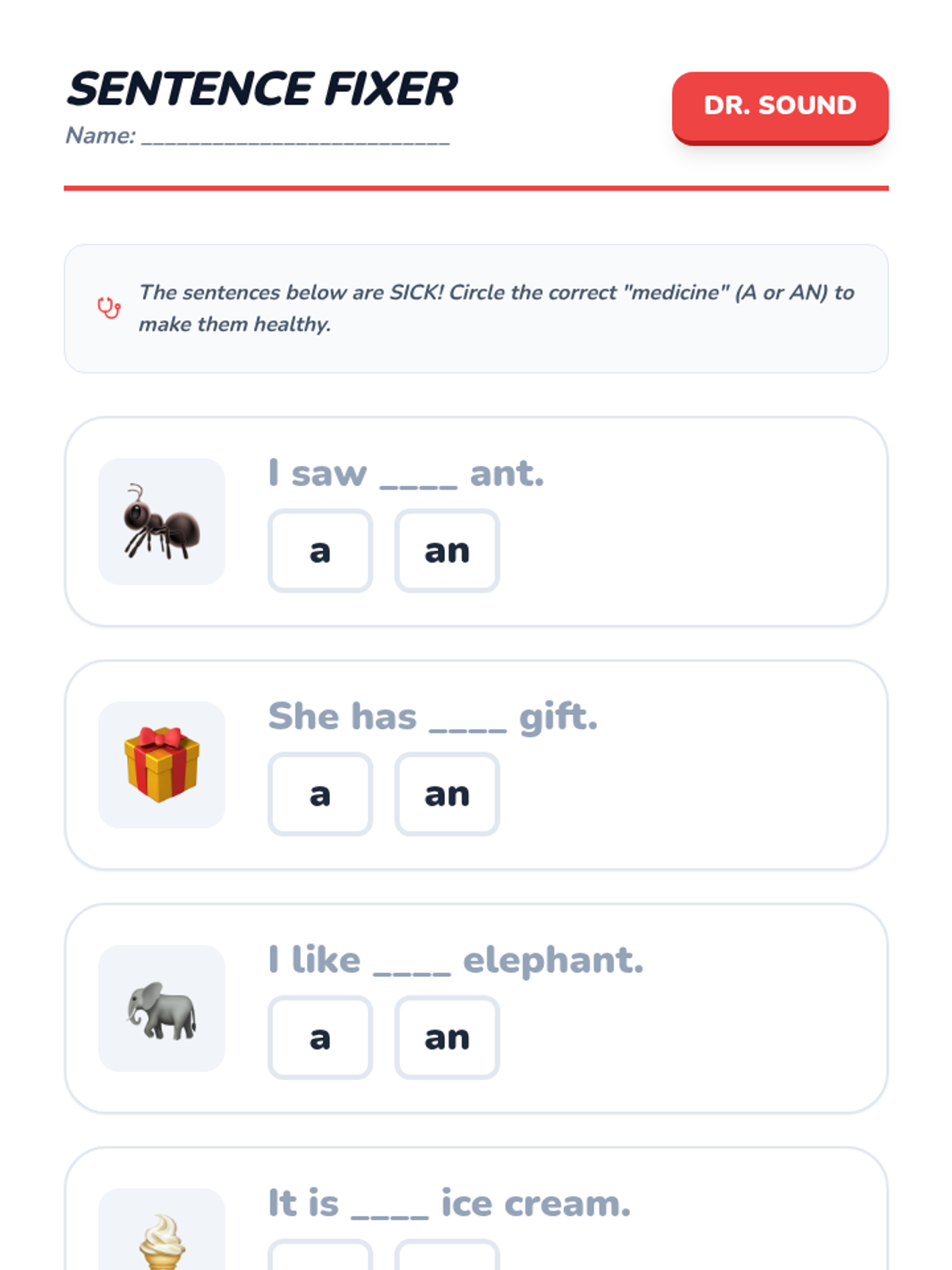
Student worksheet for Lesson 4 where students circle the correct indefinite article to fix 'sick' sentences.
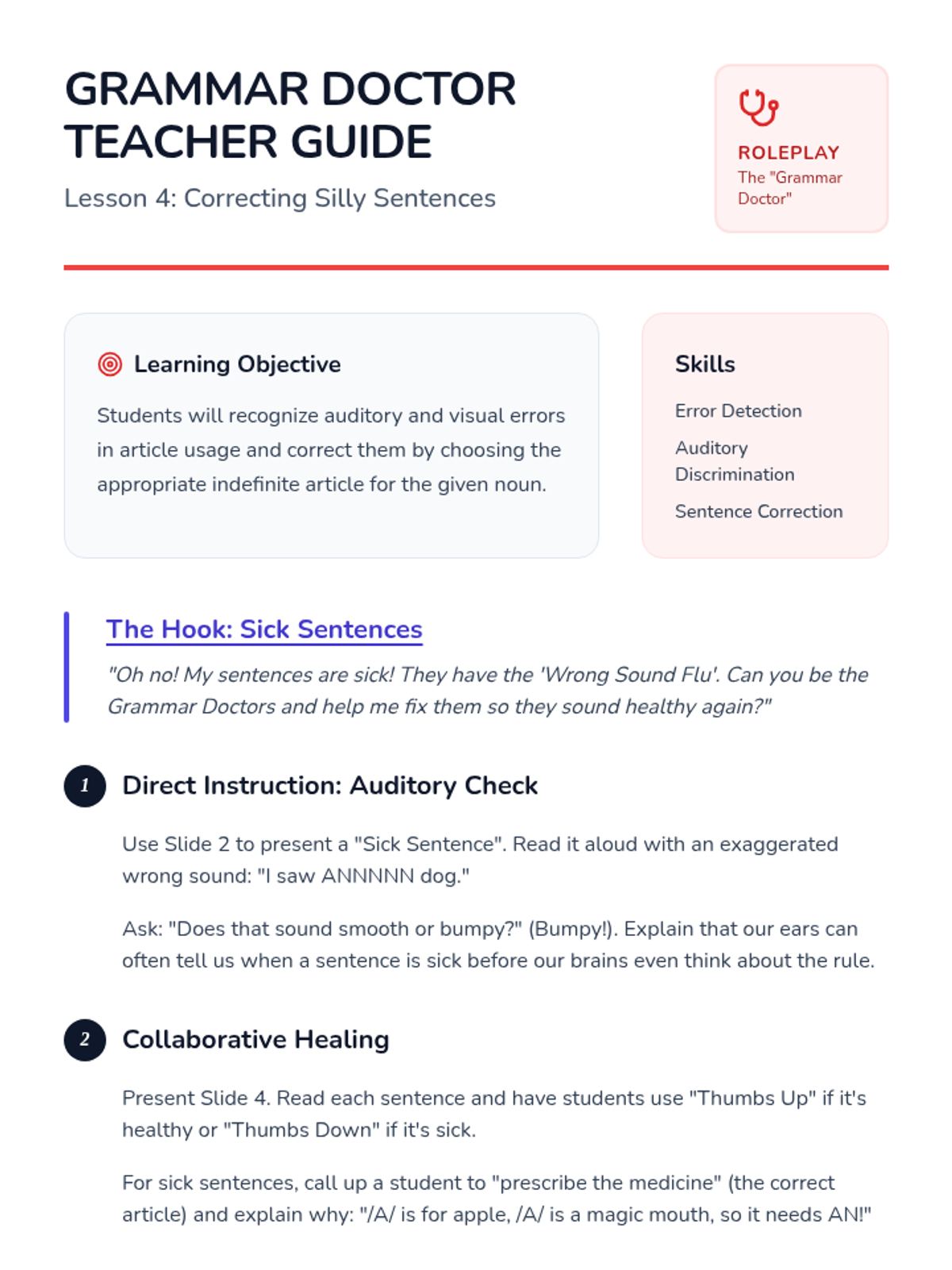
Teacher guide for Lesson 4, utilizing the 'Grammar Doctor' roleplay to teach error correction and auditory discrimination.
Slides for the final lesson that teach Kindergarteners how to transition from general descriptions to specific narratives using 'a' and 'the' in their own drawings.
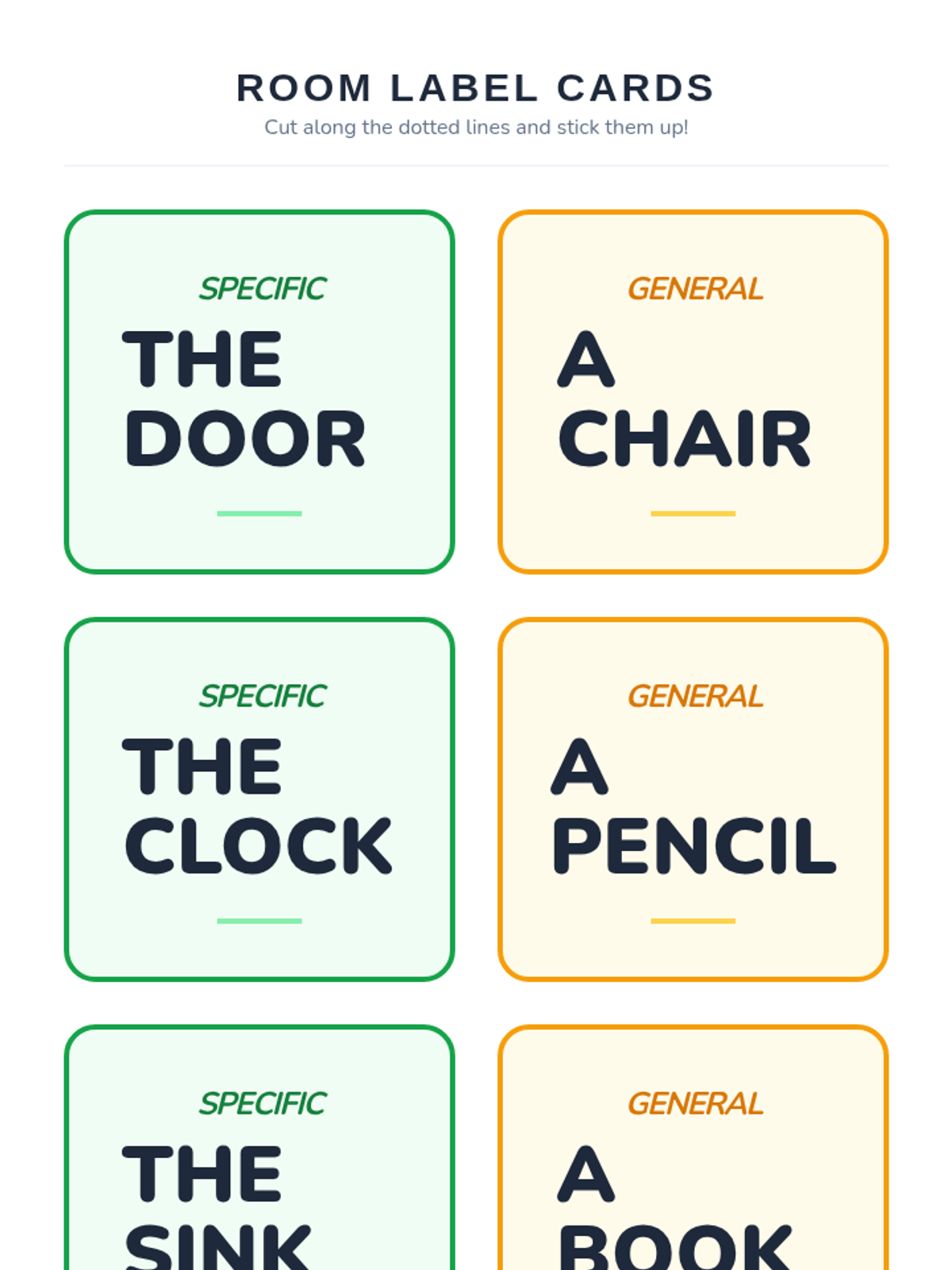
Printable classroom label cards for unique and general items used in Lesson 4.
A guide for teachers to facilitate the classroom labeling project, including prep tips and discussion hooks for Lesson 4.
Interactive slide deck for Lesson 4 using a 'Grammar Doctor' theme to help students identify and correct errors in article usage.
Slides for Lesson 4 that guide students through the process of labeling classroom items as unique ('the') or common ('a').
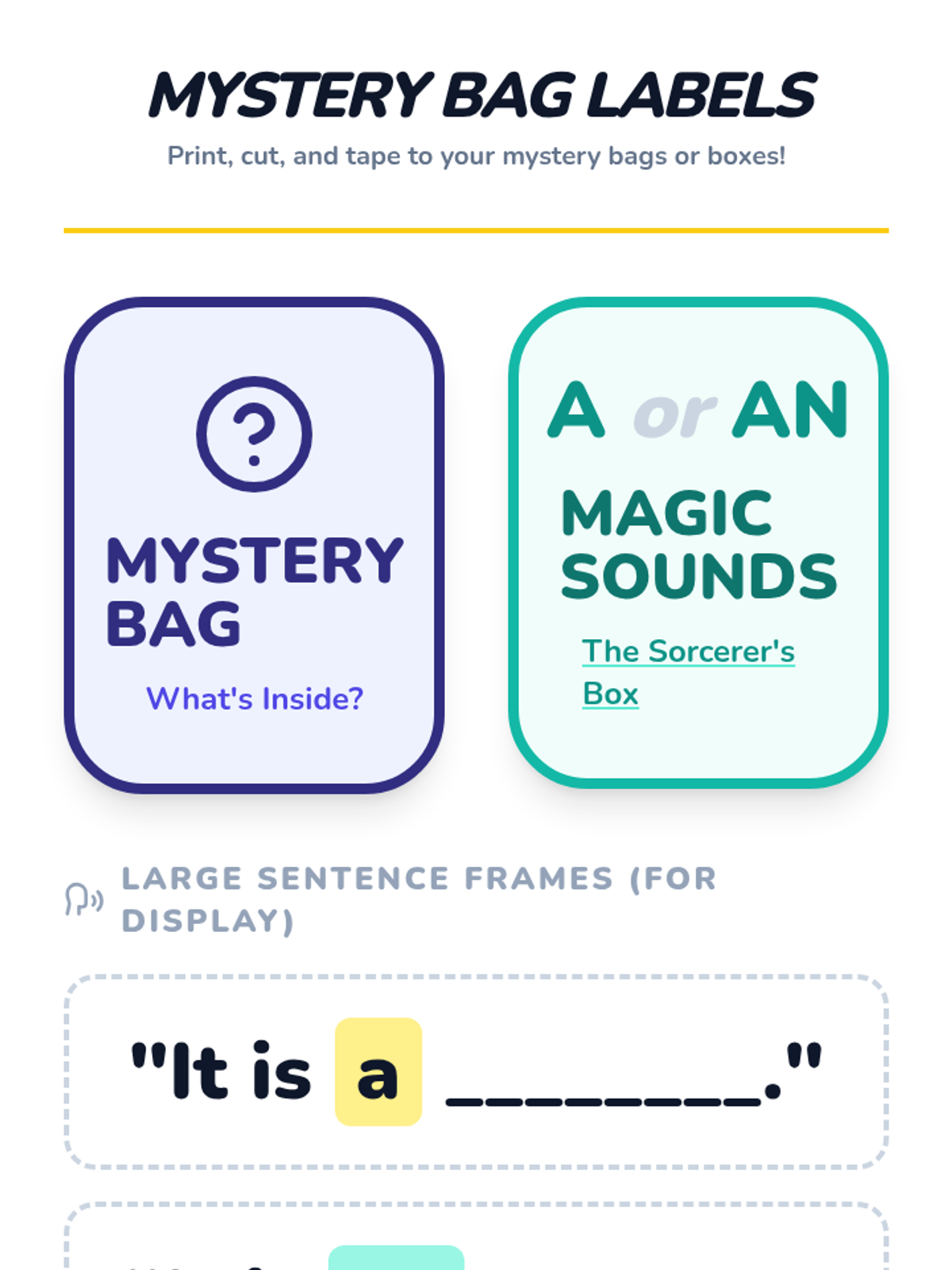
Visual aids for Lesson 3, including large mystery bag labels and sentence frame reference cards for students.
Teacher guide for Lesson 3 focusing on oral production of 'a' and 'an' through a game-based mystery bag activity.
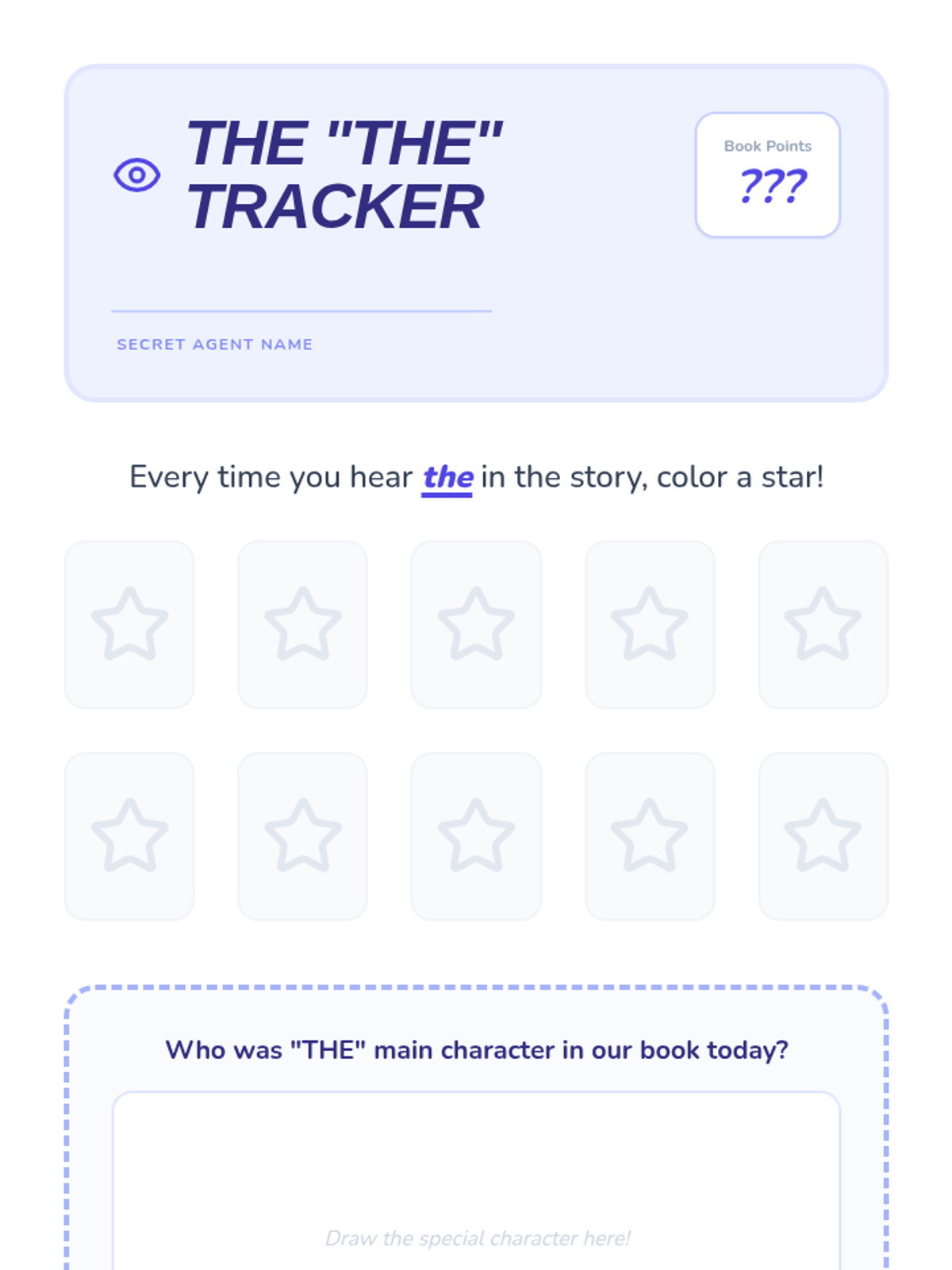
A student checklist and drawing activity for tracking the use of 'the' during a read-aloud session in Lesson 3.
Engaging slide deck for Lesson 3 to facilitate the Mystery Bag game and practice oral sentence frames.
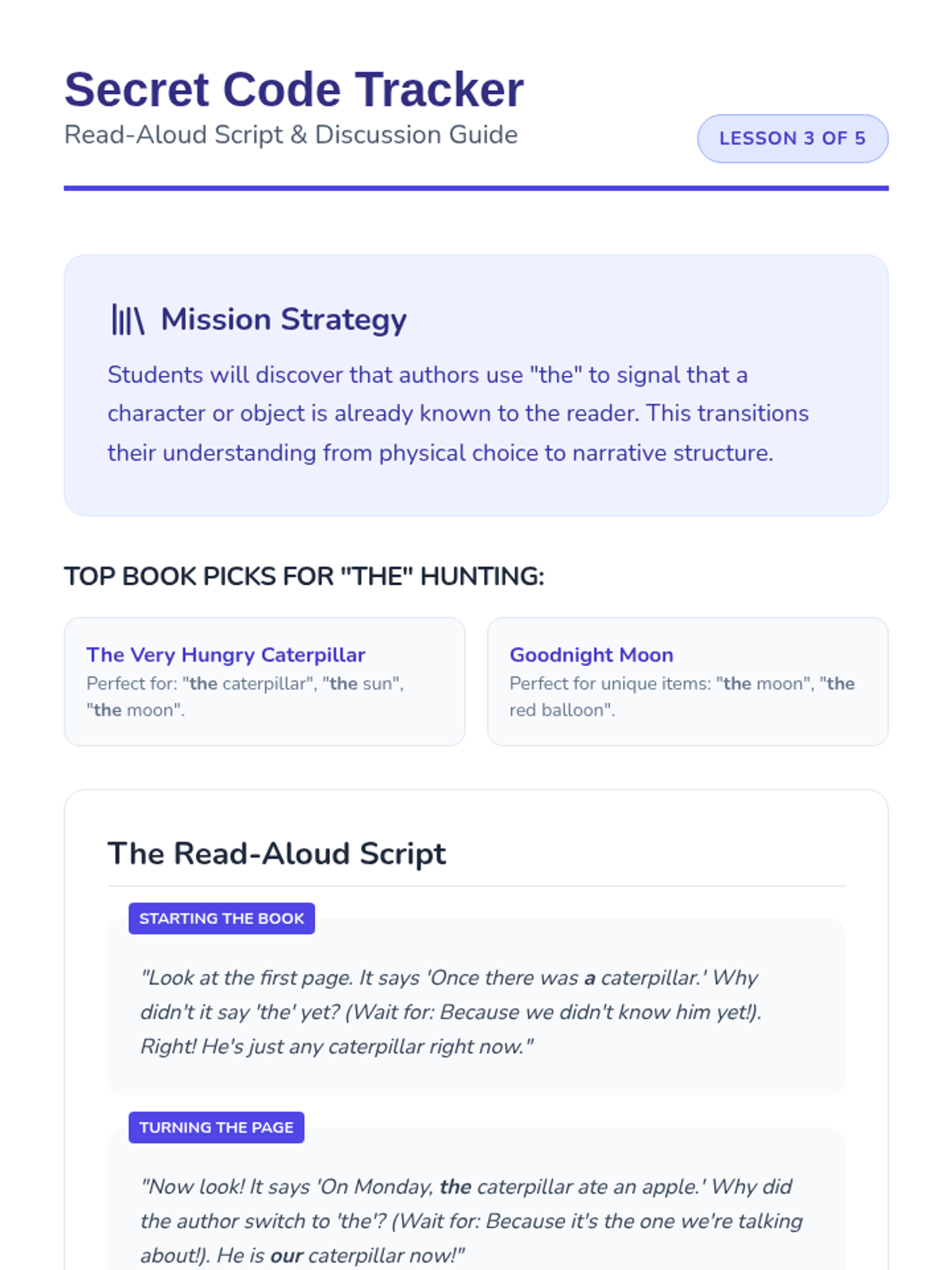
A teacher guide for Lesson 3, providing a read-aloud script and discussion prompts to help students notice articles in literature.
Slides for a storybook read-aloud session where students learn that 'the' marks previously introduced or unique characters/objects.
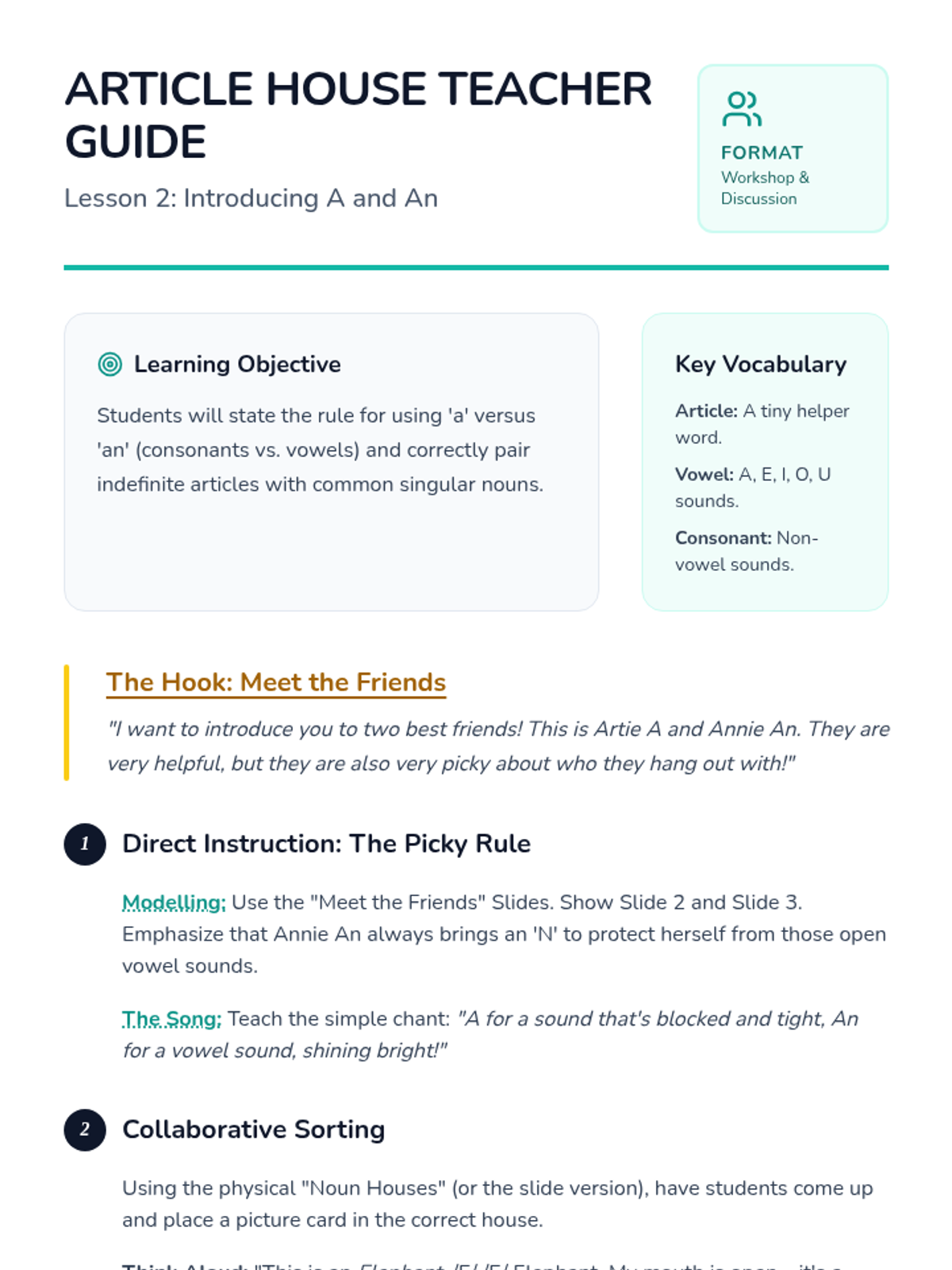
Teacher guide for Lesson 2, outlining the 'Artie A' and 'Annie An' characters and the house sorting activity.
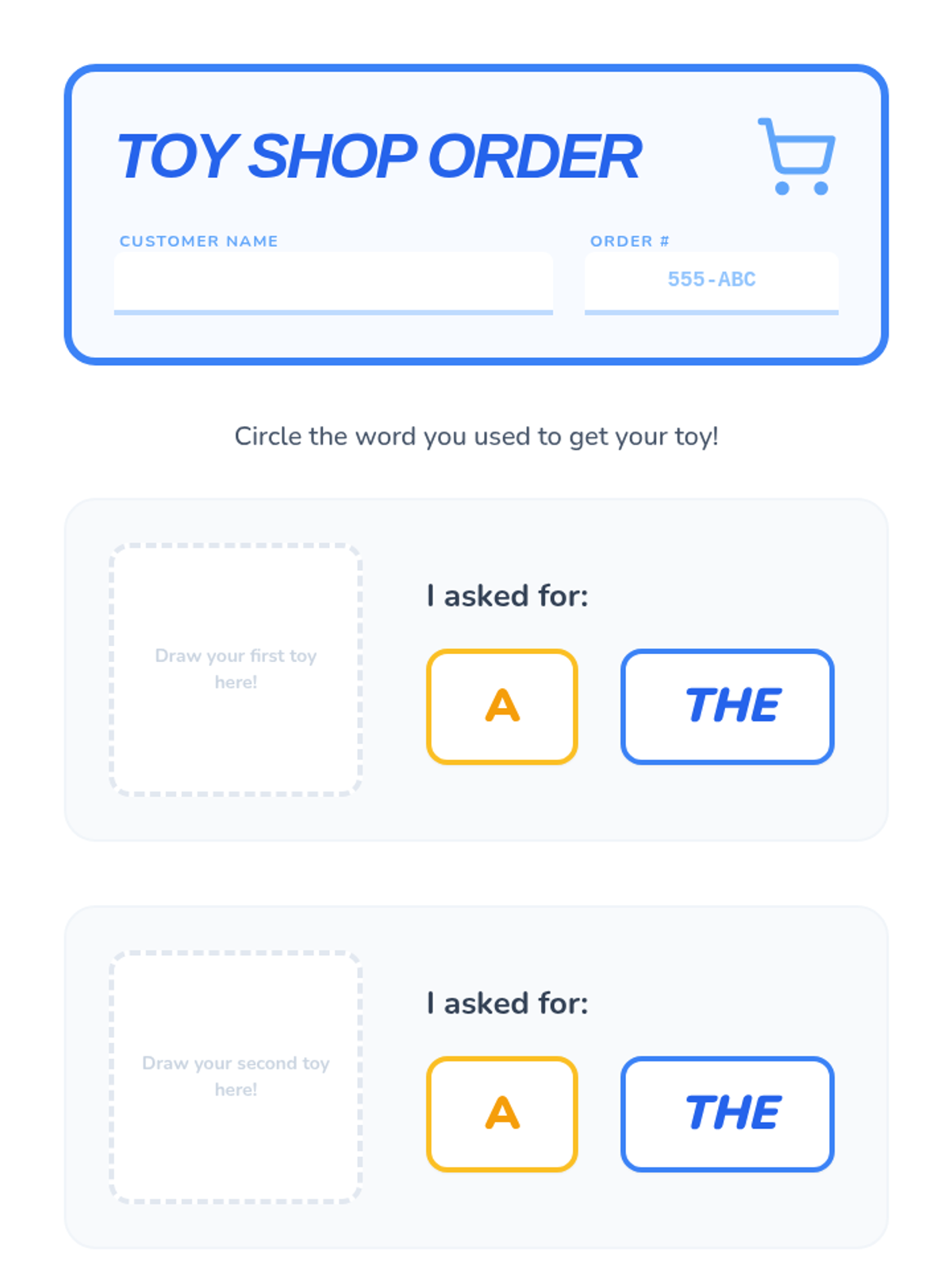
A student activity sheet for tracking toy orders using the correct articles in Lesson 2.
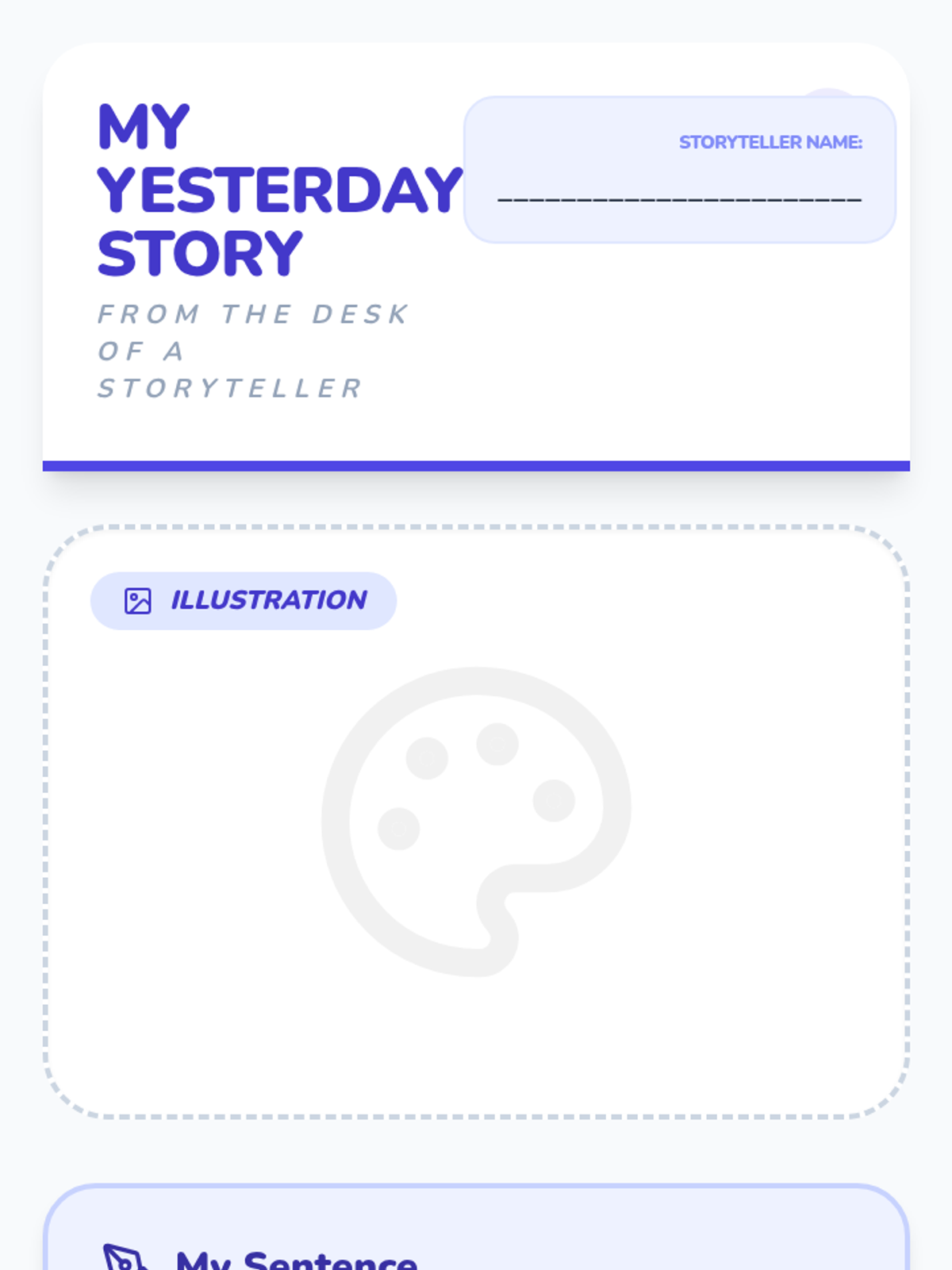
A Kindergarten narrative planner where students draw a picture of something they did yesterday and use guided sentence starters to practice writing simple past tense verbs.
Visual support for a 'Show and Tell' circle where students practice narrating past events using correct verb tense and sentence structures.
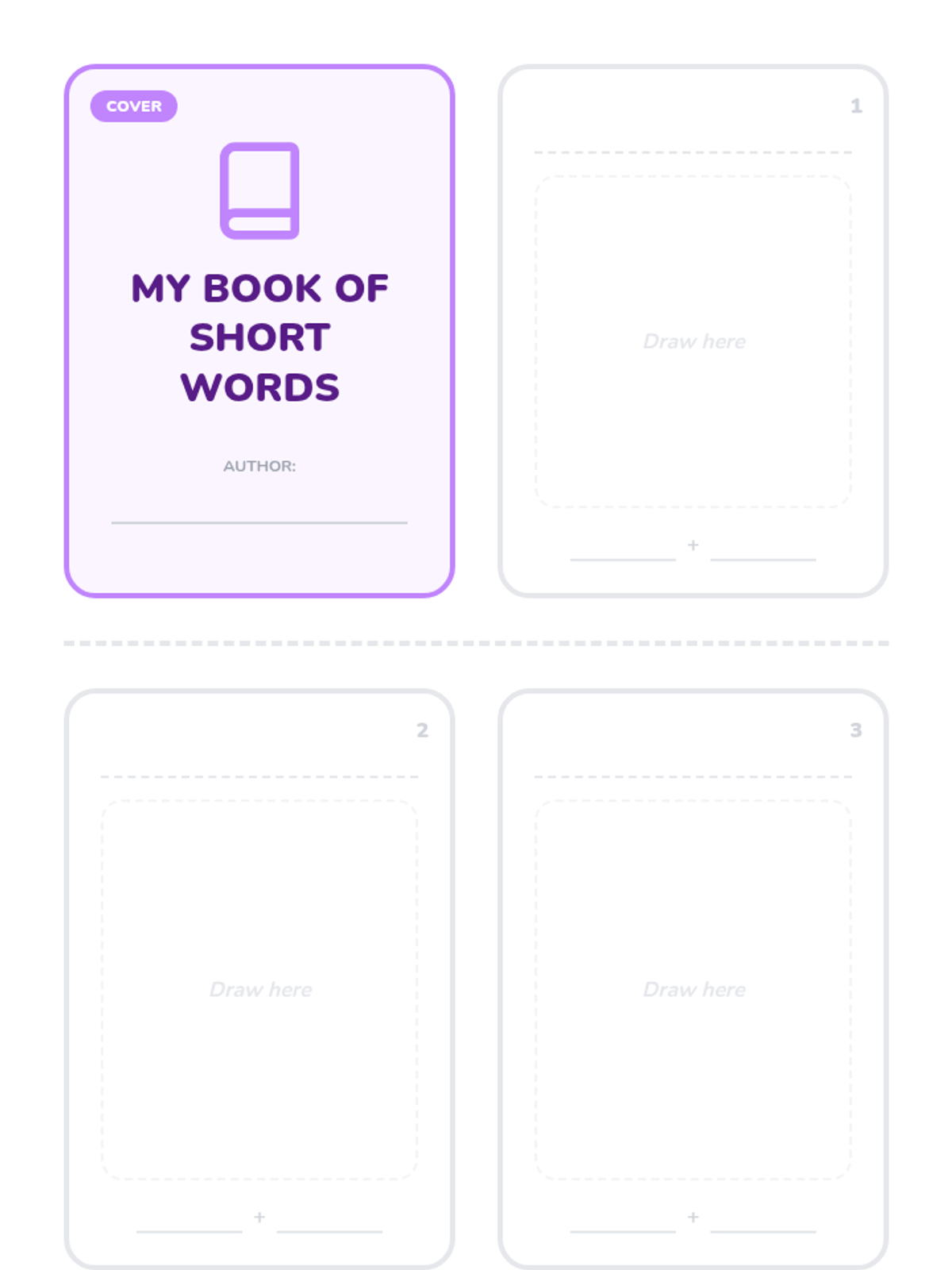
Printable book template for students to create their own 'Mini Contraction Book' with a cover and space for illustrations and unpacked word forms.
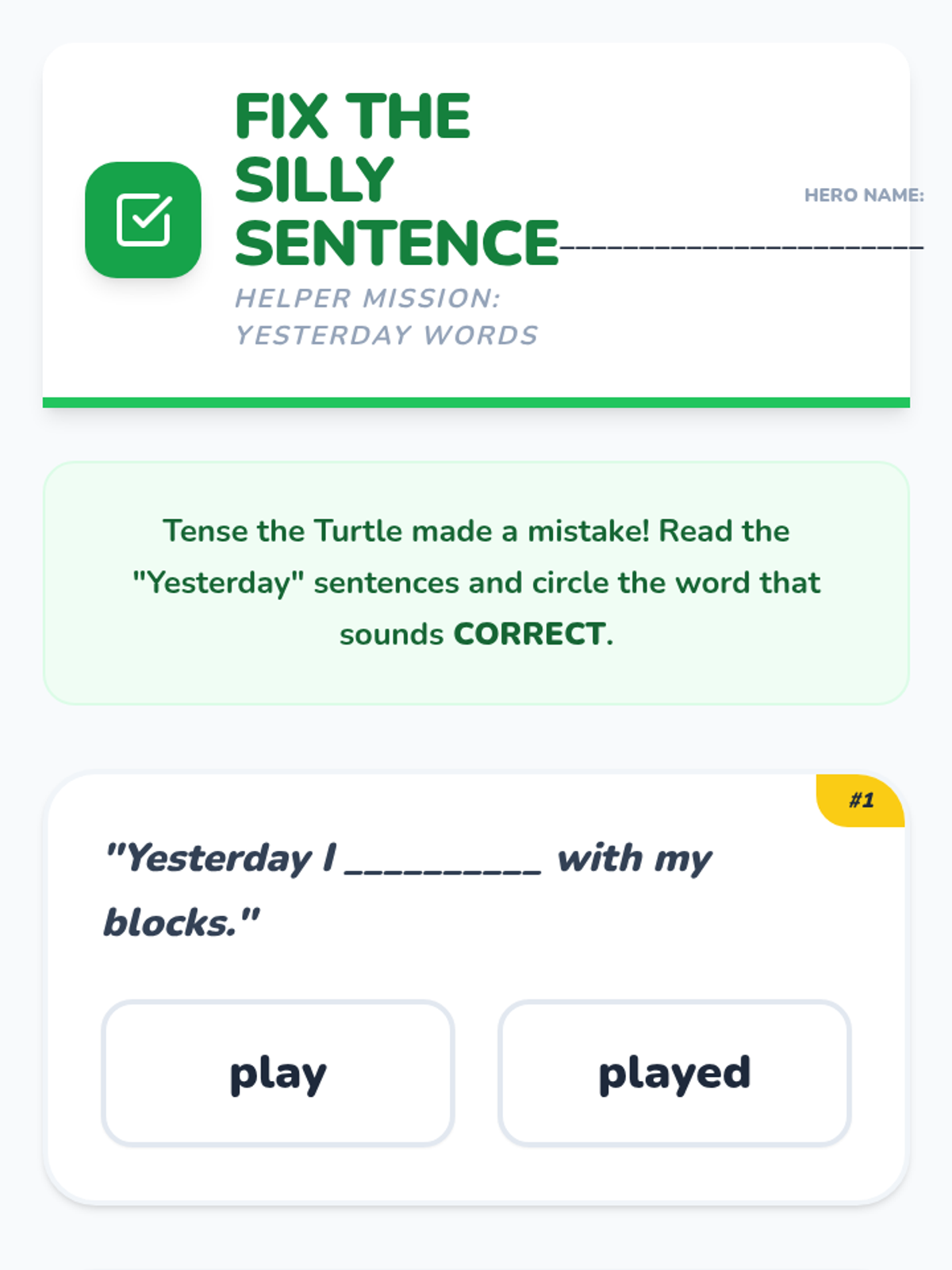
A student worksheet focusing on selecting the correct past tense verb to complete simple sentences about yesterday.
Instructional slide deck for the 'Mini Contraction Book' project, walking students through the steps of choosing a contraction, illustrating it, and unpacking the words.
Interactive slides featuring 'Tense the Turtle' to help students identify and correct simple past tense errors in spoken sentences.
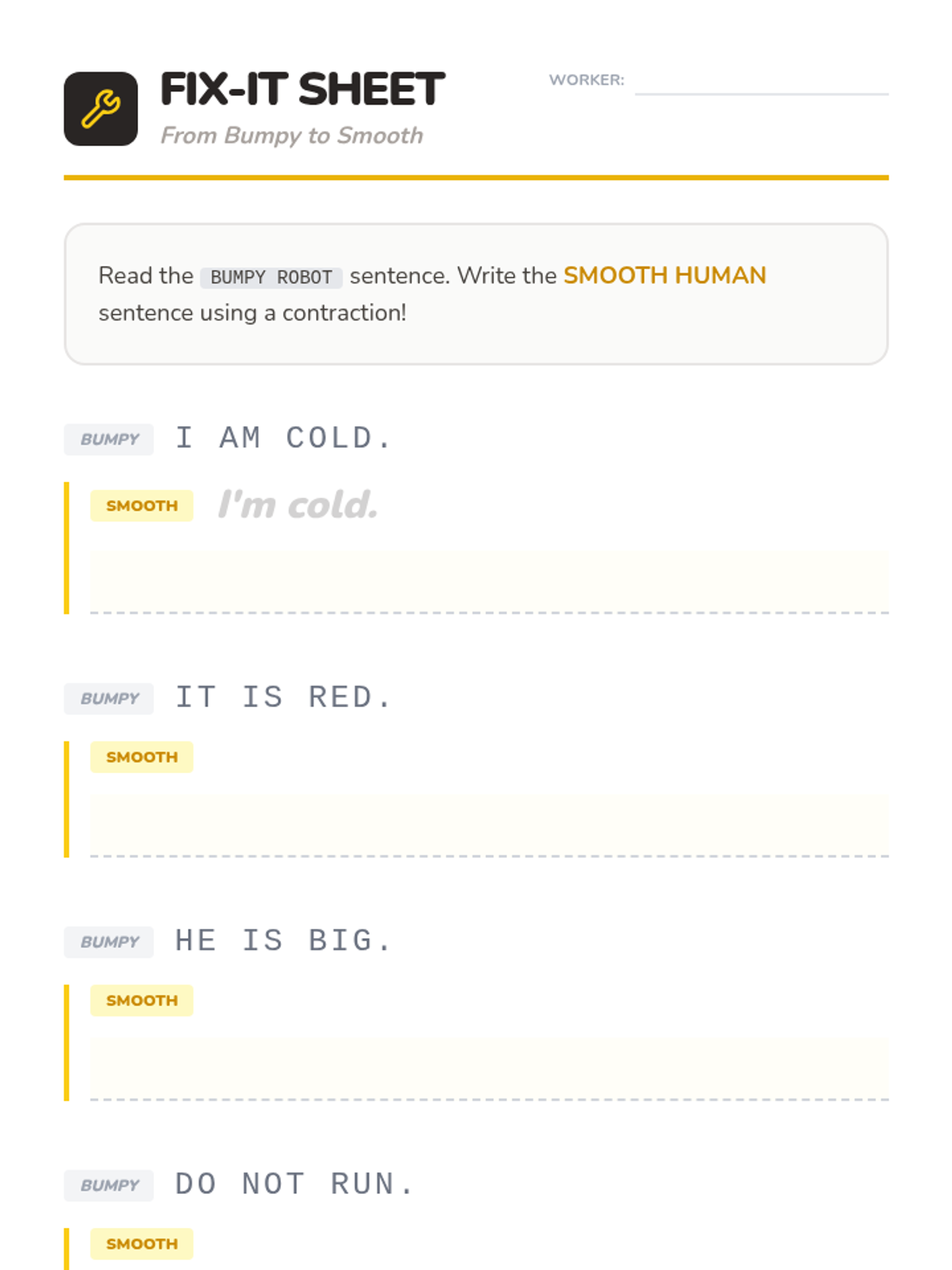
Worksheet where students rewrite 'bumpy' sentences into 'smooth' sentences by replacing full word forms with contractions.
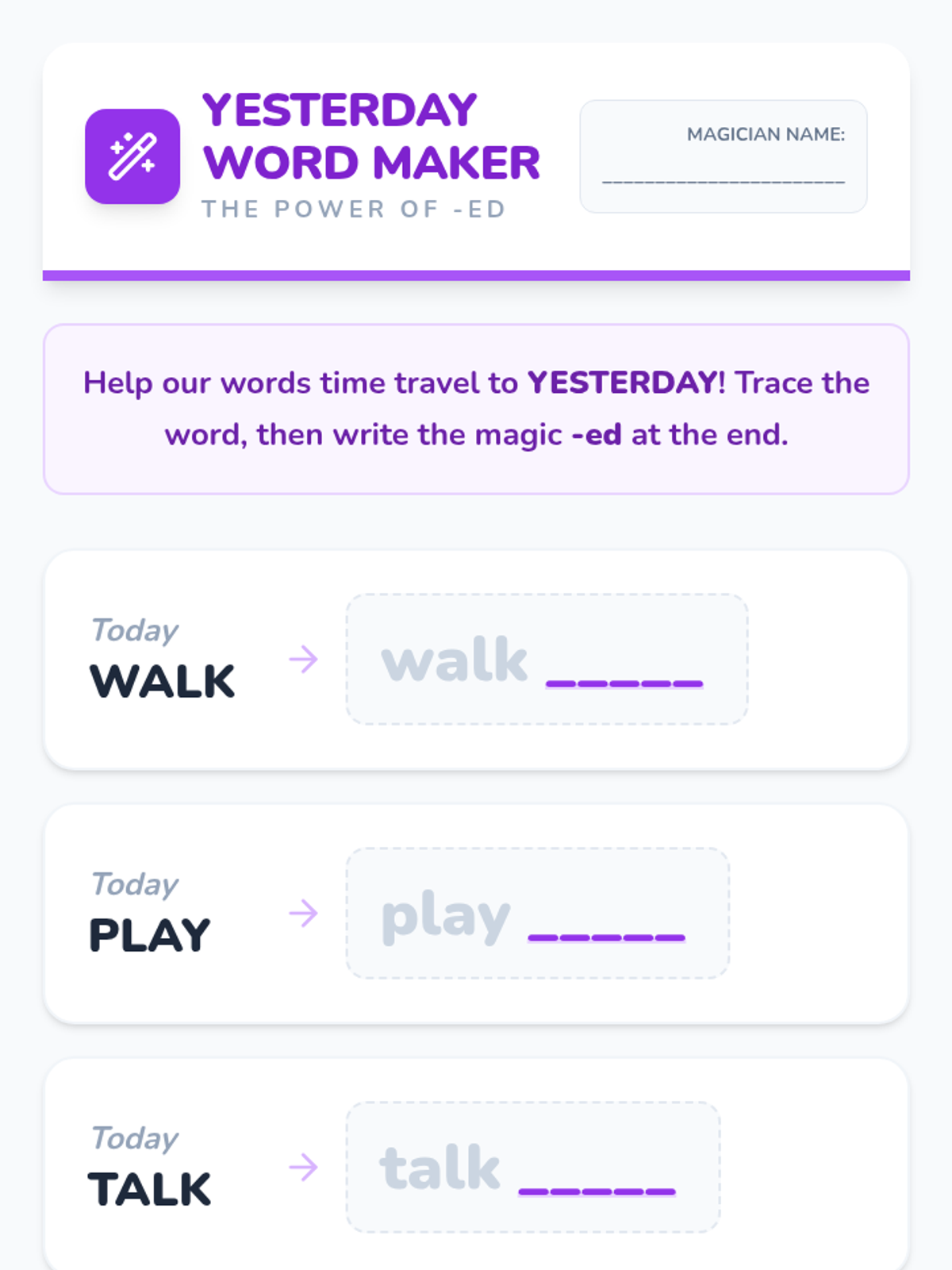
A Kindergarten worksheet where students practice adding the '-ed' ending to basic verbs to transform them into the past tense.
Instructional slide deck for transforming expanded word forms into contractions, using a 'workshop' metaphor.
Engaging slides that teach Kindergarten students how to add '-ed' to action words to create the past tense, focusing on oral sounds and visual cues.
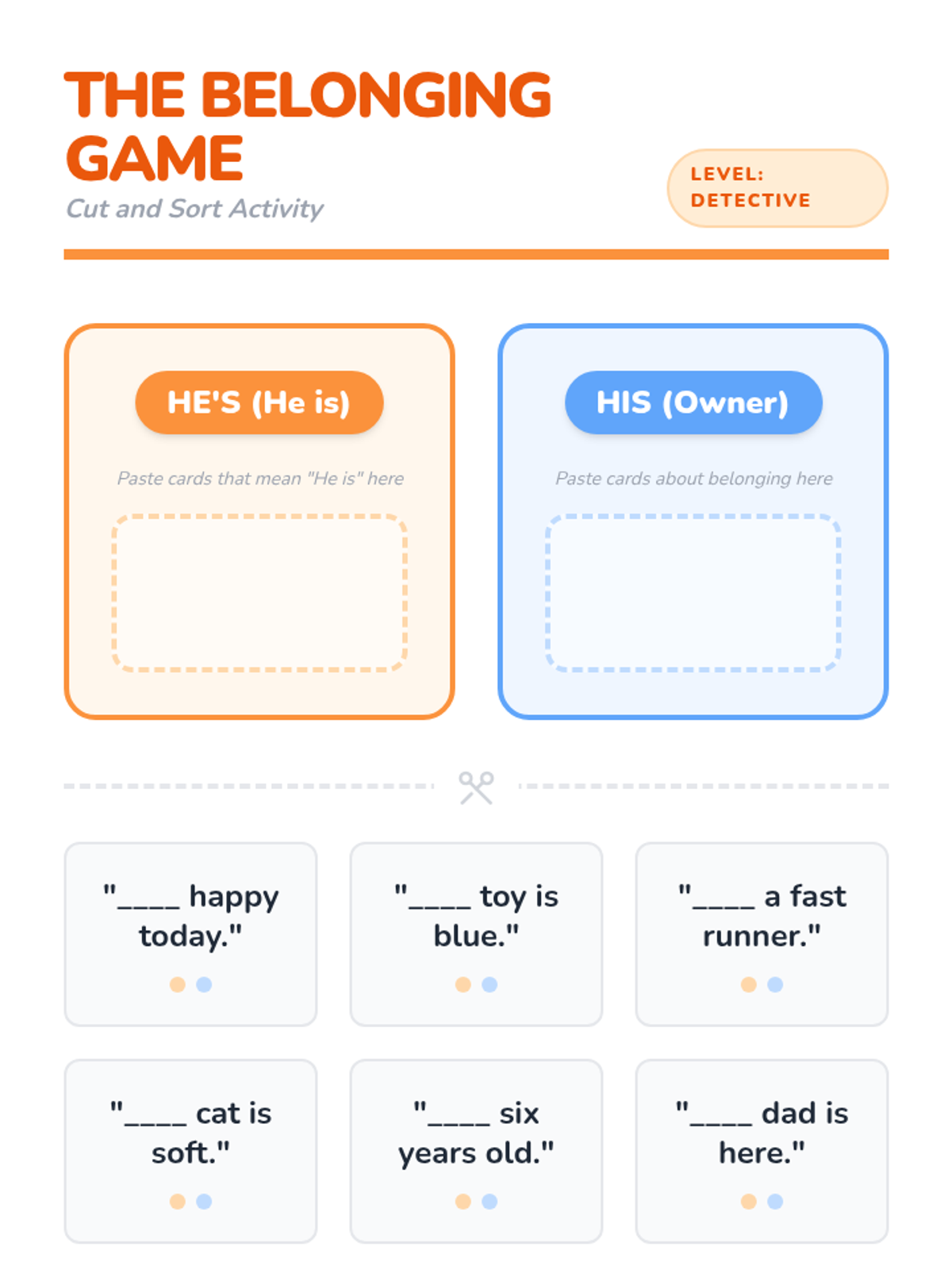
Sorting activity where students distinguish 'He's' (contraction) from 'His' (possessive) by testing sentences and placing cards on the correct mat.
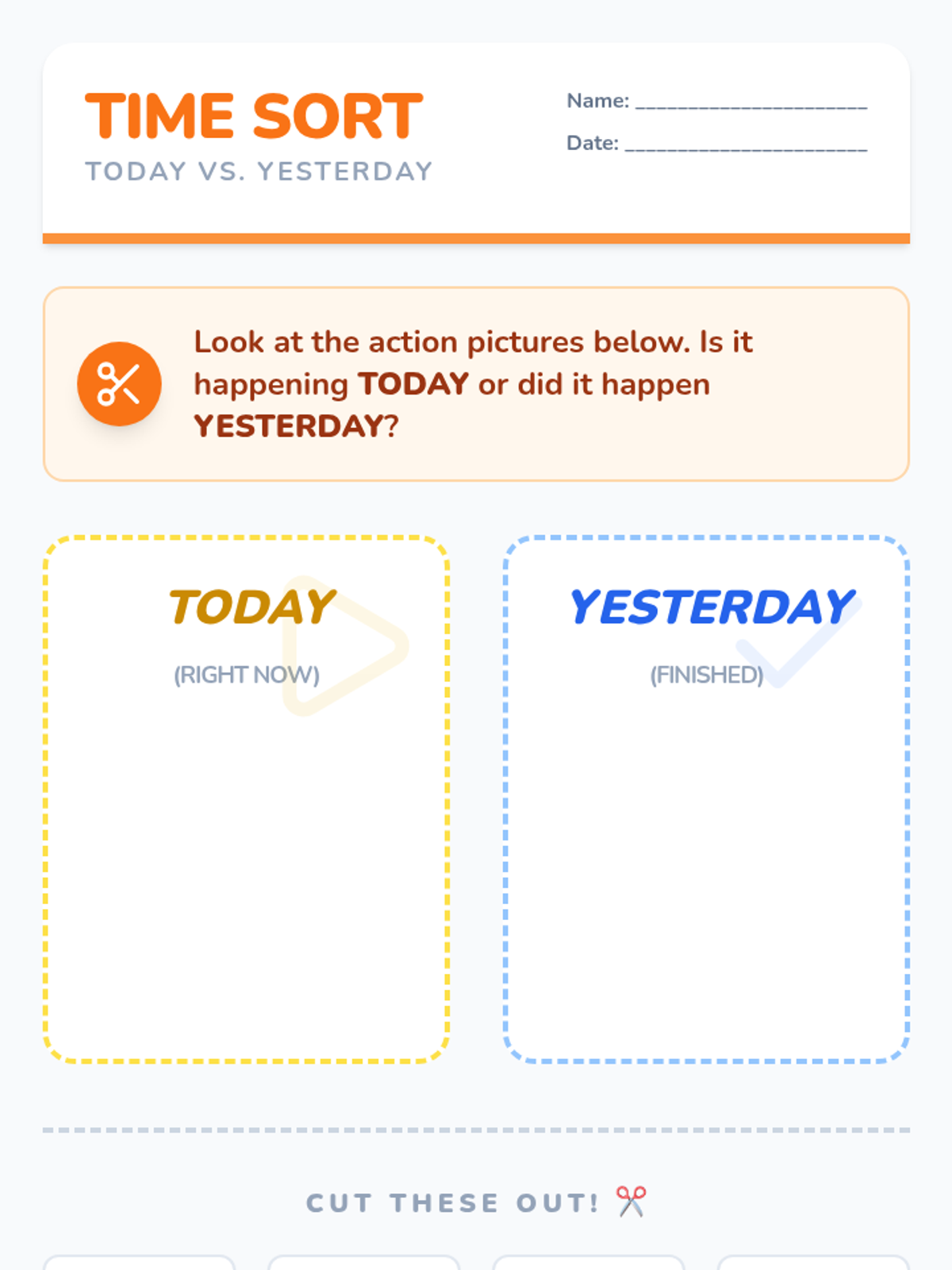
A cut-and-paste sorting activity for Kindergarten students to categorize actions as 'Today' (in progress) or 'Yesterday' (completed).
Visual aids to help Kindergarten students distinguish between 'Today' (present) and 'Yesterday' (past) concepts using visual sorting and inquiry.
Instructional slide deck focused on distinguishing 'He's' (contraction) from 'His' (possessive) using the 'He Is' test.
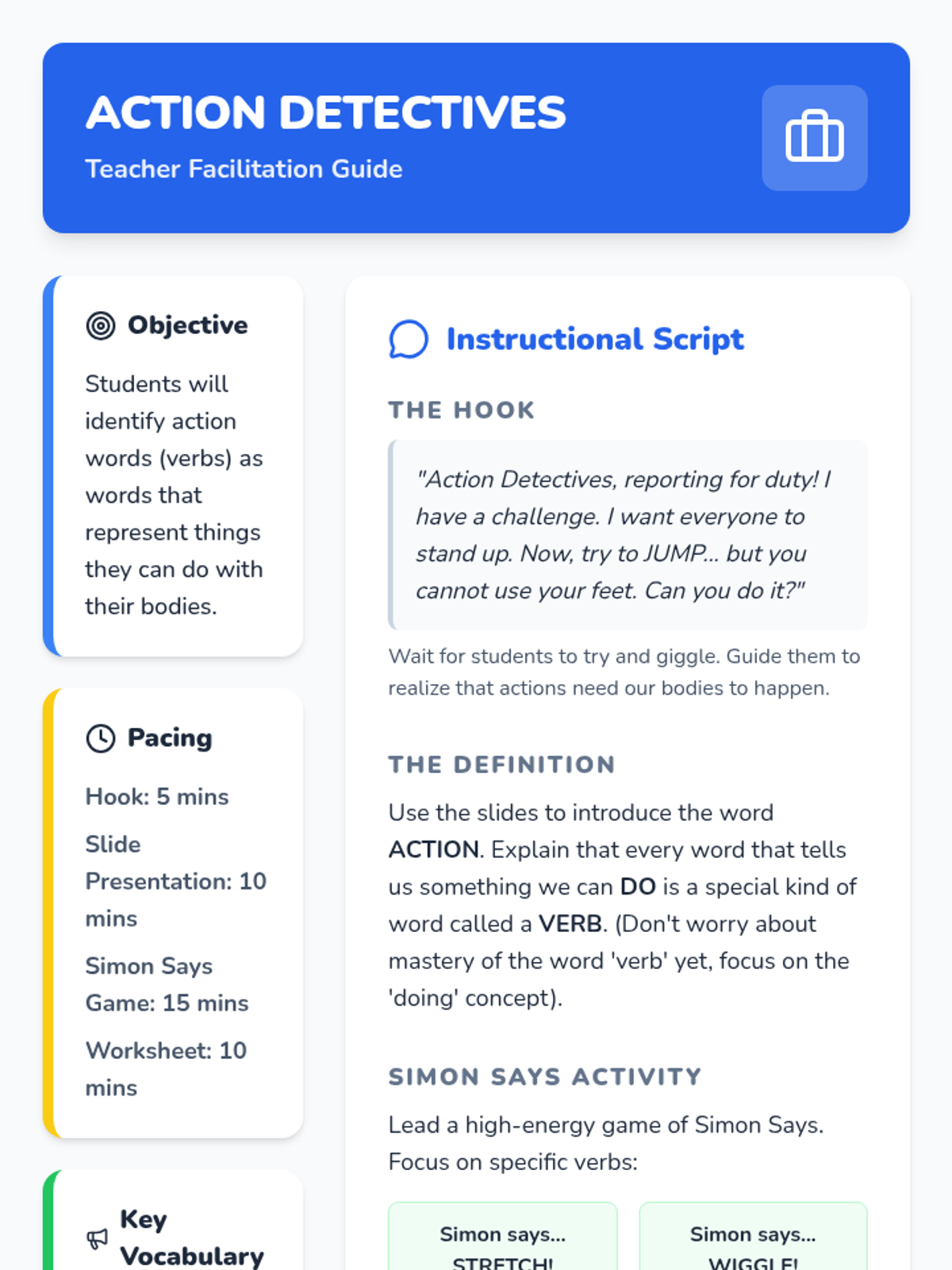
A detailed facilitation guide for teachers to deliver the Action Detectives lesson, including script, timing, and teaching tips.
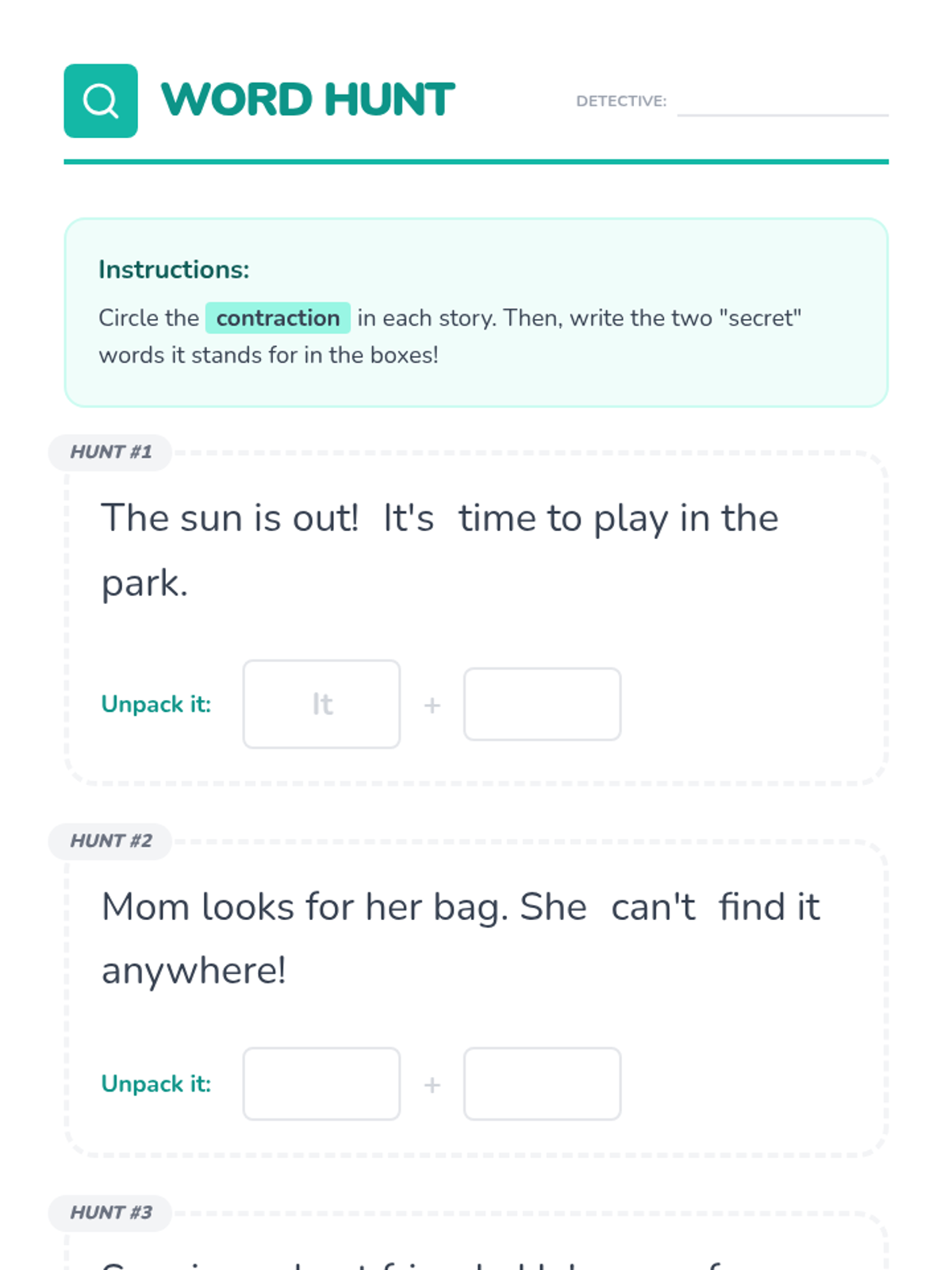
Worksheet where students identify contractions in short passages and write the expanded two-word forms.
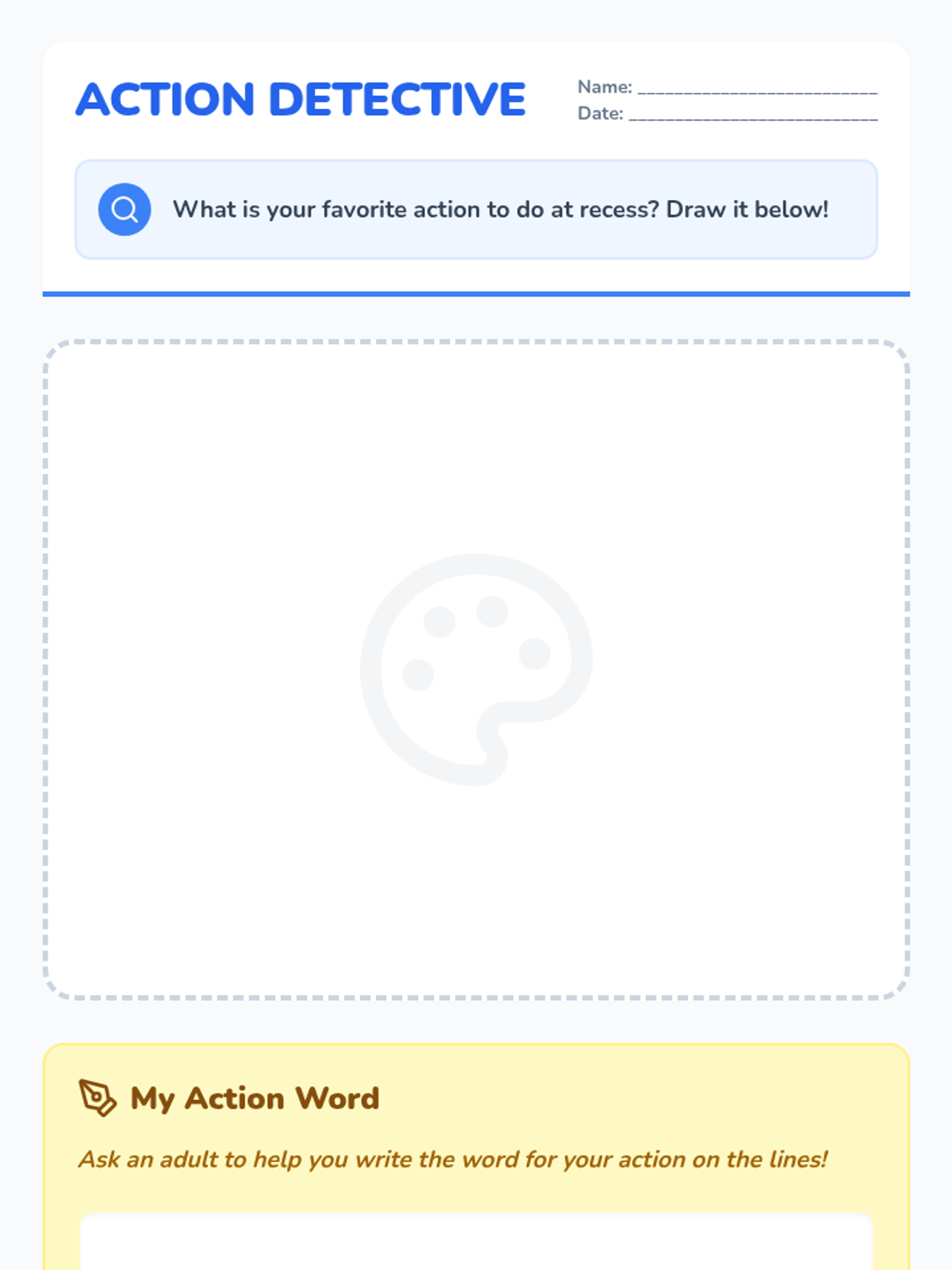
A Kindergarten-friendly worksheet where students draw their favorite action and work with an adult to write the corresponding verb.
Guided hunt slide deck for finding and 'unpacking' contractions in simple sentences. Features visual aids for the apostrophe and 'unpacking' metaphors.
An engaging slide deck to introduce the concept of verbs (action words) to Kindergarten students through 'Simon Says' and movement.
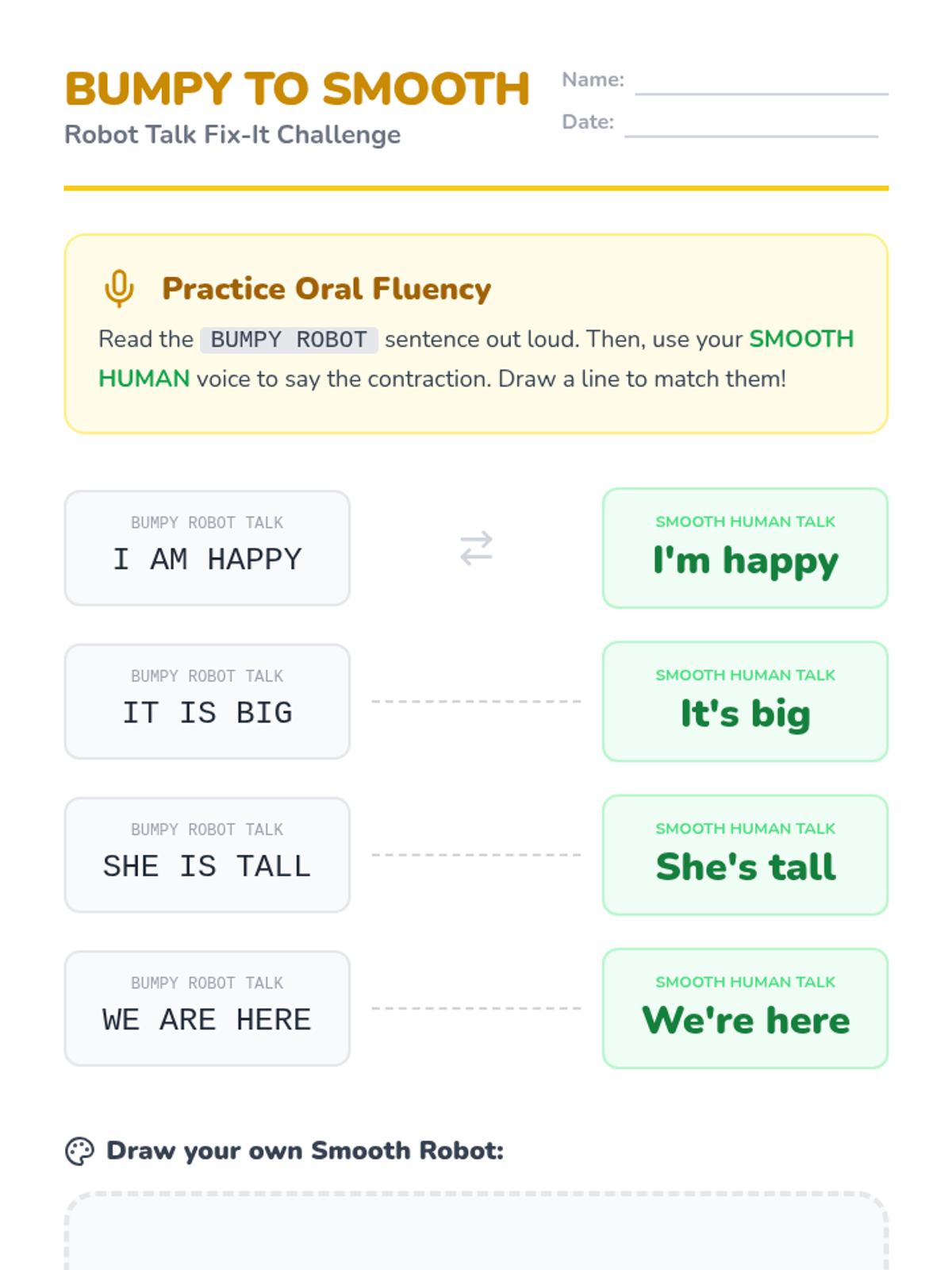
Oral practice worksheet where students compare 'Robot Talk' (expanded forms) and 'Smooth Talk' (contractions) through reading and matching.