Essential grammar structures, high-frequency vocabulary, and foundational literacy skills. Equips learners with basic speaking and listening abilities for everyday interactions and introductory text comprehension.
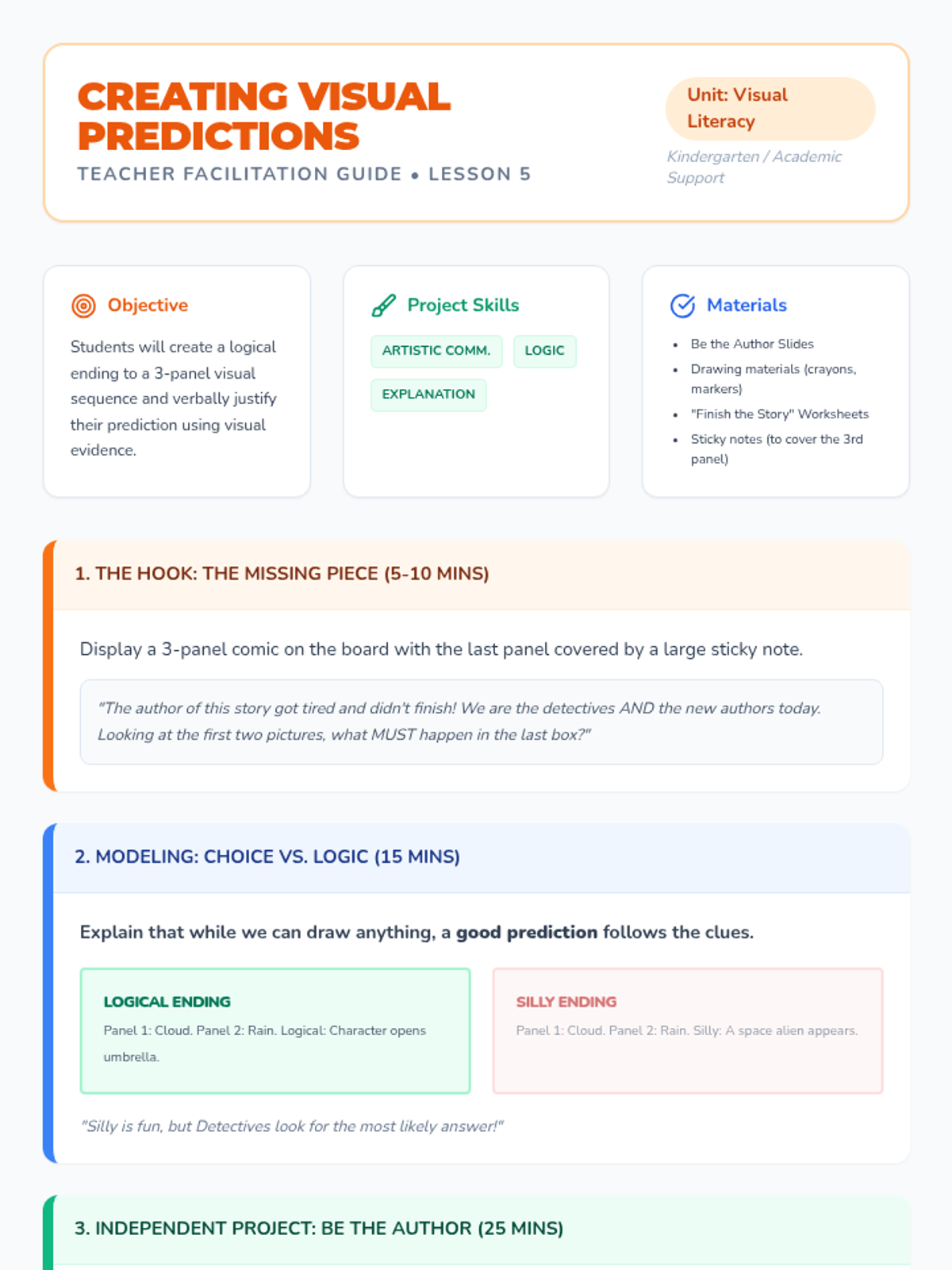
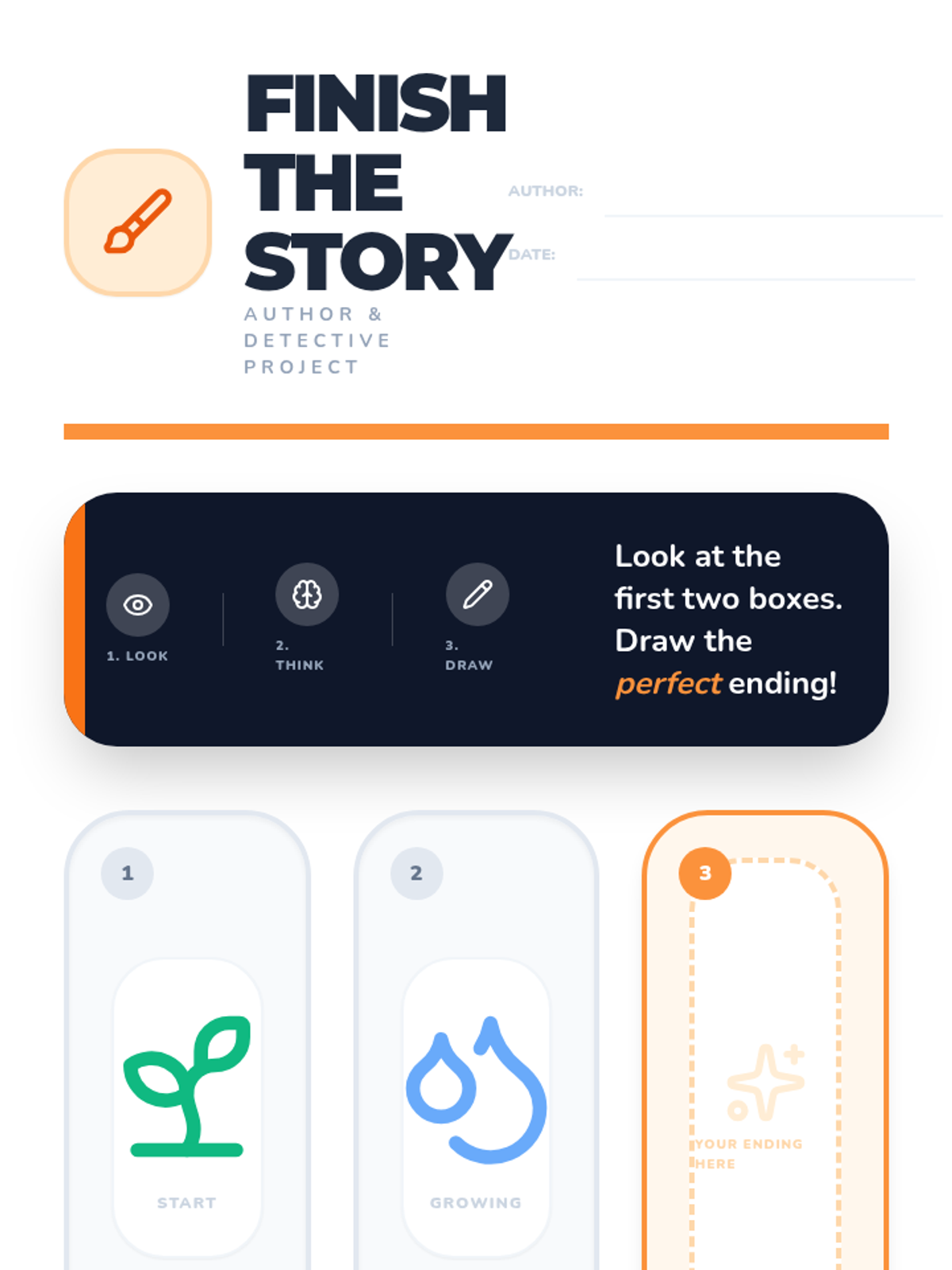
Students complete a 3-panel visual sequence by drawing their own predicted ending and explaining the visual clues that informed their artistic choice.
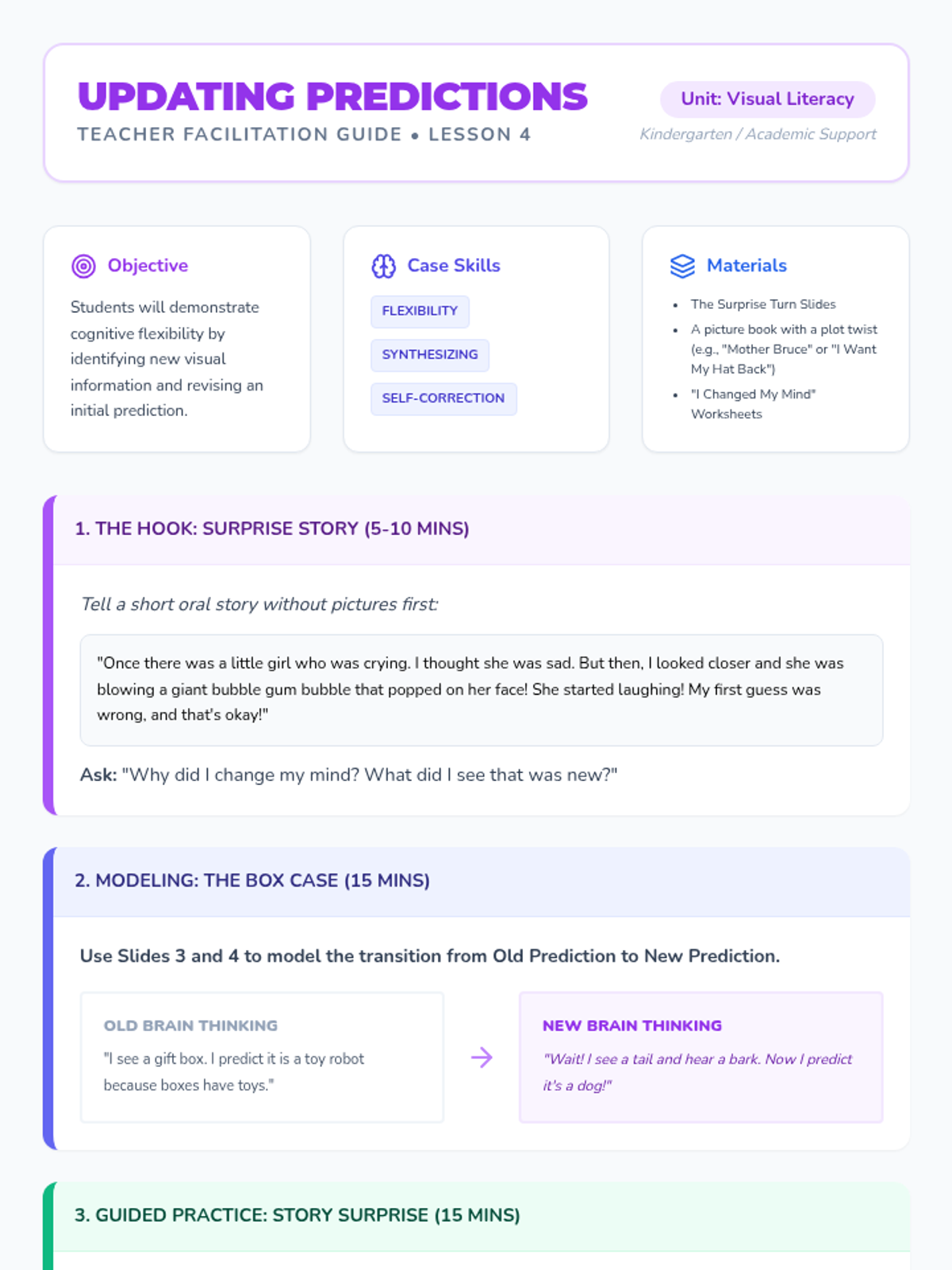
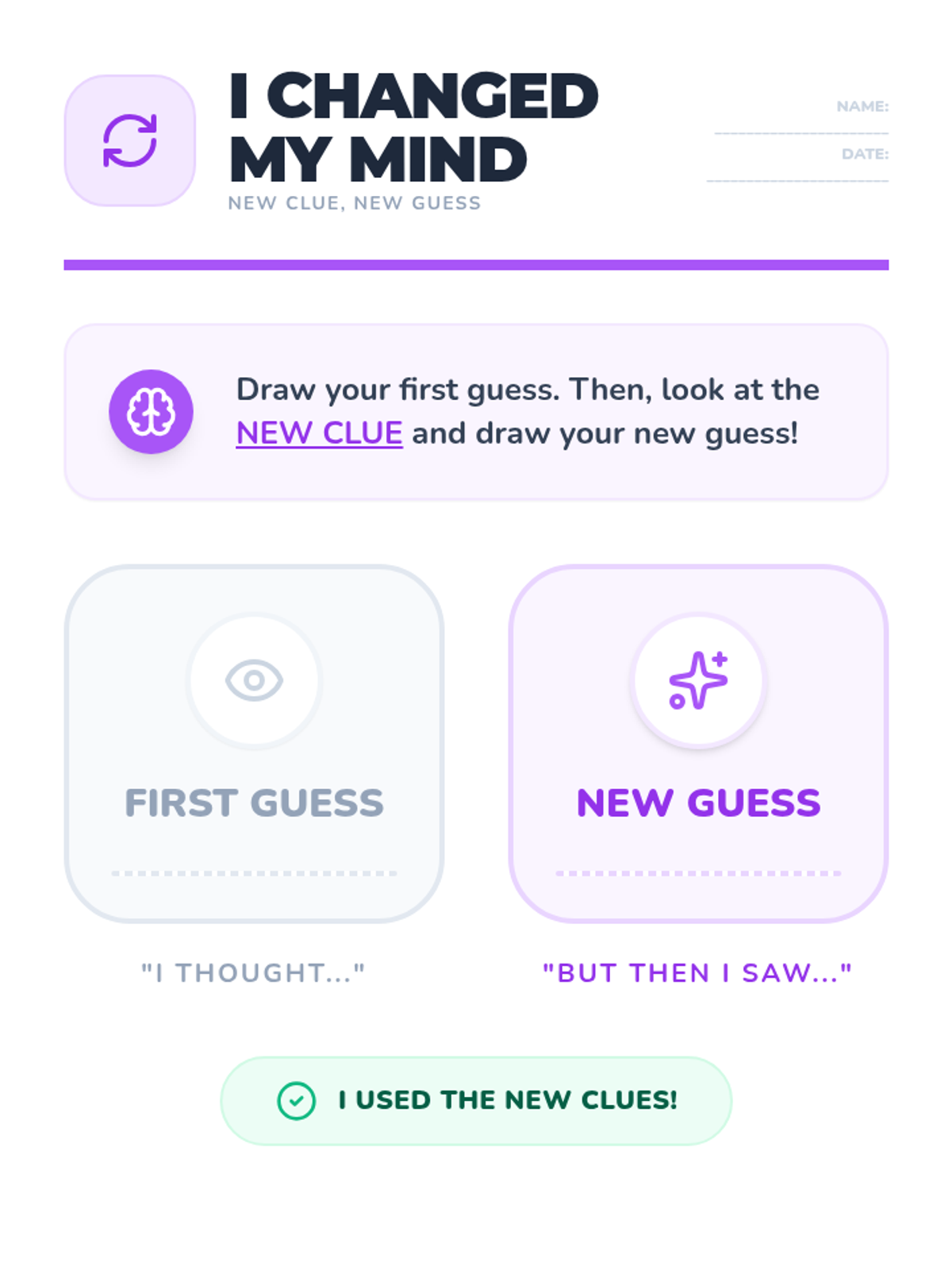
Students practice cognitive flexibility by revising their initial predictions when presented with surprising new visual information in a narrative.
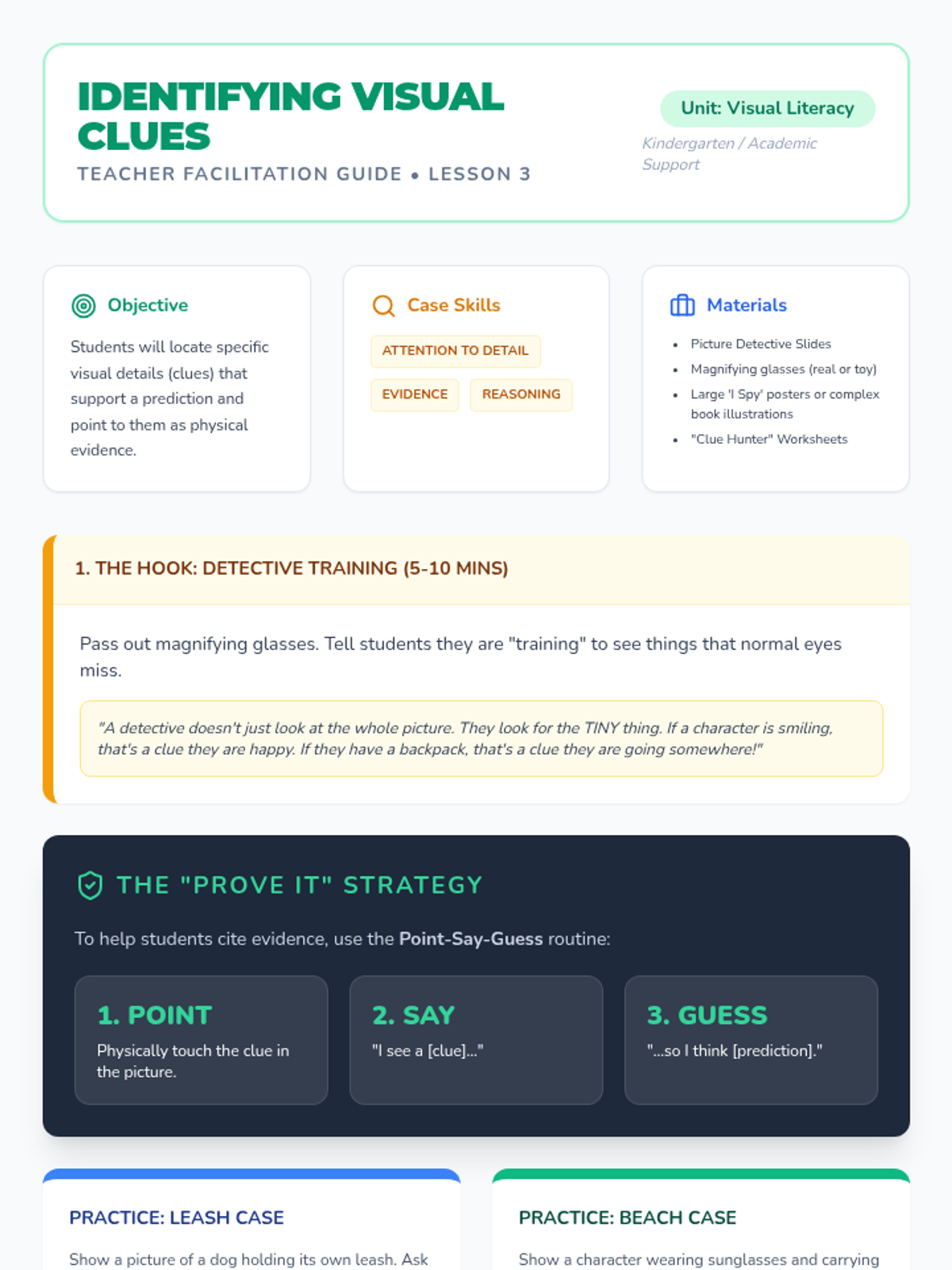
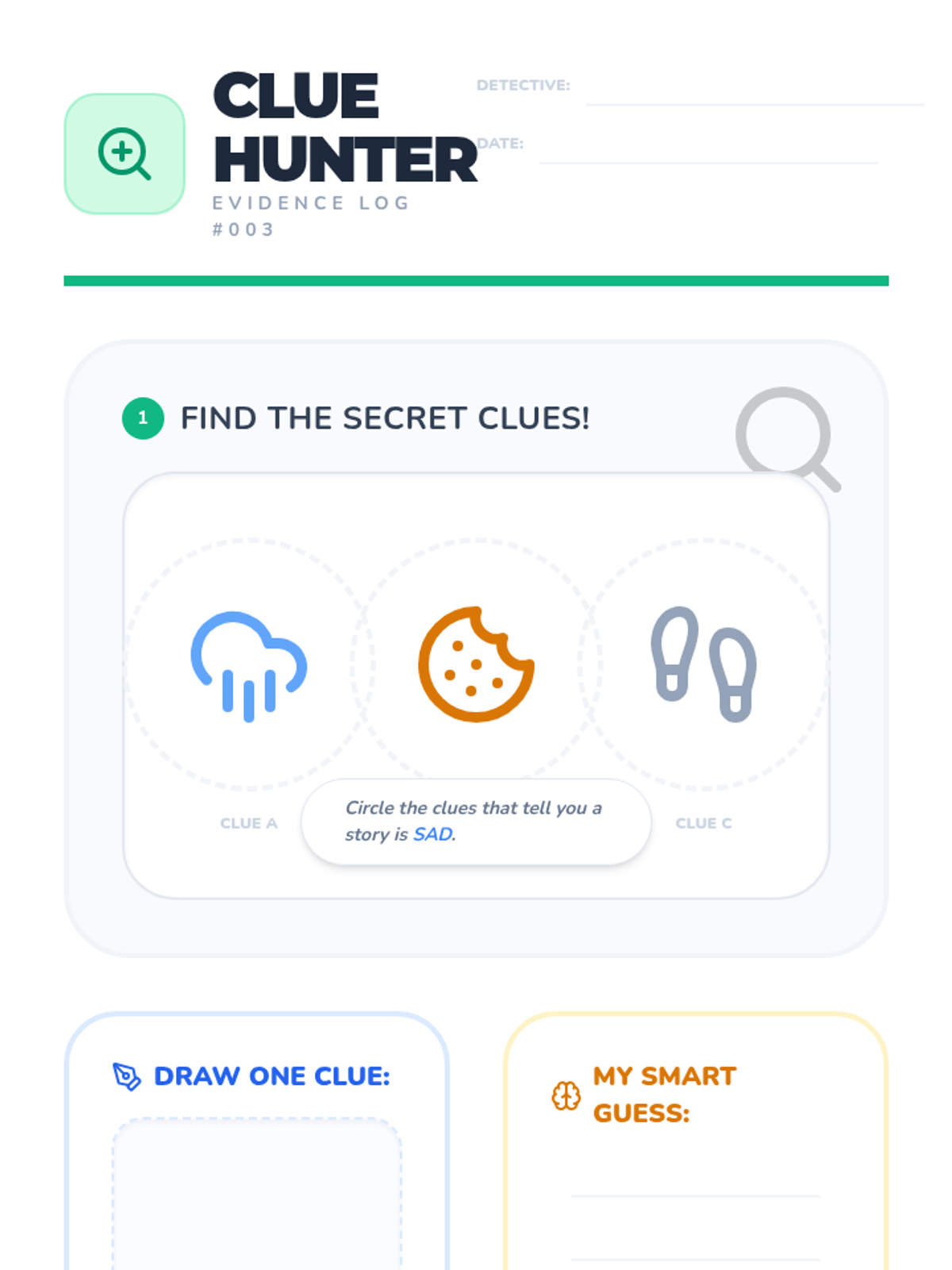
Students act as 'Picture Detectives' using magnifying glasses to find small visual details that hint at future events, citing specific evidence for their predictions.
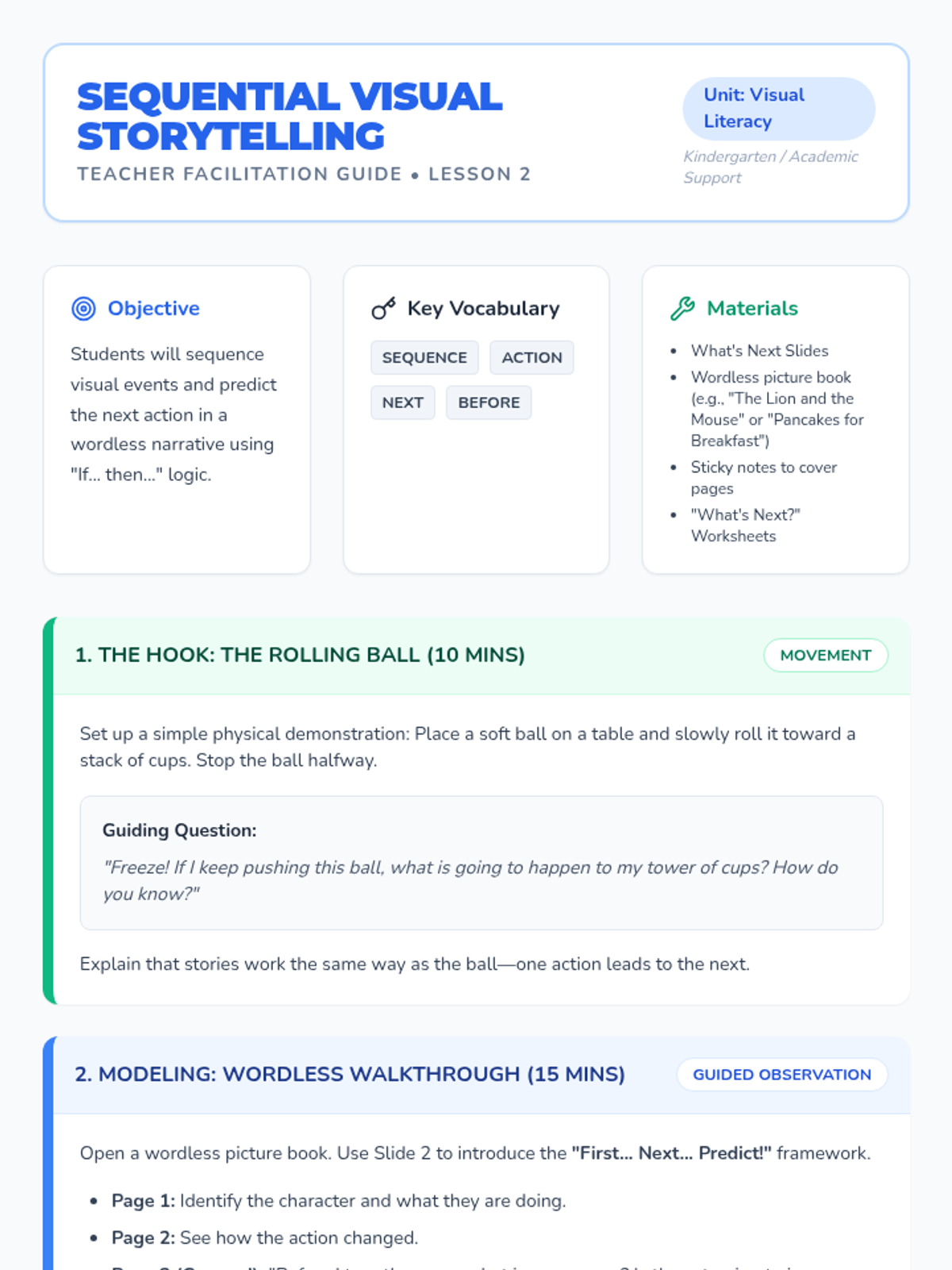
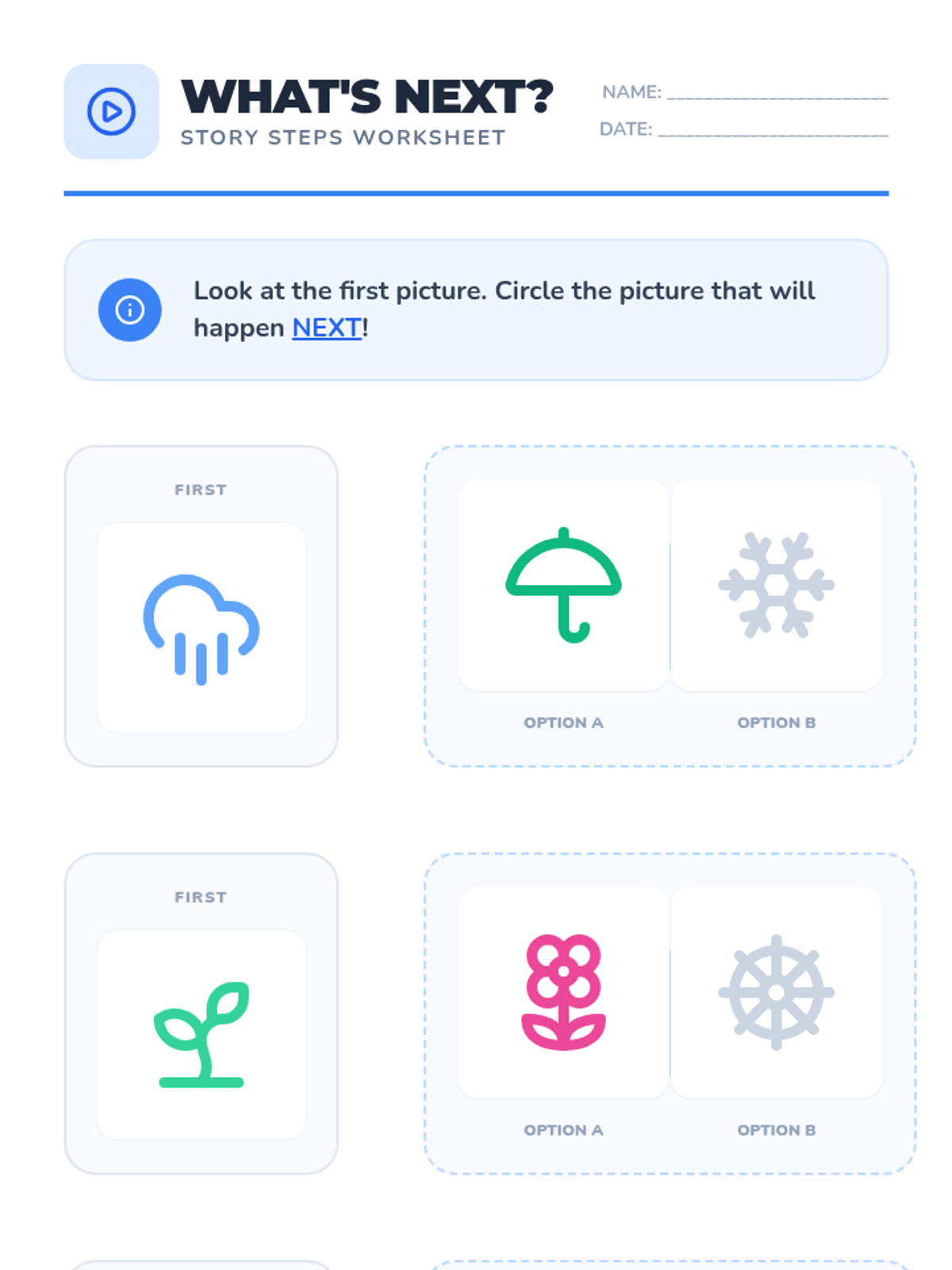
Using a wordless picture book format, students practice pausing at key moments to predict the next action based on visual trajectories and sequencing.
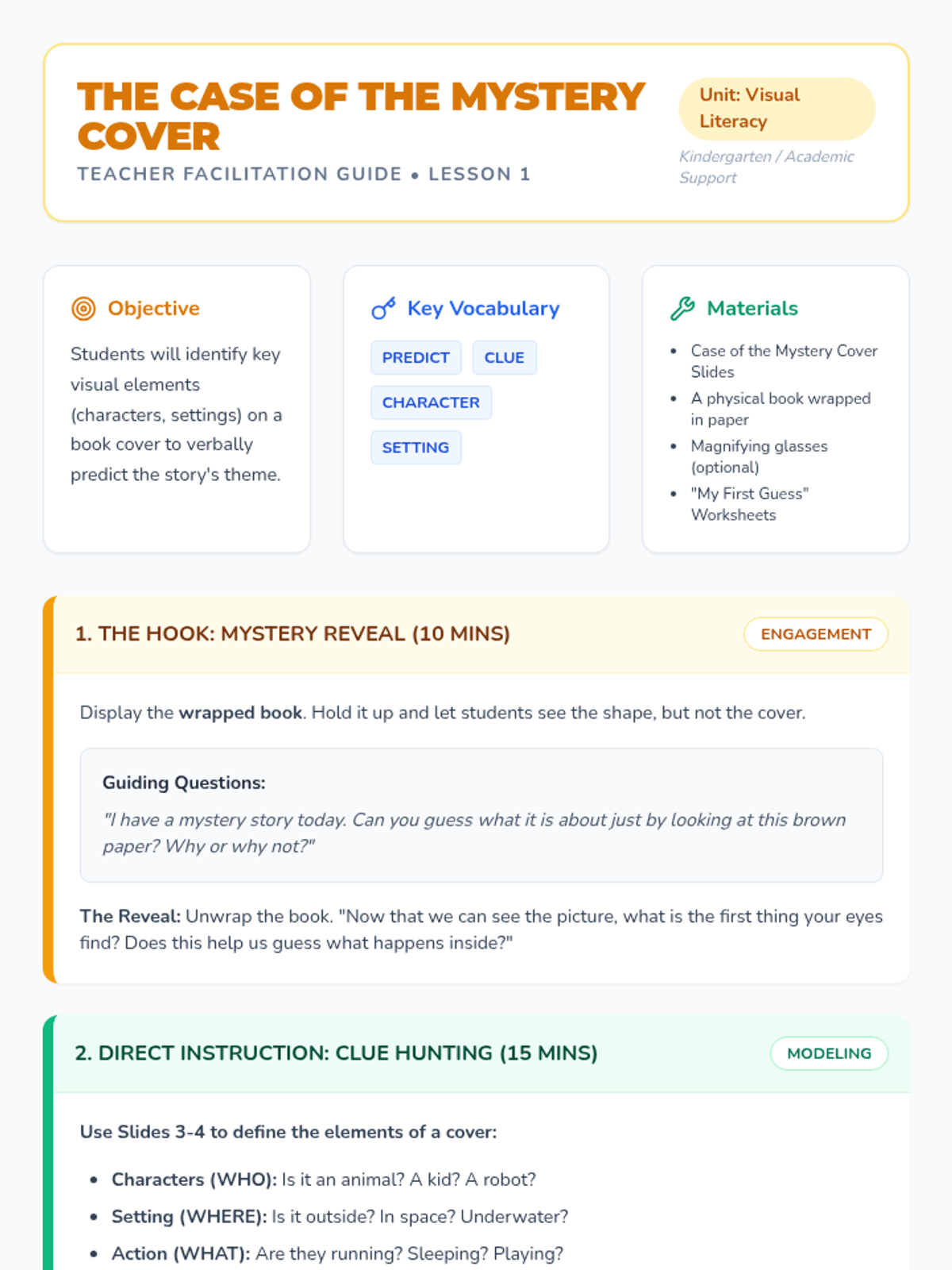
Students examine book covers to identify visual elements like characters and settings, using them to verbally guess what a story might be about.
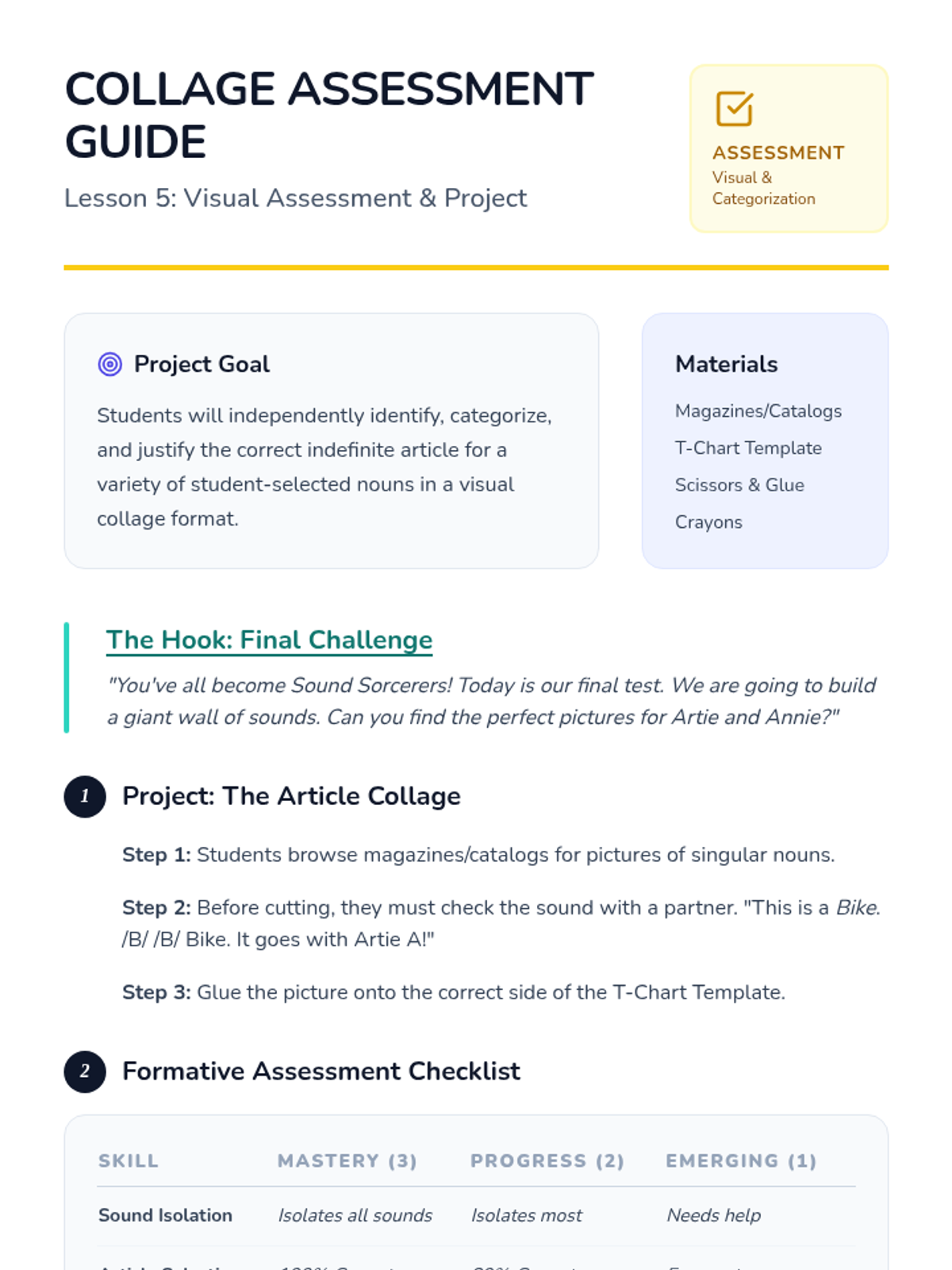
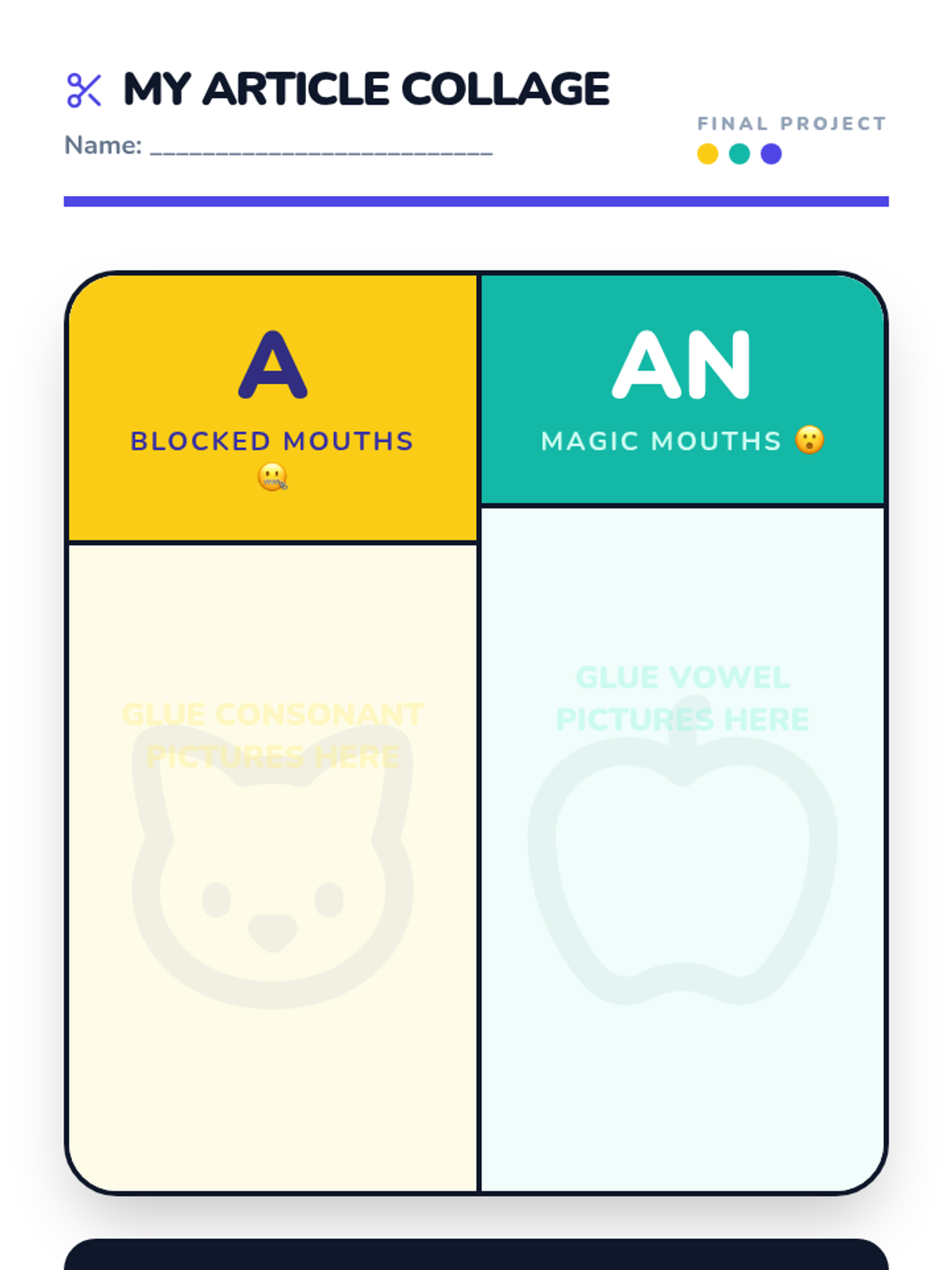
A culminating project where students create a visual collage of nouns categorized by their required indefinite article.
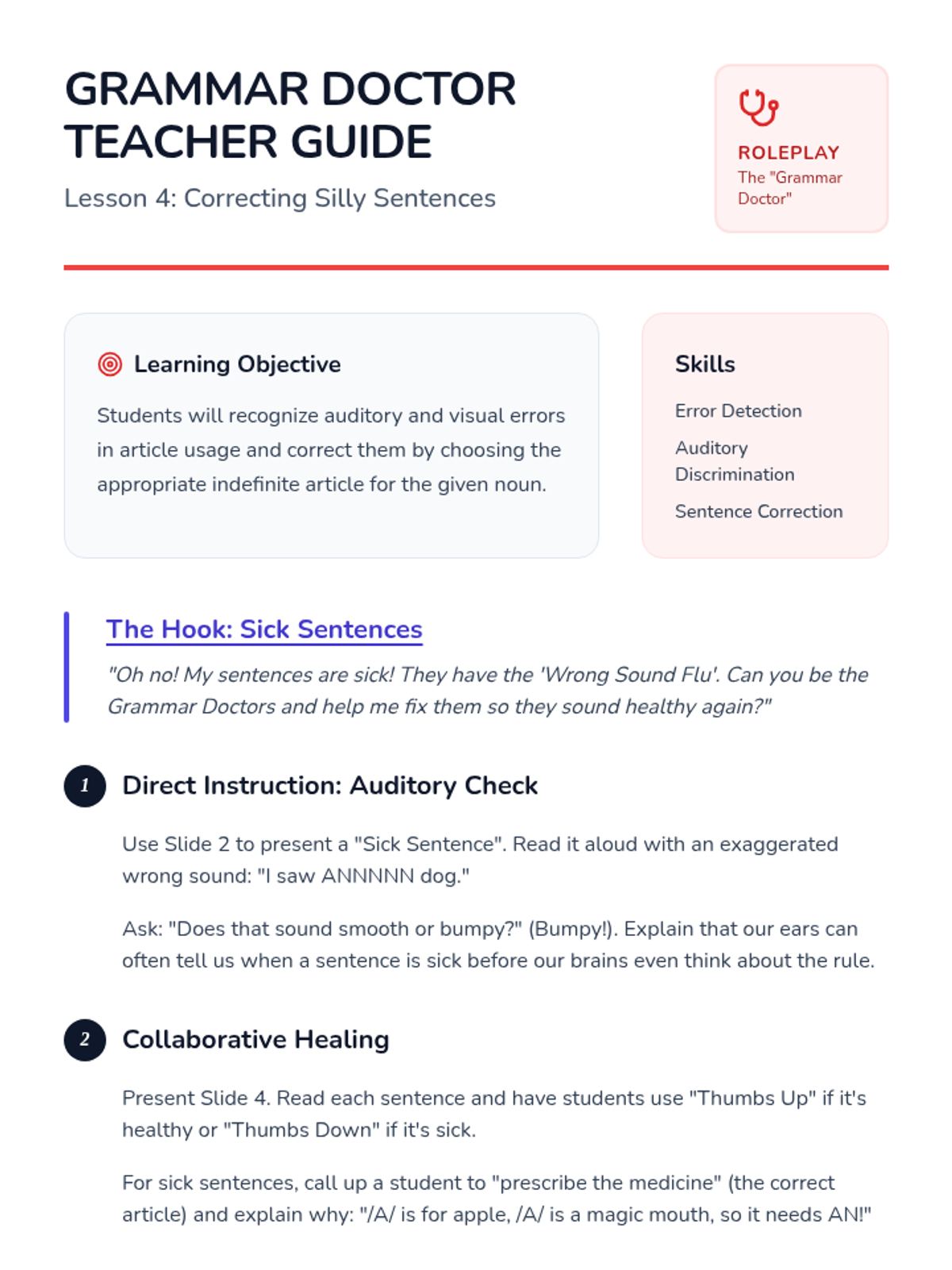
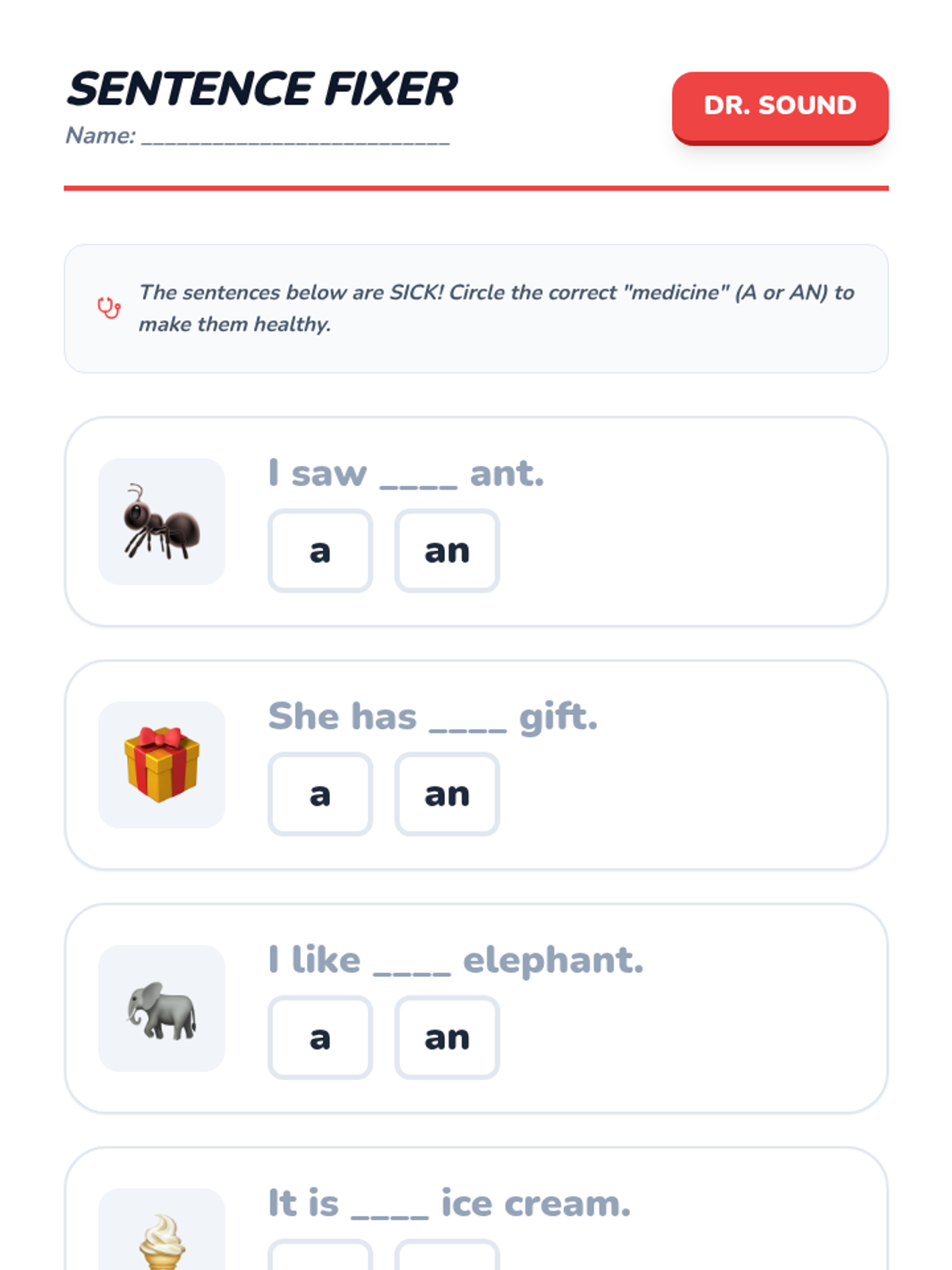
Students act as 'grammar doctors' to identify and fix 'silly' sentences where the indefinite articles have been swapped.
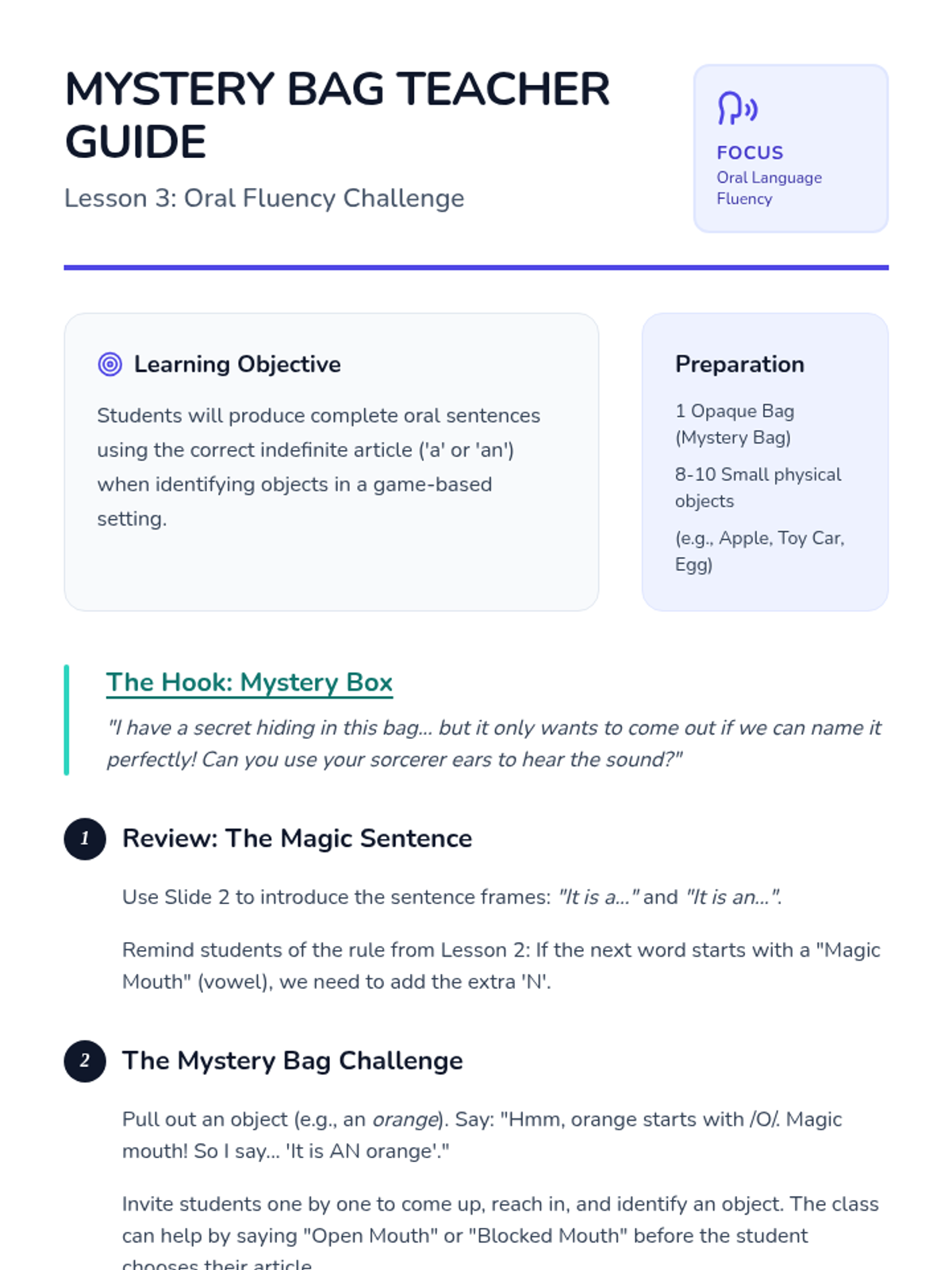
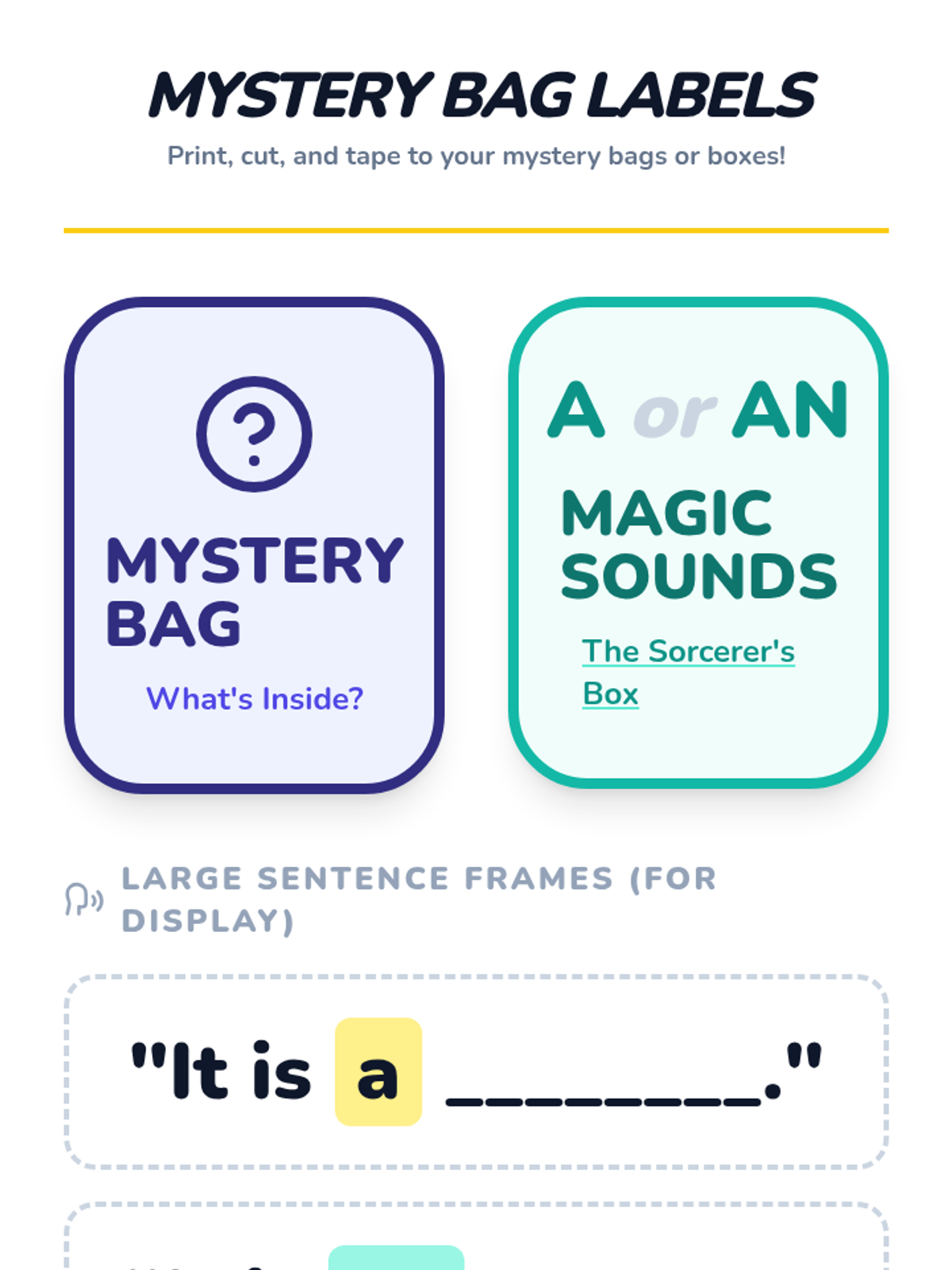
Students practice oral fluency by identifying objects from a mystery bag using the correct indefinite article in a complete sentence frame.
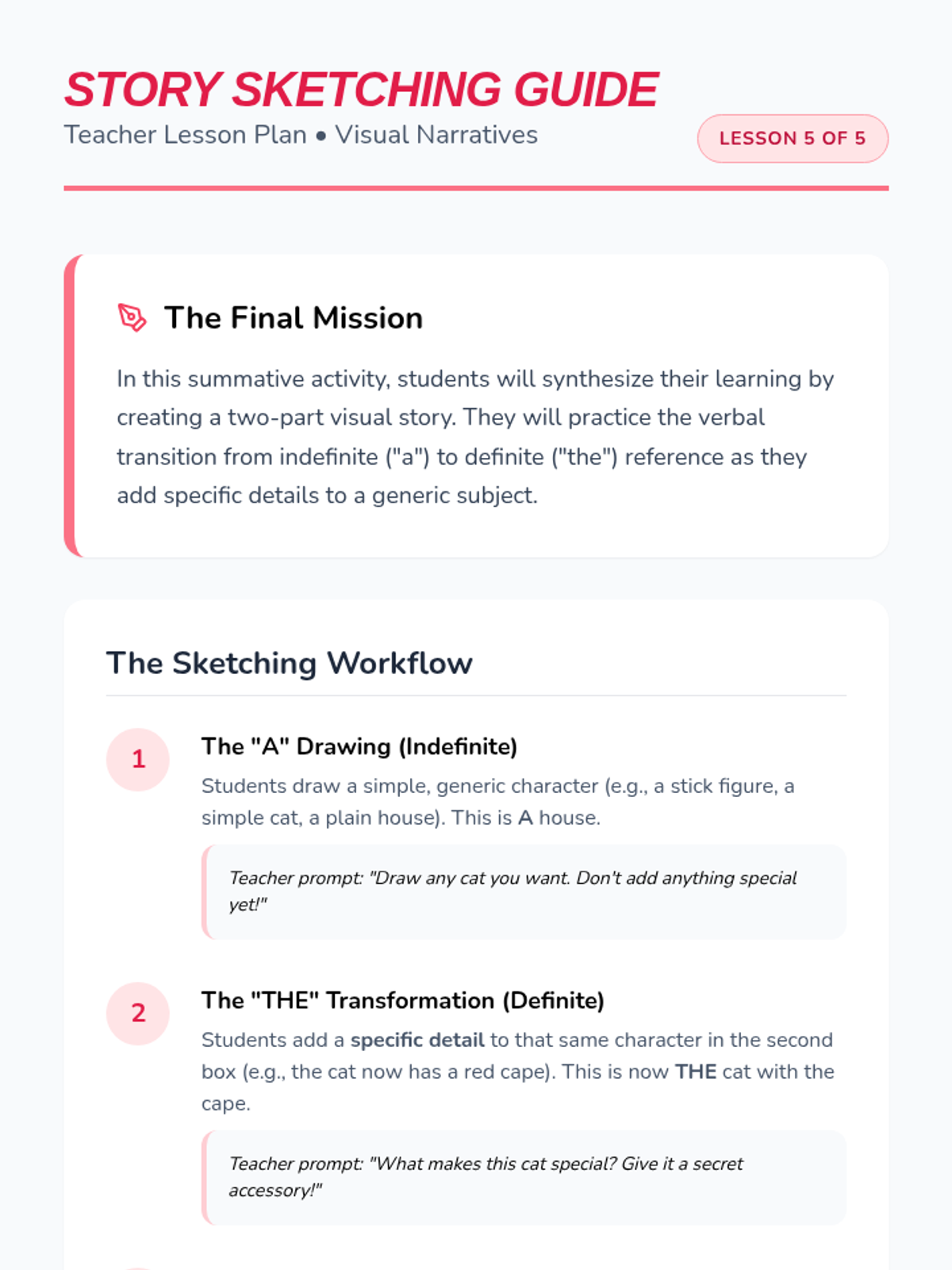
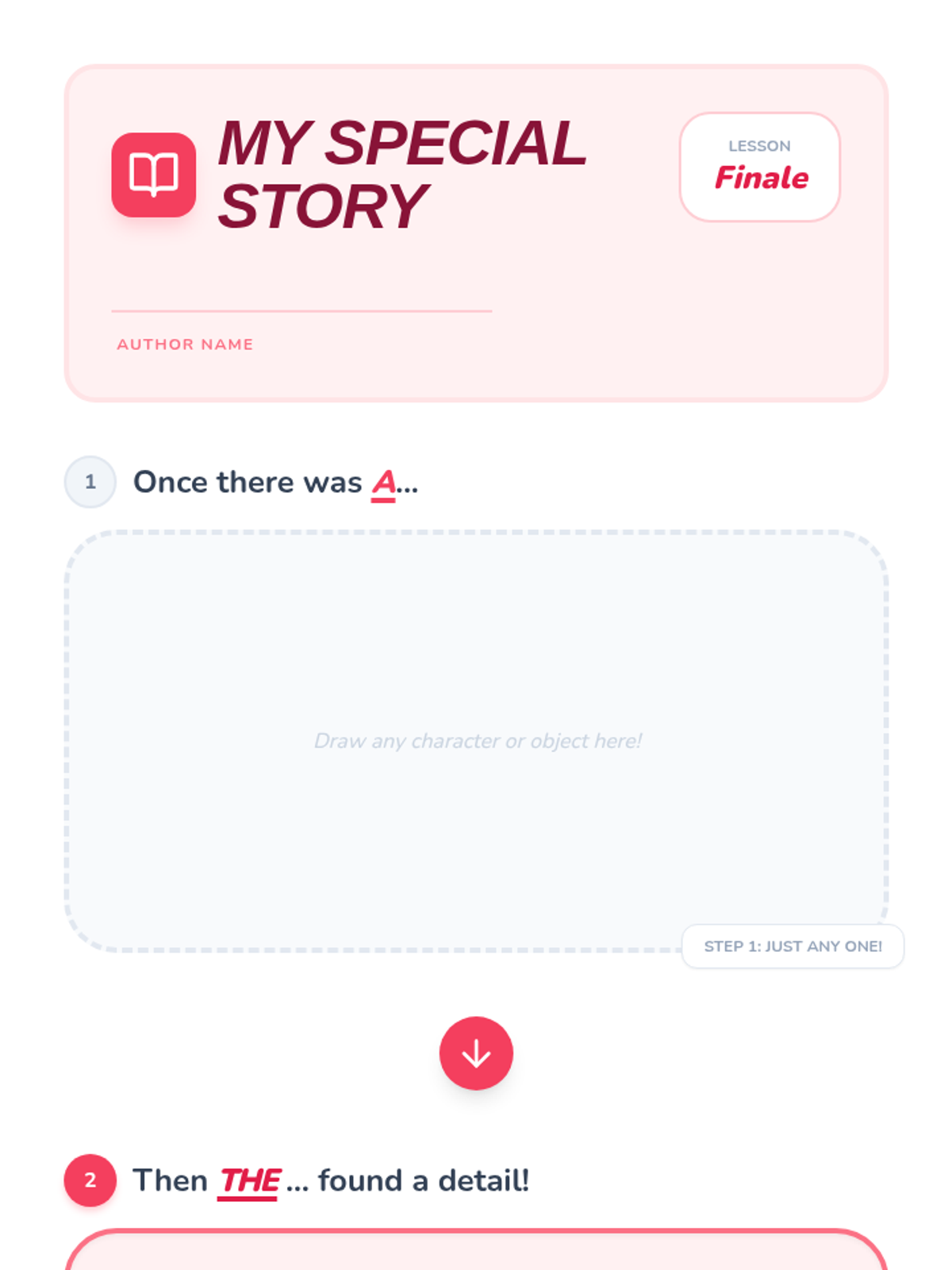
Students create a visual story that transitions from a general subject to a specific, detailed character.
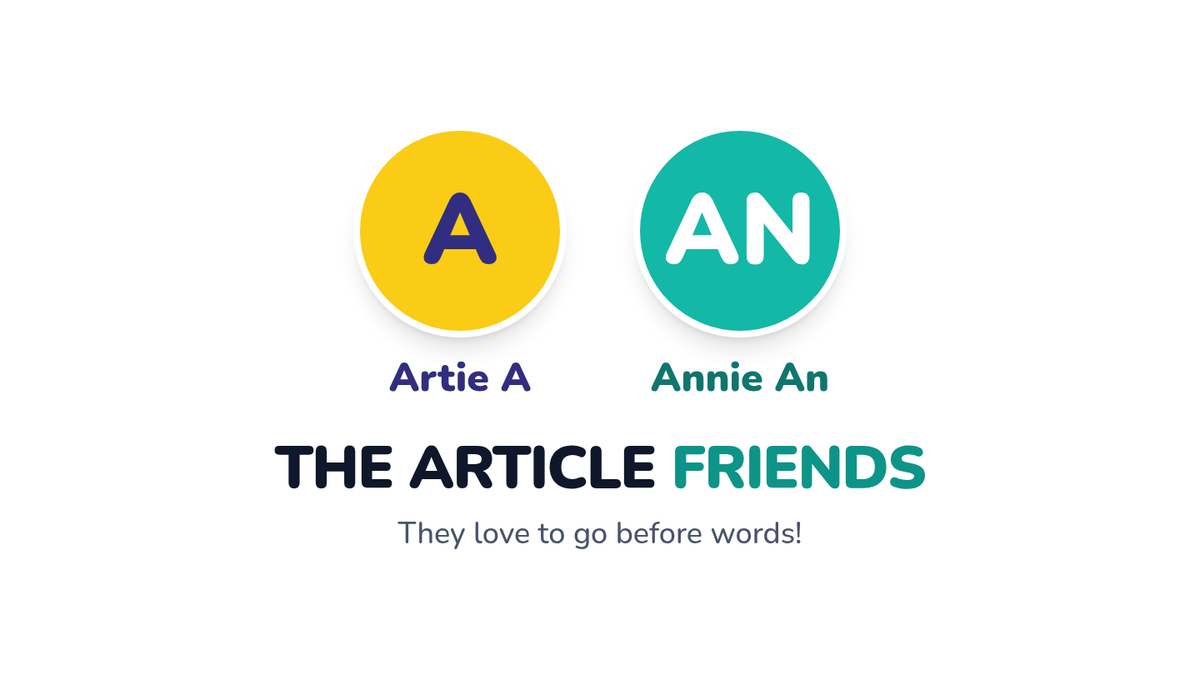
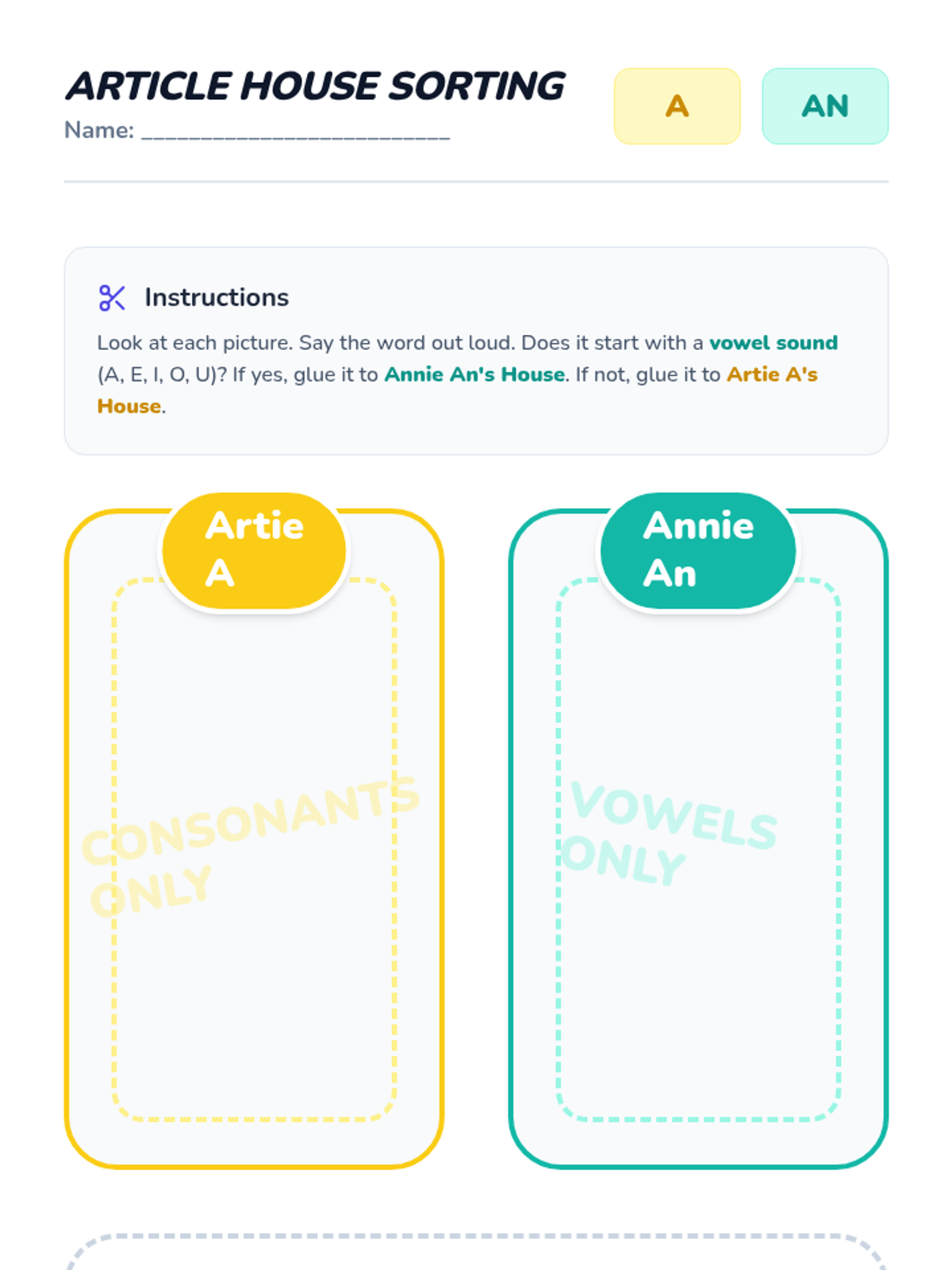
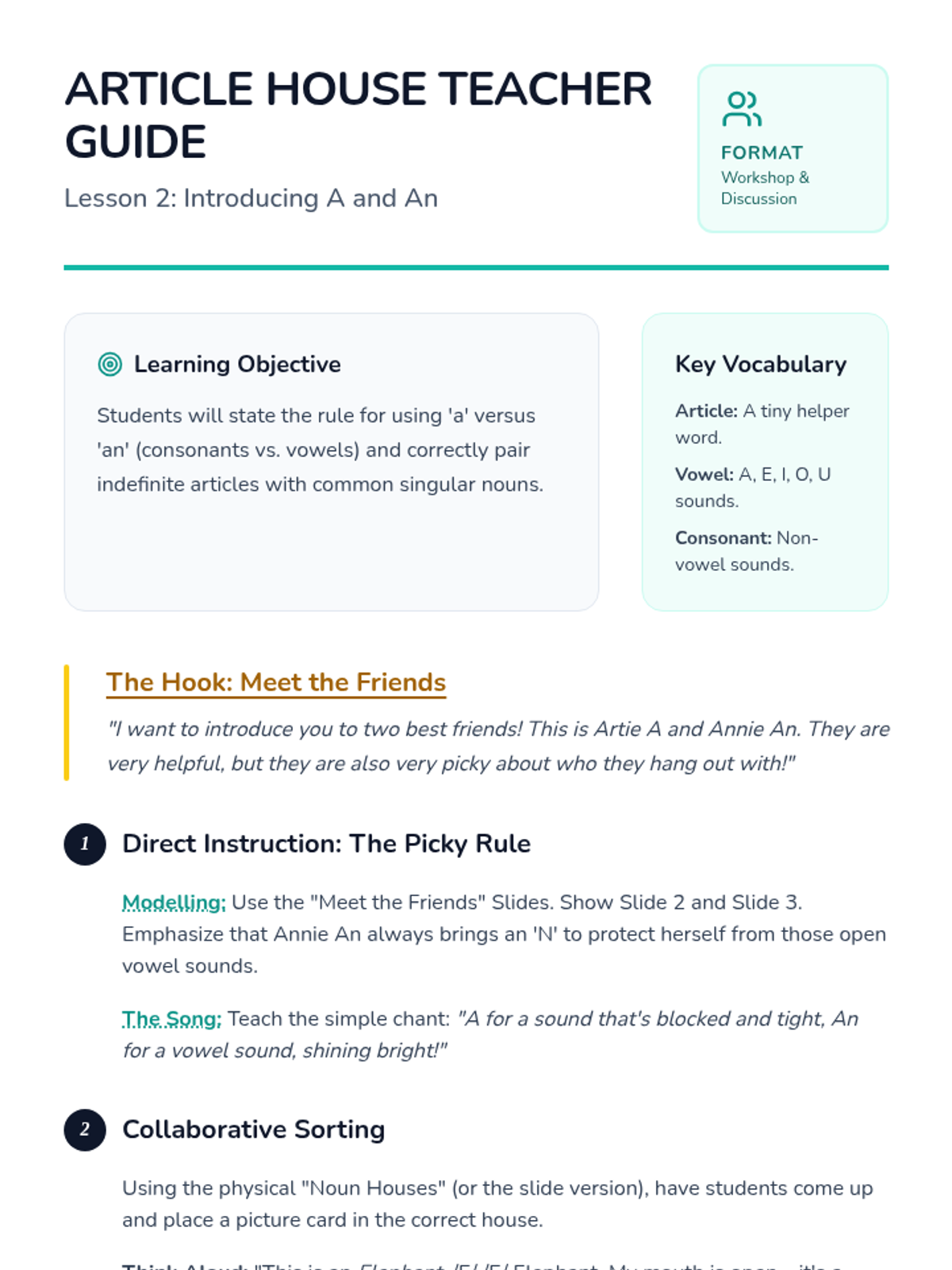
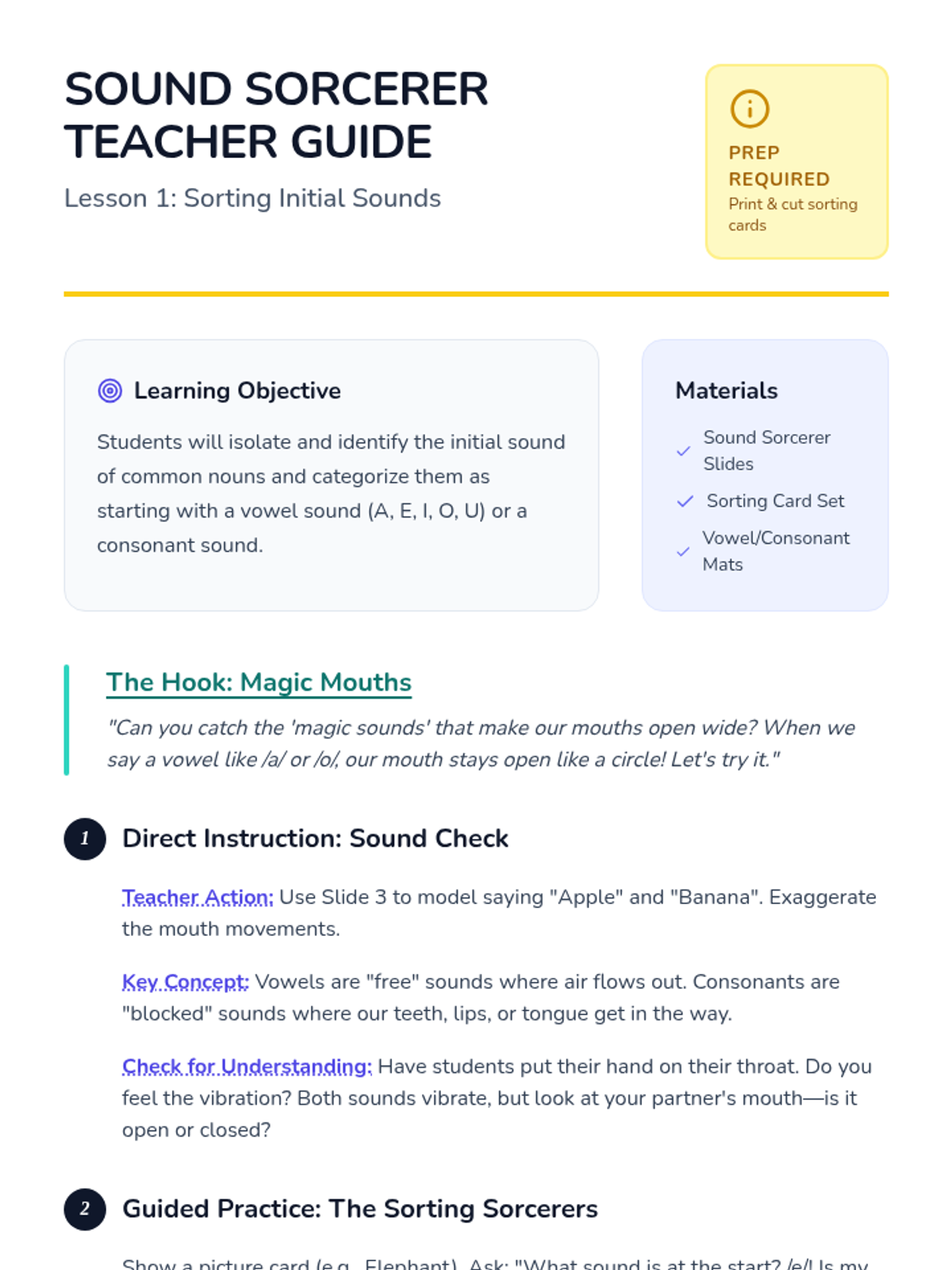
The teacher introduces 'Artie A' and 'Annie An' as characters who favor different initial sounds, using 'noun houses' to categorize words.
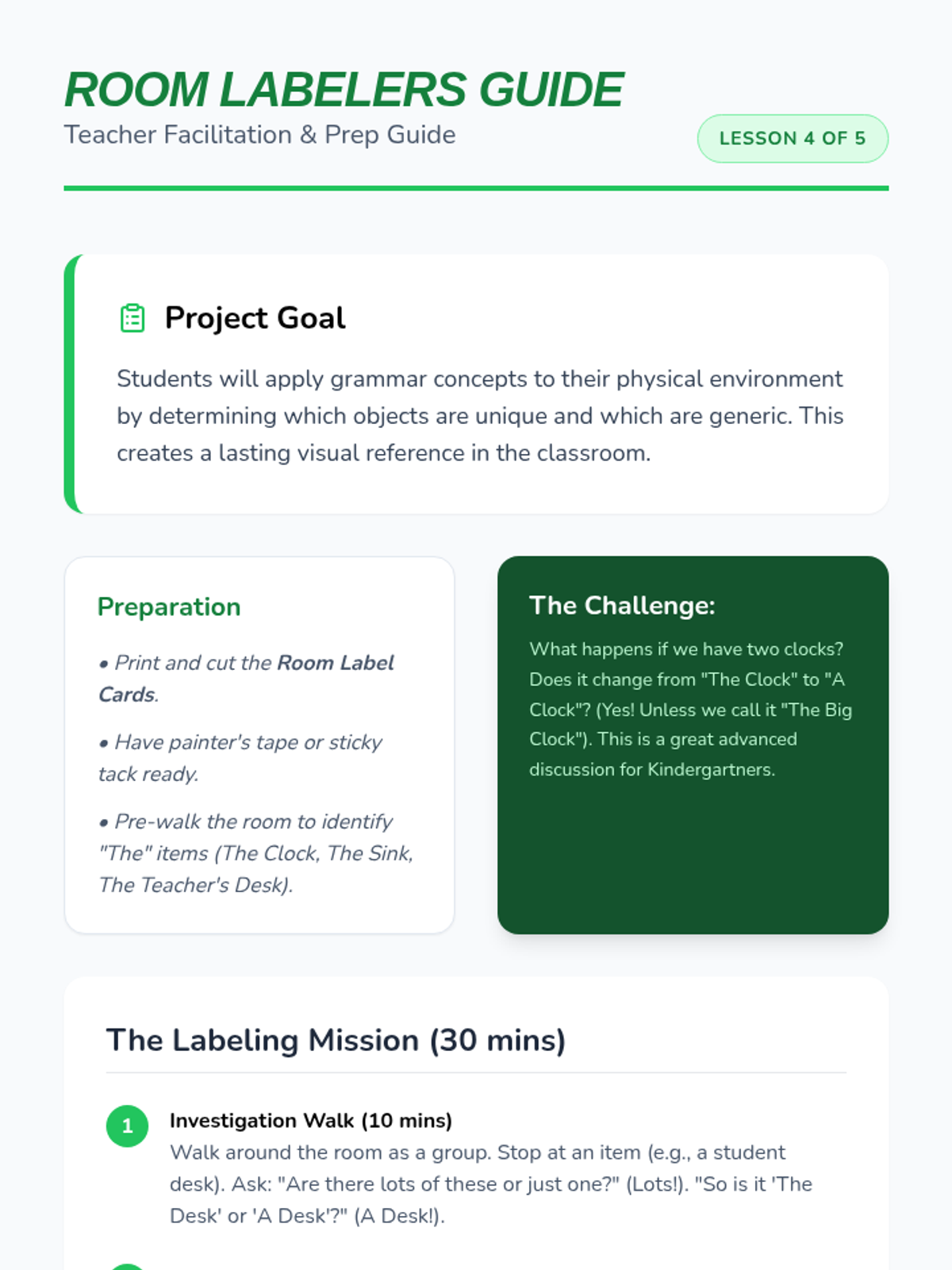
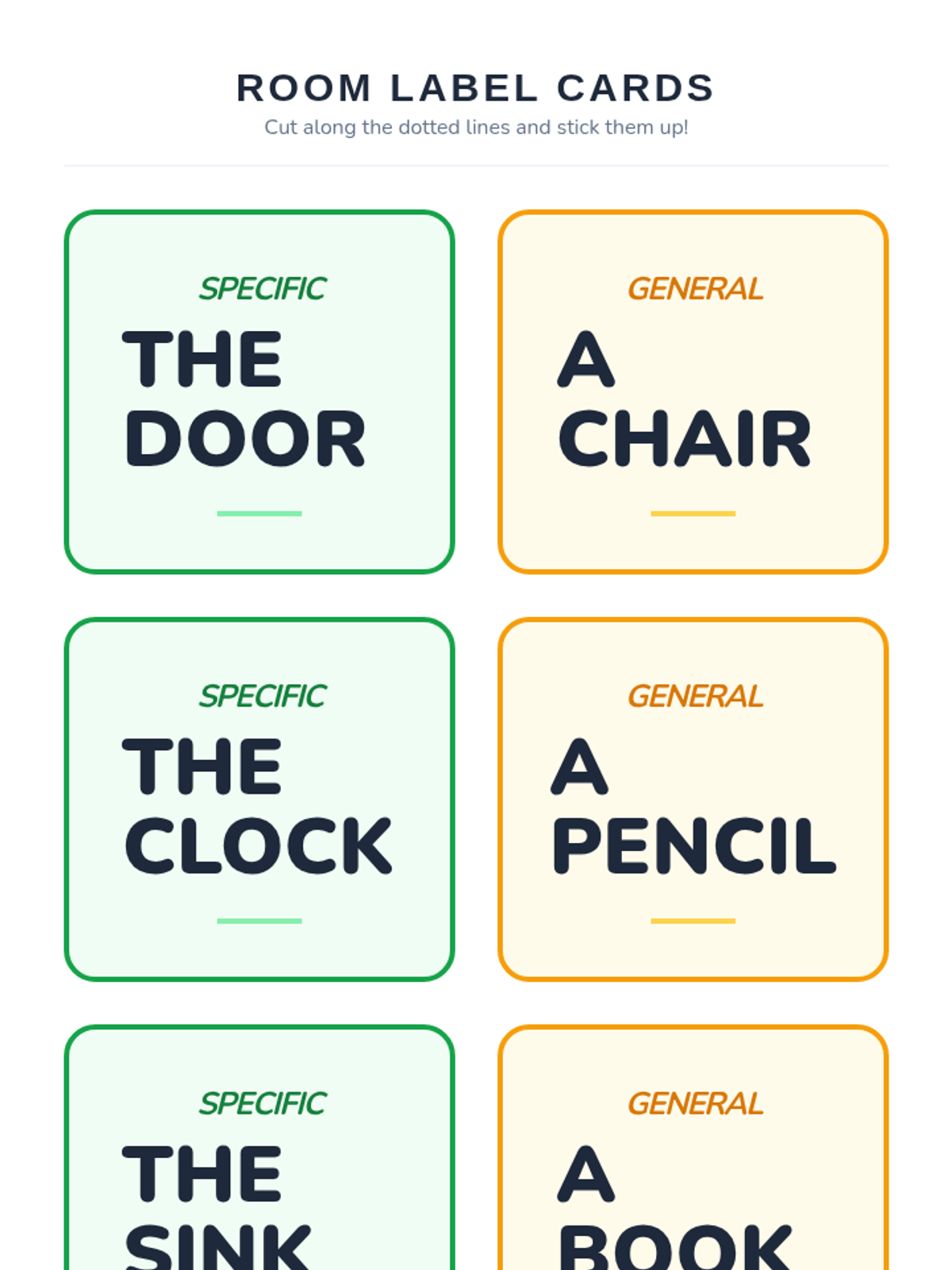
Students apply their knowledge by labeling unique vs. common classroom items.
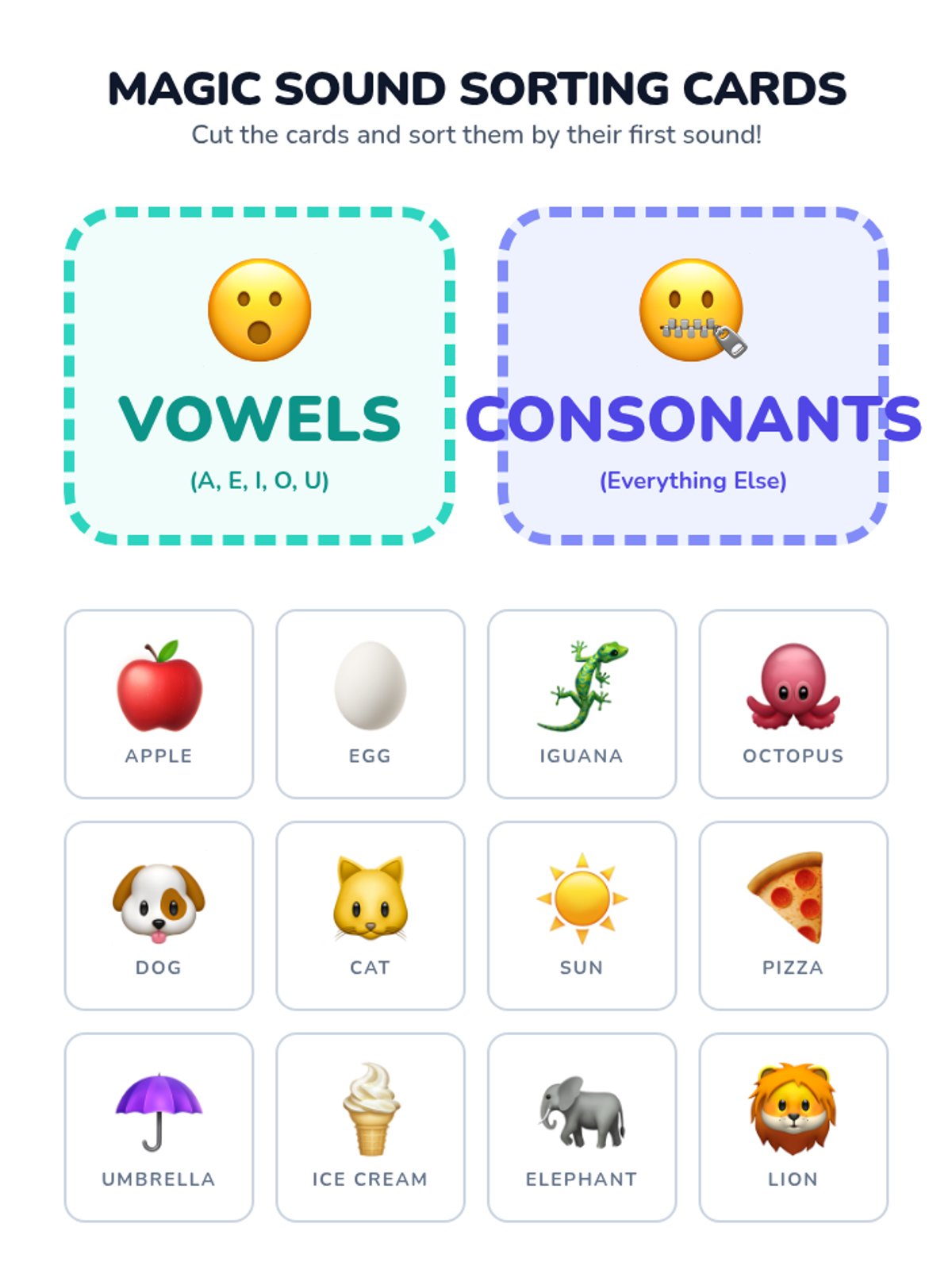
Students practice distinguishing between vowel and consonant sounds at the beginning of words using picture cards to lay the foundation for article selection.
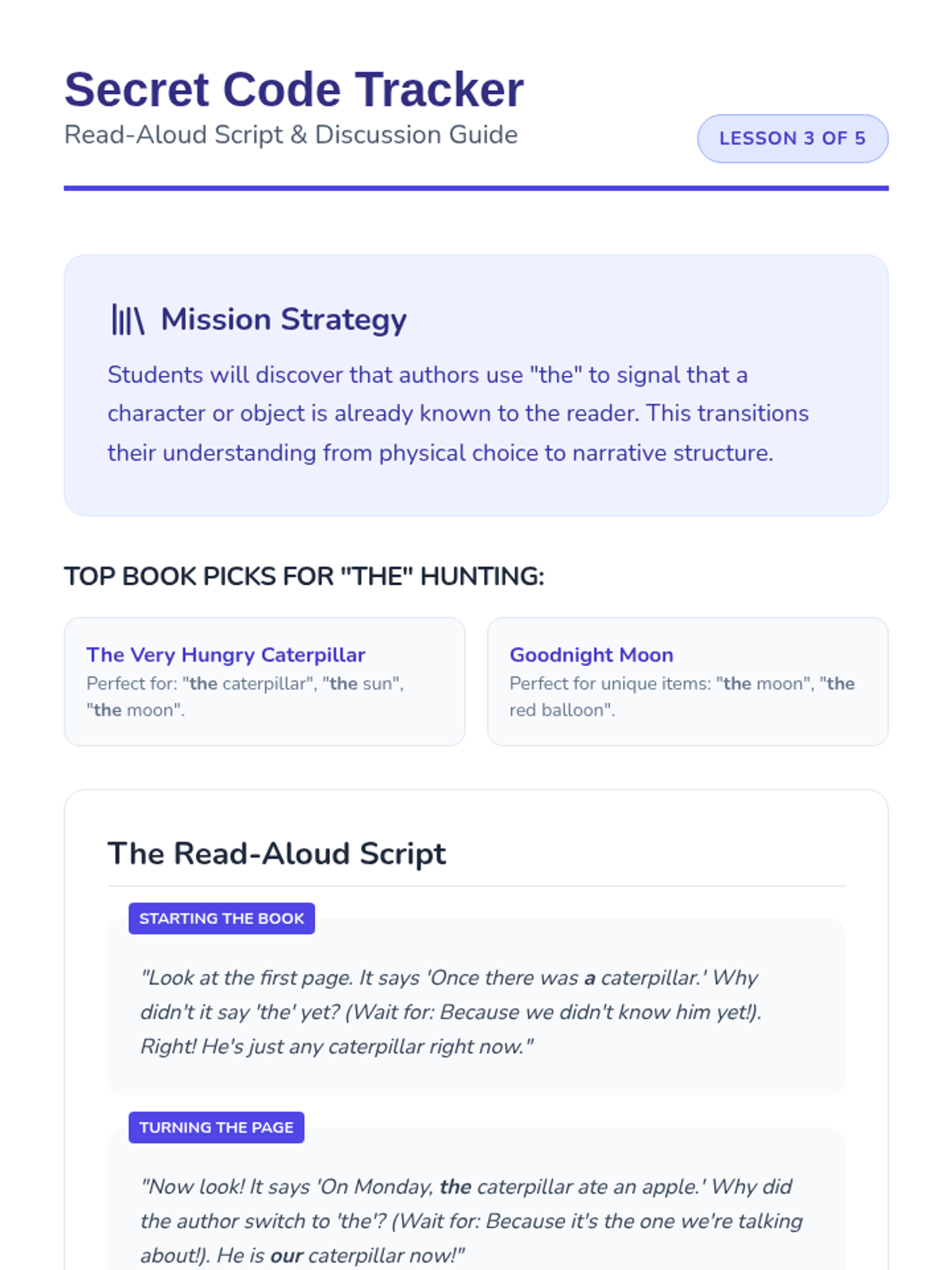
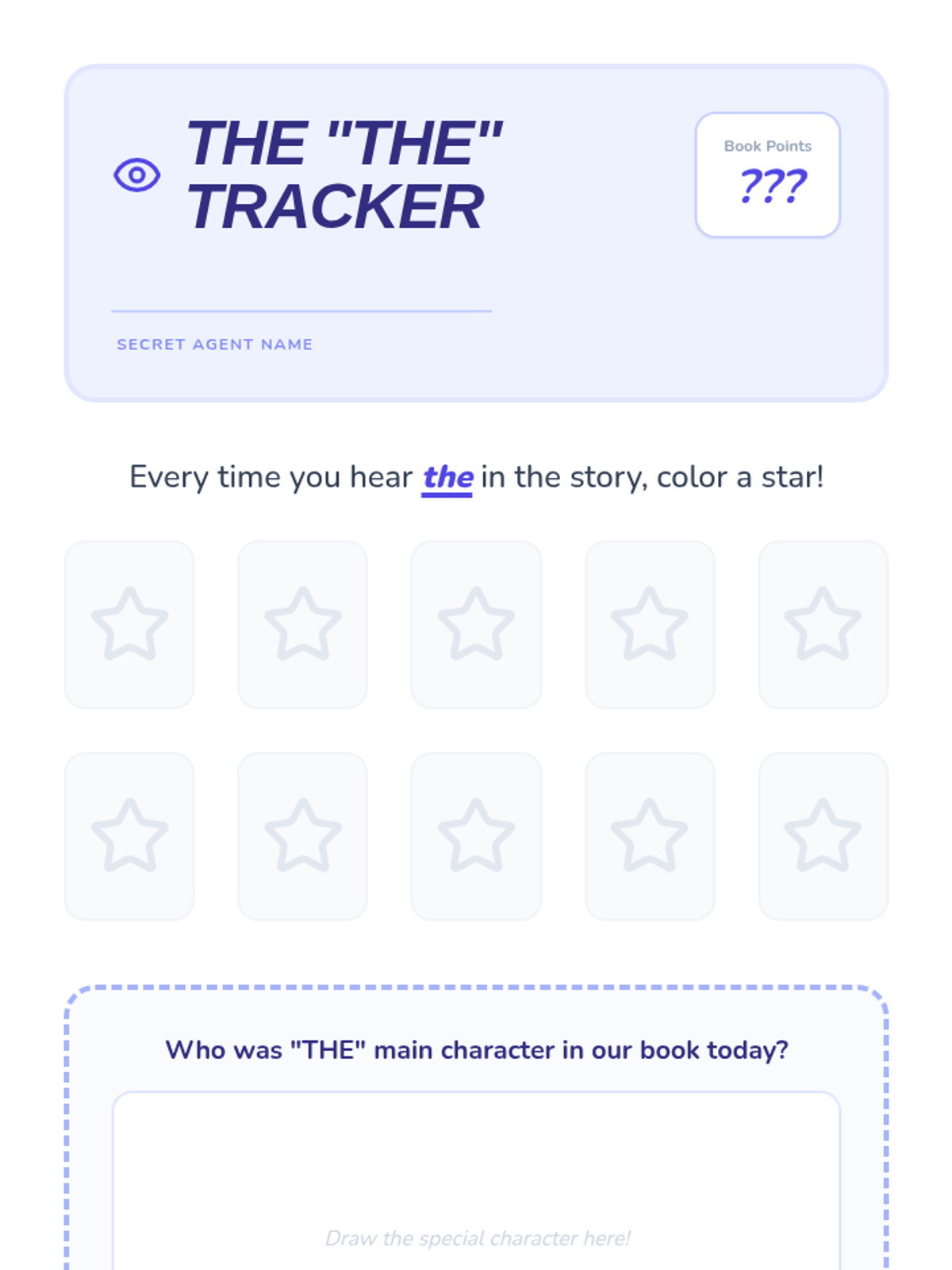
A read-aloud activity where students identify 'the' as a marker for specific or unique characters and objects.
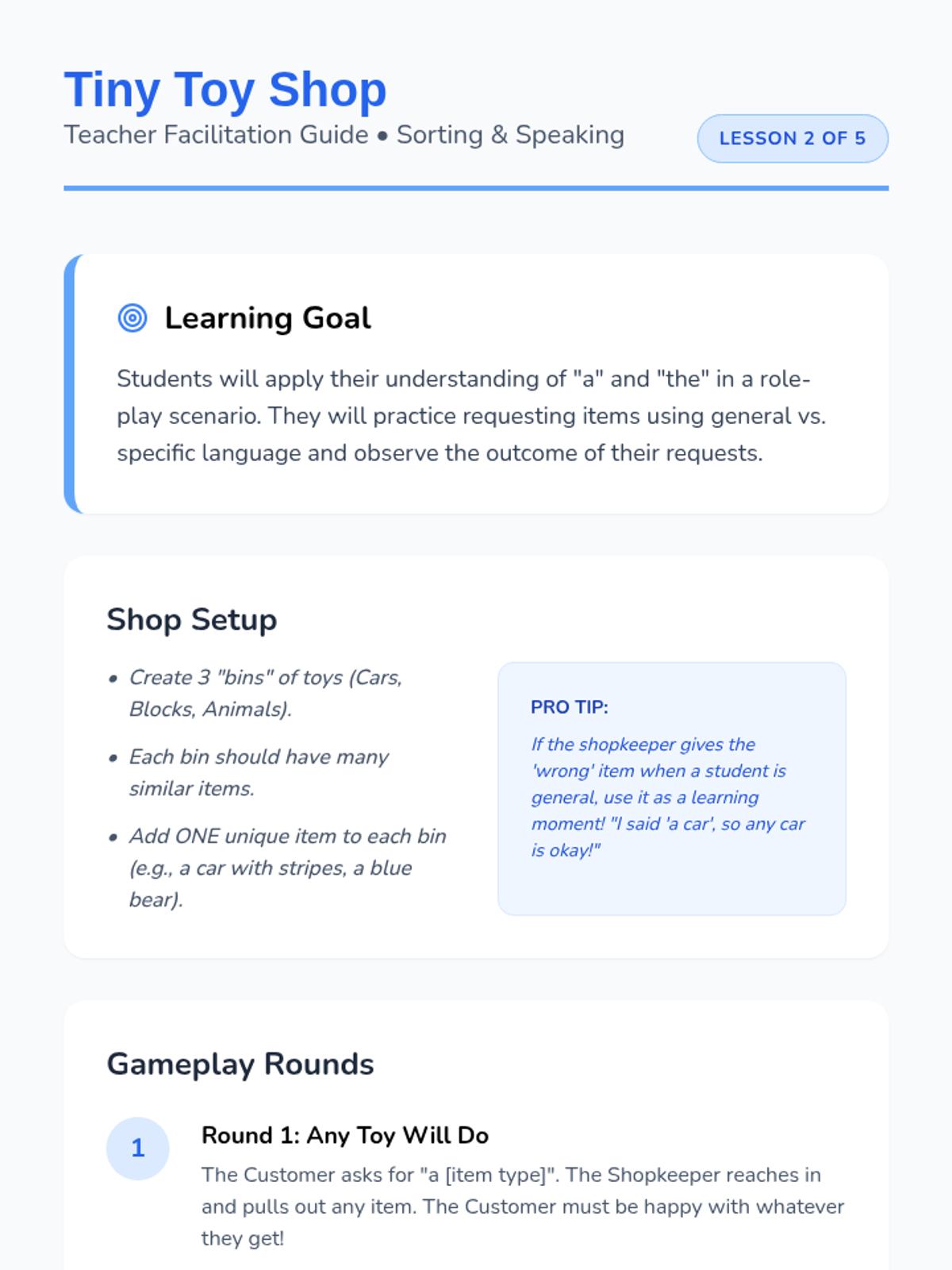
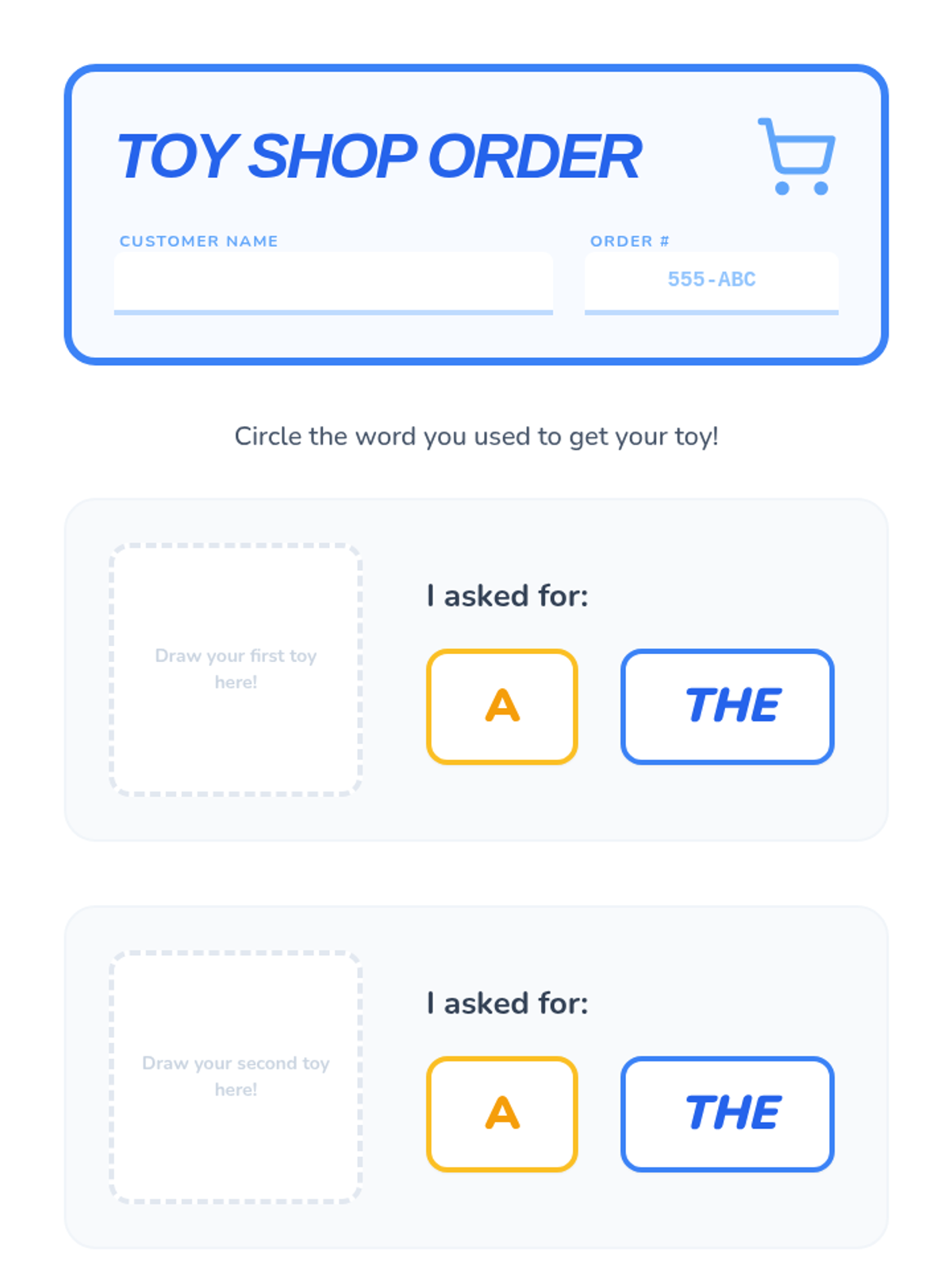
Students play a shop-themed game to practice requesting specific vs. general items using articles.
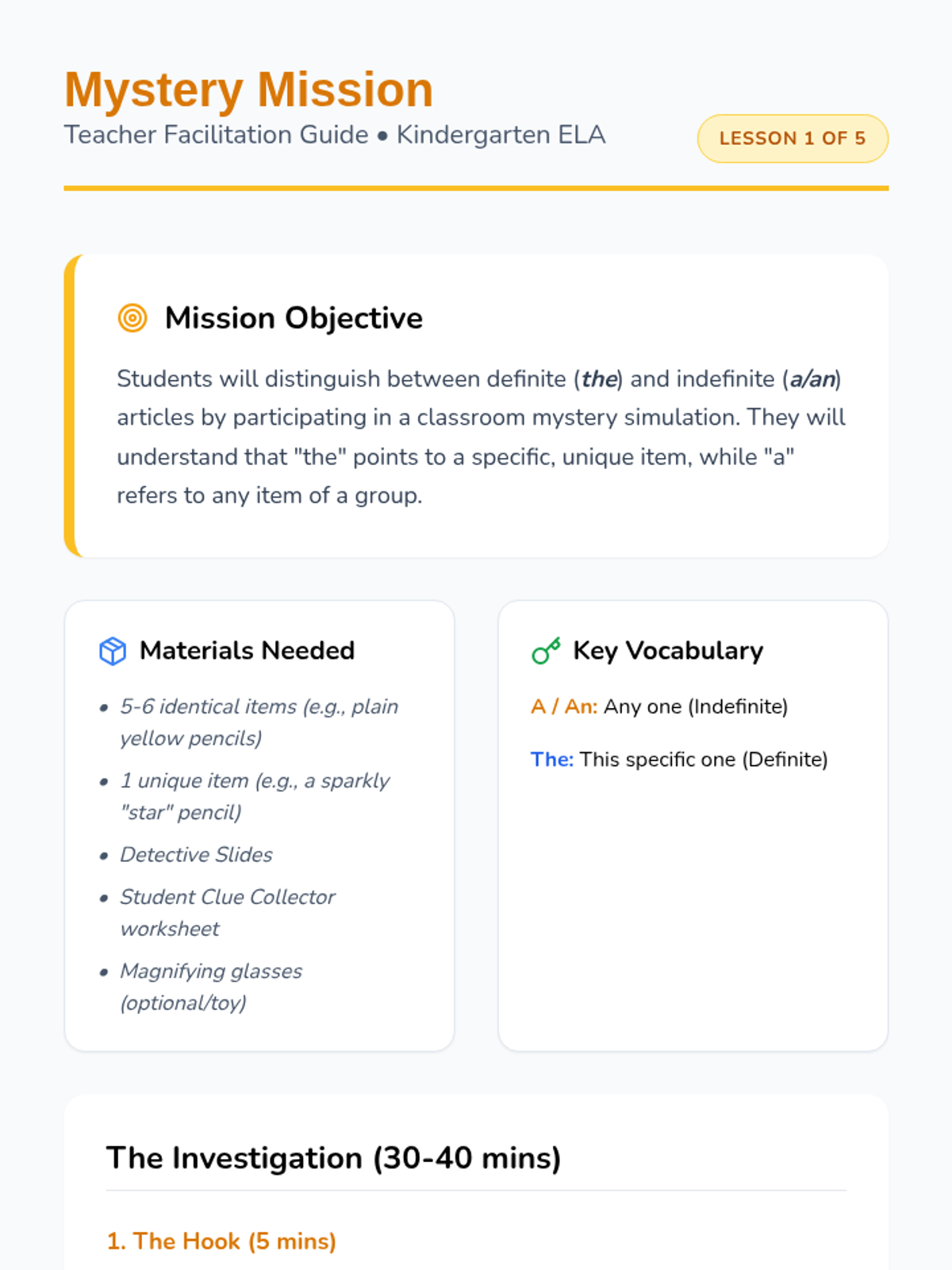
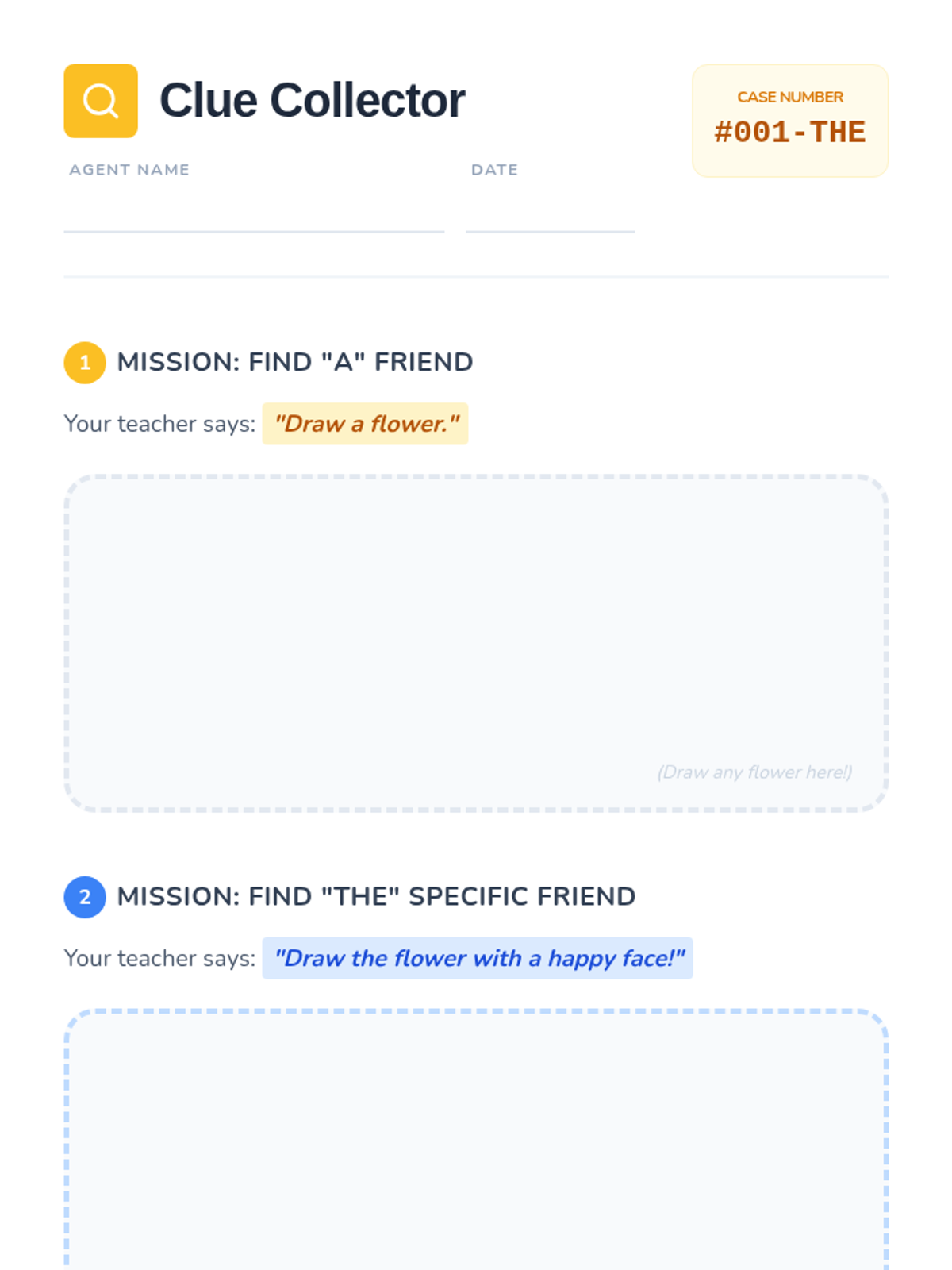
Students explore the difference between 'a' and 'the' through a mystery-solving simulation in the classroom.
Students participate in a 'Show and Tell' circle, using past tense verbs to describe an activity they did the previous day.
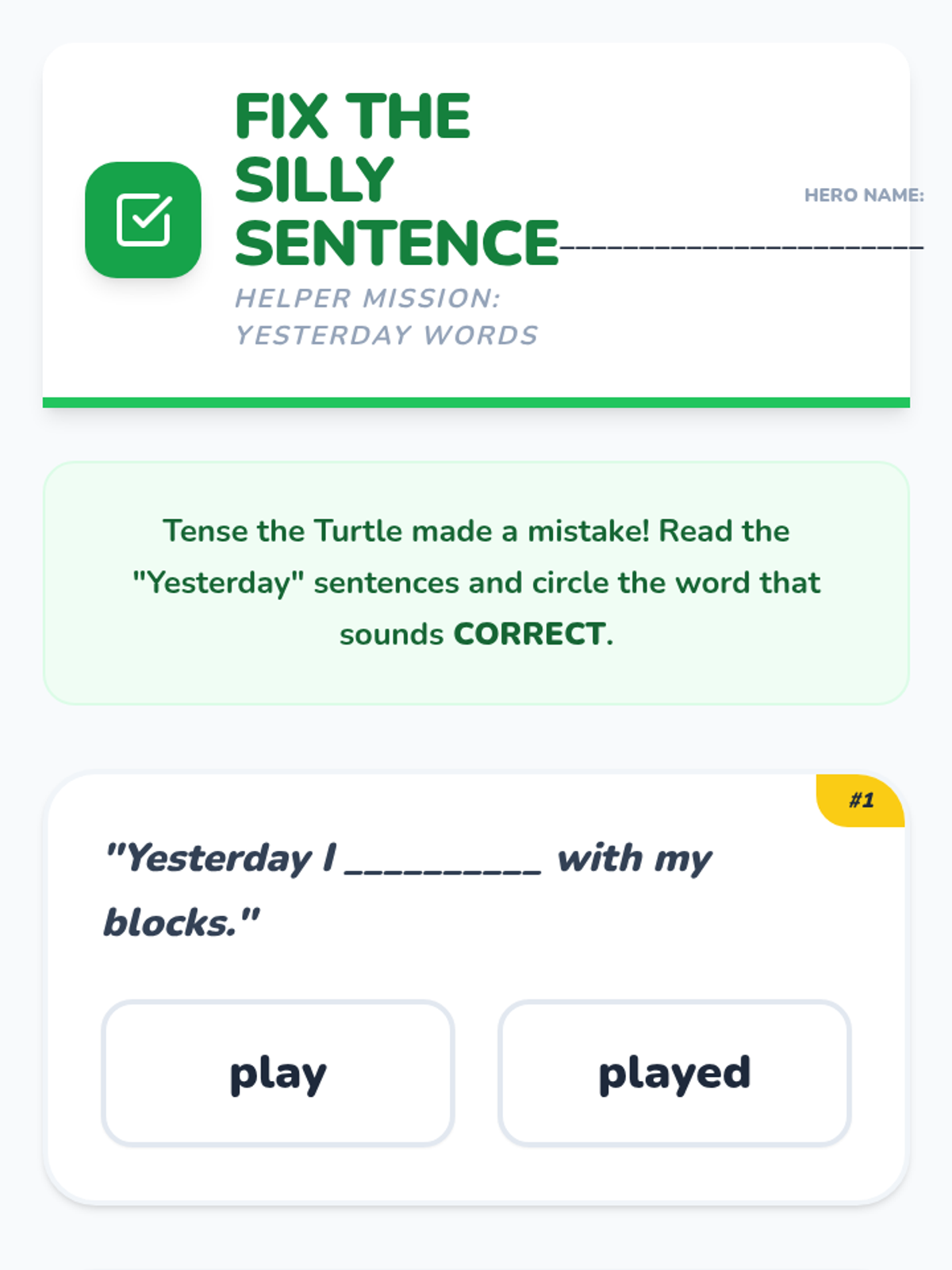
Students help a puppet correct silly sentences with mixed-up tenses, practicing oral subject-verb agreement and consistency.
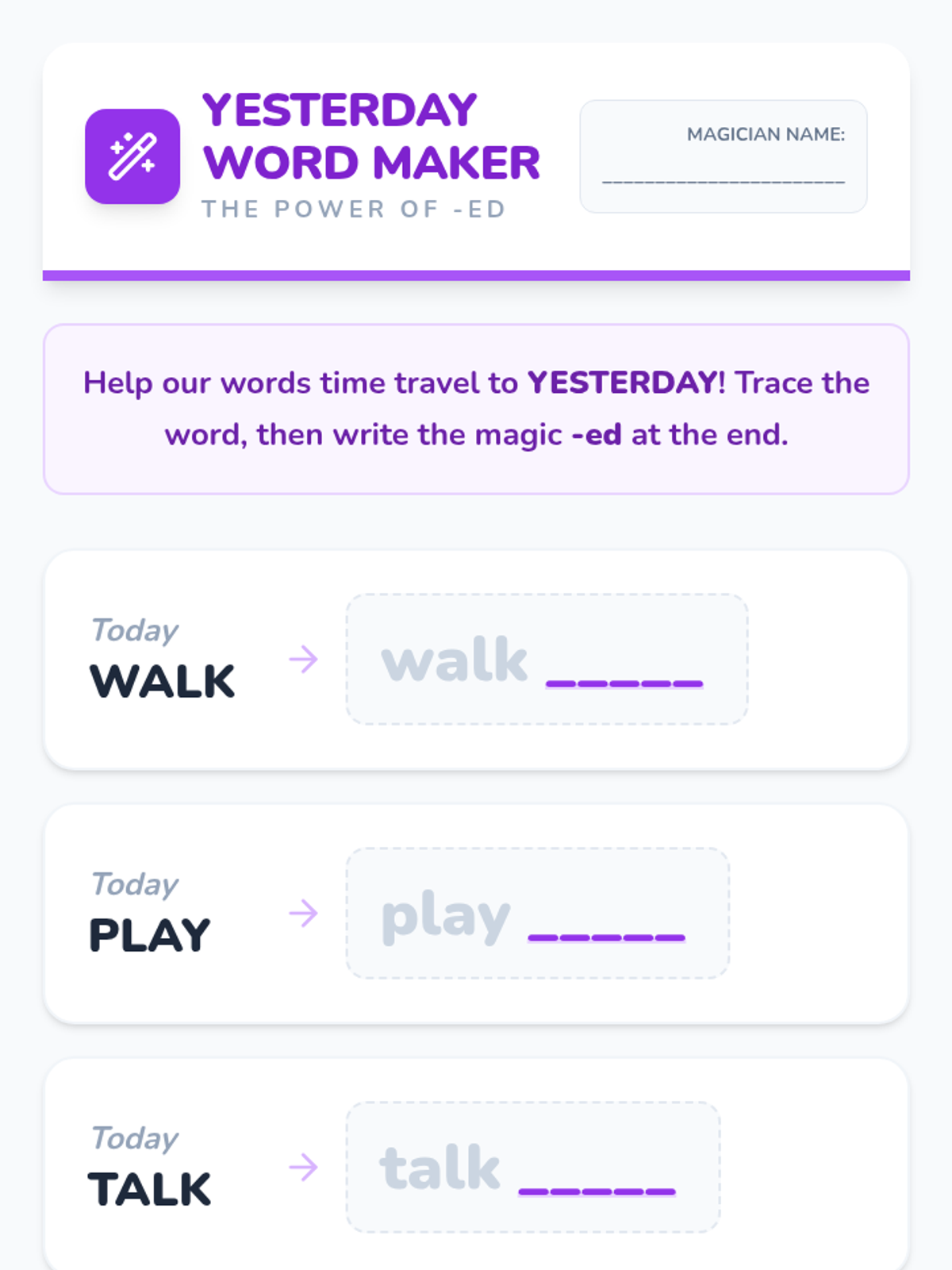
Students learn the oral rule of adding the /d/ or /t/ sound (represented by -ed) to the end of action words to indicate the past.
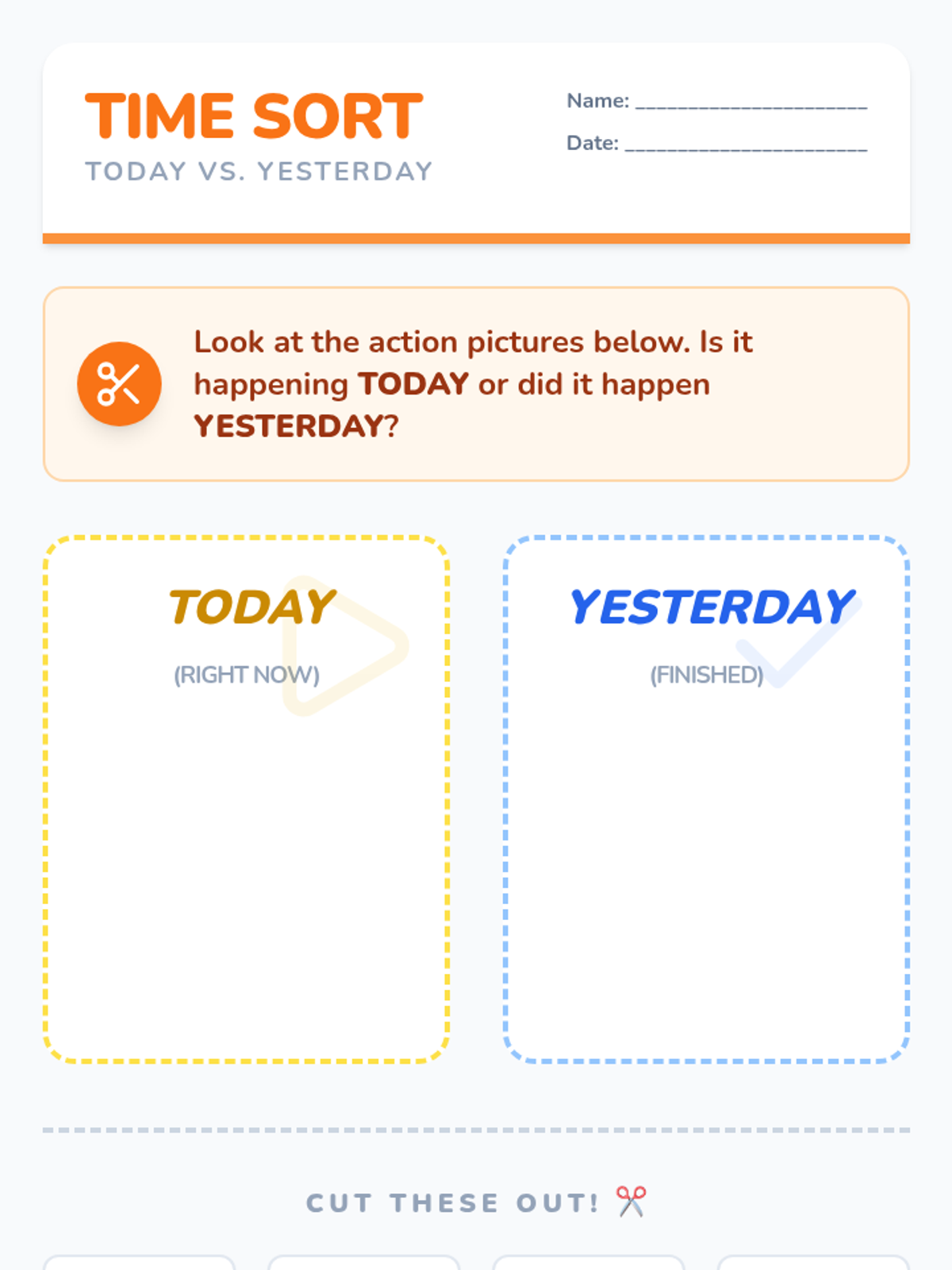
Students sort pictures of completed actions versus actions in progress to understand the concept of time in language using 'today' and 'yesterday.'
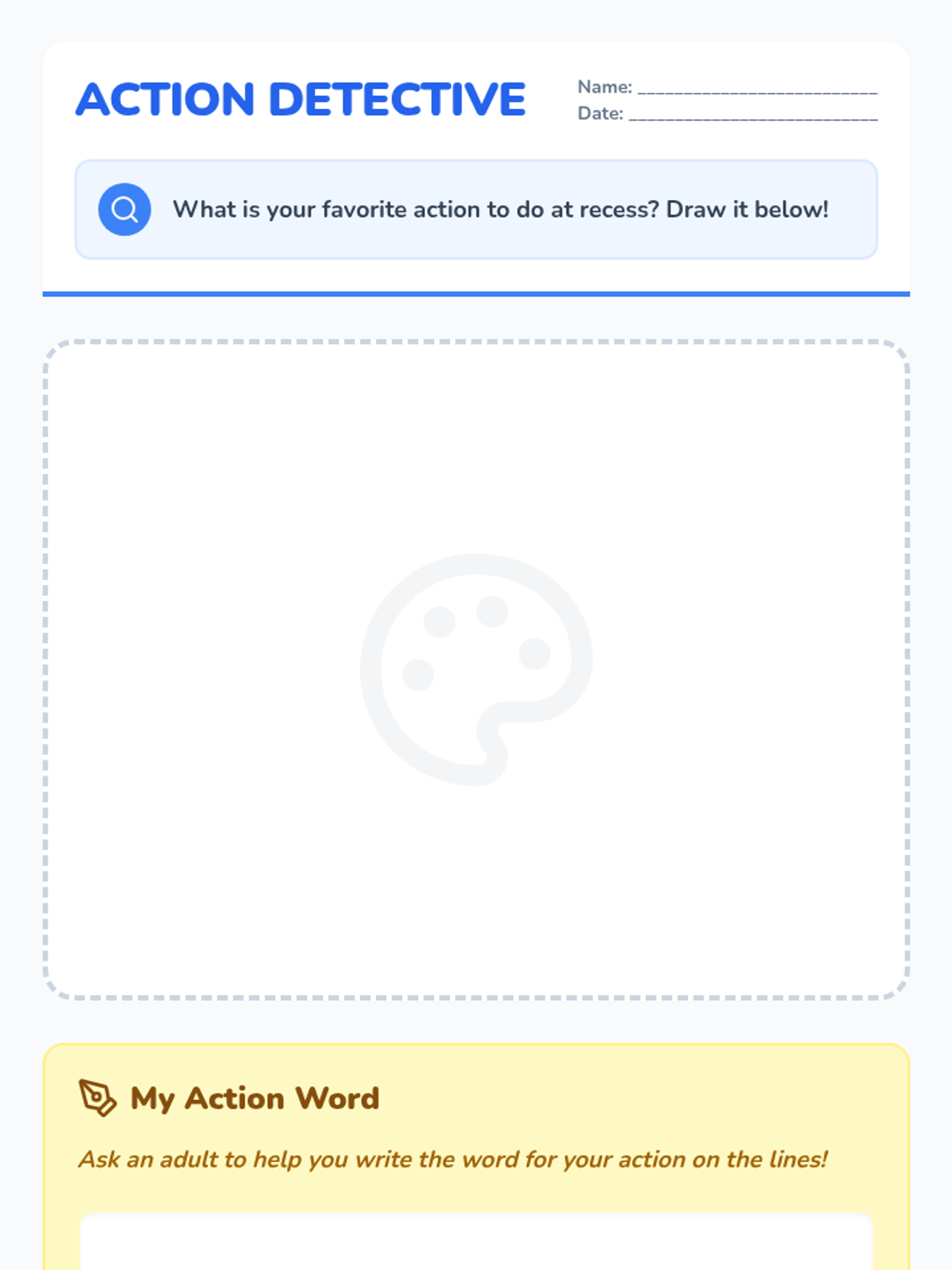
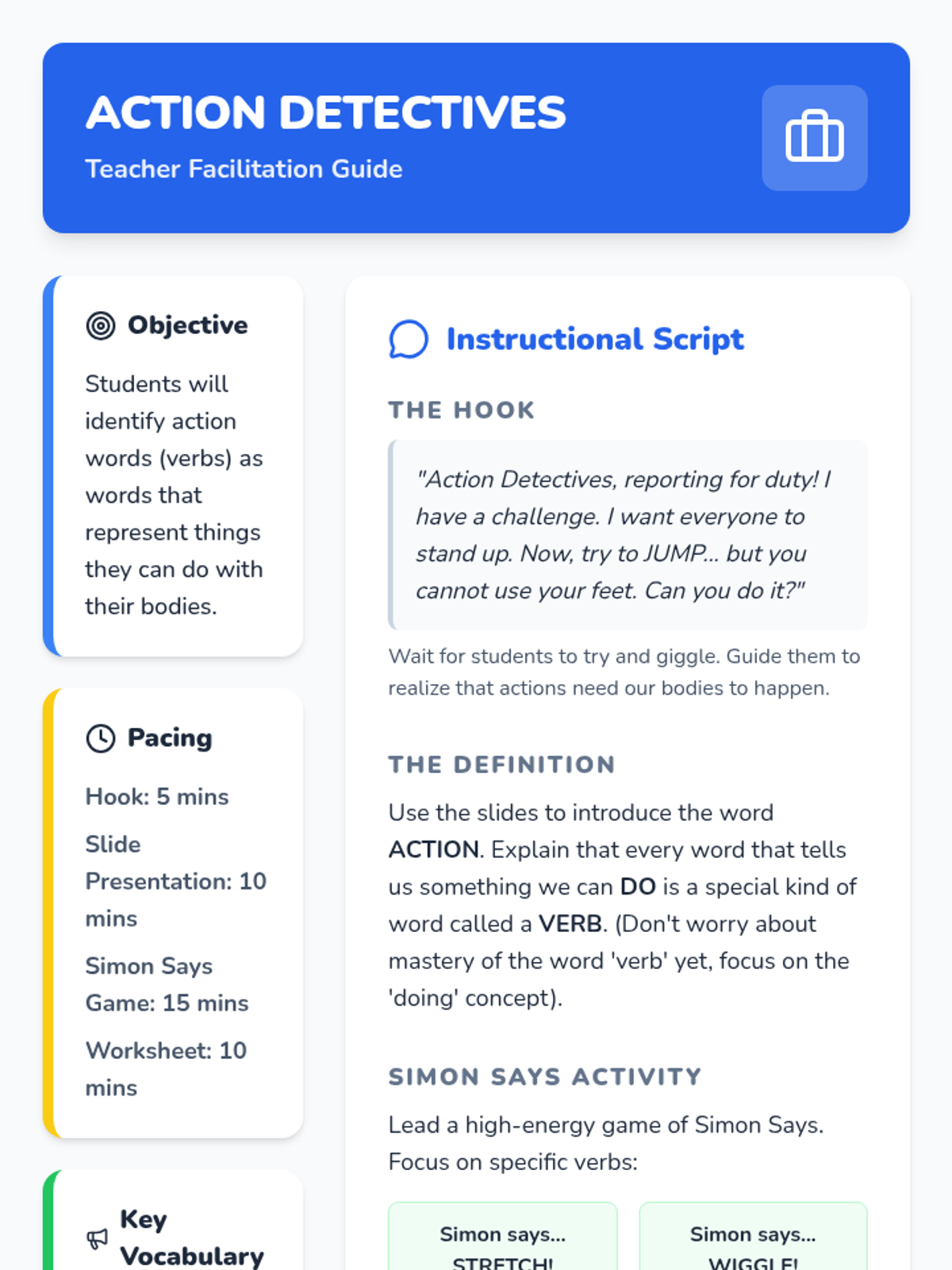
Students identify action words (verbs) through a game of 'Simon Says' and recognize that verbs are things they can do with their bodies.
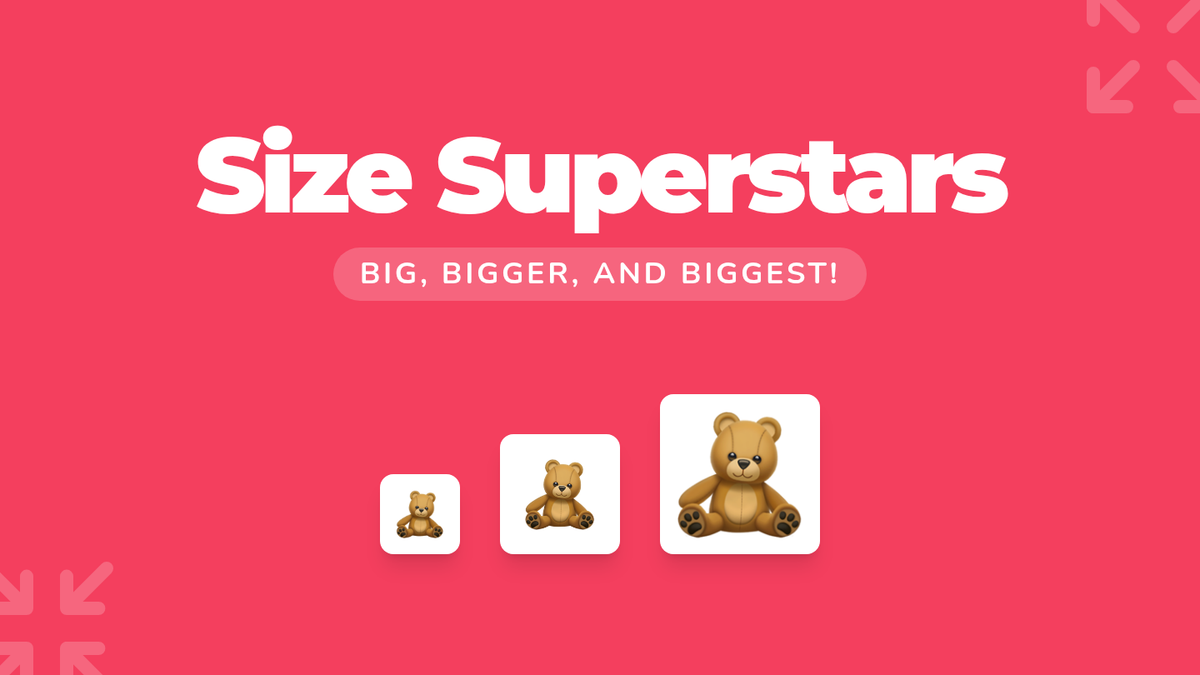
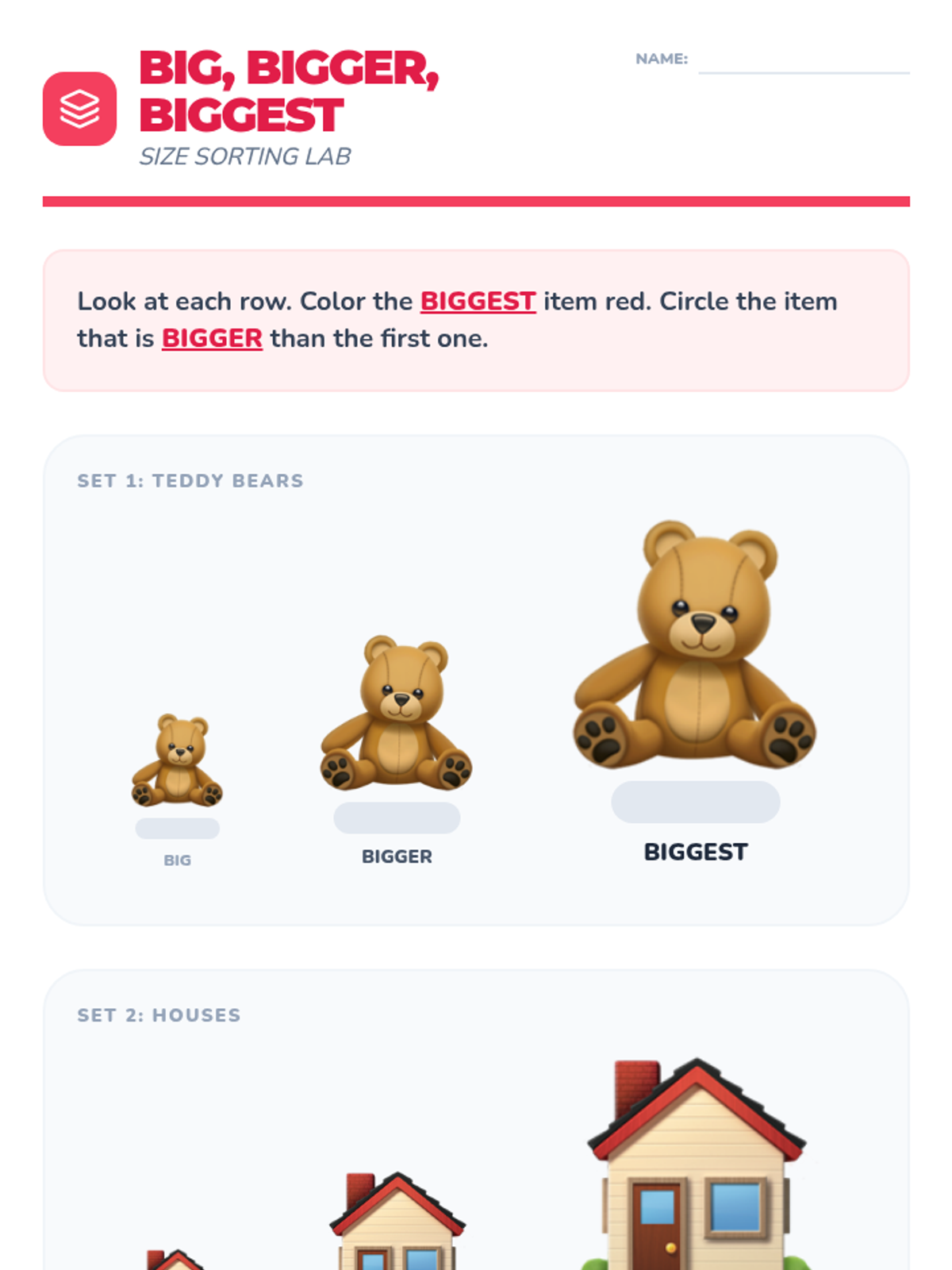
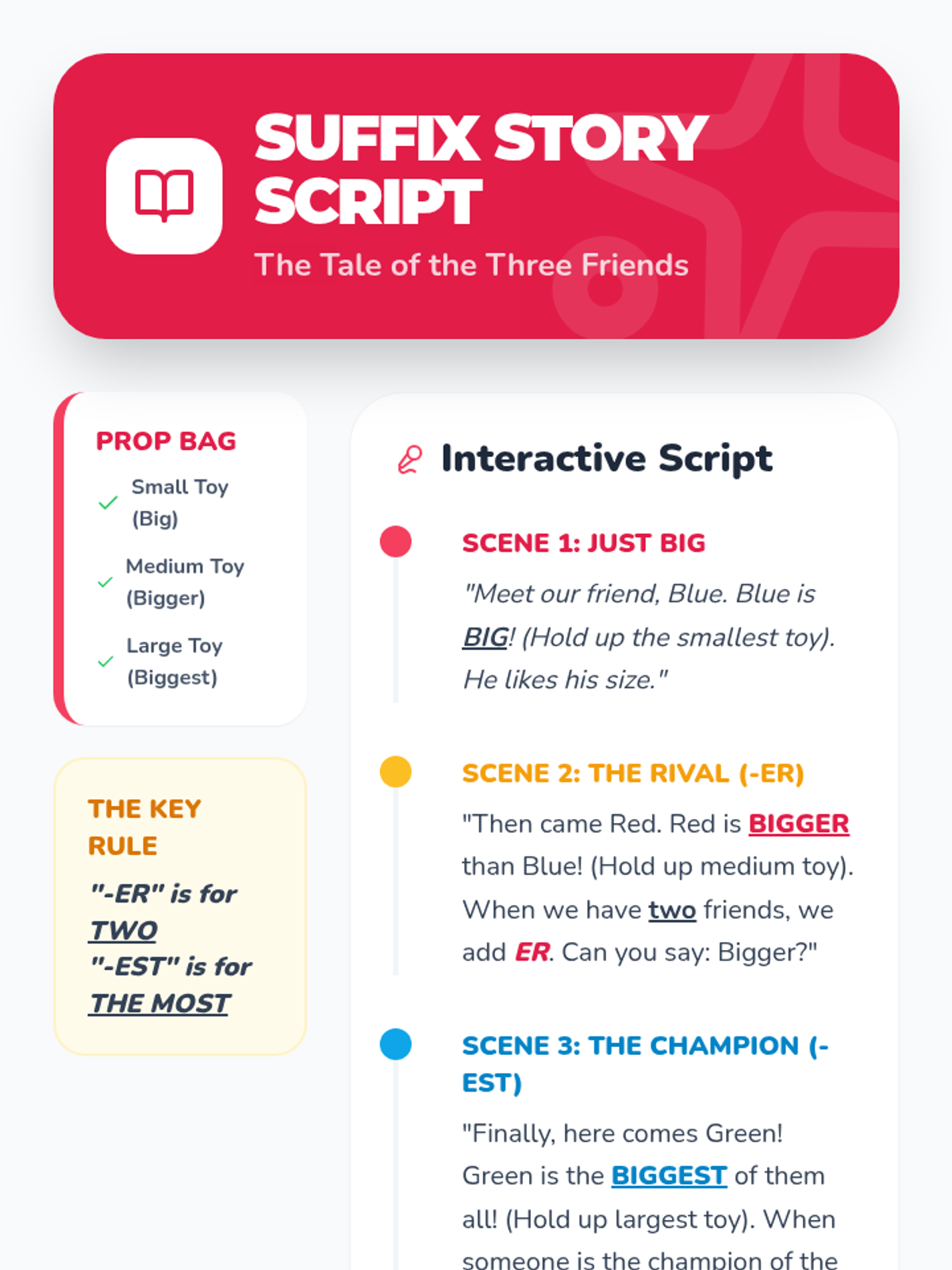
Introducing the suffixes -er and -est to compare sizes of objects, building from 'big' to 'biggest'.
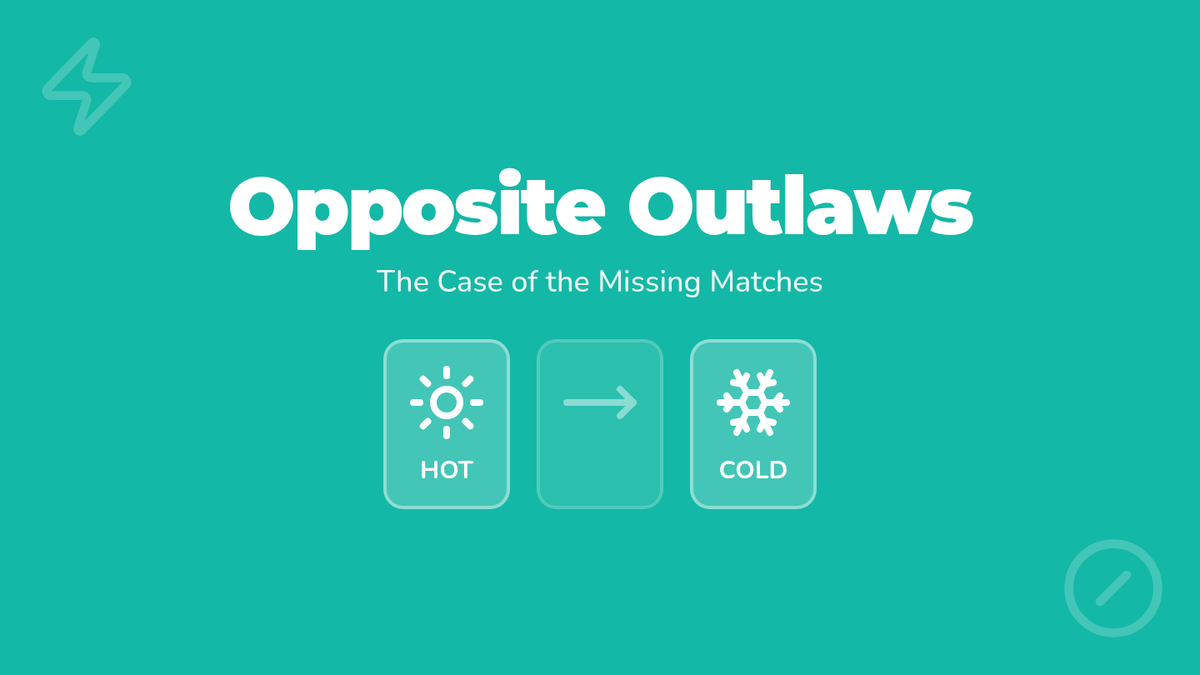
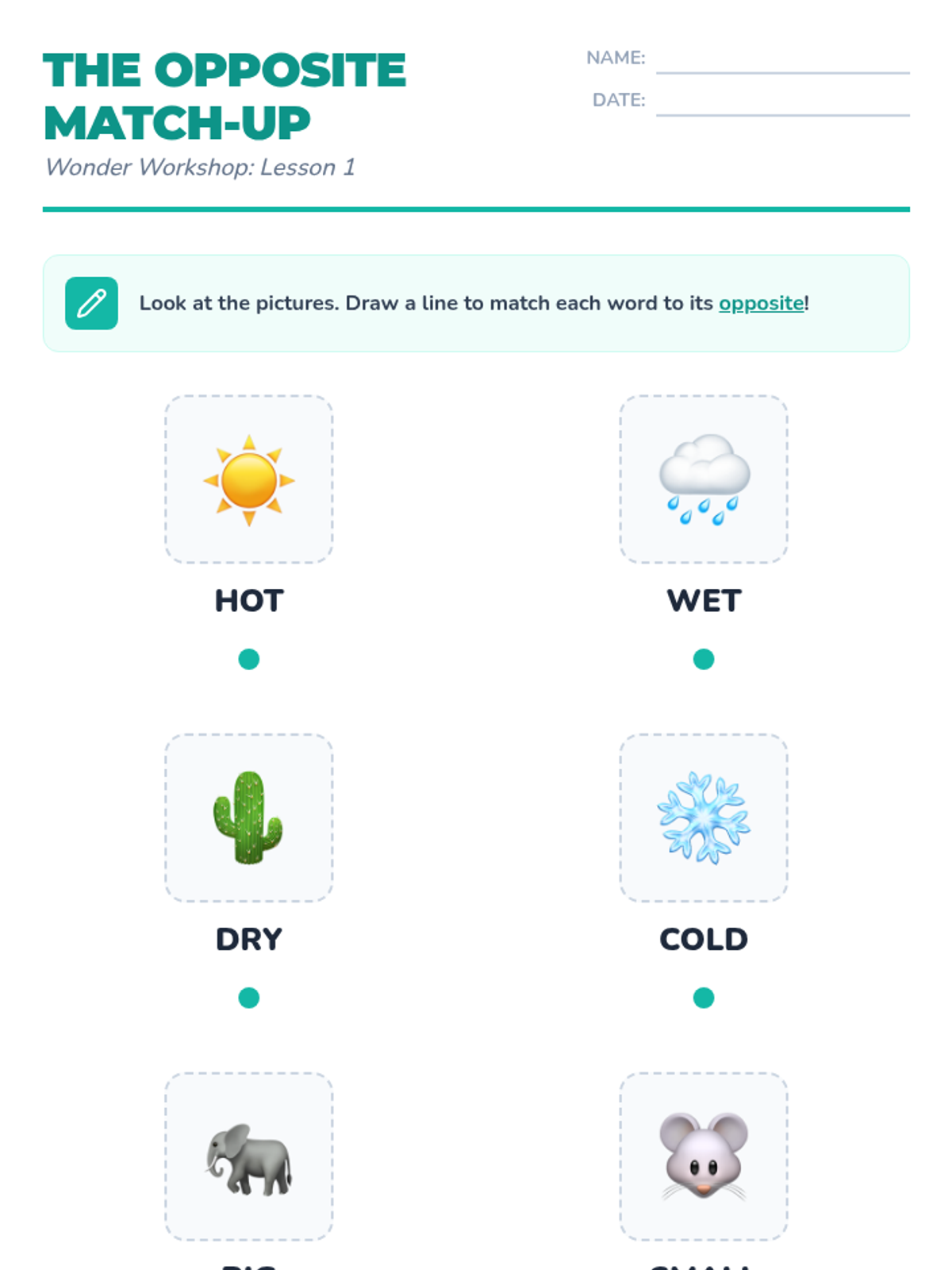
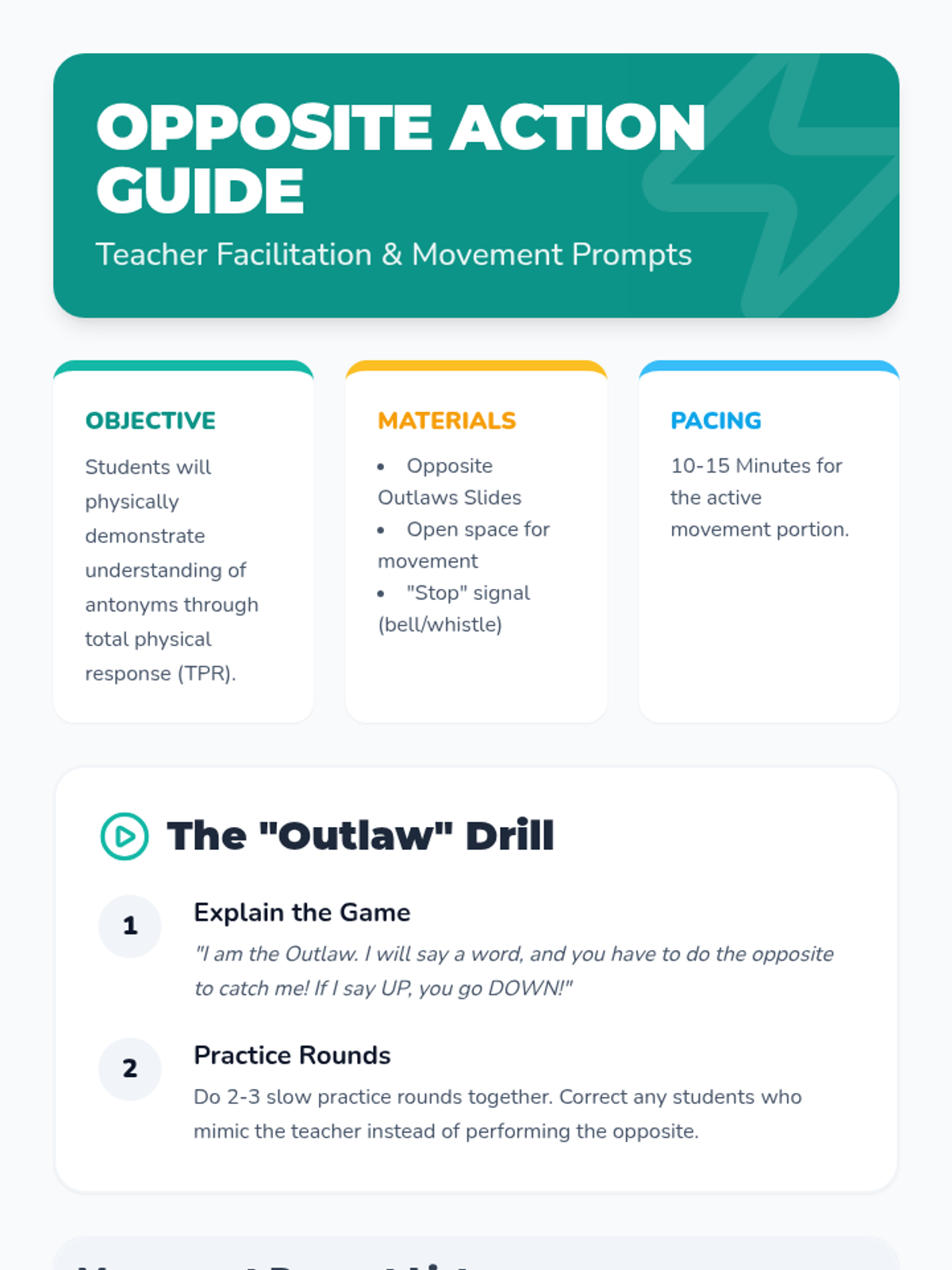
Students explore binary opposites like big/small and hot/cold to understand that adjectives can describe contrasting attributes.
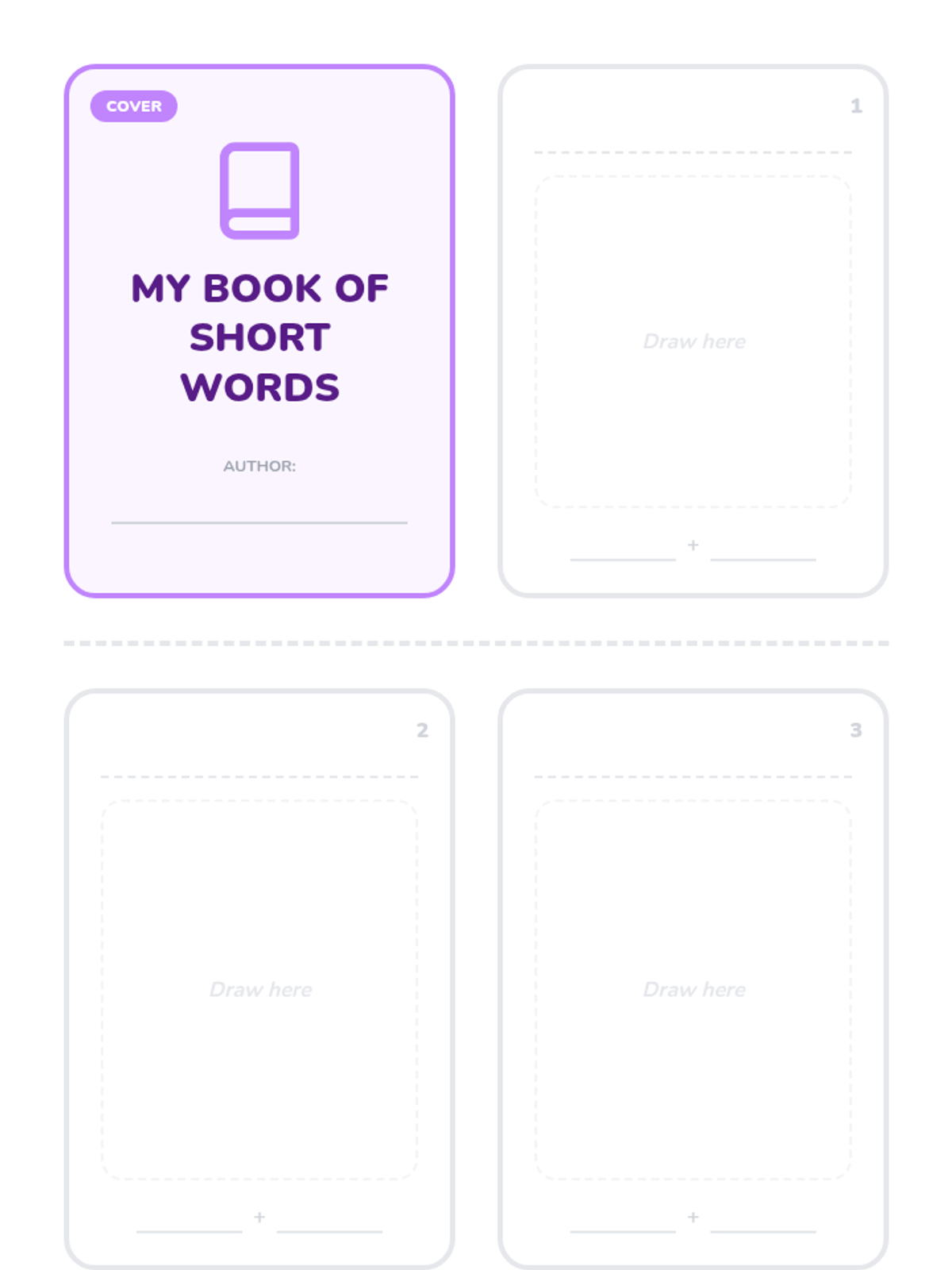
Students synthesize their learning by creating a personal mini-book featuring contractions, illustrations, and expanded word forms.
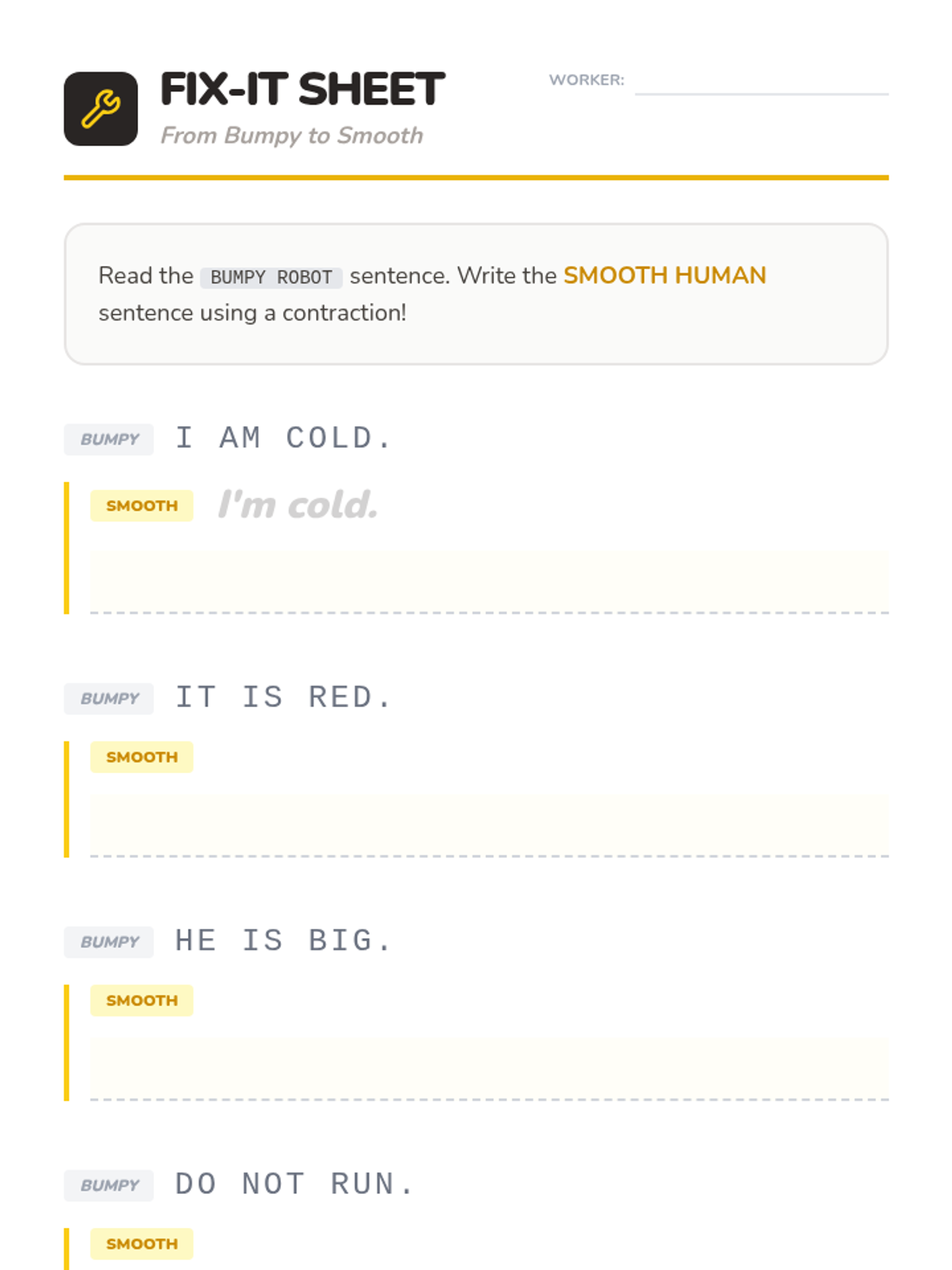
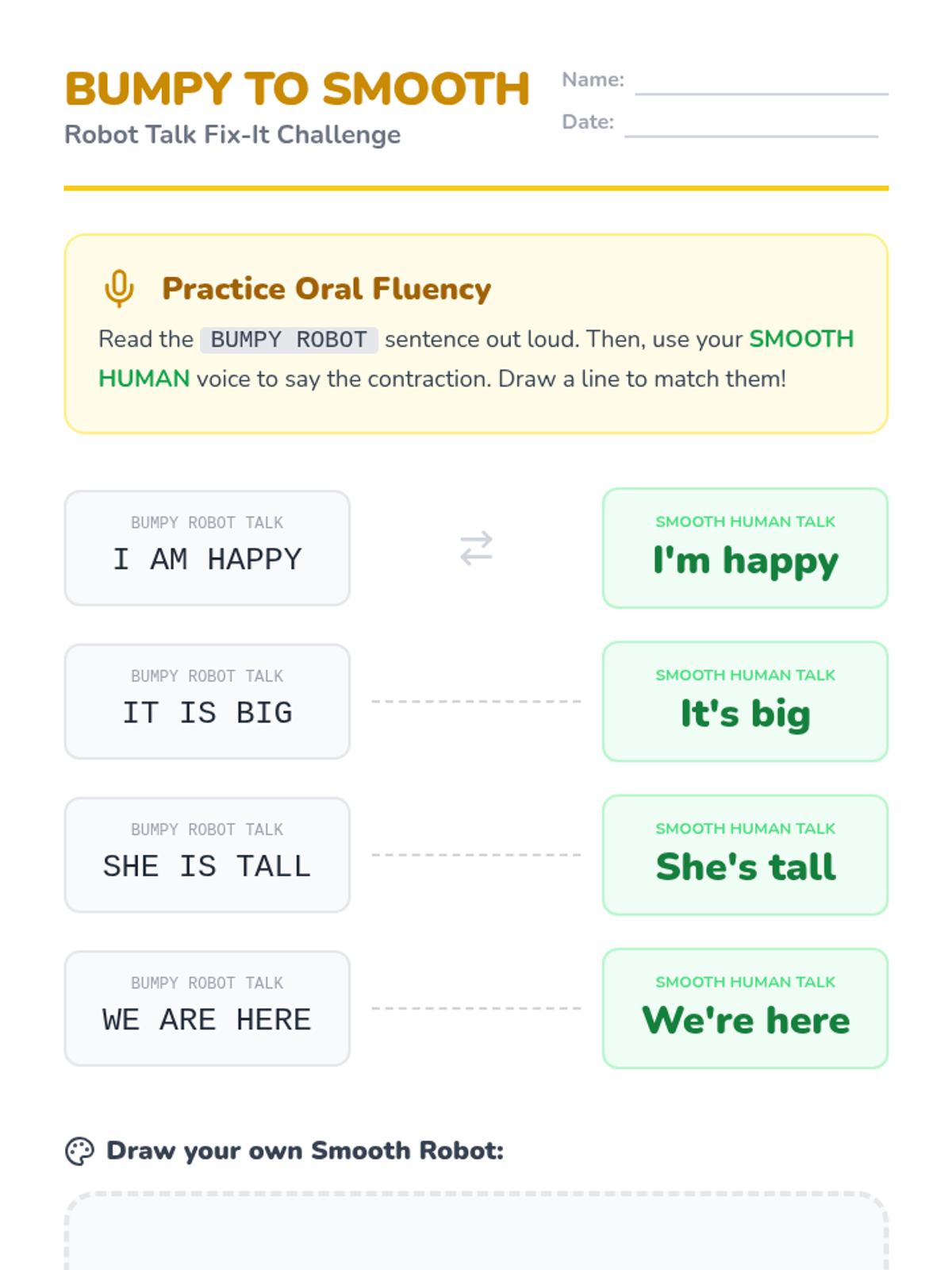
Students rewrite 'bumpy' sentences into 'smooth' sentences by replacing full word forms with contractions.
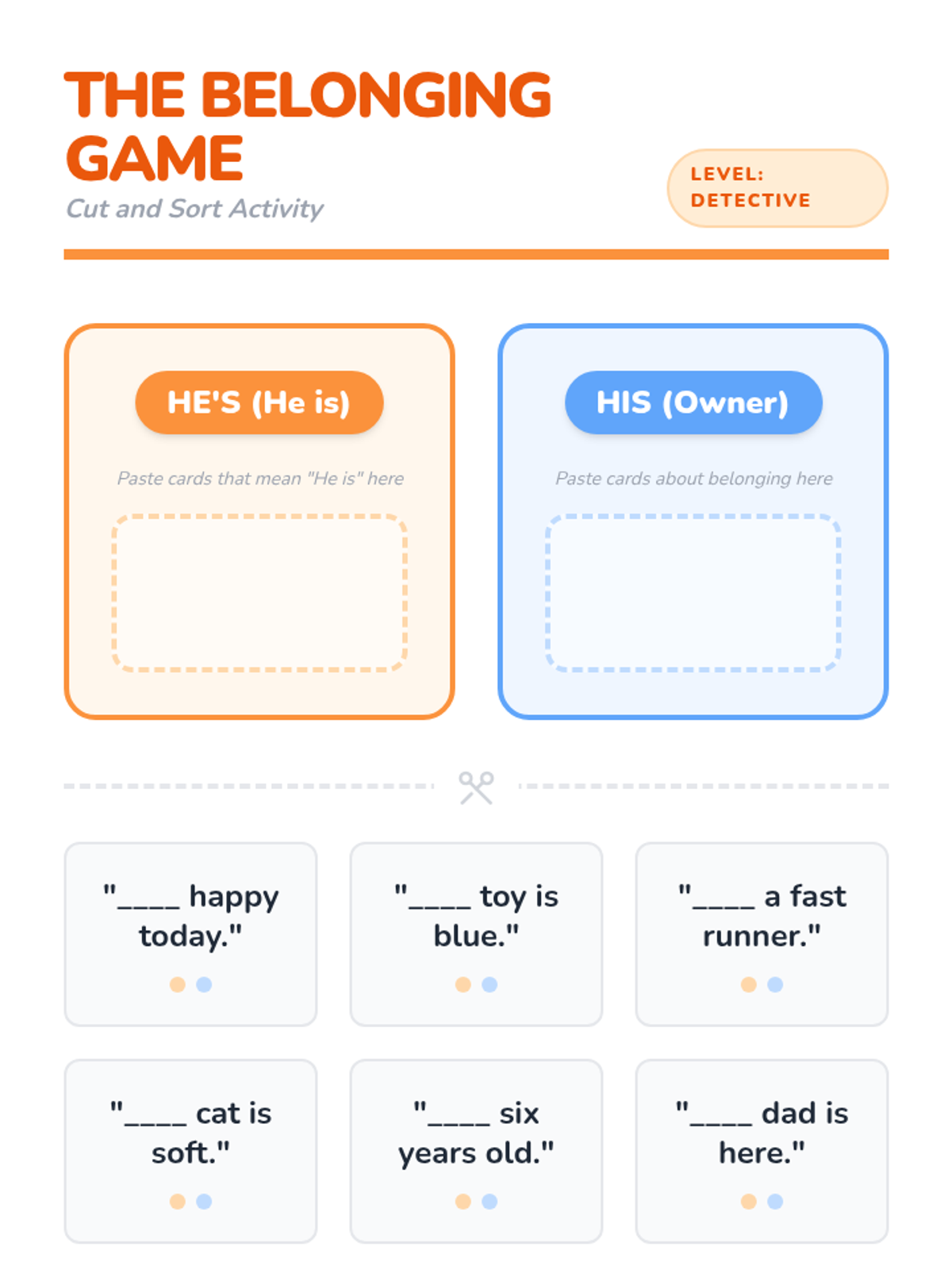
Students practice distinguishing between similar-sounding words like 'He's' and 'His' through context and auditory discrimination.
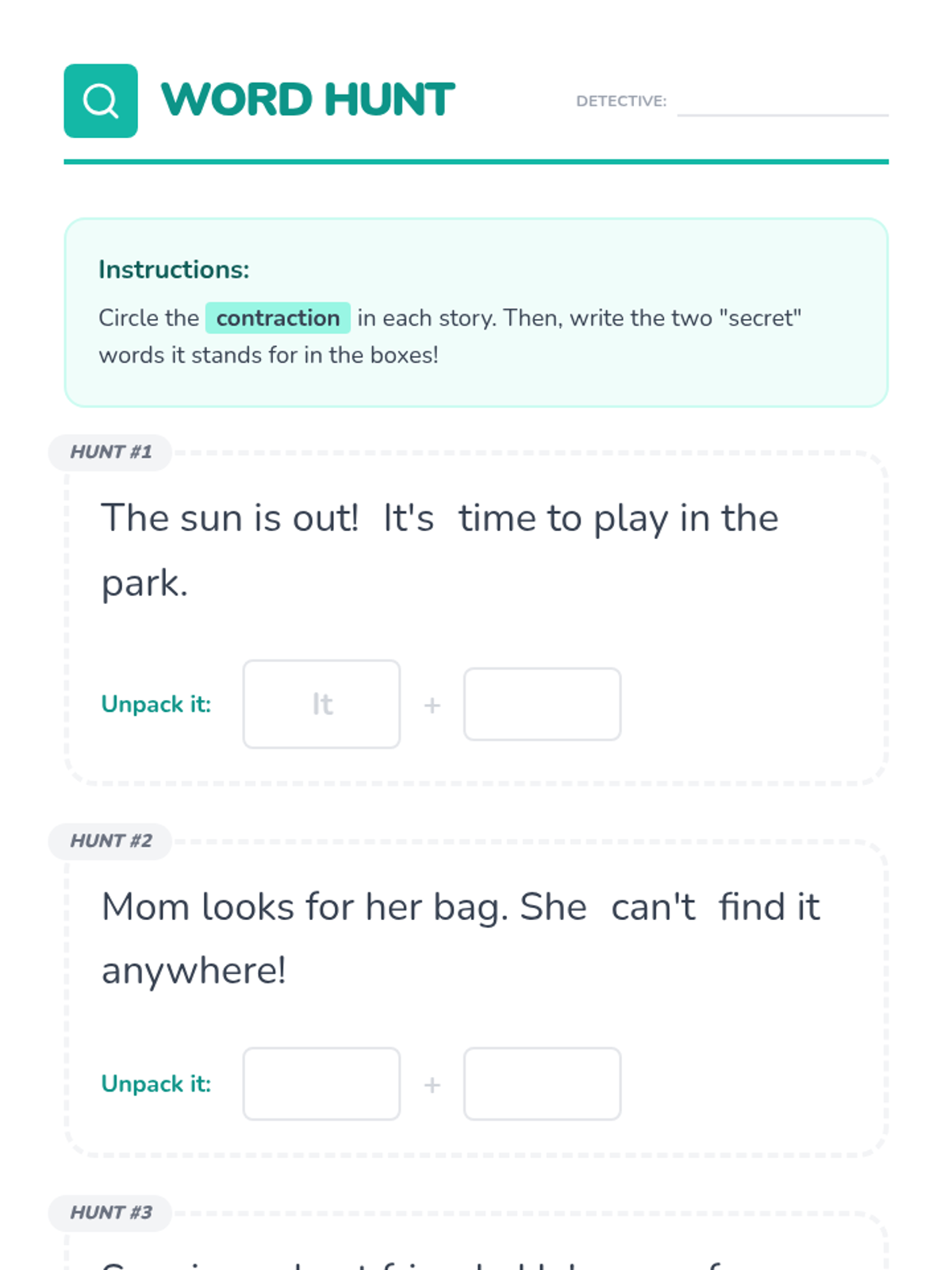
Students go on a 'word hunt' to identify contractions in text and learn to 'unpack' them into their original two words.
Students compare 'Robot Talk' (full forms) with 'Human Talk' (contractions) to understand how contractions make speech sound more natural.
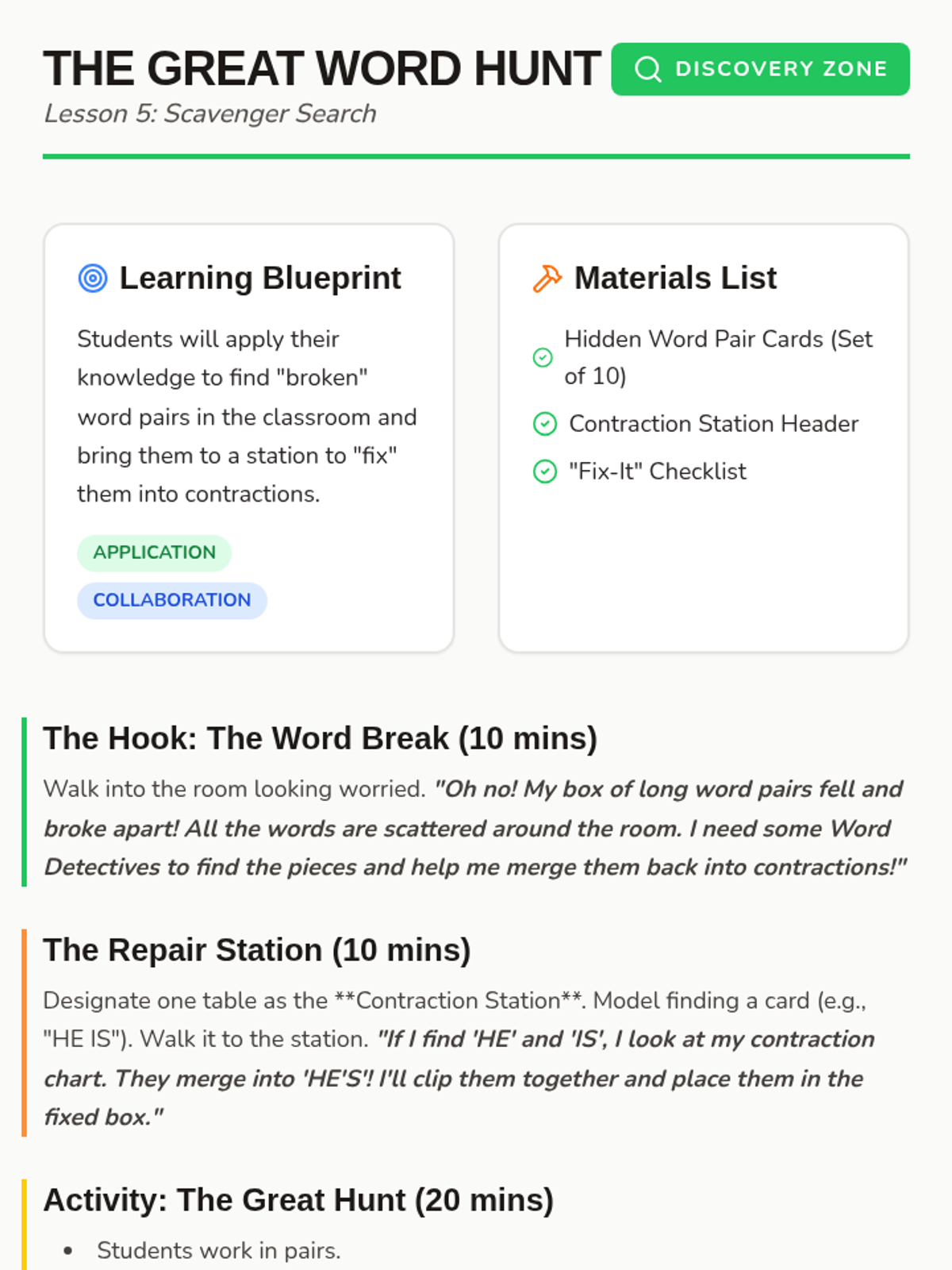
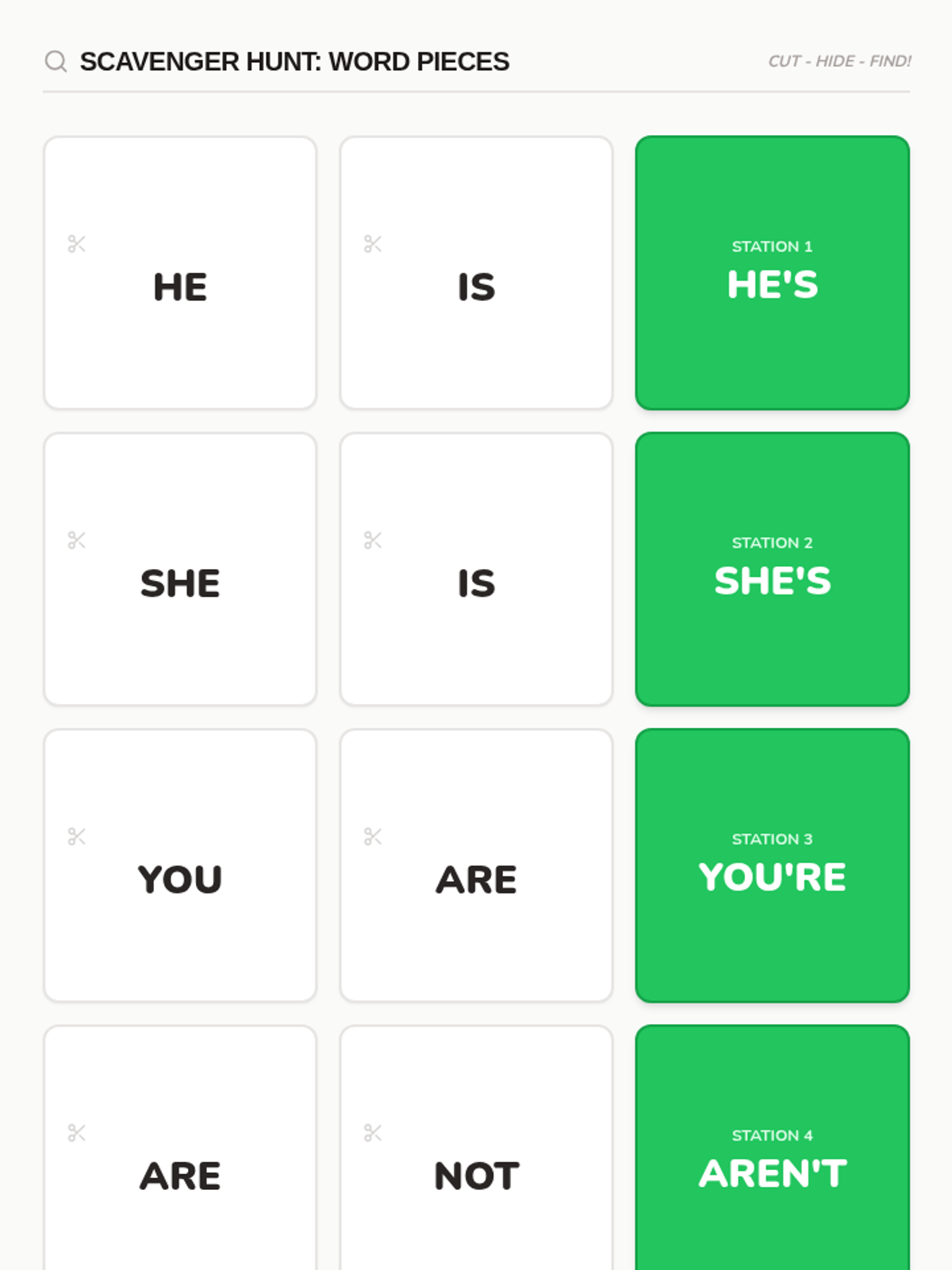
A classroom scavenger hunt where students find word pairs and bring them to a station to 'fix' them into contractions.
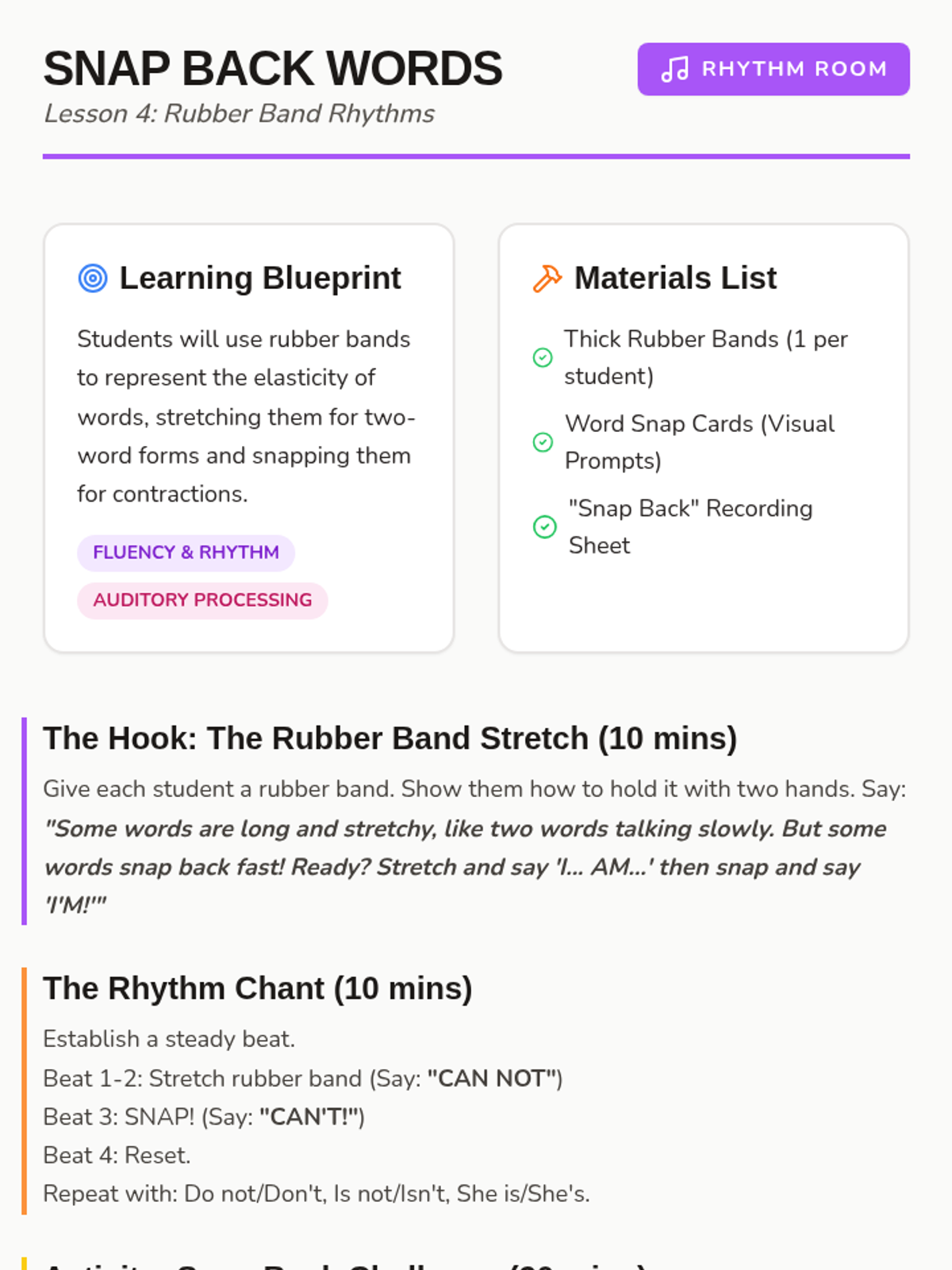
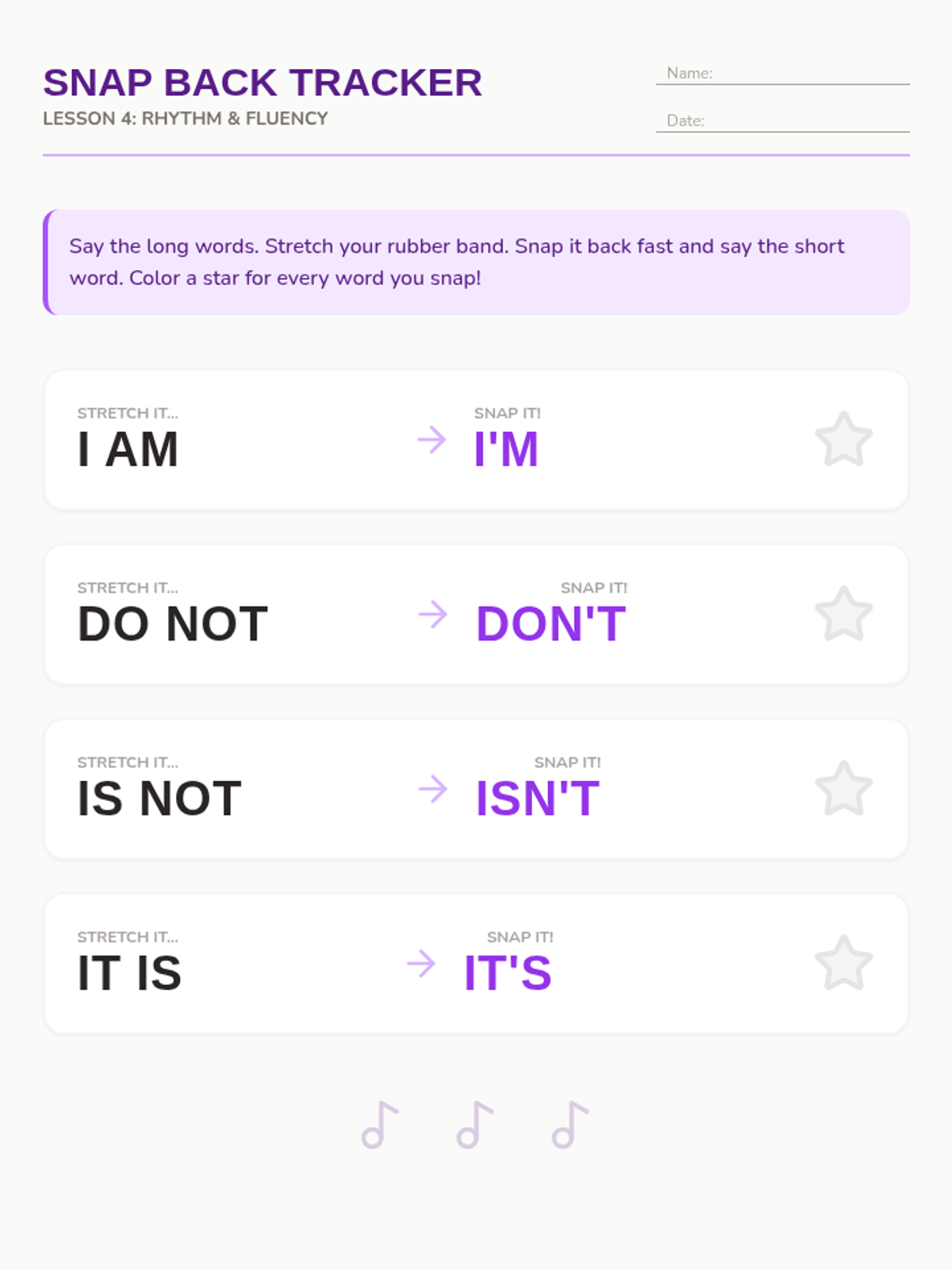
Students use rubber bands to represent the stretching and snapping of words from long forms to short contractions.
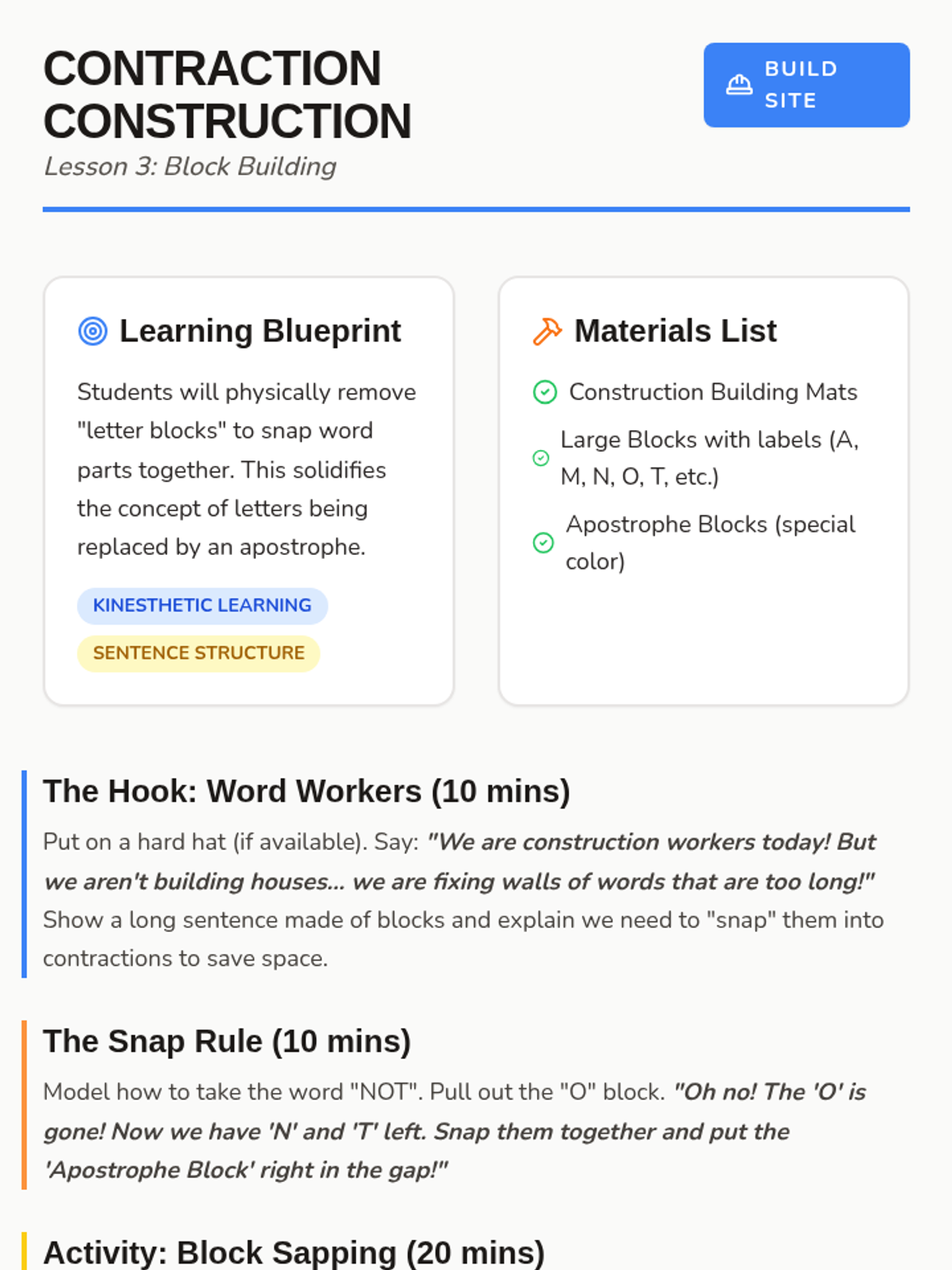
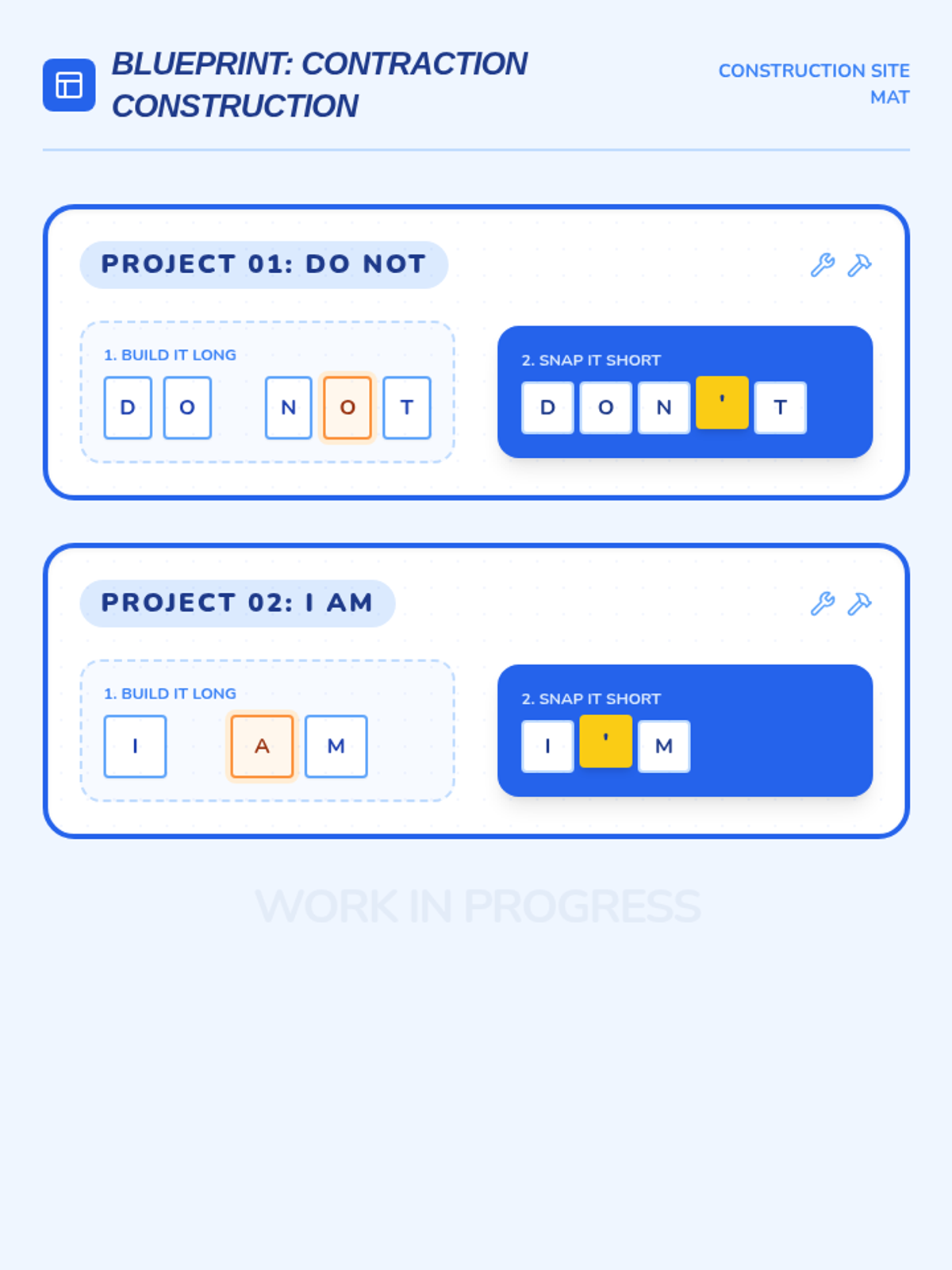
Using labeled building blocks, students construct sentences and physically remove 'letter blocks' to snap word parts together.
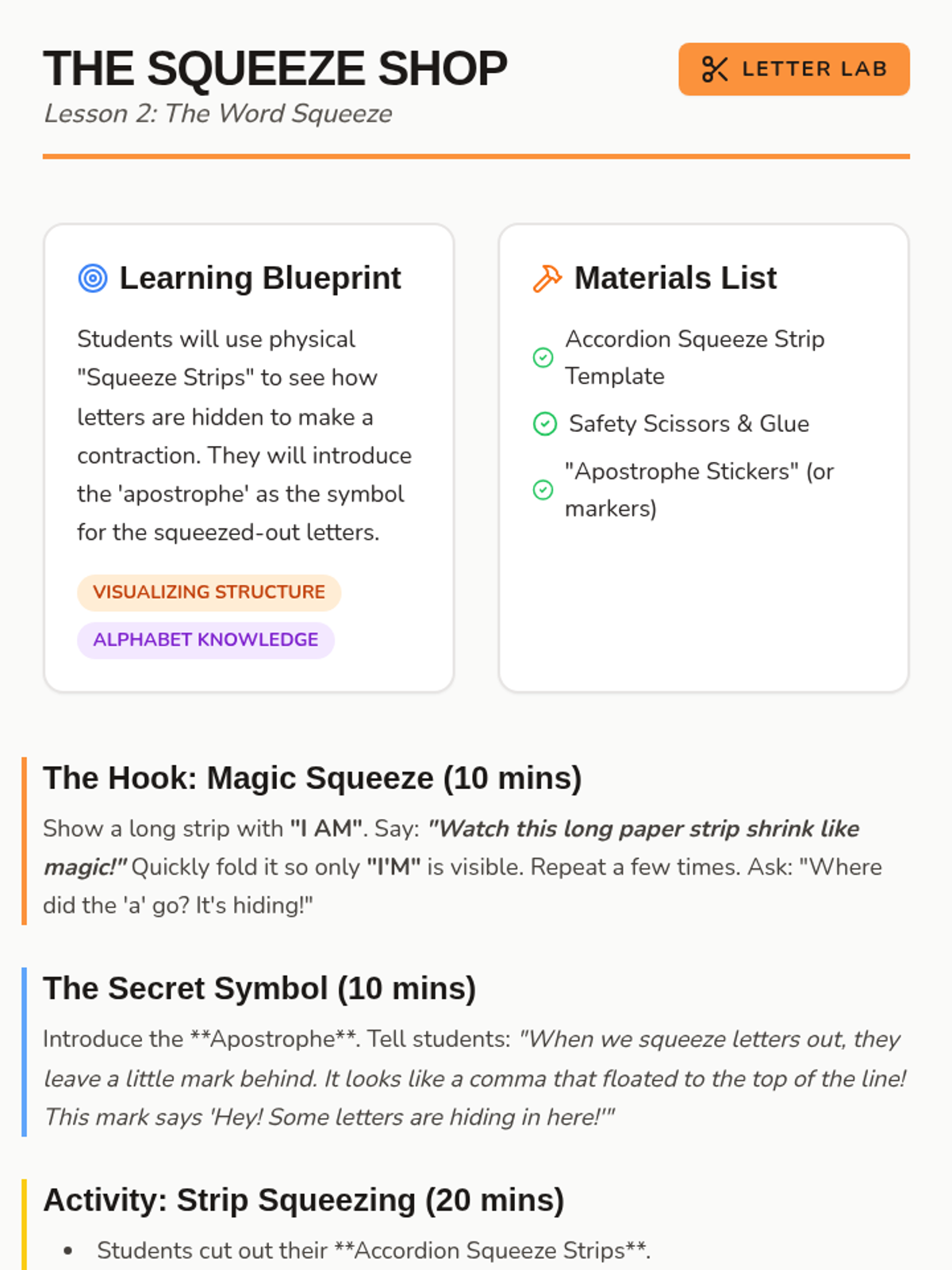
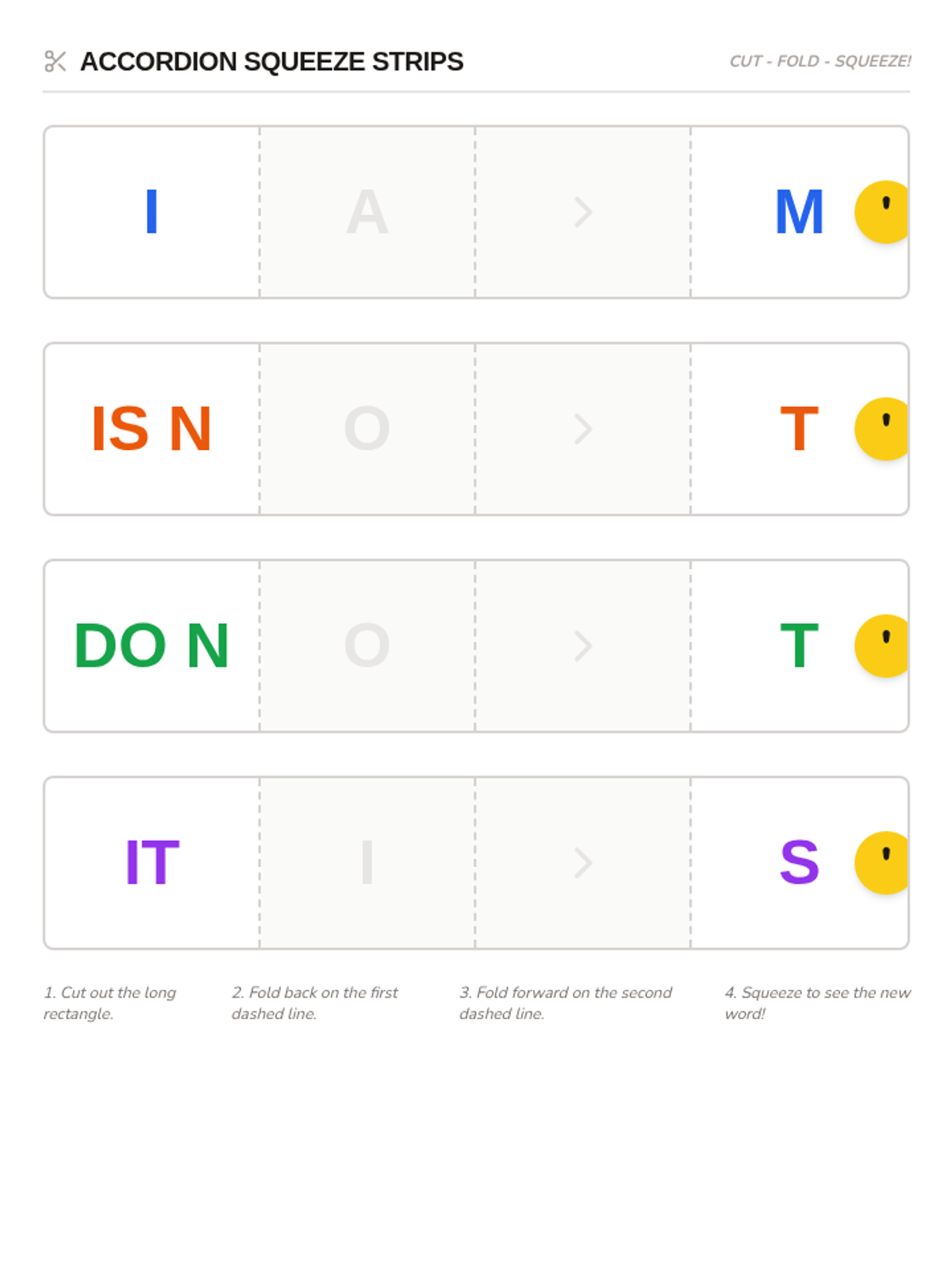
Students use accordion-folded paper strips to physically 'squeeze' two words together, hiding letters to form a contraction.
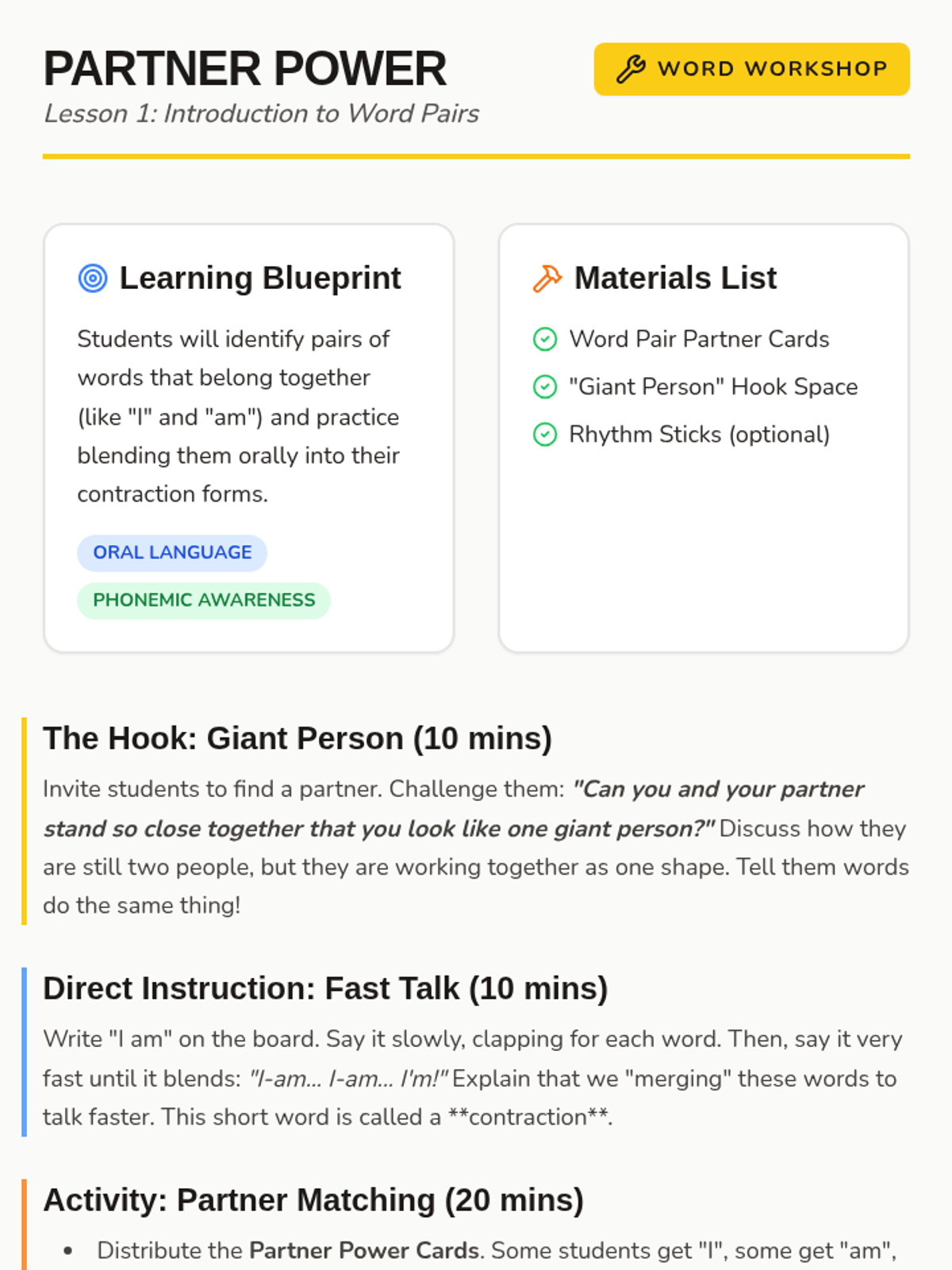
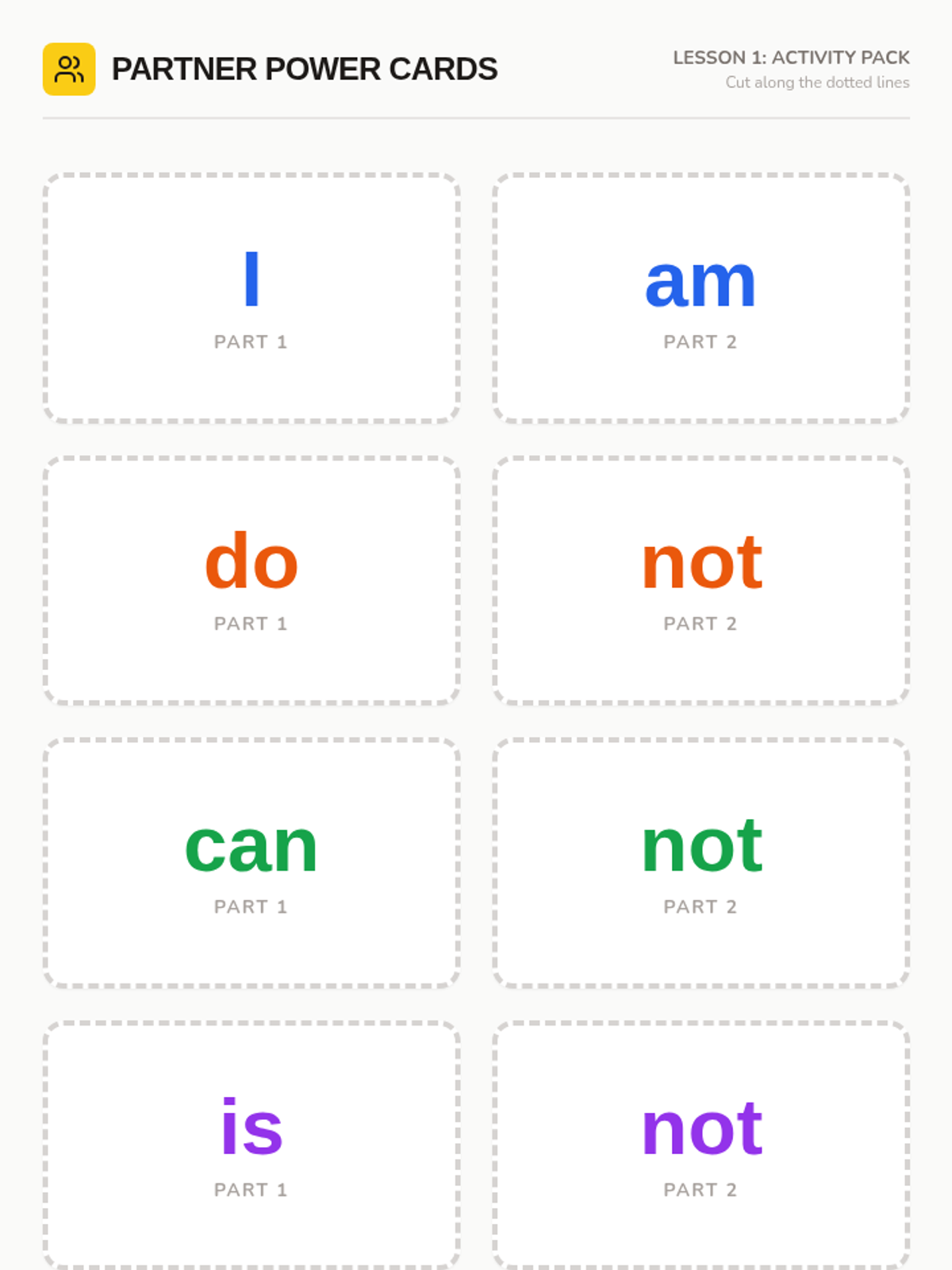
Students find word partners to form two-word phrases that can be contracted, practicing the transition from slow speech to fast blending.
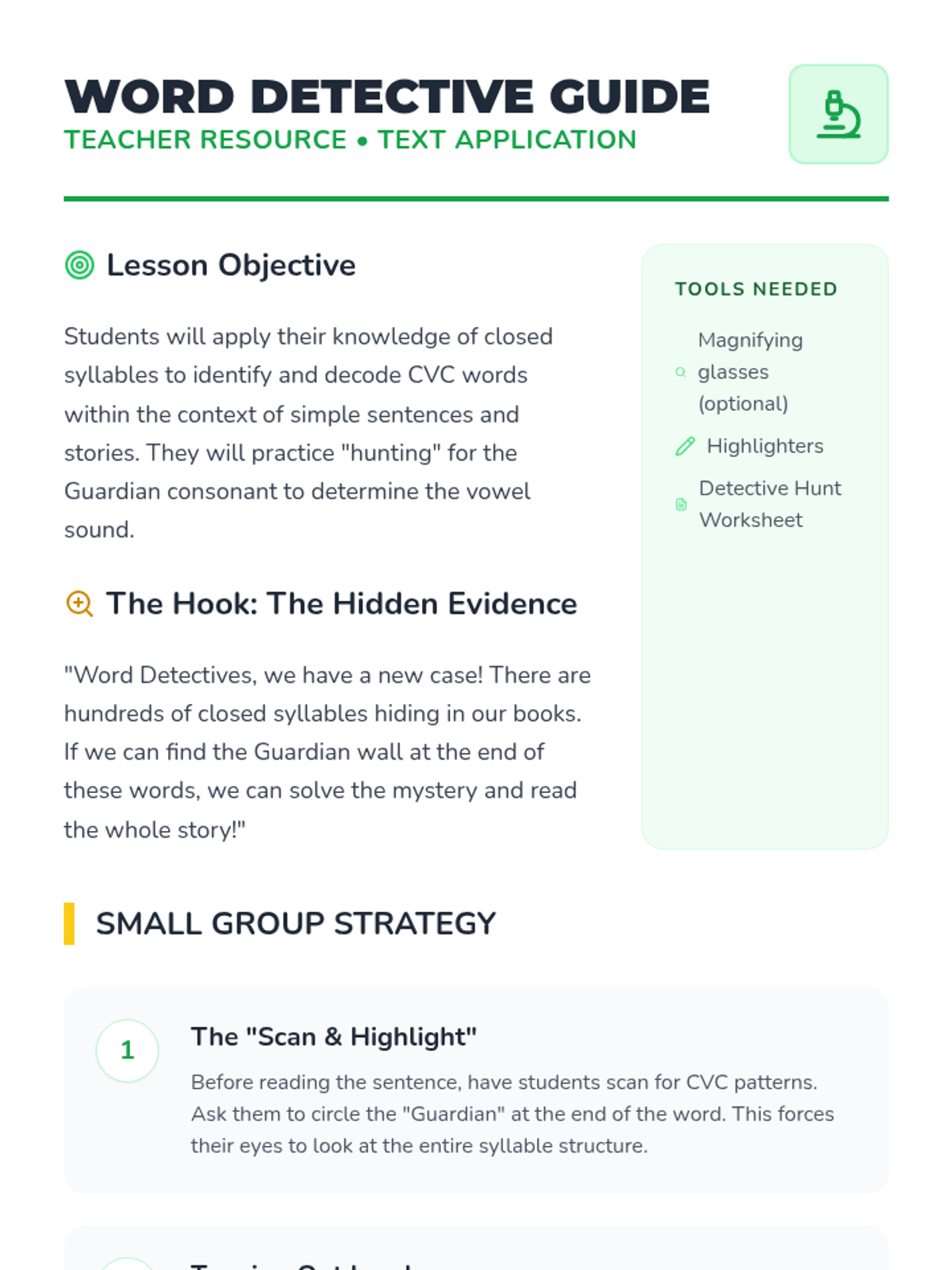
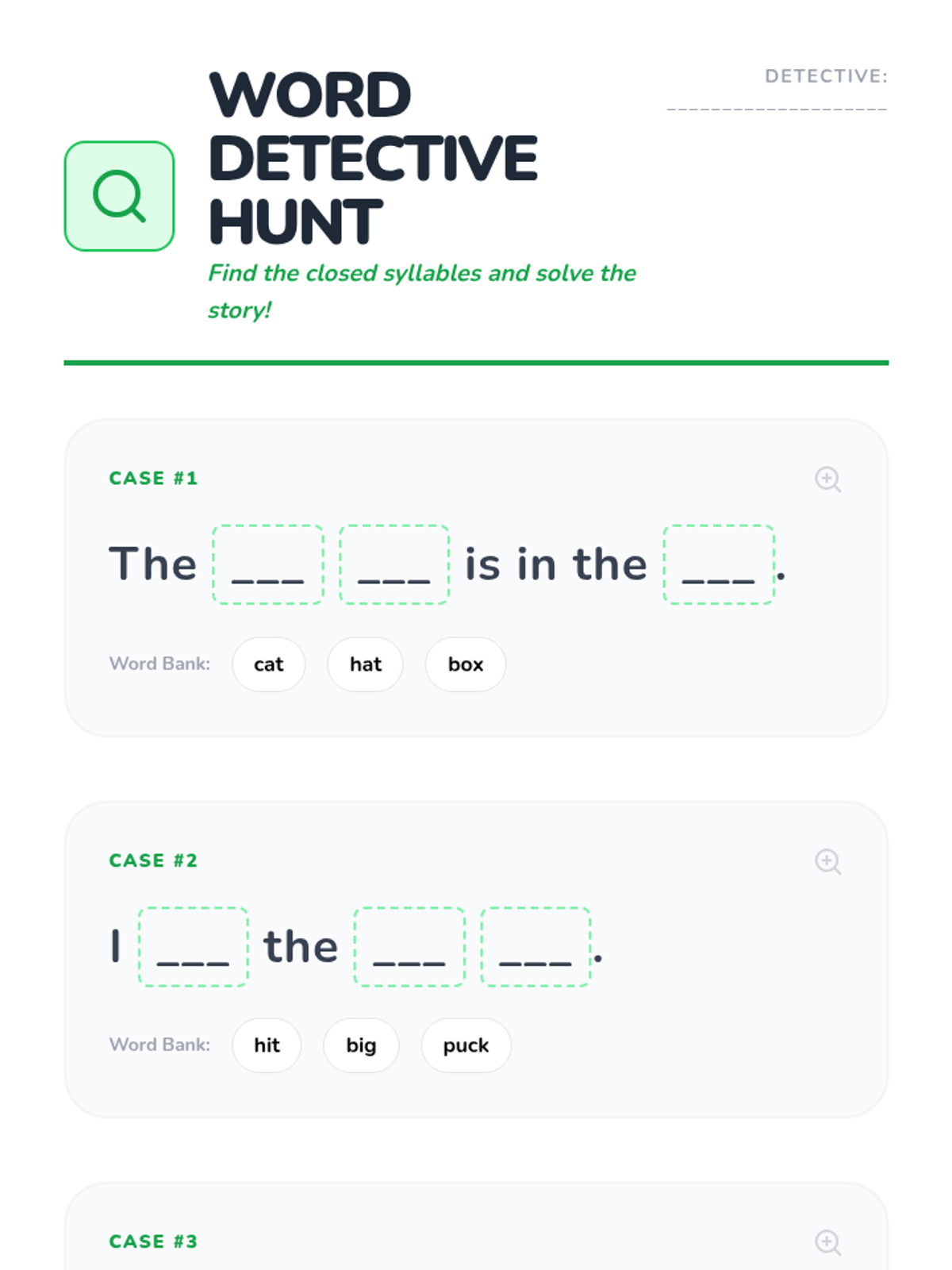
Students use highlighters and decodable readers to hunt for closed syllable words in sentences. They apply their decoding skills to read simple stories comprised primarily of closed syllables.
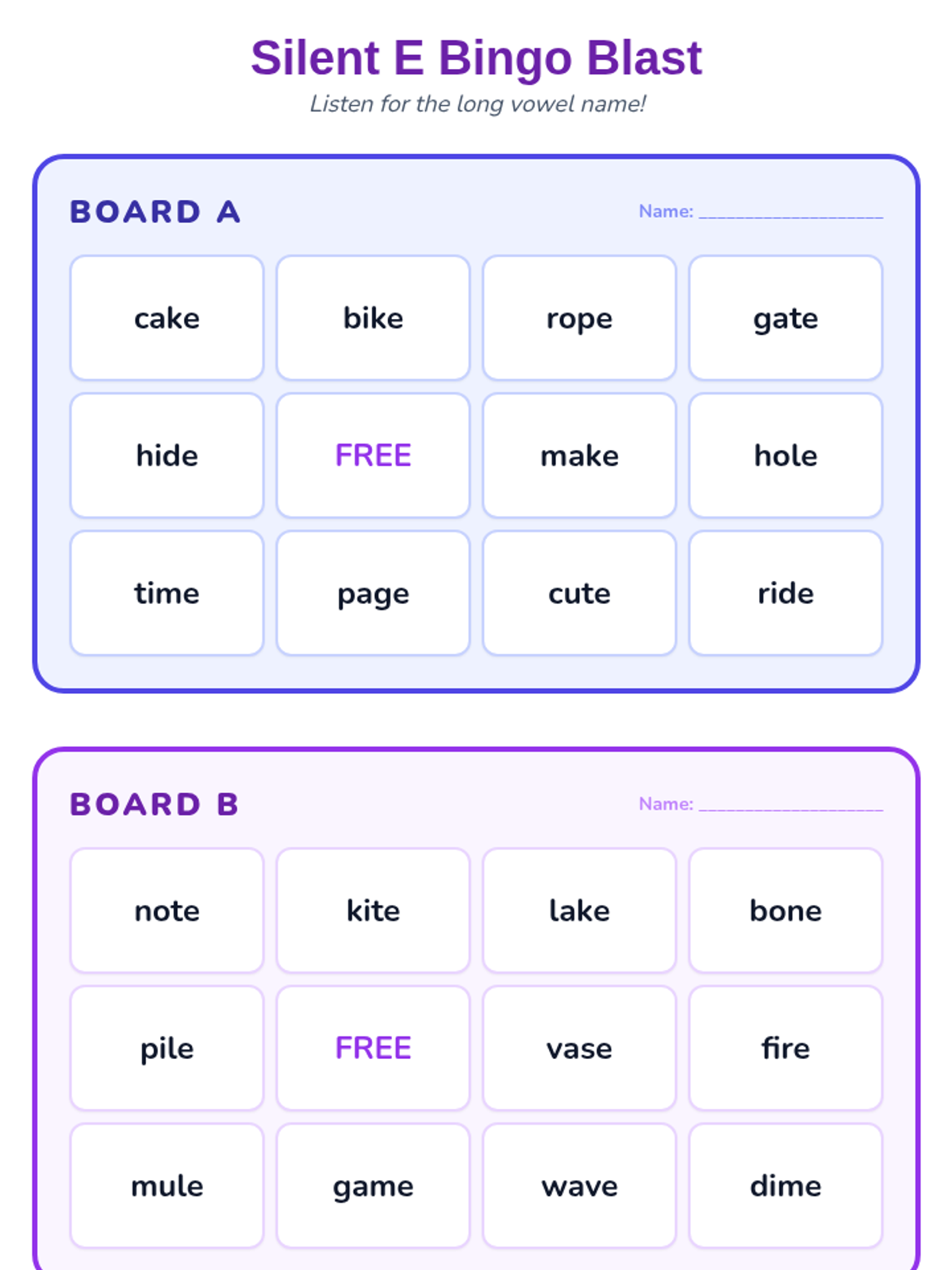
A culminating bingo game that reinforces auditory discrimination between short and long vowels and rapid visual recognition of the CVCe pattern.
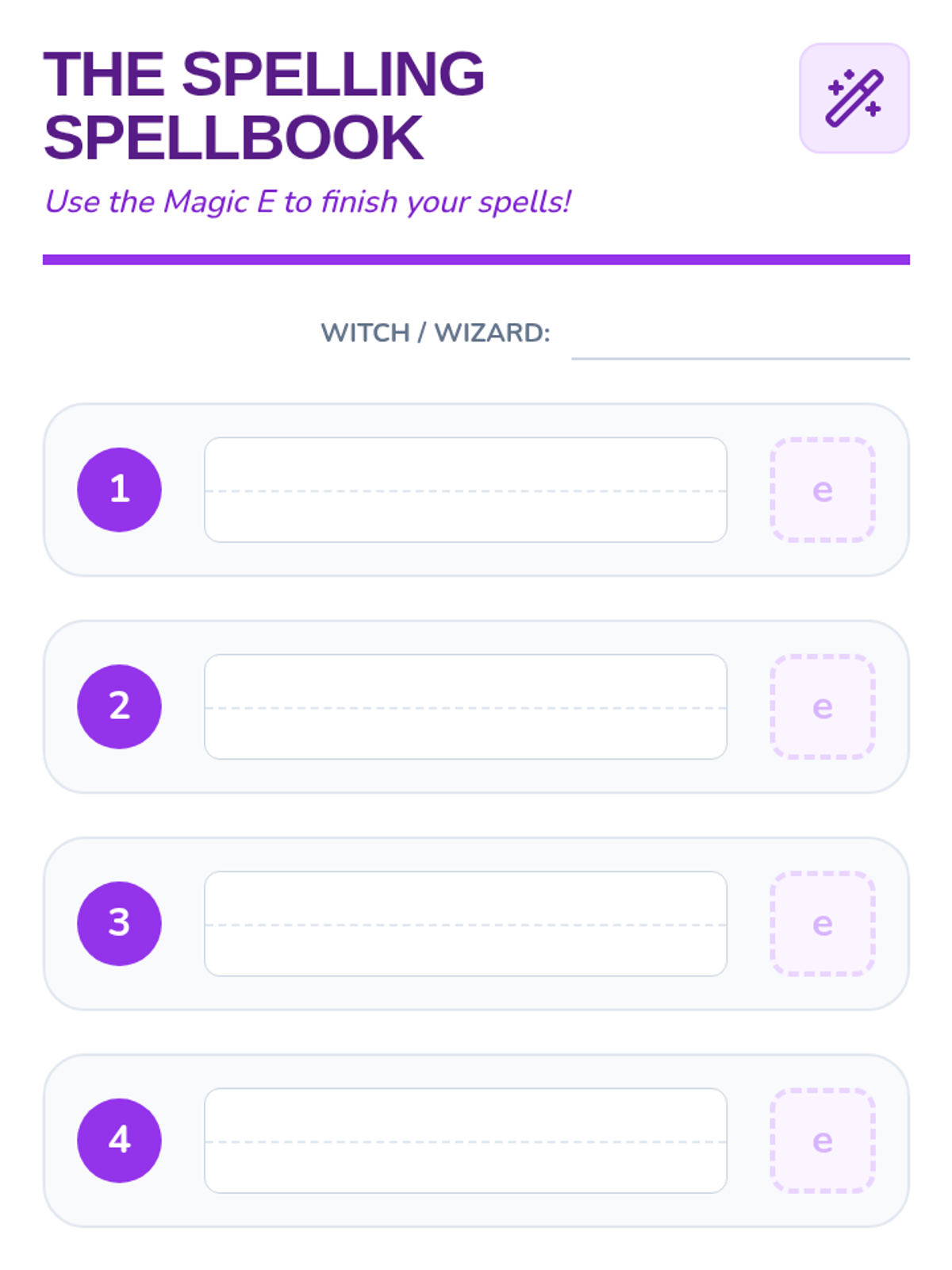
A guided encoding session where students practice spelling CVCe words. They focus on the 'marker e' at the end to ensure the vowel 'says its name'.
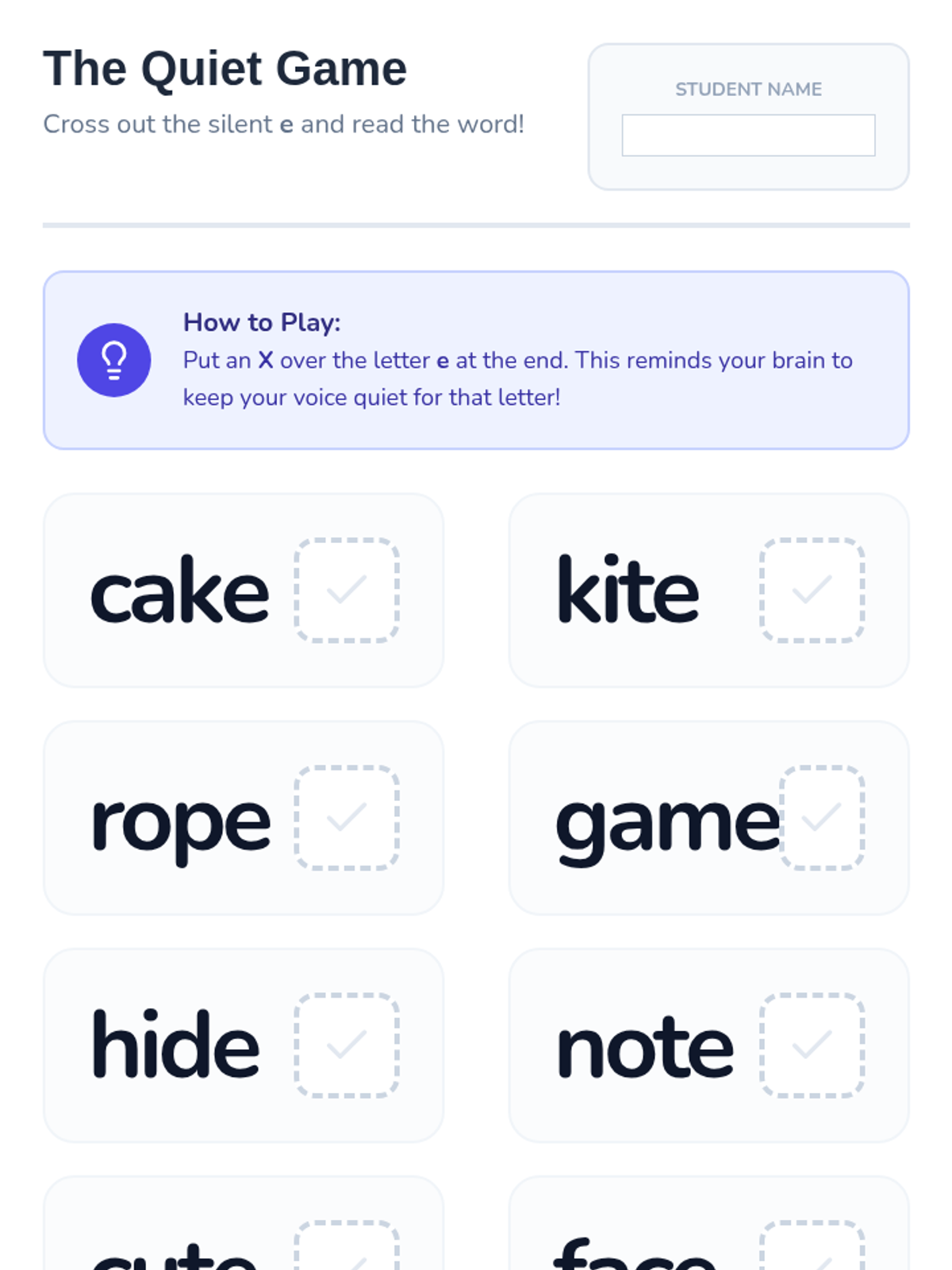
Students practice the 'silent' aspect of the pattern, focusing on reading fluency. They use visual cues to remember to look at the end of the word first.
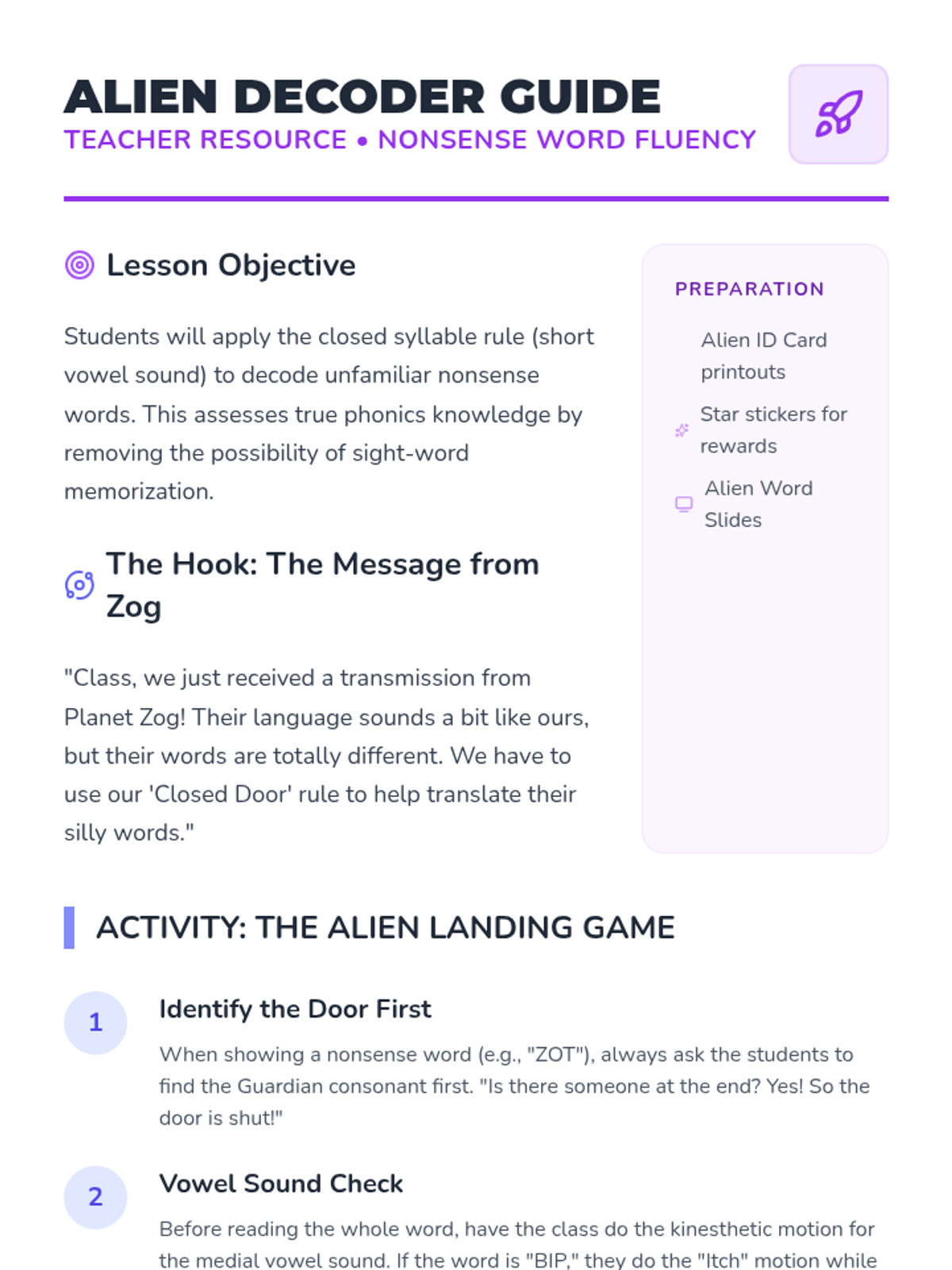
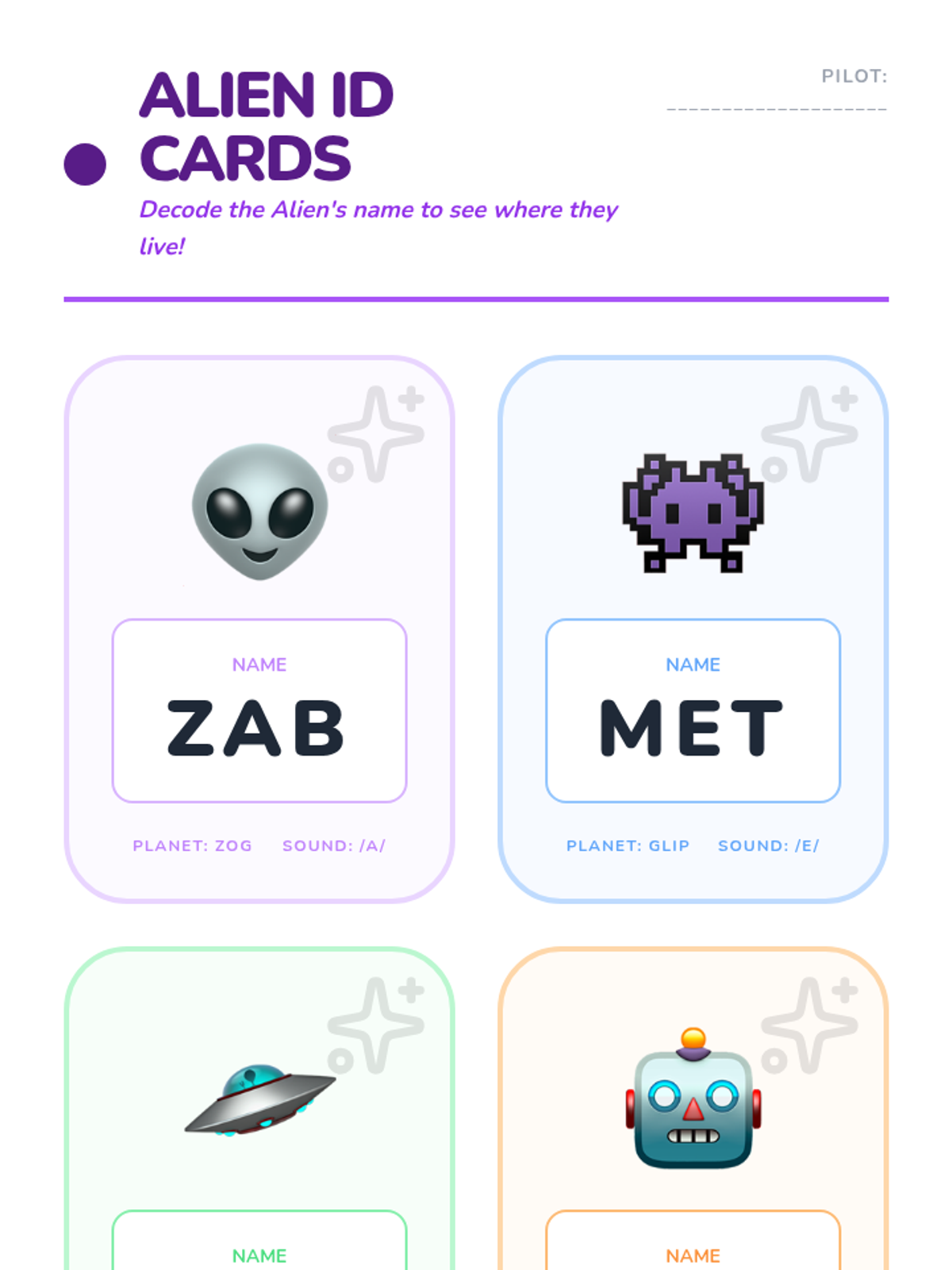
To ensure students aren't just memorizing sight words, they decode 'alien words' (nonsense CVC words) to prove they understand the closed syllable rule. This highlights the reliable pattern of short vowels in closed syllables.