Geometric classification, measurement of area and volume, and the study of transformations and rigid motions. Builds toward complex proofs, trigonometry for general triangles, and the algebraic representation of conic sections.
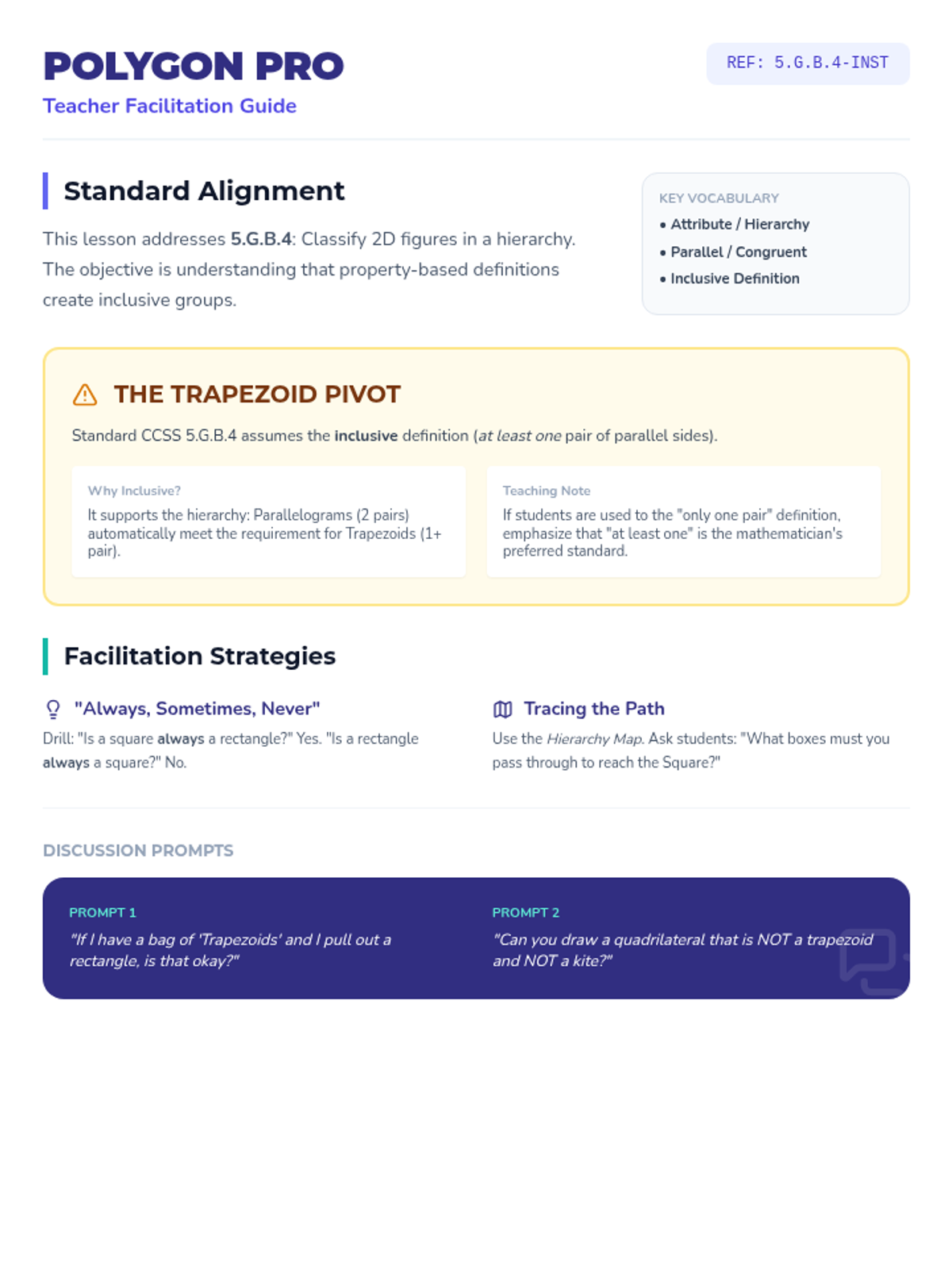
A teacher's guide for facilitating the quadrilateral properties lesson, focusing on instructional strategies, standard alignment, and the inclusive trapezoid definition.
An instructional slide deck that introduces quadrilaterals, focuses on the inclusive definition of trapezoids, and visually explains the shape hierarchy.
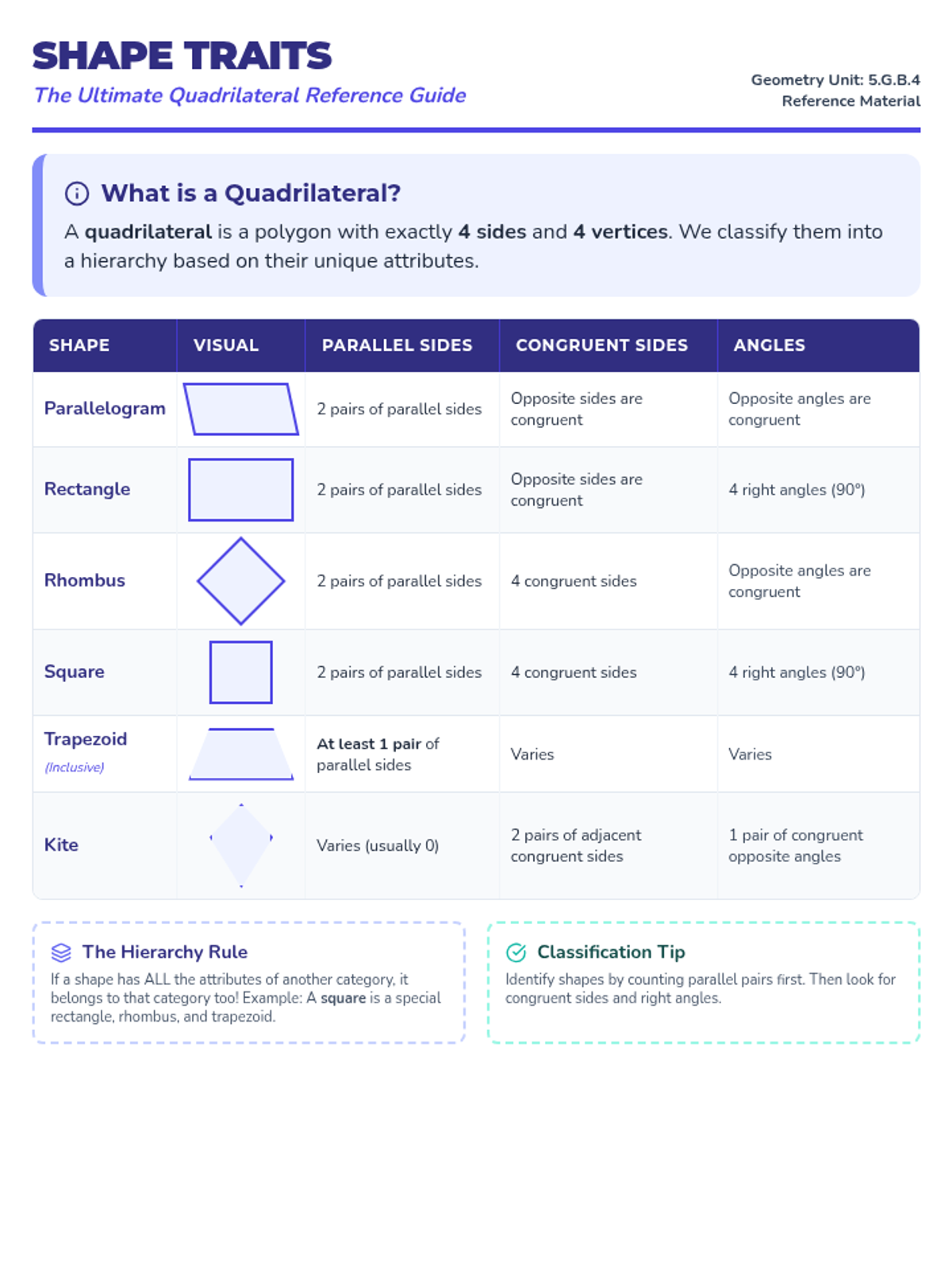
A comprehensive reference chart for 5th-grade students detailing the attributes of various quadrilaterals, including the inclusive definition of trapezoids.
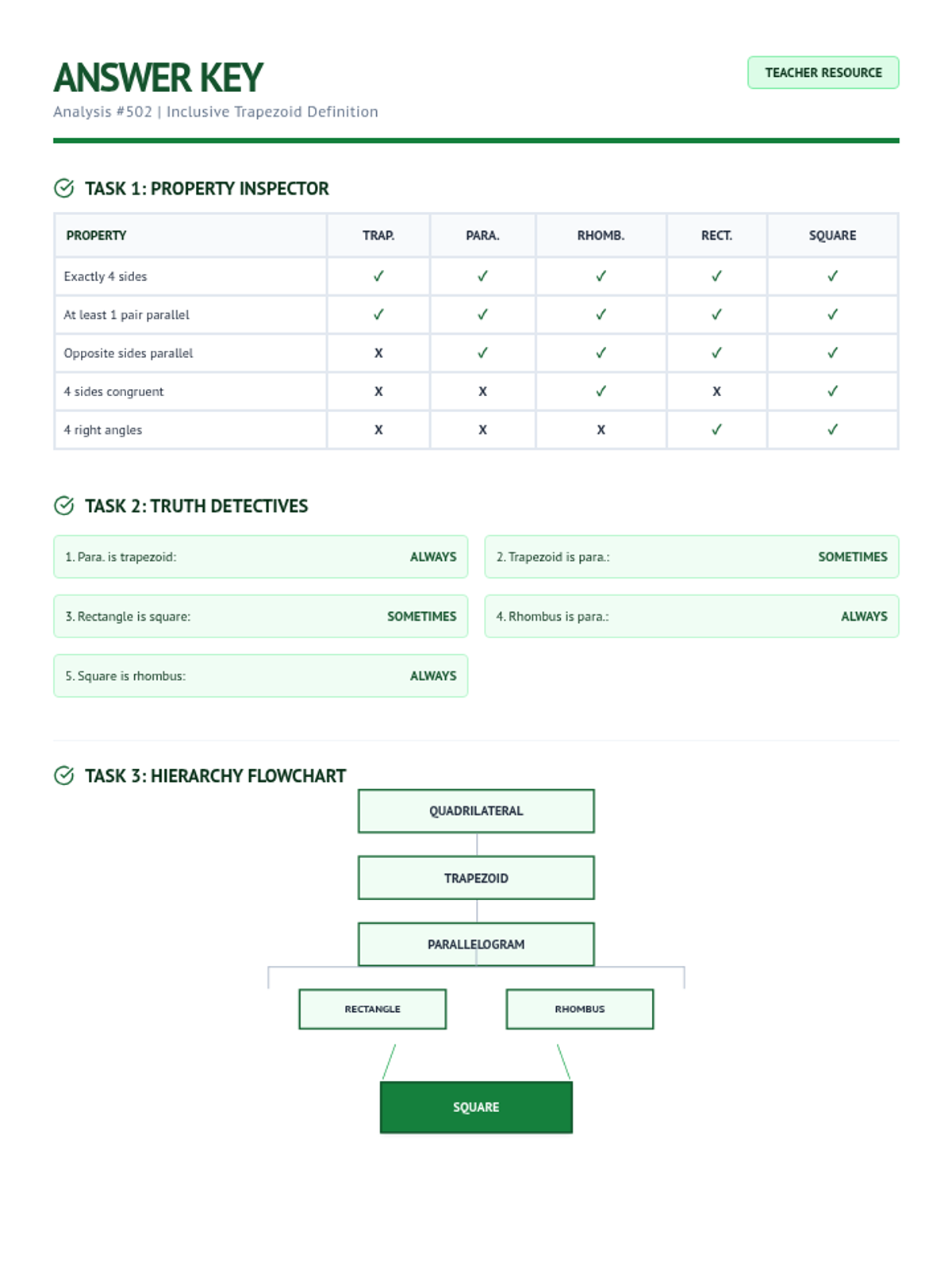
An answer key for the Quadrilateral Quest worksheet, providing solutions for the expanded properties and hierarchy flowchart including trapezoids.
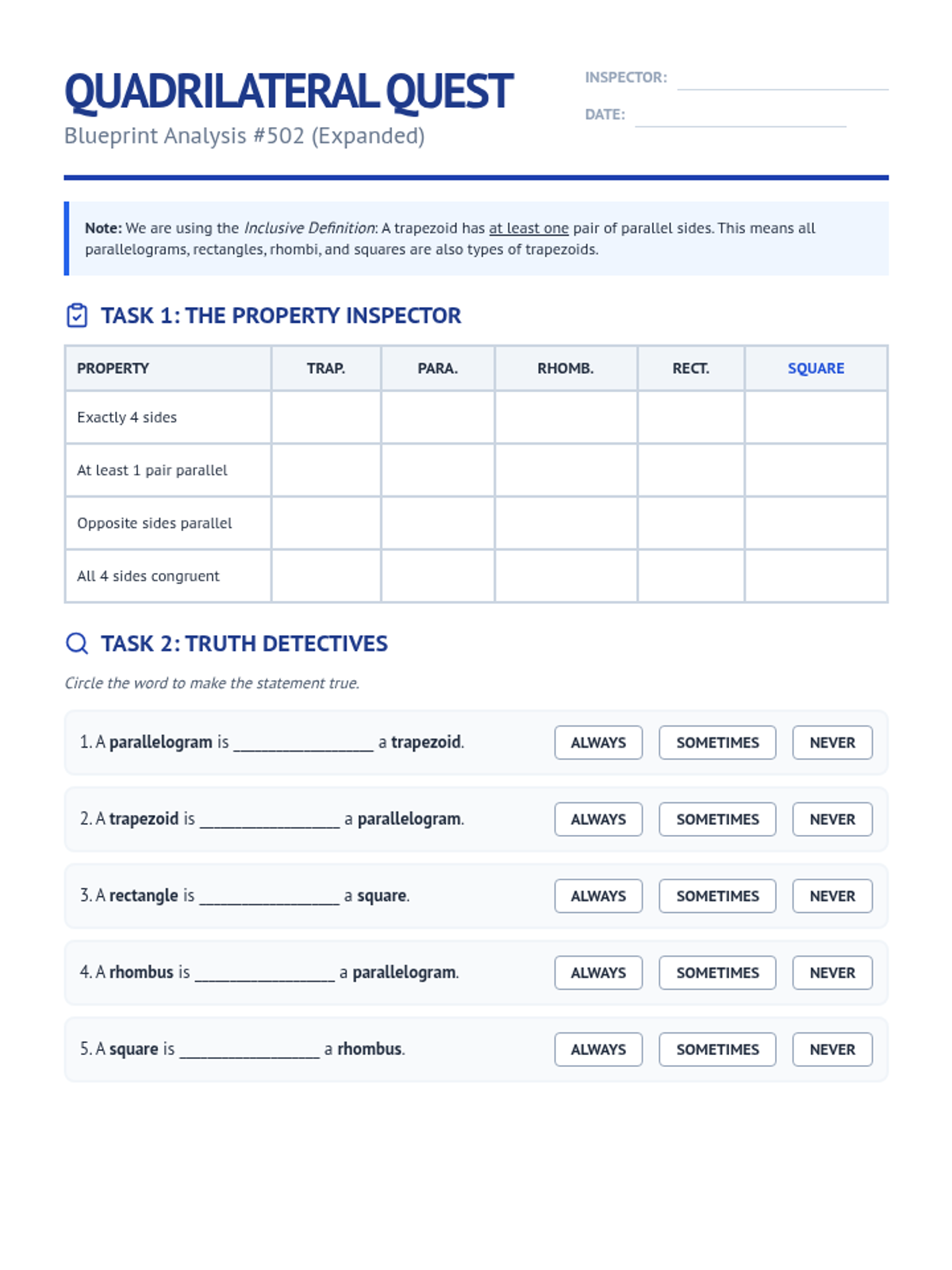
A comprehensive geometry worksheet focusing on quadrilateral hierarchies, now including trapezoids. It includes a property checklist, 'Always/Sometimes/Never' logical reasoning statements, and an expanded hierarchy flowchart.
A visually engaging slide deck introducing the hierarchical classification of quadrilaterals using an architect-inspired 'blueprint' theme. It covers definitions, property checklists, and the logic of 'Always, Sometimes, Never' statements, now featuring trapezoids.
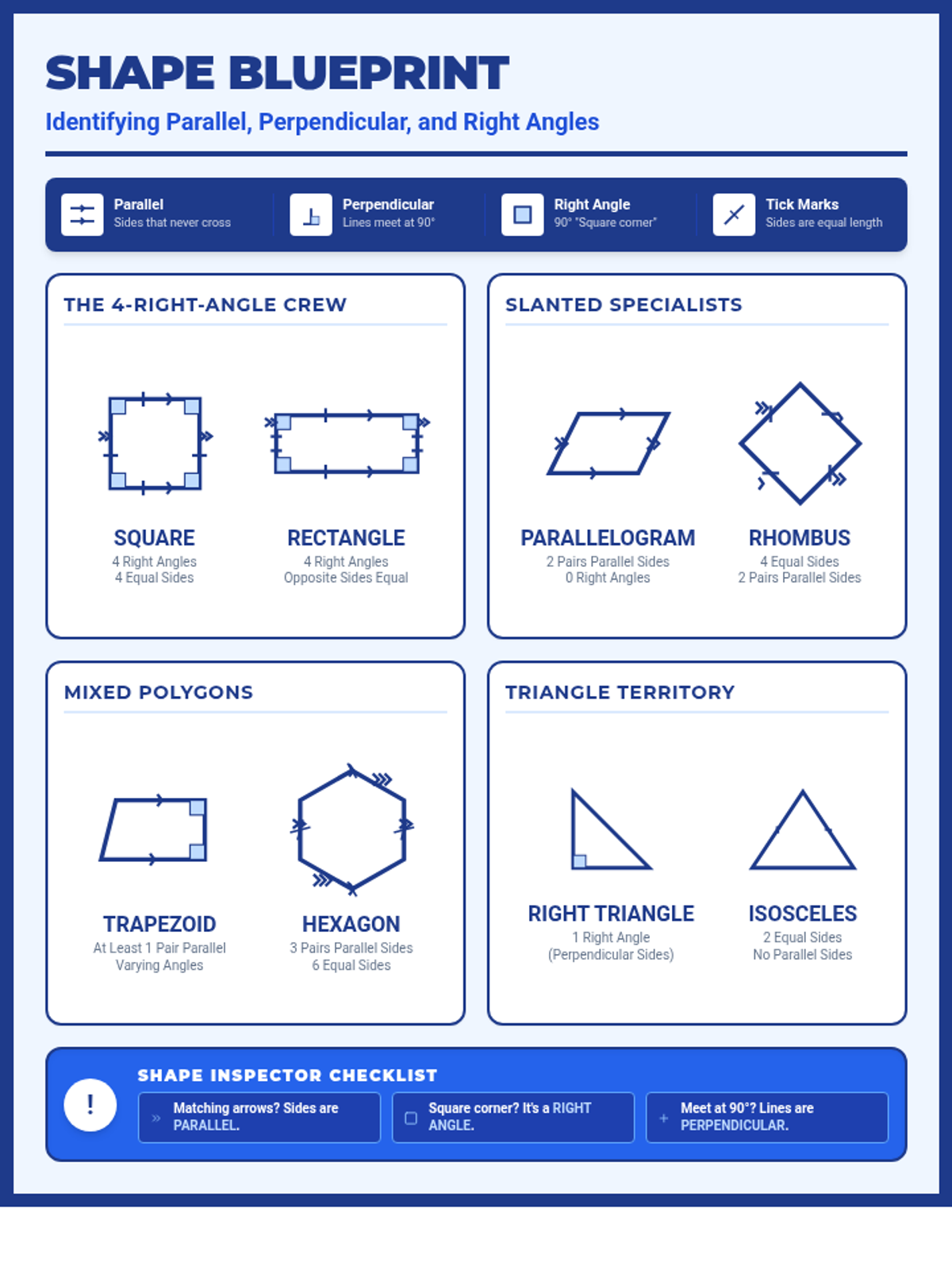
A comprehensive 2D figures anchor chart styled as a technical blueprint. It features squares, rectangles, parallelograms, rhombuses, trapezoids, hexagons, and triangles, clearly marking parallel sides, perpendicular lines, and right angles with geometric symbols and concise definitions.
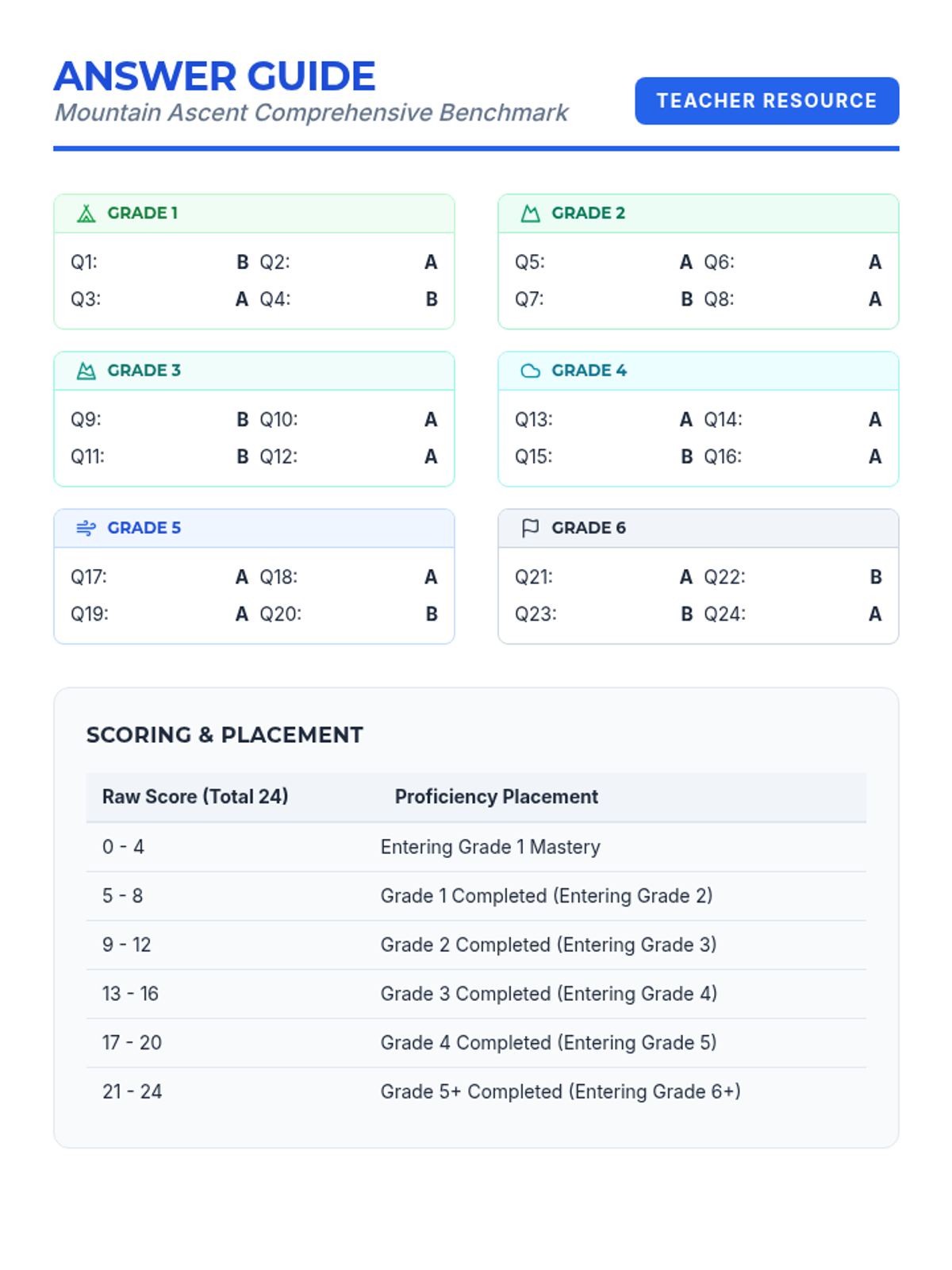
Updated teacher's answer guide for the comprehensive math assessment, featuring answers for all 24 questions and expanded placement guidelines.
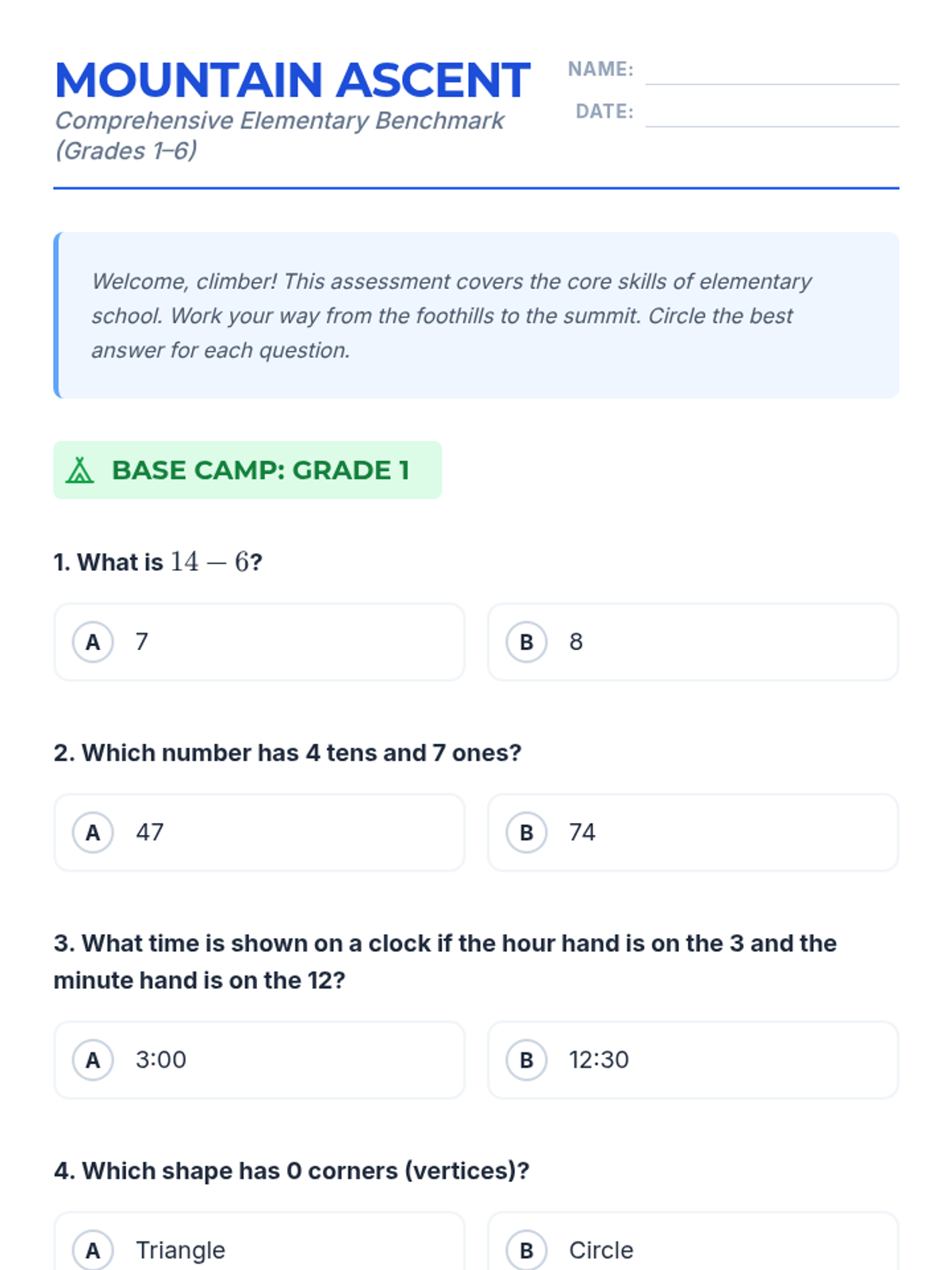
A comprehensive math benchmark assessment covering core elementary skills from Grades 1 to 6 with 24 multiple-choice questions and dedicated work areas.
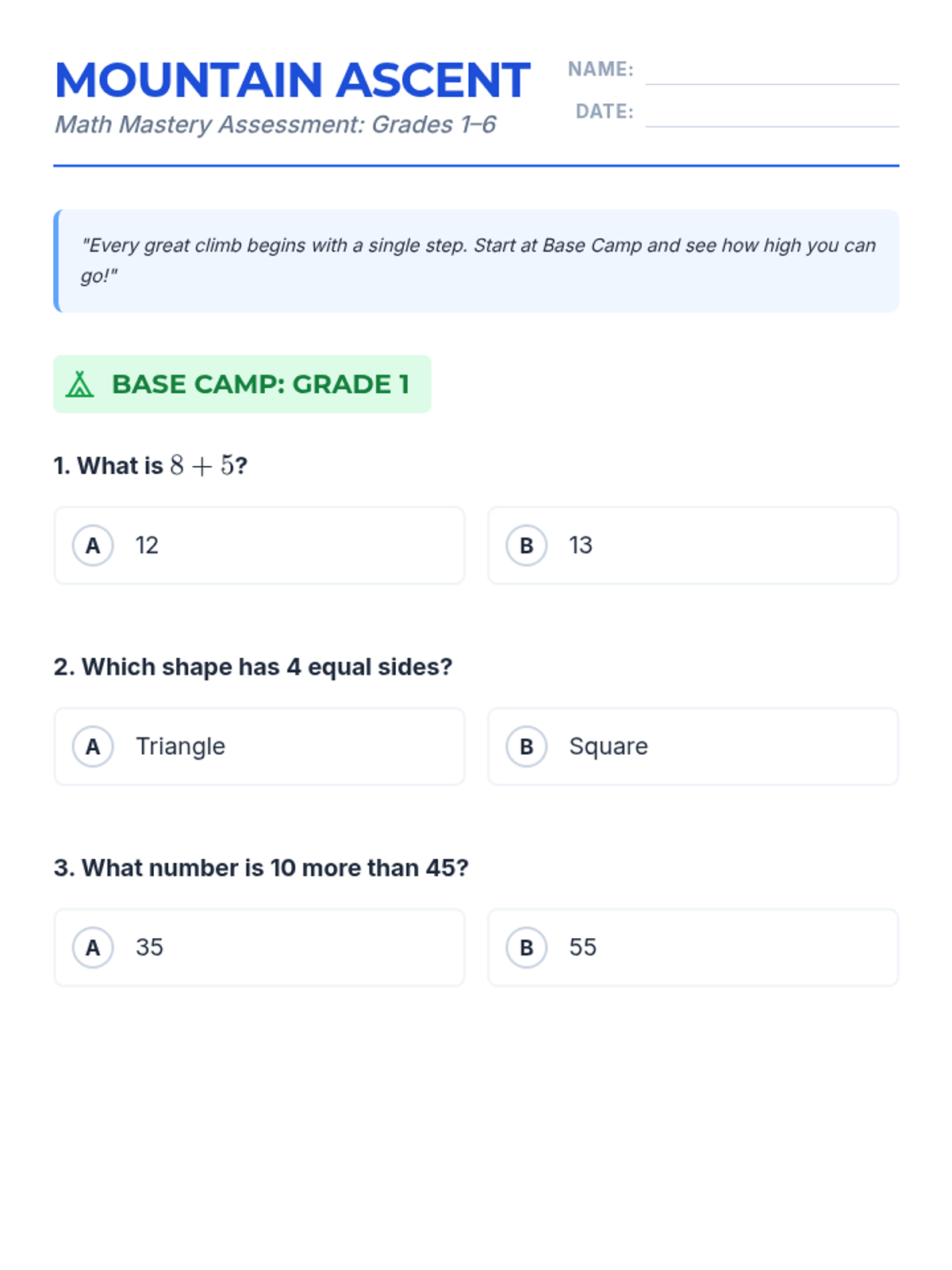
Final polished version of the math assessment with 15 questions, dedicated work spaces for higher levels, and zero page-break issues.
Final polished answer guide with improved alignment and clear scoring metrics.
A final polished version of the math assessment with 15 questions, dedicated work spaces for higher levels, and zero page-break issues.
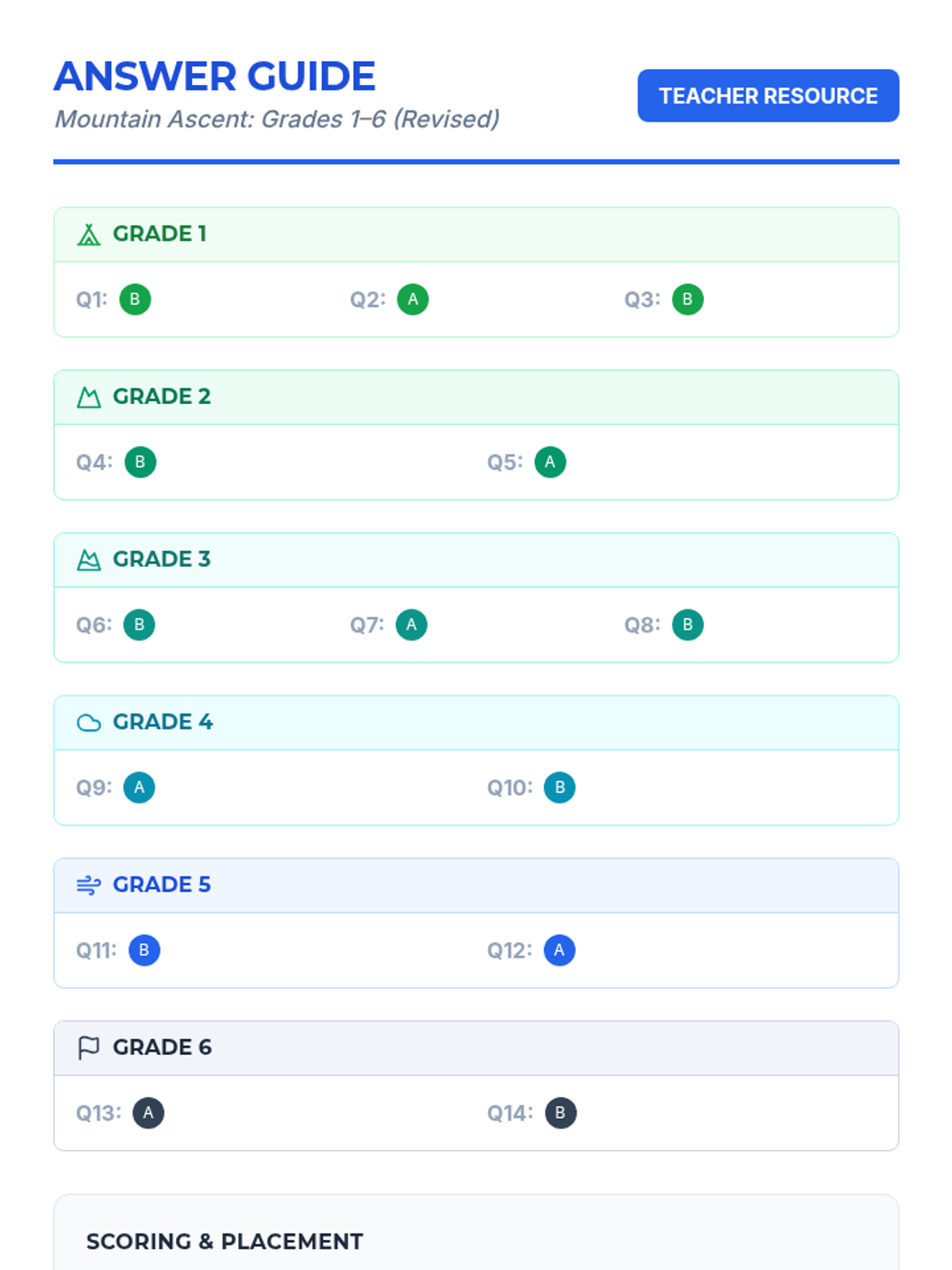
Updated teacher's answer guide for the revised Mountain Ascent Assessment, reflecting the changes in question count and content.
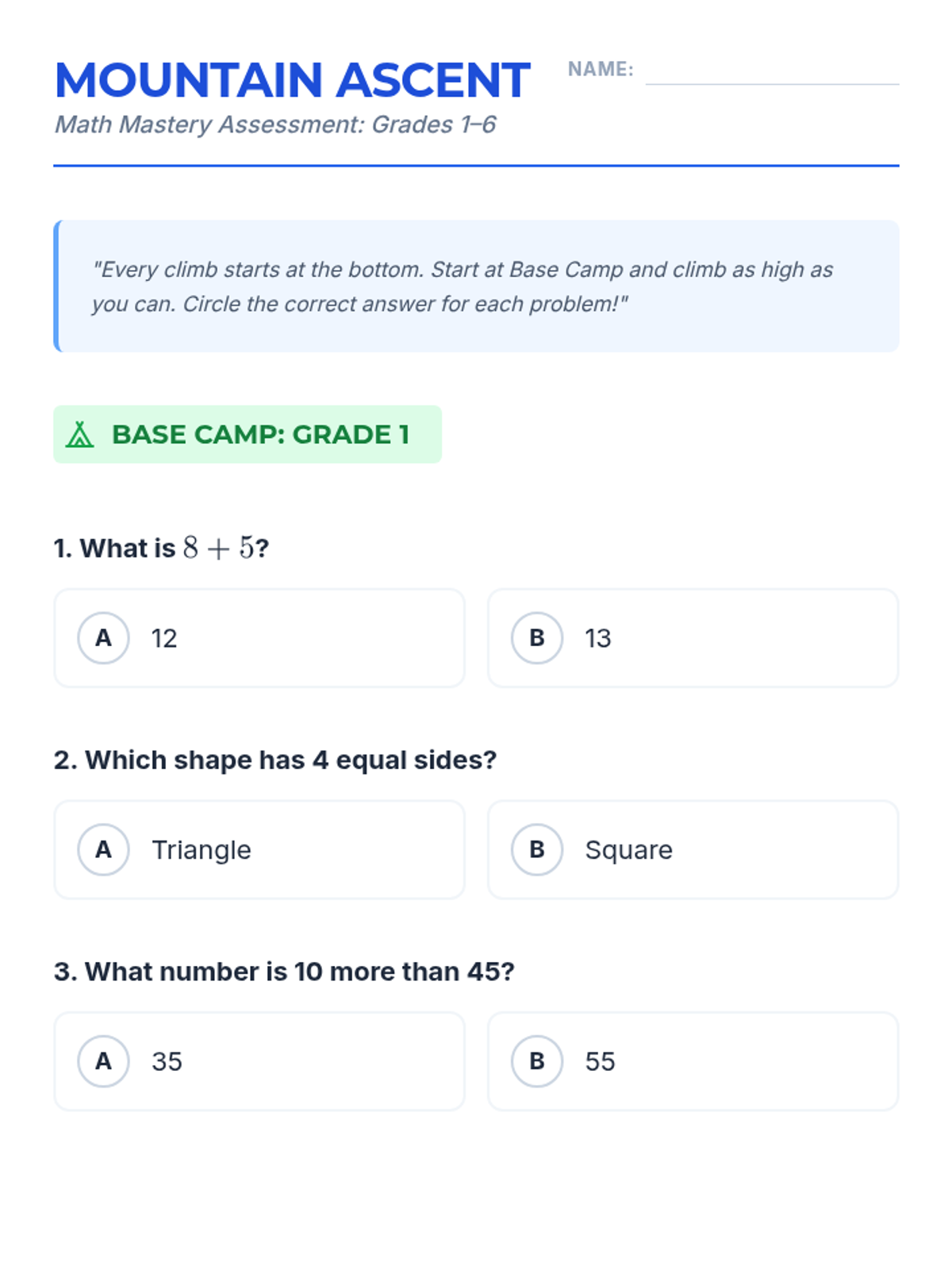
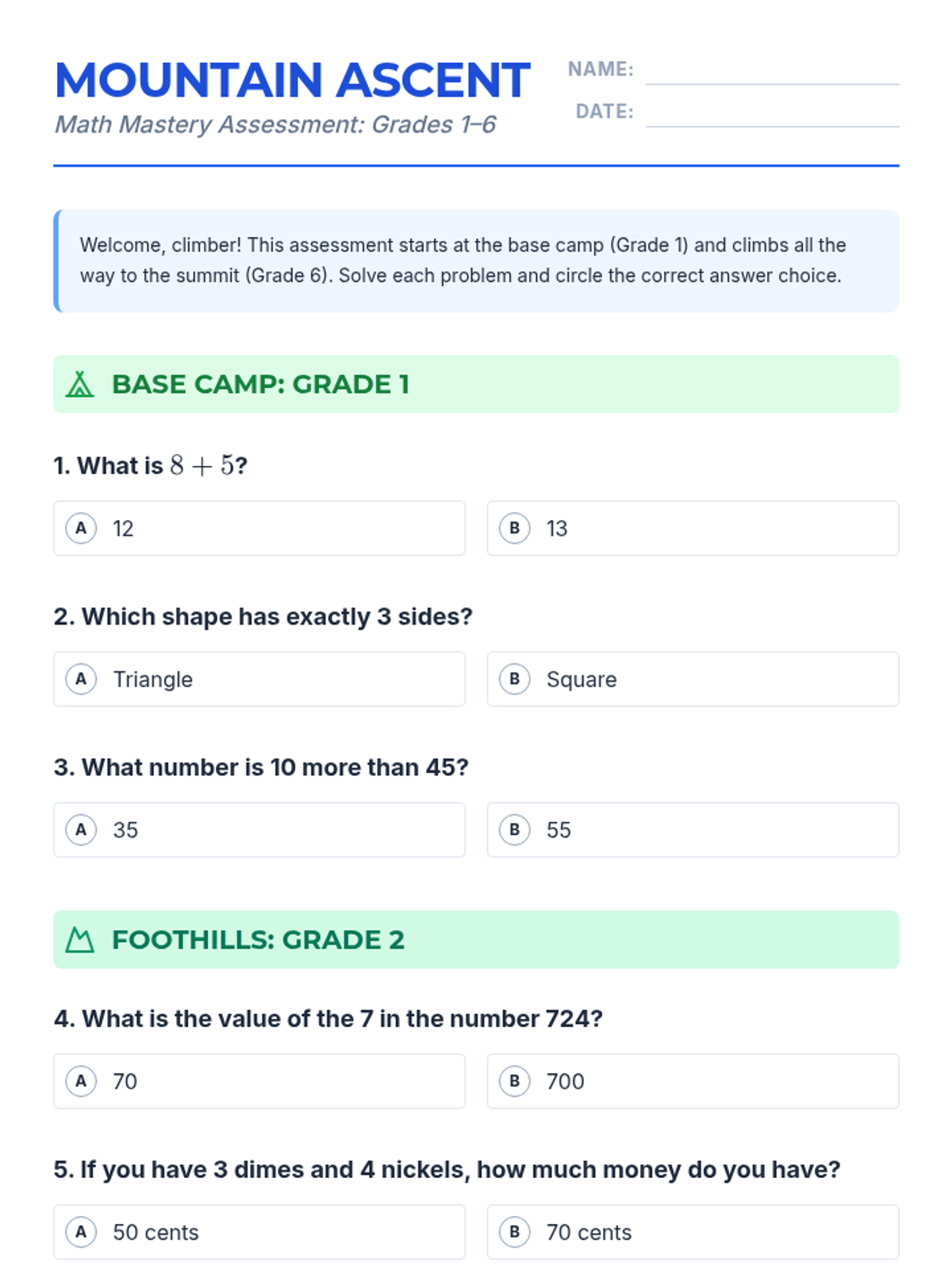
A revised math assessment featuring 14 multiple-choice questions from Grade 1 to 6 with improved spacing and layout to prevent orphaned headers and split questions.
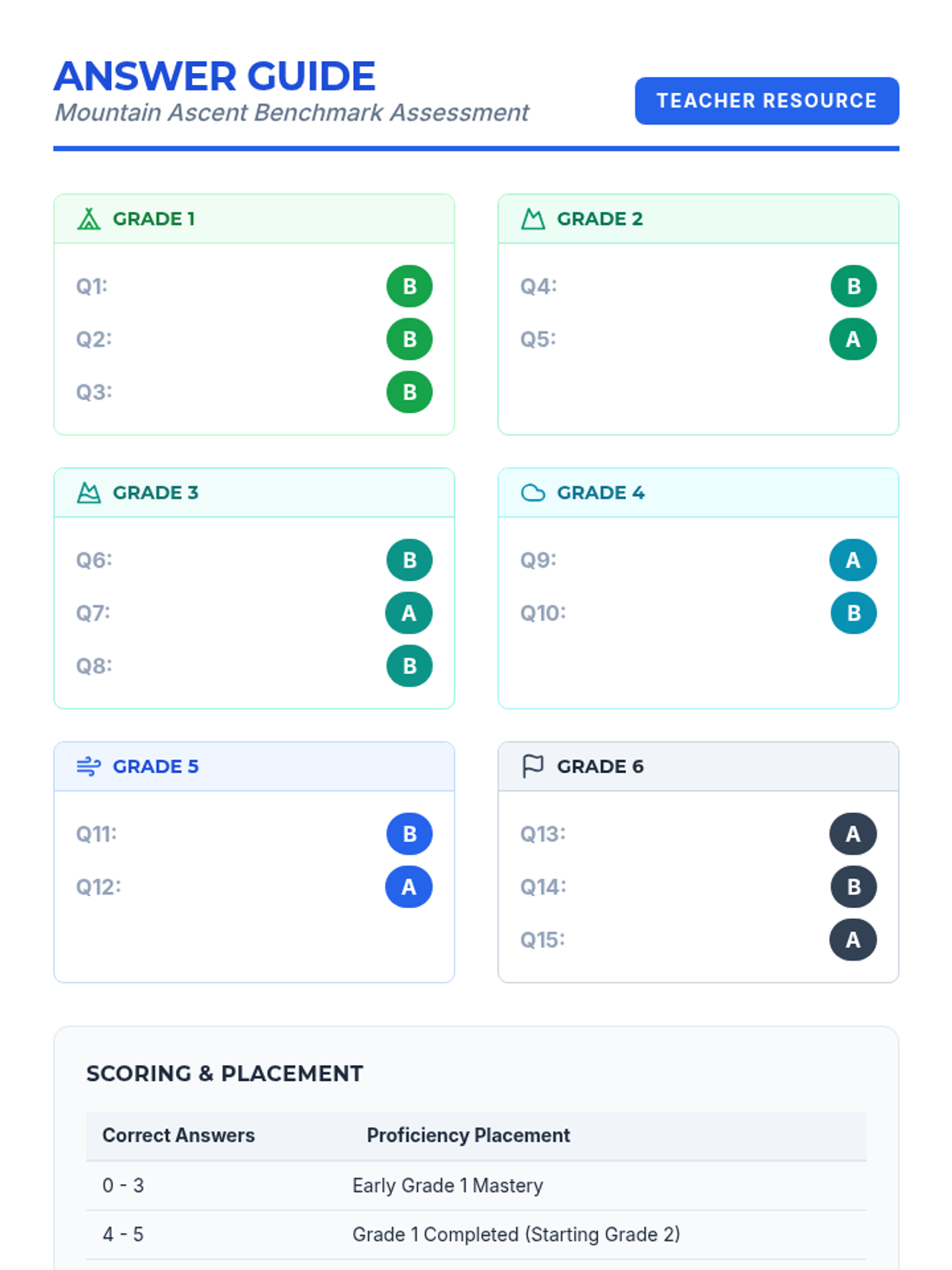
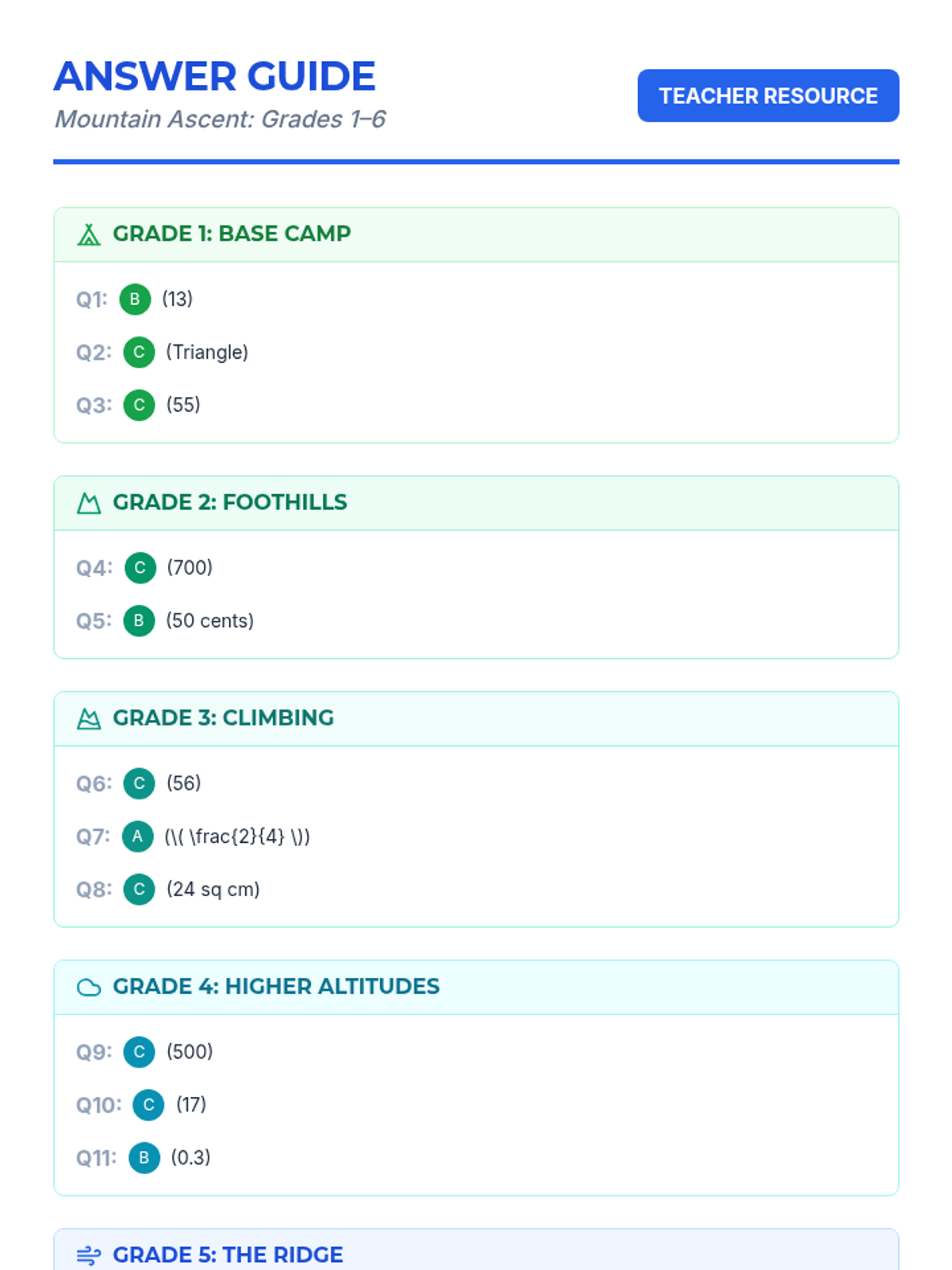
A teacher's answer guide for the Mountain Ascent Assessment, providing correct answers, specific values, and a scoring breakdown for student placement.
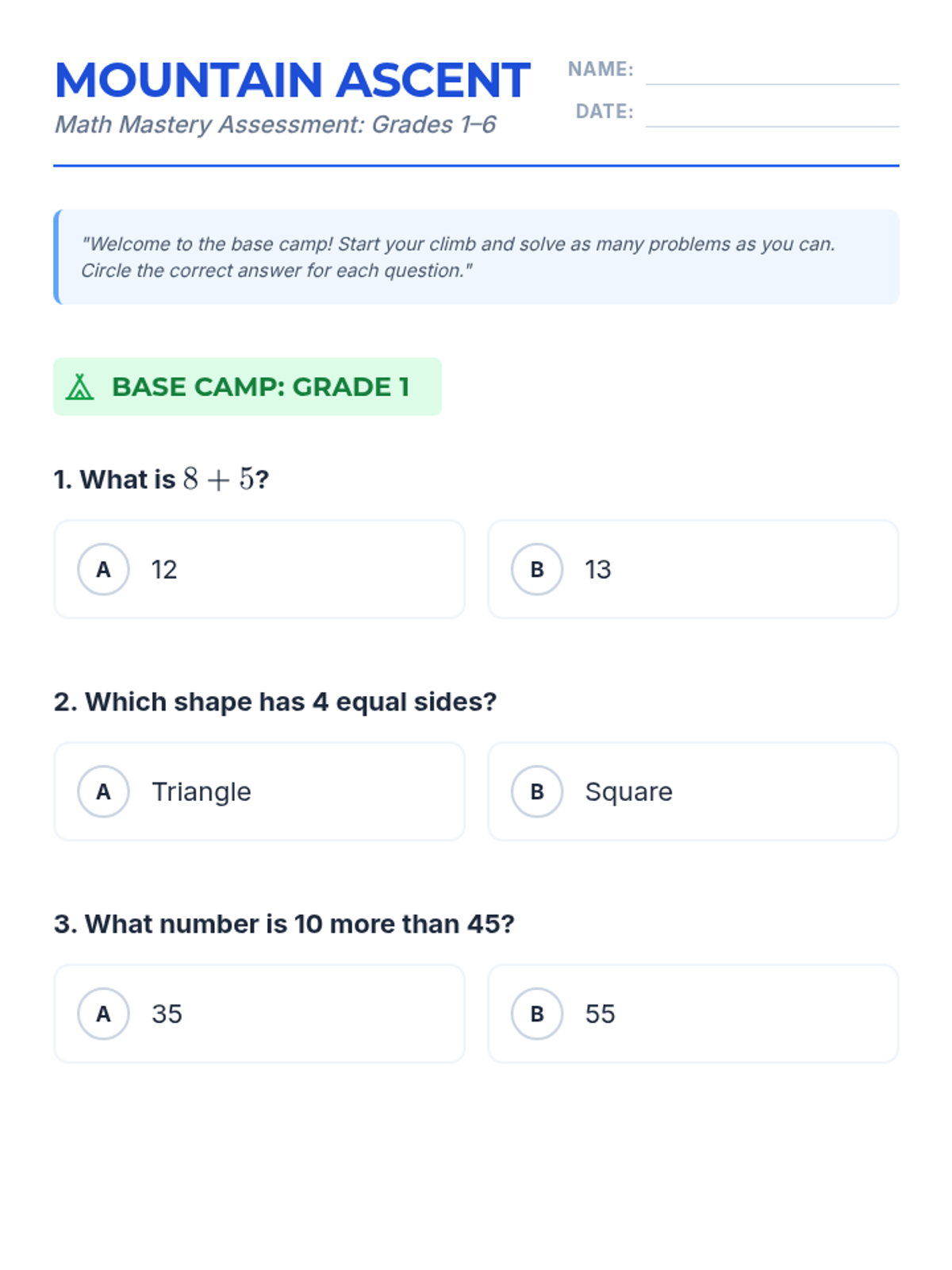
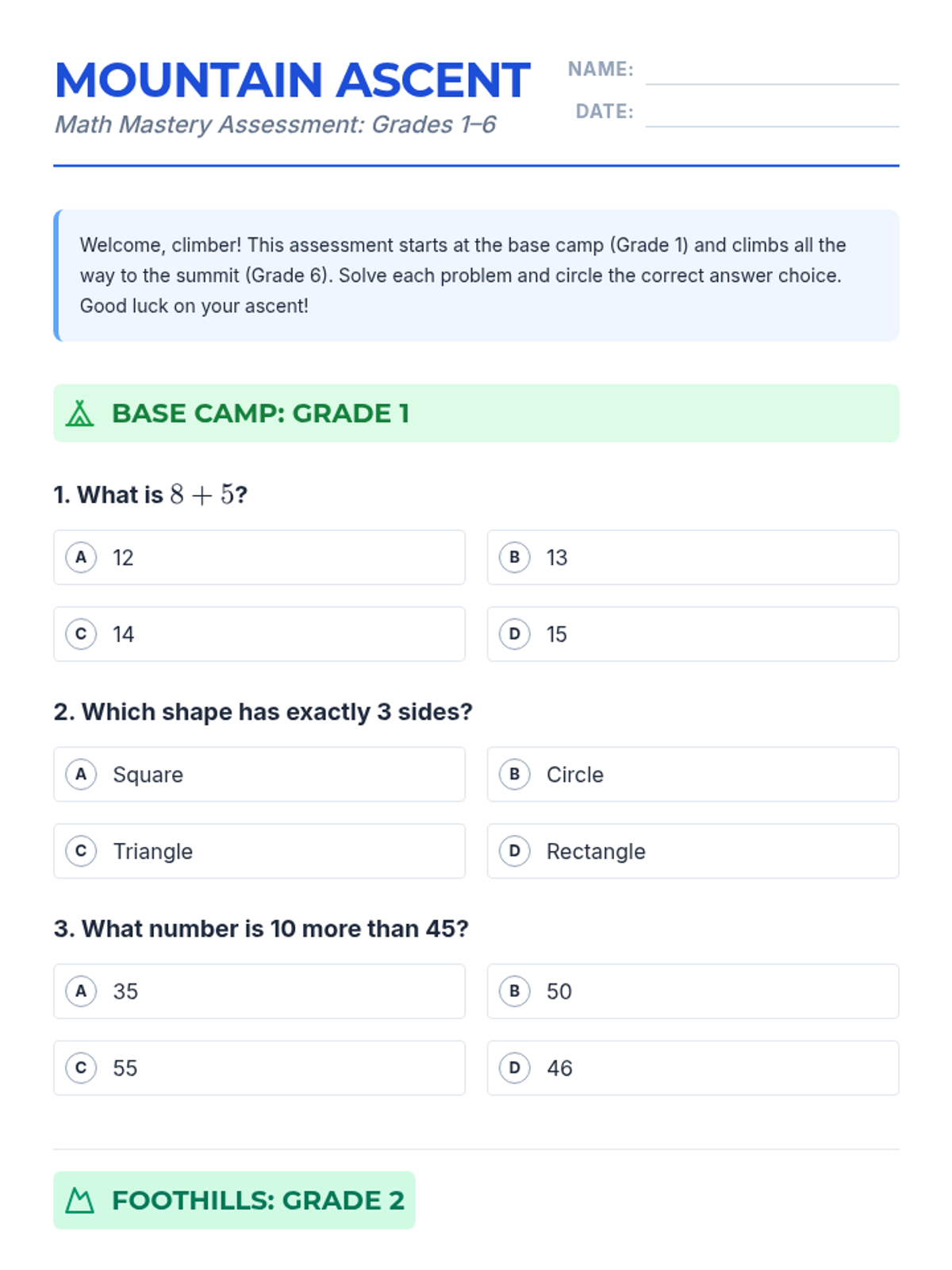
A math assessment document featuring 17 multiple-choice questions ranging from Grade 1 to Grade 6, themed around a mountain climbing journey.
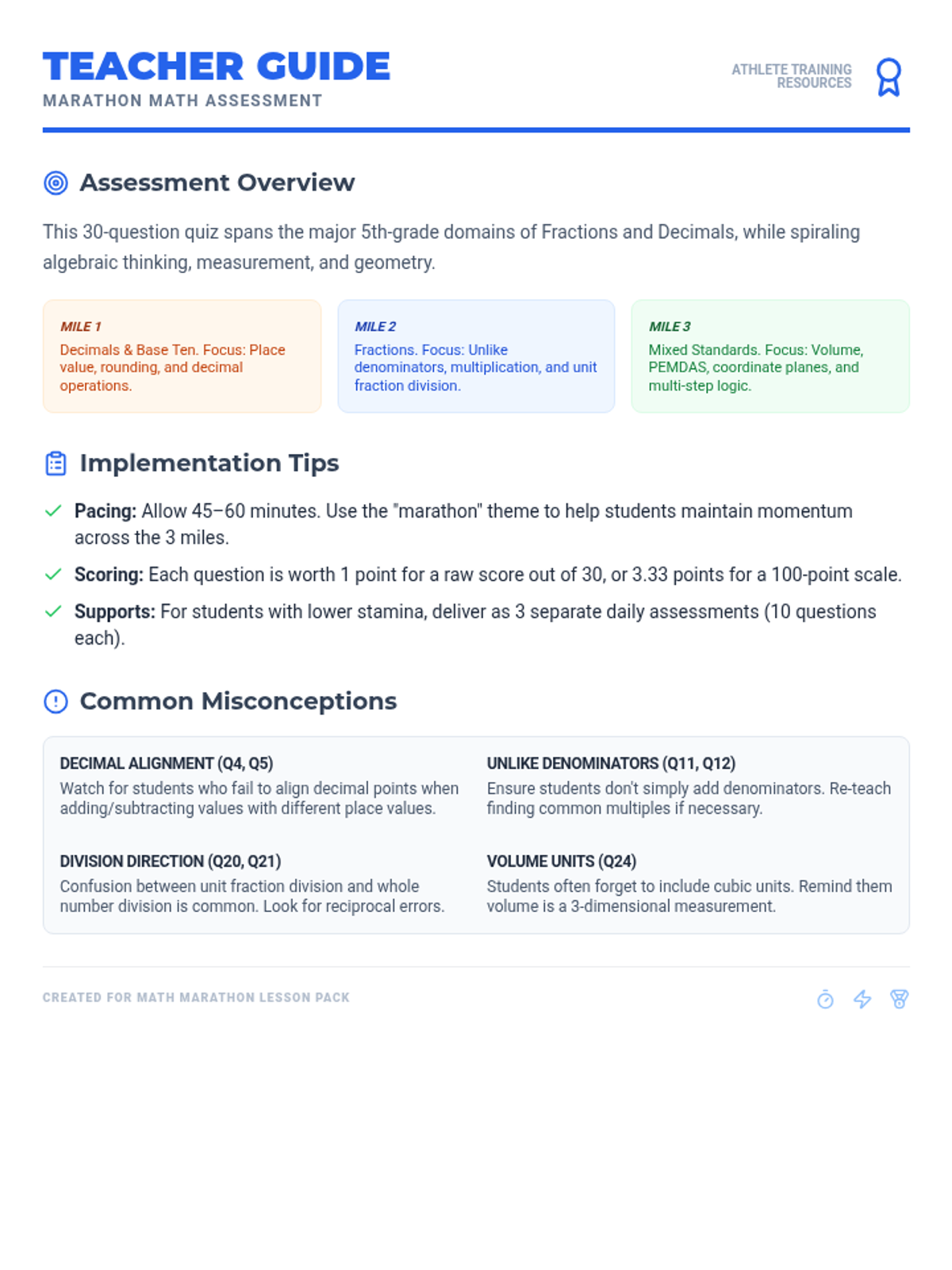
Teacher facilitation guide for the Marathon Math Quiz, featuring assessment breakdowns, implementation tips, and common misconceptions to look for while grading. Revised to fit on a single page.
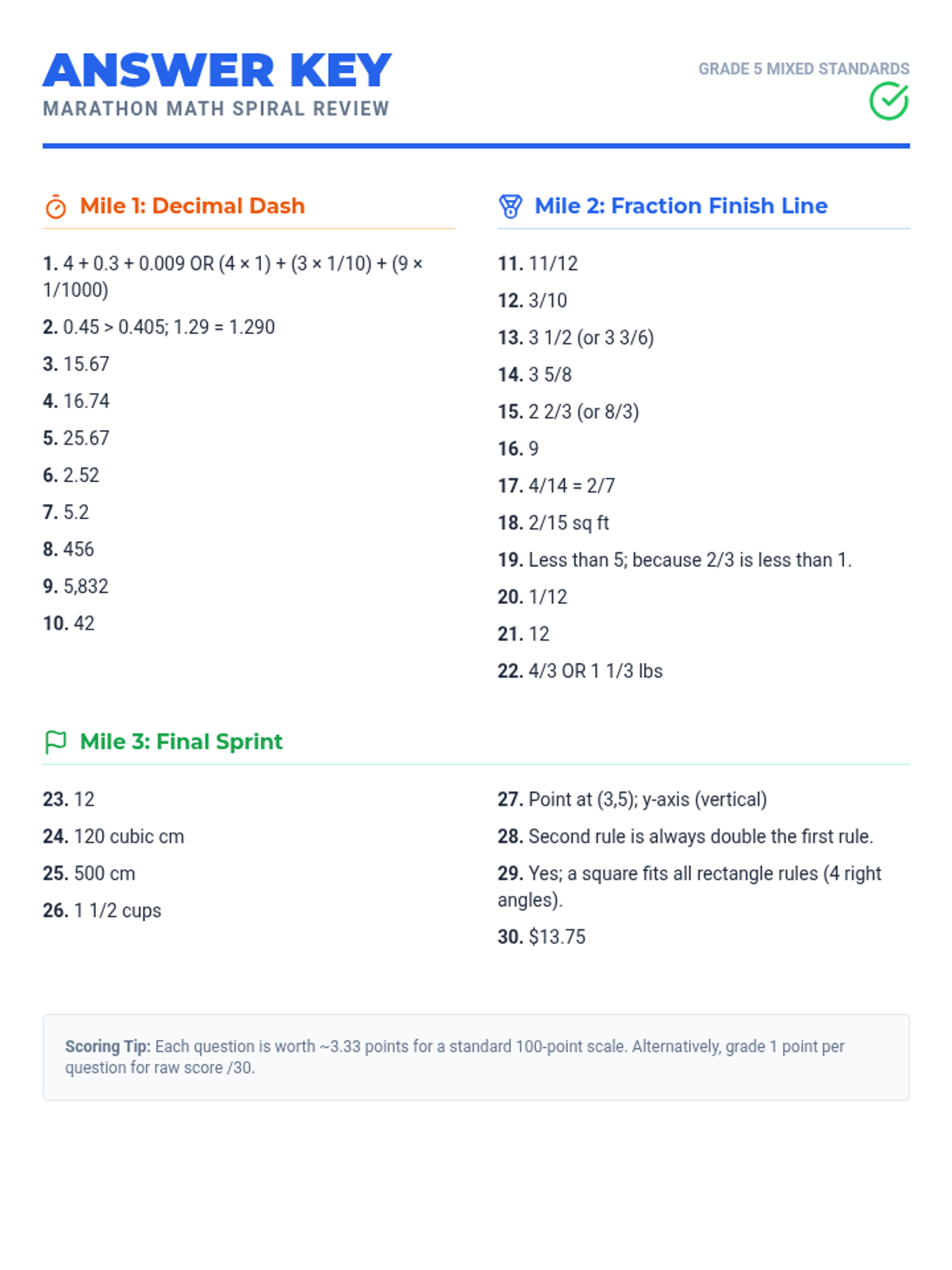
Complete answer key for the Marathon Math Quiz, providing solutions for all 30 questions across decimals, fractions, and mixed standards.
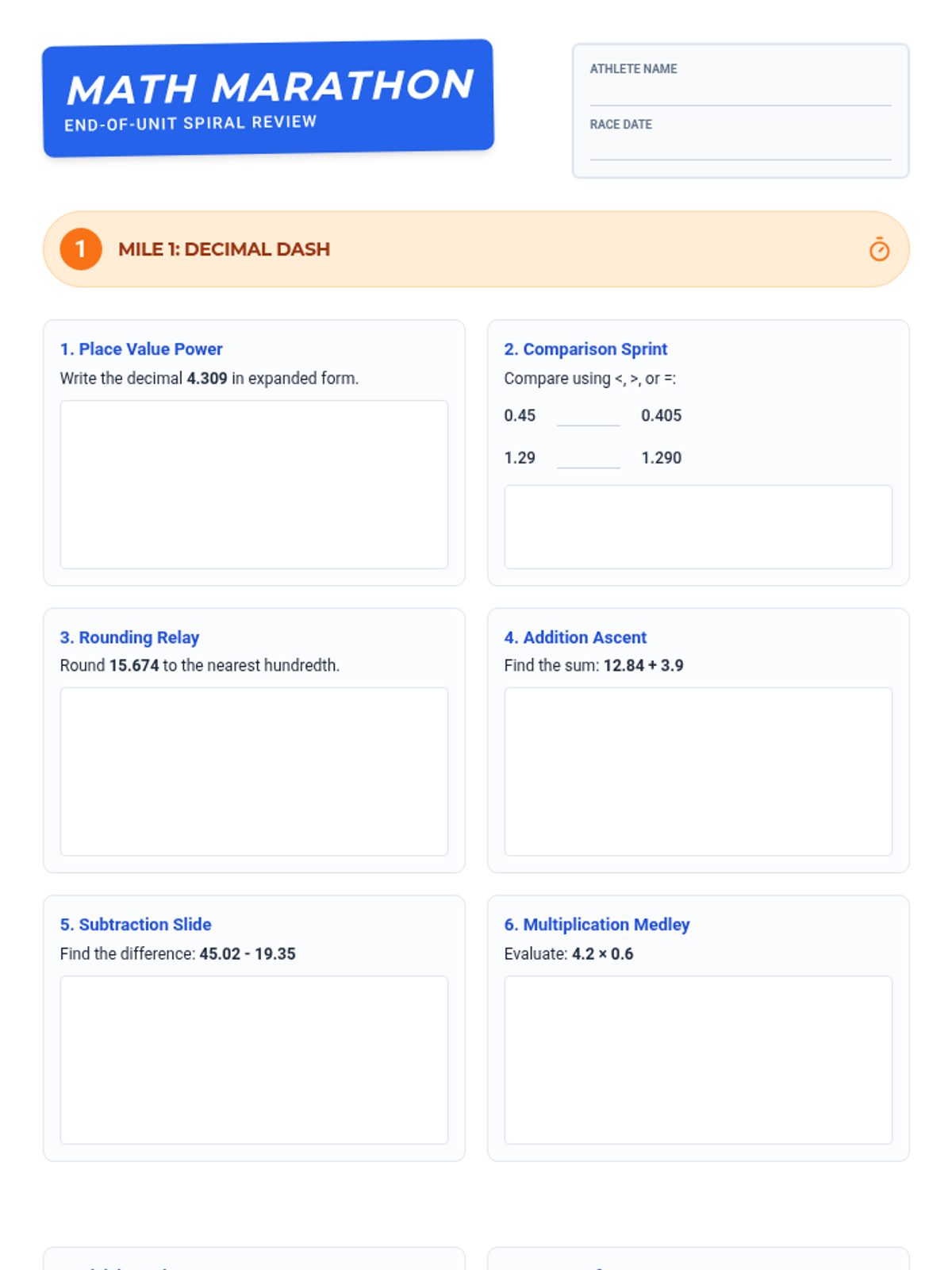
A 30-question math spiral review quiz for 5th grade, themed as a marathon. It covers decimal operations, fraction operations, and mixed standards like volume and coordinate planes. Revised for better page breaks and spacing.
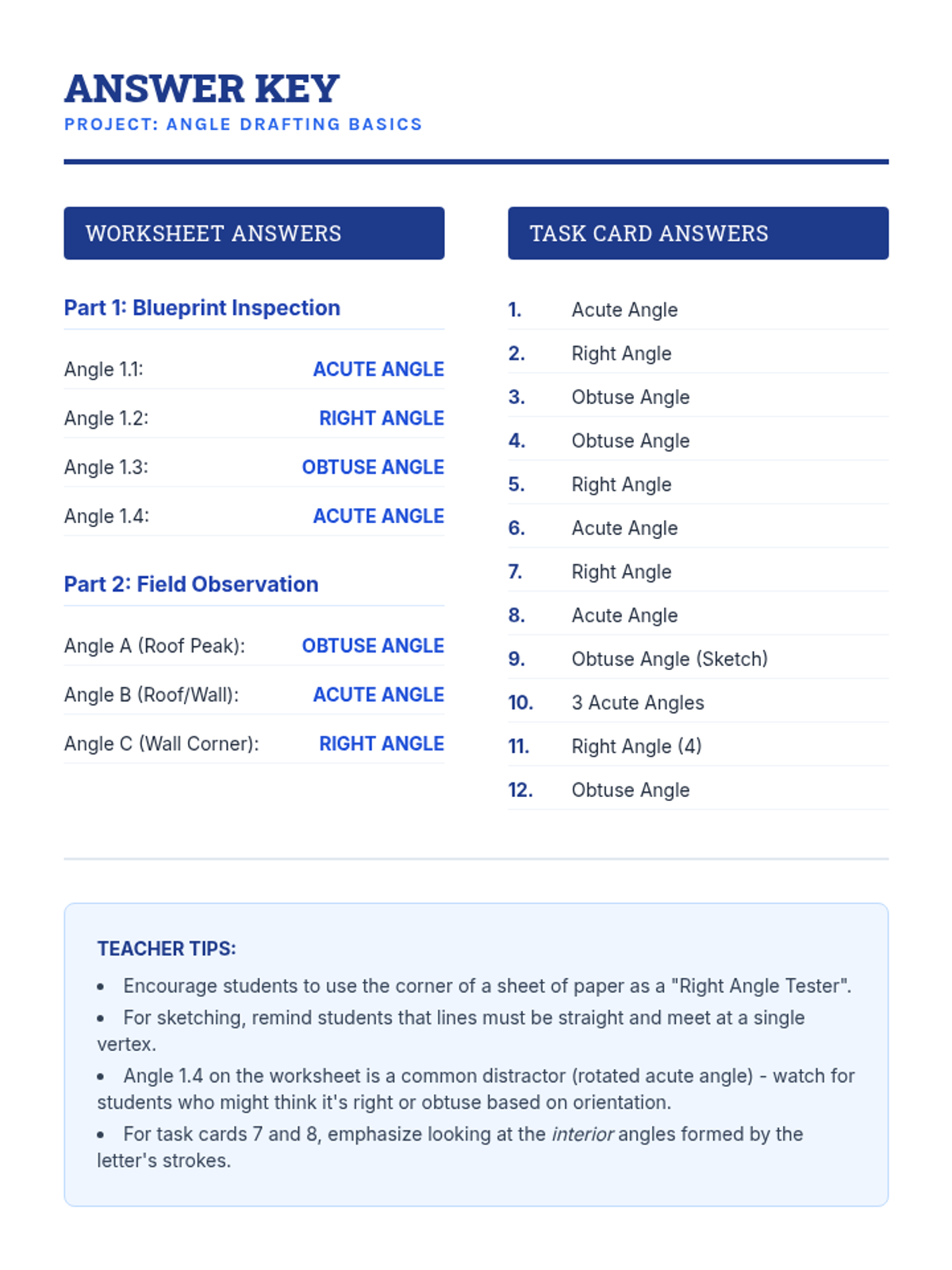
Answer key for the Angle Drafting worksheet and task cards, providing solutions and teaching tips. Revised for better formatting and consistency.
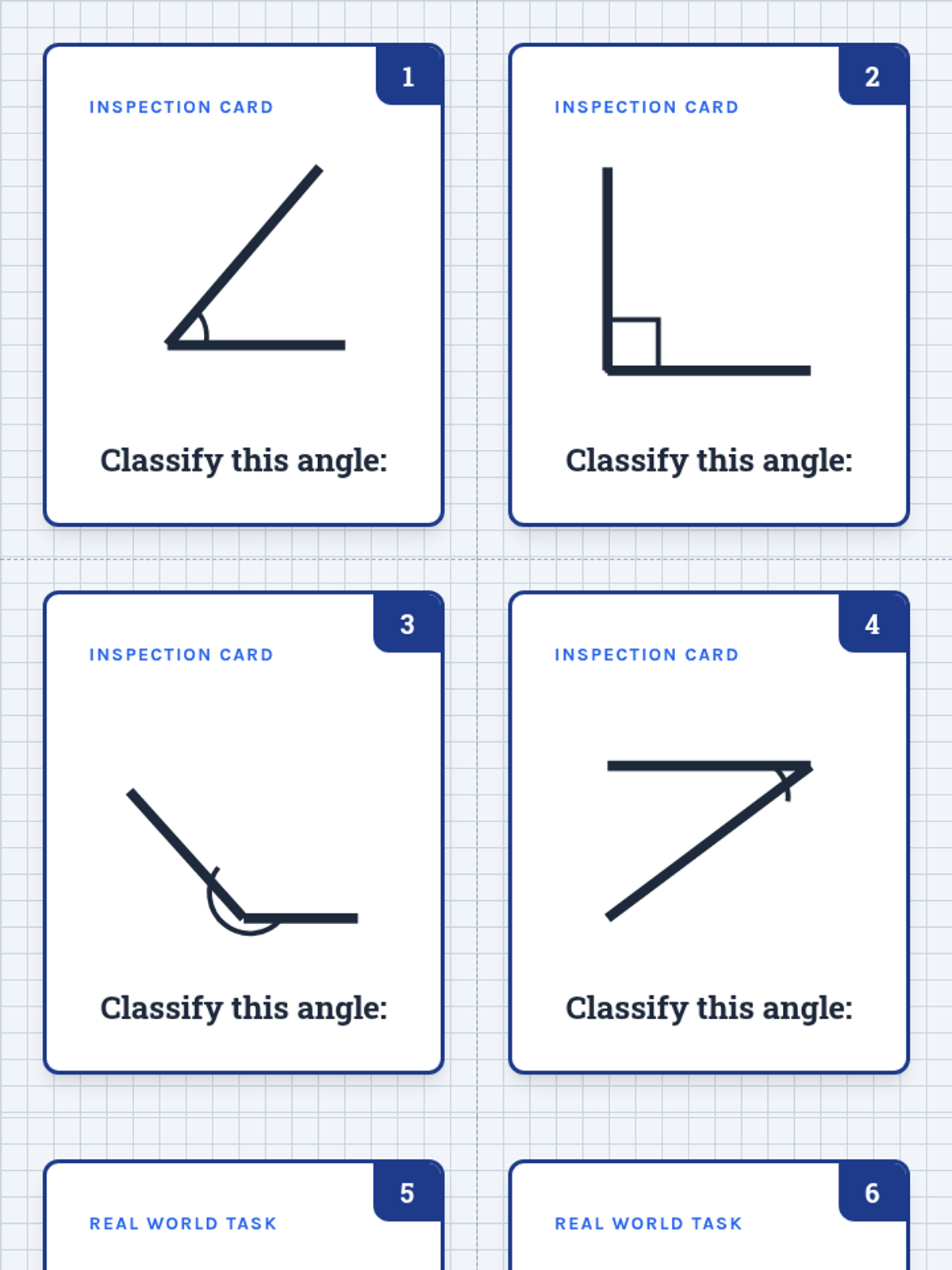
A set of 12 blueprint-themed task cards for small group practice. Includes visual identification, real-world scenarios, and shape analysis. Revised for better page layout and card clarity.
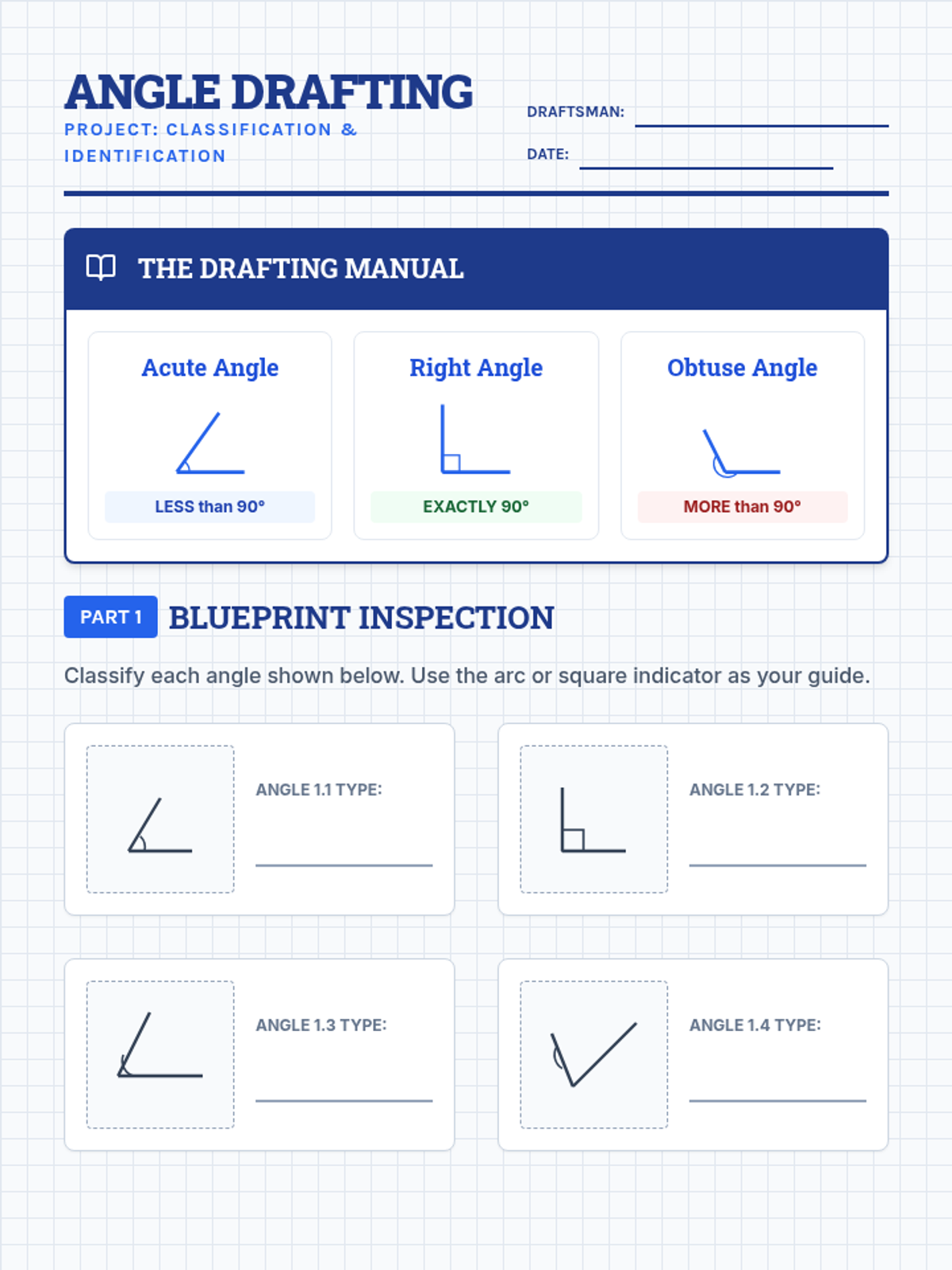
A blueprint-themed worksheet for identifying and sketching acute, obtuse, and right angles. Features technical illustrations, a drafting manual reference section, and real-world application problems. Revised to fix page breaks, contrast issues, and illustration clarity.
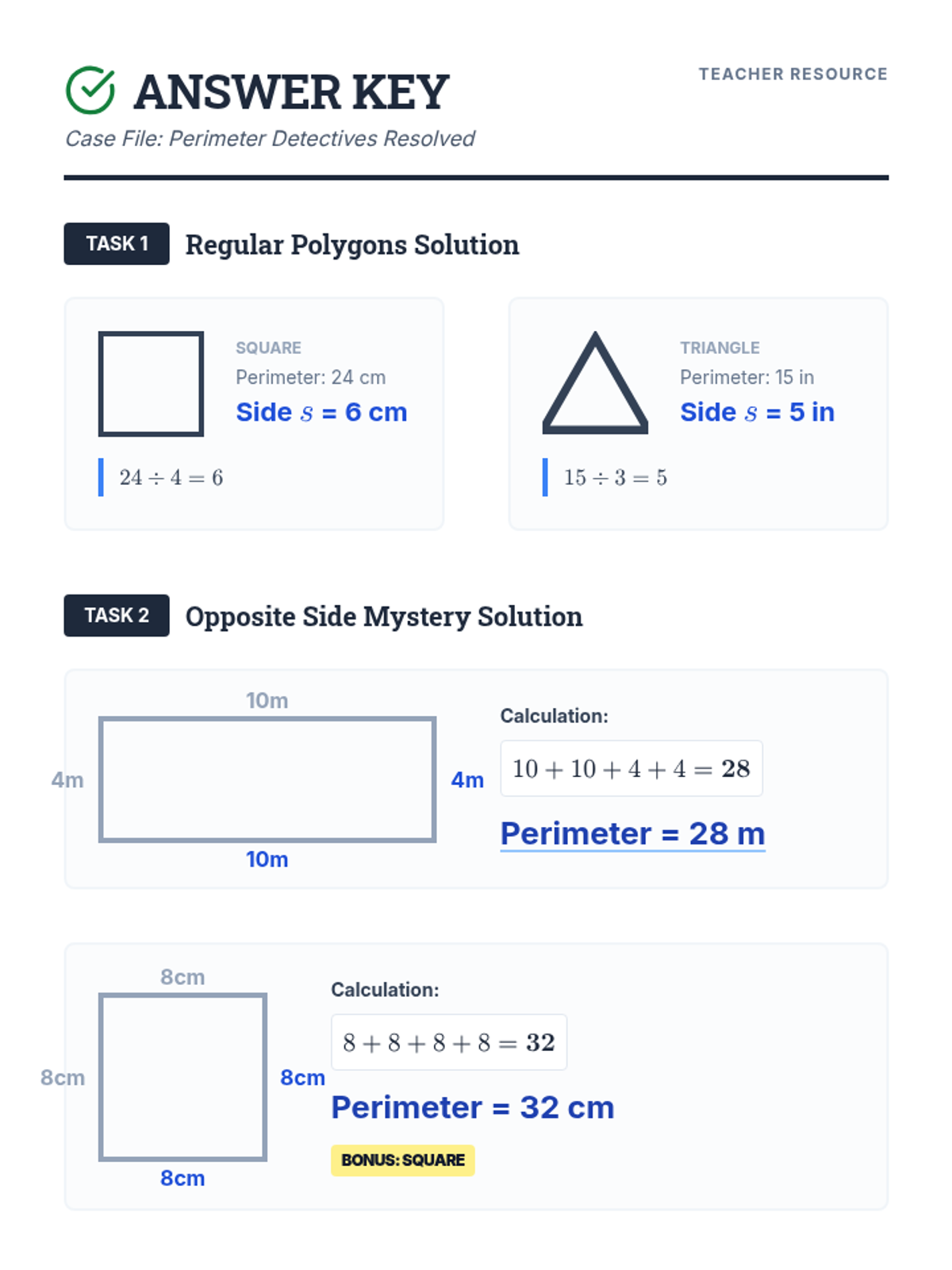
The answer key for the Perimeter Detectives worksheet, providing step-by-step solutions for missing side lengths and perimeter calculations.
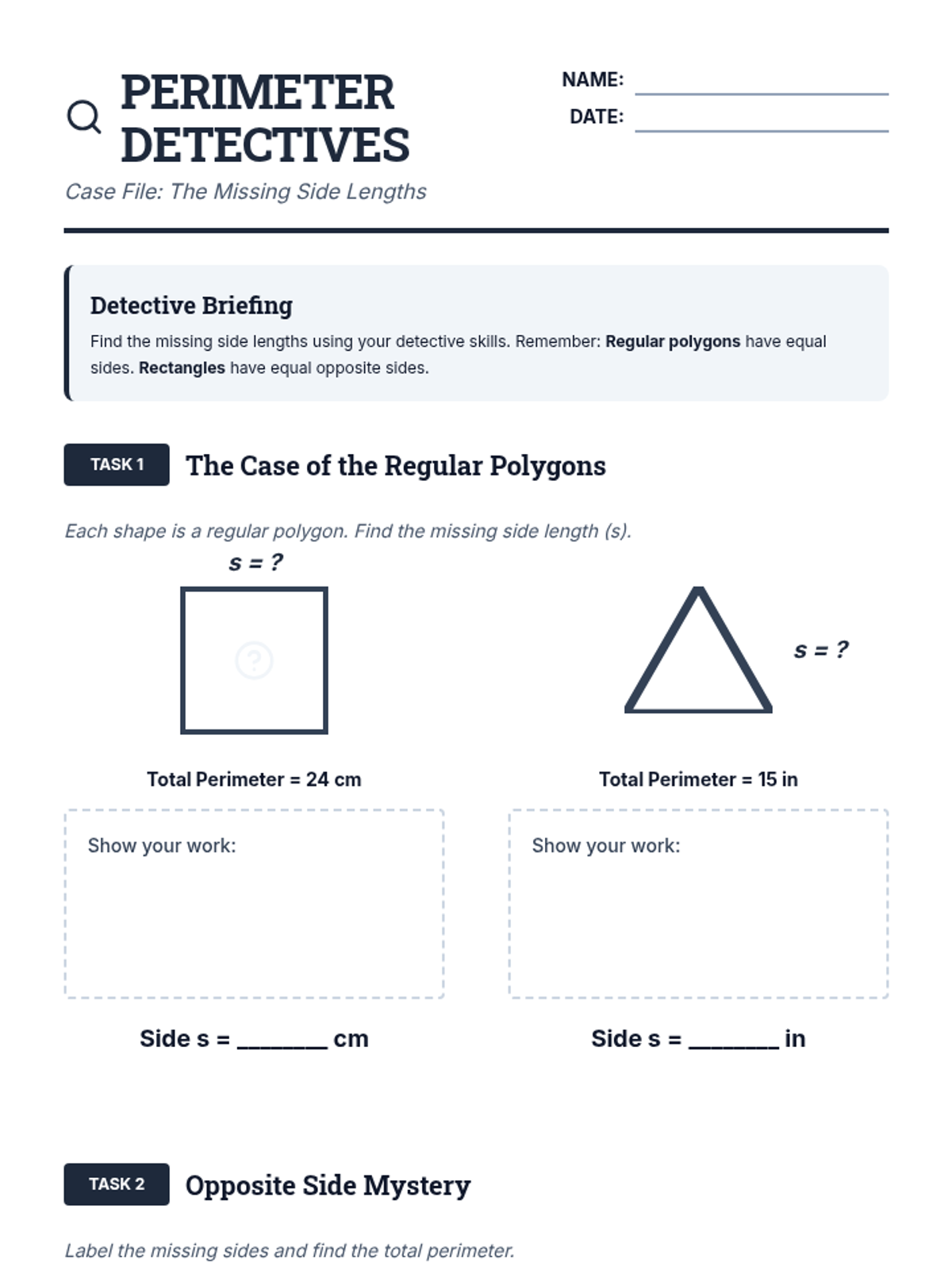
A student homework worksheet for practicing finding missing side lengths in regular polygons and rectangles, themed as a detective case file.
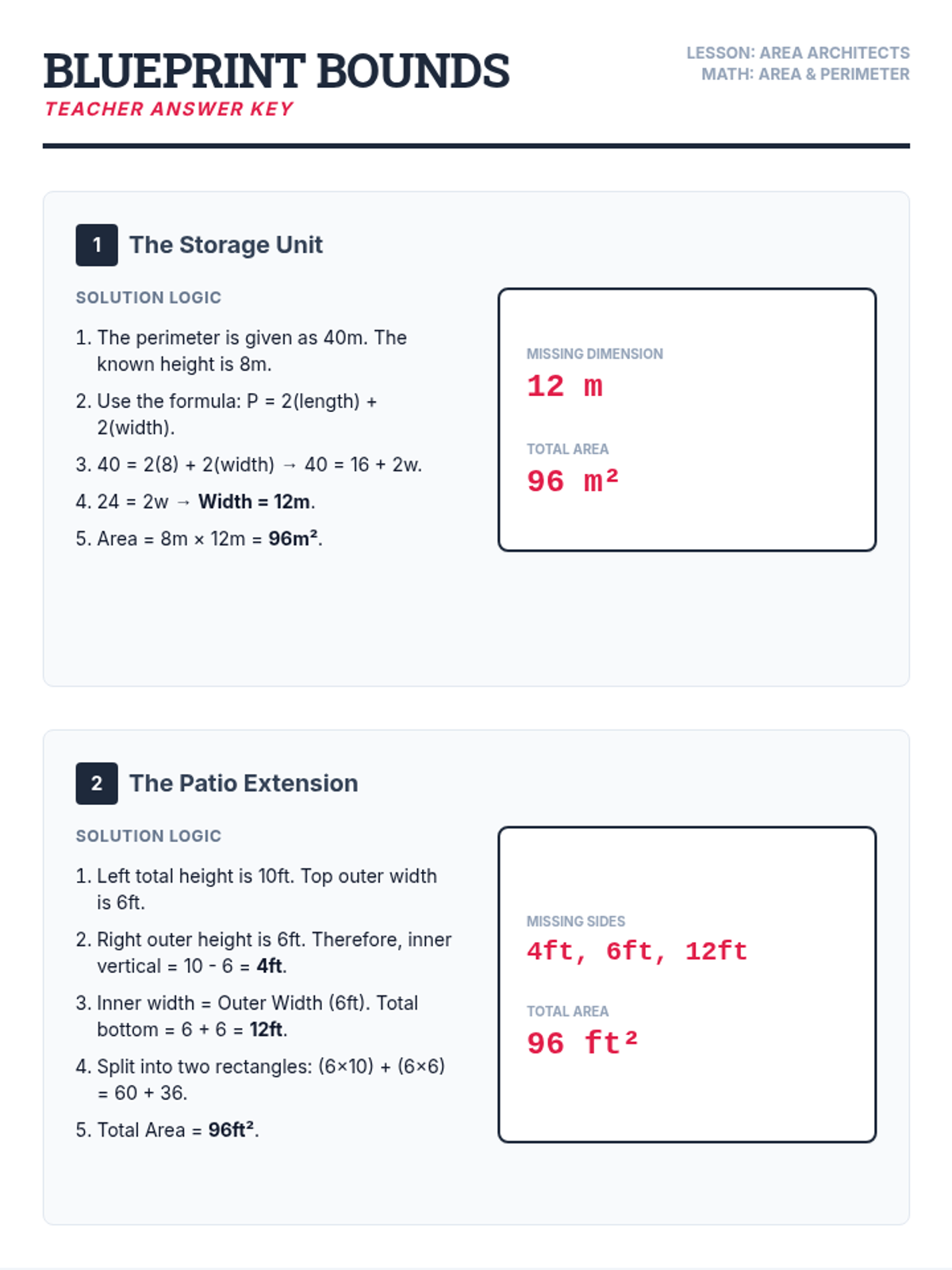
A detailed teacher answer key for the Blueprint Bounds Exit Ticket. It provides definitive step-by-step logic and clear final answers for all 10 problems. All logic has been verified for mathematical consistency based on the updated exit ticket diagrams.
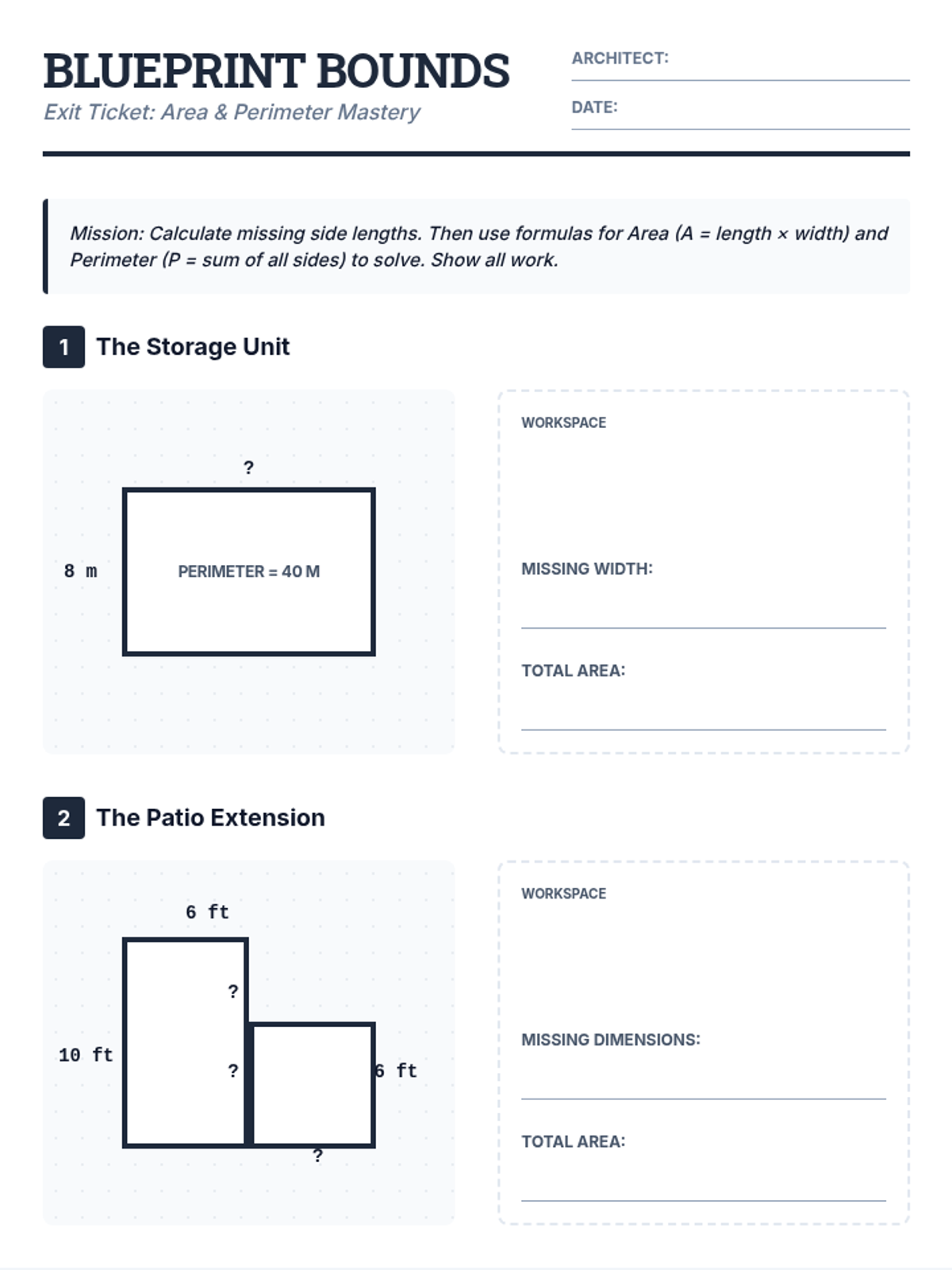
A 5-page exit ticket designed with a clean blueprint theme. It contains 10 problems that challenge students to find missing side lengths and calculate area using formulas for rectangles and complex rectilinear shapes. All diagrams and labels have been optimized for clarity and high contrast. All logic has been verified for mathematical consistency. All label positioning has been refined to prevent overlapping and clipping. Header terminology is consistent across all pages. Workspace layout is uniform. Content is technically complete and solvable without assumptions.
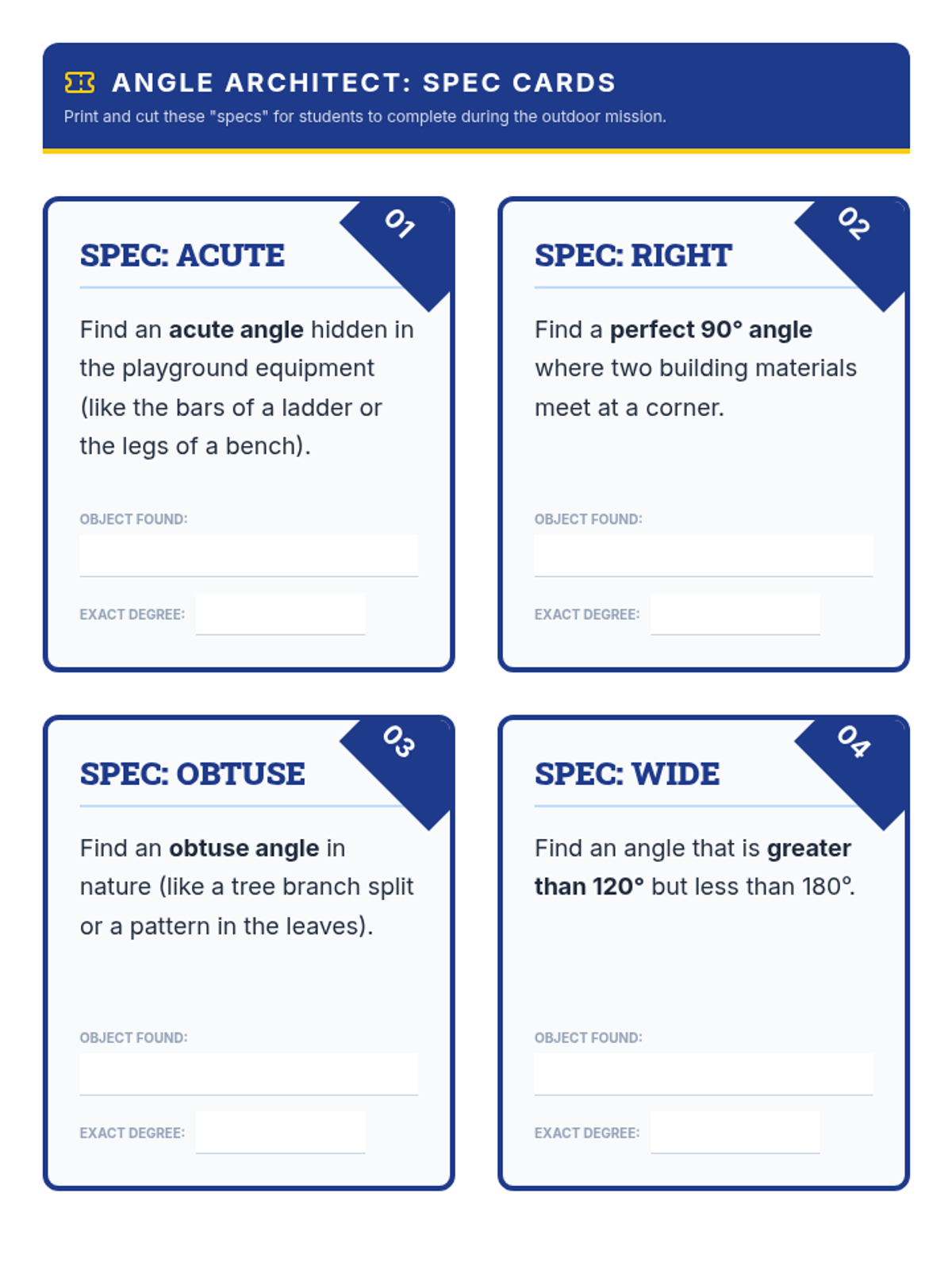
A set of printable "Spec Cards" for an angle scavenger hunt, challenging students to find and measure specific angle types in their environment.
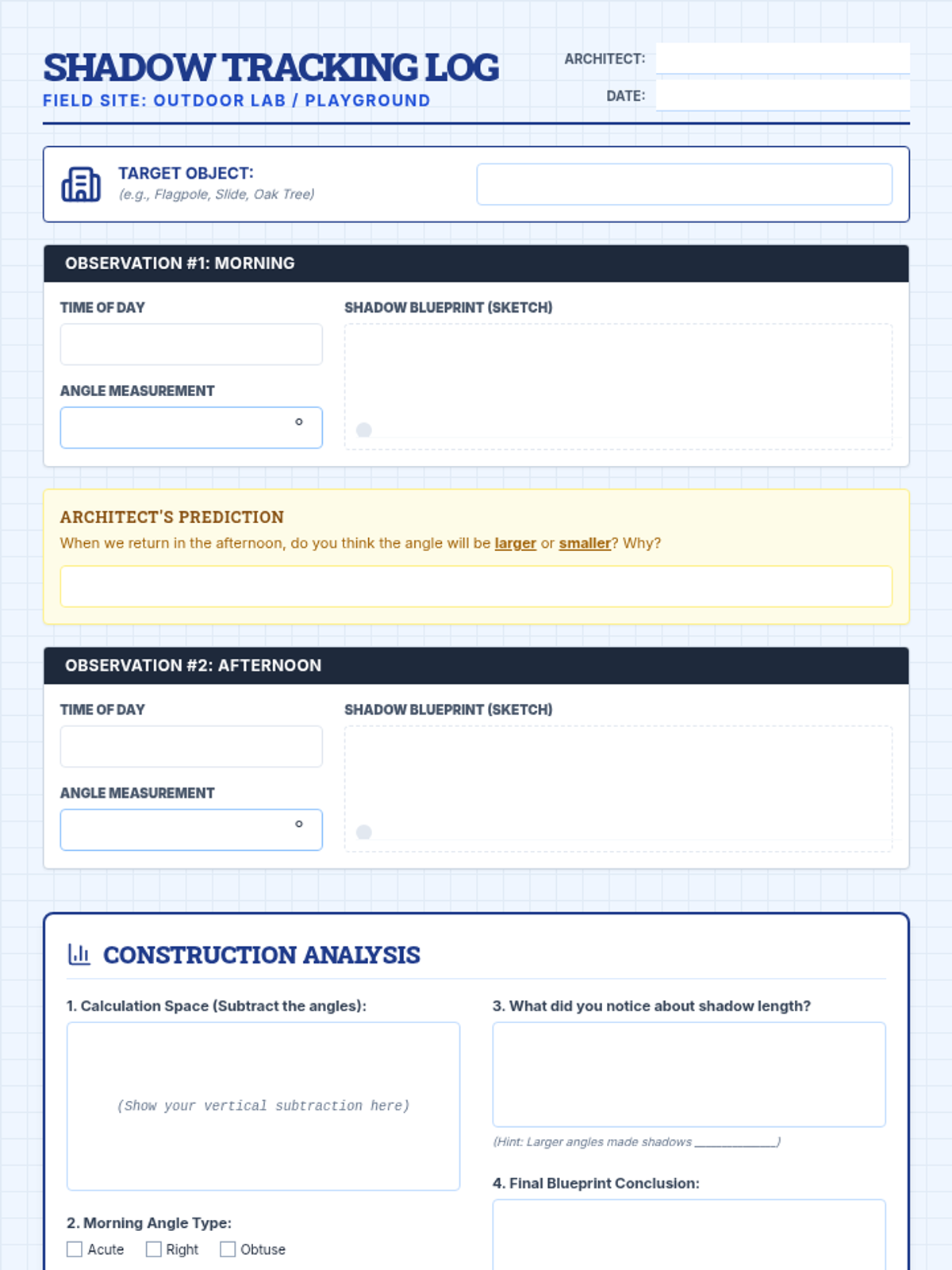
A student worksheet for recording shadow angle measurements at different times of day, including sketching areas and analysis questions.
An instructional slide deck for introducing angle measurement and the shadow investigation mission. Includes visual aids for protractor use and angle types.
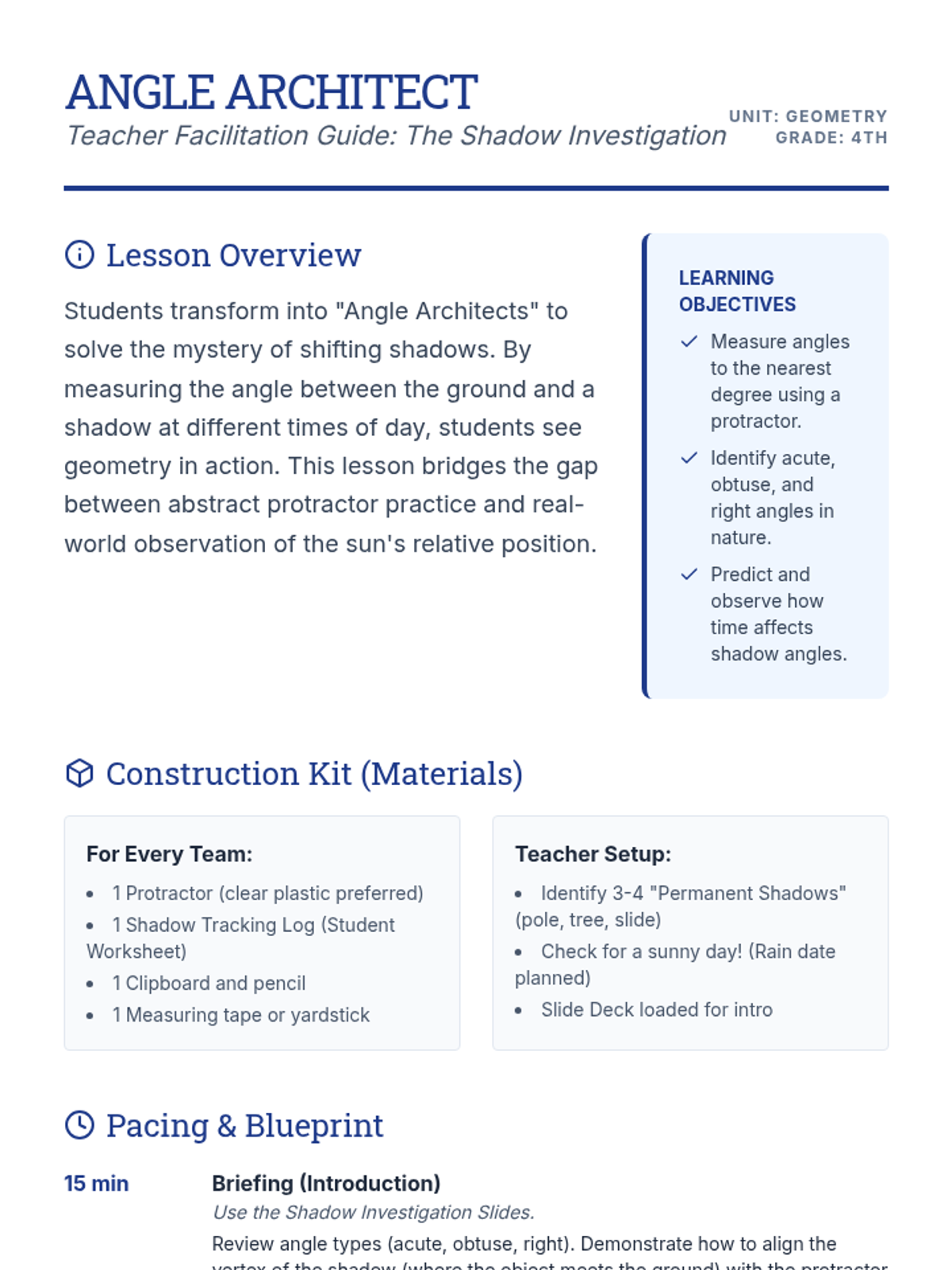
A comprehensive teacher facilitation guide for the 'Angle Architects' lesson, including pacing, materials, prep, and differentiation strategies.
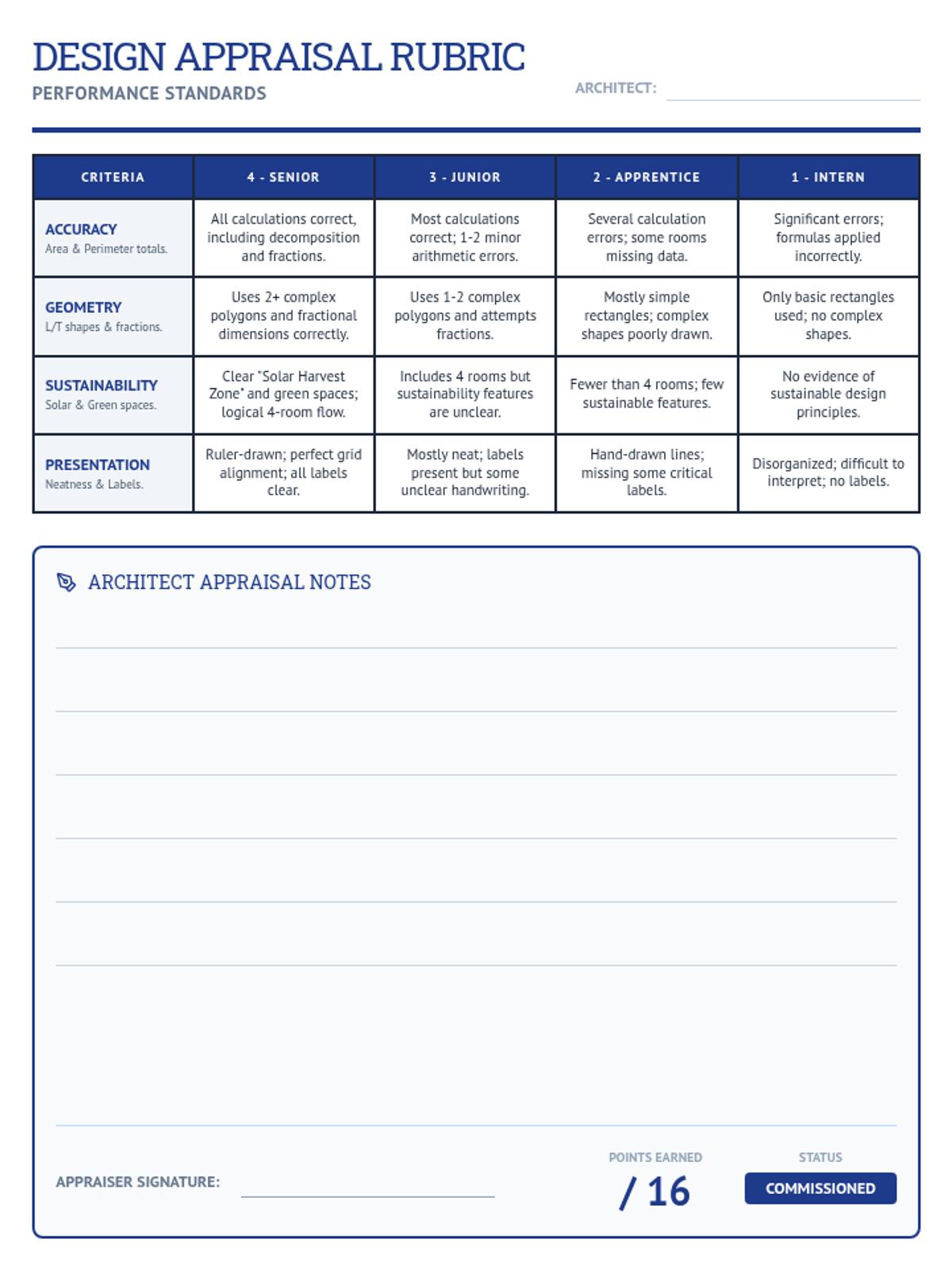
A technical rubric for evaluating architectural designs based on calculation accuracy, geometric complexity, sustainable principles, and blueprint quality.
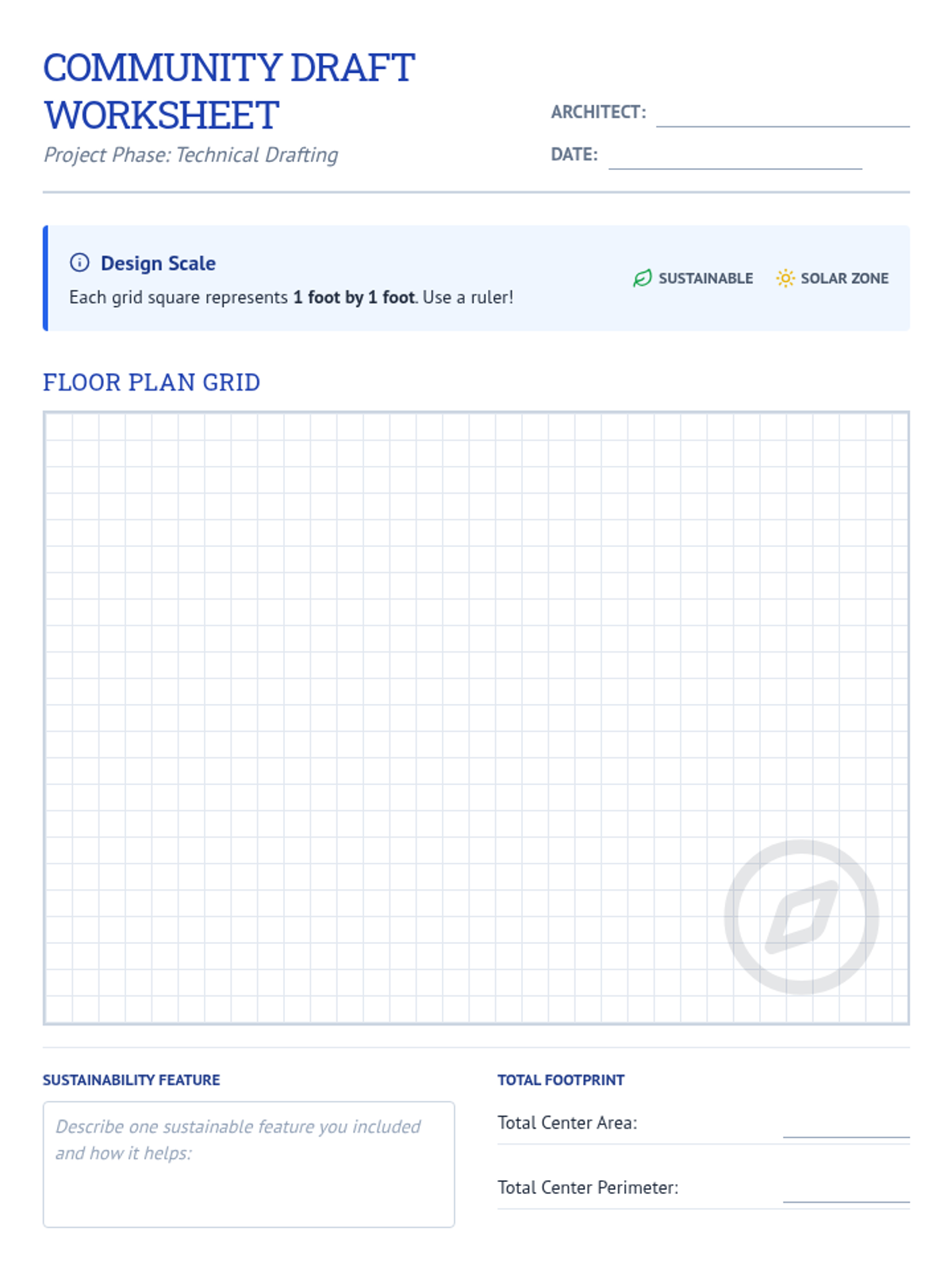
A student-facing drafting worksheet with a grid area for floor plan design and a structured table for calculating the perimeter and area of complex polygons, including spaces for fractional measurements.
An architectural-themed slide deck that introduces students to the role of an architect, reviews how to decompose complex polygons, and demonstrates area calculations with fractional side lengths.
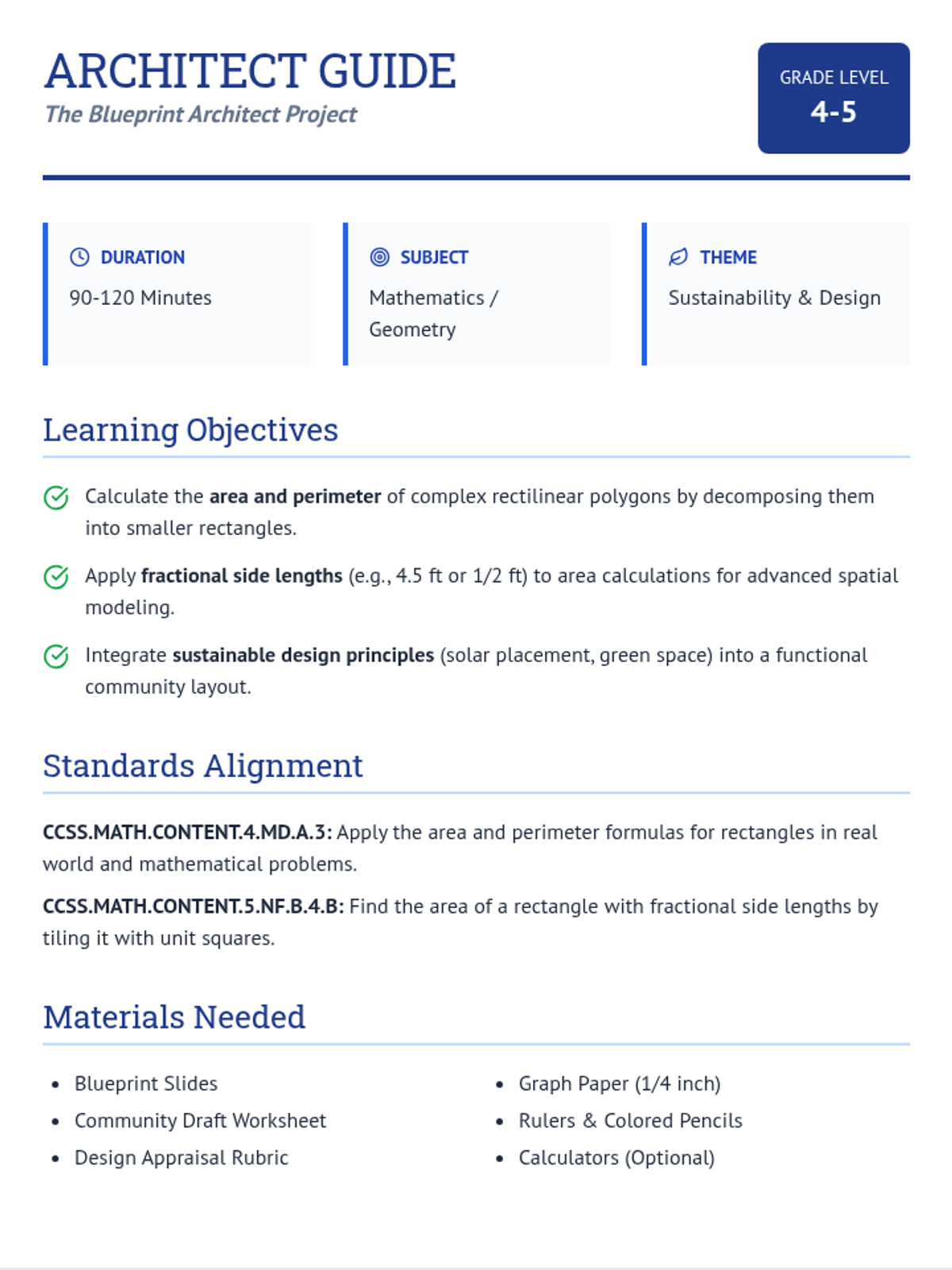
A comprehensive teacher's guide for 'The Blueprint Architect' project, including lesson objectives, standards alignment, and a step-by-step instructional procedure for teaching area and perimeter of complex polygons.
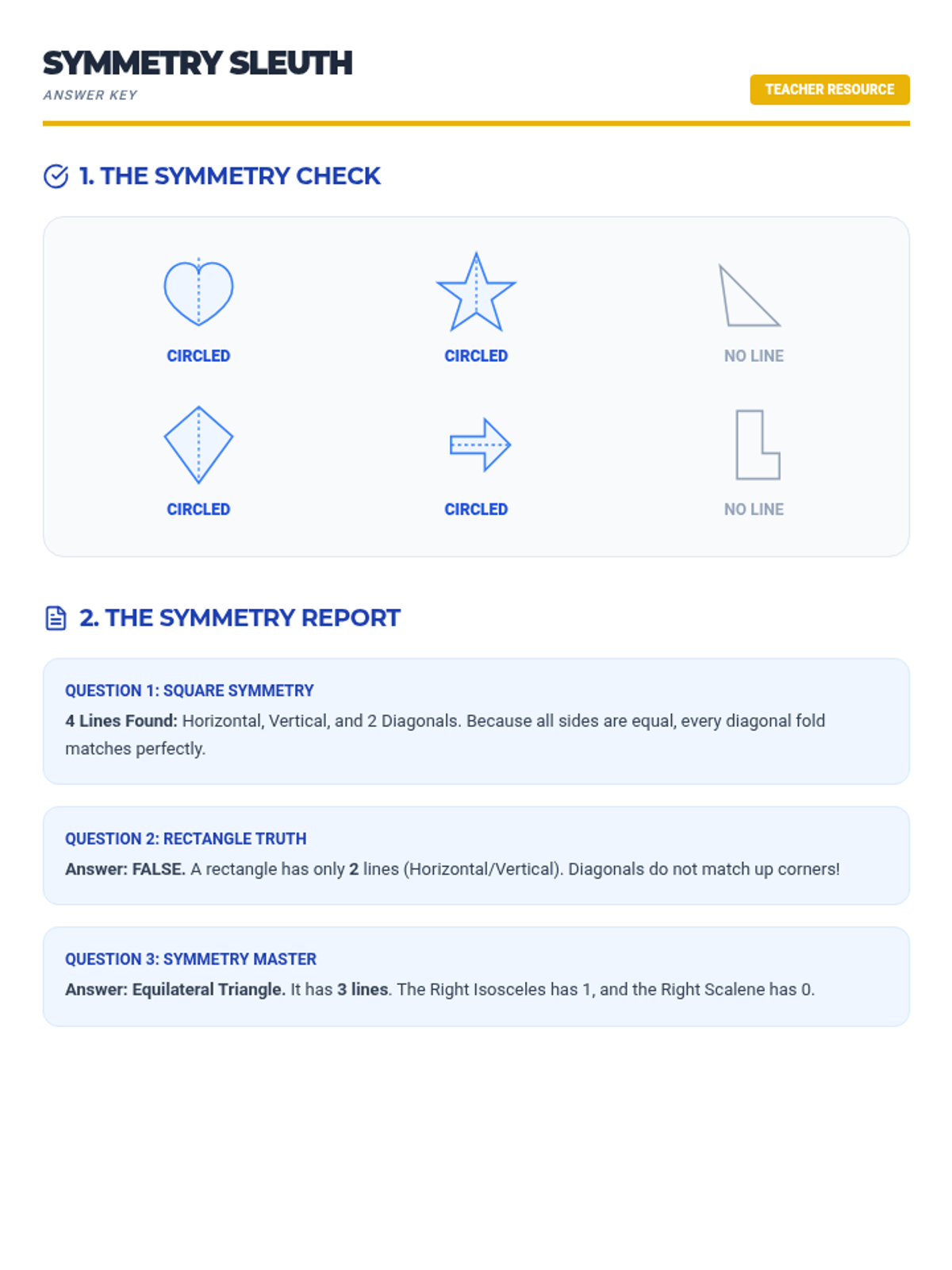
The teacher answer key for the Symmetry Sleuth worksheet, providing solutions and explanations for identifying and drawing lines of symmetry.
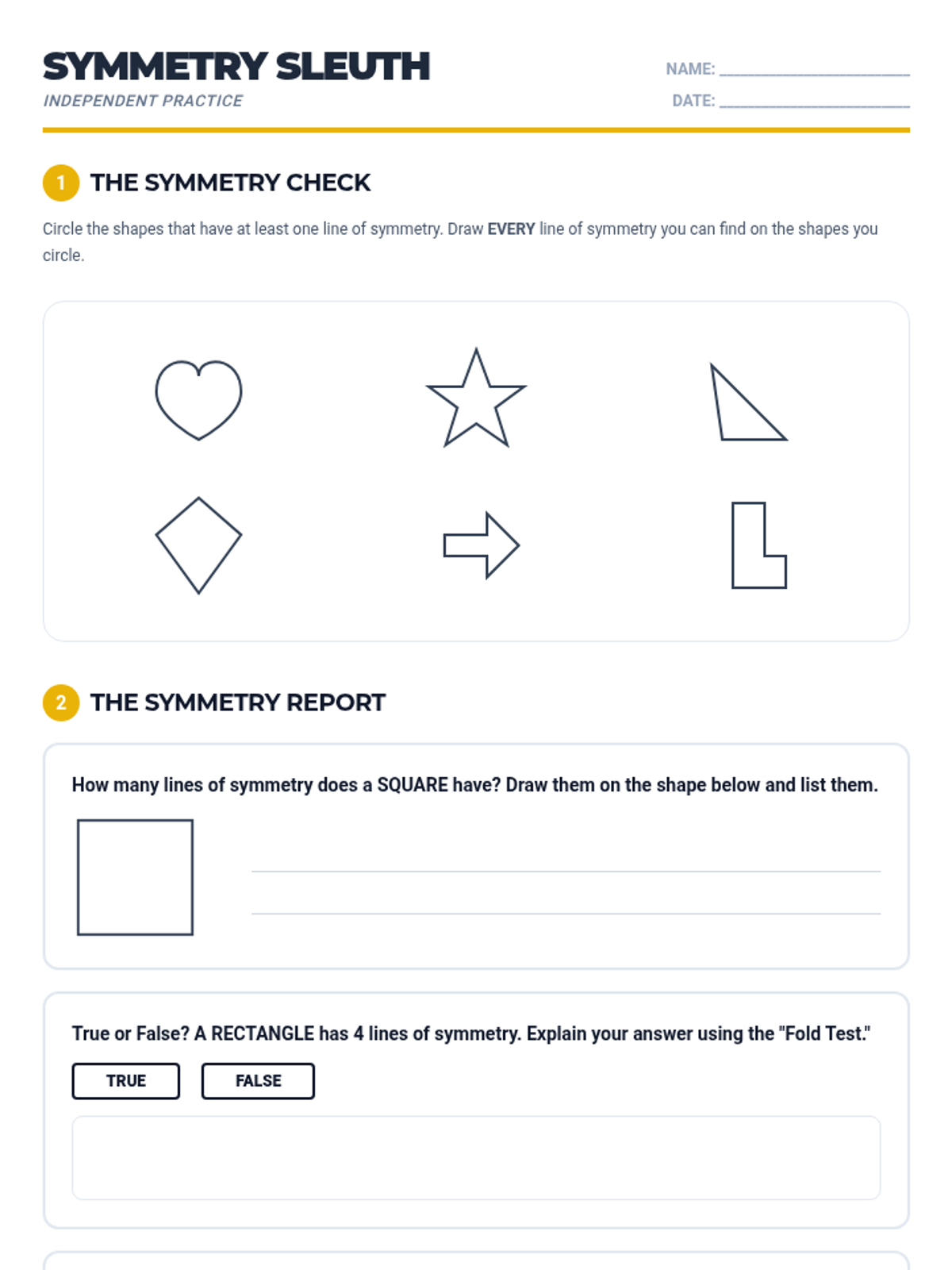
A practice worksheet for students to identify and draw lines of symmetry in various shapes, including common objects and geometric figures.
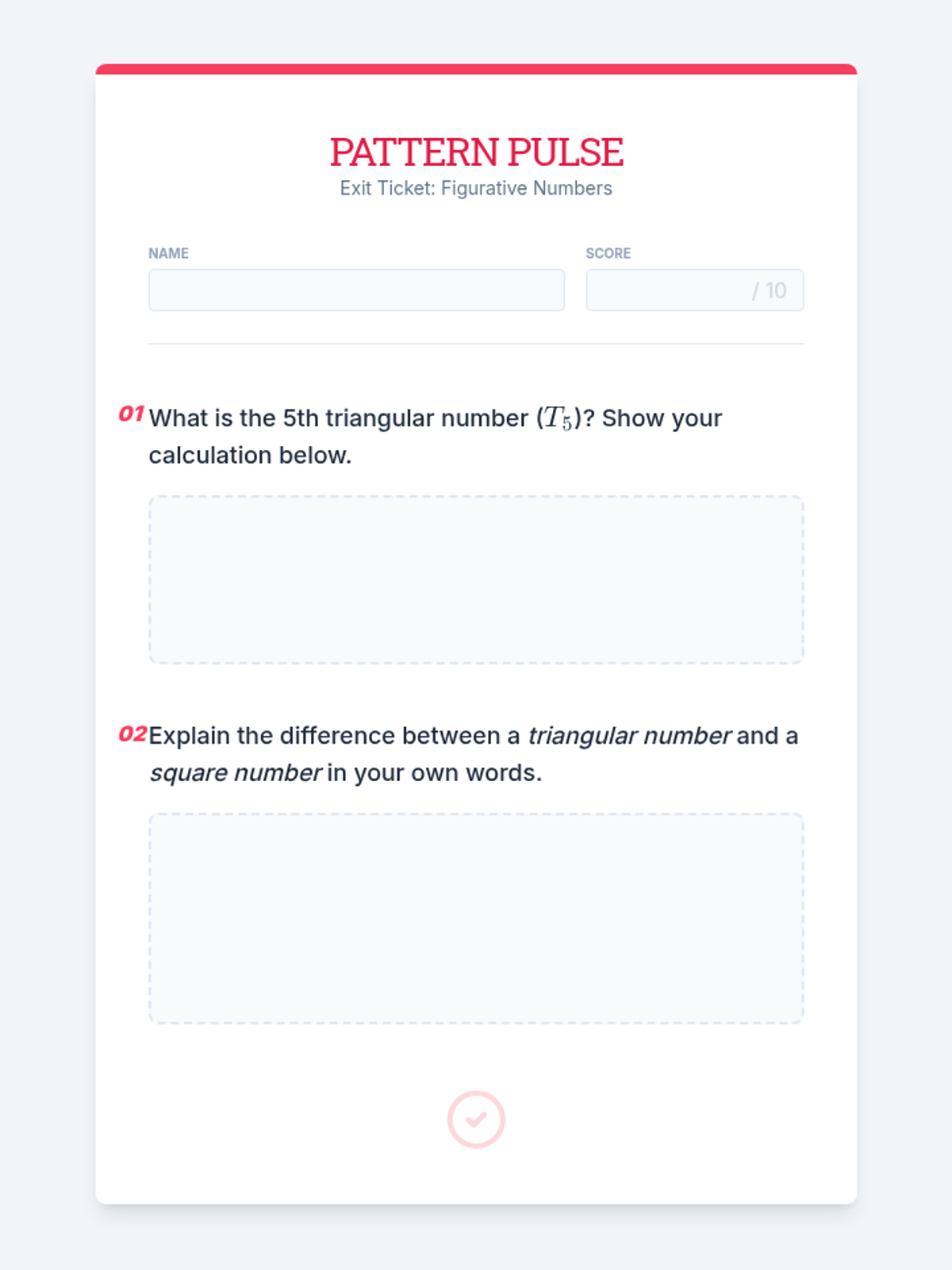
A concise exit ticket to assess student understanding of triangular numbers and their ability to differentiate between various figurative number types.
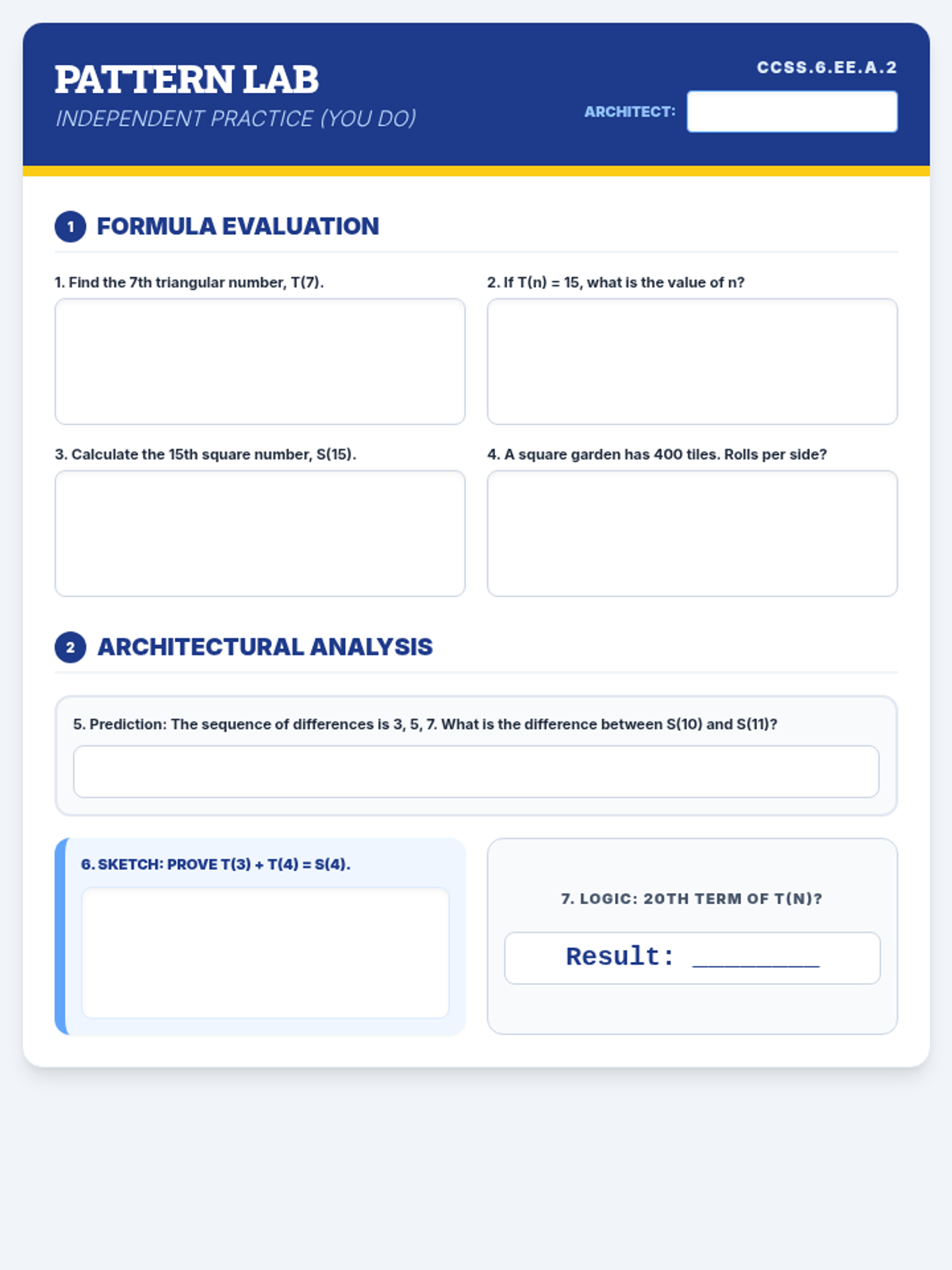
A single-page independent practice sheet with 7 problems covering triangular and square number calculations, following the "You Do" phase of explicit instruction. All math notation uses standard text for reliable rendering.
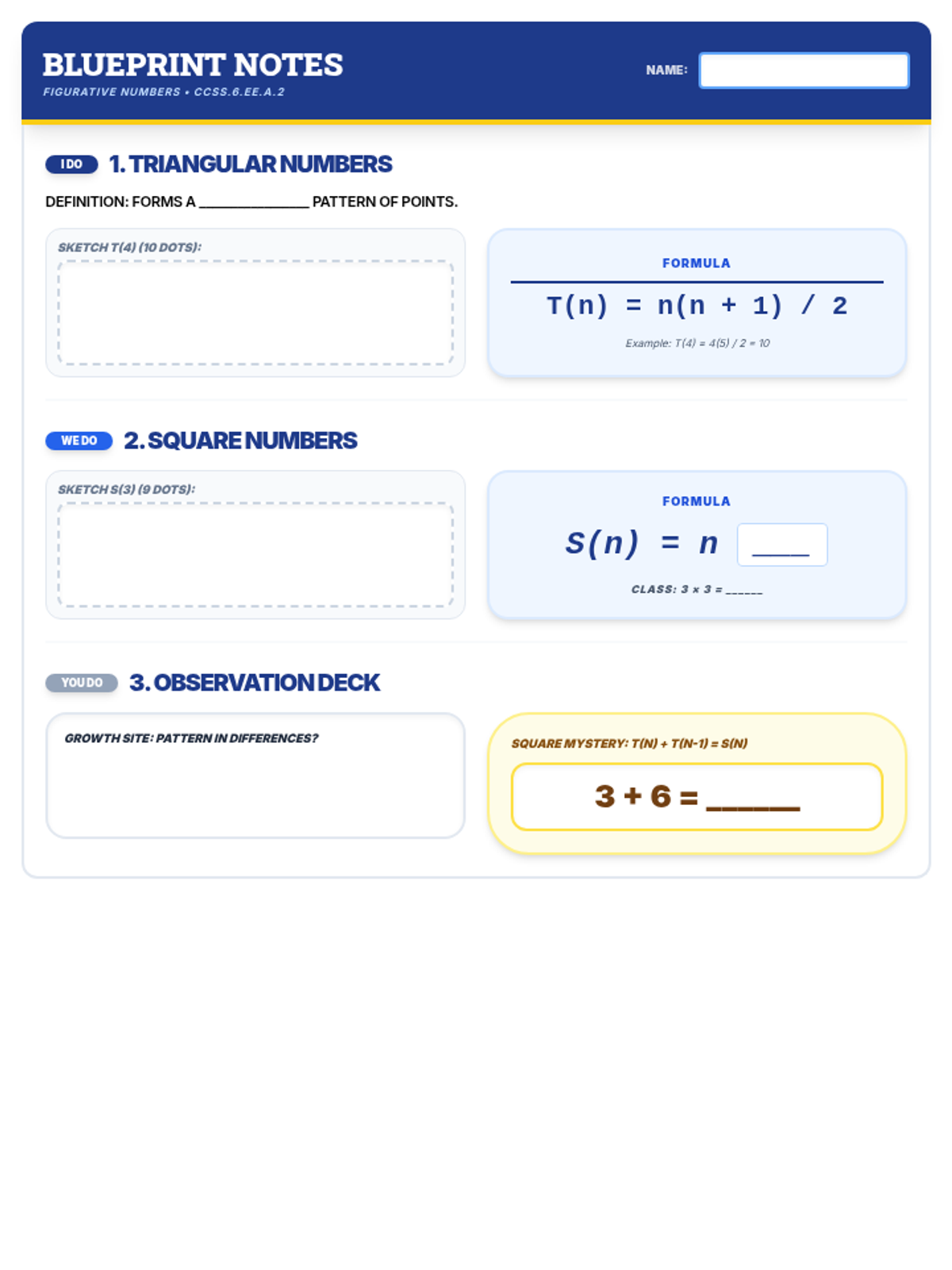
A single-page guided notes handout for students to capture definitions, dot patterns, and algebraic formulas for figurative numbers using an "I do, We do, You do" structure. All math notation uses standard text for reliability.
A slide deck for explicit instruction on figurative numbers, featuring "I Do, We Do, You Do" modeling, visual dot patterns, and clear formula derivations. Includes a standards slide and uses standard subscripts for PDF reliability.
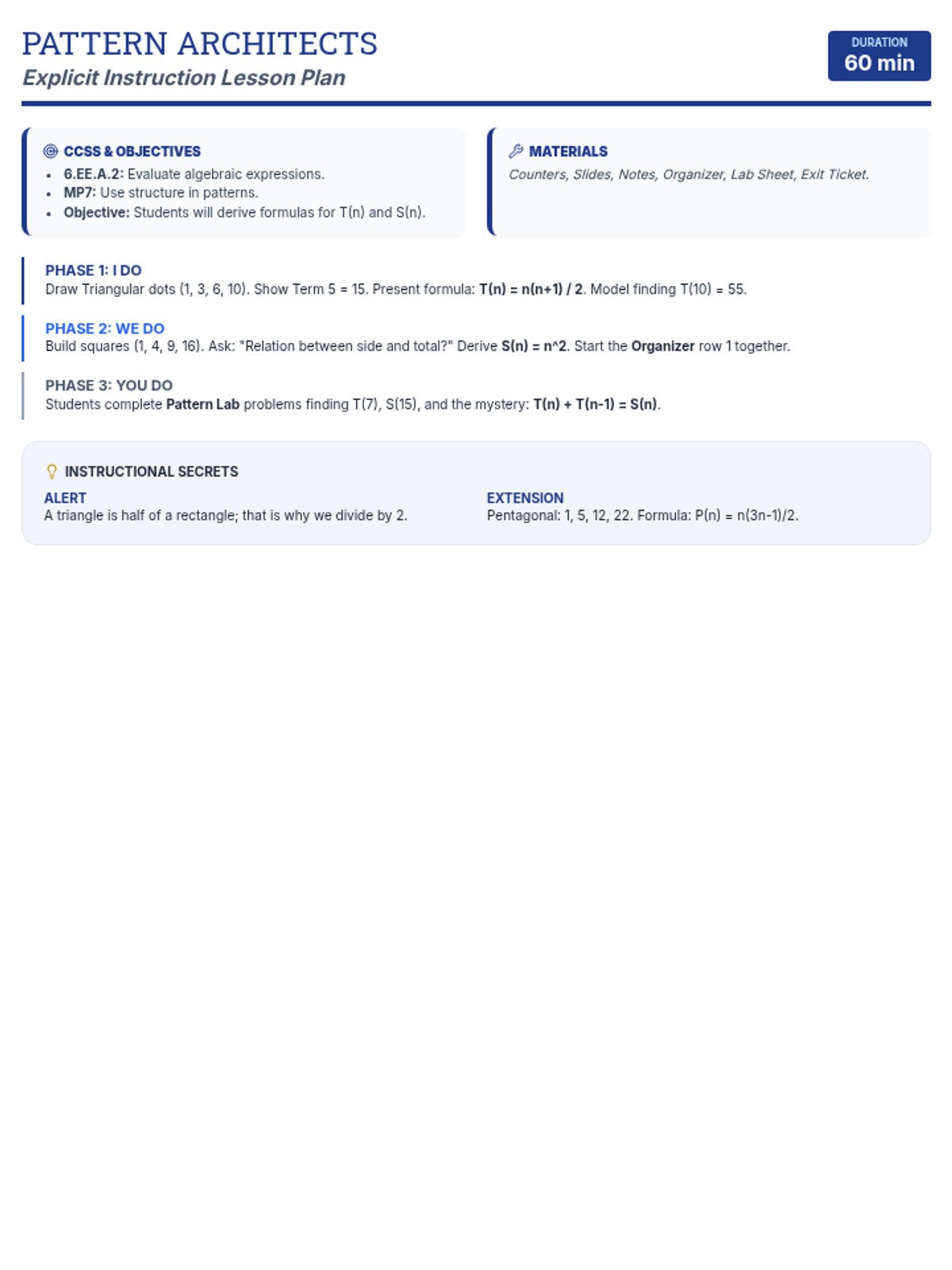
A condensed, single-page explicit instruction lesson plan for teachers, focusing on triangular and square numbers with an "I do, We do, You do" framework and CCSS alignment. Math notation uses standard text for reliable rendering.
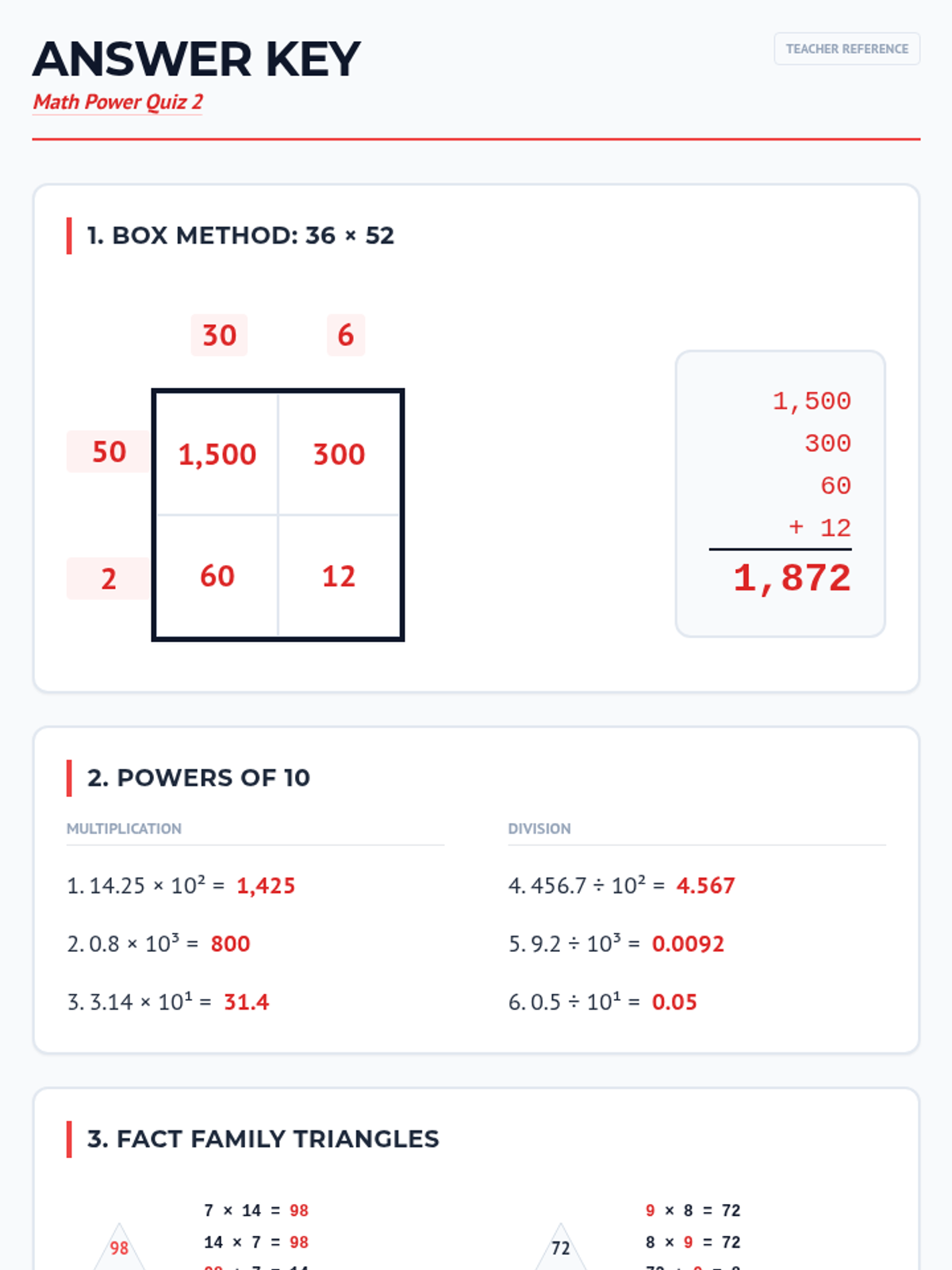
Teacher's answer key for the updated Math Power Quiz 2, providing solutions for box method, decimal operations with powers of 10, and fact family triangles. Features clearly marked solution factors and equations.
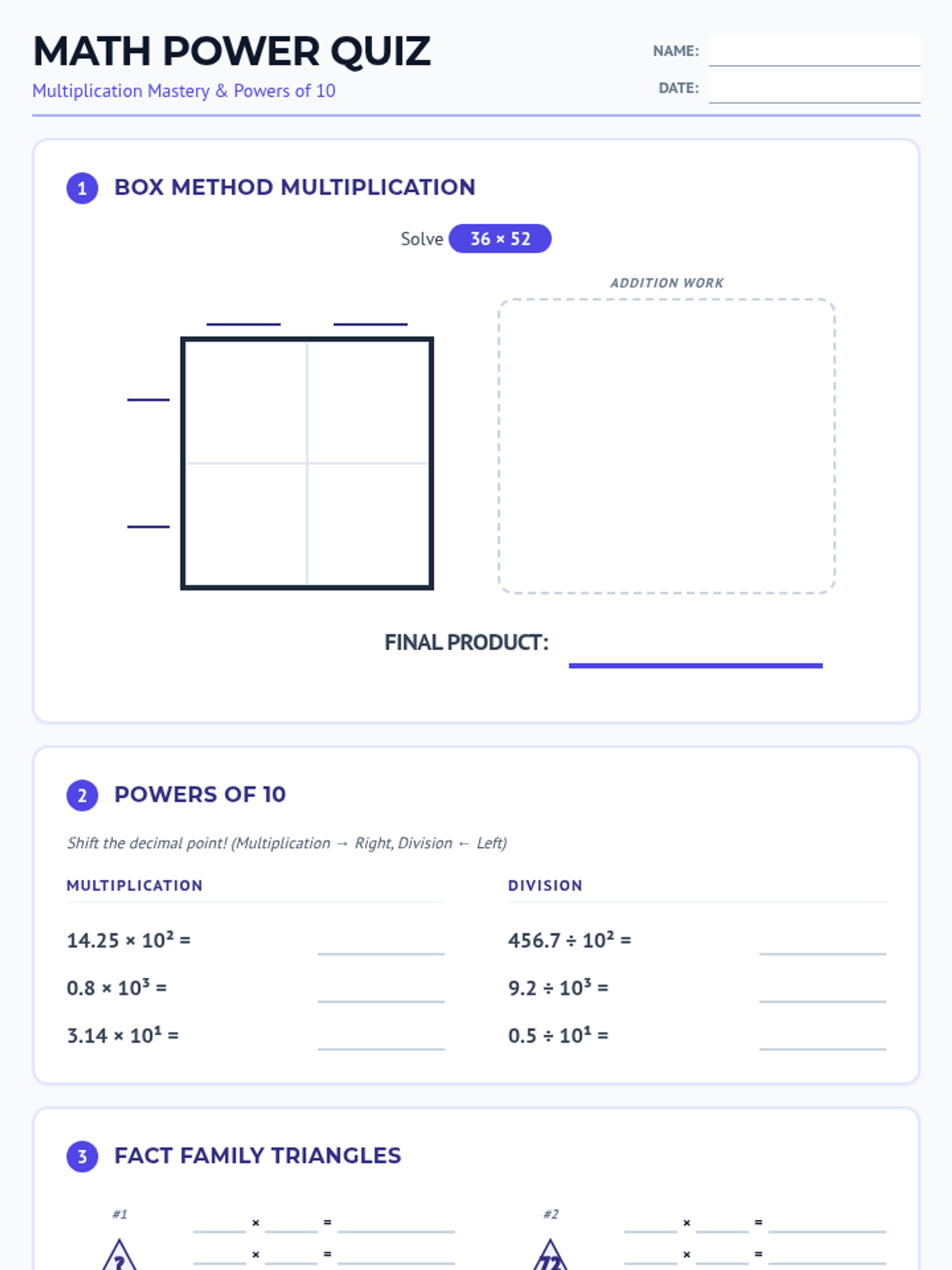
A math quiz focusing on two-digit multiplication using the box method, fact family triangles, and multiplying/dividing decimals by powers of 10. features improved contrast and expanded layout across two pages. Now includes 4 lines for related facts and spacious factor input areas. Use reliable SUP exponents.
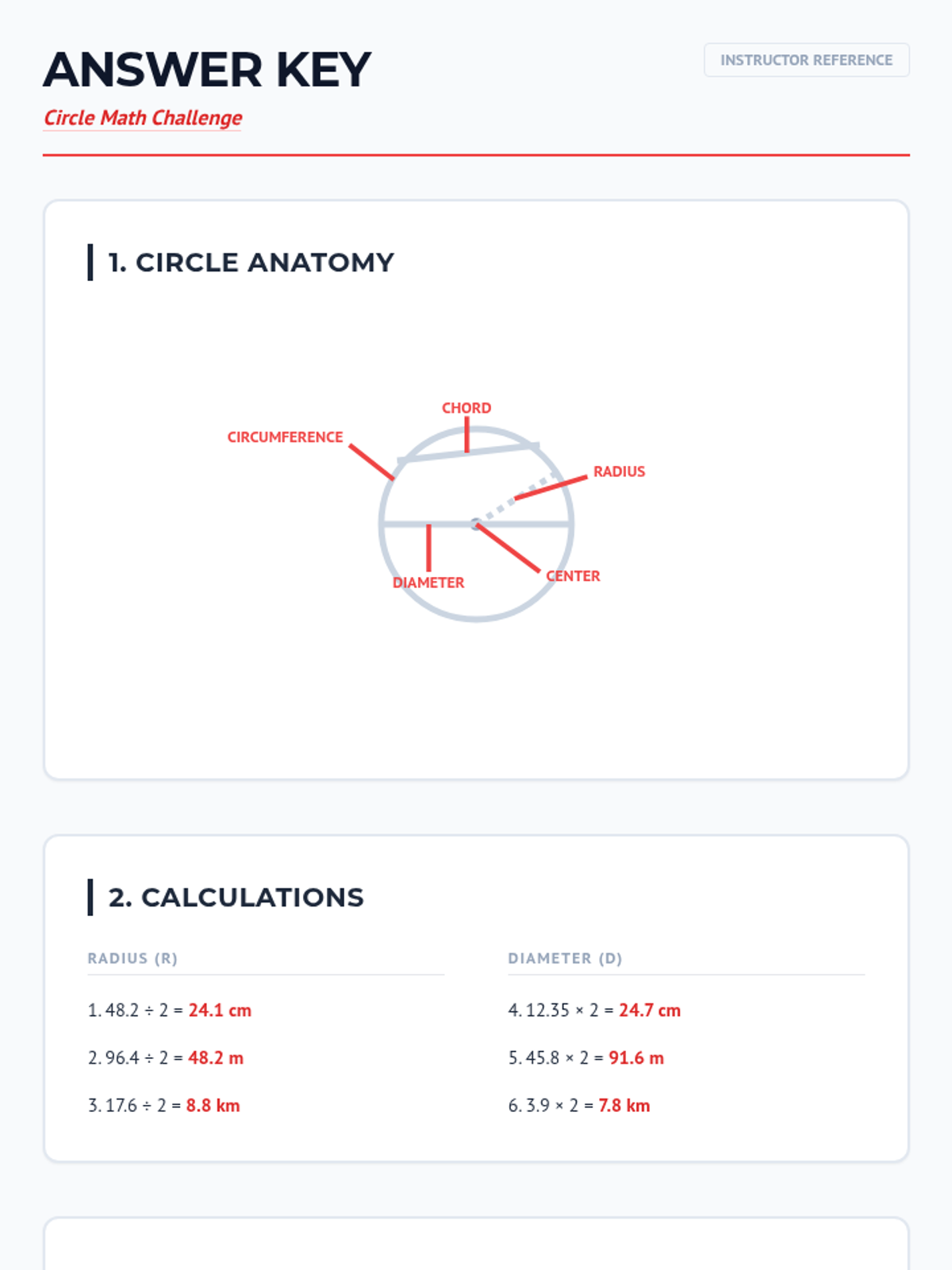
The teacher's answer key for the Circle Math Challenge Quiz, including labeled circle diagrams and step-by-step solutions. Problem #3 updated with smaller numbers. Fixed contrast and label positioning. External factors in Box Method are now red to indicate they are answers.
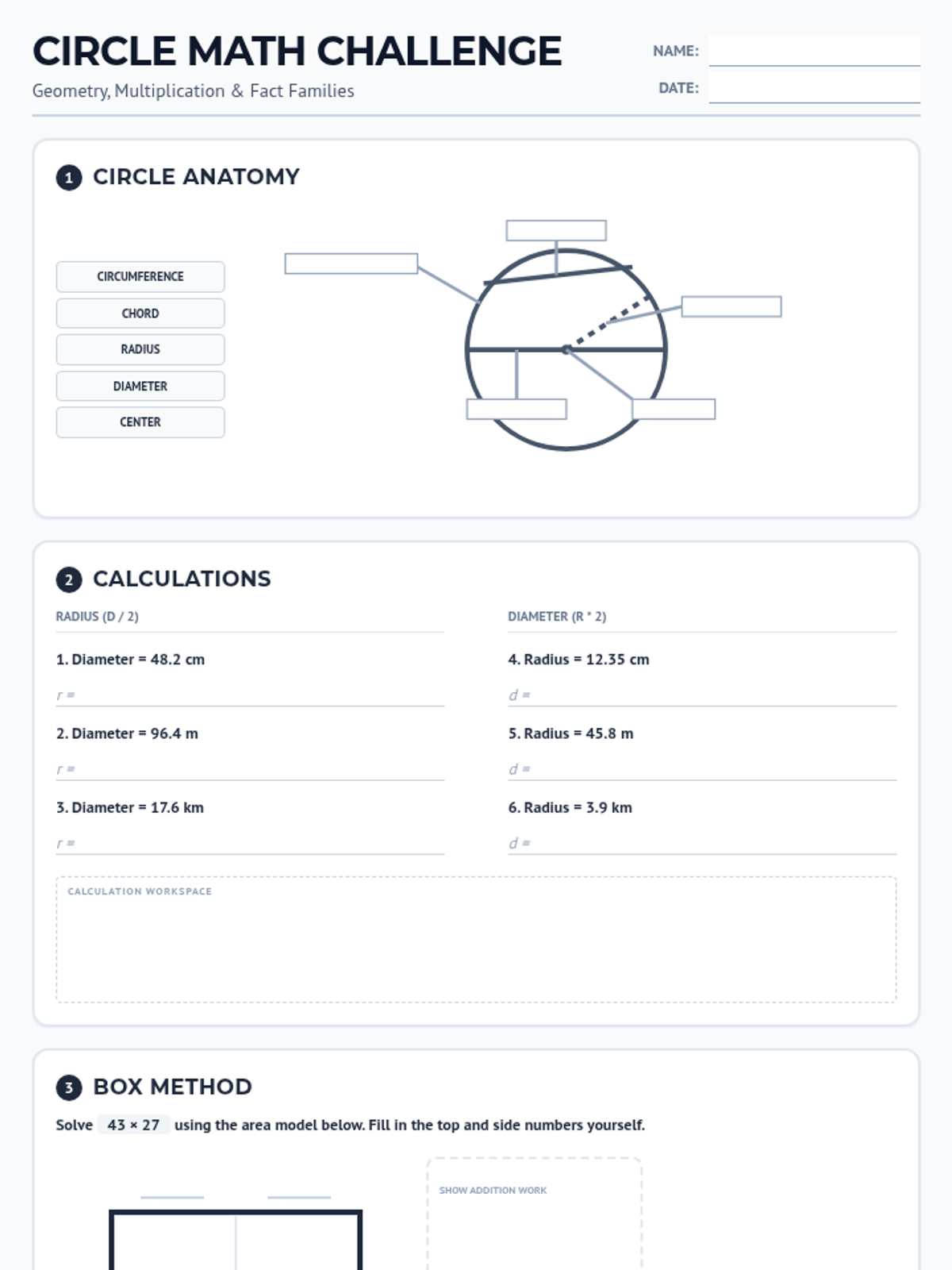
A math quiz assessing circle terminology, radius and diameter calculations (using decimals up to 100), box method multiplication, and fact family triangles. Factors removed from box method to allow student input. Fixed diagram alignment and page distribution.
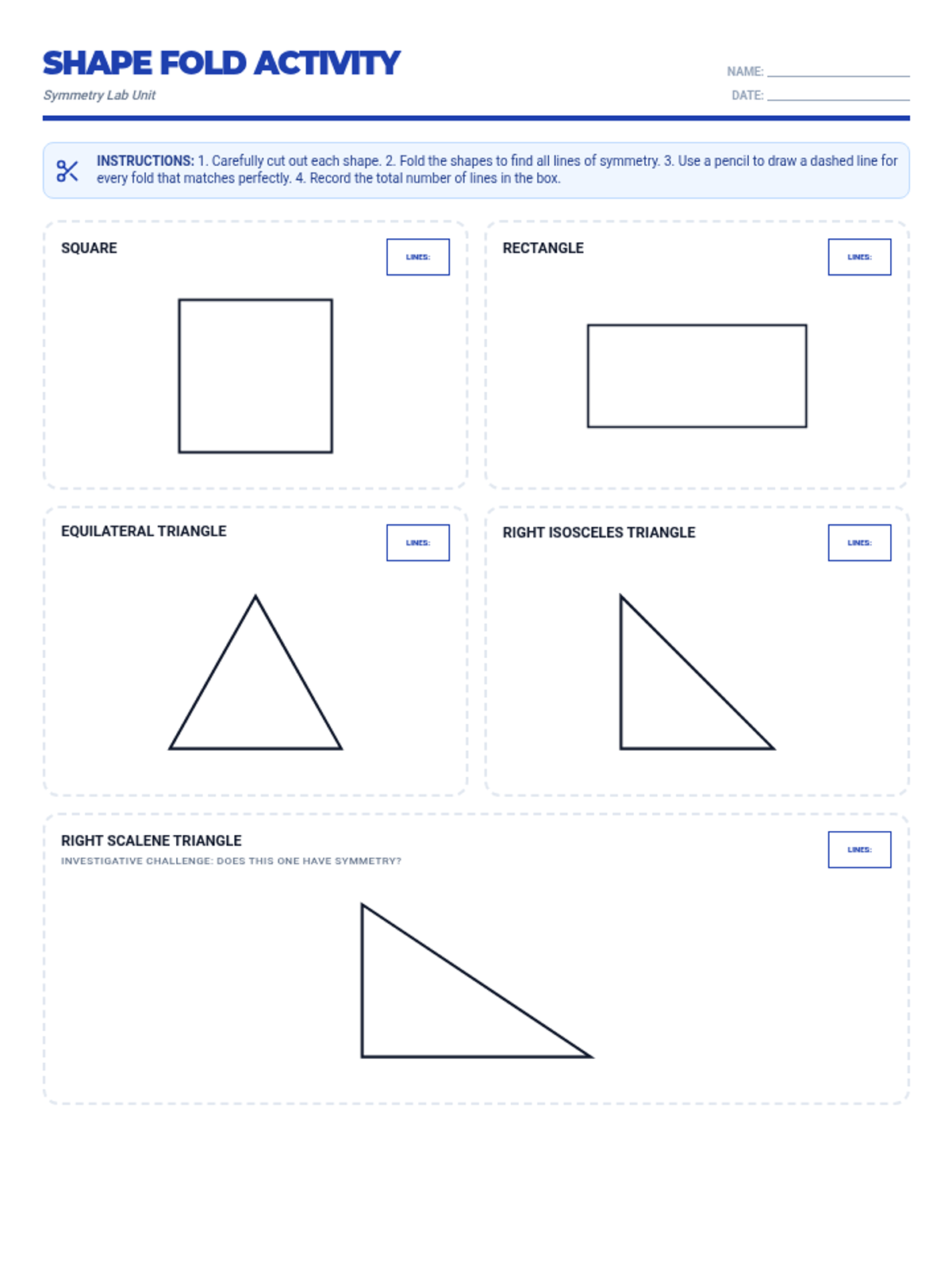
A hands-on activity sheet featuring various geometric shapes for students to cut out and fold to discover lines of symmetry.
A comprehensive consolidated packet containing the teacher guide, student worksheet, exit ticket, and all corresponding answer keys for the Blueprint Builders lesson. Optimized for easy printing and distribution.
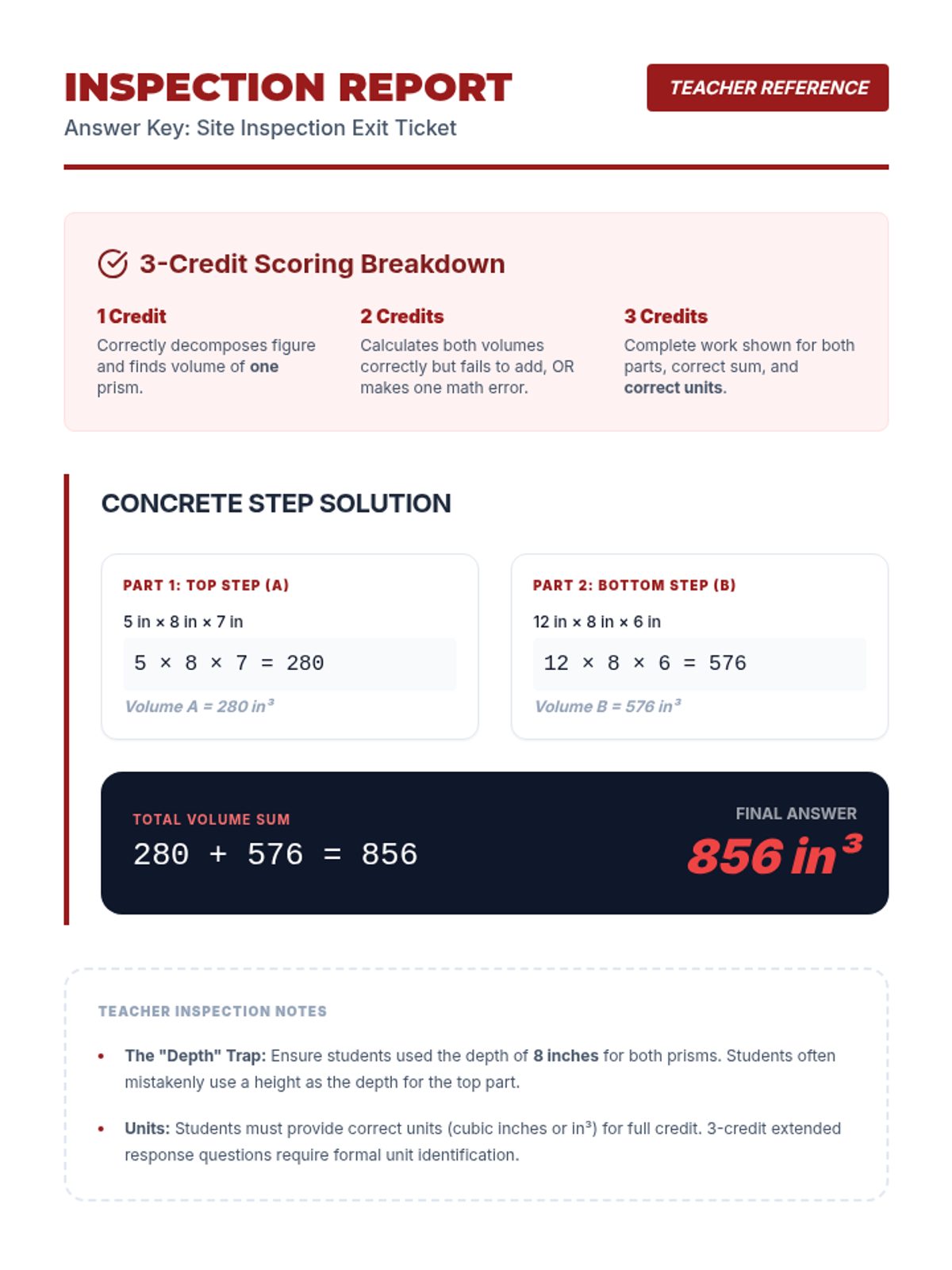
A detailed answer key for the Site Inspection Exit Ticket, providing a scoring breakdown, step-by-step volume calculations, and teacher-focused inspection notes. Updated for better page-break handling.
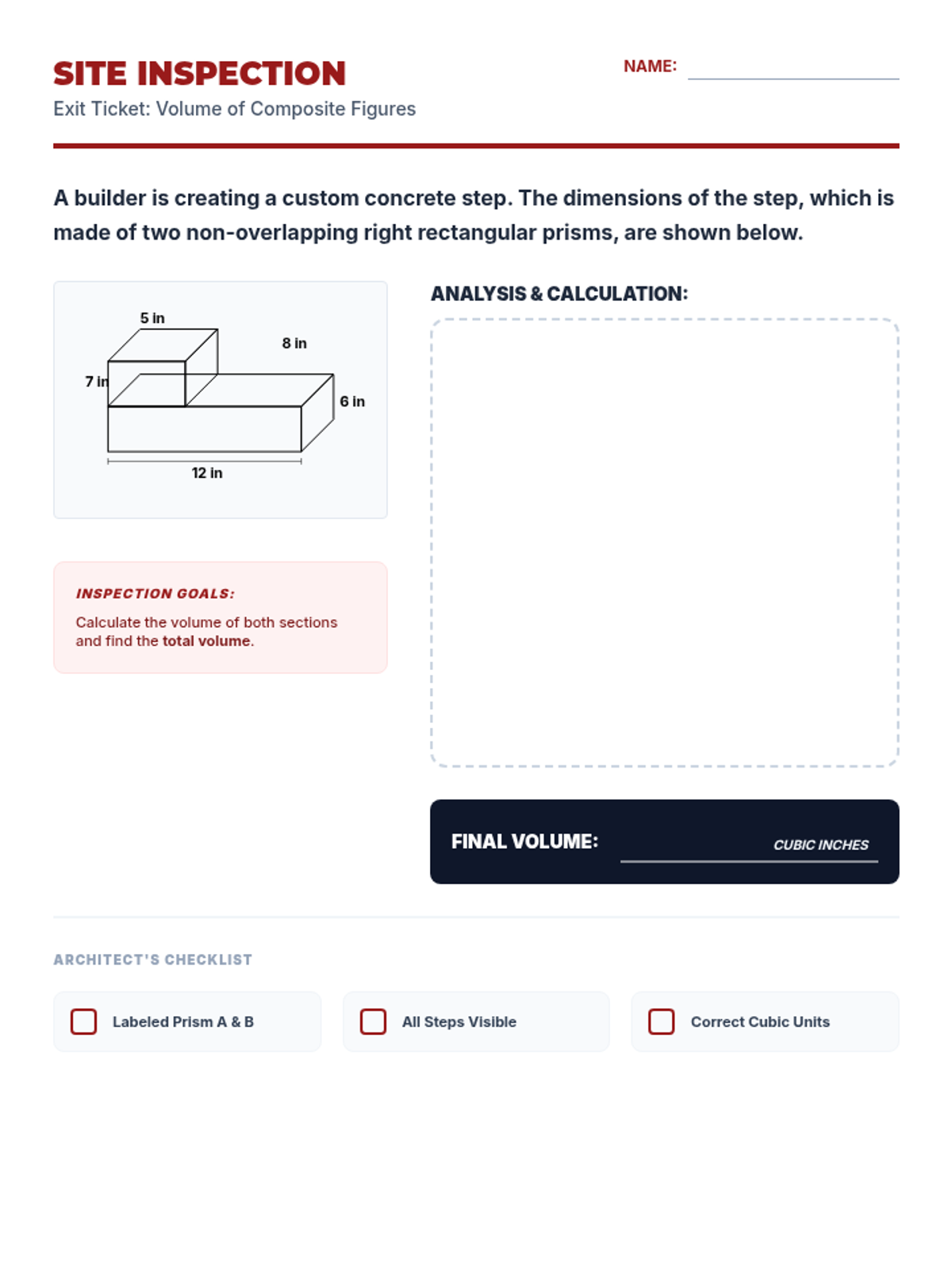
A single-problem exit ticket modeled after NYS 3-credit questions, asking students to calculate the volume of a composite figure (a concrete step). Includes a student self-check area and expanded work space.
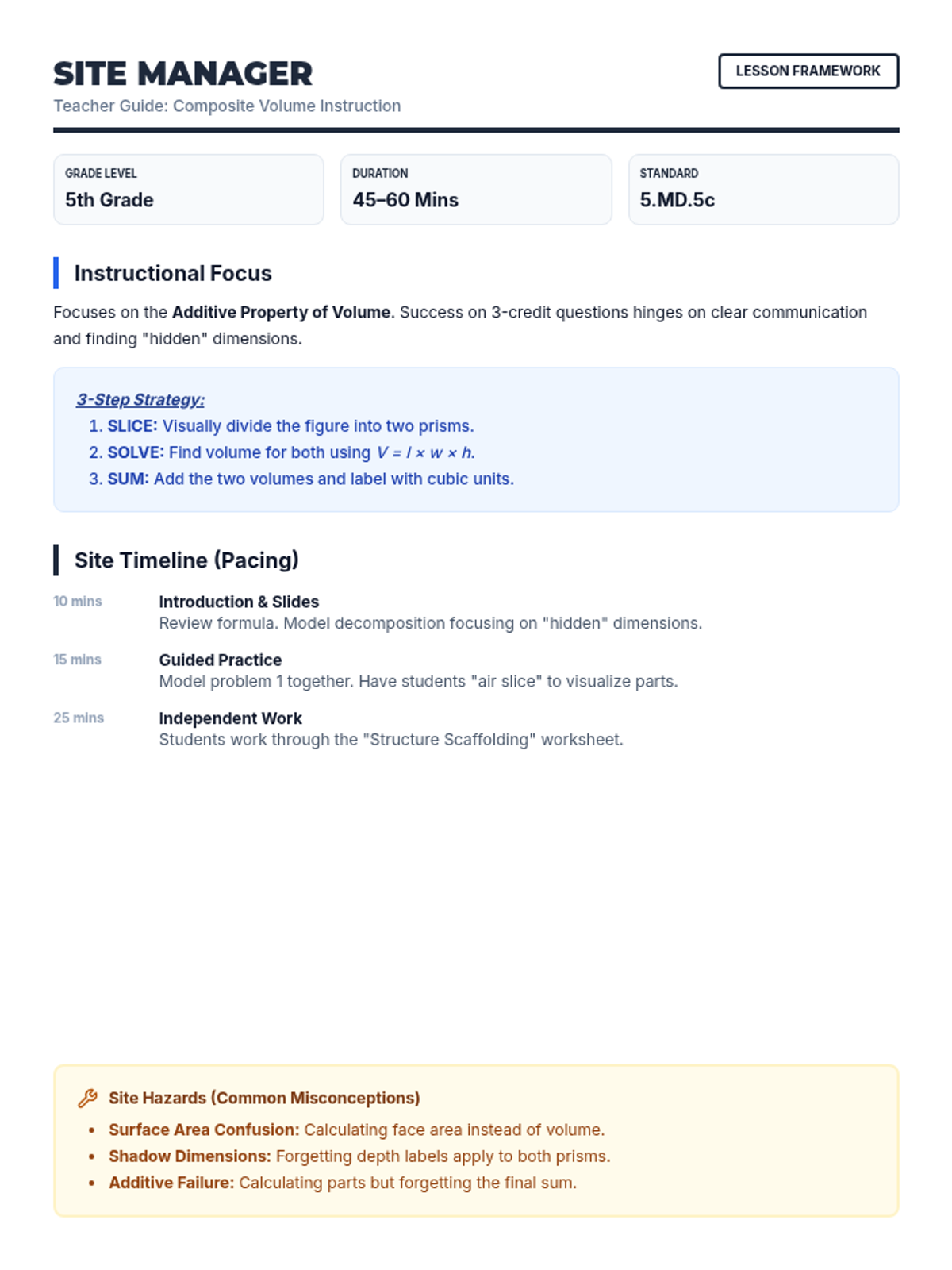
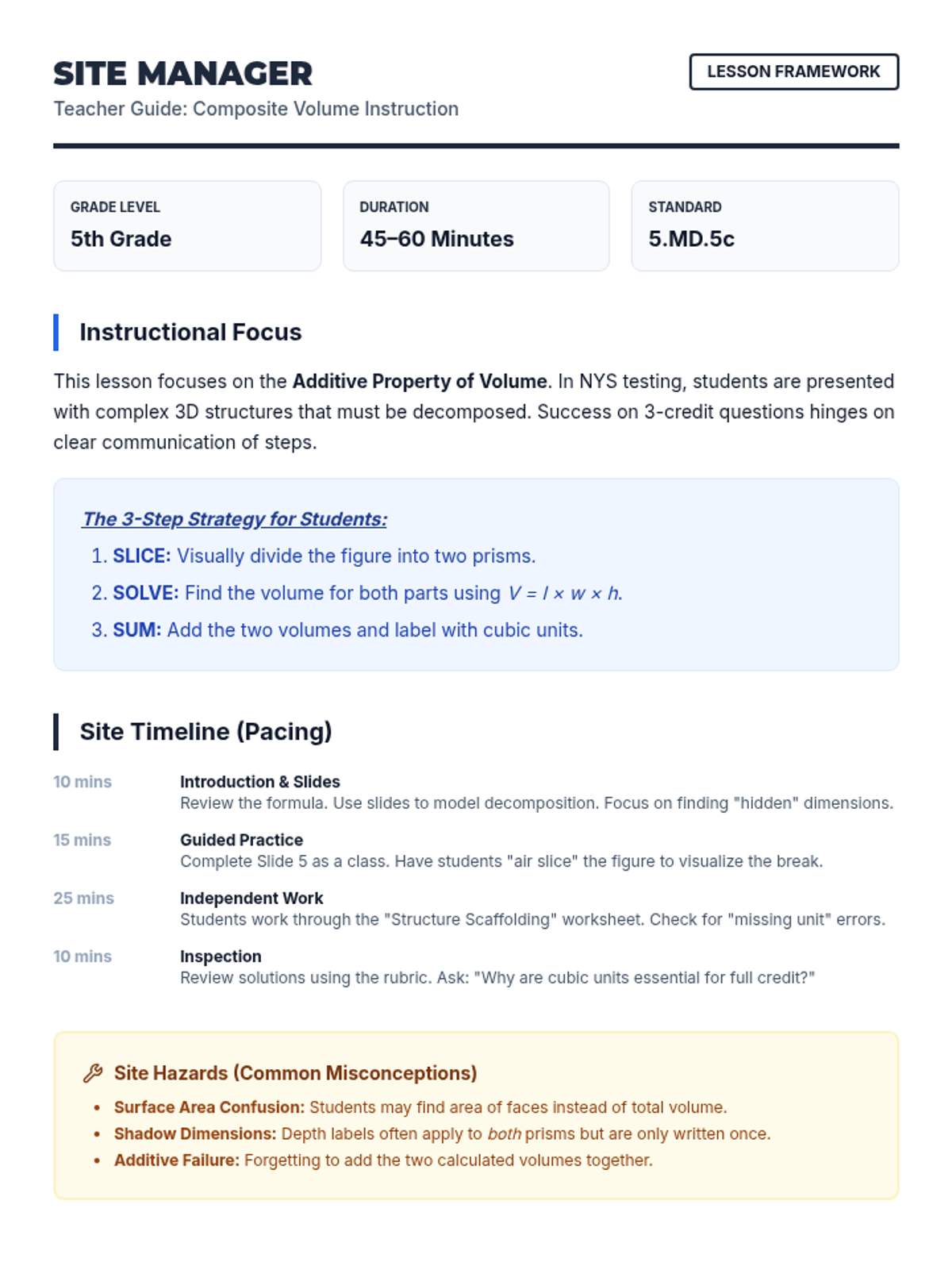
A professional facilitator's guide for teachers, providing a lesson framework and pacing guide. Optimized to fit on a single page for teacher convenience.
A detailed answer key for teachers, including scoring rubrics modeled after NYS test standards and step-by-step solutions. Text updated for maximum rendering reliability.
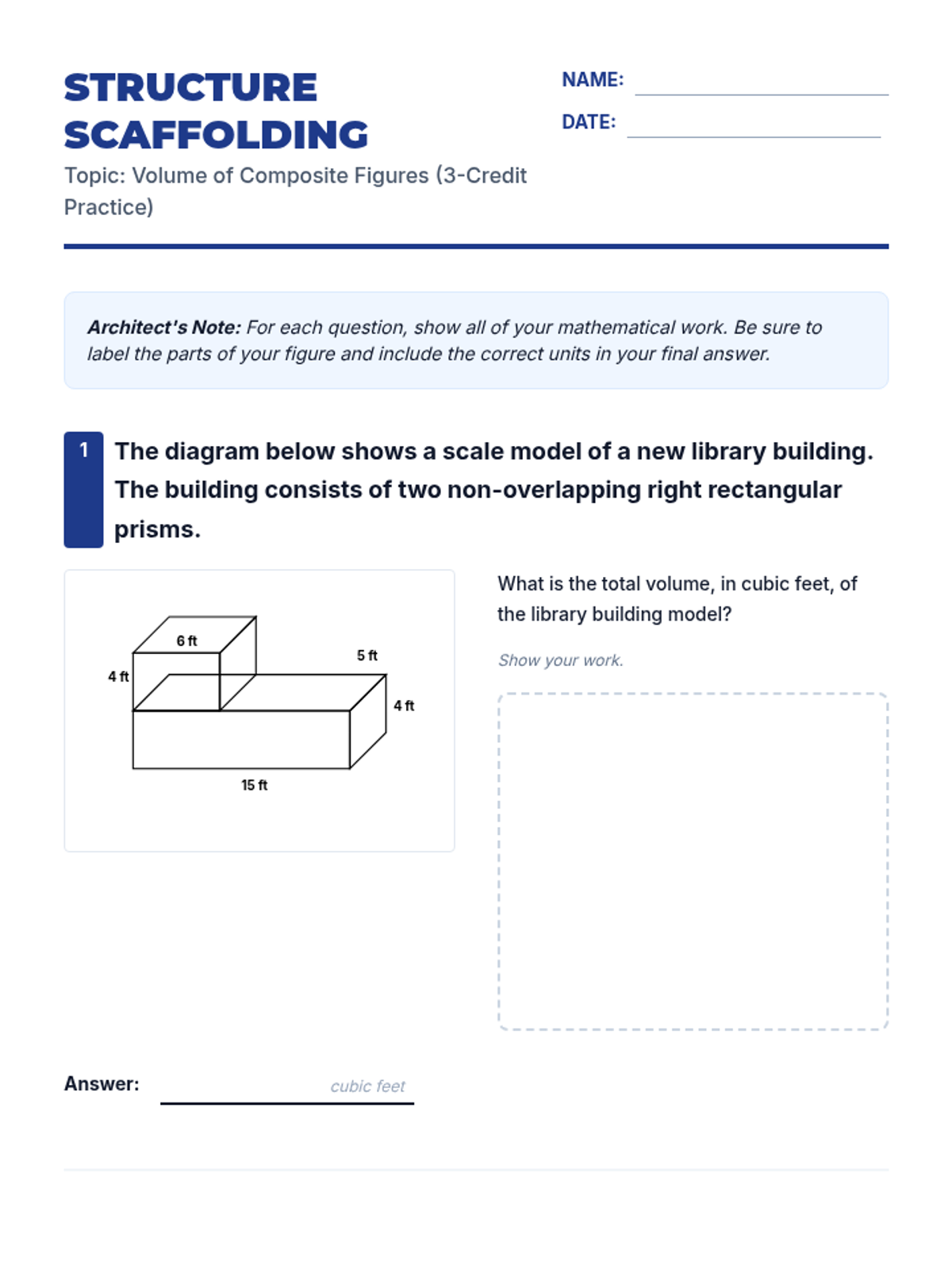
A rigorous 5th-grade math worksheet featuring two multi-part volume problems designed to mirror NYS test 3-credit extended response questions. Layout and page breaks optimized for classroom use.
A dynamic slide deck designed for 5th-grade instruction, introducing the concept of volume for composite figures with a blueprint/architectural theme. Includes vocabulary, 3-credit question breakdowns, and common pitfalls. Math notation and layout updated for clarity.
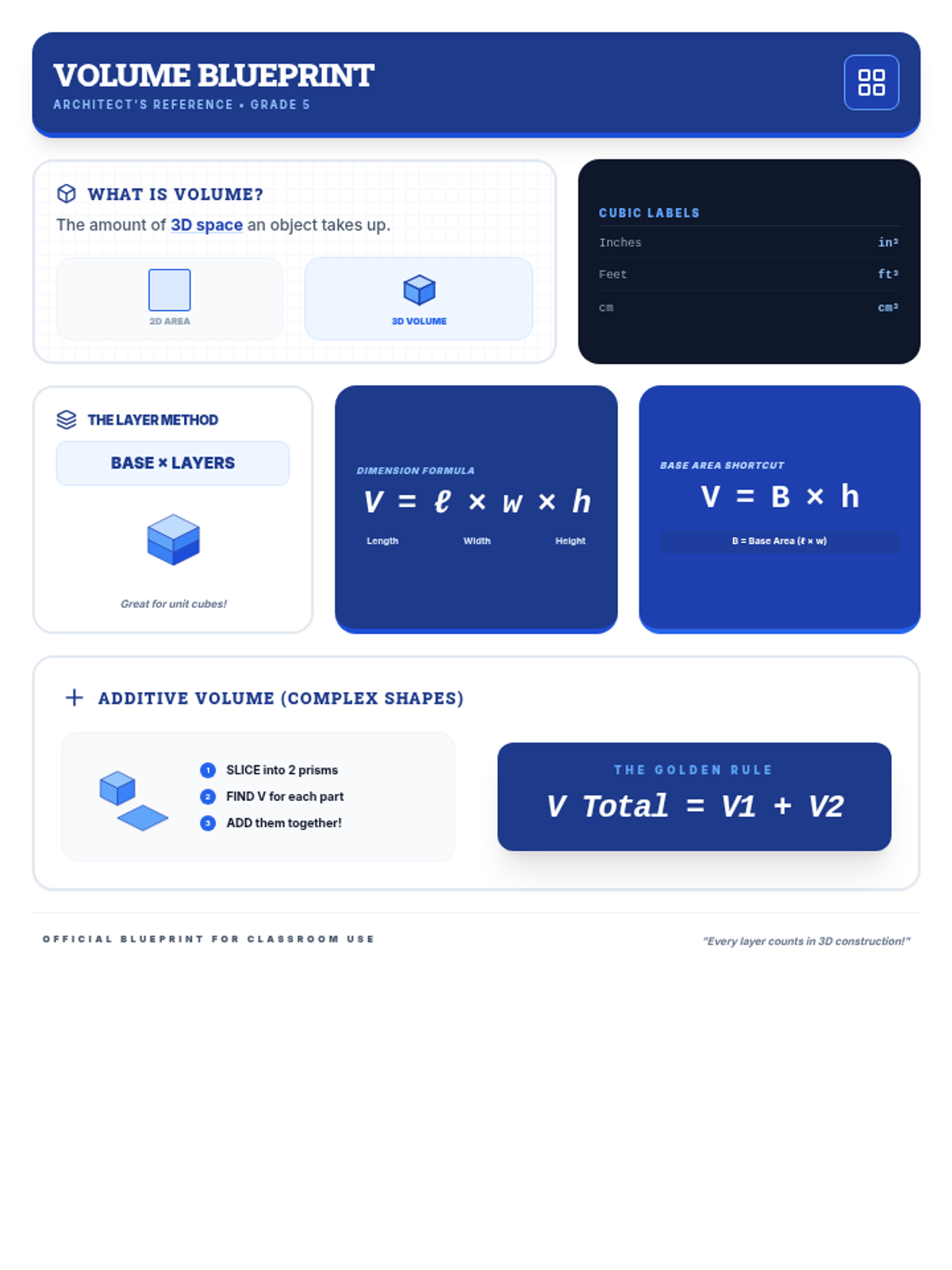
A comprehensive one-page reference sheet for students covering volume definitions, standard formulas, and strategies for composite figures. Designed with an architectural blueprint aesthetic. Updated for single-page fit.
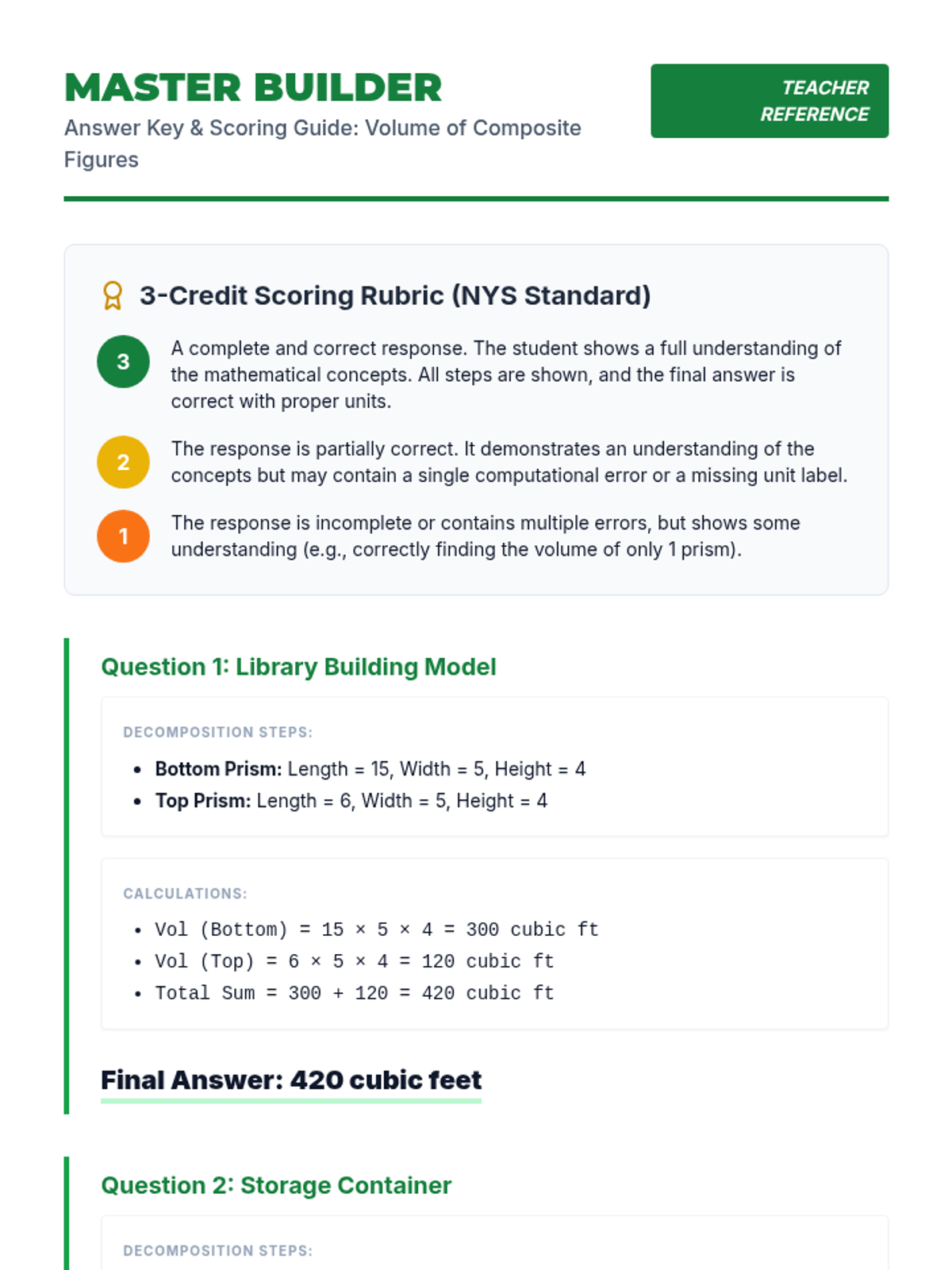
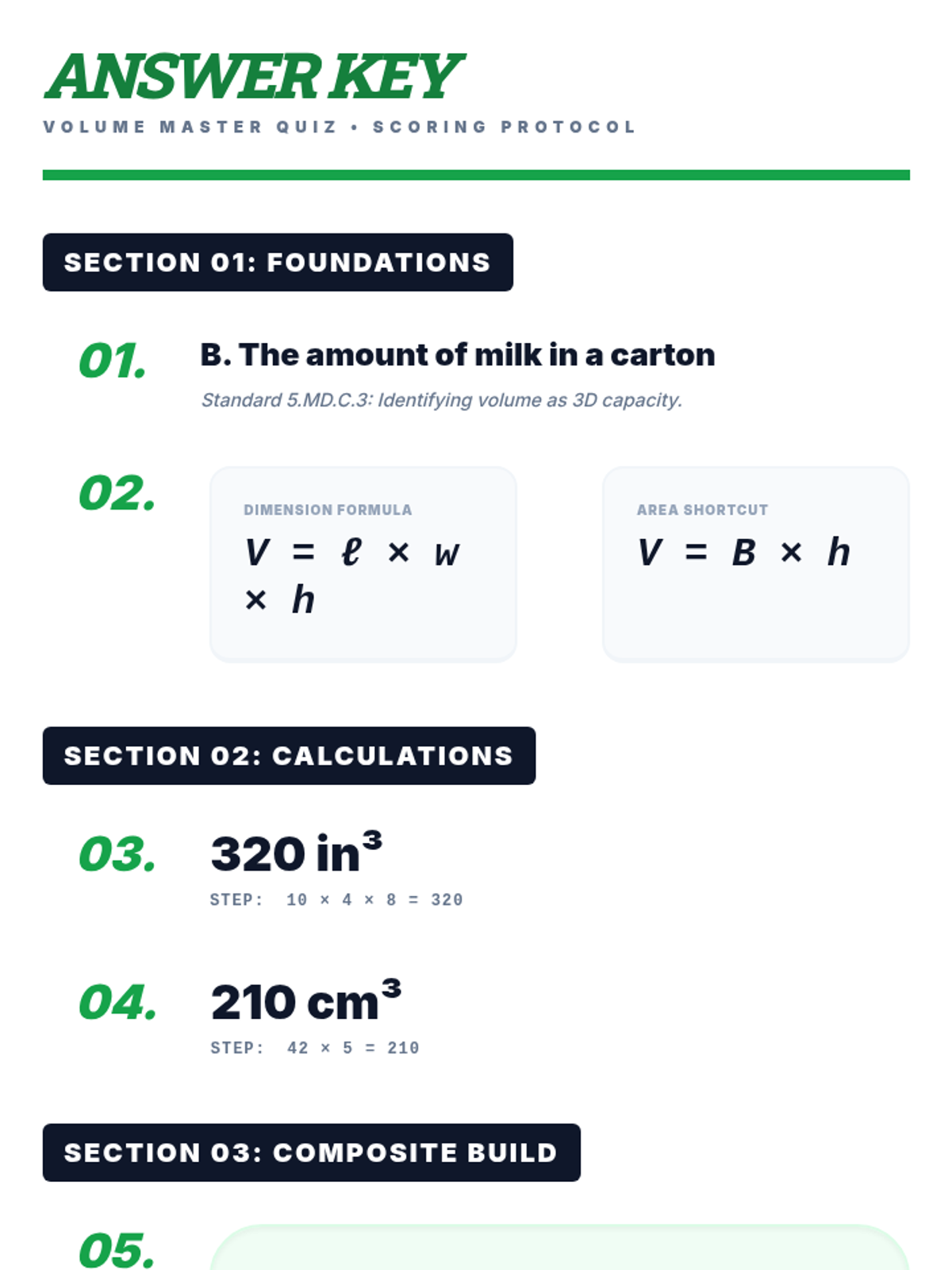
Answer key for the Volume Master Quiz. Updated with better labeling for additive volume, darker text for accessibility, and a consolidated scoring guide to prevent awkward page breaks. Fixes typos.
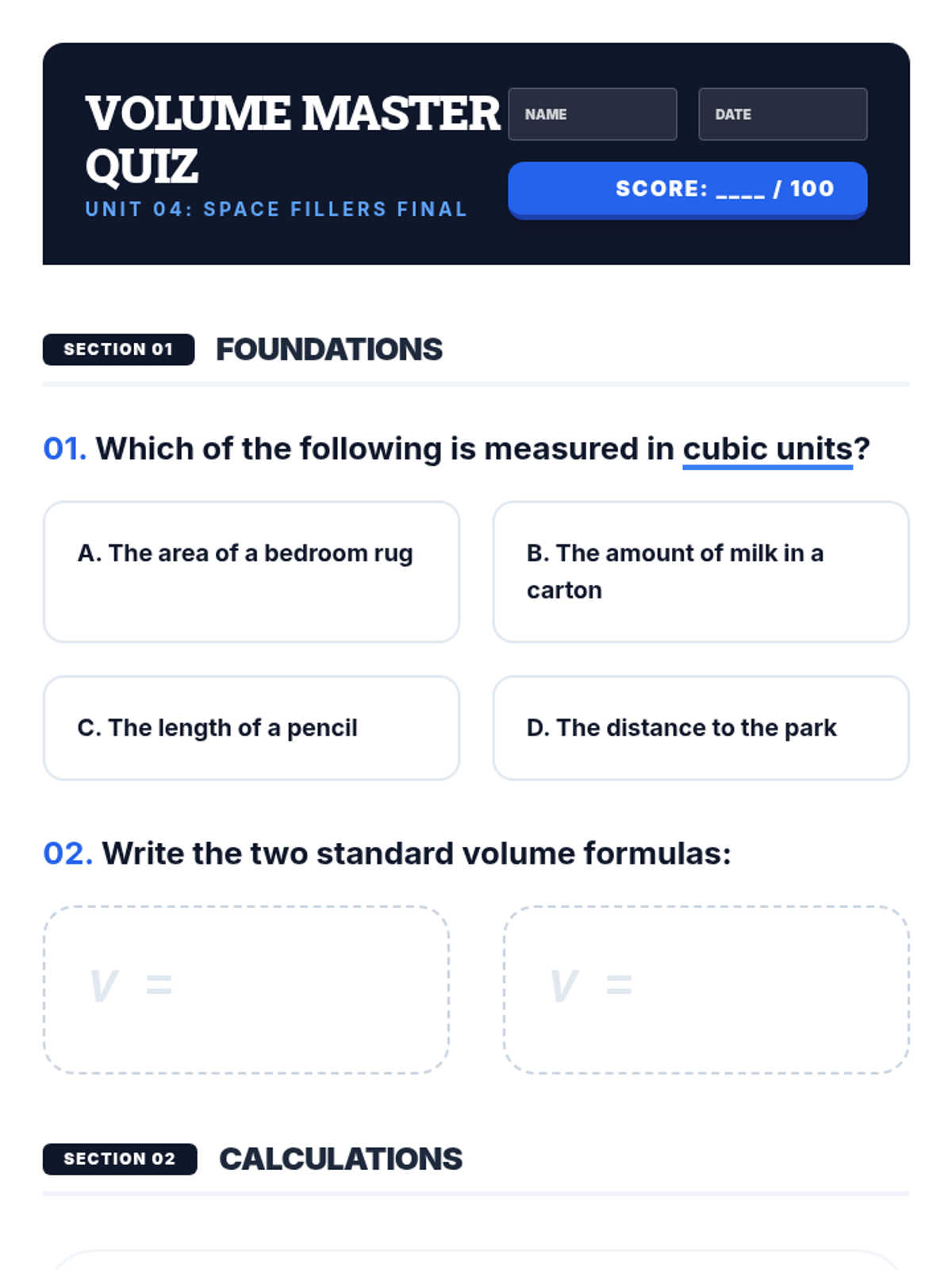
A comprehensive quiz covering all 5th-grade volume standards: conceptual understanding, calculations using both formulas, and additive volume word problems. Updated with improved page breaks, larger workspaces, and higher contrast.
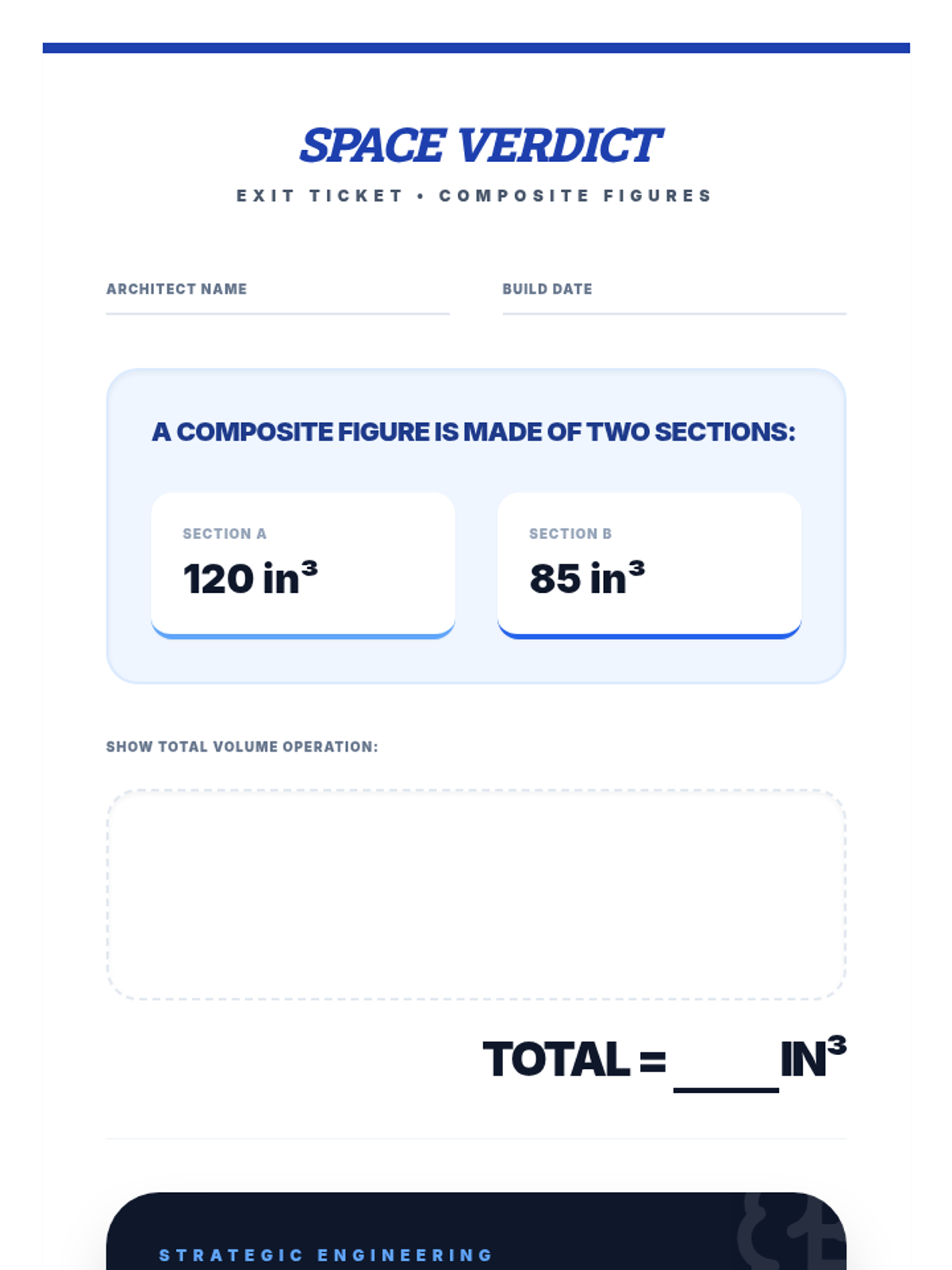
Exit ticket focusing on the additive property of volume for composite figures. Updated with improved padding to fit on one page and higher contrast for labels. Fixes page breaks.
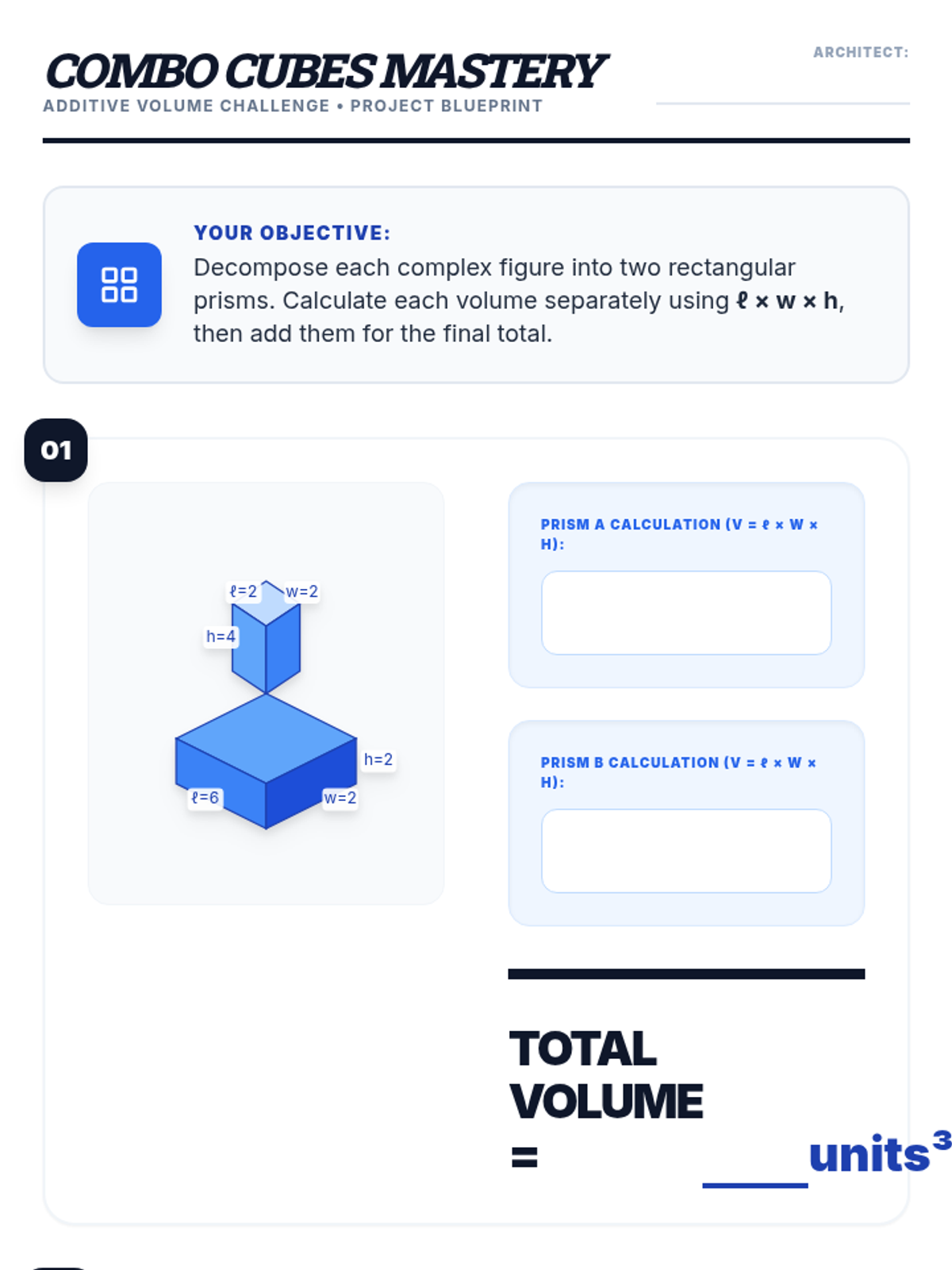
A practice worksheet for additive volume of composite rectangular prisms. Updated with labeled 3D diagrams, improved layout, and high-contrast lightened workspaces. Fixes page breaks and visibility issues.
Slides for calculating the volume of composite figures. Updated with labeled 3D isometric examples and clearer strategy steps. Fixes subscripts and word spacing.
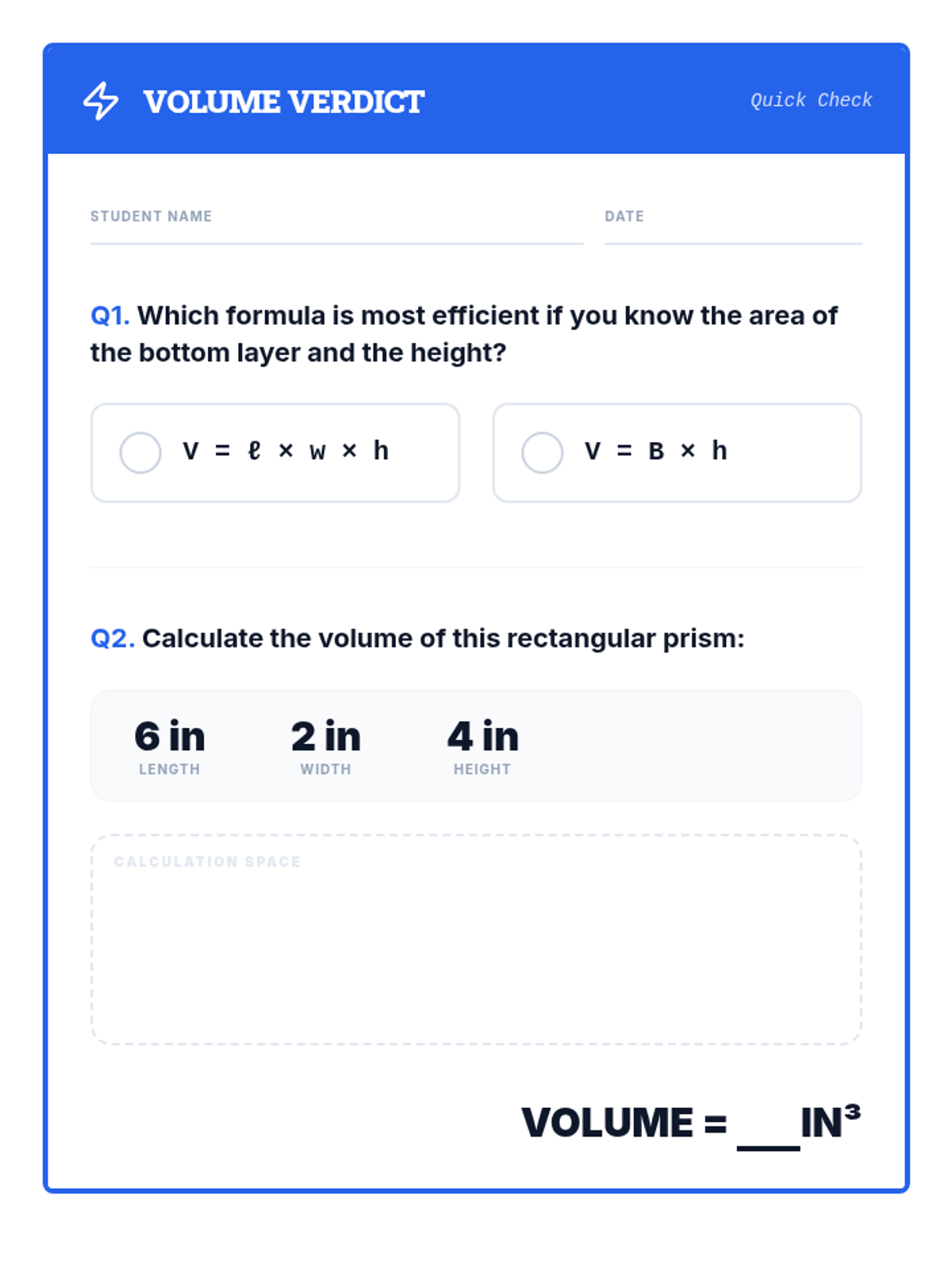
Exit ticket for formula mastery, testing knowledge of V = B x h and a basic calculation of V = l x w x h. Updated with better spacing and removed placeholder text in work area.
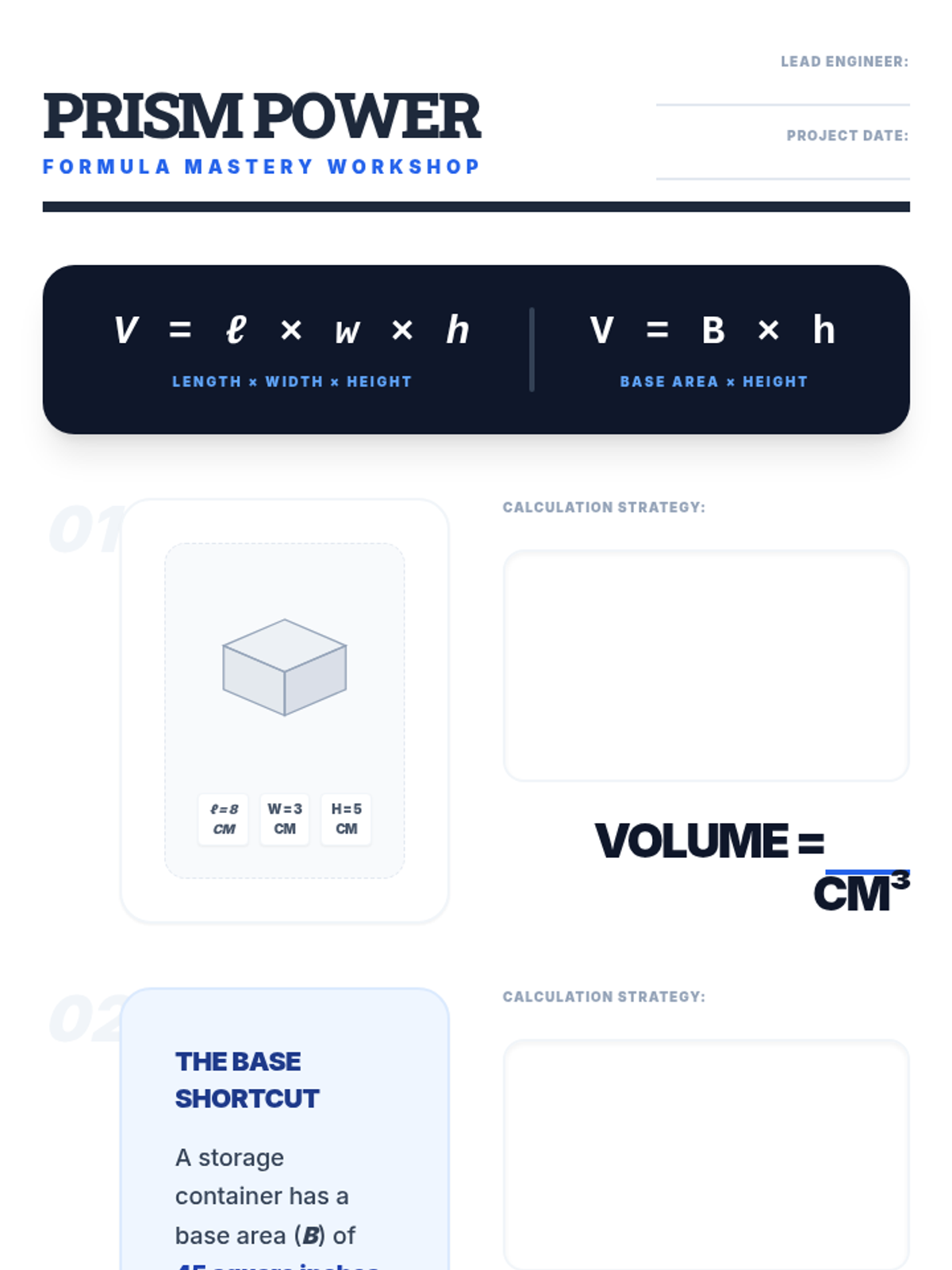
A practice worksheet focusing on using V = l x w x h and V = B x h. Updated with better layout, page breaks, and lightened workspace for the word problem.
Slides teaching the standard volume formulas V = l x w x h and V = B x h. Updated with clearer font for length, proportional diagrams, and better labels.
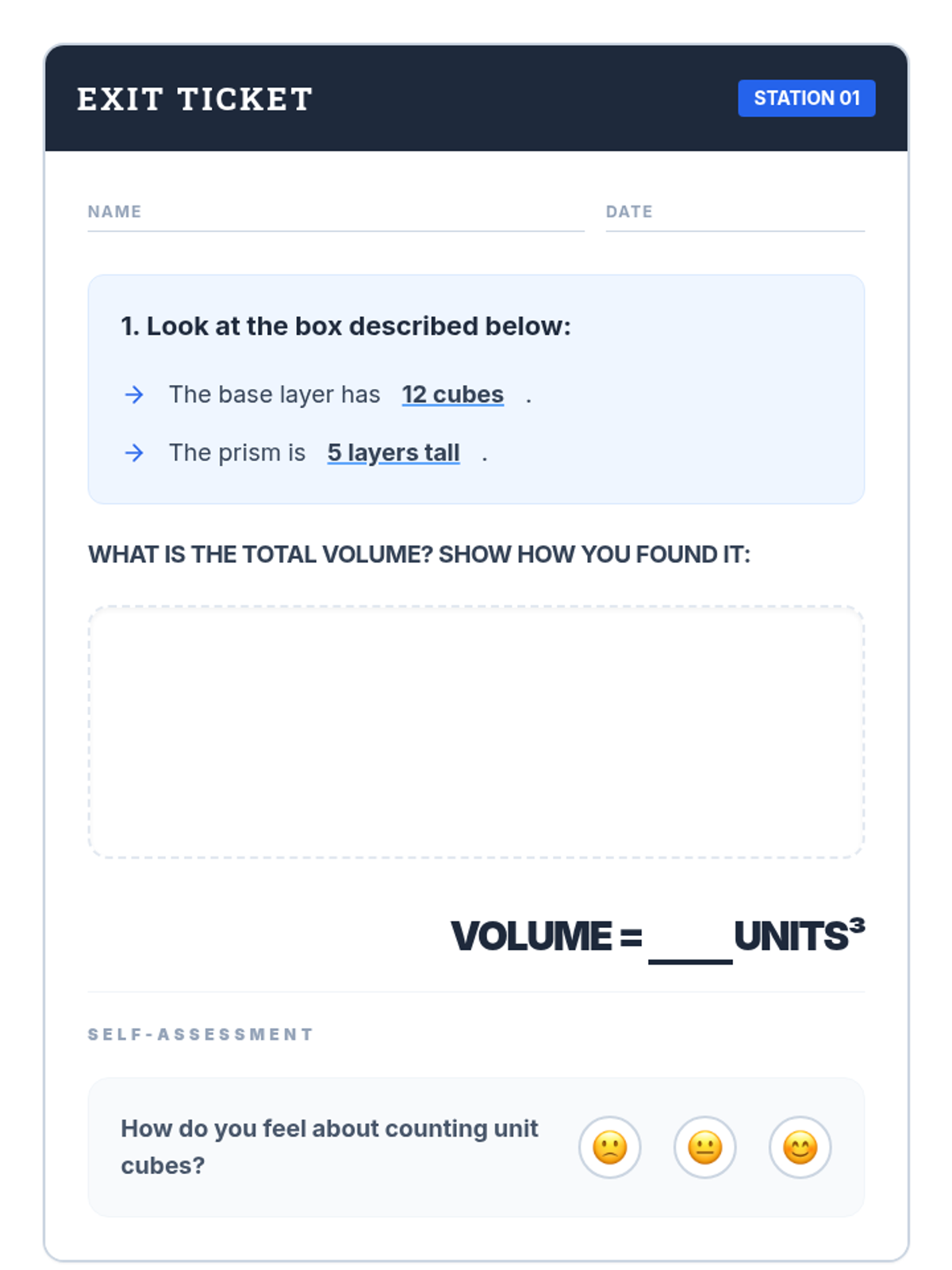
A quick exit ticket for the first lesson on volume to assess student understanding of base layers and total volume. Updated with larger workspace and unbiased self-assessment.
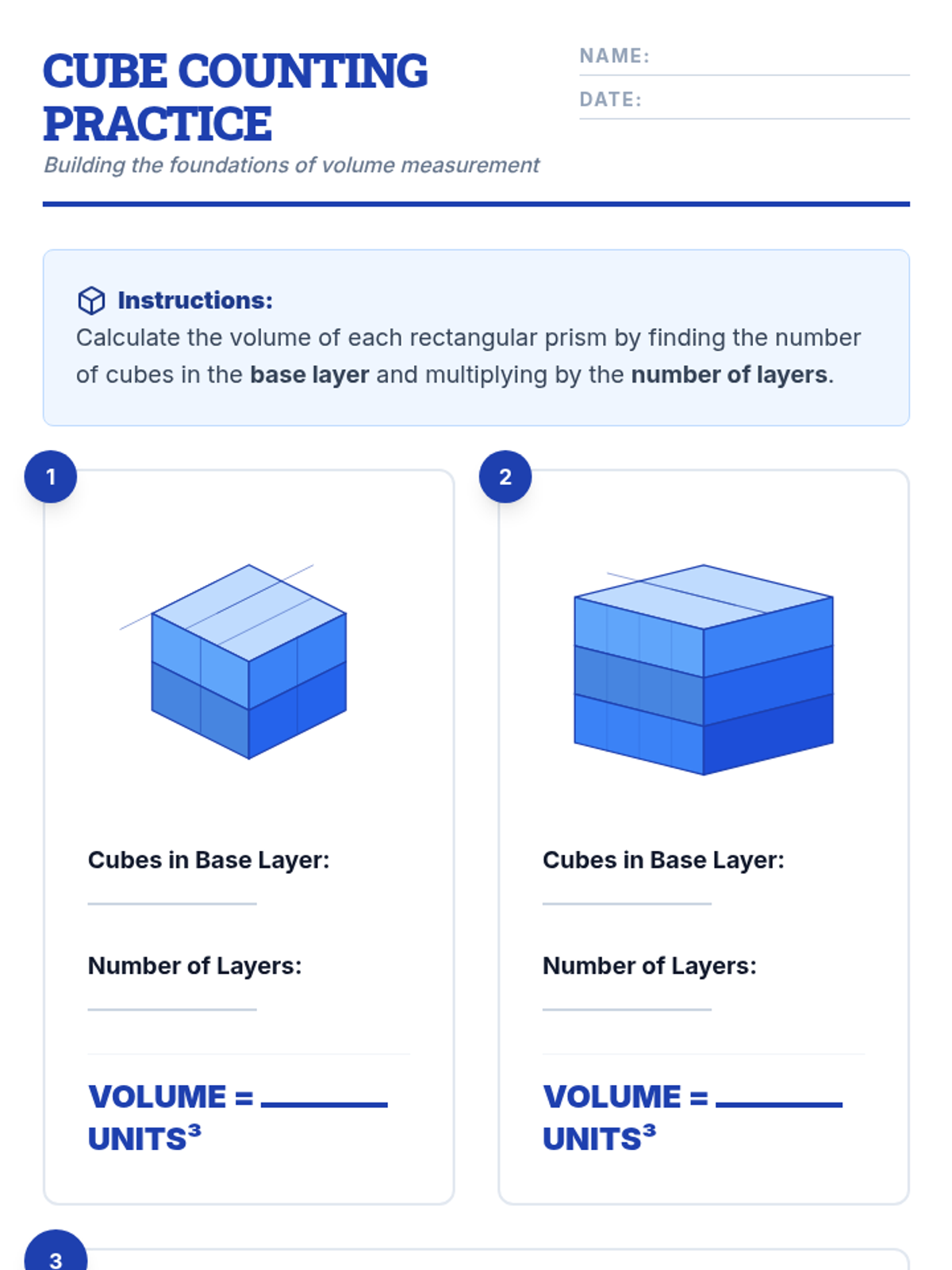
A worksheet for students to practice finding the volume of rectangular prisms by counting unit cubes and identifying layers. Updated with accurate isometric 3D diagrams and improved layout.
Introductory slides for volume using unit cubes. Covers the definition of volume, unit cubes, and the layer-by-layer method for finding volume. Updated with proper 3D isometric visuals.
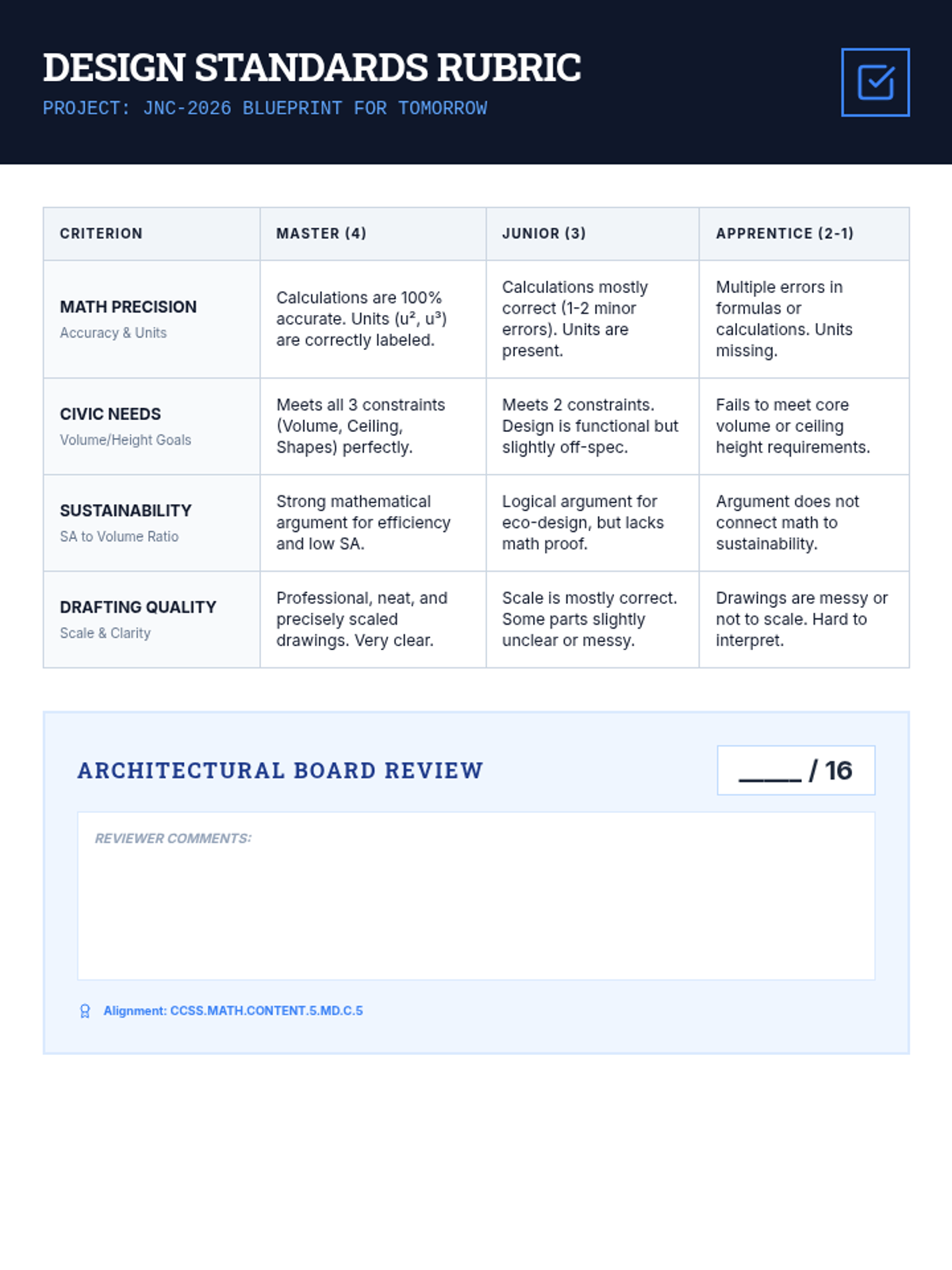
A grading rubric for the Blueprint For Tomorrow project, assessing mathematical precision, adherence to design constraints, sustainability rationale, and the quality of architectural drafting.
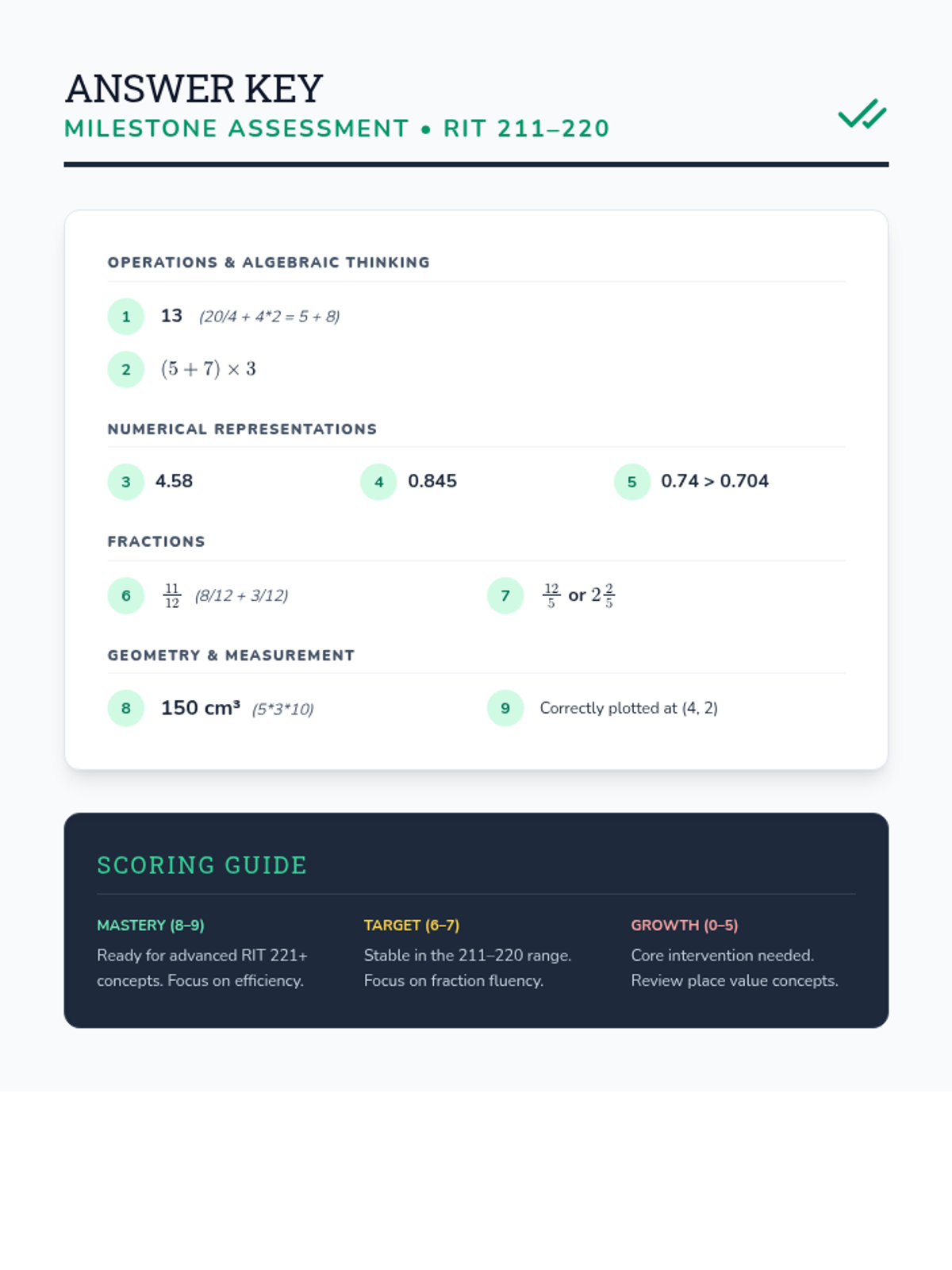
Teacher answer key for the RIT 211-220 Milestone Assessment, including step-by-step work and a scoring guidance chart. Revised for page-break consistency and clarity.
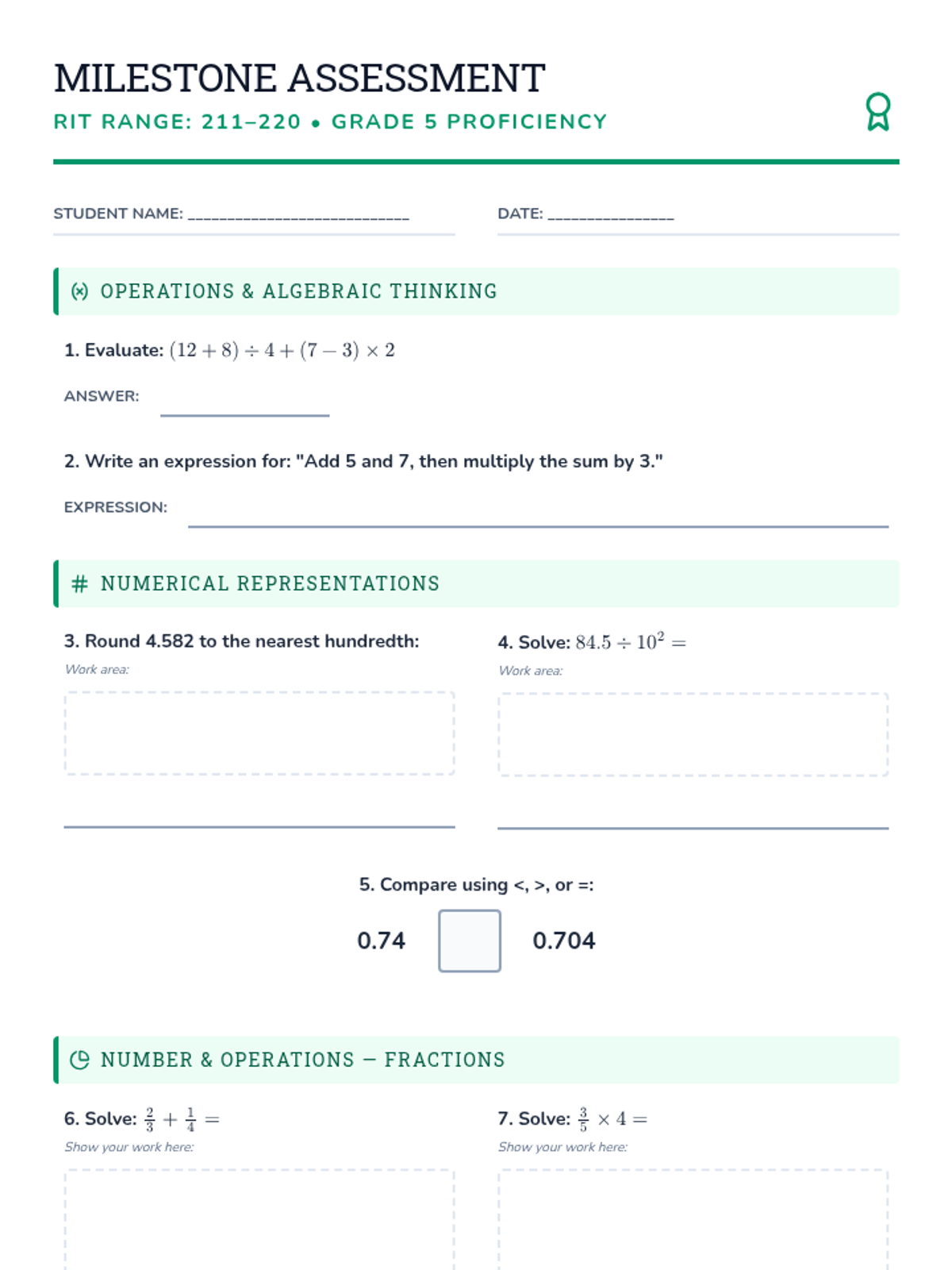
A comprehensive multi-domain assessment worksheet for students in the NWEA MAP RIT range 211-220. Covers Operations, Numerical Representations, Fractions, and Geometry. Revised for layout efficiency and better work space.
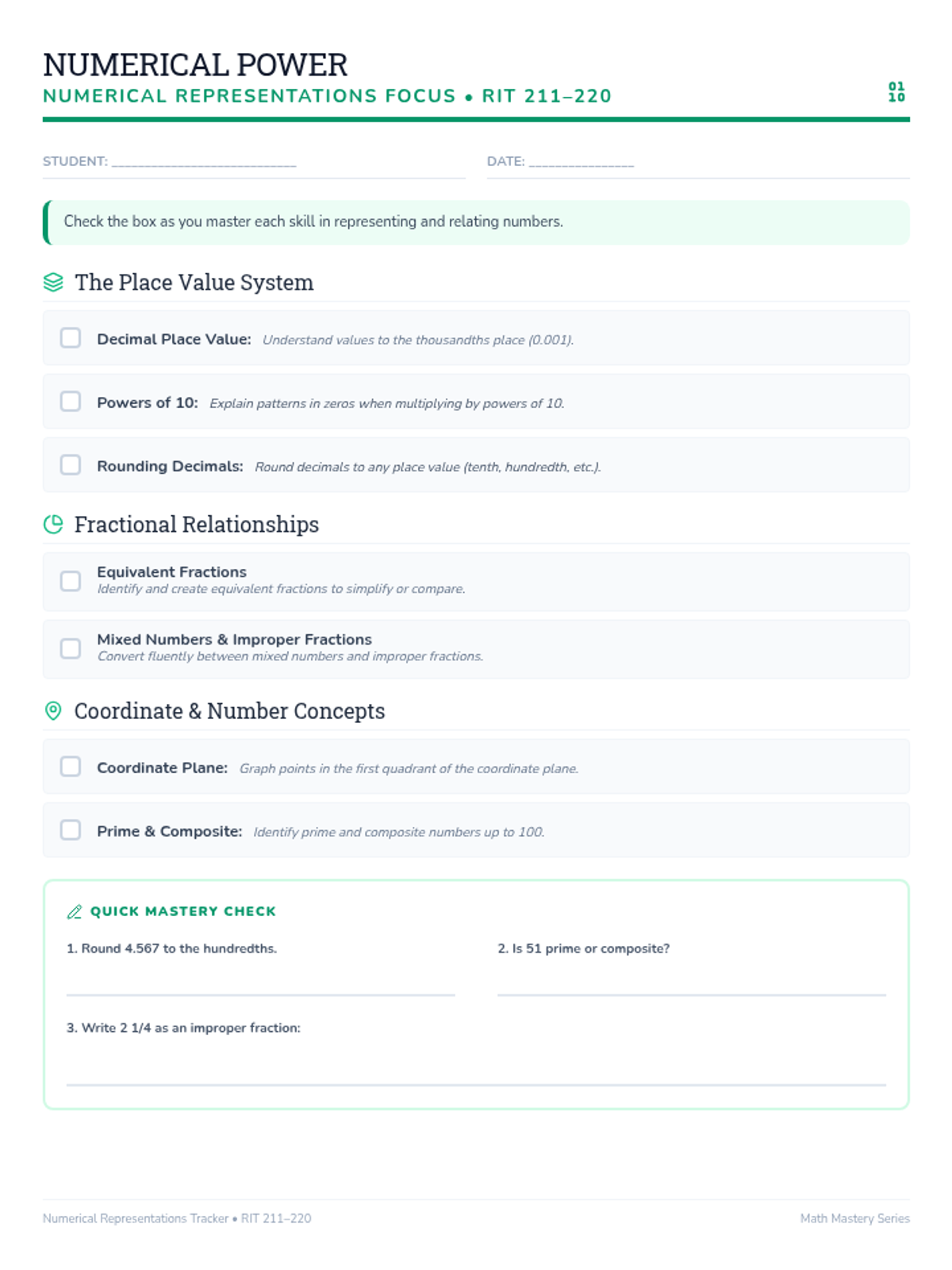
A focused 1-page checklist specifically targeting the Numerical Representations and Relationships domain for the 211-220 RIT range. Includes skills for decimal place value, powers of 10, rounding, and fractional conversions. Revised to improve tag structure and content completeness.
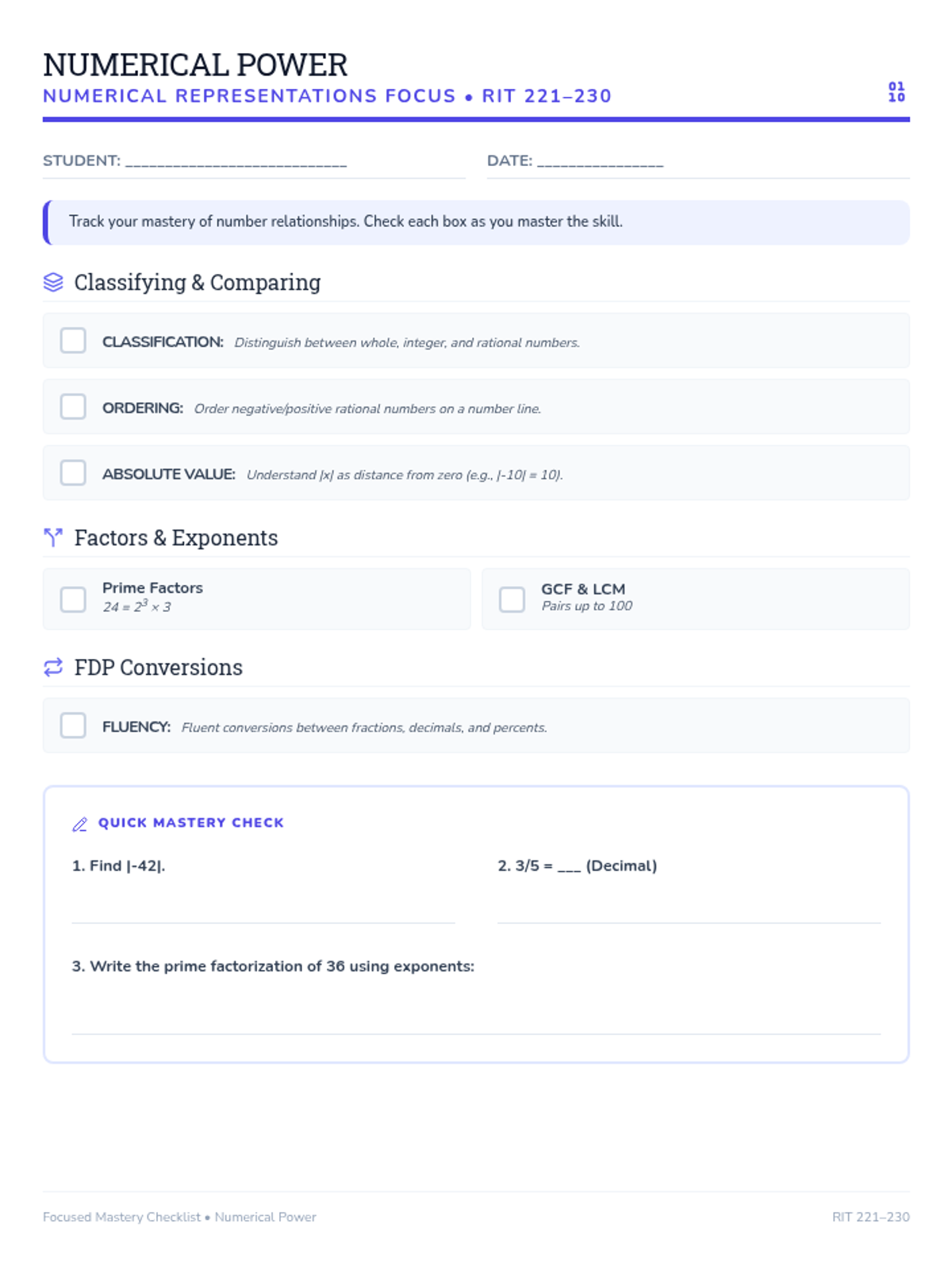
A focused 1-page checklist specifically targeting the Numerical Representations and Relationships domain for the 221-230 RIT range. Includes skills for classification, factors, and conversions. Revised to ensure single-page fit and improved writing area.
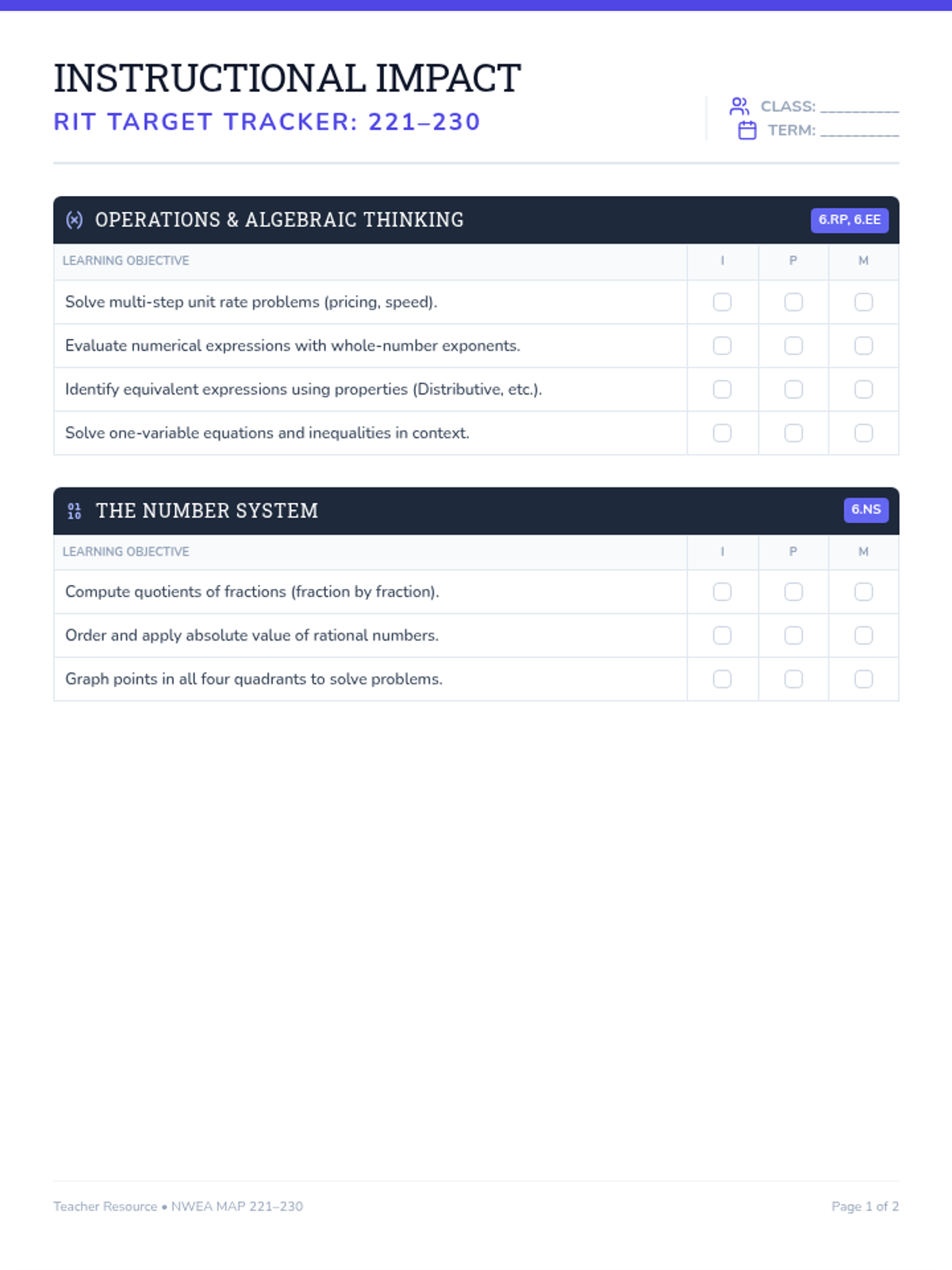
A professional 2-page teacher-facing checklist for tracking instructional progress in the NWEA MAP 221-230 RIT range. Includes CCSS alignments, learning objectives across all domains, and a dedicated space for small group intervention planning. Revised for better page layout and writing space.
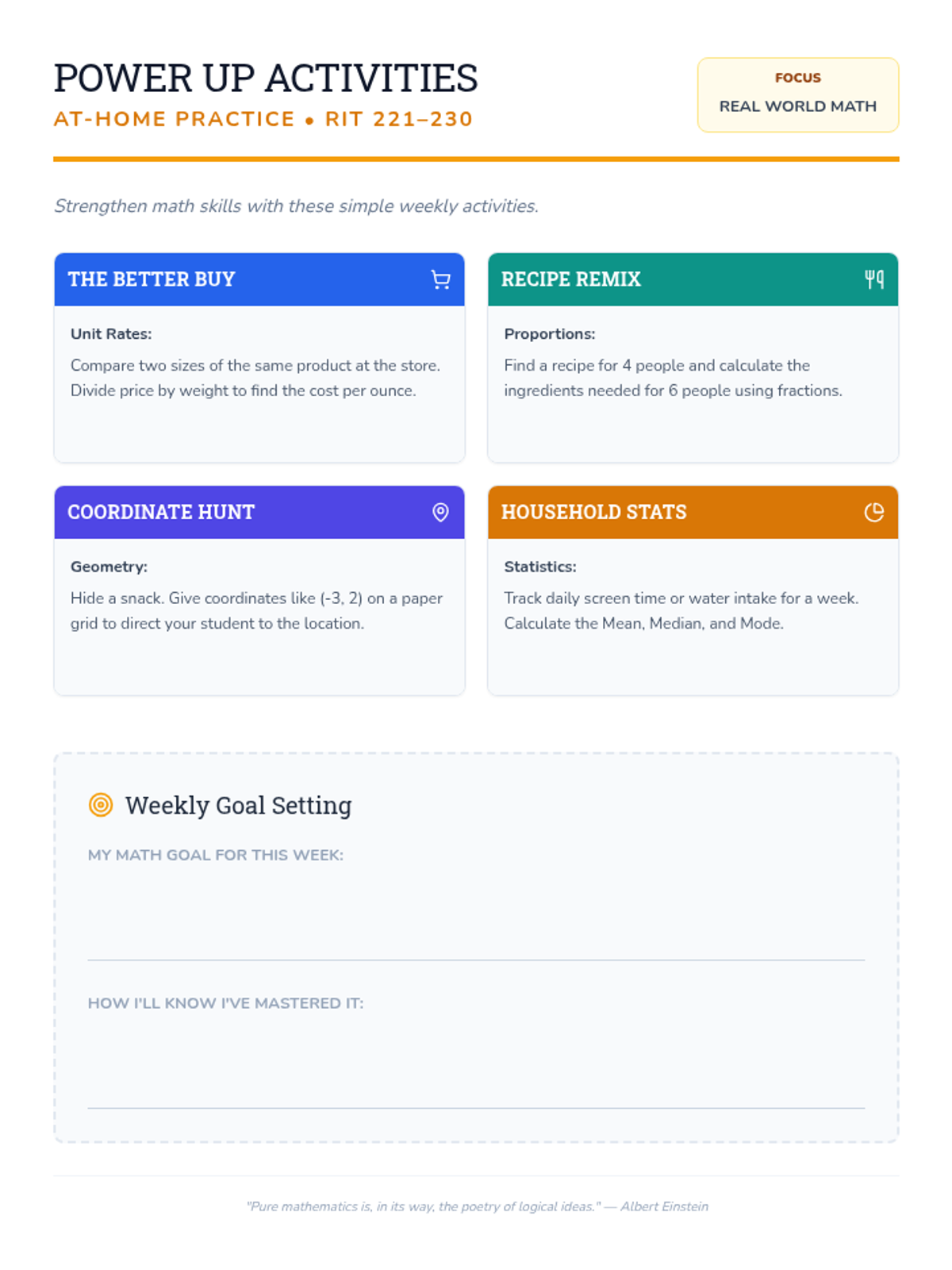
A set of four practical, engaging at-home activities designed for parents and students to practice specific RIT 221-230 math skills together. Revised to fit on a single page with larger writing areas.
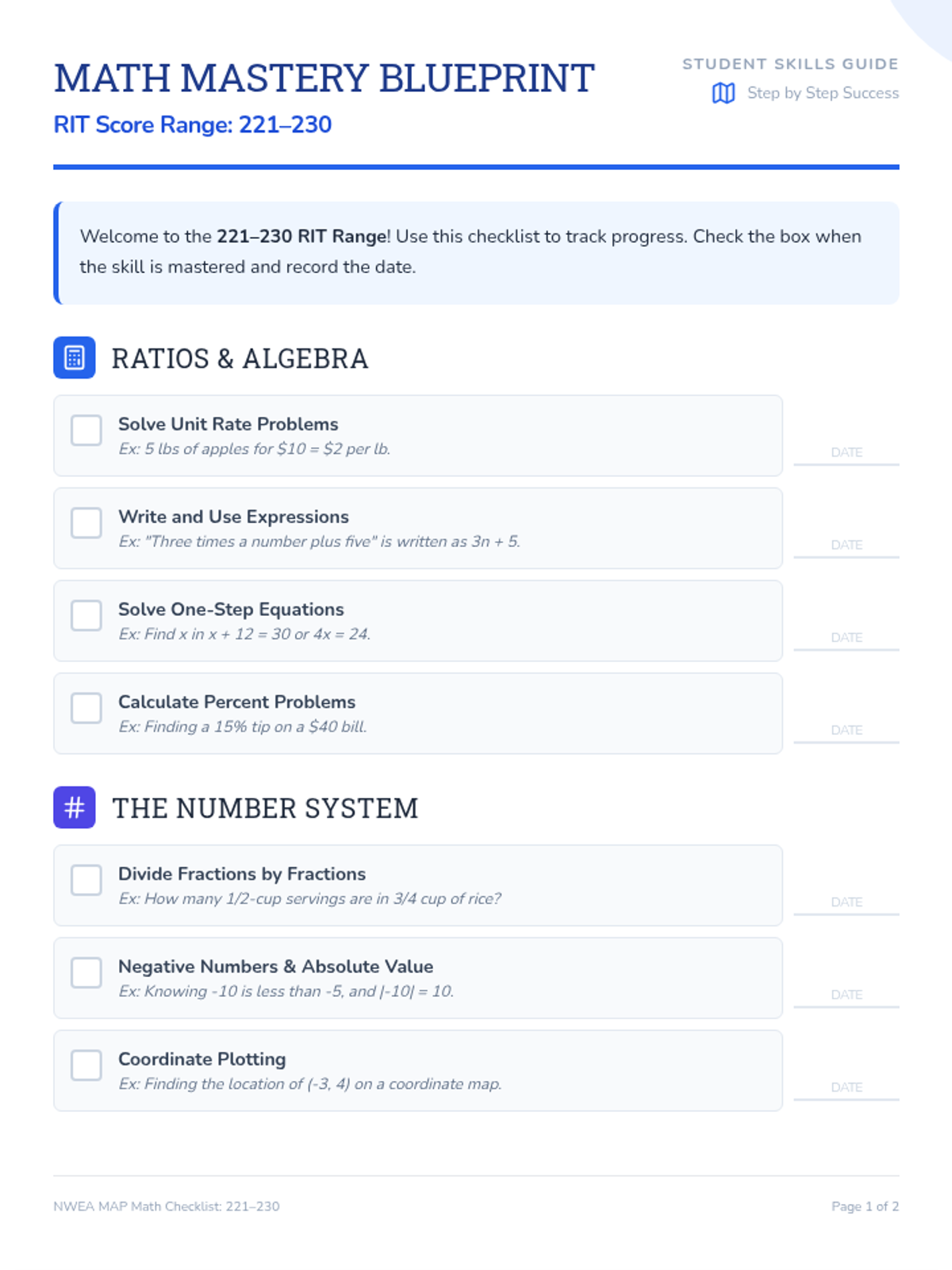
A parent-friendly 2-page checklist and guide covering all mathematical domains for the NWEA MAP RIT range 221-230, including real-world examples and home practice tips. Revised for better page layout and math rendering.
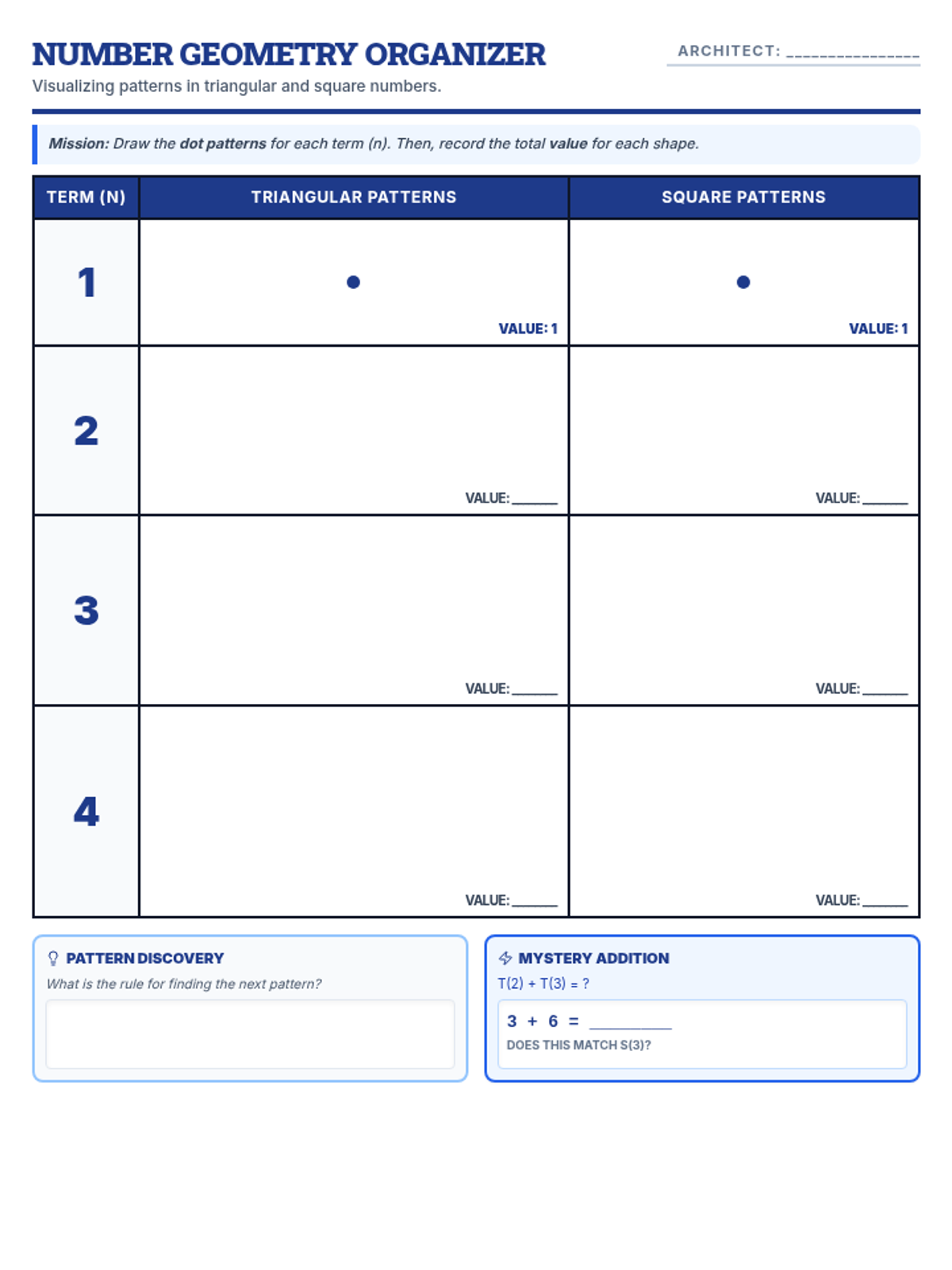
A highly legible, single-page graphic organizer for students to visualize and draw triangular and square number patterns. It includes clear instructions, optimized drawing areas, and a challenge section with improved accessibility and legibility.
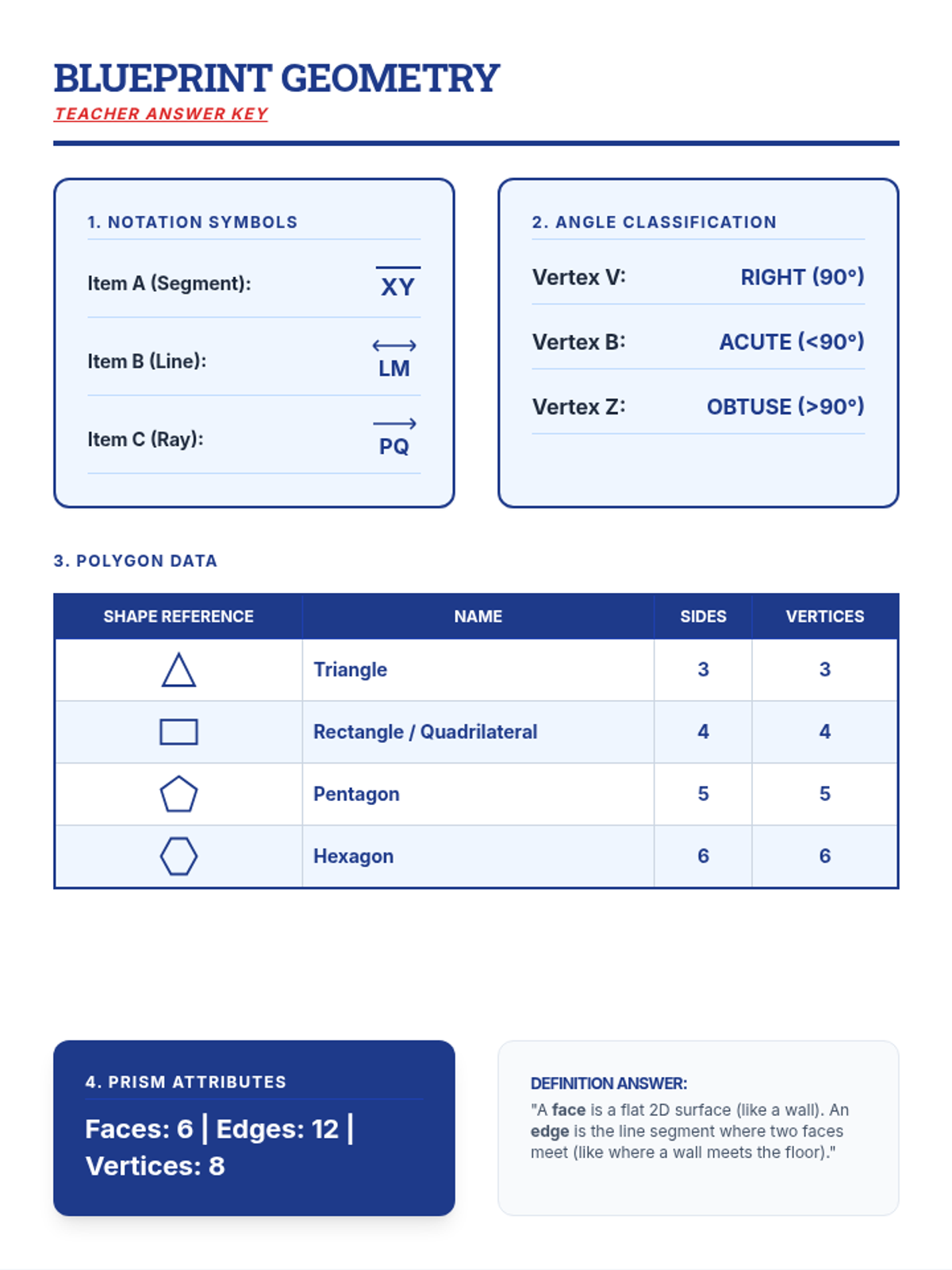
The teacher's answer key for the Blueprint Geometry Review Worksheet, featuring step-by-step calculations for perimeter, area, and volume with fractions and mixed numbers. Includes visual diagrams for easy reference.
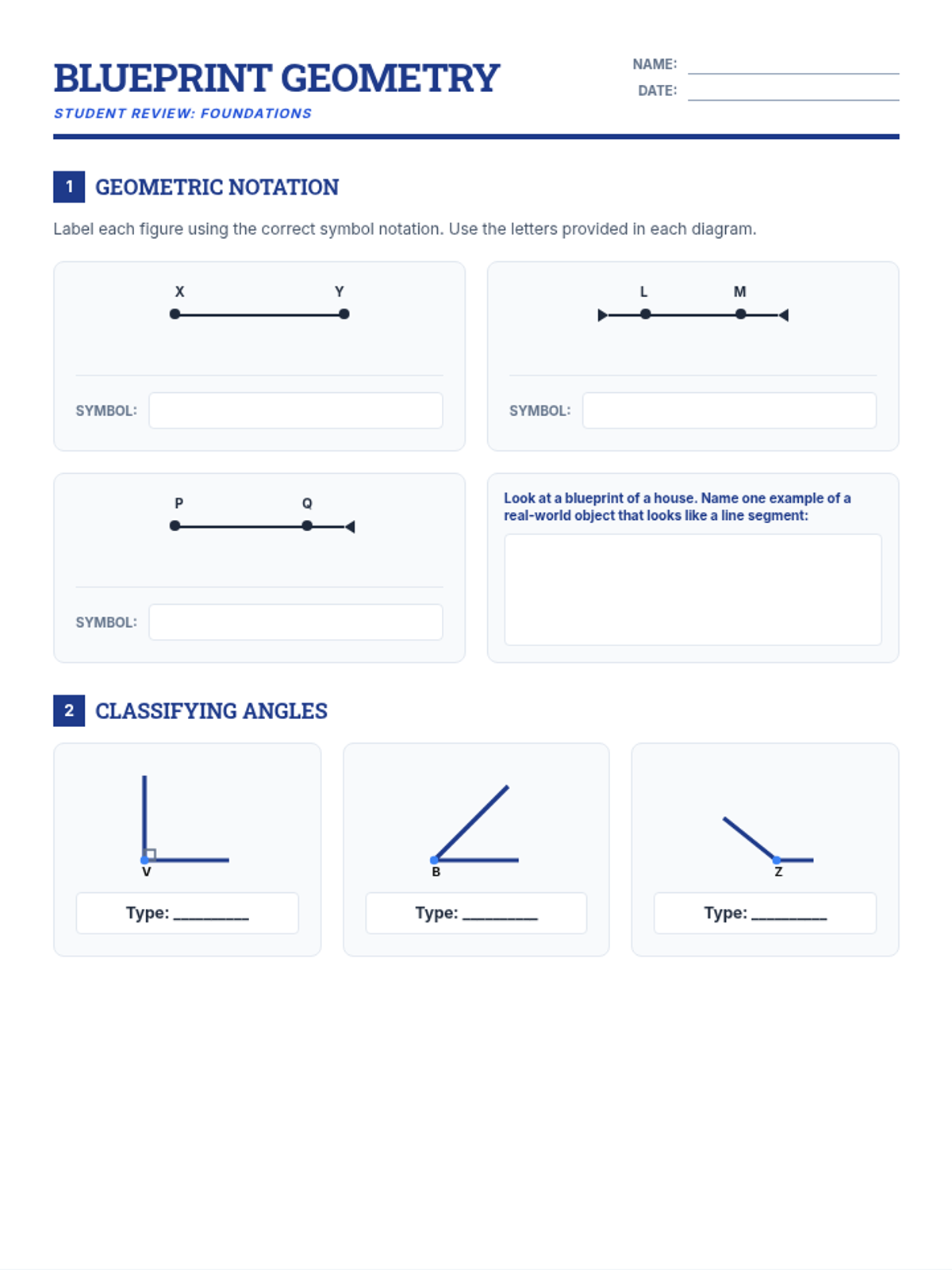
A multi-page geometry review worksheet featuring architectural blueprint styling. Covers labeling lines, angles, polygons, 3D shape attributes, and measurement (Perimeter, Area, Volume) with fractions and mixed numbers. Fixes issues with LaTeX rendering, page breaks, and overlapping labels.
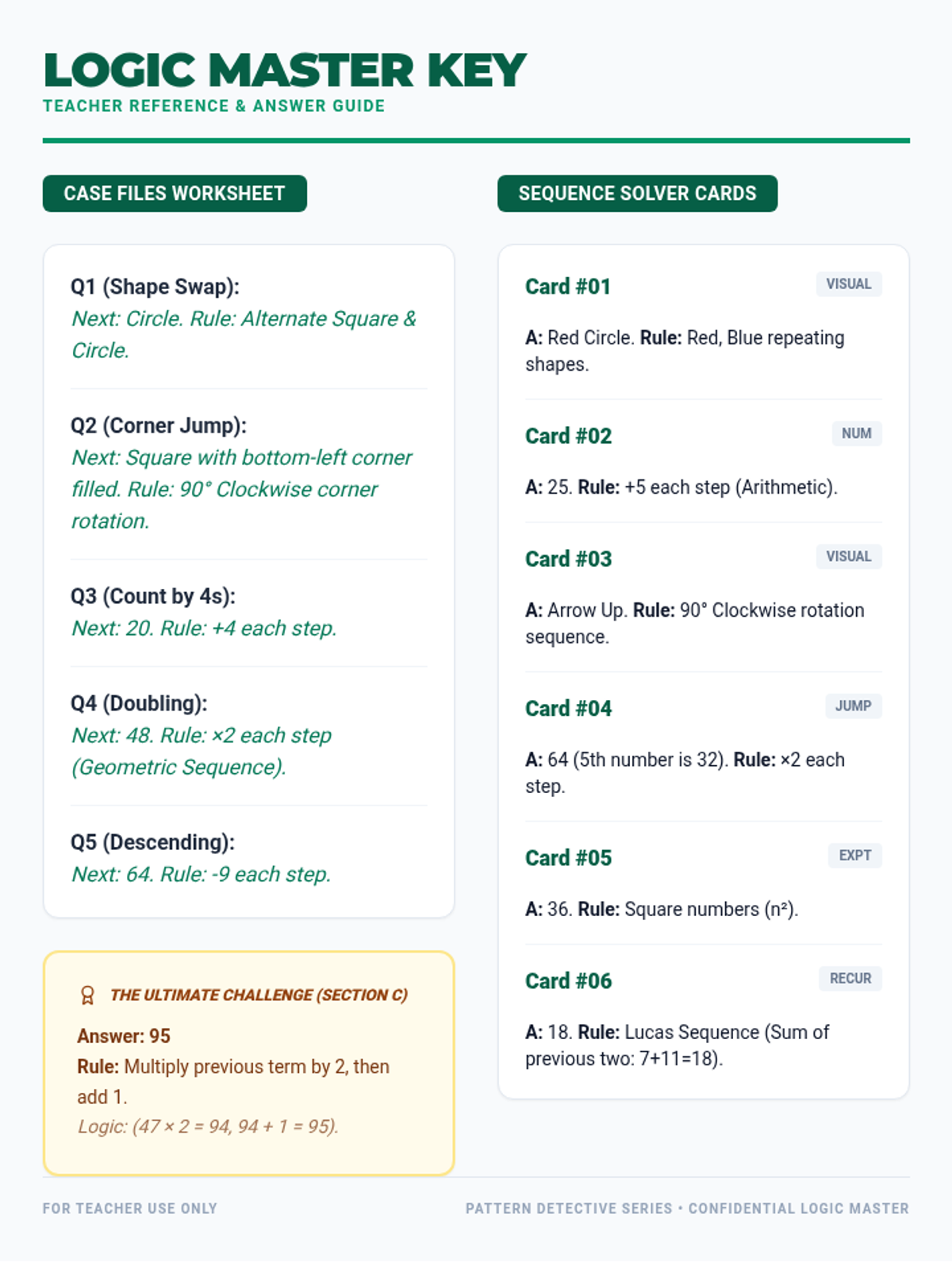
An answer key and teacher reference sheet for the Pattern Detective lesson, covering all worksheet problems and task cards with logic proofs. Footer and layout polished to fit on a single page.
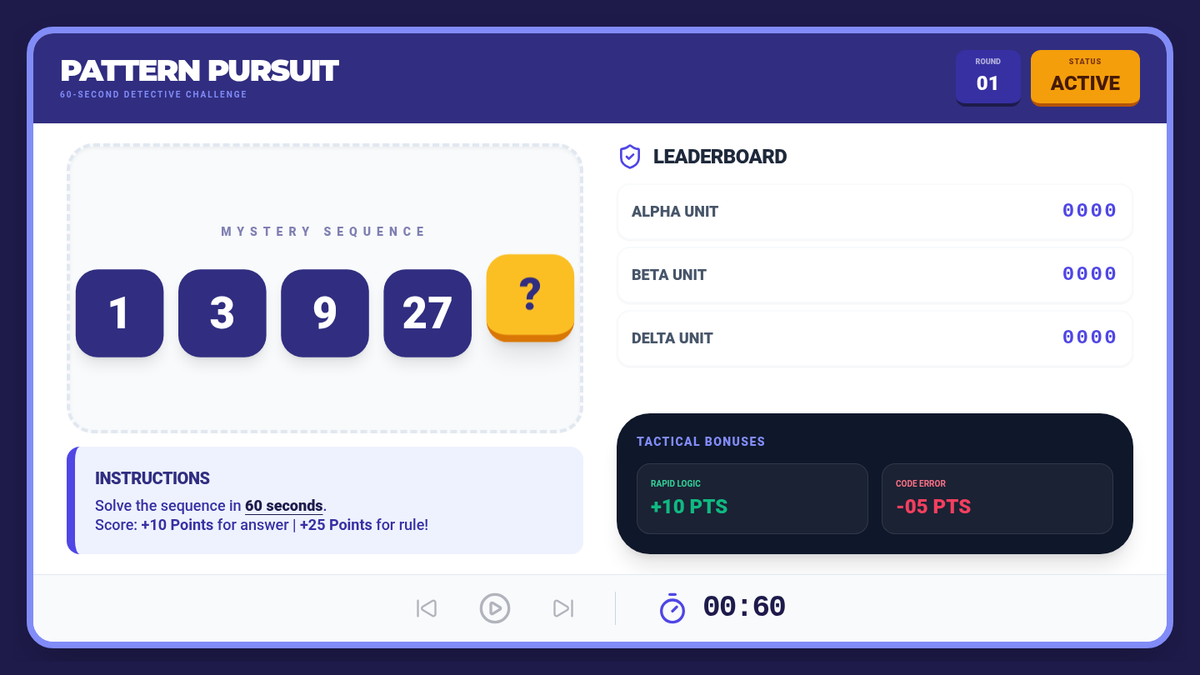
A visual "Game Board" for a Pattern Pursuit classroom game, featuring a leaderboard, mystery sequence display, and points system. Corrected layout to ensure all content fits on a single slide.
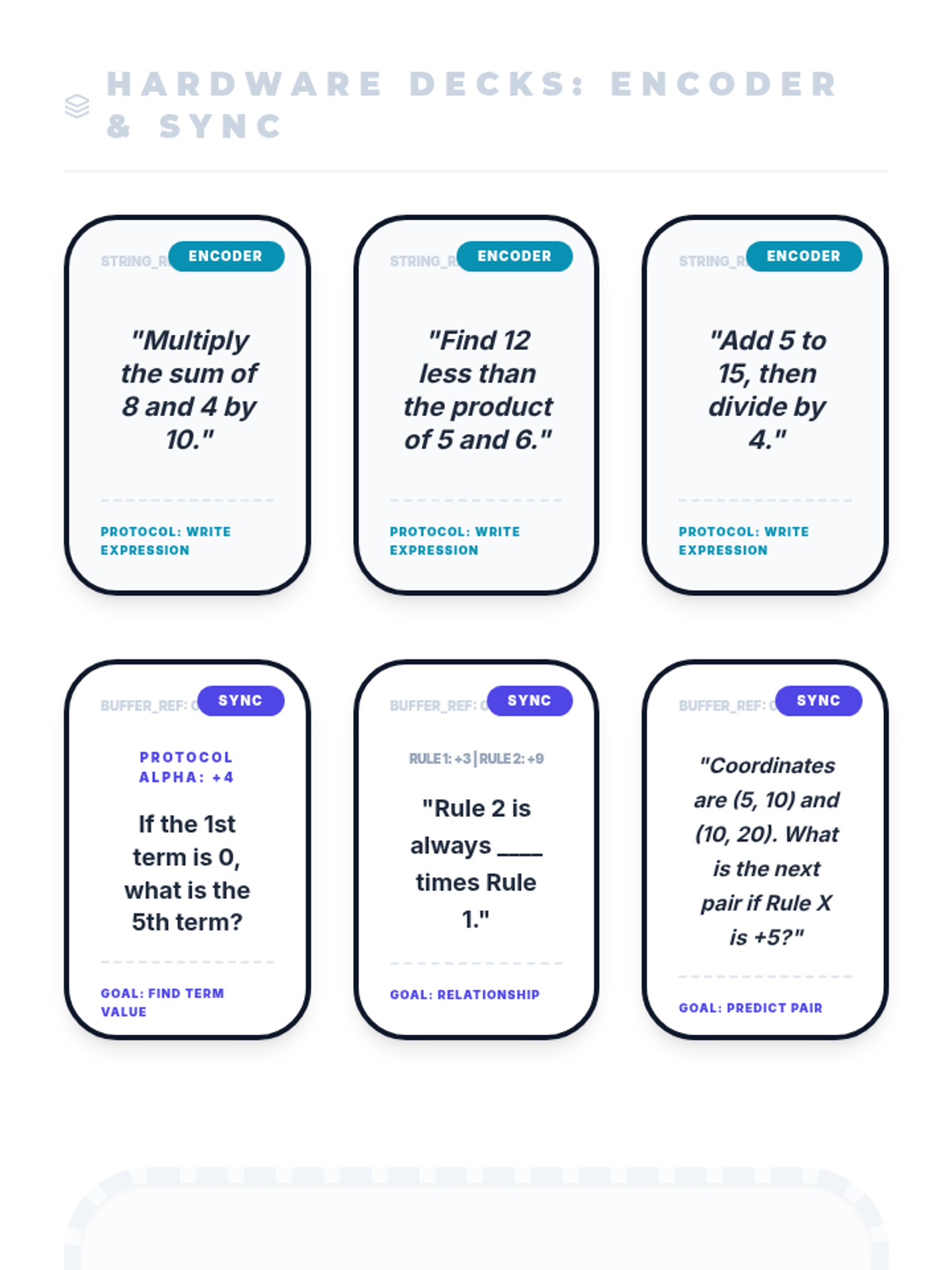
A printable set of challenge cards for the Protocol Pursuit board game, including Encoder (expressions) and Sync (patterns) tasks with an answer key on a separate page. Fixed layout for no-bleed printing.
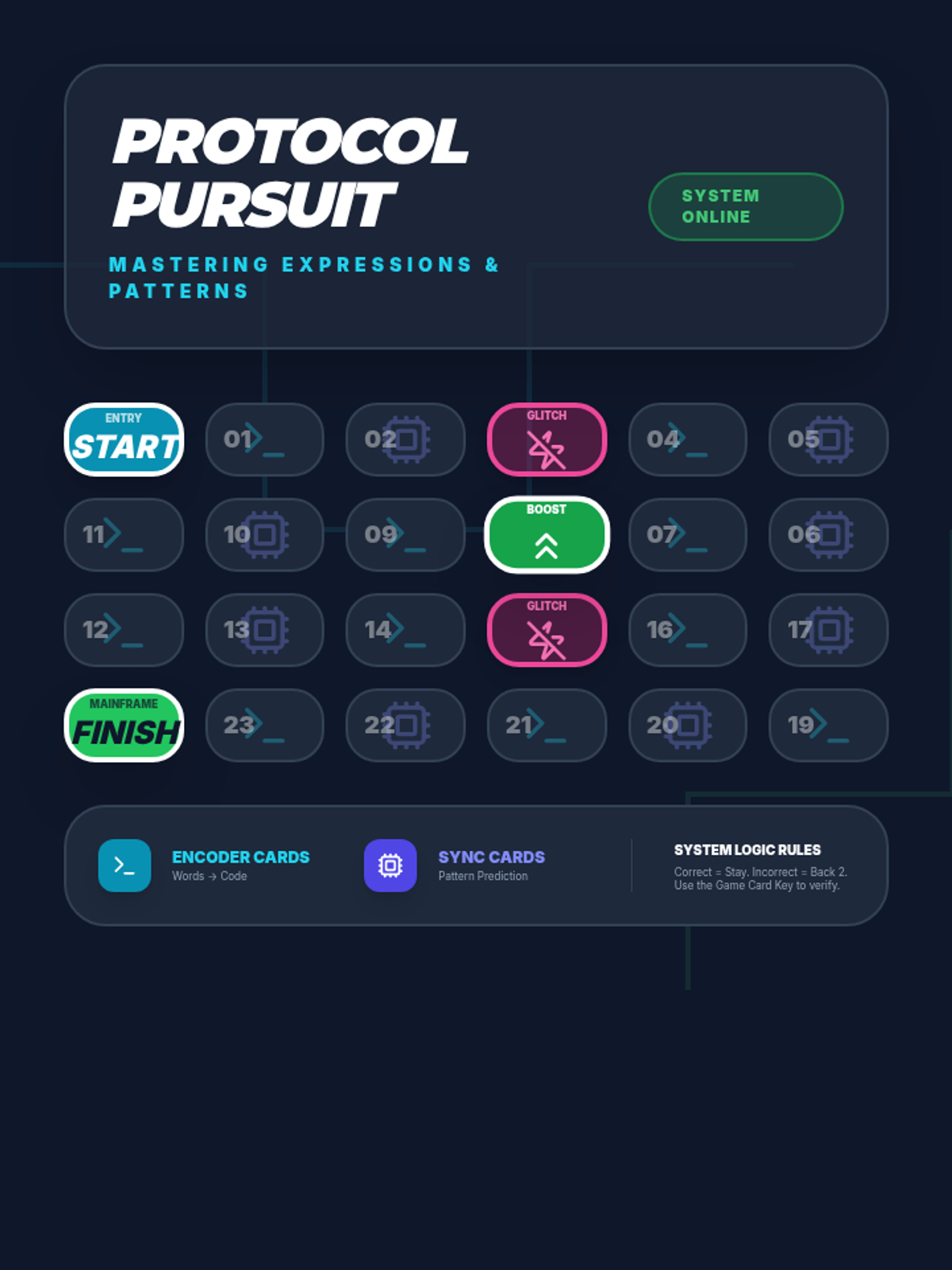
A printable circuit-themed board game for students to practice numerical expressions and patterns, featuring special 'Glitch' and 'Boost' spaces for added engagement. White-background theme for print efficiency.
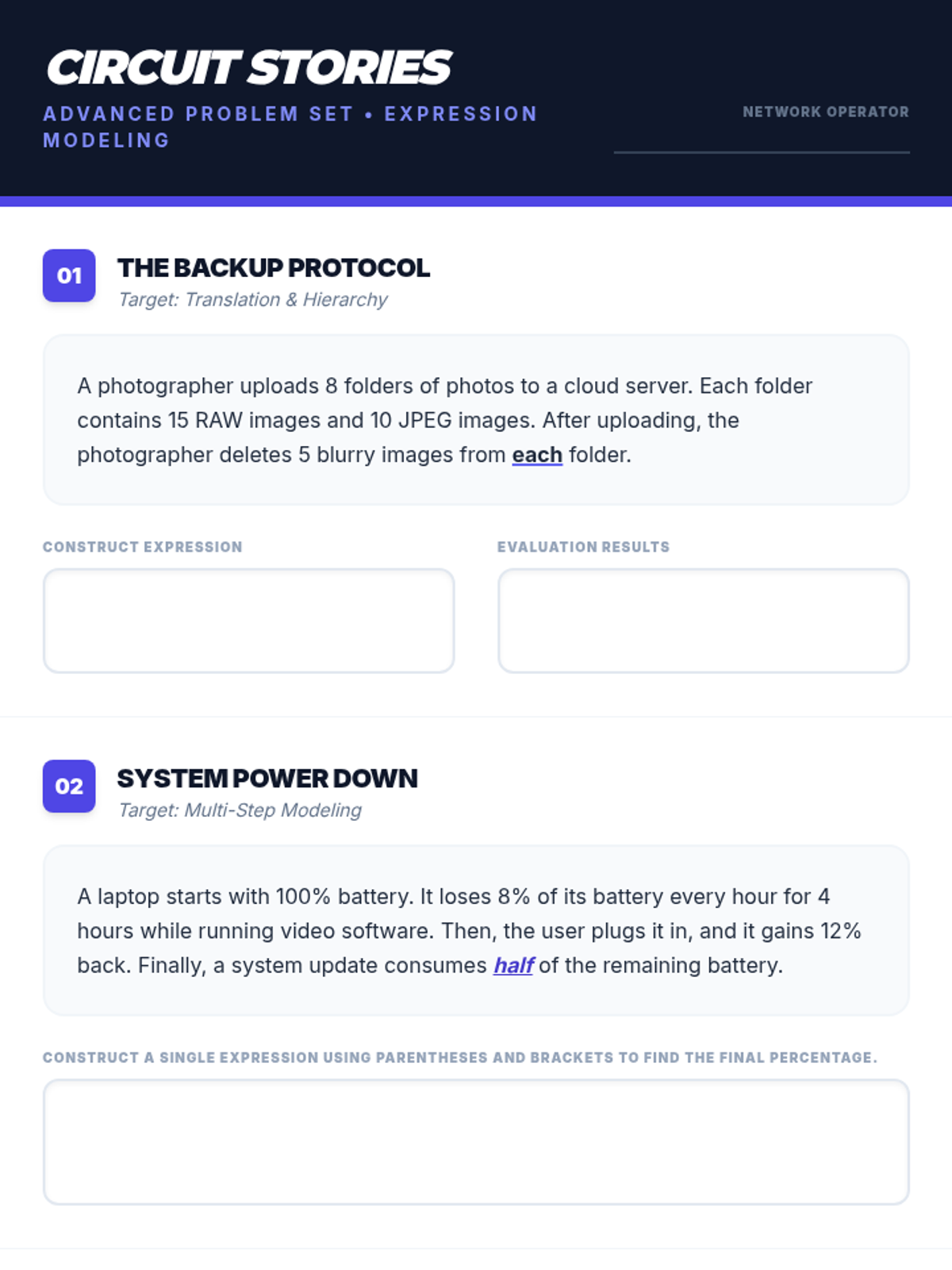
An advanced word problem set for the Pattern Protocol lesson, featuring complex scenarios involving cloud storage, battery management, and bandwidth comparison to master numerical expressions and pattern relationships. Corrected coordinate plane labels and empty work areas.
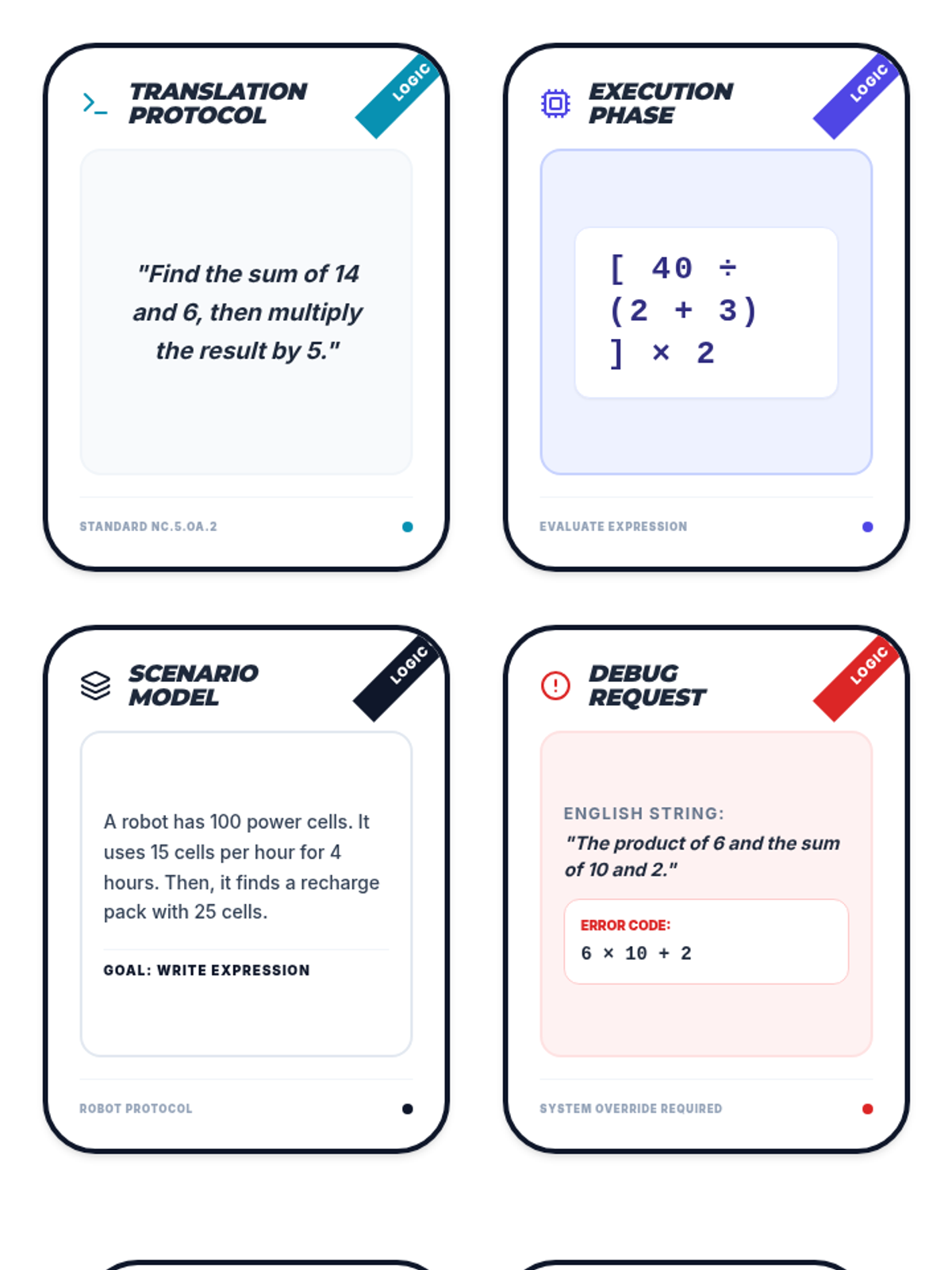
A set of 8 printable task cards designed for small group or station work, covering numerical expression writing and analyzing mathematical pattern relationships with a high-tech theme.
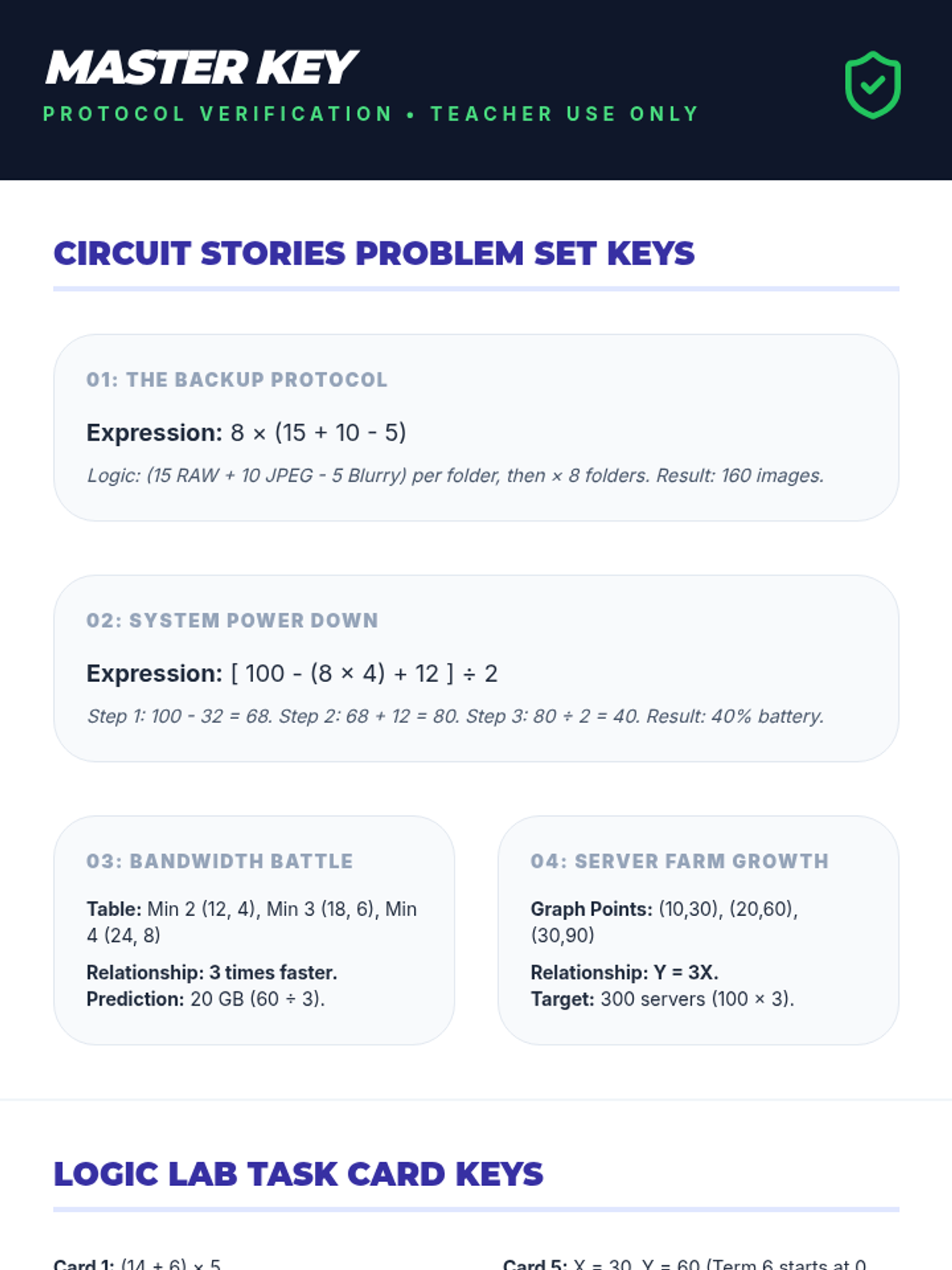
Comprehensive answer key for the Pattern Protocol lesson materials, including solutions for the Circuit Stories problem set, task cards, worksheet, and assessment. Corrected Task Card 5 values and logic contrast.
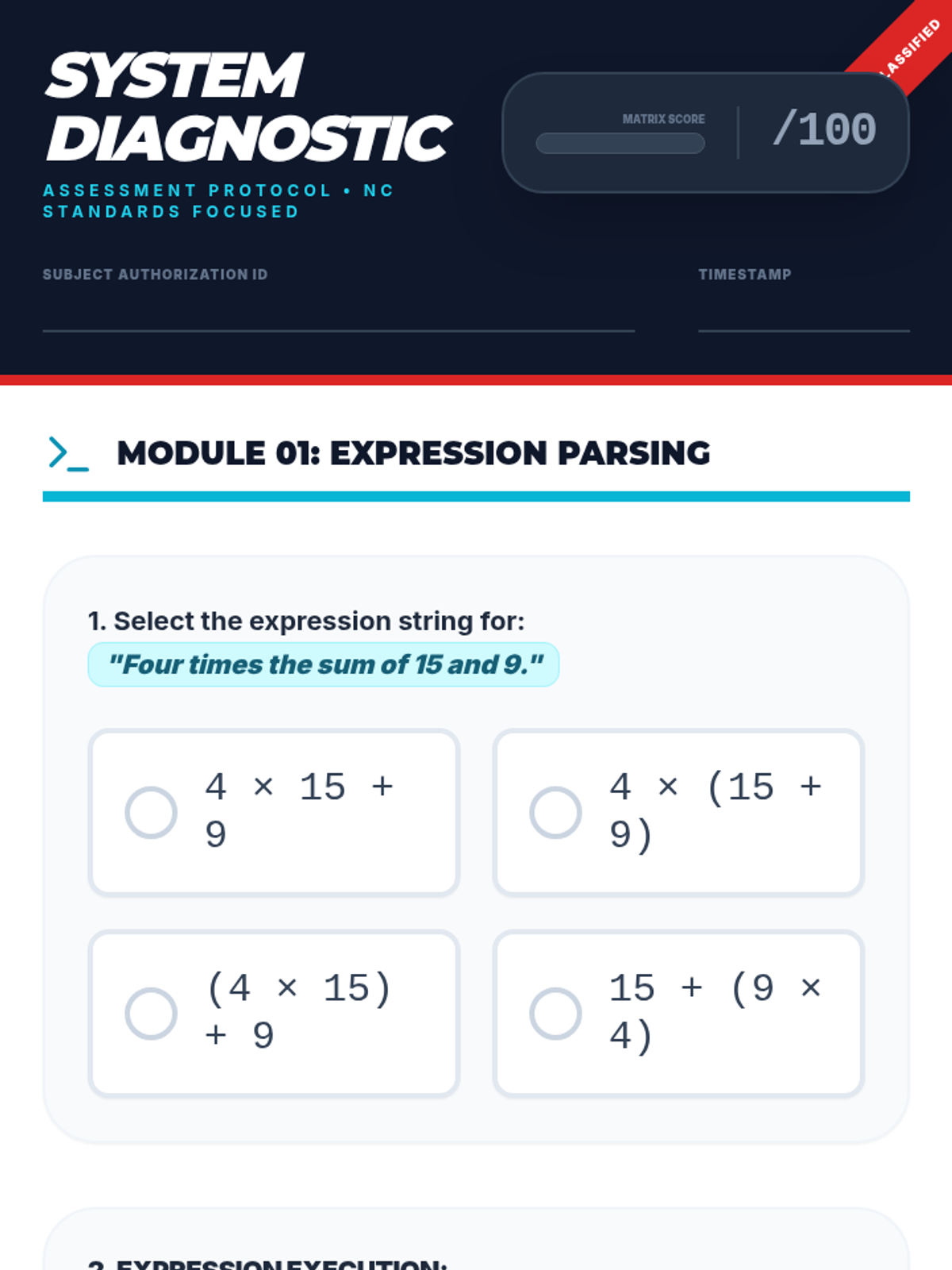
Final summative assessment for the Pattern Protocol lesson, testing students on numerical expression writing, pattern generation, coordinate pairs, and complex word problems with a high-tech diagnostic theme.
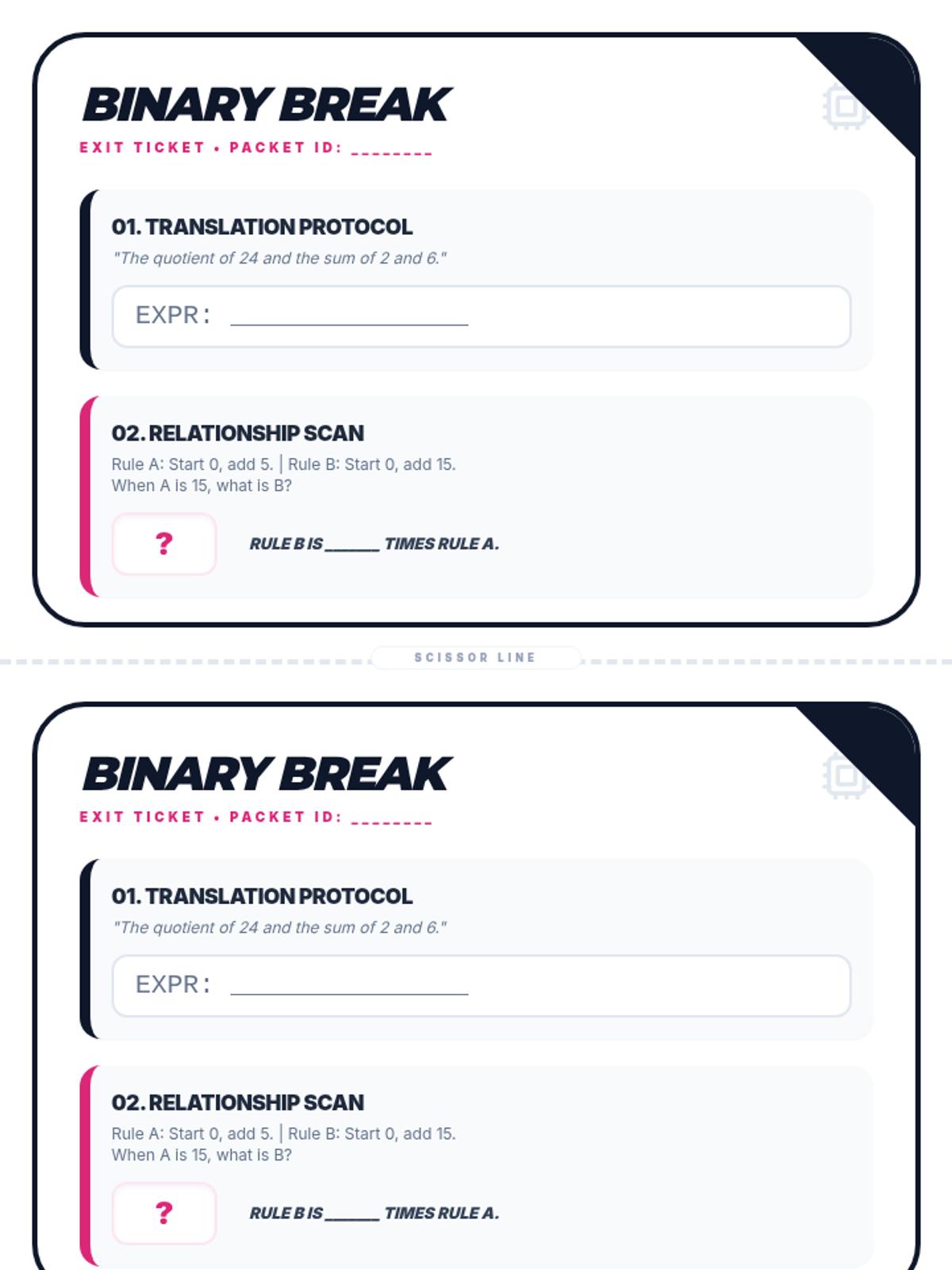
A compact exit ticket for quick assessment of expression writing and pattern relationships, designed with a clean digital theme and two-to-a-page layout for easy printing.
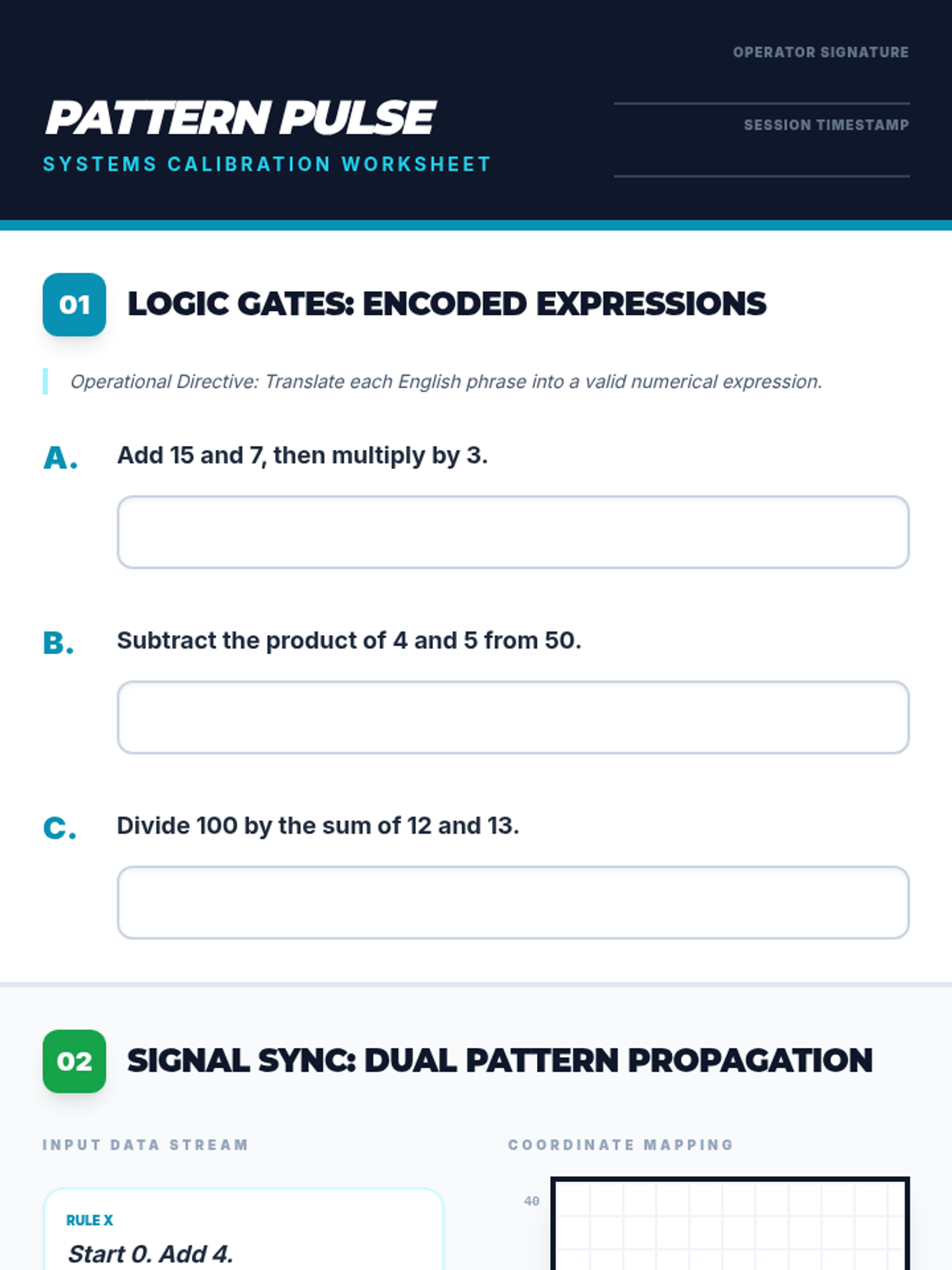
Practice worksheet for the Pattern Protocol lesson, featuring expression writing from phrases, dual pattern generation and graphing, and complex word problem applications with a tech-inspired aesthetic.
Instructional slide deck for the Pattern Protocol lesson, featuring vibrant visuals, code-inspired themes, and clear explanations for numerical expressions and coordinate graphing.
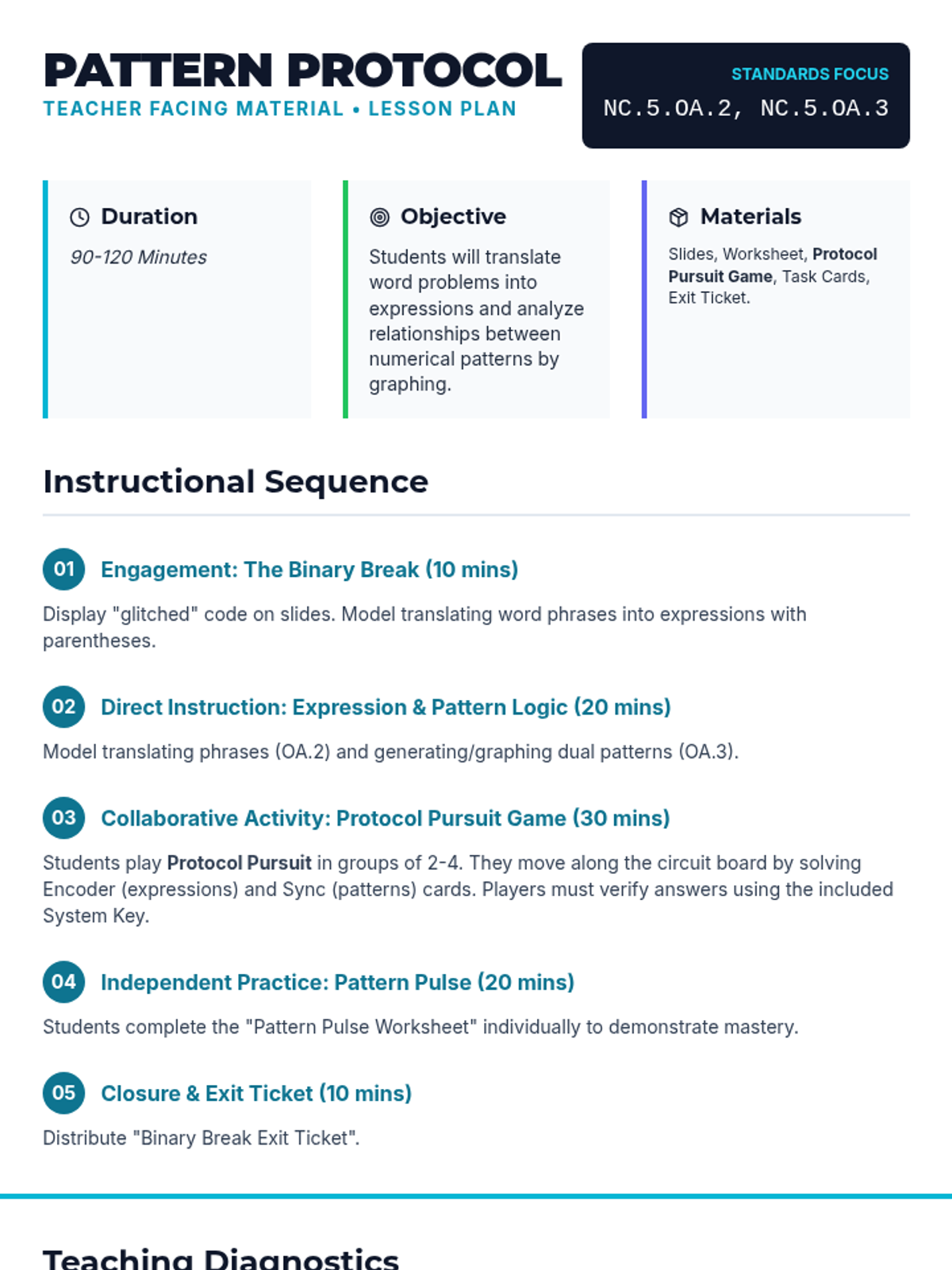
A detailed teacher lesson plan for the Pattern Protocol lesson, covering standards NC.5.OA.2 and NC.5.OA.3 with instructional steps, differentiation strategies, and common misconceptions.
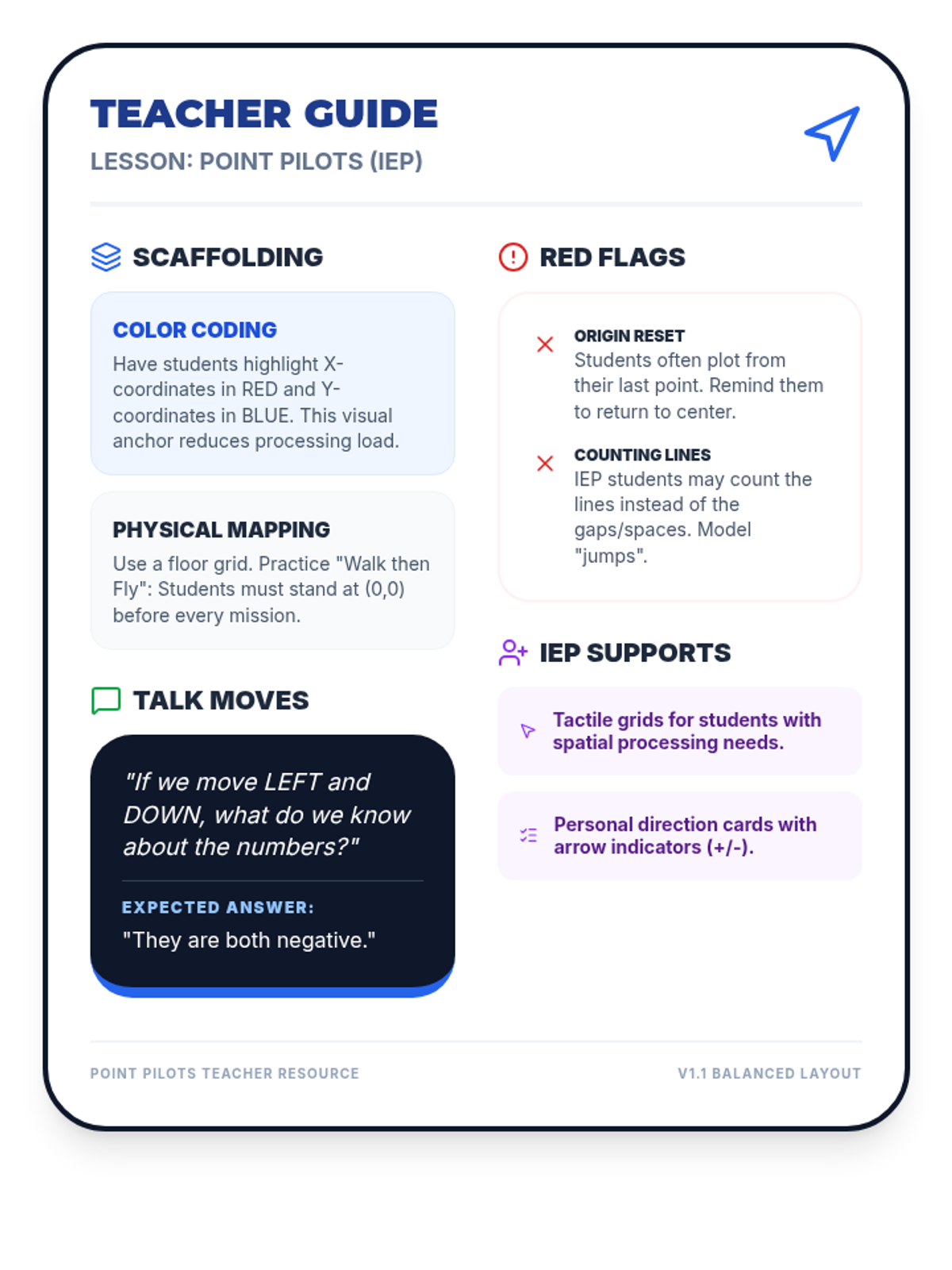
A high-impact single-page teacher guide designed for rapid reference. Includes specific scaffolding techniques for IEP students, common misconception alerts, and physical mapping ideas to solidify coordinate plane navigation.
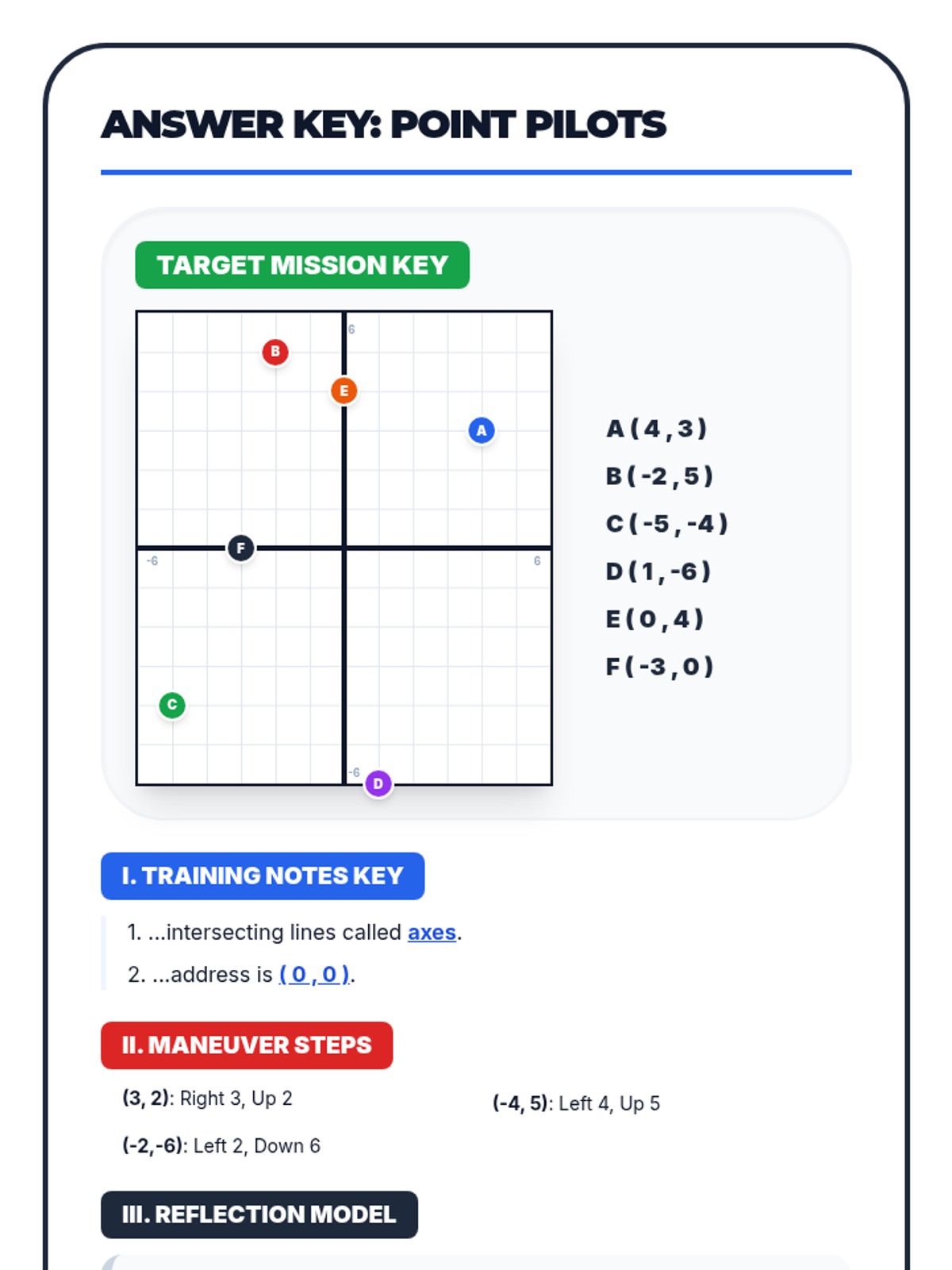
Comprehensive answer key for the Point Pilots lesson. Includes full text-based answers for guided notes, a detailed visual coordinate plane showing all target points, and a complete model response for the student reflection.
An instructional slide deck for teaching the 4-quadrant coordinate plane. Features ultra-high-contrast visuals, robust grid systems with numerical labeling, and identical quiz styling to ensure non-telegraphed learning for IEP students.
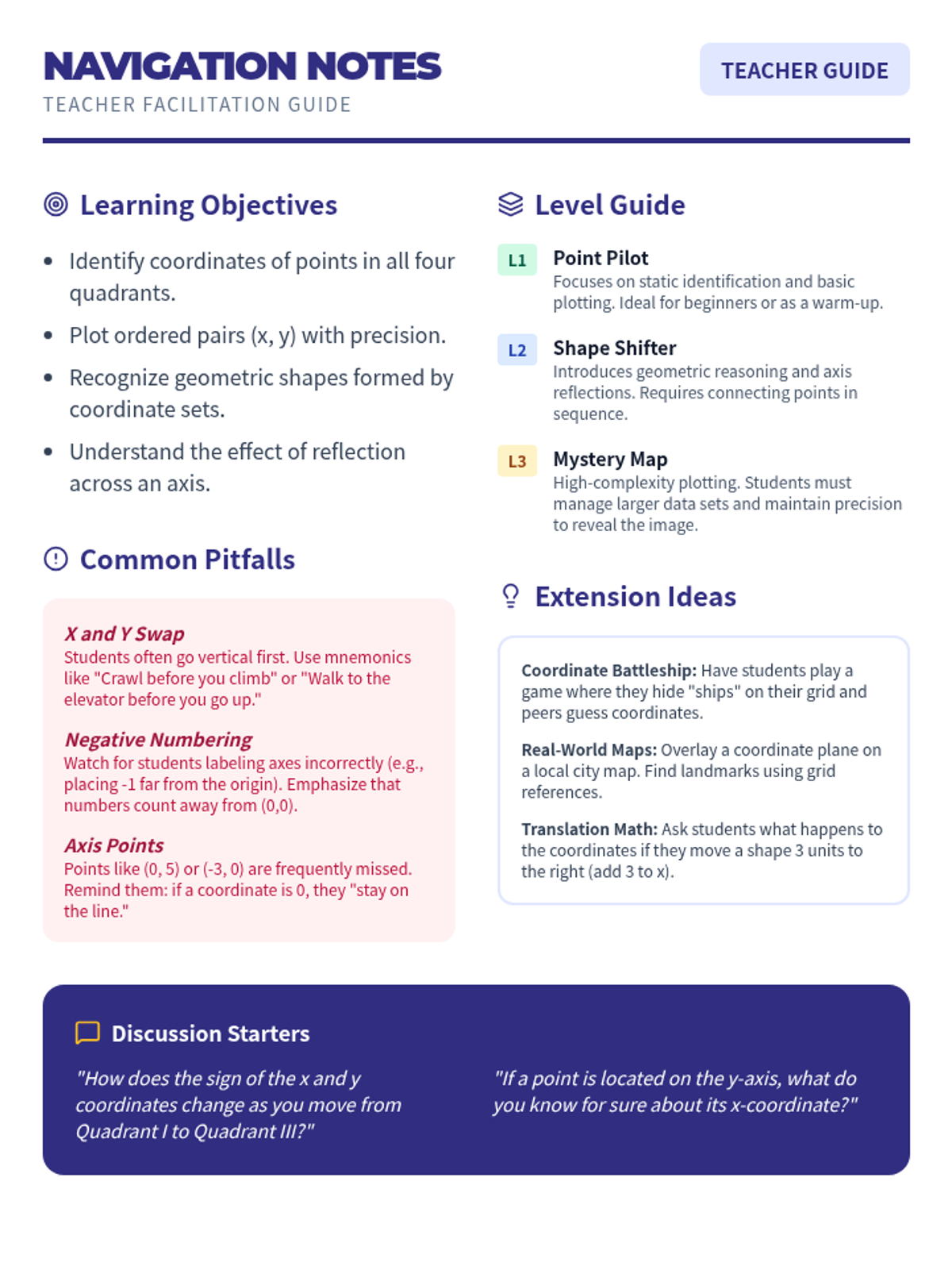
Teacher facilitation guide for the Coordinate Quest lesson. Includes learning objectives, common student misconceptions, a guide to the three levels of worksheets, and extension activity ideas.
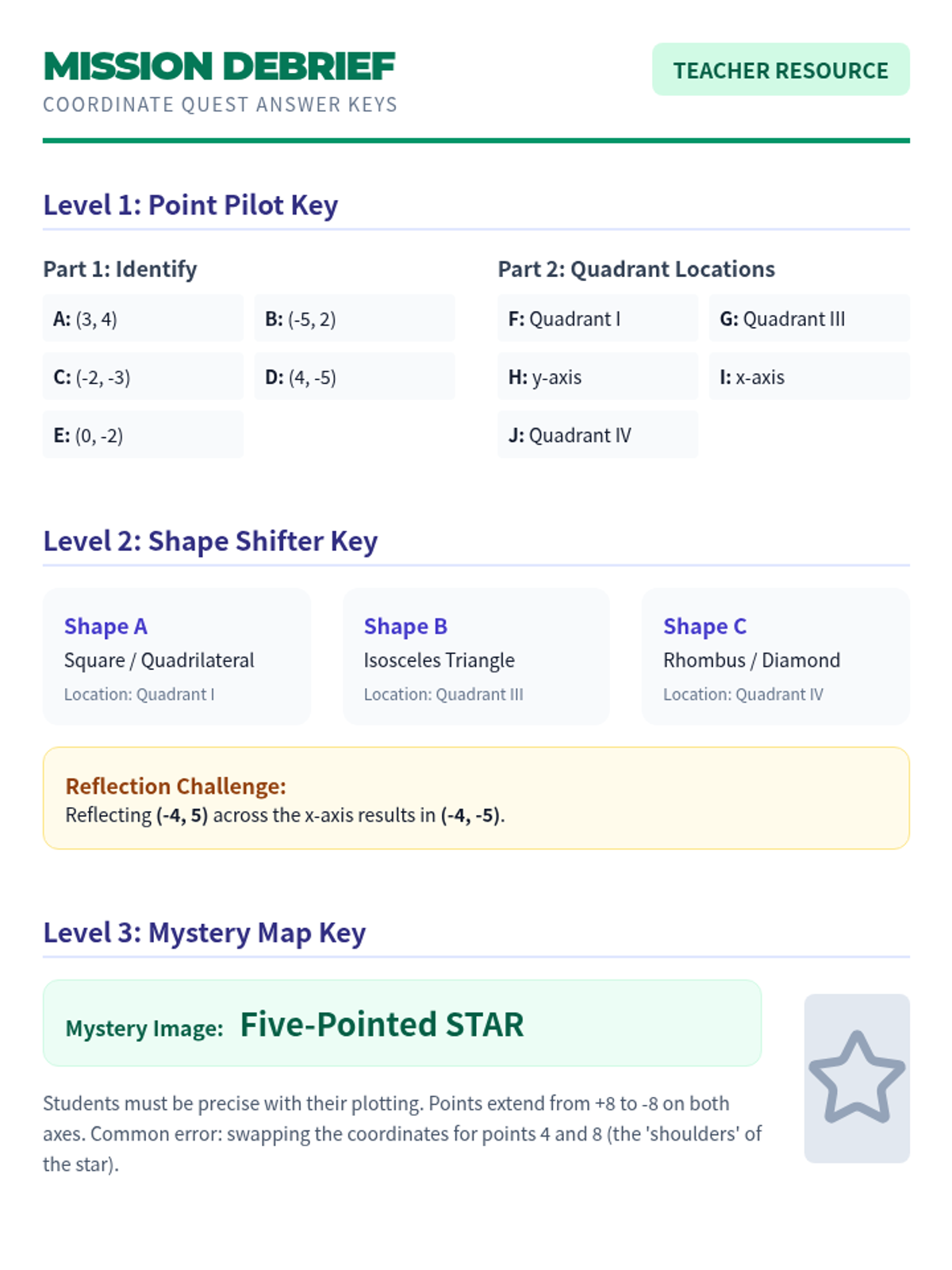
Answer keys for all three levels of the Coordinate Quest worksheets, providing point values, shape identifications, and reflection challenge results.
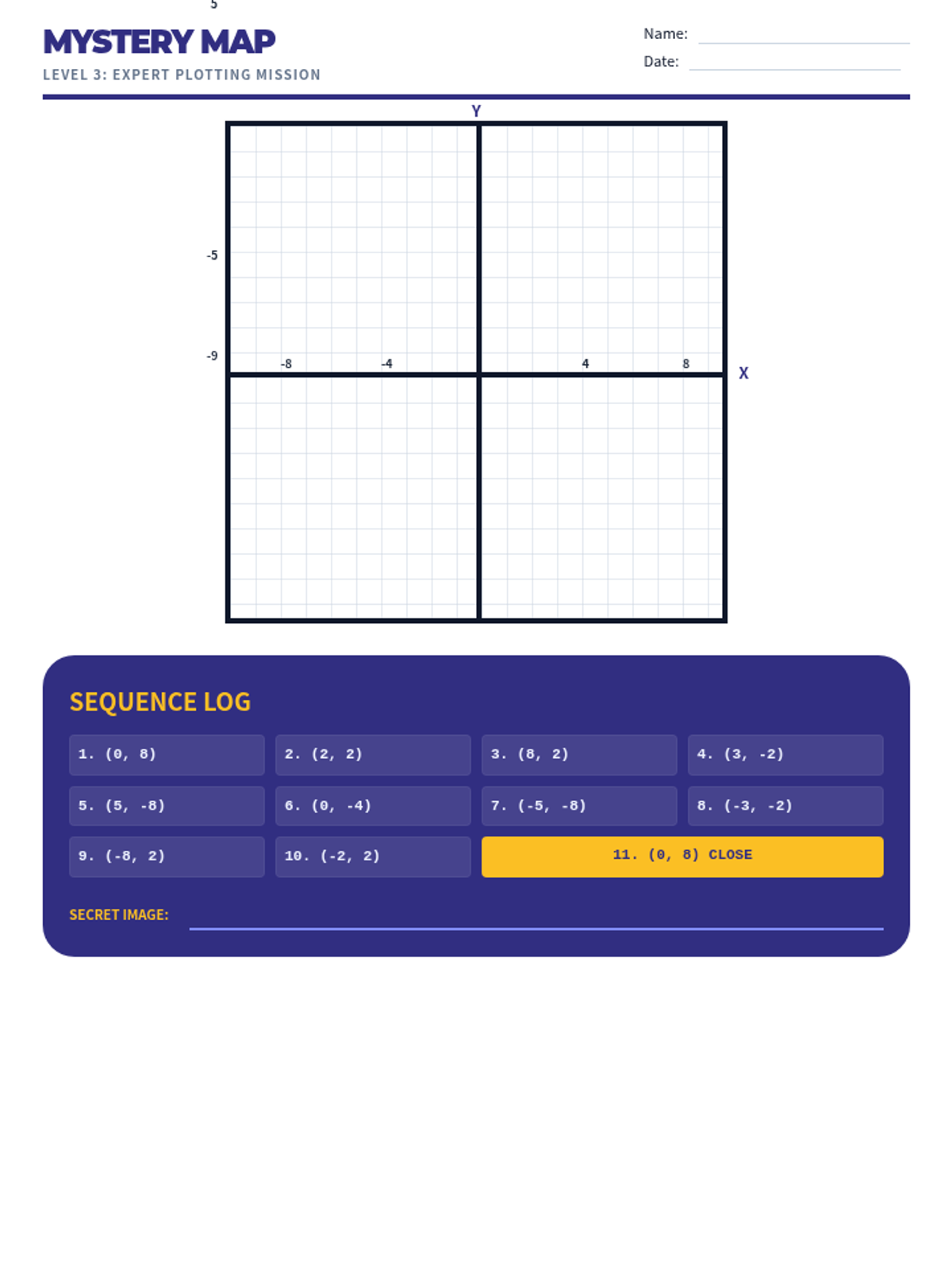
Level 3 mystery picture worksheet where students plot a sequence of 11 coordinates in all four quadrants to reveal a star shape. Revised to include numerical axis labels, darken grid lines, and ensure all content fits on a single page.
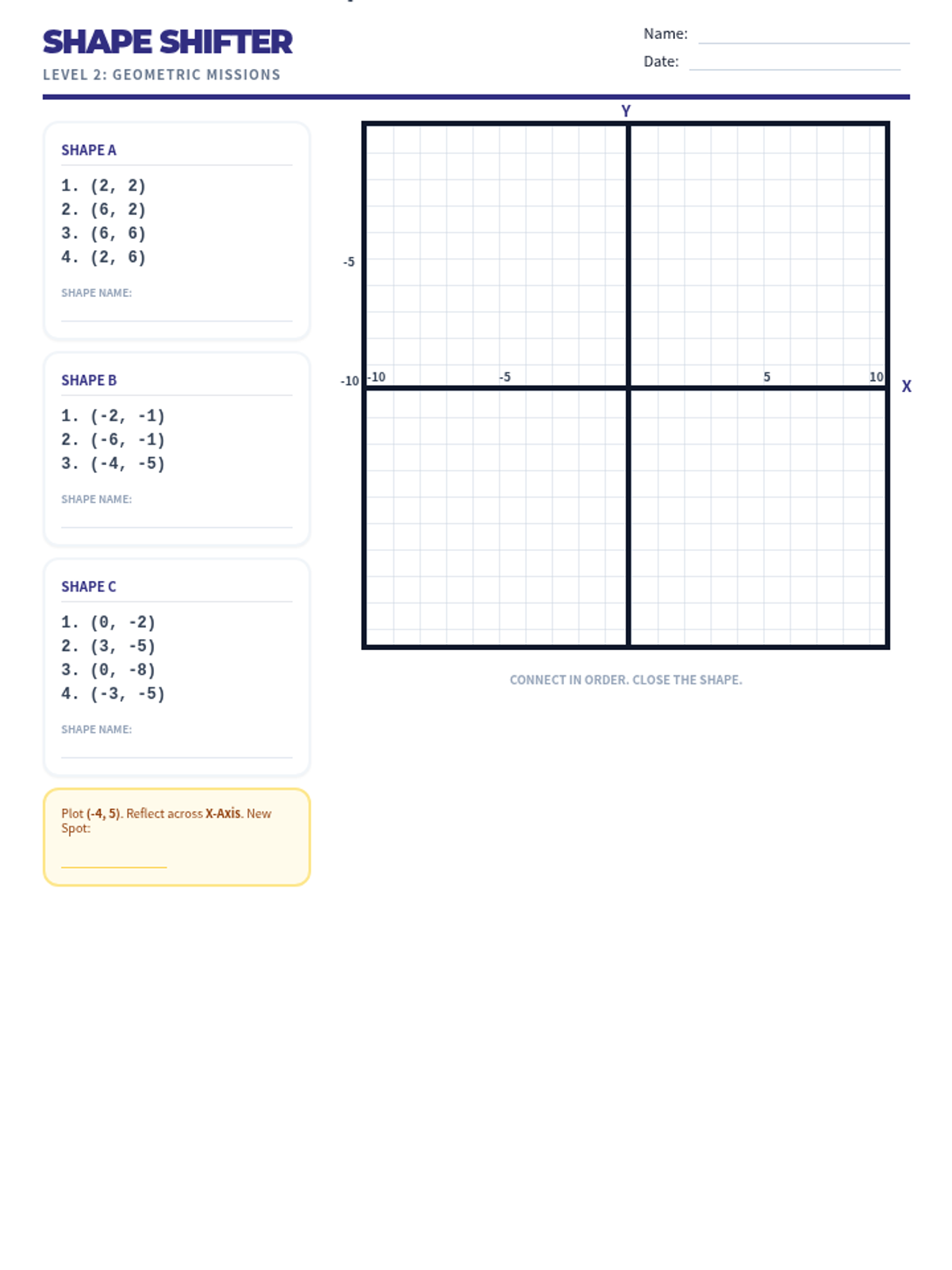
Level 2 worksheet focusing on plotting sequences of points to create geometric shapes. Includes three multi-point tasks and a reflection challenge. Revised to add numerical axis labels, darken grid lines, and ensure all content fits on a single page.
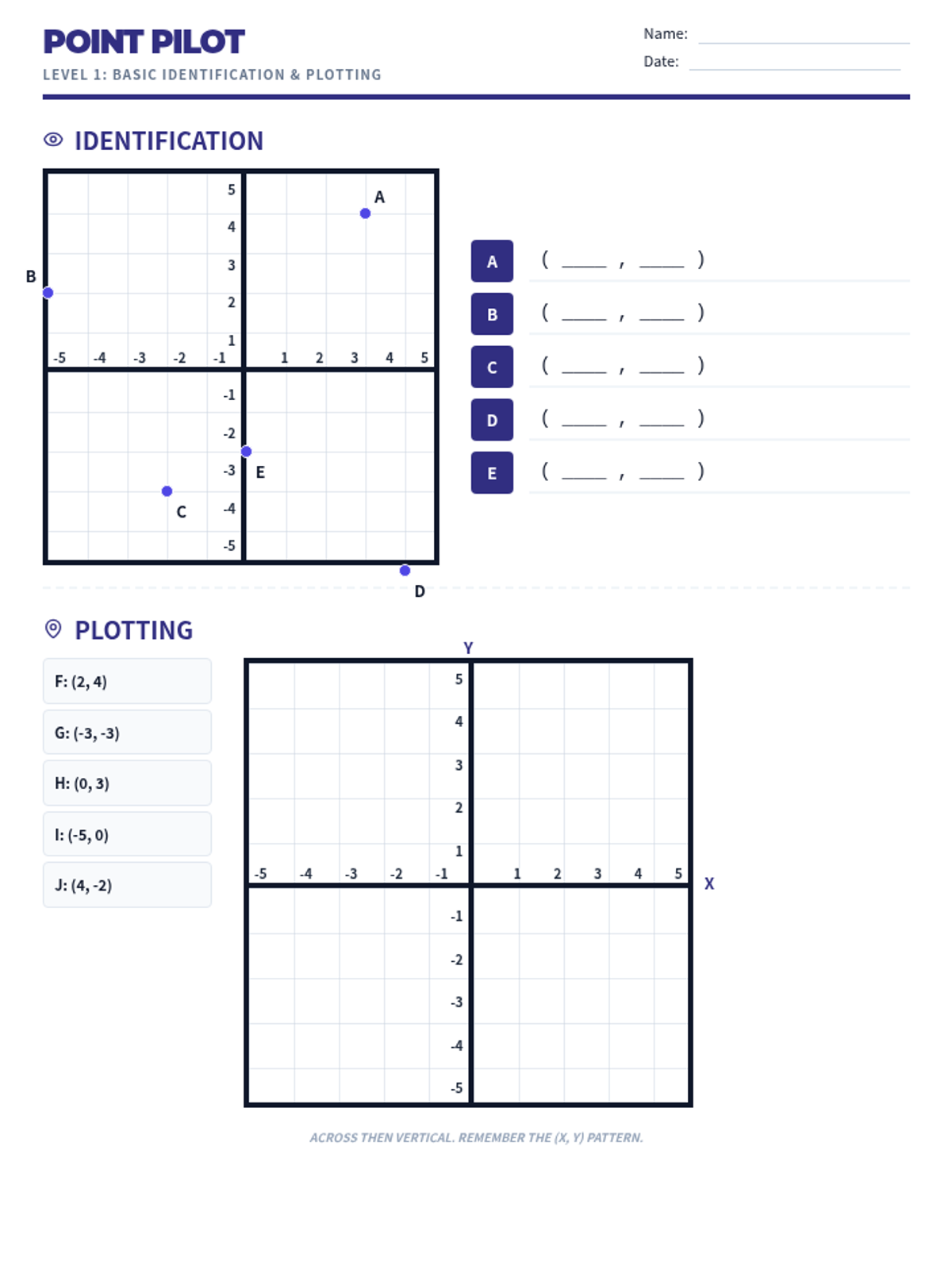
Level 1 worksheet for basic coordinate identification and plotting. Features a 10x10 grid with points to identify and a blank grid for plotting specific coordinates. Revised to improve grid visibility, add numerical axis labels, and fit all content on a single page.
Instructional slides for teaching the coordinate plane across all four quadrants. Covers terminology, quadrant numbering, and the horizontal-then-vertical plotting strategy. Revised to include numbered axes, corrected quadrant flow, and a blank plotting grid for class practice.