Essential grammar structures, high-frequency vocabulary, and foundational literacy skills. Equips learners with basic speaking and listening abilities for everyday interactions and introductory text comprehension.
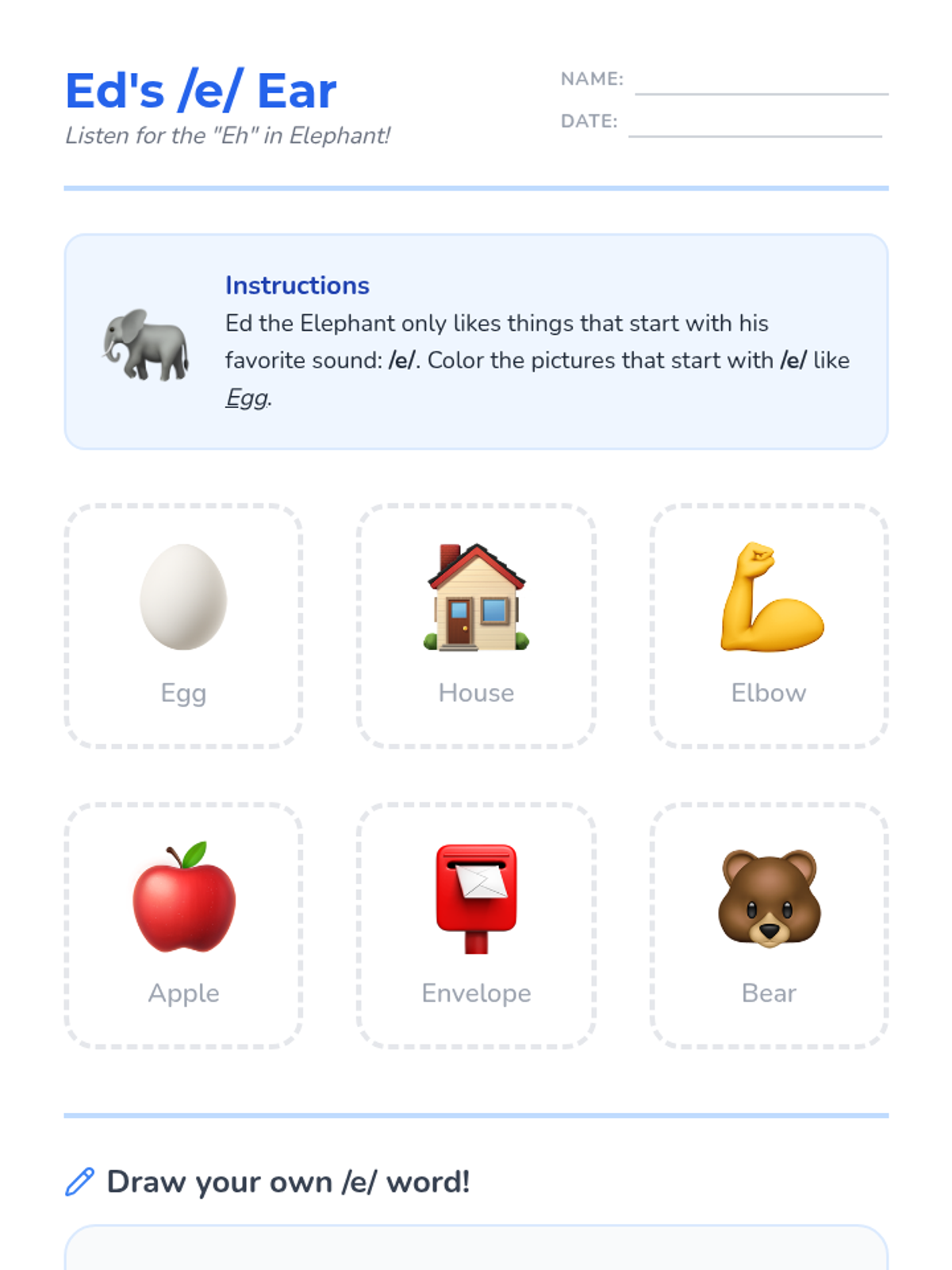
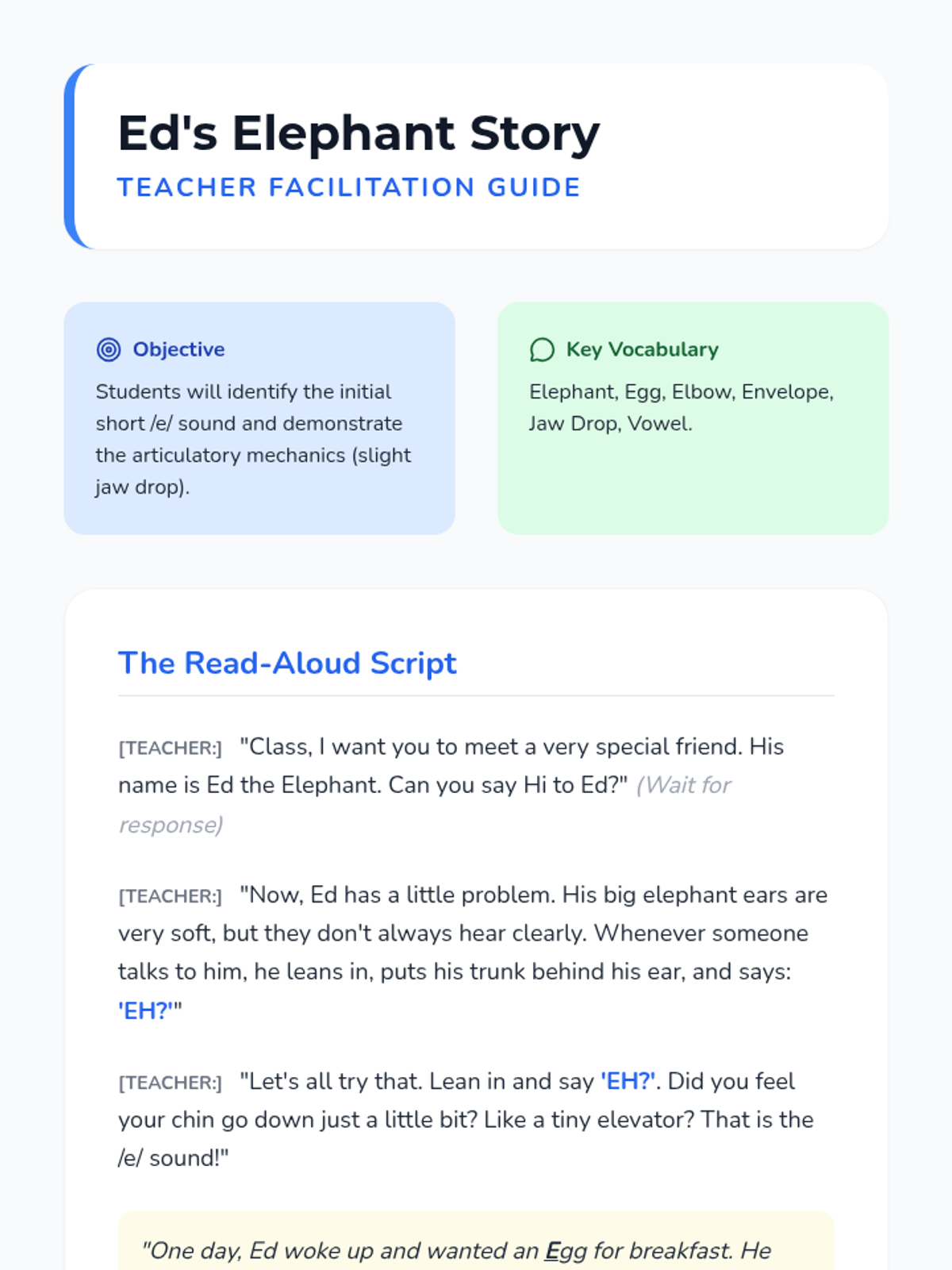
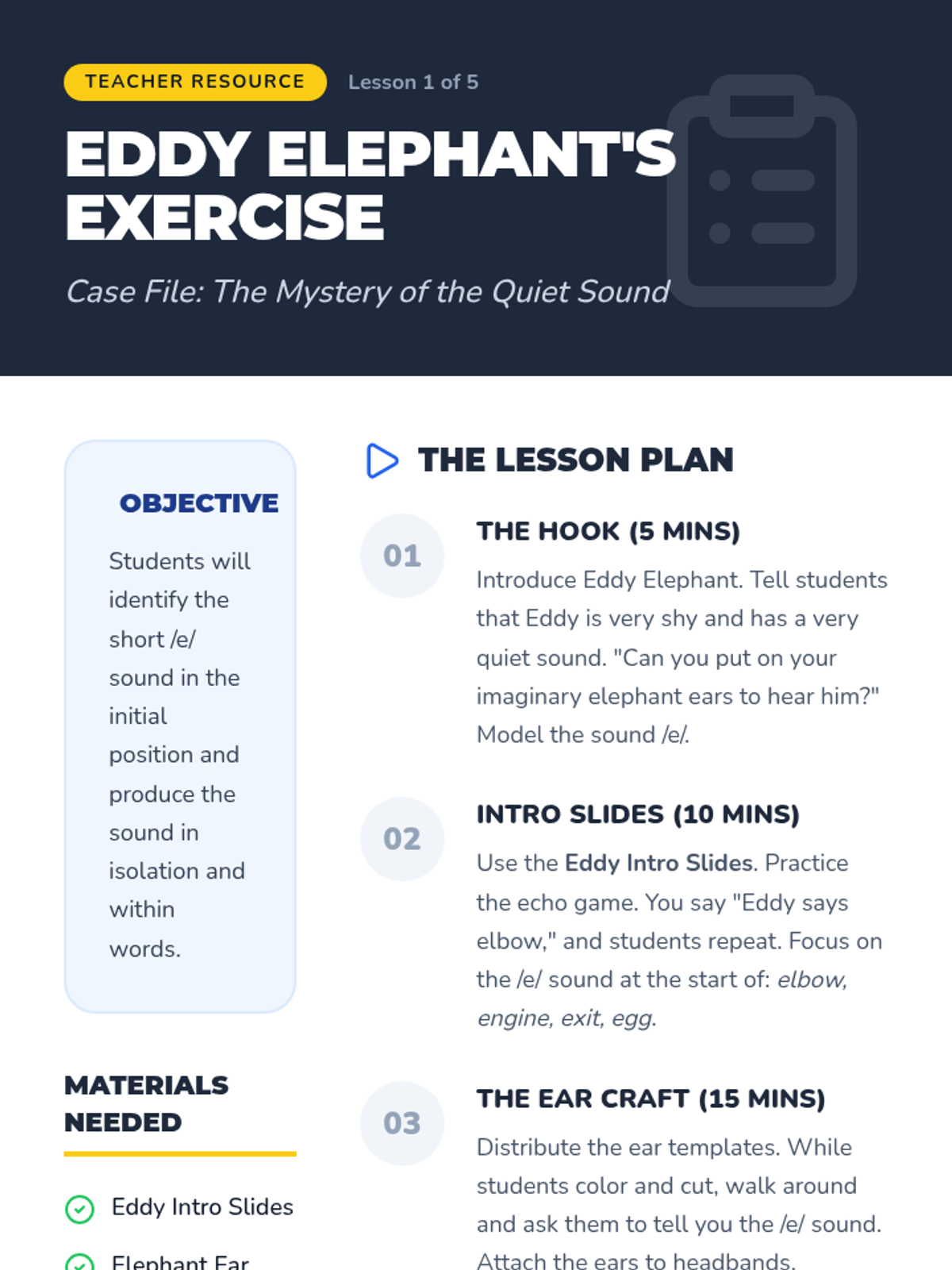
A comprehensive Pre-K sequence focused on mastering the short /e/ sound and distinguishing it from other vowels. Includes articulatory practice, minimal pair discrimination, word family exploration, and a final certification showcase.
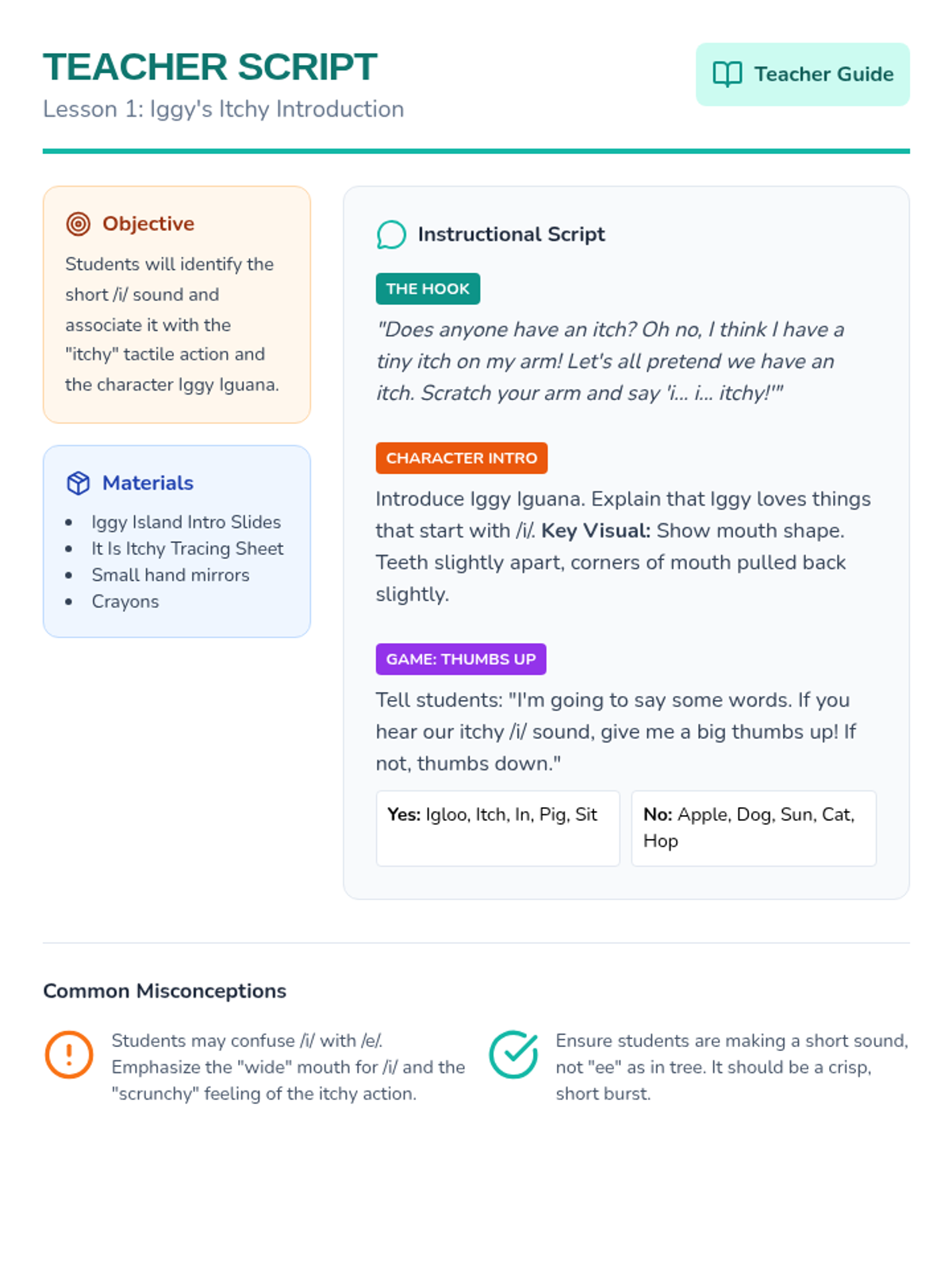
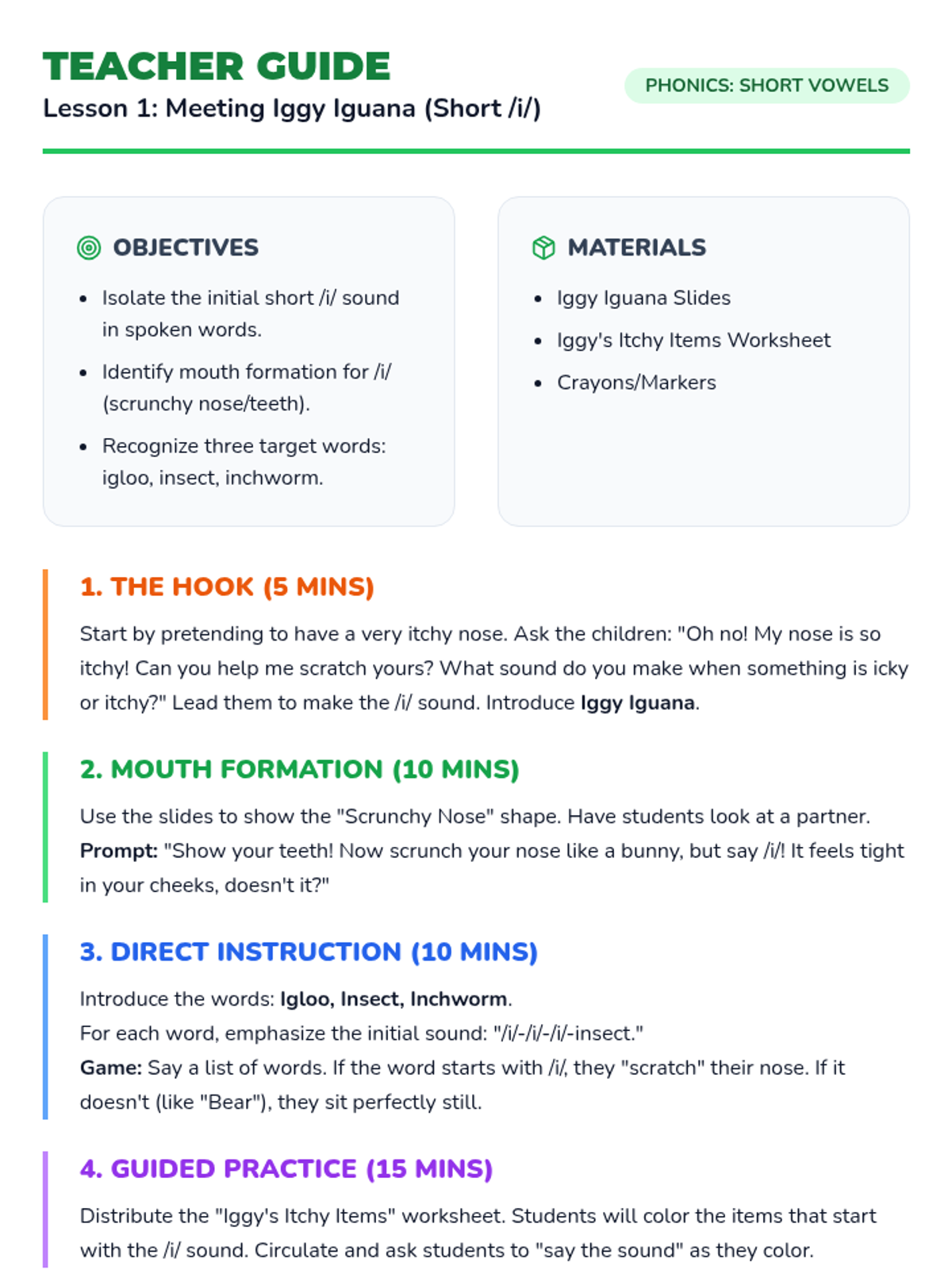
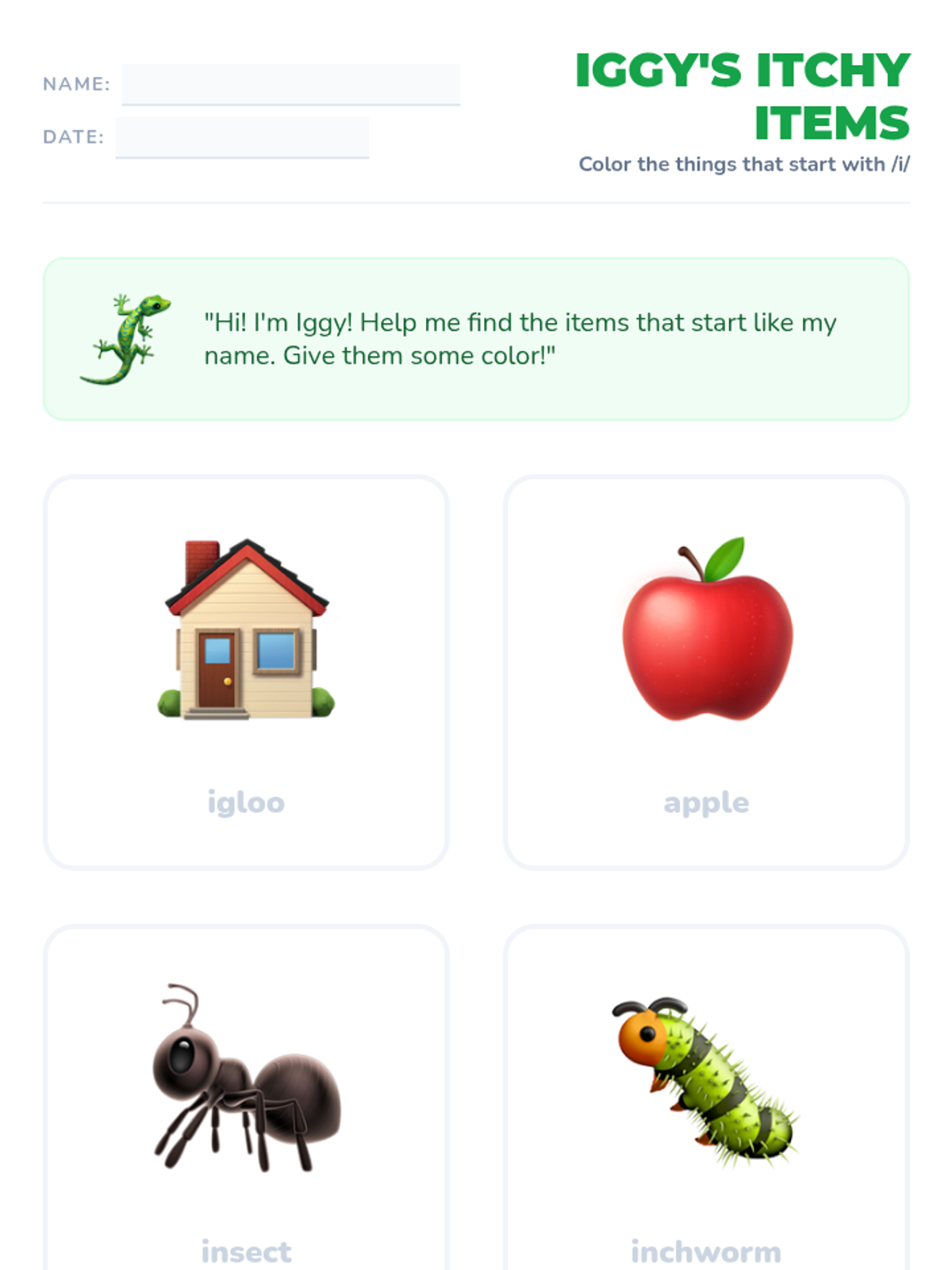
A game-based phonics sequence for Pre-K students focused on discriminating and blending the short /i/ sound using the 'Iggy Iguana' character and 'itchy' tactile cues.
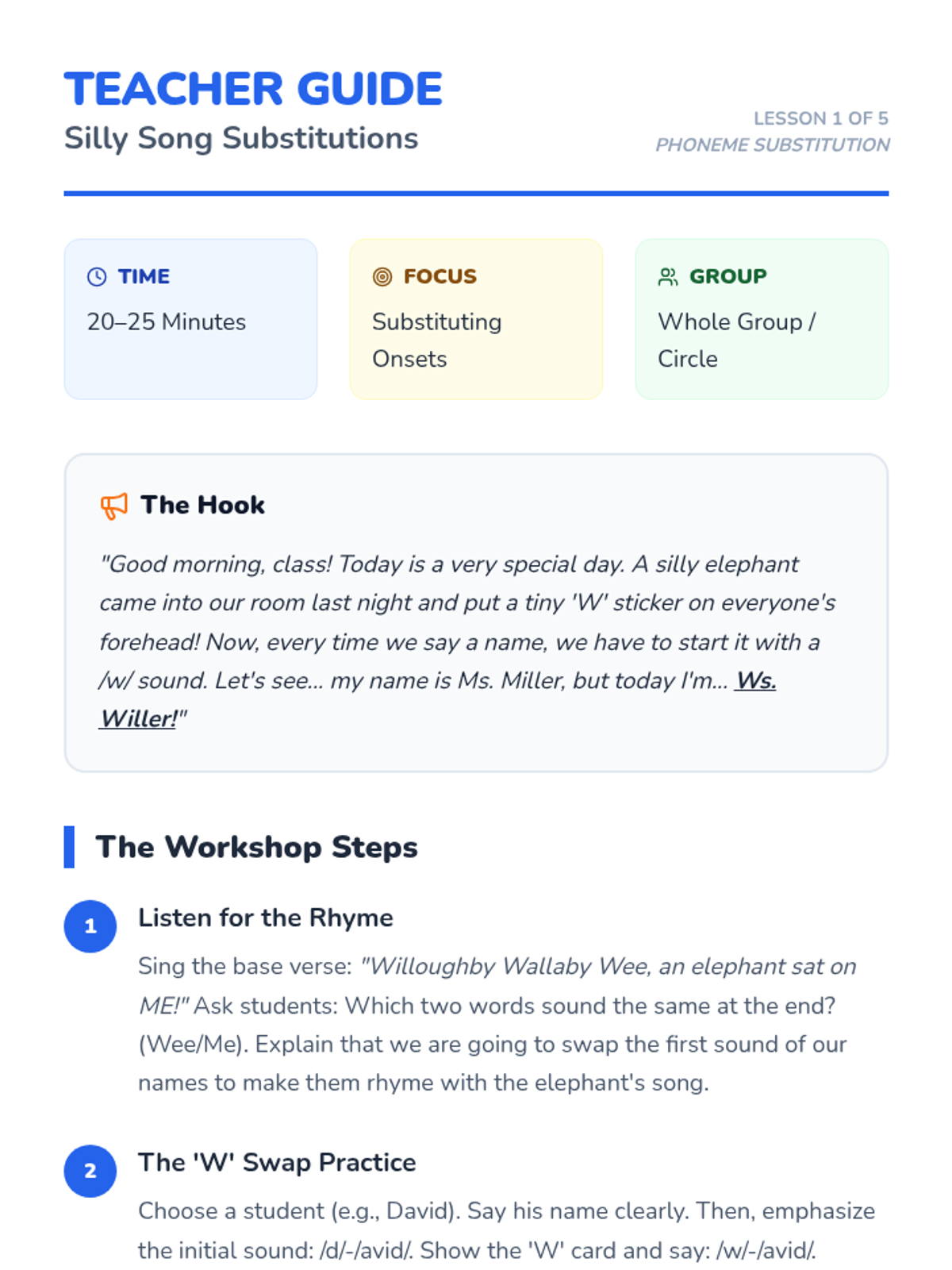
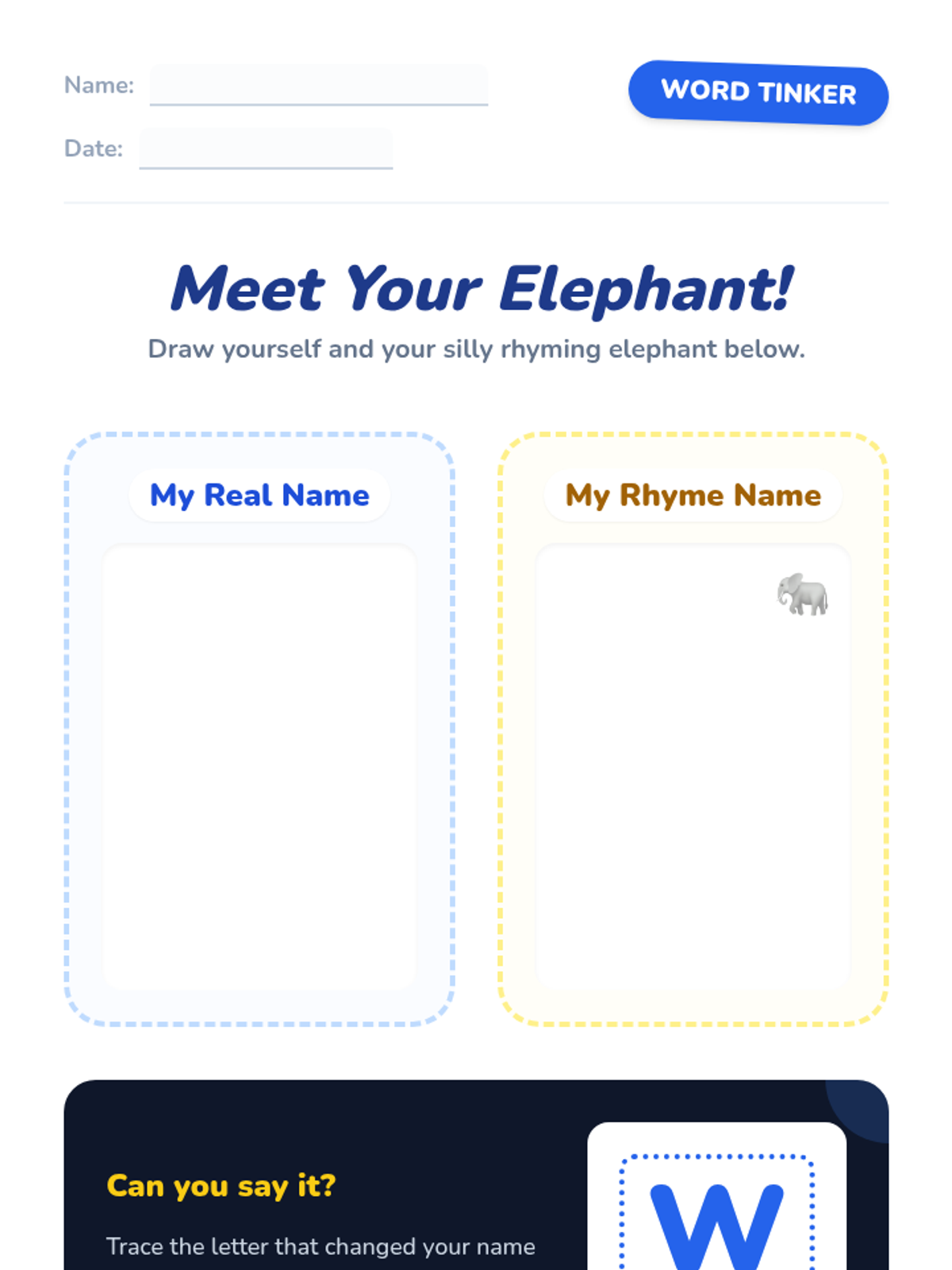
A Pre-K sequence focused on phoneme substitution, teaching students to swap initial sounds to create new rhyming words through songs, games, and storytelling.
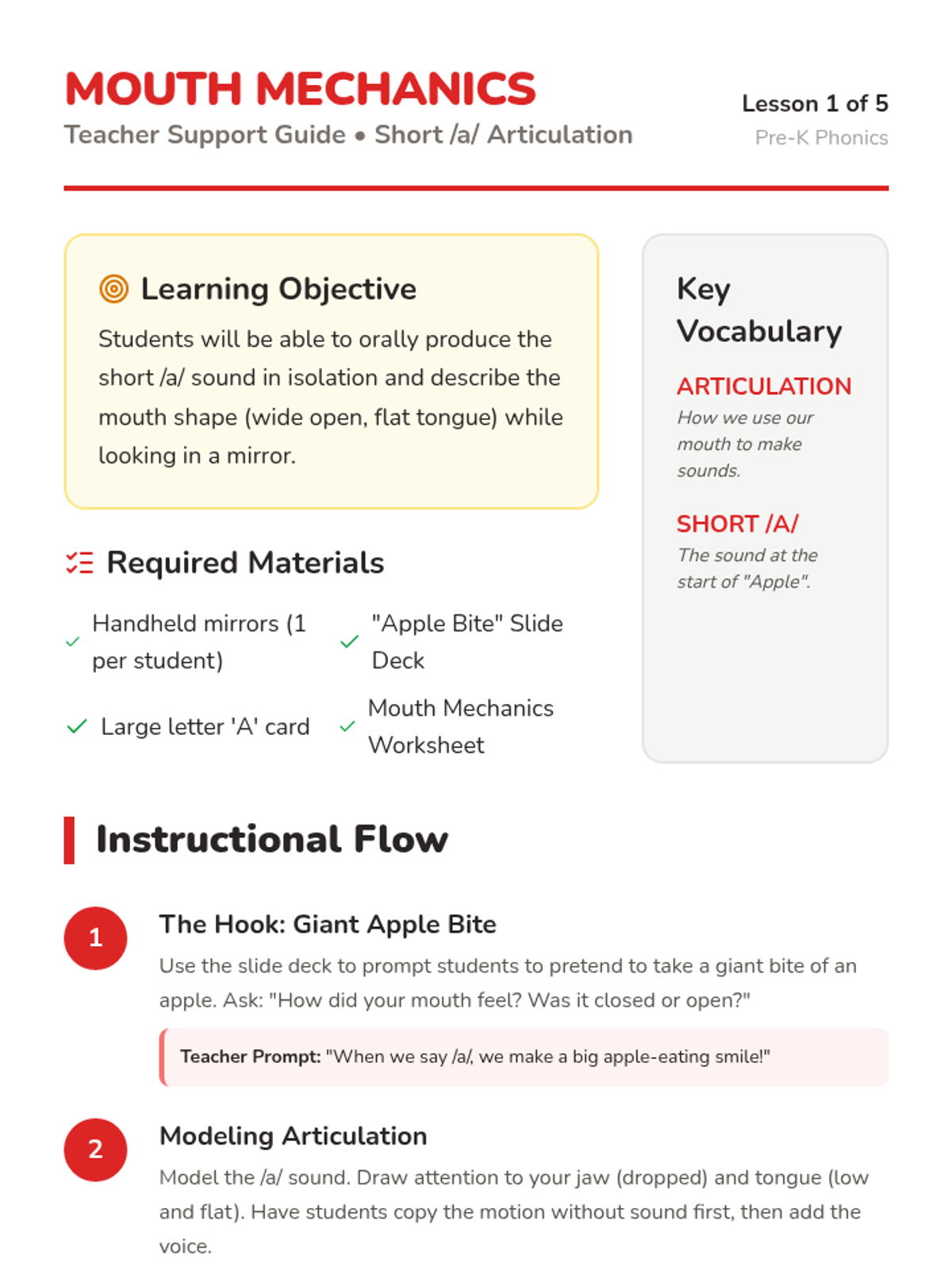
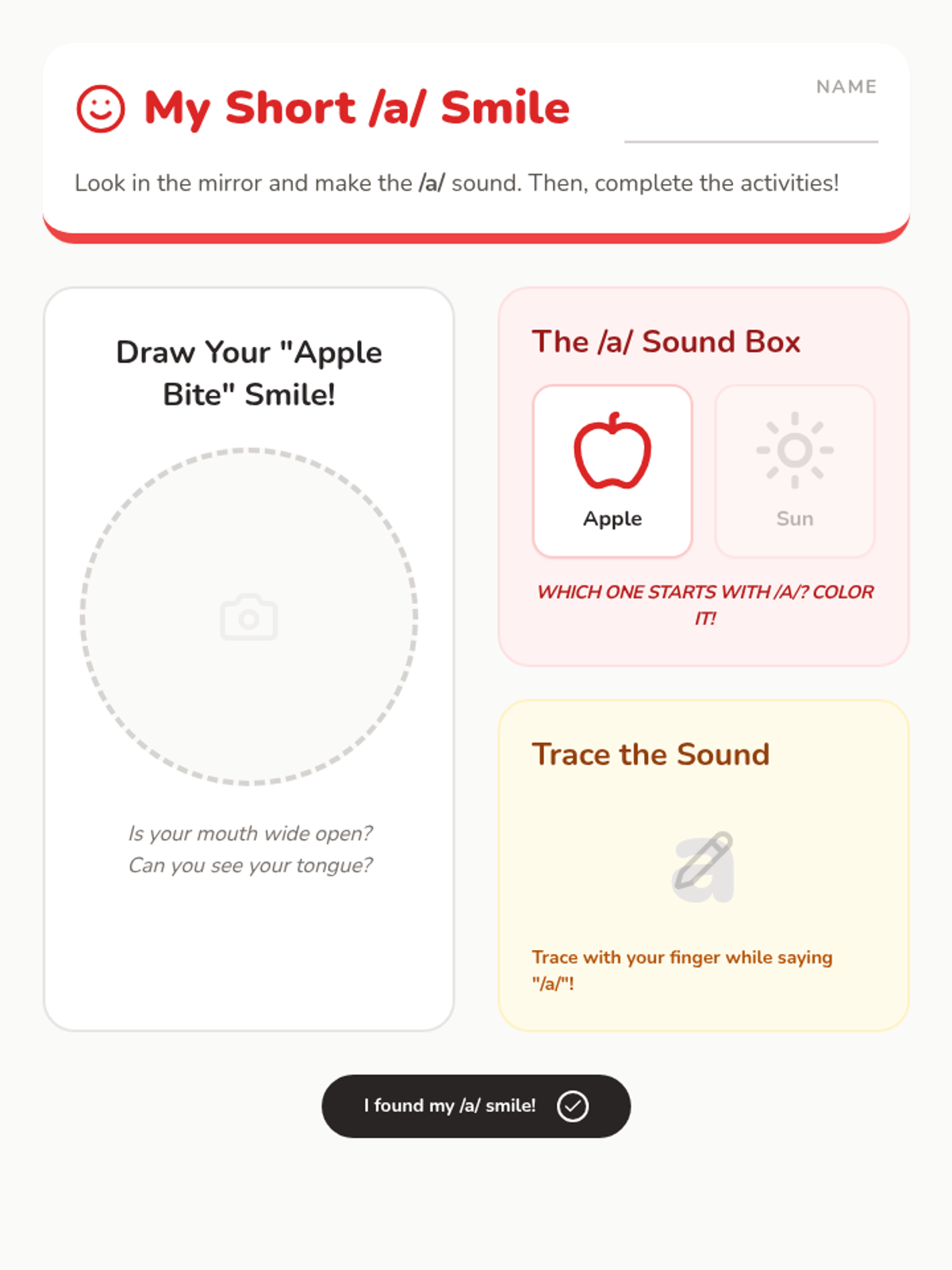
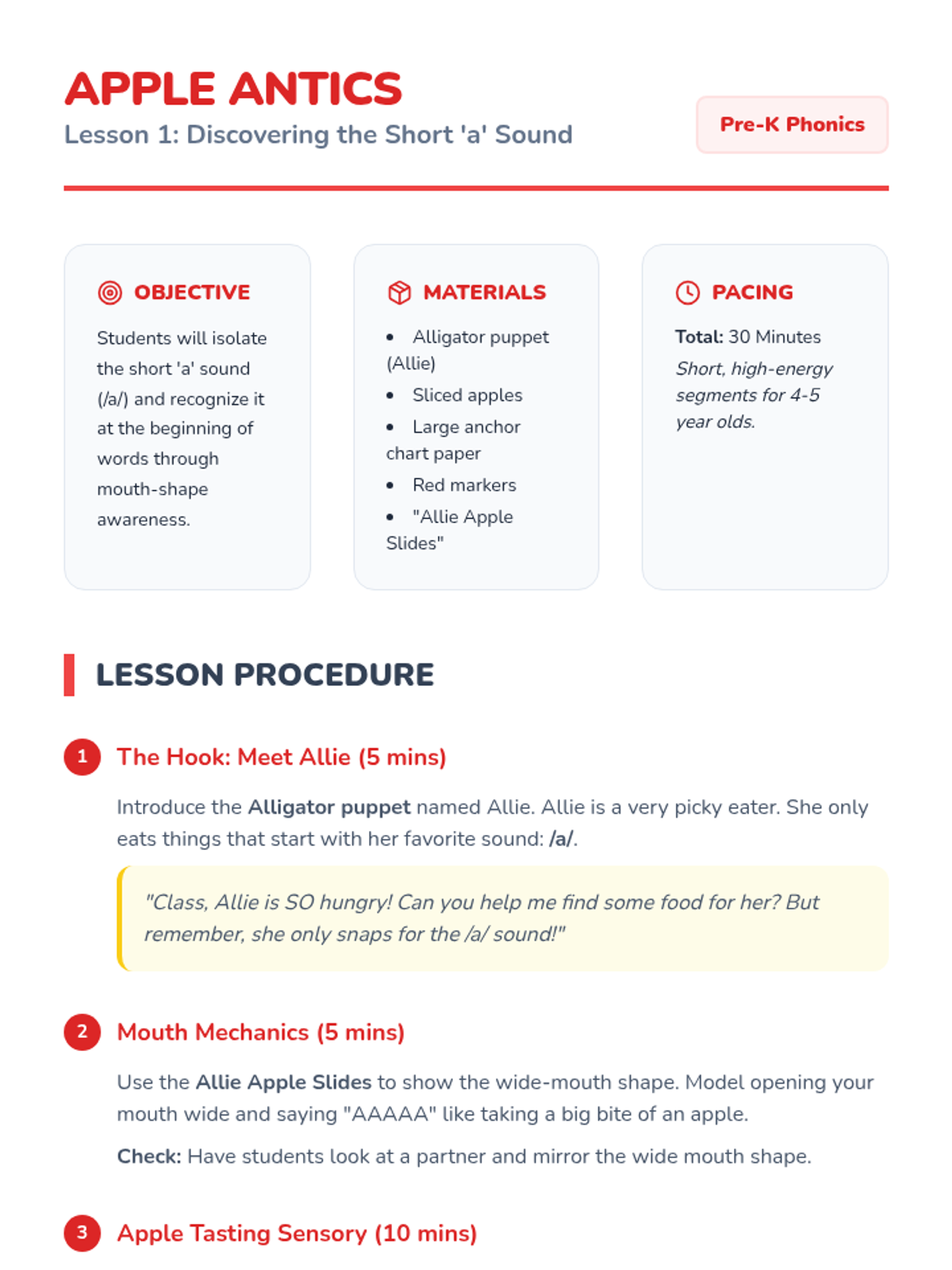
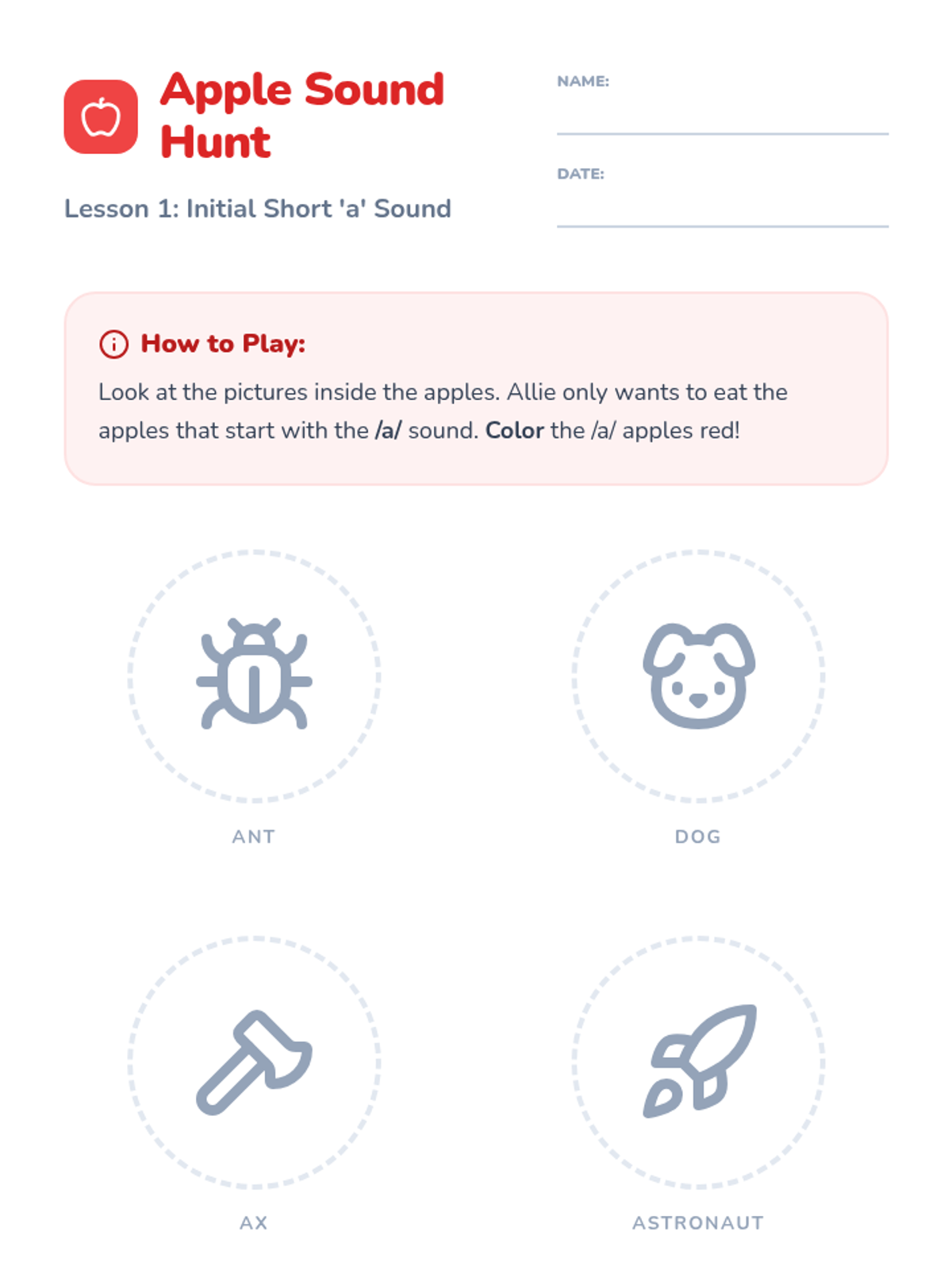
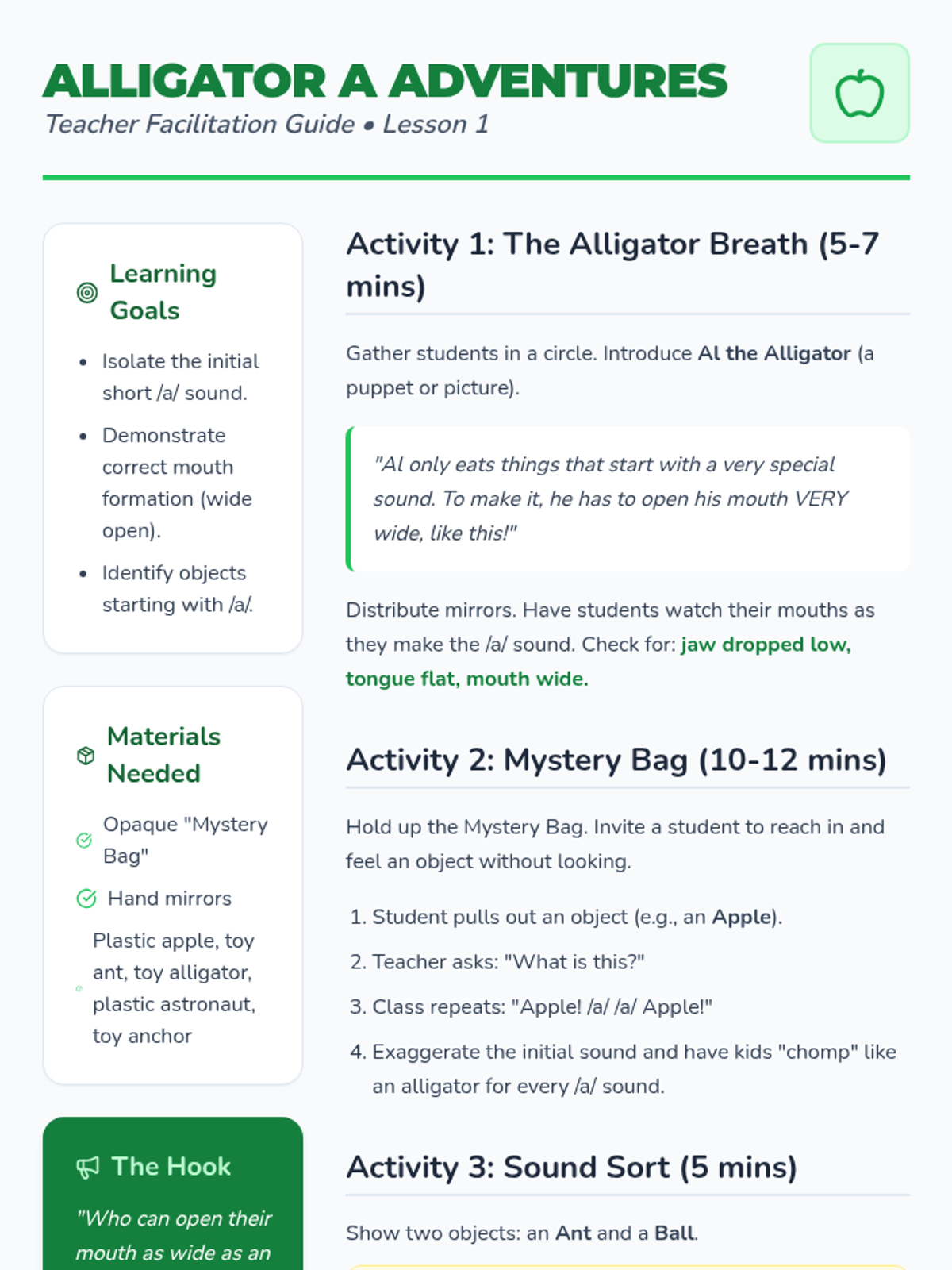
A comprehensive Pre-K sequence focused on phonemic awareness and articulation of the short /a/ sound. Students explore mouth mechanics, isolate initial and medial sounds, and practice oral blending through multi-sensory activities.
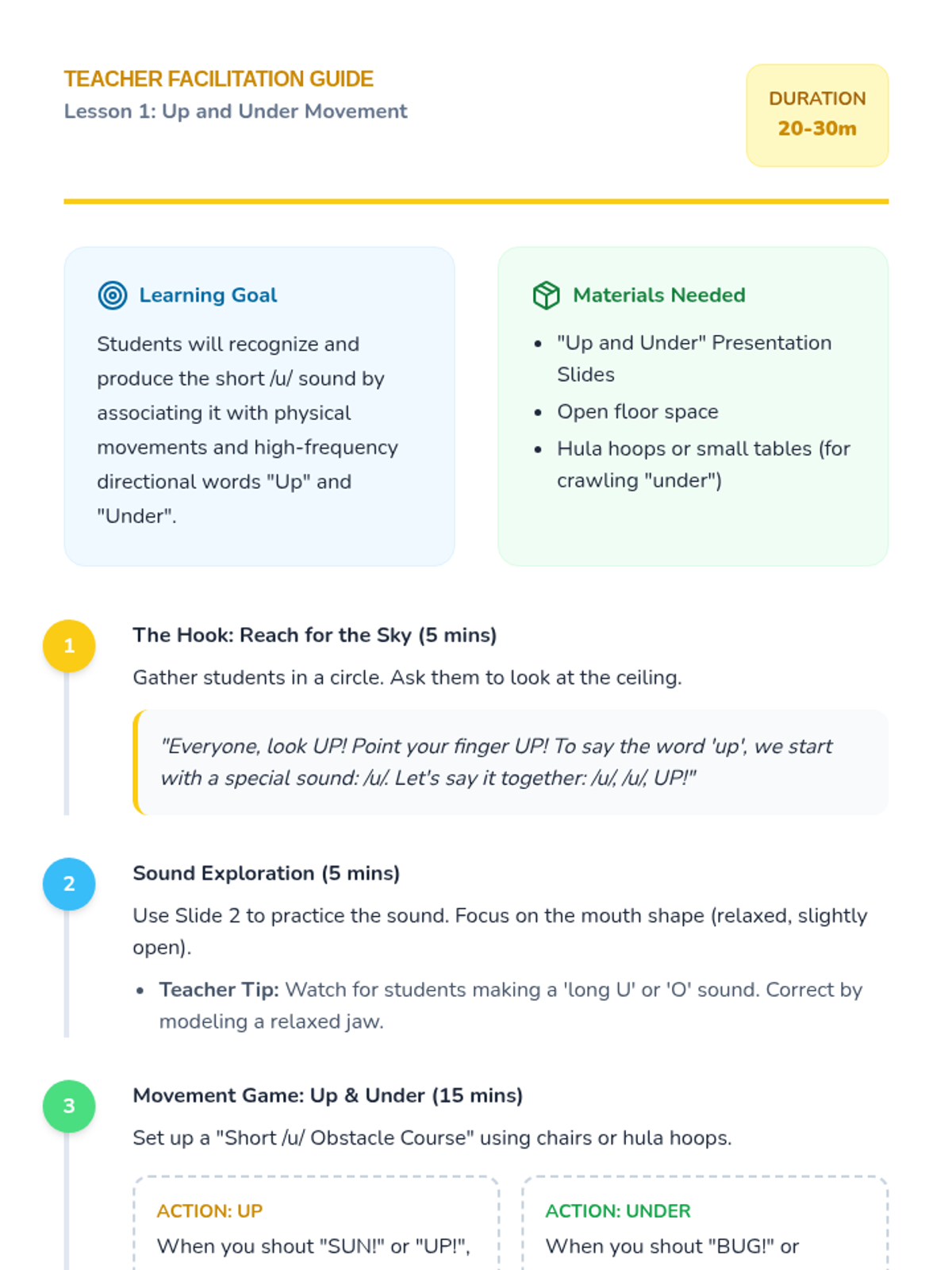
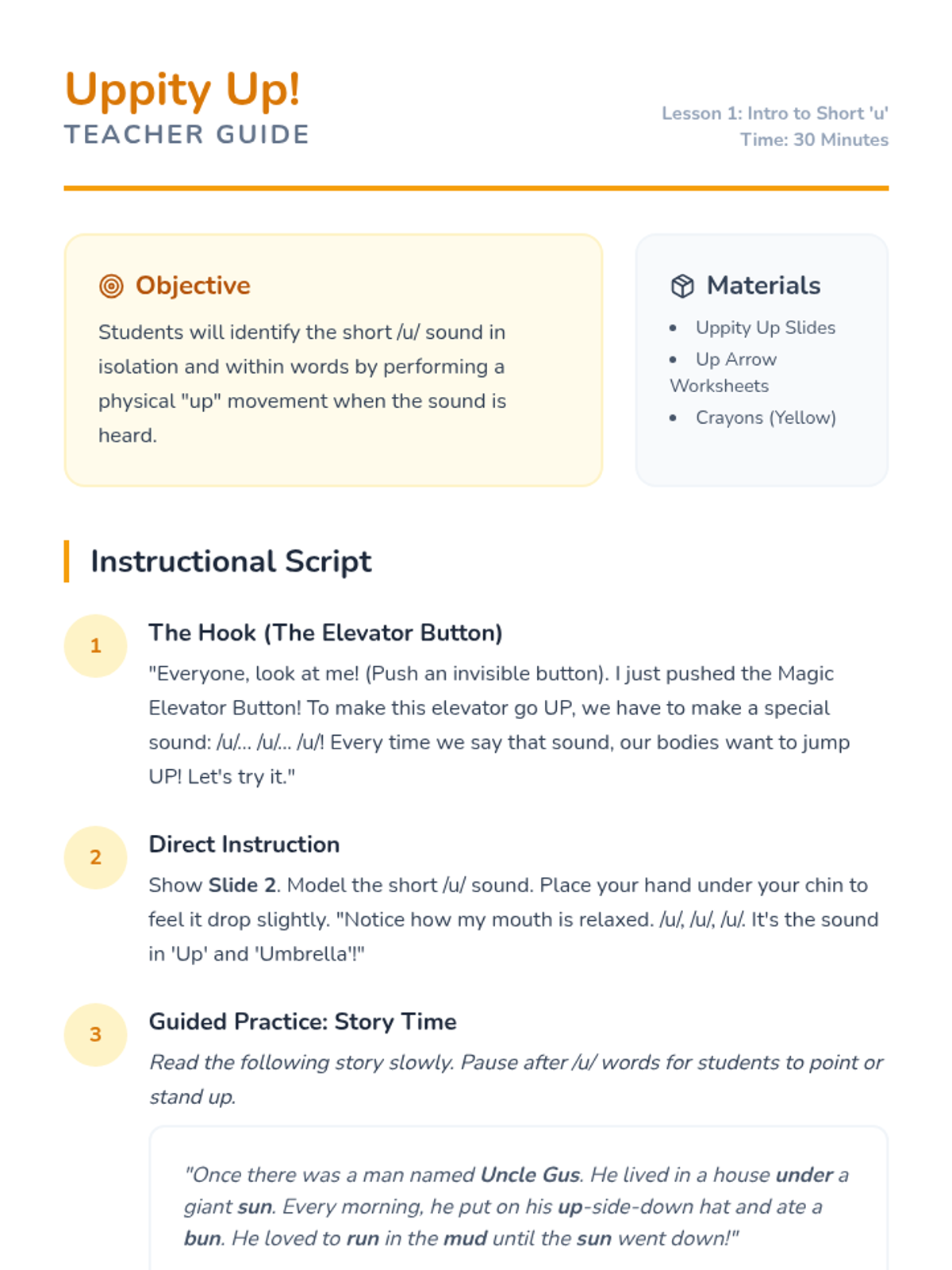
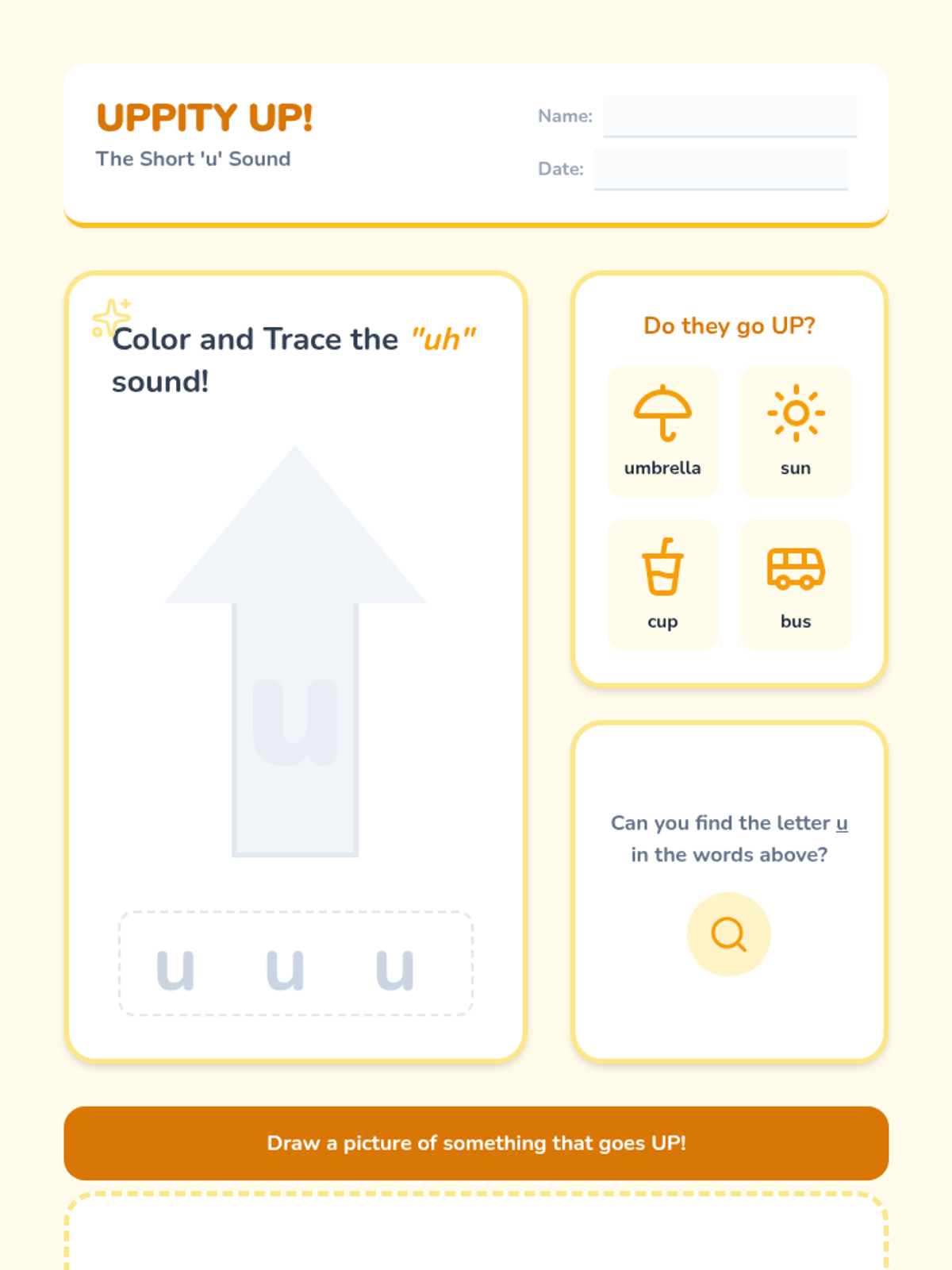
A kinesthetic phonics sequence for Pre-K students focusing on the short /u/ sound. Through movement, games, and creative projects, students link the /u/ phoneme to physical actions like pointing 'up' and crawling 'under' while mastering CVC segmentation.
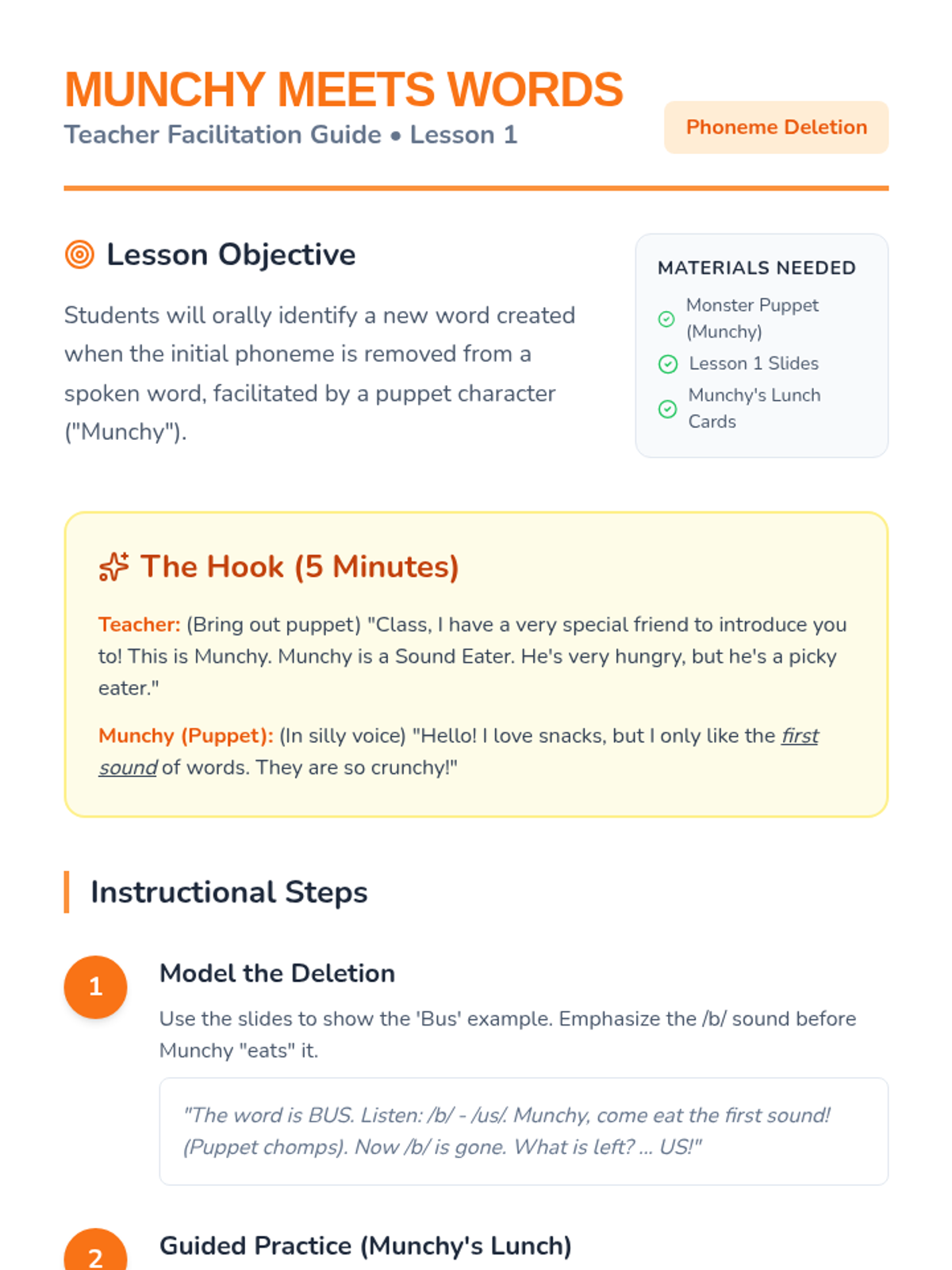
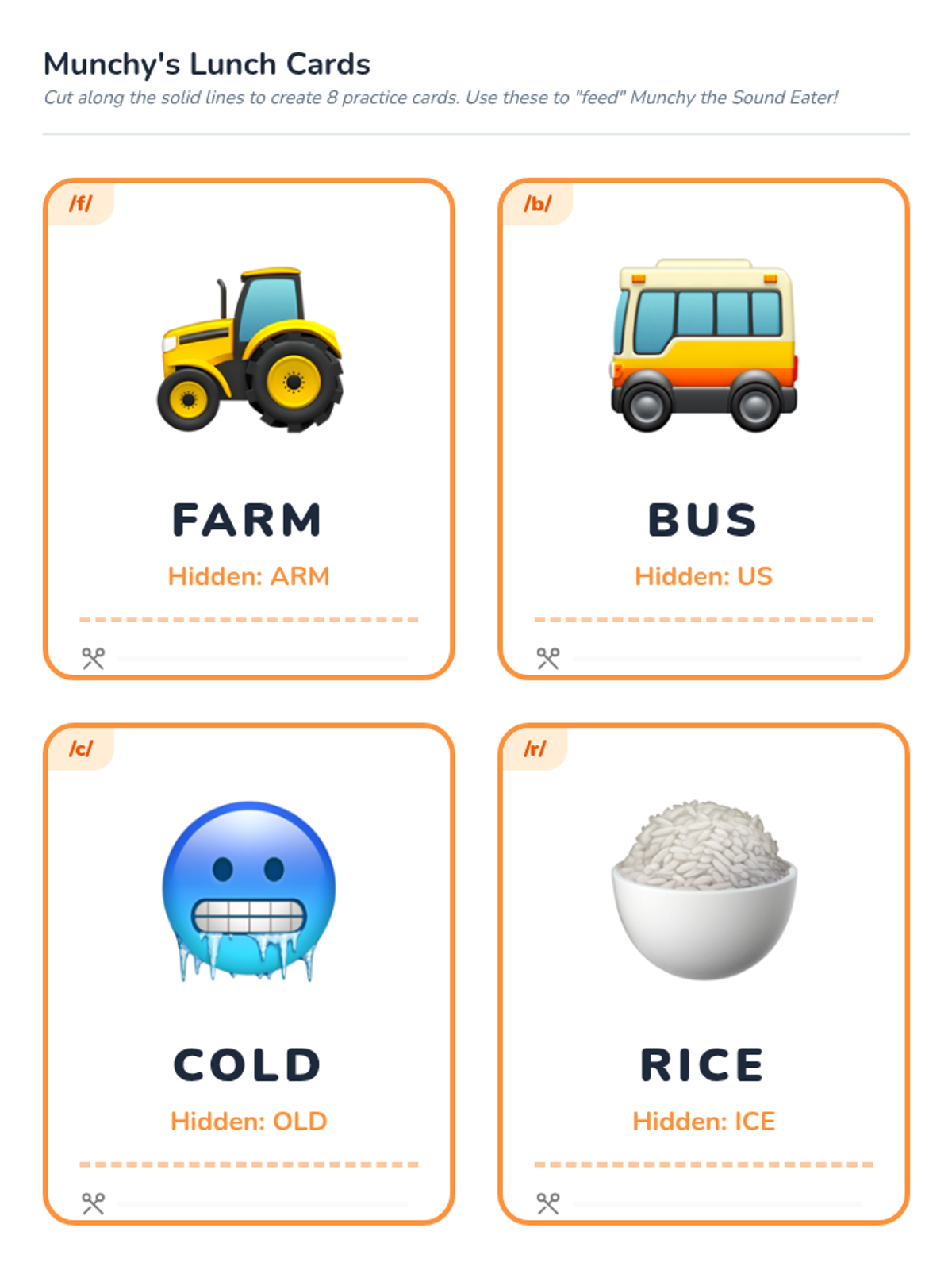
A Pre-K phonemic awareness unit where students learn to delete the initial phoneme of spoken words to find 'hidden' words, guided by a puppet character named Munchy.
A magical journey into the world of sounds where Pre-K students learn to isolate and add initial phonemes to create new words through play, movement, and hands-on activities.
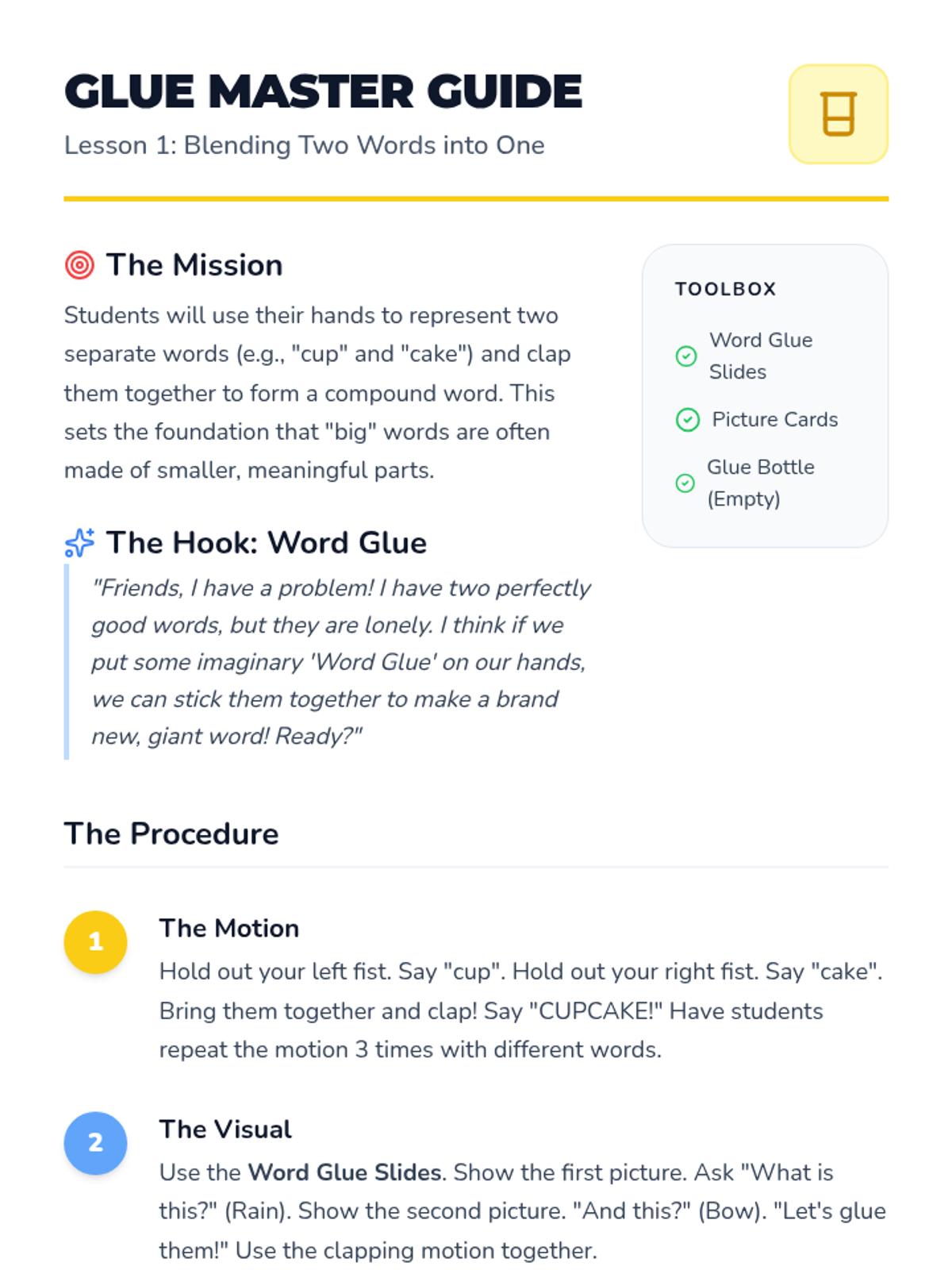
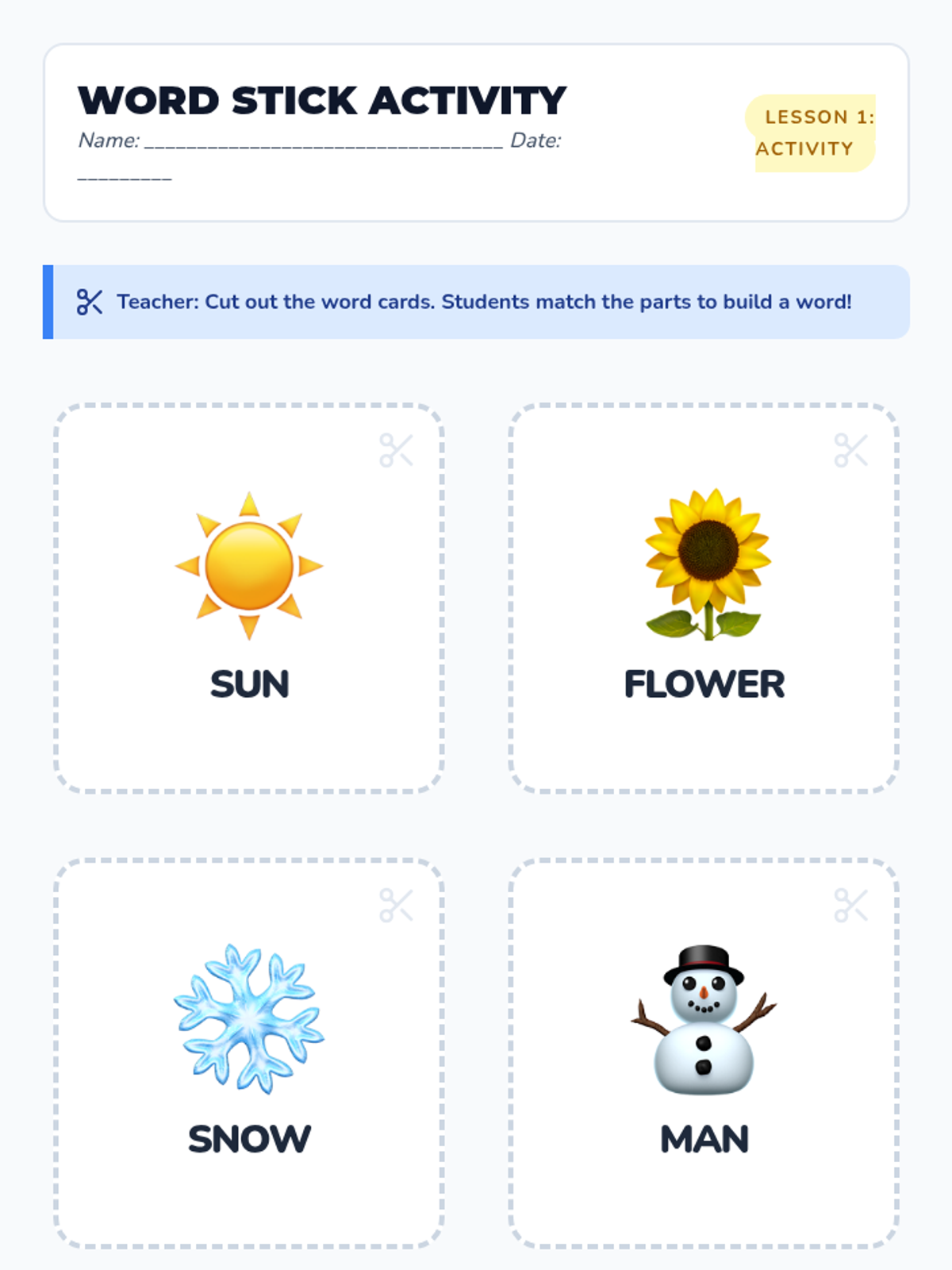
A foundational phonological awareness unit for Pre-K students focused on compound words. Students learn to blend, segment, delete, and substitute word parts using hands-on manipulatives, movement, and visual supports.
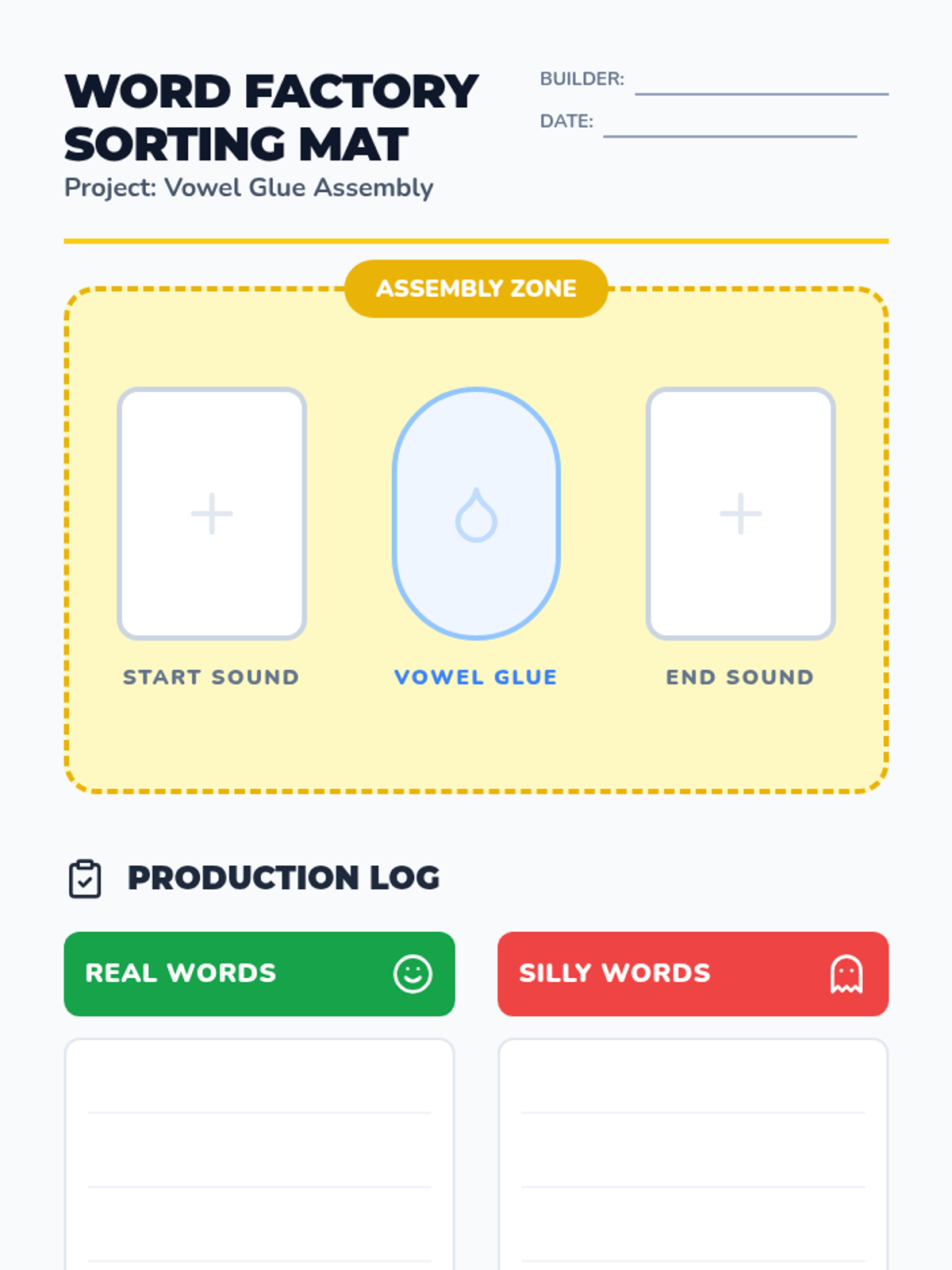
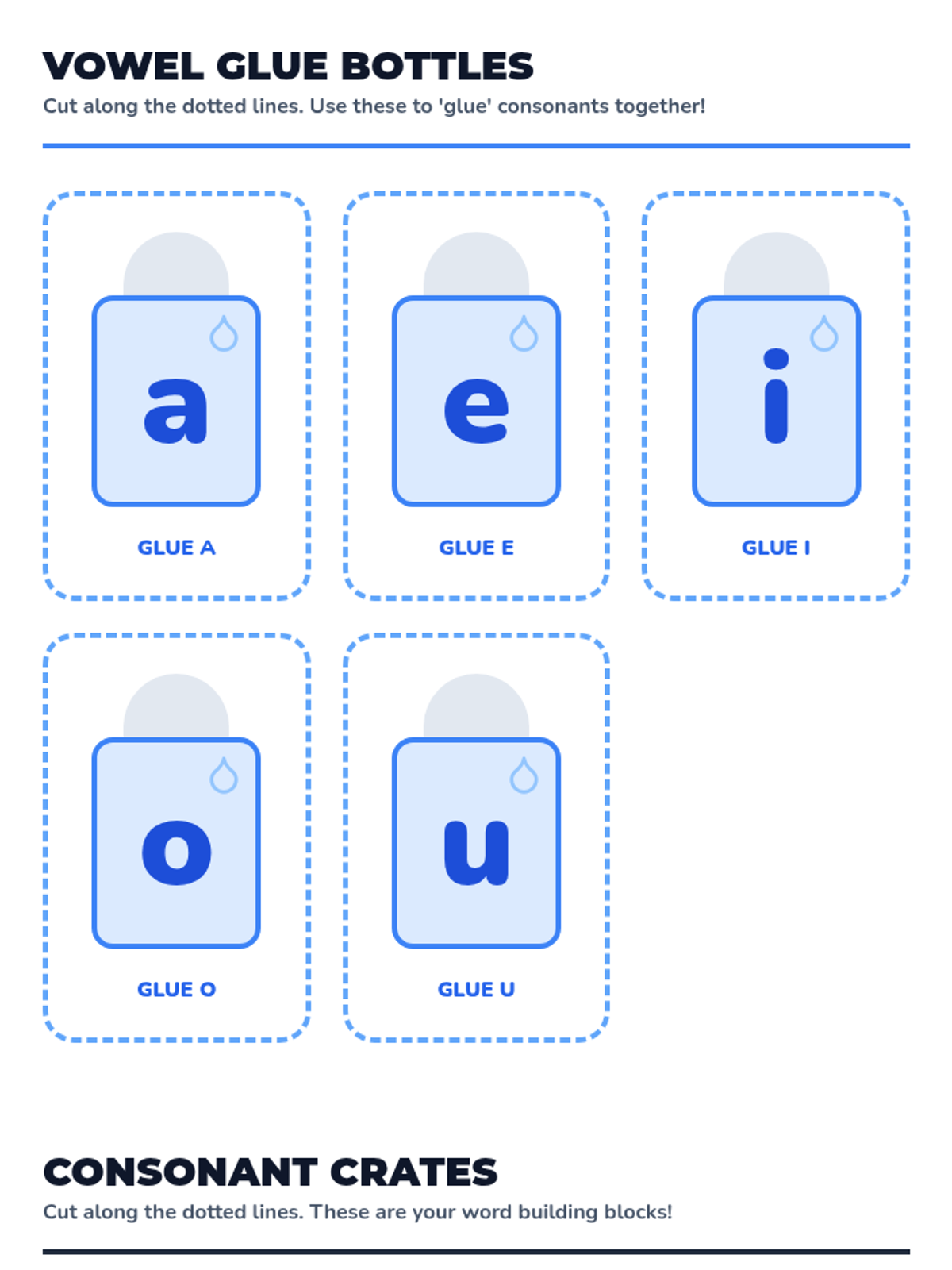
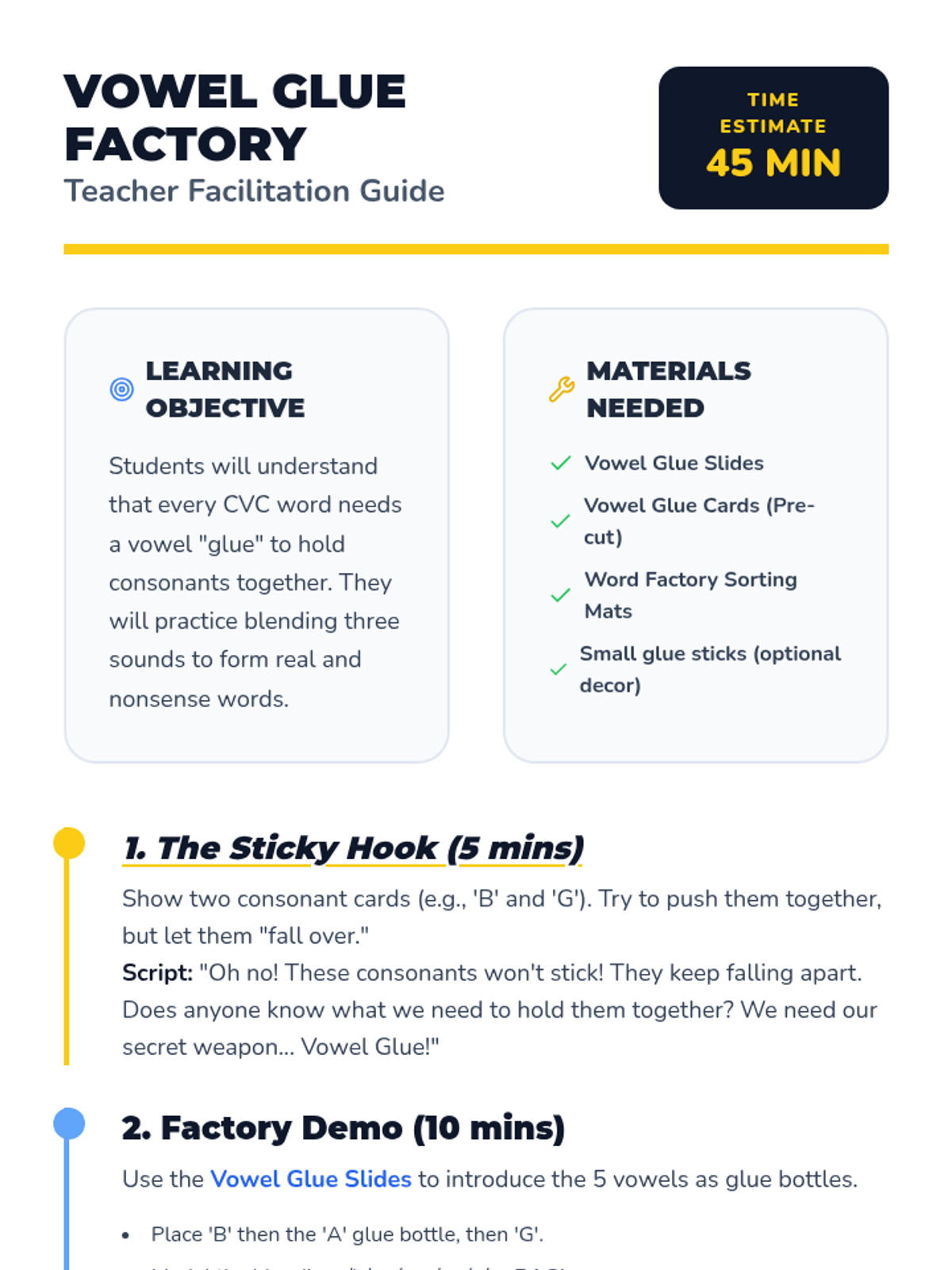
This sequence focuses on blending CVC words by treating vowels as the 'glue' that holds consonants together. Through hands-on workshop-style activities, students learn phonemic blending and segmentation in an engaging, construction-themed environment.
A kinesthetic Pre-K sequence that teaches the short 'u' sound through physical movement, games, and sensory play. Students connect the phoneme to actions like jumping, running, and tugging, anchoring auditory learning in muscle memory.
A sensory-rich phonics sequence for Pre-K students focusing on the short 'a' sound. Students move from sound isolation and mouth-shape awareness to identifying the sound in initial and medial positions, building basic blending skills through play-based activities.
A foundational phonics unit for Pre-K students focusing on the short vowel sounds /o/, /u/, and /e/. Students use sensory-rich activities, mouth shape awareness, and physical movement to identify these initial sounds in words.
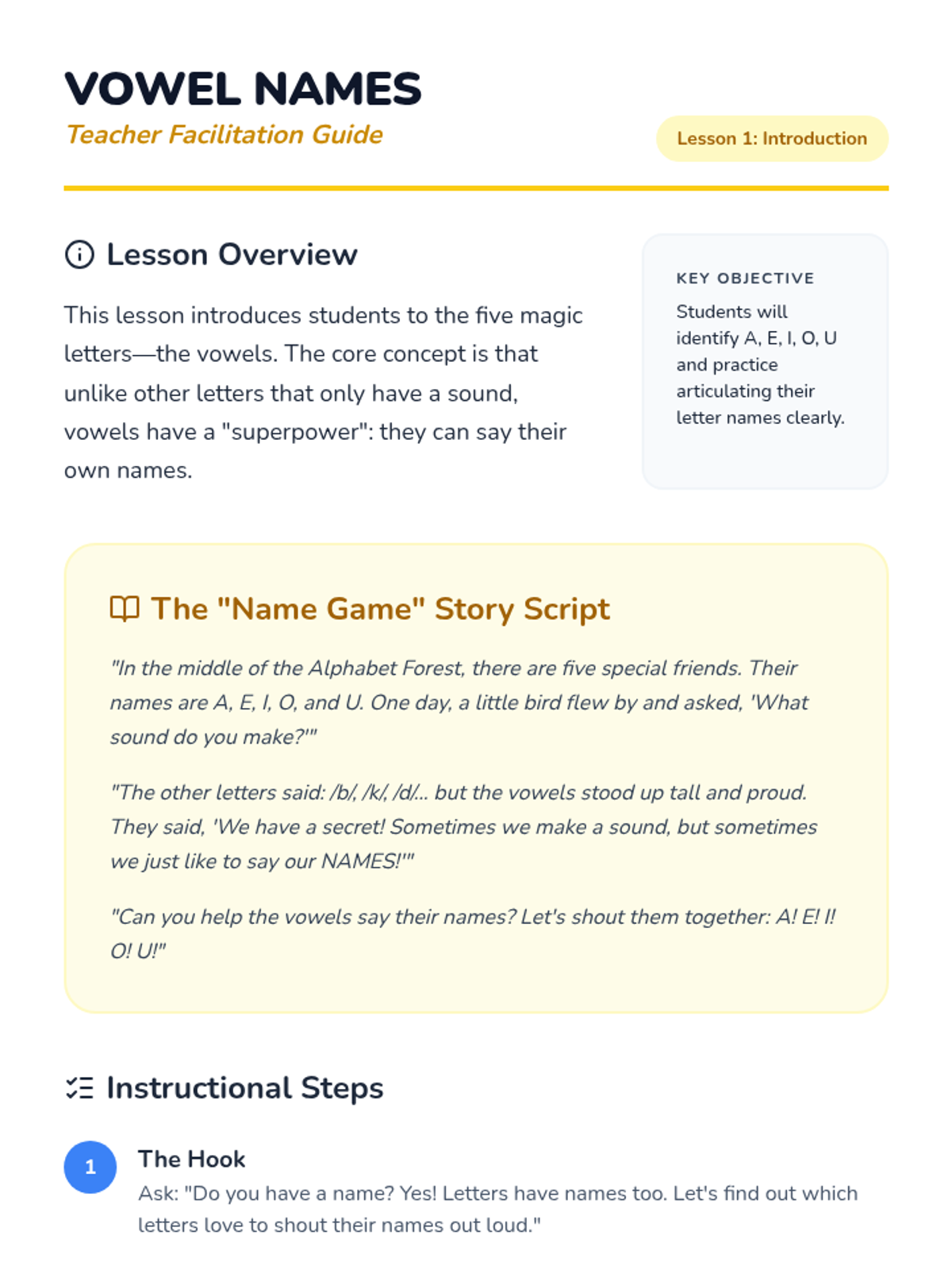
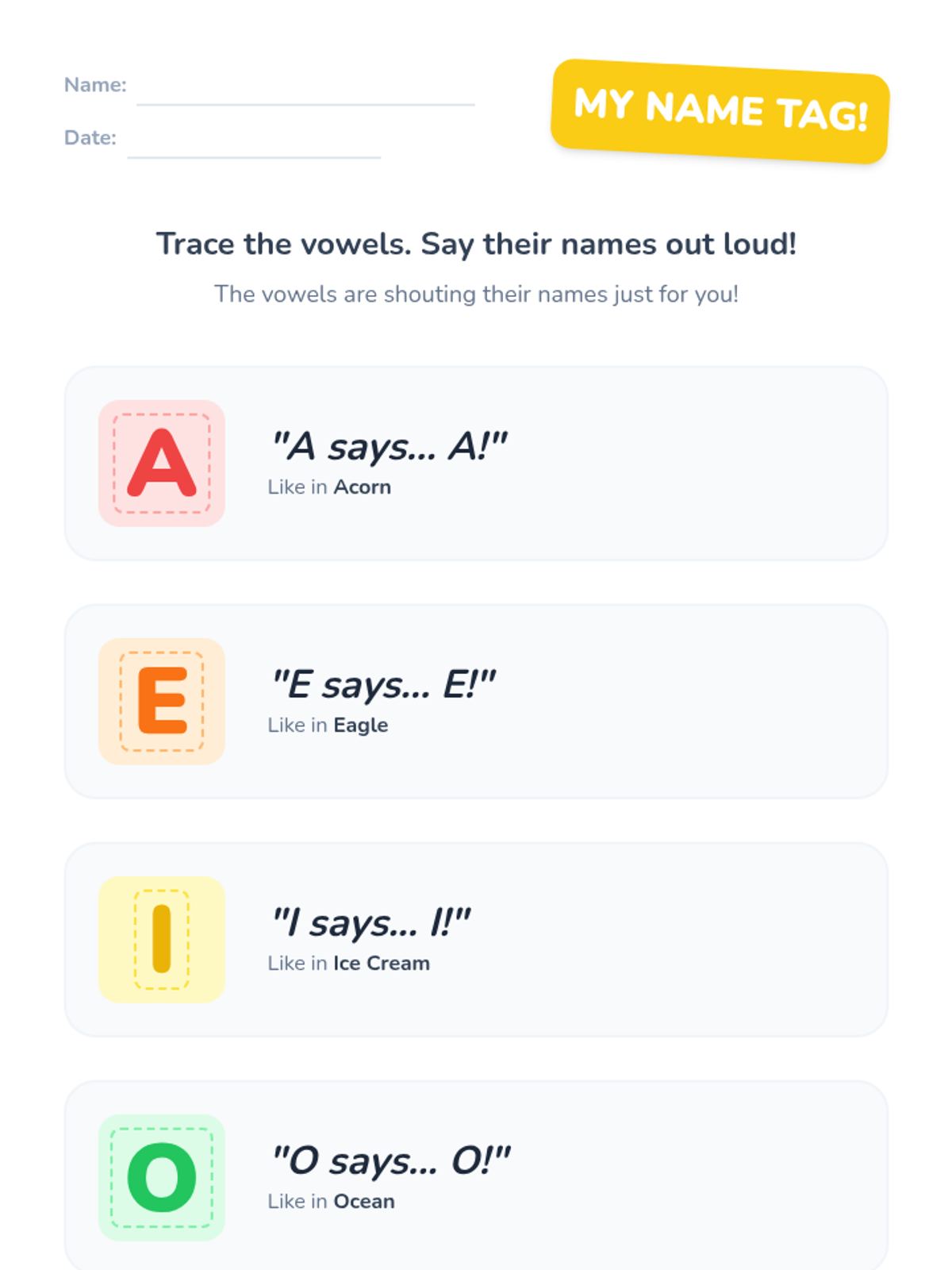
A foundational phonics sequence for Pre-K students introducing the concept of long vowel sounds (vowels 'saying their names') through storytelling, auditory games, and visual comparison with short vowel sounds.
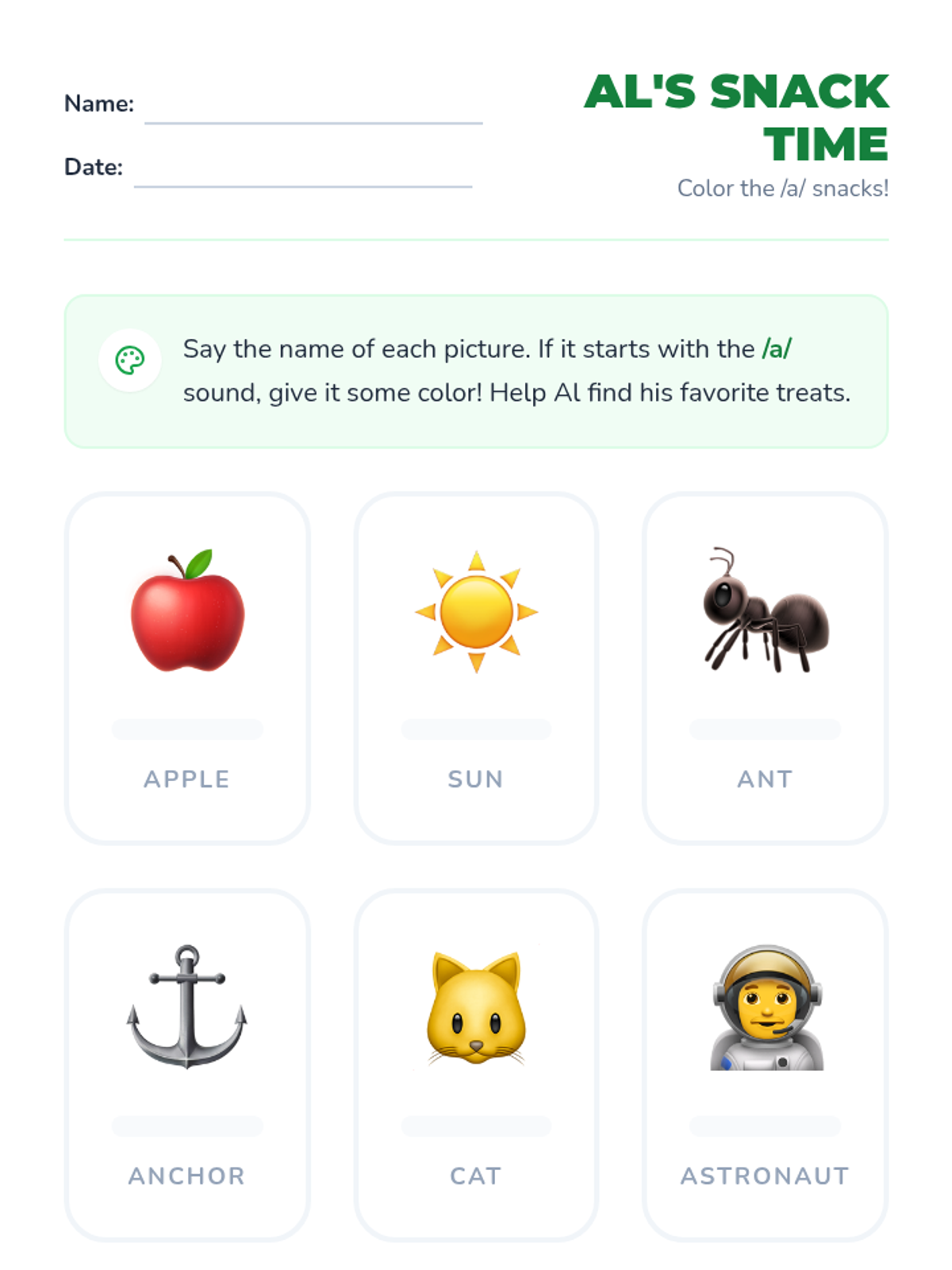
A foundational phonics sequence for Pre-K students focusing on identifying and distinguishing short /a/ and /i/ sounds through multisensory activities, games, and tactile letter formation. Students meet Al the Alligator and Iggy the Iguana to explore mouth shapes and initial sounds.
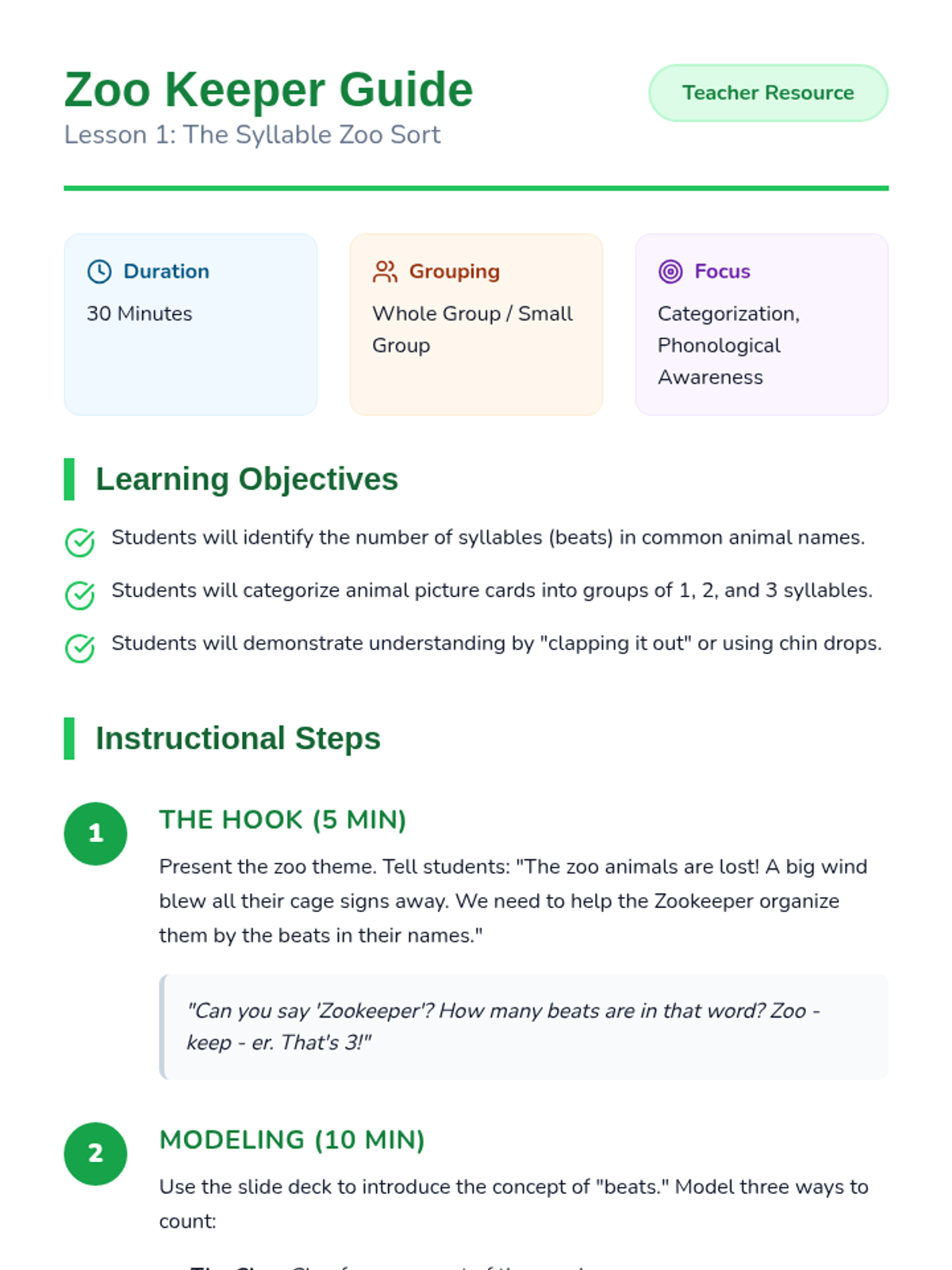
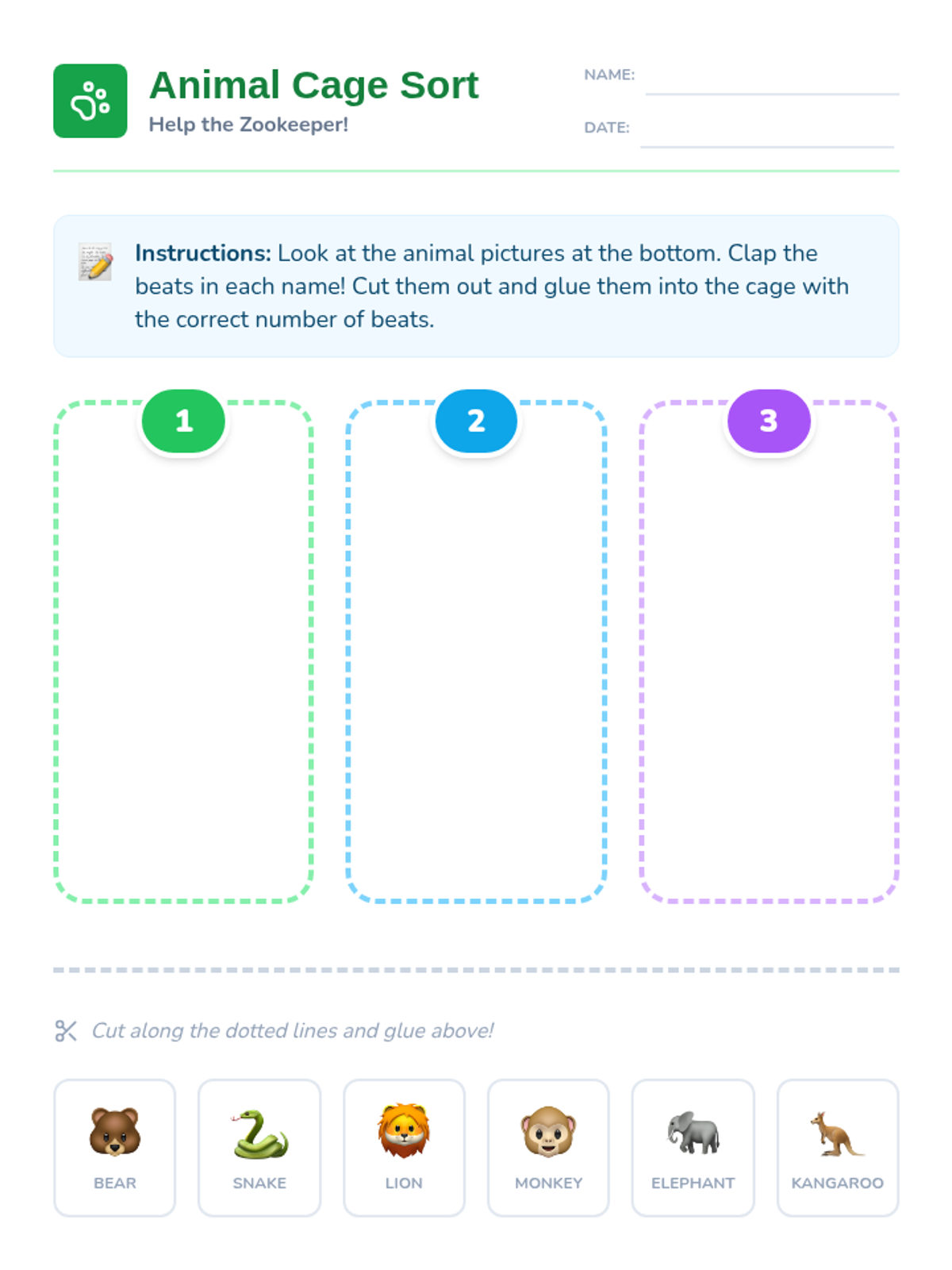
A Pre-K phonics unit focused on categorization and analytical thinking. Students learn to sort words into groups based on their syllable count using engaging themes like the zoo, a grocery store, and a classroom scavenger hunt.
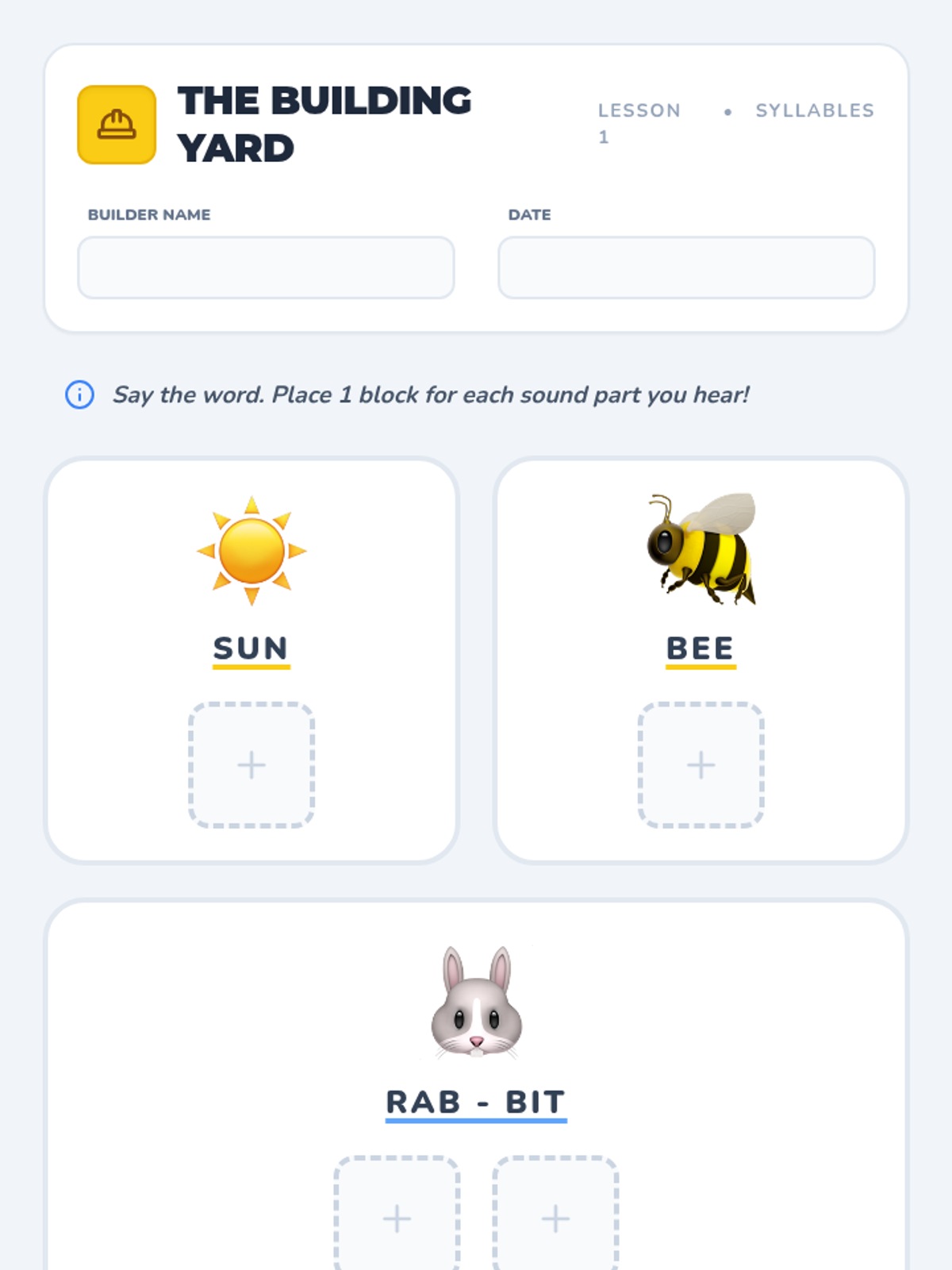
A tactile, manipulative-based phonics sequence for Pre-K students to understand syllables by physically building words with blocks, beads, and clay. Students move from simple one-to-one correspondence to comparing word lengths and segmenting multi-syllabic words.
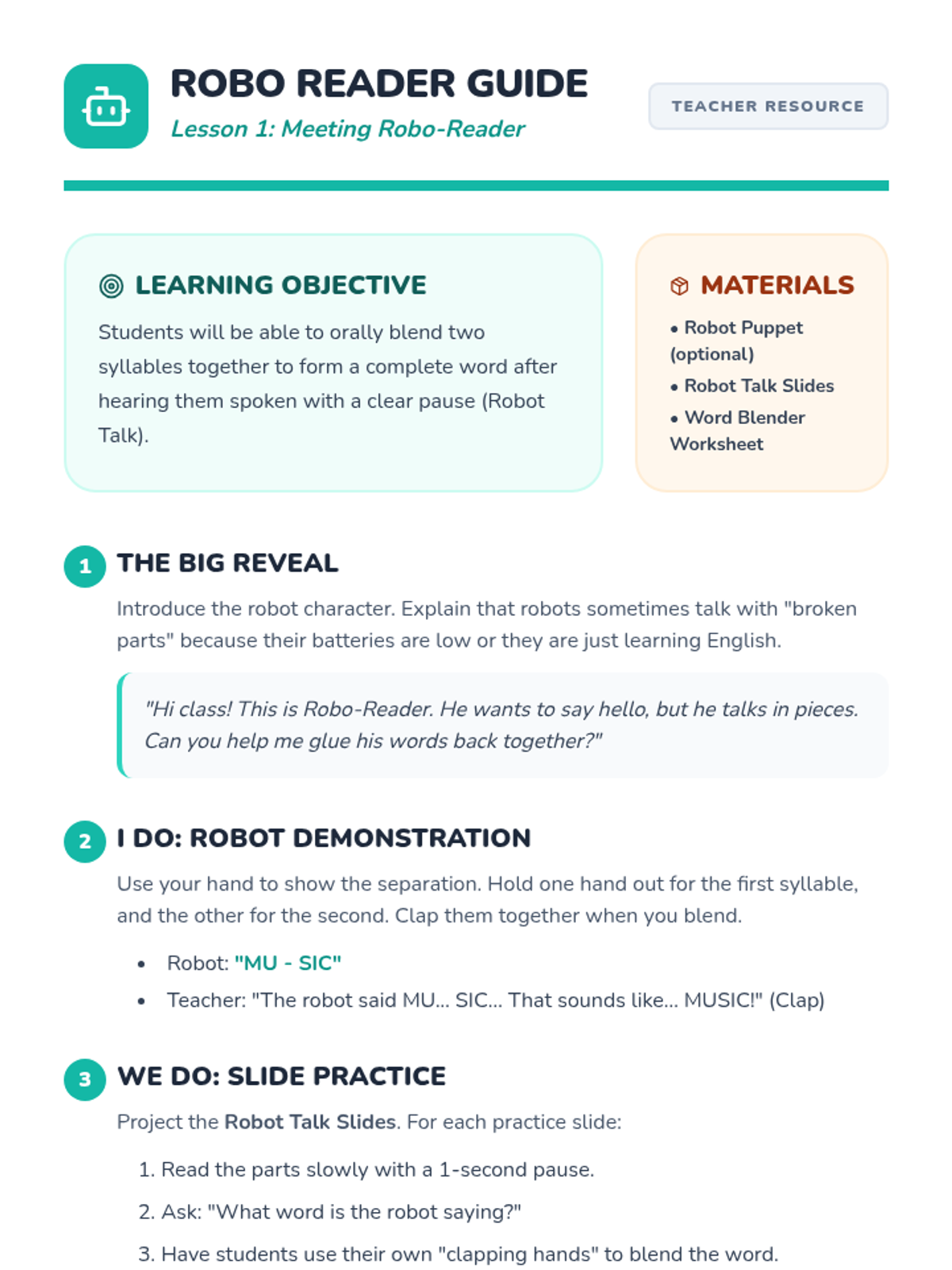
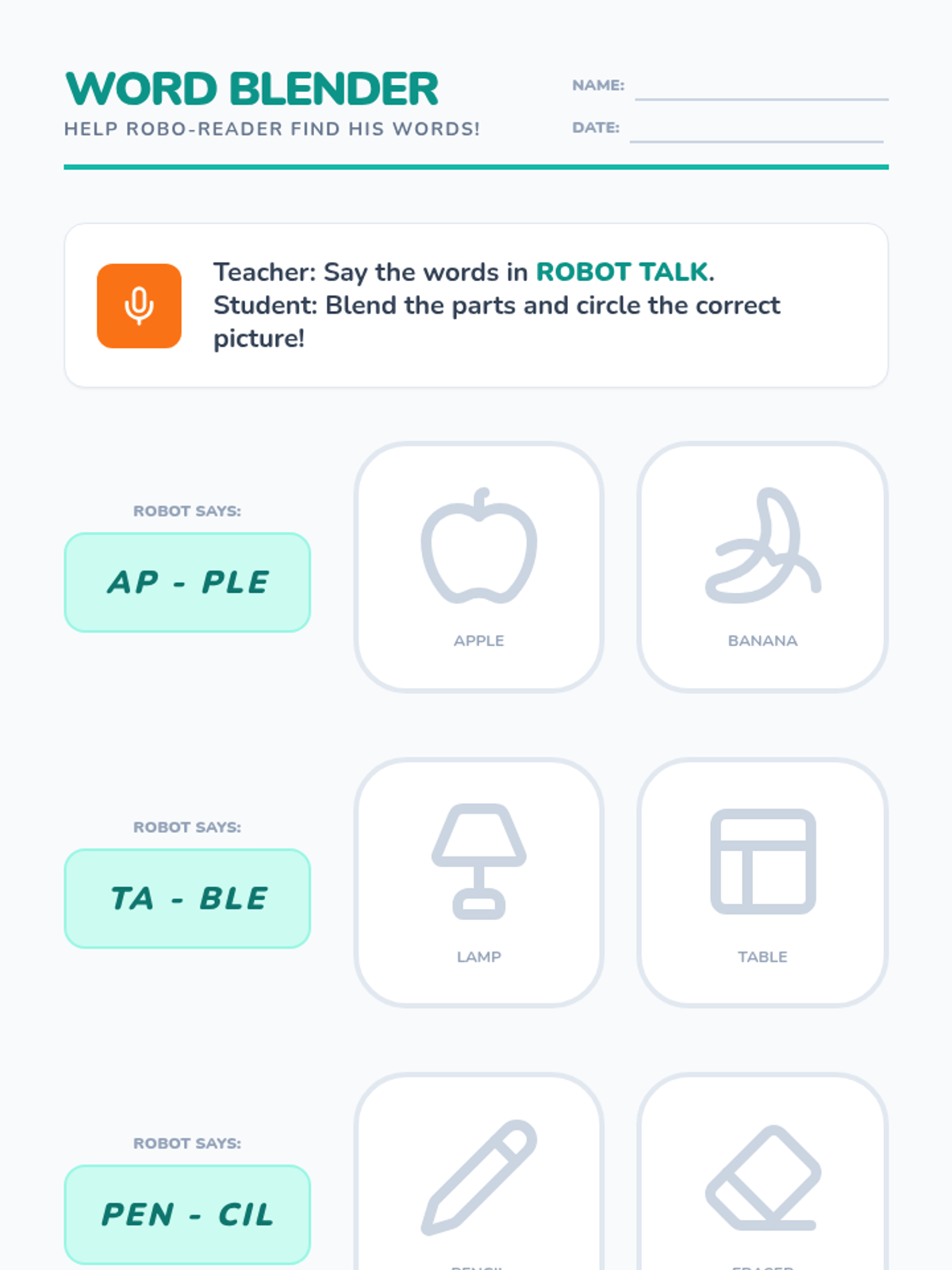
A Pre-K phonics sequence focused on auditory blending and segmenting syllables through an engaging 'Robot' theme. Students progress from listening to segmented speech to producing it themselves using hands-on games and visual aids.
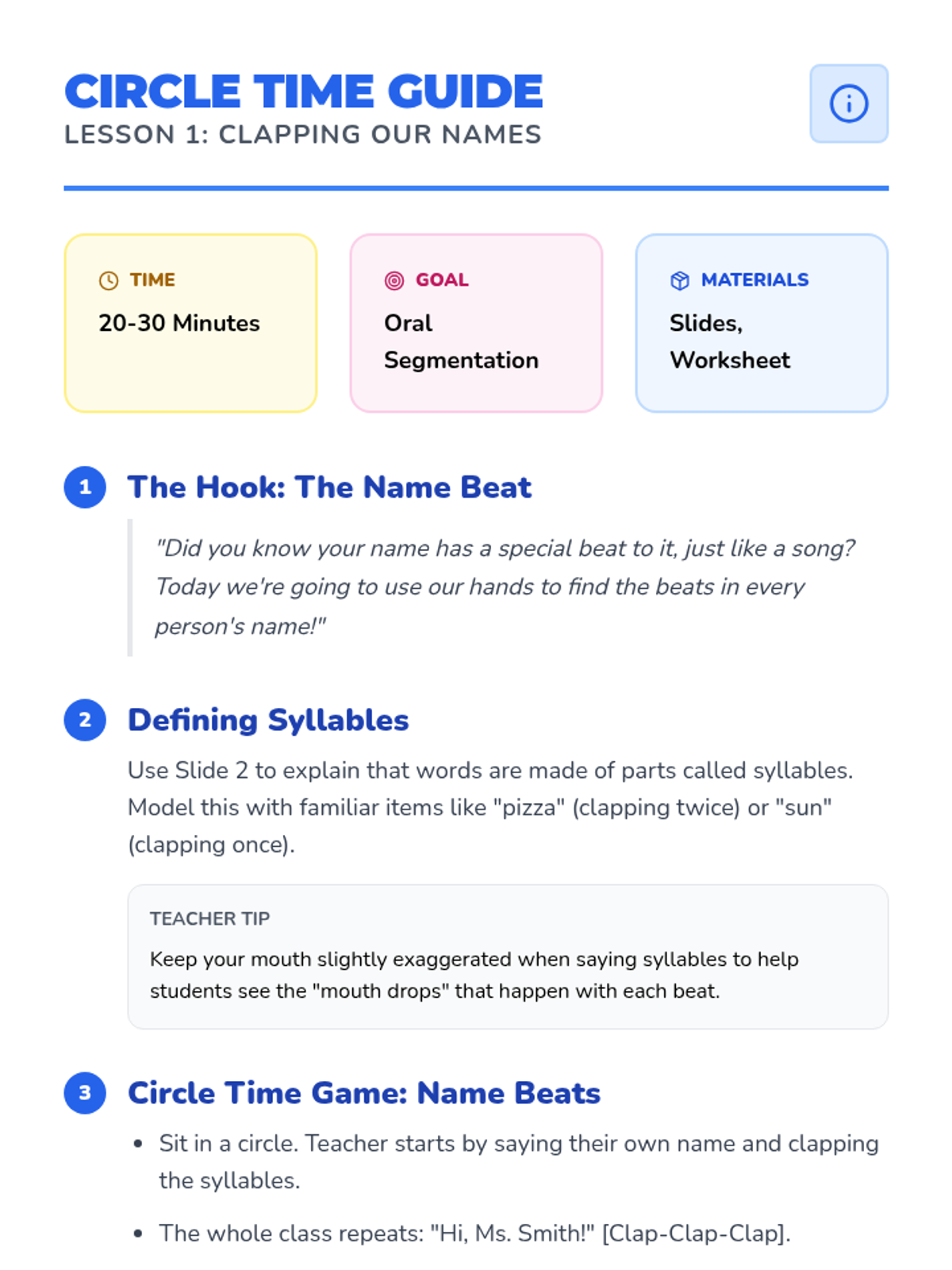
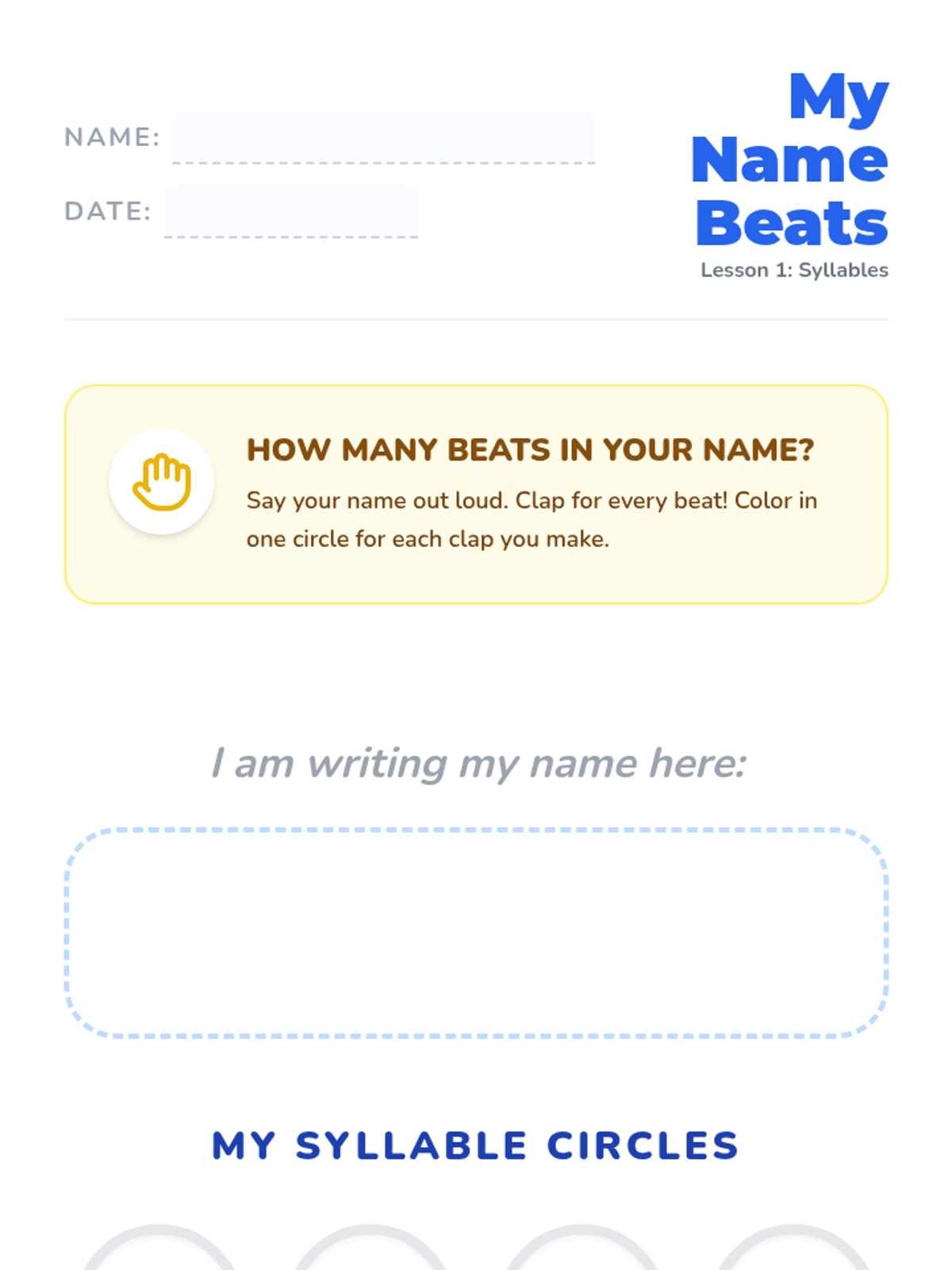
A Pre-K phonics sequence that uses rhythmic movement, gross motor skills, and musical elements to teach students how to identify and count syllables in words. Students progress from clapping names to stomping animal names and drumming out classroom objects.
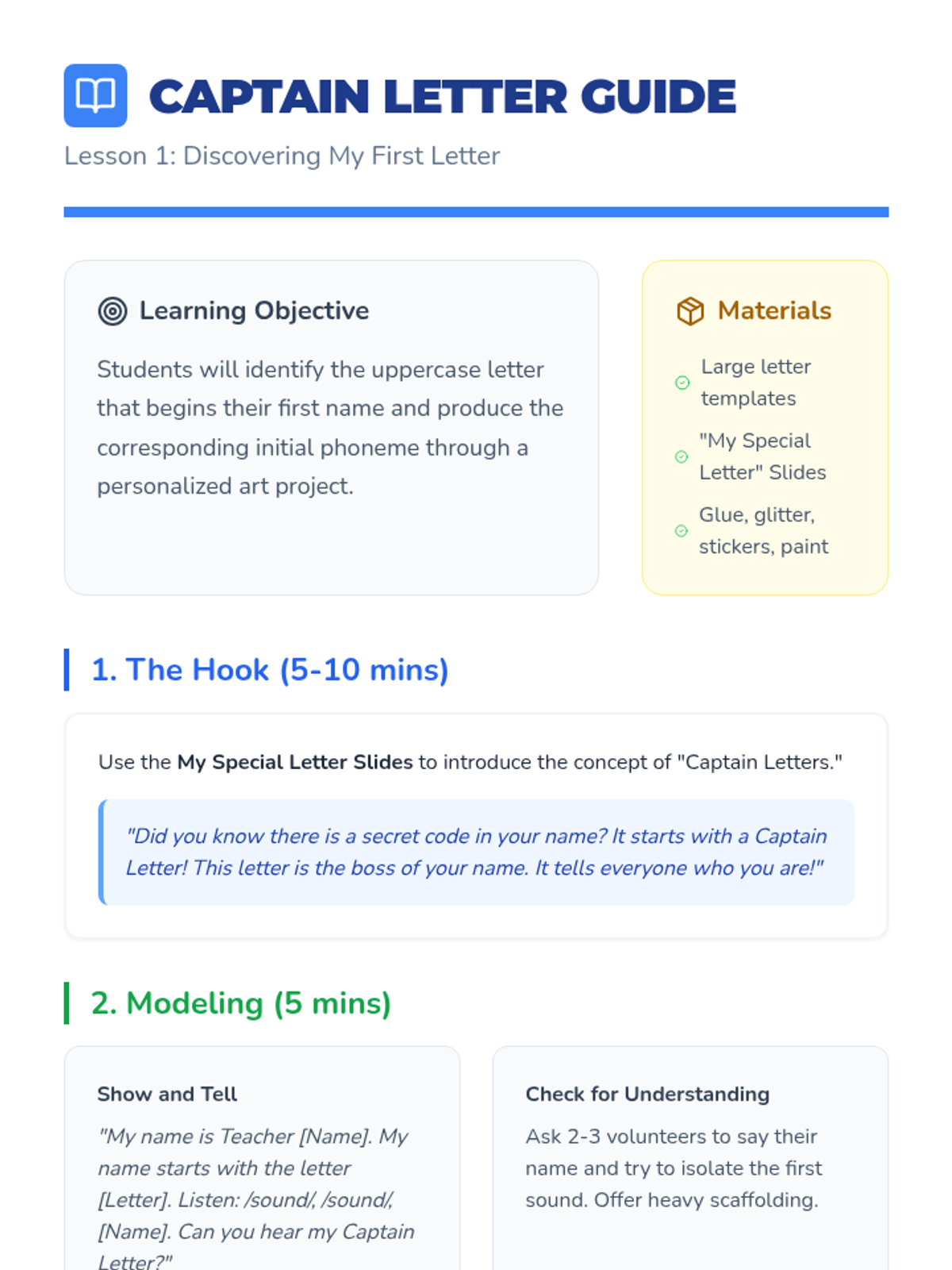
A Pre-K phonics sequence that uses students' names to teach uppercase letter recognition and initial sound associations through hands-on projects and social games.
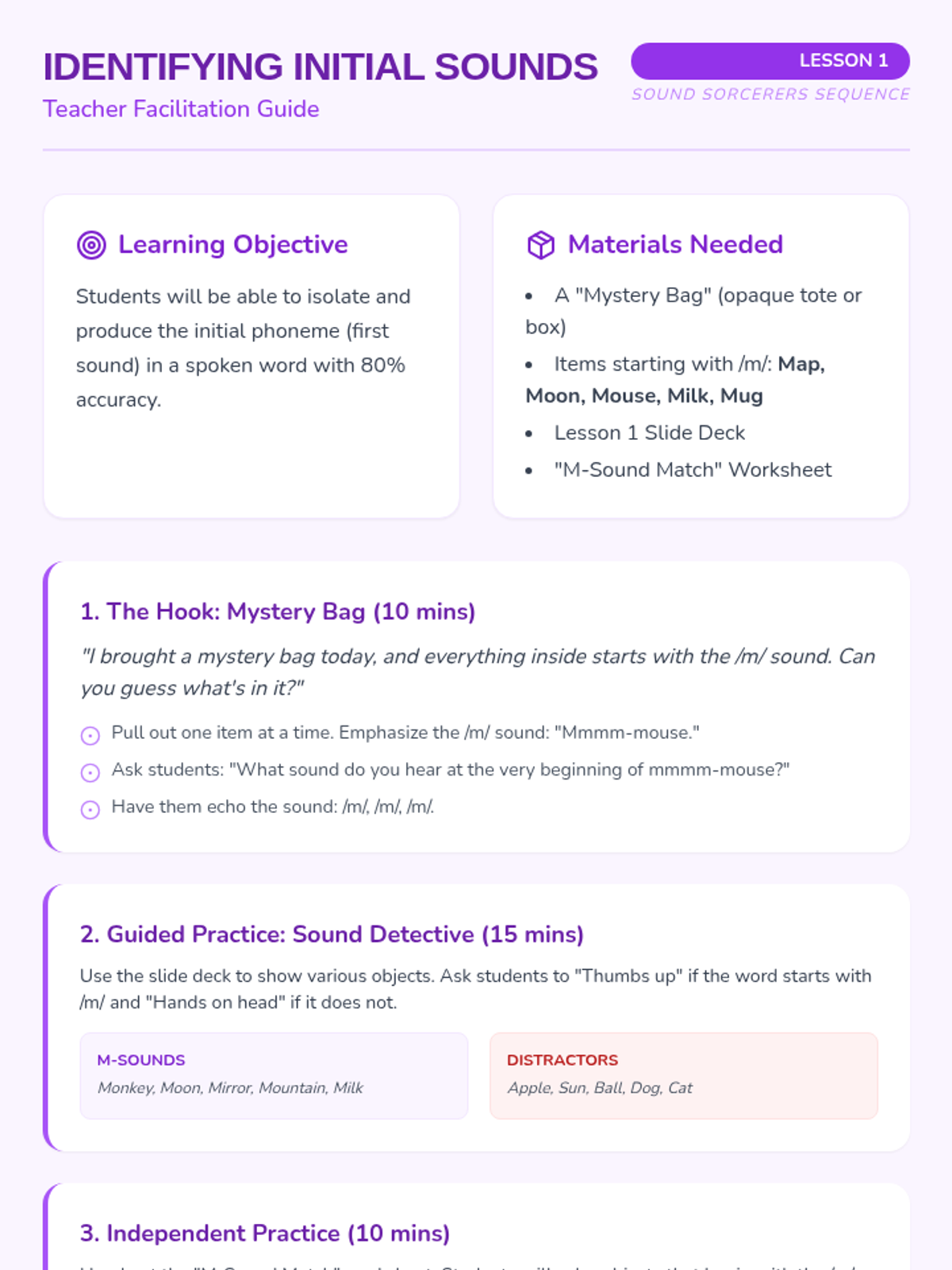
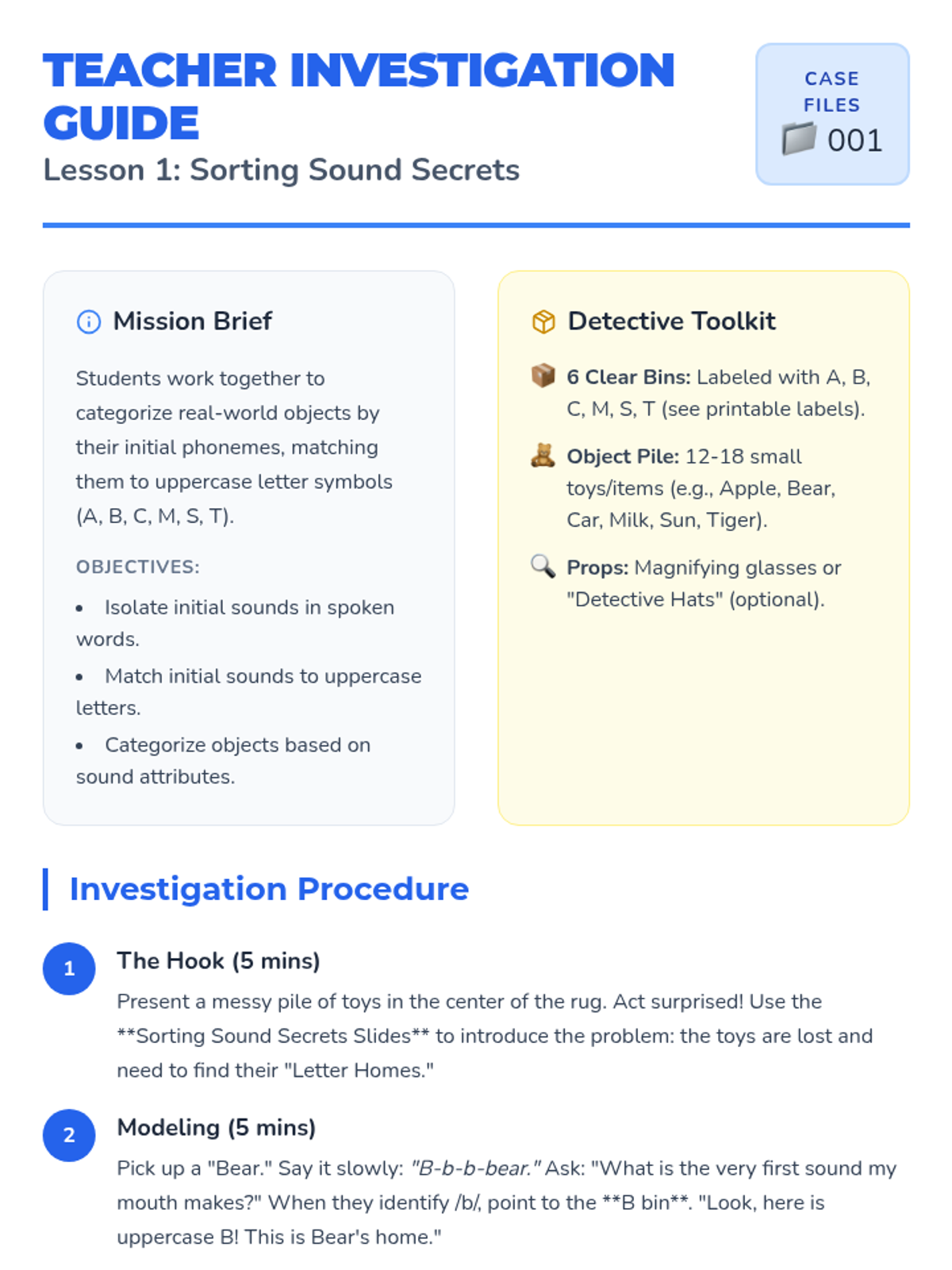
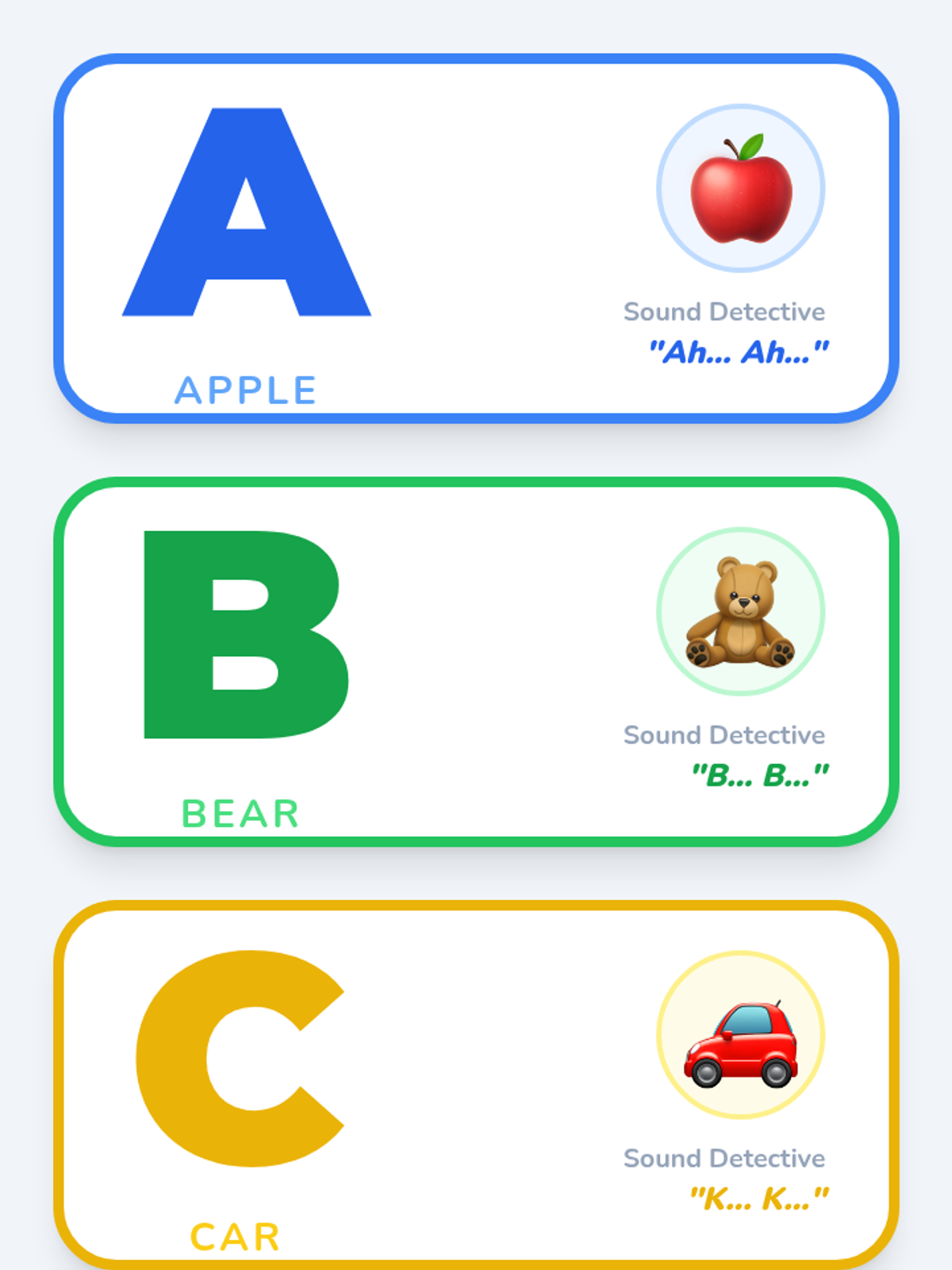
A Pre-K phonics sequence where students become 'Sound Detectives' to explore initial letter-sound associations through sorting, inquiry, and play. Students learn to isolate initial phonemes and match them to their uppercase letter symbols.
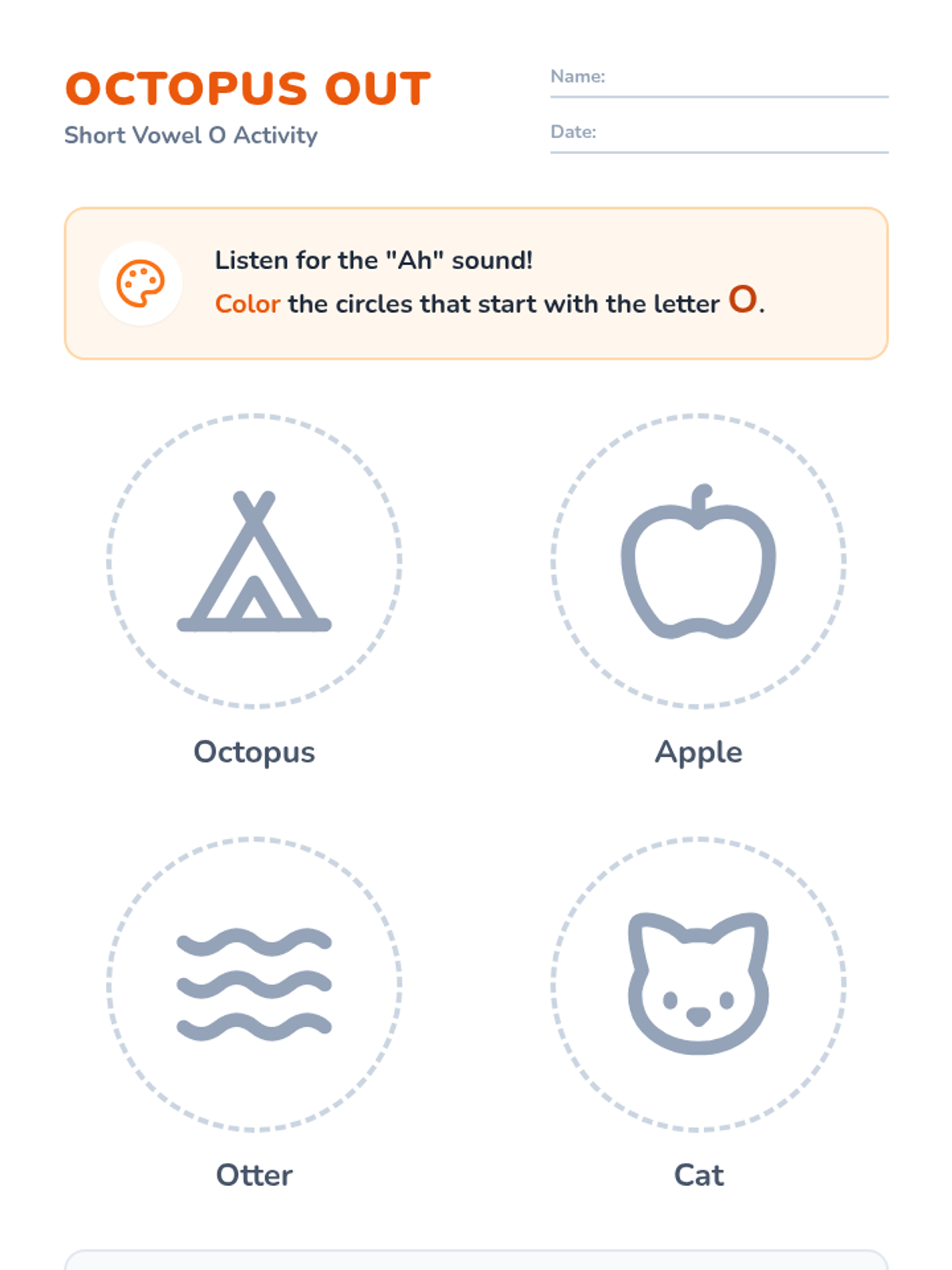
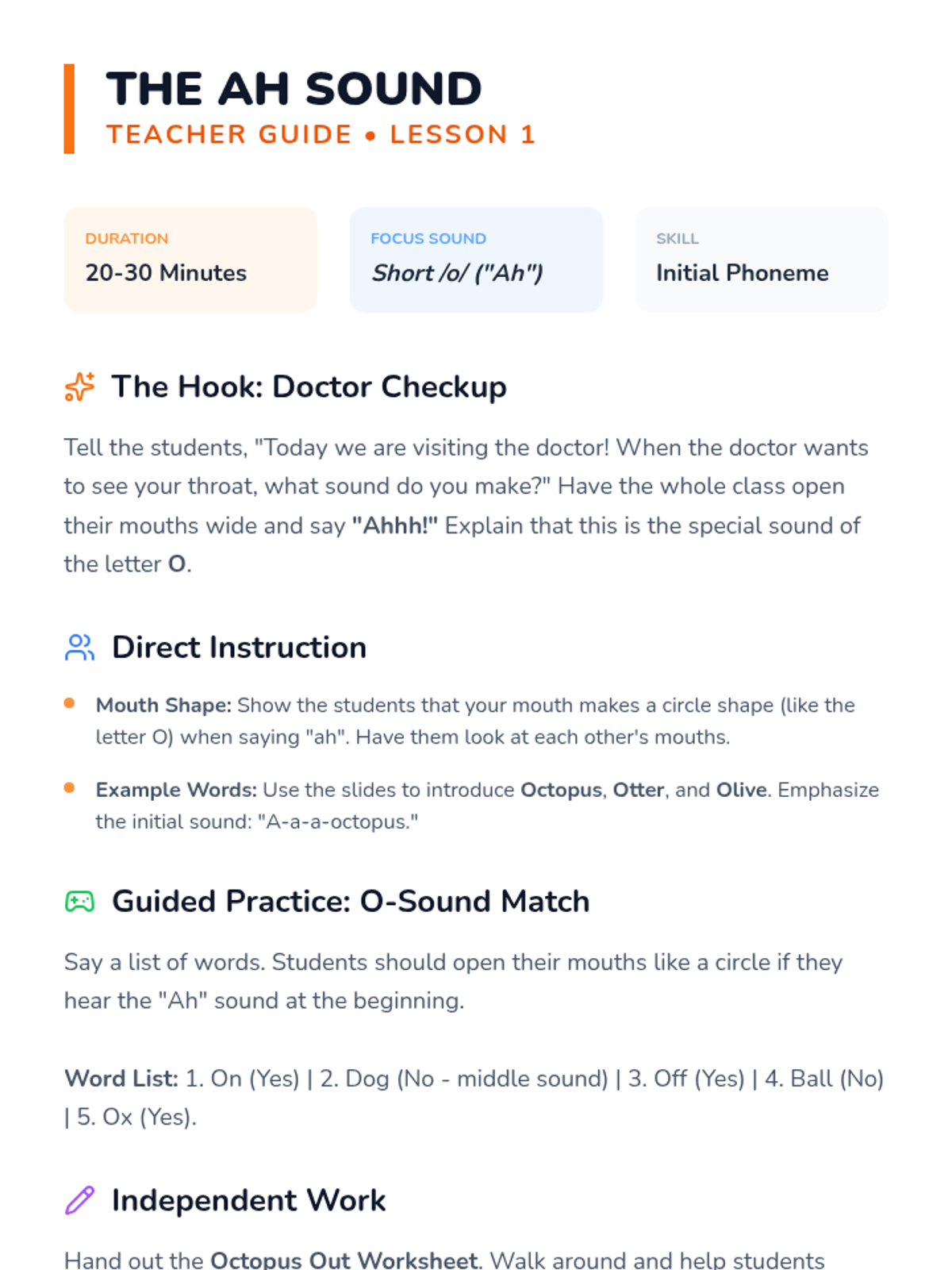
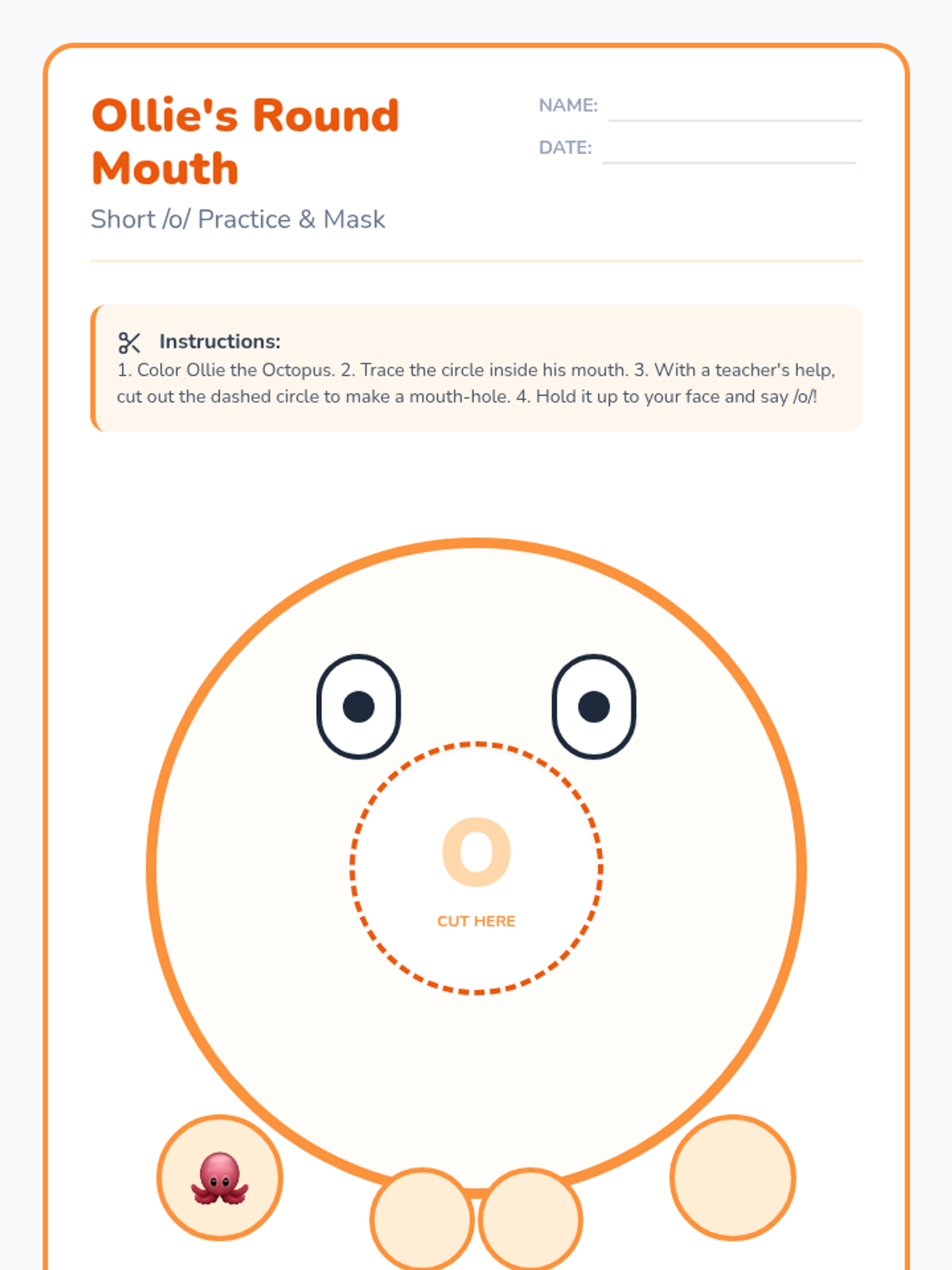
A Pre-K phonics sequence focusing on the short /o/ sound through sensory play, rhyming, and creative crafts. Students learn mouth formation, identify medial vowel sounds, and distinguish /o/ from other vowels.
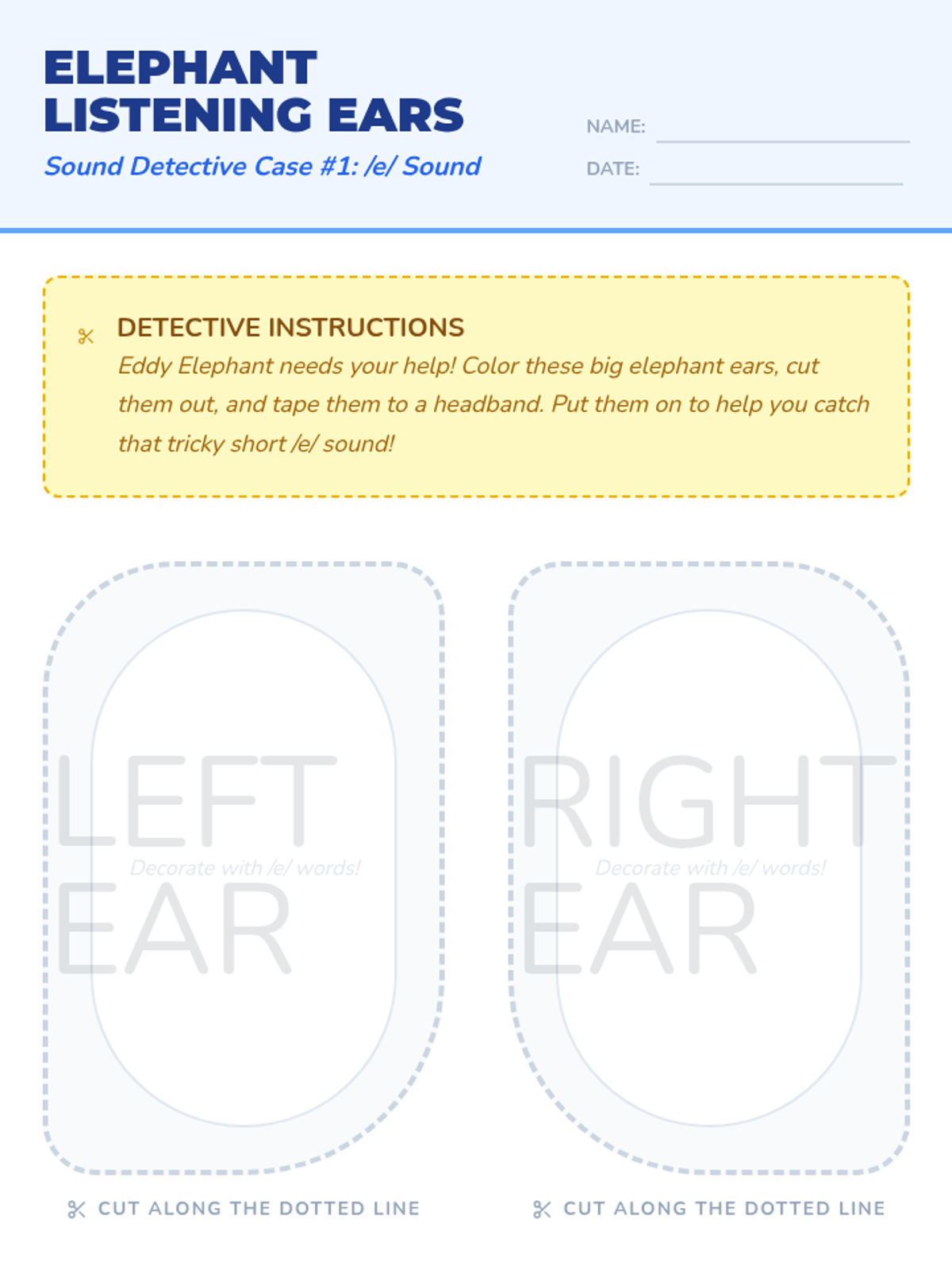
A phonics sequence for Pre-K students focusing on the short 'e' vowel sound through storytelling, games, and auditory discrimination activities using a Sound Detective theme.
This phonics sequence for Pre-K students focuses on discriminating between the short 'i' and short 'o' sounds through multi-sensory and game-based activities. It uses animal mascots (Iggy Iguana and Ollie Octopus) and mouth formation cues to help students distinguish these frequently confused vowel sounds.
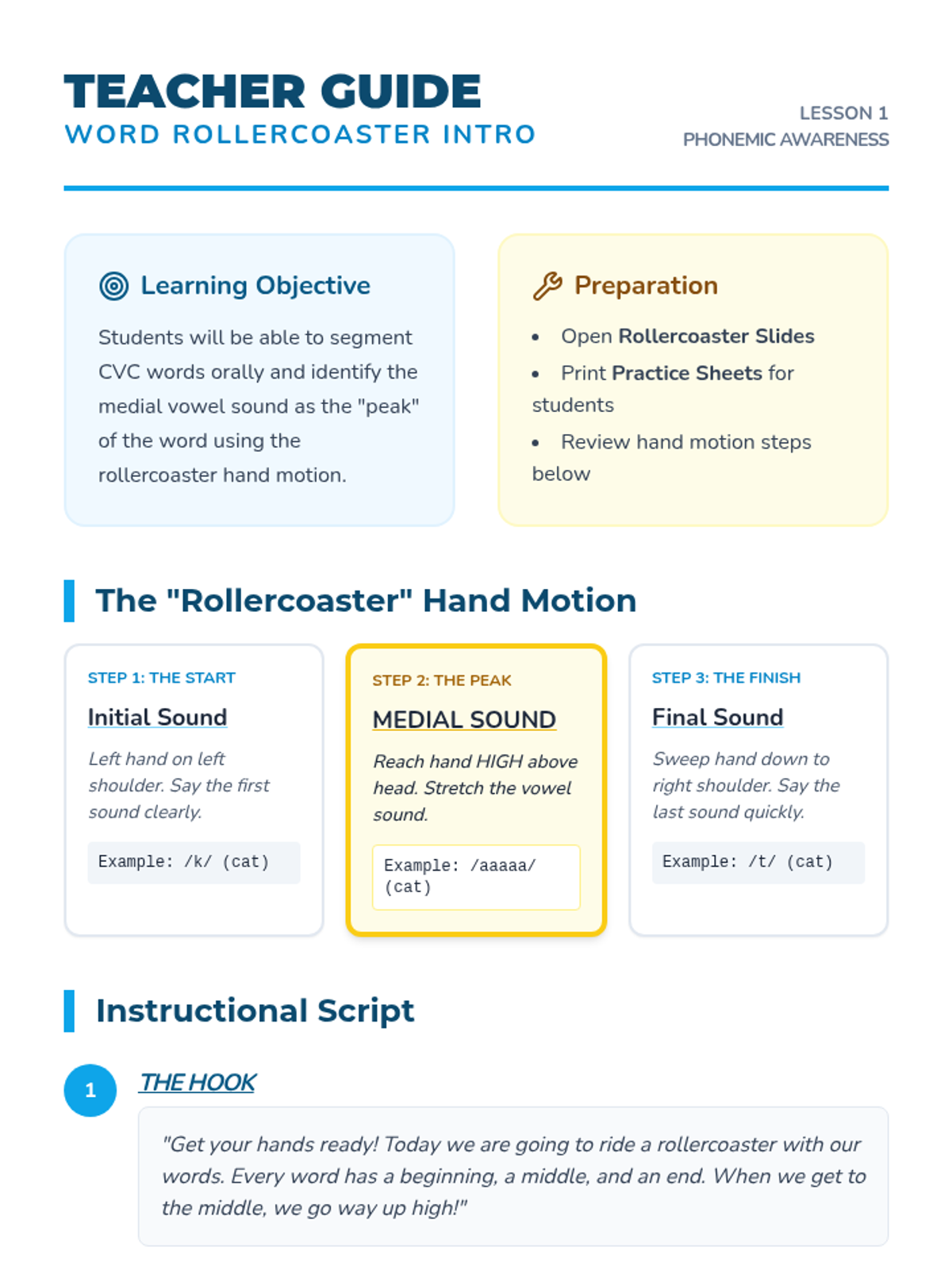
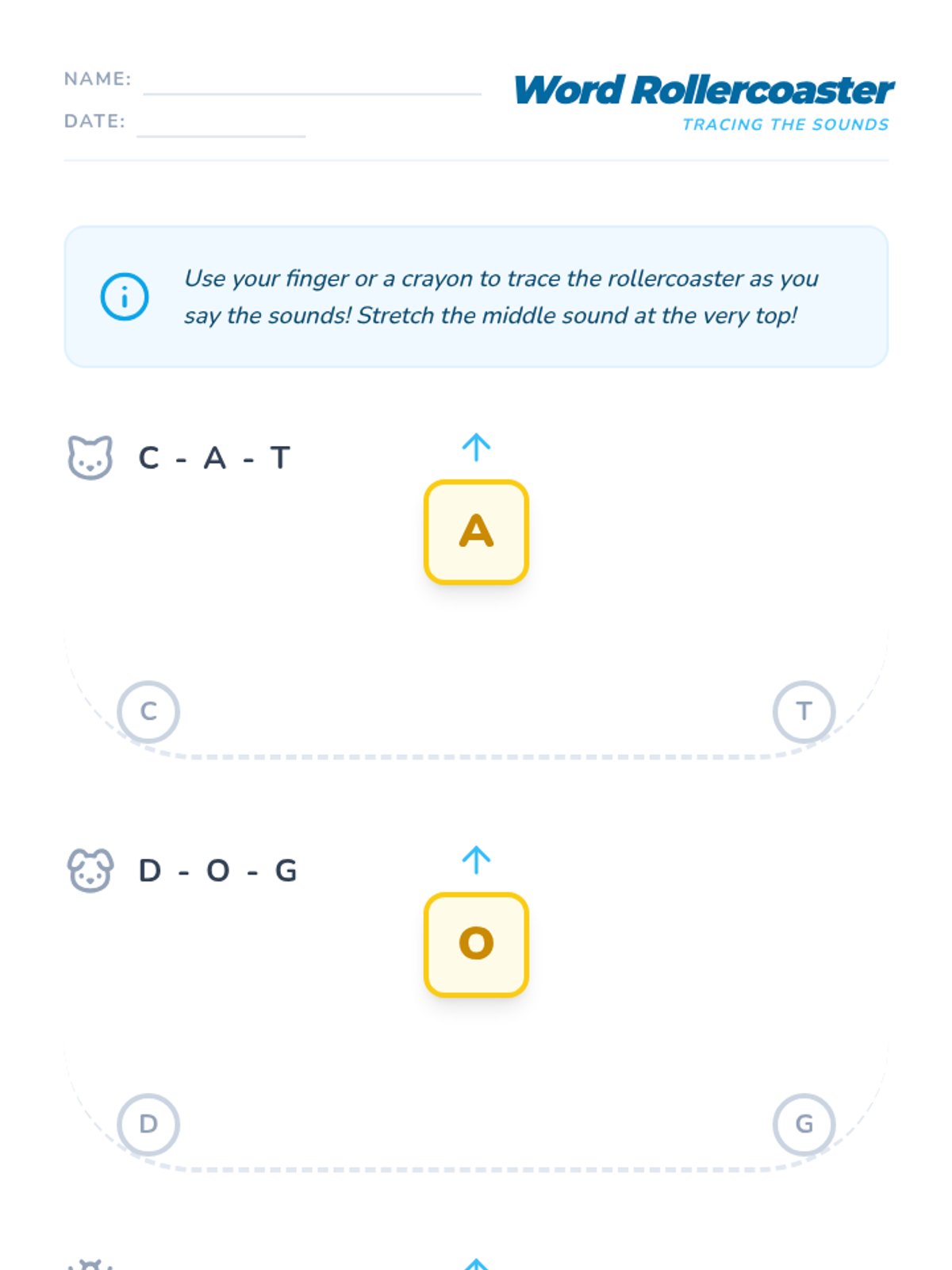
This sequence introduces Pre-K students to identifying medial vowel sounds in CVC words using the kinesthetic 'rollercoaster' strategy. Students progress from learning the basic hand motion to discriminating between different vowel sounds (a/i, o/u) and finally blending sounds to form whole words.
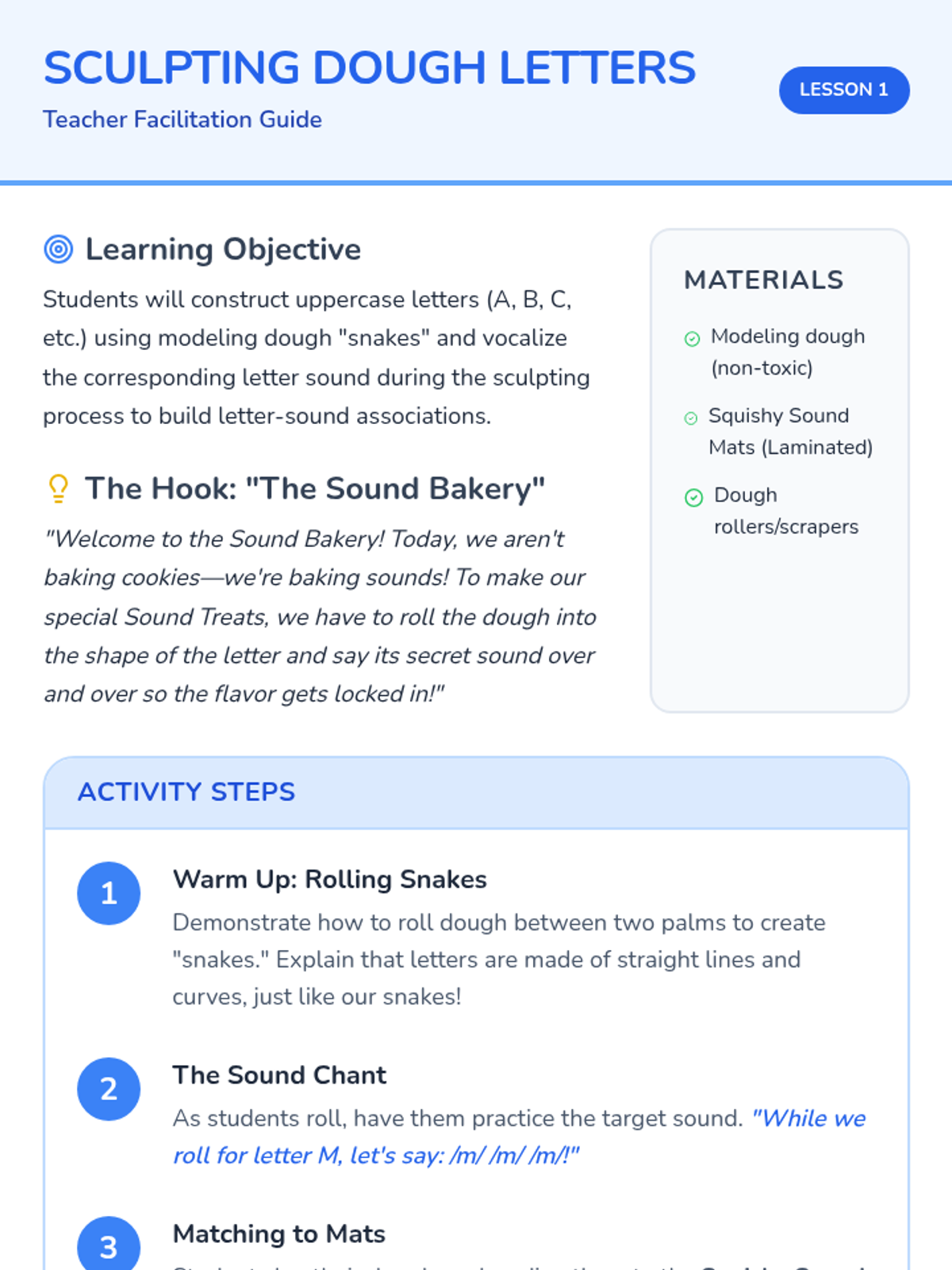
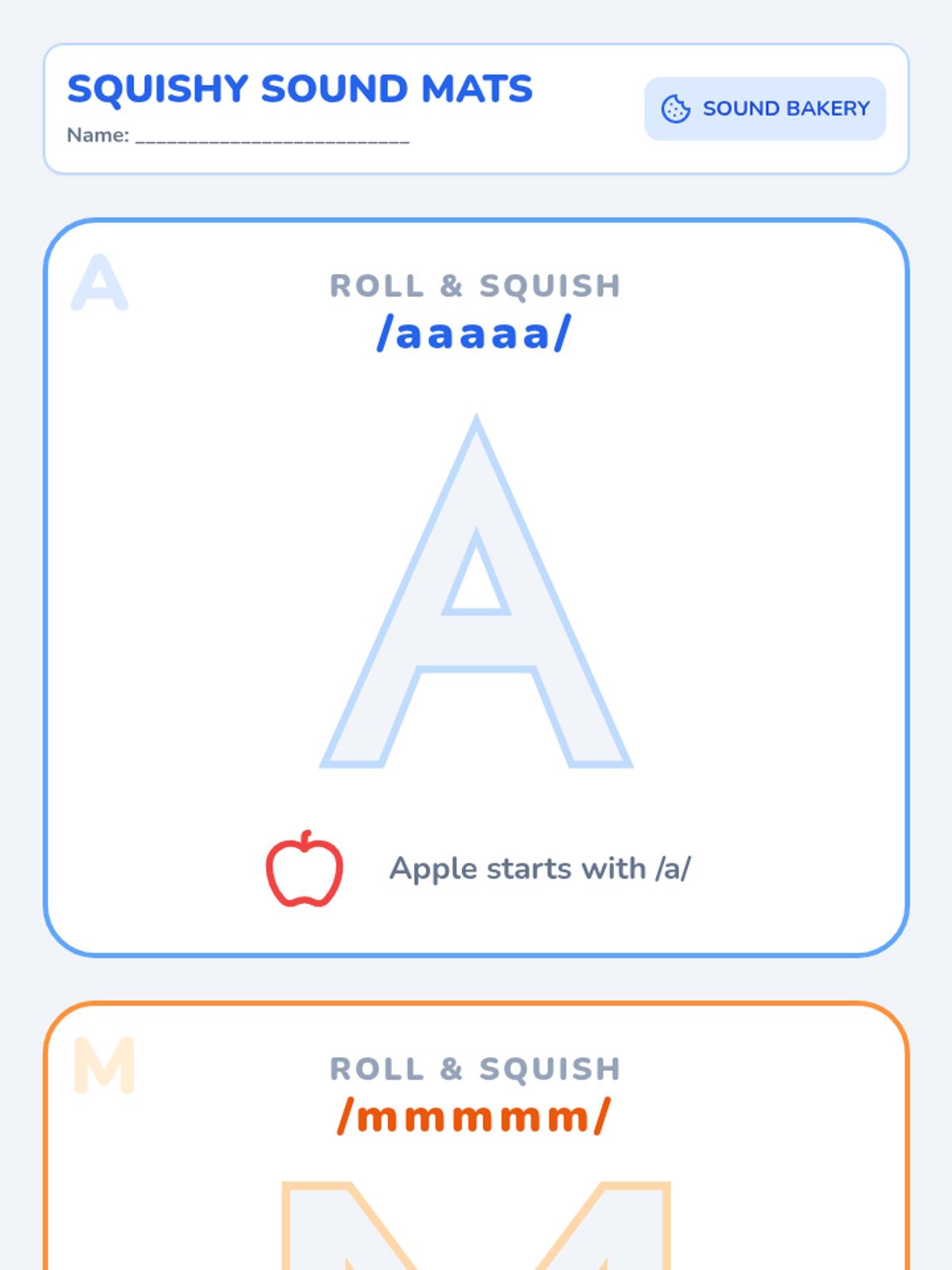
A multisensory Pre-K sequence focused on uppercase letter-sound associations through 3D construction, tactile tracing, and movement-based learning. Students build letters using dough, sand, natural materials, and their own bodies to reinforce phonemic awareness and fine motor skills.
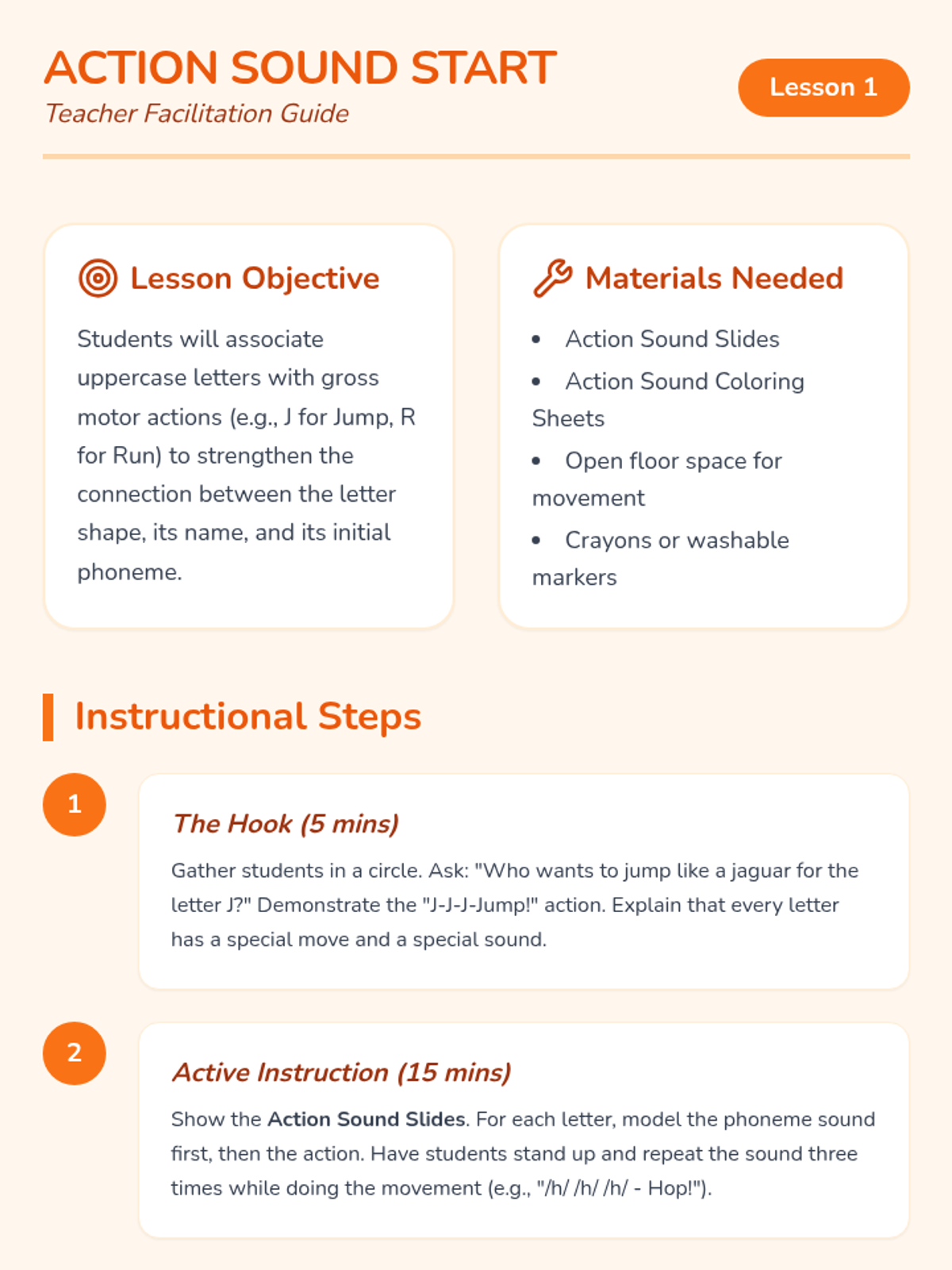
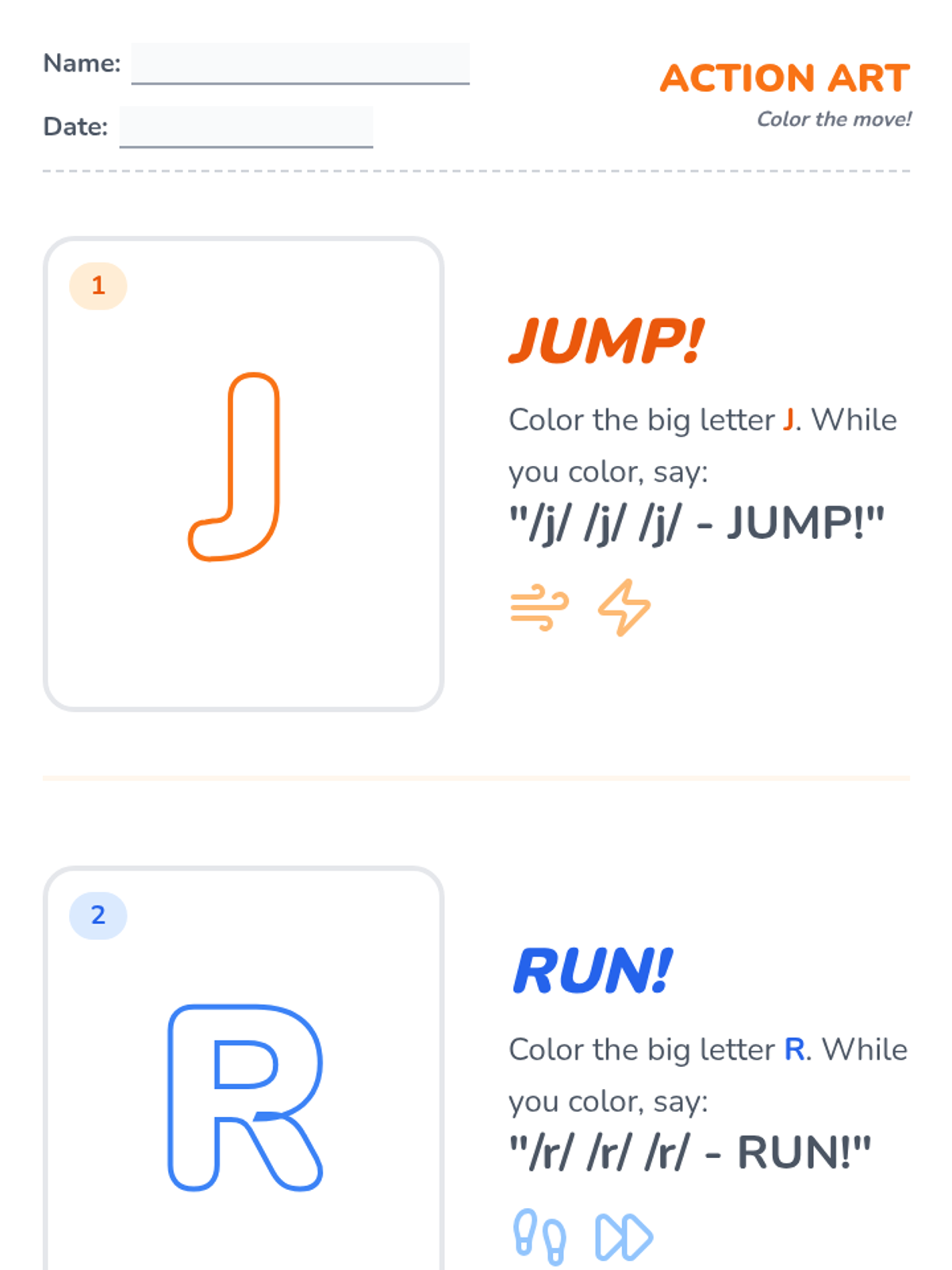
A high-energy phonics sequence for Pre-K students that uses physical movement and kinesthetic games to reinforce uppercase letter-sound associations. Students learn to connect phonemes with gross motor actions, body poses, and active play.
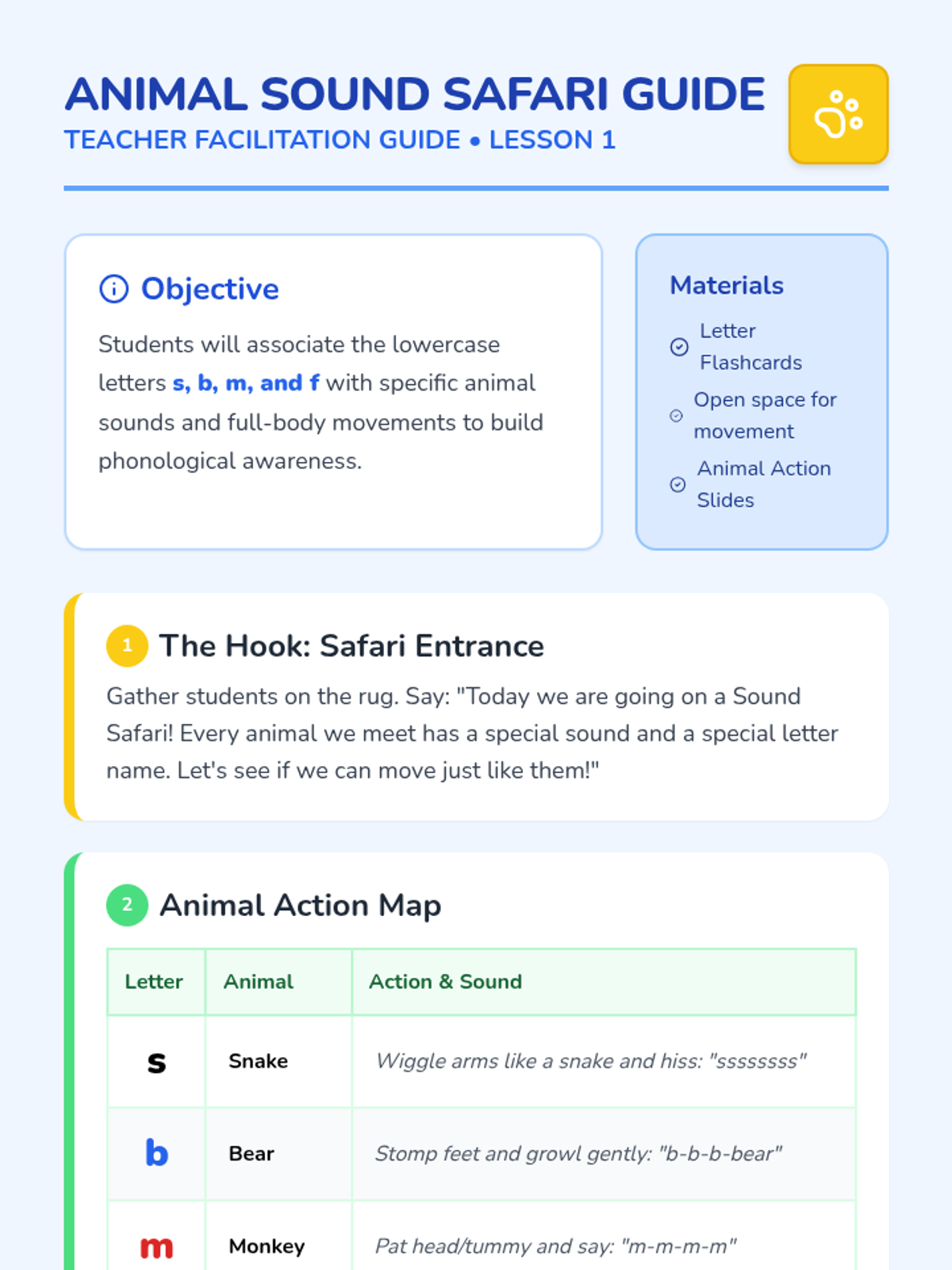
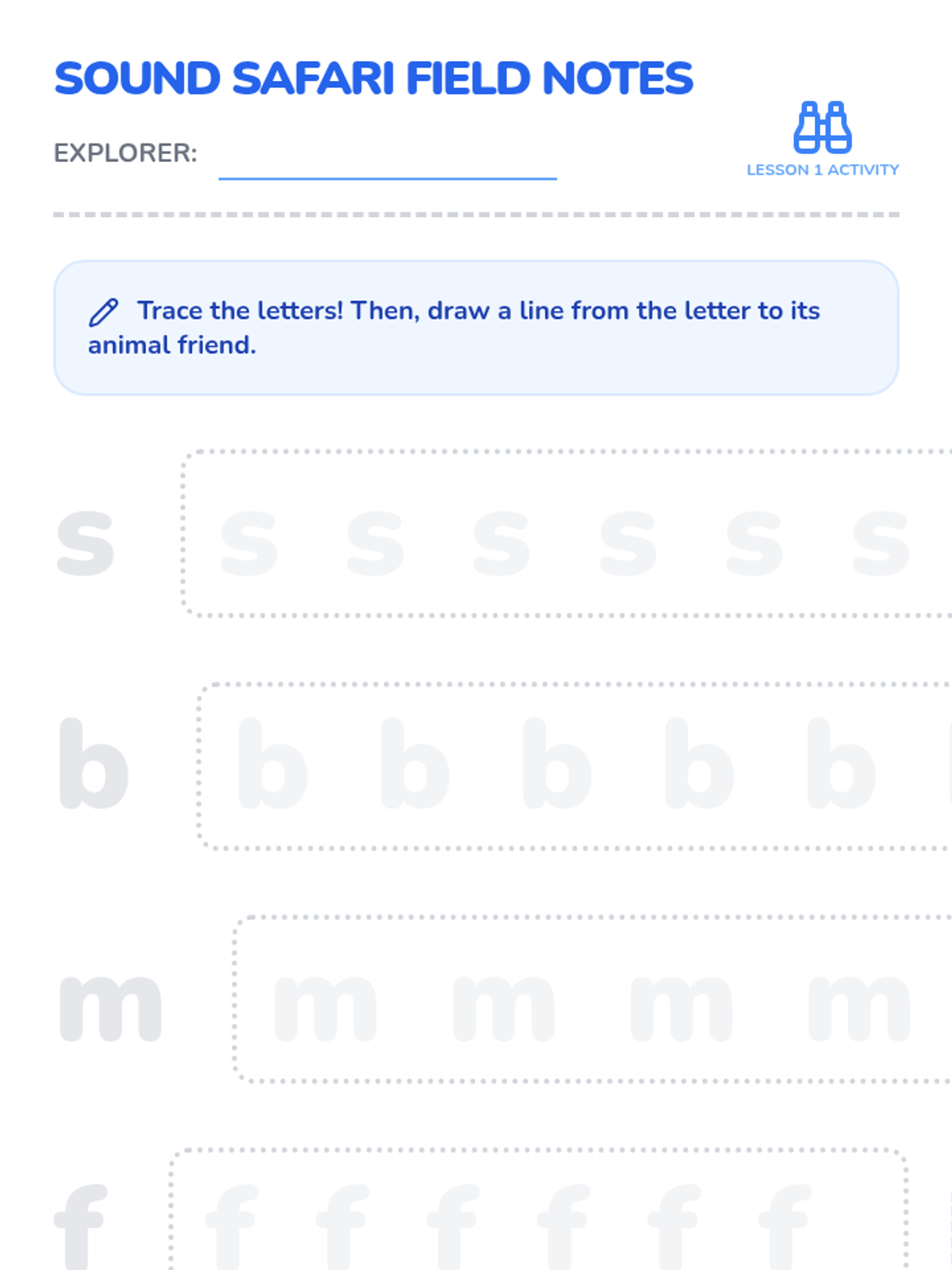
A kinesthetic simulation-based sequence for Pre-K students to learn lowercase letter-sound associations through full-body movement and play. Students move from animal mimicry to body-forming letters, culminating in an action-based story circle.