Essential grammar structures, high-frequency vocabulary, and foundational literacy skills. Equips learners with basic speaking and listening abilities for everyday interactions and introductory text comprehension.
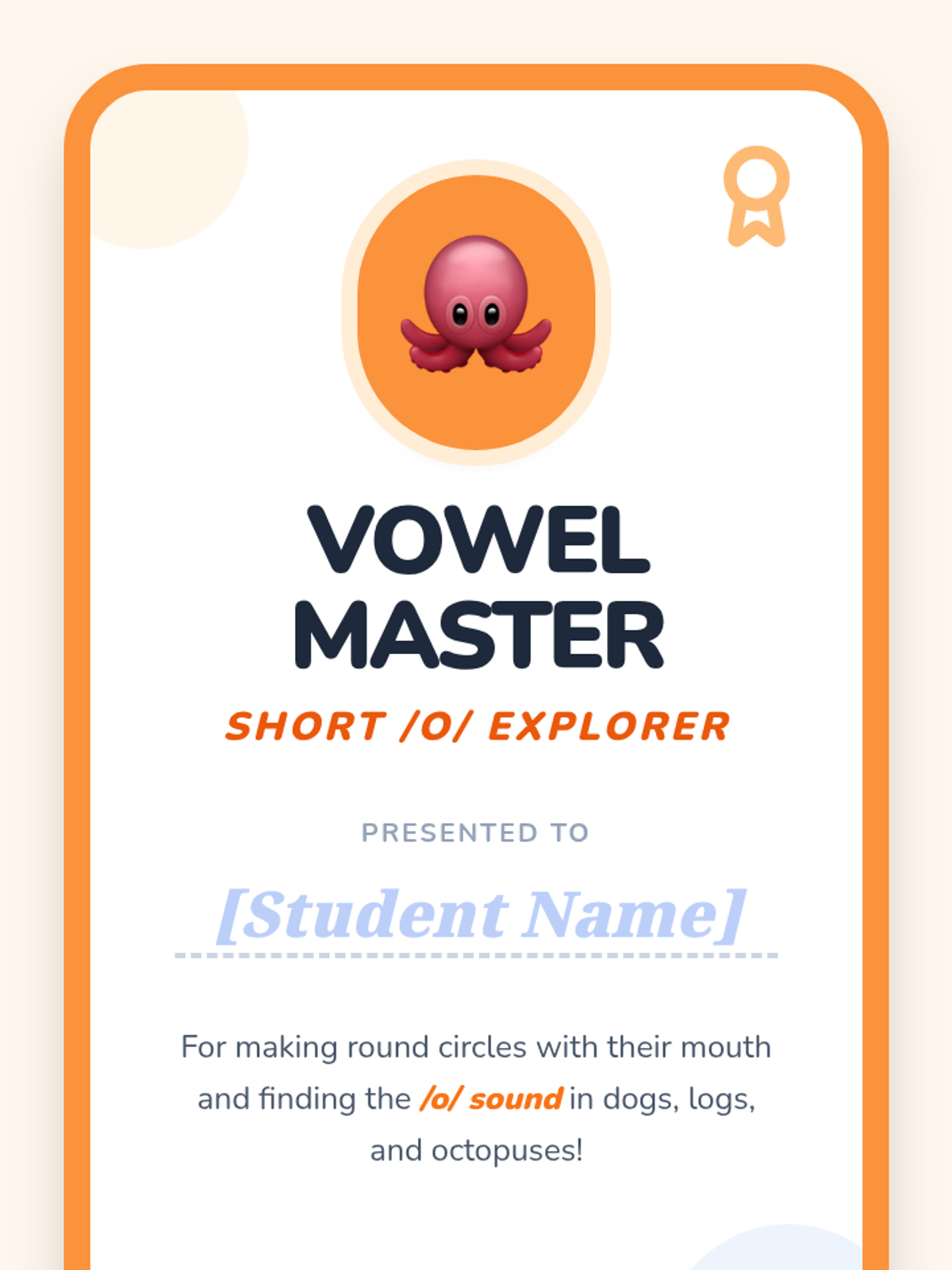
Students demonstrate their learning by picking a 'mystery object' from a bag and identifying the vowel sound for the class. They receive a 'Vowel Expert' sticker or certificate. This validates their progress in phonemic awareness.
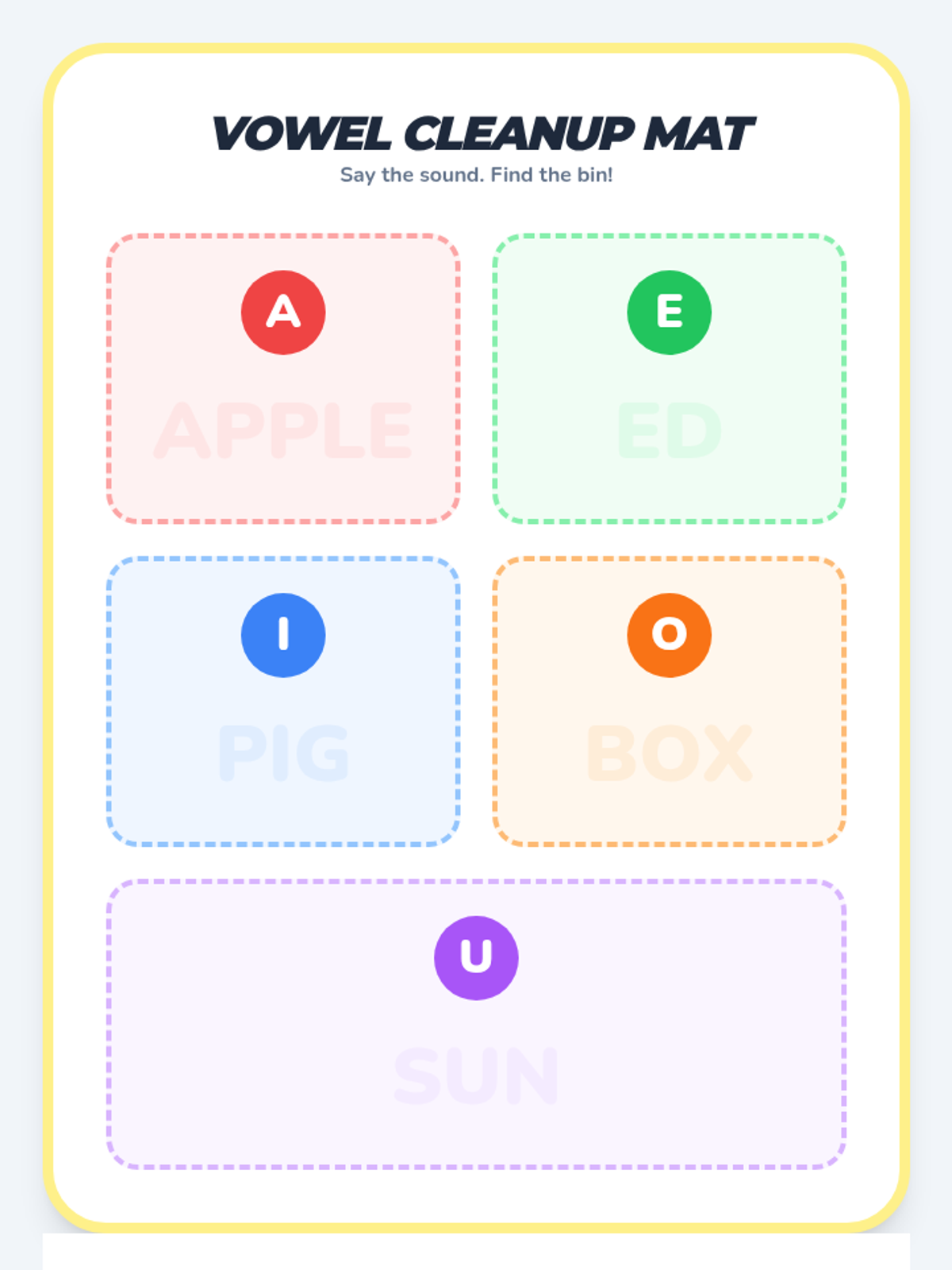
Students work in stations to sort a mix of pictures representing all five short vowel sounds. Teachers rotate to provide targeted feedback on difficult comparisons. This mastery-based lesson ensures retention of previous sequences.
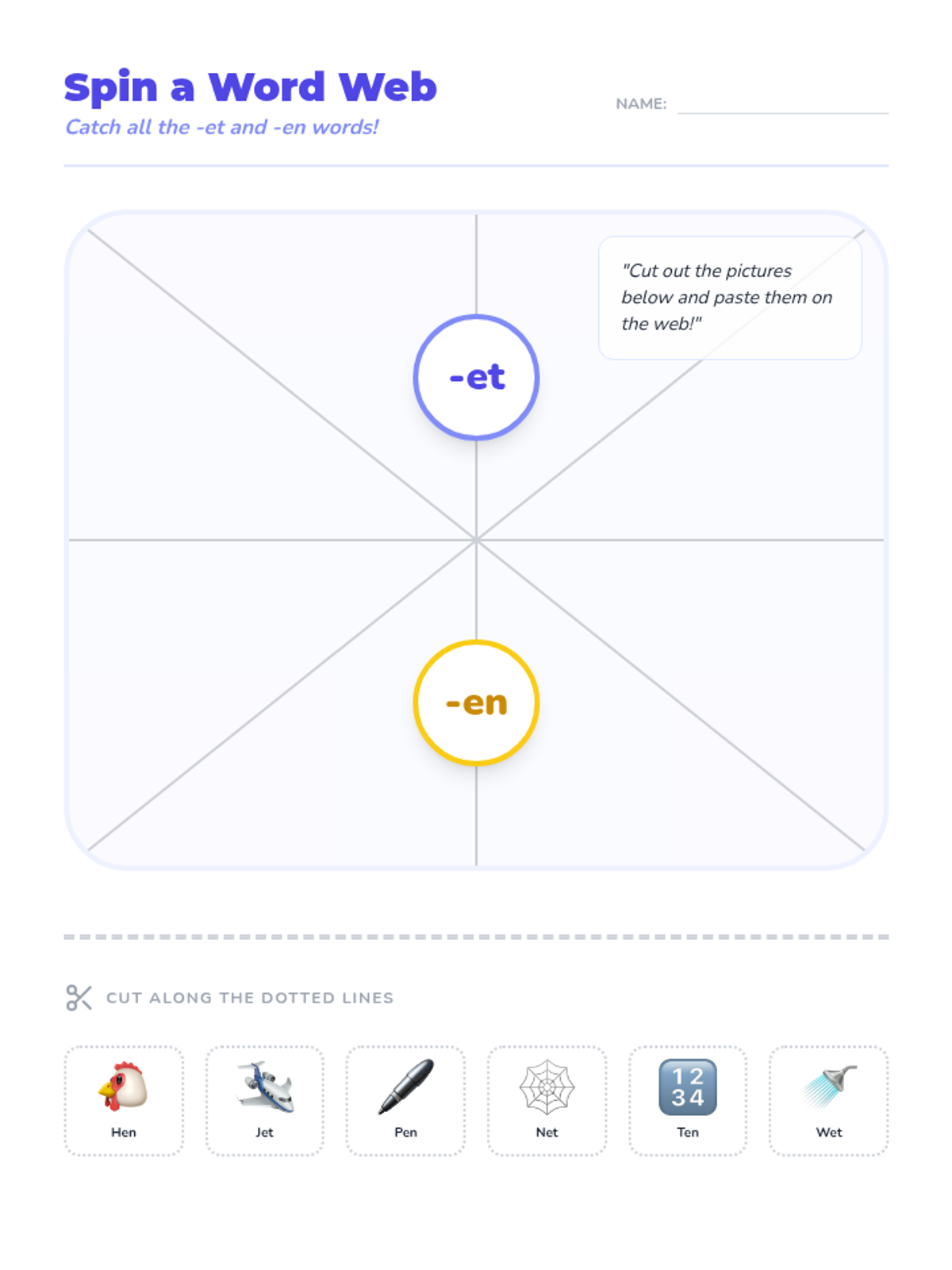
The class creates a web on the chart paper for the -et and -en families (net, vet, hen, pen). Students contribute words and pictures to the web. This visually organizes words by their rime structure.
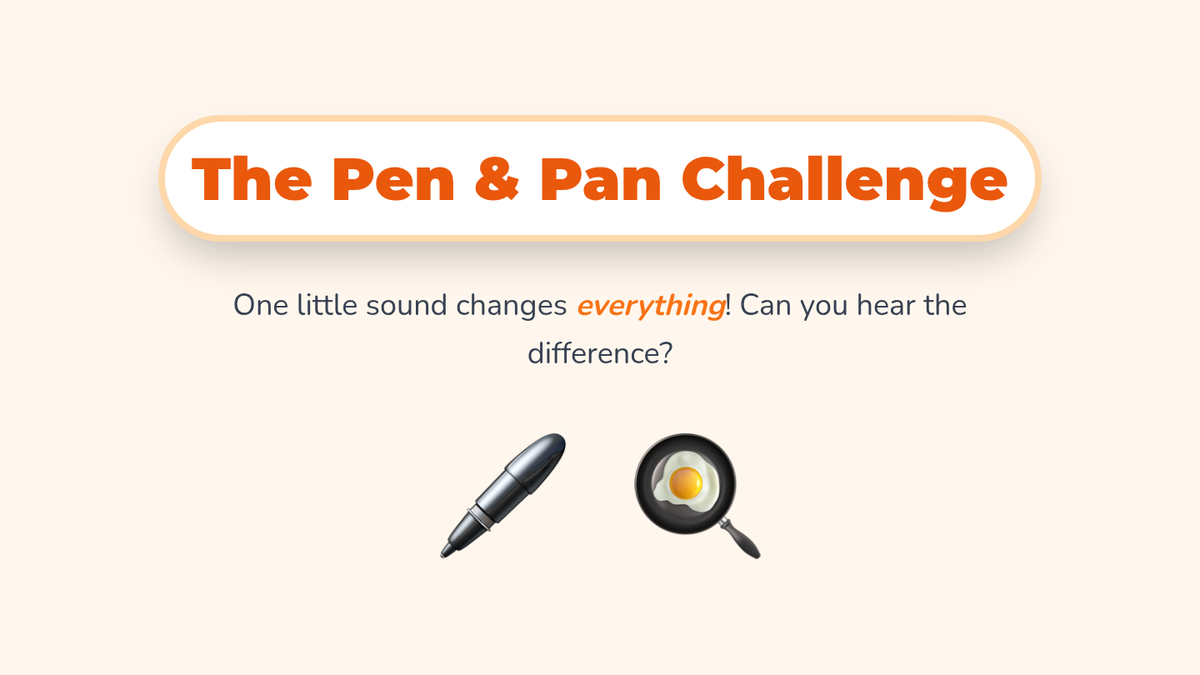
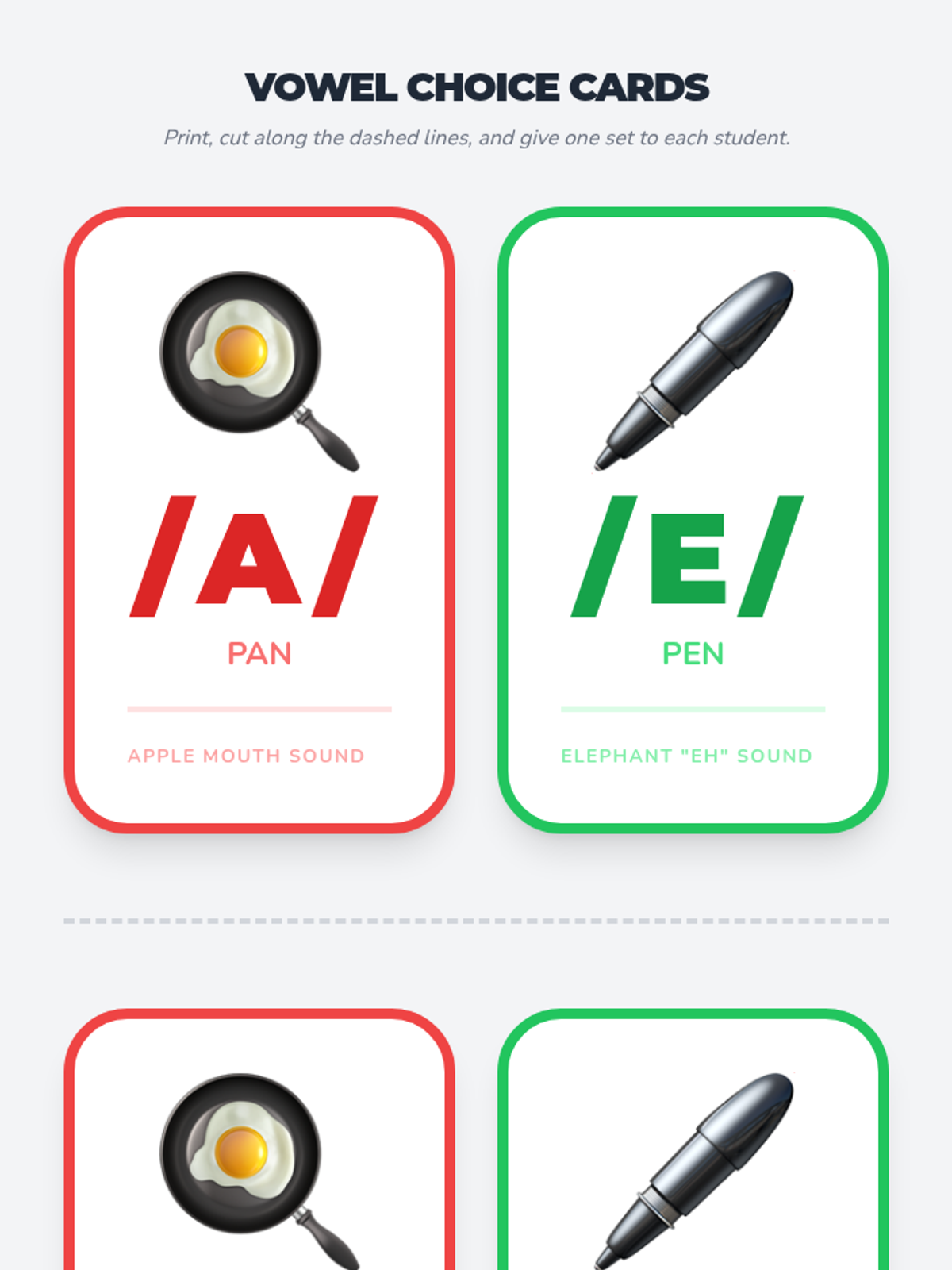
Students directly compare minimal pairs like 'pen/pan' and 'ten/tan.' Using color-coded cards, they indicate which vowel sound they hear. This explicit comparison targets the most common confusion for this age group.
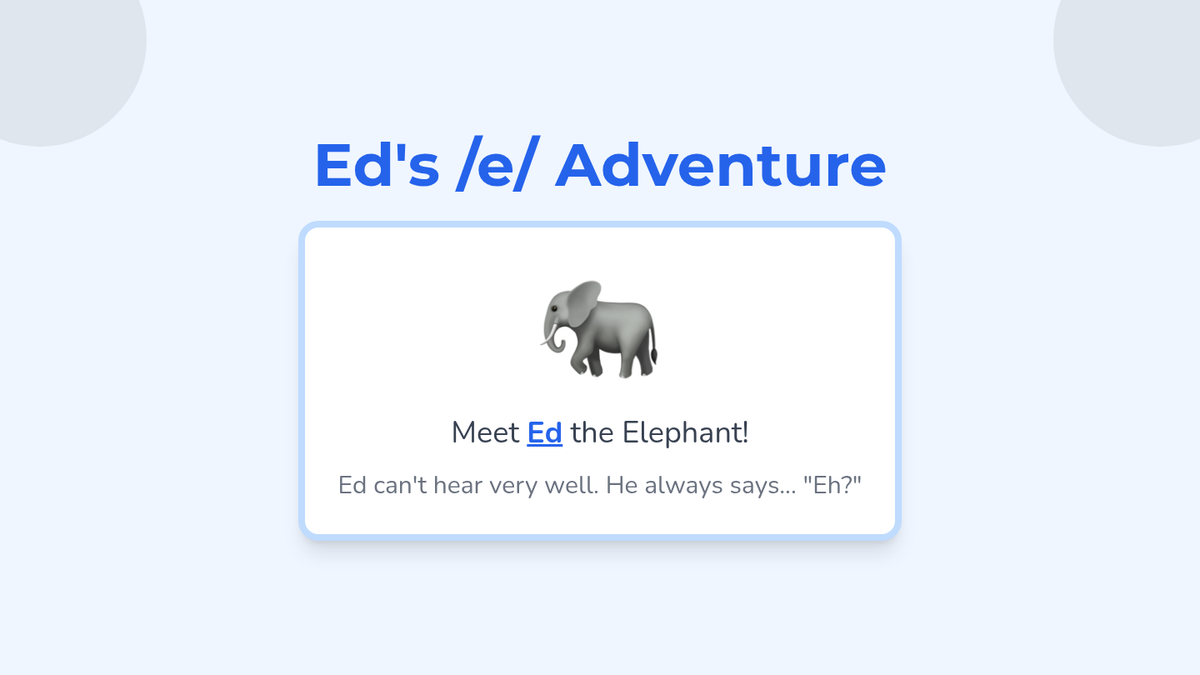
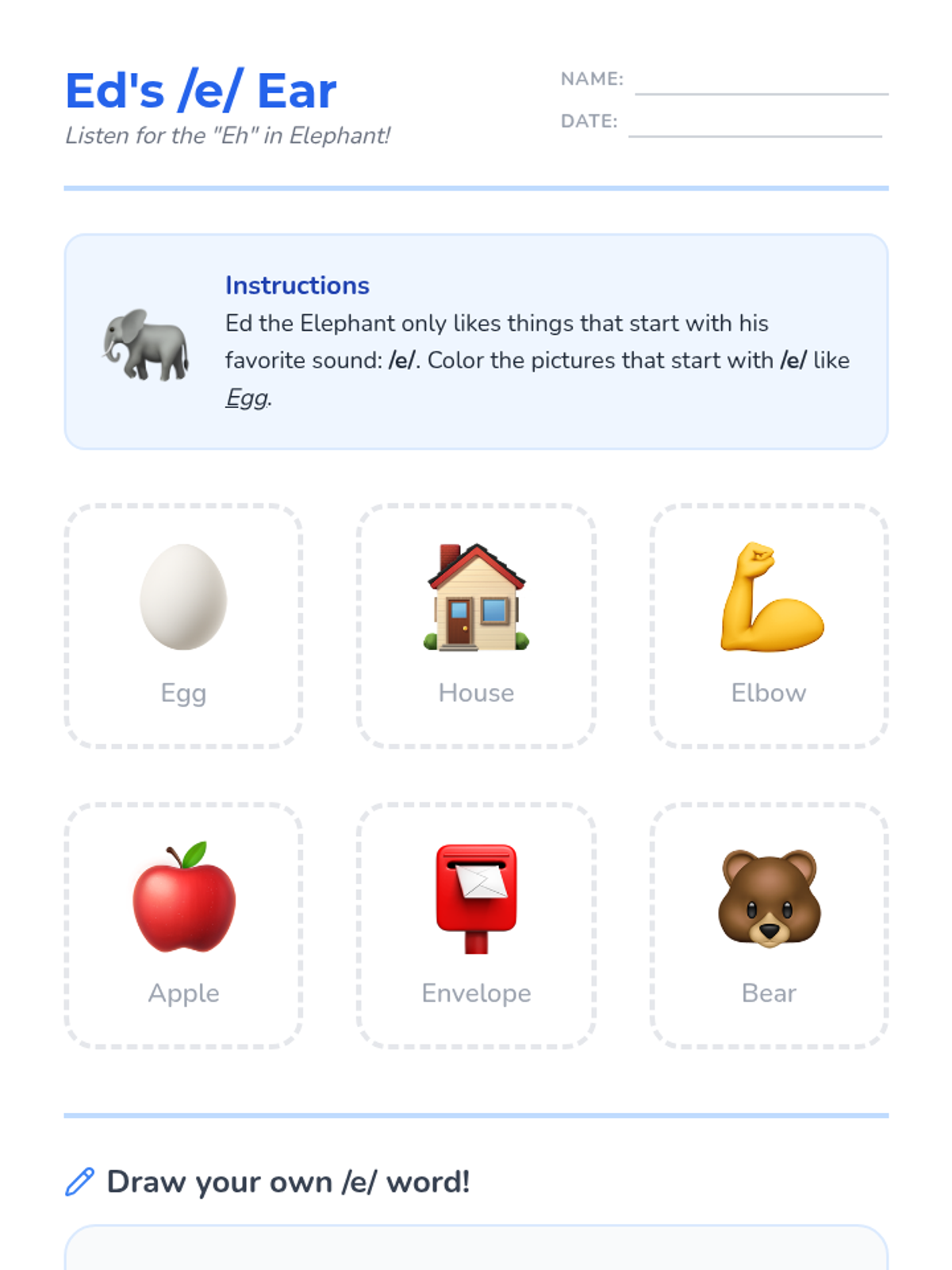
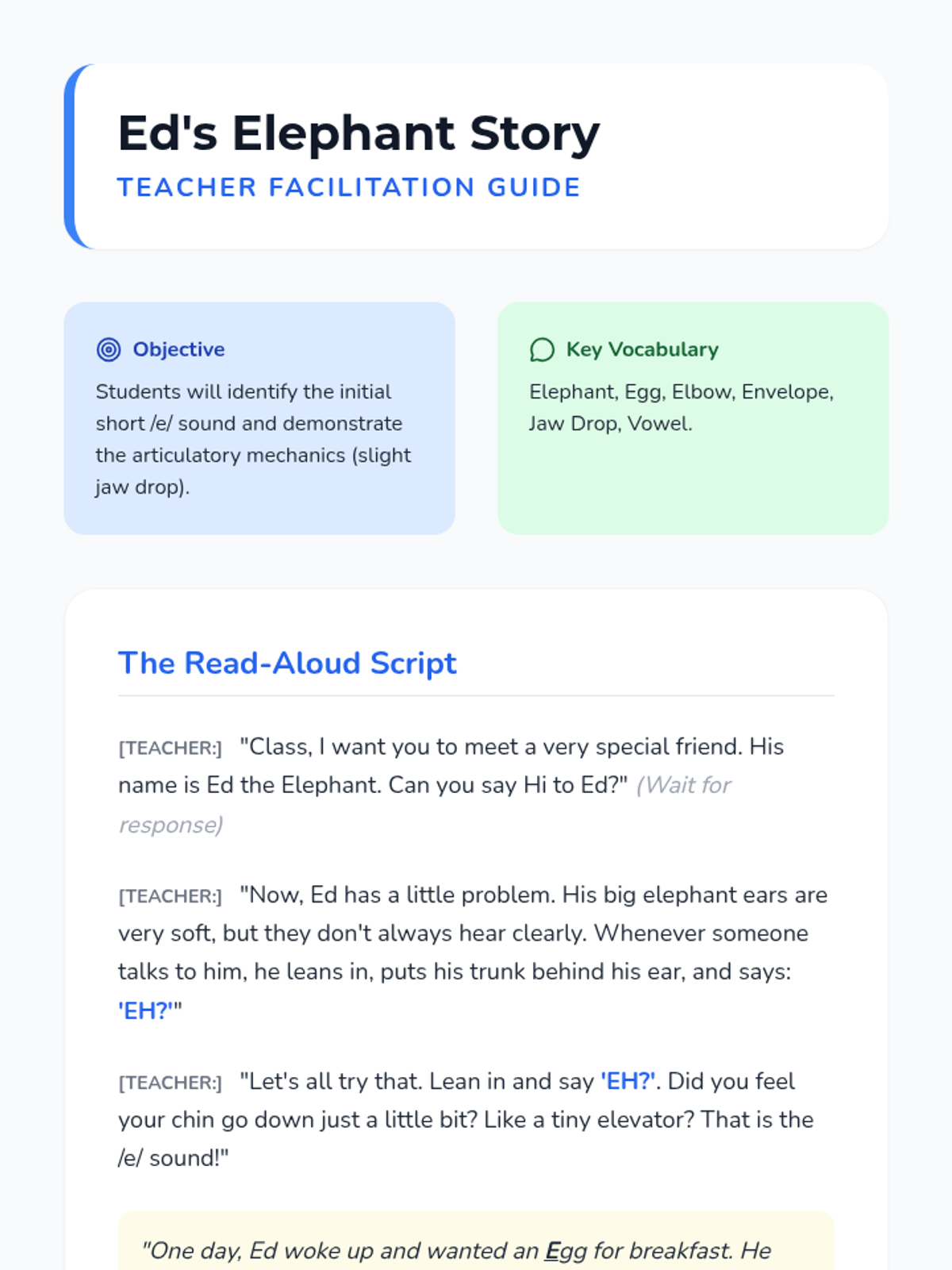
Students are introduced to the short /e/ sound via a character story about an elephant. They practice the slight jaw drop required for /e/ compared to /i/. The lesson focuses on hearing /e/ at the start of words like 'egg' and 'elbow.'
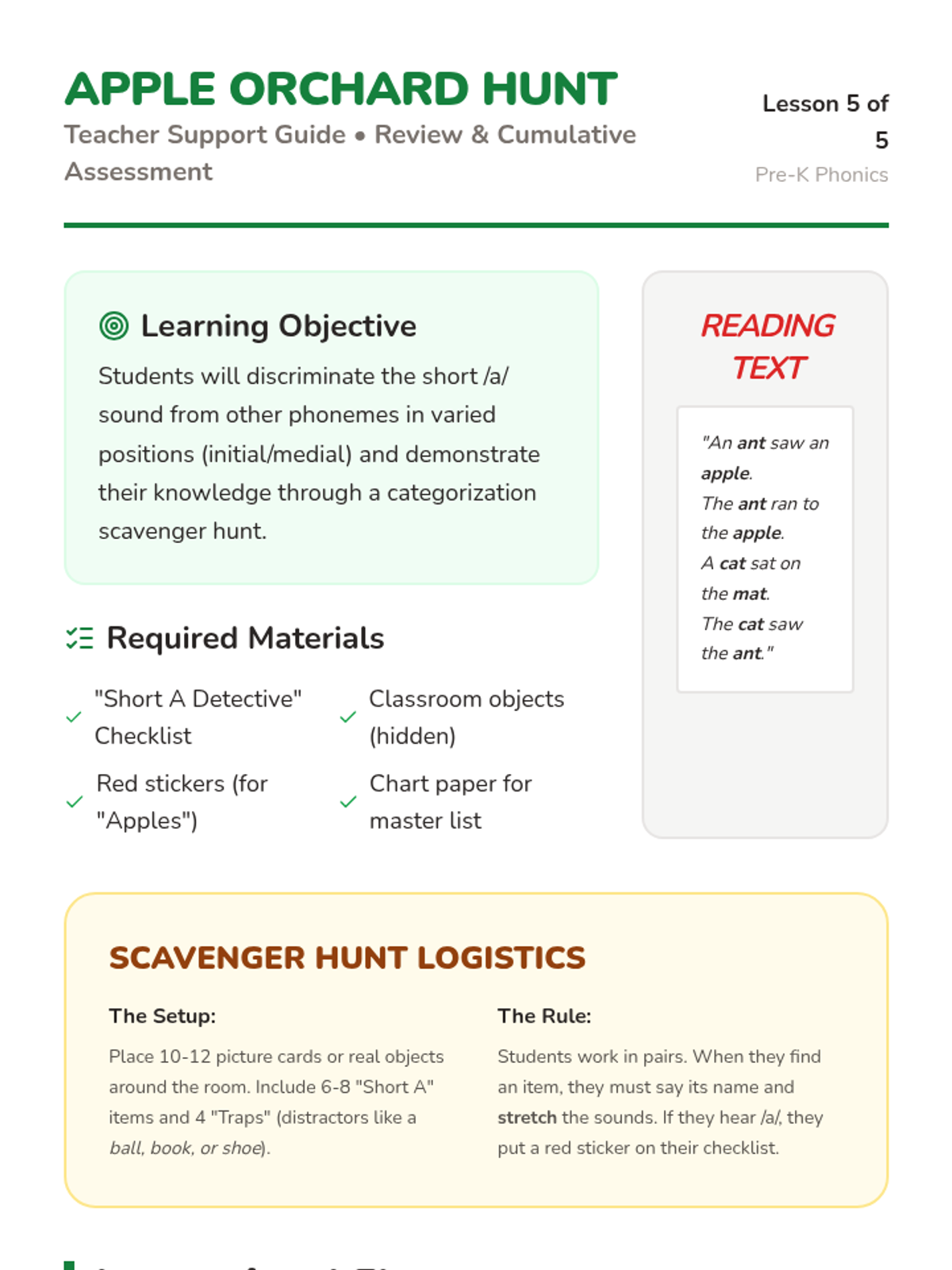
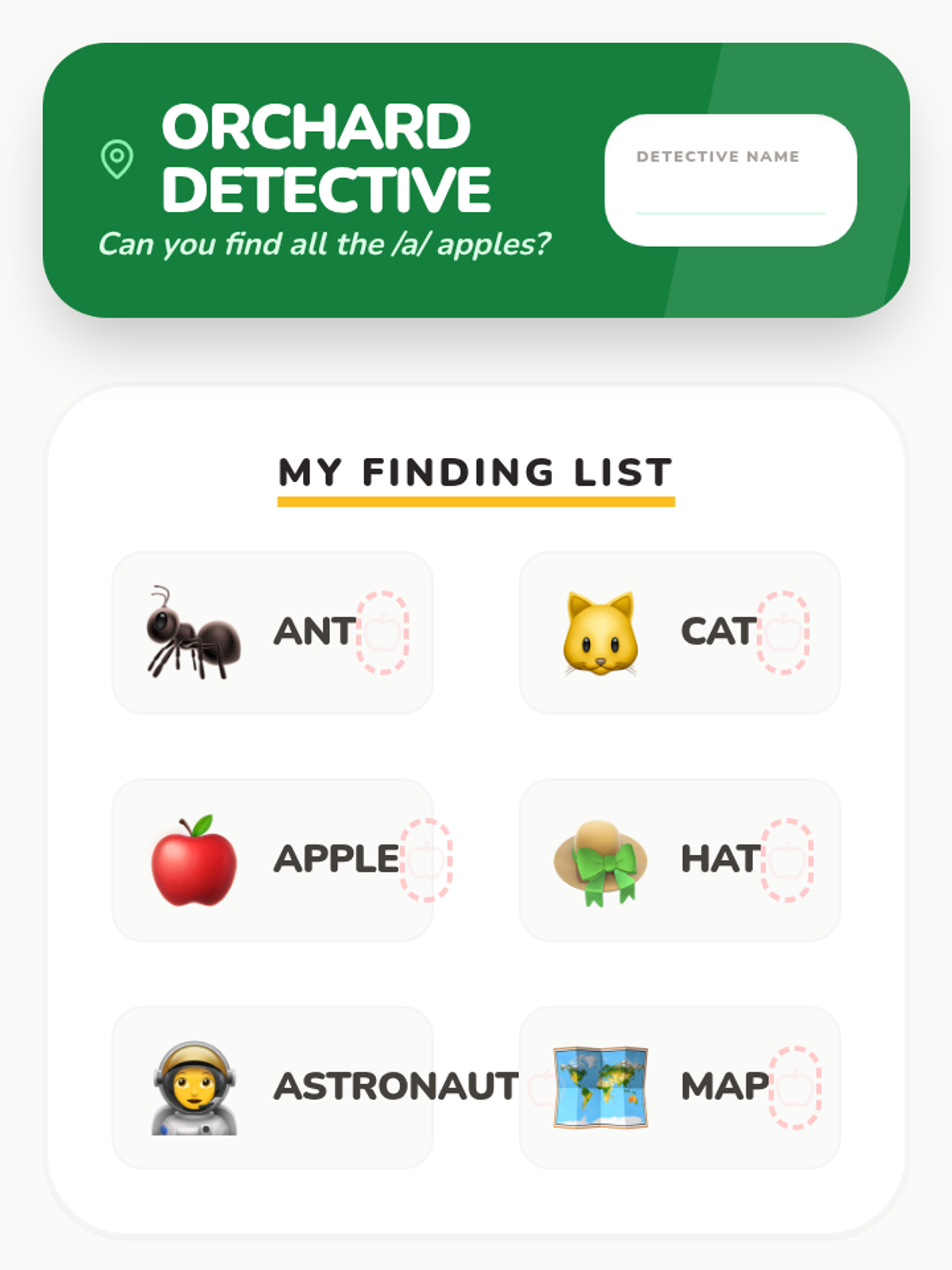
Students find items or pictures in the classroom containing the short /a/ sound. They sort these items onto a master chart, distinguishing them from distractors. The session ends with a shared reading of a predictable text.
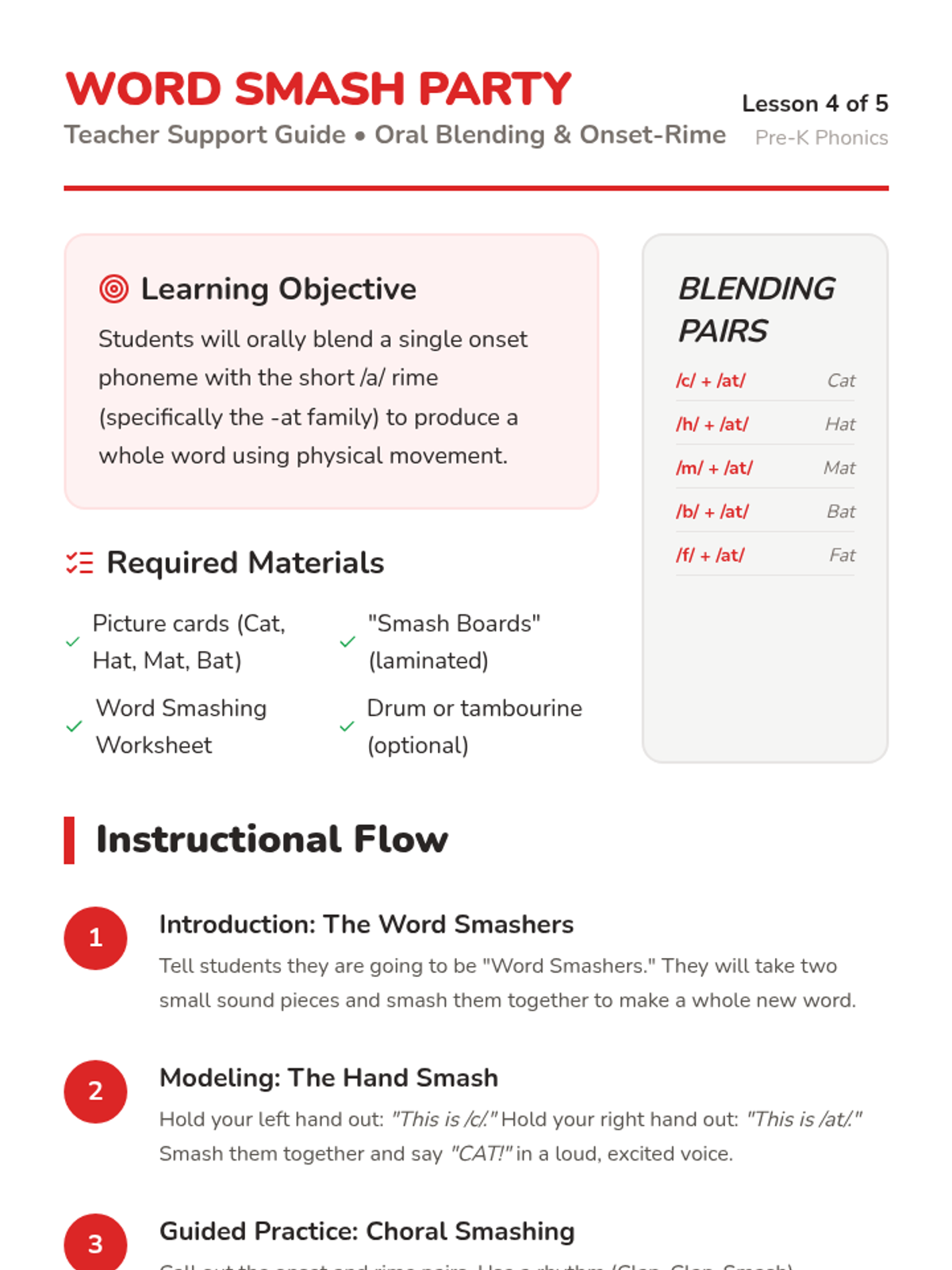
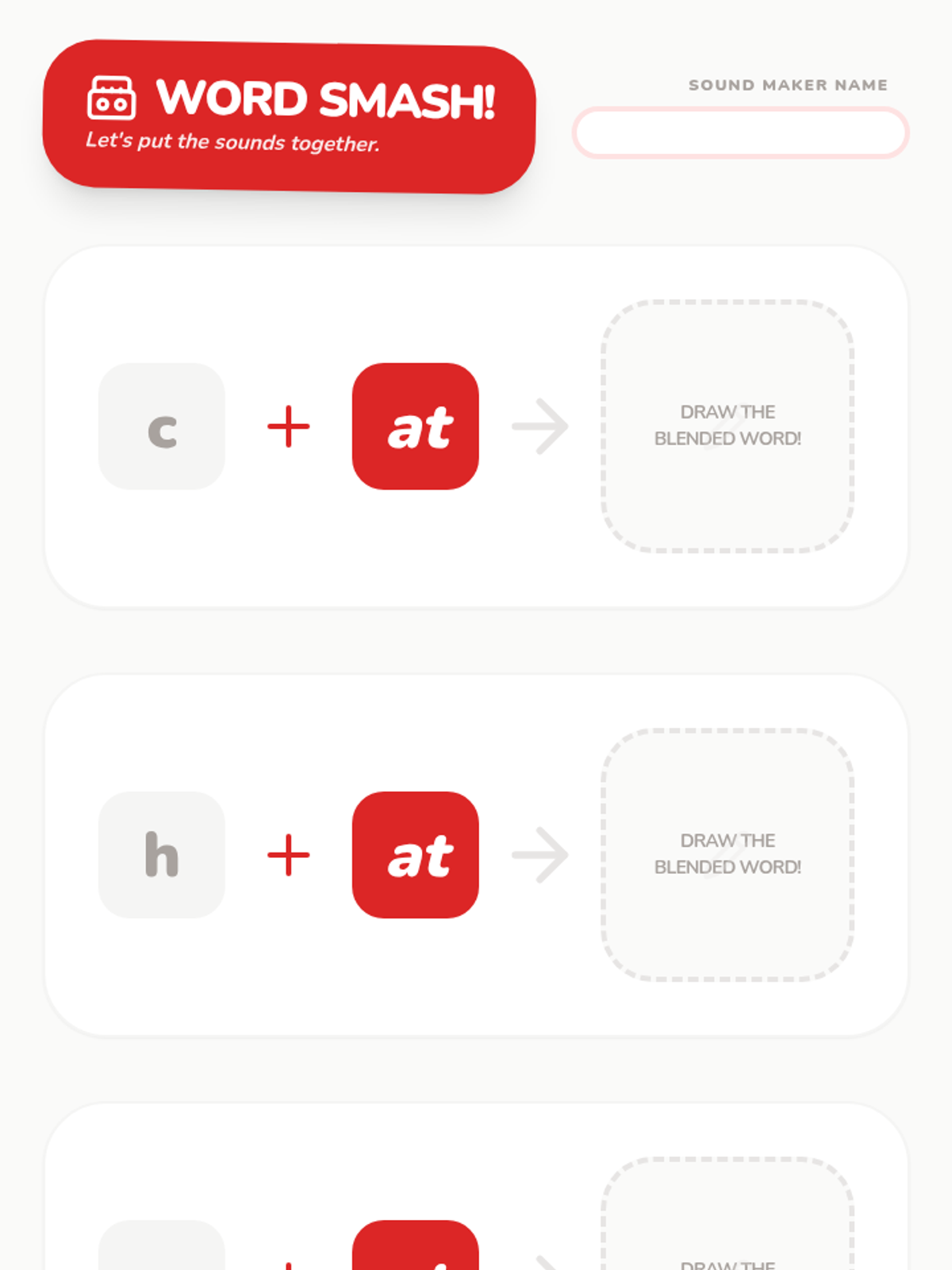
Using picture cards, students practice blending an onset with the /at/ family rime. The lesson uses choral response and movement to merge the sounds together into a coherent word. This scaffolding supports early decoding skills.
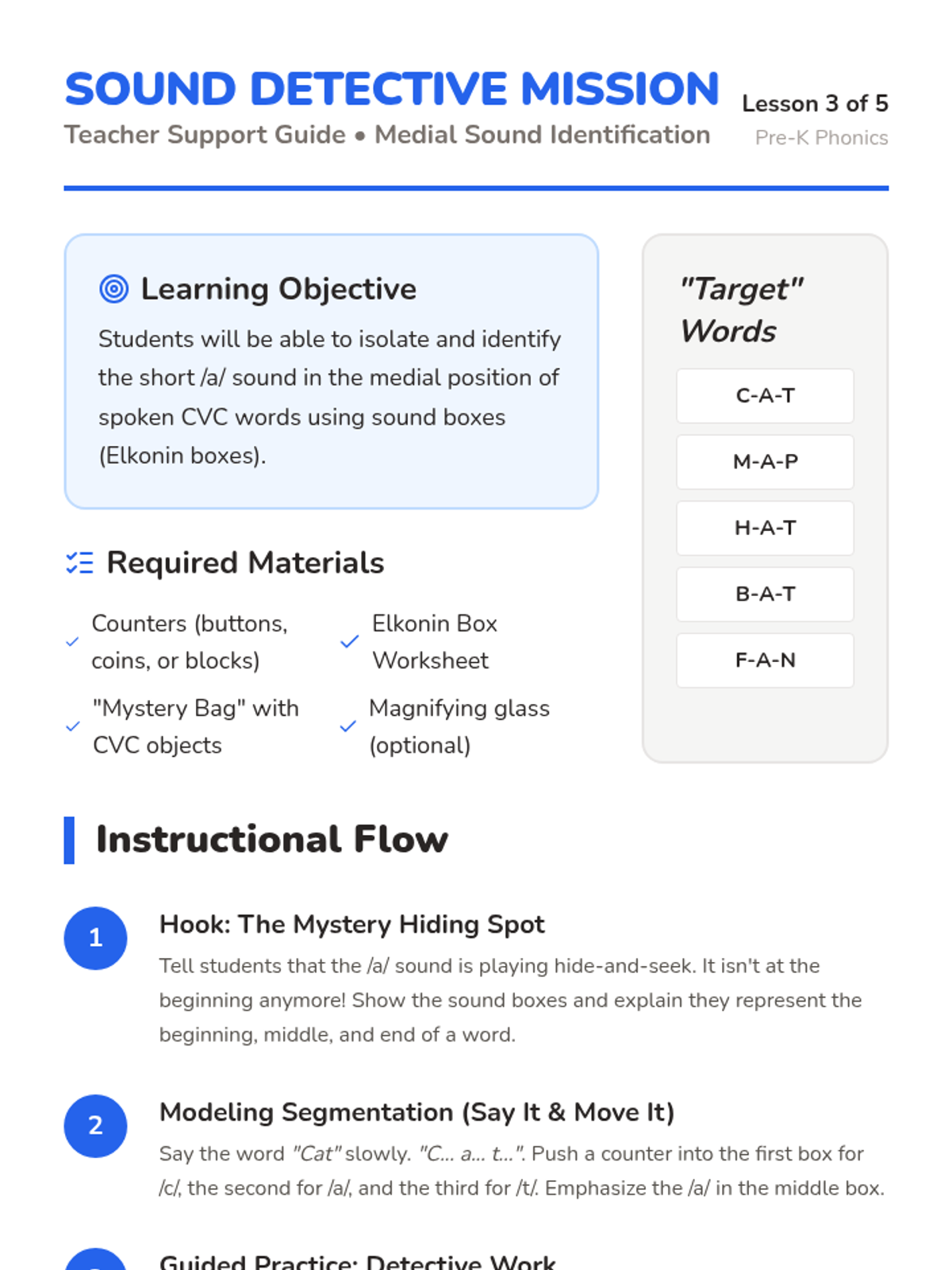
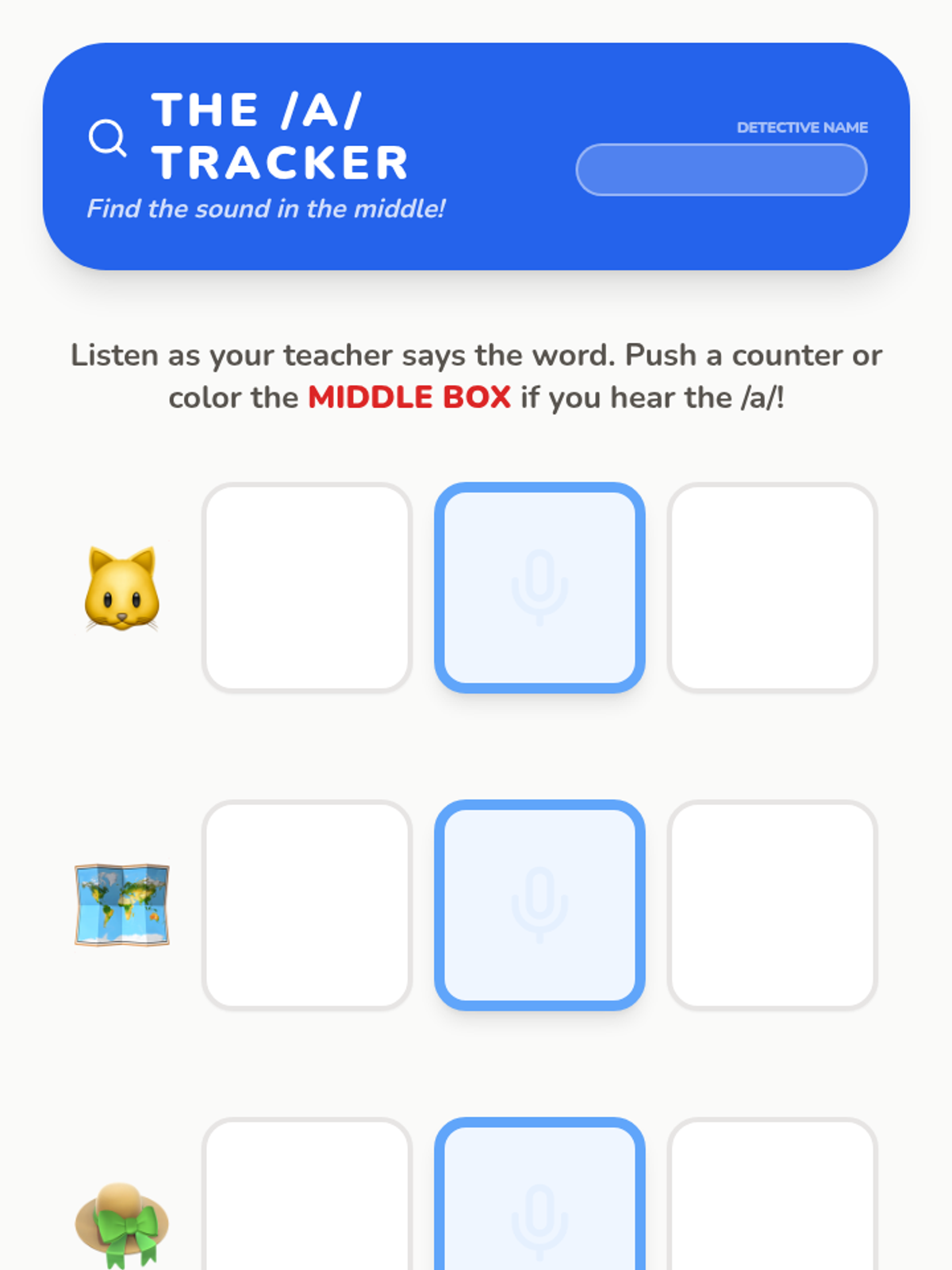
Students engage in a 'listening detective' activity to spot the /a/ sound hiding in the middle of CVC words. Using Elkonin boxes with counters, they physically represent the beginning, middle, and end sounds.
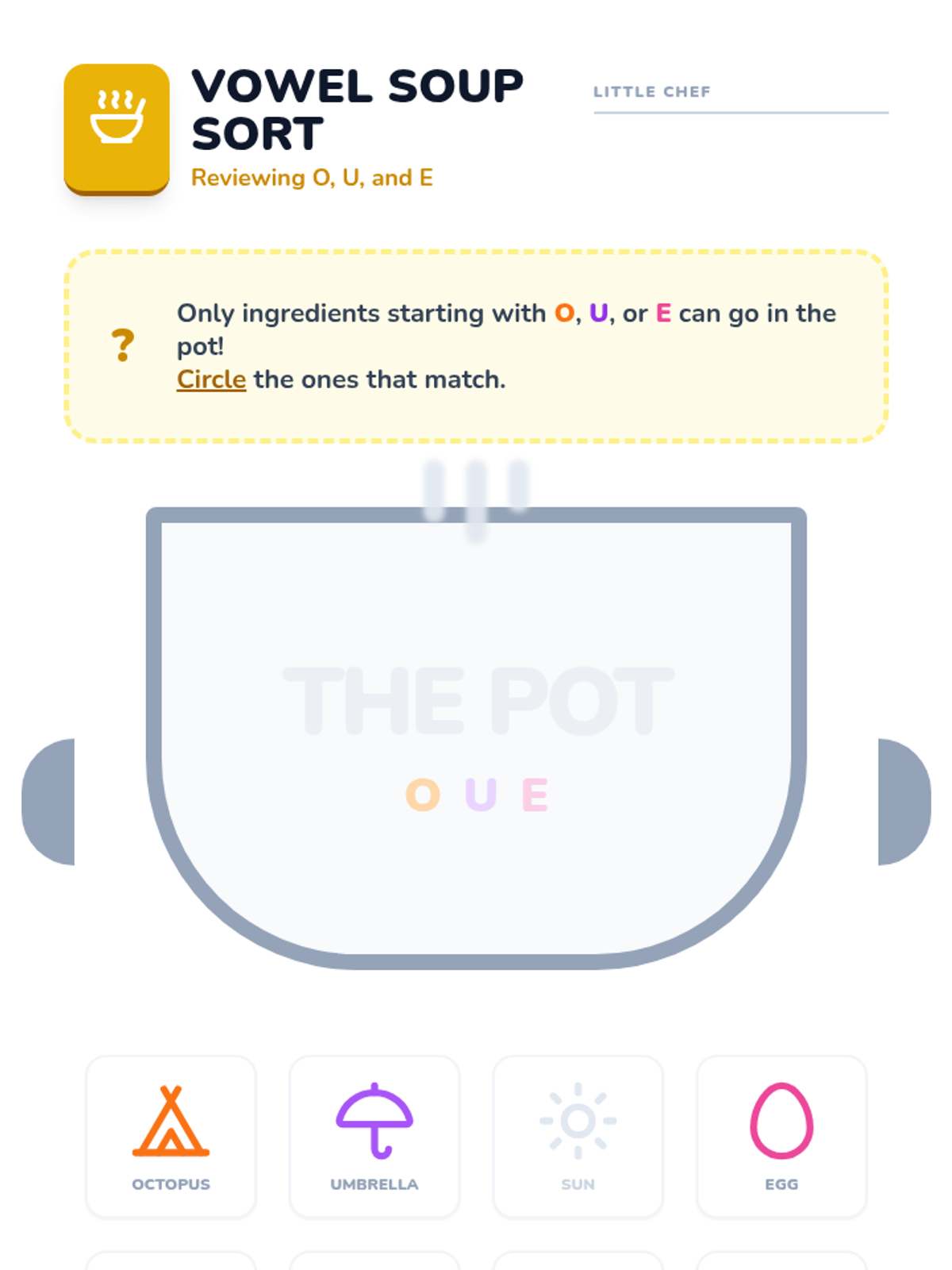
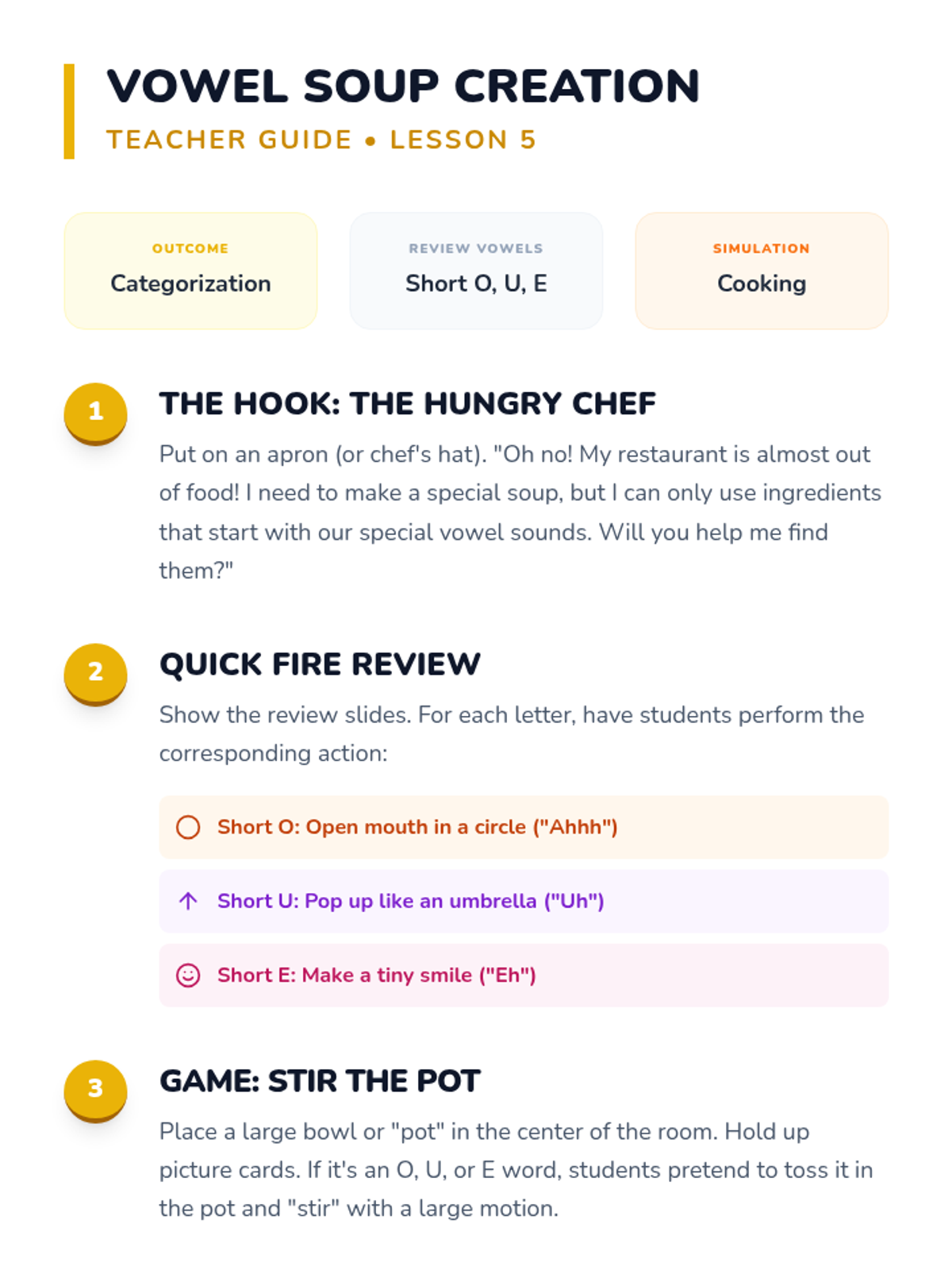
Students 'cook' a vowel soup by adding picture ingredients to a pot only if they start with 'o', 'u', or 'e'. This collaborative activity reinforces classification skills.
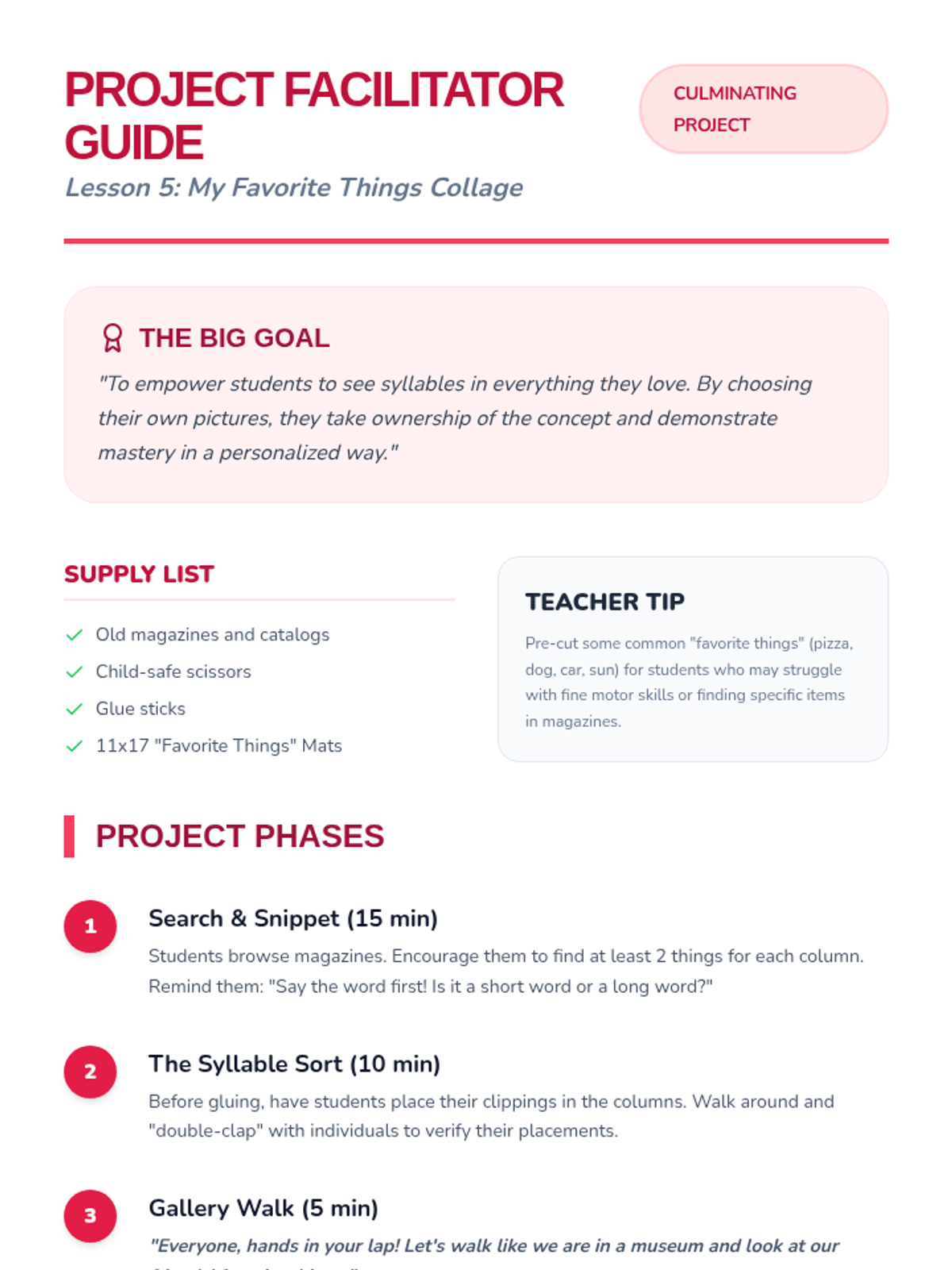
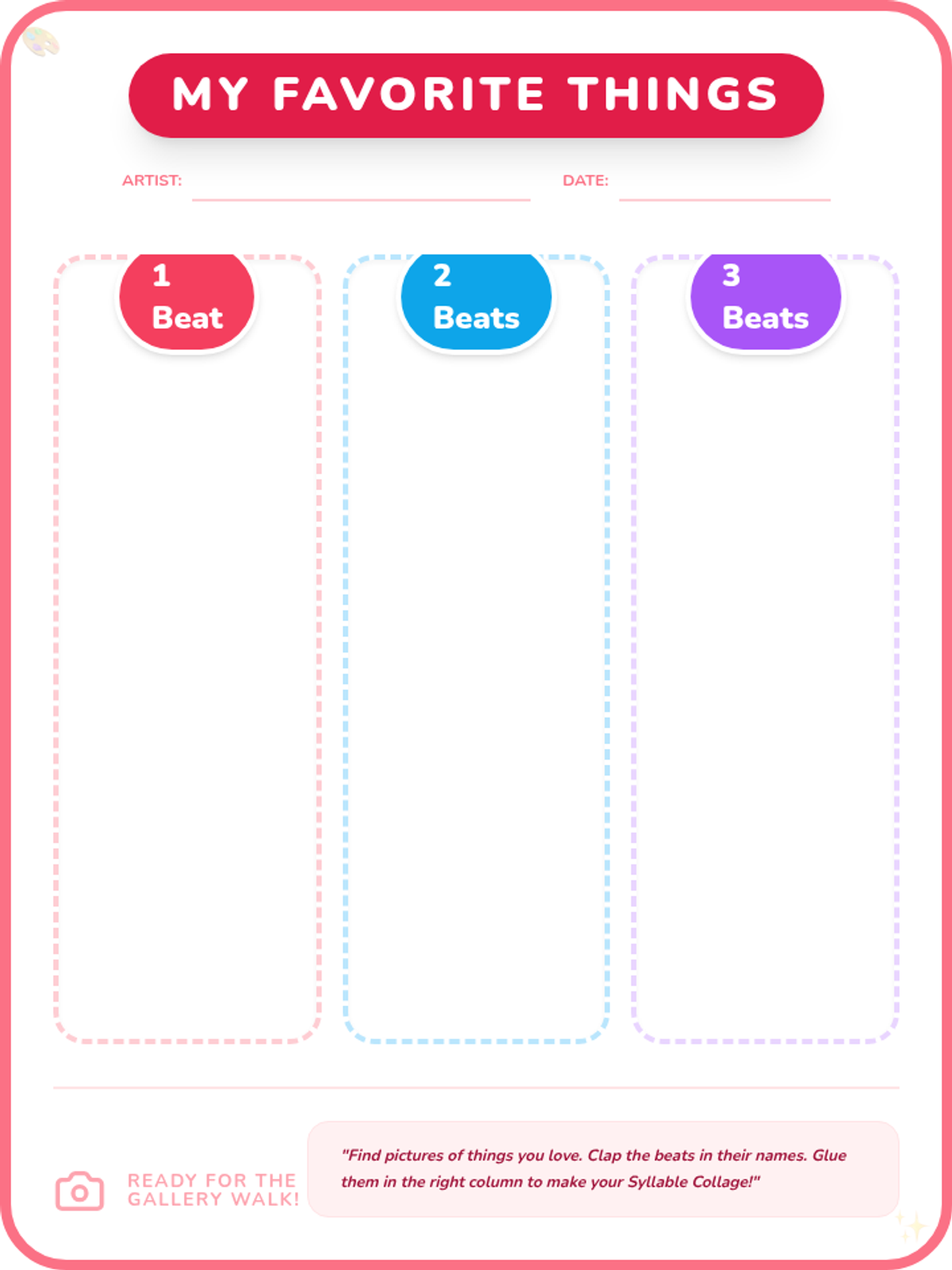
Students cut pictures from magazines of things they like and paste them onto a large sheet of paper divided into columns for syllable counts. This creates a personal connection to the concept.
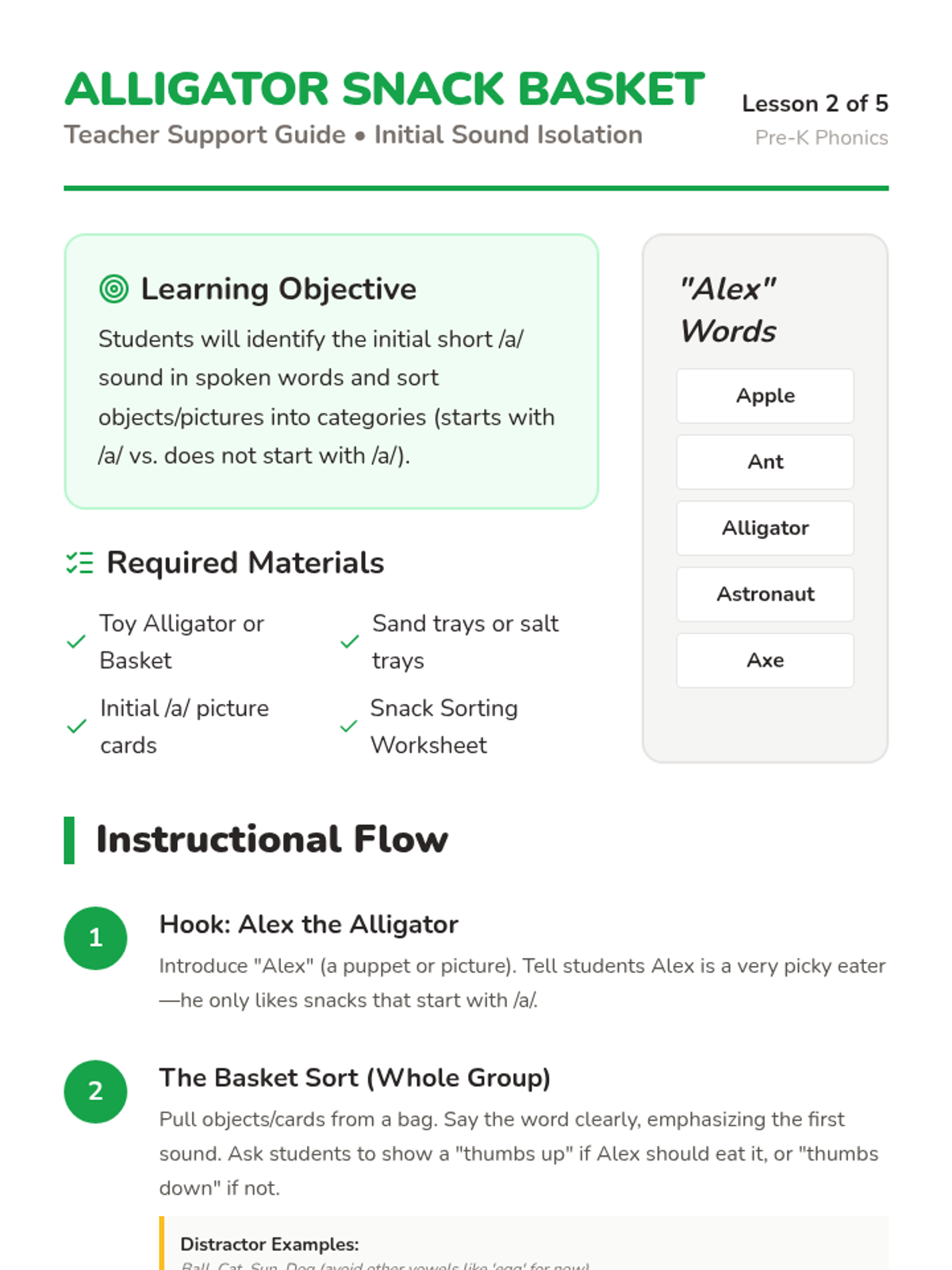
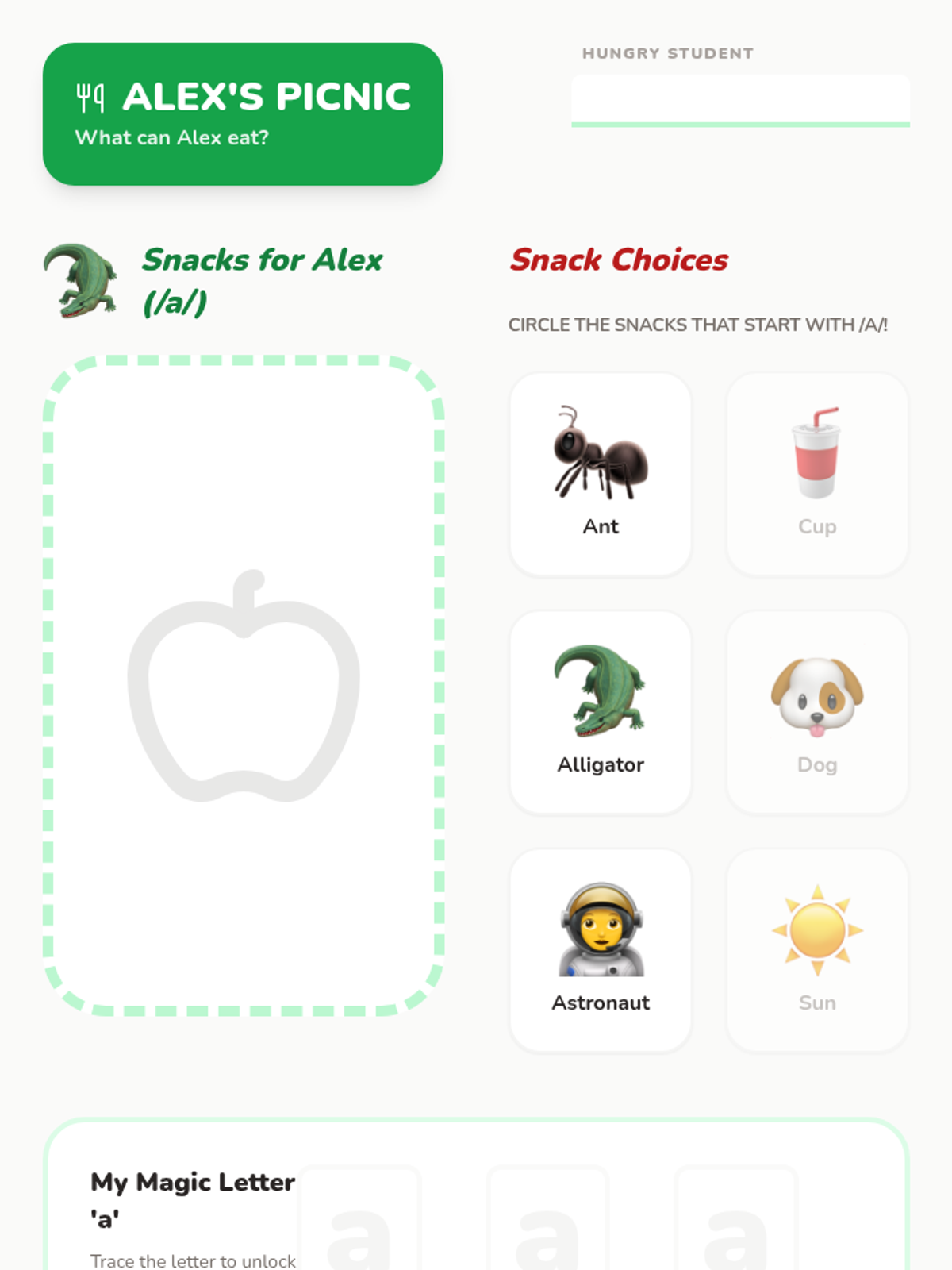
Learners sort real objects into an 'Apple Basket' based on whether they start with the /a/ sound. The lesson focuses on initial sound isolation, using vocabulary like 'ant,' 'apple,' and 'alligator.' Students reinforce the sound-symbol connection by tracing a large letter 'a' in sand.
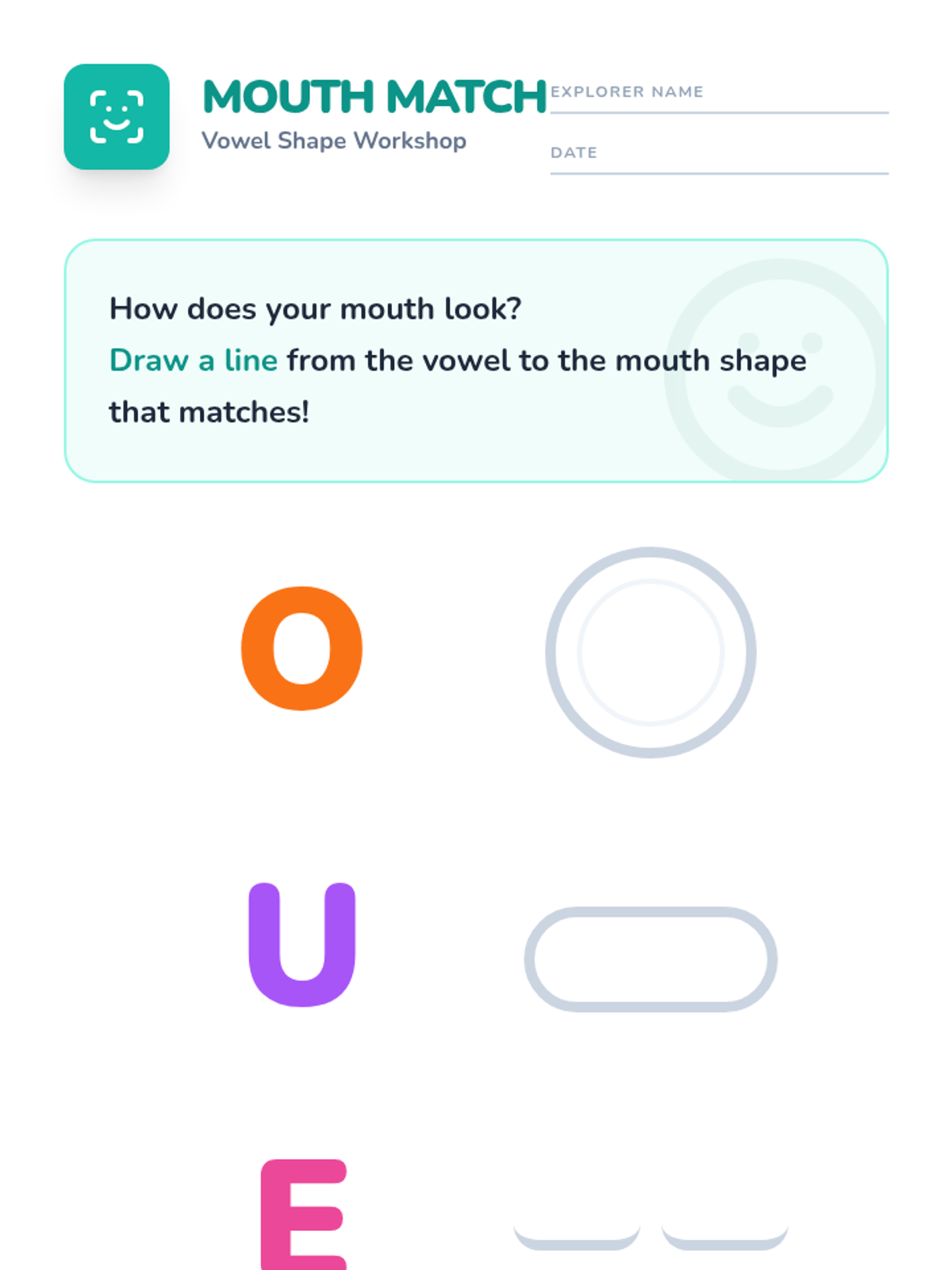
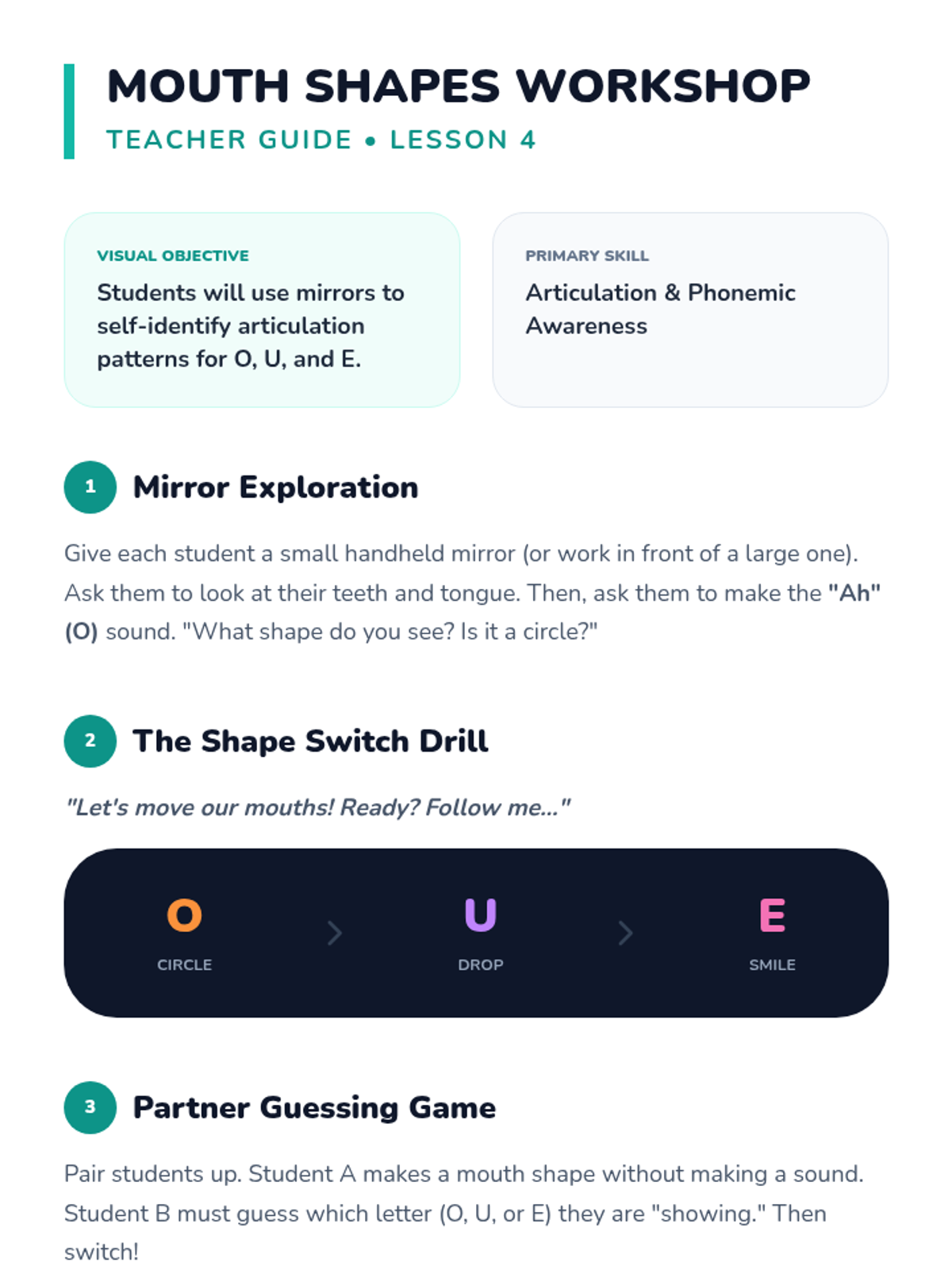
Using small mirrors, students examine how their lips change shape for 'o' (open circle), 'u' (relaxed), and 'e' (smiling). They practice switching between shapes to create the sounds.
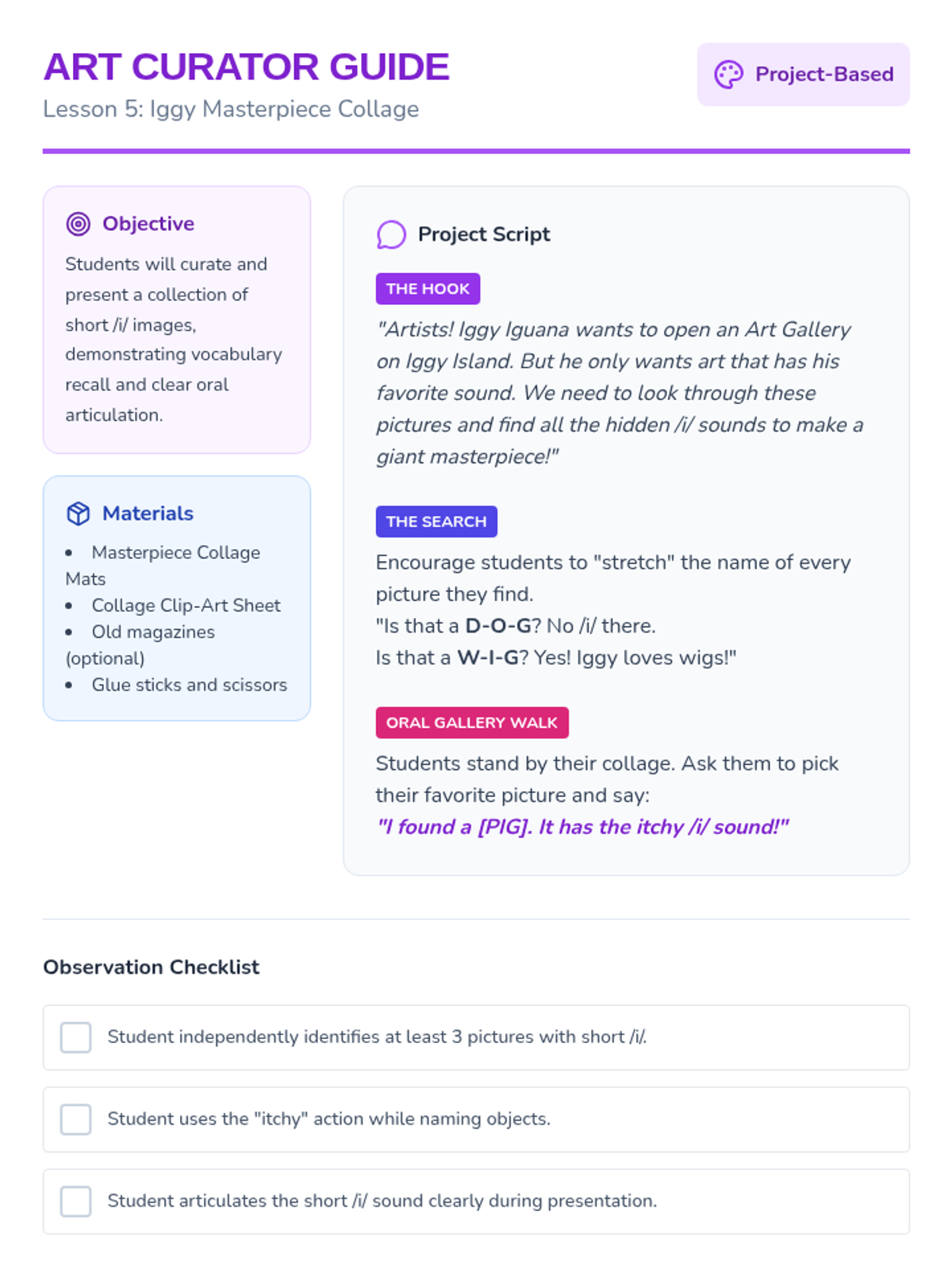
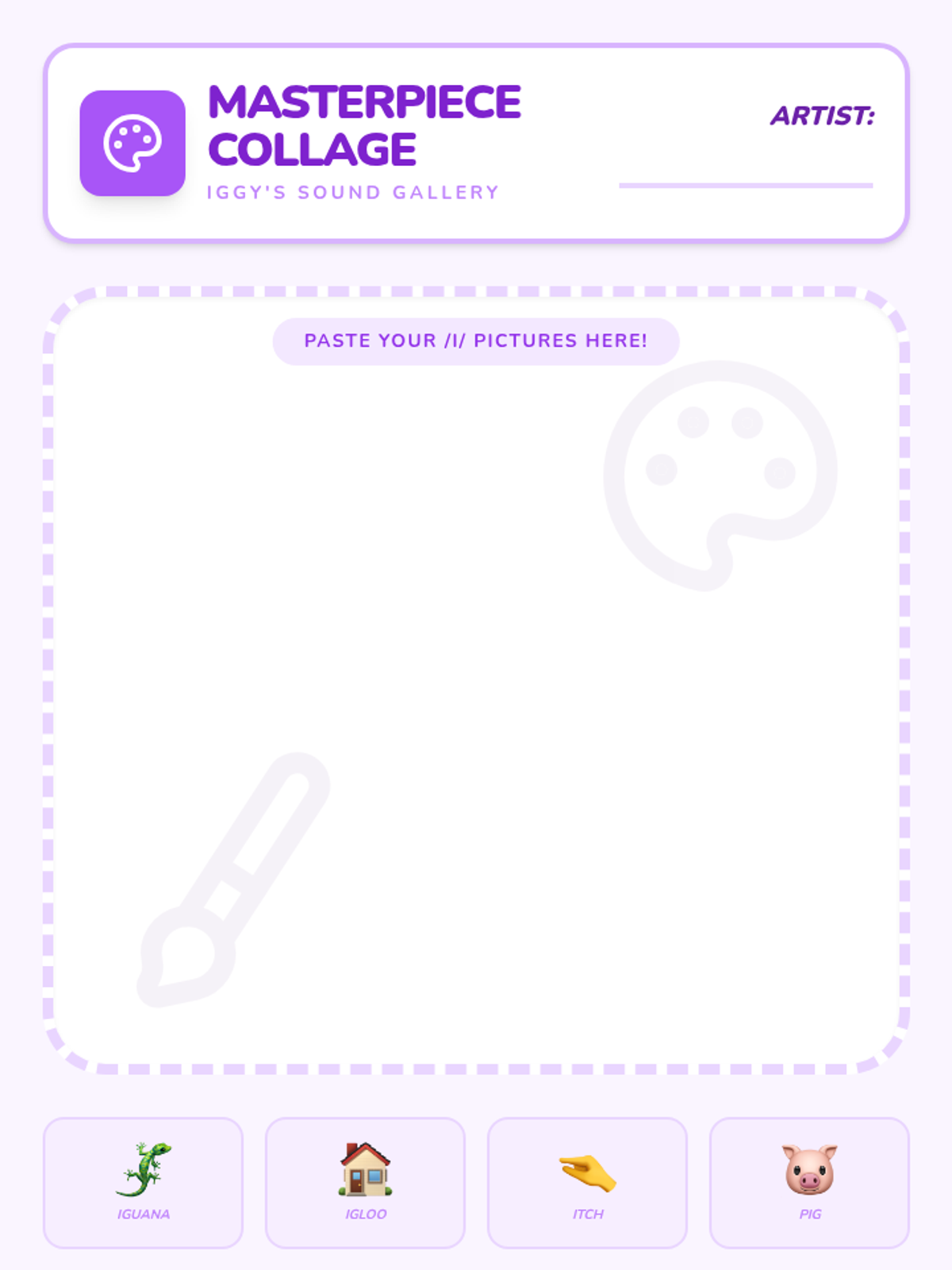
Students create a visual collage of words containing the short /i/ sound and share their findings with the class.
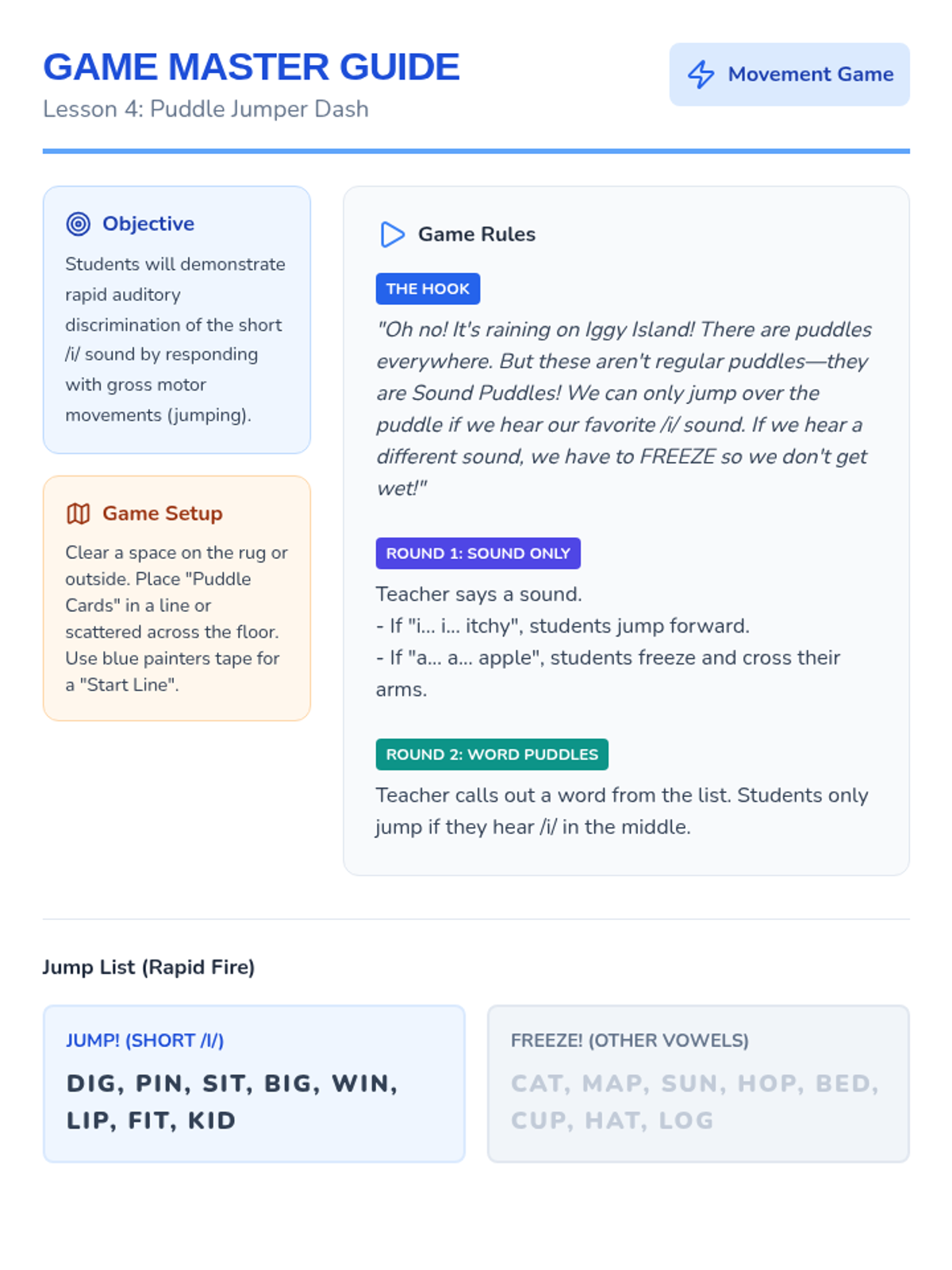
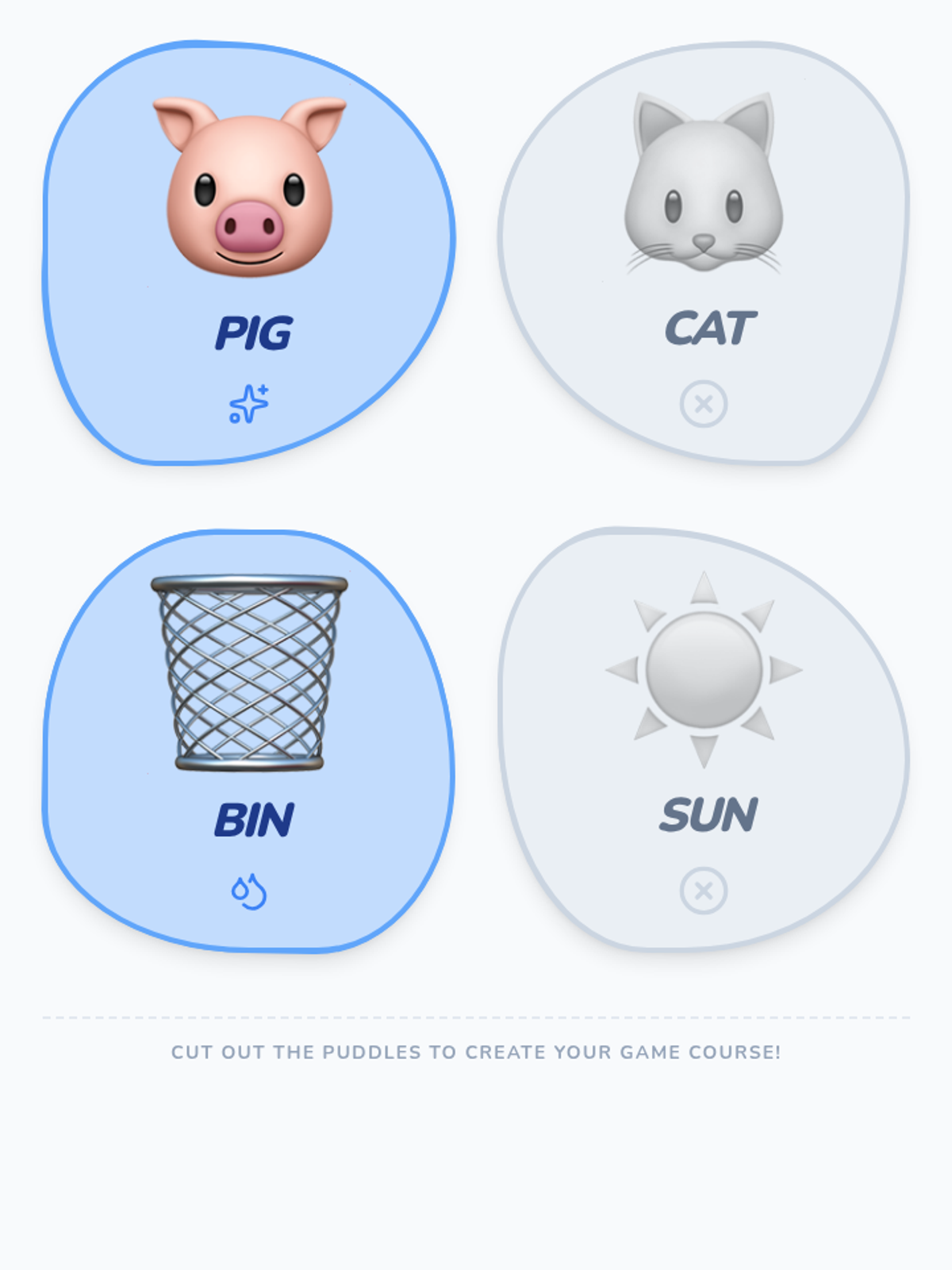
A high-energy movement game where students jump for short /i/ sounds to reinforce rapid auditory processing.
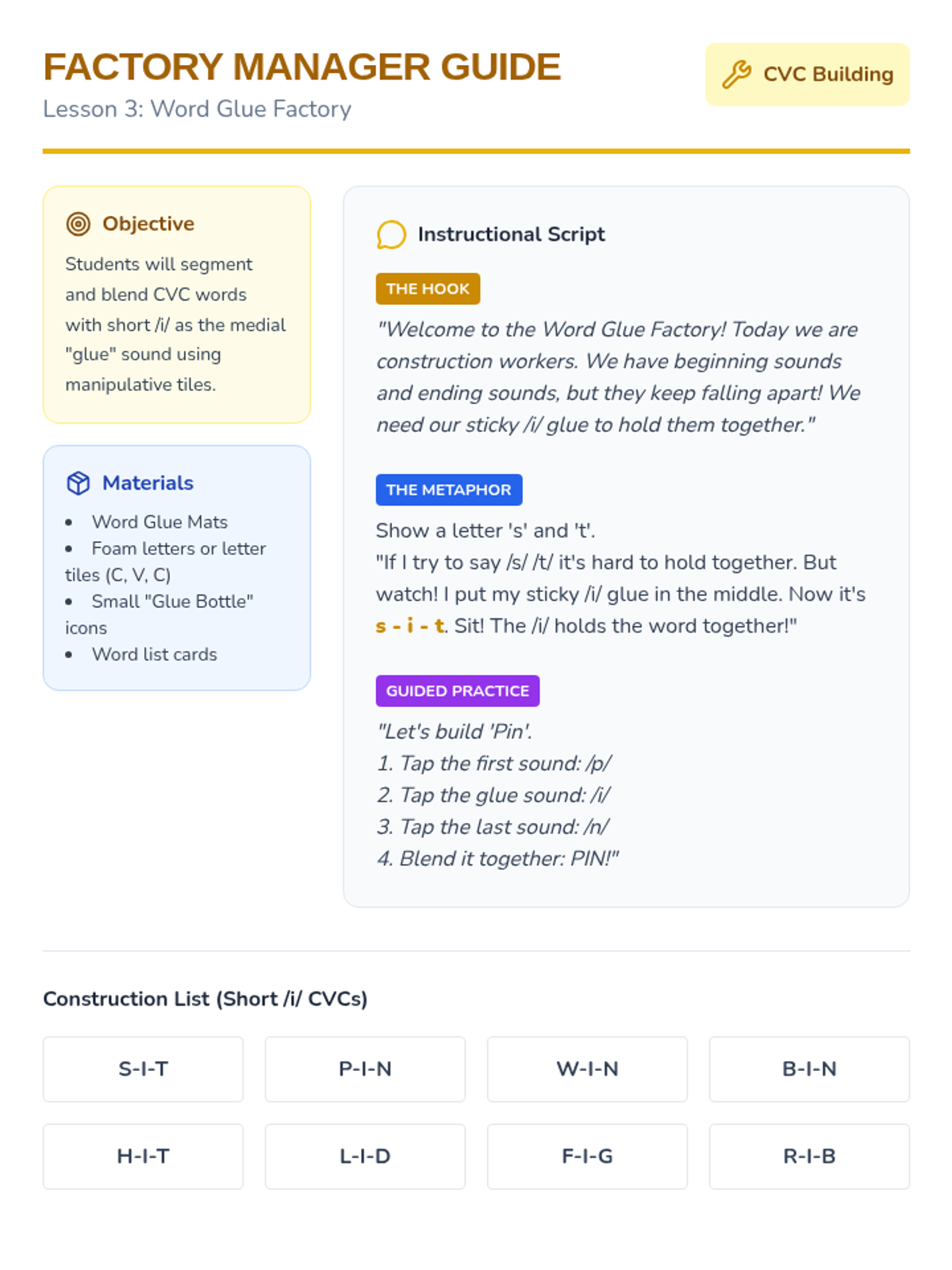
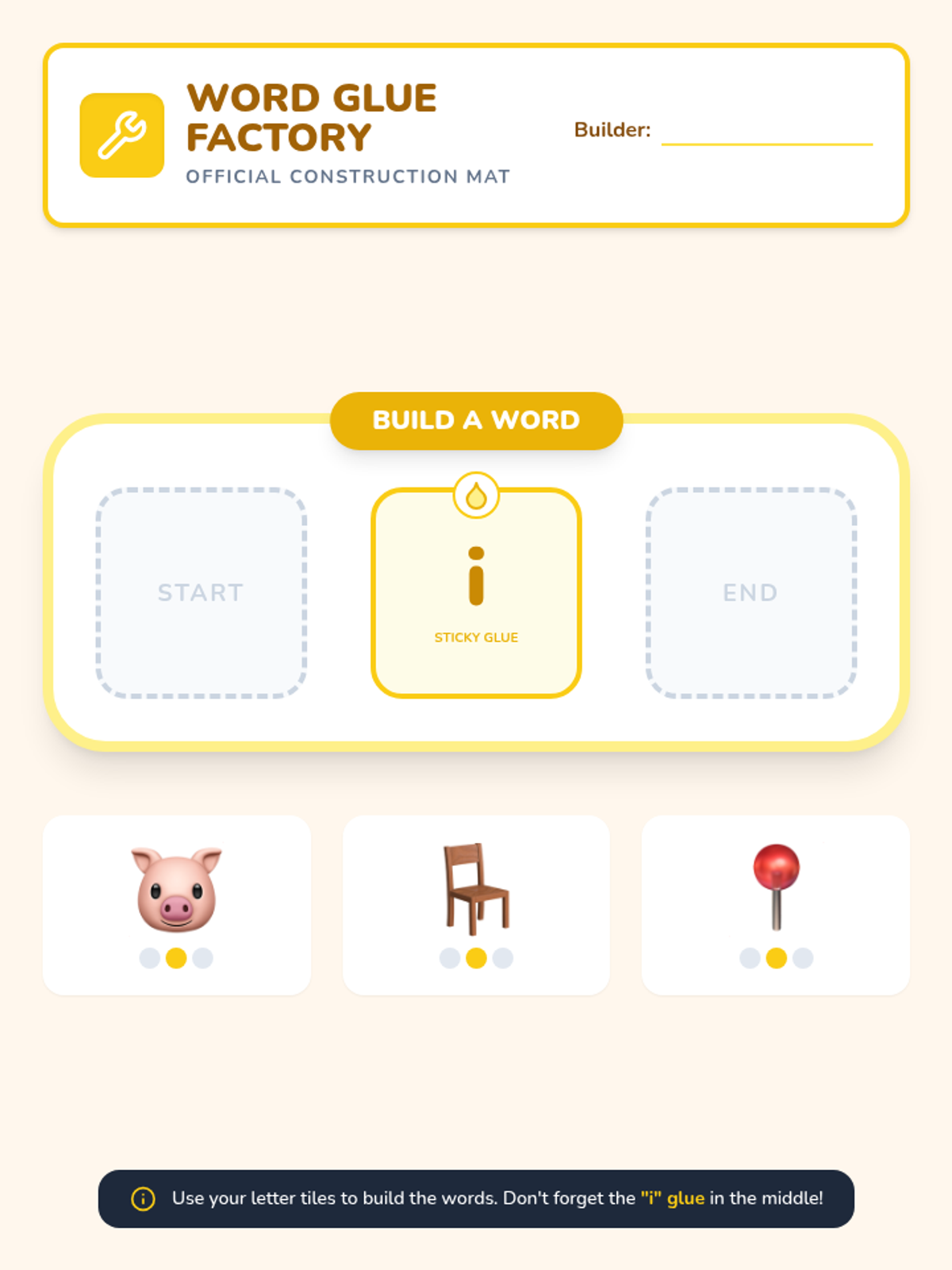
Students use 'word glue' to build CVC words with a short /i/ middle, focusing on segmenting and blending.
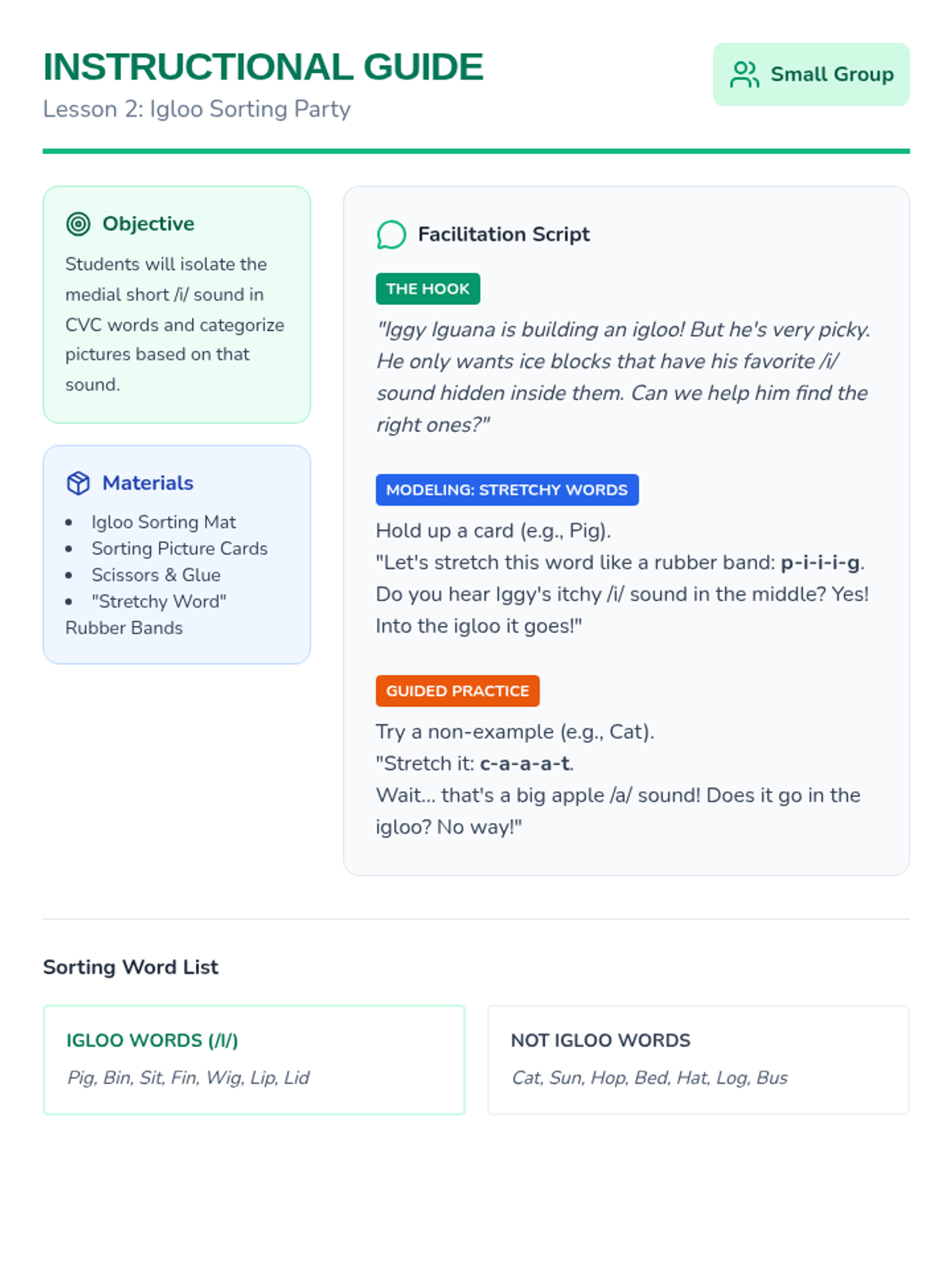
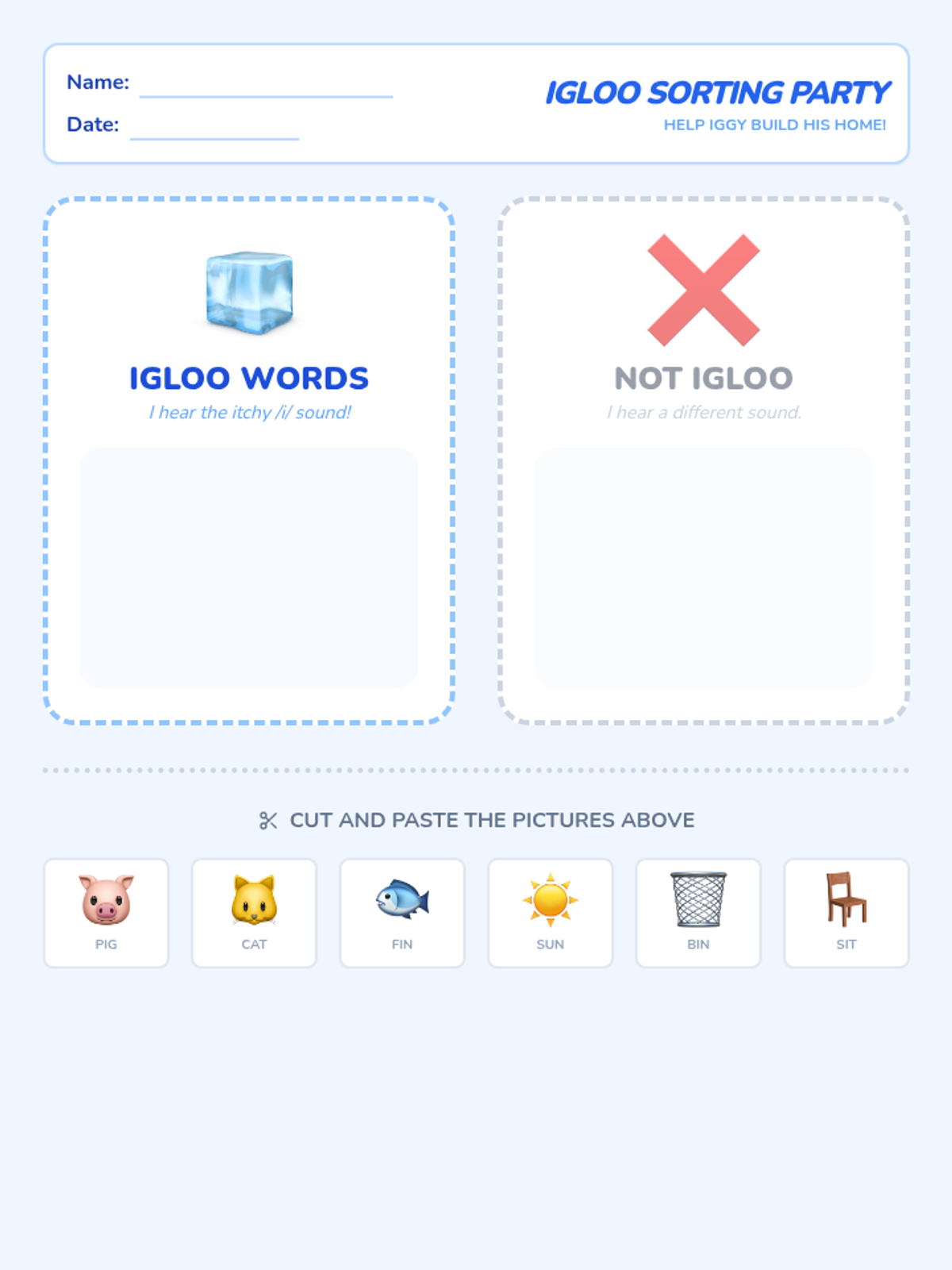
Students sort picture cards into 'Igloo' and 'Not Igloo' categories to isolate the medial short /i/ sound.
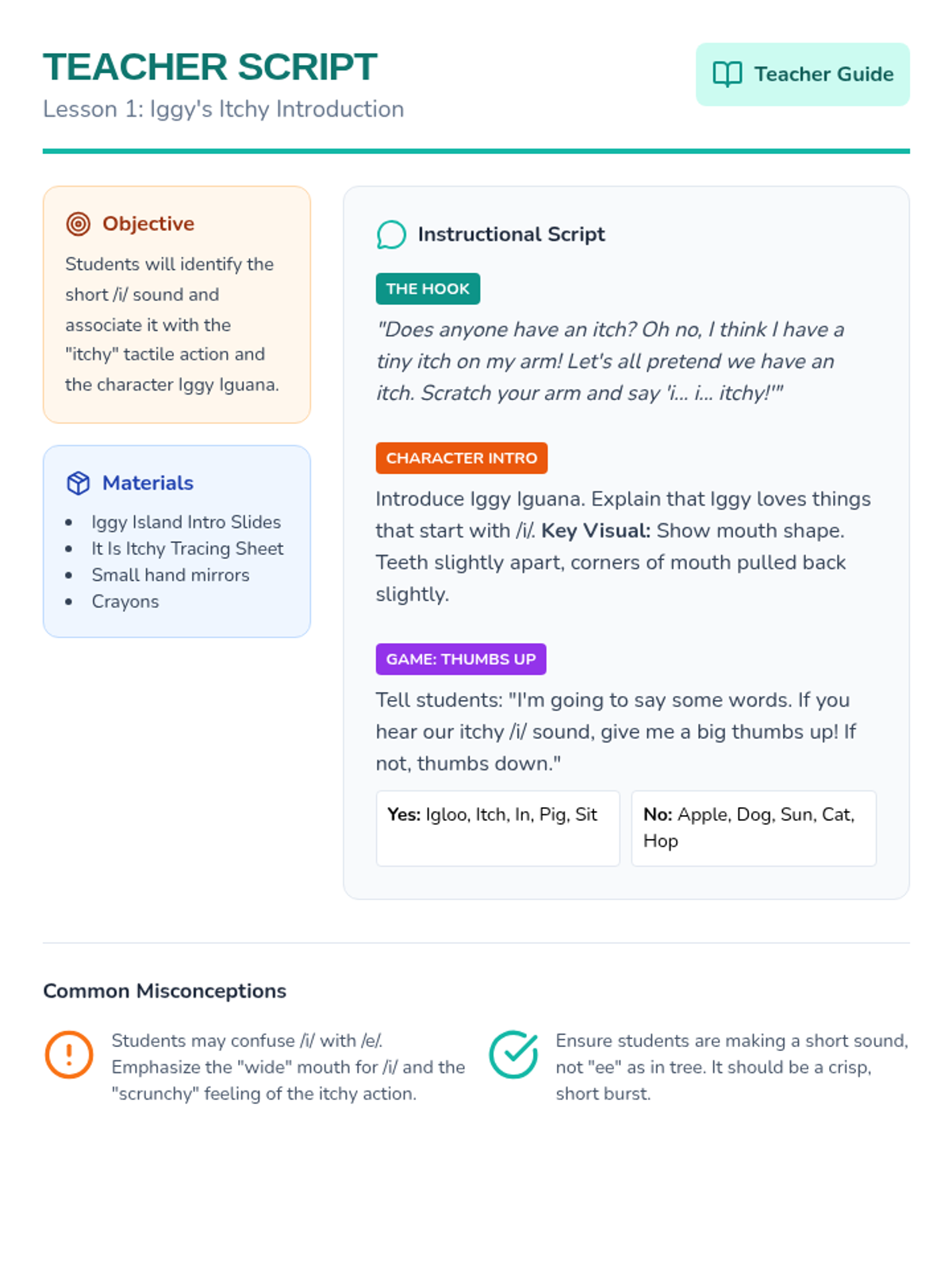
Students are introduced to the short /i/ sound through 'Iggy Iguana' and a tactile 'itchy' action, focusing on mouth shape and auditory discrimination.
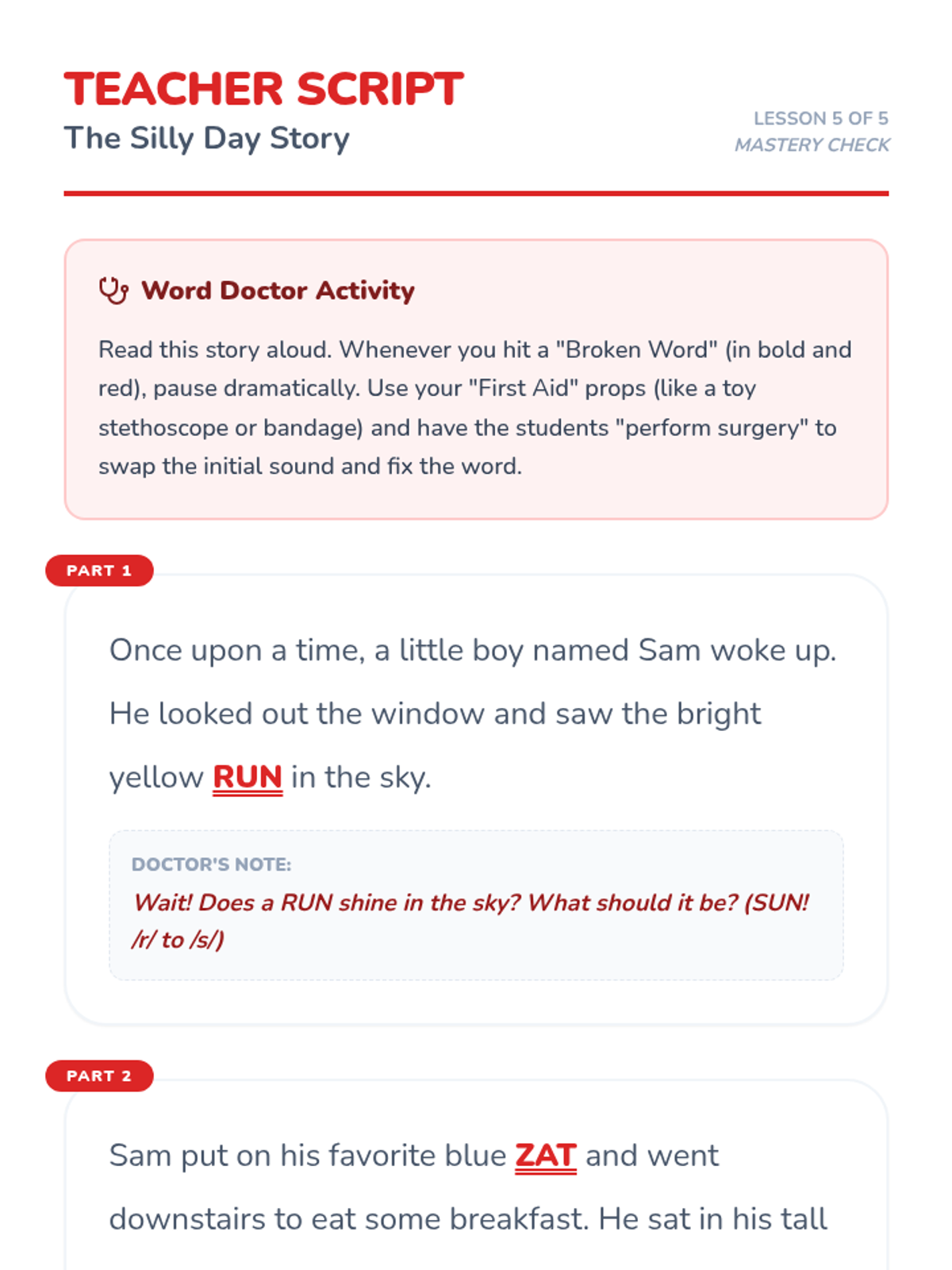
Students listen to a story with 'broken' words and use their substitution skills to 'fix' the words so the story makes sense.
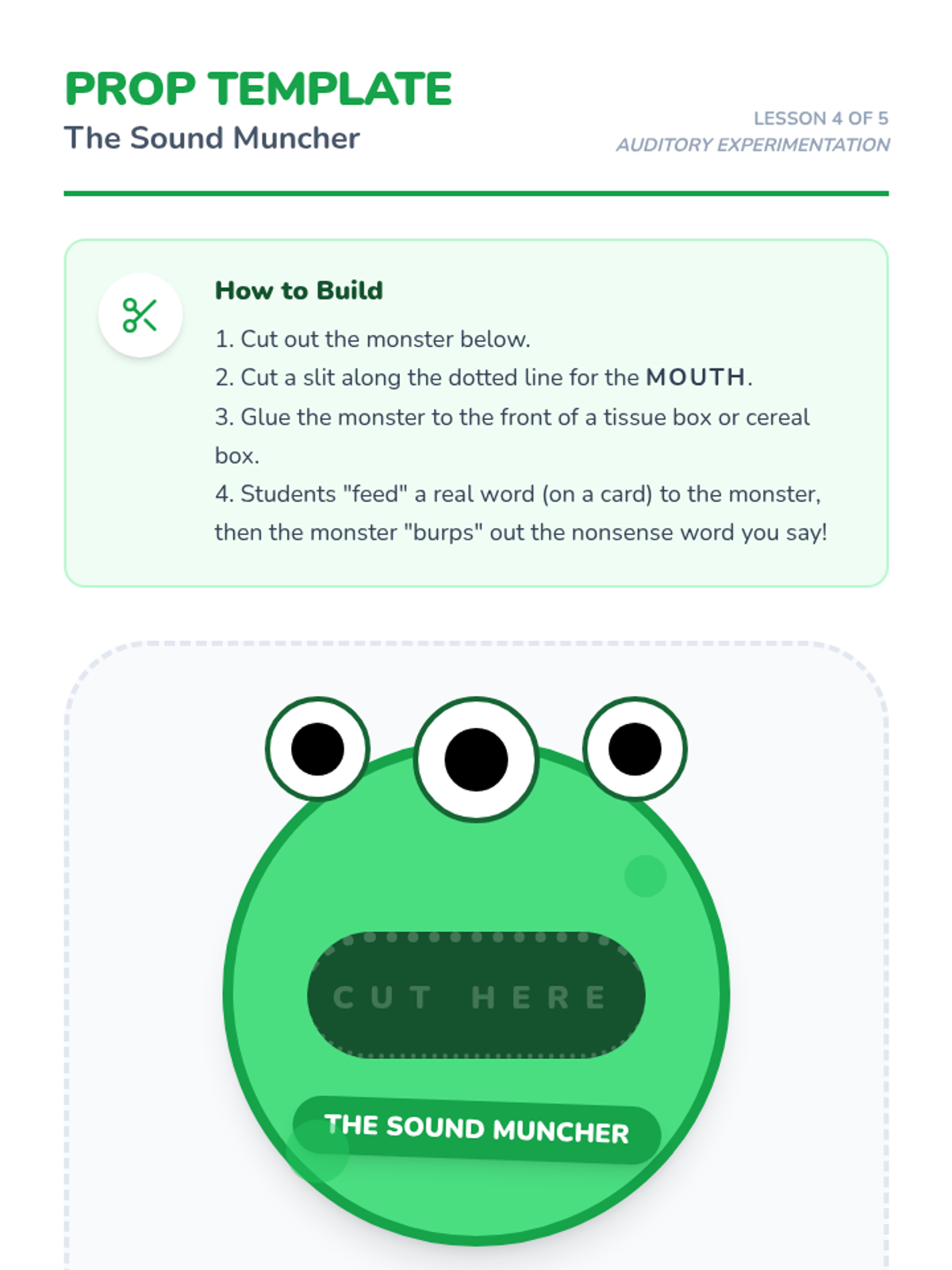
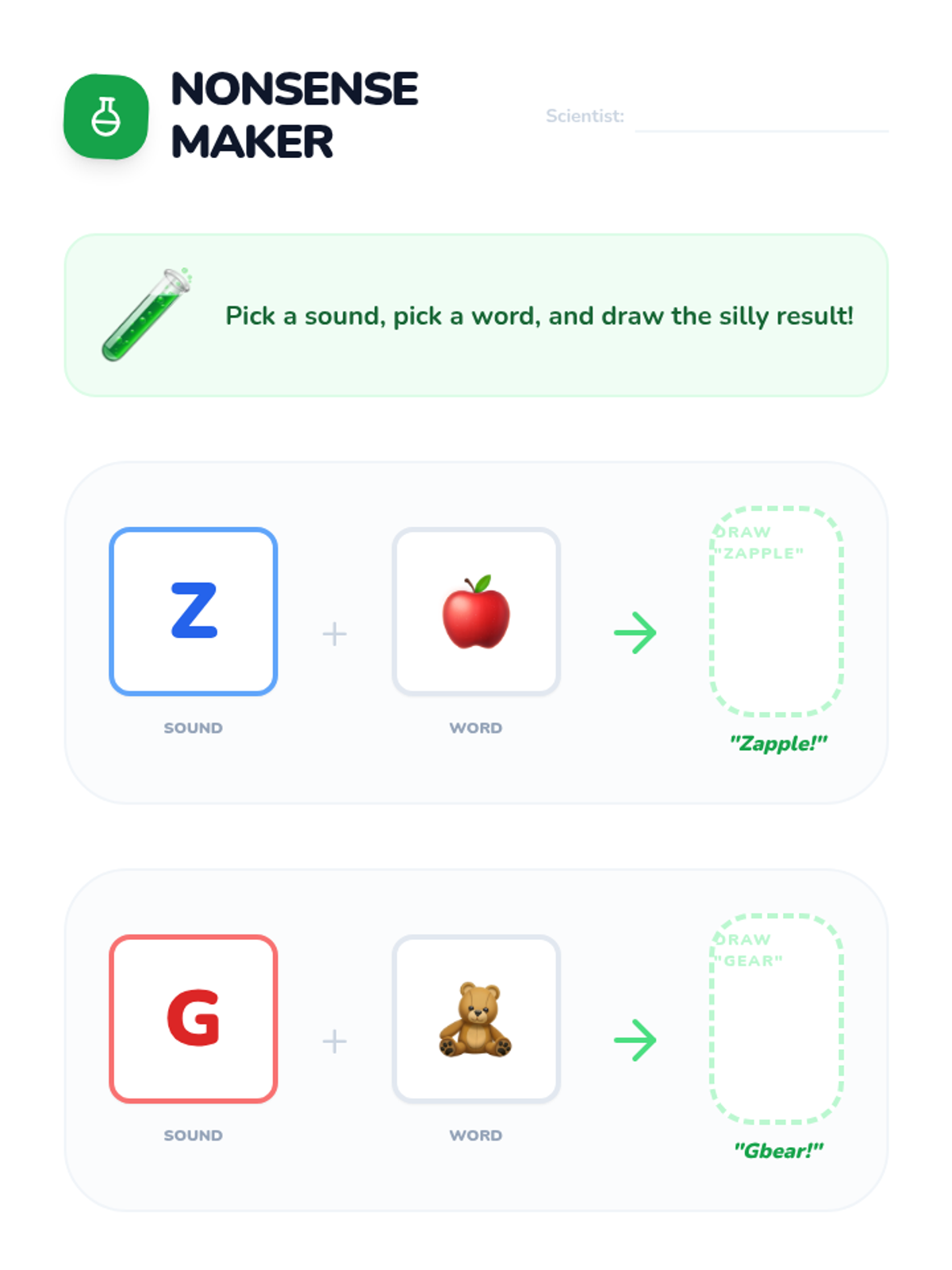
Students explore phoneme manipulation by creating and naming silly nonsense words in a pretend laboratory setting.
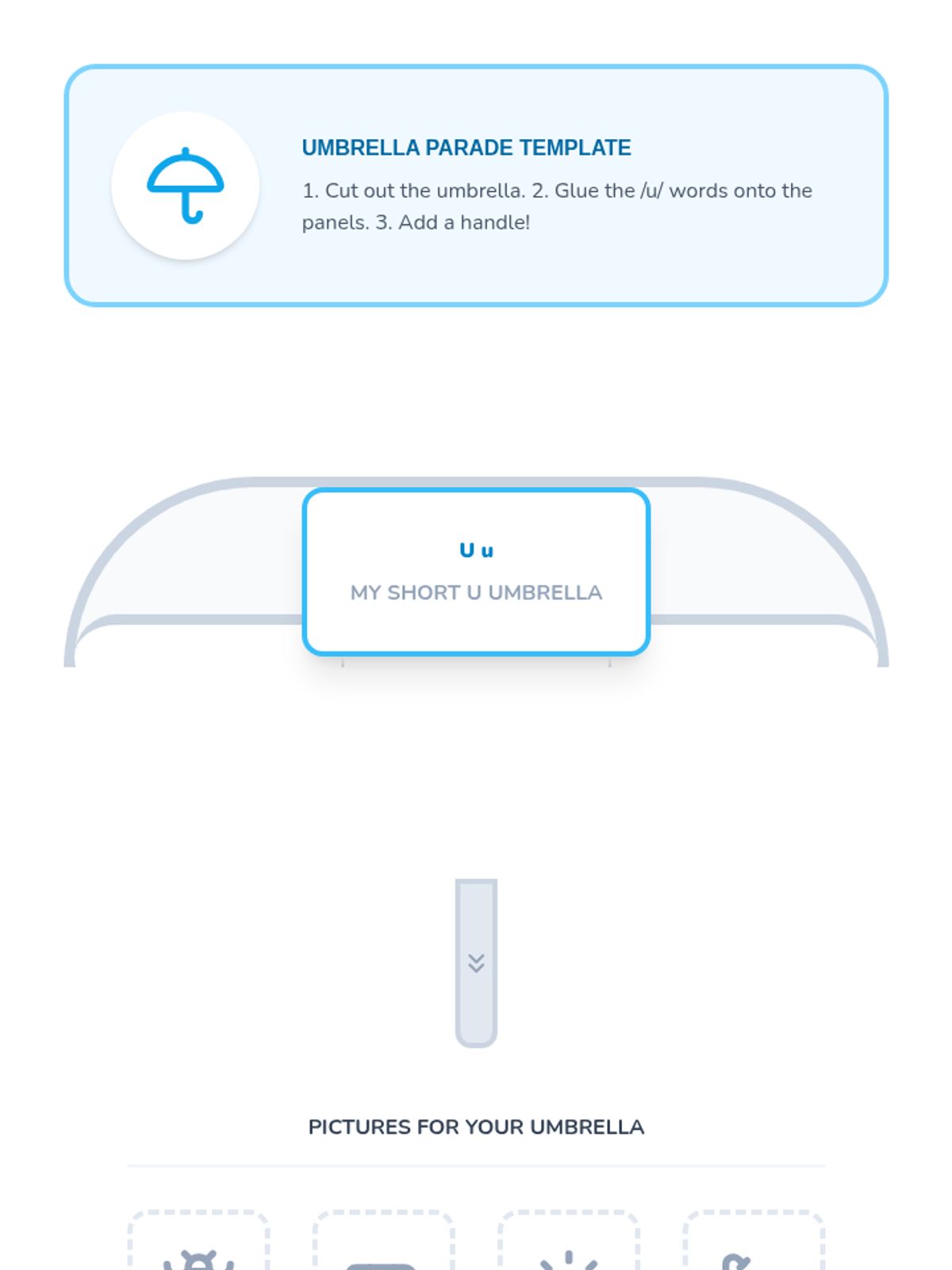
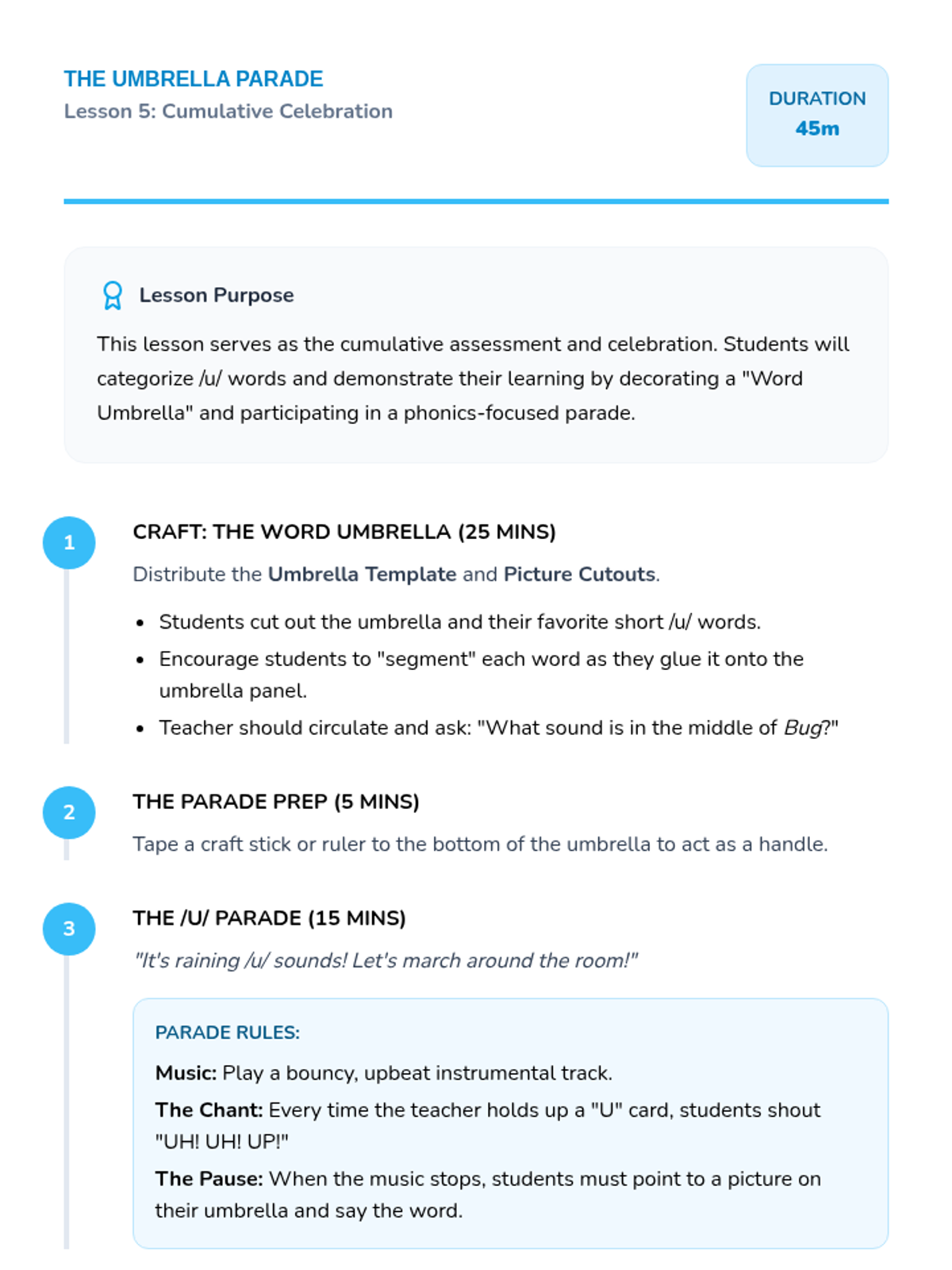
A cumulative project where students create 'Word Umbrellas' decorated with short /u/ pictures. The lesson ends with a parade to celebrate their learning.
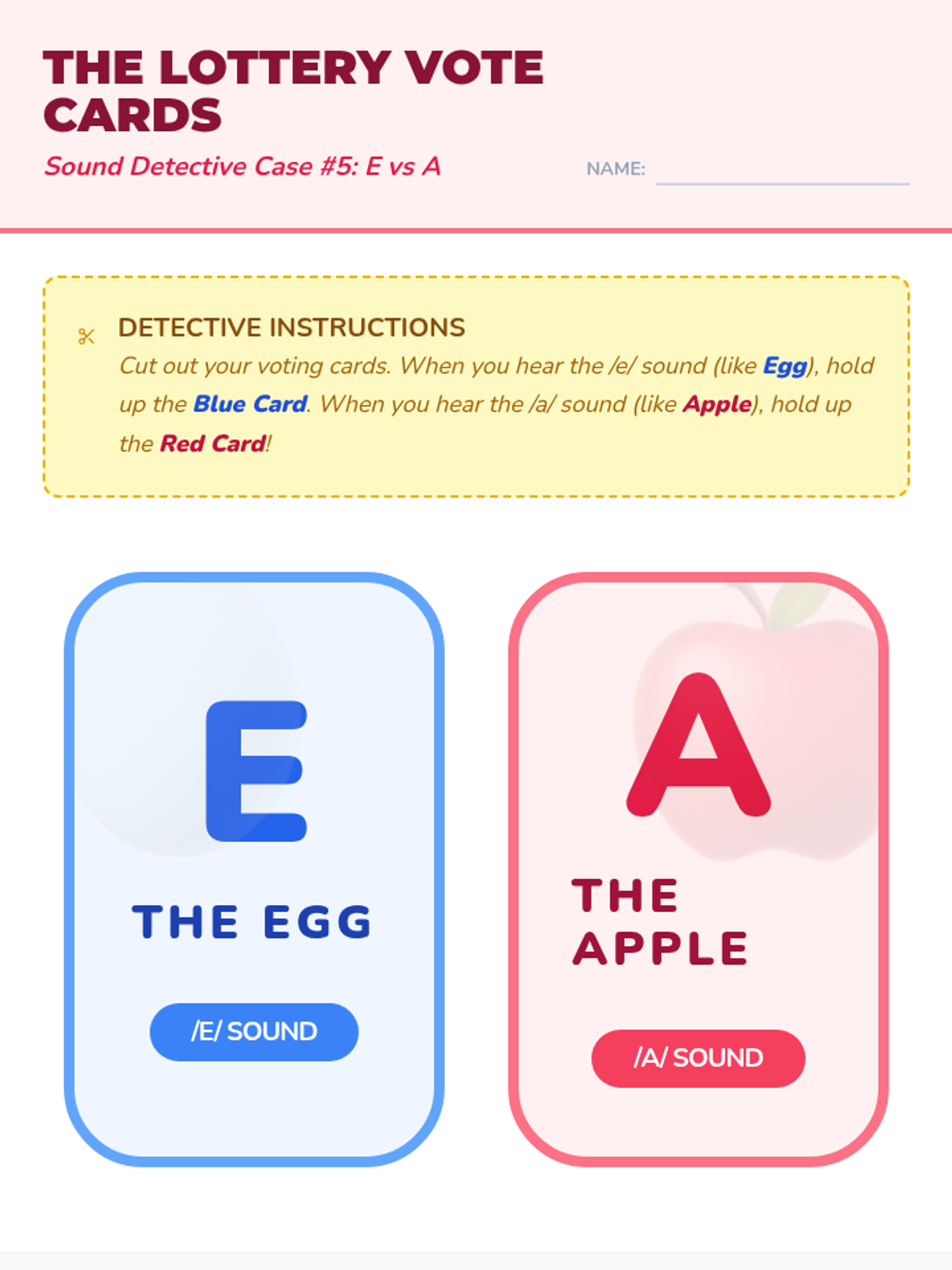
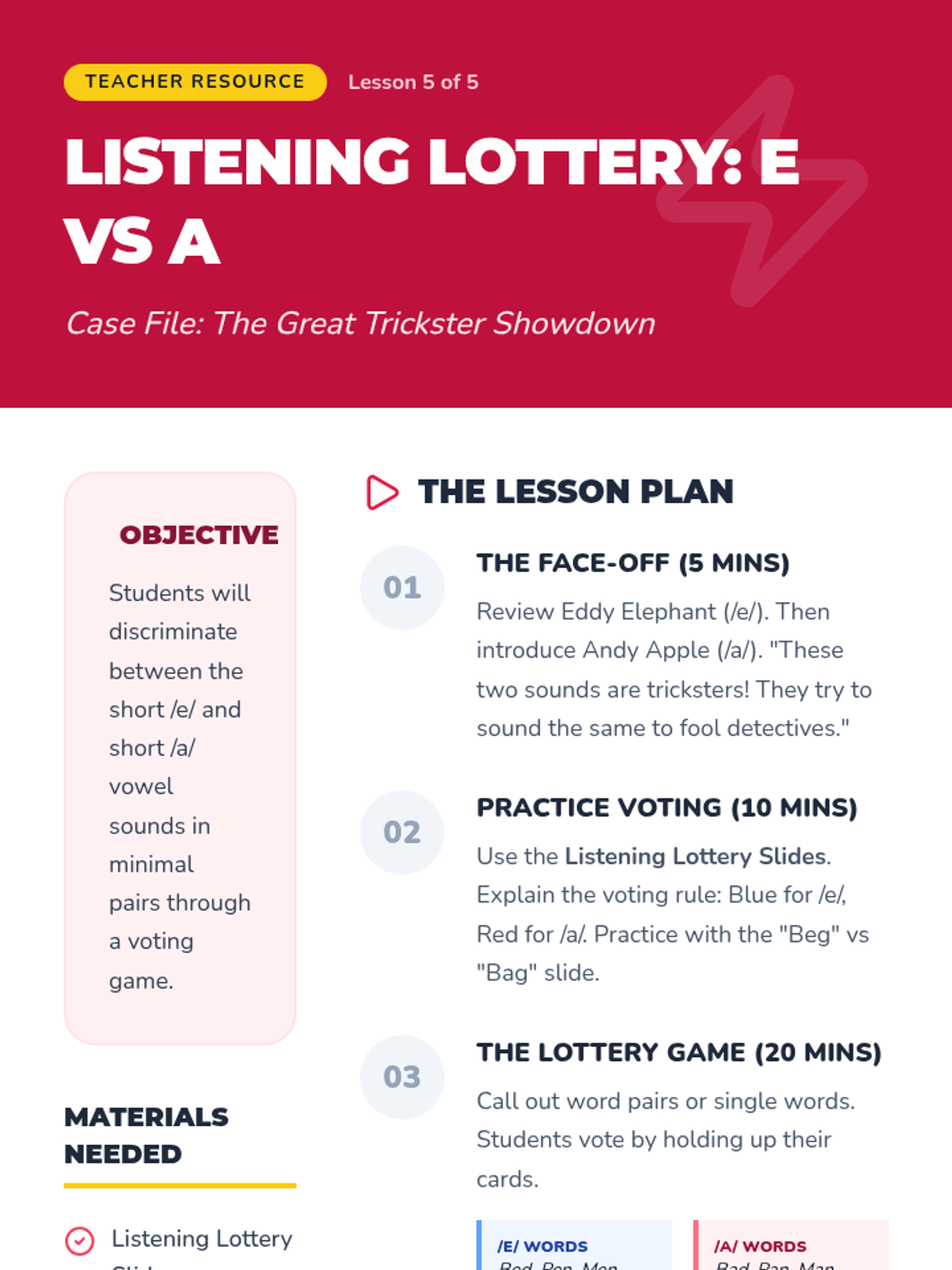
Since 'e' and 'a' are easily confused, students use colored cards to vote on which sound they hear in words spoken by the teacher (e.g., 'bag' vs 'beg').
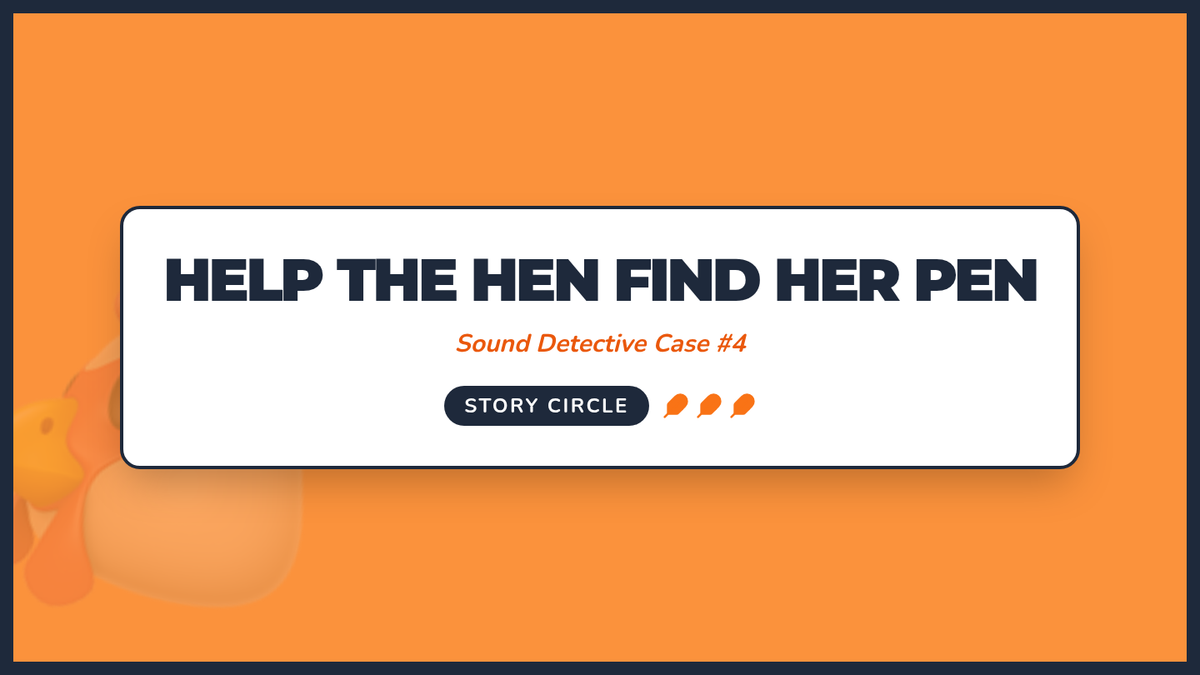
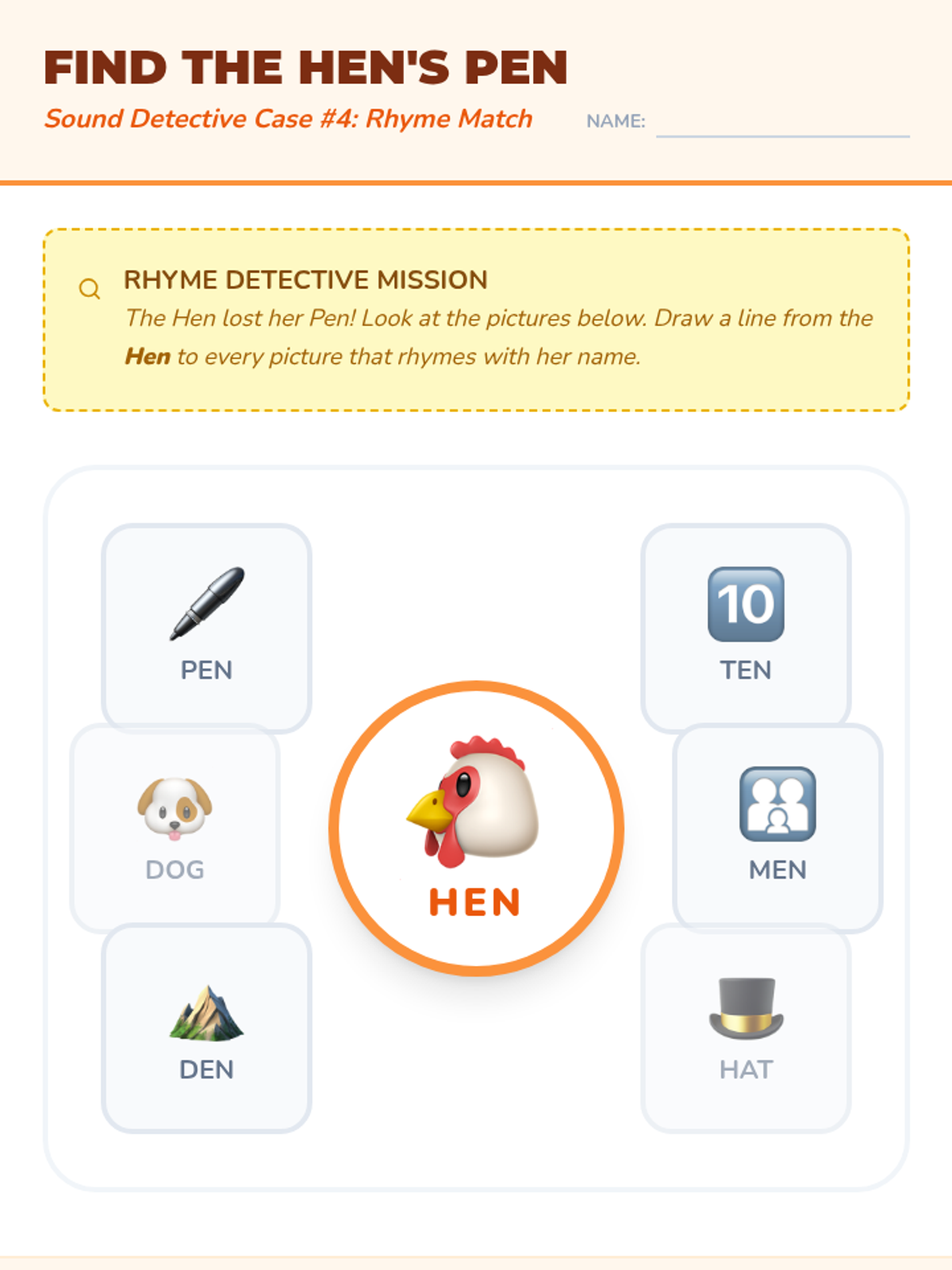
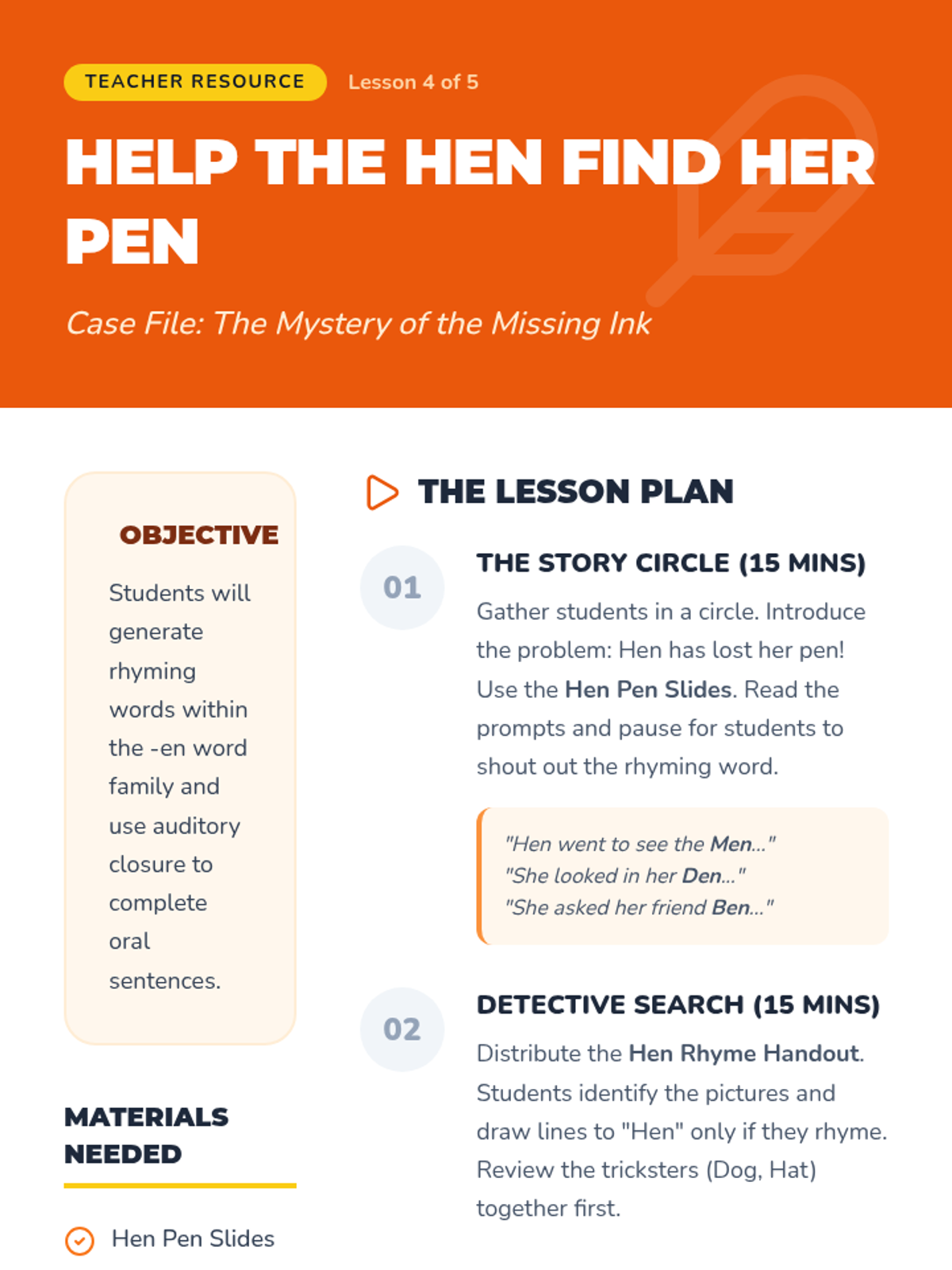
A rhyming story circle where students must chime in with the missing rhyming word (all short 'e' CVC words) as the teacher reads a story about a Hen.
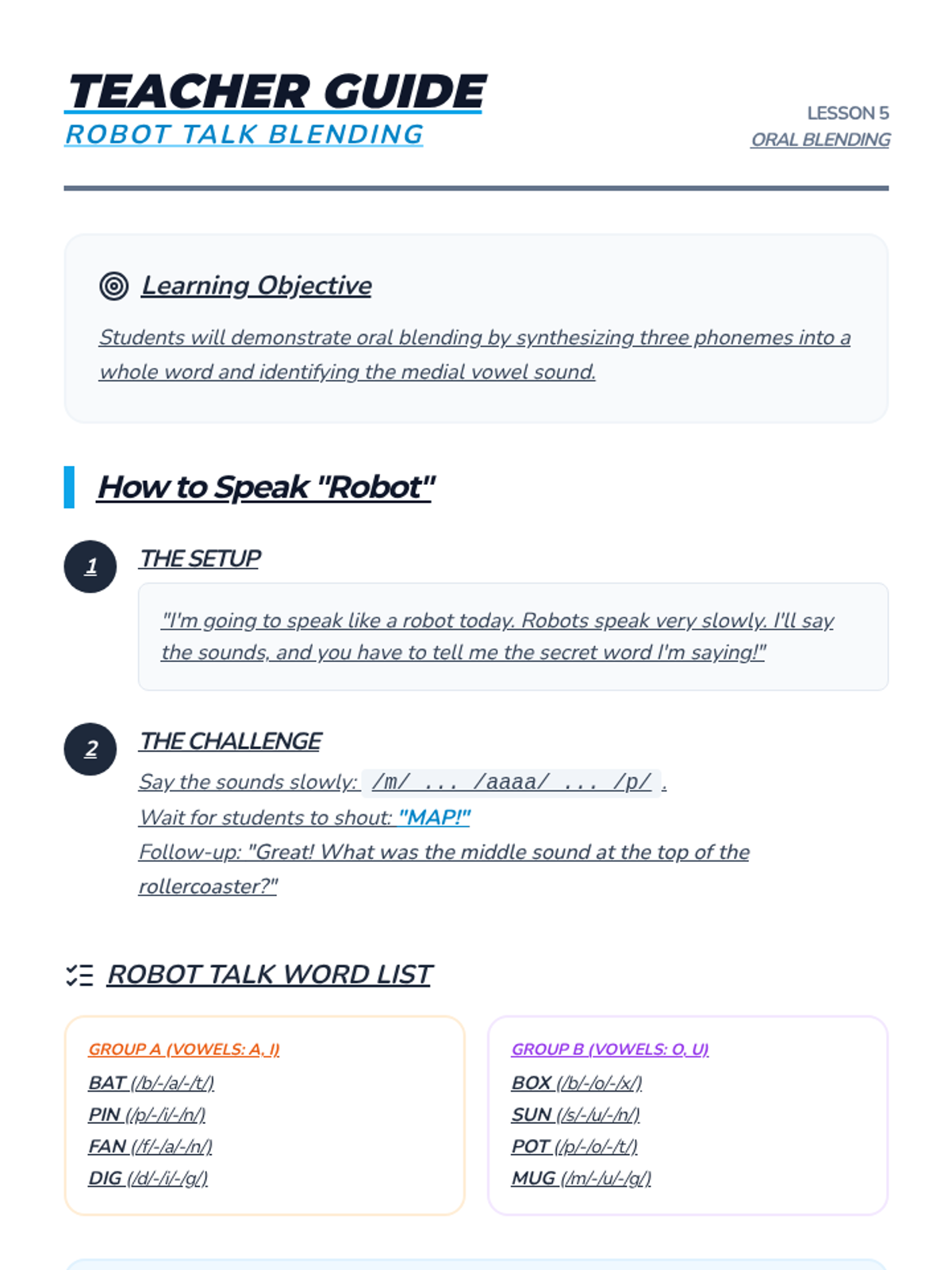
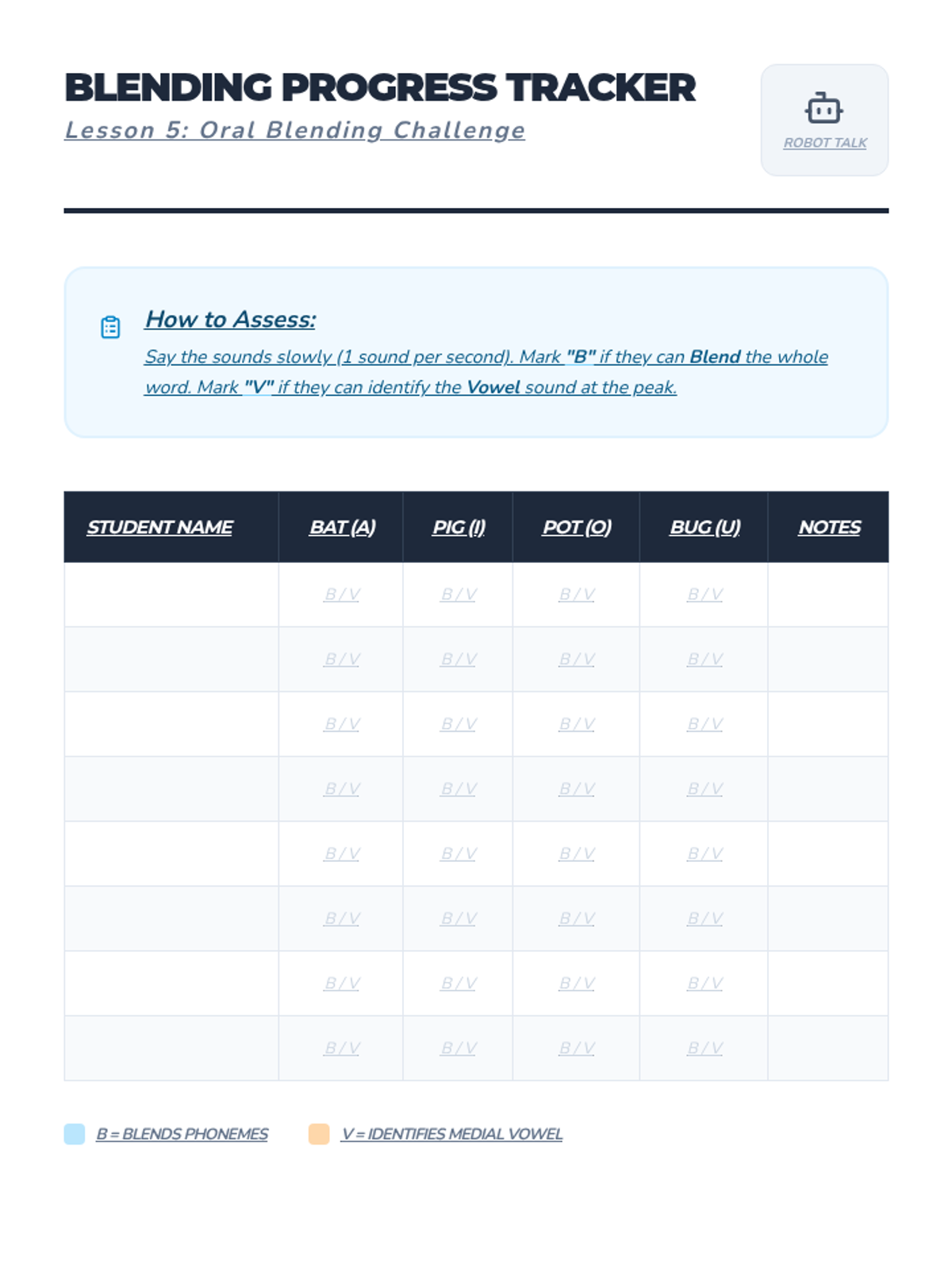
The teacher says three sounds slowly (c-a-t), and students must blend them to guess the word and identify the vowel sound used. This transitions from segmentation to blending.
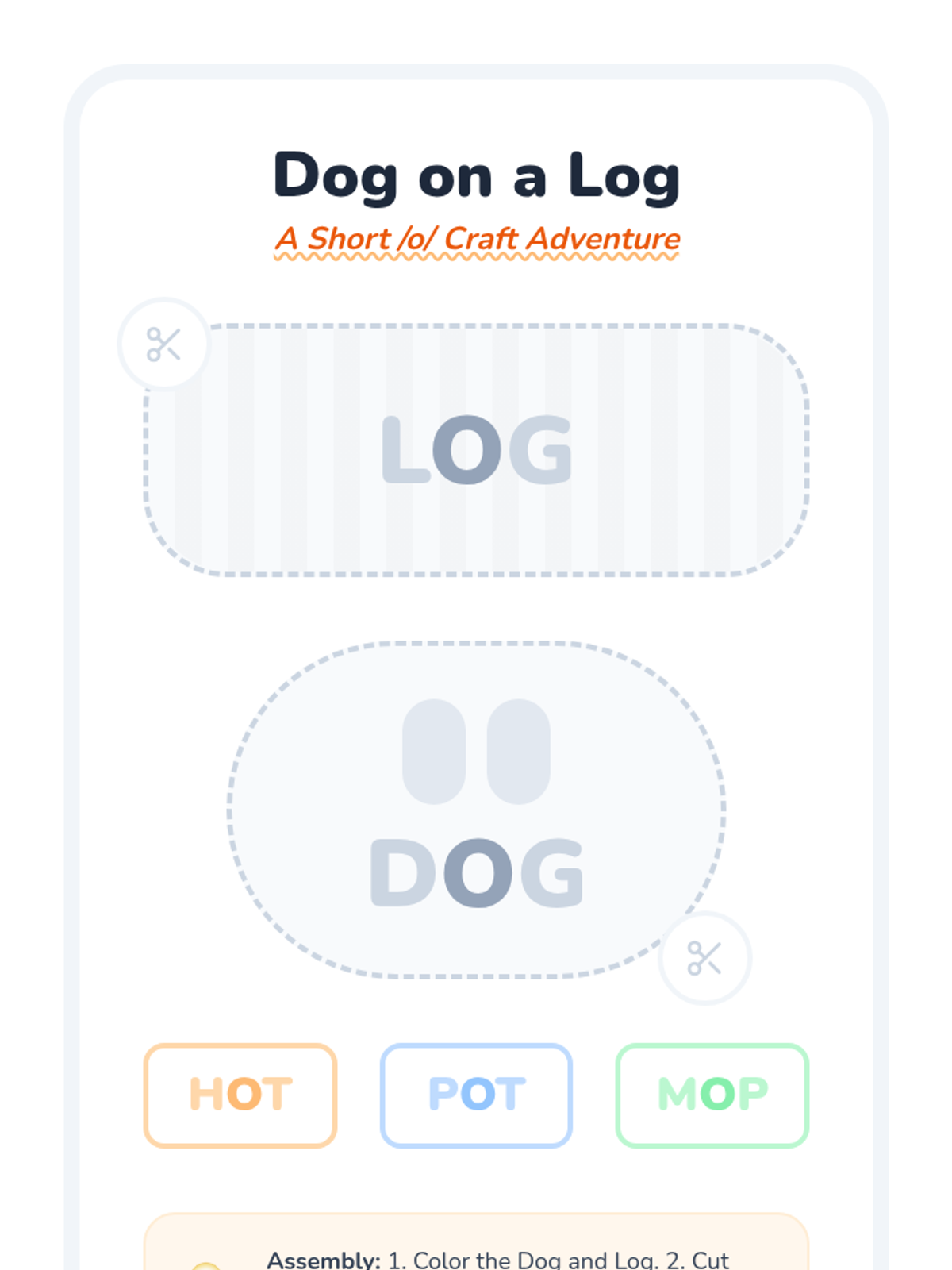
Students assemble a "Dog on a Log" craft to celebrate their mastery of the short /o/ sound and create a visual reference tool.
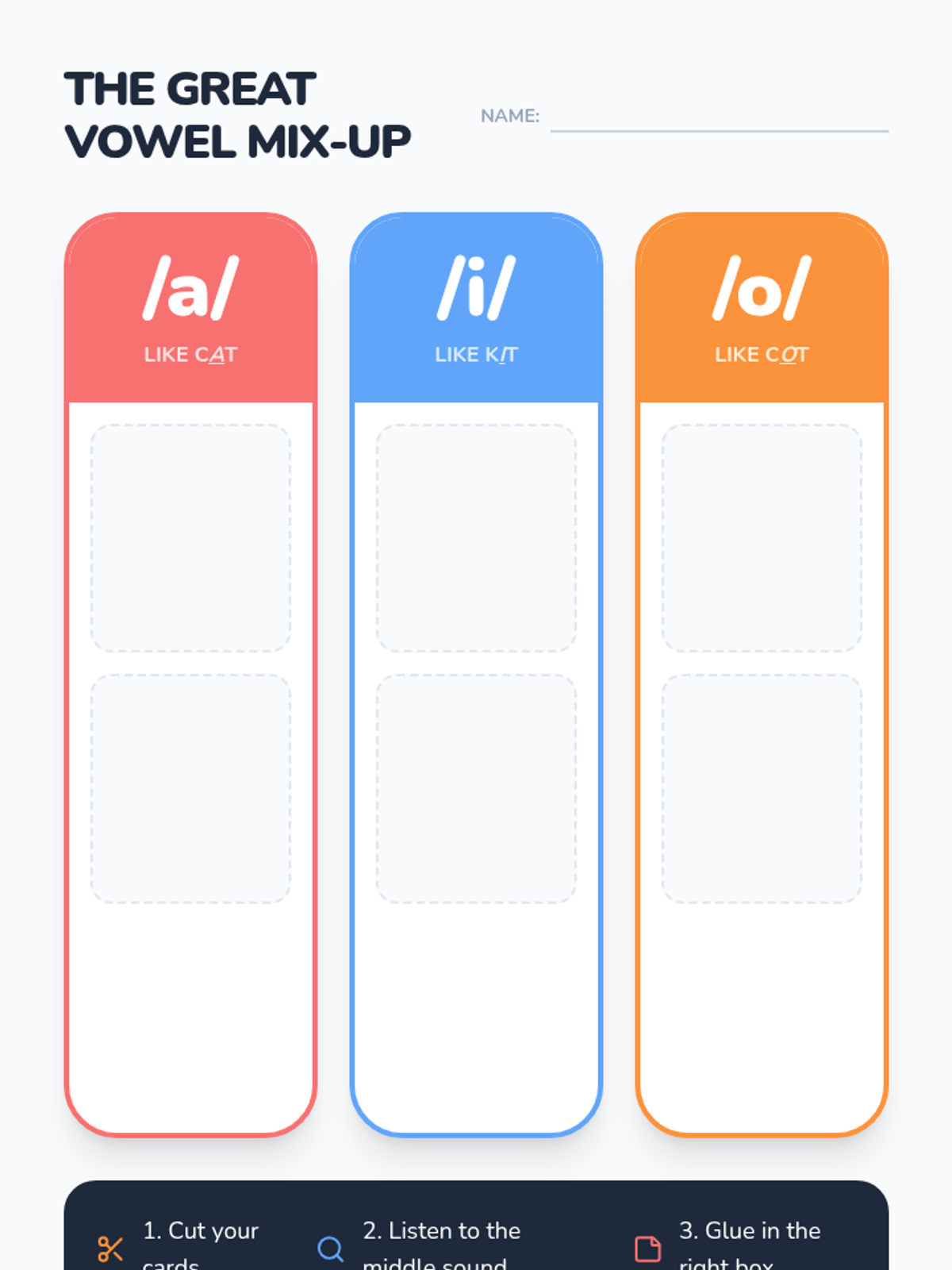
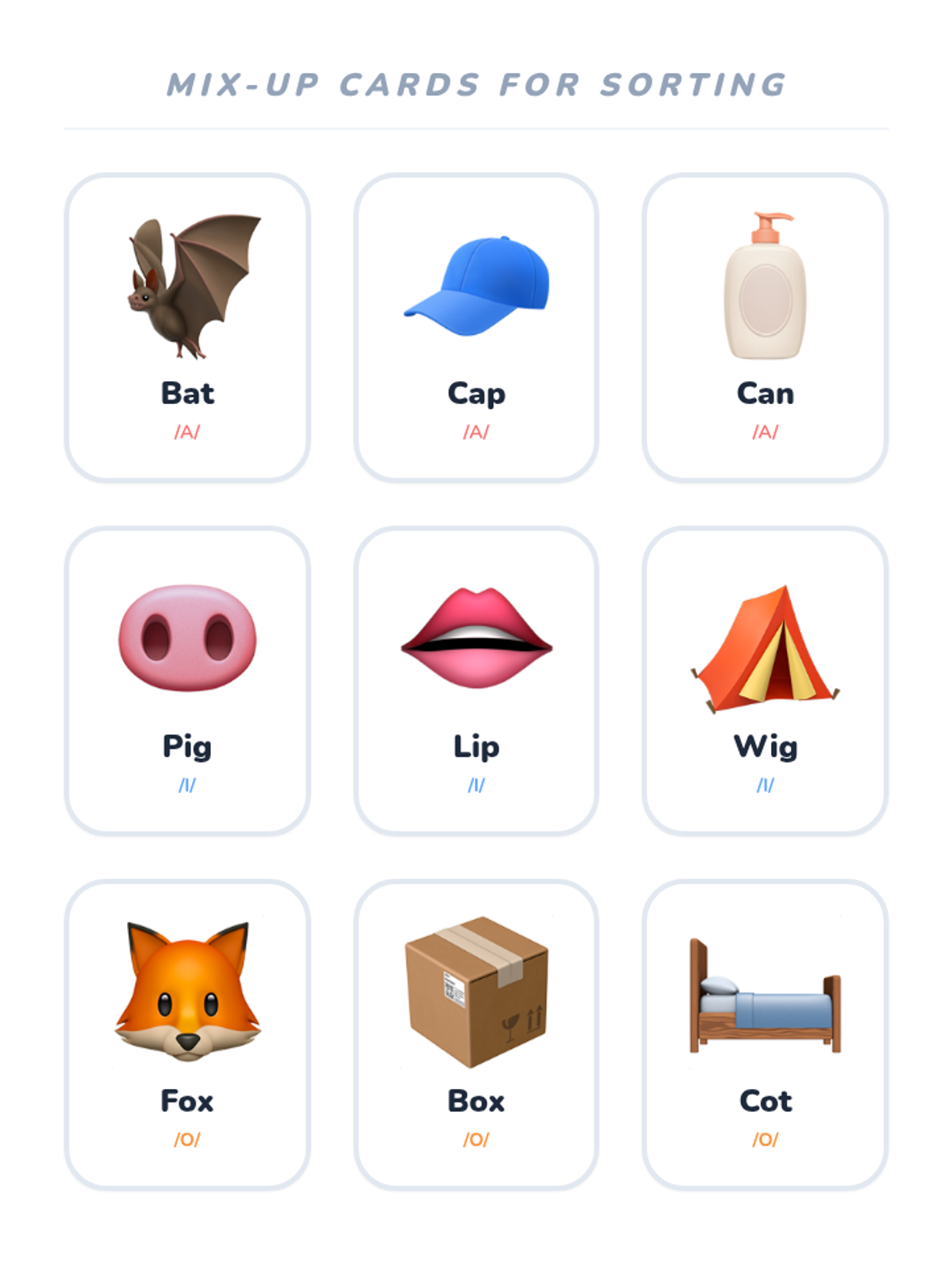
Students practice vowel discrimination by sorting pictures based on their middle sounds: /a/, /i/, and /o/.
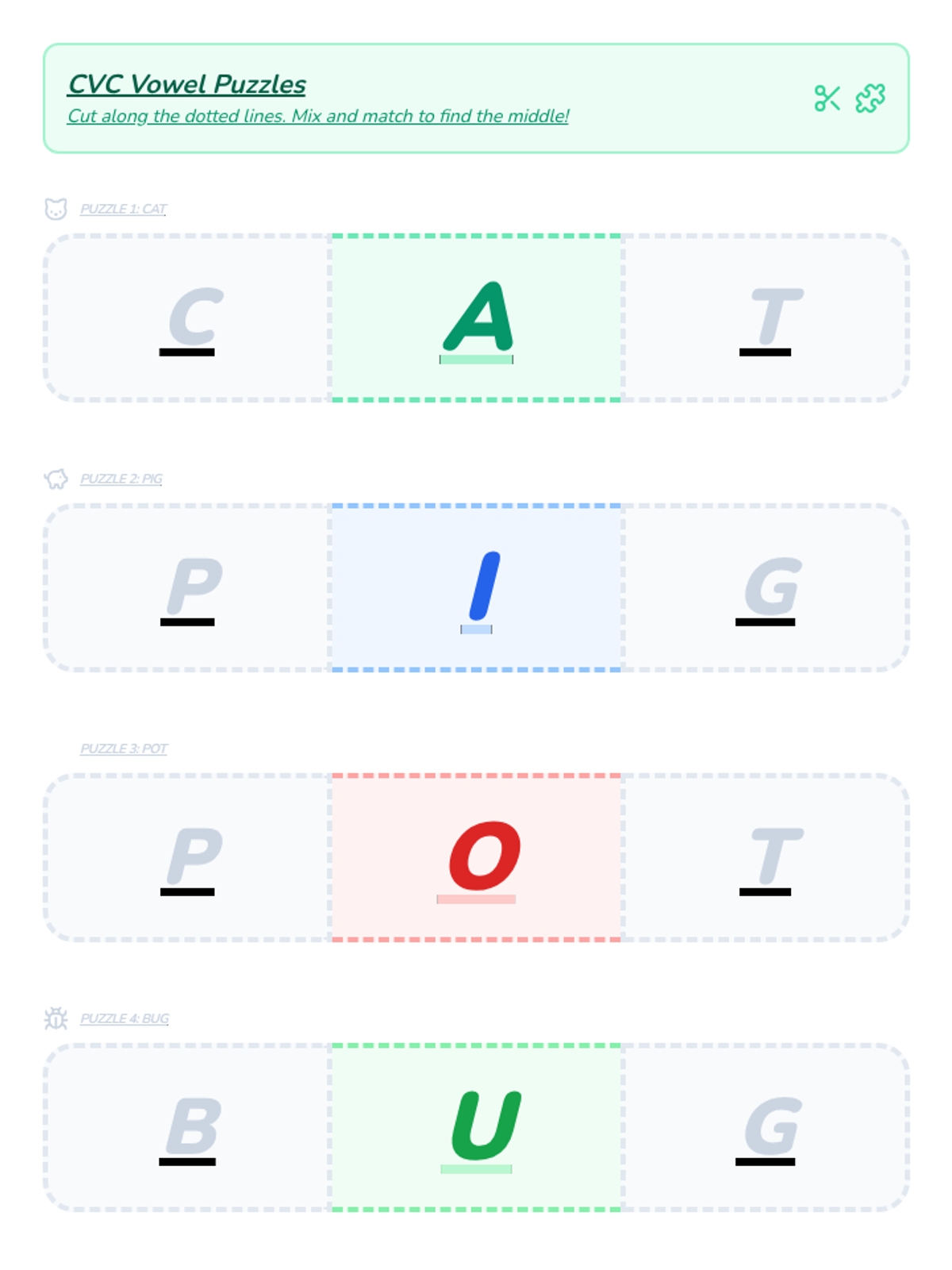
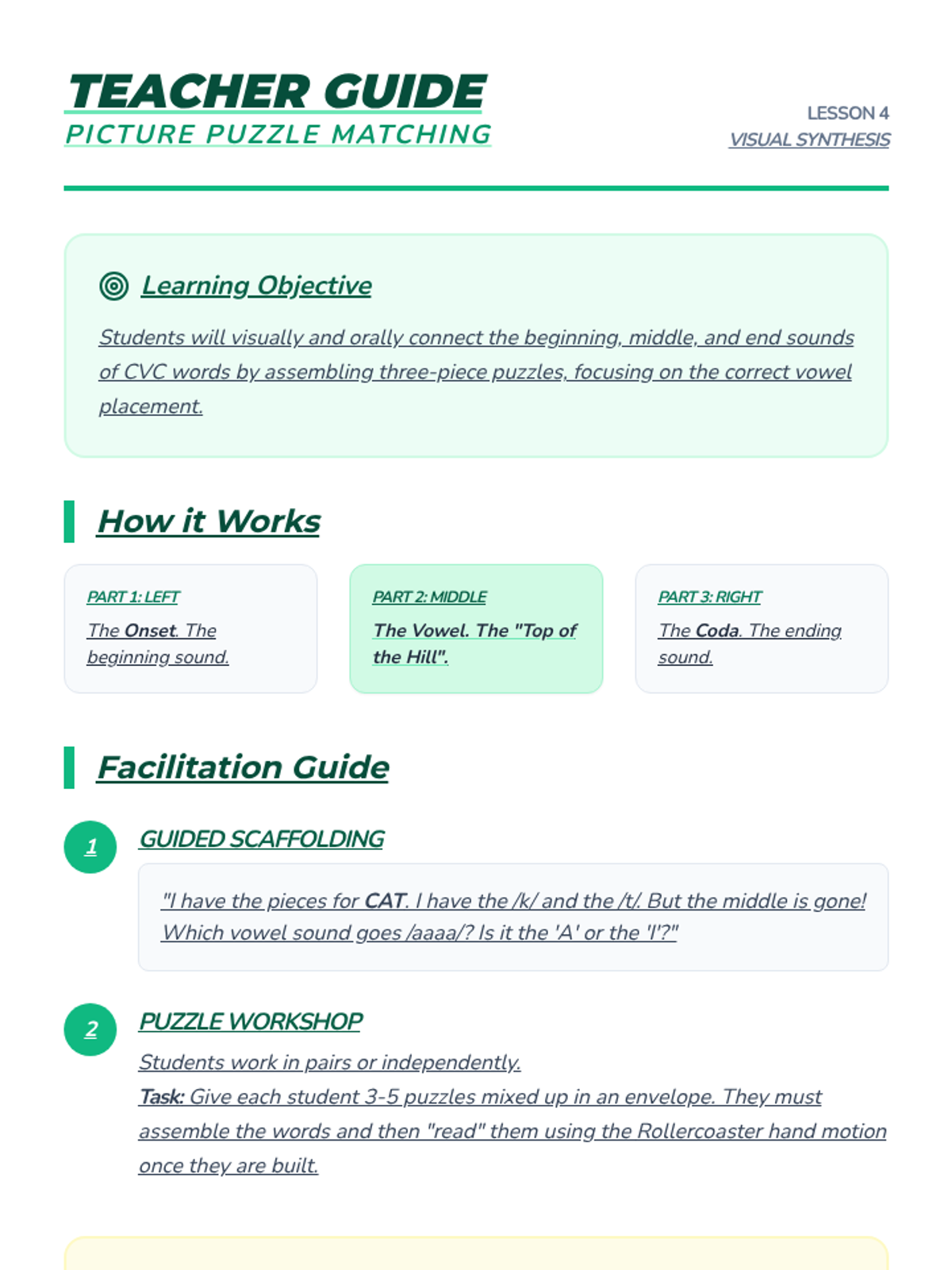
Students assemble three-piece puzzles where the middle piece represents the vowel sound. This visualizes the structure of CVC words and reinforces the vowel's central position.
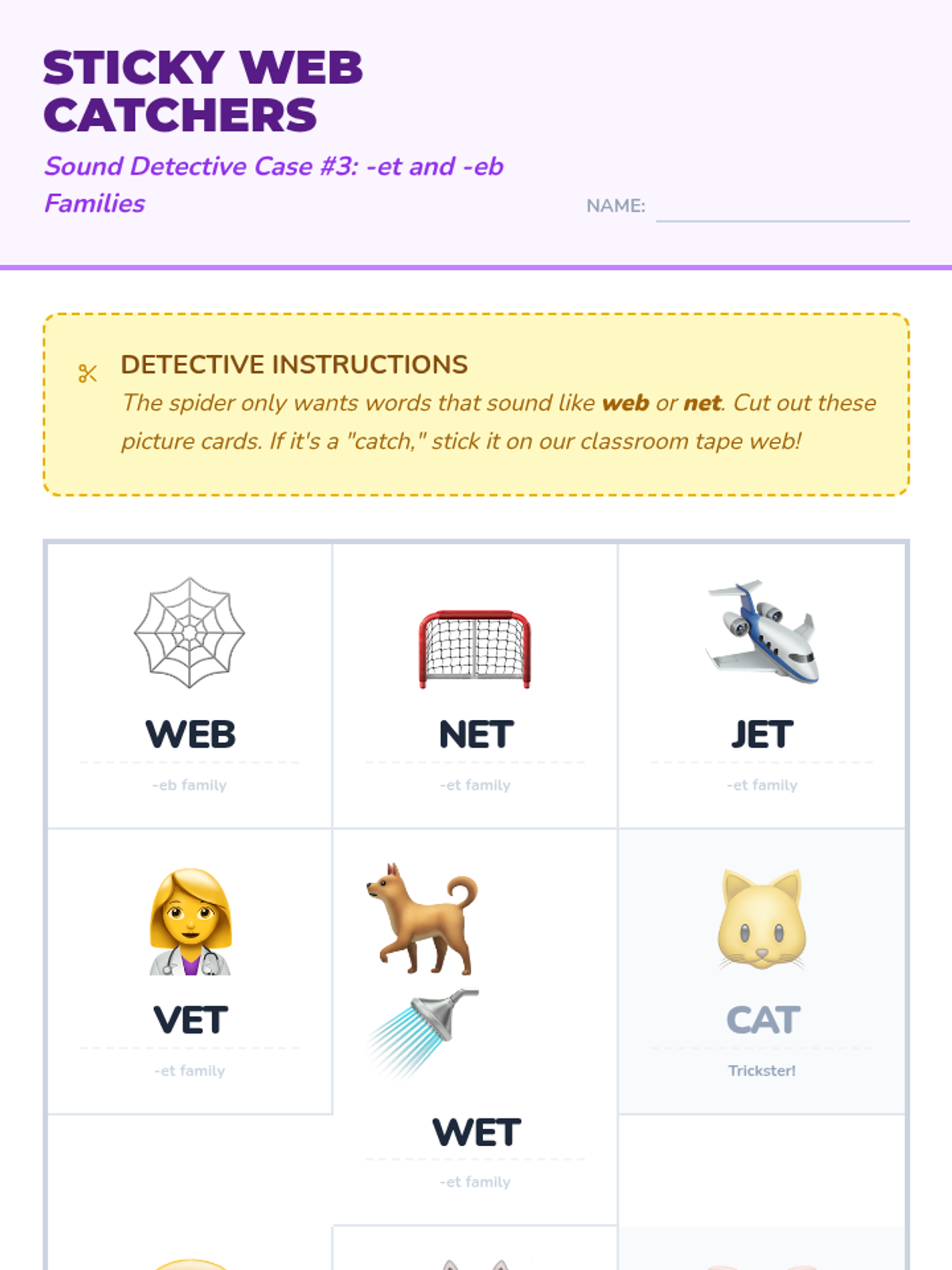
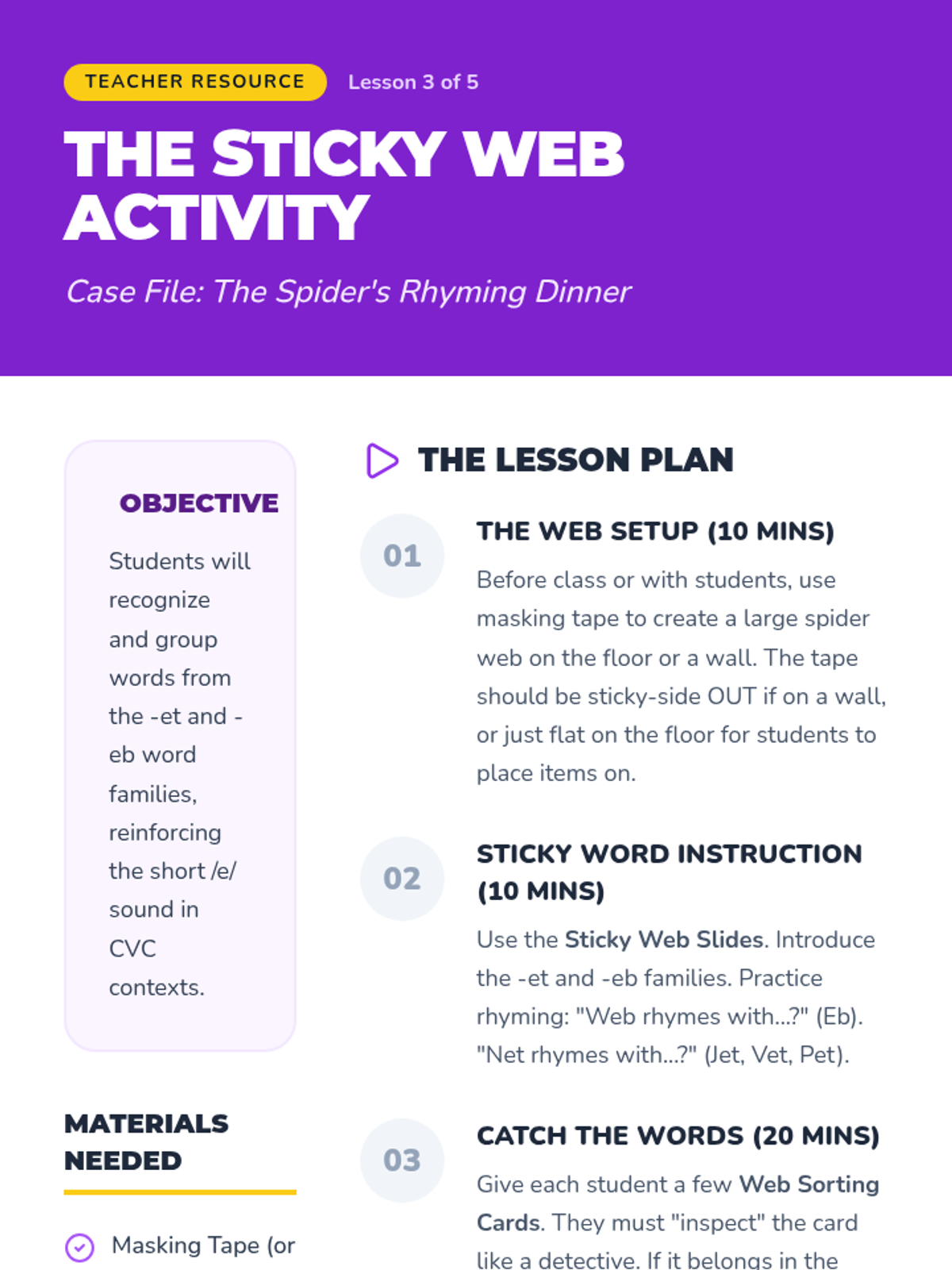
Using masking tape to create a 'web' on the floor, students stick pictures of short 'e' words (web, wet, vet, jet) onto the strands. This reinforces the -et and -eb word families.
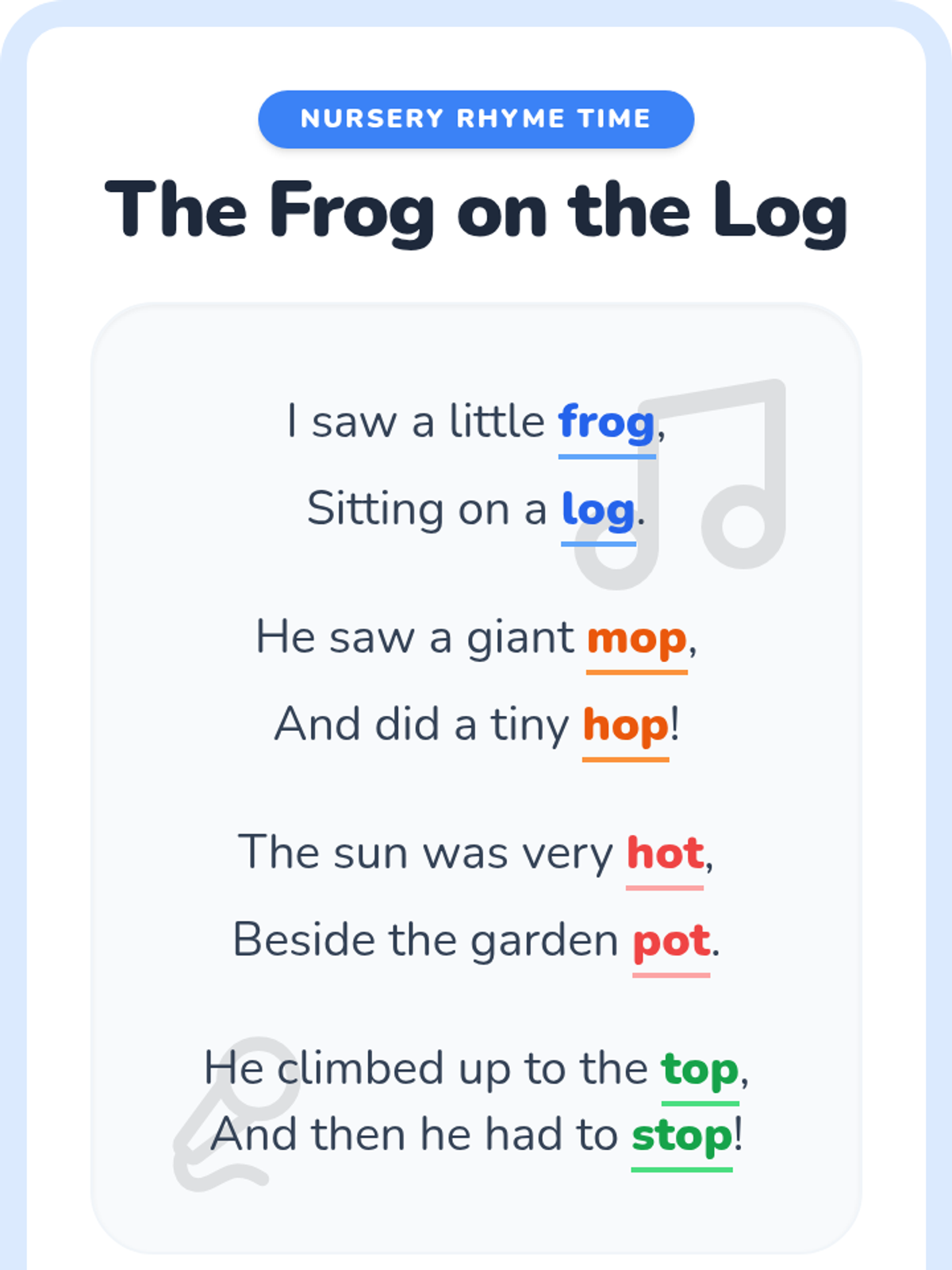
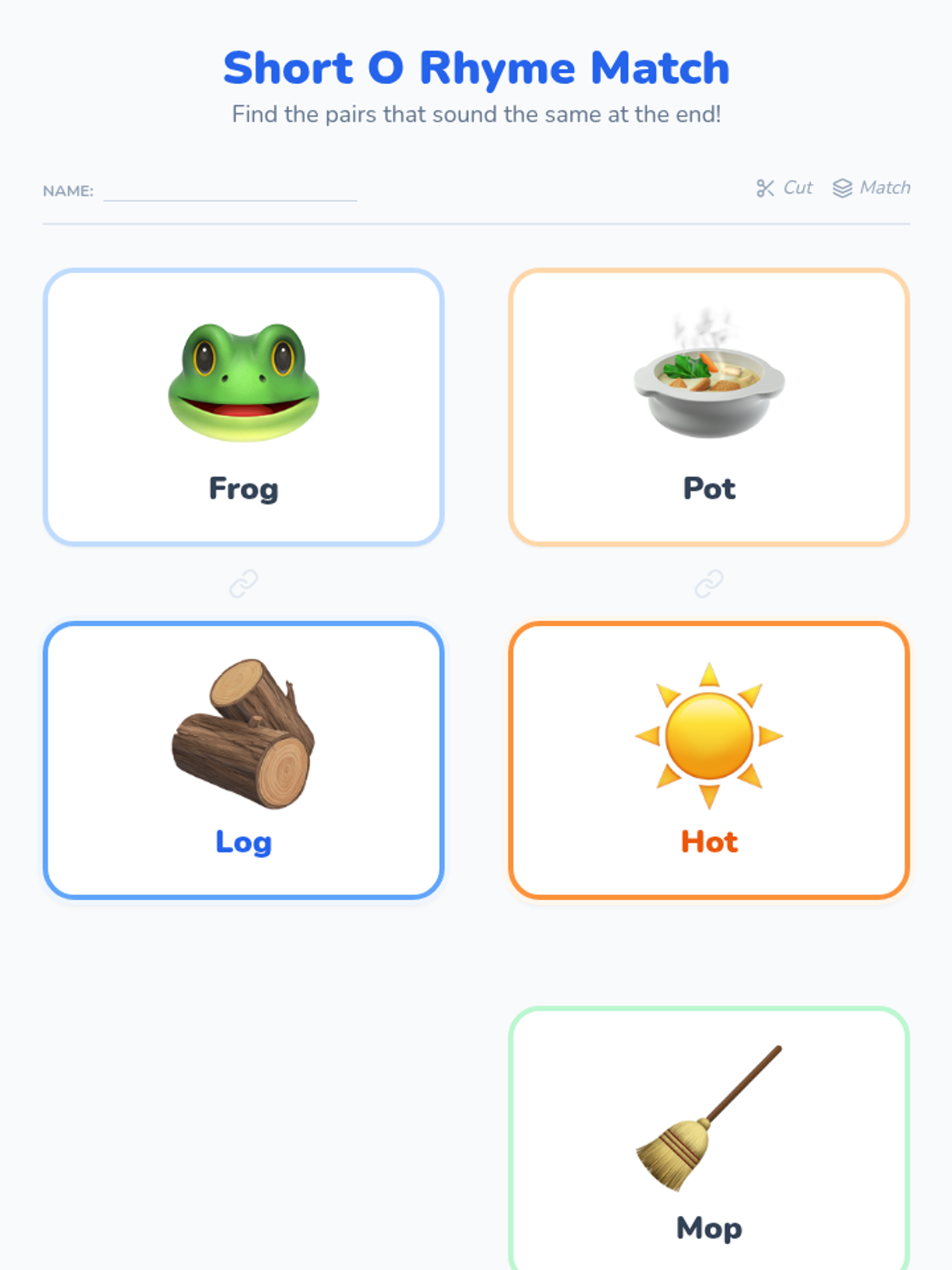
Students listen to and identify rhyming words with the short /o/ sound through a lively poem and matching activity.
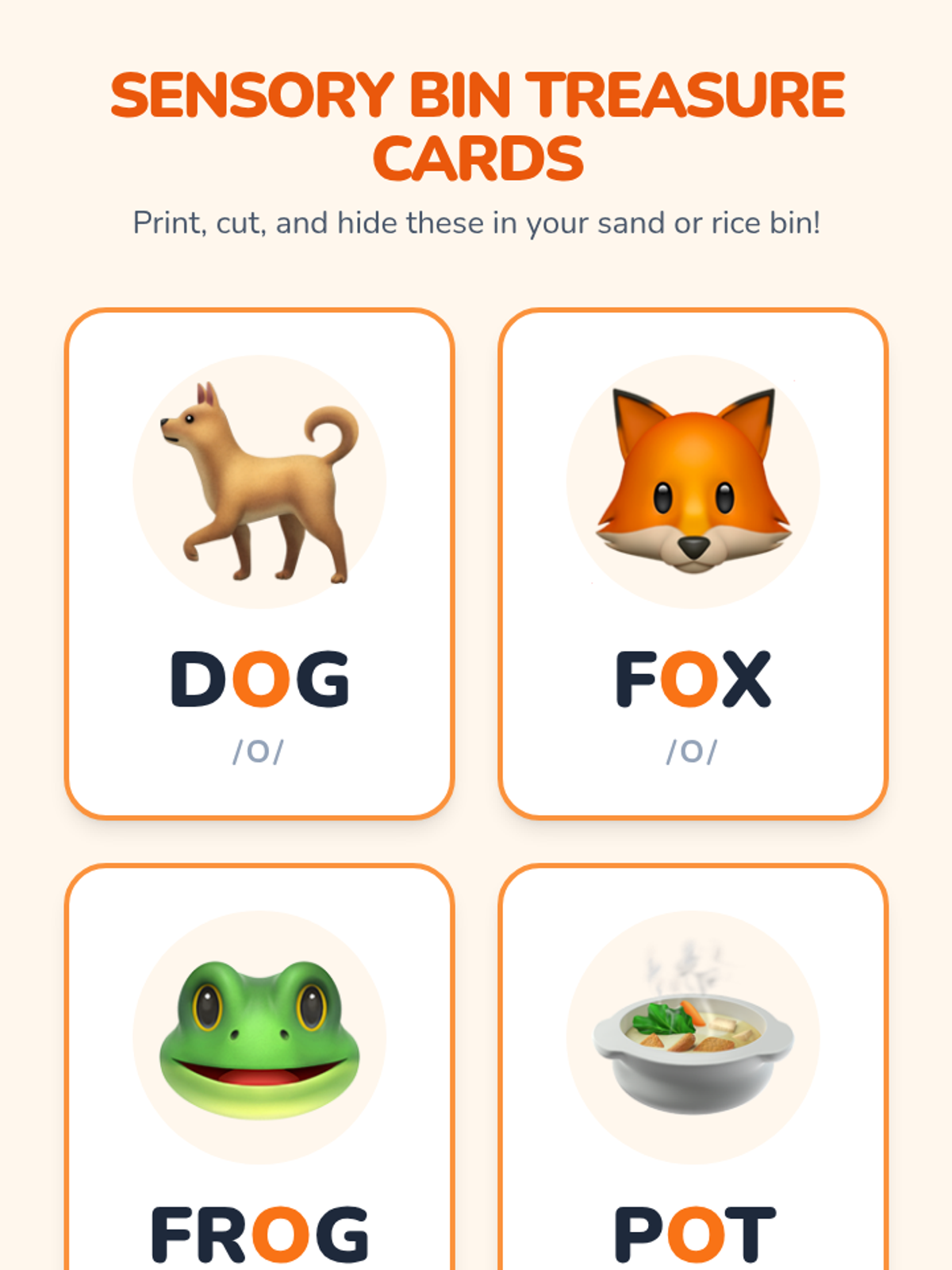
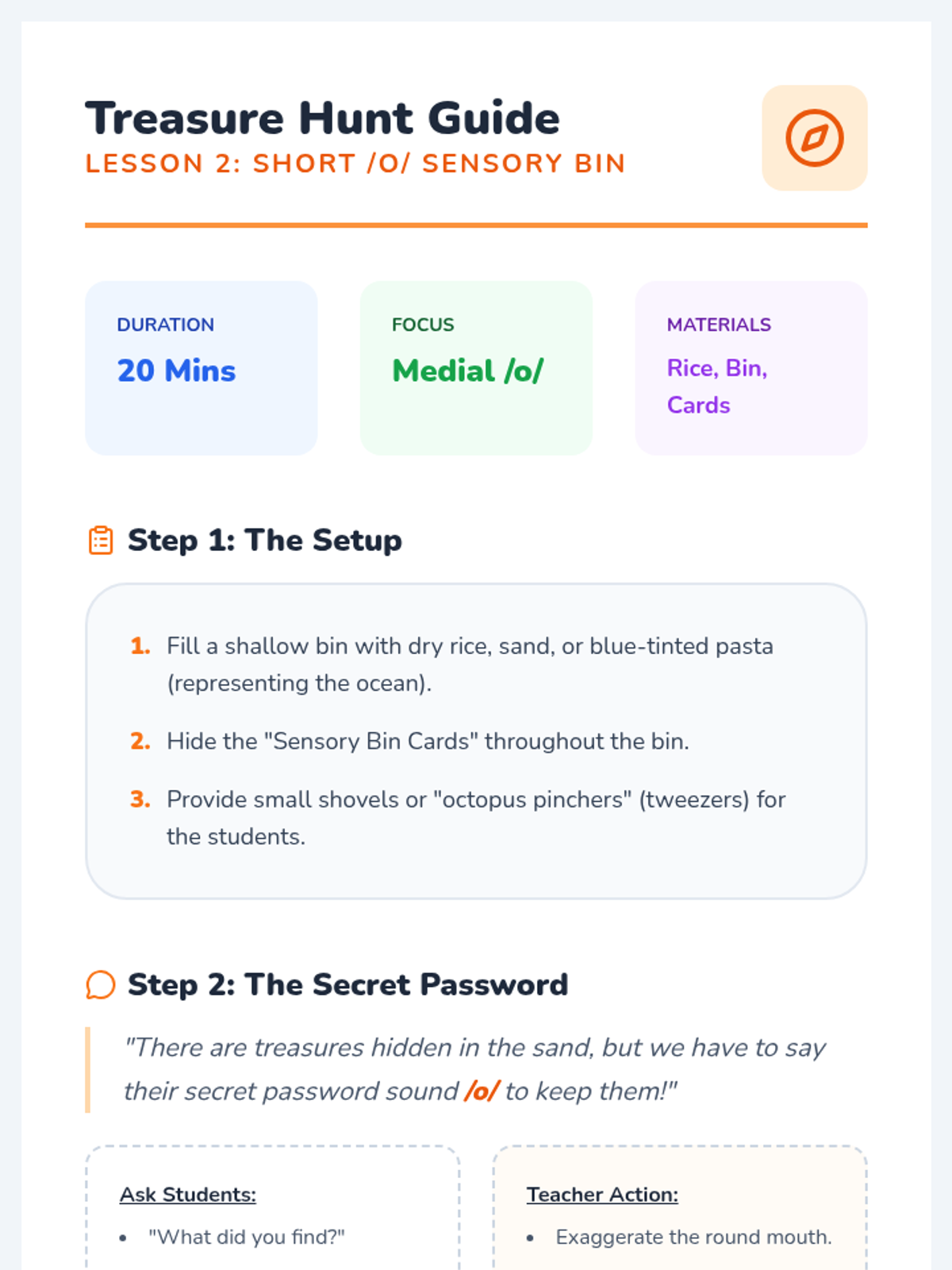
Students find objects hidden in a sensory bin to practice identifying the short /o/ sound in the middle of words.
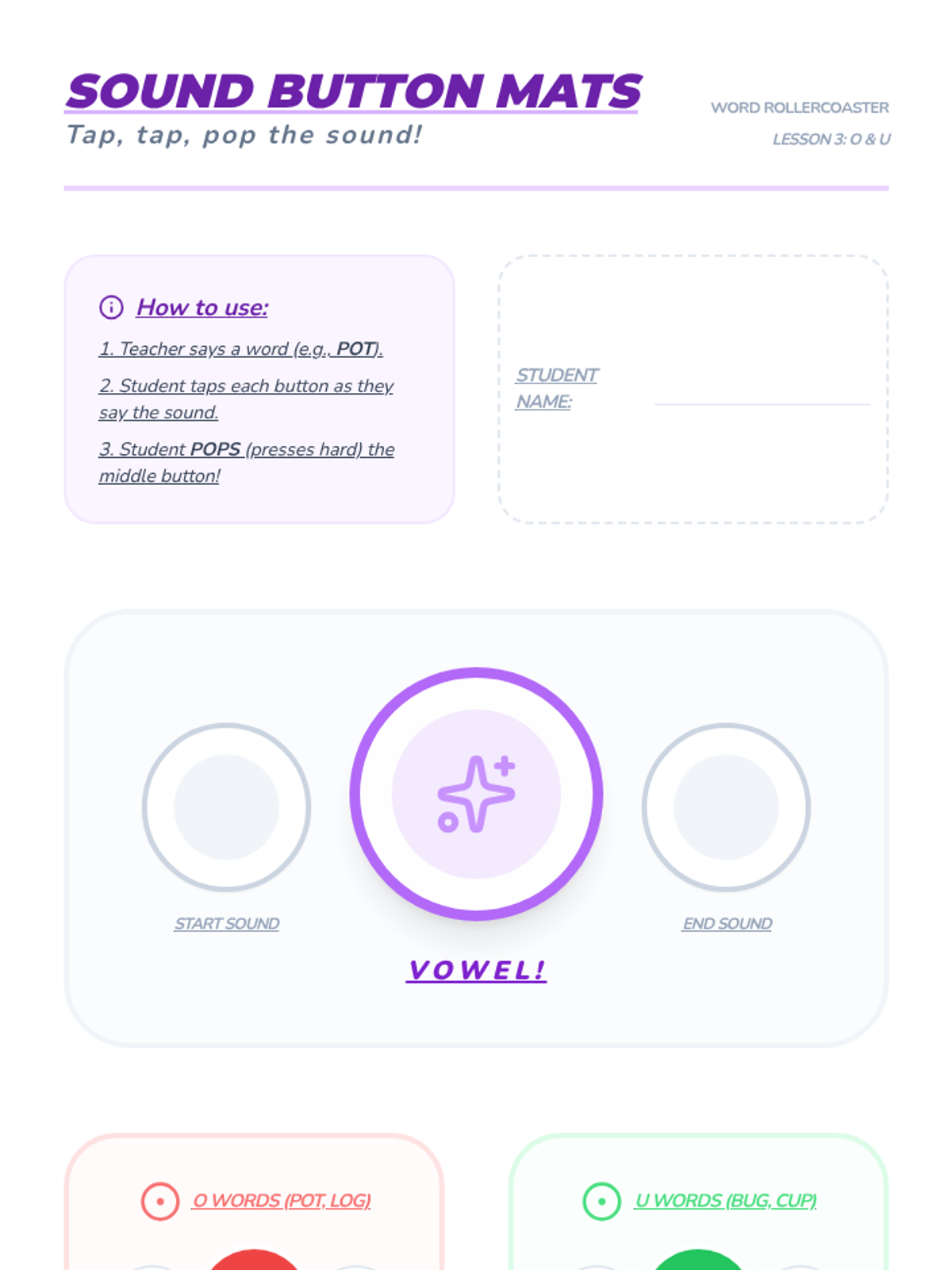
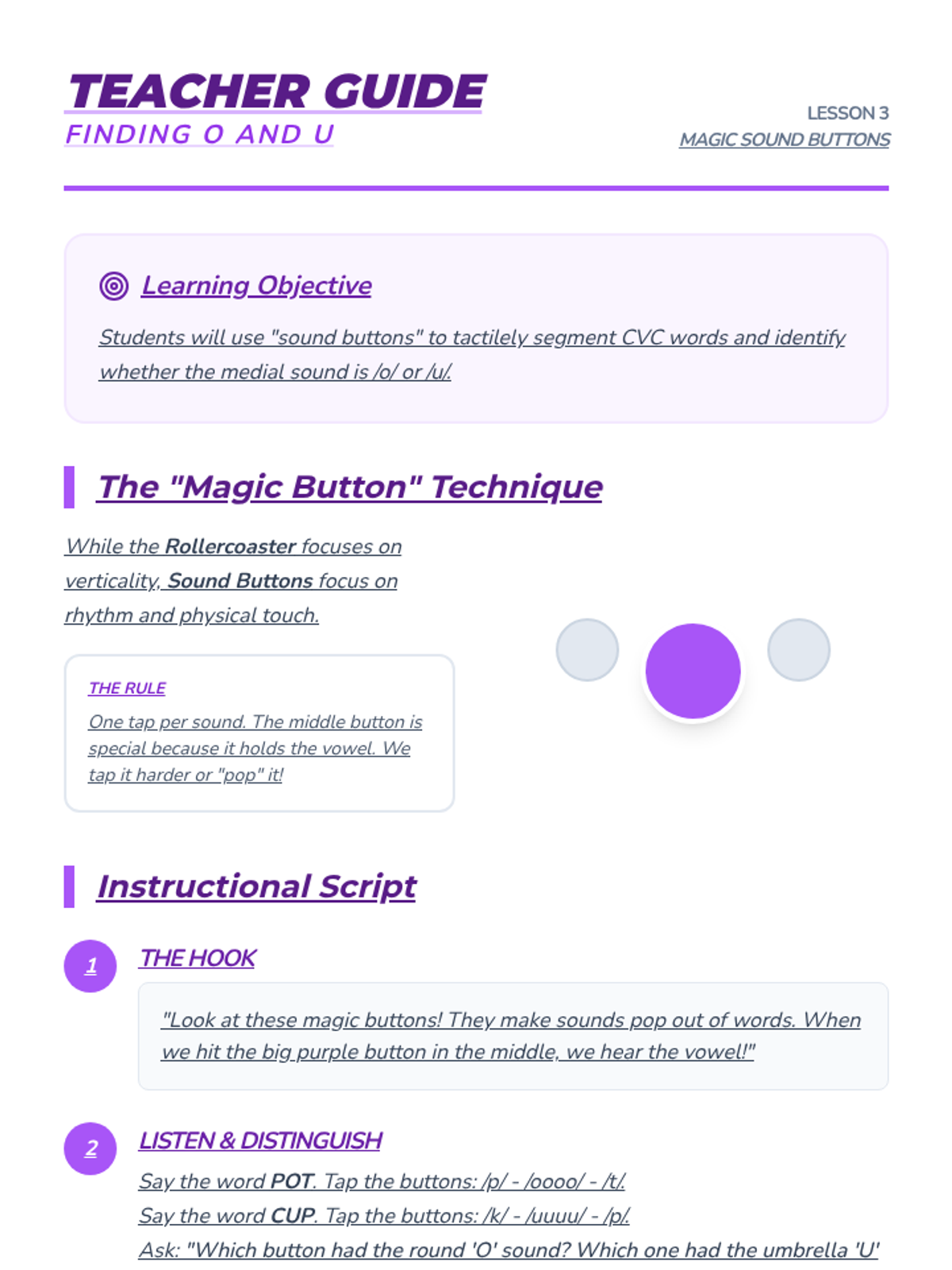
Students continue medial sound practice with /o/ and /u/ words. They use 'sound buttons' (tapping circles on the table) to tap out the sounds.