Develops technical proficiency and creative movement skills across various styles. Examines choreographic principles alongside the historical and cultural origins of diverse global dance forms.
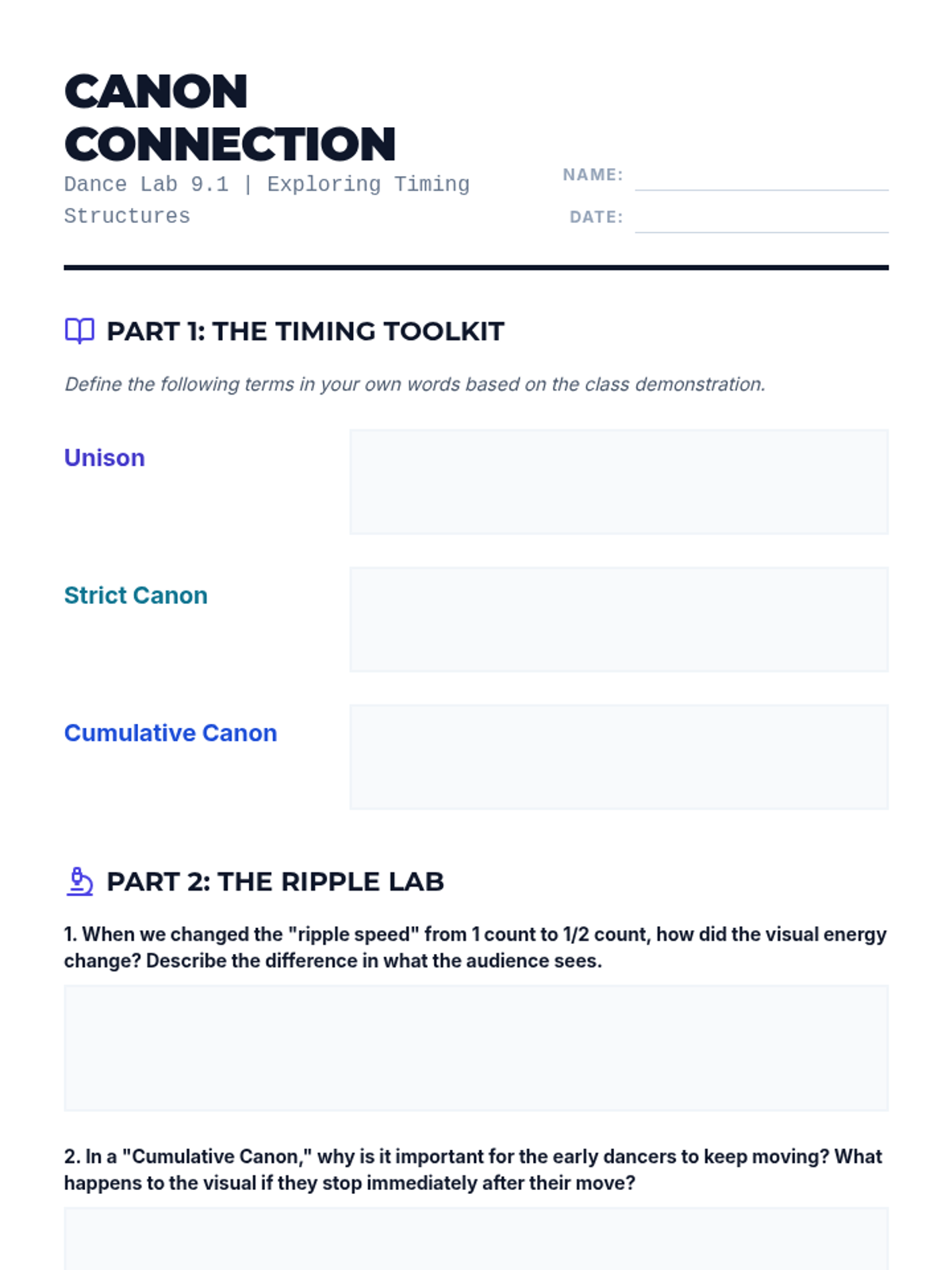
This sequence investigates how timing manipulation and spatial relationships influence the visual aesthetics of dance. Students move beyond unison timing to explore concepts like canon, rounds, and cascading movement, analyzing how these timing structures change the viewer's perception. through inquiry and experimentation, learners discover how delaying or anticipating movement relative to peers creates dynamic visual effects.
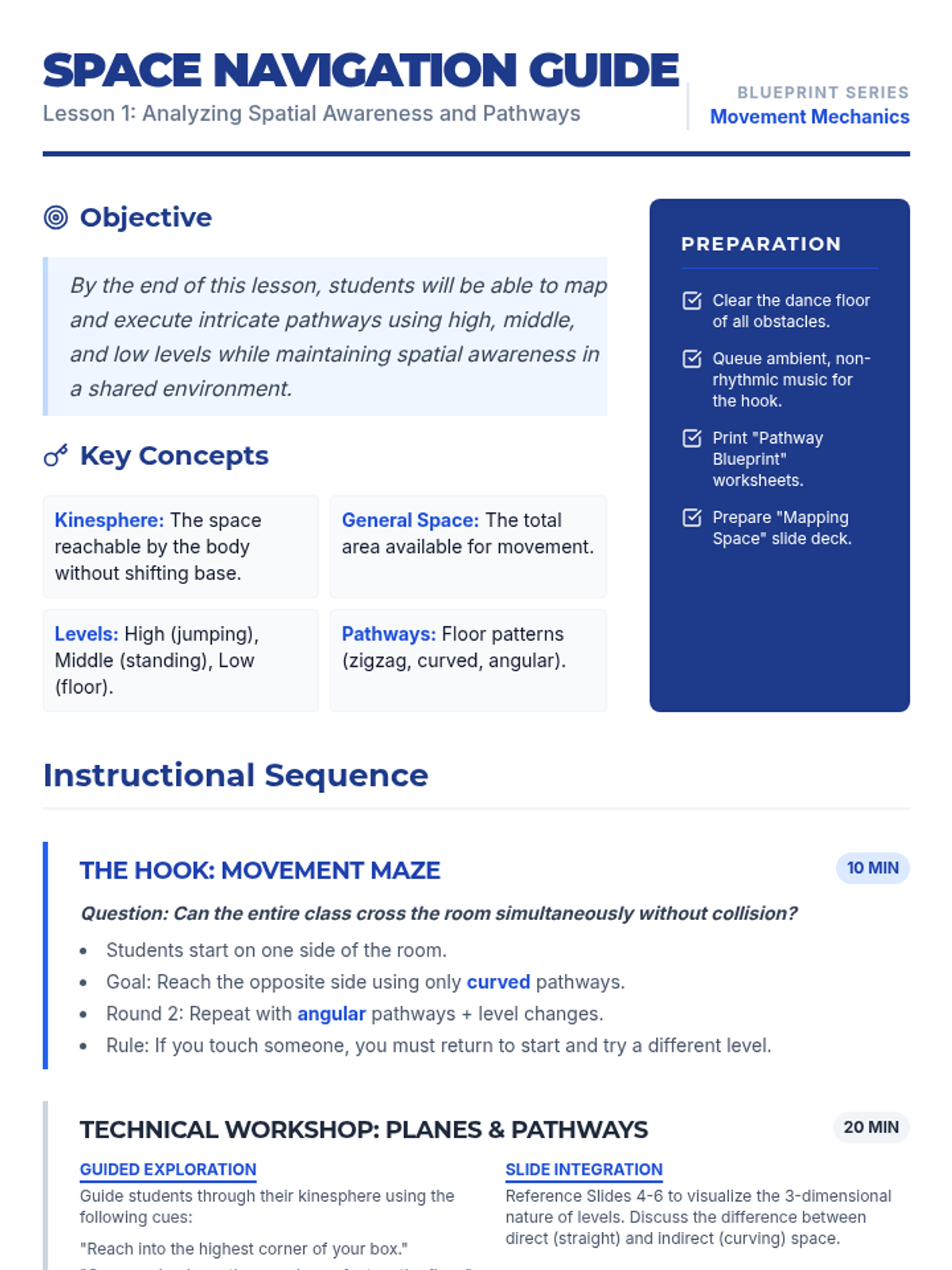
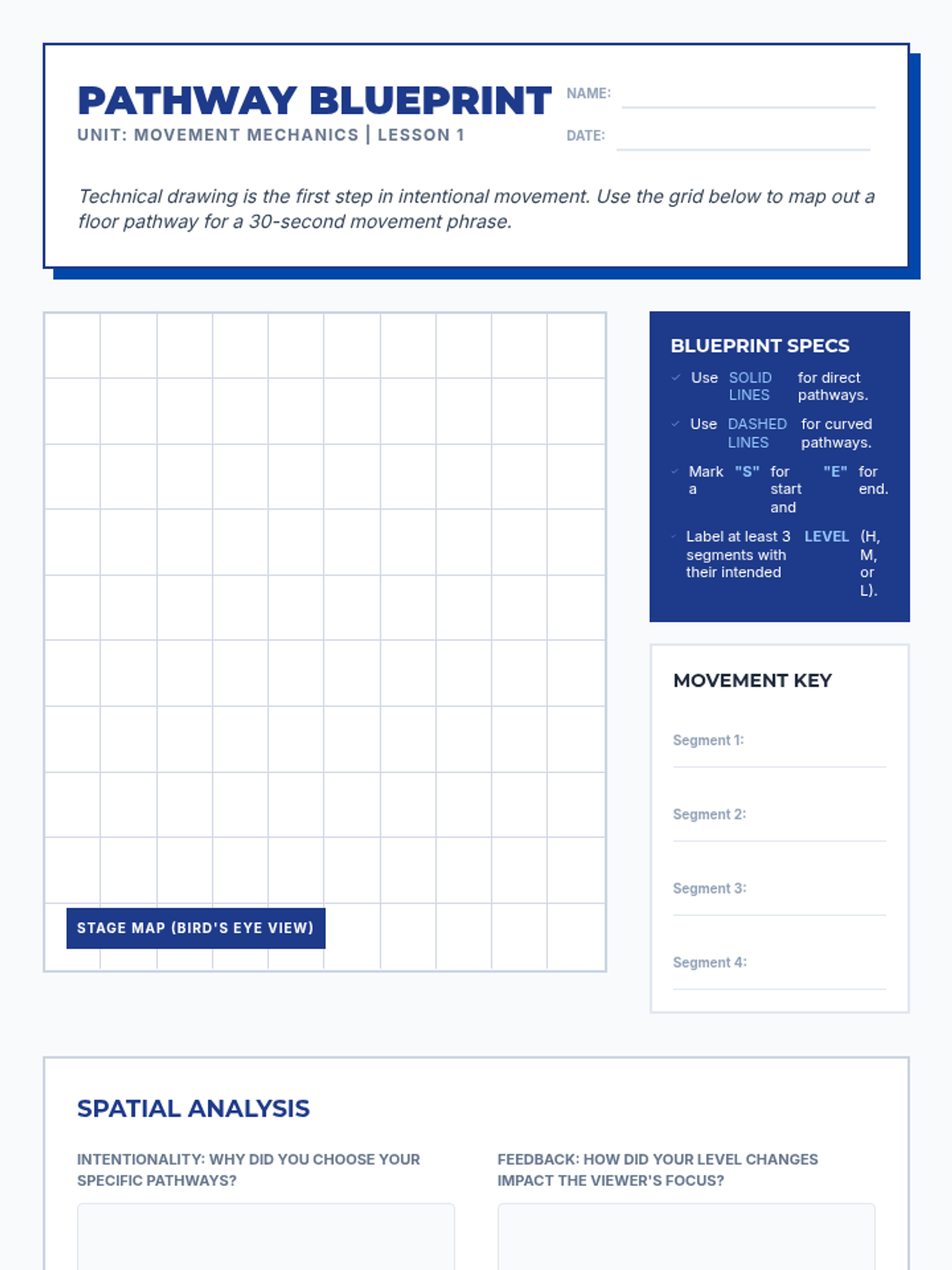
This high school dance sequence deconstructs movement into its core elements of space, time, and energy. Students transition from technical analysis of pathways and levels to the expressive manipulation of dynamics, culminating in a performance that demonstrates intentional artistic variation.
A comprehensive 10th-grade sequence exploring the evolution of modern dance from the early 20th century to the post-modern era. Students analyze the philosophical and social drivers behind movement revolutions, connecting dance to psychology, politics, and the definition of art.
This sequence explores the evolution of Modern Dance as a rebellious philosophical movement. Students track the journey from early expressive freedom to codified techniques and post-modern dismantling of rules, investigating how movement serves as a political and social statement.
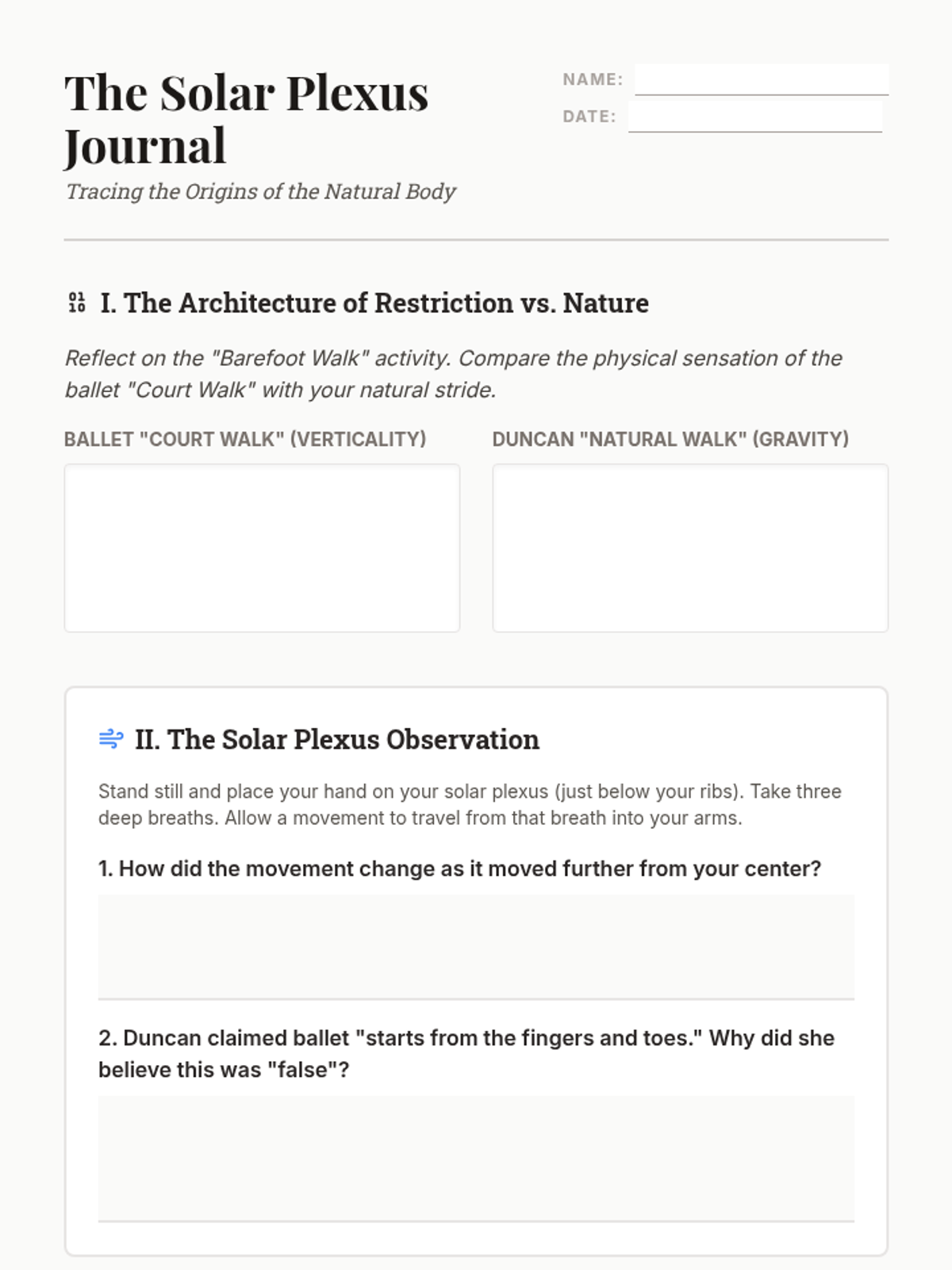
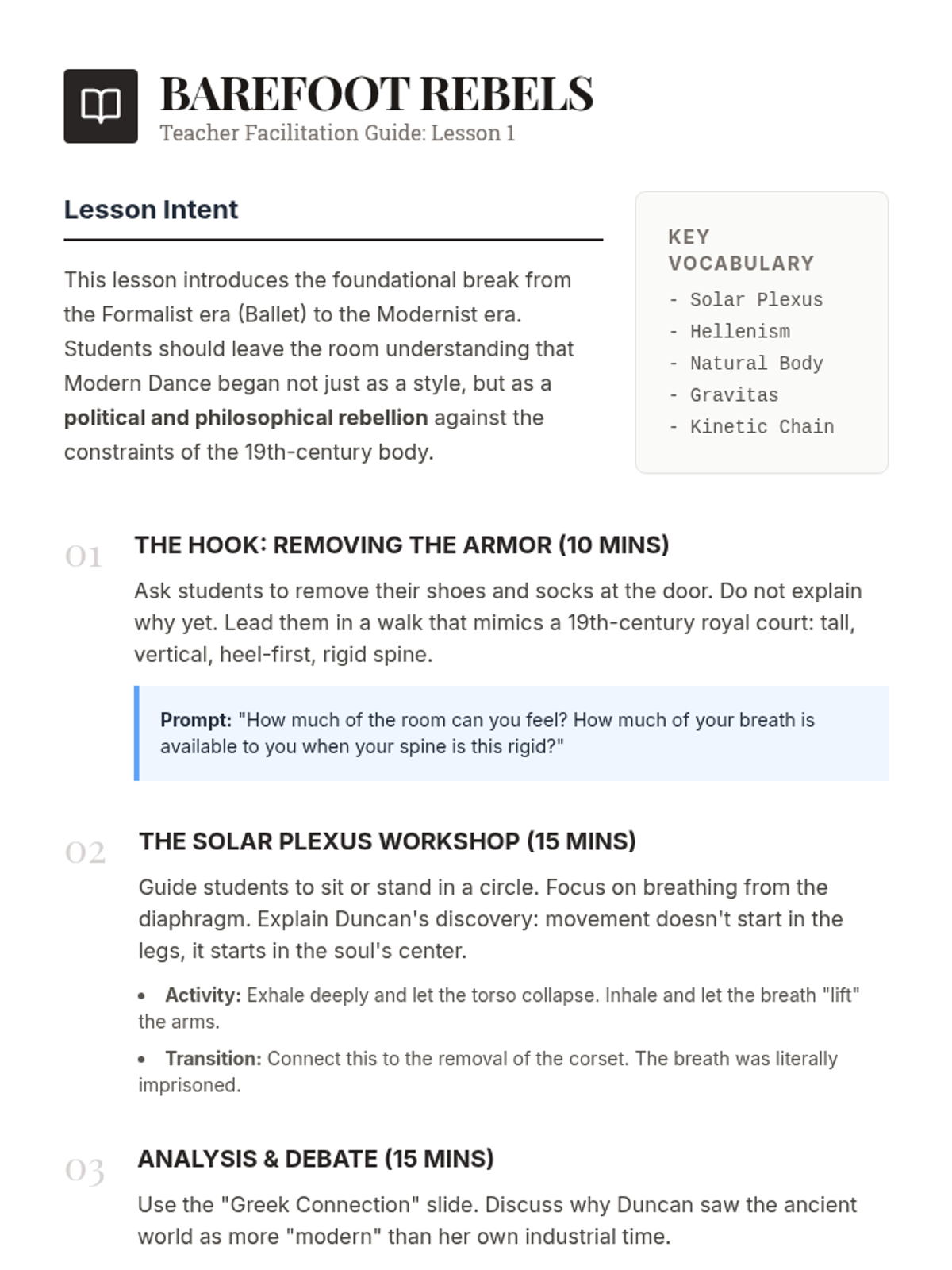
A high school sequence exploring the shift from traditional ballet to modern dance through five key movements: Duncan's naturalism, Graham's psychological depth, Cunningham's chance operations, Judson Dance Theater's pedestrianism, and Bausch's Tanztheater. Students engage in both physical workshops and intellectual analysis to understand art as a reaction to its time.
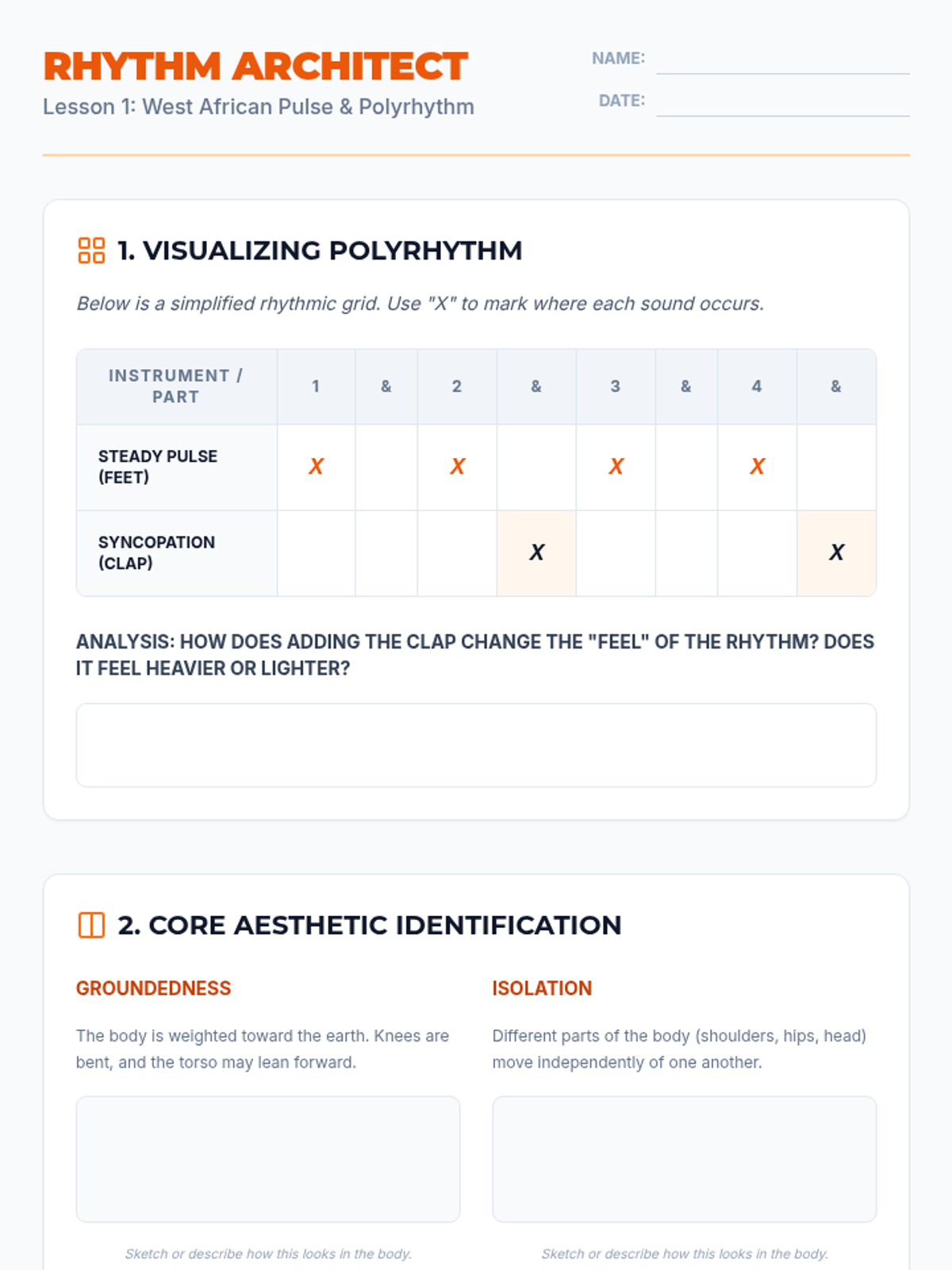
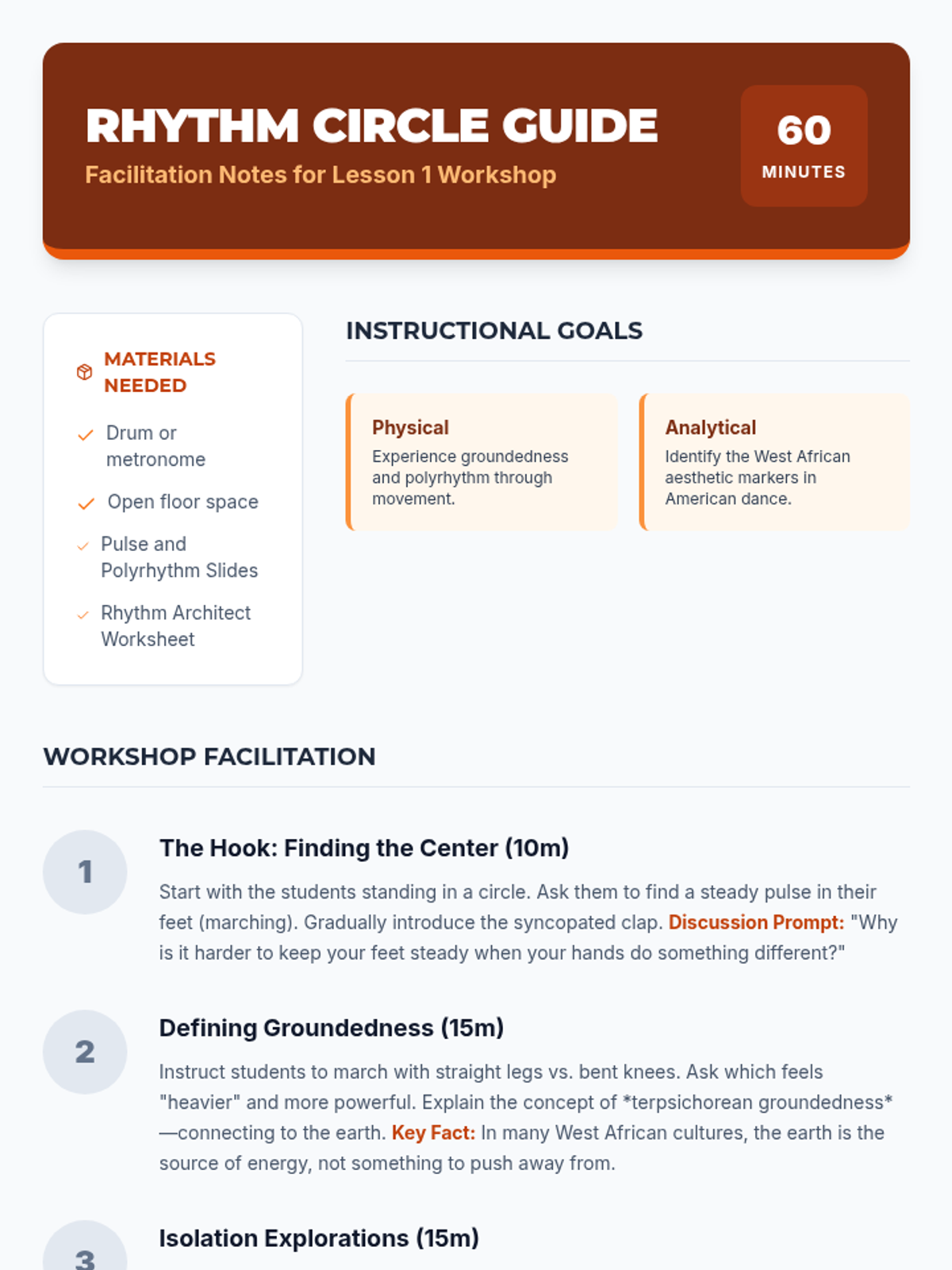
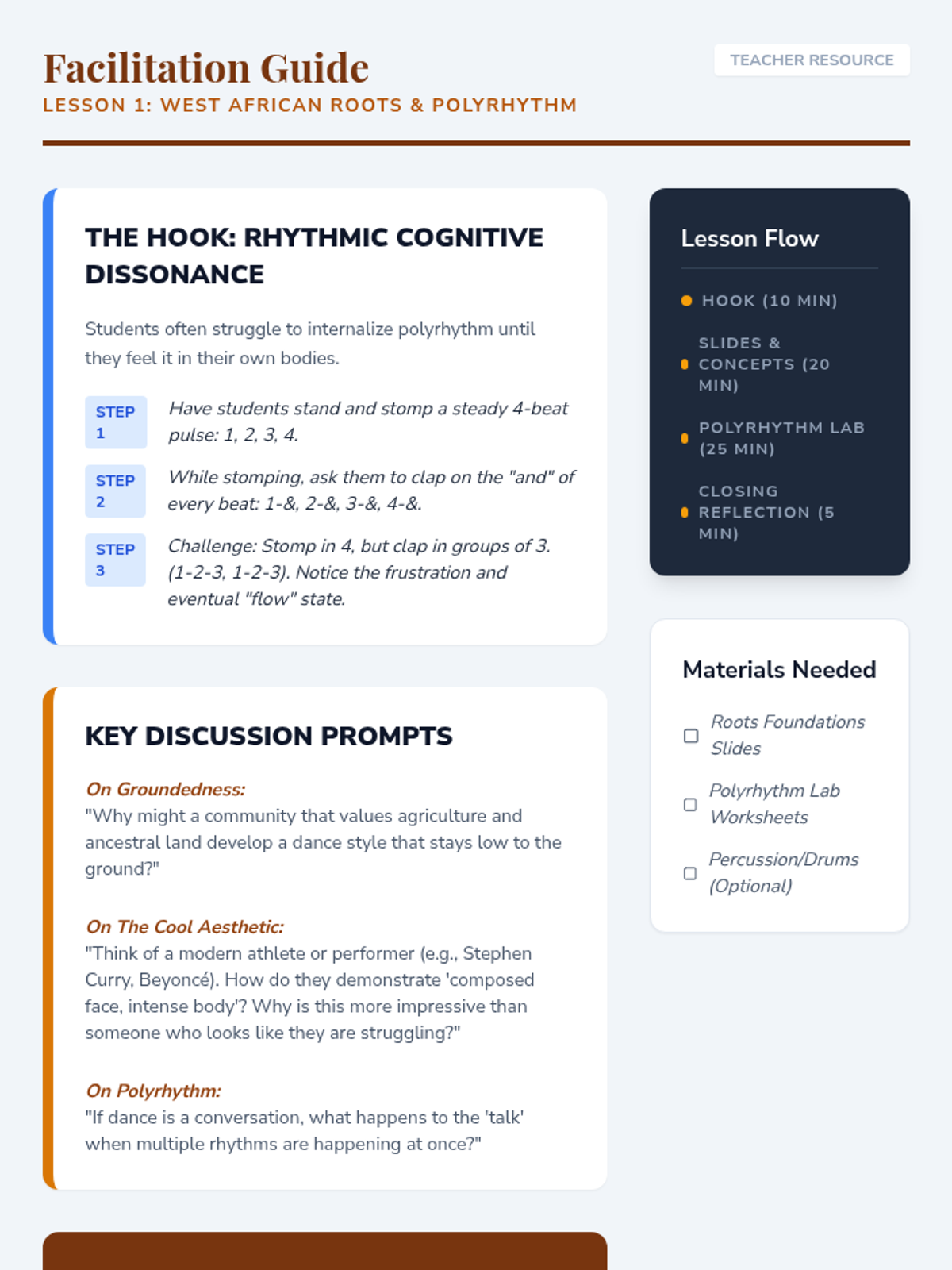
Students investigate the foundational role of dance in ancient and indigenous societies, focusing on how movement serves spiritual, storytelling, and ceremonial functions. Through case studies of Hula, West African dance, and Powwow traditions, they analyze how dance preserves history and fosters community.
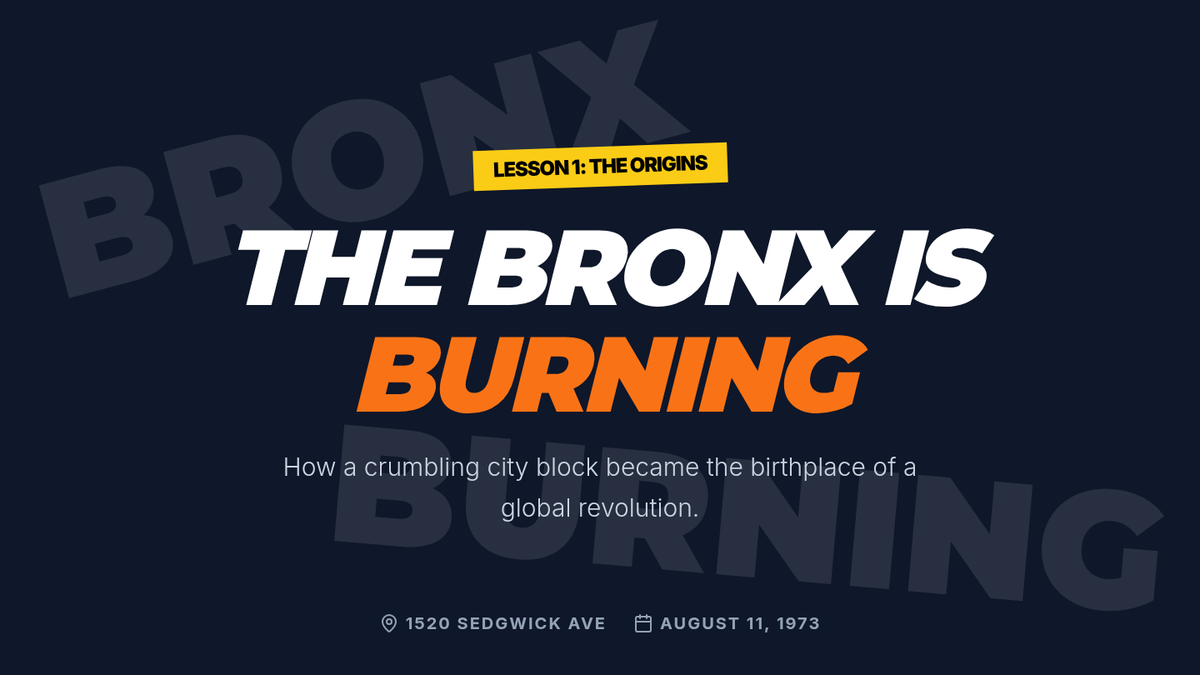
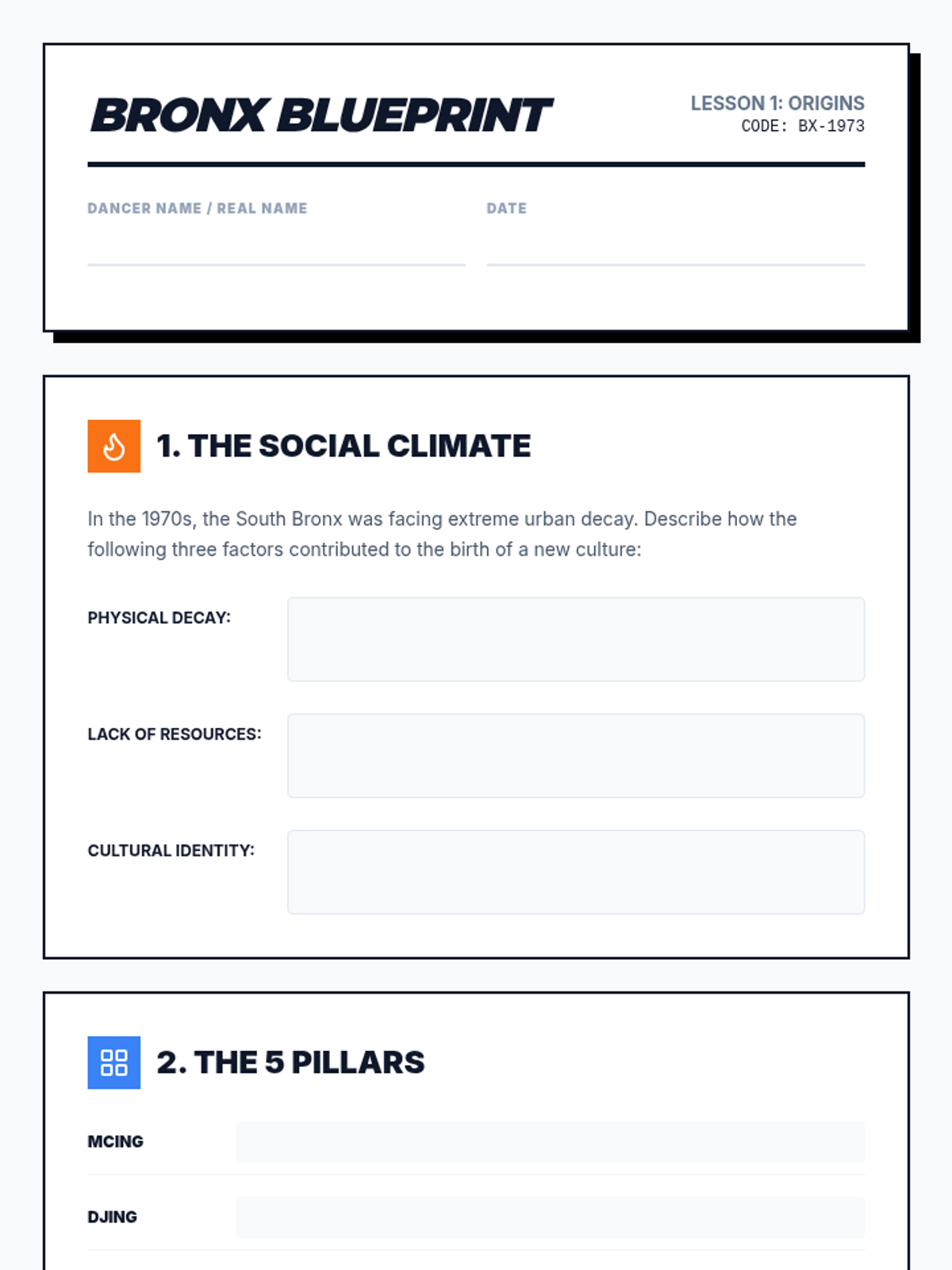
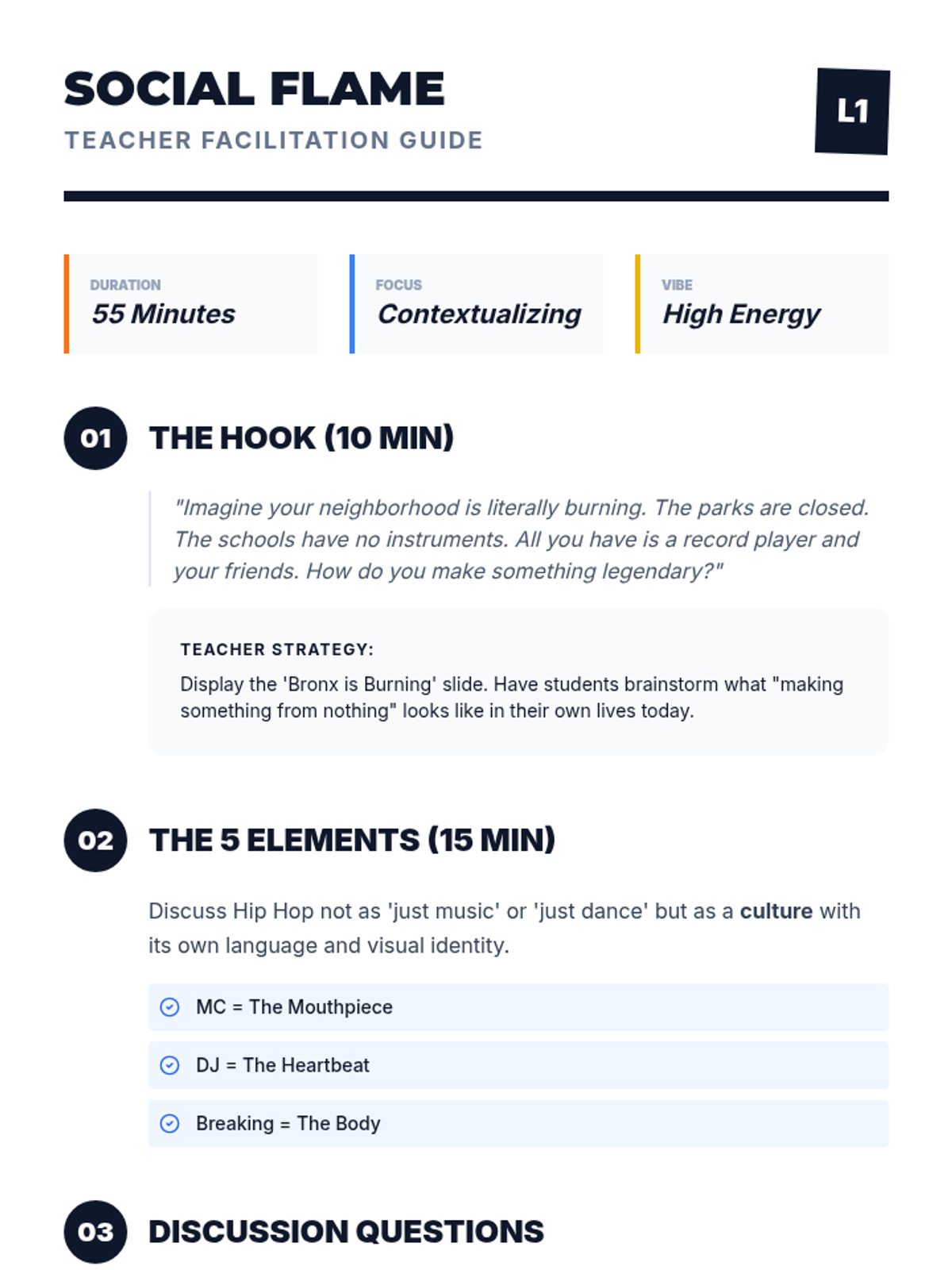
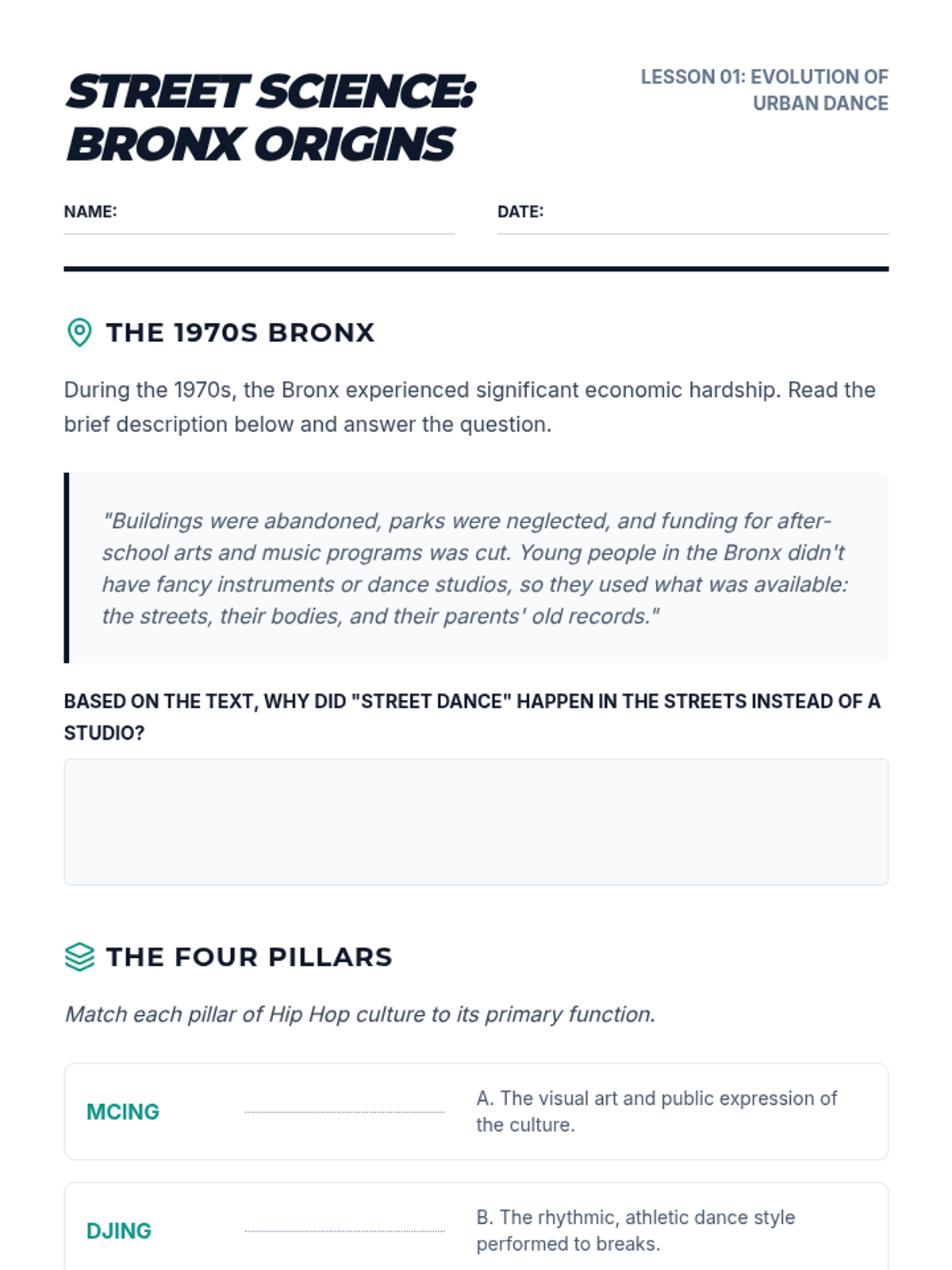
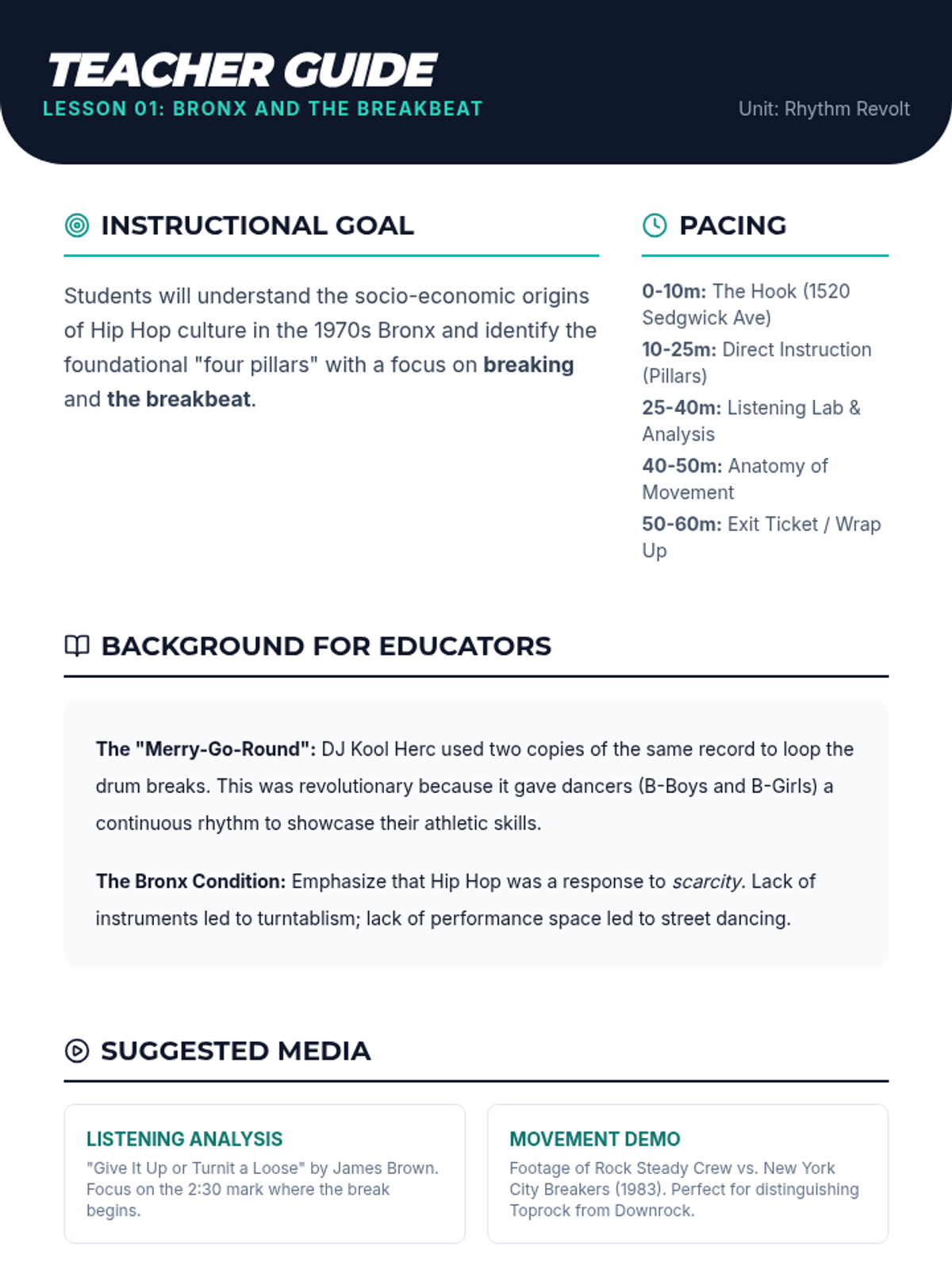
A high-energy exploration of Hip Hop culture's origins in the South Bronx and its evolution into a global phenomenon. Students analyze the socio-economic roots, the social dynamics of the cypher, the physical 'grammar' of breaking, the impact of commercialization, and the cross-cultural fusion seen in modern K-Pop.
A journey through the history of modern dance, exploring how pioneers like Isadora Duncan, Martha Graham, Alvin Ailey, and Merce Cunningham broke traditional rules to express raw emotion, cultural identity, and abstract concepts. Students investigate the 'why' behind artistic rebellion and create their own choreographic manifesto.
This sequence explores the anthropological roots of dance, focusing on how indigenous cultures use movement for ritual, storytelling, and community. Students analyze traditions from Maori, Hawaiian, and West African cultures to understand the sacred and social functions of dance.
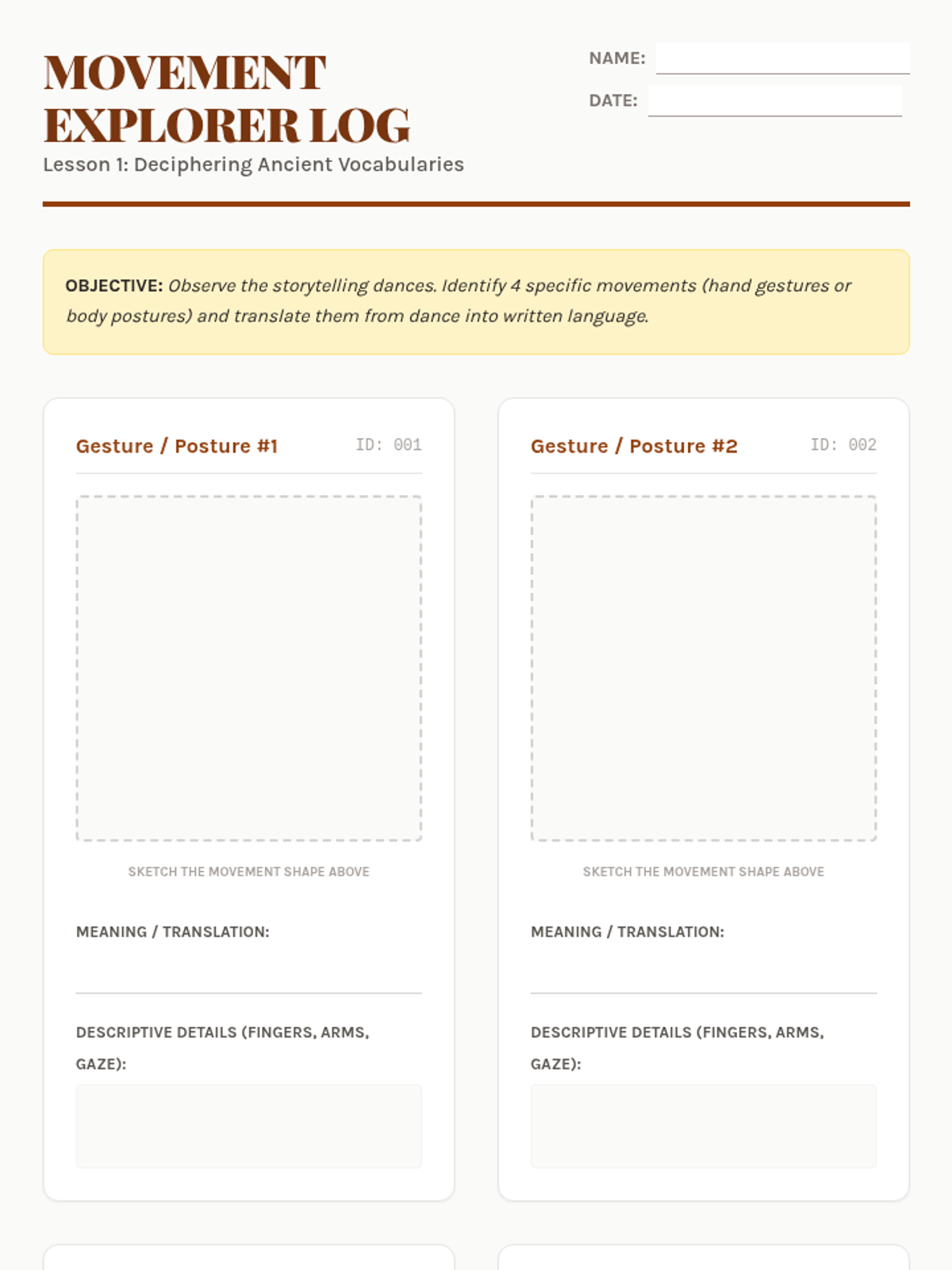
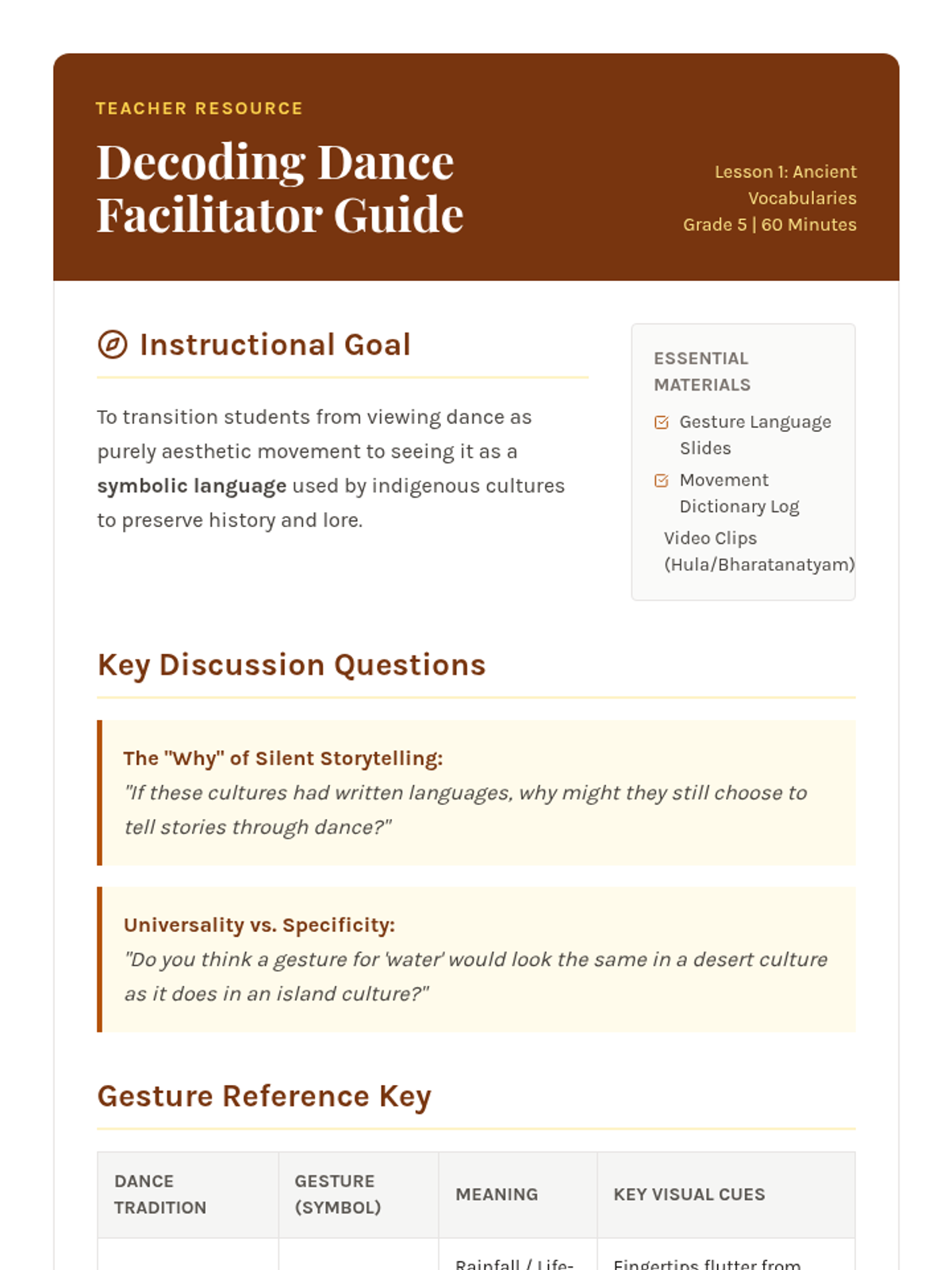
An inquiry-based exploration of dance as a language of storytelling and ritual in indigenous cultures, focusing on gesture, formation, regalia, and rhythm.
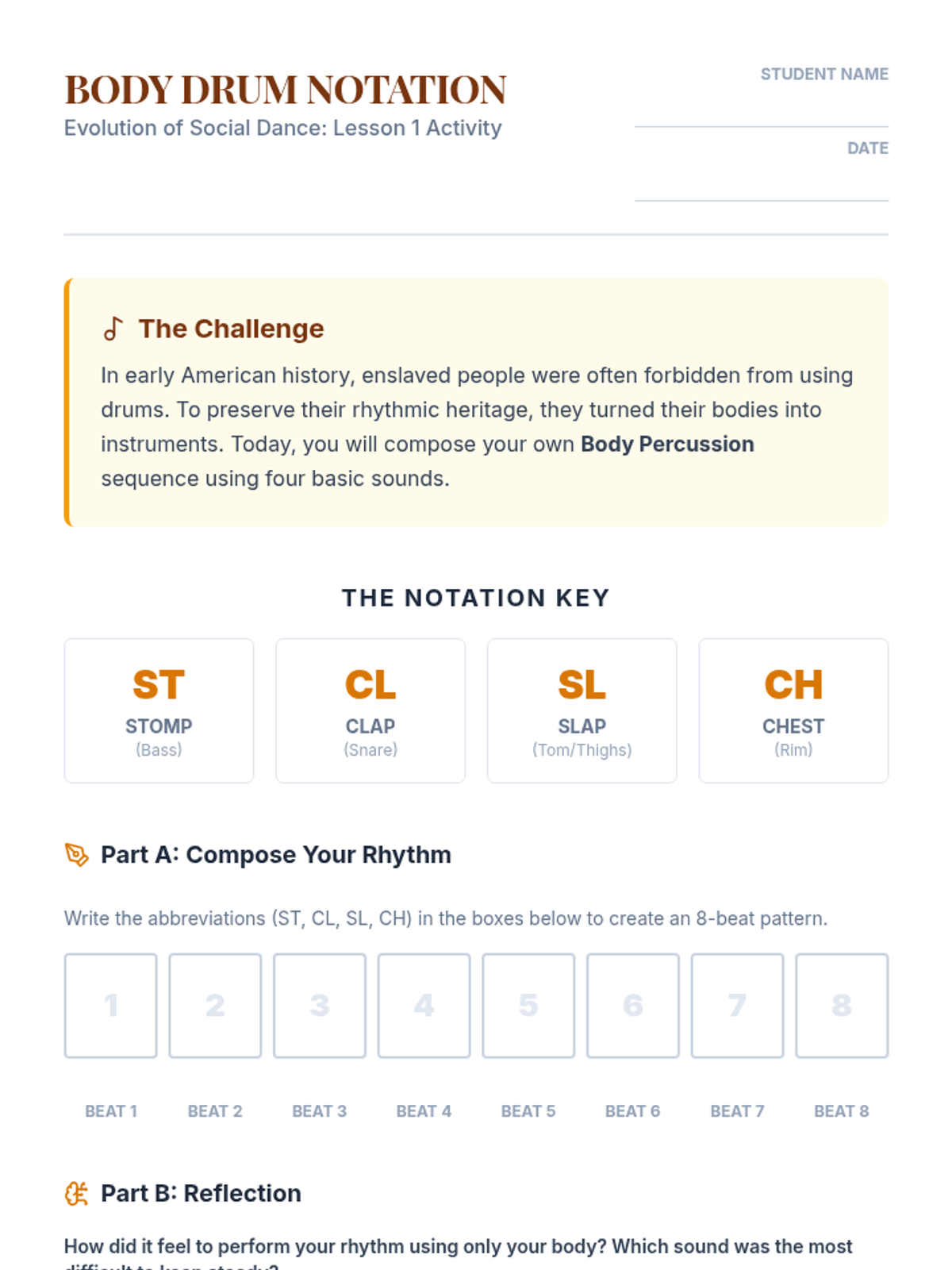
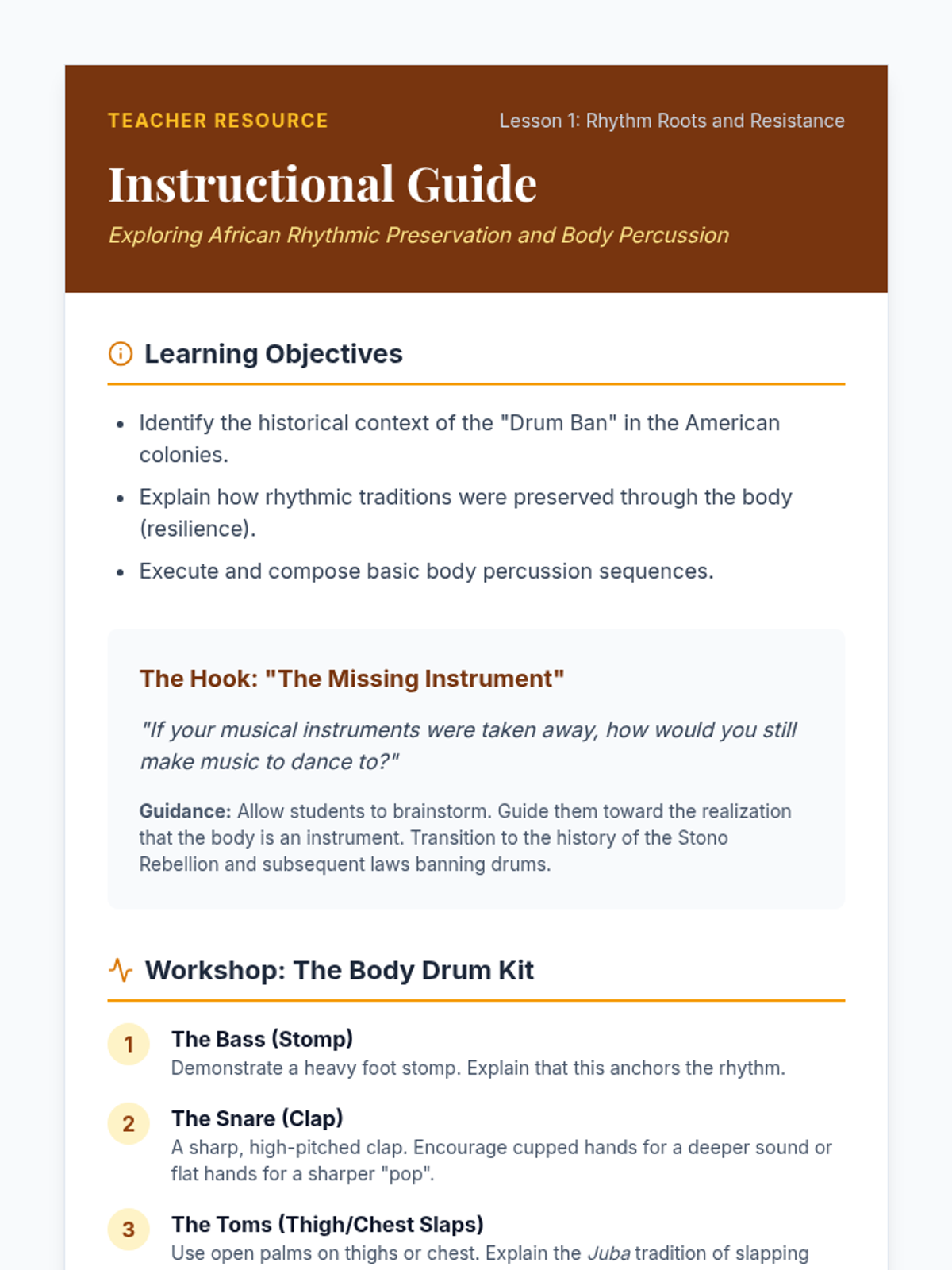
Students explore the history of American social dance, focusing on the cultural fusion and resilience of marginalized communities that birthed Jazz, Tap, and Hip Hop. The sequence covers rhythmic roots, the Cakewalk, the Harlem Renaissance, and the Bronx origins of Hip Hop, culminating in a historical timeline project.
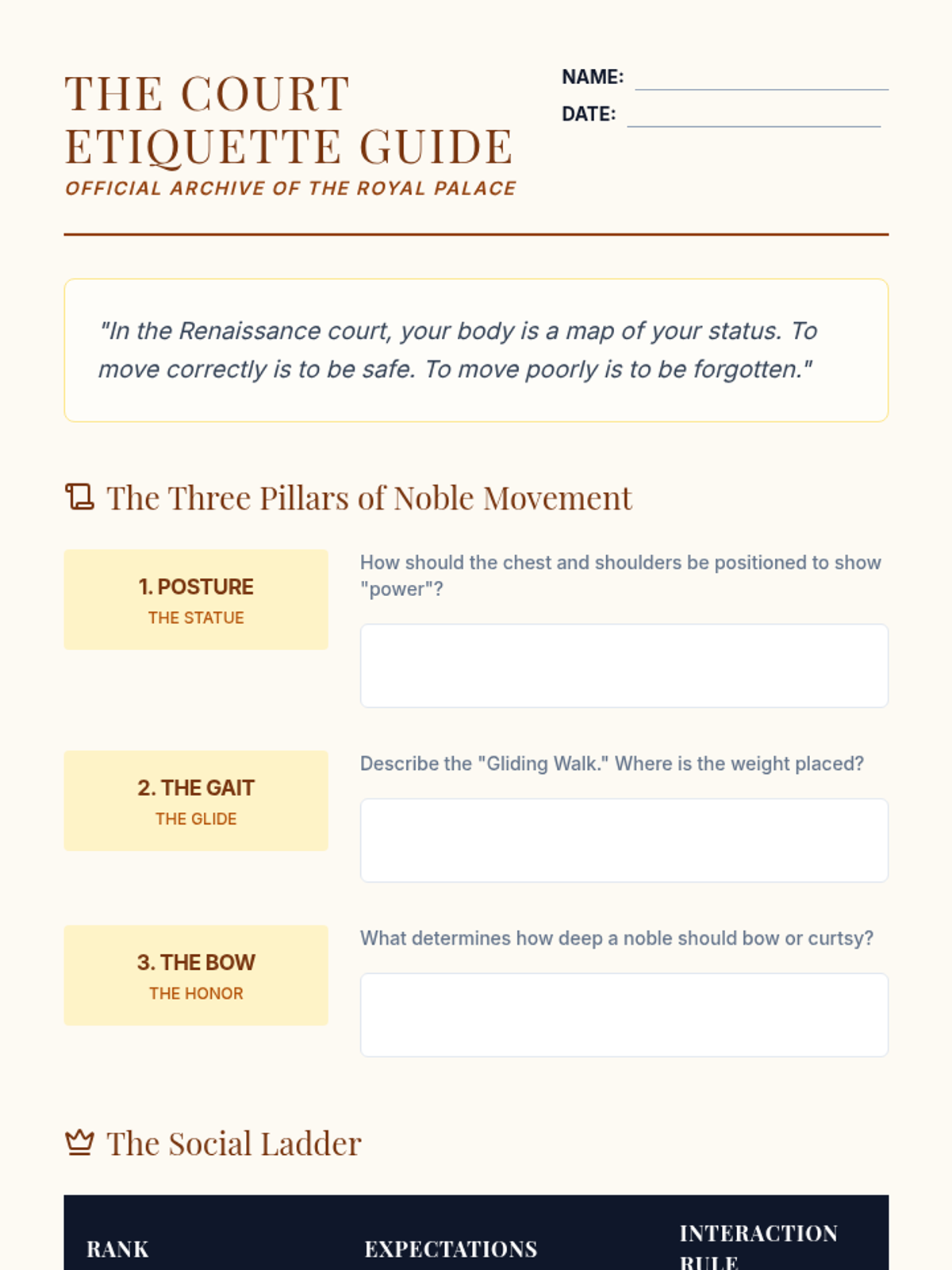
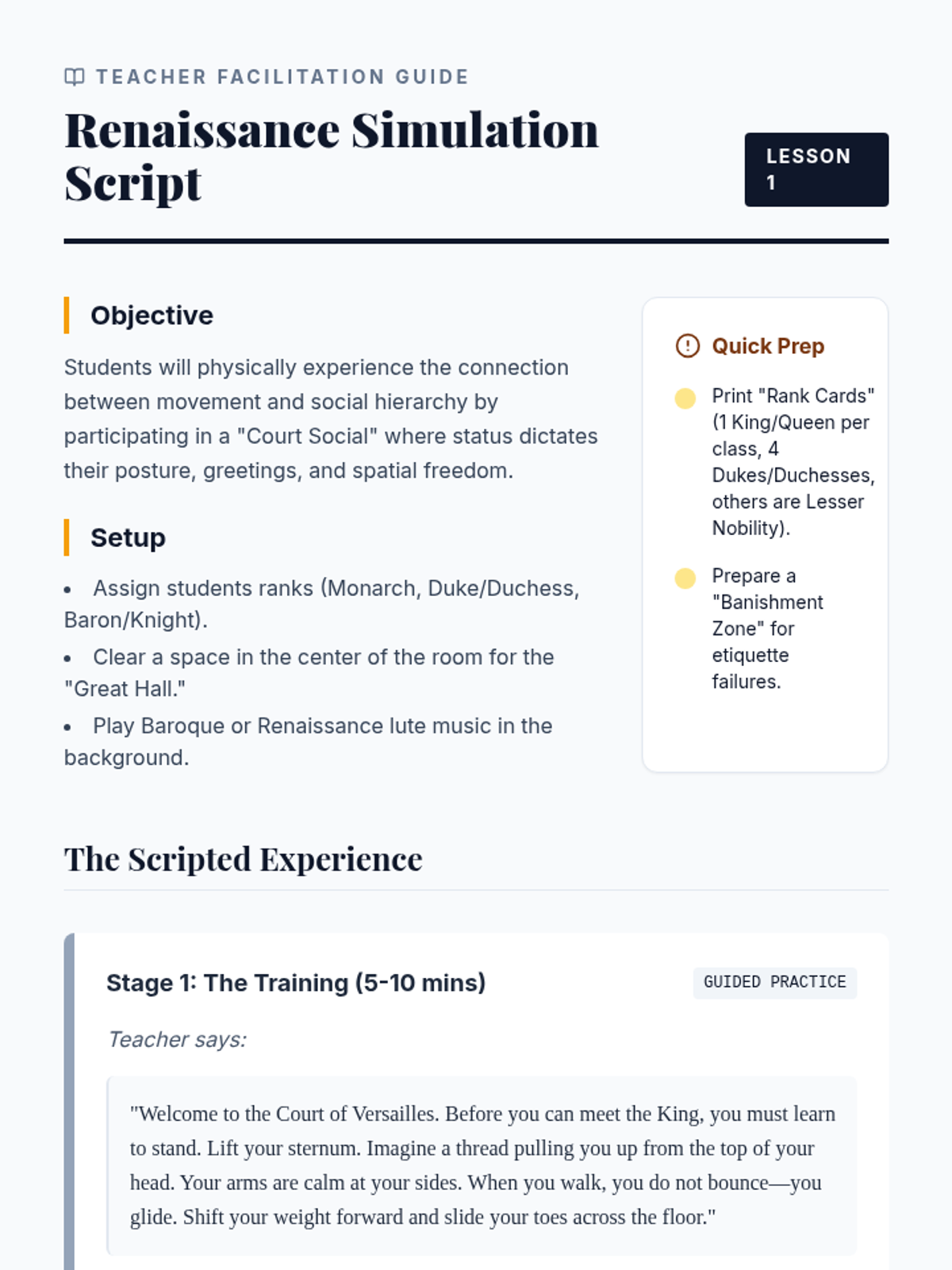
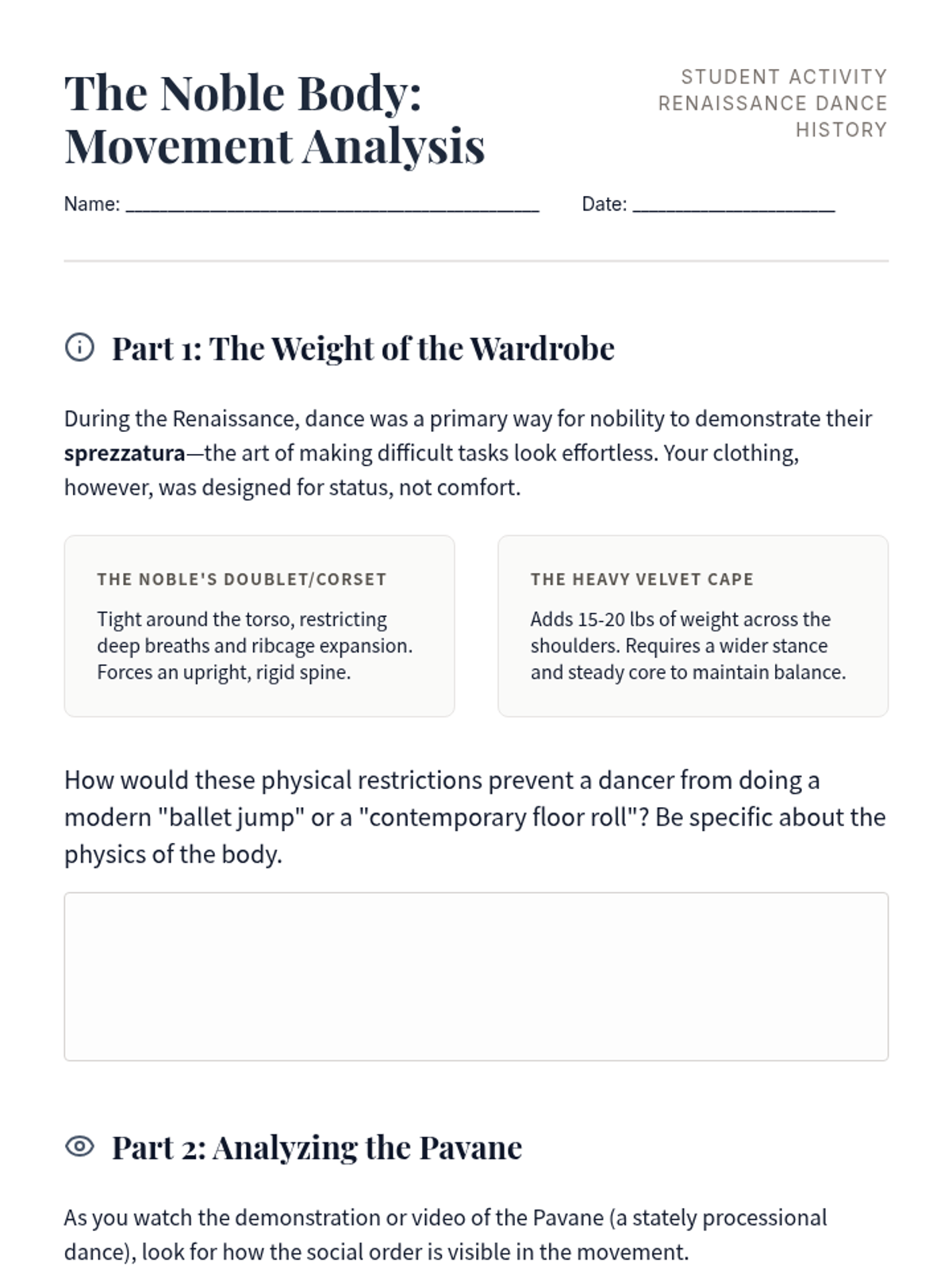
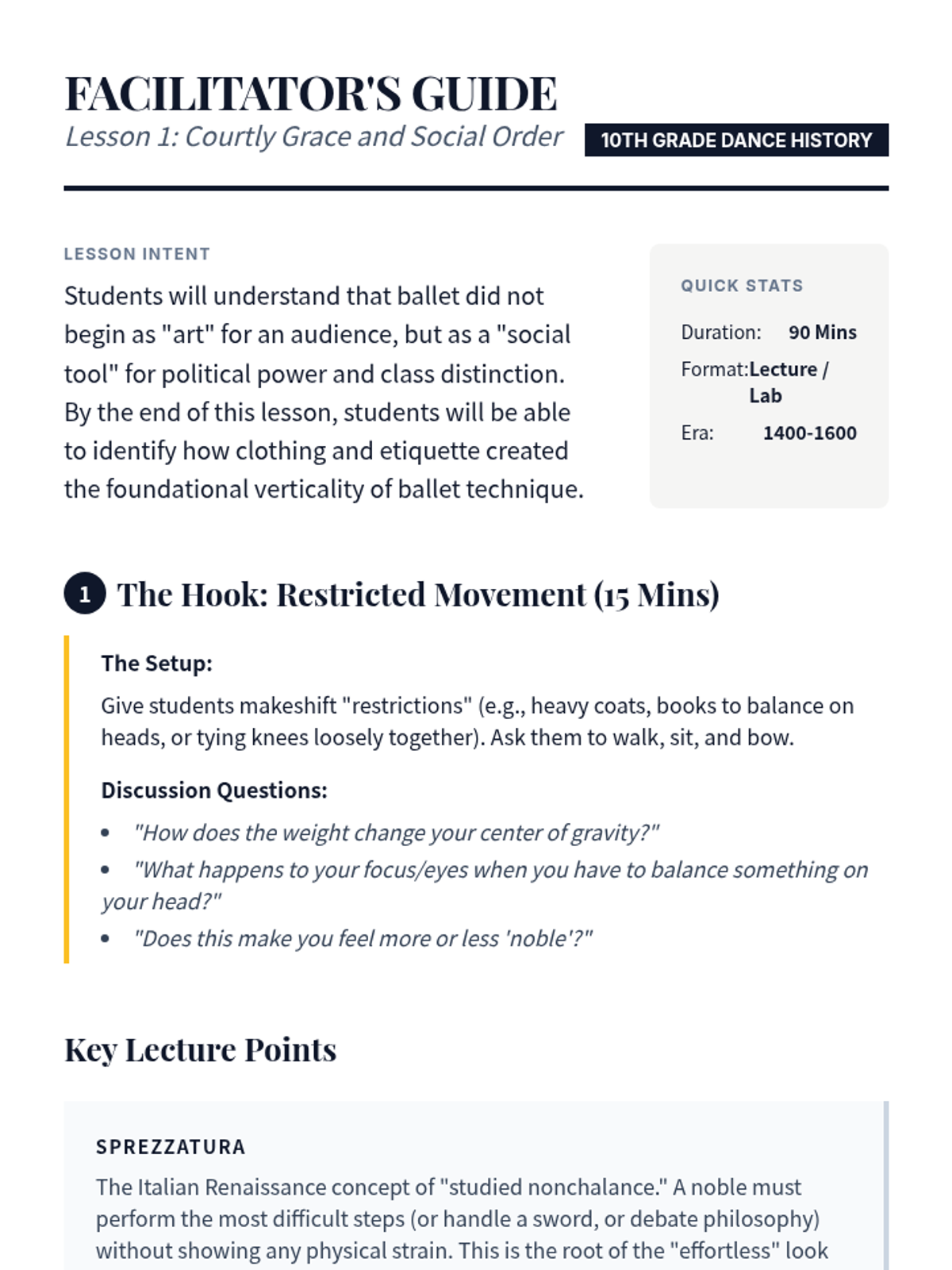
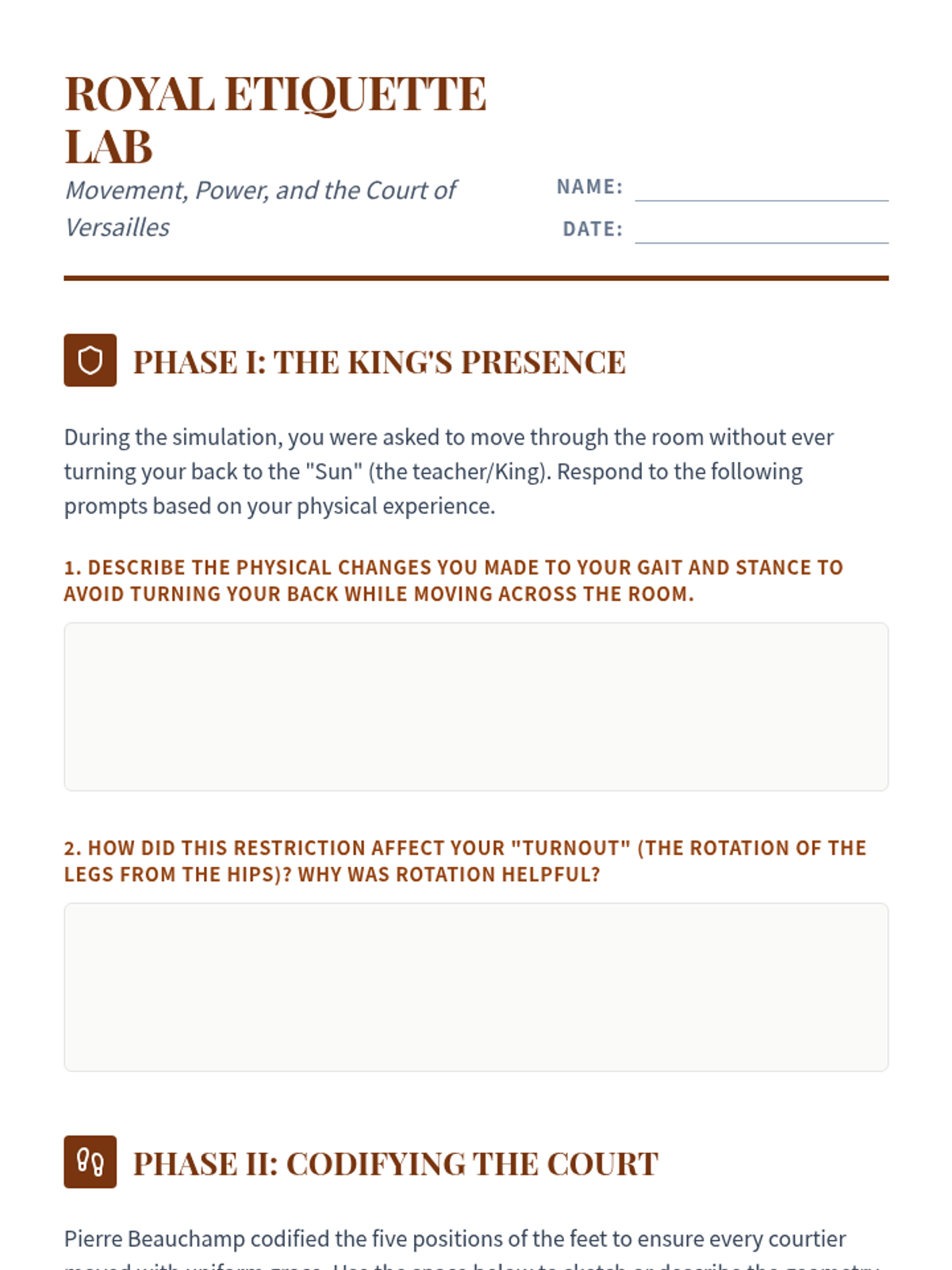
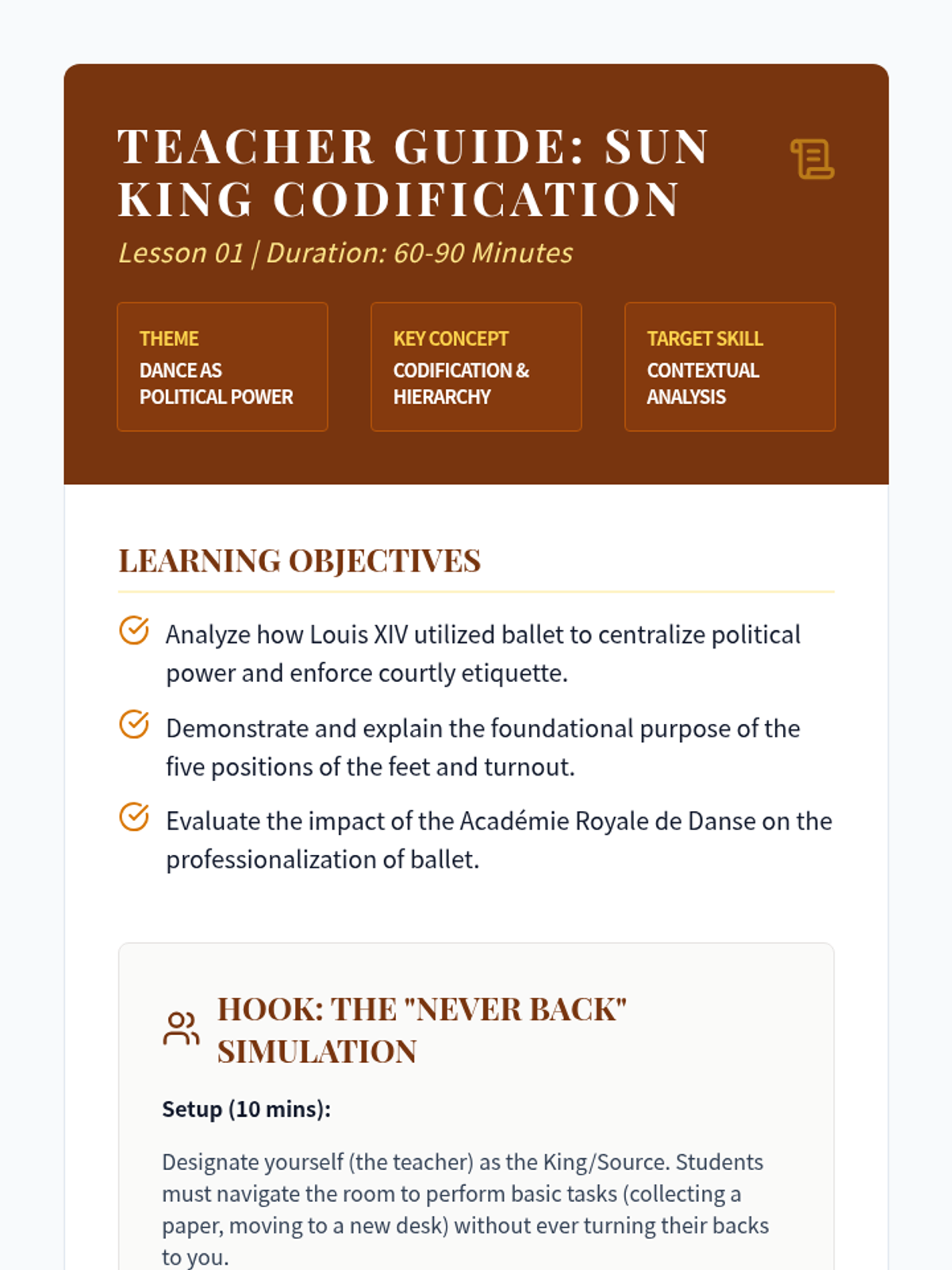
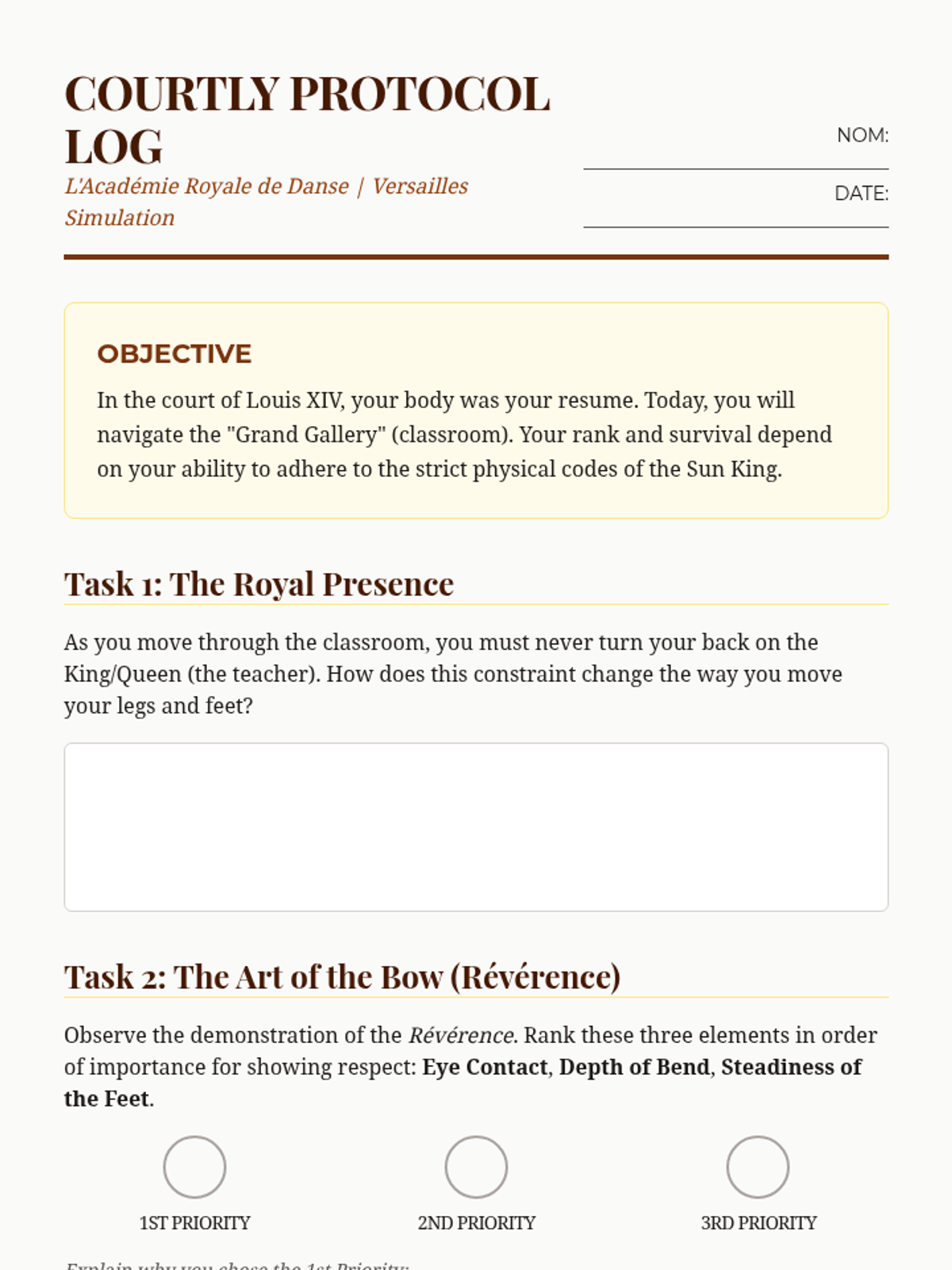
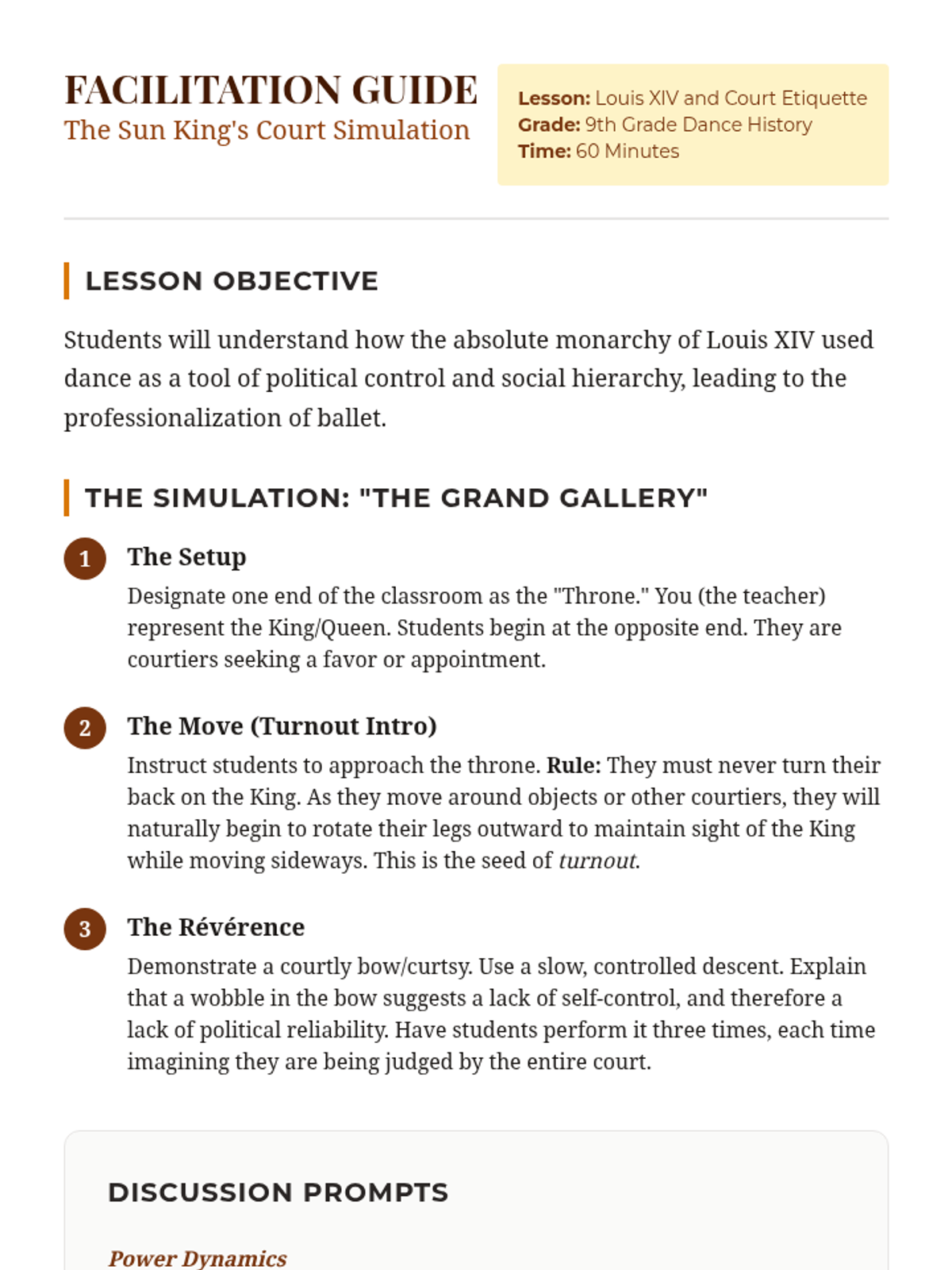
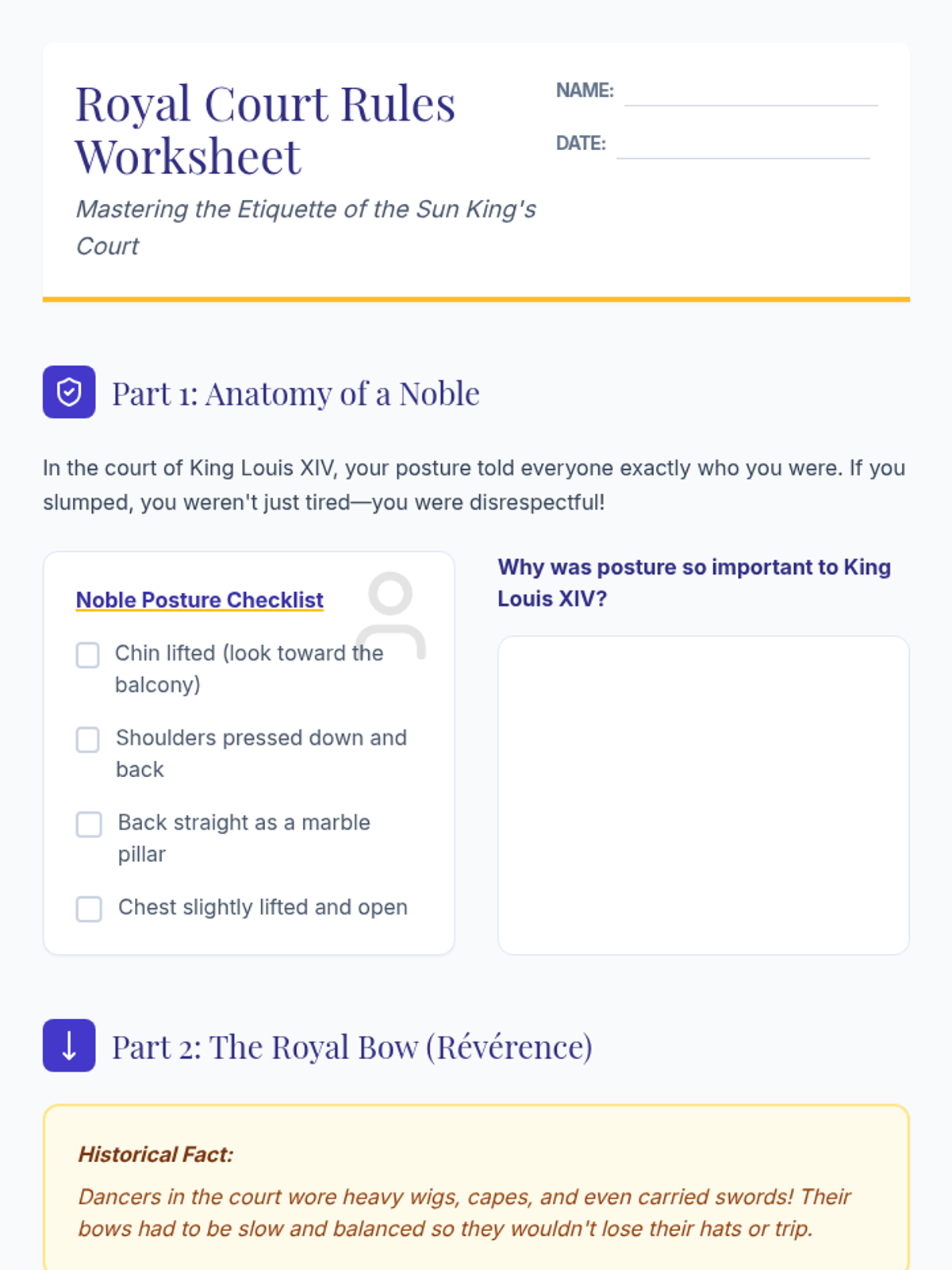
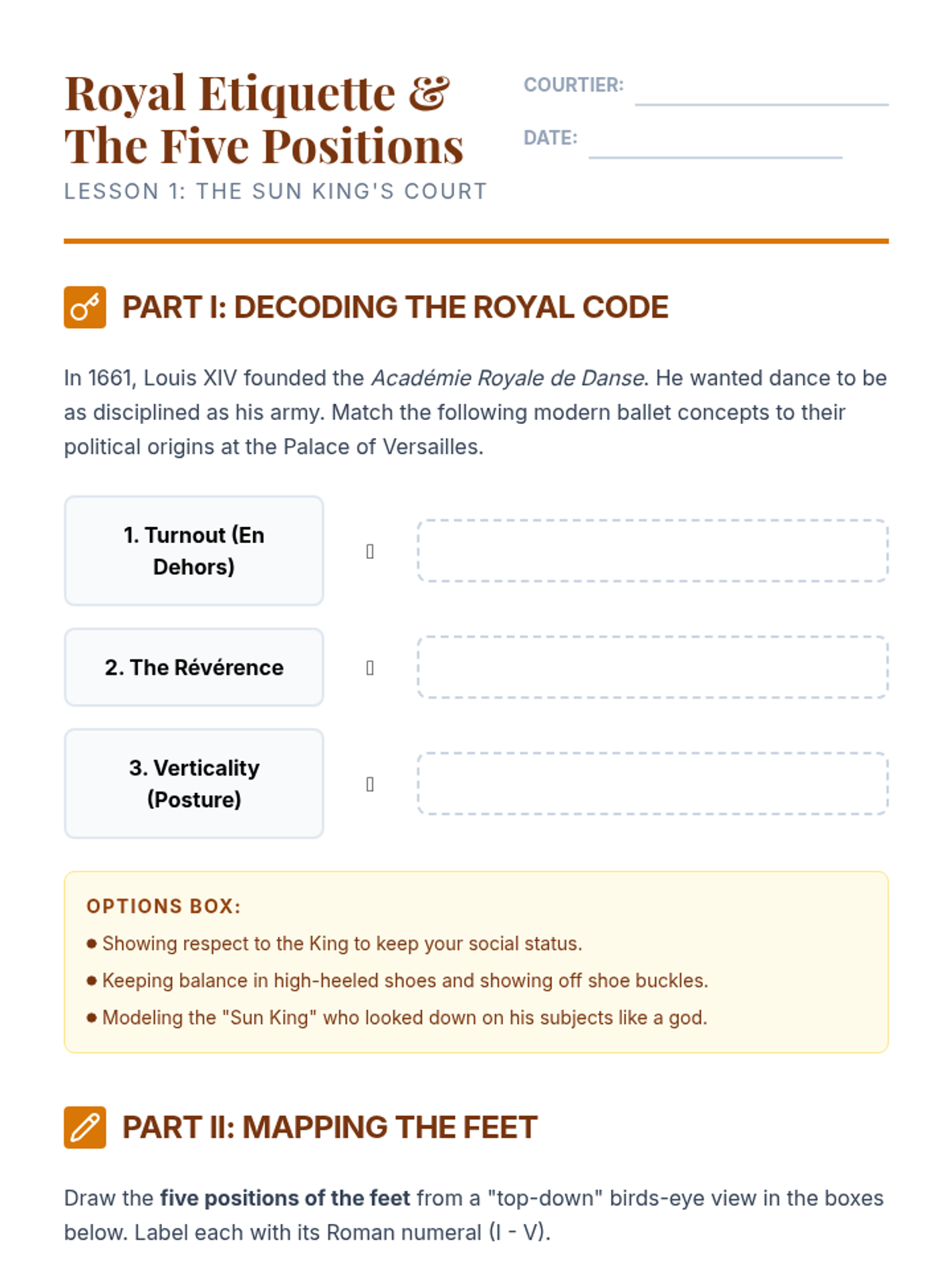
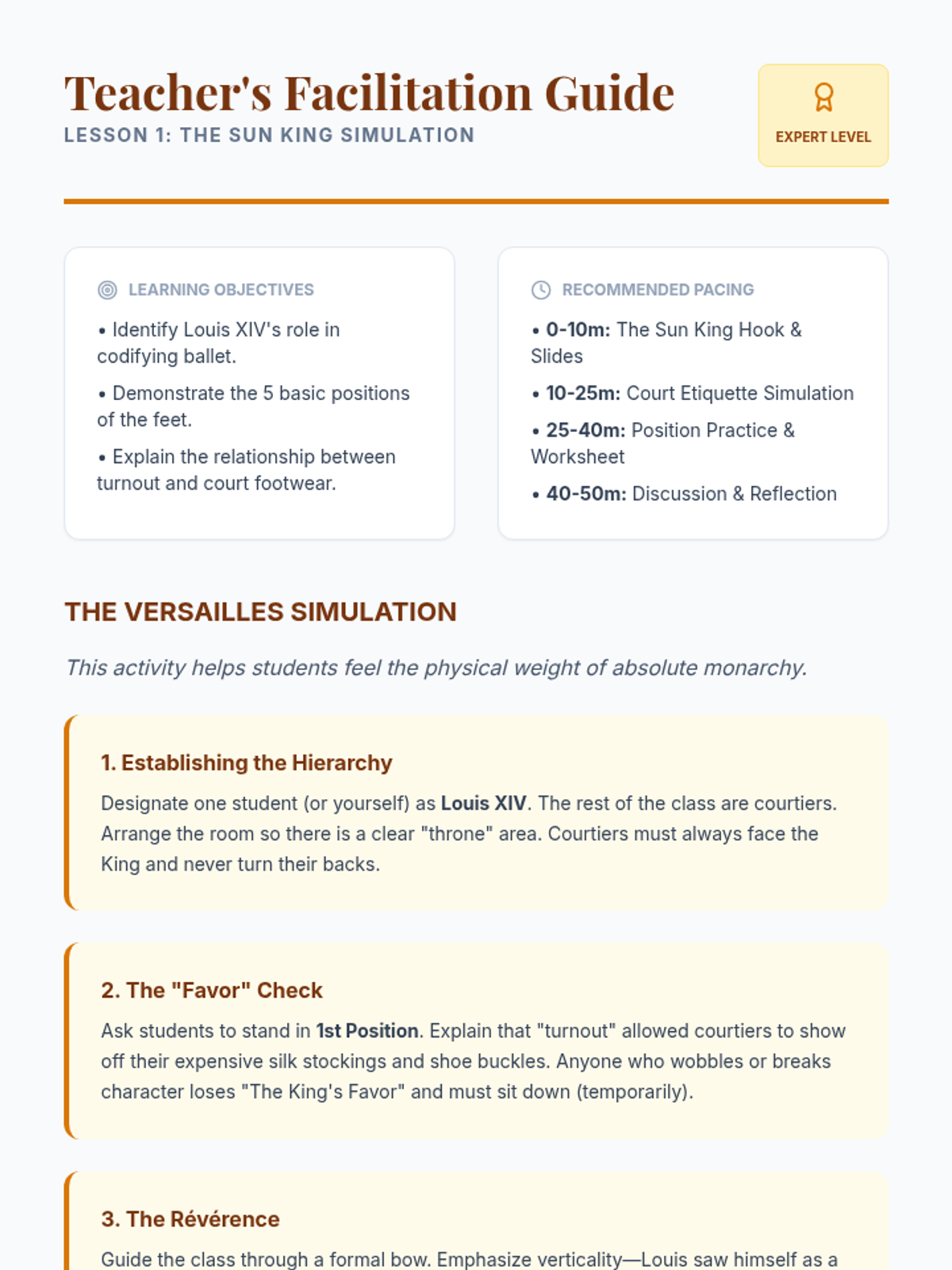
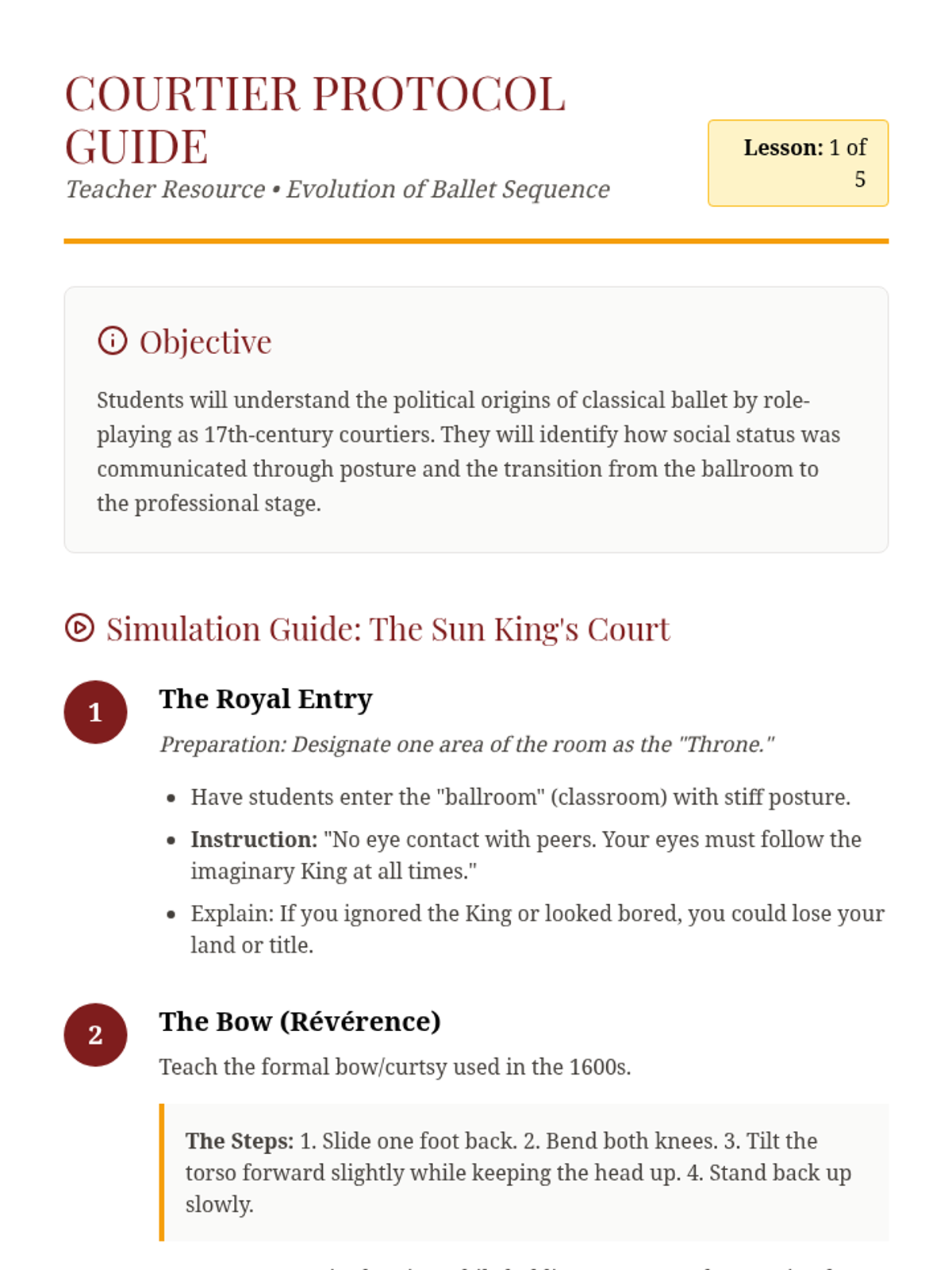
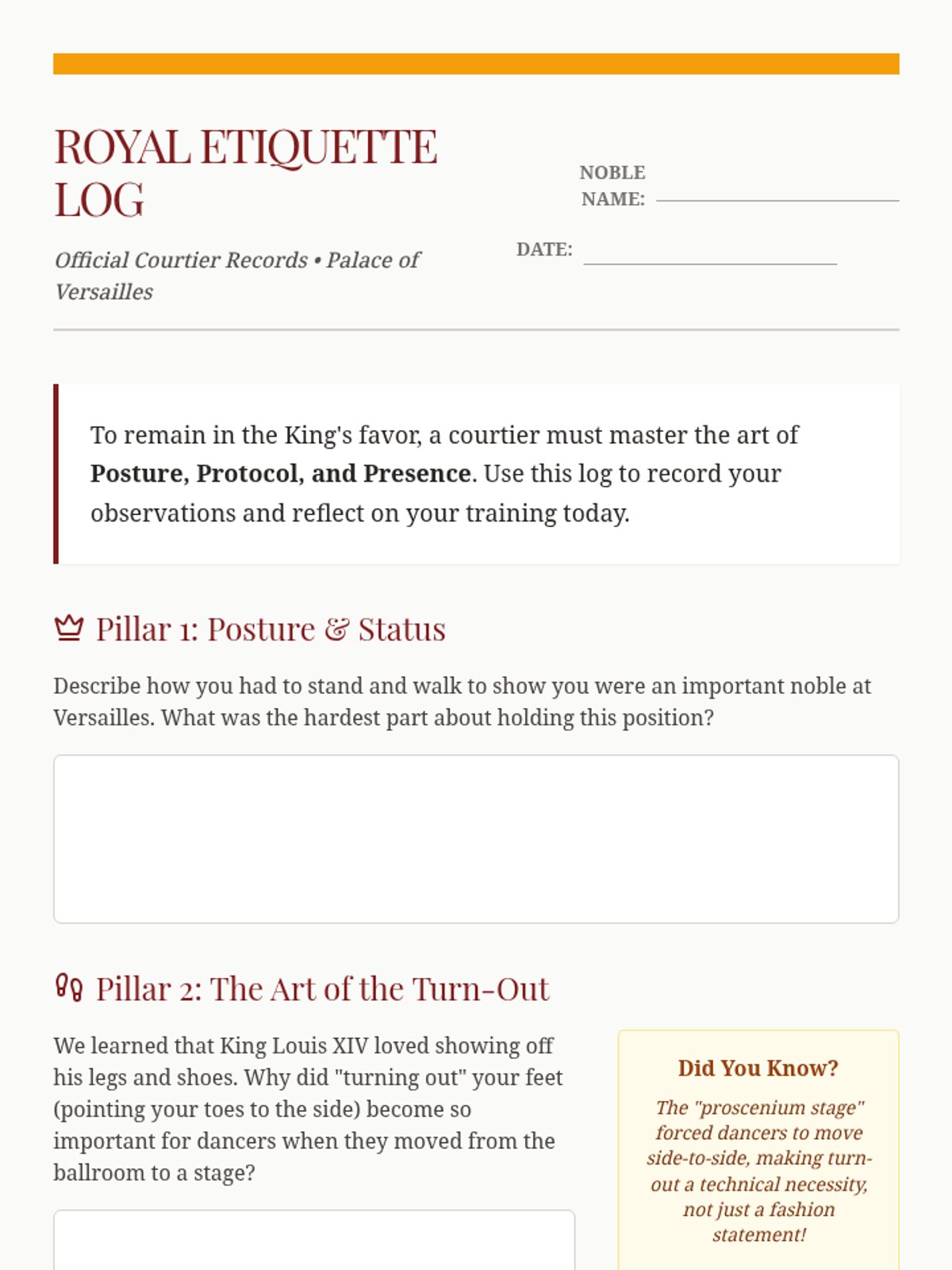
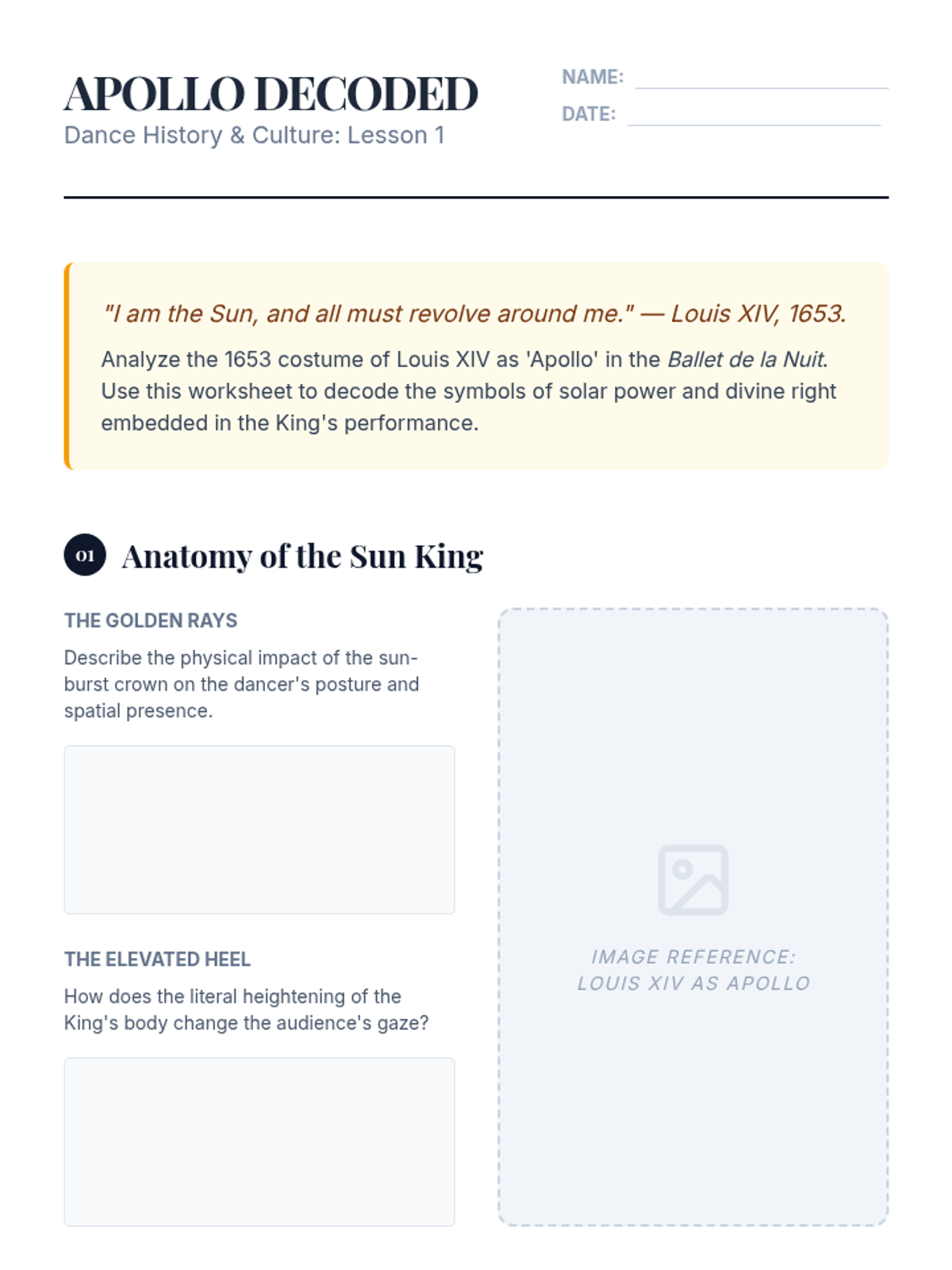
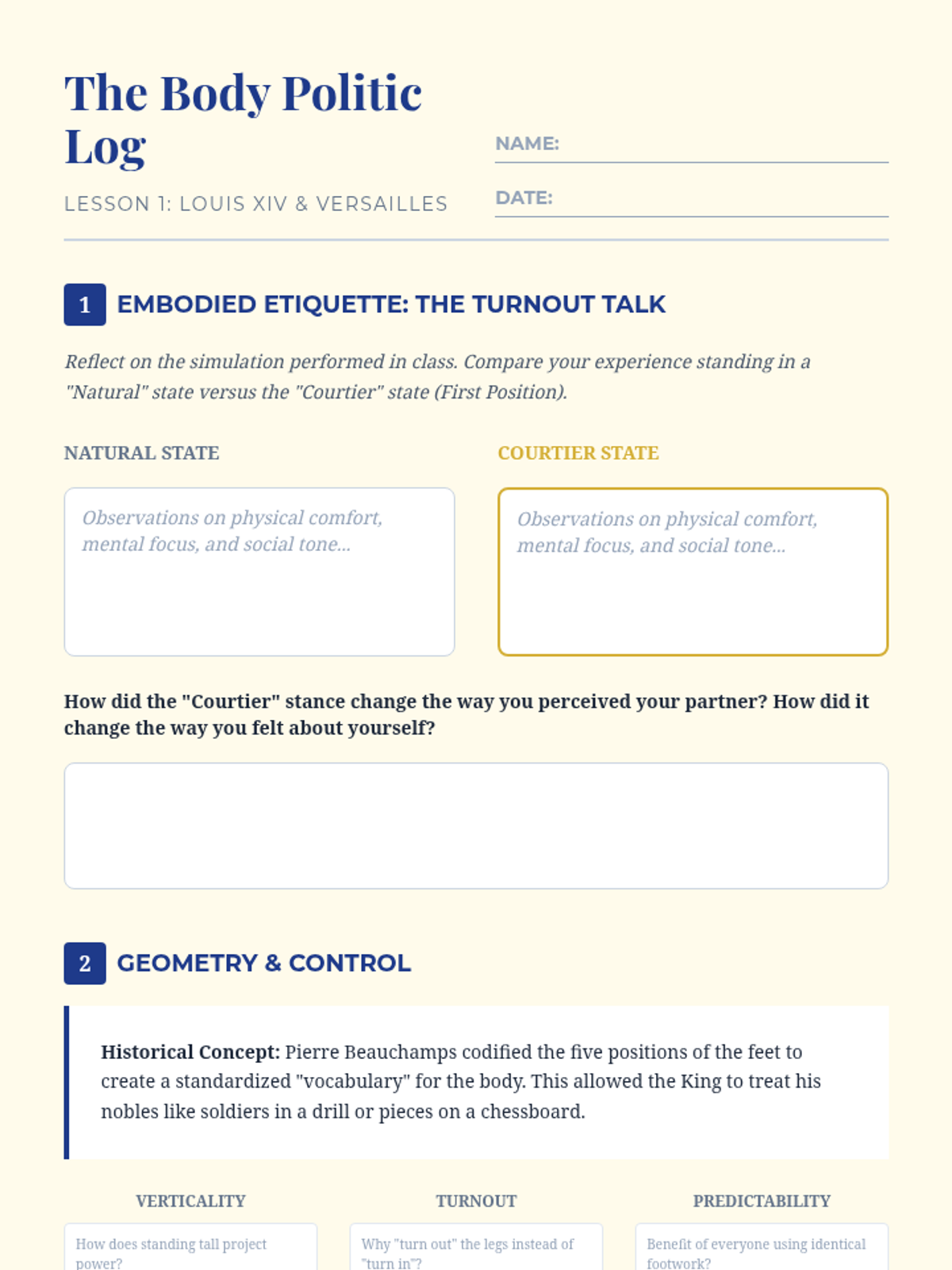
A journey through the history of classical dance, exploring how power, fashion, and social hierarchy shaped the movement styles of the Renaissance and Baroque eras into the formalized art of ballet. Students will move from court etiquette to the technical rigor of King Louis XIV's court, analyze Romantic era narratives, and create their own codified dance systems.
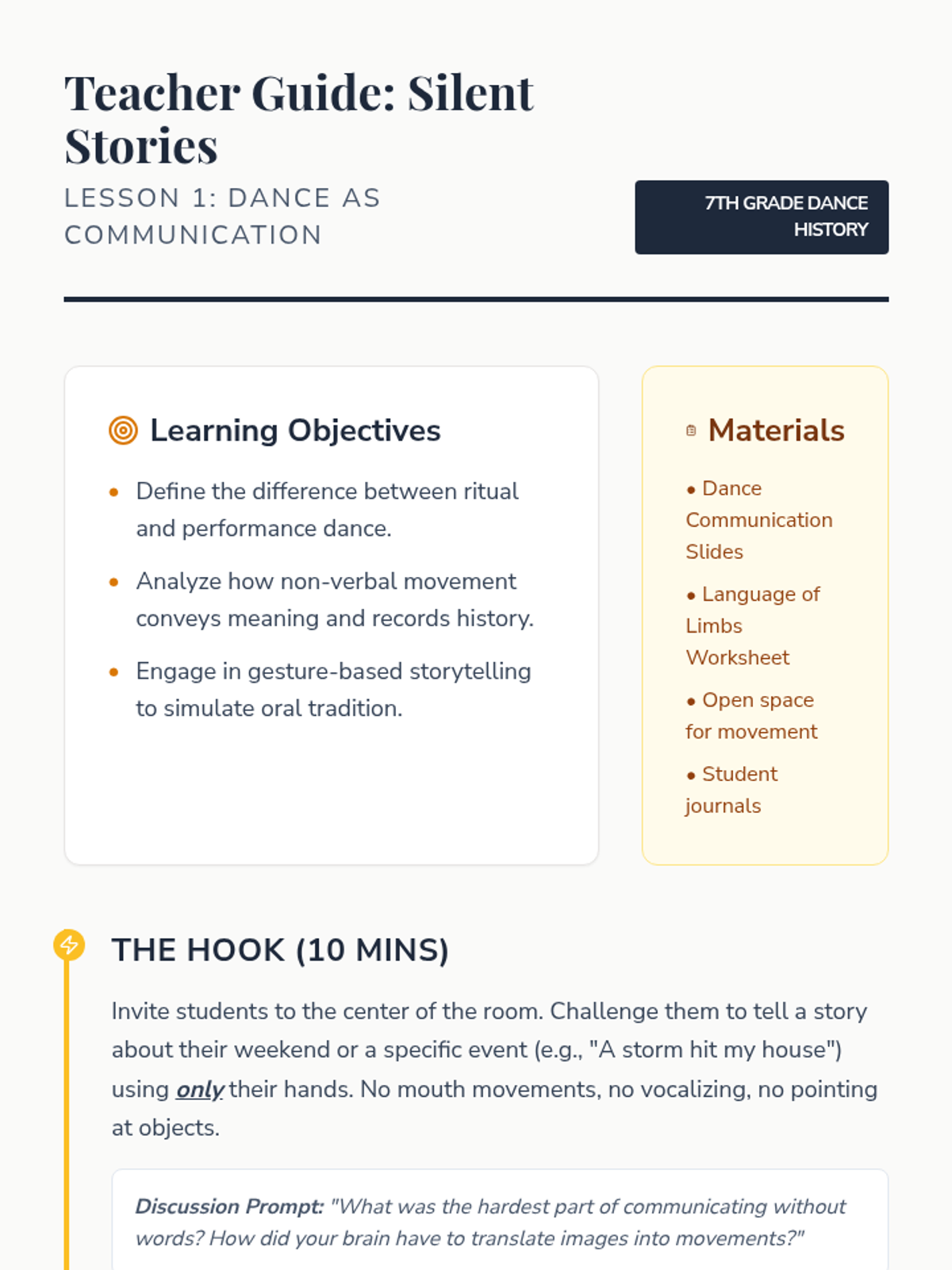
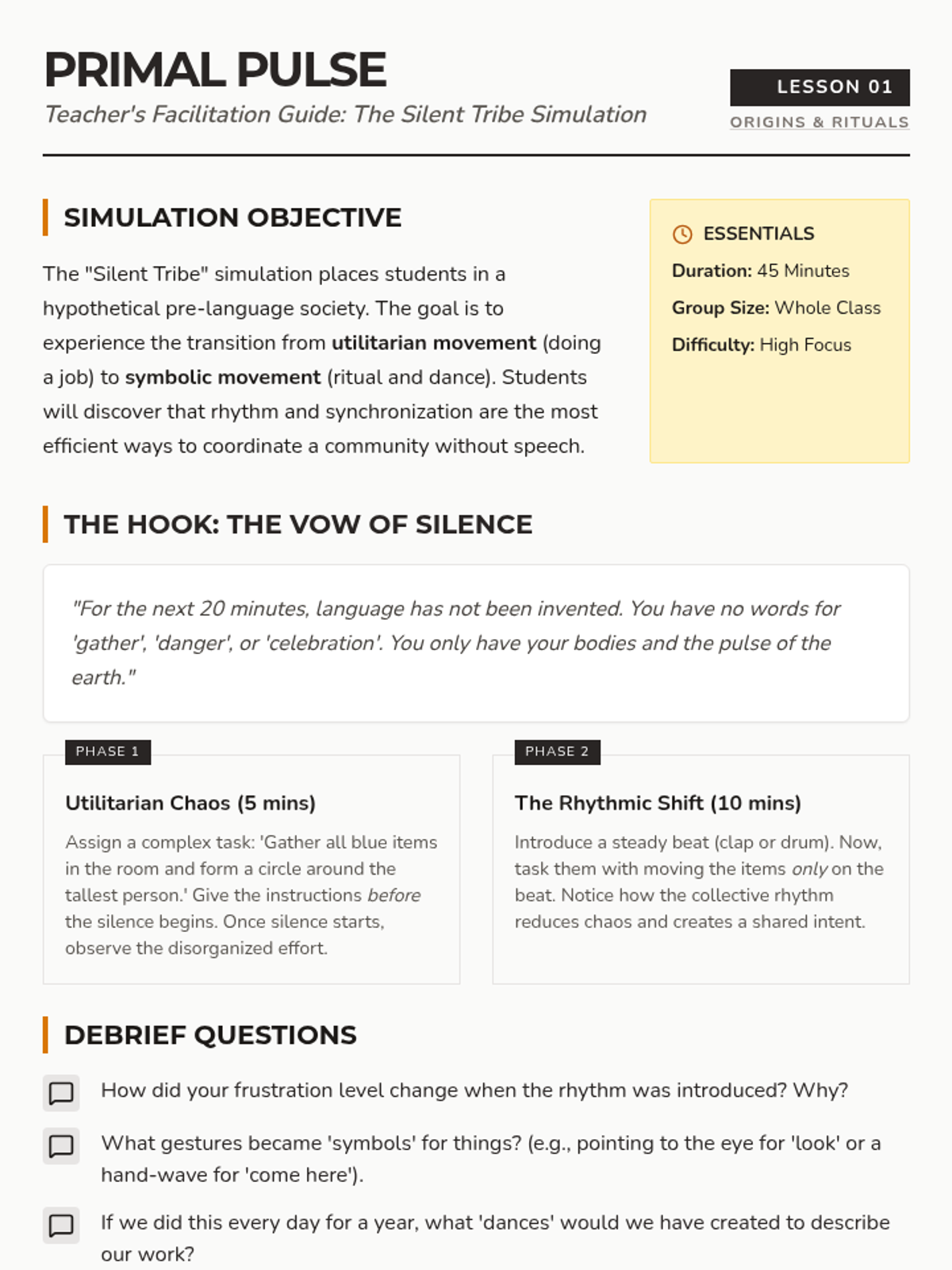
A 5-lesson unit exploring how dance served as the primary form of communication and history-keeping before written language, investigating Hawaiian, Greek, and West African traditions.
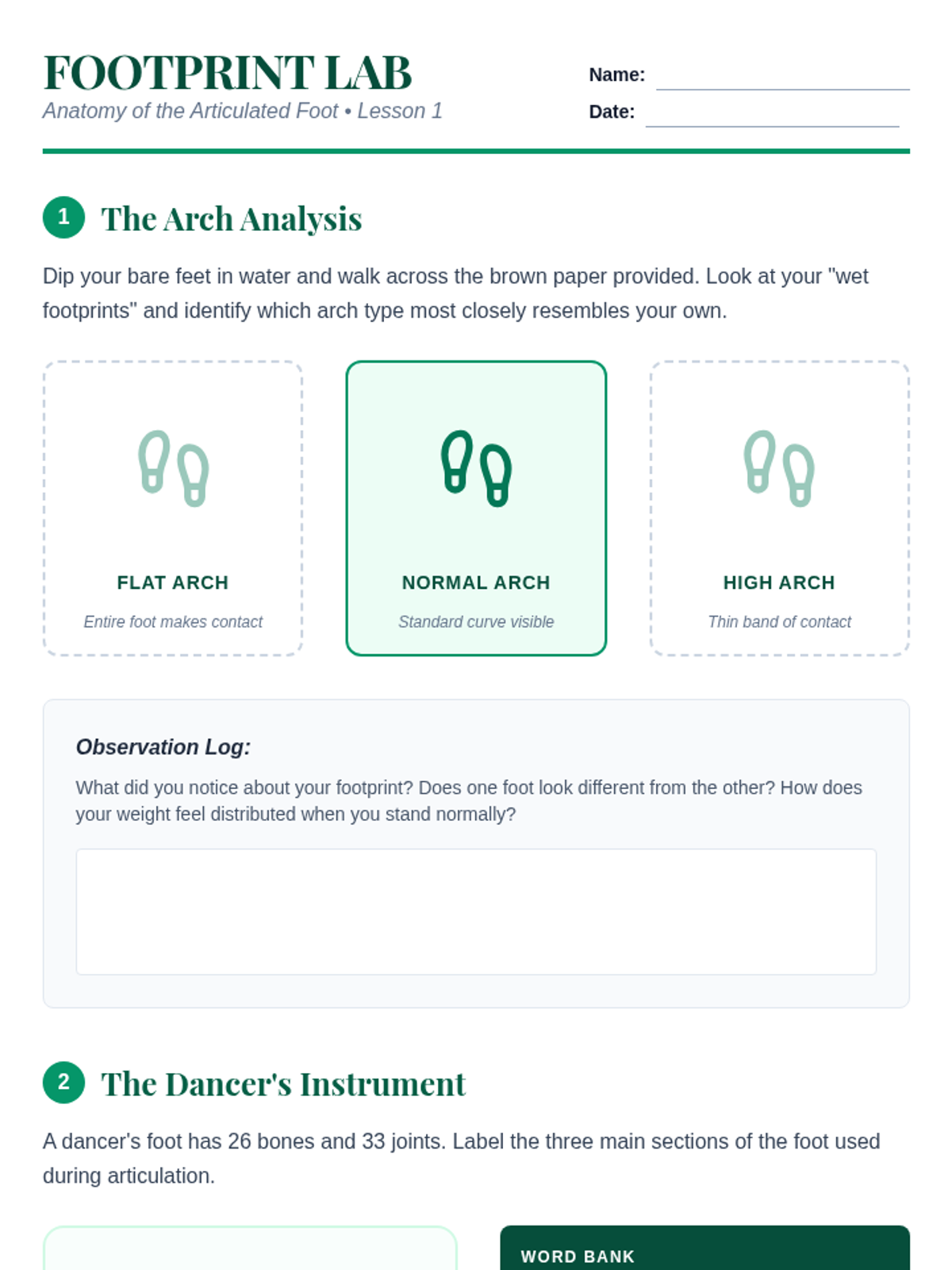
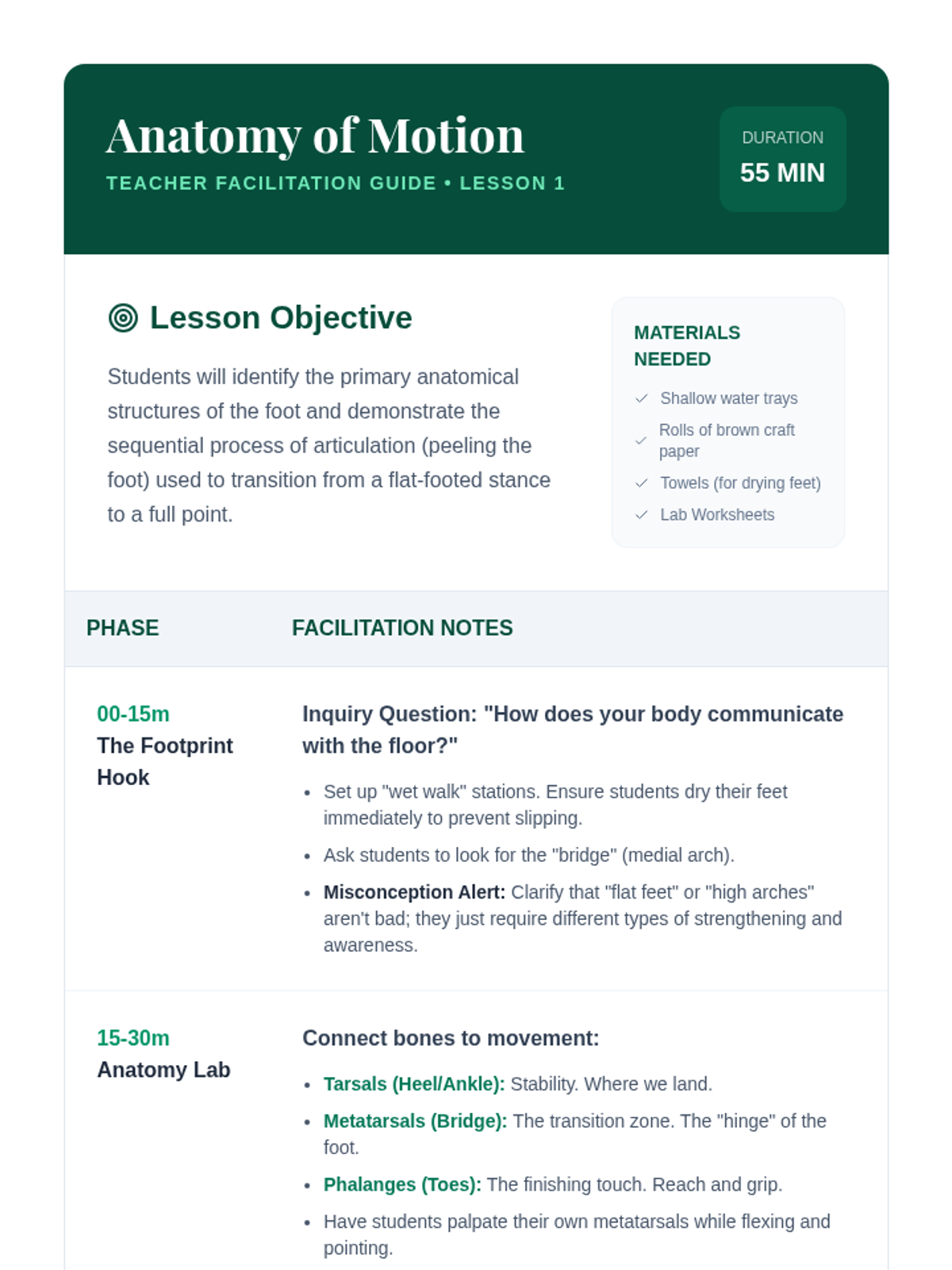
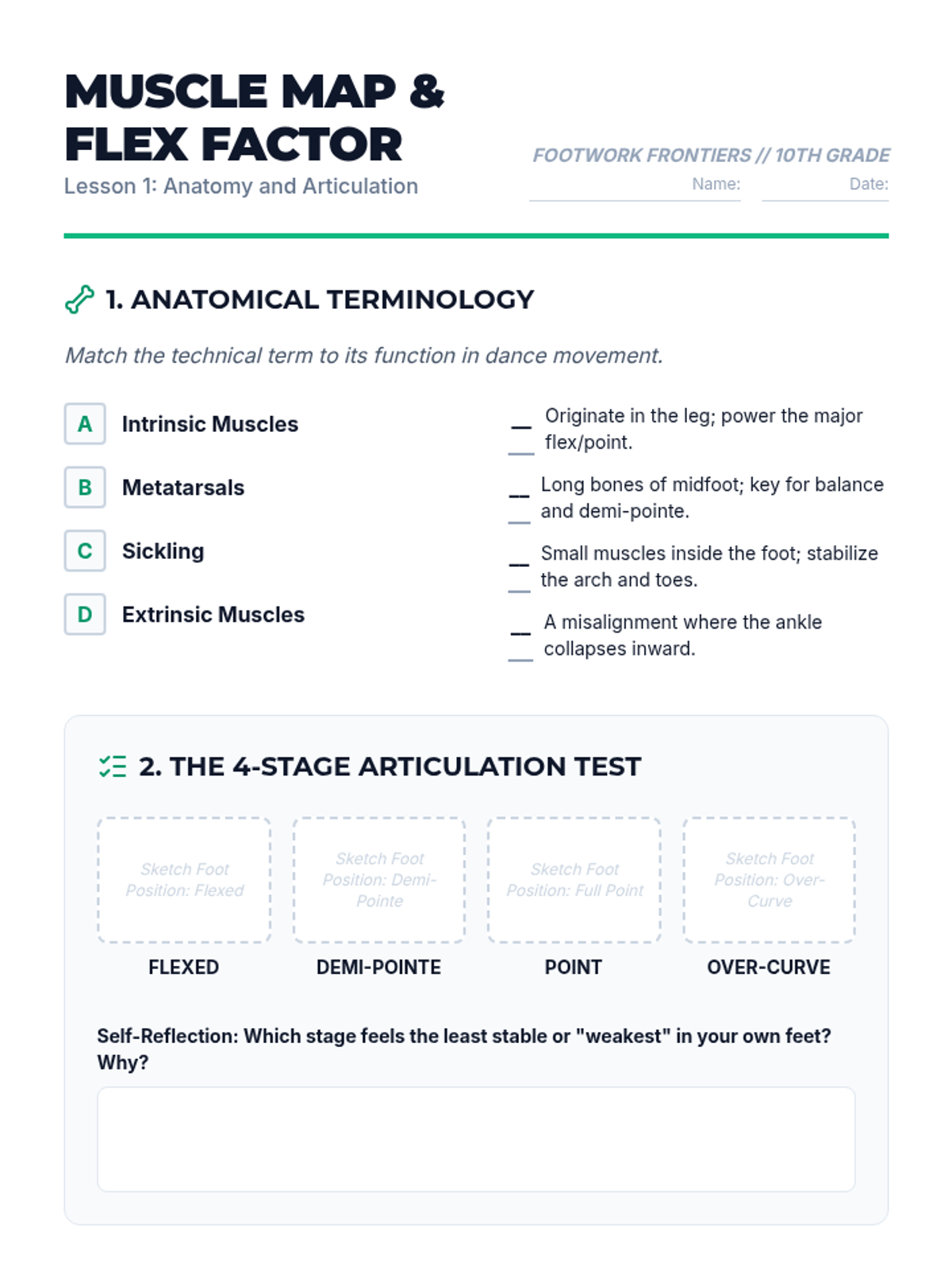
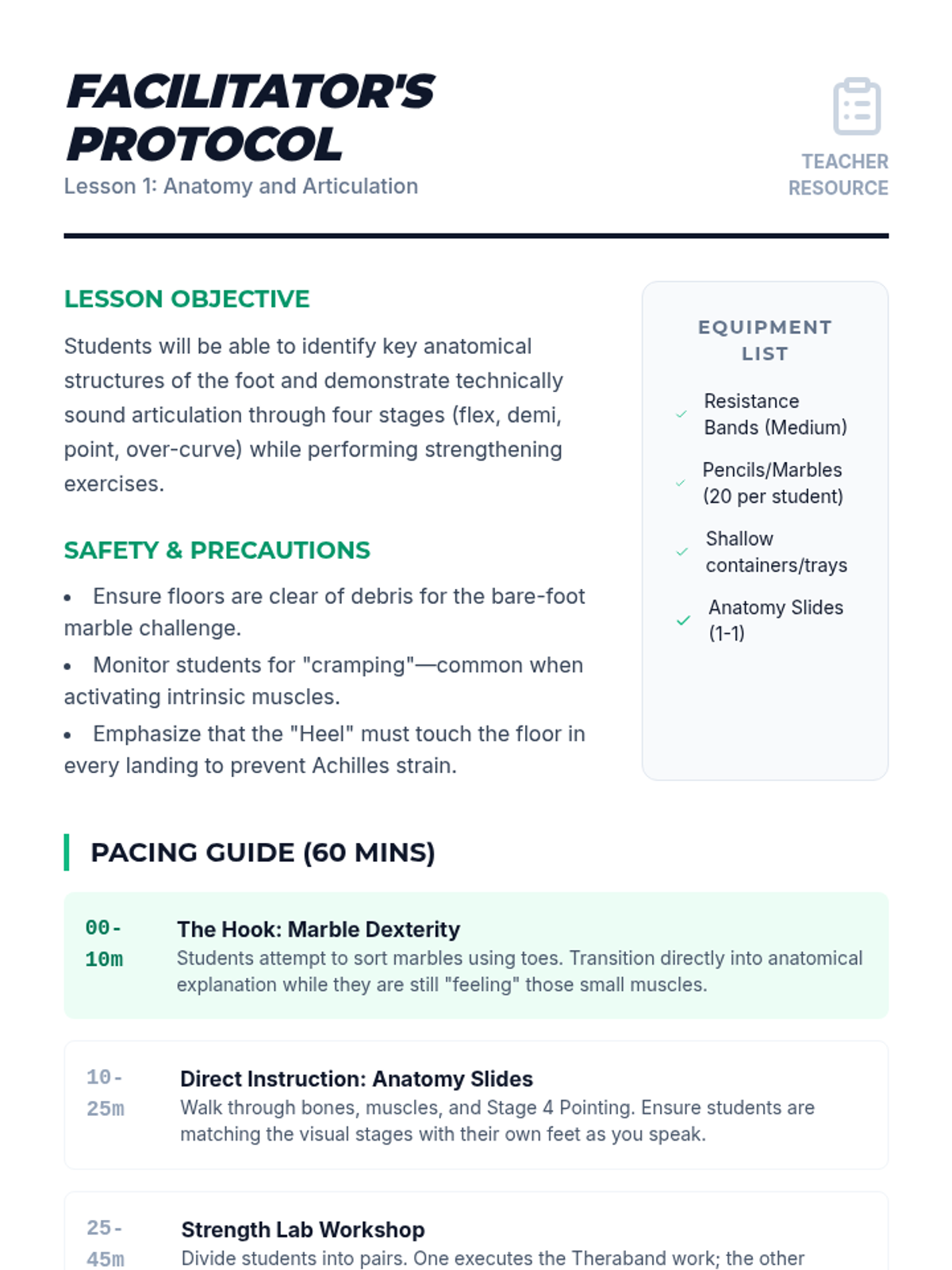
Students investigate how footwork technique defines and differentiates dance genres, specifically comparing Ballet and Jazz. They analyze the mechanics of the foot, experiment with stylistic qualities, and conclude with a comparative performance task.
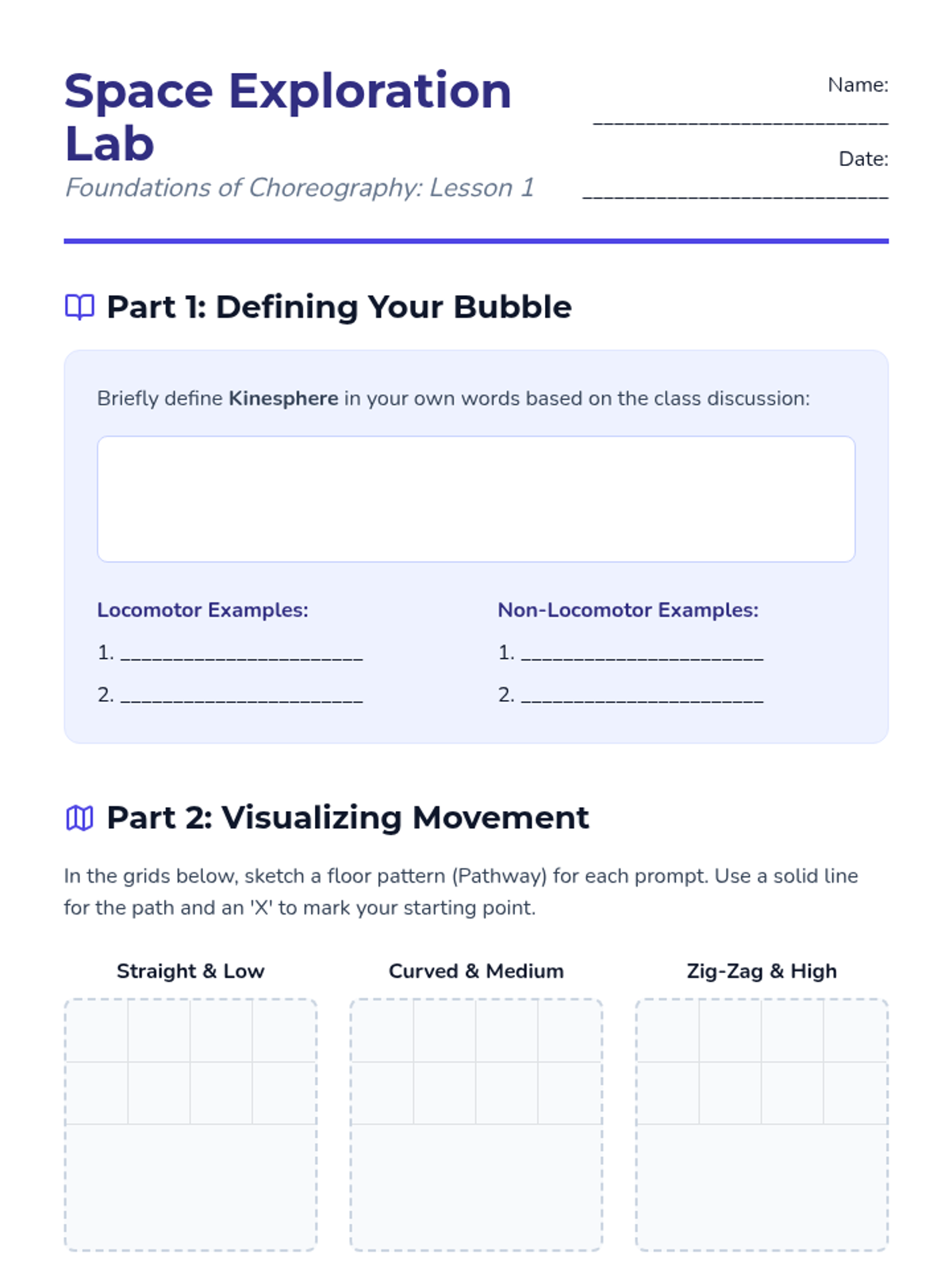
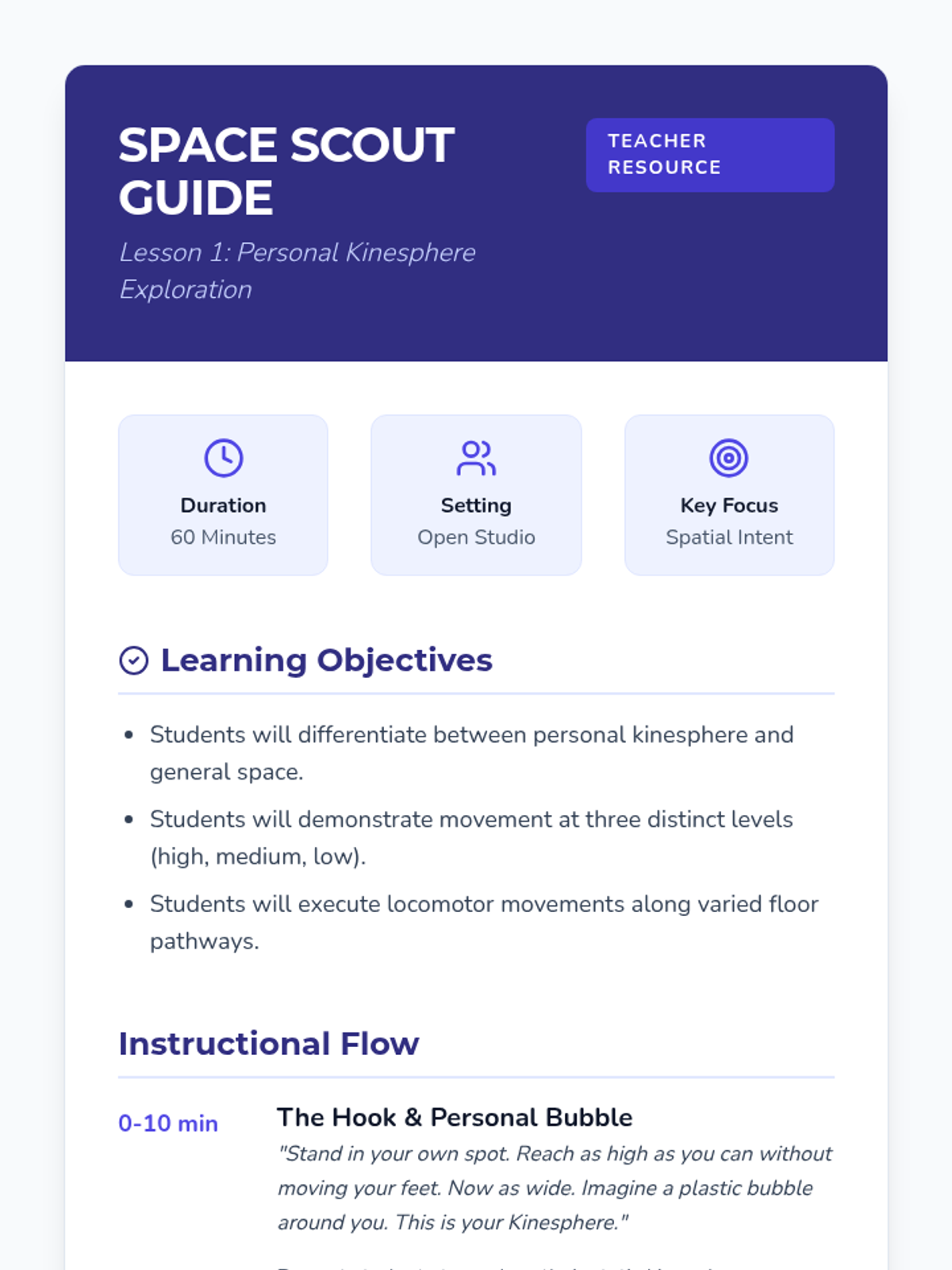
A comprehensive 5-lesson sequence for 10th-grade students focusing on the fundamental elements of dance—Space, Time, and Energy—using Laban Movement Analysis principles. Students move from exploring personal space to synthesizing complex movement phrases for performance and critique.
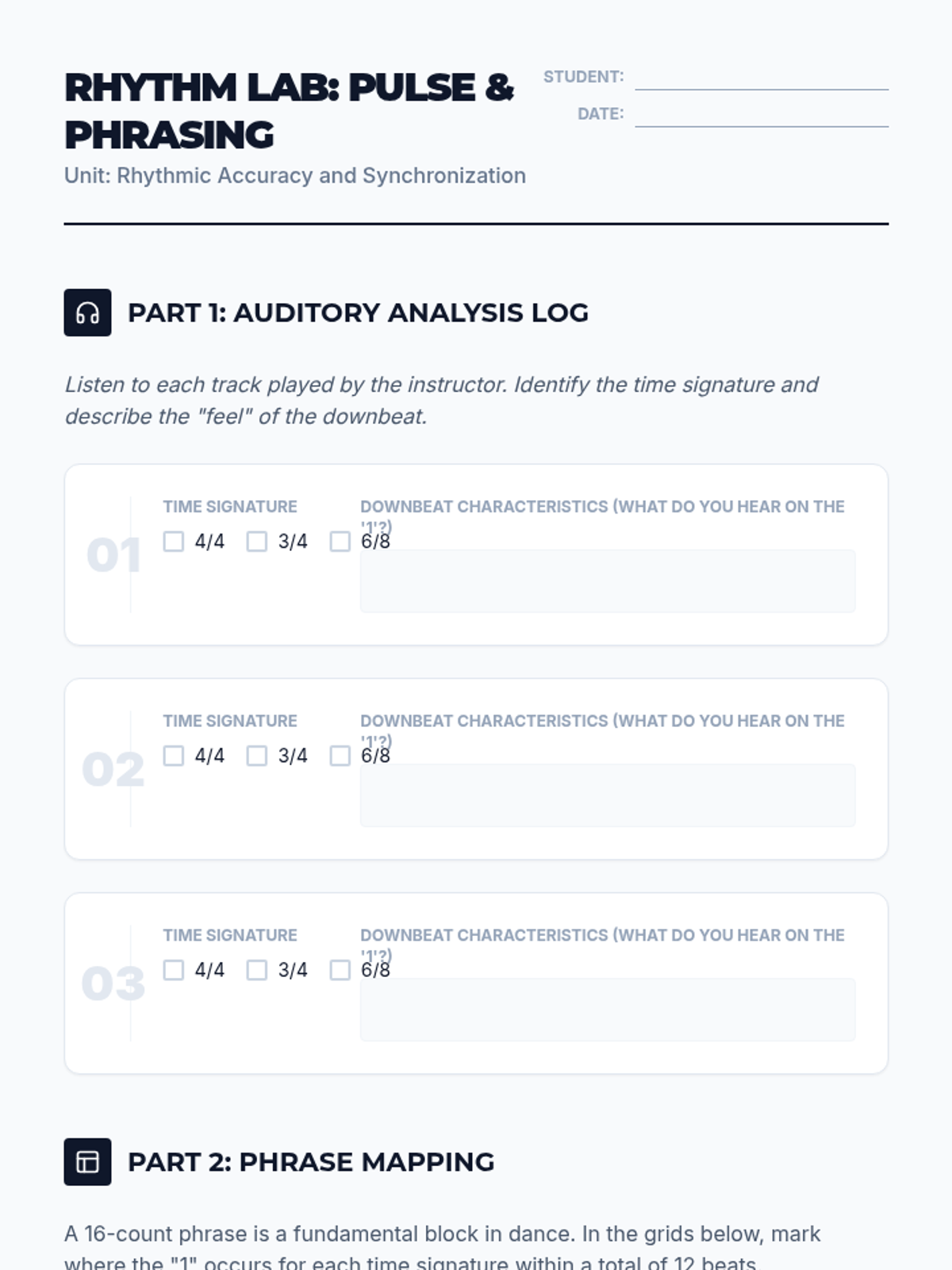
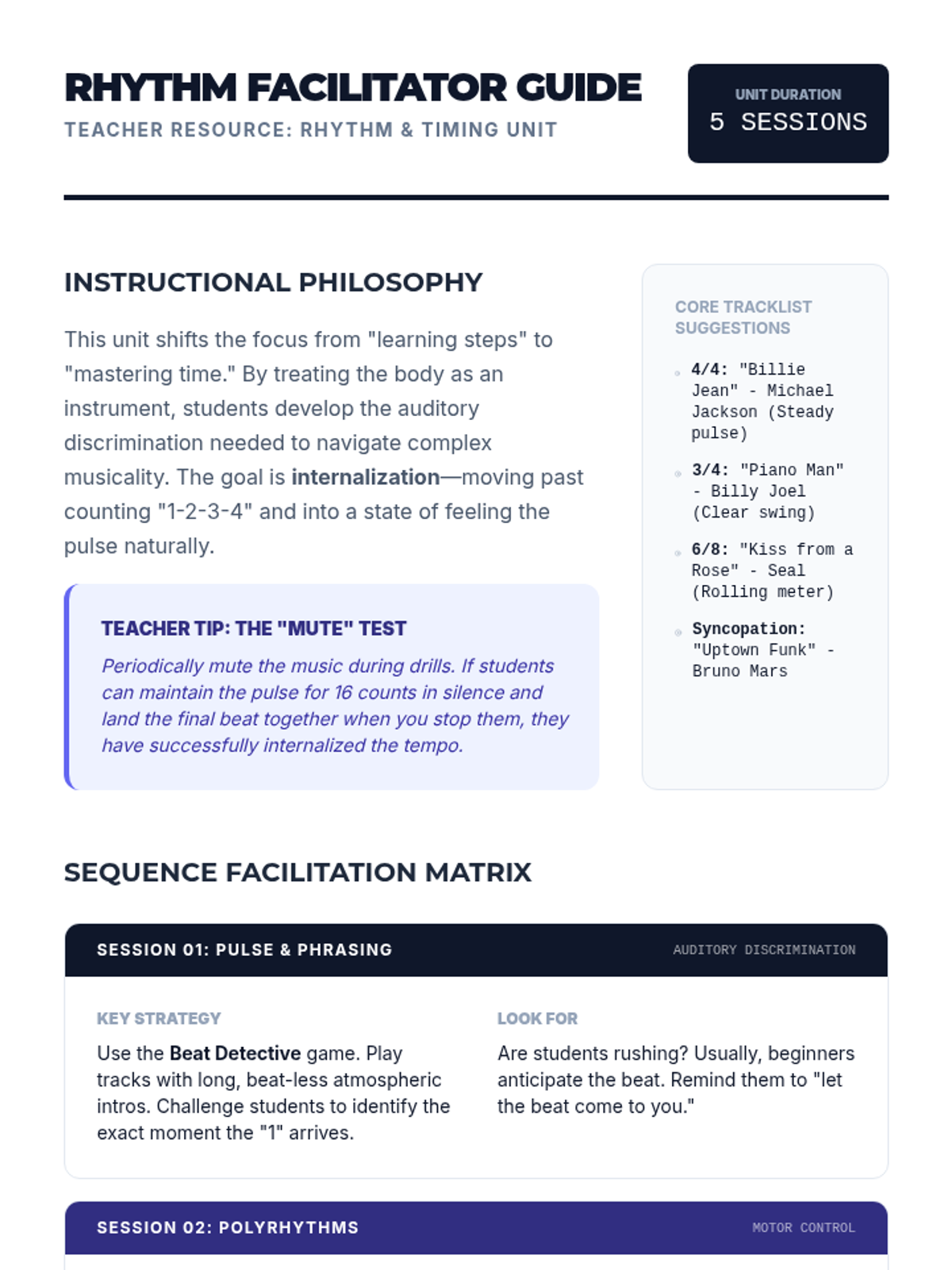
A comprehensive unit for 10th-grade students focusing on the technical mastery of rhythm, from basic time signatures to complex polyrhythms and ensemble synchronization. Students explore how timing influences the aesthetic and communicative power of dance.
A comprehensive 10th-grade dance history unit tracing ballet from its origins in Renaissance courts to its 20th-century neoclassical evolution. Students analyze how political power, social structures, and technological innovations shaped technique and aesthetics.
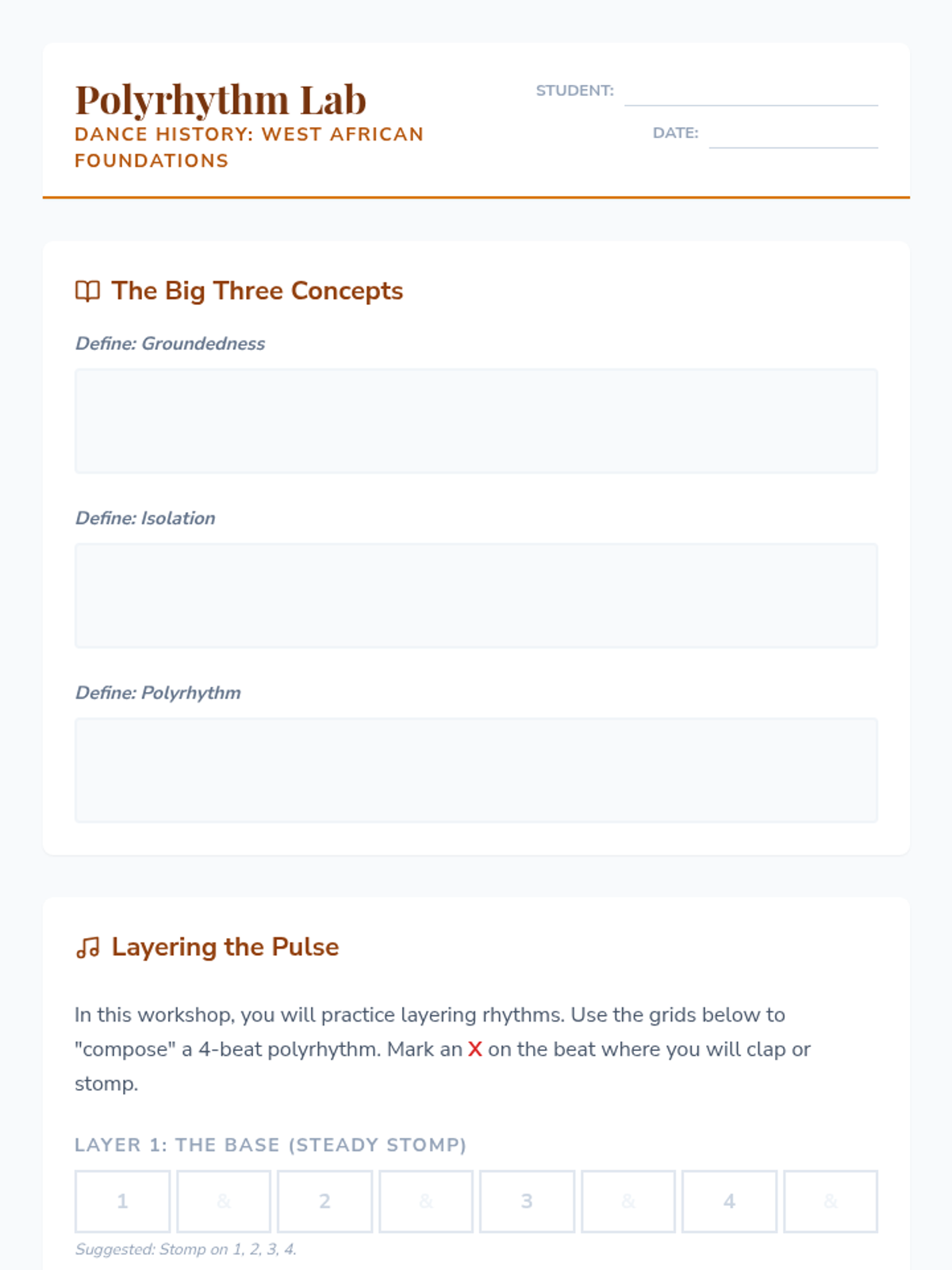
This sequence explores how the African Diaspora shaped American vernacular and theatrical dance, from West African polyrhythms to Jazz, Tap, and Hip Hop. Students analyze the impact of minstrelsy, the Harlem Renaissance, and the codification of jazz while tracing the lineage of modern pop culture moves back to their historical roots.
A comprehensive exploration of ballet's evolution from the 17th-century French court to 20th-century American neoclassicism, focusing on the intersection of political power, social values, and aesthetic form.
Students trace the lineage of ballet from the royal courts of France to the grand stages of Russia and beyond, exploring how political power shaped dance technique.
A journey through the evolution of ballet from the 17th-century French royal courts to the modern proscenium stage, exploring how a social pastime for nobility became a professional athletic art form.
This sequence explores the evolution of urban and popular dance, tracing its journey from the 1970s Bronx to the global digital landscape. Students analyze the socio-economic roots, cultural spread, and ethical implications of dance styles like Hip Hop, K-Pop, and TikTok trends.
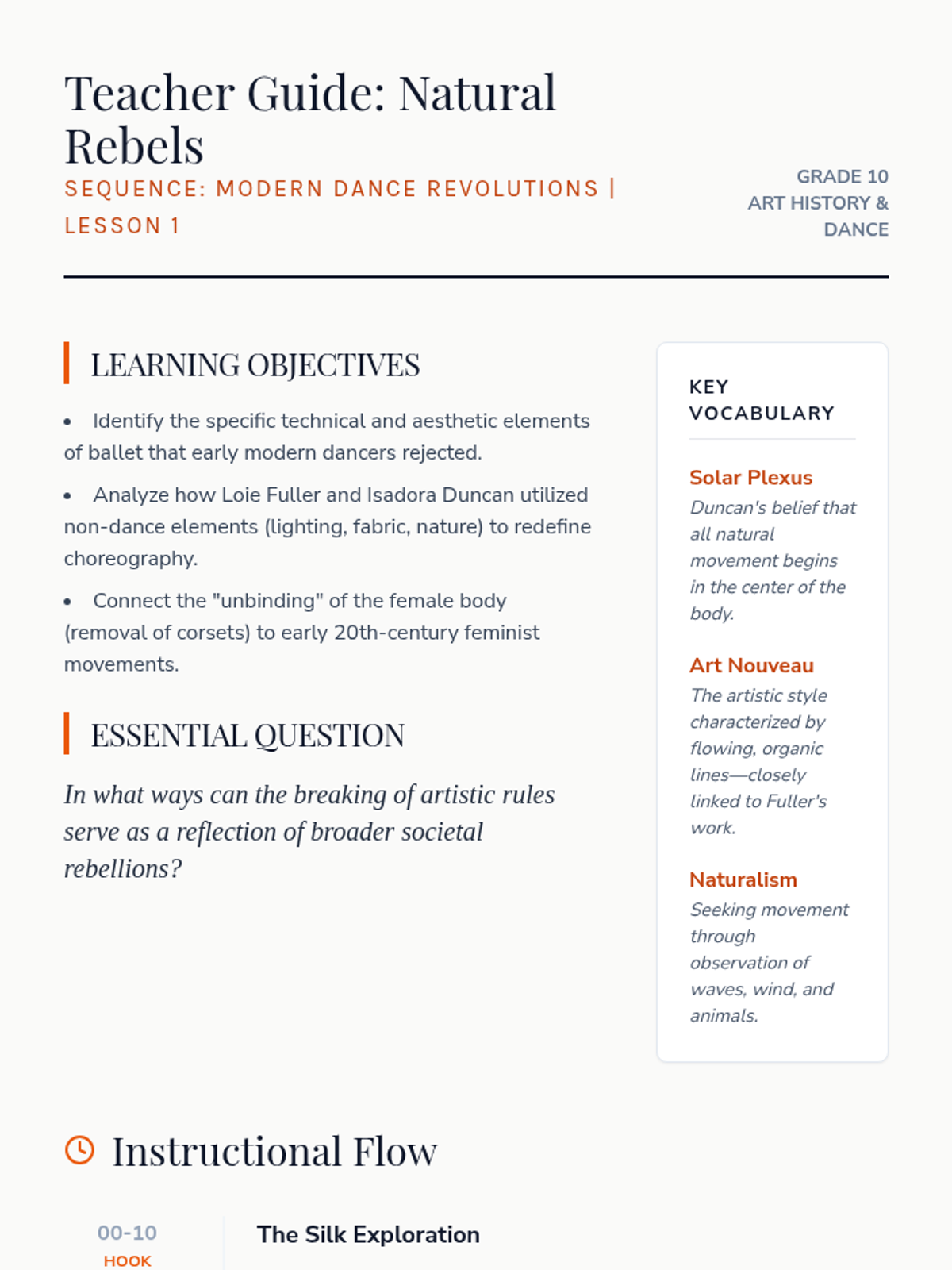
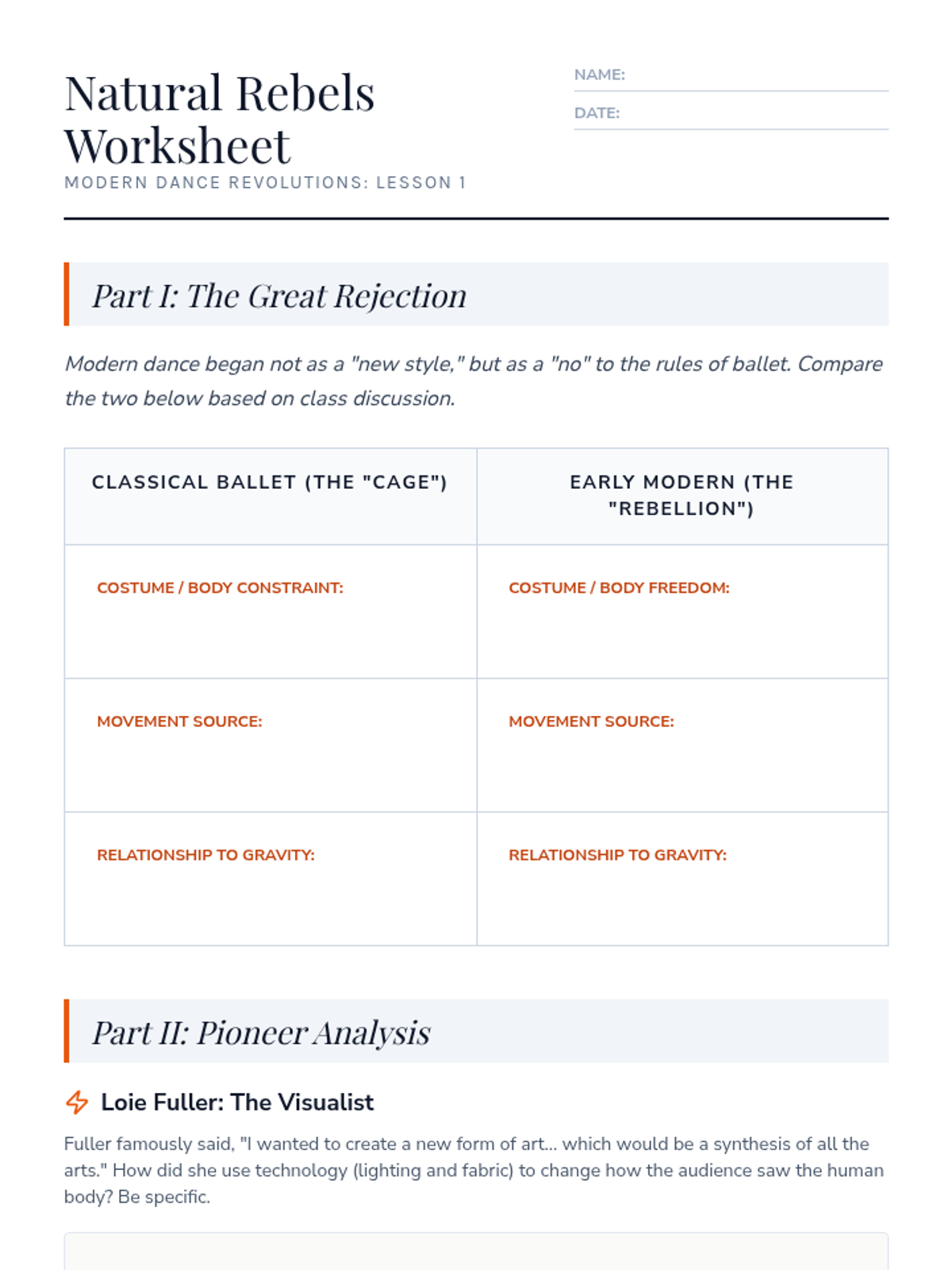
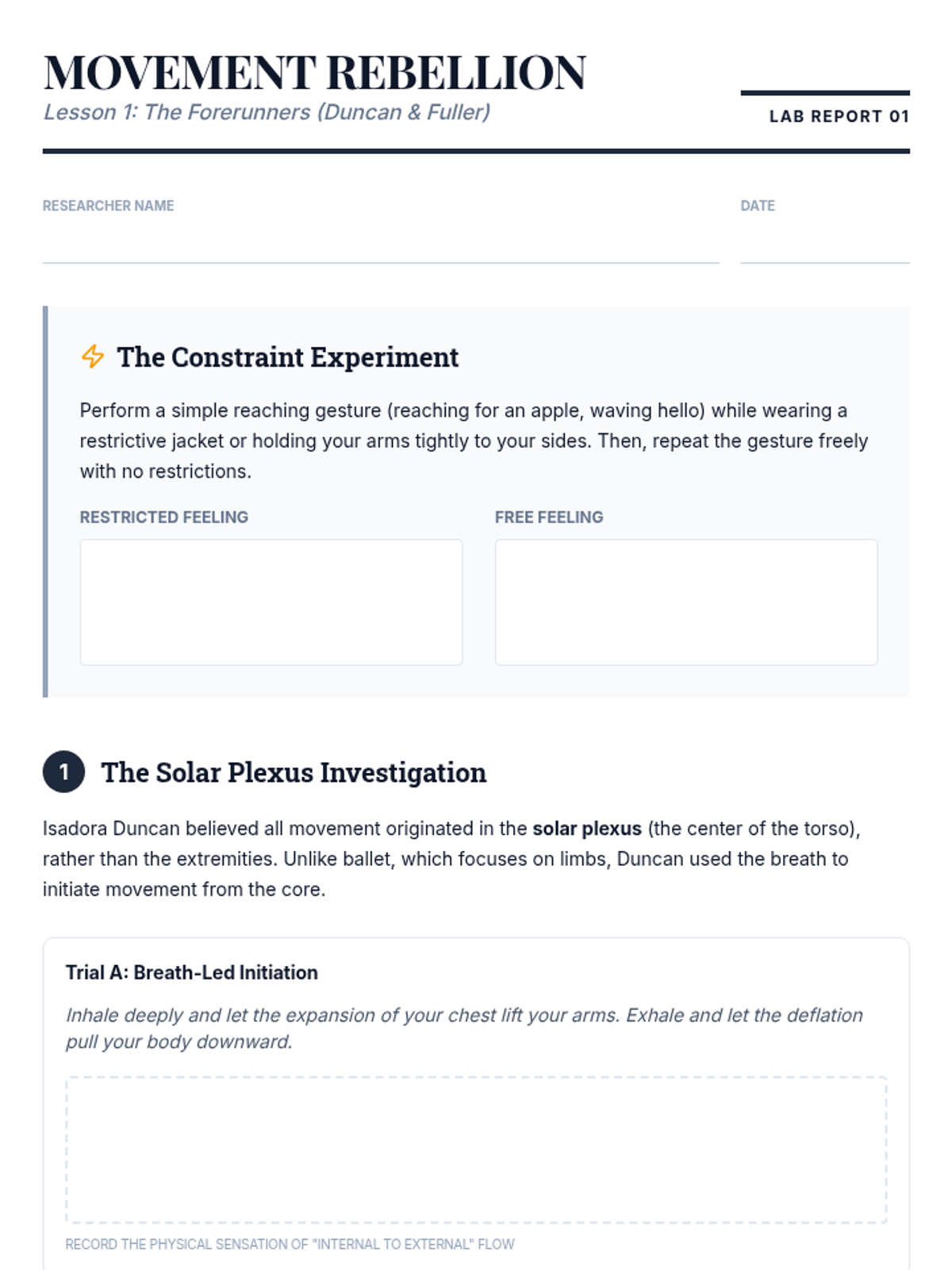
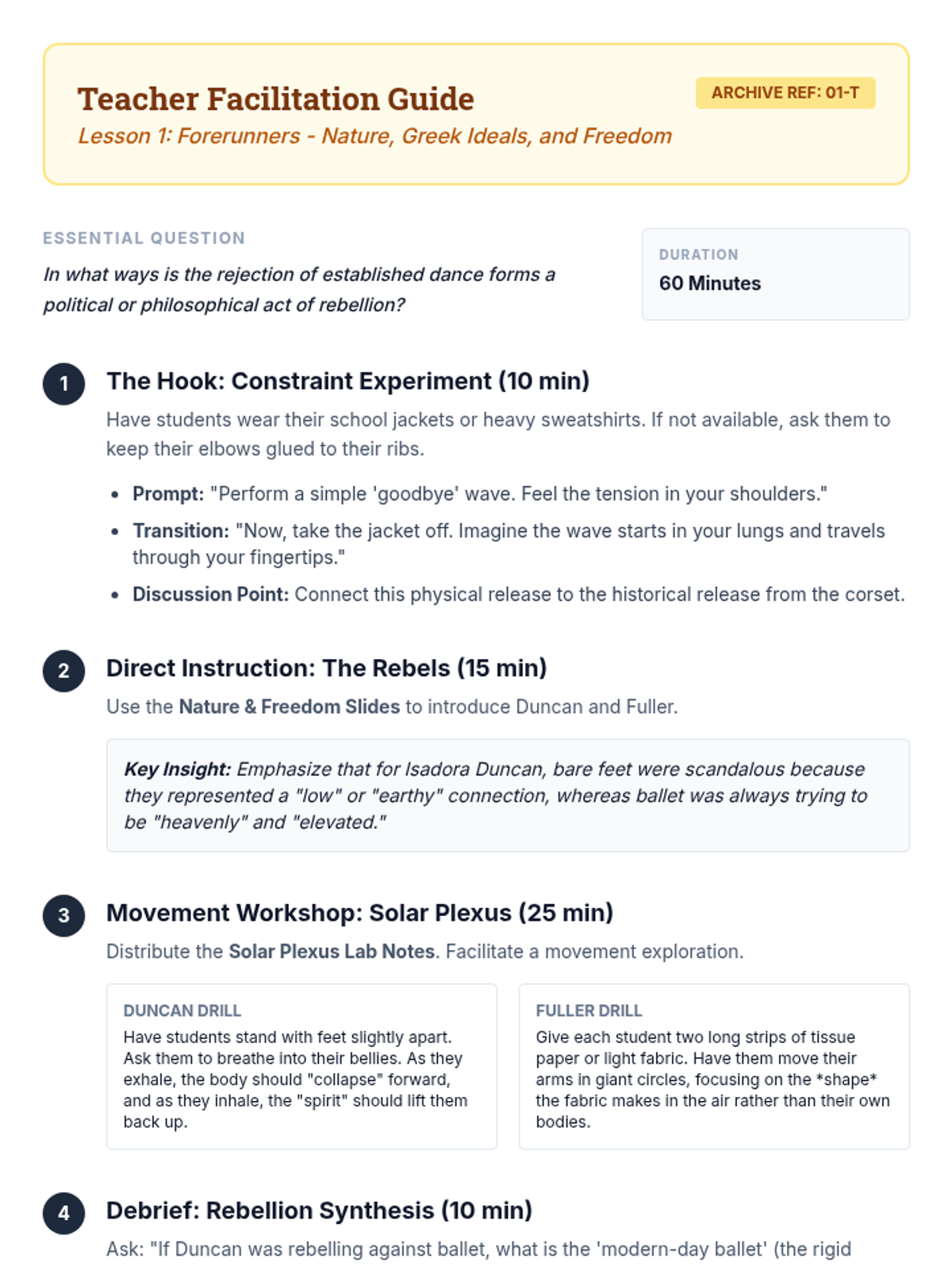
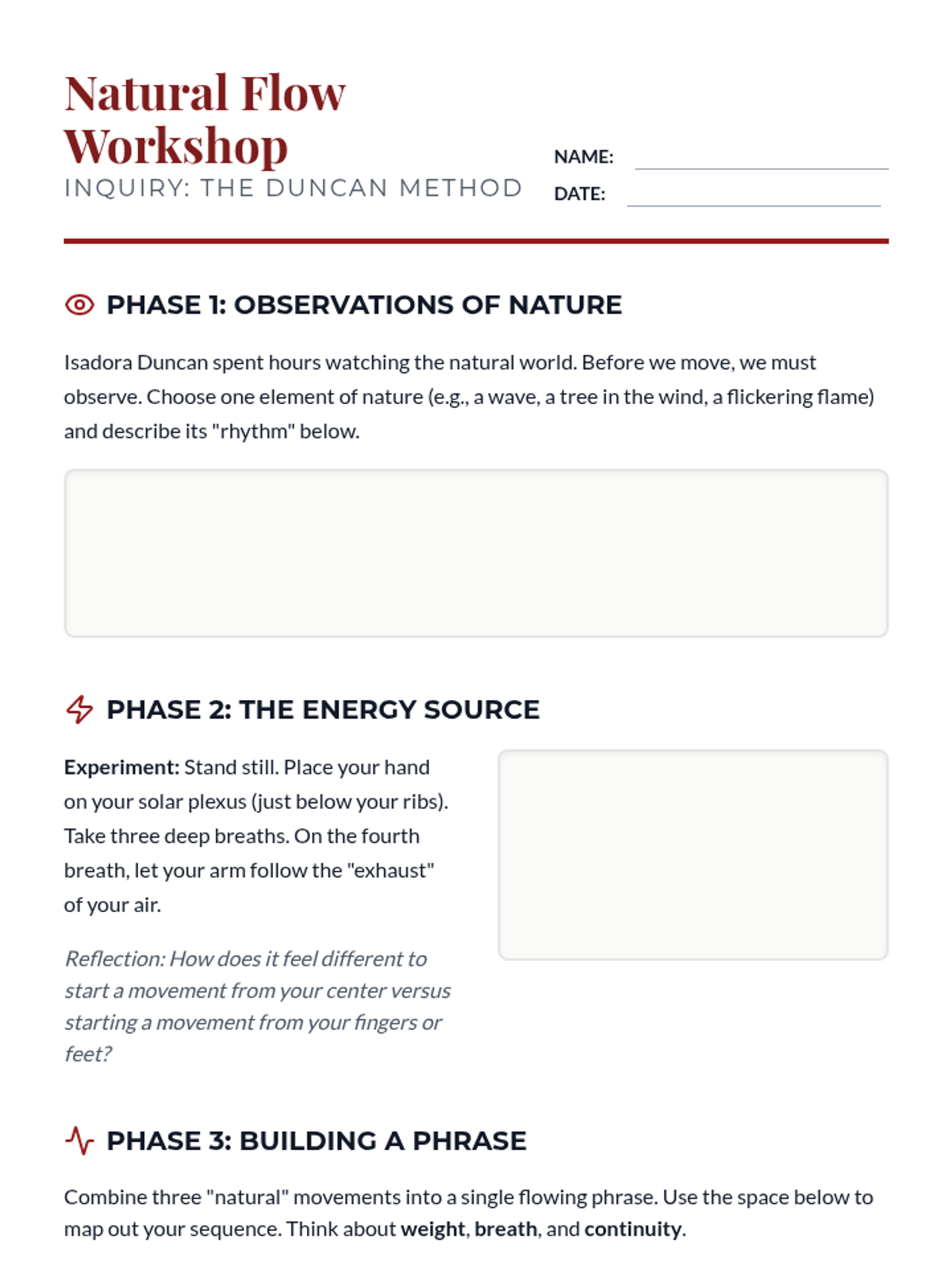
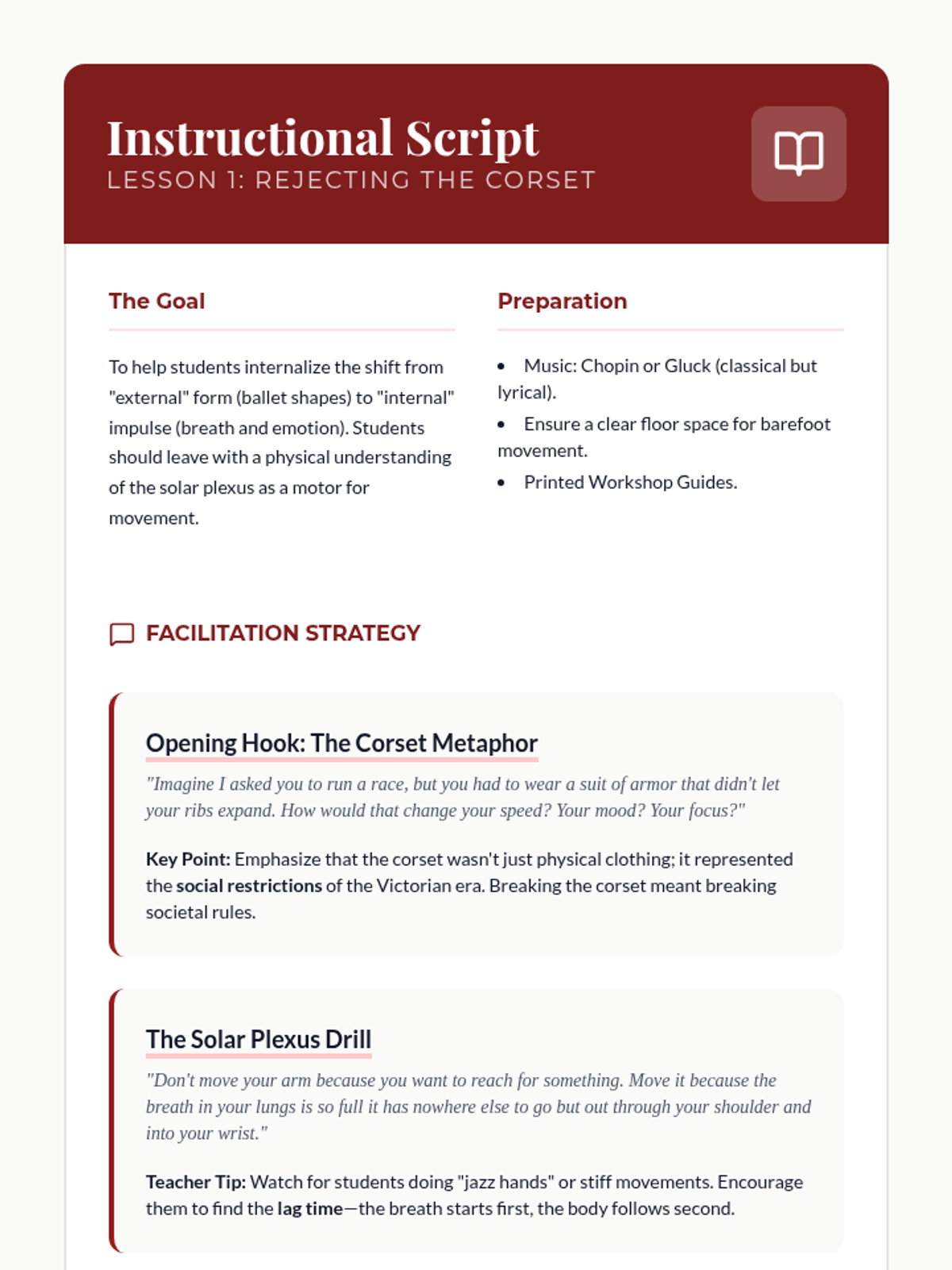
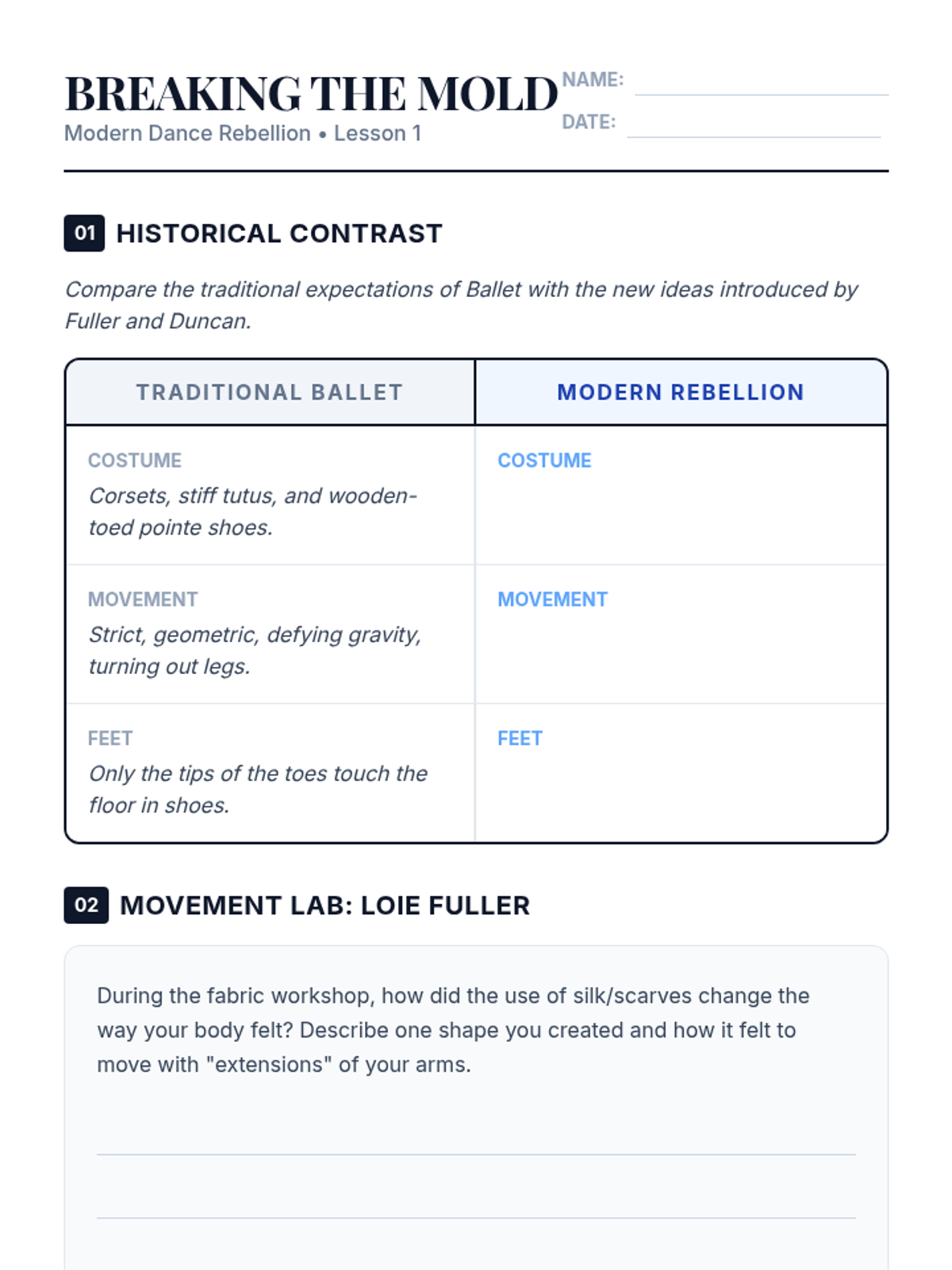
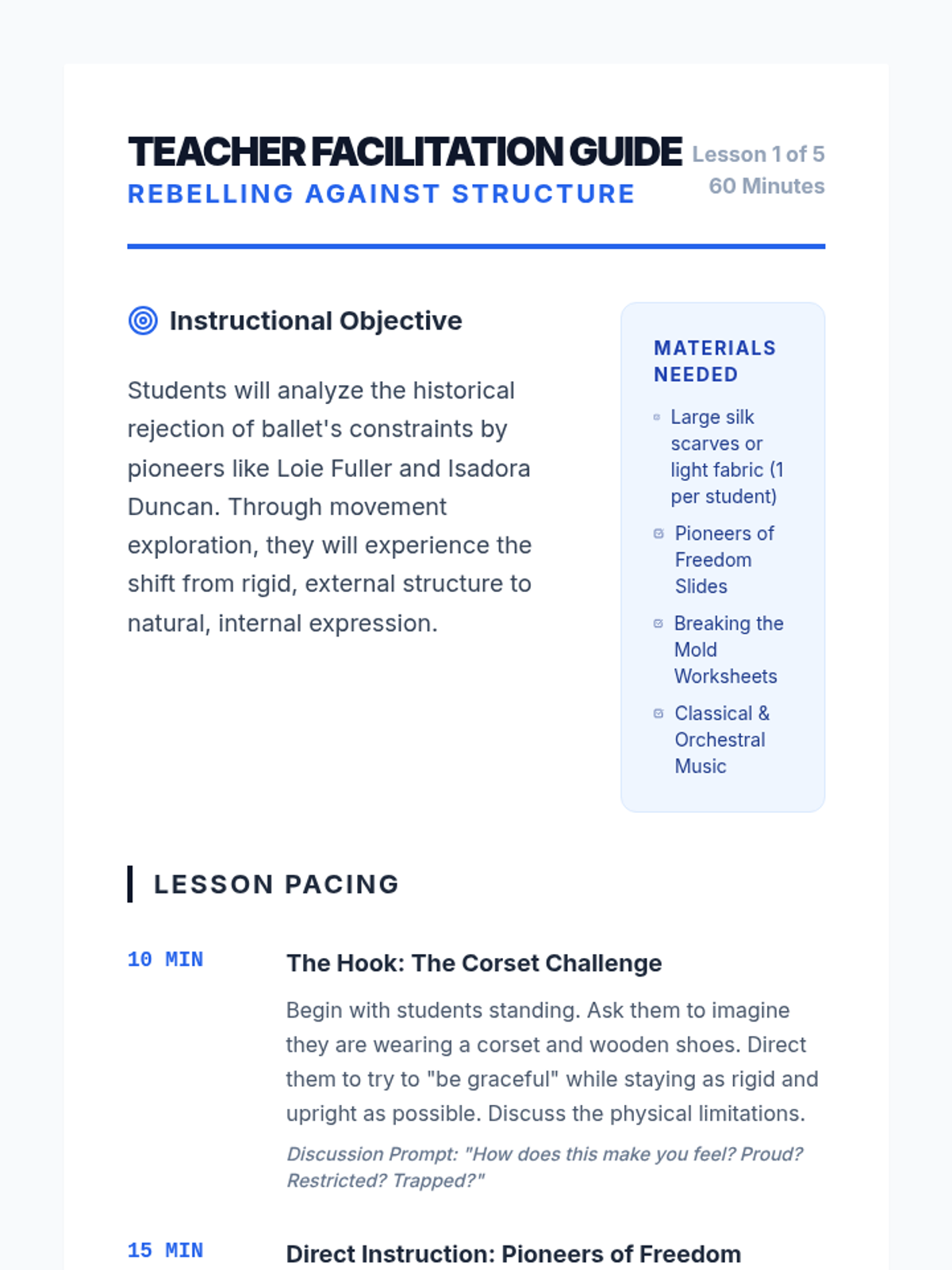
This sequence explores the early 20th-century rebellion that led to Modern Dance. Students learn about pioneers who rejected ballet's constraints to explore natural movement, psychological intensity, and social activism, ultimately understanding dance as a vehicle for personal and collective expression.
A comprehensive 5-lesson sequence tracing ballet's journey from 17th-century French courts to modern American stages, focusing on the intersection of politics, technology, and artistic expression.
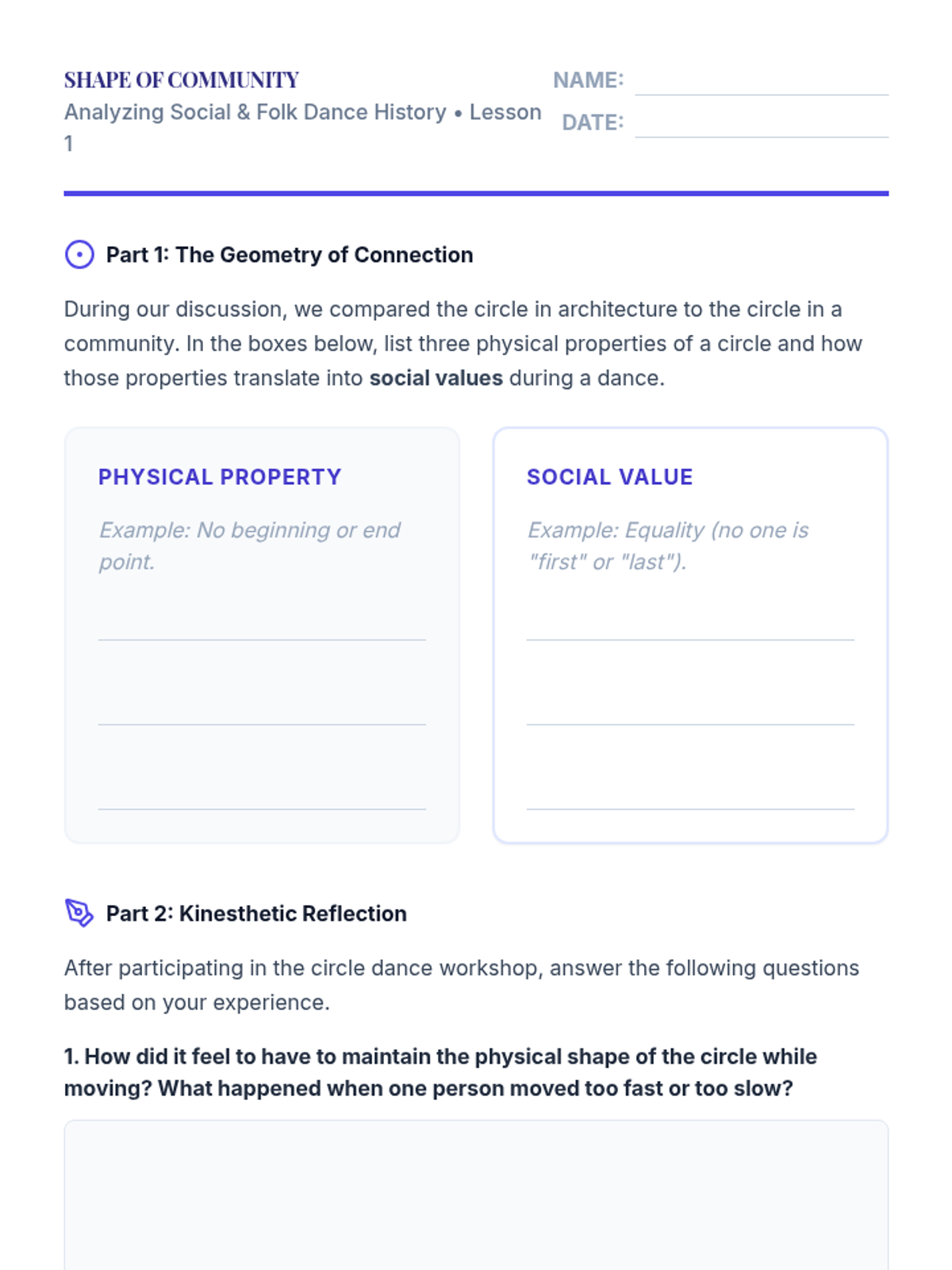
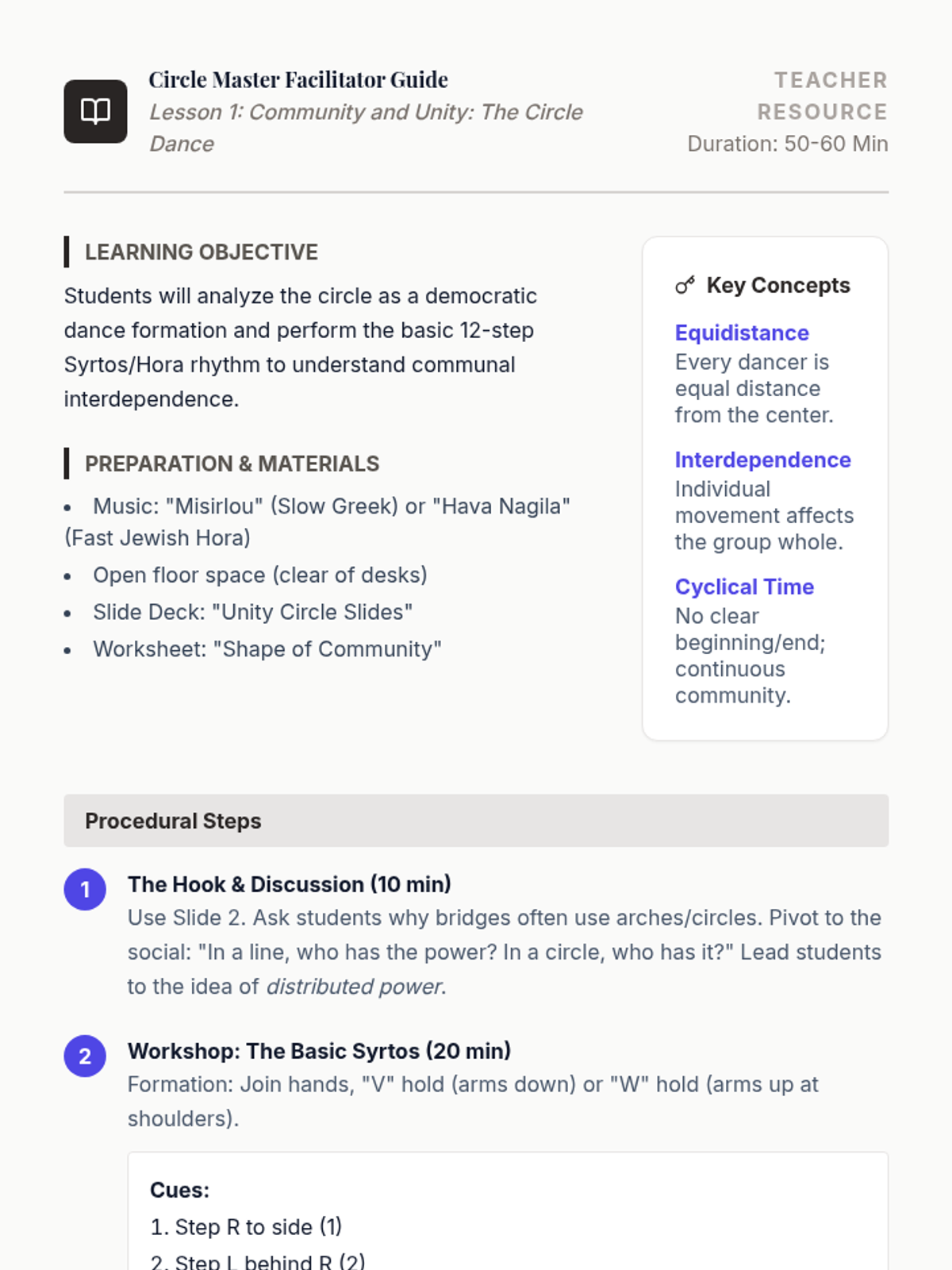
Students explore the social functions of dance, from communal circle dances to hierarchical court dances and the cultural fusion of modern partner styles. They analyze how choreography reflects the values, hierarchies, and gender roles of diverse societies throughout history.
A journey through 400 years of ballet history, from the royal courts of France to the modern stage. Students explore how political power, fashion, and technology transformed a social duty into a professional athletic art form.
A technical dance sequence for 10th graders exploring footwork precision, rhythmic articulation, and stylistic nuances across ballet, jazz, and contemporary dance. Students move from anatomical foundations to comparative stylistic execution.
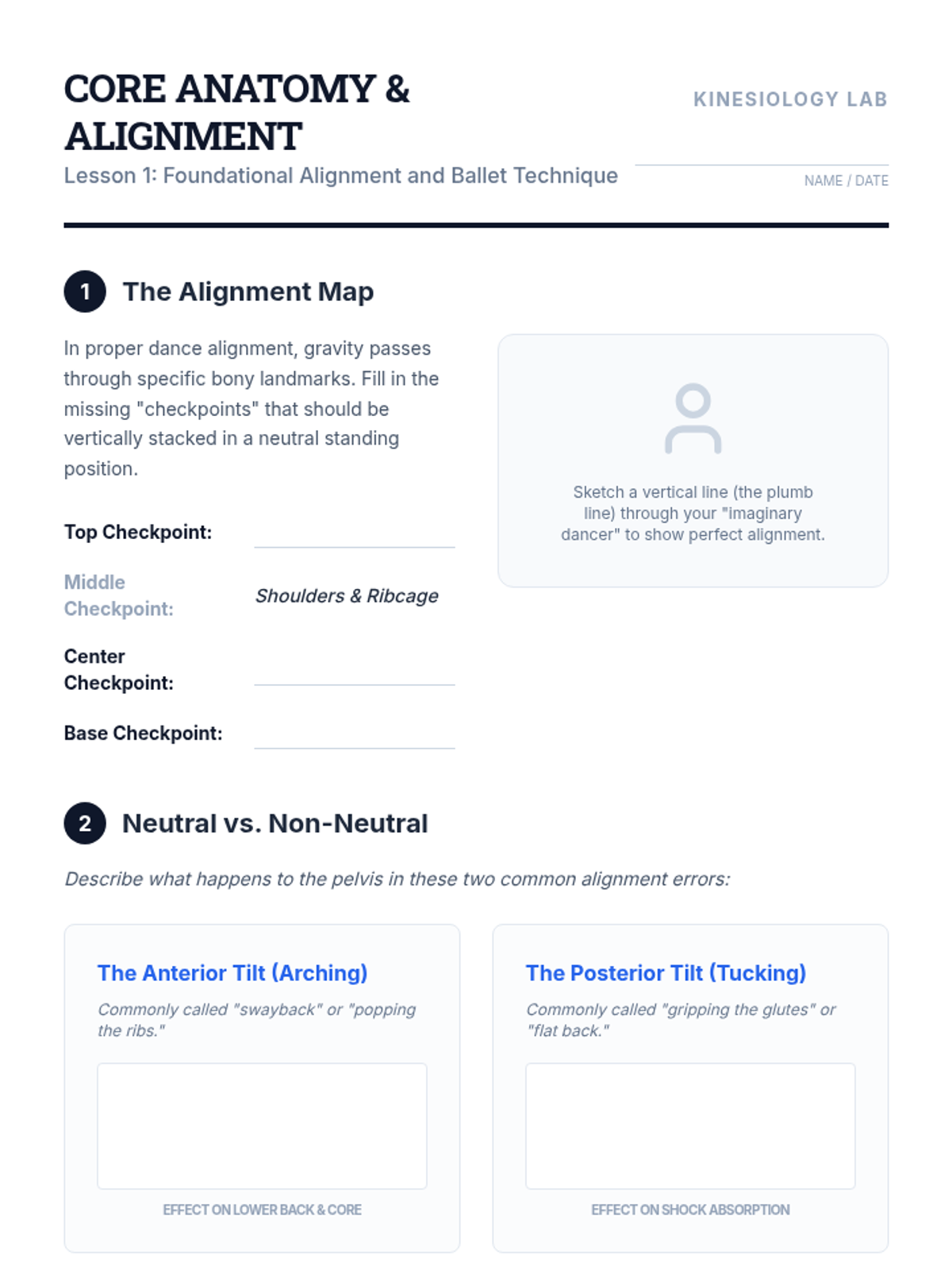
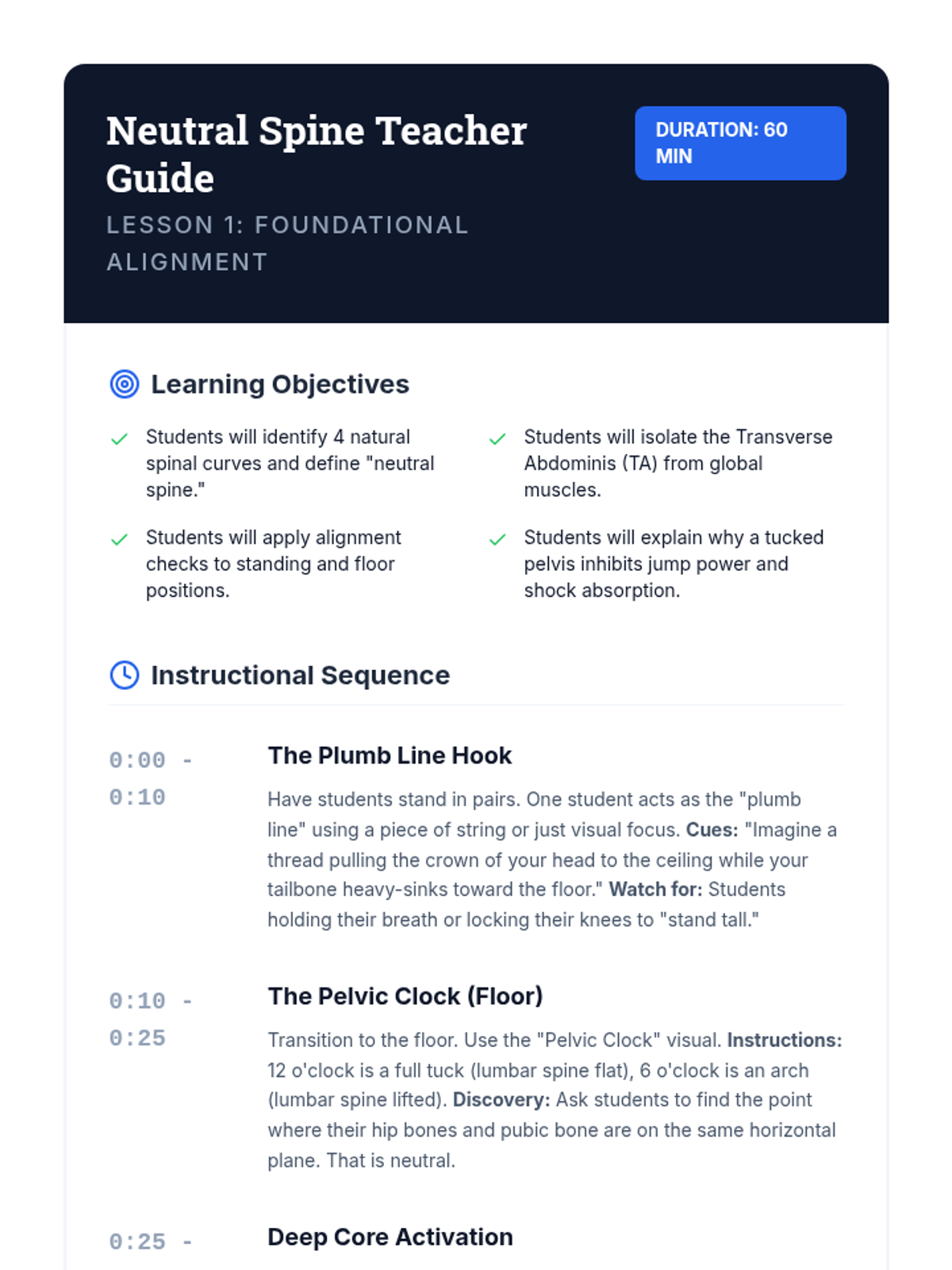
This sequence bridges biomechanics and classical ballet, teaching 8th-grade dancers how skeletal alignment and core stability serve as the foundation for movement efficiency and injury prevention. Students progress from floor-based alignment checks to complex center adagio, deconstructing the physics of turnout, foot articulation, and vertical balance.
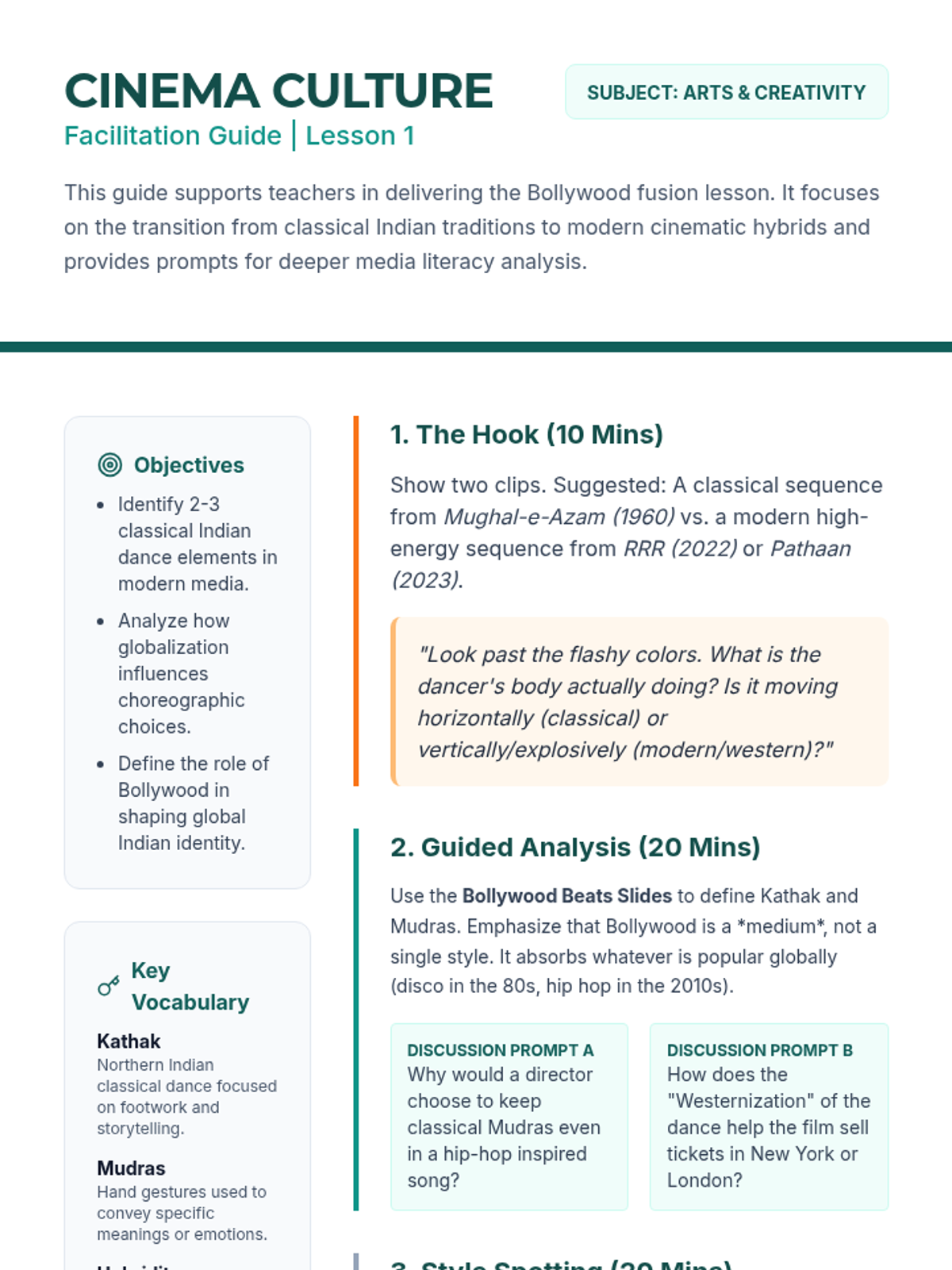
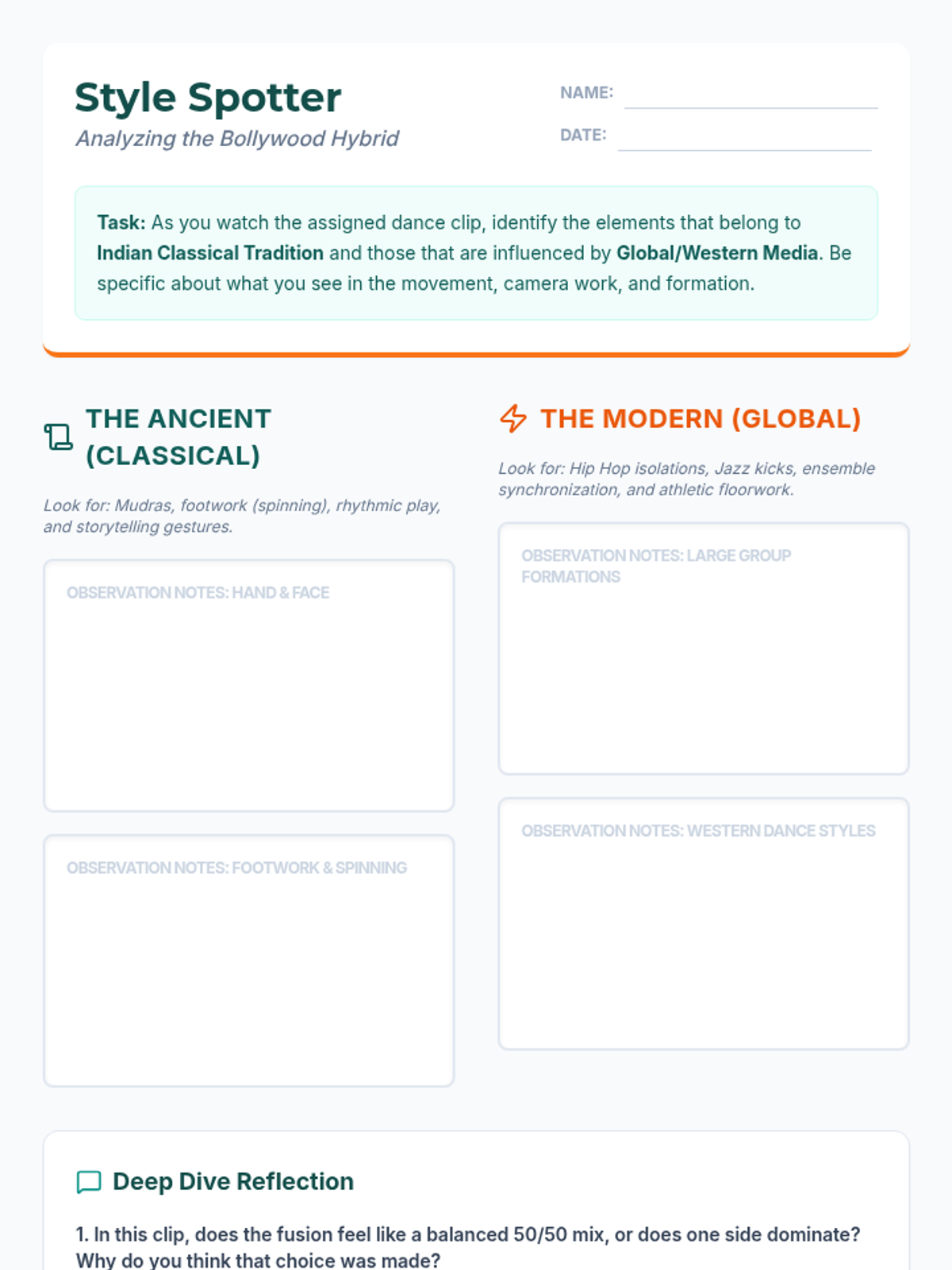
This 10th-grade sequence explores the intersection of globalization, technology, and dance culture. Students analyze Bollywood's fusion, K-Pop's global marketing, the ethics of cultural appropriation, and the impact of social media on choreography, culminating in a respectful cross-cultural fusion proposal.
A comprehensive exploration of the African Diaspora's influence on global vernacular dance, tracing movement traditions from West Africa through the plantation era to the birth of Jazz, Tap, and Hip Hop. Students analyze how rhythmic innovation served as a tool for cultural preservation and resistance.
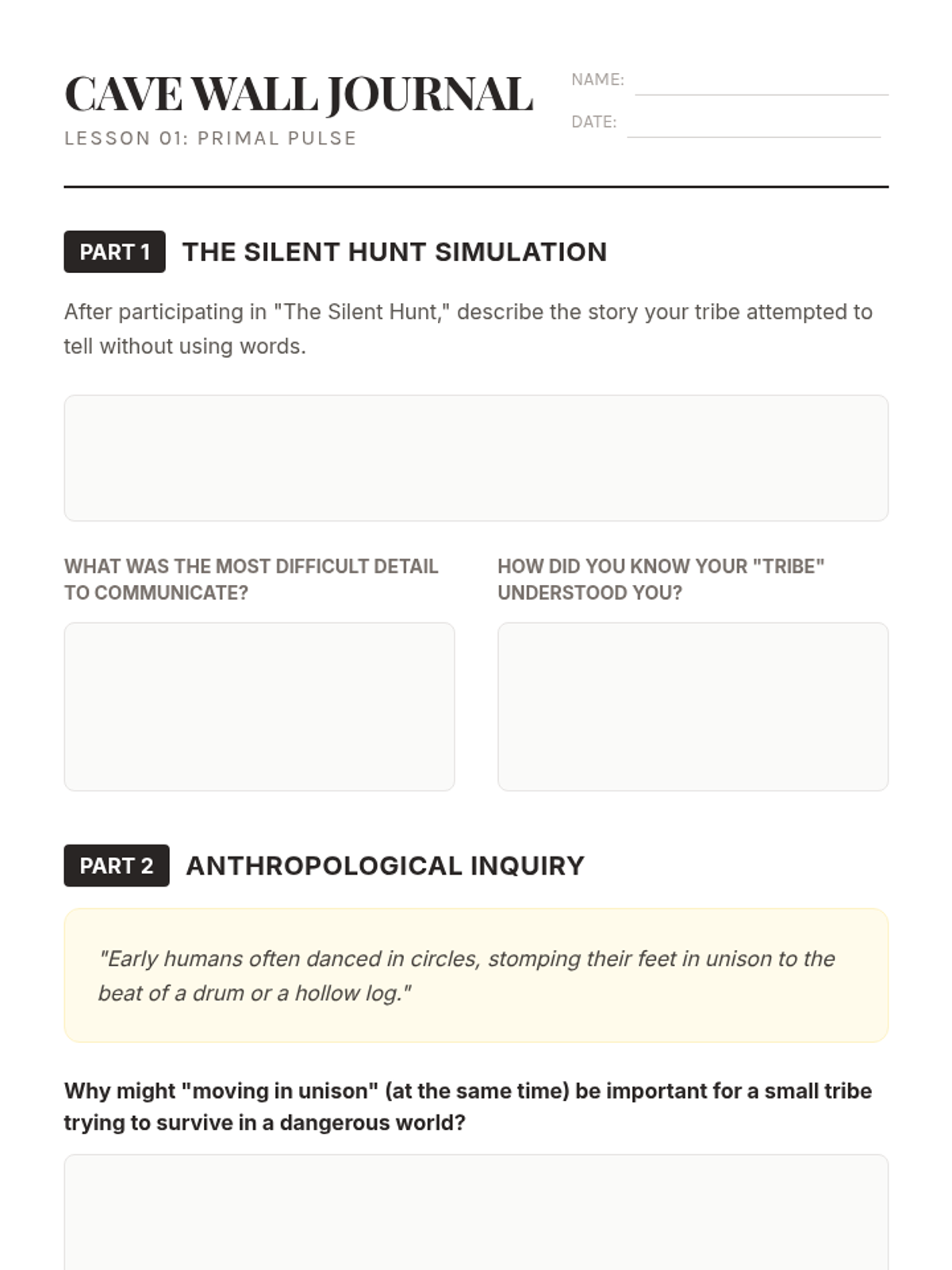
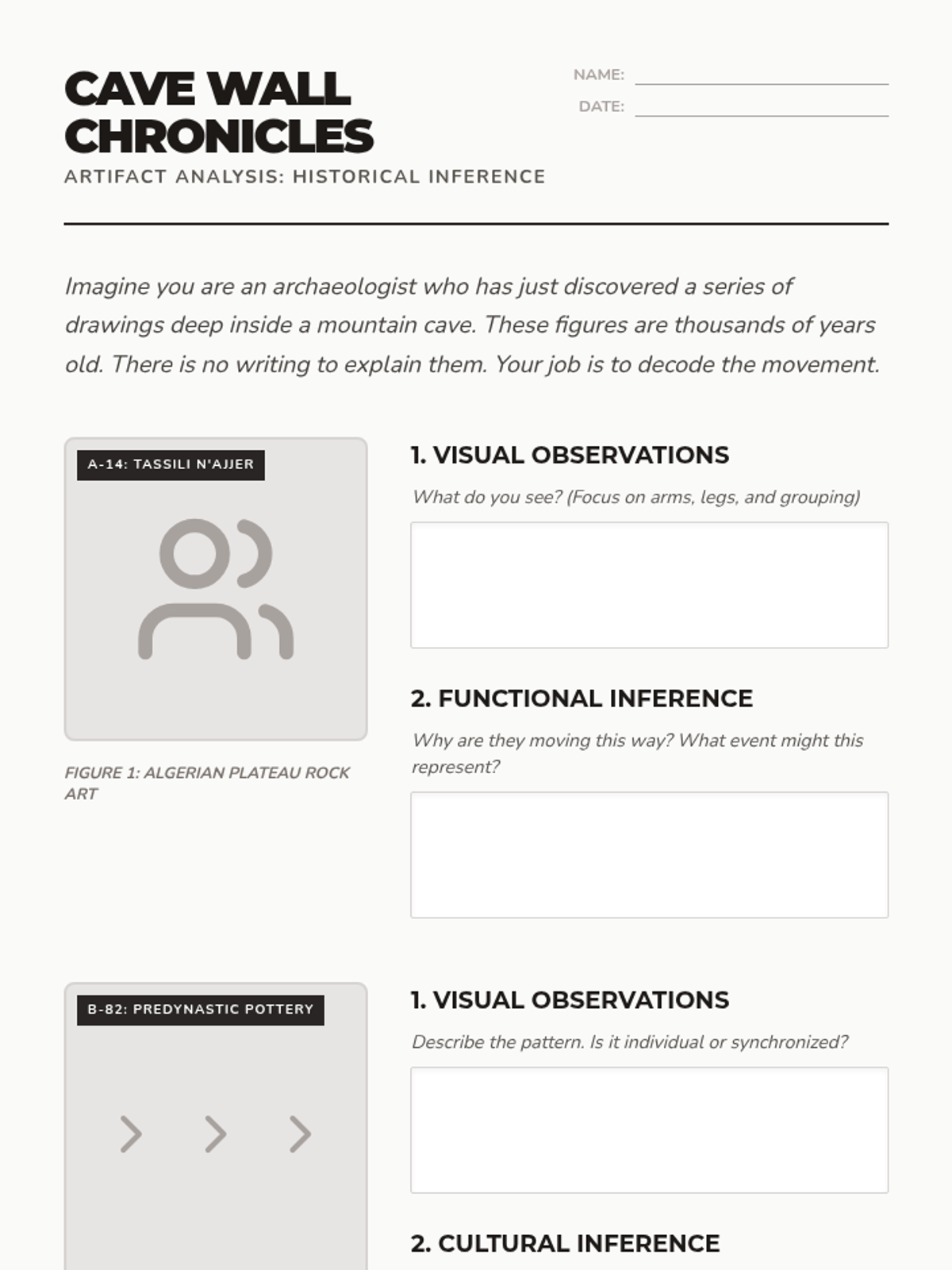
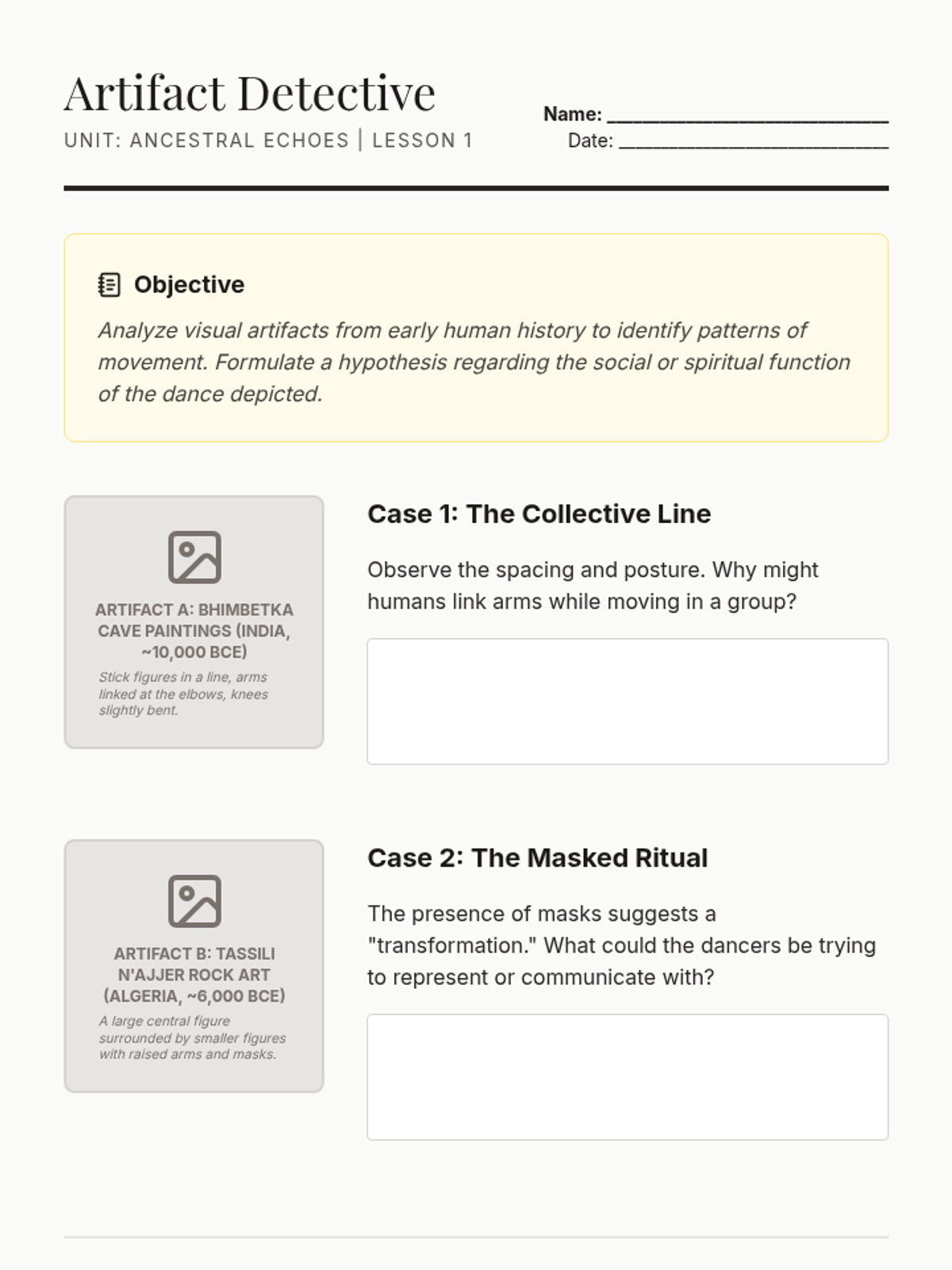
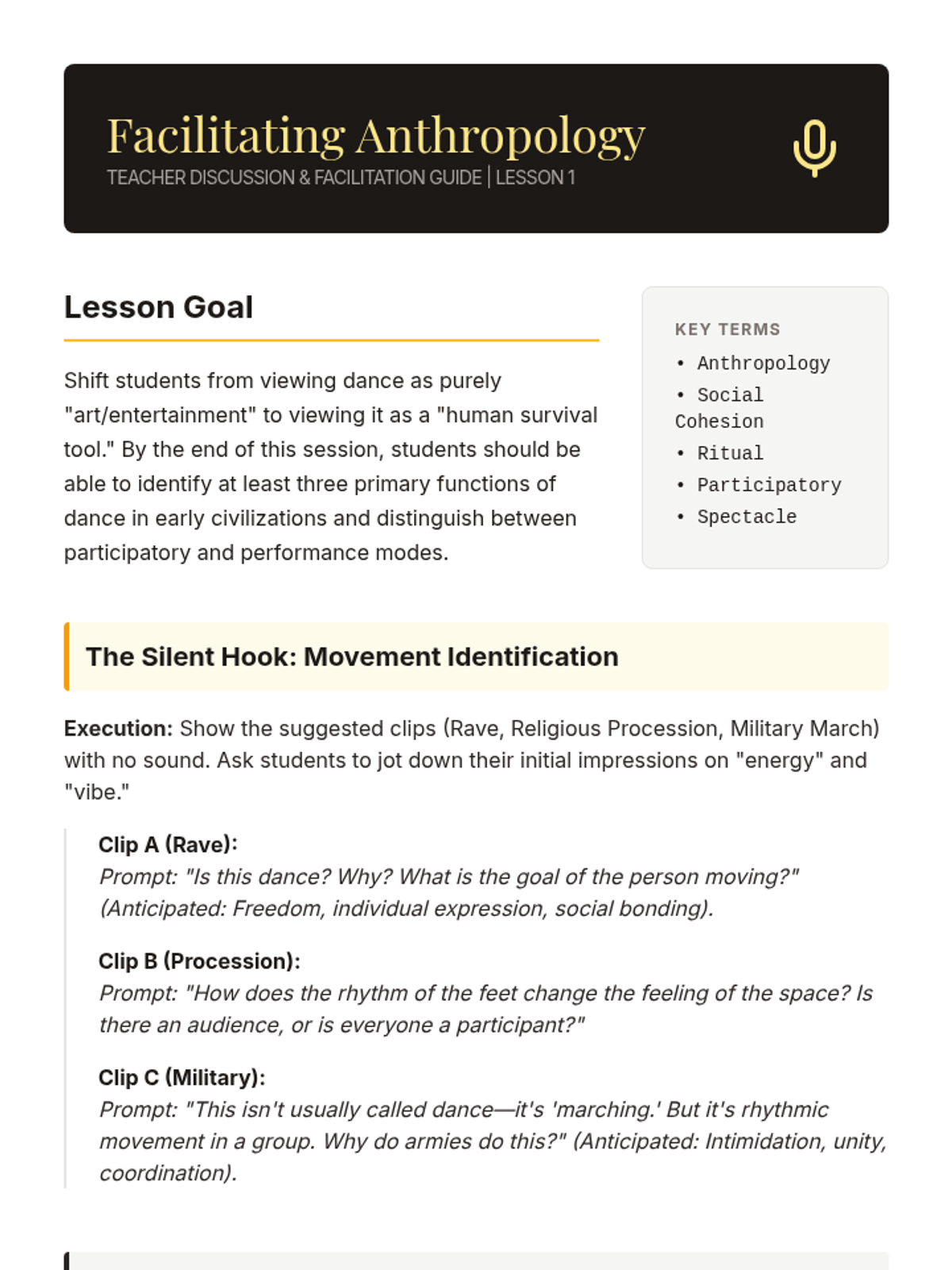
A 10th-grade dance history sequence exploring the anthropological roots of dance. Students investigate how ancient and indigenous cultures utilized movement for ritual, social cohesion, and martial purposes, eventually analyzing the ethics of modern preservation.
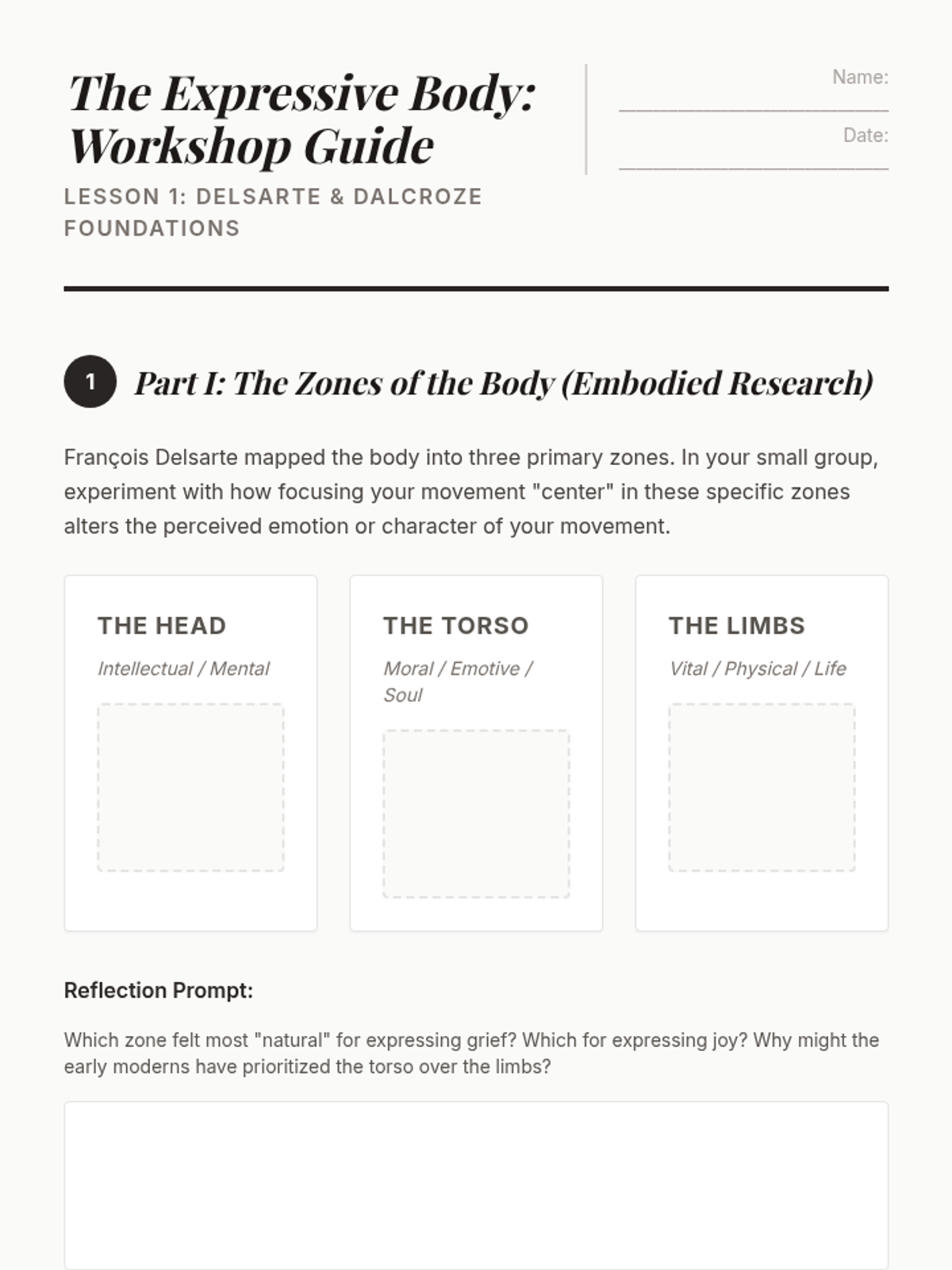
This sequence explores the radical shift from classical ballet to modern dance in the early 20th century. Students will analyze the philosophical, psychological, and sociopolitical drivers behind the movement theories of pioneers like Isadora Duncan, Martha Graham, and Doris Humphrey.
A comprehensive investigation into how political power and statecraft shaped the technique, hierarchy, and aesthetics of classical ballet from the French court to the Russian Imperial stage. Students analyze the evolution of the 'ideal body' as a reflection of political absolutism, gender dynamics, and modernist rupture.
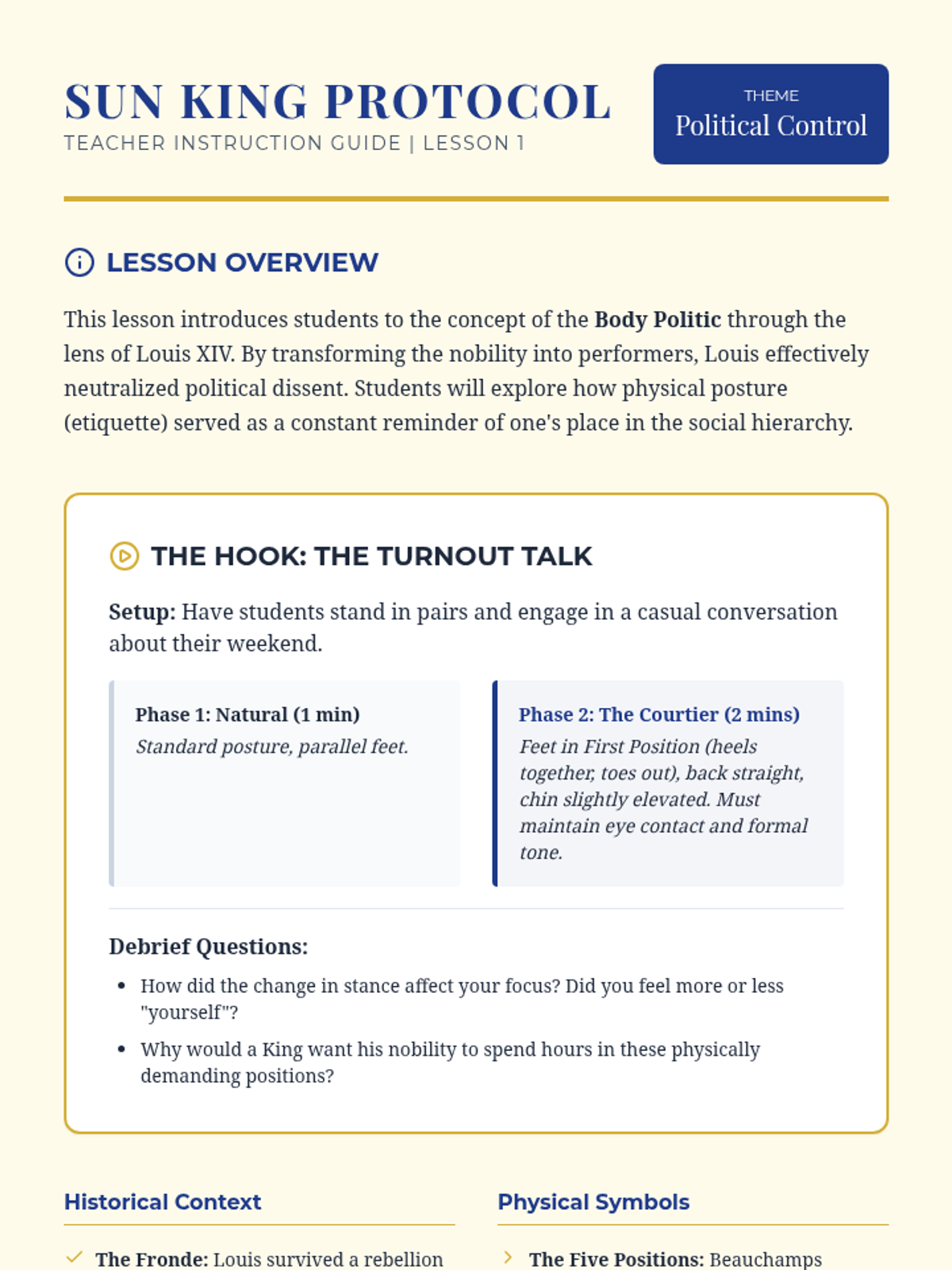
A deep dive into the intersection of dance and political authority, examining how court traditions from Baroque France to Imperial Russia and beyond have used the human body to enforce social hierarchy. Students analyze movement as a tool of statecraft, tracing the evolution of ballet and comparing it with global court dances.
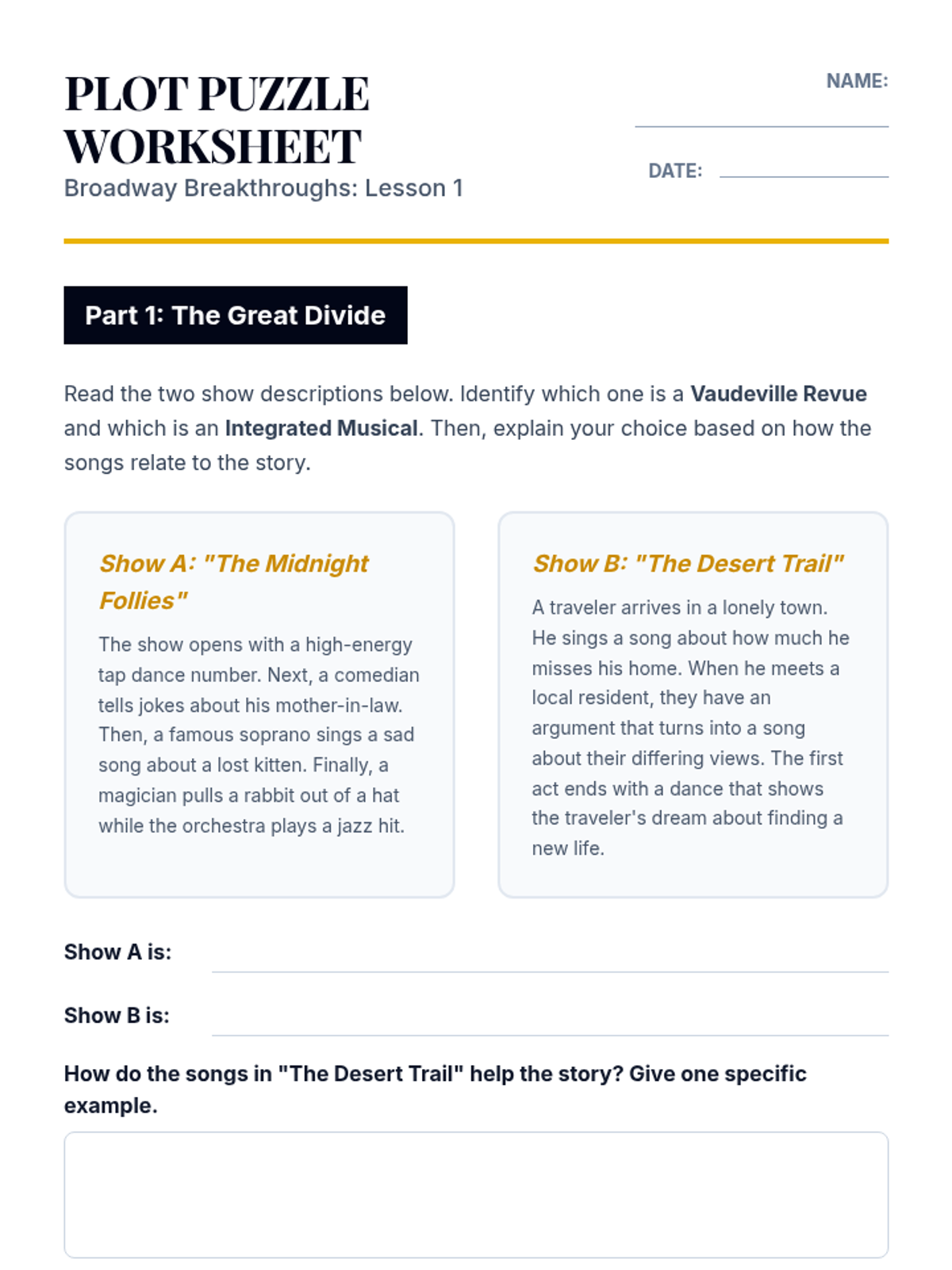
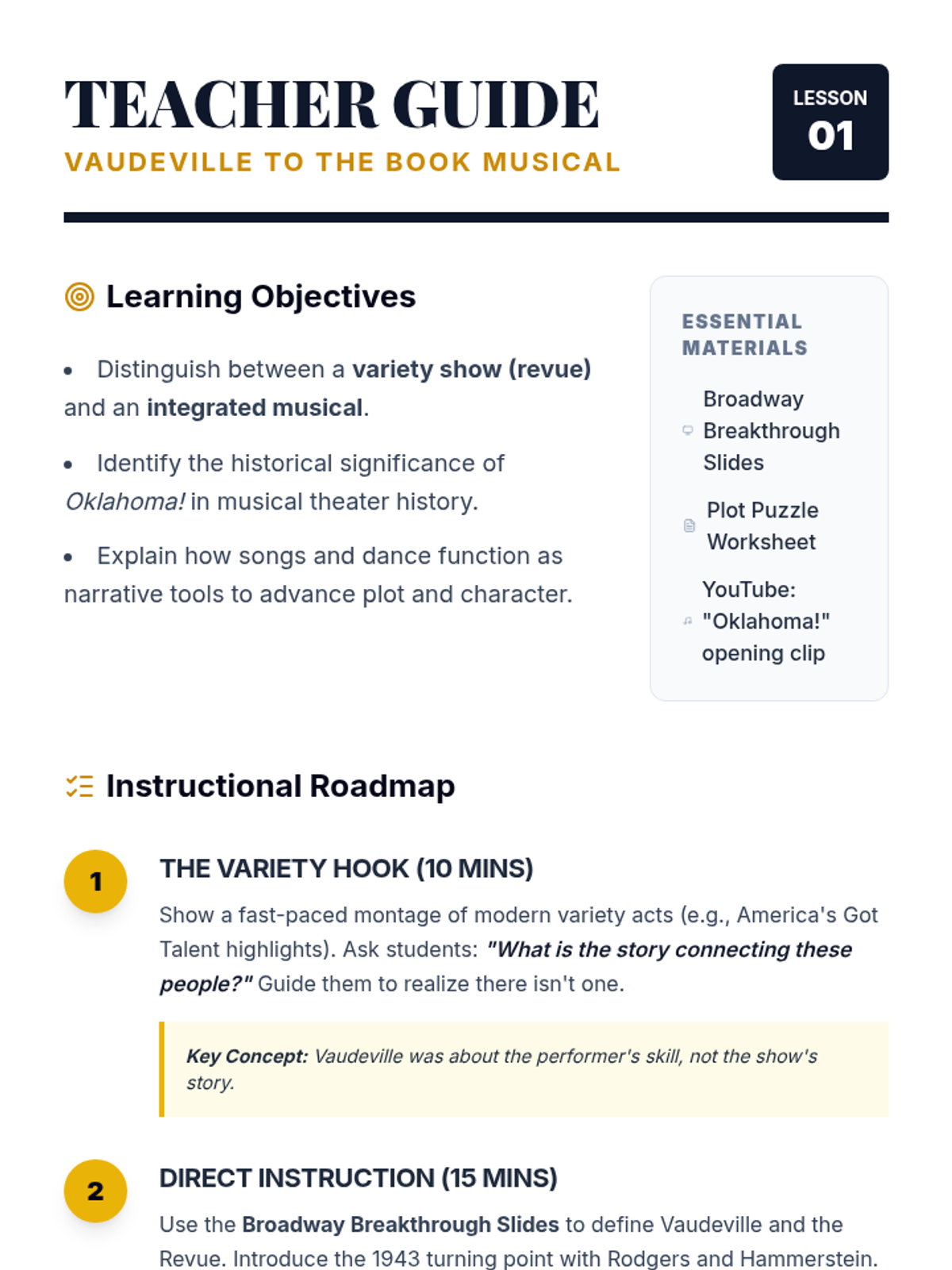
A comprehensive exploration of the American musical theater evolution, from its Vaudeville roots to modern spectacles. Students analyze how music, dance, and design integrate to create cohesive narratives.