Complex syntax, nuanced vocabulary, and academic discourse. Strengthens professional communication through advanced writing, analytical reading, and mastery of high-level auditory and oral fluency.
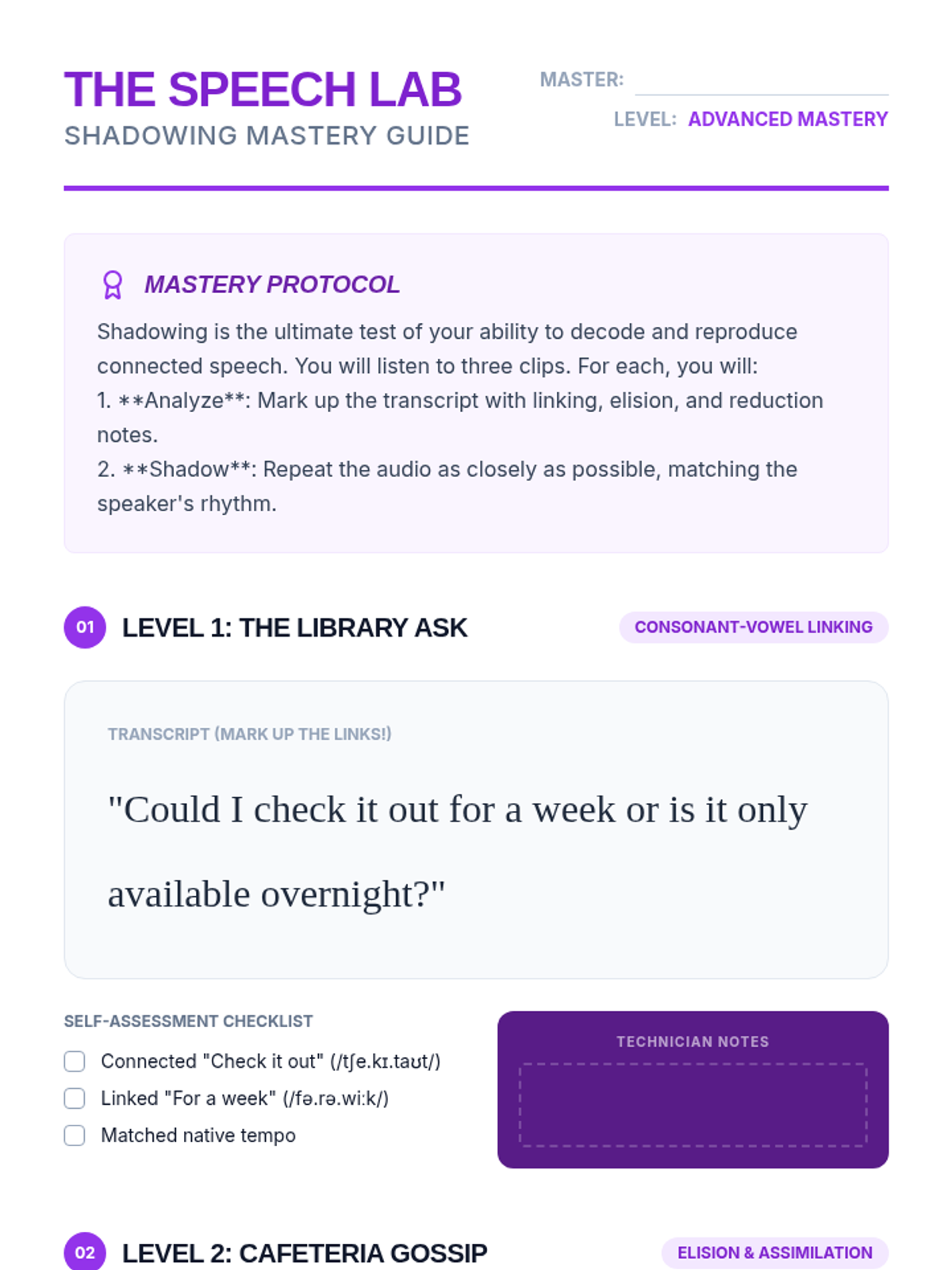
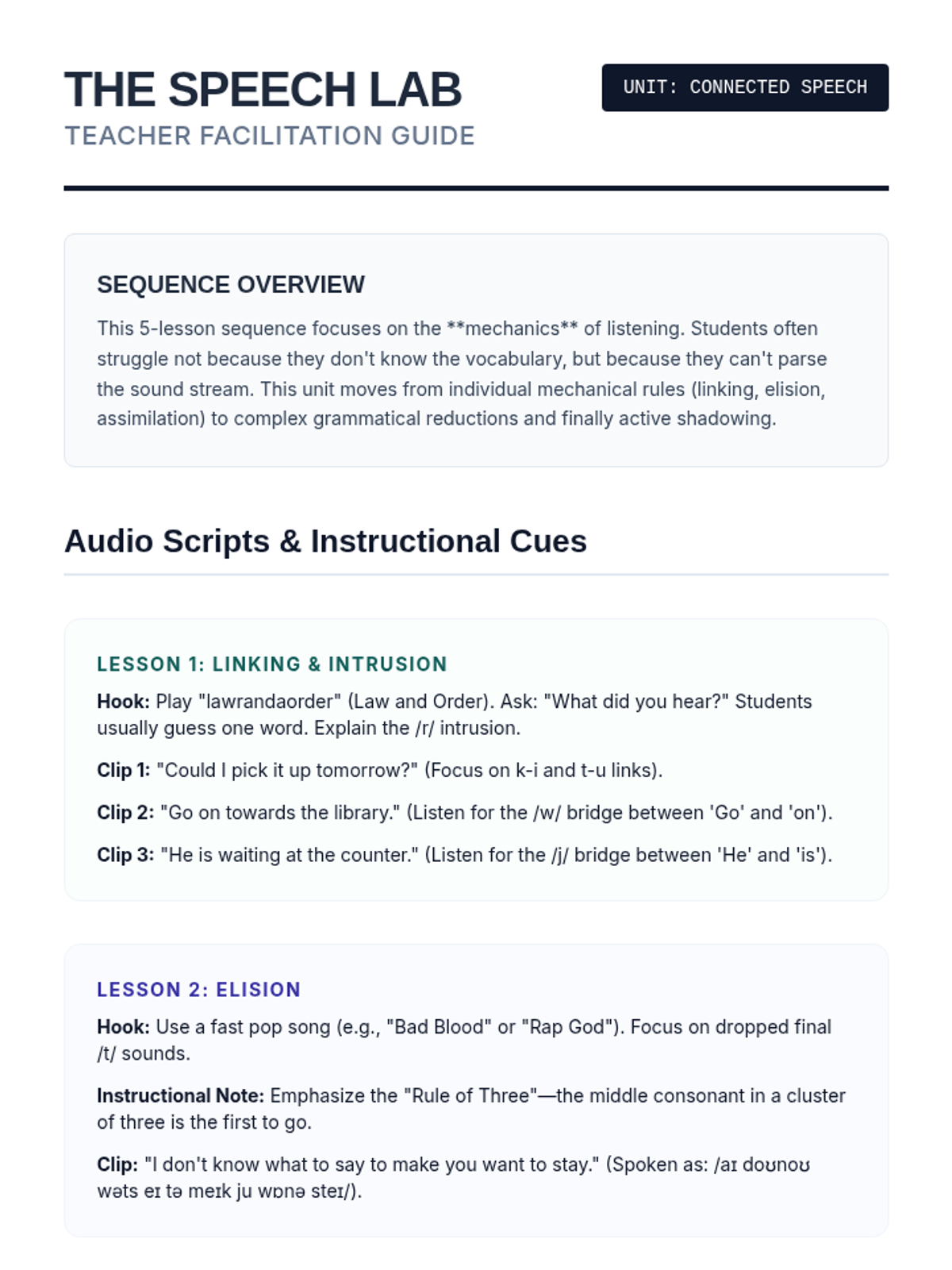
Students engage in a 'shadowing' technique, repeating audio immediately after hearing it to internalize the rhythm and flow of connected speech. This active processing reinforces their ability to predict and process sound streams.
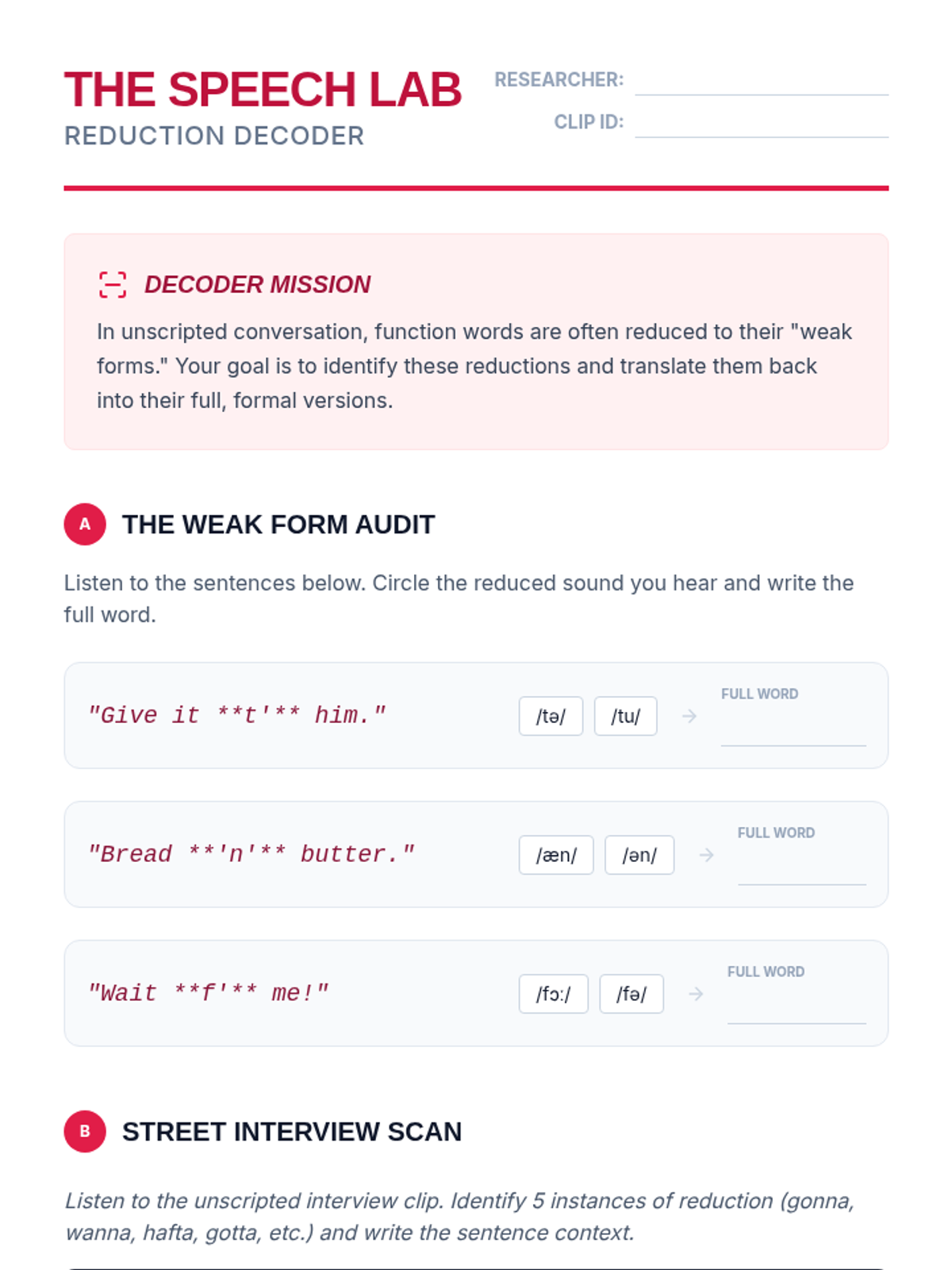
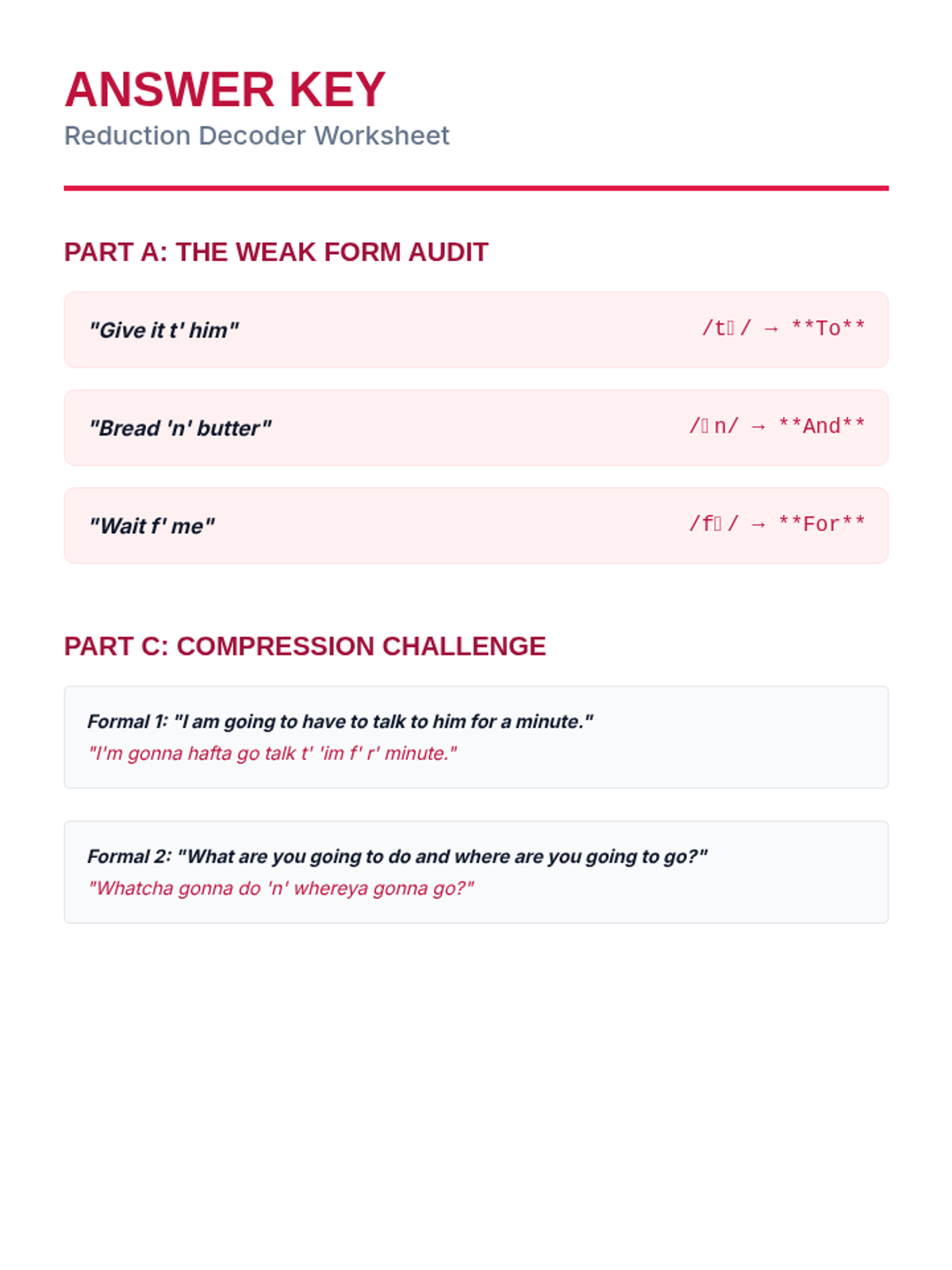
Focusing on function words, this lesson tackles common reductions like 'gonna,' 'wanna,' and weak forms of auxiliary verbs. Students analyze unscripted interviews to catch these reductions in context.
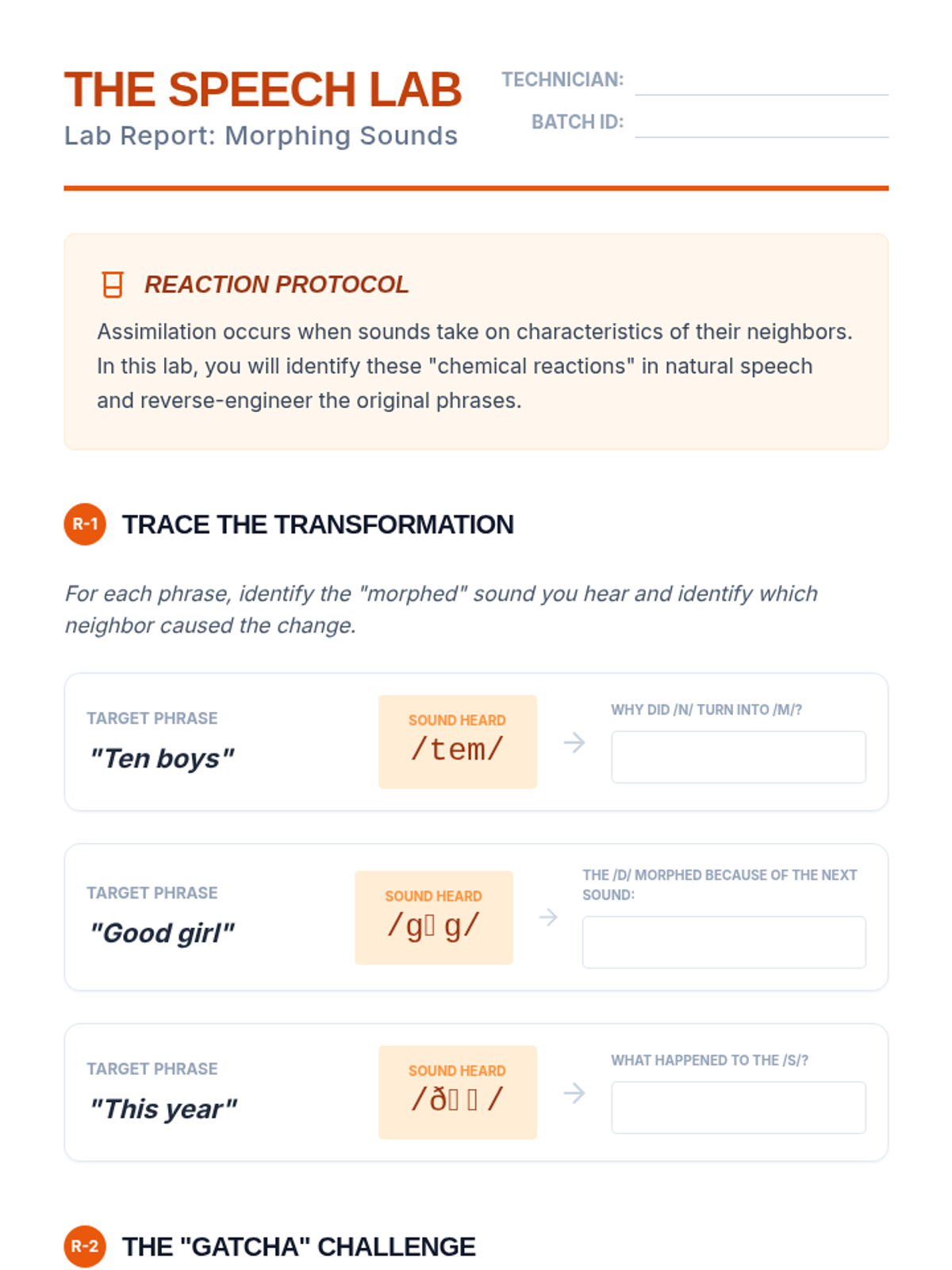
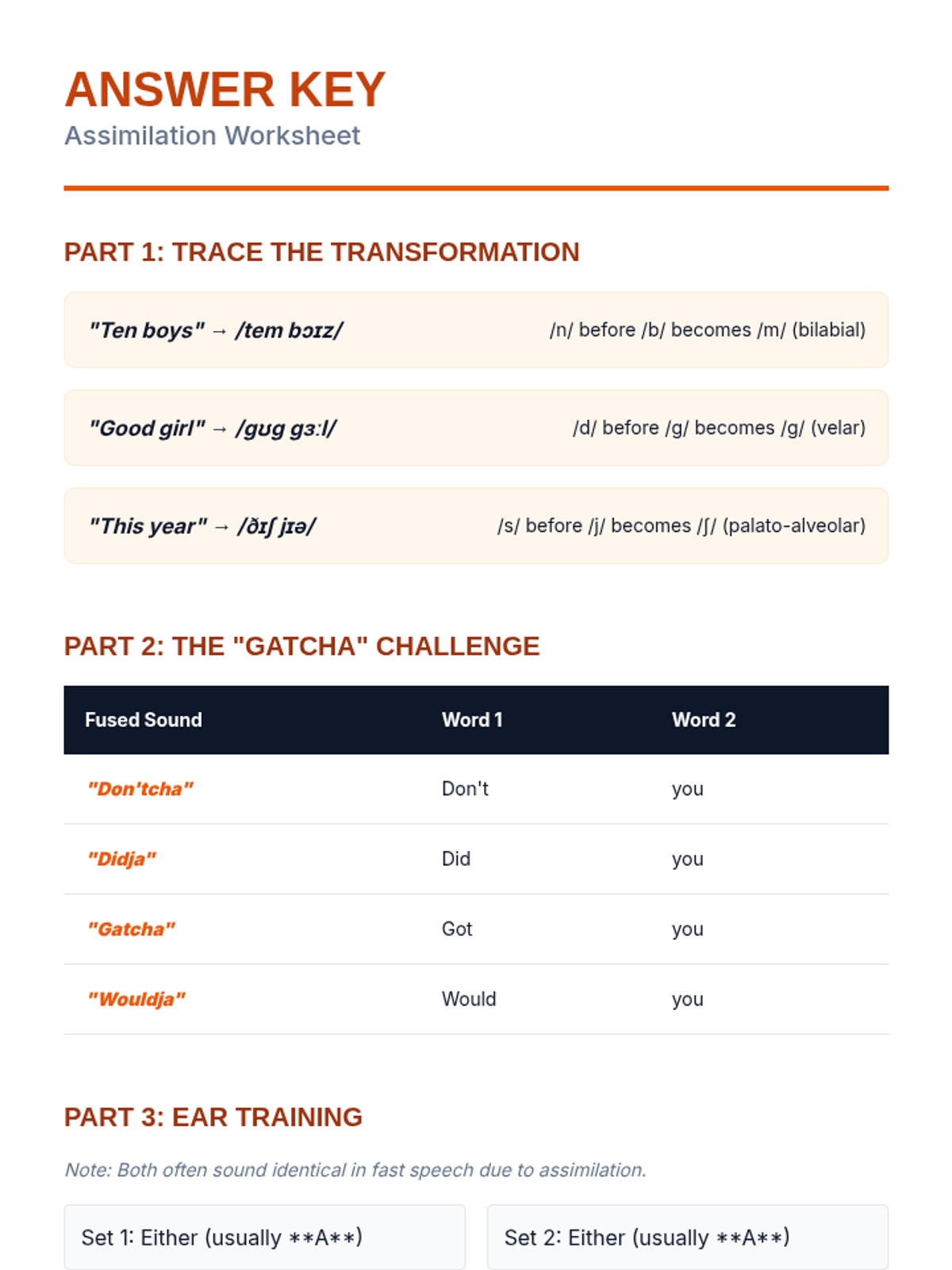
Students learn how sounds influence their neighbors (e.g., 'hand bag' becoming 'hambag'). The lesson uses minimal pair discrimination and dictation exercises to train ears to recognize words despite phonological changes.
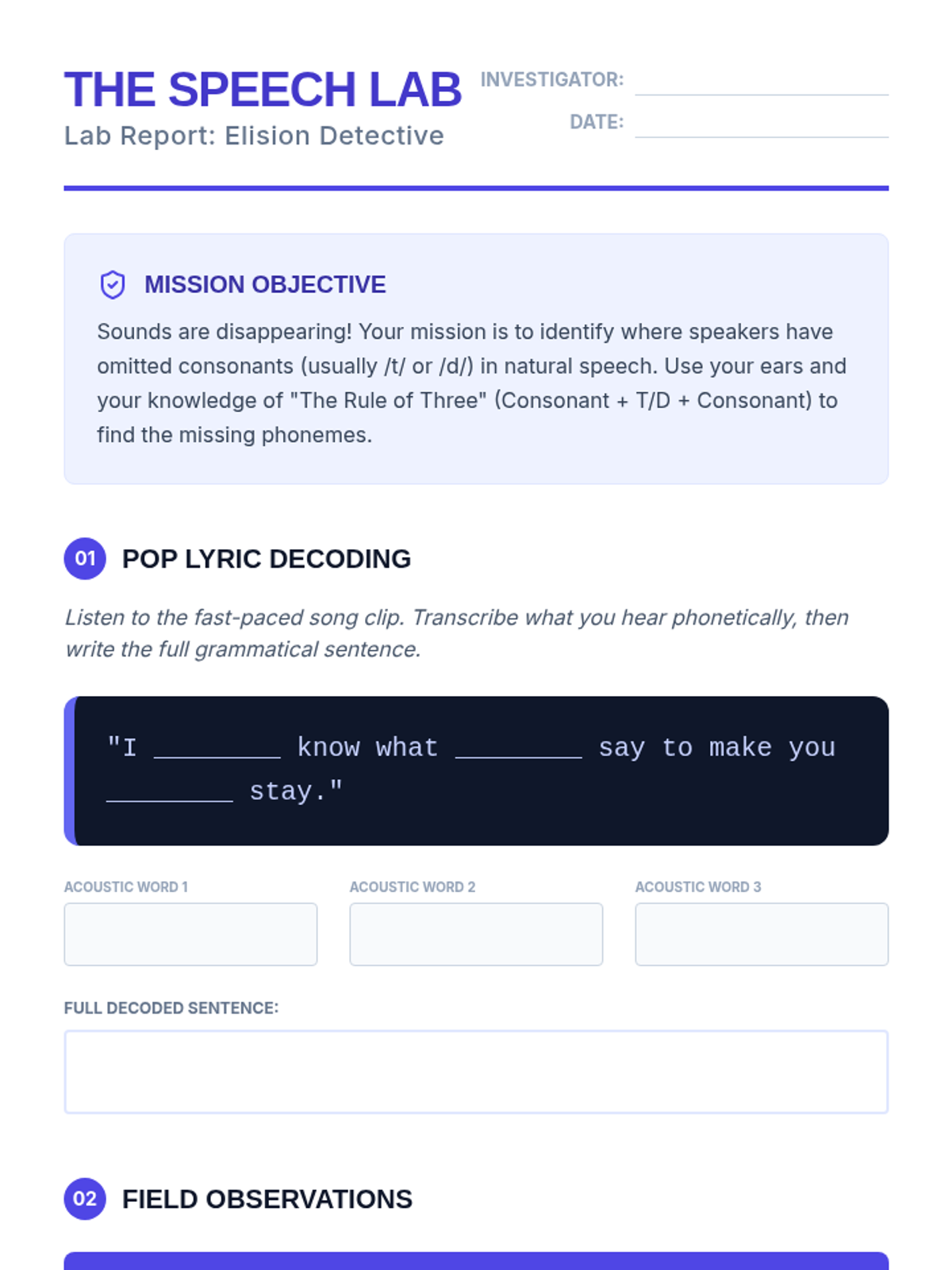
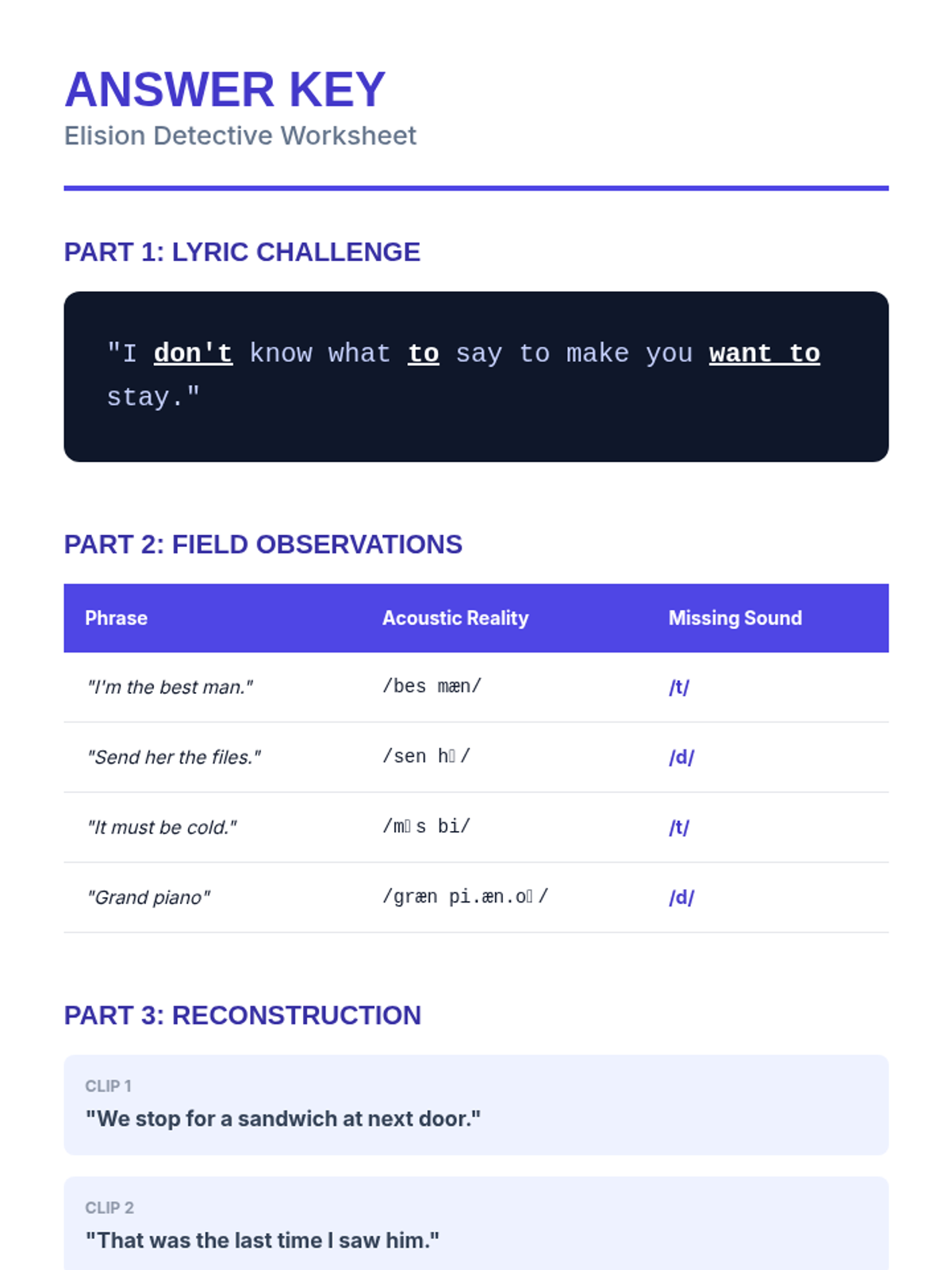
This lesson covers the phenomenon of elision, where sounds (particularly /t/ and /d/) disappear in rapid speech. Students practice listening to high-speed dialogues to identify words that have been 'swallowed' by the speaker.
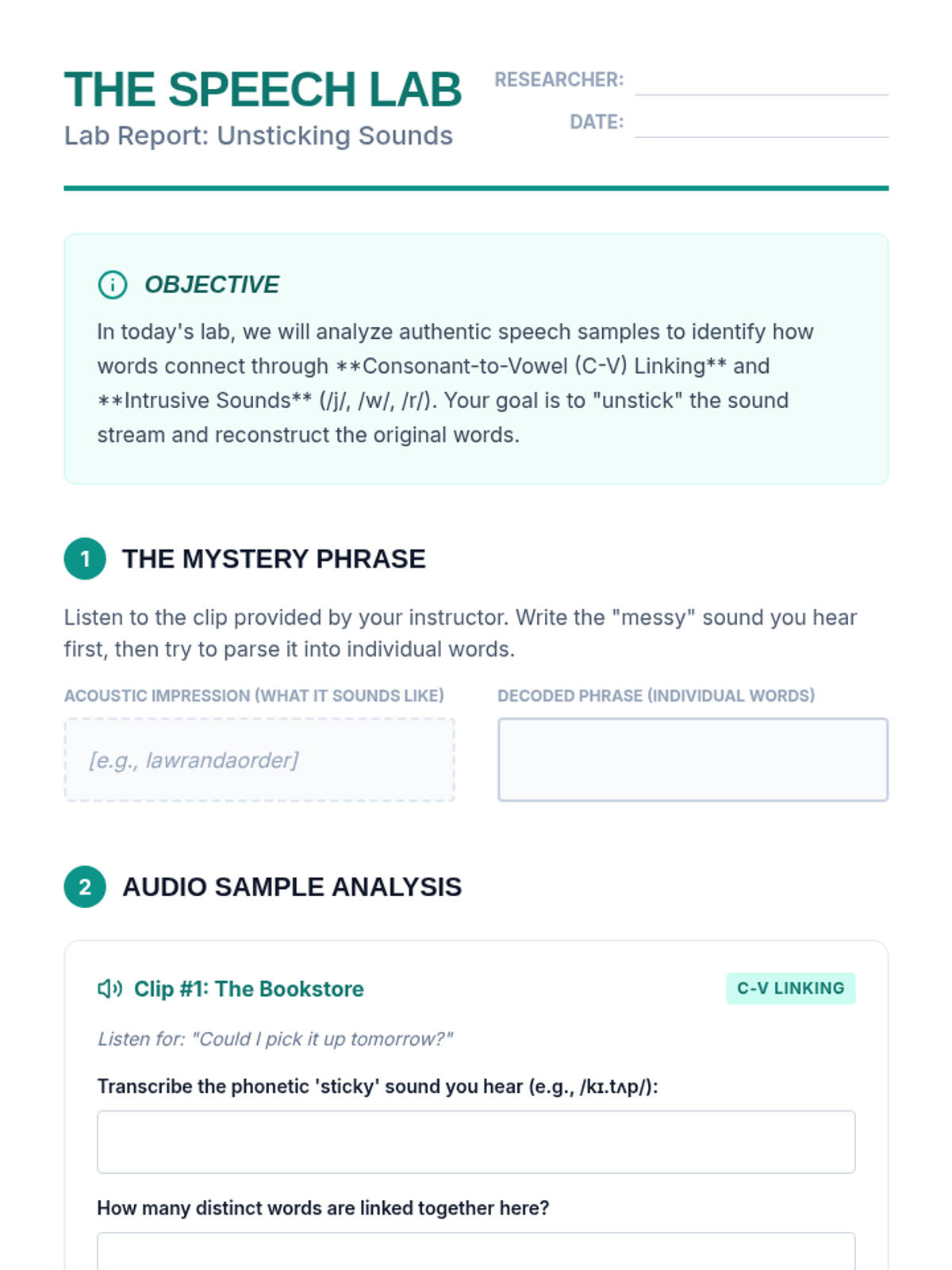
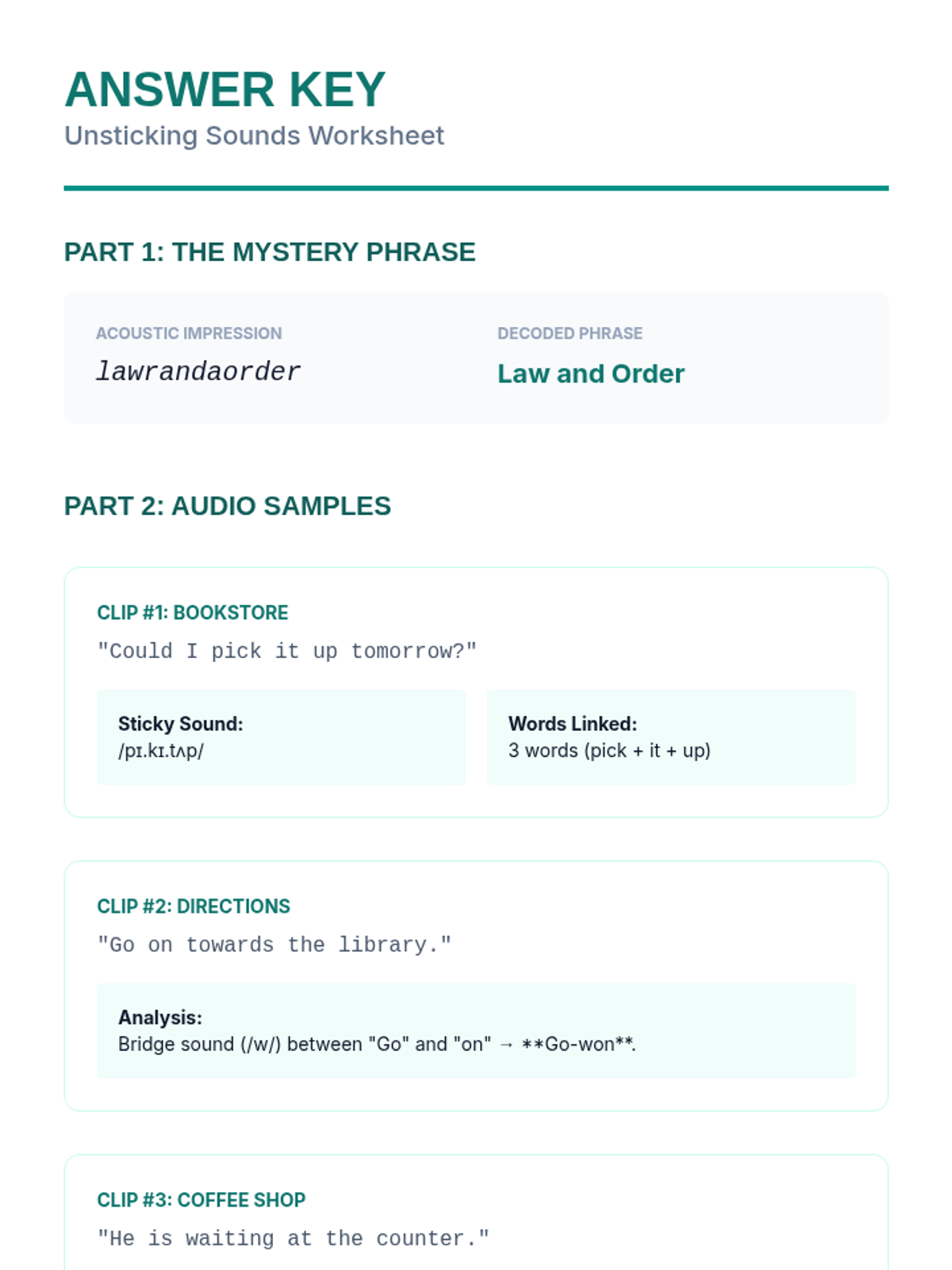
Students investigate how words flow together in natural speech, specifically focusing on consonant-vowel linking and intrusive sounds (/r/, /w/, /j/). They analyze audio samples to 'unstick' connected words.
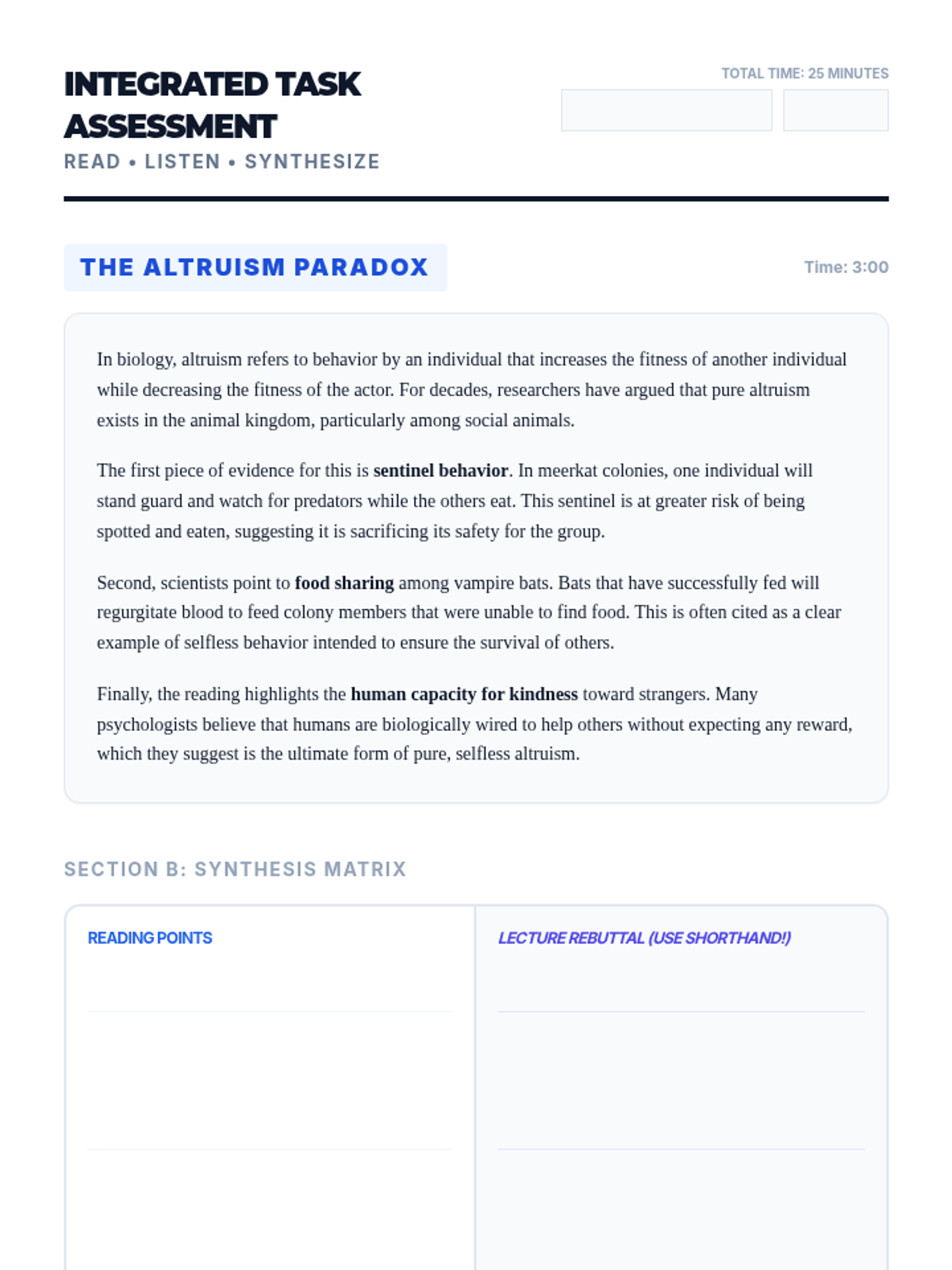
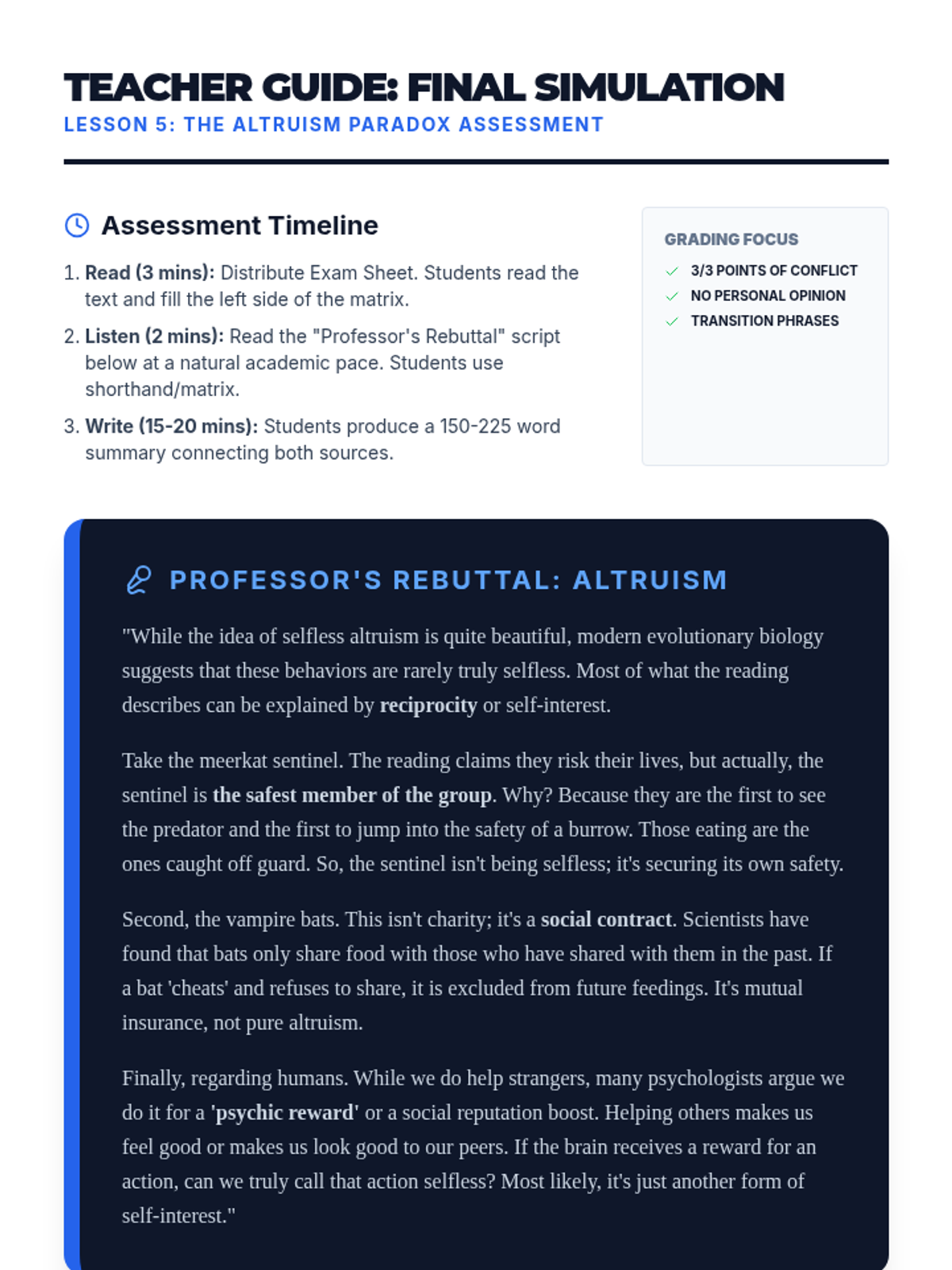
A full-scale simulation of a TOEFL/IELTS integrated task. Students apply shorthand, signpost recognition, and synthesis skills to a new topic, producing a comprehensive written response.
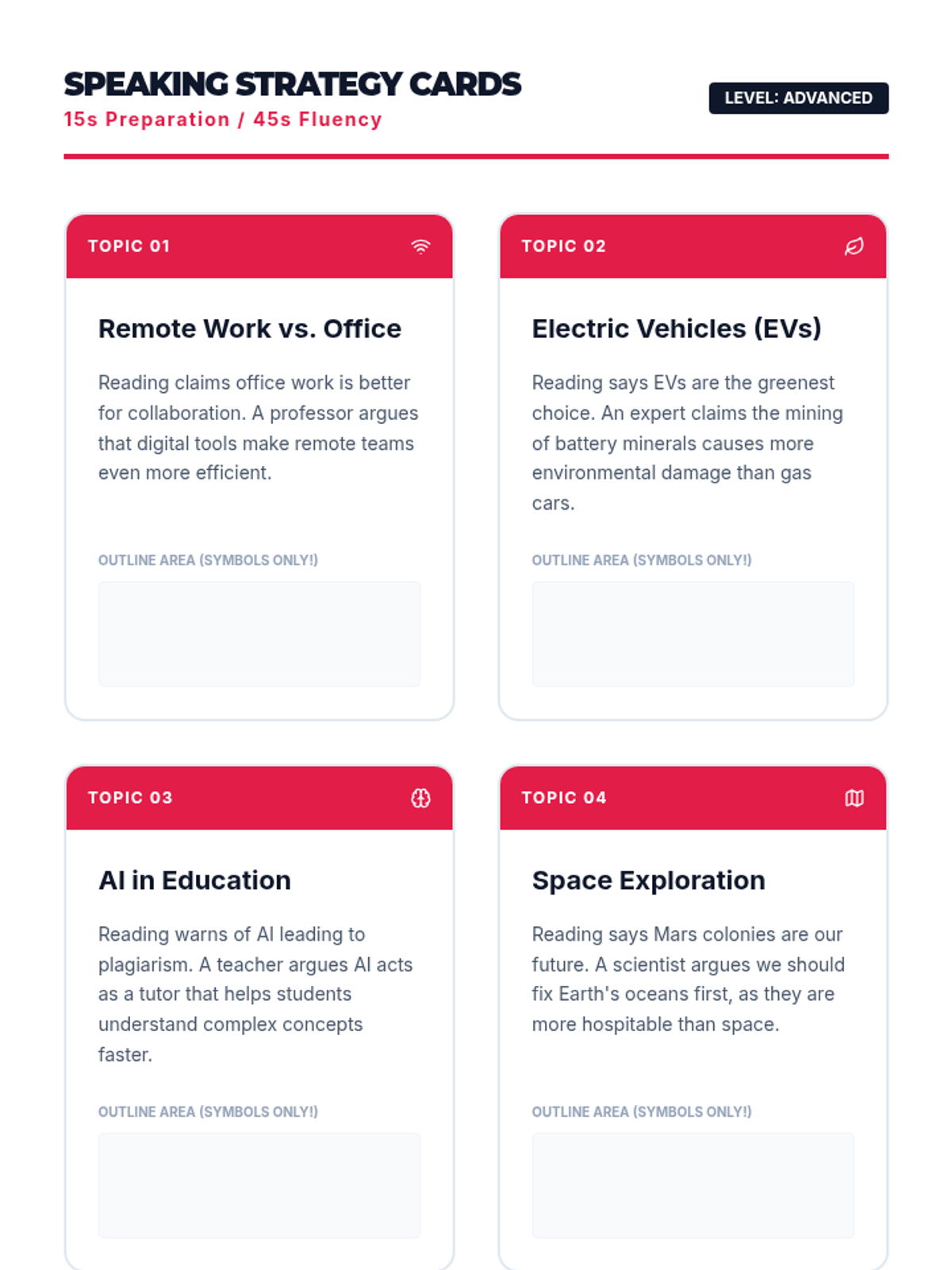
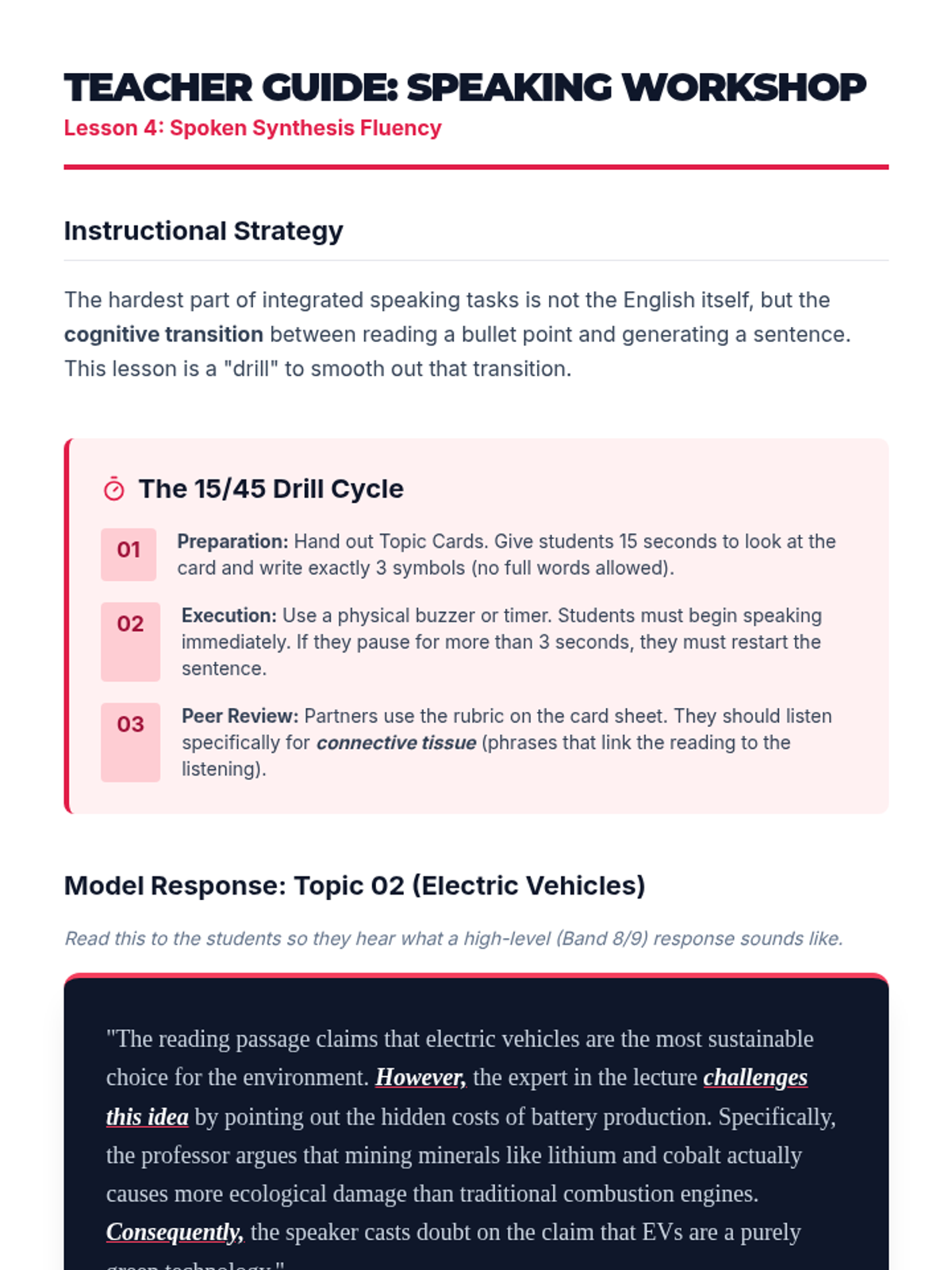
Students focus on the speaking section of integrated exams. They practice turning shorthand notes into fluent, grammatically correct spoken responses, emphasizing the use of transition phrases and maintaining eye contact.
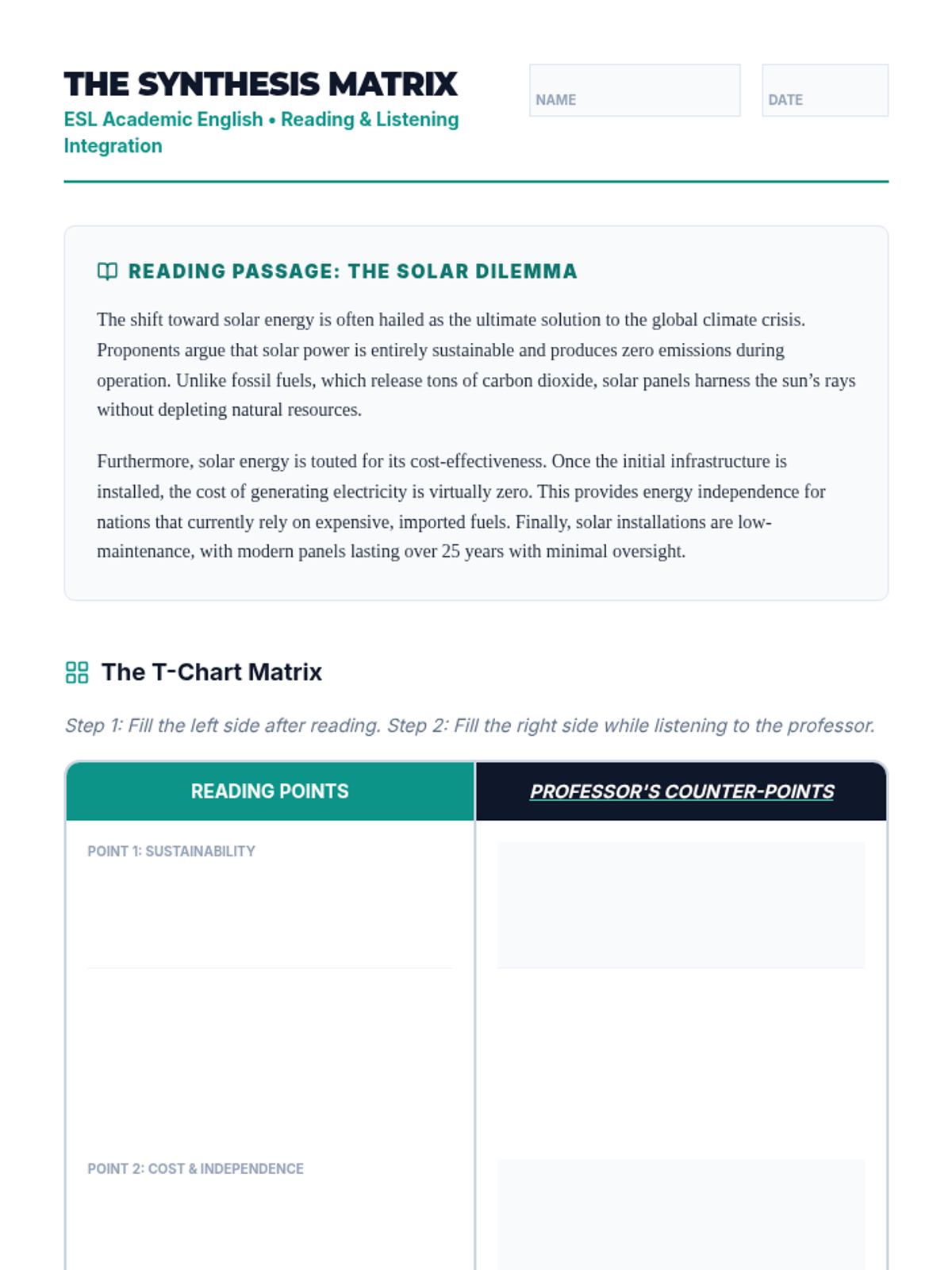
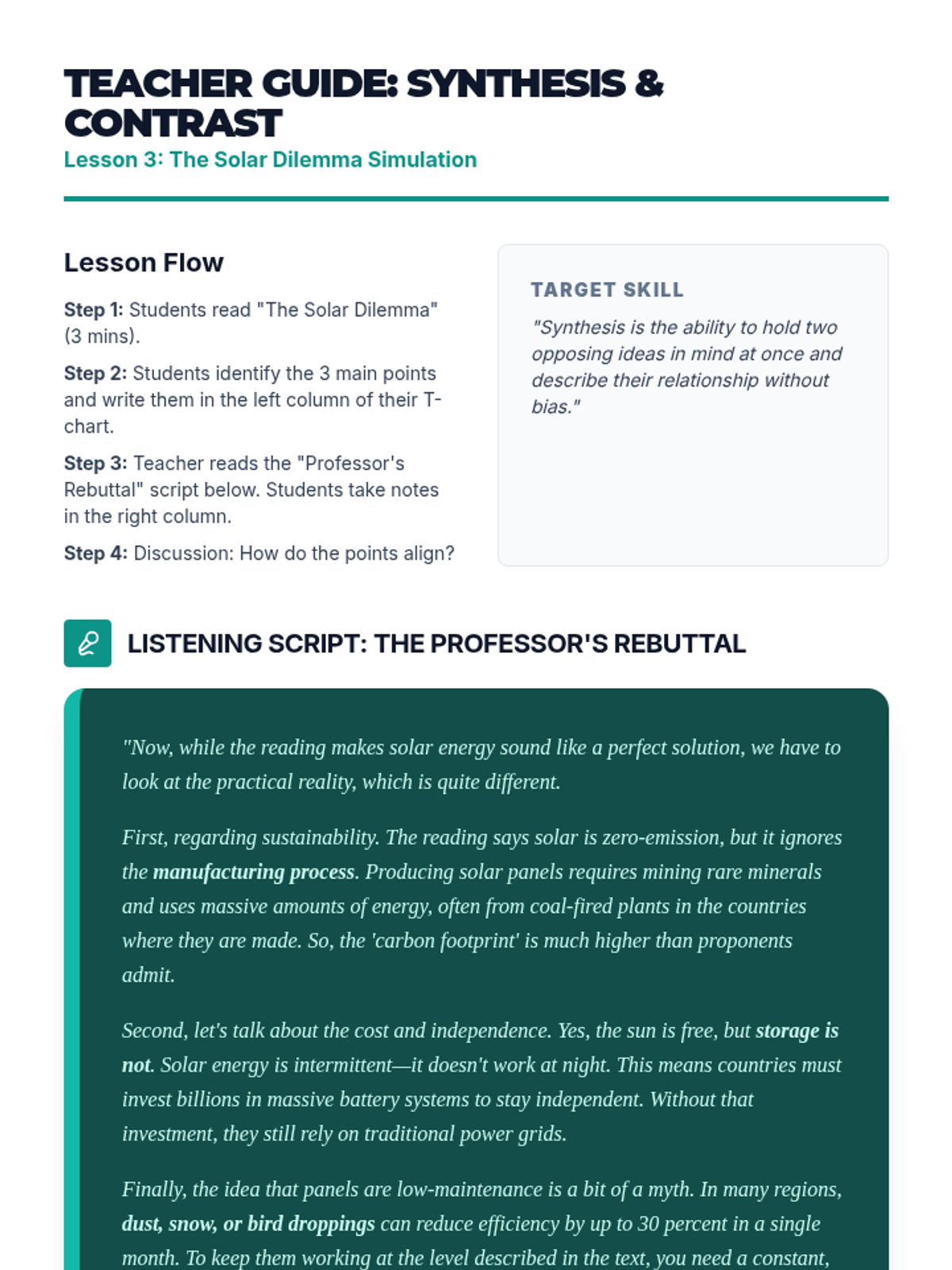
Students practice the core skill of integrated tasks by comparing a written passage with a contrasting audio lecture. They learn to use T-charts to map points of conflict and support between sources.
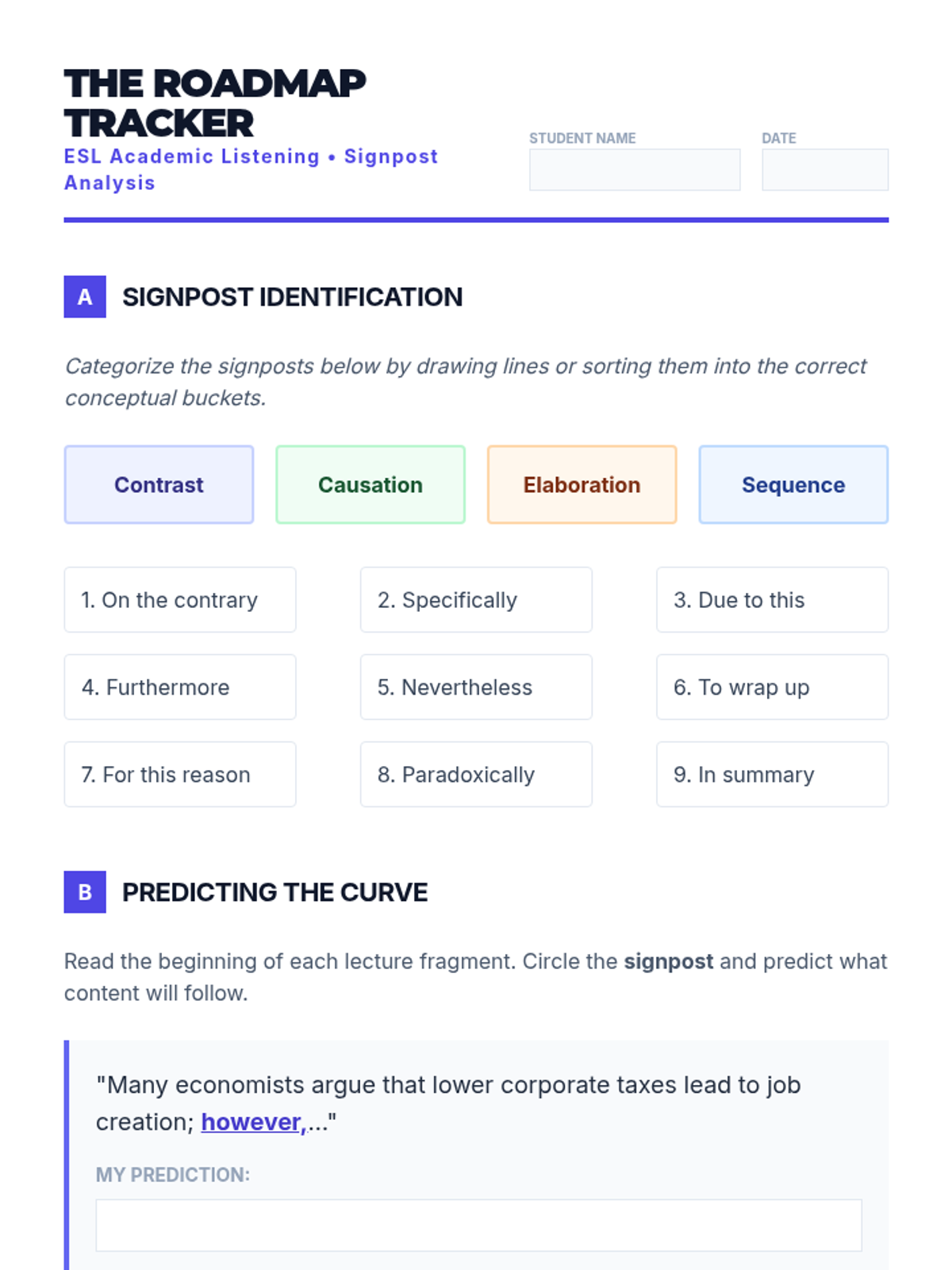
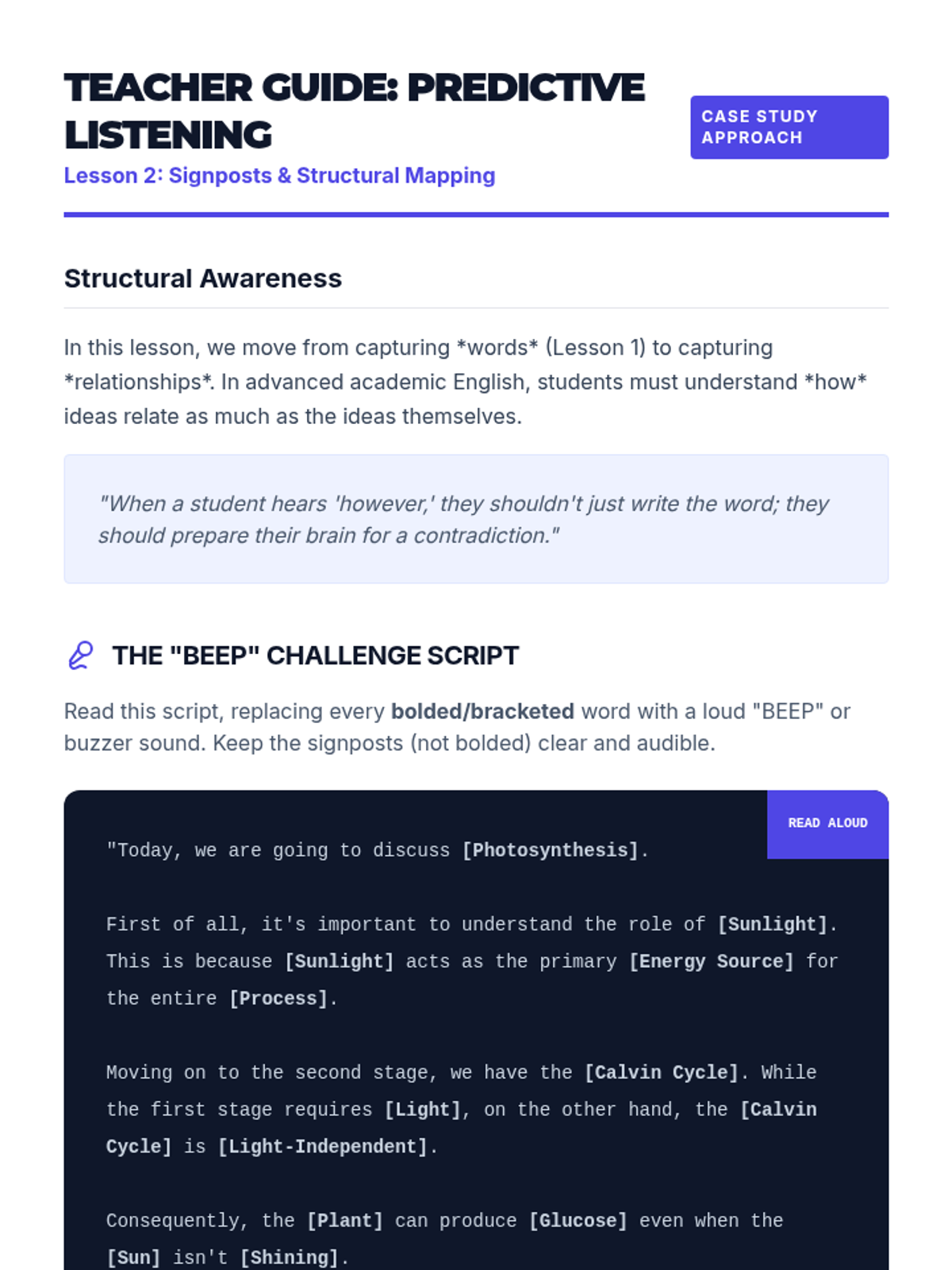
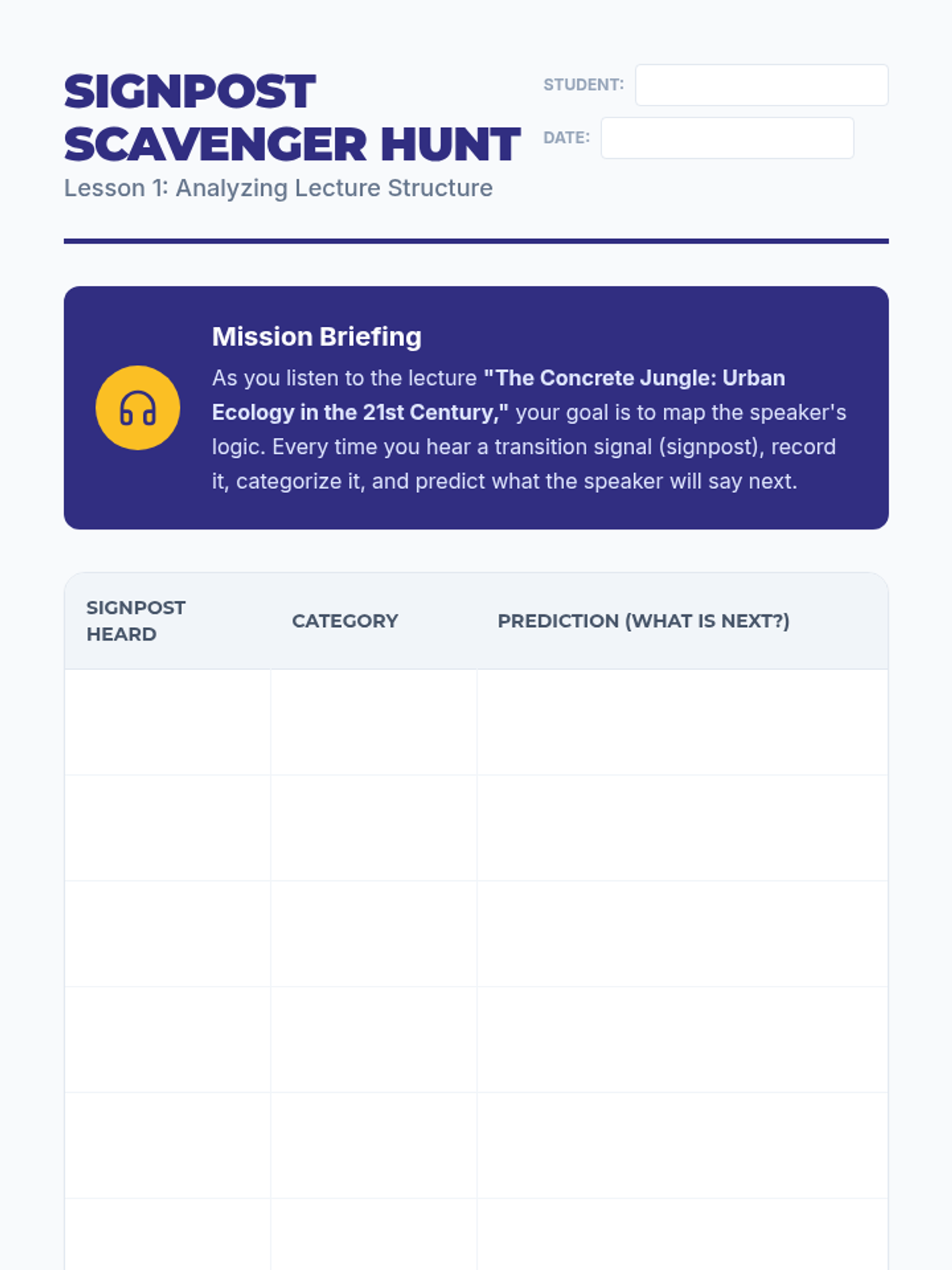
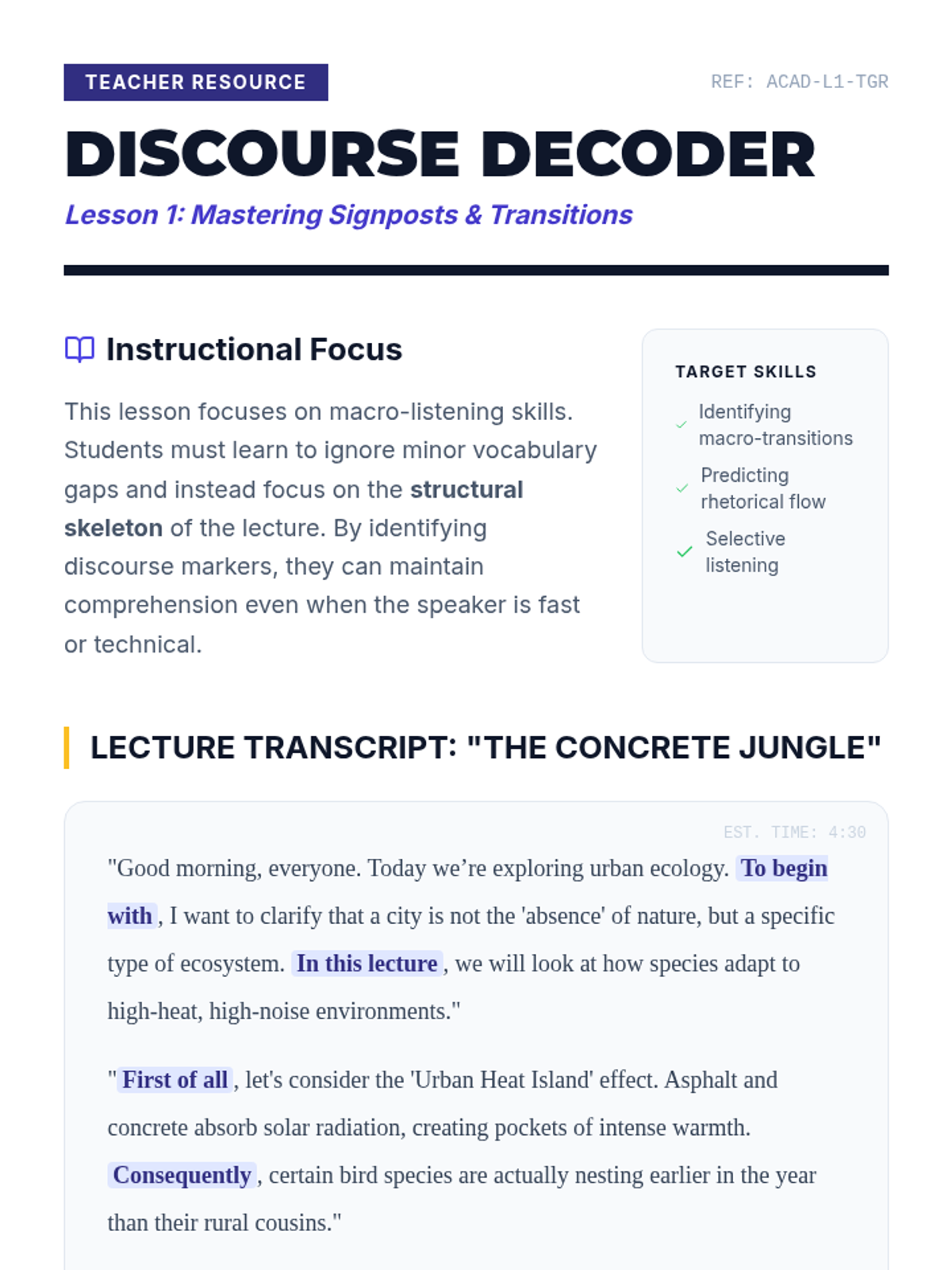
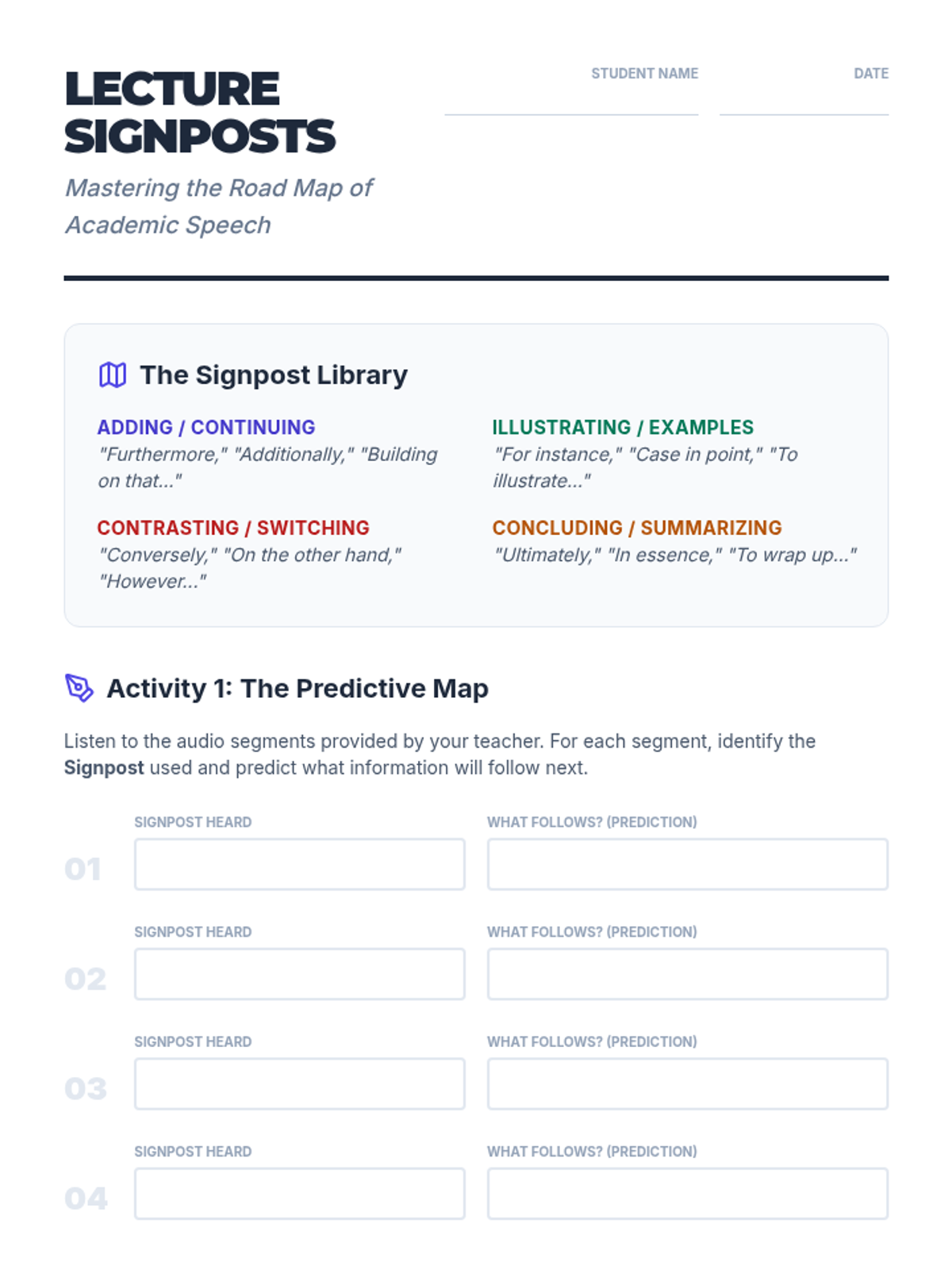
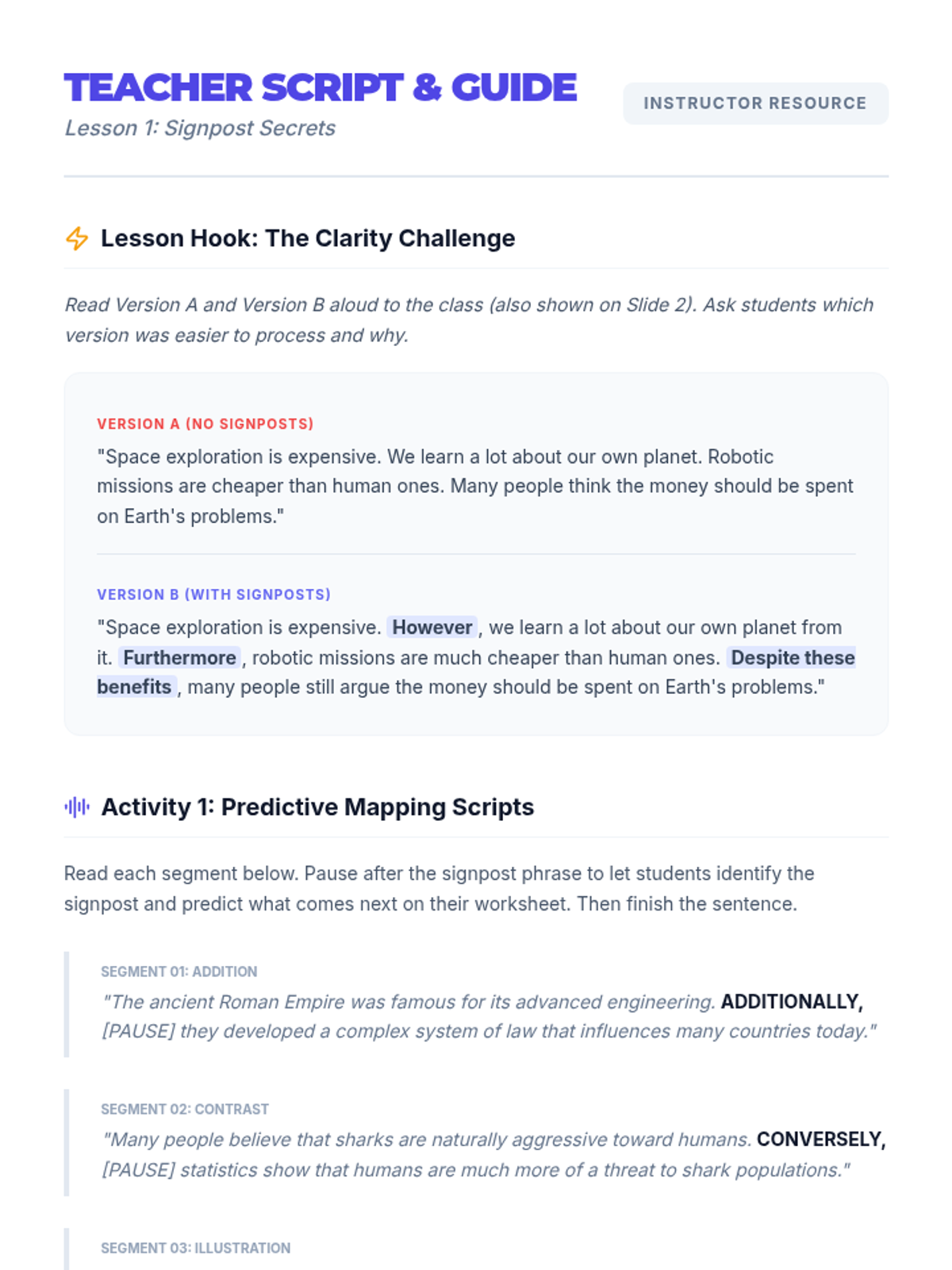
Students learn to recognize verbal markers that indicate the organizational structure of a lecture. They practice predicting upcoming content based on these 'signposts' to categorize their notes as they listen.
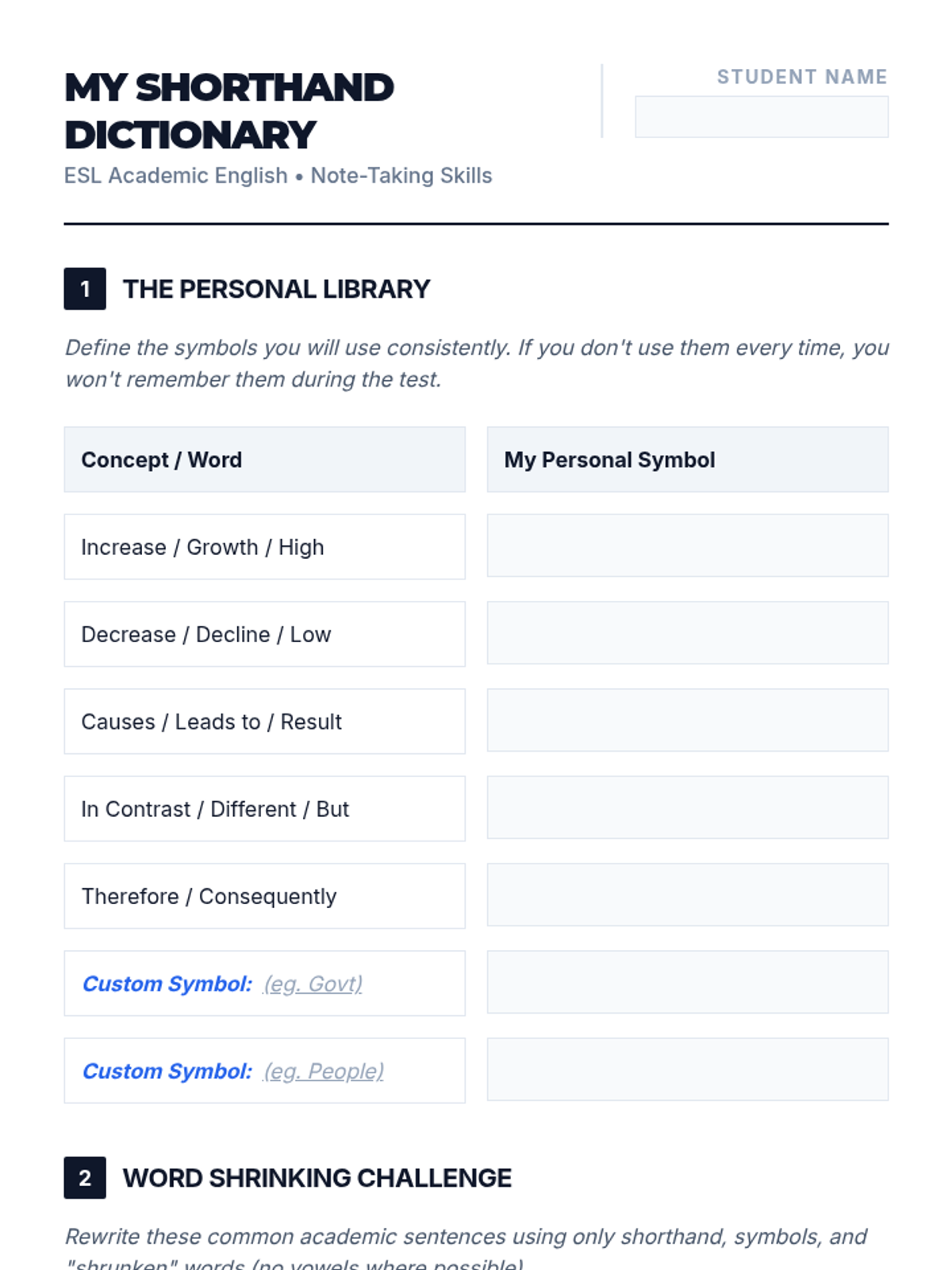
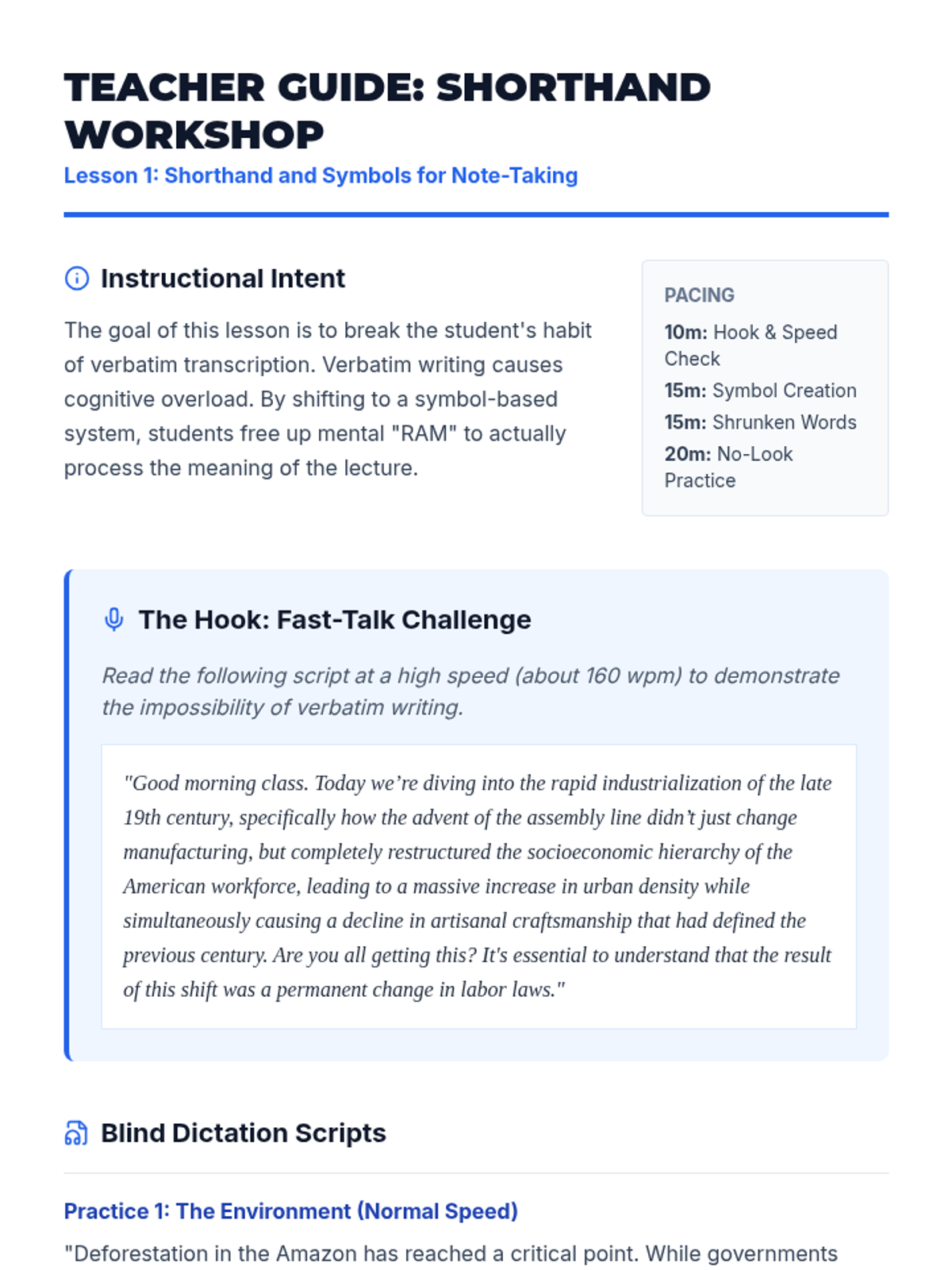
Students develop a personal shorthand system using symbols and abbreviations to capture academic audio in real-time. The lesson emphasizes speed and selective capture over verbatim transcription.
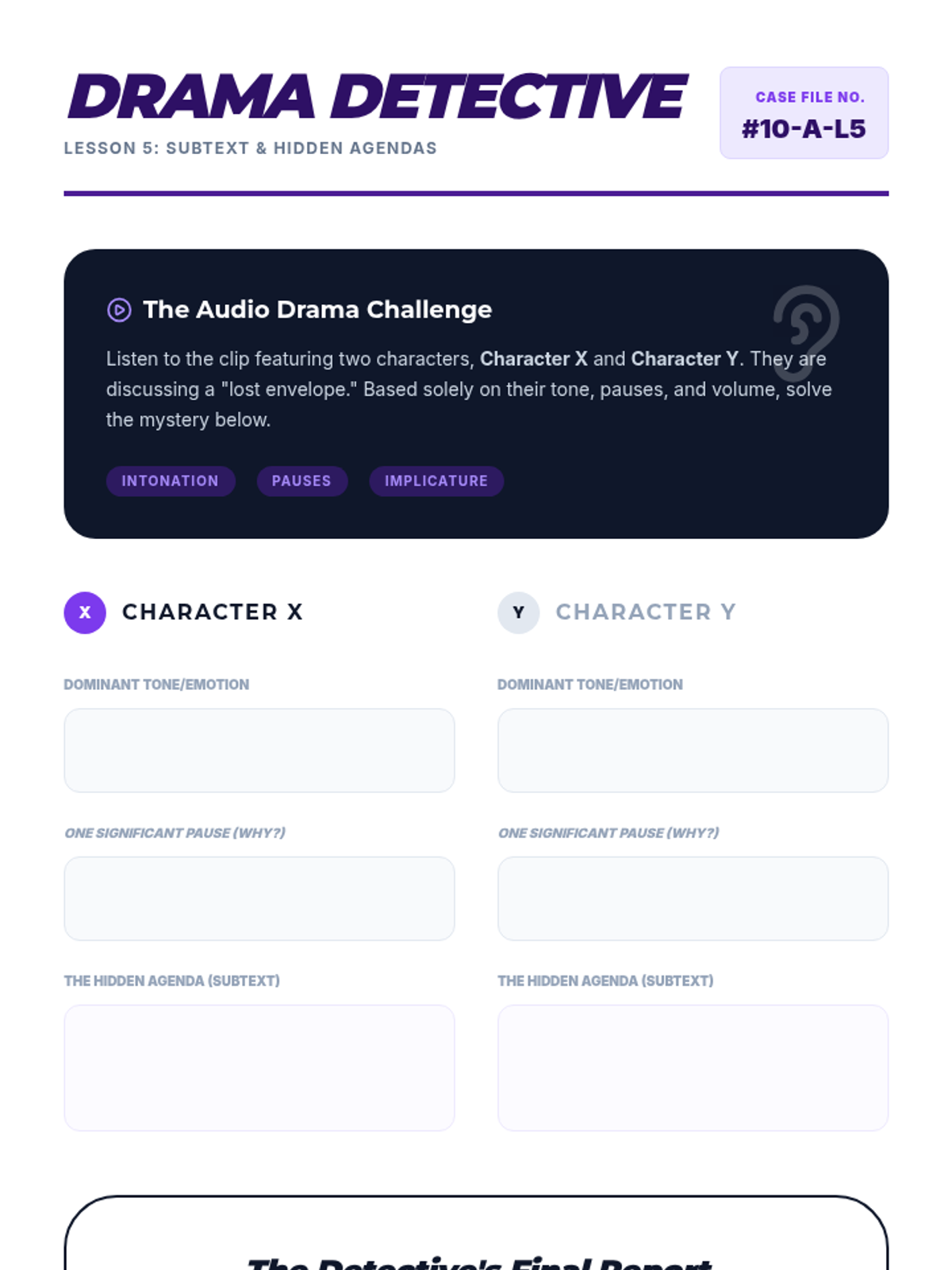
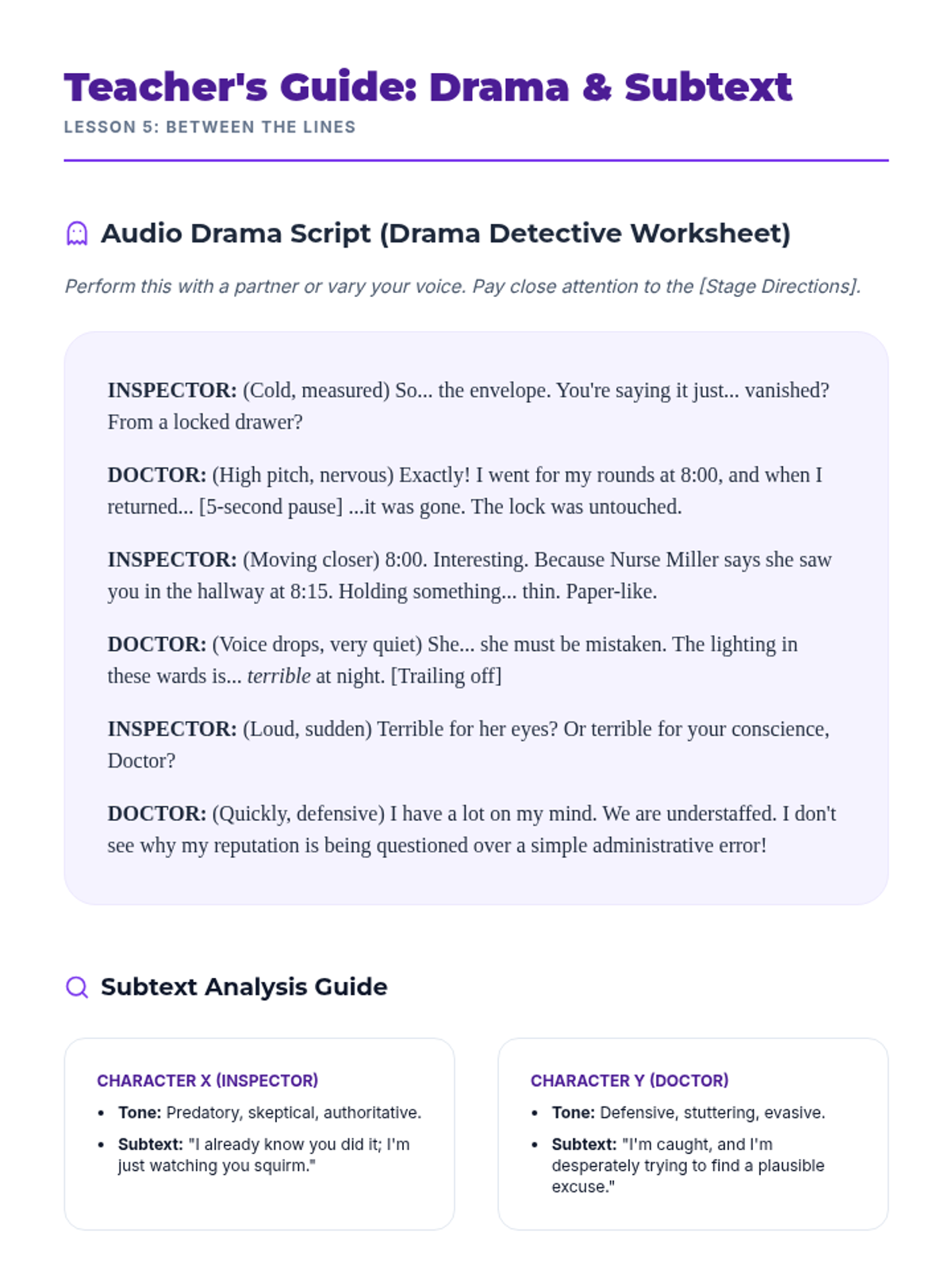
Analyzes subtext and inference in audio drama, focusing on character relationships and hidden agendas revealed through pauses and volume.
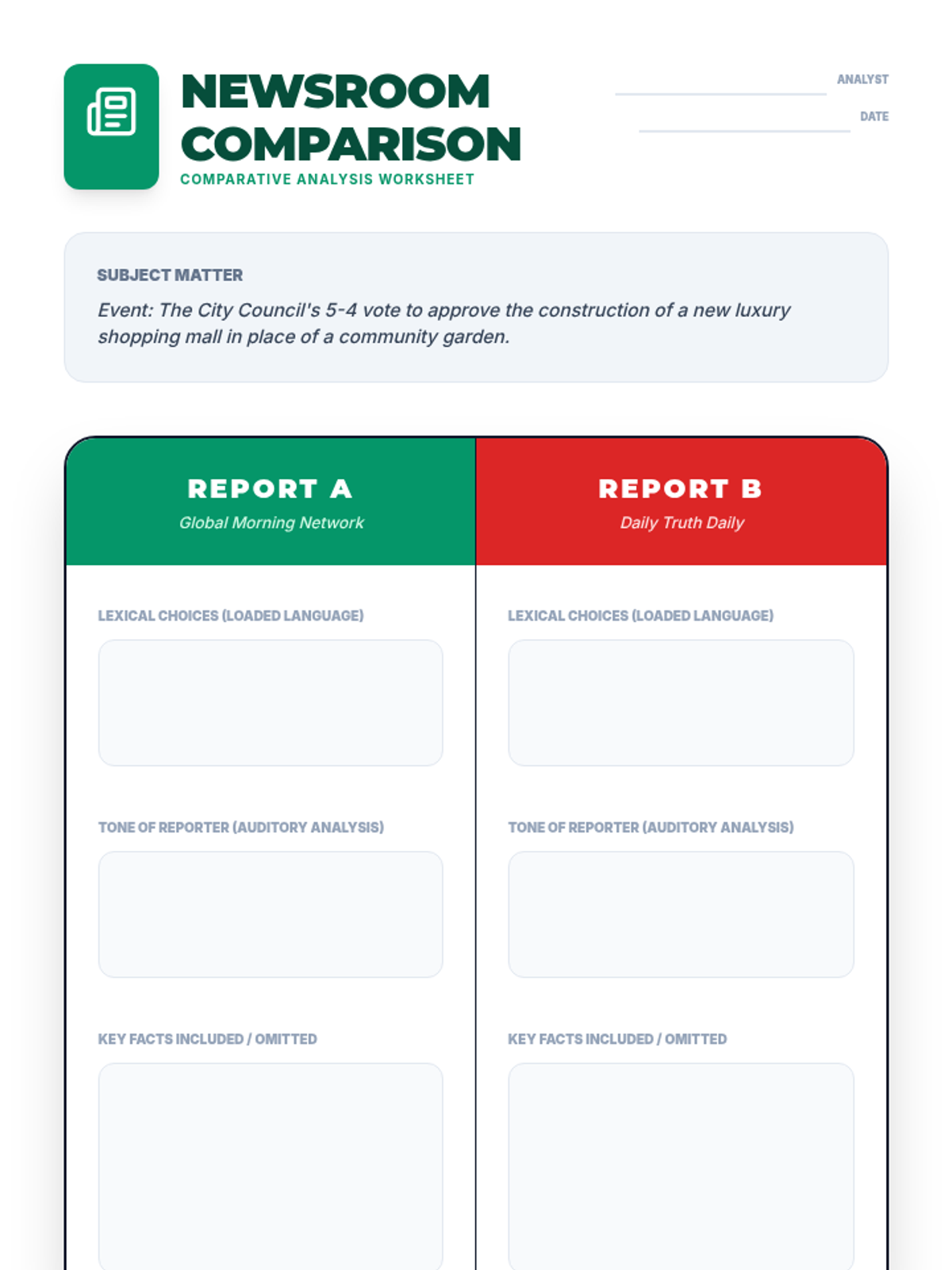
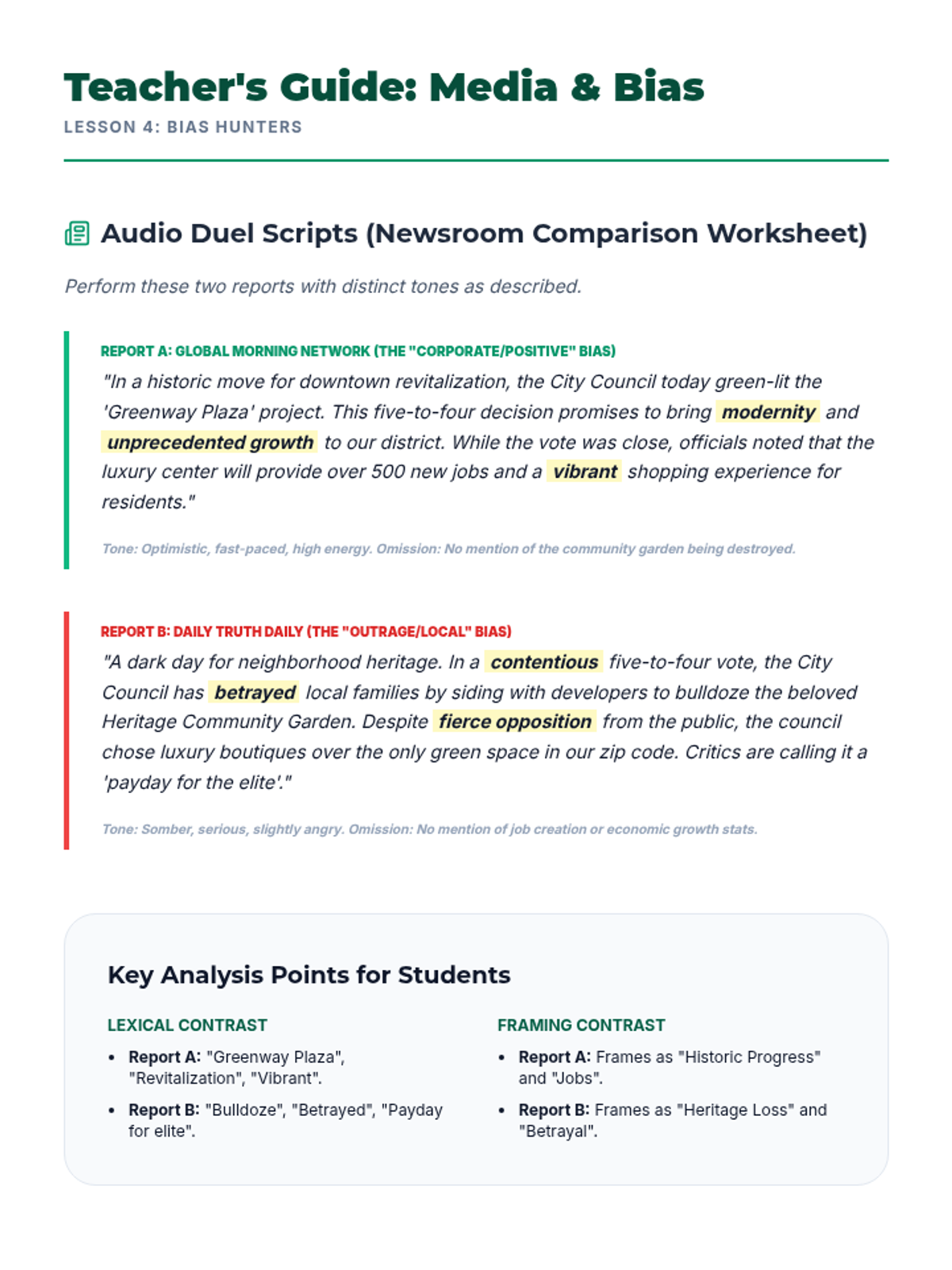
Focuses on detecting media bias through lexical choice, framing, and tone in news reports.
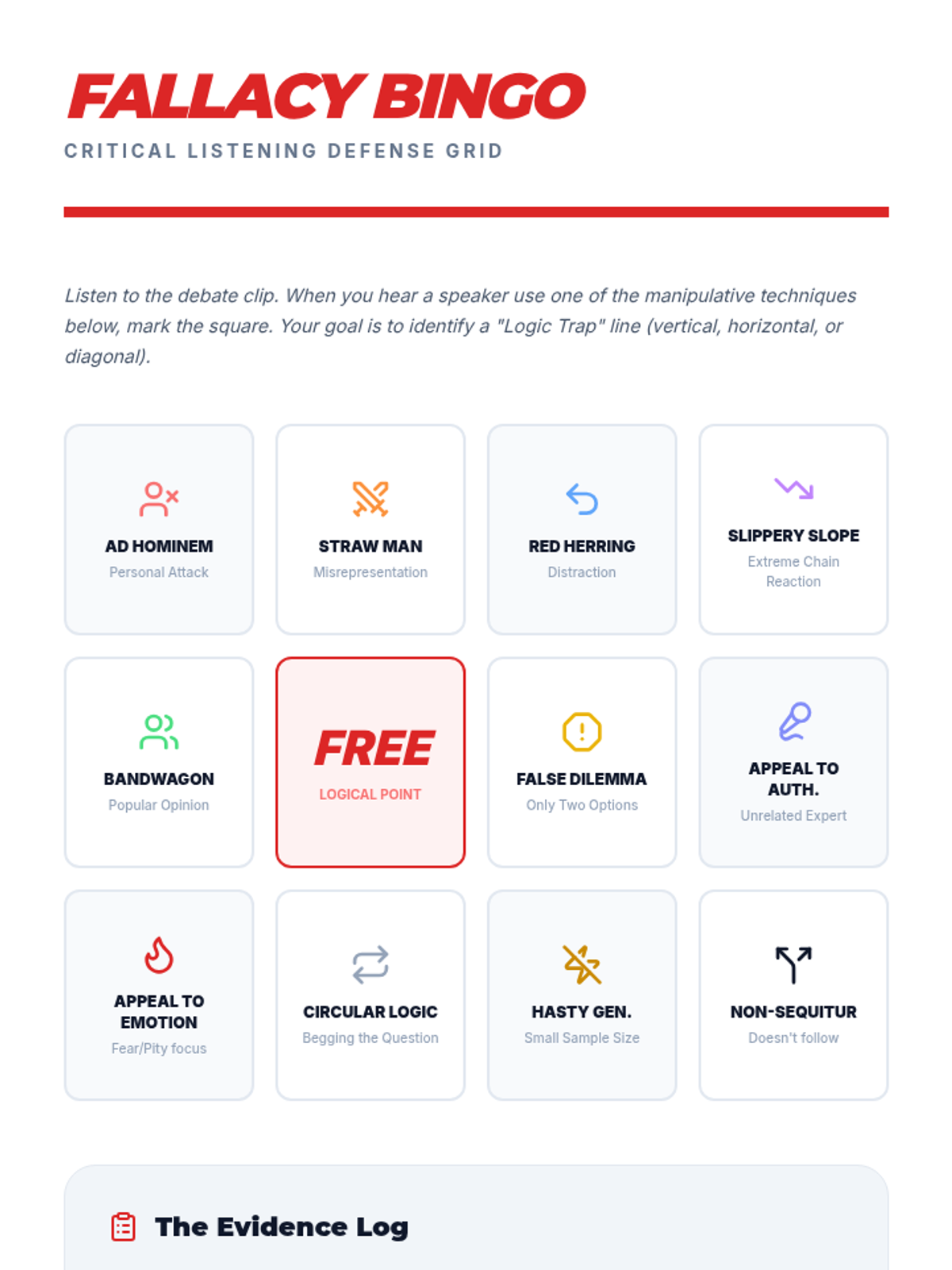
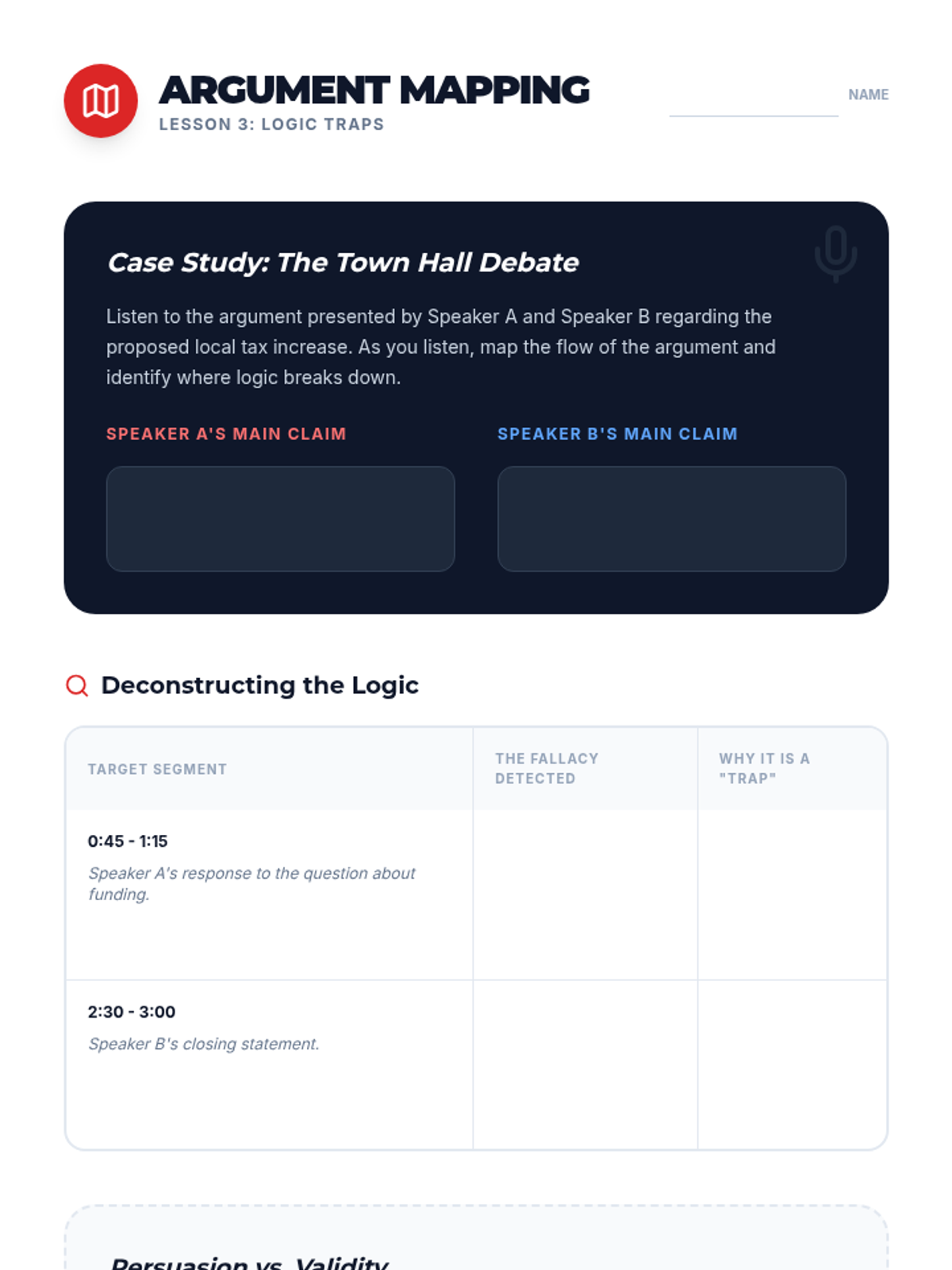
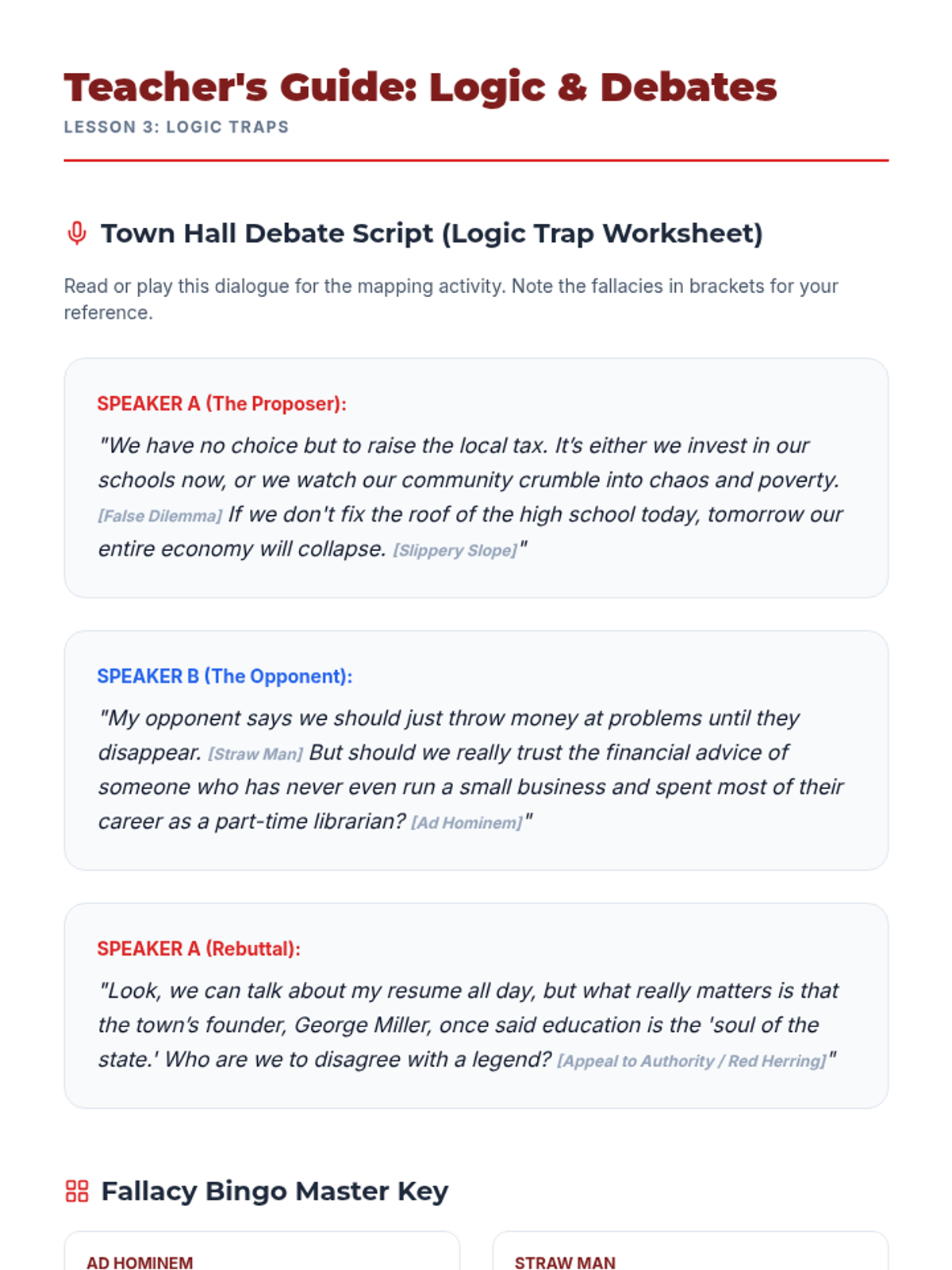
Teaches students to identify logical fallacies in debates and town halls, mapping out arguments to see where logic fails despite persuasive delivery.
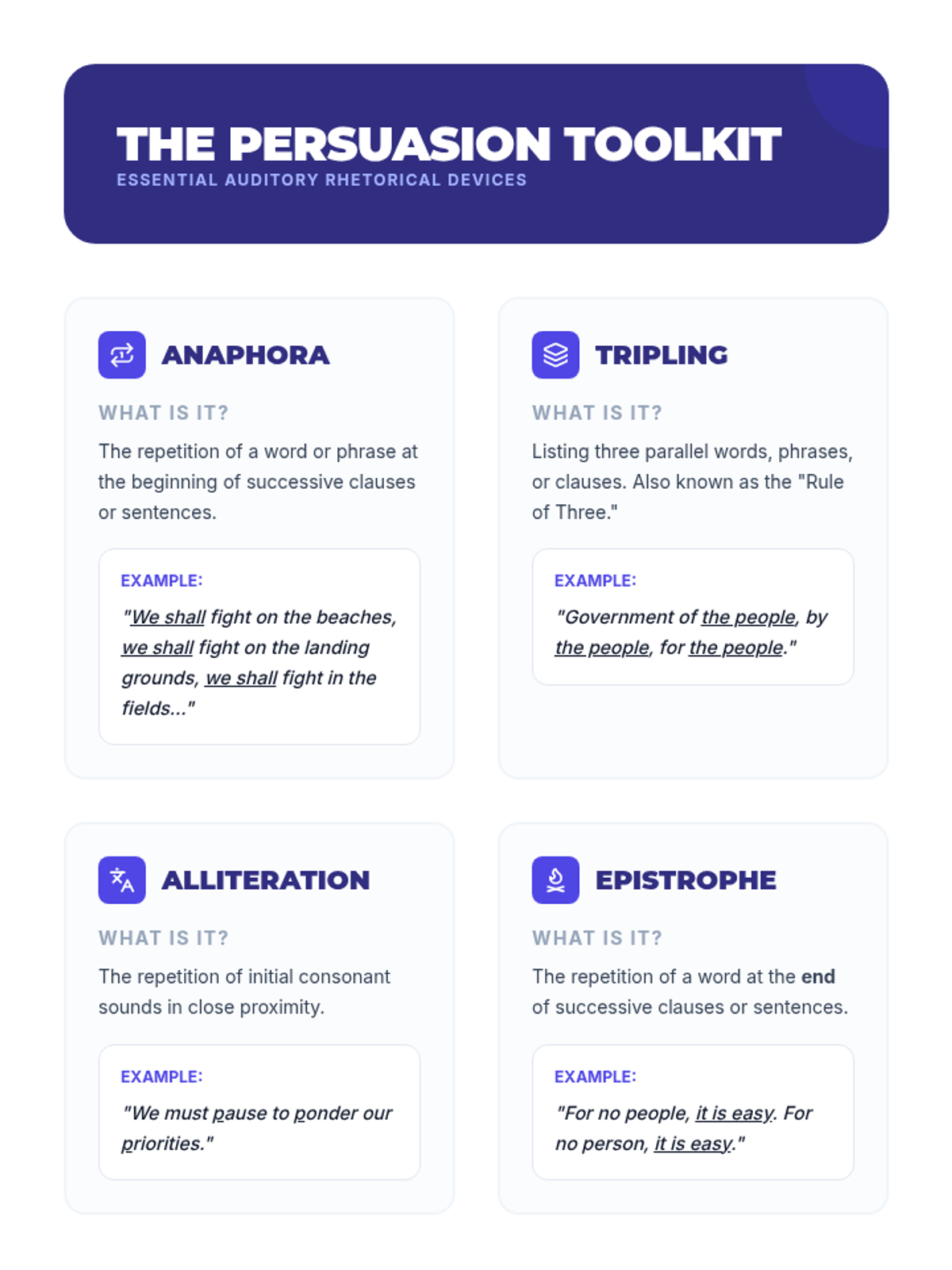
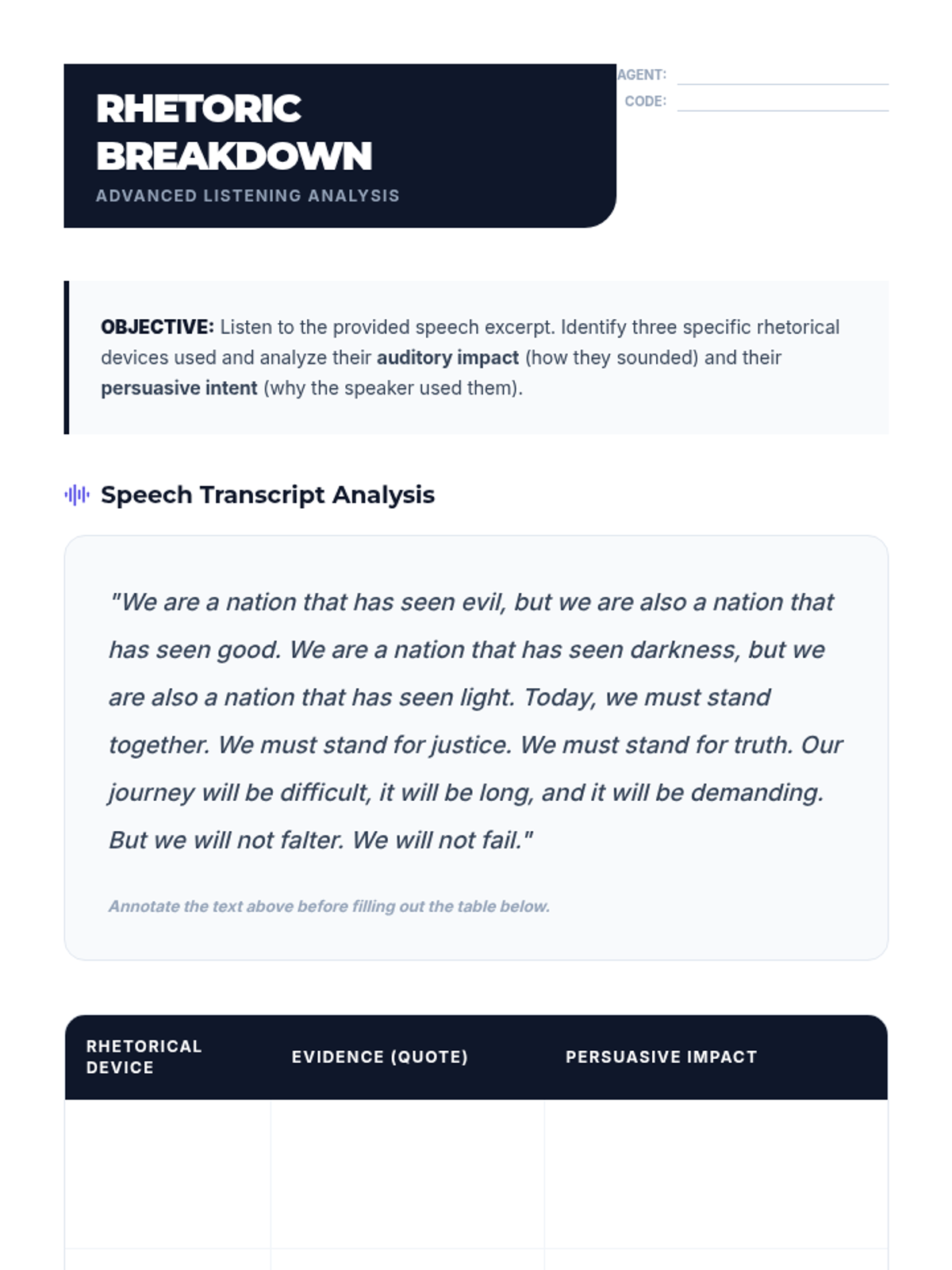
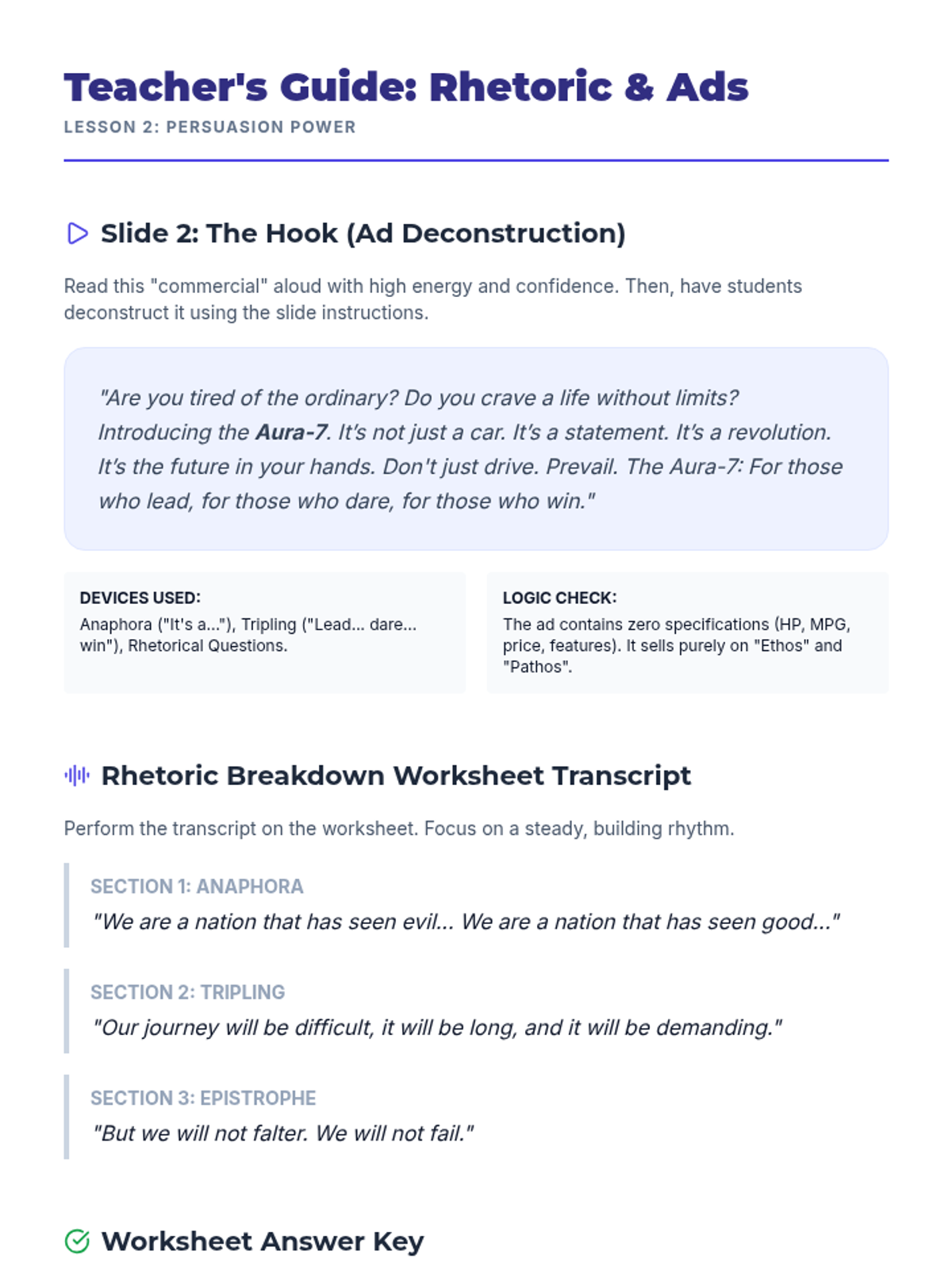
Introduces auditory rhetorical devices such as anaphora and tripling, analyzing their emotional impact in persuasive speaking.
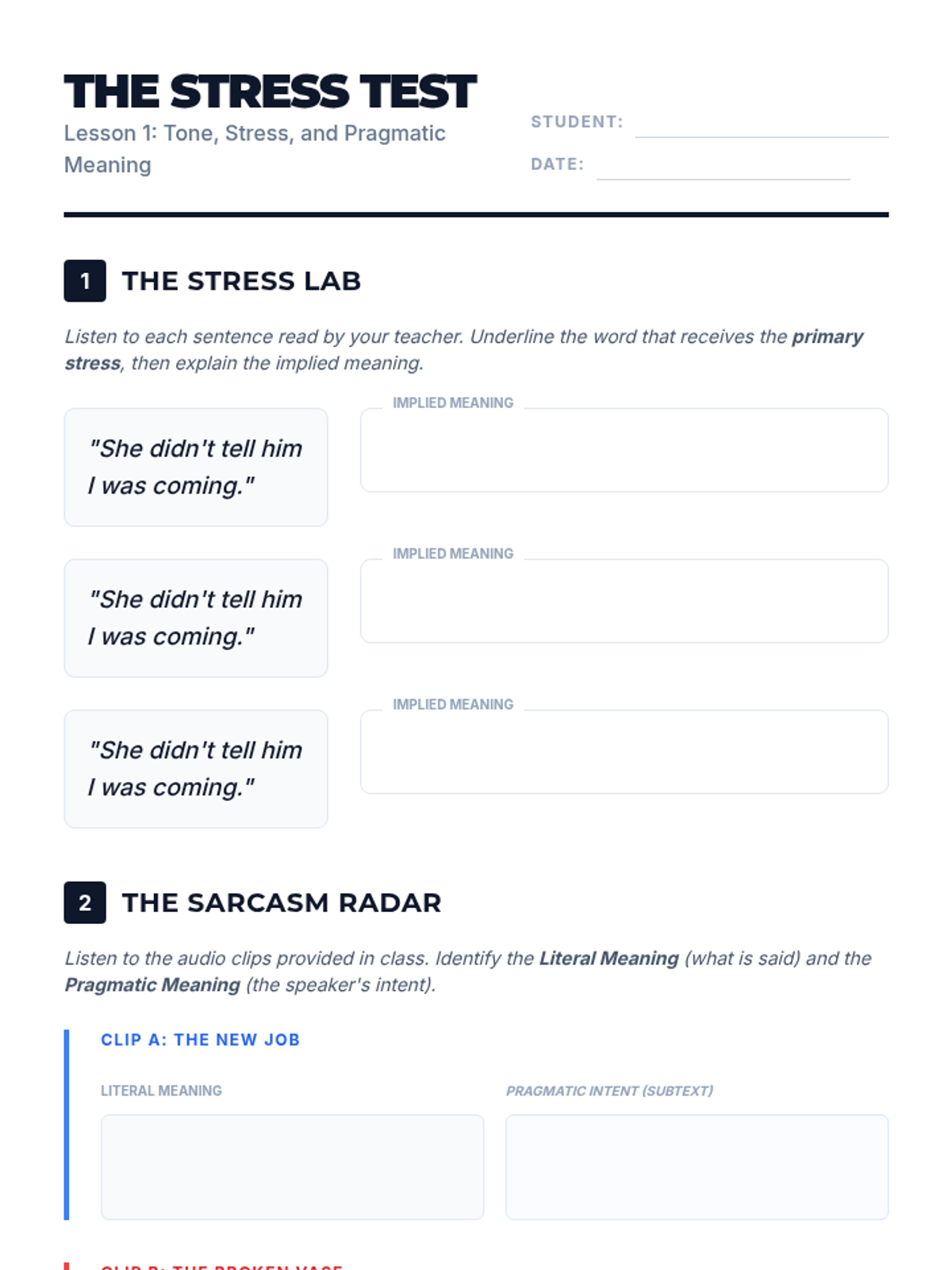
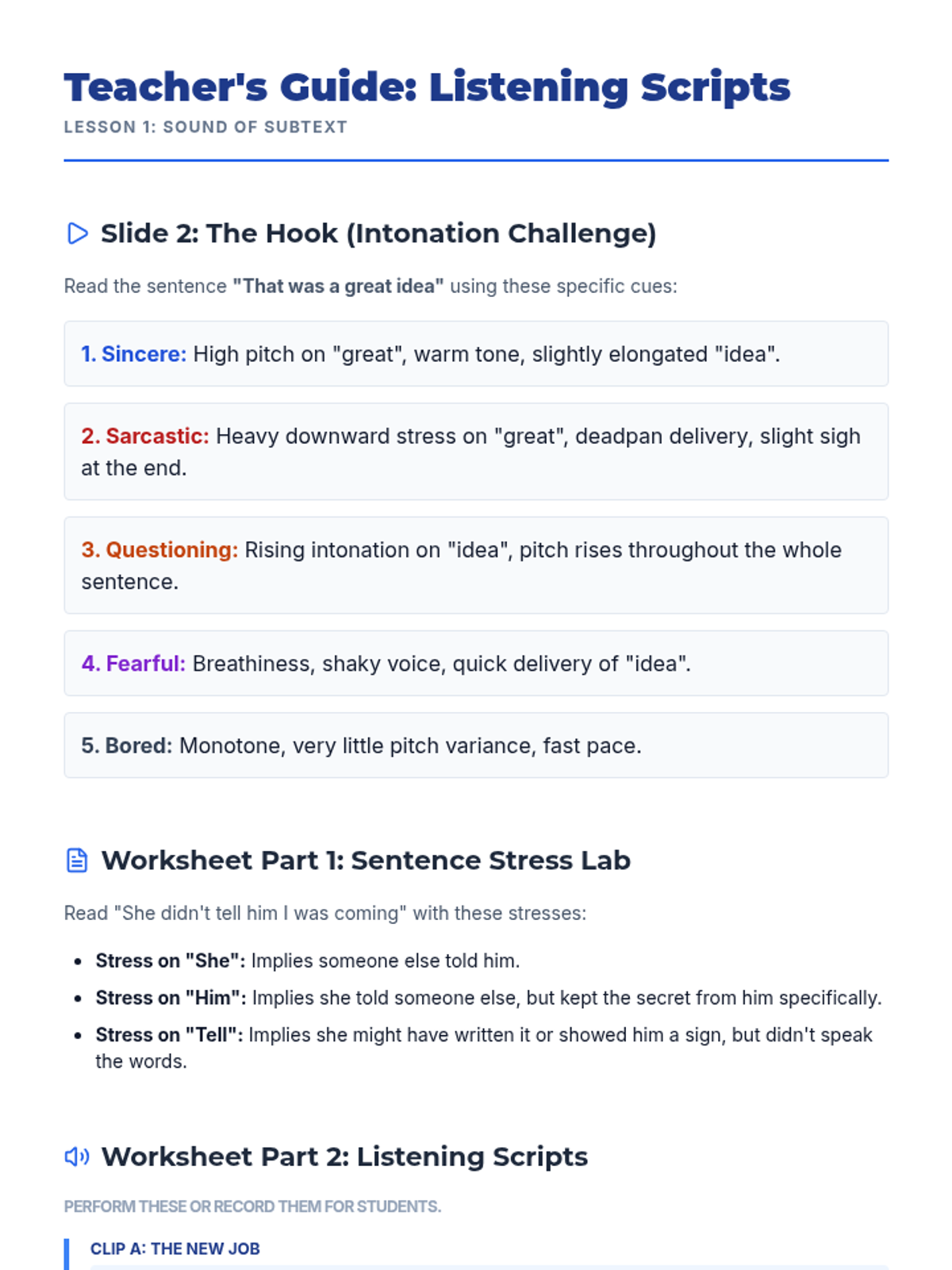
Focuses on how intonation, sentence stress, and tone change the pragmatic meaning of utterances, with a specific emphasis on detecting sarcasm and irony.
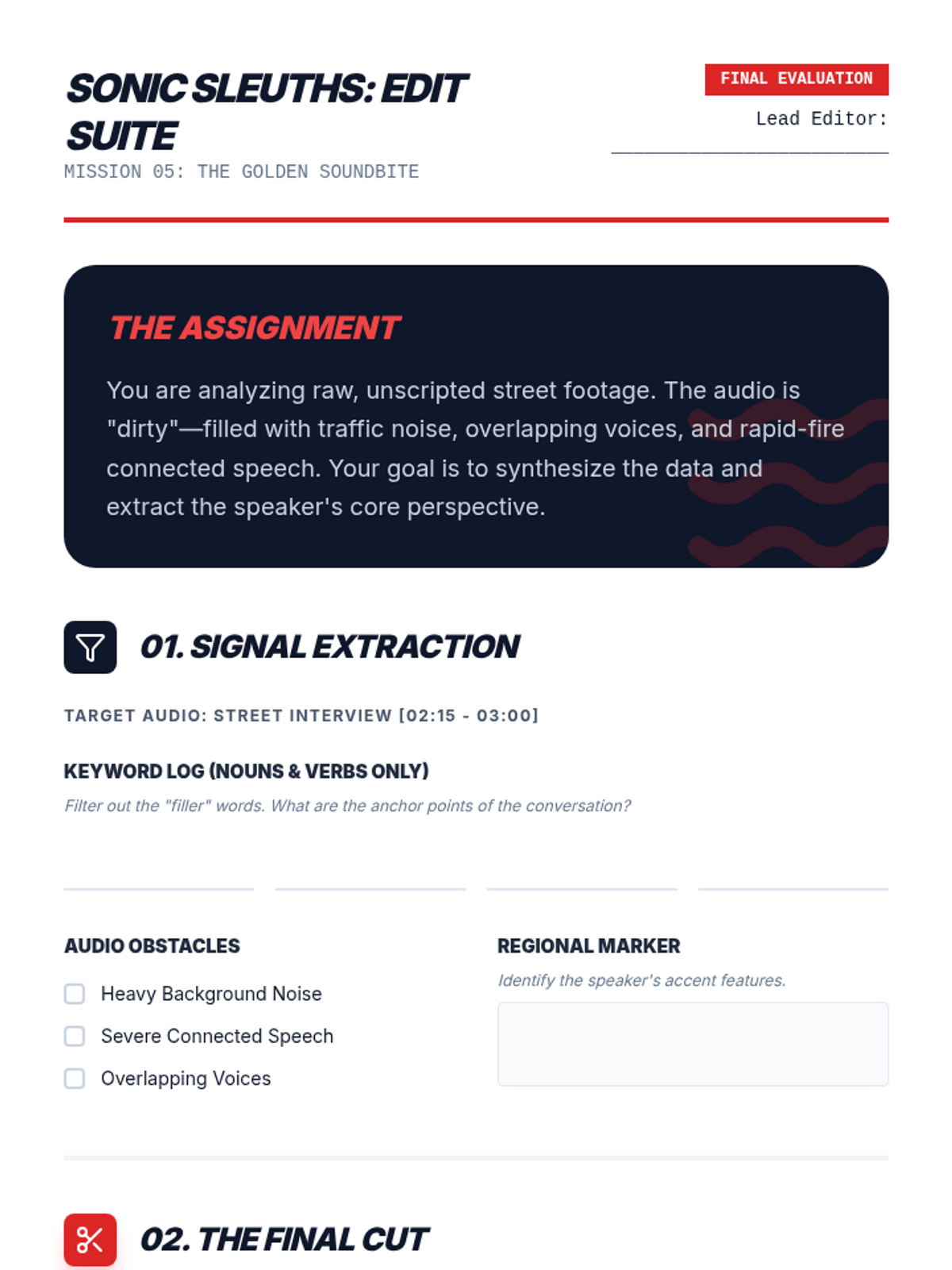
Students synthesize their skills by analyzing unscripted interviews with background noise and overlapping speech to extract core opinions.
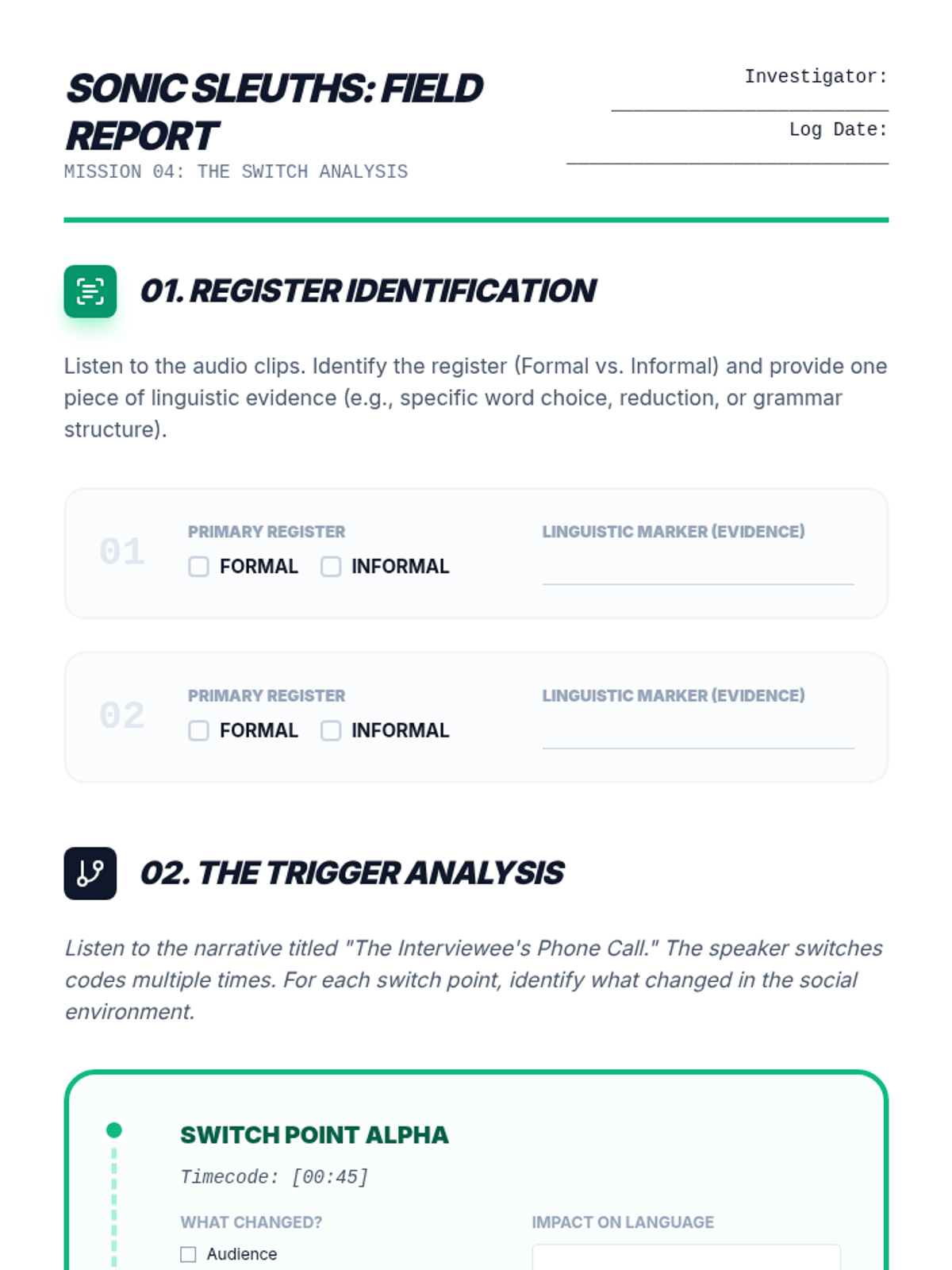
An exploration of how and why speakers shift registers or dialects based on social dynamics, audience, and emotional state.
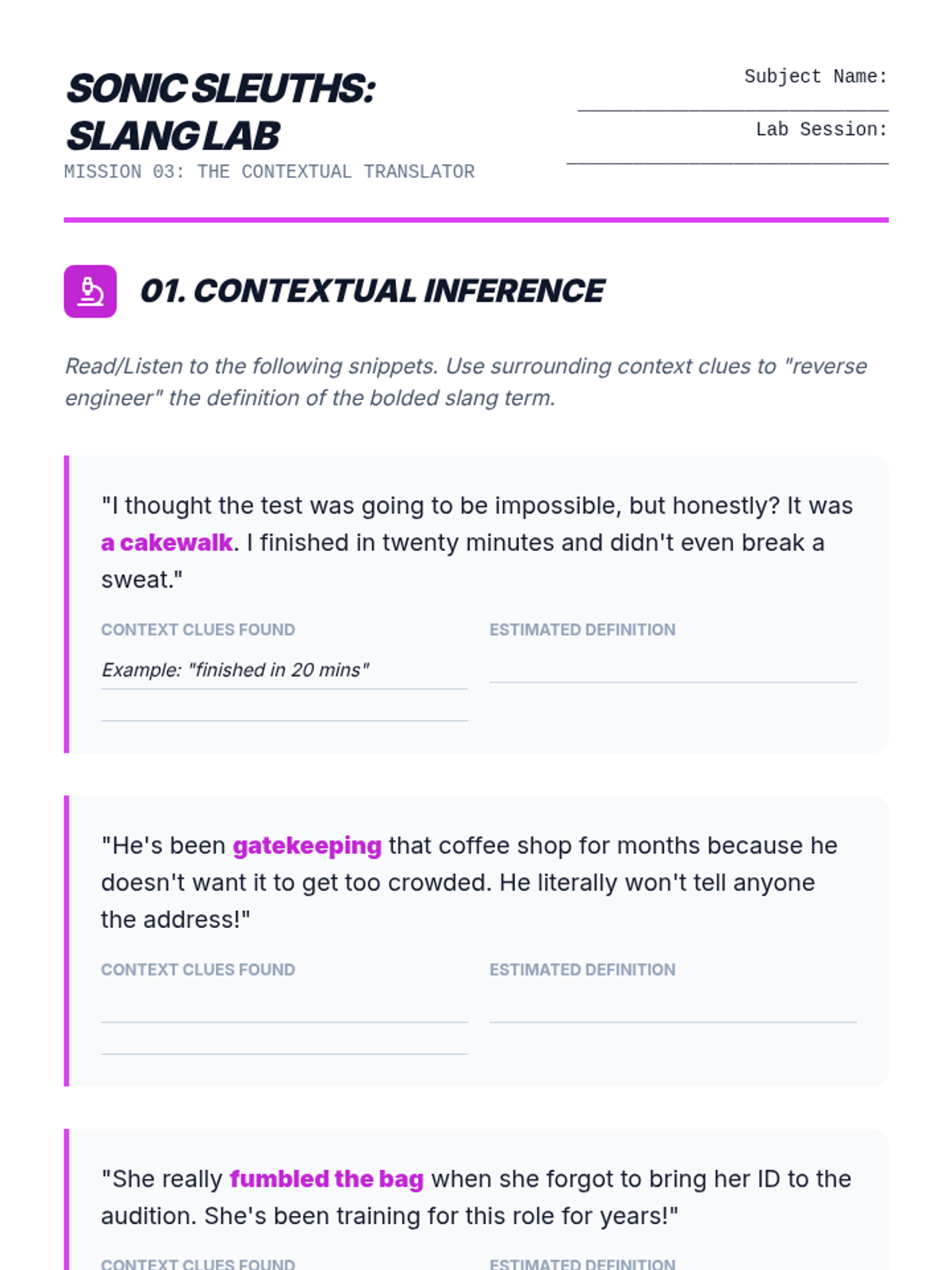
Students analyze contemporary media to identify slang and idioms, learning to infer meaning from cultural context rather than dictionaries.
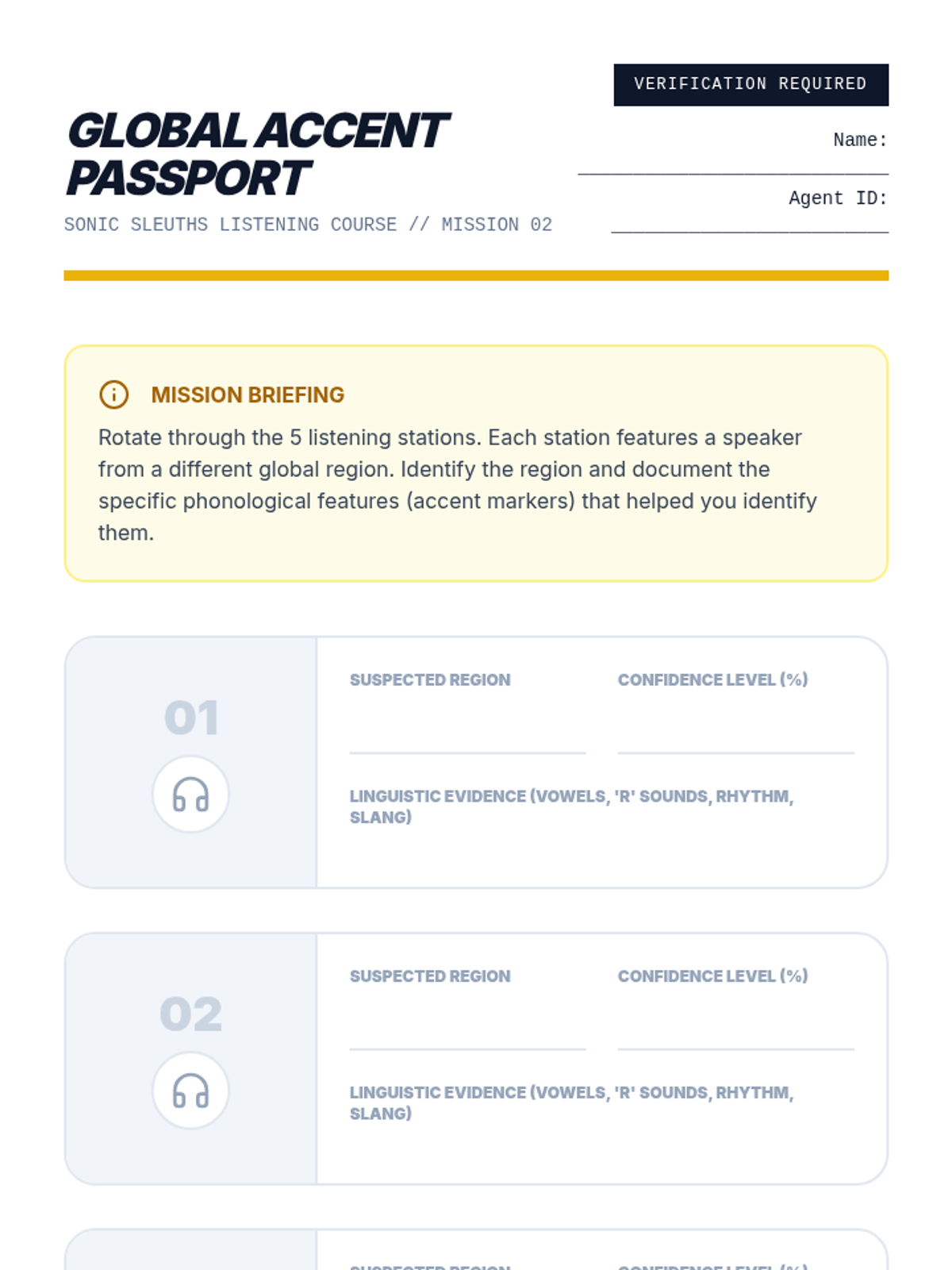
Learners explore vowel shifts and consonant variations across global English accents, building adaptability and tolerance for phonetic ambiguity.
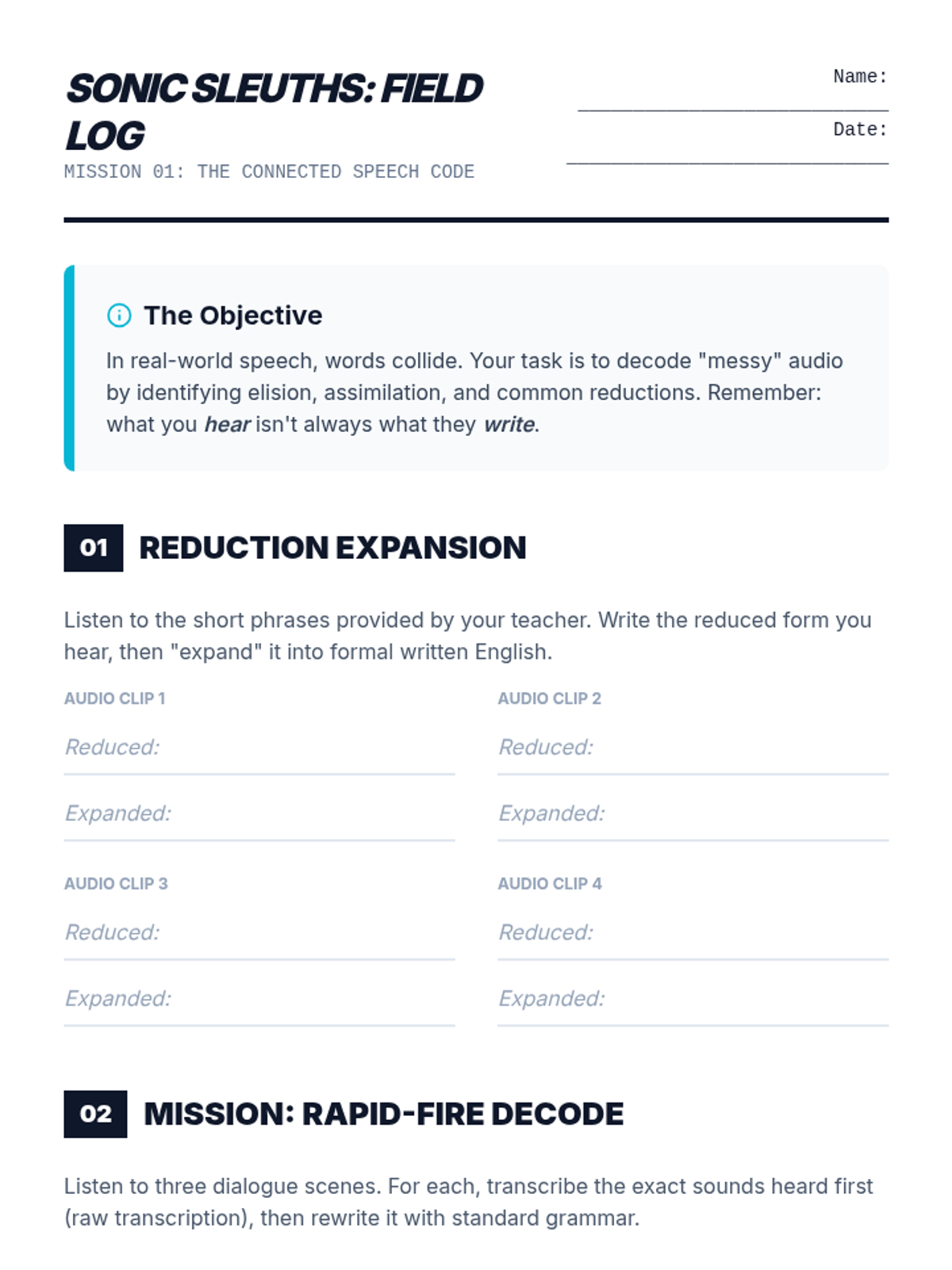
Students examine phonological rules like elision and assimilation to decode fast-paced dialogue, moving from isolated sounds to rapid connected speech.
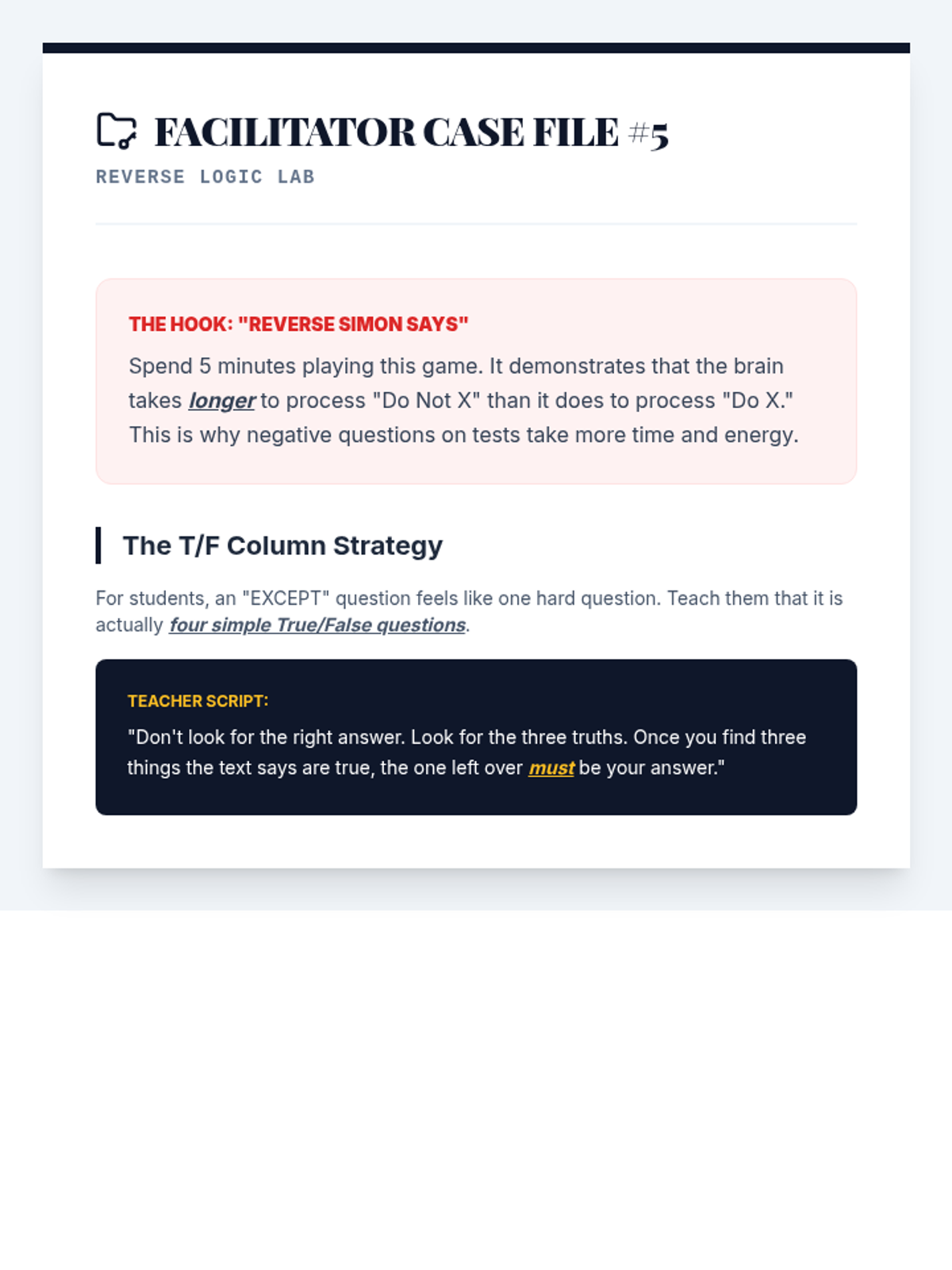
Equips students with logic-based strategies to handle 'EXCEPT' and 'NOT' questions. Uses a True/False elimination method to manage the high cognitive load of negative phrasing.
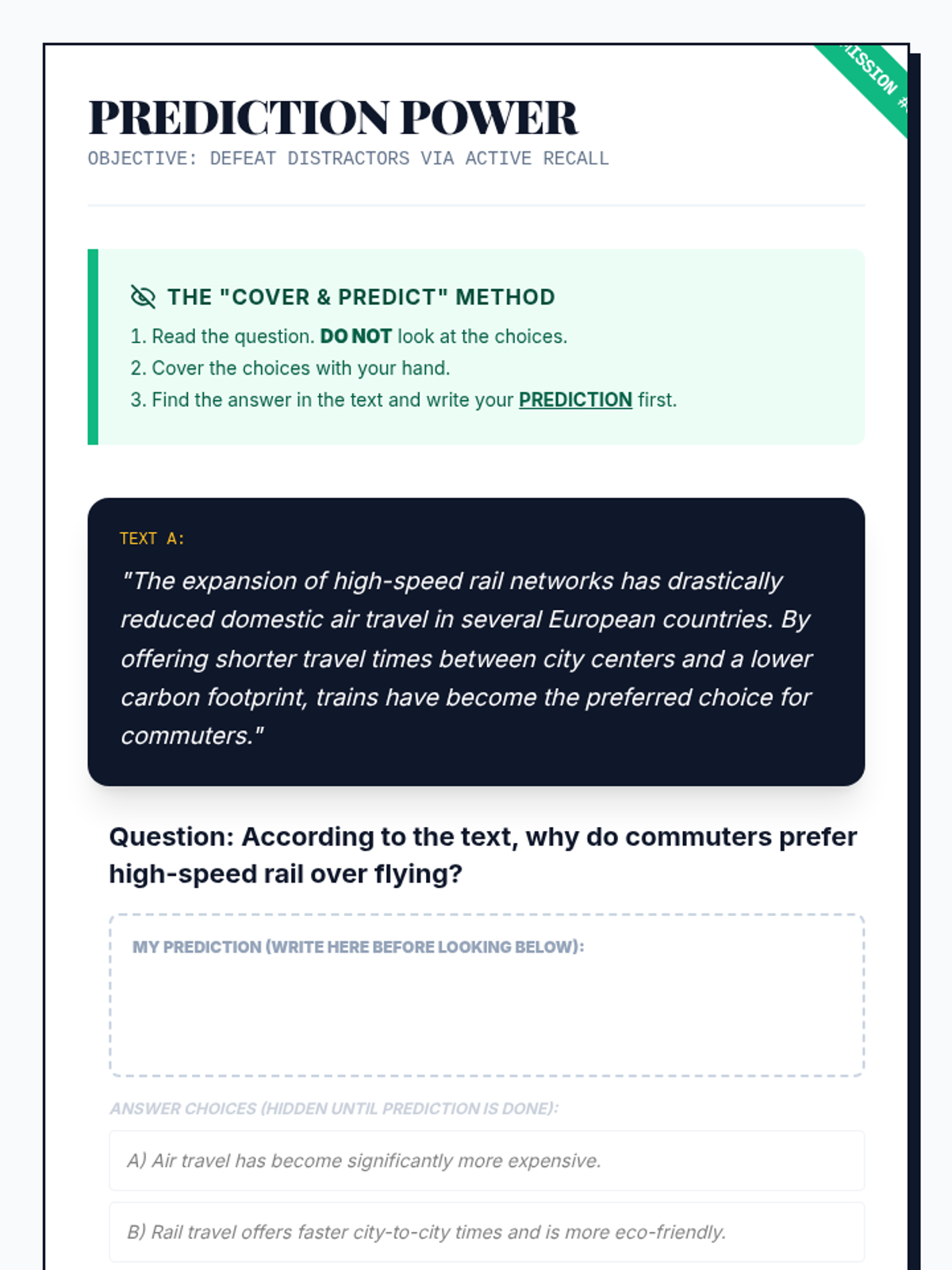
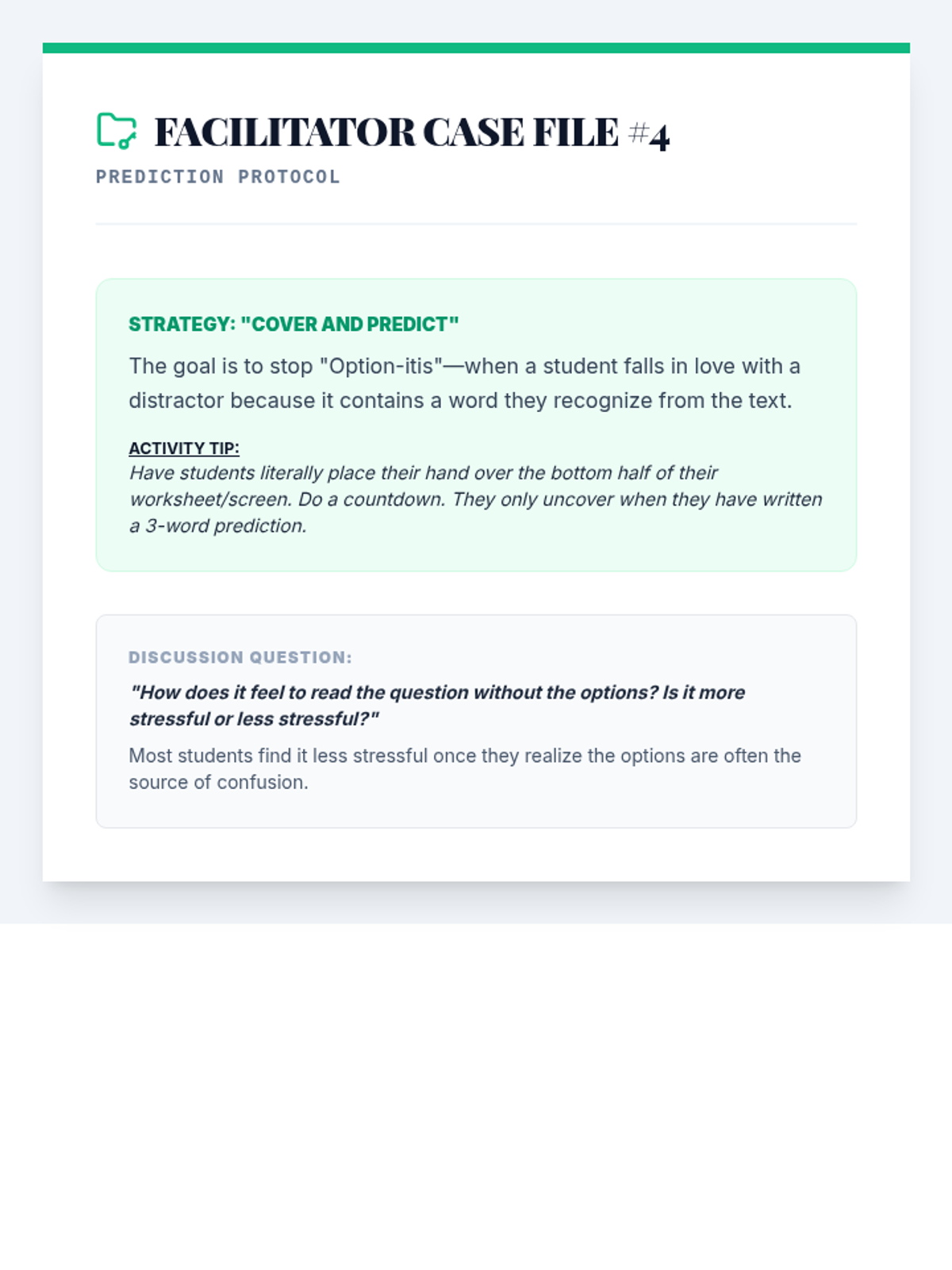
Introduces the 'Cover and Predict' strategy to minimize the influence of distractor options in multiple-choice questions. Students practice active recall before looking at answer choices.
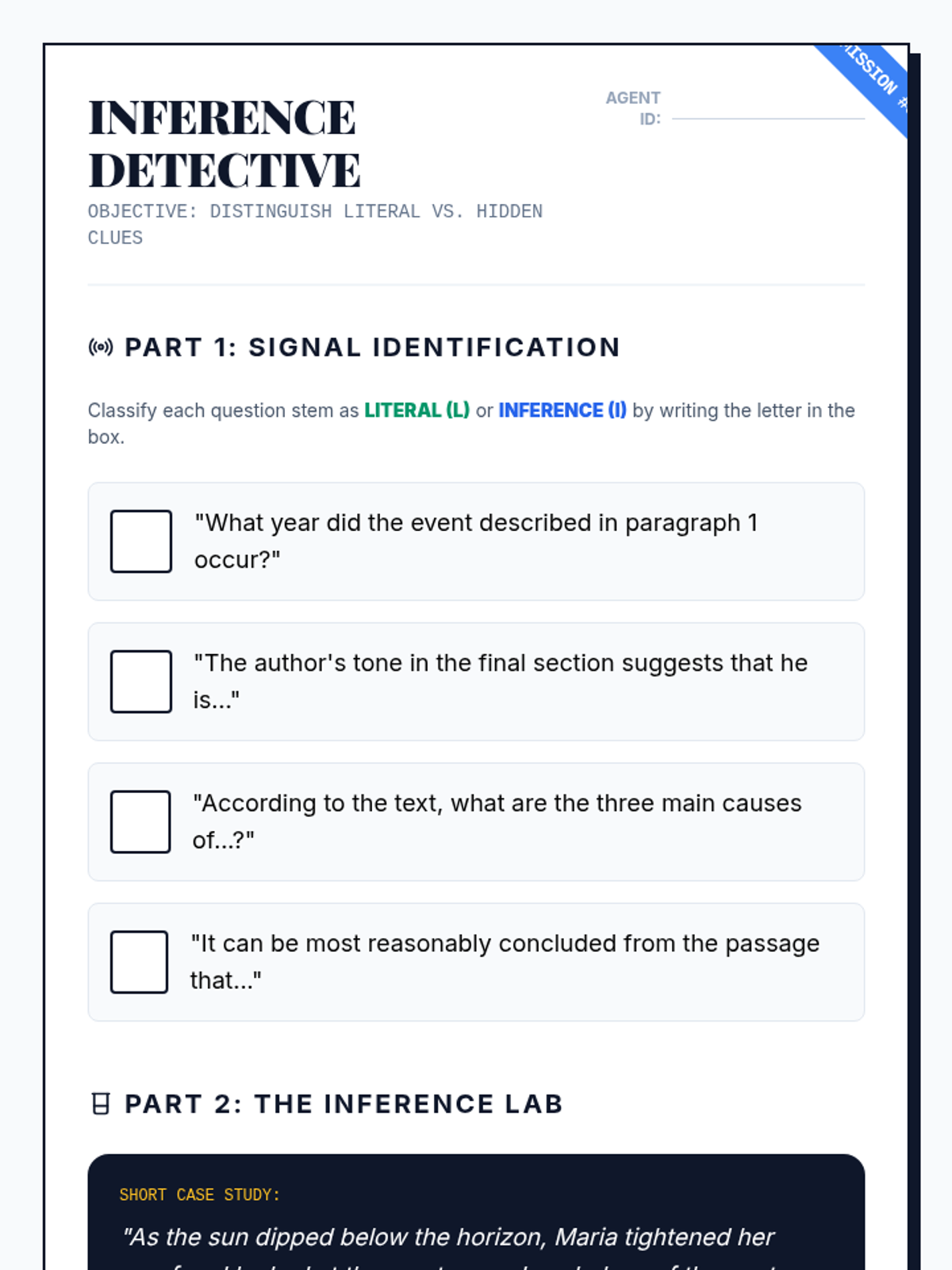
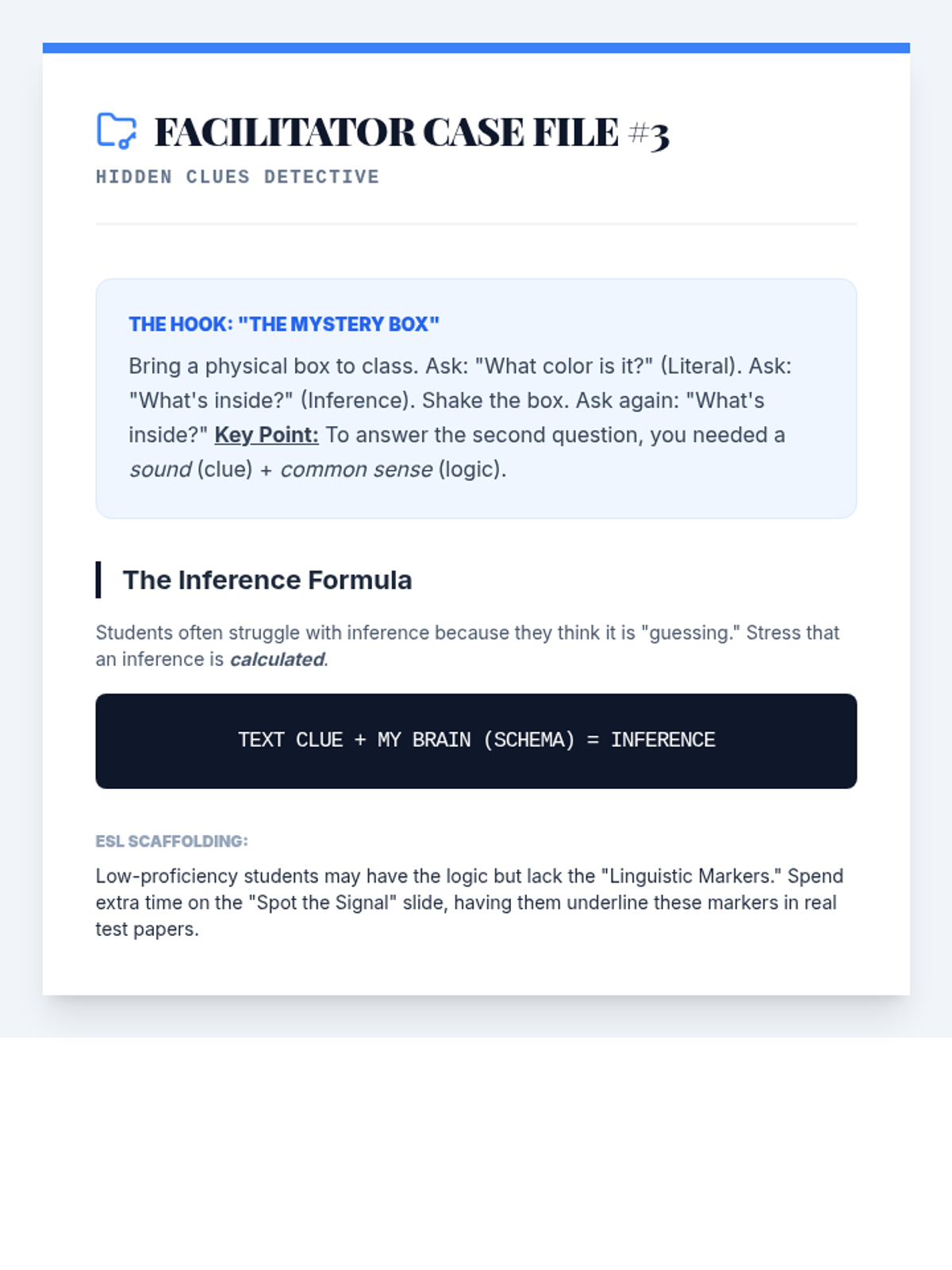
Teaches students to differentiate between information directly stated in a text and information that must be logically inferred. Includes linguistic markers for inference questions.
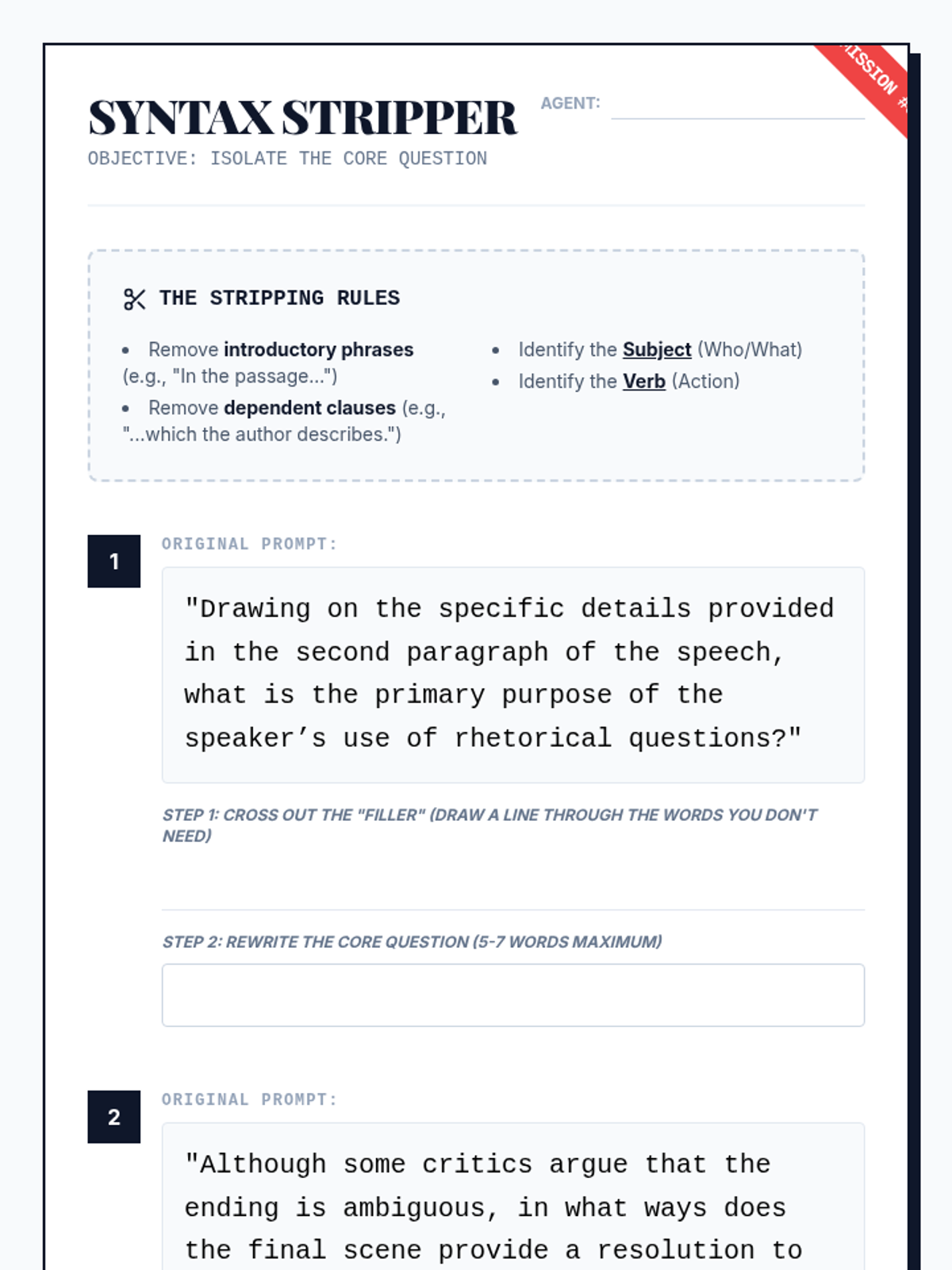
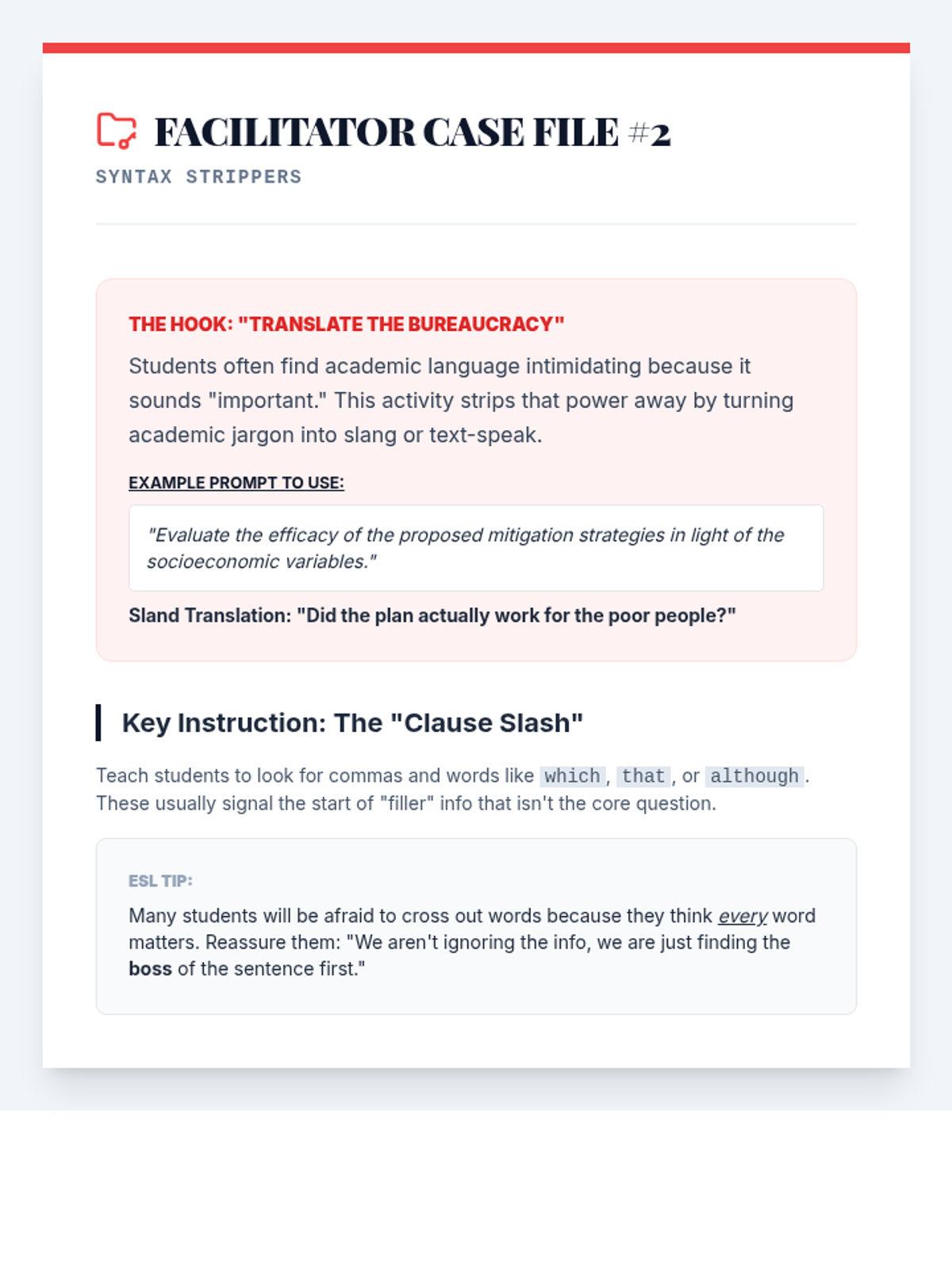
Focuses on simplifying the complex syntax of high-level academic questions by stripping away dependent clauses and prepositional phrases. Students learn to isolate the core subject and action of a prompt.
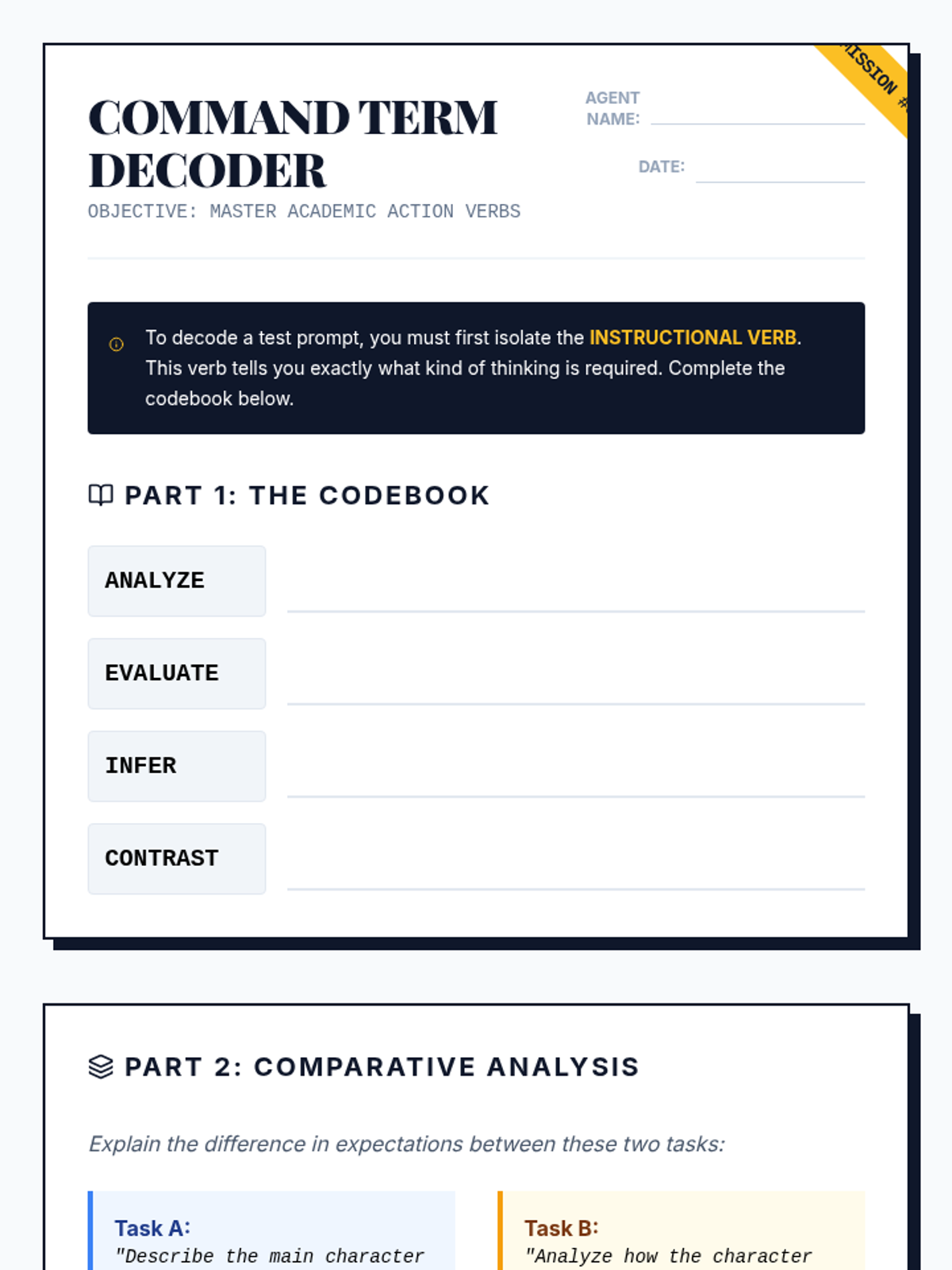
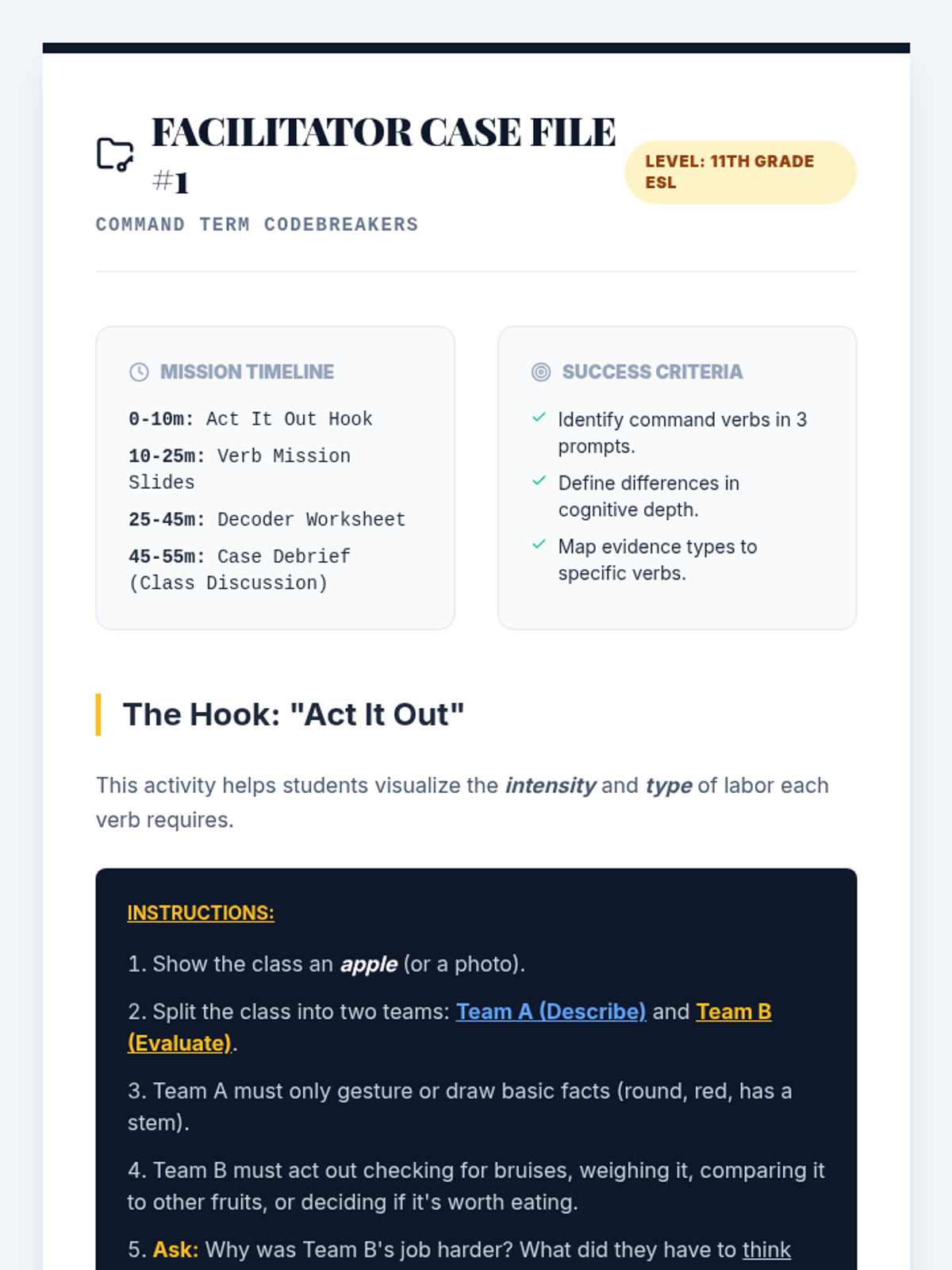
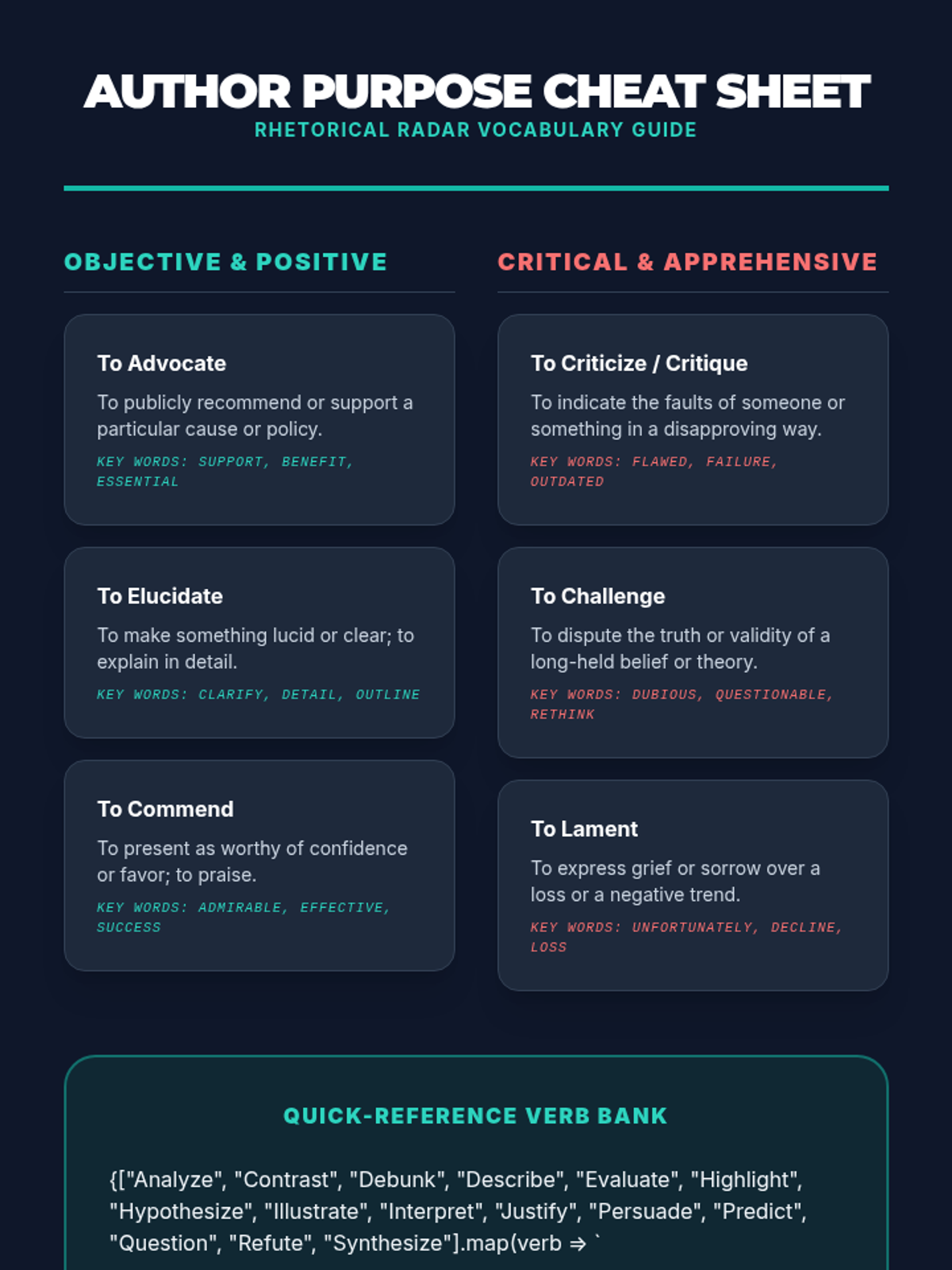
Students master academic command terms like 'analyze', 'evaluate', and 'infer' to understand specific task requirements. They explore how different verbs change the required cognitive output and evidence needed.
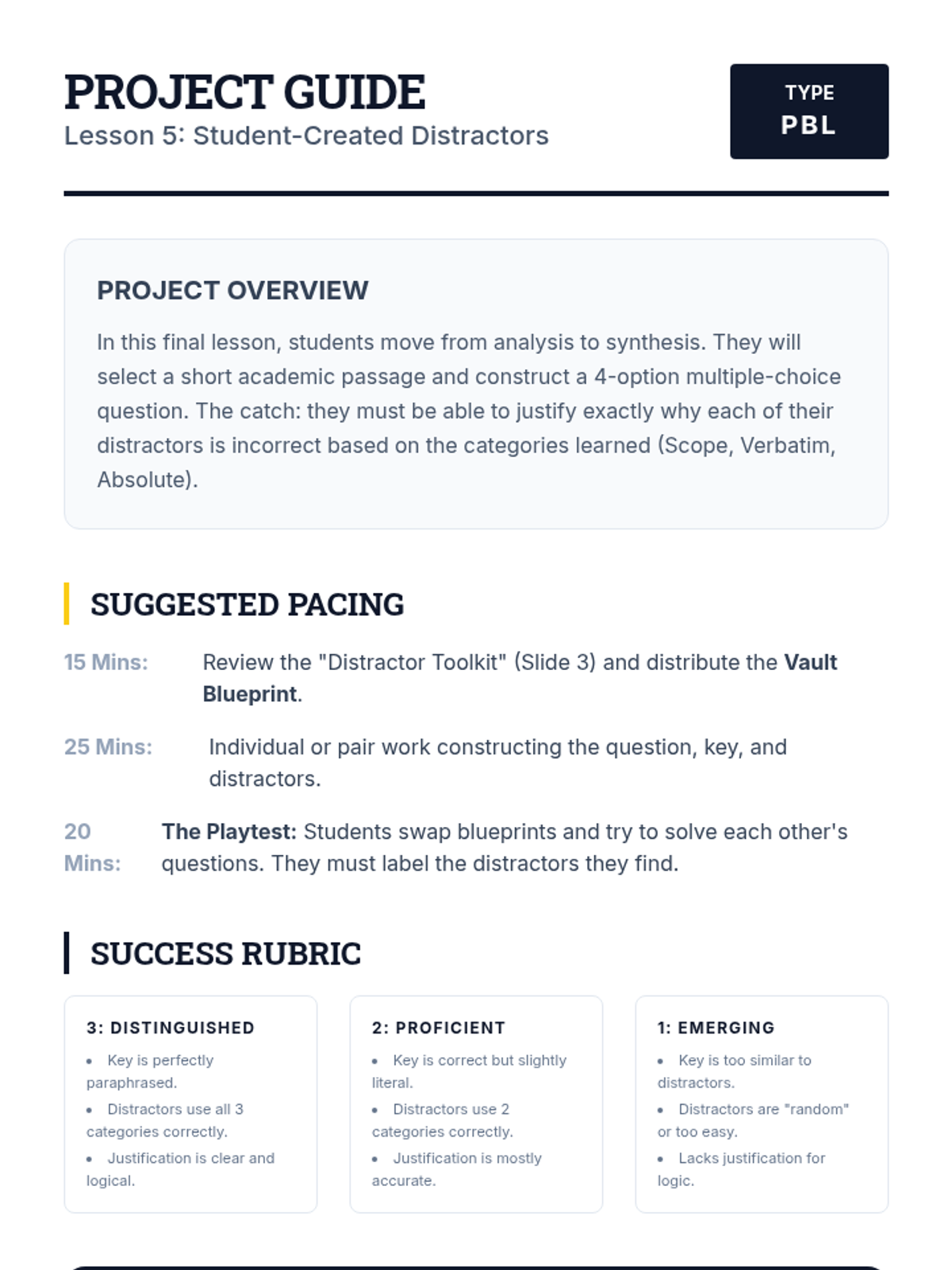
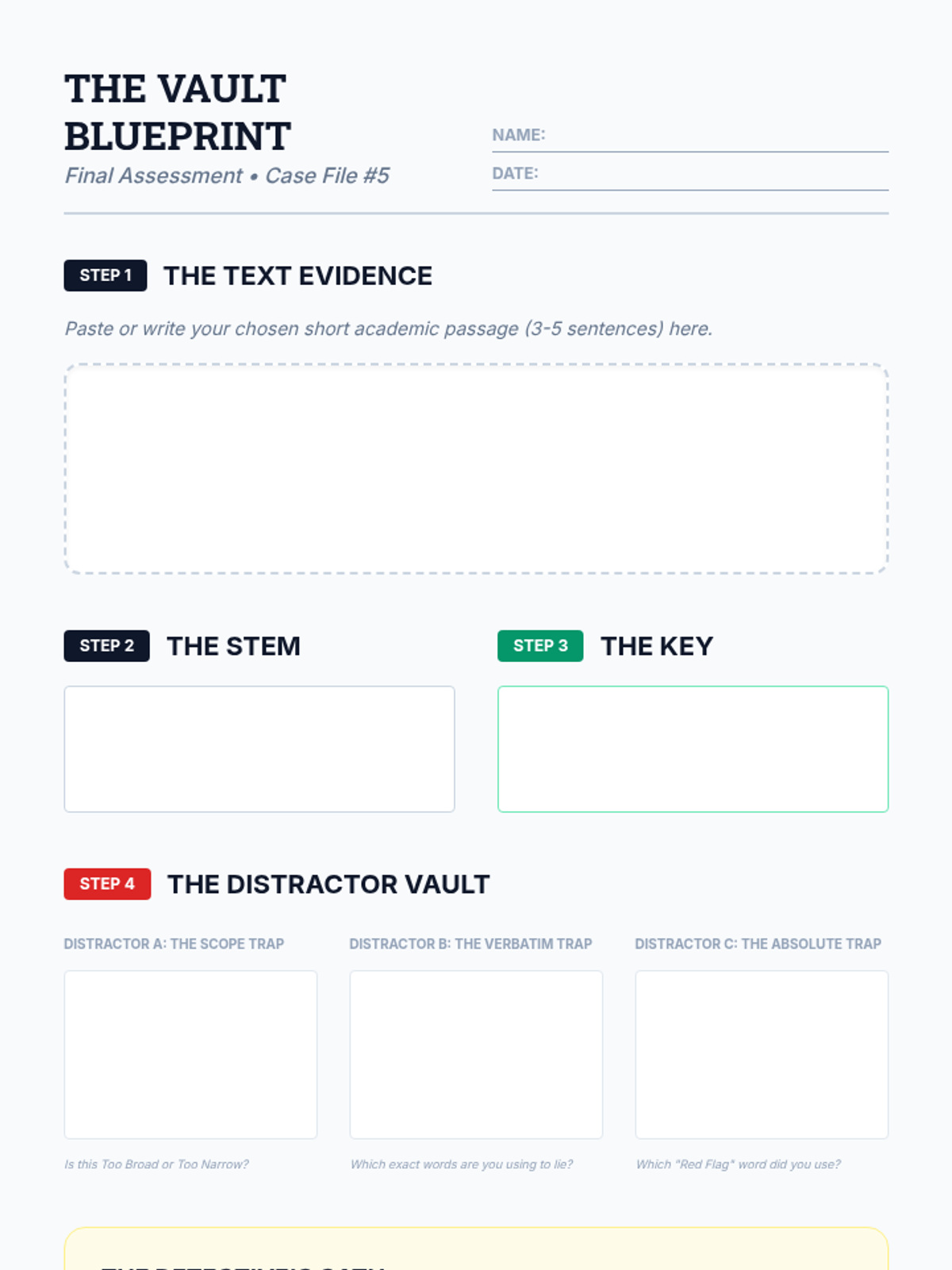
A project-based culmination where students apply their knowledge to build their own difficult but fair exam questions and distractors.
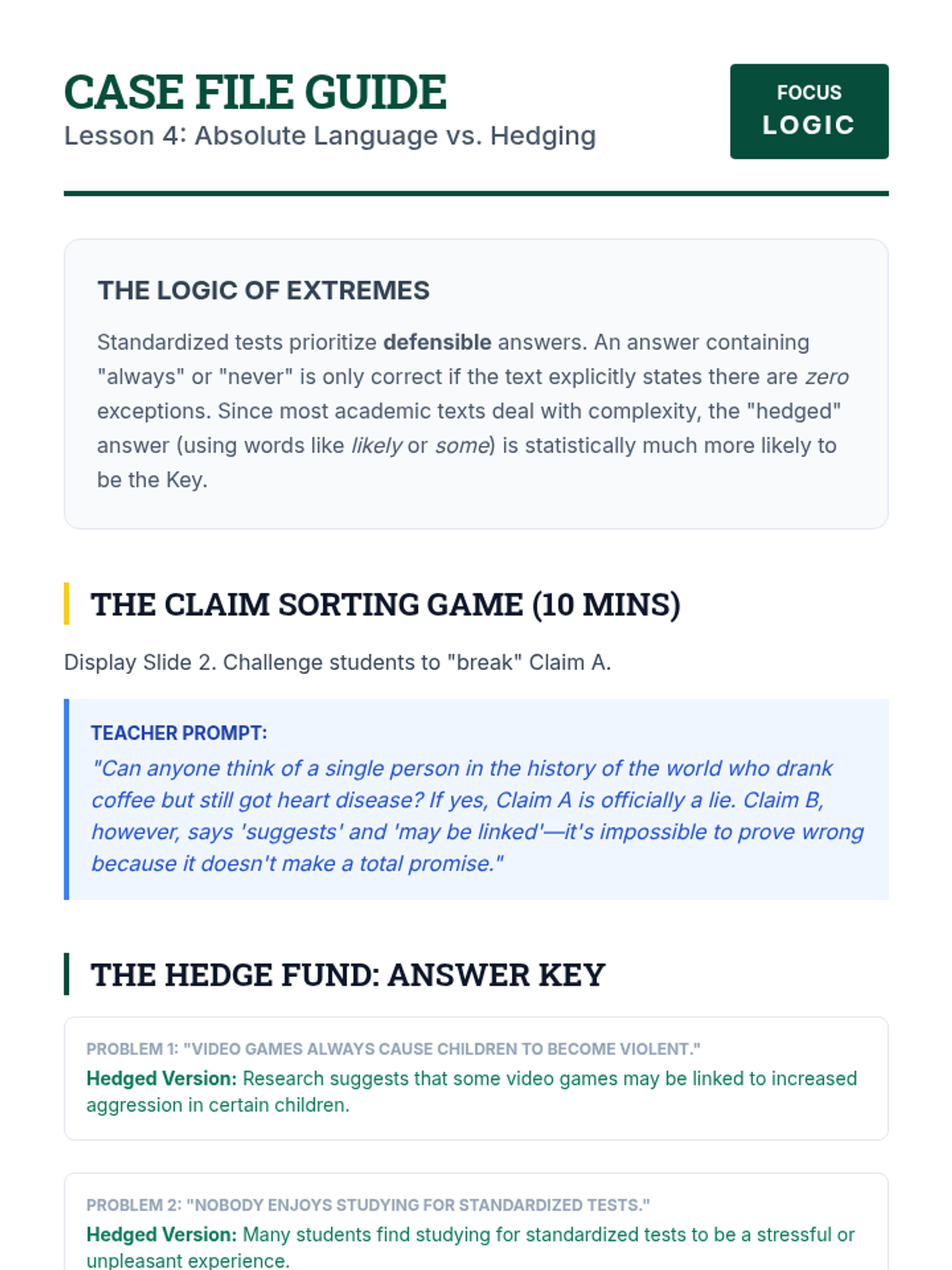
Teaches students to spot extreme qualifiers (always, never) and prioritize academic 'hedging' language in correct answers.
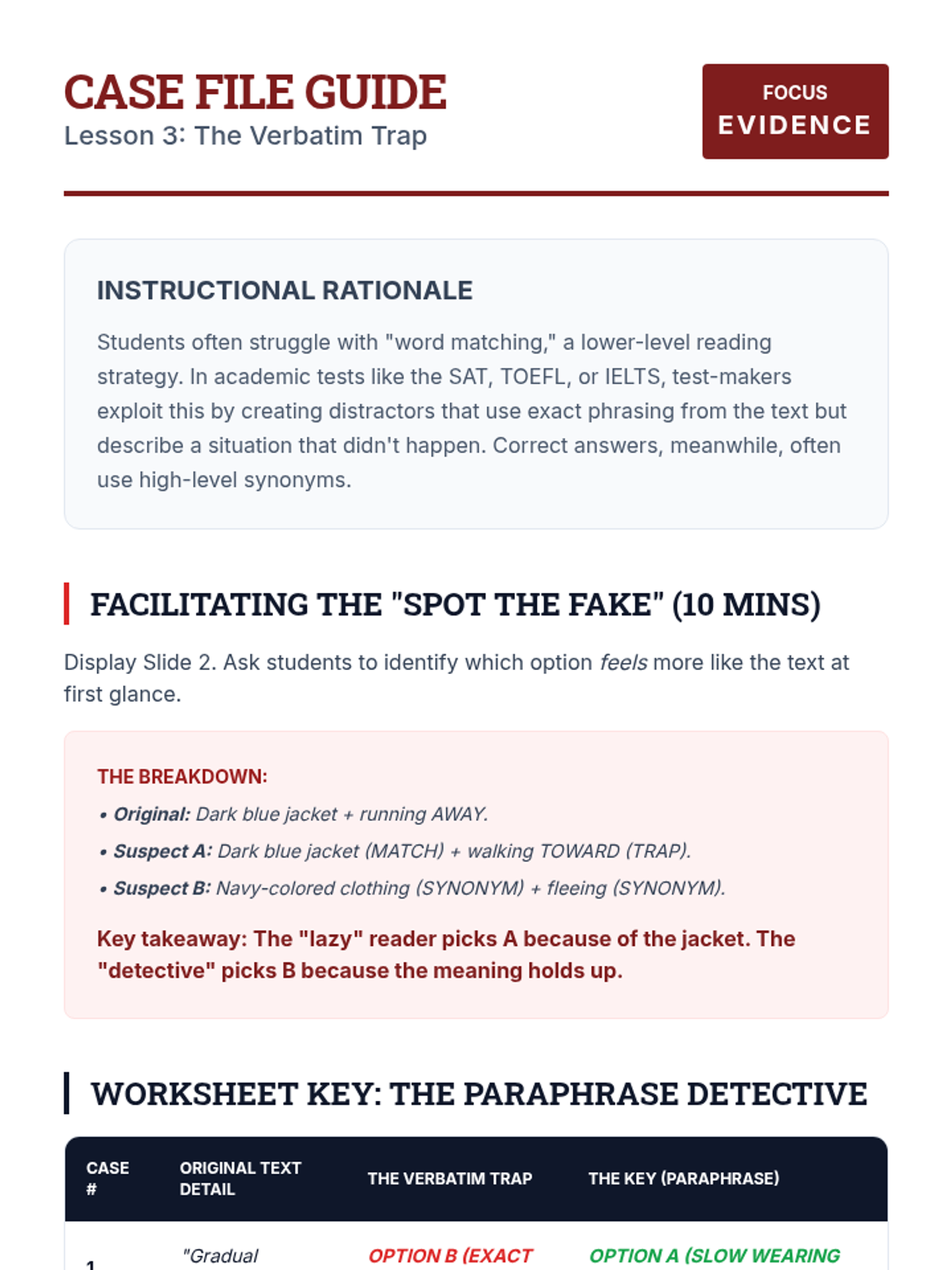
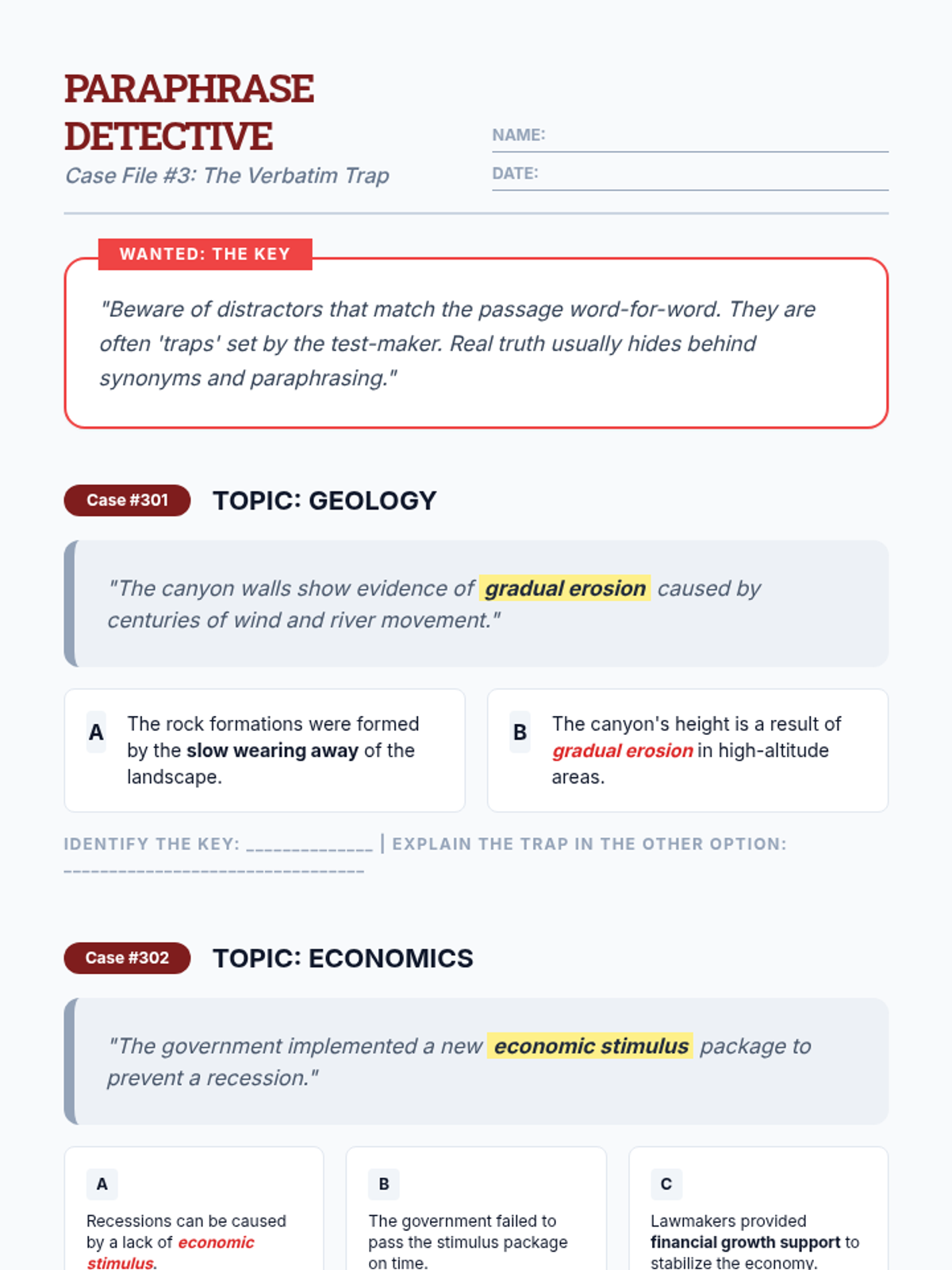
Exposes 'Verbatim Traps' where distractors use exact words from the text to mislead students into choosing incorrect answers.
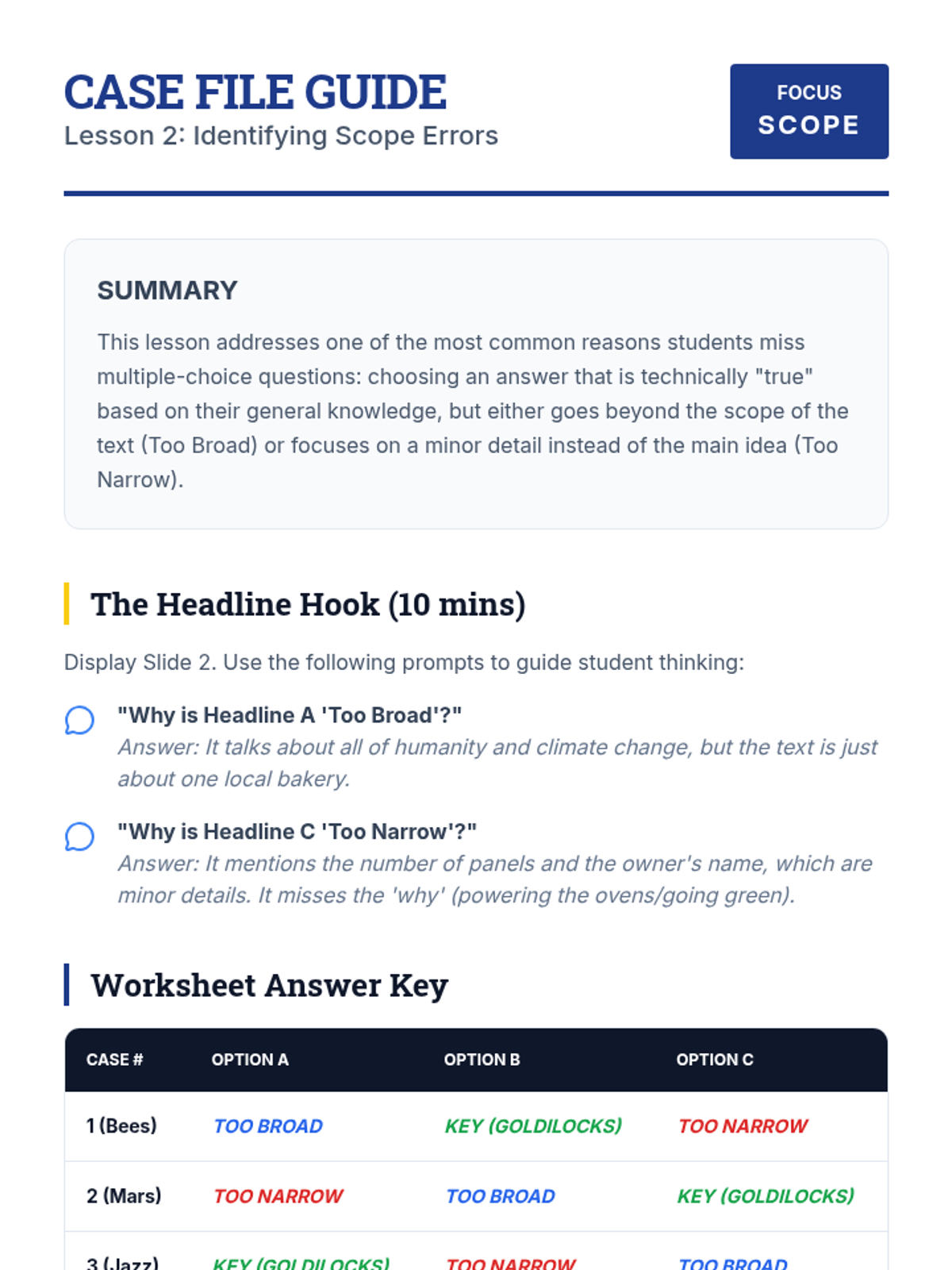
Focuses on identifying scope errors (Too Broad vs. Too Narrow) using the 'Goldilocks Principle' to find the answer that fits the text perfectly.
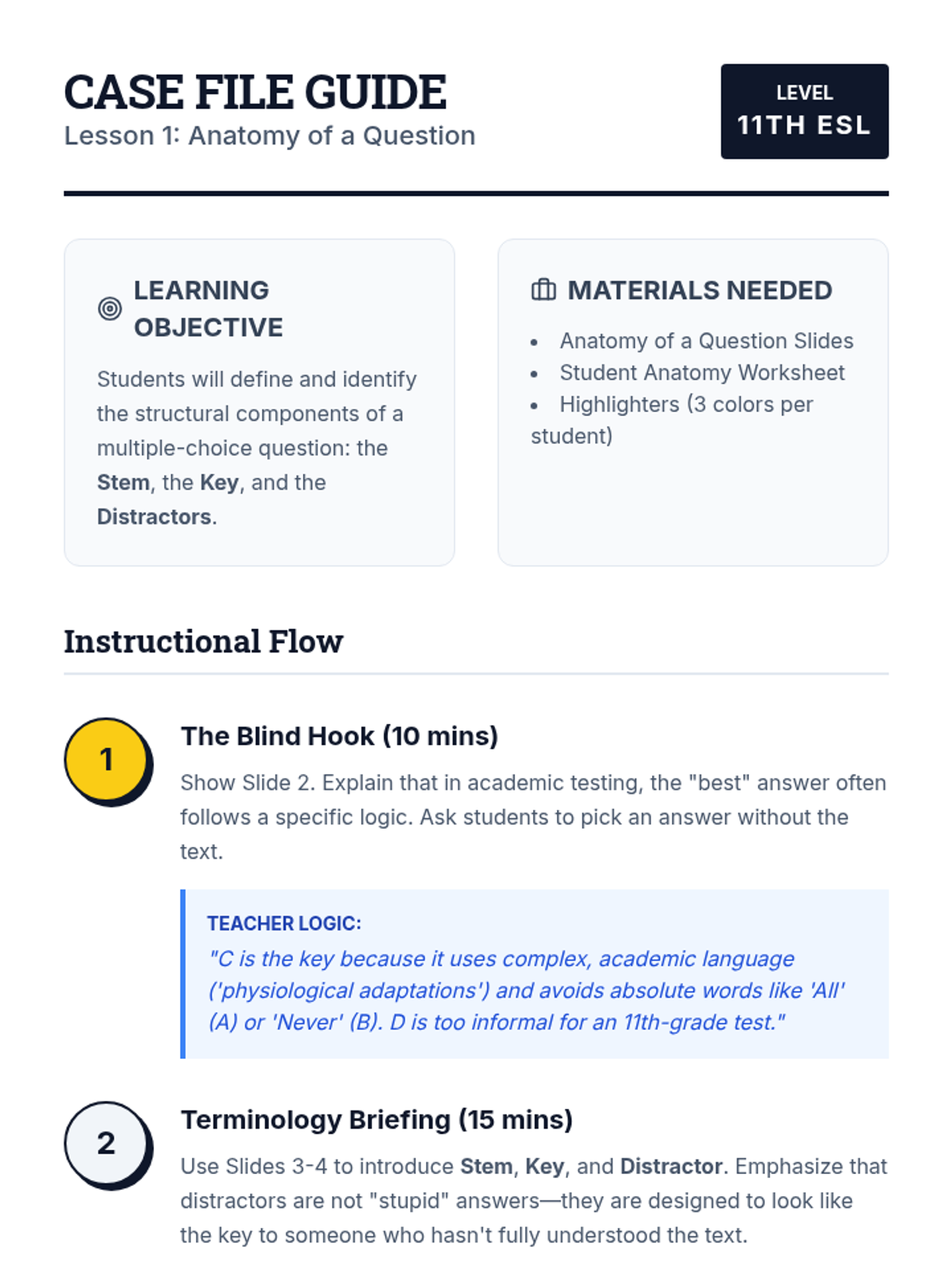
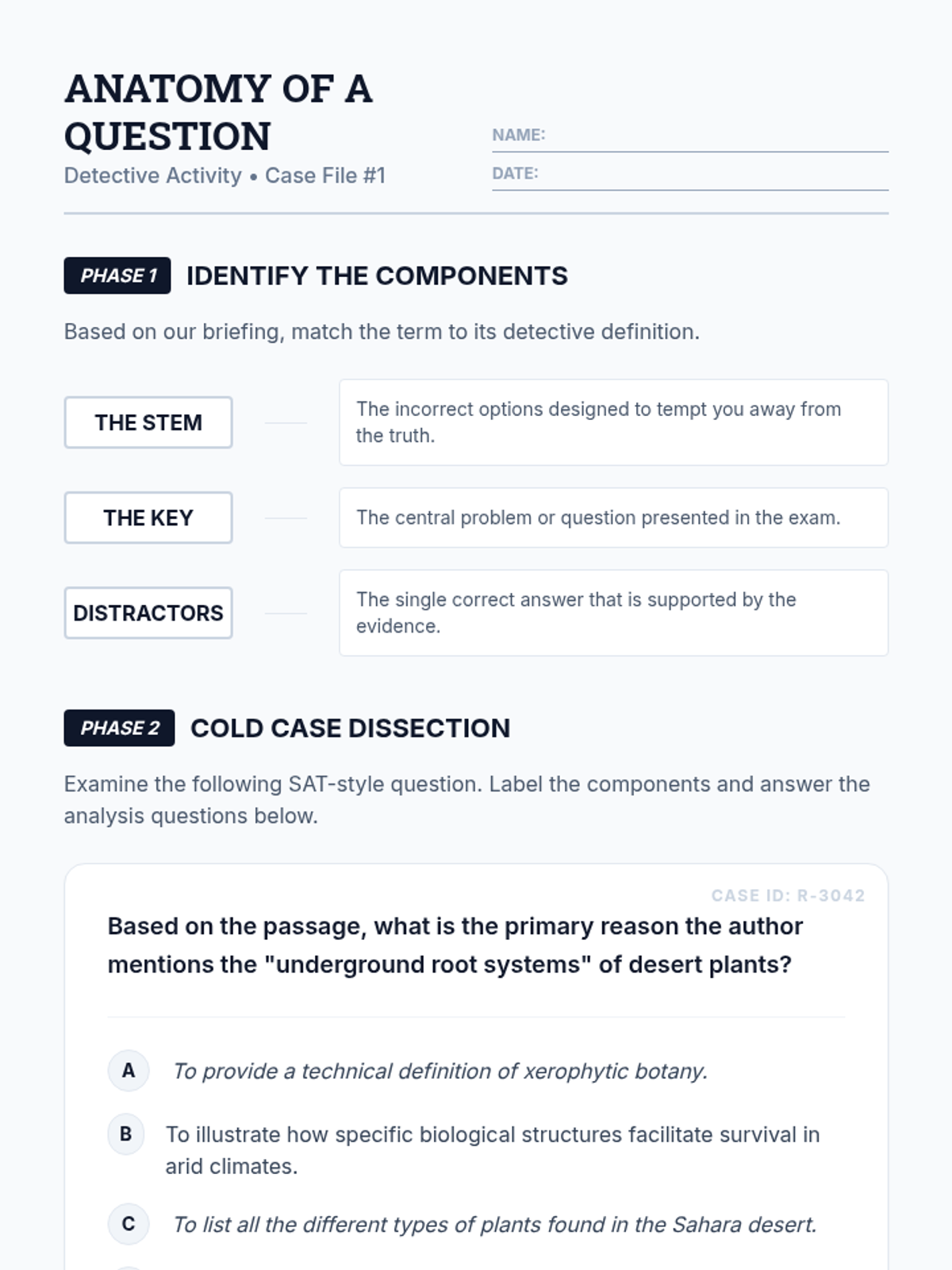
Students dissect the structural components of academic multiple-choice questions (Stem, Key, Distractors) and practice logical reasoning without passage context.
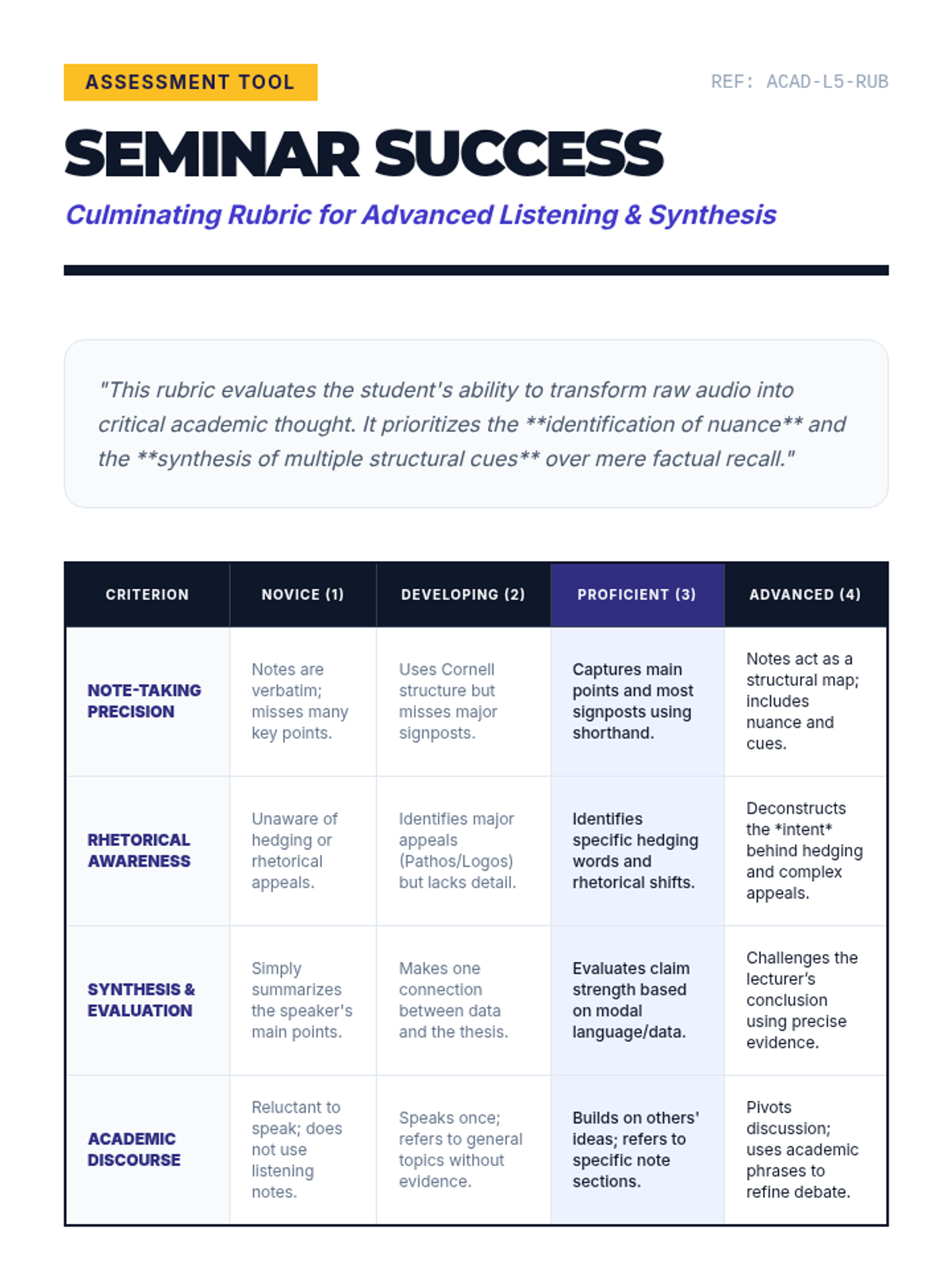
In this culminating simulation, students attend a full-length mock lecture, take notes, and then participate in a seminar discussion using their evidence.
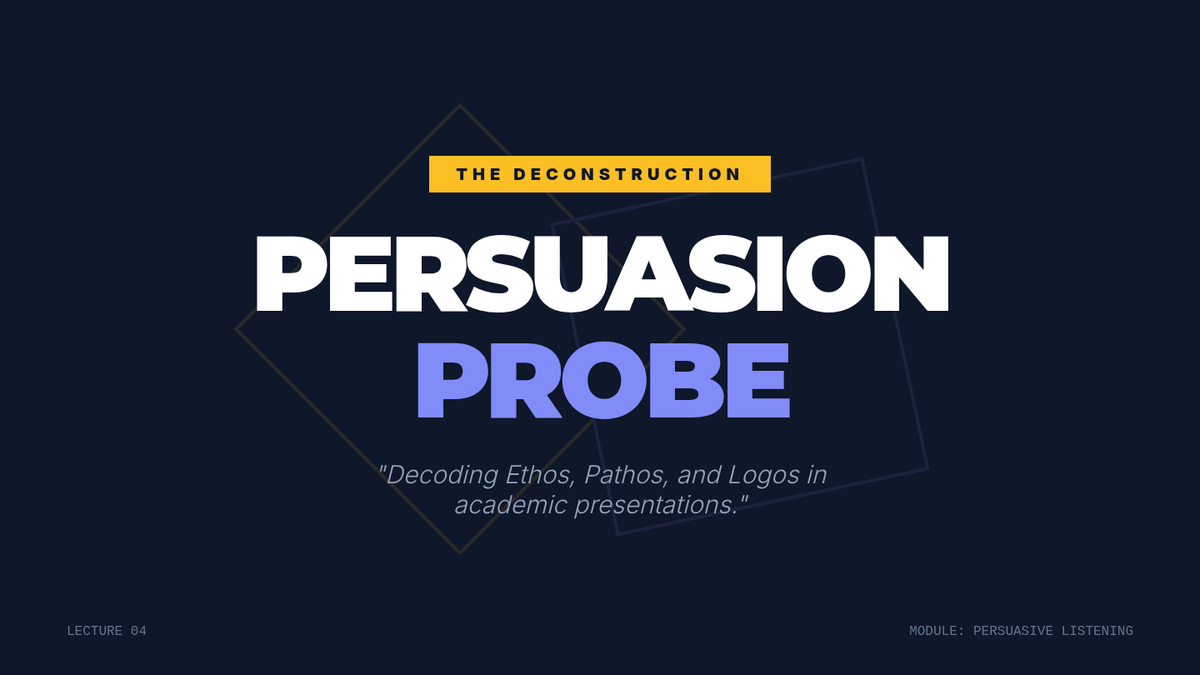
Learners deconstruct persuasive speech to identify usage of Ethos, Pathos, and Logos. They analyze how tone and emphasis contribute to a speaker's credibility.
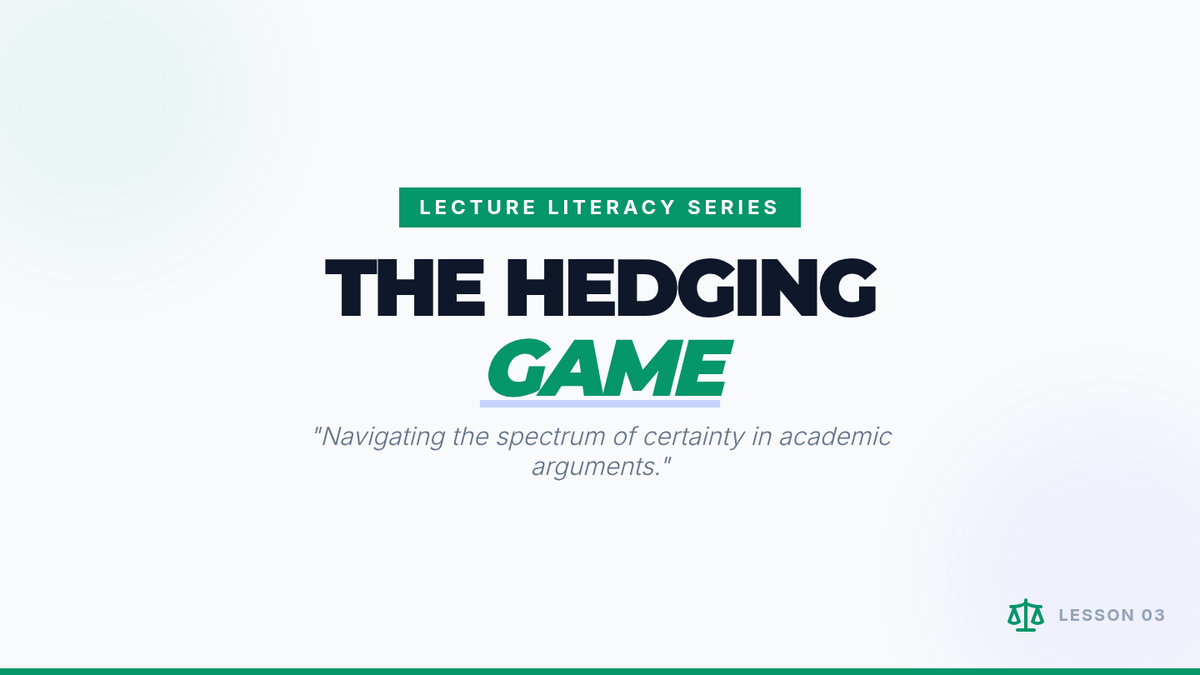
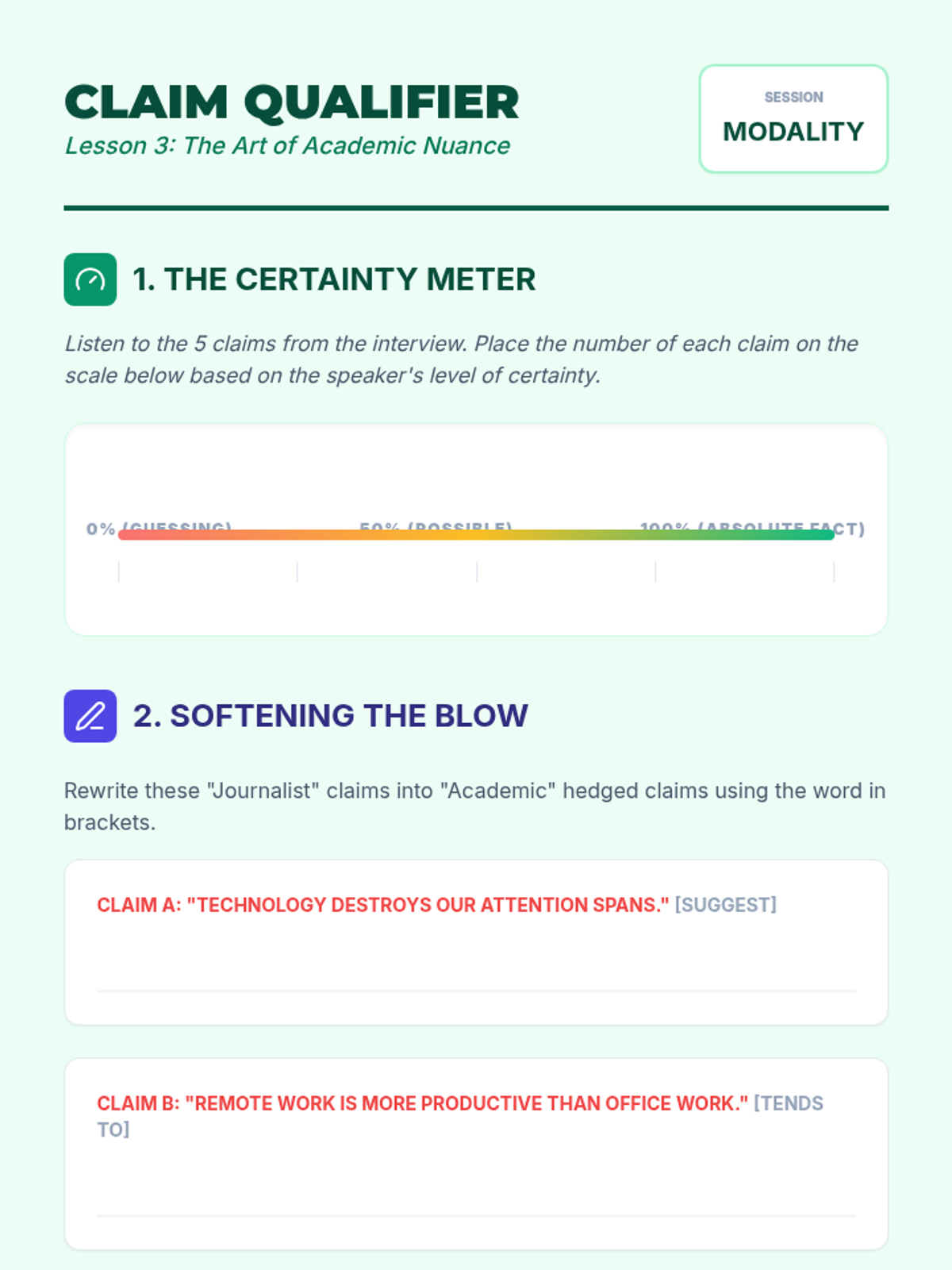
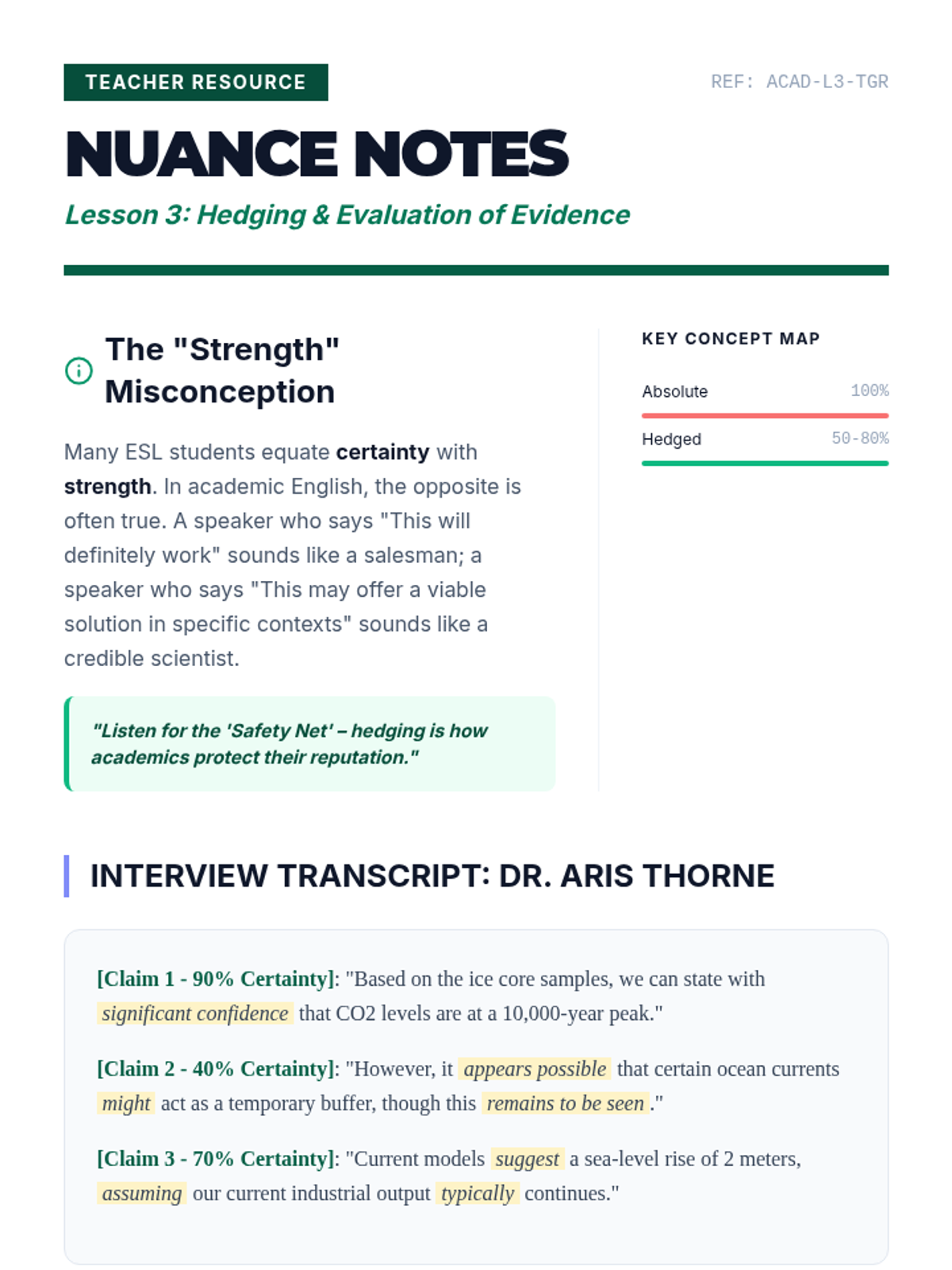
Students examine how academics use hedging language to qualify claims. They compare absolute statements vs. nuanced academic speech to determine the strength of an argument.
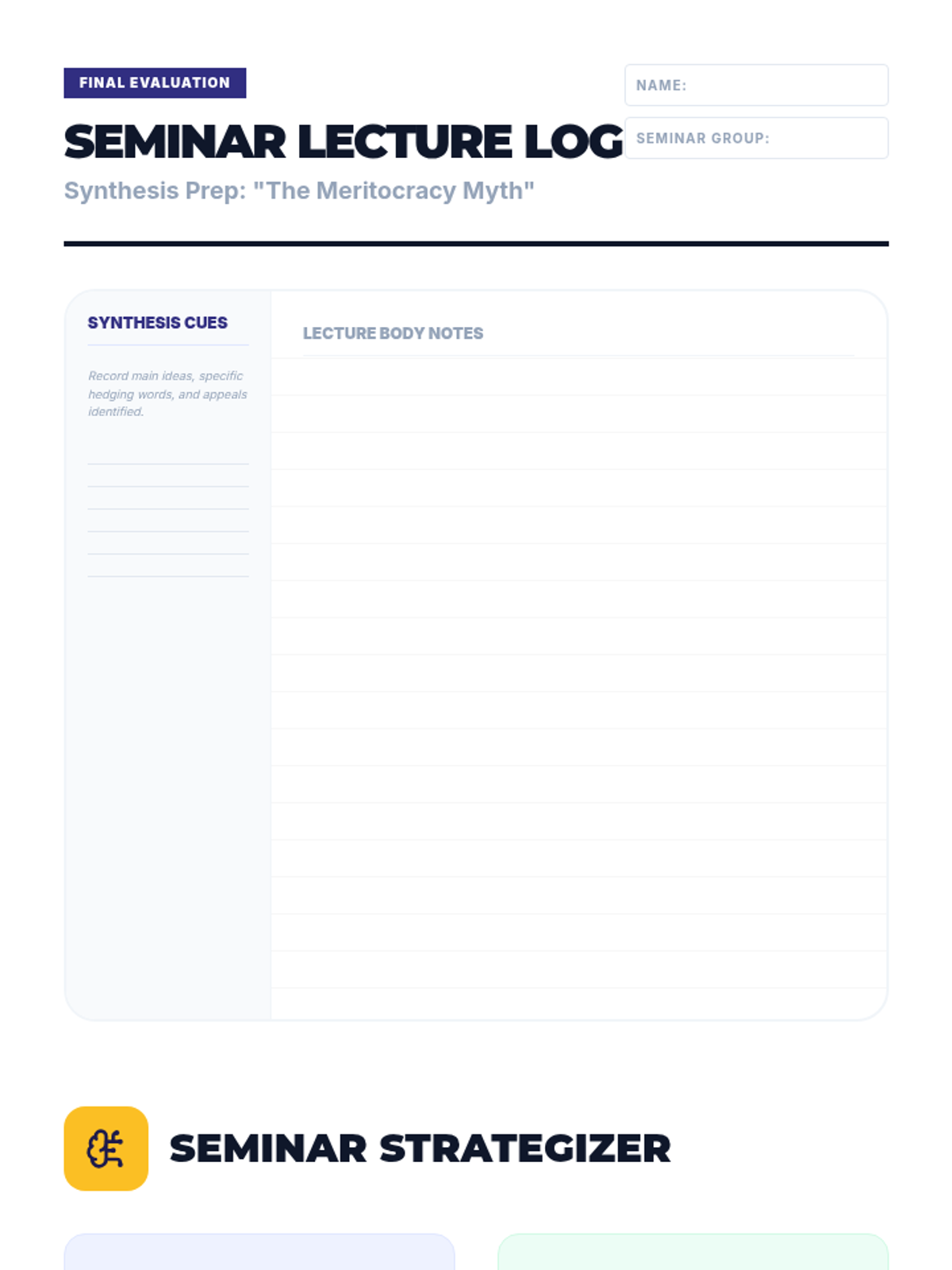
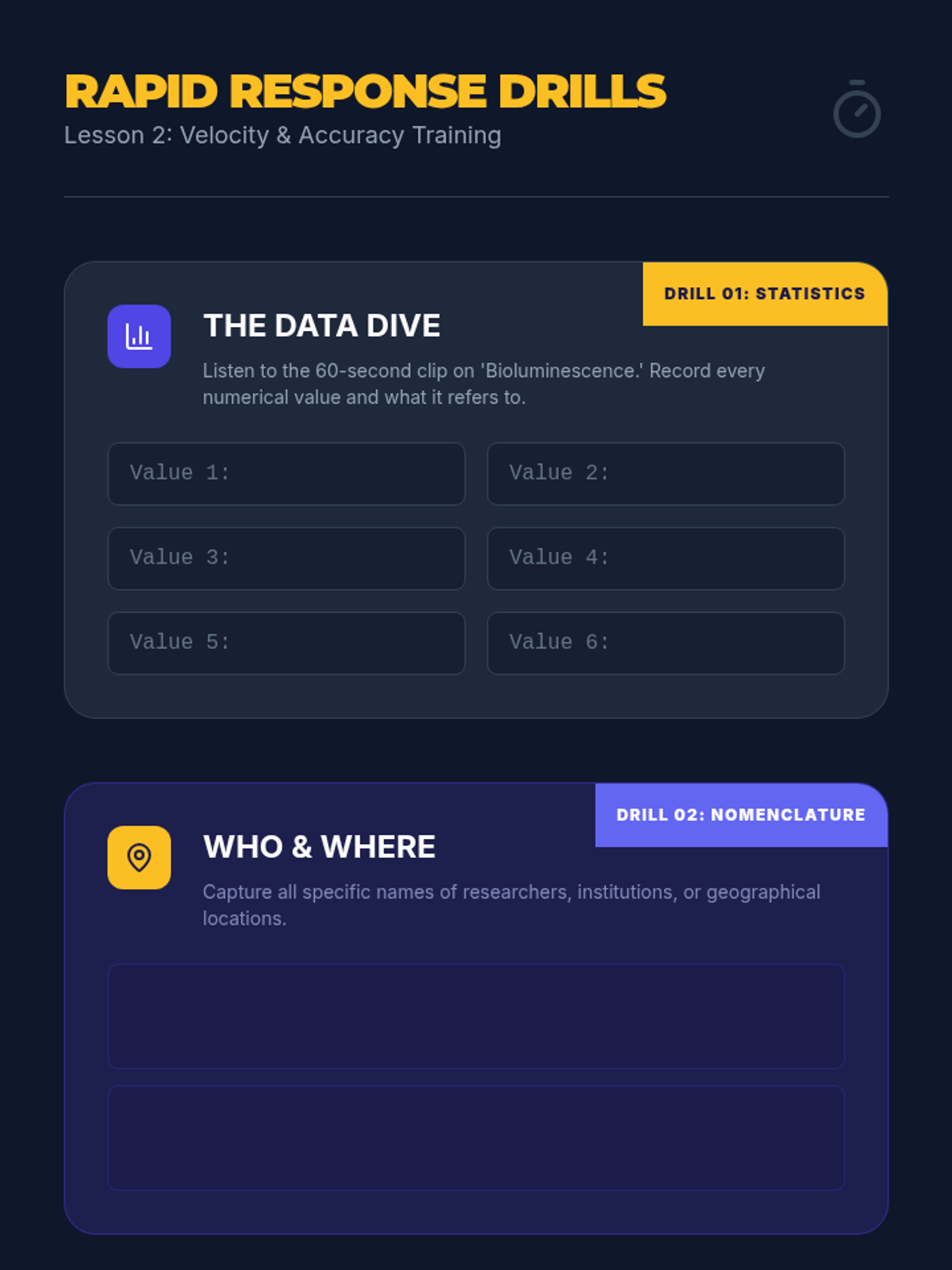
Focusing on speed and accuracy, students practice the Cornell Note-Taking method using complex scientific content. The lesson emphasizes capturing key concepts over verbatim dictation.
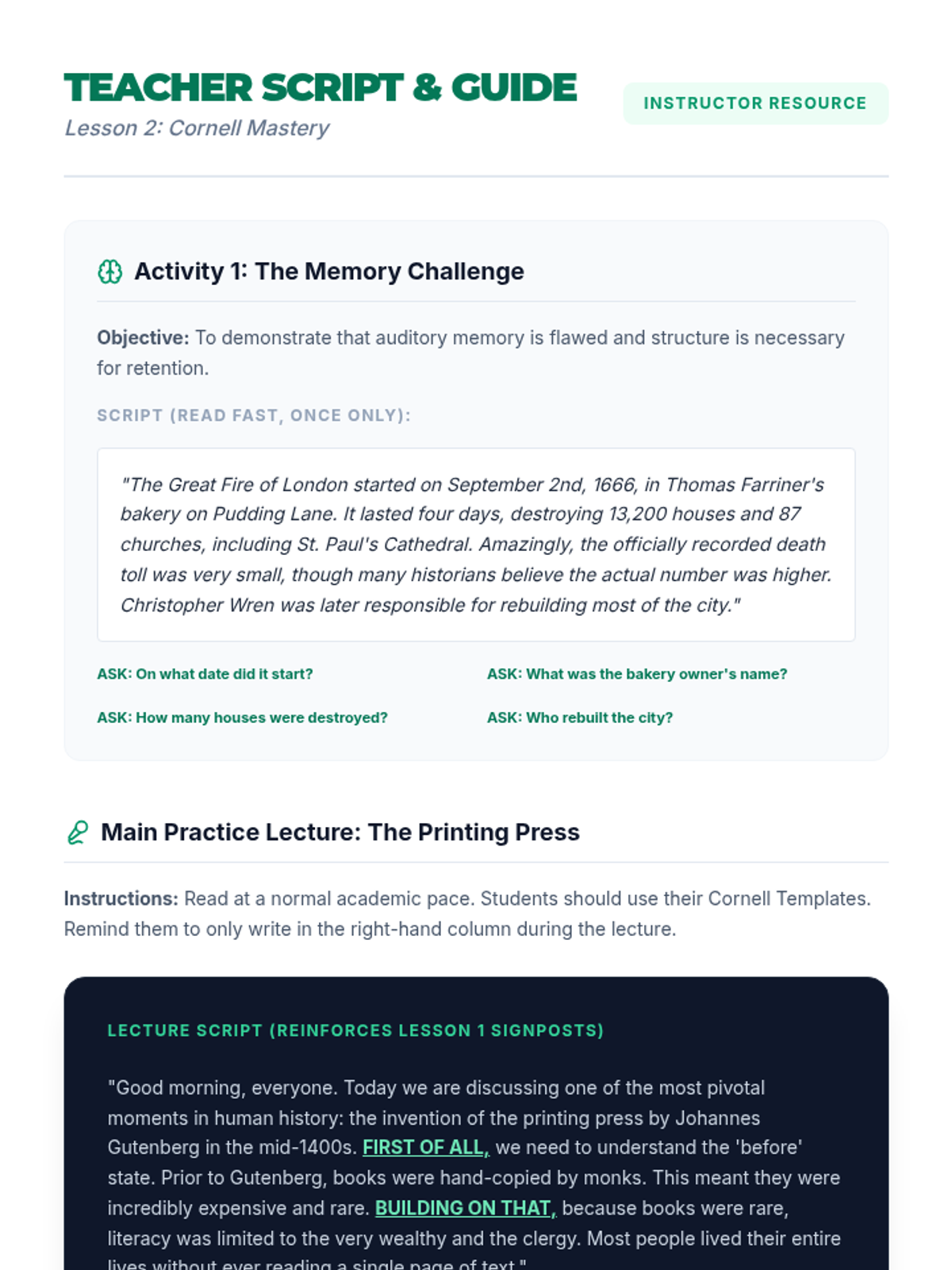
Students analyze lecture introductions and bodies to identify verbal cues that signal transitions, examples, or contrasting points. They practice predicting upcoming content based on these signposts.
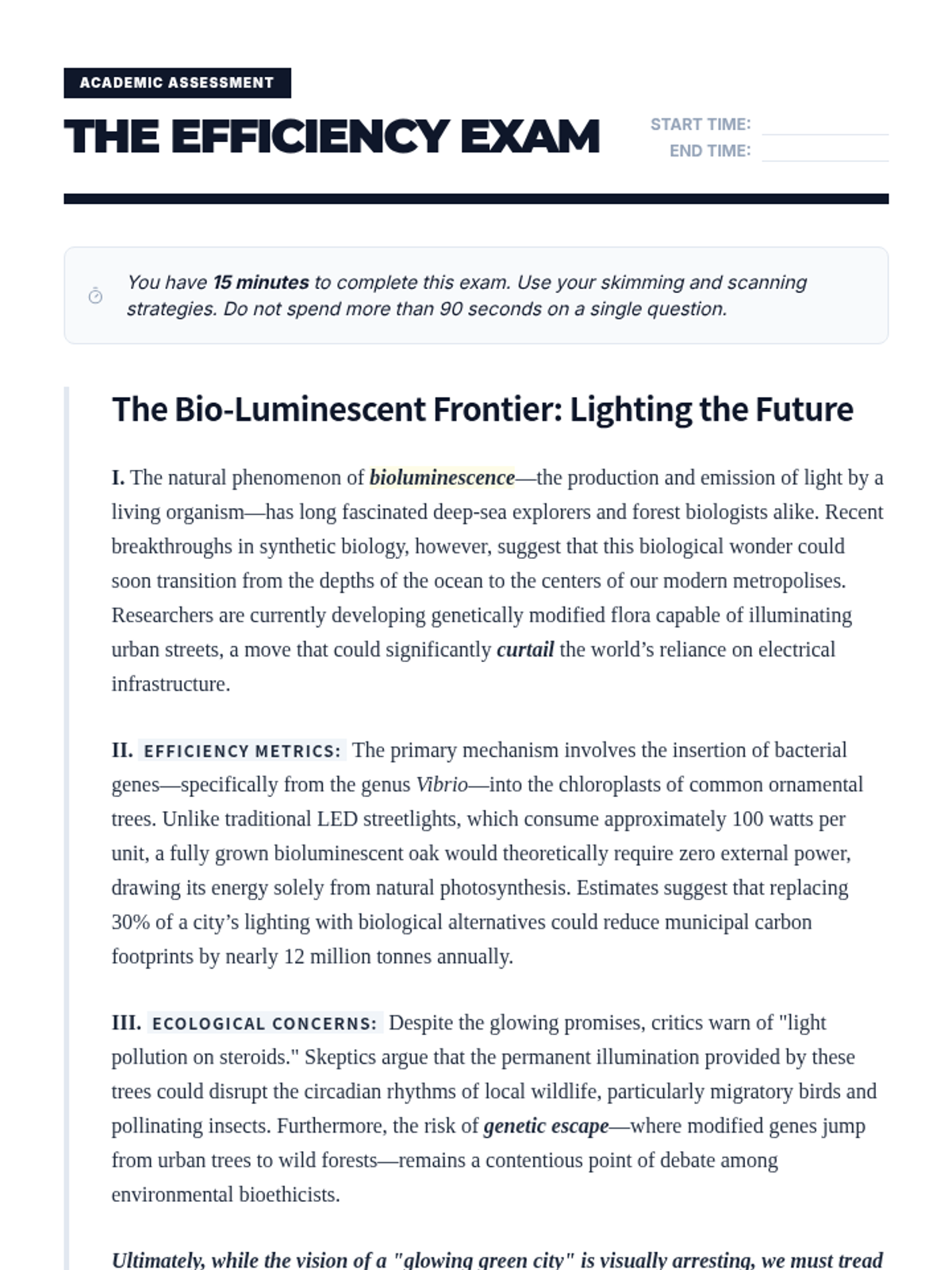
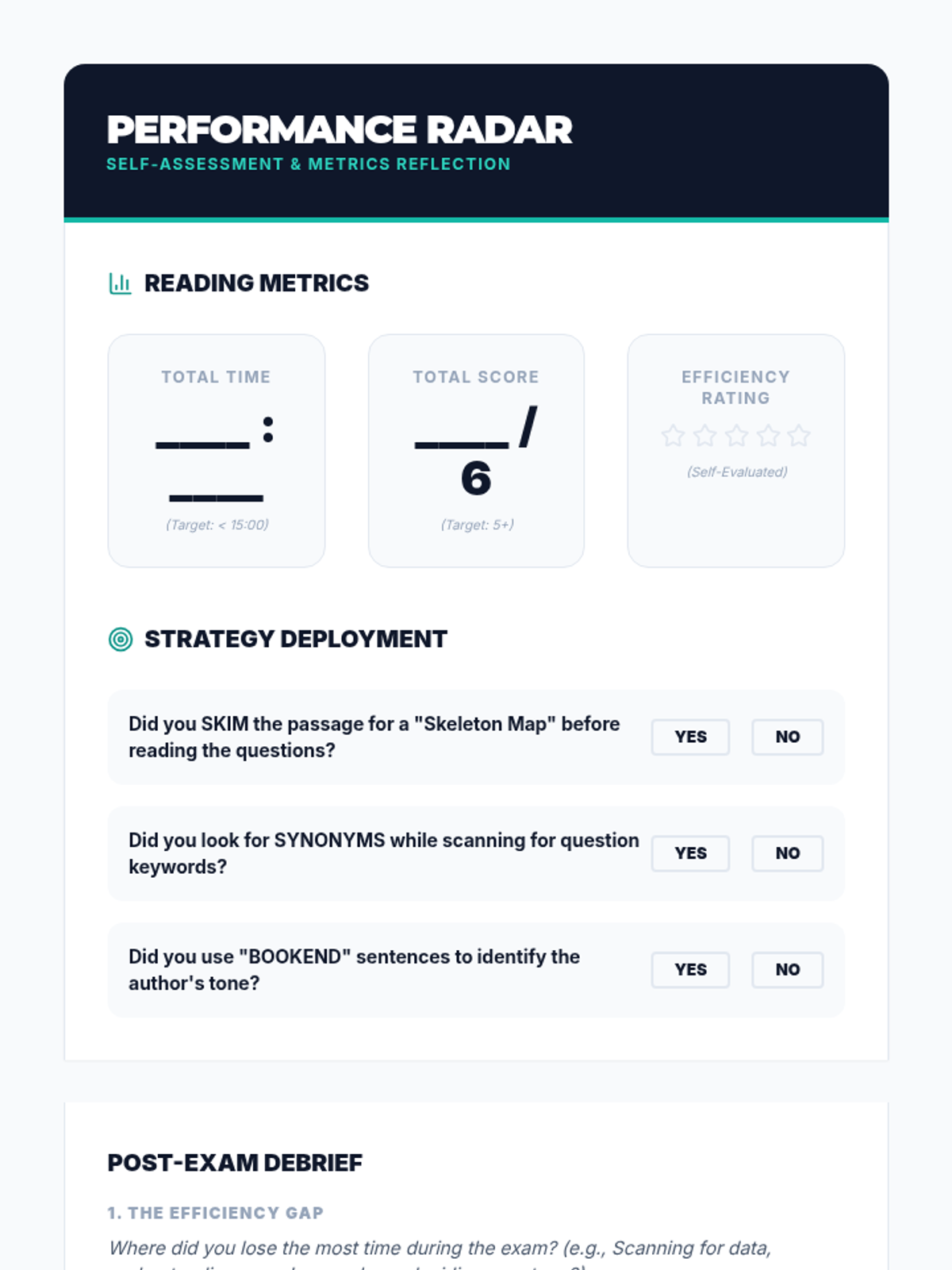
A high-stakes simulation involving timed reading drills and self-assessment of efficiency metrics.
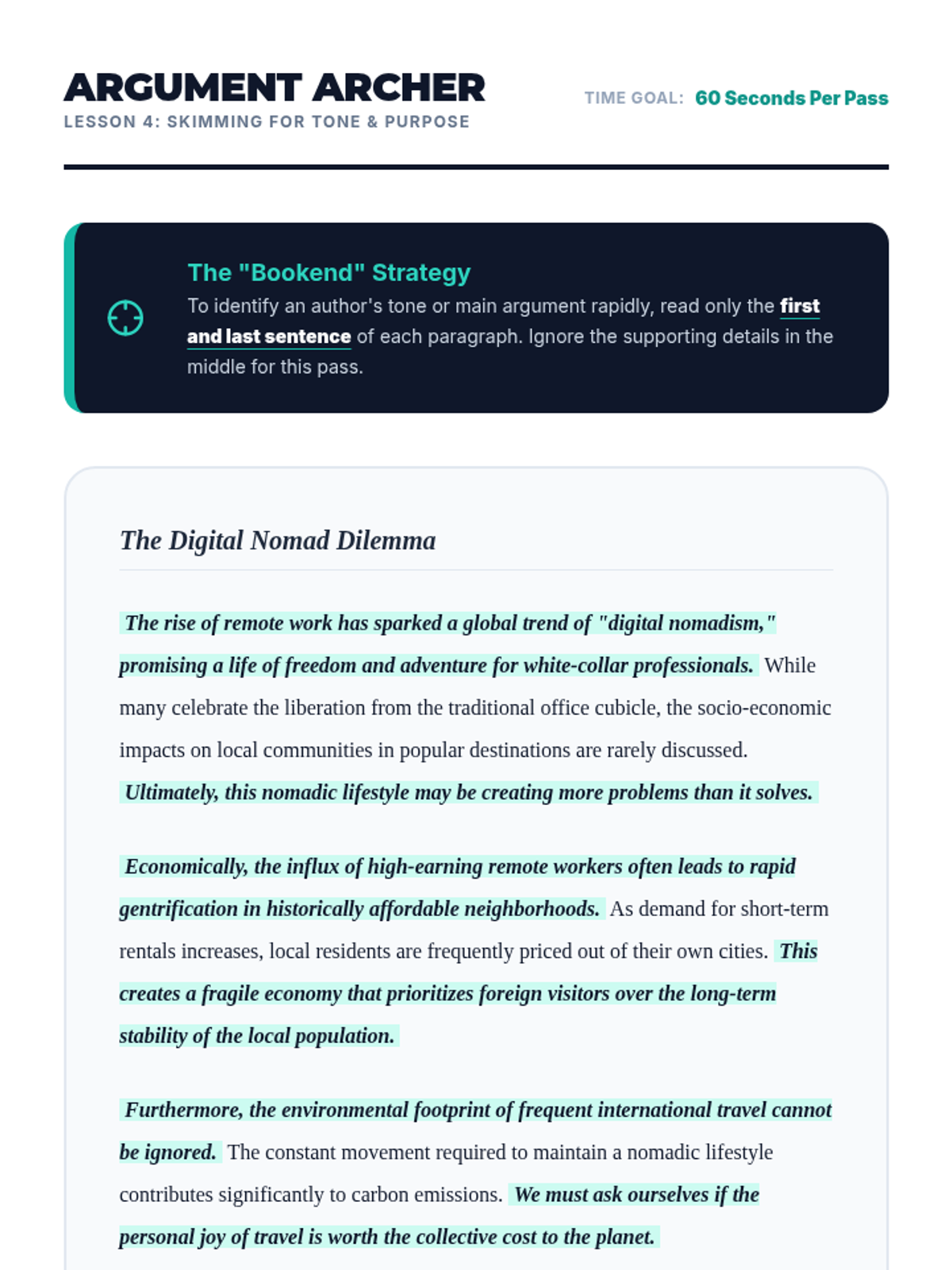
Teaches students to rapidly identify author tone, purpose, and rhetorical flow by focusing on strategic sentence positions.
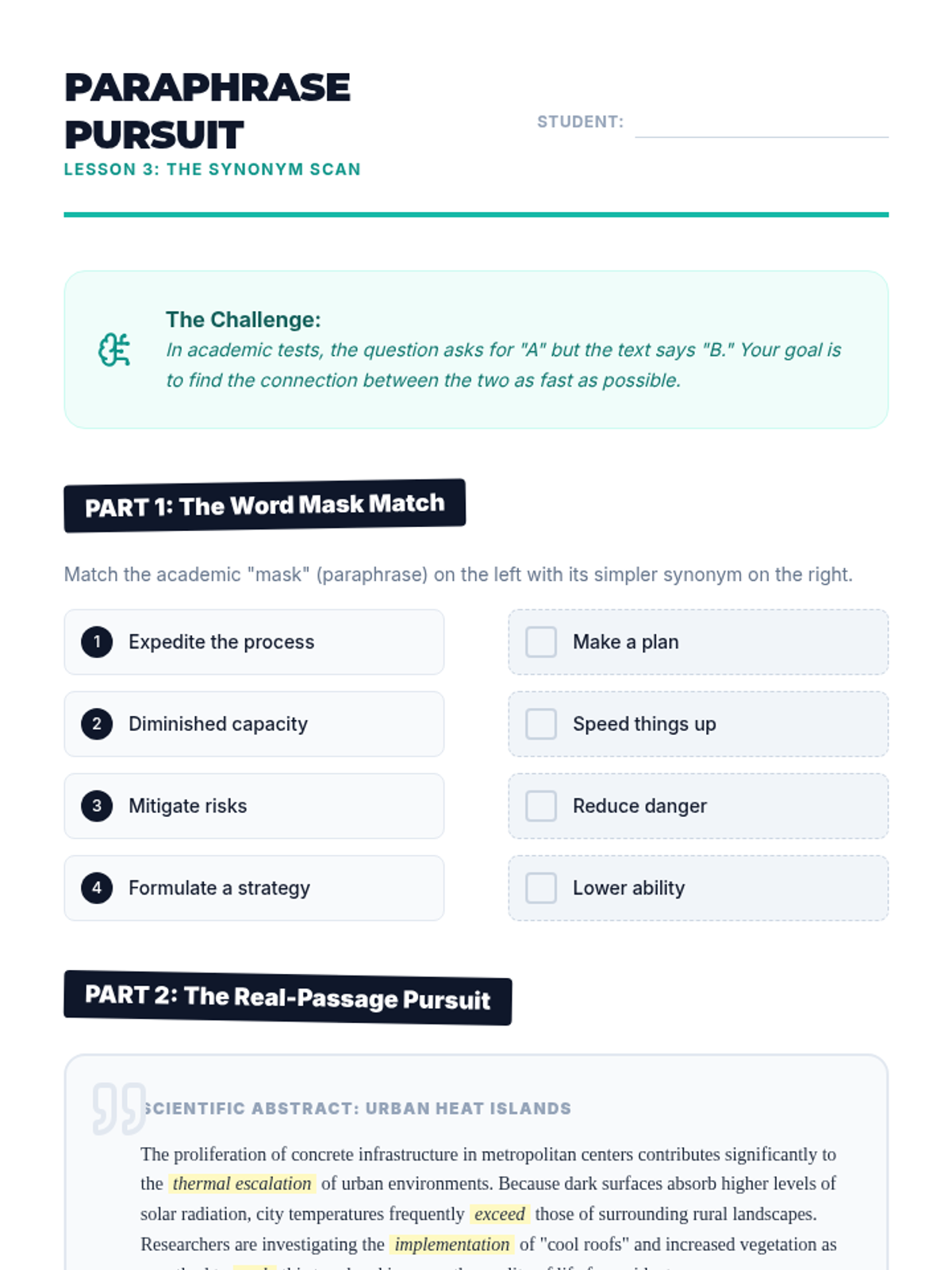
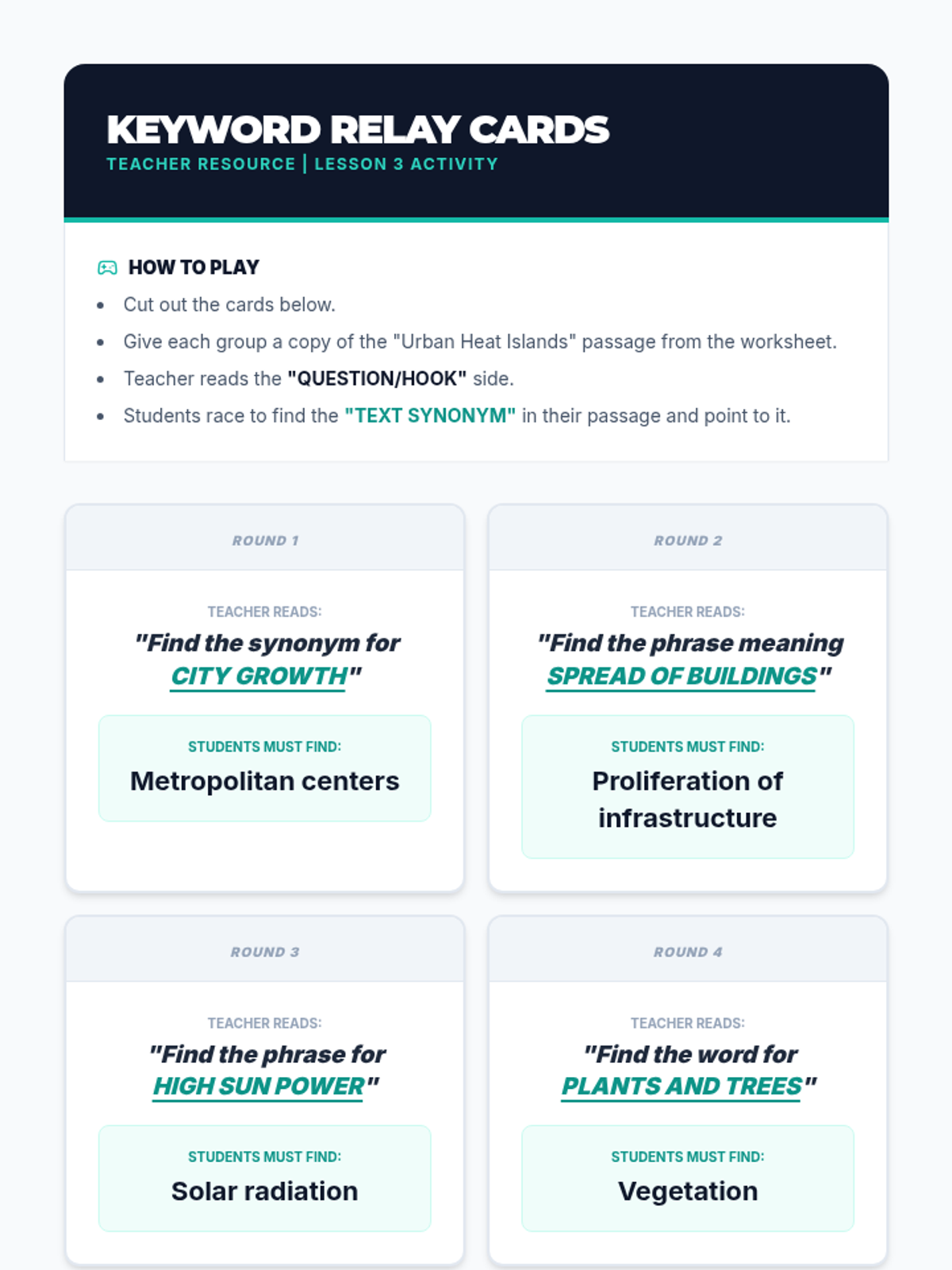
Develops the ability to scan for synonyms and paraphrases rather than exact word matches, a key skill for standardized tests.
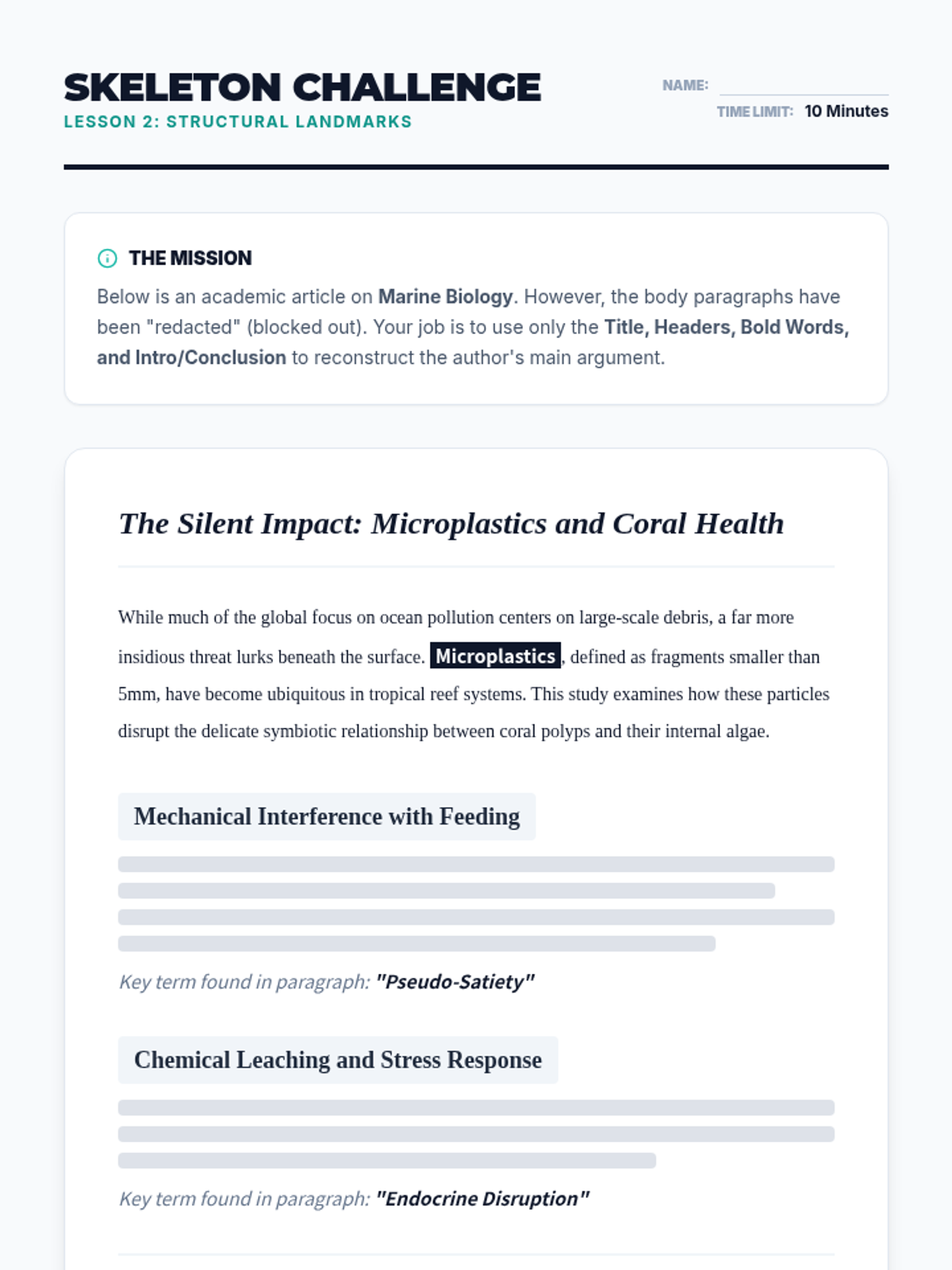
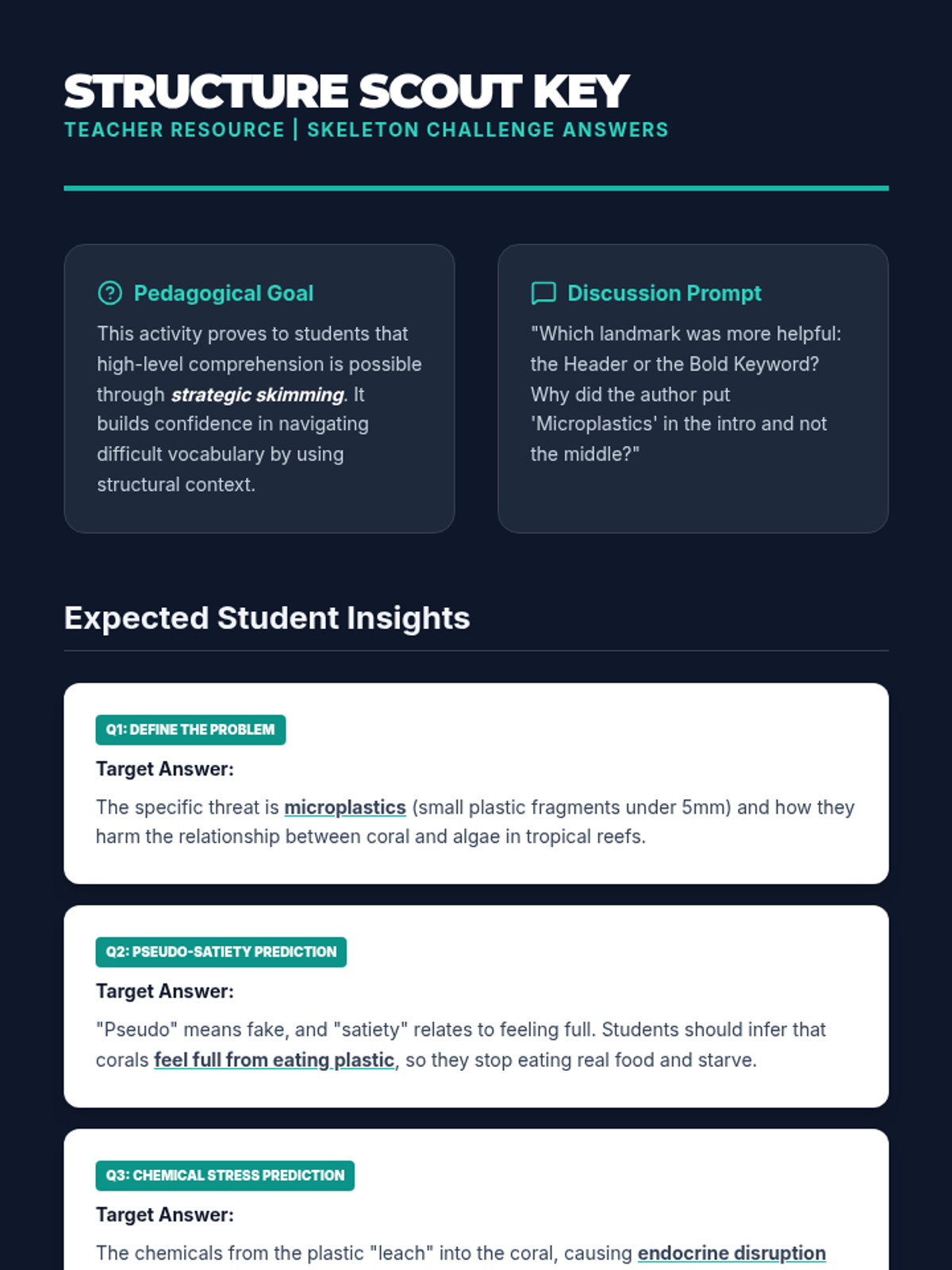
Focuses on utilizing headers, bold text, and introductory paragraphs to build a mental map of academic texts.
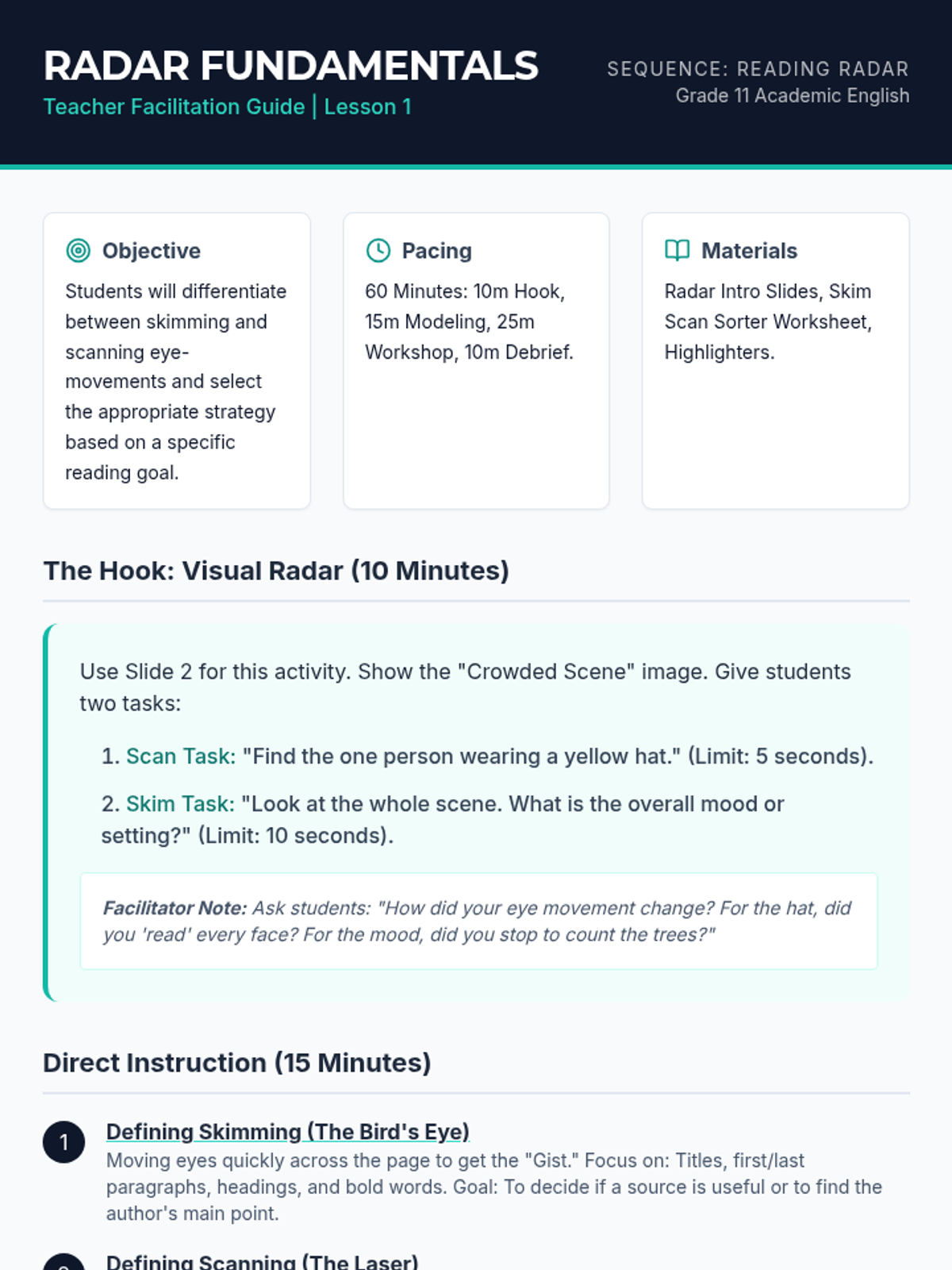
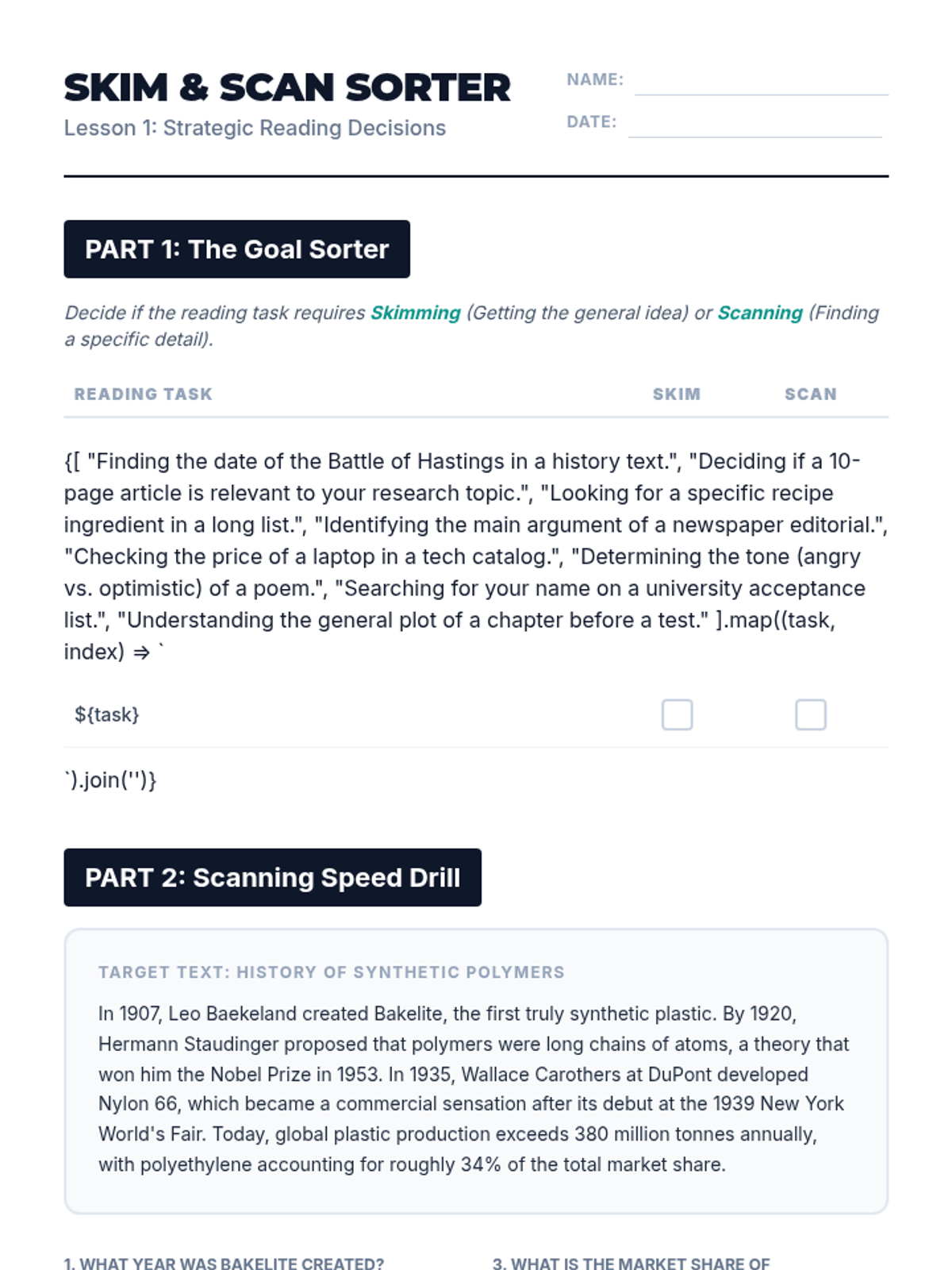
Students distinguish between skimming (gist) and scanning (details) through eye-movement practice and goal-setting workshops.
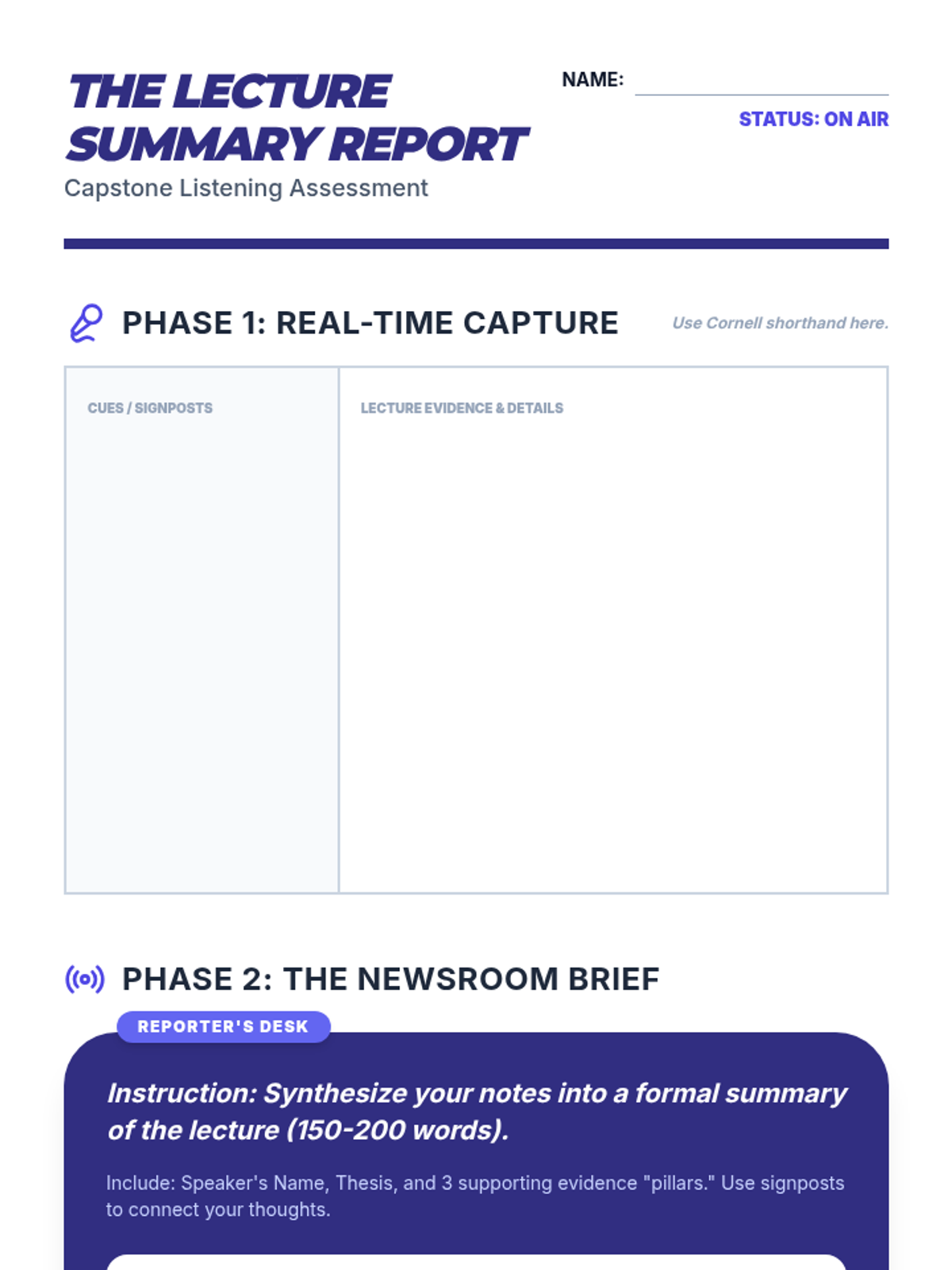
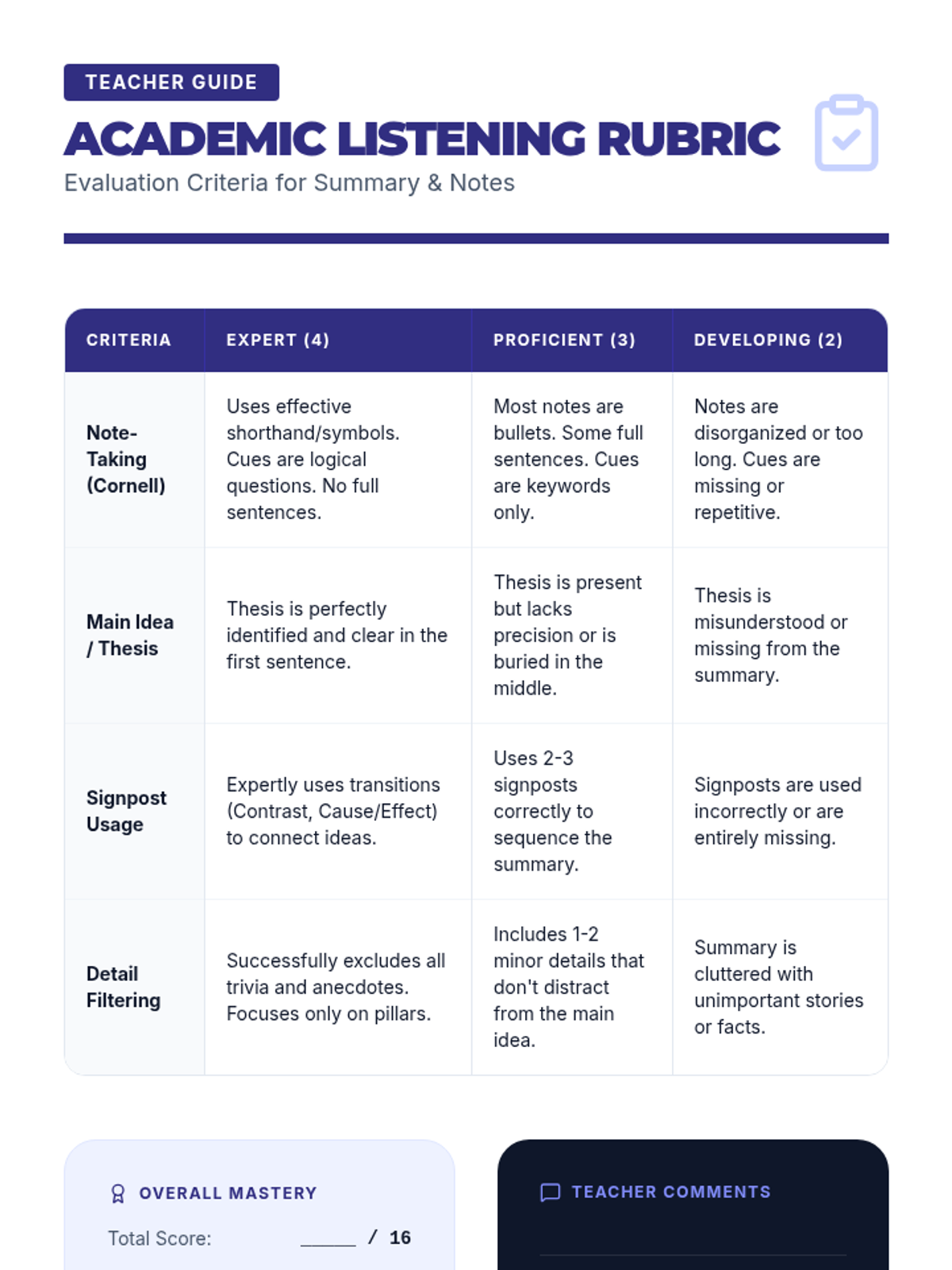
Students listen to a full-length talk and produce a written summary that accurately reflects the speaker's thesis and evidence.
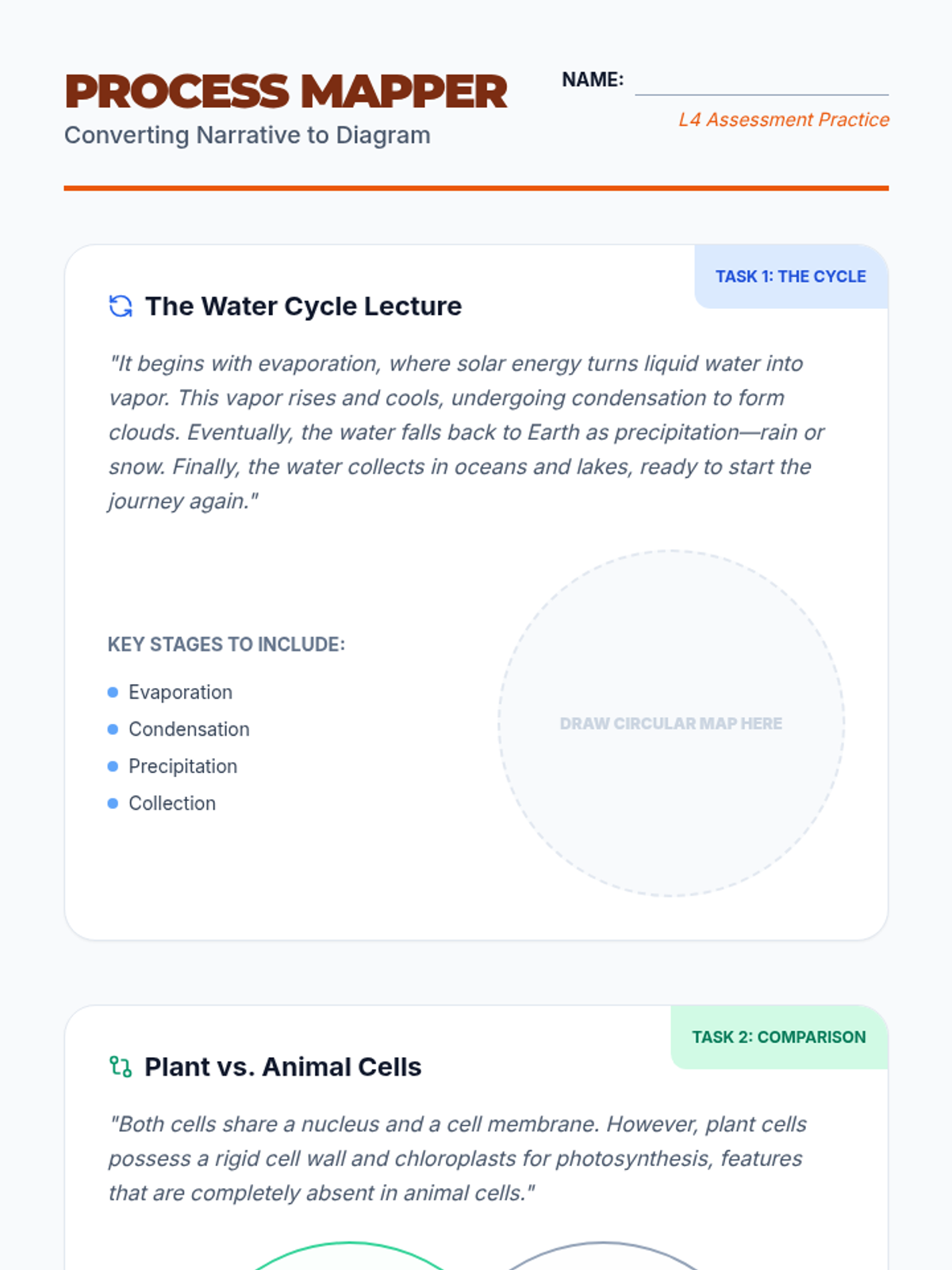
Learners practice converting auditory descriptions of processes or cycles into visual diagrams and graphic organizers, checking for deep understanding.
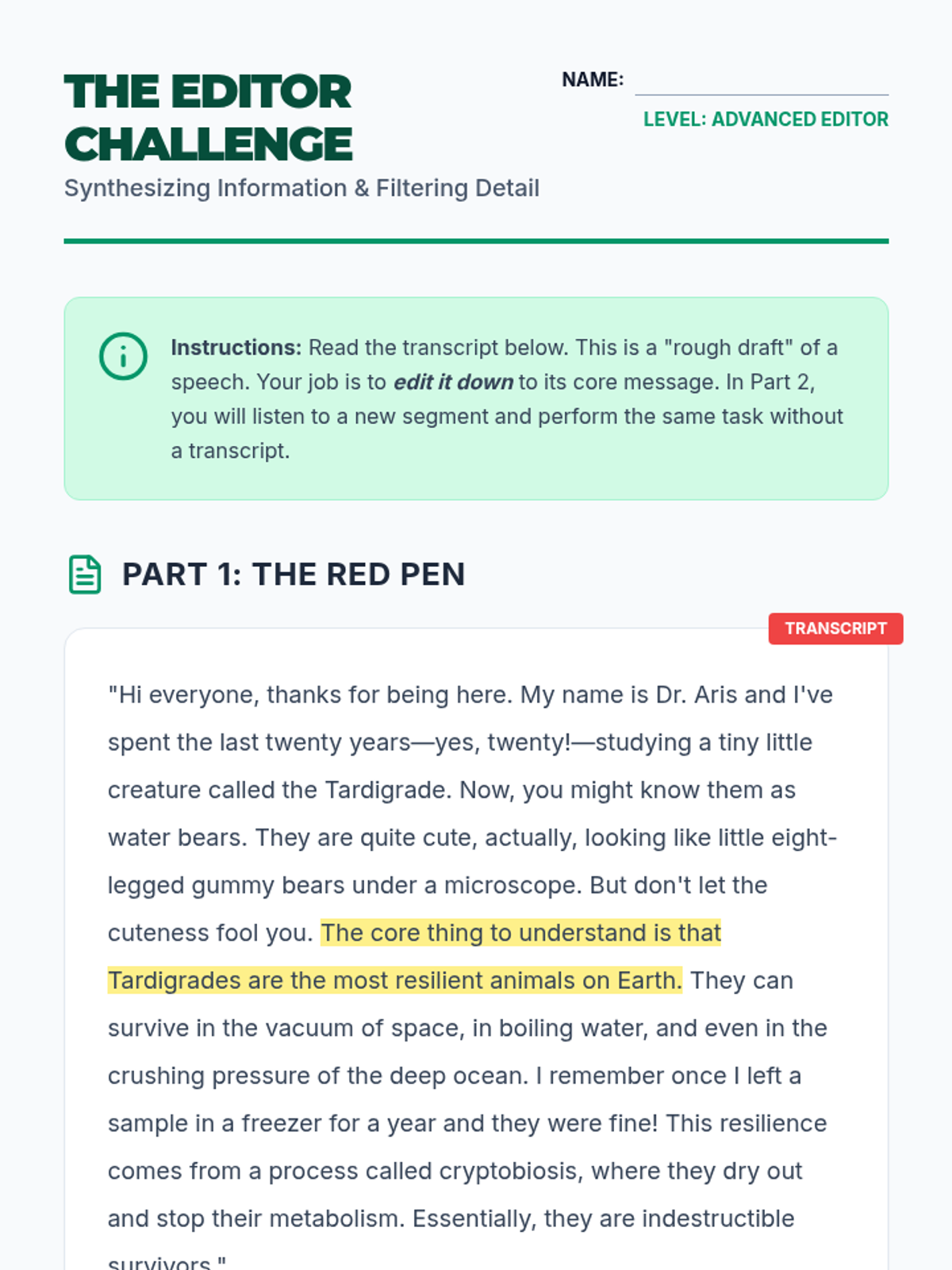
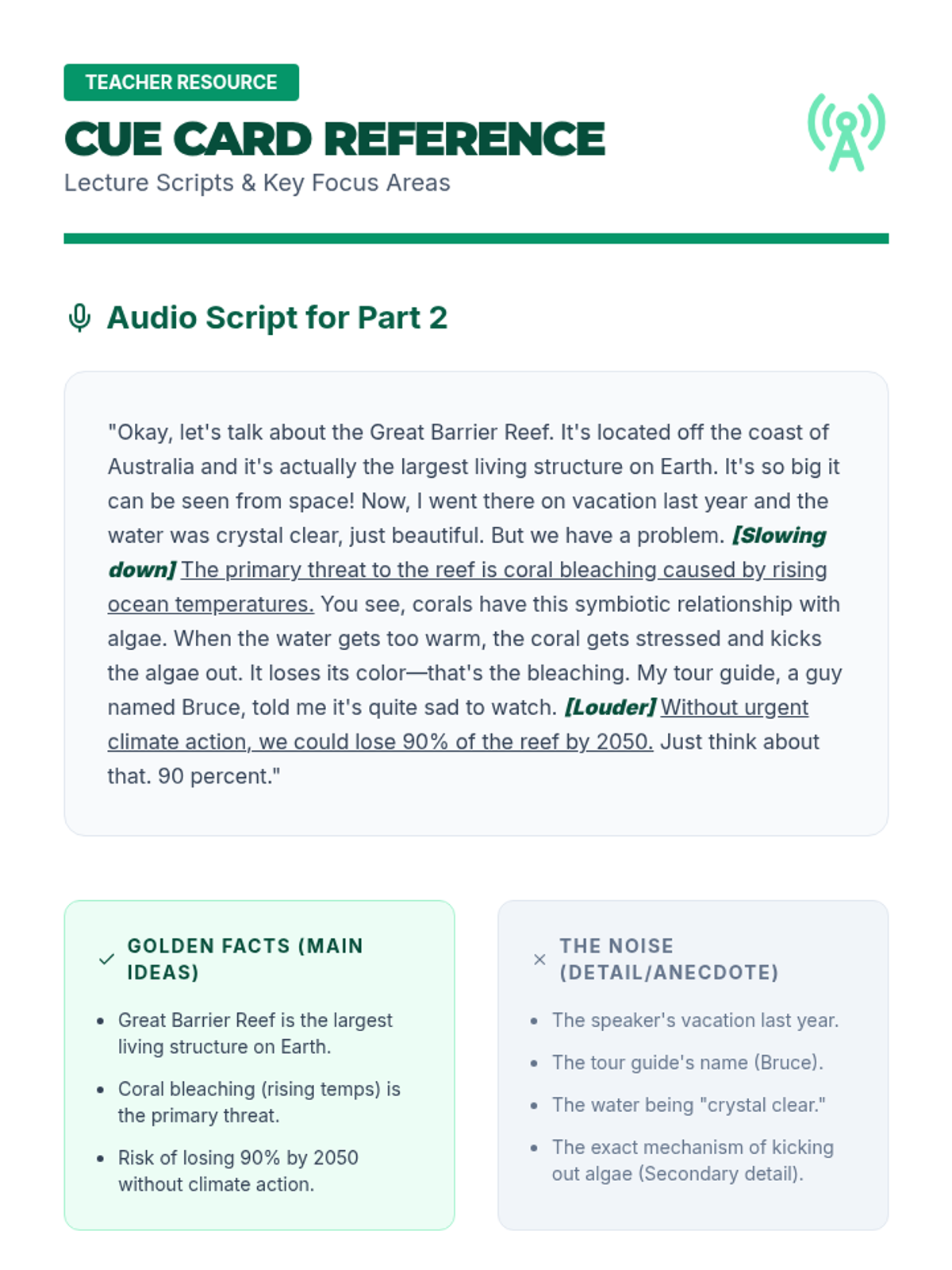
Students practice filtering 'need-to-know' concepts from 'nice-to-know' trivia by focusing on speaker volume, repetition, and pausing.
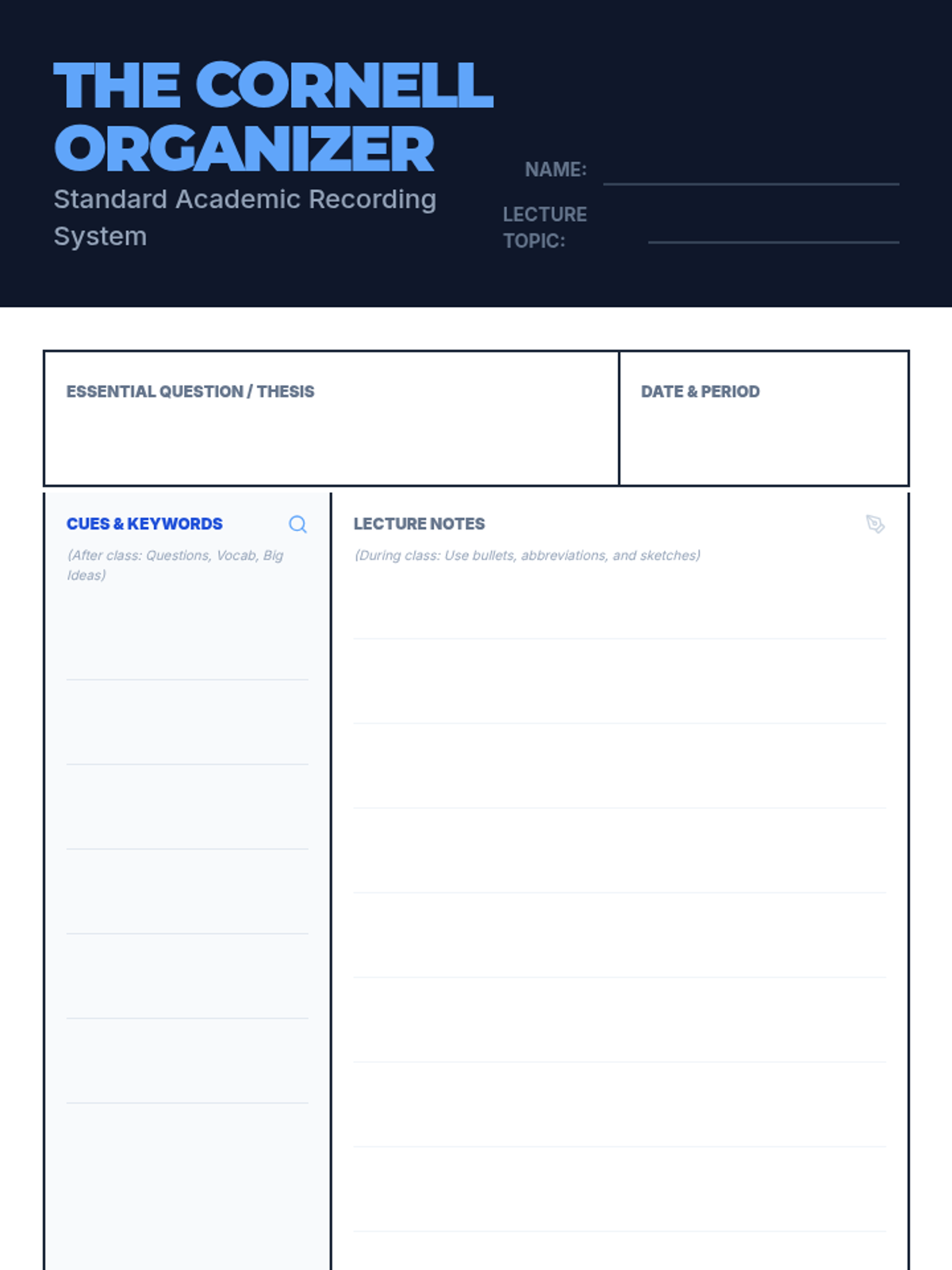
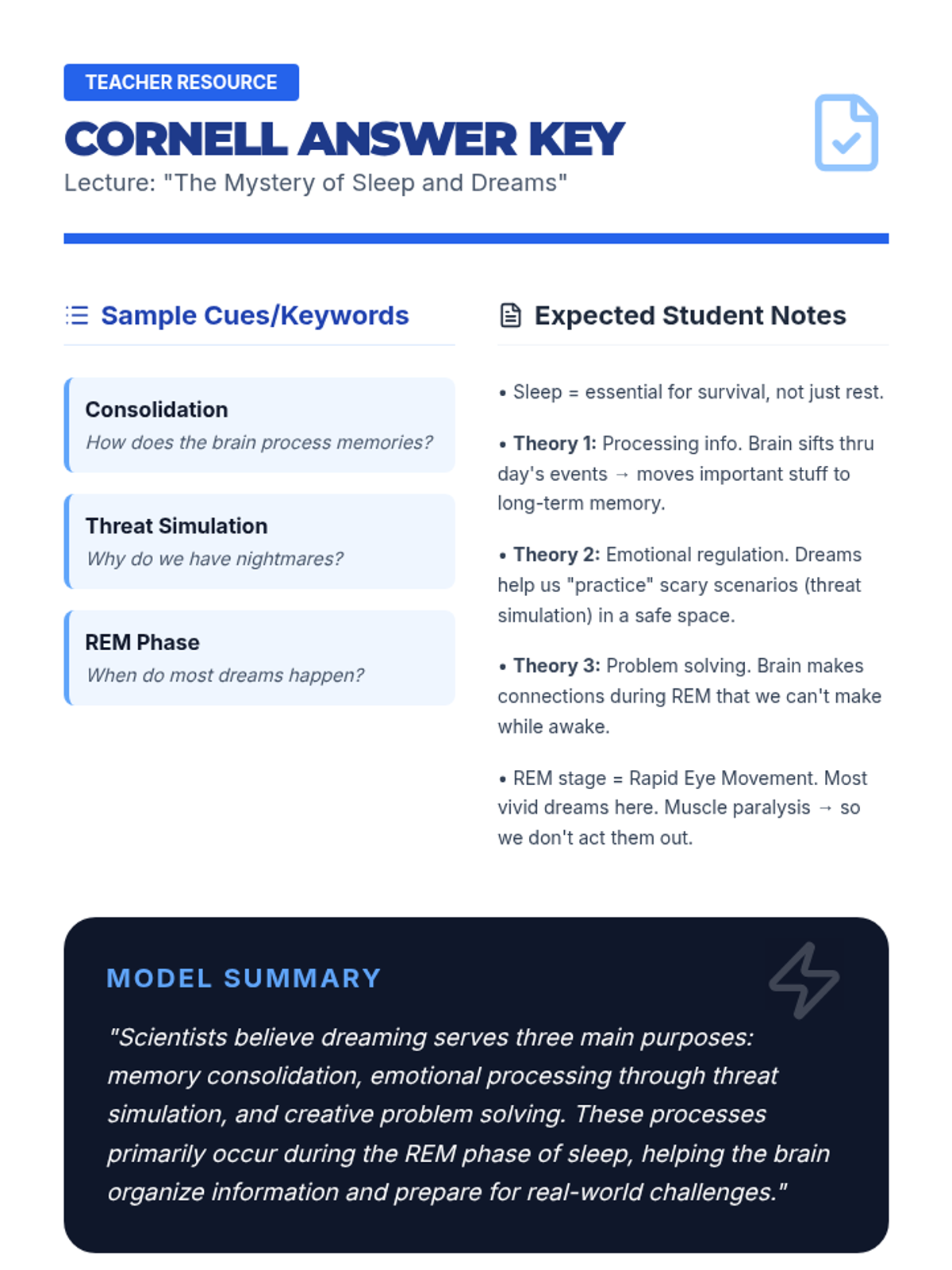
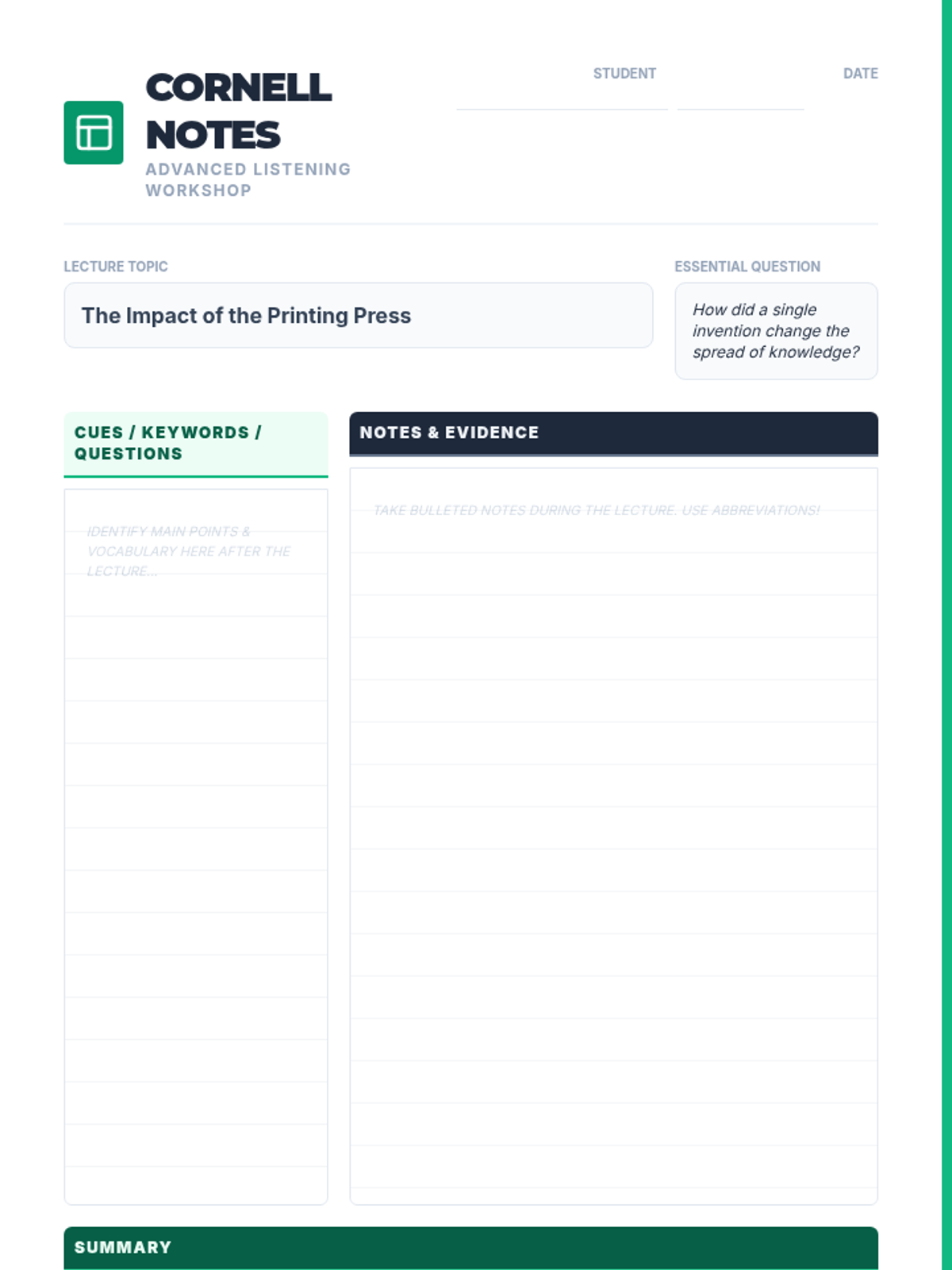
This lesson introduces the Cornell Note-taking method as a tool for organizing auditory input. Students practice the separation of main ideas, keywords, and supporting details in real-time.
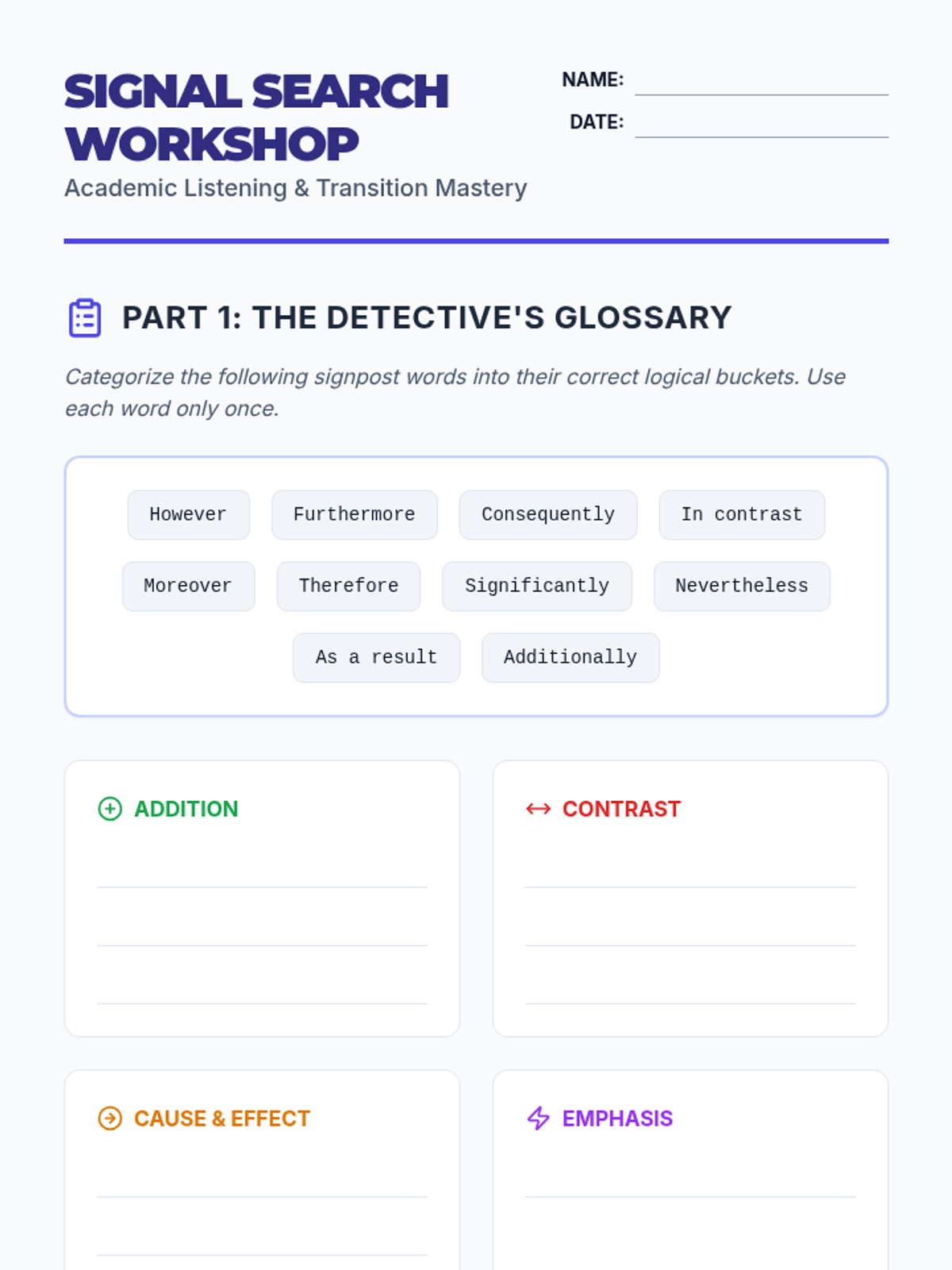
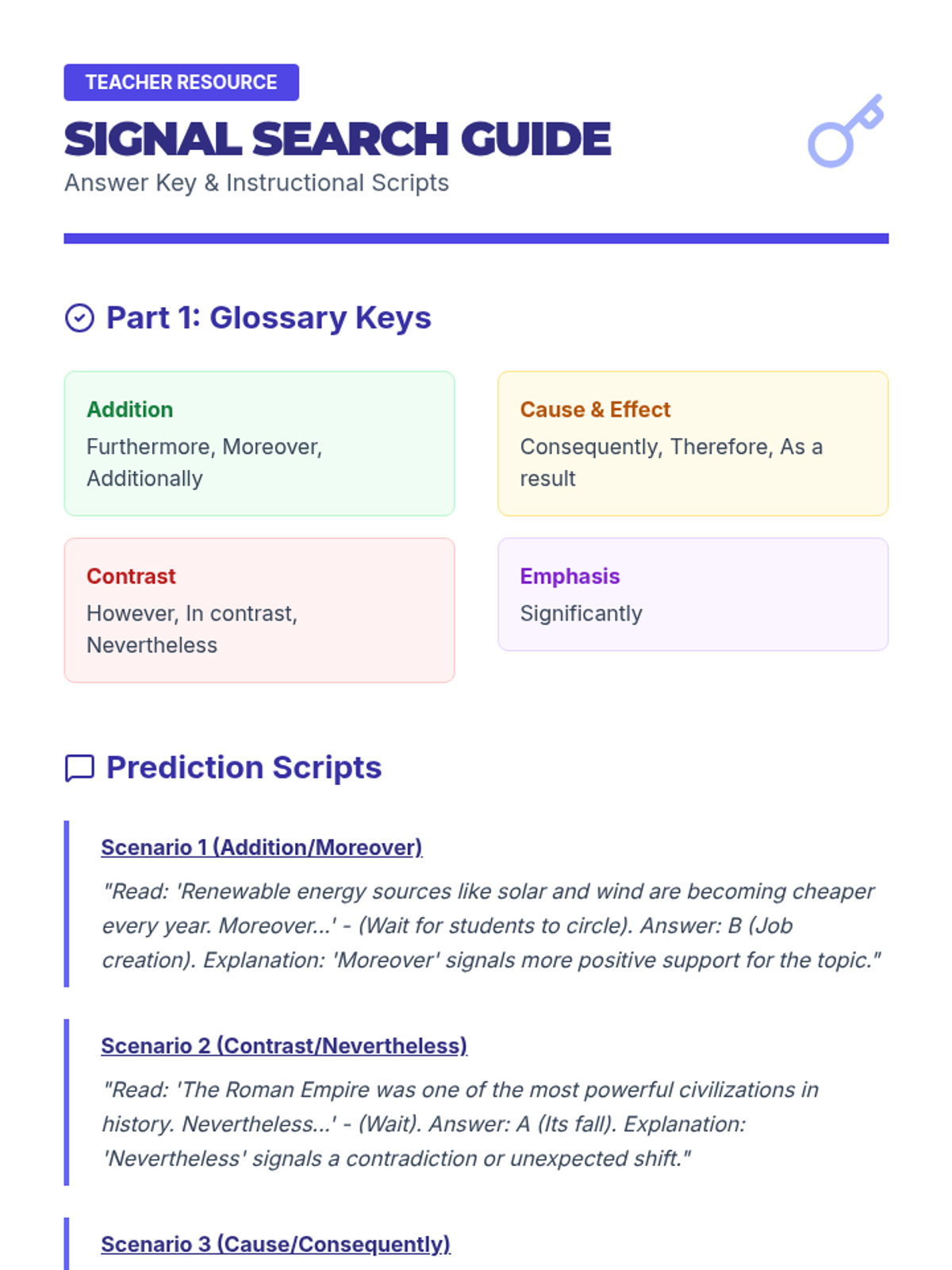
Students analyze audio clips to identify specific signal words that indicate contrast, addition, cause-and-effect, and emphasis. They practice predicting what type of information will follow specific transition phrases.
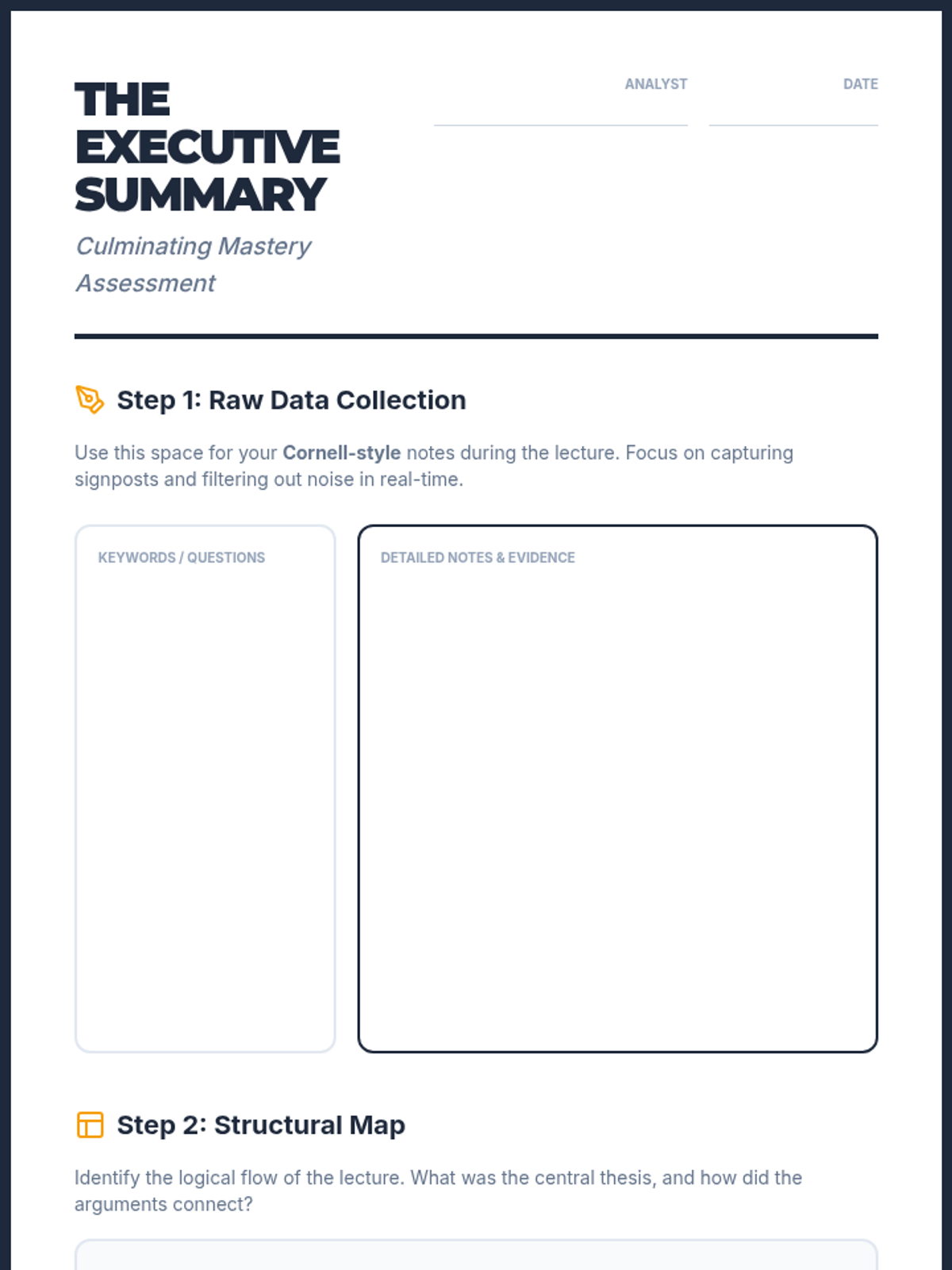
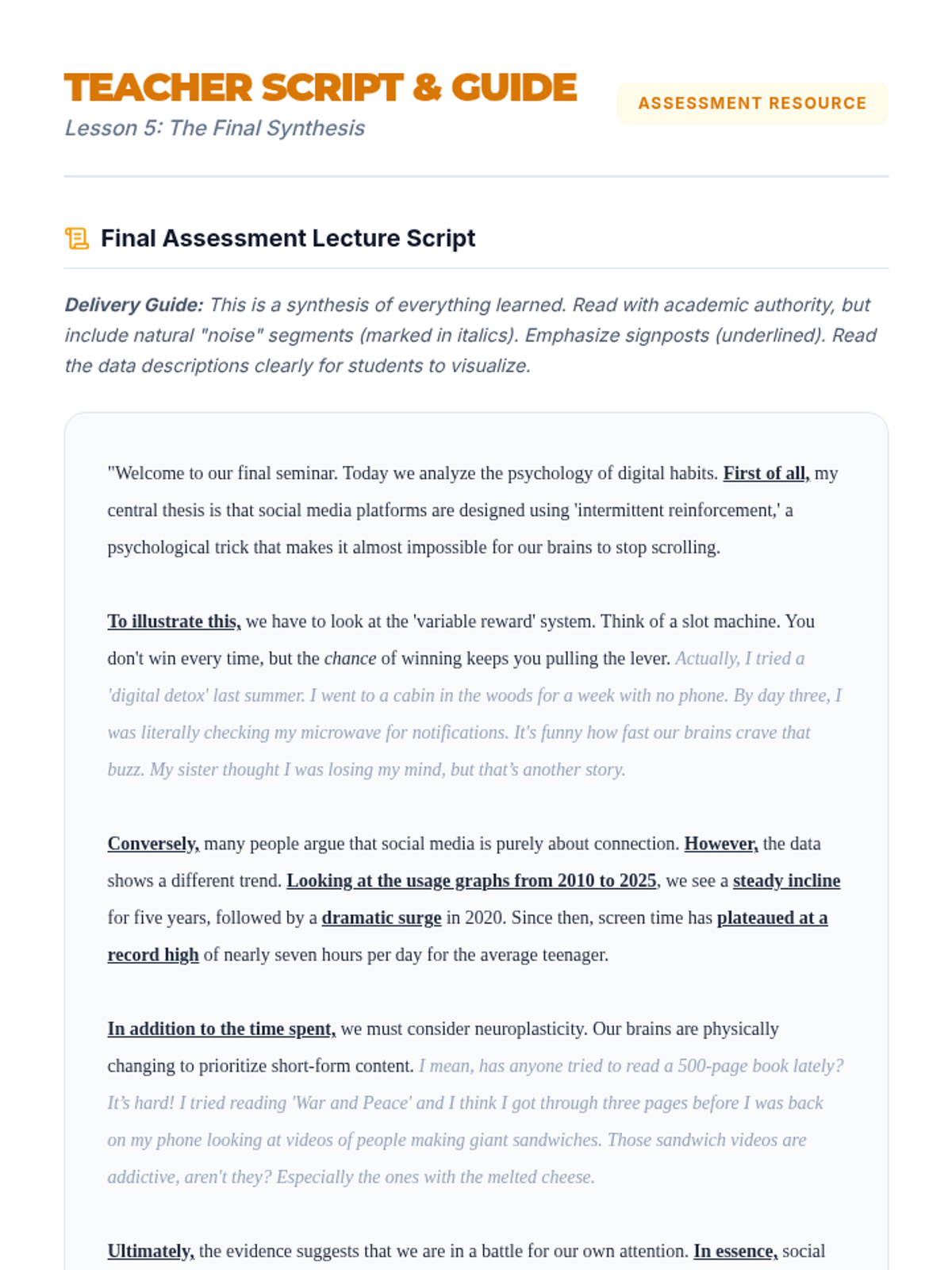
A culminating lesson where students listen to a full-length academic presentation, apply all learned strategies, and produce a written synthesis.
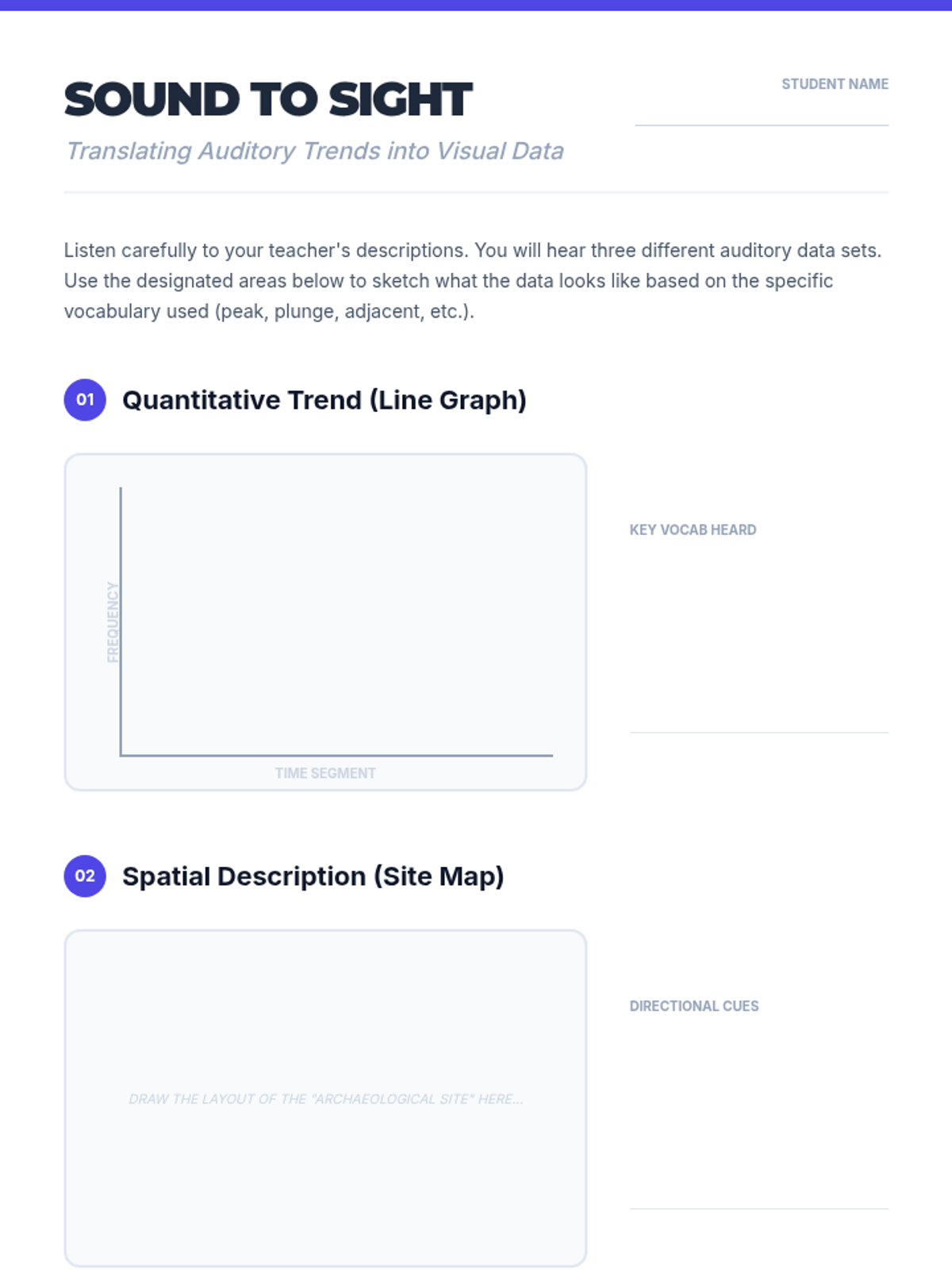
Focusing on quantitative language, students listen to descriptions of data and attempt to draw visual representations like graphs and charts.
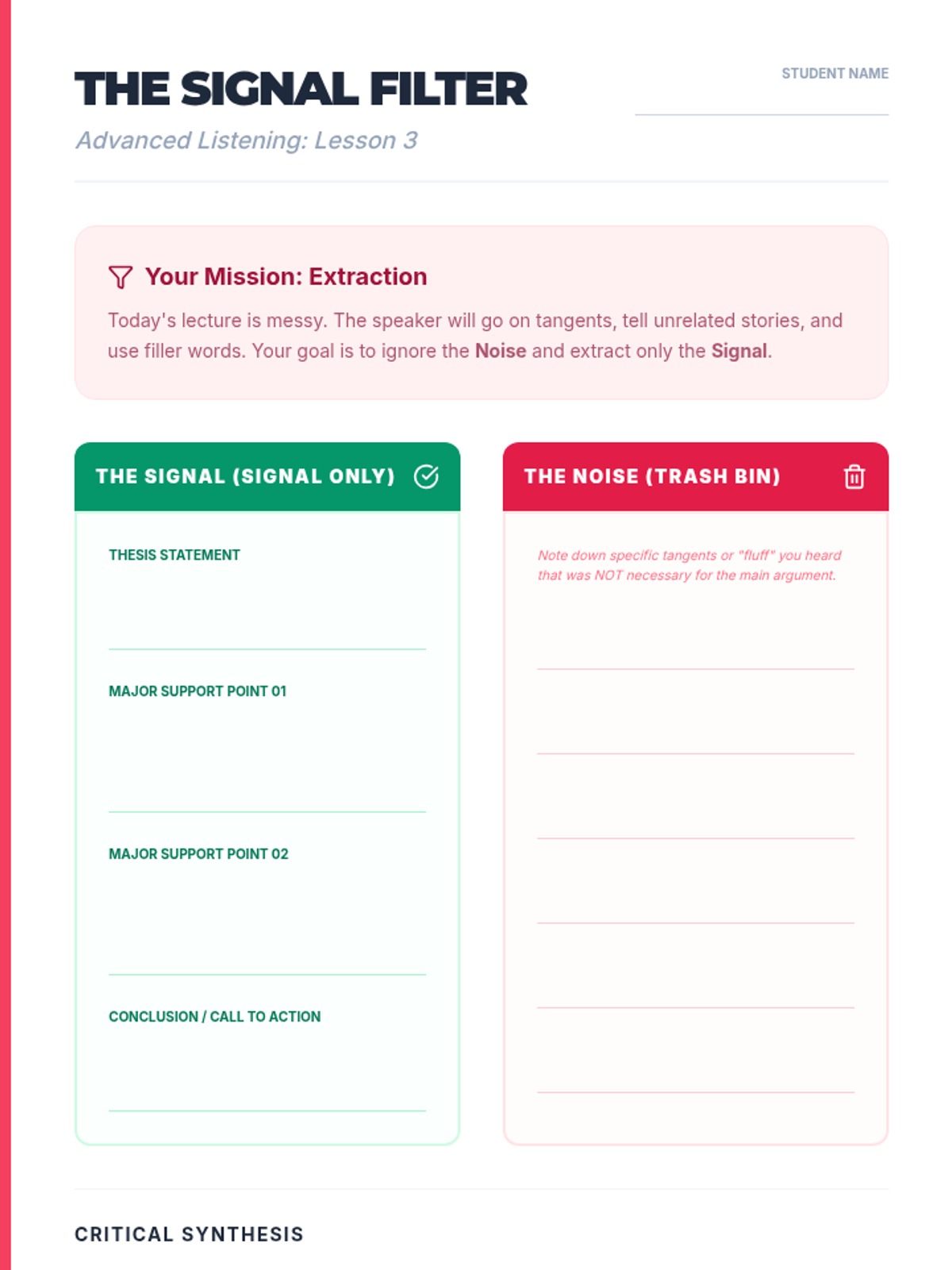
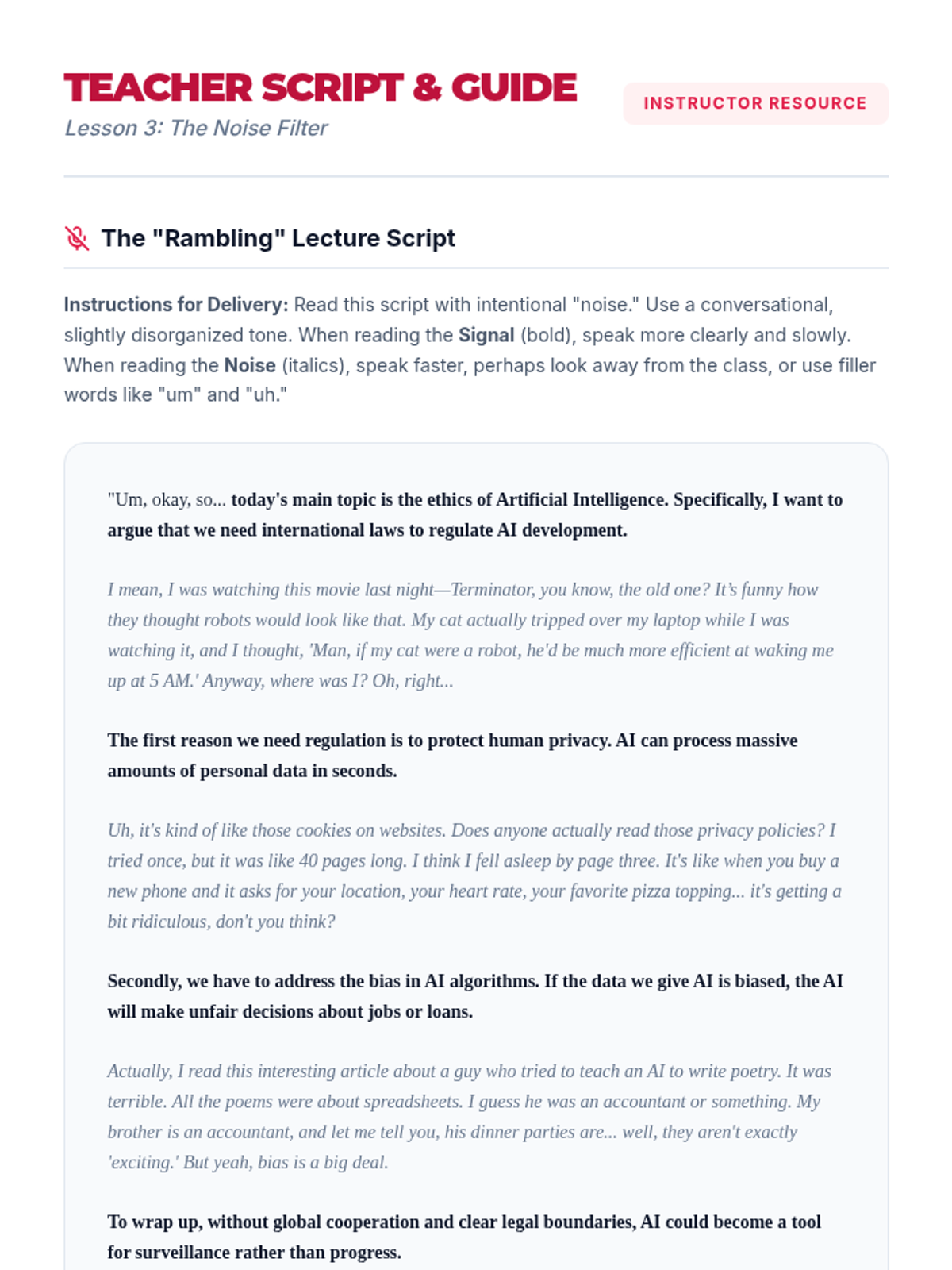
Students practice filtering essential information from unscripted talks that include natural tangents and anecdotes. They identify vocal cues and markers that signal shifts in focus.
Introduction to the Cornell Note-taking system as a tool for organizing academic input. Students practice real-time categorization of keywords and detailed notes during a mini-lecture.
Students analyze audio clips to identify discourse markers and signposting language used to organize academic lectures. They learn to map these markers to an argument's structure to predict upcoming content.
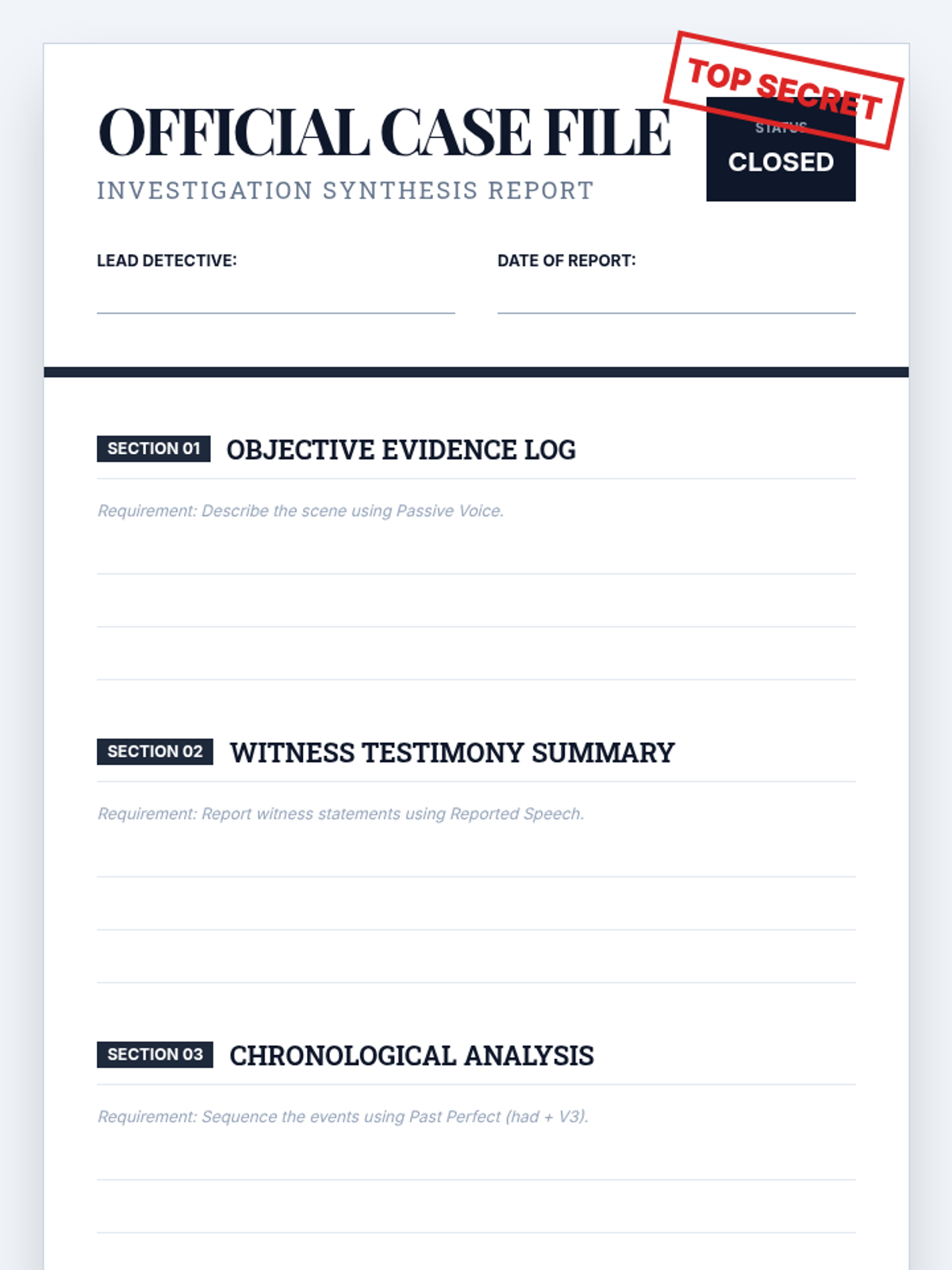
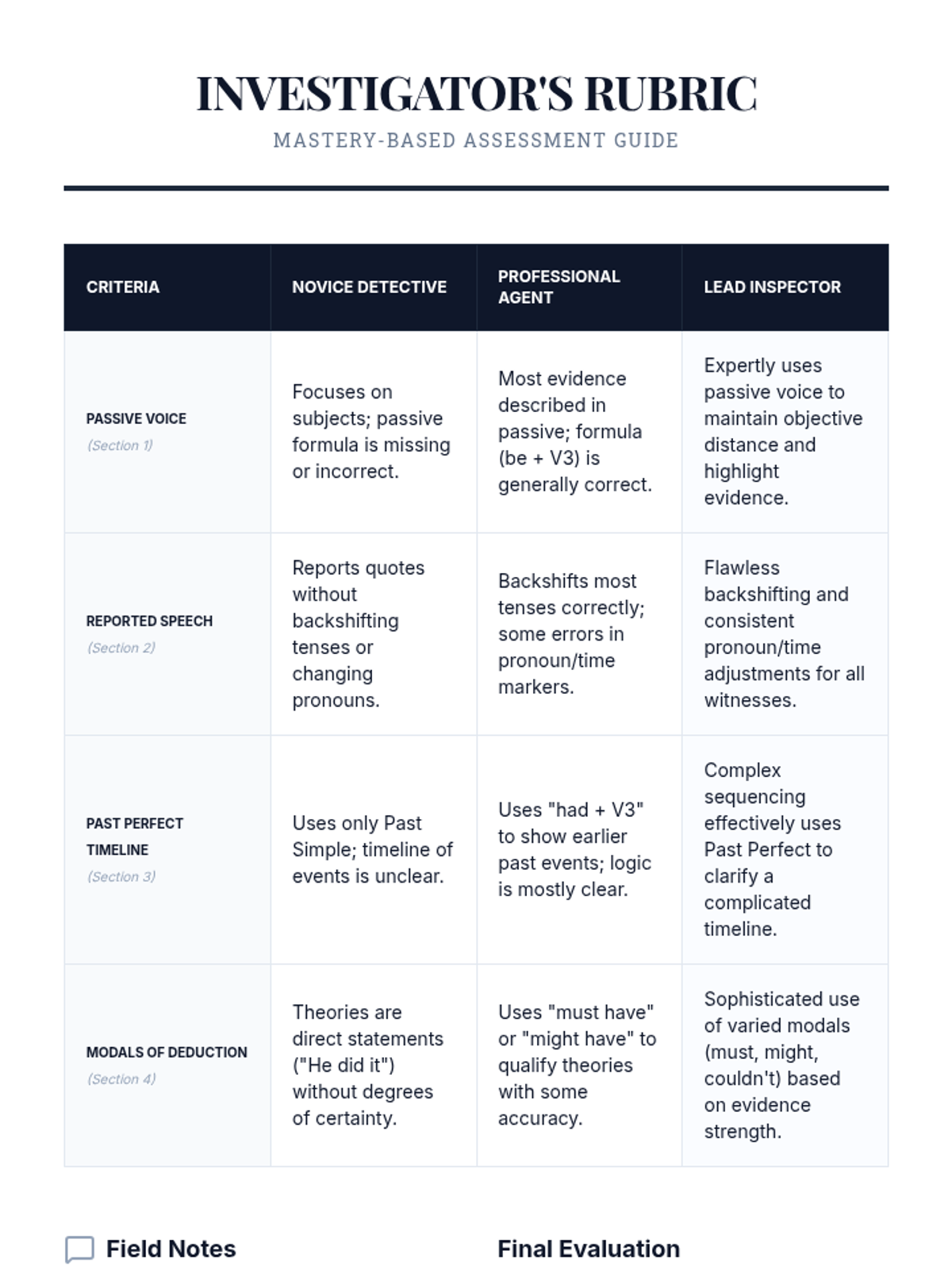
Students synthesize their skills to write a final case report. They combine passive descriptions, deductive theories, and reported testimony into a professional narrative.
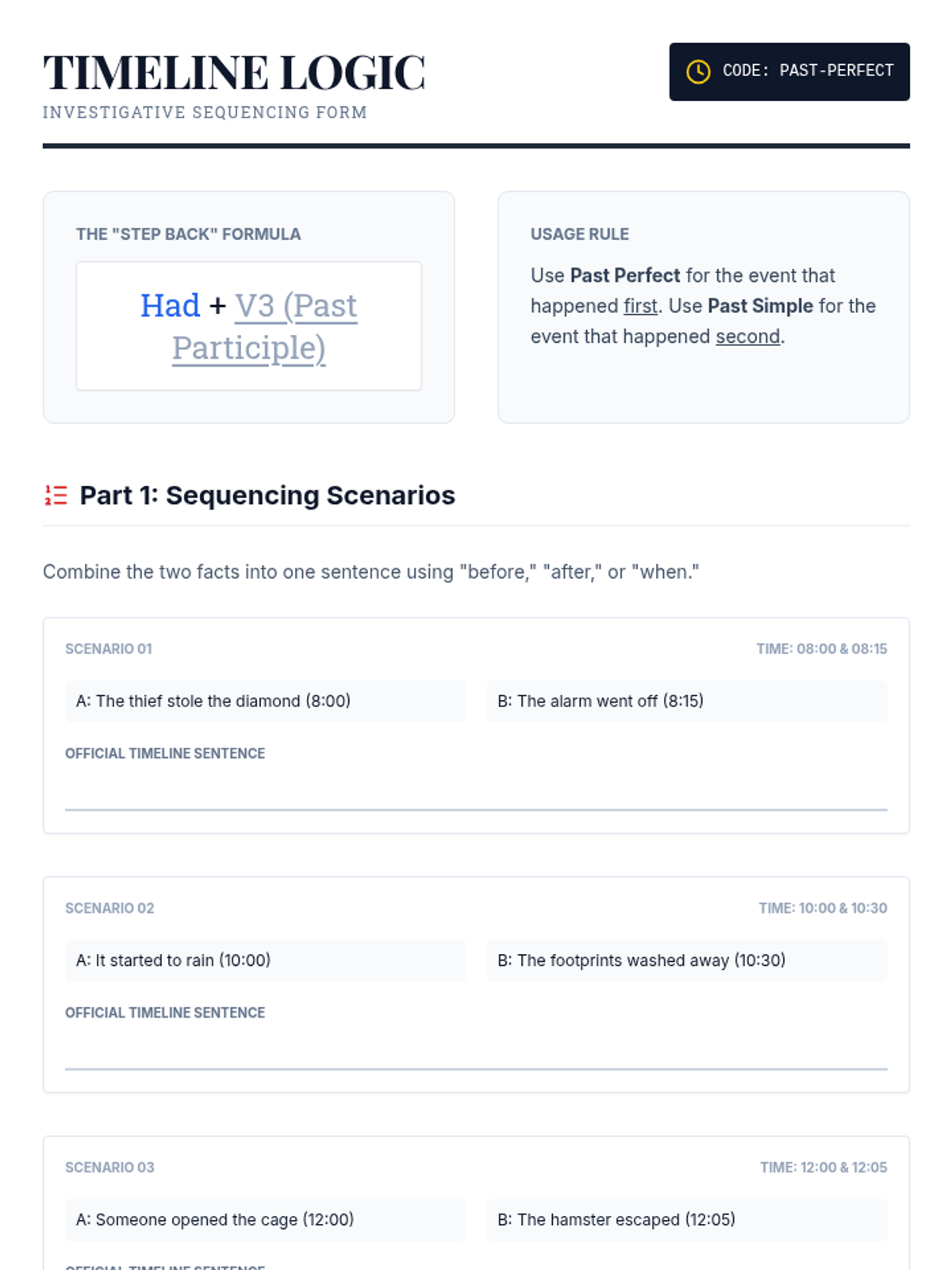
Students use the past perfect tense to sequence events in the mystery. They create timelines to distinguish between actions that happened before other past events.
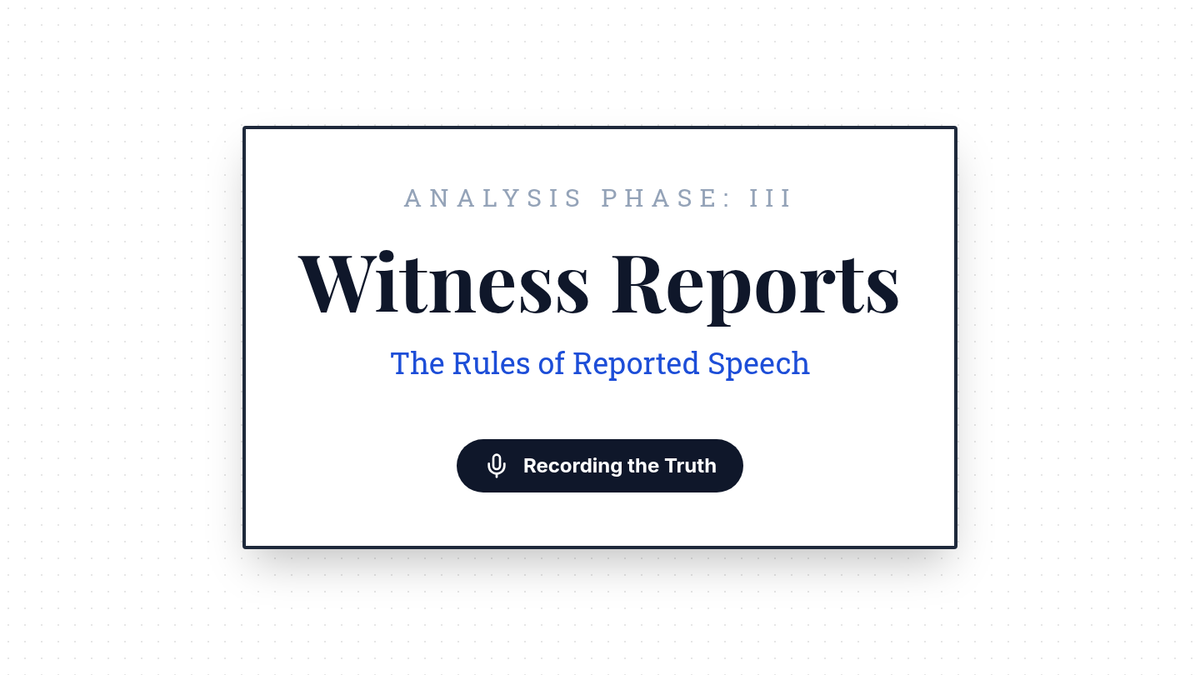
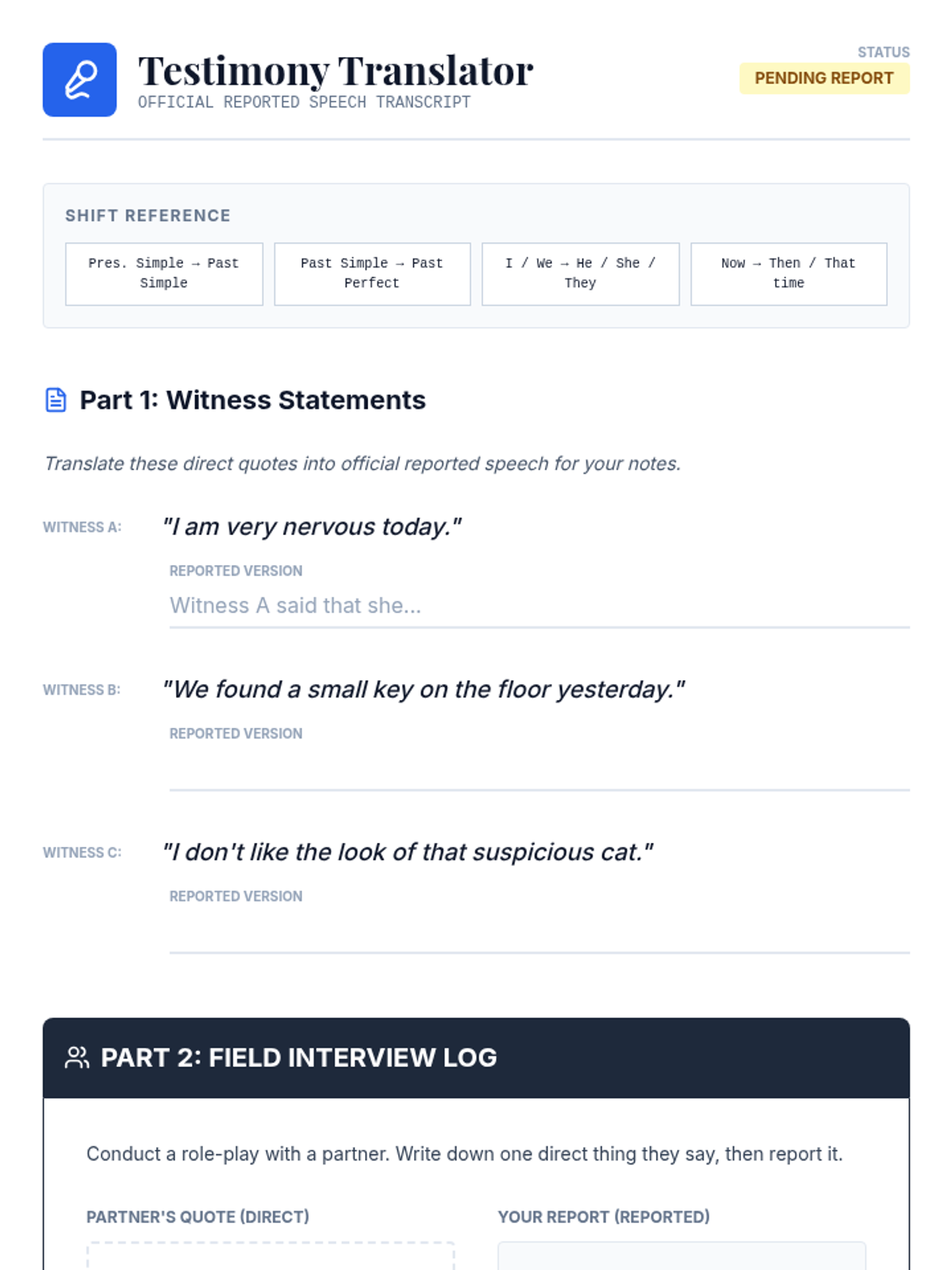
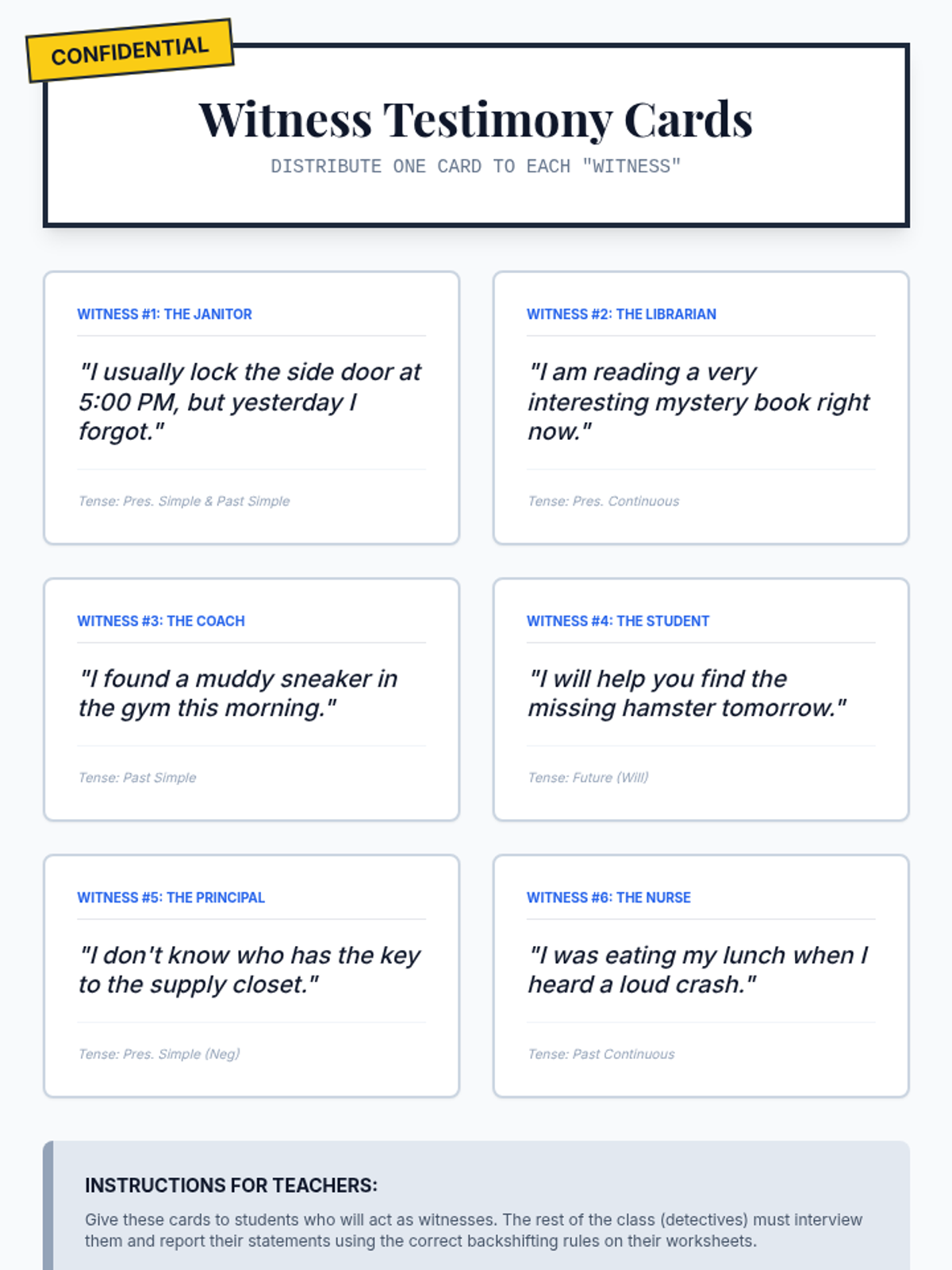
Students interview witnesses and convert direct quotes into reported speech. They practice the rules of 'backshifting' tenses and changing pronouns for accurate reporting.
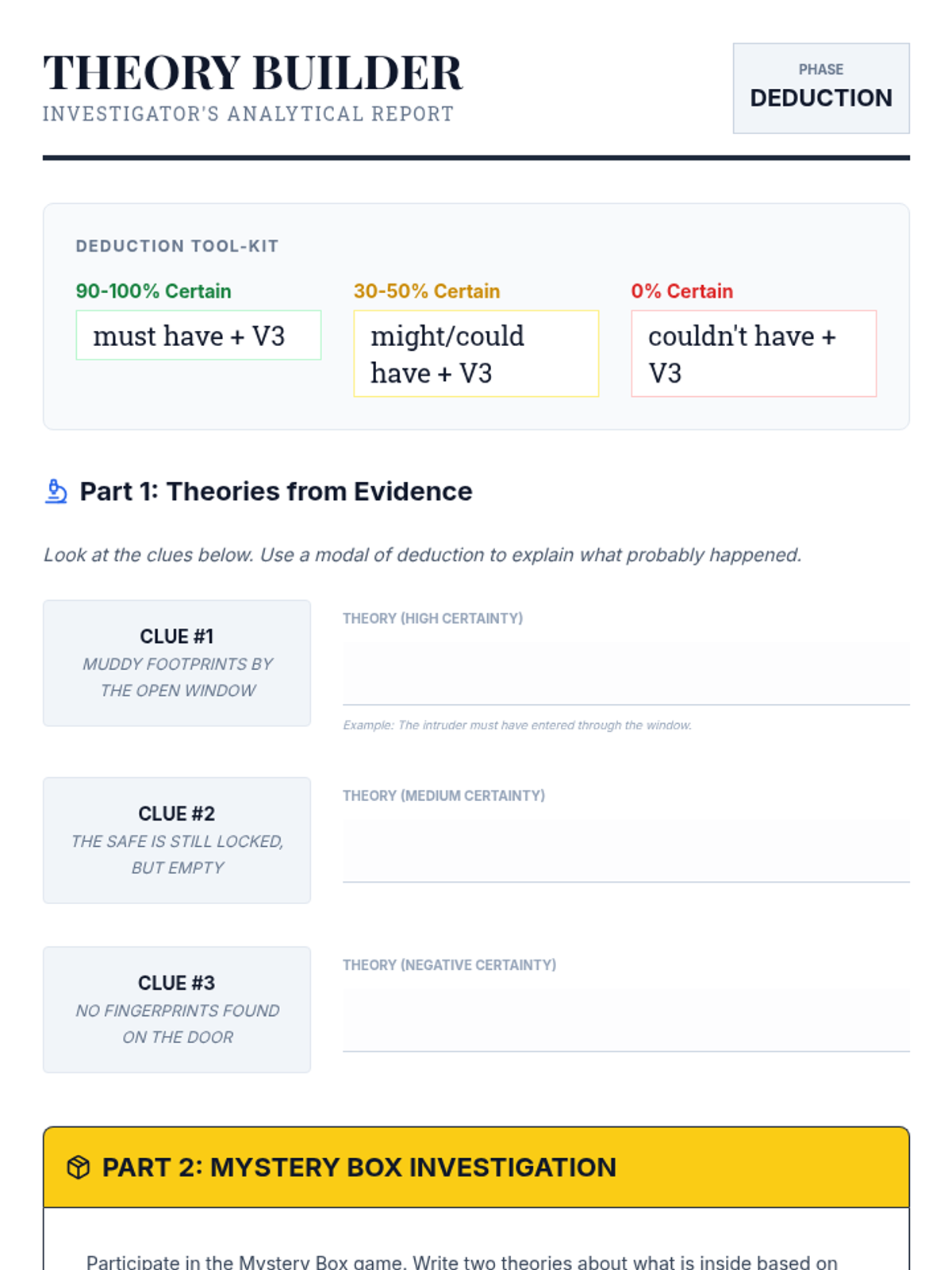
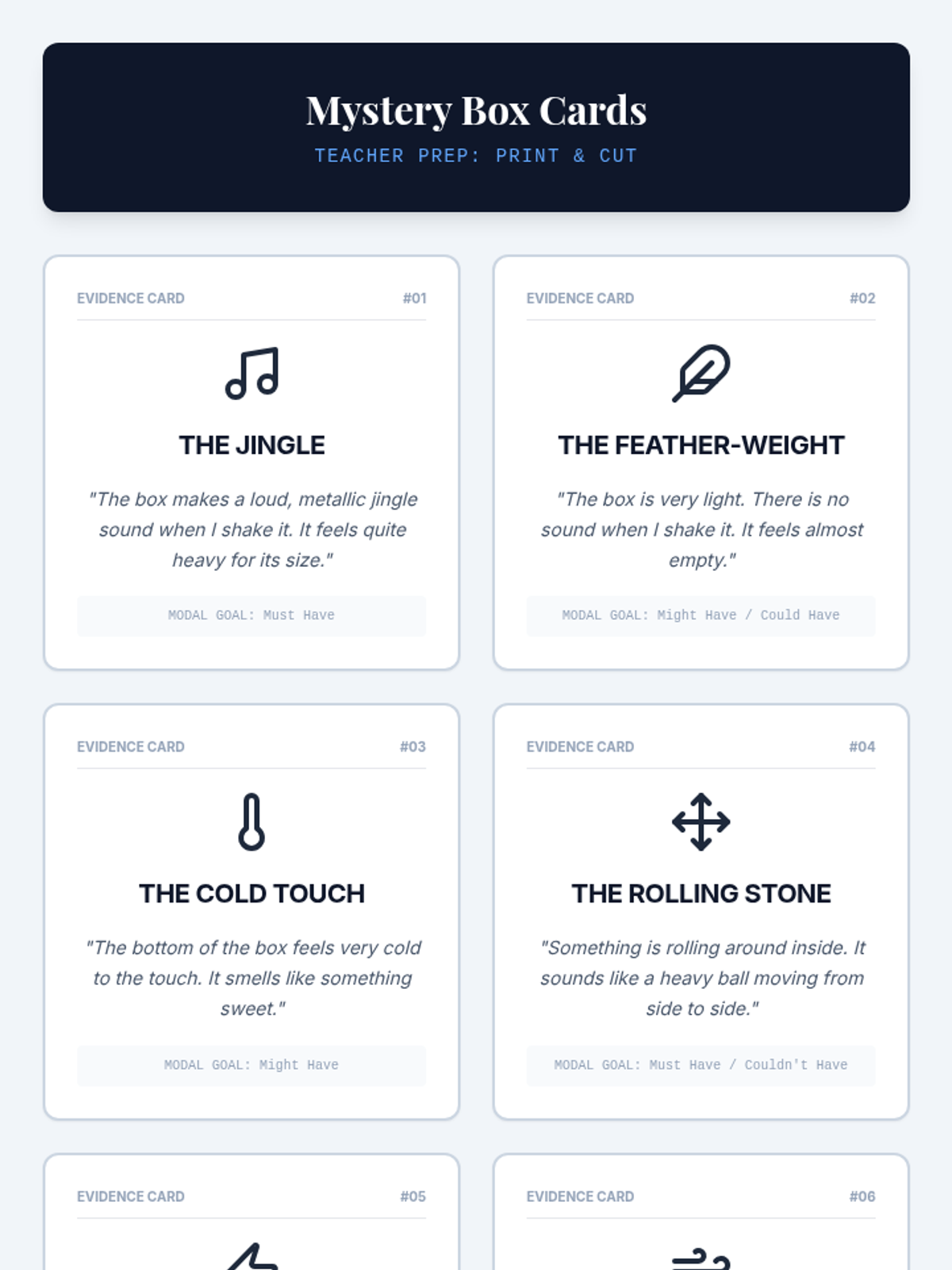
Students use modals of deduction (must have, might have, couldn't have) to formulate theories about the mystery. They learn to express different degrees of certainty based on the evidence.
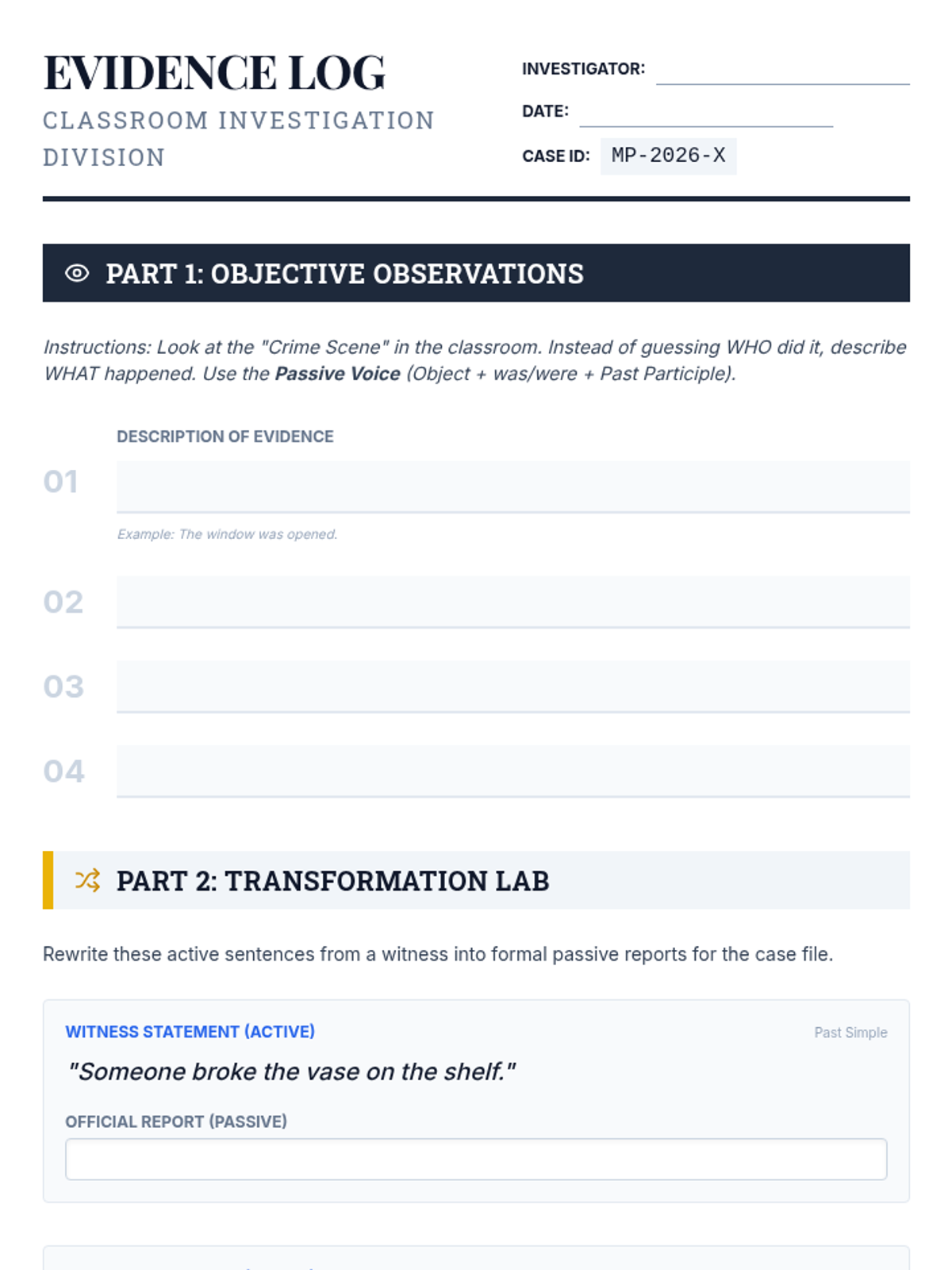
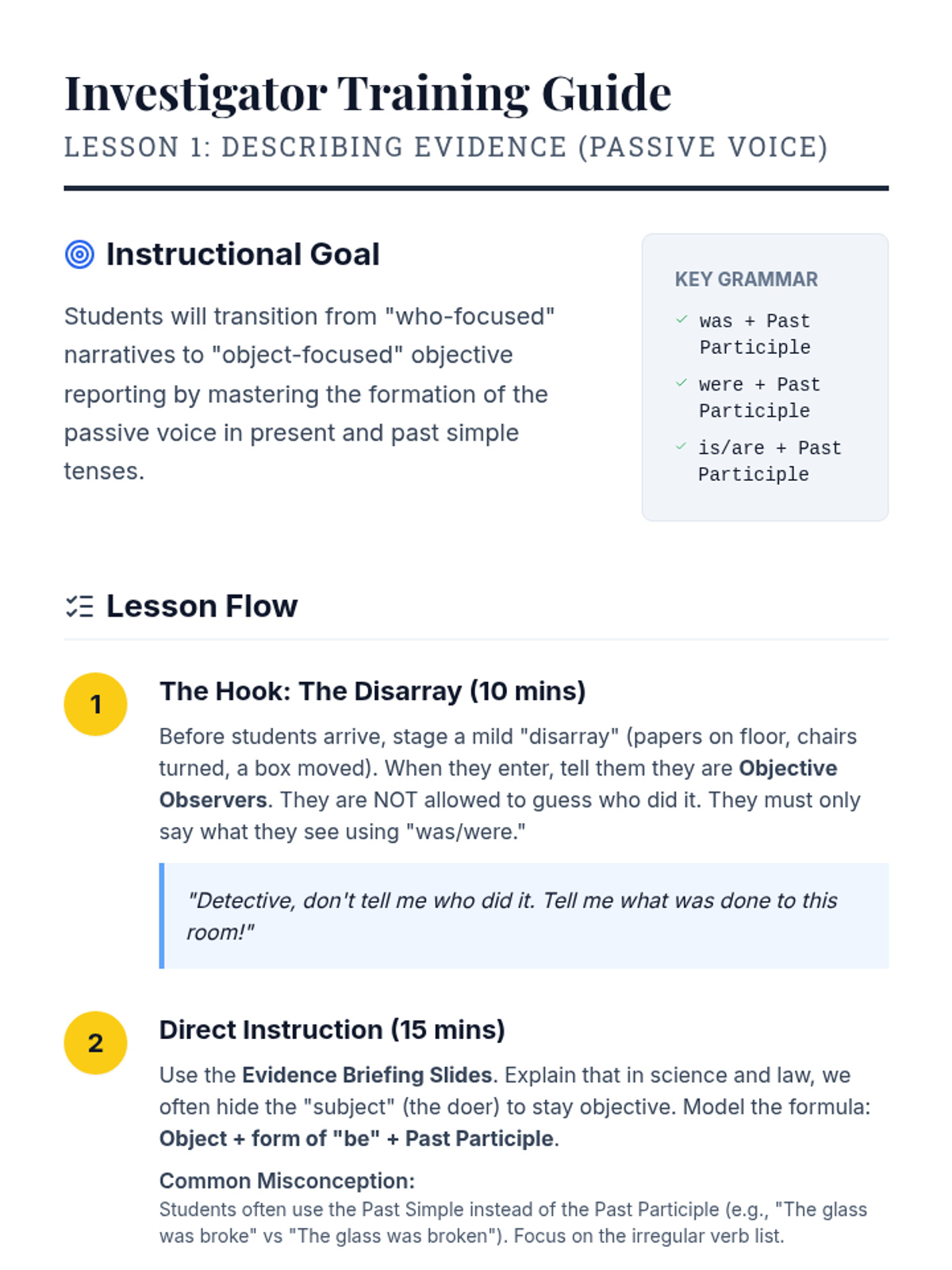
Students learn to describe evidence objectively using the passive voice, focusing on what was done rather than who did it. They analyze a staged 'crime scene' to practice transforming active sentences.