Builds word mastery through parts of speech, Greek and Latin roots, and morphological analysis of prefixes and suffixes. Develops nuanced comprehension using context clues, shades of meaning, and idiomatic expressions.
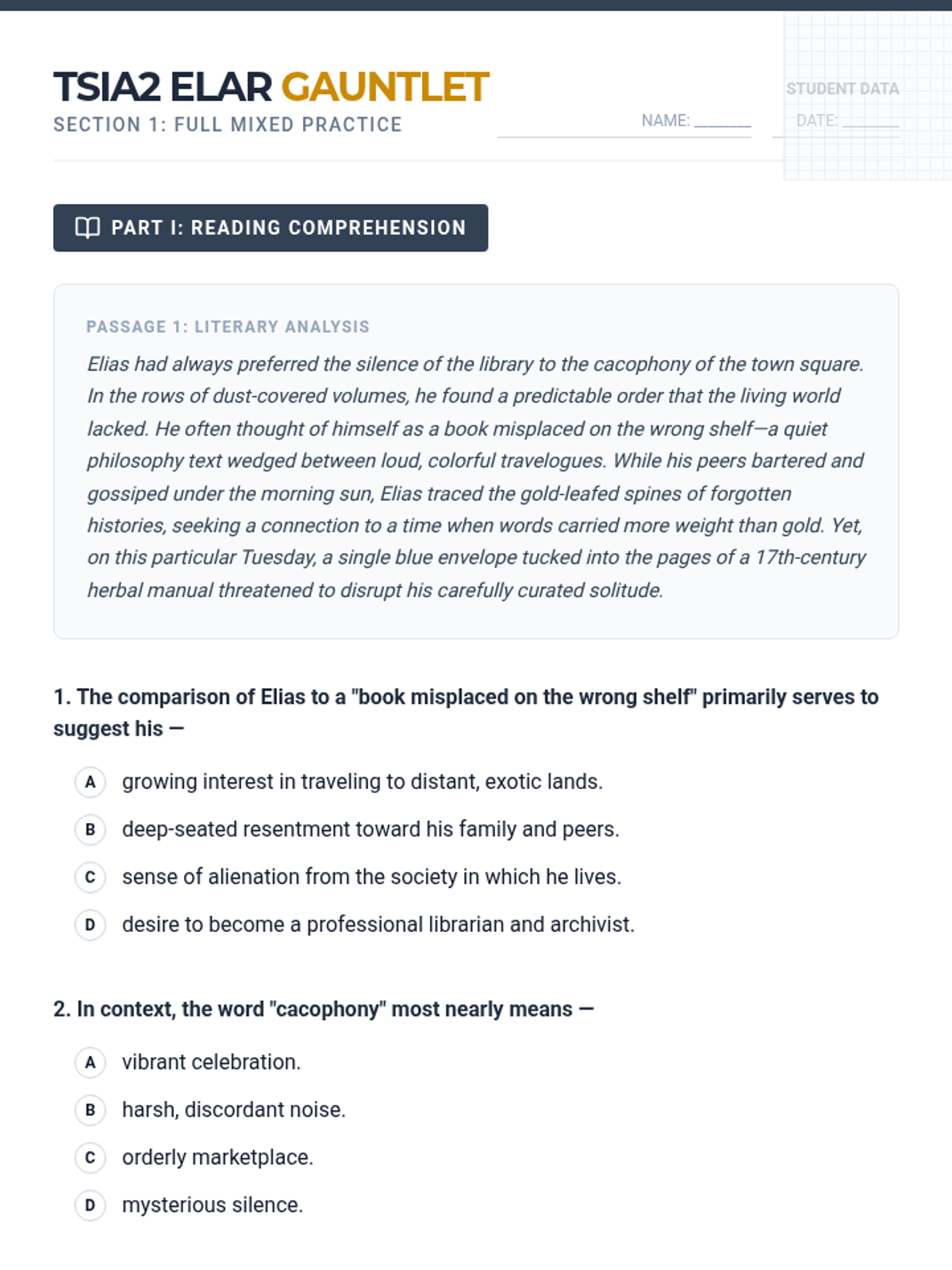
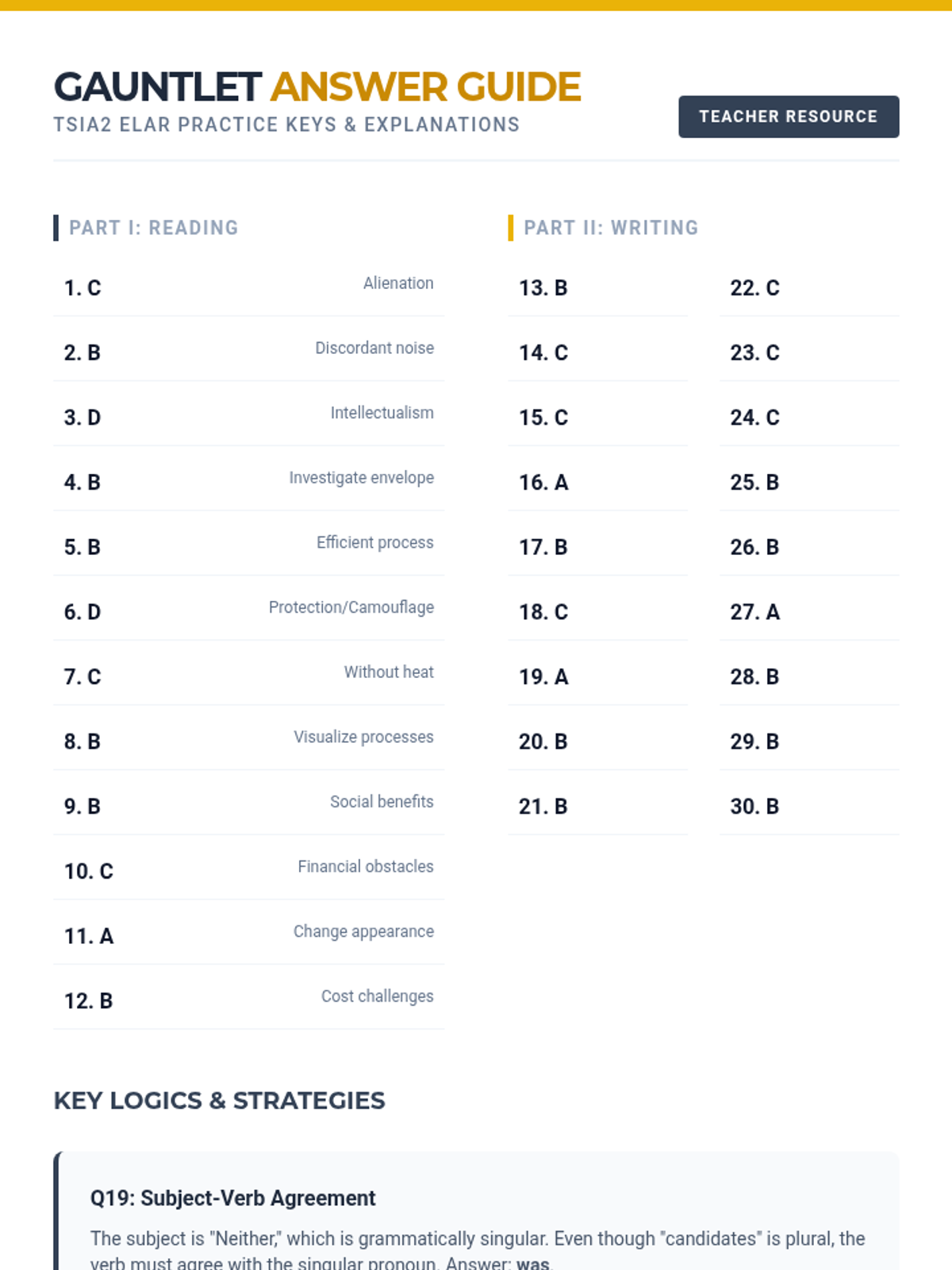
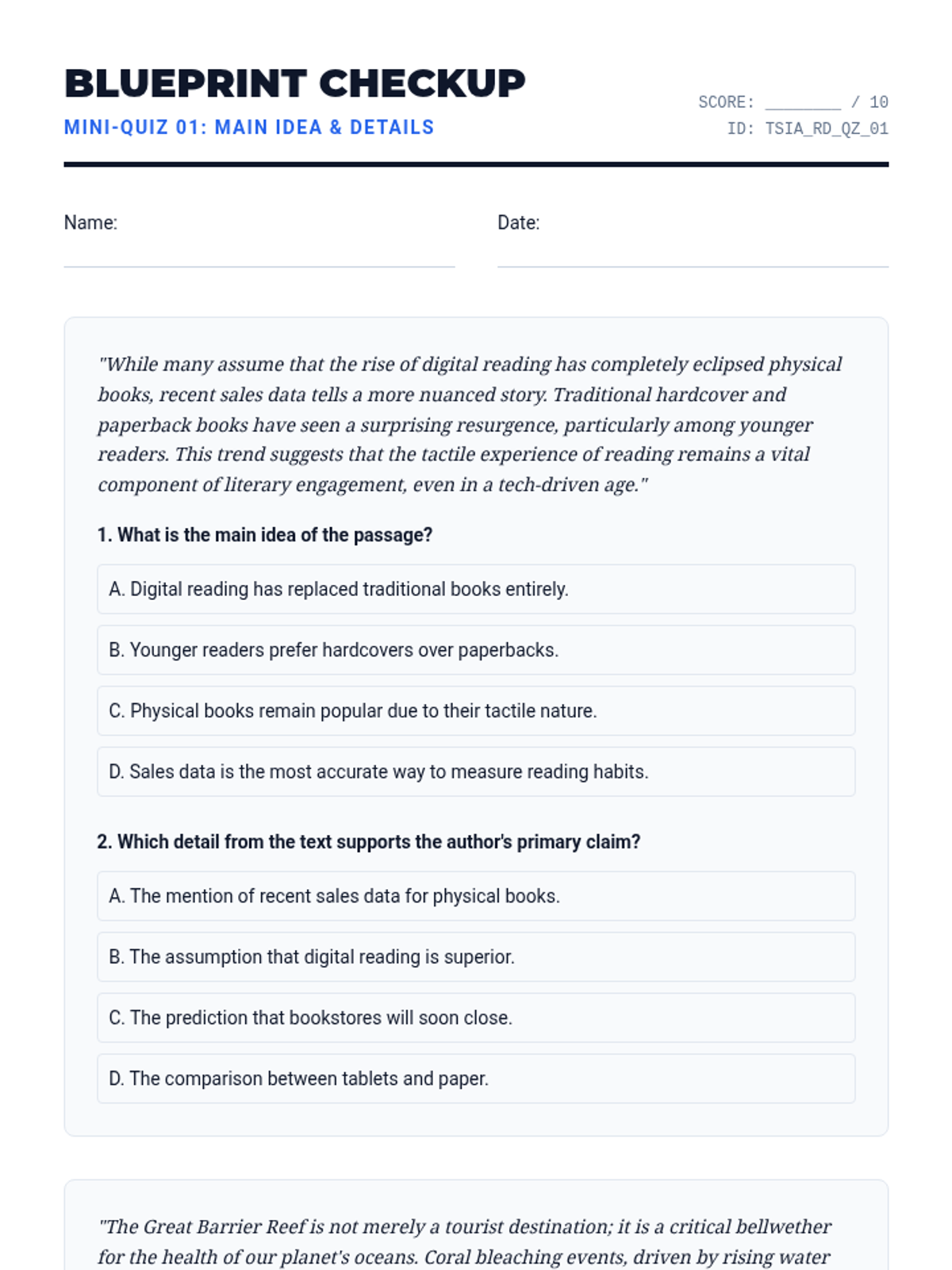
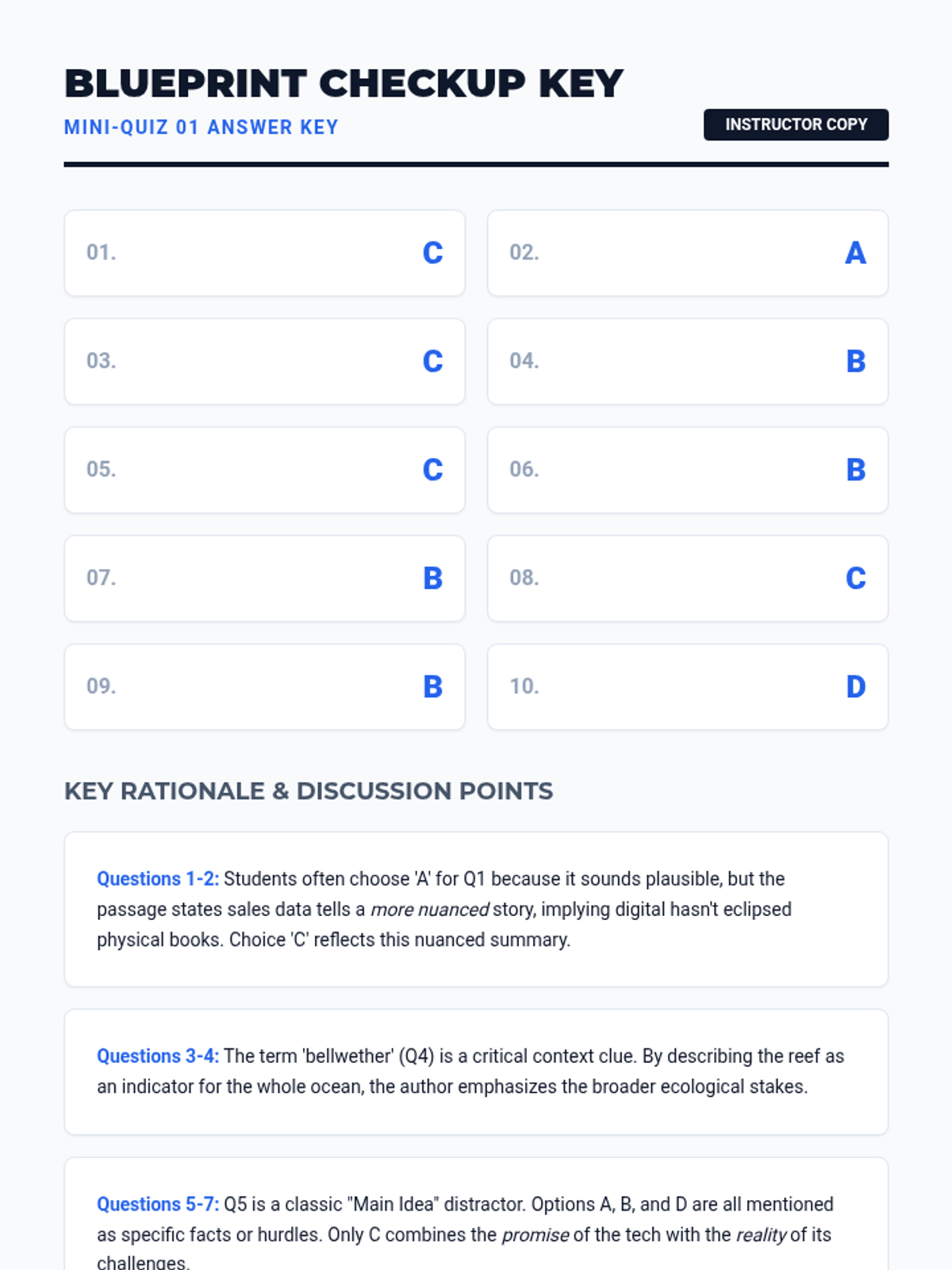
A comprehensive prep lesson for the TSIA2 ELAR section, covering reading comprehension, text analysis, and sentence-level writing skills. Includes a high-impact review presentation and a full 30-question practice exam with answer key.
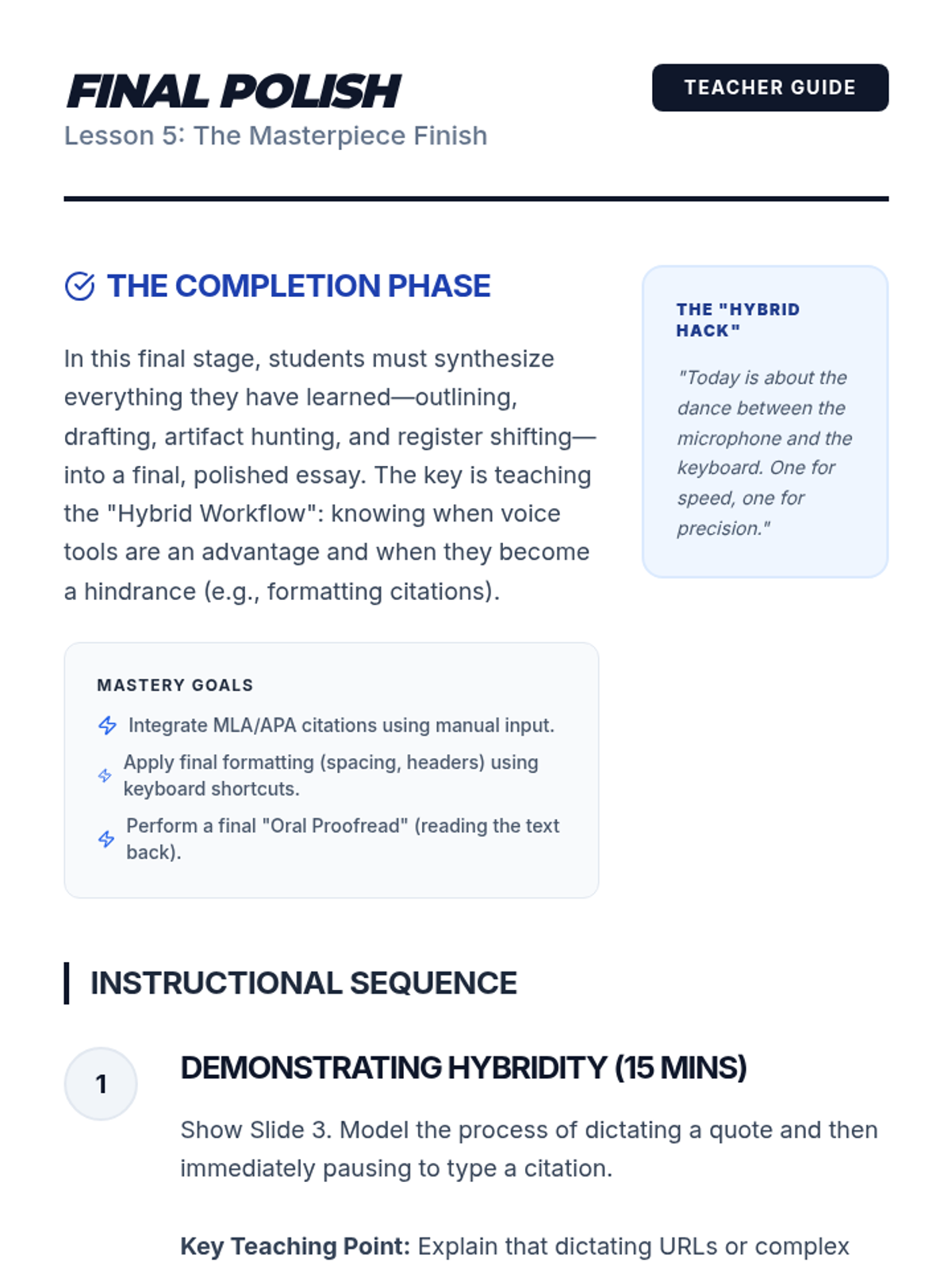
Students finalize their essays, learning strategies for handling difficult formatting tasks like citations and bibliographies which can be clumsy with voice tools. They explore hybrid workflows using keyboard shortcuts alongside voice commands.
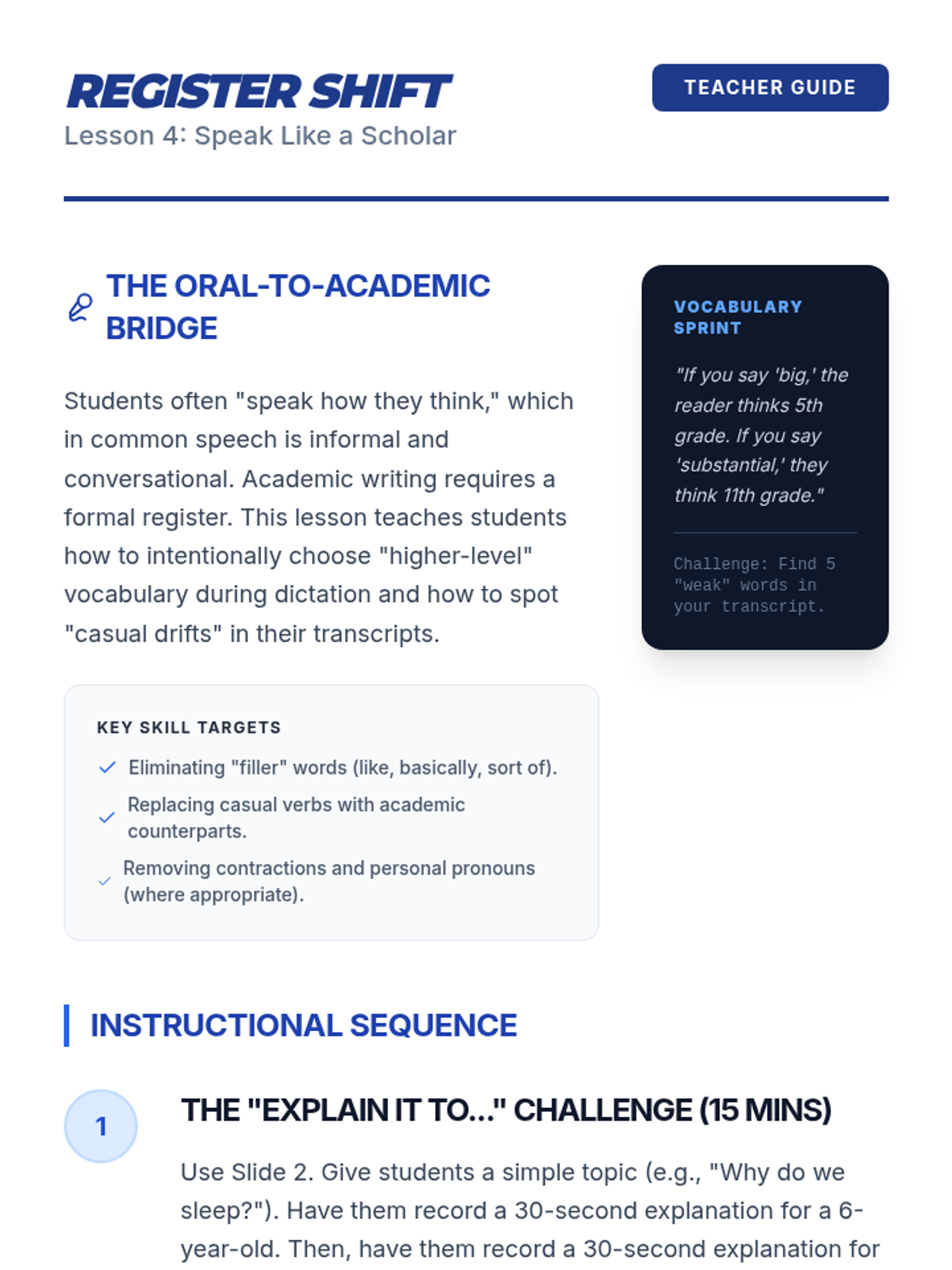
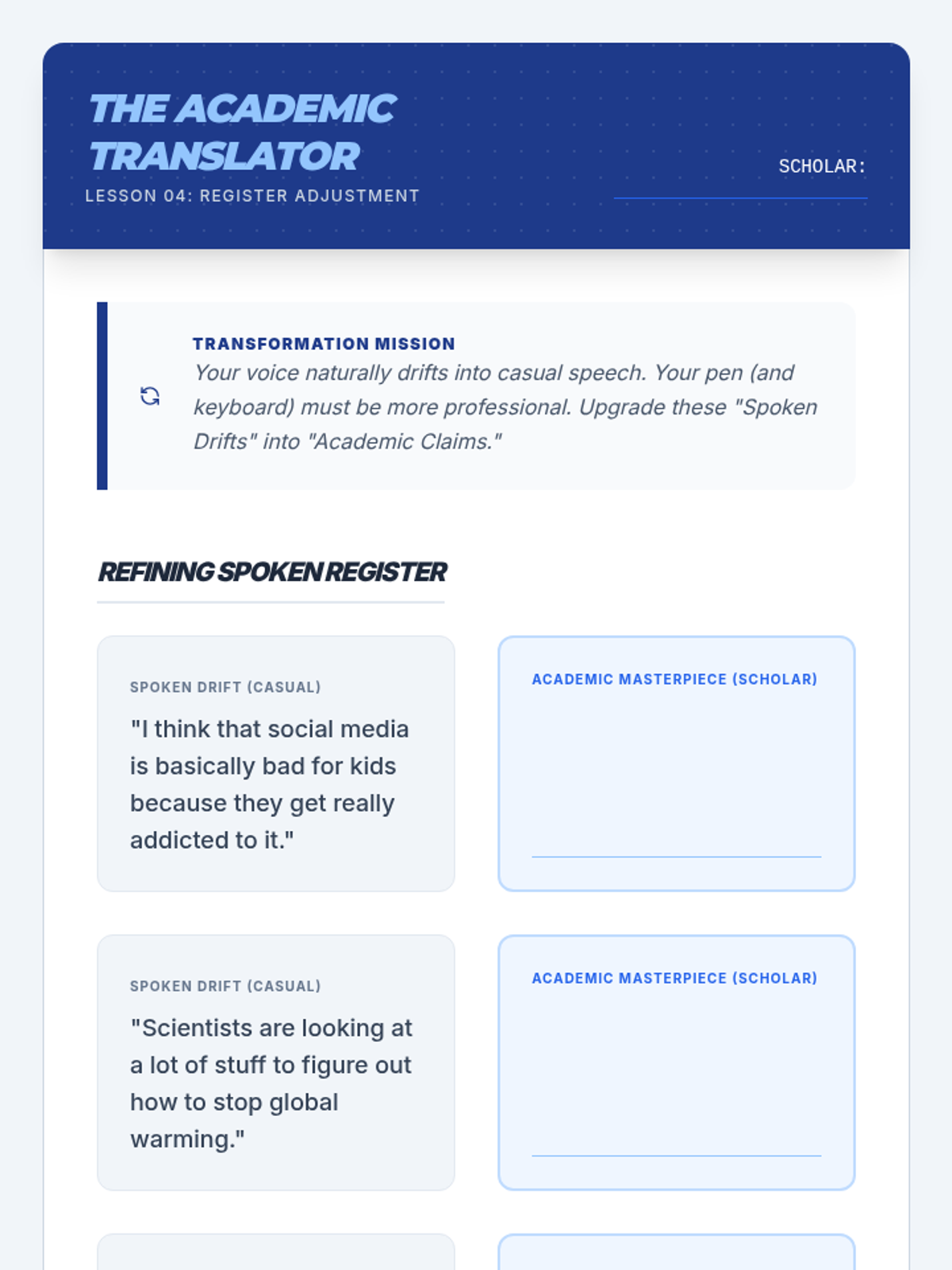
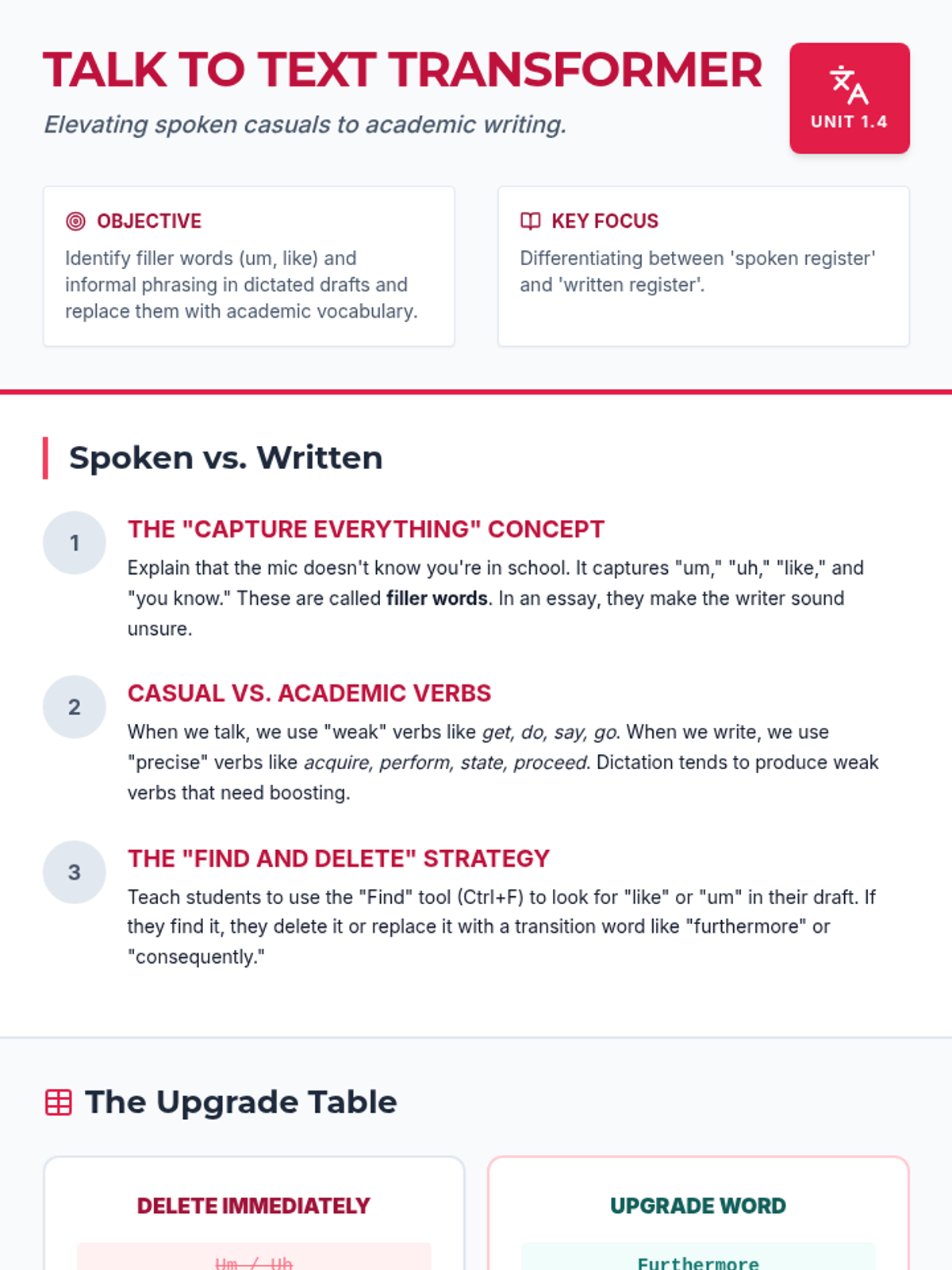
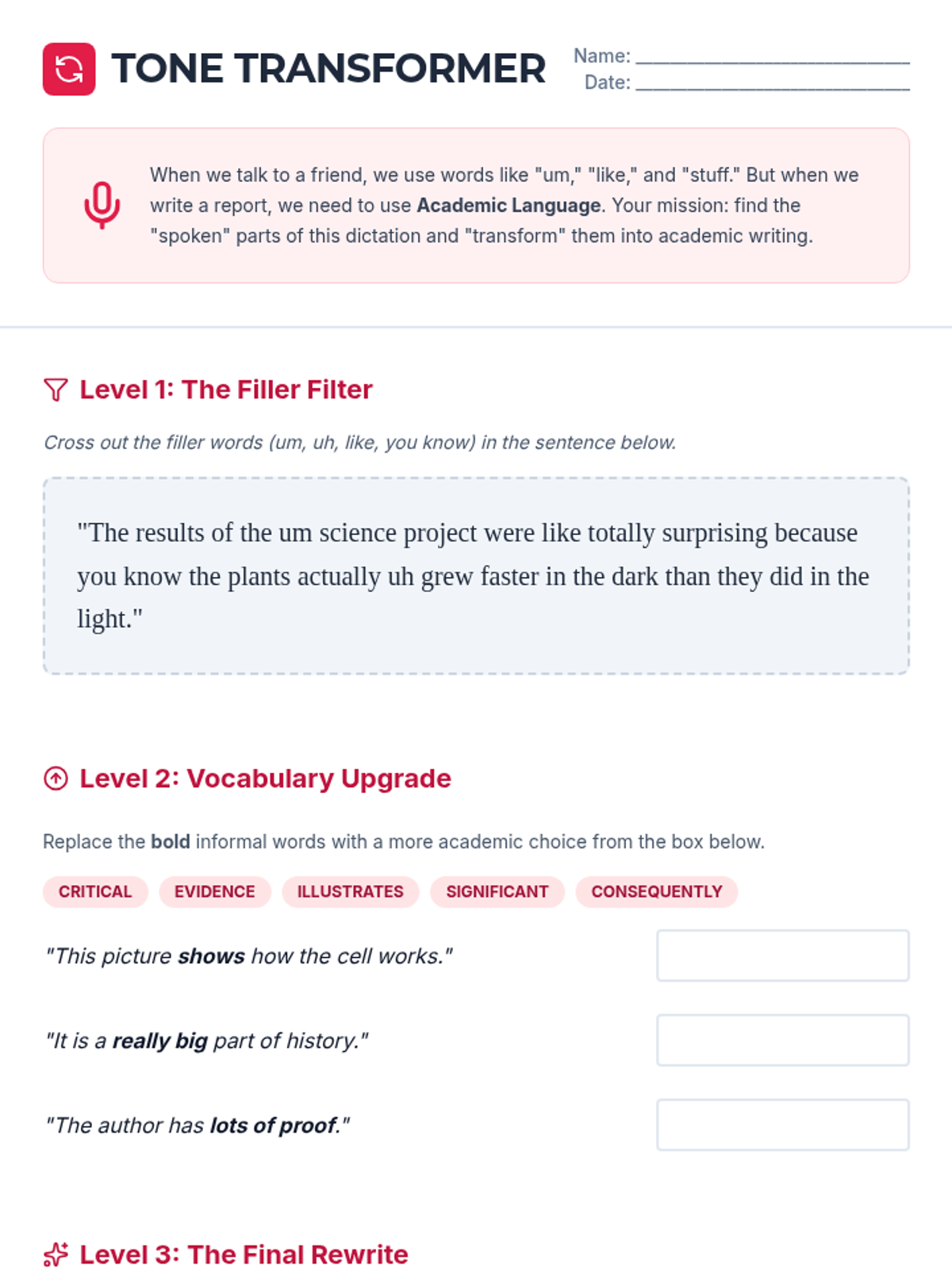
This lesson addresses the tendency to use informal language when speaking. Students practice 'speaking like a textbook,' selecting academic vocabulary during dictation and editing slang out of their transcripts.
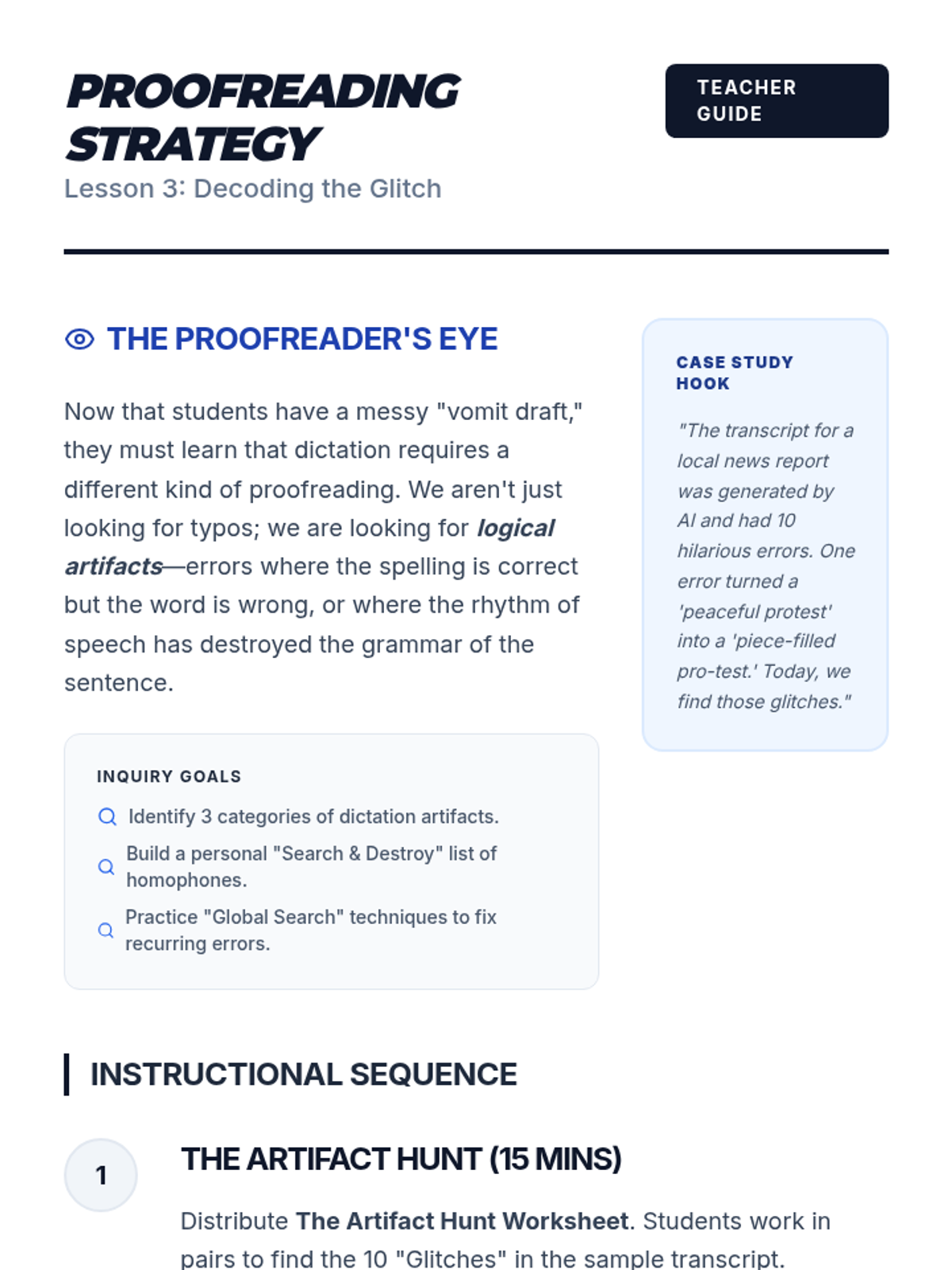
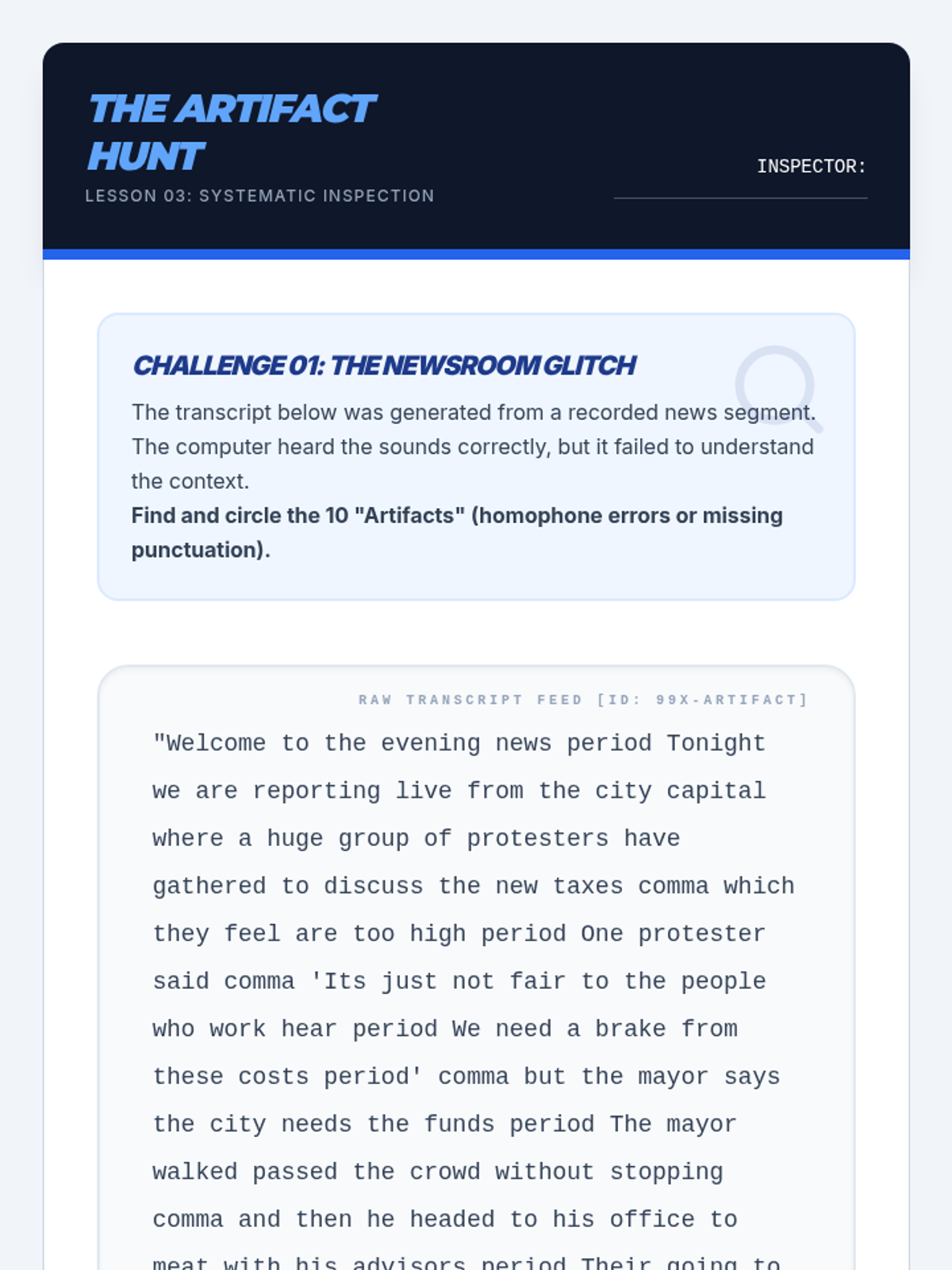
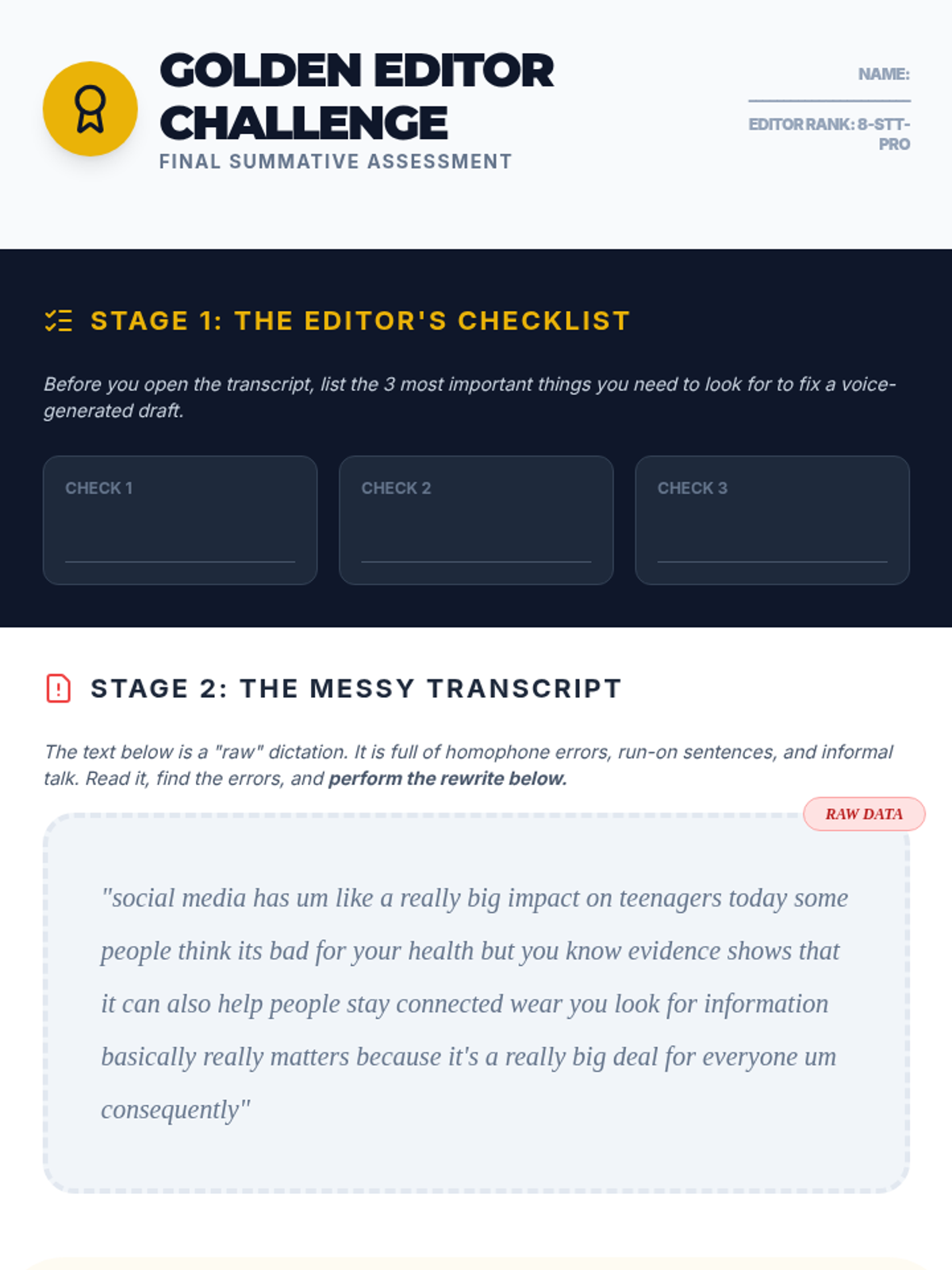
Students analyze raw dictated text to identify common 'artifacts' of speech, such as homophones, missing punctuation, and run-on sentences. They develop a checklist for cleaning up machine-generated text.
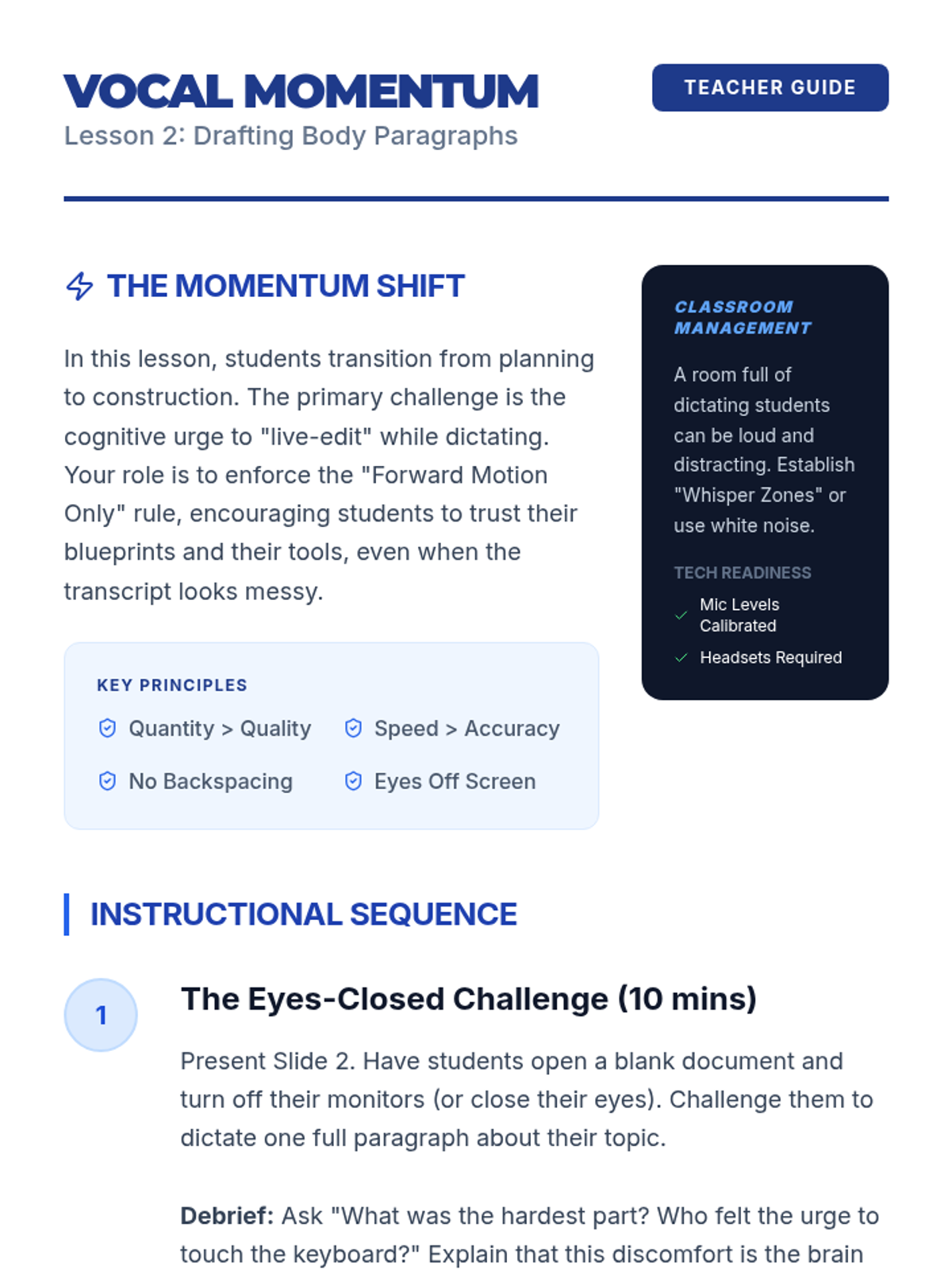
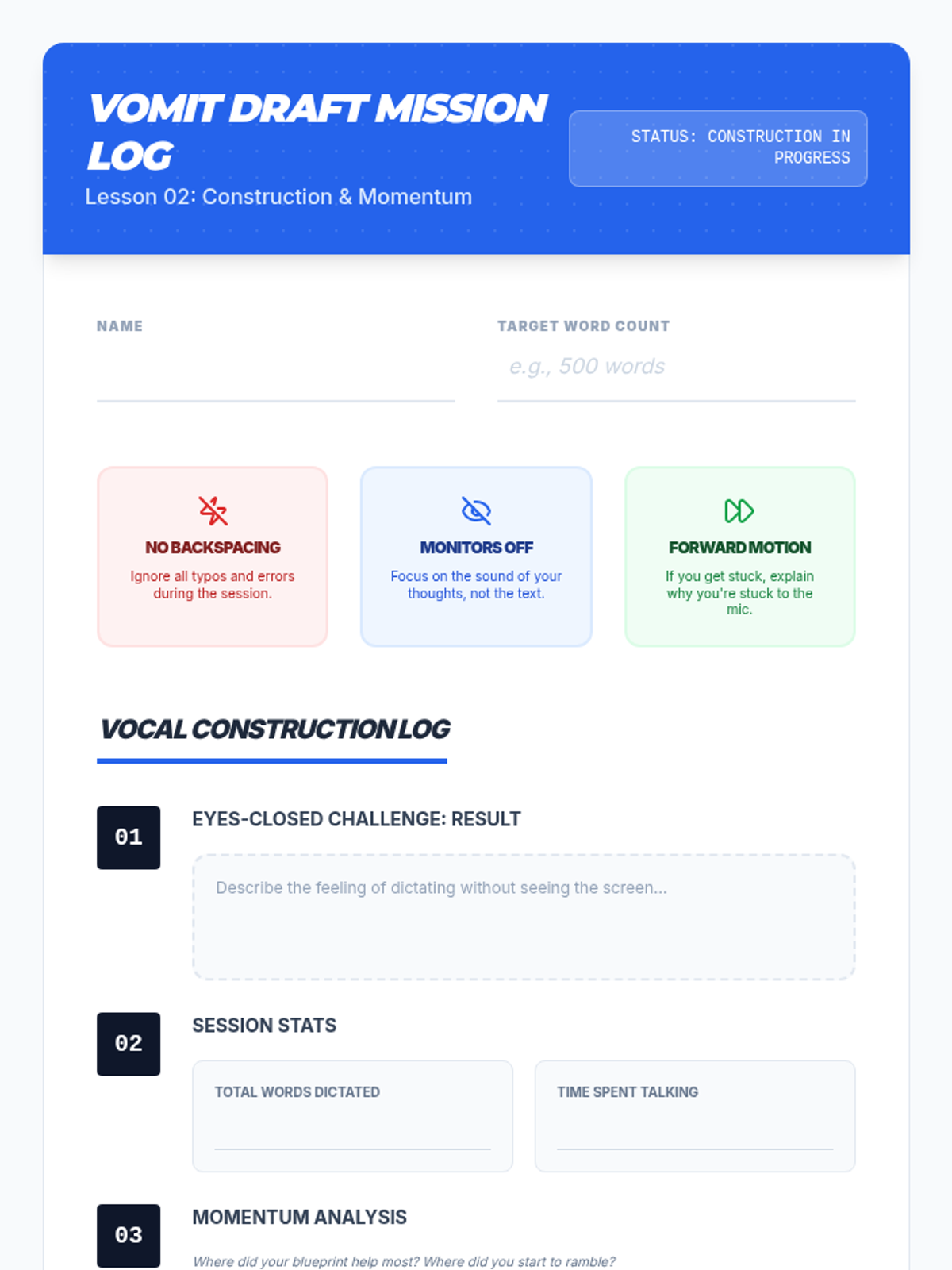
Students practice the 'vomit draft' technique, using voice tools to get ideas down quickly without worrying about perfection. The focus is on maintaining momentum and translating outline points into full, spoken sentences.
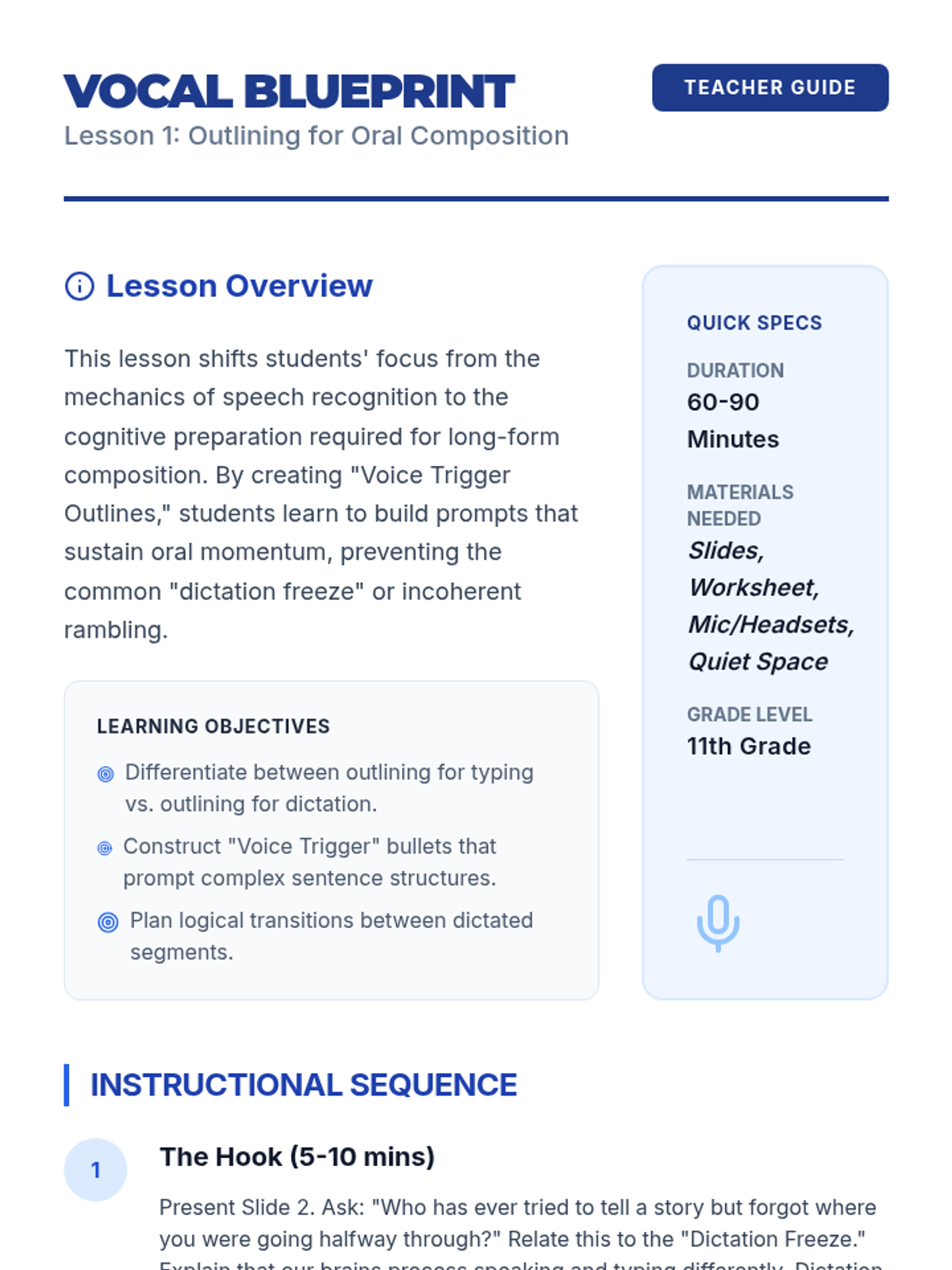
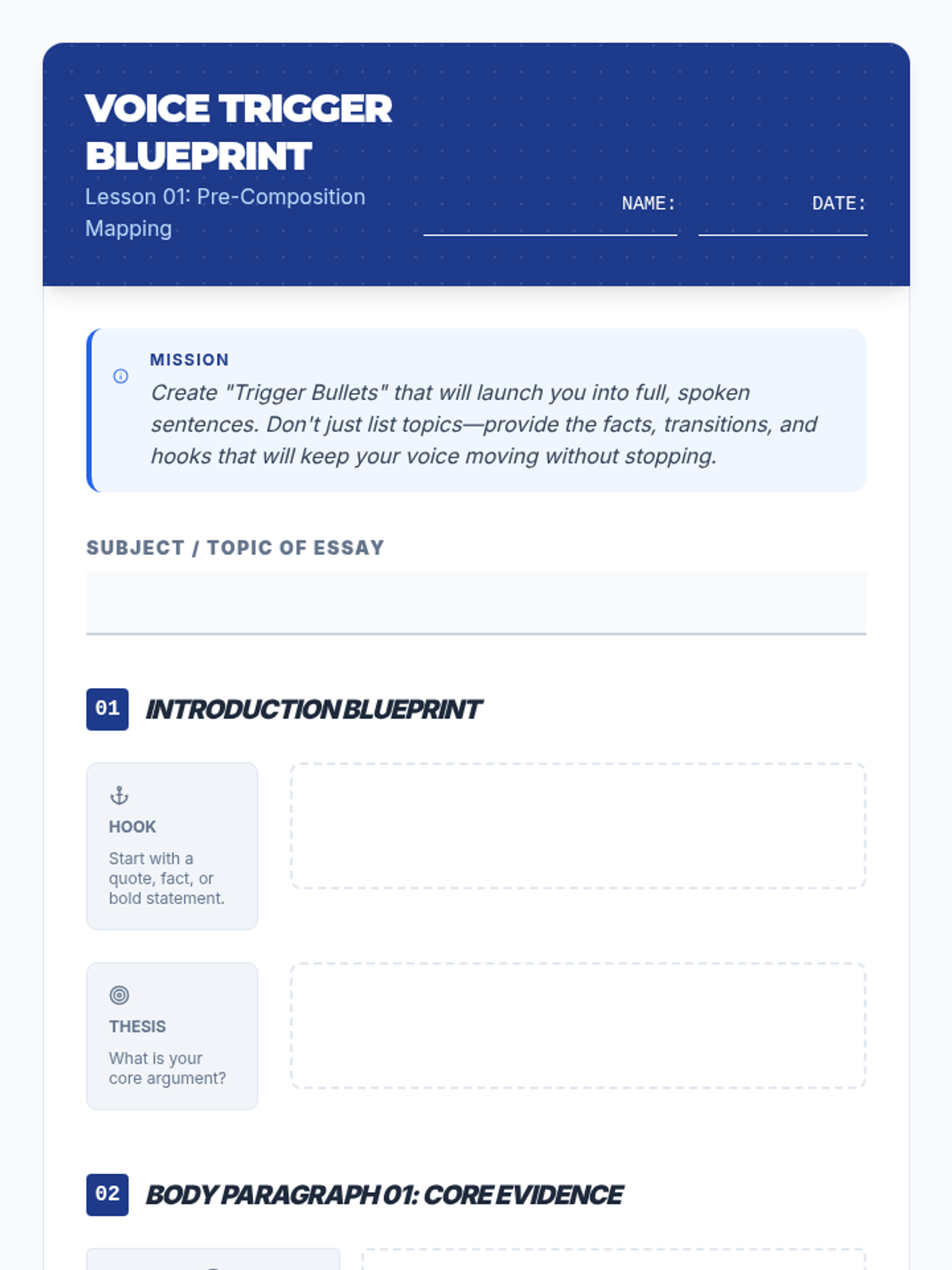
Students learn to create detailed outlines specifically designed to support dictation, using bullet points as prompts for spoken paragraphs. This prevents the 'rambling' effect often associated with speech-to-text writing.
A summative assessment where students apply all editing skills to a messy, error-ridden transcript to produce a final, polished piece of writing.
Teaches students to bridge the gap between spoken casual language and formal academic writing by identifying filler words and elevating vocabulary in their dictated drafts.
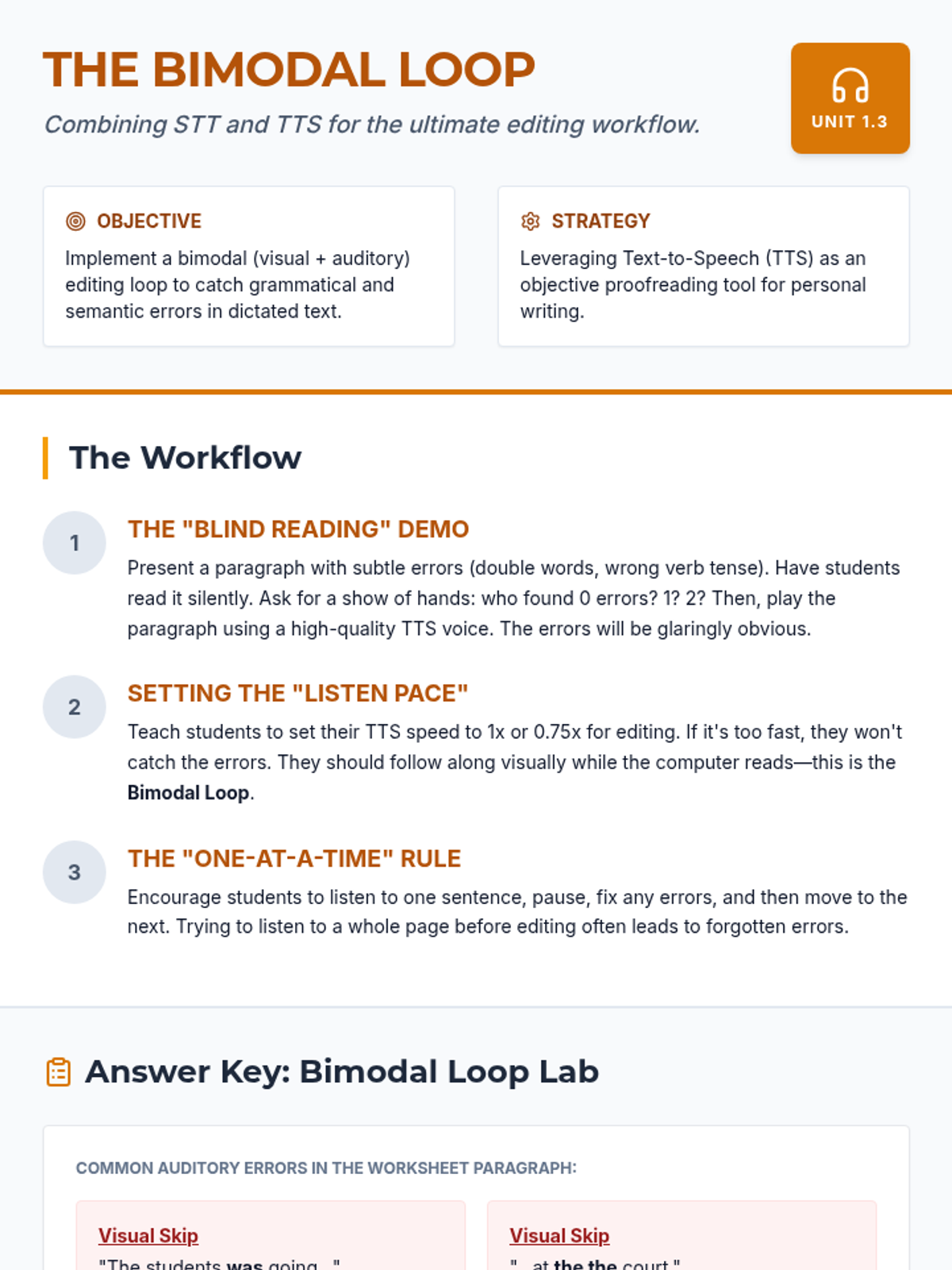
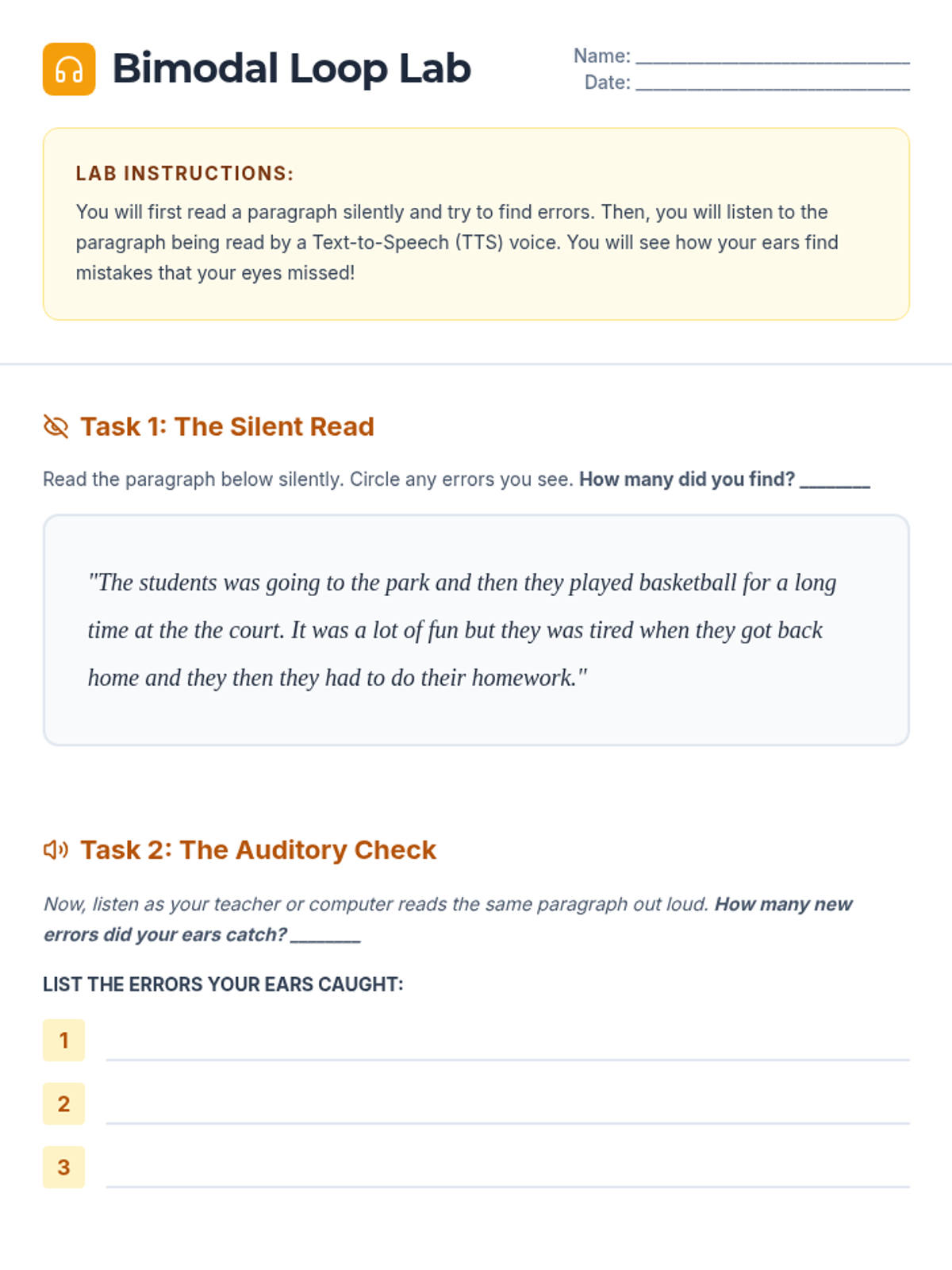
Introduces the bimodal loop of using text-to-speech technology to listen to dictated work, leveraging auditory processing to catch errors that are easily missed during visual proofreading.
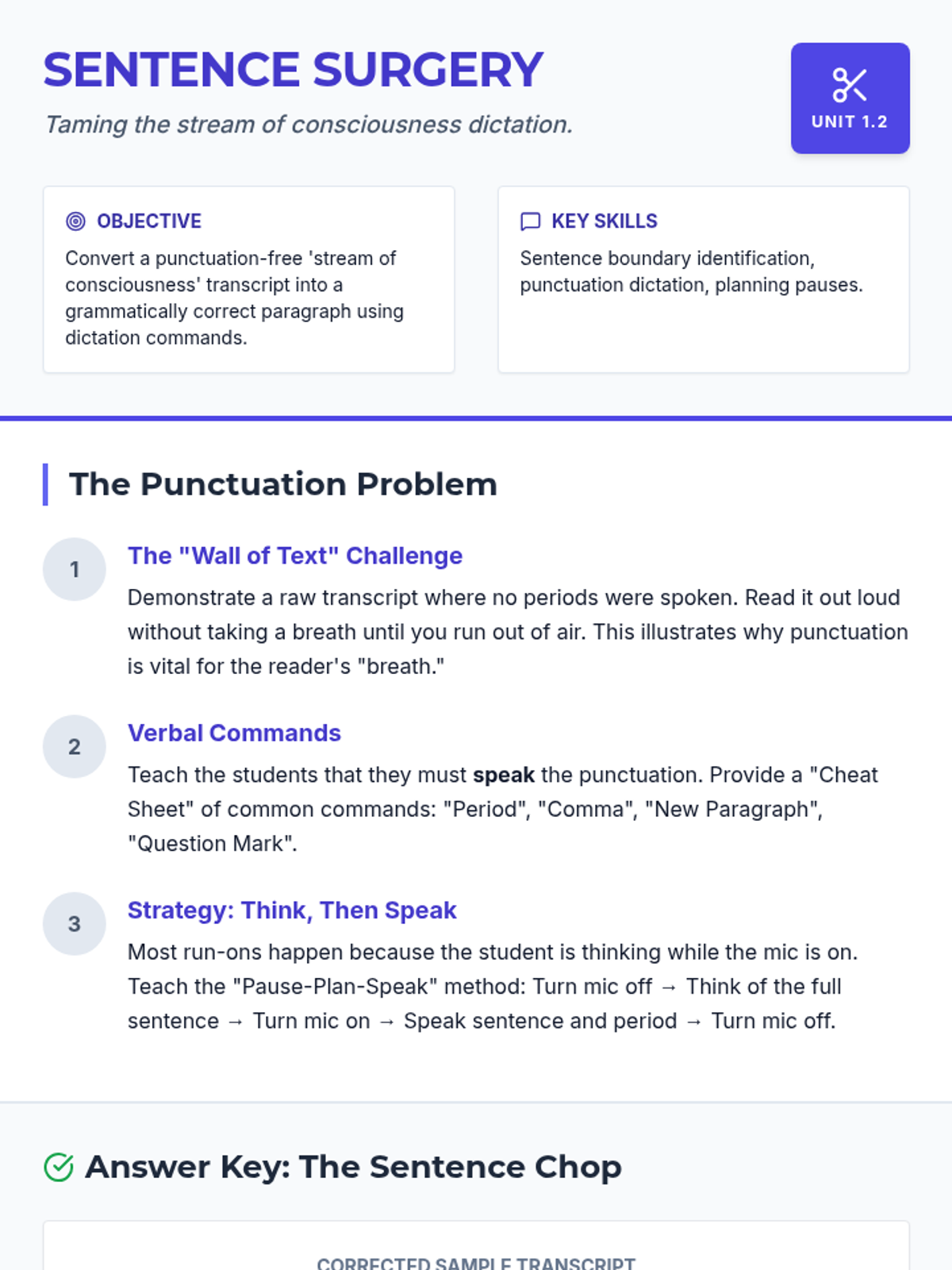
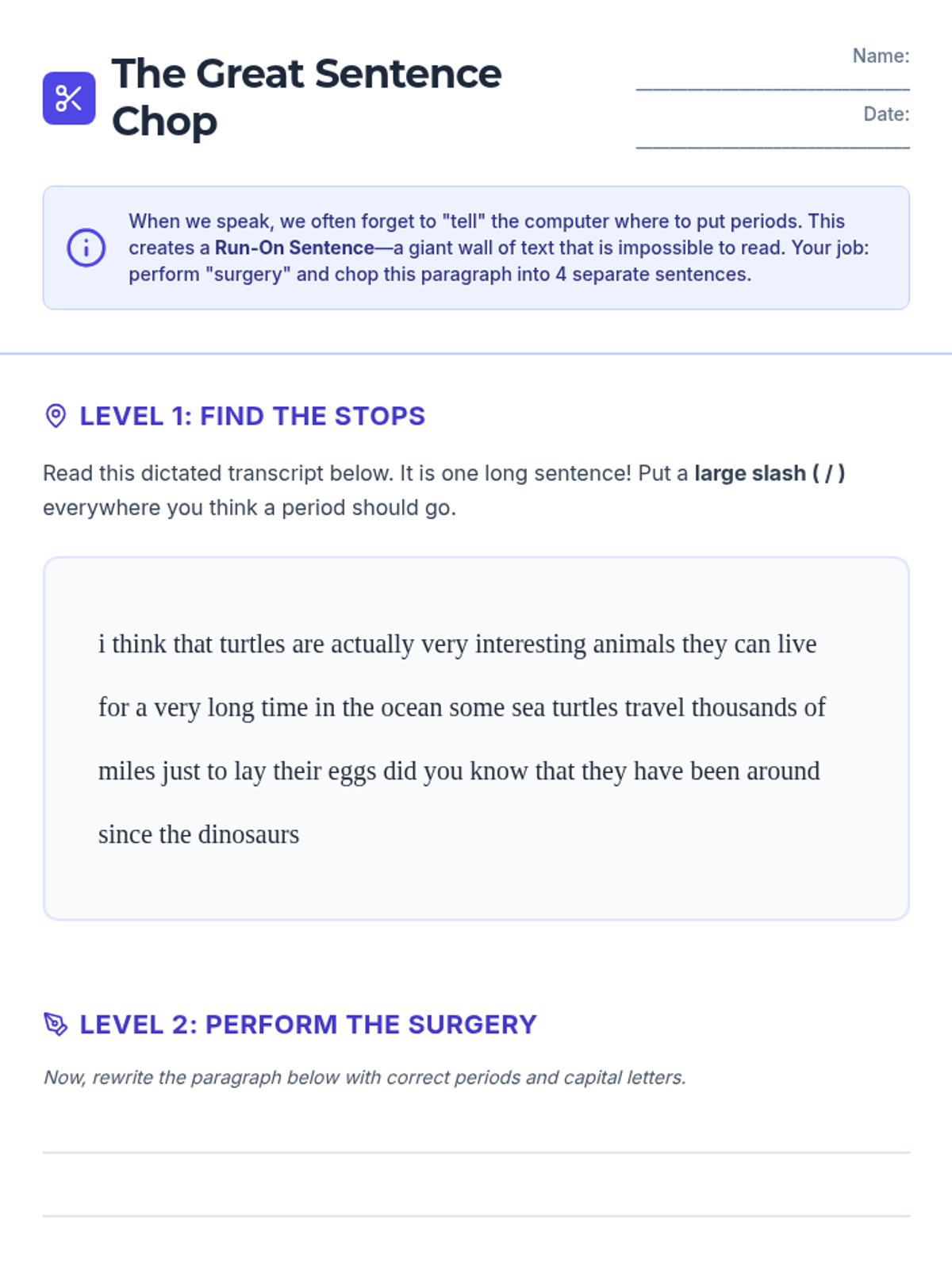
Focuses on the structural issues of dictated text, specifically the lack of punctuation and the tendency for run-on sentences, teaching students to impose order on 'stream of consciousness' transcripts.
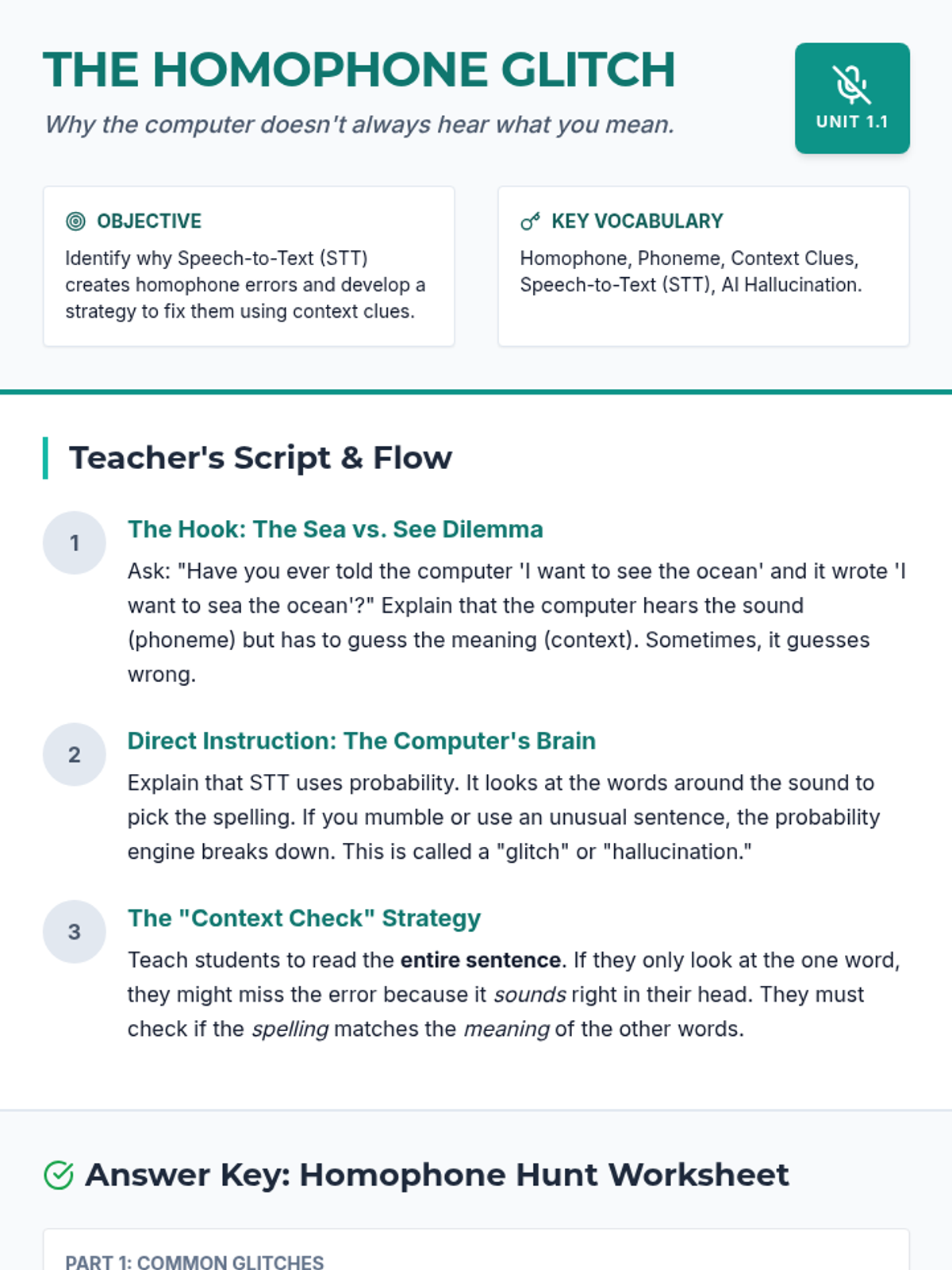
Explores why speech-to-text software confuses homophones and teaches students how to use context clues to identify and fix these common errors.
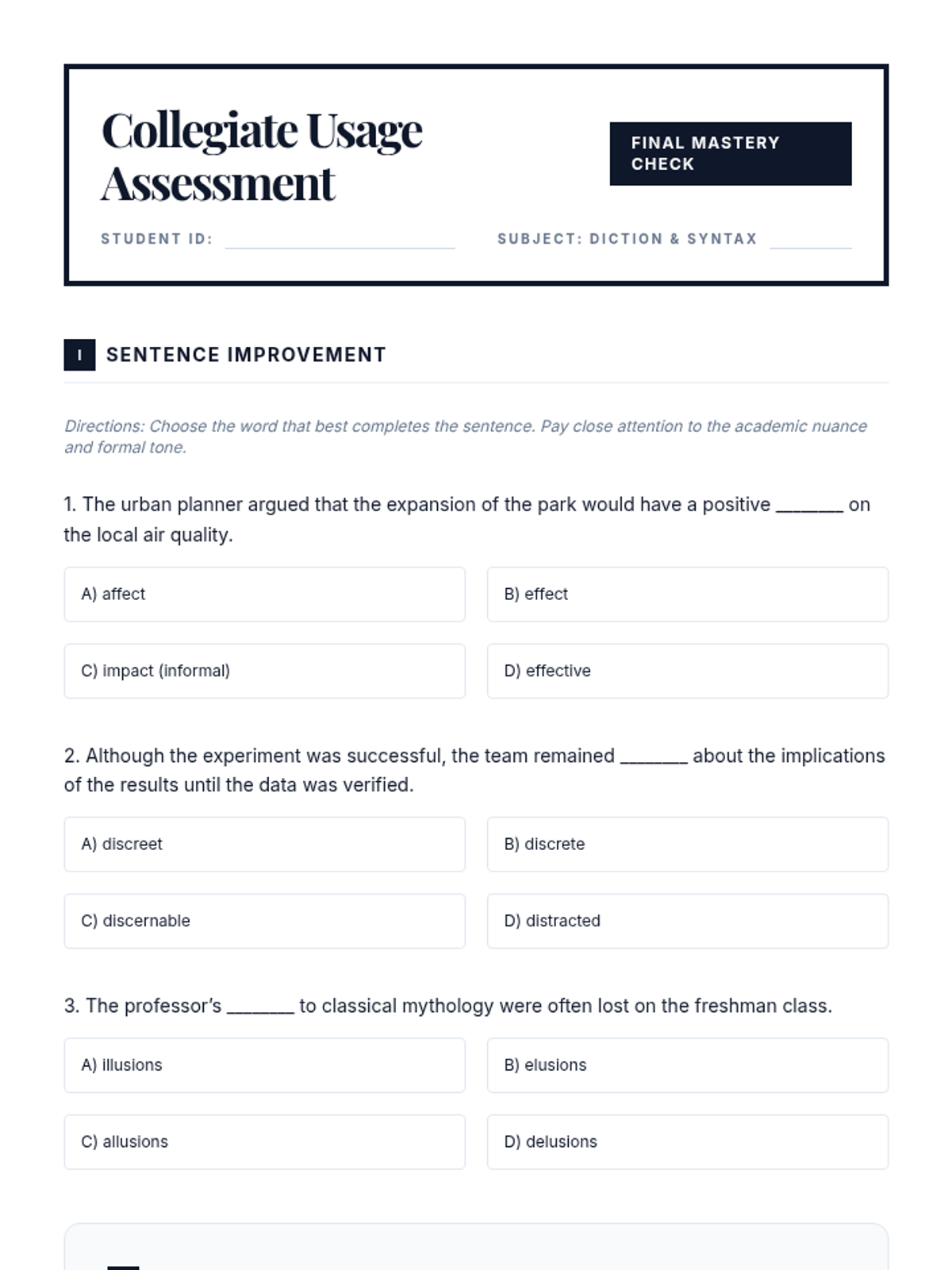
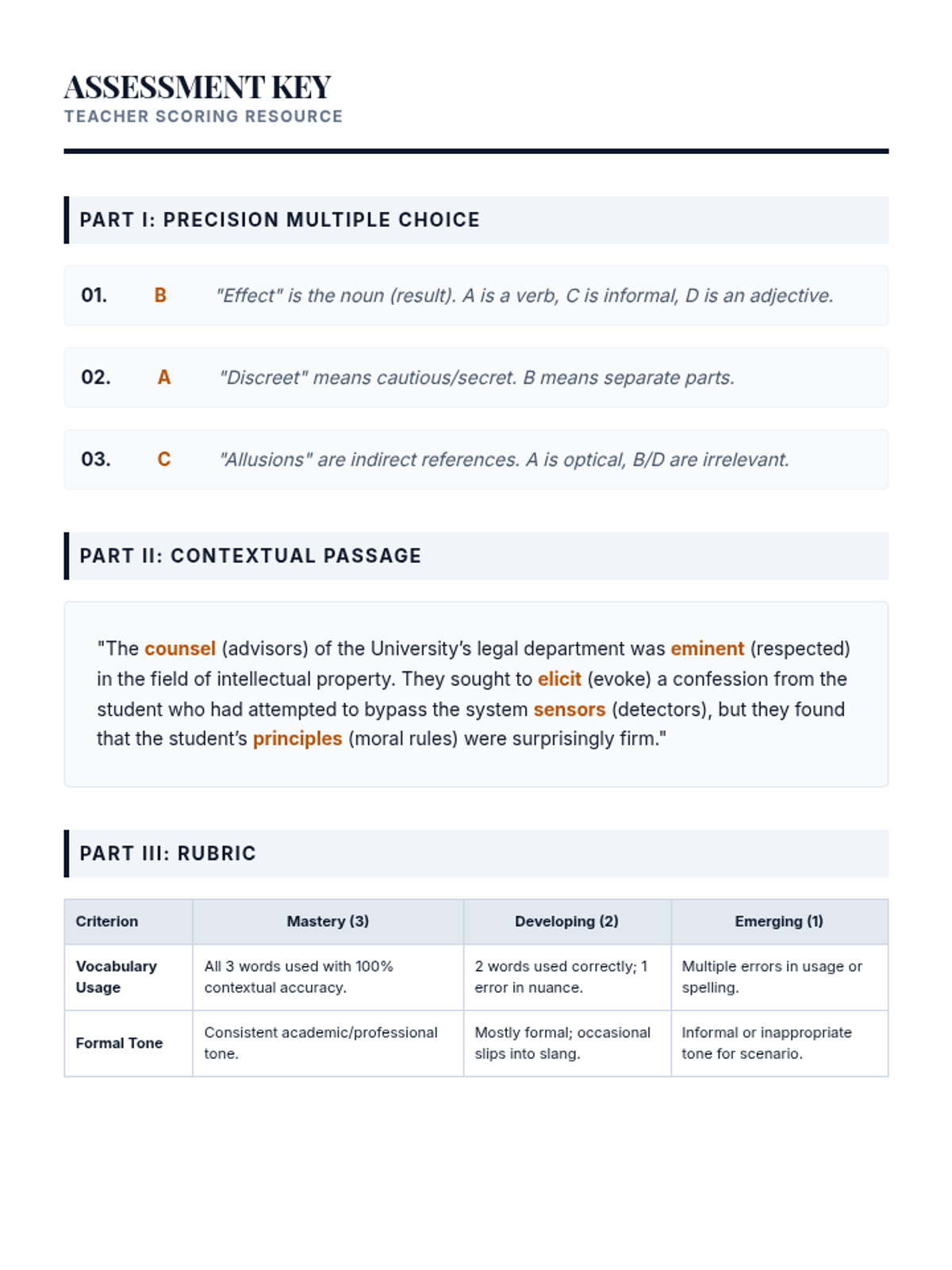
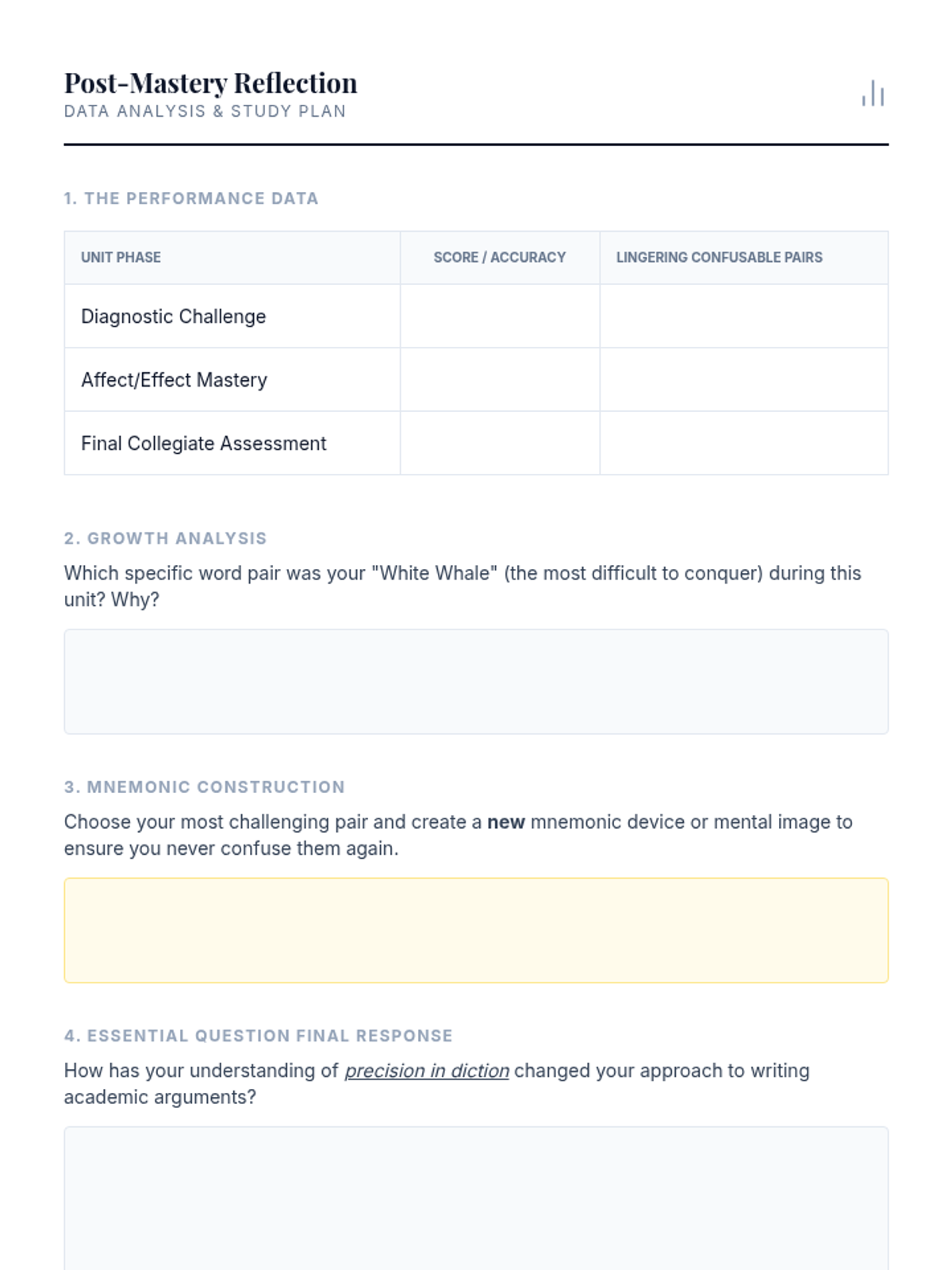
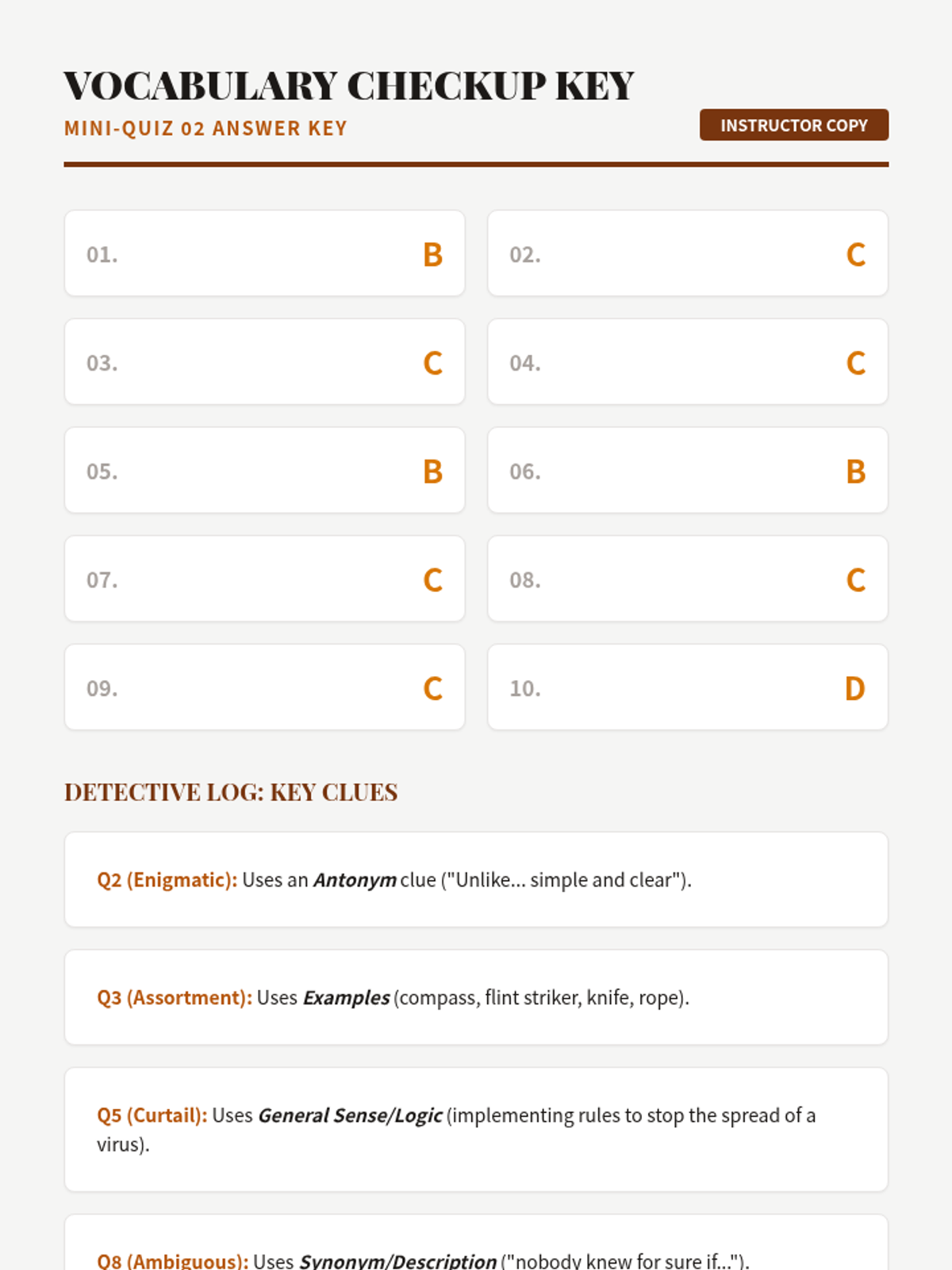
A final mastery check modeled after SAT/ACT vocabulary sections. Students demonstrate their ability to navigate complex diction under timed conditions and perform a self-data analysis on their problem areas.
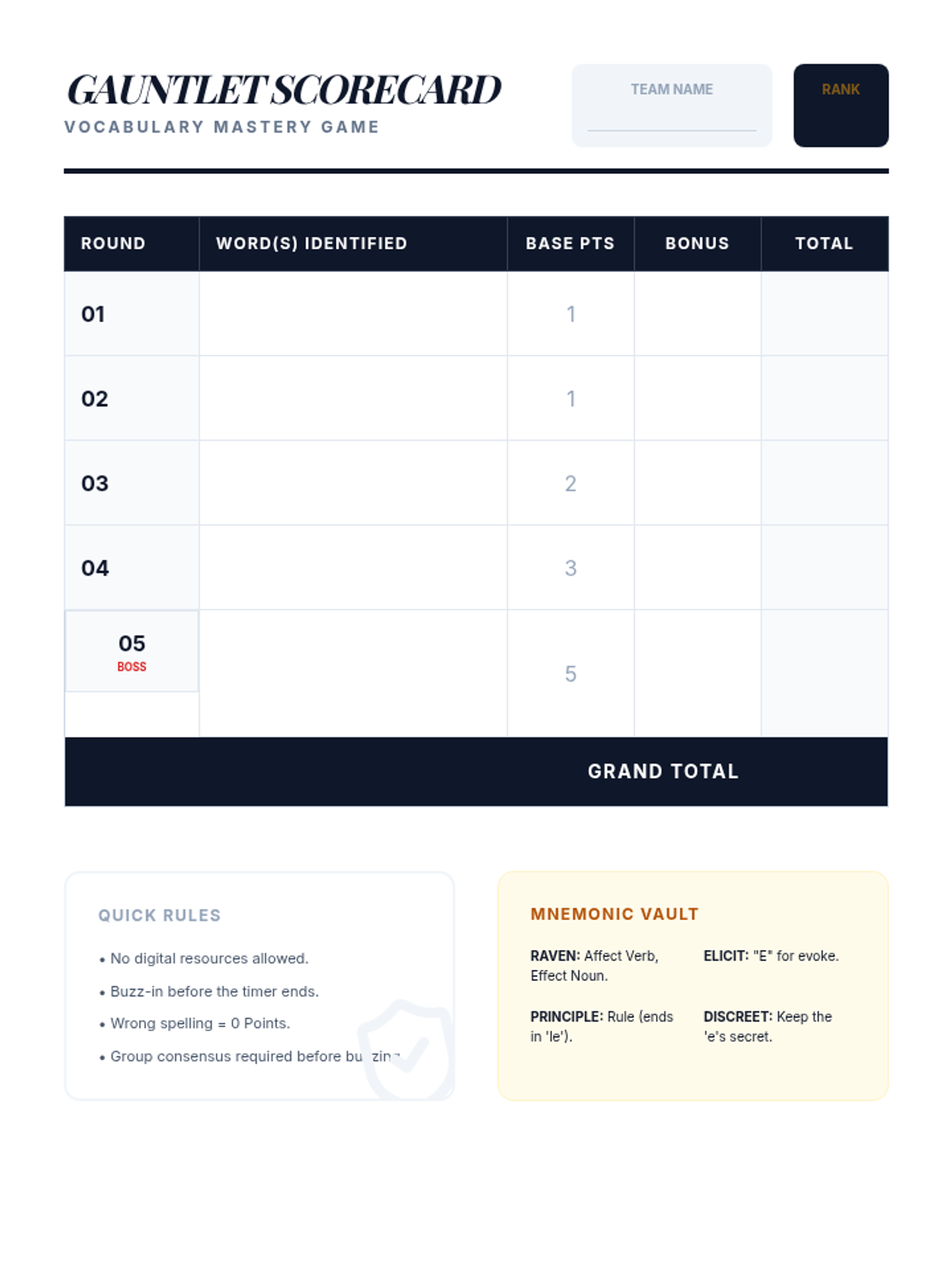
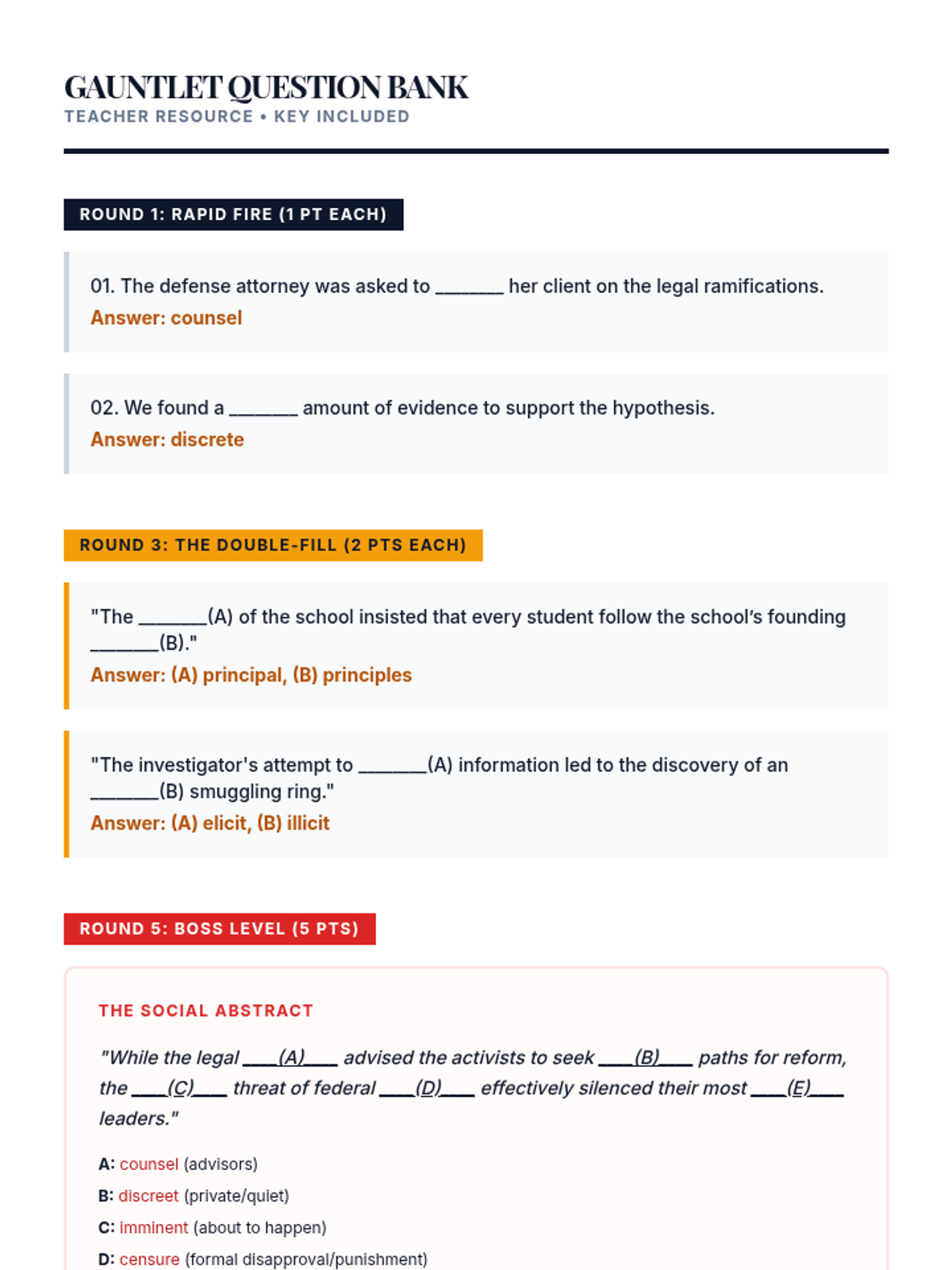
A competitive, game-based mastery session where students face rapid-fire fill-in-the-blank scenarios. Challenges scale from simple sentences to complex academic abstracts requiring deep context.
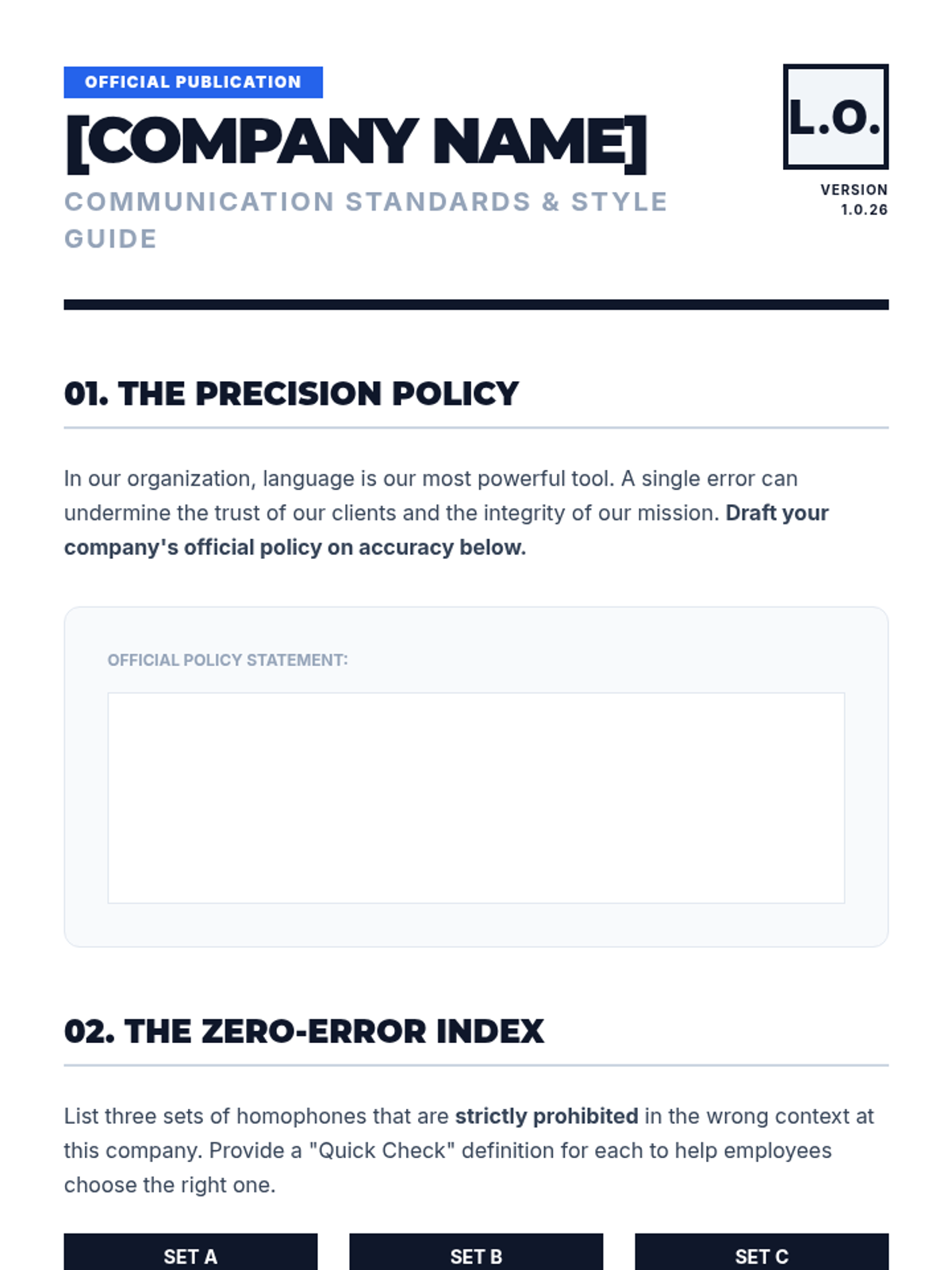
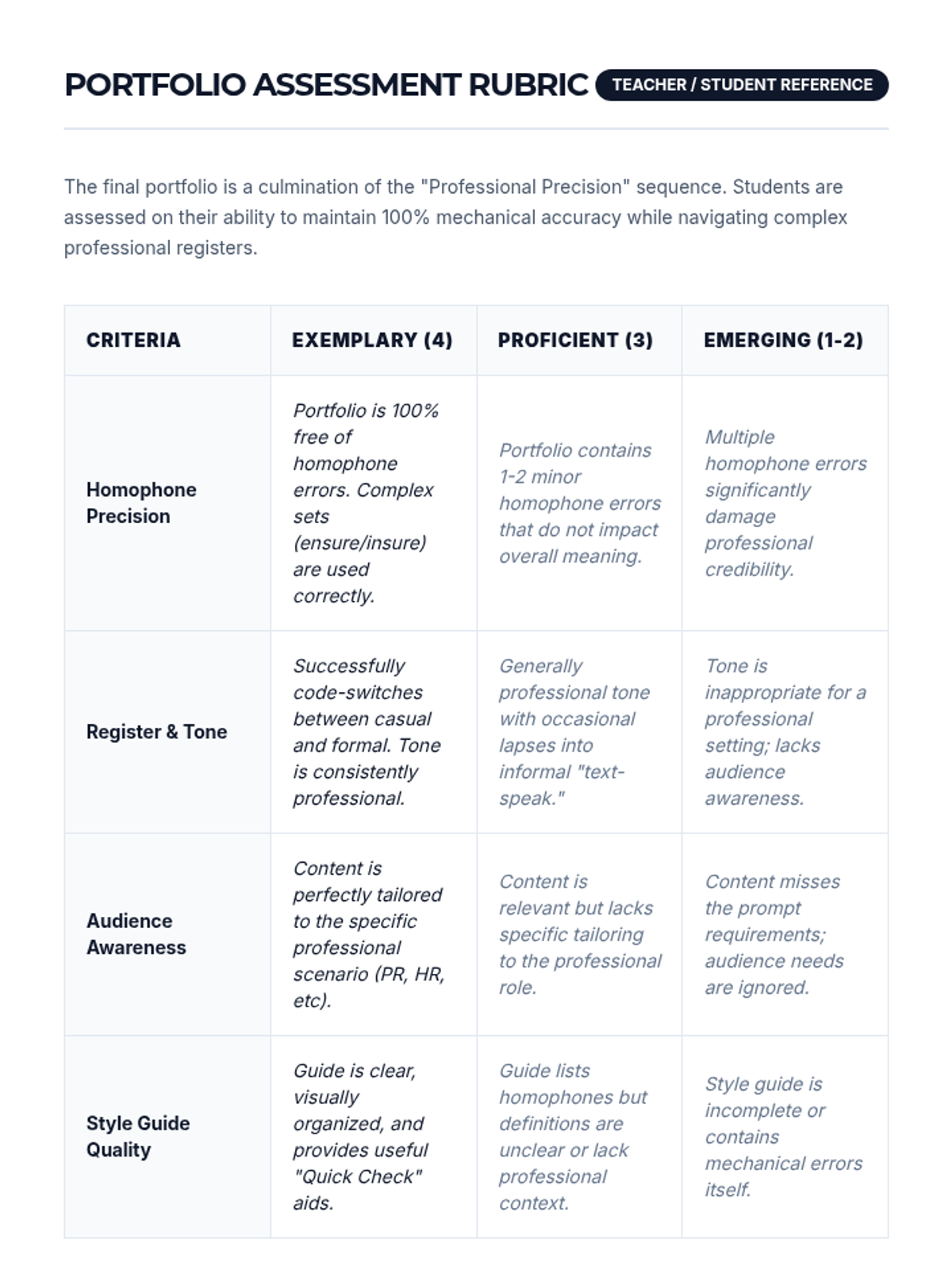
Students finalize a professional portfolio of documents and create a 'Company Style Guide' to standardize communication standards, demonstrating mastery of homophone precision.
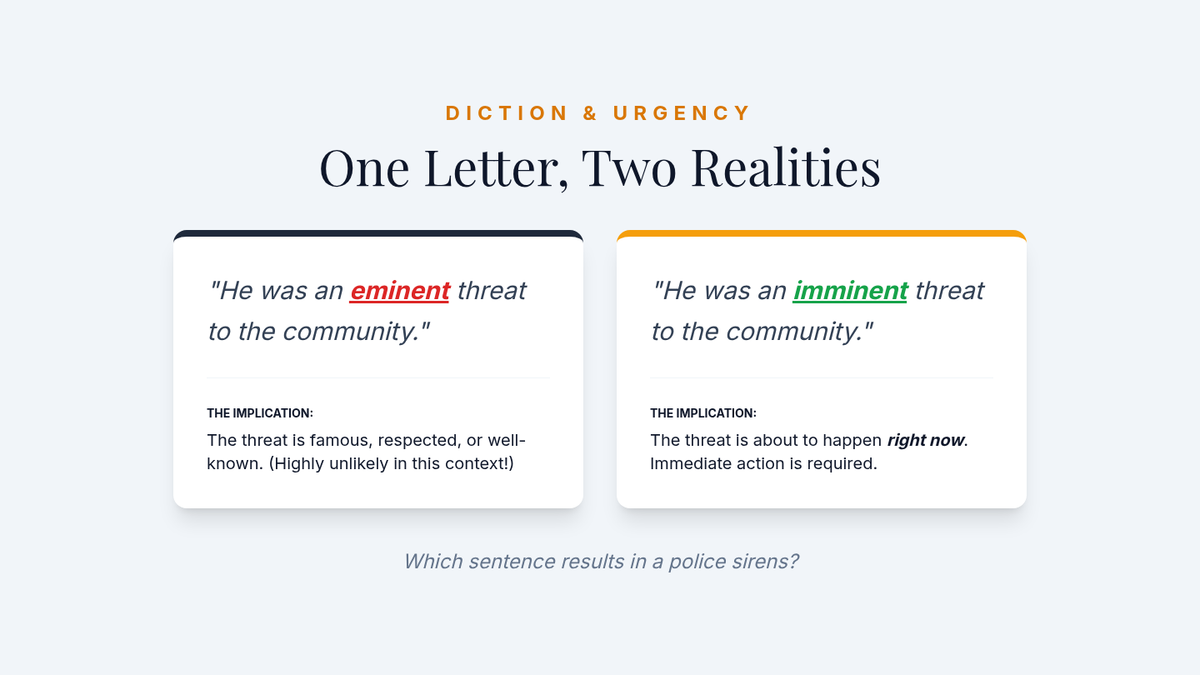
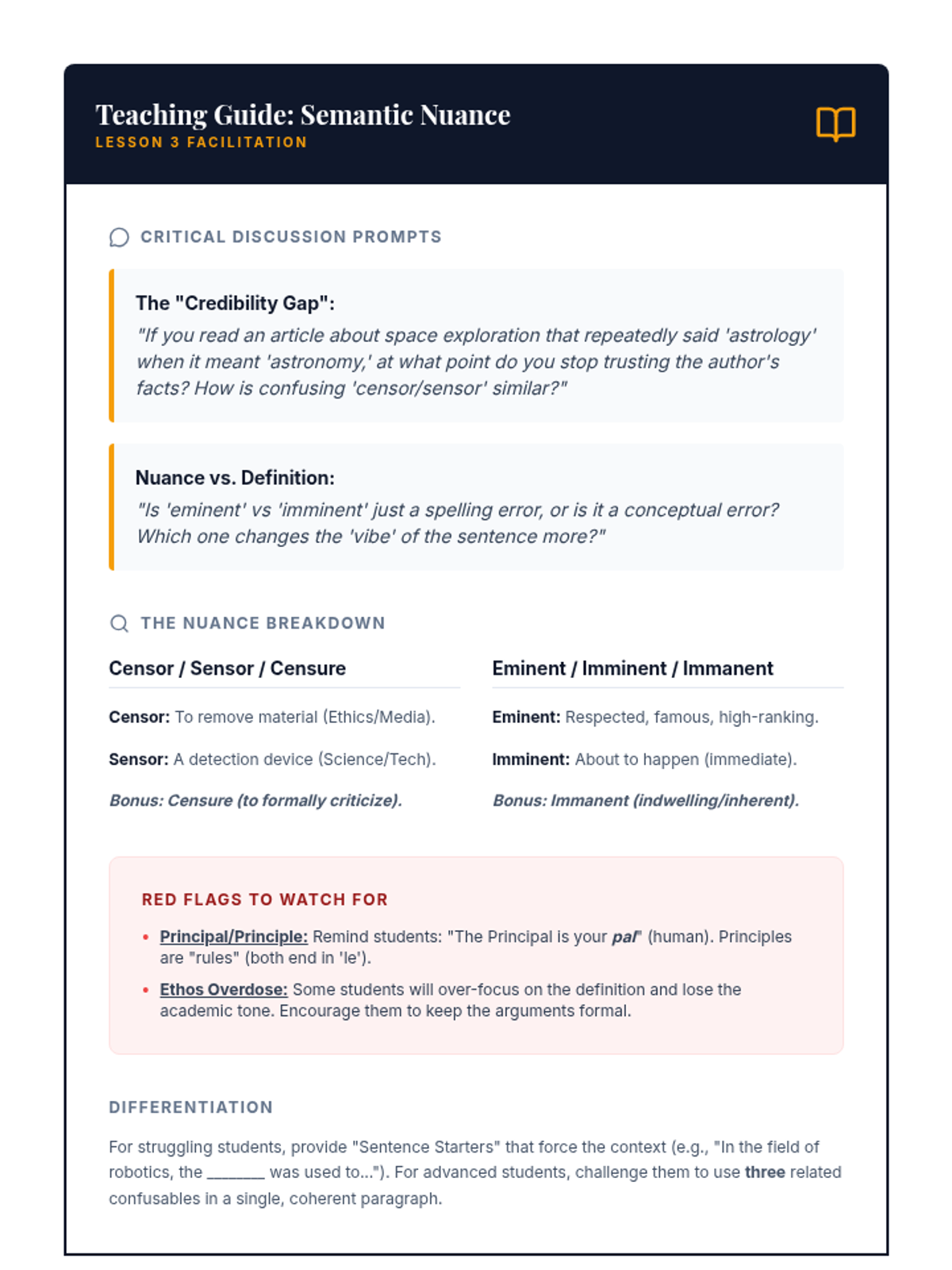
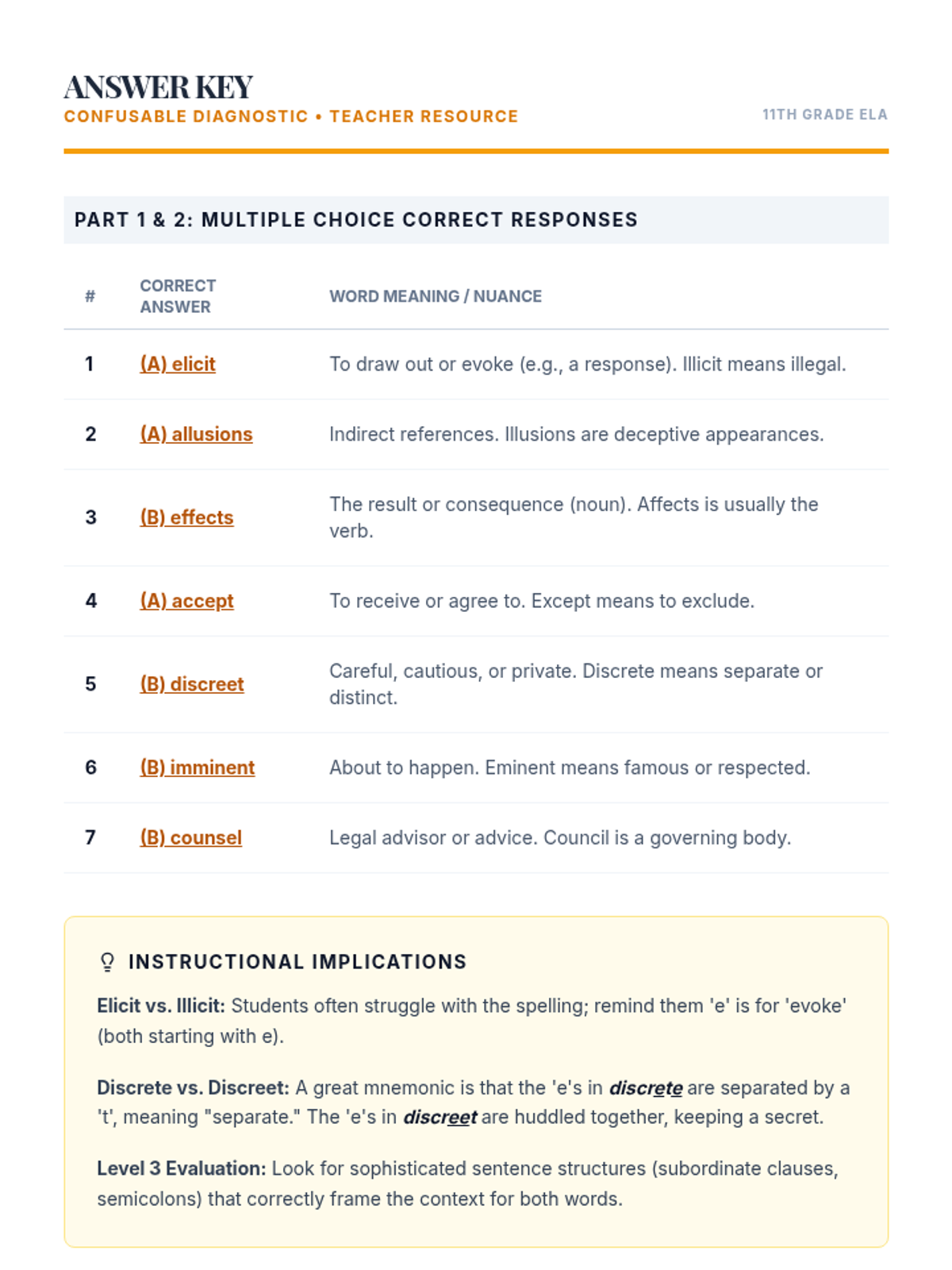
Students focus on how word choice (diction) changes the logic and urgency of an argument. They practice with pairs like eminent/imminent and censor/sensor to see how precision builds credibility.
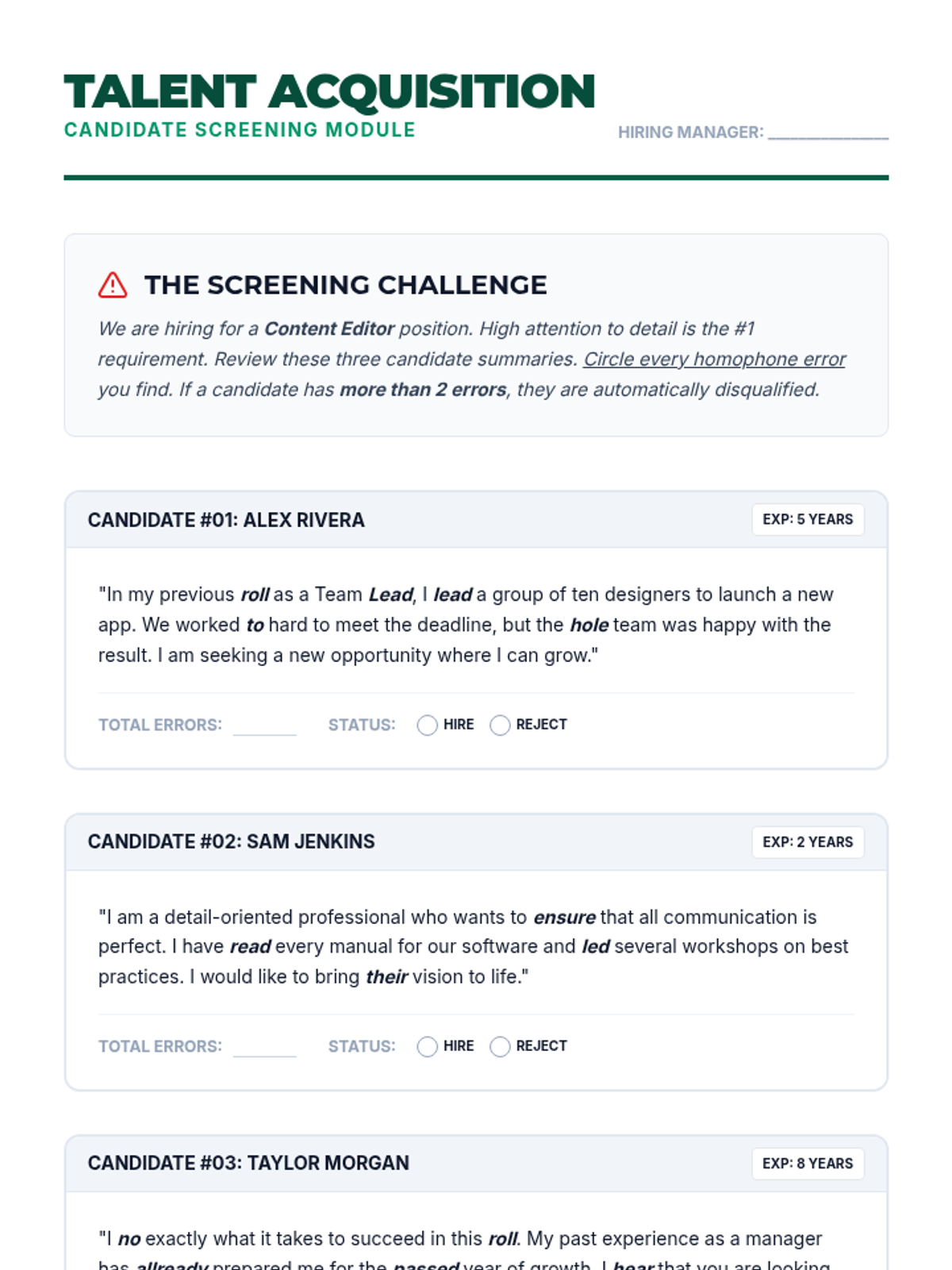
Students act as hiring managers to review resumes, identifying how subtle homophone errors function as gatekeeping mechanisms in the professional world.
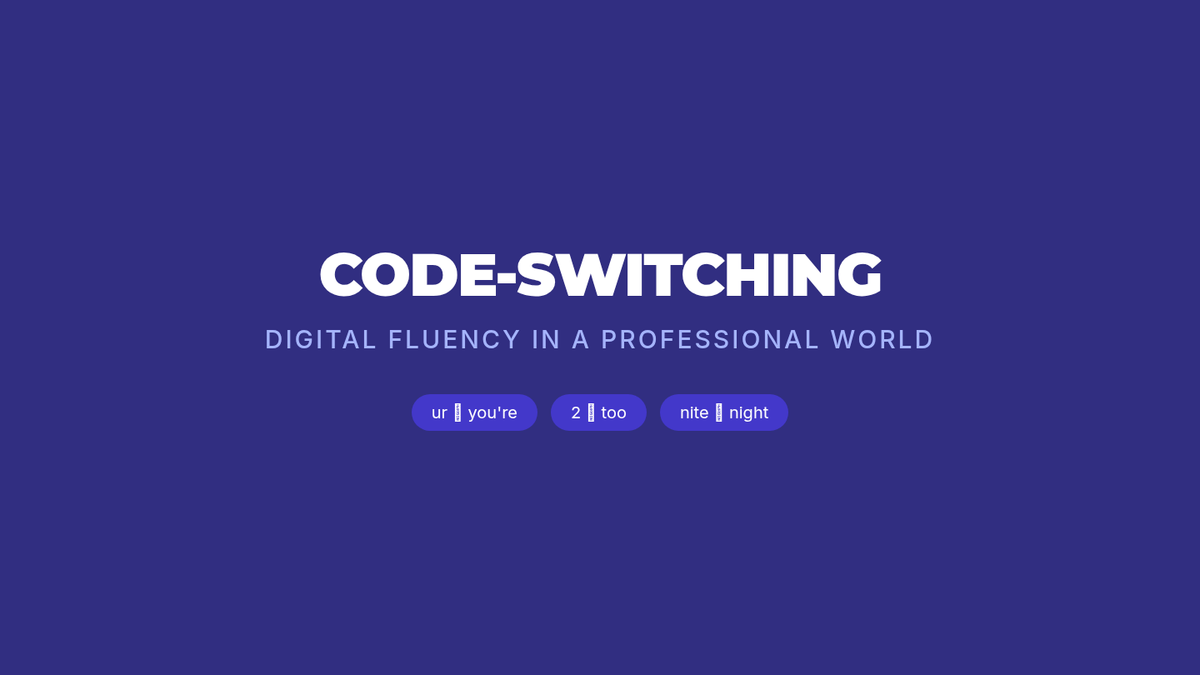
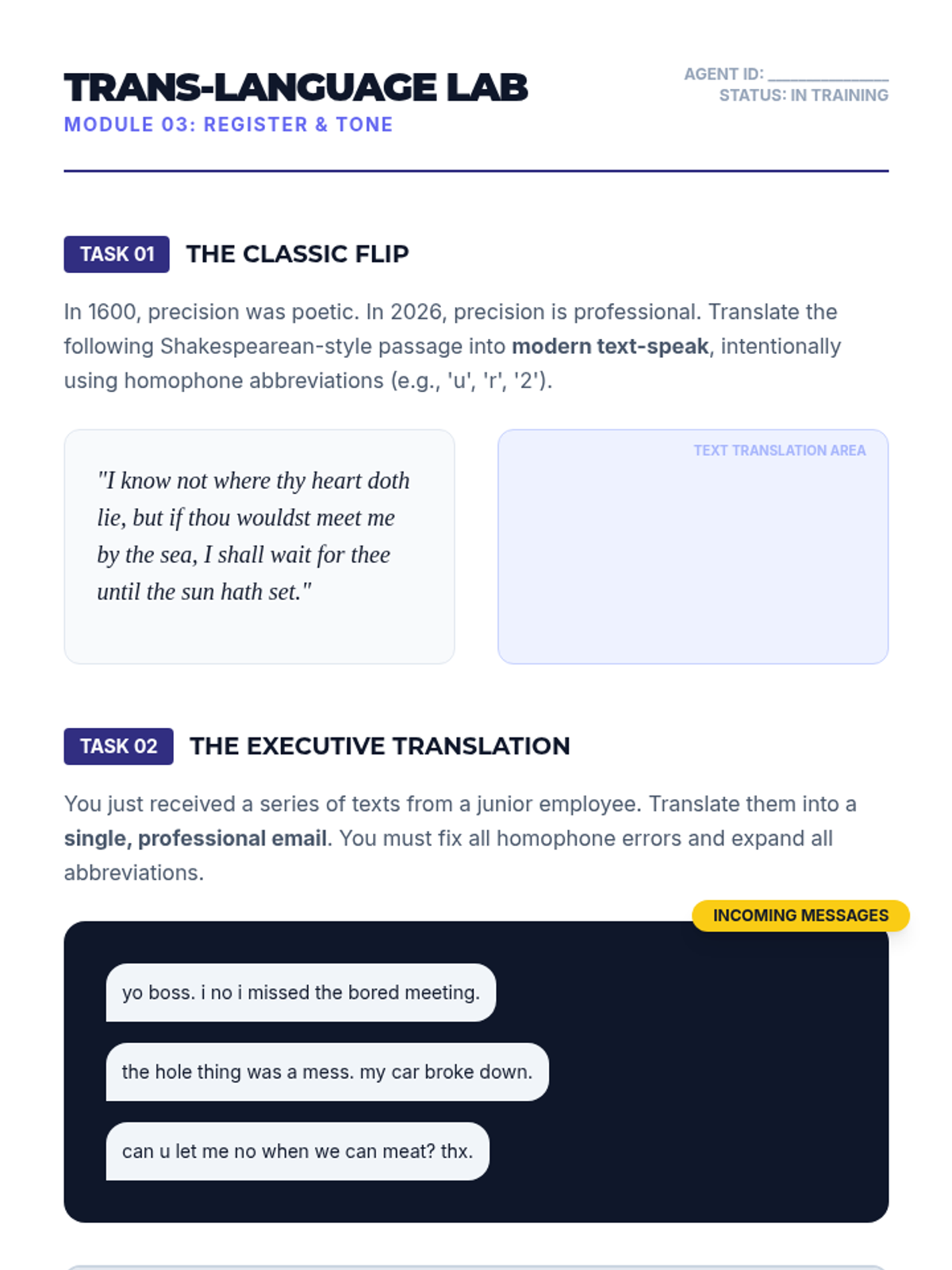
Students analyze the differences between casual digital communication and formal technical writing, learning to code-switch effectively for different audiences.
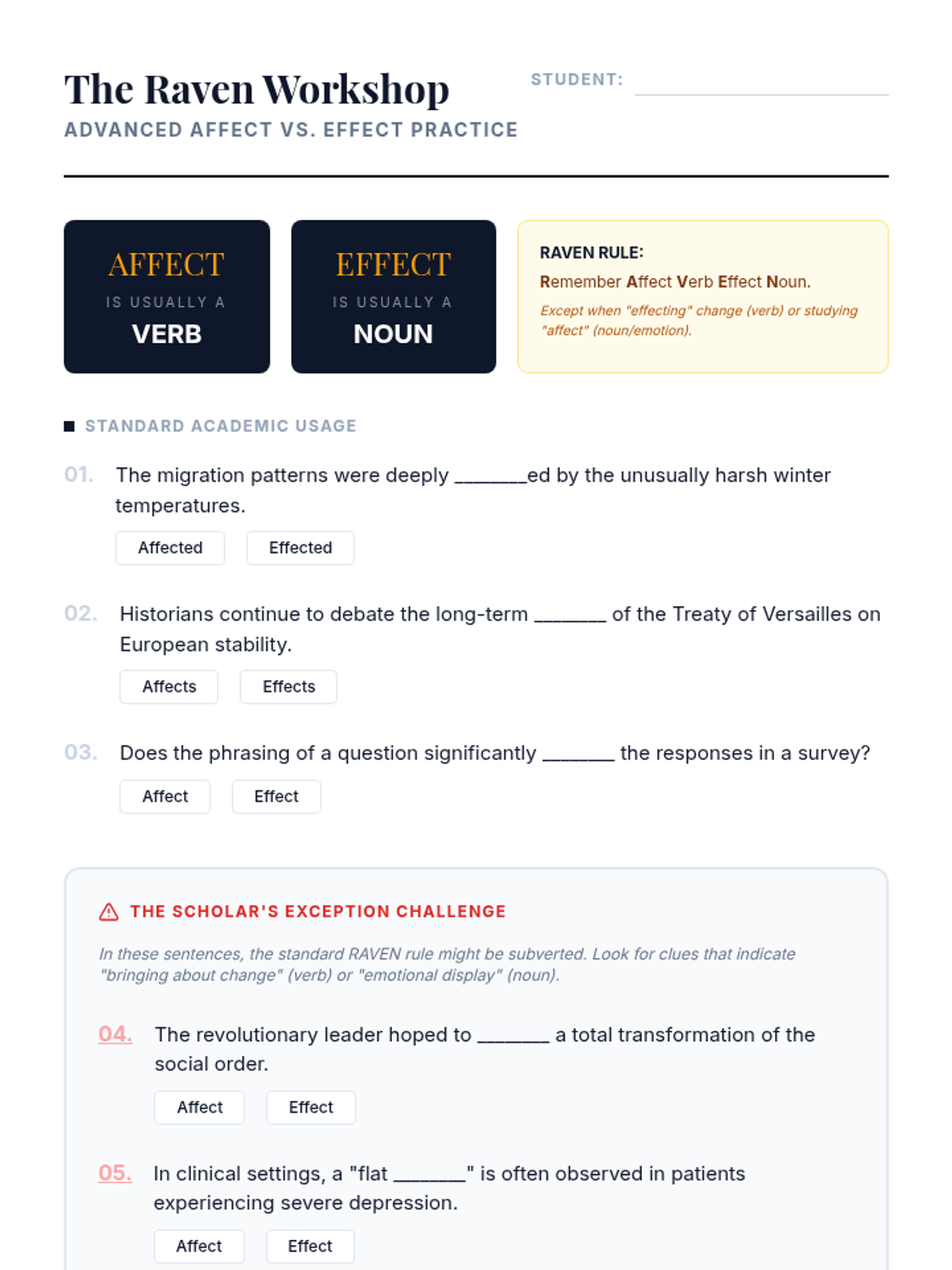
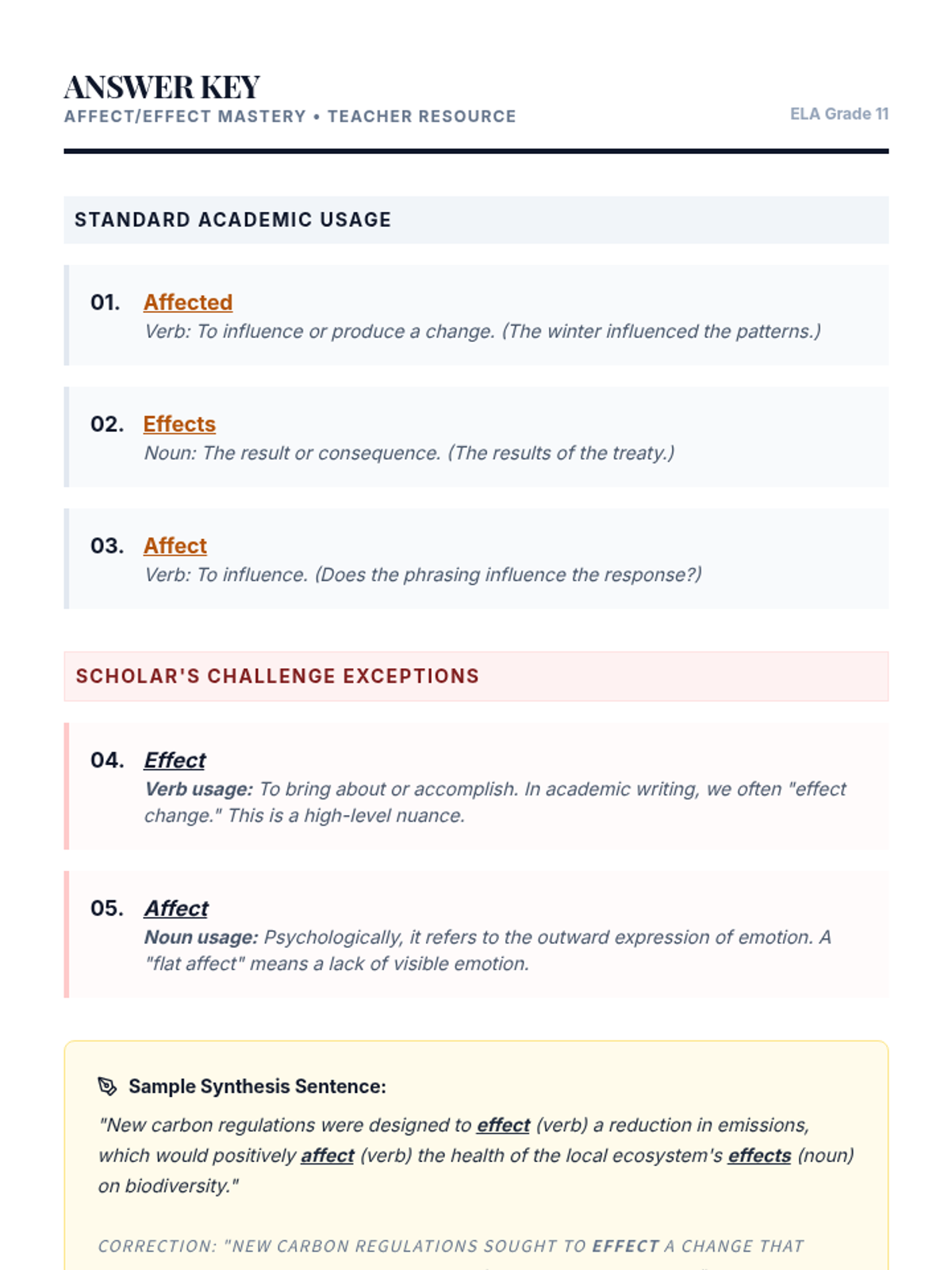
Dedicated focus on the most common academic confusable: affect vs. effect. Students learn the RAVEN mnemonic, explore rare noun/verb exceptions, and analyze usage in professional context.
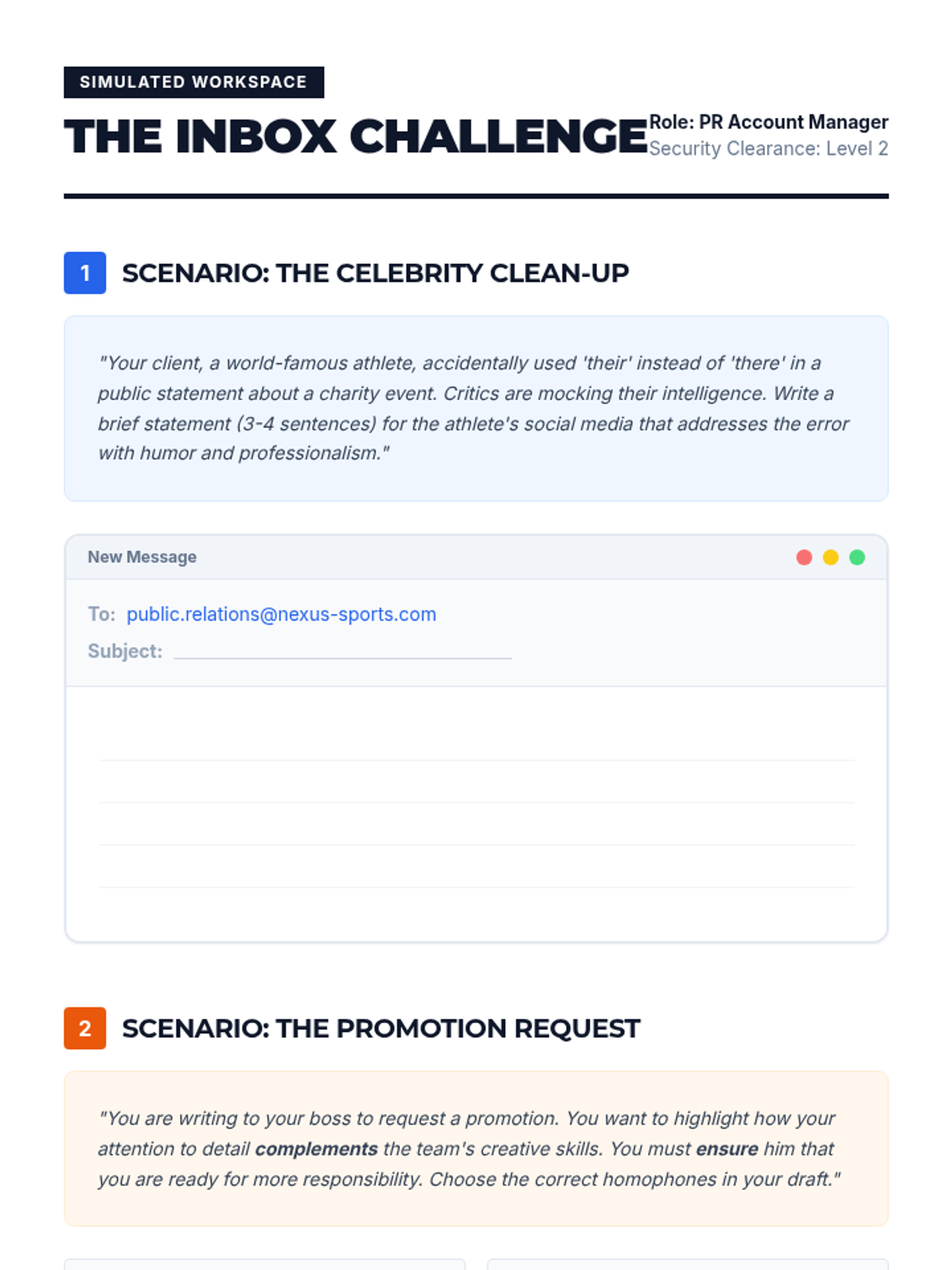
Students draft high-stakes professional emails and master homophones like ensure/insure/assure and complement/compliment in a business context.
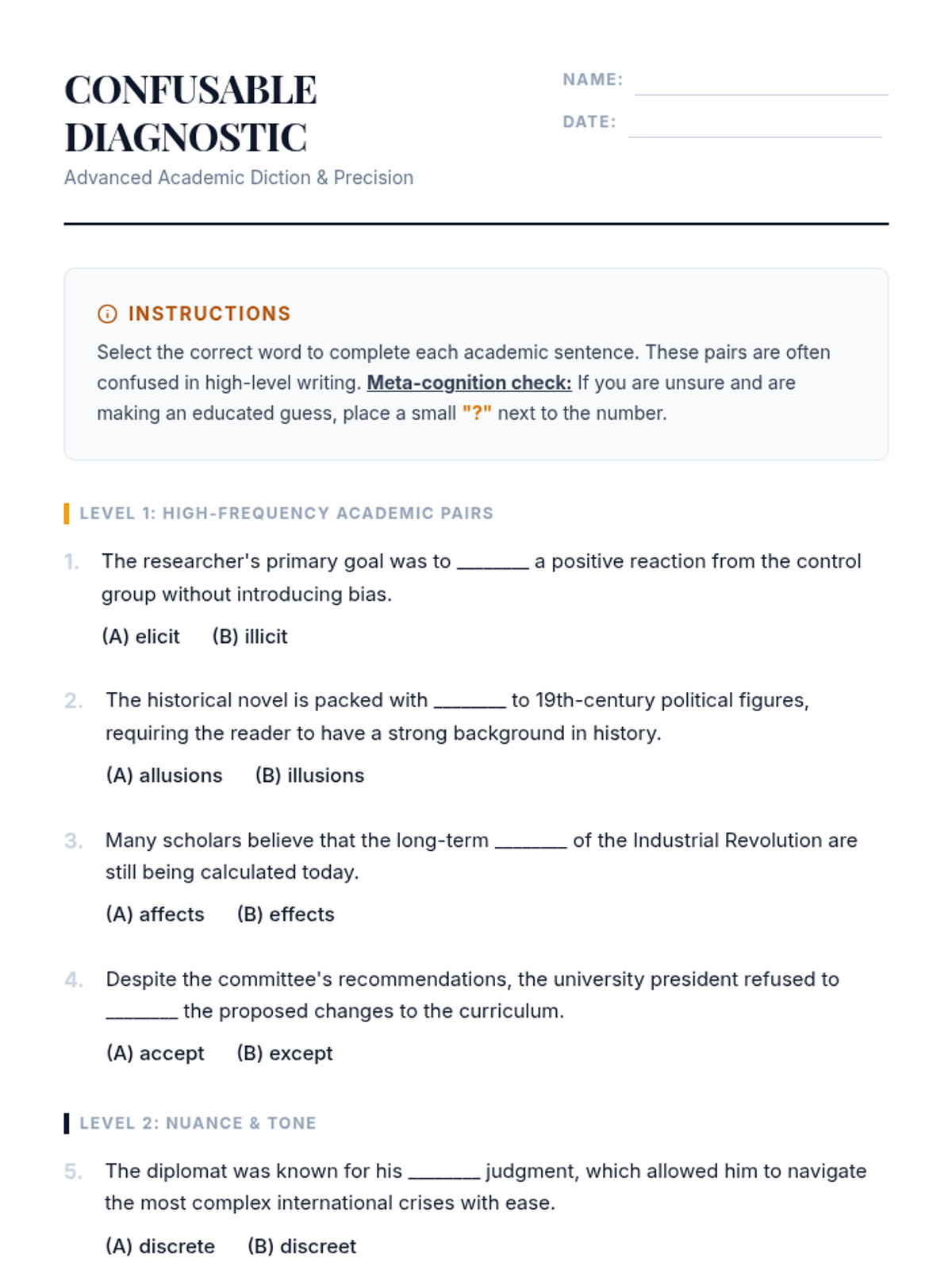
Students take a low-stakes diagnostic challenge featuring high-level academic sentences with missing words to establish a baseline for study. The lesson uses a 'decoded' paragraph hook to highlight the importance of precision in diction.
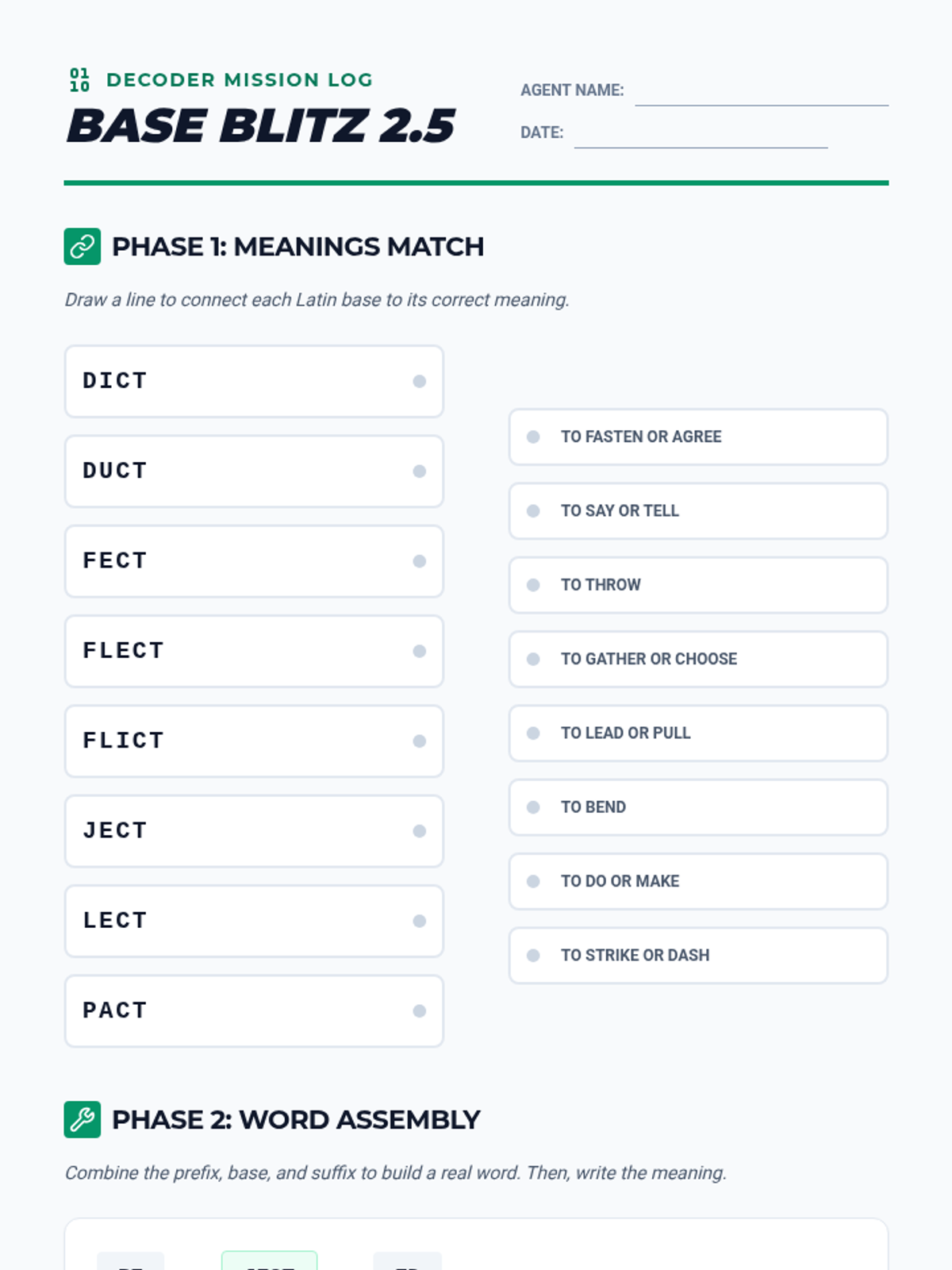
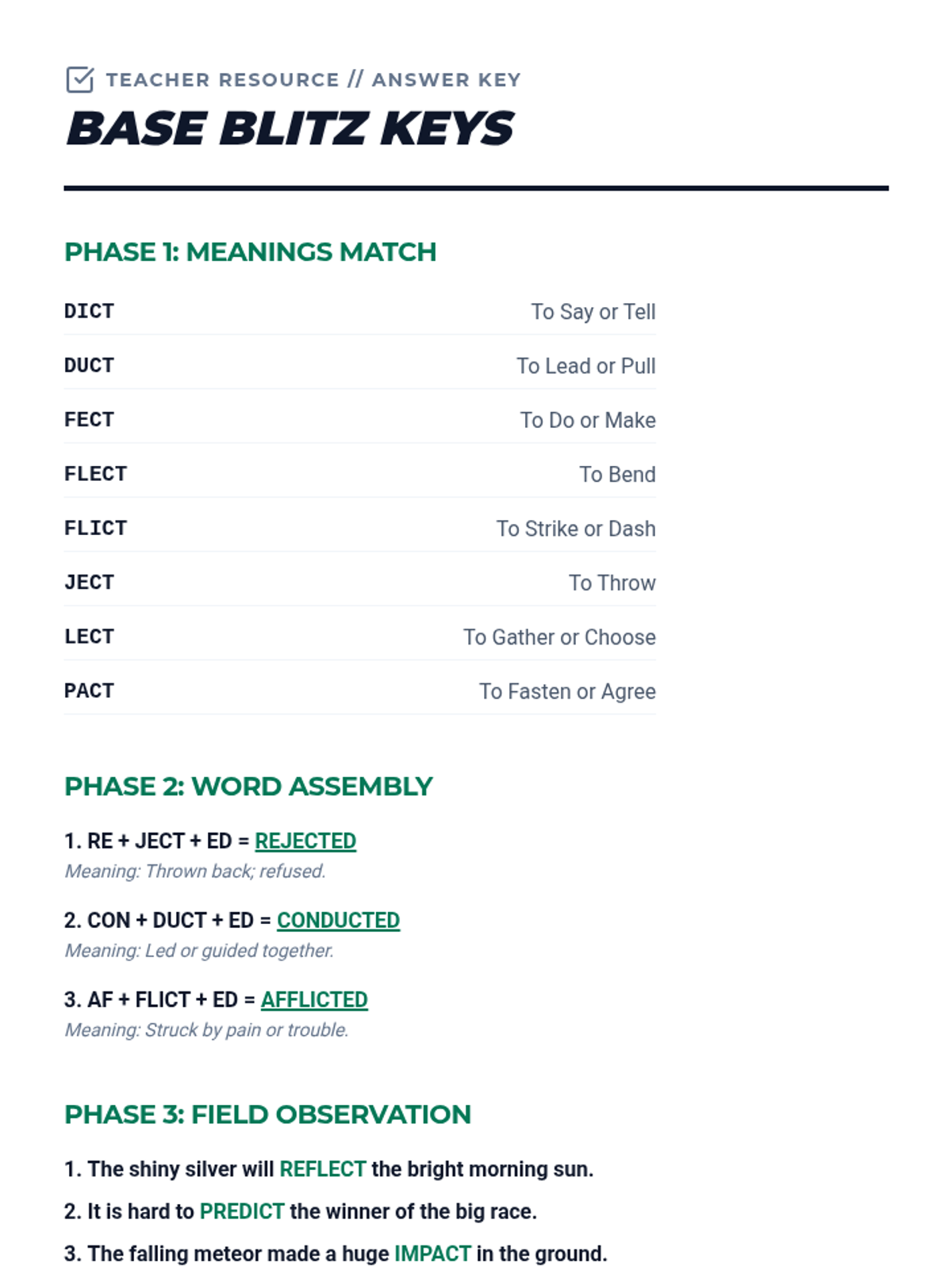
An introduction to Latin bases for word decoding, focusing on common roots found in complex English words. Students will learn the meanings of eight specific bases and practice building and breaking down words.
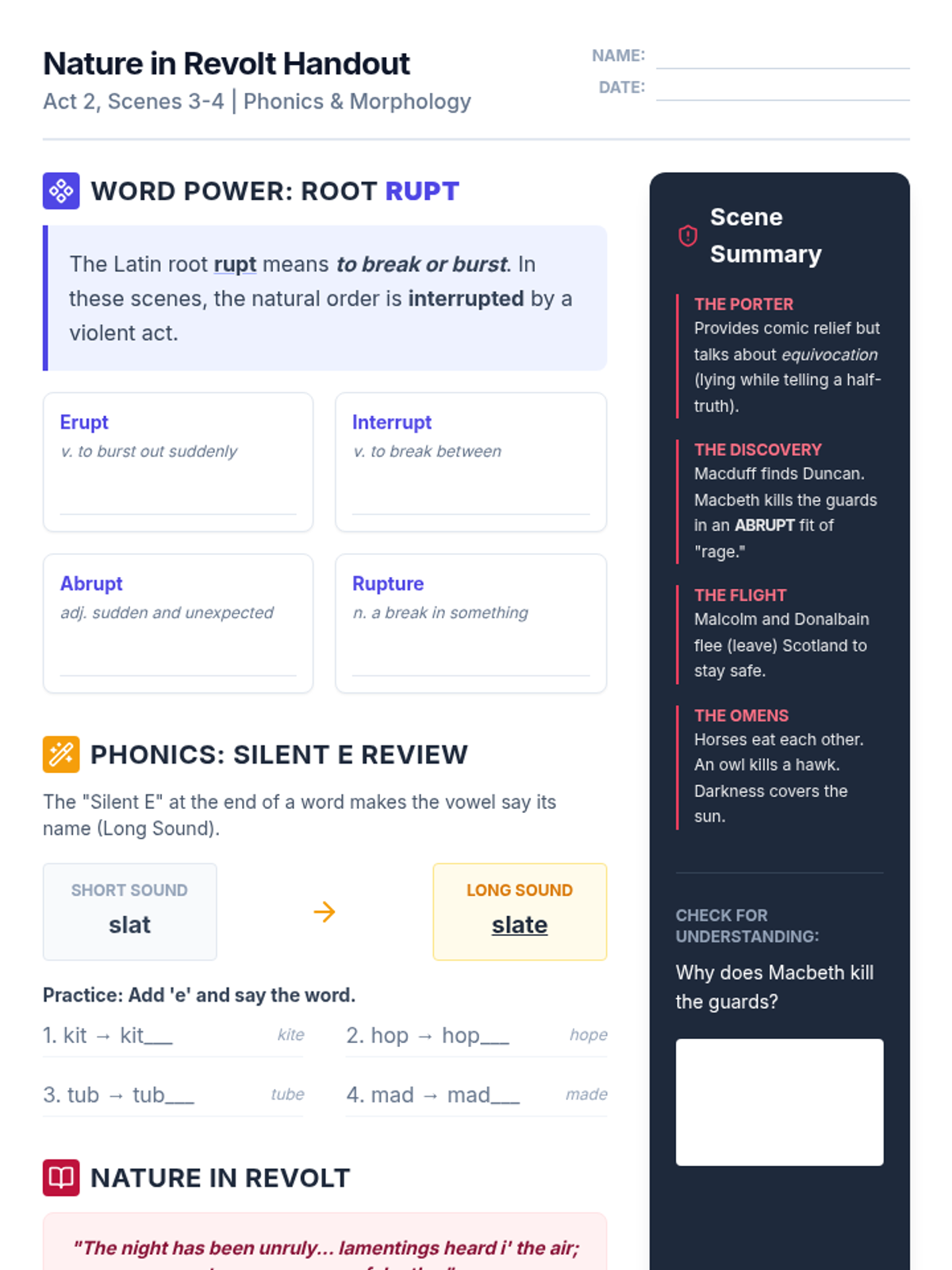
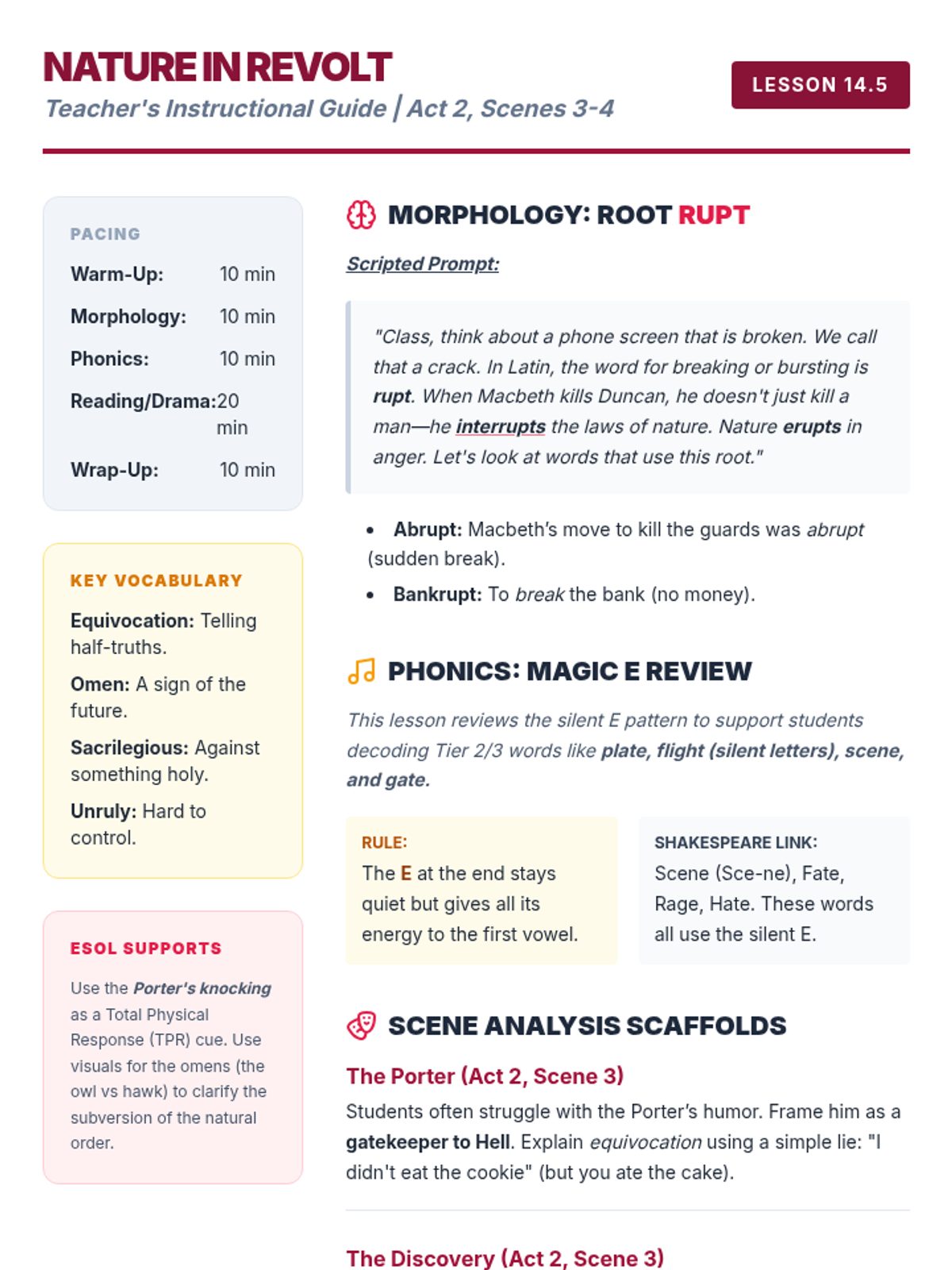
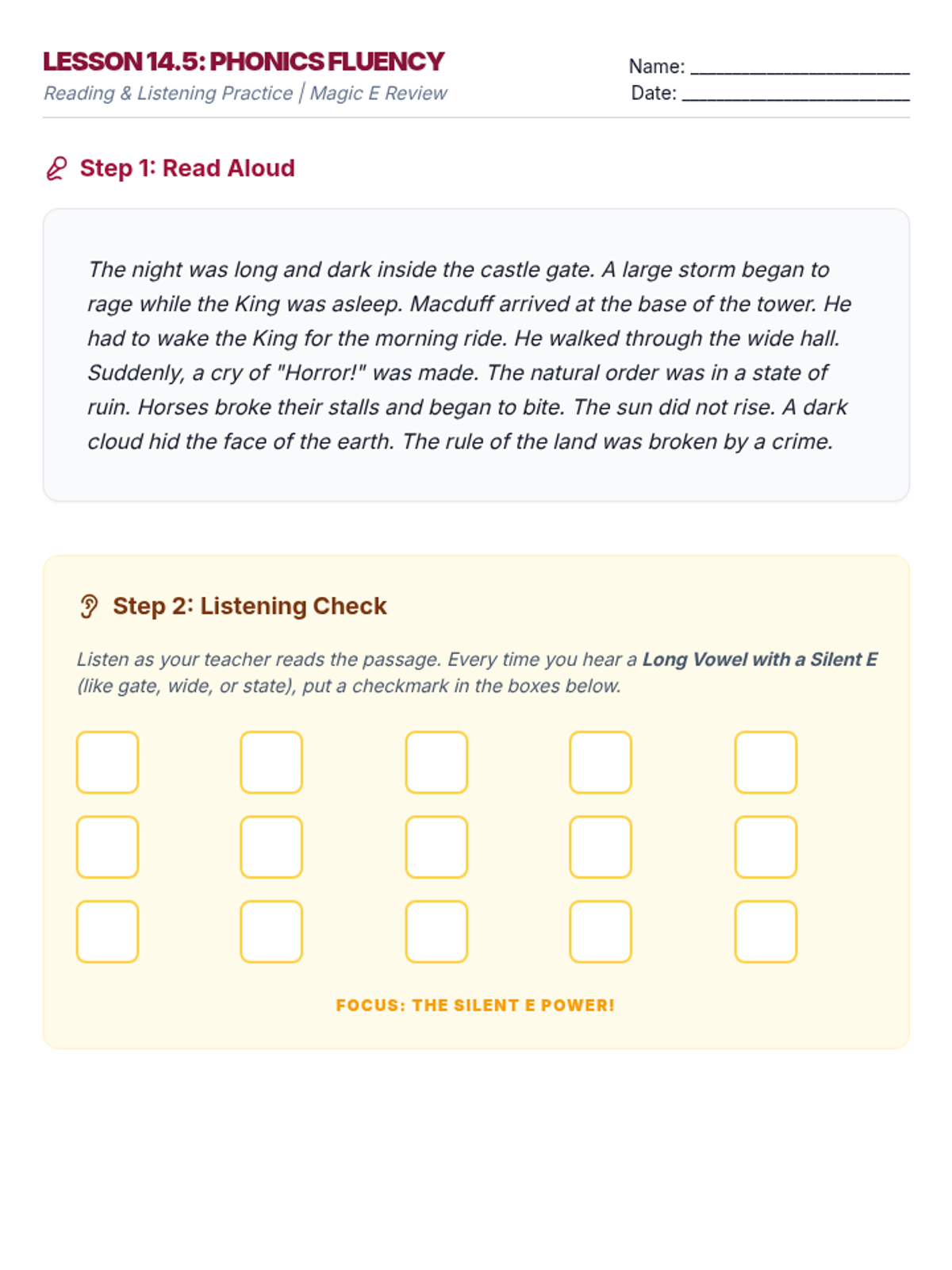
An analysis of the discovery of Duncan's murder and the subversion of the natural order in Act 2, Scenes 3-4, featuring the Latin root 'rupt' and a review of CVCe (Silent E) vowel patterns.
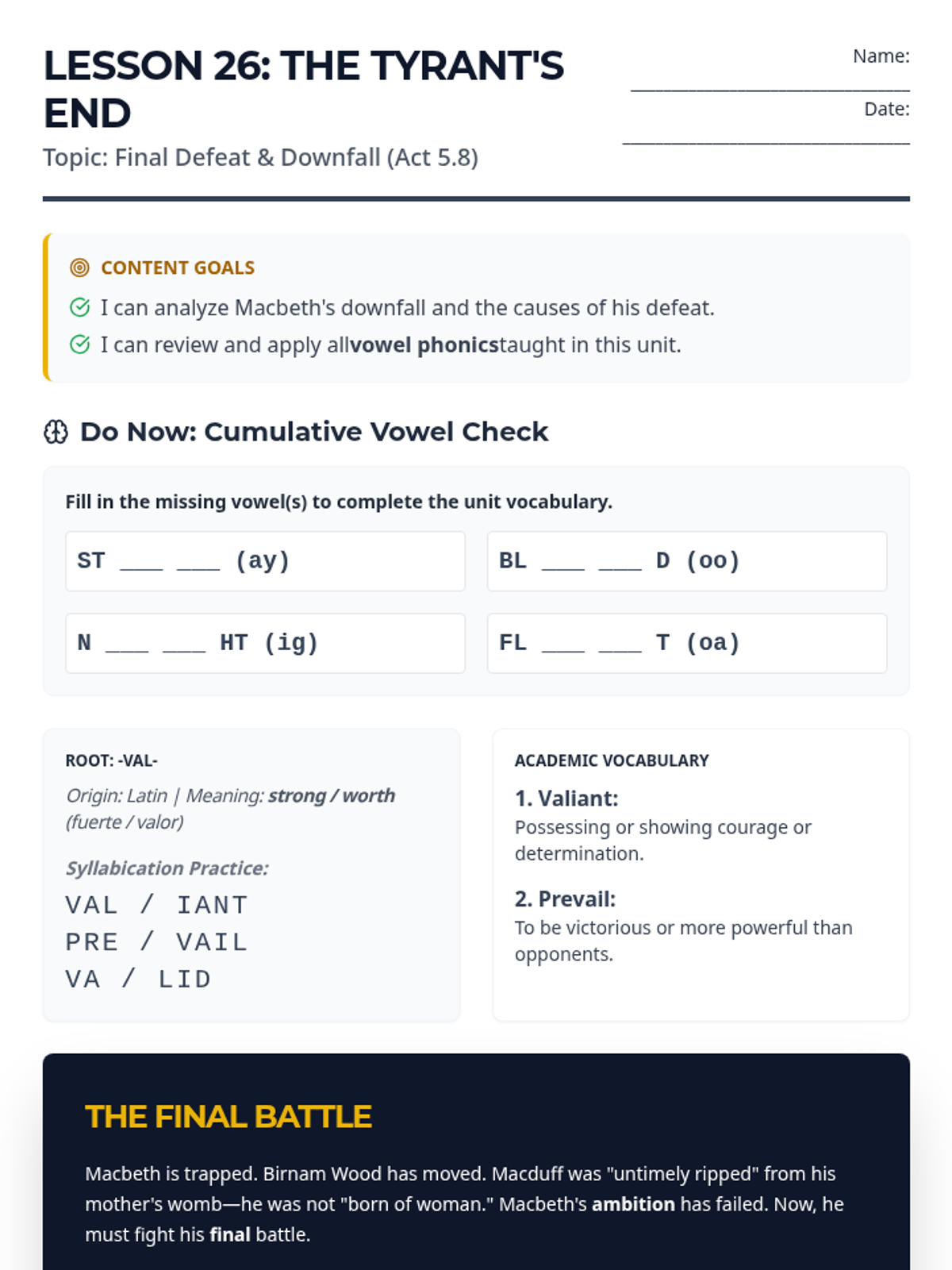
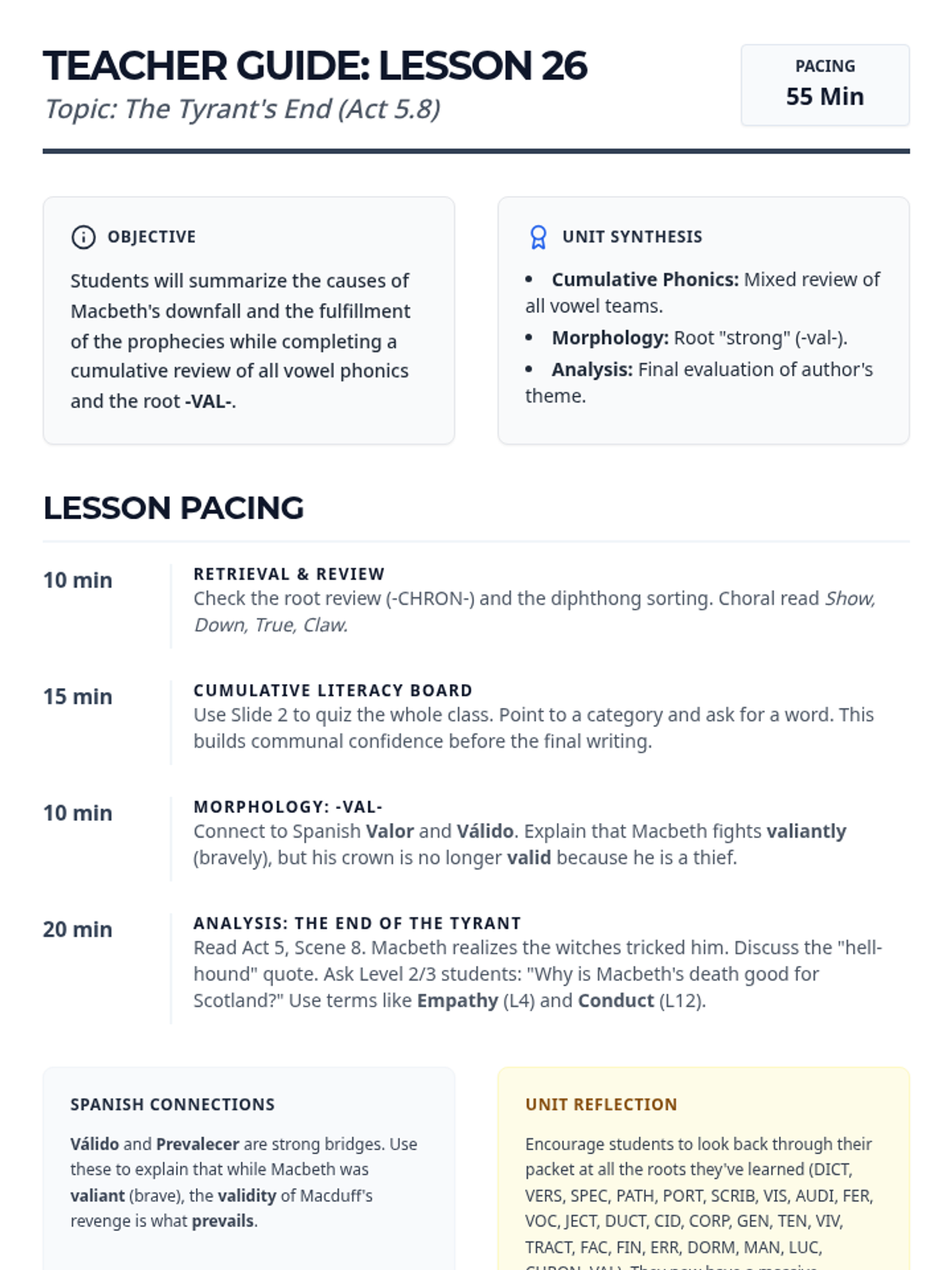
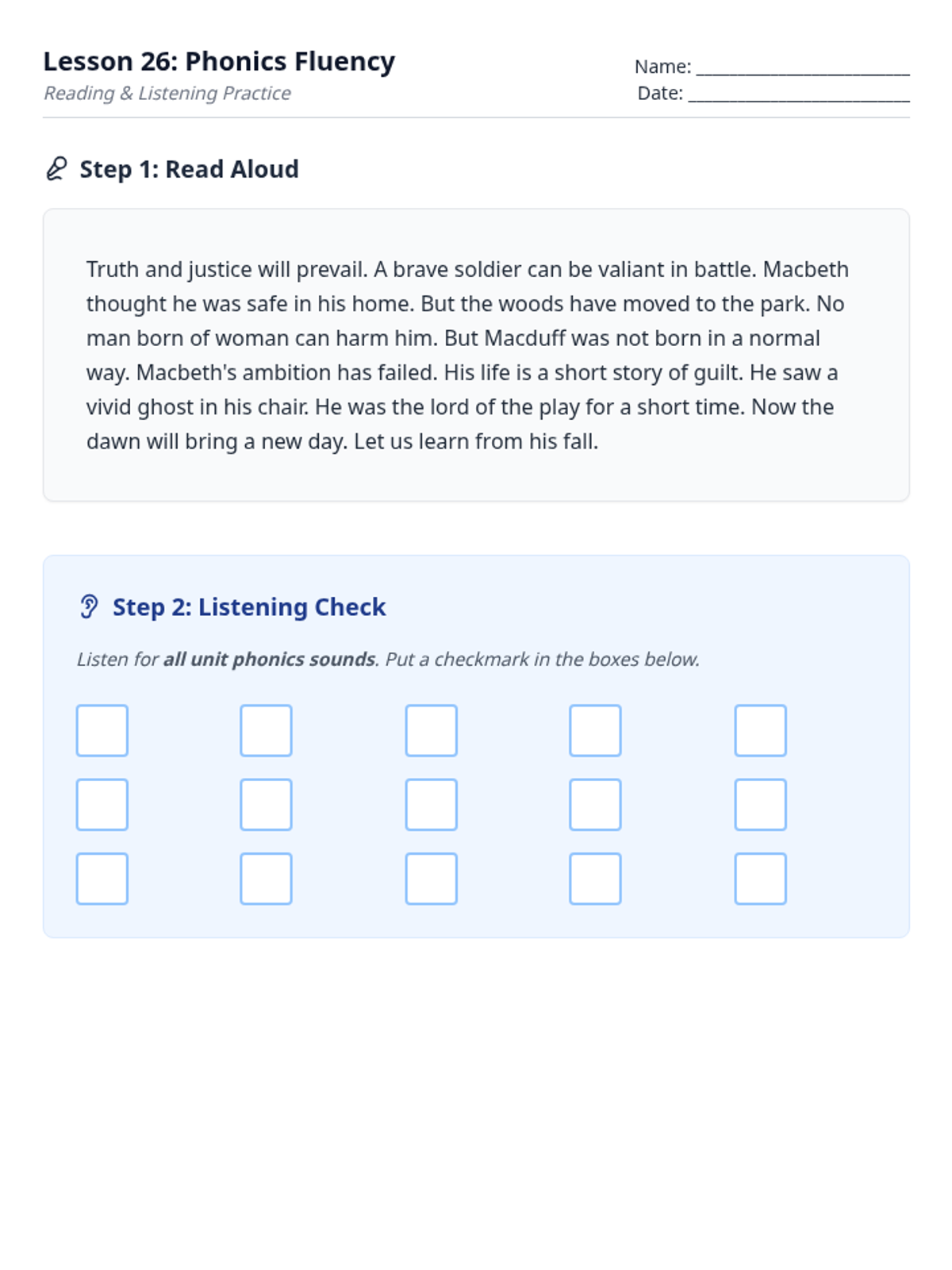
An evaluation of Macbeth's downfall and final defeat, featuring the root 'val' and a cumulative vowel phonics review.
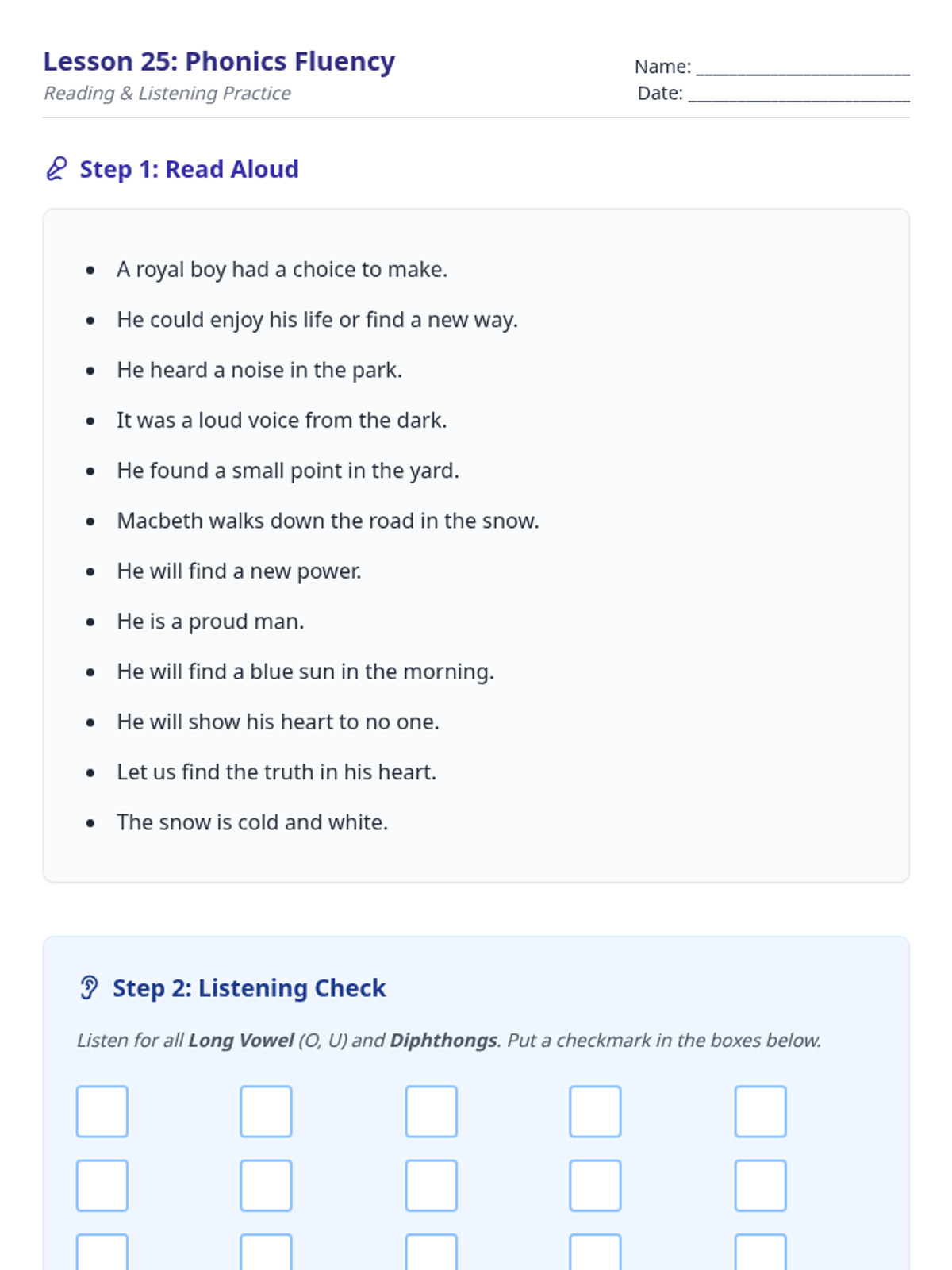
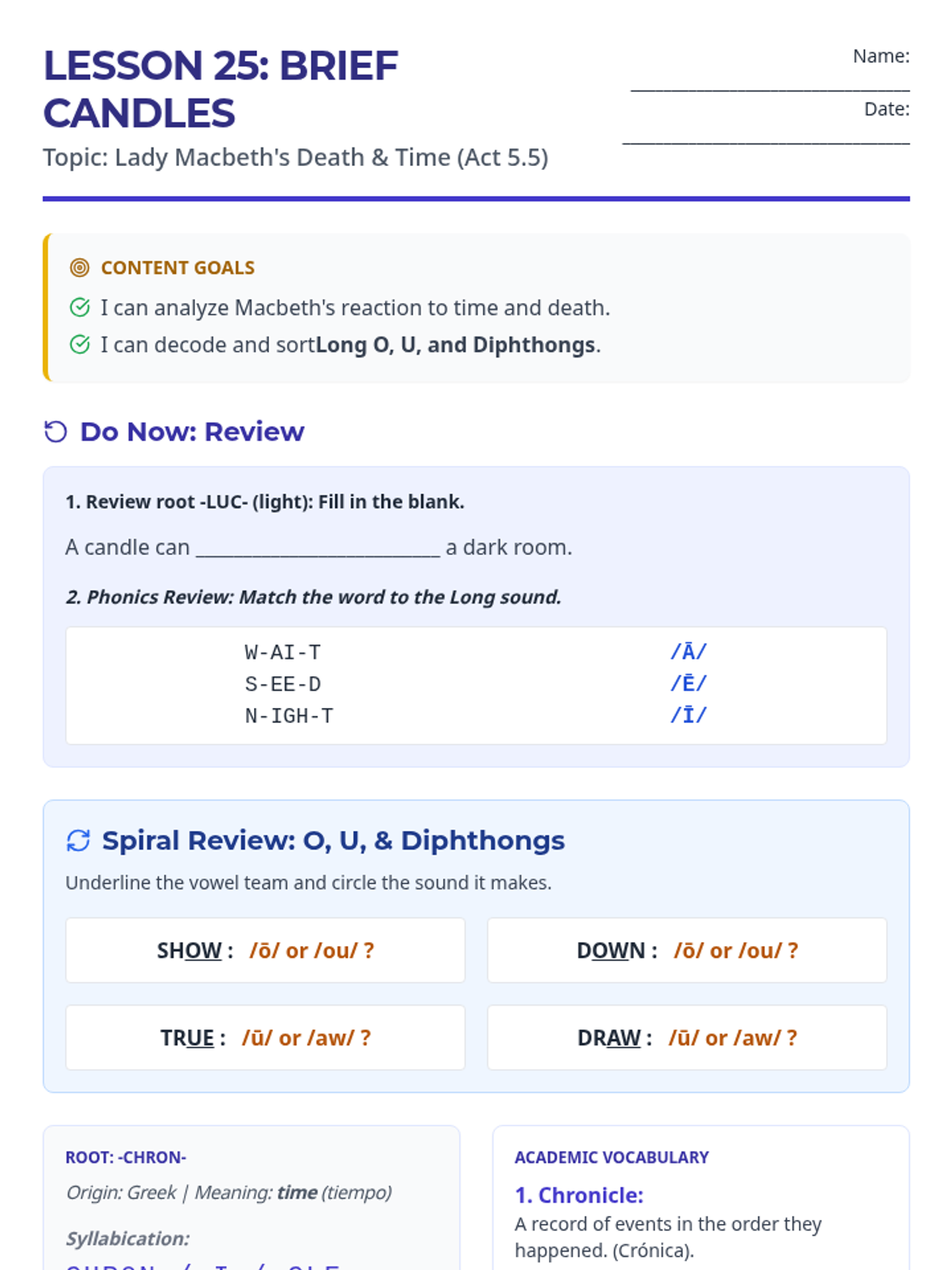
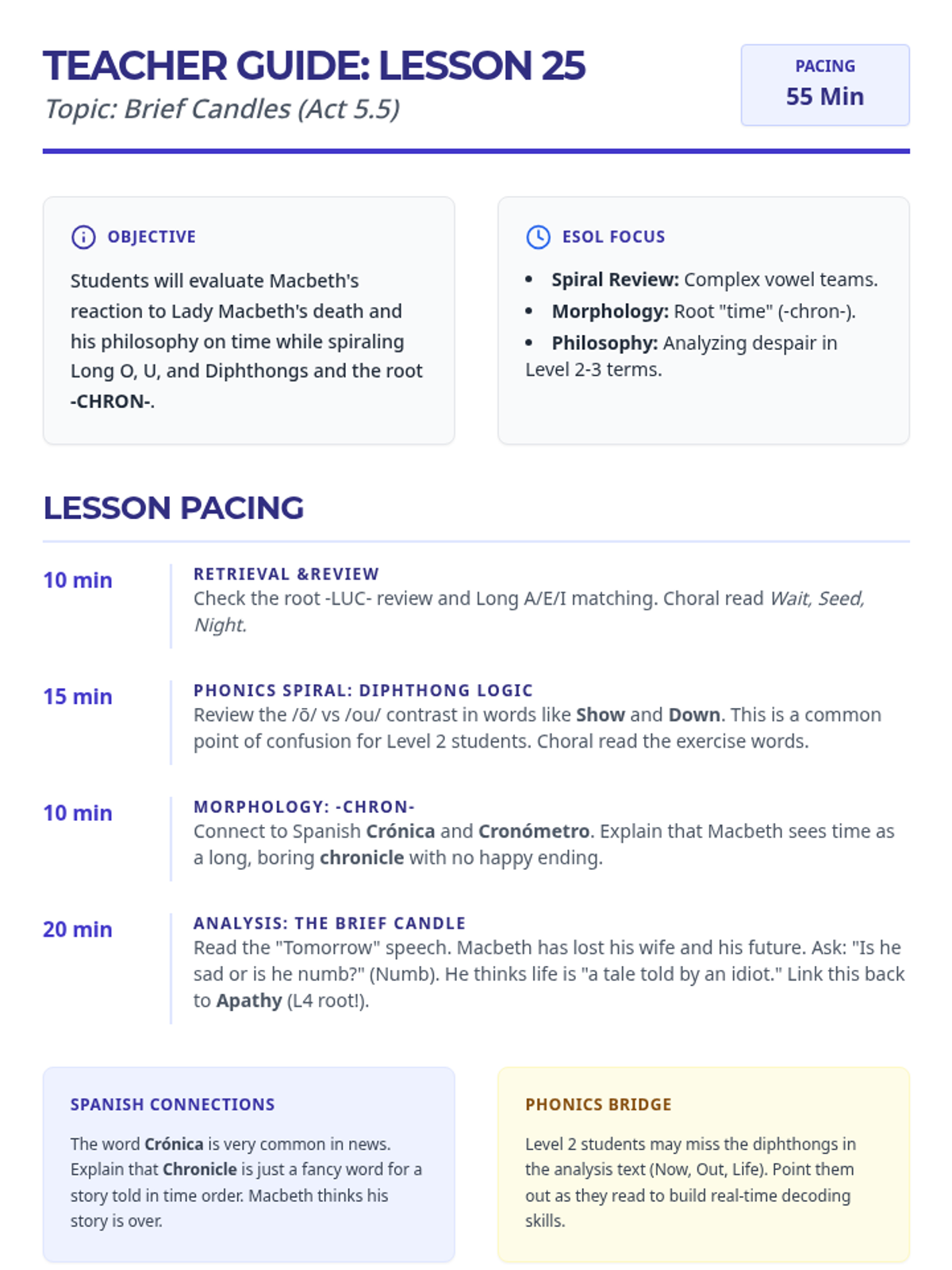
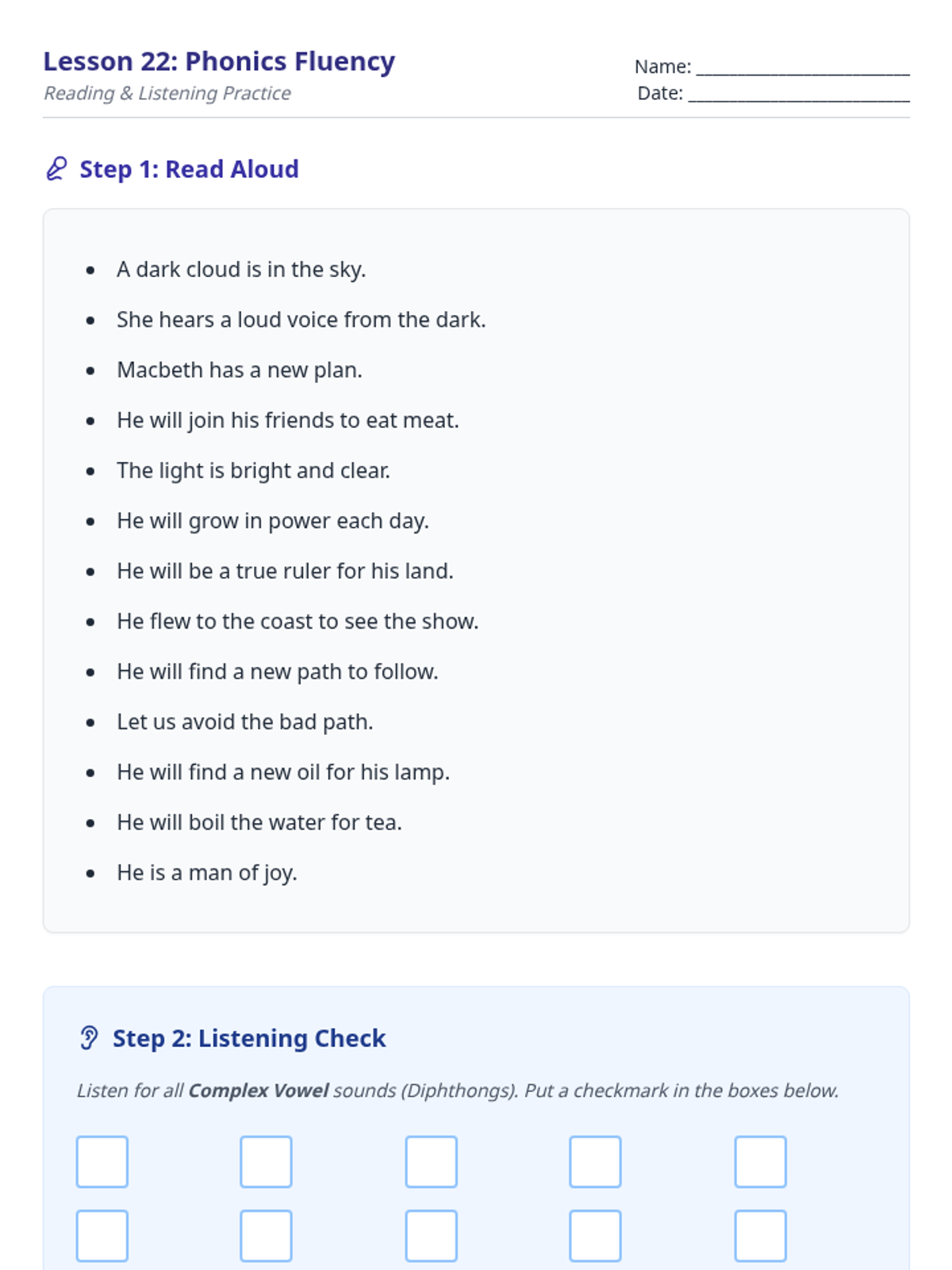
An analysis of Macbeth's 'Tomorrow' soliloquy and his reaction to Lady Macbeth's death, featuring the root 'chron' and a spiral review of Long O, U, and Diphthongs.
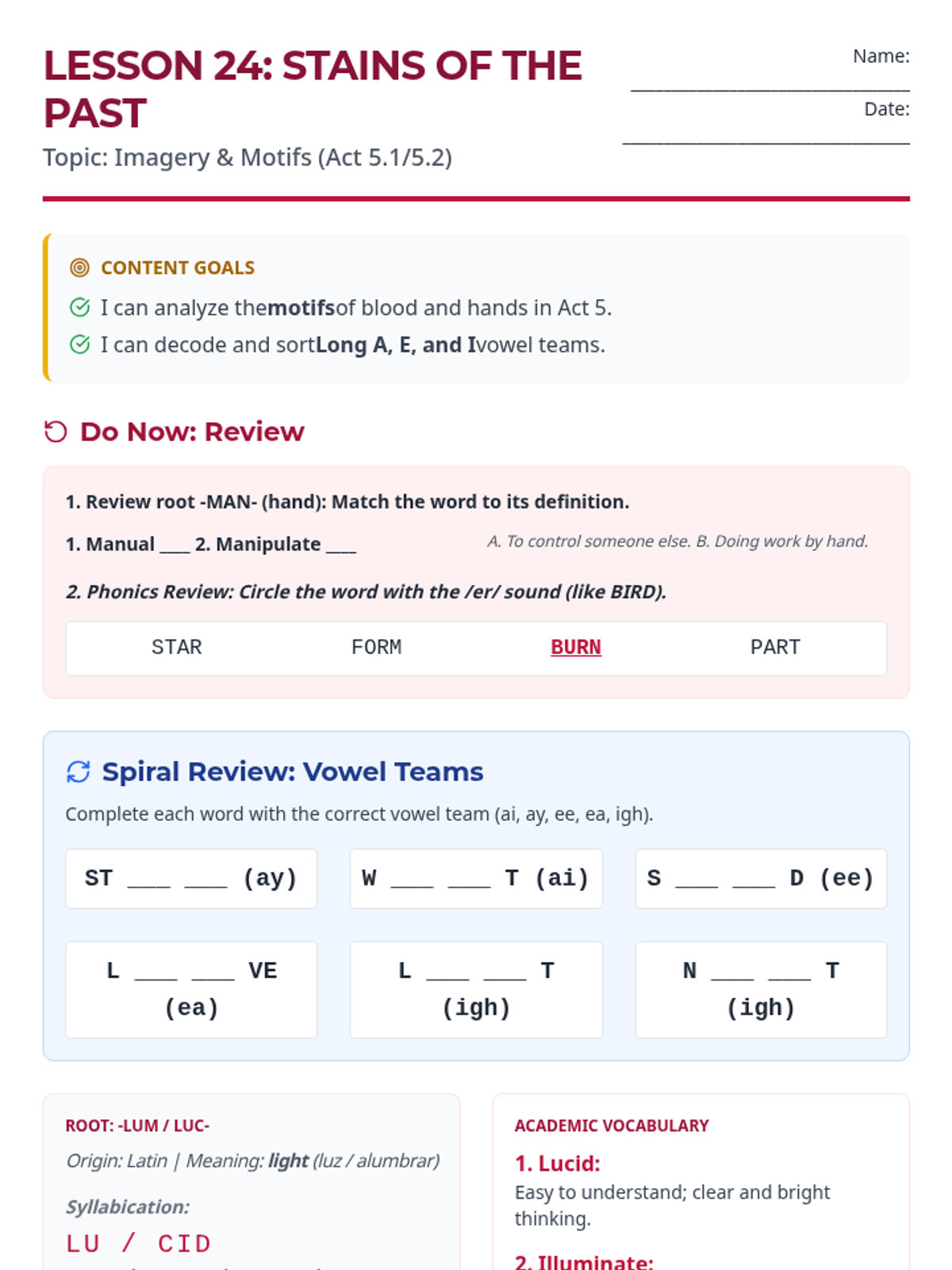
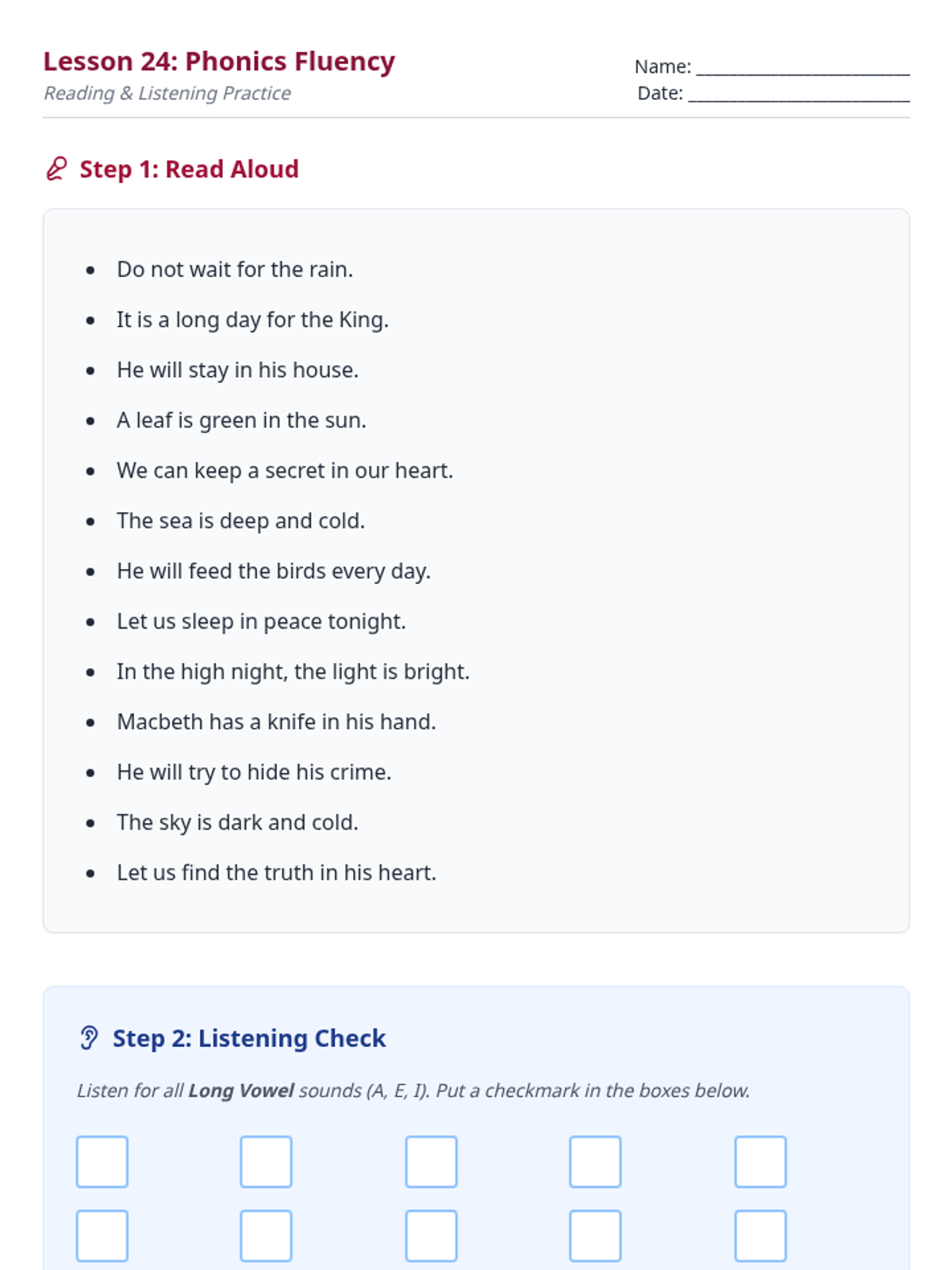
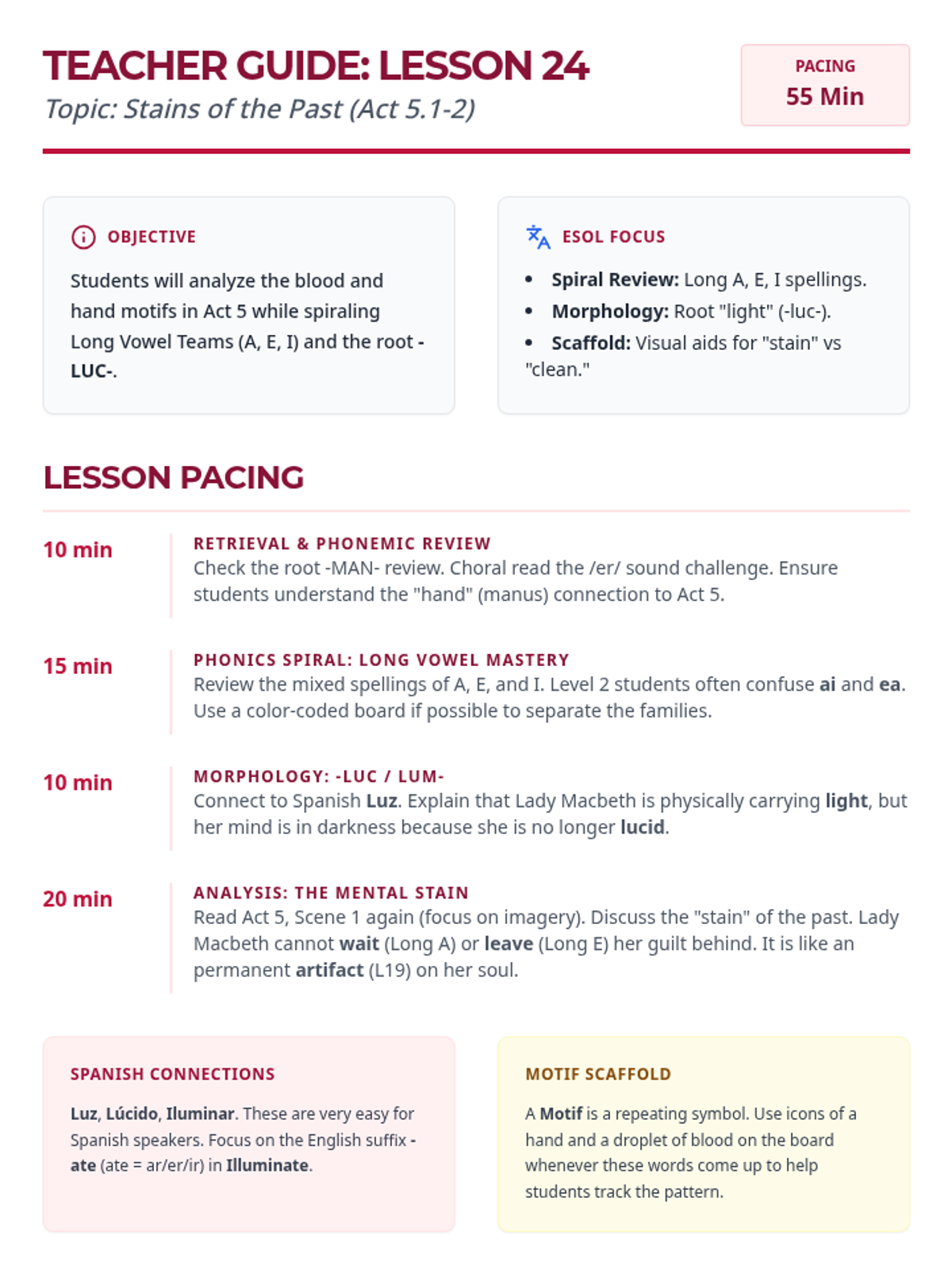
An exploration of imagery and motifs in Act 5, focusing on the root 'luc' and a spiral review of Long A, E, and I vowel teams.
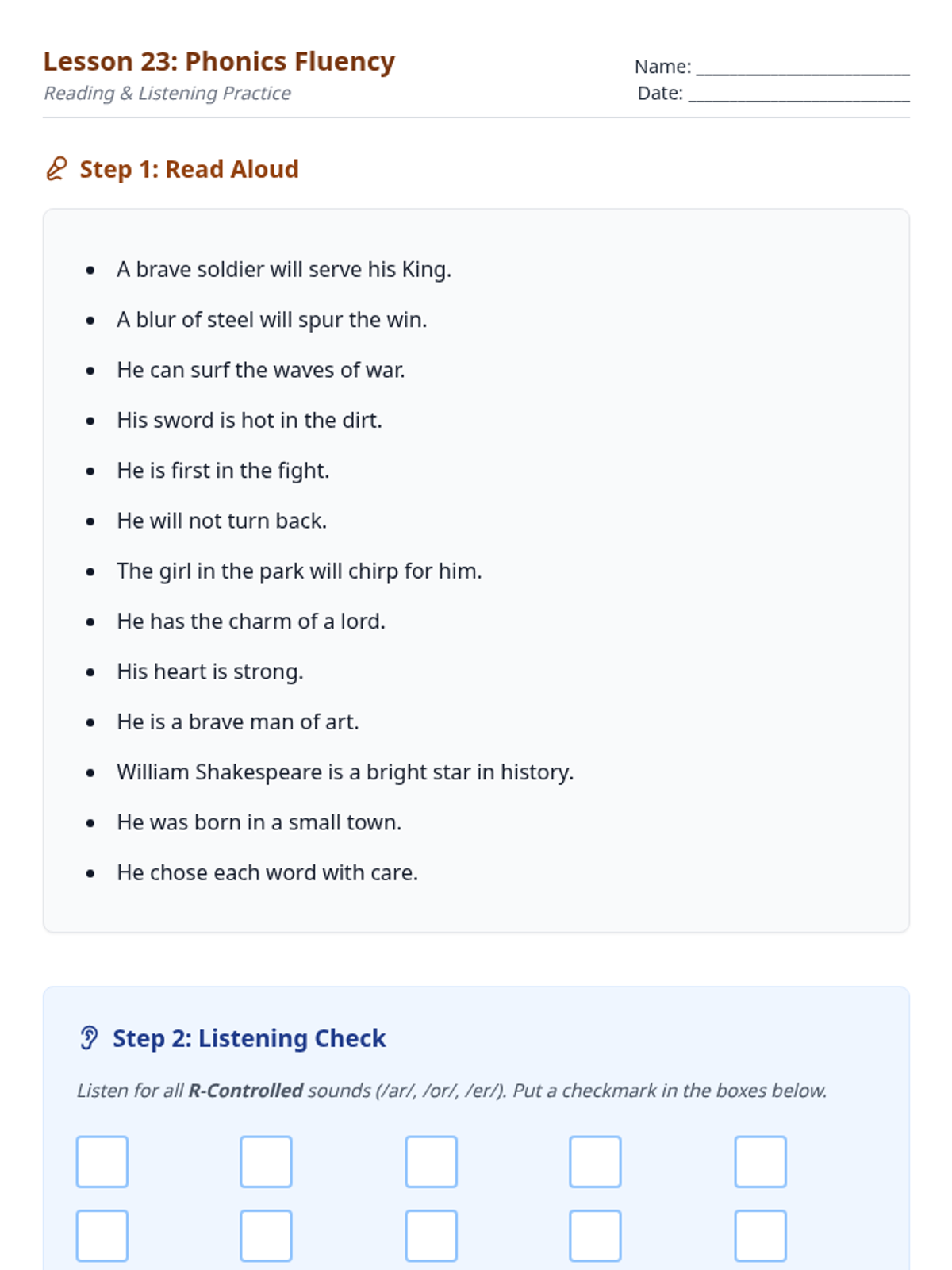
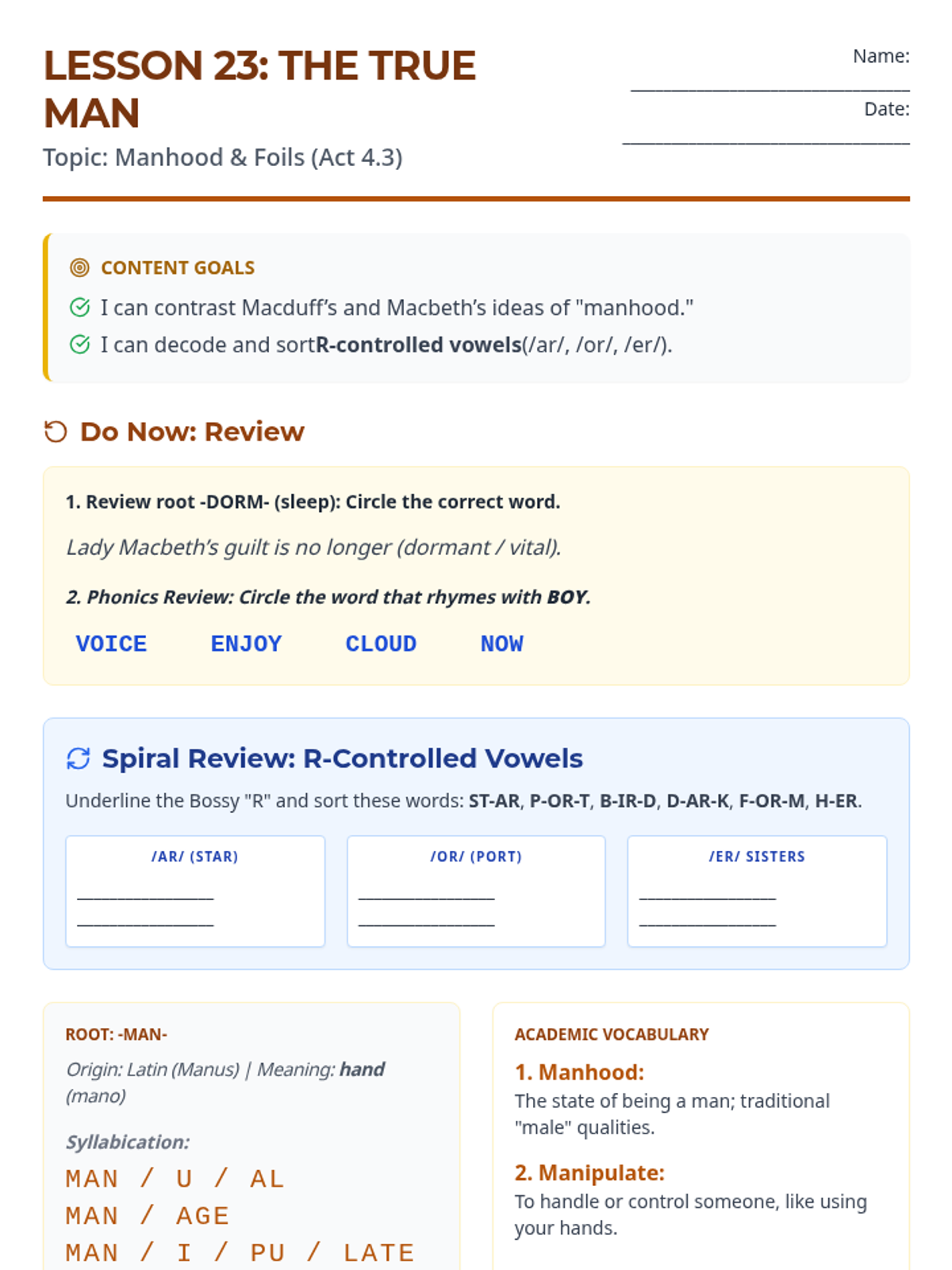
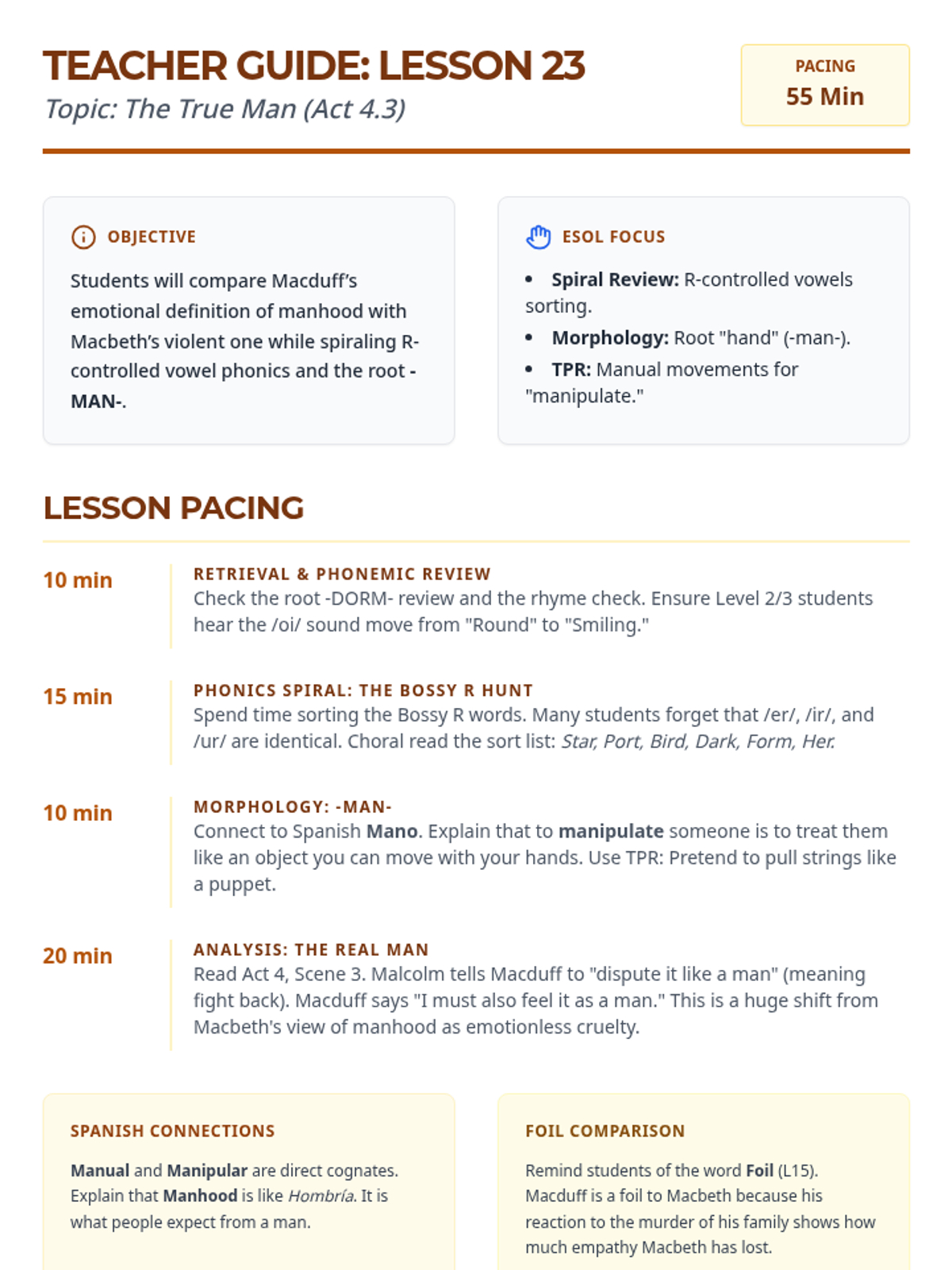
An analysis of Macduff's definition of manhood as a foil to Macbeth, featuring the root 'man' and a spiral review of R-controlled vowels.
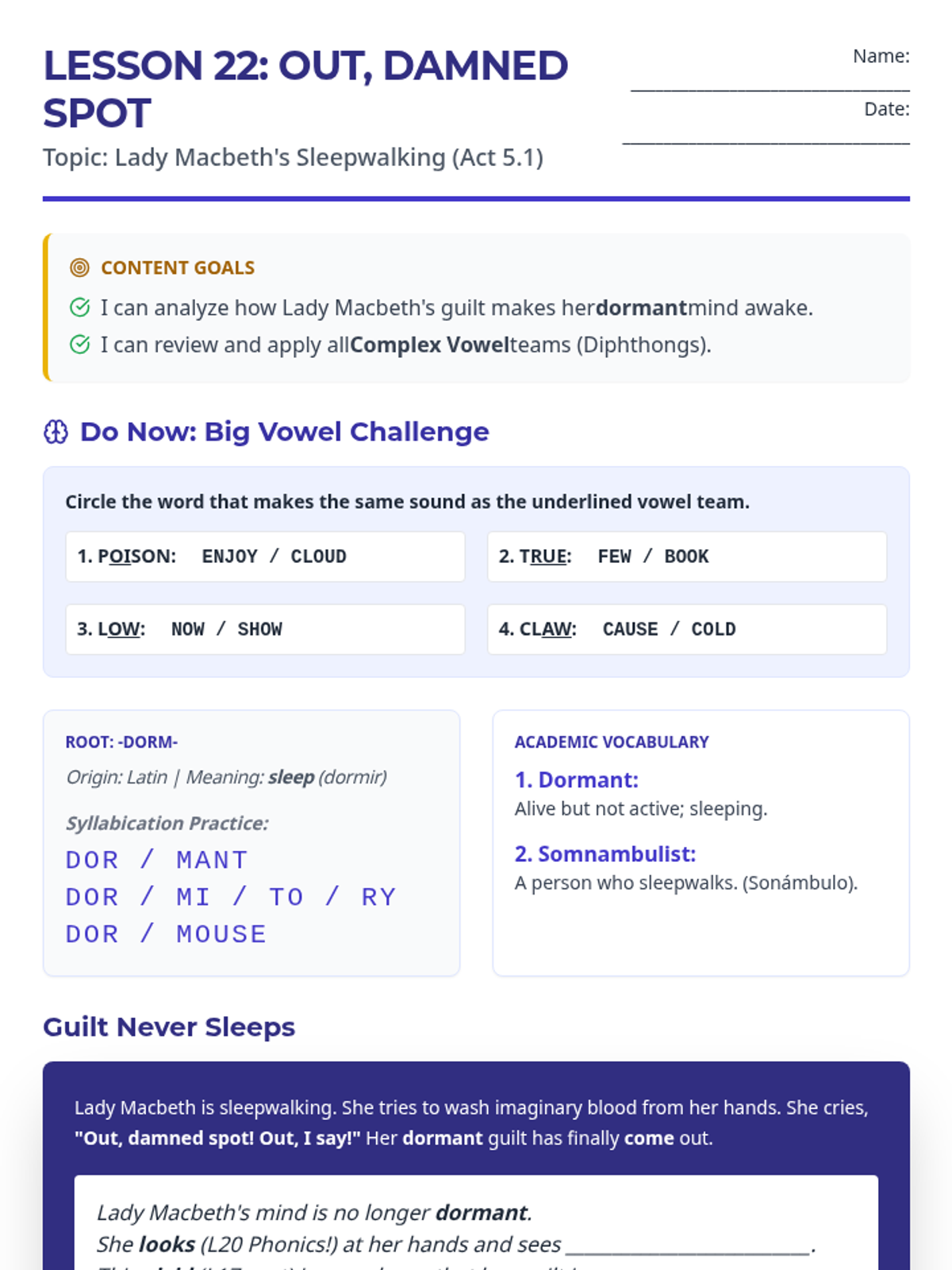
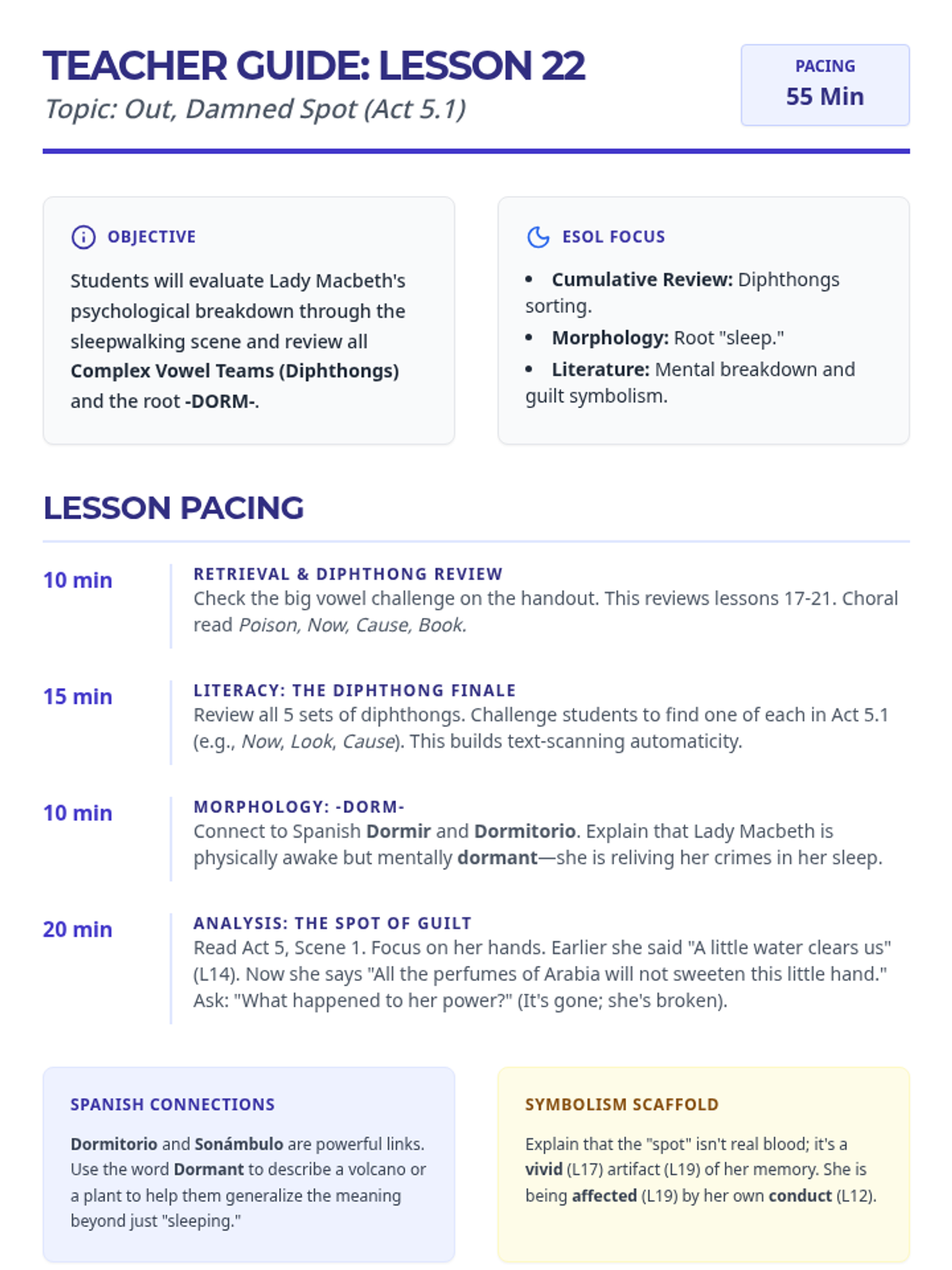
A thematic study of Lady Macbeth's psychological breakdown in Act 5, Scene 1, with a review of diphthongs and the root 'dorm'.
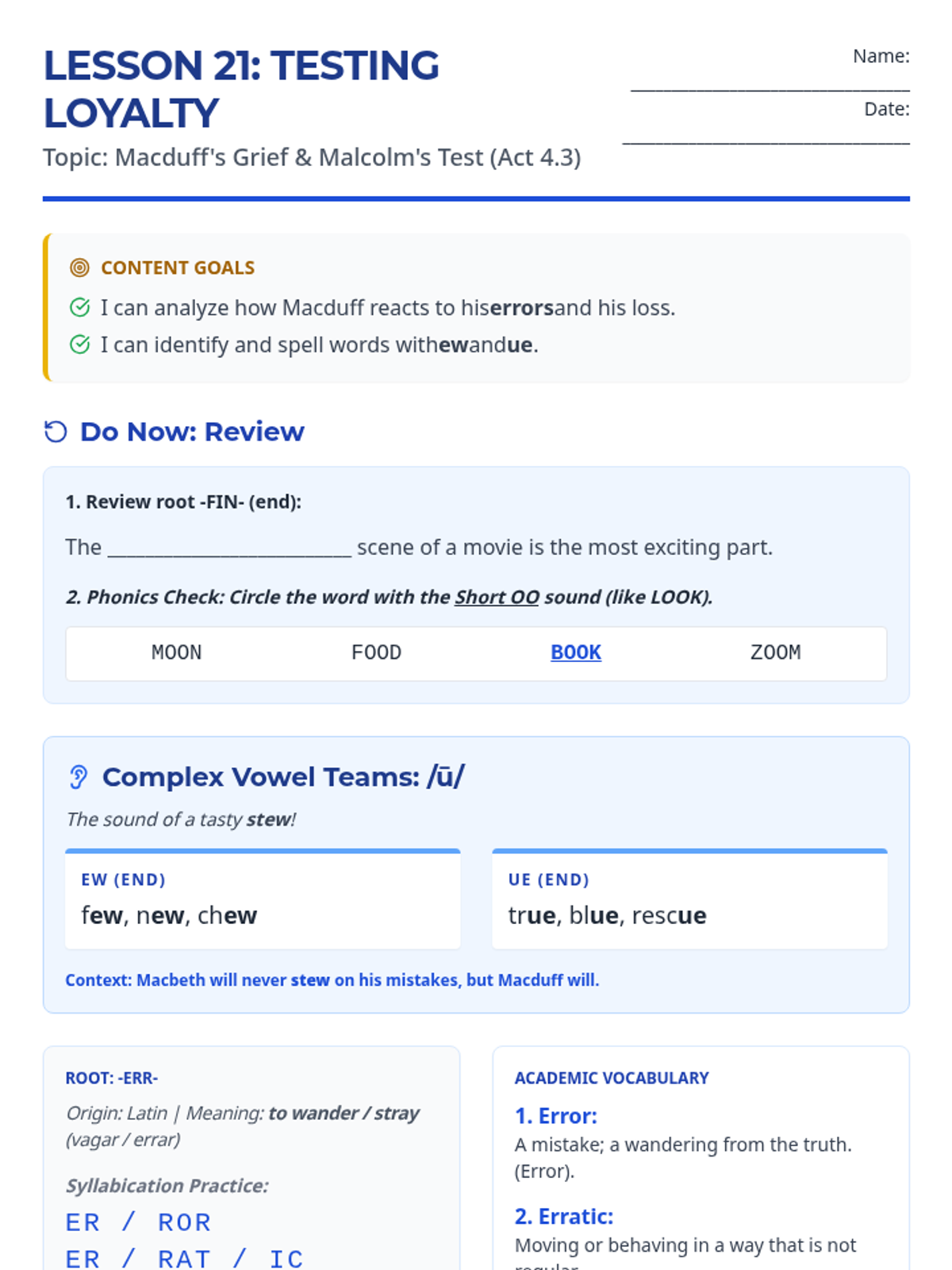
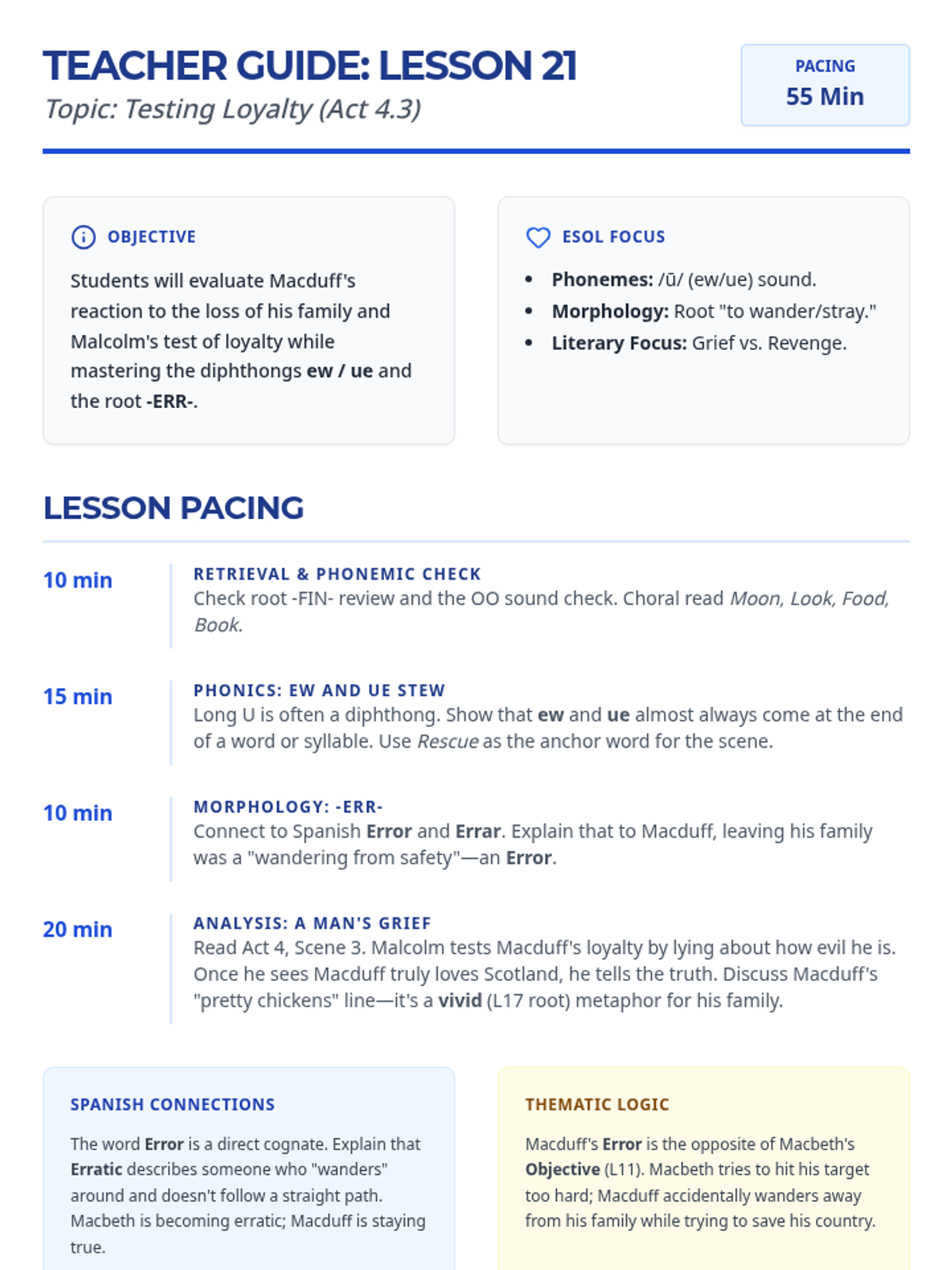
An evaluation of loyalty and Macduff's grief in Act 4, Scene 3, featuring the root 'err' and diphthongs 'ew/ue'.
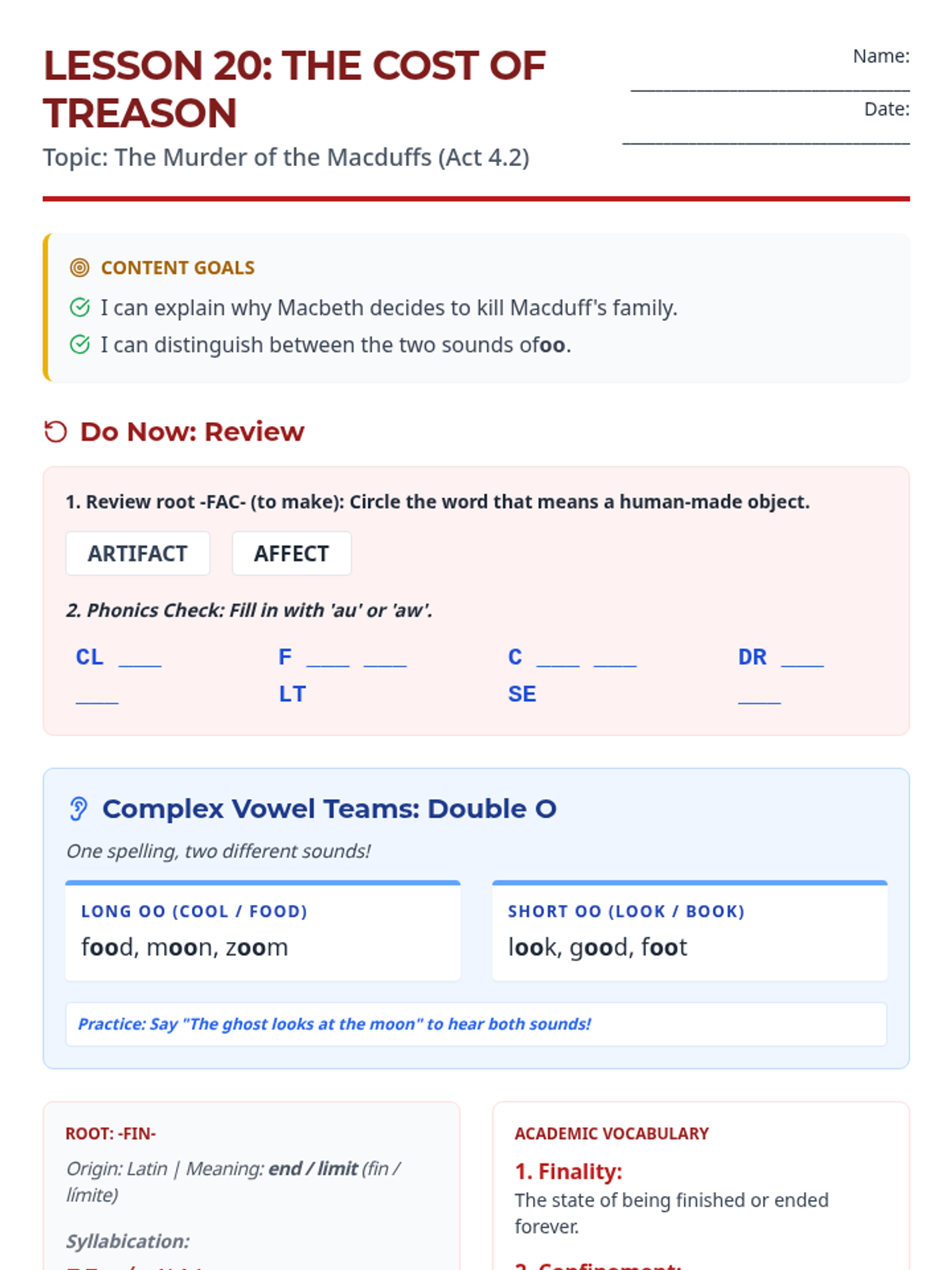
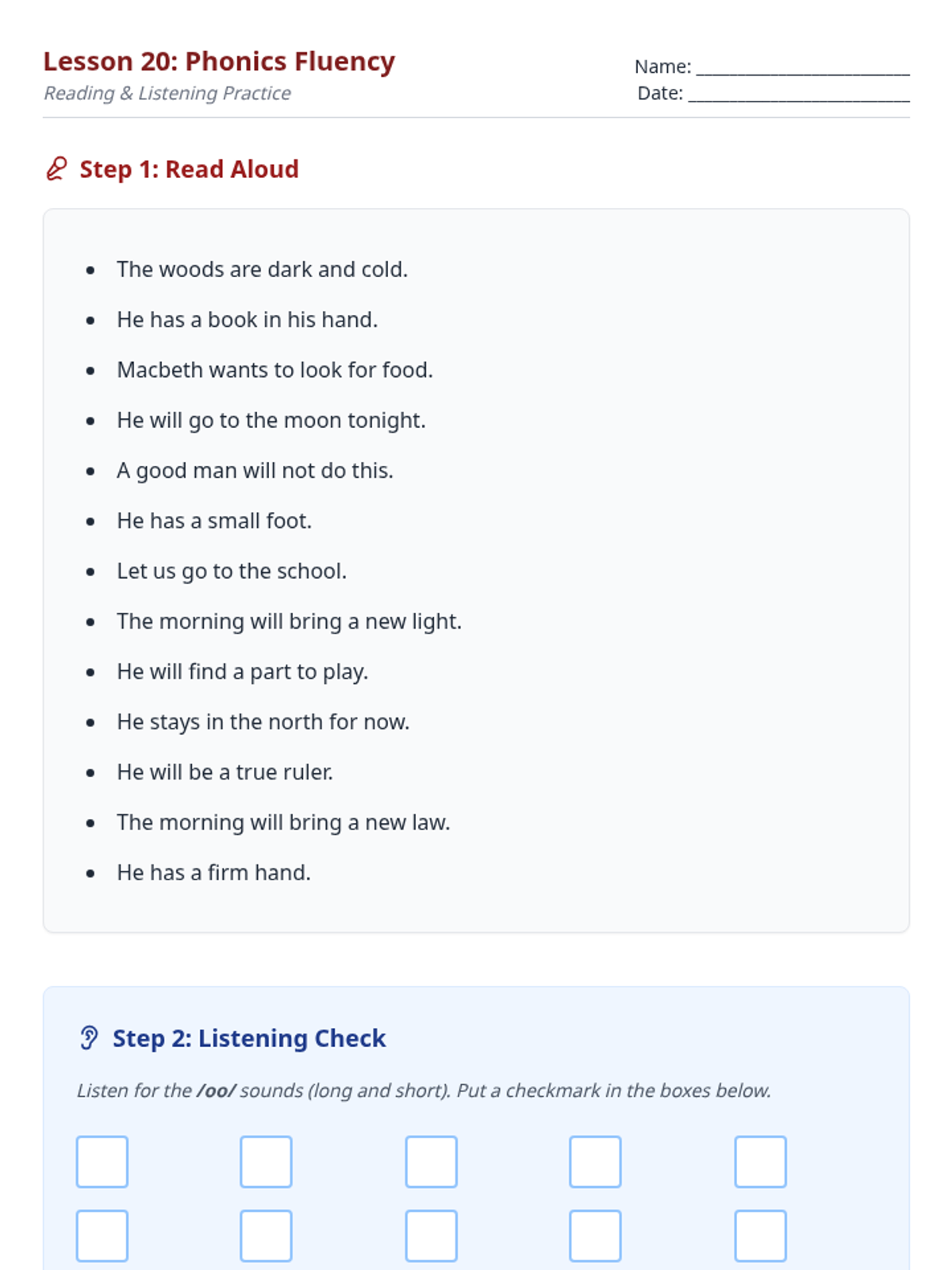
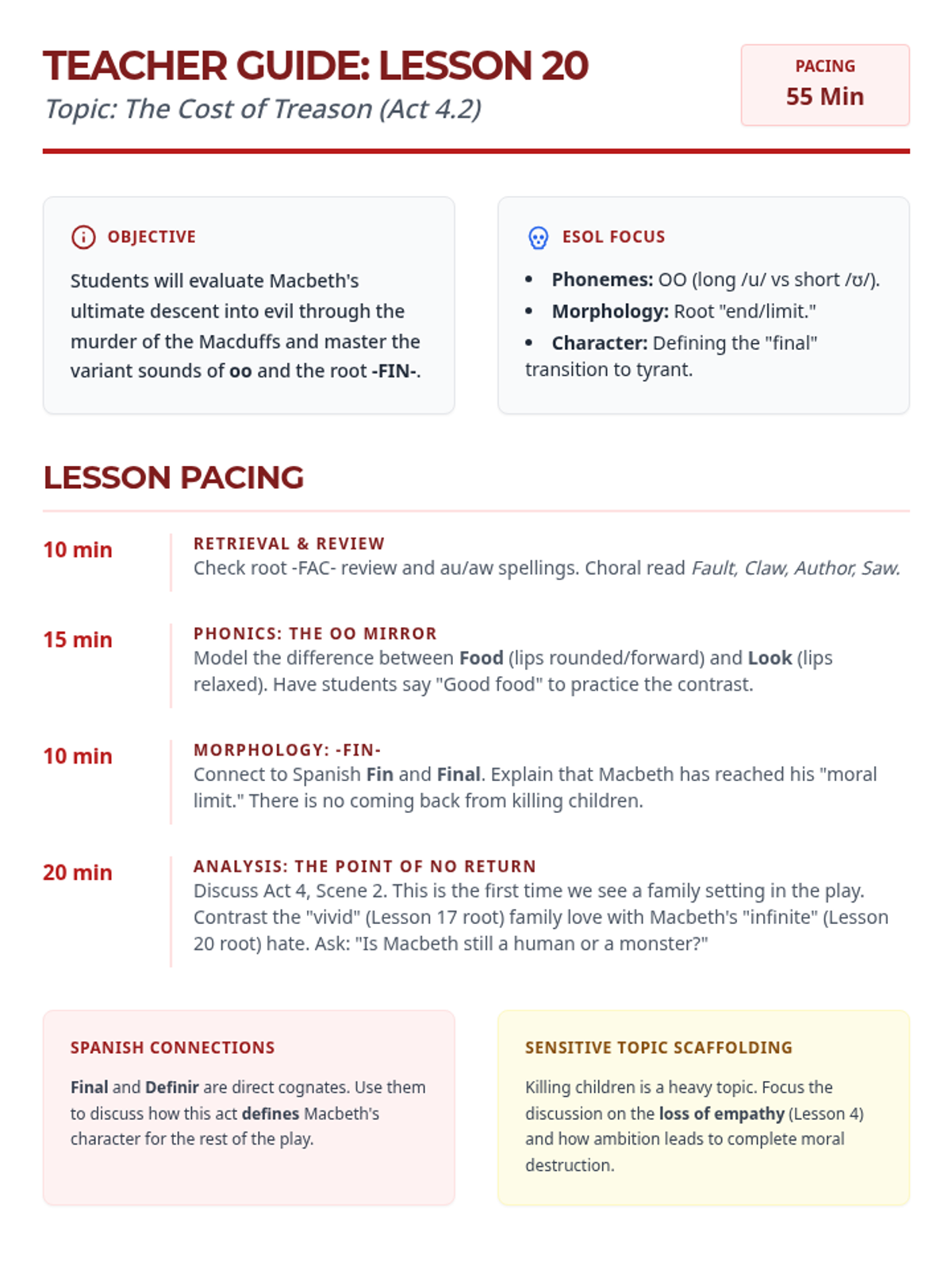
An analysis of the murder of Lady Macduff and her son in Act 4, Scene 2, focusing on the root 'fin' and the variant sounds of 'oo'.
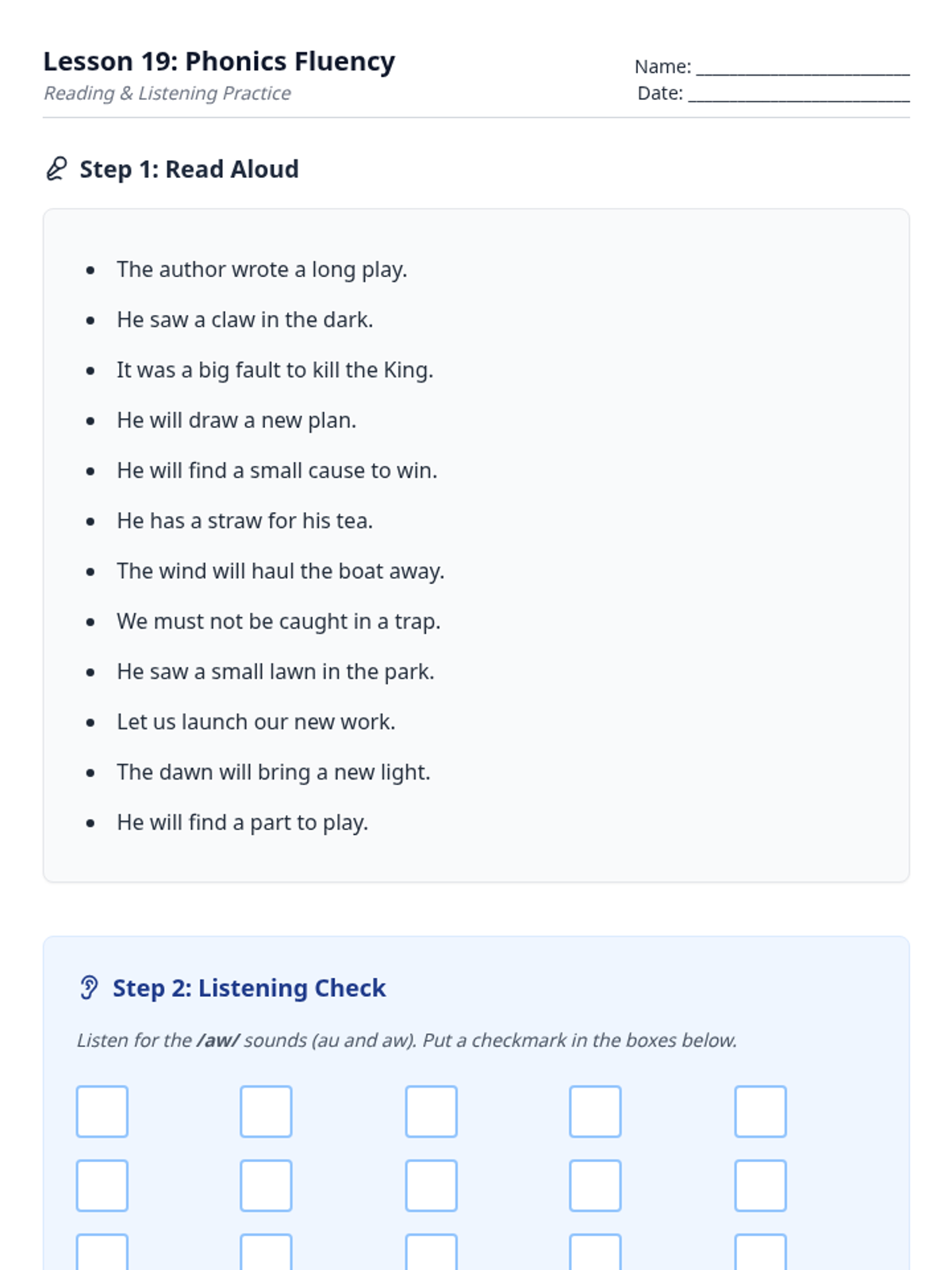
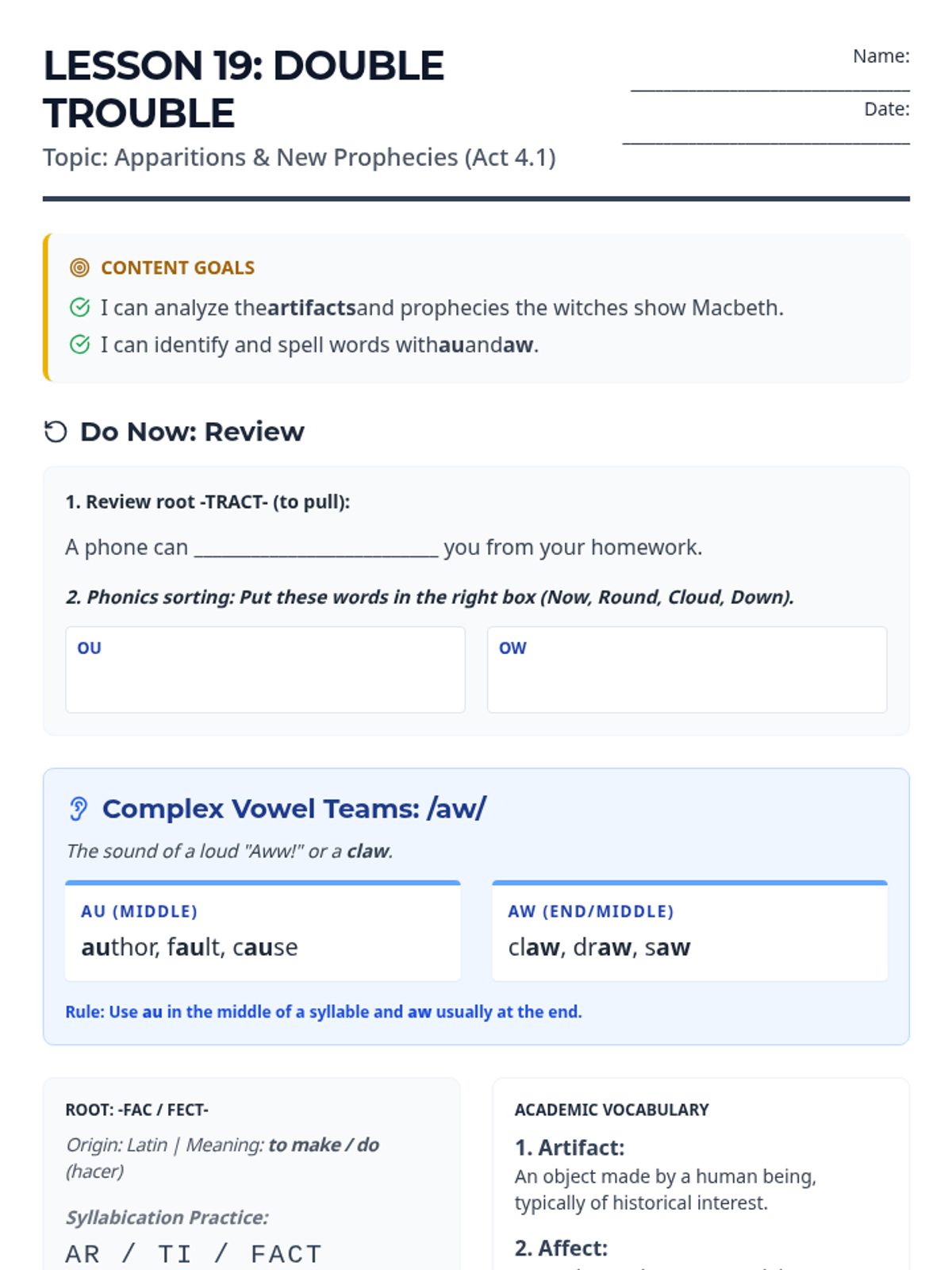
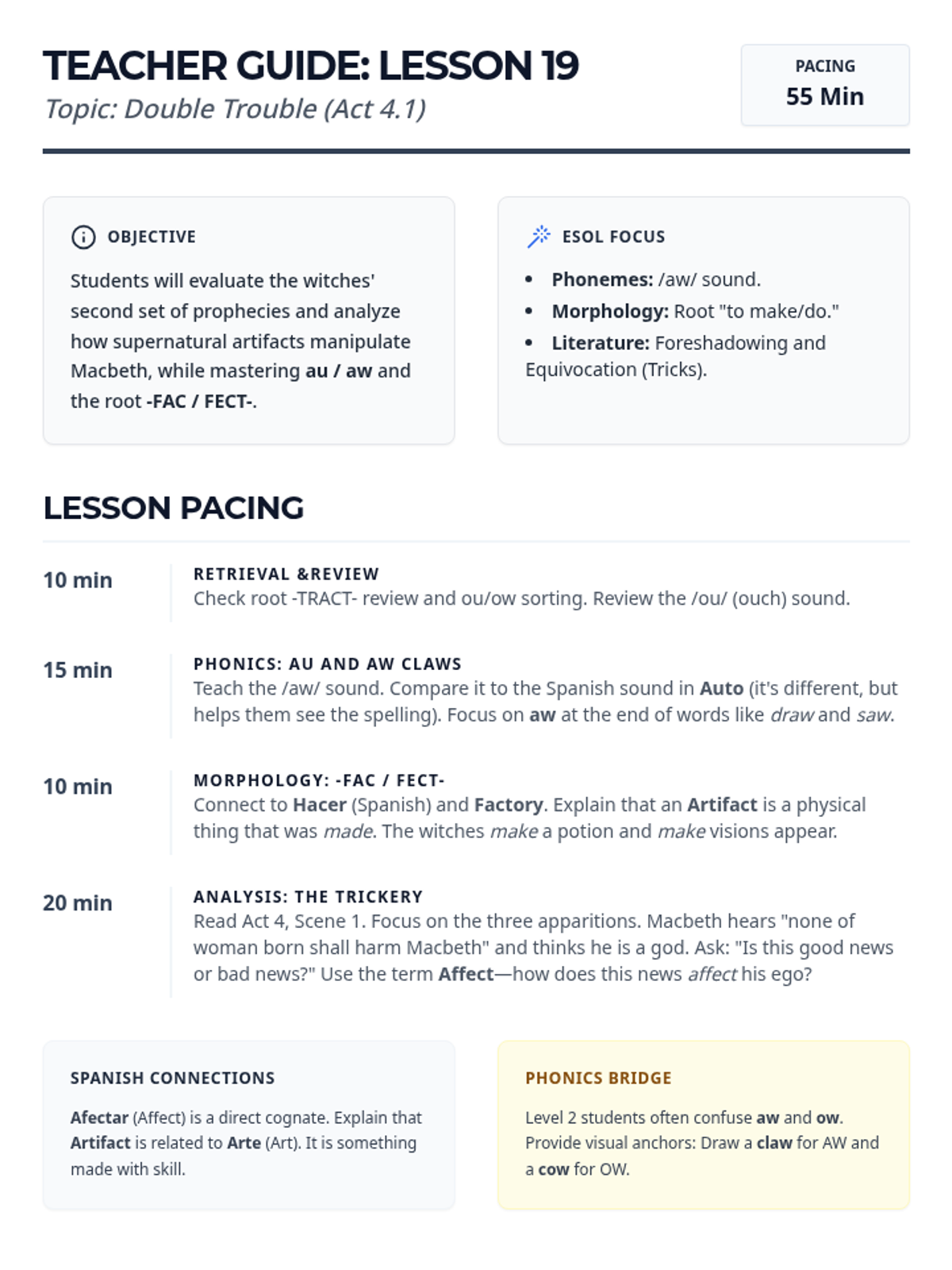
A study of the second set of prophecies in Act 4, Scene 1, exploring the root 'fac/fect' and diphthongs 'au/aw'.
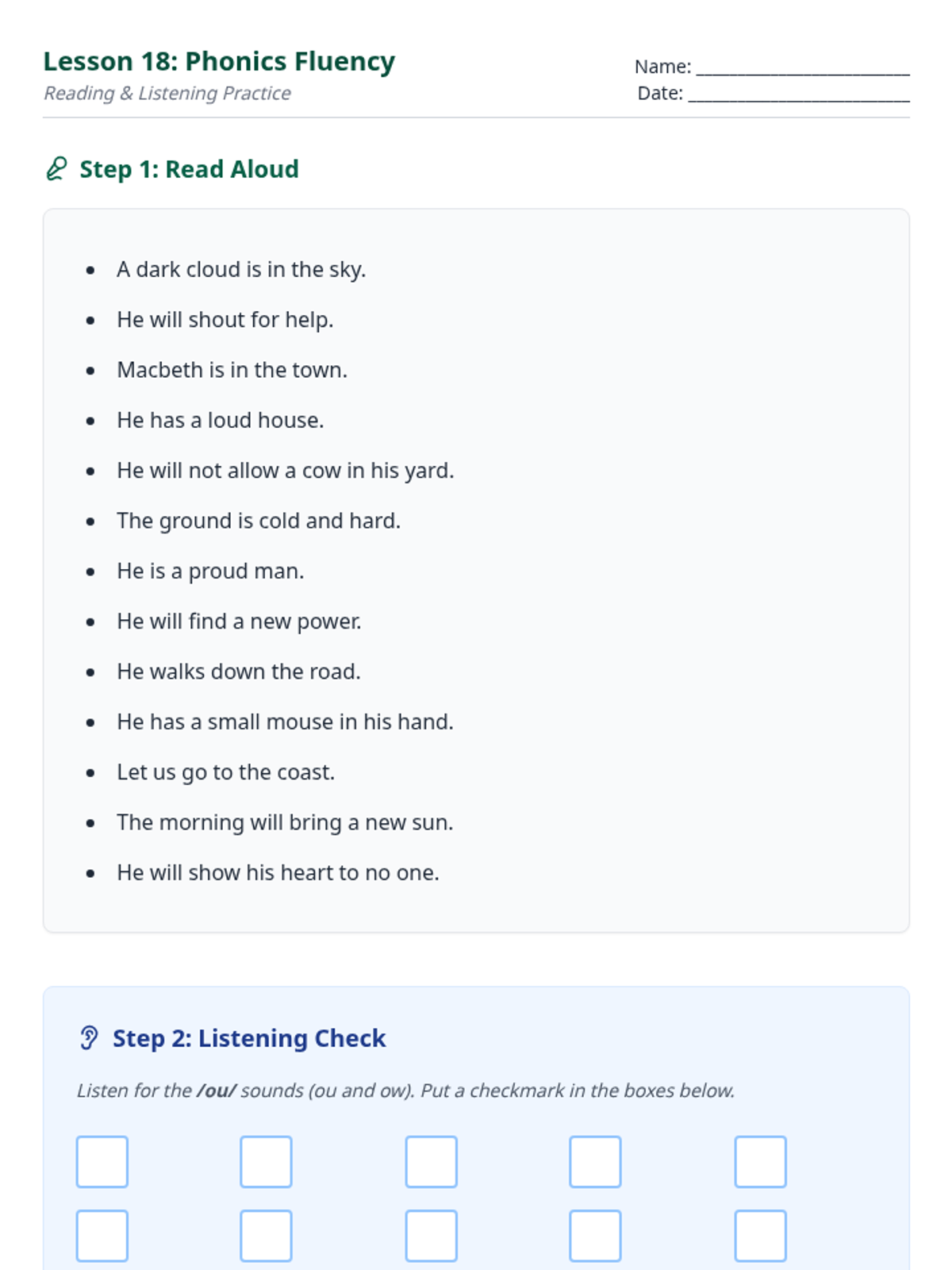
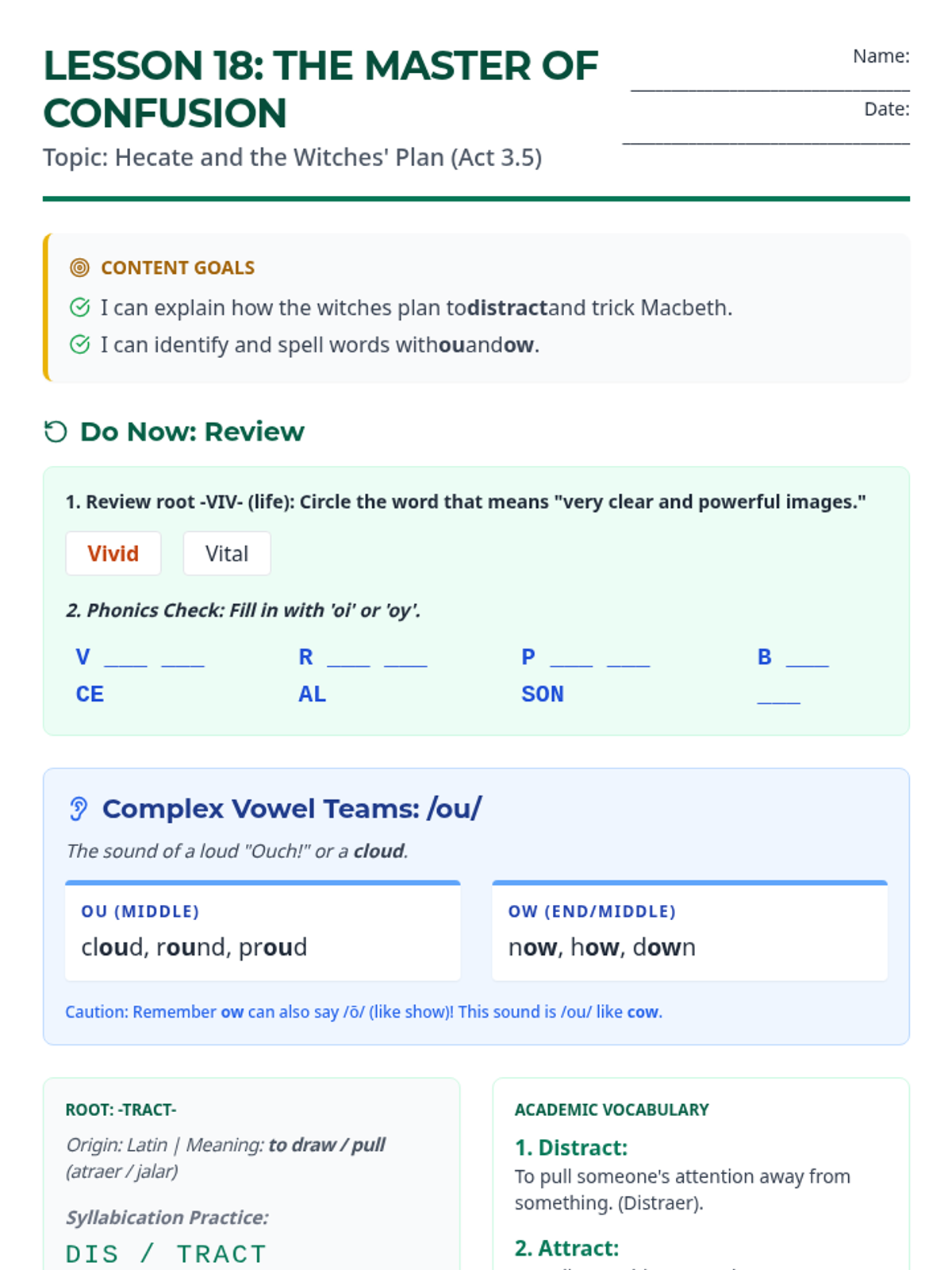
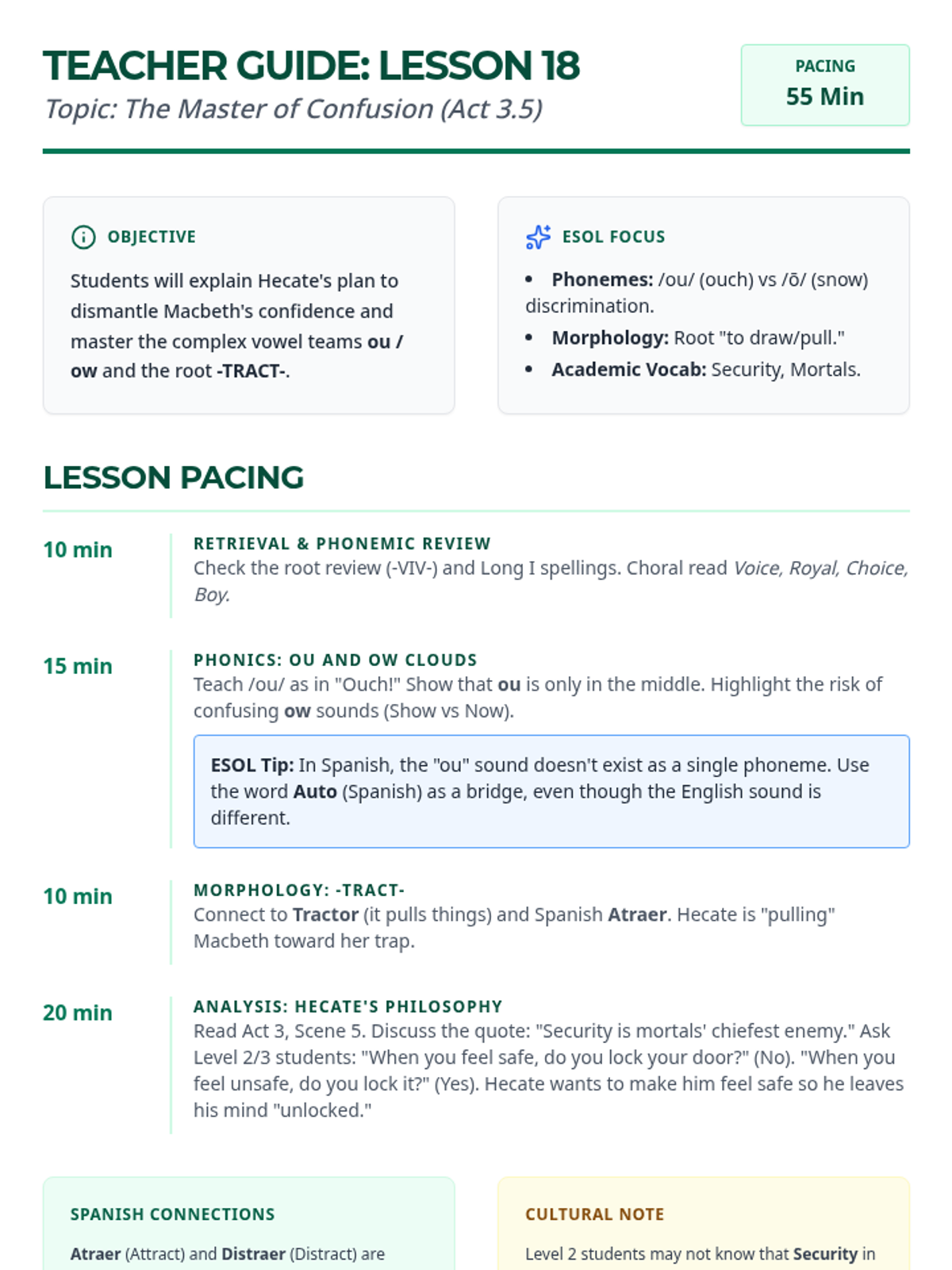
An exploration of the Witches' further influence and Hecate's introduction in Act 3, Scenes 5-6, featuring the root 'tract' and diphthongs 'ou/ow'.
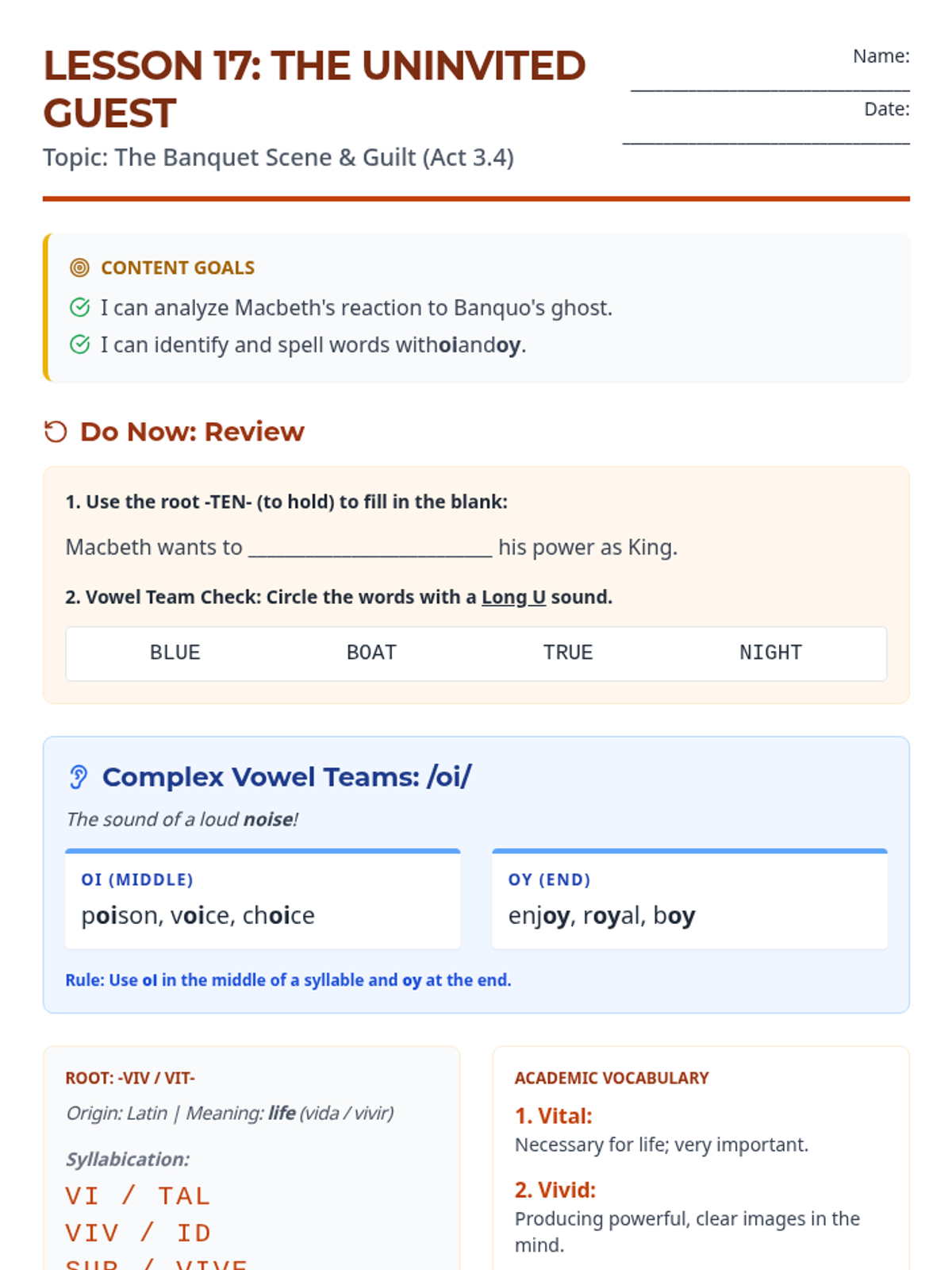
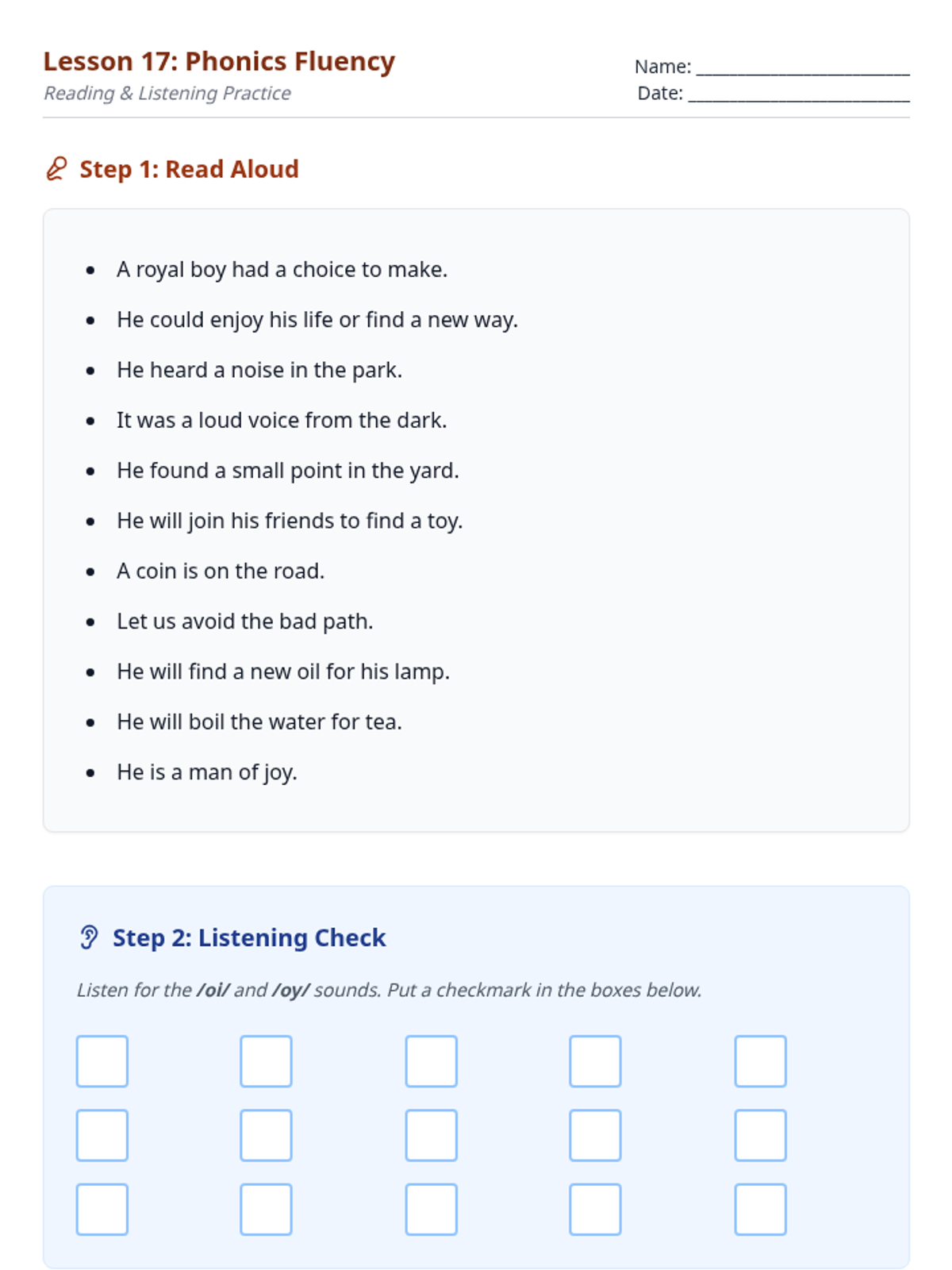
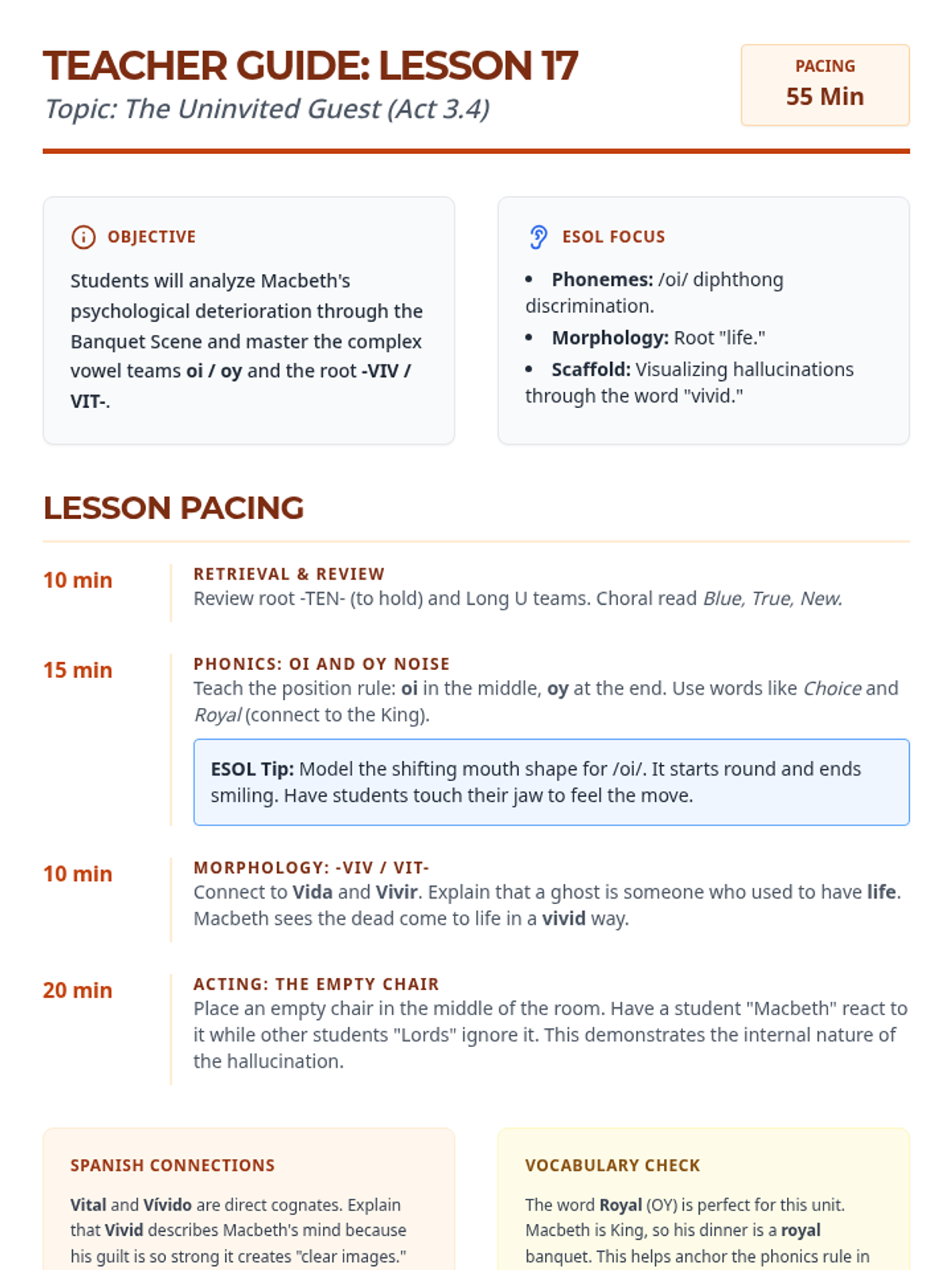
An analysis of the Banquet Scene in Act 3, Scene 4, where Macbeth sees Banquo's ghost, focusing on the root 'viv' and diphthongs 'oi/oy'.
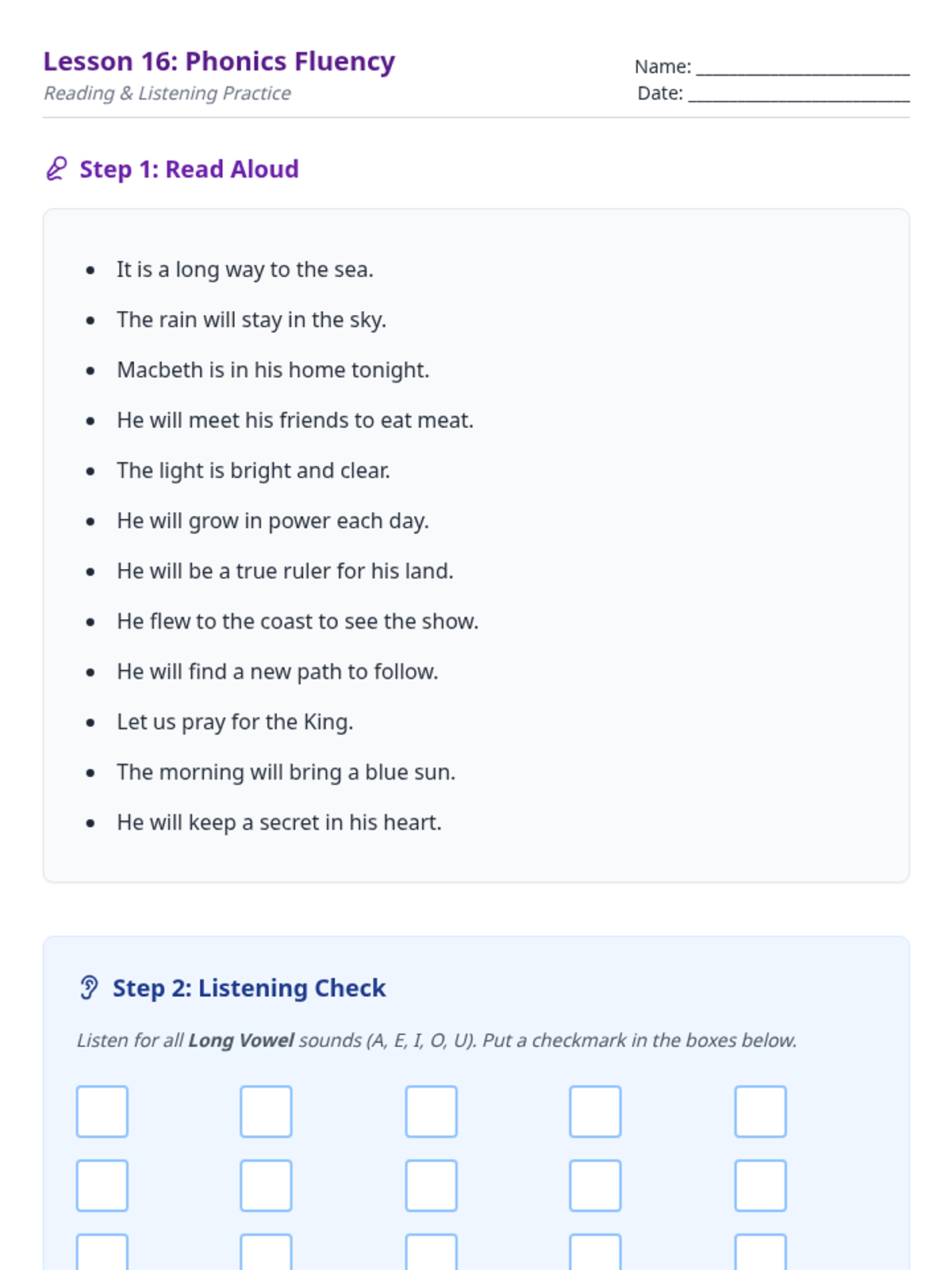
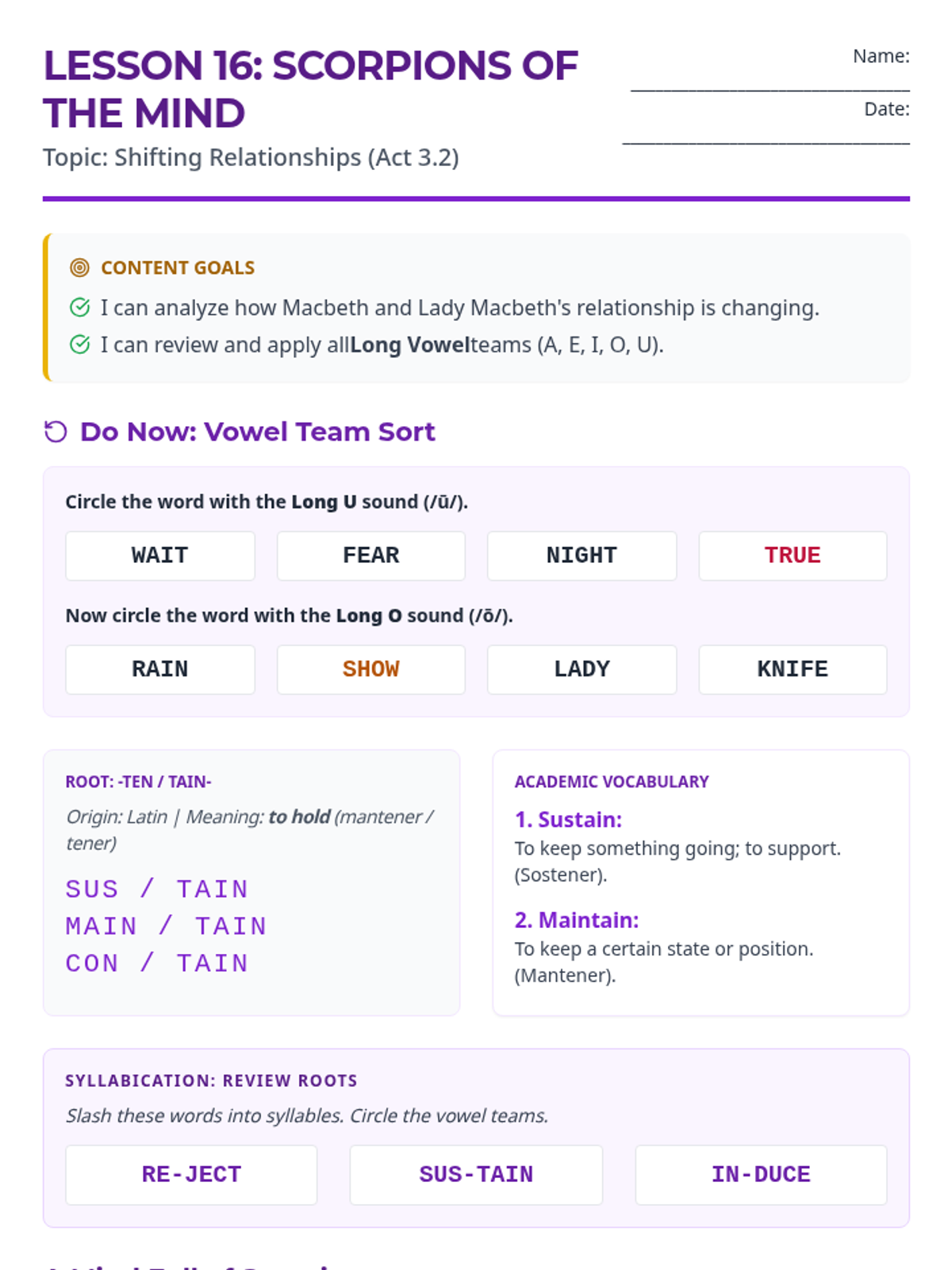
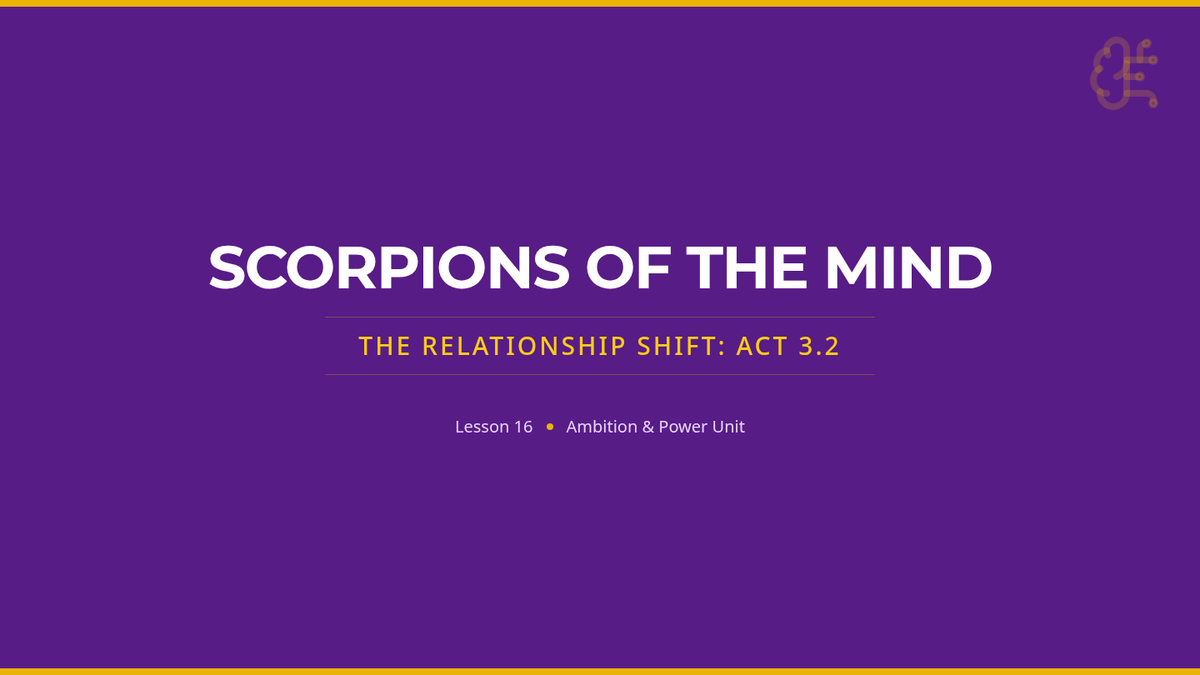
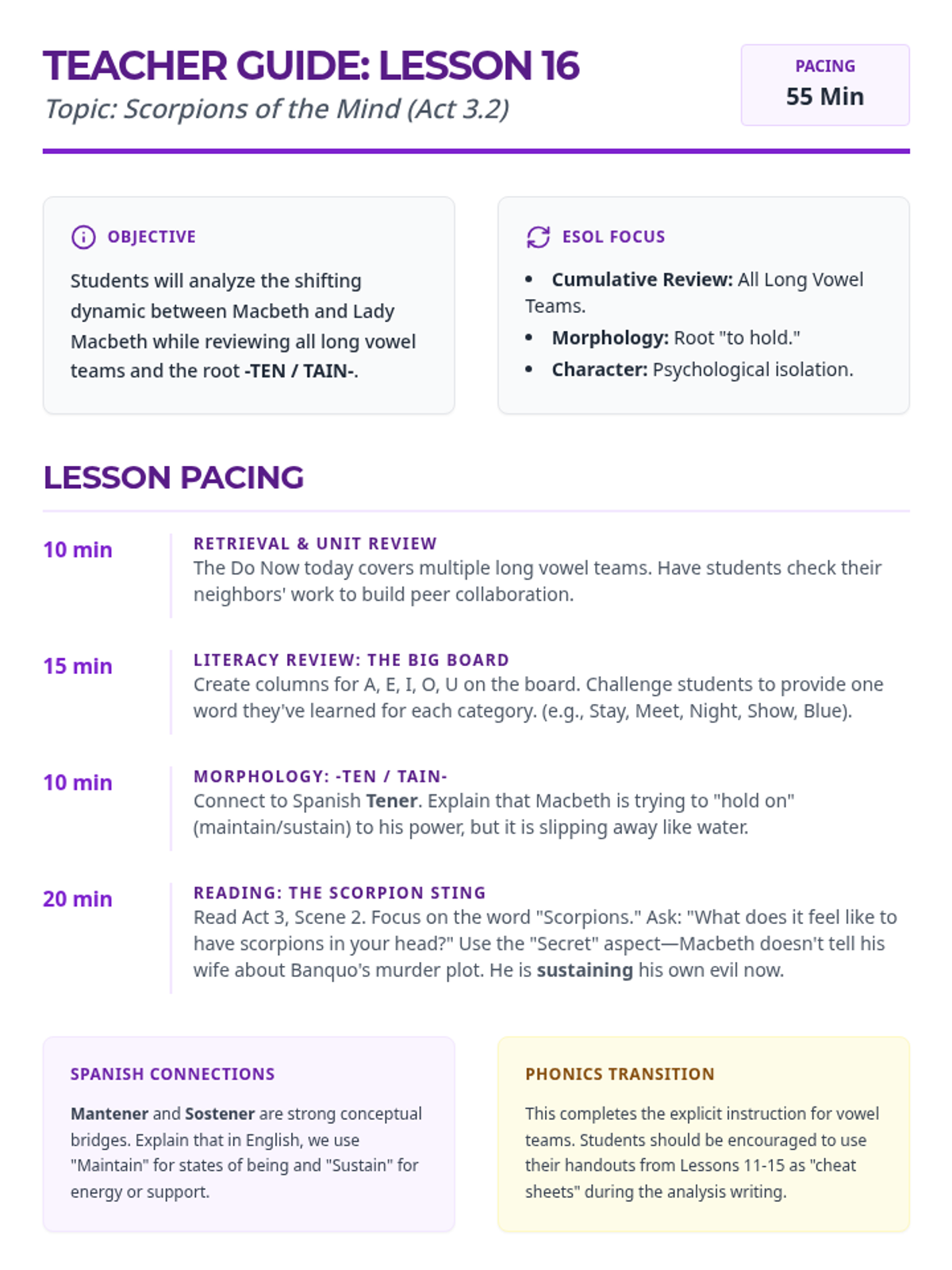
An exploration of the shifting relationship between Macbeth and Lady Macbeth in Act 3, Scene 2, with a cumulative review of vowel teams and the root 'ten/tain'.
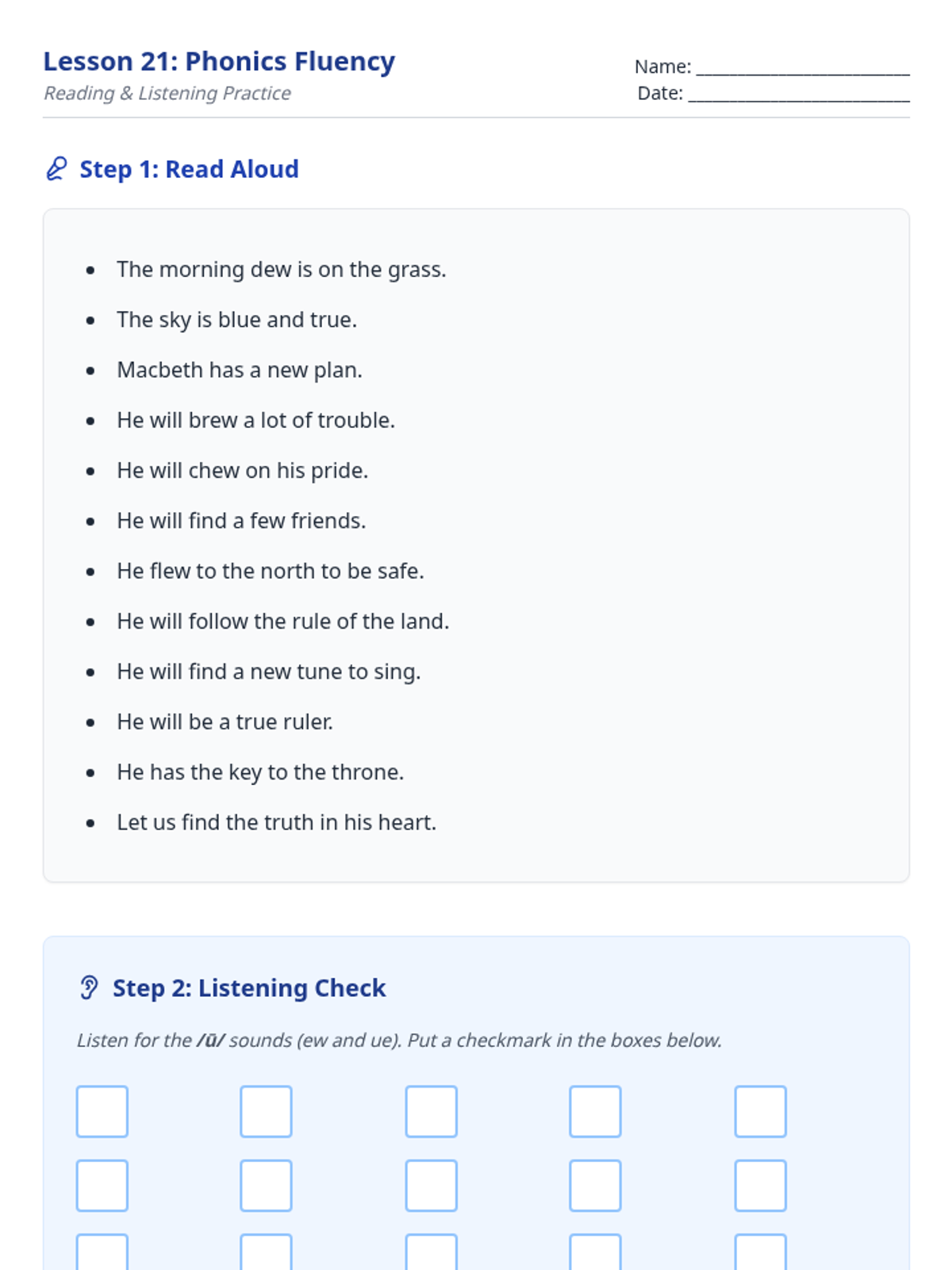
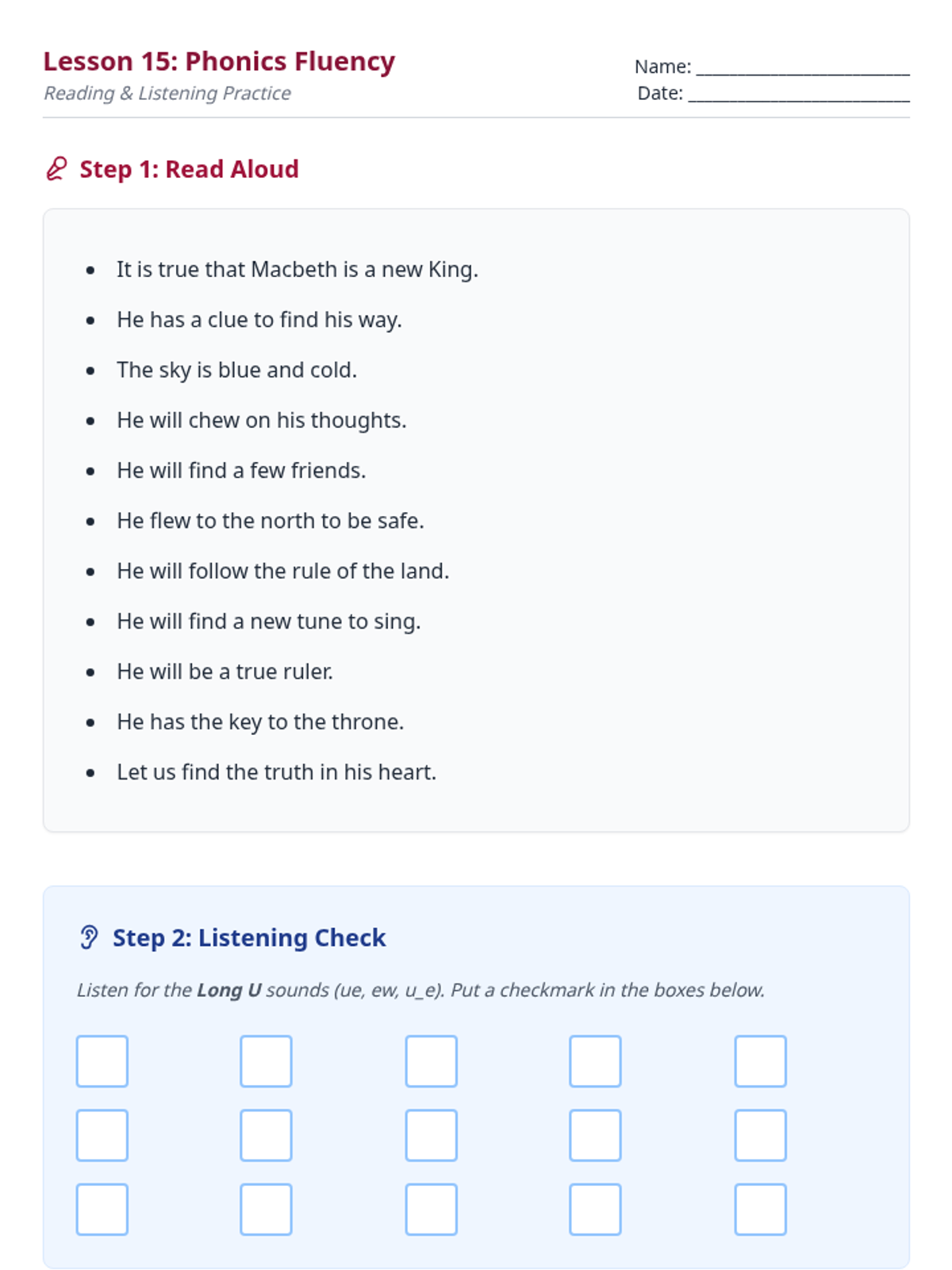
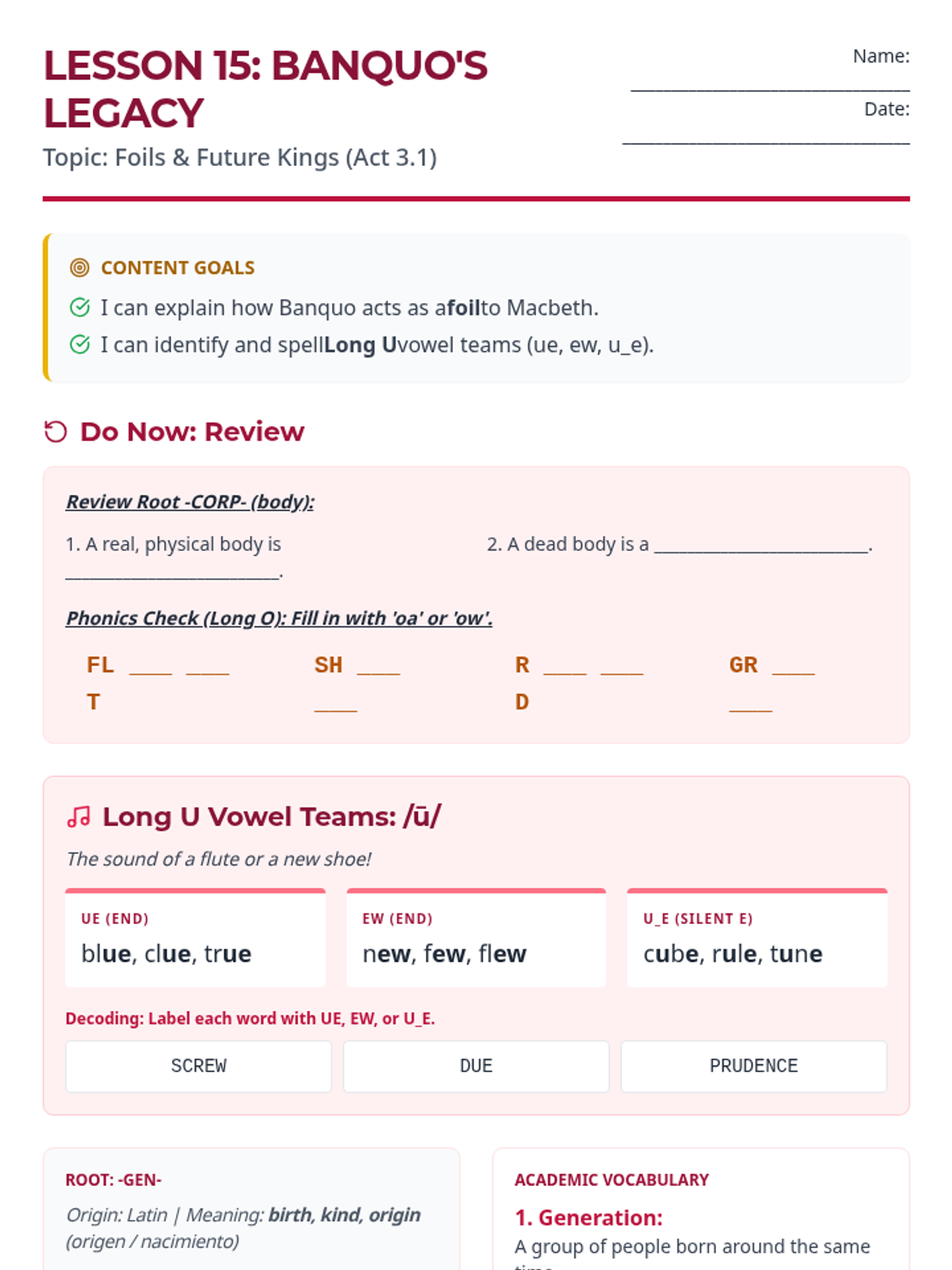
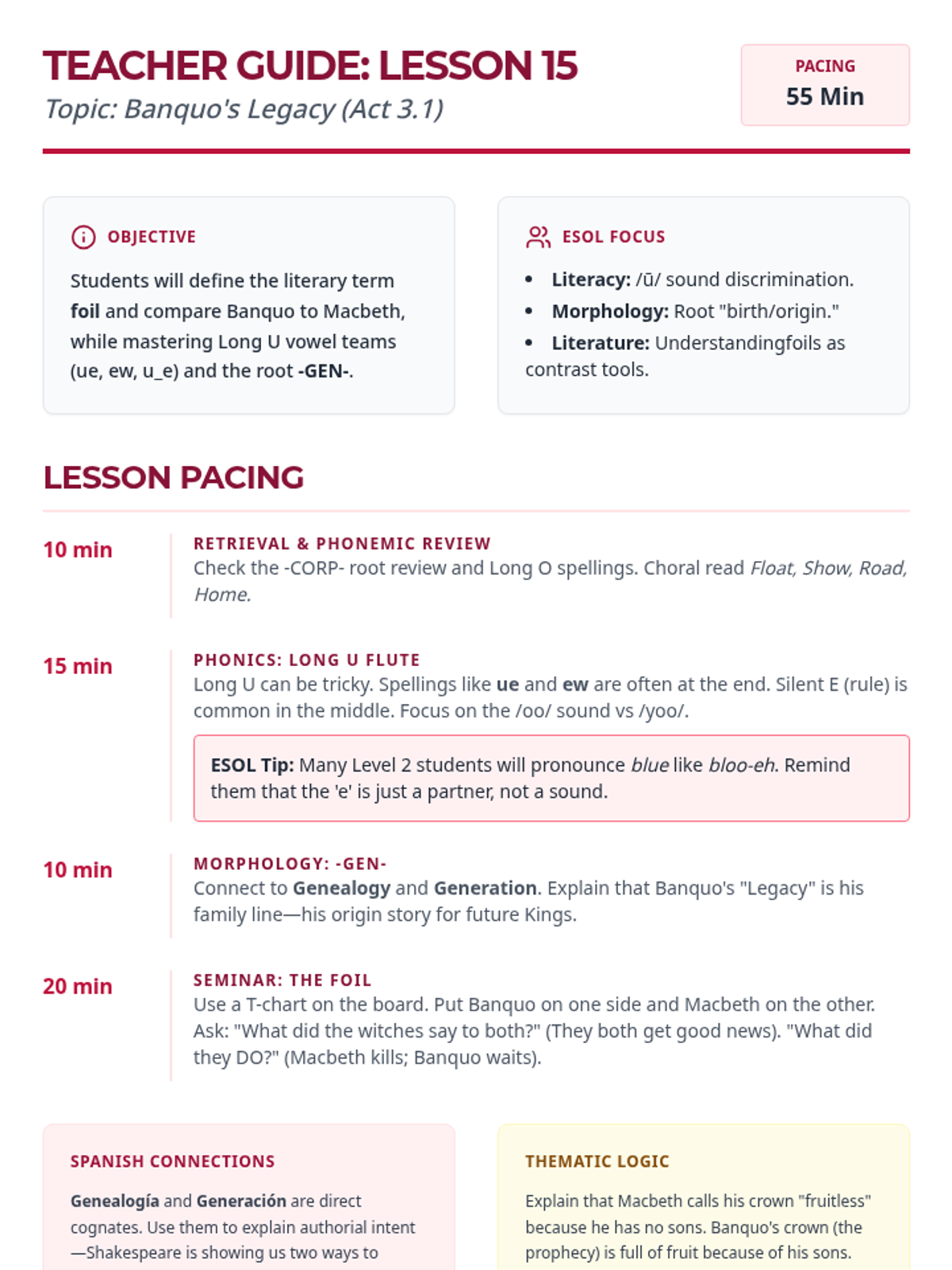
A guided seminar on Banquo as a foil to Macbeth in Act 3, Scene 1, featuring the root 'gen' and Long U vowel teams (ue, ew, u_e).
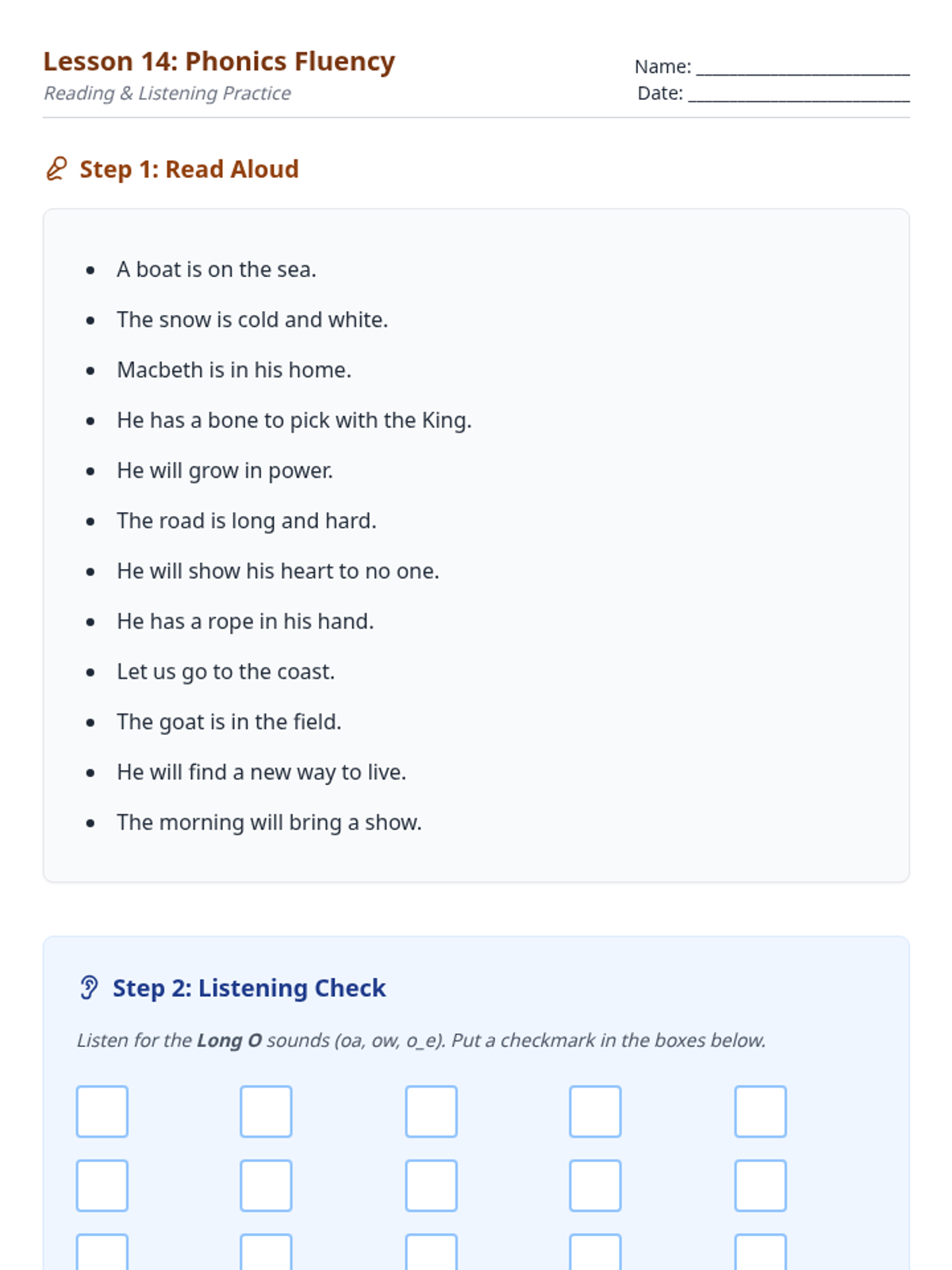
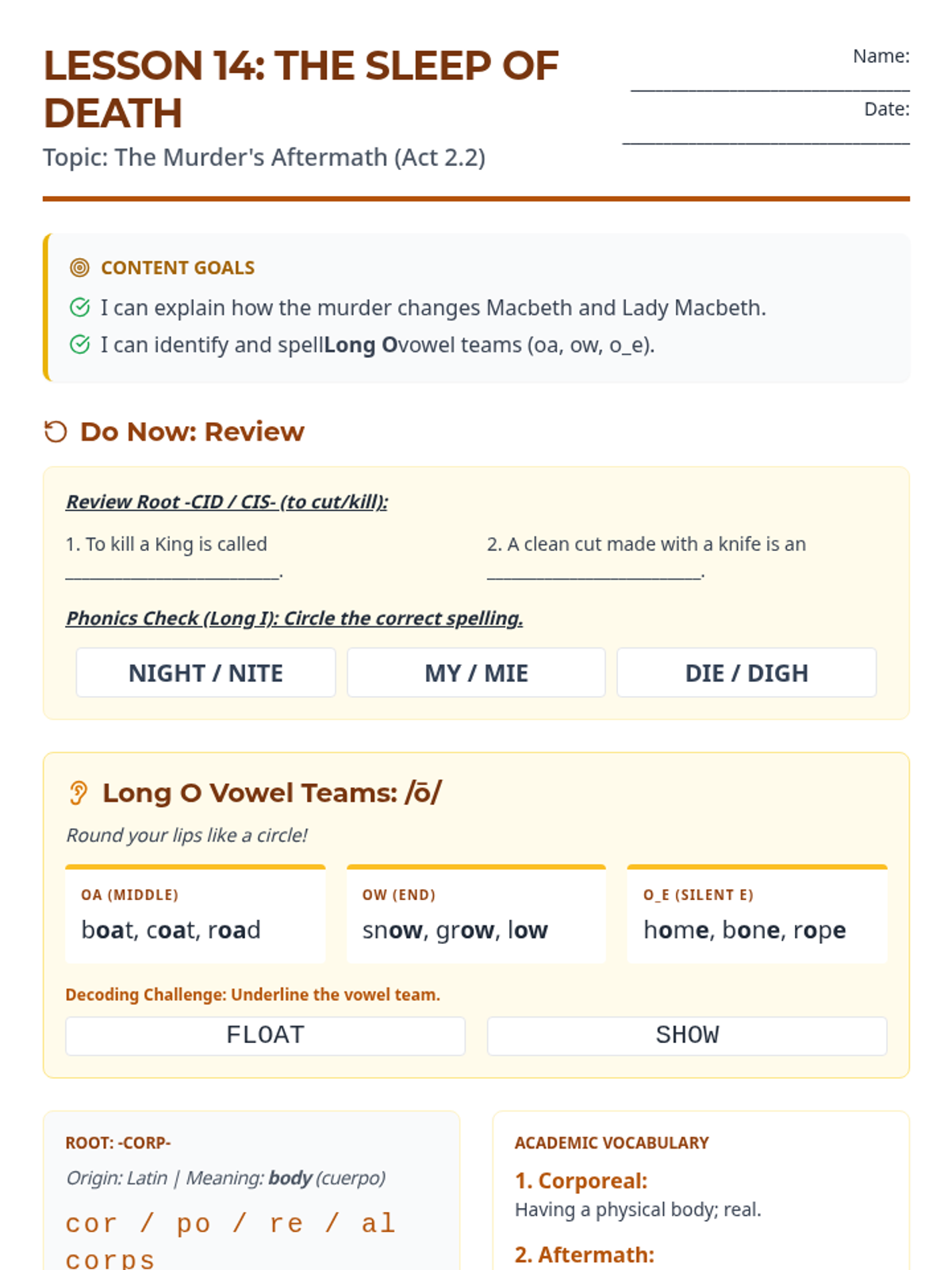
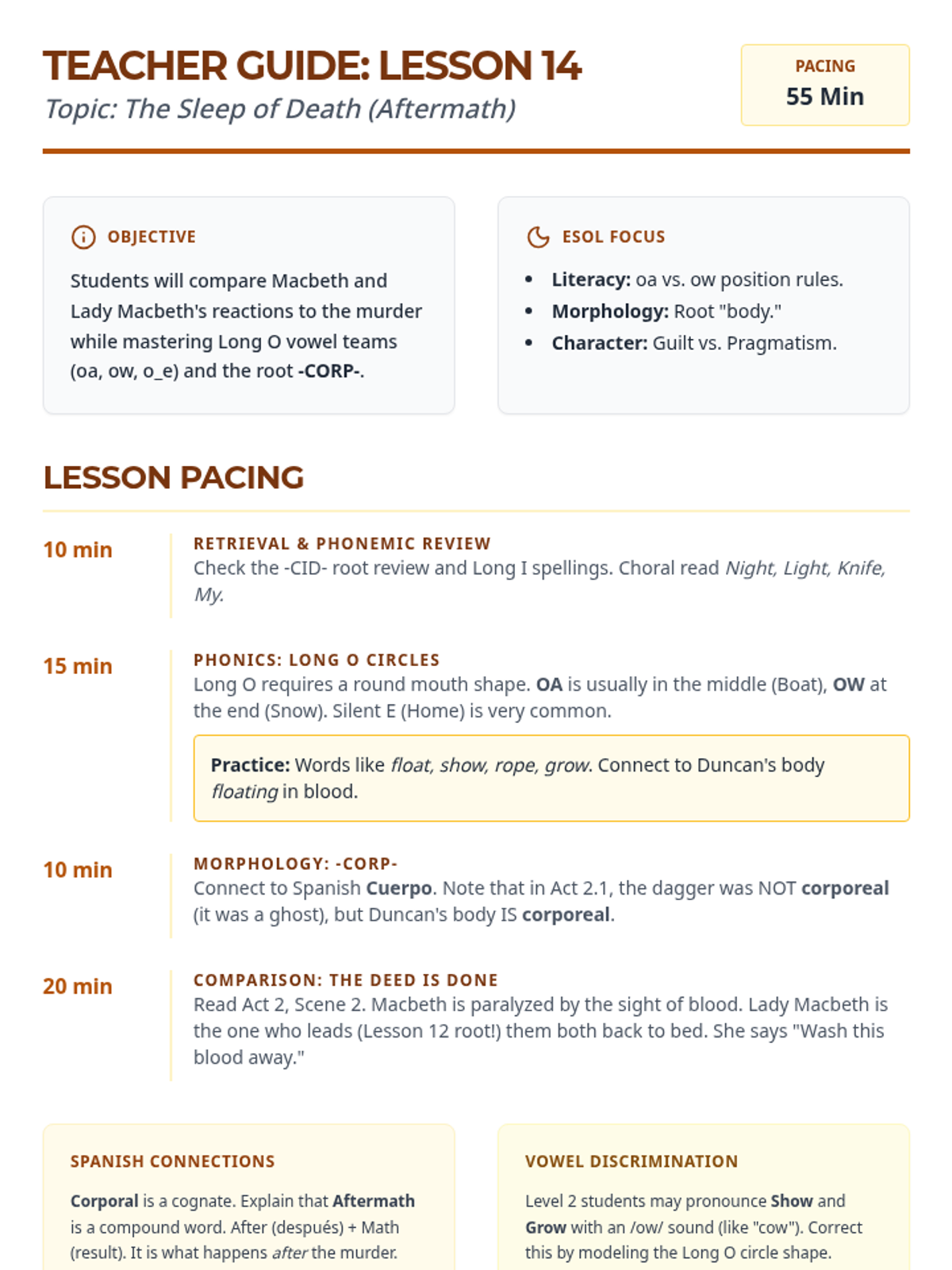
An analysis of the aftermath of Duncan's murder in Act 2, Scene 2, focusing on the root 'corp' and Long O vowel teams (oa, ow, o_e).
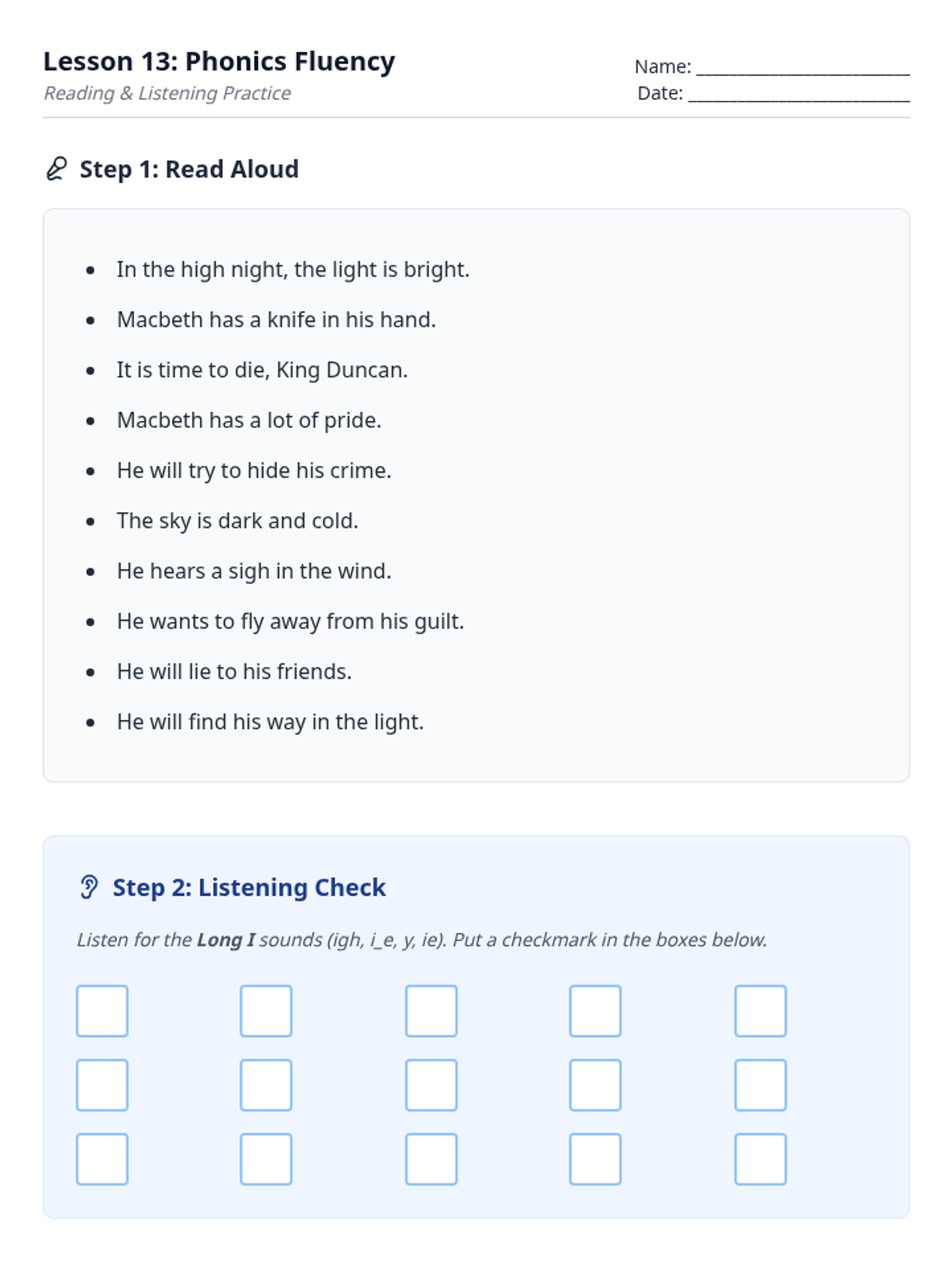
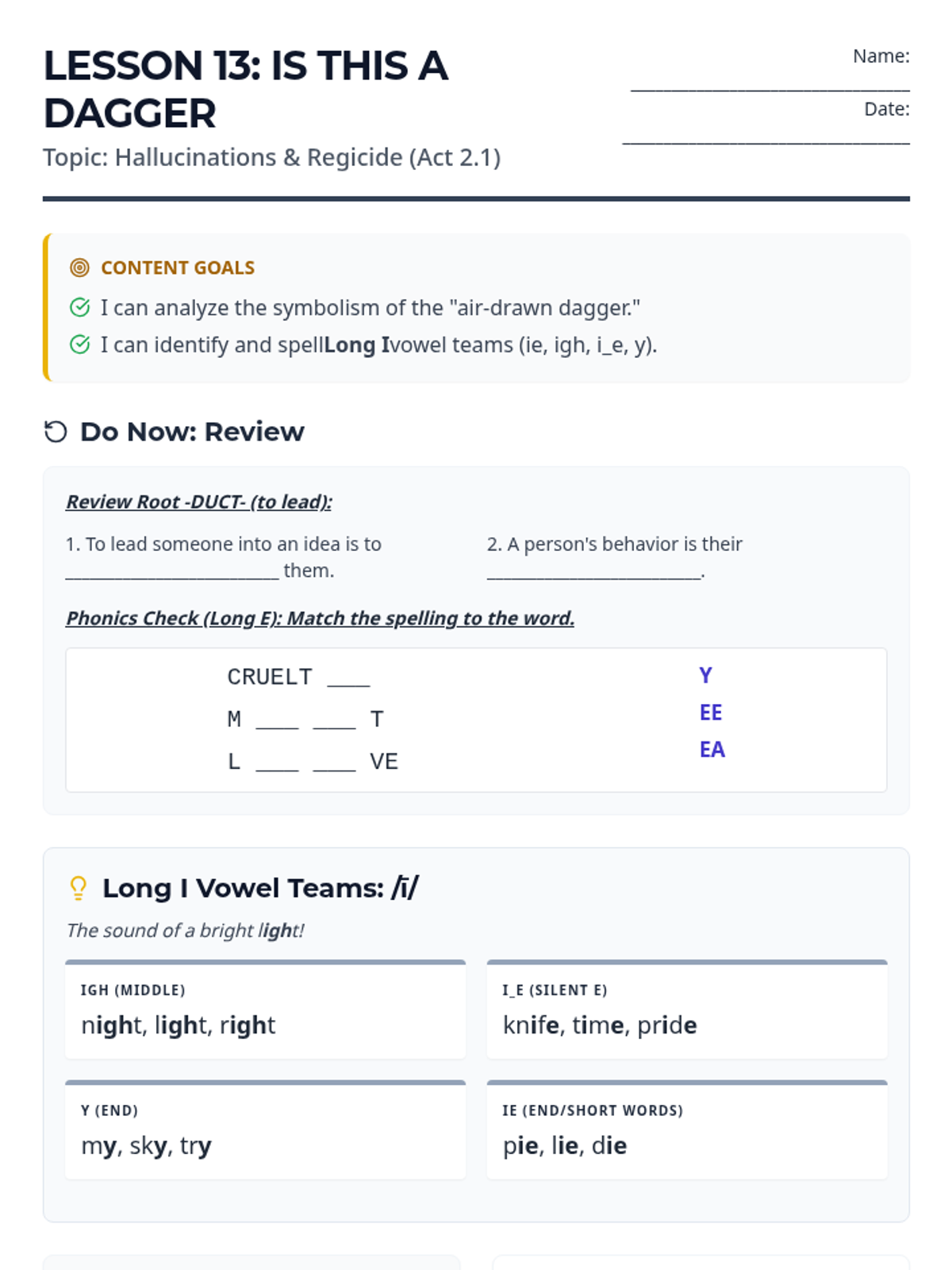
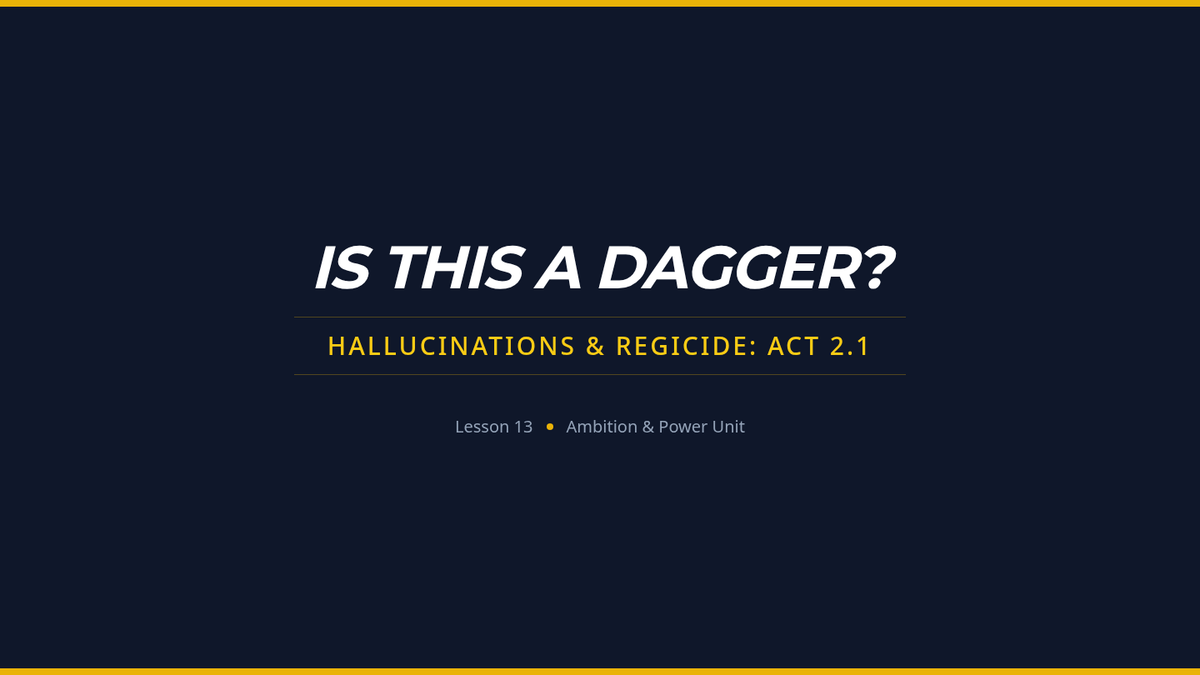
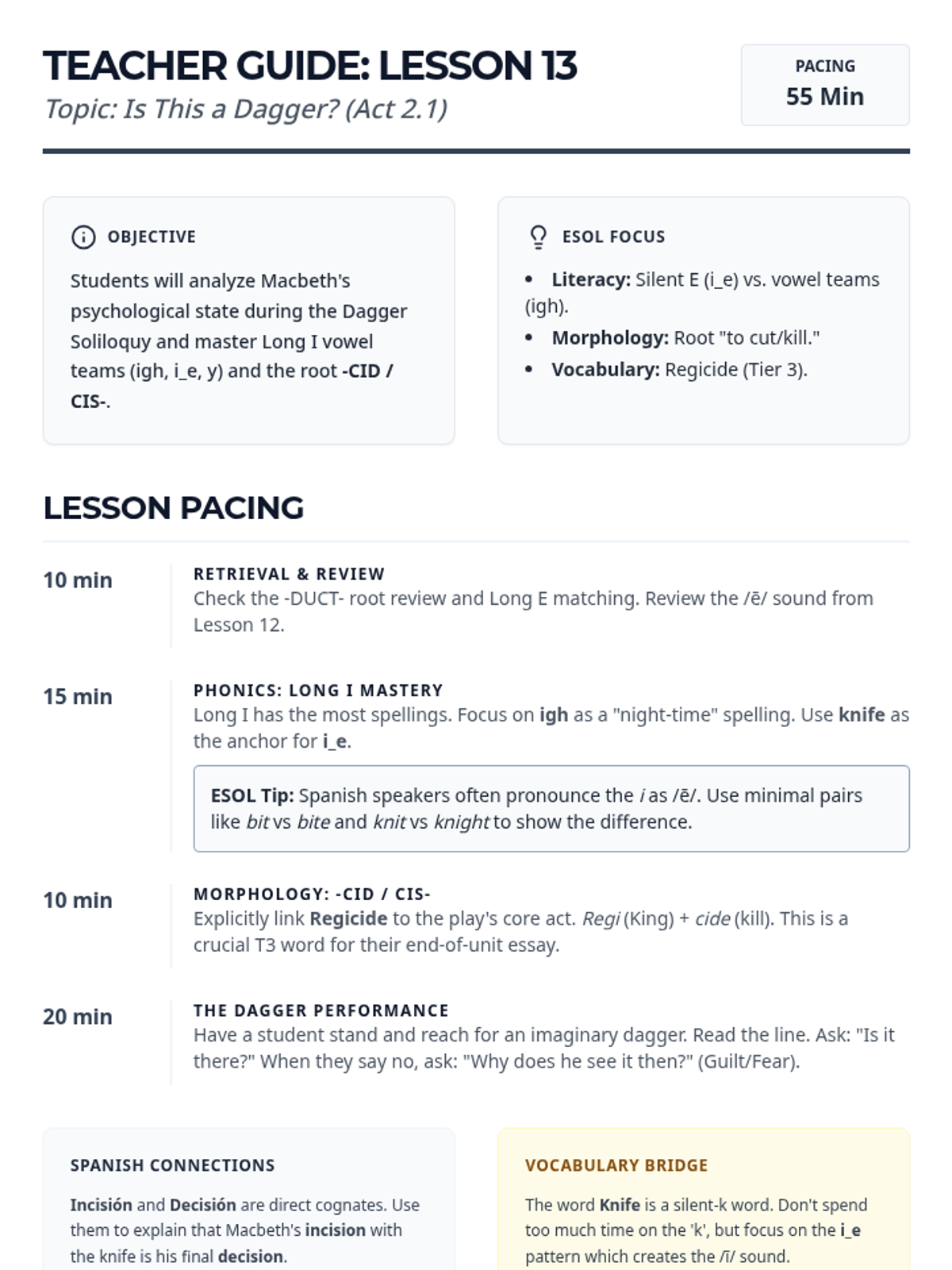
A study of the Dagger Soliloquy in Act 2, Scene 1, exploring the root 'cid/cis' and Long I vowel teams (igh, i_e, y).
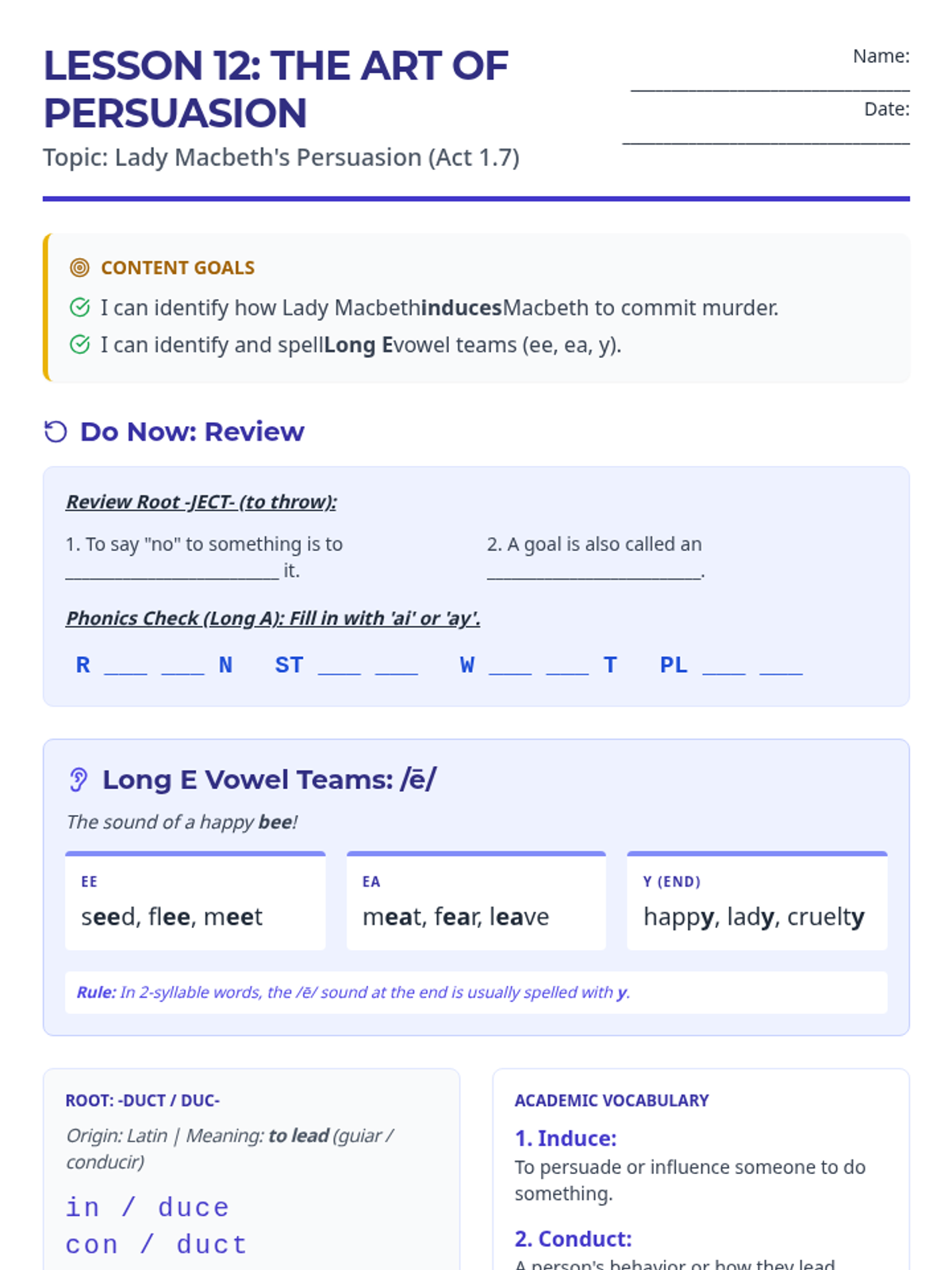
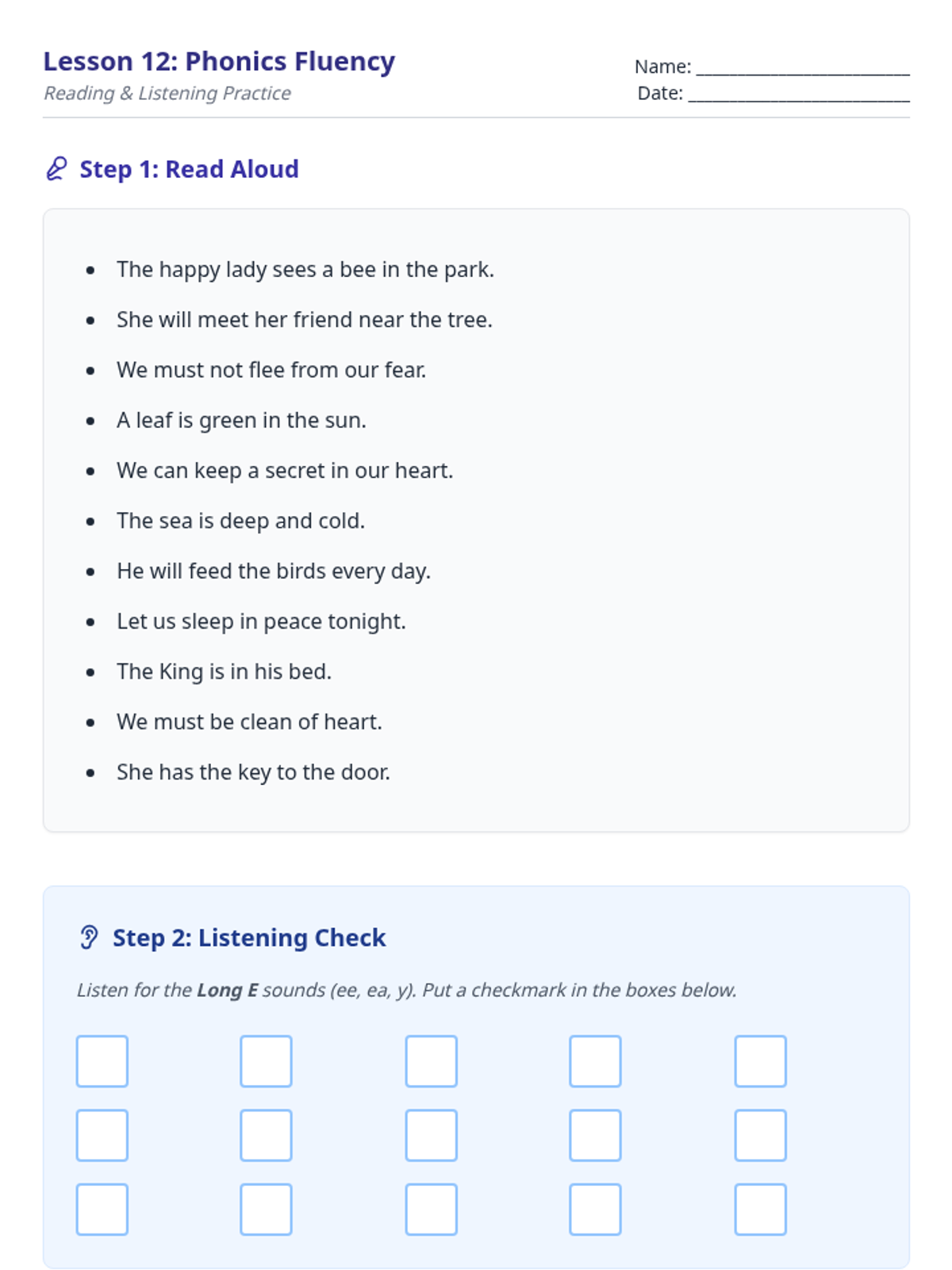
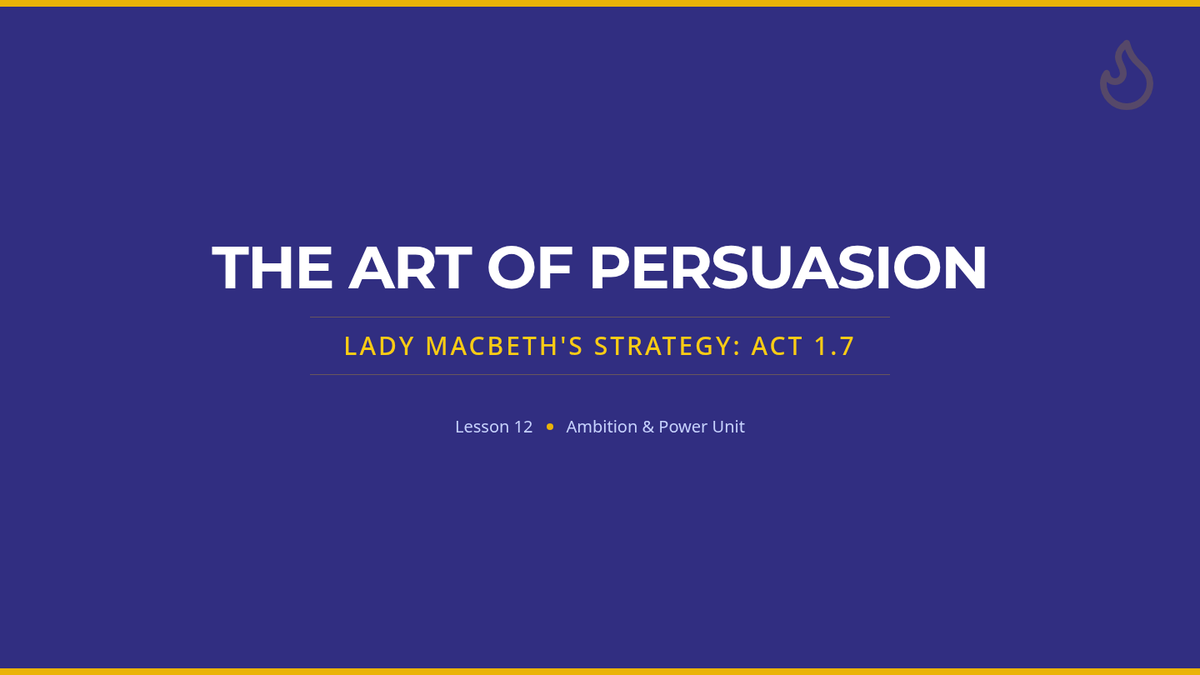
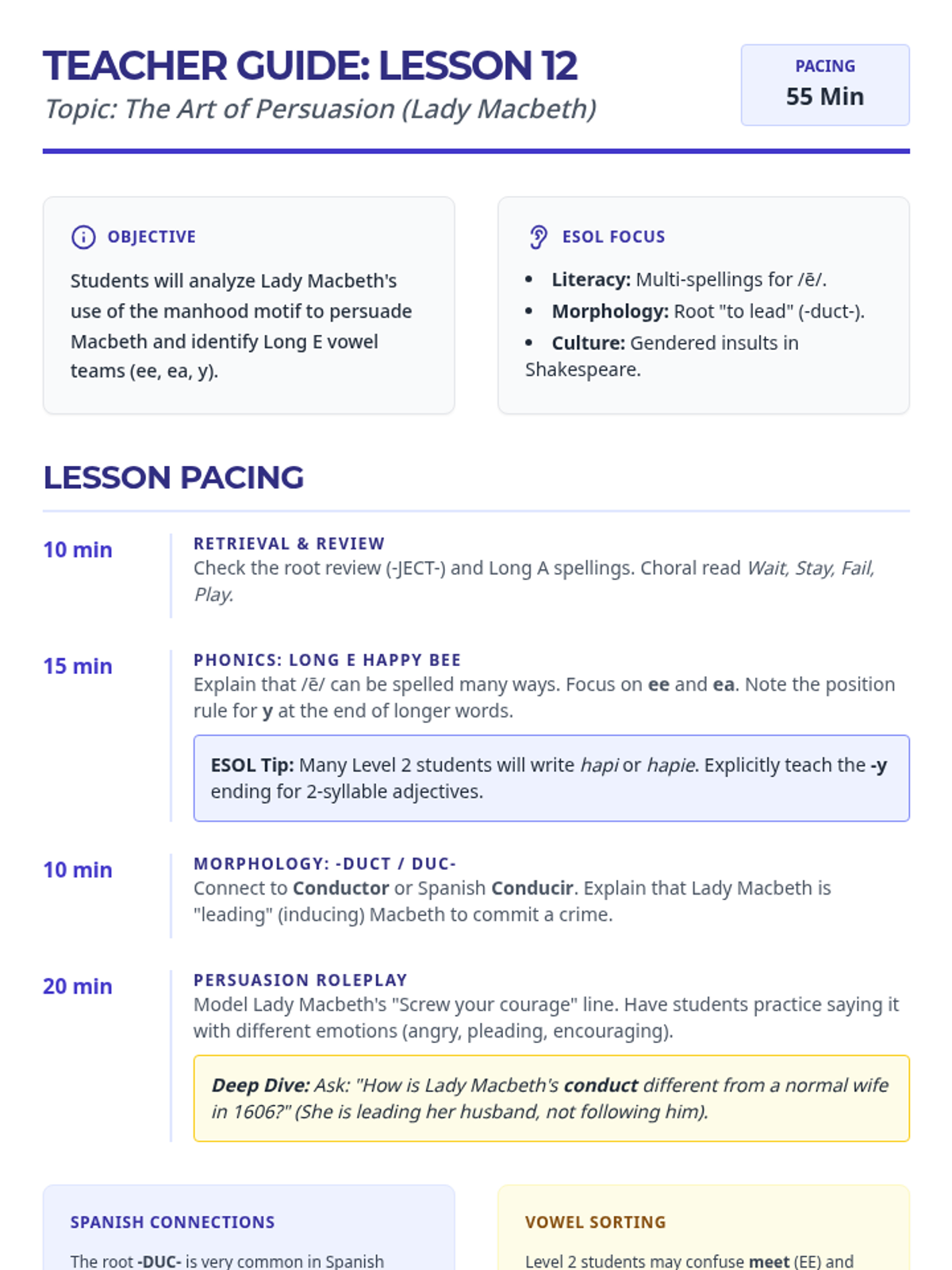
An analysis of Lady Macbeth's use of the manhood motif to persuade Macbeth in Act 1, Scene 7, featuring the root 'duct' and Long E vowel teams (ee, ea, y).
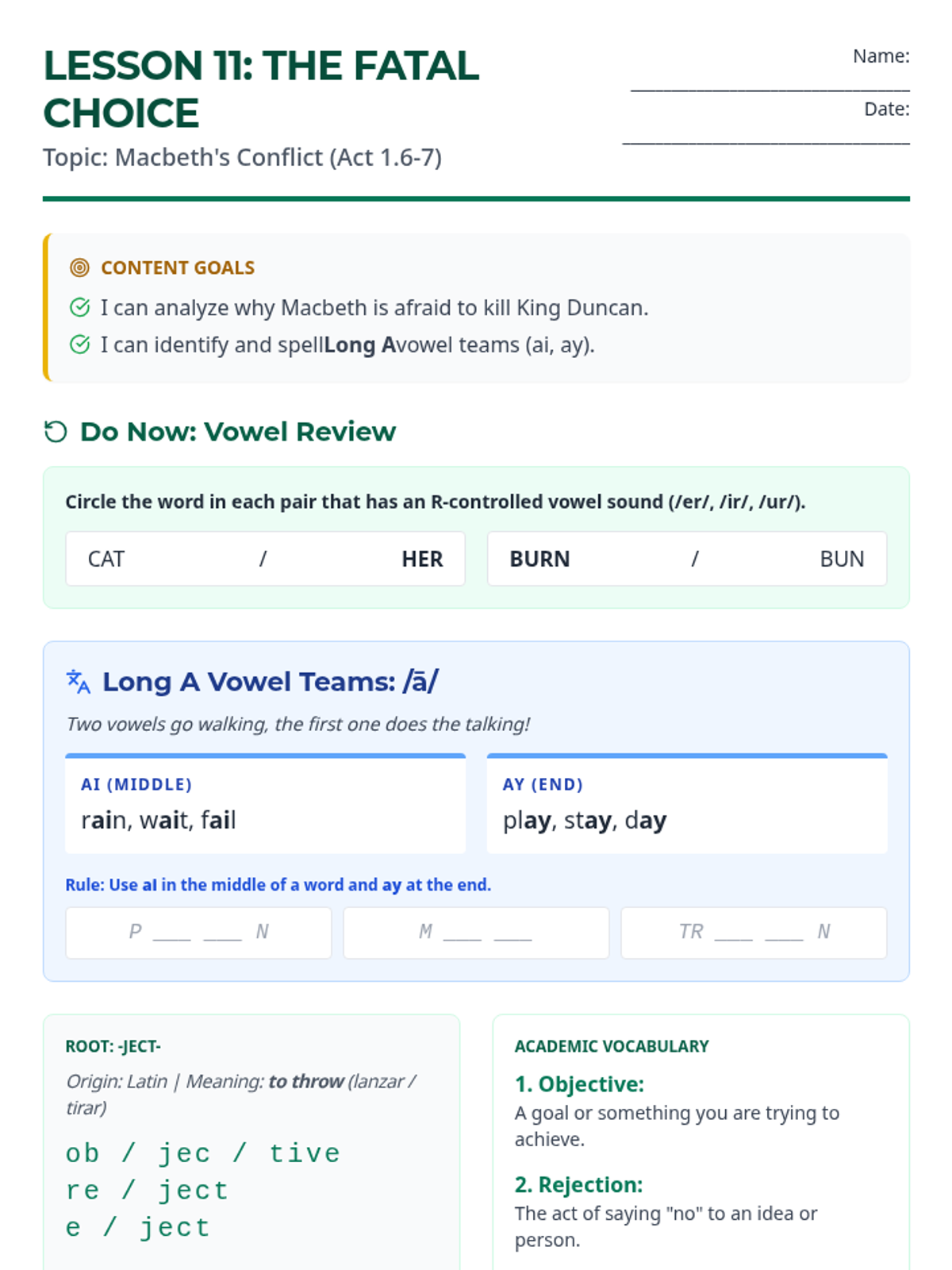
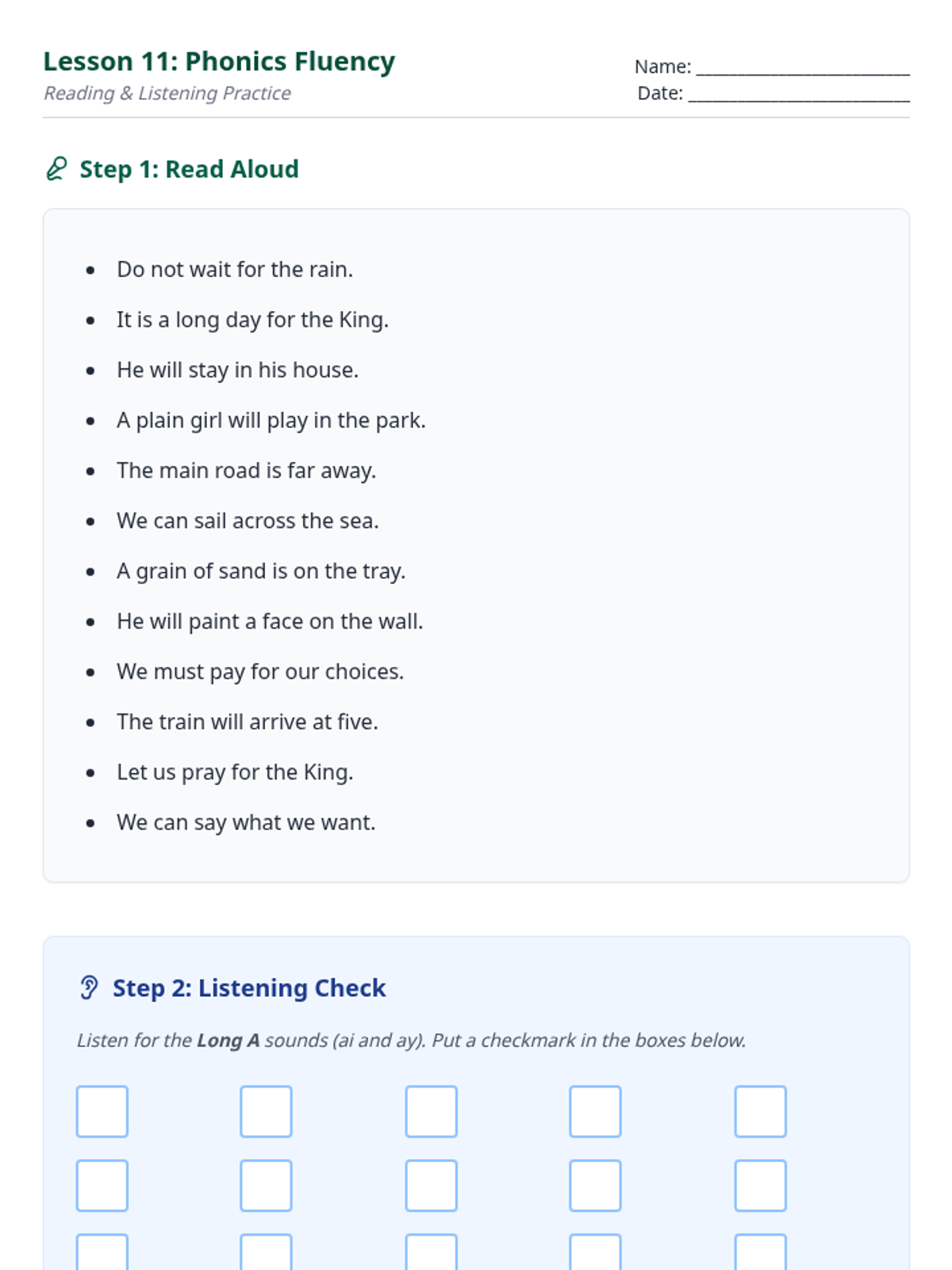
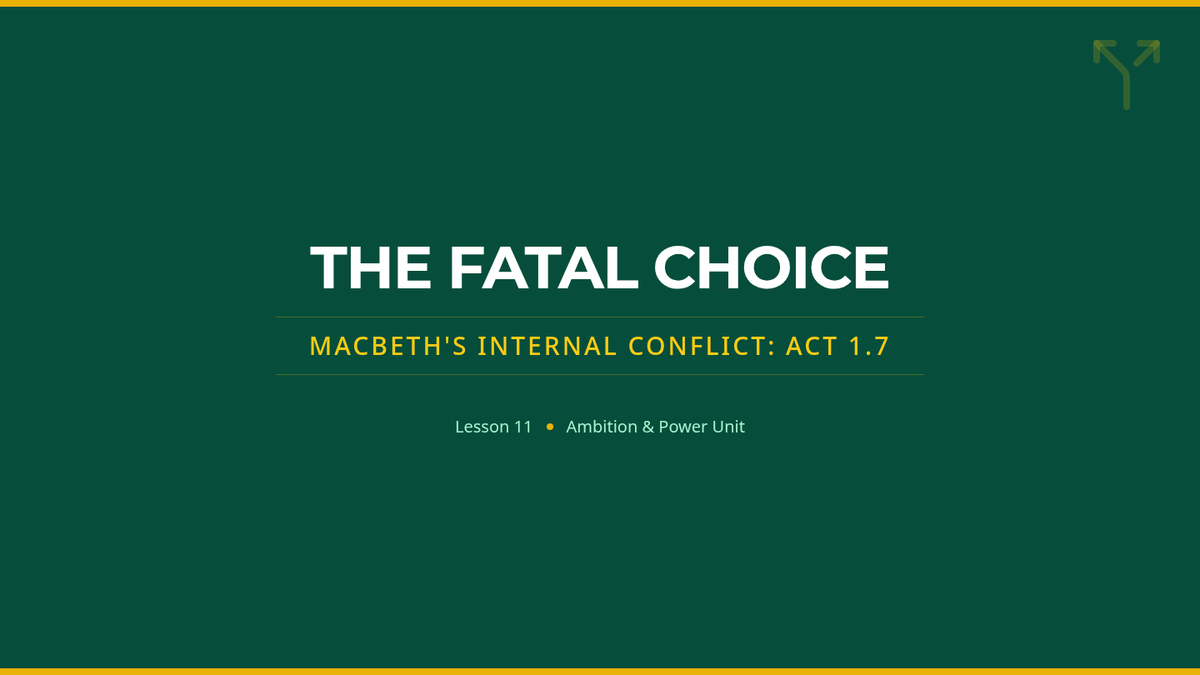
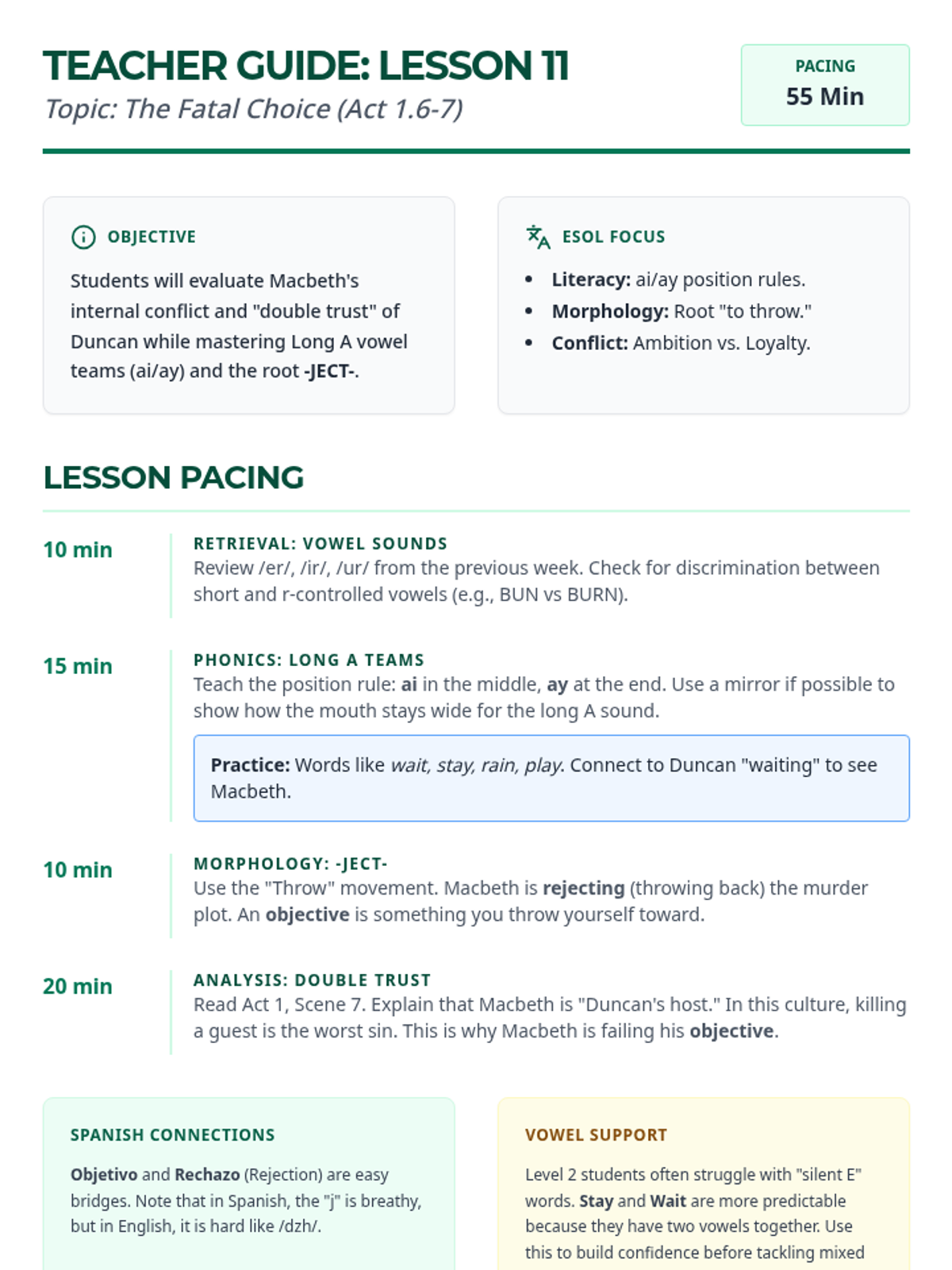
An evaluation of Macbeth's internal conflict in Act 1, Scenes 6-7, focusing on the root 'ject' and Long A vowel teams (ai, ay).
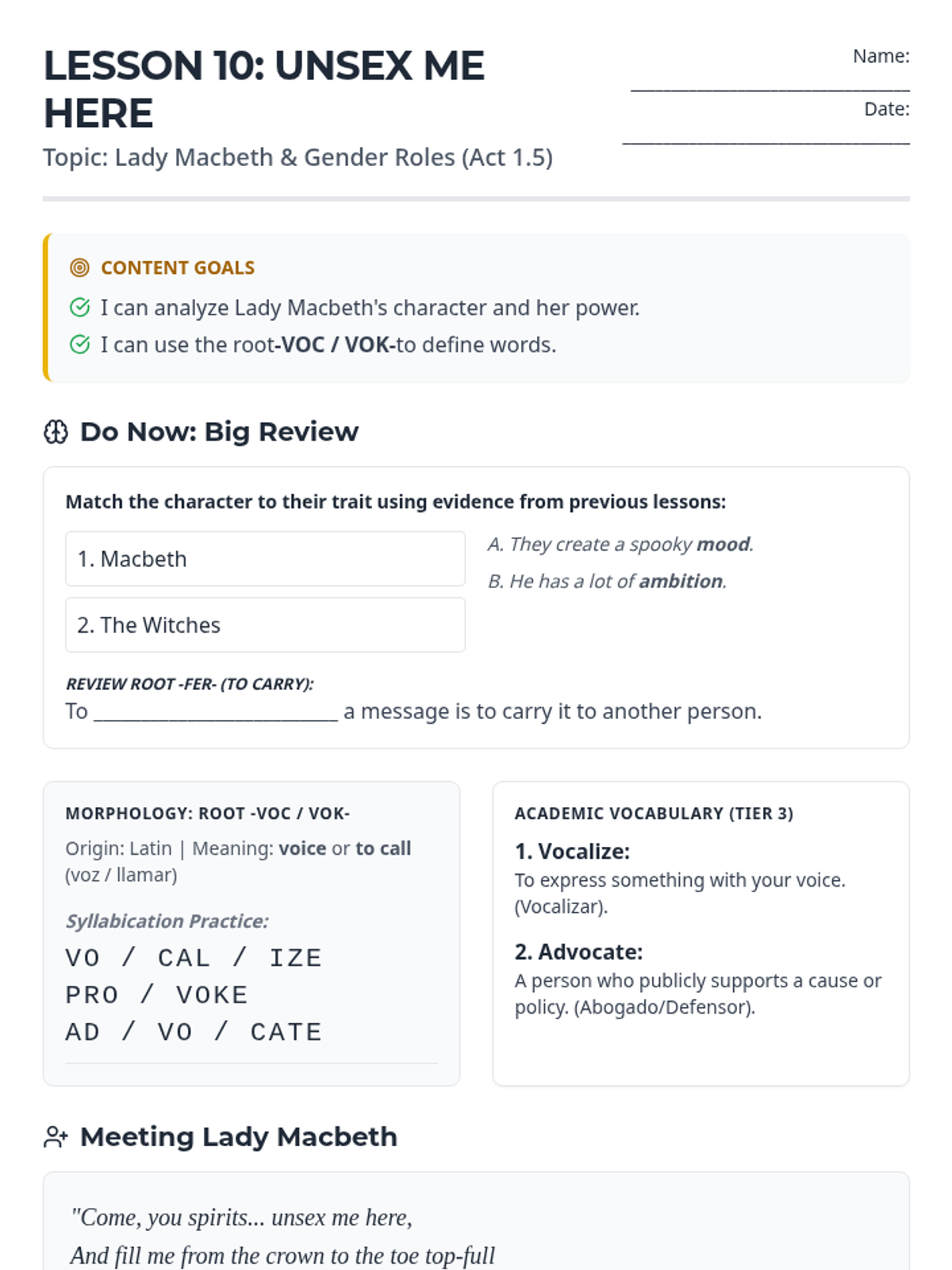
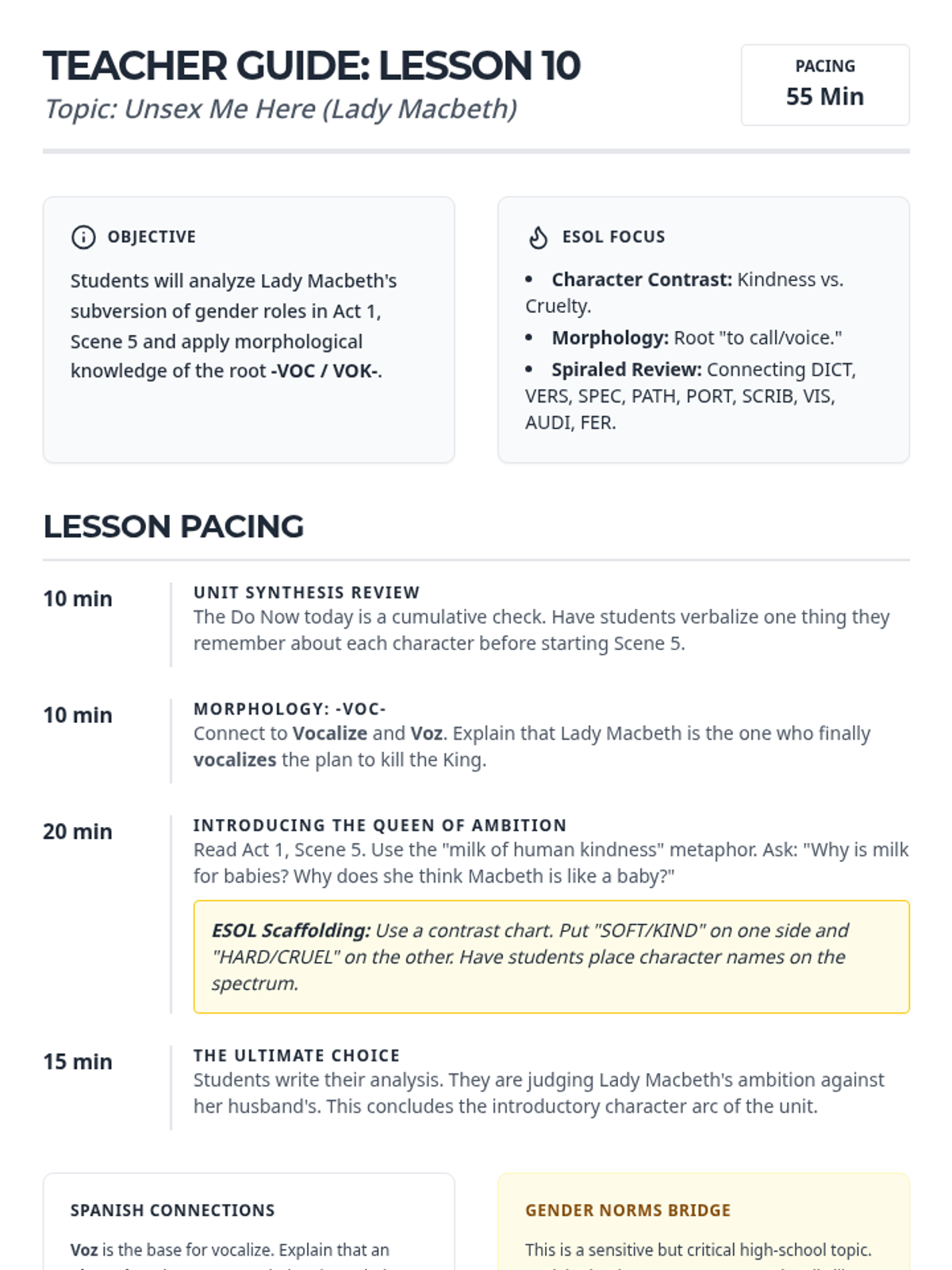
An introduction to Lady Macbeth in Act 1, Scene 5, exploring her characterization and gender roles through the Latin root 'voc'.
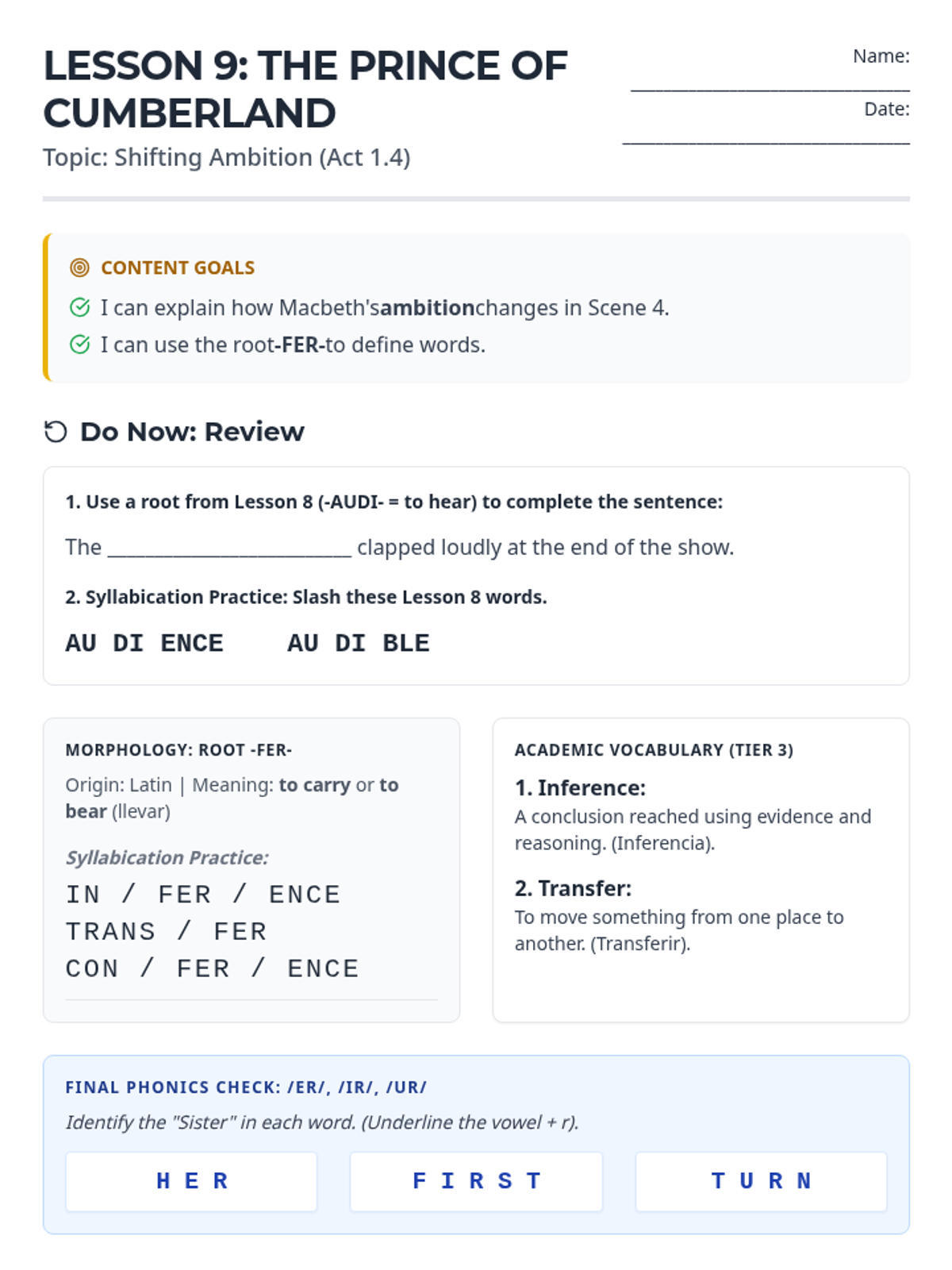
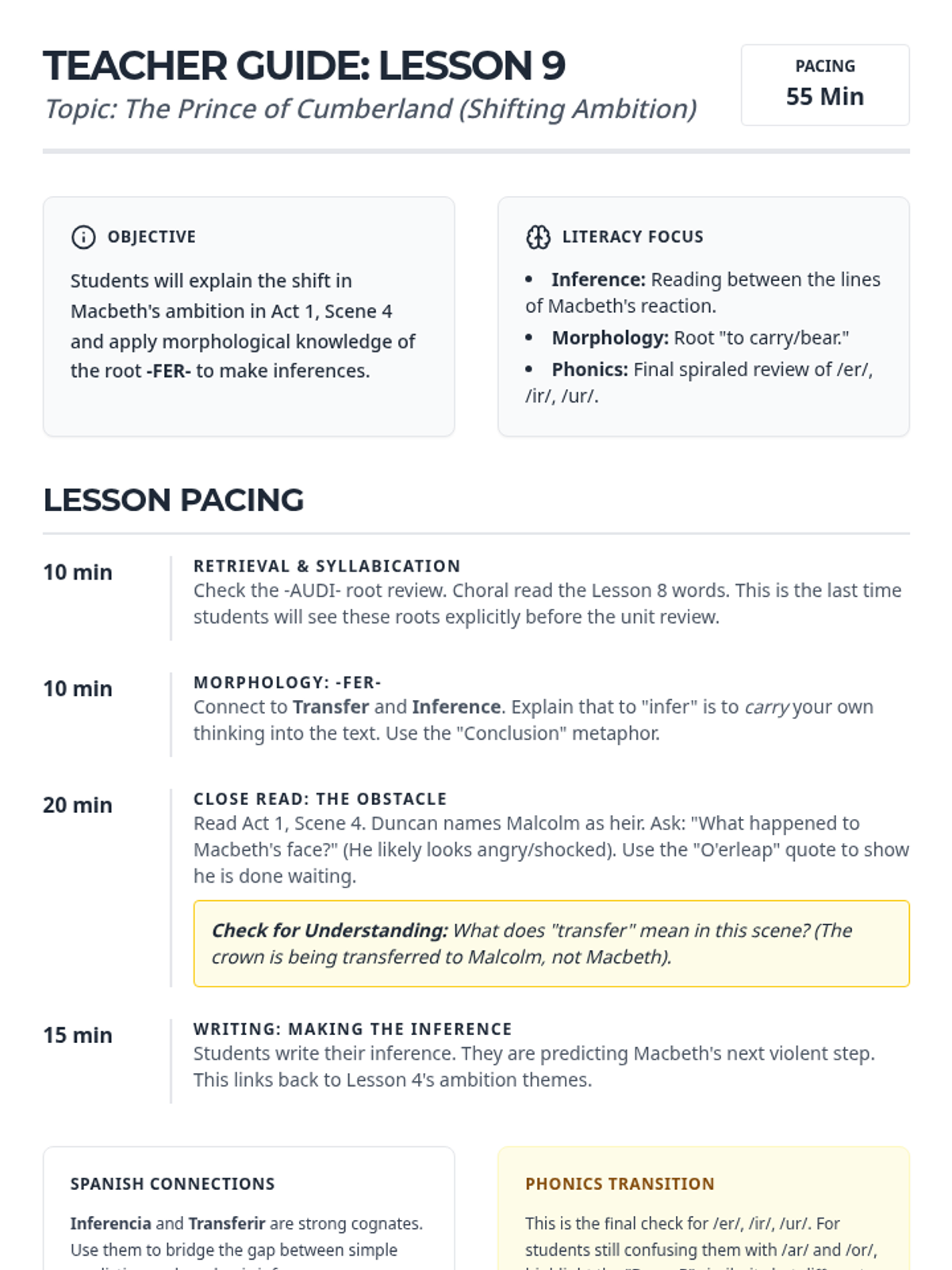
An examination of Macbeth's shifting ambition in Act 1, Scene 4, focusing on the Latin root 'fer' and complex character development.
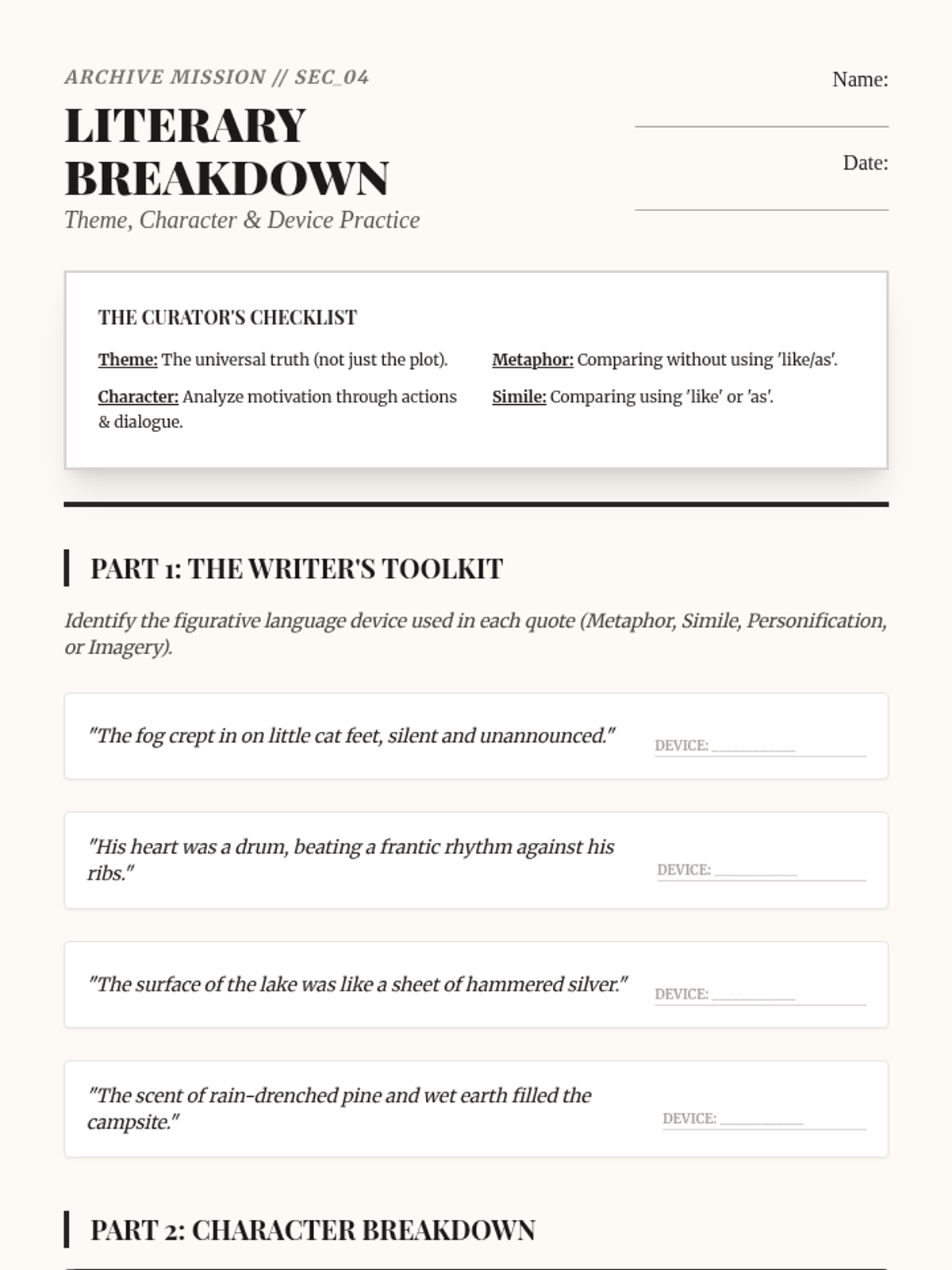
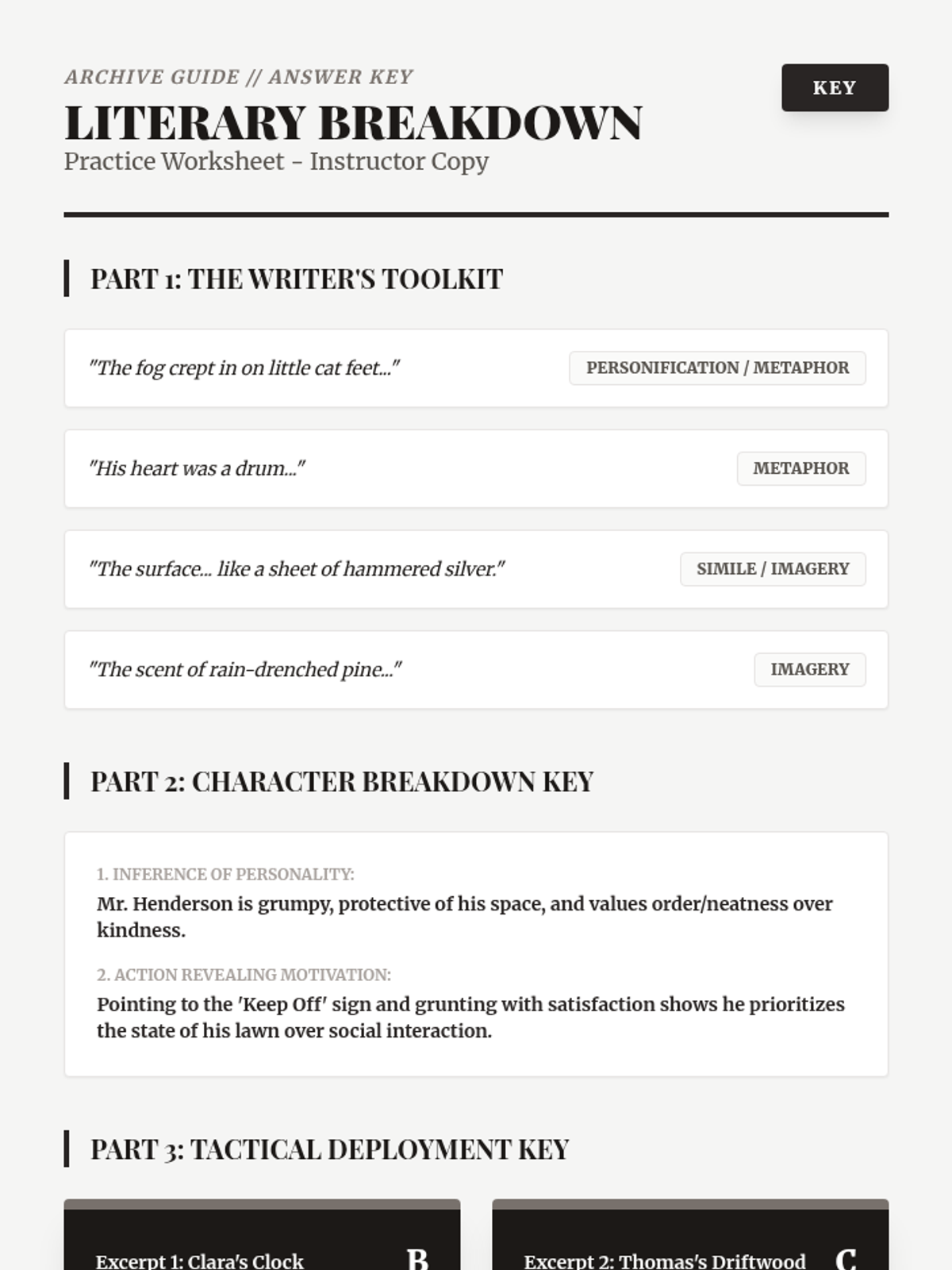
Analyze themes, character development, and figurative language in literary excerpts to prepare for the literature portion of the TSIA.
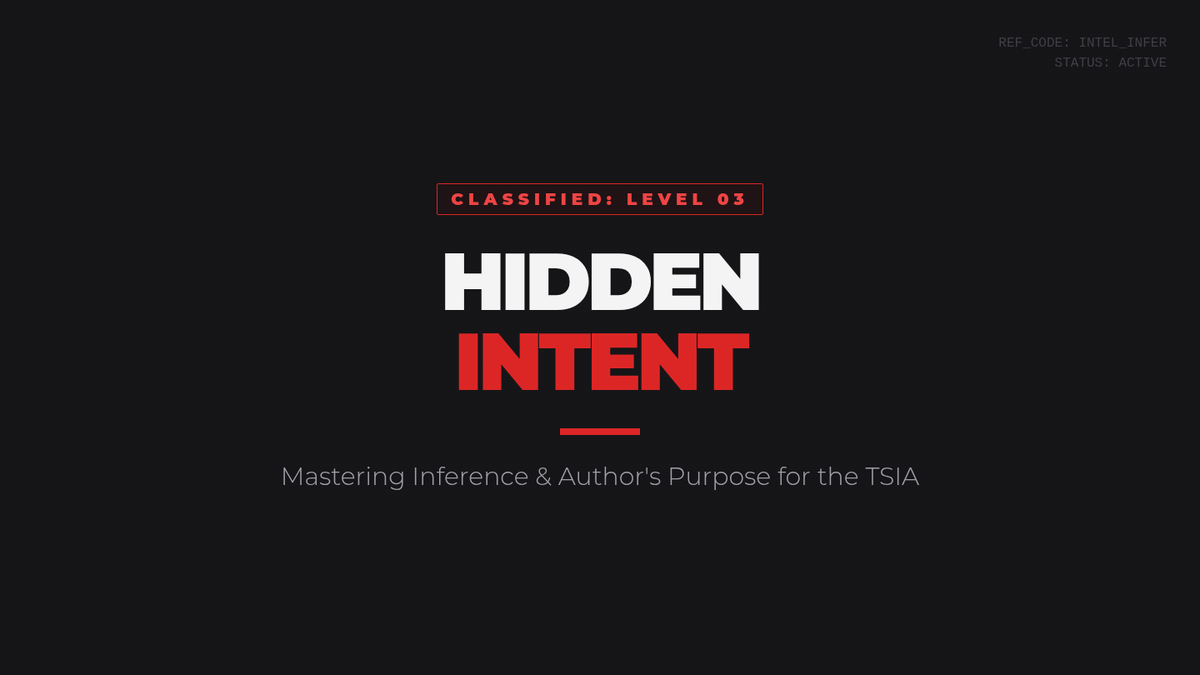
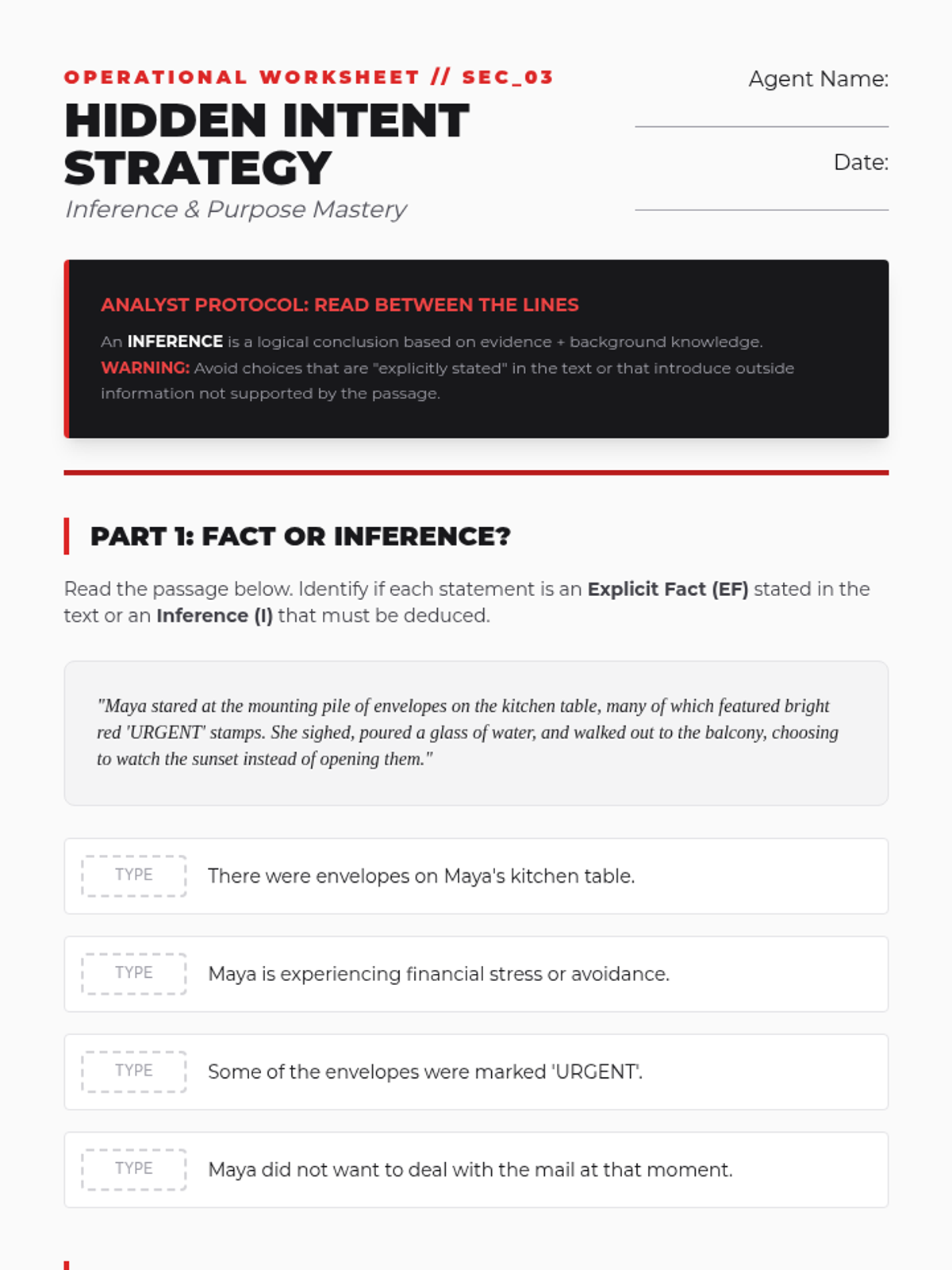
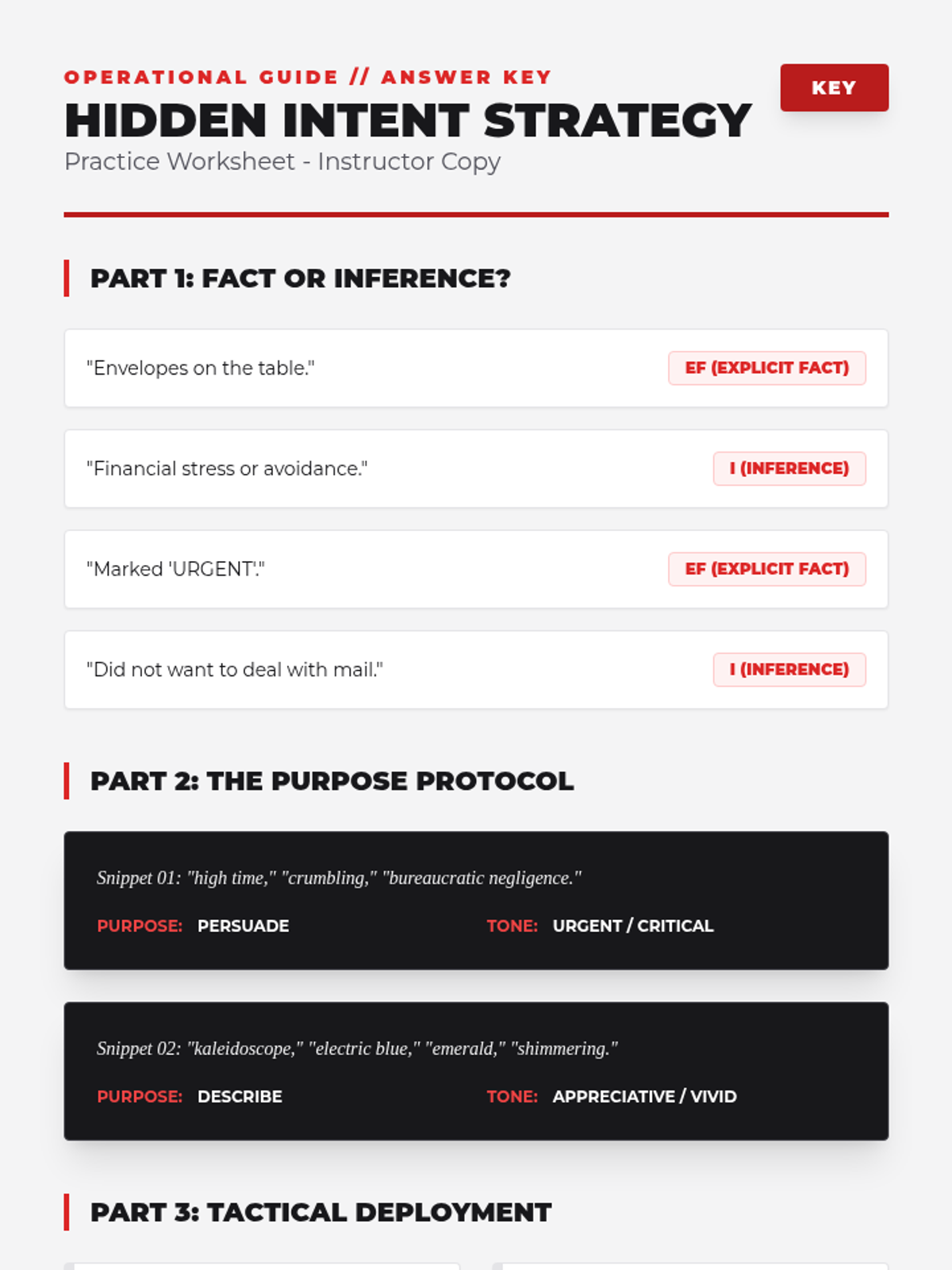
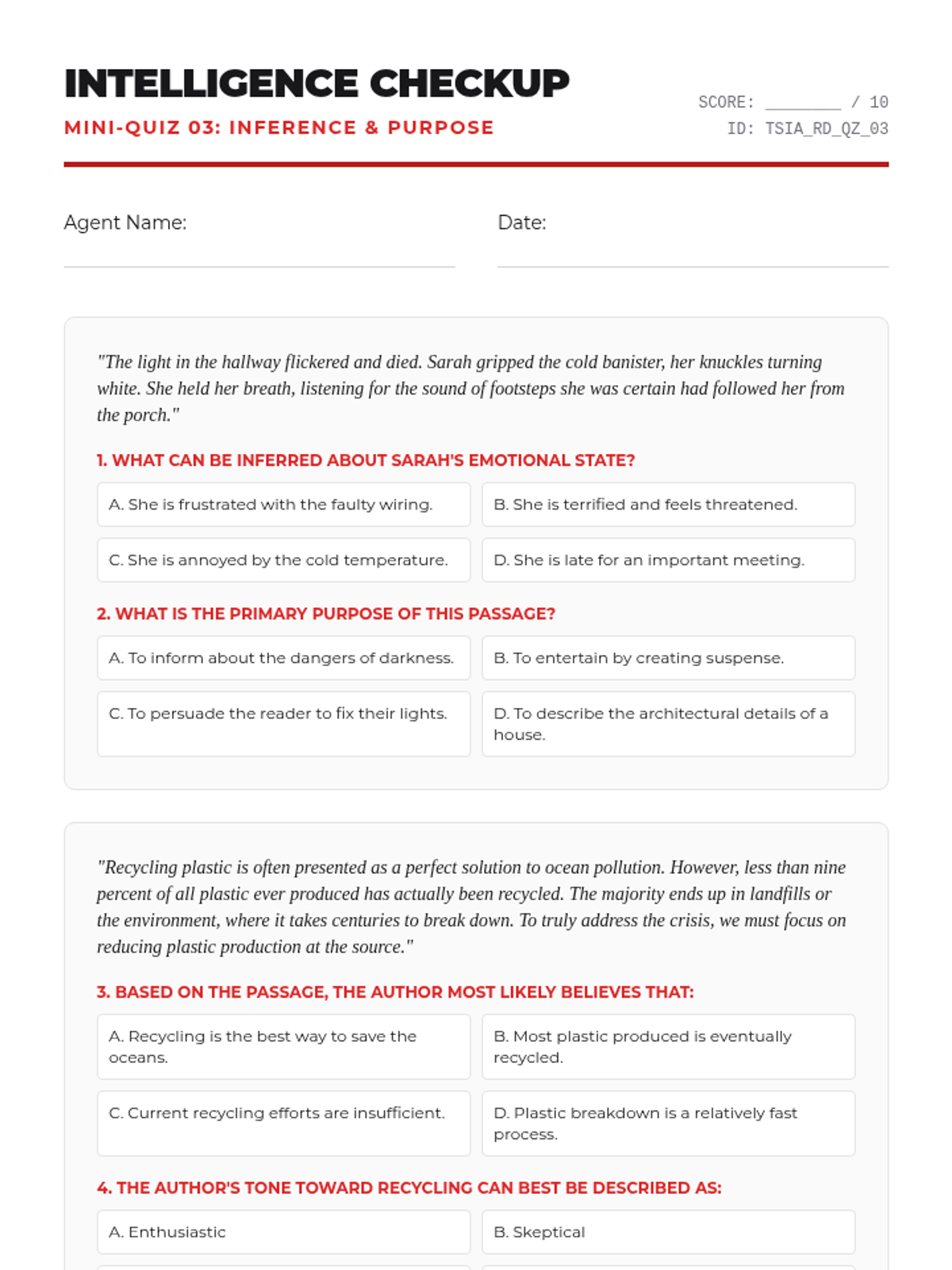
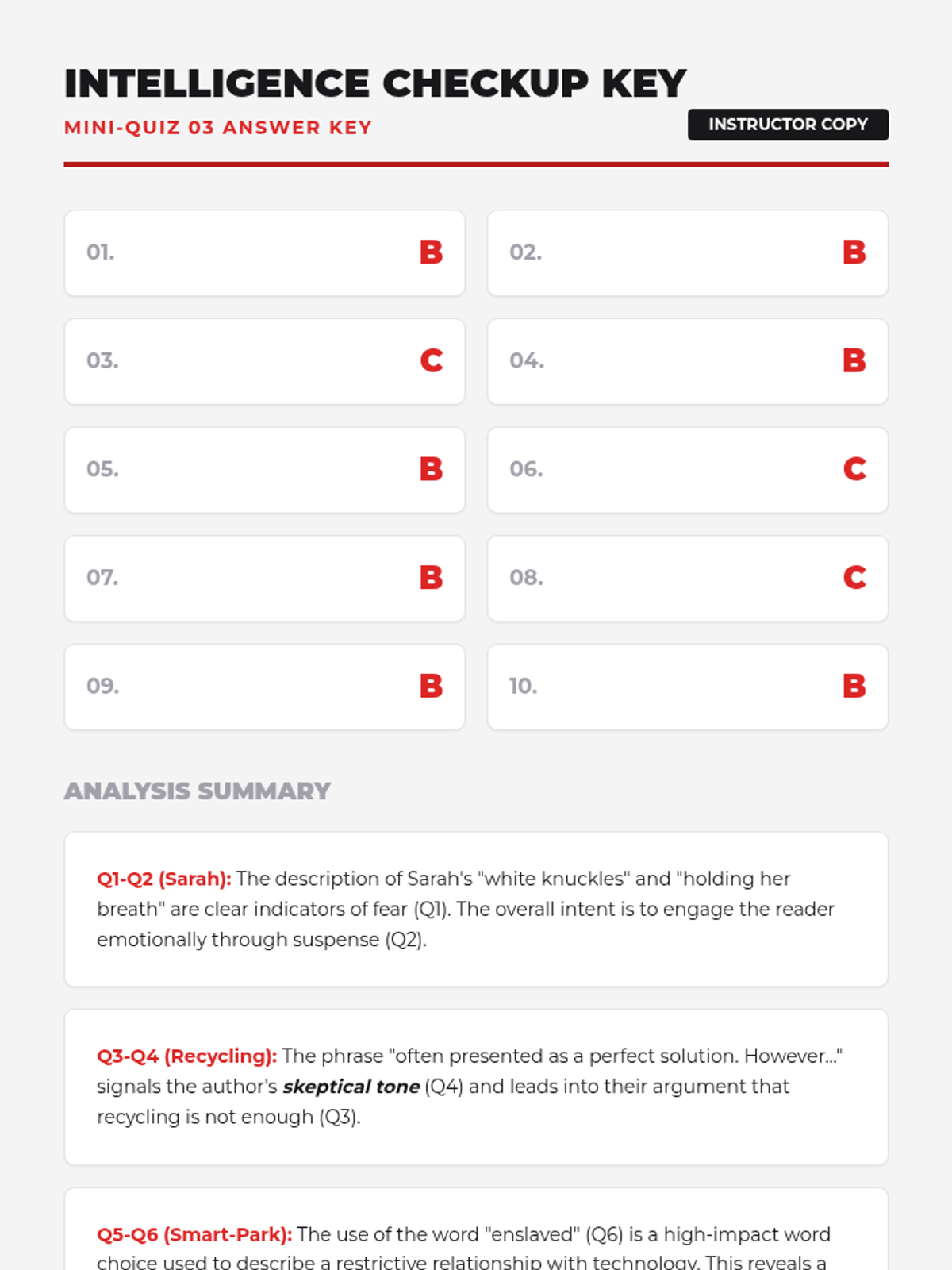
Develop the ability to read between the lines and understand why an author wrote a text, moving beyond the literal.
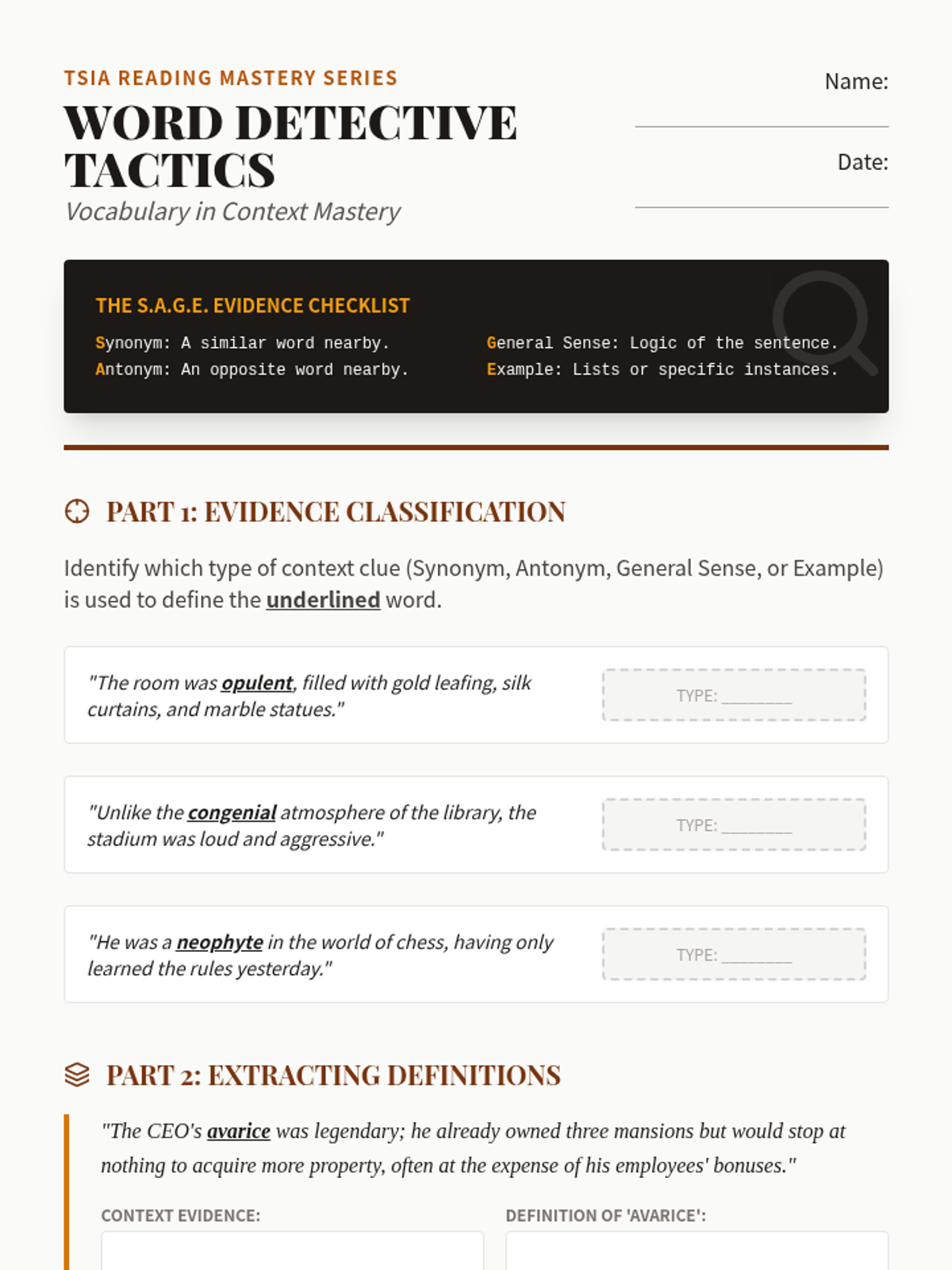
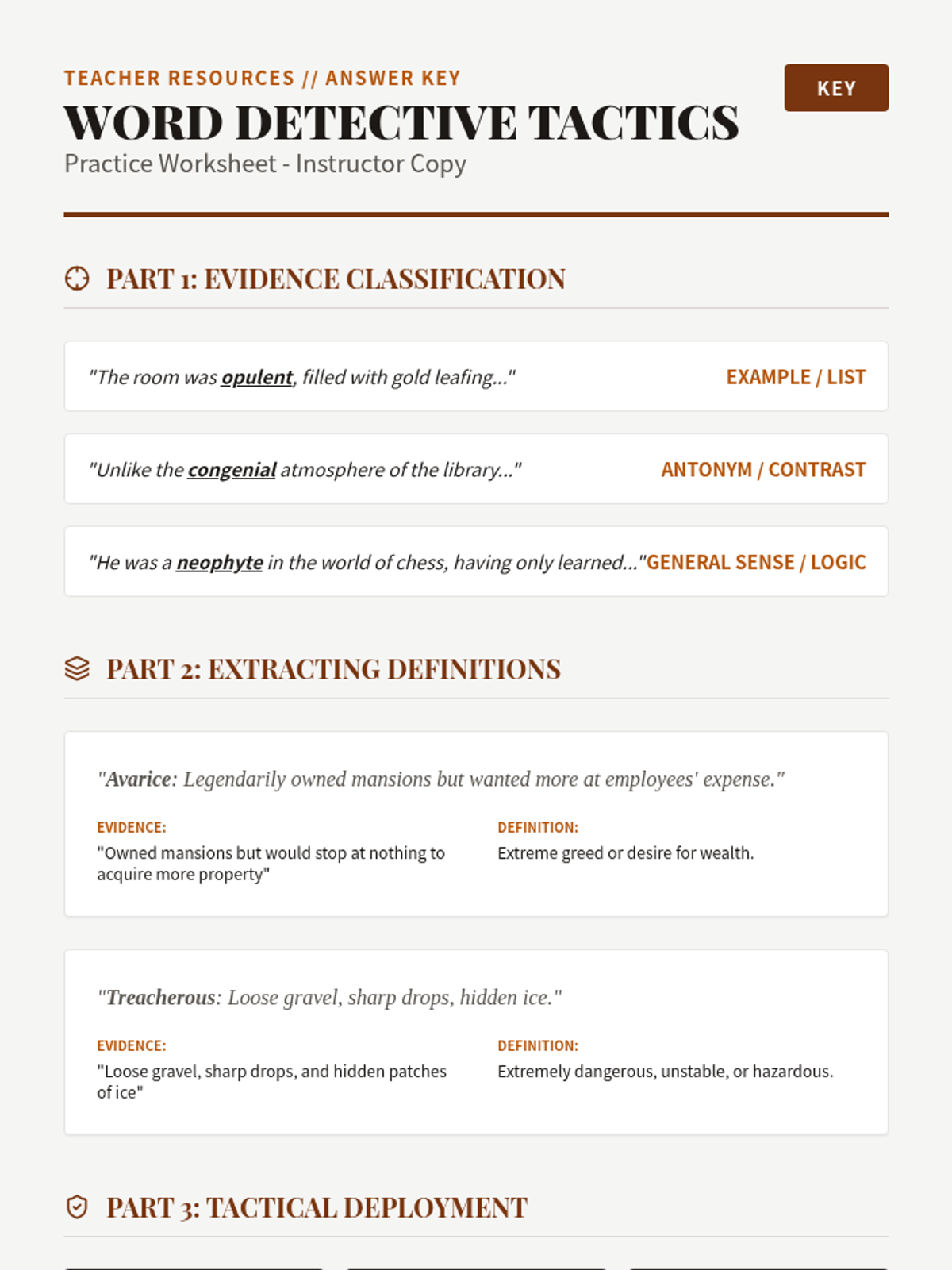
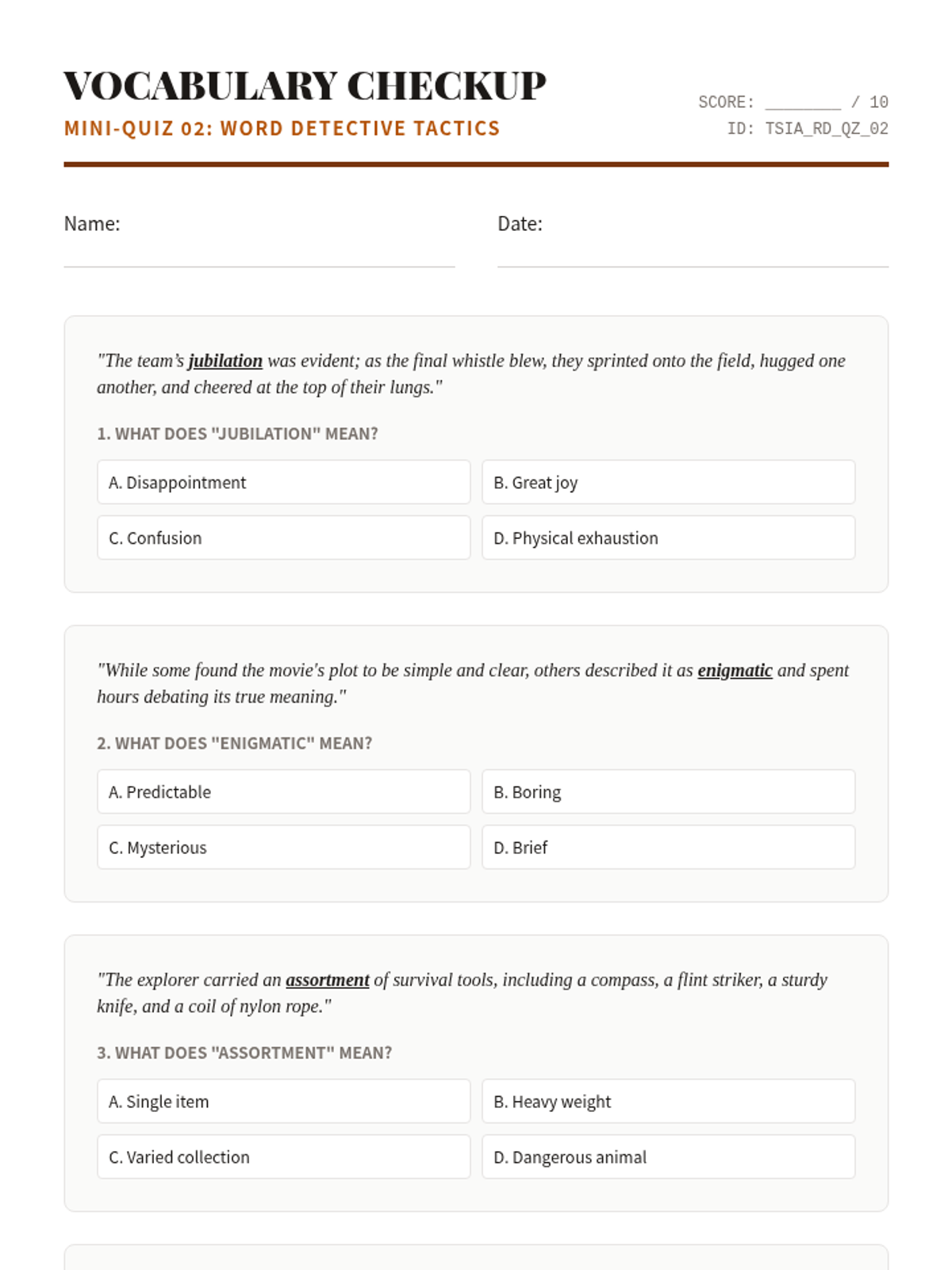
Master the art of using context clues to define unfamiliar words, essential for tackling complex TSIA passages.
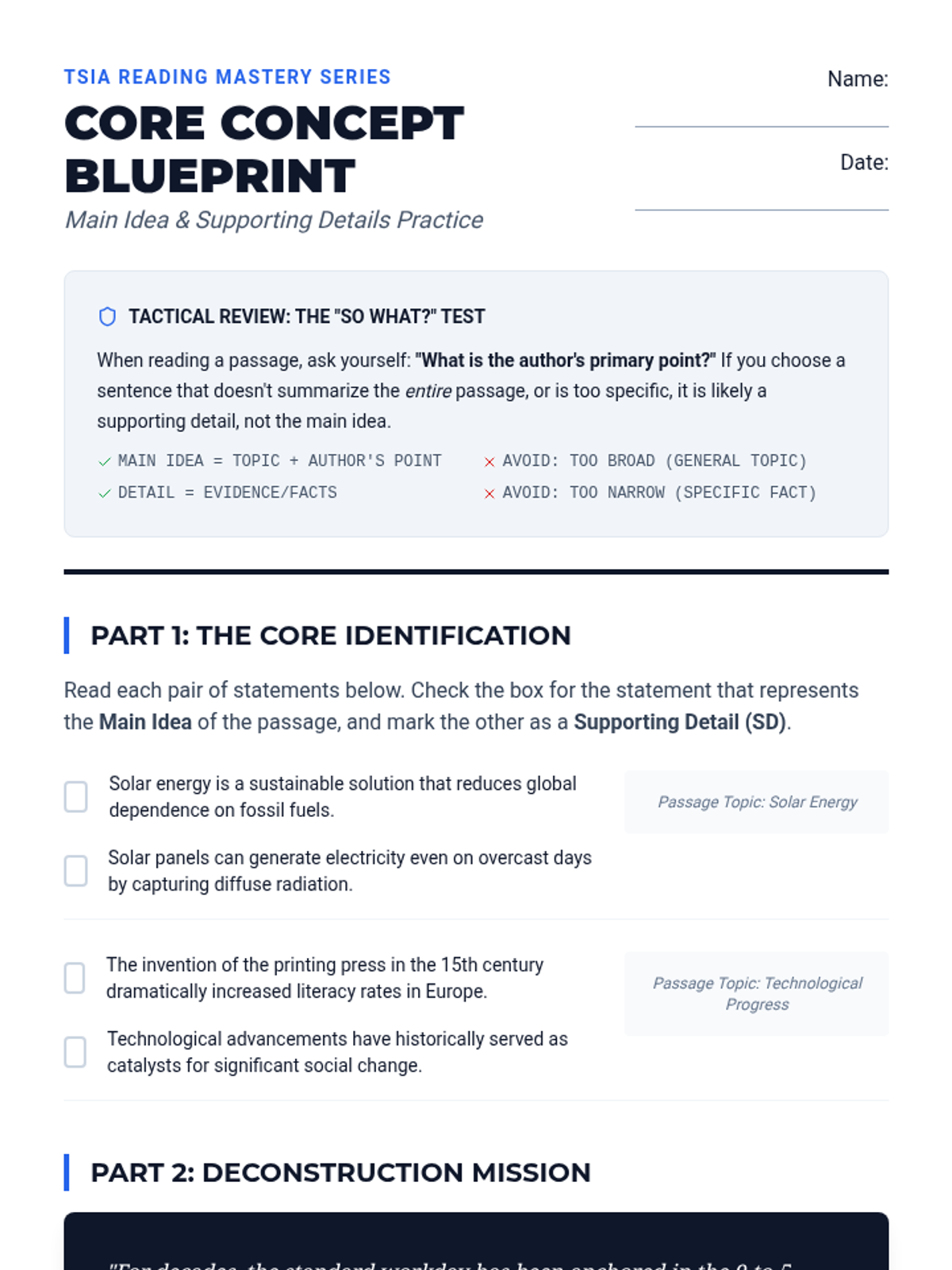
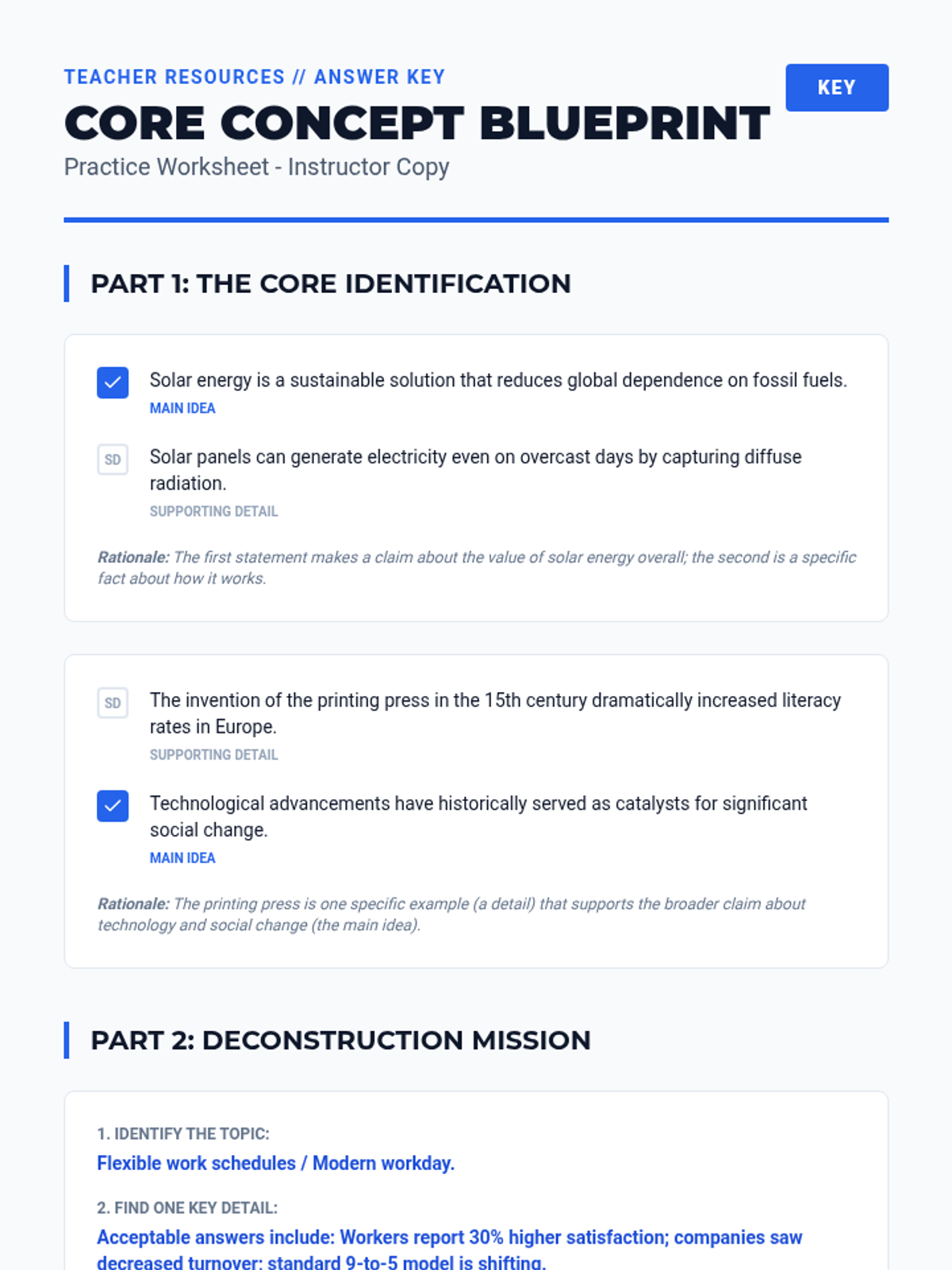
Learn to identify the central point of a passage and distinguish it from supporting details, a fundamental skill for the TSIA.
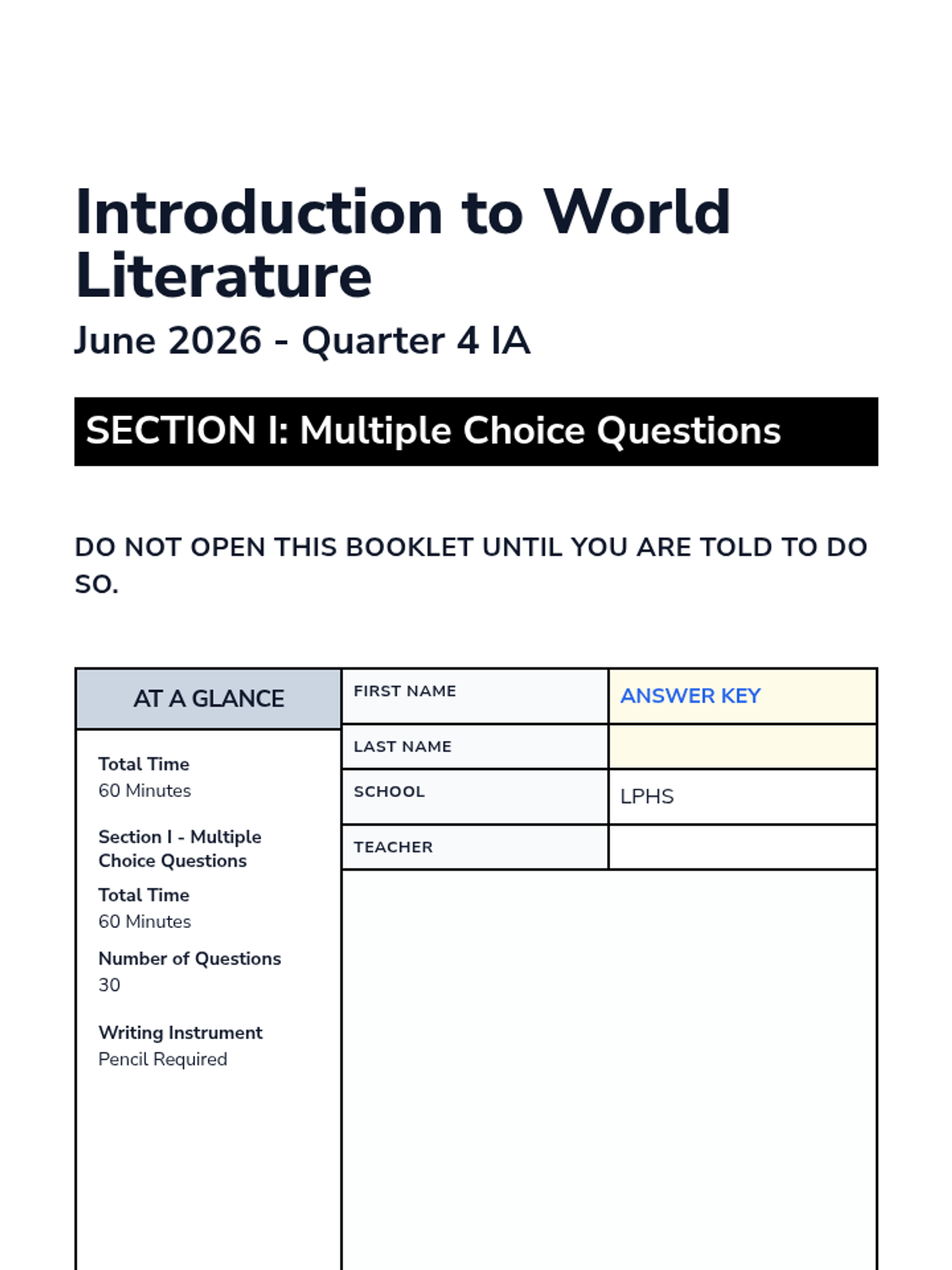
An answer key for the June 2024 Quarter 4 Internal Assessment for World Literature, covering reading comprehension, grammar, vocabulary, and transitions.
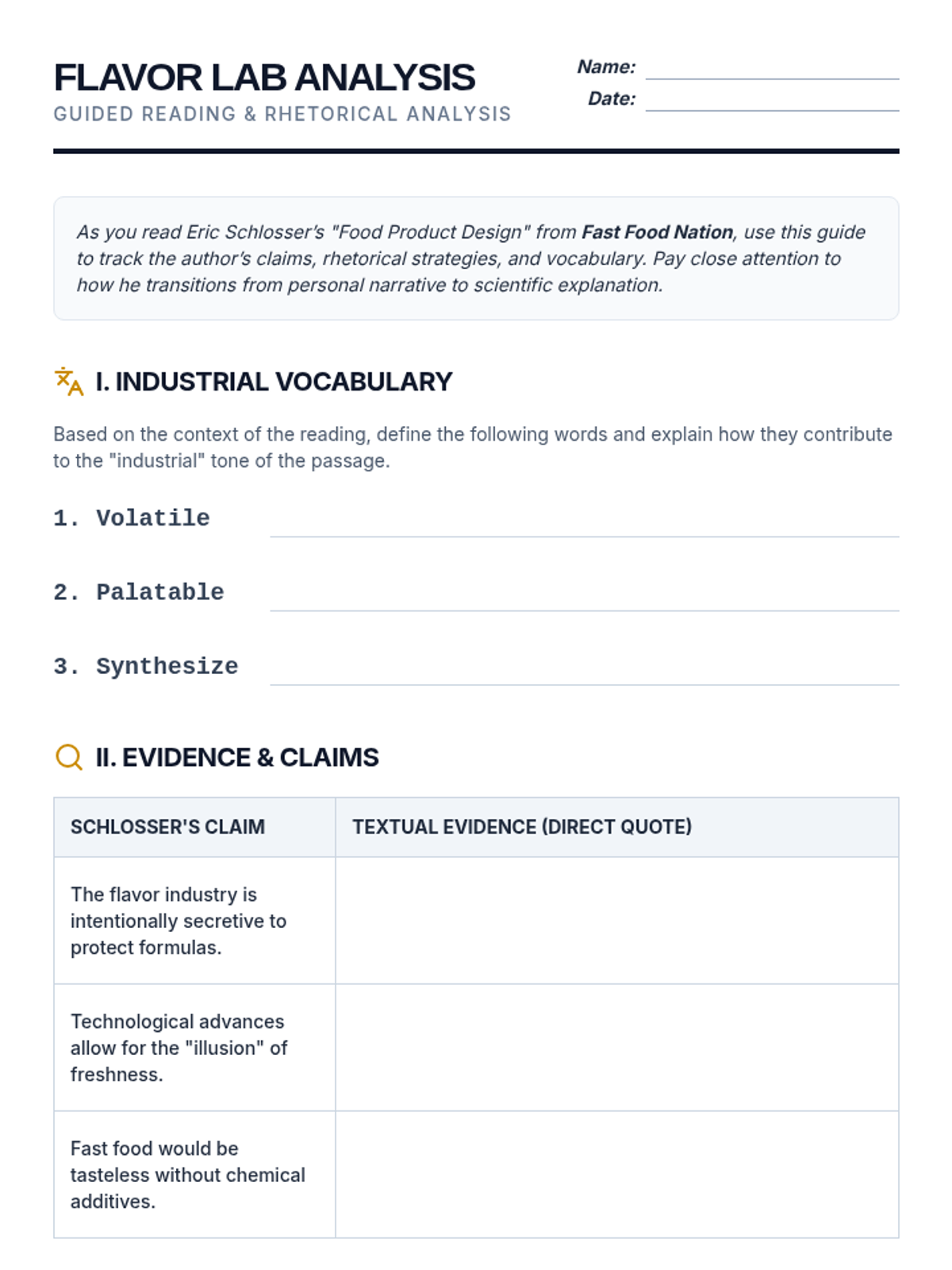
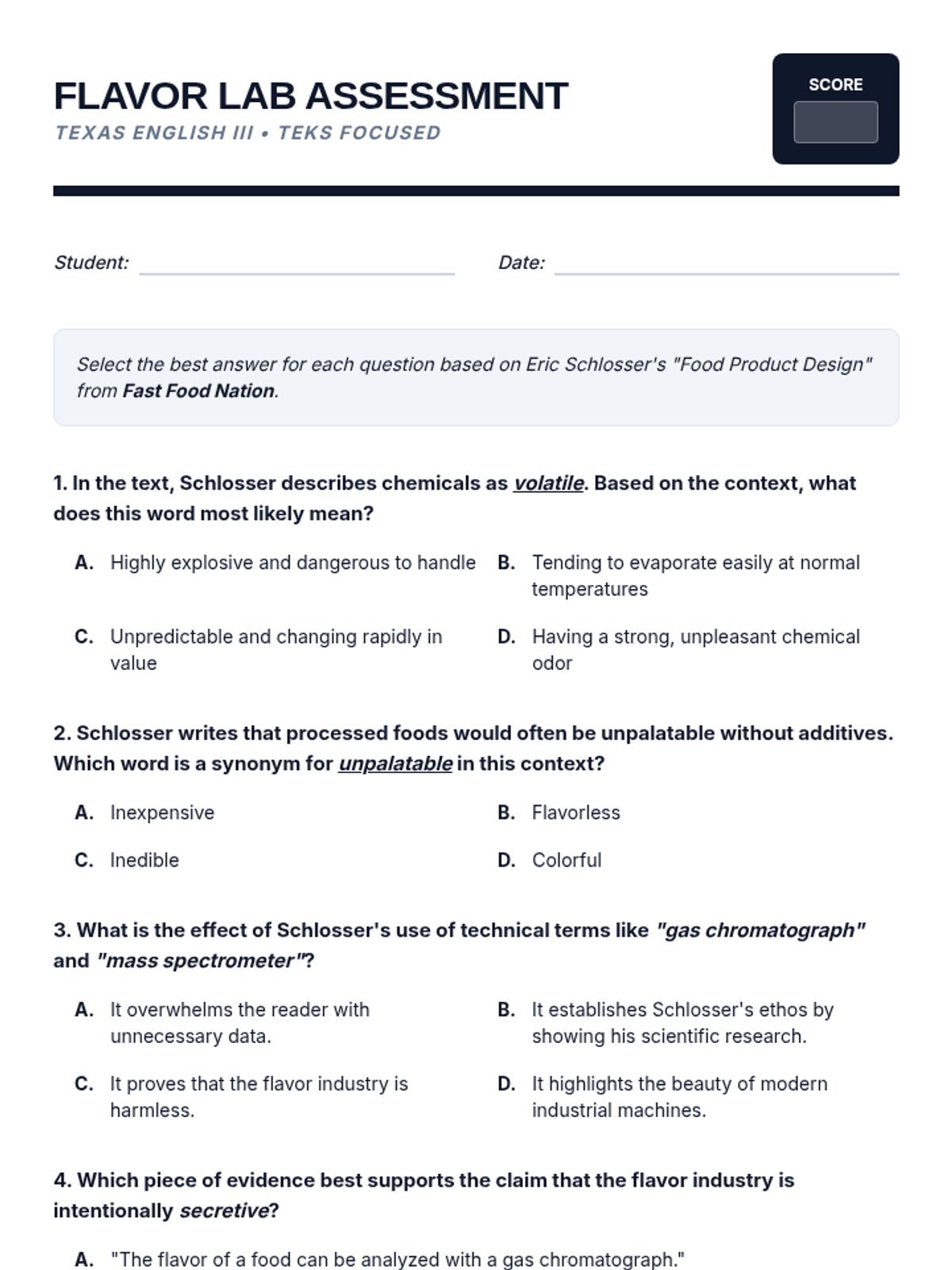
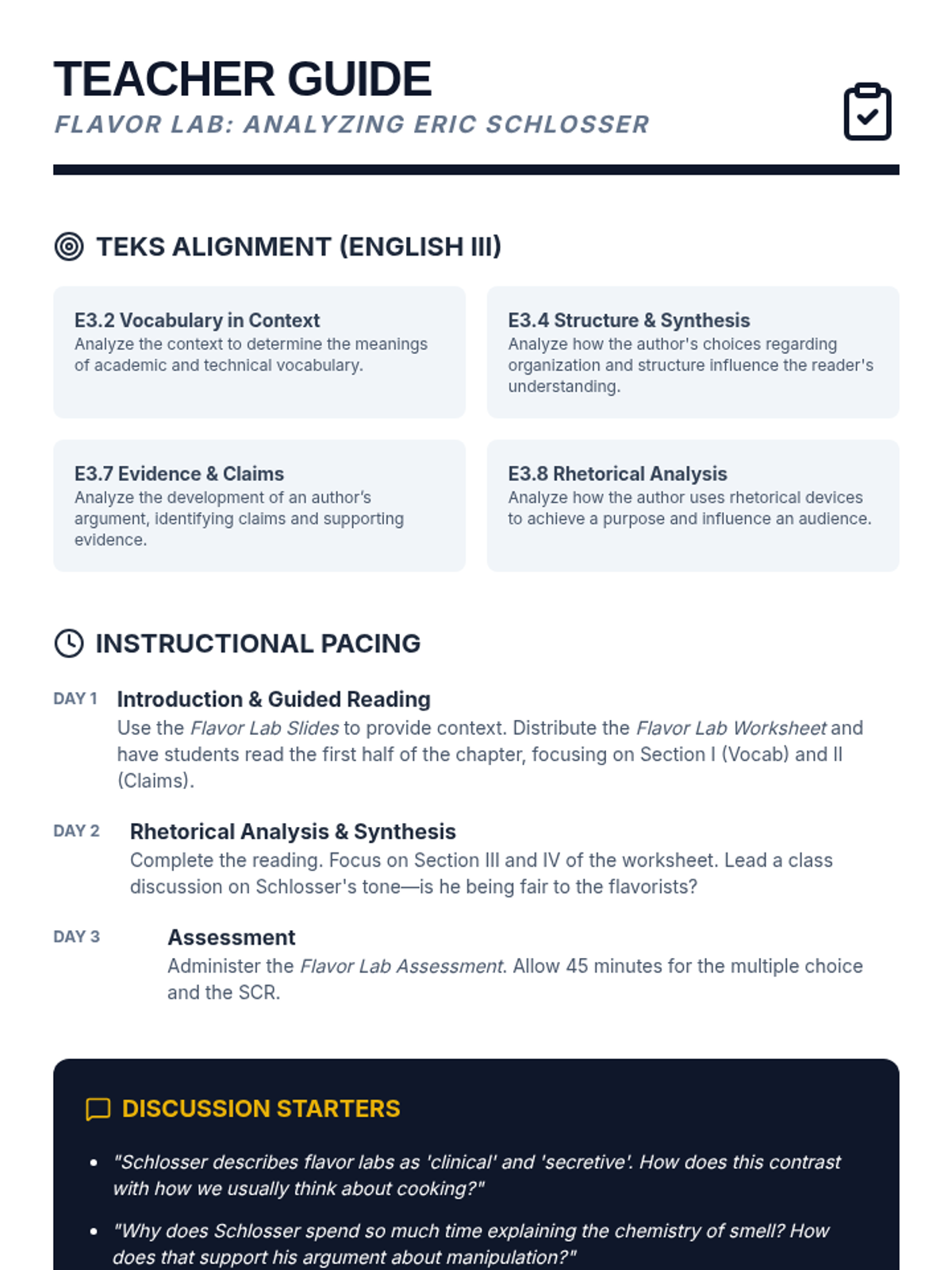
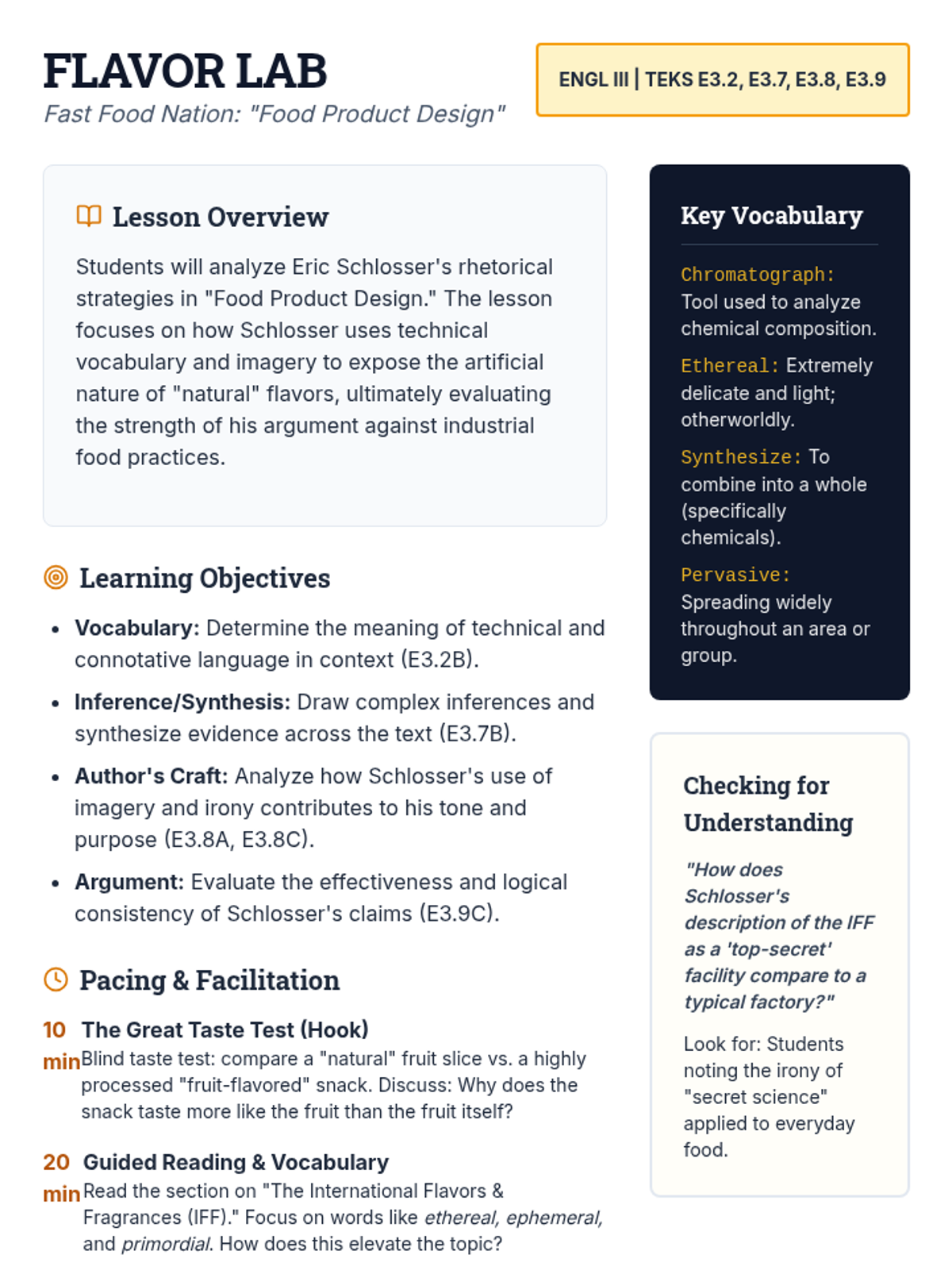
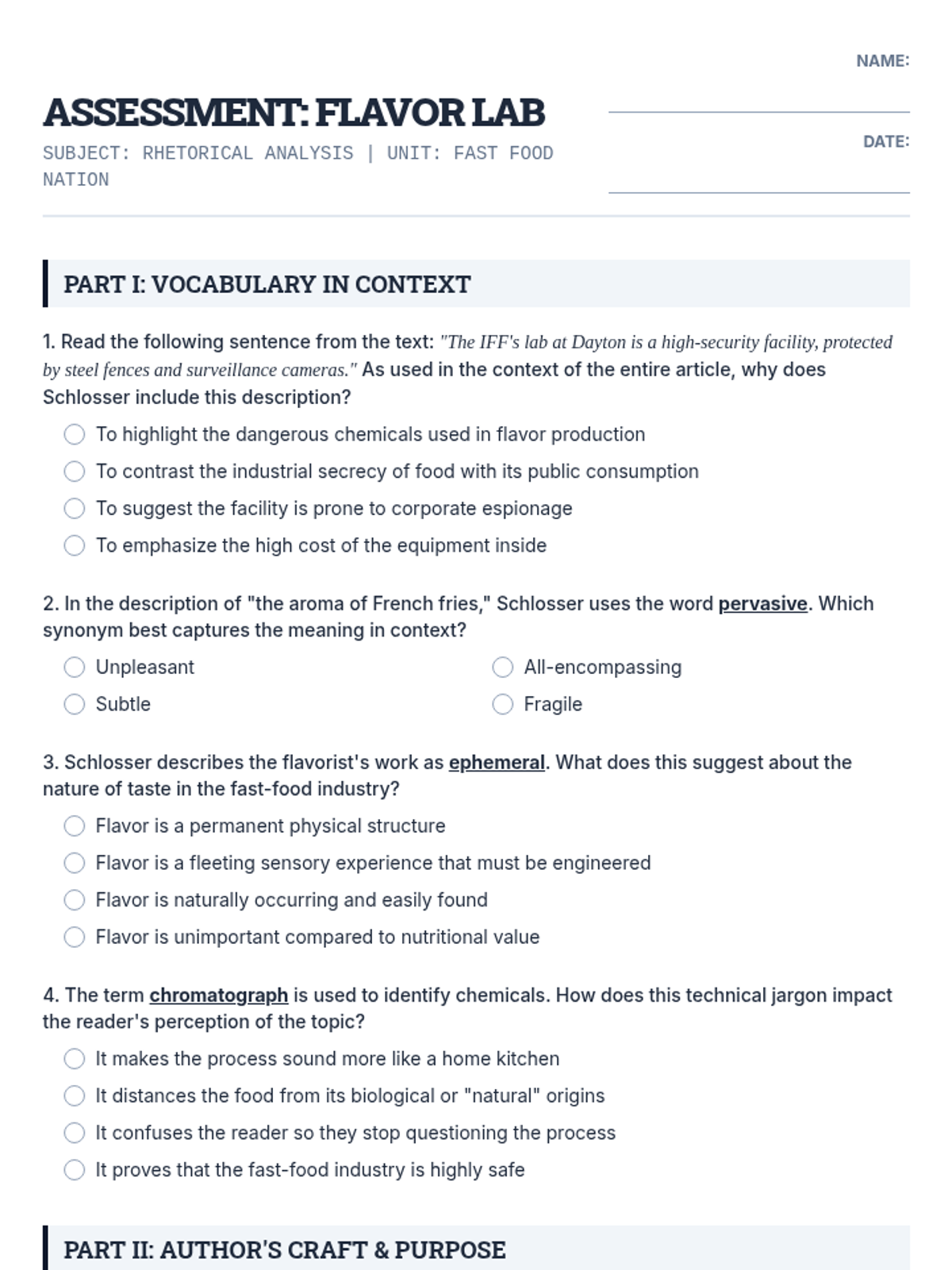
A deep dive into Eric Schlosser's "Food Product Design" from Fast Food Nation, focusing on rhetorical analysis, evidence-based claims, and industrial vocabulary in the flavor industry.
A high school English 3 lesson focused on Eric Schlosser's 'Food Product Design' from Fast Food Nation, exploring rhetorical craft, argumentative evaluation, and industrial food science.
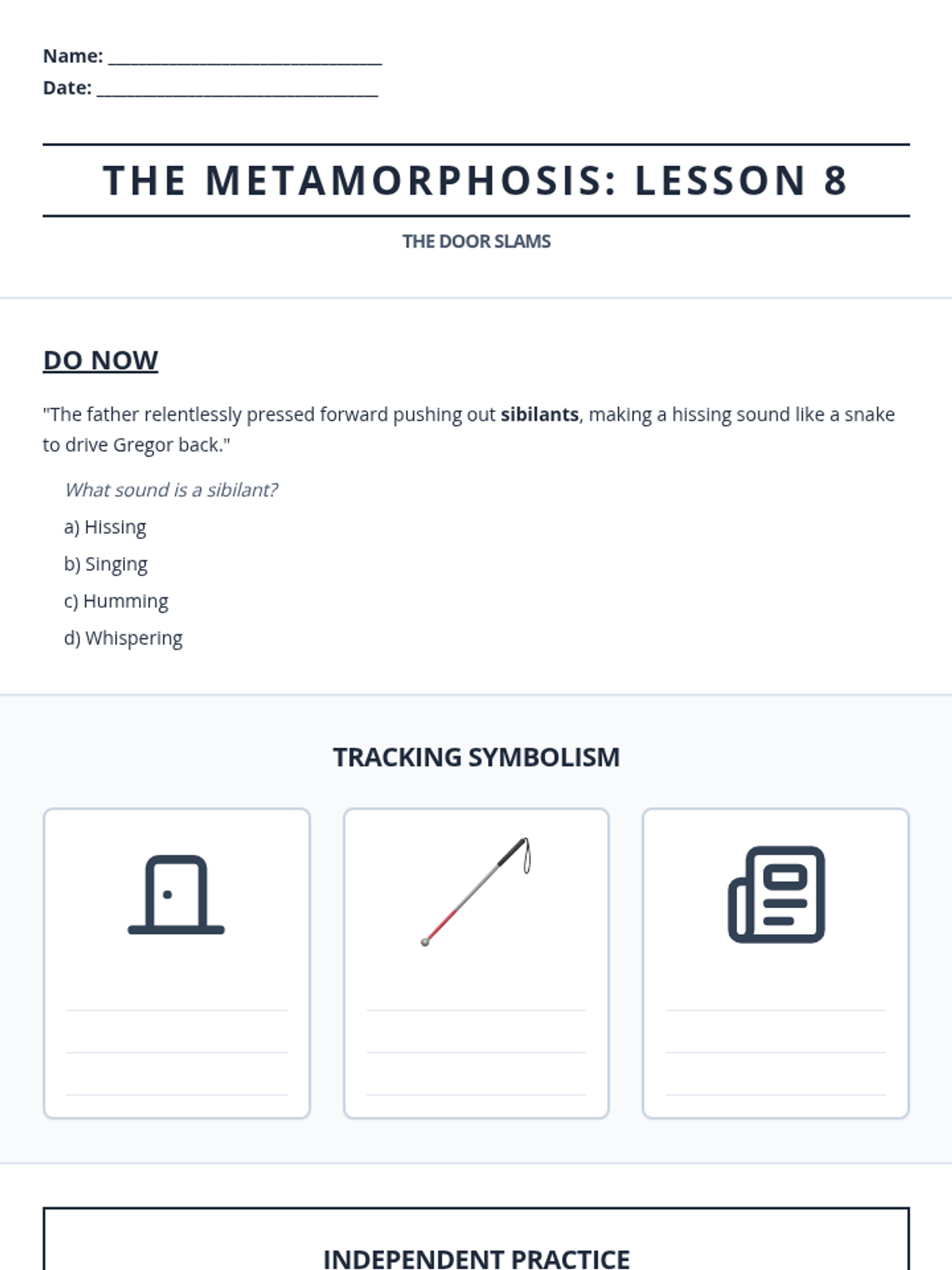
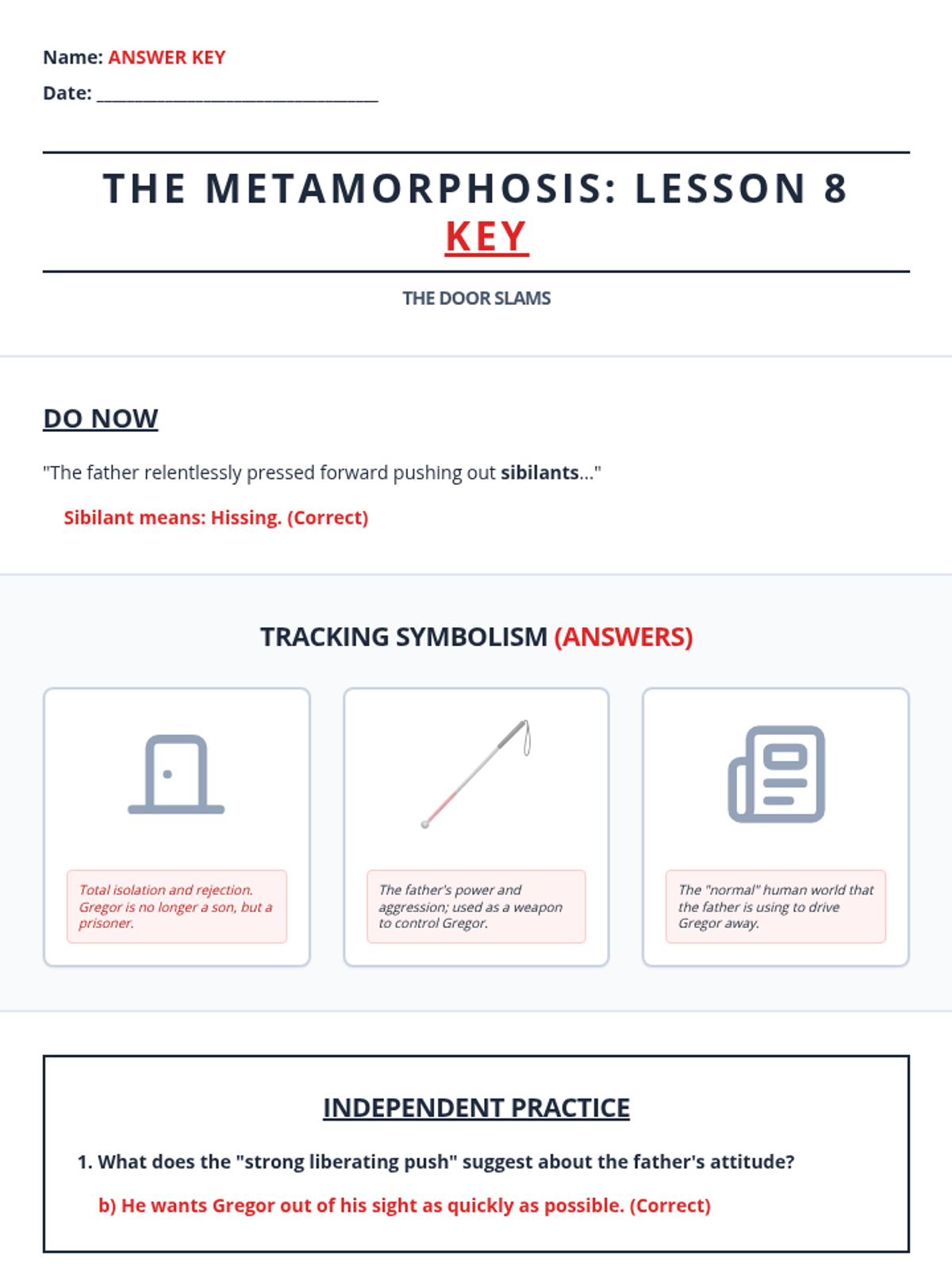
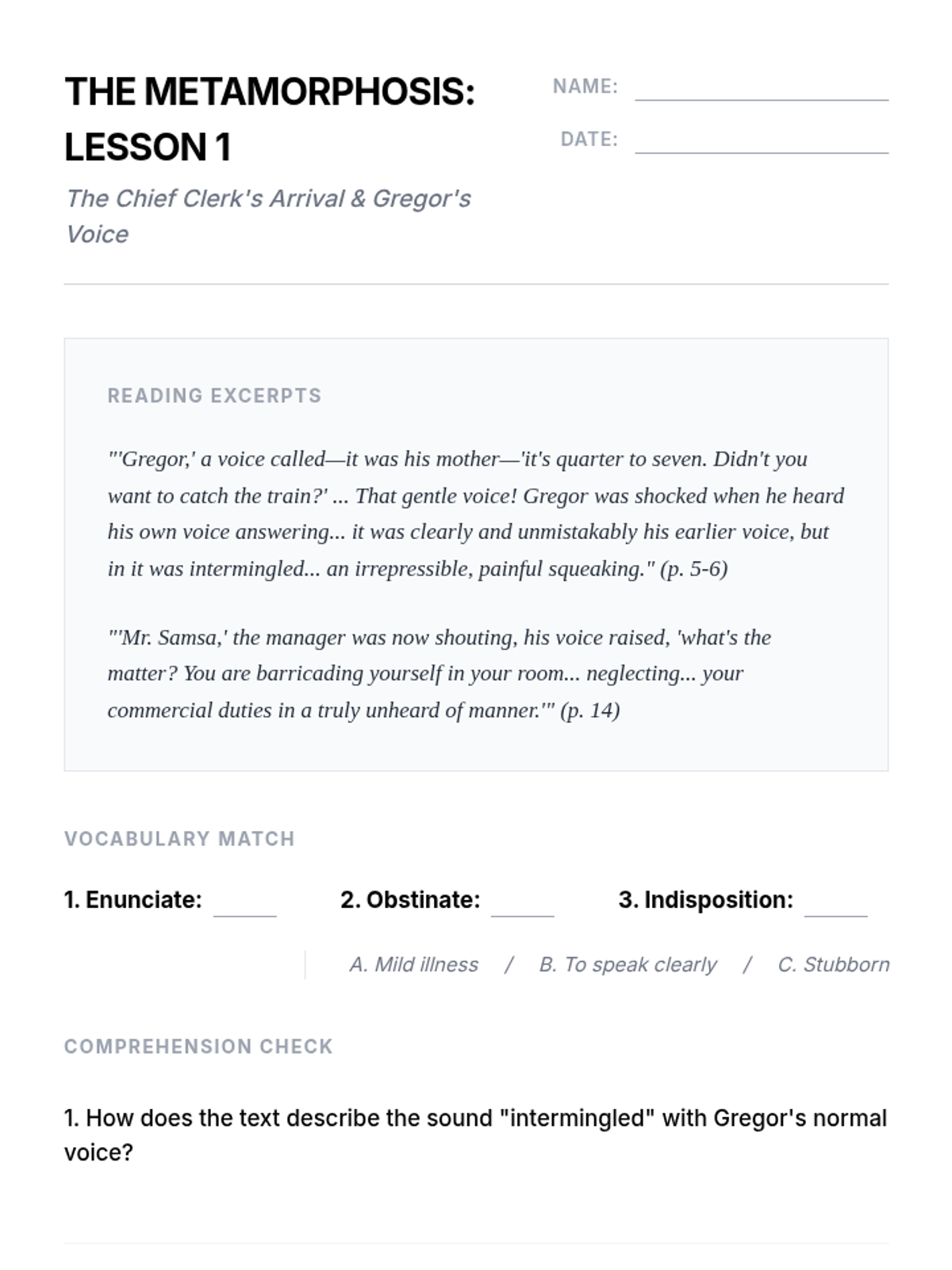
Students analyze the climax of Section I, where Gregor is revealed to his family and the Chief Clerk. They will focus on the father's aggressive reaction and the symbolism of the final push back into the room.
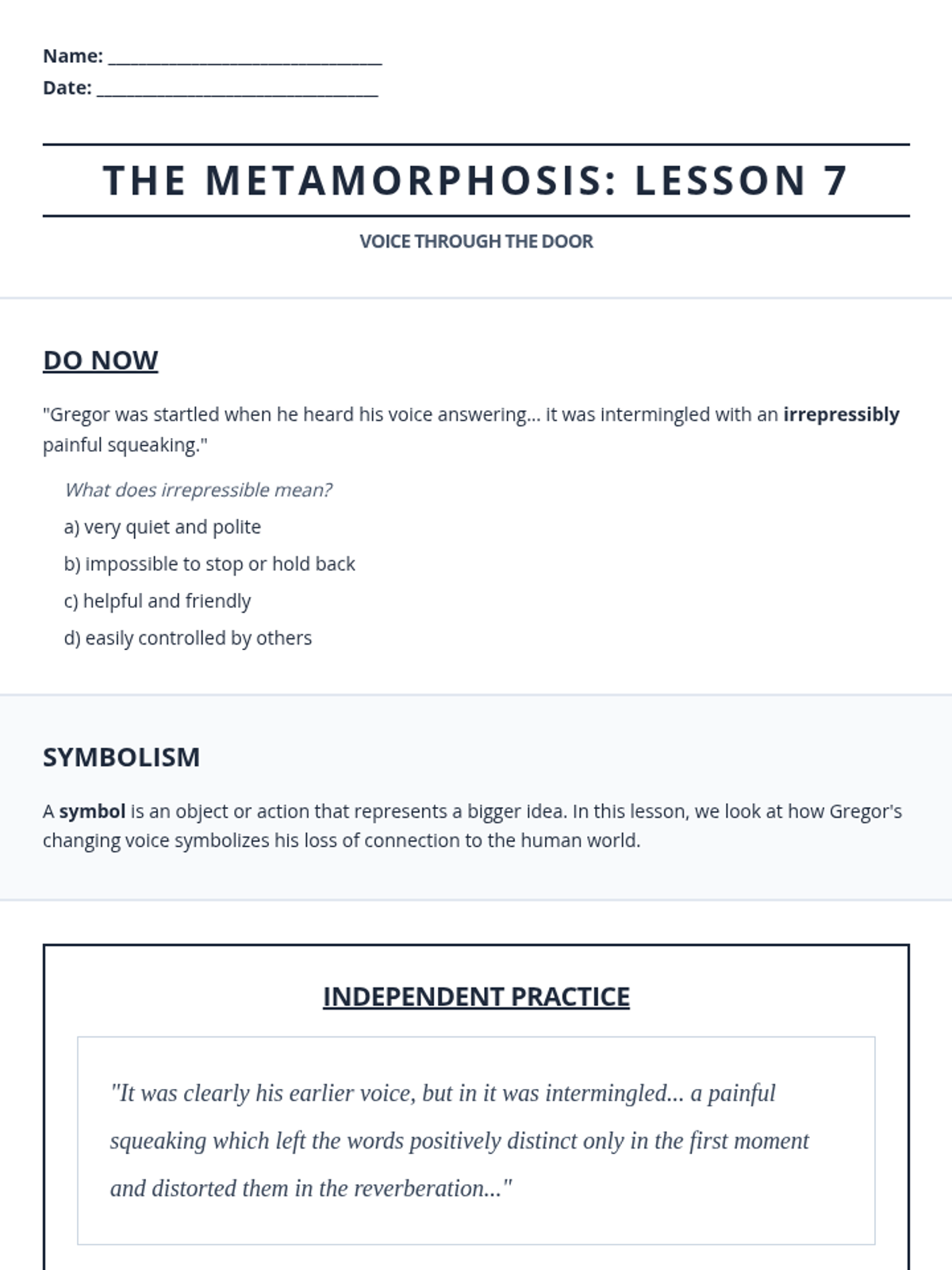
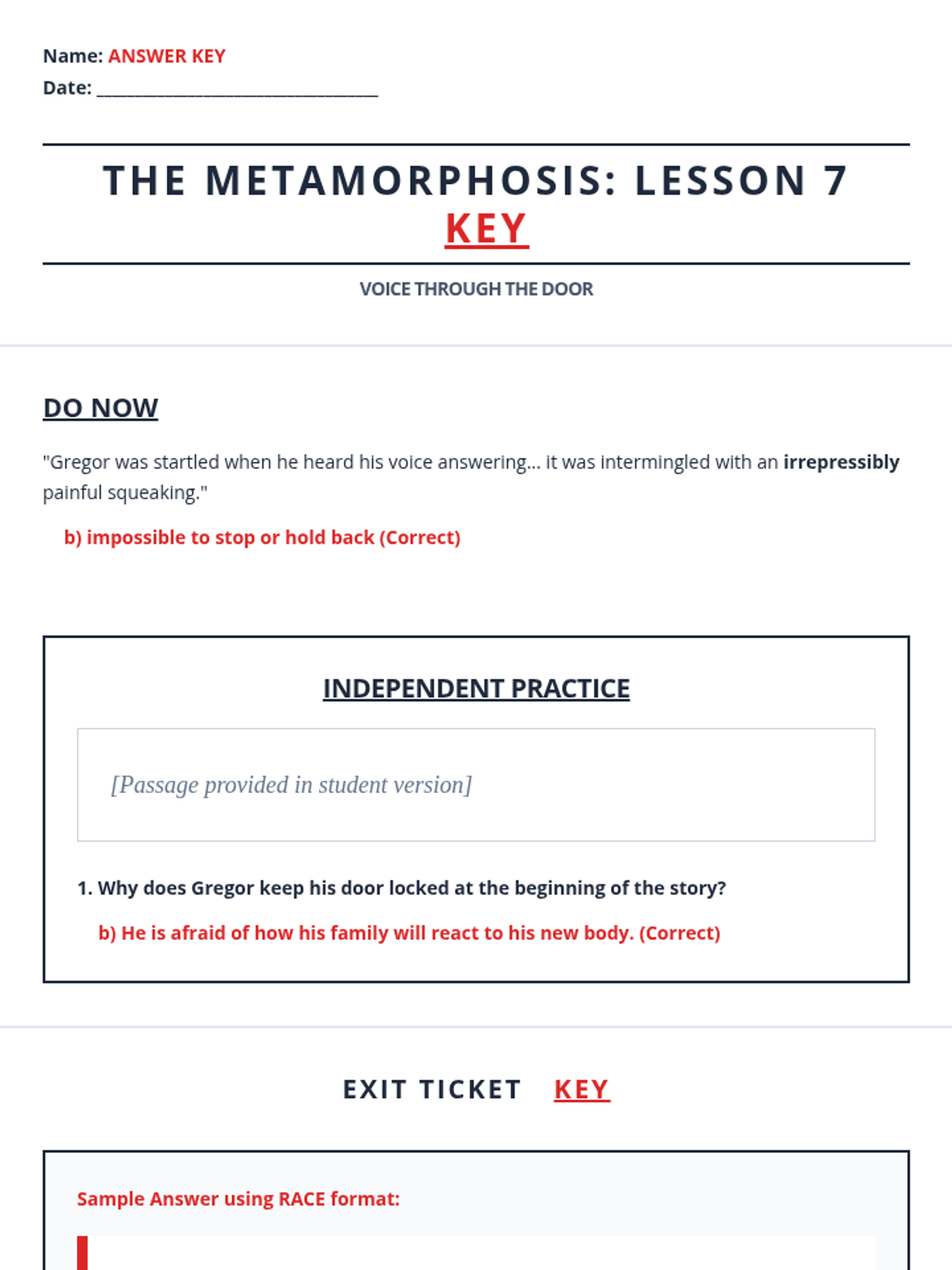
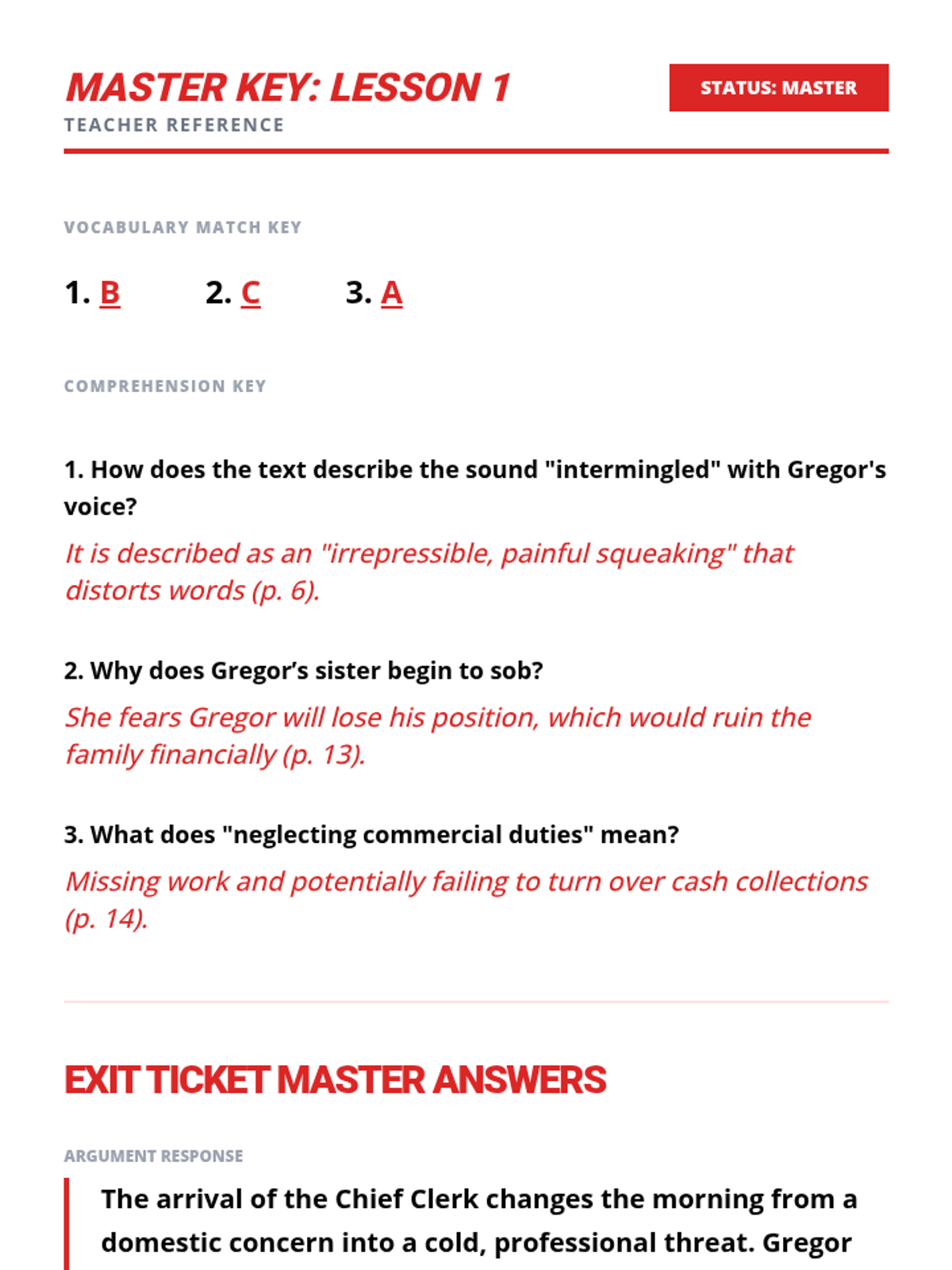
Students examine the breakdown of communication between Gregor and his family. They will analyze the symbolism of Gregor's changing voice and use affixes to decode complex words.
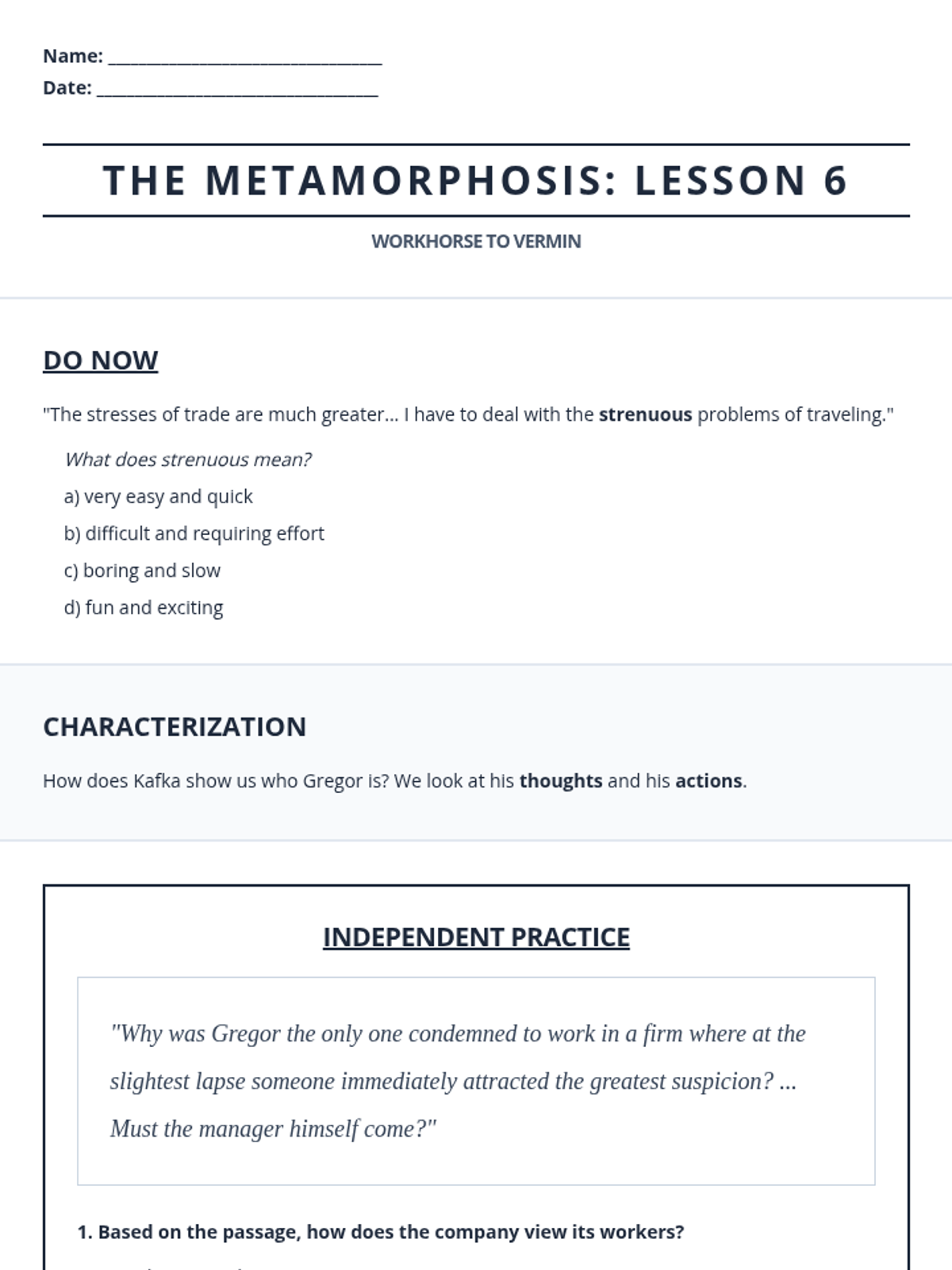
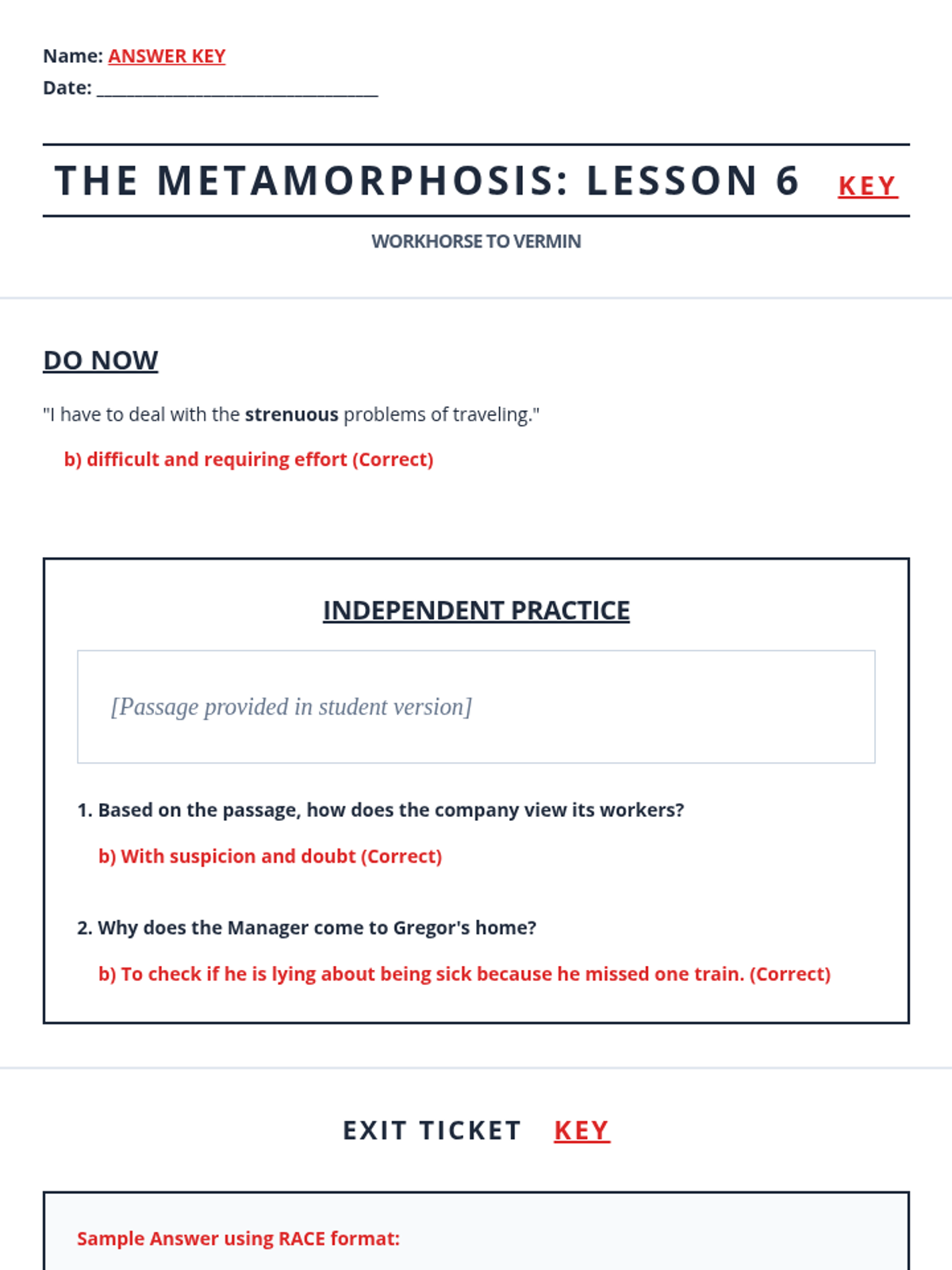
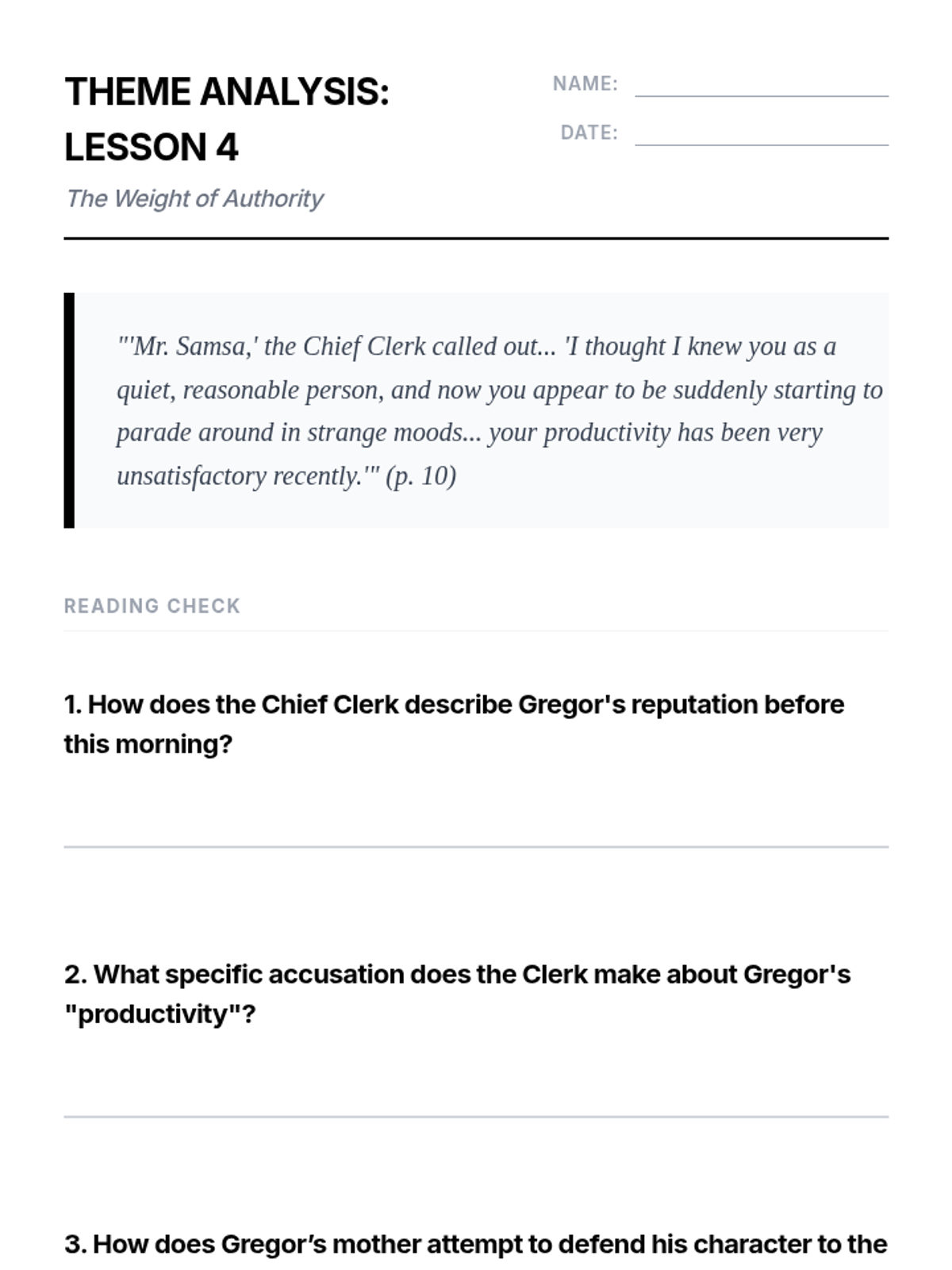
Students analyze Gregor's professional life and his feelings of alienation. They will focus on characterization and the arrival of the Chief Clerk, exploring how Gregor's identity is tied to his labor.
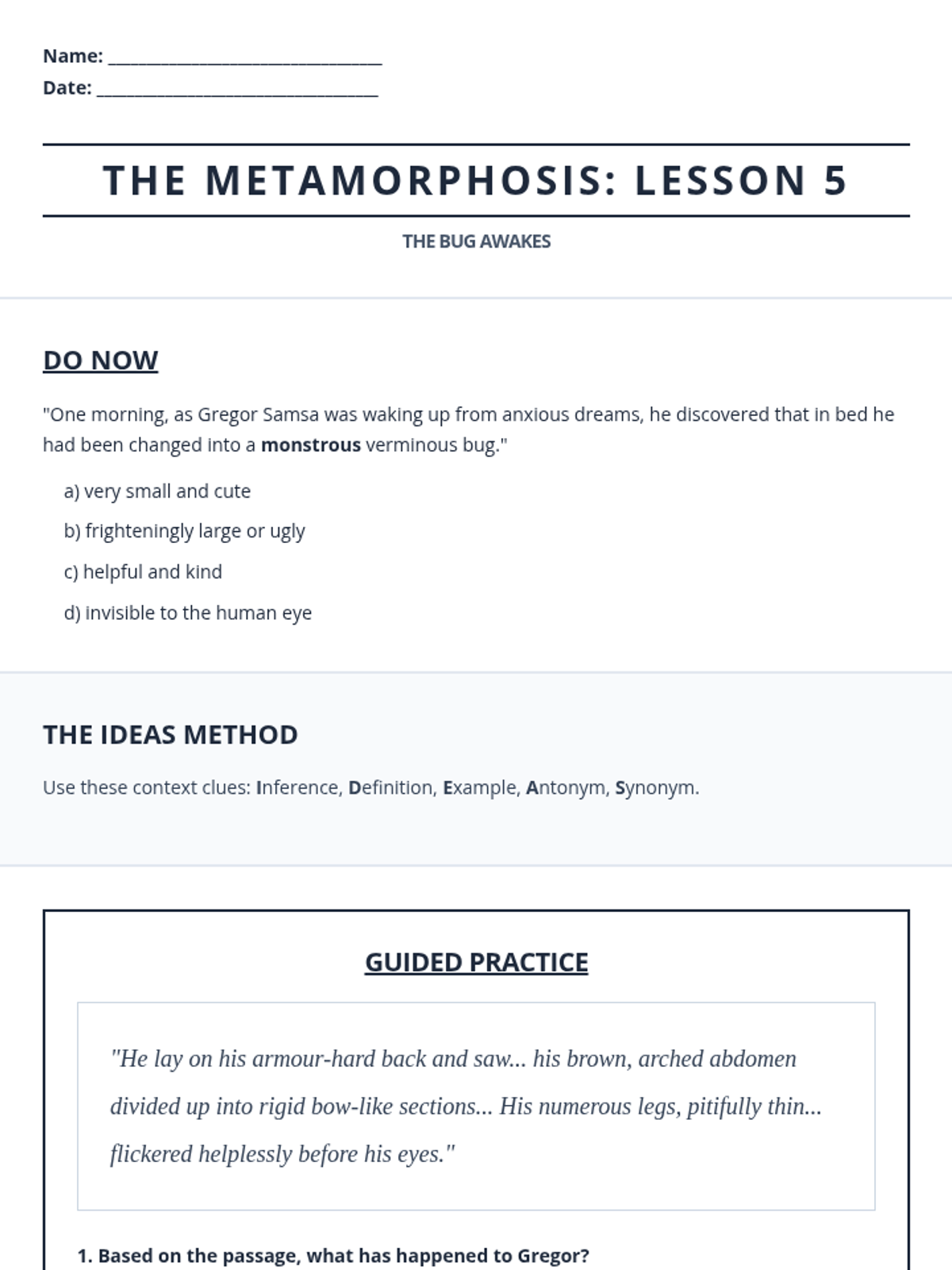
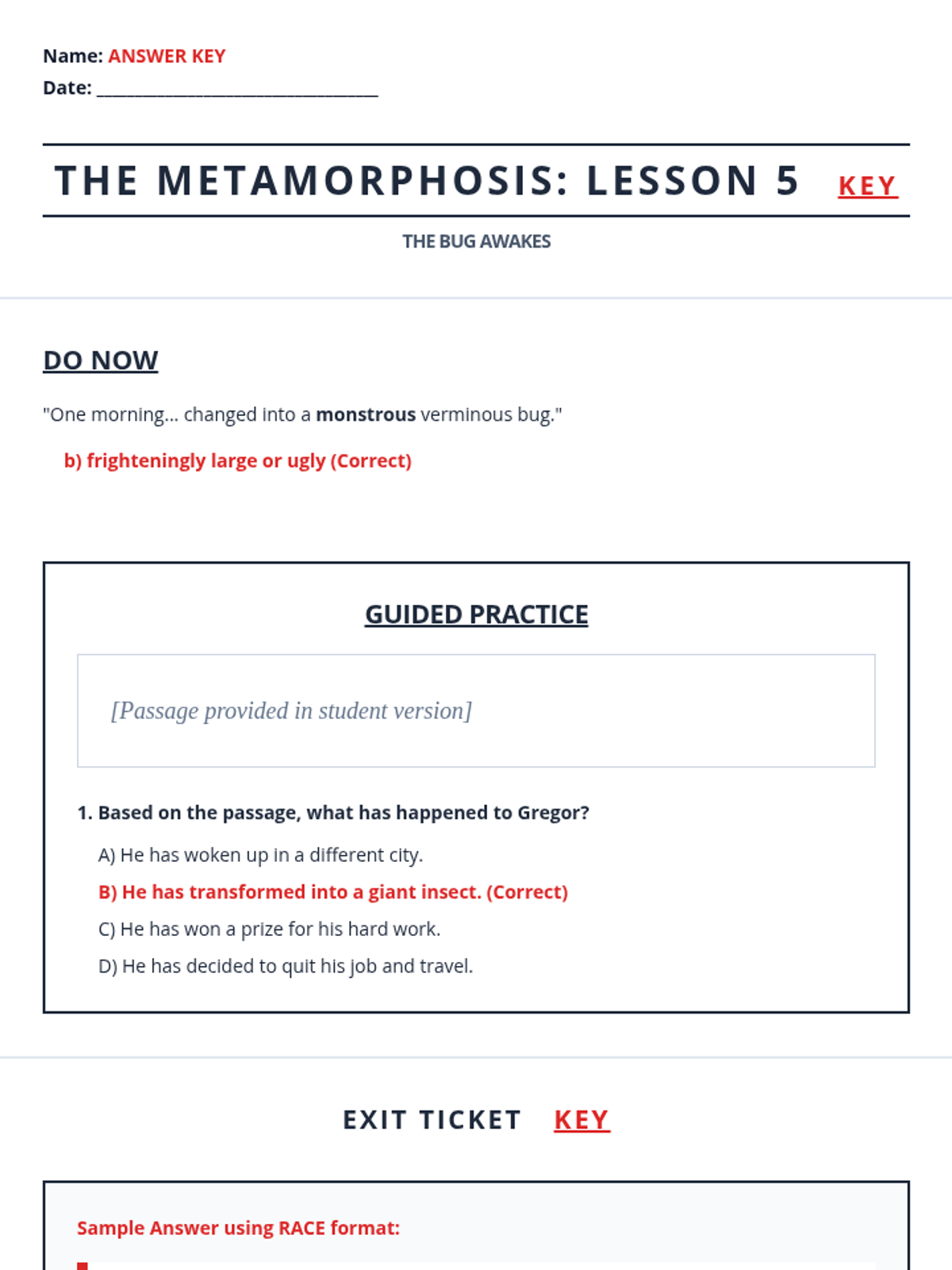
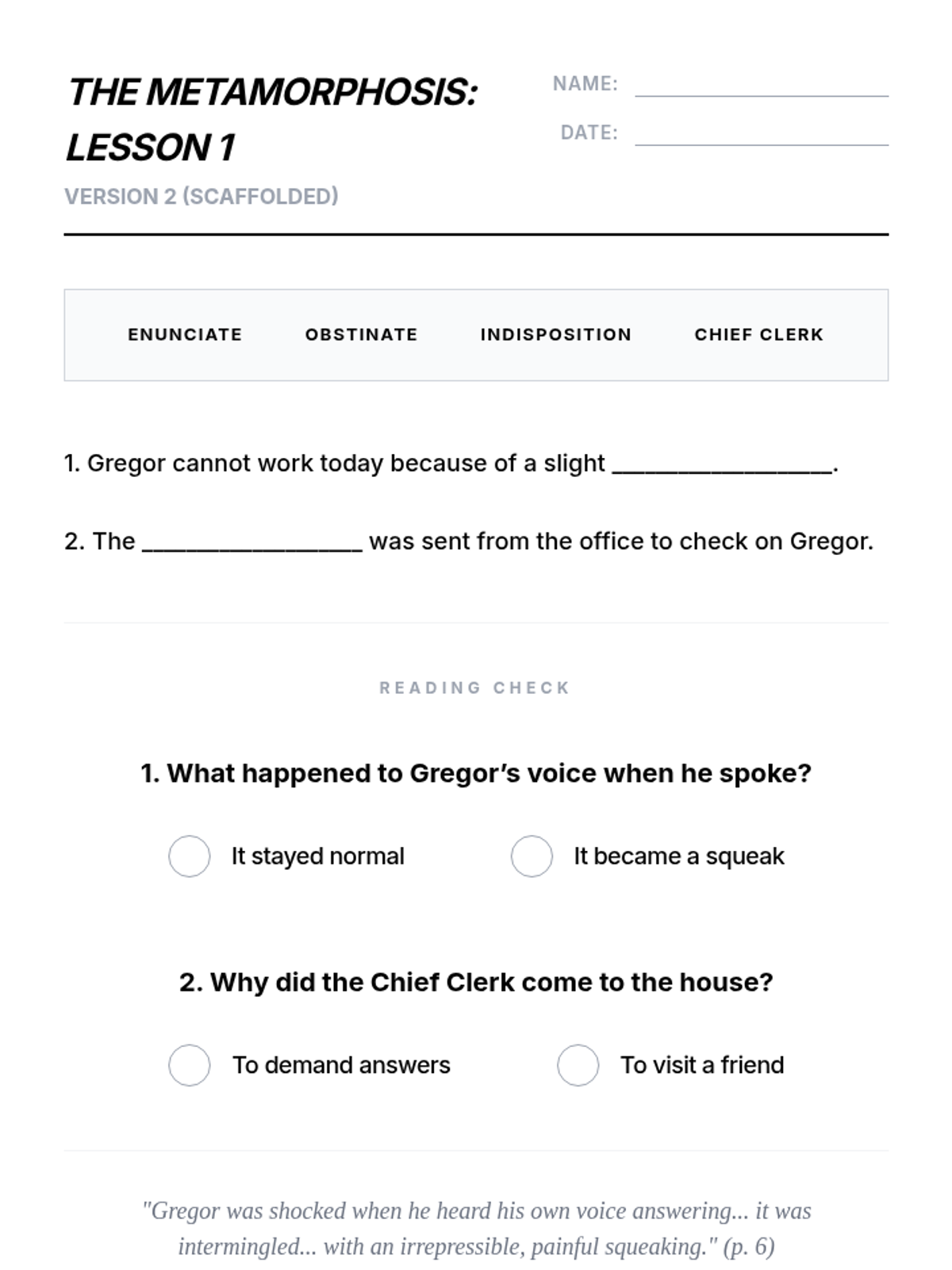
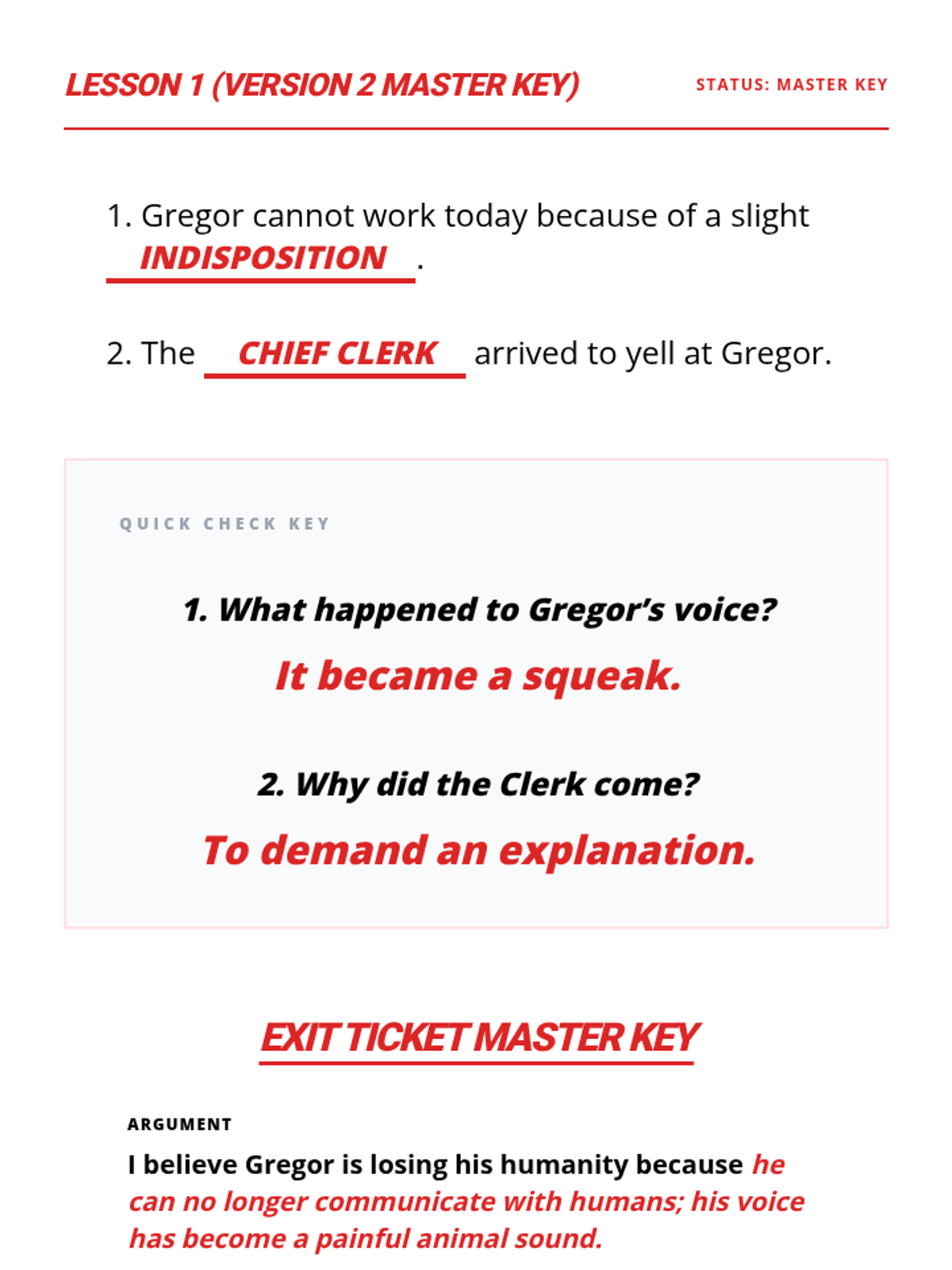
Students explore the opening of the novella, focusing on Gregor's physical transformation and his initial internal reaction. They will practice using context clues and the IDEAS method to define difficult vocabulary.
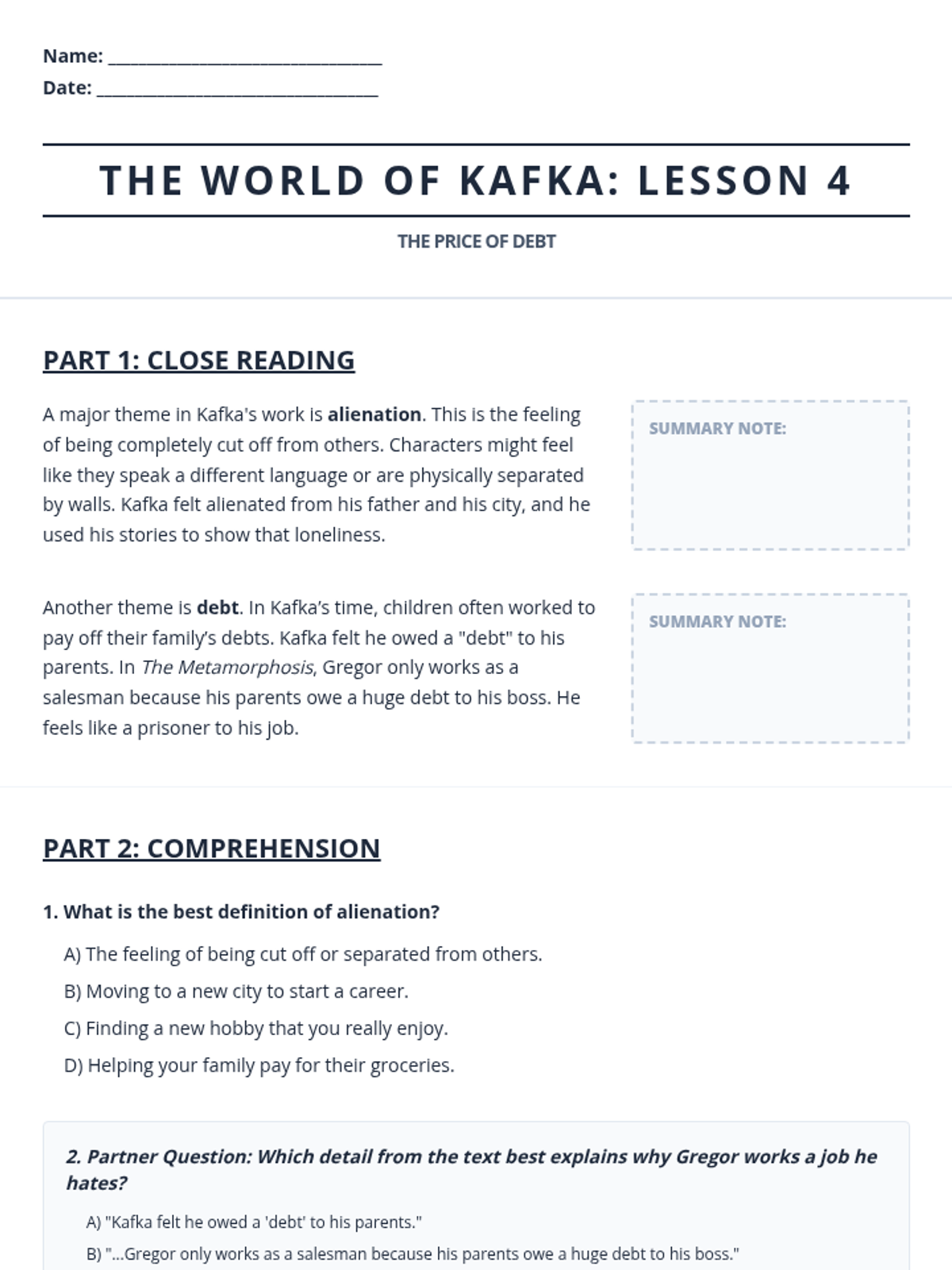
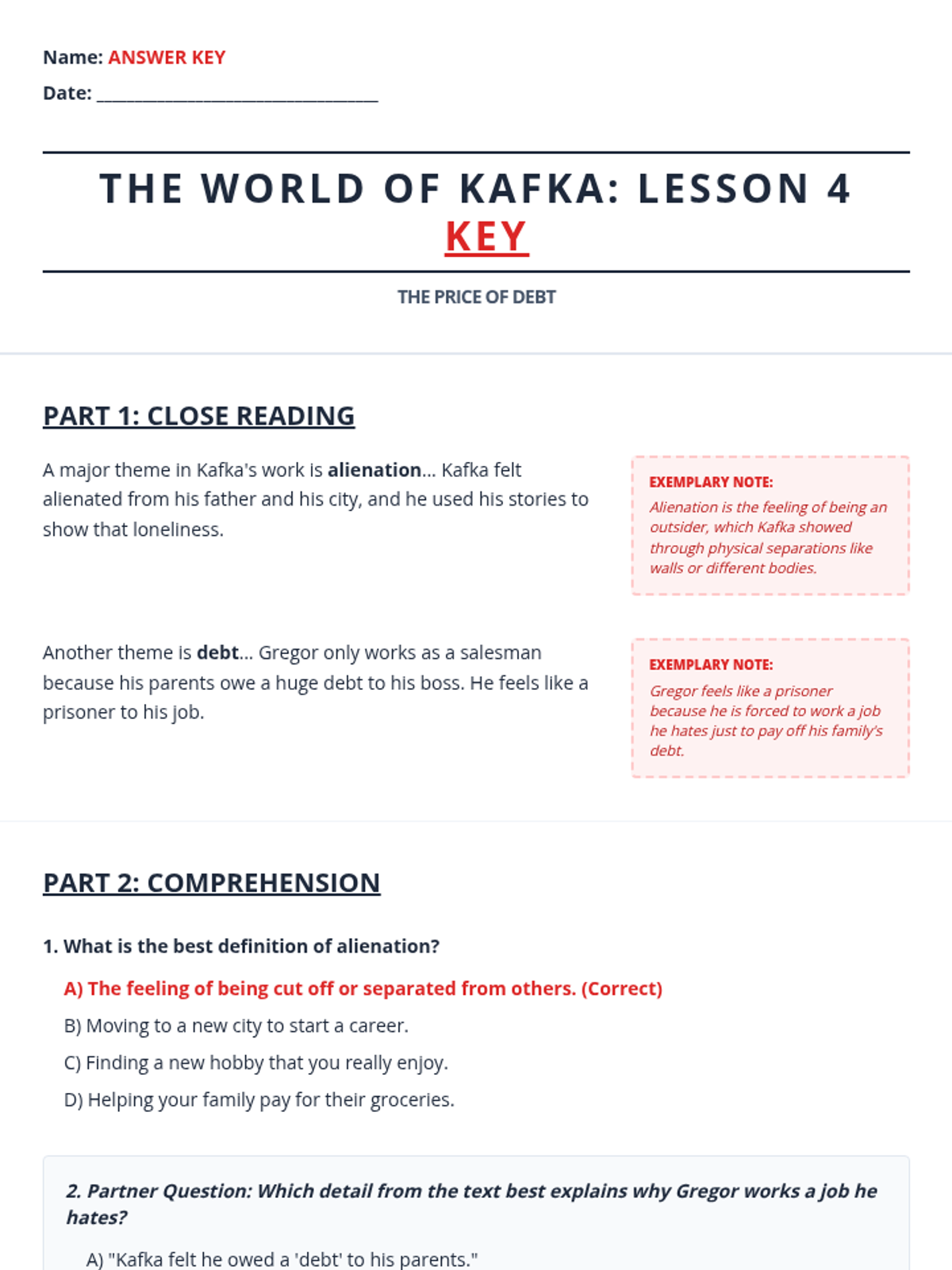
Students explore the theme of alienation and the role of family debt in Kafka's life and work. They will practice identifying these themes in short text excerpts and learn how to use the RACE format with transition words.
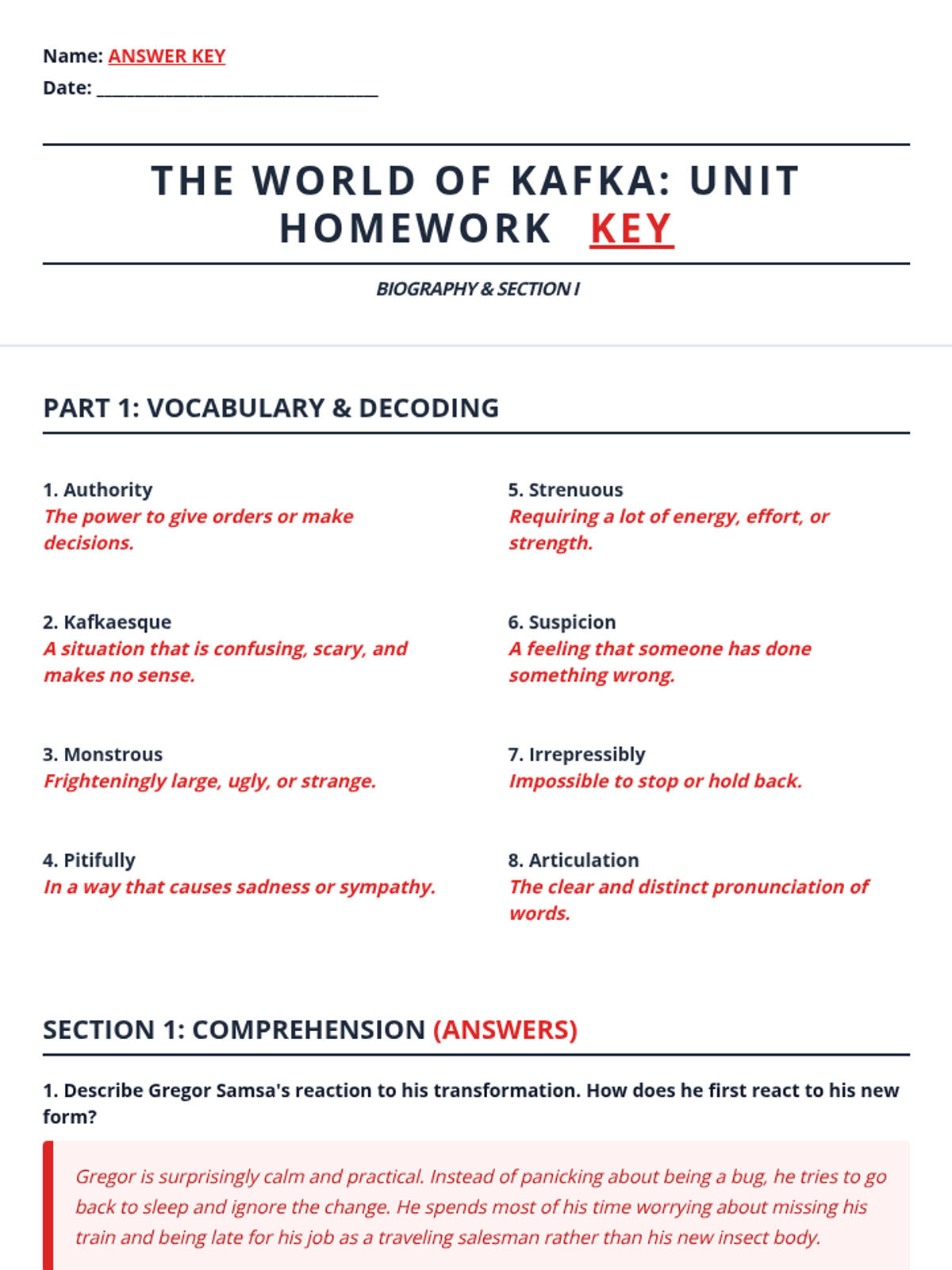
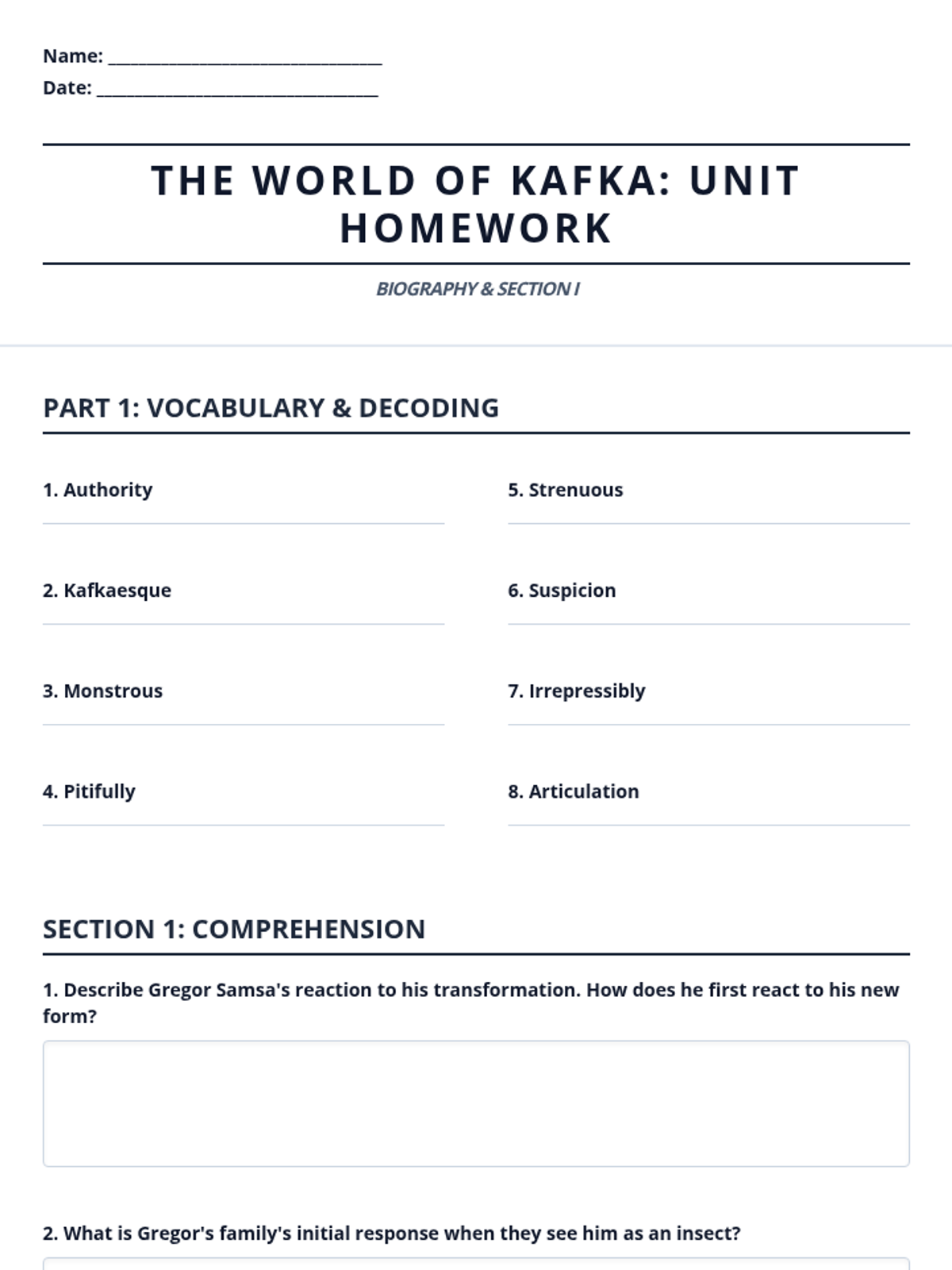
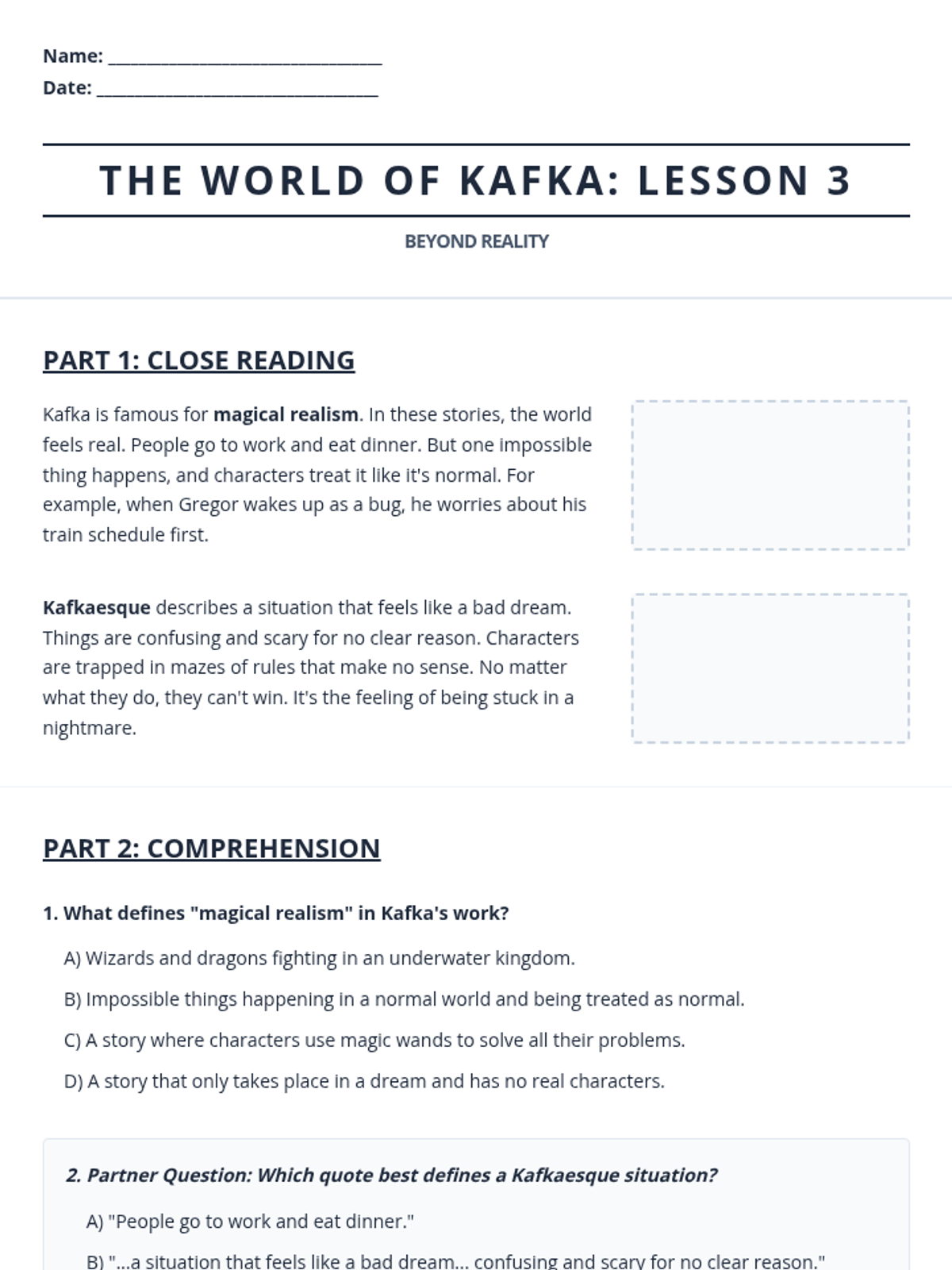
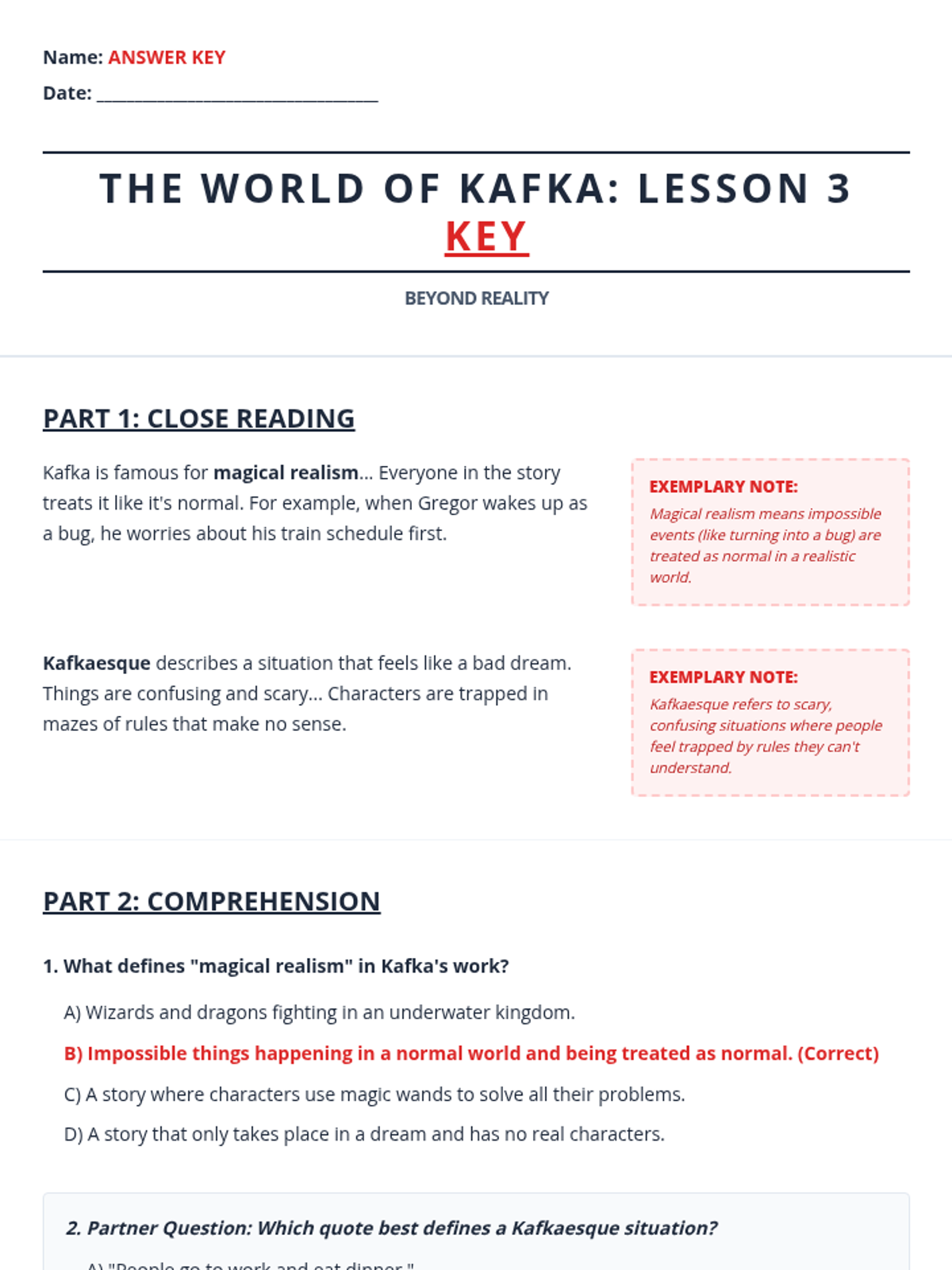
Students are introduced to the concepts of magical realism and the term "Kafkaesque." They will learn how Kafka blends ordinary reality with impossible, nightmare-like situations to create a unique literary style.
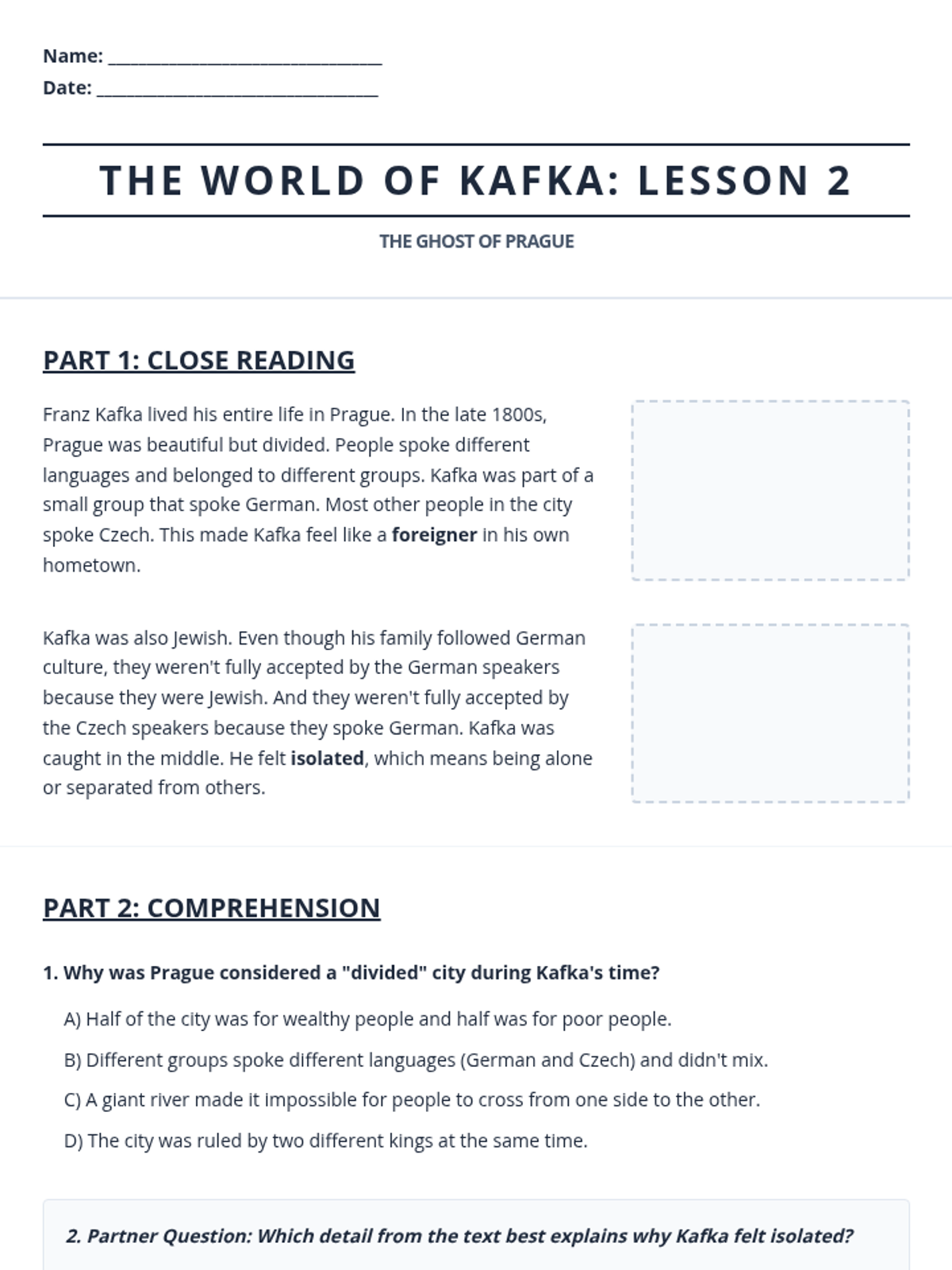
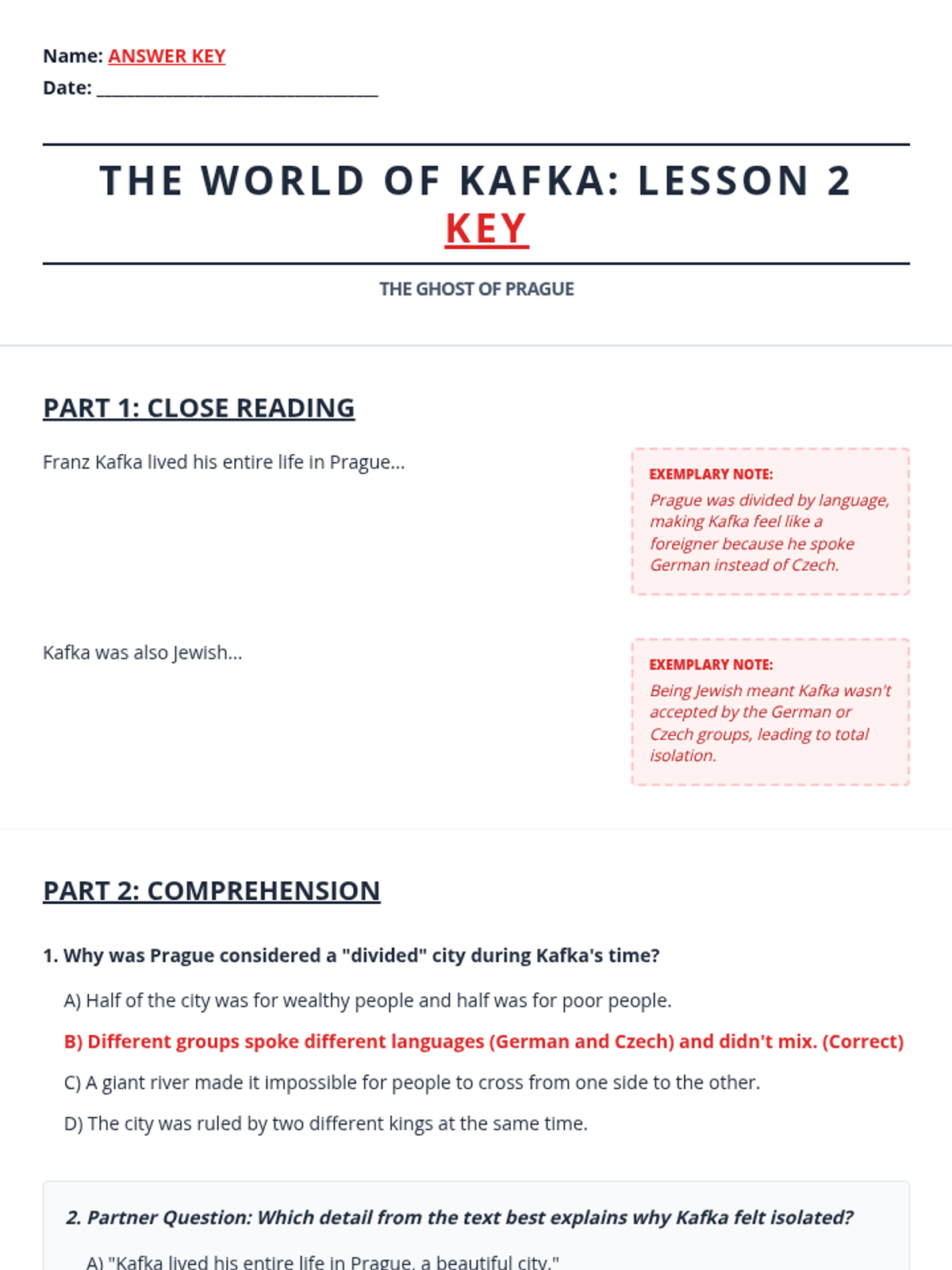
Students examine the historical and social context of Prague in the late 1800s. They will explore how Kafka's identity as a German-speaking Jew in a Czech city contributed to the themes of isolation in his writing.
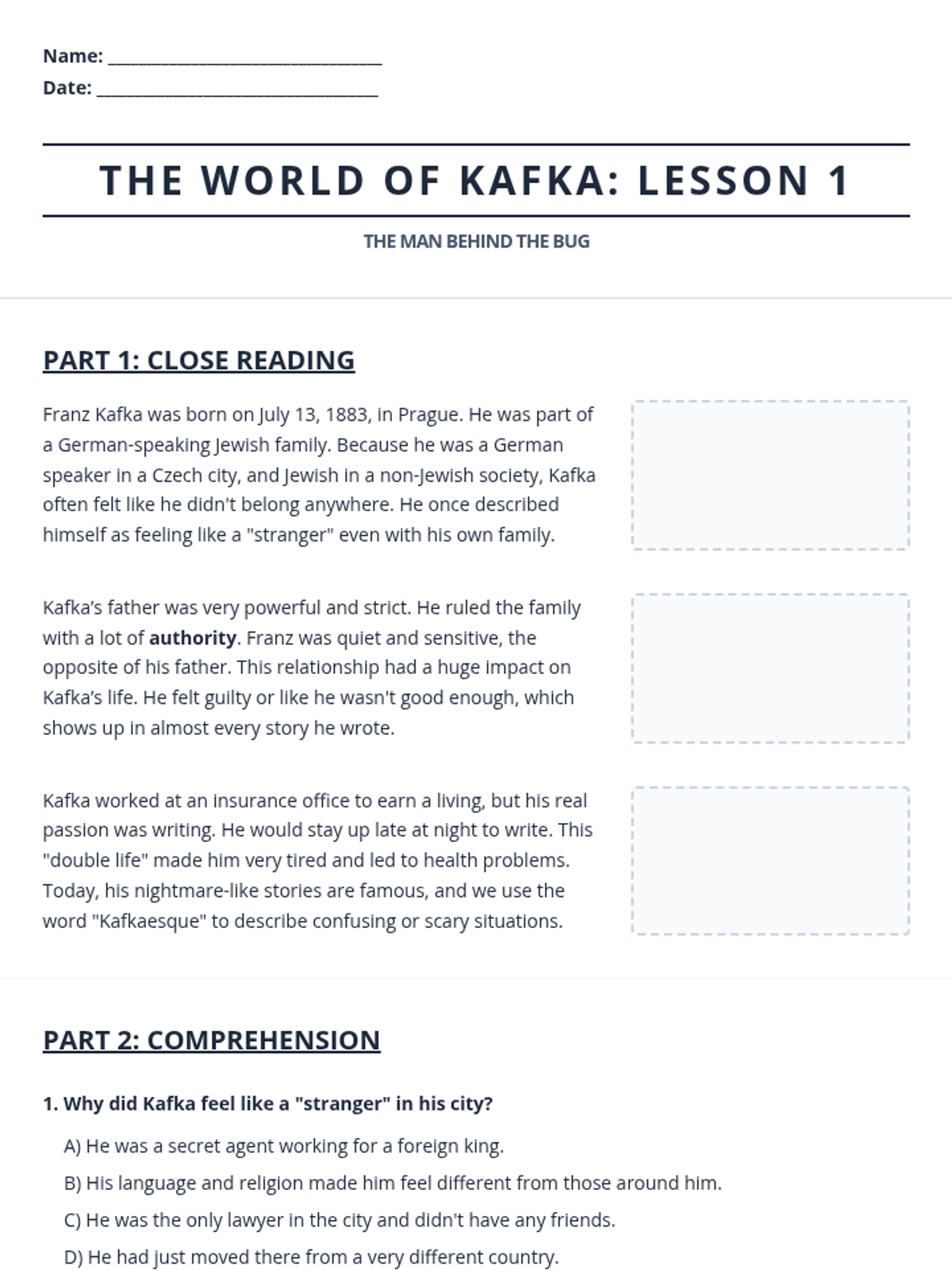
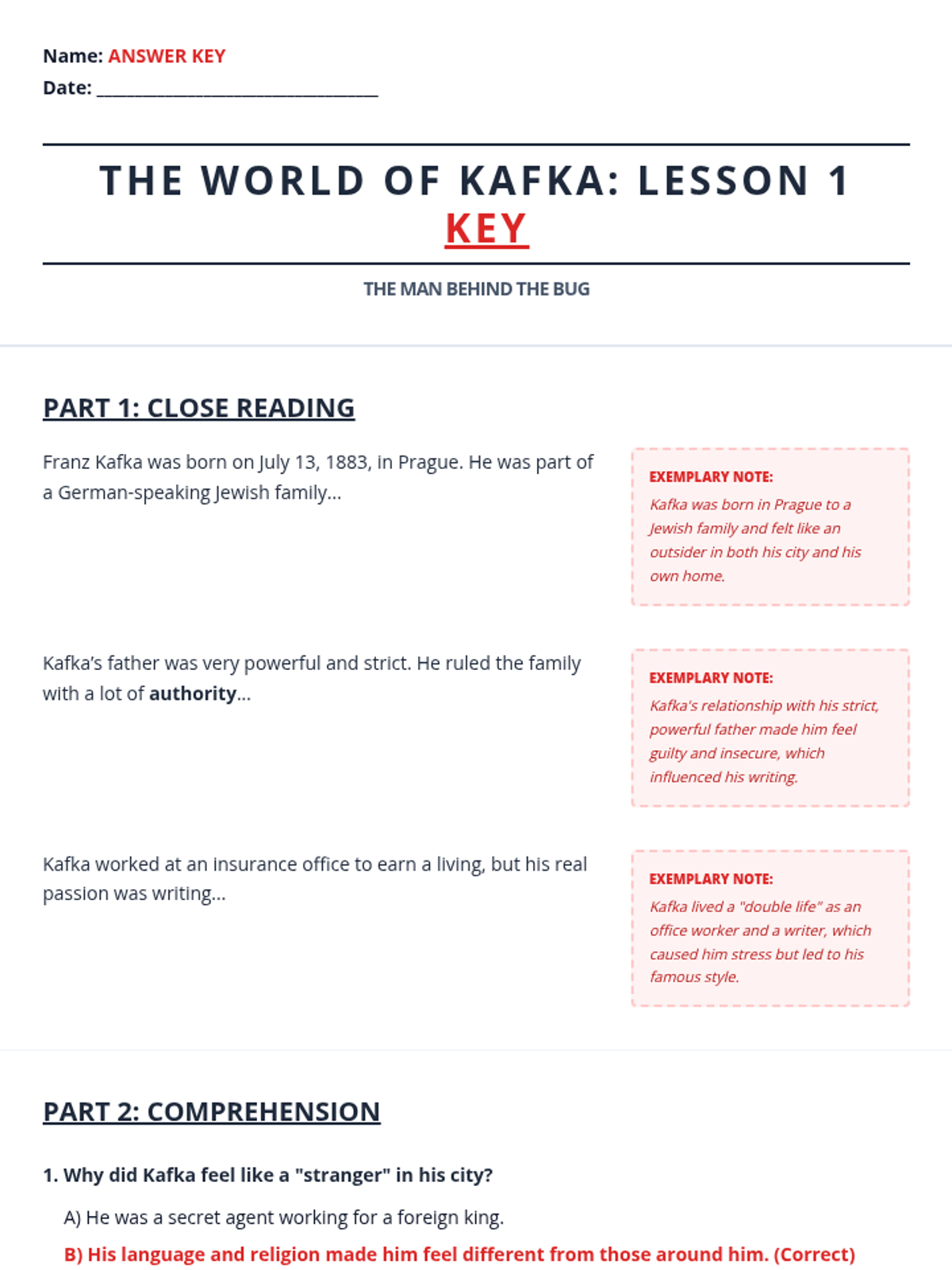
Students read a simplified biography of Franz Kafka to understand the author's background, his difficult relationship with his father, and his "double life" as an office worker and a writer.
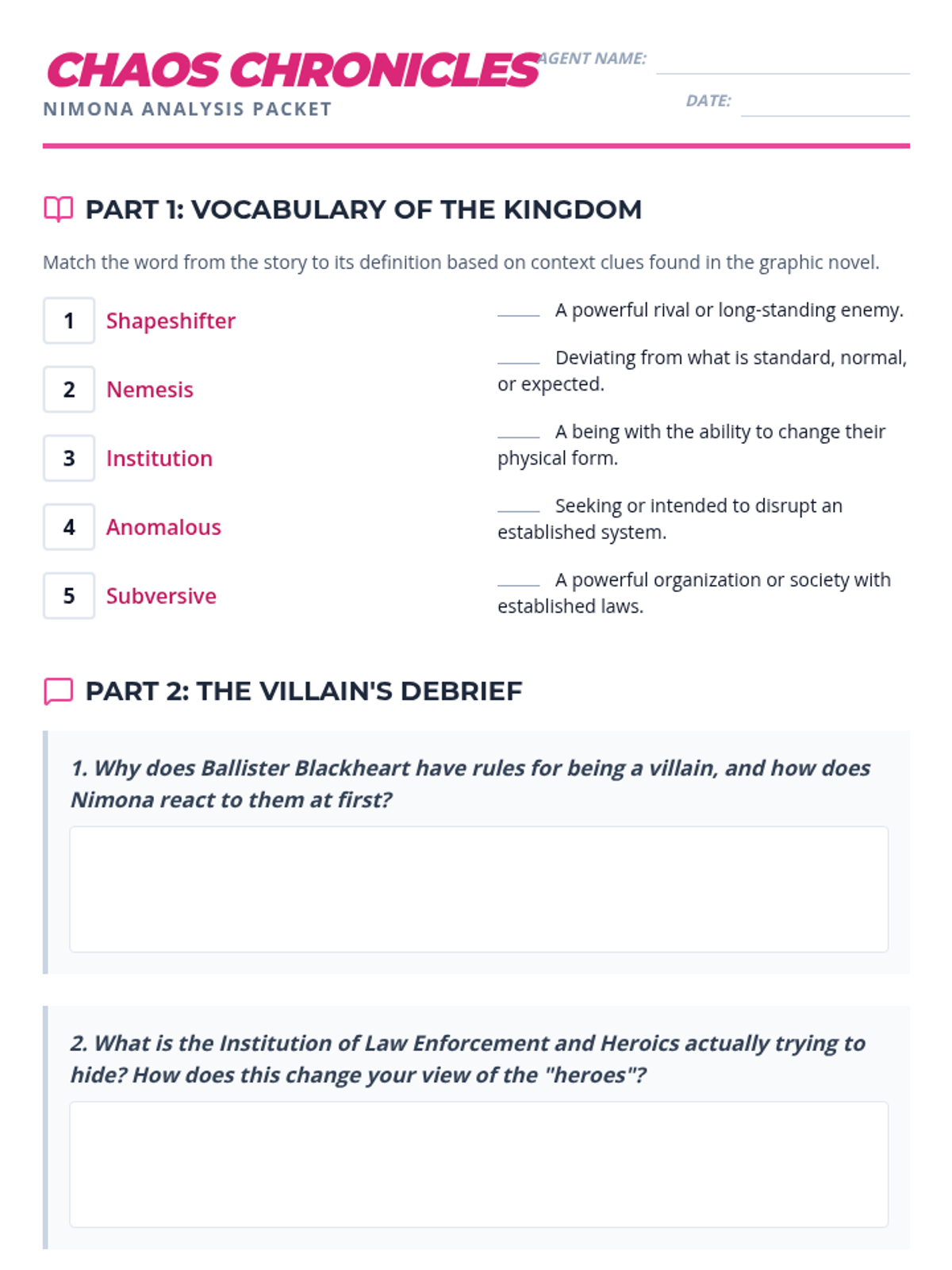
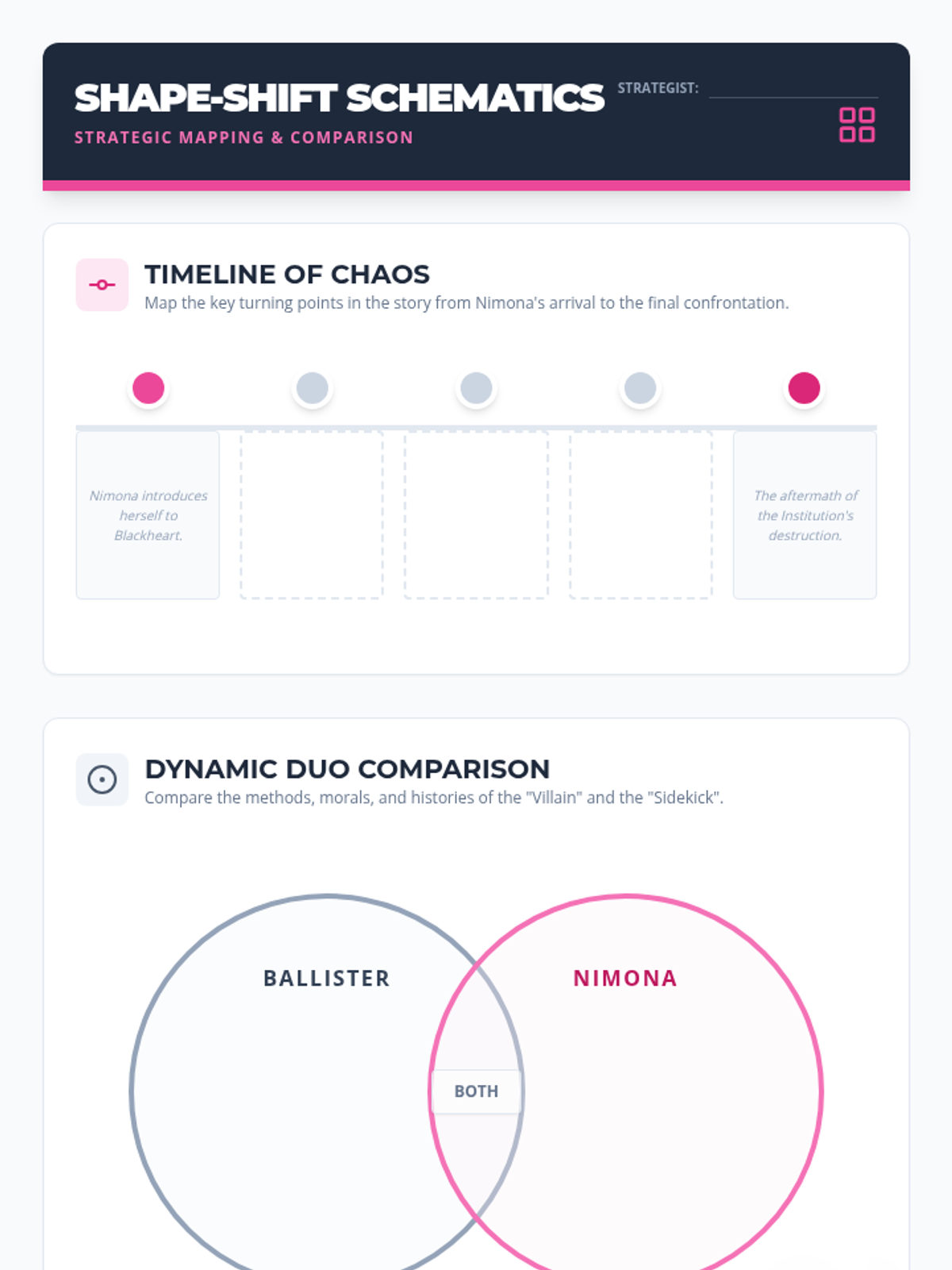
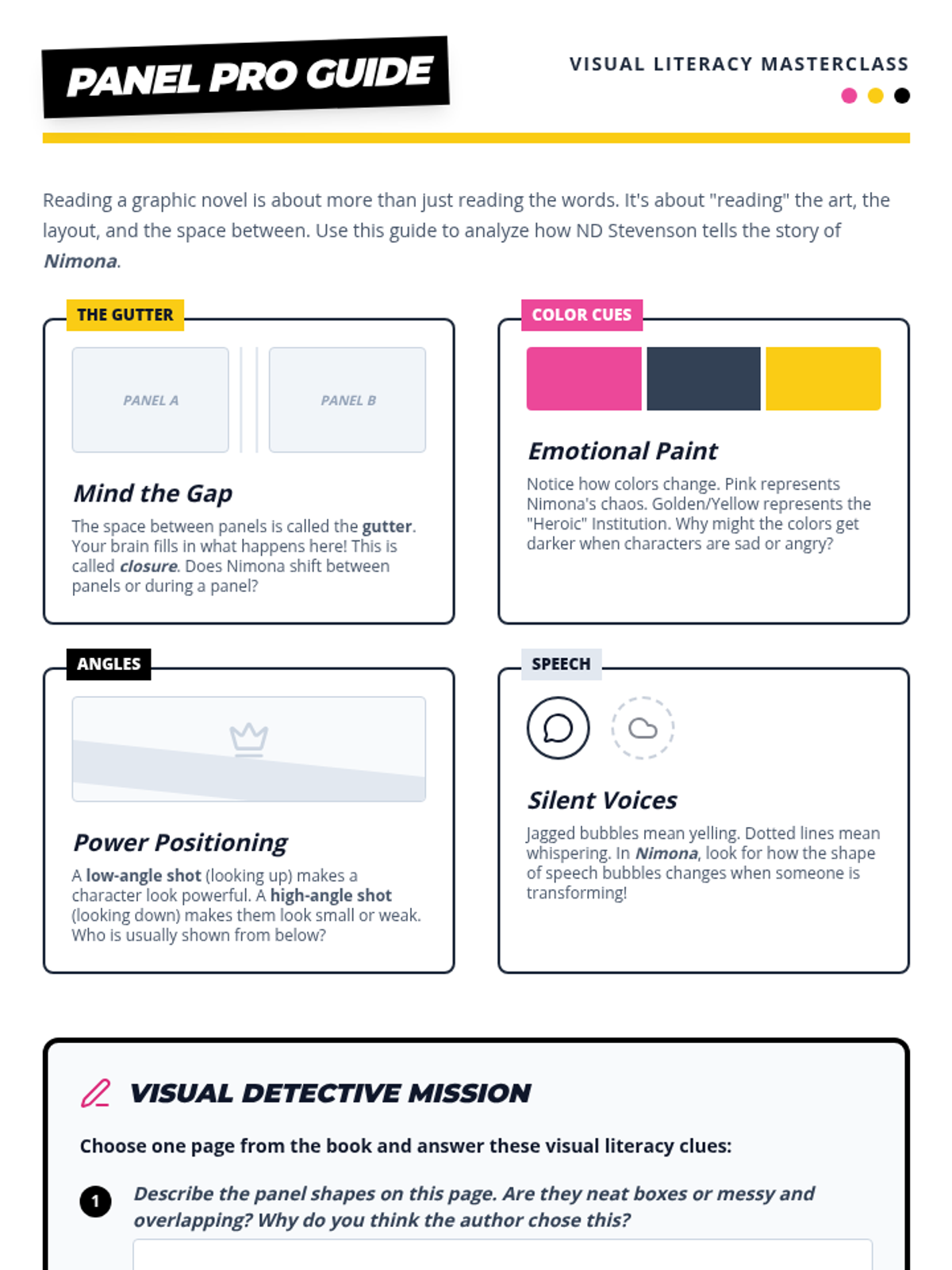
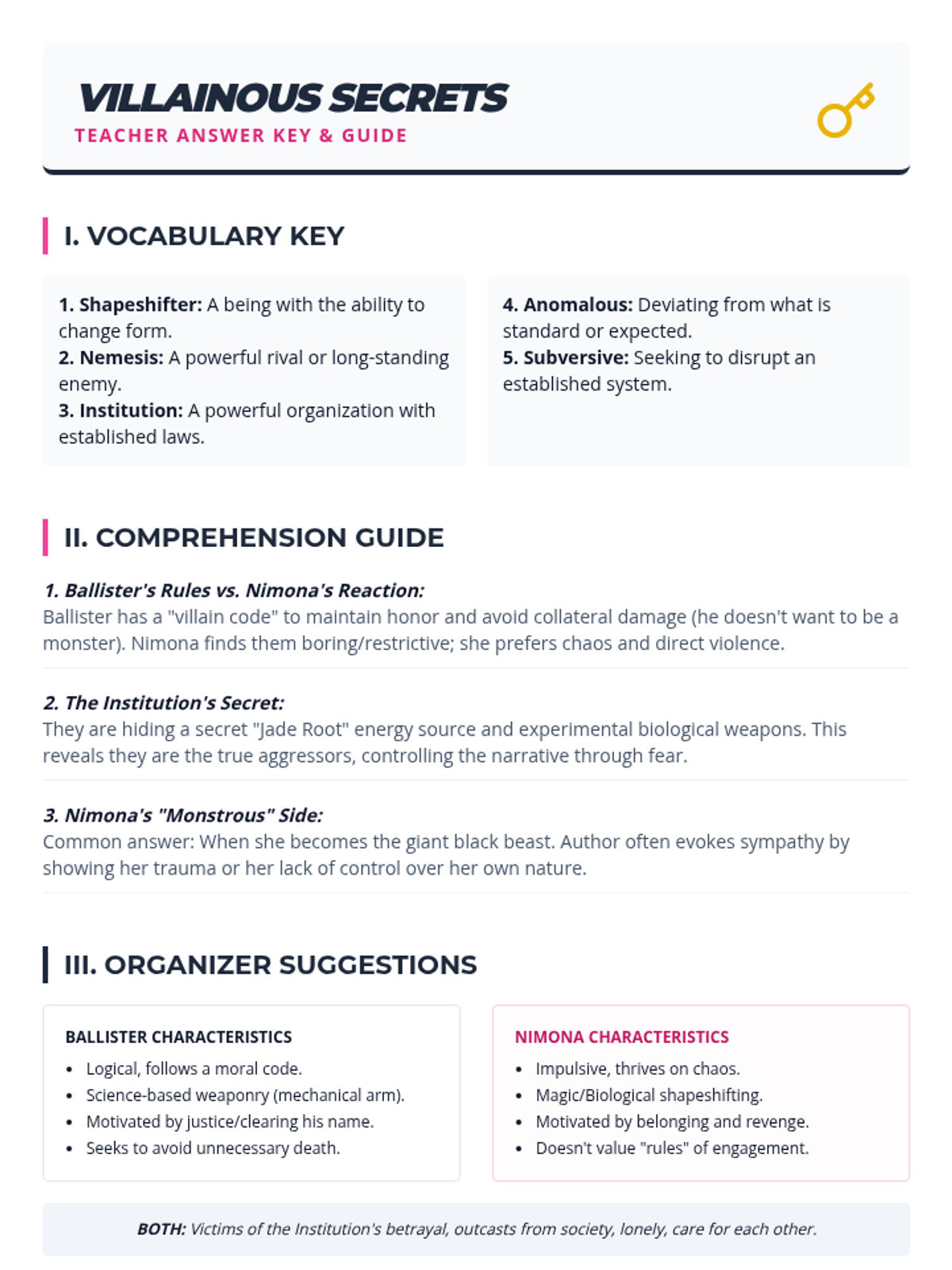
A deep dive into ND Stevenson's 'Nimona', focusing on character dynamics, plot structure, and the unique visual language of graphic novels.
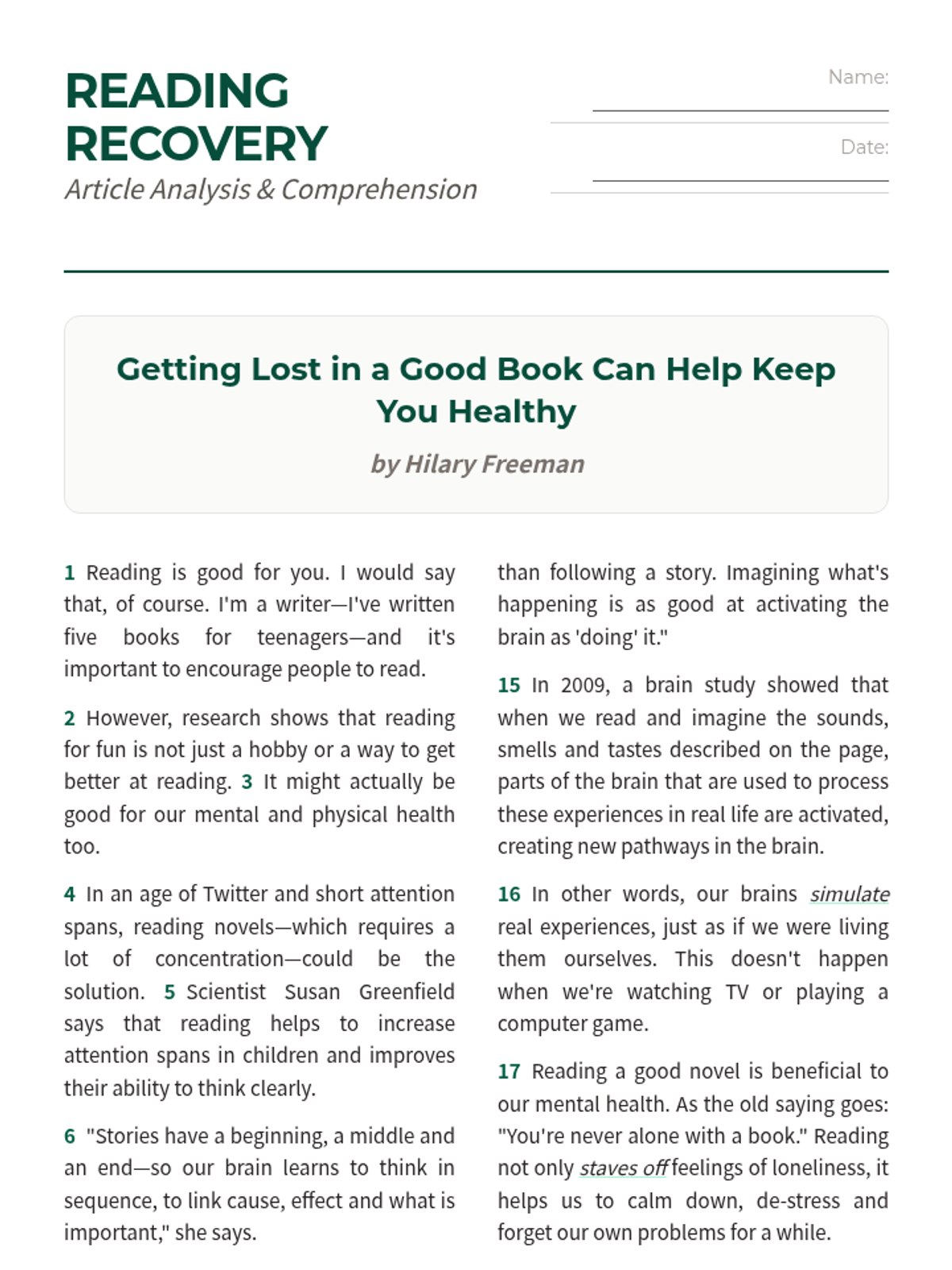
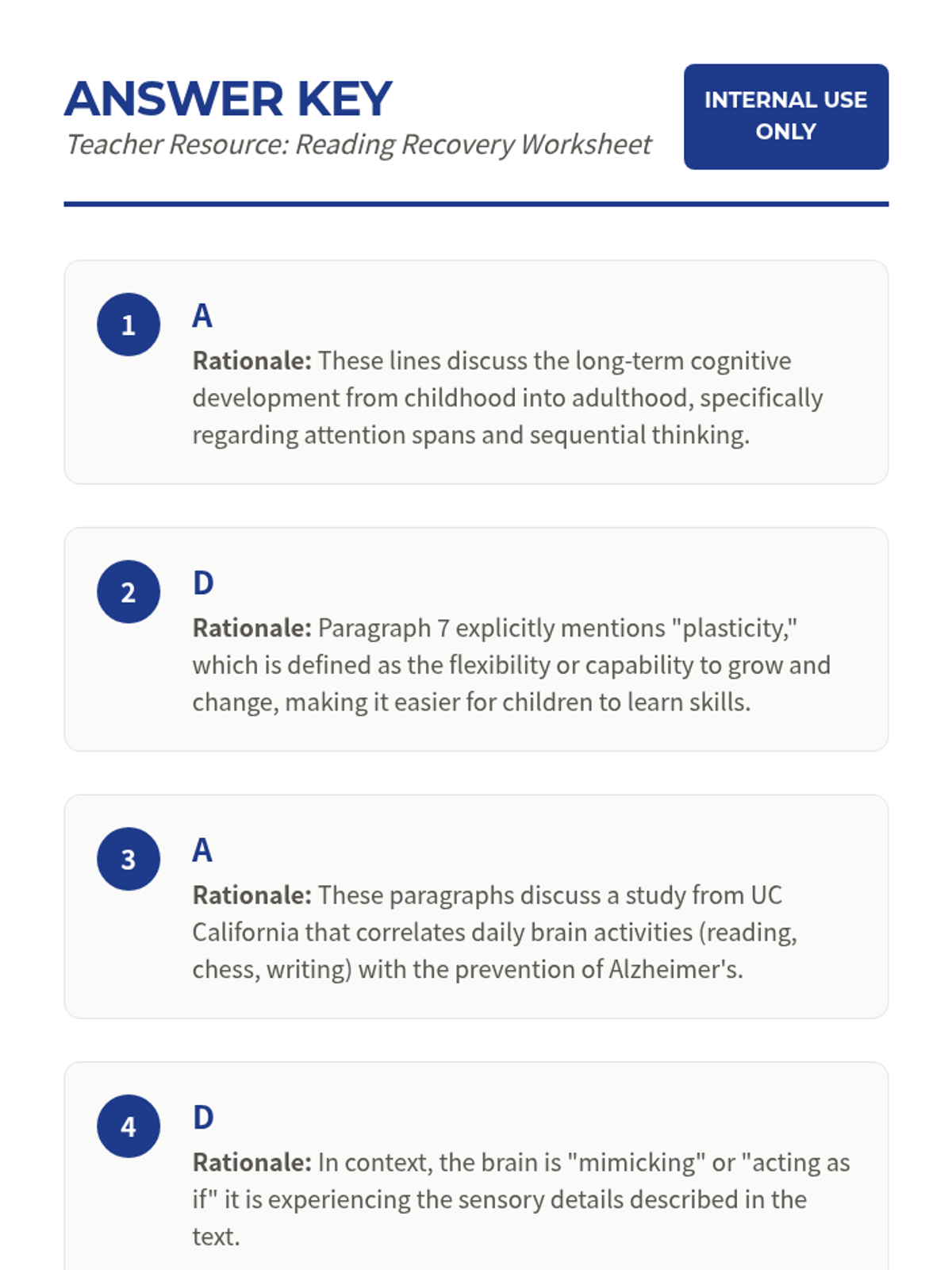
This lesson explores the mental and physical health benefits of reading as presented in Hilary Freeman's article. Students will analyze the author's claims, evaluate scientific evidence, and master key vocabulary related to brain health and empathy.
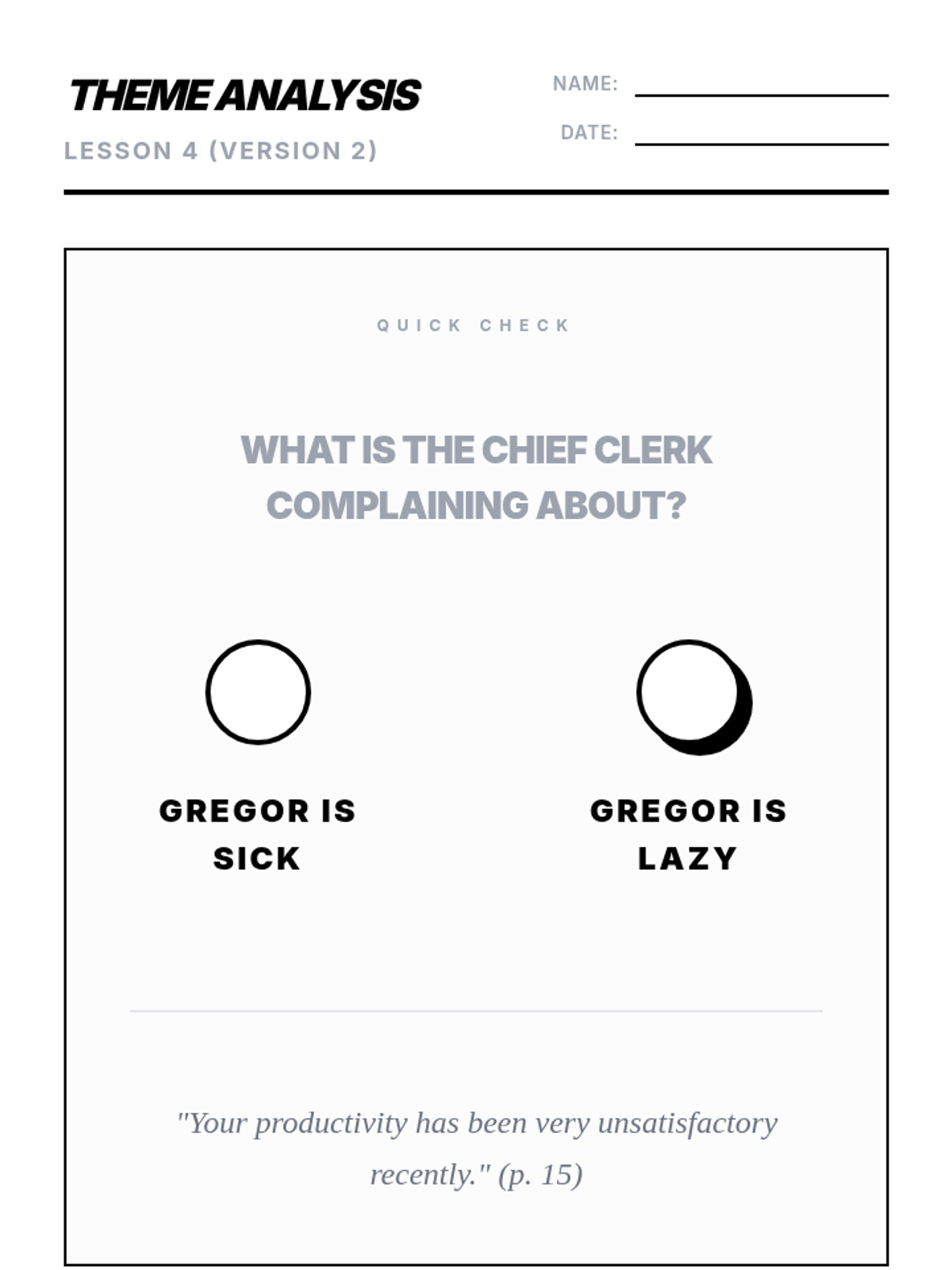
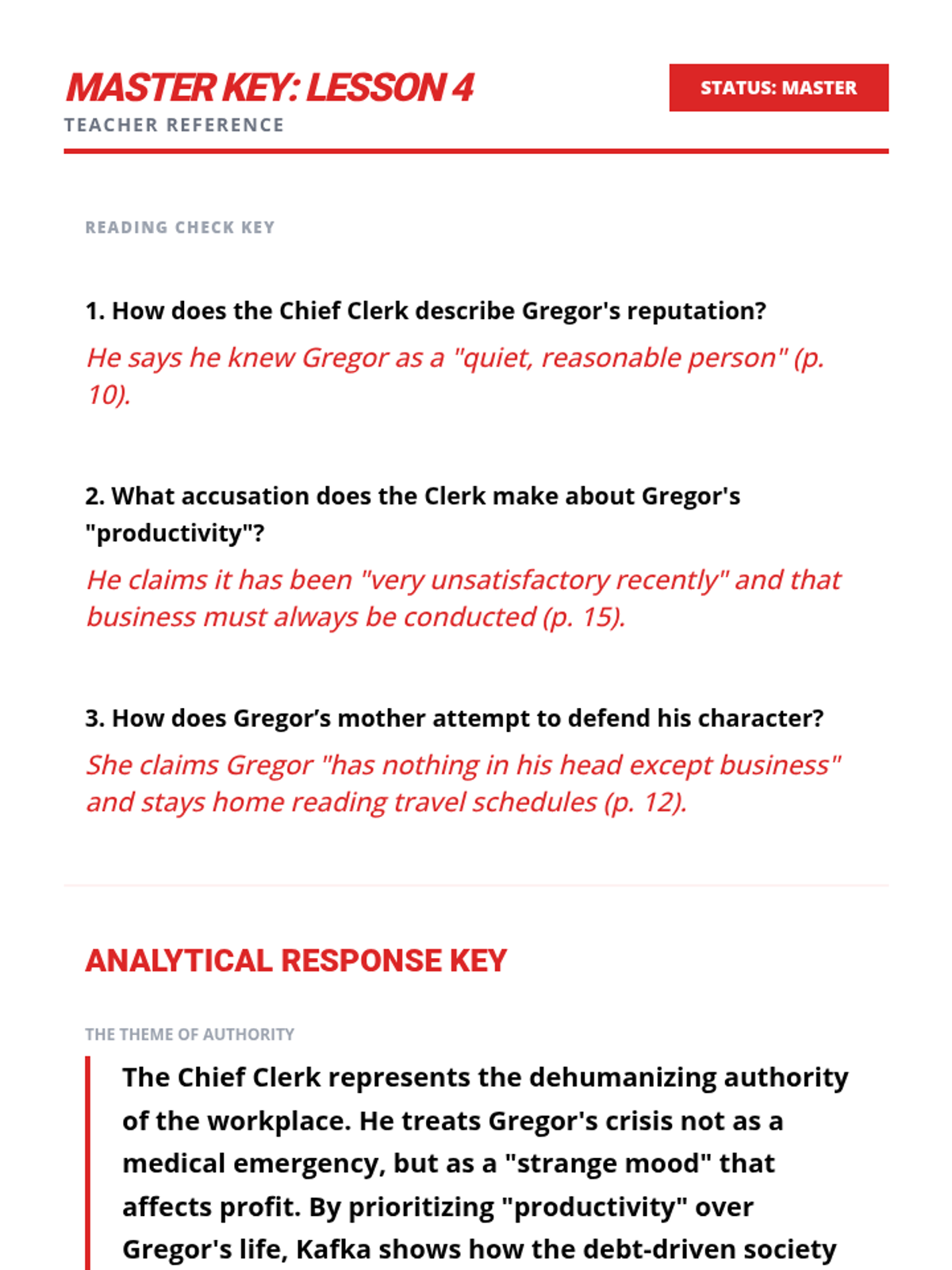
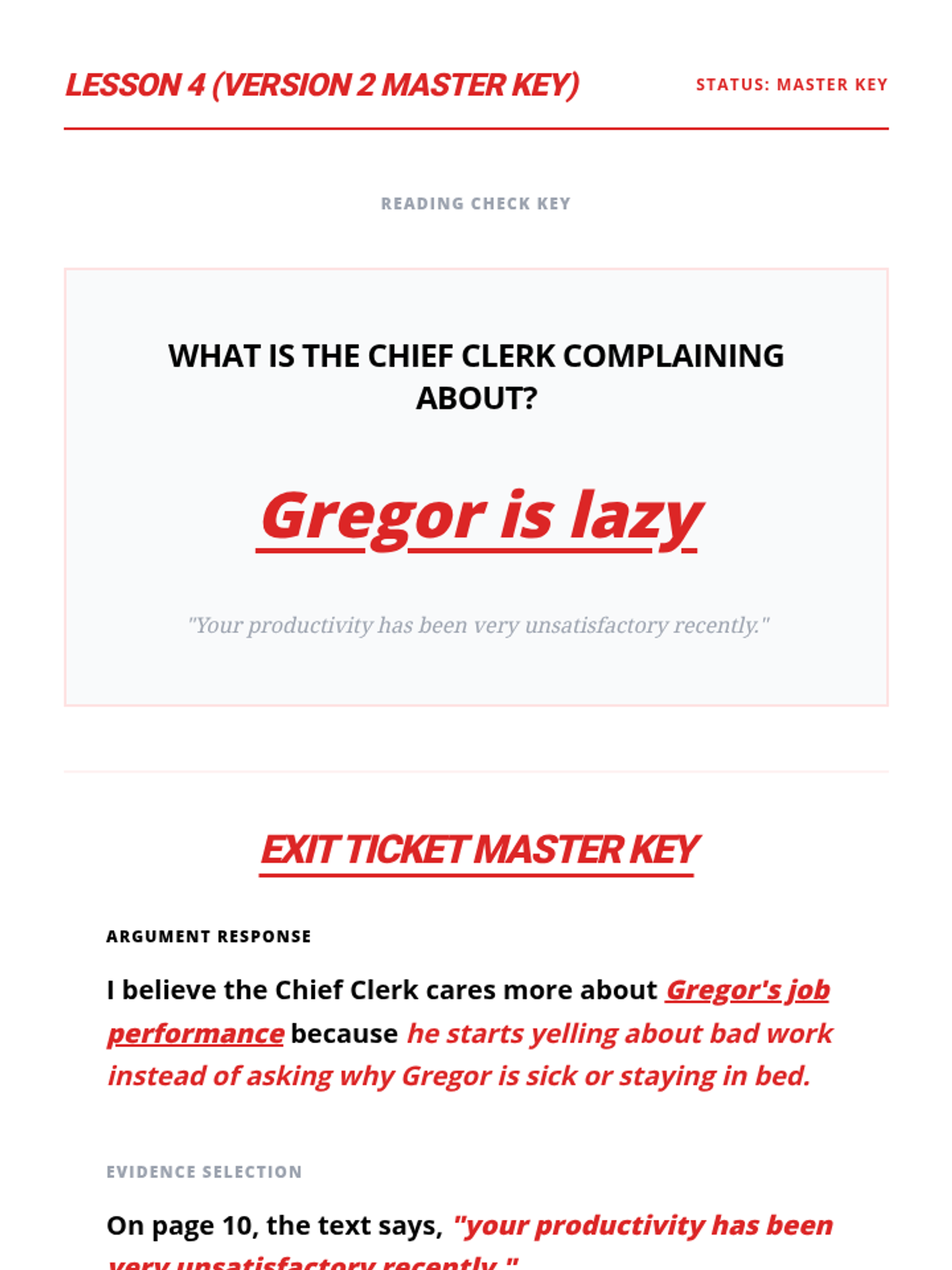
Students analyze how Kafka uses the Chief Clerk's arrival to explore the theme of authority and the dehumanizing nature of debt and labor.
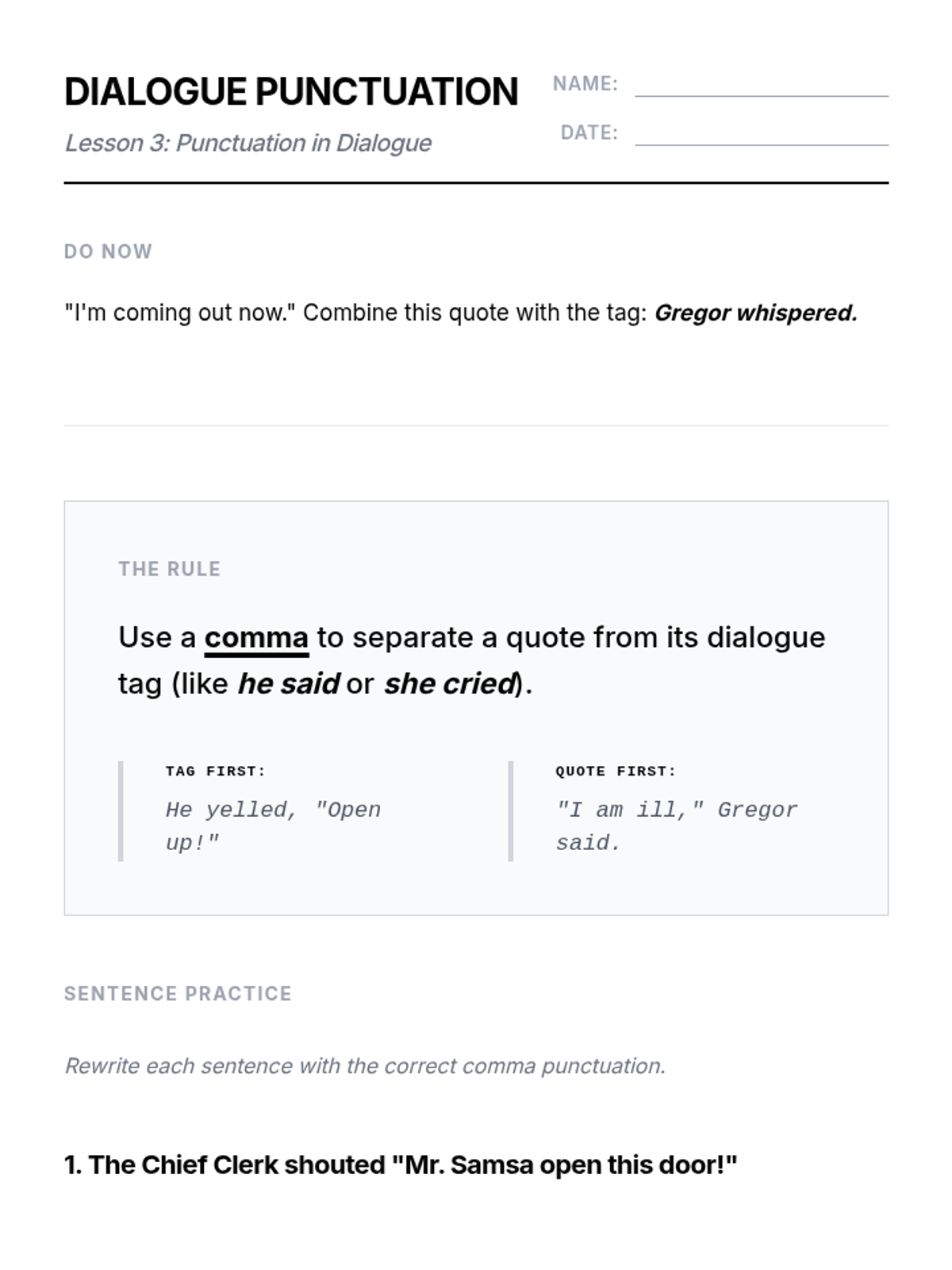
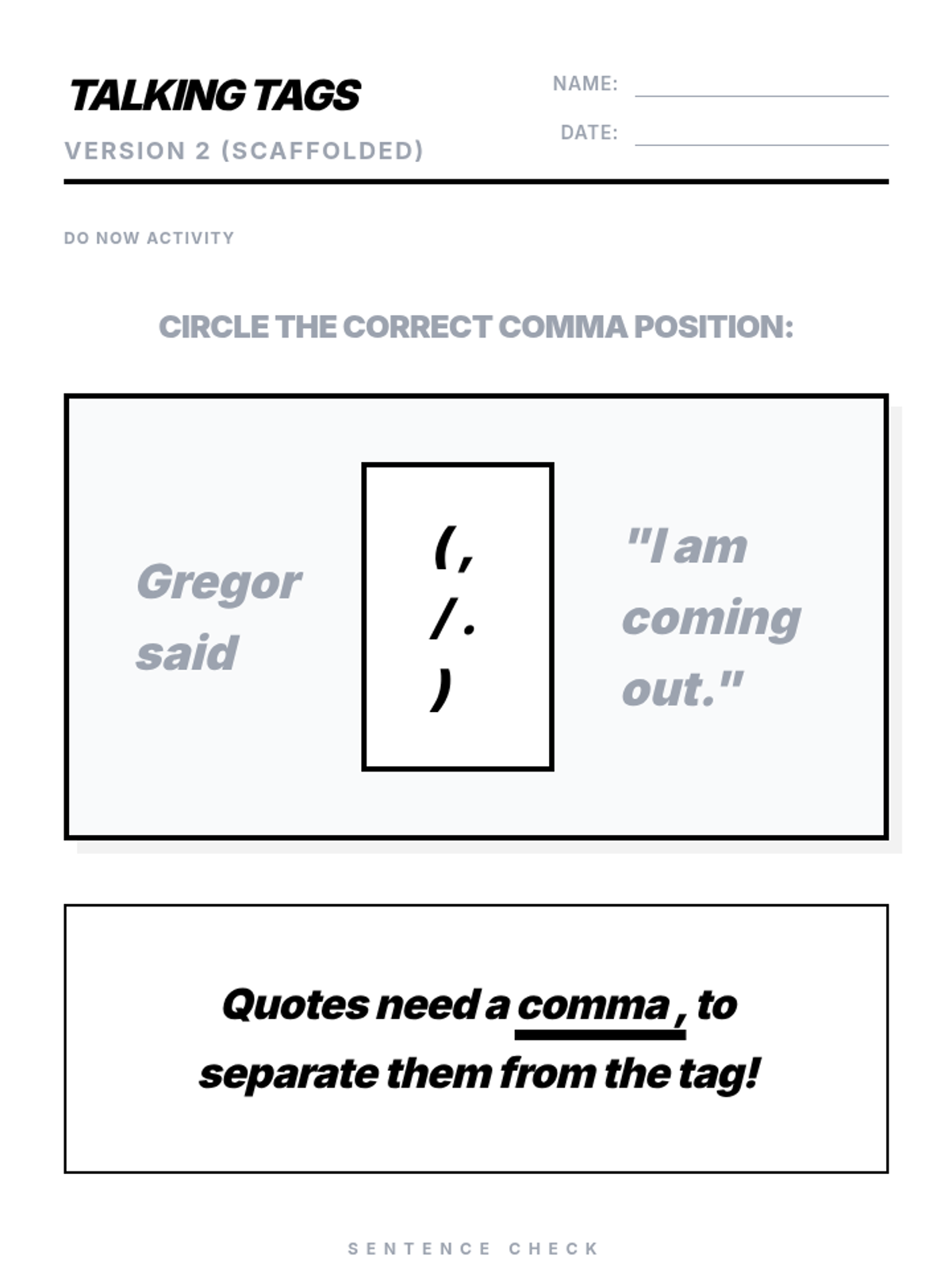
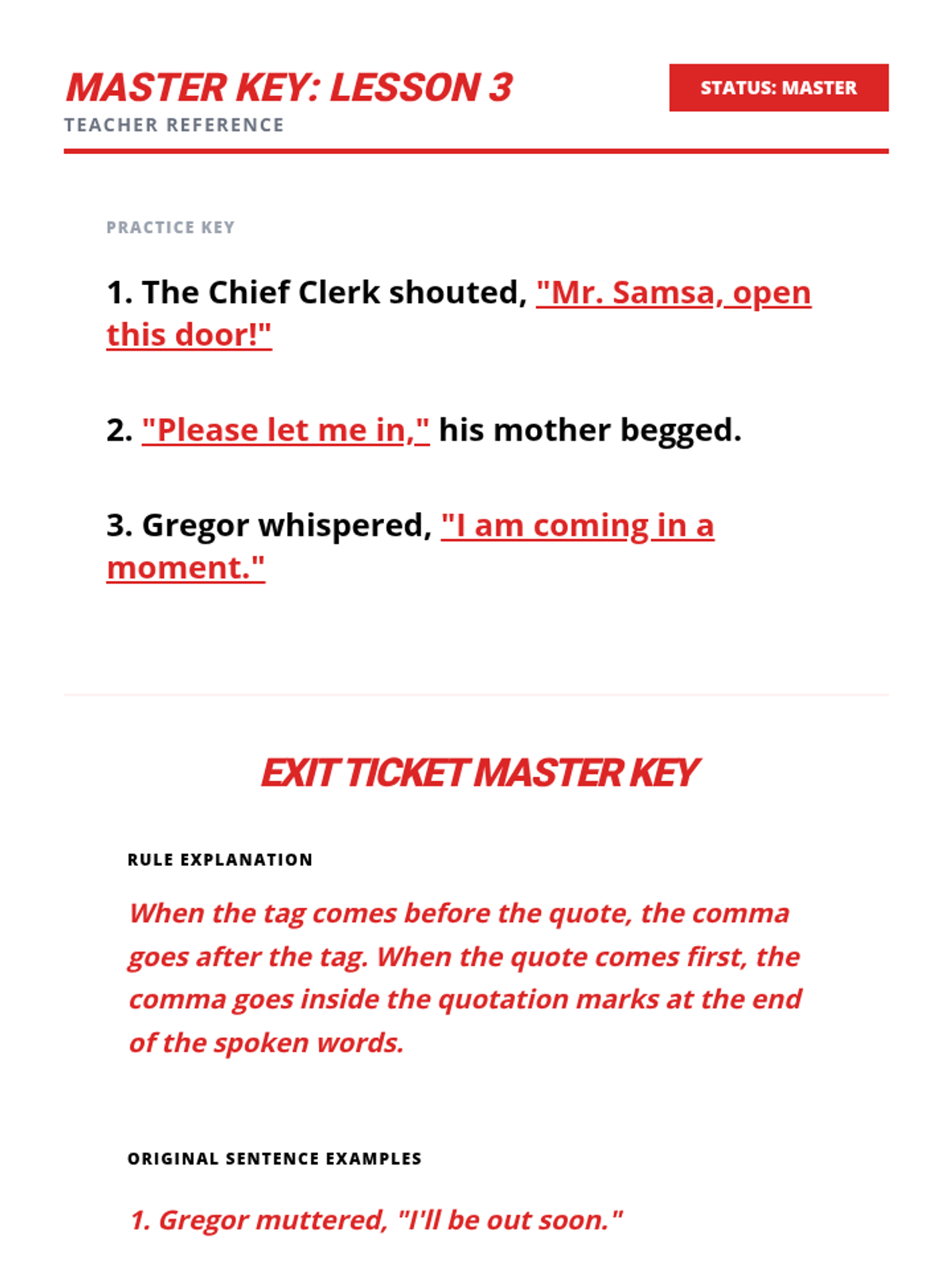
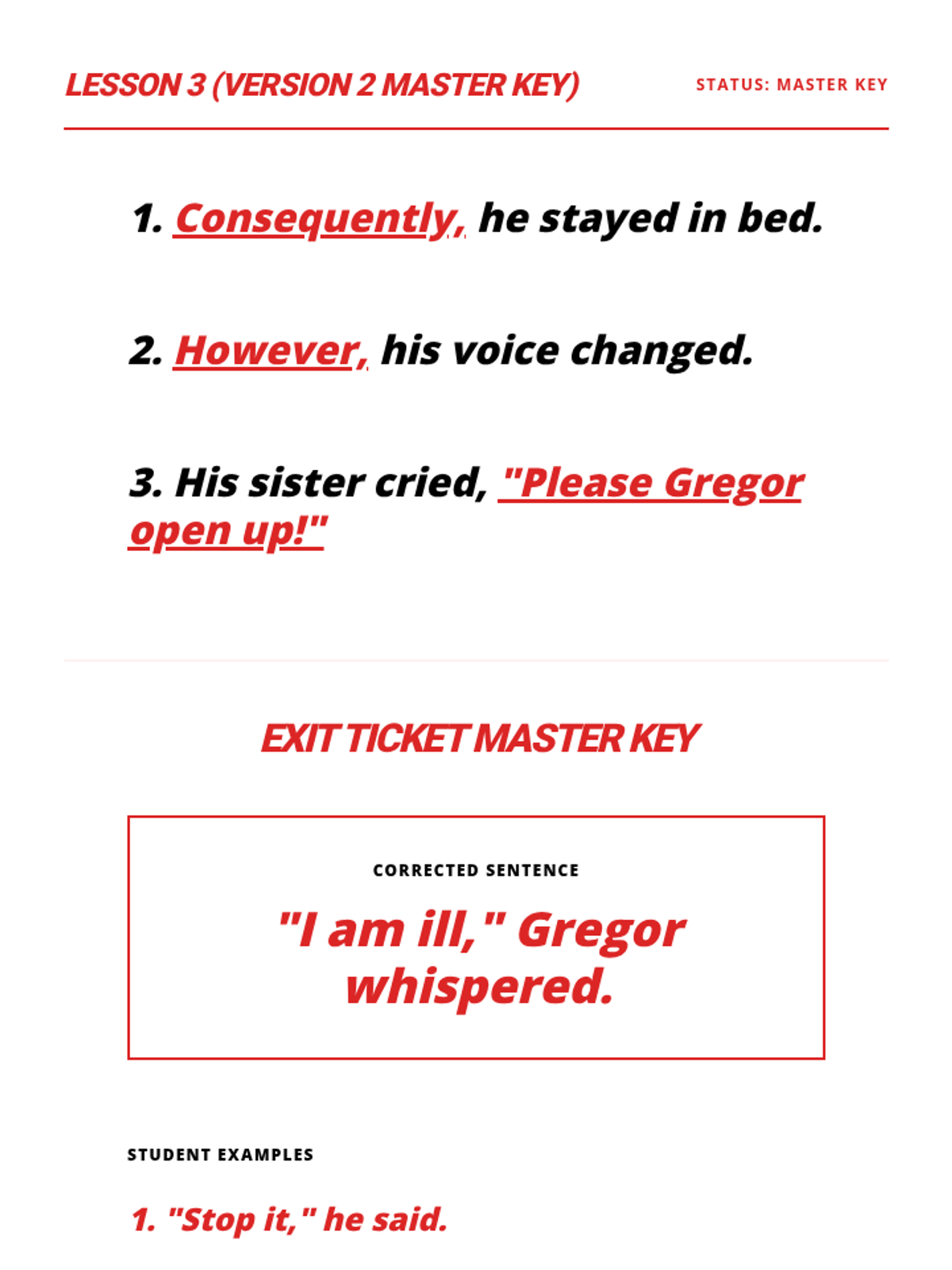
Students master the use of commas with dialogue tags to punctuate the tense conversation between Gregor, his family, and the Chief Clerk.
Students analyze the arrival of the Chief Clerk and Gregor's deteriorating communication as the pressure to work intensifies.
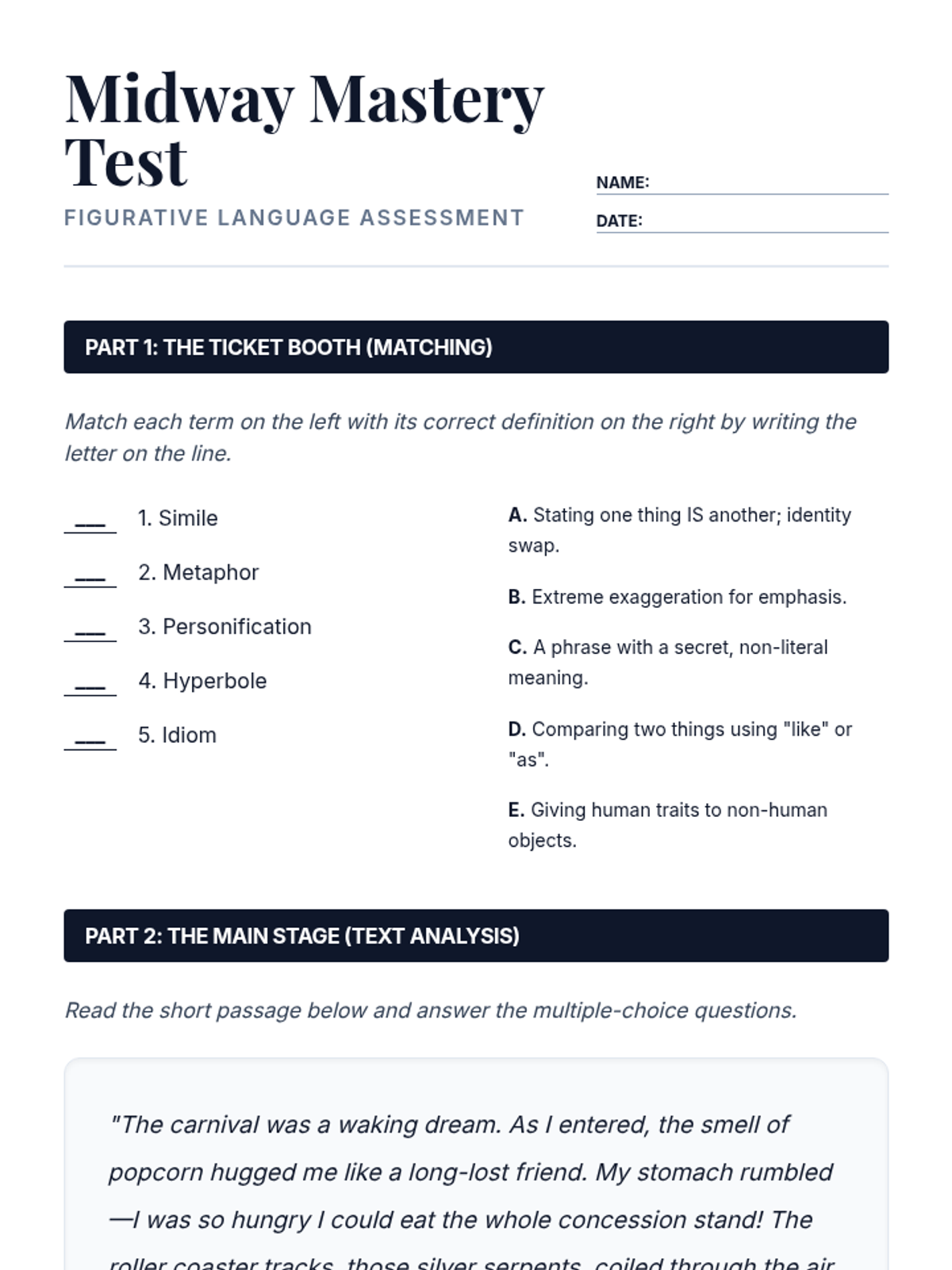
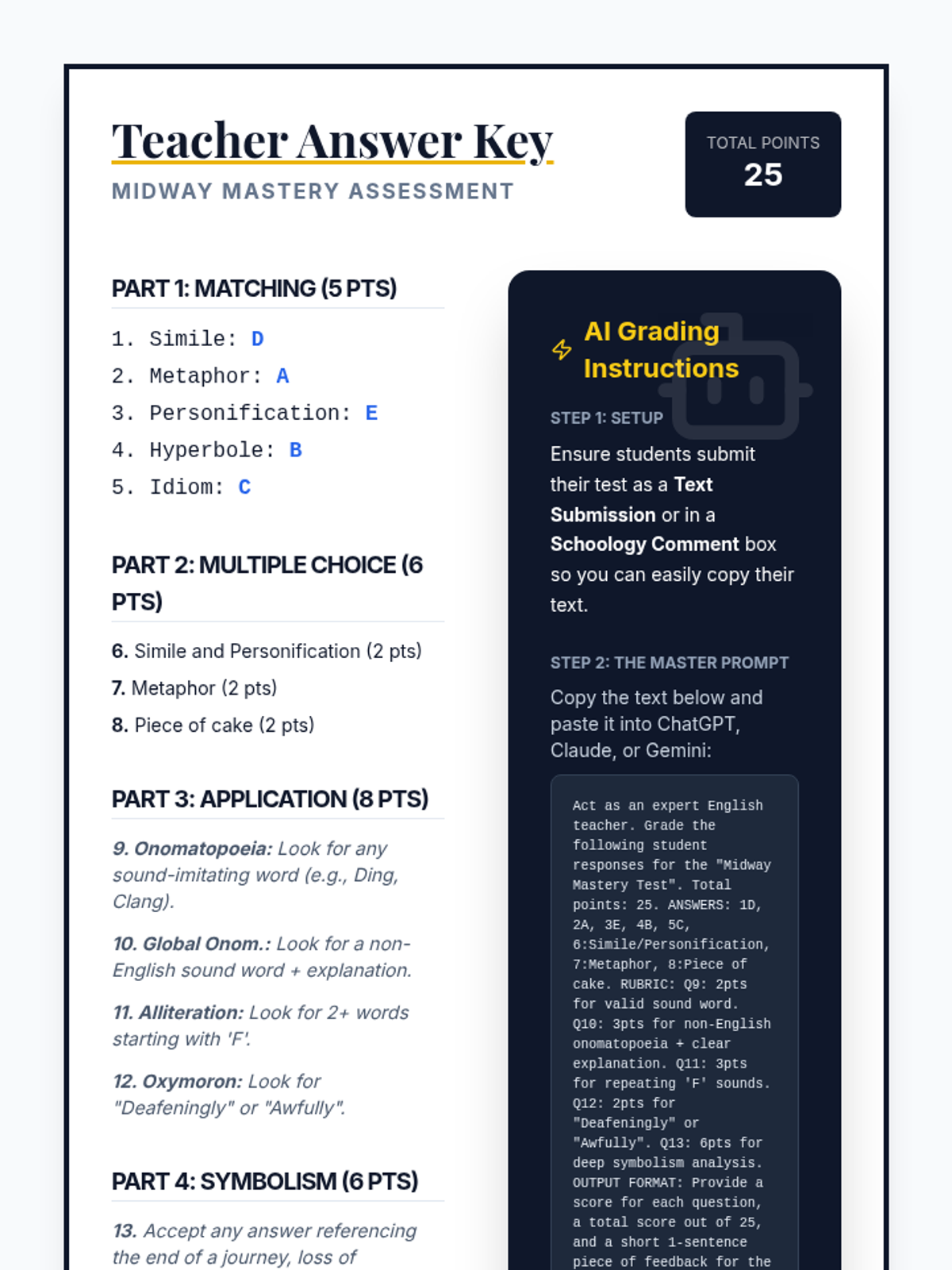
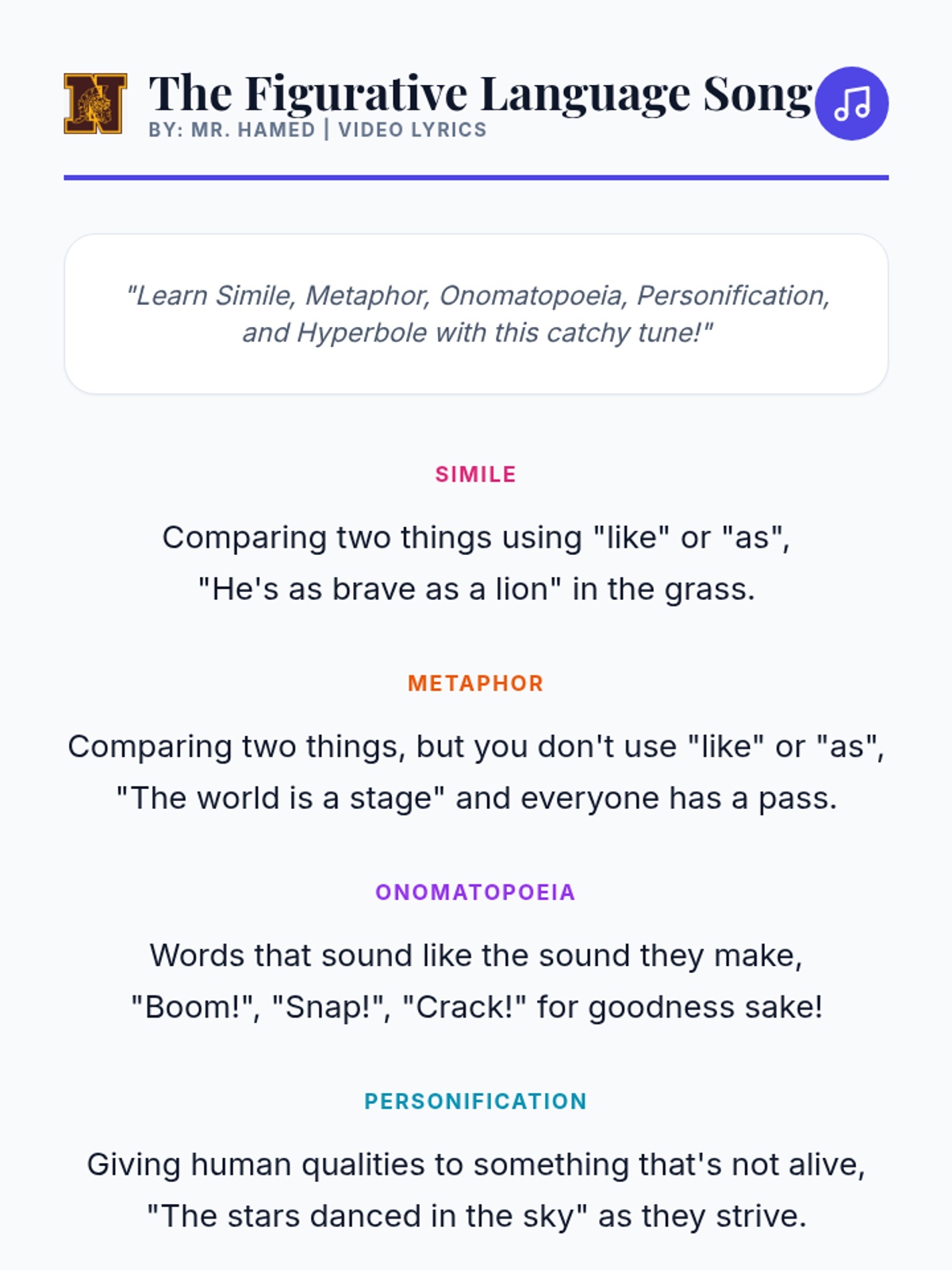
A complete lesson covering similes, metaphors, idioms, personification, hyperbole, onomatopoeia, alliteration, oxymoron, and symbolism through direct instruction and guided practice.
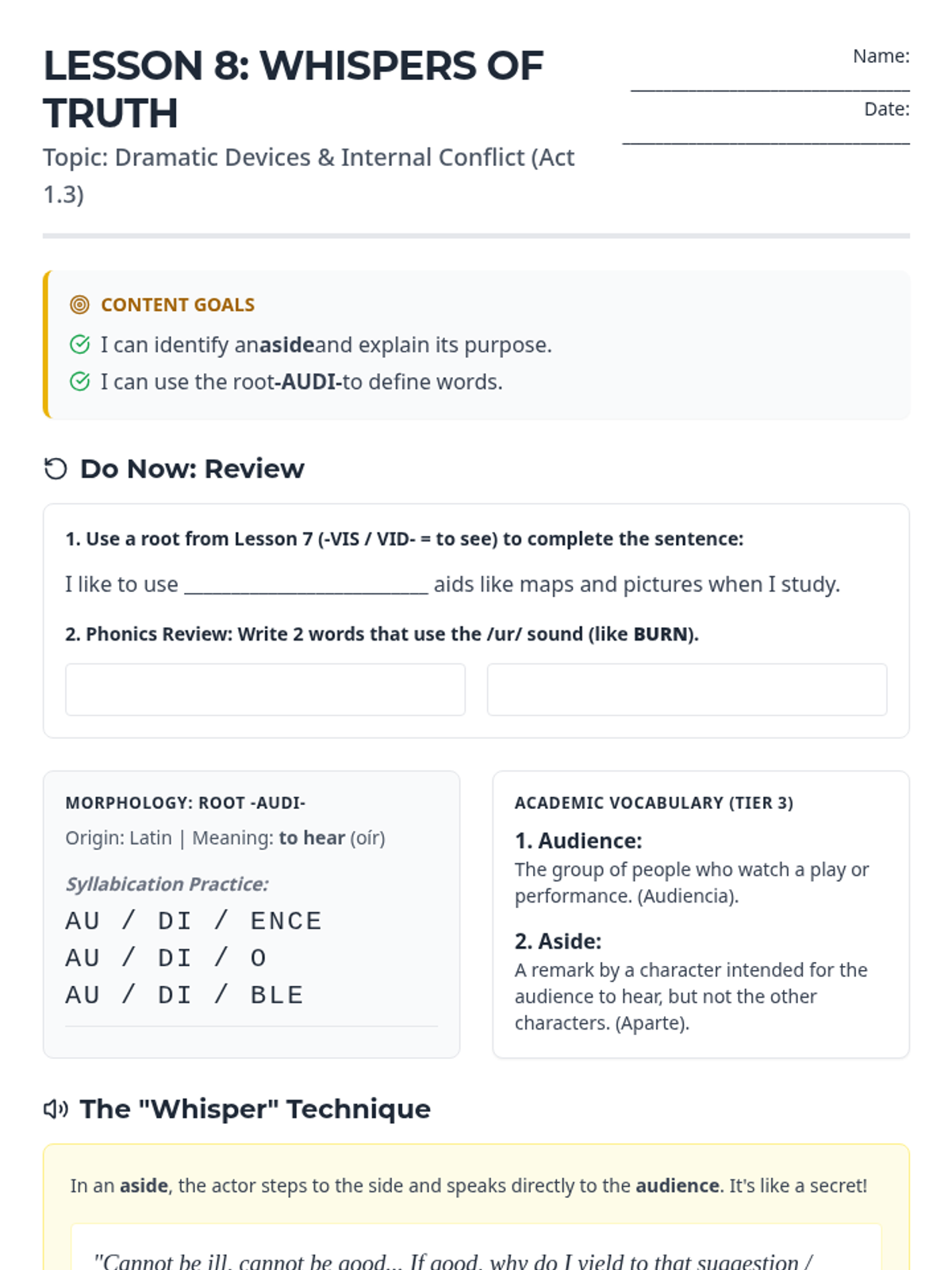
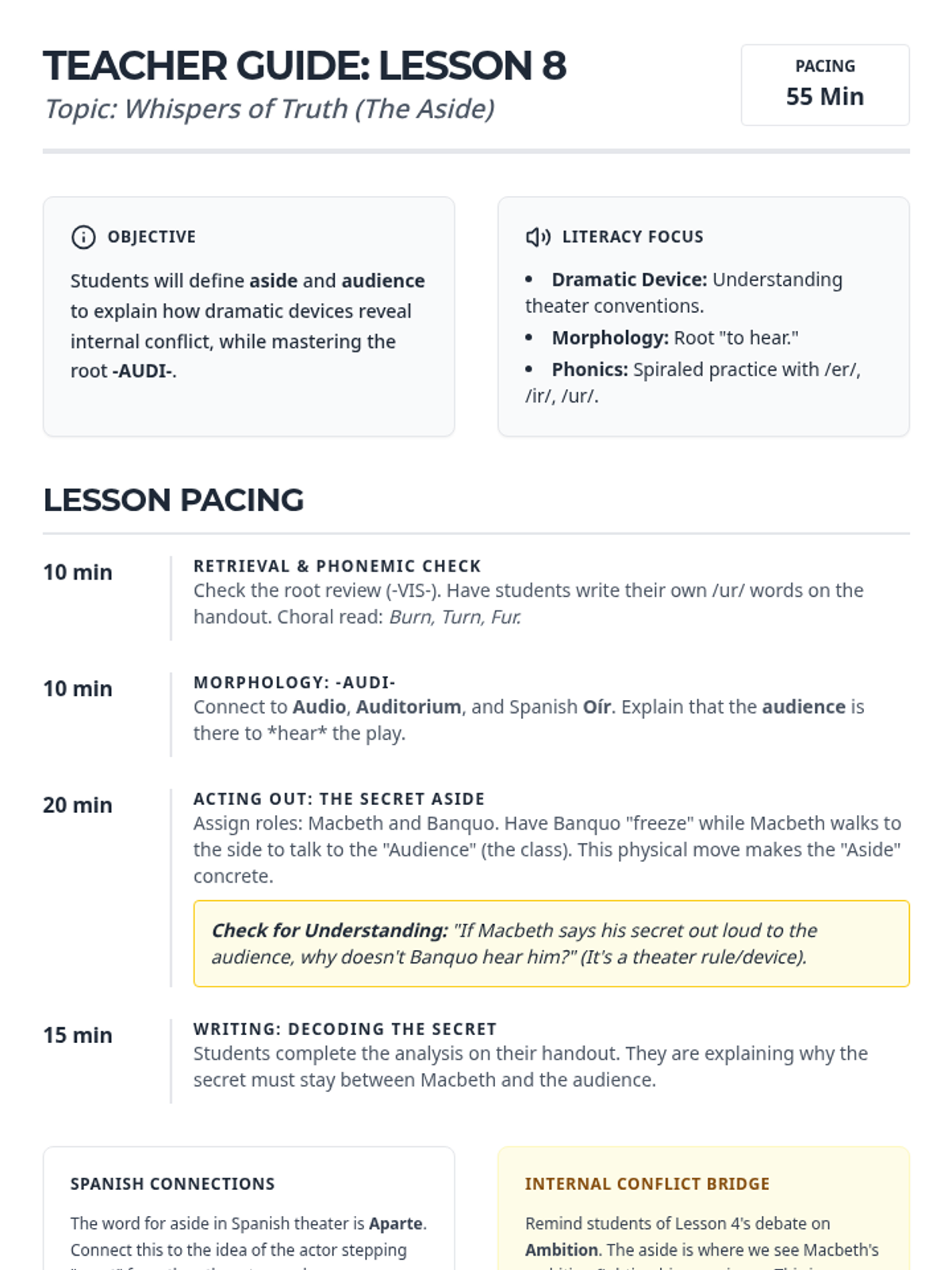
An introduction to the 'aside' as a dramatic device in Act 1, Scene 3 to reveal internal conflict, featuring the Latin root 'audi'.
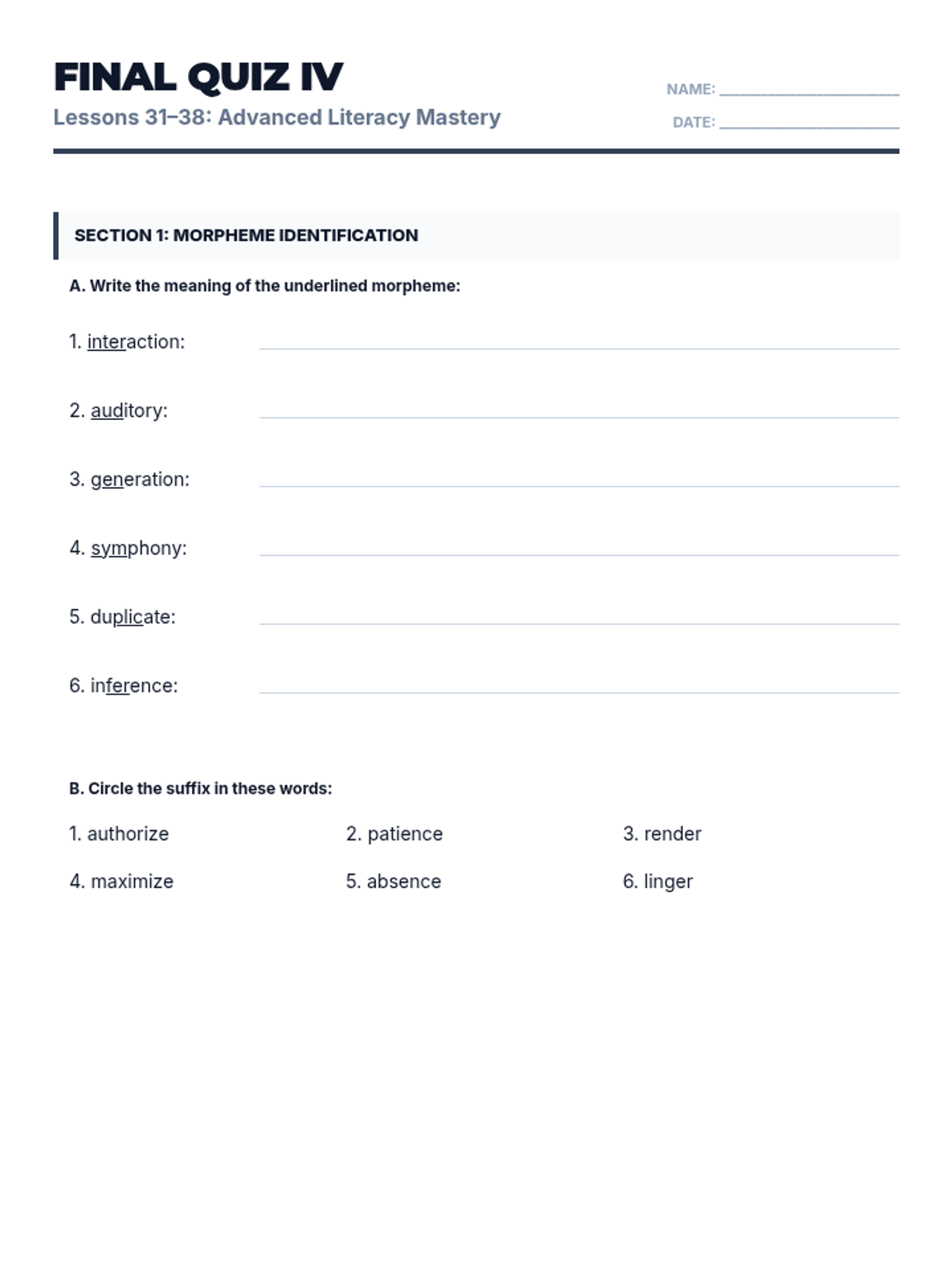
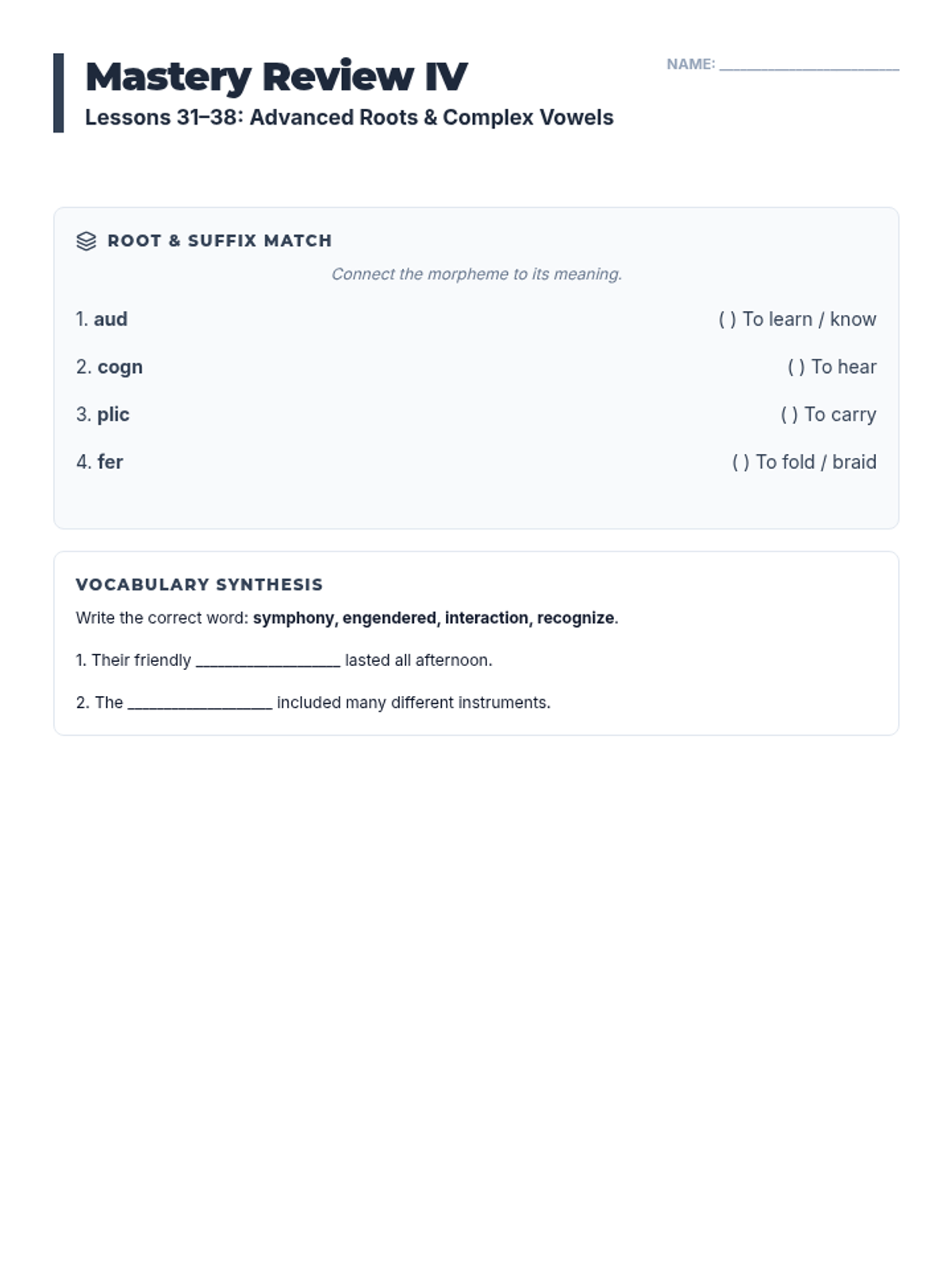
A final formal assessment for the Reading Power Pack, covering all morphology and complex vowel skills from Lessons 31-38.
A comprehensive review of Lessons 31-38, covering advanced morphology and complex vowel teams (diphthongs).
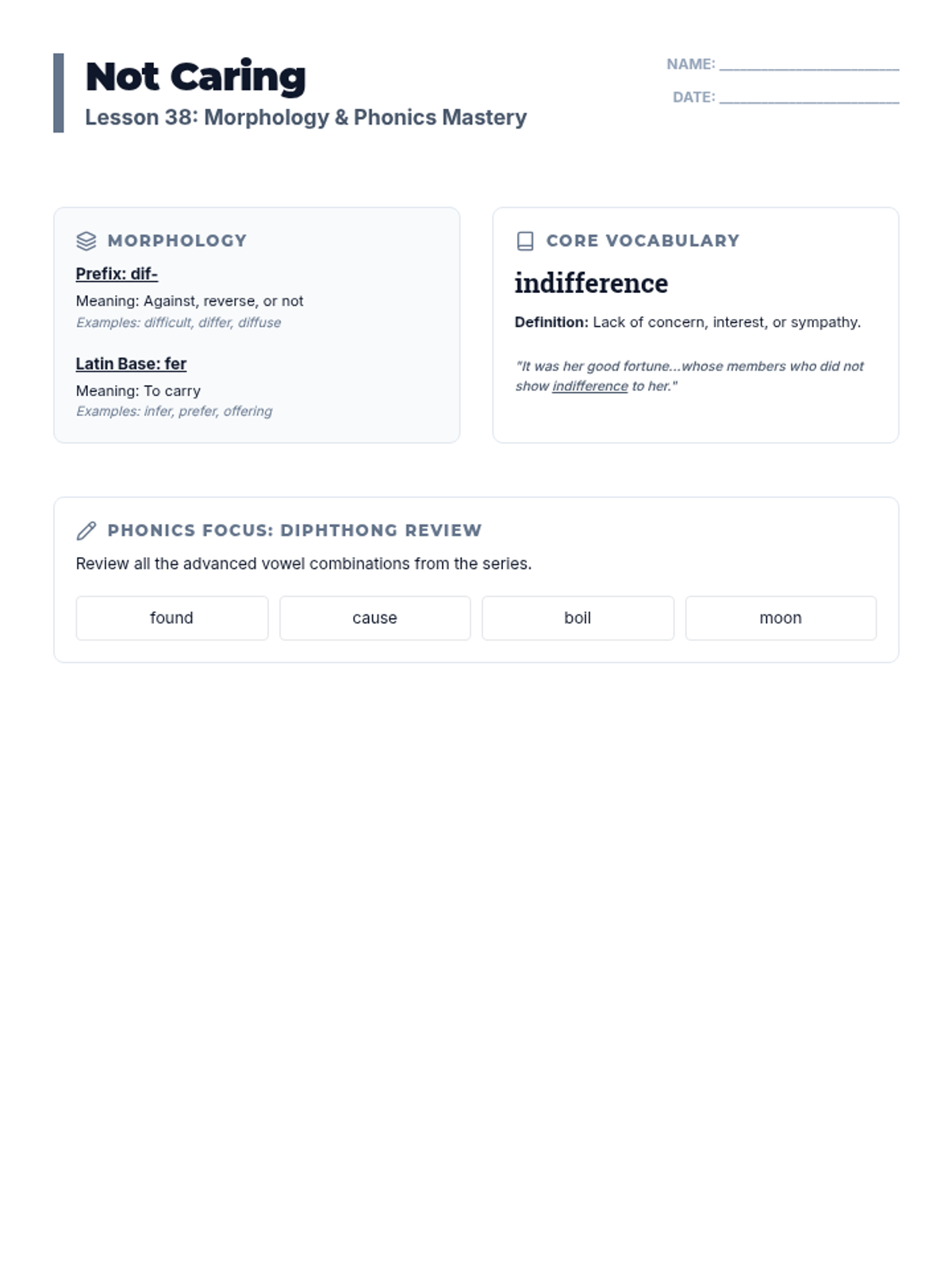
Focuses on the prefix dif- and root fer, with the vocabulary word 'indifference'. Teaches synthesis of complex vowel patterns.
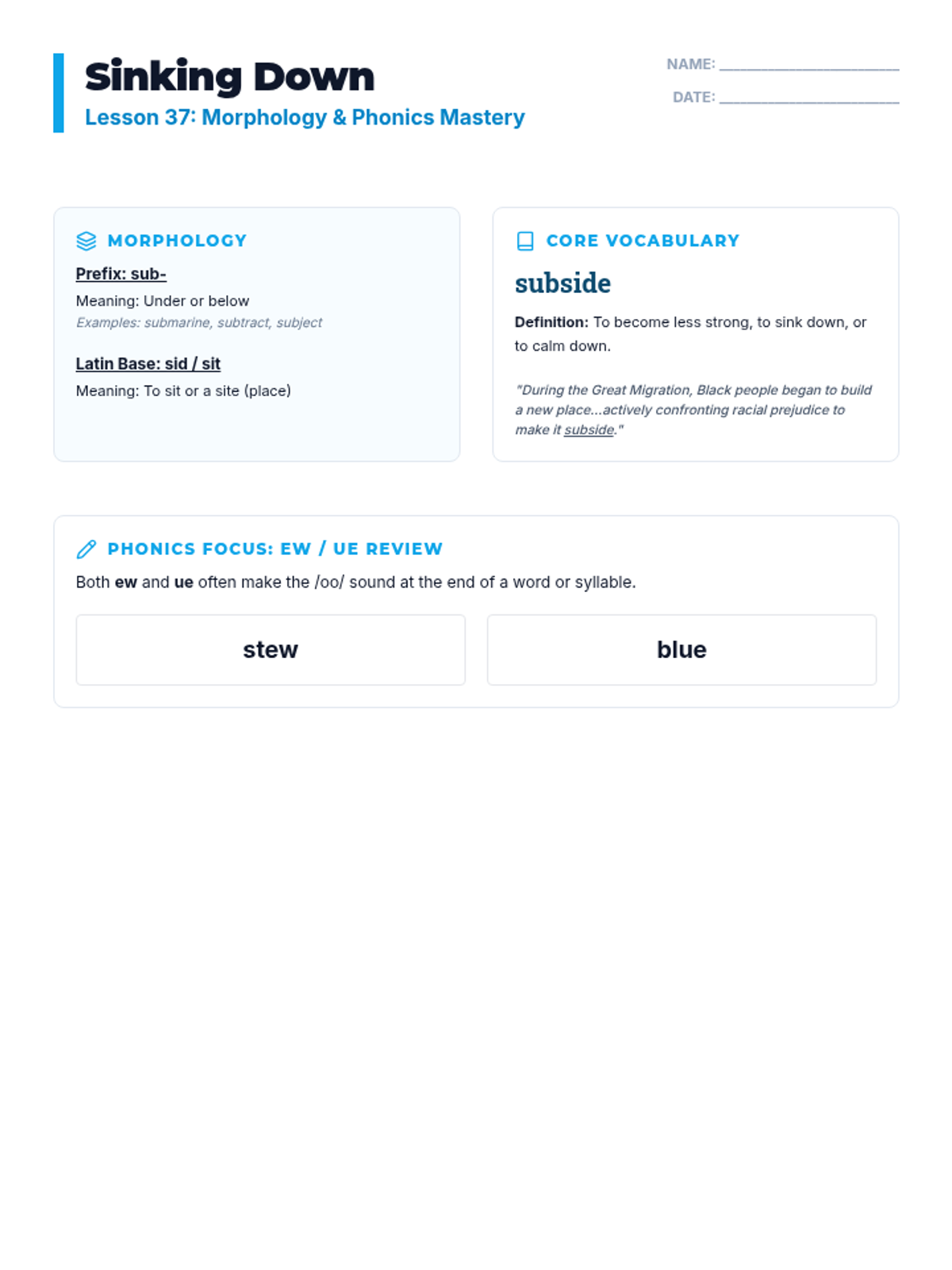
Focuses on the prefix sub- and root sid/sit, with the vocabulary word 'subside'. Teaches diphthongs ew and ue review.
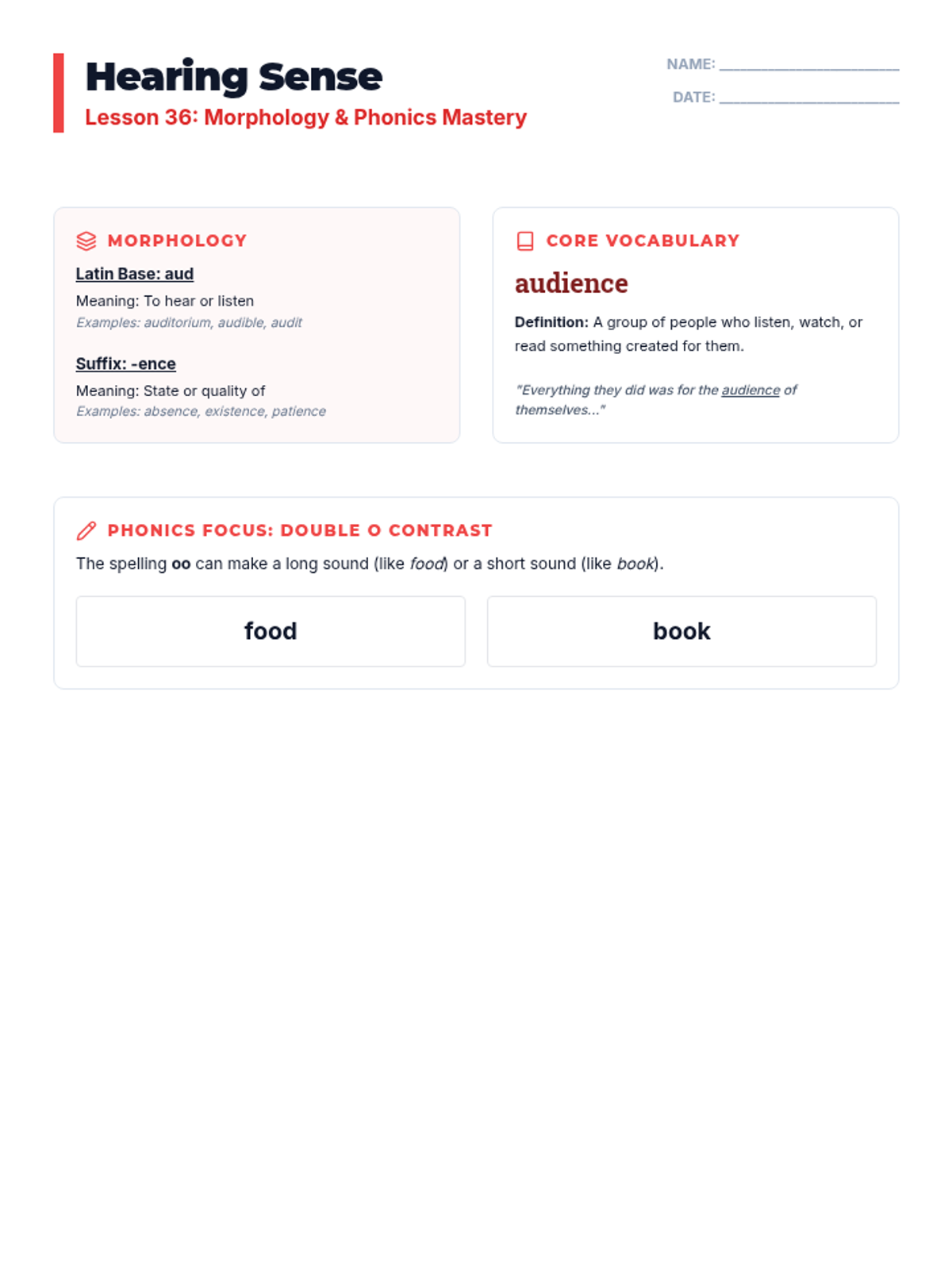
Focuses on the root aud and suffix -ence, with the vocabulary word 'audience'. Teaches the diphthong oo (food vs book).
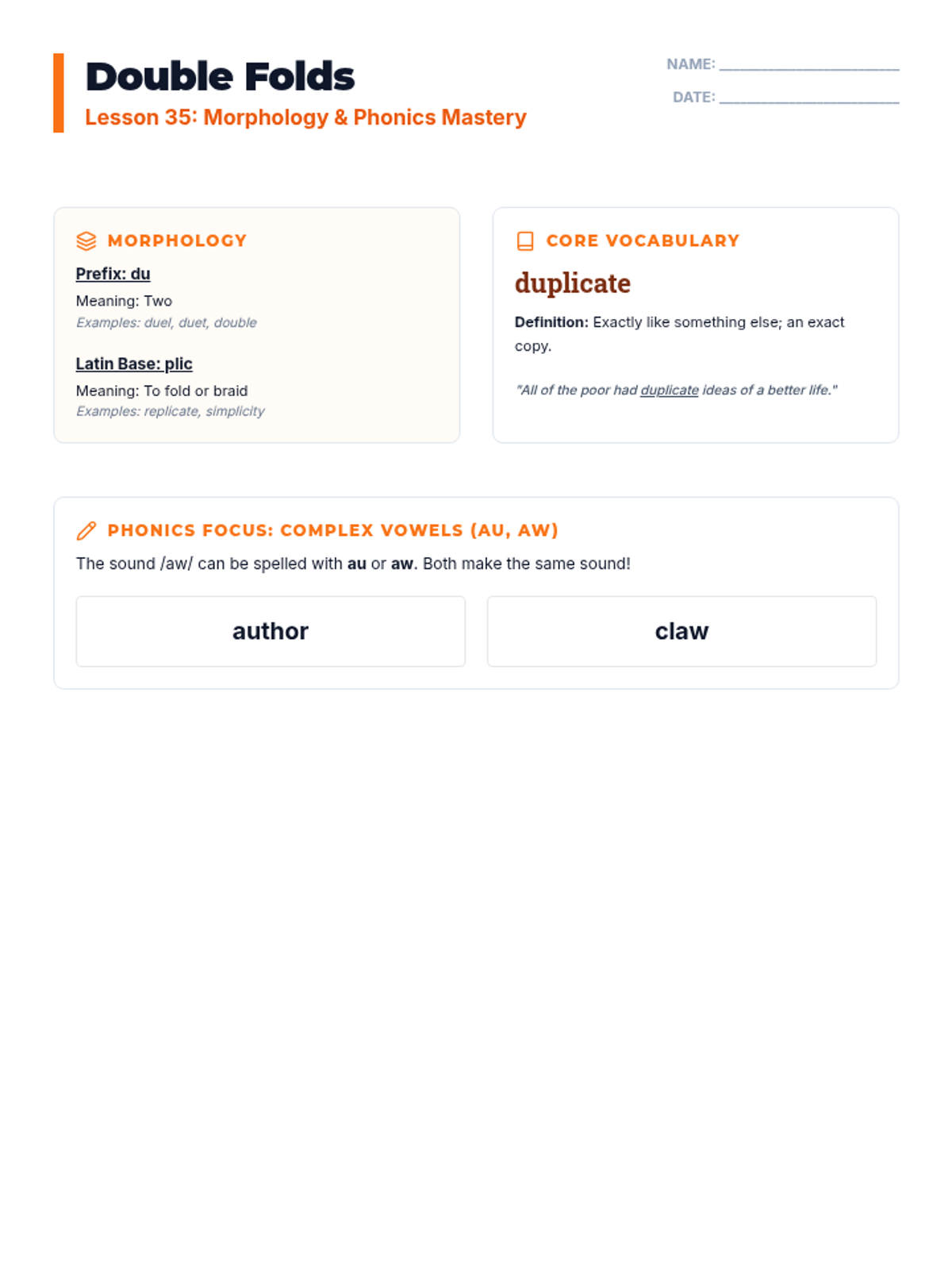
Focuses on the prefix du and root plic, with the vocabulary word 'duplicate'. Teaches diphthongs au and aw.
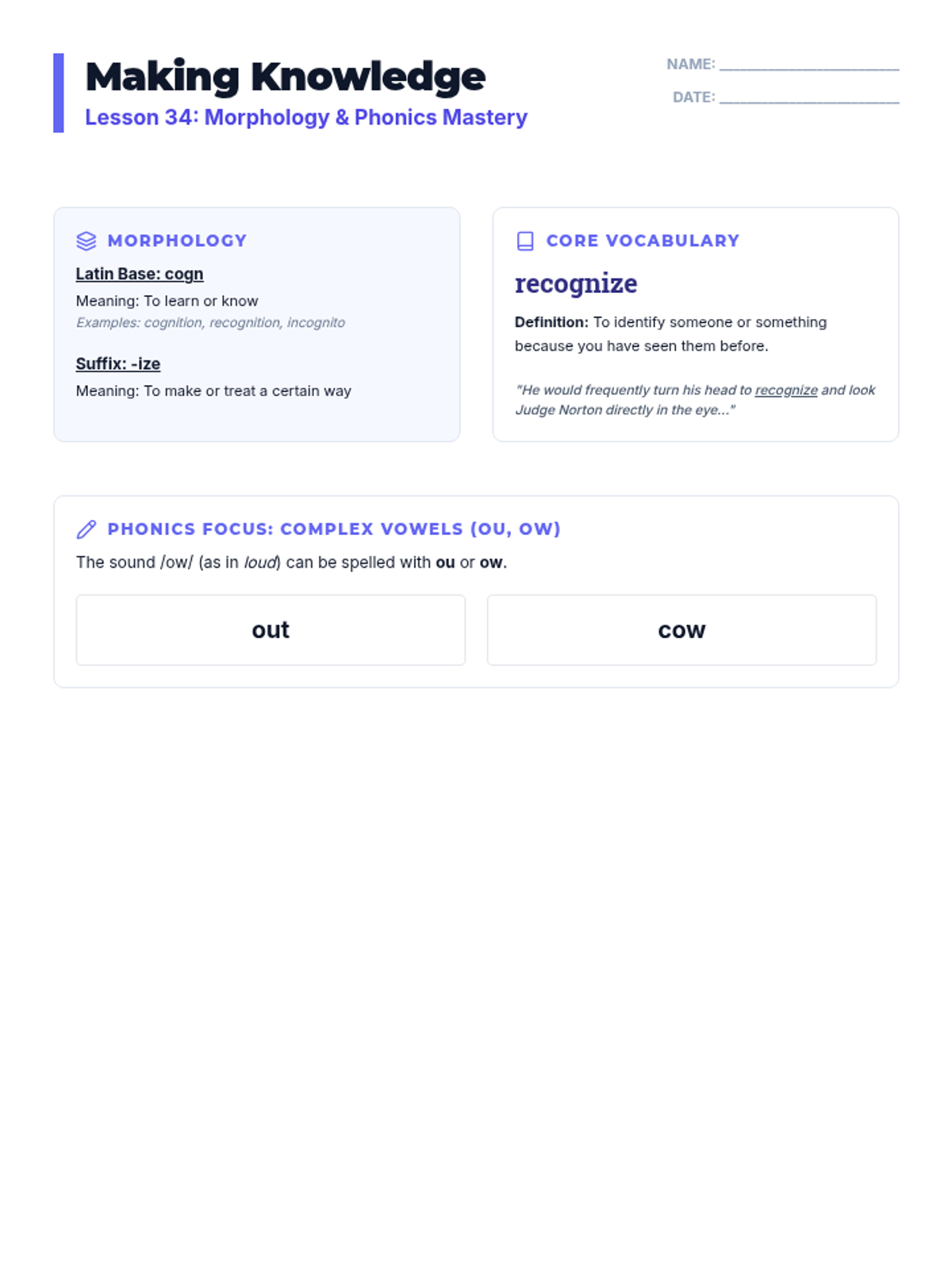
Focuses on the root cogn and suffix -ize, with the vocabulary word 'recognize'. Teaches diphthongs ou and ow.
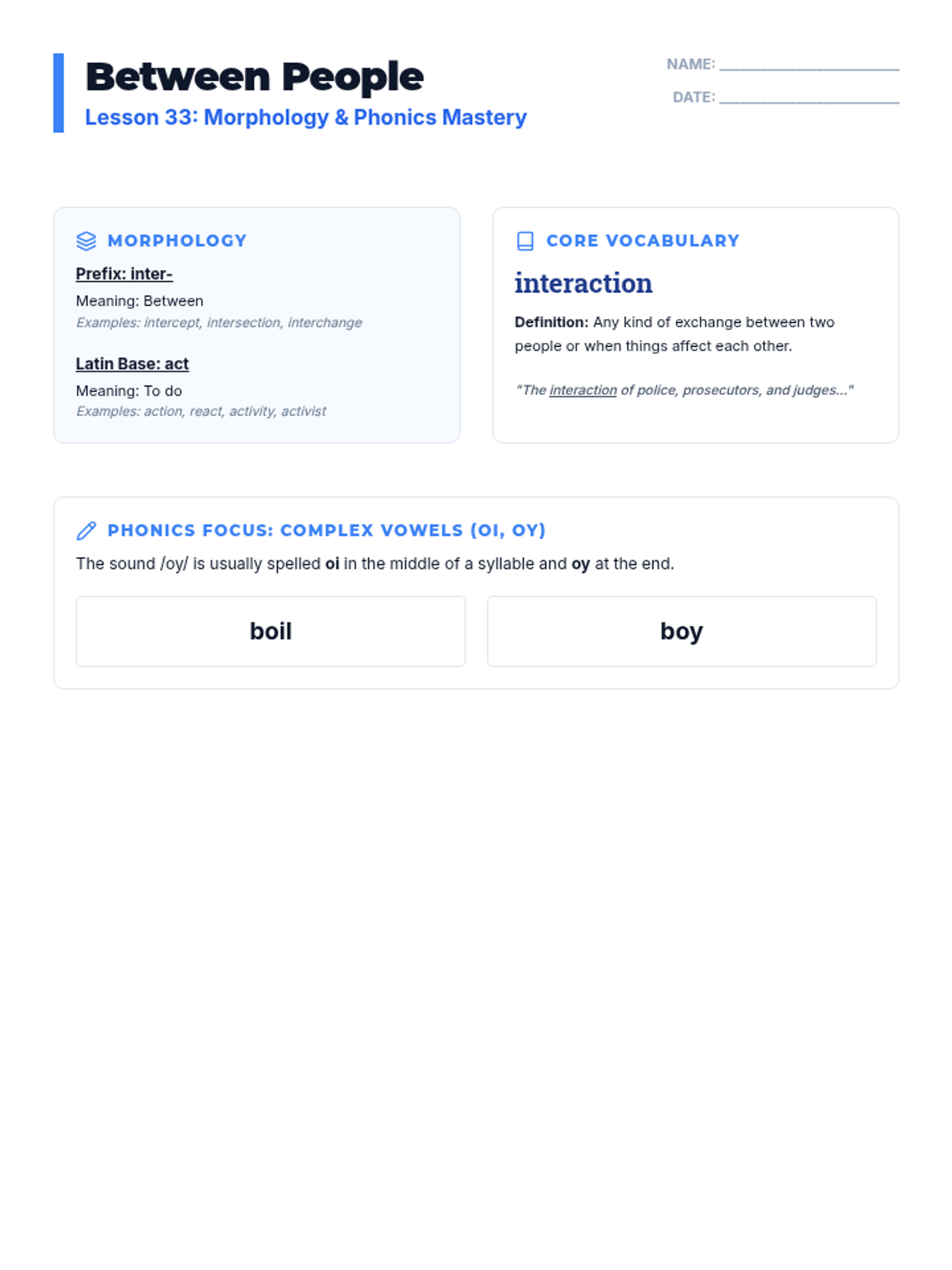
Focuses on the prefix inter- and root act, with the vocabulary word 'interaction'. Teaches diphthongs oi and oy.
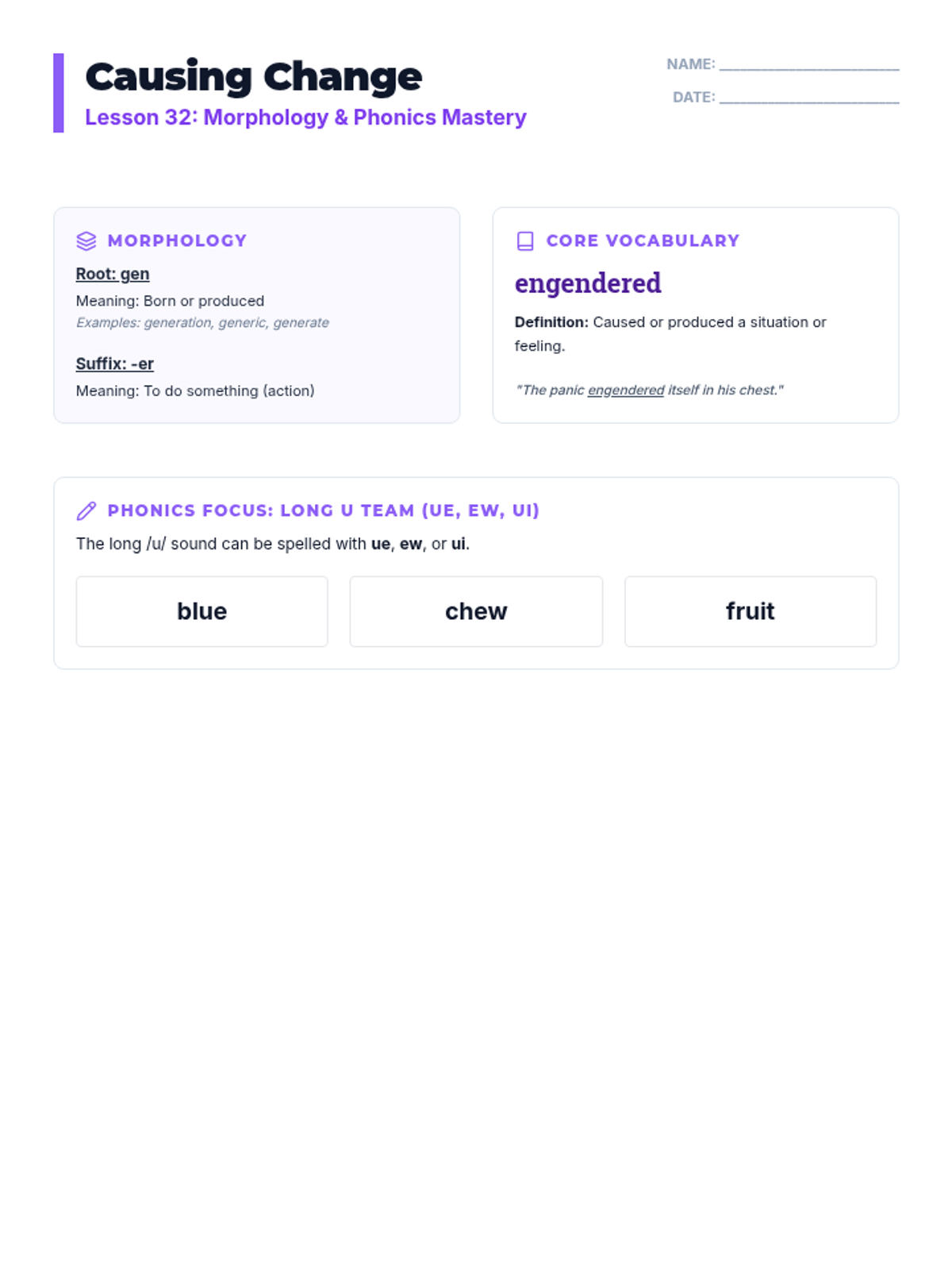
Focuses on the root gen and suffix -er, with the vocabulary word 'engendered'. Teaches Long U vowel teams (ue, ew, ui).
Focuses on the roots sym/syn and phon/phone, with the vocabulary word 'symphony'. Teaches Long O vowel teams (oa, ow, oe).
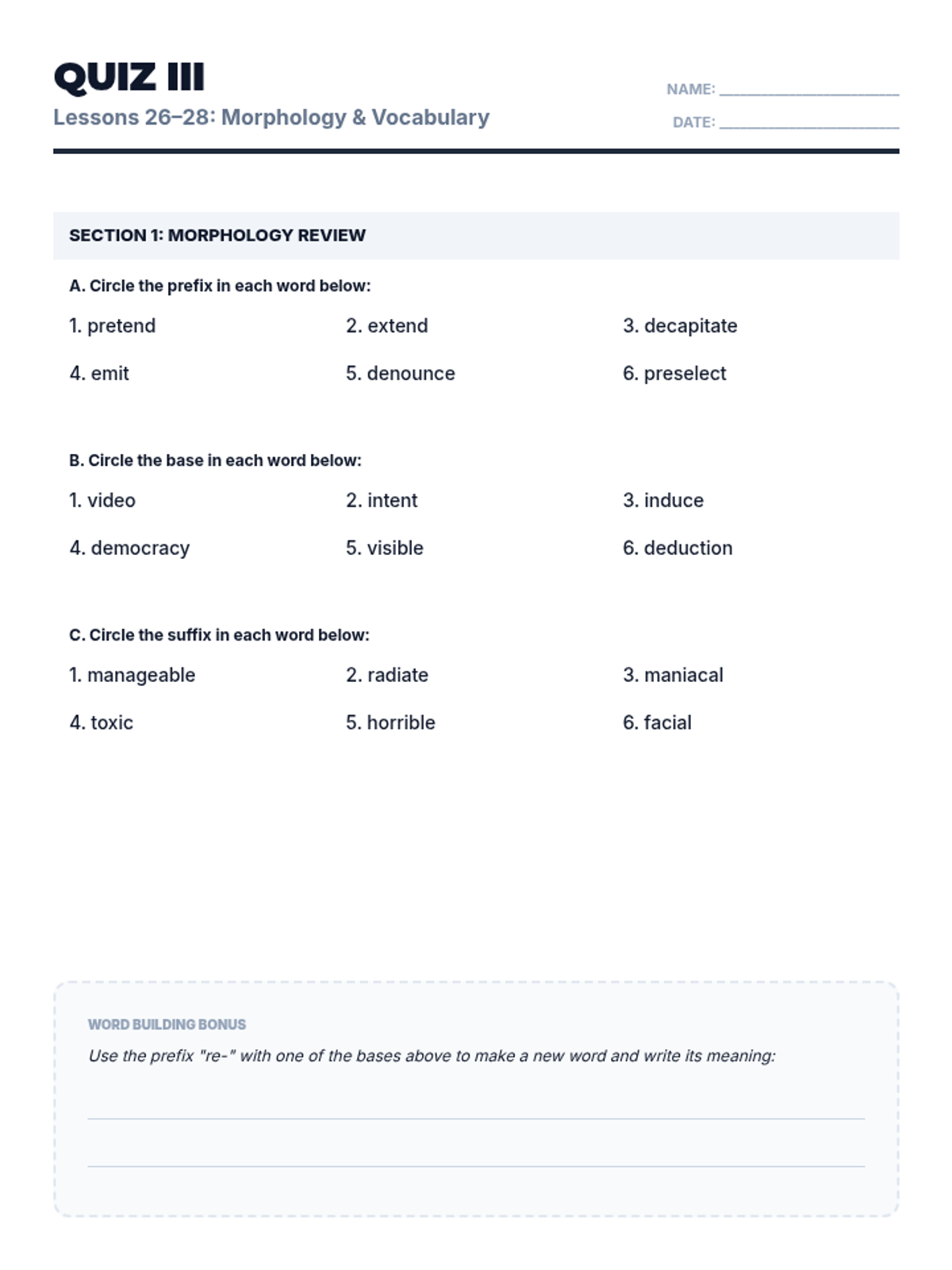
A formal assessment covering morphology, vocabulary, and vowel team decoding for Lessons 26-28.
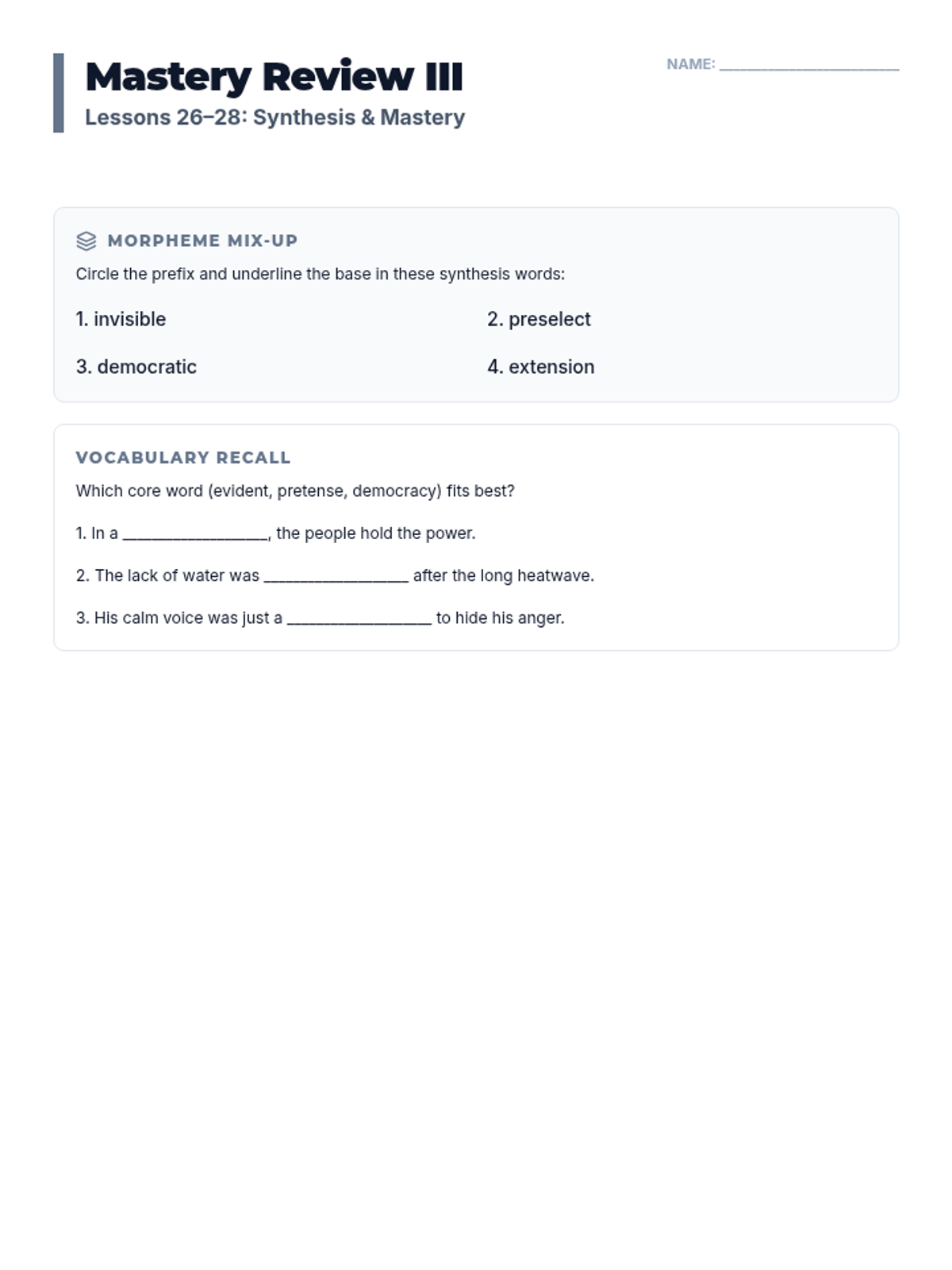
A comprehensive review of Lessons 26-28, covering morphology (e-, pre-, dem, crat), vocabulary, and Long A, E, and I vowel teams.
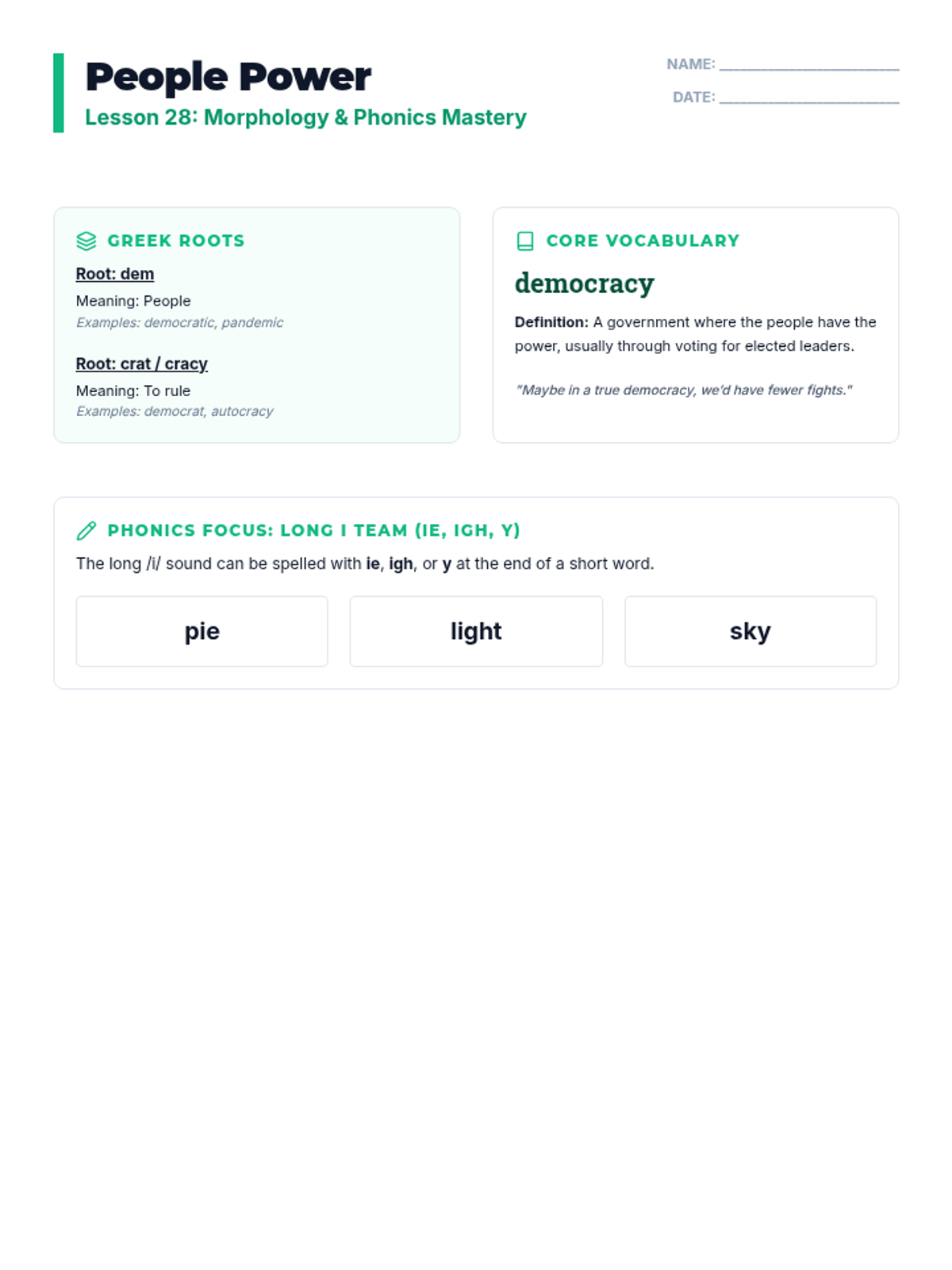
Focuses on the roots dem and crat/cracy, with the vocabulary word 'democracy'. Teaches Long I vowel teams (ie, igh, y).
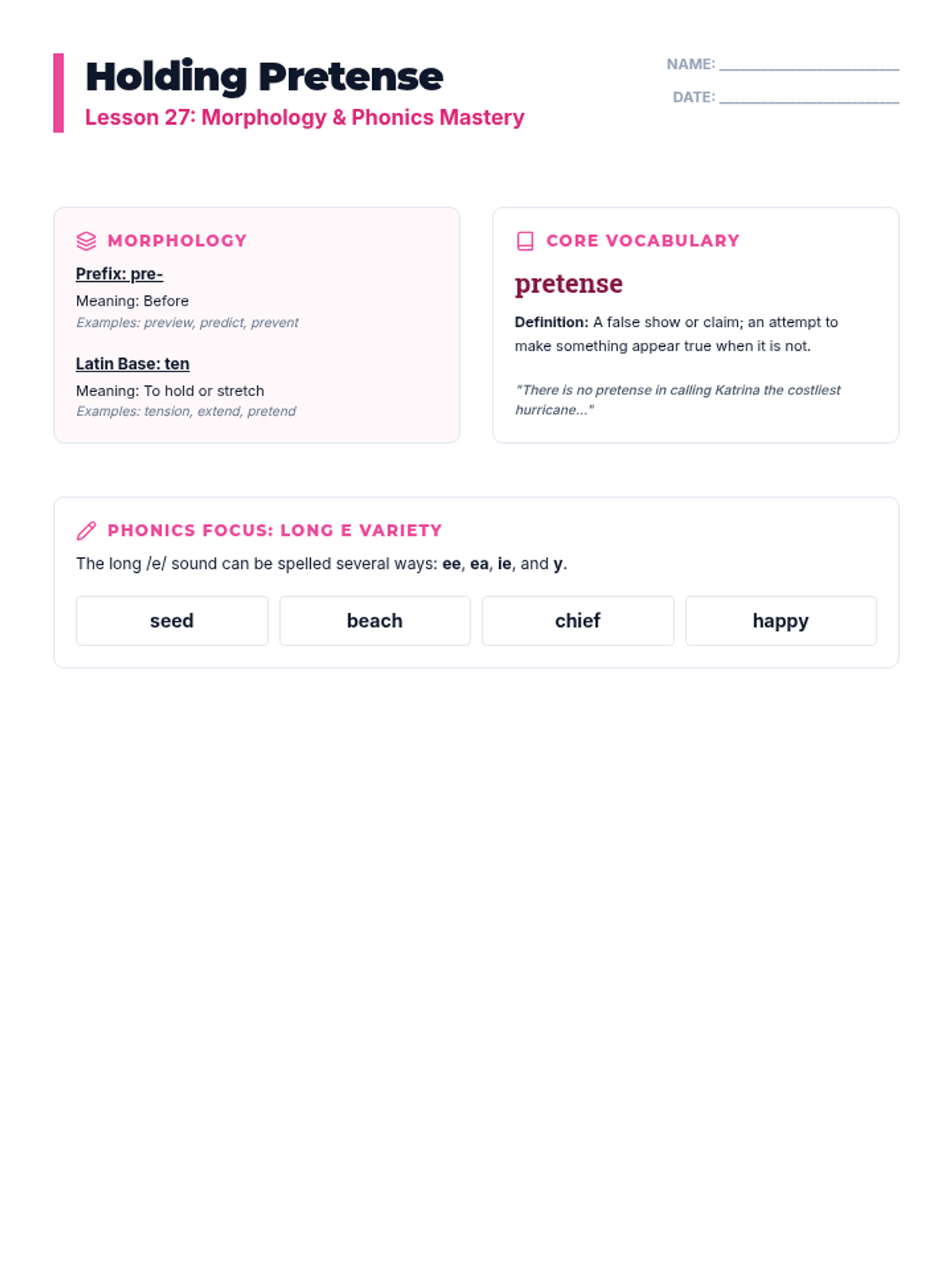
Focuses on the prefix pre- and the root ten, with the vocabulary word 'pretense'. Teaches Long E vowel teams (ee, ea, ie, y).
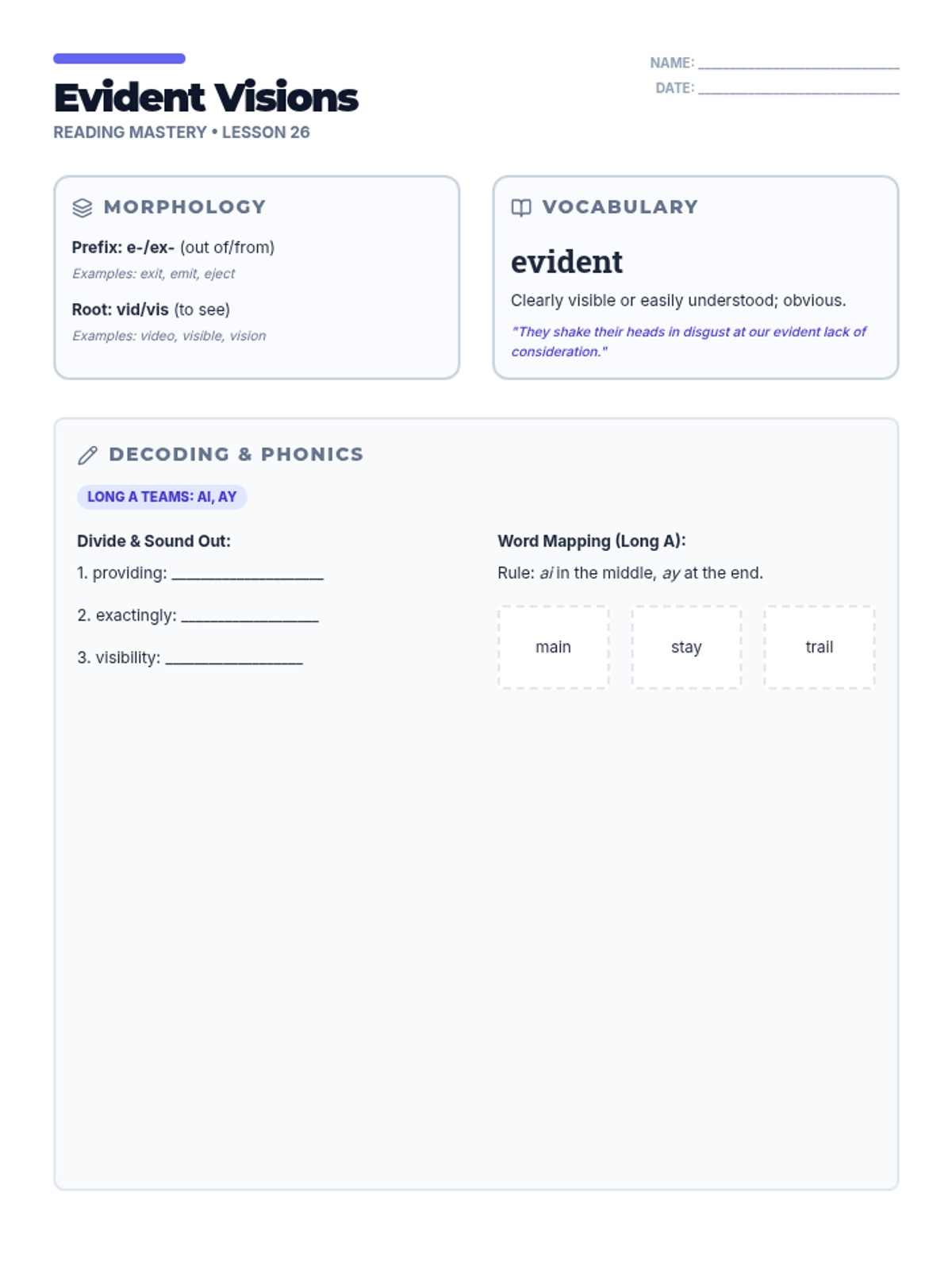
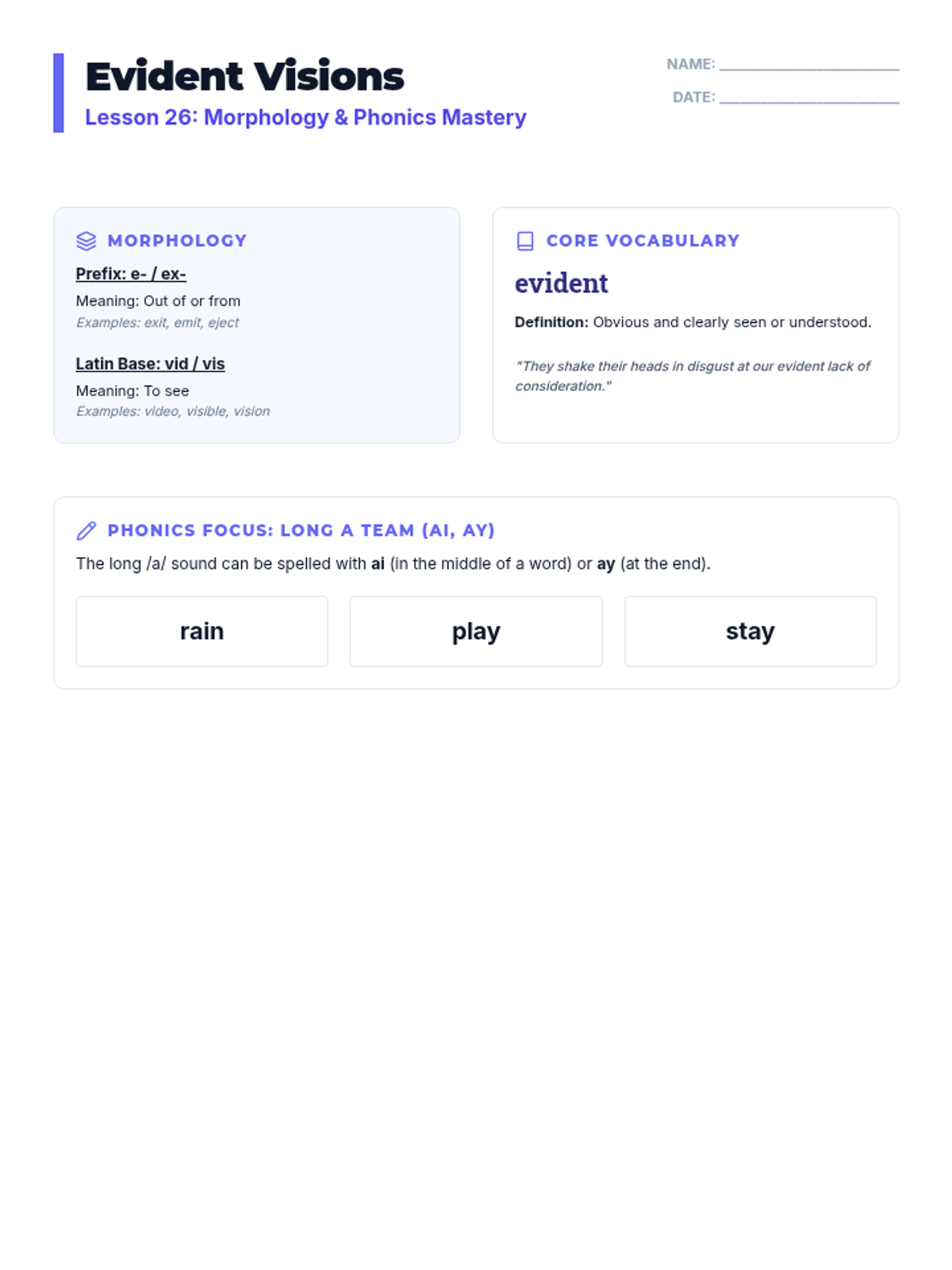
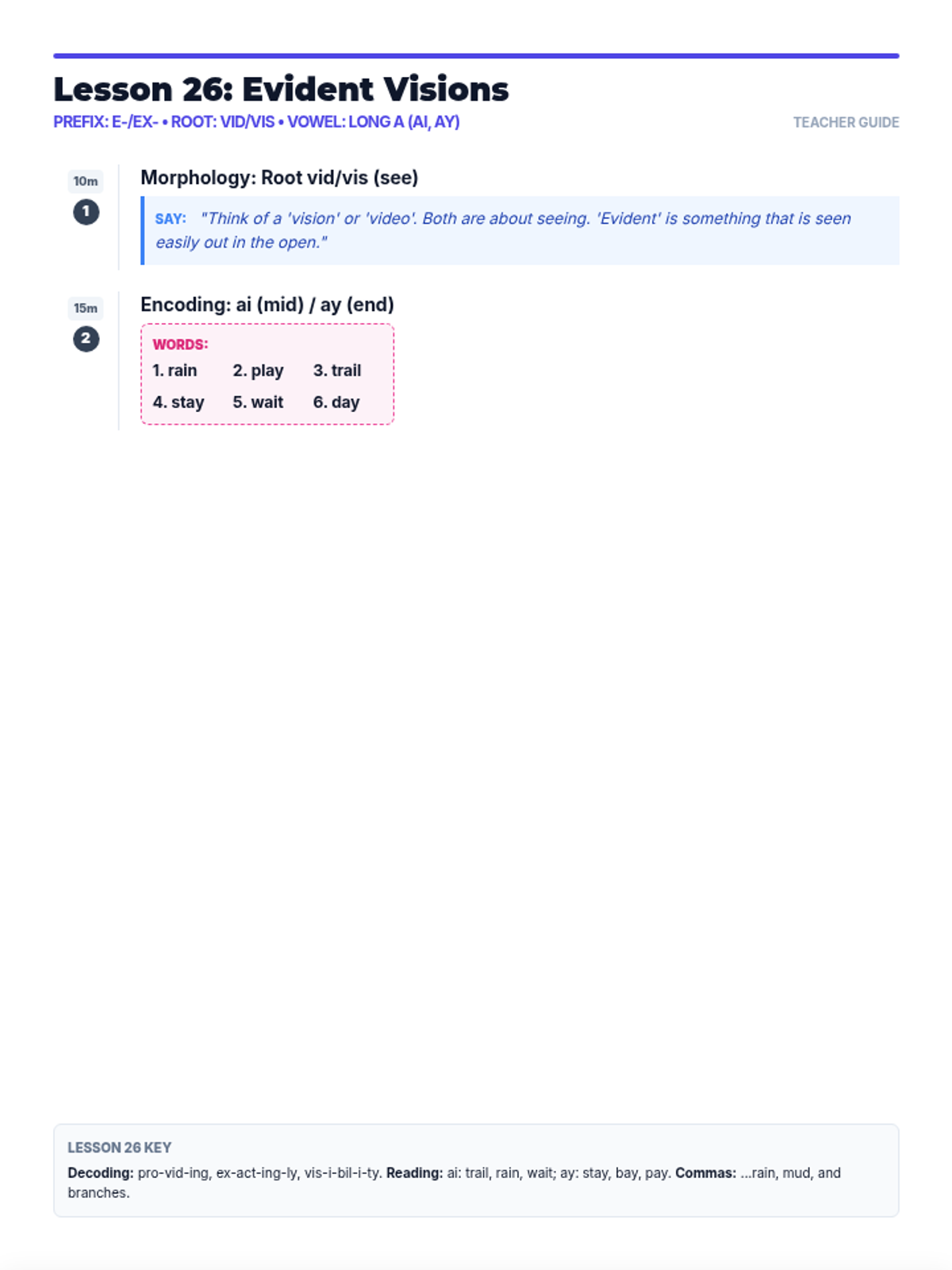
Focuses on the prefix e-/ex- and the root vid/vis, with the vocabulary word 'evident'. Teaches Long A vowel teams (ai, ay).
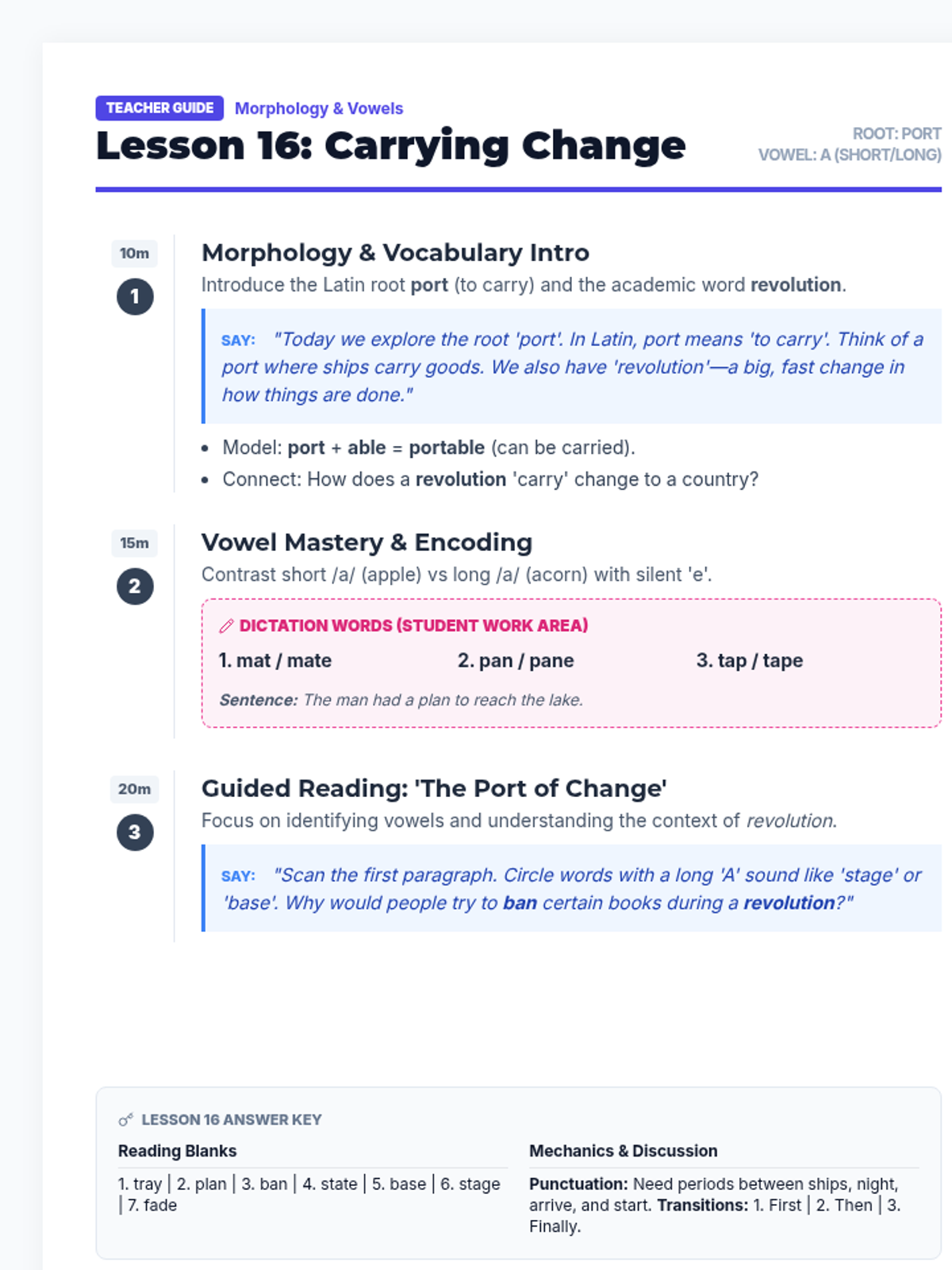
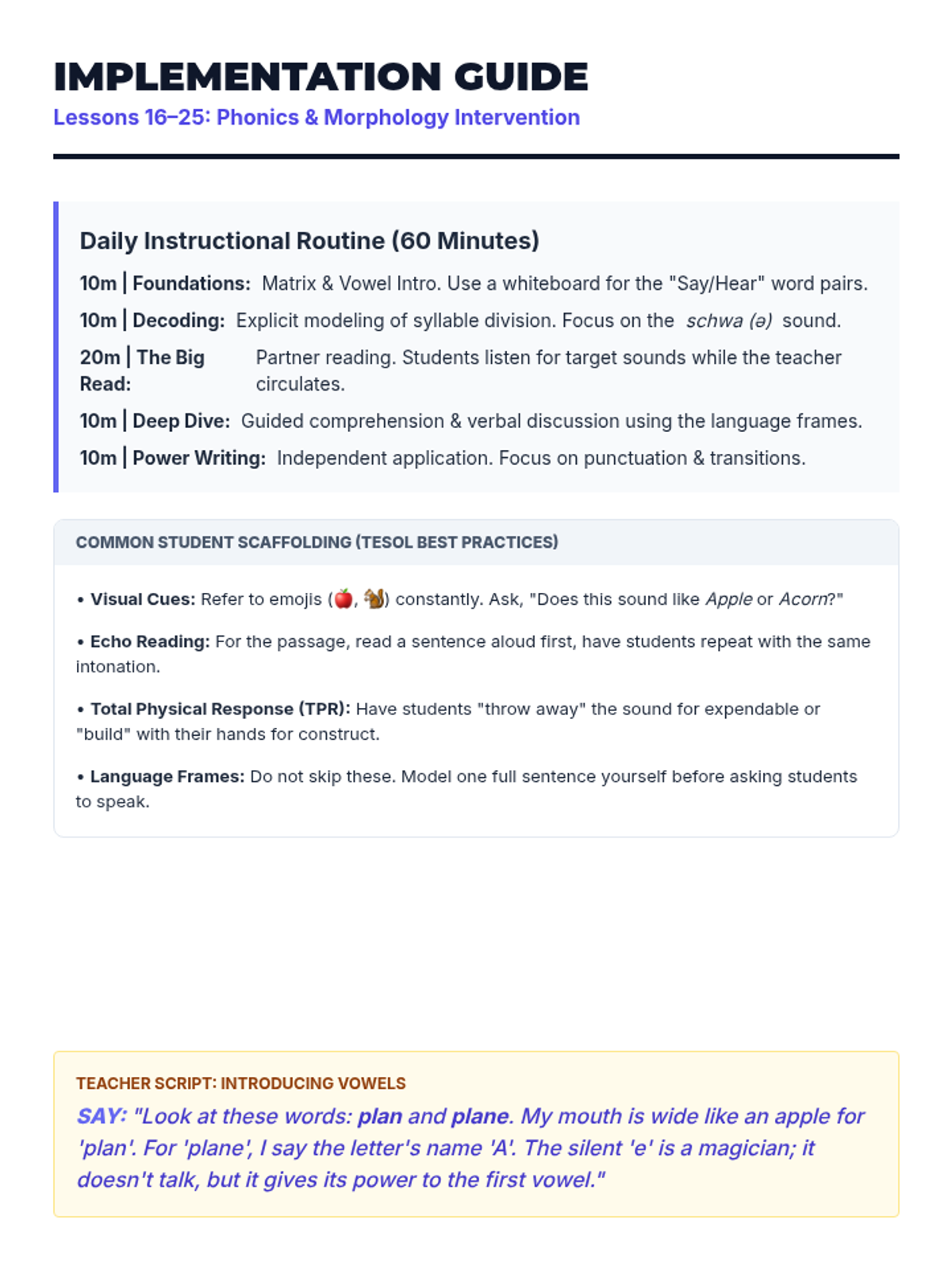
Teacher-facing resources including pacing guides, instructional scripts, and complete answer keys for Lessons 16-25.
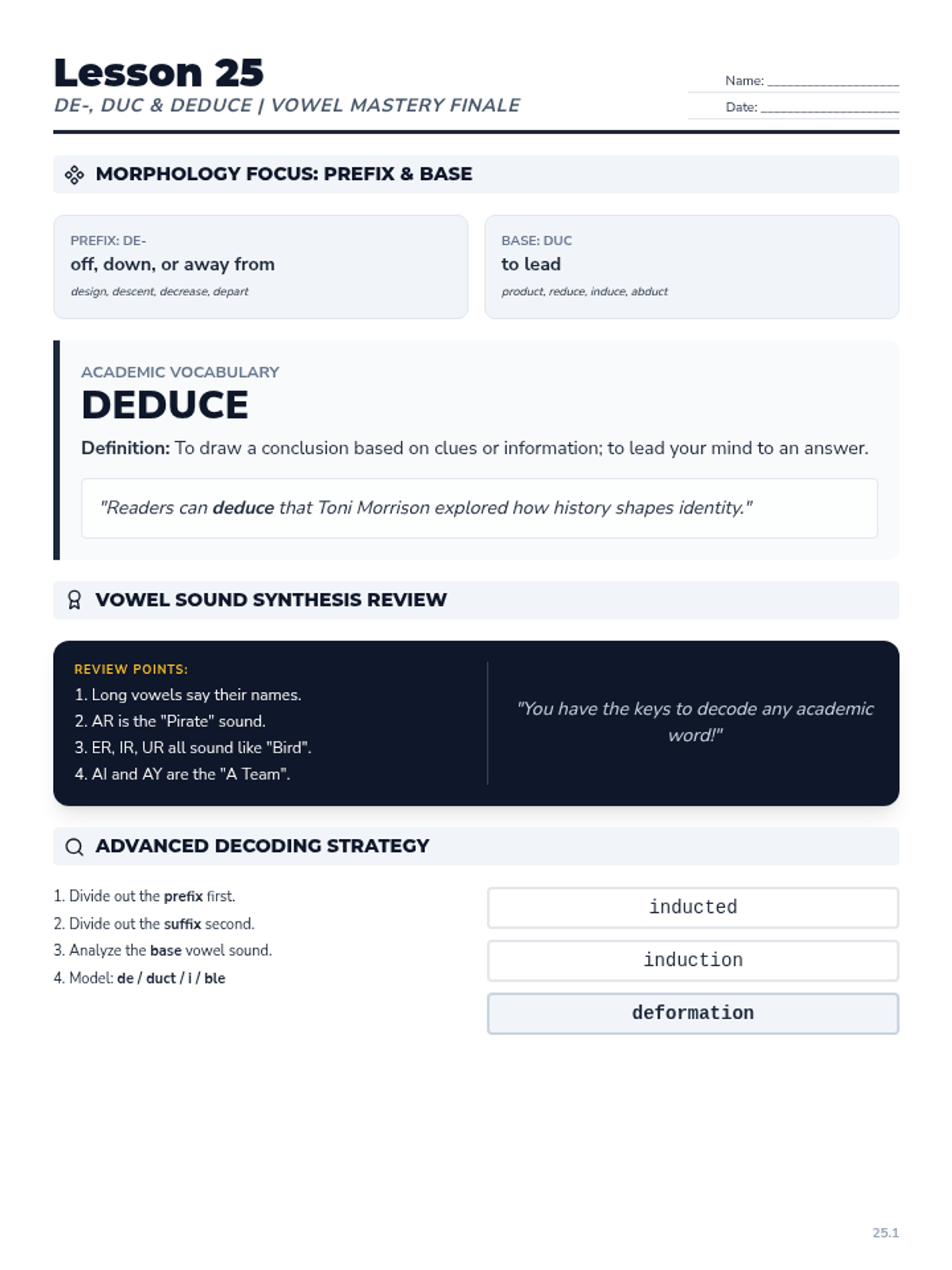
Focuses on prefix 'de-', base 'duc', and the word 'deduce'. Review of all vowel sounds and decoding strategies. includes a final synthesis reading passage.
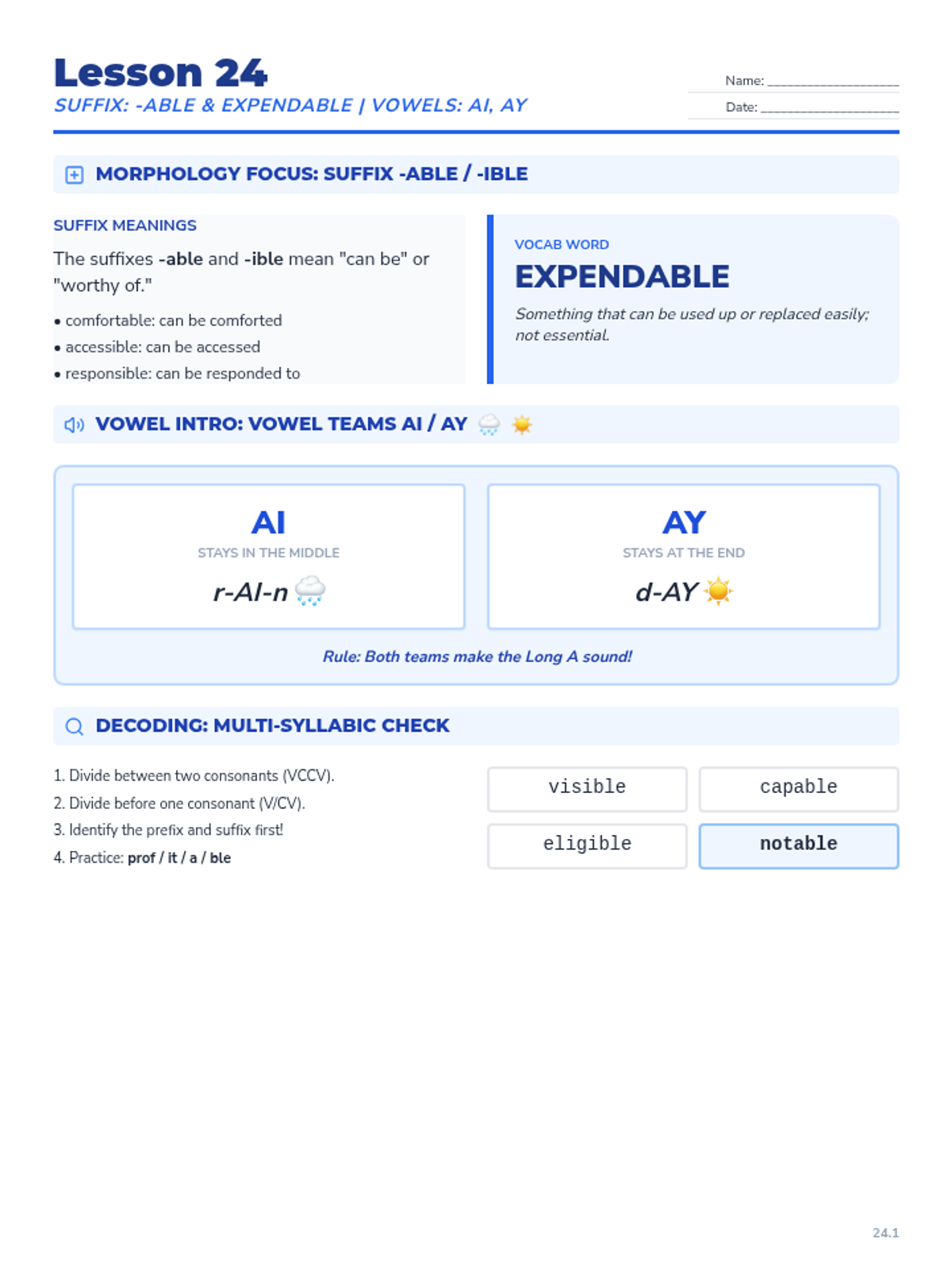
Teaches the suffix -able/-ible and the word 'expendable'. focuses on vowel teams AI and AY and applying all syllable division rules to multi-syllabic academic words.
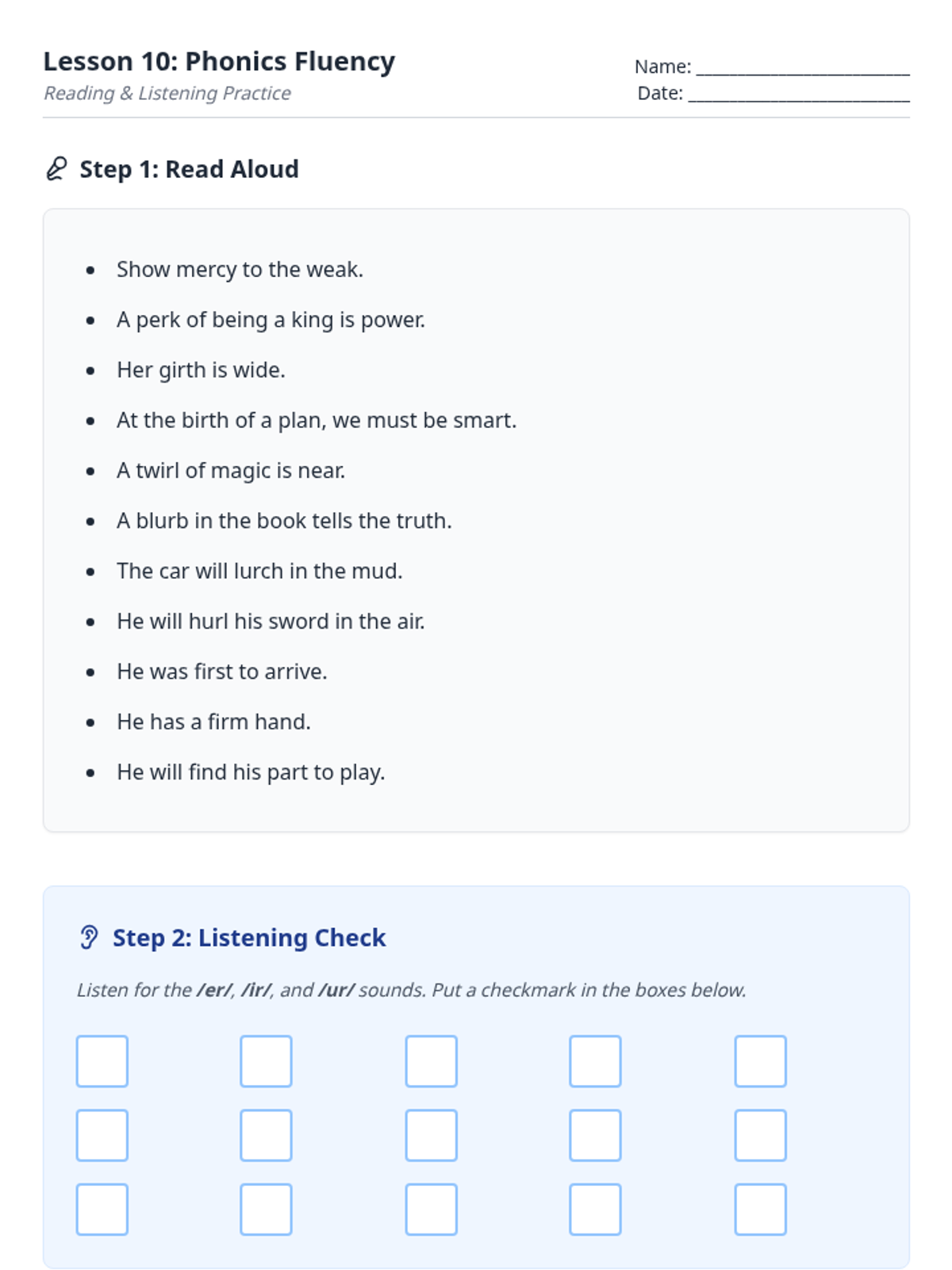
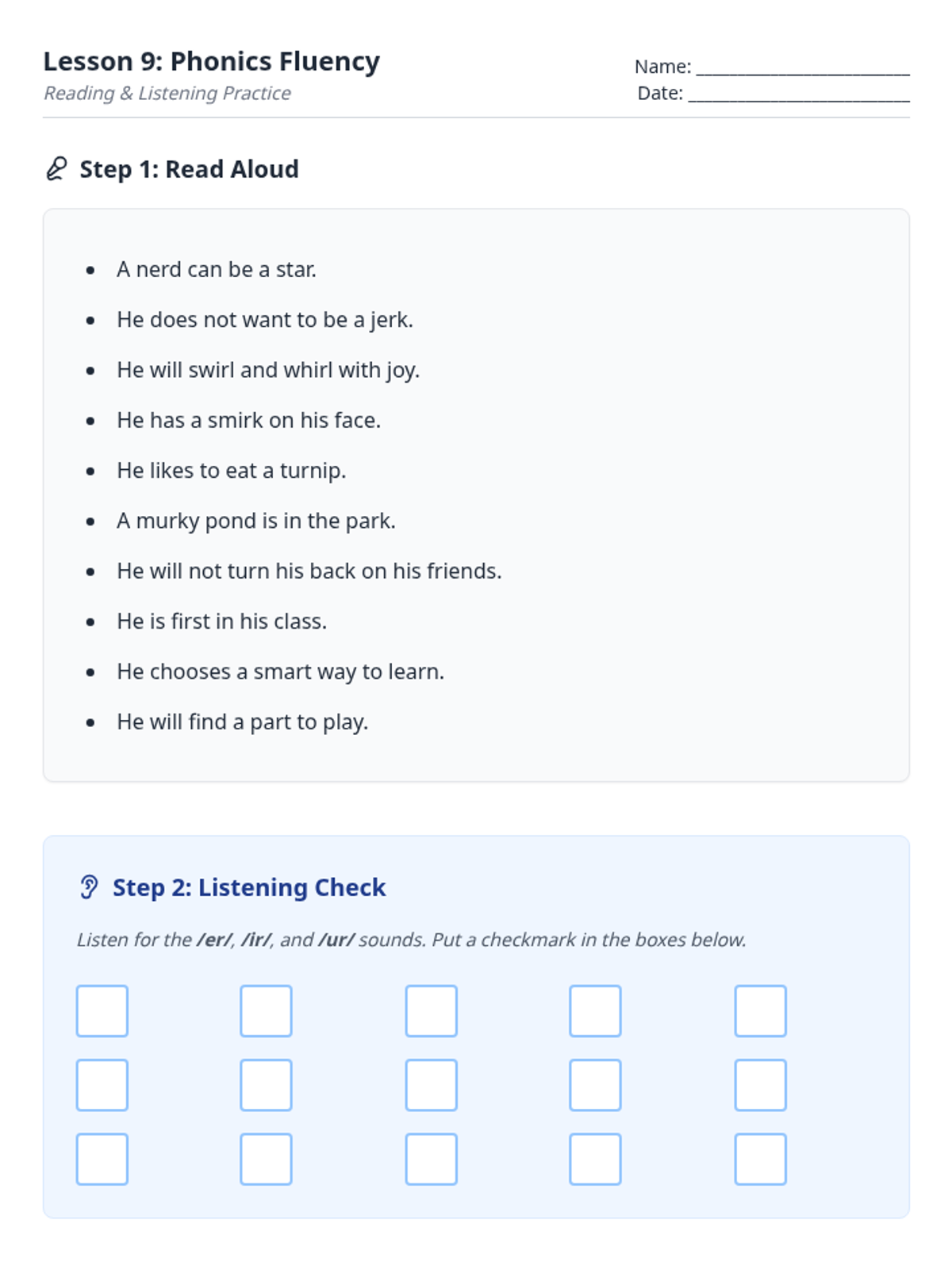
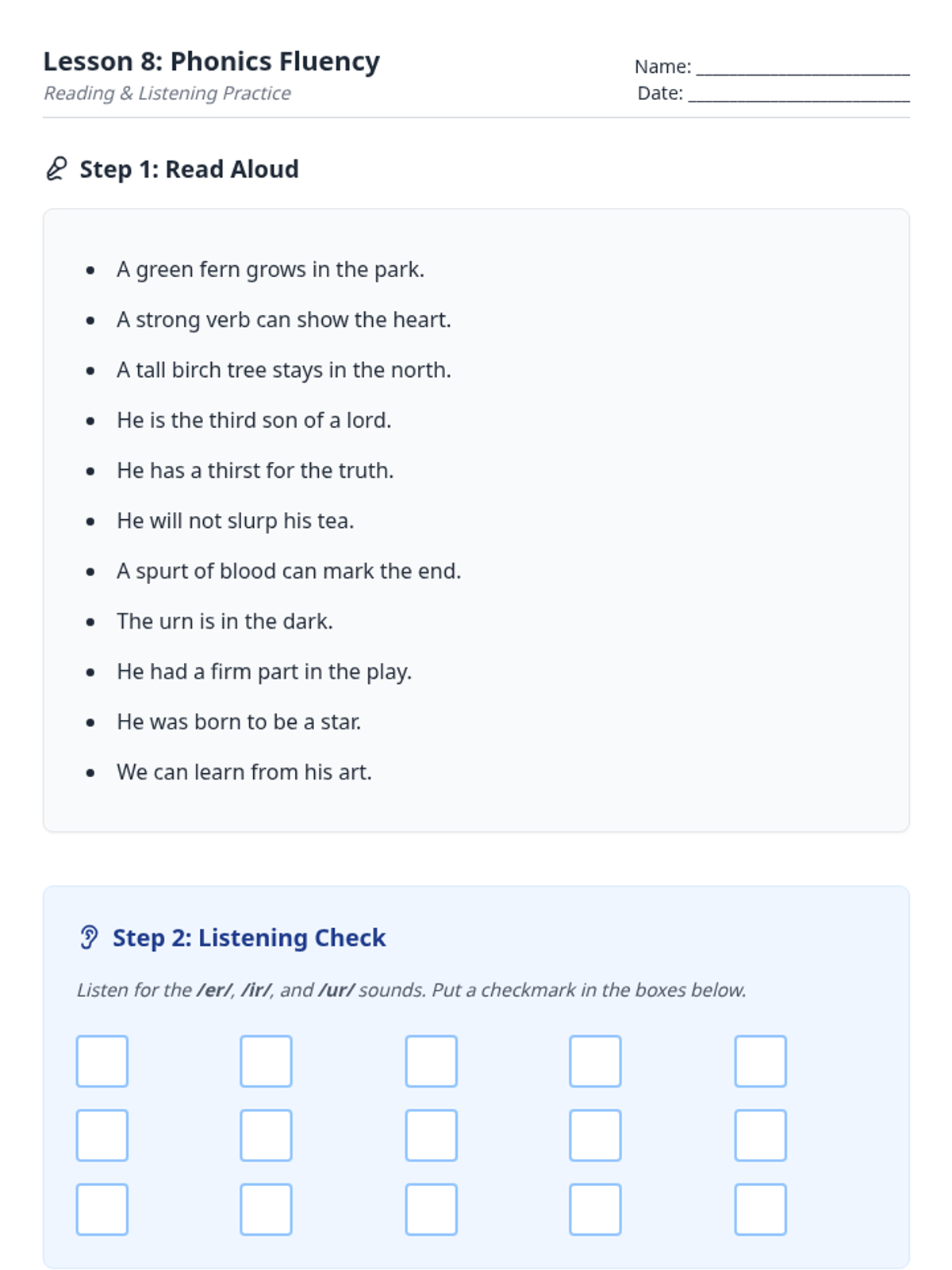
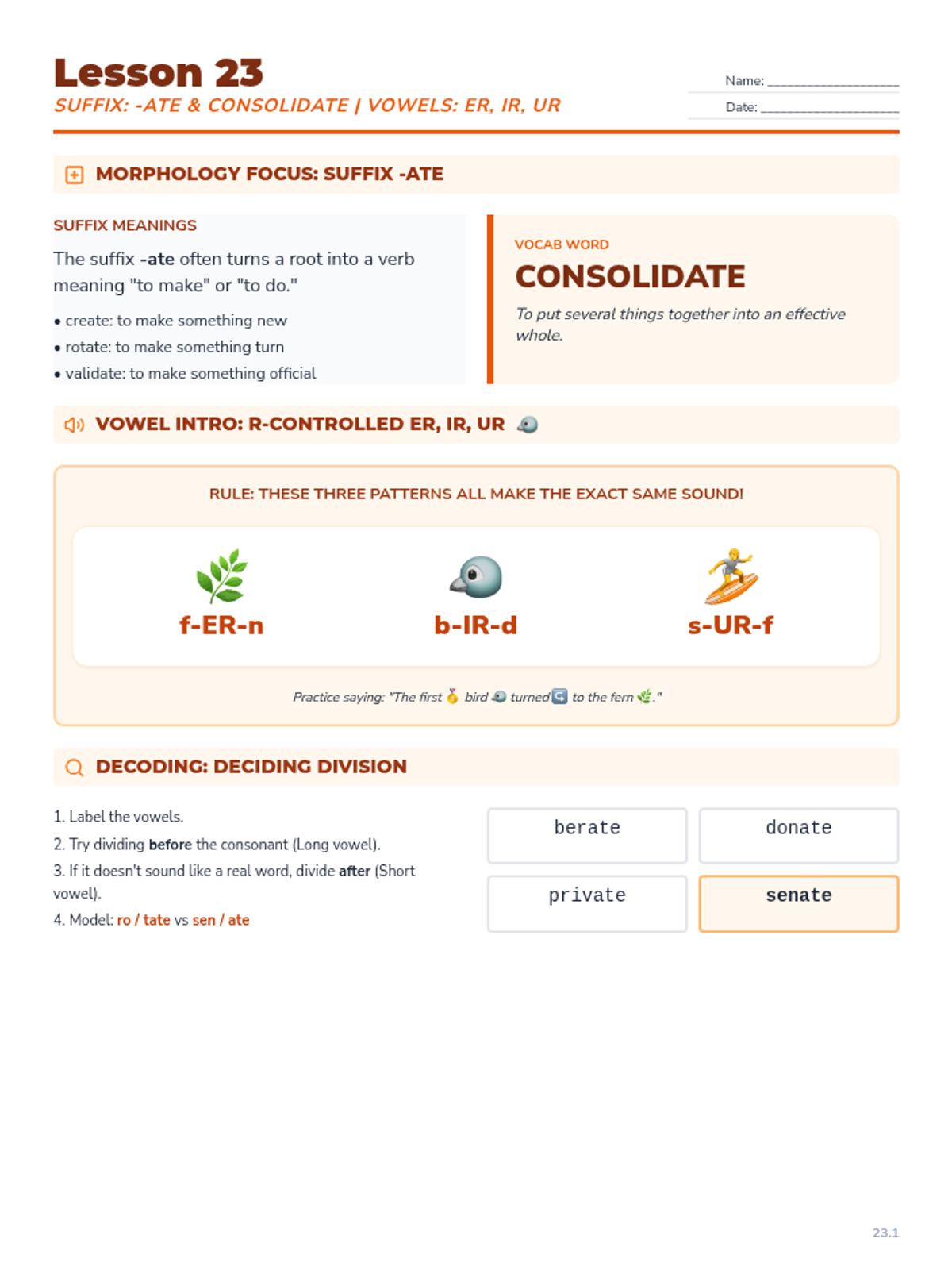
Teaches the suffix -ate and the word 'consolidate'. focuses on r-controlled vowels (ER, IR, UR) and flexible syllable division.
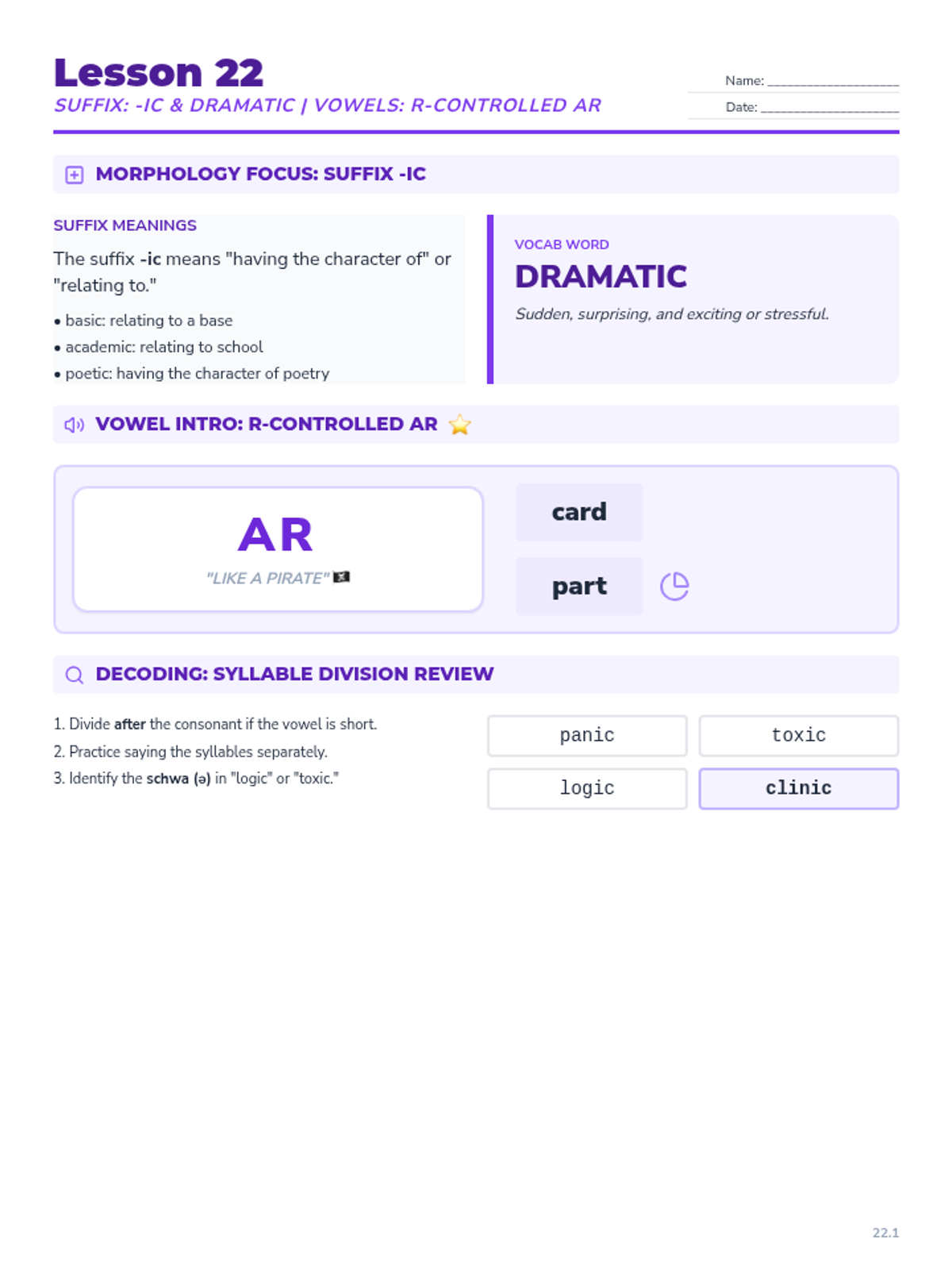
Focuses on the suffix -ic and the word 'dramatic'. Teaches r-controlled vowels (AR) and strategies for syllable division in longer academic words.
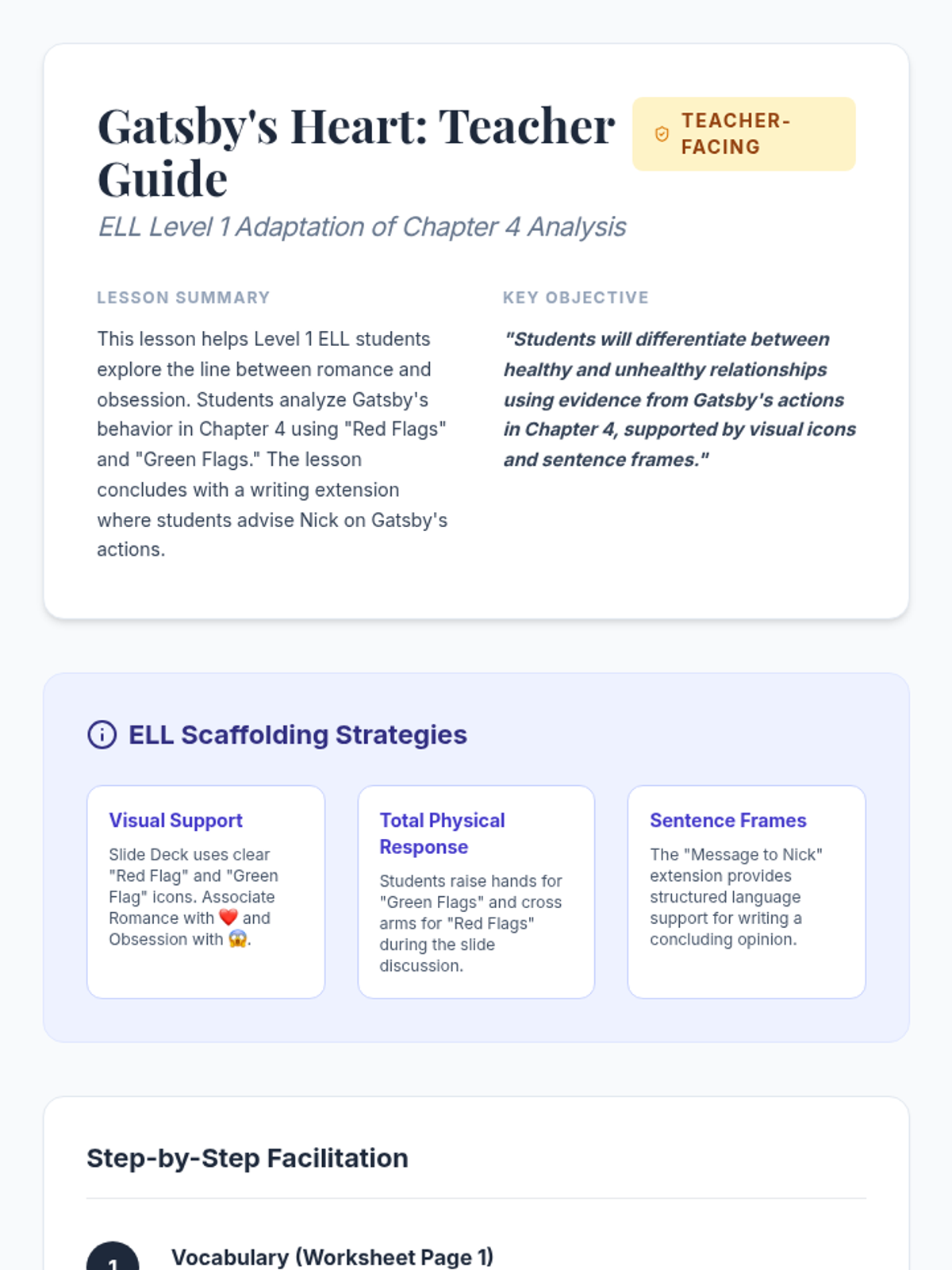
An ELL Level 1 adapted lesson for Chapter 4 of The Great Gatsby, focusing on romance vs. obsession through the lens of 'Red Flags' and 'Green Flags'. Includes vocabulary scaffolding, visual aids, and a creative meme project.
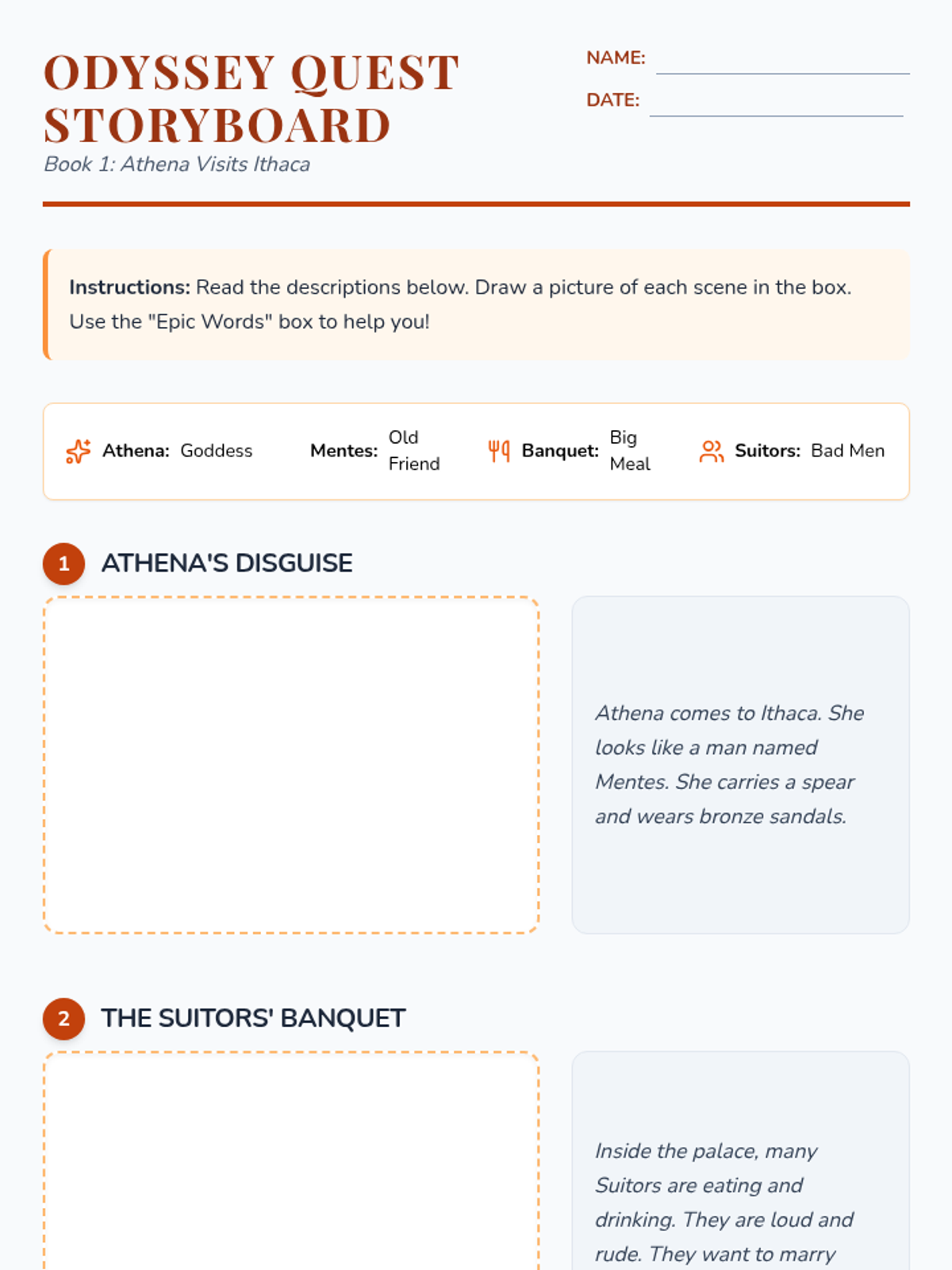
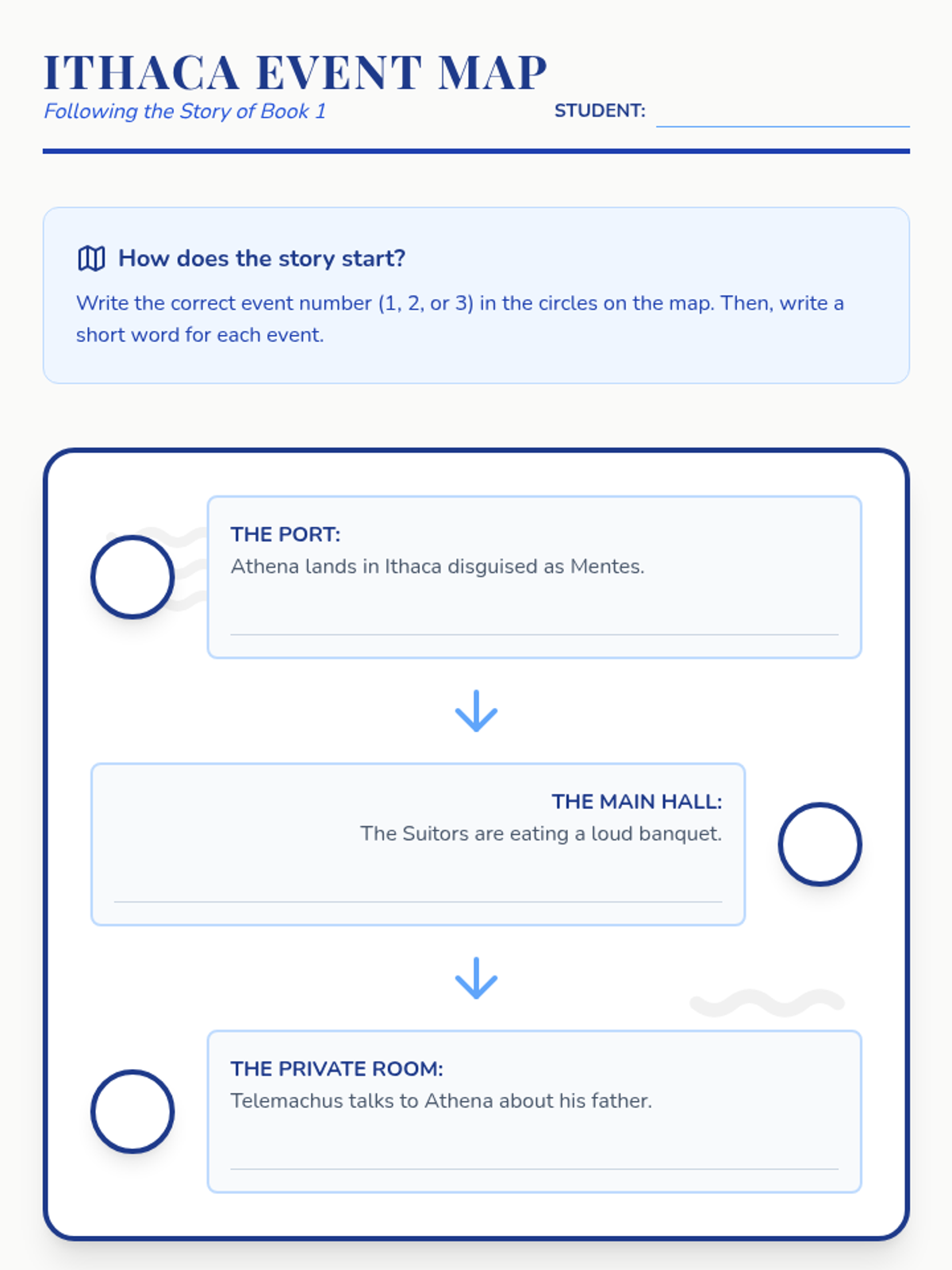
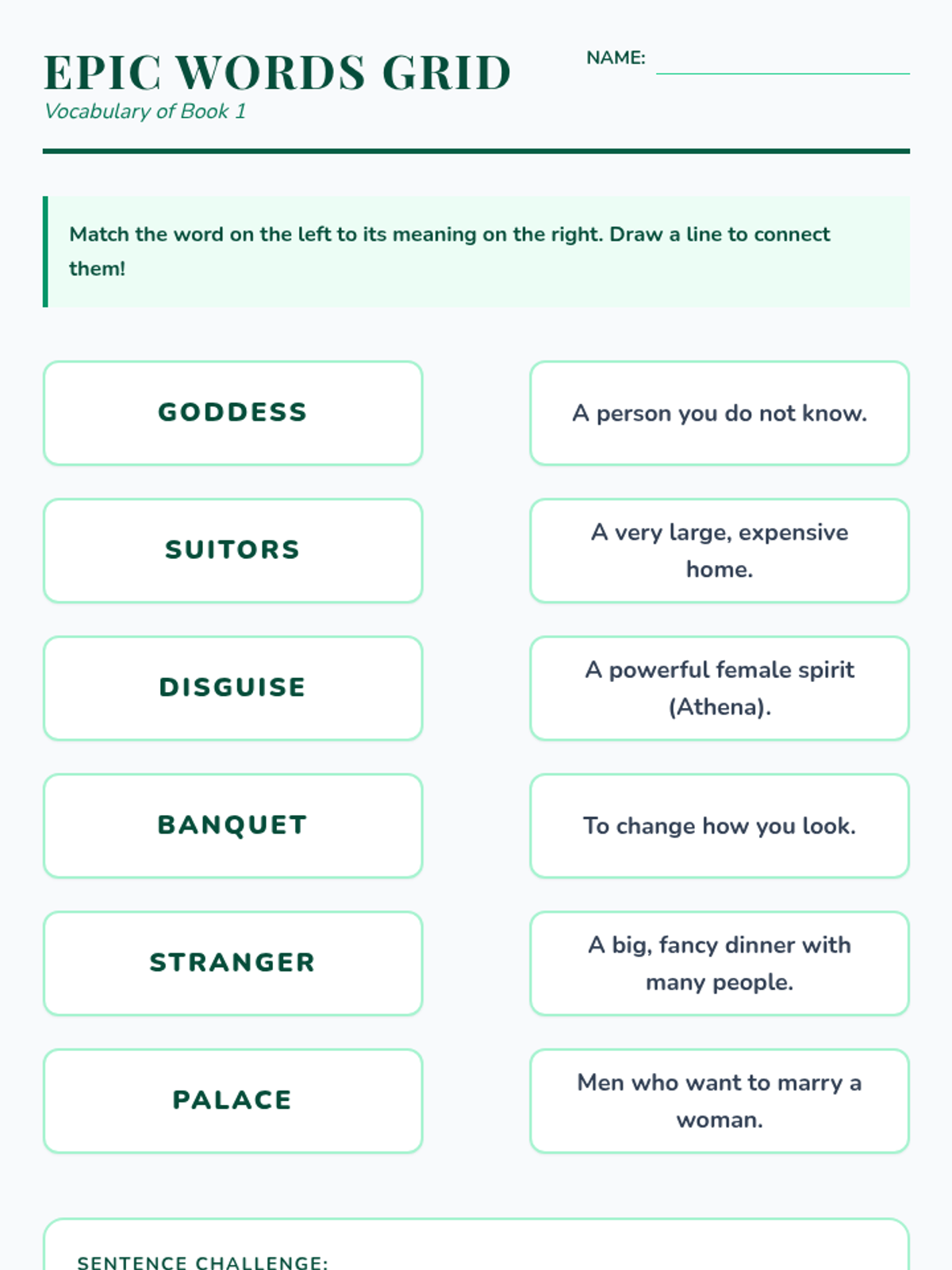
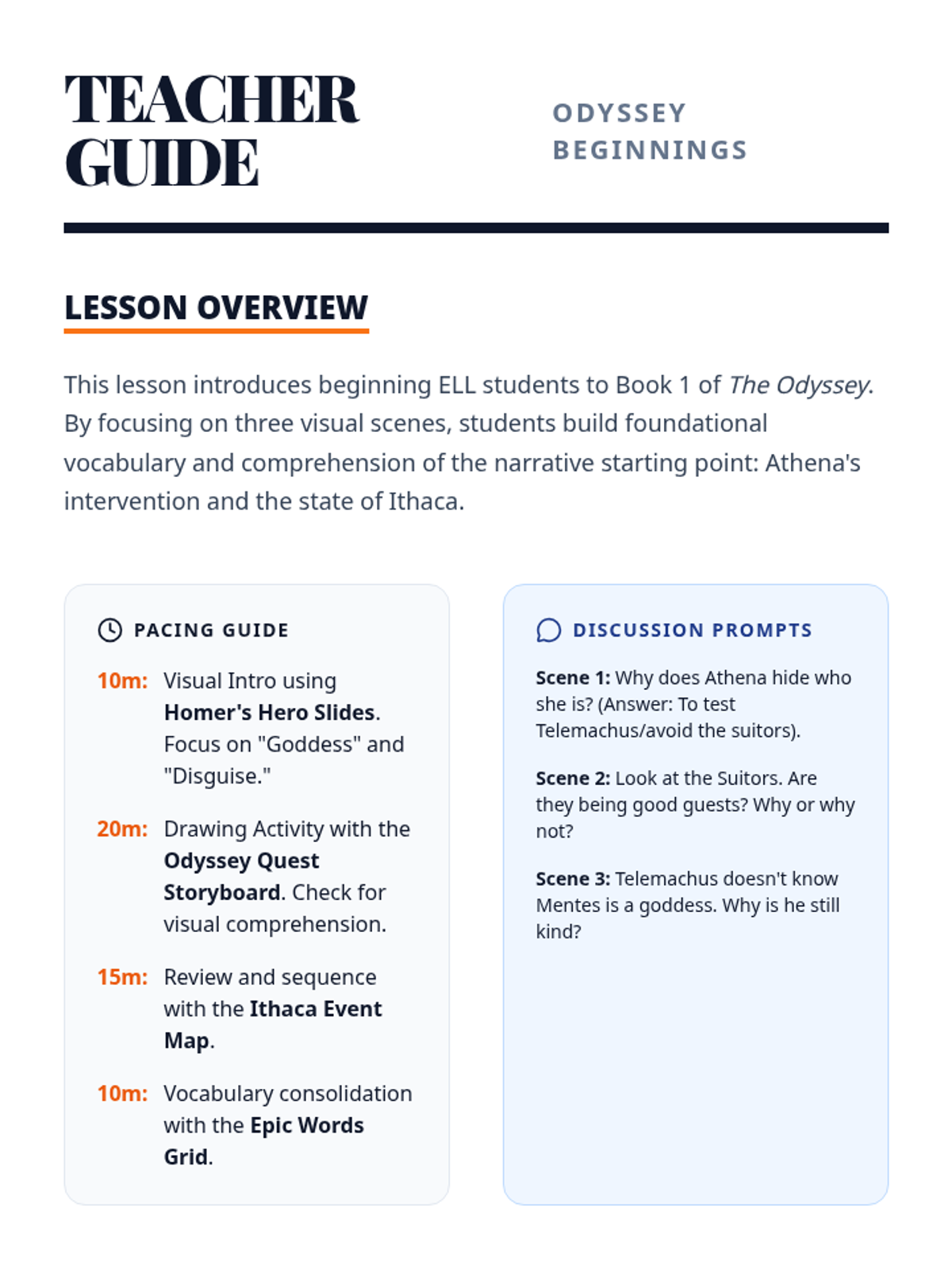
A foundational lesson for beginning ELL students to understand the opening of Homer's Odyssey through visual storytelling and simplified vocabulary focusing on Athena's arrival in Ithaca and her interaction with Telemachus.
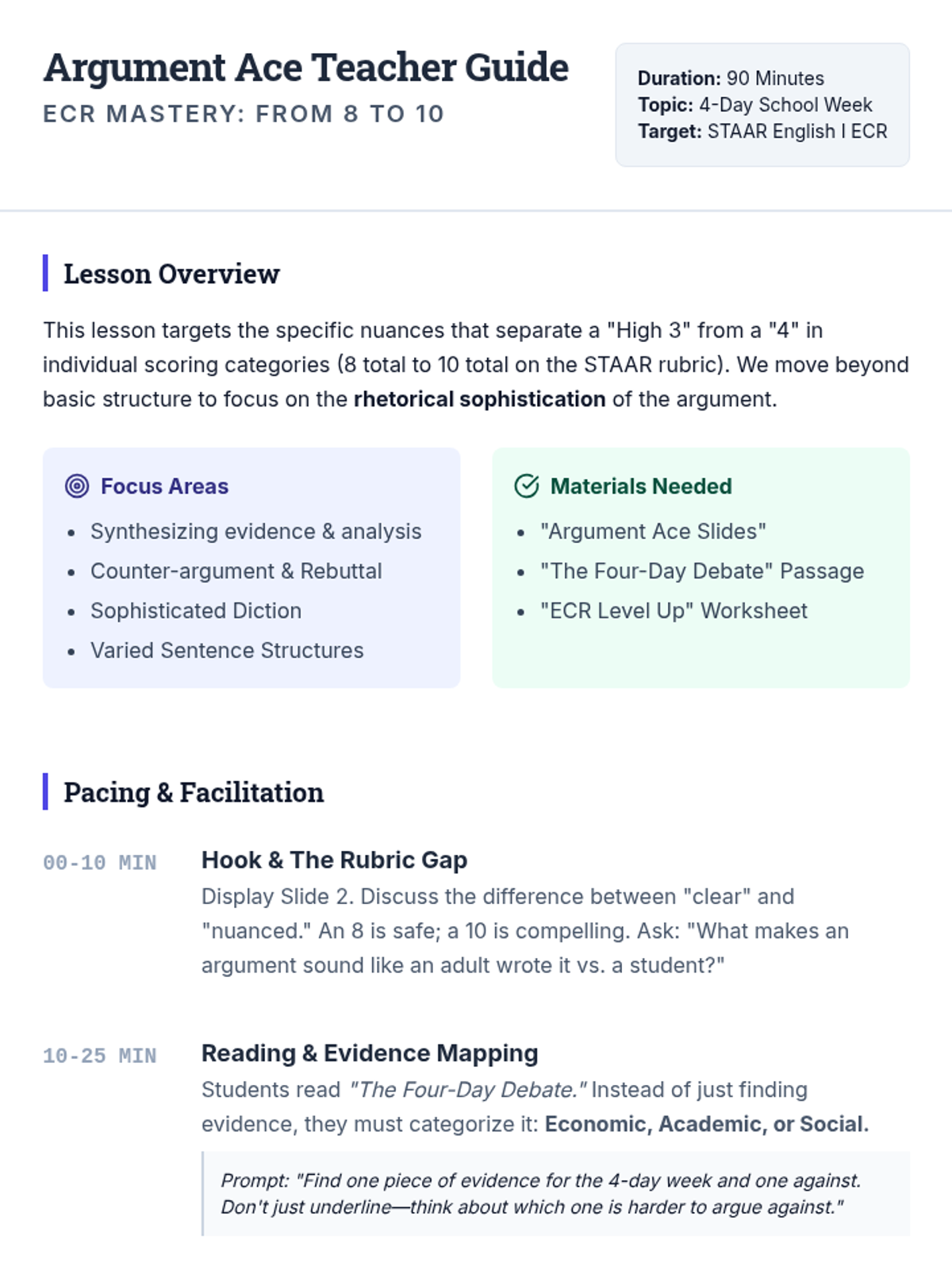
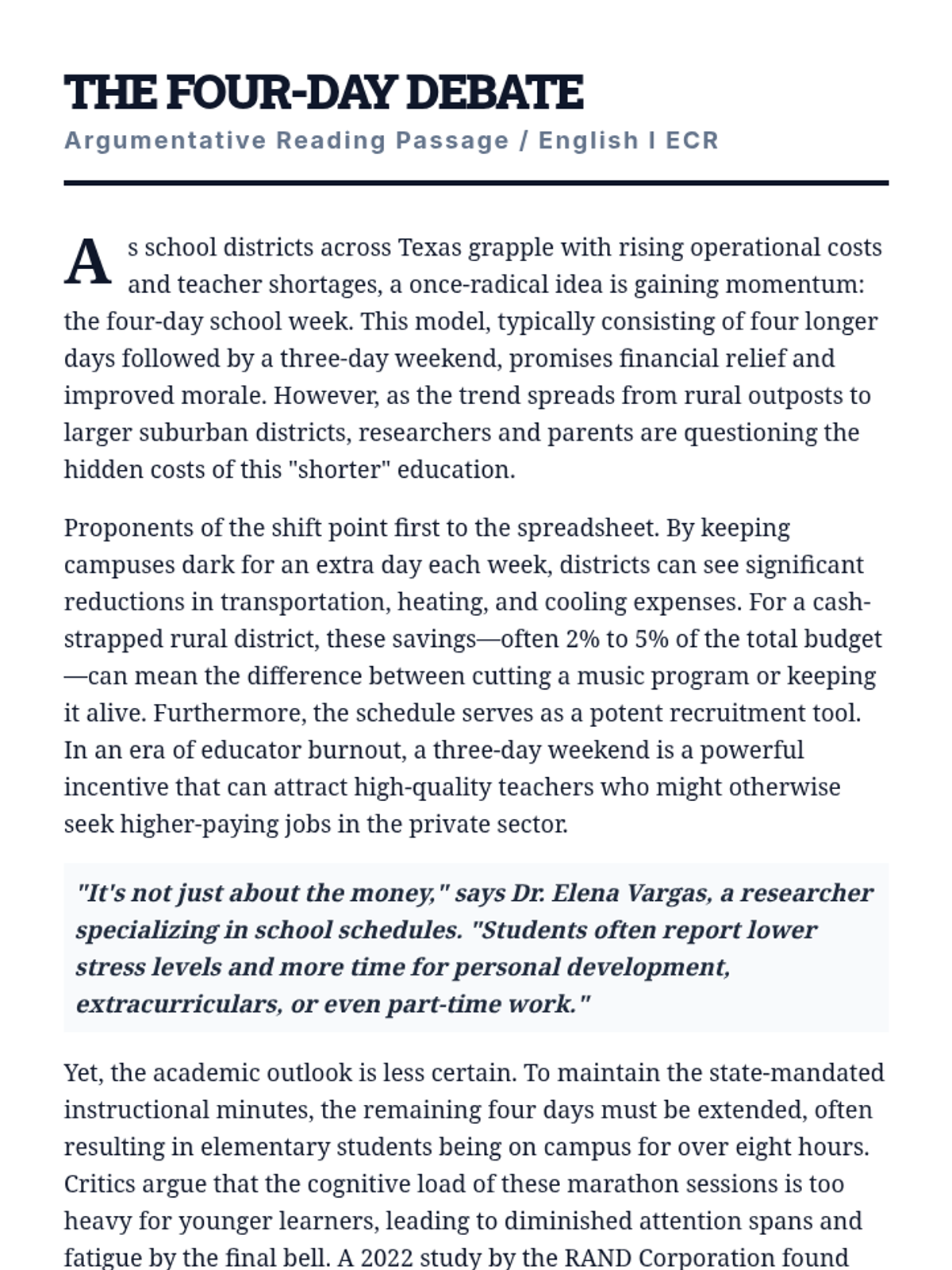
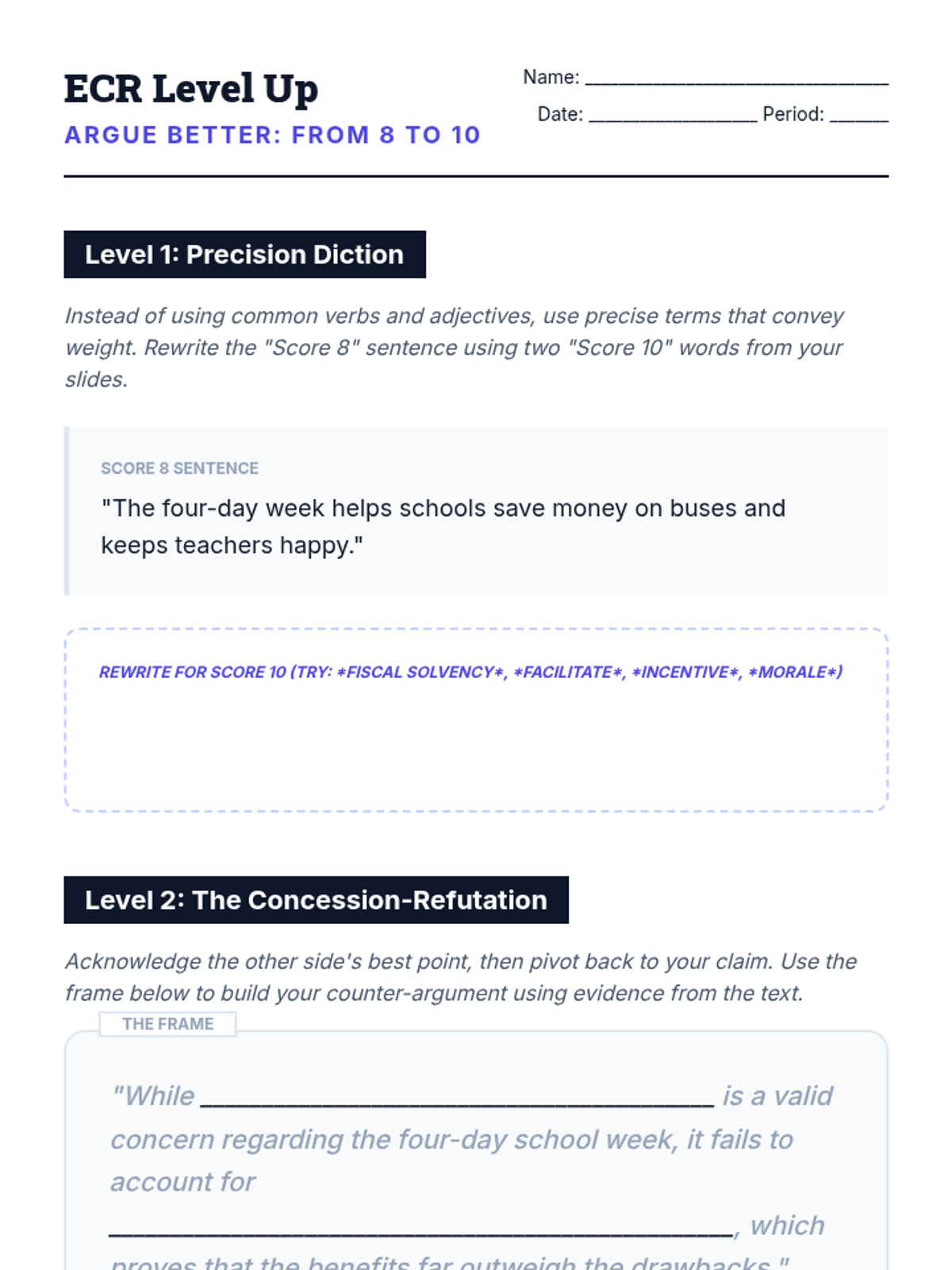
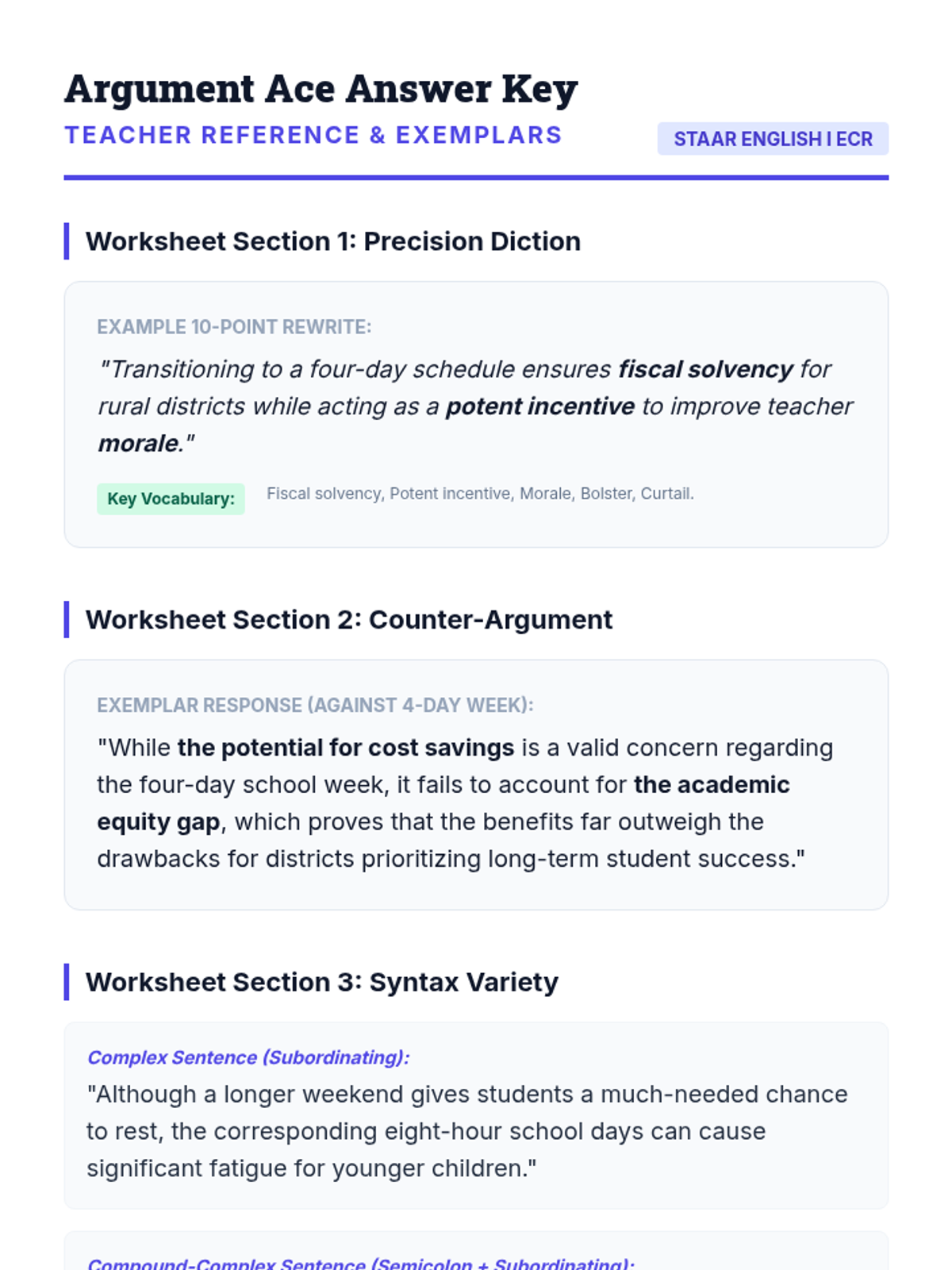
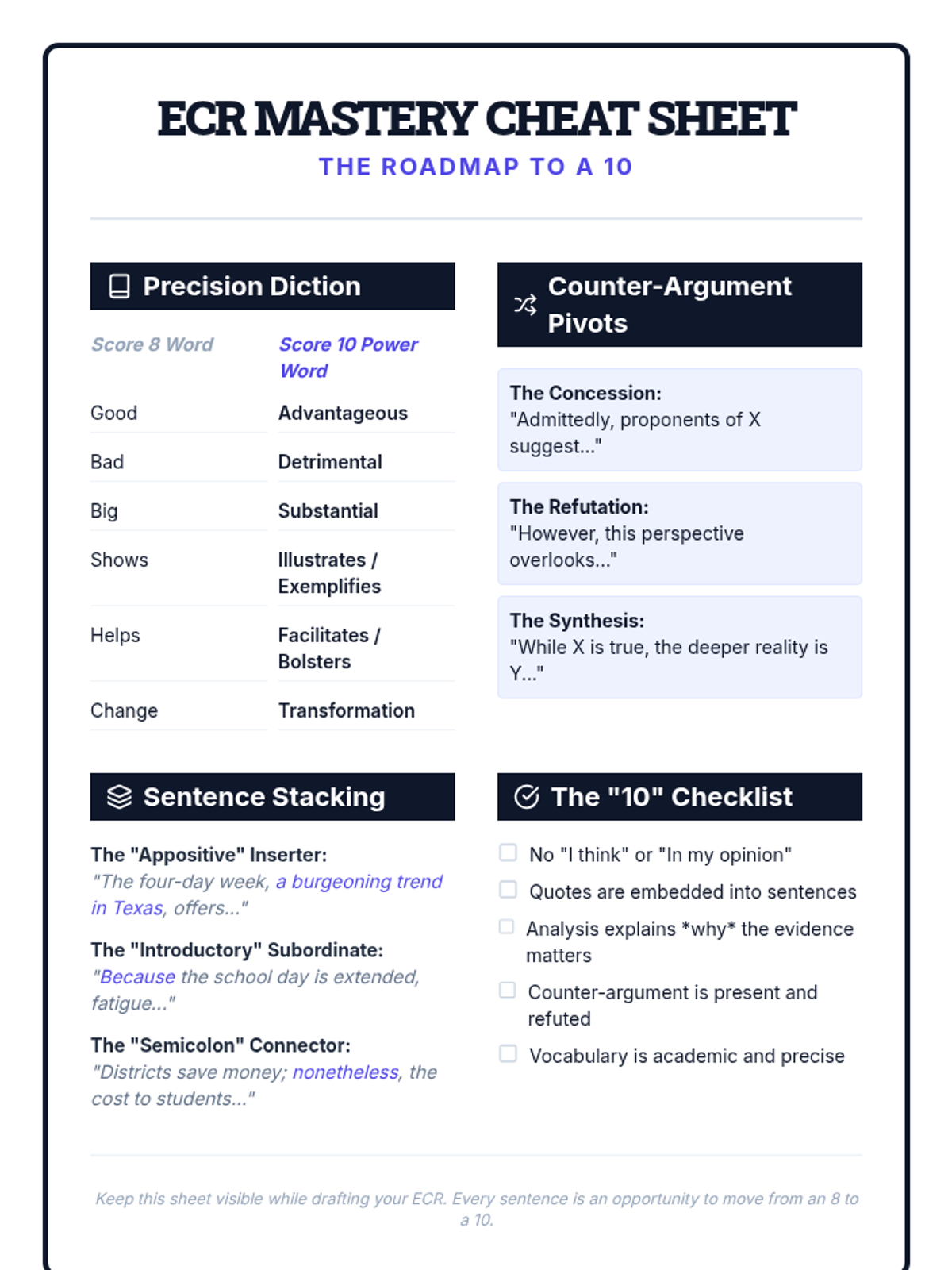
A 90-minute intensive lesson designed to bridge the gap between proficient (8) and advanced (10) scores on the Texas English 1 Argumentative ECR, focusing on counter-arguments, syntax, and sophisticated word choice.
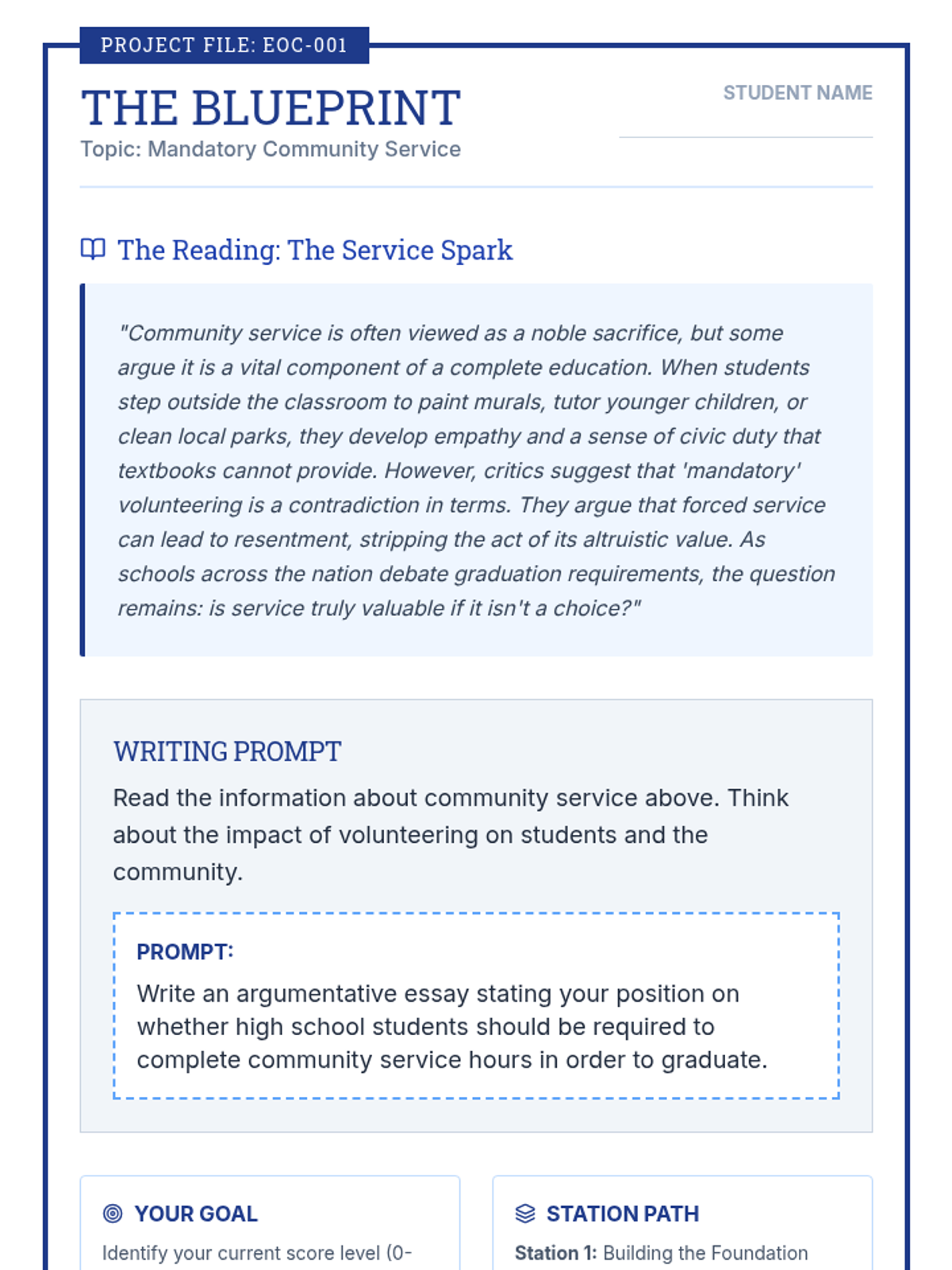
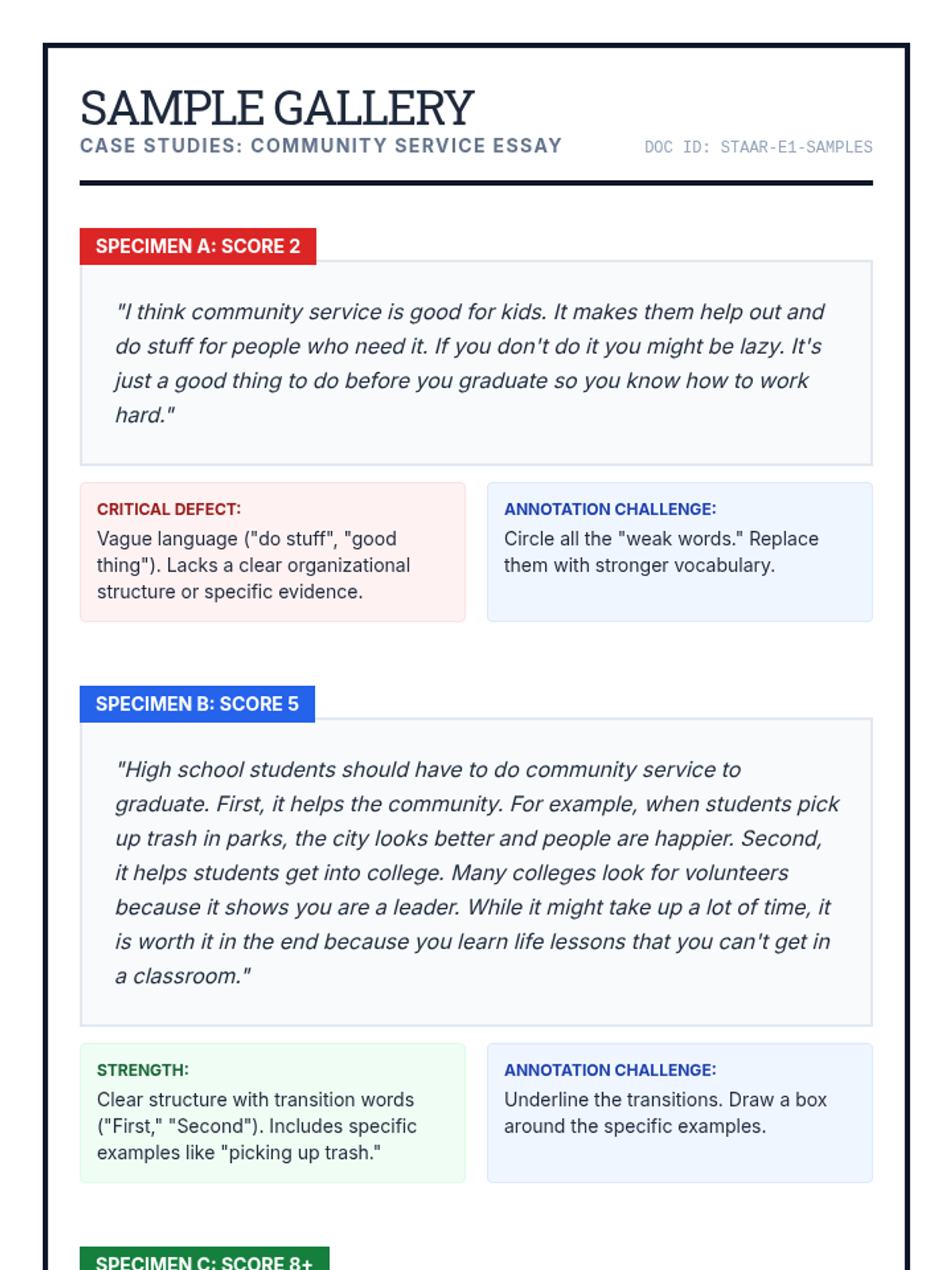
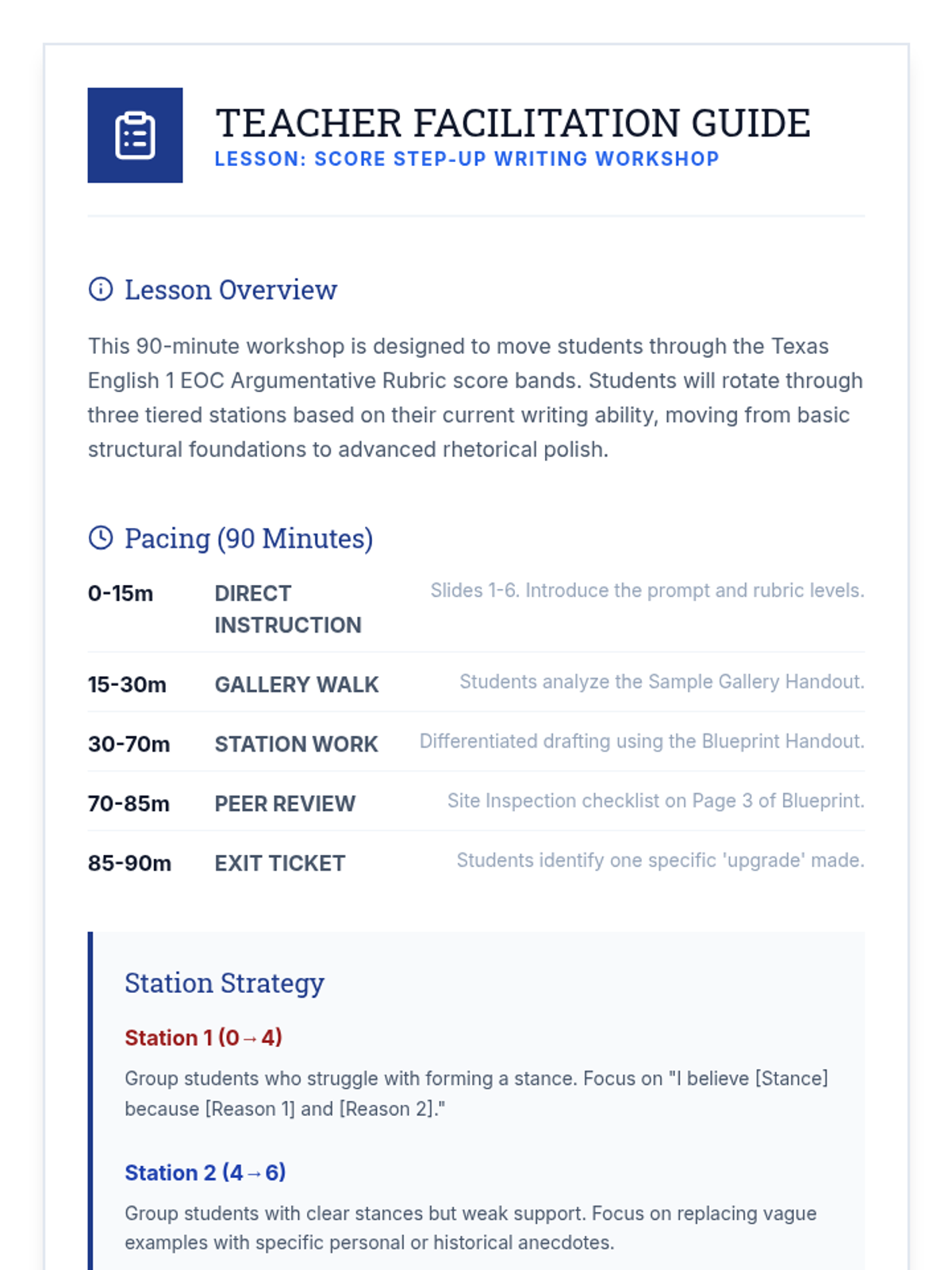
A 90-minute differentiated writing workshop designed to move students up the Texas English 1 EOC argumentative writing rubric through targeted stations. Students analyze samples, use tiered graphic organizers, and engage in peer review centered on the 'Value of Community Service' prompt.
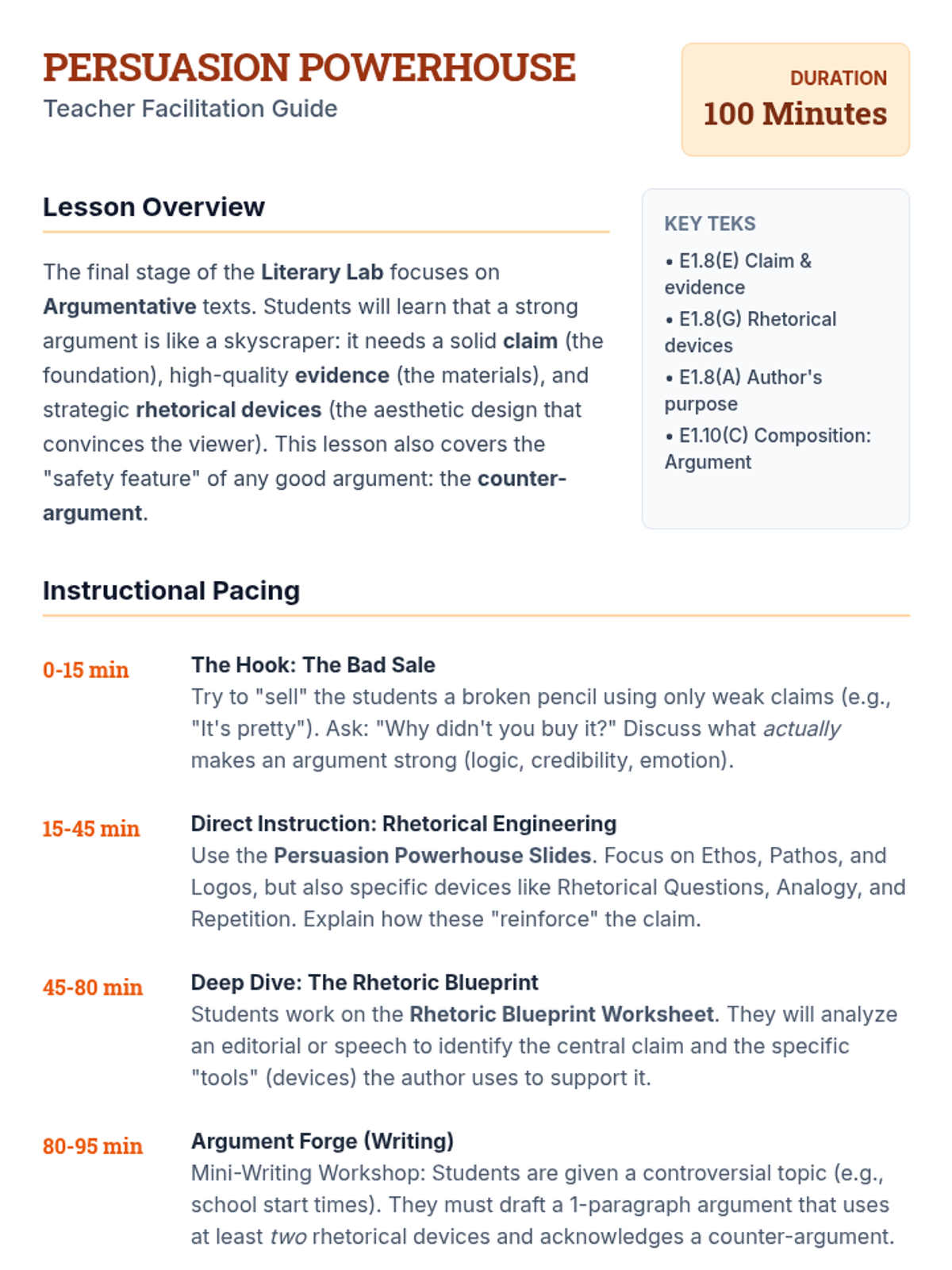
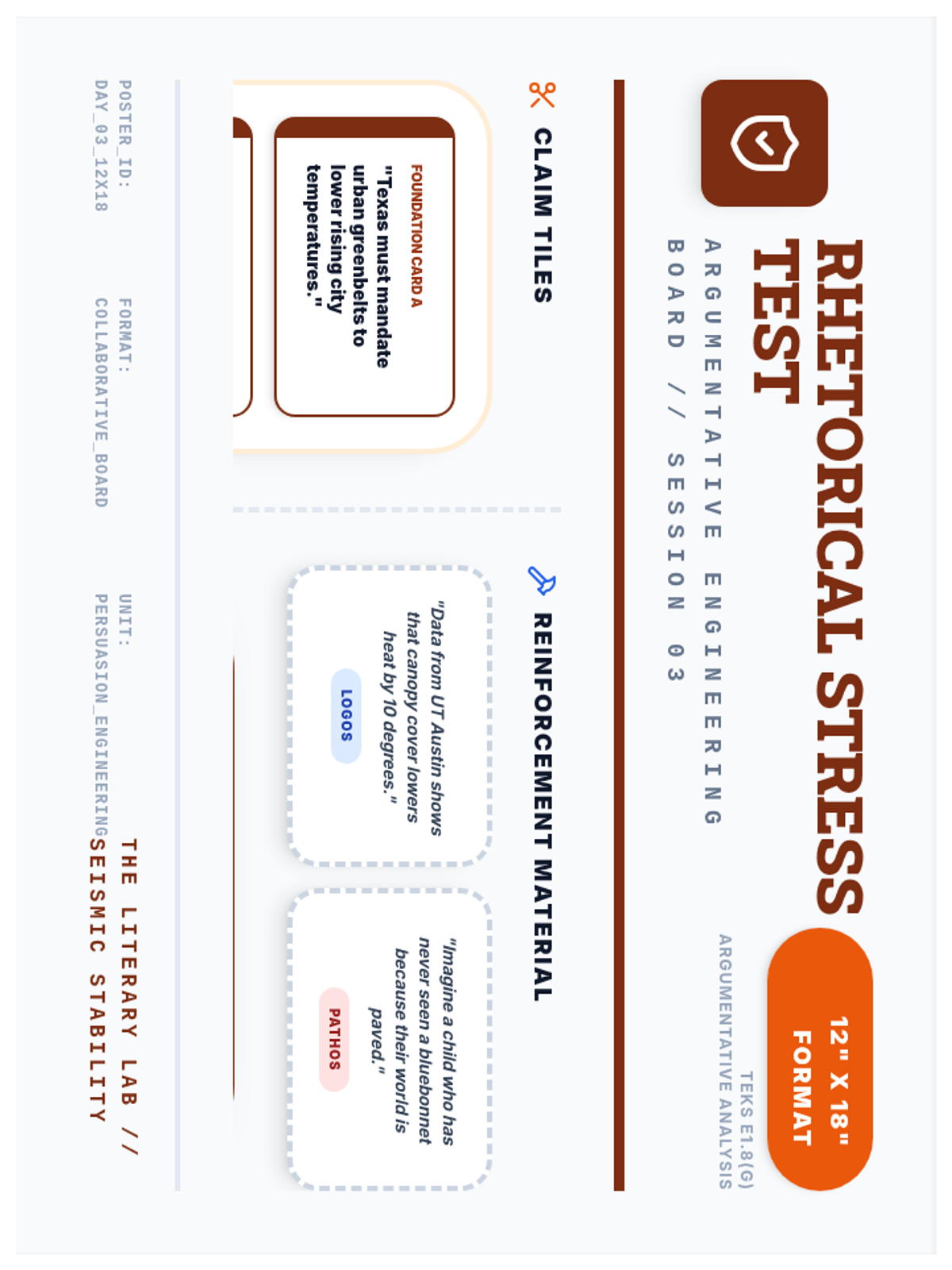
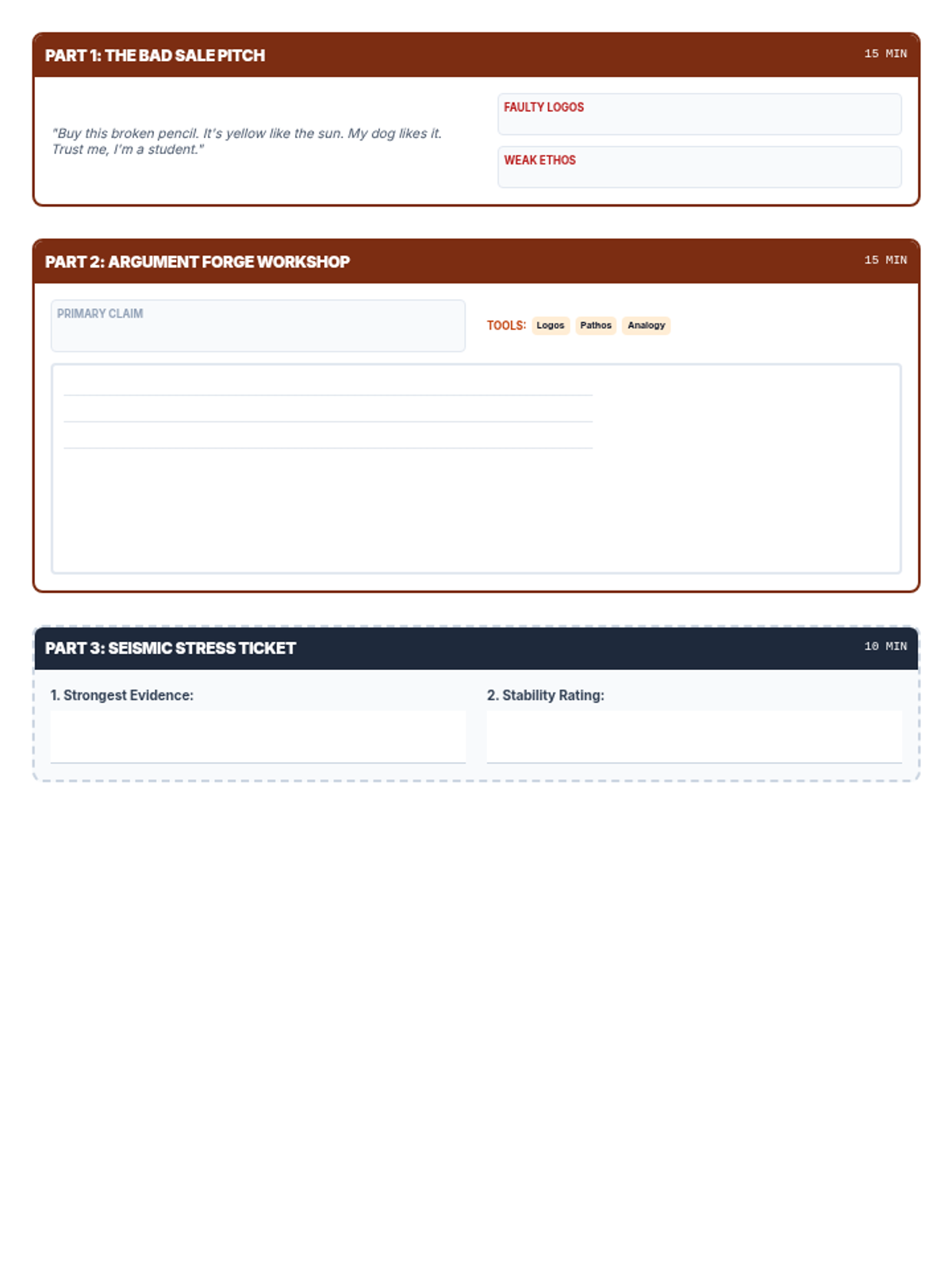
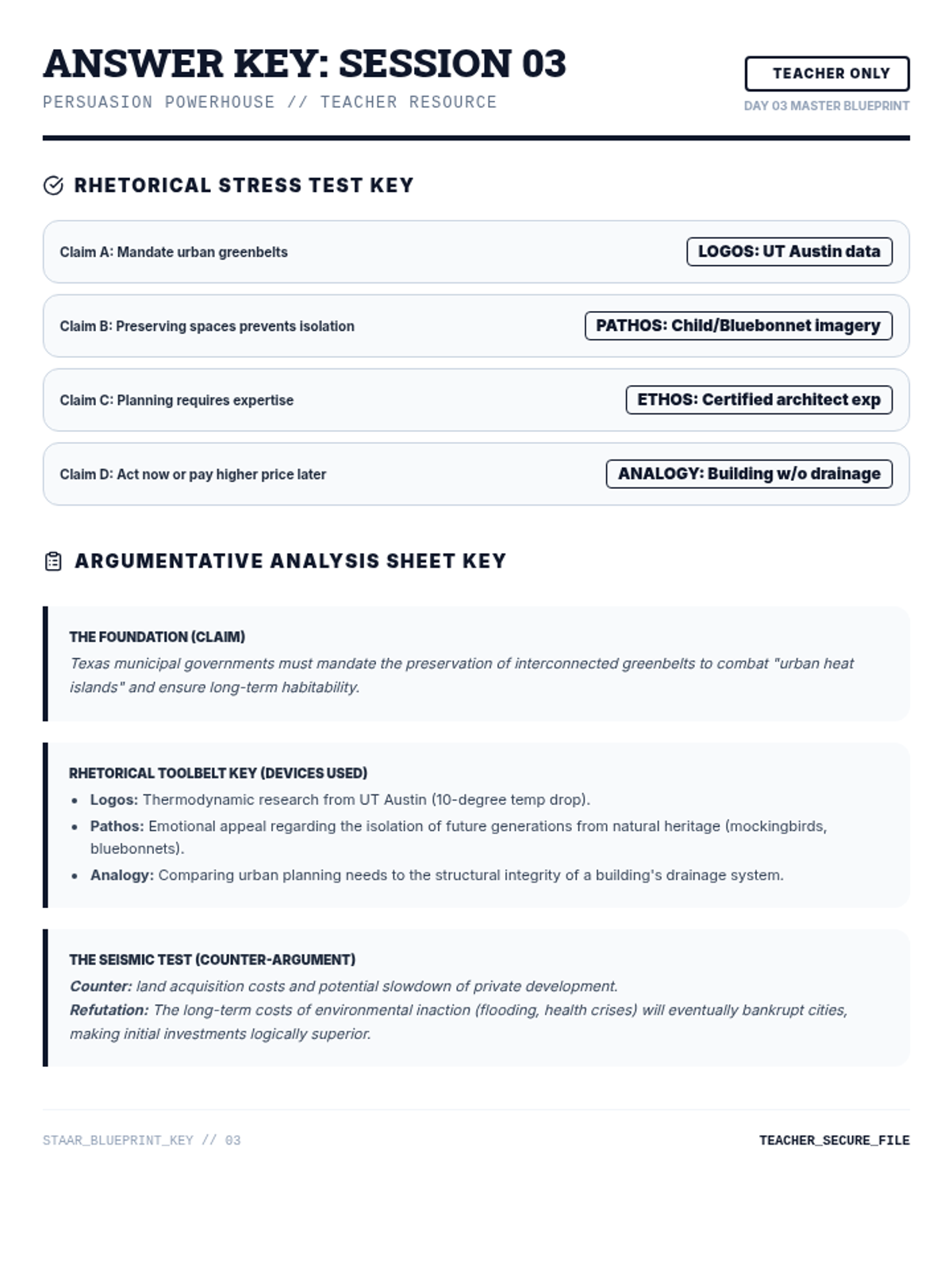
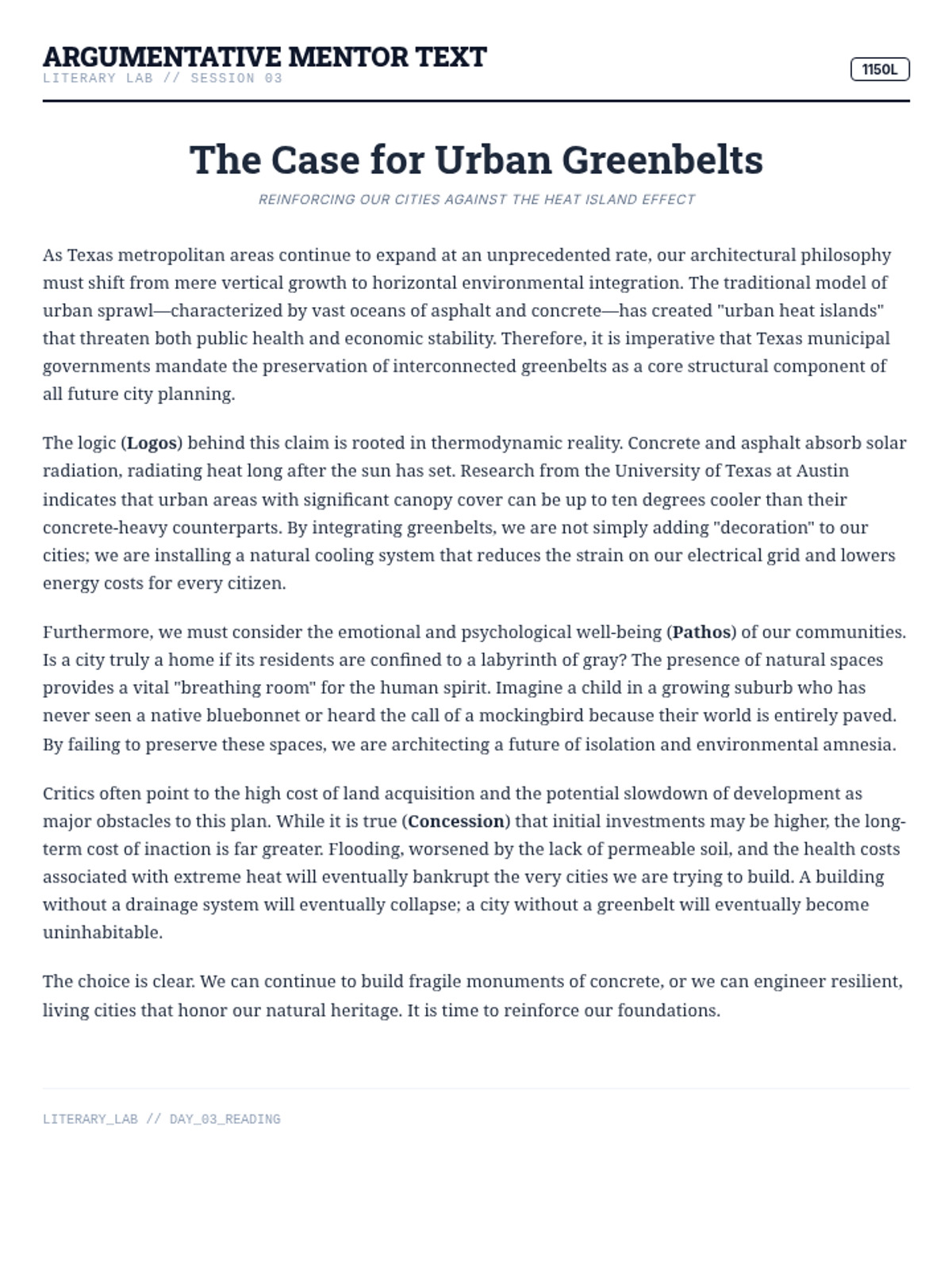
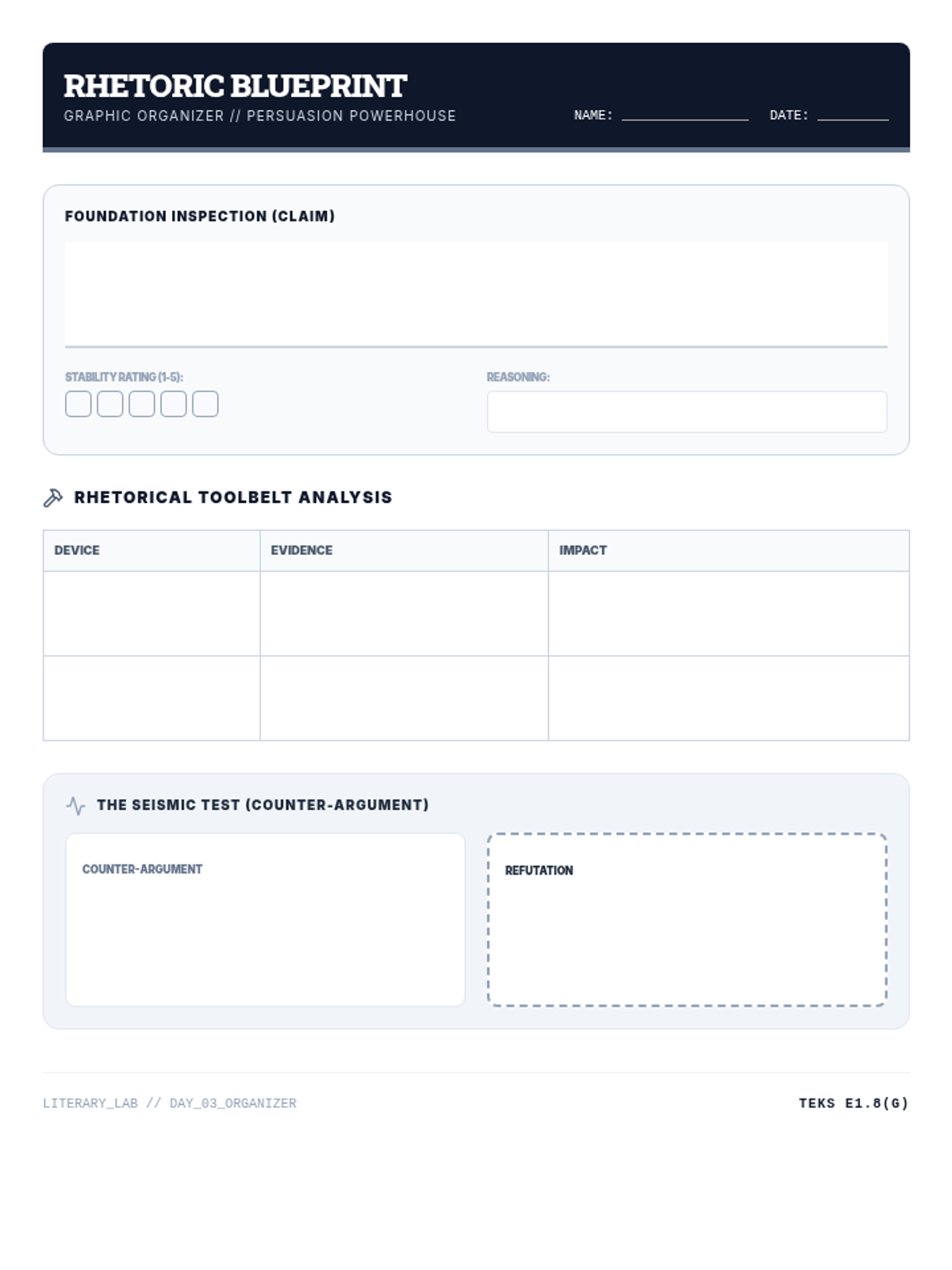
Deconstructs the components of a powerful argument, focusing on claim development, rhetorical devices, and the strategic use of evidence and counter-arguments.
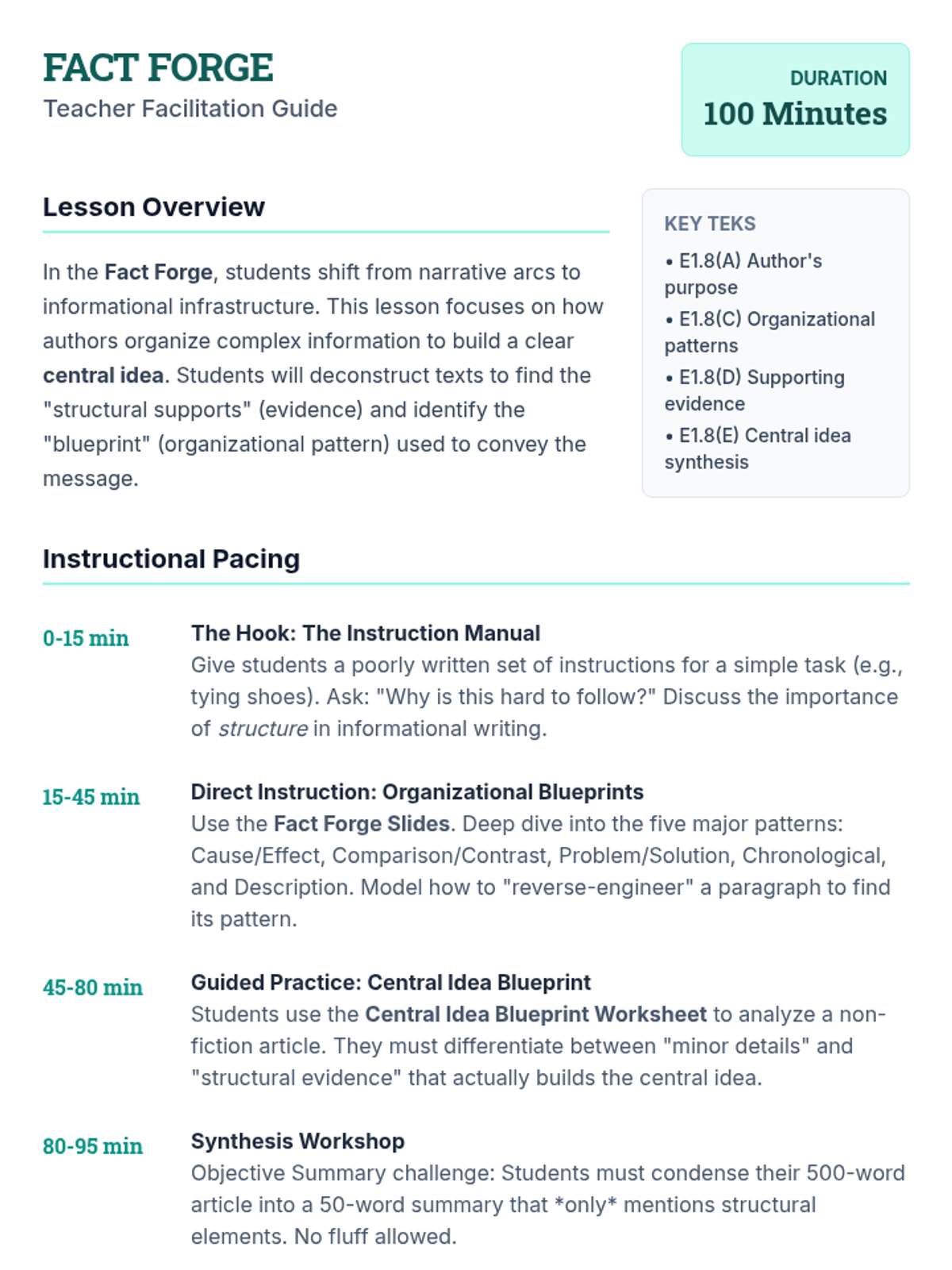
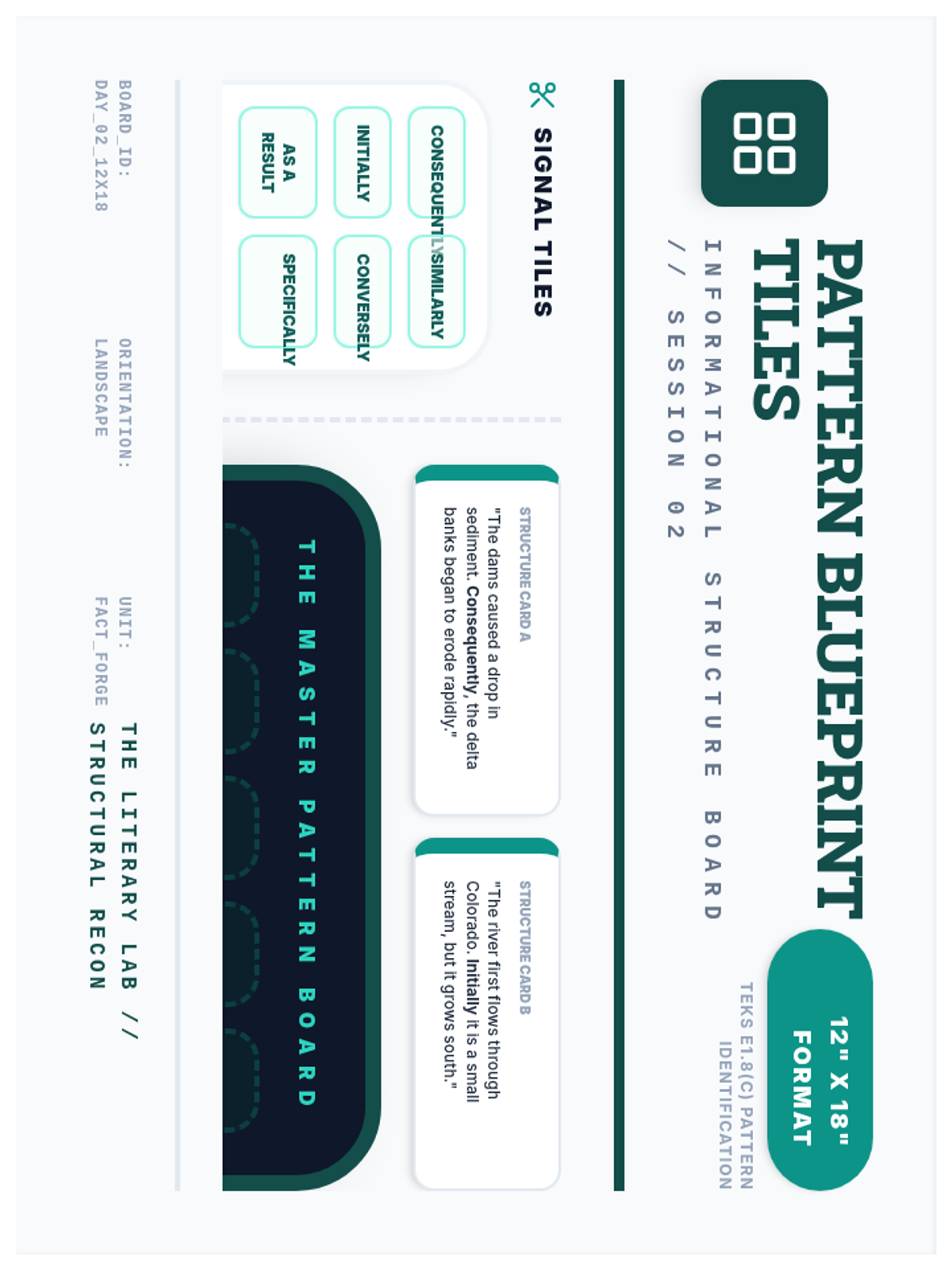
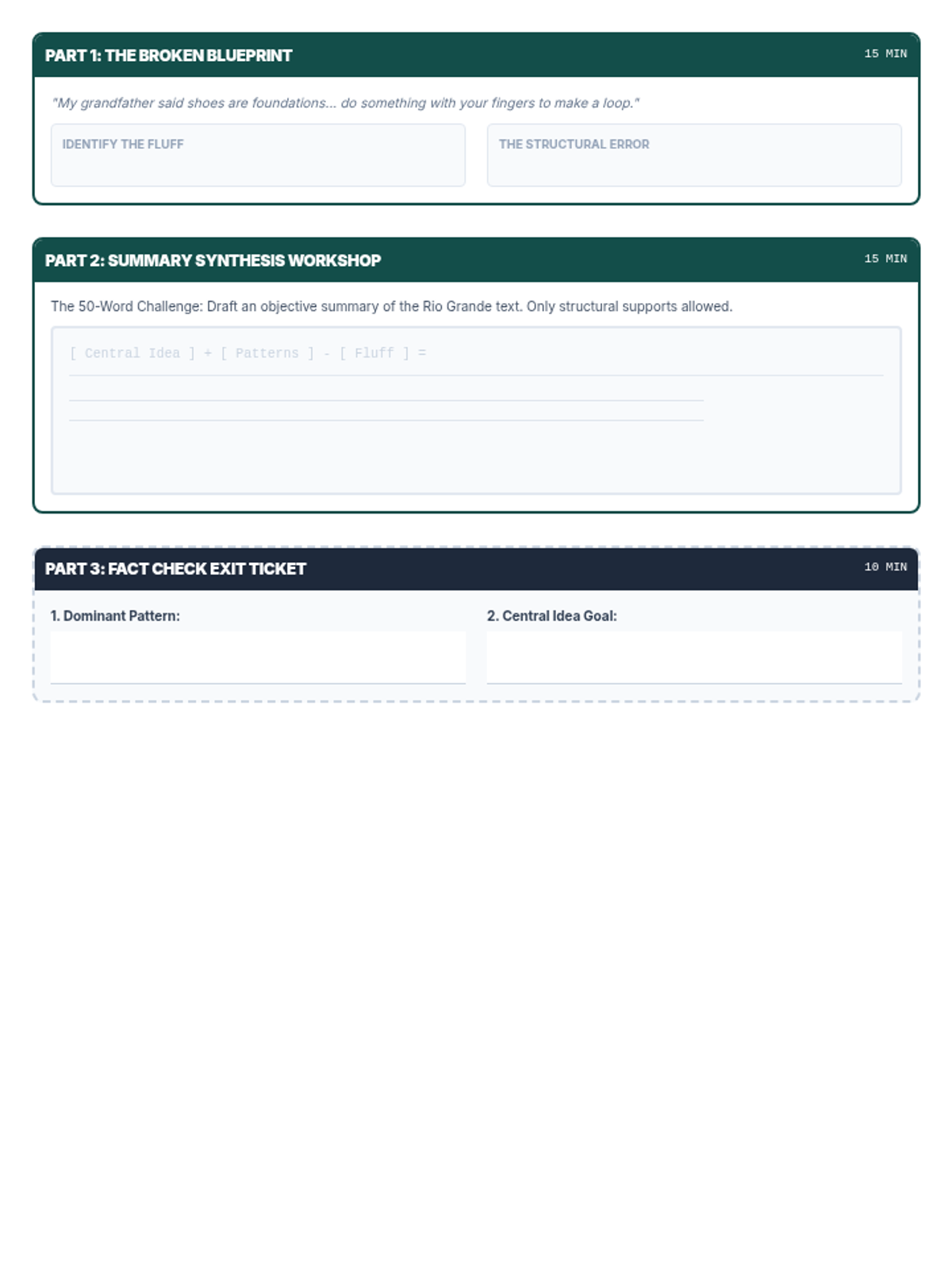
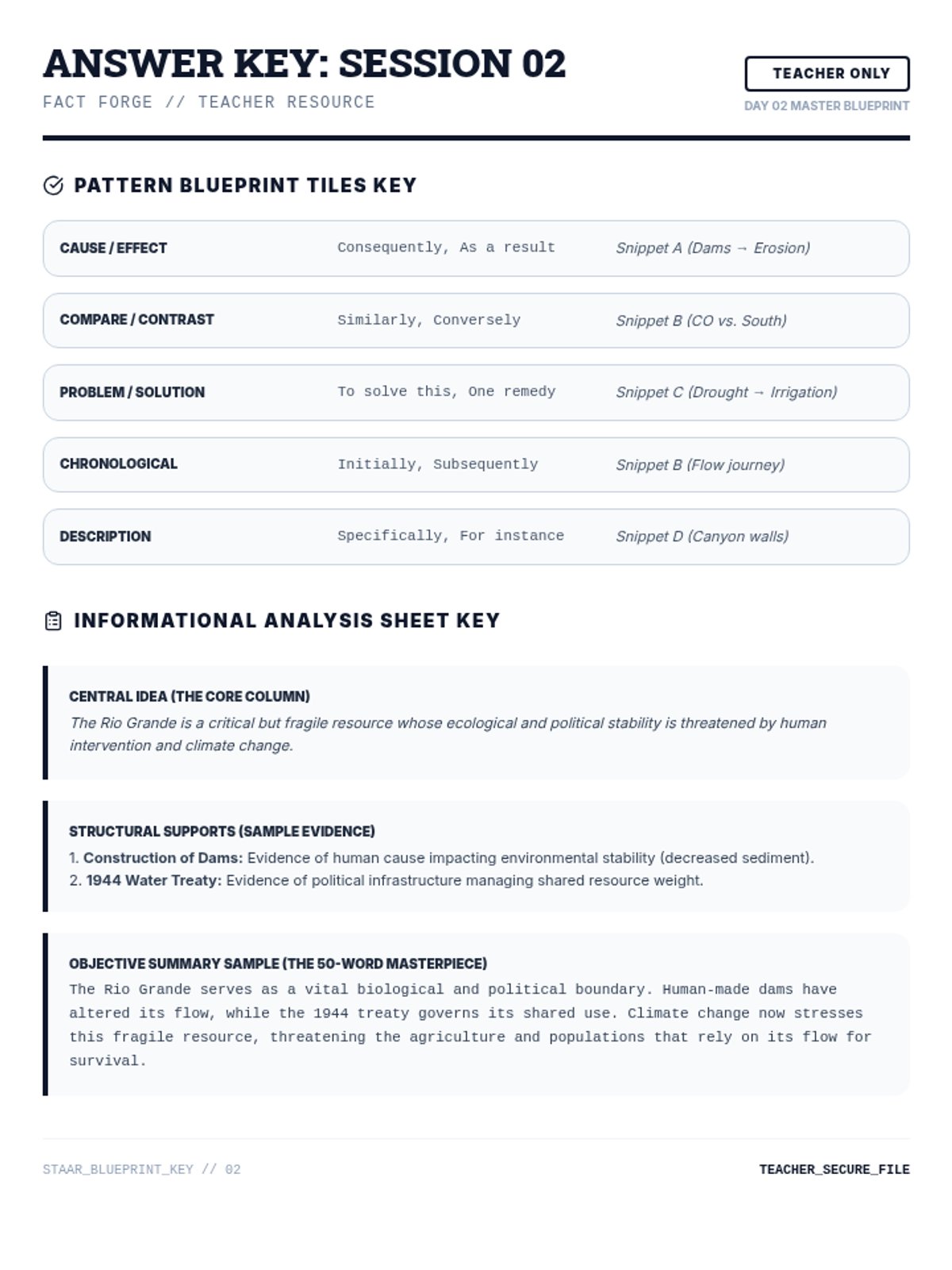
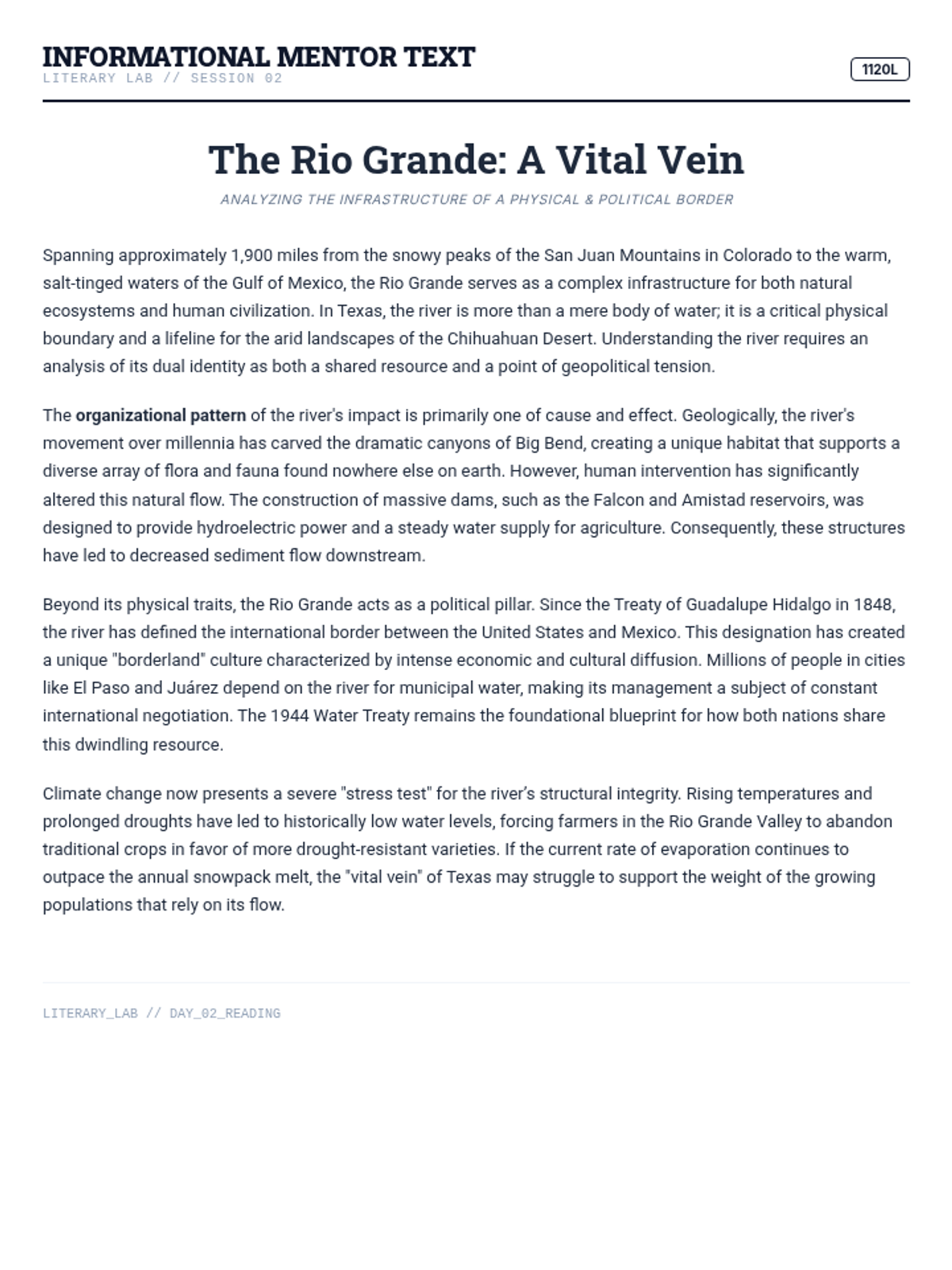
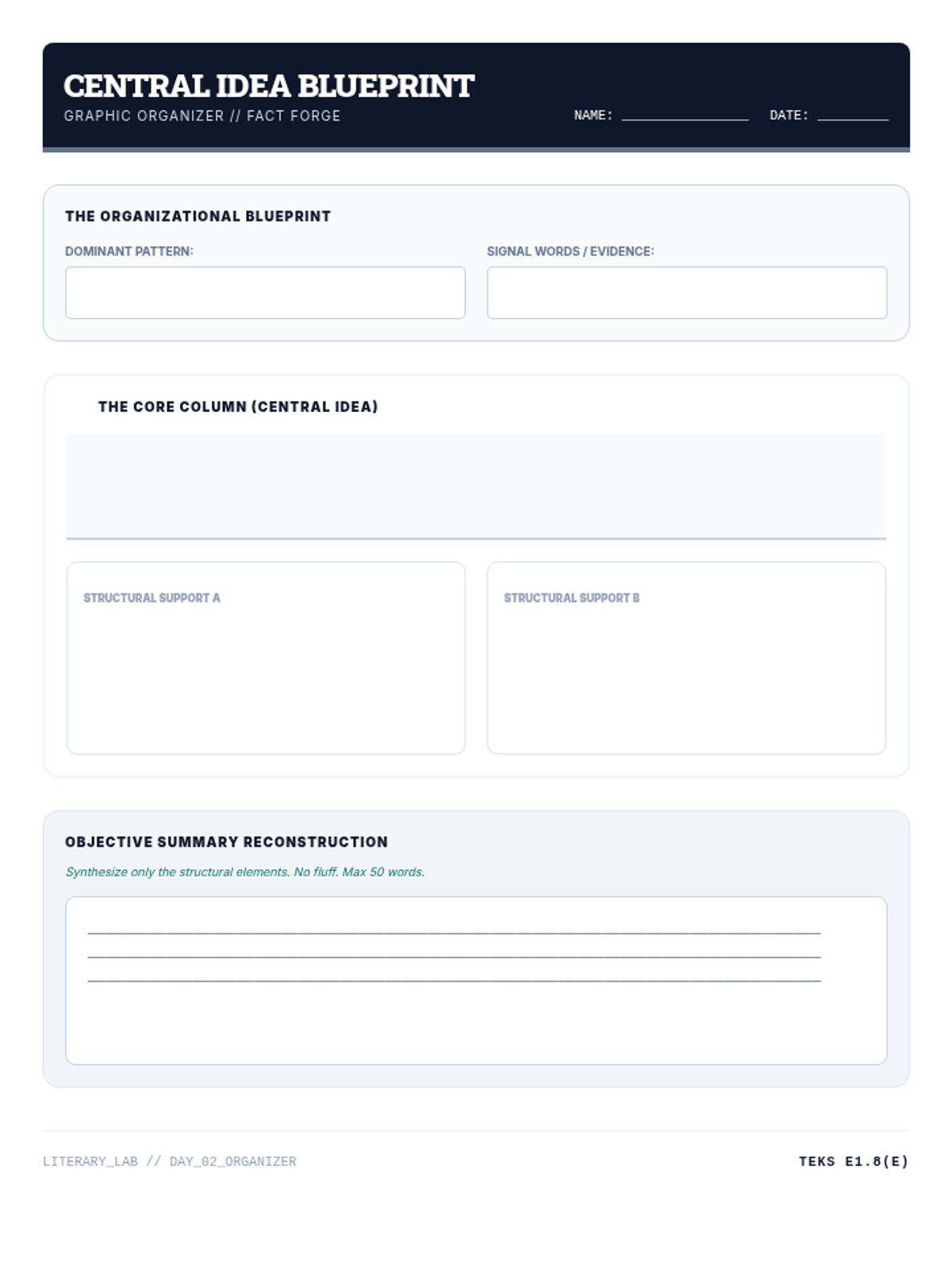
Explores informational texts by analyzing organizational patterns, central ideas, and how authors use specific evidence to build complex explanations.
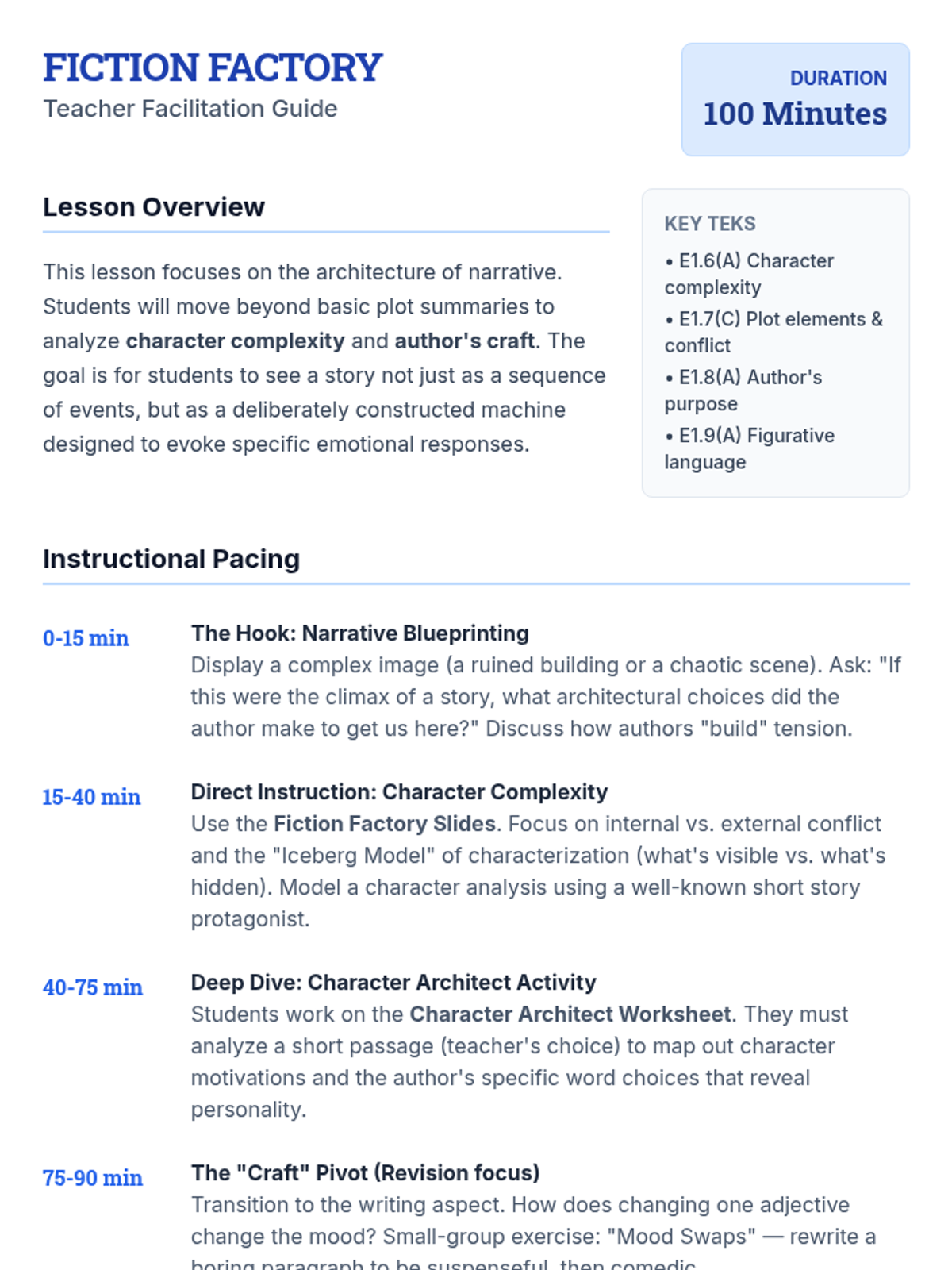
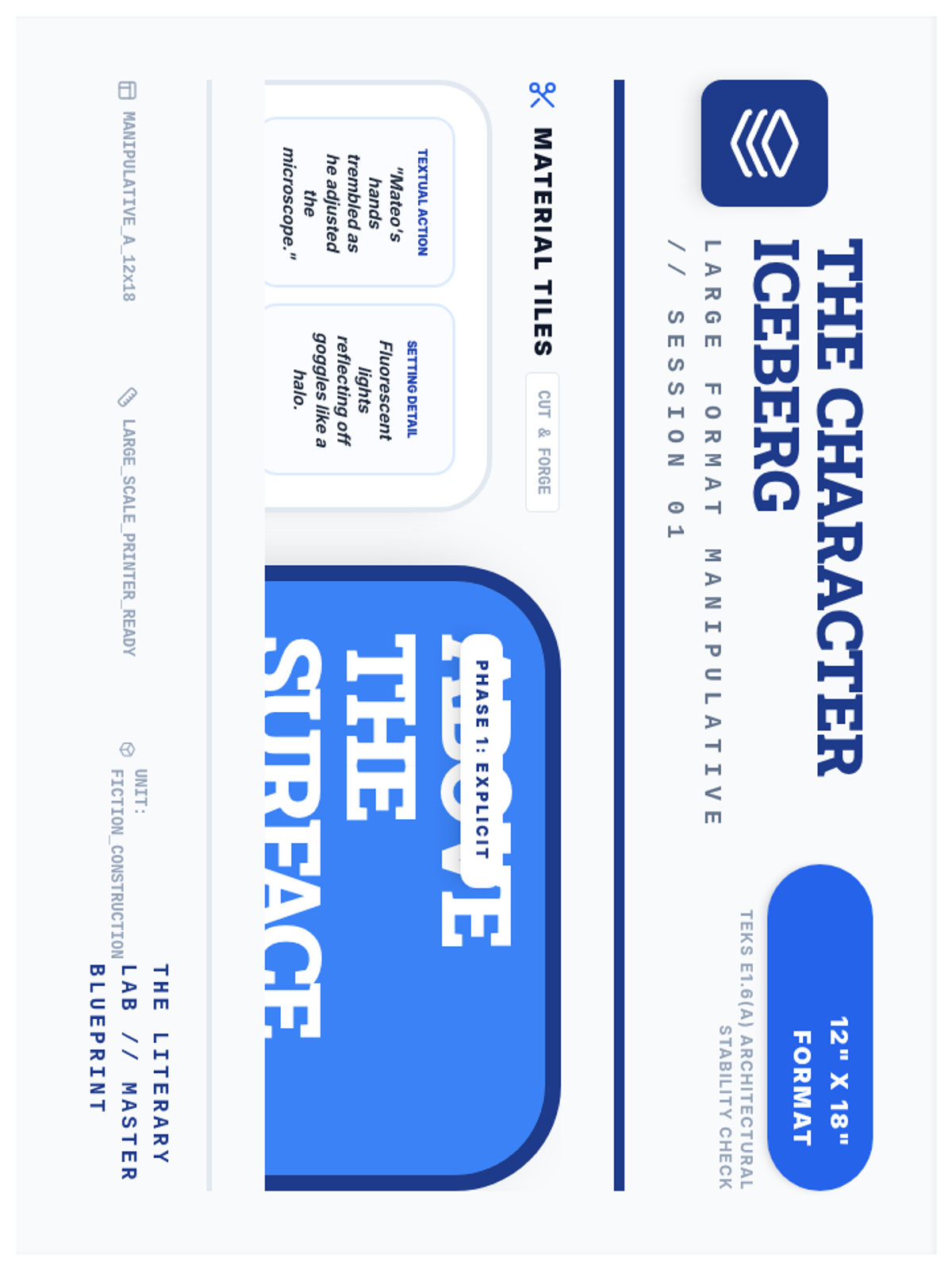
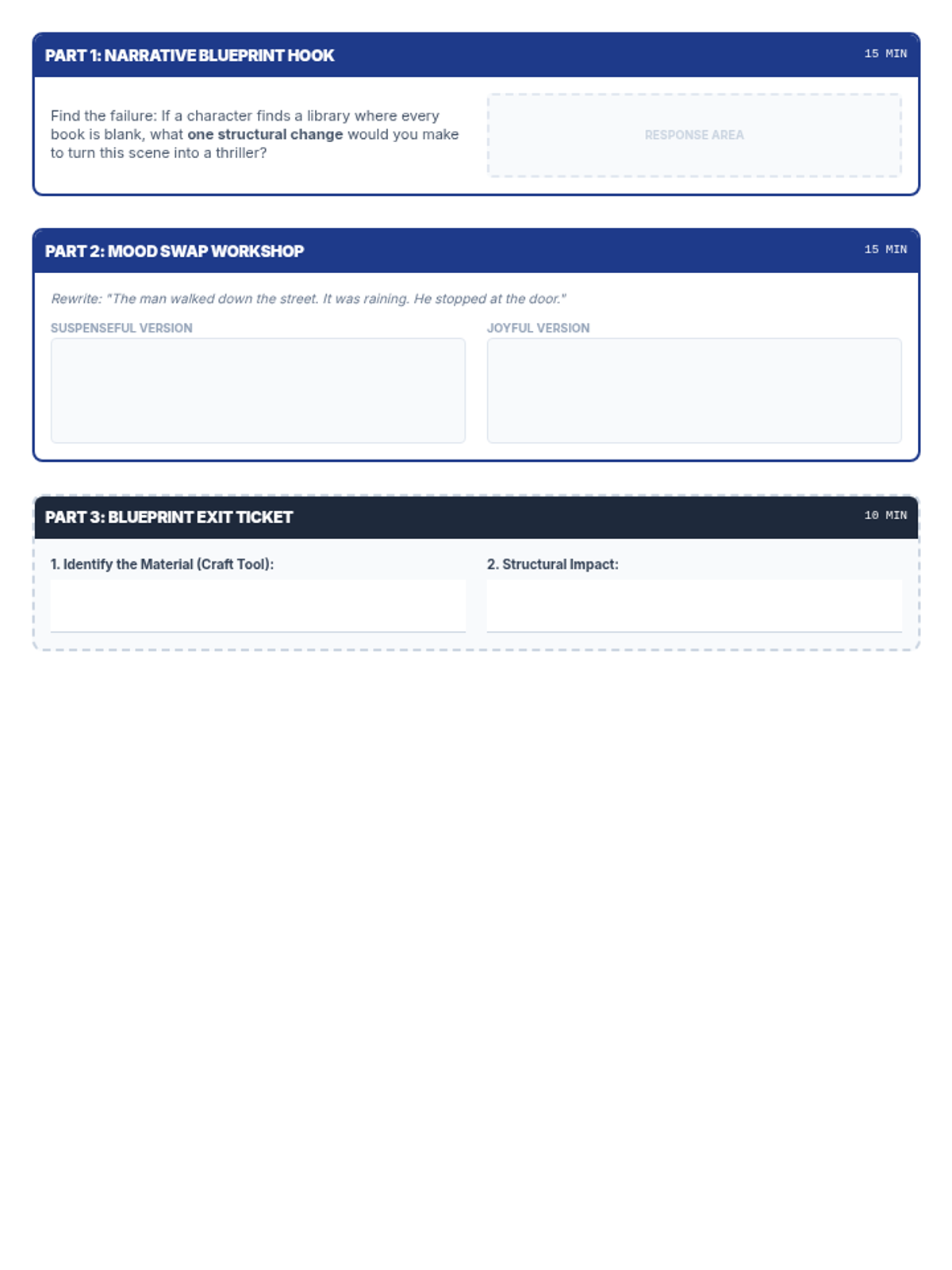
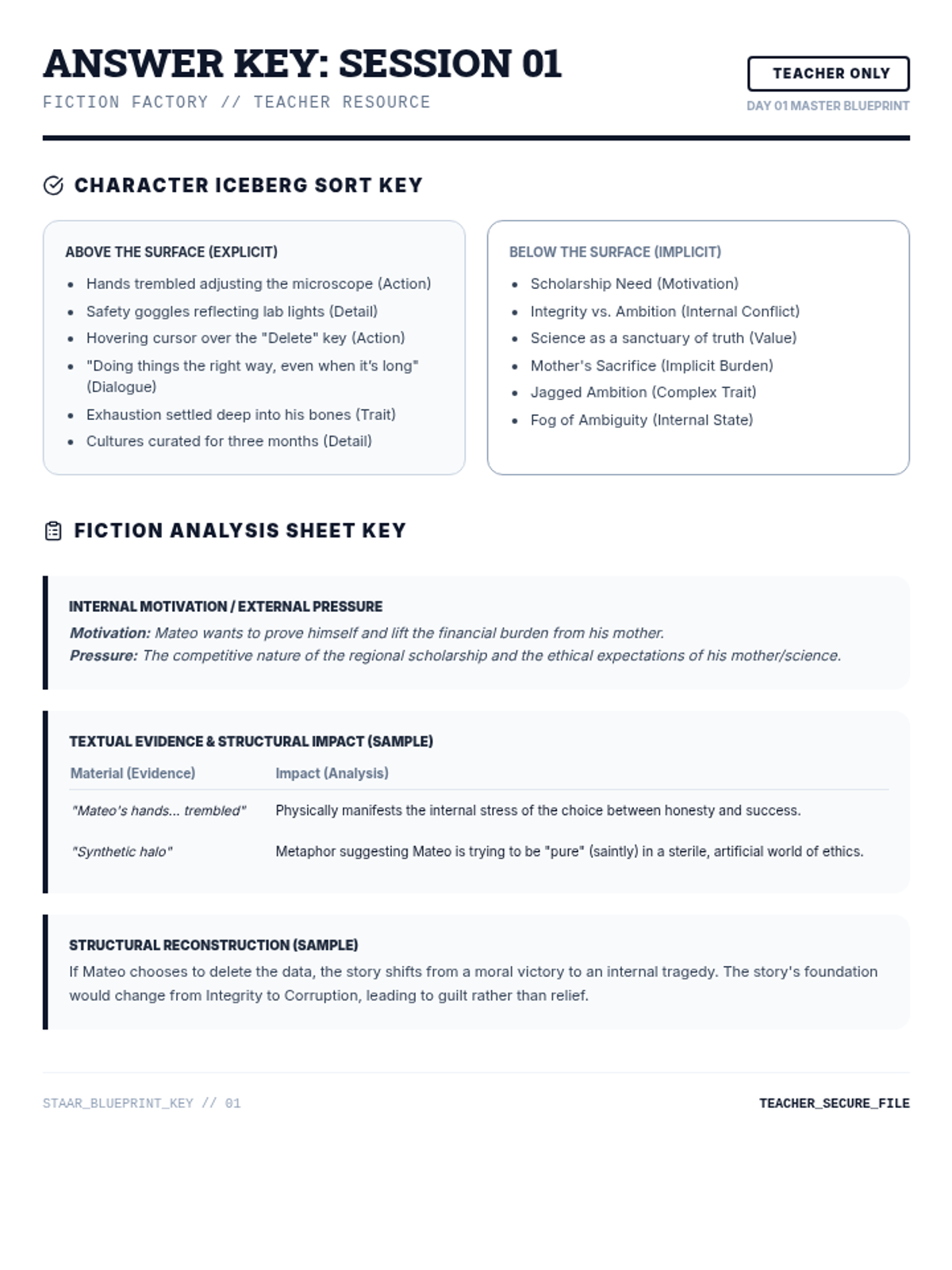
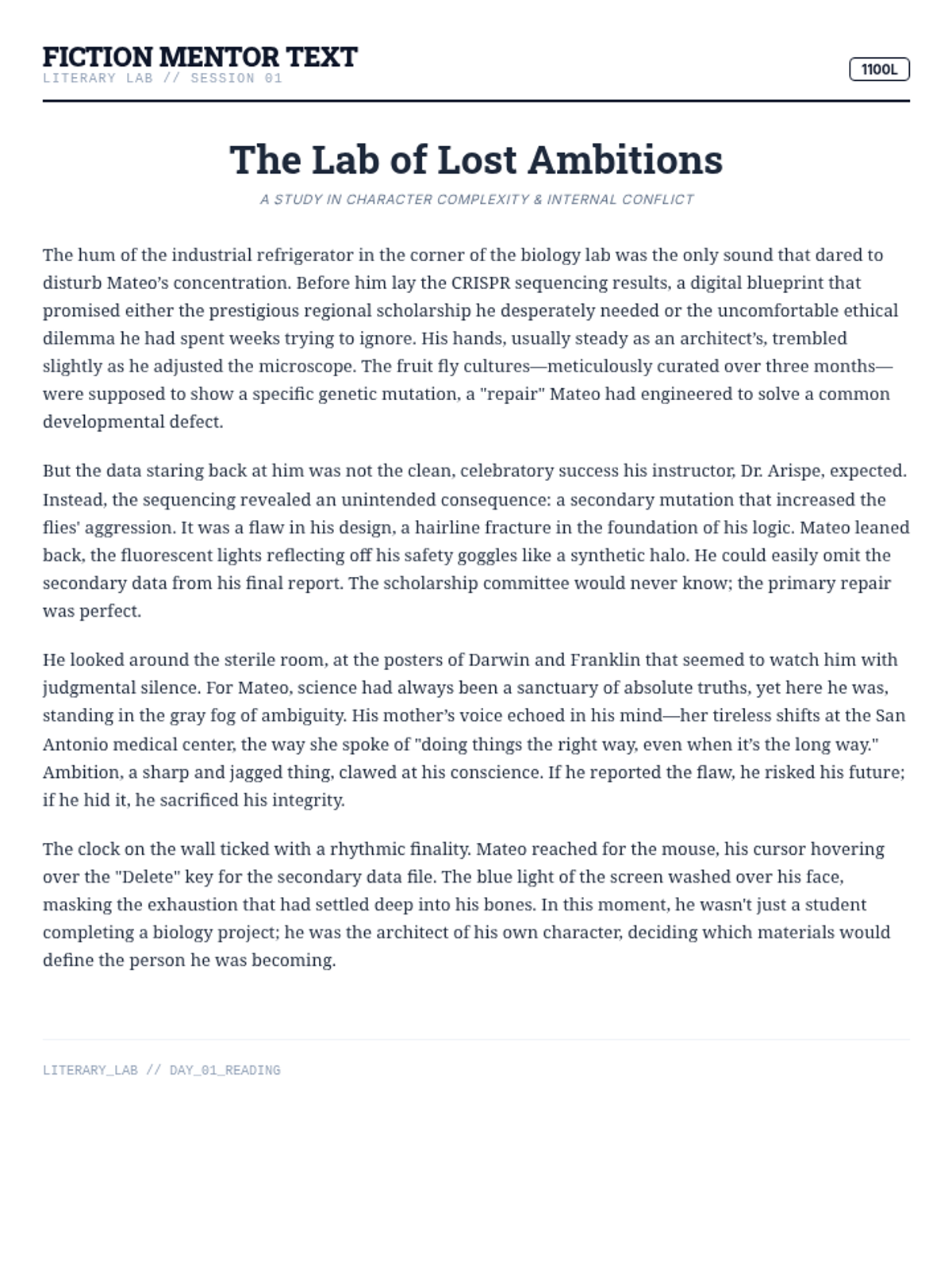
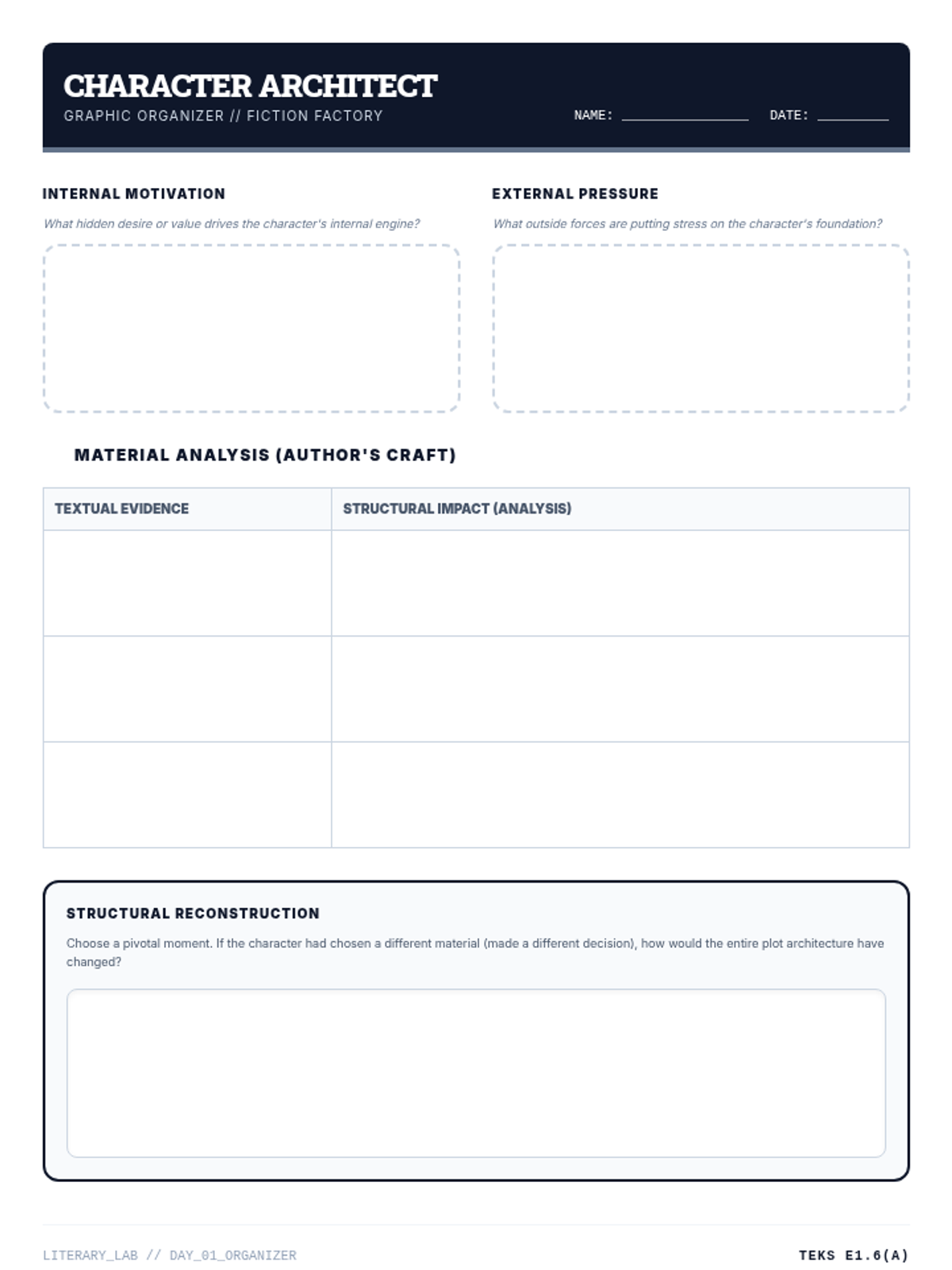
Focuses on the structural elements of fiction, specifically character complexity, plot architecture, and the impact of author's craft on mood and tone.
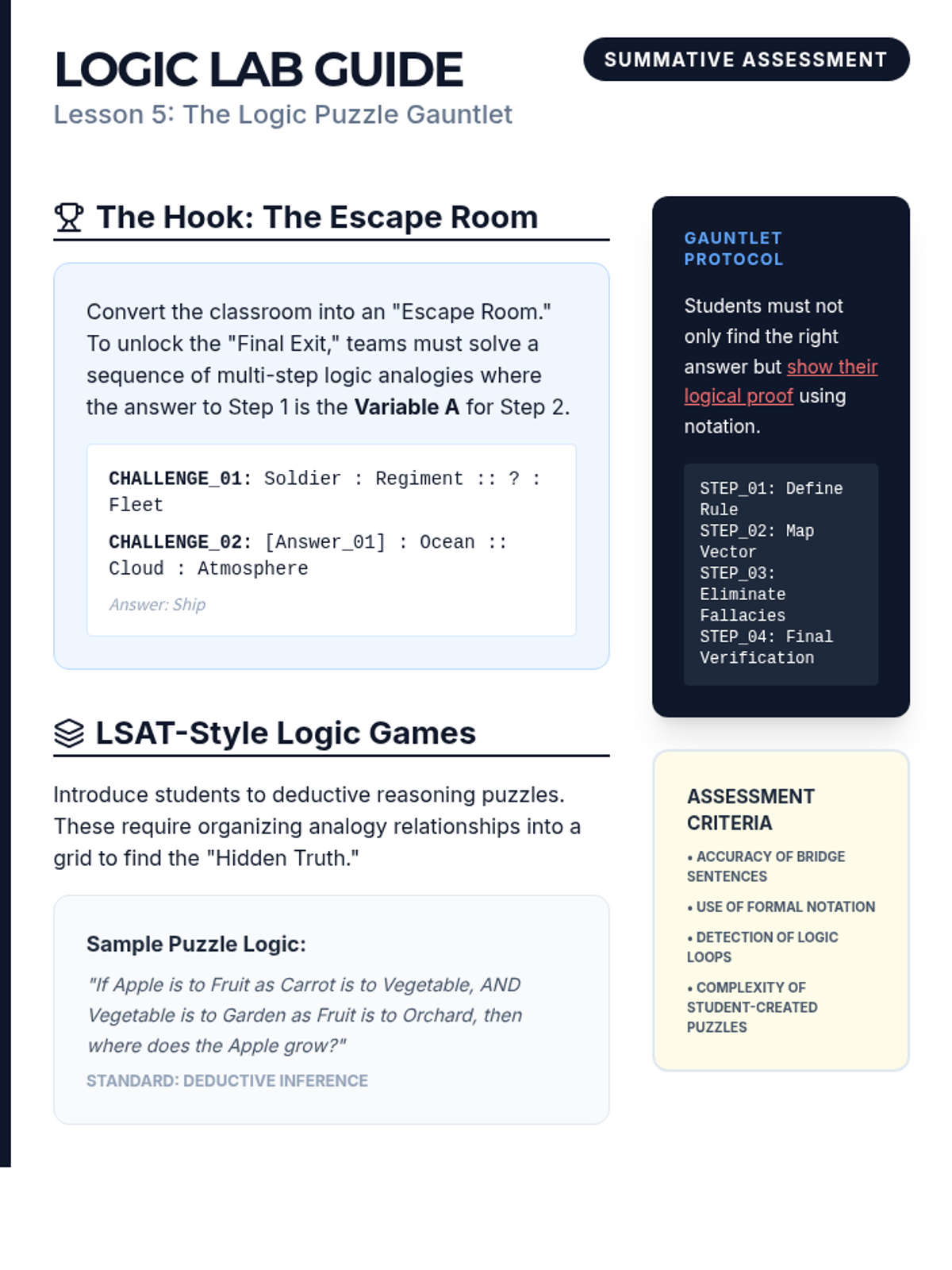
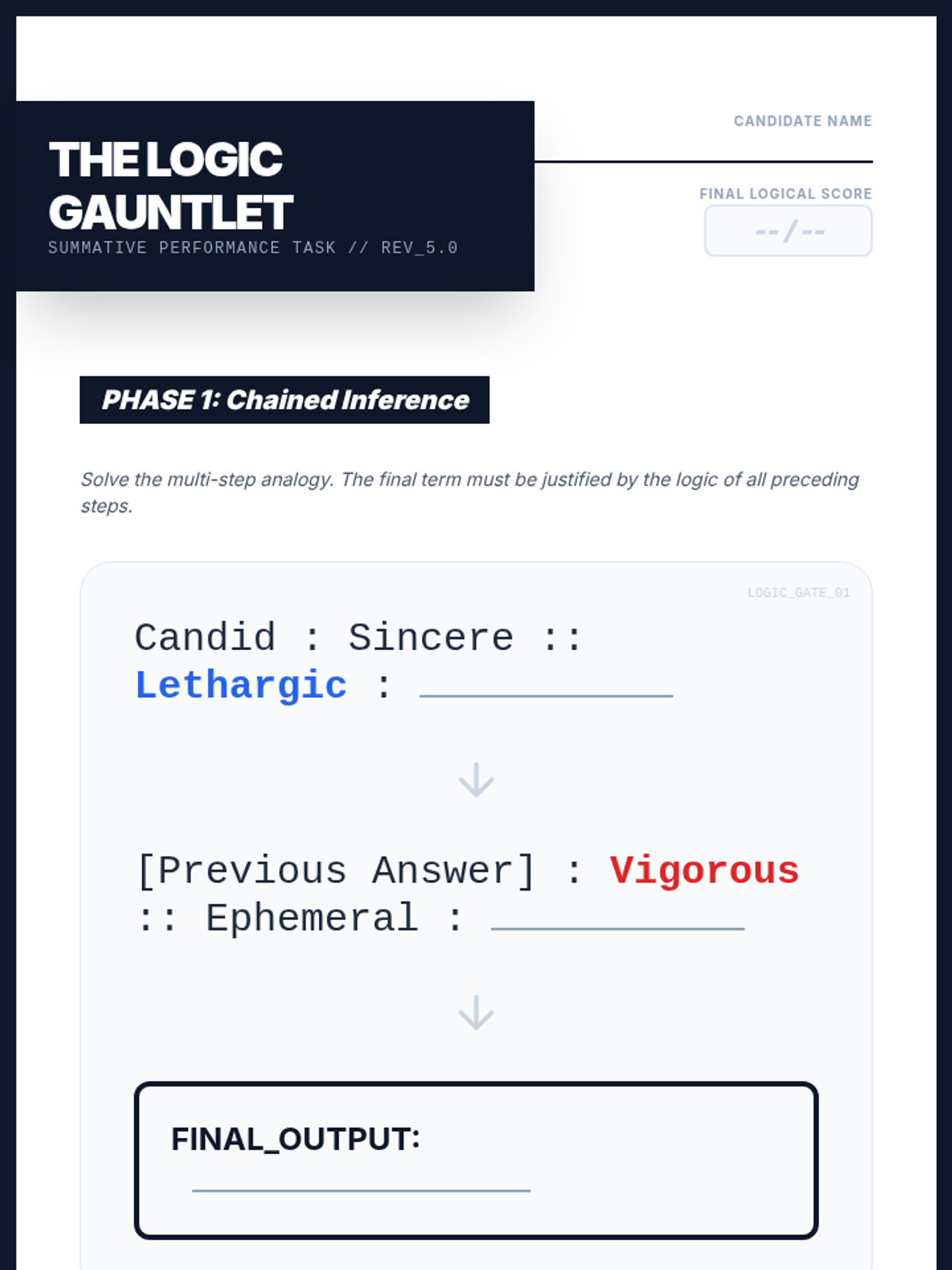
A summative assessment where students solve and create multi-step logic puzzles and LSAT-style games based on verbal analogies.
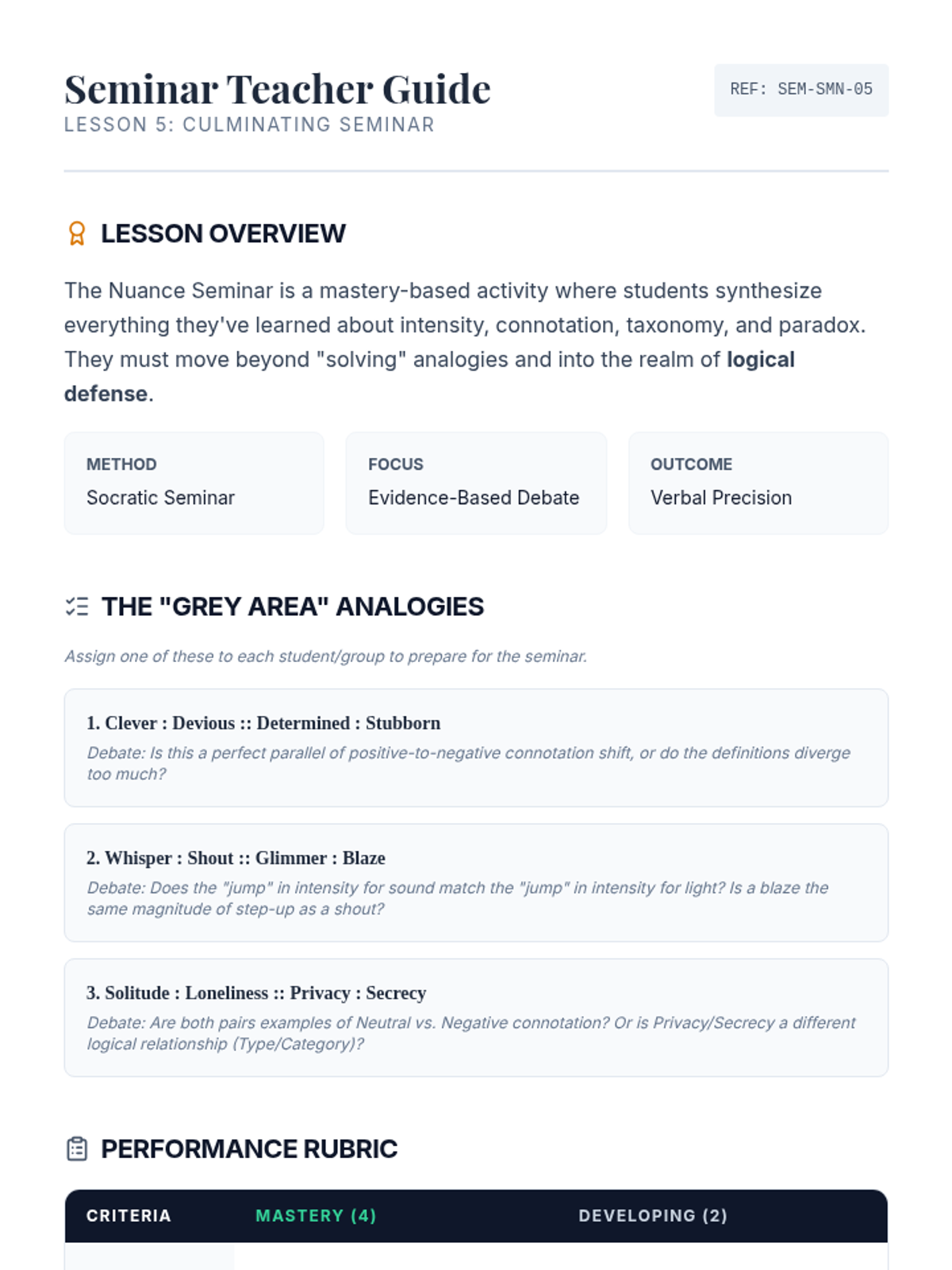
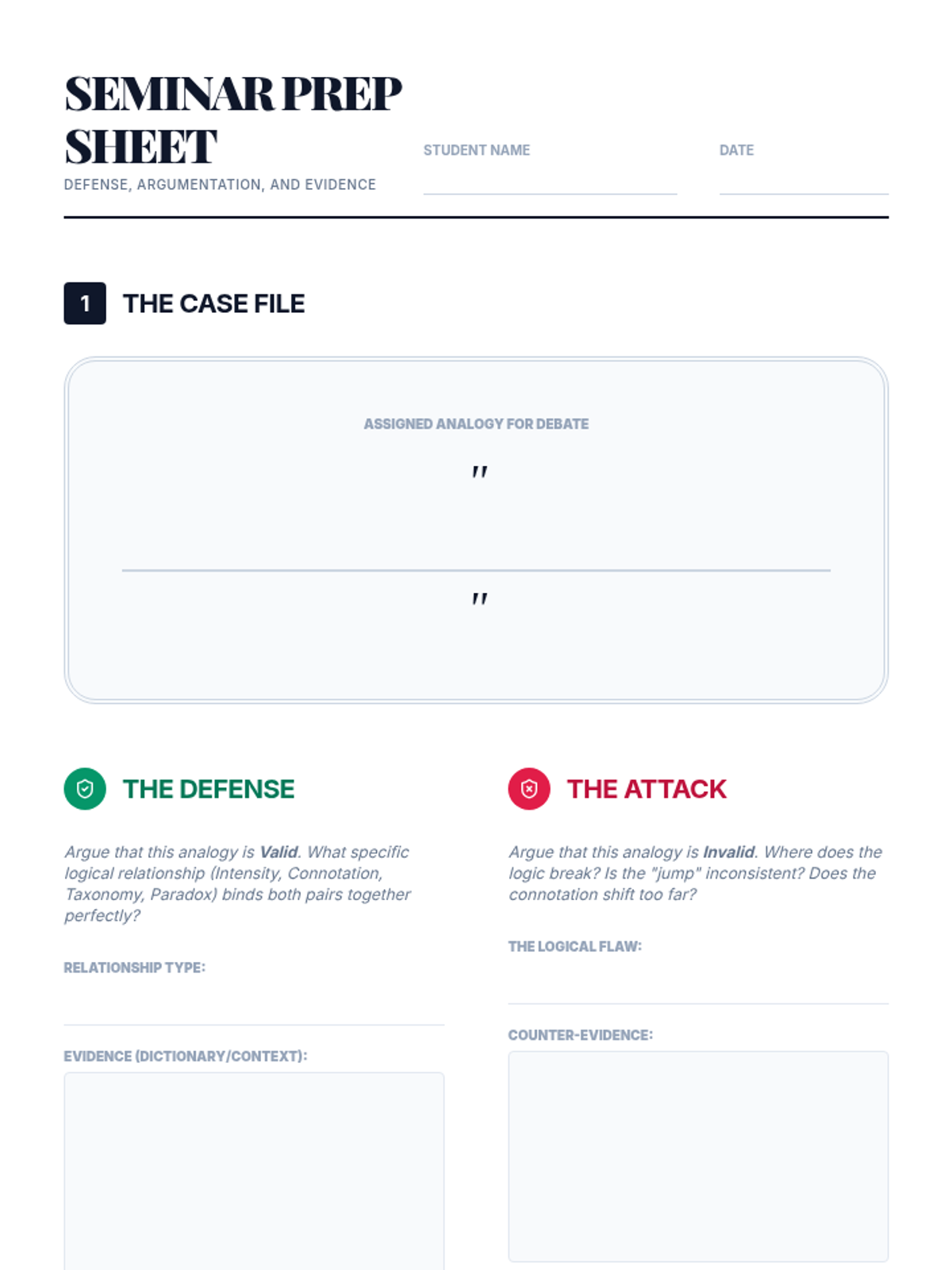
A culminating Socratic Seminar where students defend or attack the validity of ambiguous analogies using evidence from usage guides and dictionaries.
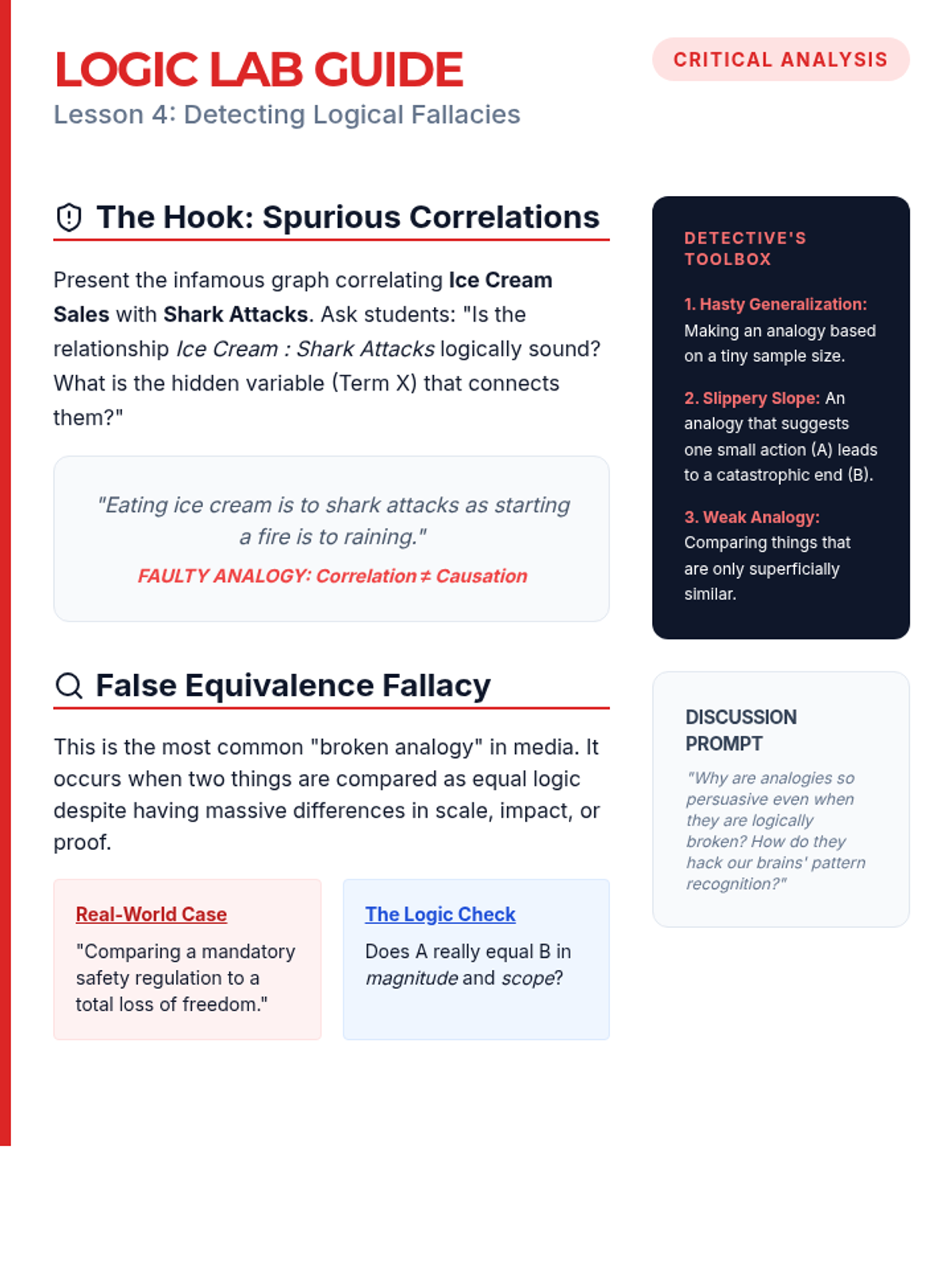
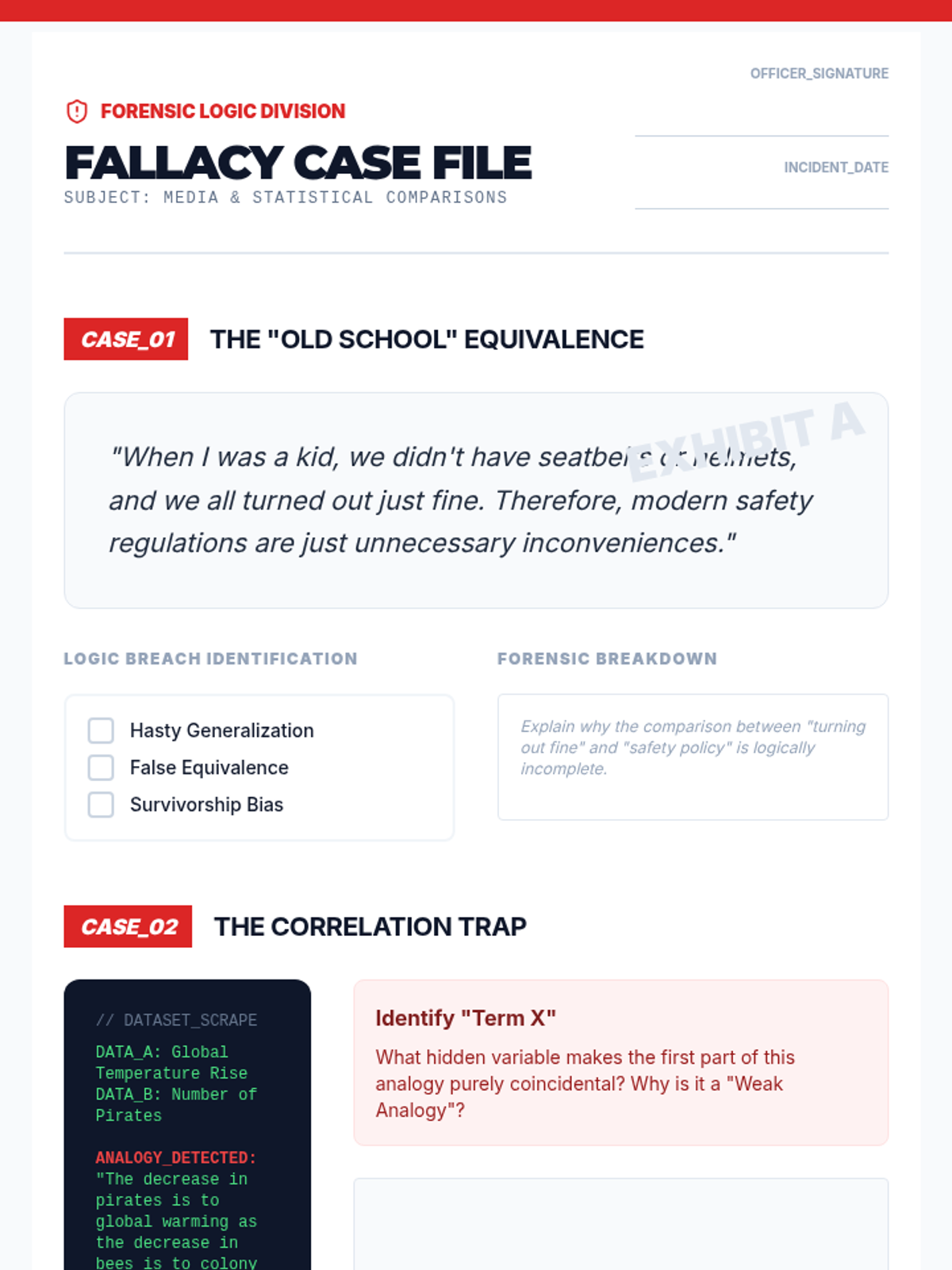
Investigates false equivalence and other logical fallacies in real-world data and media, applying analogy skills to information literacy.
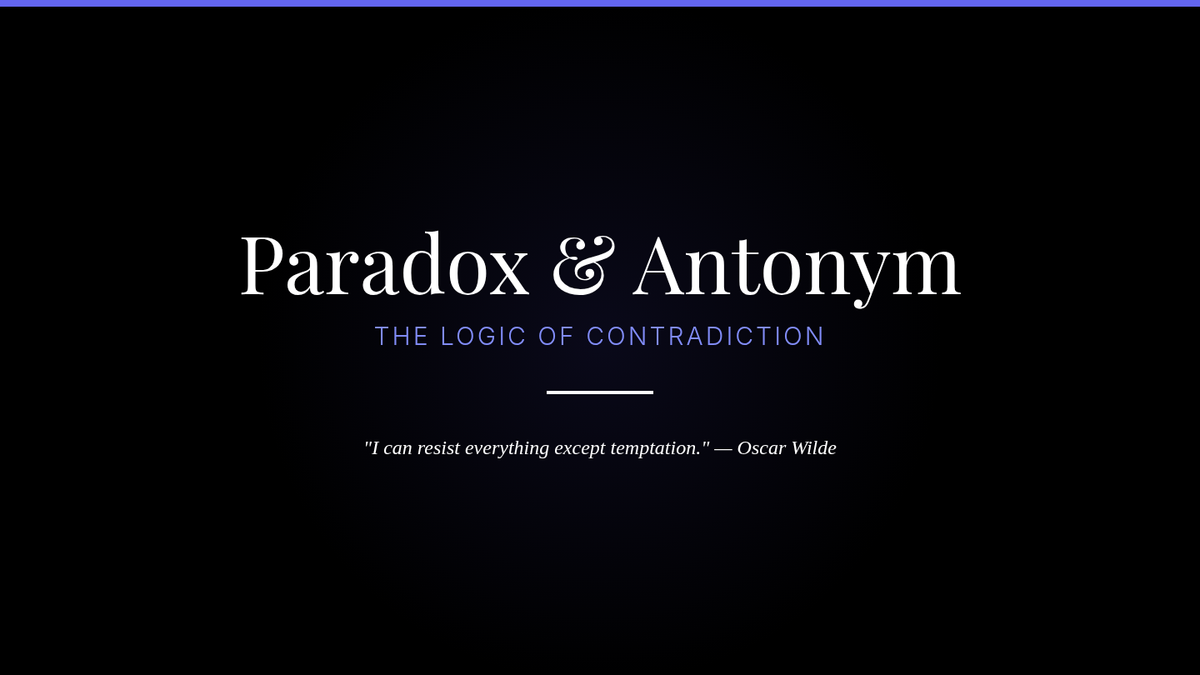
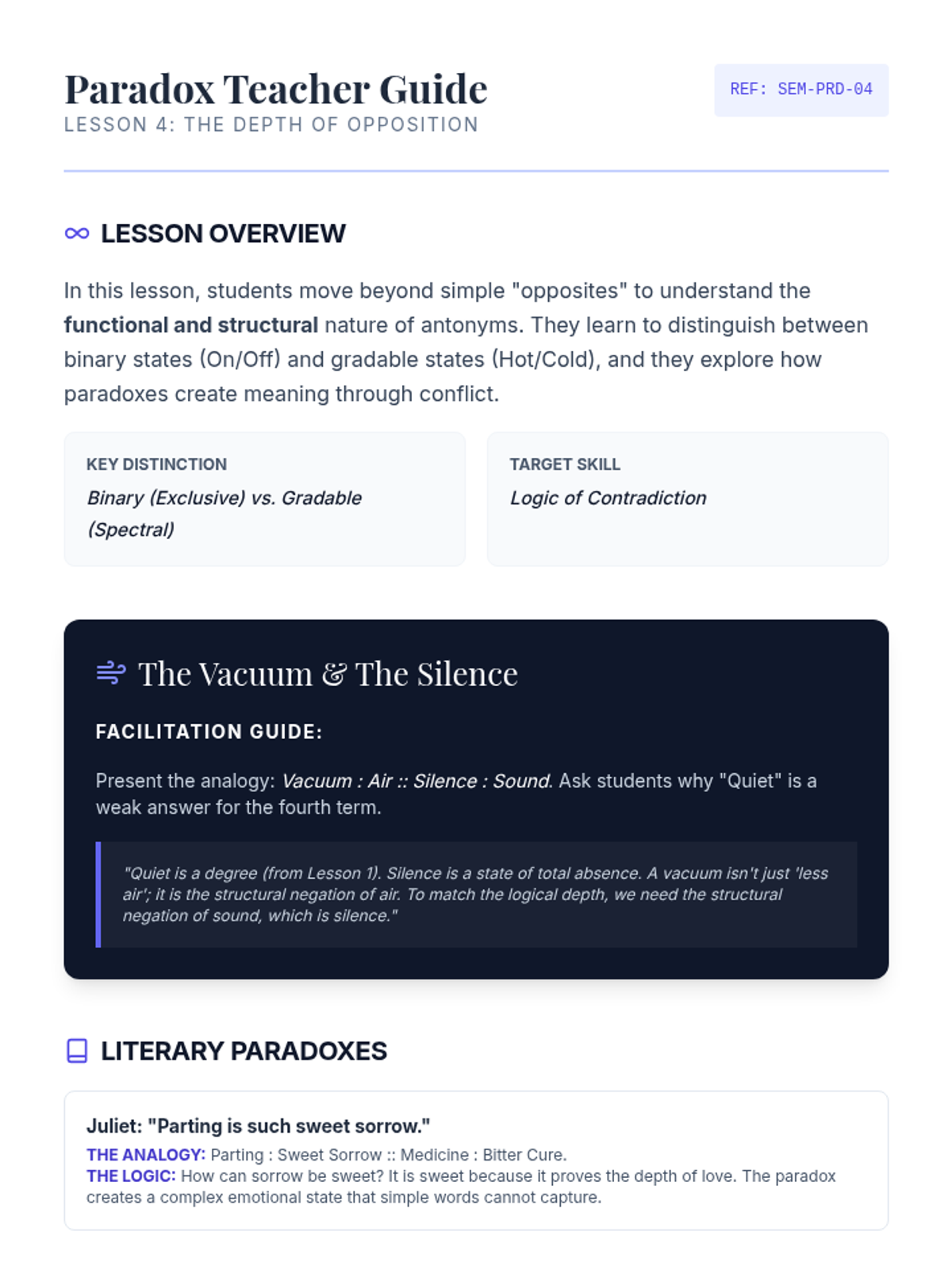
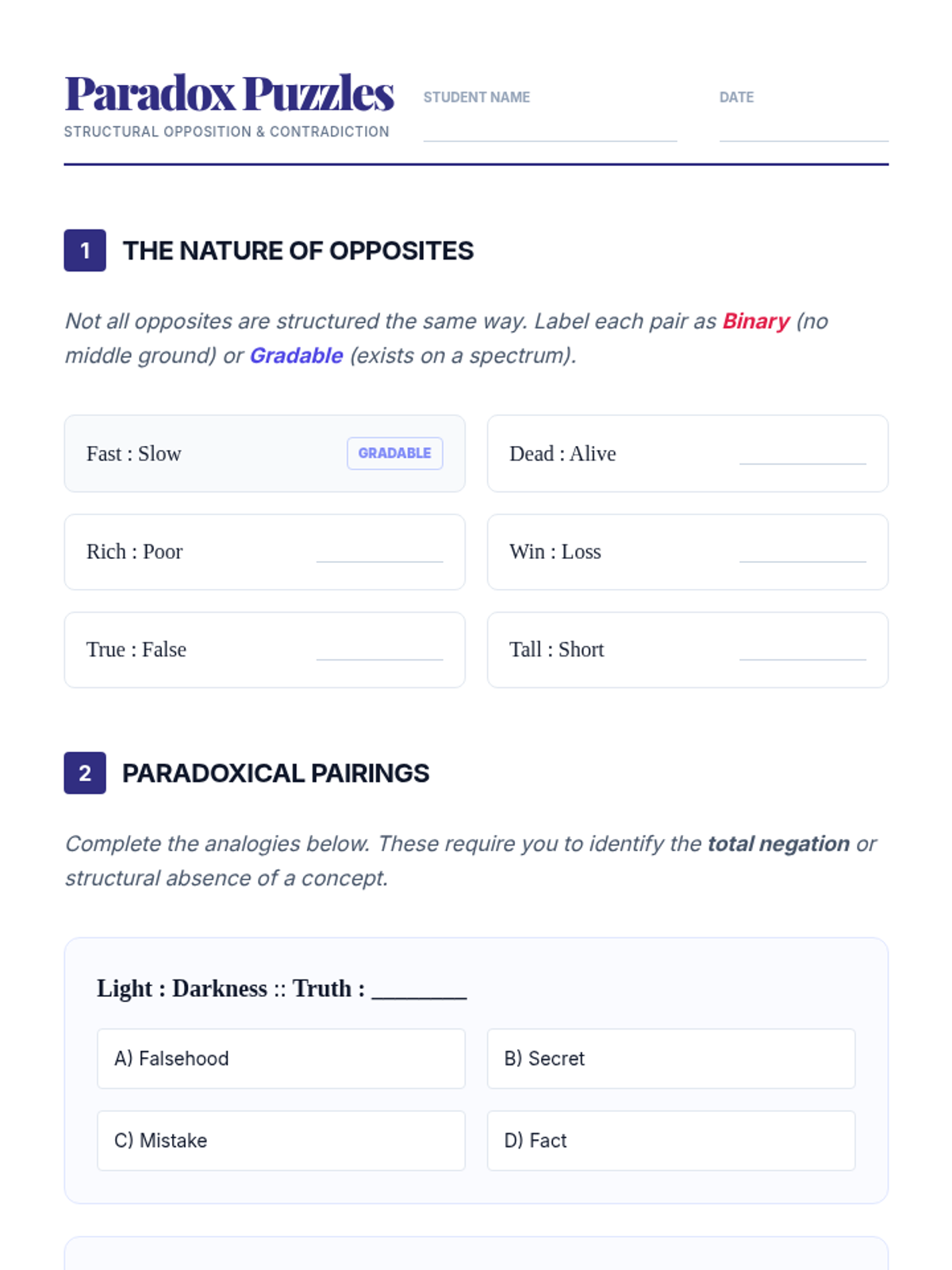
Students analyze complex opposites, paradoxical relationships, and oxymorons within analogies to understand the depth of literary language.
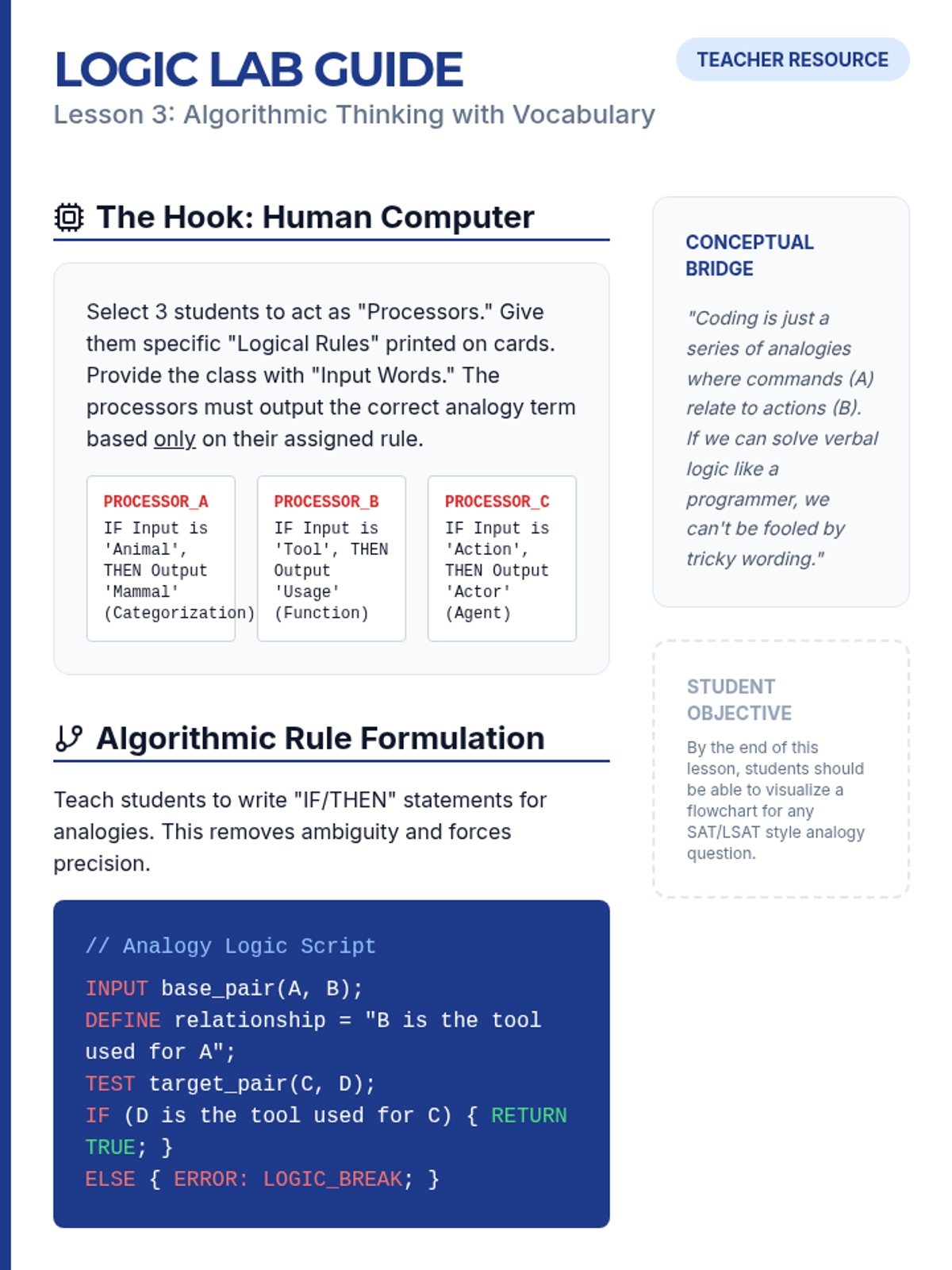
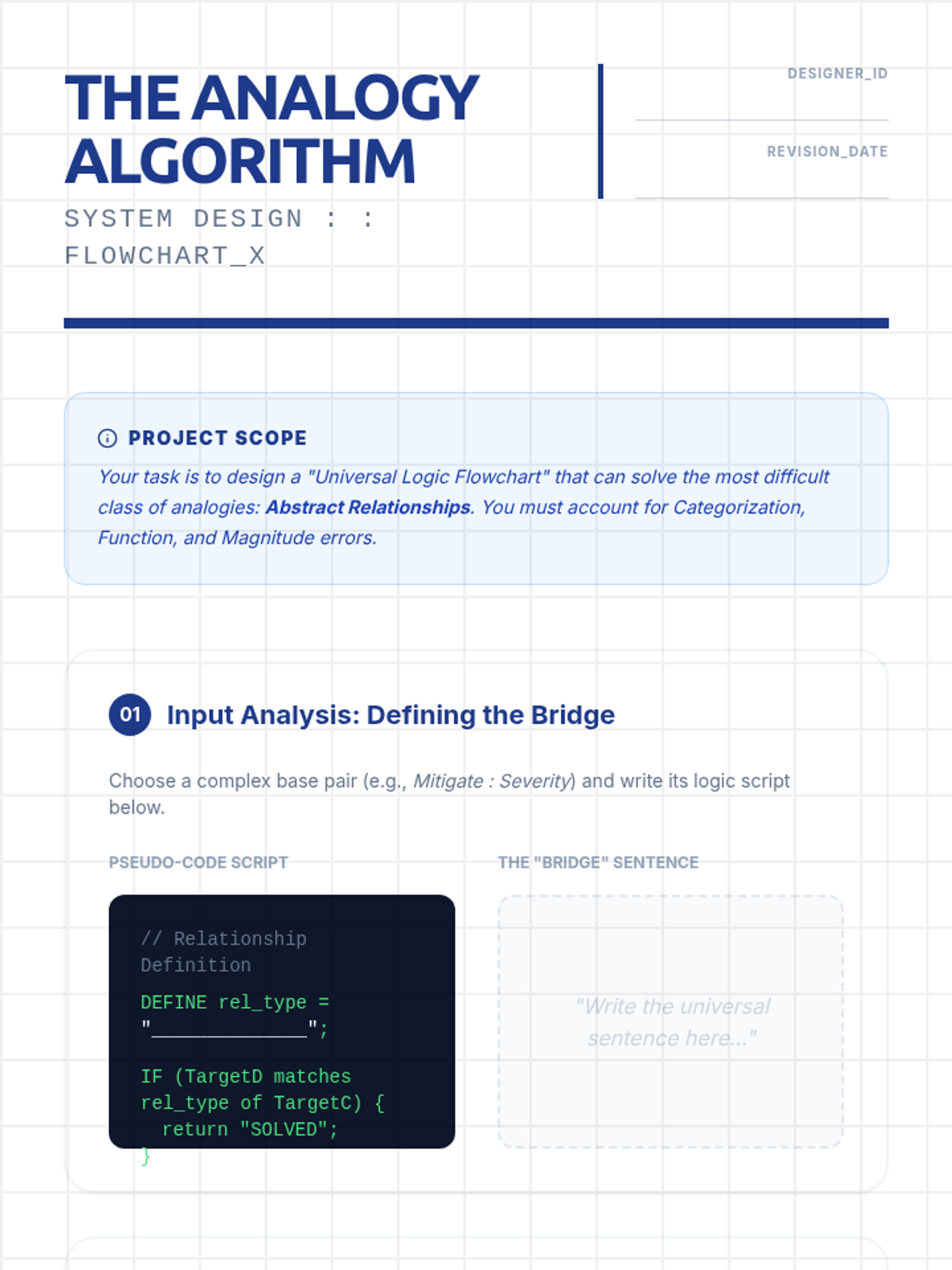
Connects coding concepts to linguistics by having students design flowcharts and 'rules' to solve for unknown terms in complex analogies.
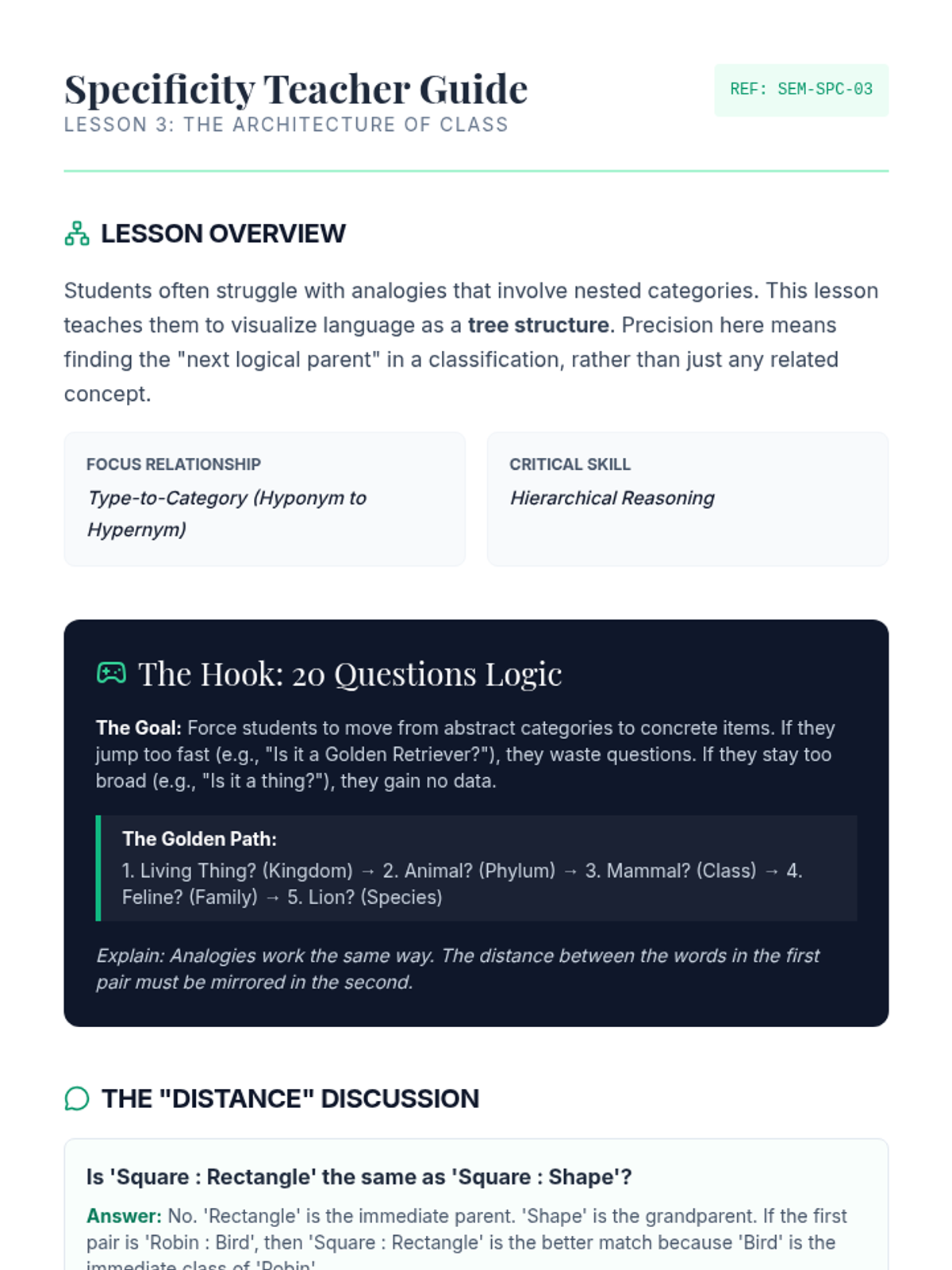
Students explore the logical hierarchy of language through 'Type-to-Category' analogies, distinguishing between general and specific nouns.
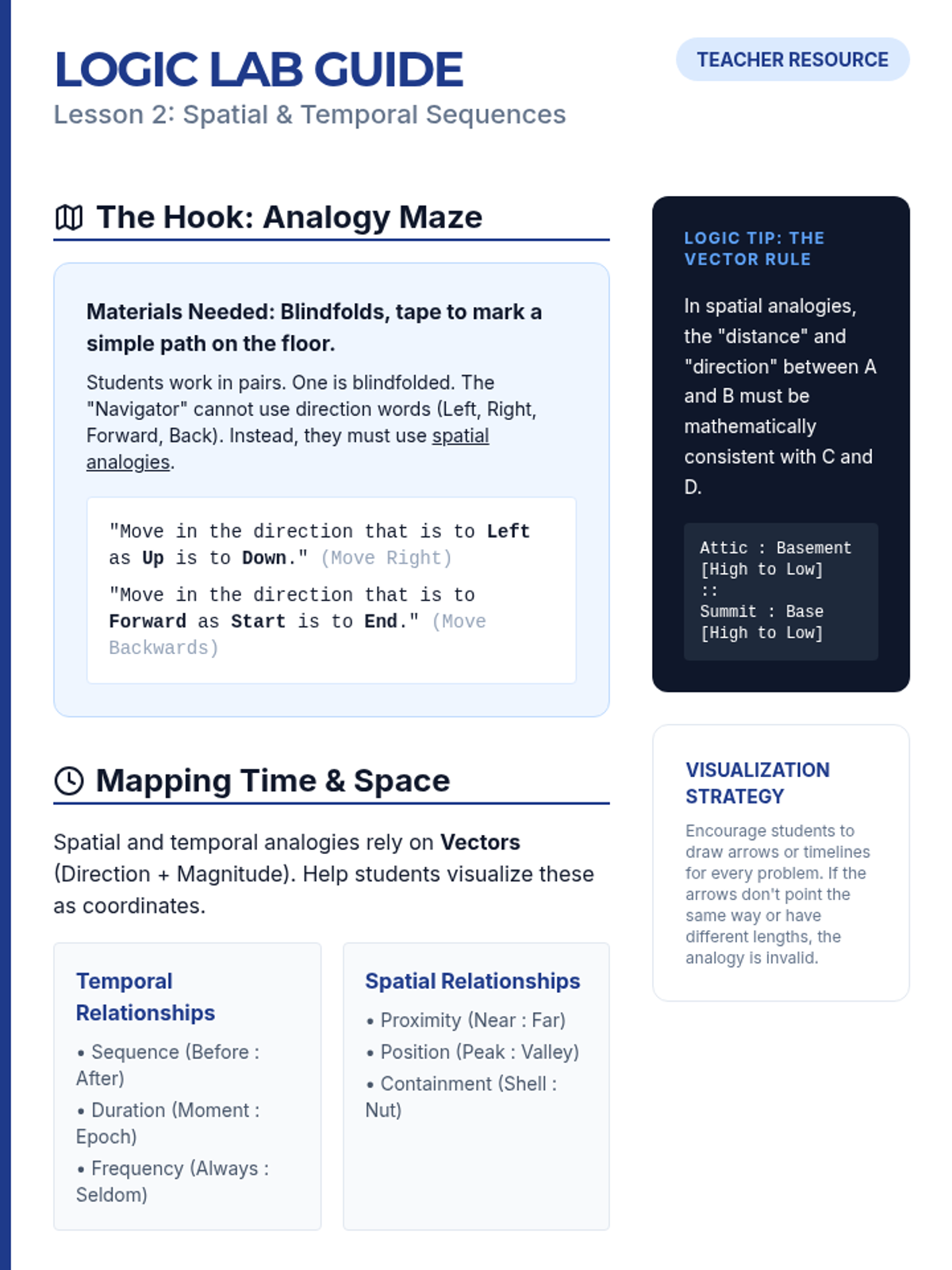
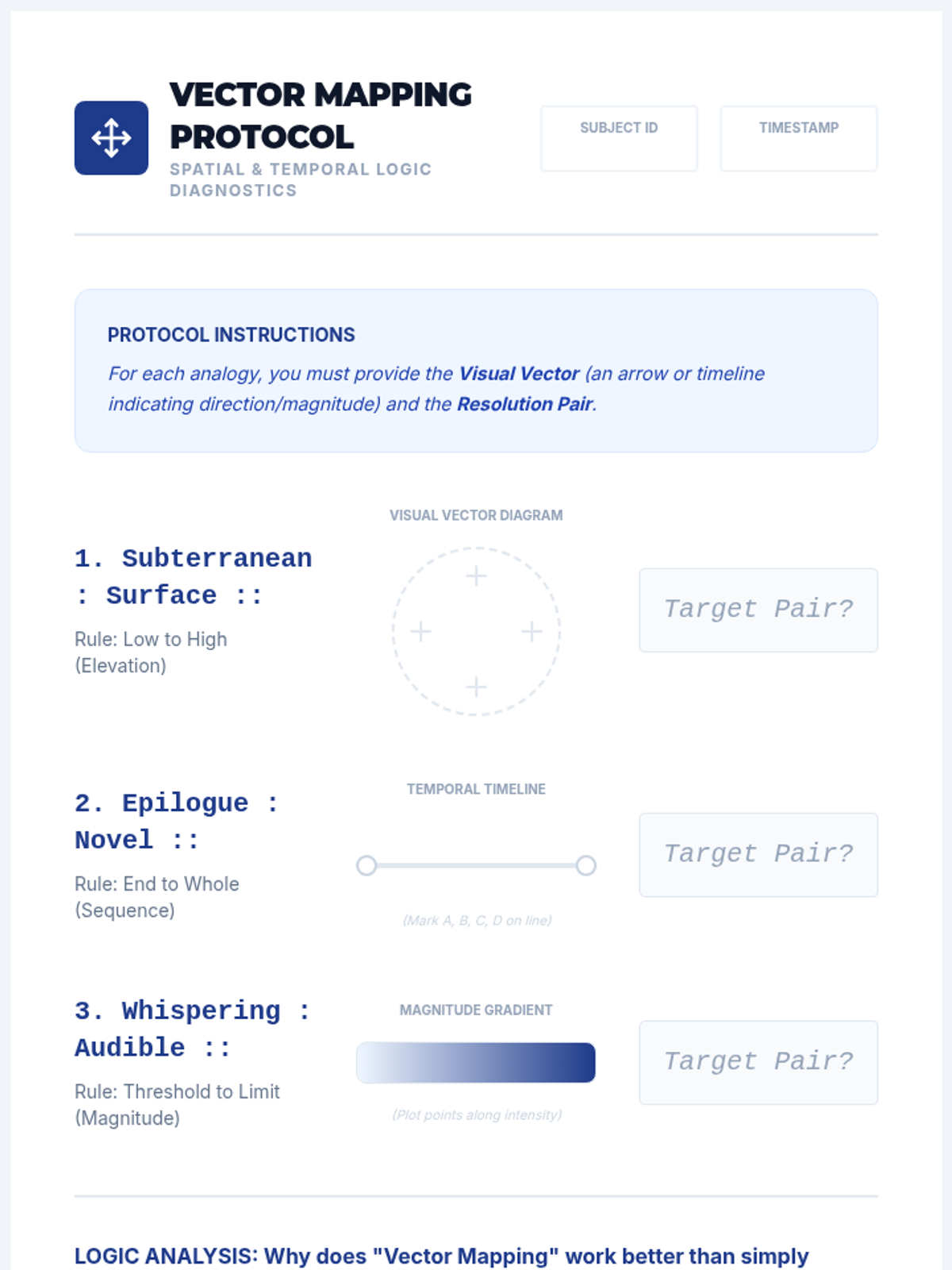
Explores analogies through the lens of space and time, using diagramming to visualize movement between terms and sequences.
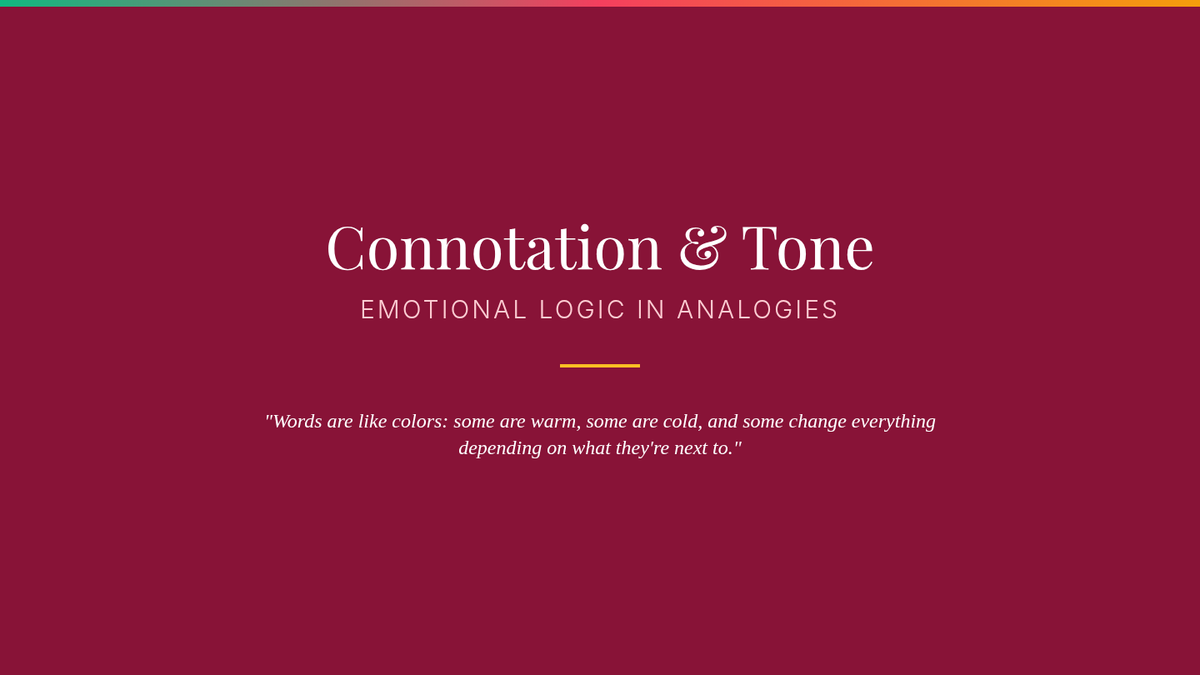
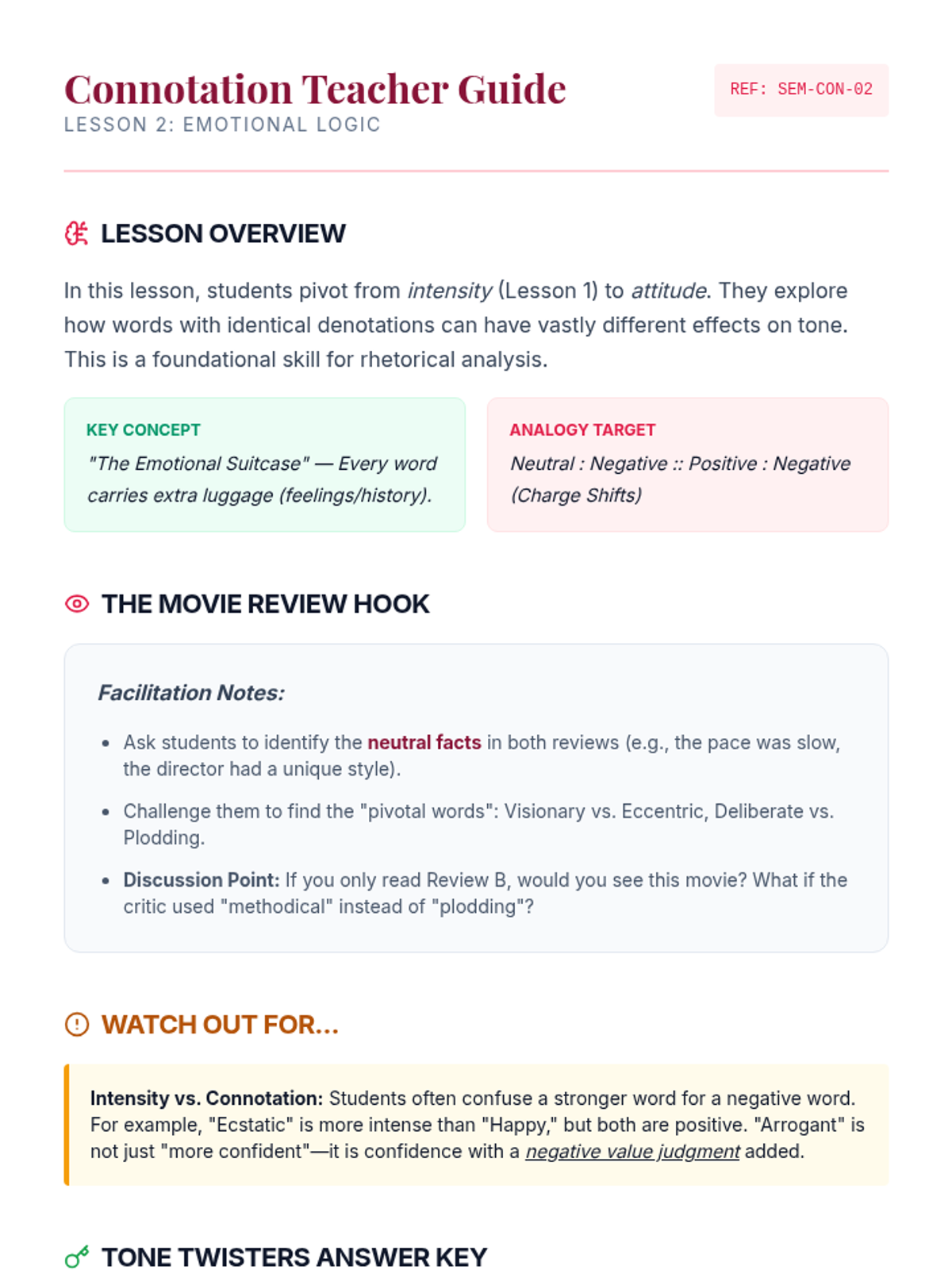
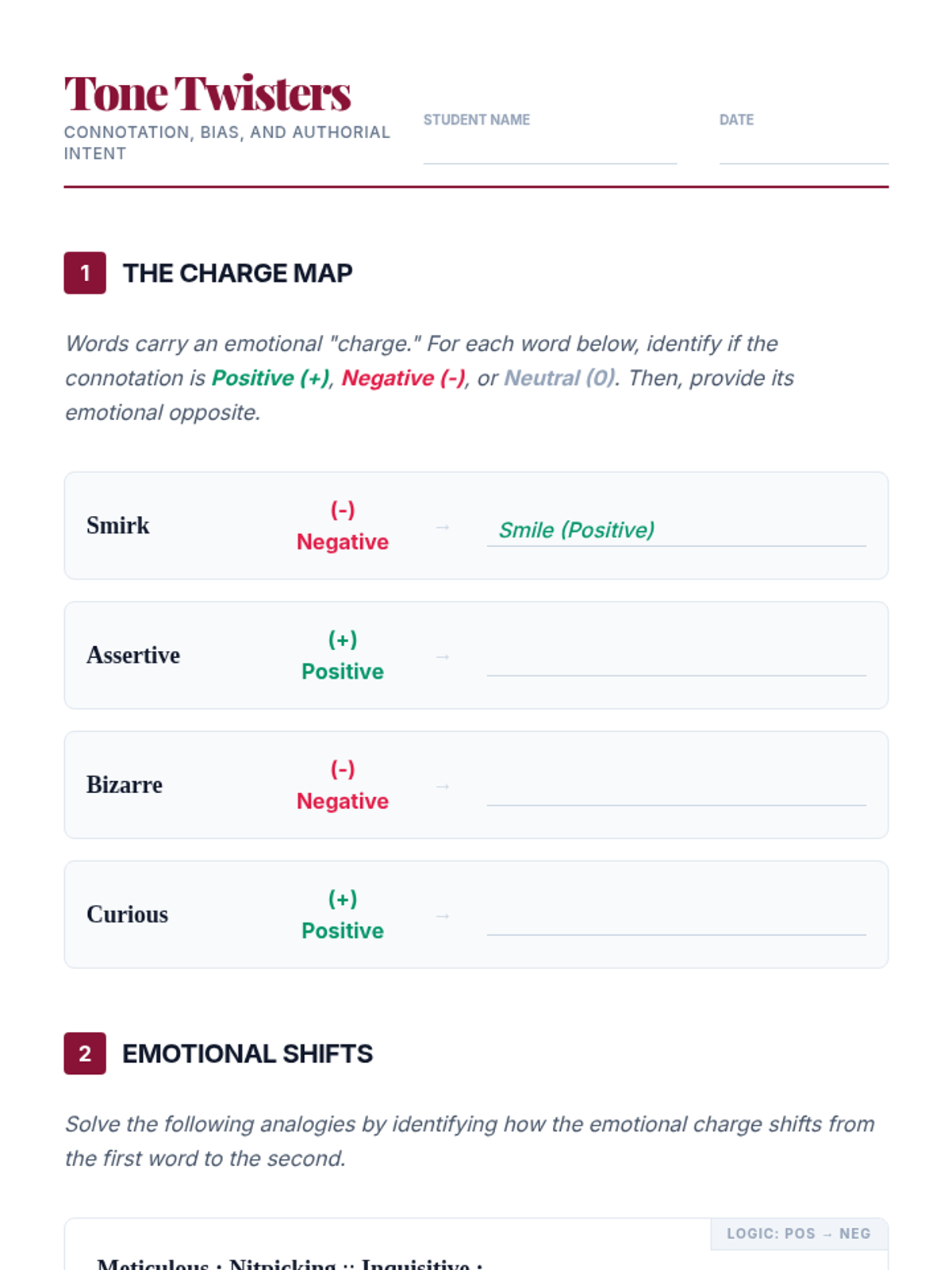
Focusing on emotional charge, students solve analogies based on positive, negative, and neutral connotations, linking vocabulary to authorial intent.
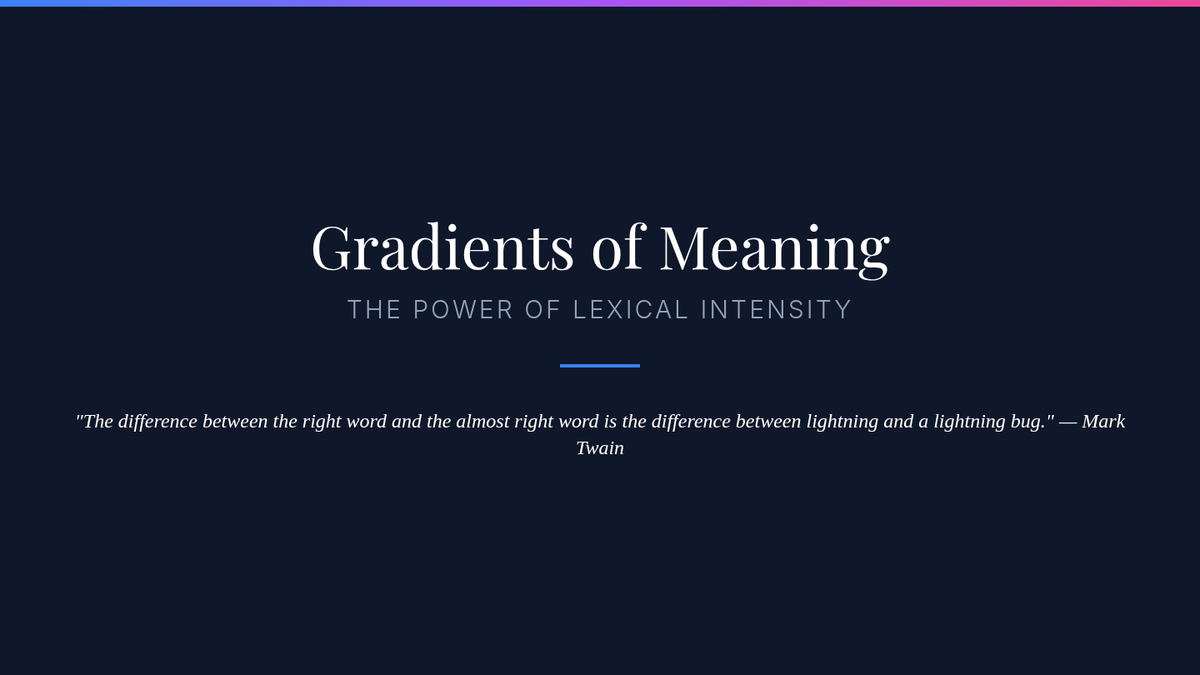
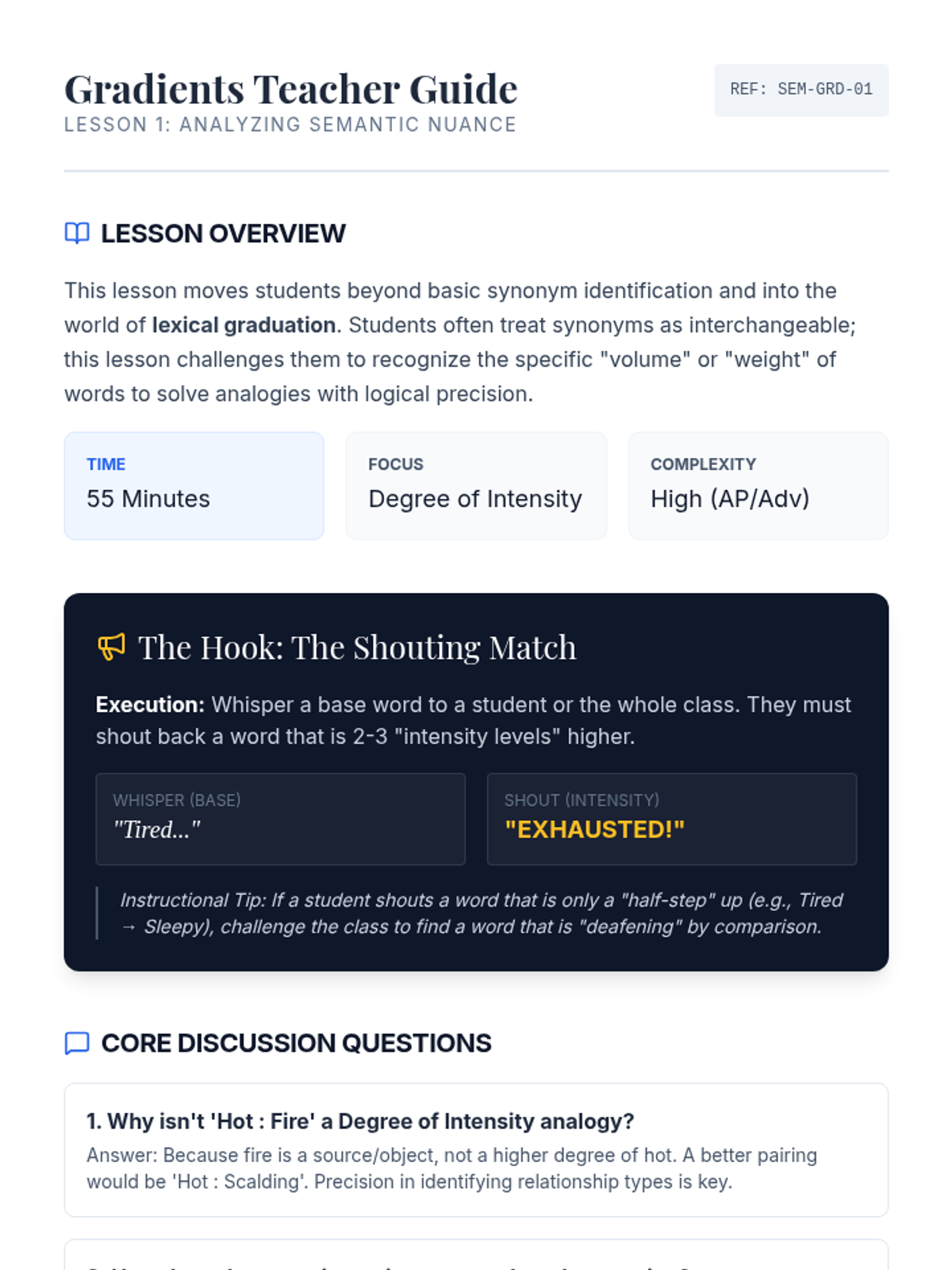
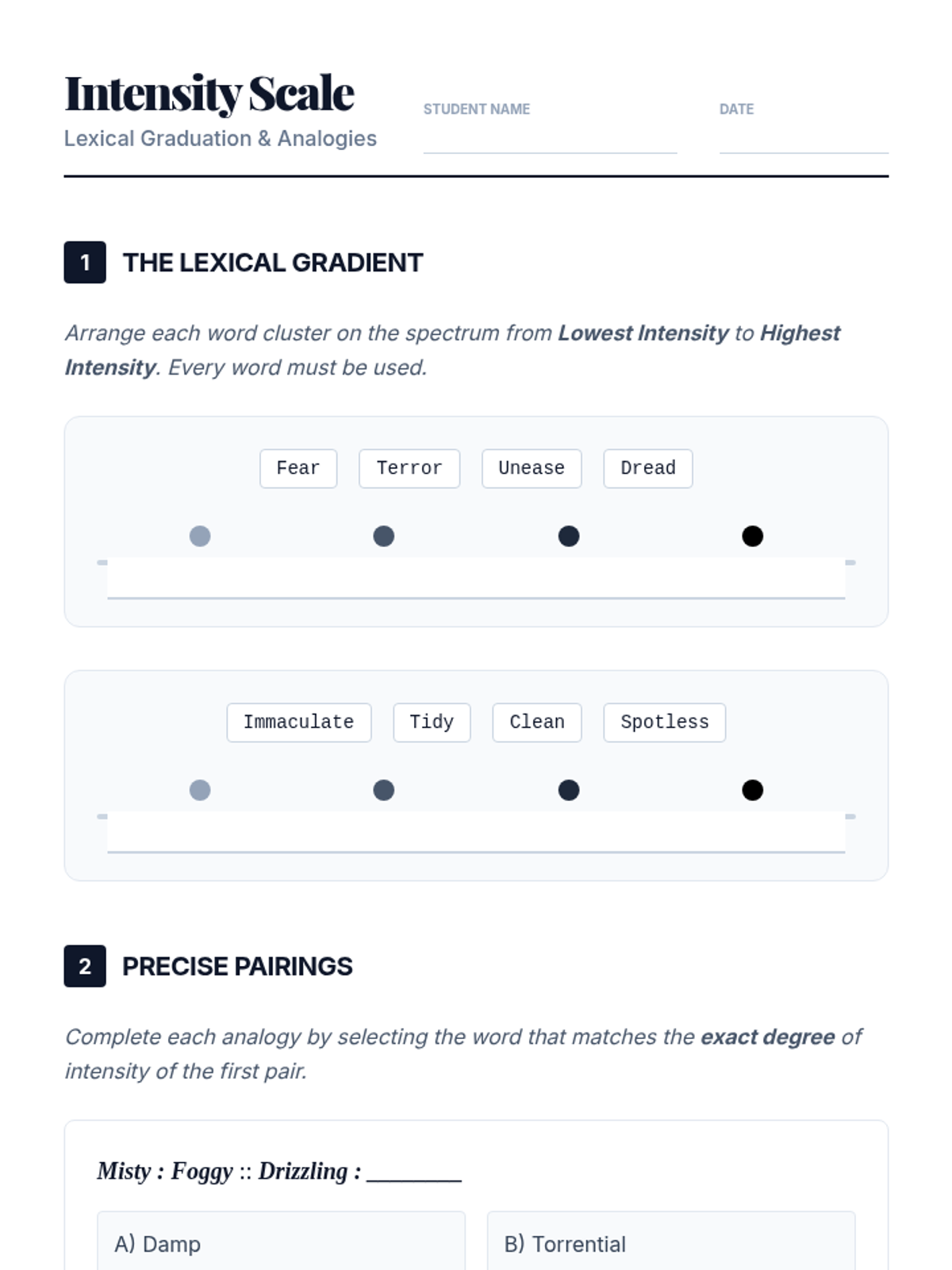
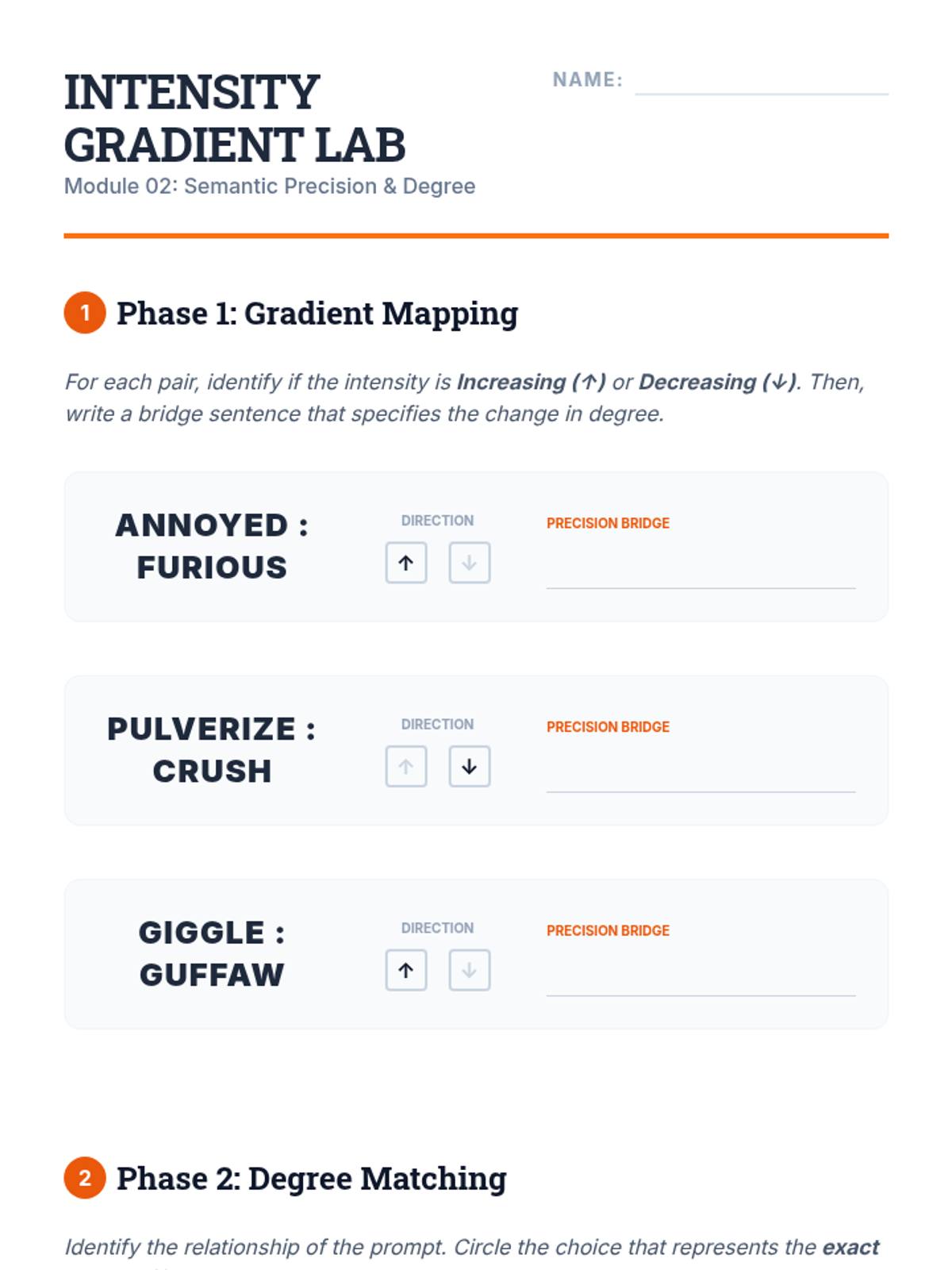
Students analyze 'Degree of Intensity' analogies and arrange vocabulary clusters on spectrums to refine their understanding of synonym density and lexical graduation.
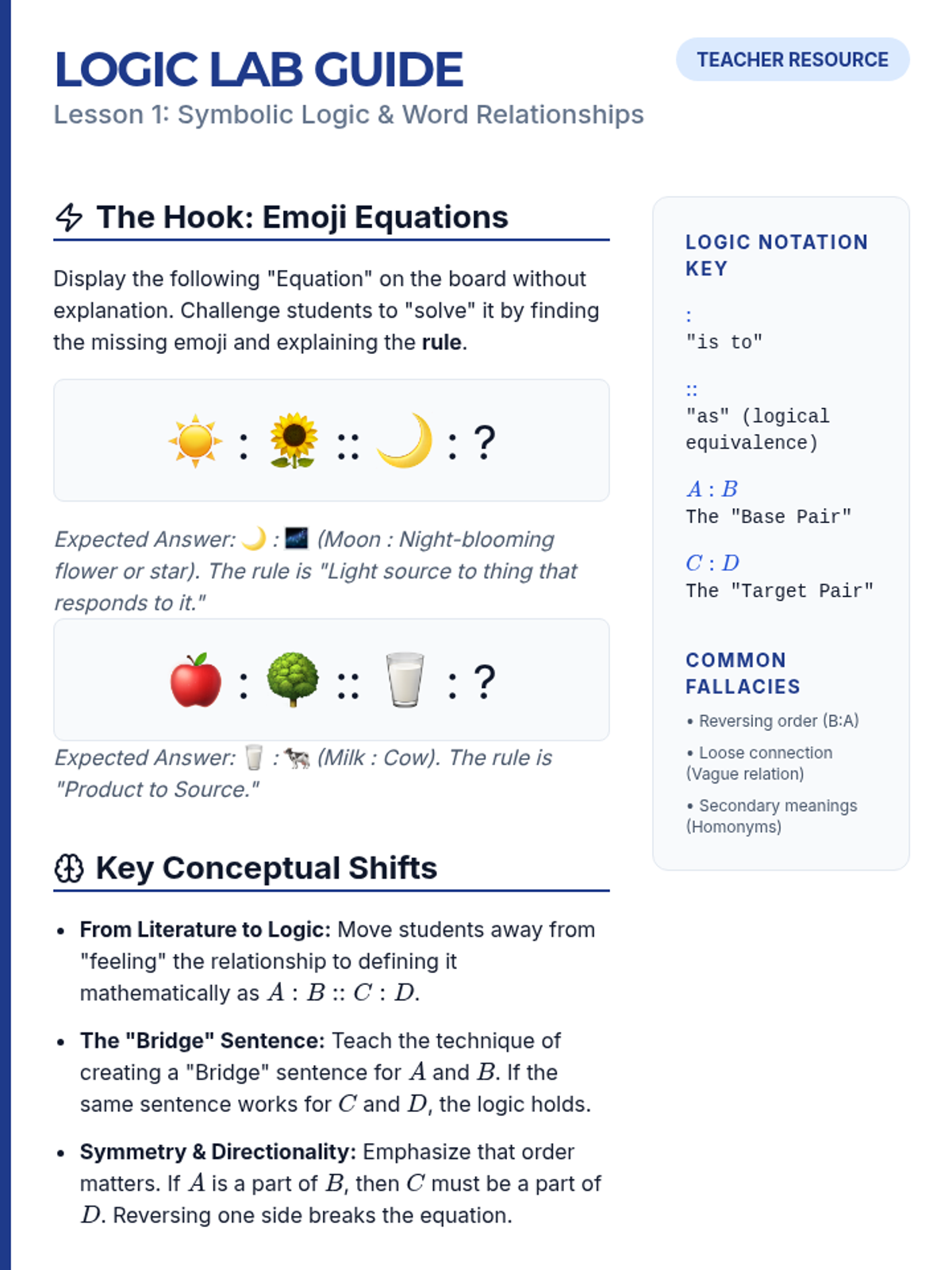
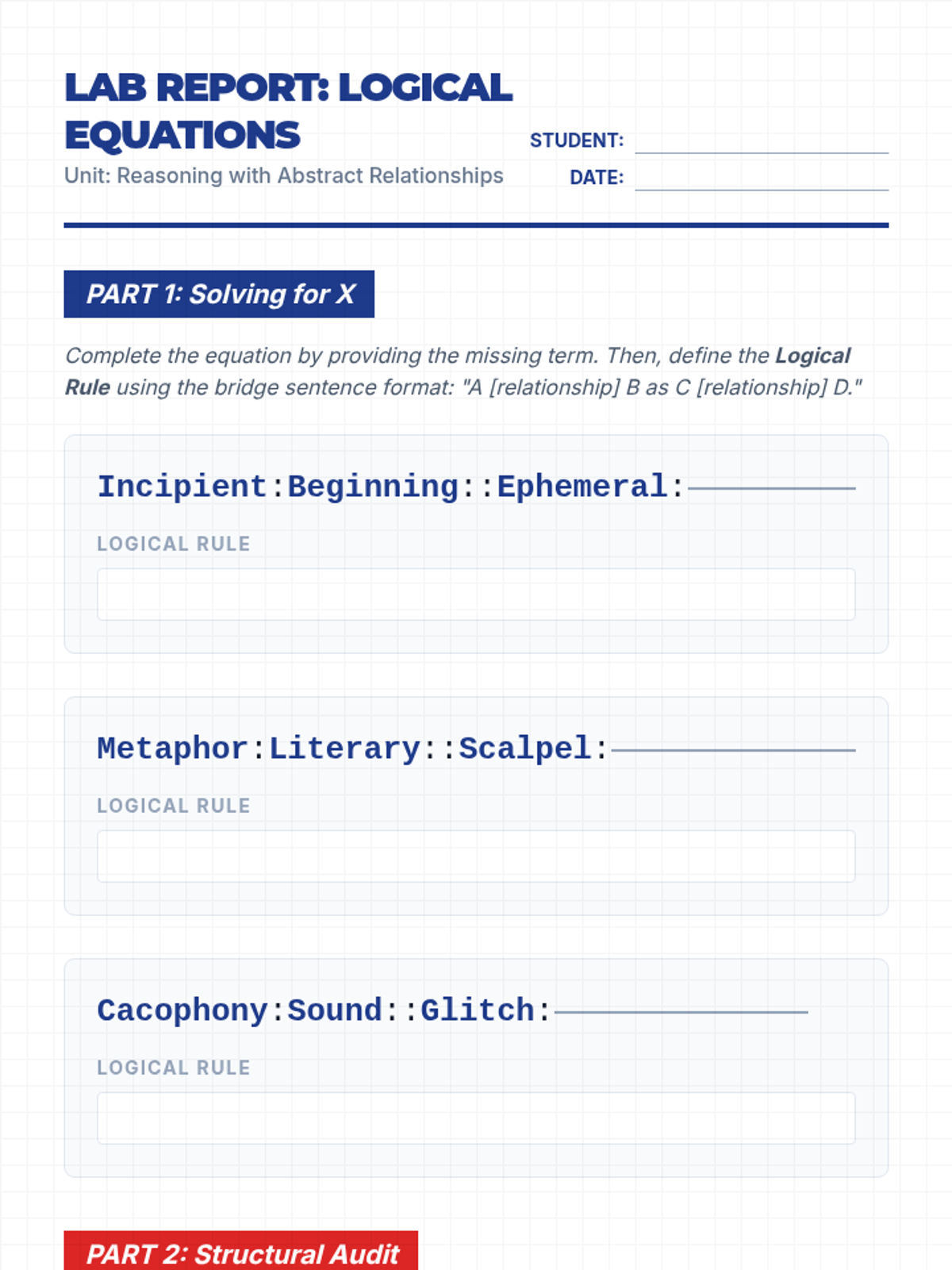
Introduces formal logic notation (A:B :: C:D) and maps word relationships onto these structures, emphasizing the importance of order and symmetry in verbal reasoning.
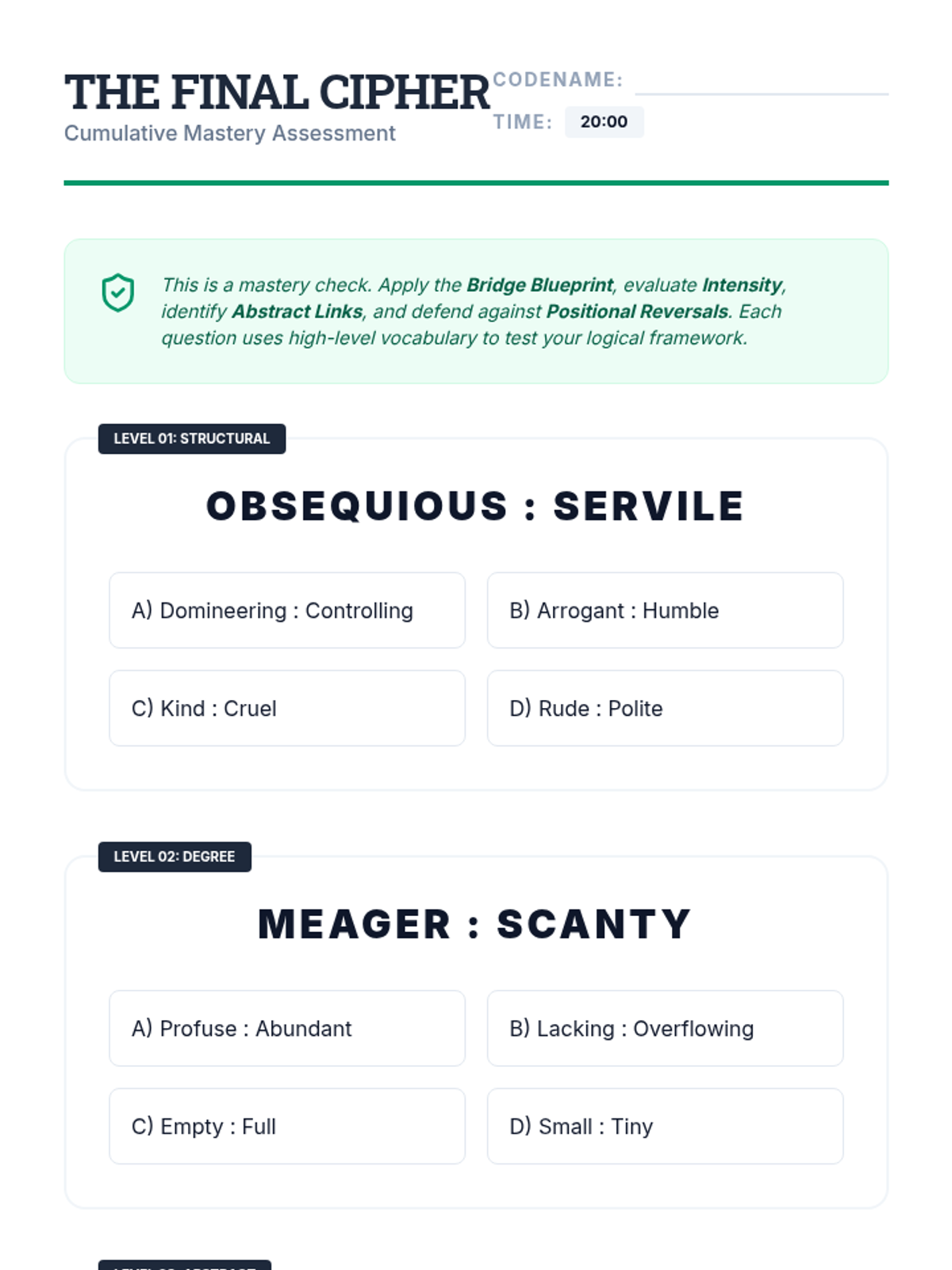
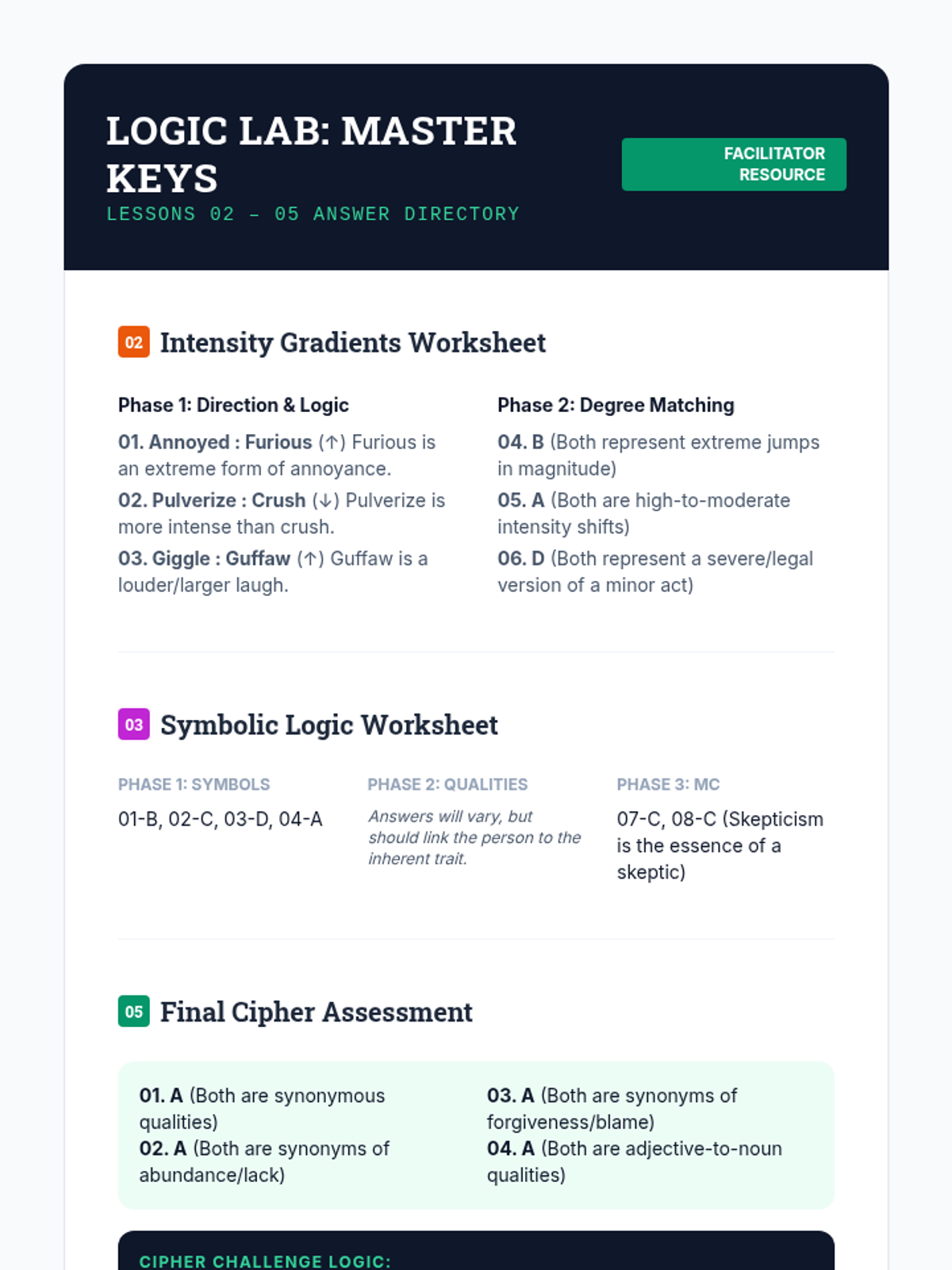
A culminating lesson applying logic strategies to high-level vocabulary, concluding with a timed mastery assessment.
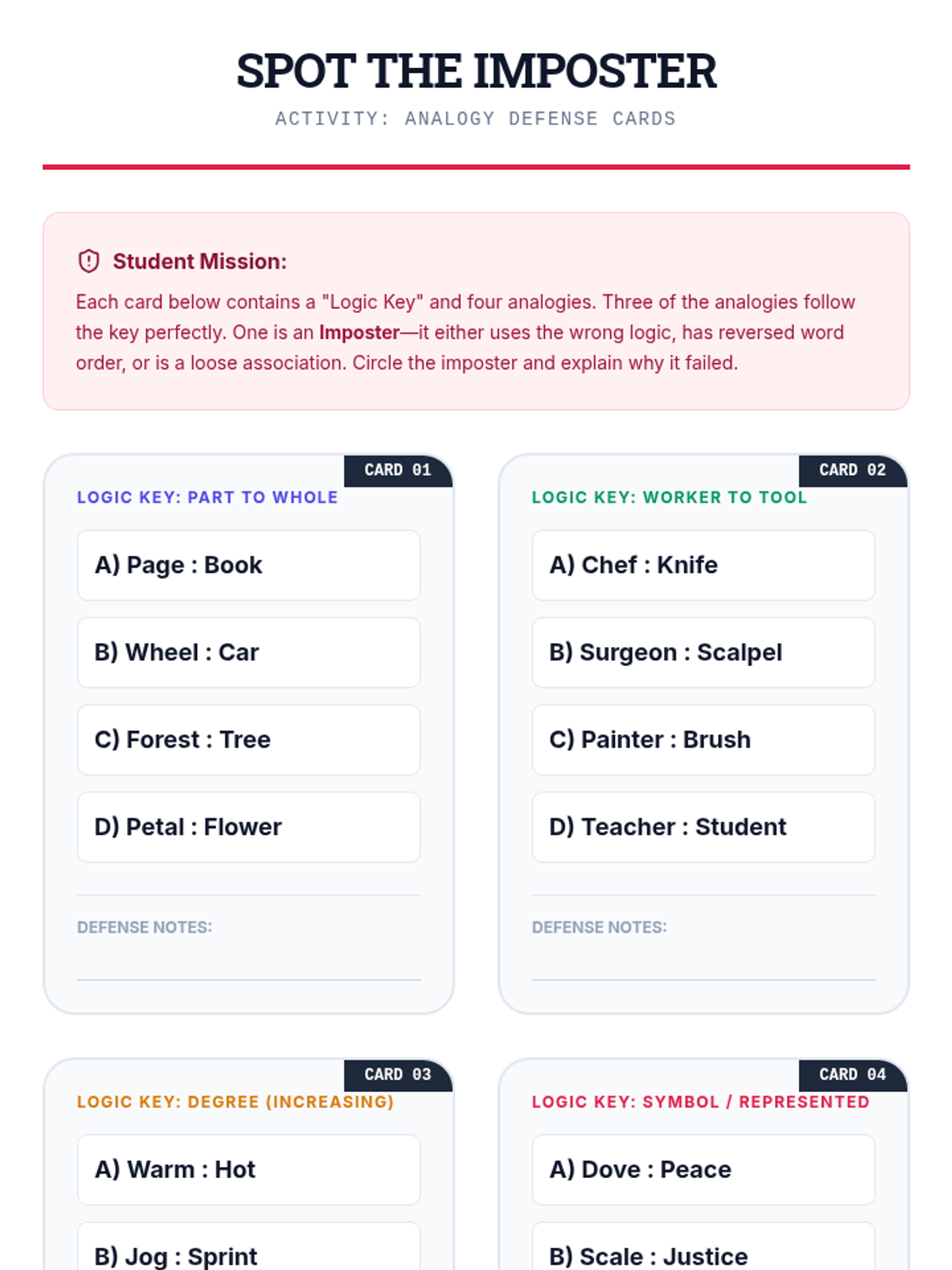
Teaches students to identify logical fallacies and common distractor traps in analogy questions, such as positional reversal and loose association.
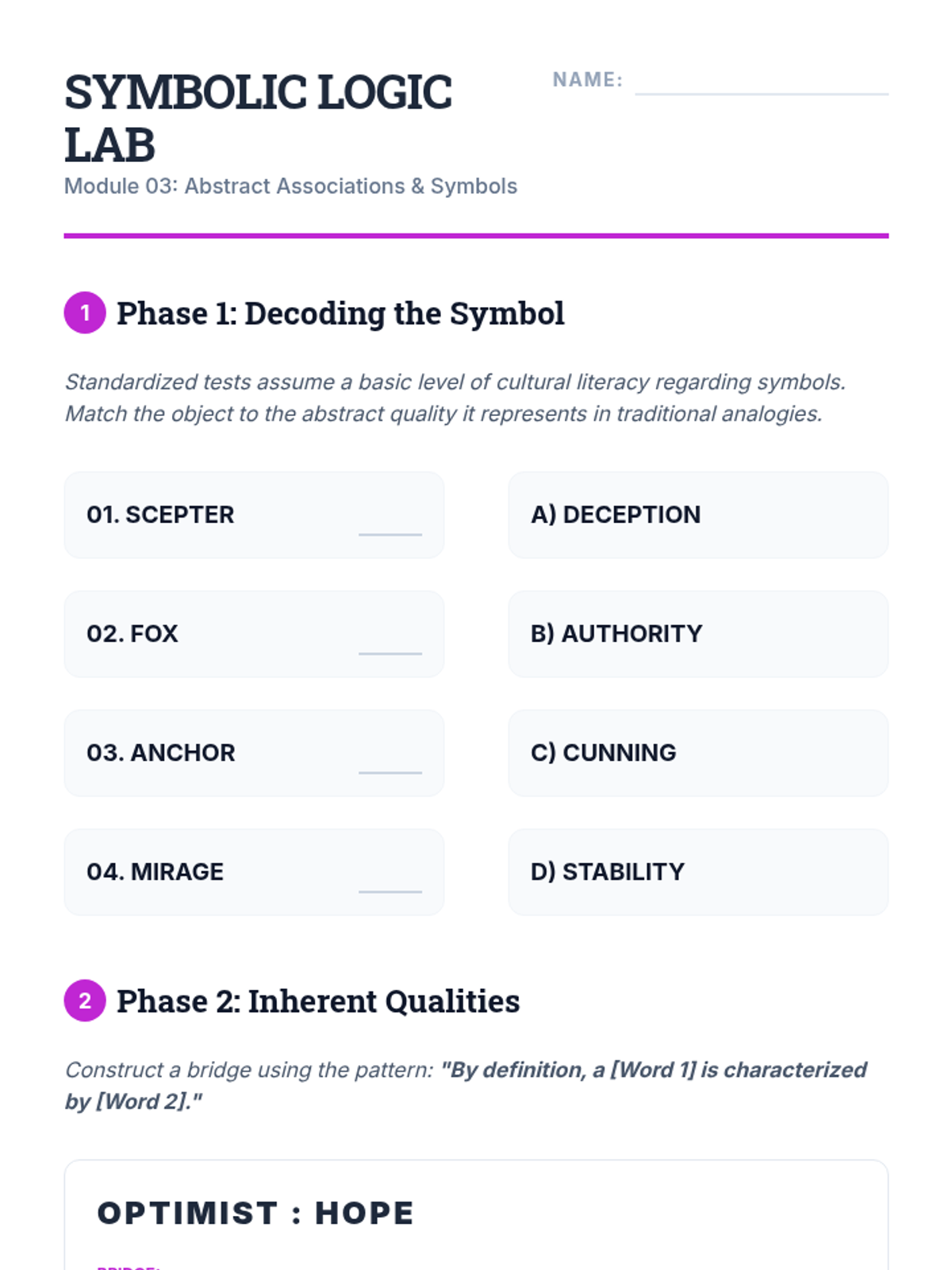
Focuses on abstract nouns, cultural symbols, and defining characteristics that represent non-physical relationships.
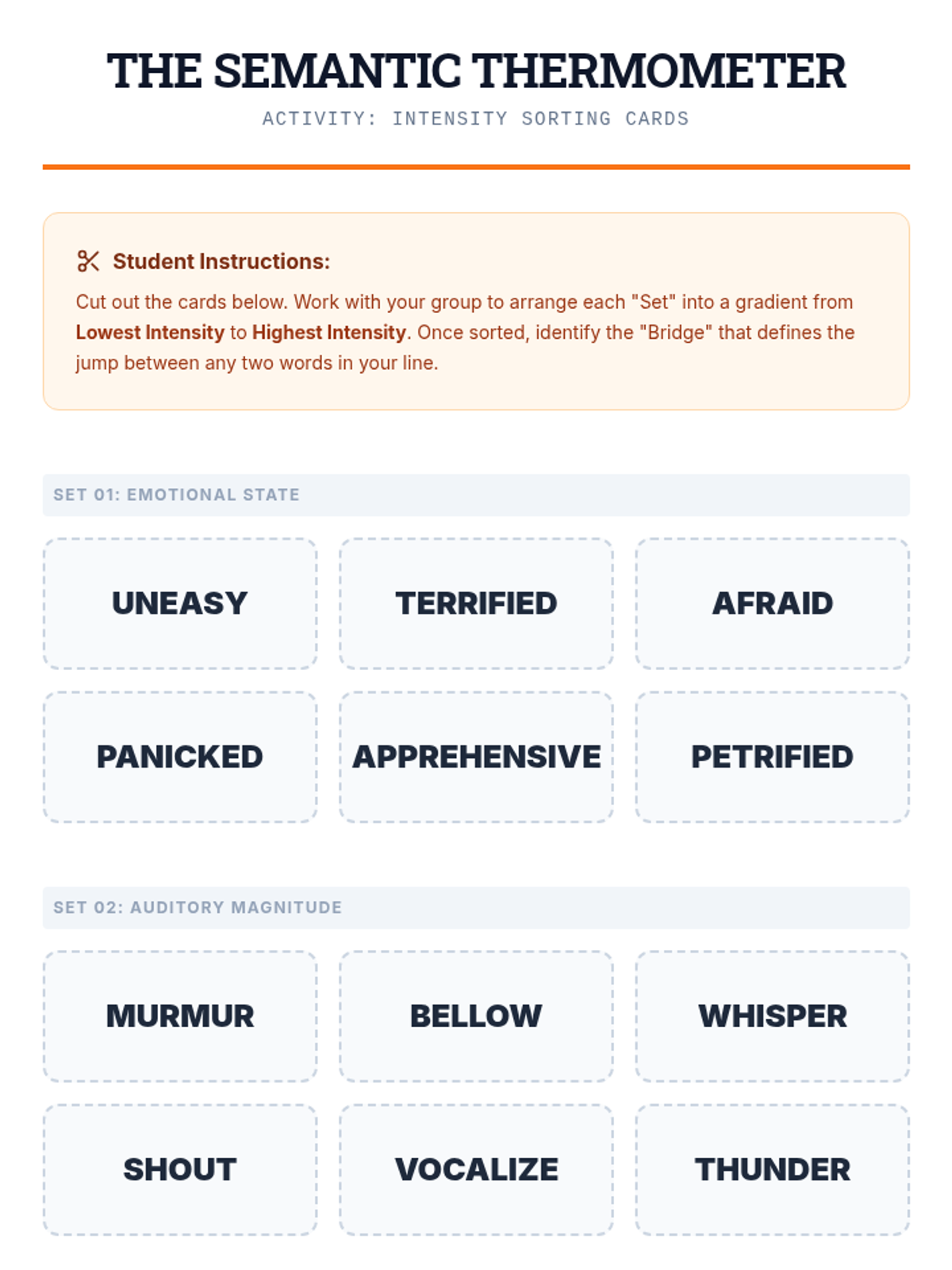
Explores synonymous relationships that differ by magnitude or intensity, using a 'thermometer' model to visualize semantic gradients.
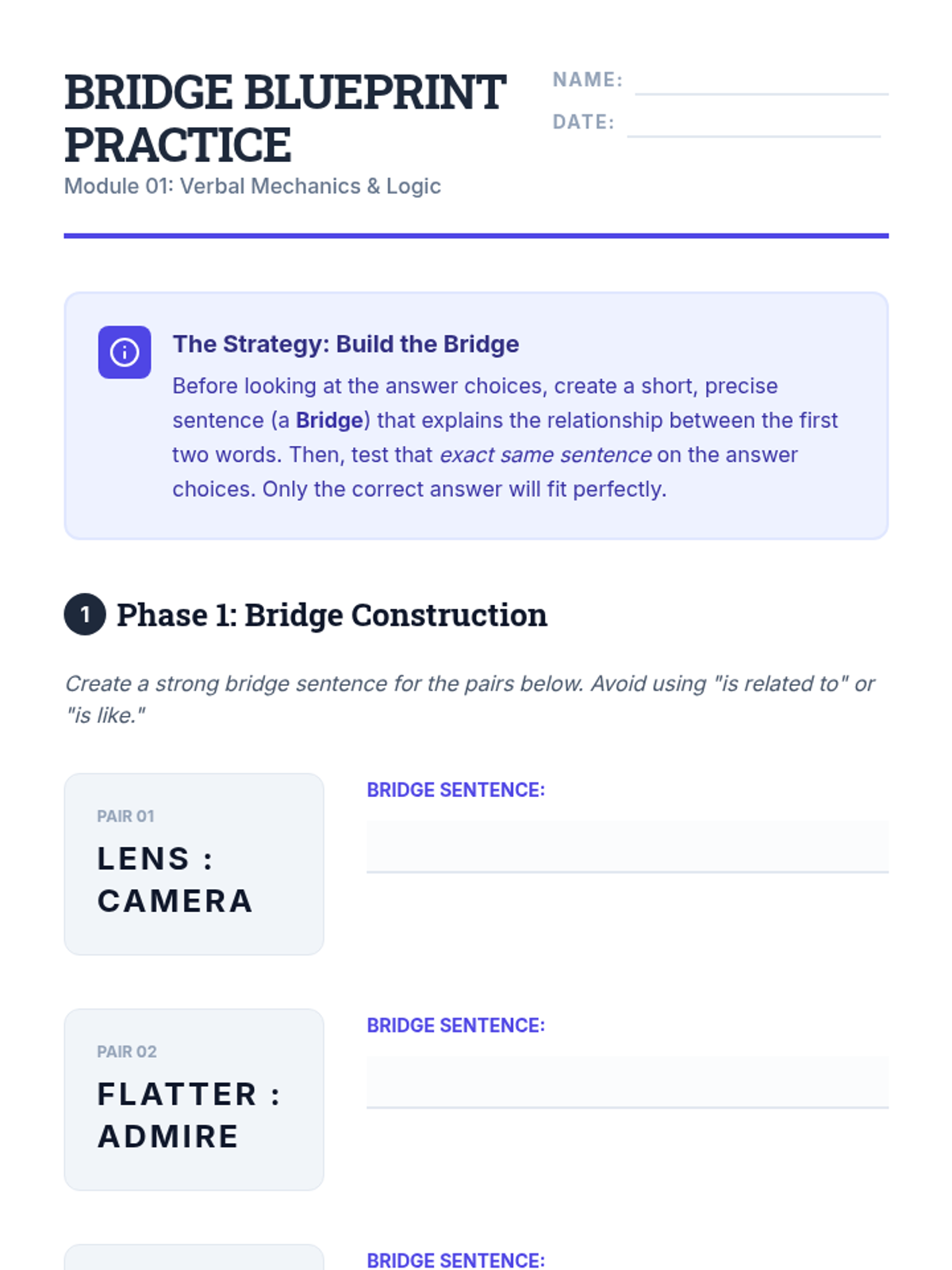
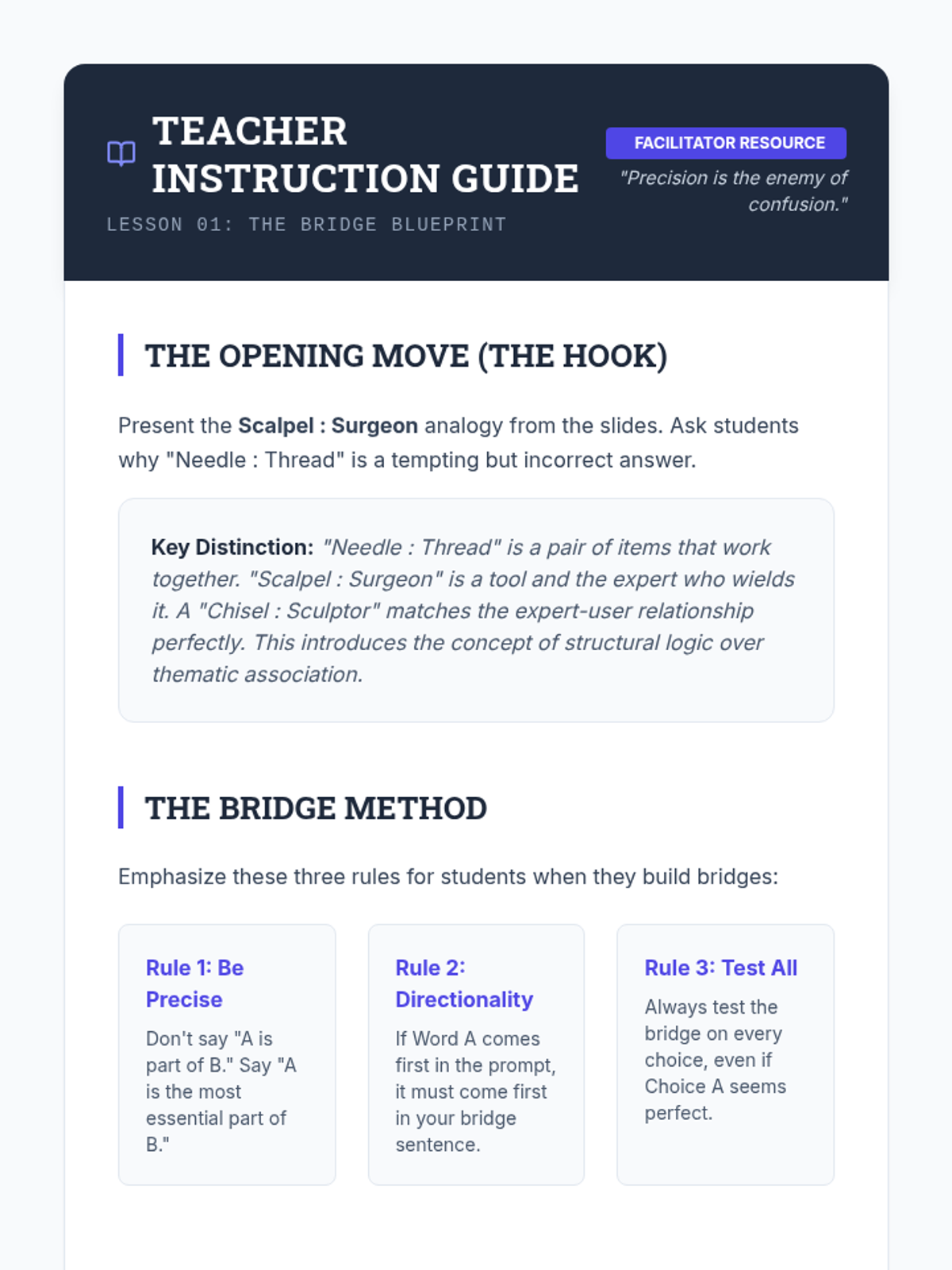
Introduces the foundational 'Bridge Sentence' strategy for solving analogies by creating a definitive logical link between word pairs.