Syllogisms, deductive validity, and the principles of inductive probability for evaluating evidence-based claims. Targets common logical fallacies and the construction of sound, persuasive arguments.
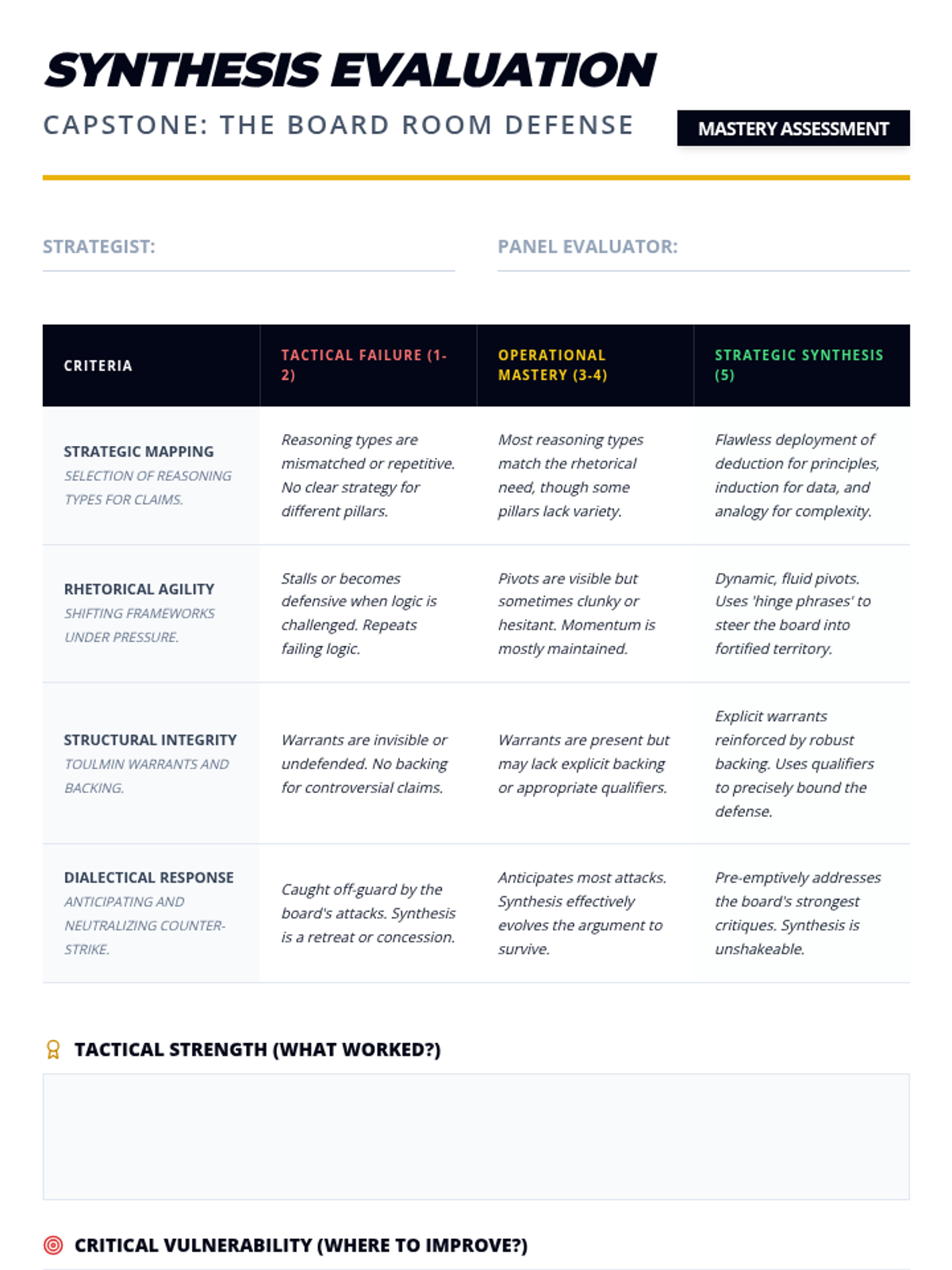
A professional evaluation rubric for the capstone defense simulation, assessing strategic mapping, rhetorical agility, structural integrity, and dialectical synthesis.
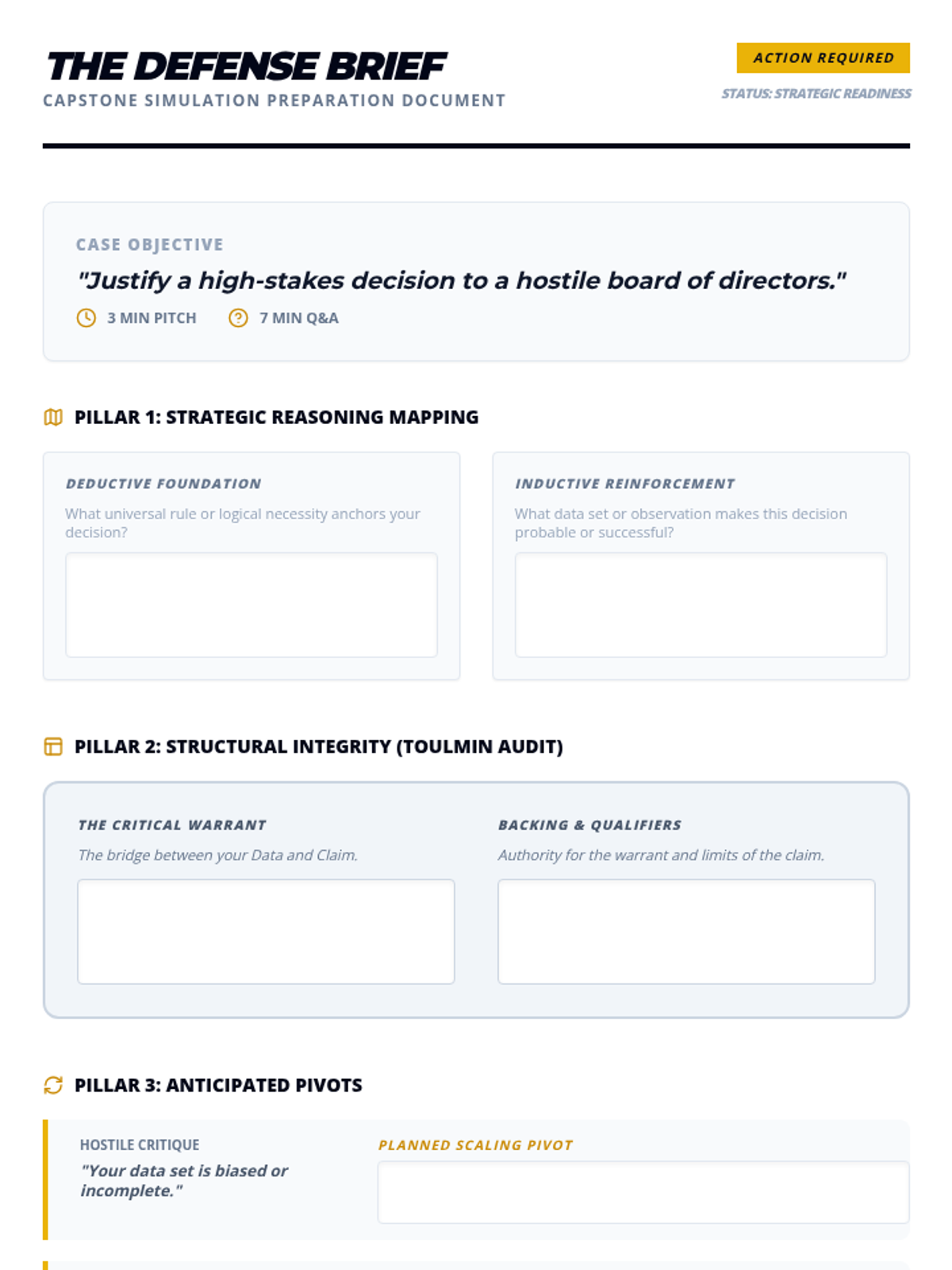
A student preparation sheet for the capstone defense simulation, focusing on mapping pillars, auditing structural integrity, and planning tactical pivots. Updated with light backgrounds for handwriting legibility.
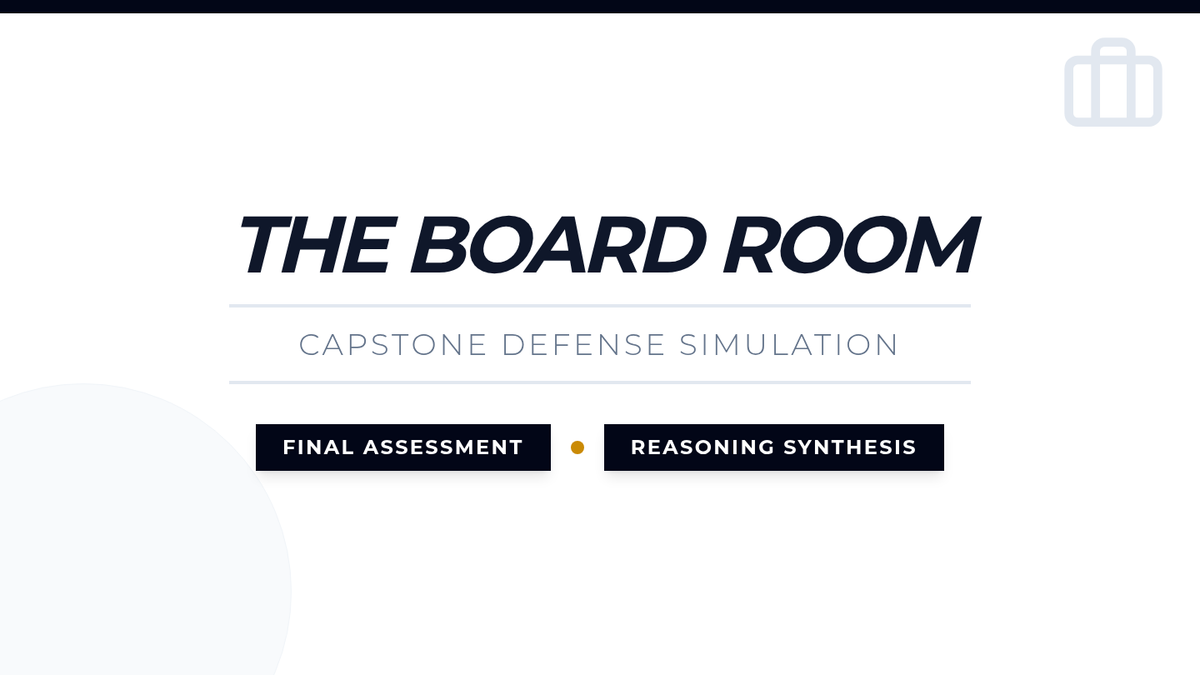
Slides for Lesson 5, the capstone simulation, detailing the 'Board Room' scenario, evaluation pillars, and final preparation steps. Updated with minimum font sizes.
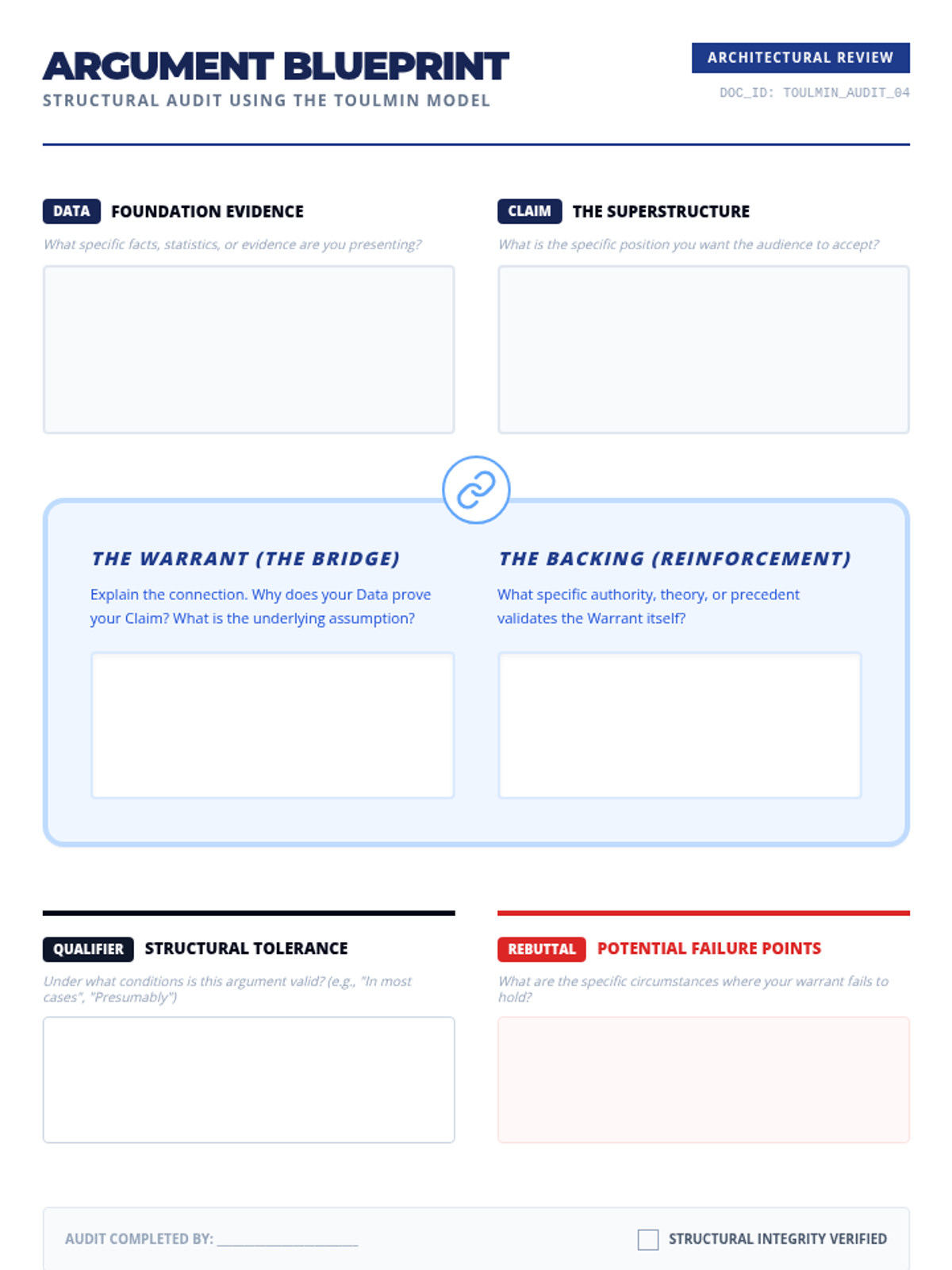
A technical worksheet for auditing an argument's structural connections using the Toulmin model, updated with light backgrounds for handwriting legibility.
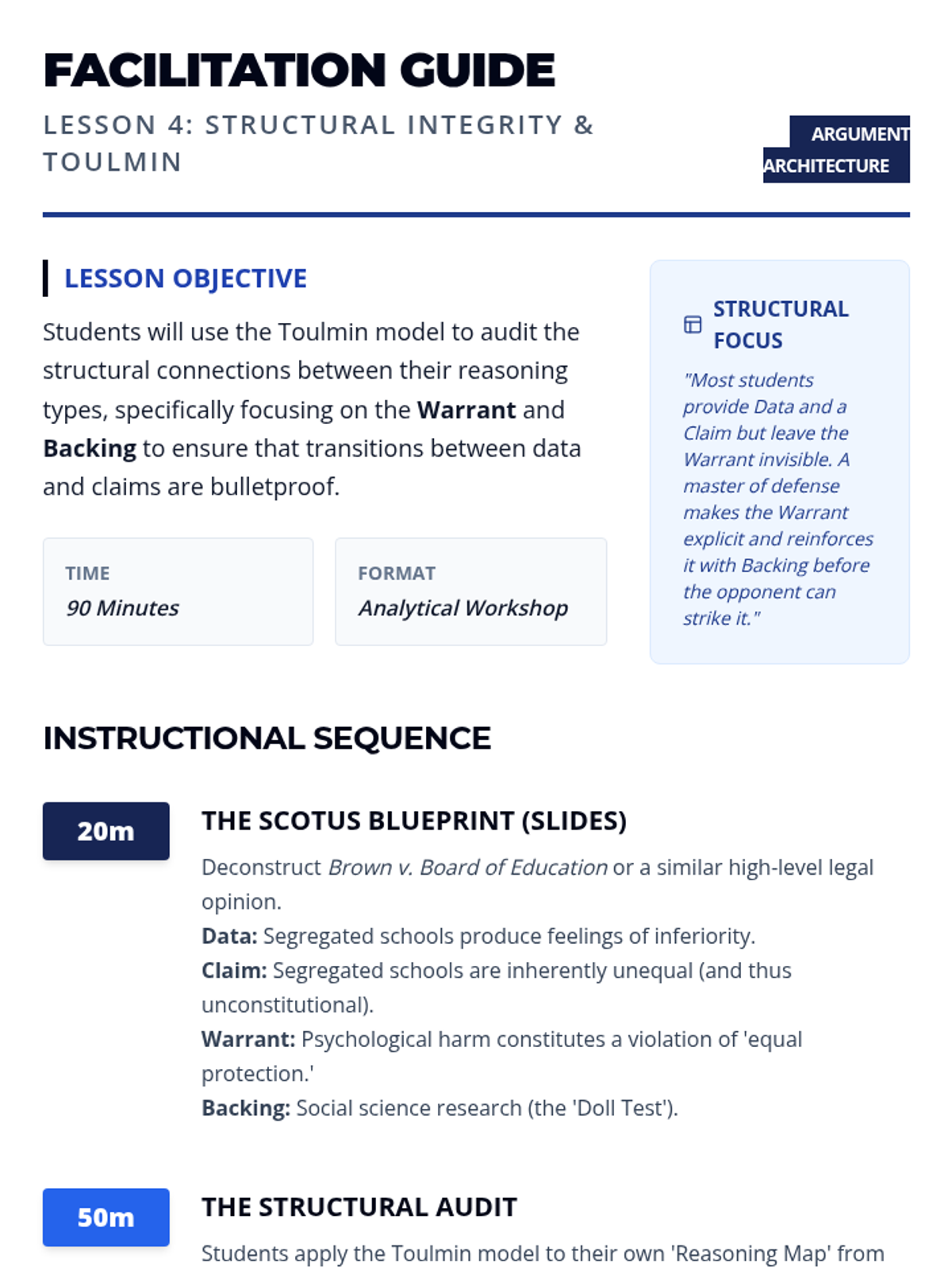
A teacher facilitation guide for Lesson 4, focusing on auditing argument structures using the Toulmin model and deconstructing legal opinions.
Slides for Lesson 4 detailing the components of the Toulmin model (Claim, Data, Warrant, Backing, Qualifier, Rebuttal) and their strategic deployment in high-level defense. Updated with minimum font sizes.
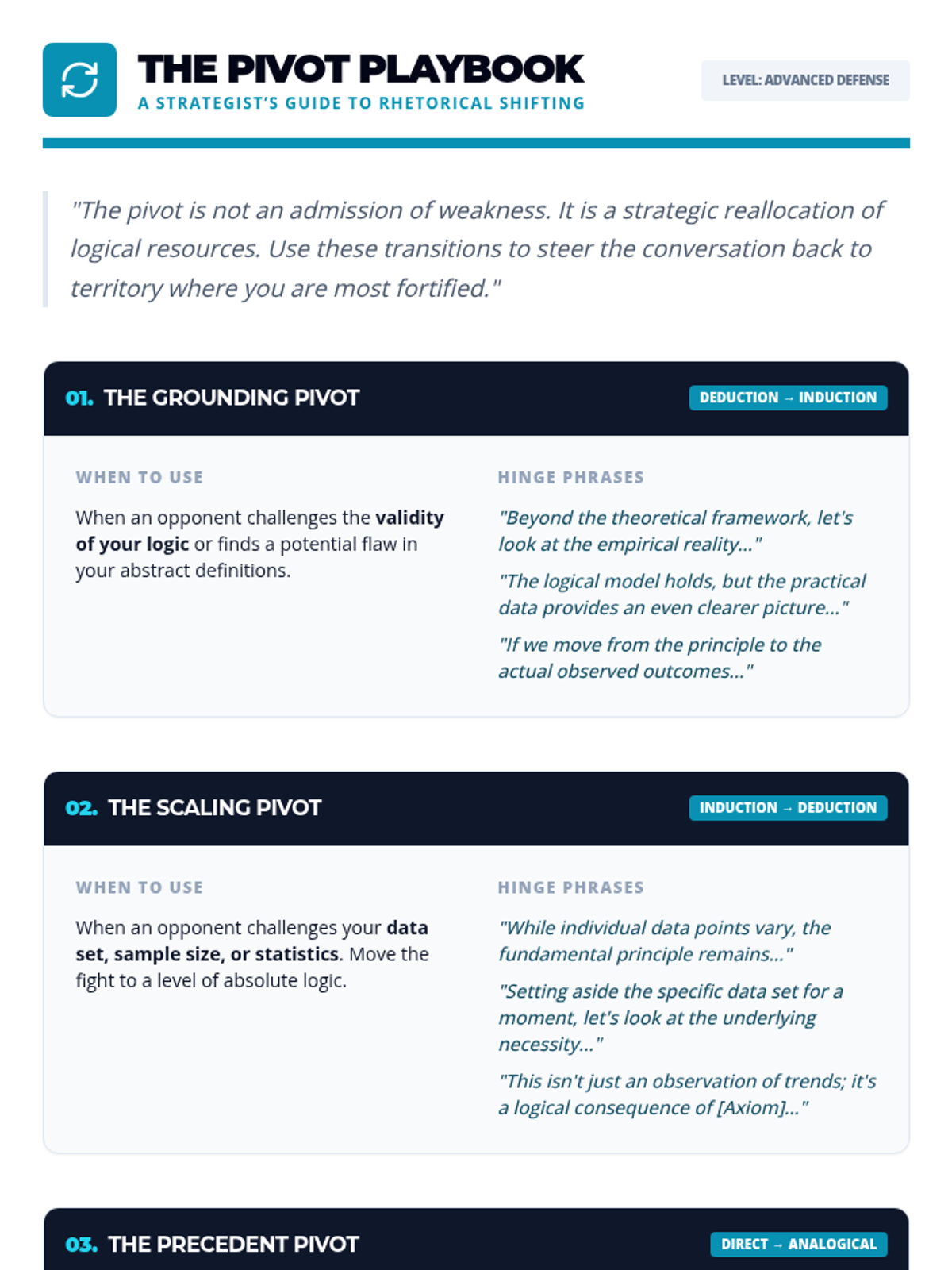
A one-page reference sheet of strategic transition phrases ('hinge phrases') for shifting between reasoning types during high-pressure Q&A.
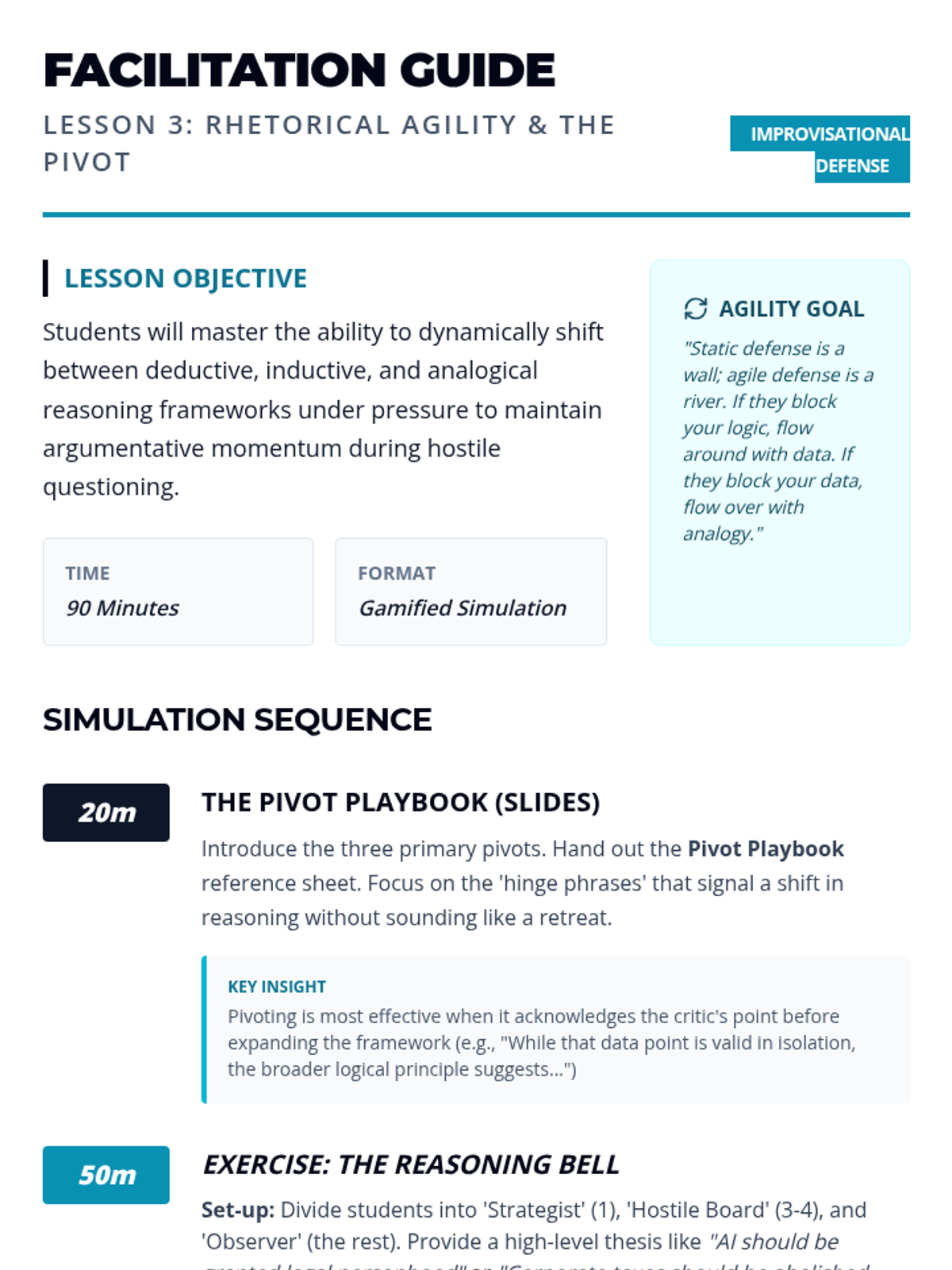
A teacher facilitation guide for Lesson 3 focusing on the 'Reasoning Bell' improvisation game and strategies for managing high-pressure Q&A simulations.
Slides for Lesson 3 focusing on rhetorical agility, the momentum of shifting frameworks, and the 'Reasoning Bell' improvisation game. Updated with minimum font sizes.
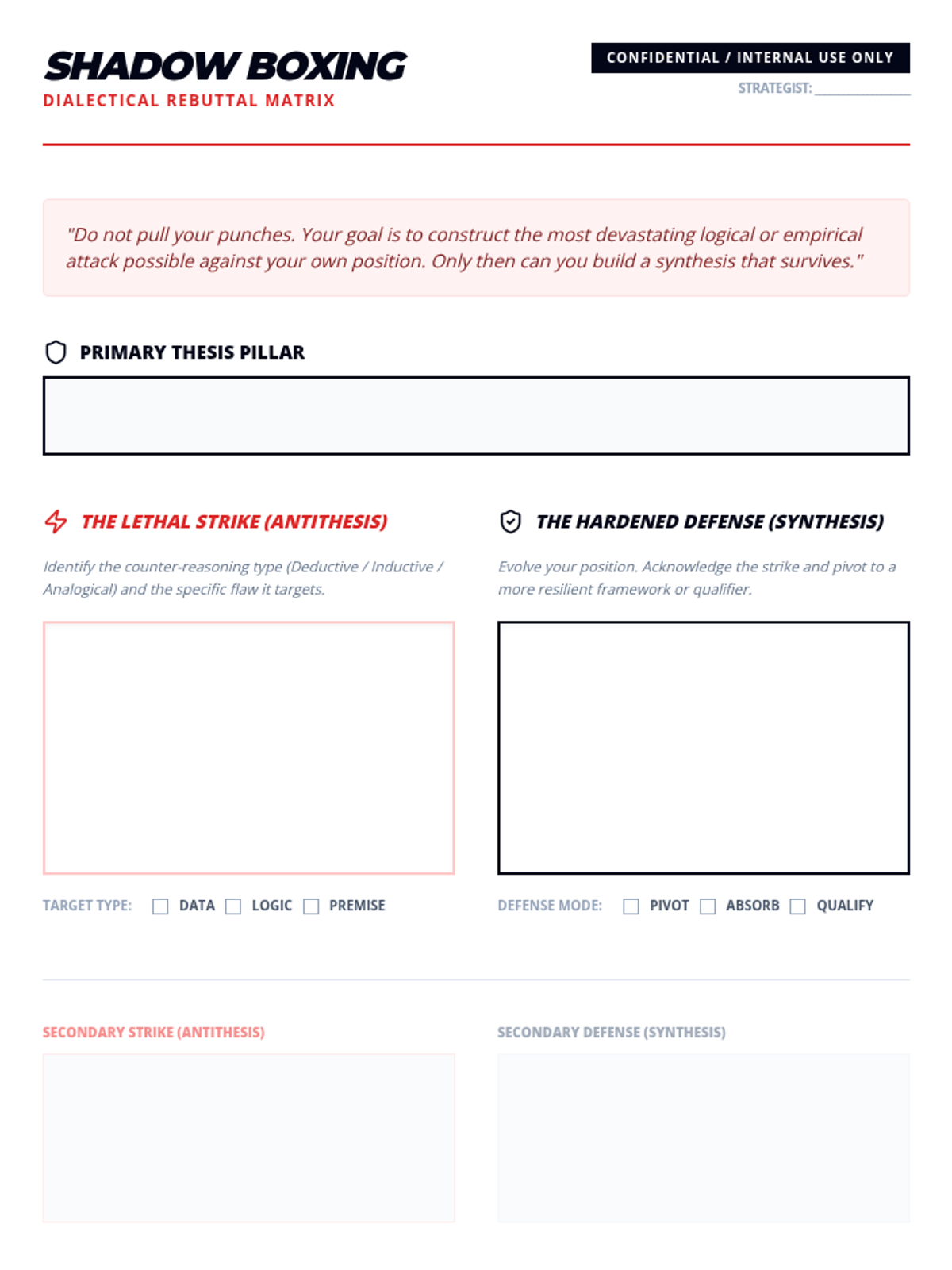
A dialectical reasoning worksheet where students draft their own most lethal counter-arguments ('strikes') and then create pre-emptive synthesized responses.
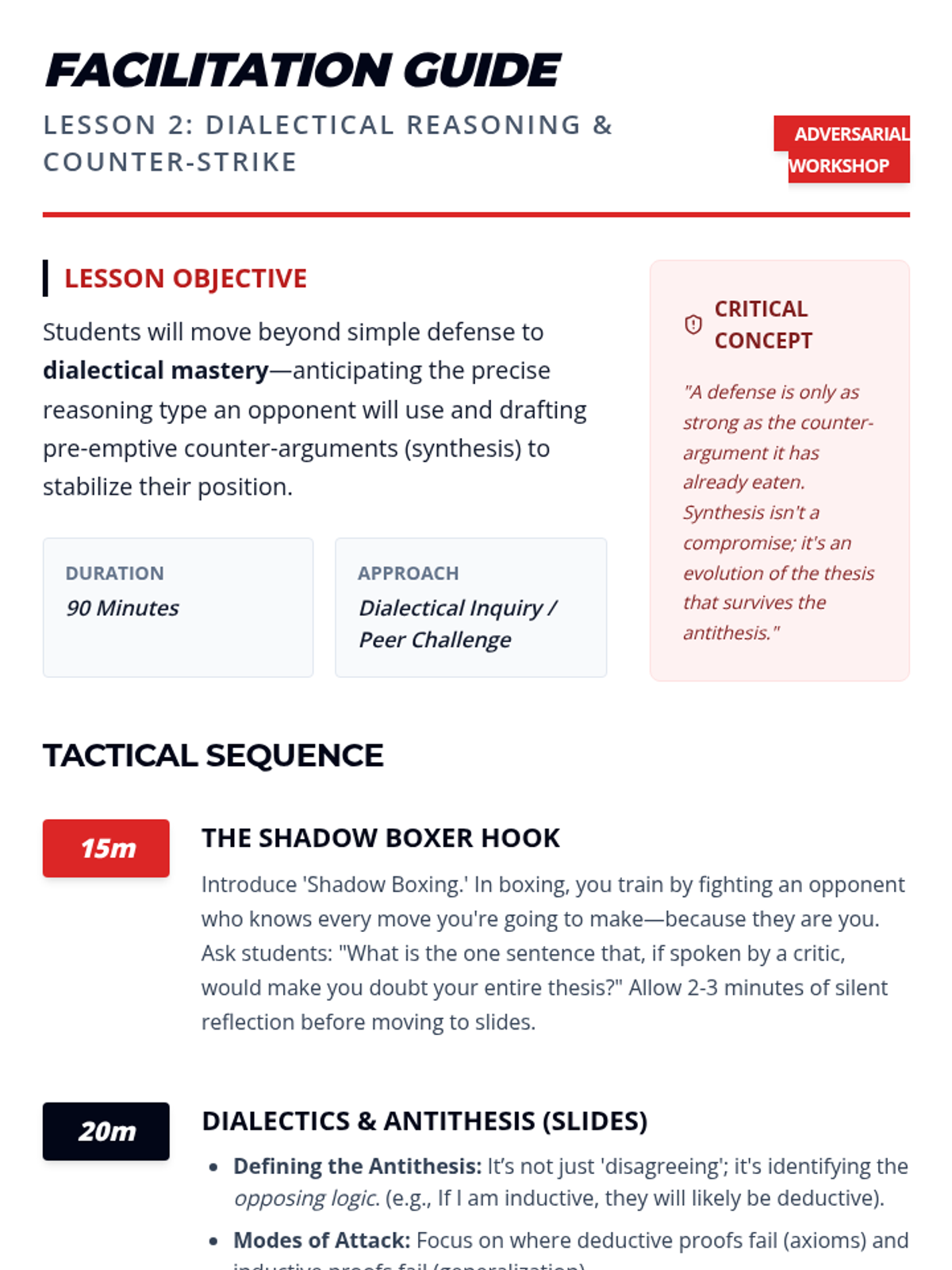
A comprehensive teacher guide for Lesson 2 focusing on dialectical reasoning, the 'Shadow Boxing' hook, and facilitating high-stakes peer critiques.
Slides for Lesson 2 focusing on dialectical reasoning, the relationship between thesis and antithesis, and the 'Shadow Boxing' exercise for anticipating rebuttals. Updated with minimum font sizes.
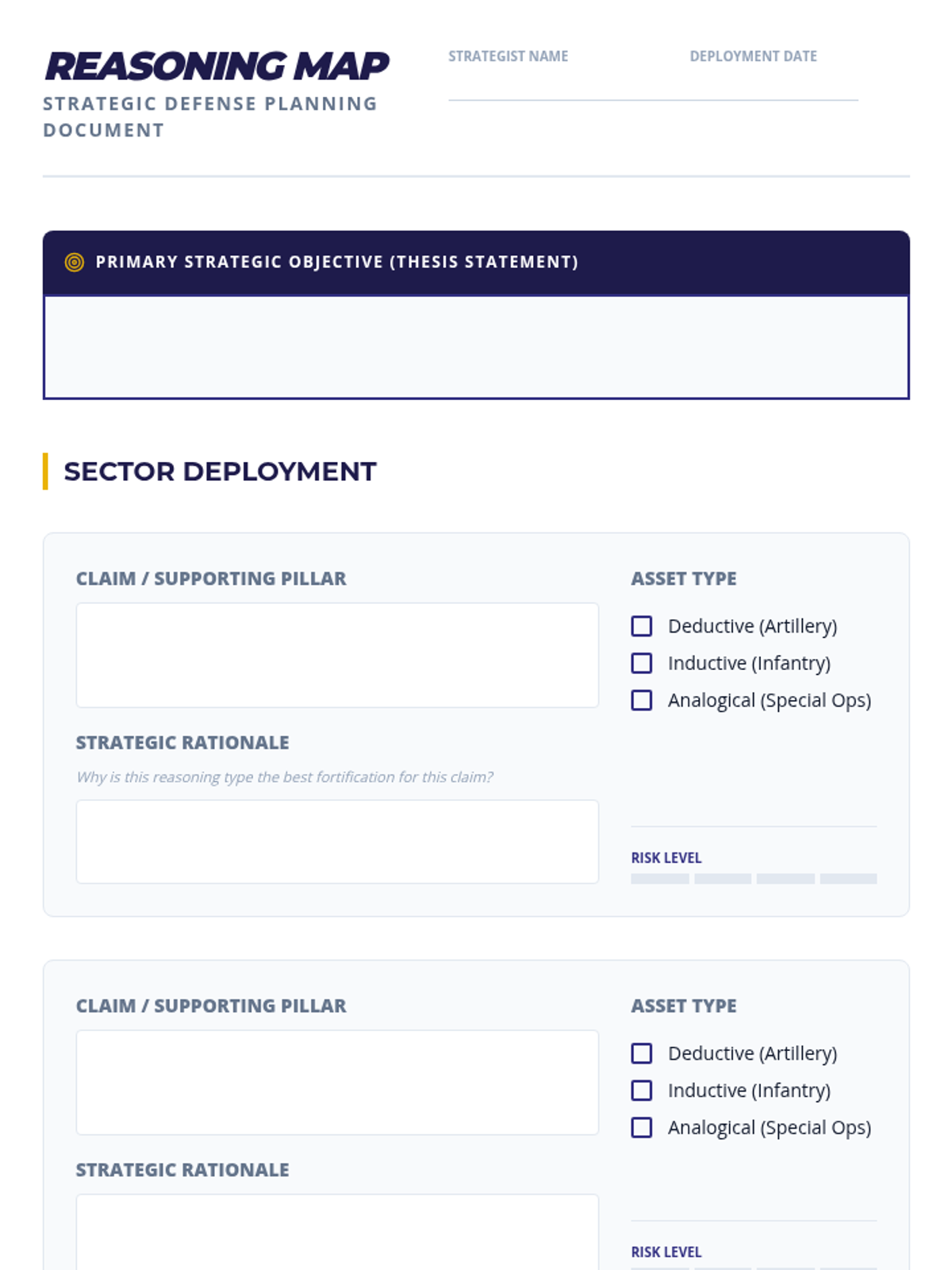
A student planning worksheet for mapping argumentative pillars to specific reasoning types, formatted as a strategic defense document.
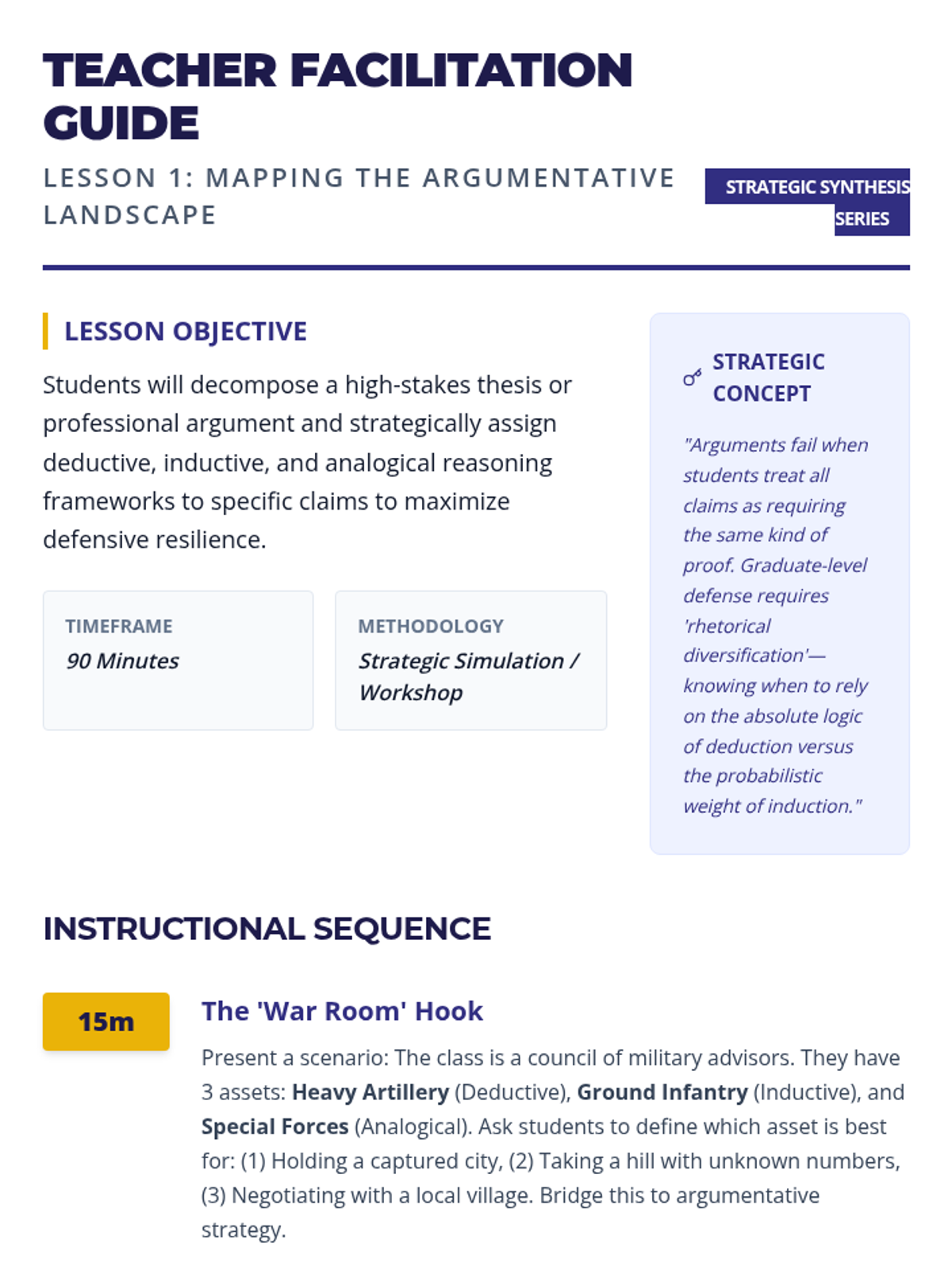
A comprehensive teacher facilitation guide for Lesson 1, detailing the 'War Room' hook, strategic definitions, and workshop instructions for mapping arguments.
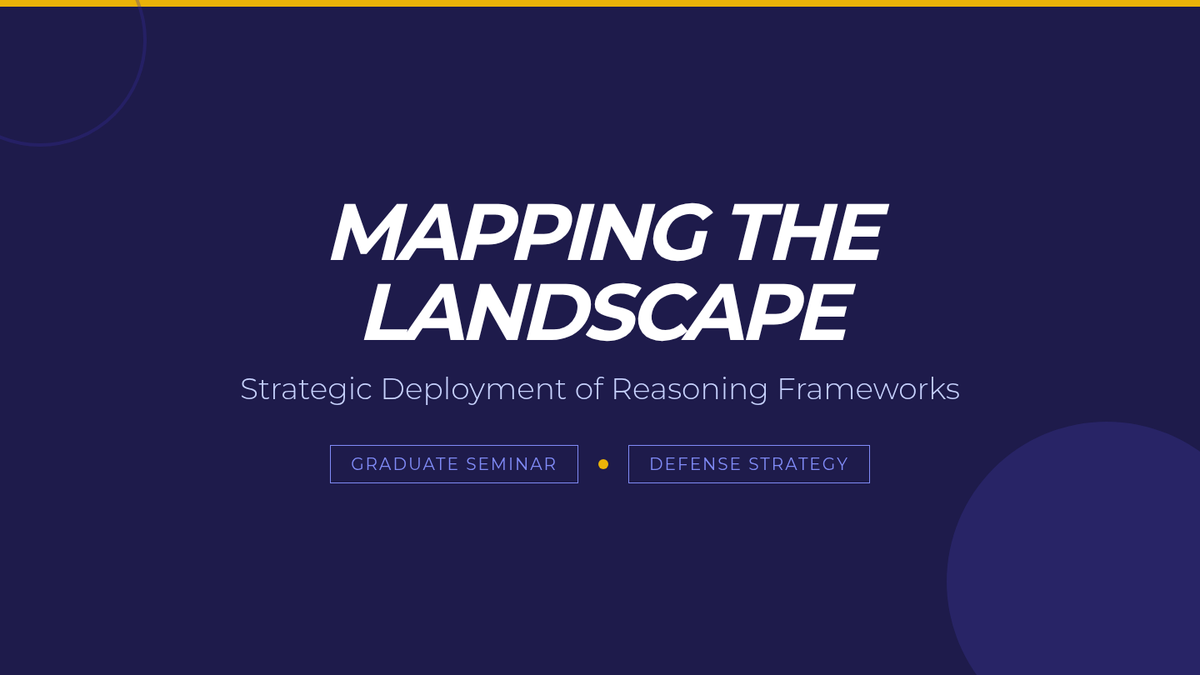
A presentation introduction to the strategic deployment of deductive, inductive, and analogical reasoning for graduate-level defense contexts, using a 'military strategy' metaphor. Updated with accessible font sizes.
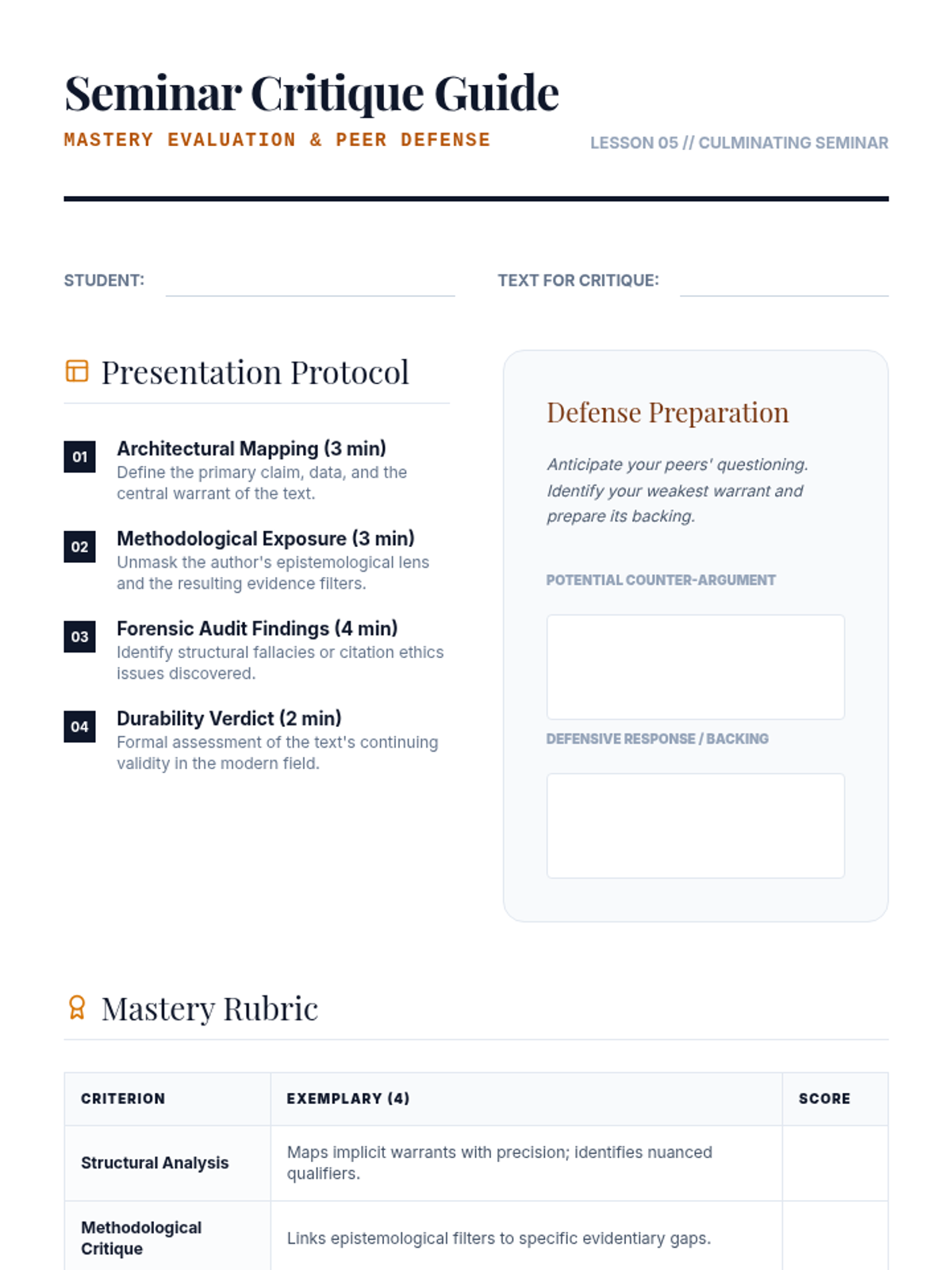
A comprehensive seminar guide for graduate students, including a presentation blueprint, a mastery rubric, and a 'Reviewer #2' peer challenge log.
A culminating seminar presentation for graduate students to guide them through the formal critique and defense of foundational academic texts.
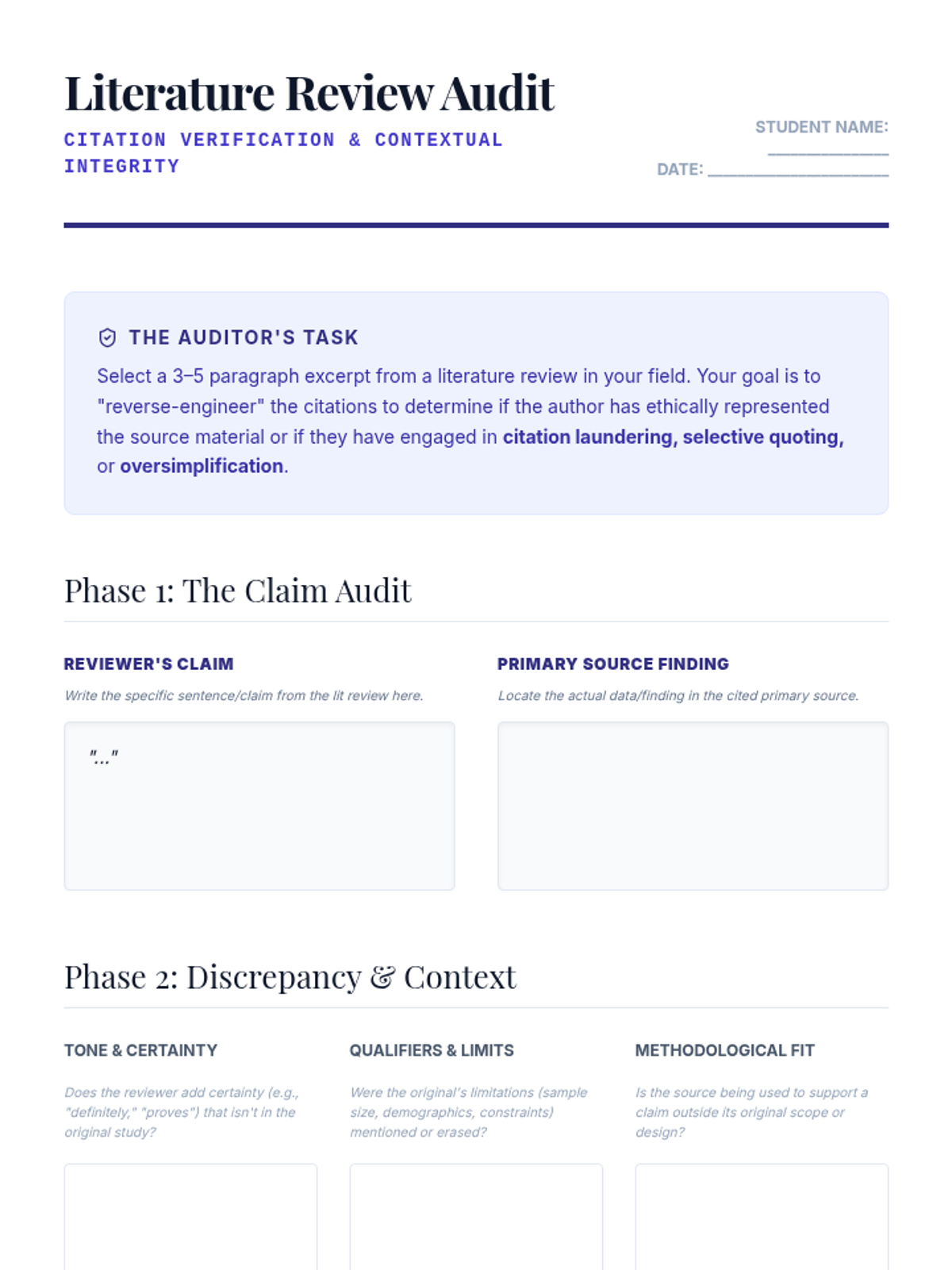
A structured literature review audit worksheet for graduate students to verify the accuracy and ethics of citations in academic texts.
A presentation for graduate students on the ethics of citation, focusing on selective quoting, cherry-picking, and the ethical responsibility of representing evidence accurately.
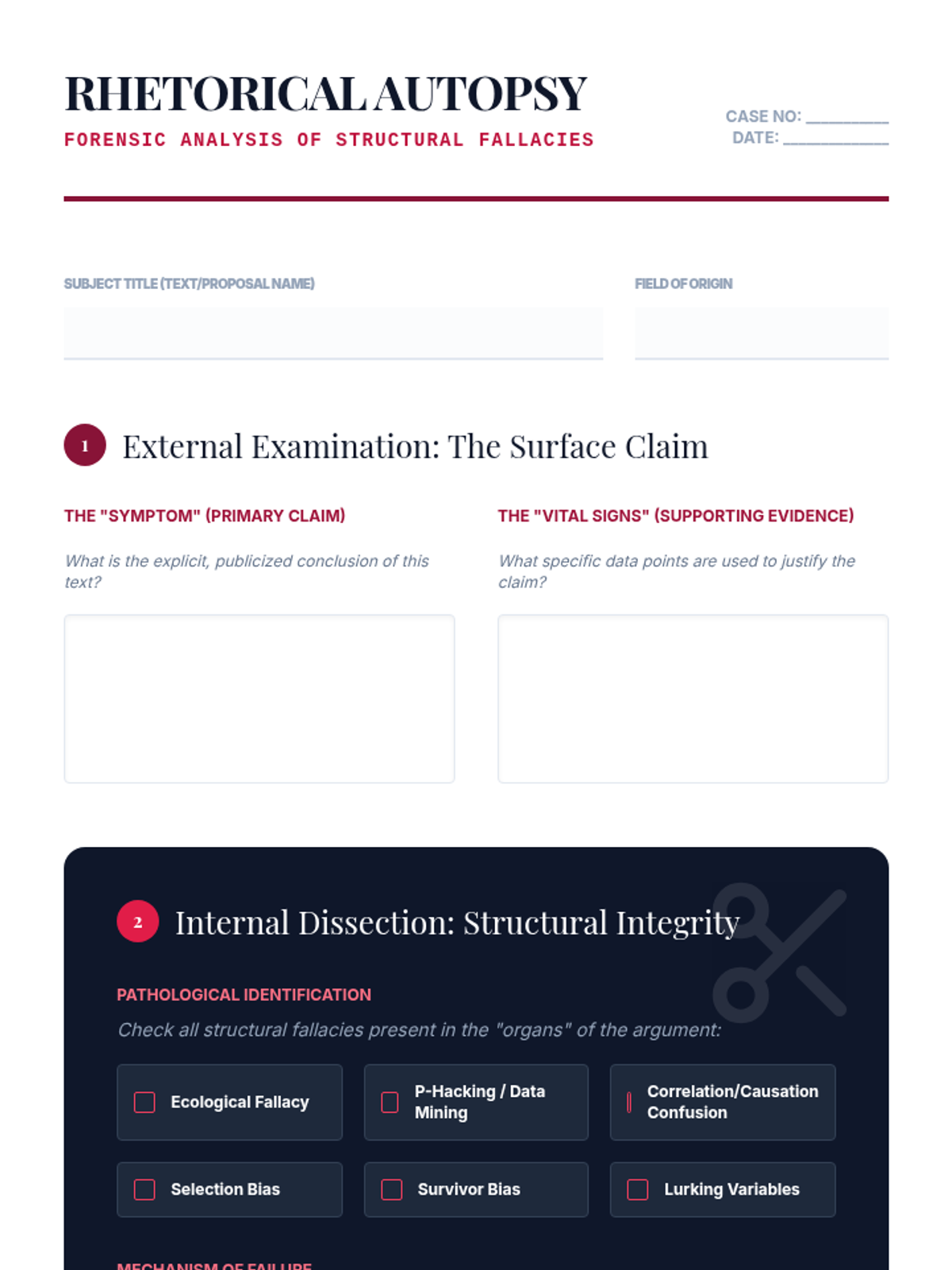
A forensic case study worksheet for graduate students to analyze a text for advanced logical fallacies, including ecological fallacies and p-hacking.
A presentation for graduate students on detecting advanced logical fallacies such as p-hacking, ecological fallacies, and correlation-causation errors in academic and policy discourse.
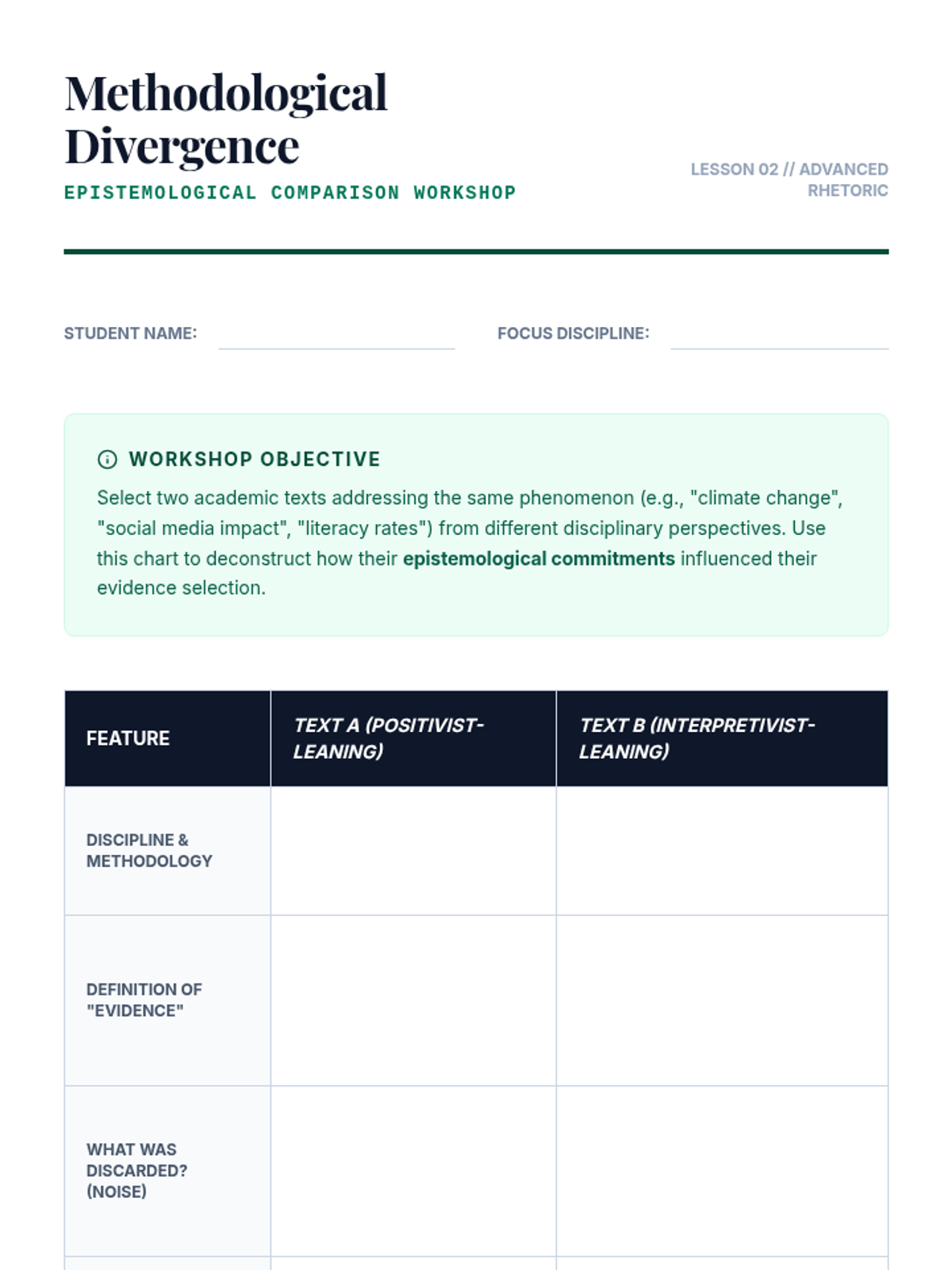
A worksheet for graduate students to compare how different disciplinary epistemologies dictate evidence selection and influence the resulting academic claims.
A presentation on different epistemological views (positivism, interpretivism, etc.) and how they shape evidence selection, specifically designed for graduate-level rhetorical analysis.
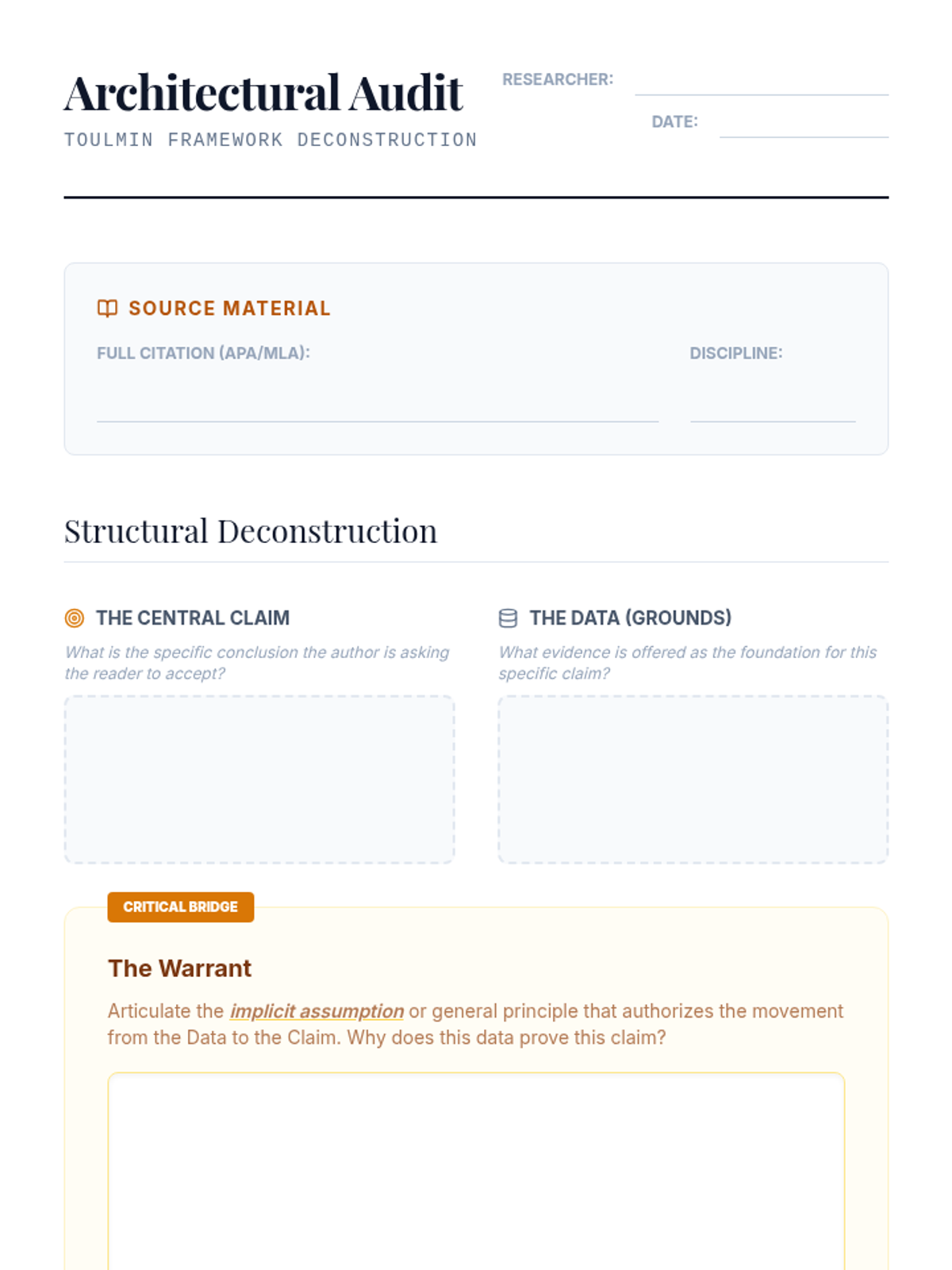
A structured analysis worksheet for graduate students to map the architectural components of a complex academic argument using the Toulmin Model.
A sophisticated slide deck for graduate students introducing the Toulmin Model of argumentation, emphasizing structural analysis, implicit warrants, and epistemic limits in academic discourse.