Analytical frameworks for interpreting history, geography, and civic information. Equips learners with tools for chronological sequencing, map literacy, and critical evaluation of primary and secondary sources.
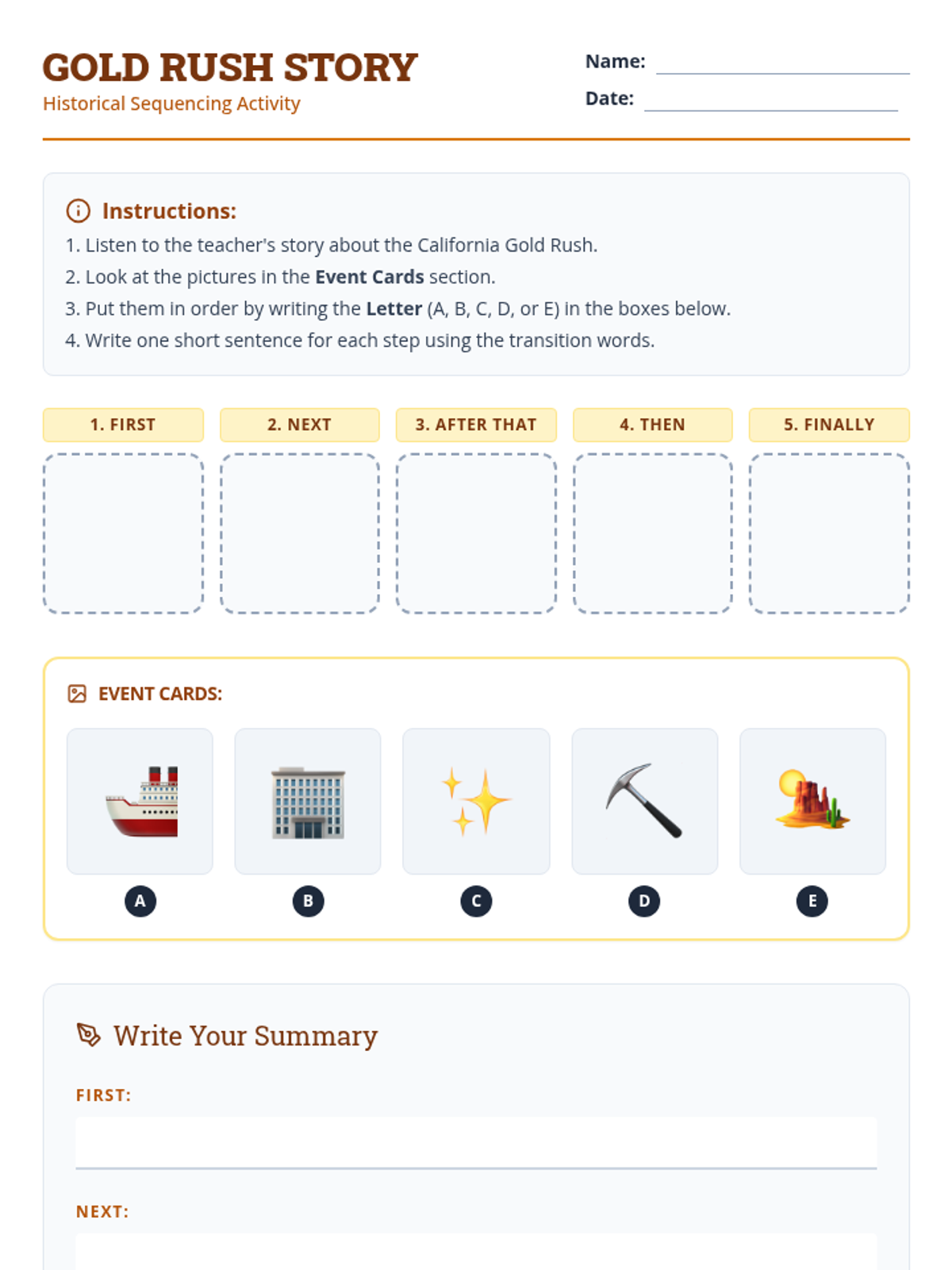
A student worksheet for Grade 5 ESL learners to sequence images of the California Gold Rush and write a brief summary using chronological transition words. Updated with clear work areas and improved writing spacing.
A visual slide deck for Grade 5 ESL students introducing the California Gold Rush and the concept of chronological order using transition words and historical imagery. Updated to include all 5 sequence steps.
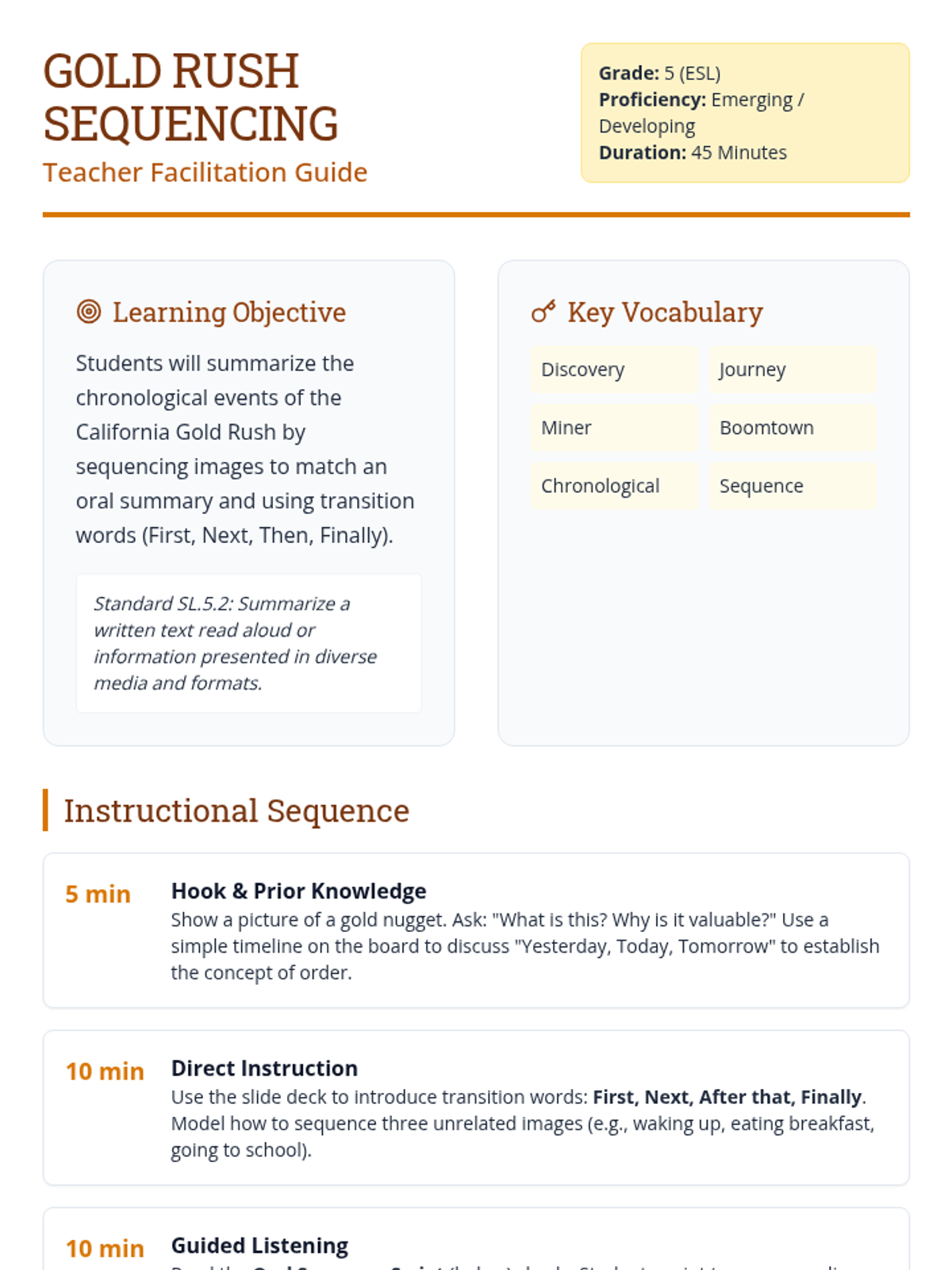
A comprehensive teacher guide for a 45-minute Grade 5 ESL lesson on the California Gold Rush, including a pacing guide, an oral summary script, and differentiation strategies for Emerging and Developing learners.
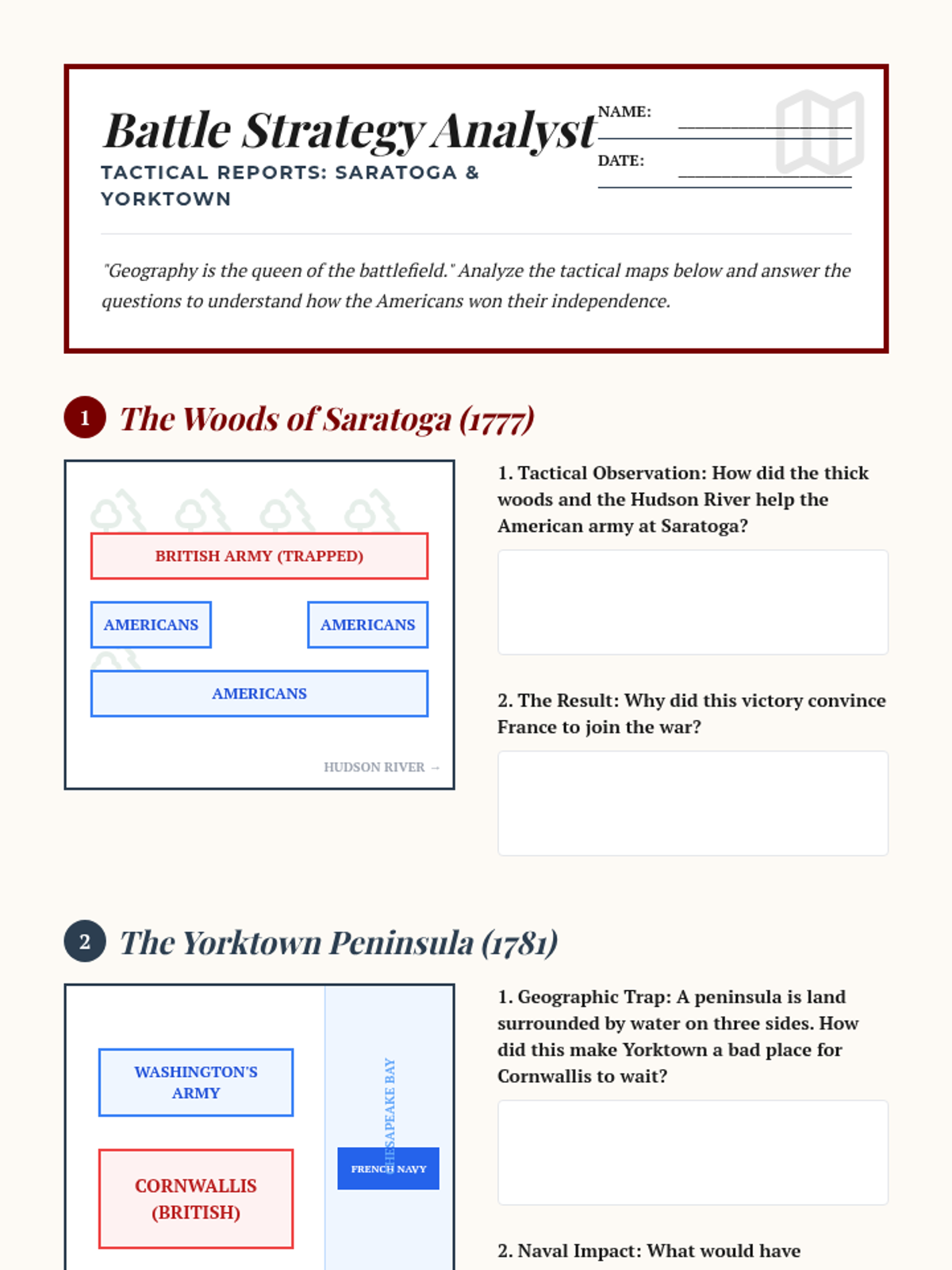
A student worksheet for analyzing the military strategy and geographic factors of the Battles of Saratoga and Yorktown.
A visual presentation covering the military strategies of the American Revolution, including the differences between British and Continental tactics, key battles like Saratoga and Yorktown, and the role of leadership.
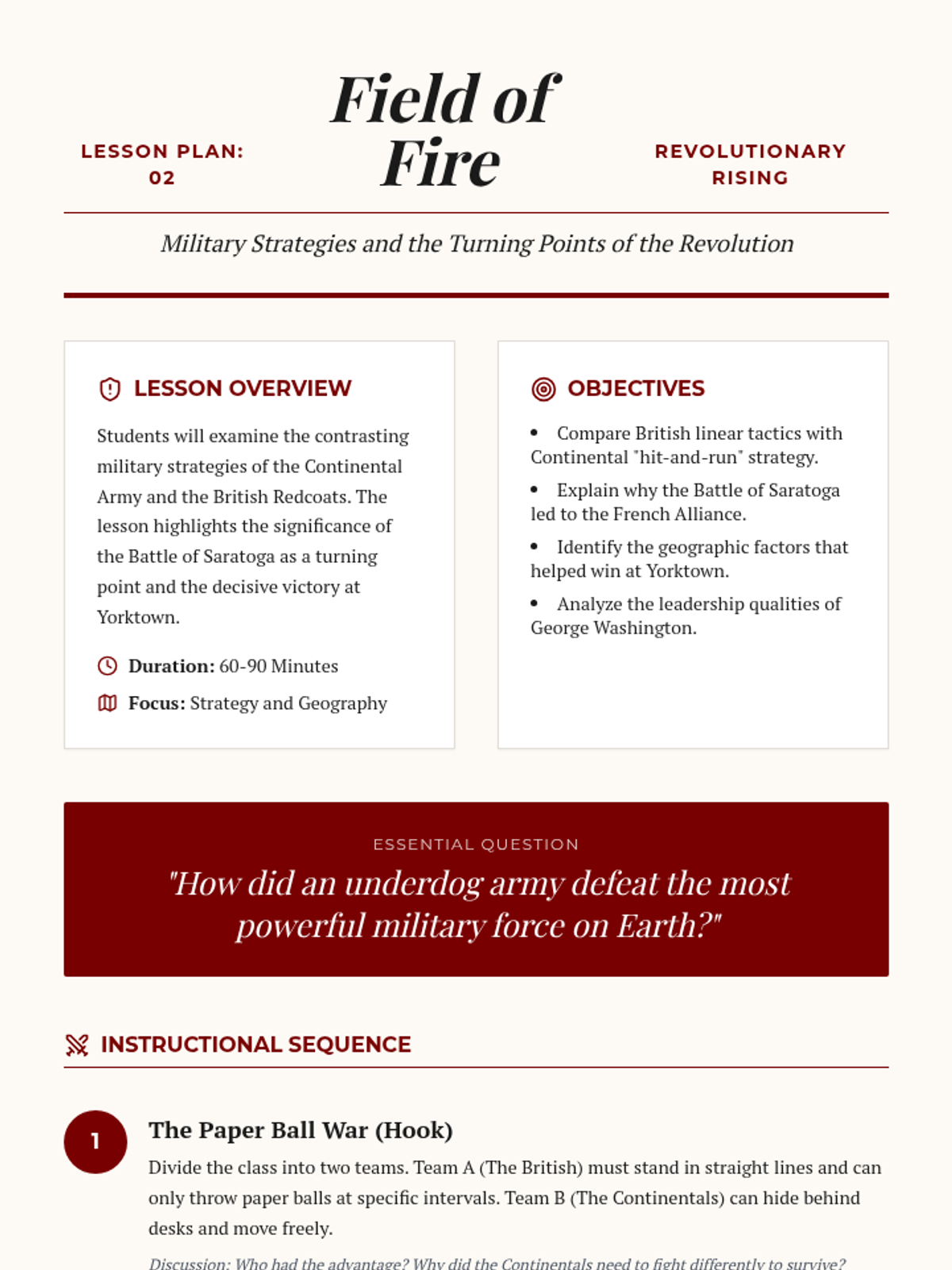
A comprehensive teacher guide for the 'Field of Fire' lesson, detailing military strategies, key battles, and instructional steps for teaching the tactical side of the American Revolution.
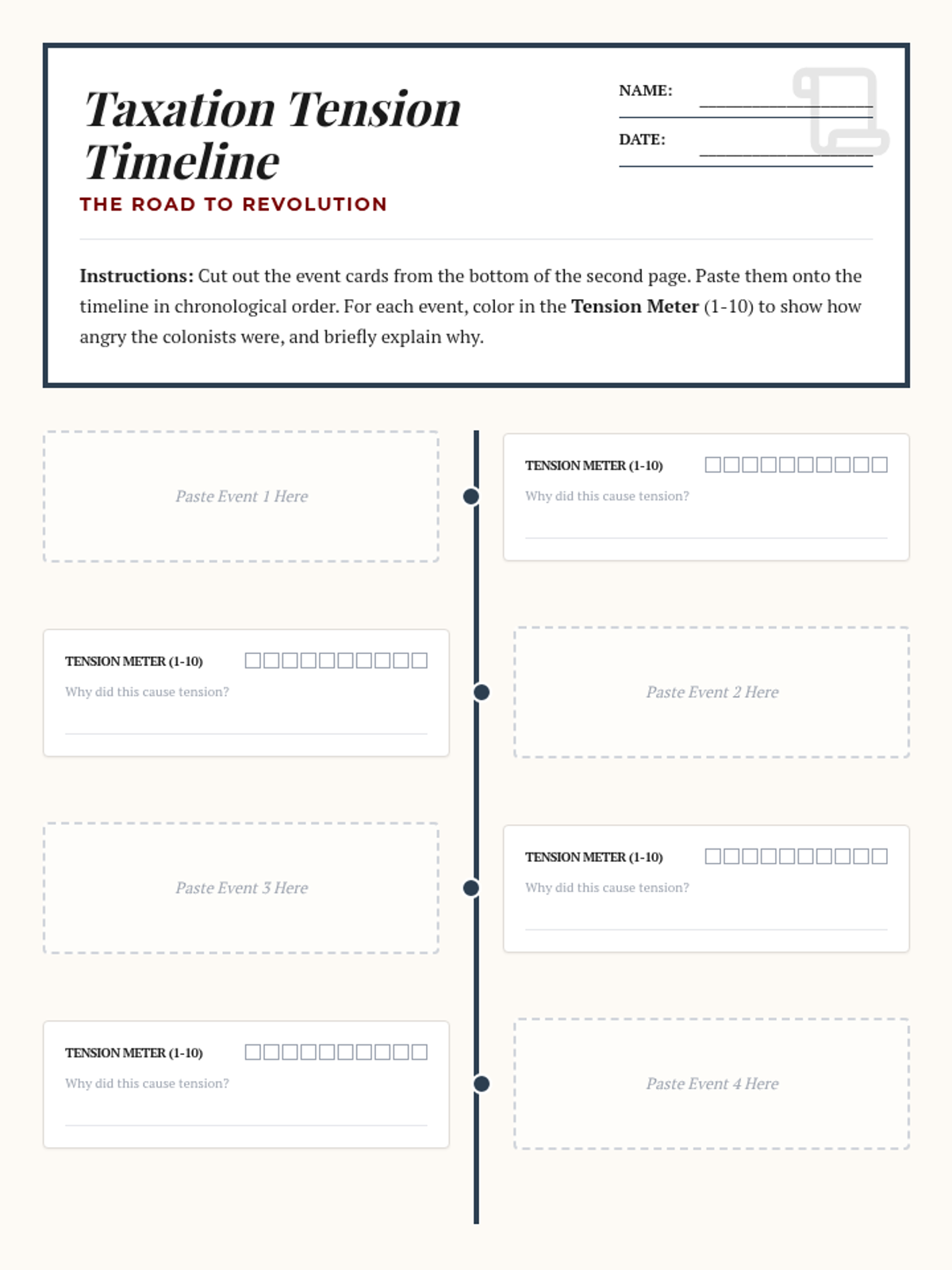
A hands-on timeline activity where students cut and paste key events leading to the American Revolution, rating the tension of each event on a scale of 1-10.
A visual presentation exploring the causes of the American Revolution, from war debt and the Stamp Act to the Boston Tea Party and the Intolerable Acts.
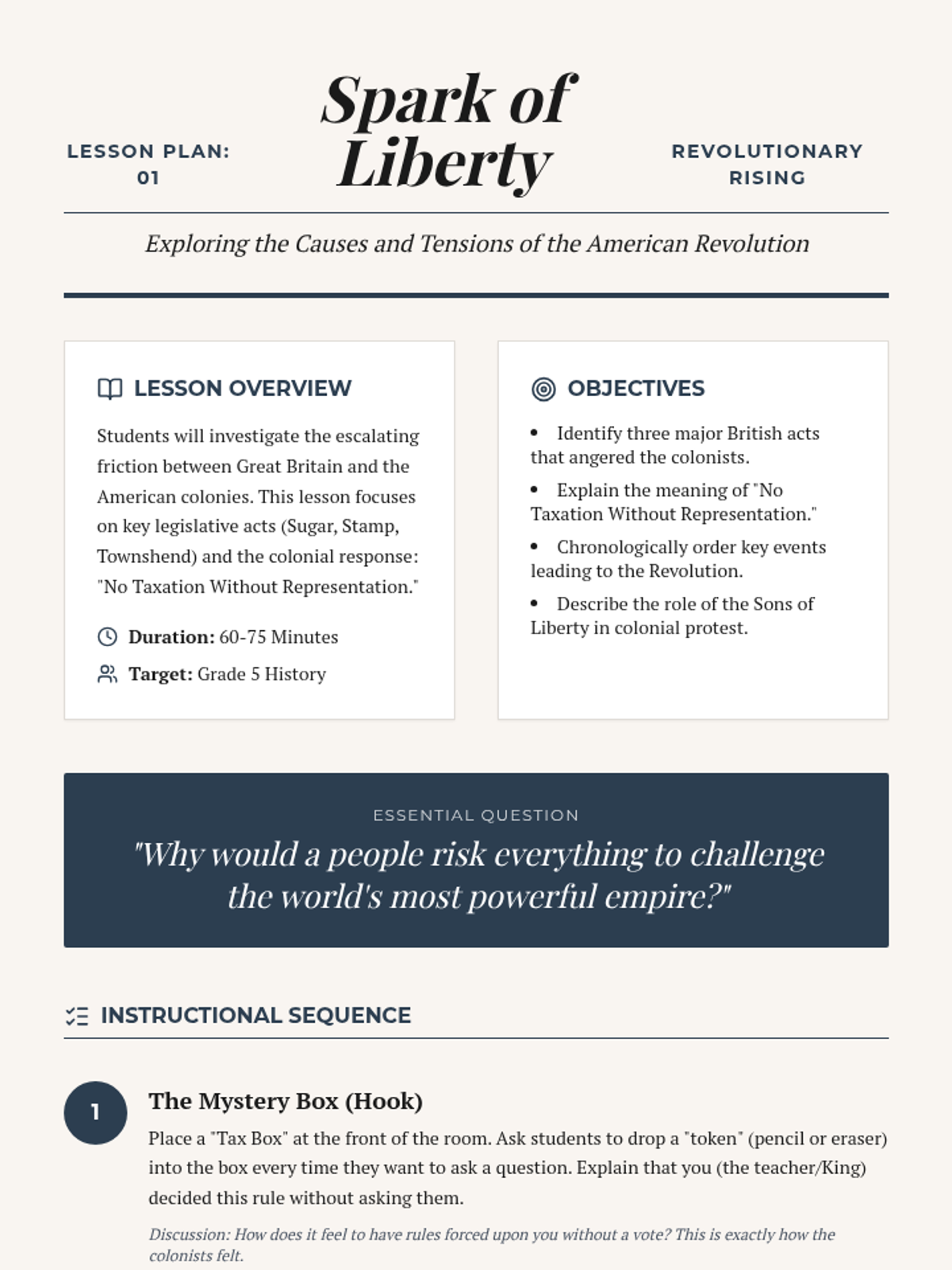
A comprehensive teacher guide for the 'Spark of Liberty' lesson, detailing instructional steps, vocabulary, and differentiation strategies for teaching the causes of the American Revolution.
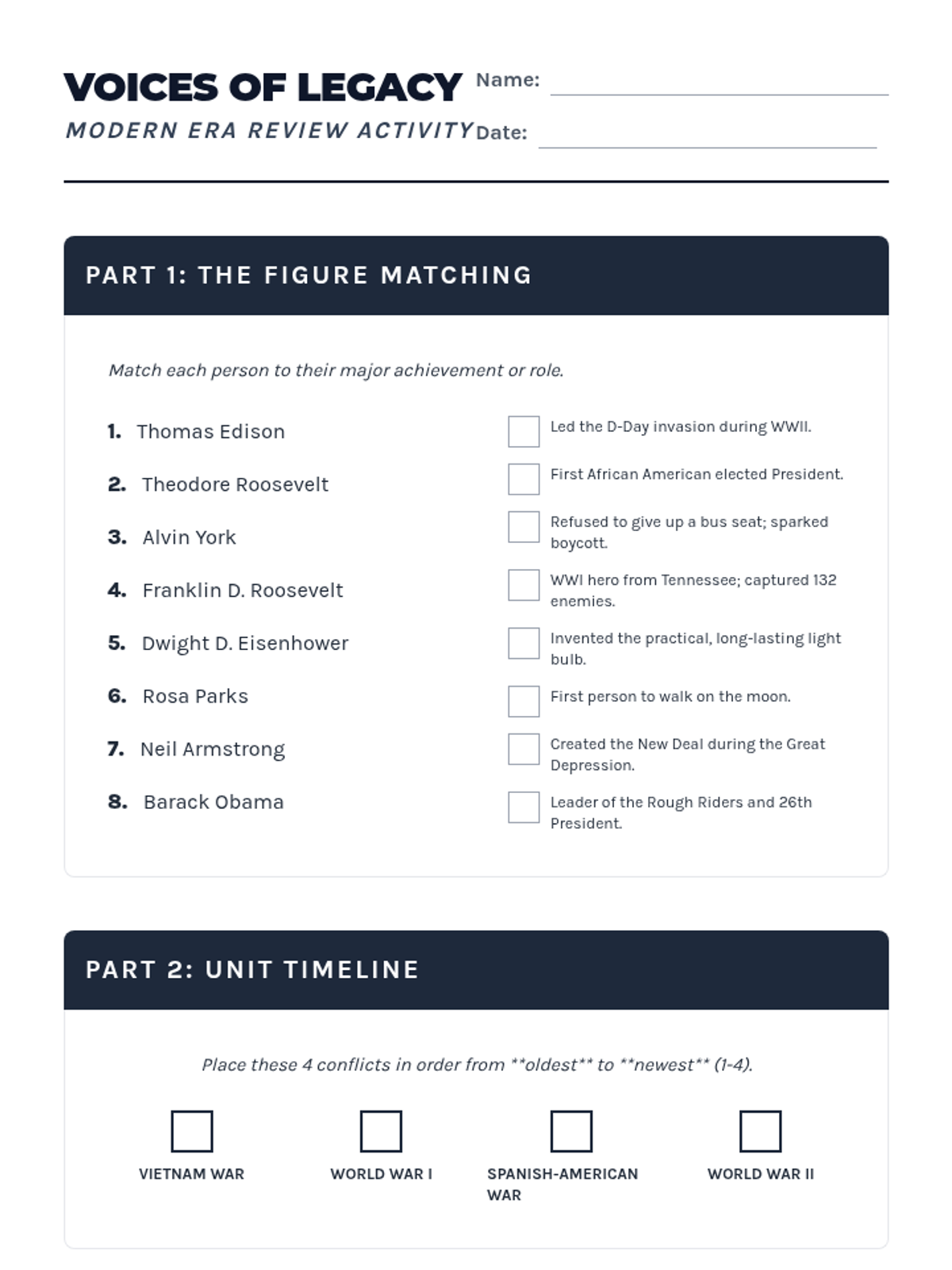
A comprehensive review activity for the 'Modern Era Odyssey' unit, featuring matching, timeline ordering, and reflection questions covering all historical figures and conflicts.
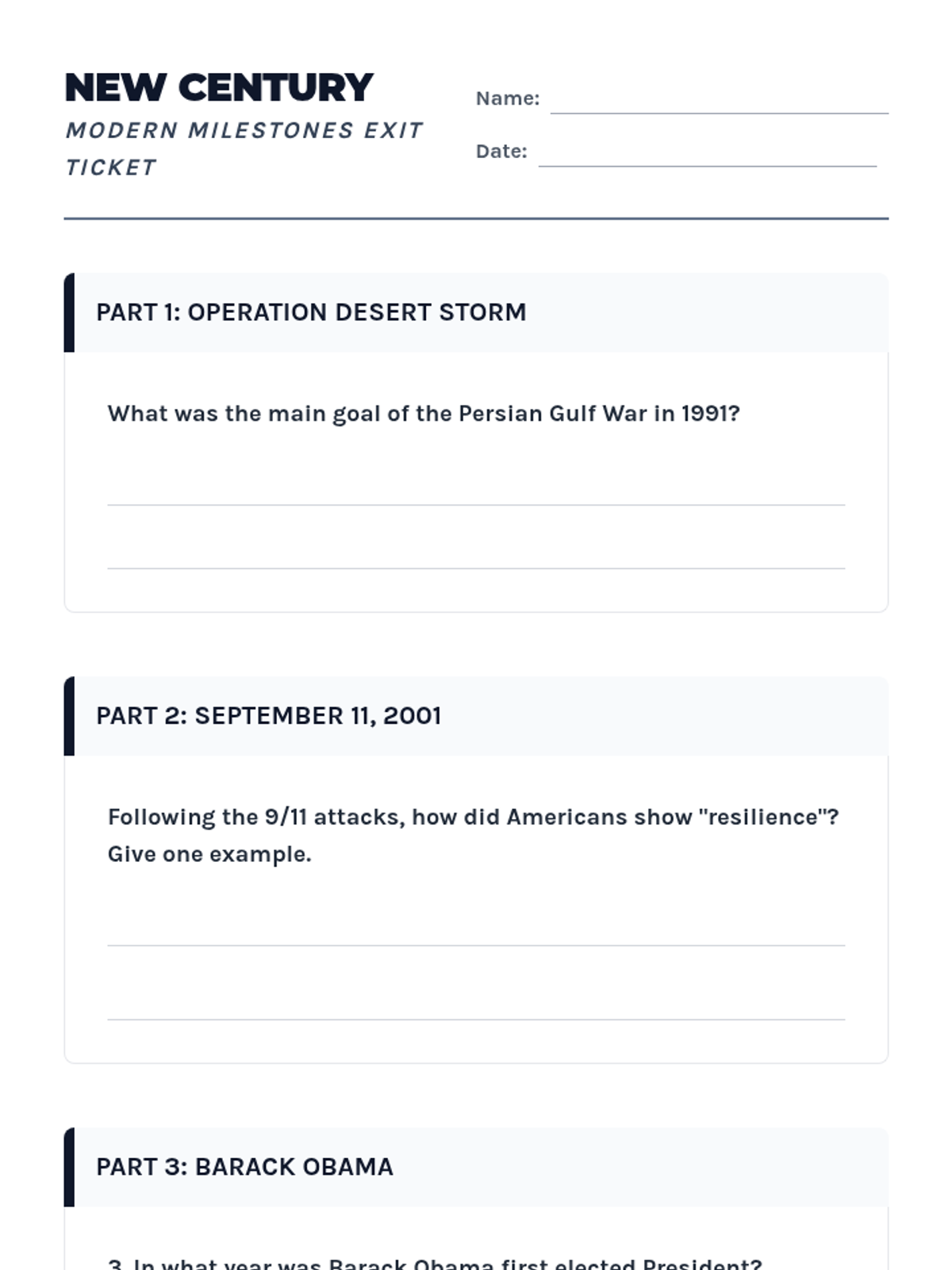
A quick student assessment for the 'New Century Milestones' lesson, featuring short answer questions about the Persian Gulf War, 9/11, and the election of Barack Obama.
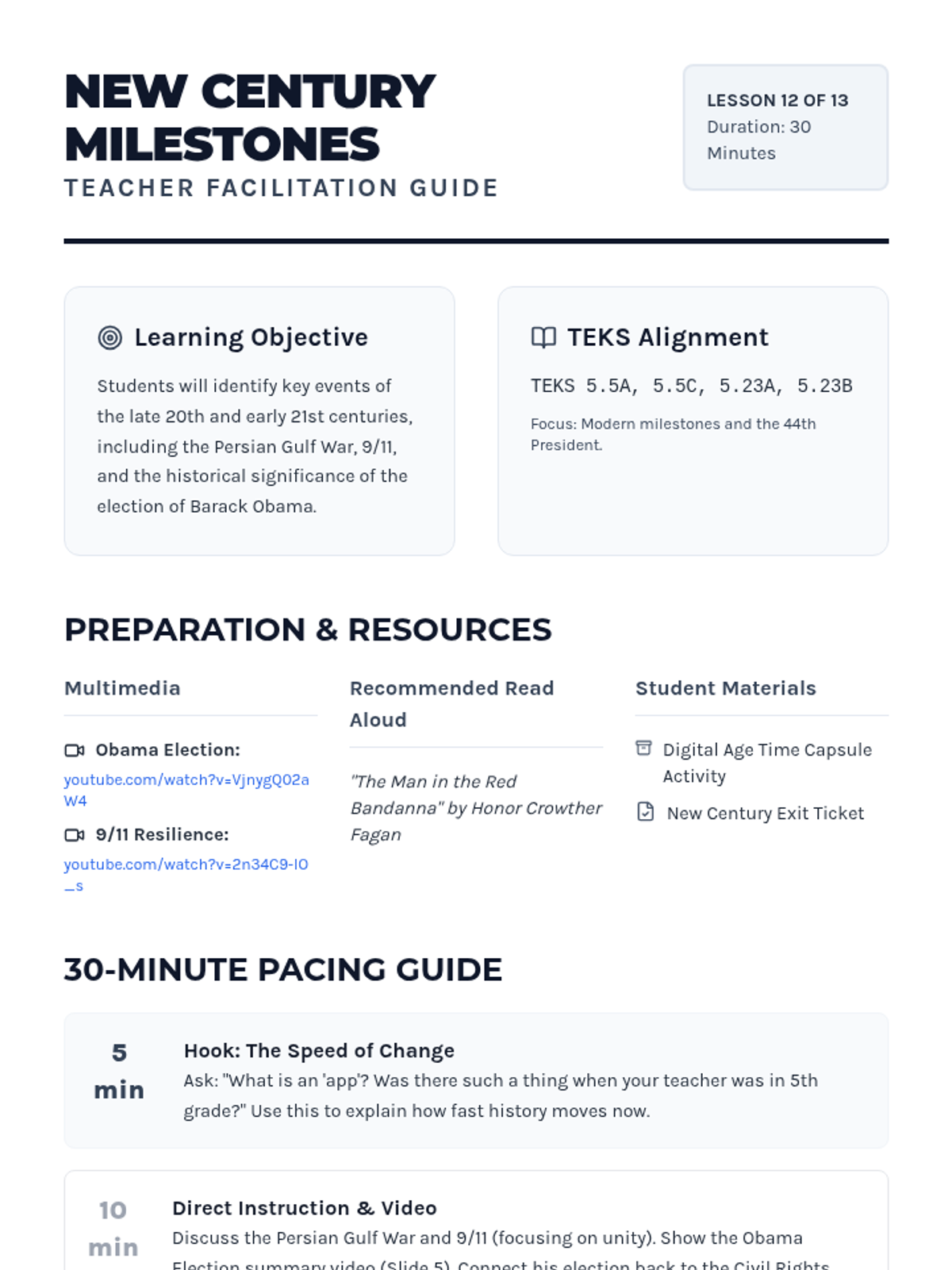
Updated facilitation guide for teachers to lead the 30-minute 'New Century Milestones' lesson, including actual YouTube links for the Persian Gulf War, 9/11, and the election of Barack Obama.
Visual slides for the 'New Century Milestones' lesson, detailing the Persian Gulf War, 9/11, and the election of Barack Obama. Updated with video embed.
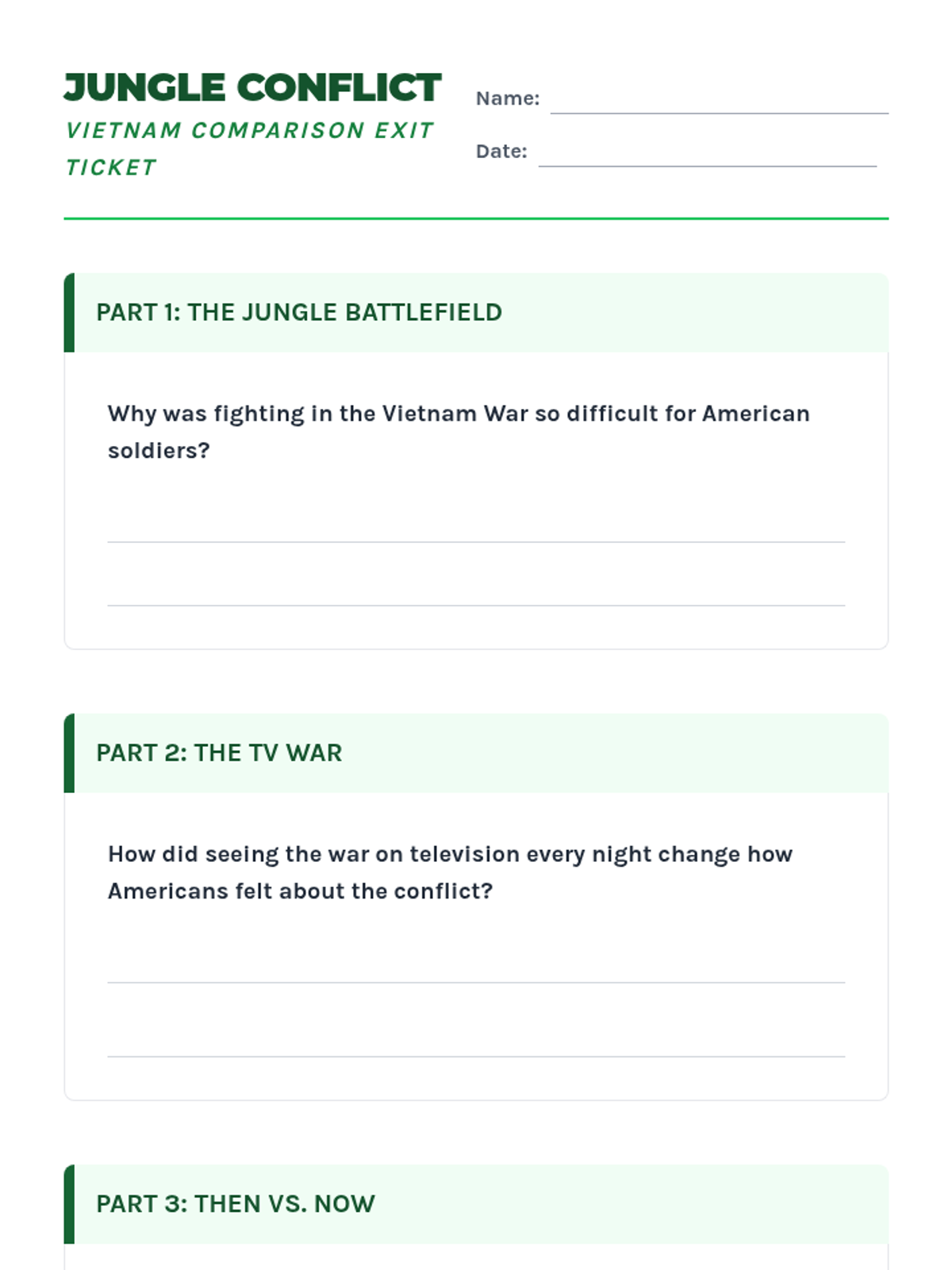
A quick student assessment for the 'Jungle Conflict Vietnam' lesson, featuring short answer and comparison questions about the Vietnam War and its impact.
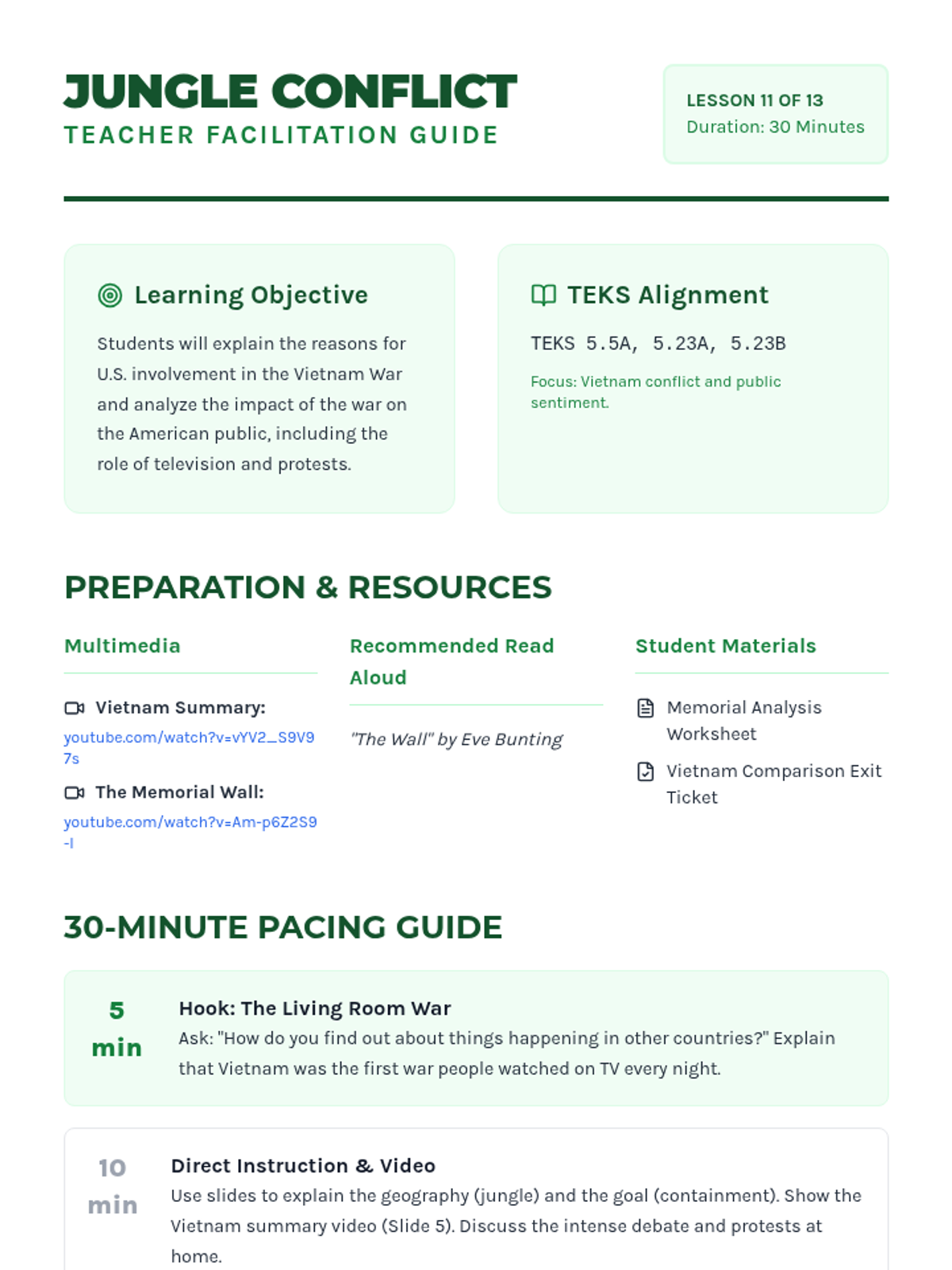
Updated facilitation guide for teachers to lead the 30-minute 'Jungle Conflict Vietnam' lesson, including actual YouTube links for the Vietnam War and the Memorial Wall.
Visual slides for the 'Jungle Conflict Vietnam' lesson, detailing the Vietnam War, its impact on the American public, and the Vietnam Veterans Memorial. Updated with video embed.
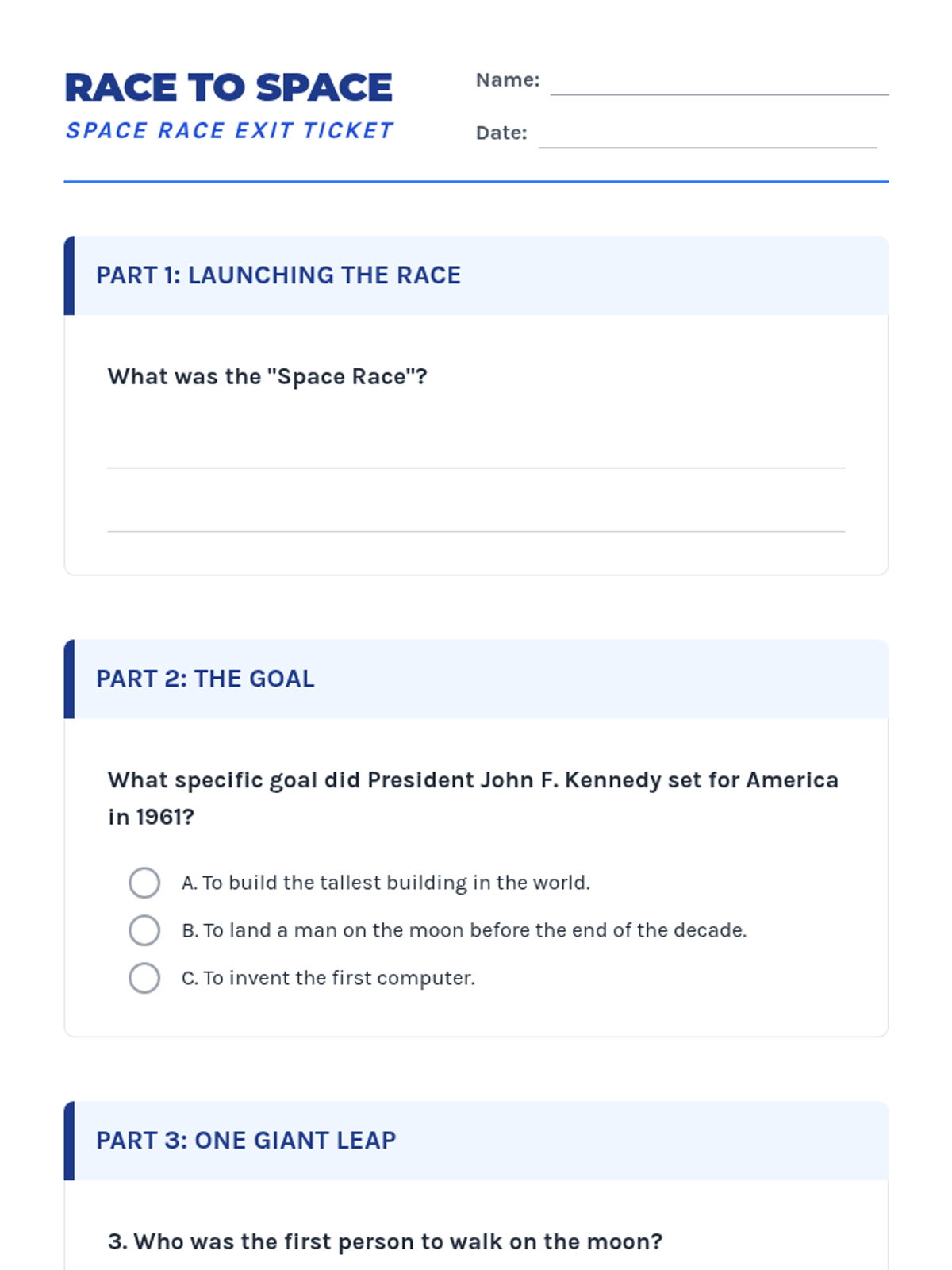
A quick student assessment for the 'Race to Space Odyssey' lesson, featuring short answer and multiple-choice questions about the Space Race and the moon landing.
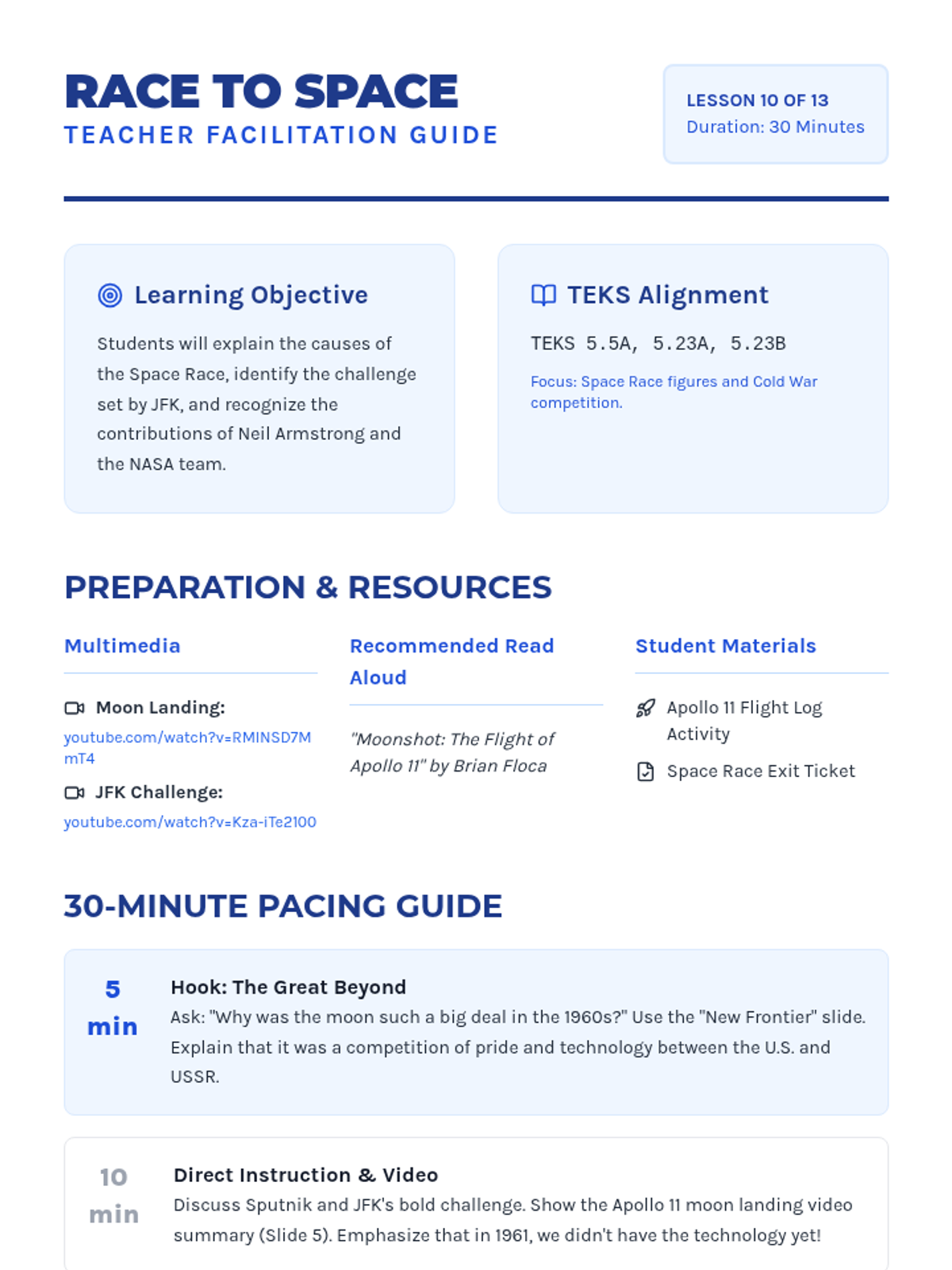
Updated facilitation guide for teachers to lead the 30-minute 'Race to Space Odyssey' lesson, including pacing, multimedia suggestions, and key teaching points.
Visual slides for the 'Race to Space Odyssey' lesson, detailing the Space Race, JFK's challenge, and Neil Armstrong's moon landing. Updated with video embed.
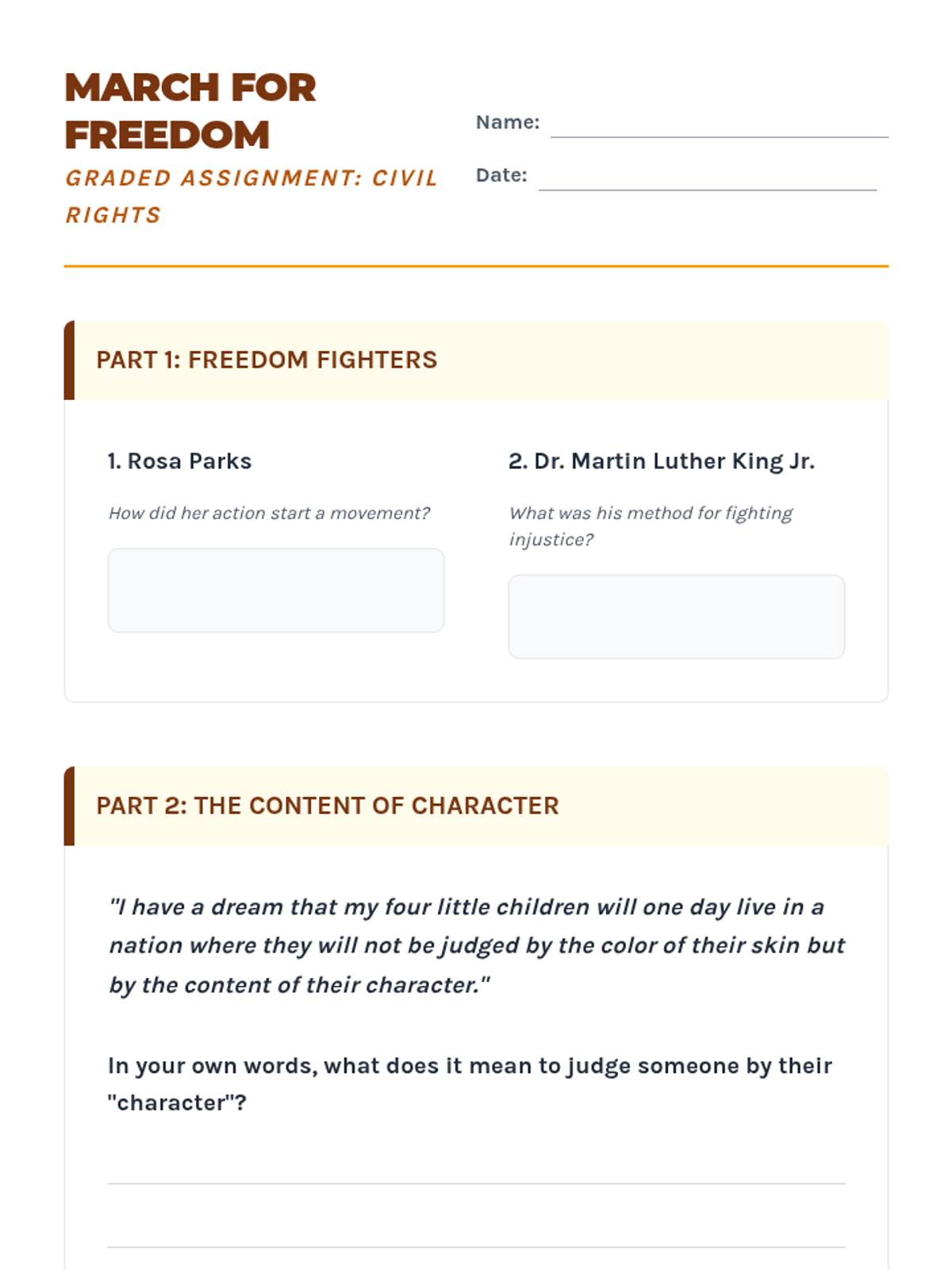
A student assessment for the 'March for Freedom' lesson, focusing on the contributions of Rosa Parks and Dr. Martin Luther King Jr. and the significance of the Civil Rights Movement.
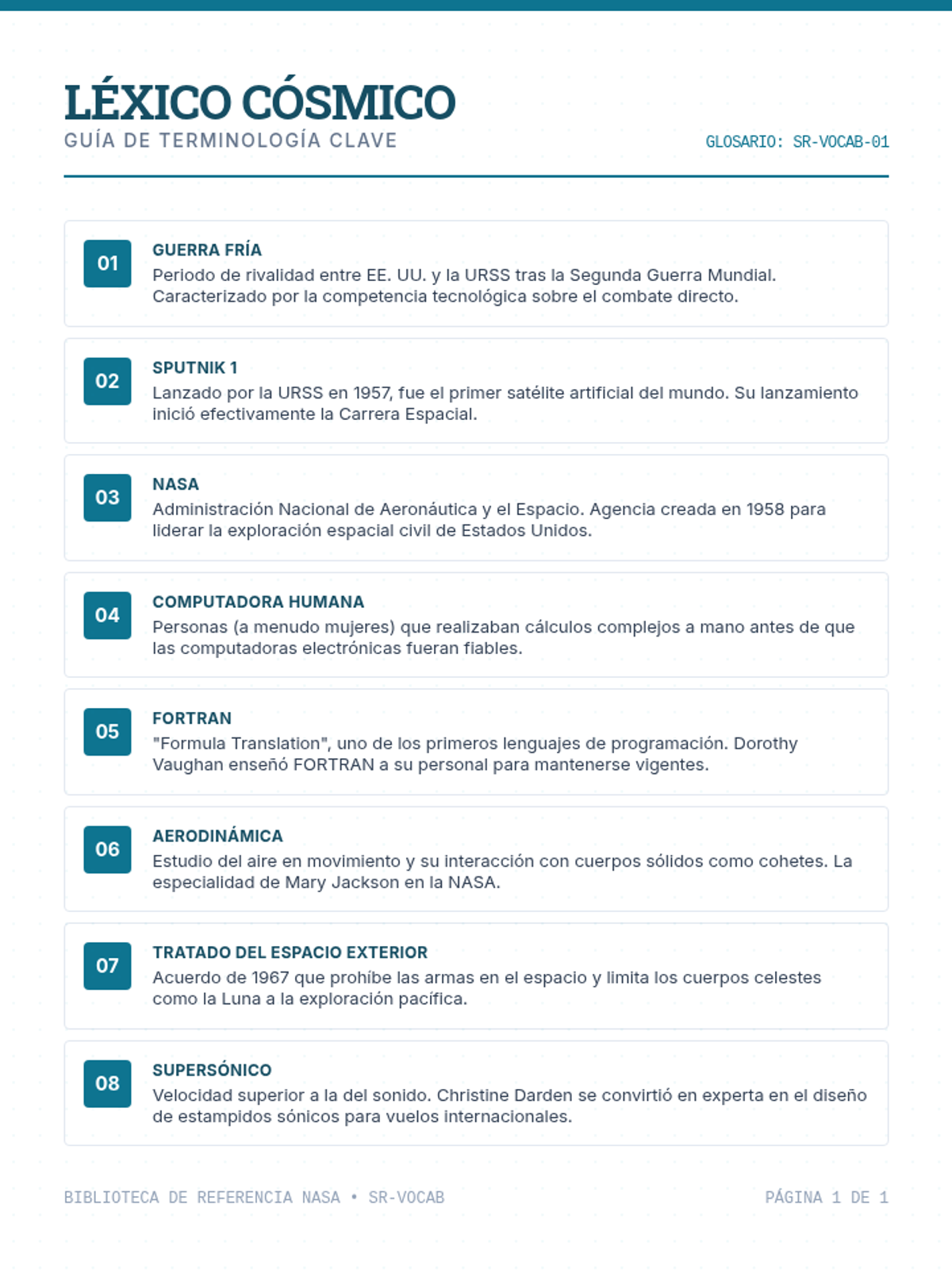
A one-page vocabulary reference sheet defining key terms from the Space Race and Hidden Figures reading, such as Cold War, Sputnik 1, NASA, and human computer.
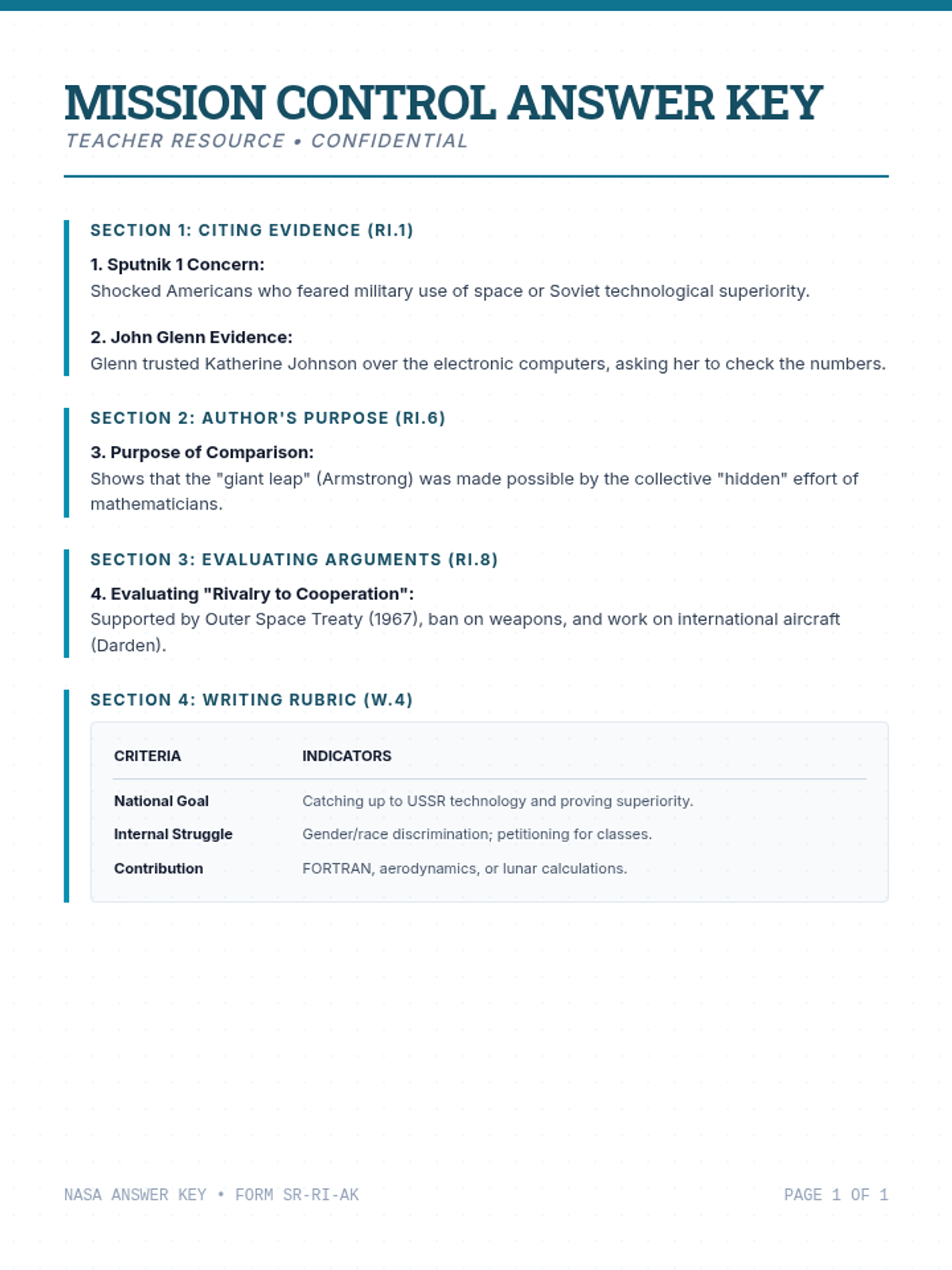
A one-page answer key for teachers, providing suggested responses and a grading rubric for the Mission Control Analysis worksheet with grade-specific references removed.
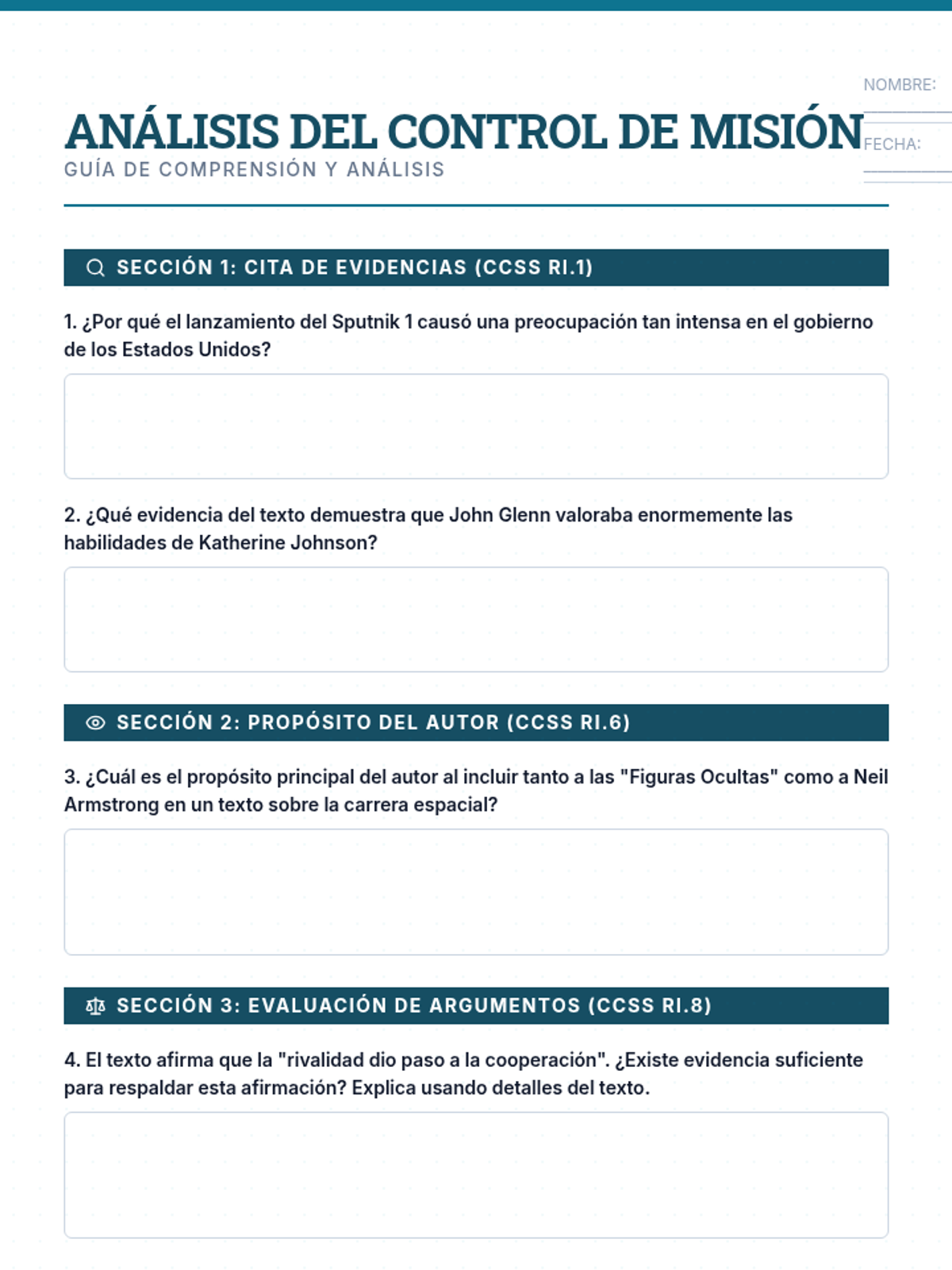
A two-page student worksheet containing text-dependent analysis questions, optimized for 8.5x11 printing with clear work areas and page breaks.
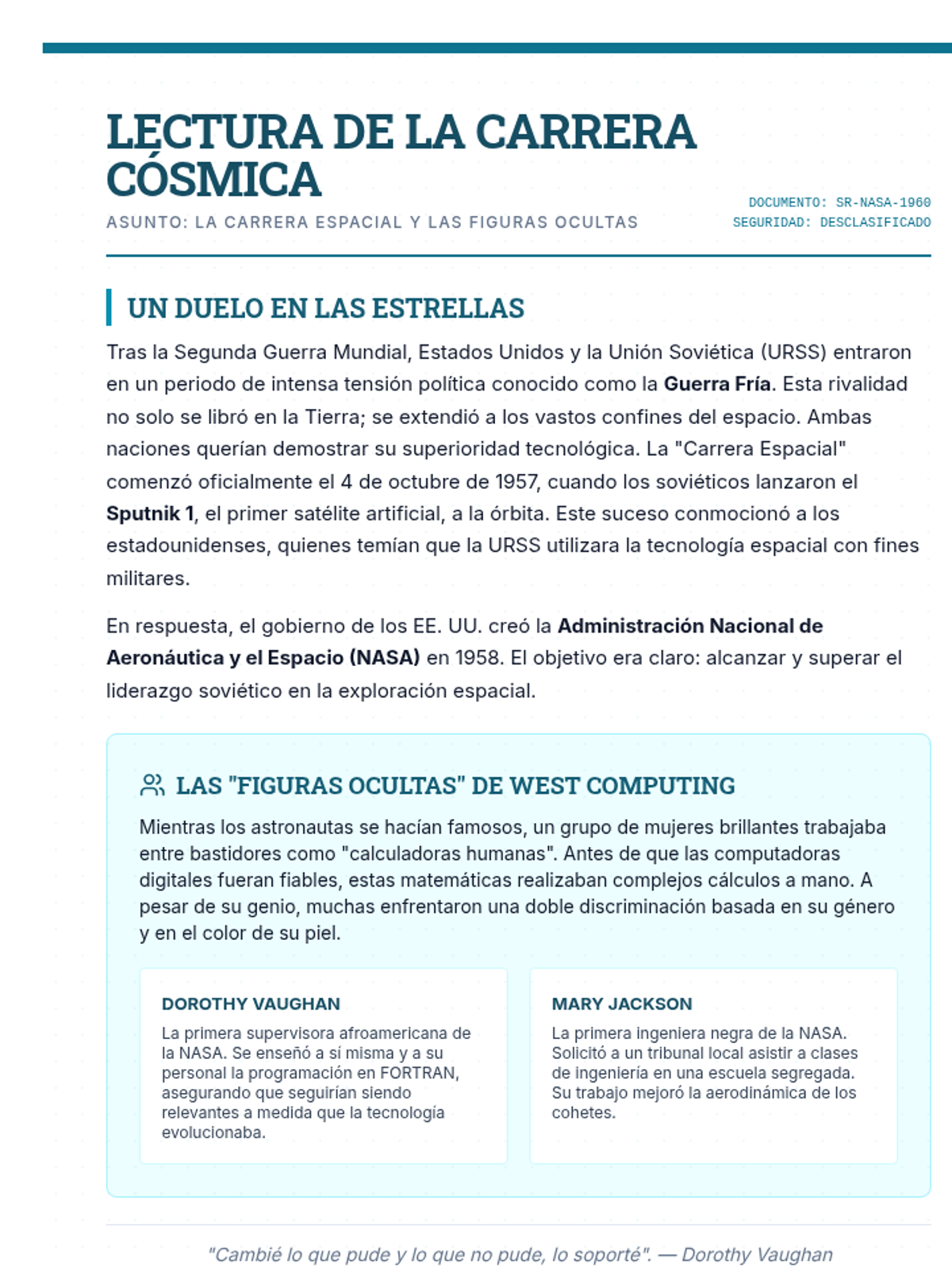
An informational reading text about the Space Race and the Hidden Figures, formatted for clean printing on 8.5x11 paper with 720x960 virtual dimensions and strict page breaks.
May reflection slides updated to remove references to digital reading apps (Sora/Libby) and emphasize physical book swaps and public library use.
A March 3-5 worksheet for Women's History Month, updated to focus on print encyclopedias and guide words instead of digital databases.
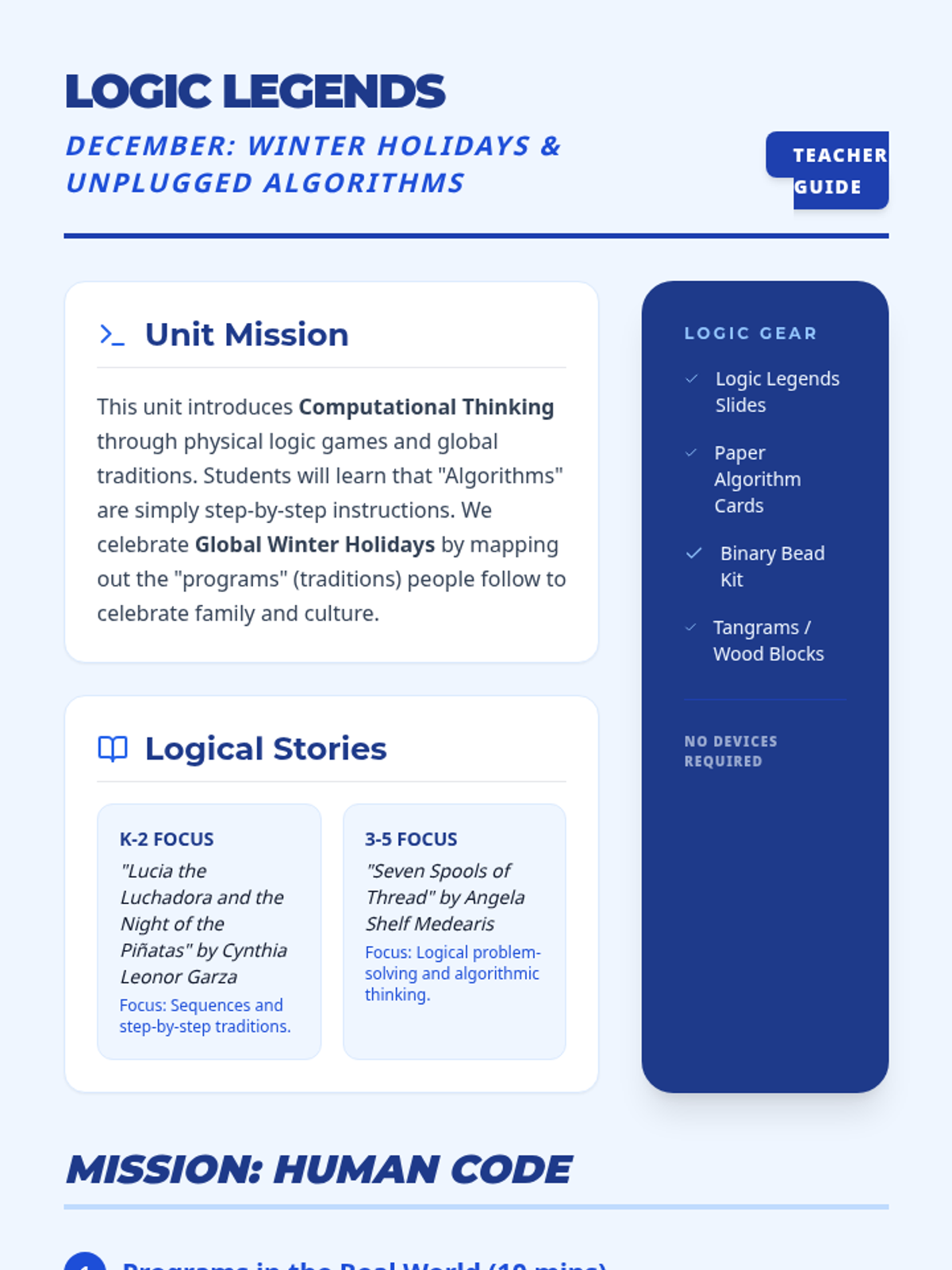
A December teacher's guide focusing on unplugged coding and step-by-step holiday traditions. Replaces all mentions of "Hour of Code" branding and digital grids.
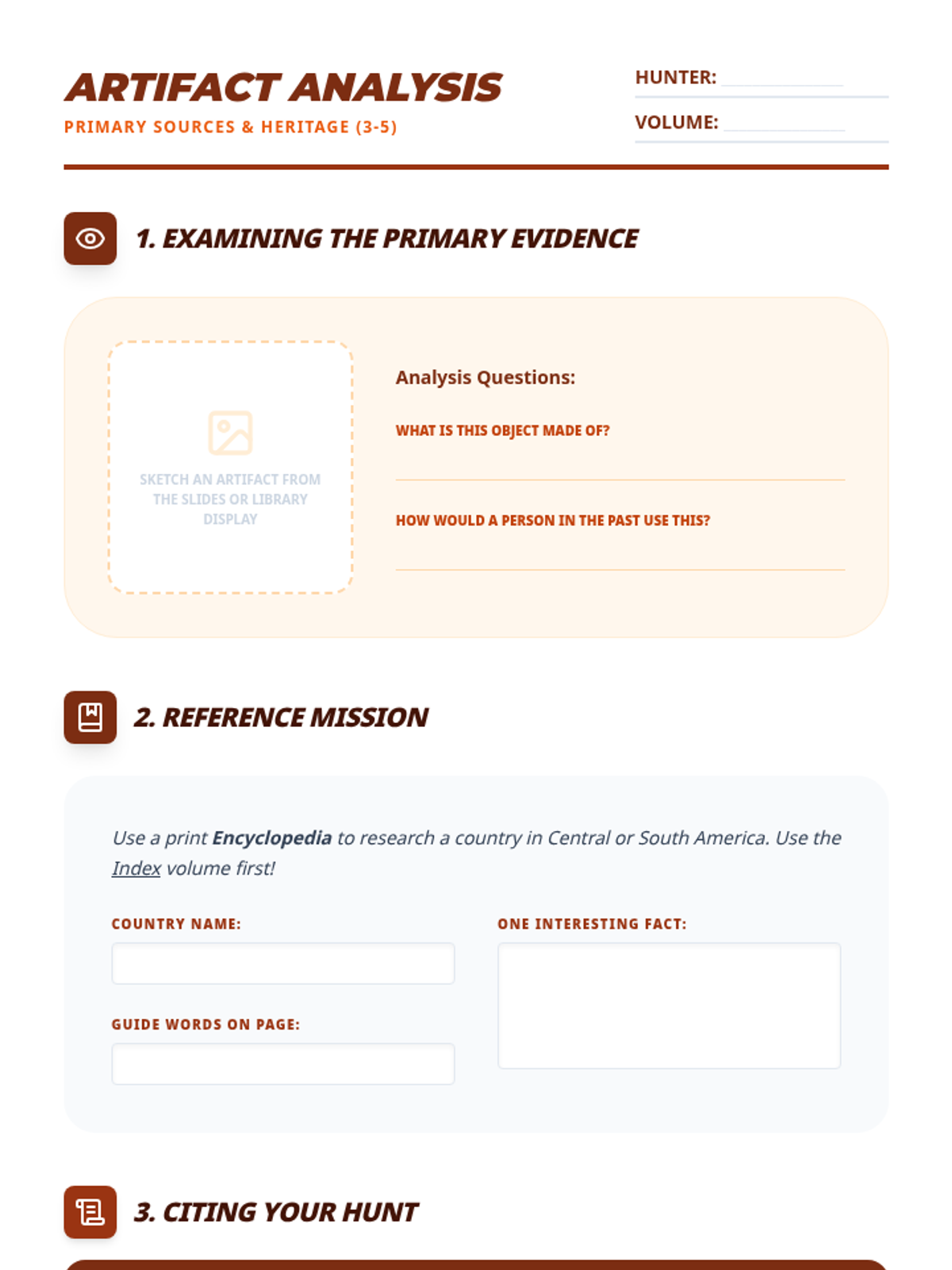
A September 3-5 research worksheet updated to focus on physical artifact analysis and manual encyclopedia research instead of digital trailblazing.
September slide deck focusing on Hispanic Heritage Month through physical artifact analysis and print book navigation features. Replaces digital citizenship content.
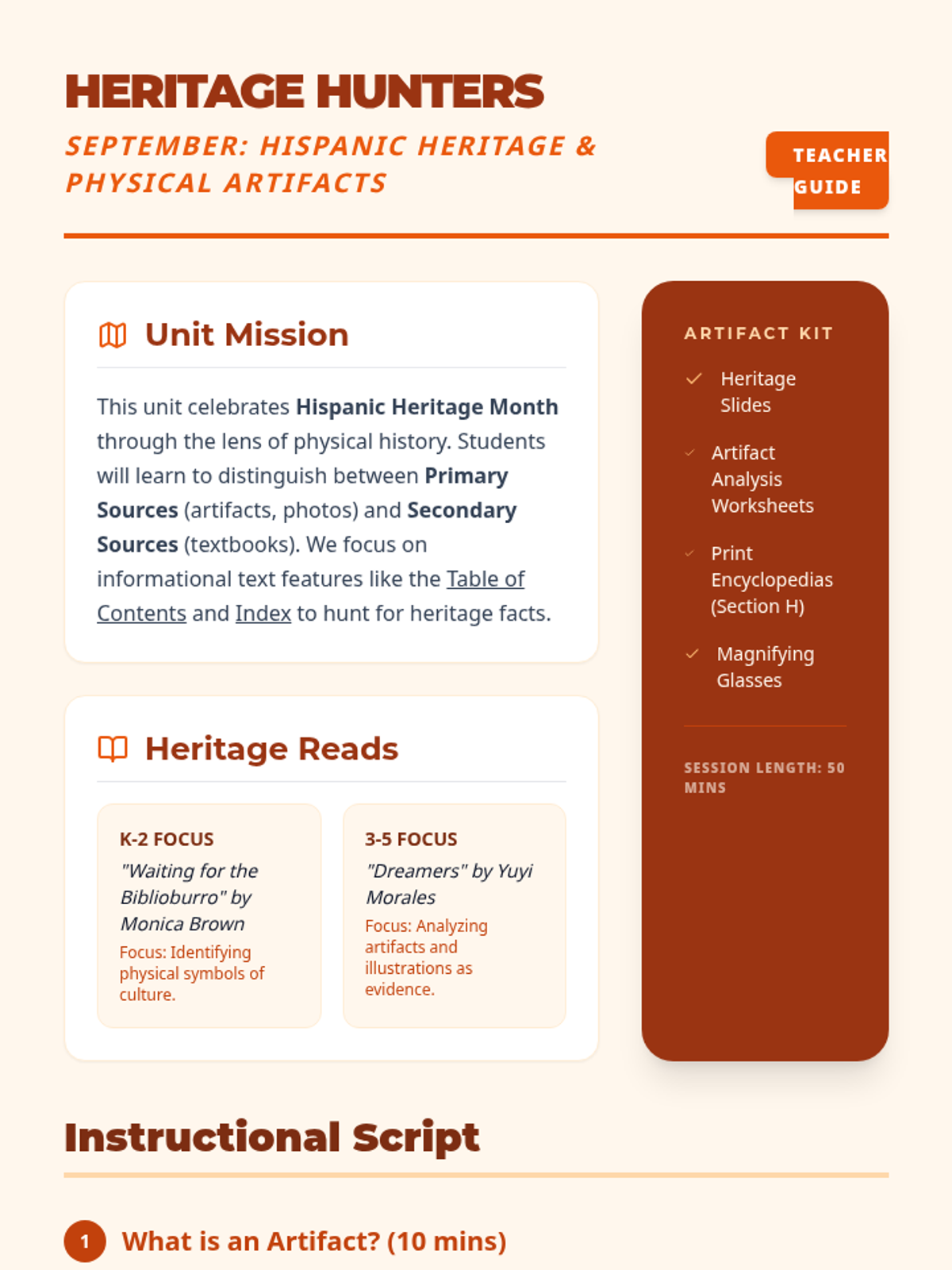
A complete teacher's guide for the 'Heritage Hunters' September unit, replacing digital citizenship with physical artifact analysis and print reference skills.
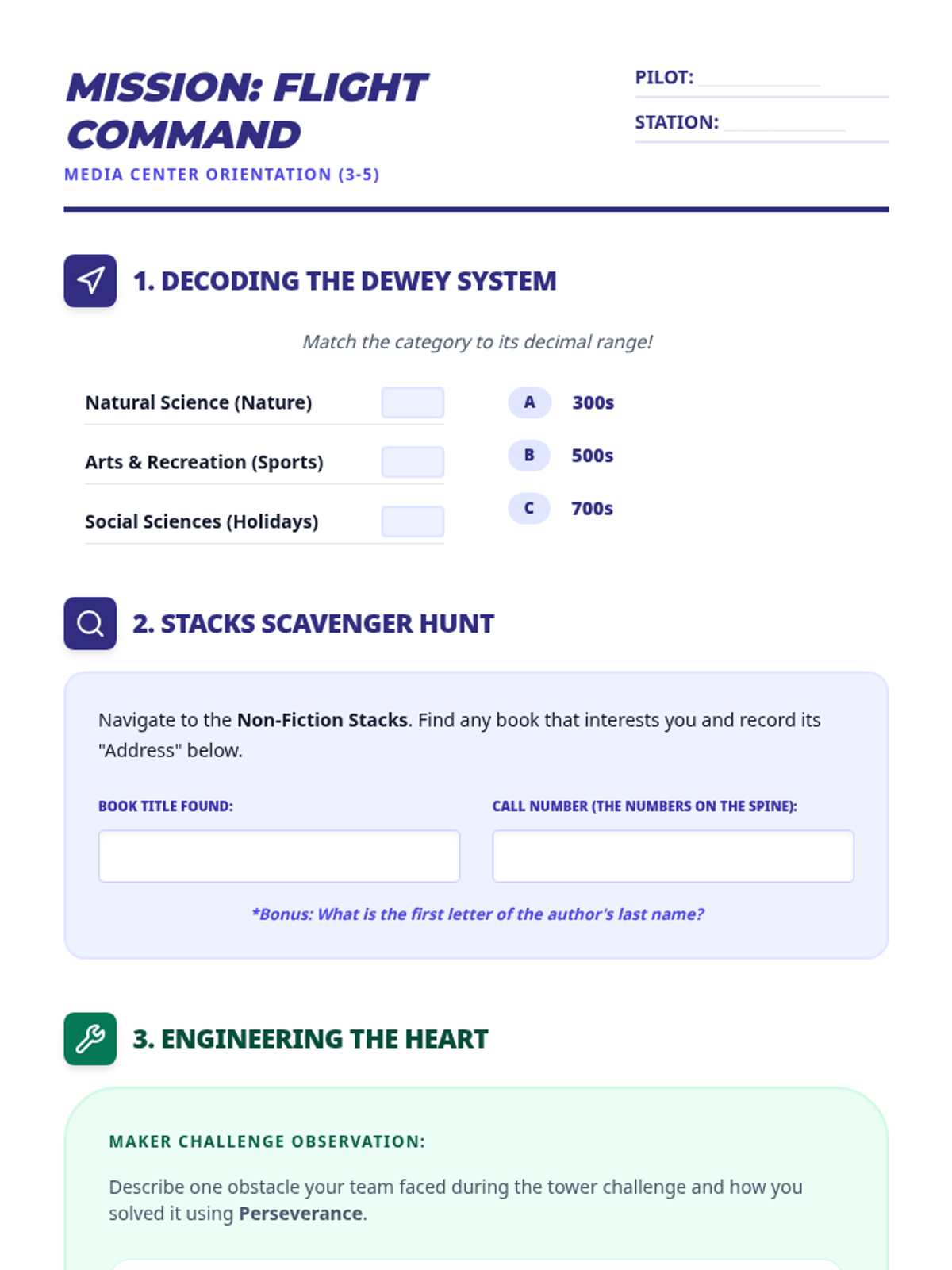
A challenge-based 3-5 orientation worksheet focusing on physical Dewey Decimal matching and a manual stacks scavenger hunt. Replaces digital OPAC search.
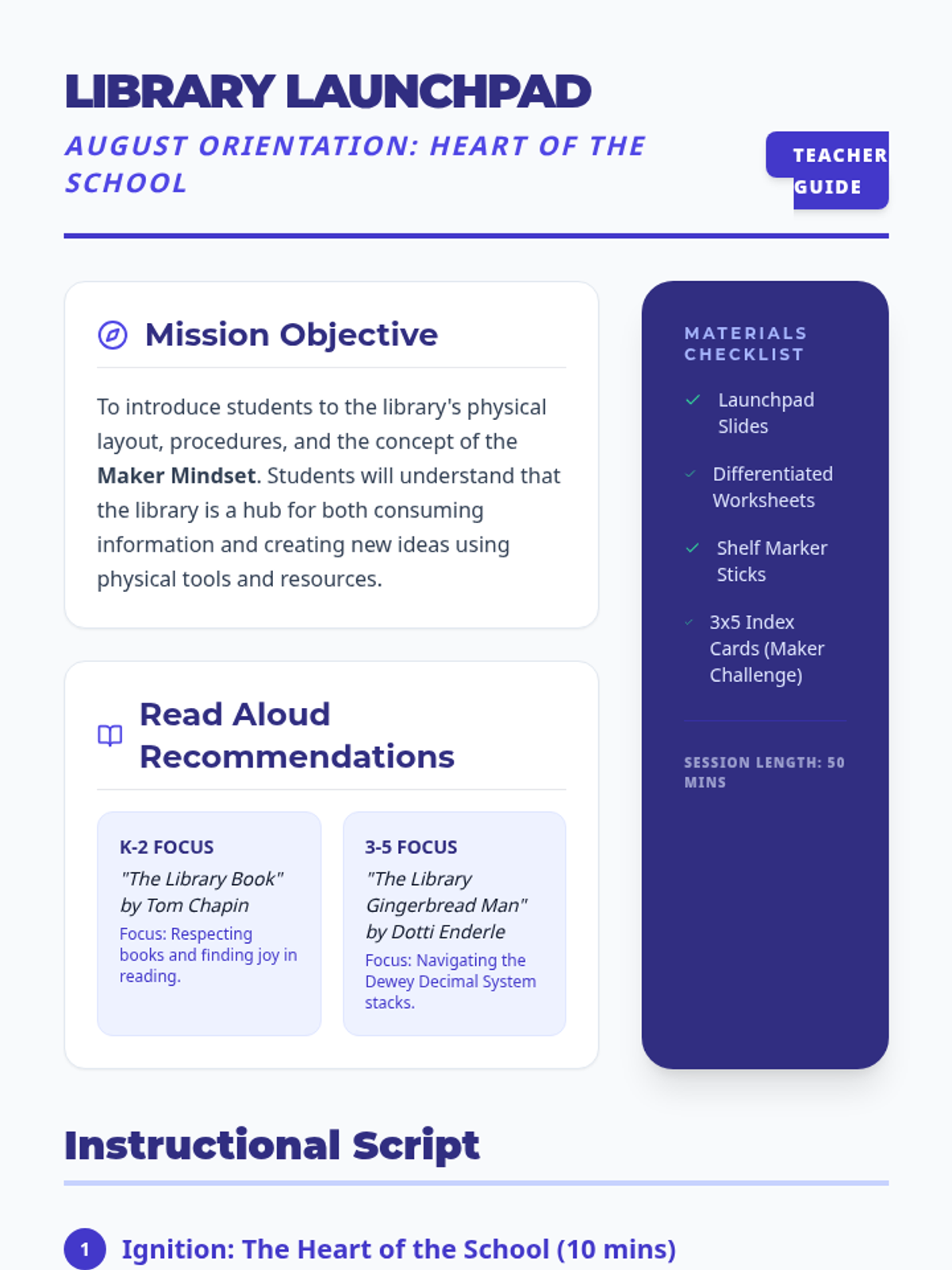
A comprehensive teacher's guide for the 'Library Launchpad' August unit, updated to focus strictly on physical library navigation and manual shelf skills.
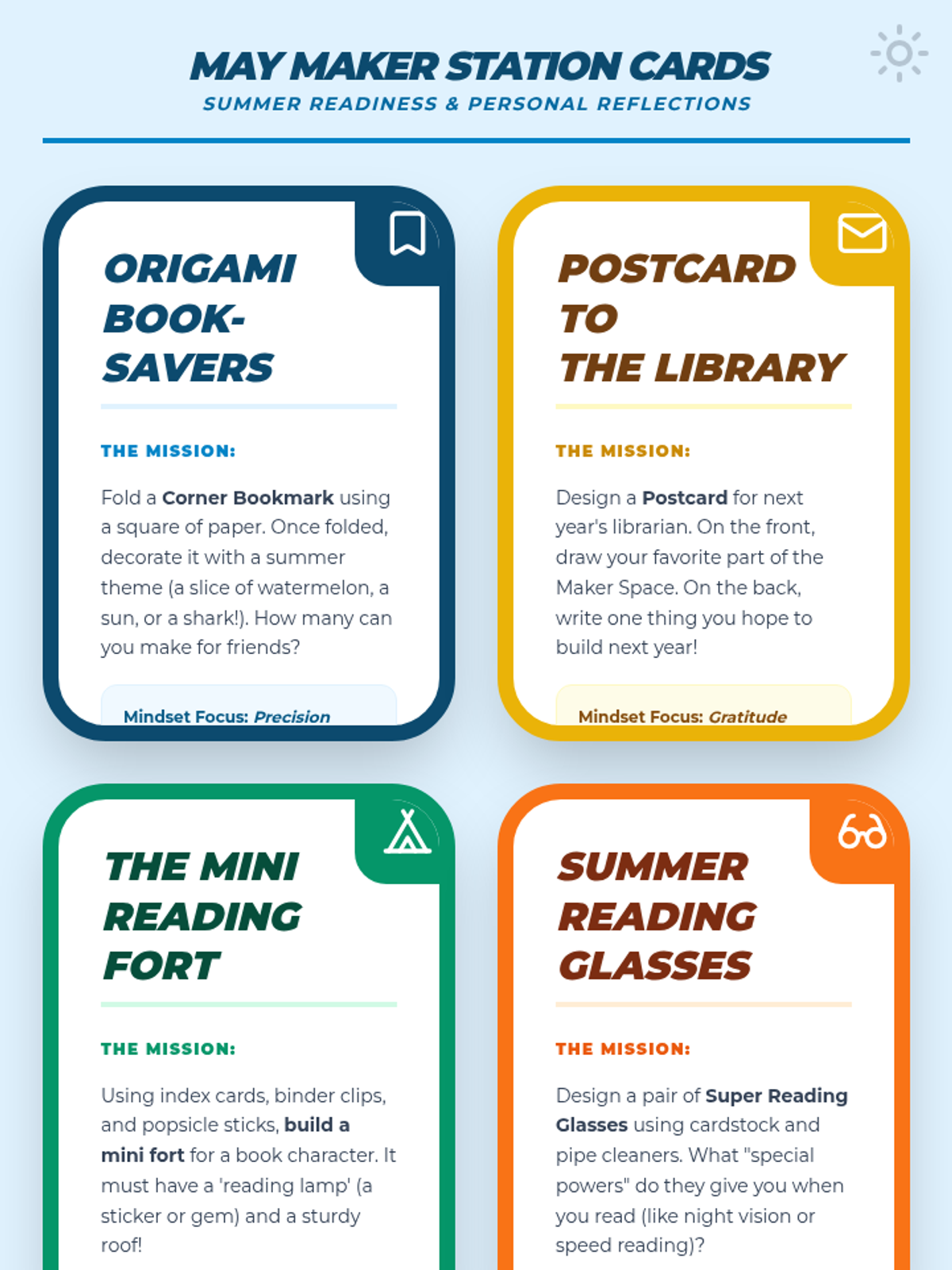
May Maker Station cards featuring challenges that introduce origami bookmarks, postcard writing, architectural mini-forts, and creative 'Reading Glasses' design.
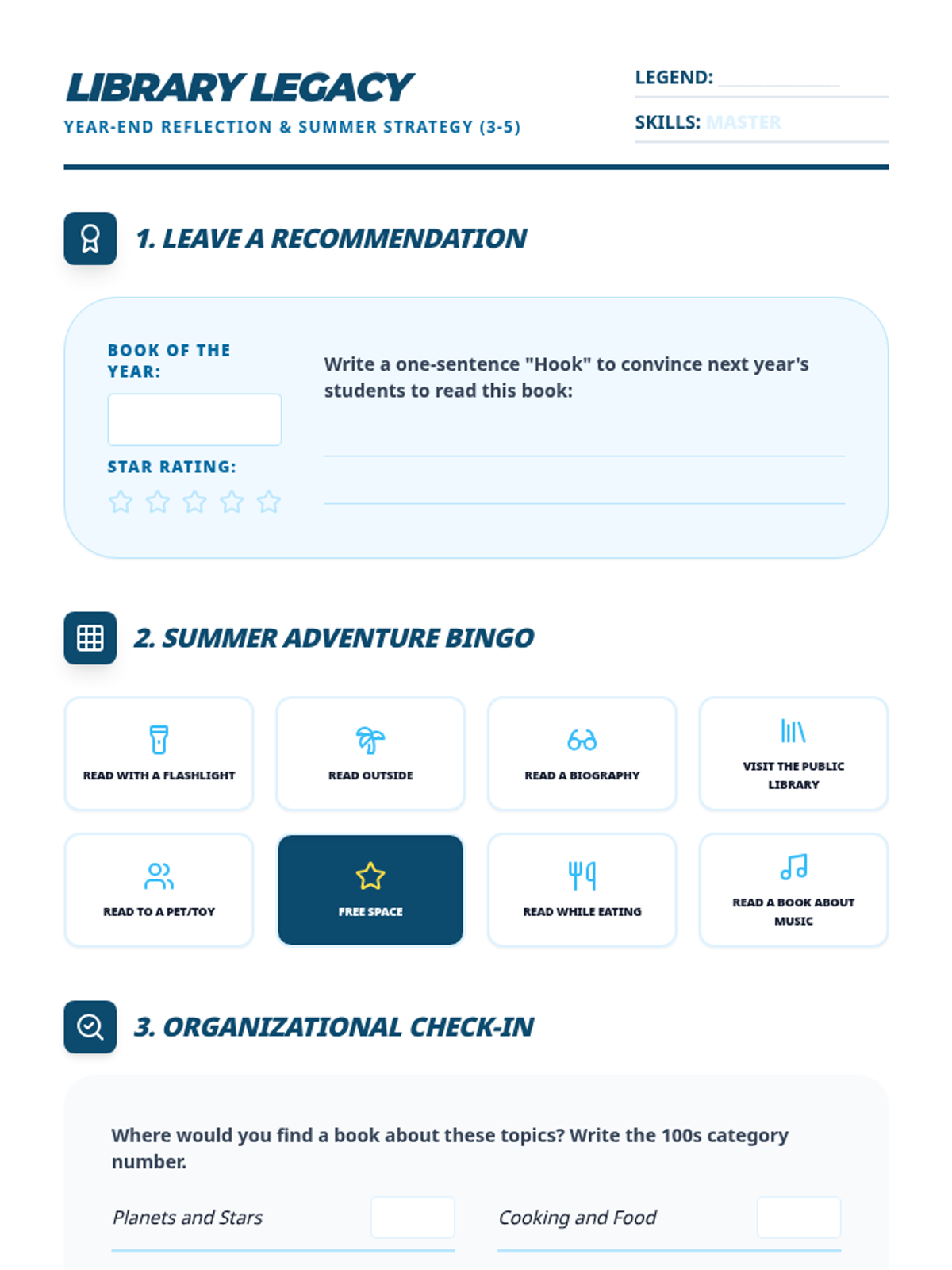
A differentiated May 3-5 worksheet for reflecting on the favorite book of the year, completing a Summer Reading Bingo, and reviewing Dewey Decimal categories.
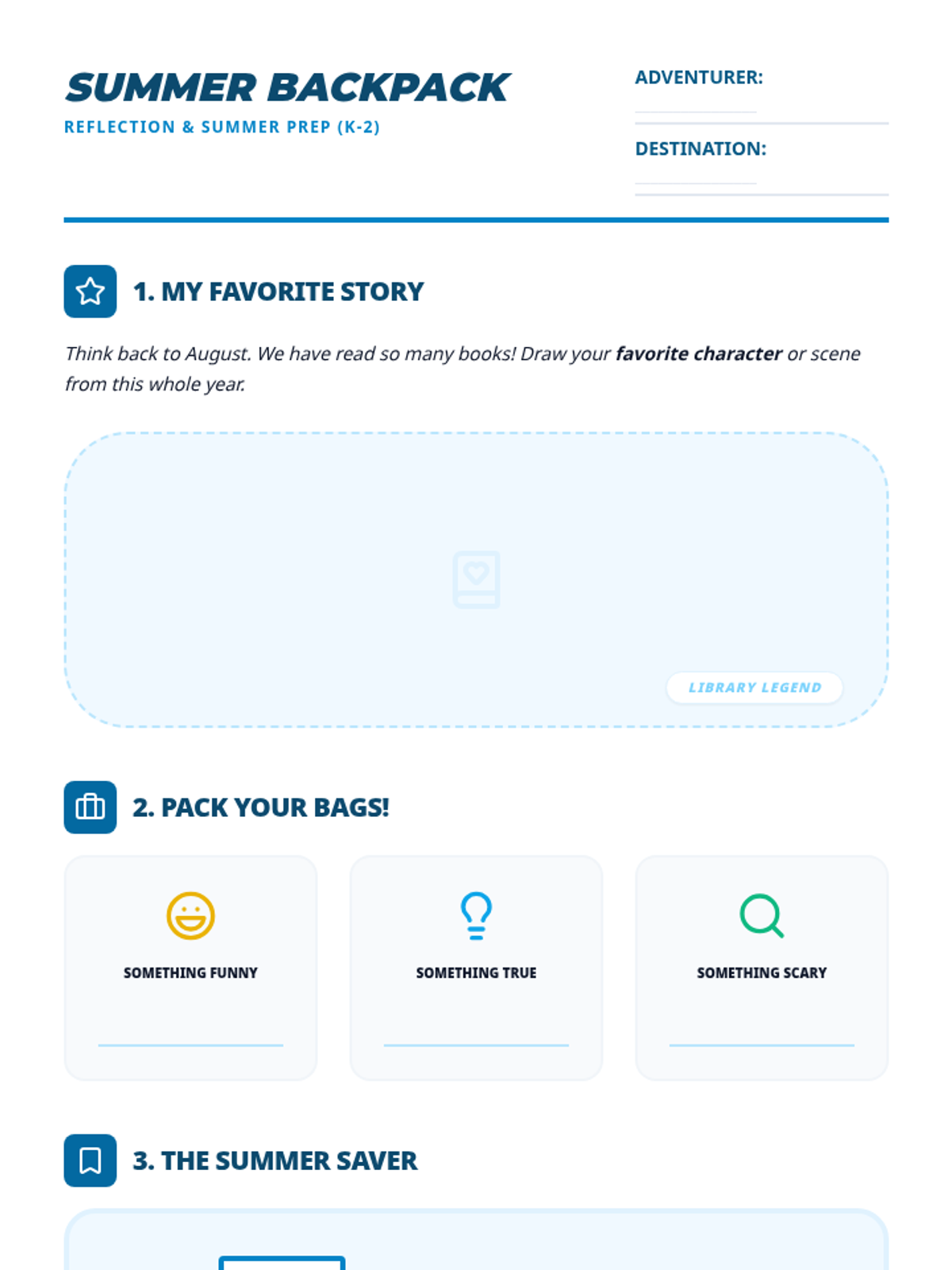
A differentiated May K-2 worksheet for reflecting on favorite books of the year and setting summer reading goals.
A May slide deck focusing on a year-in-review library game, summer reading challenges, and reflections on student growth.
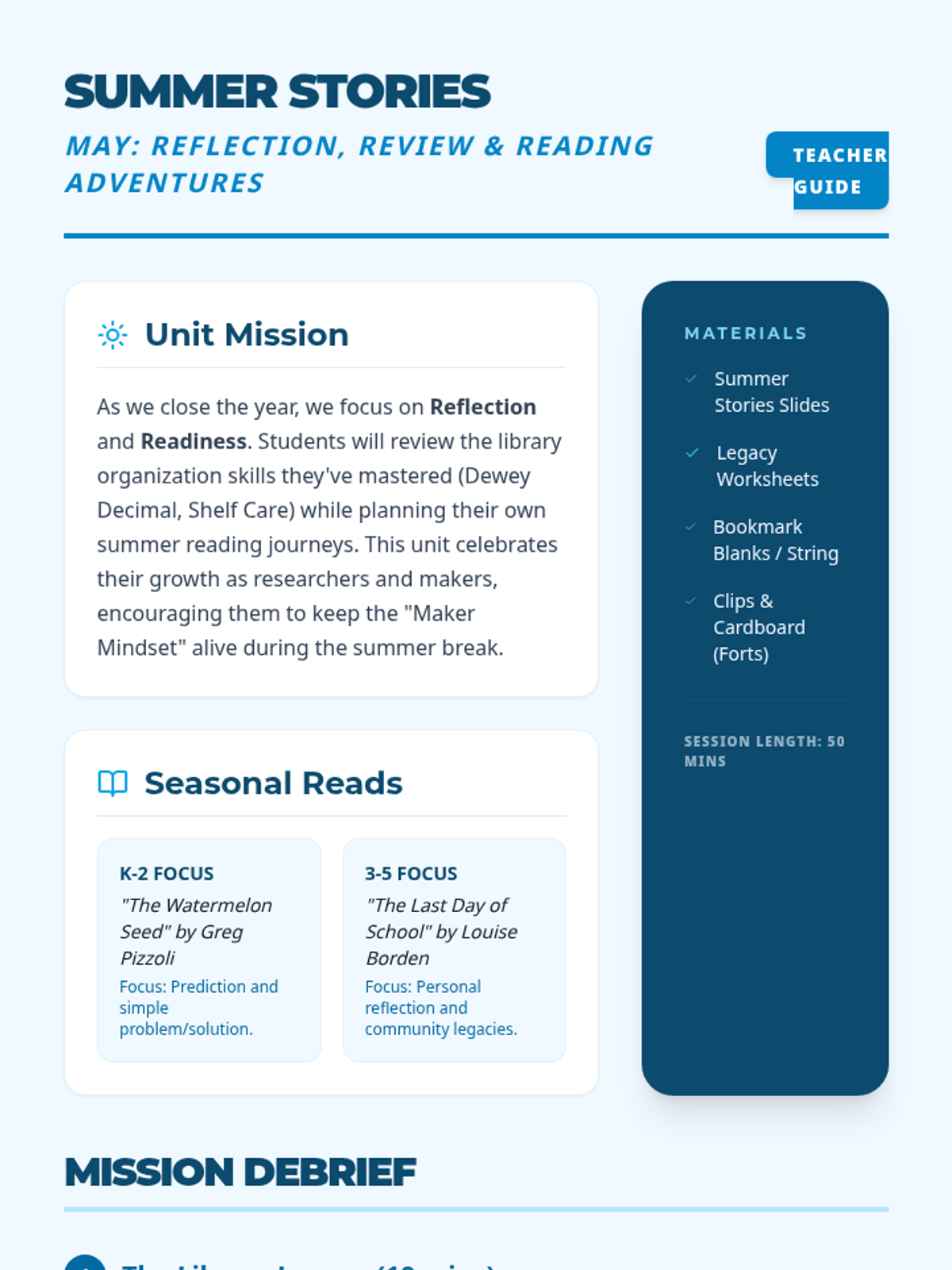
A comprehensive teacher's guide for the 'Summer Stories' May unit, reflecting on a year of learning and preparing for summer reading.
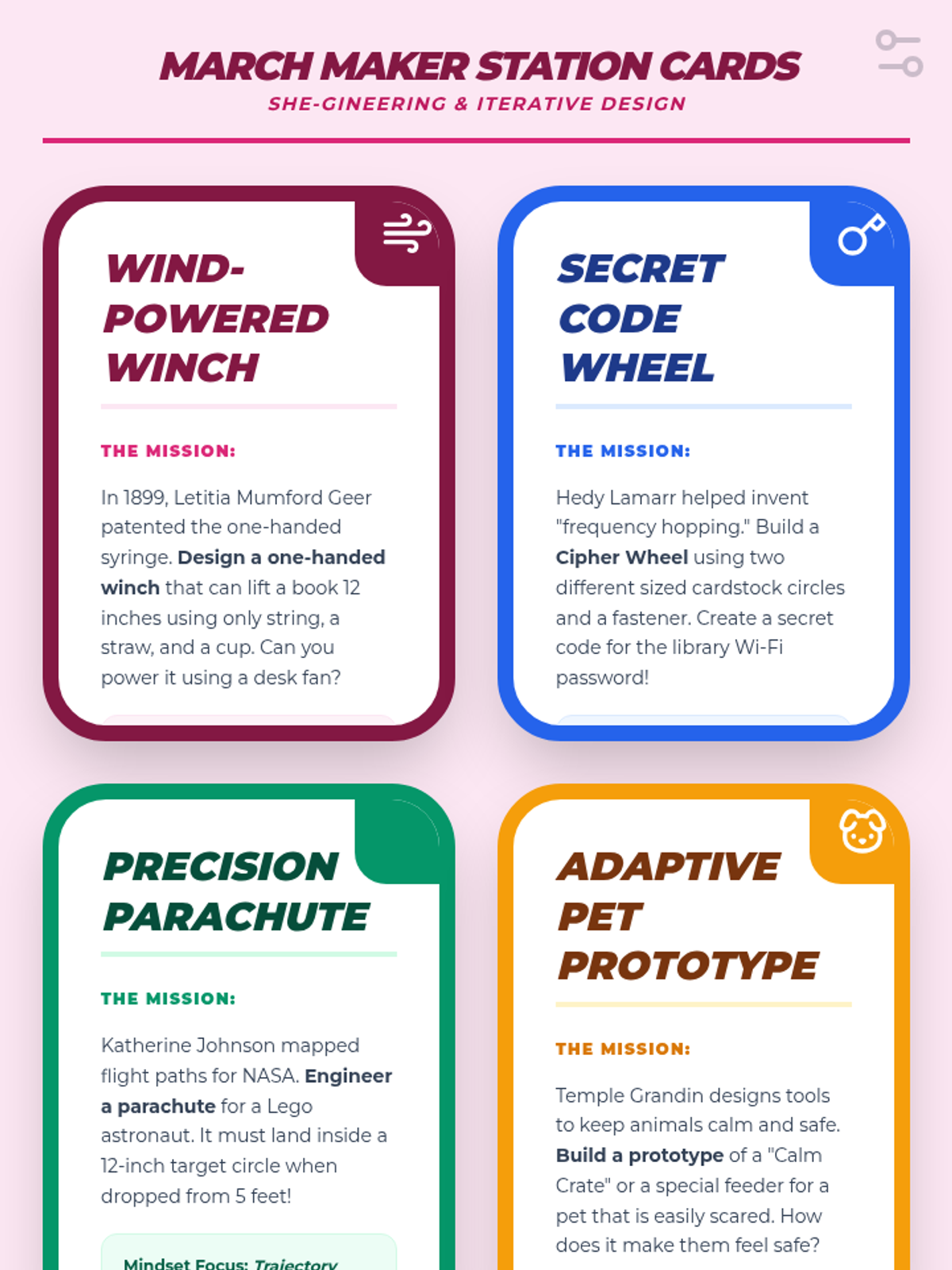
March Maker Station cards featuring challenges that introduce wind-power engineering, encryption, physics through parachutes, and adaptive design.
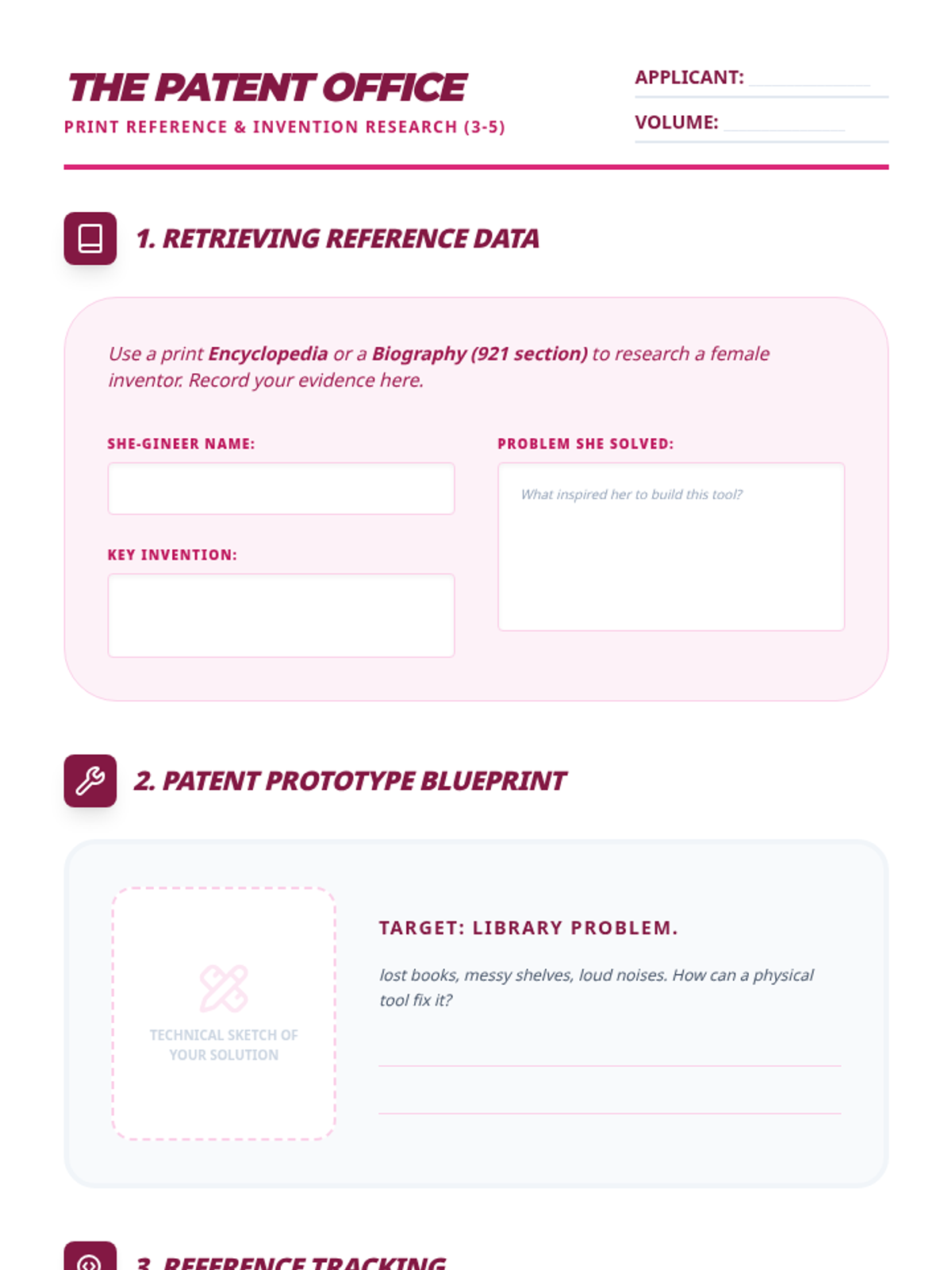
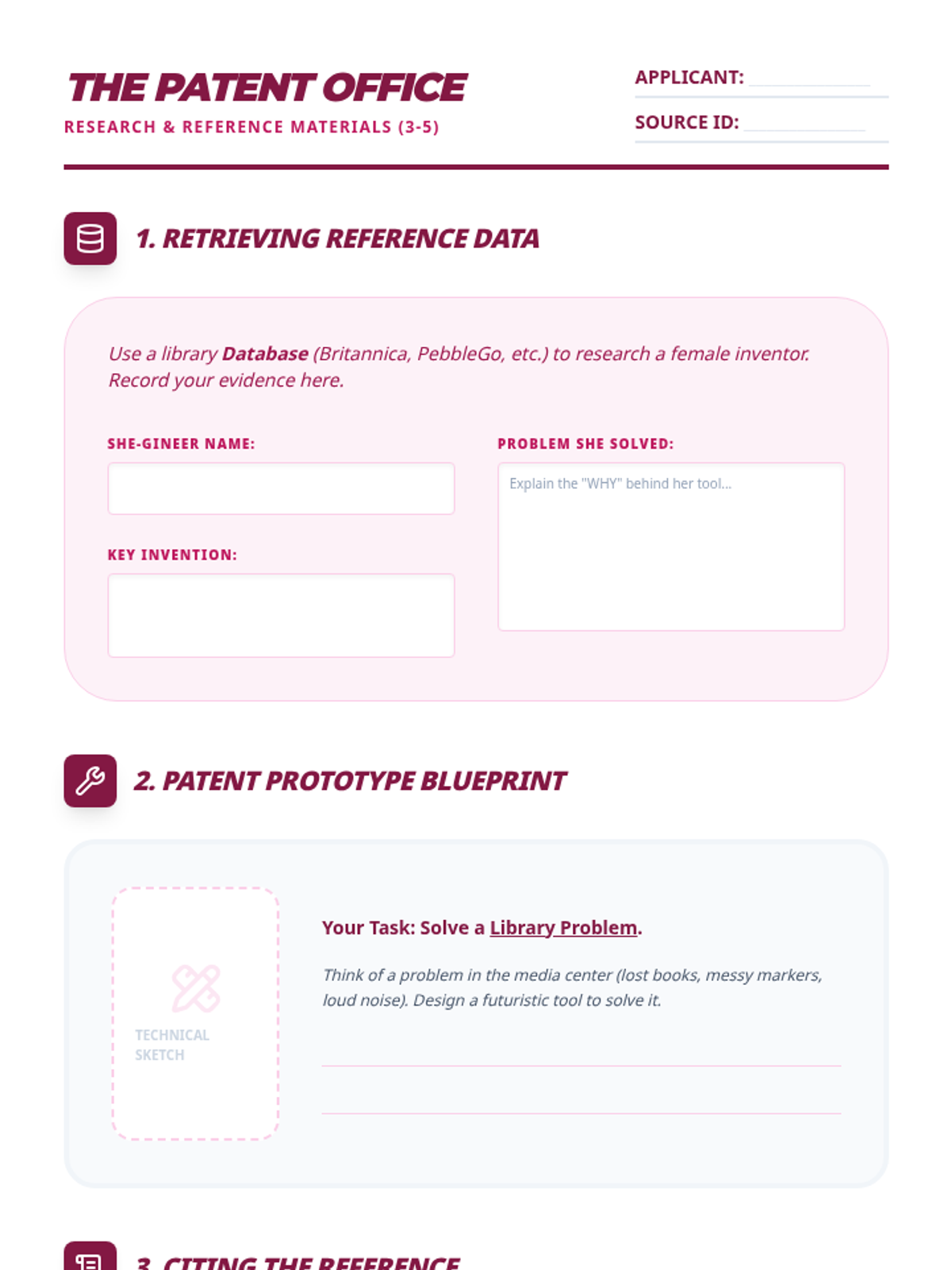
A March 3-5 research worksheet where students act as "Patent Applicants," researching female inventors using databases and designing their own library-focused prototypes.
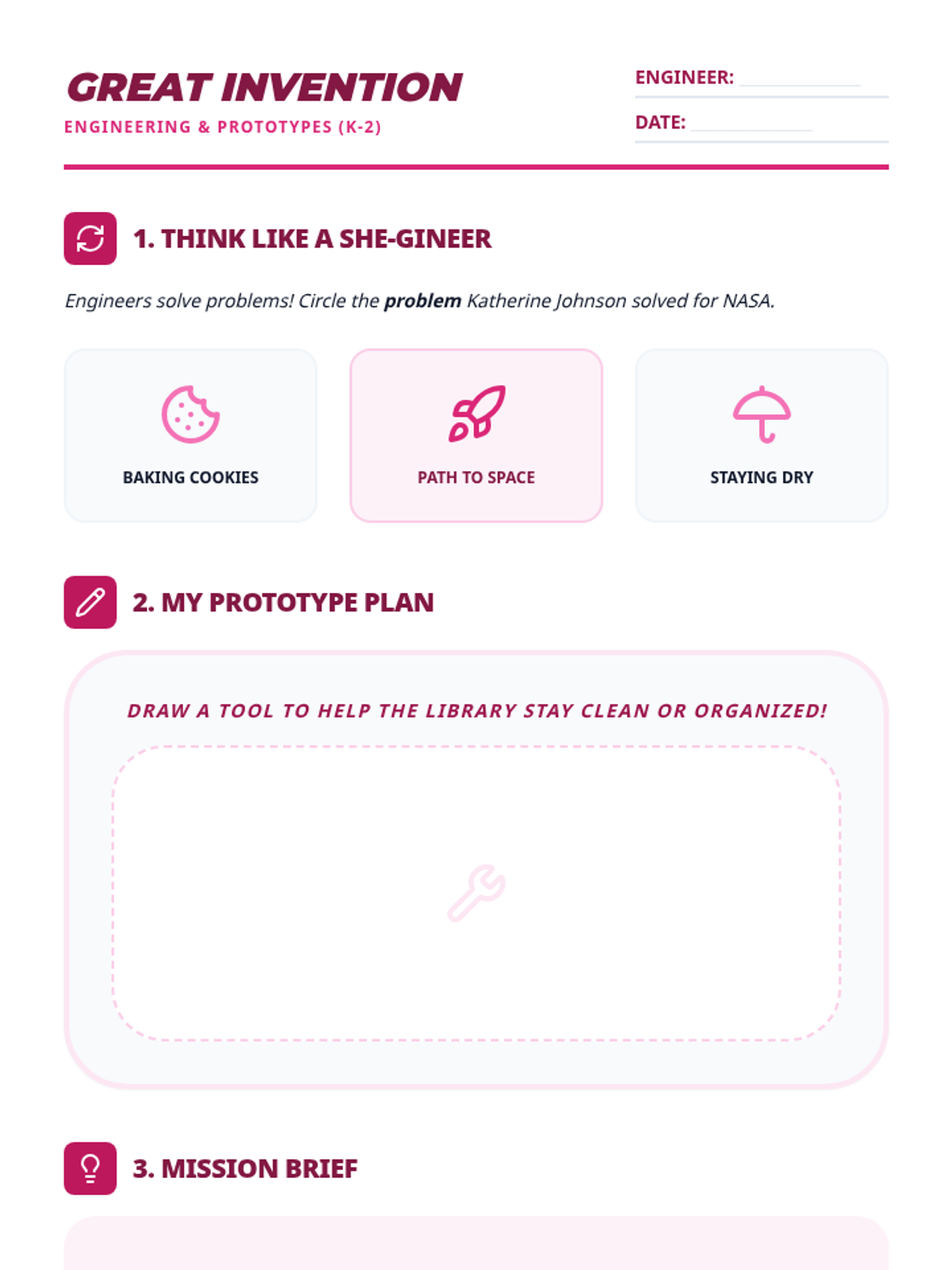
A scaffolded March K-2 worksheet for designing a prototype to solve a problem, inspired by the engineering mindset of female inventors.
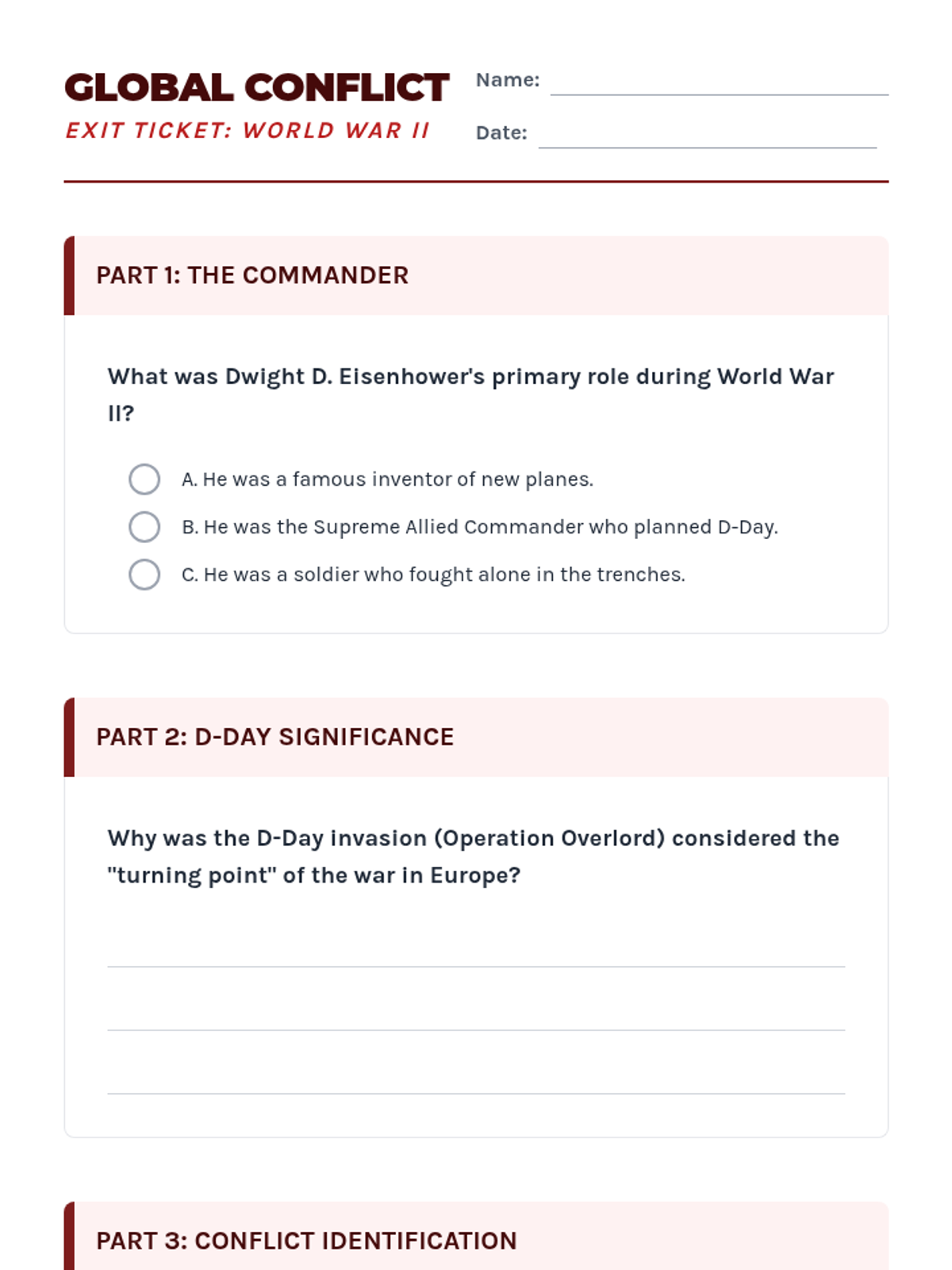
A quick student assessment for the Global Conflict lesson, featuring short answer and multiple-choice questions about Dwight D. Eisenhower and the D-Day invasion.
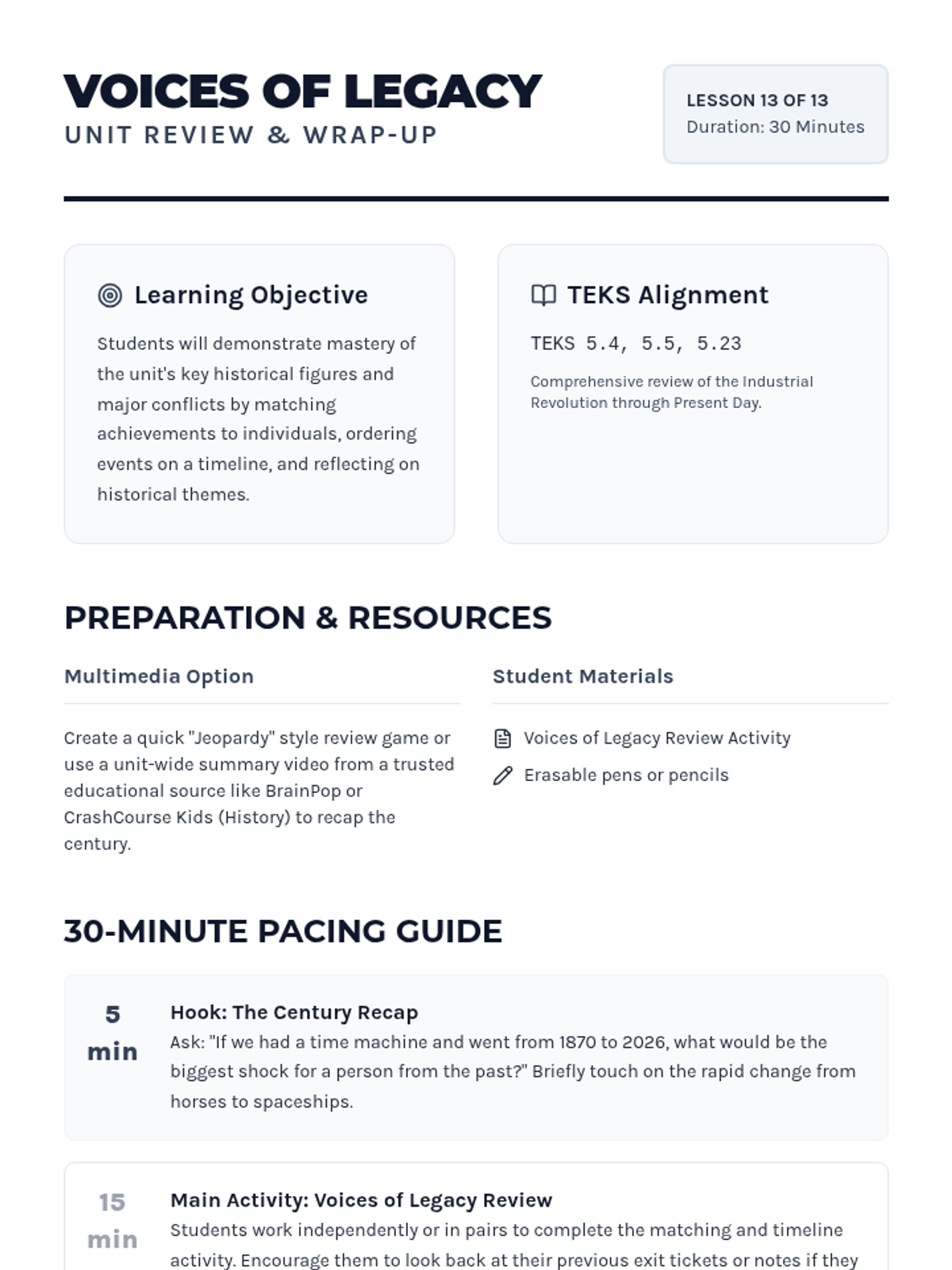
A facilitation guide for the final review lesson of the unit, including pacing and teaching tips for the Voices of Legacy Review.
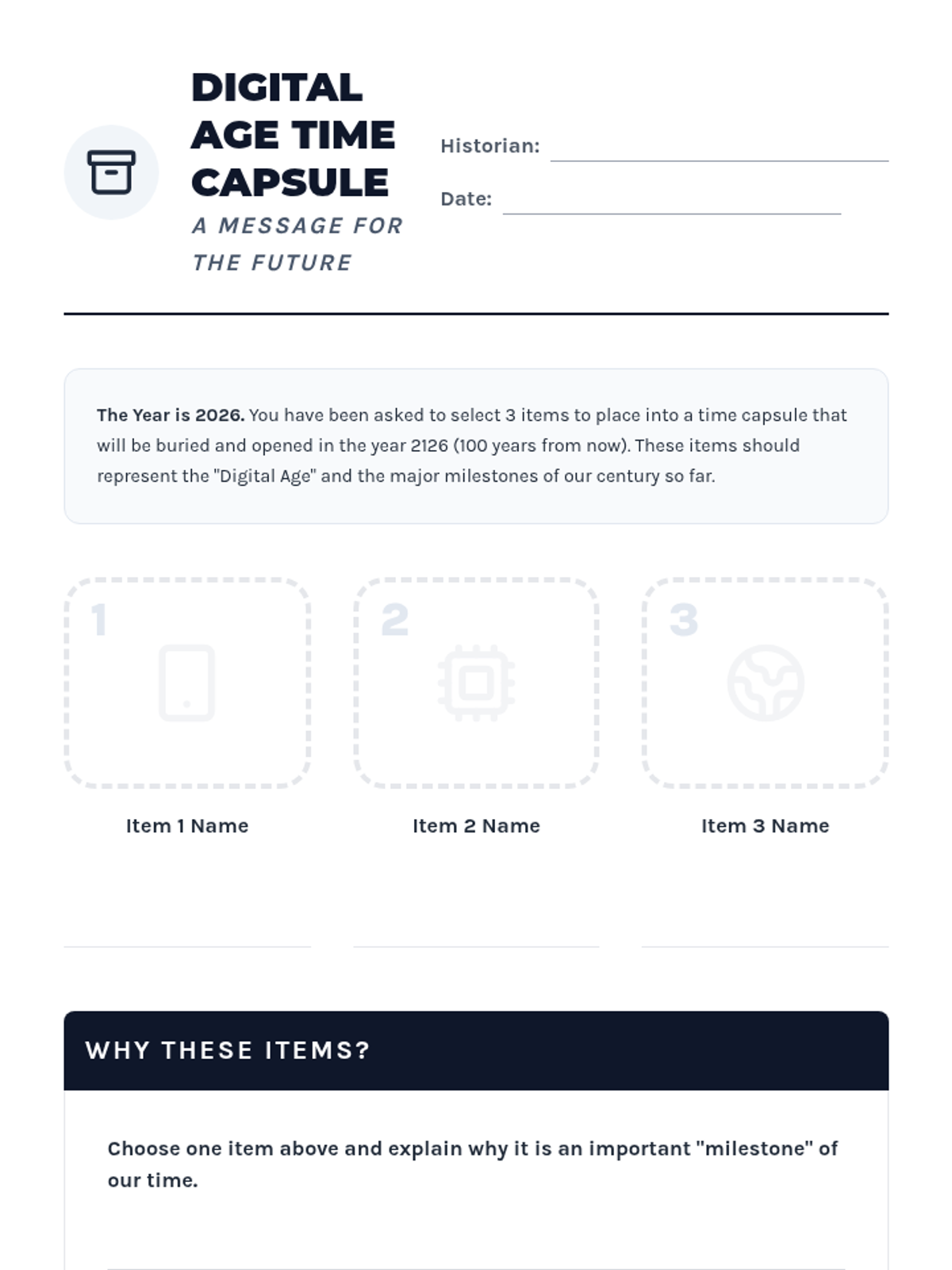
A student activity for the New Century lesson. Students select 3 modern items for a time capsule and reflect on the speed of historical and technological change.
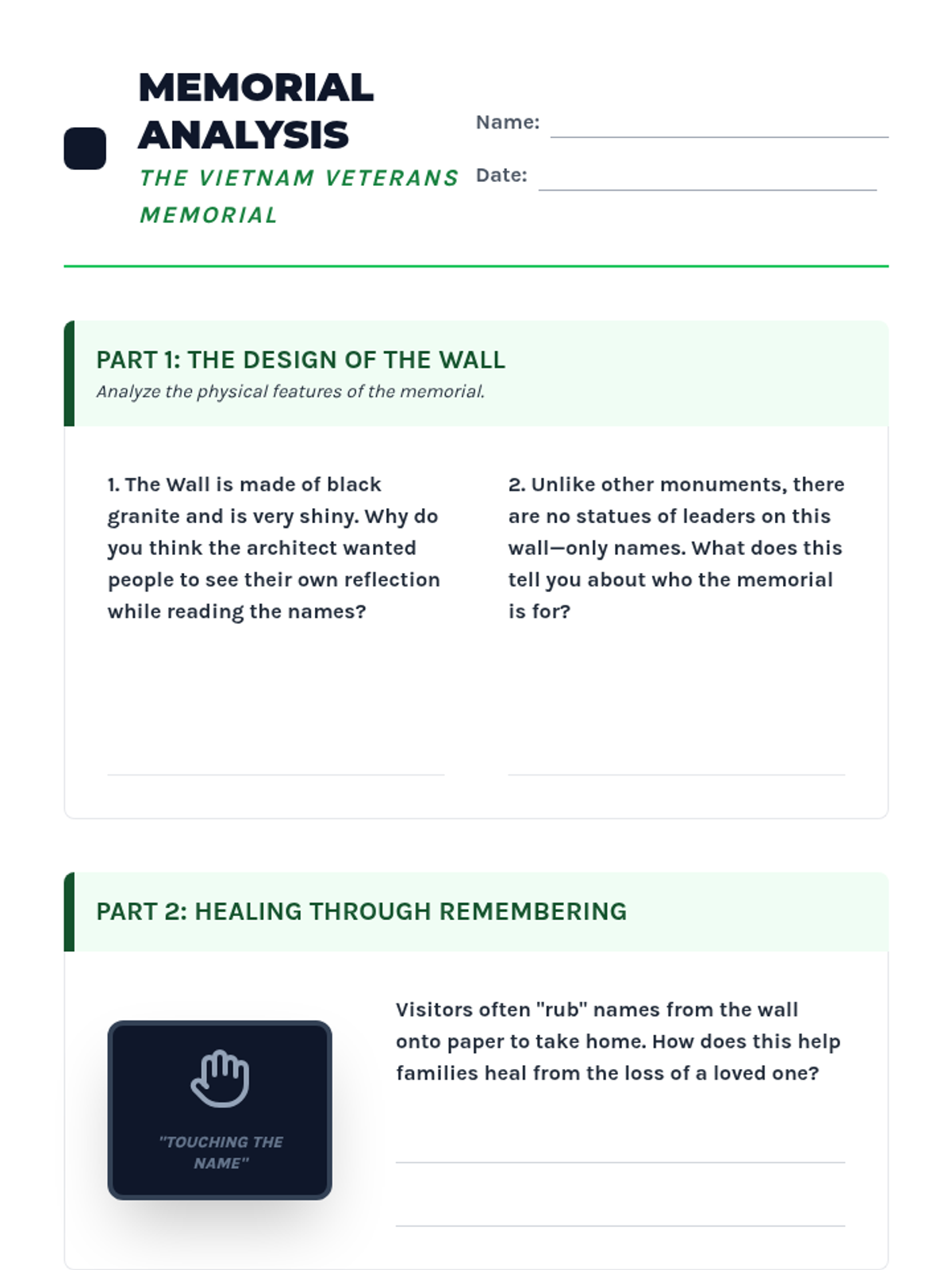
A student activity sheet for the Jungle Conflict lesson. Students analyze the design and emotional significance of the Vietnam Veterans Memorial.
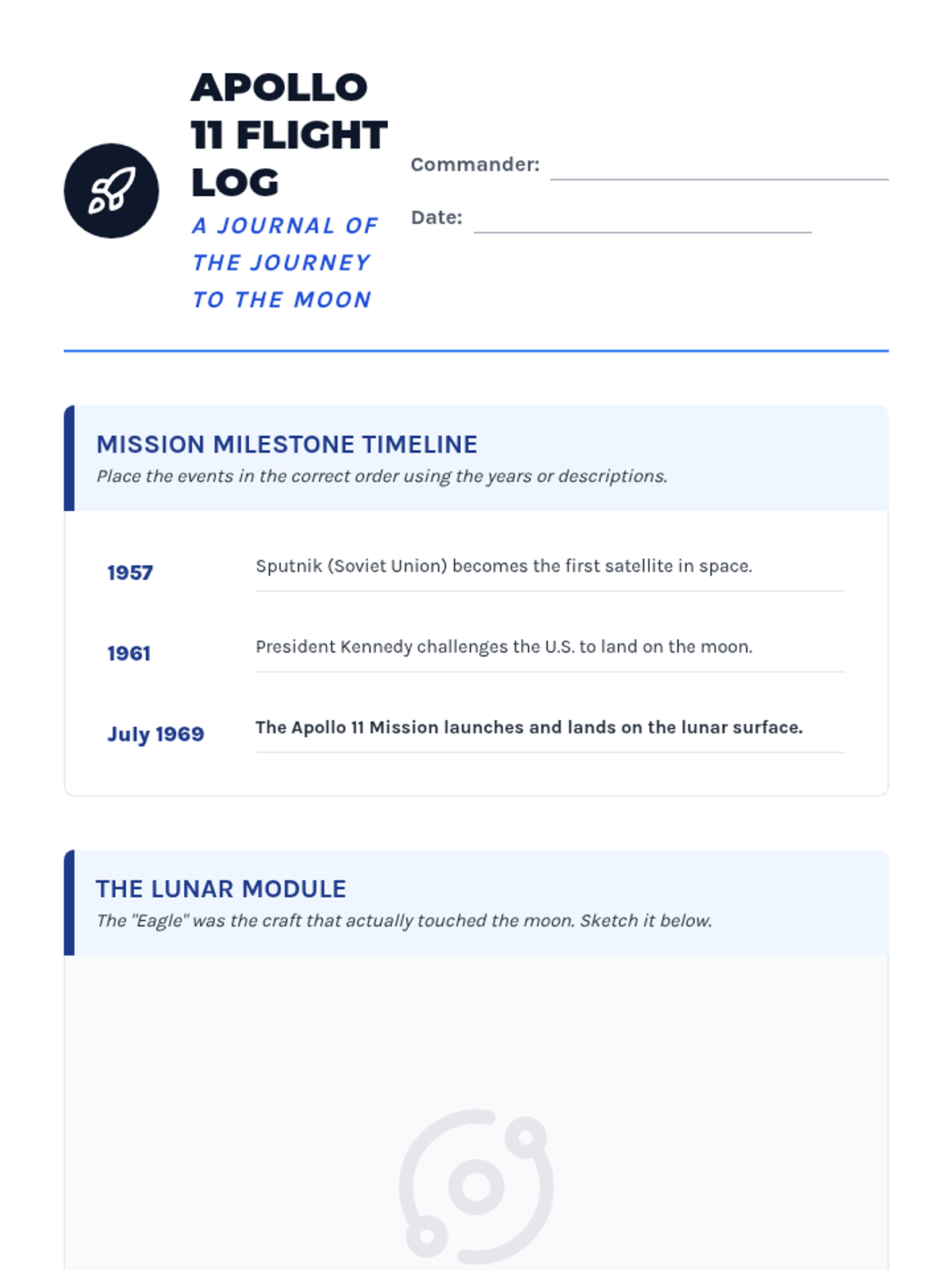
A student flight log activity for the Race to Space lesson. Students complete a timeline of the Space Race, sketch the lunar module, and write a reflection from the perspective of Neil Armstrong.
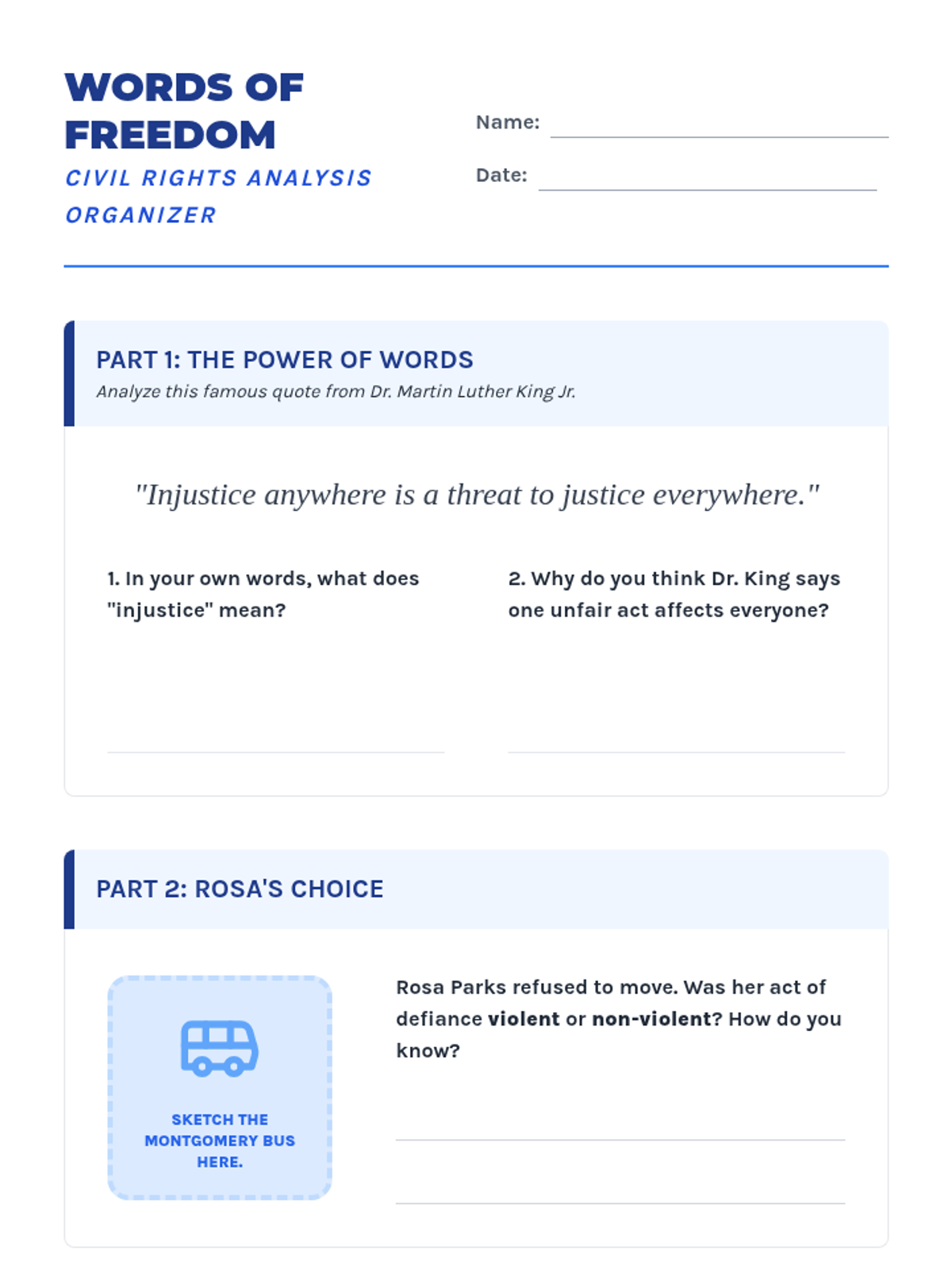
A student organizer activity for the March for Freedom lesson. Students analyze key quotes from Dr. King and the non-violent actions of Rosa Parks.
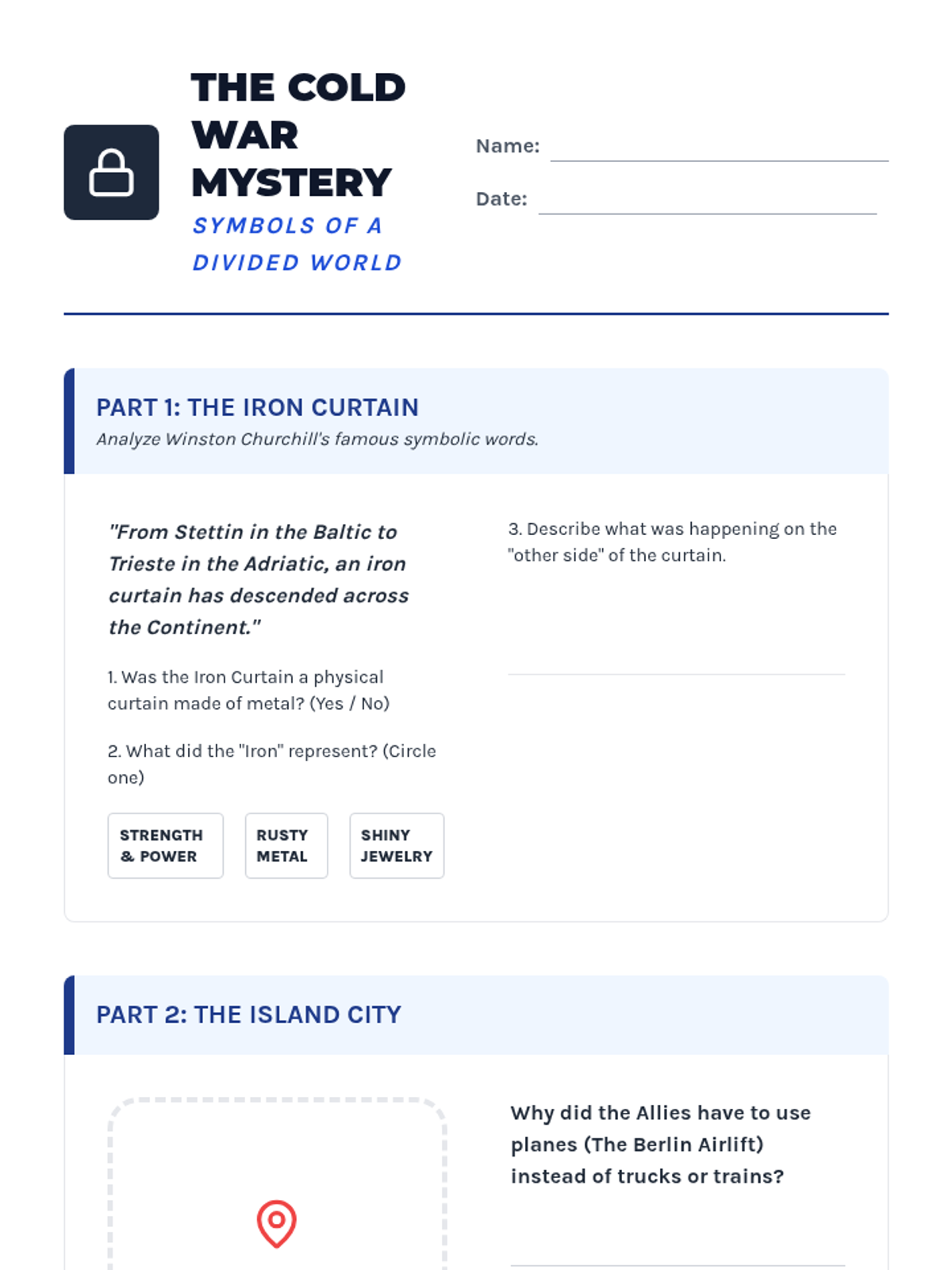
A student activity sheet for the Iron Curtain Clash lesson. Students analyze the 'Iron Curtain' metaphor, map the city of Berlin, and reflect on the 'Candy Bomber' story.
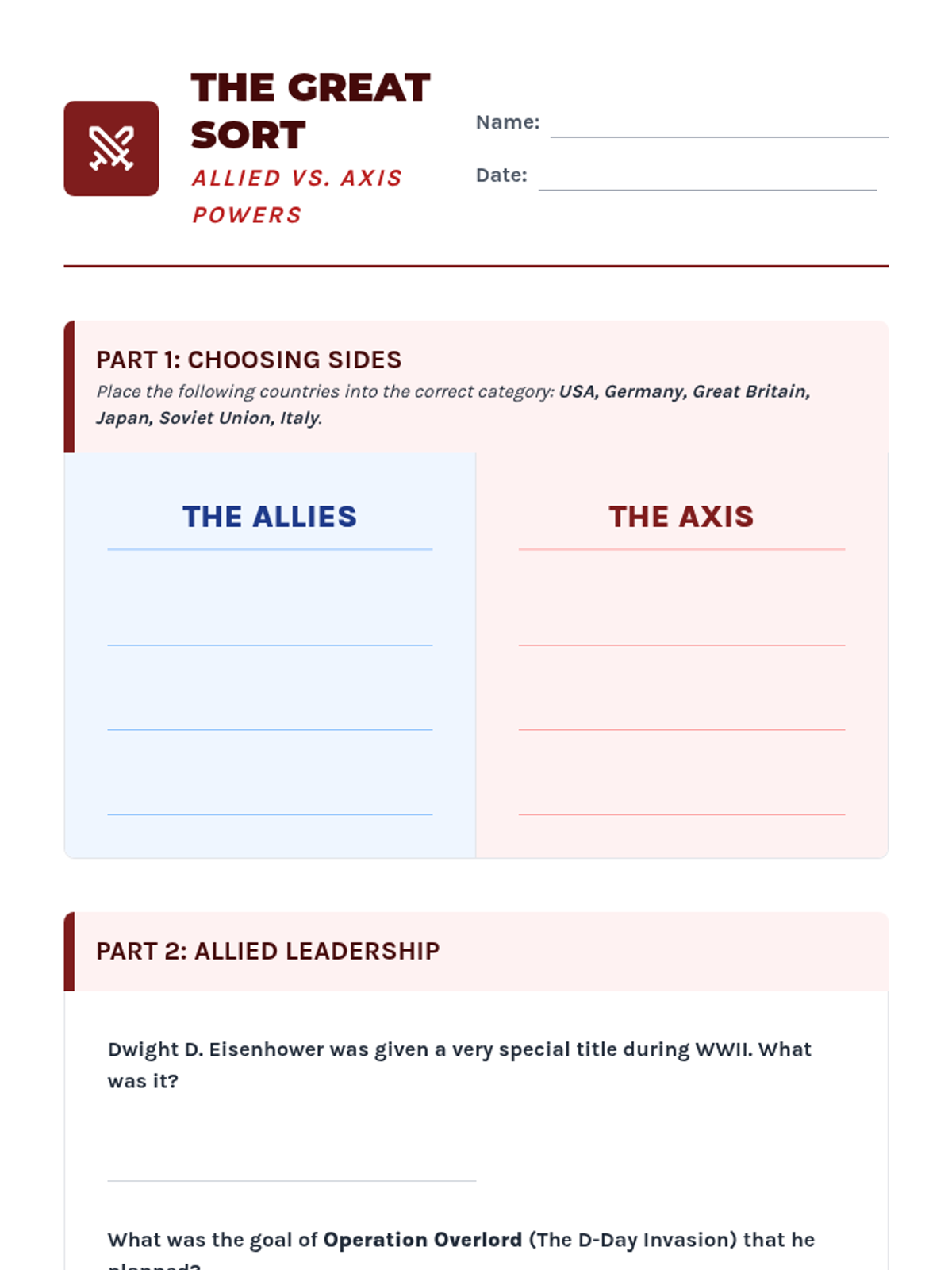
A student worksheet for the Global Conflict lesson. Students sort Allied and Axis countries and identify key leadership roles and geographic challenges of WWII.
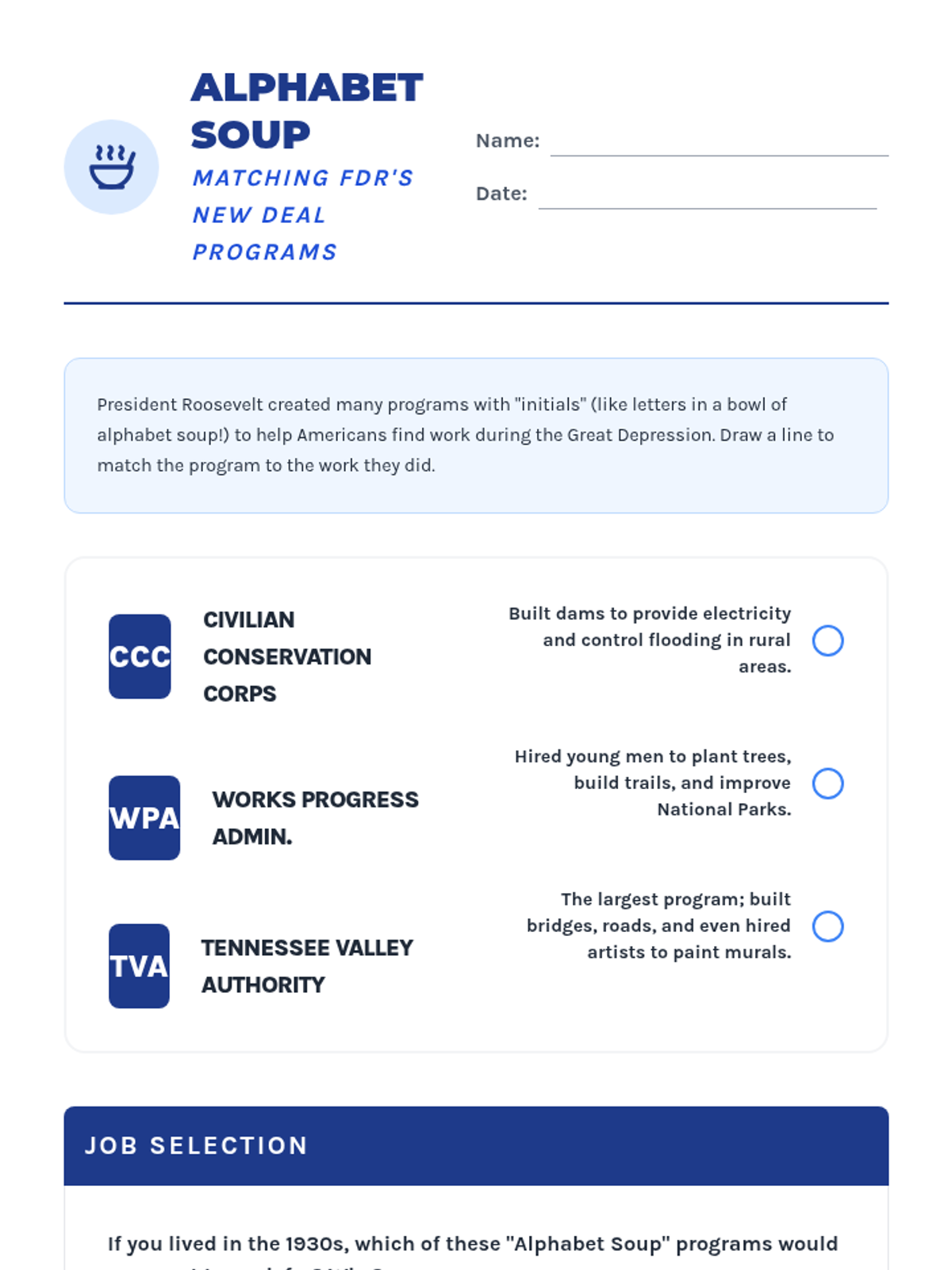
A student matching activity for the Hard Times lesson. Students match New Deal programs (CCC, WPA, TVA) to their descriptions and reflect on which job they would prefer.
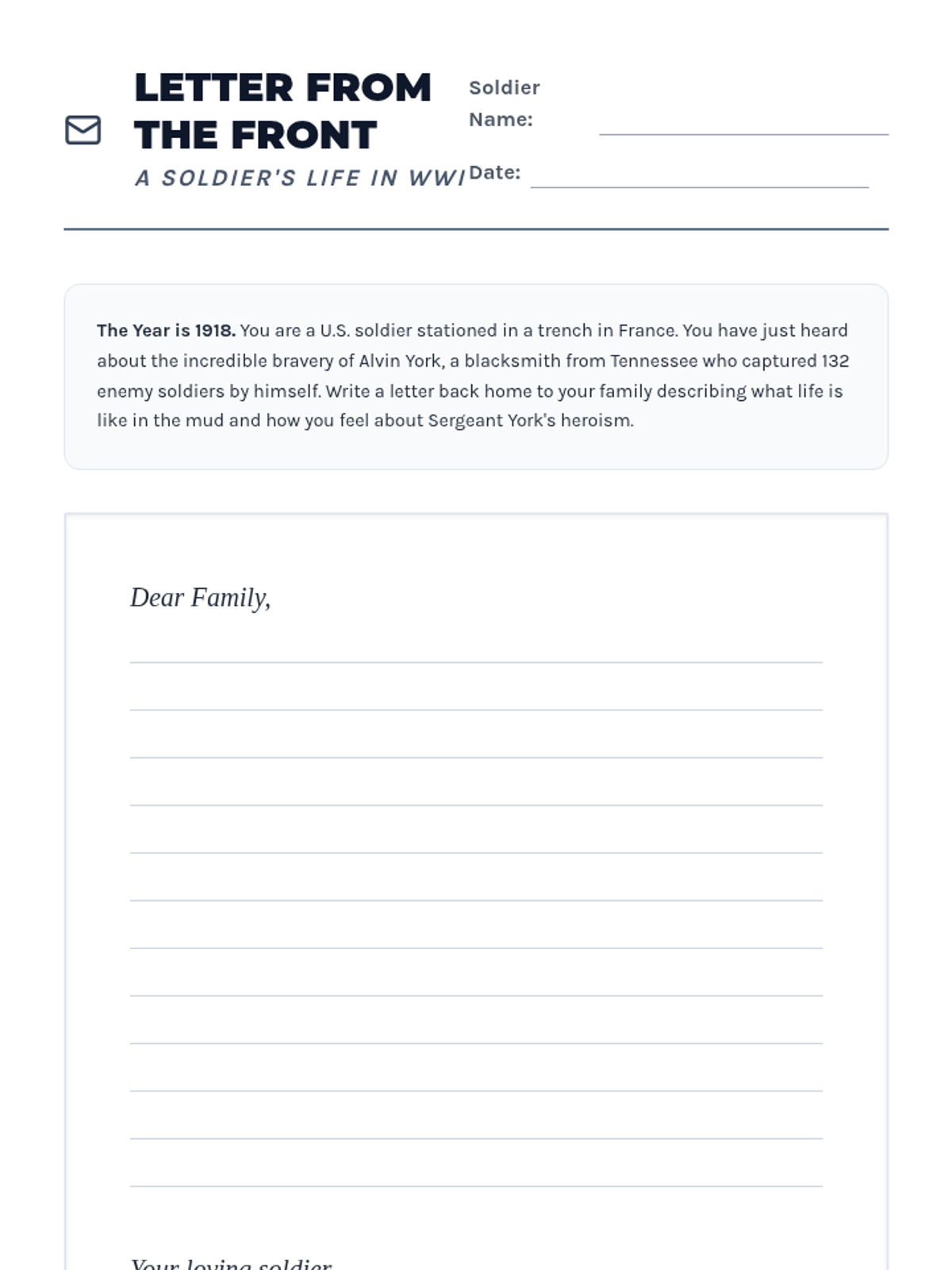
A student writing activity for the Trench Talk lesson. Students write a letter from the perspective of a WWI soldier, describing life in the trenches and the heroism of Alvin York.
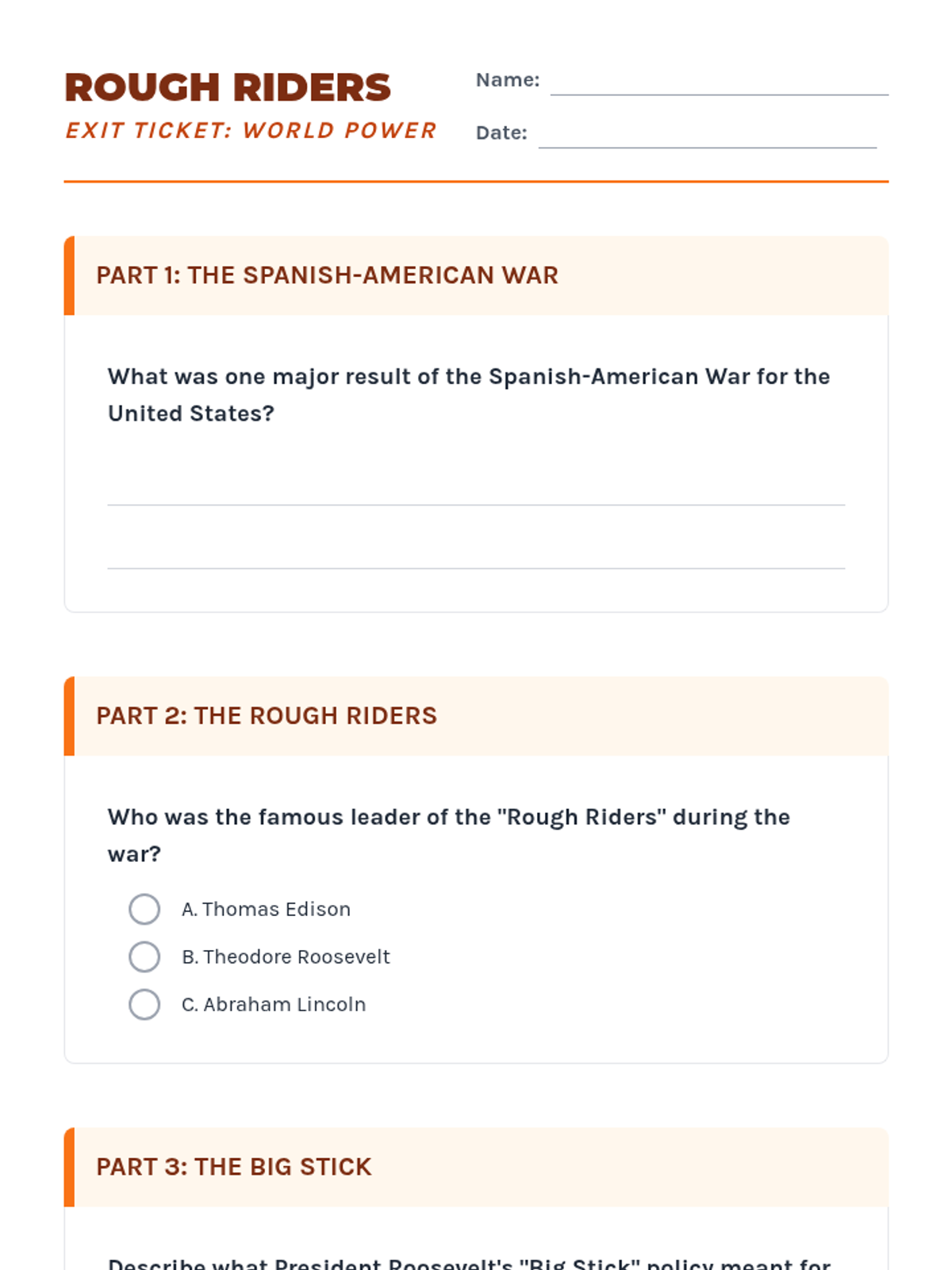
A quick student assessment for the Rough Riders lesson, featuring short answer and multiple-choice questions about the Spanish-American War and Theodore Roosevelt.
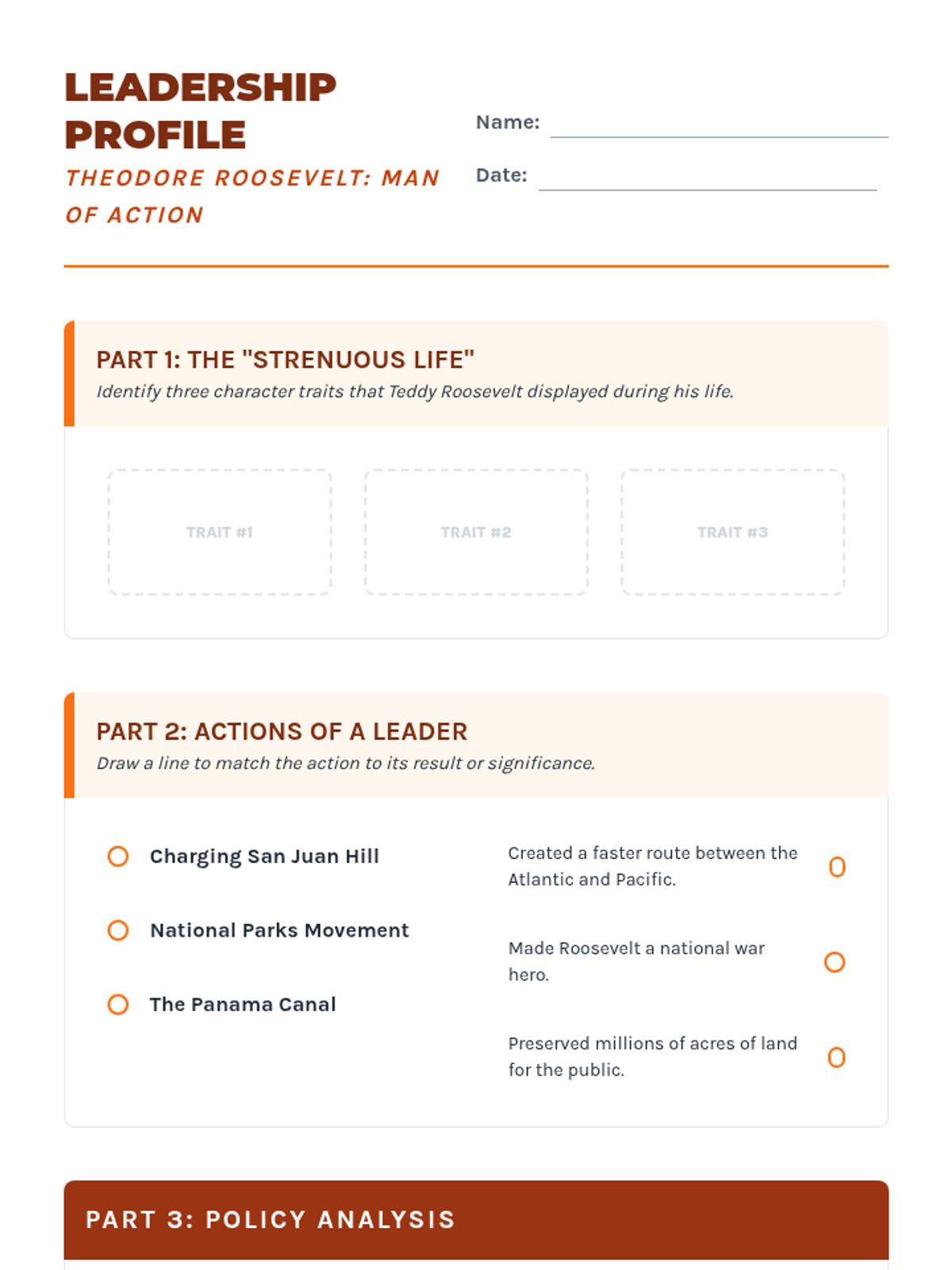
A student worksheet focusing on the leadership traits and actions of Theodore Roosevelt, including matching activities and policy analysis.
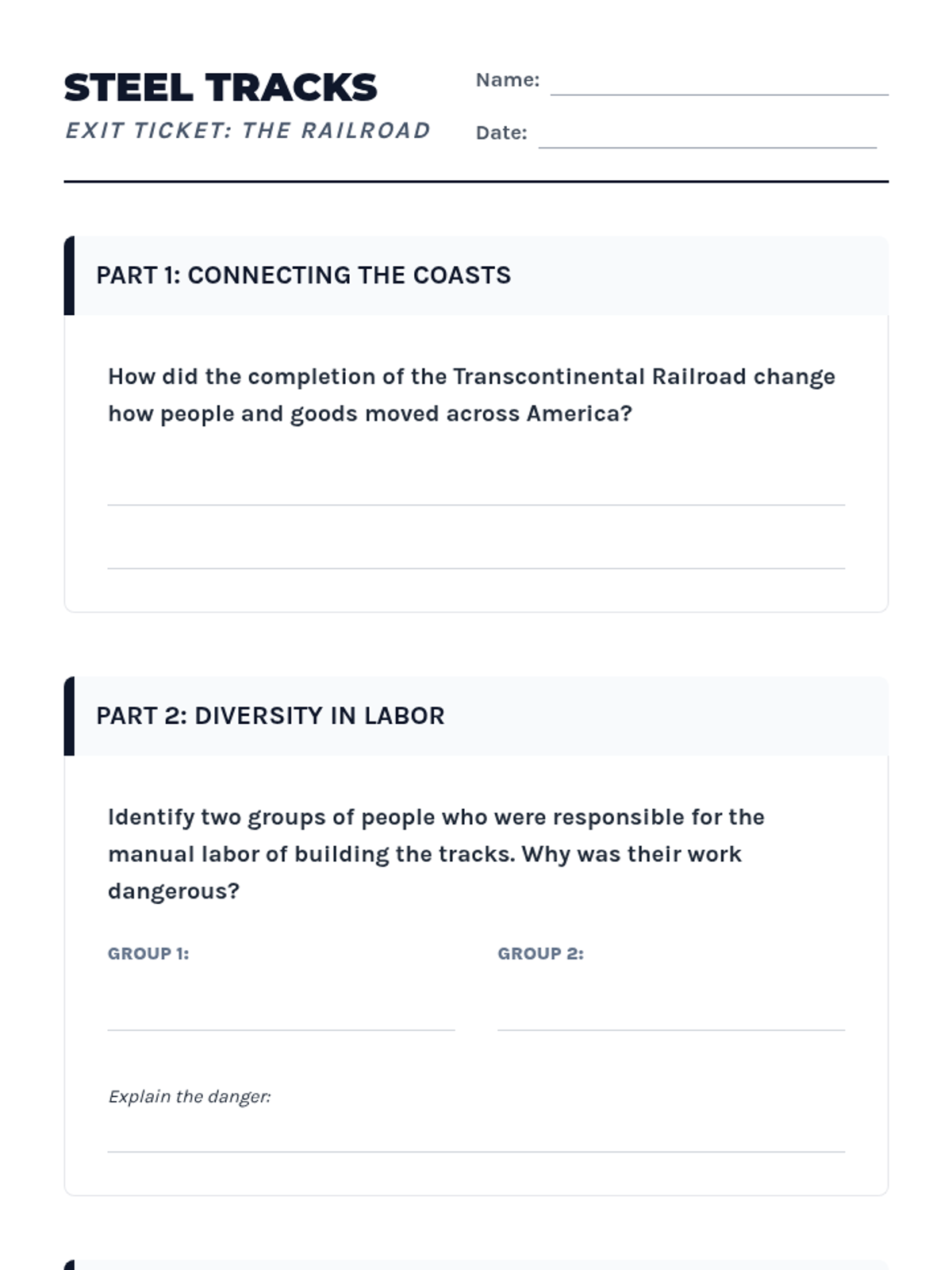
A quick student assessment for the Steel Tracks lesson, featuring short answer and multiple-choice questions about the Transcontinental Railroad and its construction.
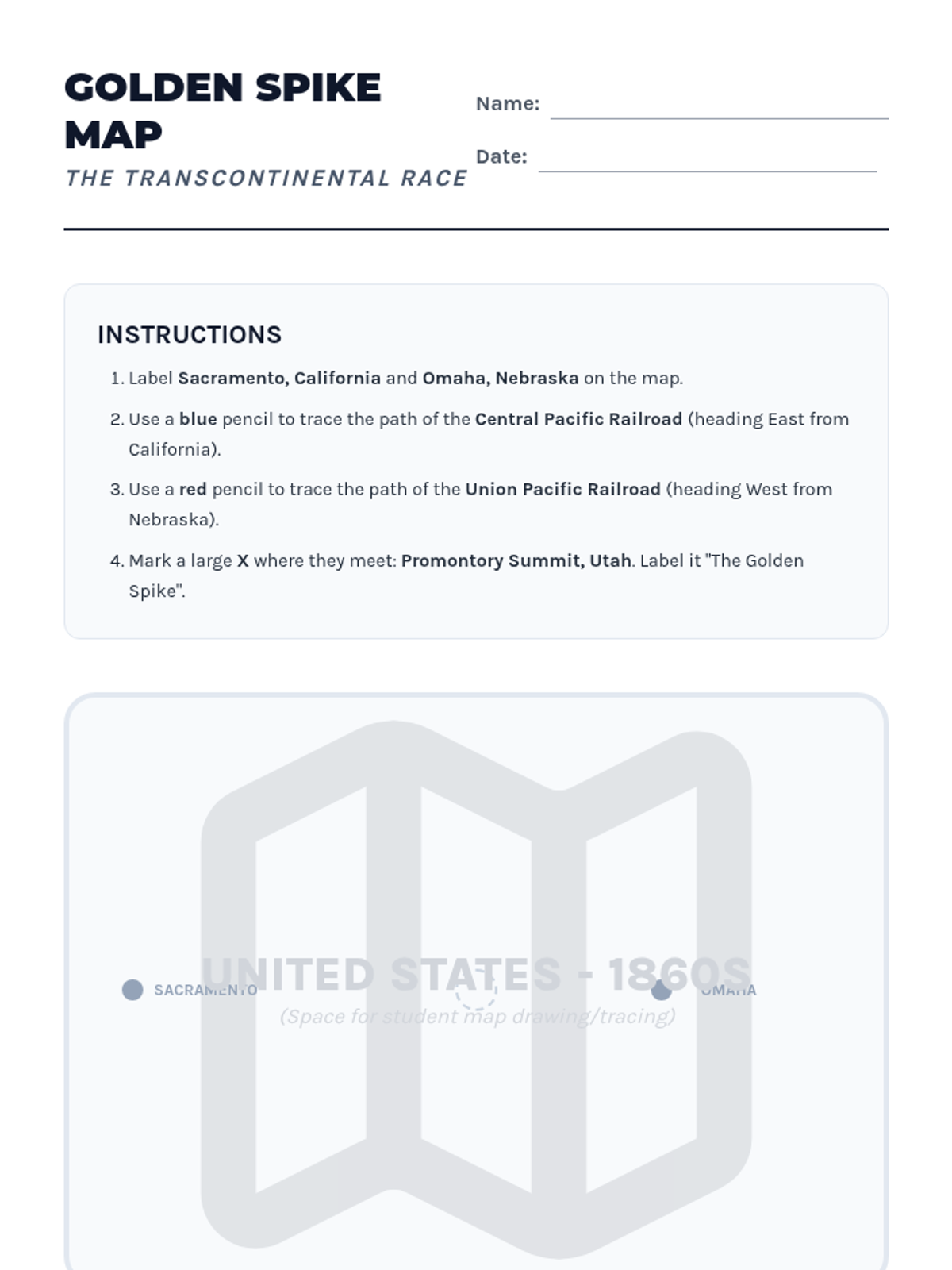
A student activity sheet for the Steel Tracks lesson, focusing on the geography of the Transcontinental Railroad. Students map the routes of the two companies and identify the meeting point in Utah.
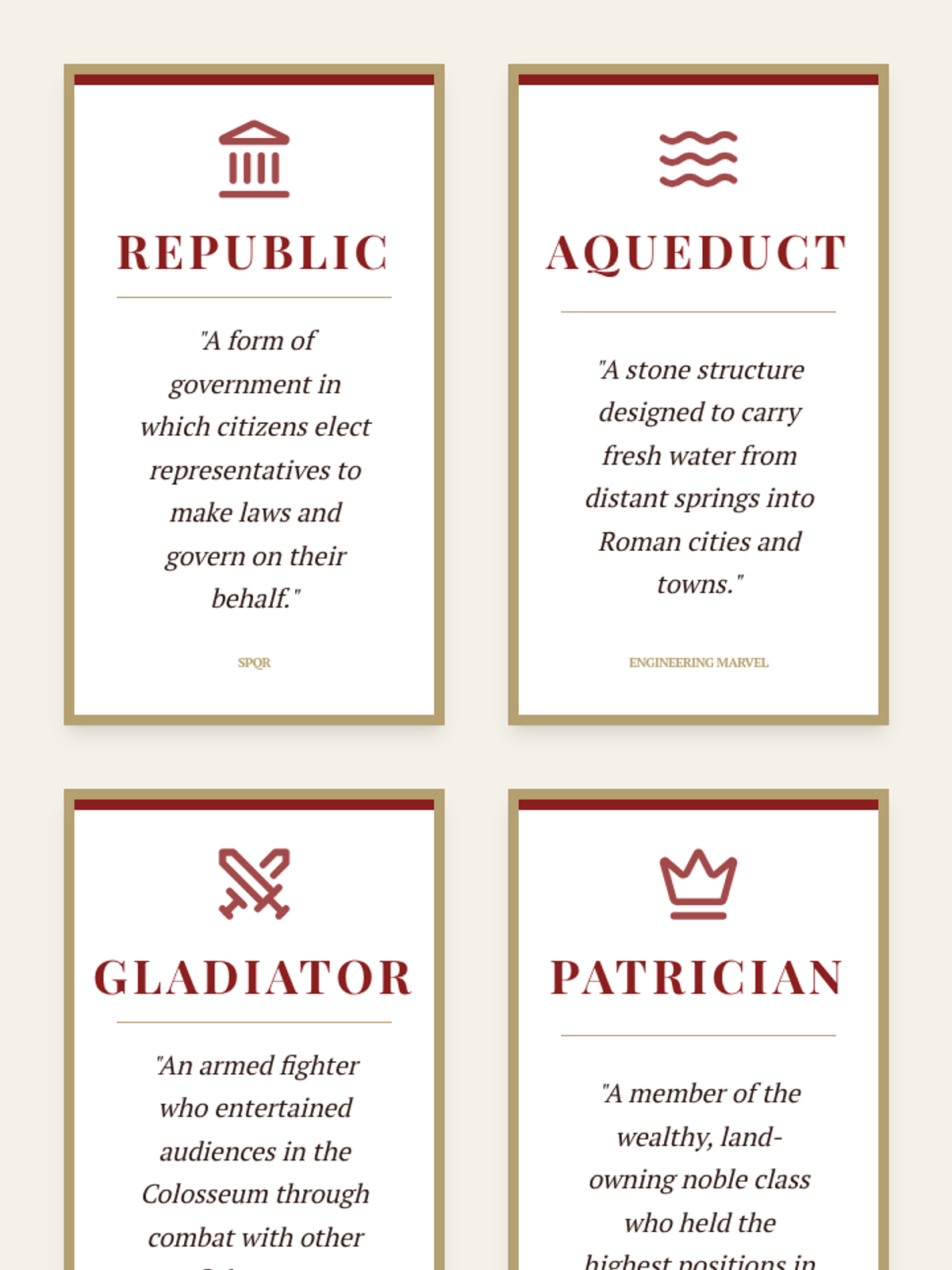
A set of 8 Ancient Rome vocabulary flashcards featuring key terms like Republic, Aqueduct, and Pax Romana with a classical aesthetic.
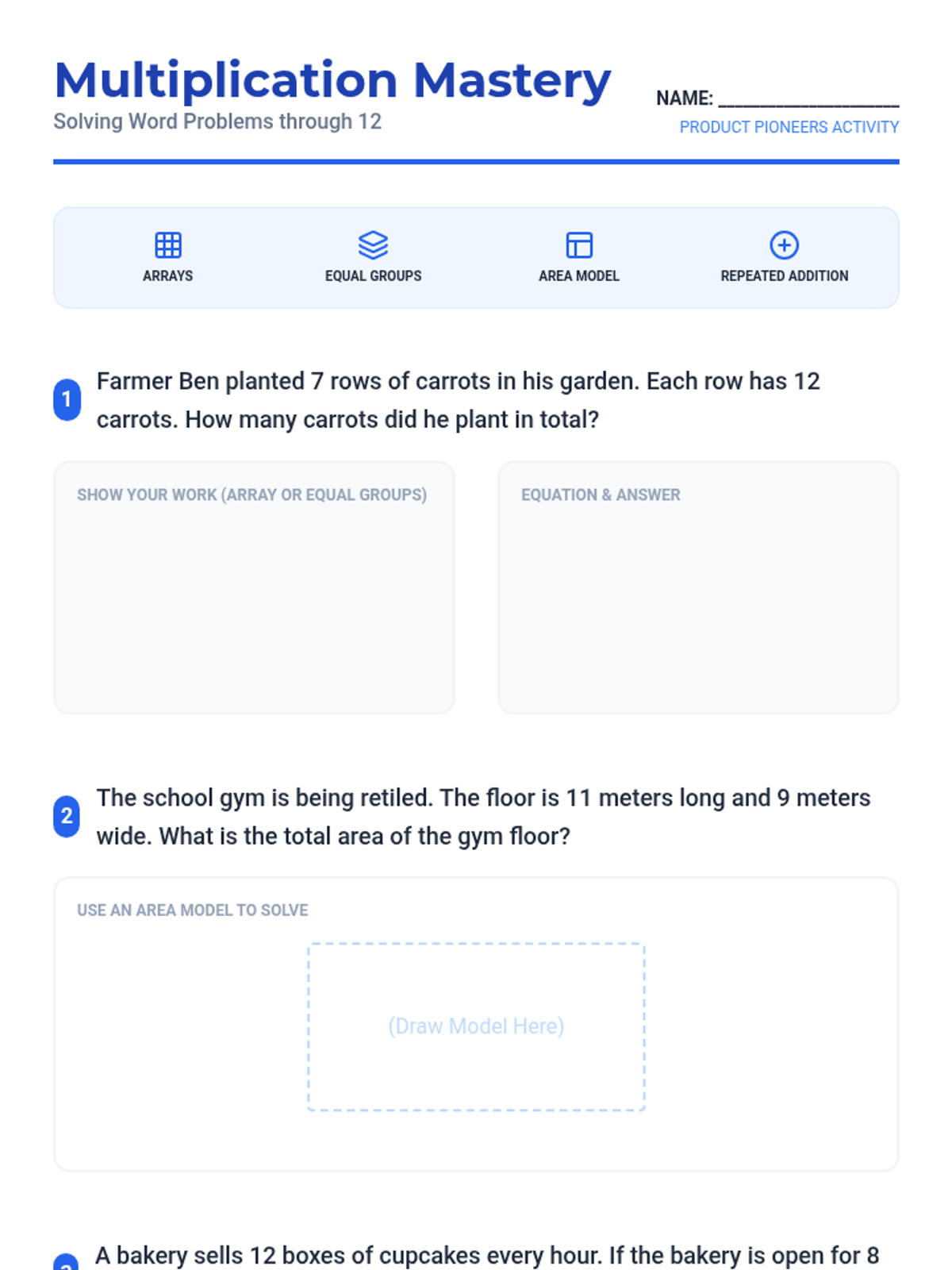
A multiplication word problem worksheet focused on multiplication through 12, encouraging students to use arrays, equal groups, area models, and the standard algorithm.
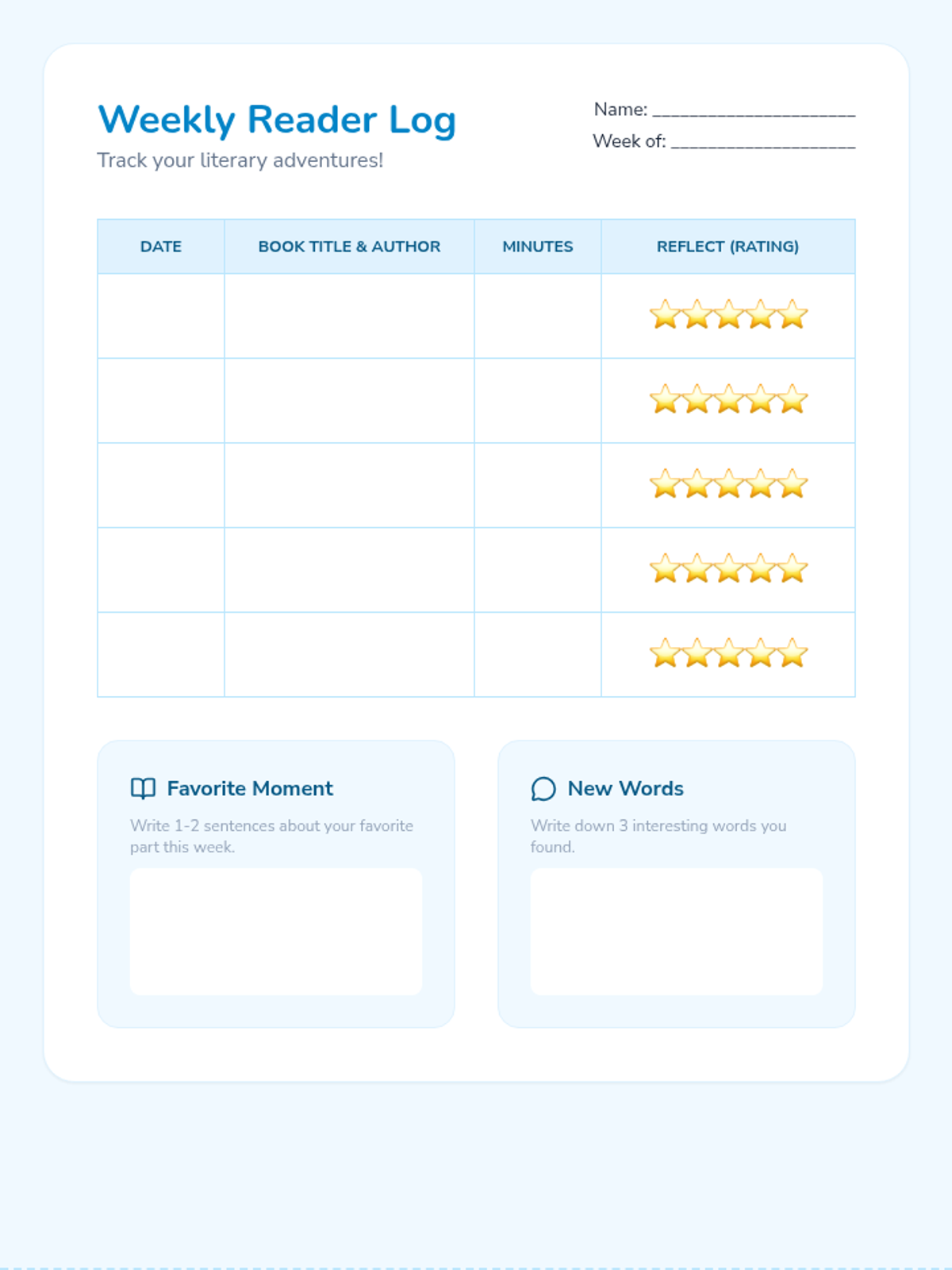
Differentiated reading logs for elementary students, featuring a standard weekly tracker with reflection and a simplified visual version for early readers.
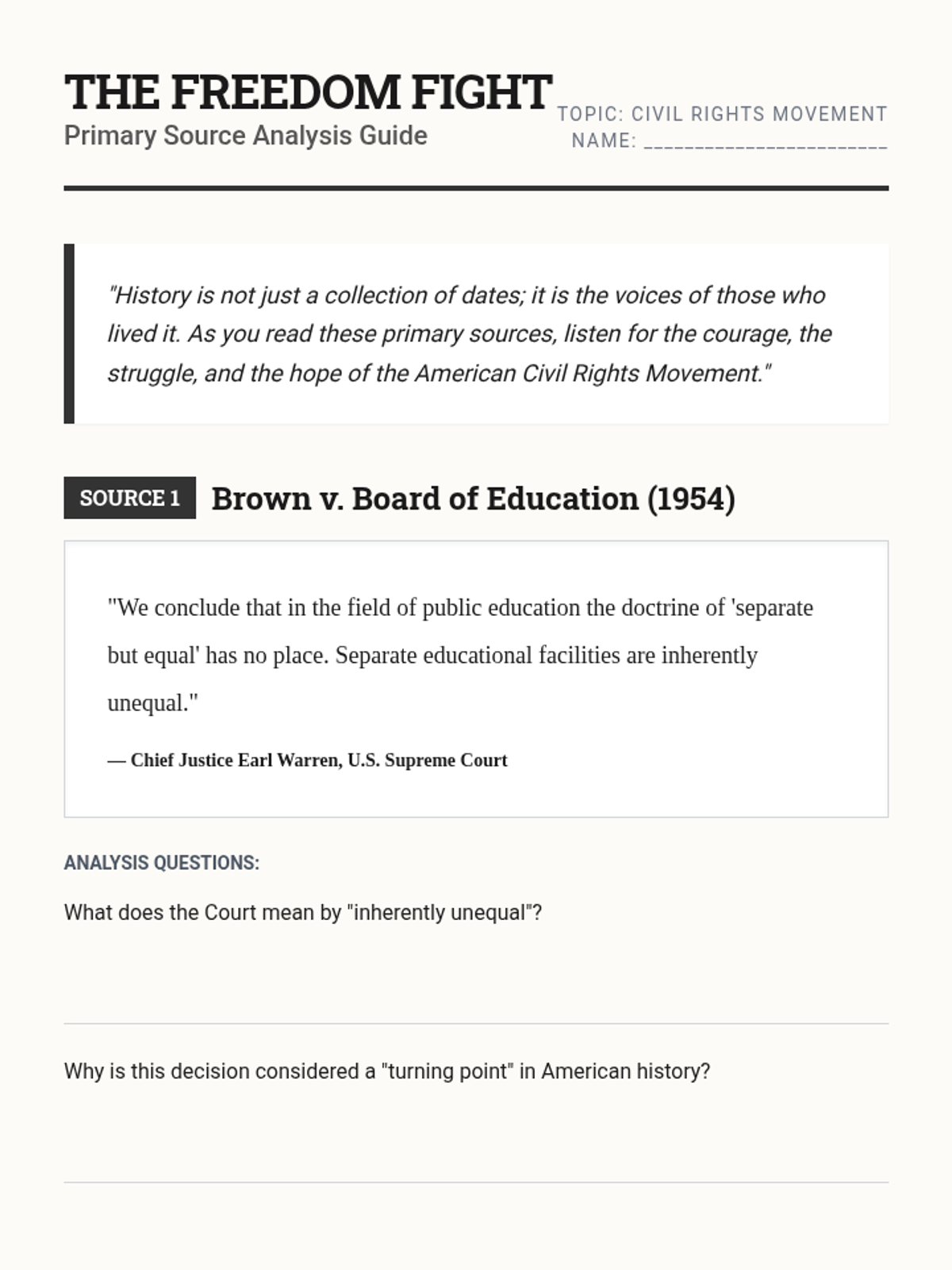
A document-based activity guide focusing on primary sources from the Civil Rights Movement, including MLK, Rosa Parks, and Brown v. Board of Education.
Engaging slides for 5th graders explaining photosynthesis through simple analogies, visual ingredient breakdowns, and a look at chloroplasts.
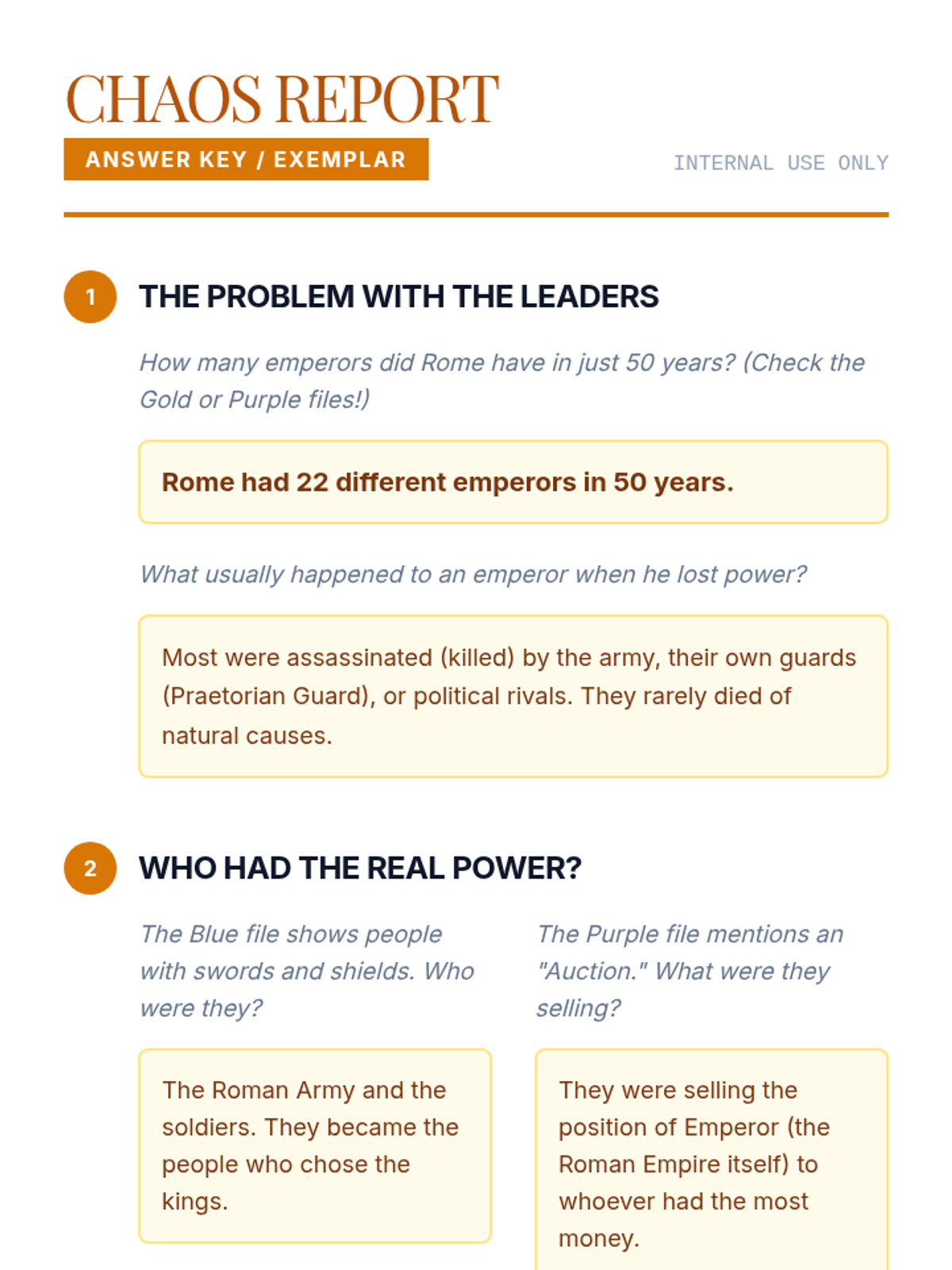
A completed answer key and exemplar for the Chaos Report worksheet, providing teachers with clear benchmarks for student responses across all differentiated levels.
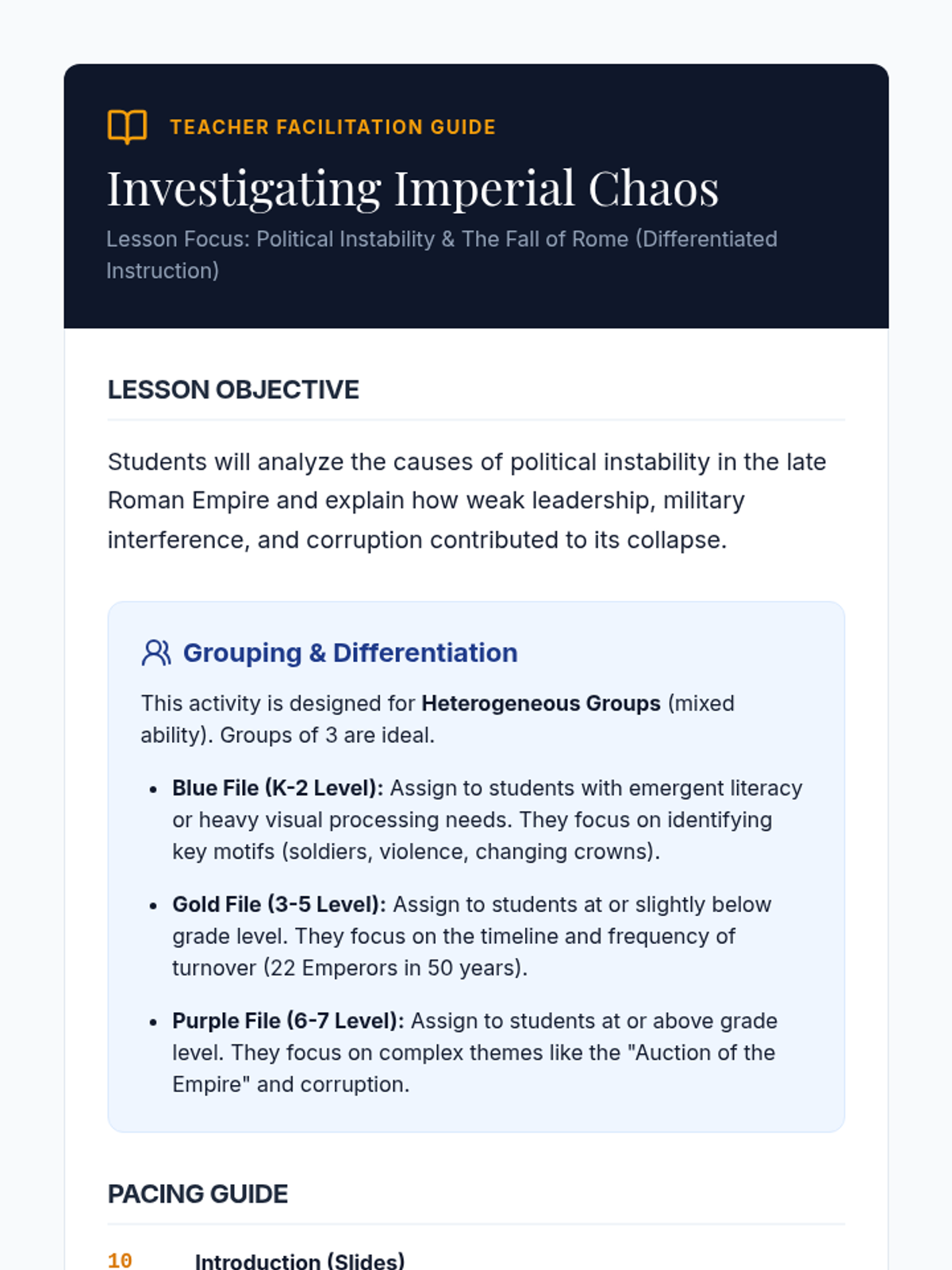
A comprehensive teacher guide for the Imperial Chaos lesson, including grouping strategies for differentiated reading levels, a pacing guide, and critical discussion prompts to facilitate deep learning.
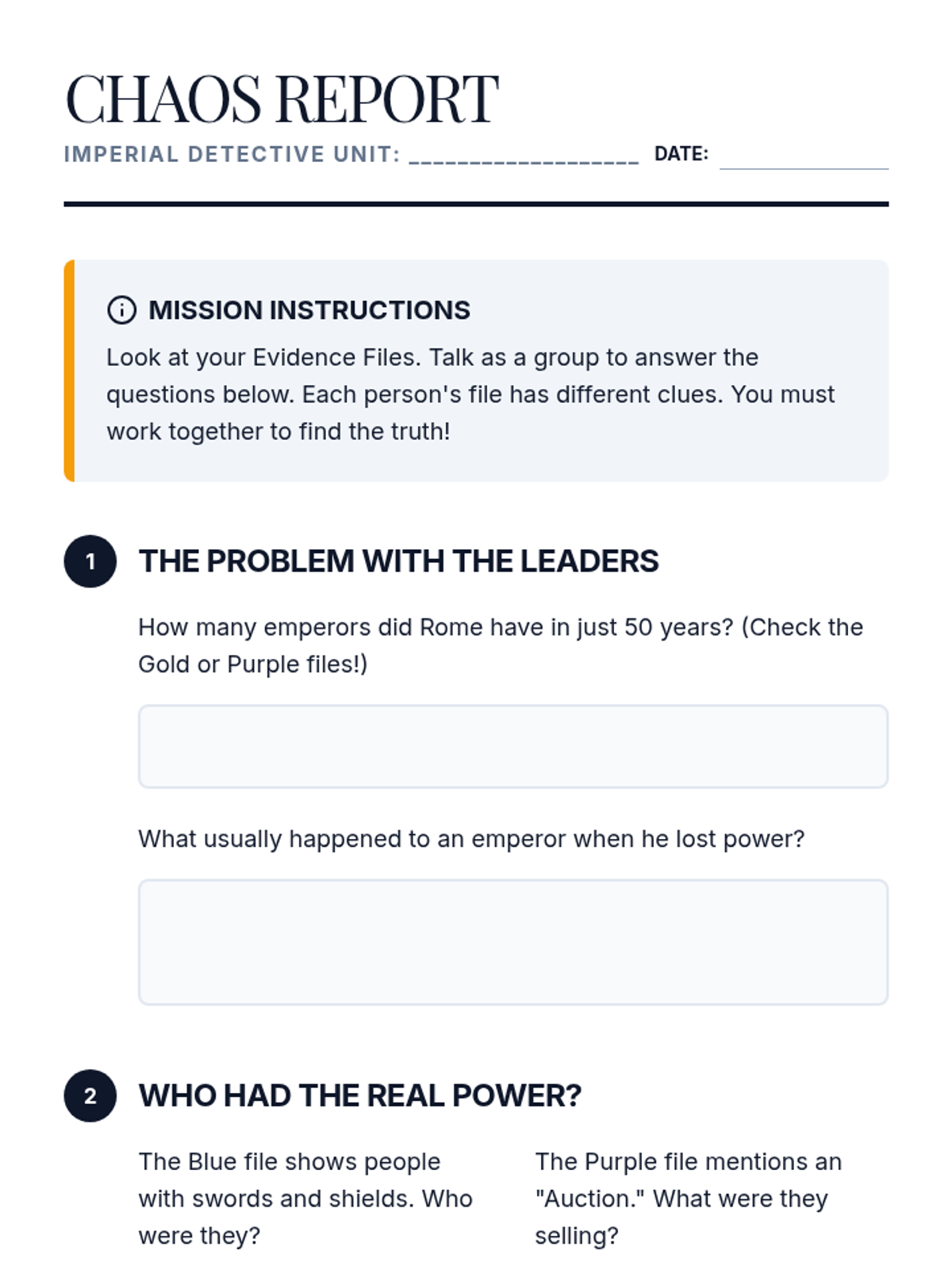
A collaborative recording sheet for students to document their findings from the Evidence Files. Includes structured questions about Roman leadership, the role of the military, and a 'final diagnosis' section for group reflection.
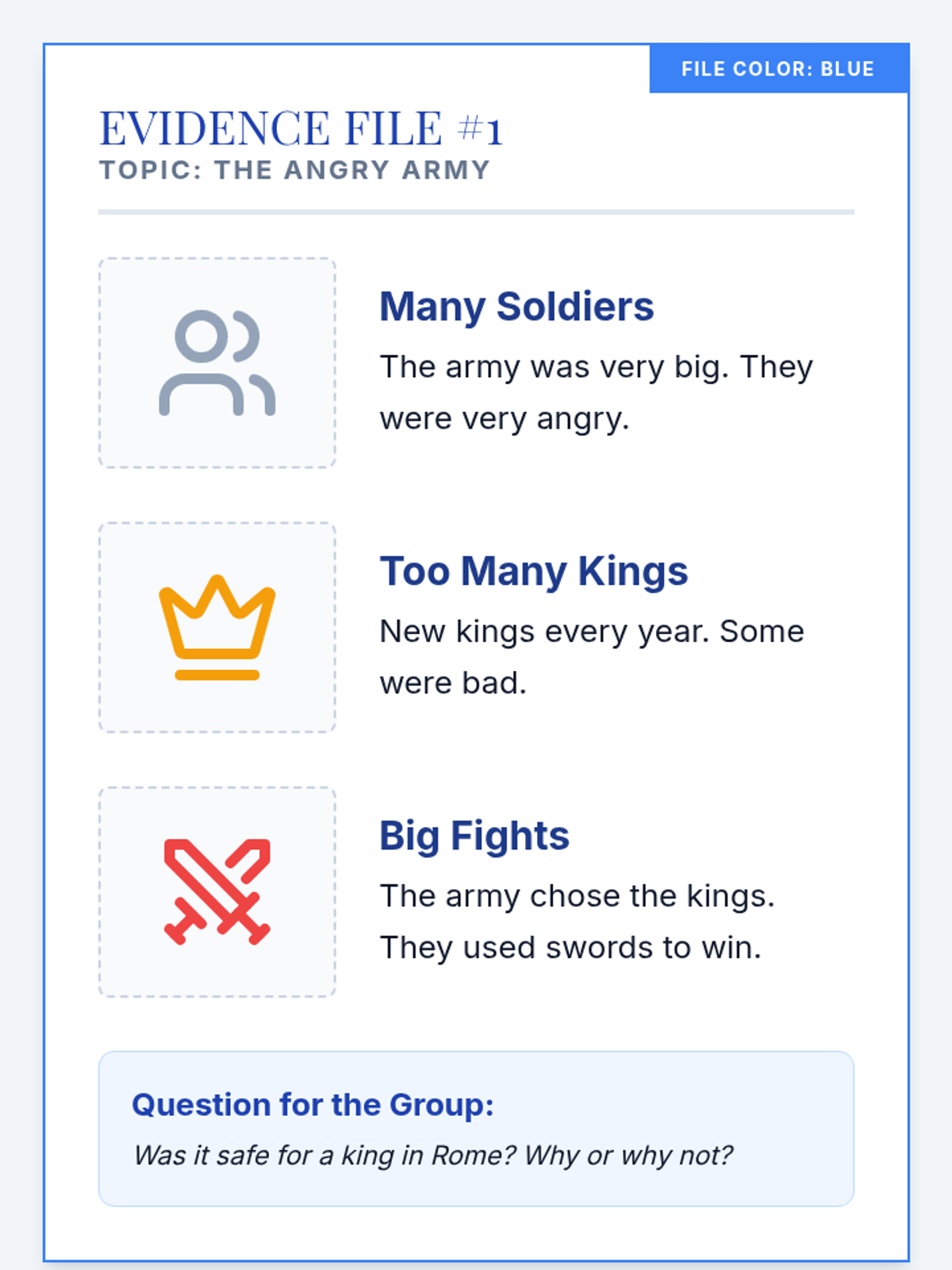
A set of three differentiated evidence files for a collaborative activity on Roman political instability. Levels range from visual-heavy (K-2) to text-supported (3-5) and analytical (6-7), ensuring all students can contribute to the group discussion.
An introductory slide deck for 6th grade students exploring the concept of political instability in Ancient Rome. Features clear definitions, visual motifs of Roman ruins and crowns, and an overview of the investigation mission.