Specialized vocabulary across disciplines, research methodologies, and effective note-taking systems. Equips learners with information literacy skills and strategies for navigating standardized exams.
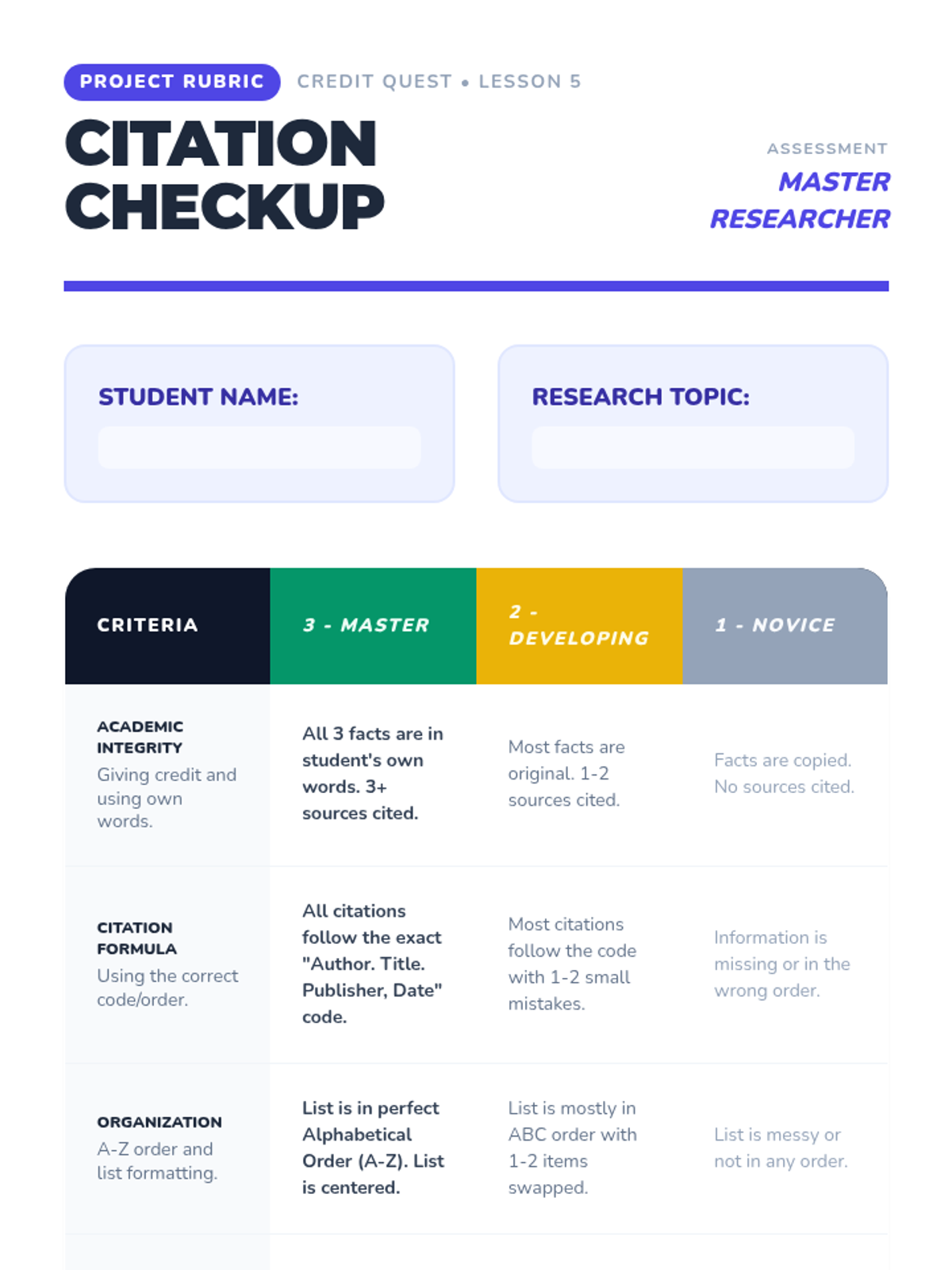
Final project rubric for Lesson 5. Evaluates academic integrity, citation formula accuracy, alphabetical organization, and punctuation. Includes sections for teacher feedback.
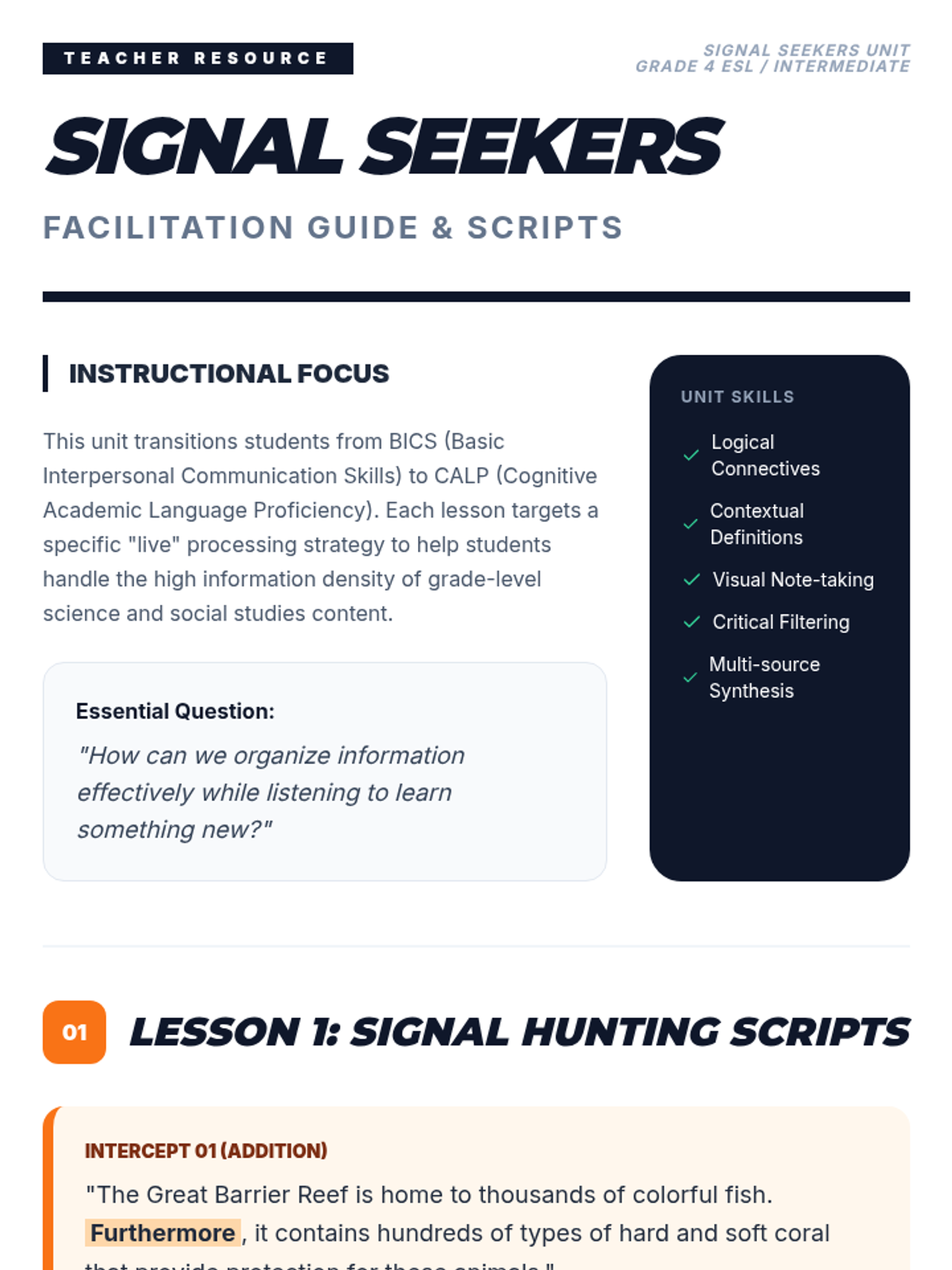
A comprehensive teacher resource containing all scripts for the listening activities, answer keys, and pedagogical tips for the Signal Seekers unit.
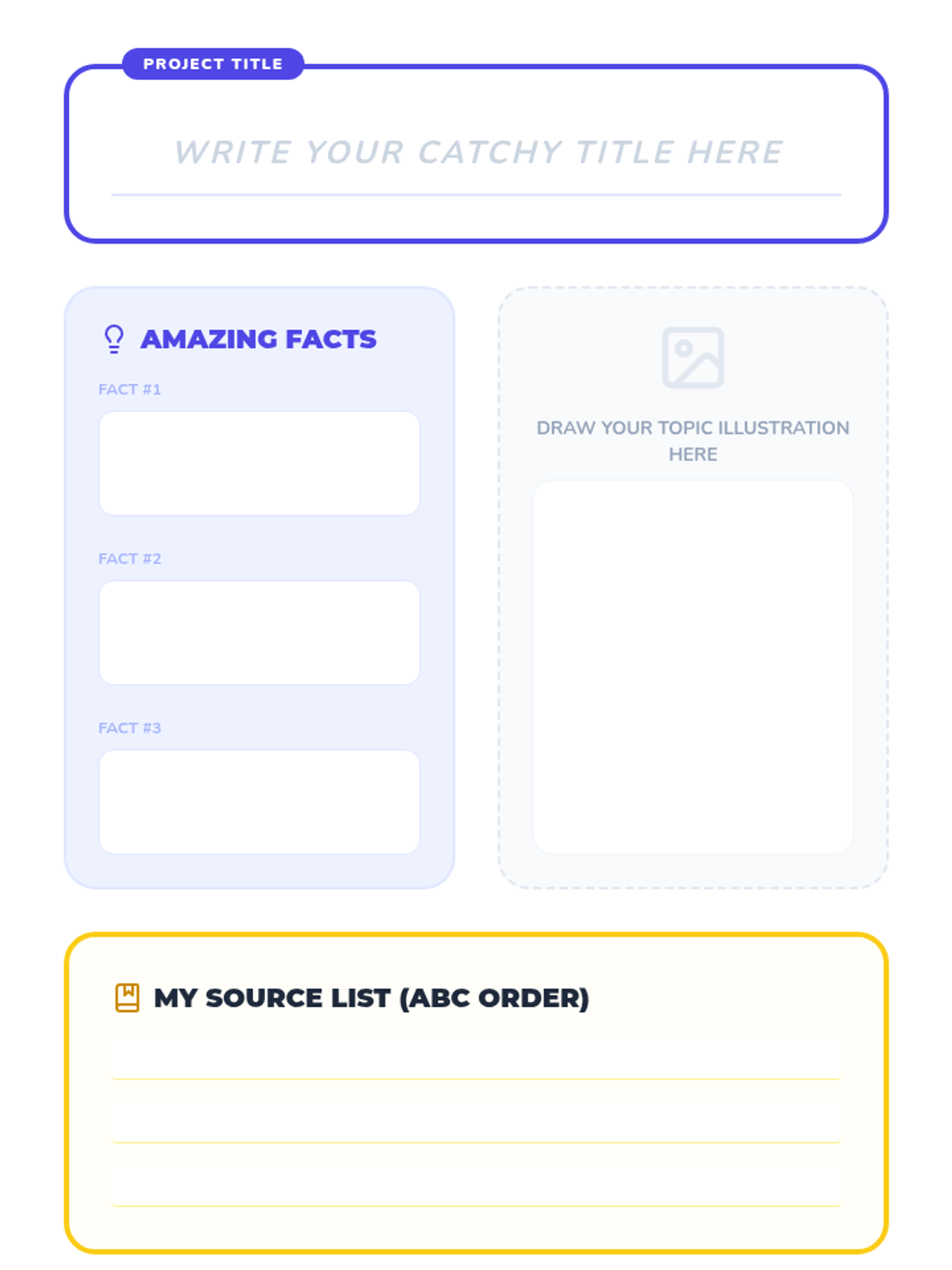
A structured research poster template for the final project. Includes sections for a title, three facts, an illustration, and a formatted bibliography.
Visual slides for Lesson 5 on the final mini-research project. Outlines project requirements and the gallery walk procedure.
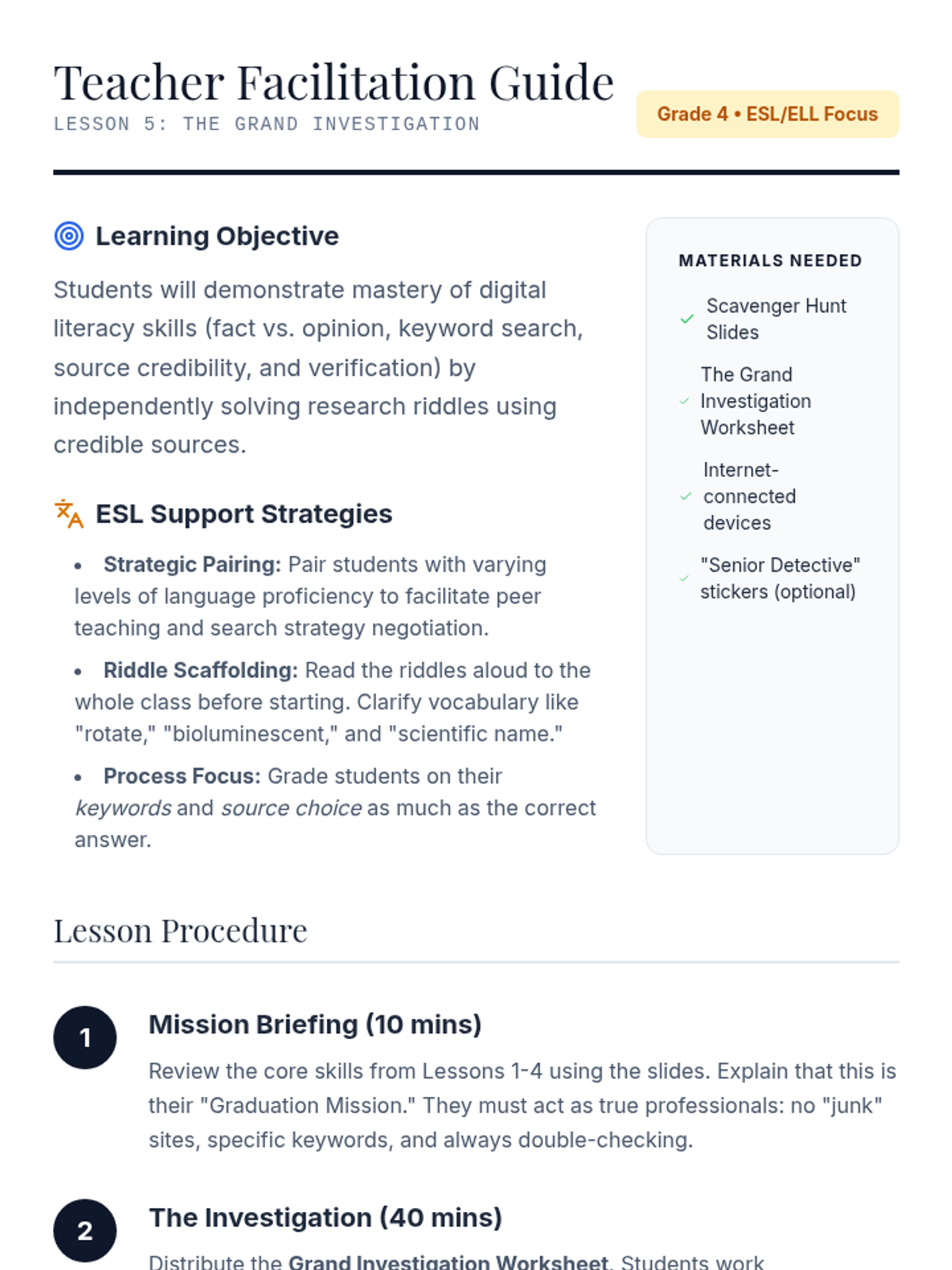
Teacher facilitation guide for the final "Grand Investigation" mission. Includes lesson timing, pairing strategies, and a detailed answer key for the scavenger hunt riddles.
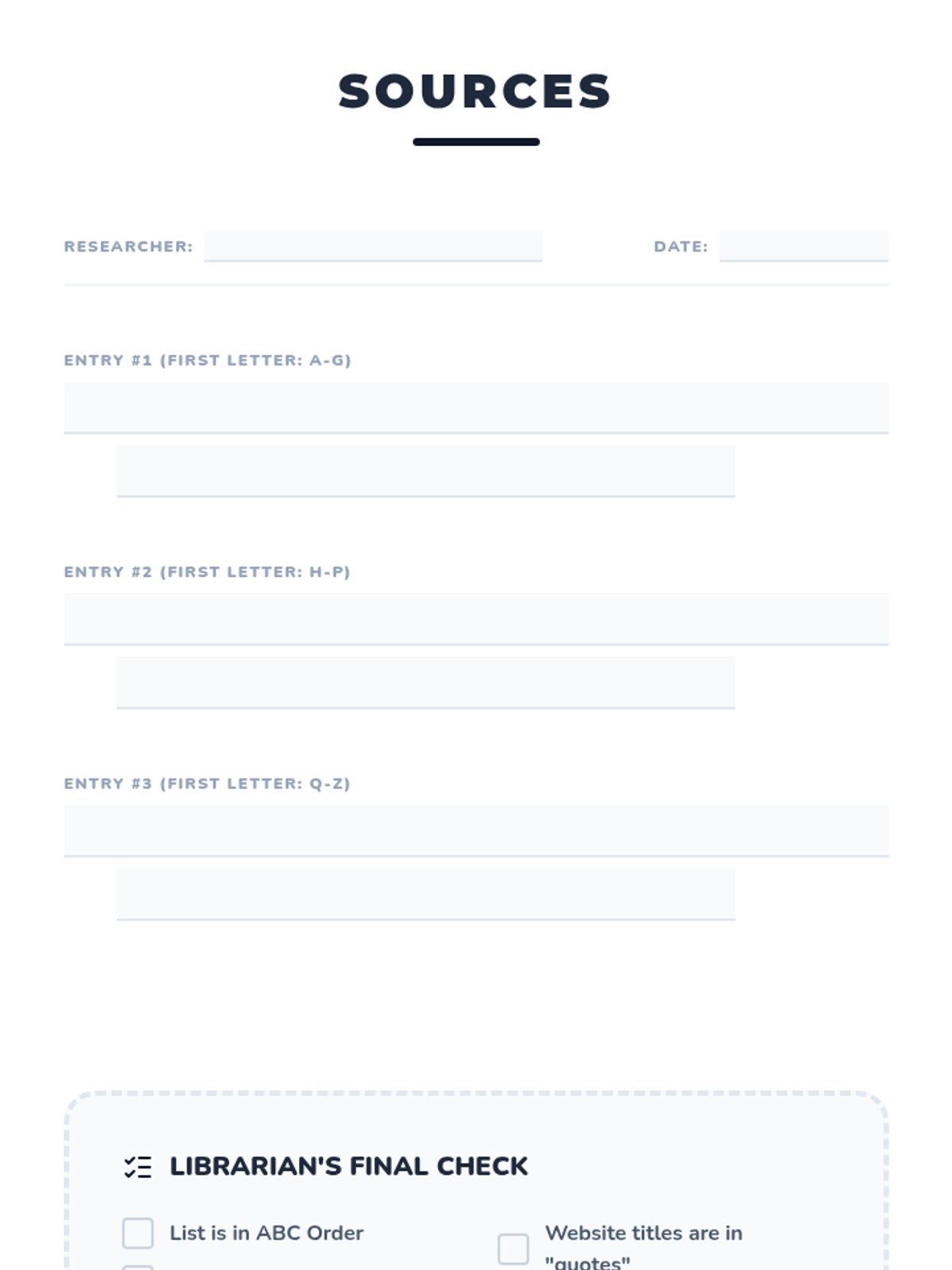
Final bibliography worksheet for Lesson 4 where students practice organizing their collected citations into a formal, alphabetized list with correct formatting.
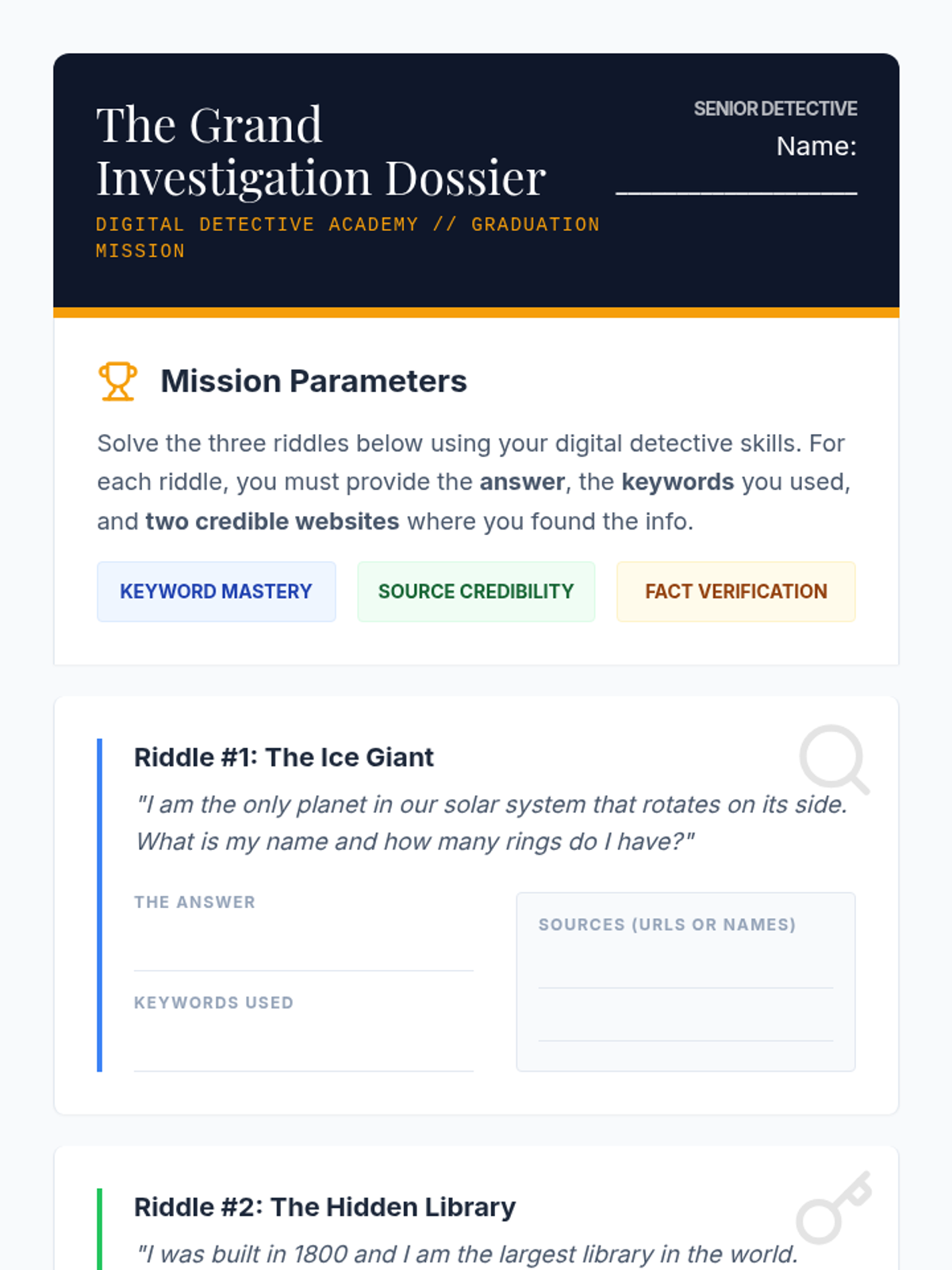
Final assessment worksheet for Lesson 5. A scavenger hunt where students solve research riddles, documenting their keywords and credible sources to demonstrate mastery of the unit's skills.
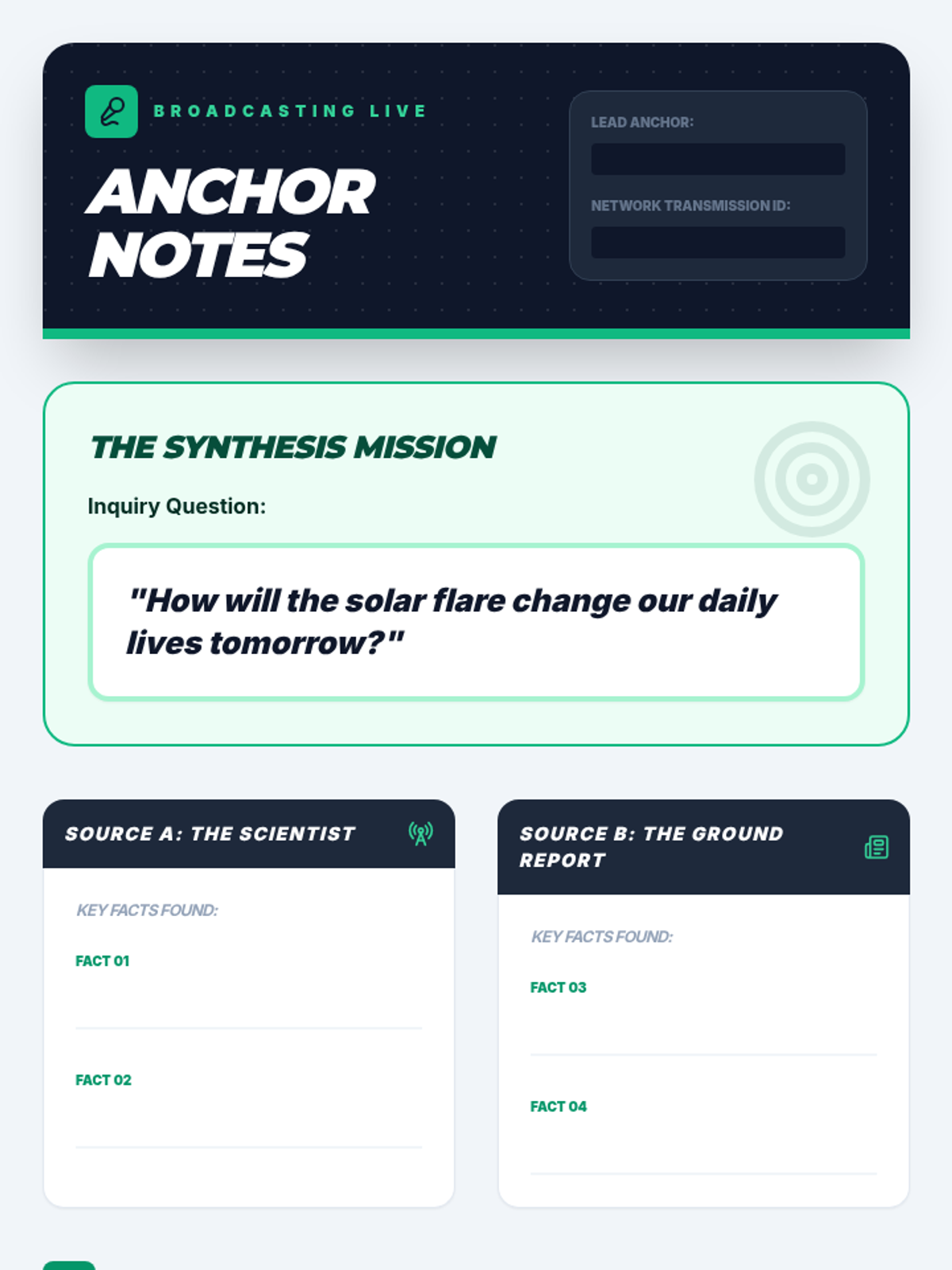
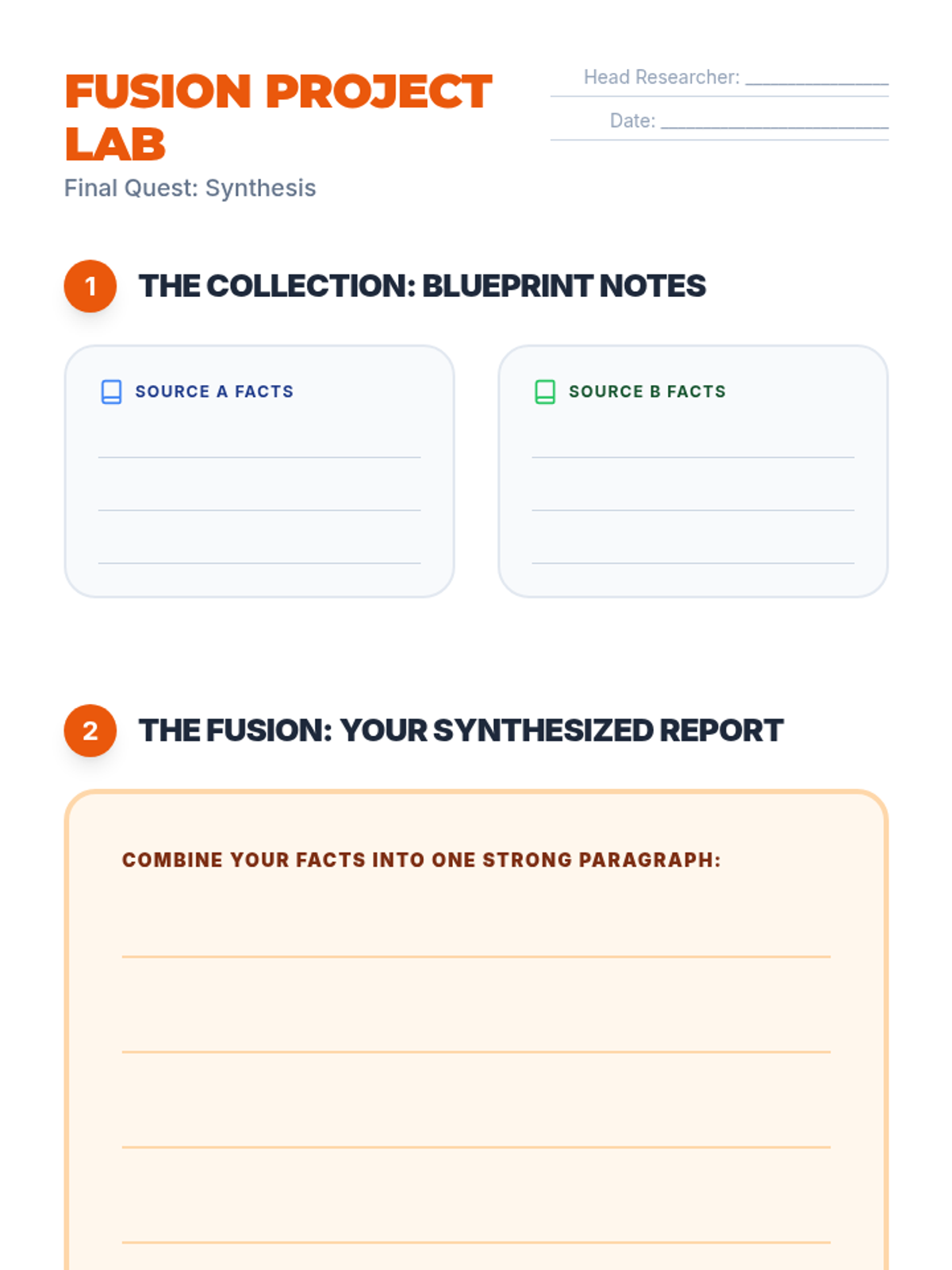
A student worksheet for the final synthesis challenge, providing a structured template to capture facts from multiple sources and combine them into a coherent news report.
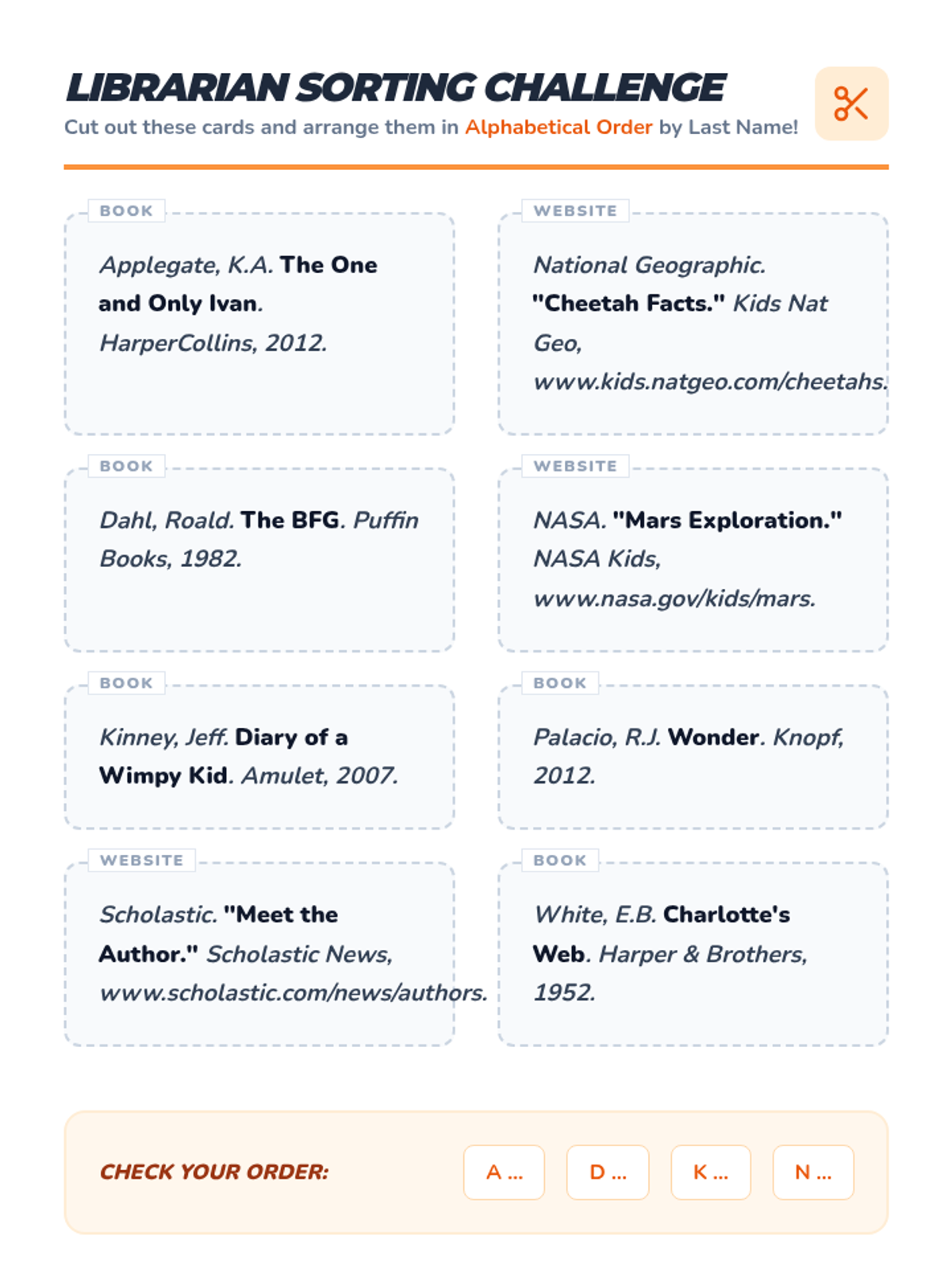
Hands-on activity cards for Lesson 4 where students practice arranging various book and website citations into alphabetical order by author's last name.
Introductory slide deck for the culminating mission (Lesson 5). Outlines rules, review concepts, and sets the stage for the research scavenger hunt.
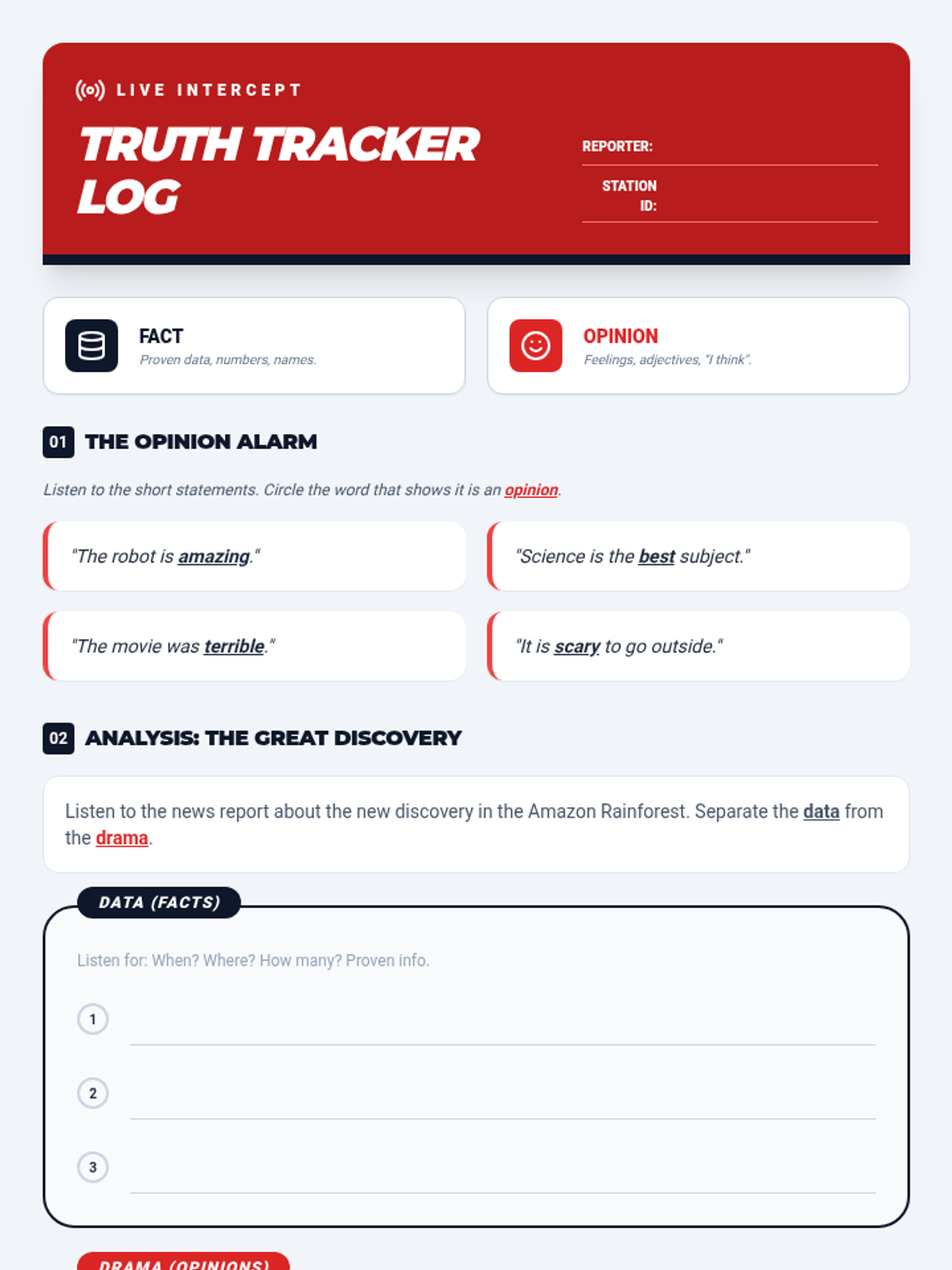
A student worksheet designed to help students distinguish between verifiable facts and personal opinions during a news report listening activity.
Visual slides for Lesson 4 on organizing citations into an alphabetical reference list. Focuses on the rules of alphabetical order by author's last name.
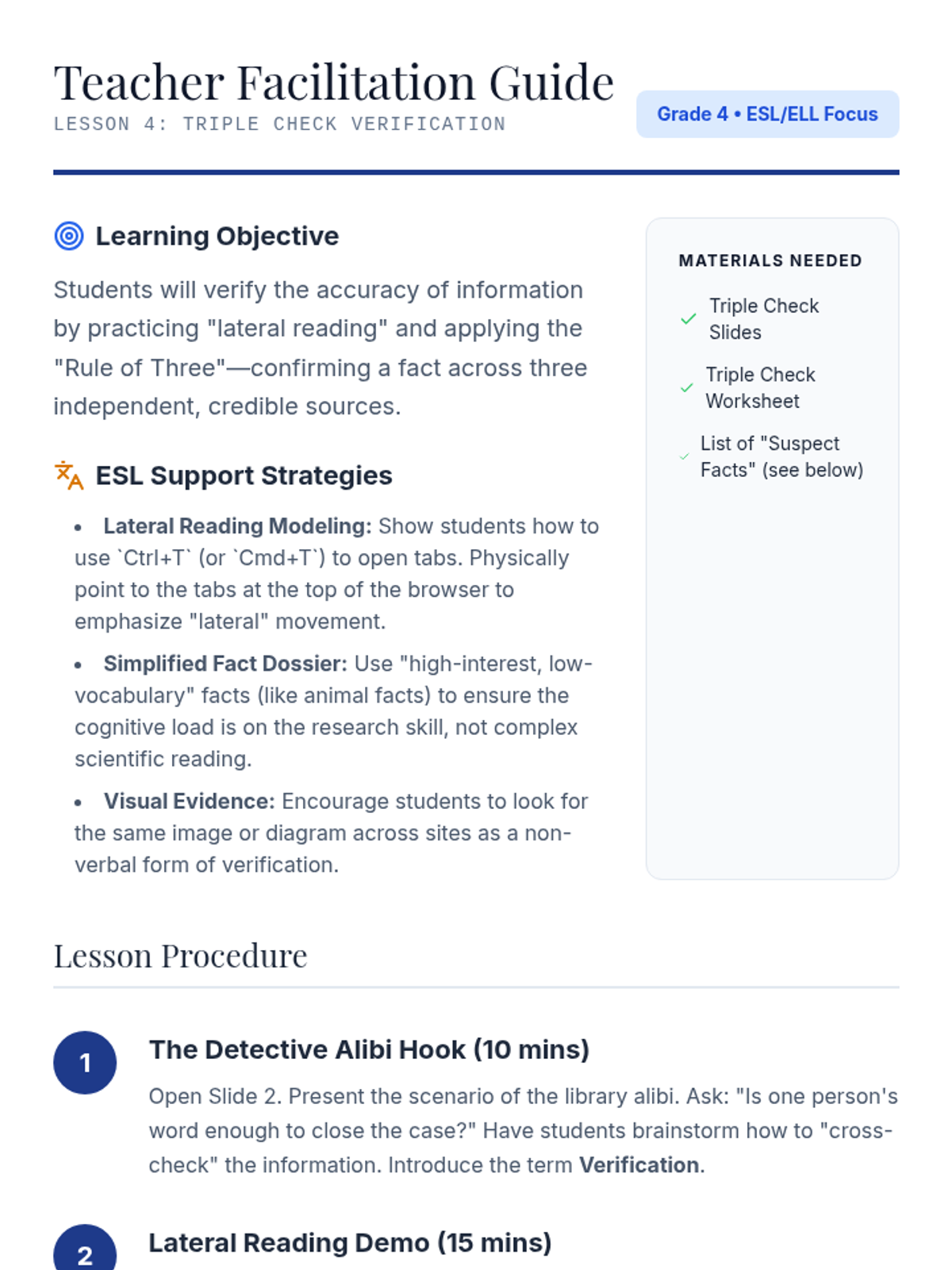
Teacher facilitation guide for Lesson 4: Triple Check Verification. Includes instructions for lateral reading demonstrations and a list of engaging, "weird" facts for students to verify.
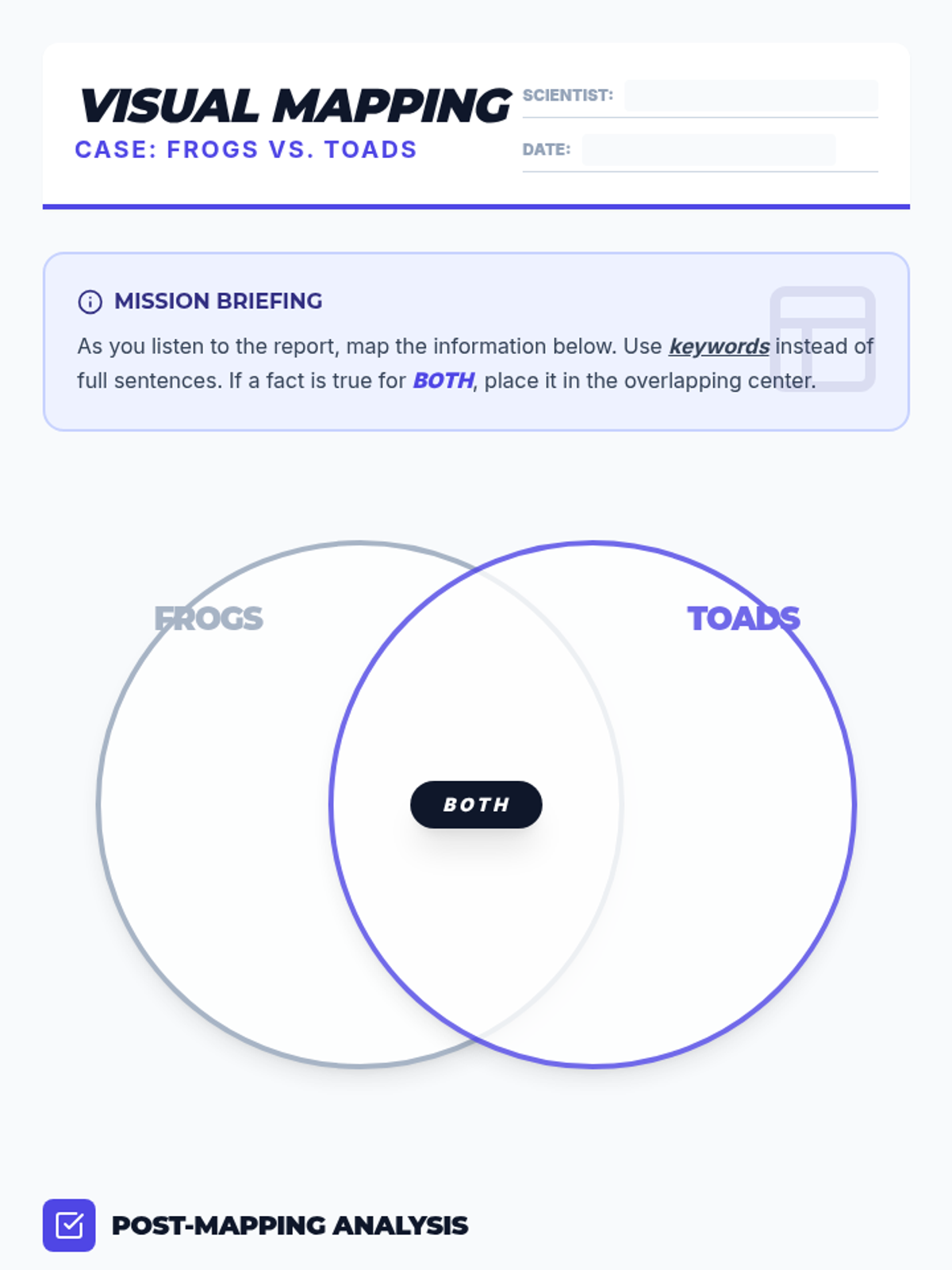
A student worksheet providing a structured Venn diagram for students to organize comparative information during a live listening activity about frogs and toads.
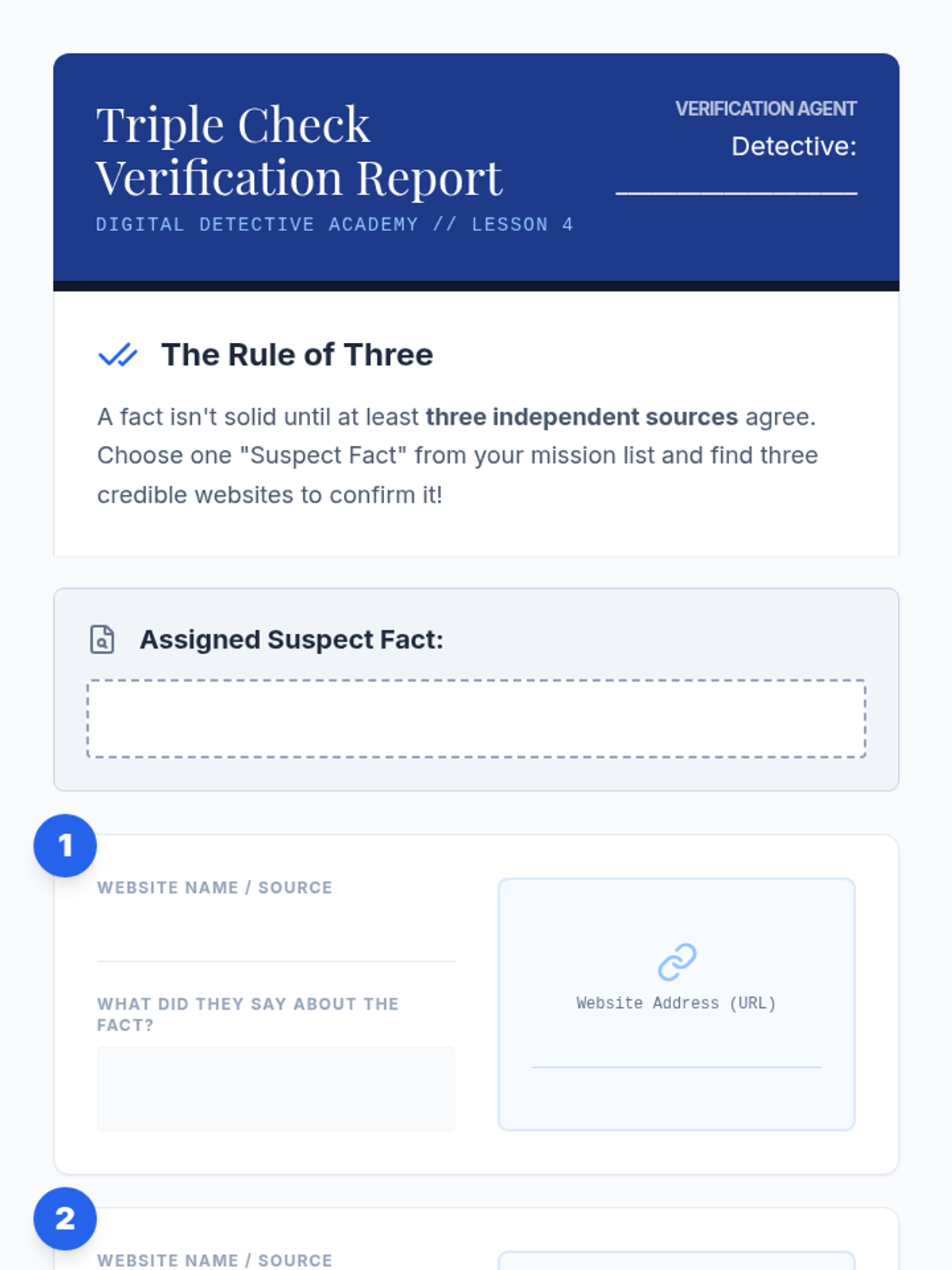
Worksheet for Lesson 4. Students record three different sources to verify a single "Suspect Fact," reinforcing the Rule of Three and practice of lateral reading.
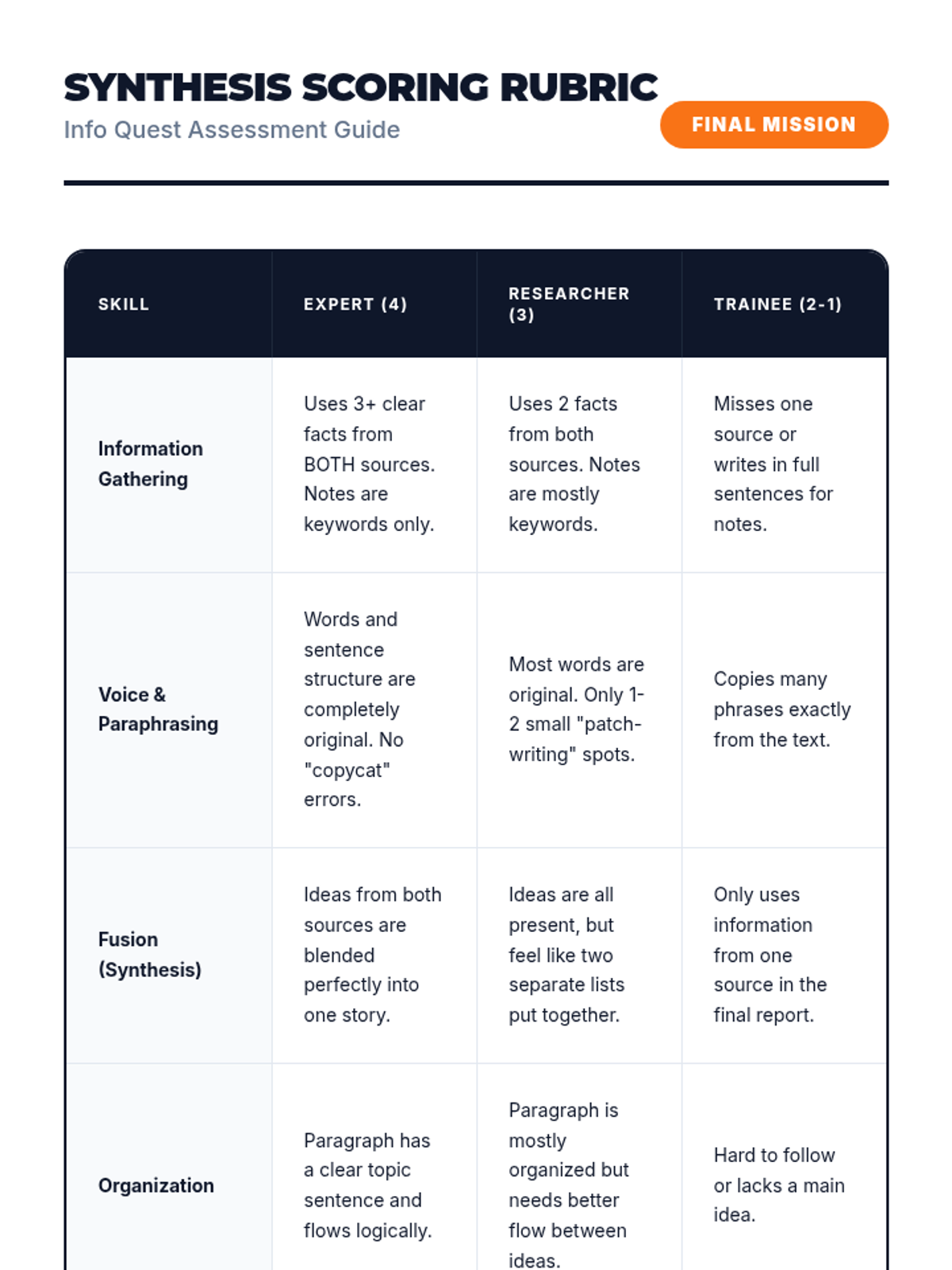
Synthesis scoring rubric for evaluating students' final research project based on information gathering, paraphrasing, fusion of ideas, and organization.
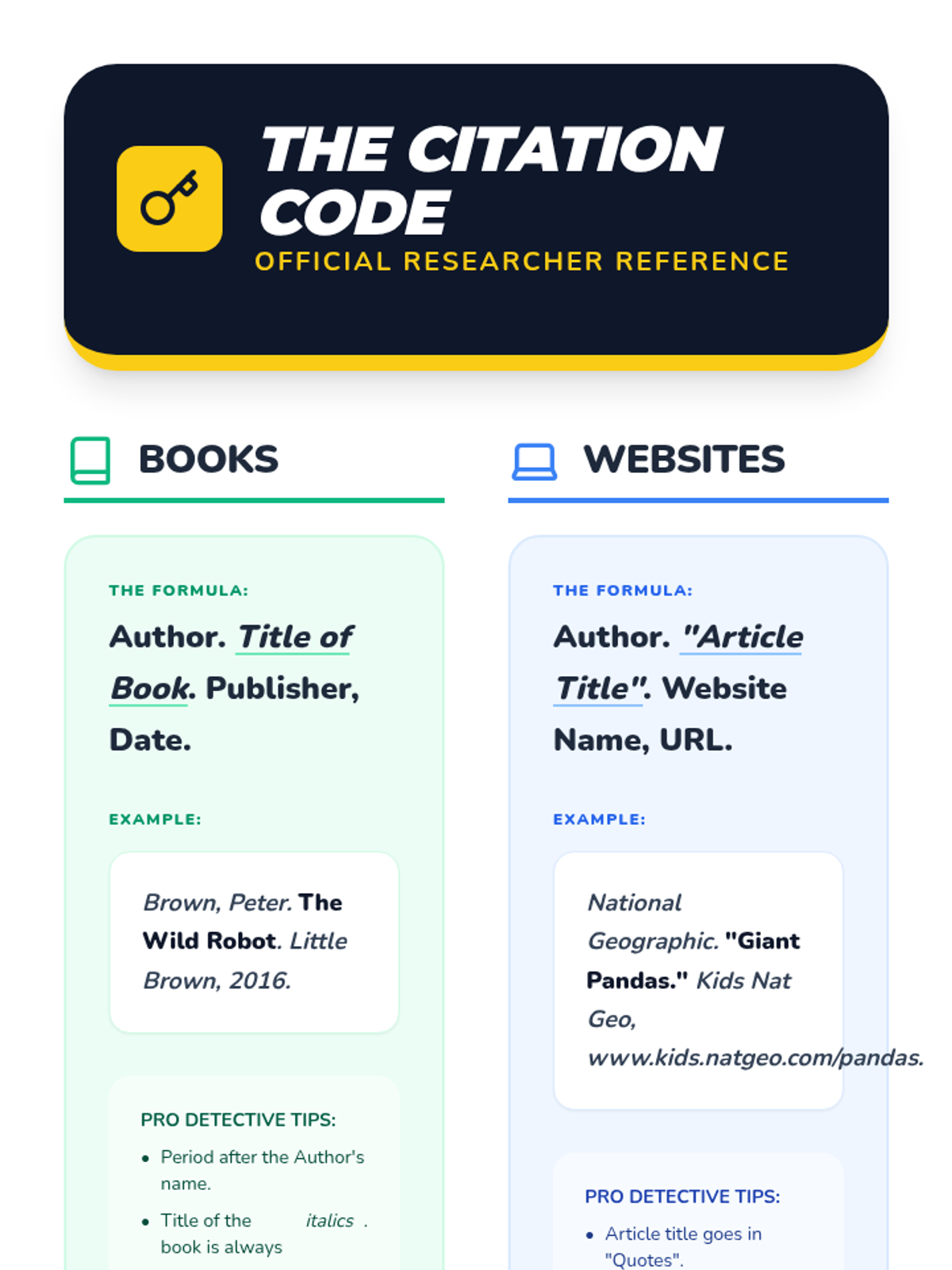
A visual reference sheet for students comparing book and website citation formulas with clear examples and formatting tips.
Final project worksheet where students collect notes from two sources and synthesize them into a cohesive paragraph.
Slide deck for Lesson 4: Triple Check Verification. Teaches students the "Rule of Three" for verifying facts and the practice of "Lateral Reading" (opening multiple tabs to confirm information).
A slide deck for the final synthesis challenge, teaching students how to combine information from multiple auditory sources to answer an inquiry question.
Slide deck for Lesson 5, focusing on the final stage of research: synthesizing information from multiple sources into a single cohesive output.
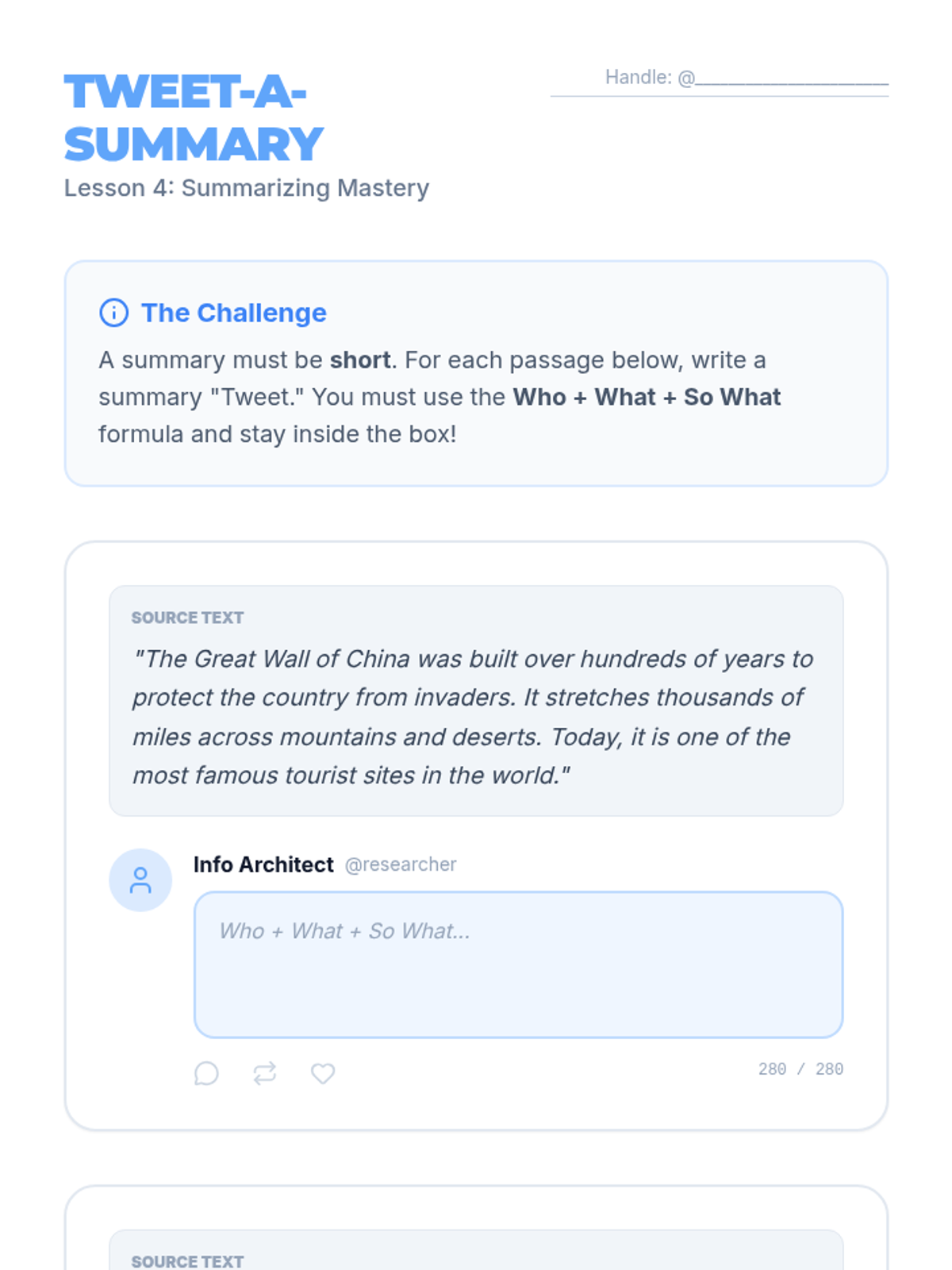
Student activity worksheet where they practice condensing information into short "Tweets" using the "Who, What, So What" framework.
A slide deck introducing 4th grade ESL students to the difference between fact and opinion, focusing on listening for data vs. subjective adjectives.
Slide deck for Lesson 4, introducing the "Who, What, So What" summarizing technique and the "Tweet a Summary" challenge.
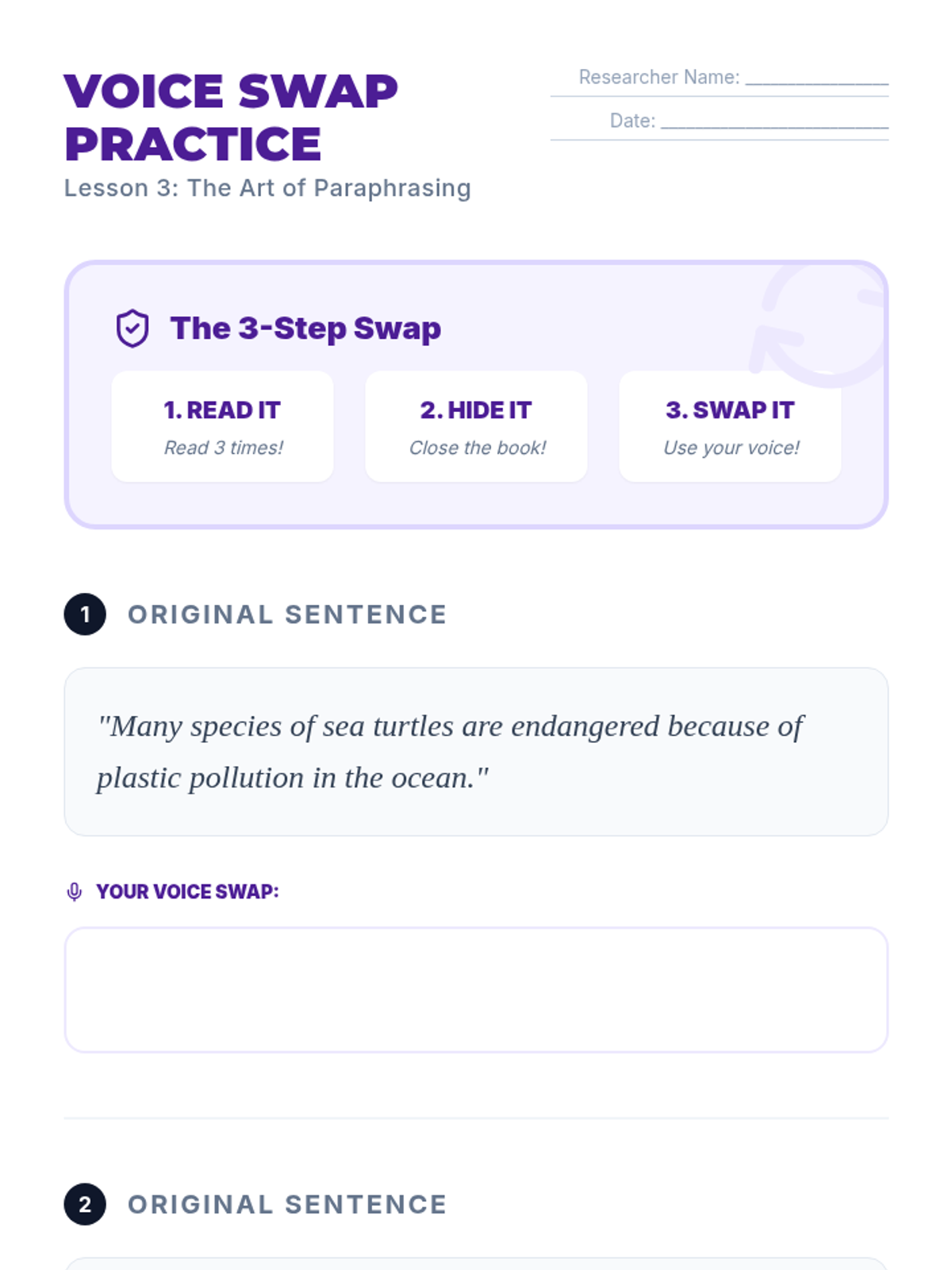
Student worksheet for practicing paraphrasing using the "Read-Hide-Write" technique with a variety of academic sentences.
A slide deck introducing T-charts and Venn diagrams as live listening tools for comparing and contrasting information.
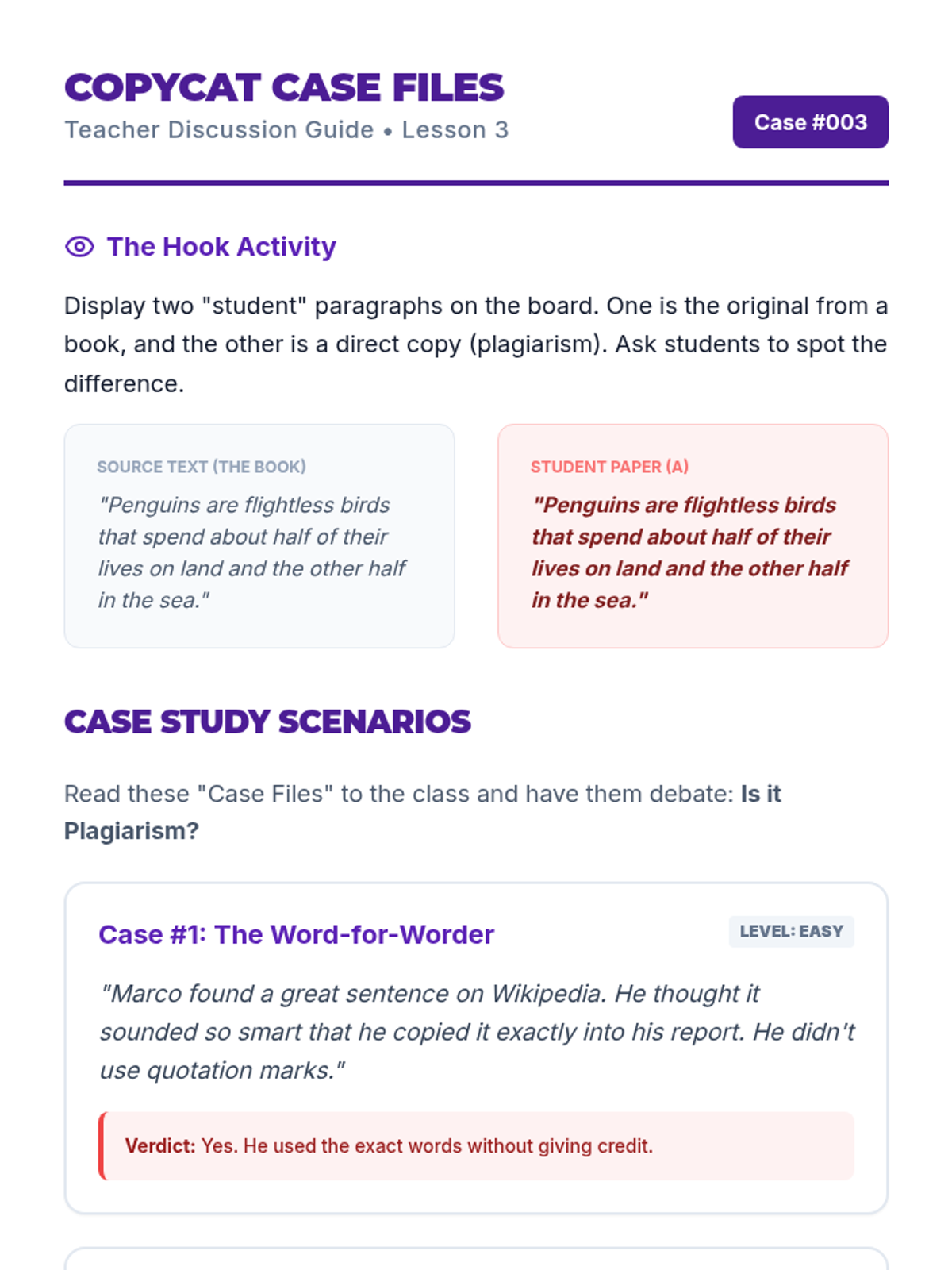
Scenario-based teacher resource for discussing plagiarism and identifying the difference between copying, patch-writing, and successful paraphrasing.
Slide deck for Lesson 3, introducing paraphrasing techniques like "Read-Hide-Write" and how to use synonyms and change sentence structure.
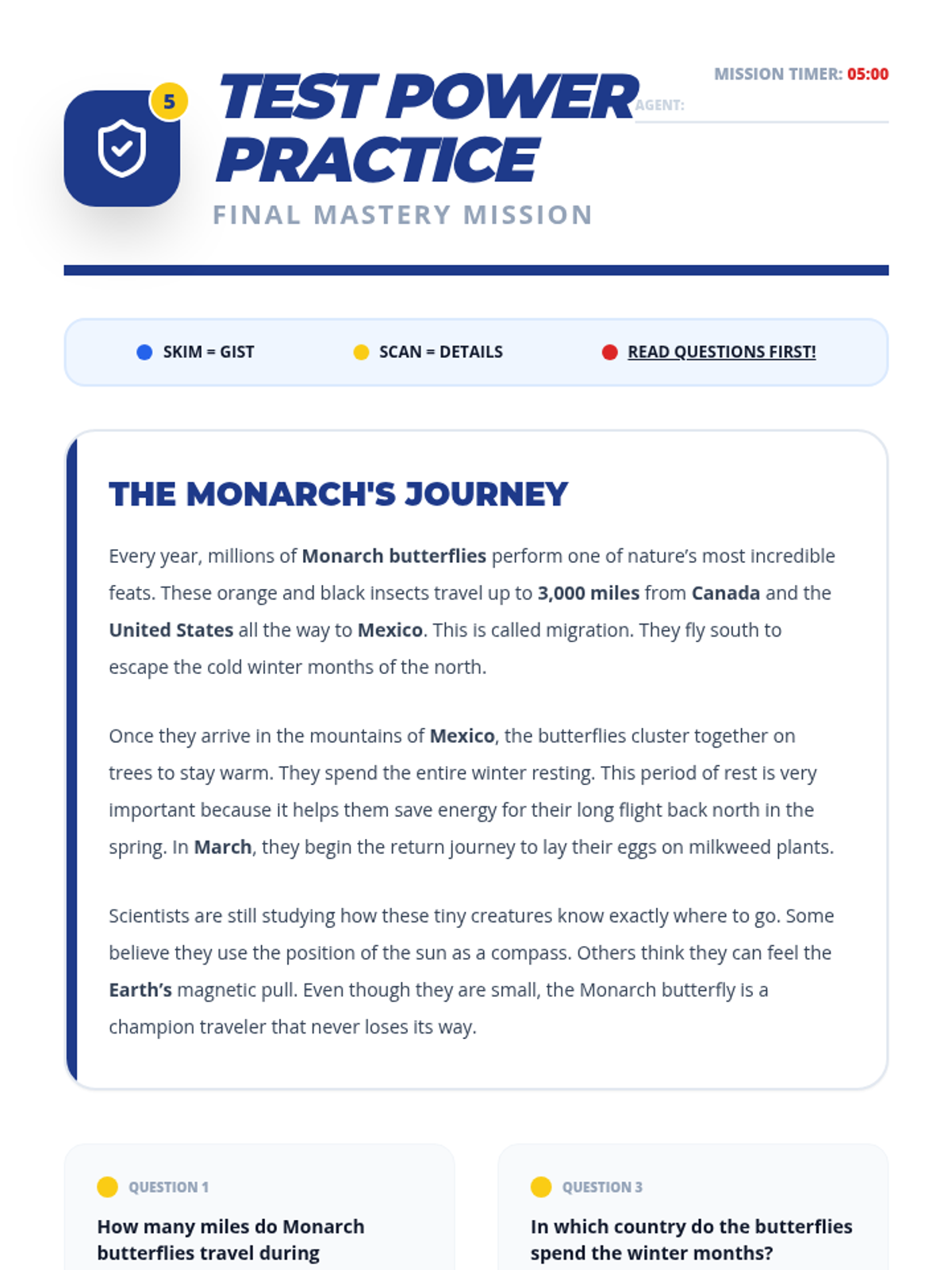
Final assessment worksheet for Lesson 5, featuring a practice passage about Monarch butterflies and a mix of skimming and scanning questions to test student mastery.
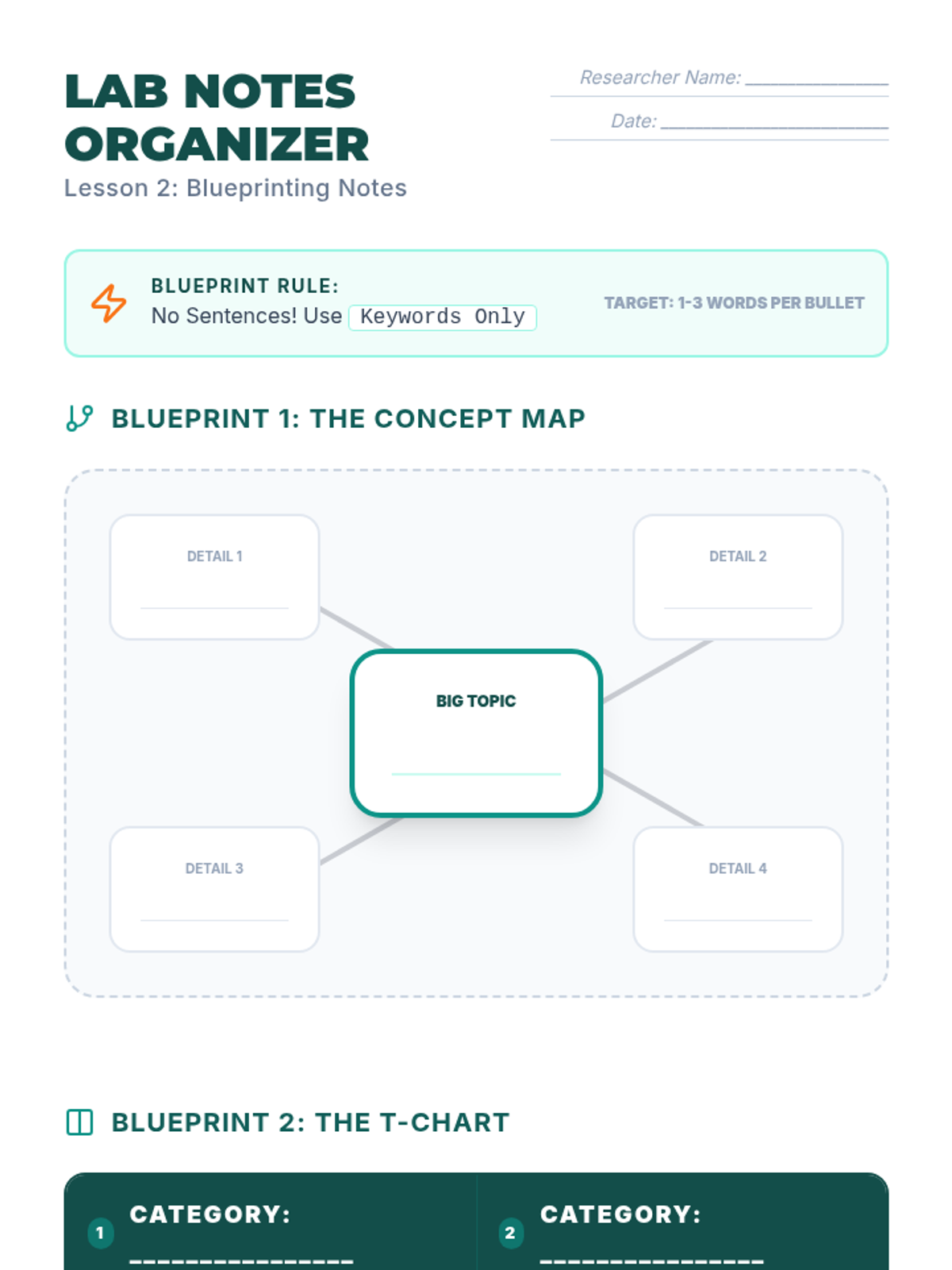
Student note-taking template featuring a concept map and a T-chart, designed for practicing keyword-based research organization.
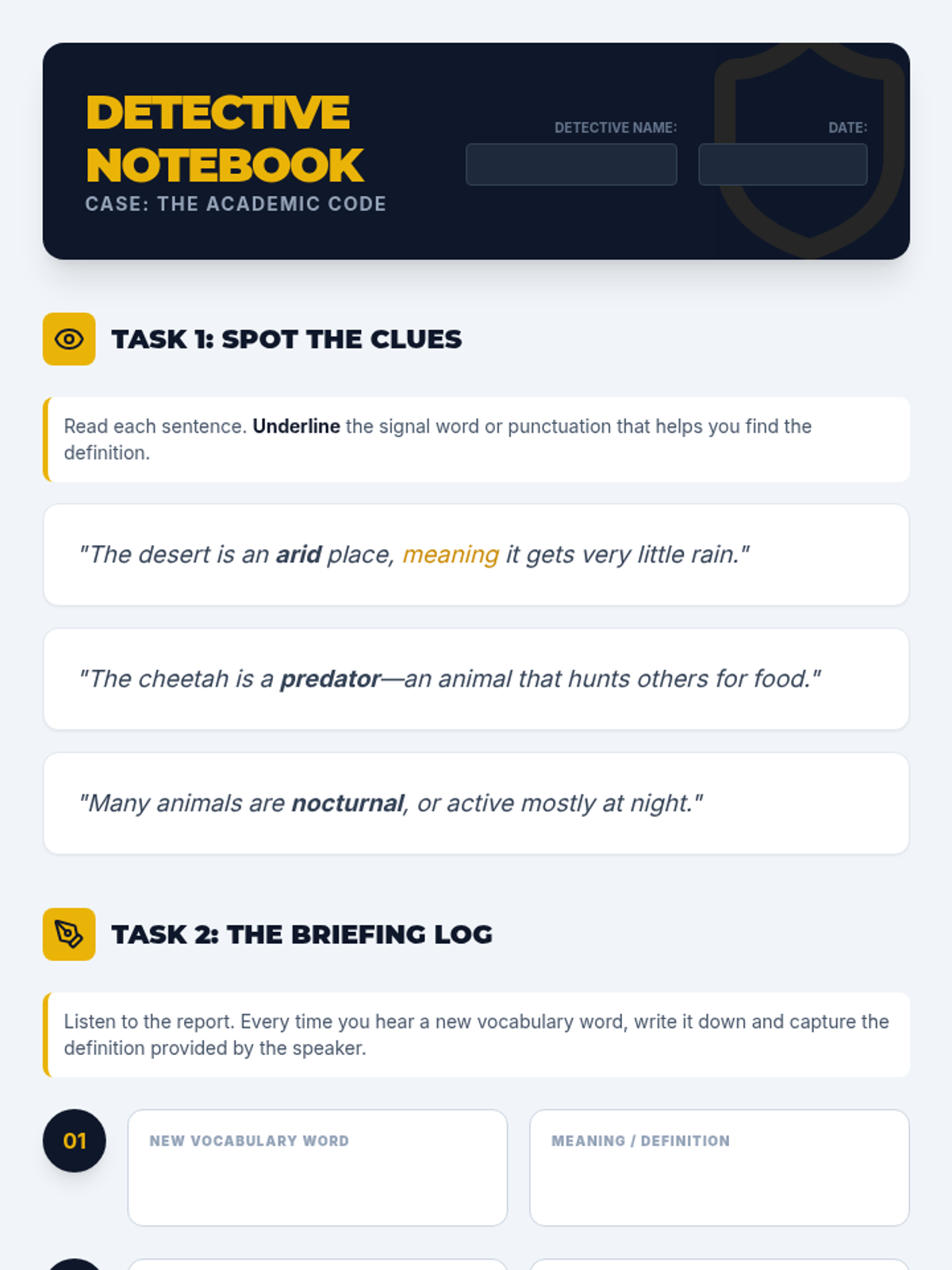
A student worksheet designed as a detective's notebook for capturing new academic vocabulary and definitions during a listening activity.
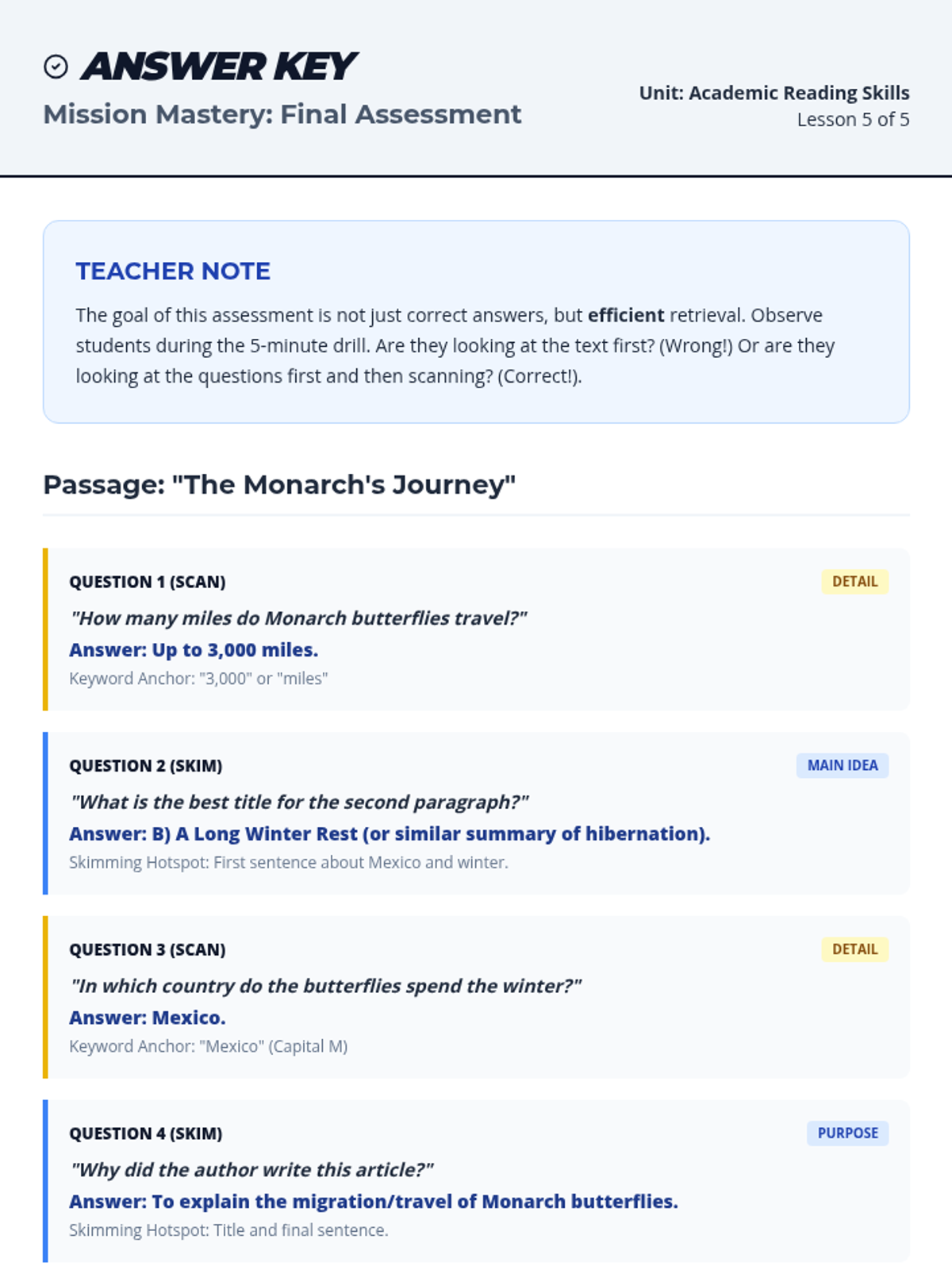
Answer key for the Lesson 5 final assessment, including strategy categorization for each question and an observational rubric for teacher use.
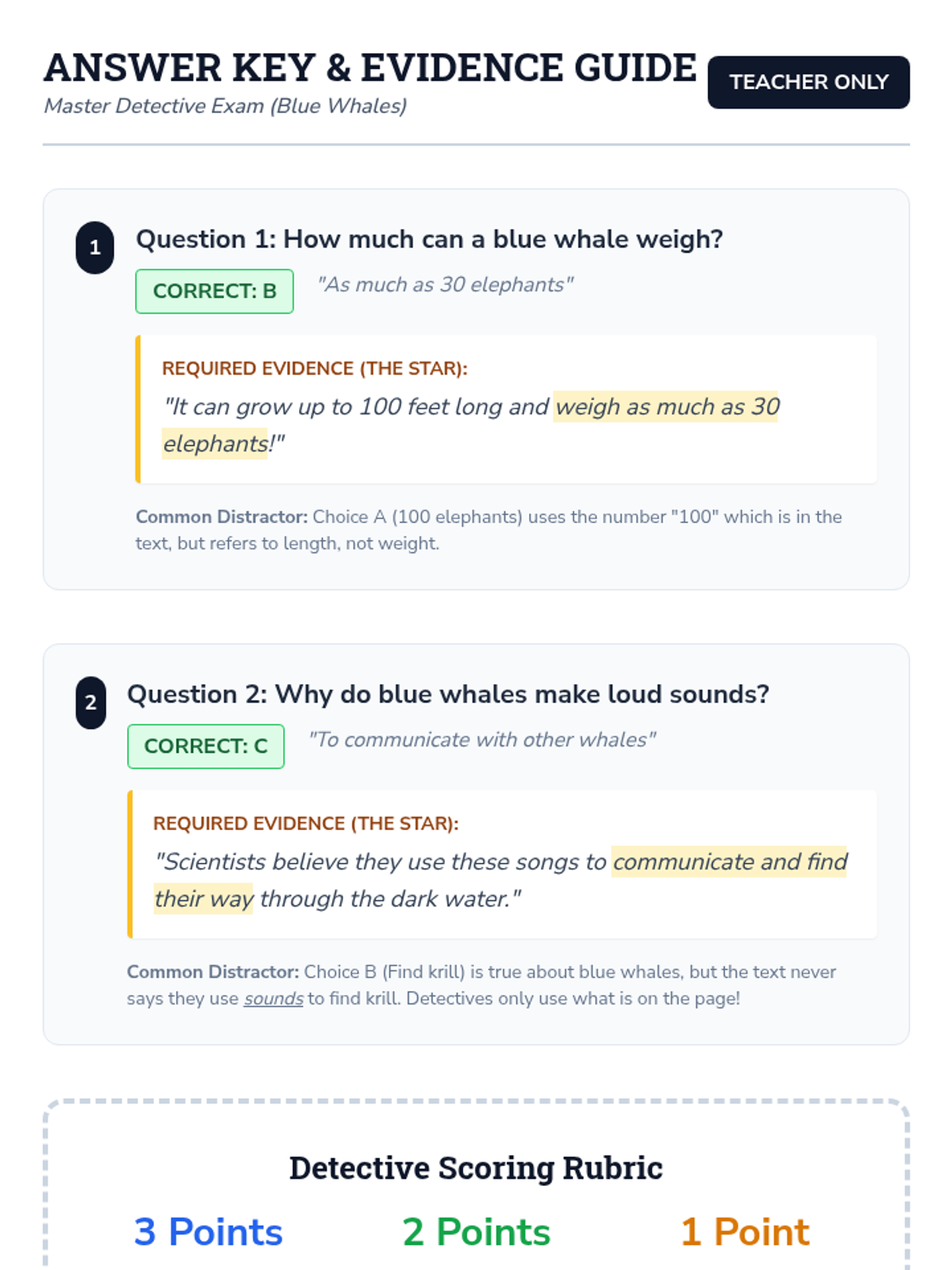
Teacher answer key and evidence guide for the Master Detective Exam. Includes explanations for correct choices and common student misconceptions (distractors).
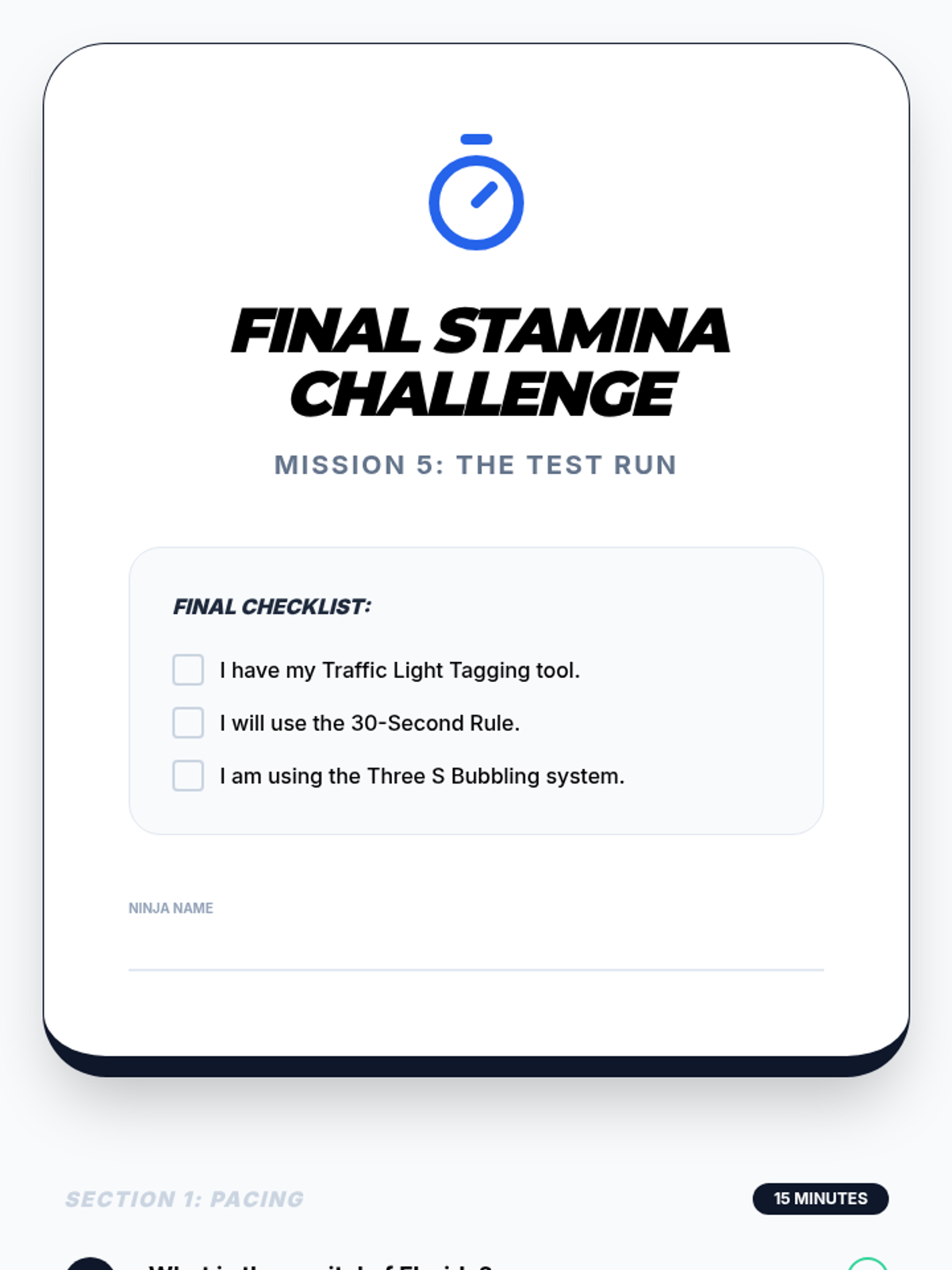
A short mock test simulation designed to let students apply all learned strategies (tagging, skipping, bubbling, and breathing) in one final practice session.
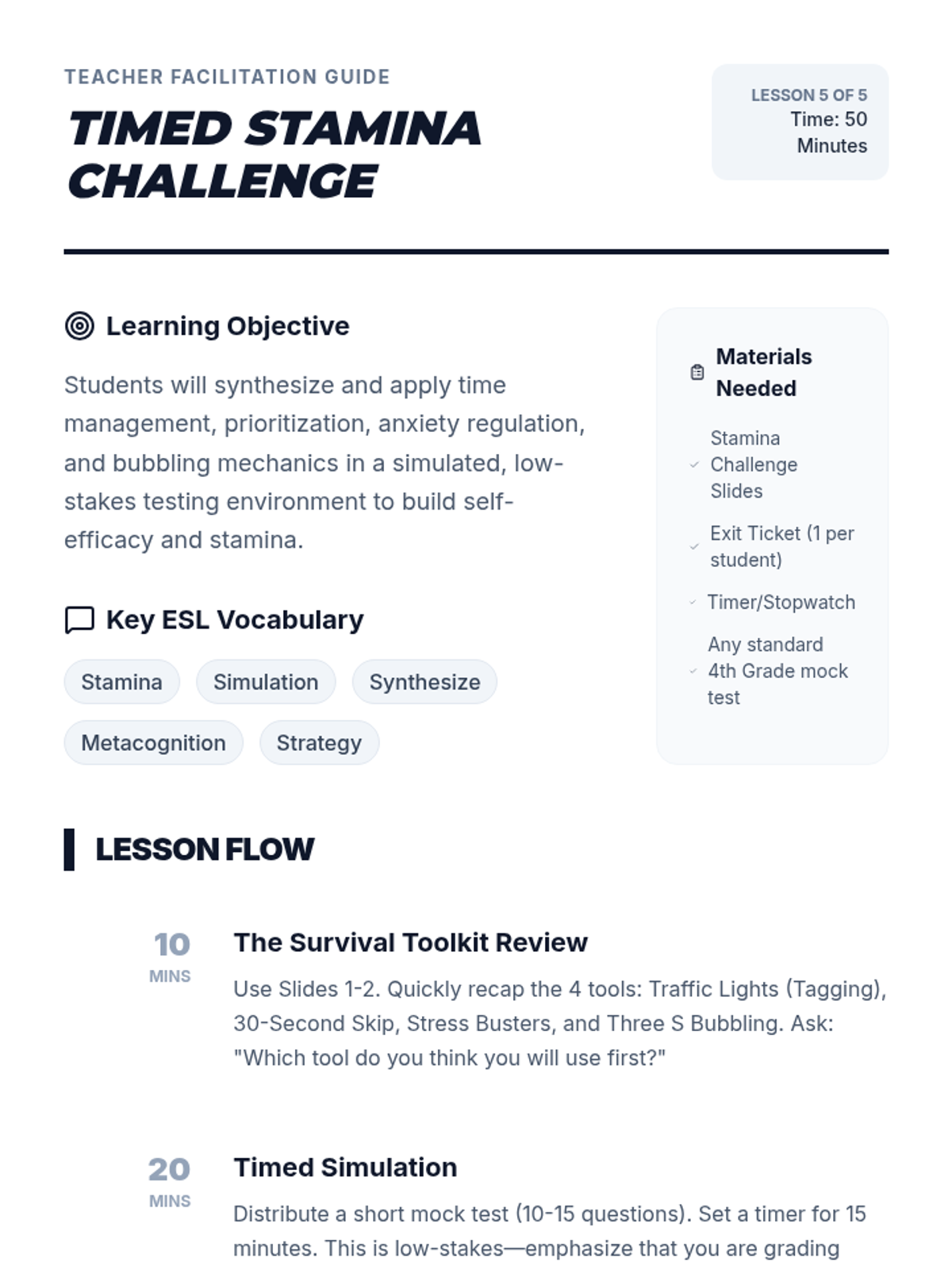
Teacher facilitation guide for Lesson 5: Timed Stamina Challenge. Includes steps for running the final simulation and facilitating the strategy debrief.
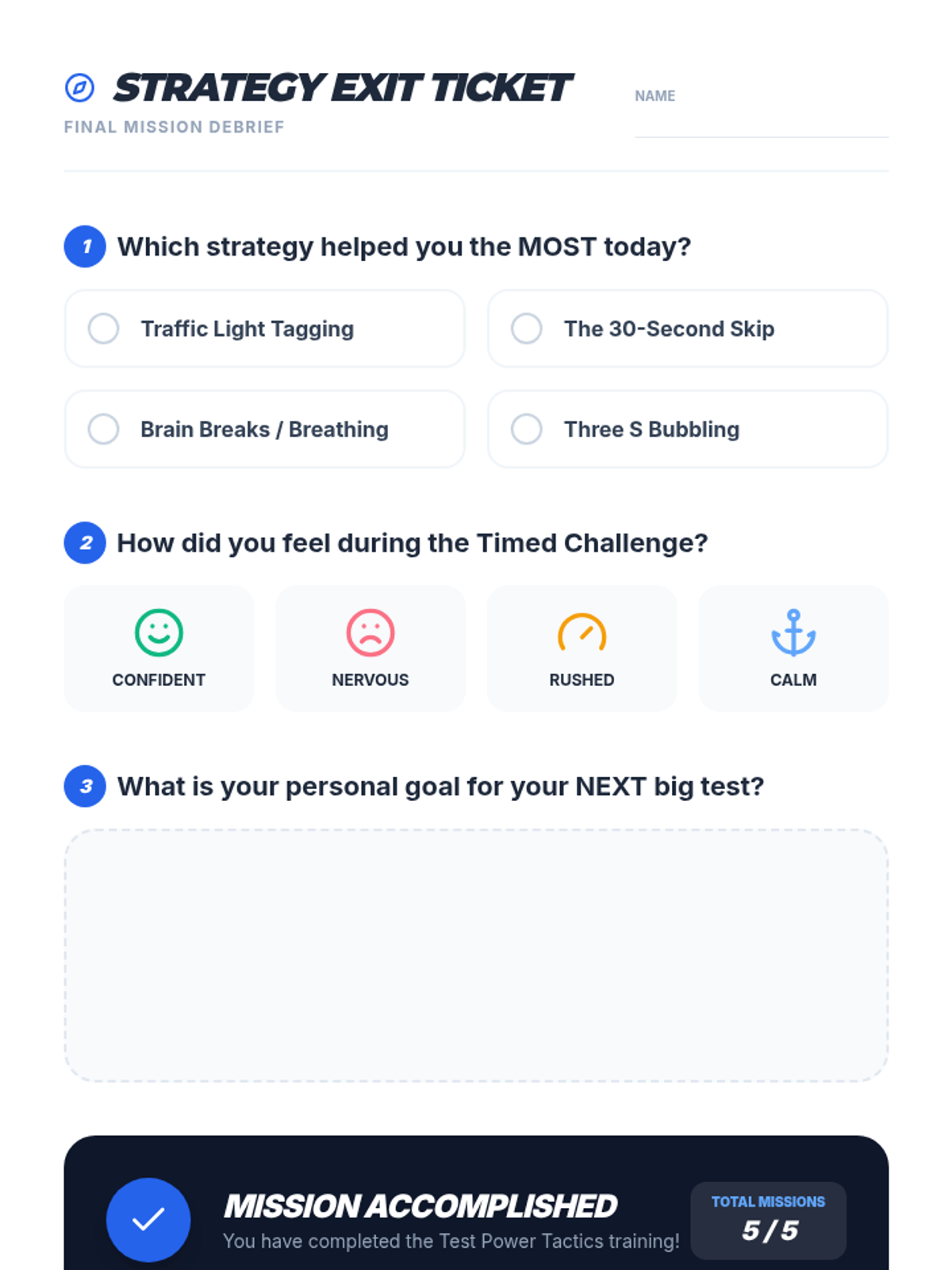
A strategy reflection exit ticket for Lesson 5. Students reflect on which time management and anxiety regulation techniques were most helpful during the final simulation.
Visual presentation for Lesson 5: Timed Stamina Challenge. Encourages students to combine all learned strategies in a final simulation.
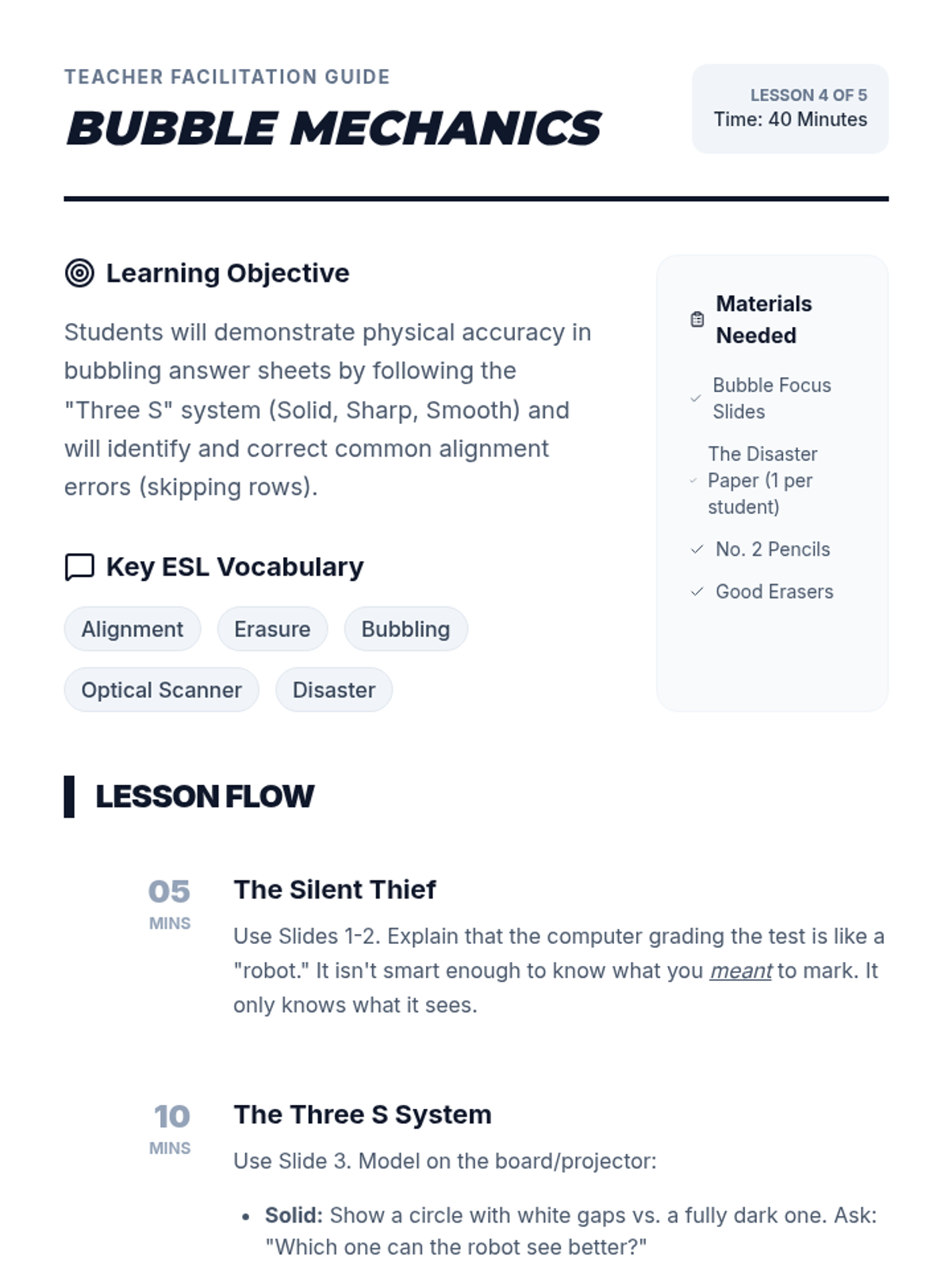
Teacher facilitation guide for Lesson 4: Bubble Sheet Mechanics. Includes tips for teaching accuracy and alignment.
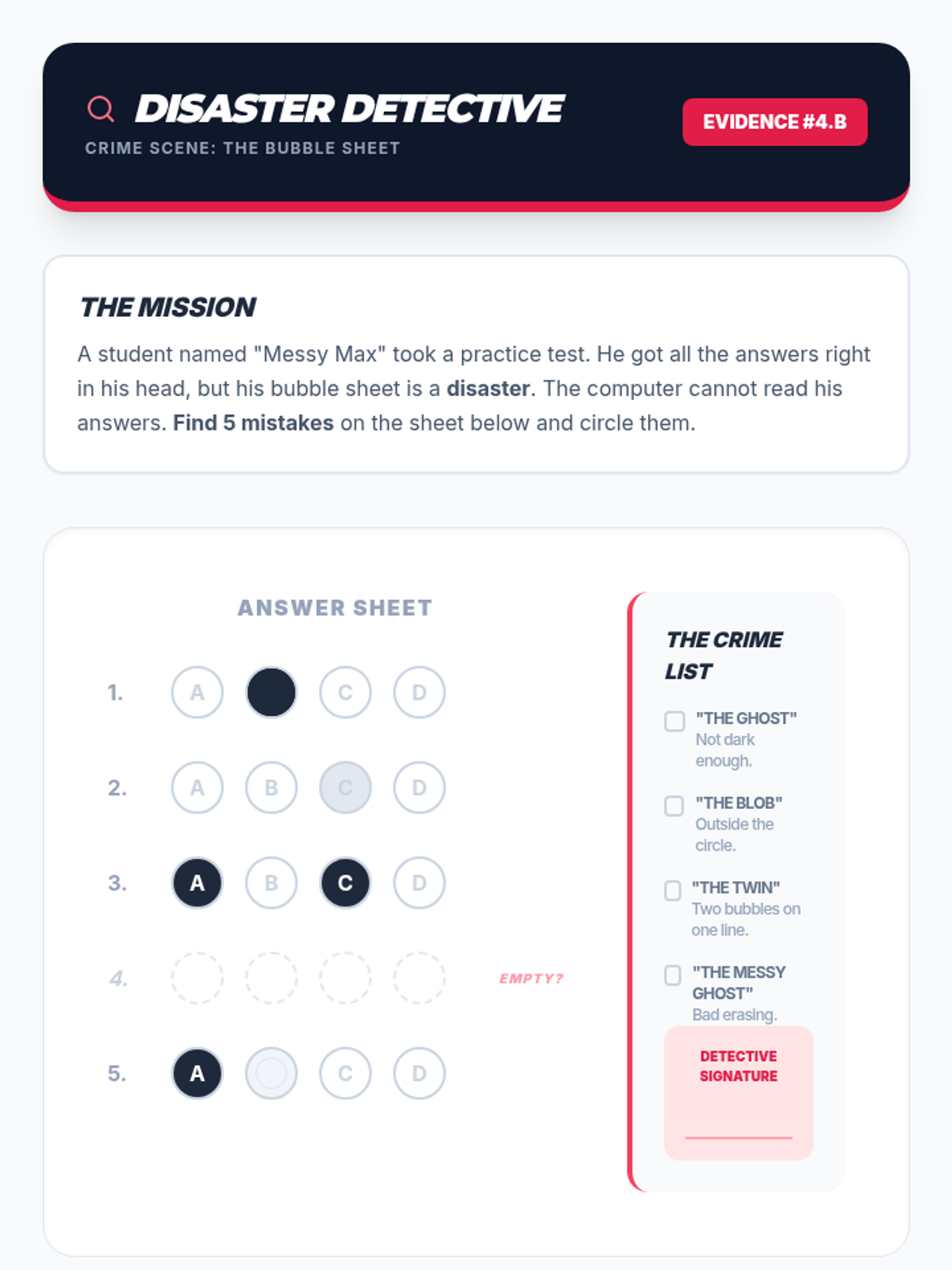
A fun "Disaster Detective" activity where students identify and categorize common bubbling errors on a messy answer sheet.
Visual presentation for Lesson 4: Bubble Sheet Mechanics. Focuses on the "Three S" system (Solid, Sharp, Smooth) and matching question numbers.
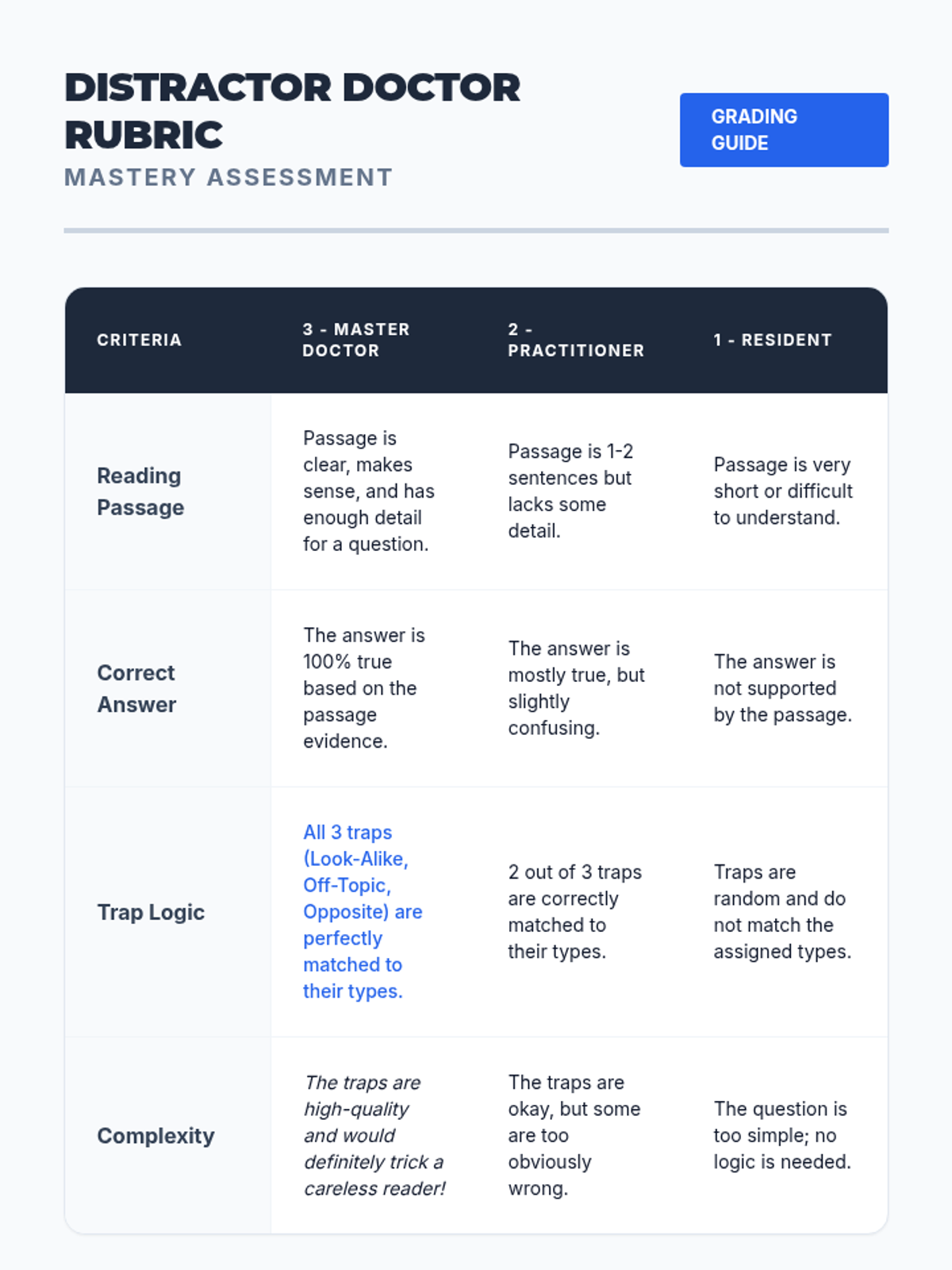
A assessment rubric for the Distractor Doctor project, evaluating the quality of the student's reading passage, the accuracy of their correct answer, and the logic behind their three distractor types.
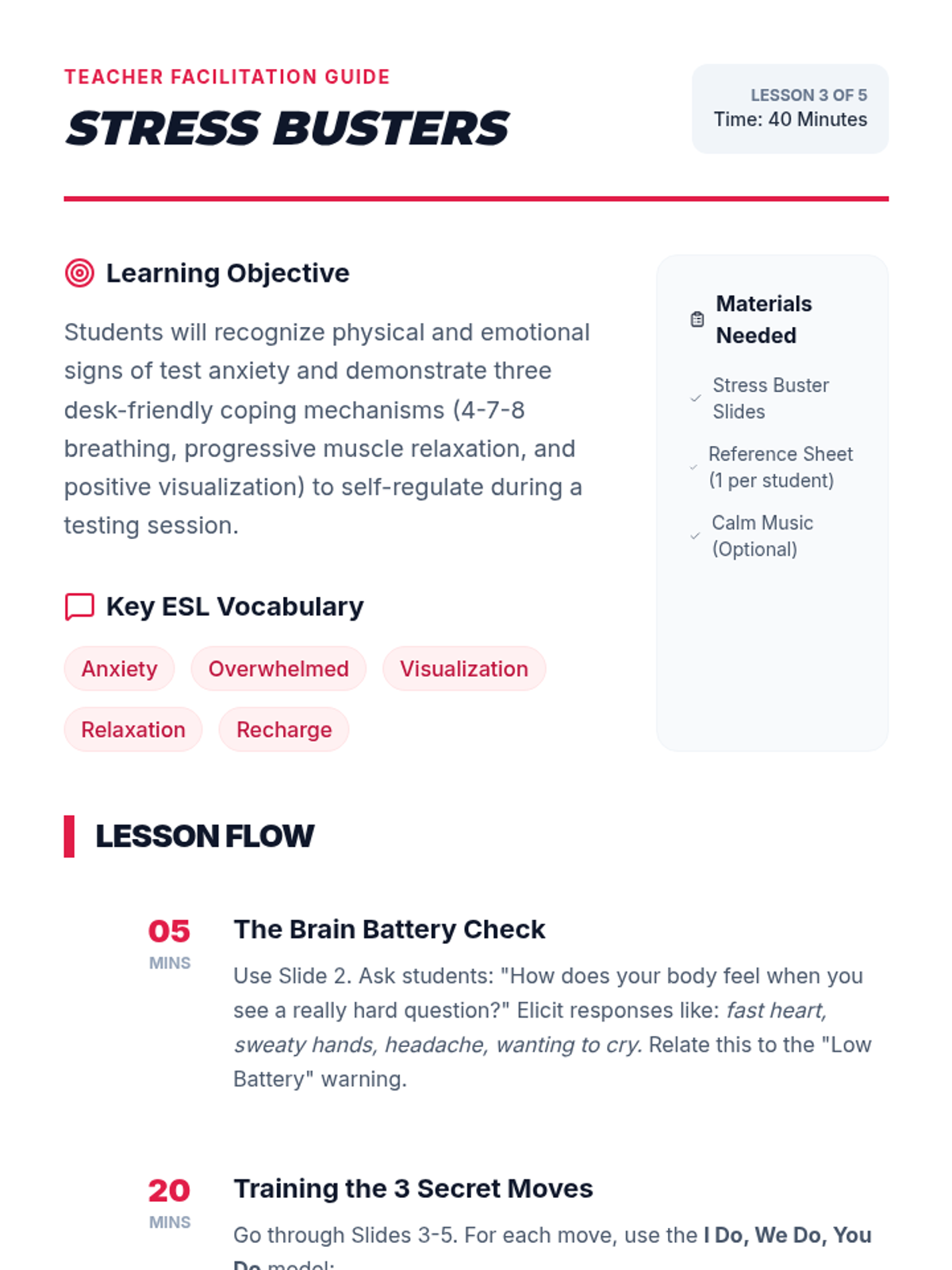
Teacher facilitation guide for Lesson 3: Brain Breaks and Stress Busters. Includes instructions for the three desk-friendly coping mechanisms and ESL support strategies.
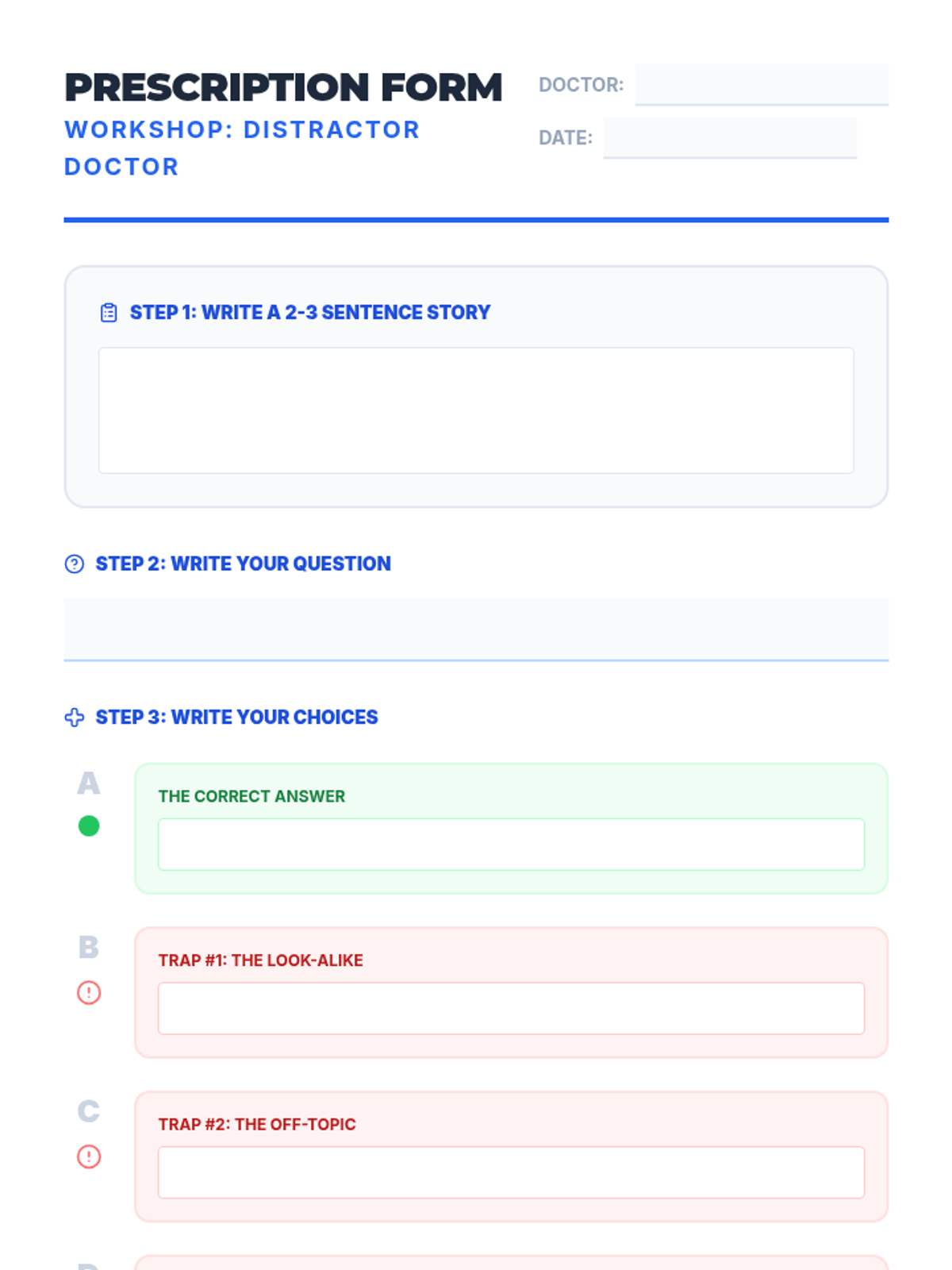
A culminating project worksheet for Lesson 5 where students write their own reading passage, question, correct answer, and three specific types of distractors.
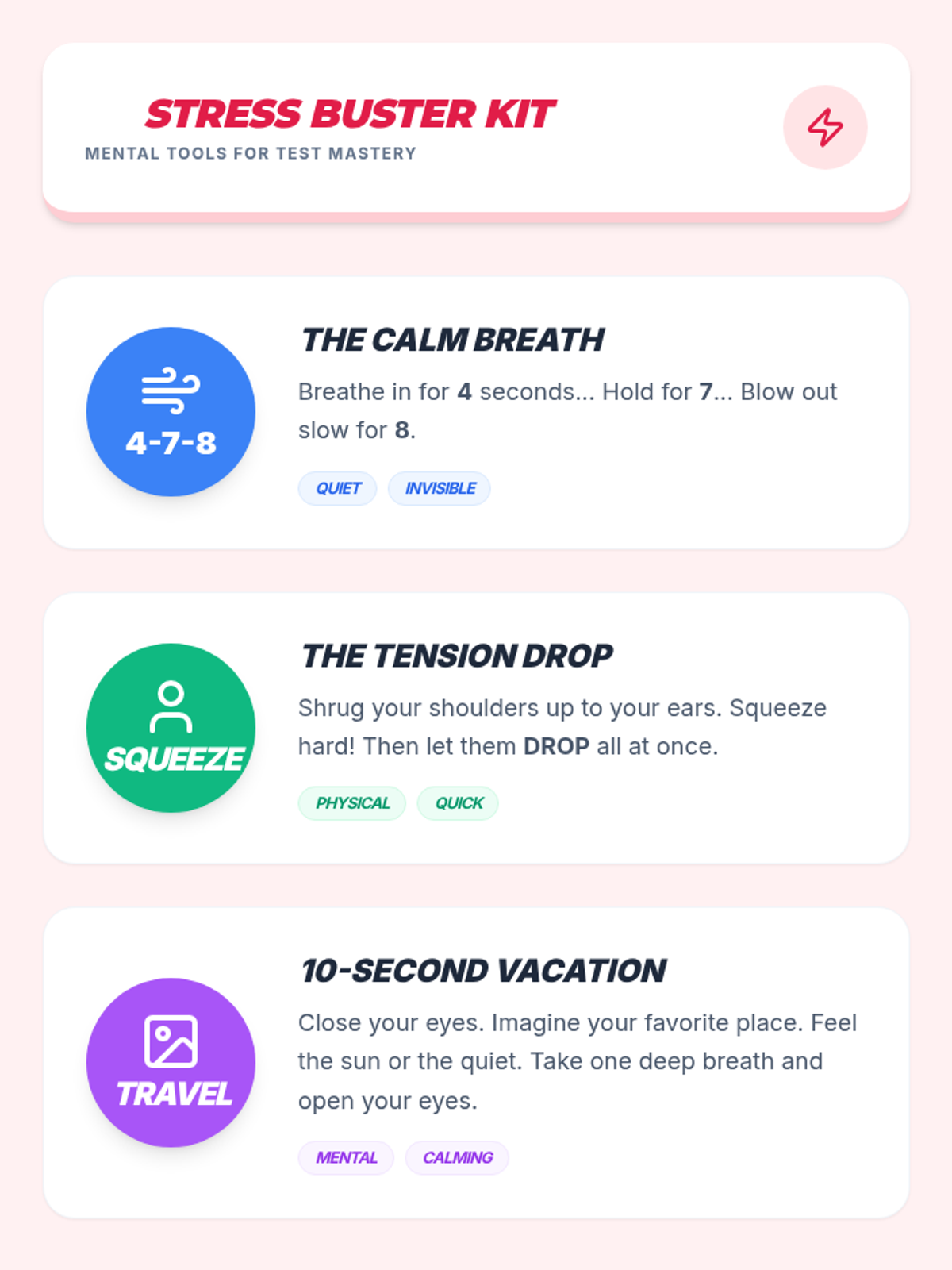
A student reference guide (anchor chart) featuring three simple, desk-friendly mindfulness and physical reset techniques for managing test anxiety.
Slide deck for Lesson 5, the culminating workshop. Introduces the "Distractor Doctor" role where students reverse-engineer test questions by writing their own intentional distractors.
Visual presentation for Lesson 3: Brain Breaks and Stress Busters. Introduces three secret "desk moves" to recharge focus and calm anxiety during a test.
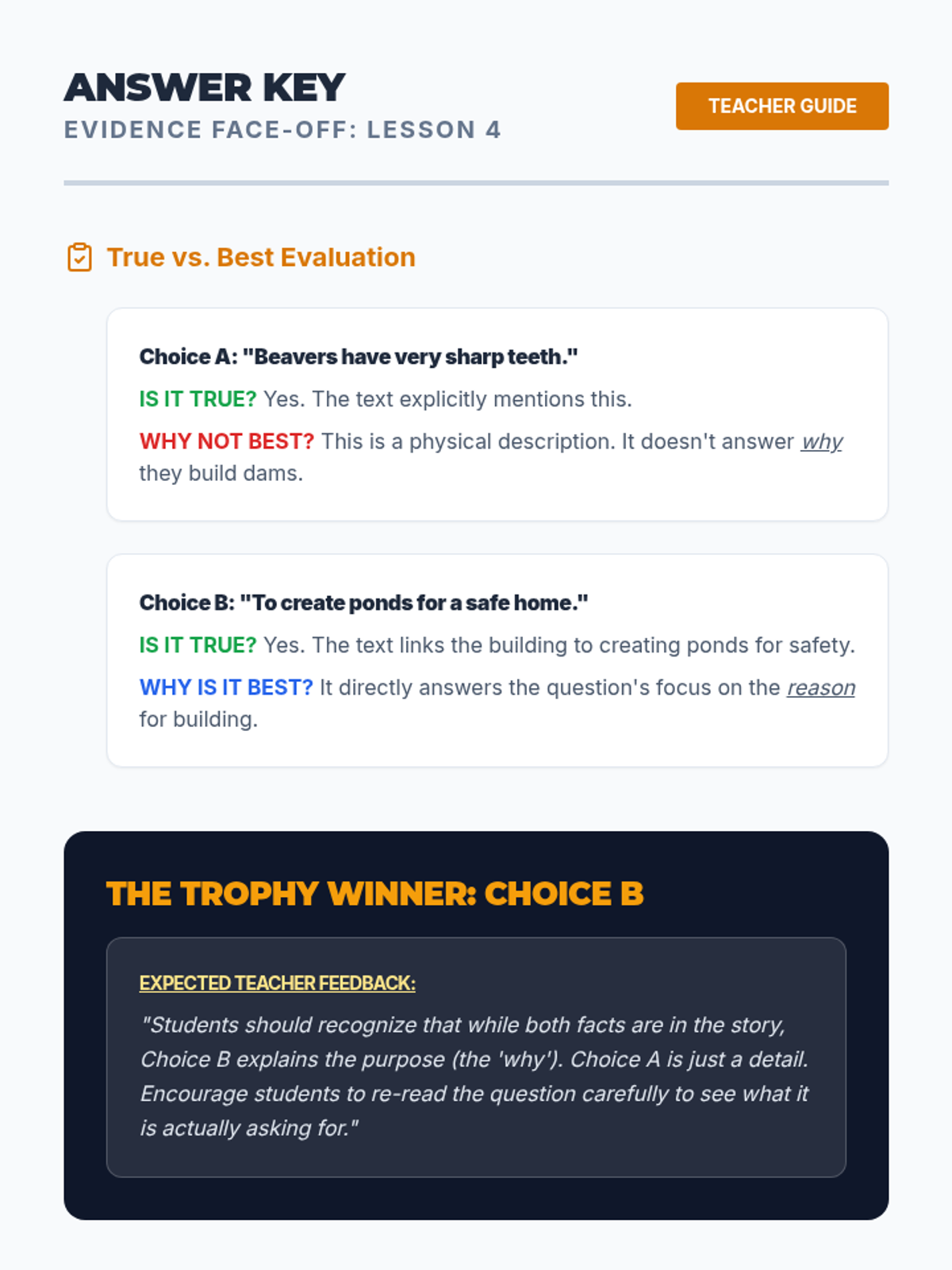
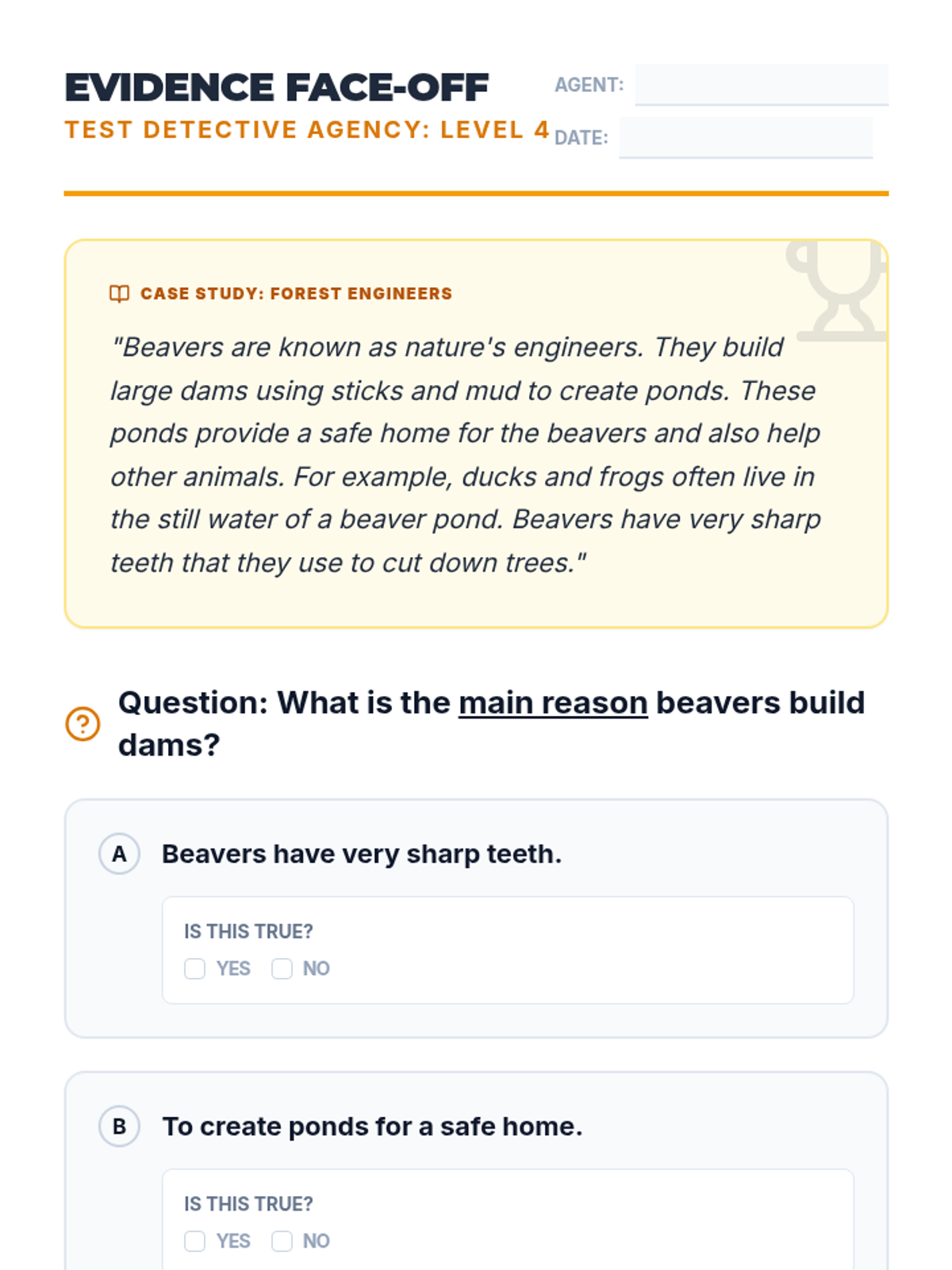
Answer key for the Evidence Faceoff worksheet, providing the correct "best" answer identification and logical explanations for why one true fact is superior to another.
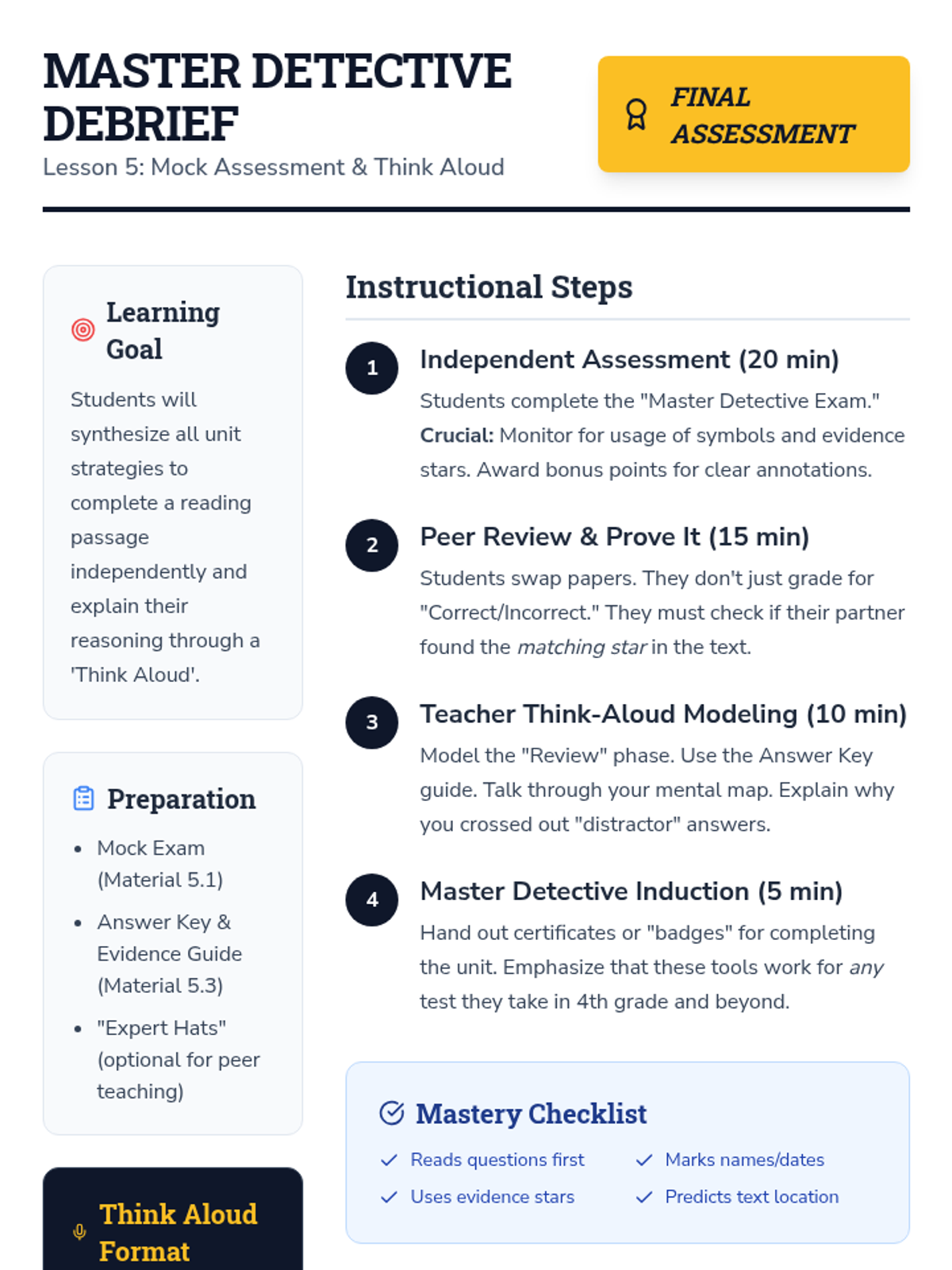
Teacher guide for the final lesson in the Text Detective unit. Focuses on the implementation of the mock assessment and structured peer review.
Final slide deck for Lesson 5, focusing on 'Mission Mastery' and applying speed-reading strategies to timed standardized test practice.
A student worksheet for Lesson 4 where students compare two factually true statements from a text and determine which one is the "best" answer to a specific question.
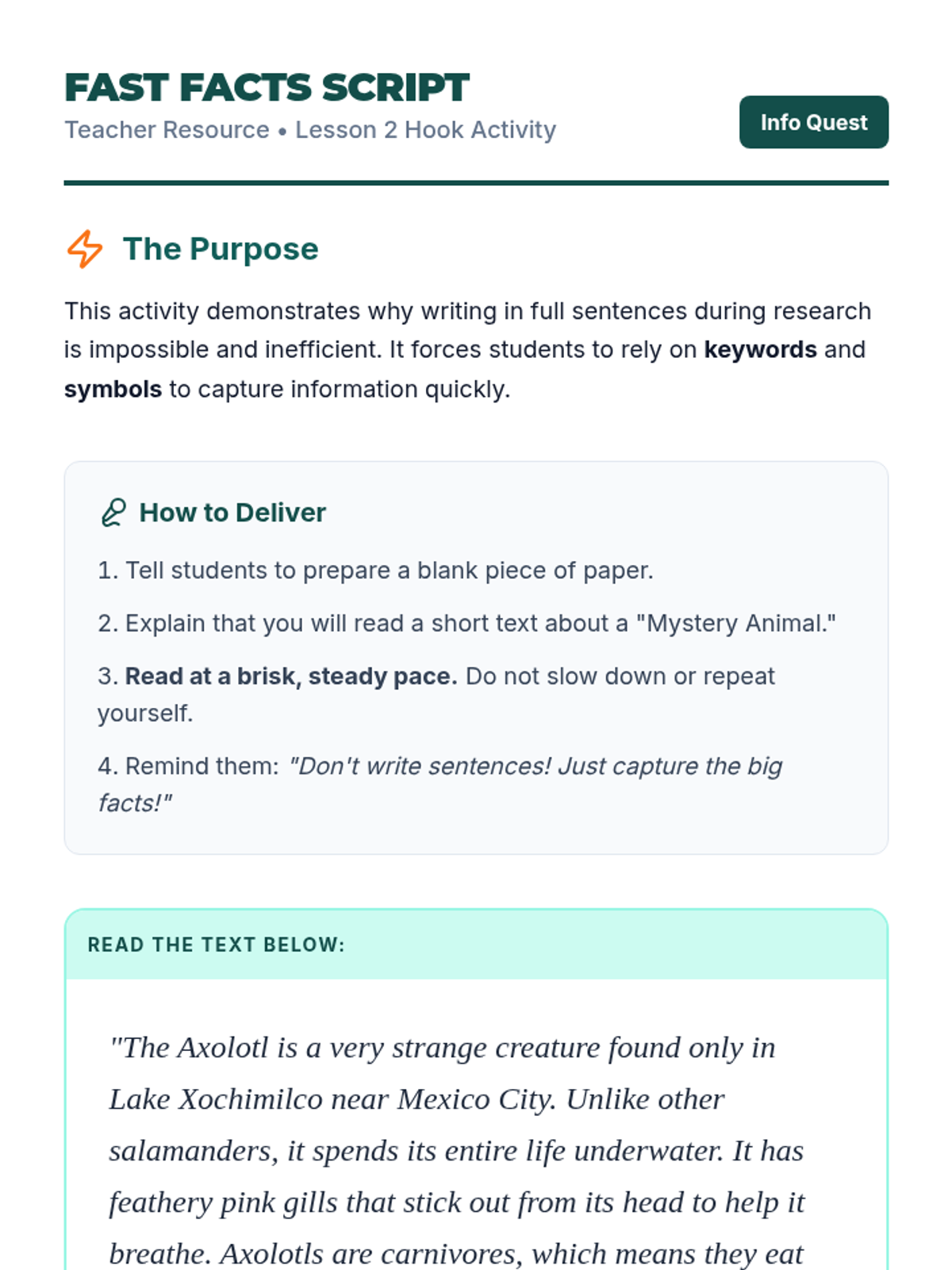
Teacher resource for the Lesson 2 hook activity, featuring a fast-paced reading script about axolotls to demonstrate the necessity of keyword note-taking.
A slide deck for Lesson 2 that teaches students how to listen for context clues like "which means" and appositives to define new academic vocabulary.
Slide deck for Lesson 2, introducing note-taking strategies like concept maps, T-charts, and the use of keywords instead of full sentences.