Essential food groups, nutrient functions, and balanced meal planning. Develops skills for interpreting nutrition labels and adopting lifelong healthy eating patterns.
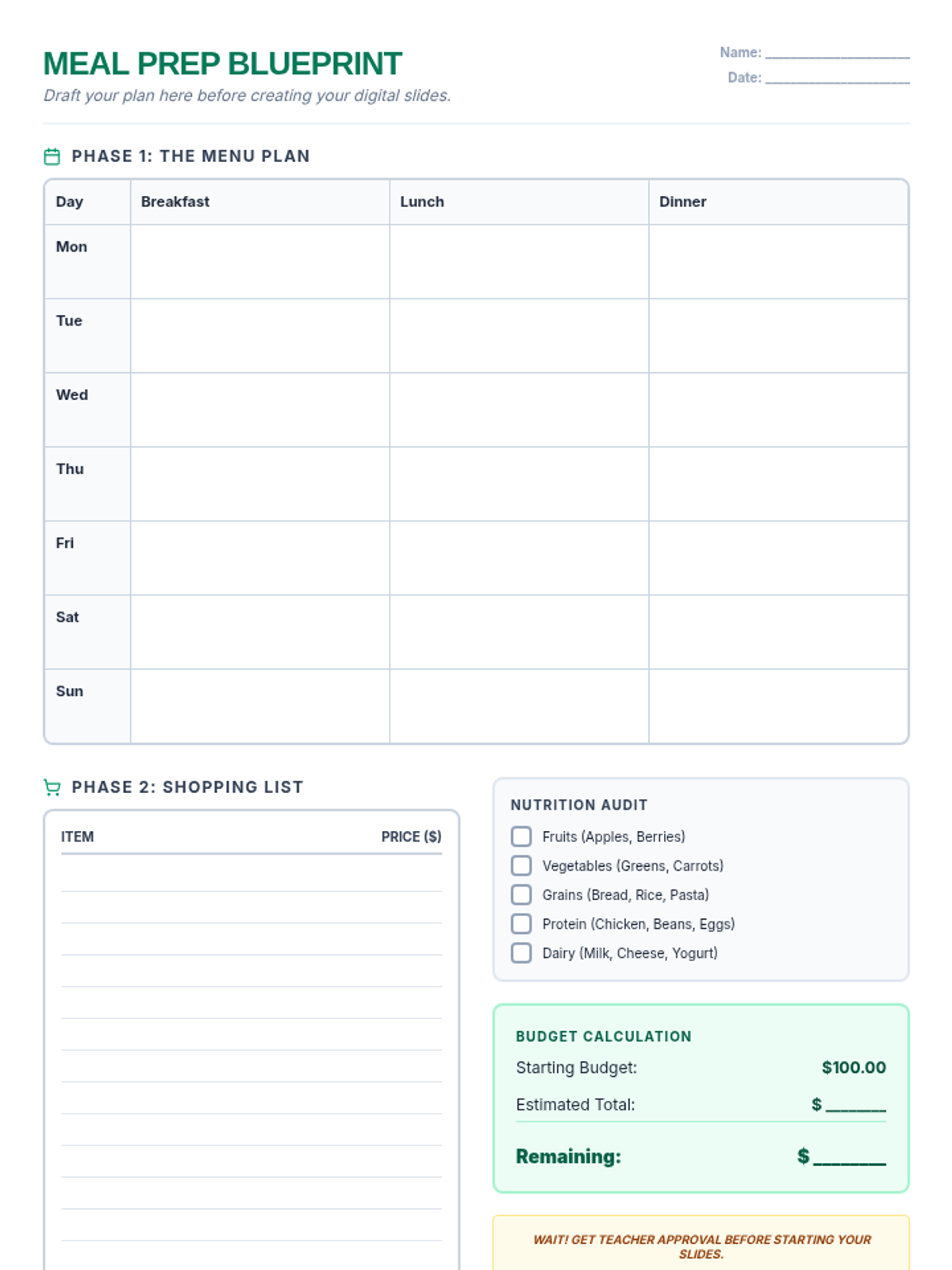
A scaffolding worksheet for students to draft their 7-day menu, shopping list, and budget calculations before moving to a digital format.
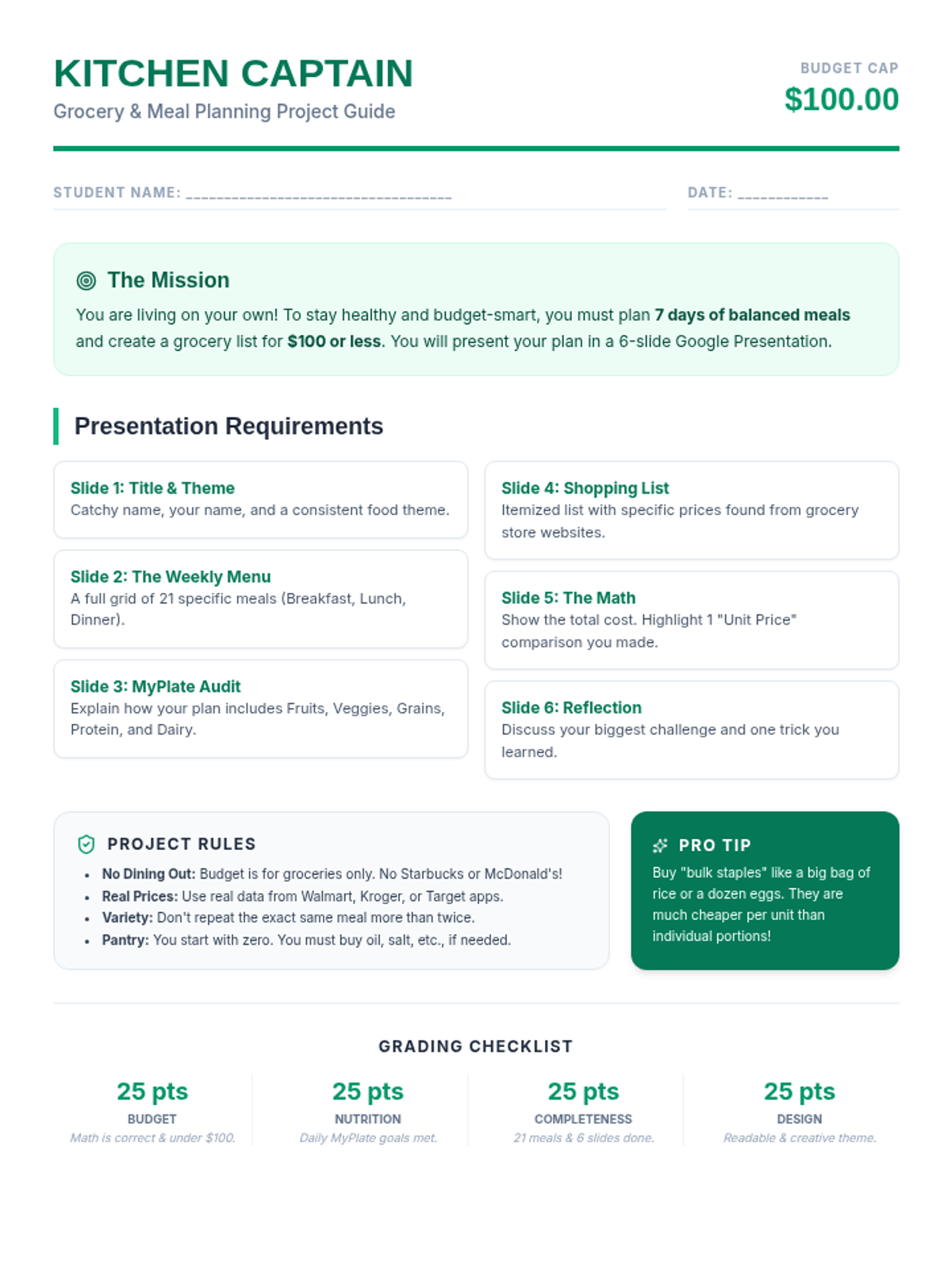
A student-facing guide and rubric for the Kitchen Captain project, outlining slide requirements, budget constraints, and grading criteria.
Instructional slide deck for the Market Master lesson, covering nutrition labels, unit pricing, and the final project introduction.
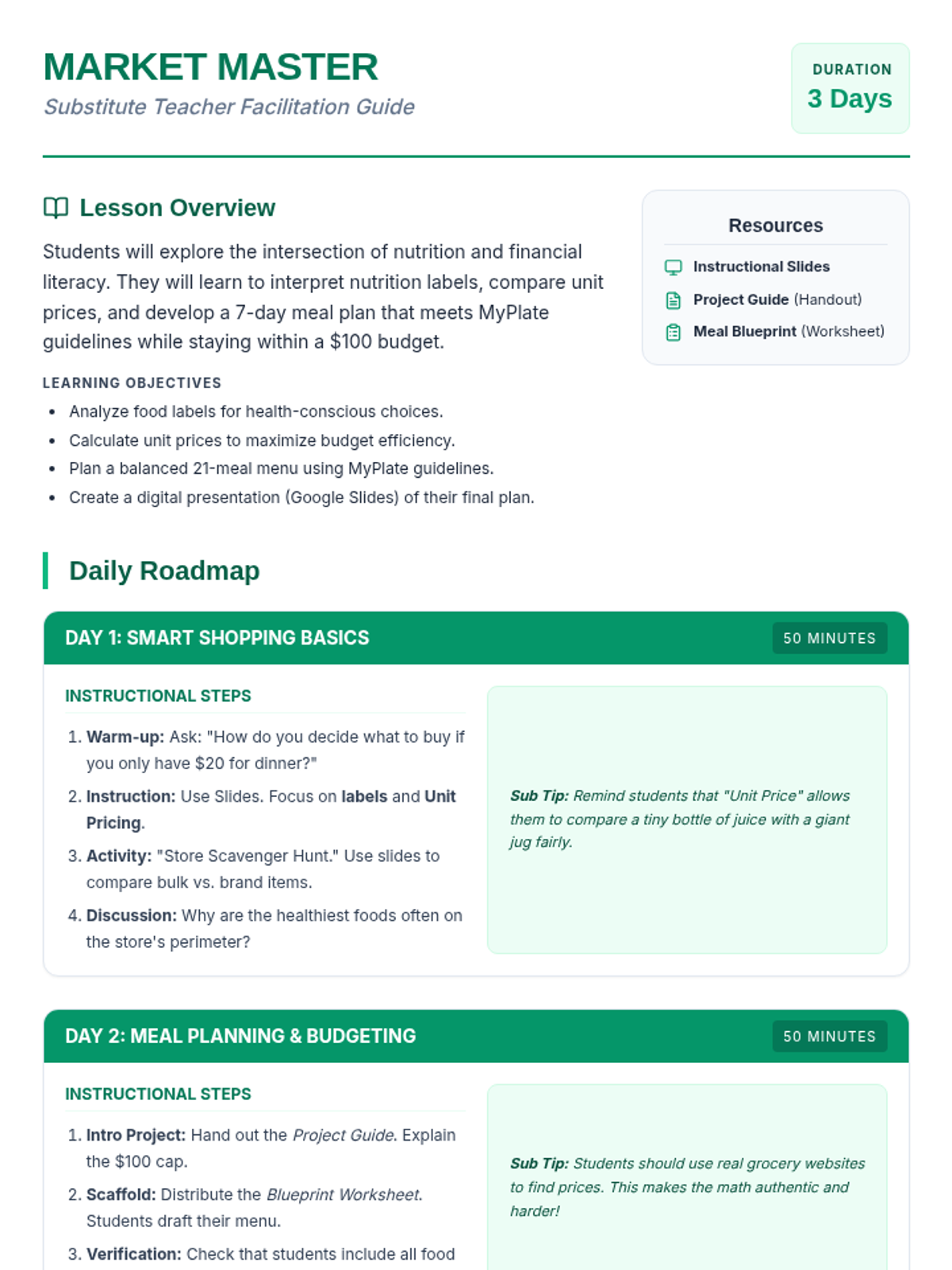
A detailed 3-day facilitation guide for a substitute teacher, including lesson objectives, daily procedures, and grading criteria for the Market Master unit.
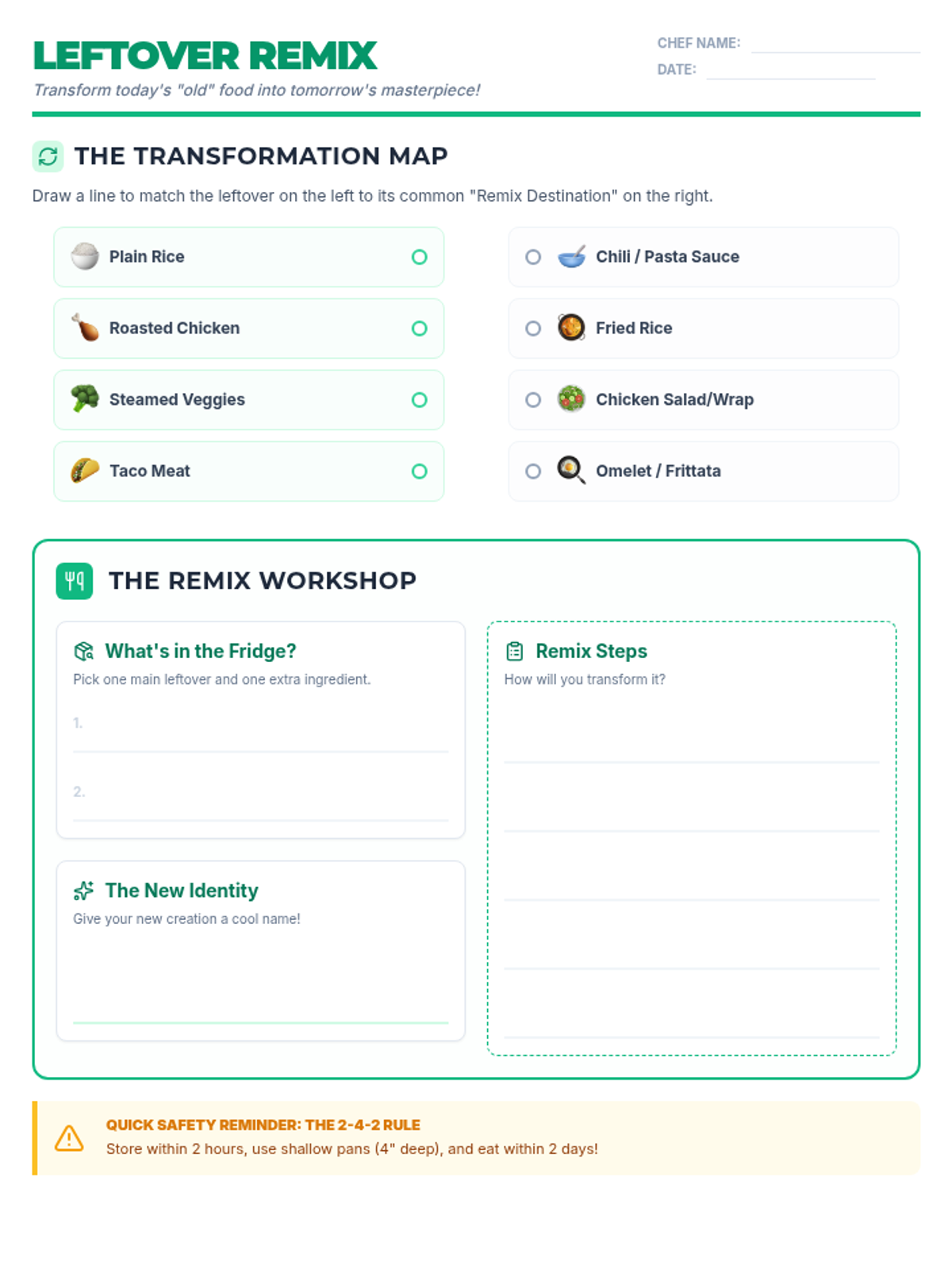
A creative student worksheet for repurposing leftovers, featuring a matching activity for food transformations and a planning section for creating a 'Remix Recipe' with safety reminders. Optimized for single-page printing with generous handwriting space.
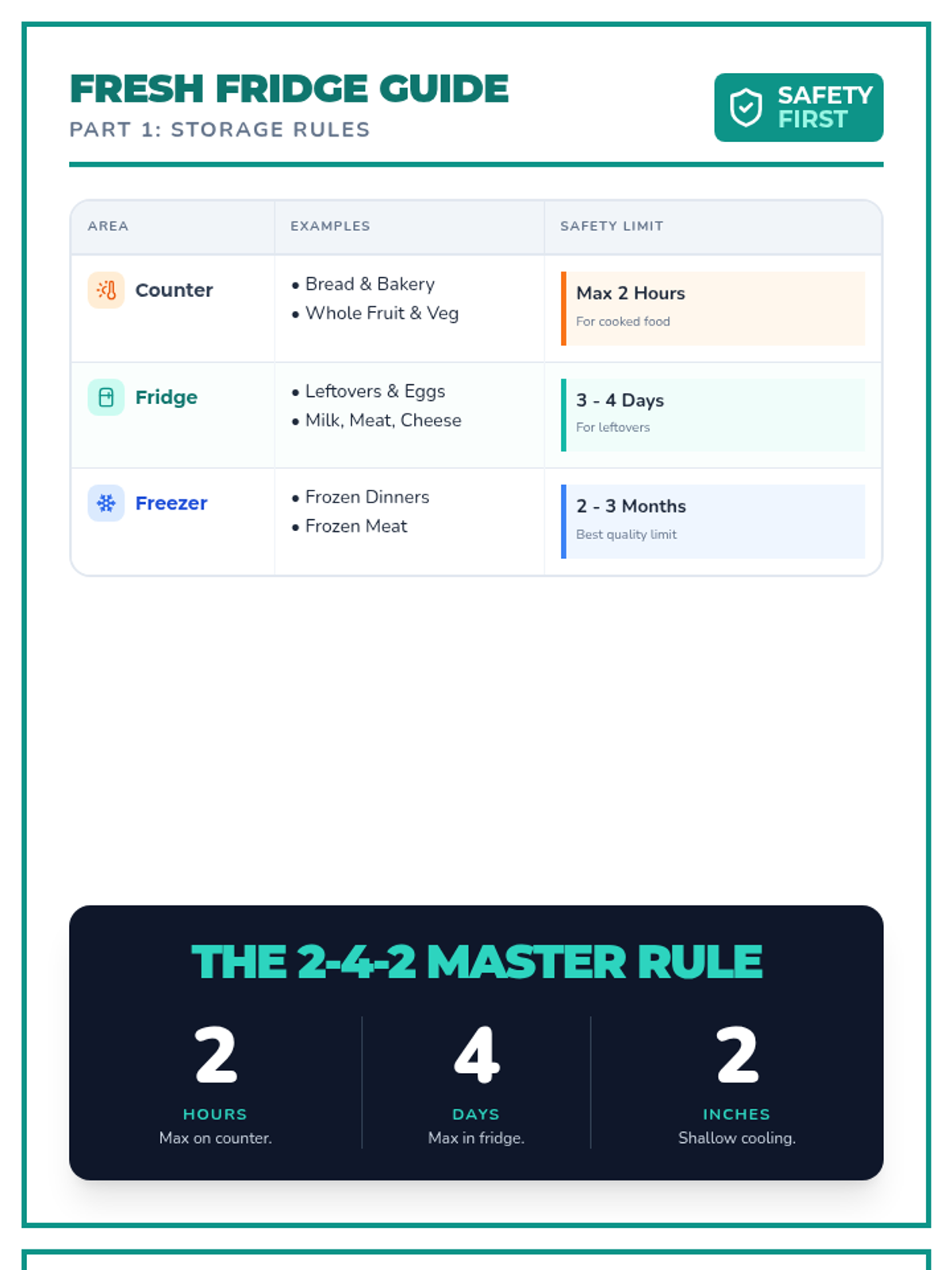
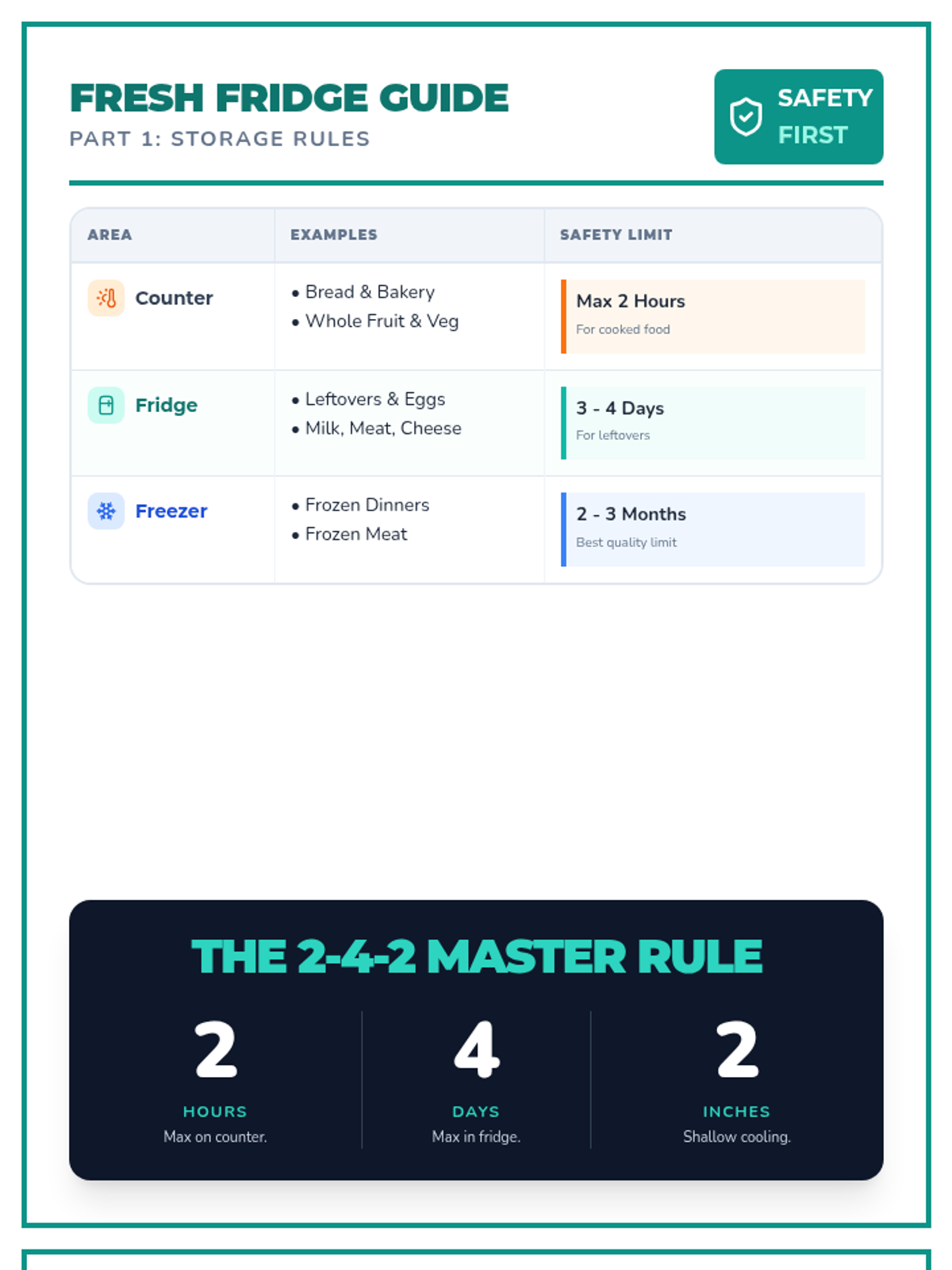
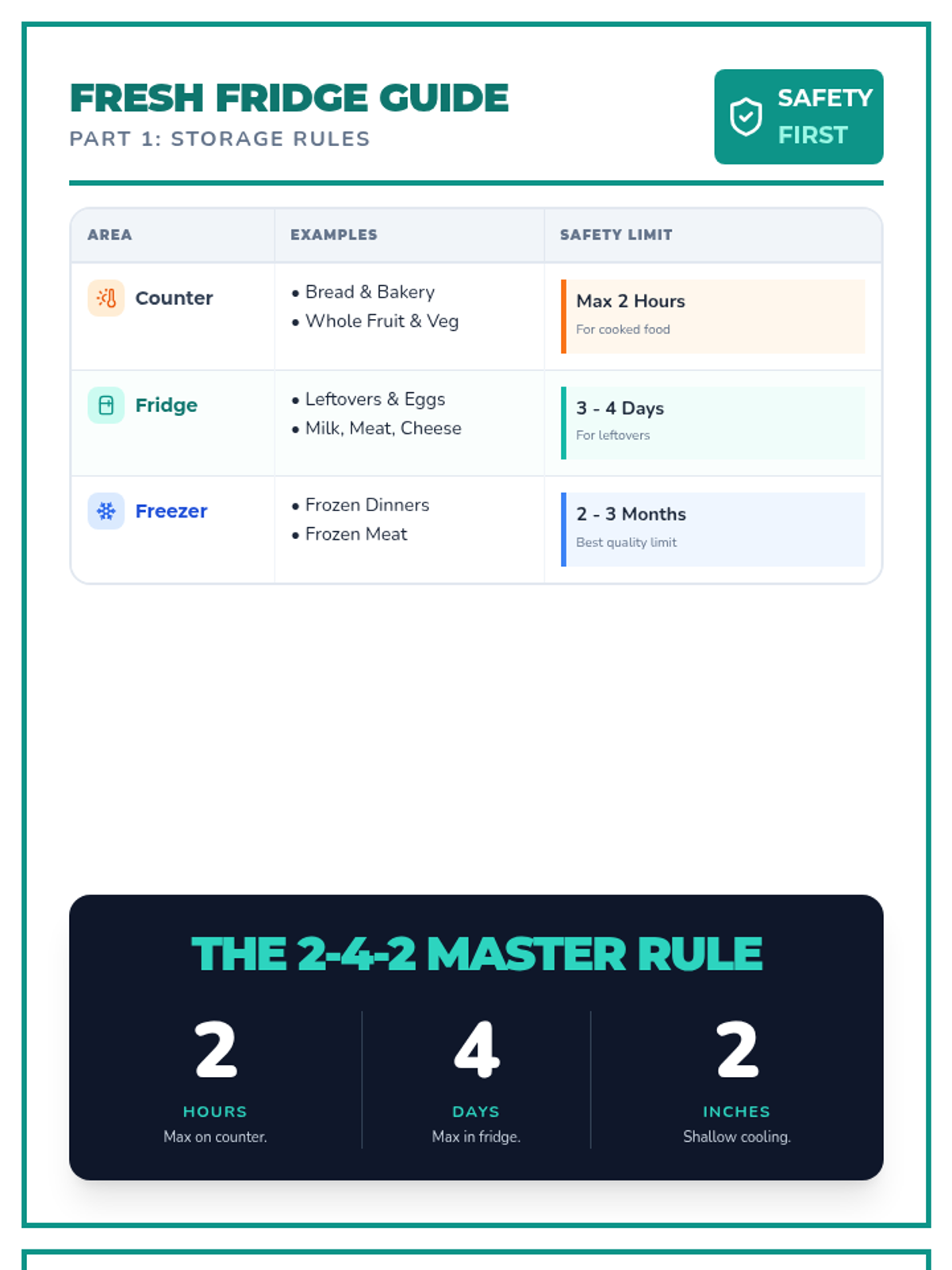
A reorganized visual guide for food storage and safety, featuring a clear tabular storage chart, the '2-4-2' rule, discard criteria, and a labeling tutorial with significantly increased font sizes for maximum readability.
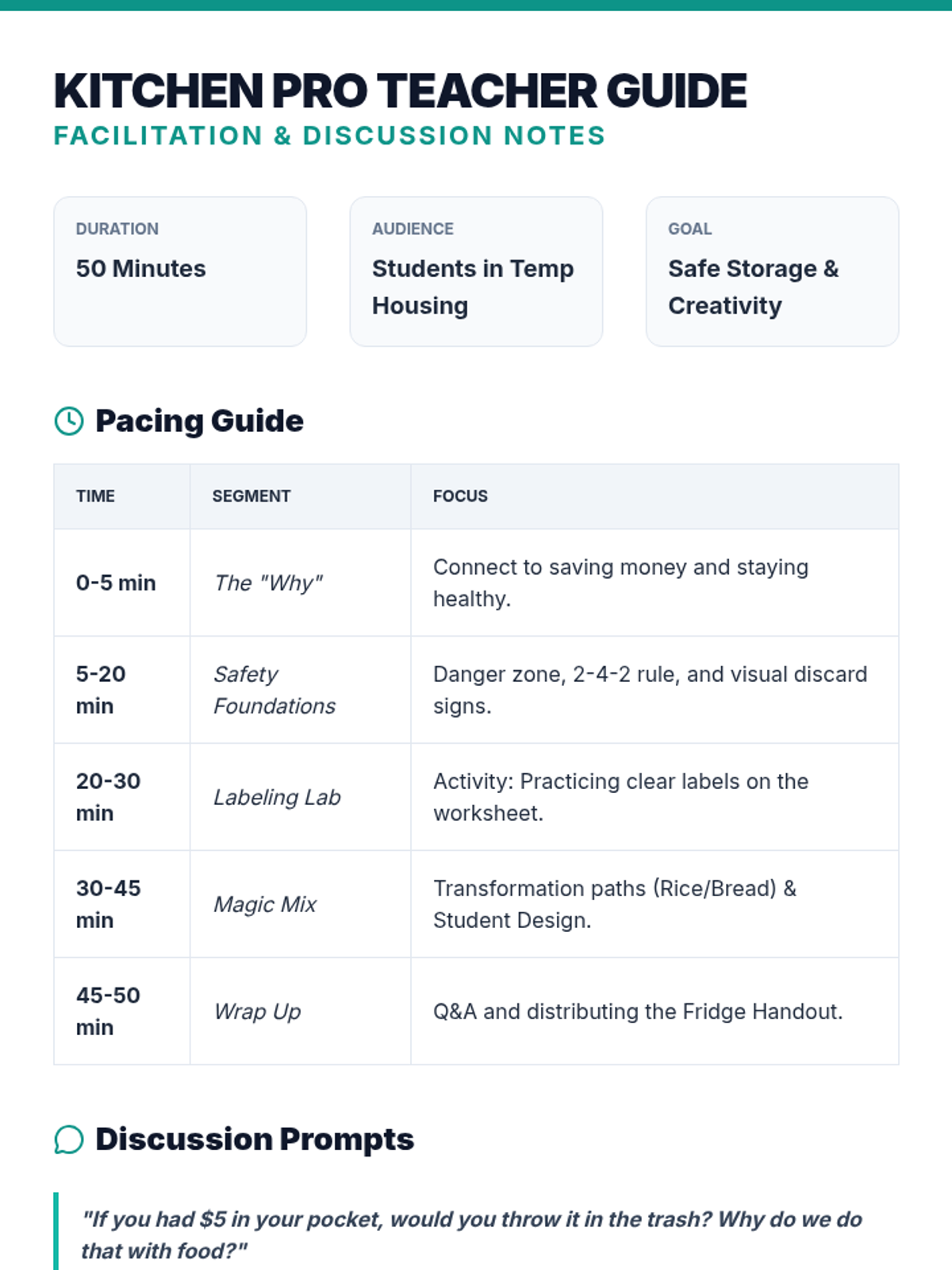
A comprehensive teacher's guide for the Kitchen Hacks lesson, including a 50-minute pacing guide, discussion prompts, and strategies for neurodiverse learners and students in temporary housing.
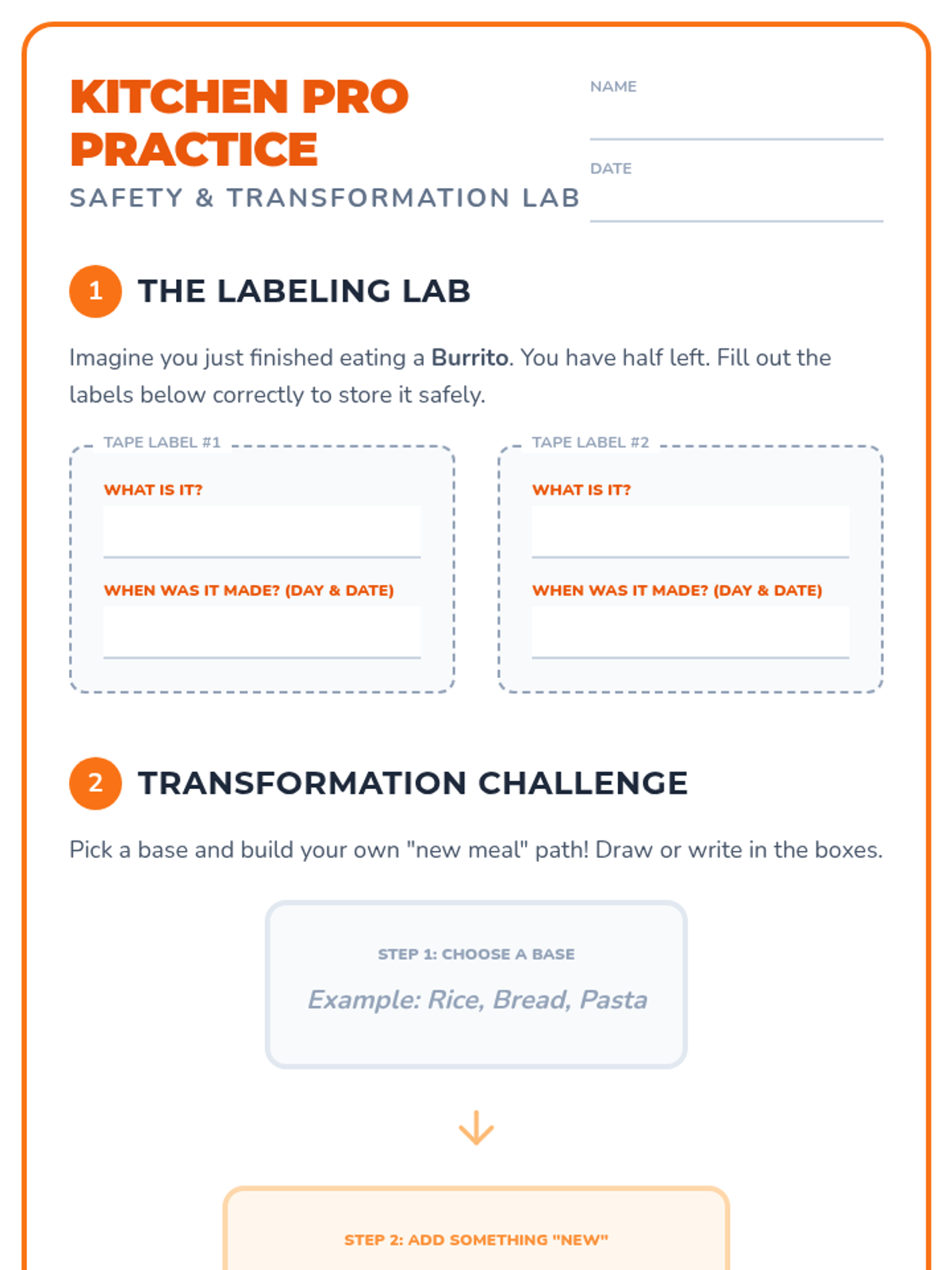
A student practice sheet for applying kitchen safety skills, including labeling exercises and a transformation flowchart activity.
A visually-driven slide deck for a 50-minute session on kitchen safety and food transformation, featuring the 2-4-2 rule and leftover flowcharts.
A reorganized visual guide for food storage and safety, featuring a clear tabular storage chart, the '2-4-2' rule, discard criteria, and a labeling tutorial with increased font sizes for readability.
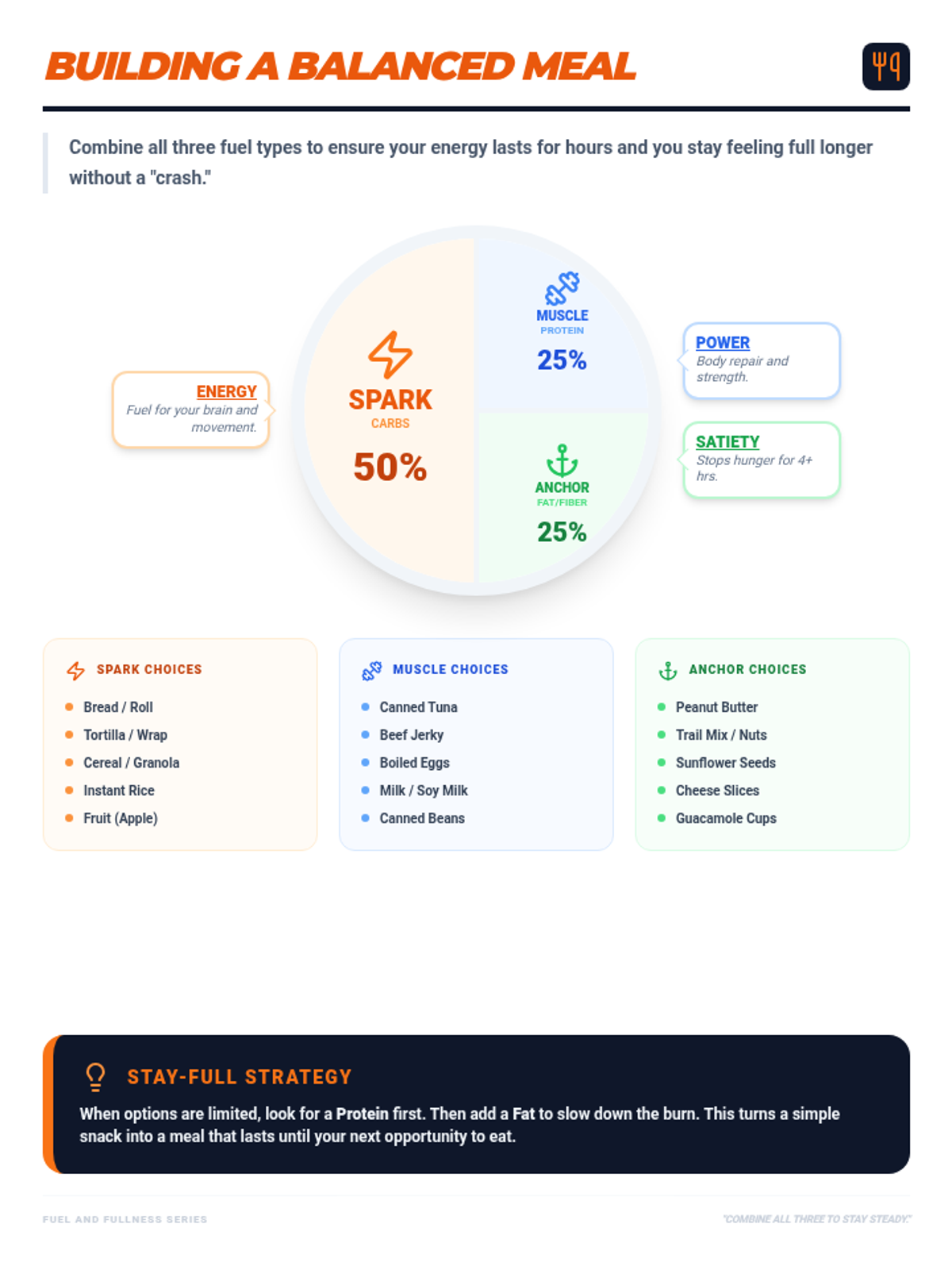
A visual guide for students on how to layout a balanced meal using shelf-stable foods, featuring a 'Survival Plate' graphic divided by energy and satiety types. Revised header and enlarged content for better readability. compressed to fit on one page. Added macro percentages to the plate and adjusted inner icons to fit circular boundary. Fixed label spacing to prevent cutoffs.
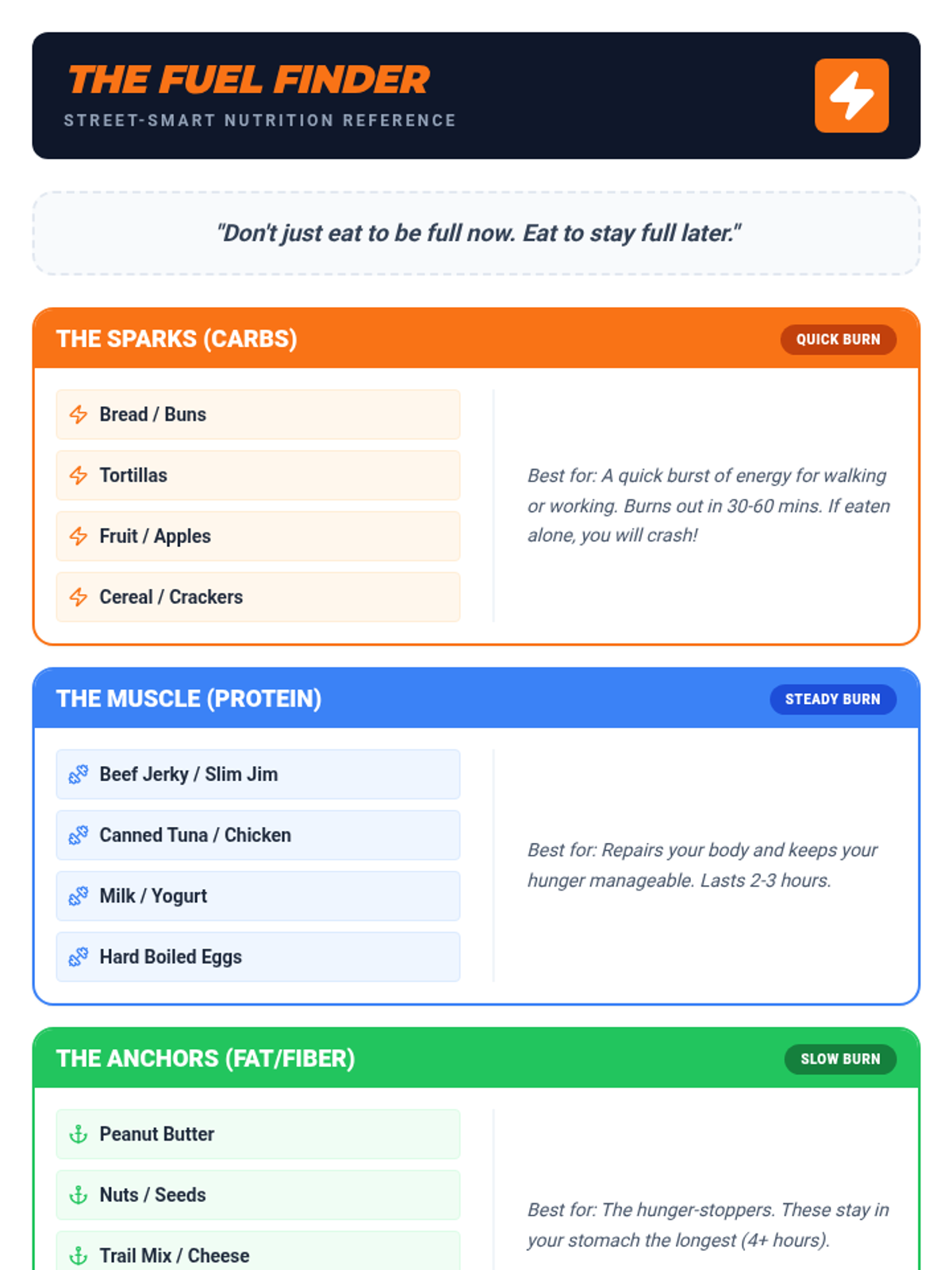
A handy one-page reference sheet for students listing accessible sources of carbs, protein, and fat, designed to be kept as a "pocket guide." compressed to fit on one page.
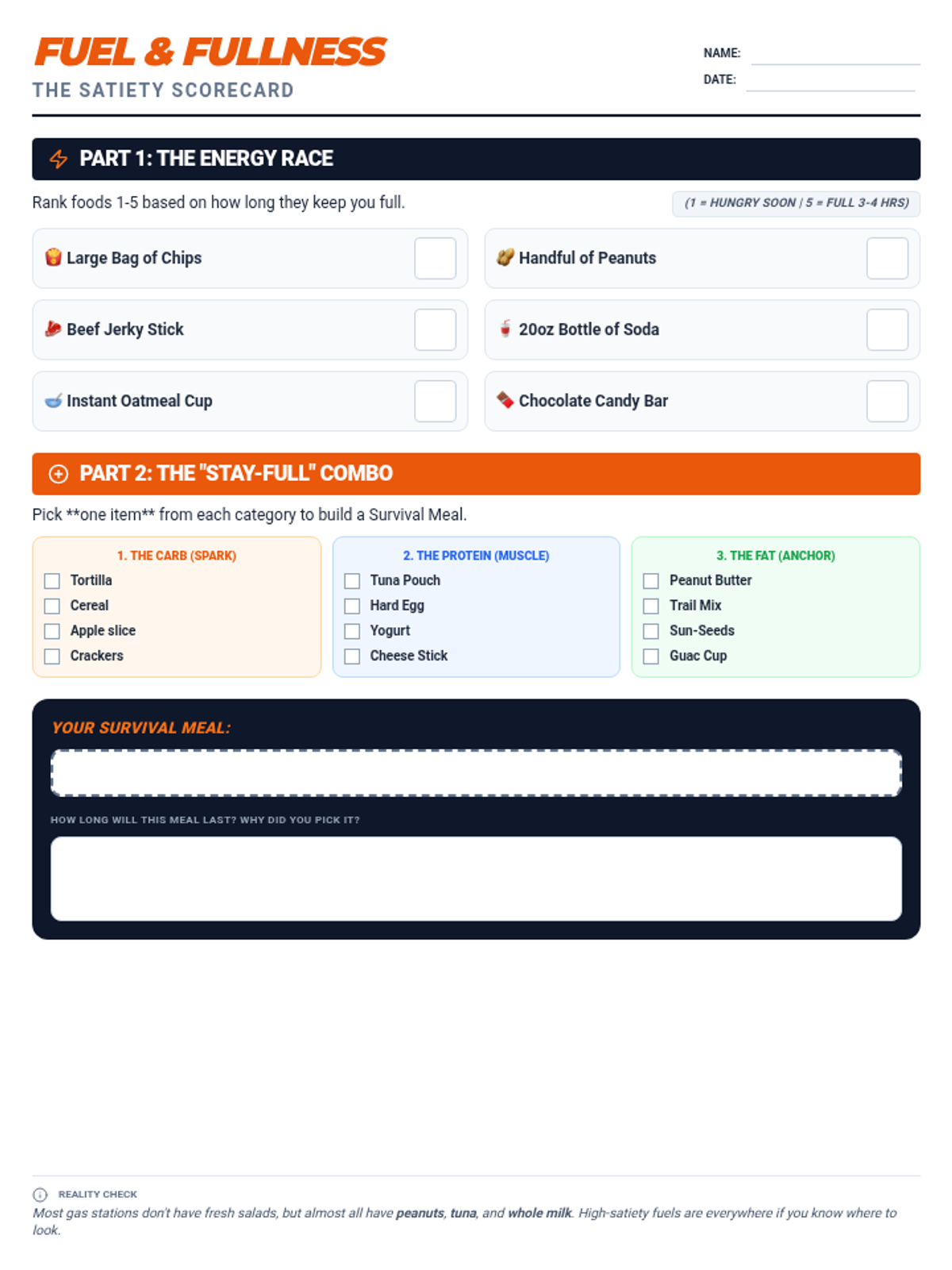
A student worksheet for identifying high-satiety foods and building balanced meals from shelf-stable or convenience store items. compressed to fit on one page.
A visual presentation for teenagers explaining the roles of carbs, proteins, and fats in energy levels and satiety, using real-world examples from convenience stores.
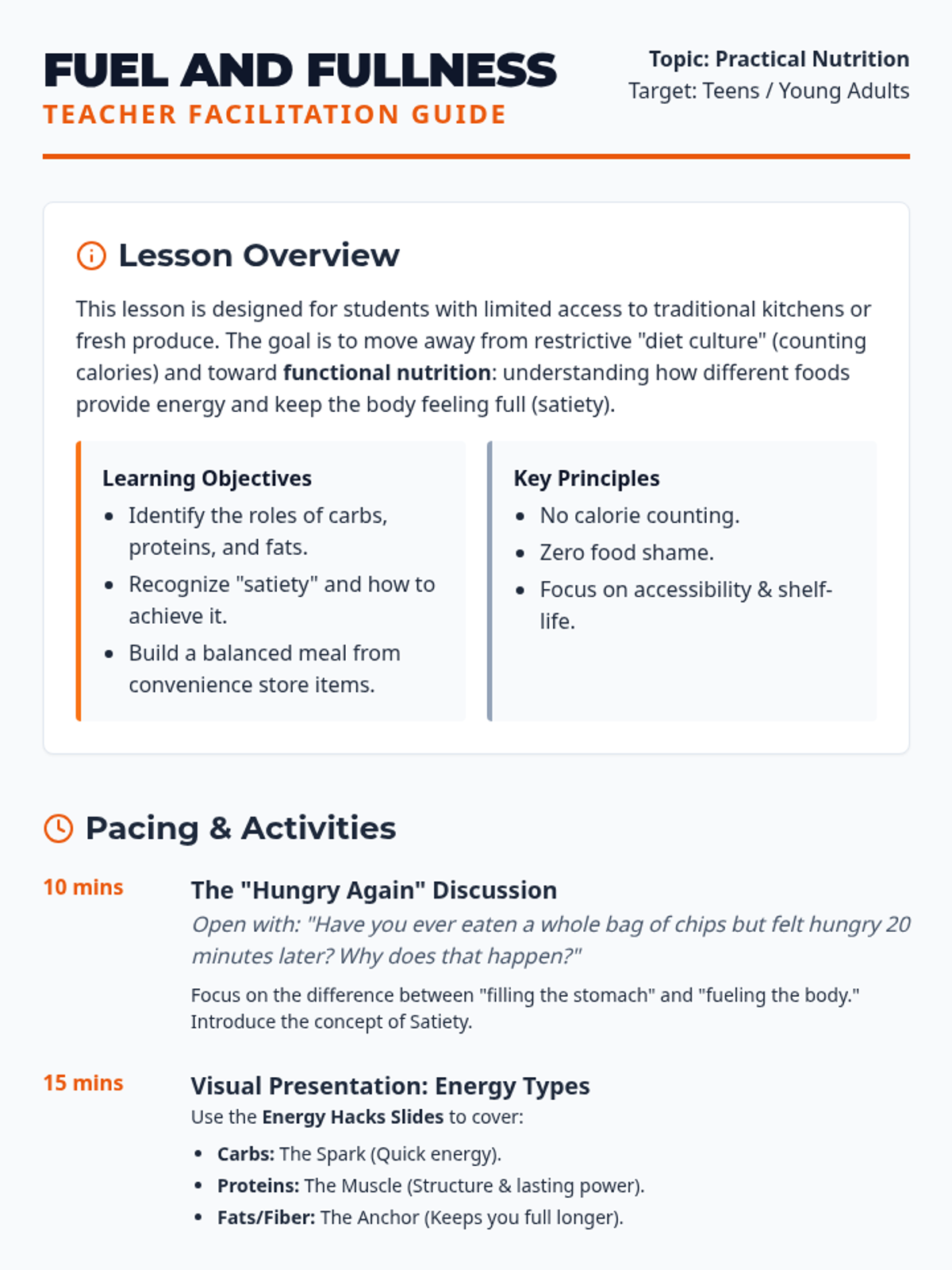
A comprehensive facilitation guide for teachers leading a nutrition lesson for teens facing housing instability, including pacing, learning objectives, and trauma-informed tips.
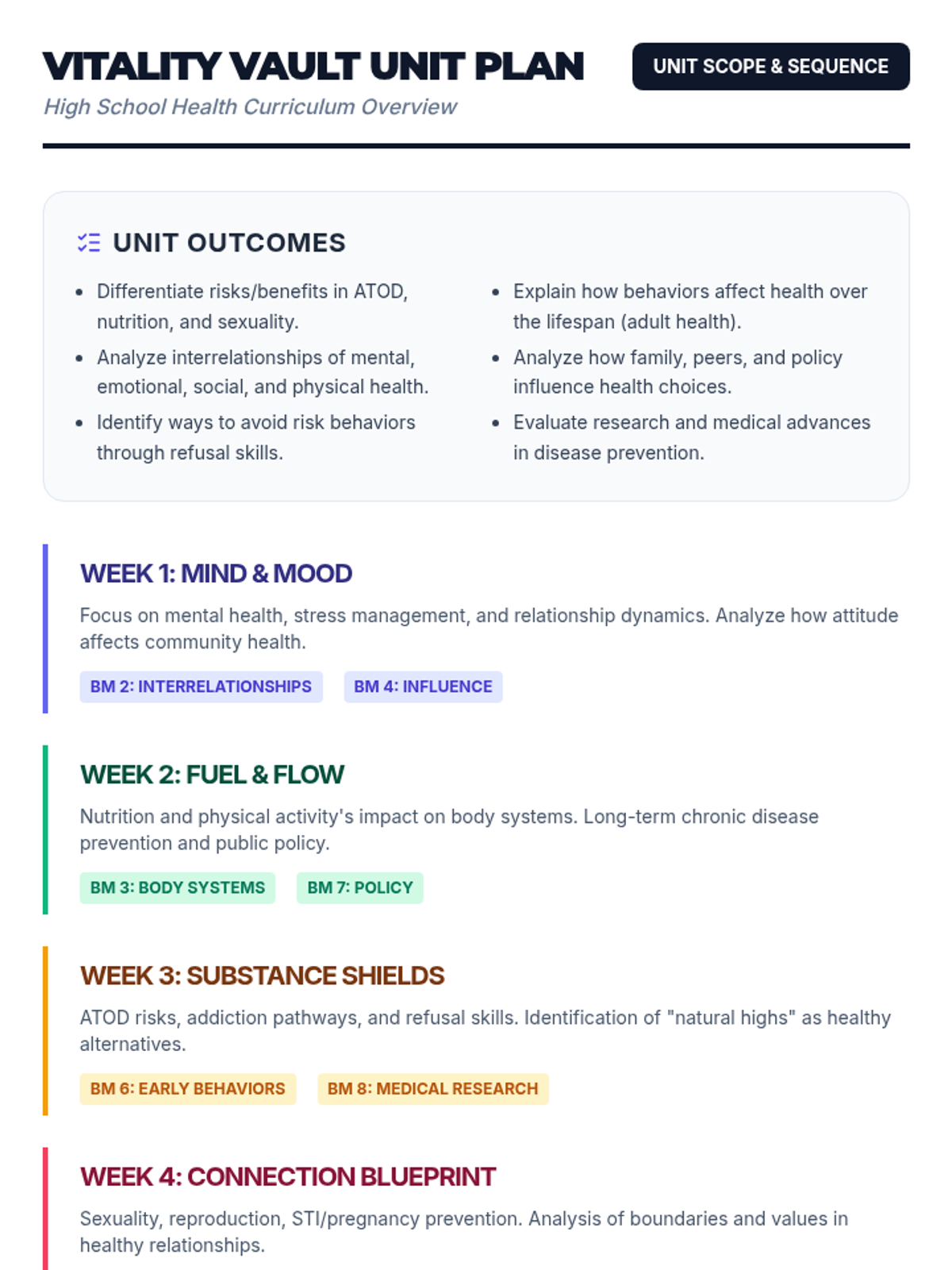
A high-level unit overview and sequence for teachers, outlining the 4-week progression, standards alignment, and a summative assessment strategy.
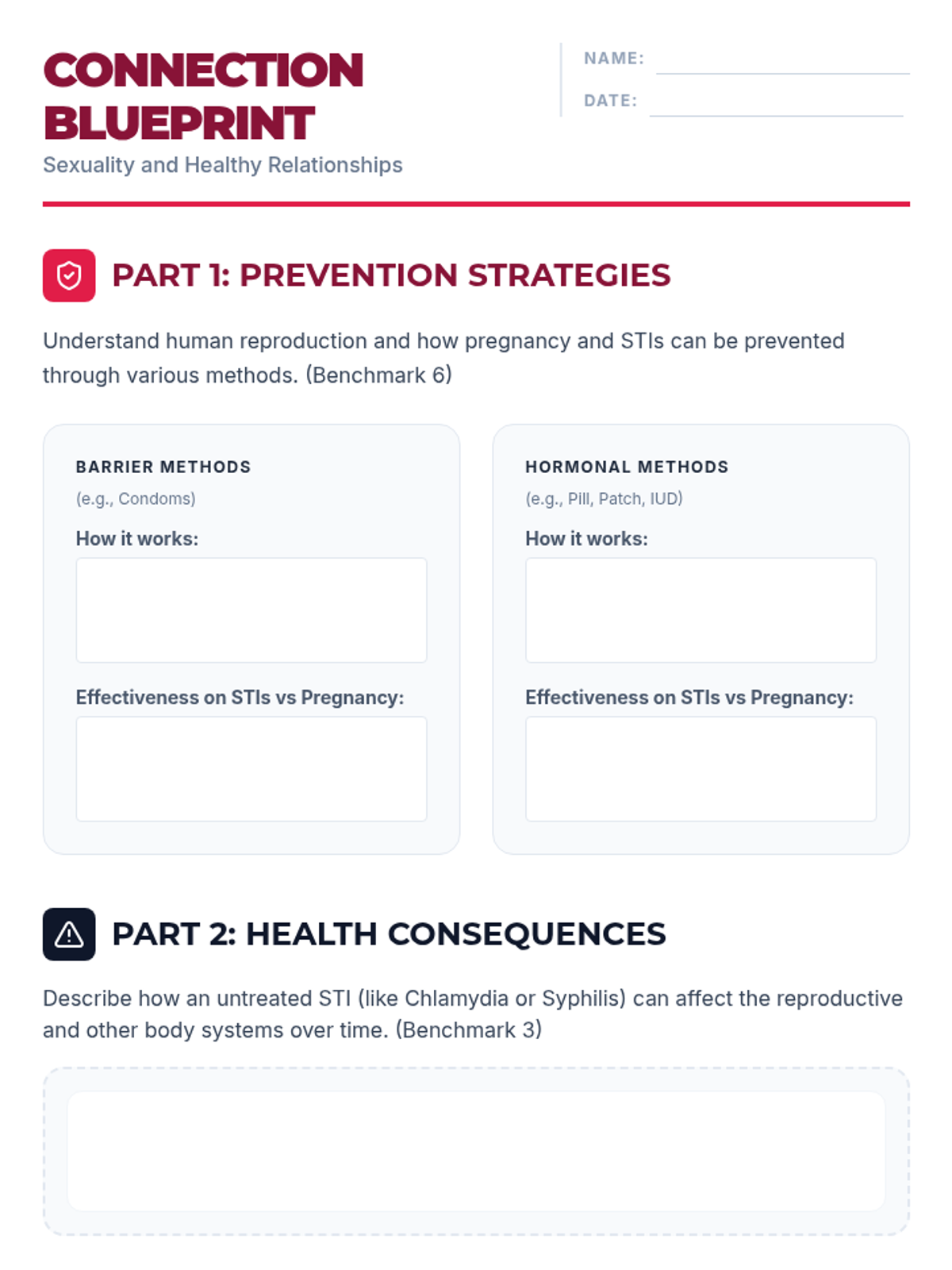
A student worksheet for Lesson 4 covering human reproduction, prevention methods (barrier and hormonal), and the long-term impact of STIs.
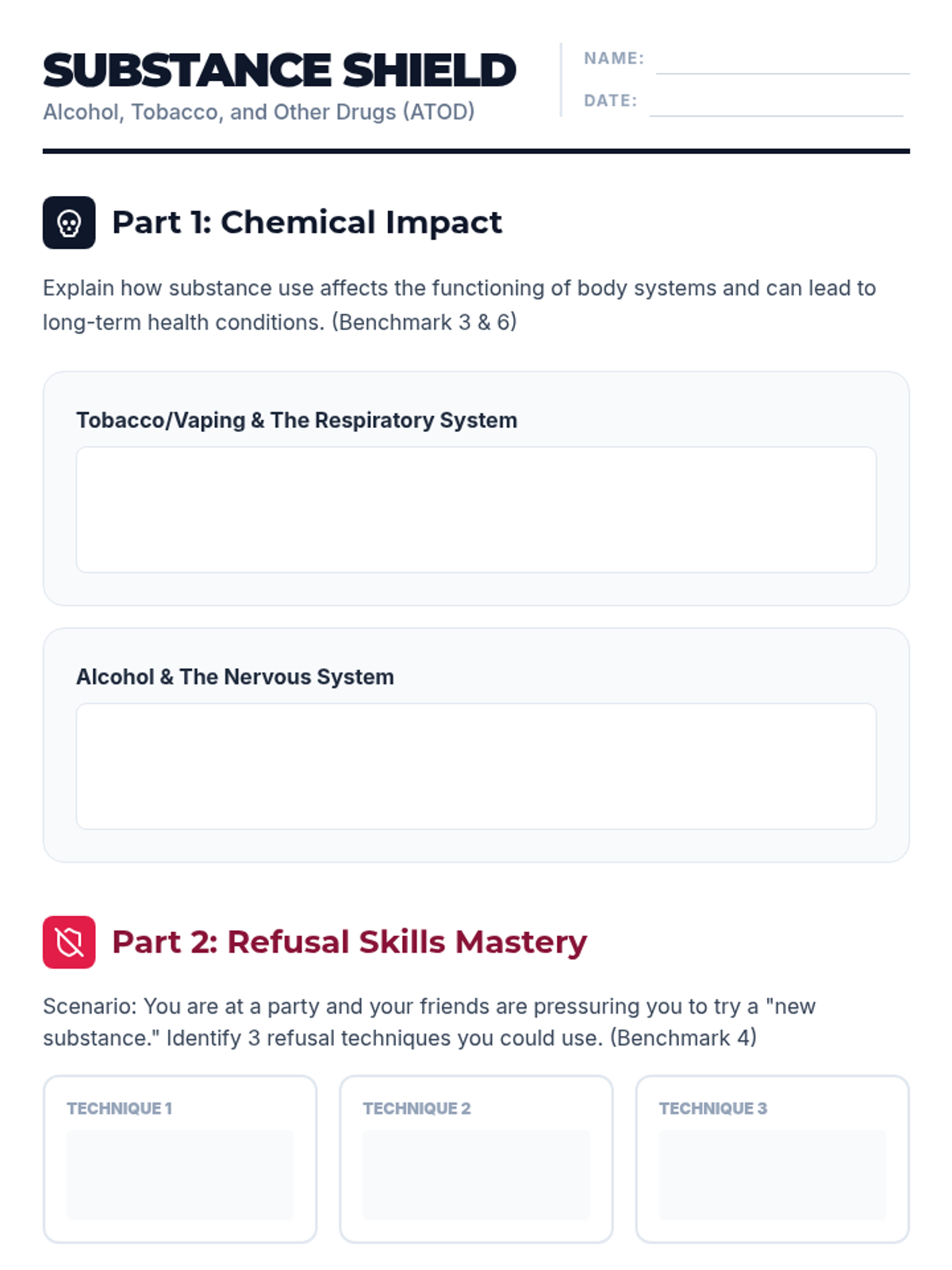
A student worksheet for Lesson 3 focusing on the impact of ATOD on body systems, refusal skills, and healthy alternatives (natural highs).
A visual slide deck for Lesson 2, covering the impact of health behaviors on body systems, public health policies, and medical research.
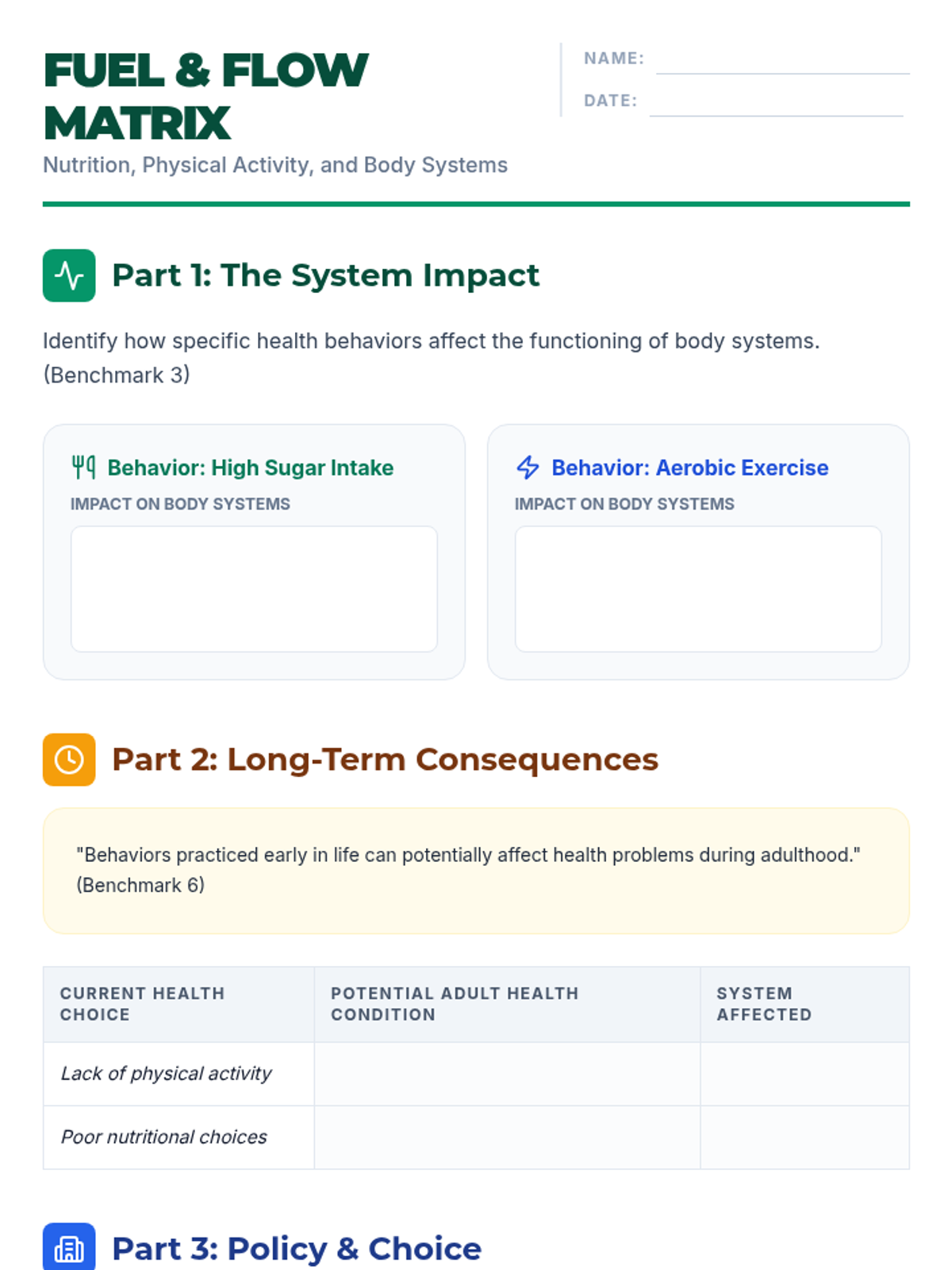
A student worksheet for Lesson 2 focusing on the impact of nutrition and physical activity on body systems, chronic disease prevention, and public health policy.
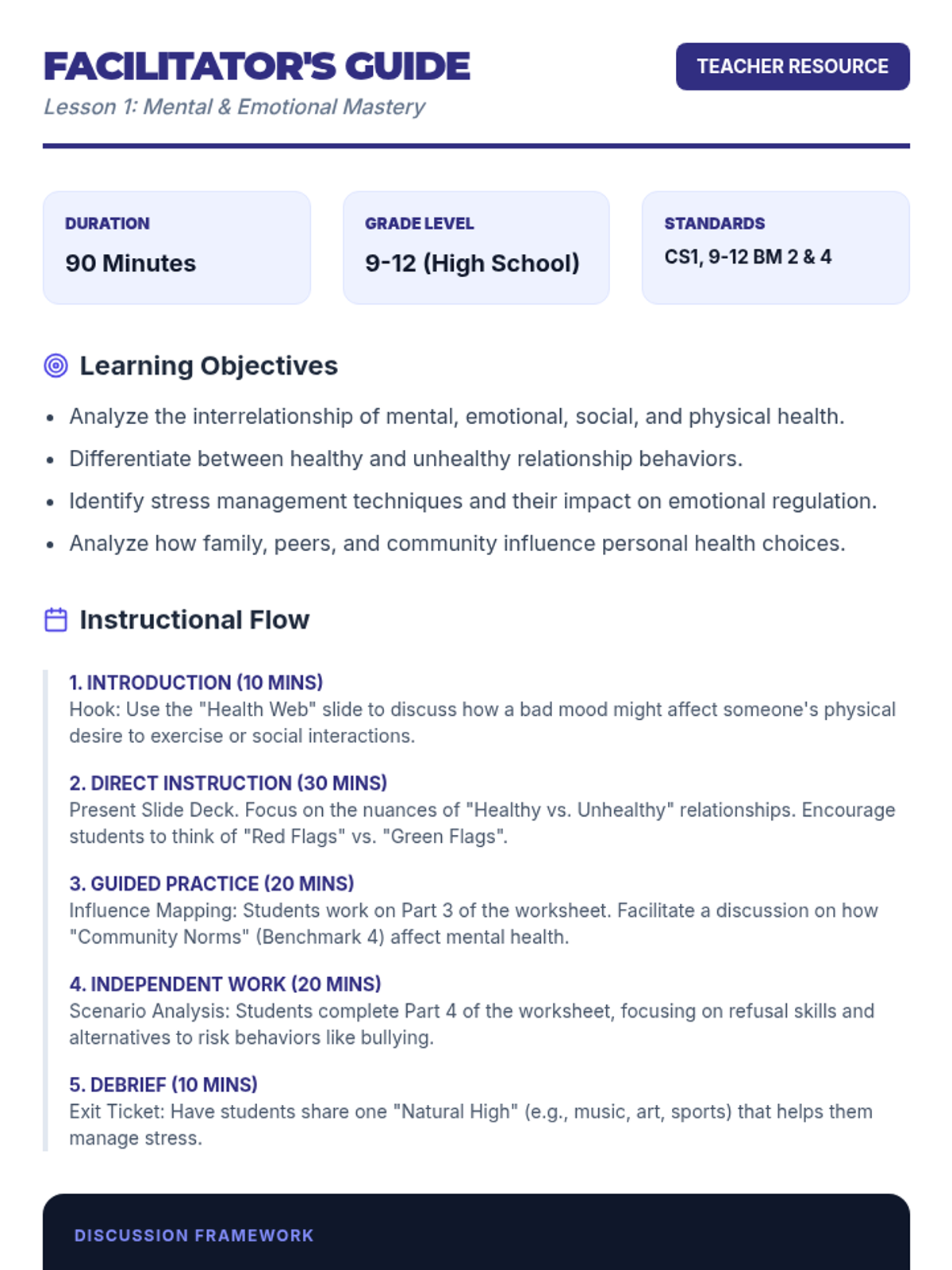
A 2-page facilitator's guide for Lesson 1, including instructional flow, learning objectives, and a detailed answer key.
A 5-slide visual presentation for instruction on mental, social, and emotional health, covering stress management, relationship dynamics, and social influence.
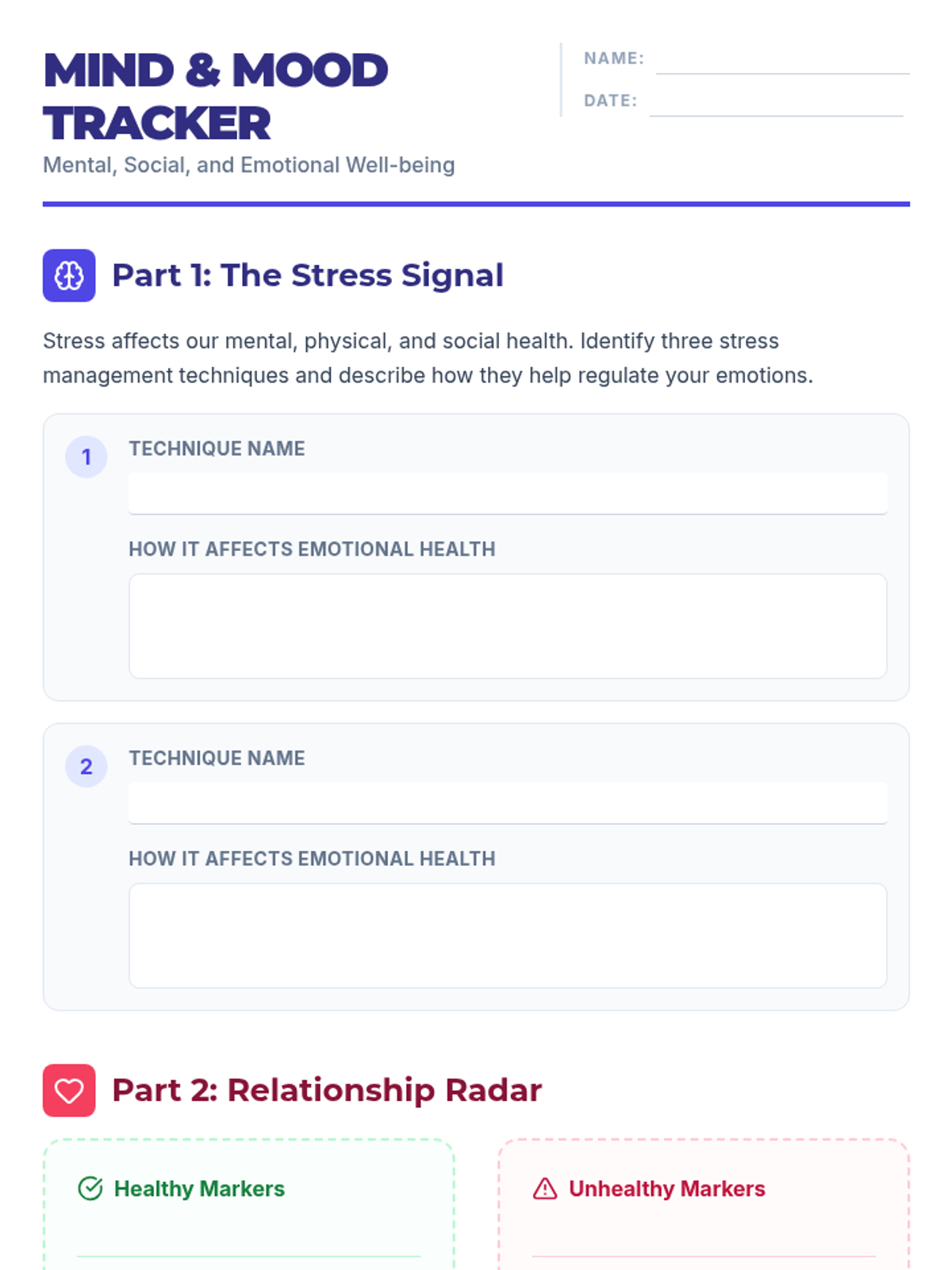
A 2-page student worksheet focused on mental and emotional health, including stress management, relationship analysis, and social influence mapping.
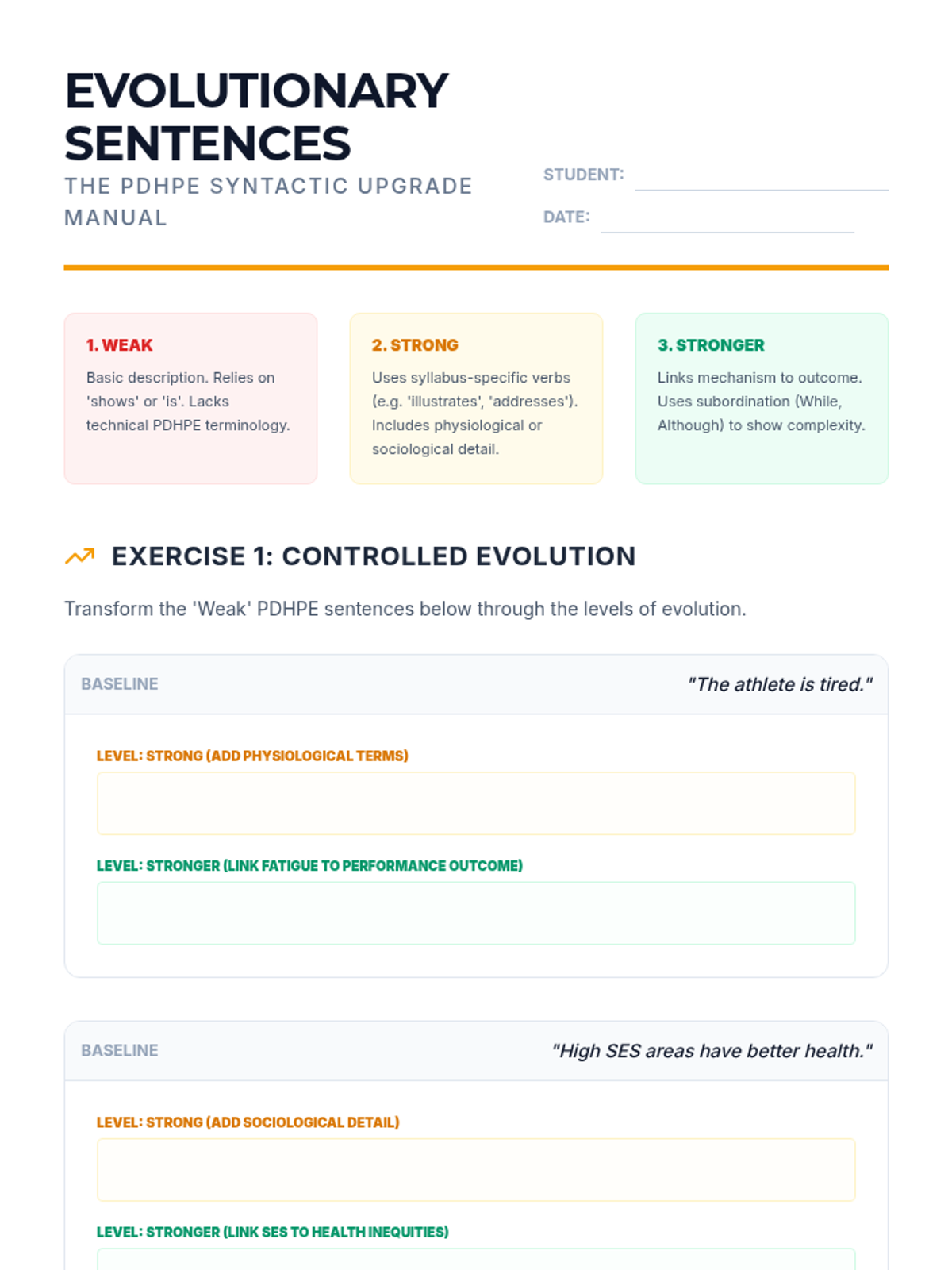
A dedicated worksheet for Year 12 PDHPE students to practice the iterative process of sentence evolution, moving from weak descriptions to strong technical ones, and finally to sophisticated analytical statements.
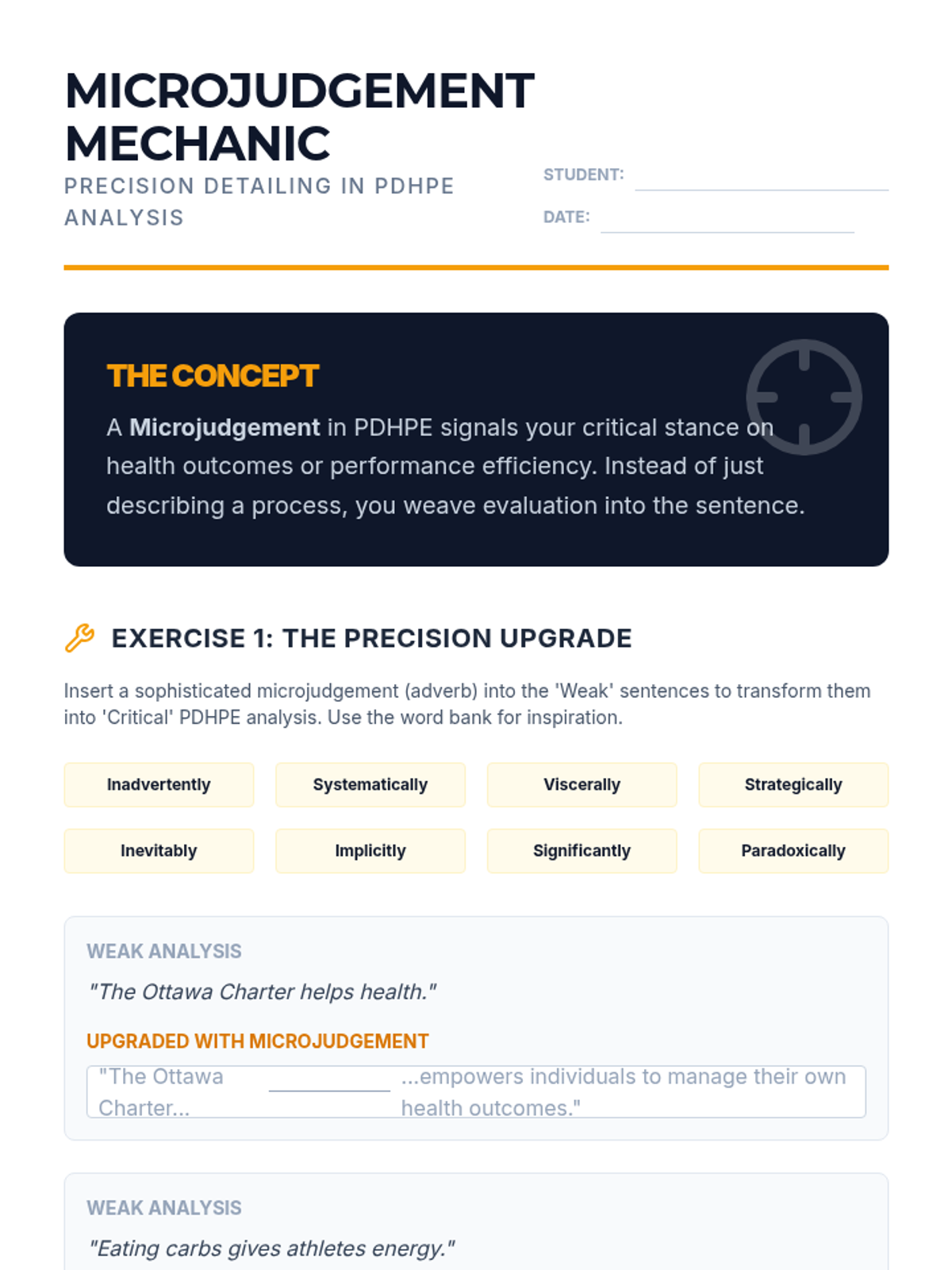
A worksheet for students to practice embedding microjudgements (precise analytical adverbs and adjectives) into their PDHPE paragraph writing to enhance critical voice.
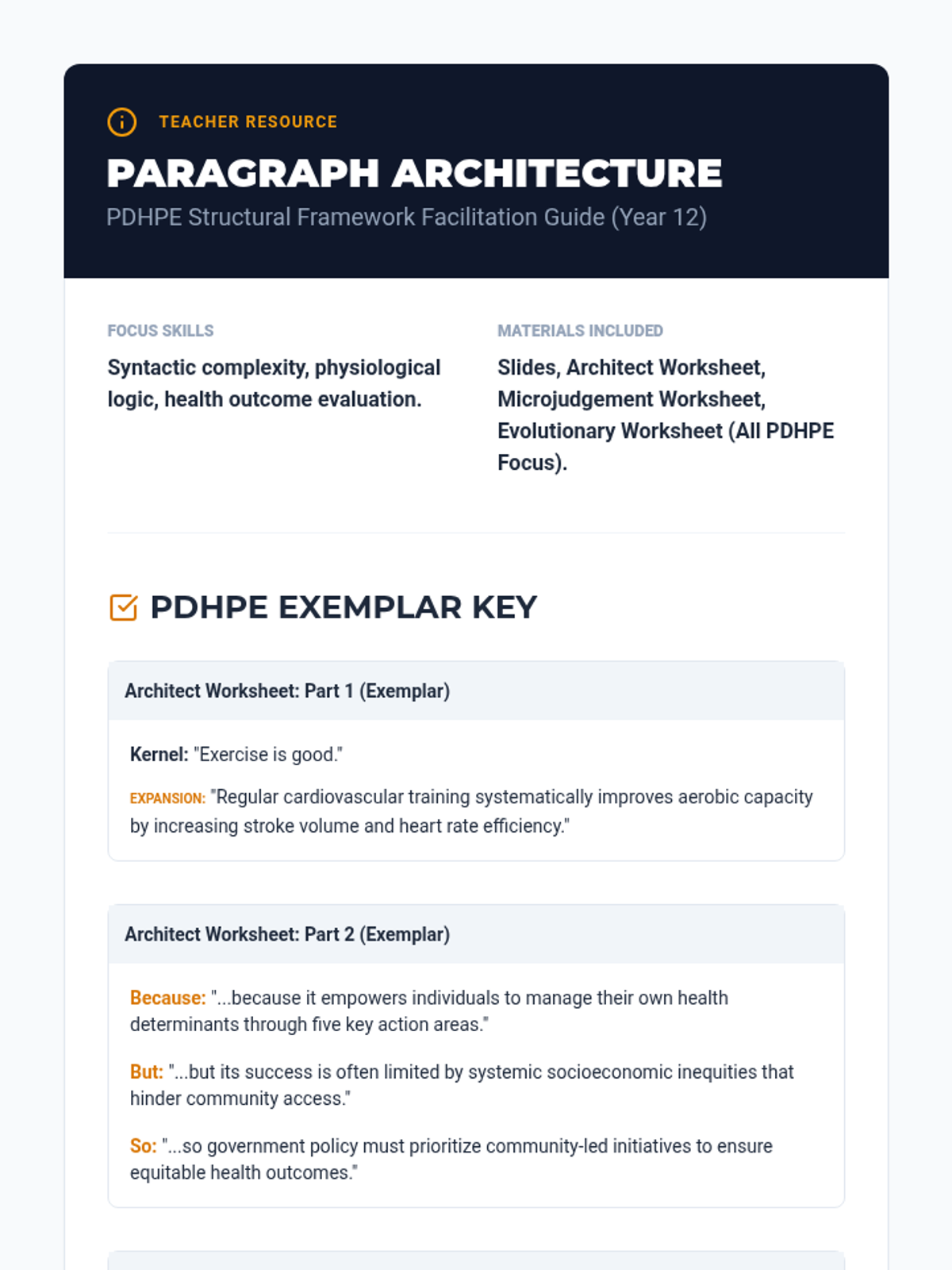
A detailed teacher guide for the Paragraph Architecture lesson, featuring facilitation notes for the T.E.E.E.L. structural framework and worksheet answer exemplars, all tailored for the PDHPE syllabus.
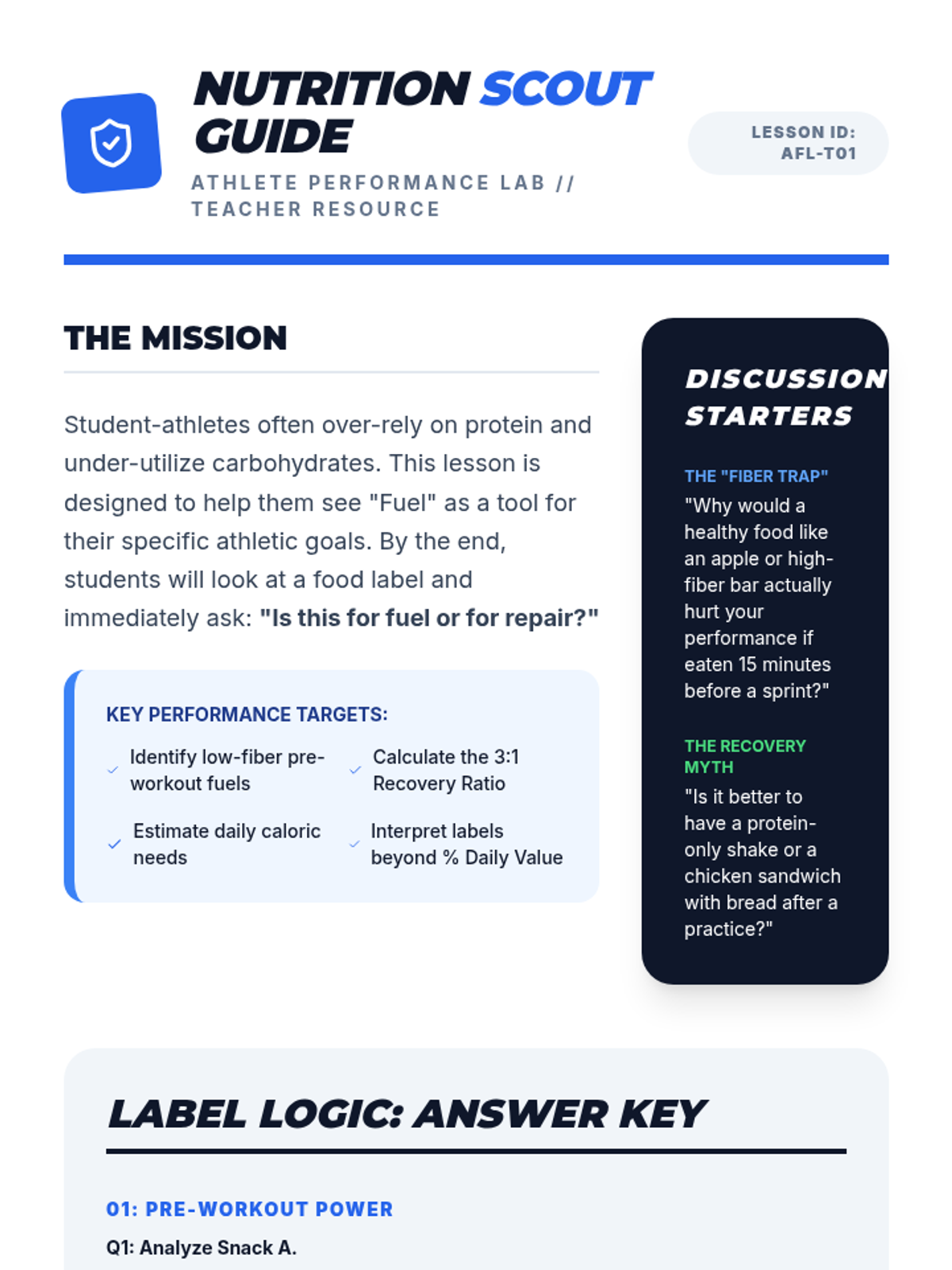
A detailed teacher facilitation guide including lesson objectives, discussion prompts, a complete answer key for the Label Logic Worksheet, and an extension activity for real-world application.
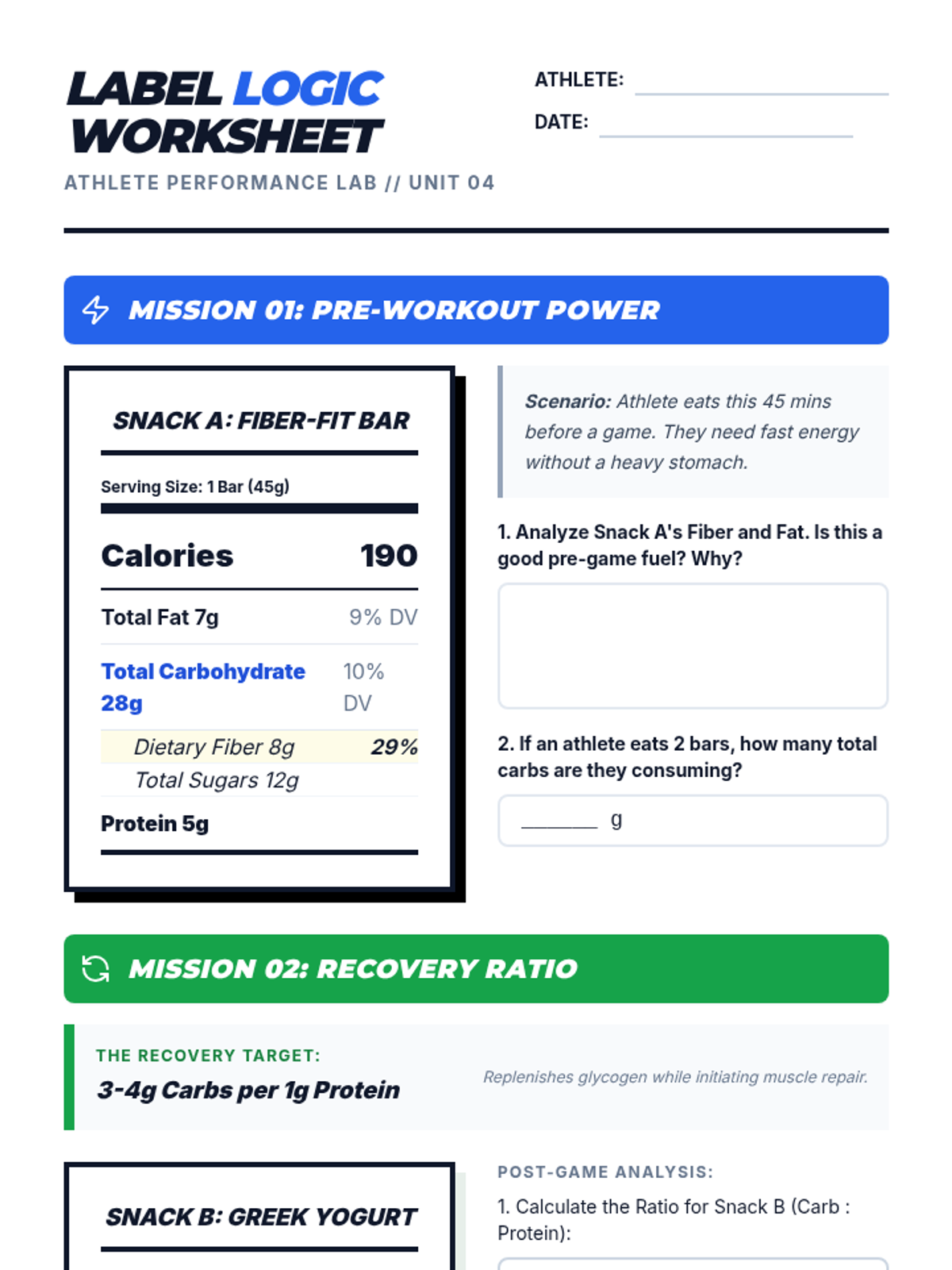
A student practice worksheet featuring two specific nutrition labels to analyze. Students calculate carb-to-protein ratios, assess pre-workout snack suitability based on fiber and fat, and calculate daily caloric needs for a sample athlete. Includes improved formatting and spacing for handwriting.
A high-energy 16:9 slide deck for teaching athletes how to read food labels for fueling and recovery. Includes slides on pre-workout carbohydrates, post-workout protein-to-carb ratios, and daily caloric needs. ALL text is 24px minimum for visibility.
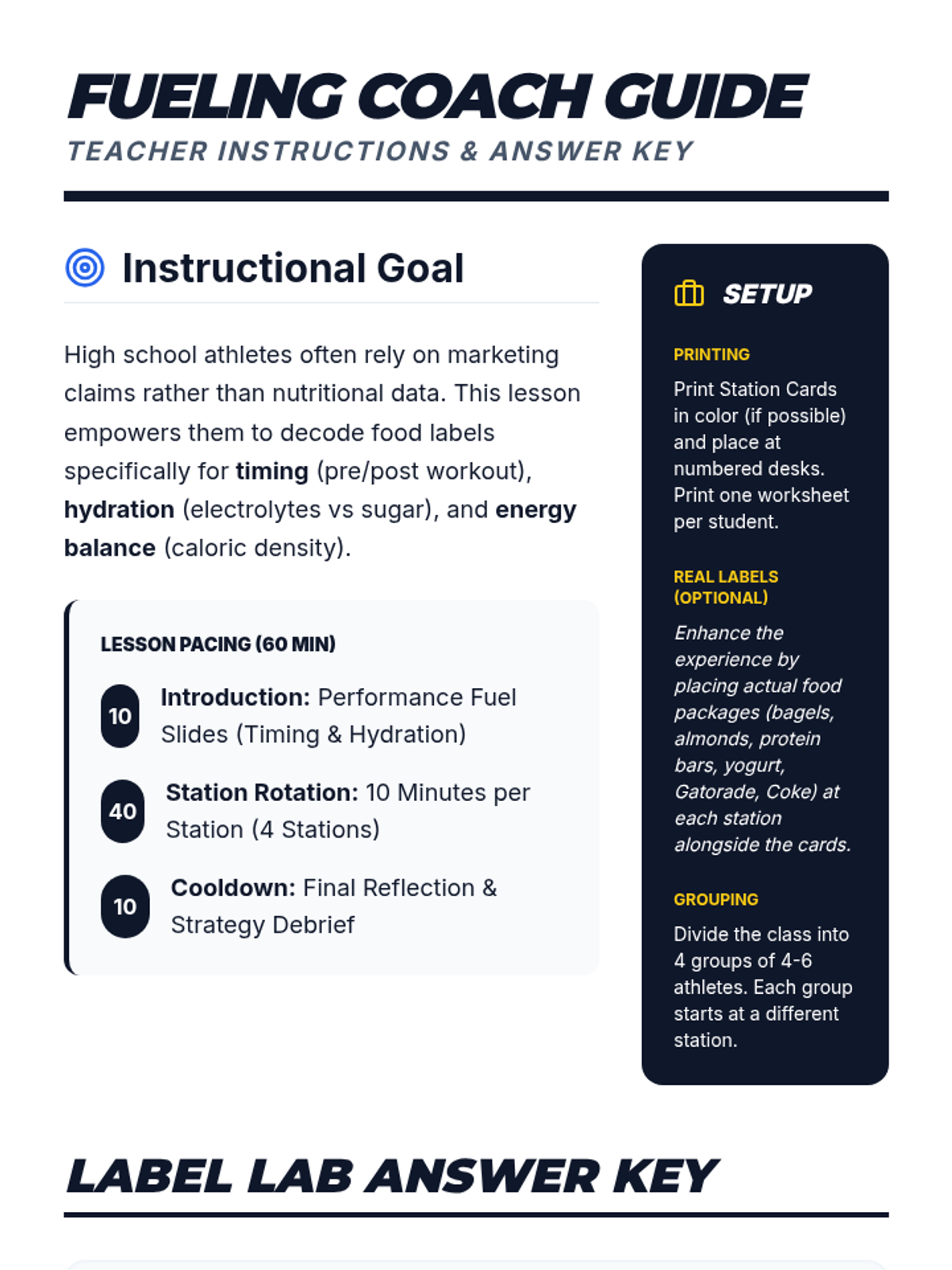
A teacher facilitation guide and answer key for the athlete fueling lesson. Includes pacing instructions, station setup guides, detailed answers for all lab activities, and discussion prompts for debriefing.
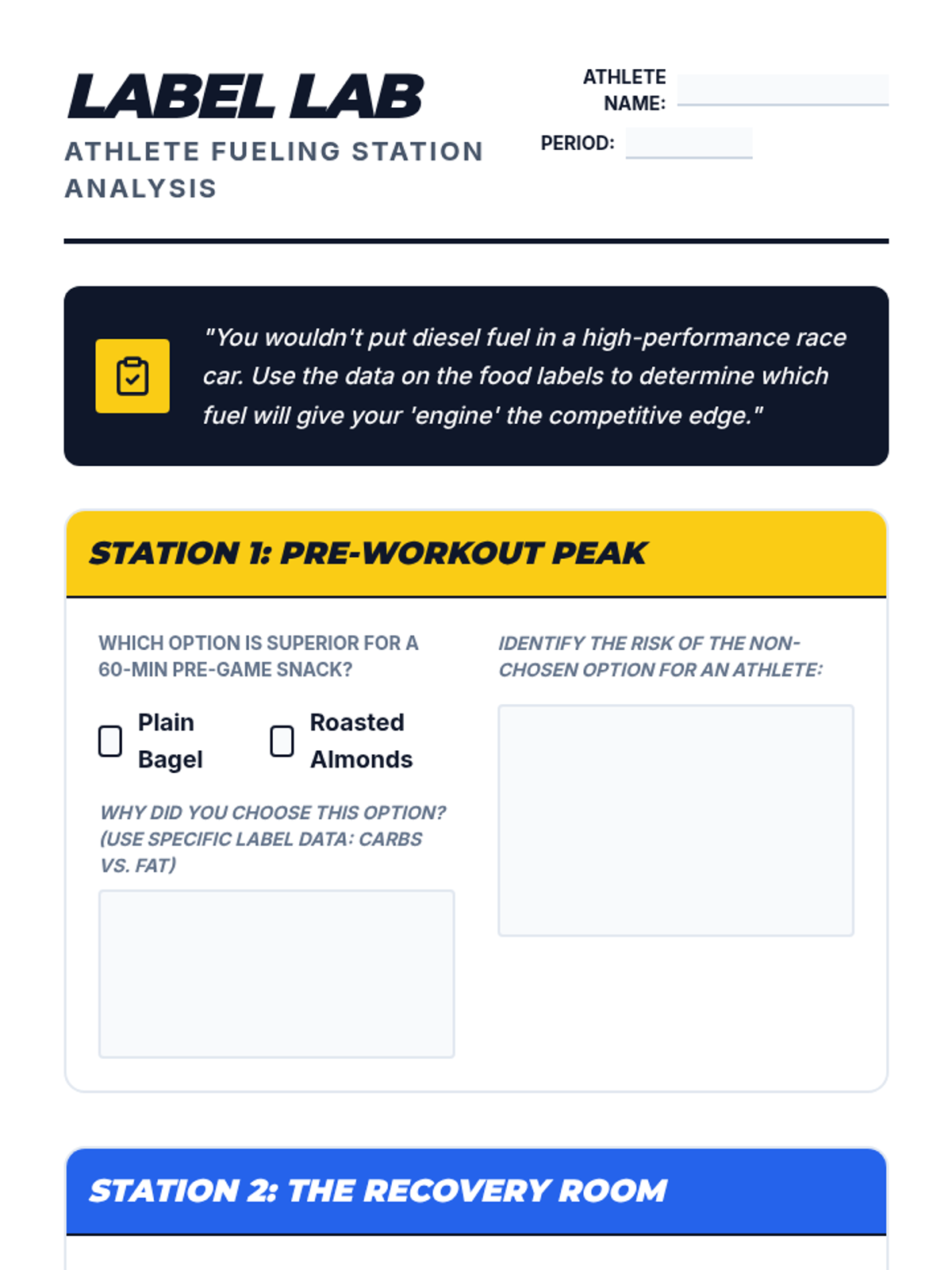
A station recording worksheet for high school athletes to analyze macronutrient data, compare food options for performance, and calculate caloric intake.
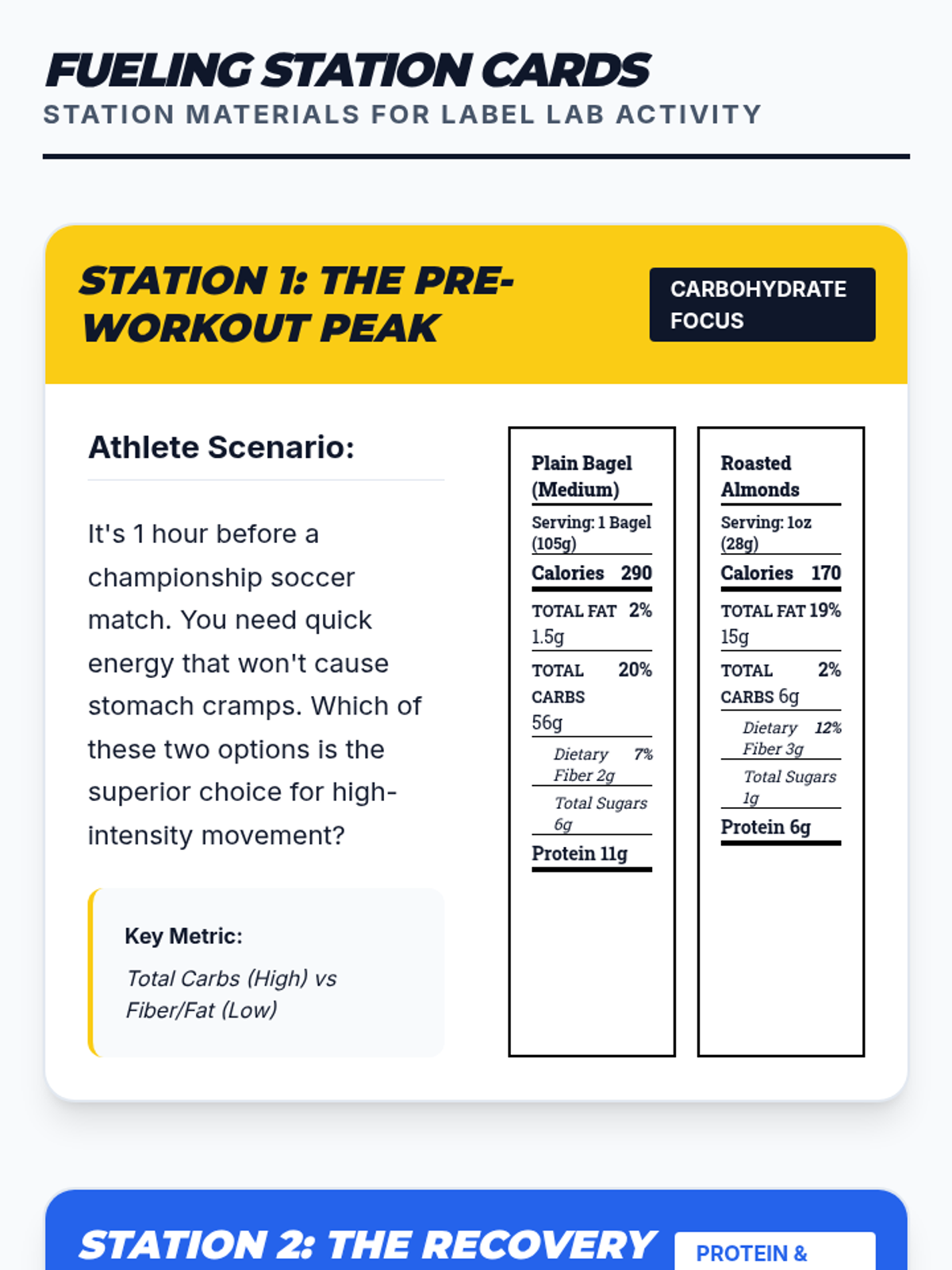
A set of four station cards for a hands-on food label analysis activity. Each card features an athlete-specific scenario, detailed nutritional label data, and specific focuses on macronutrient timing, hydration, and calorie calculation.
A dynamic slide deck introducing high school athletes to food label analysis, focusing on macronutrient timing (pre/post workout), hidden sugars, and electrolyte hydration.
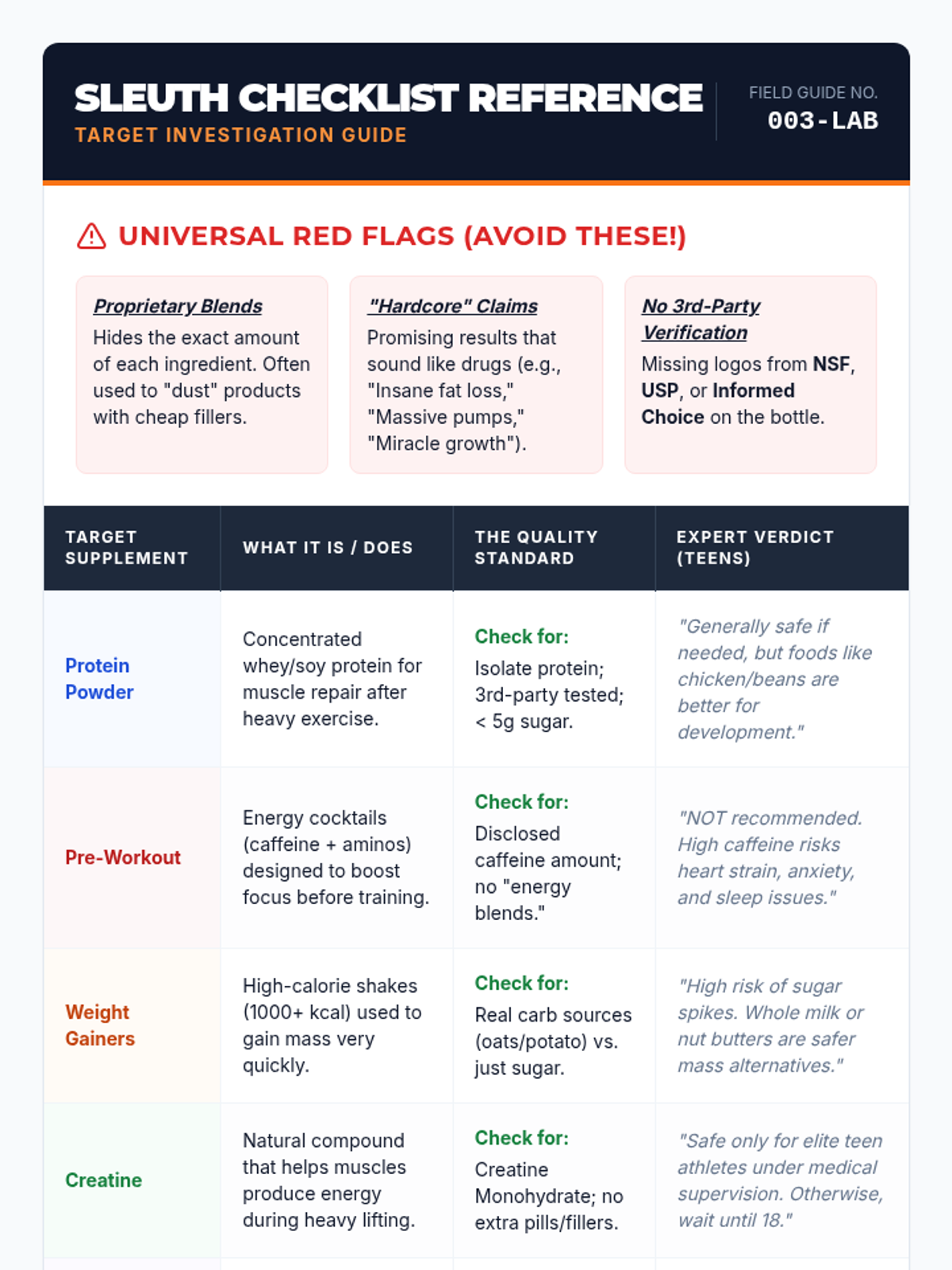
A reference guide for students summarizing the definition, quality standards, and expert pediatric verdicts for the 5 target supplements. Designed to be used as a "cheat sheet" during the digital Label Hunt.
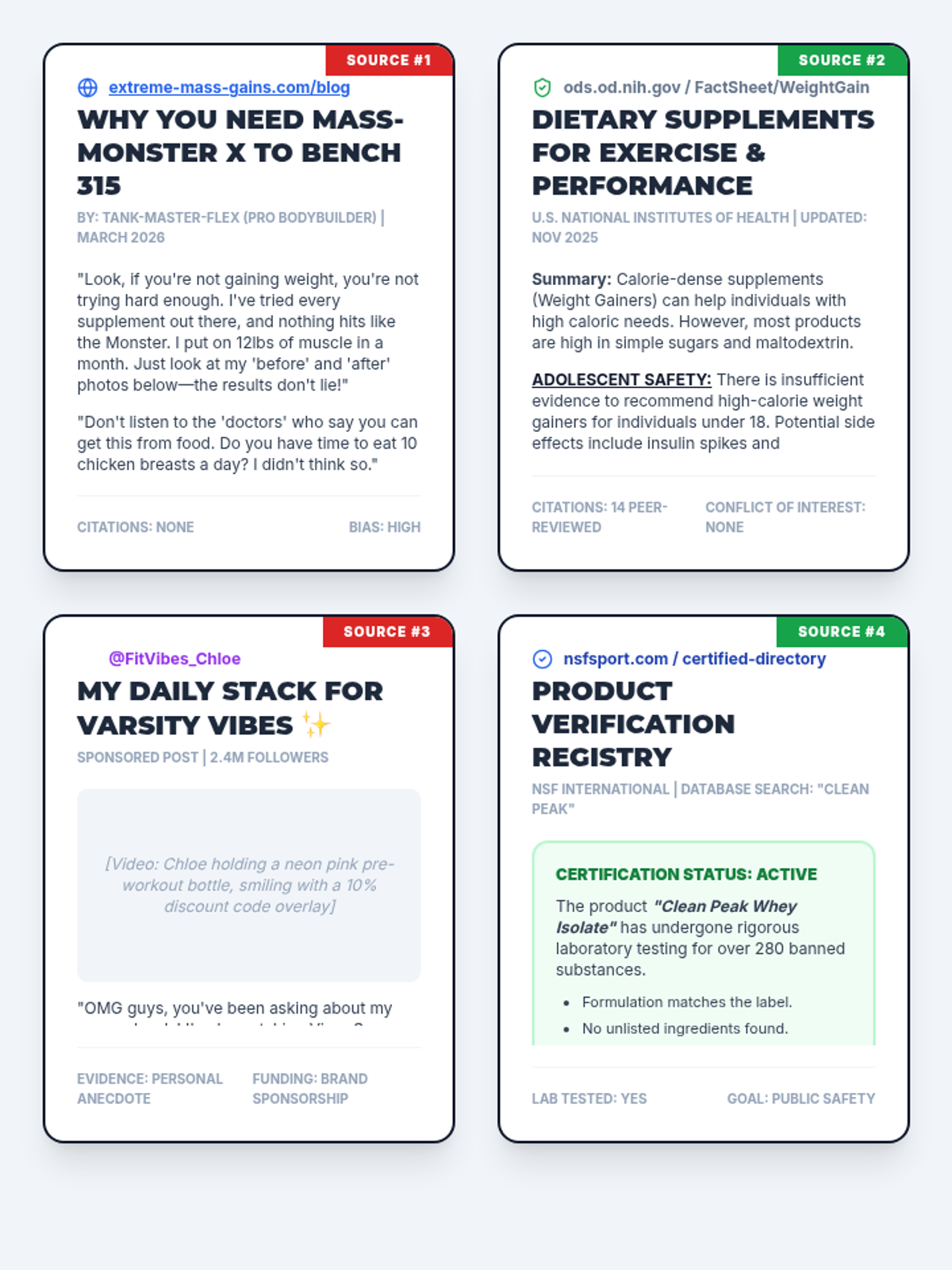
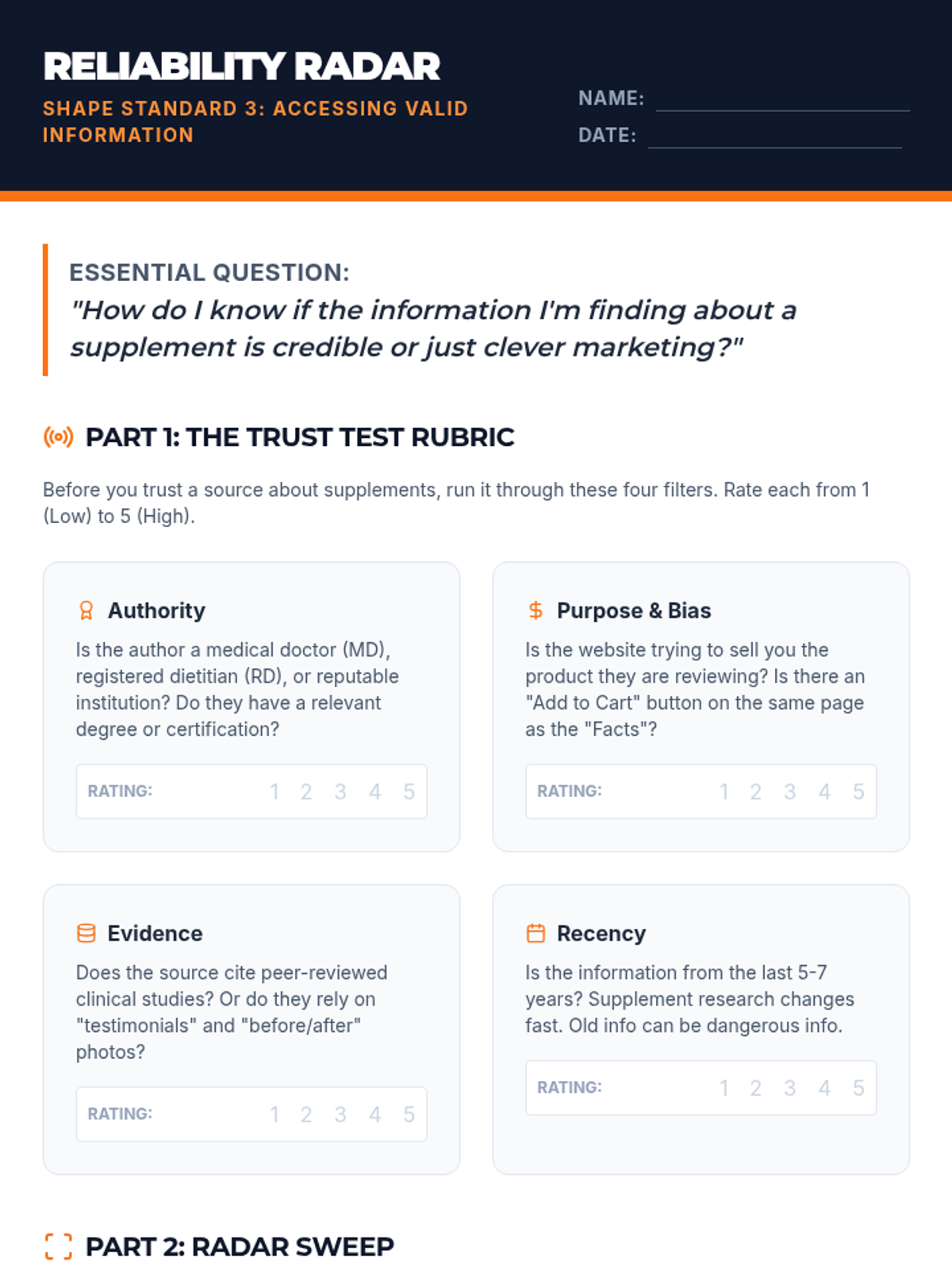
A set of four source specimens for the Reliability Radar activity. Students evaluate snippets of blog posts, government fact sheets, influencer reels, and 3rd-party registry listings to determine their credibility.
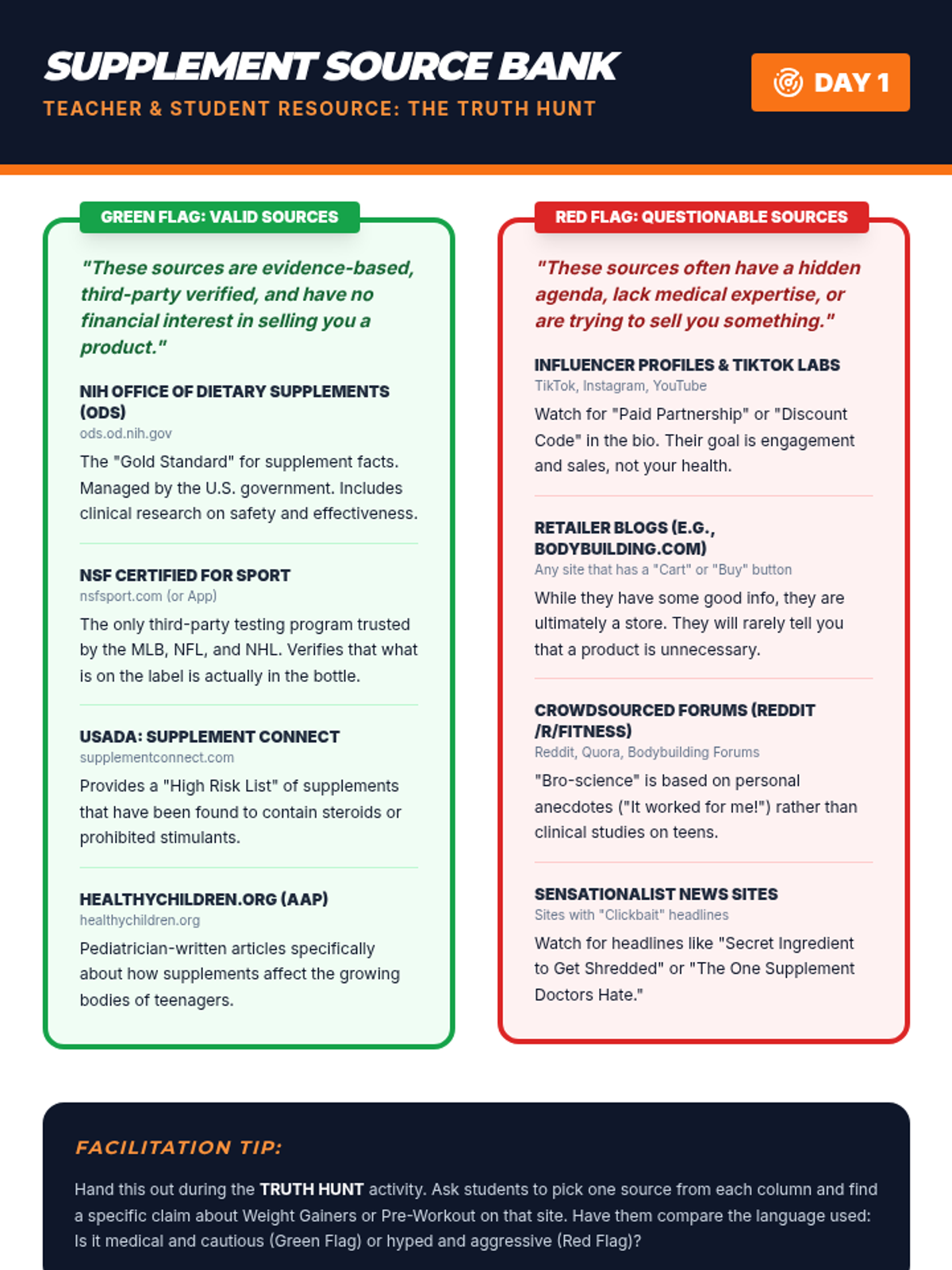
A reference guide listing specific credible (Green Flag) and untrustworthy (Red Flag) information sources to help students practice accessing valid information about dietary supplements.
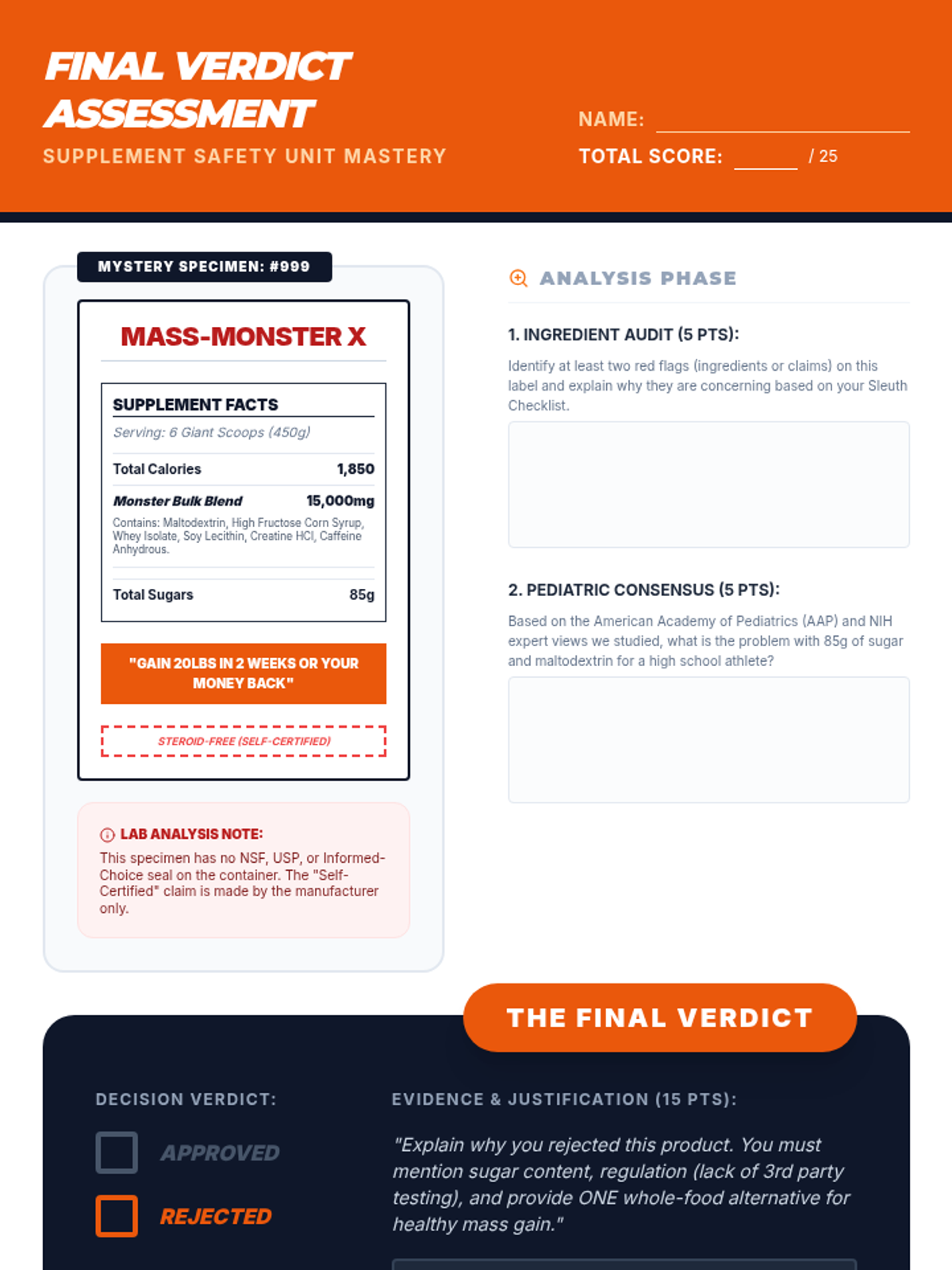
A final synthesis assessment updated to feature a Weight Gainer mystery specimen (Mass-Monster X) with red flags like high sugar and hidden stimulants. Students analyze the label using skills learned in the 2-day Supplement Safety Express unit.
A worksheet for Lesson 1, updated with examples centered on Weight Gainers to help students evaluate the validity of information.
Introductory slides for the Supplement Safety unit, updated to include Weight Gainers and a comprehensive deep dive into the 5 target supplements, focusing on their definitions, quality red flags, and expert pediatric recommendations. All text meets the minimum 24px requirement for slide legibility.
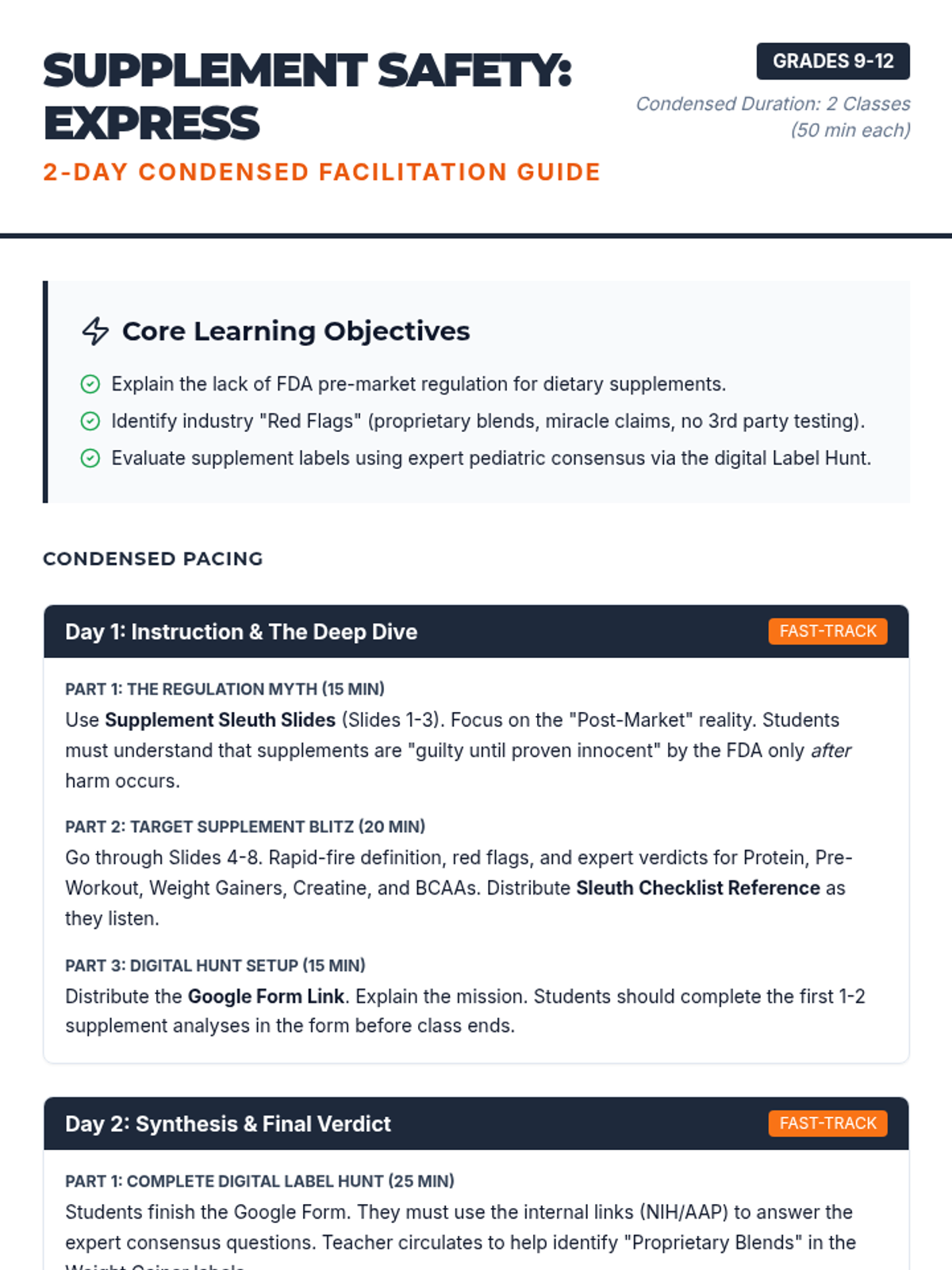
A condensed 2-day teacher's guide for the Supplement Safety unit, fast-tracking from foundational instruction on Day 1 to a synthesis assessment on Day 2. Designed for high school sports nutrition classes with limited time.
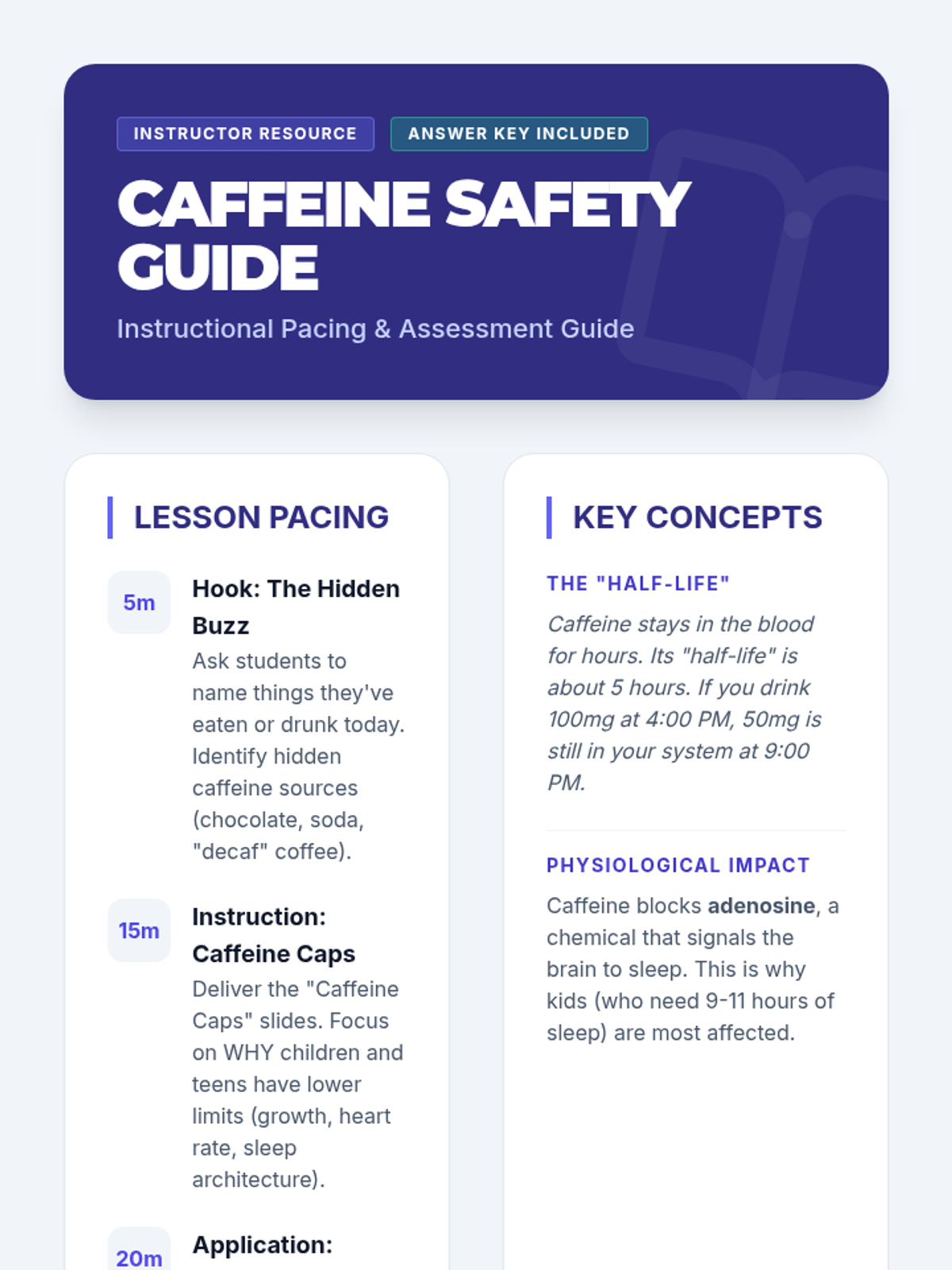
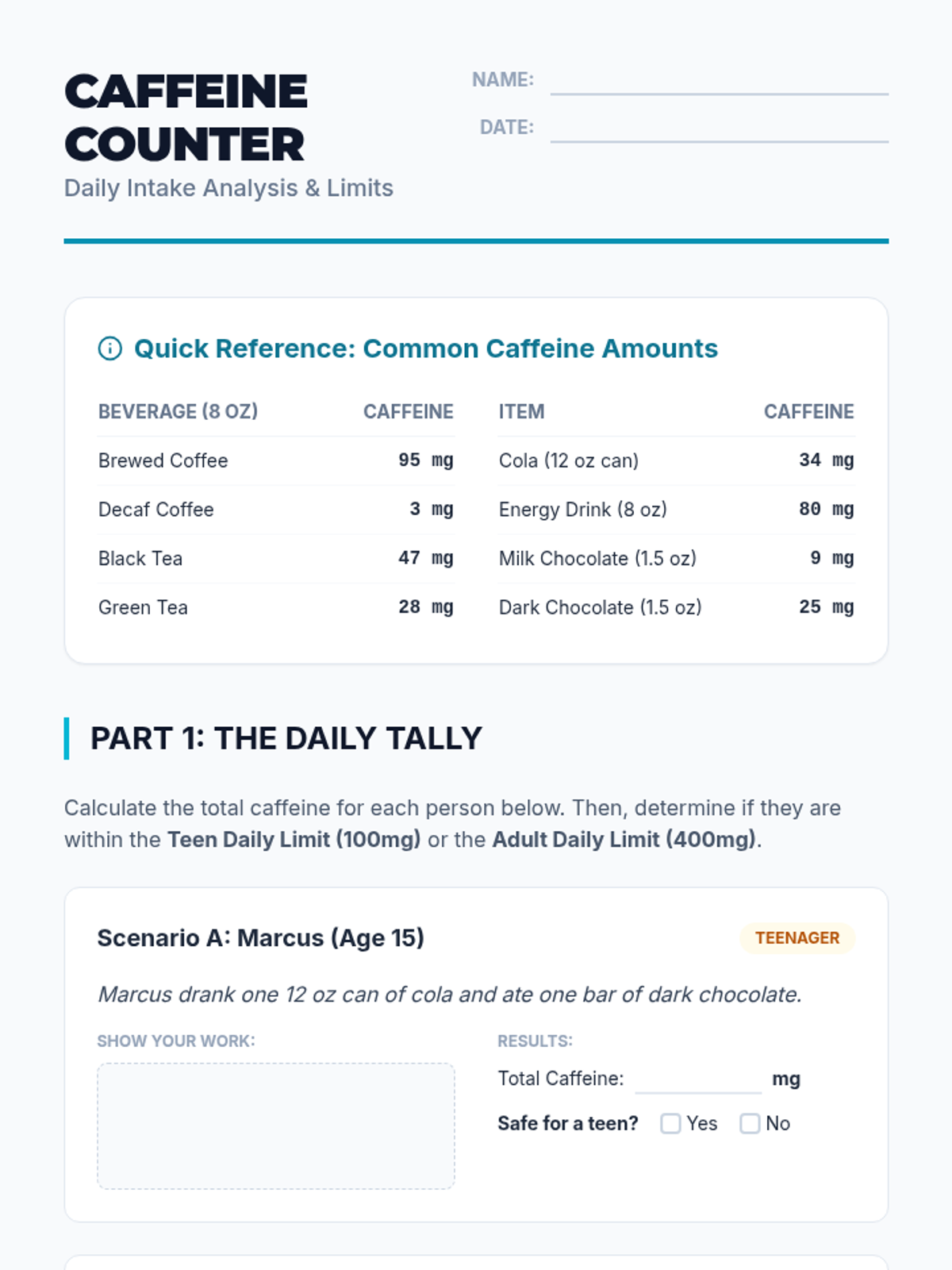
An instructional guide for teachers including lesson pacing, key physiological concepts, and the answer key for the Caffeine Counter Worksheet.
A student worksheet for calculating daily caffeine intake through scenario-based math problems and critical thinking questions about safety limits.
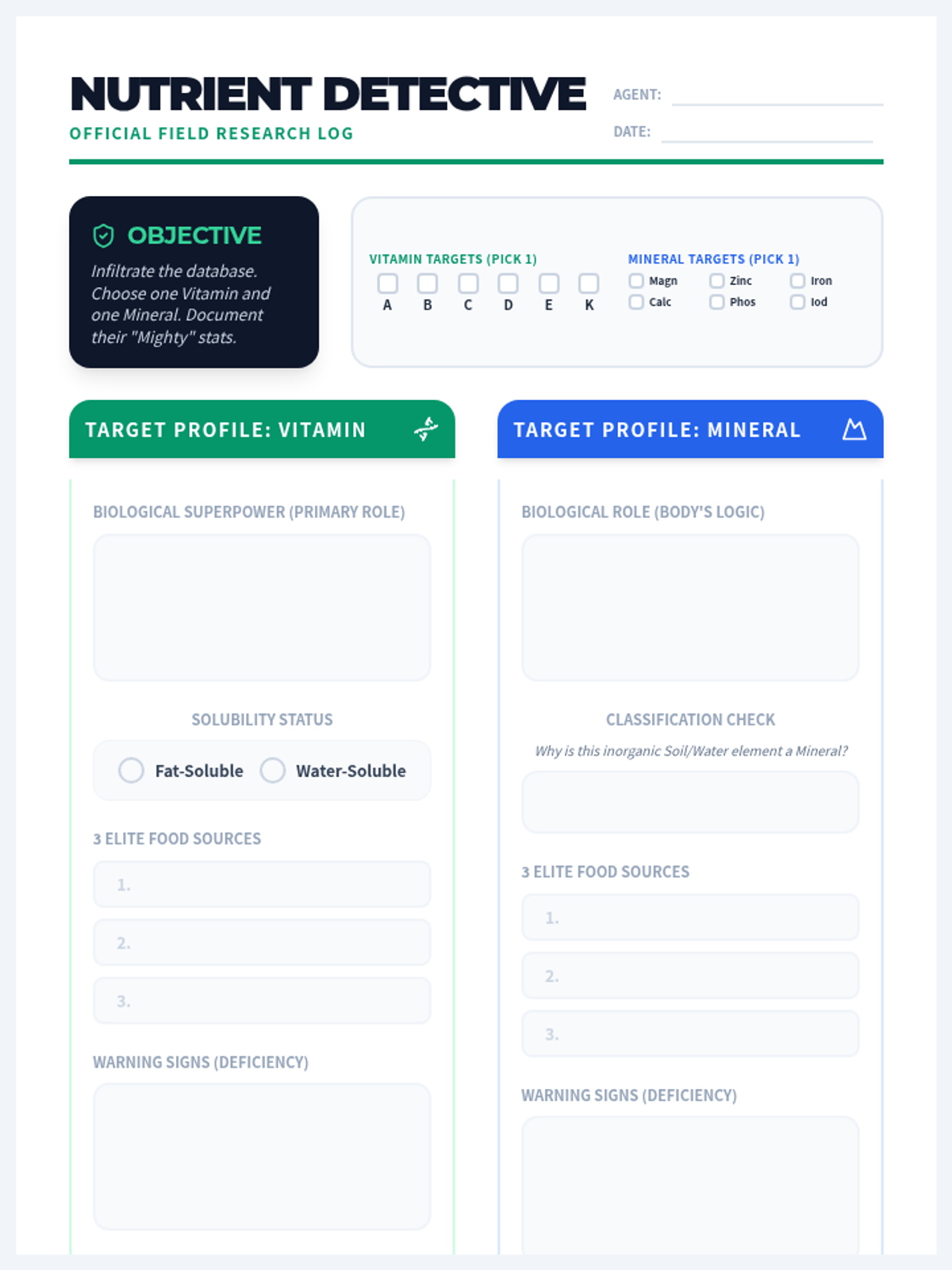
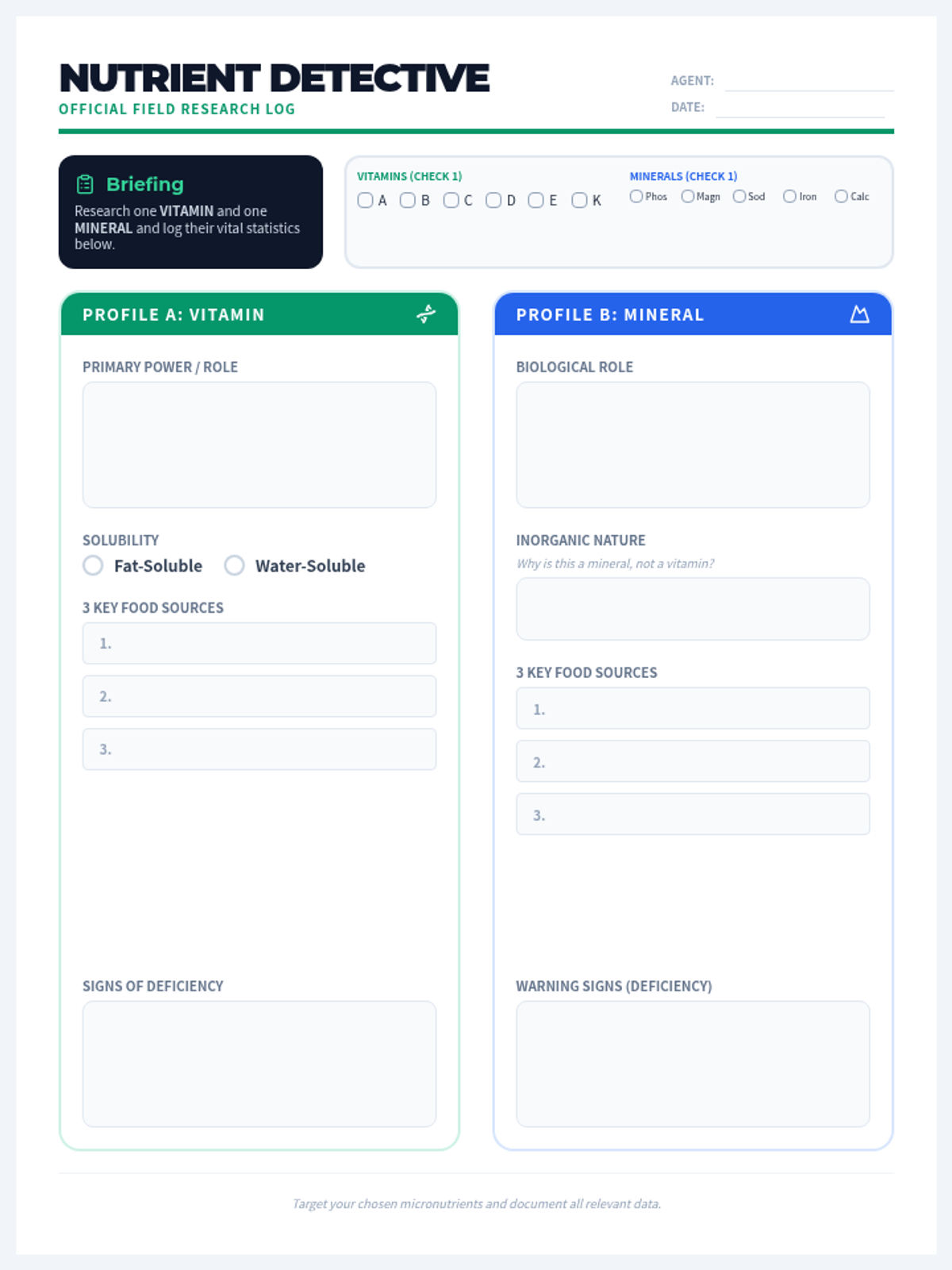
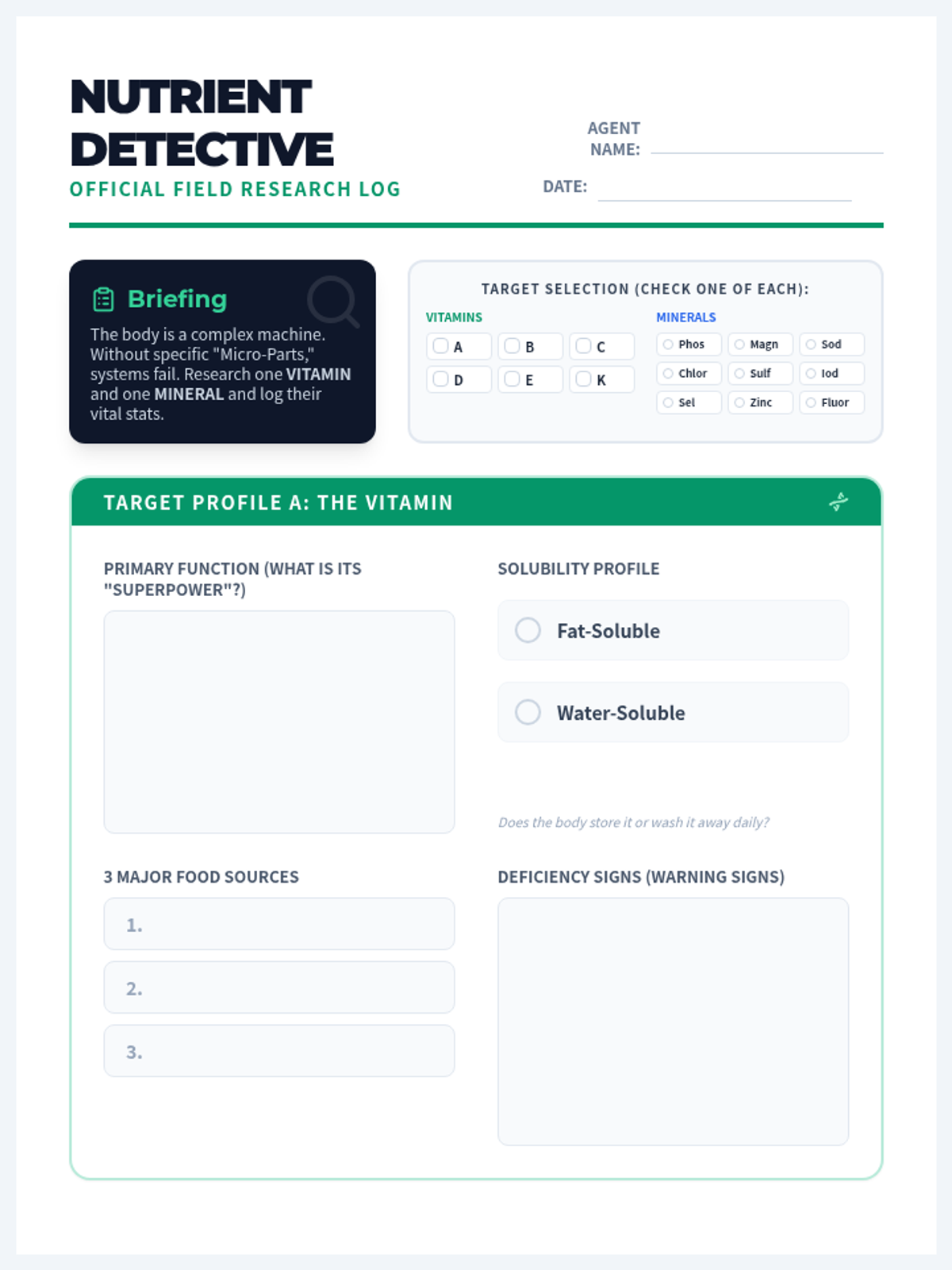
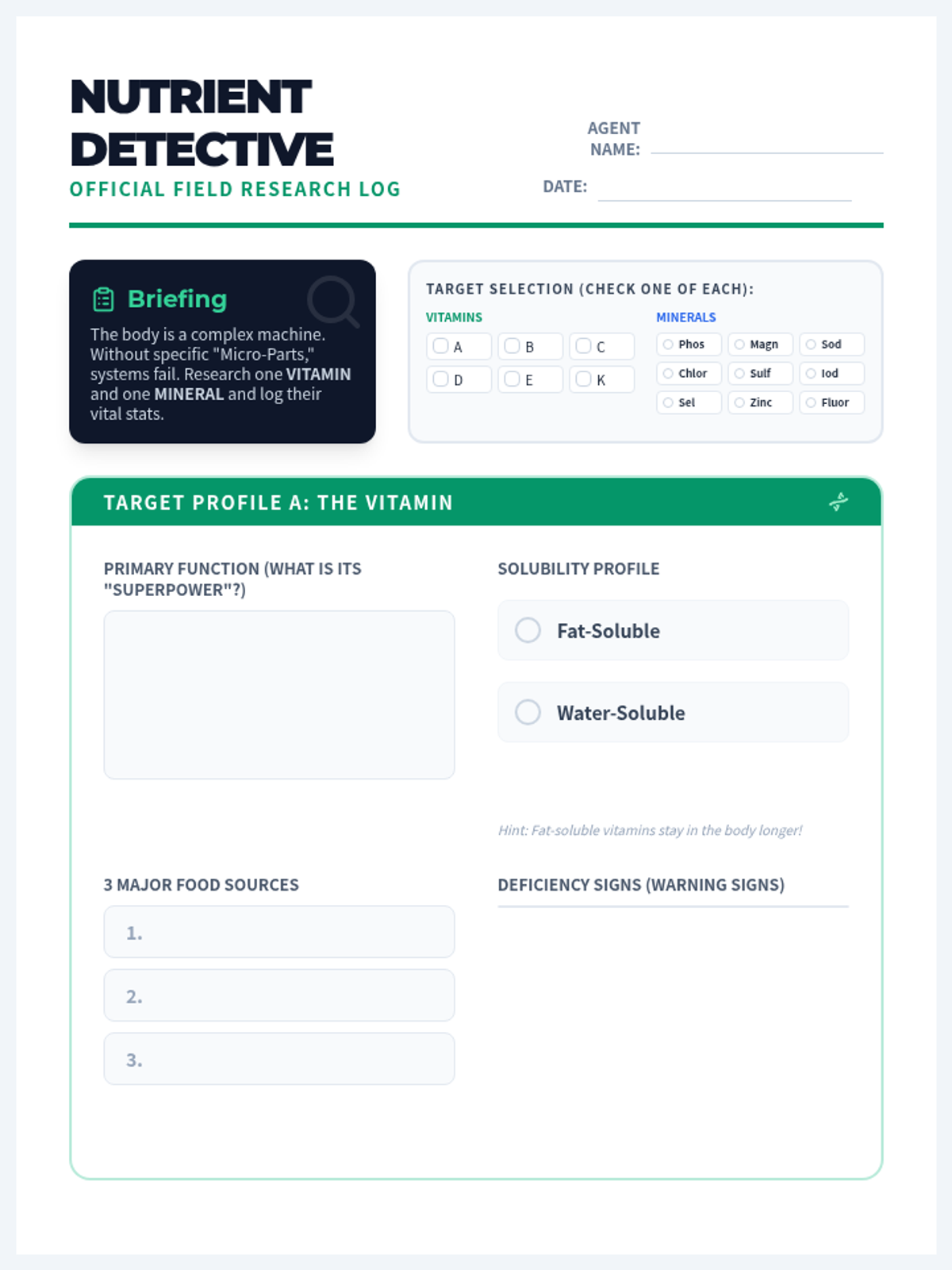
A condensed 2-page version of the Nutrient Detective Handout perfectly fitted for standard printing. Page 1 contains both the Vitamin and Mineral research profiles, and Page 2 contains all 15 peer presentation log boxes in a dense, efficient grid.
A condensed 2-page version of the Nutrient Detective Handout. Page 1 contains both the Vitamin and Mineral research profiles, and Page 2 contains all 15 peer presentation log boxes in a structured grid.
The corrected Nutrient Detective Handout with the antioxidant section completely removed. It features research profiles for one vitamin and one mineral, followed by a peer presentation log with 15 boxes spread across three pages.
An updated Nutrient Detective worksheet with the antioxidant section completely removed. It features research profiles for a vitamin and mineral, along with a peer presentation log containing 15 individual boxes across three pages.