Principles of muscular strength, endurance, and cardiovascular conditioning. Develops skills for setting personal fitness goals while incorporating flexibility and stretching techniques for injury prevention.
A masterclass slide deck for the Zen Chair Masterclass updated with two new practice videos and optimized font sizes (minimum 24px) for accessibility. Includes restorative and functional mobility components.
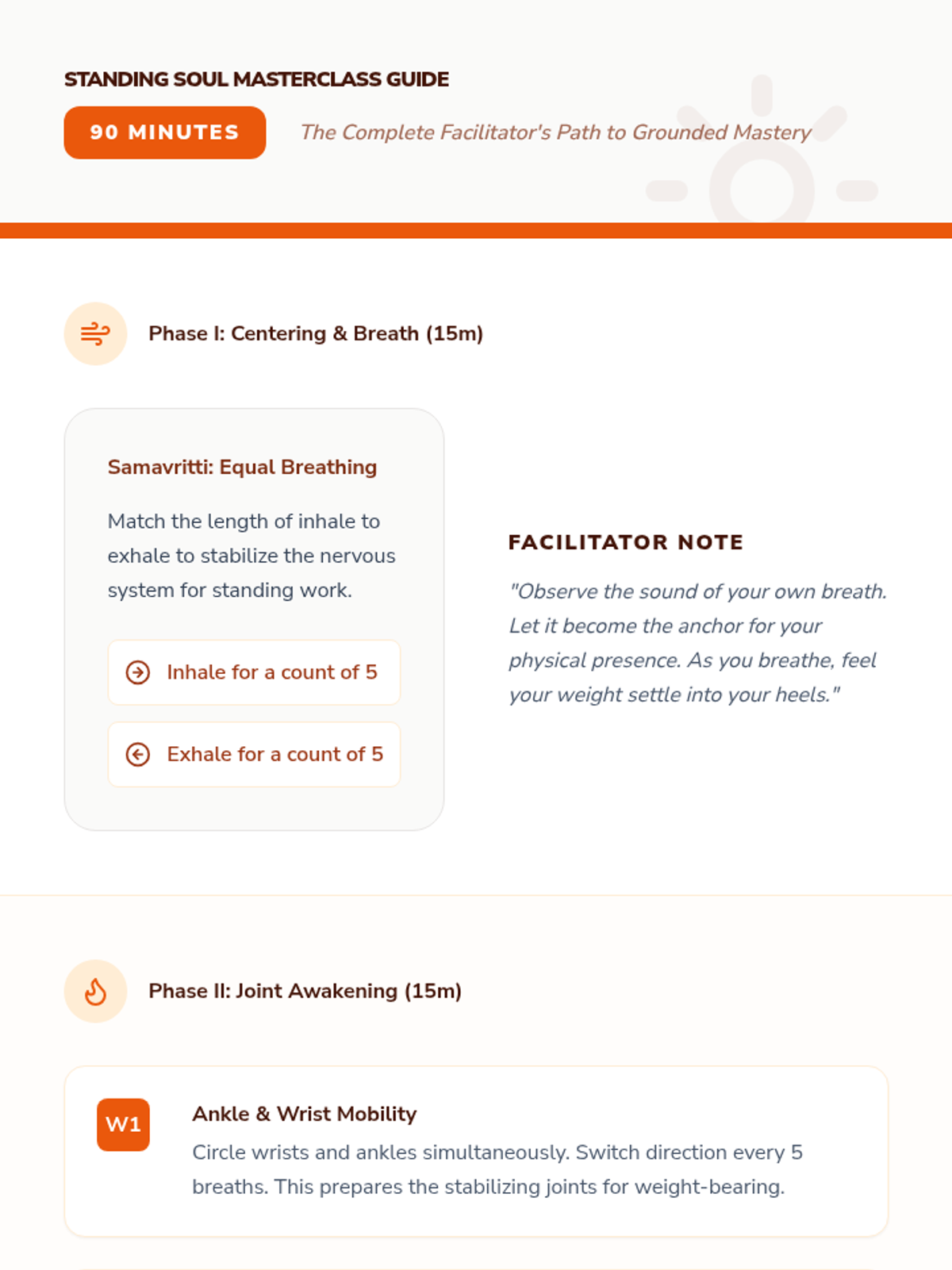
A comprehensive 90-minute facilitator's manual for the Standing Soul Masterclass. Includes pranayama, joint warm-ups, step-by-step postural alignment for key standing poses, and a restorative cool-down phase.
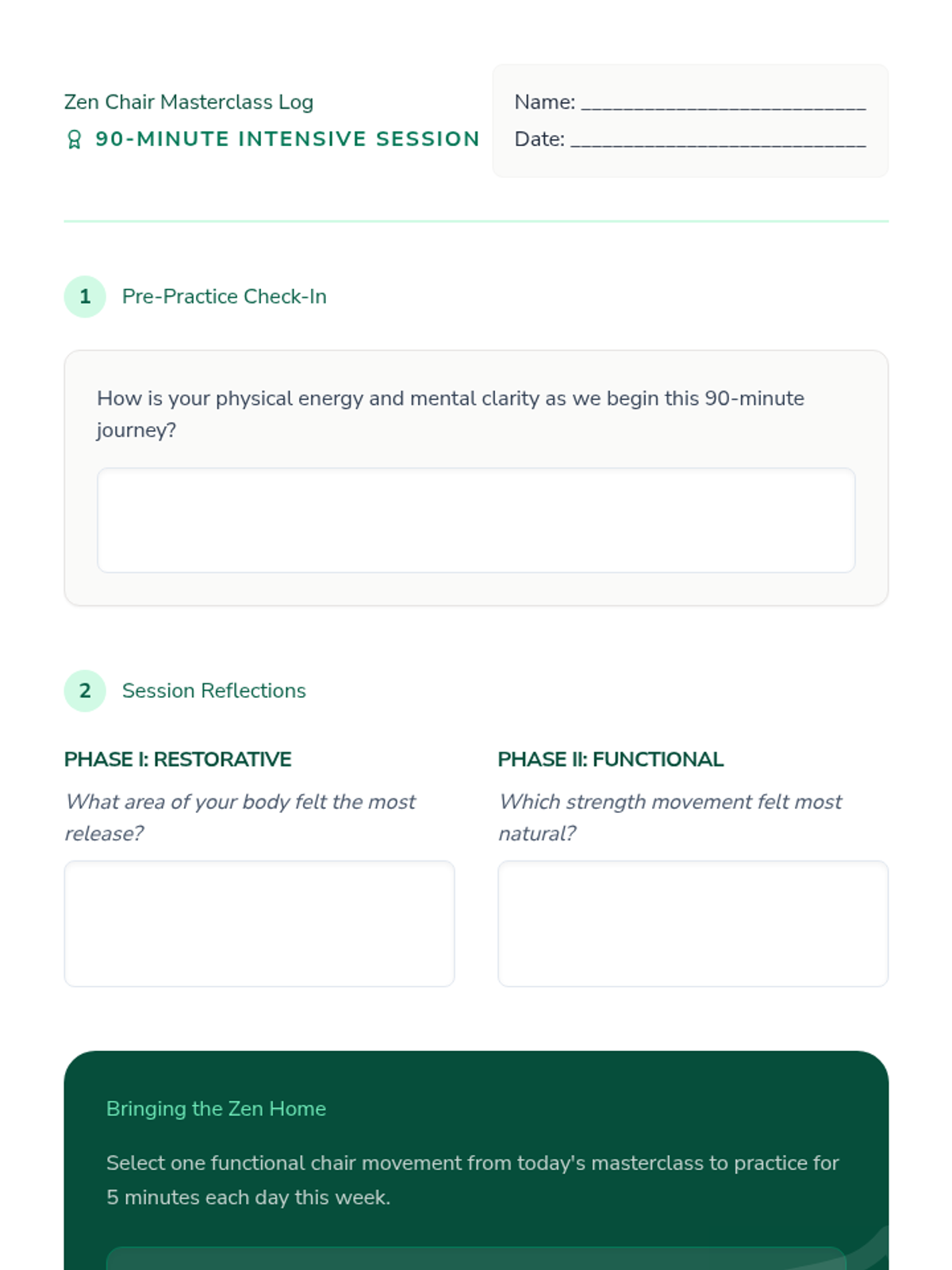
A student reflection log for the combined Zen Chair Masterclass session. Updated for the 90-minute intensive format with phase-specific reflection areas.
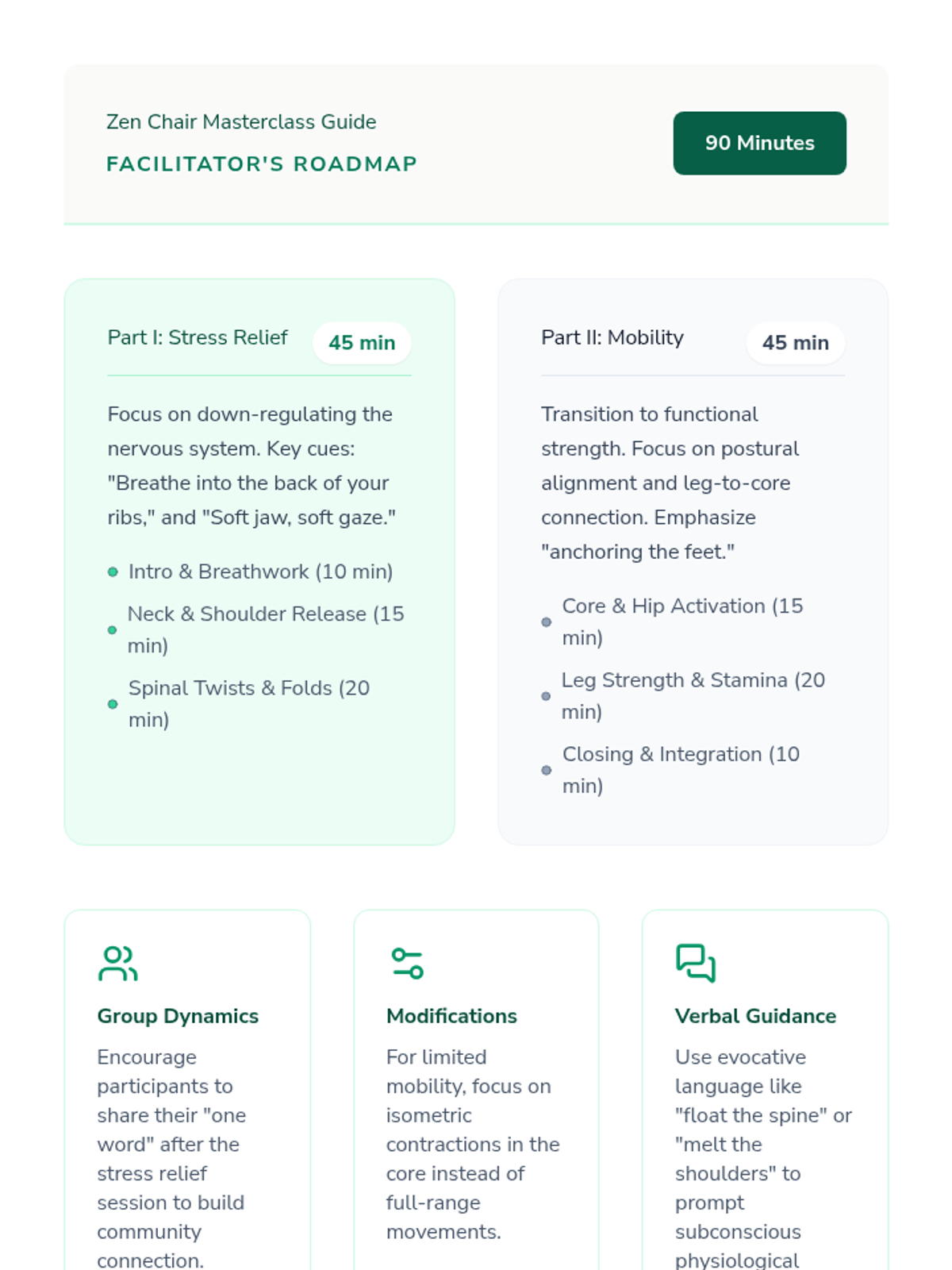
A 90-minute facilitator's guide for the Zen Chair Masterclass, featuring a split-session roadmap for stress relief and functional mobility with detailed pacing and instructional tips.
A visual presentation for introducing the biological and psychological benefits of physical activity, structured around the three health pillars.
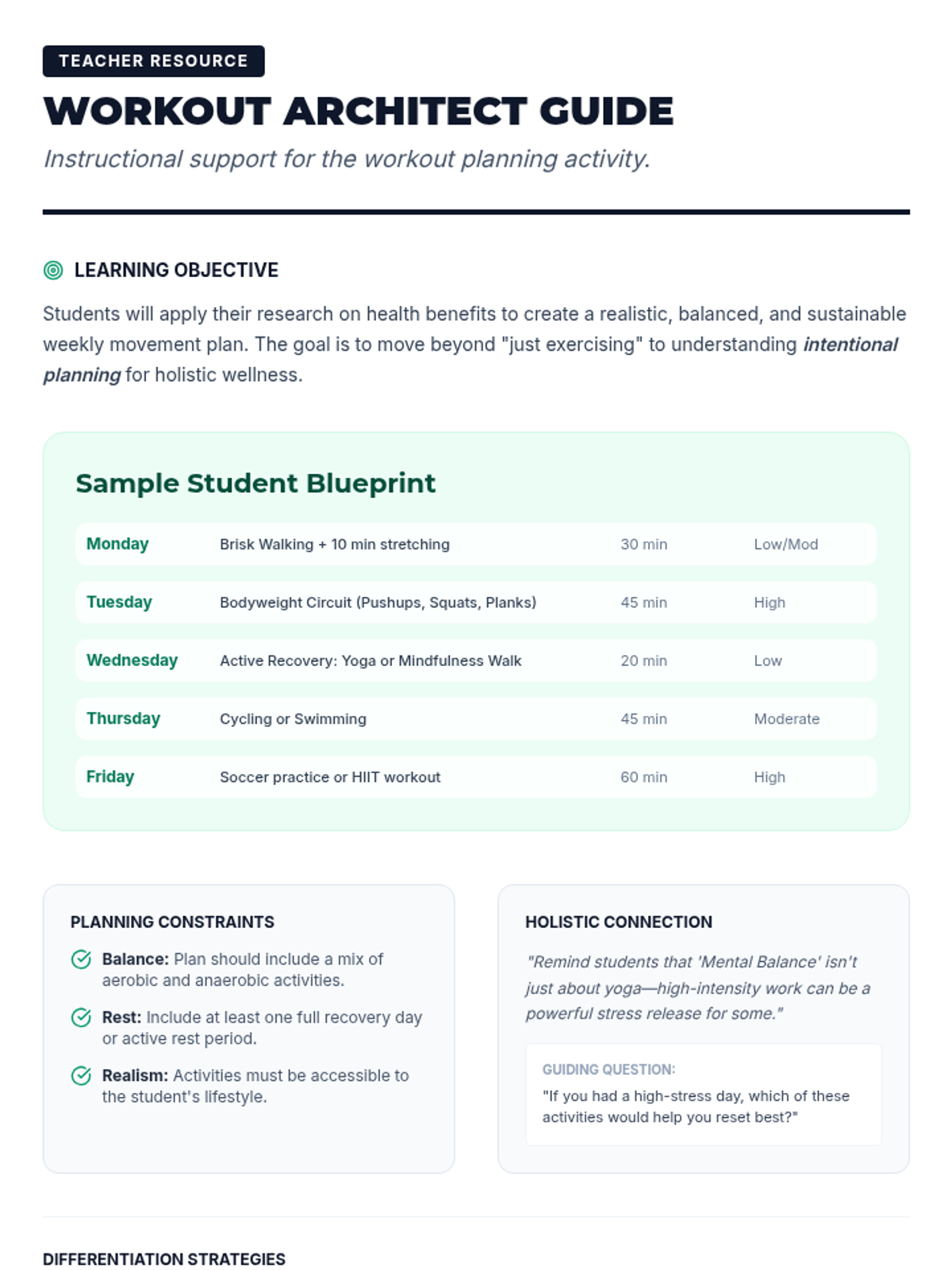
A teacher guide for the Workout Architect planner, including sample regimens, planning constraints, and differentiation strategies.
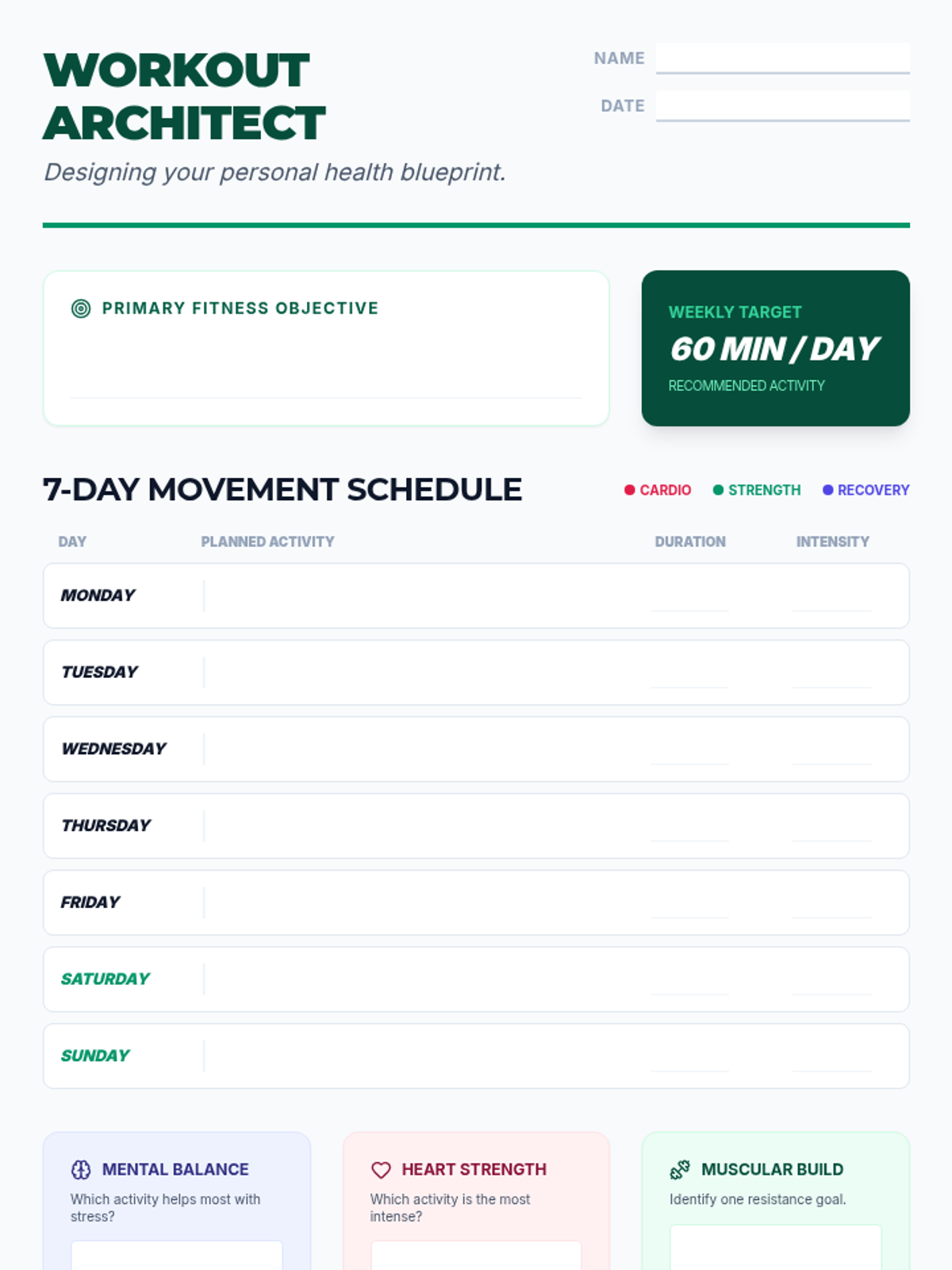
A student planner for designing a personalized weekly workout regimen, integrating mental, cardiovascular, and muscular health goals.
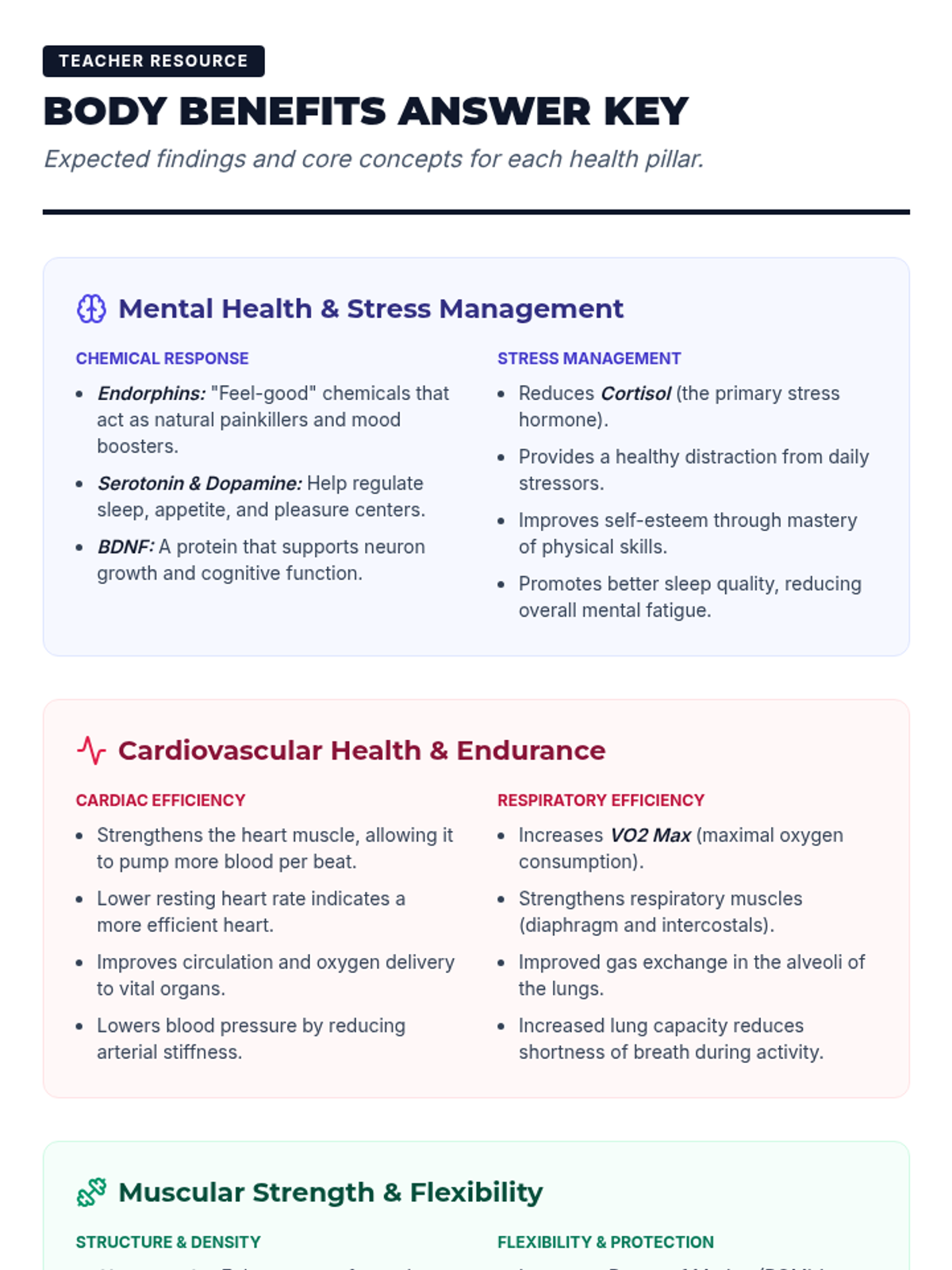
An answer key and teacher resource providing key facts and implementation tips for the Body Benefits Blueprint research activity.
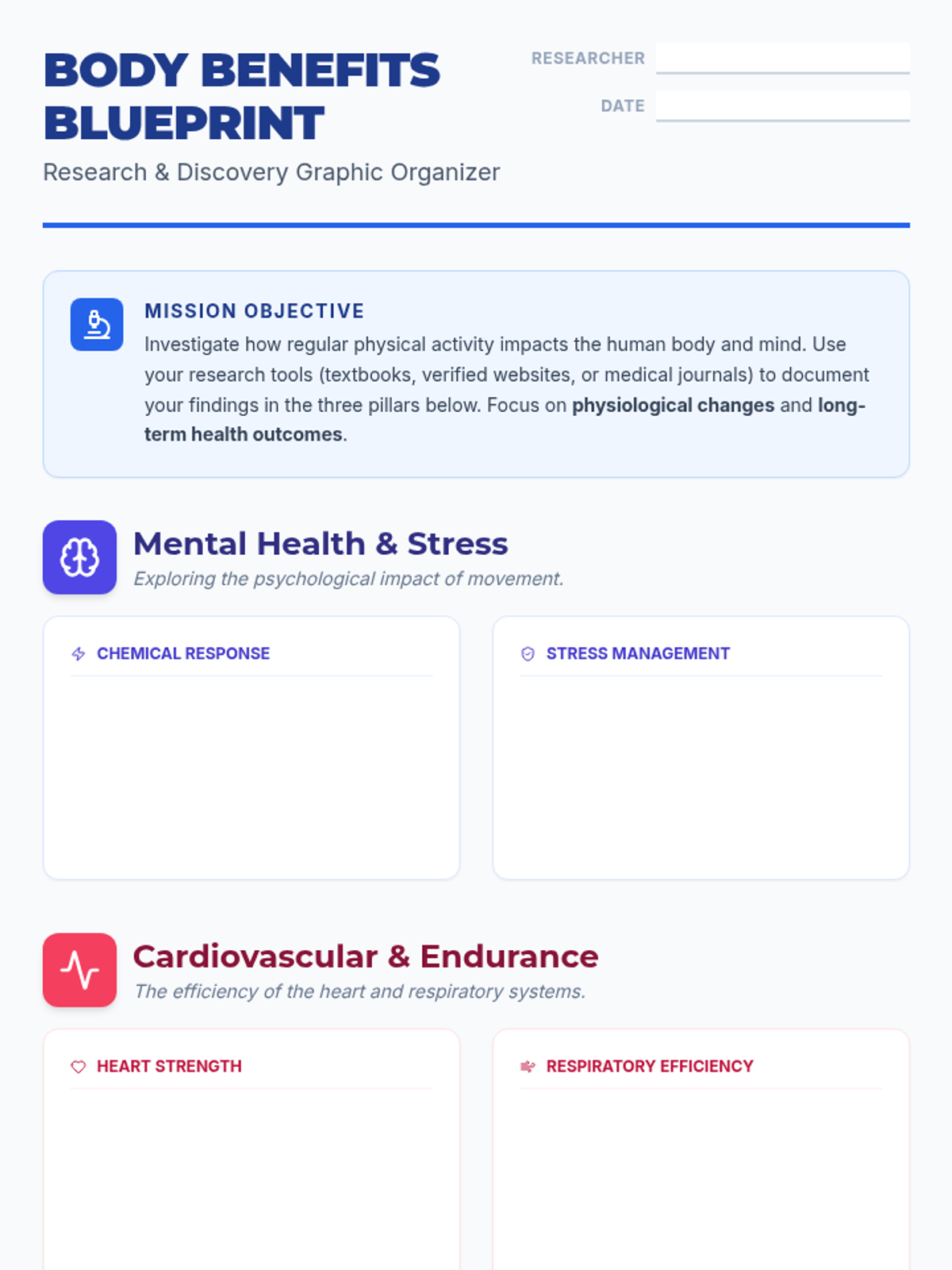
A high-quality graphic organizer for students to research and record the mental, cardiovascular, and muscular benefits of daily physical activity.
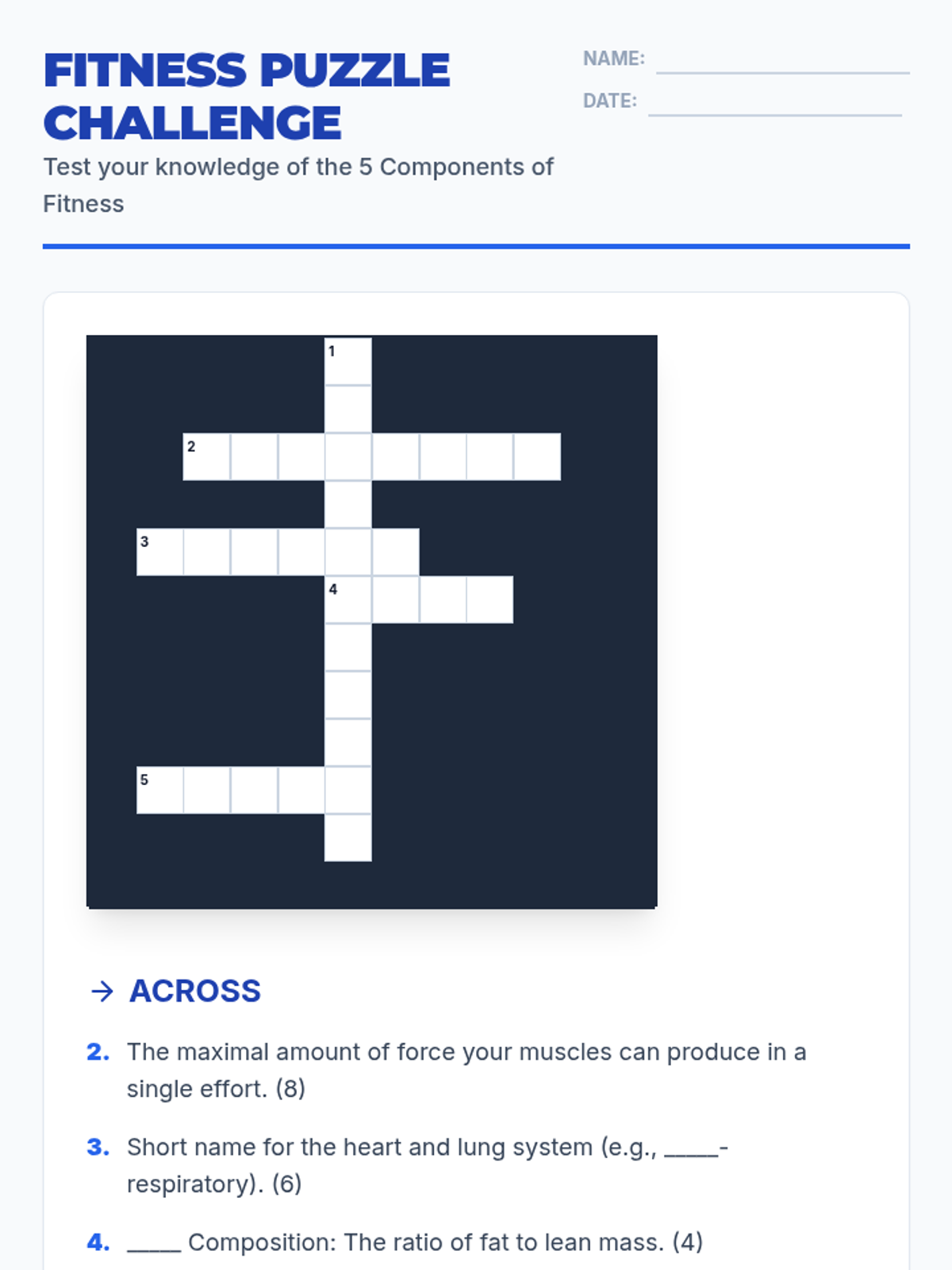
A student worksheet featuring a crossword puzzle based on the five components of fitness and a reflection essay prompt about balancing these components in real-world activities.
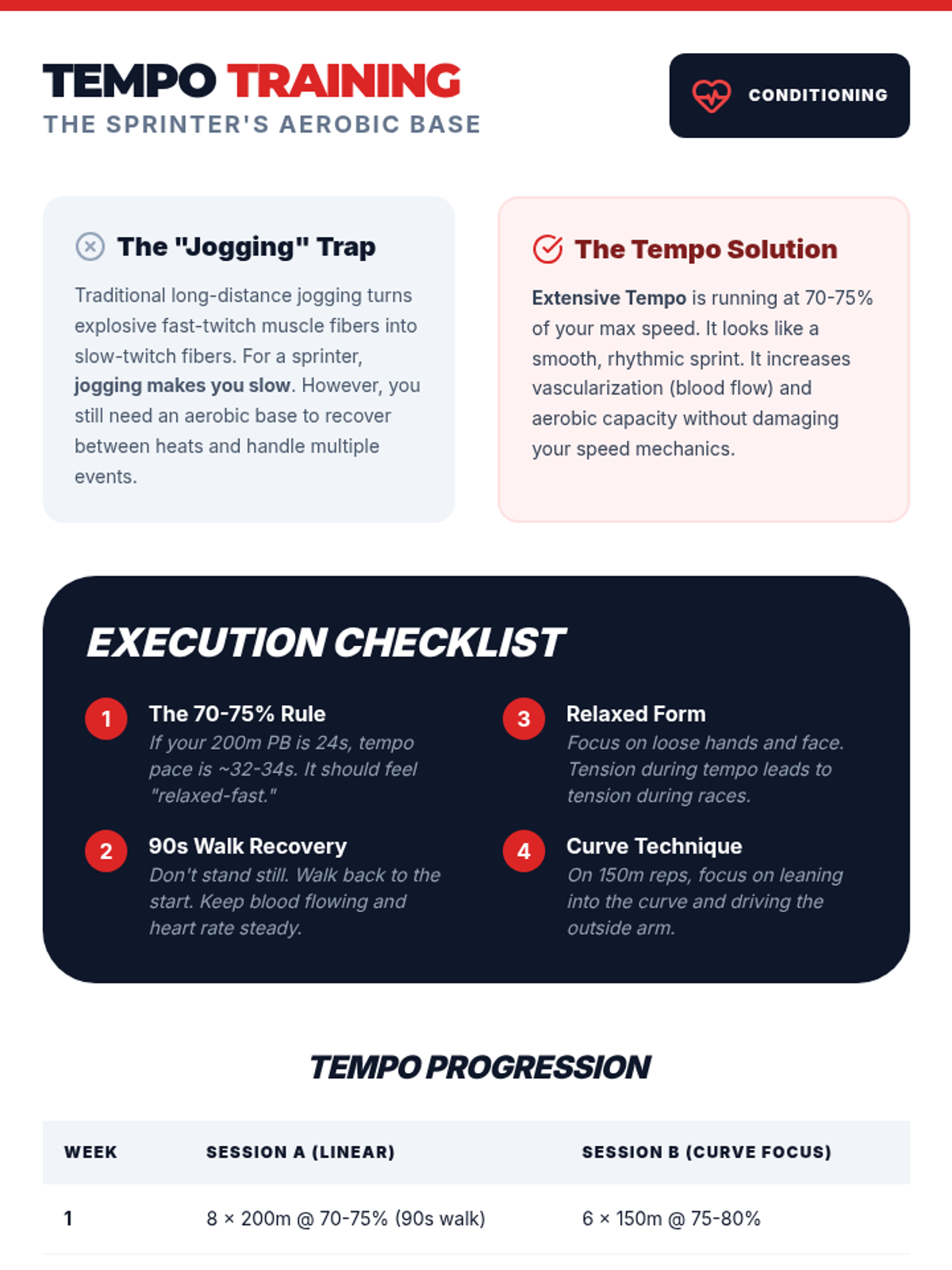
A guide to "Extensive Tempo" training, explaining how sprinters build aerobic capacity and recovery speed without sacrificing fast-twitch explosive power.
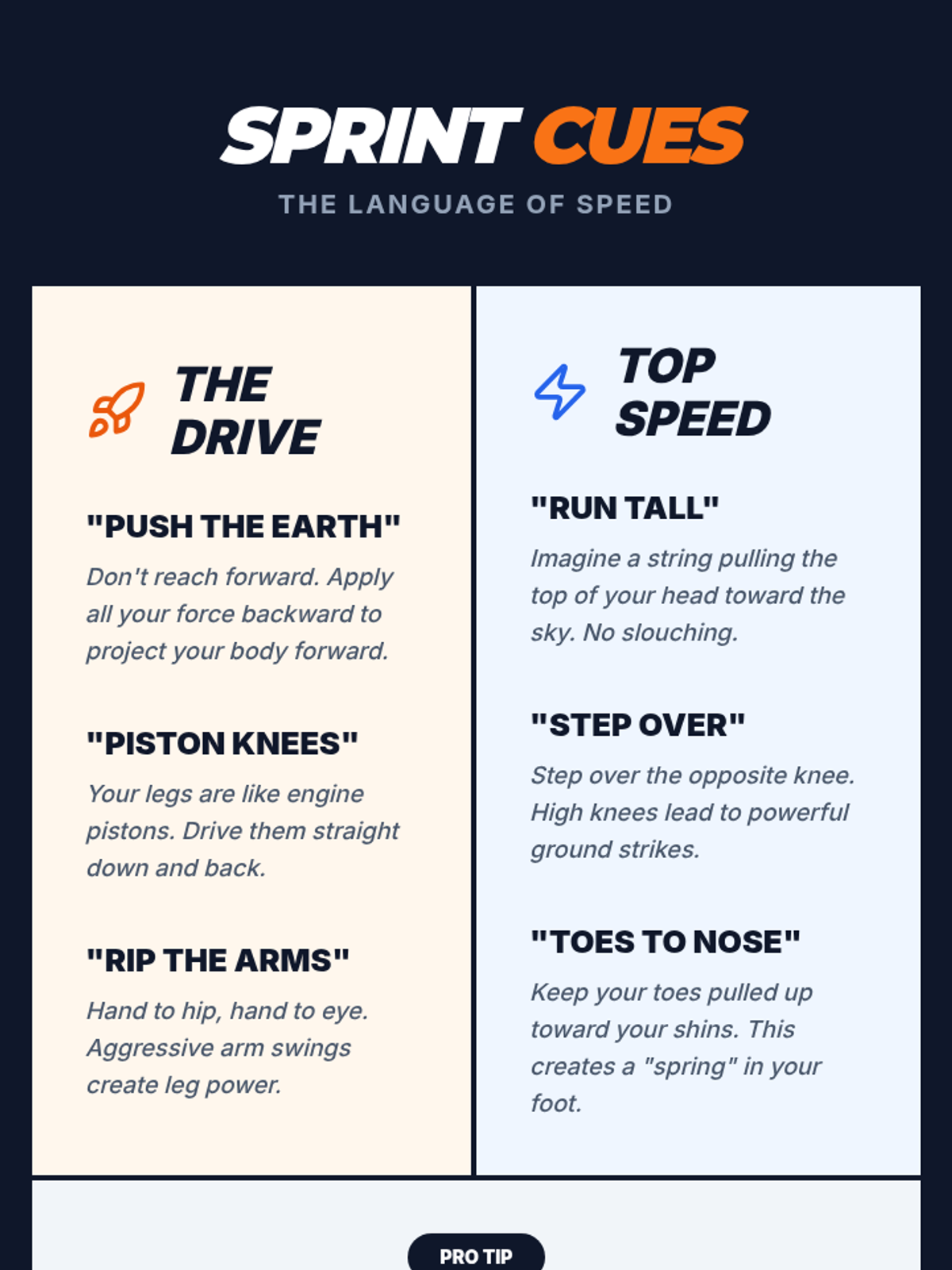
An instructional anchor chart featuring key verbal cues and technical focuses for sprinting mechanics.
A visual presentation for students to introduce the core mechanics of speed, acceleration, and injury prevention.
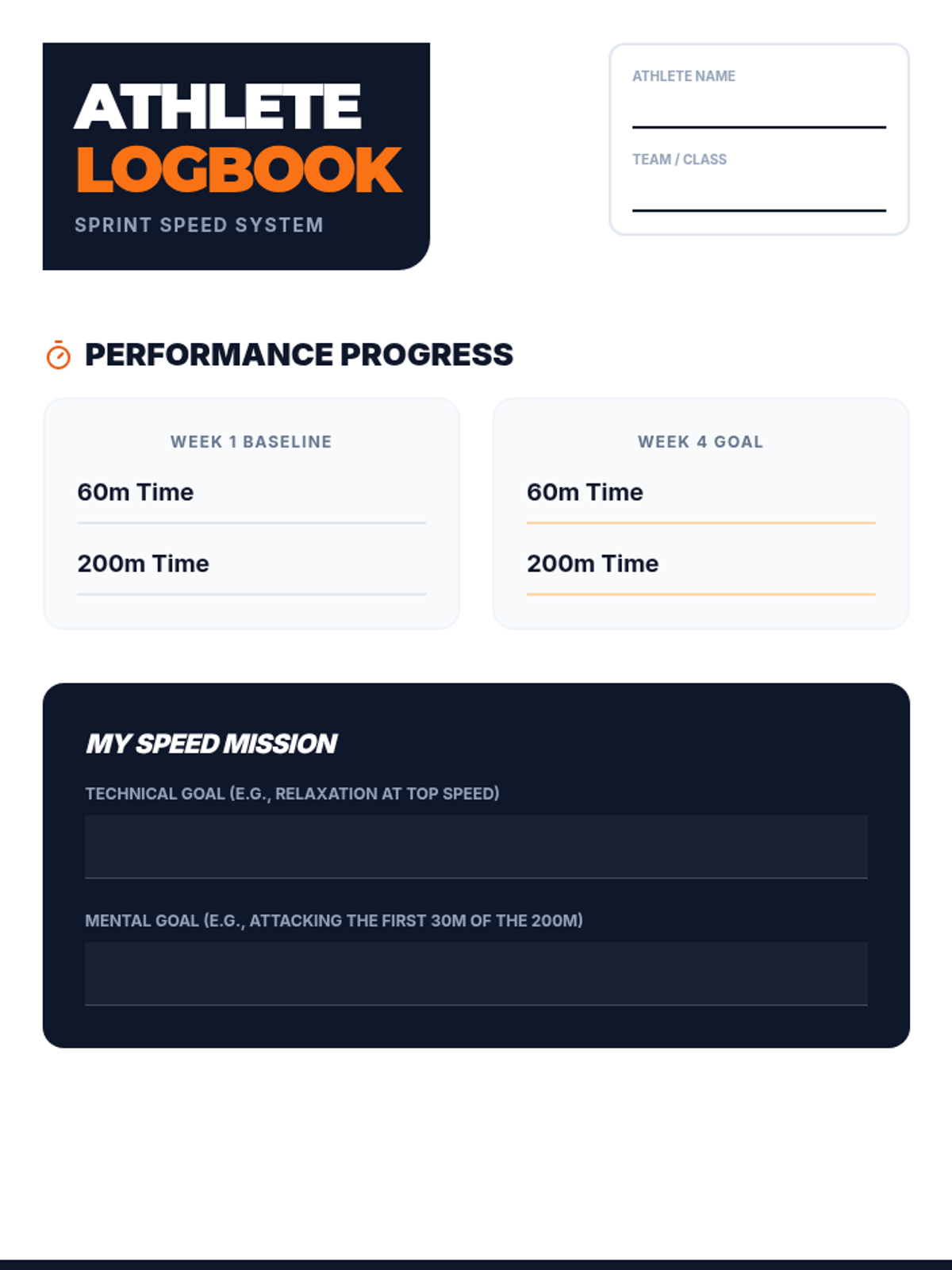
A student tracking document for athletes to record times, RPE, and weekly reflections throughout the 4-week high-intensity program.
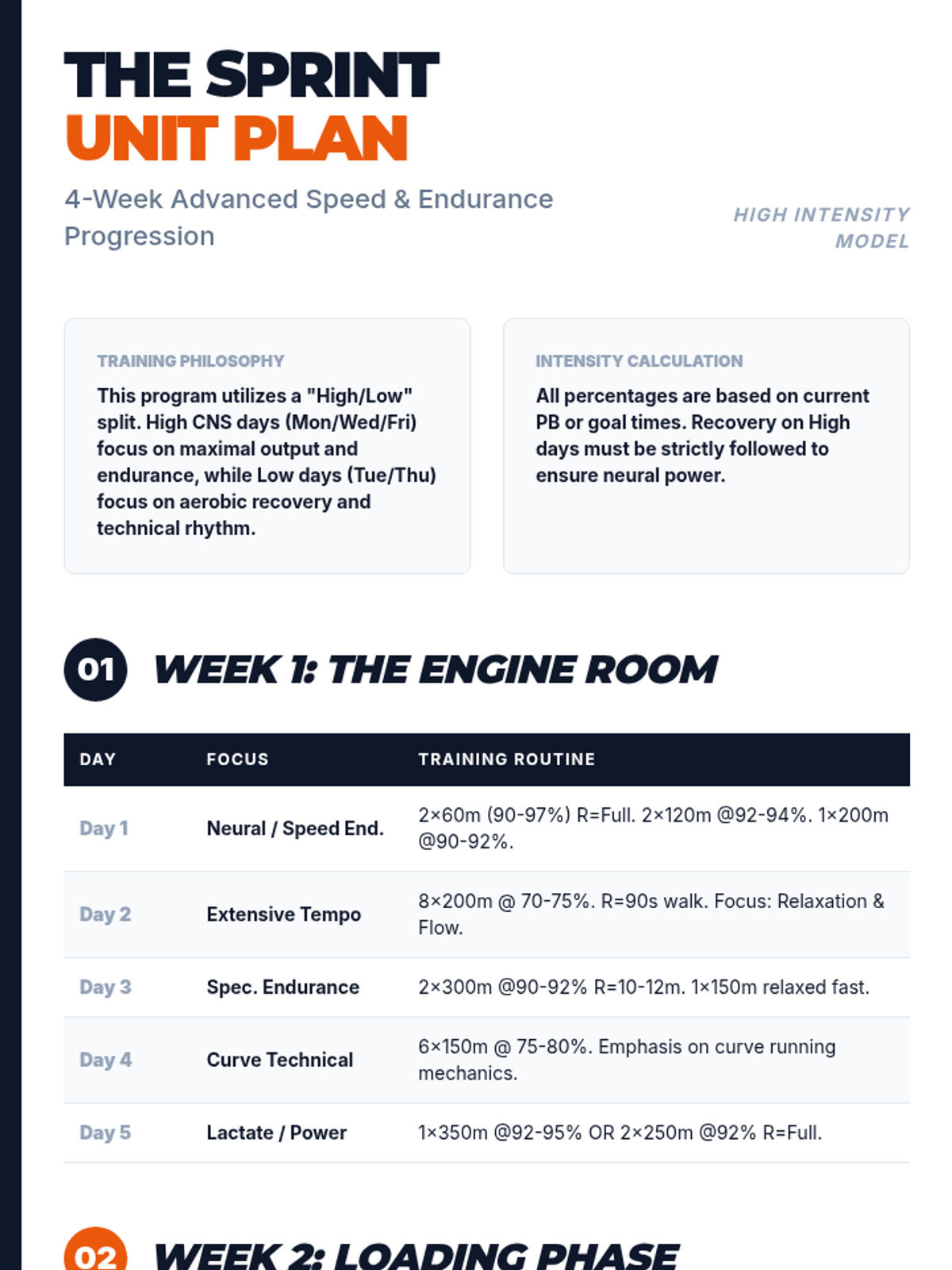
A comprehensive 4-week unit plan for coaches, providing a day-by-day breakdown of drills, conditioning, and speed sessions based on a high-intensity interval model.
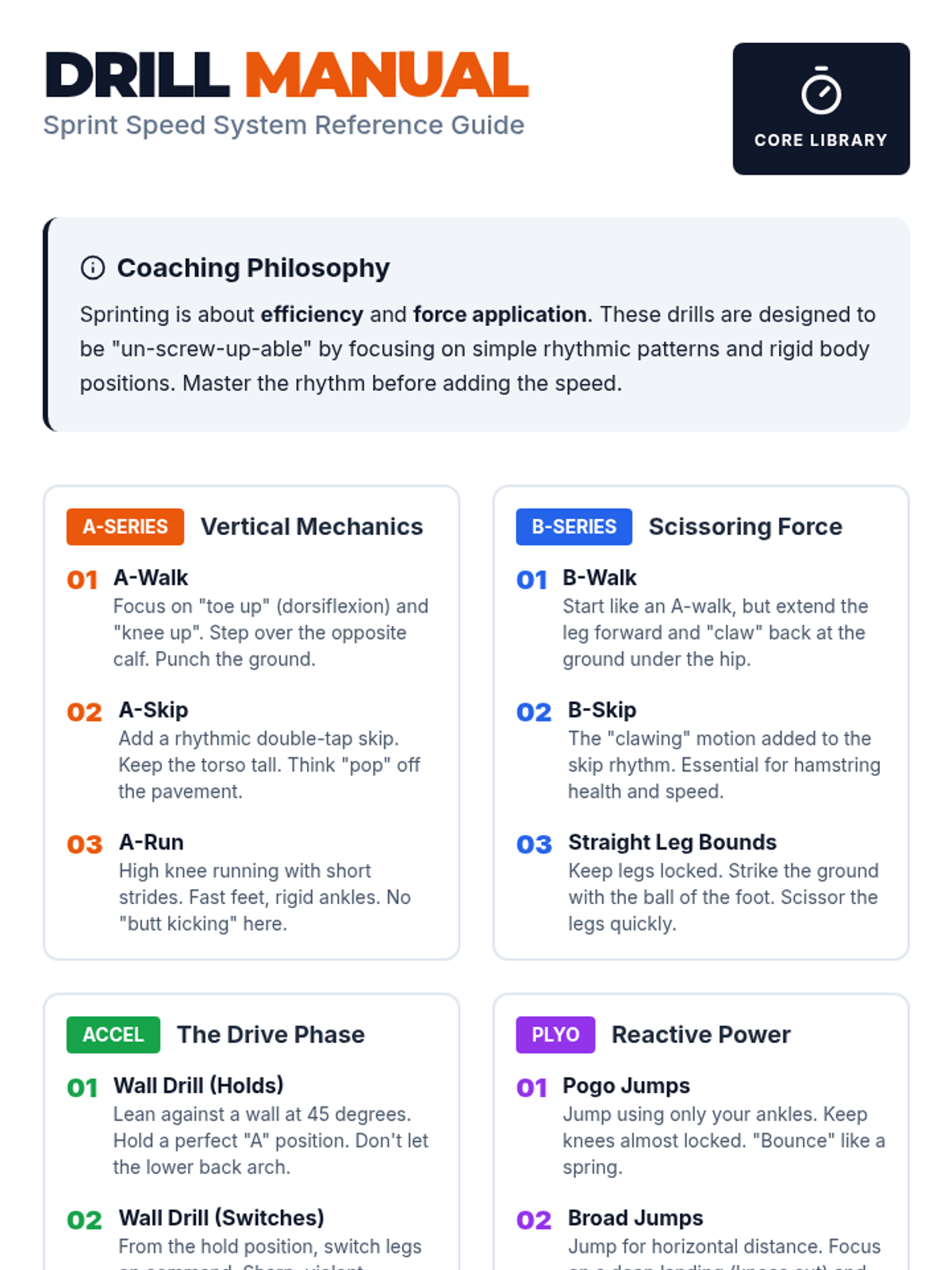
A visual reference guide for athletes featuring the core sprint drills (A/B series, acceleration, plyometrics) and an injury prevention routine.
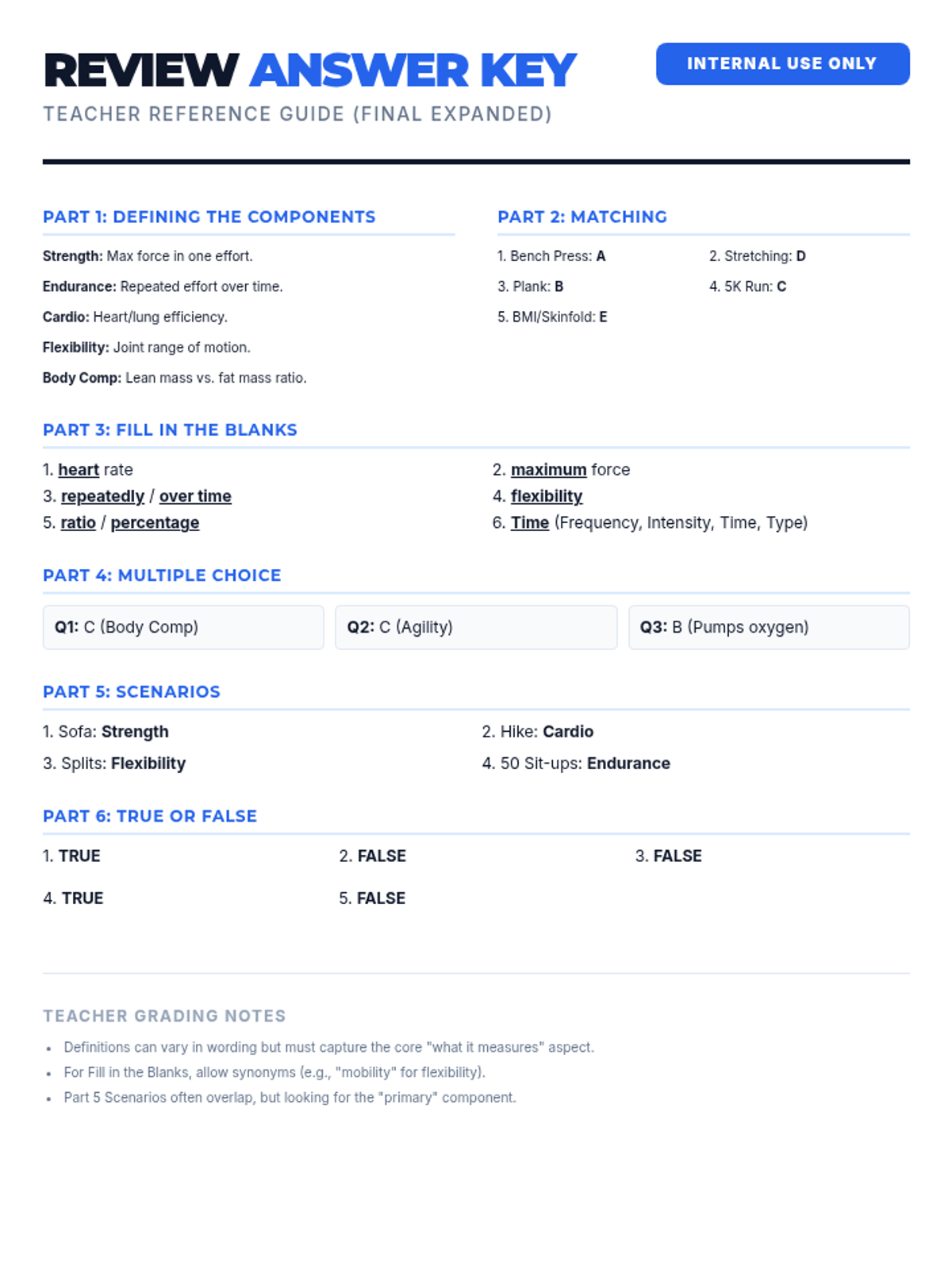
An updated, comprehensive answer key for the final expanded Fitness Components Review Worksheet, covering definitions, matching, fill-in-the-blanks, multiple choice, scenario analysis, and true/false sections. Updated to use 'components' terminology consistently.
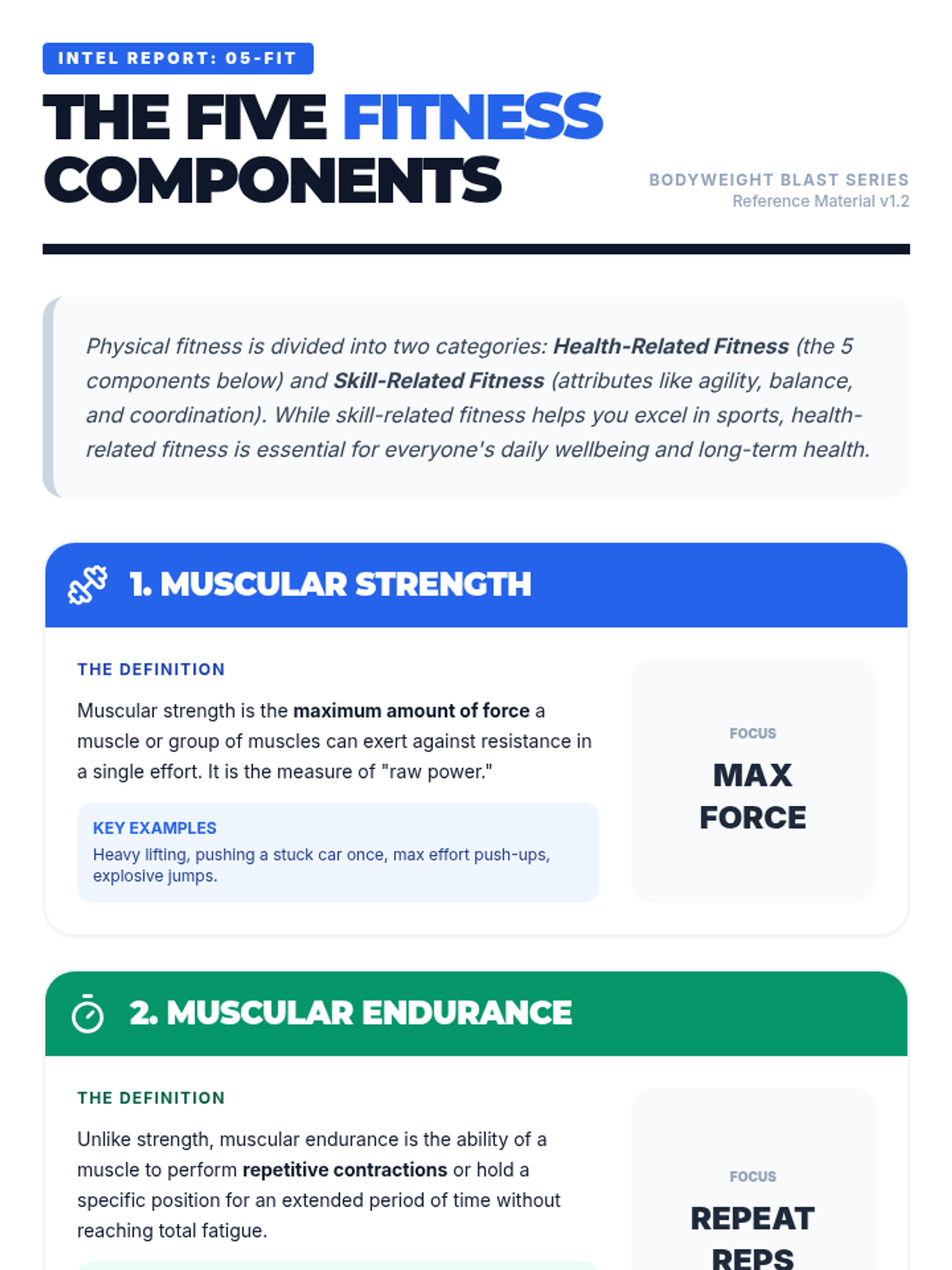
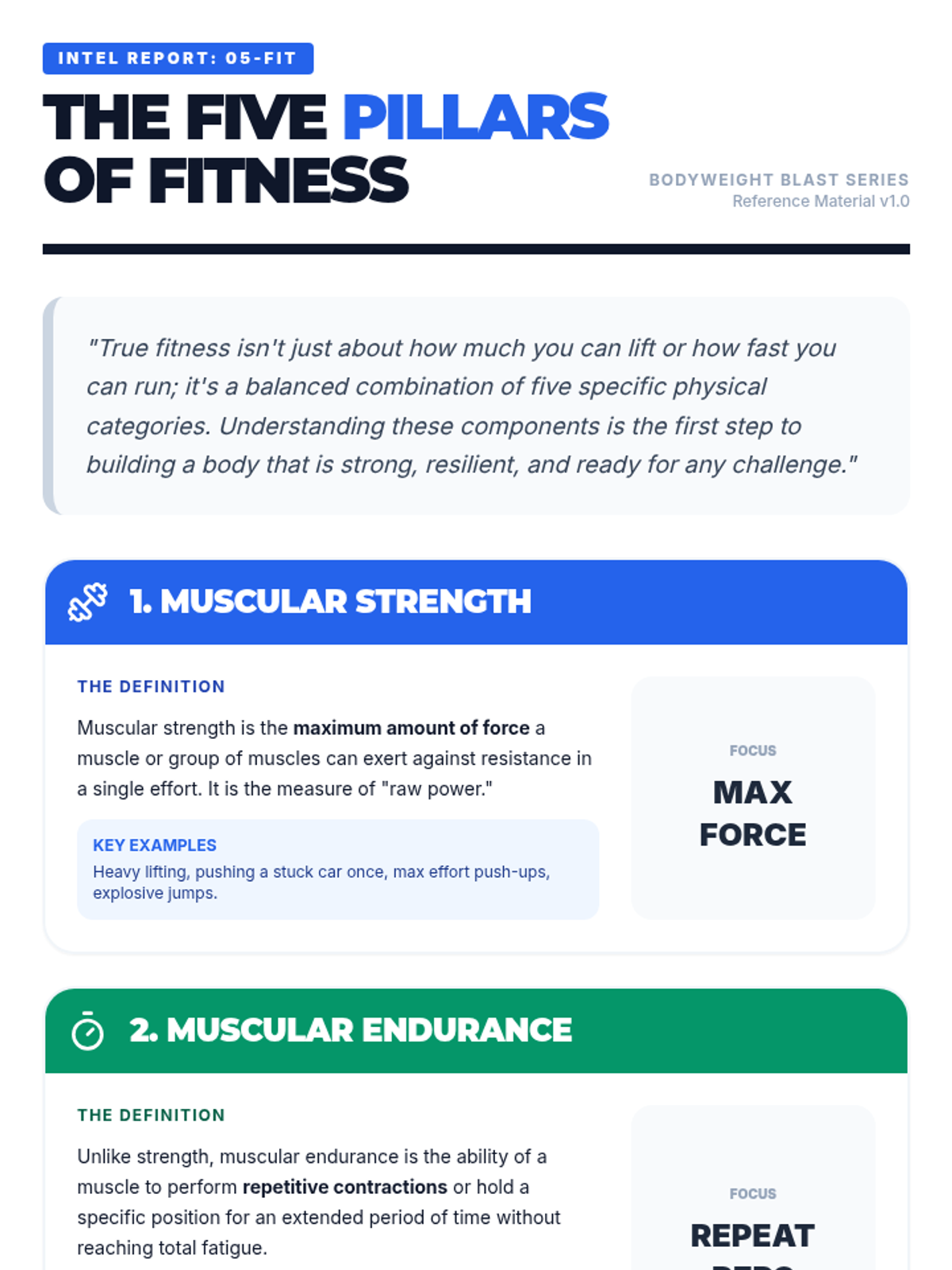
A detailed student reference article defining the five components of physical fitness. Includes exercise examples, an explanation of the F.I.T.T. principle, and a distinction between health-related and skill-related fitness. Updated to consistently use 'components' throughout the text.
A detailed student reference article defining the five components of physical fitness (Muscular Strength, Muscular Endurance, Cardiovascular Endurance, Flexibility, and Body Composition). Includes exercise examples and an explanation of the F.I.T.T. principle.
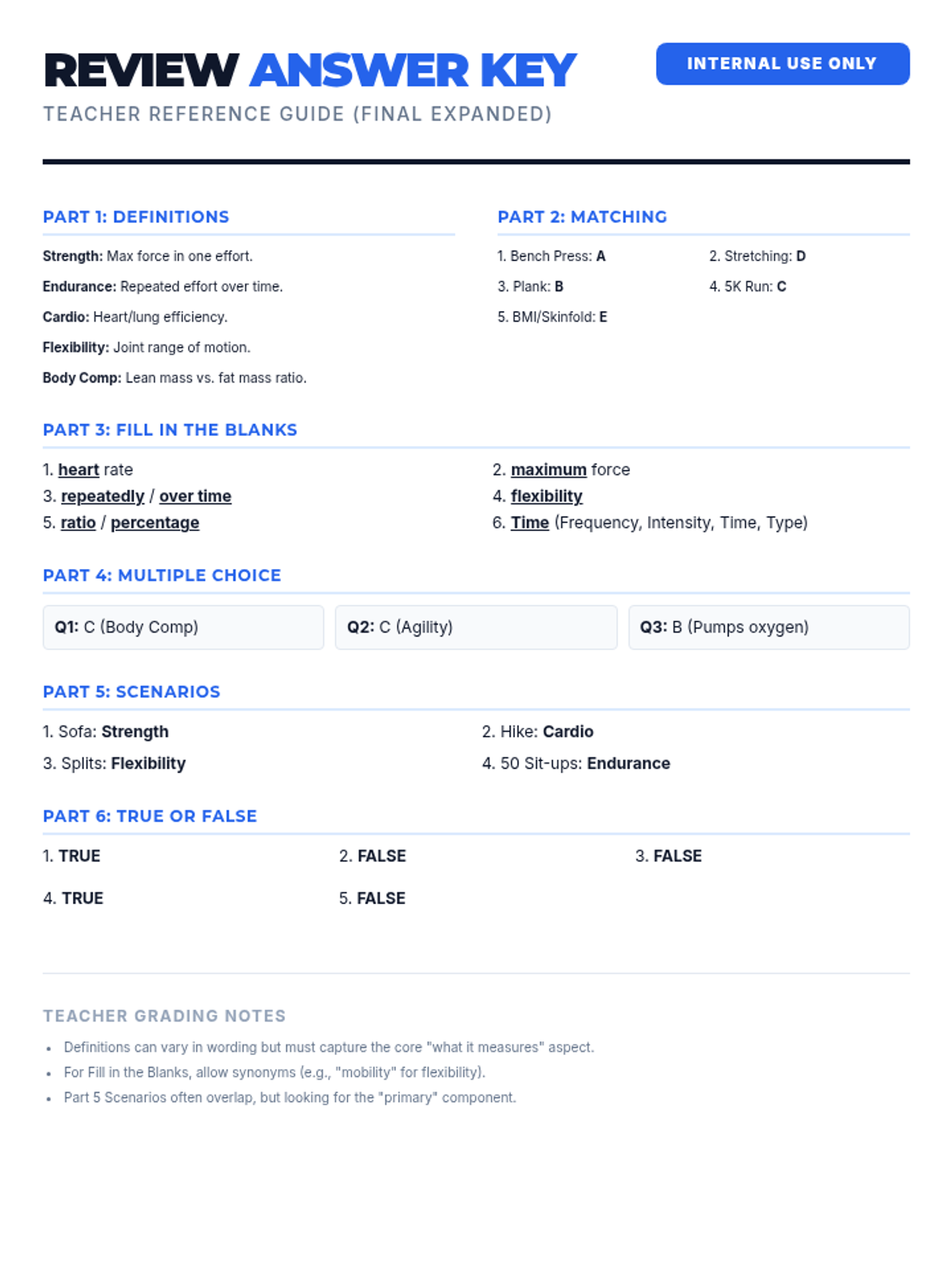
An updated, comprehensive answer key for the final expanded Fitness Components Review Worksheet, covering definitions, matching, fill-in-the-blanks, multiple choice, scenario analysis, and true/false sections.
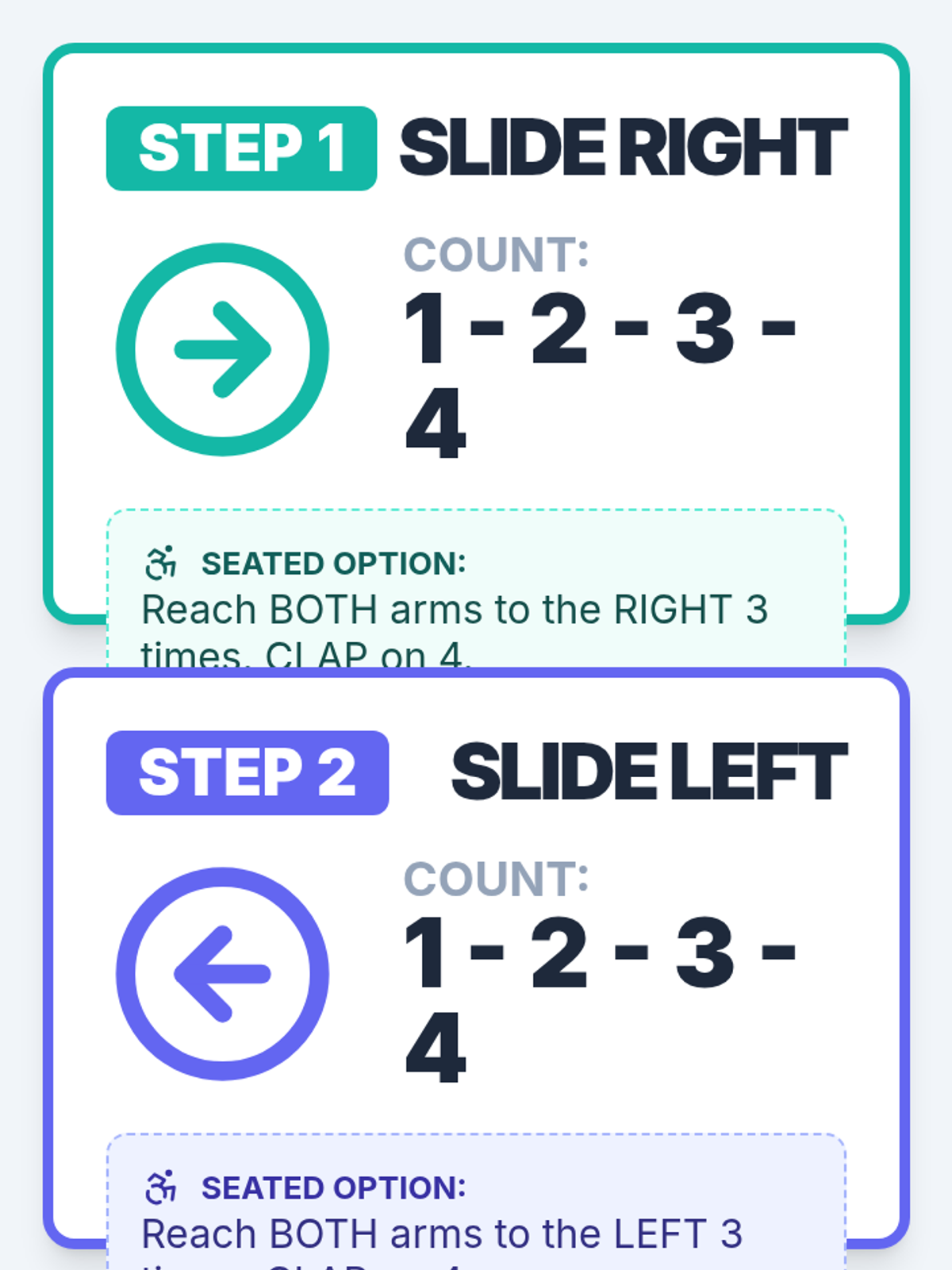
Large, high-contrast visual prompts for the Electric Slide dance sequence, featuring step names, count guides, and modifications for seated/limited mobility students. Each page is perfectly sized for 8.5x11 printing.
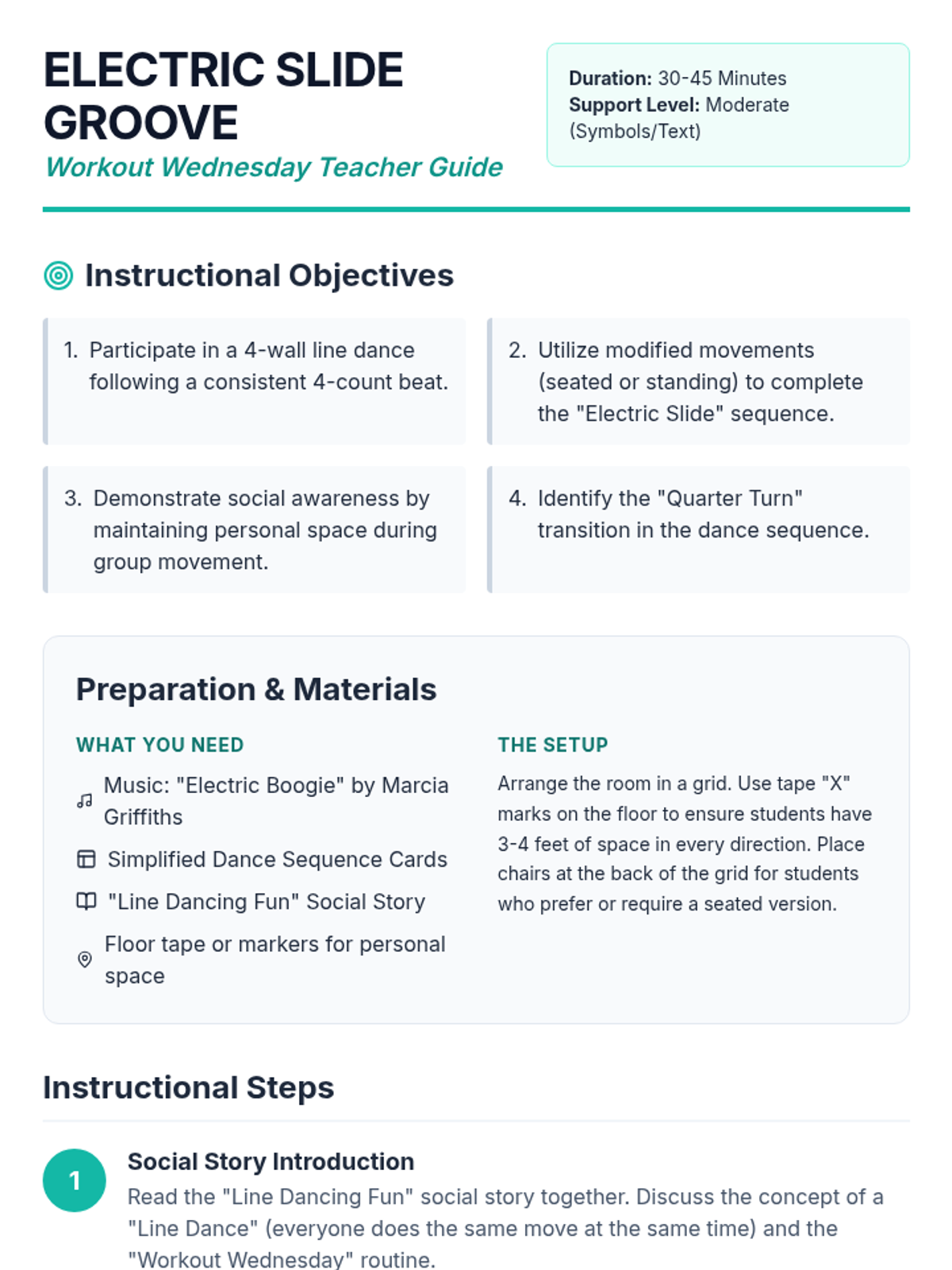
Teacher guide for the Electric Slide line dance, including instructional steps, an assessment rubric, and specific modifications for students with limited mobility or those using wheelchairs.
High-contrast, large-font presentation slides designed for an outdoor workshop. The slides cover the definition of Out-of-School Time, facilitation skills, and career pathways in the youth development industry.
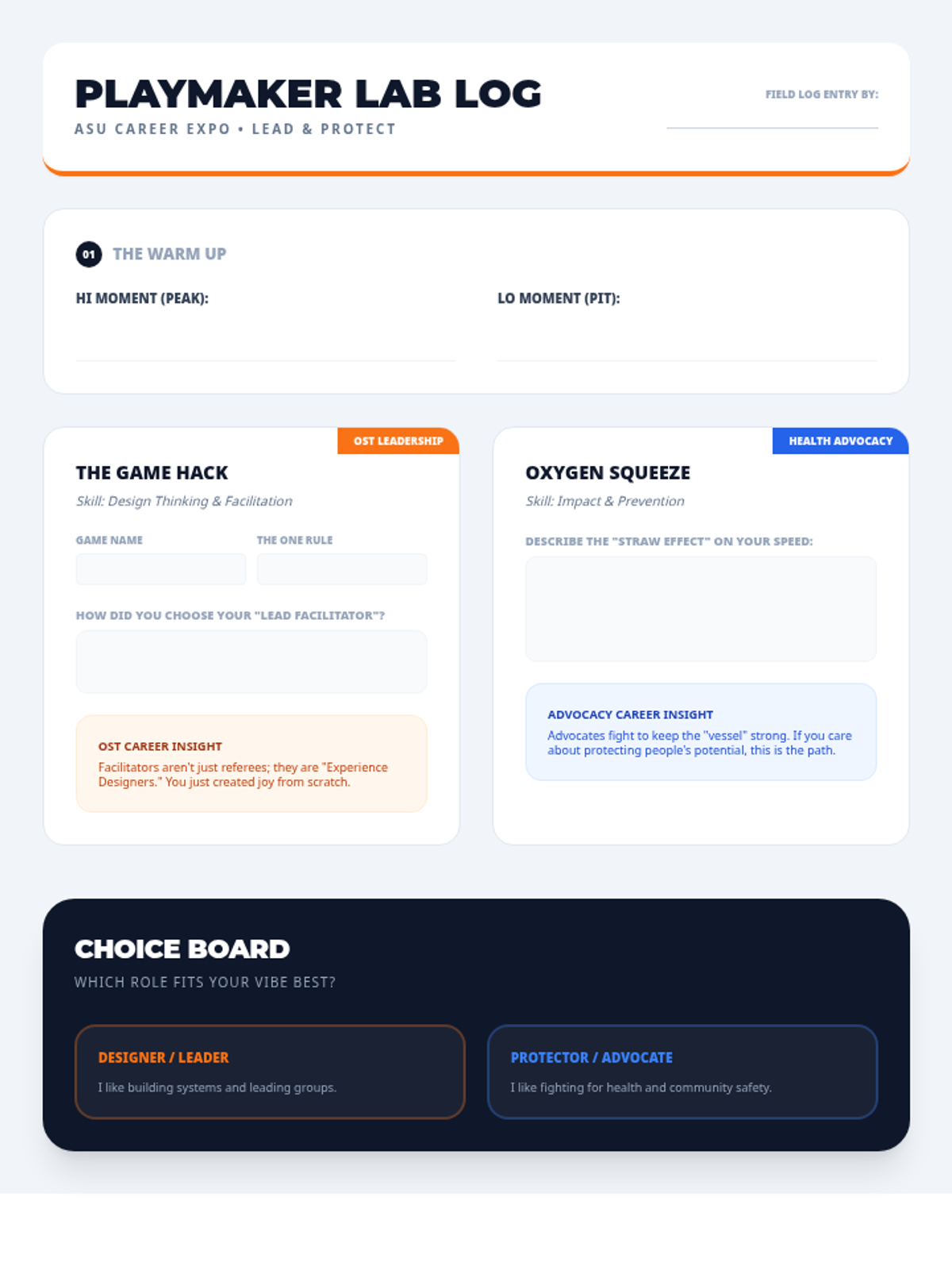
A student-facing log for the 25-minute Playmaker Lab, with dedicated space for reflecting on the Hi-Lo check-in, the OST leadership challenge, and the health advocacy activity.
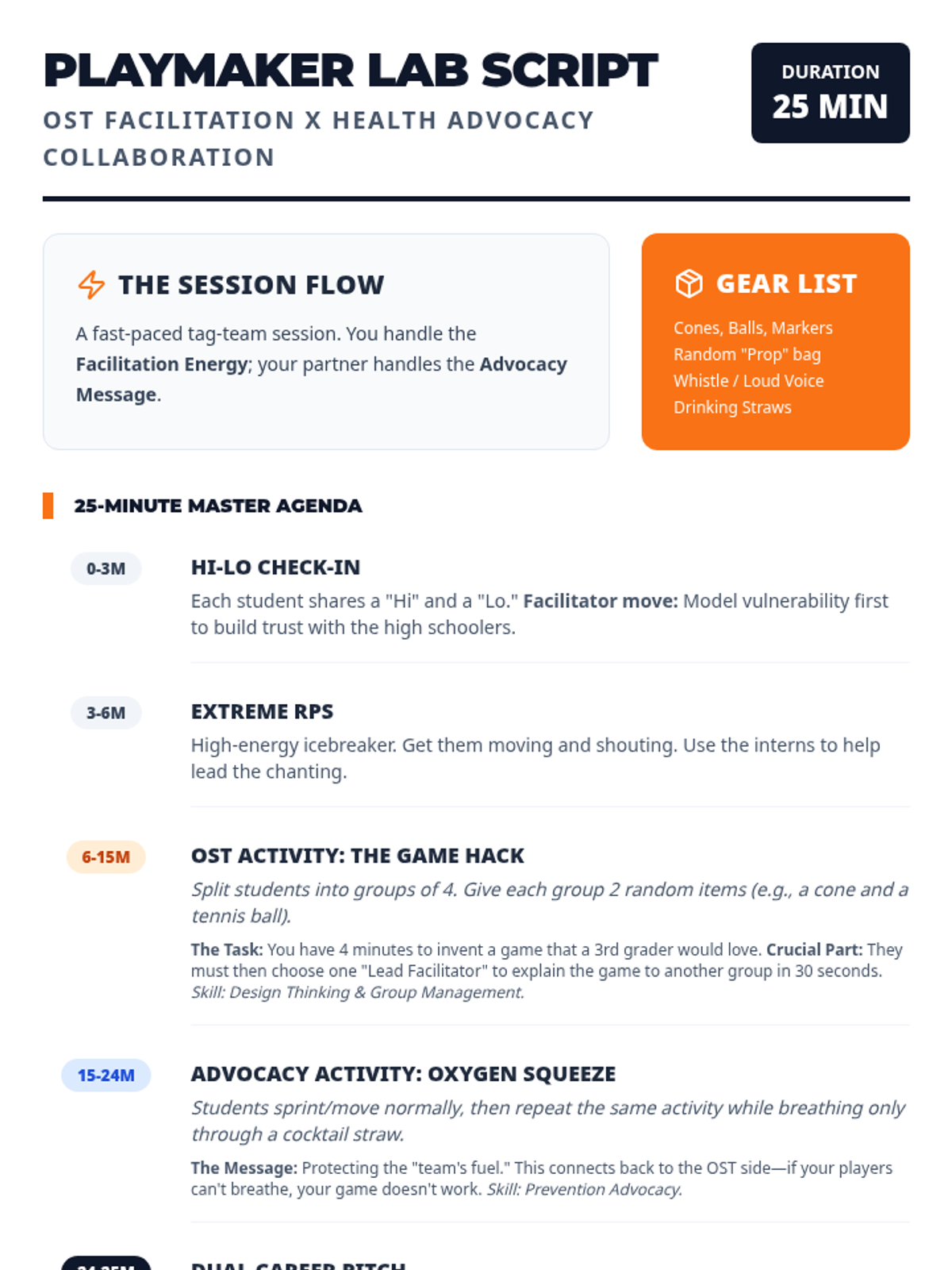
A 25-minute facilitation script for a dual-expert career session, featuring a Hi-Lo check-in, energy-building RPS, and dedicated slots for OST leadership and anti-vaping advocacy activities.
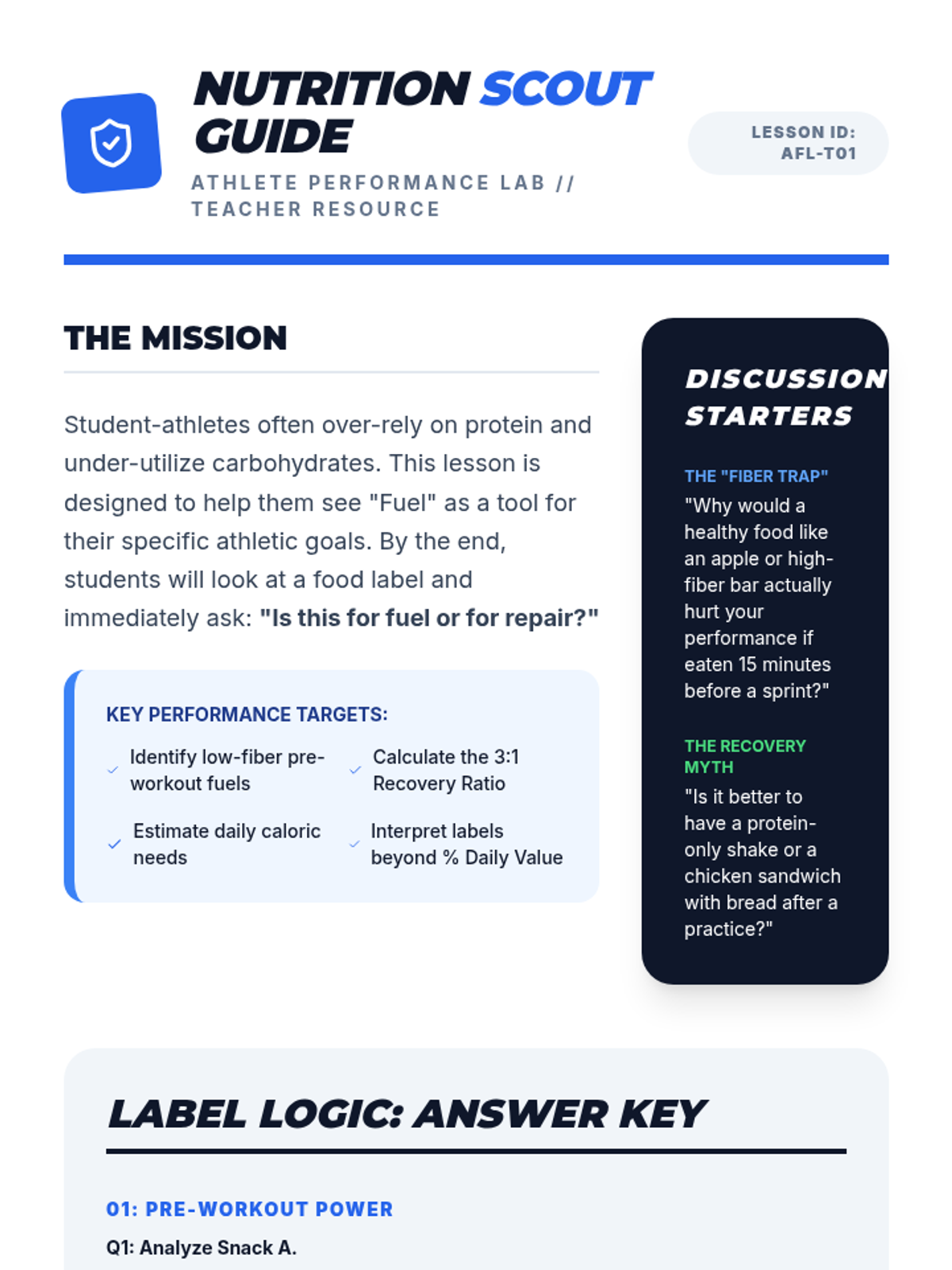
A detailed teacher facilitation guide including lesson objectives, discussion prompts, a complete answer key for the Label Logic Worksheet, and an extension activity for real-world application.
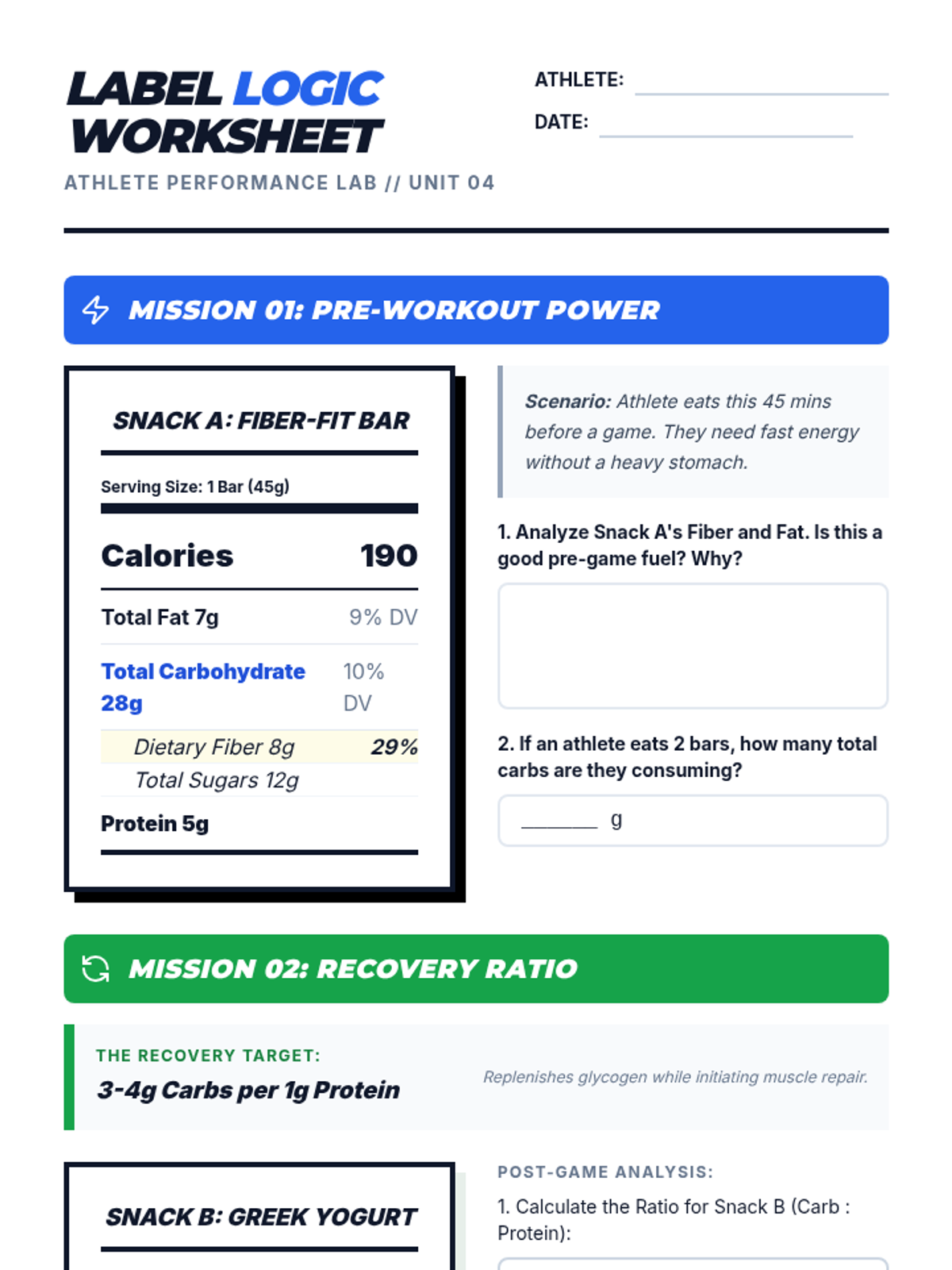
A student practice worksheet featuring two specific nutrition labels to analyze. Students calculate carb-to-protein ratios, assess pre-workout snack suitability based on fiber and fat, and calculate daily caloric needs for a sample athlete. Includes improved formatting and spacing for handwriting.
A high-energy 16:9 slide deck for teaching athletes how to read food labels for fueling and recovery. Includes slides on pre-workout carbohydrates, post-workout protein-to-carb ratios, and daily caloric needs. ALL text is 24px minimum for visibility.
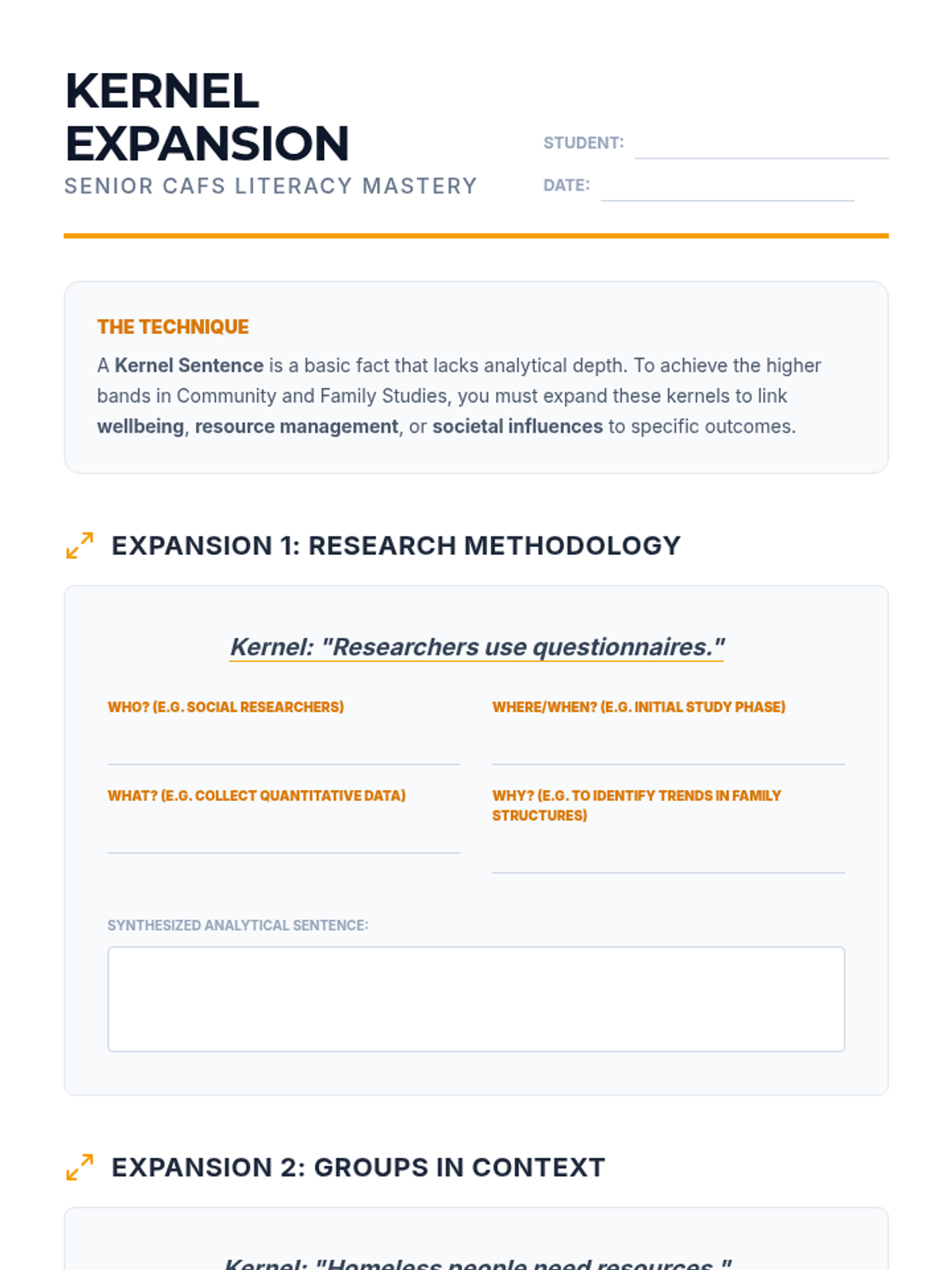
A literacy worksheet for Year 12 CAFS students to practice expanding kernel sentences, focusing on research methodology and groups in context to improve analytical depth.
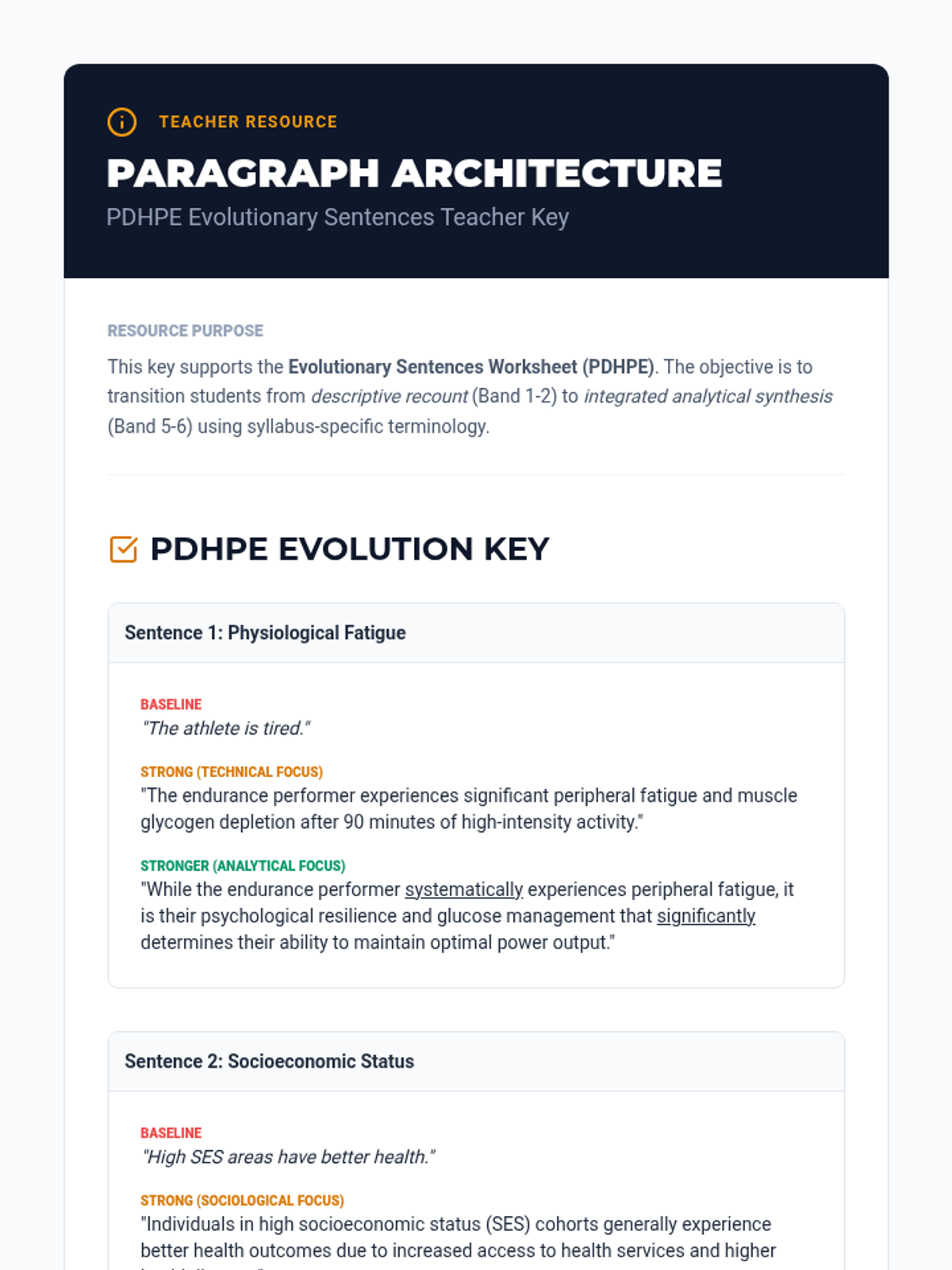
A dedicated teacher answer key for the PDHPE Evolutionary Sentences Worksheet, providing high-level exemplars and subject-specific literacy coaching tips.
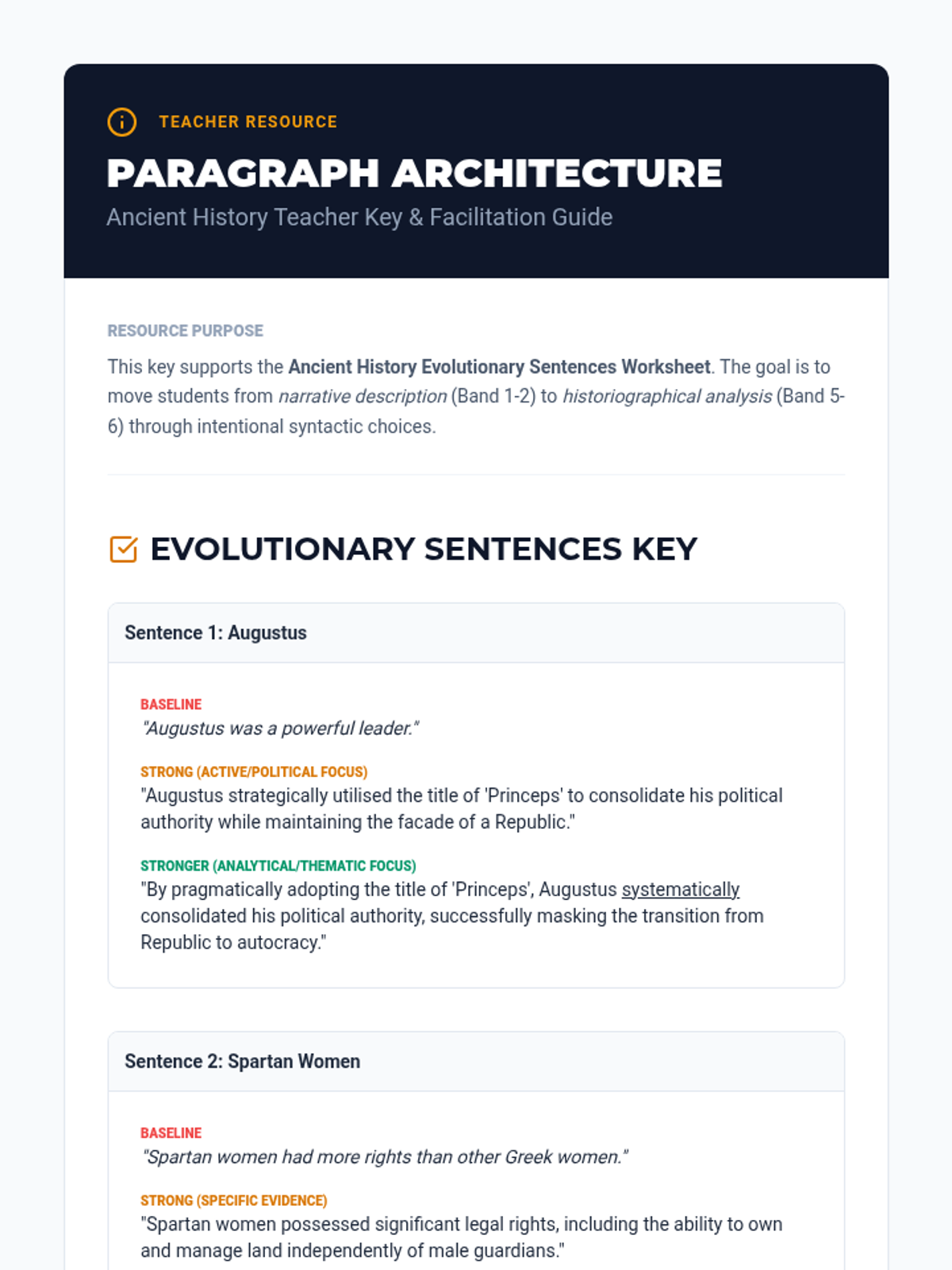
A teacher answer key and facilitation guide for the Ancient History Evolutionary Sentences Worksheet, providing Band 6 exemplars and historiographical coaching tips.
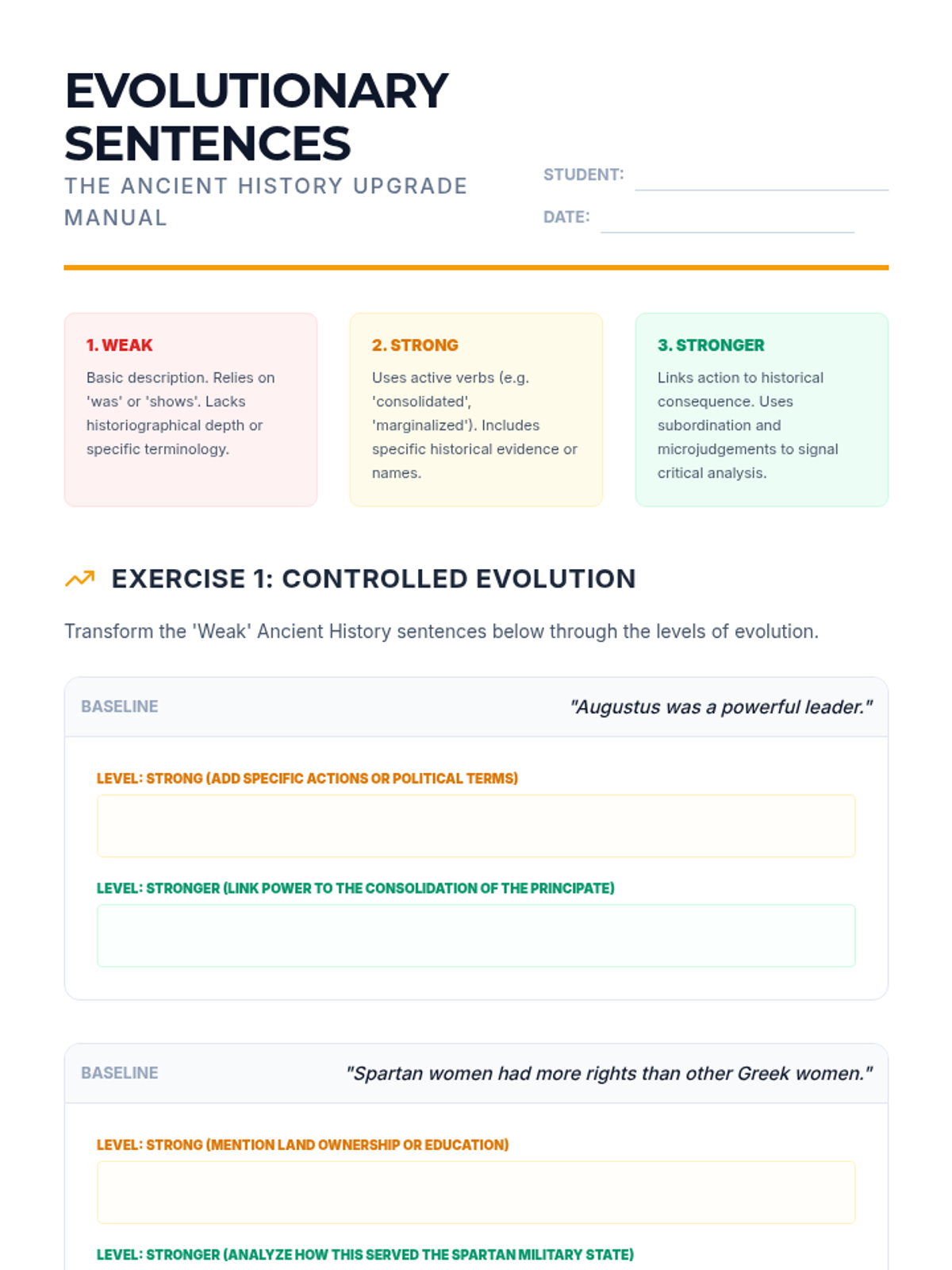
A dedicated worksheet for Year 12 Ancient History students to practice the iterative process of sentence evolution, moving from weak 'to-be' descriptions to sophisticated analytical statements.
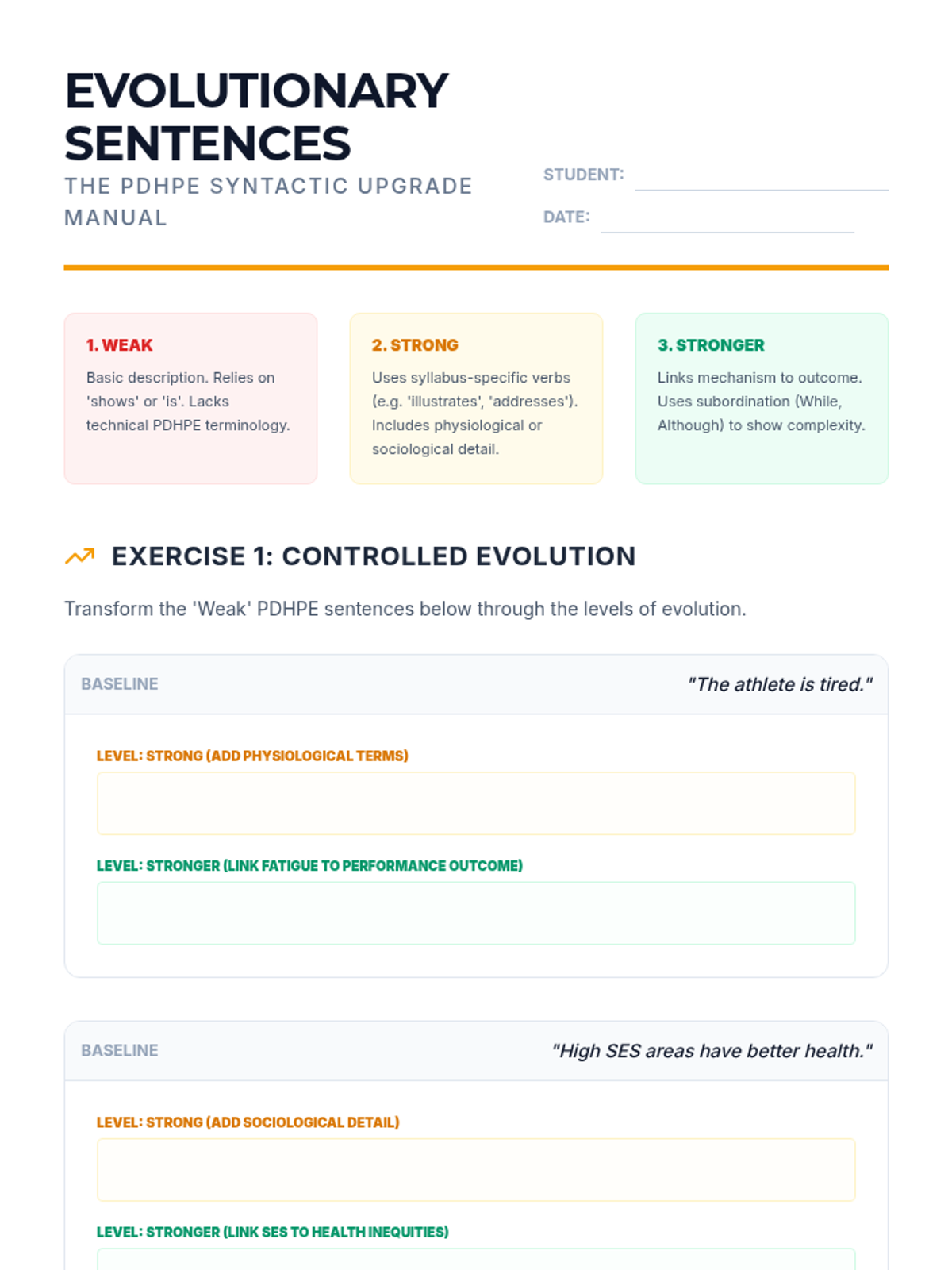
A dedicated worksheet for Year 12 PDHPE students to practice the iterative process of sentence evolution, moving from weak descriptions to strong technical ones, and finally to sophisticated analytical statements.
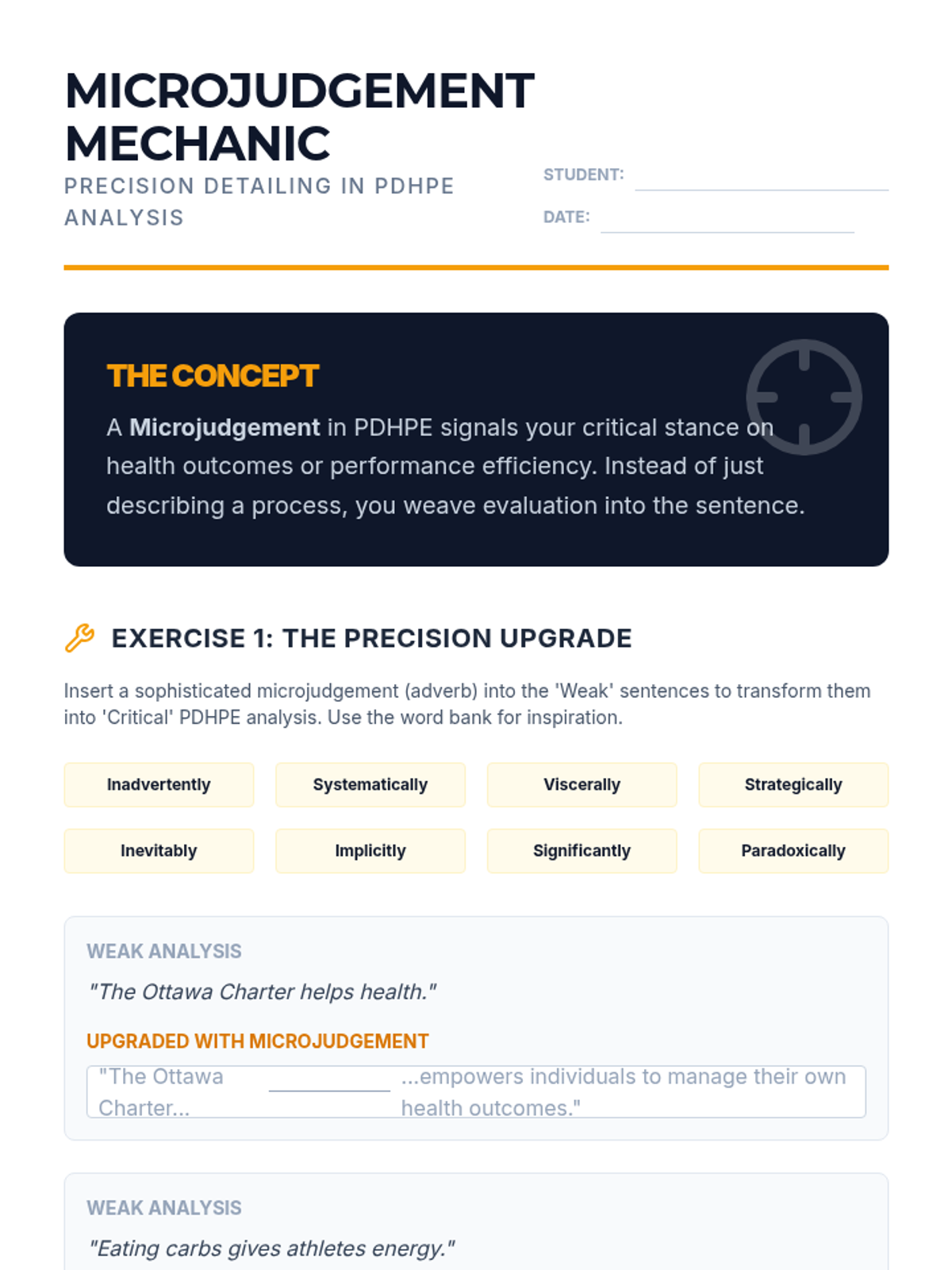
A worksheet for students to practice embedding microjudgements (precise analytical adverbs and adjectives) into their PDHPE paragraph writing to enhance critical voice.
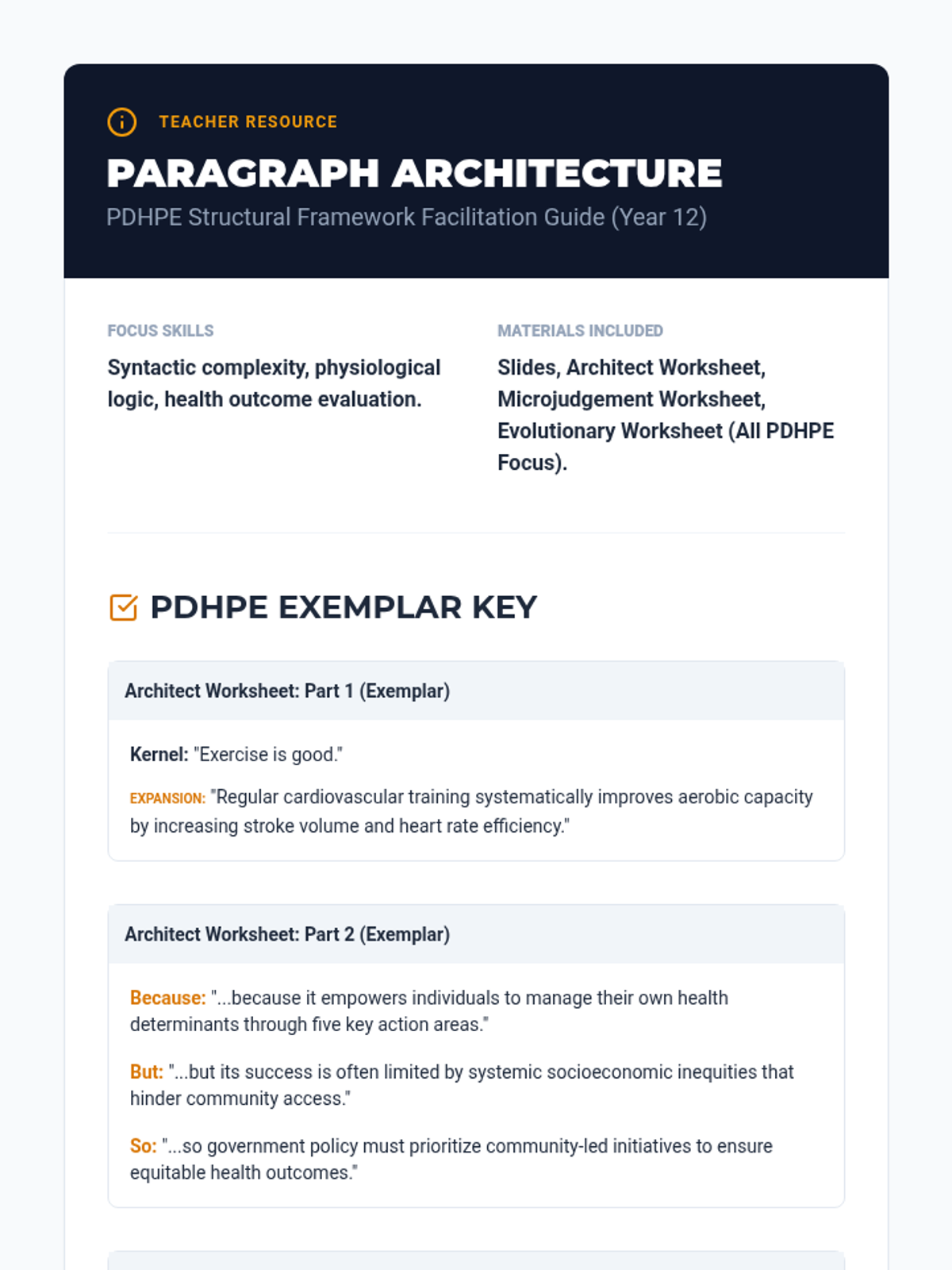
A detailed teacher guide for the Paragraph Architecture lesson, featuring facilitation notes for the T.E.E.E.L. structural framework and worksheet answer exemplars, all tailored for the PDHPE syllabus.
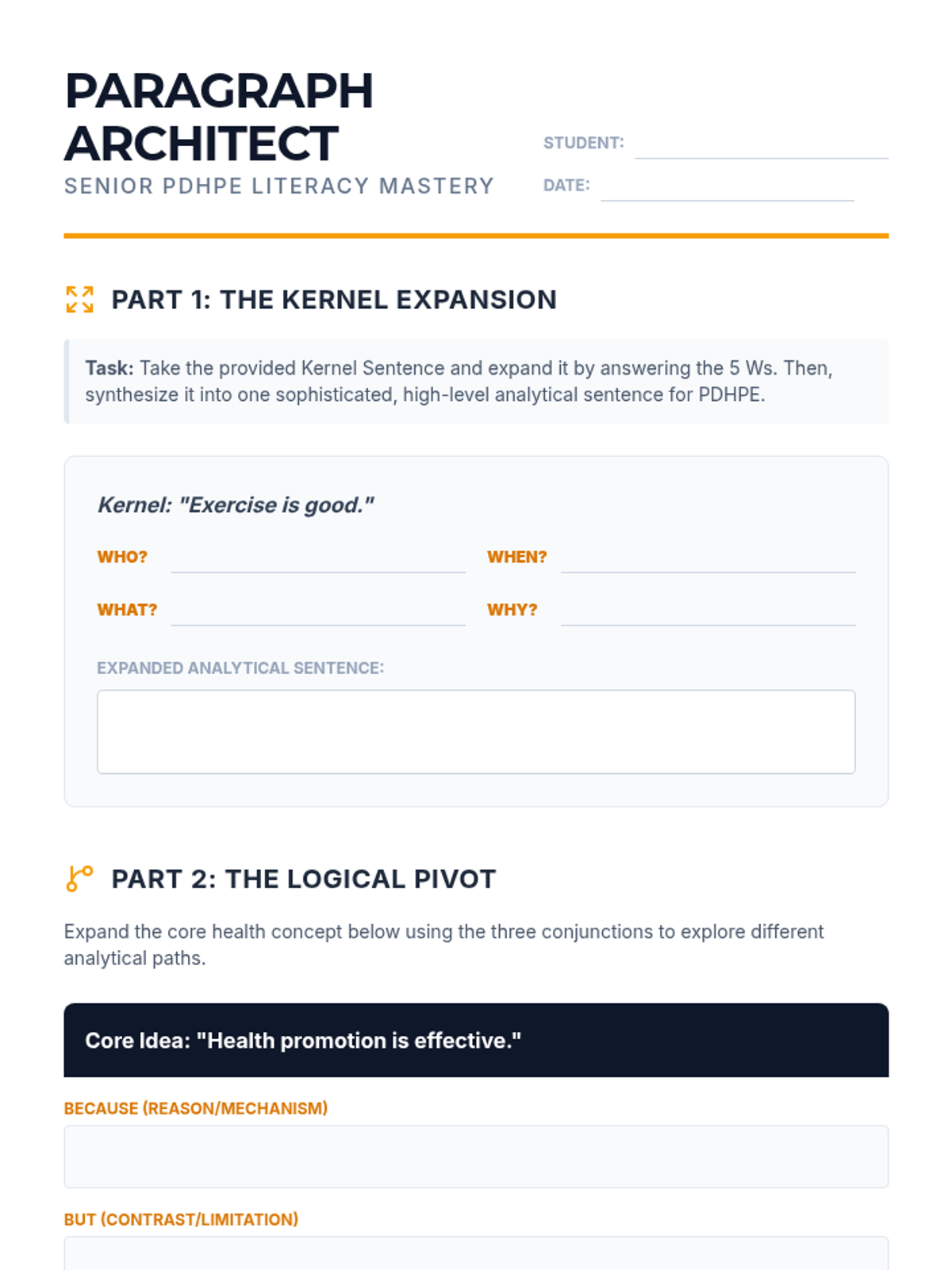
A comprehensive worksheet for students to practice Kernel Sentence expansion, logical pivots (Because, But, So), and the T.E.E.E.L. structural framework with PDHPE-specific examples.
An 8-slide presentation for Year 12 PDHPE students focusing on advanced paragraph construction, featuring TEEEL, TEA Tables, Kernel Sentence expansion, and iterative sentence upgrading.
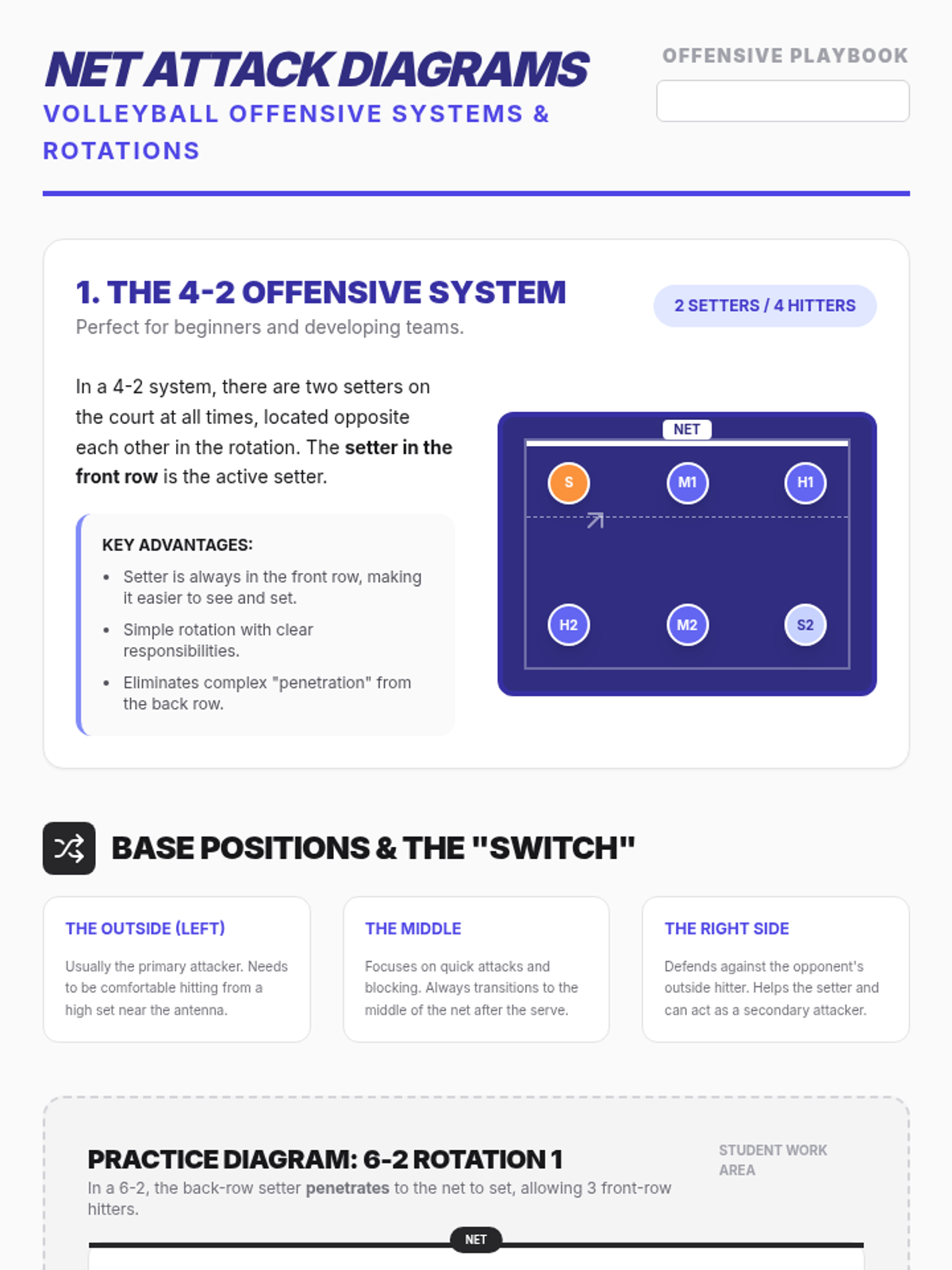
A visual guide and worksheet for volleyball offensive strategies, specifically focusing on the 4-2 and 6-2 systems with court diagrams and student practice areas.
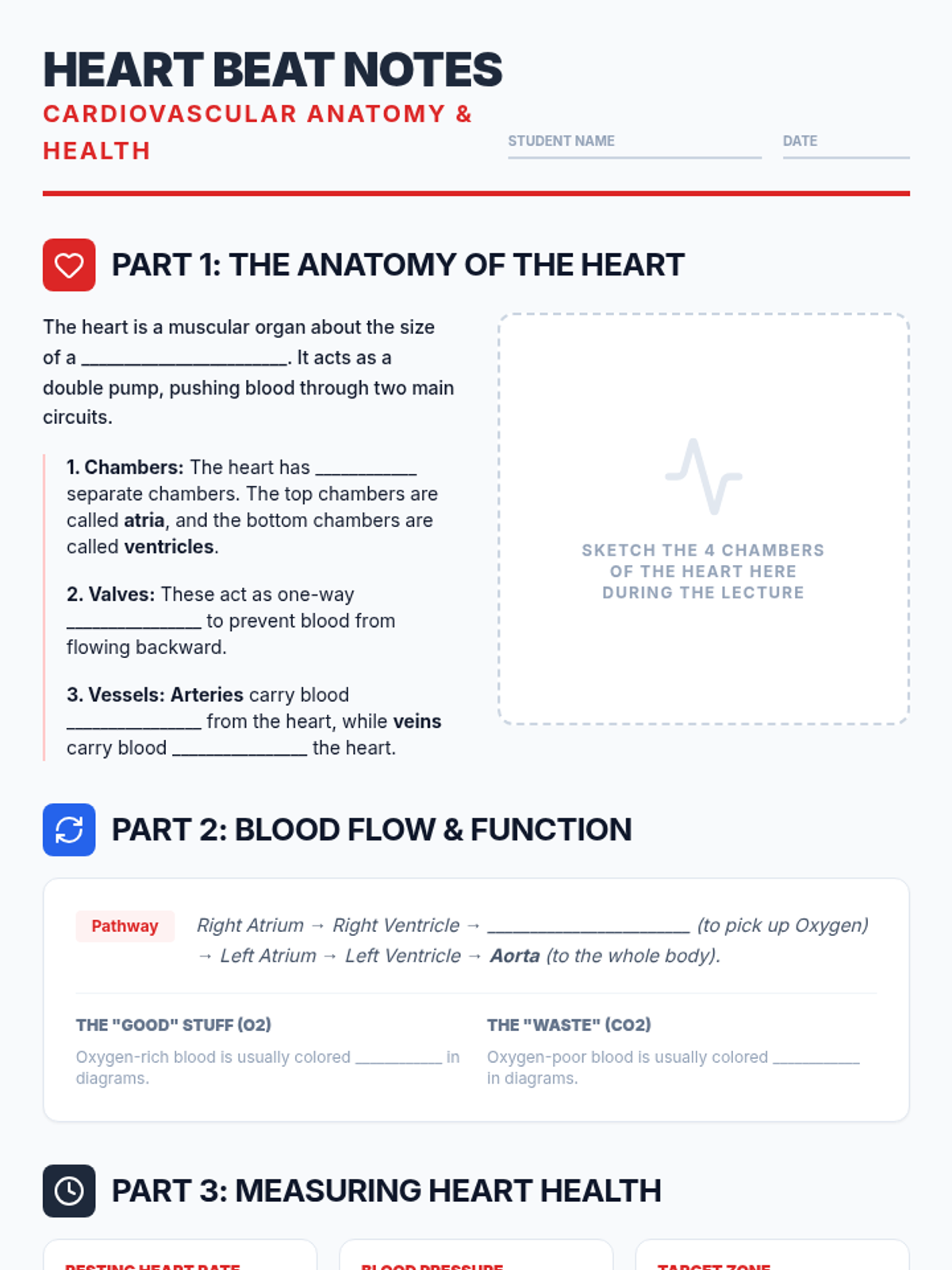
Guided lecture notes outline for students to learn about heart anatomy, circulation pathways, heart rate measurements, and cardiovascular health habits.
A presentation deck covering the basic rules, double bounce rule, non-volley zone (the kitchen), scoring, and terminology of pickleball.
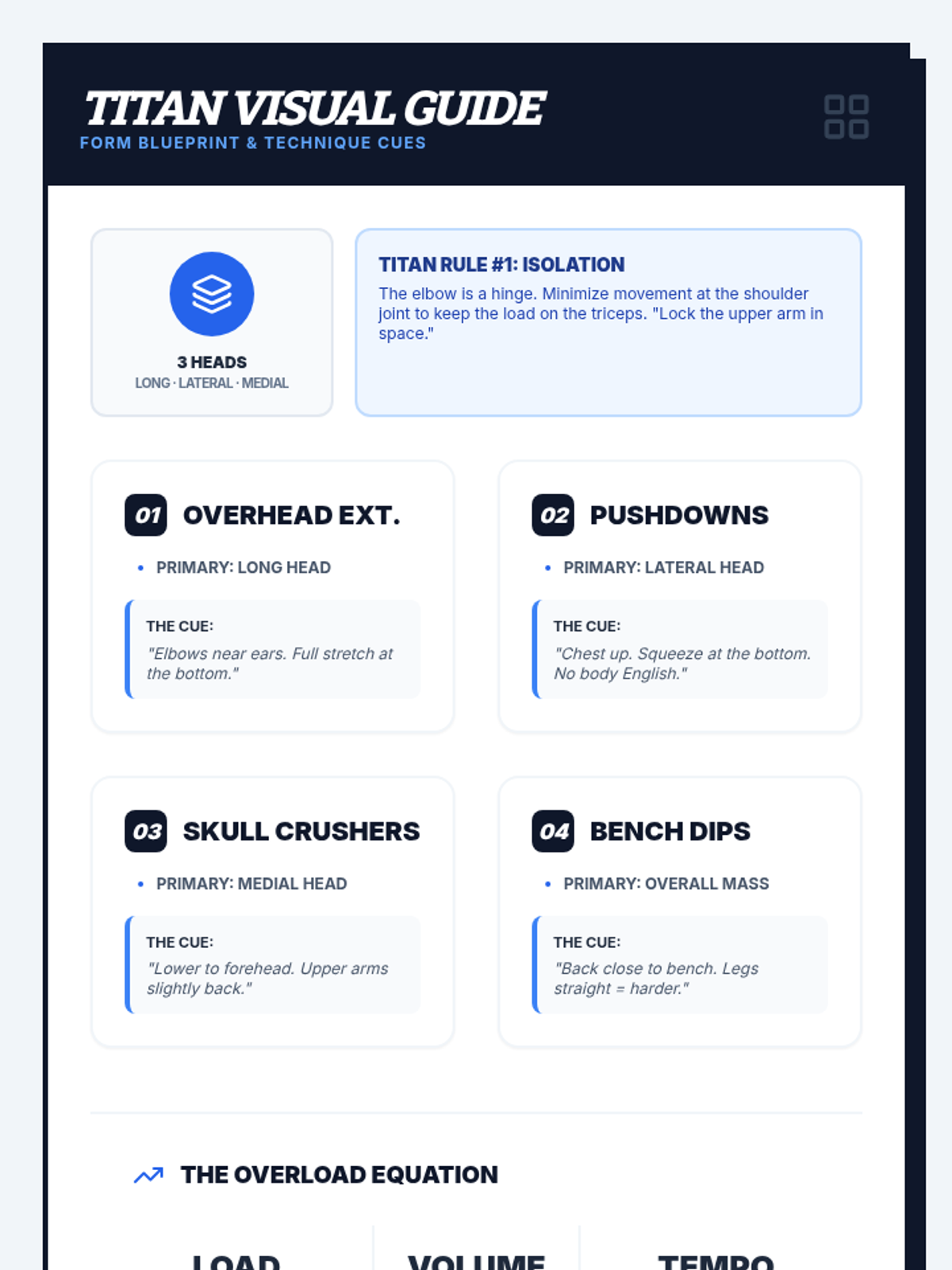
A one-page visual reference sheet summarizing the 4 key triceps exercises with form cues, anatomical targets, and progressive overload principles for quick gym use.
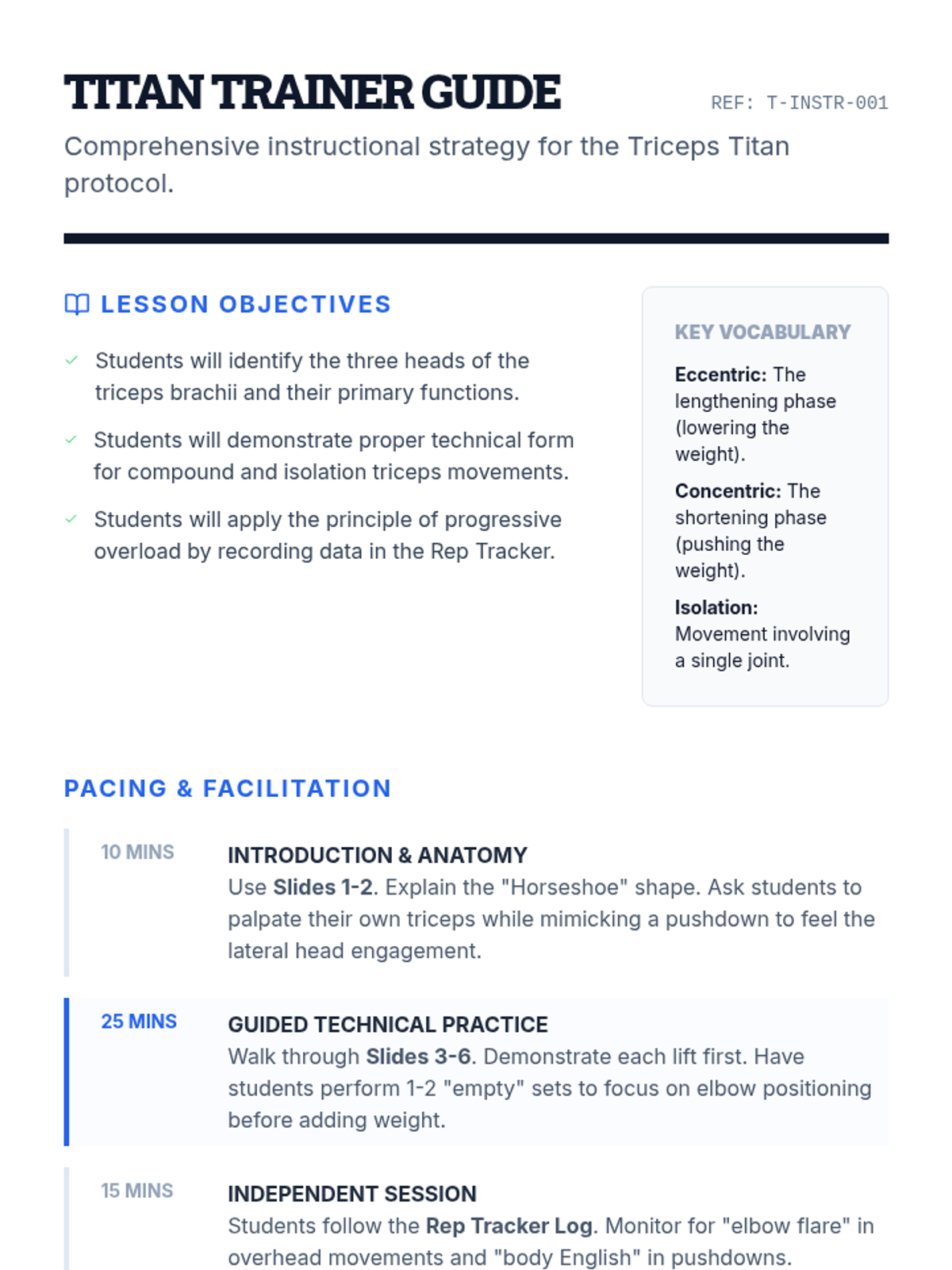
A comprehensive instructional guide for teachers and trainers, providing lesson objectives, a pacing guide, differentiation strategies, and technical cues for triceps training.
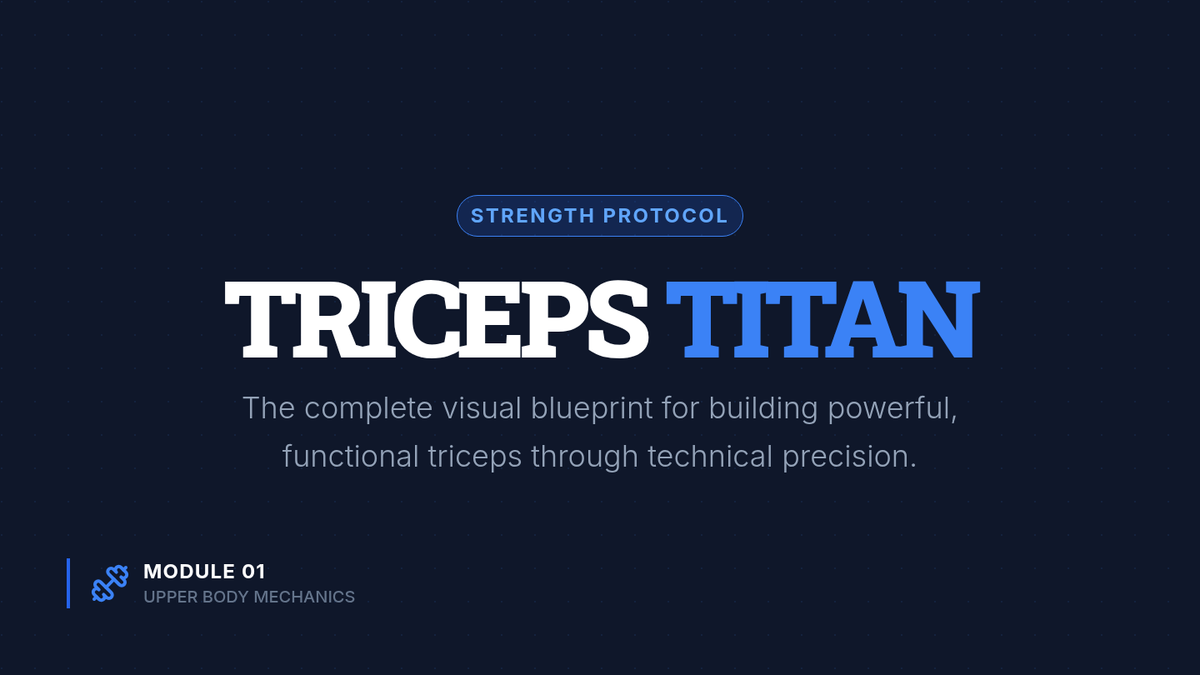
A high-impact visual guide slide deck for triceps training, covering anatomy, technical form for four key exercises, and principles of progressive overload.
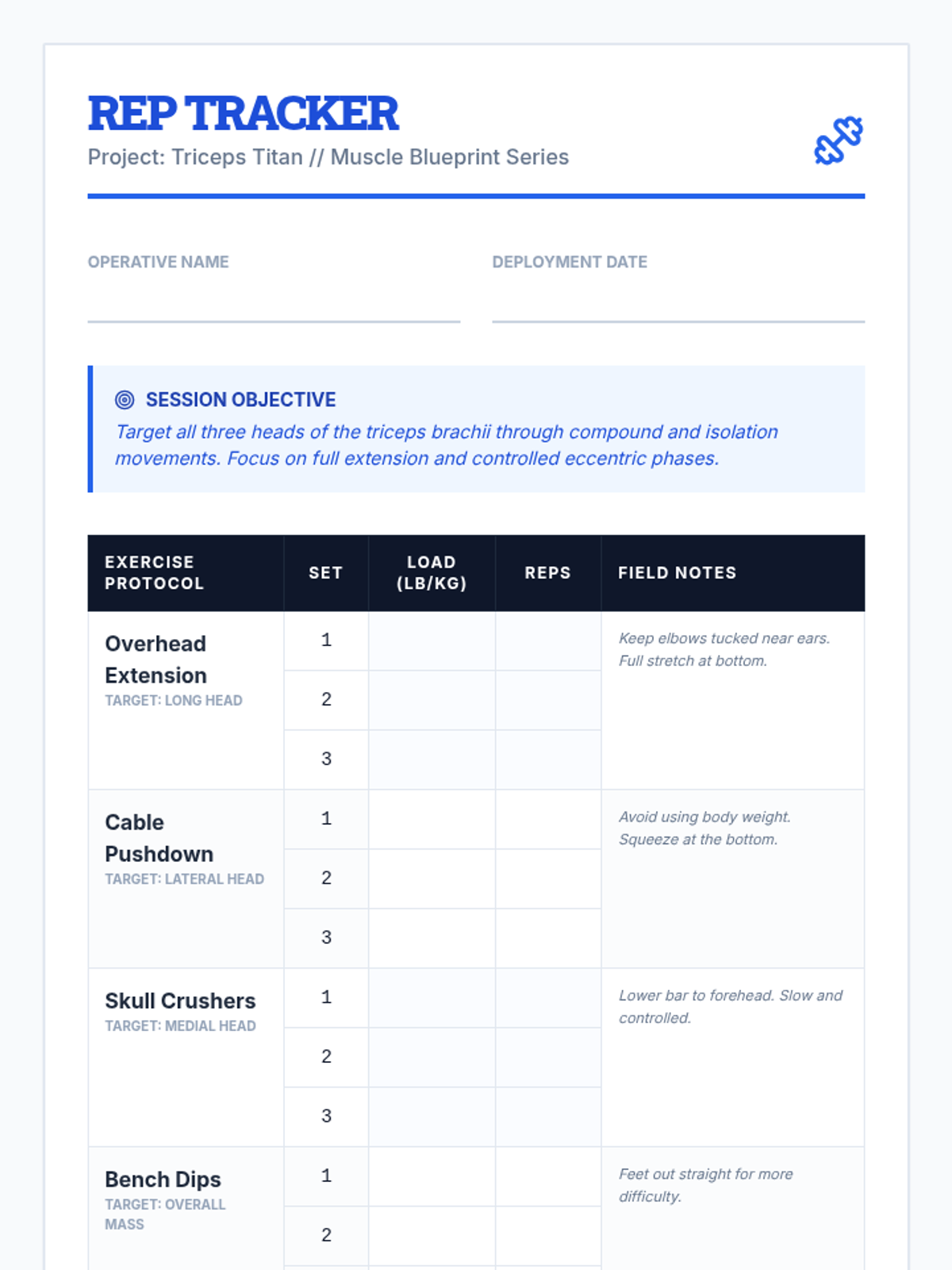
A structured exercise tracking sheet for recording triceps workout progress, featuring space for sets, reps, weight, and form notes within a professional blueprint-style layout.
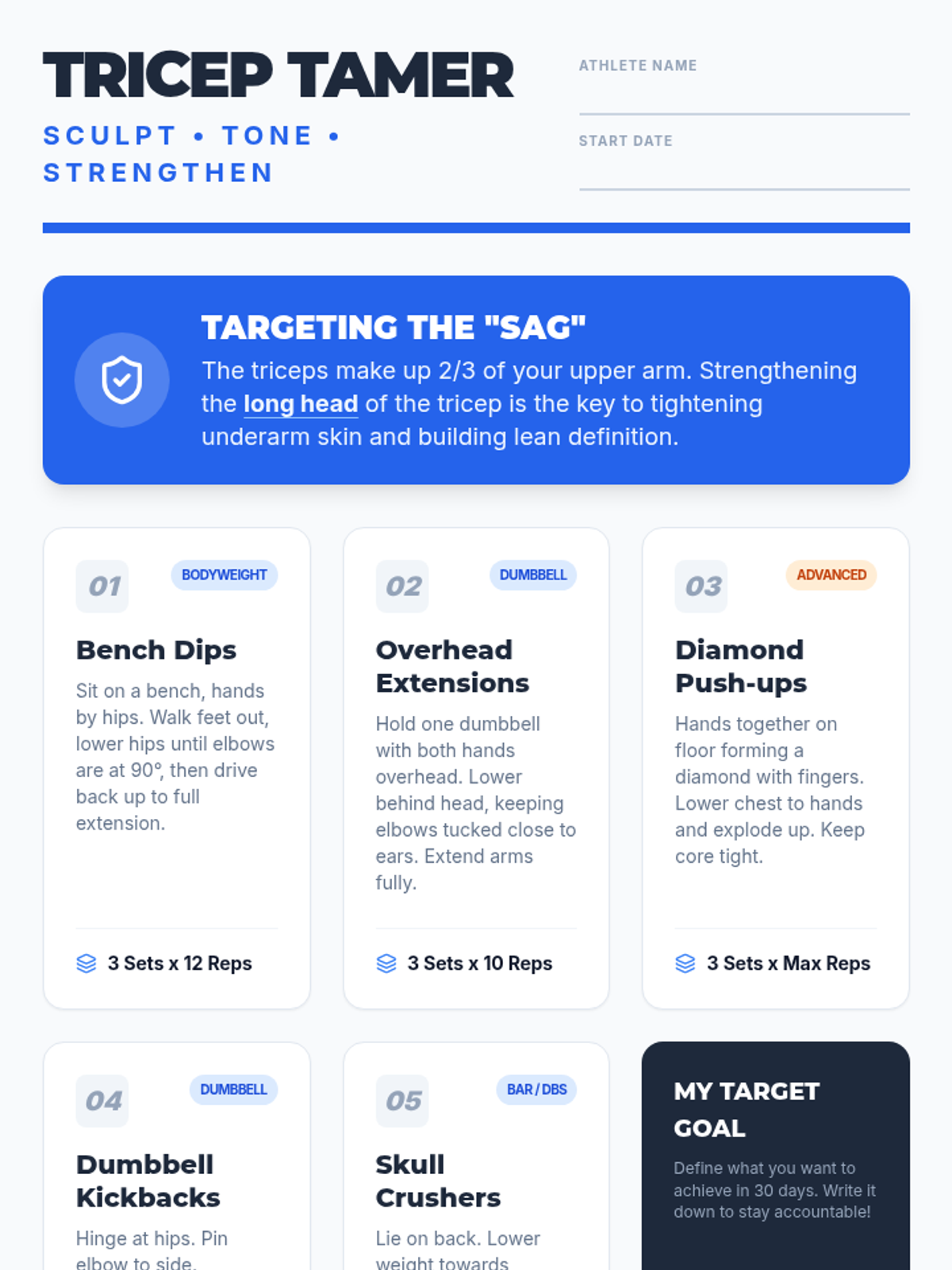
A visual workout poster focused on triceps exercises to help eliminate underarm sag, featuring 5 key exercises with instructions, rep counts, and professional training tips. Includes a workout tracker and goal-setting area.
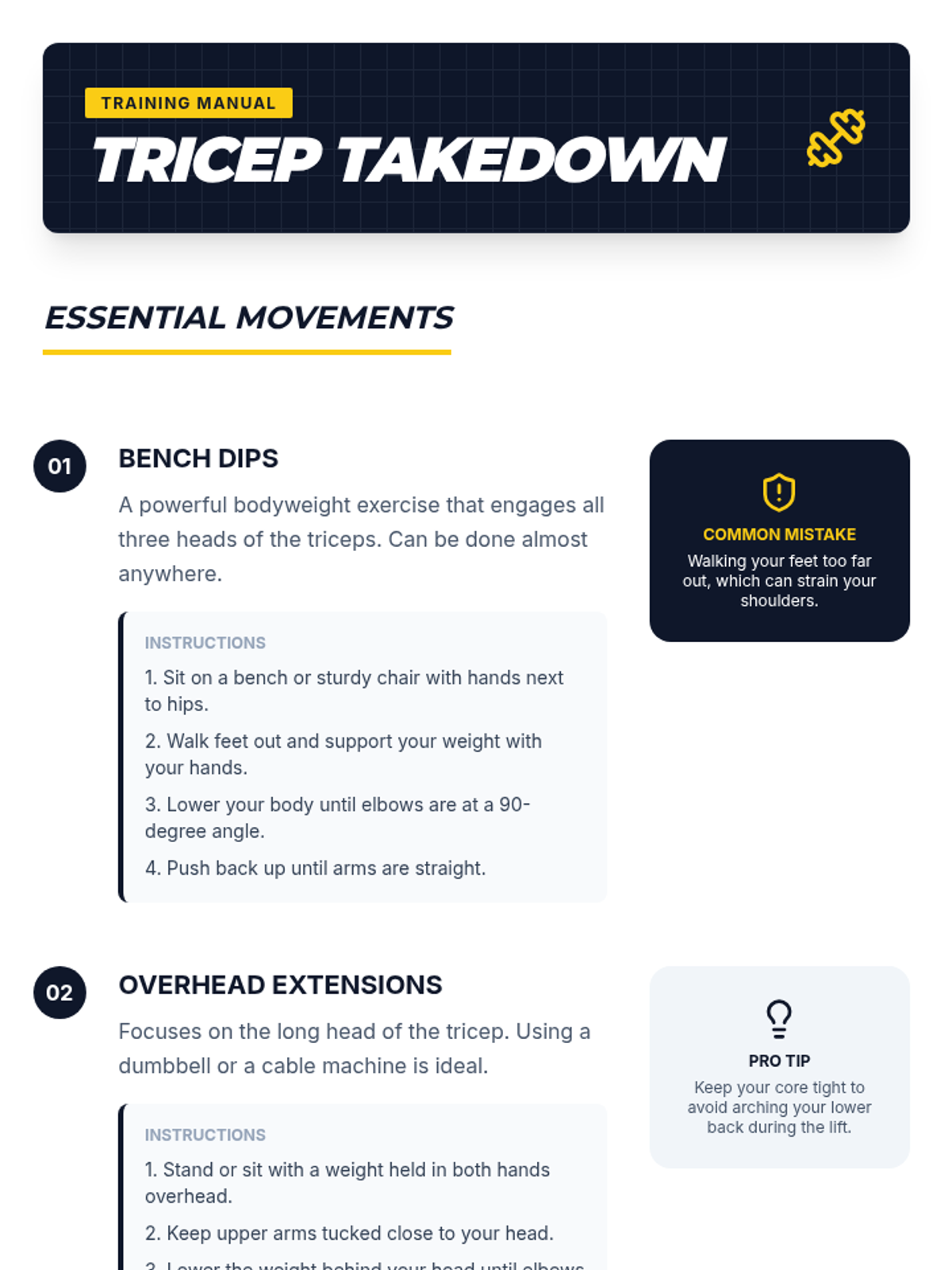
A comprehensive training manual for tricep exercises, including step-by-step instructions, common mistakes to avoid, and training protocol recommendations.
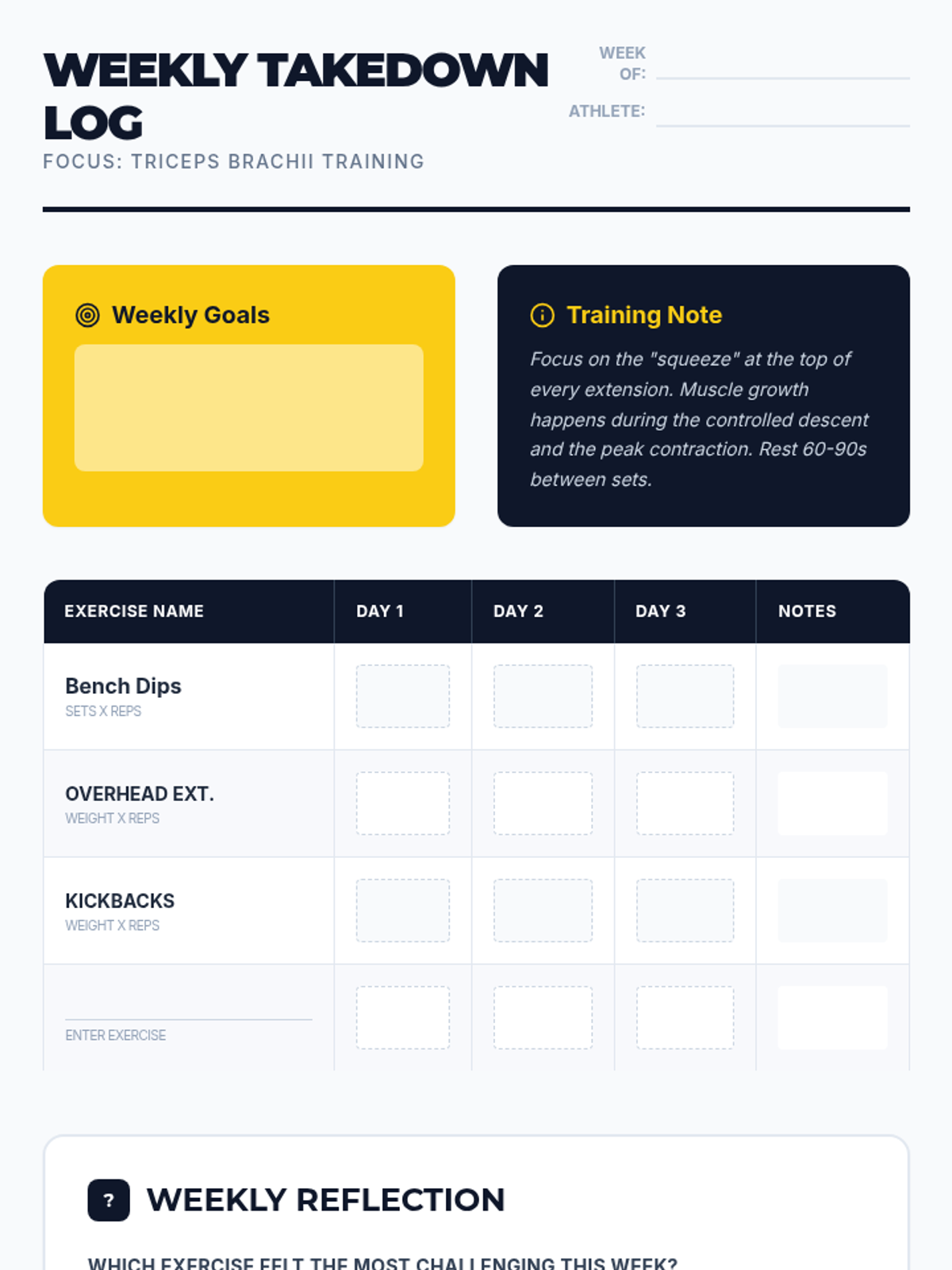
A weekly progress log for tracking tricep-focused workouts, including exercise entries, reflection questions, and energy level tracking.
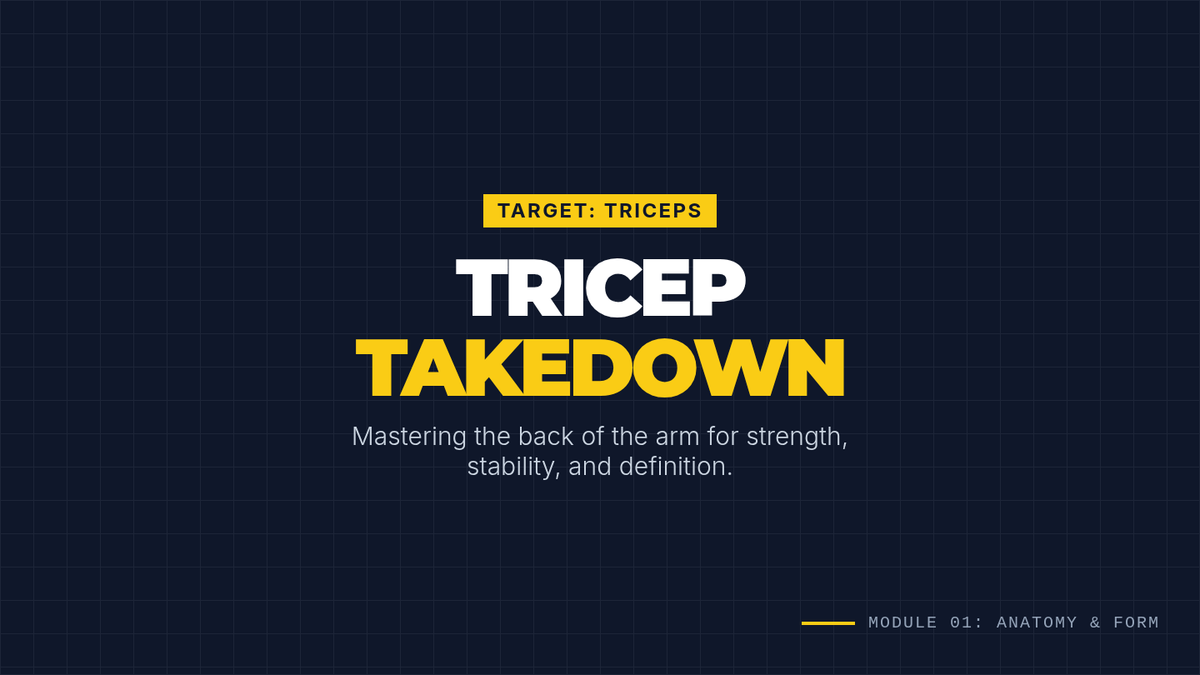
Instructional slides covering tricep anatomy, core exercises (dips, extensions, kickbacks), and pro training tips for building underarm muscle.
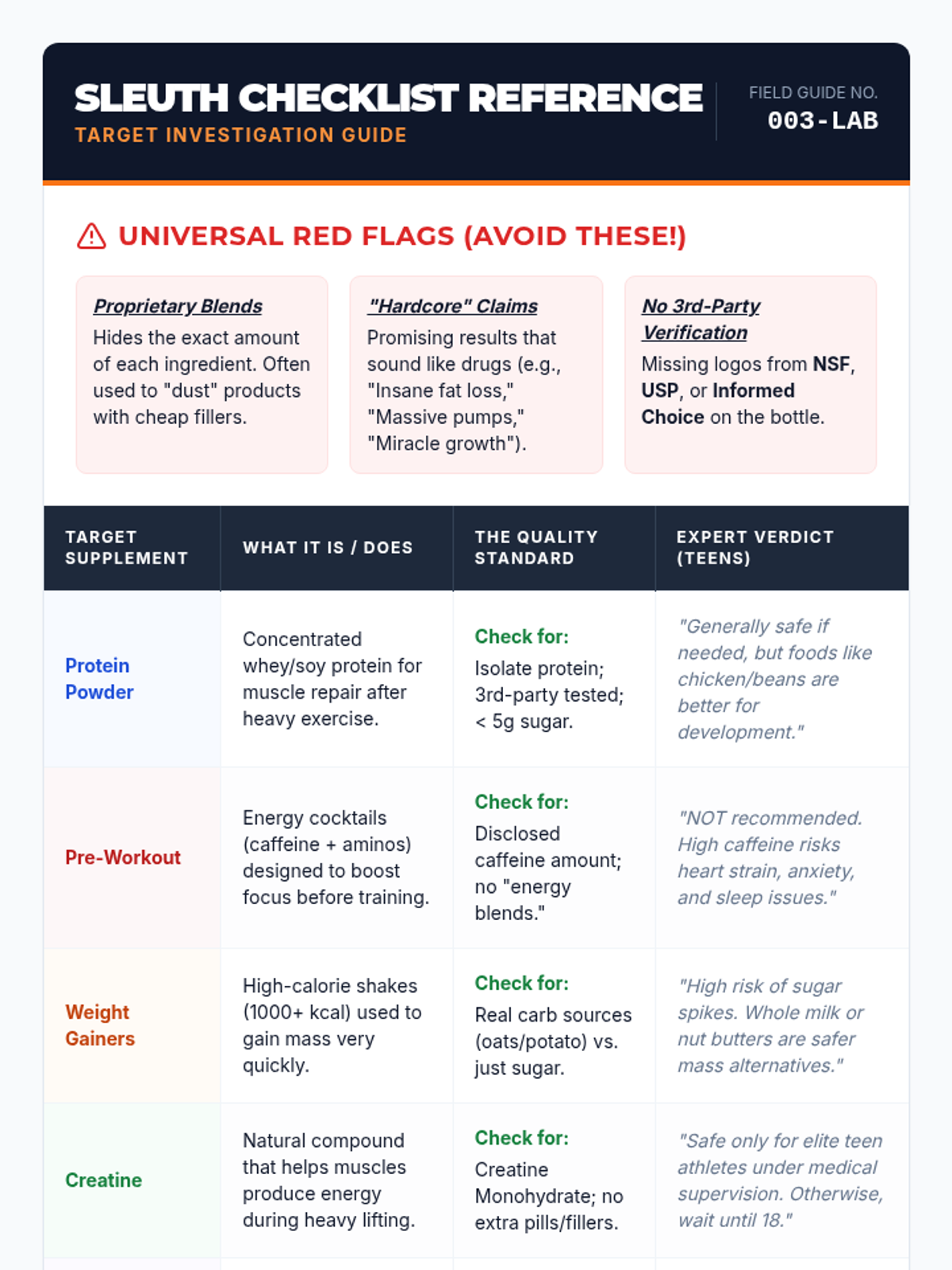
A reference guide for students summarizing the definition, quality standards, and expert pediatric verdicts for the 5 target supplements. Designed to be used as a "cheat sheet" during the digital Label Hunt.
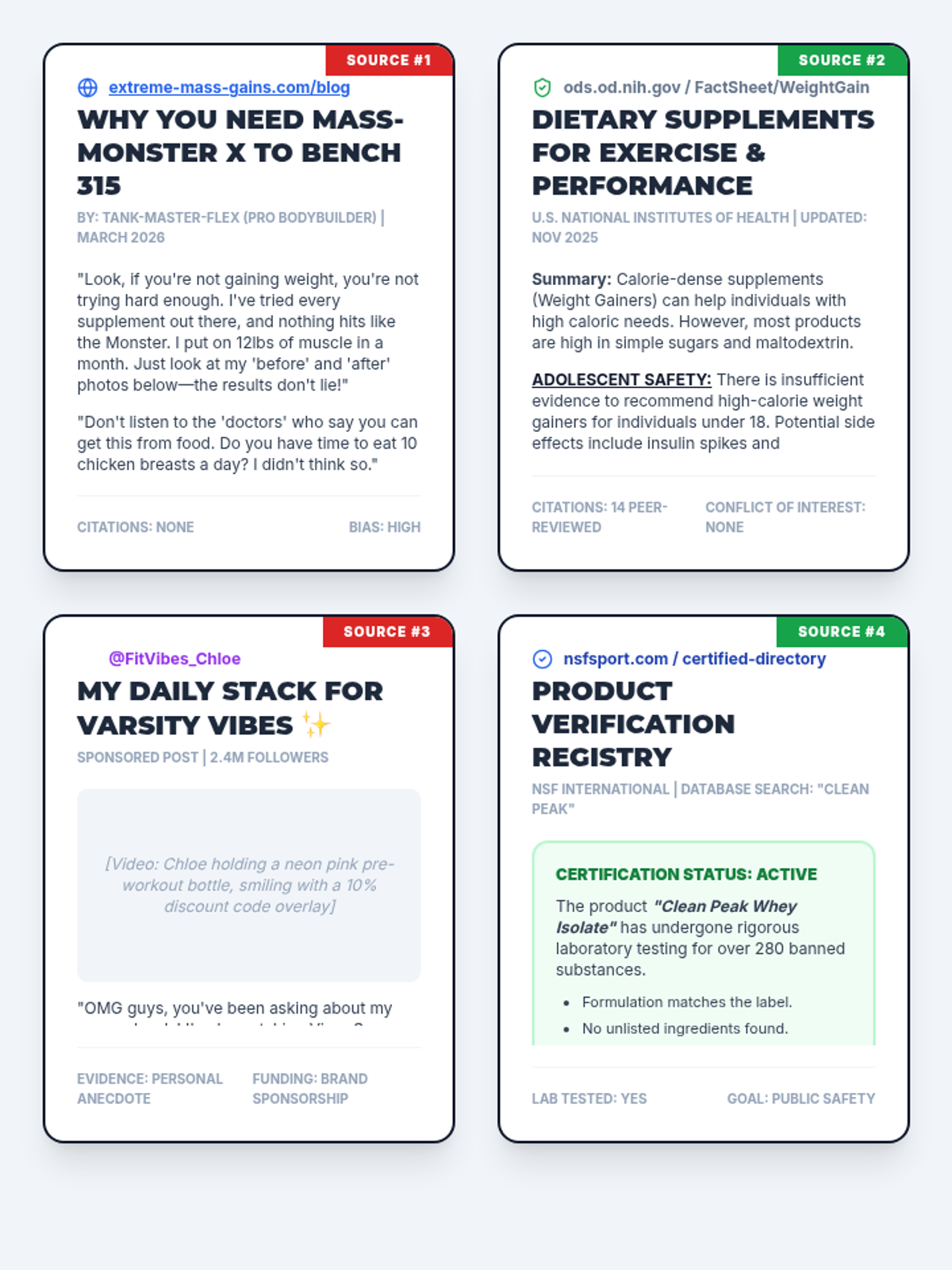
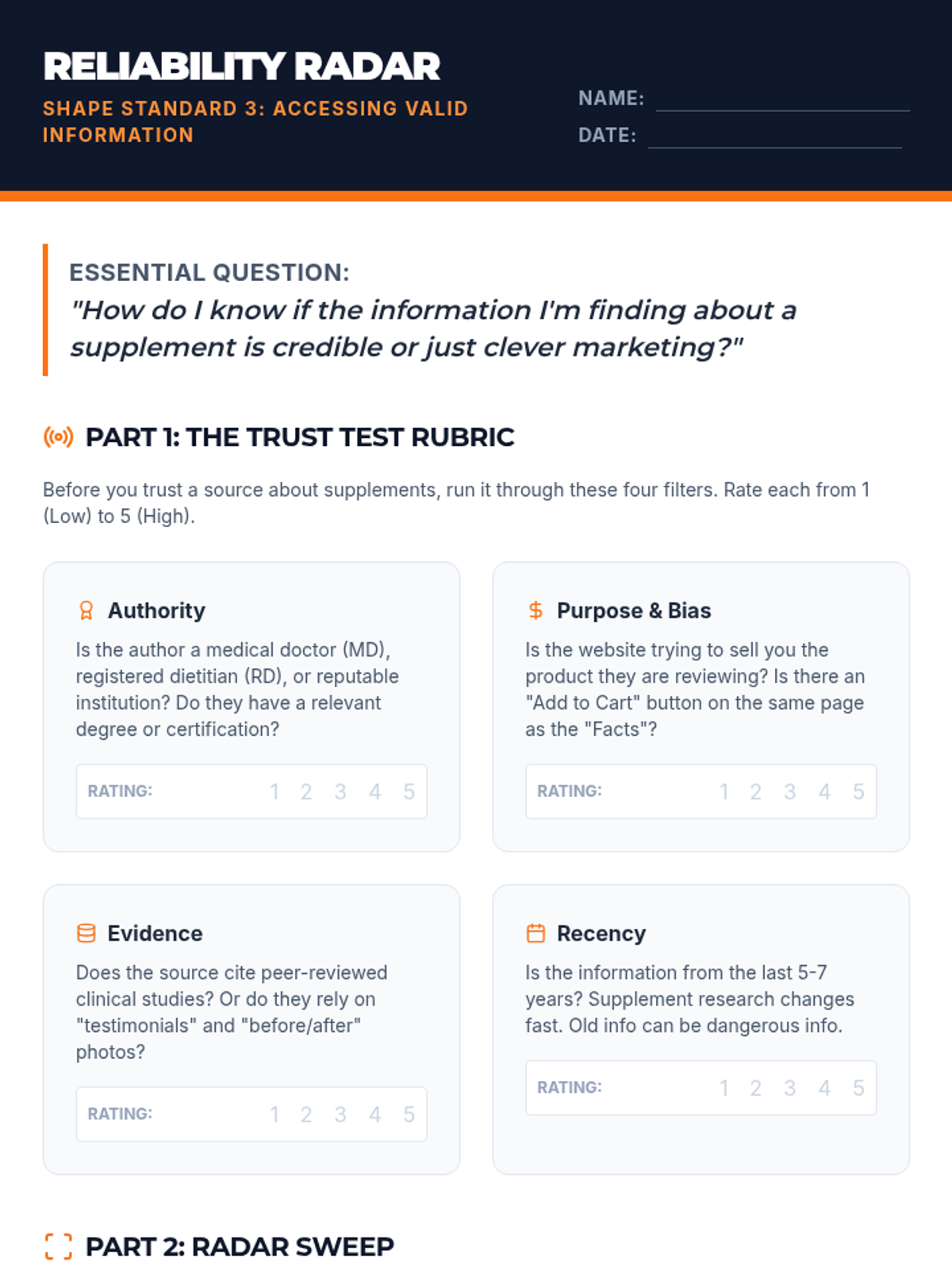
A set of four source specimens for the Reliability Radar activity. Students evaluate snippets of blog posts, government fact sheets, influencer reels, and 3rd-party registry listings to determine their credibility.
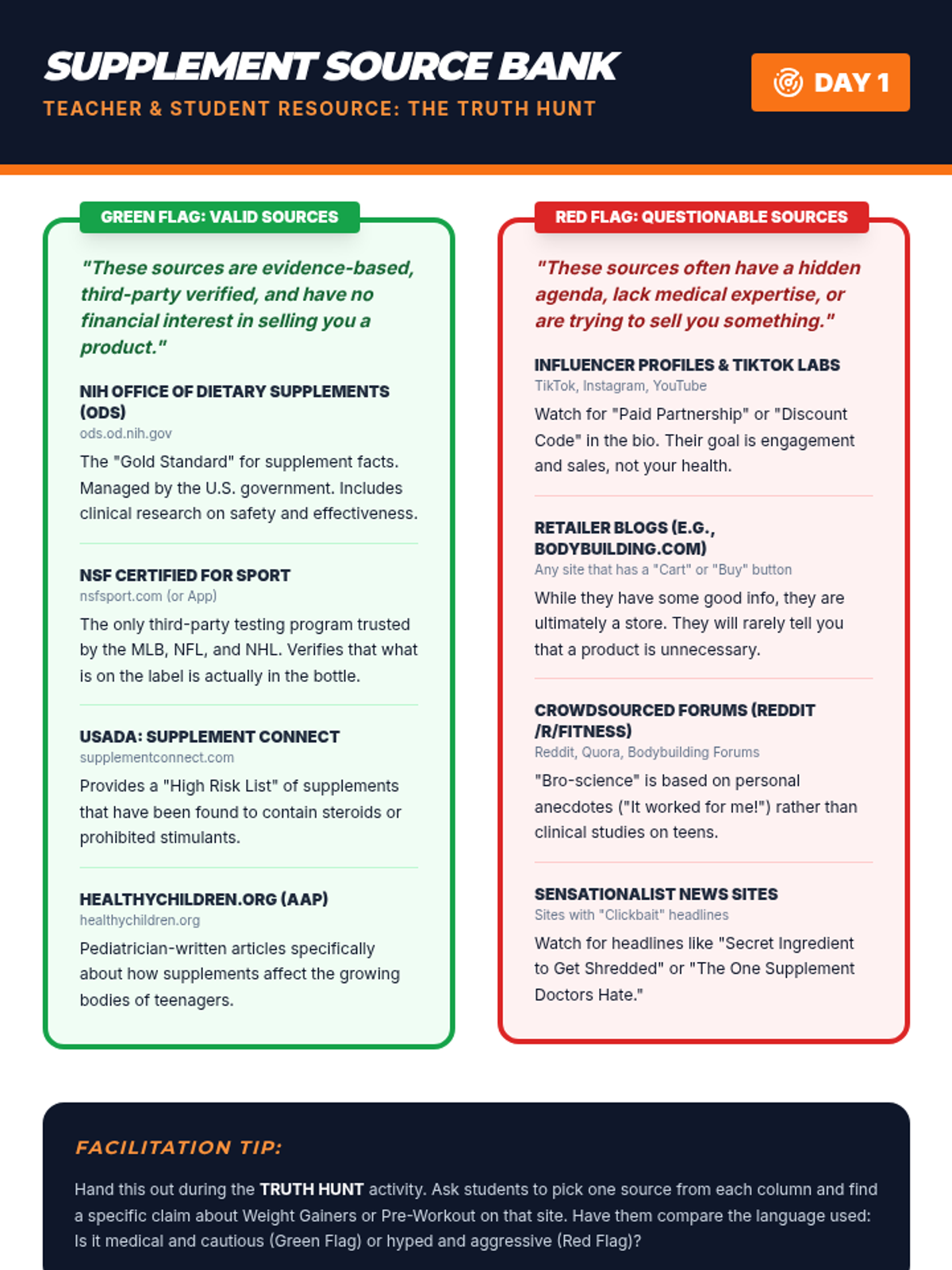
A reference guide listing specific credible (Green Flag) and untrustworthy (Red Flag) information sources to help students practice accessing valid information about dietary supplements.
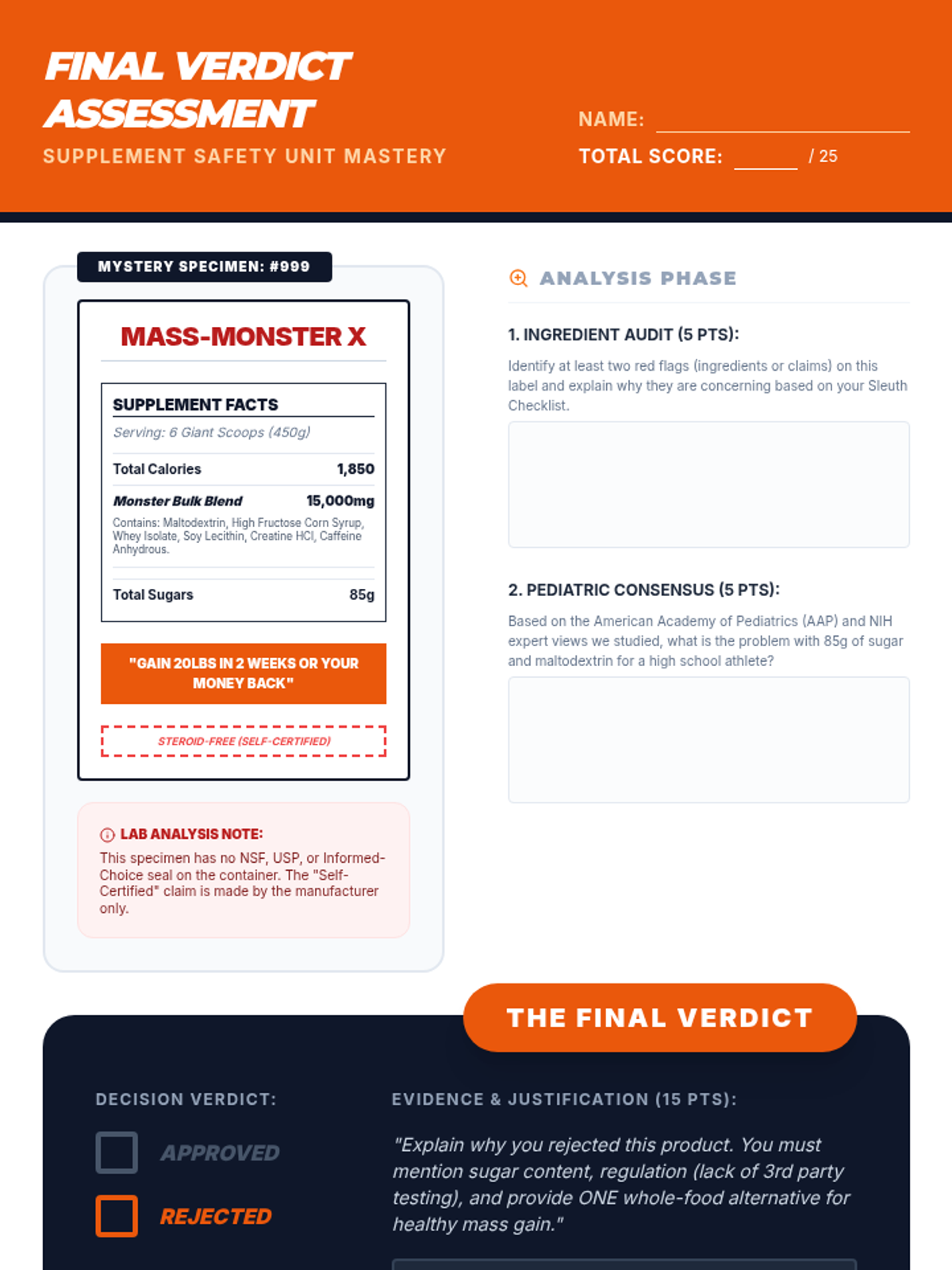
A final synthesis assessment updated to feature a Weight Gainer mystery specimen (Mass-Monster X) with red flags like high sugar and hidden stimulants. Students analyze the label using skills learned in the 2-day Supplement Safety Express unit.
A worksheet for Lesson 1, updated with examples centered on Weight Gainers to help students evaluate the validity of information.
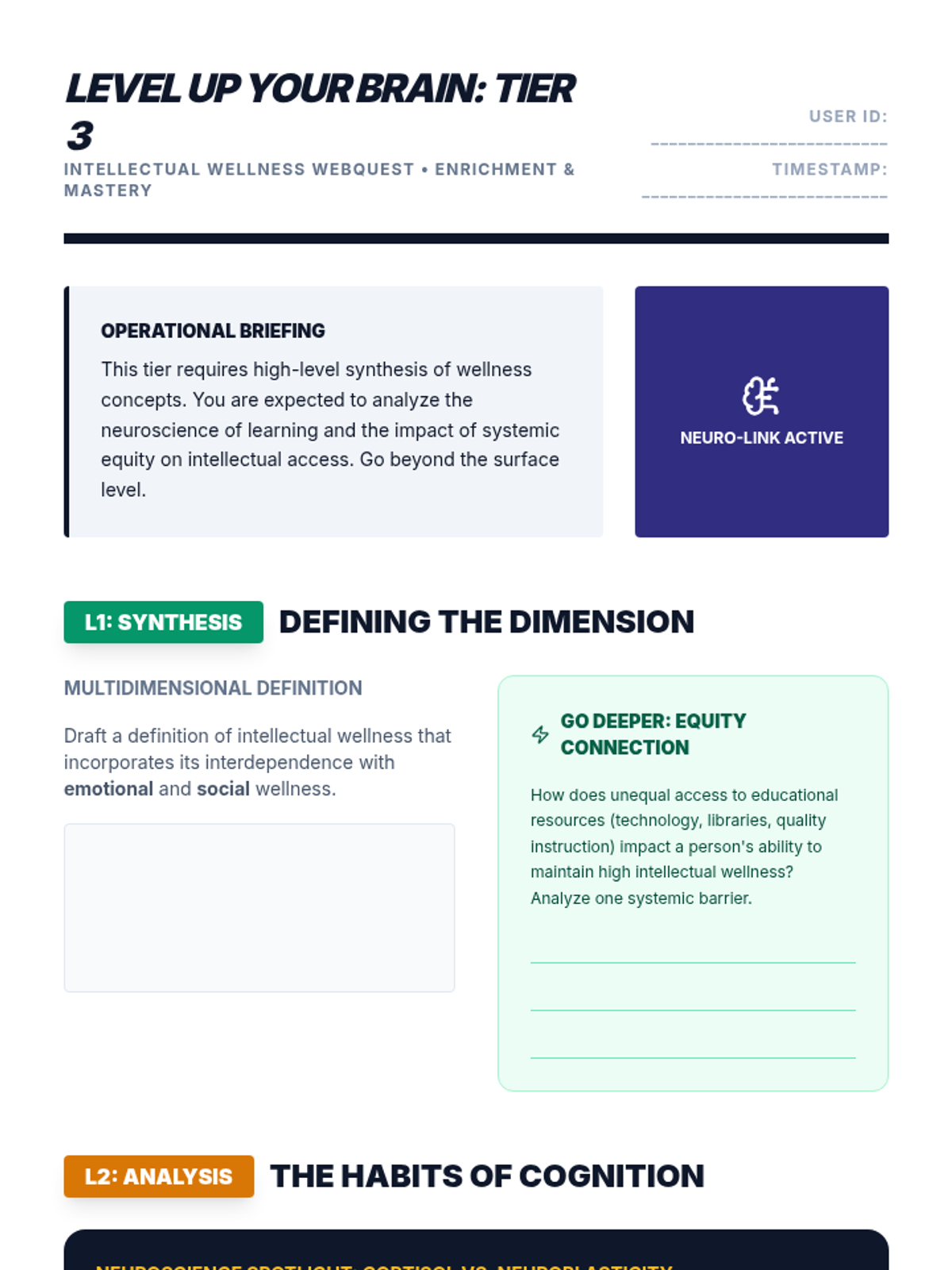
A Tier 3 (Above Grade/Enrichment) worksheet for the Level Up Your Brain WebQuest, featuring neuroscience analysis, equity connections, WOOP goal-setting strategy, and a reflective synthesis letter.
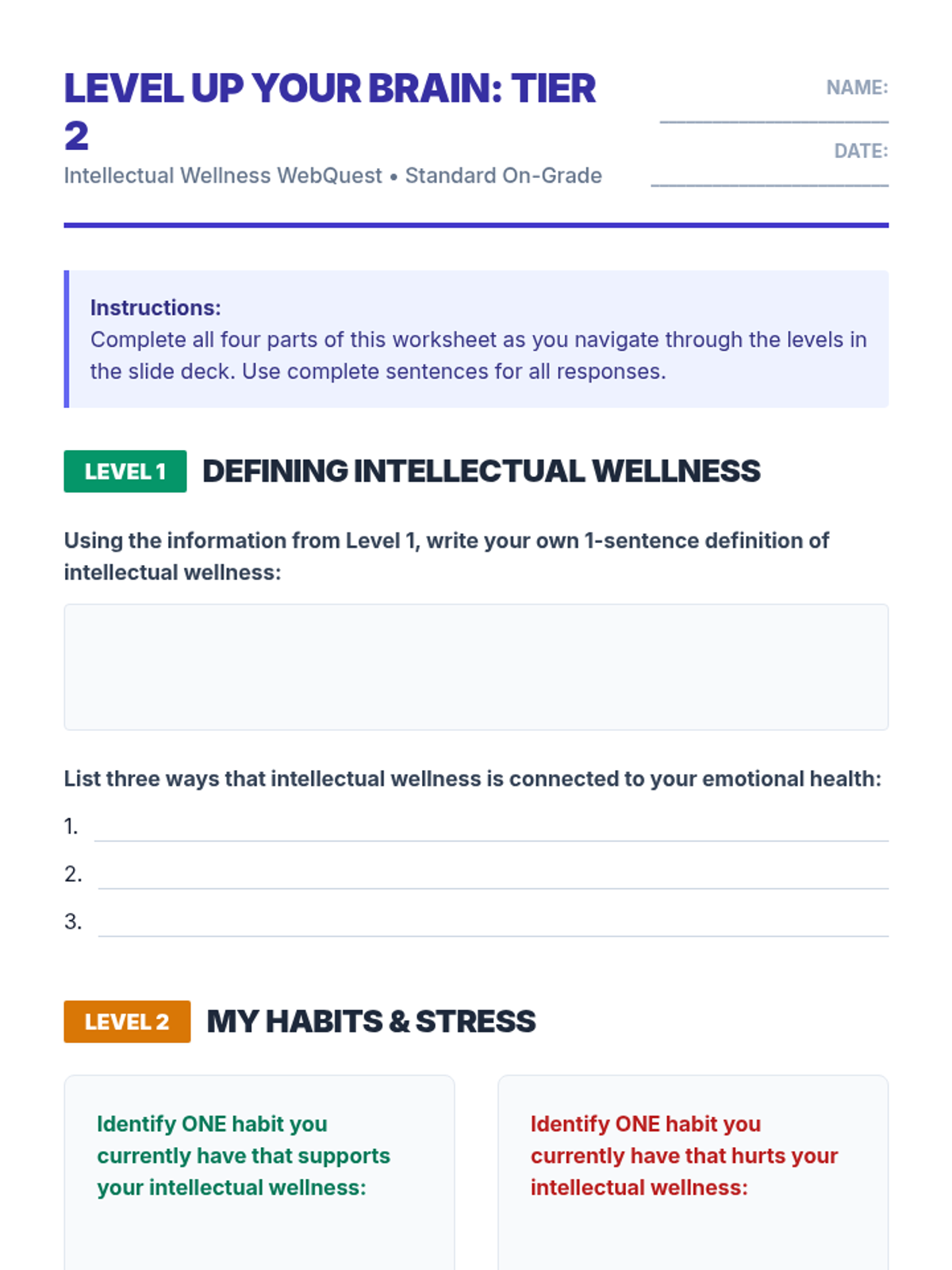
A Tier 2 (On Grade) worksheet for the Level Up Your Brain WebQuest, requiring complete sentences, habit analysis, growth mindset rewriting, and SMART goal-setting.
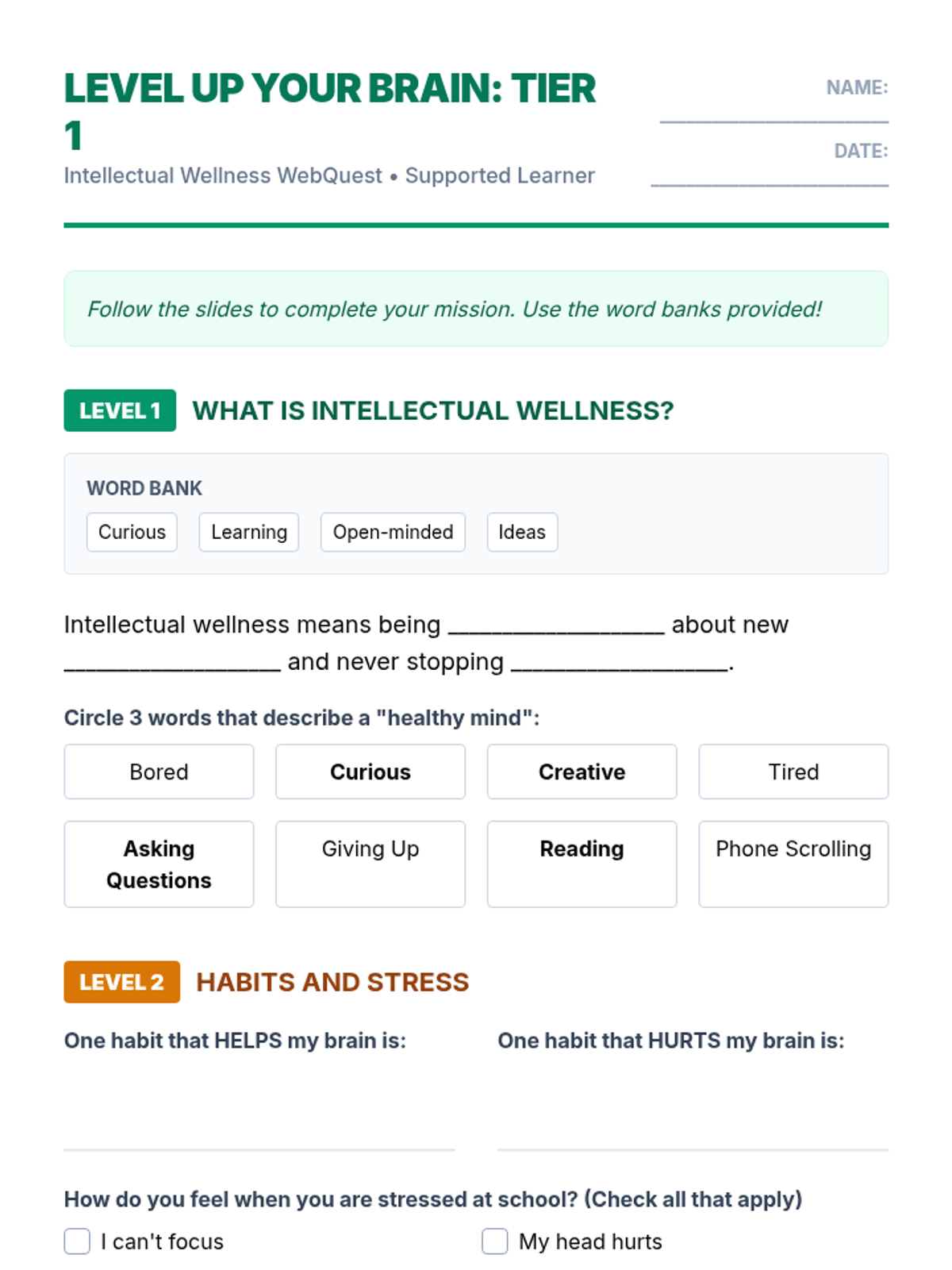
A Tier 1 (Below Grade) worksheet for the Level Up Your Brain WebQuest, featuring word banks, circling activities, and simplified sentence starters for supported learners.
A gaming-themed interactive slide deck that guides students through four levels of intellectual wellness challenges, including definitions, habit assessment, growth mindset, and goal-setting.