Complex grammar structures, idiomatic expressions, and phrasal verbs. Strengthens reading and listening comprehension while building conversational fluency for varied social and professional settings.
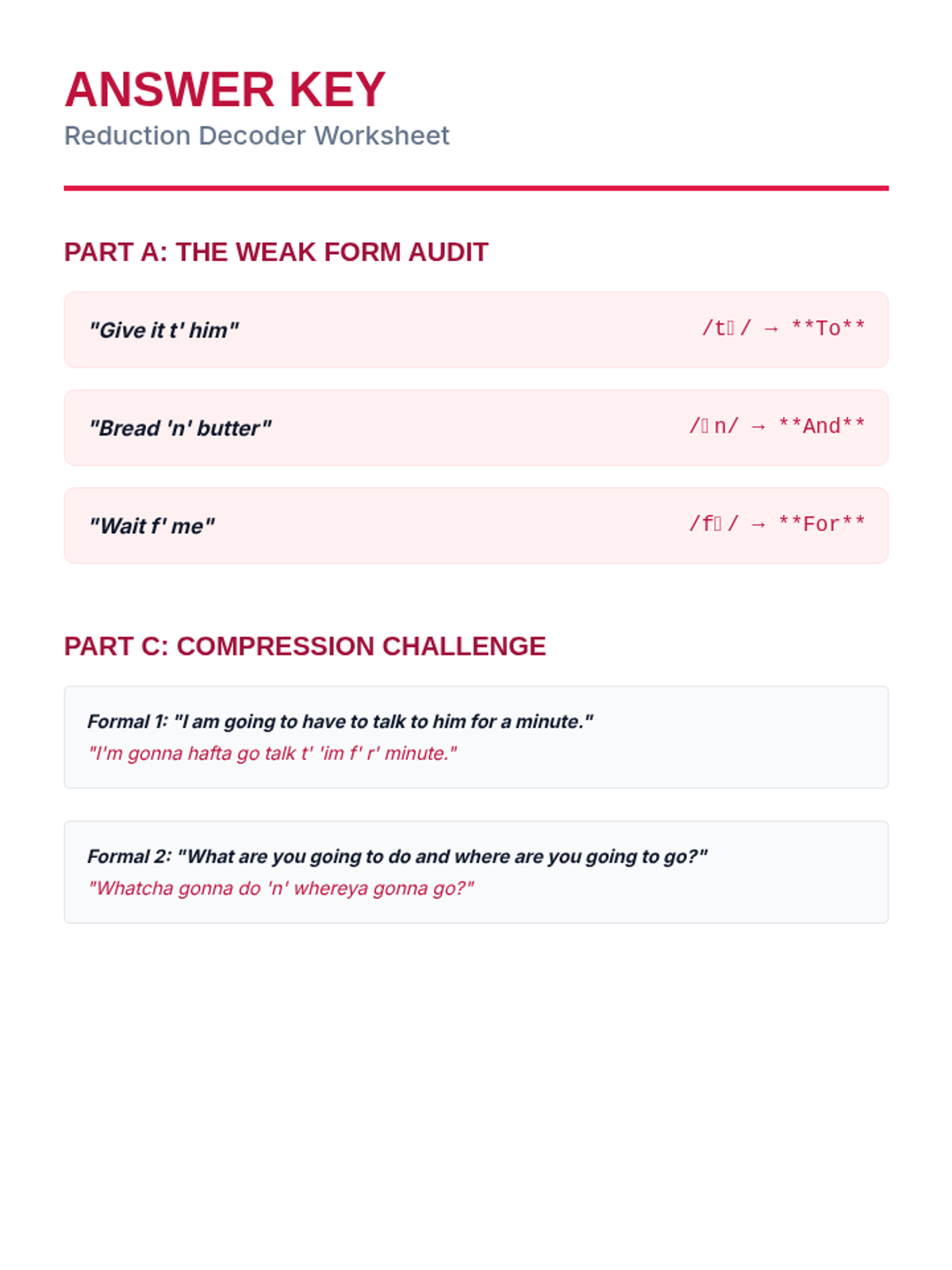
Answer key for the Lesson 4 worksheet on grammatical reductions.
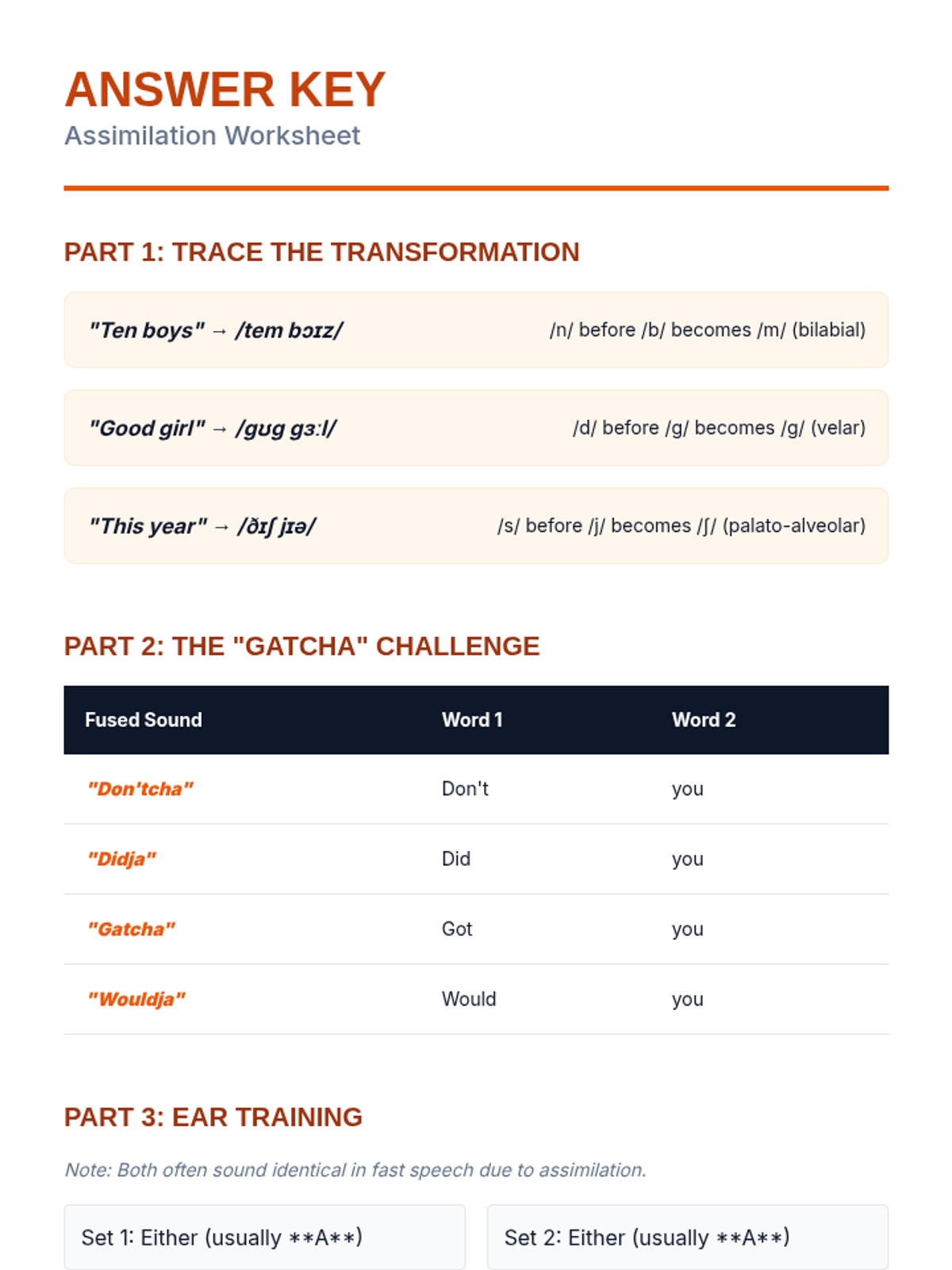
Answer key for the Lesson 3 worksheet on assimilation.
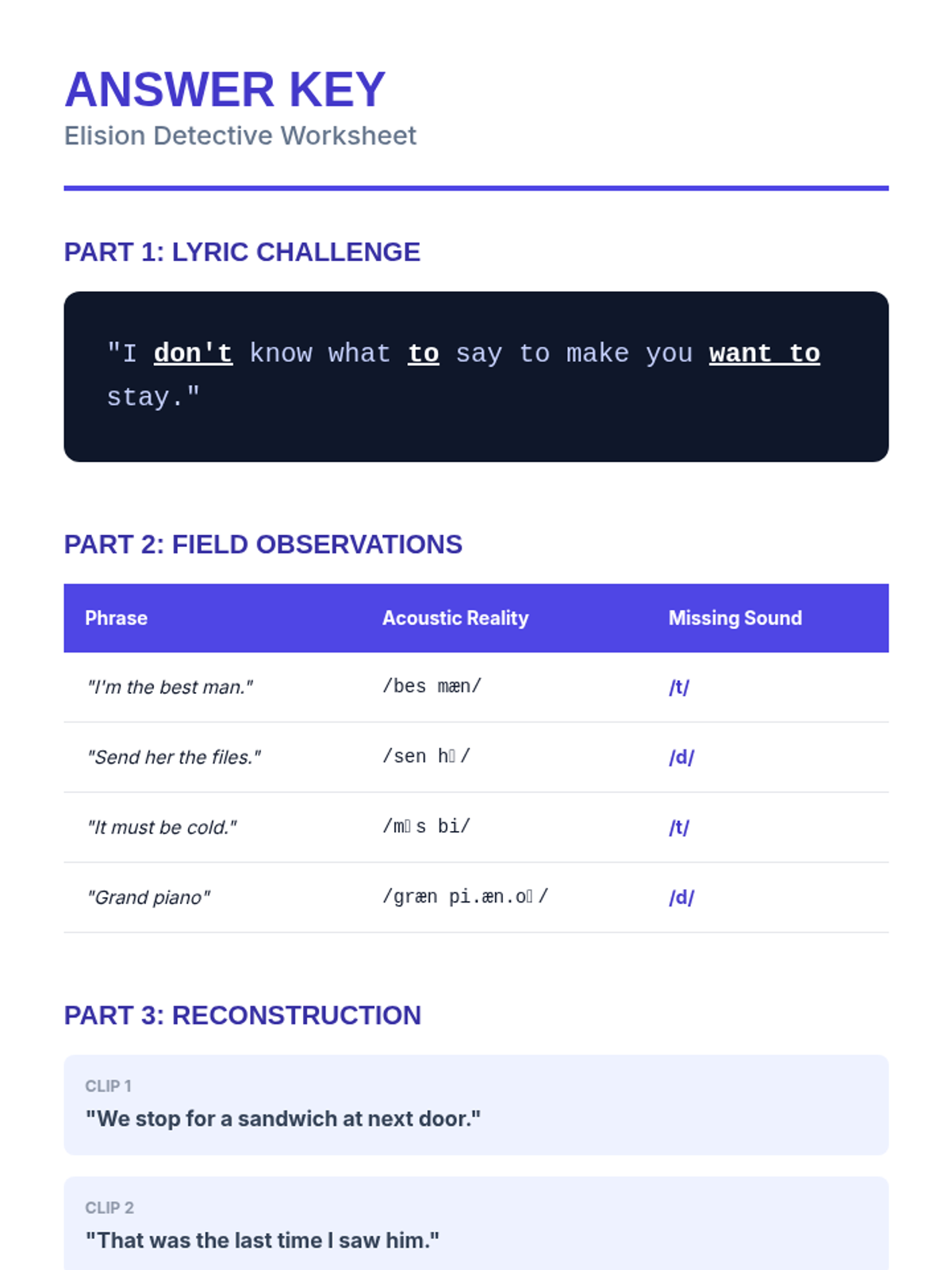
Answer key for the Lesson 2 worksheet on elision.
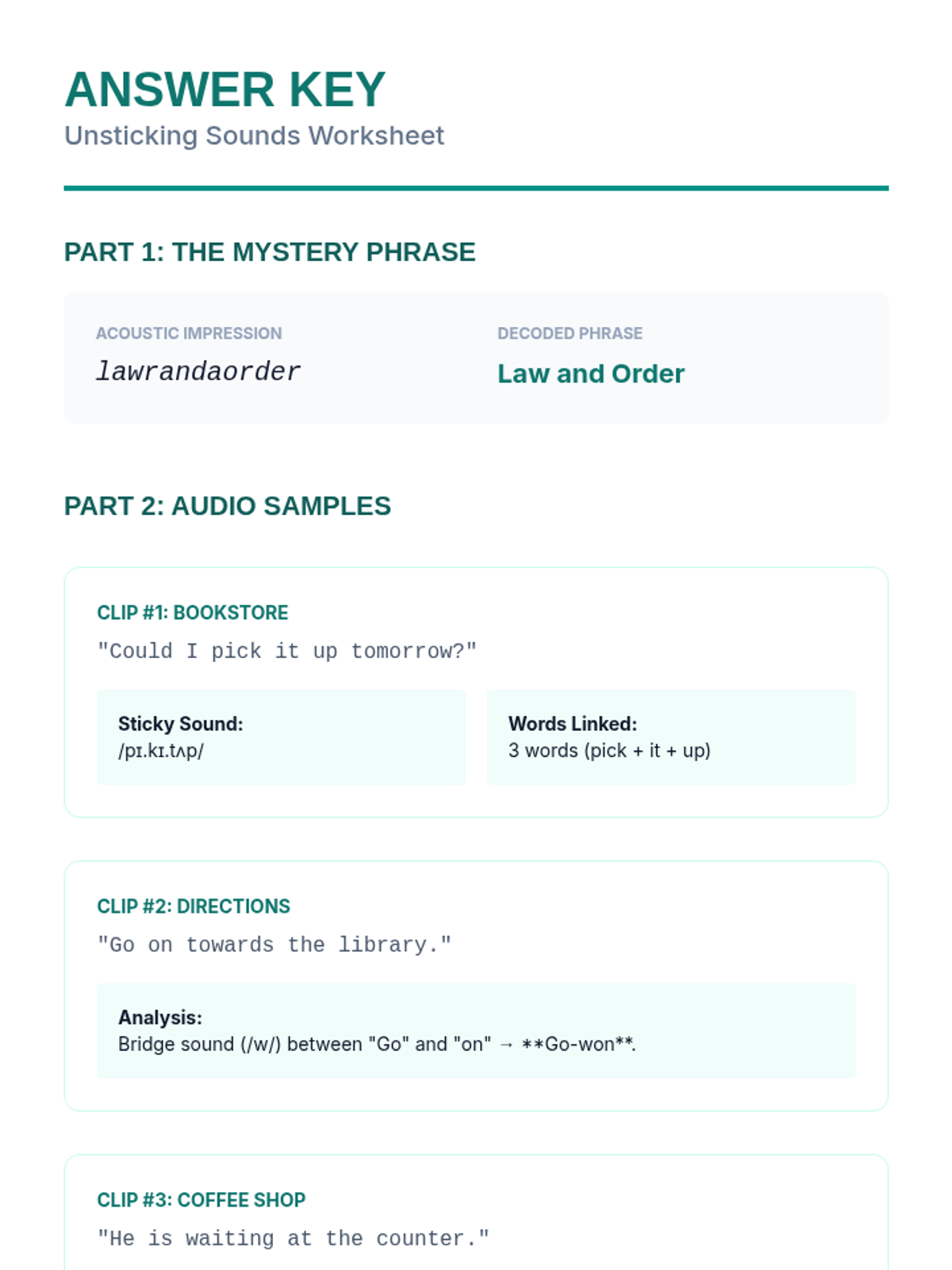
Answer key for the Lesson 1 worksheet on linking and intrusion.
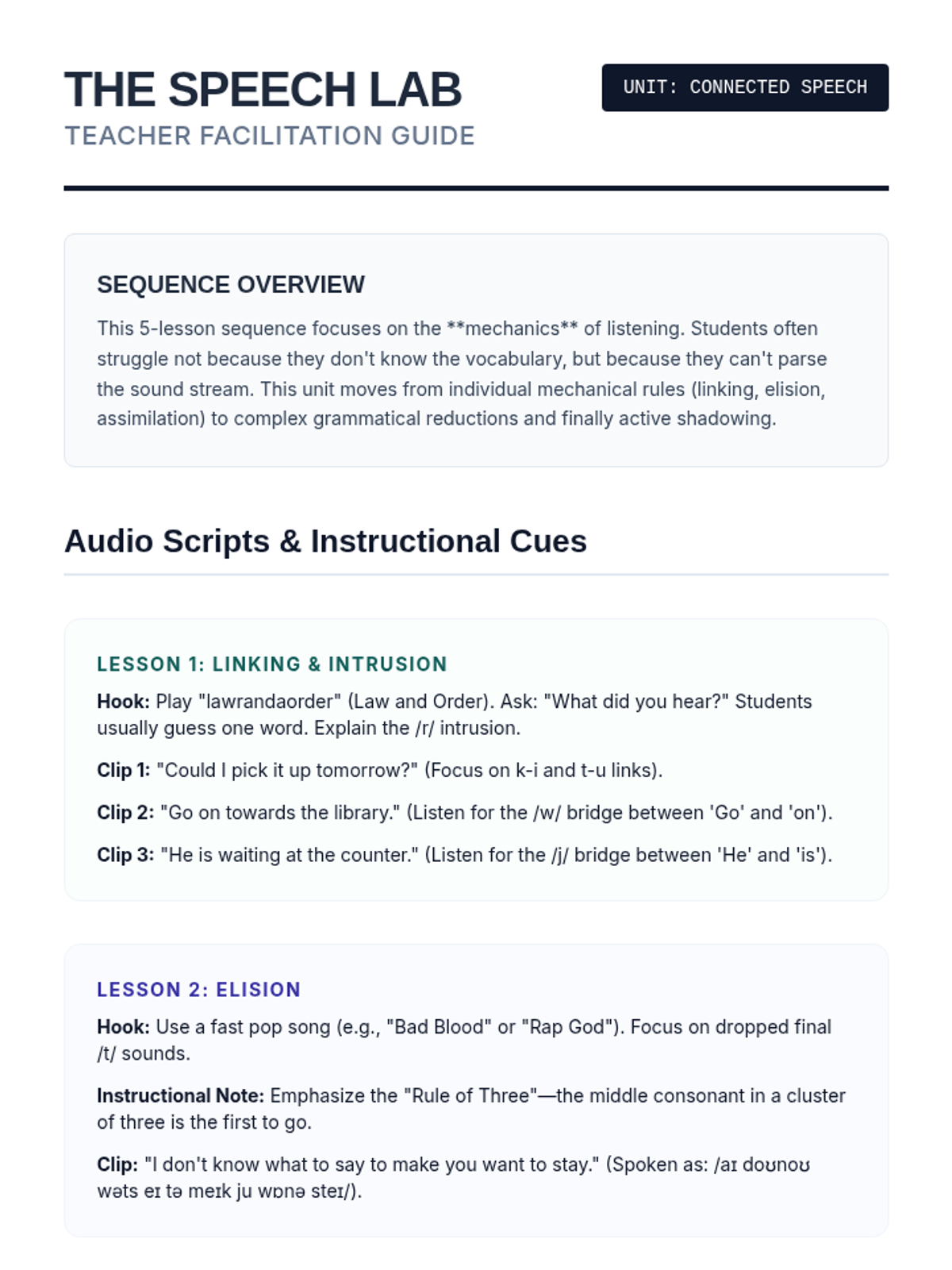
A comprehensive teacher guide for the Speech Lab sequence, including audio scripts, instructional cues, pacing, and differentiation strategies.
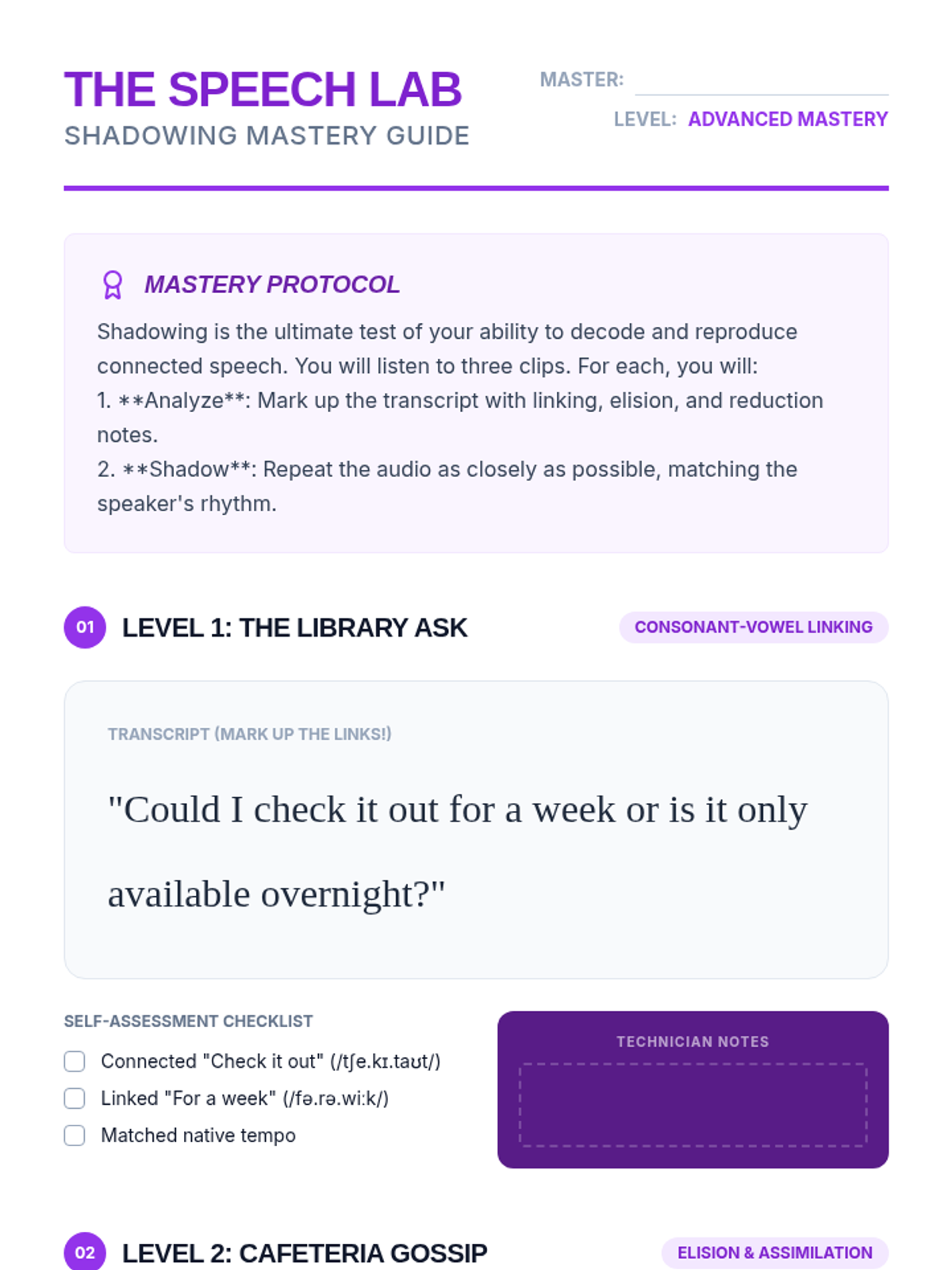
A student mastery guide for practicing shadowing techniques with transcript analysis of complex campus dialogues.
A slide deck for Lesson 5 on shadowing techniques, prosody, and the final mastery assessment of connected speech patterns.
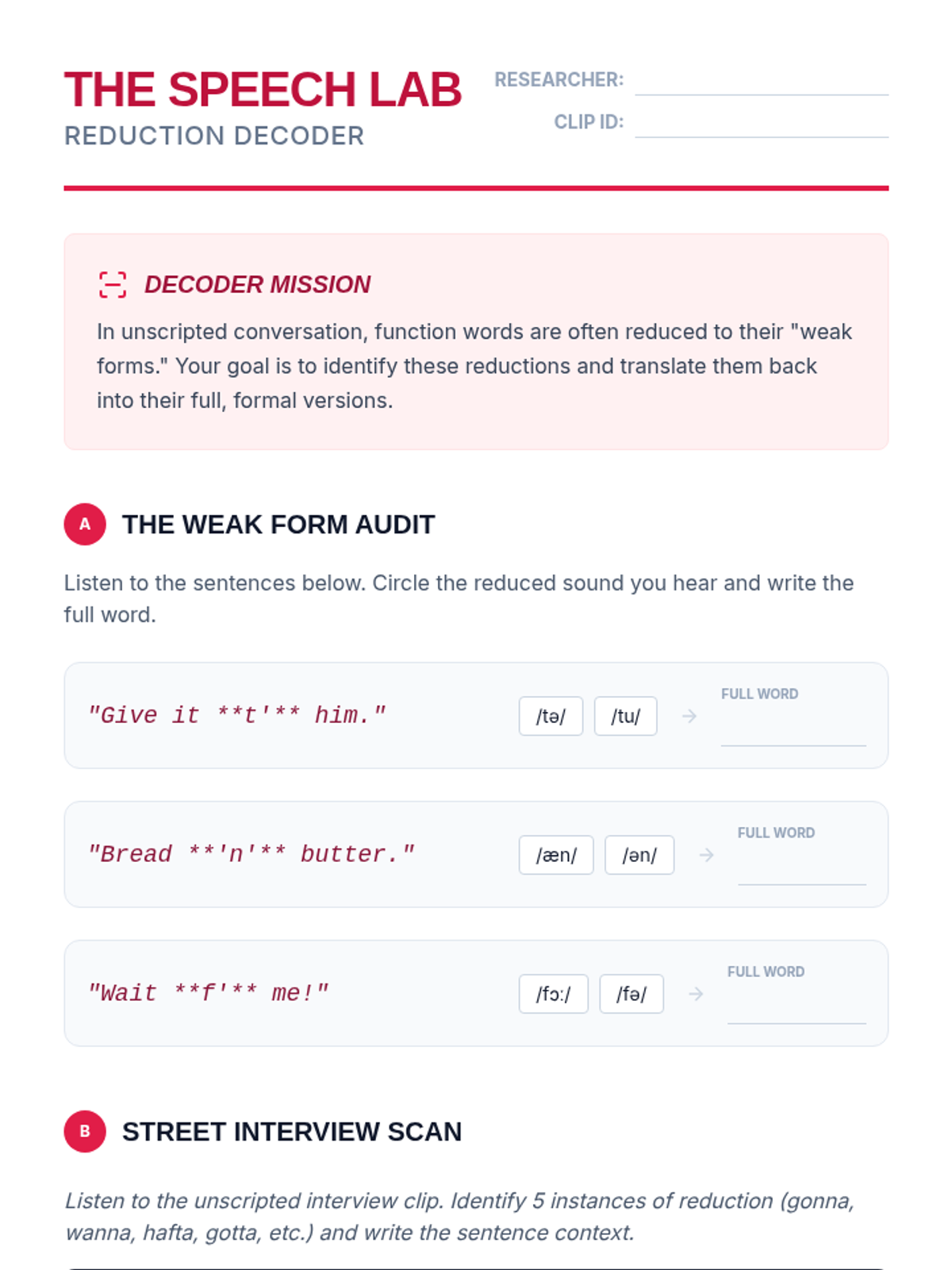
A student worksheet for identifying and translating grammatical reductions and weak forms in unscripted interviews.
A slide deck for Lesson 4 focusing on grammatical reductions and weak forms, using a high-contrast visual style to highlight the difference between formal and casual speech.
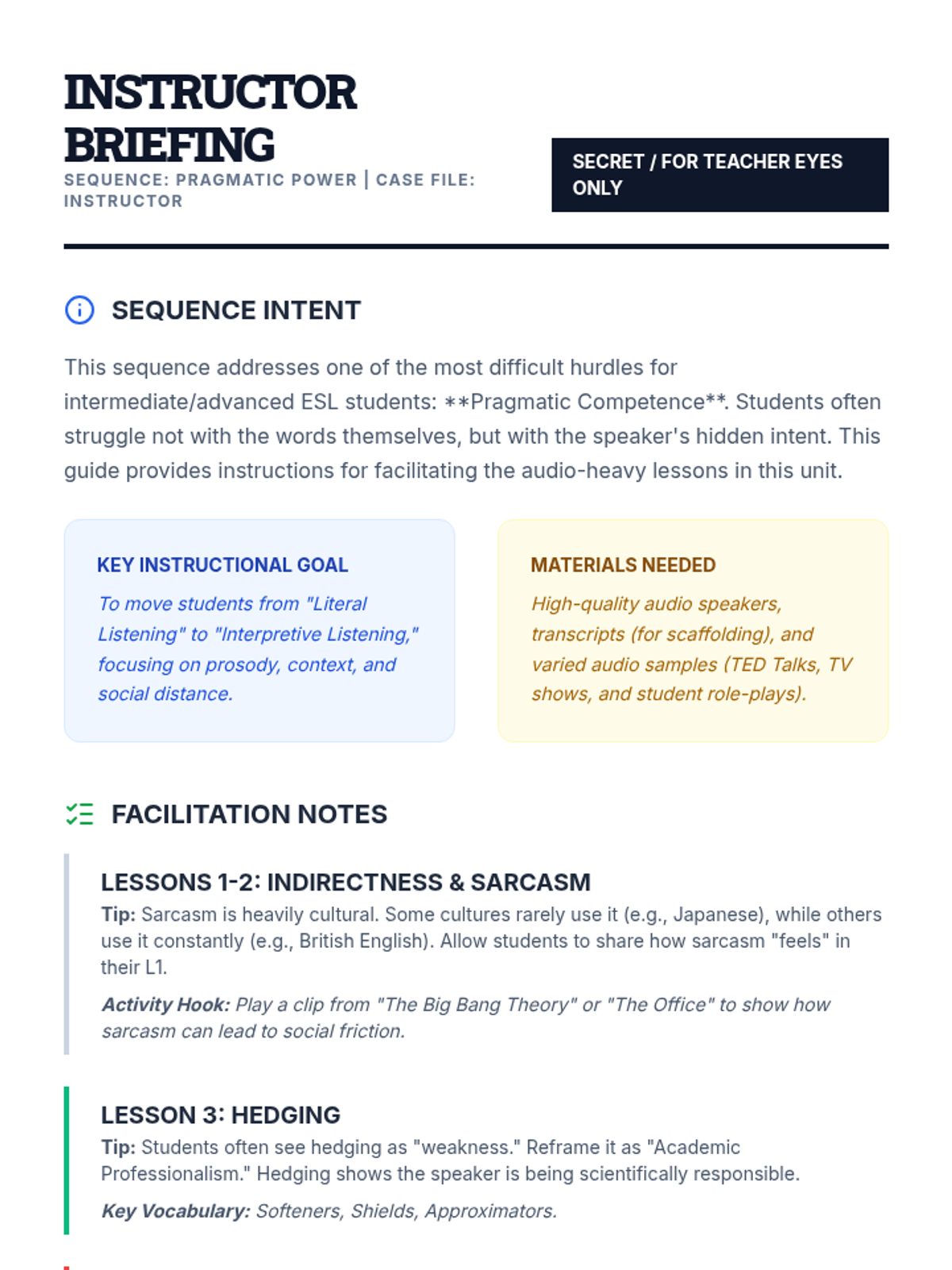
Instructor briefing and facilitation guide for the Pragmatic Power sequence, providing teaching tips, activity hooks, and assessment strategies for ESL instructors.
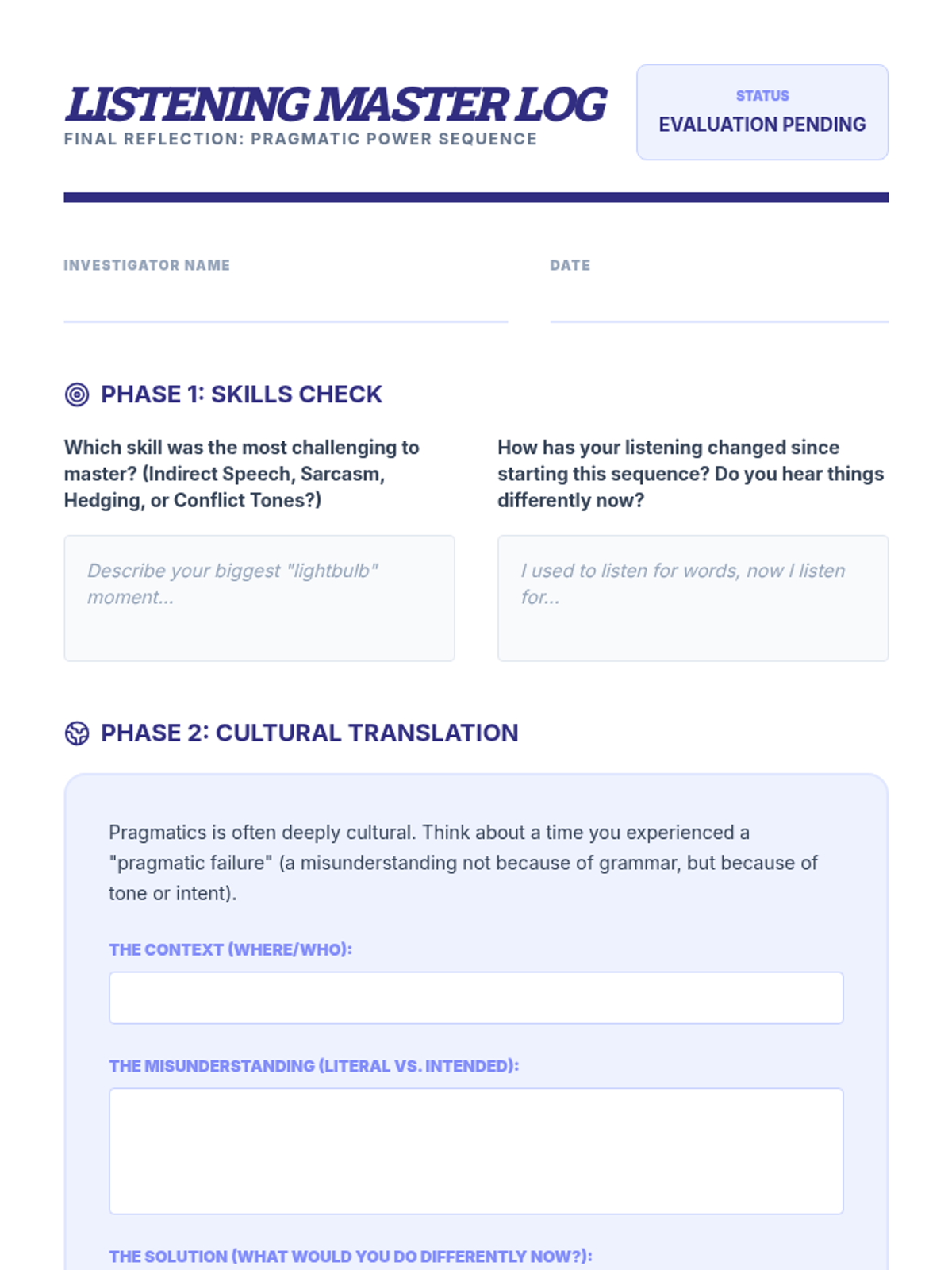
Final reflection worksheet and exit ticket for the sequence, allowing students to synthesize their learning about pragmatics and reflect on their own cultural communication experiences.
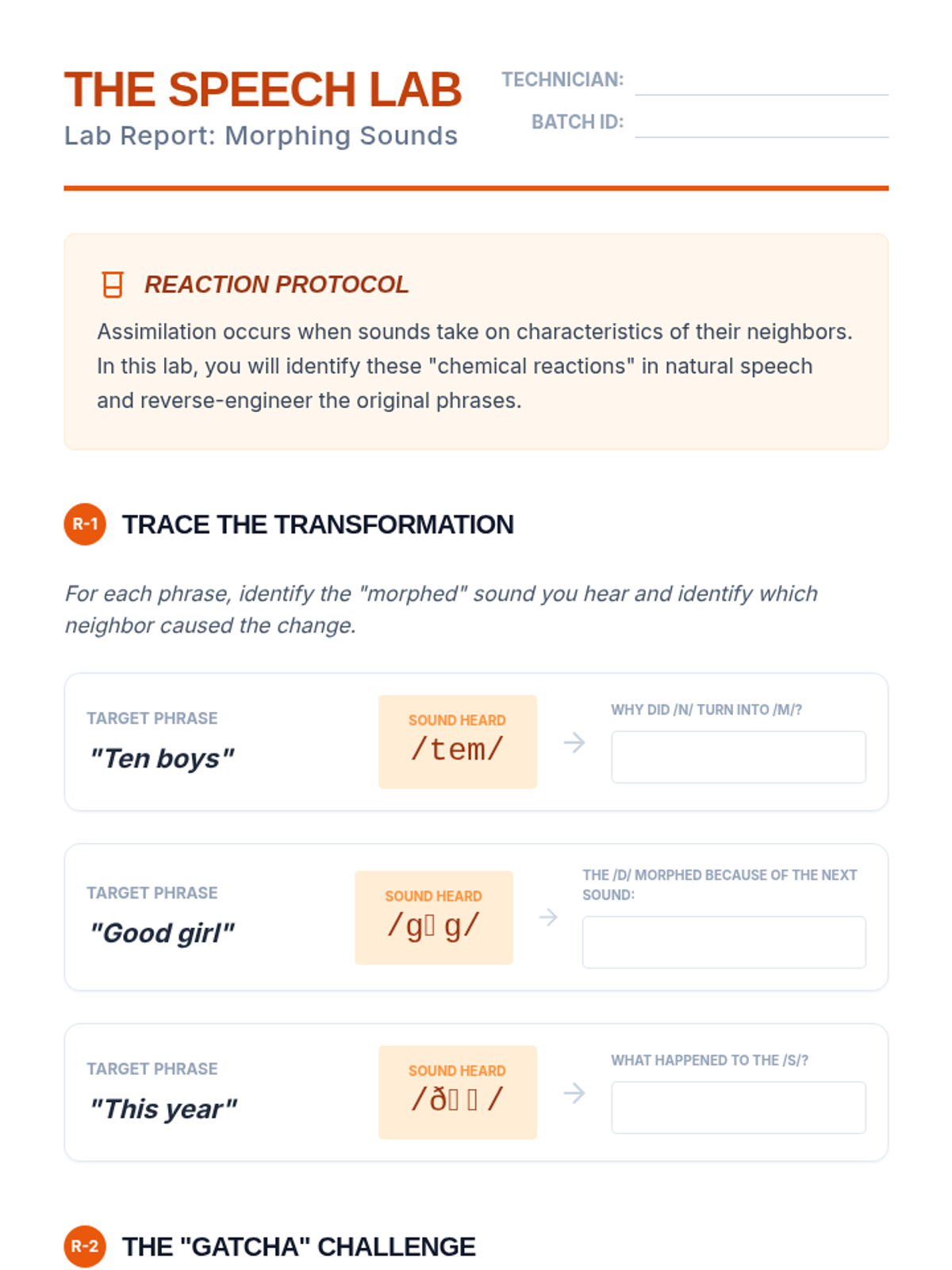
A student worksheet for identifying and reverse-engineering assimilated sounds in natural speech patterns.
Visual presentation for Lesson 5 exploring how cultural backgrounds influence pragmatic markers like silence, interruption, and backchanneling in global English.
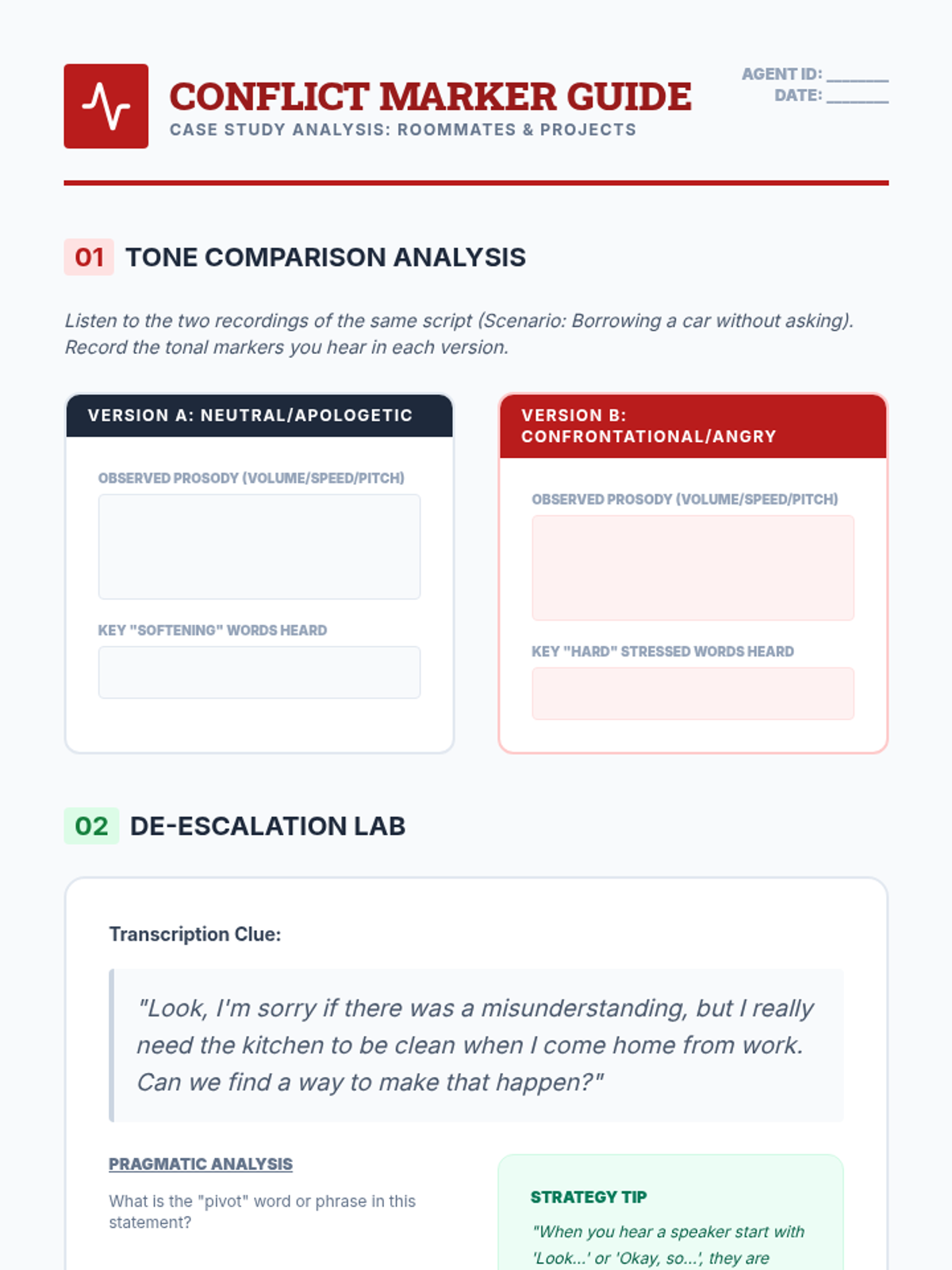
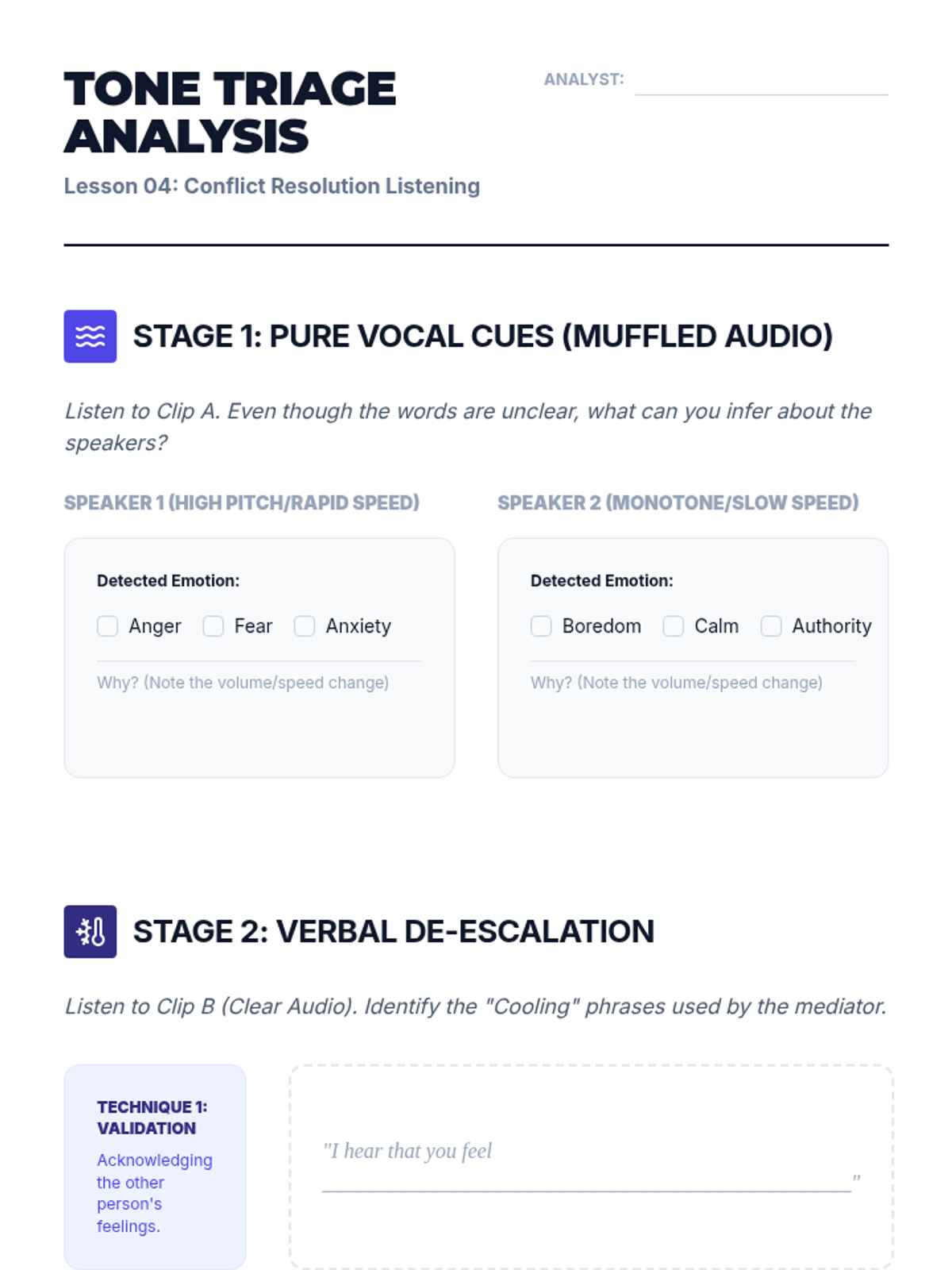
Student worksheet for Lesson 4 where students compare different tonal renditions of a script to identify markers of conflict and practice identifying de-escalation strategies.
A slide deck for Lesson 3 introducing assimilation, showing how sounds change based on their neighbors using a "chemical reaction" theme.
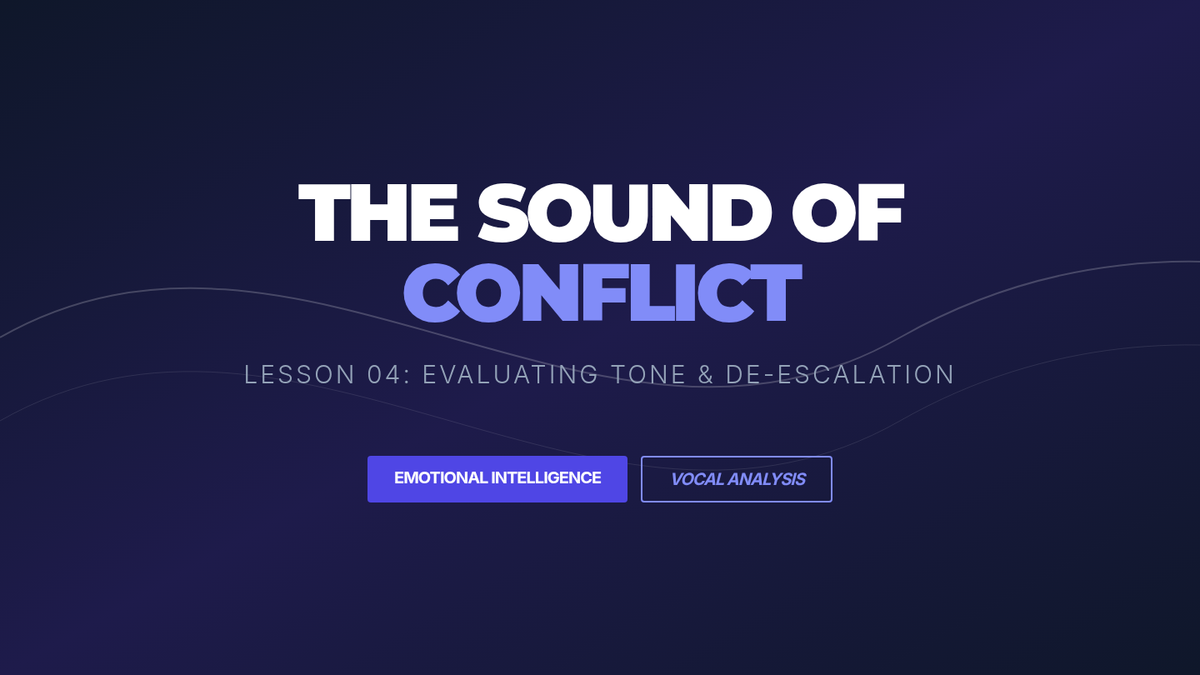
Visual presentation for Lesson 4 exploring the tonal and prosodic markers of conflict (escalation) and negotiation (de-escalation) in social and academic scenarios.
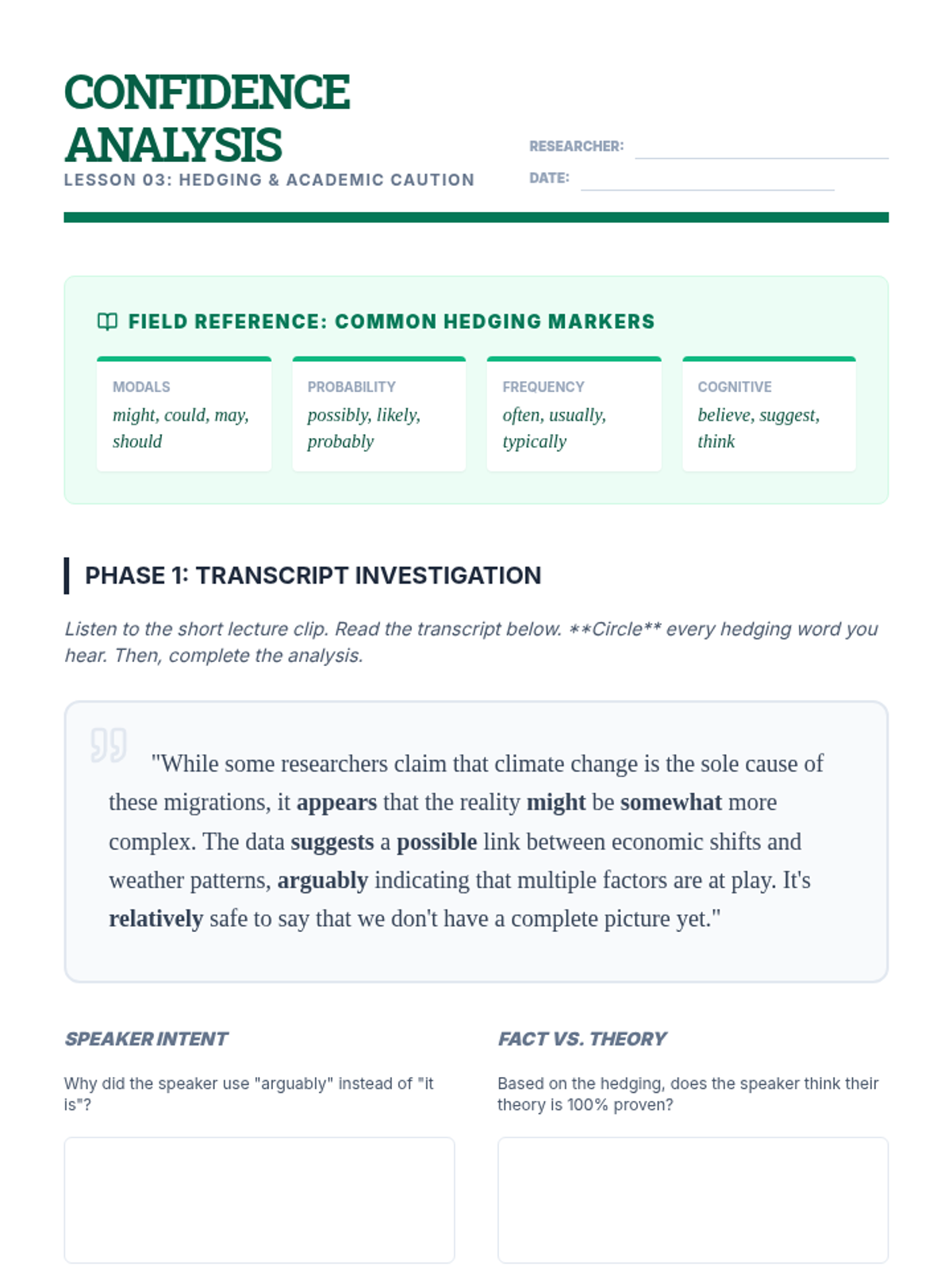
Worksheet for Lesson 3 where students identify hedging language in a transcript and evaluate the confidence level of different speakers based on their linguistic choices.
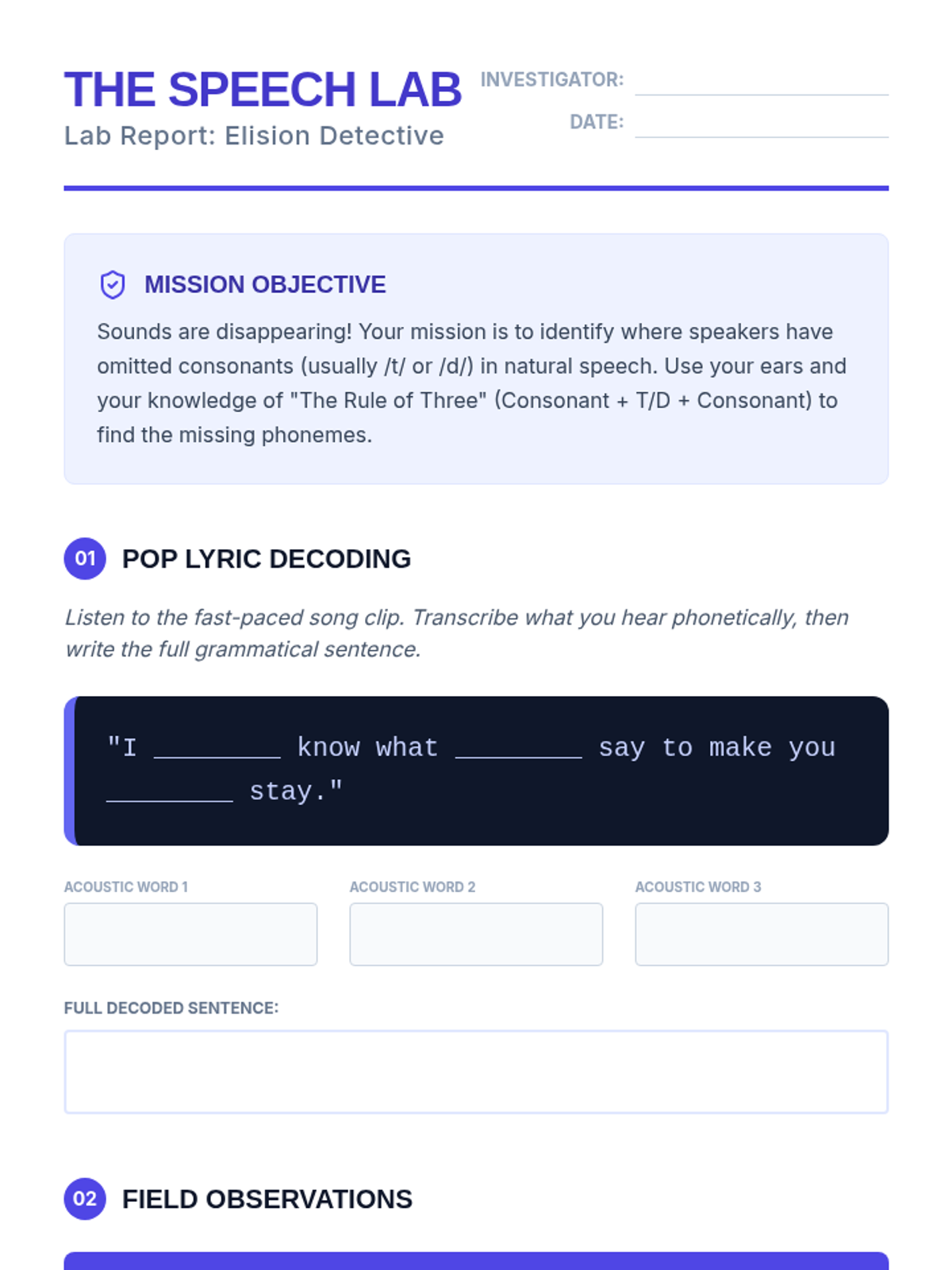
A student worksheet for identifying and reconstructing elided sounds (/t/ and /d/) in common phrases and lyrics.
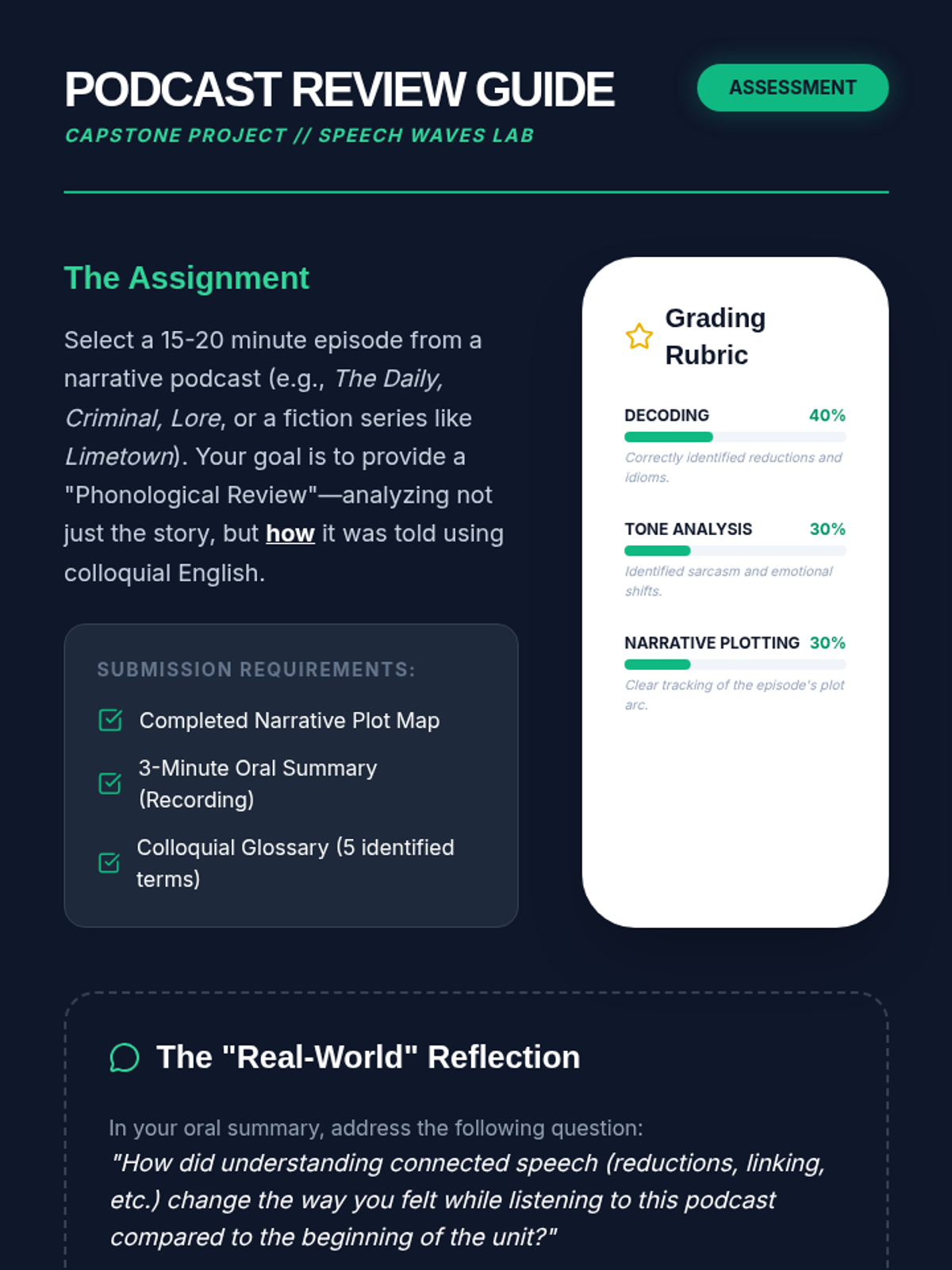
Final project guide and rubric for Lesson 5, where students conduct an independent listening analysis of a narrative podcast episode.
Presentation for Lesson 3 focusing on hedging language in academic and formal English, teaching students to identify linguistic softeners that signal uncertainty or caution.
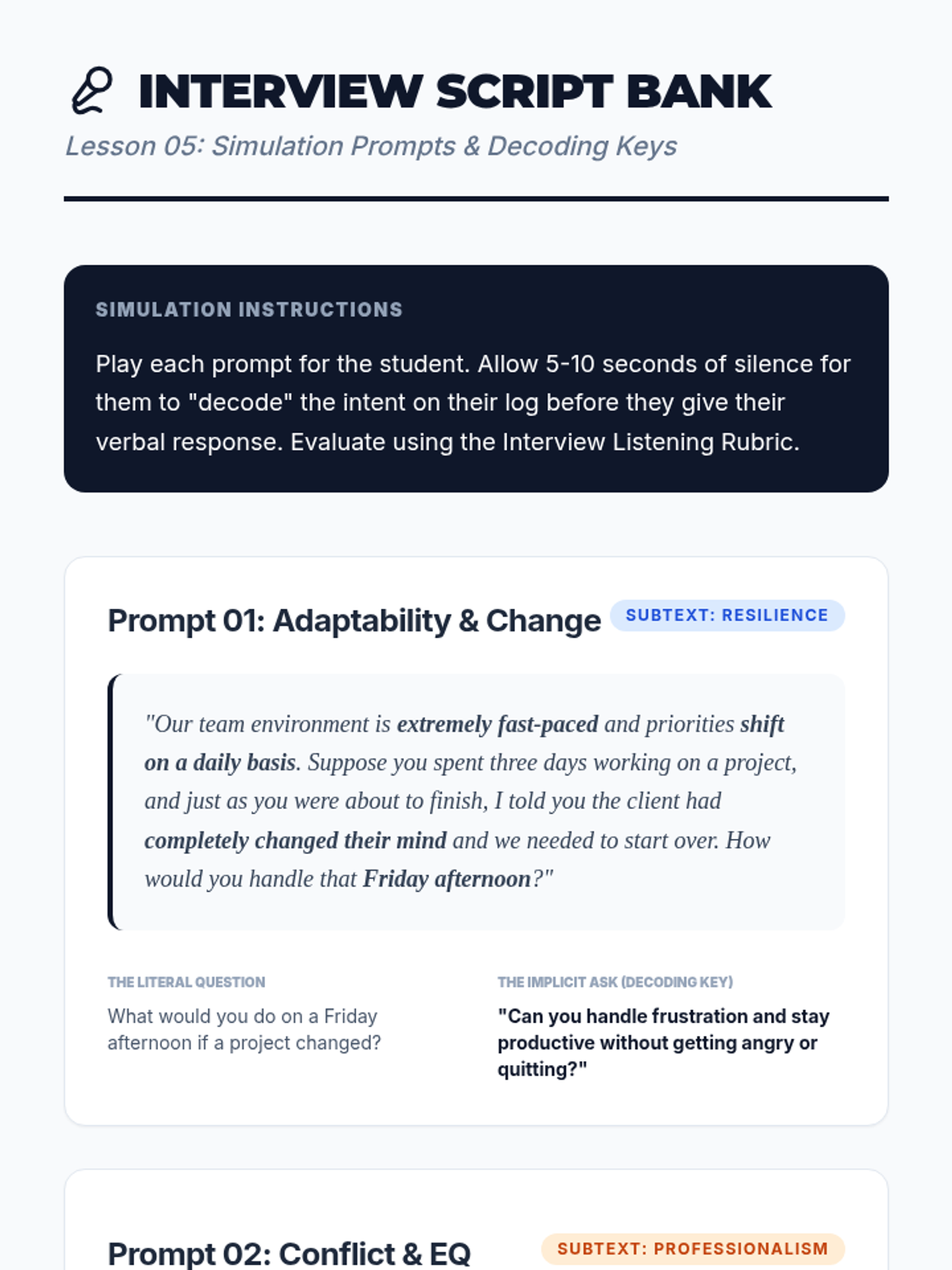
Teacher-facing scripts for the final lesson's interview simulation, featuring complex prompts with explicit vs. implicit intent decoding keys.
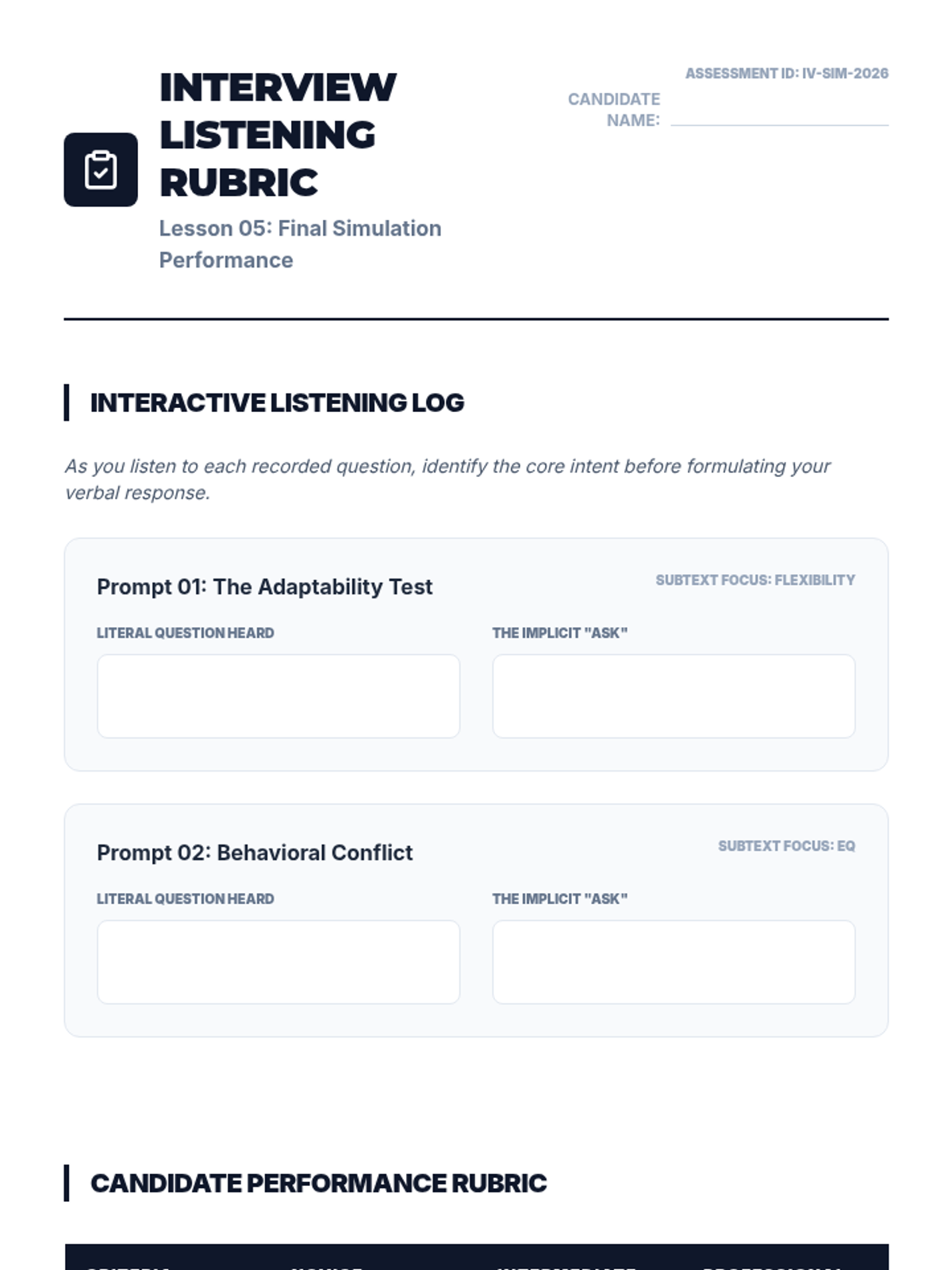
A student assessment rubric and listening log for the final interview simulation, focusing on decoding implicit intent and pragmatic clarity.
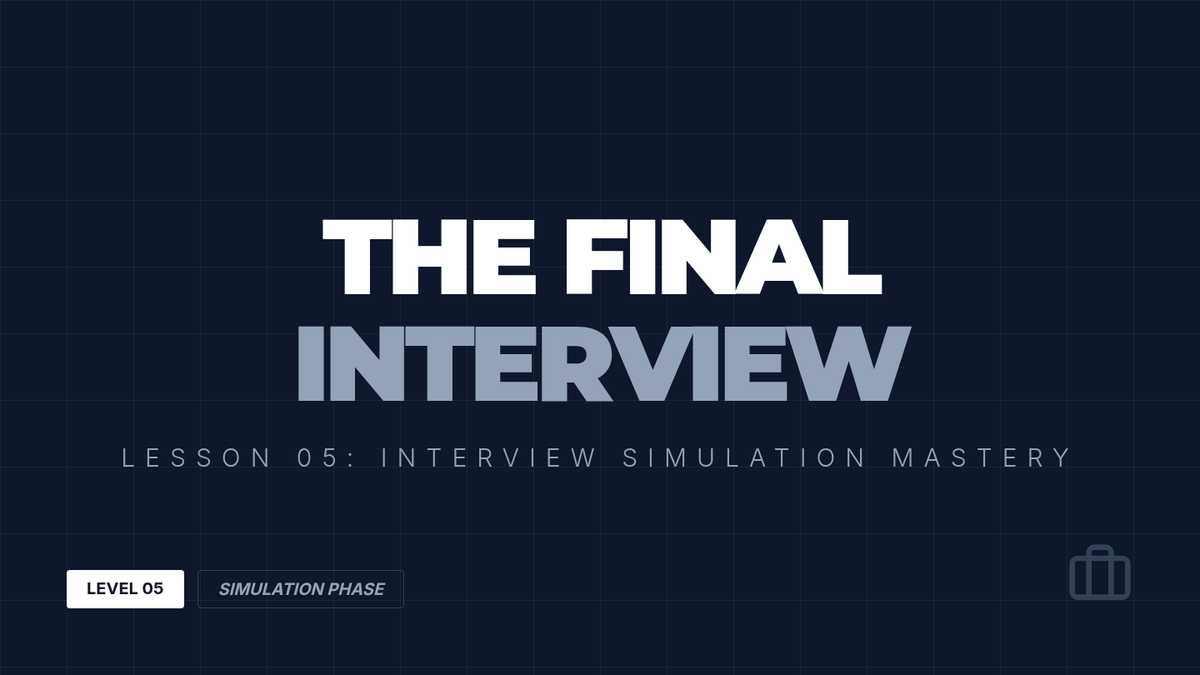
A slide deck focusing on strategies for decoding complex interview questions and behavioral prompts, preparing students for the final simulation.
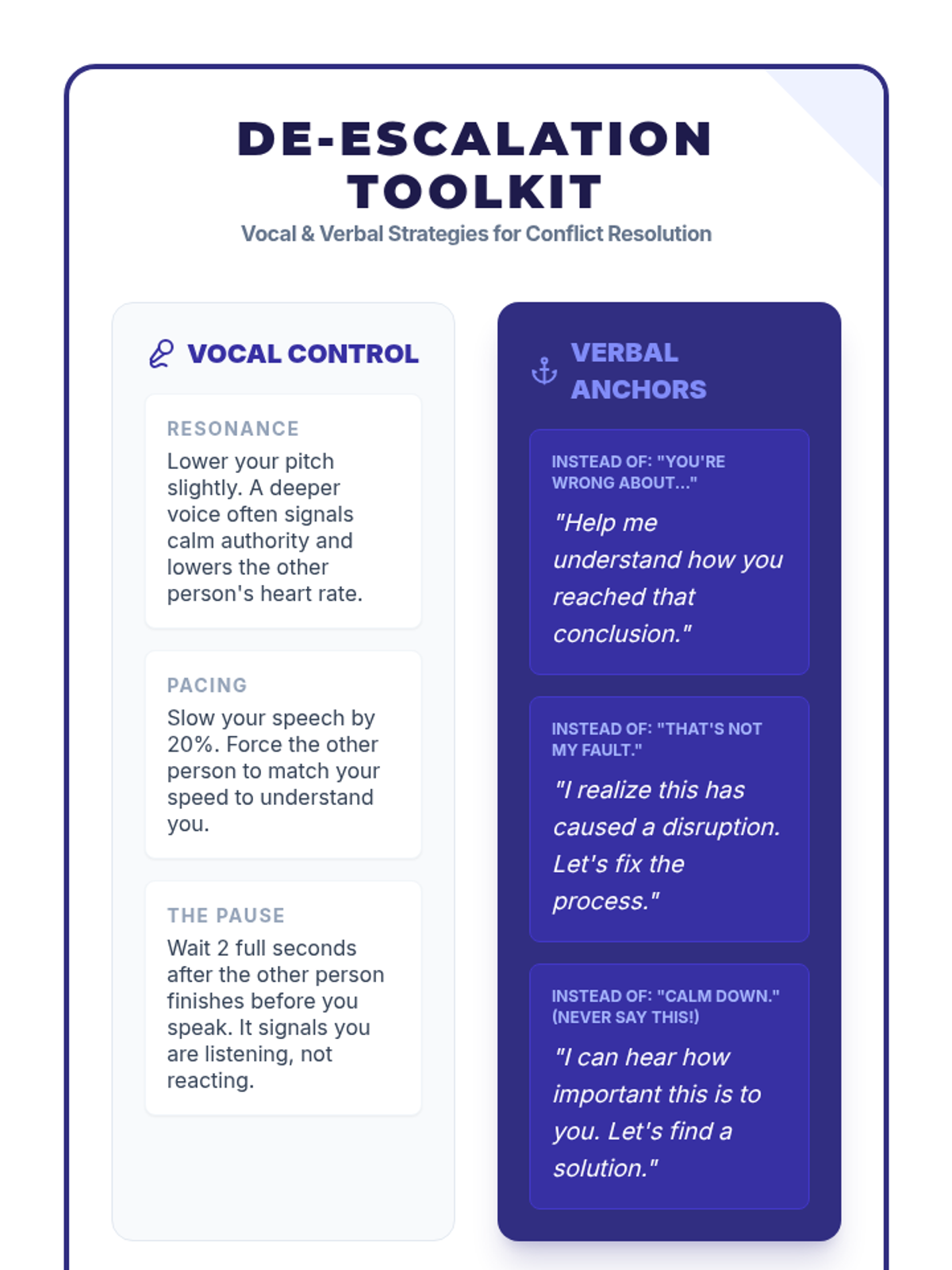
A quick-reference student guide for vocal control and de-escalation phrases to be used during conflict resolution simulations.
A worksheet for students to analyze conflict resolution audio, tracking both non-verbal vocal cues and specific de-escalation phrases.
A slide deck evaluating emotional cues and de-escalation techniques in conflict resolution scenarios.
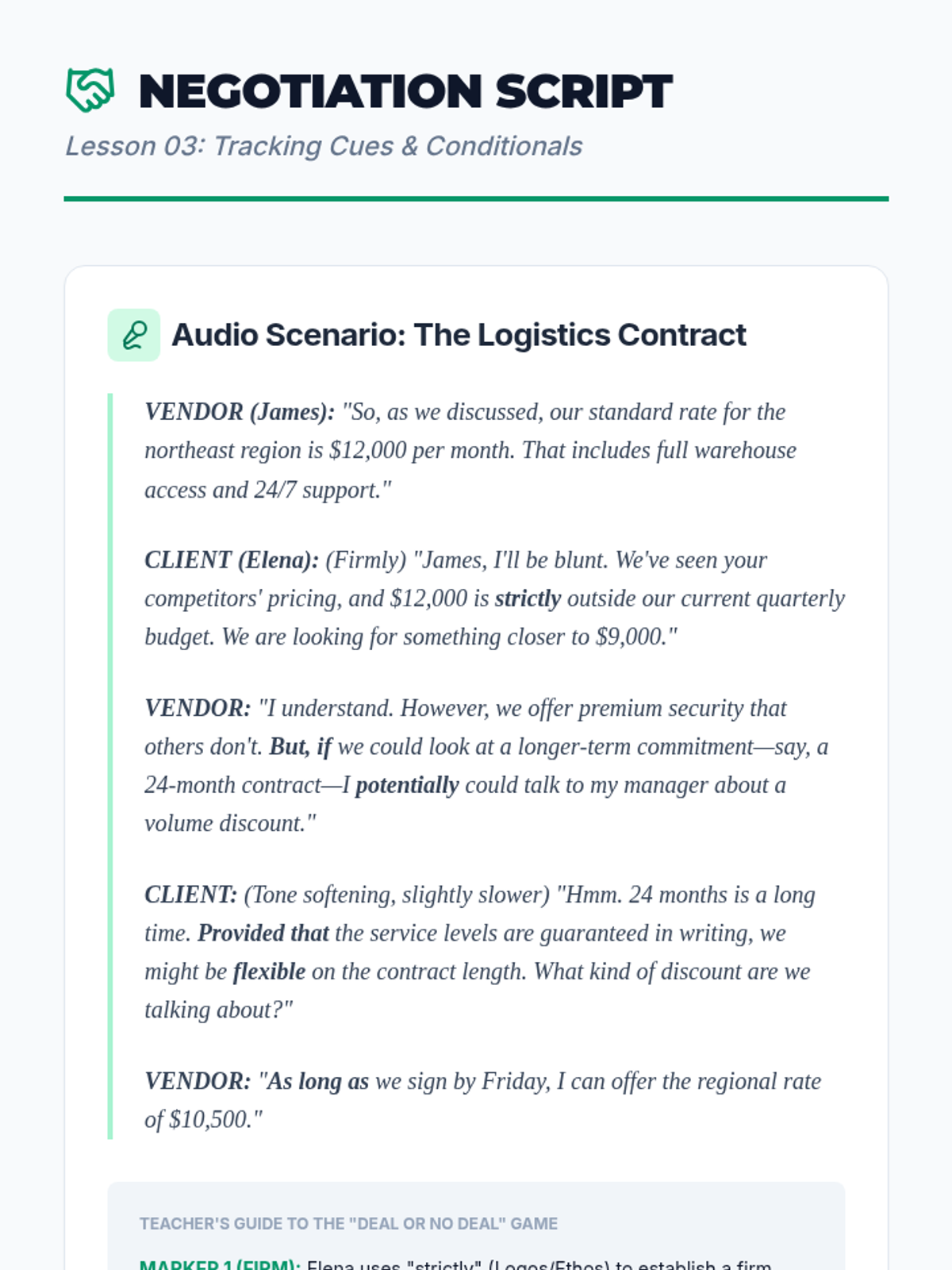
A teacher guide for Lesson 3 containing the negotiation script for "The Logistics Contract" with markers for conditional language and tone shifts.
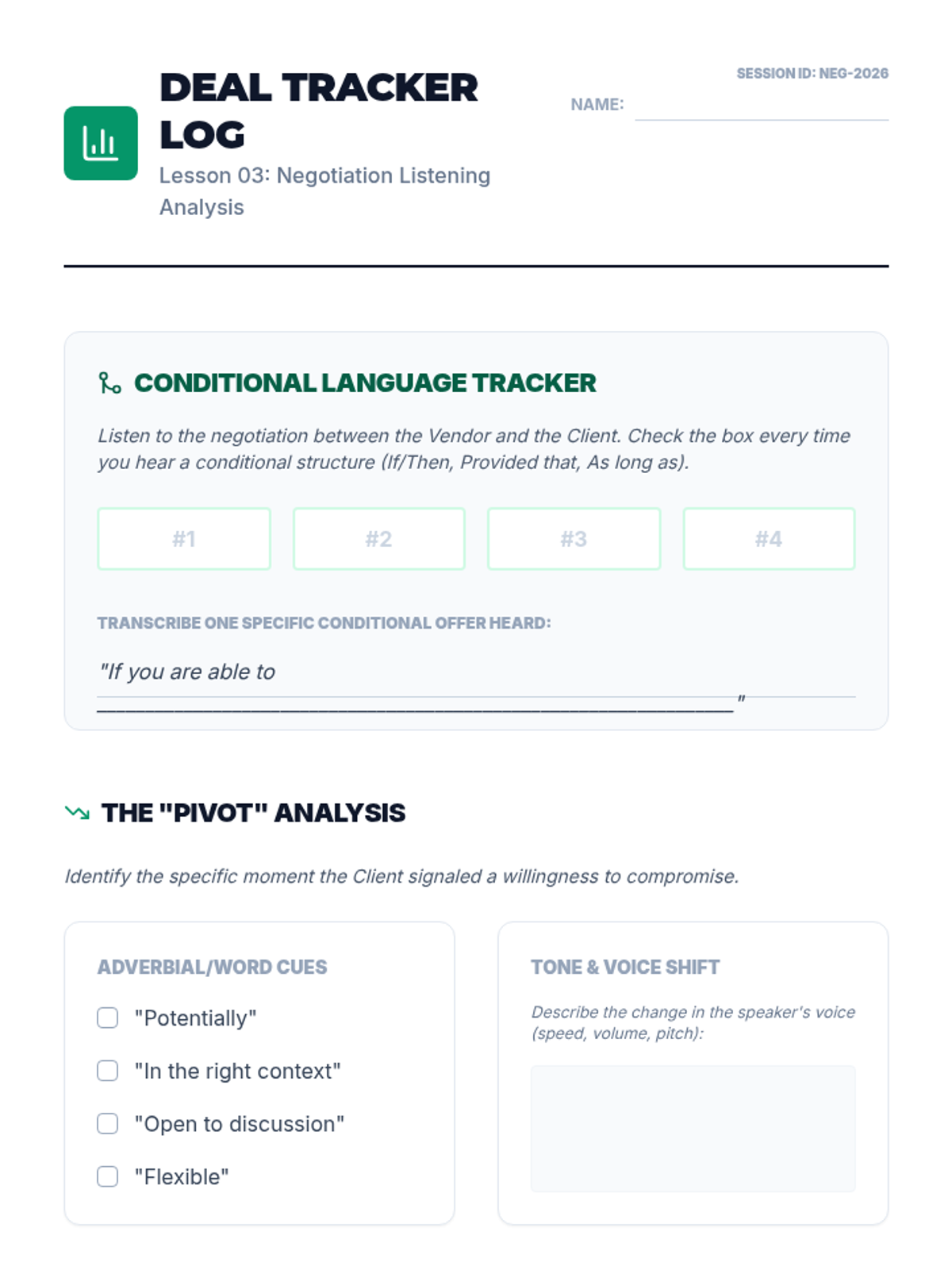
A worksheet for students to record and analyze linguistic and vocal cues during a negotiation simulation, including sections for tracking conditionals and tone shifts.
A slide deck explaining conditional language, concession markers, and tone shifts used in professional negotiations.
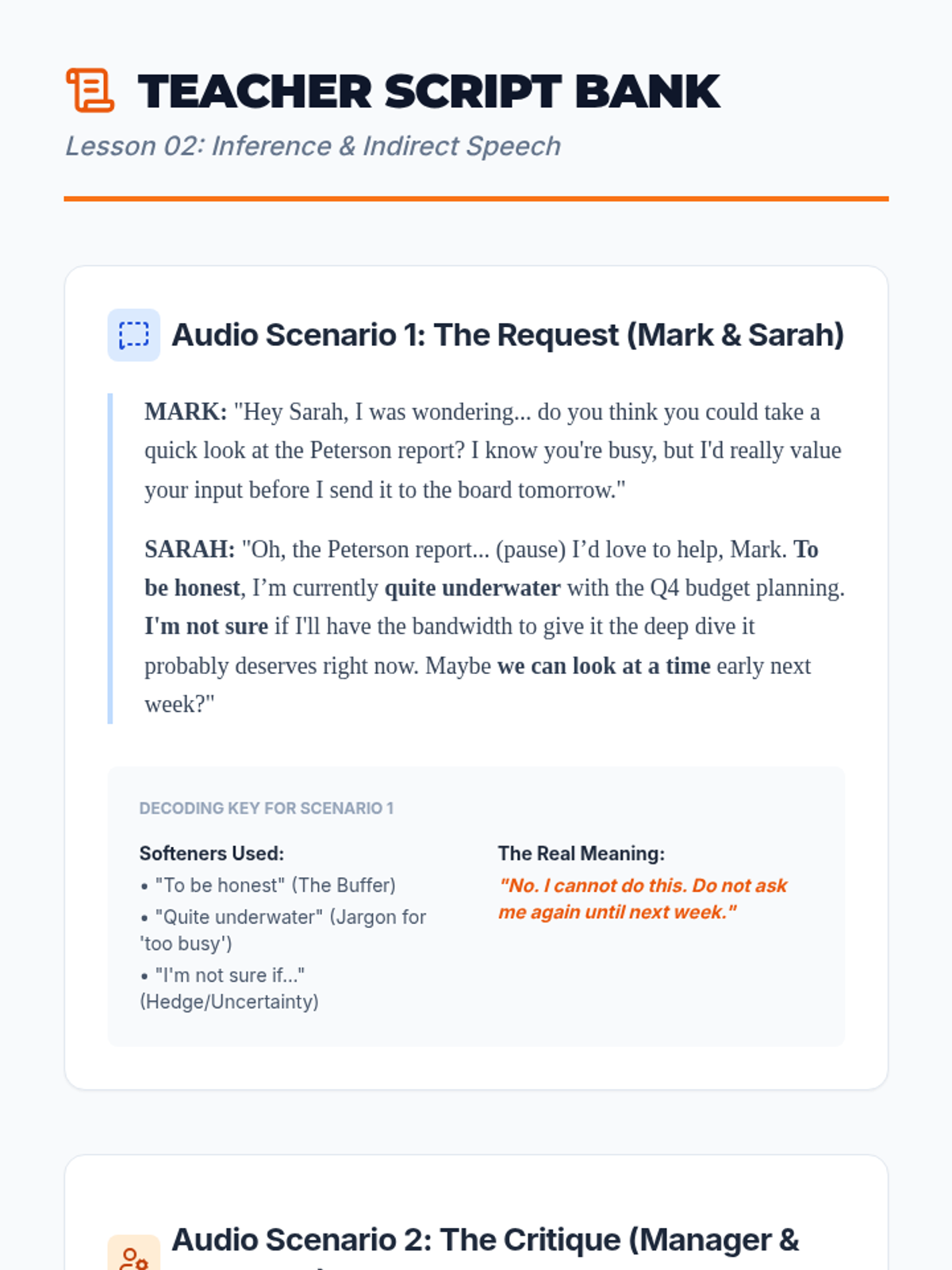
Teacher-facing scripts for Lesson 2 audio scenarios, including Mark & Sarah's request and a manager's critique, with decoding keys for instruction.
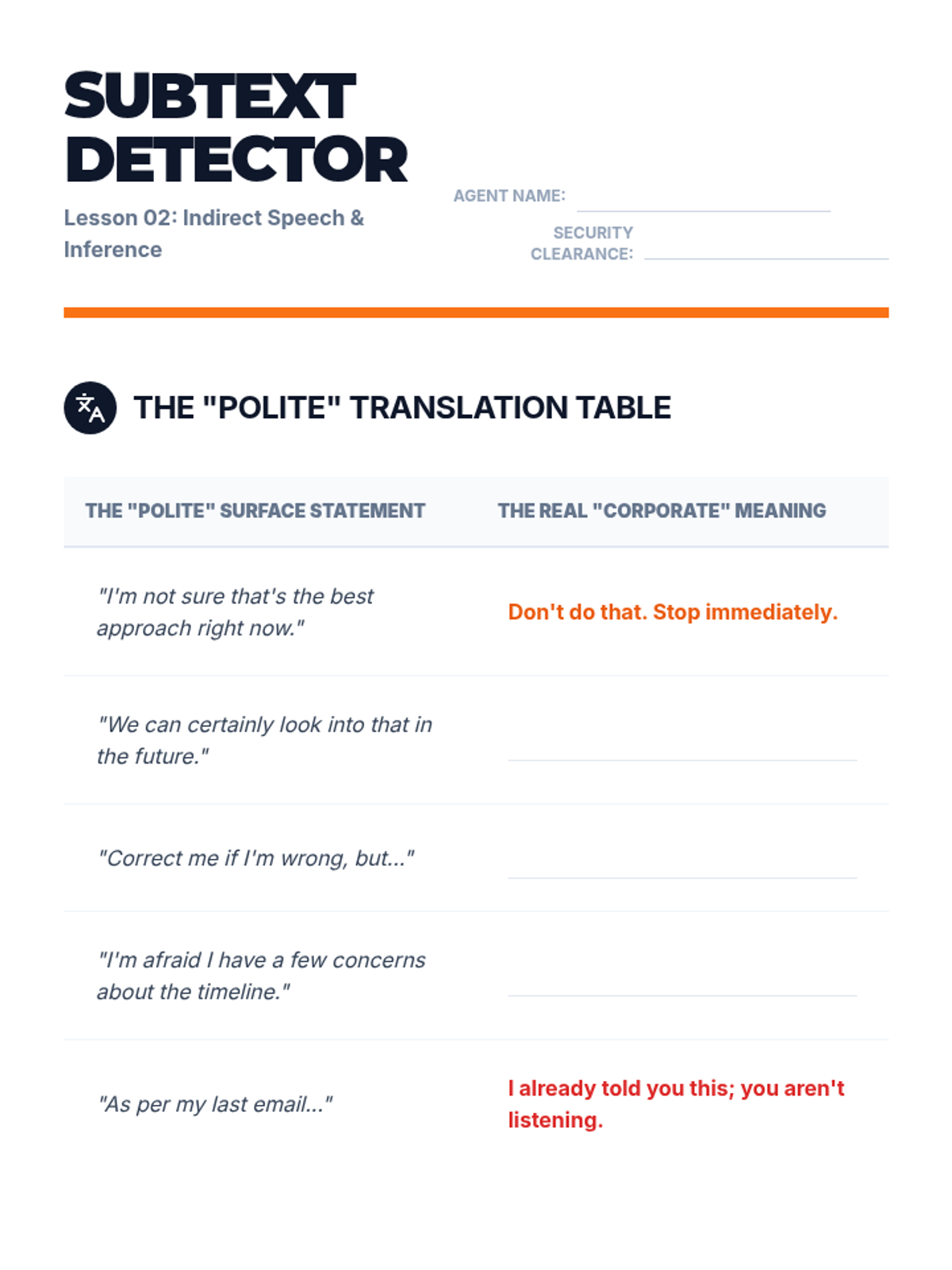
A worksheet for students to decode indirect workplace communication, including a translation table for corporate jargon and space for scenario analysis.
A slide deck introducing students to the concepts of pragmatics and indirect speech, focusing on decoding "polite" workplace communication.
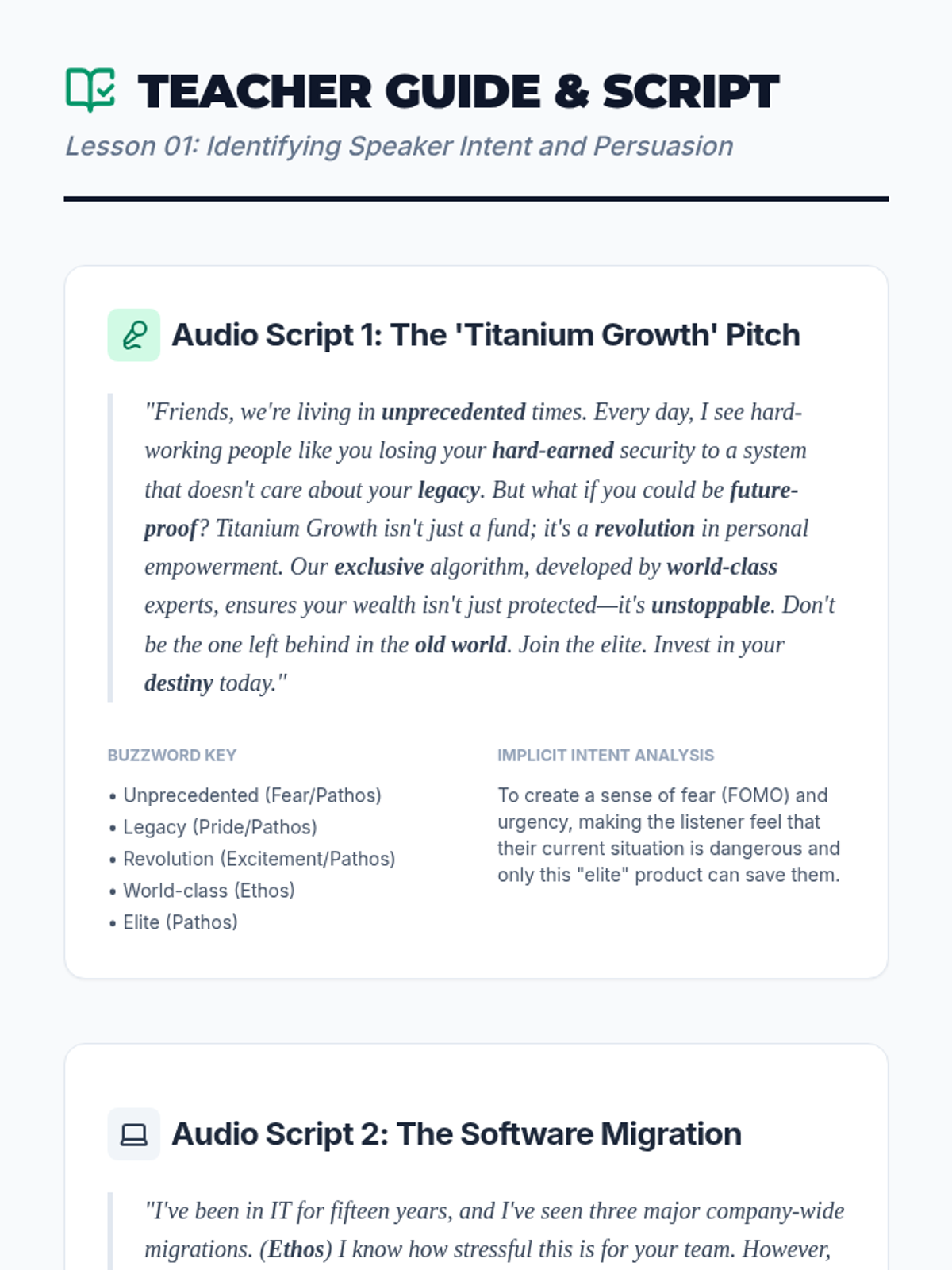
A teacher guide containing scripts for audio simulations, answer keys for the worksheet, and analysis of persuasive techniques for the first lesson.
A worksheet for students to analyze workplace pitches, tracking buzzwords, persuasive techniques (Ethos, Pathos, Logos), and identifying the core substance of a message.
A slide deck introducing students to persuasion techniques (Ethos, Pathos, Logos) and the concept of explicit vs. implicit intent in professional pitches.
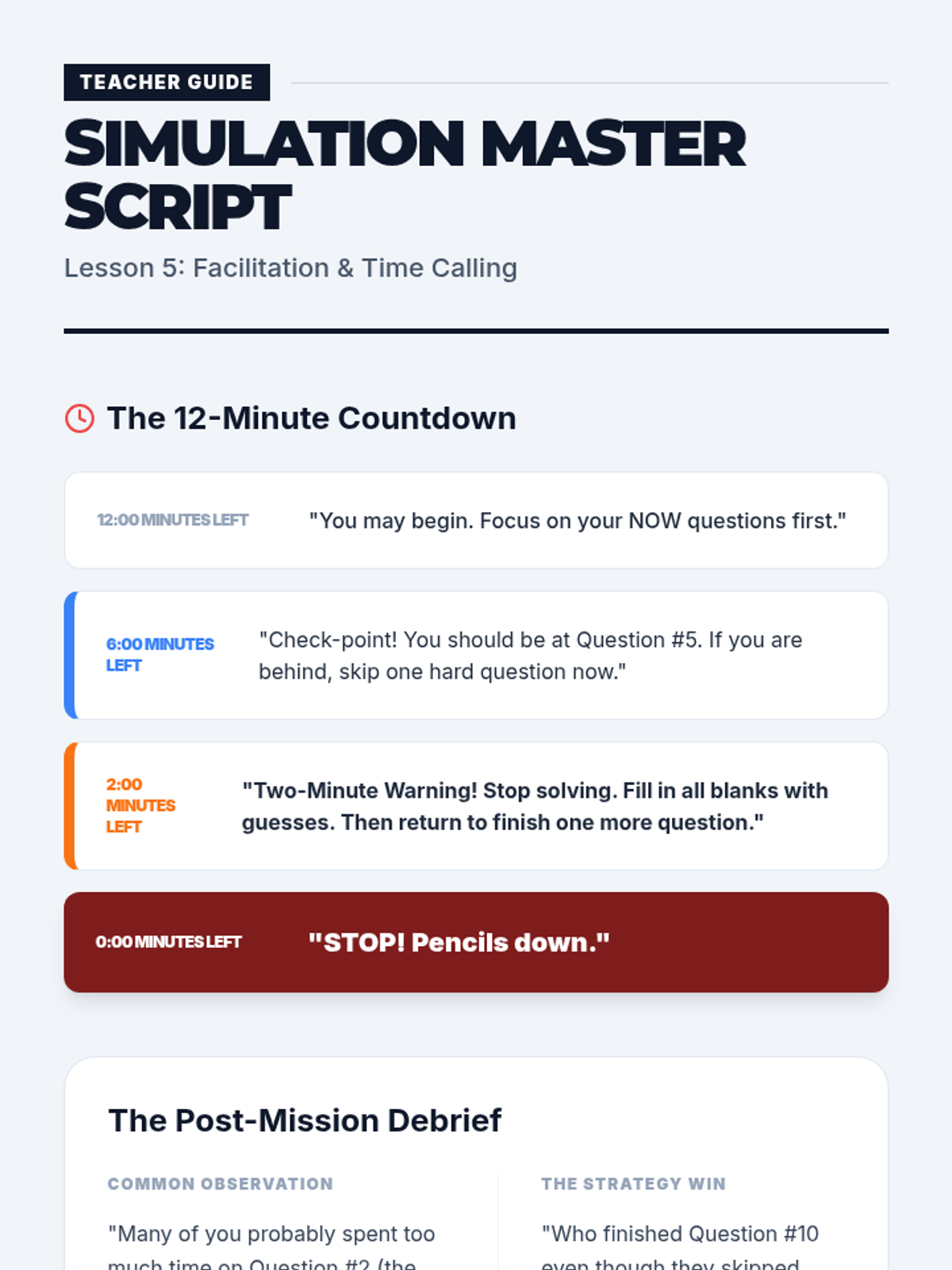
Teacher guide for Lesson 5, including the time-calling script, specific observations for the mock test questions, and debriefing questions.
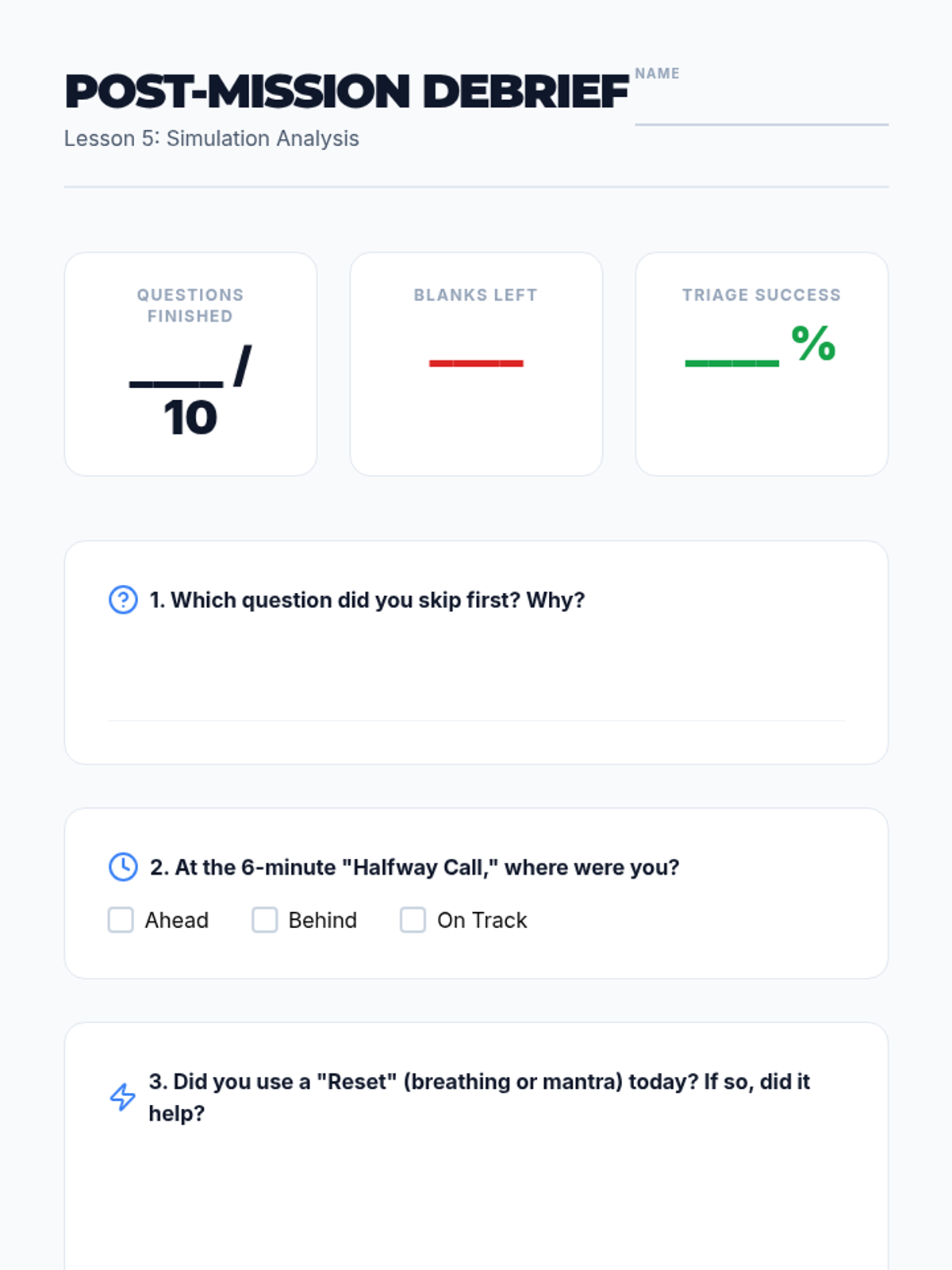
Student reflection tool for analyzing their performance during the timed simulation, focusing on Triage usage and anxiety management.
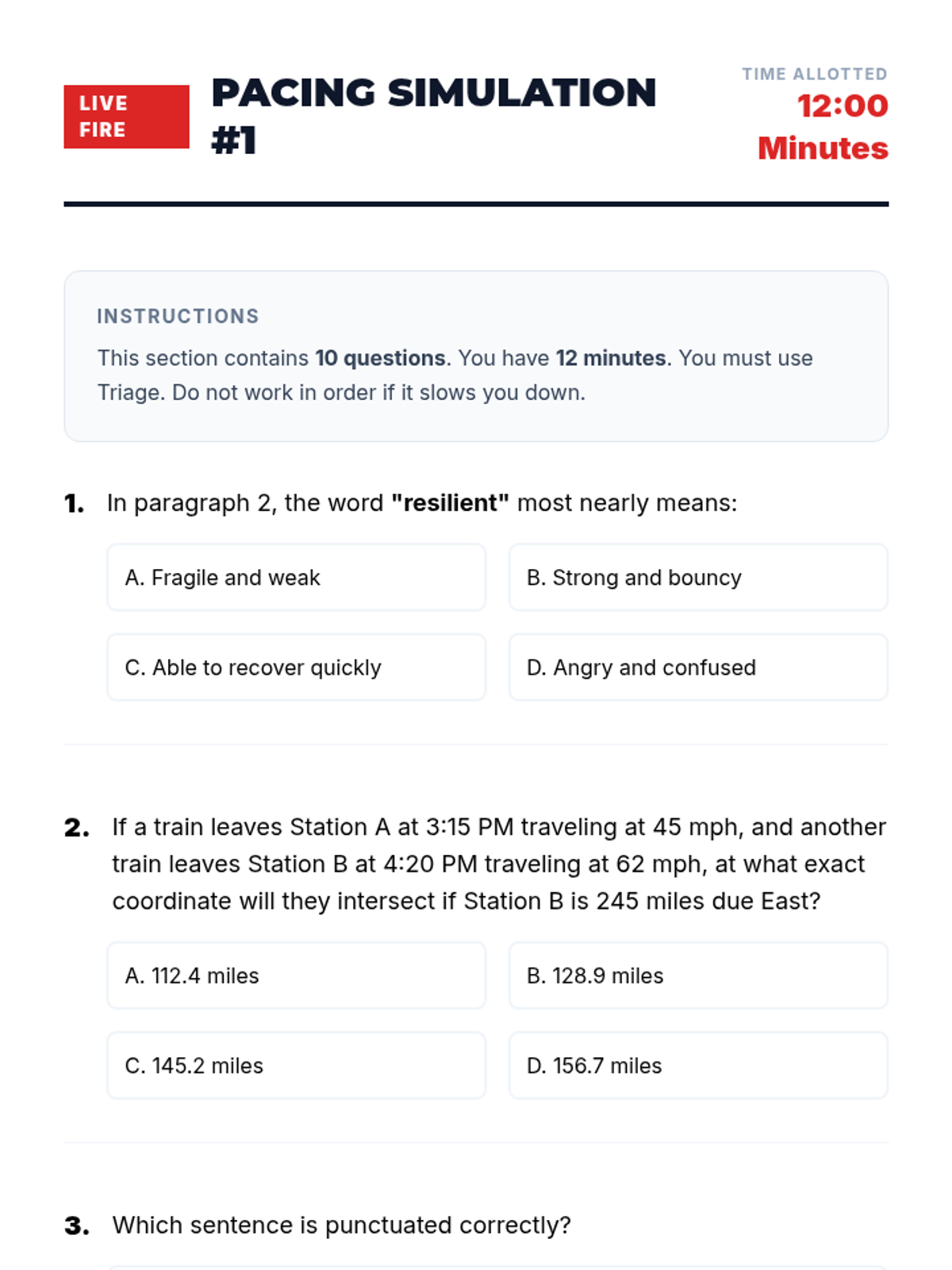
Shortened practice test section designed to force students to use the Triage Method and strategic guessing within a 12-minute window.
Final slide deck for the pacing simulation, introducing the 'Two-Minute Warning' drill and success criteria for the mock test.
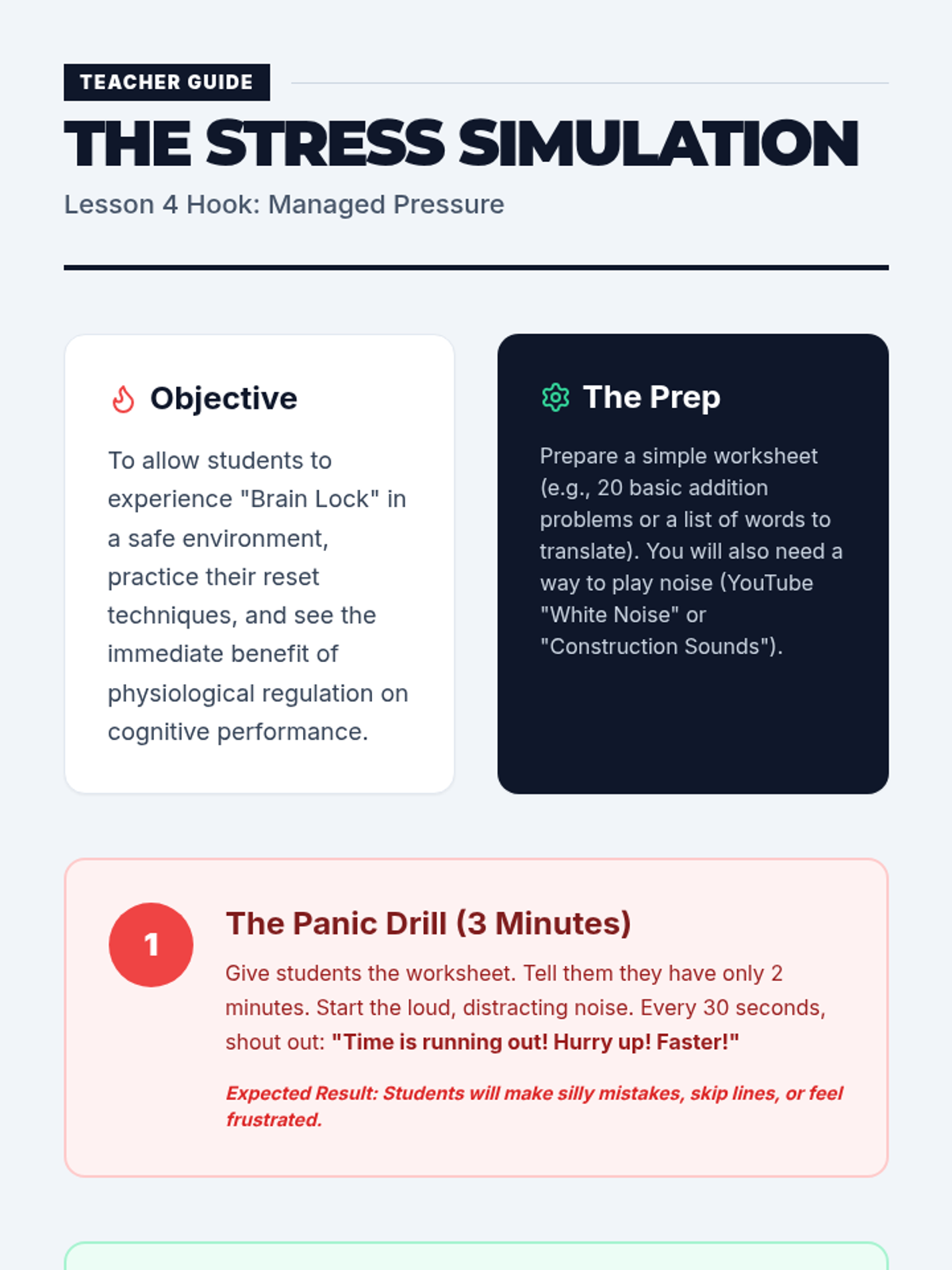
Teacher guide for Lesson 4, detailing a three-phase stress simulation activity to help students practice and observe the effects of anxiety management techniques.
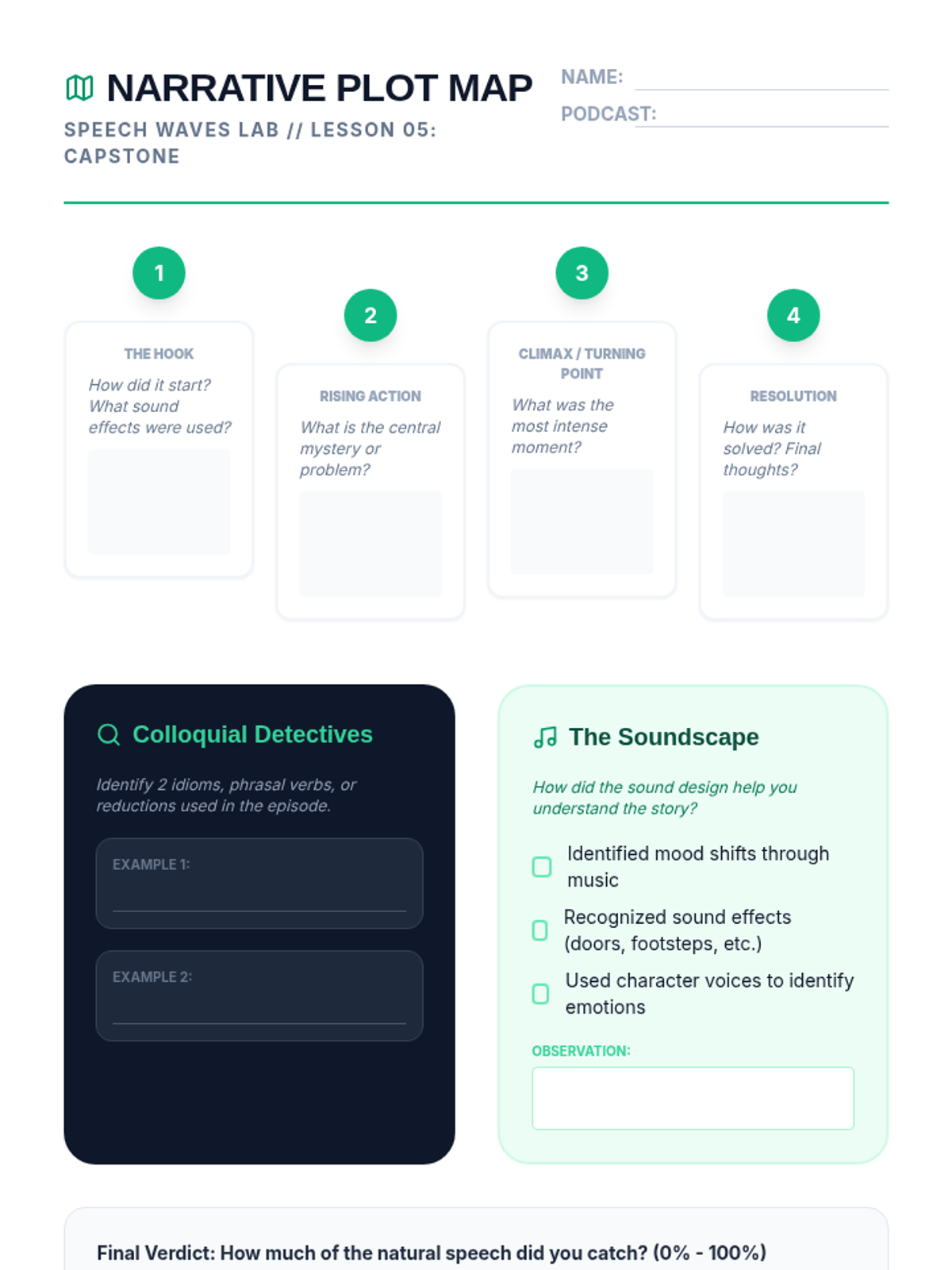
Worksheet for Lesson 5 where students map the plot of a podcast episode and identify colloquial language markers used in sustained storytelling.
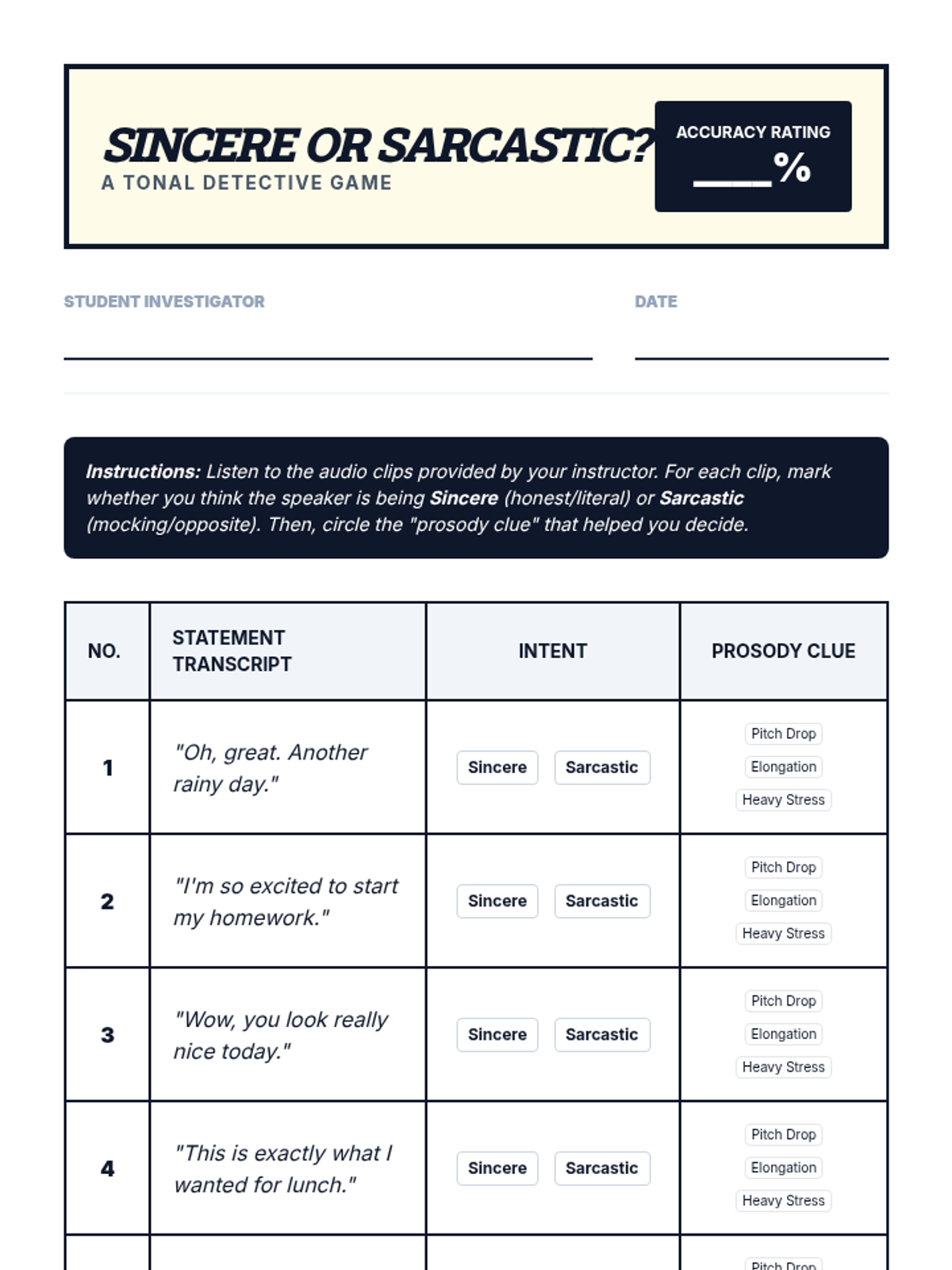
Game-based worksheet for Lesson 2 where students record their interpretations of audio clips to distinguish between sincere and sarcastic intent based on tonal prosody.
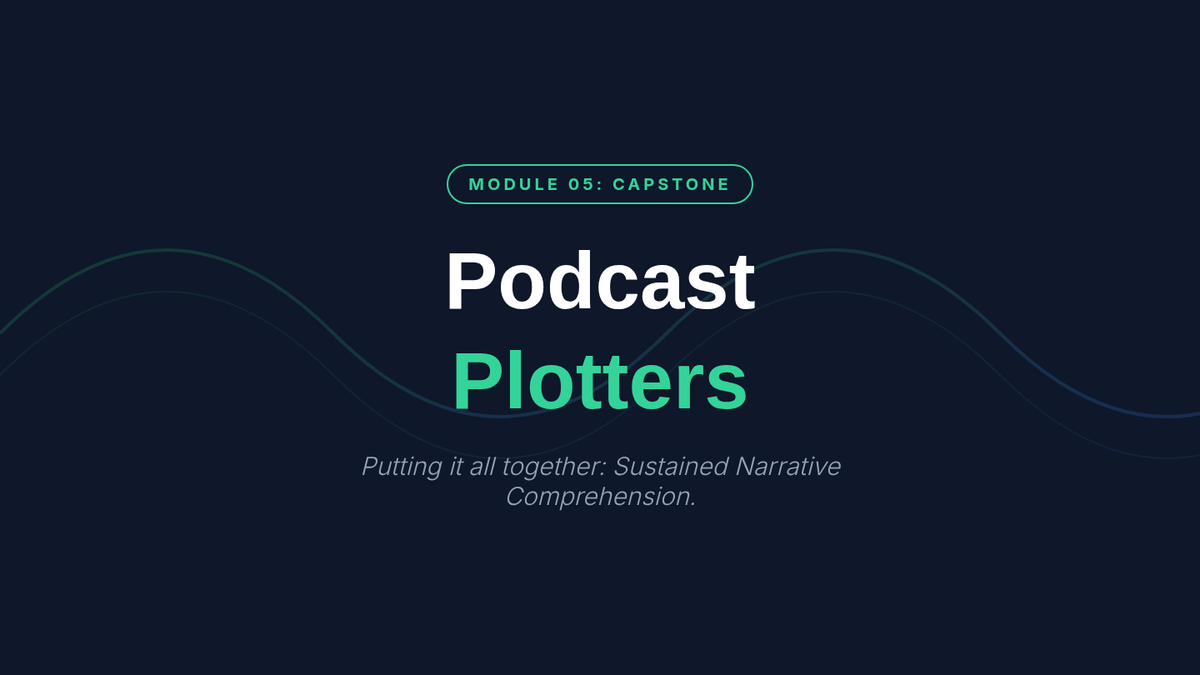
Final slide deck for Lesson 5, guiding students through the process of analyzing sustained narrative podcasts using sound cues and story mapping.
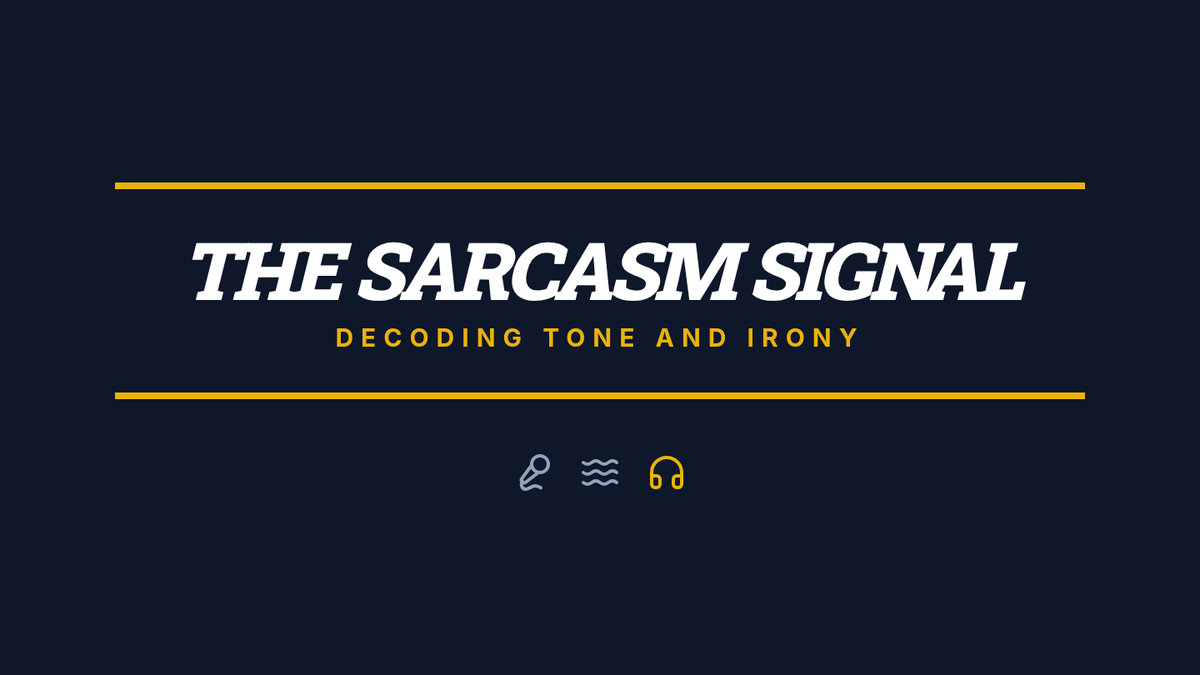
Visual presentation for Lesson 2 focusing on the vocal markers of sarcasm (pitch, elongation, stress) and the social contexts where irony is appropriate.
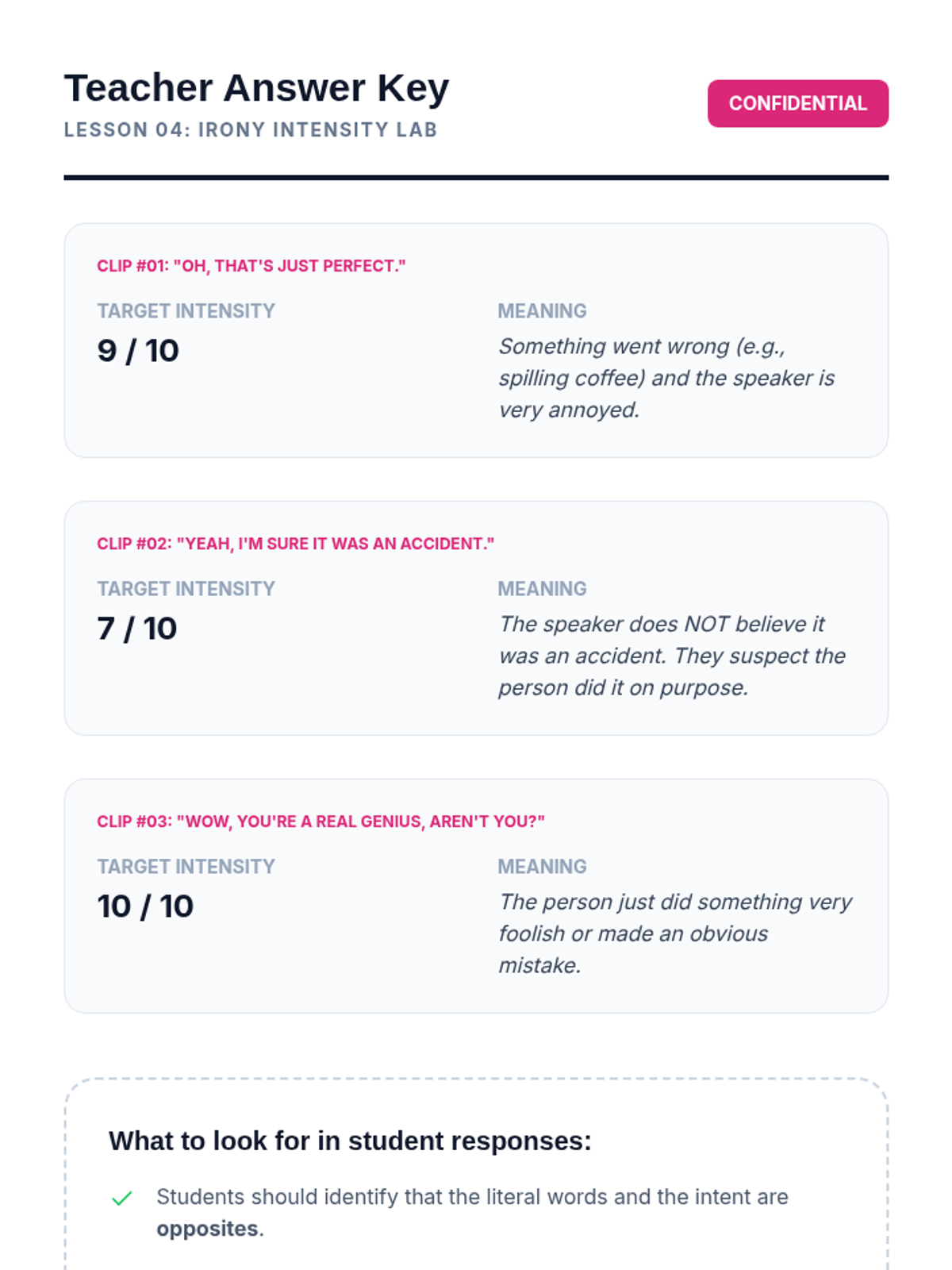
Answer key for Lesson 4 providing expected intensity ratings and literal meanings for the irony detection activity.
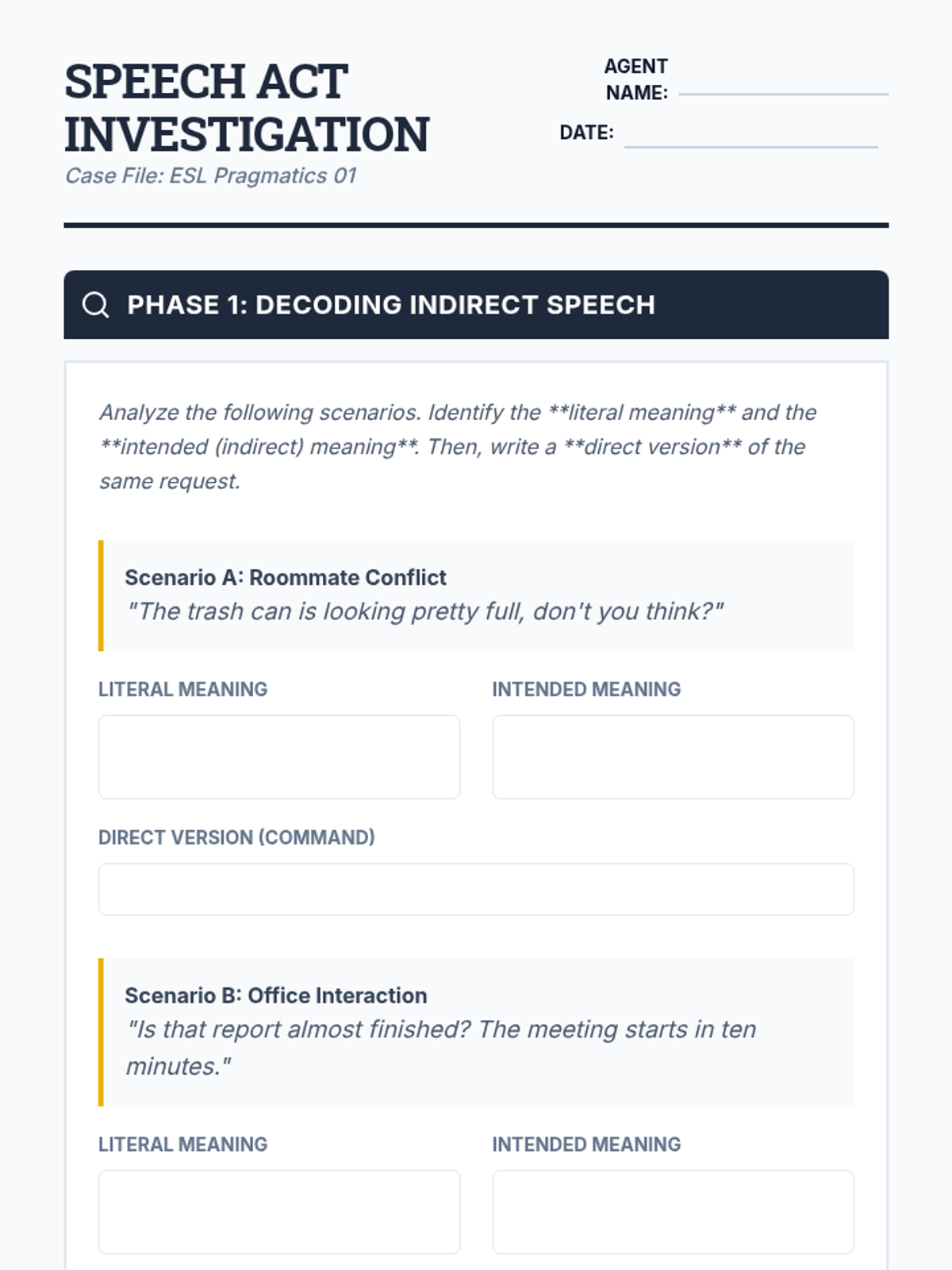
Student worksheet for Lesson 1 where students analyze scenarios to decode the difference between literal and intended meaning in indirect requests.
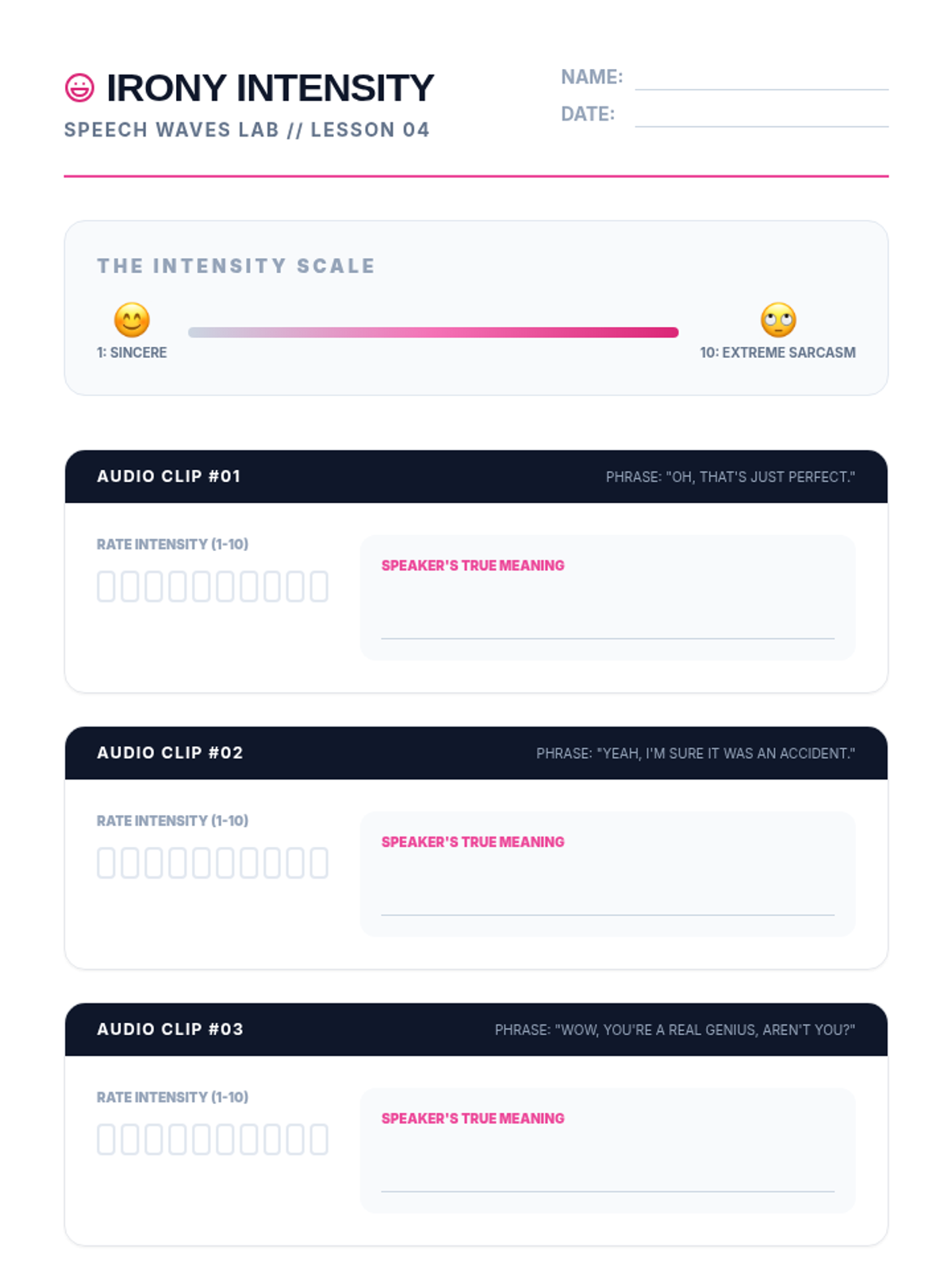
Worksheet for Lesson 4 where students analyze clips for irony levels and describe the speaker's true intent based on intonation.
Introductory presentation for Lesson 1, exploring the concept of pragmatics and the difference between direct and indirect speech acts using real-world scenarios.
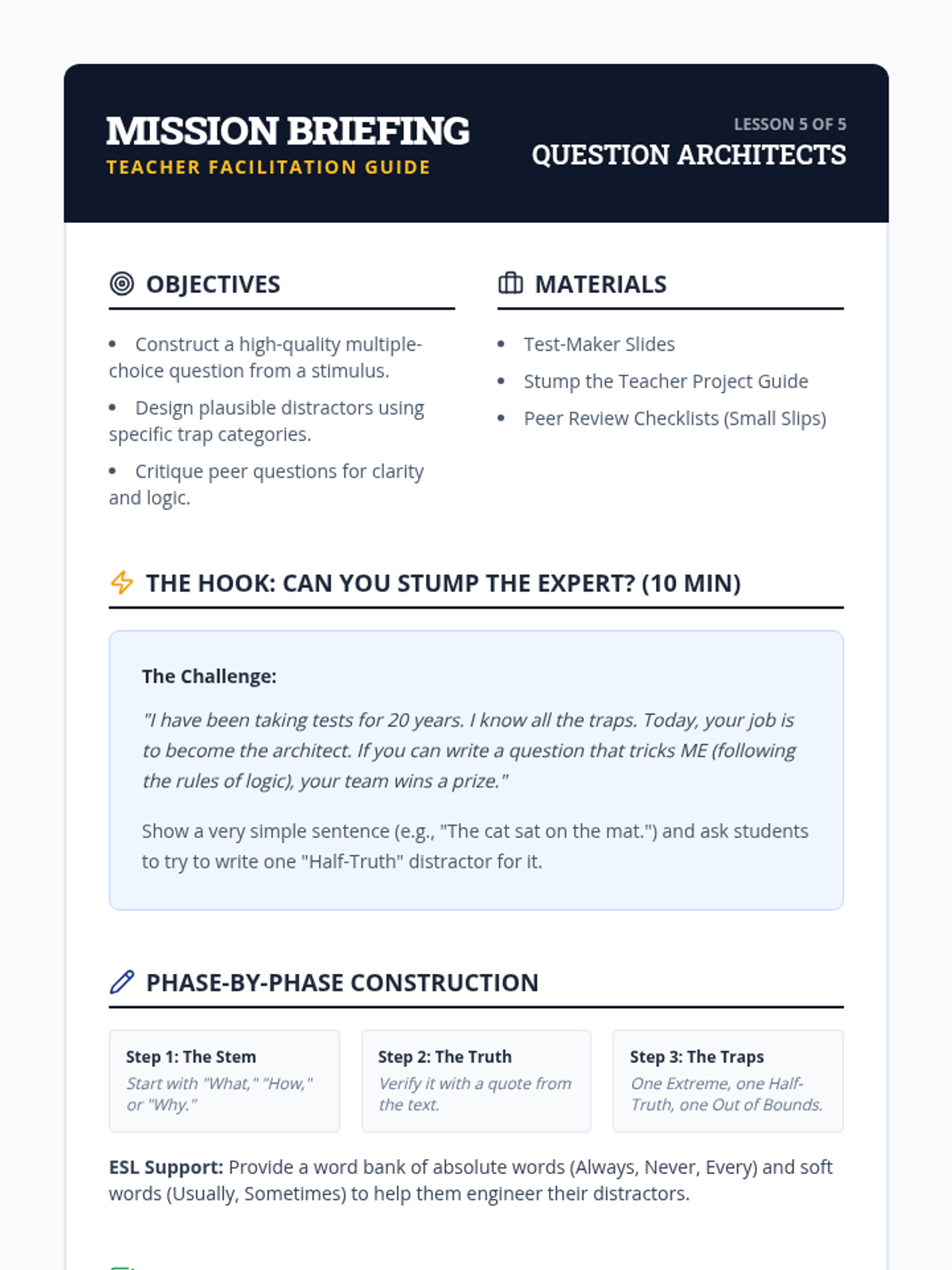
Facilitation guide for Lesson 5, including the "Stump the Expert" hook, phase-by-phase question construction steps, and a peer review protocol.
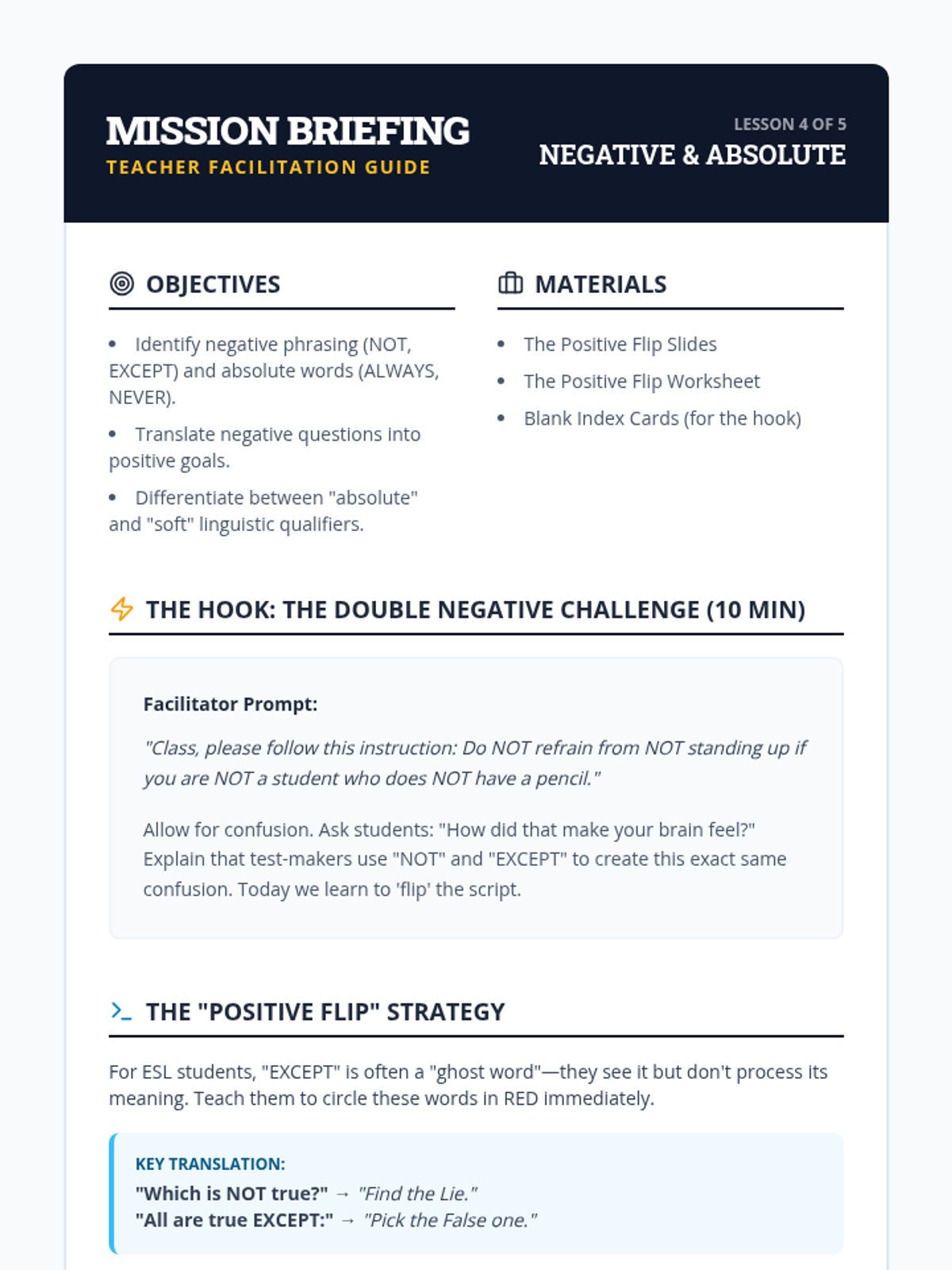
Facilitation guide for Lesson 4, including the "Double Negative Instructions" hook, translation strategies for "NOT" and "EXCEPT," and an answer key for the Positive Flip worksheet.
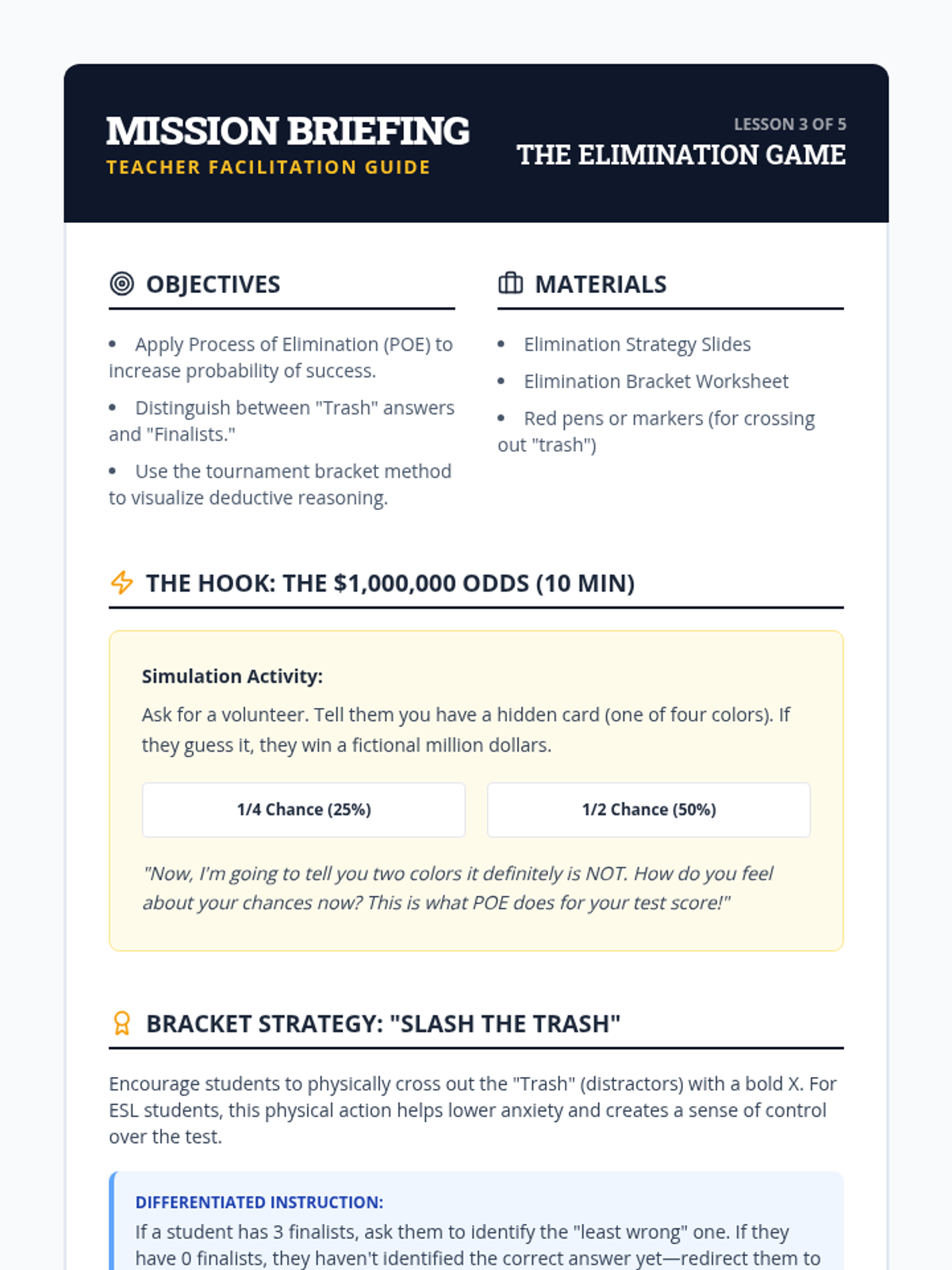
Facilitation guide for Lesson 3, including the odds simulation hook, the "Slash the Trash" technique, and an answer key for the Elimination Bracket worksheet.
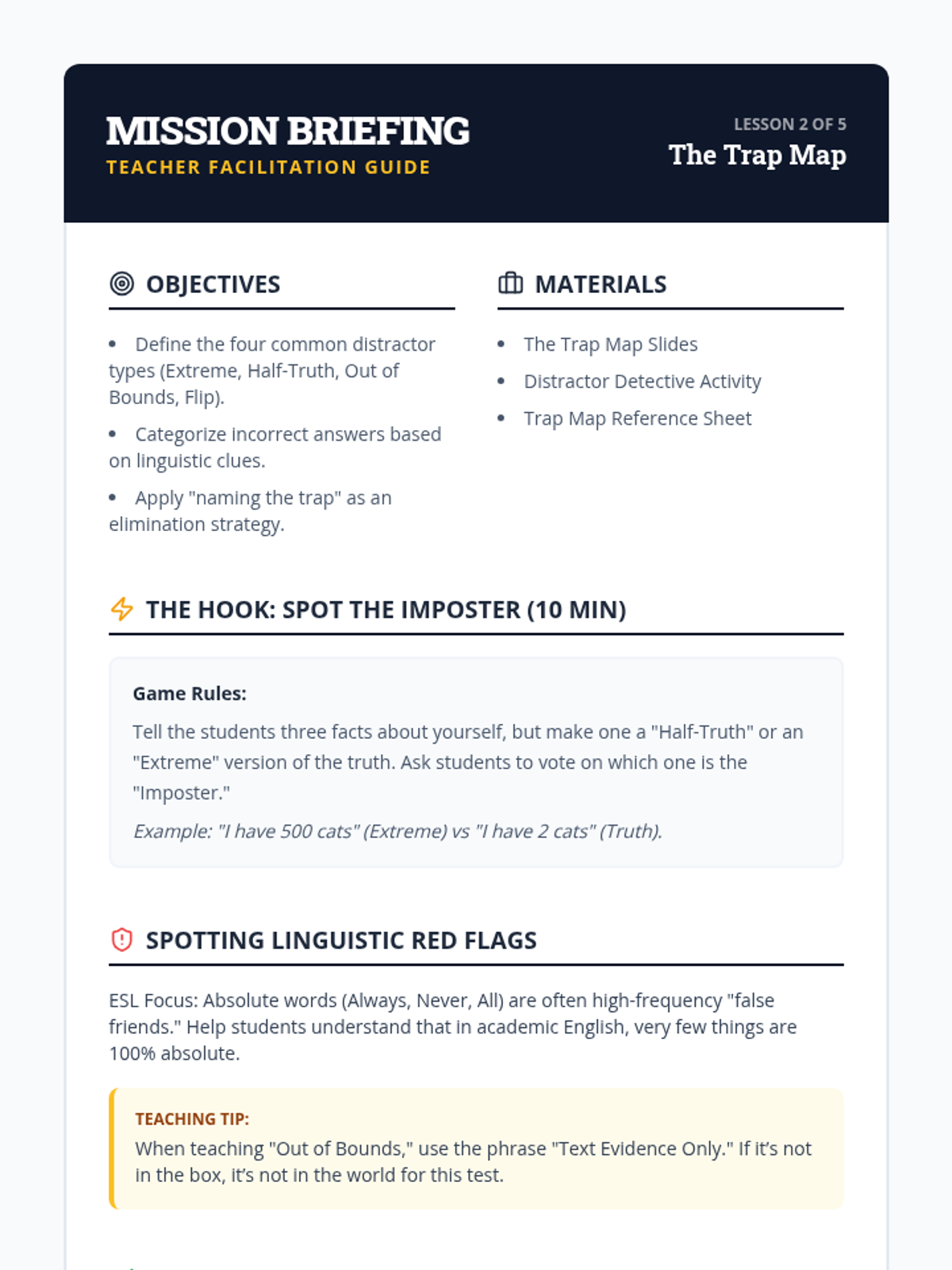
Facilitation guide for Lesson 2, including the 'Spot the Imposter' hook, linguistic red flags for ESL learners, and an answer key for the Distractor Detective activity.
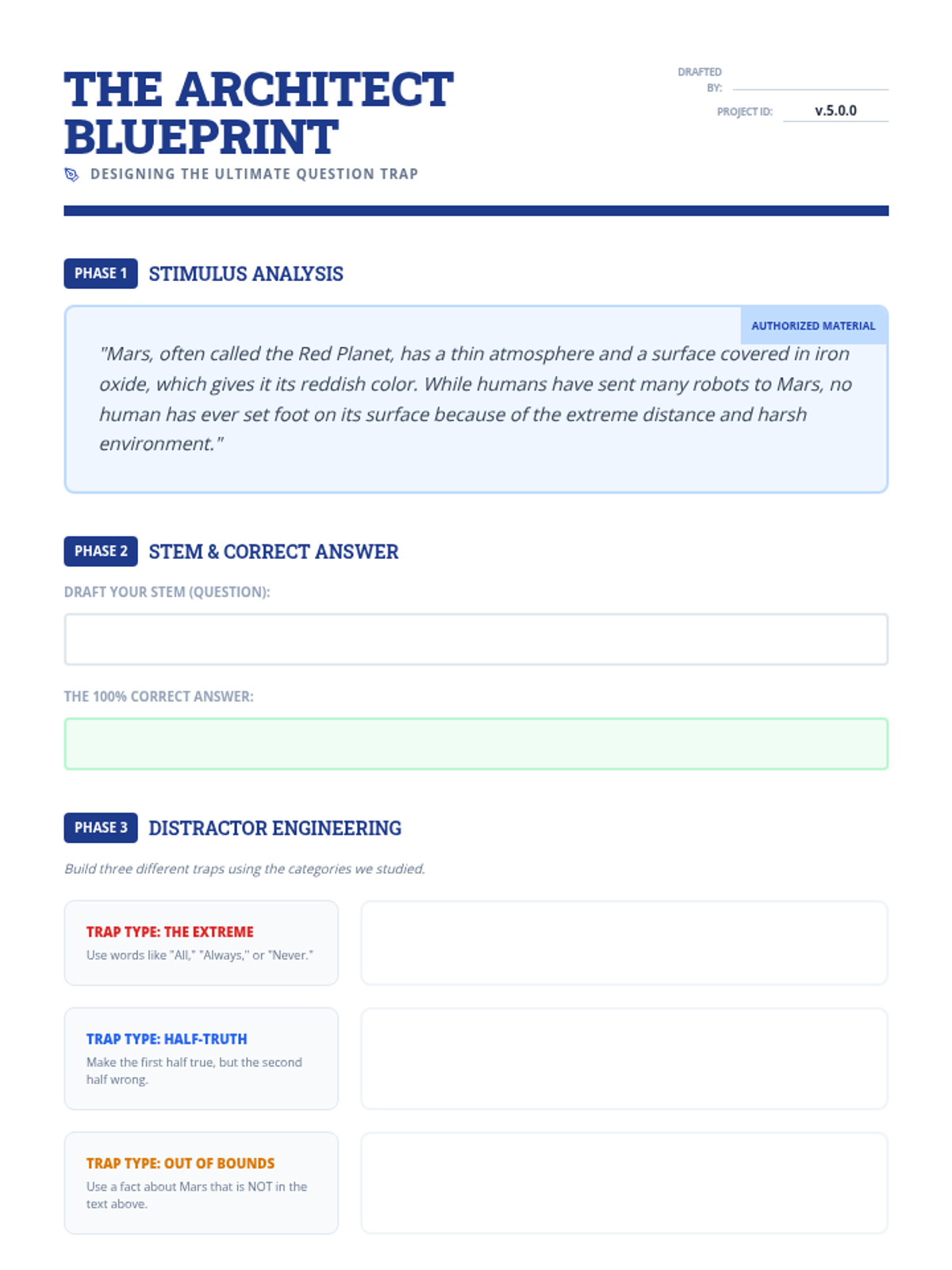
Worksheet for Lesson 5 where students switch roles and become the test-makers. They write their own multiple-choice questions based on a shared text, intentionally creating plausible distractors.
Introductory slide deck for Lesson 5, exploring the mindset of a test-maker and the steps needed to construct a plausible multiple-choice question.
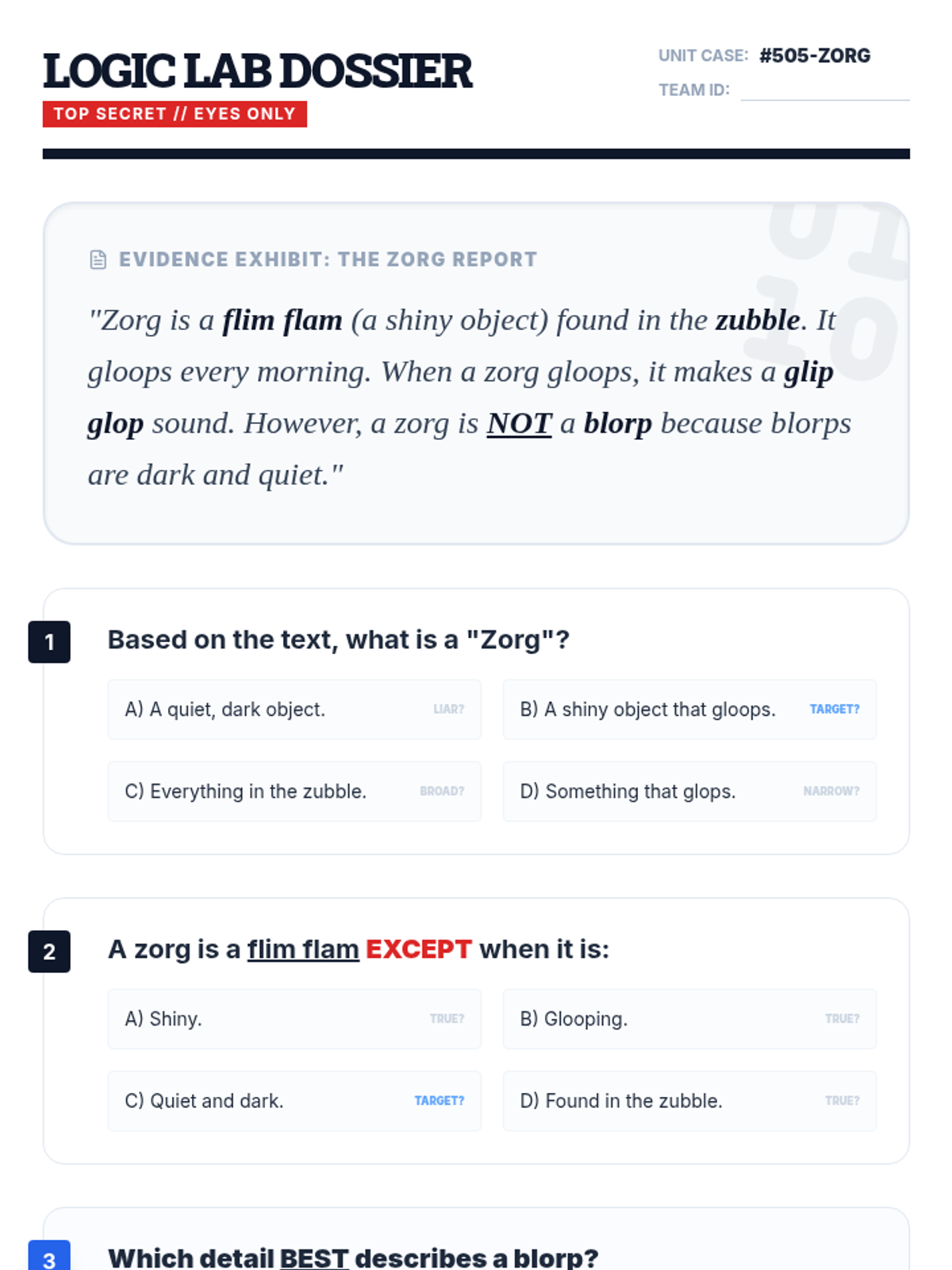
Student "Zorg Language" dossier for Lesson 5, featuring a nonsense language test that requires students to apply all deconstruction and elimination strategies to solve.
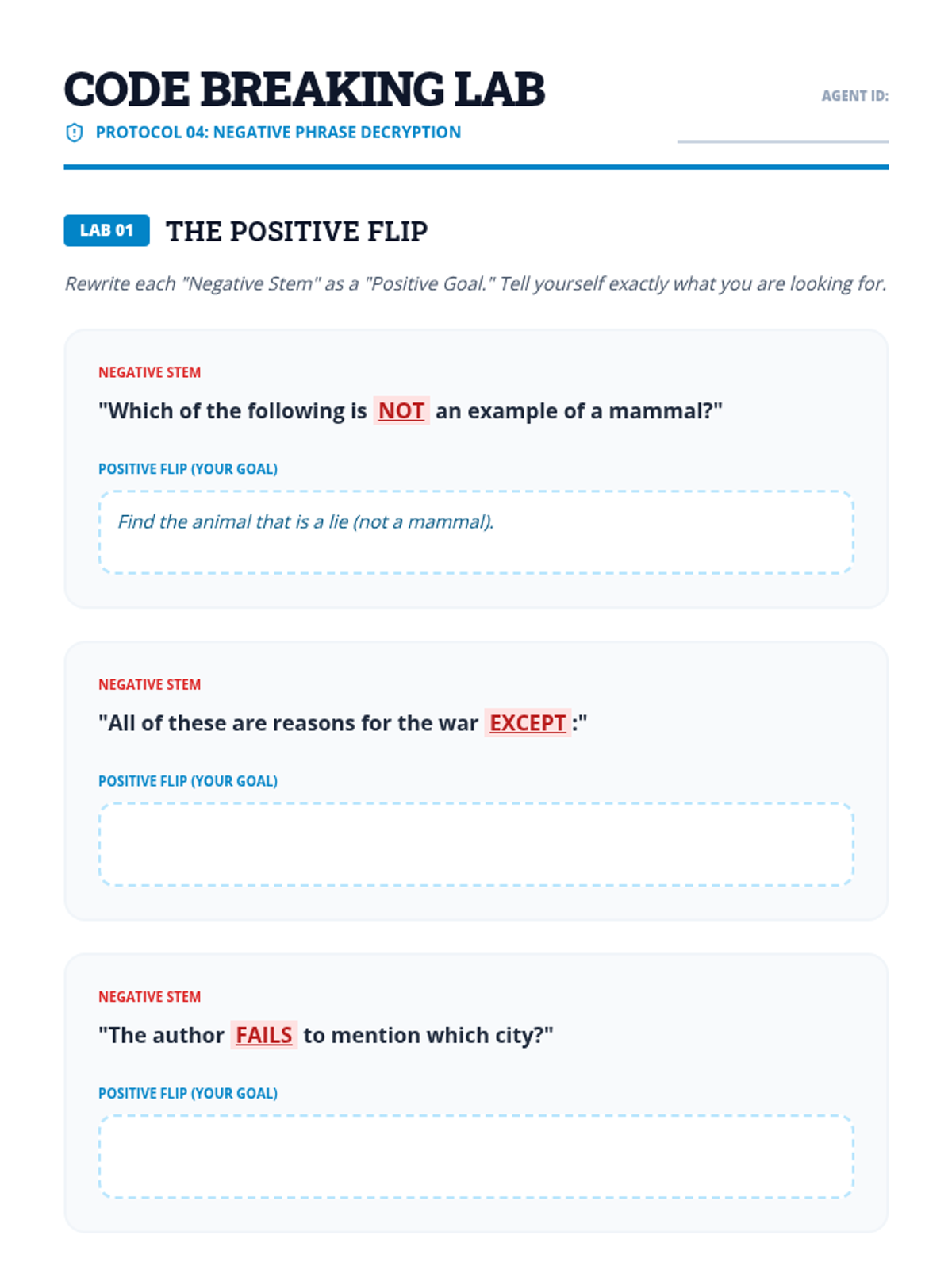
Worksheet for Lesson 4 where students specifically target questions using words like 'NOT,' 'EXCEPT,' 'ALWAYS,' or 'NEVER.' They rewrite these questions in positive terms to clarify meaning. Revised with a light theme for better printability.
Introductory slide deck for Lesson 4, using a code-breaking theme to teach students how to handle negative phrasing (NOT, EXCEPT) and absolute words (ALWAYS, NEVER) in test questions.
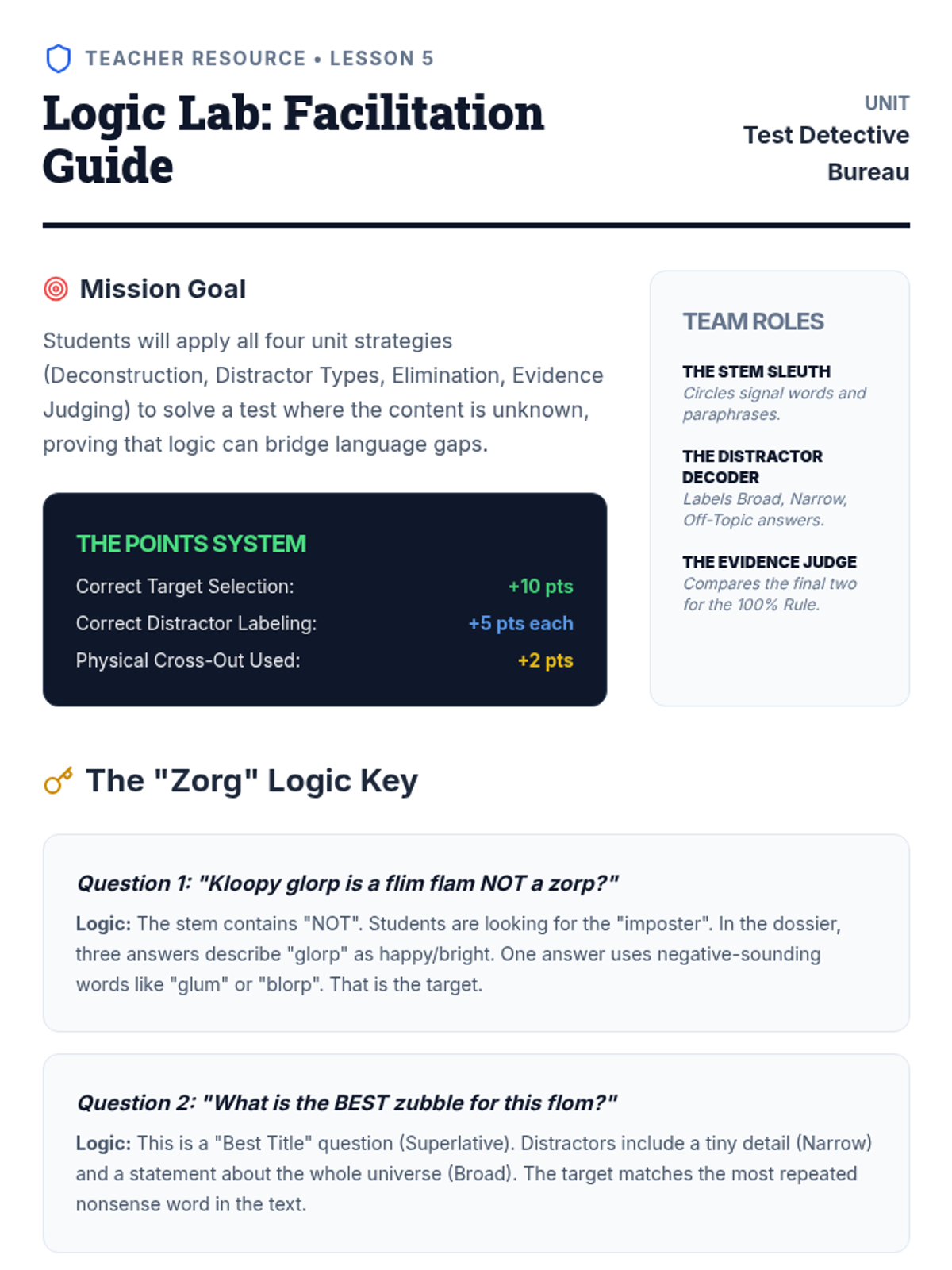
Facilitation guide for Lesson 5, outlining the "Logic Lab" simulation points system, team roles, and the answer key for the "Zorg Language" nonsense test.
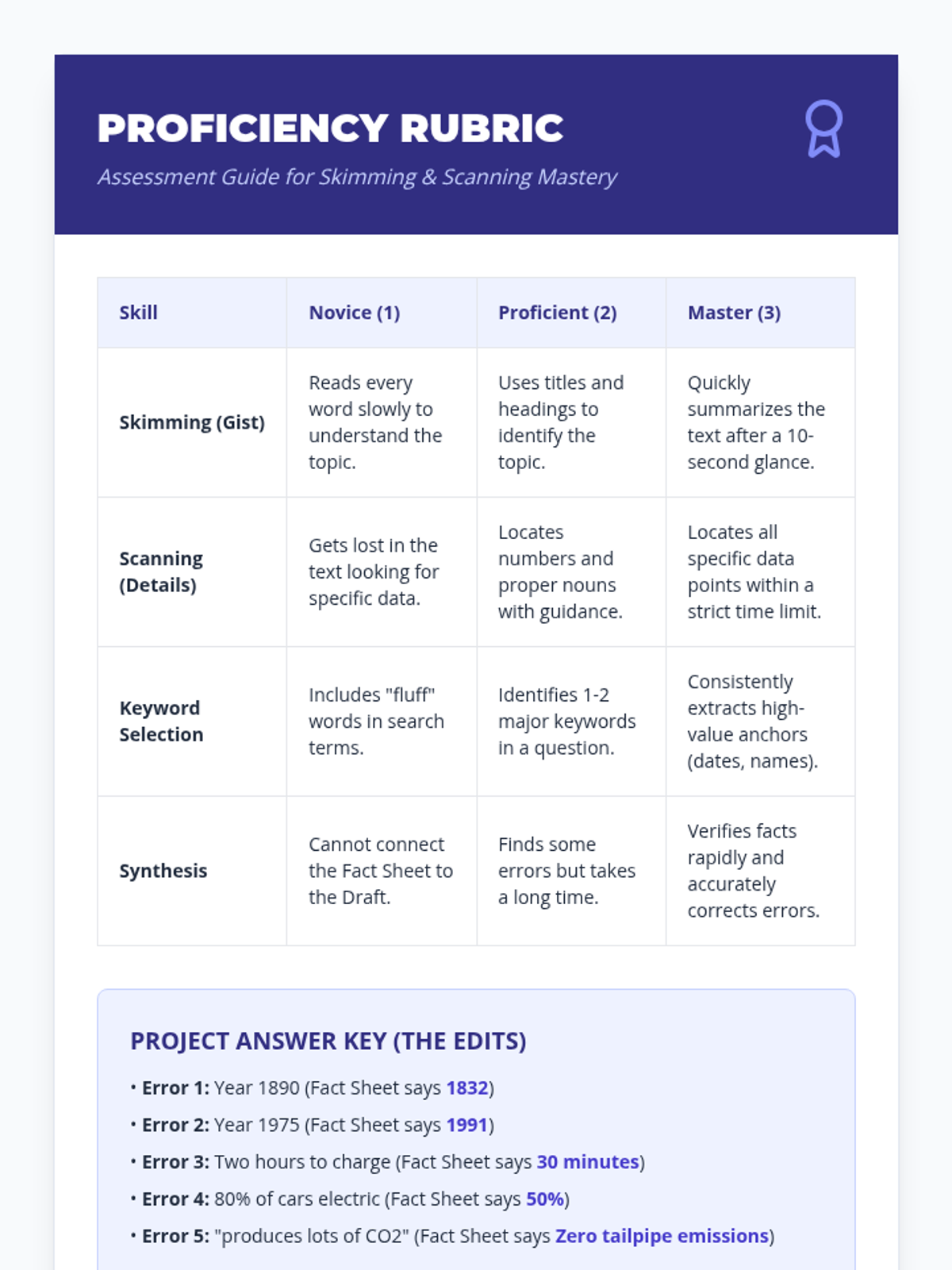
A proficiency rubric and teacher assessment guide for Lesson 5, including an answer key for the "Speed Editor" project and differentiation strategies for varying ESL levels.
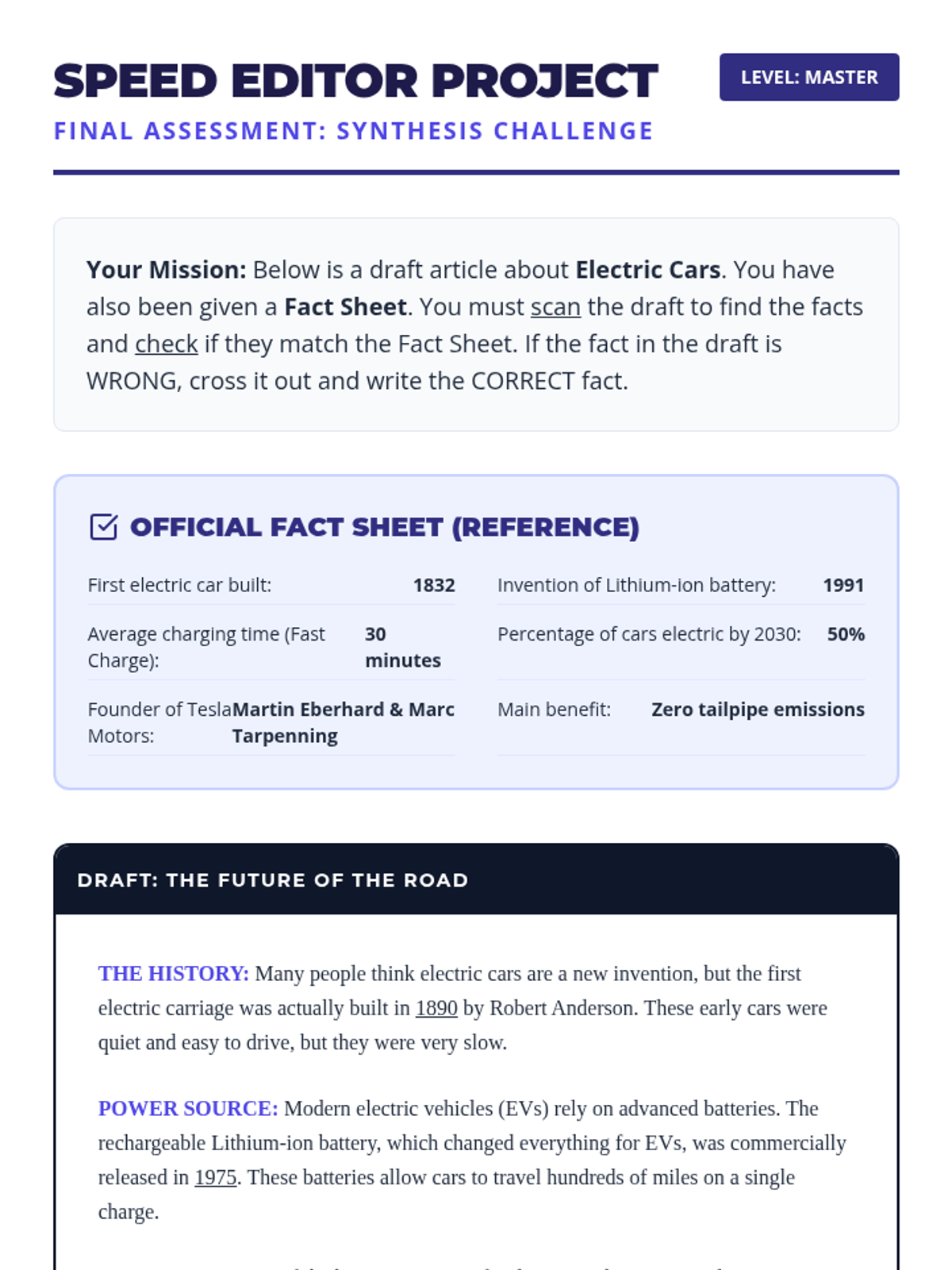
The final project for the sequence where students act as "Speed Editors," using a Fact Sheet to verify and correct an article about electric cars, requiring high-level synthesis of skimming and scanning.
Slide deck for Lesson 5, presenting the "Logic Lab" mission briefing and strategies for solving a "nonsense language" test using logical patterns.
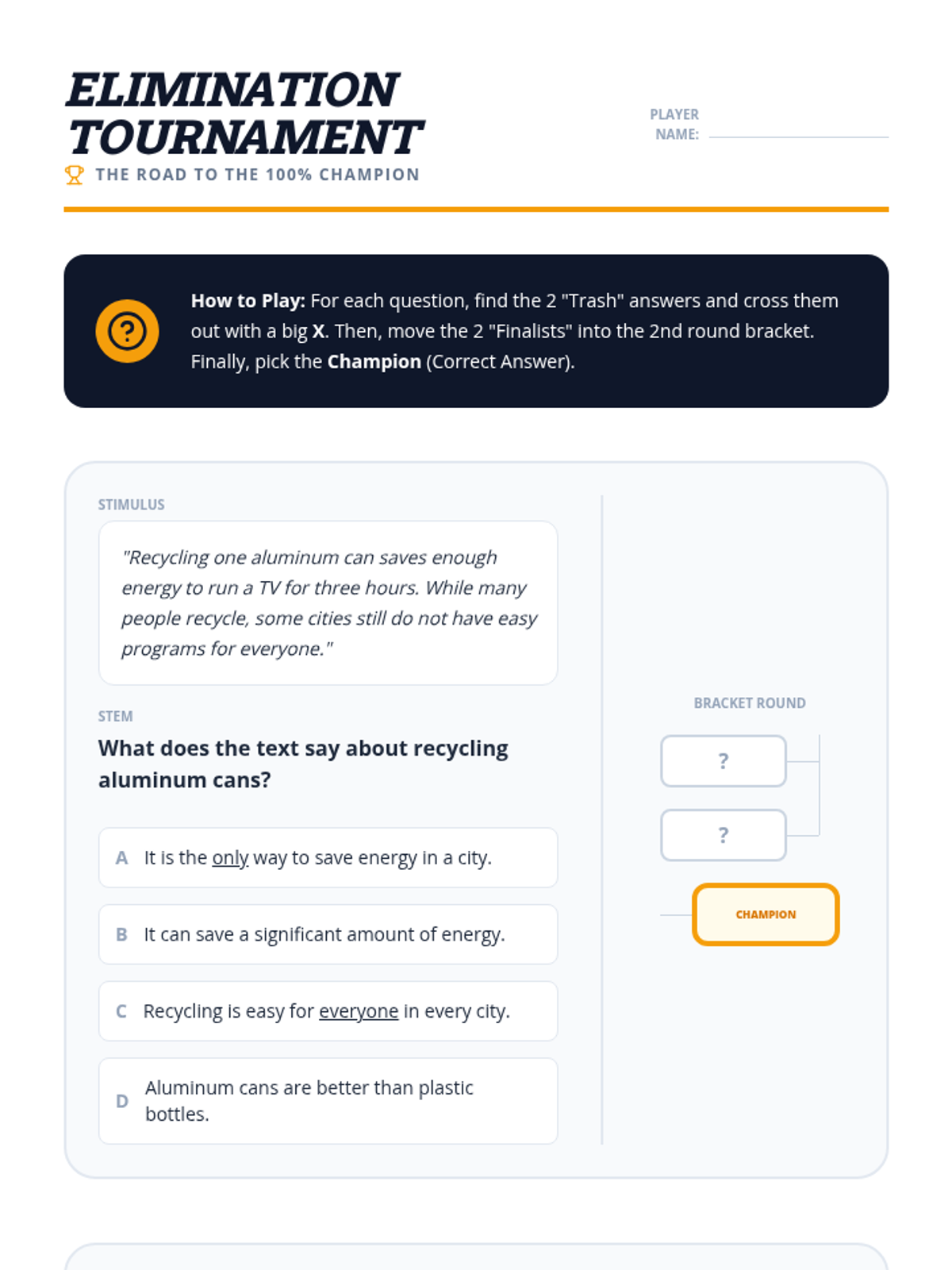
Worksheet for Lesson 3 where students use a "tournament bracket" visual to narrow down multiple-choice options by crossing out "trash" answers and selecting a champion.
Instructional slides for Lesson 5, focusing on synthesizing skimming and scanning strategies for the final "Speed Editor" project and promoting metacognitive reflection on the reading process.
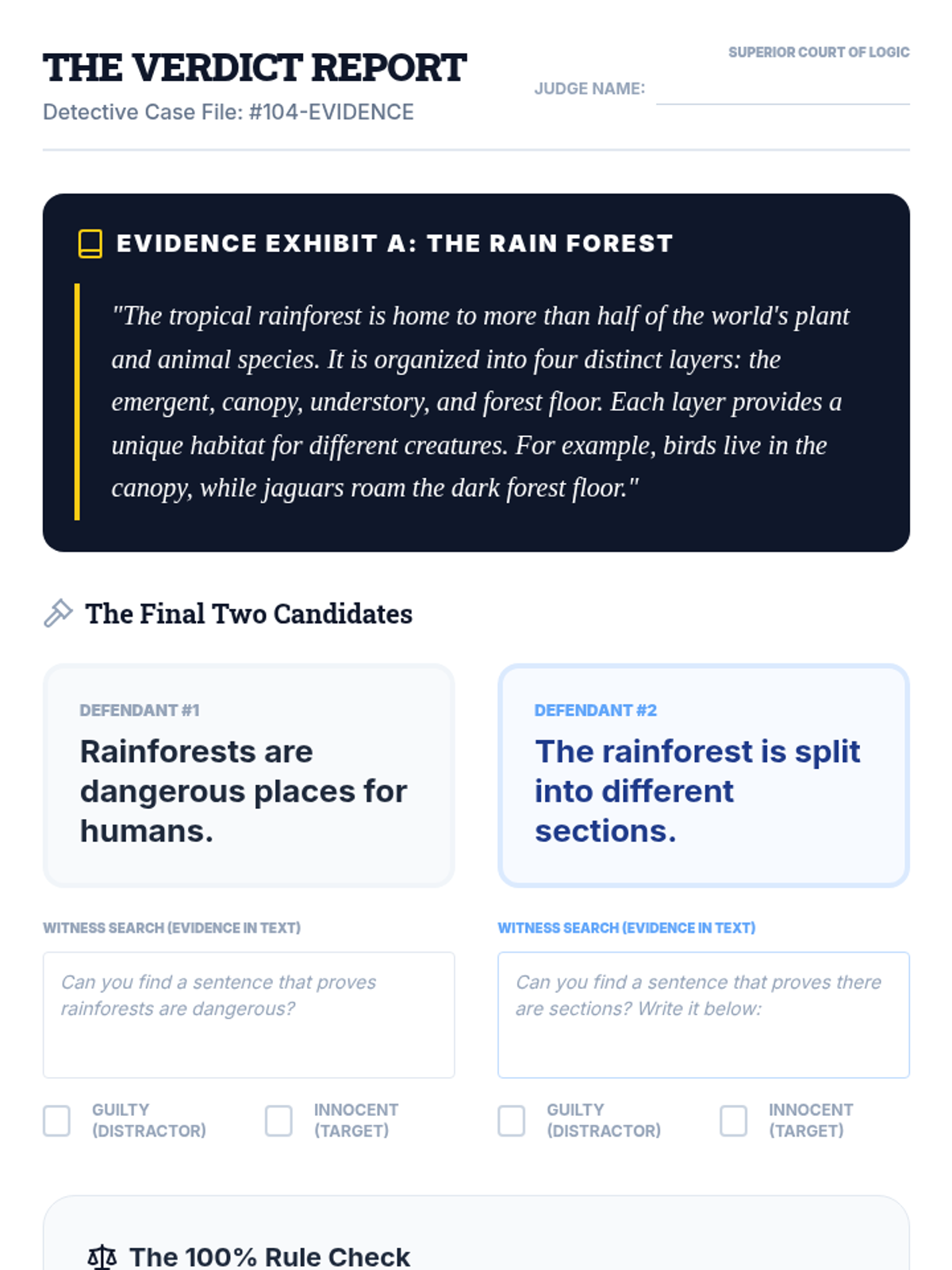
Student worksheet for Lesson 4 where students compare two plausible-looking answers, hunt for textual evidence (the "Witness"), and apply the "100% Rule" to identify the correct answer.
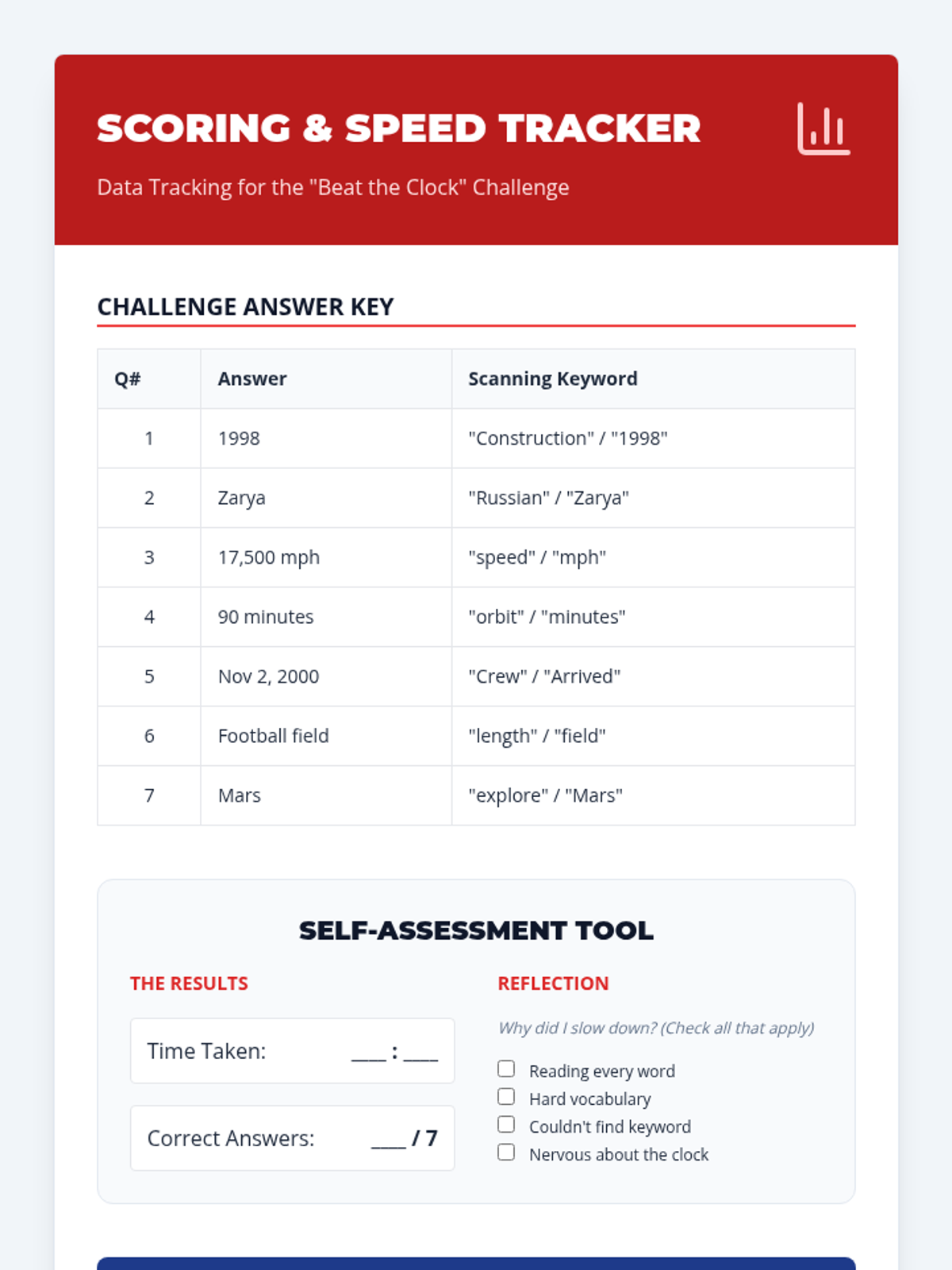
A scoring key and reflection tool for Lesson 4, designed to help students track their reading speed and accuracy while identifying personal bottlenecks in their information retrieval process.
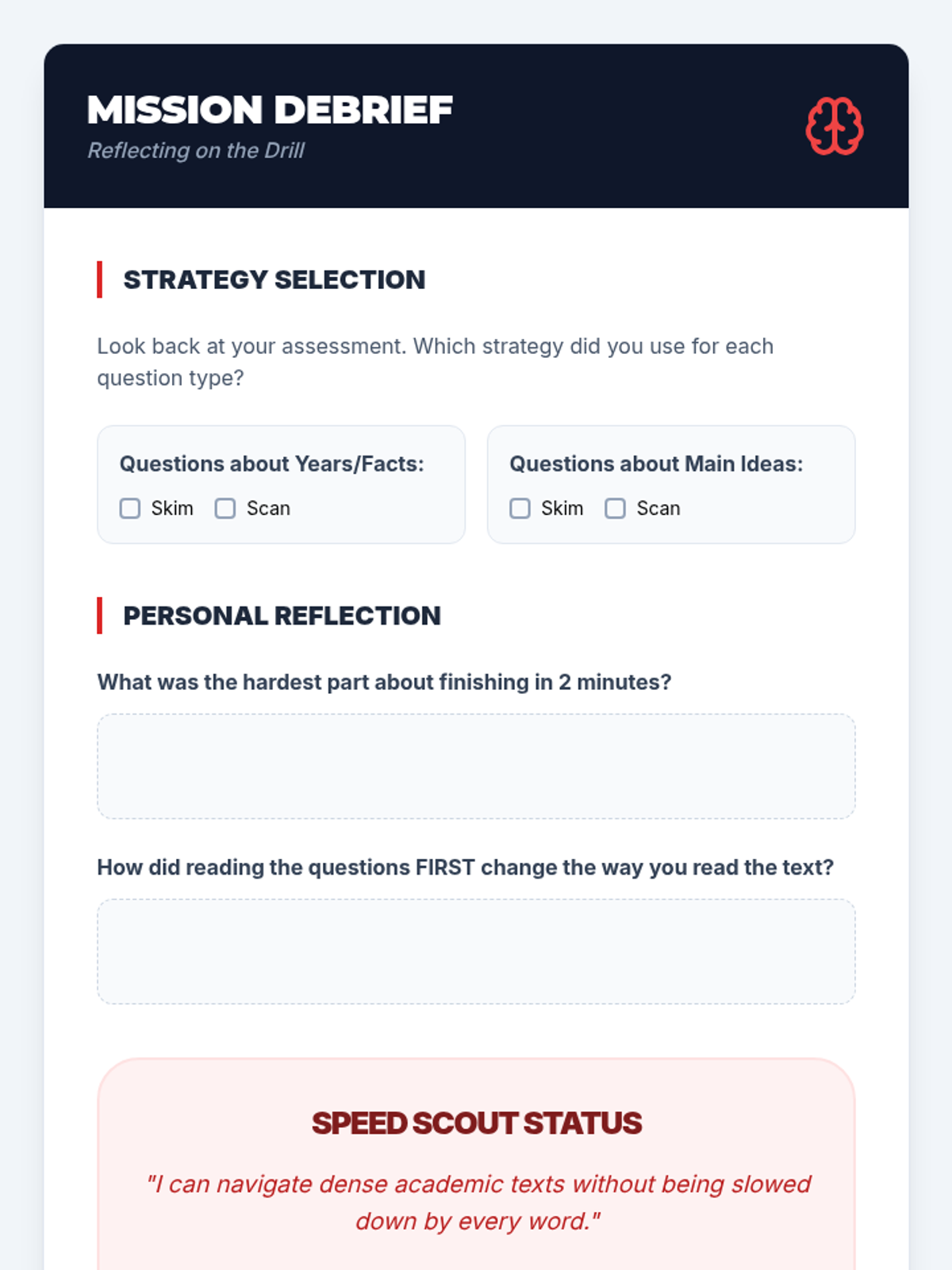
A metacognitive reflection sheet for students to evaluate their strategy use and performance after the timed assessment.
Introductory slide deck for Lesson 3, using a game-show theme to teach the Process of Elimination (POE) and how it increases the probability of choosing the correct answer.
A timed reading comprehension challenge that requires students to apply skimming and scanning techniques to an academic passage about the Silk Road.