Complex syntax, nuanced vocabulary, and academic discourse. Strengthens professional communication through advanced writing, analytical reading, and mastery of high-level auditory and oral fluency.
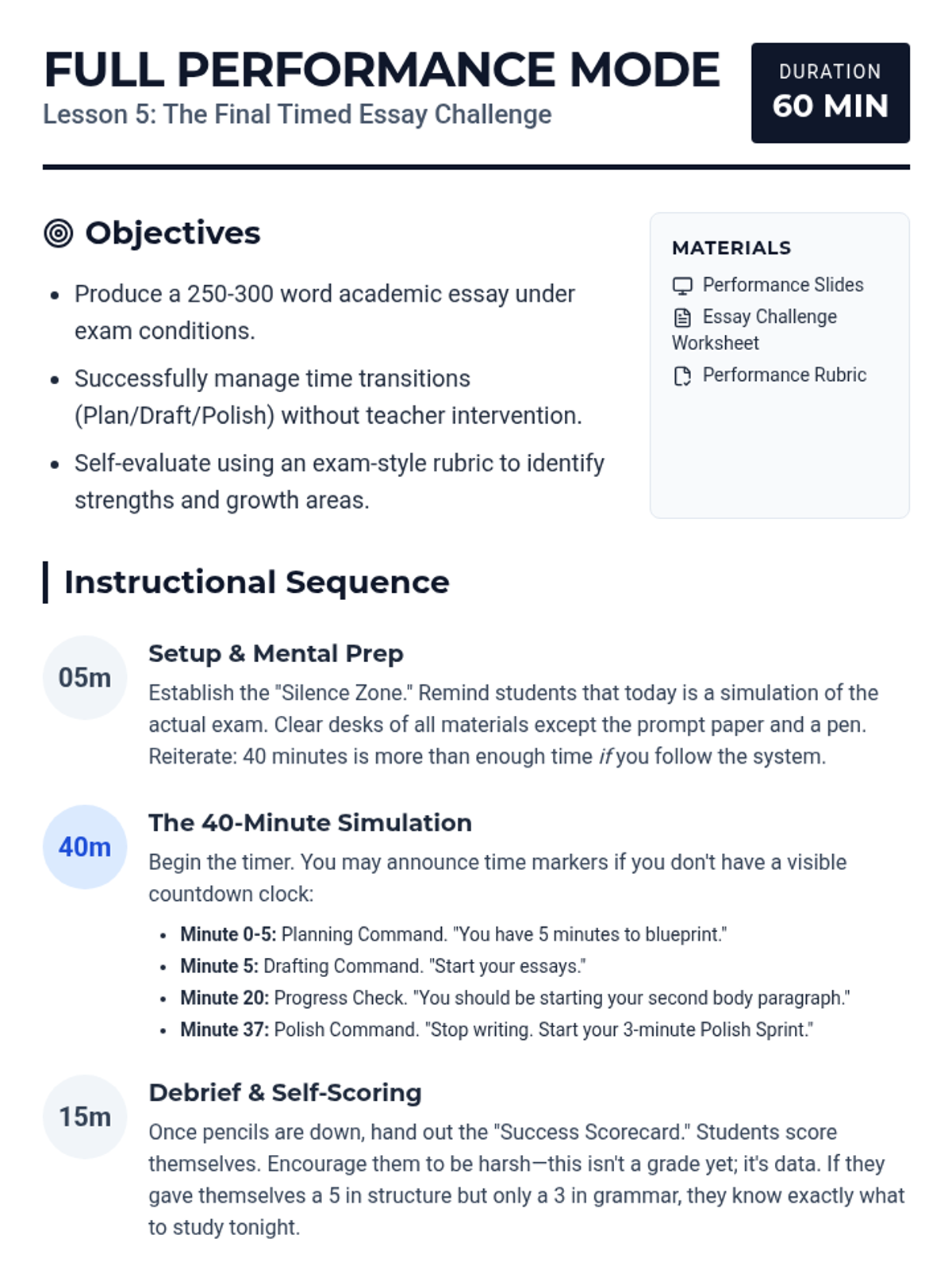
Teacher guide for Lesson 5, managing the full timed essay assessment with simulation commands and self-evaluation steps.
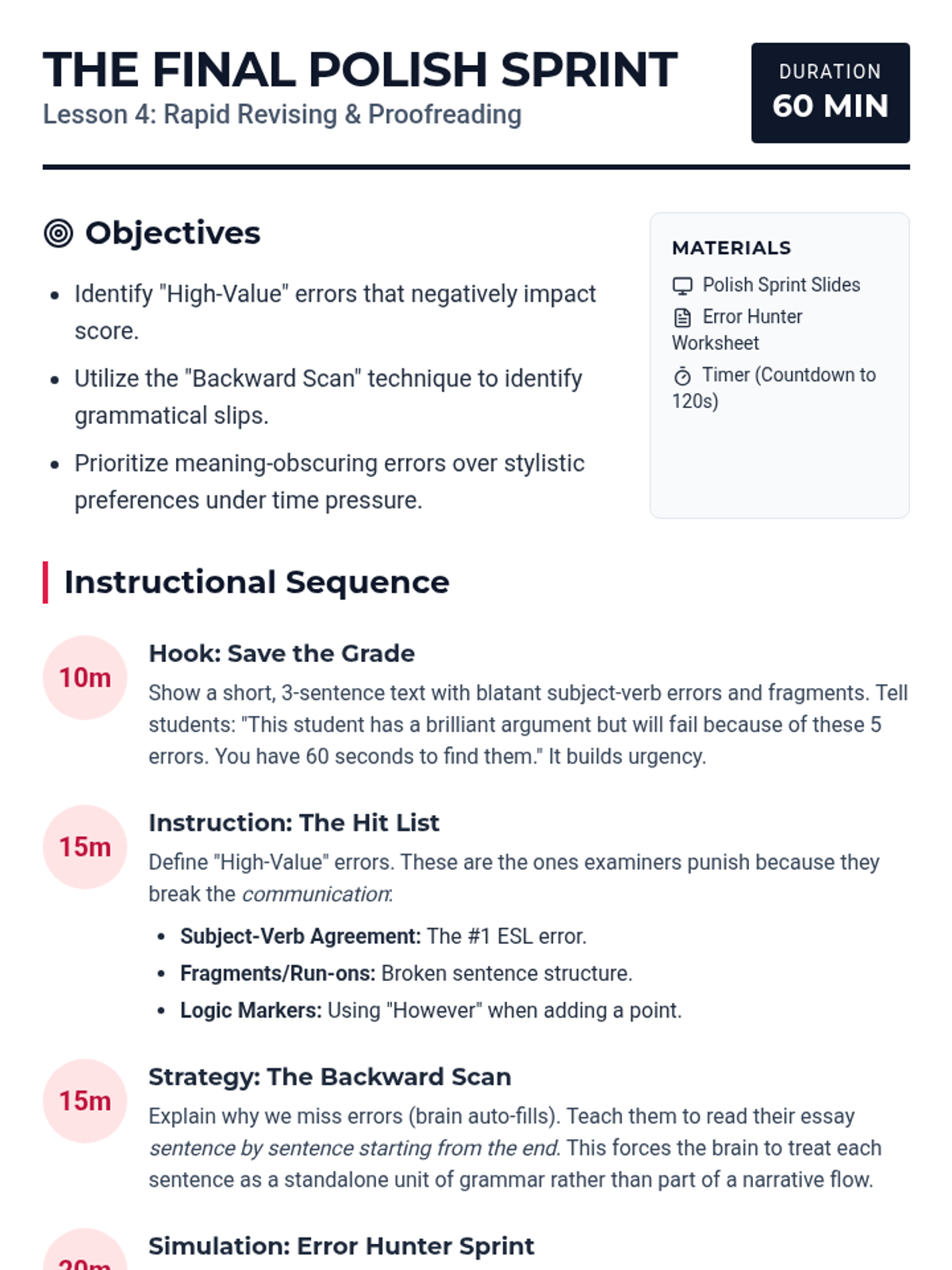
Teacher guide for Lesson 4, focusing on rapid proofreading strategies and high-value error prioritization.
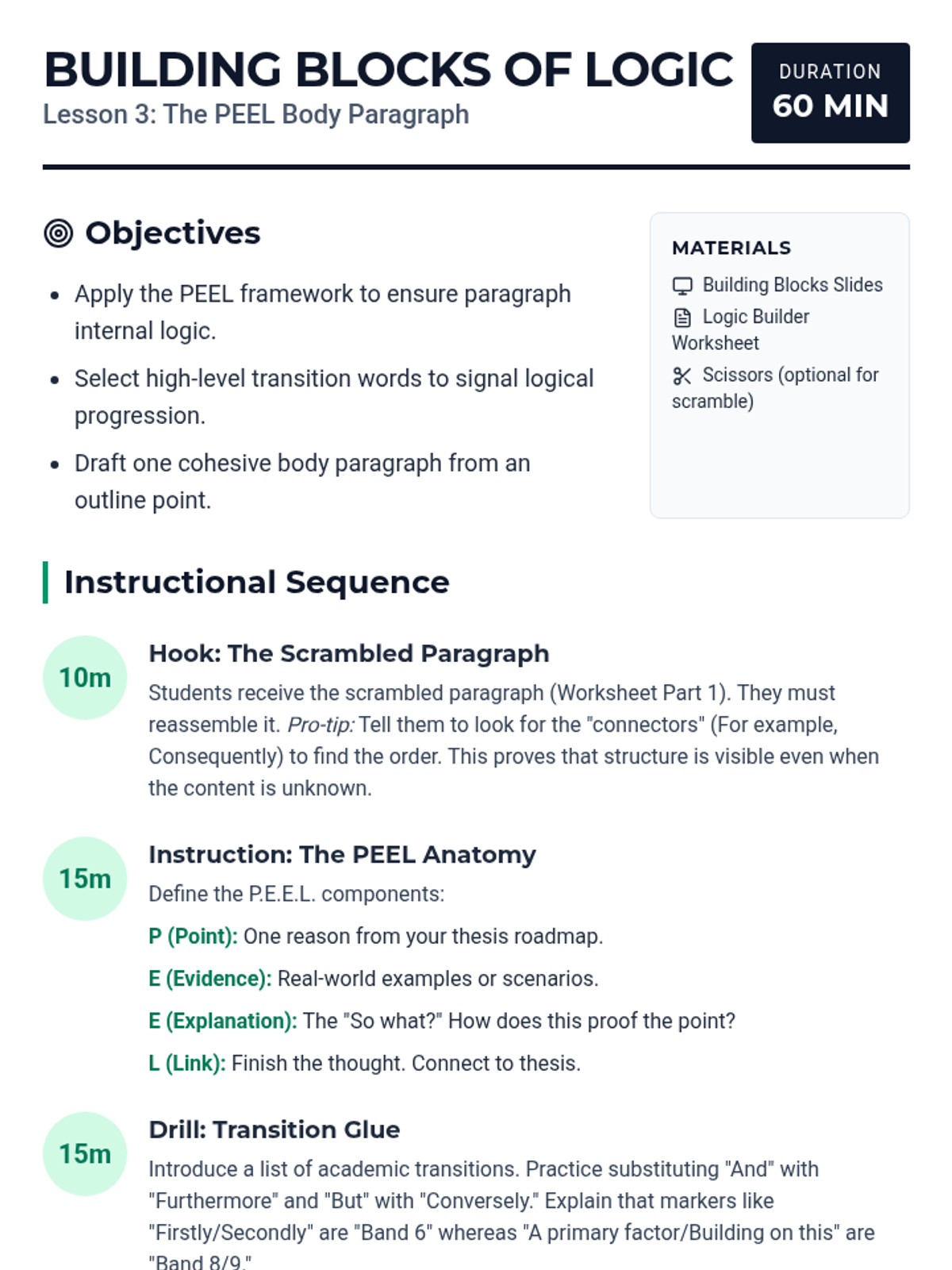
Teacher guide for Lesson 3, focusing on PEEL paragraph structure and academic transitions for logical flow.
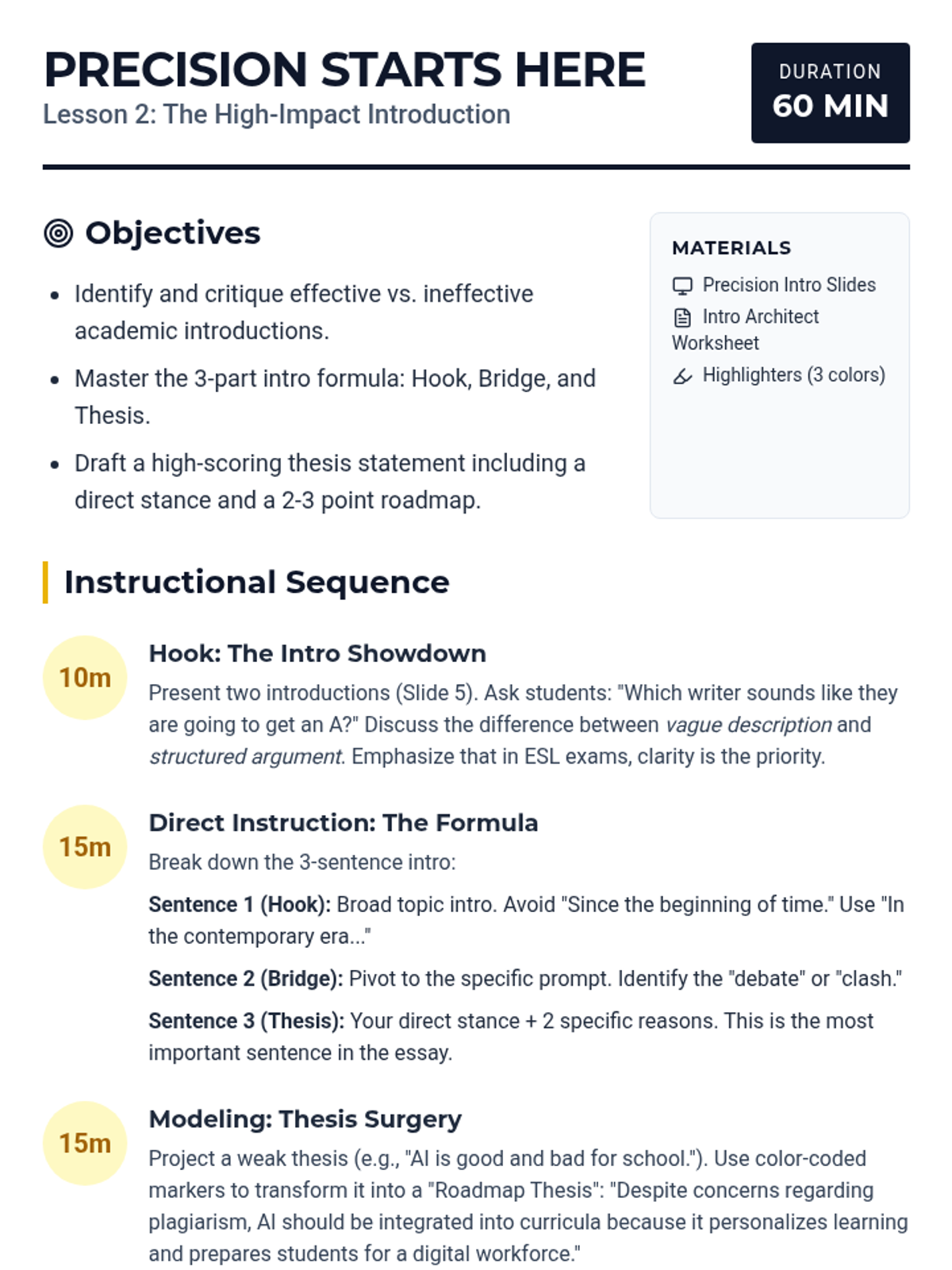
Teacher guide for Lesson 2, focusing on introduction templates and thesis statement construction for timed writing.
Visual slide deck for Lesson 5, managing the full timed essay assessment with a countdown structure and transition to self-evaluation.
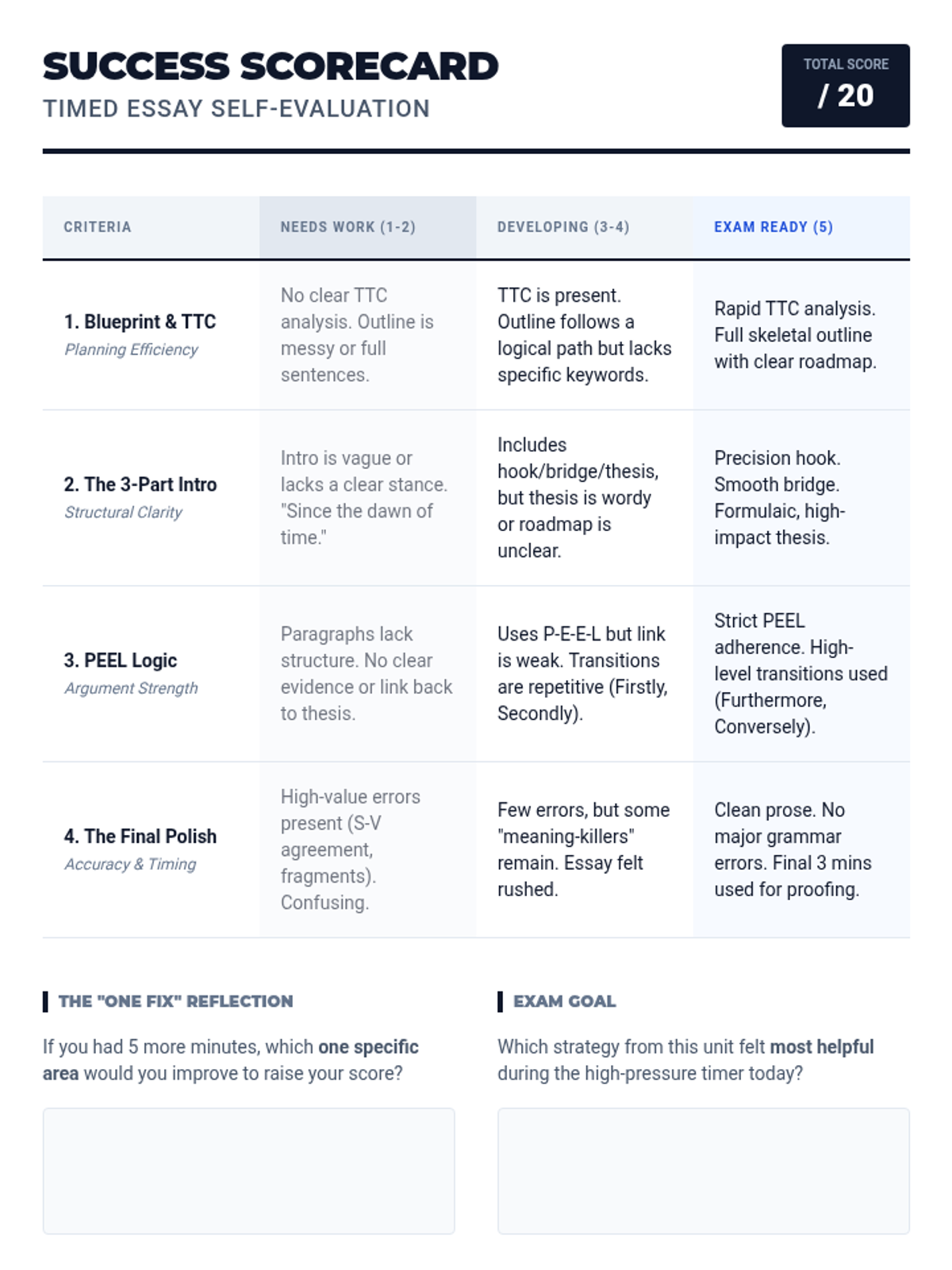
Student self-evaluation rubric for the timed essay challenge, focusing on TTC analysis, intro structure, PEEL paragraphs, and proofreading.
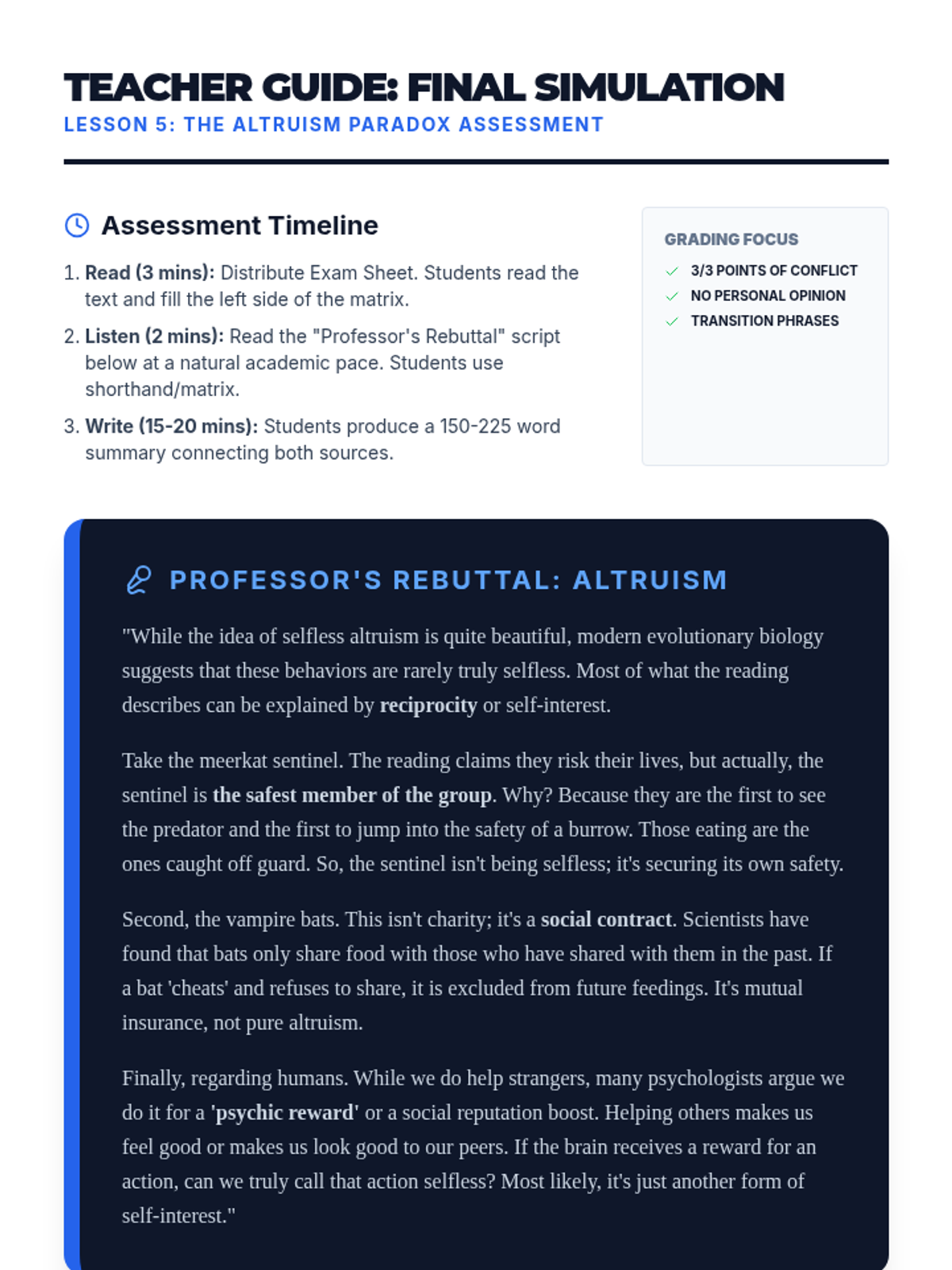
A guide for teachers with the final assessment script on 'The Altruism Paradox' and a sample high-scoring response for grading reference.
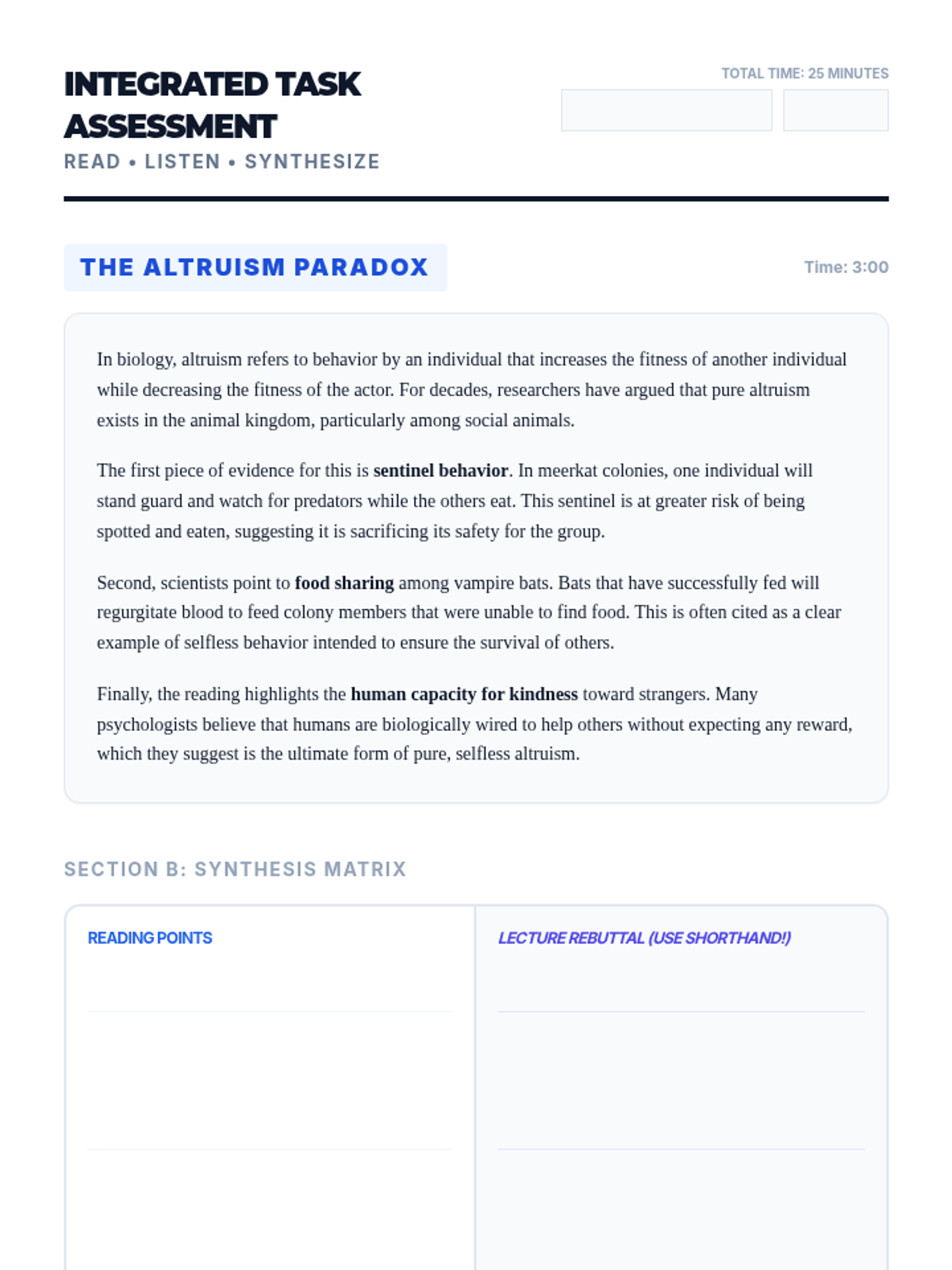
The final assessment sheet for the integrated task simulation, featuring a reading passage on altruism and structured areas for note-taking and writing.
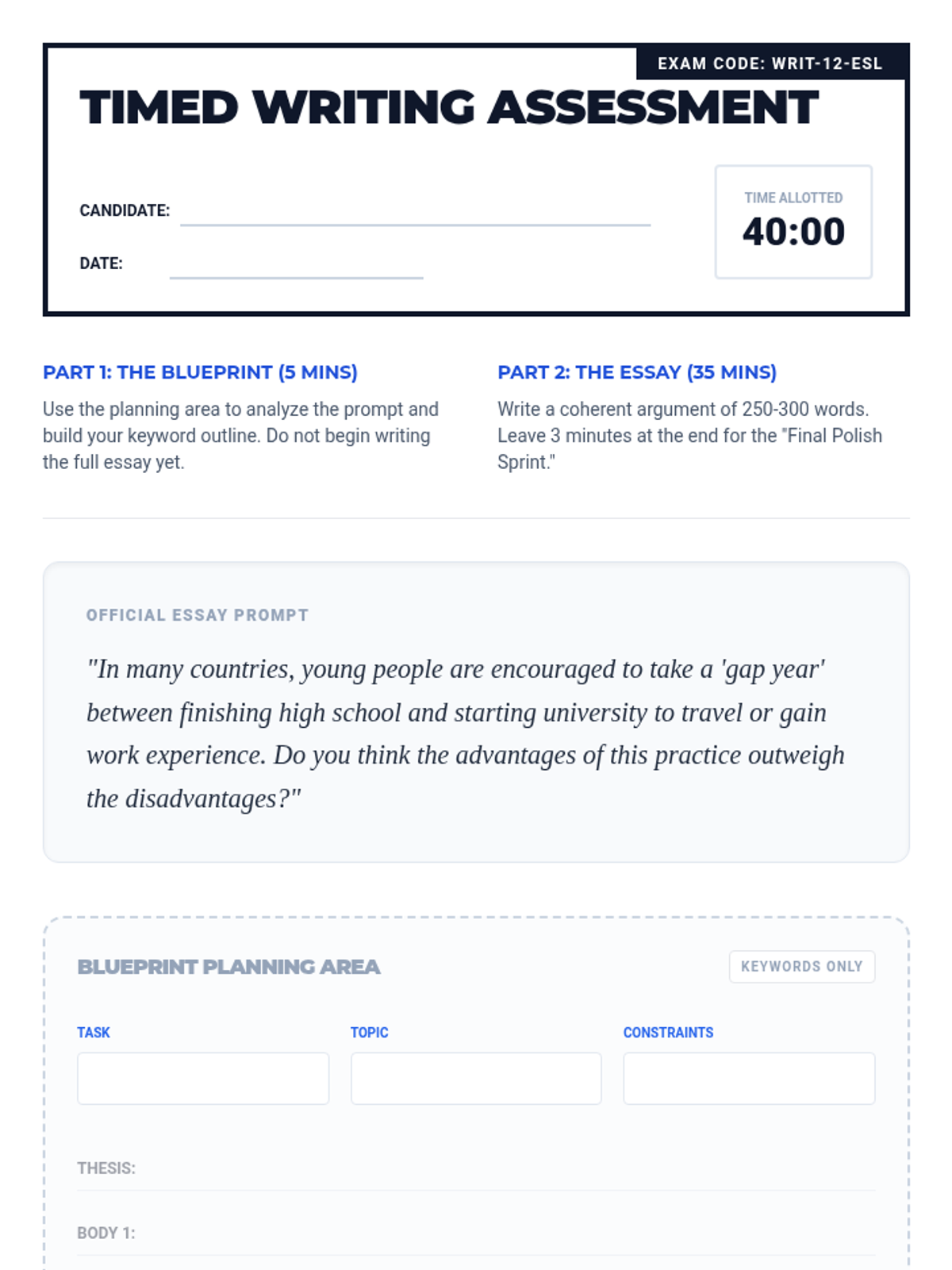
Final timed essay assessment document including official prompt, TTC/Blueprint planning area, and lined response space.
A slide deck introducing the final integrated task simulation, explaining the grading criteria, task structure, and the 'no-opinion' rule.
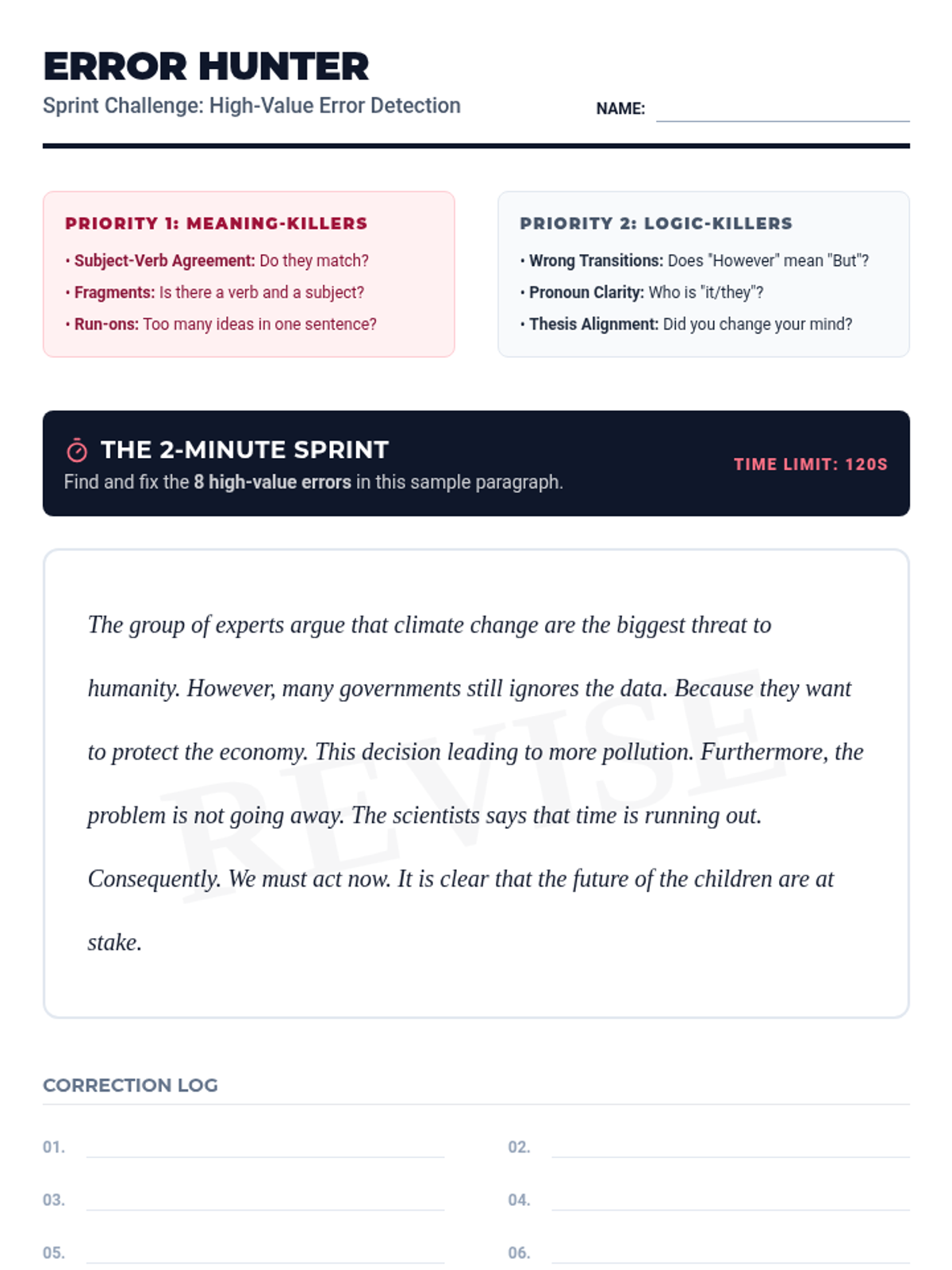
Worksheet for Lesson 4 focusing on rapid identification and correction of high-value grammar and logic errors under time pressure.
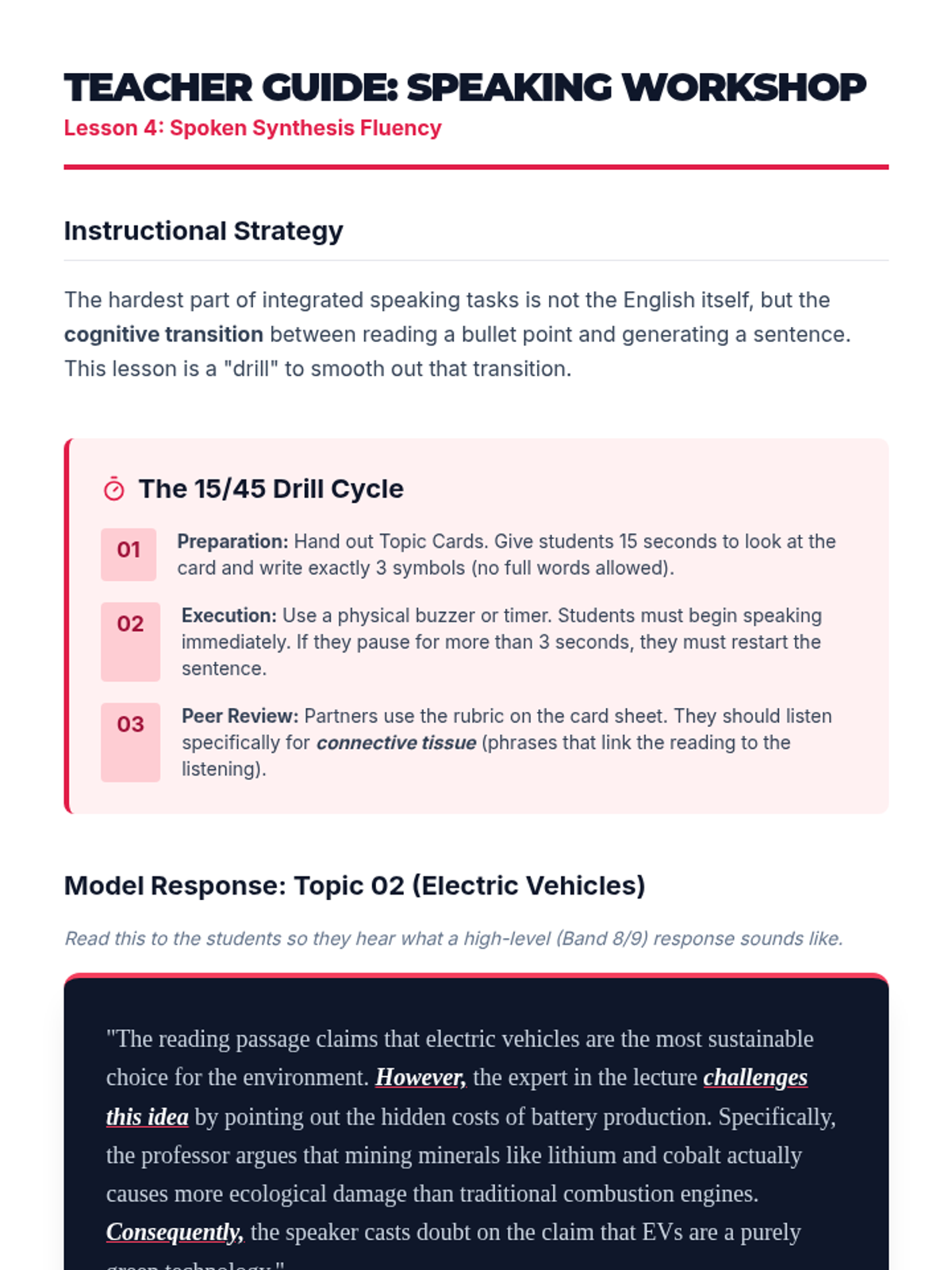
A guide for teachers providing model responses and correction strategies for the speaking fluency workshop.
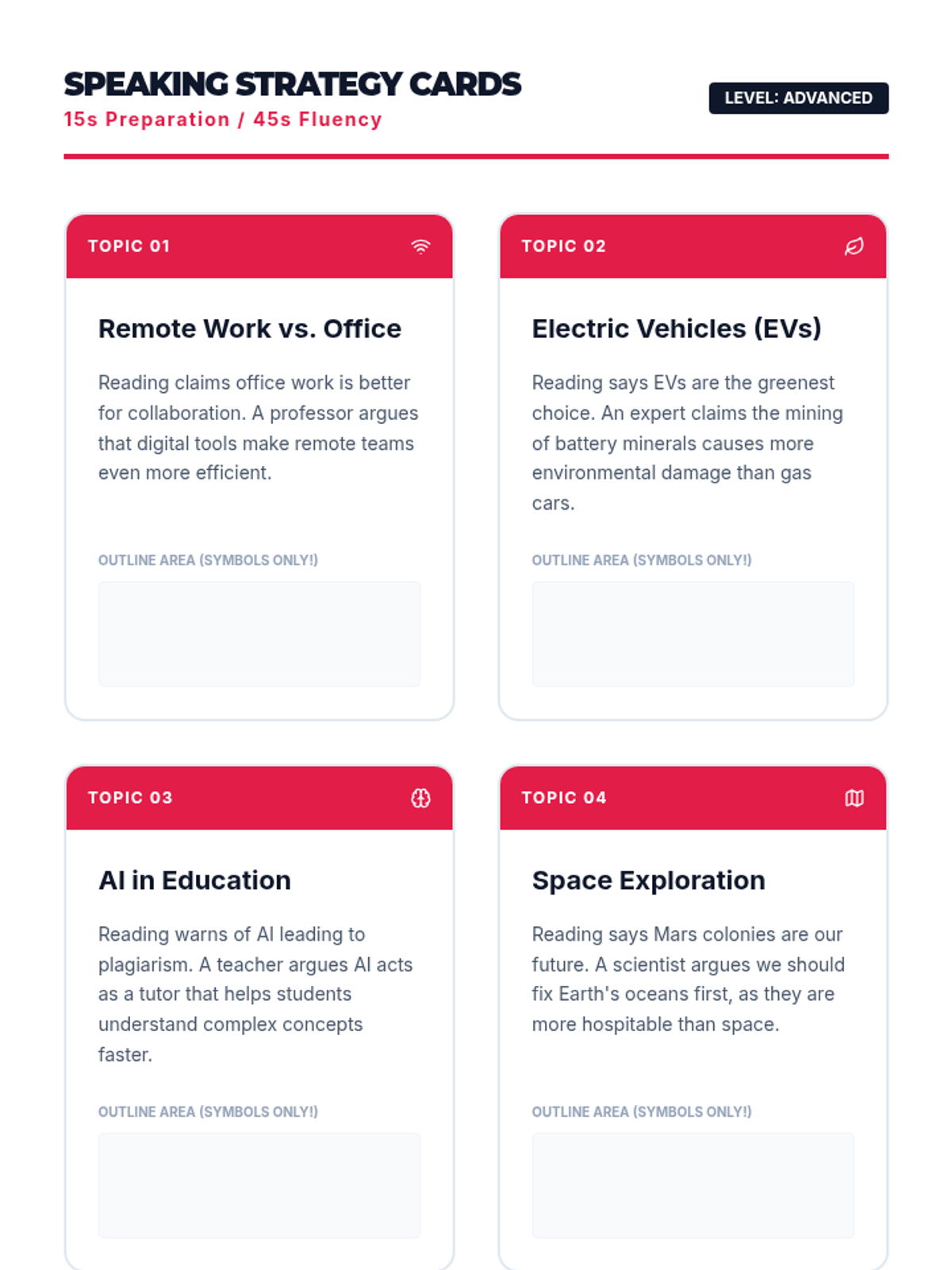
Extemporaneous speaking cards for students to practice synthesizing conflicting arguments from 15-second outlines.
Visual slide deck for Lesson 4, teaching rapid proofreading techniques and the concept of "High-Value" error prioritization.
A slide deck focusing on the transition from shorthand notes to fluent spoken English, introducing the 'glance' technique and oral connectives.
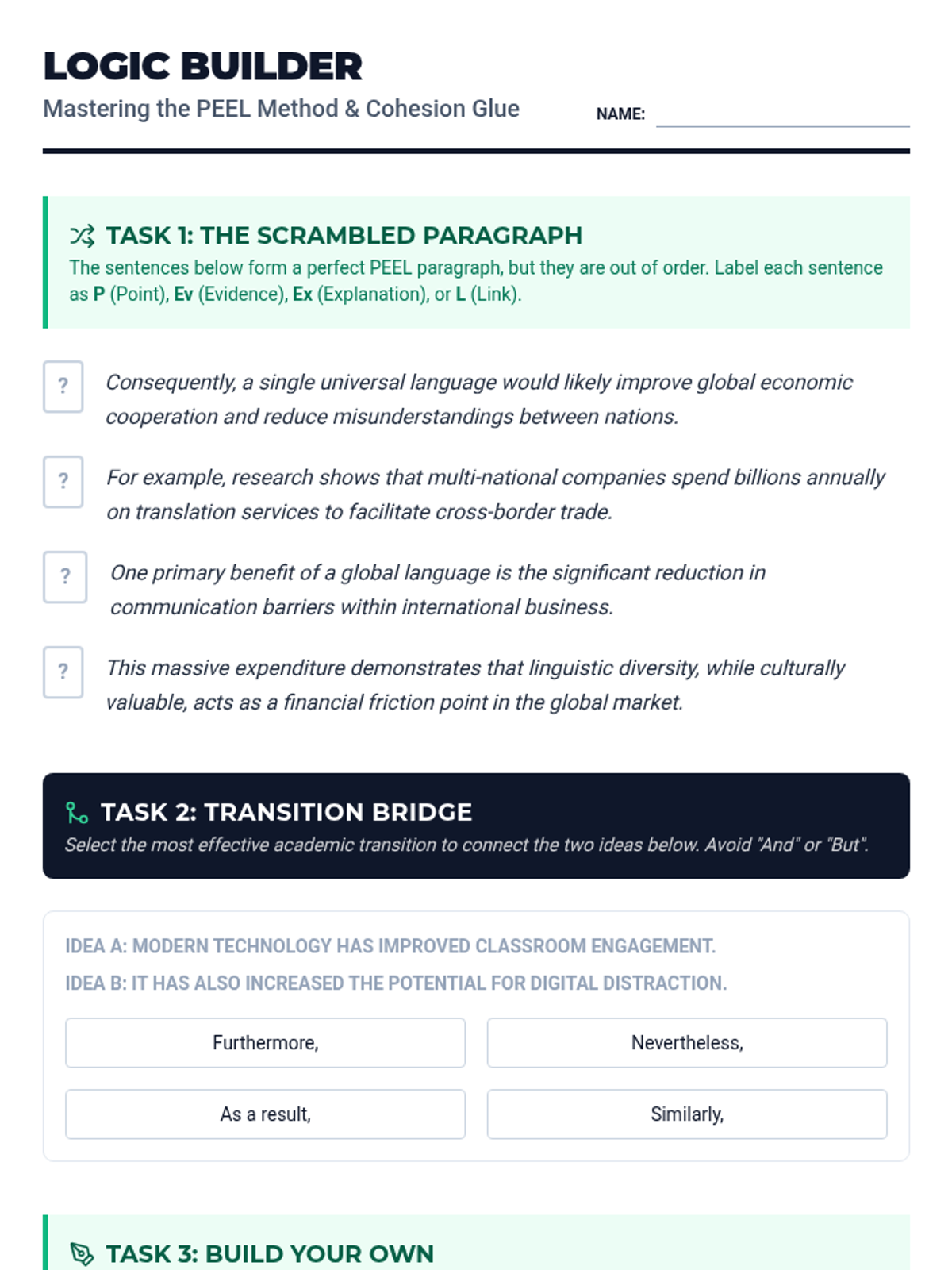
Worksheet for Lesson 3 focusing on identifying PEEL components in scrambled text and practicing transition choices.
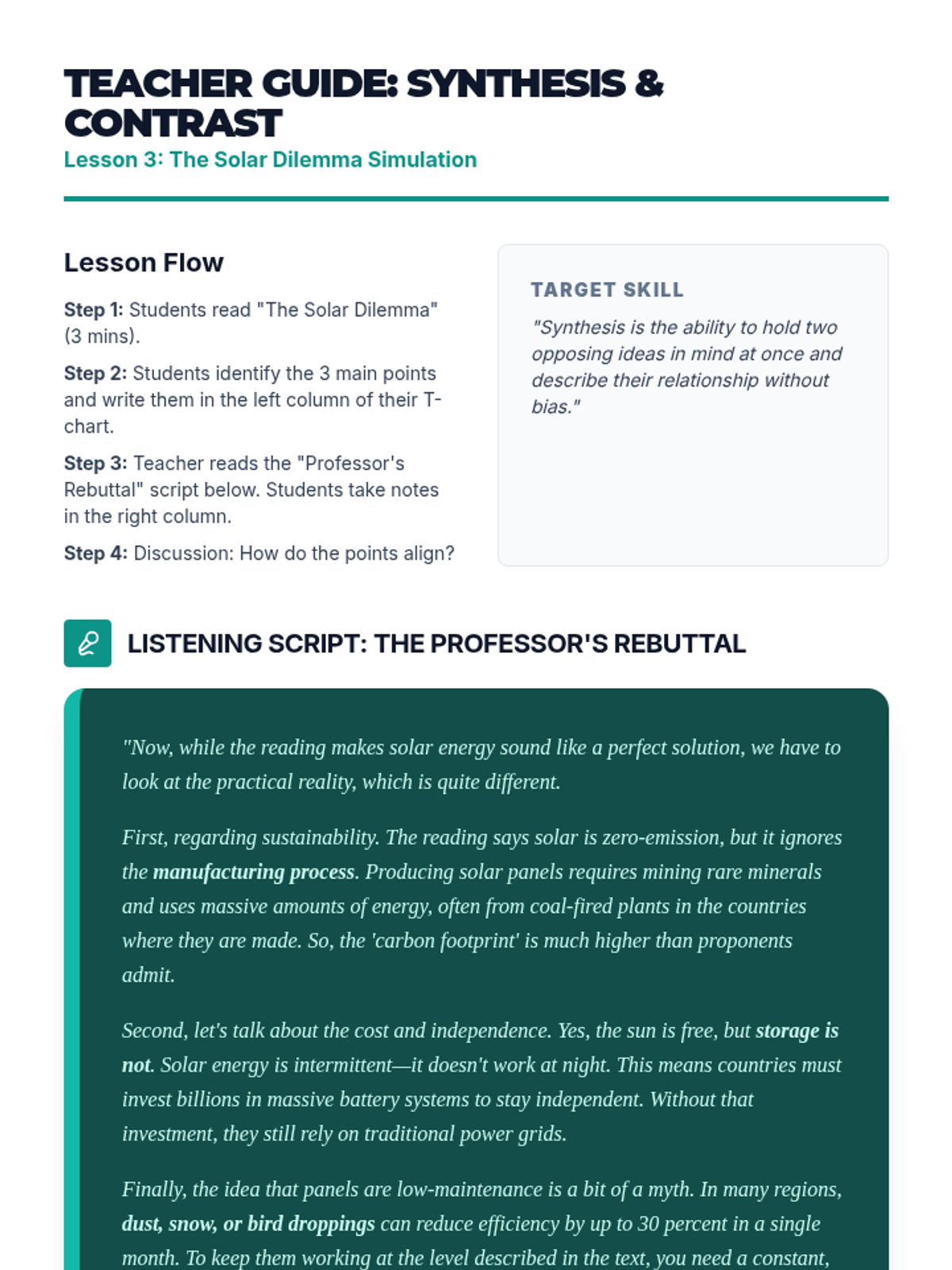
A guide for teachers with the rebuttal script for 'The Solar Dilemma' and a mapping of the key points of conflict.
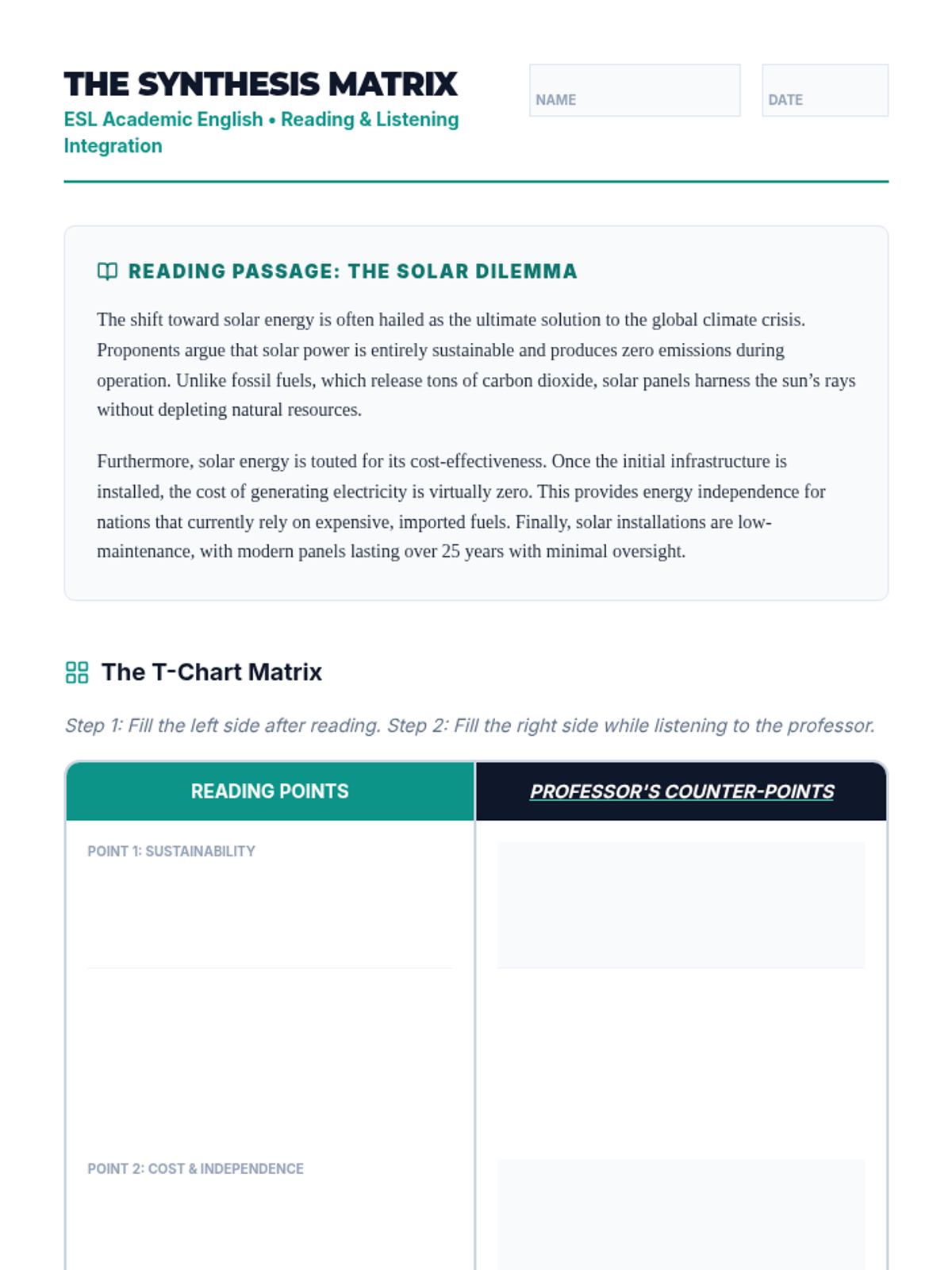
A student activity sheet featuring a reading passage on solar energy and a T-chart for mapping contradictory information from a lecture.
Visual slide deck for Lesson 3, introducing the PEEL method for body paragraphs and high-level transition words for logical flow.
A slide deck explaining the concept of synthesis, the use of T-charts to organize conflicting sources, and the language of comparative analysis.
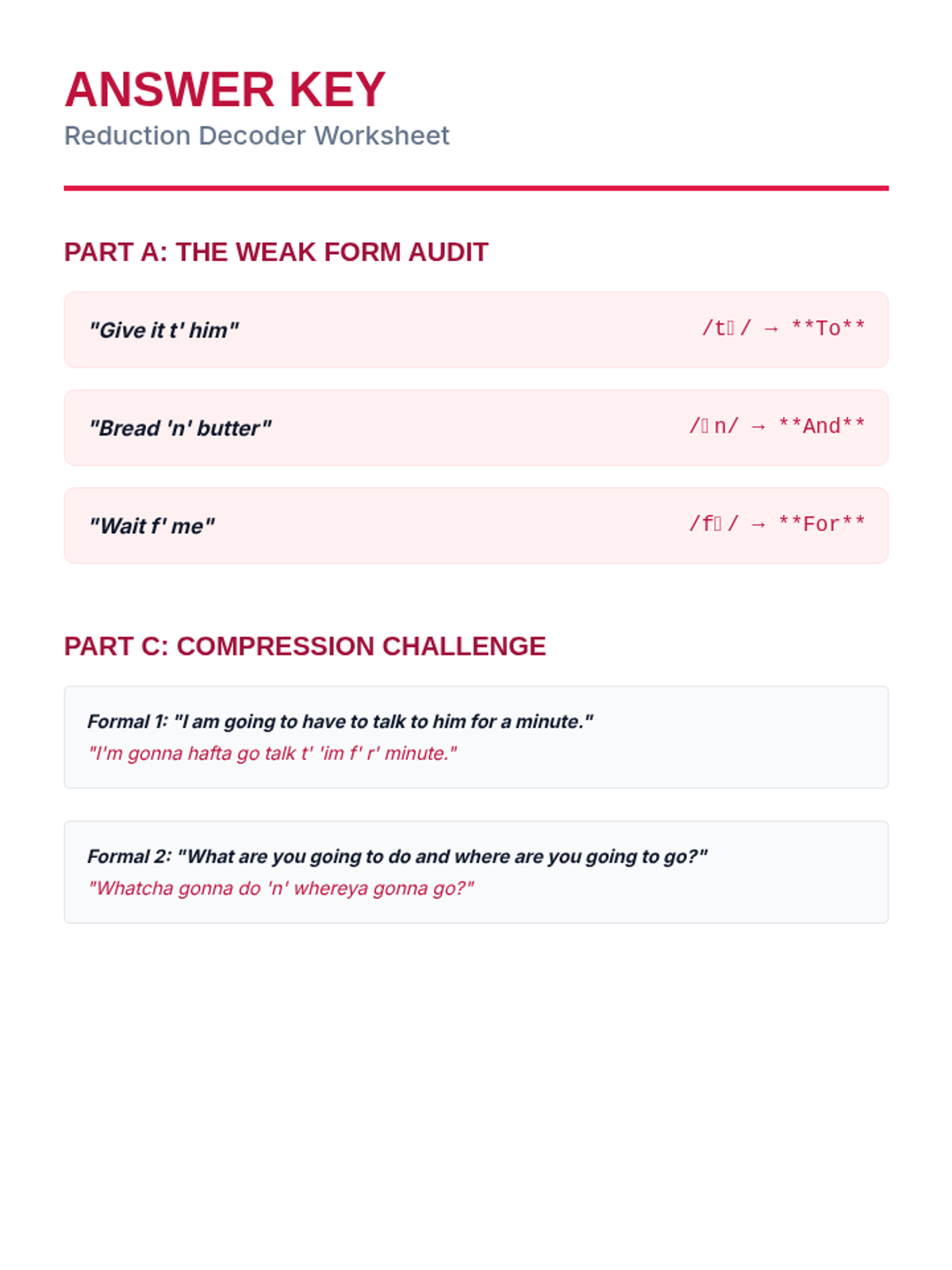
Answer key for the Lesson 4 worksheet on grammatical reductions.
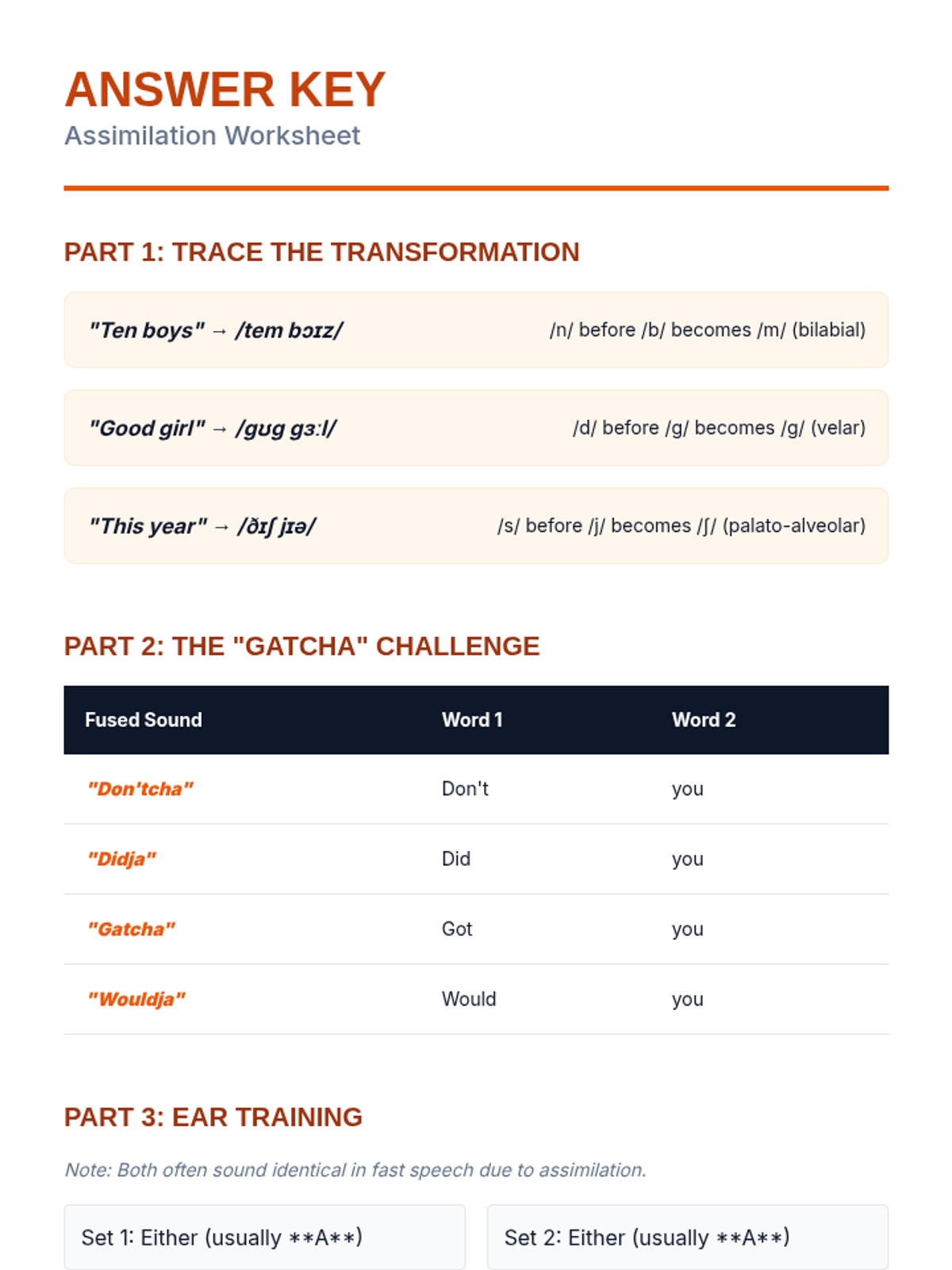
Answer key for the Lesson 3 worksheet on assimilation.
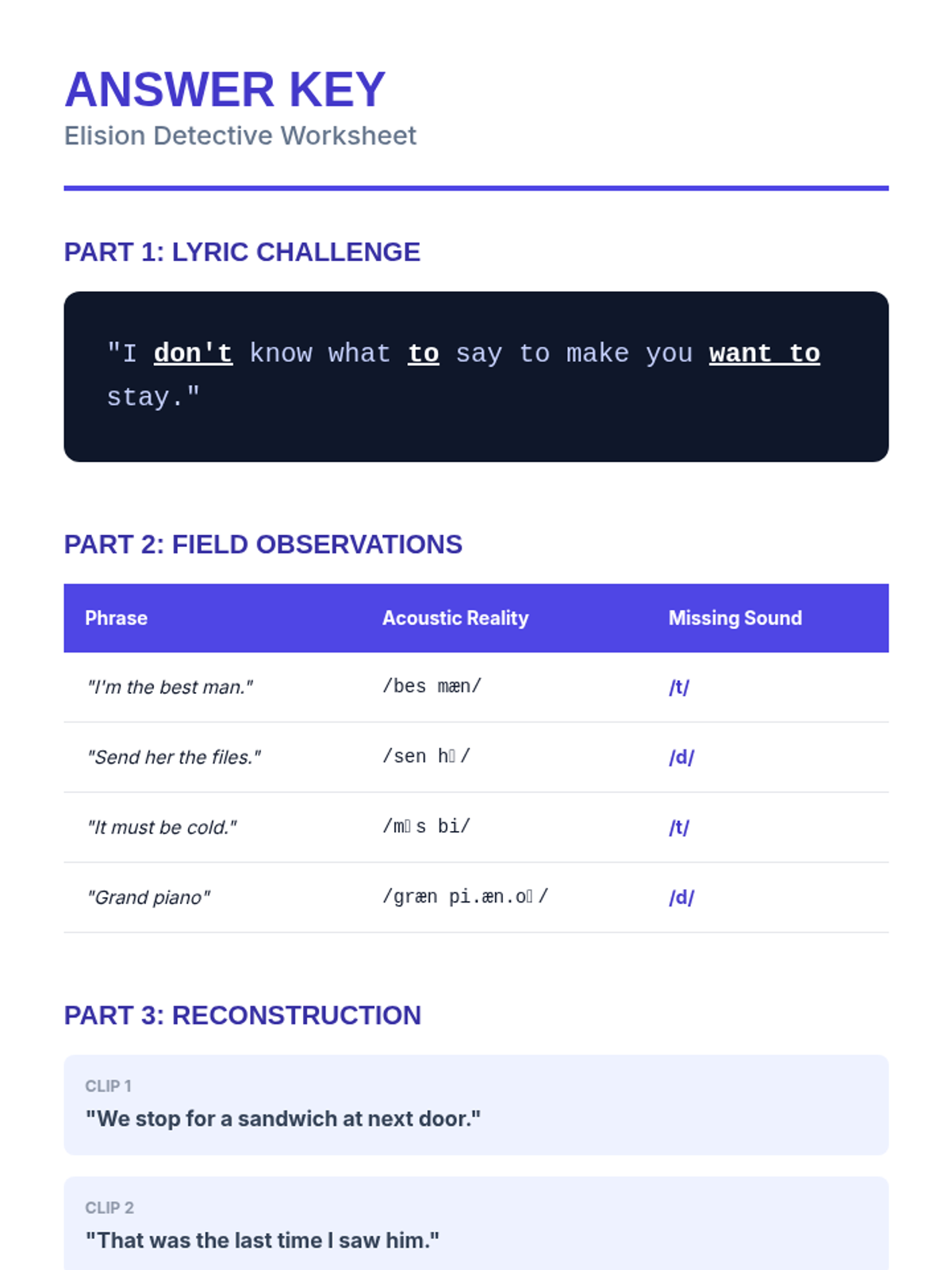
Answer key for the Lesson 2 worksheet on elision.
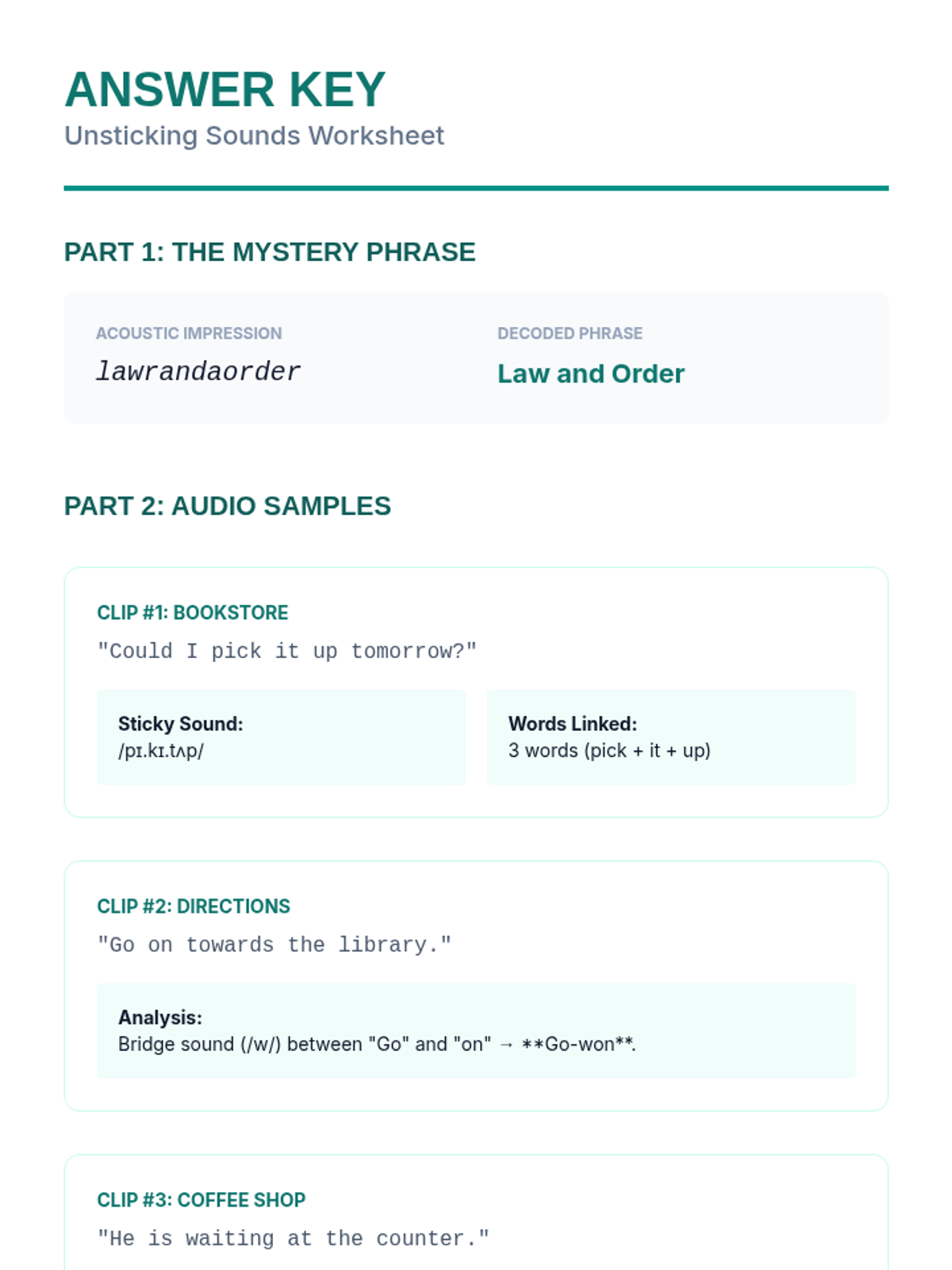
Answer key for the Lesson 1 worksheet on linking and intrusion.
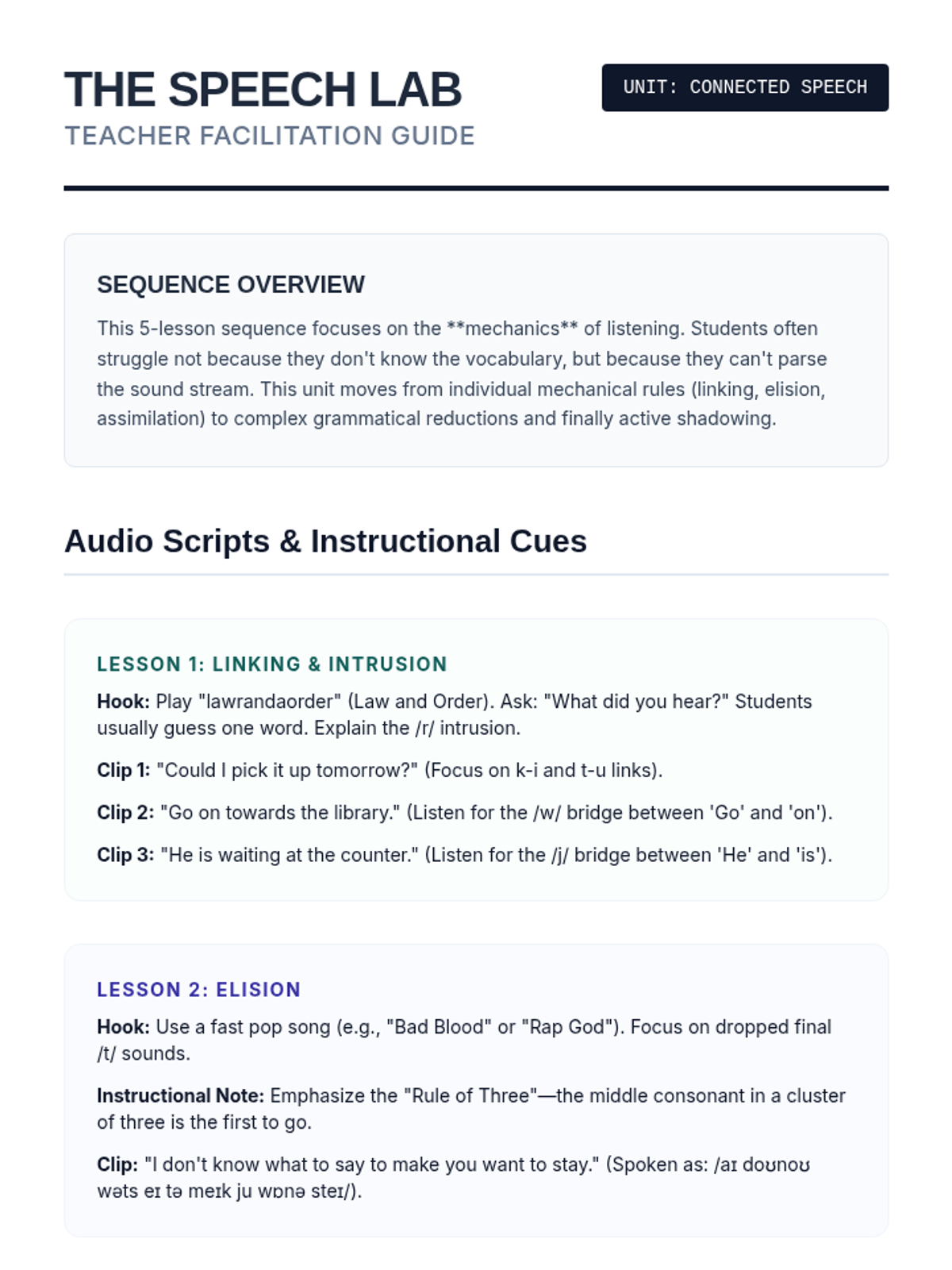
A comprehensive teacher guide for the Speech Lab sequence, including audio scripts, instructional cues, pacing, and differentiation strategies.
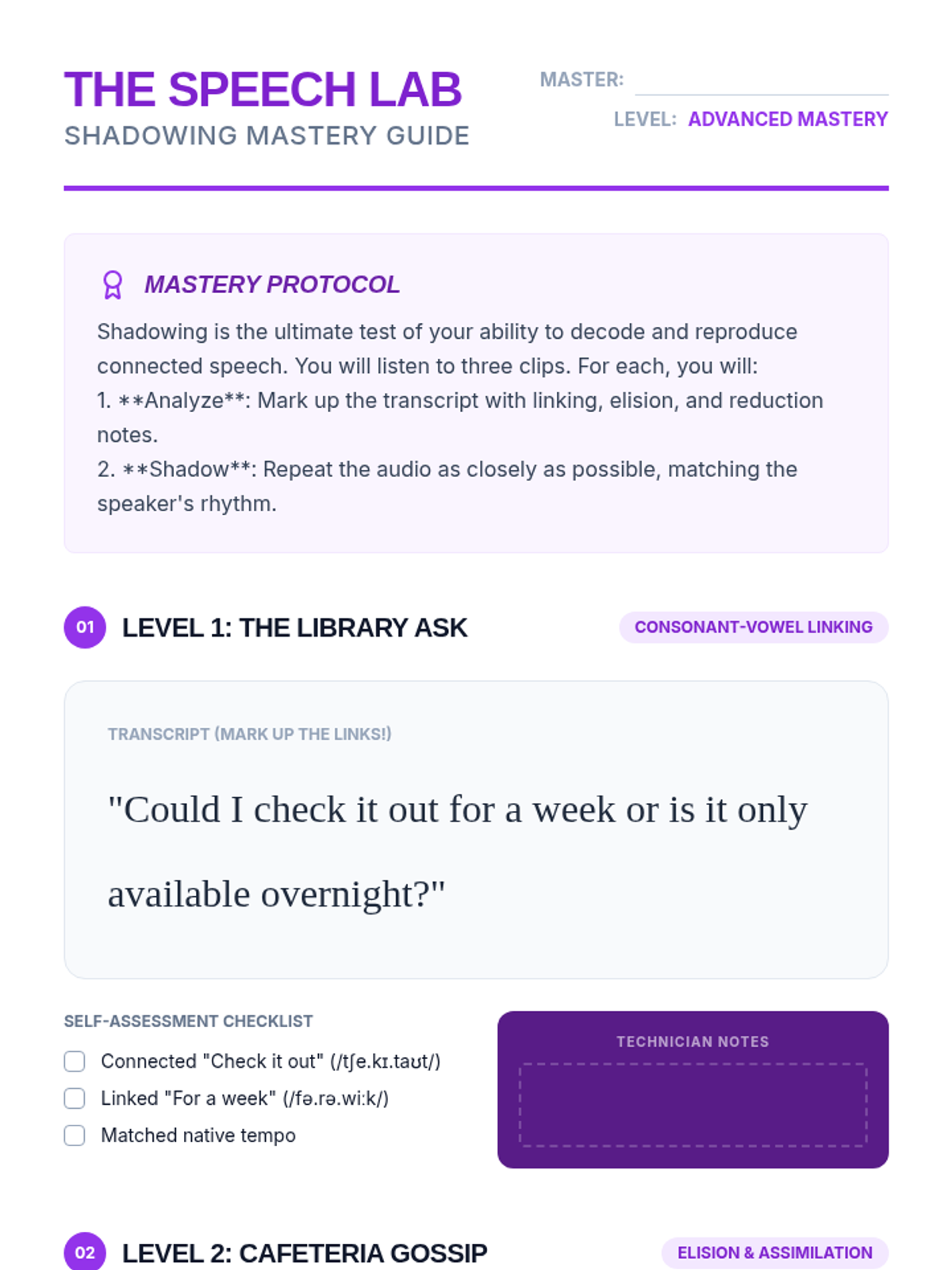
A student mastery guide for practicing shadowing techniques with transcript analysis of complex campus dialogues.
A slide deck for Lesson 5 on shadowing techniques, prosody, and the final mastery assessment of connected speech patterns.
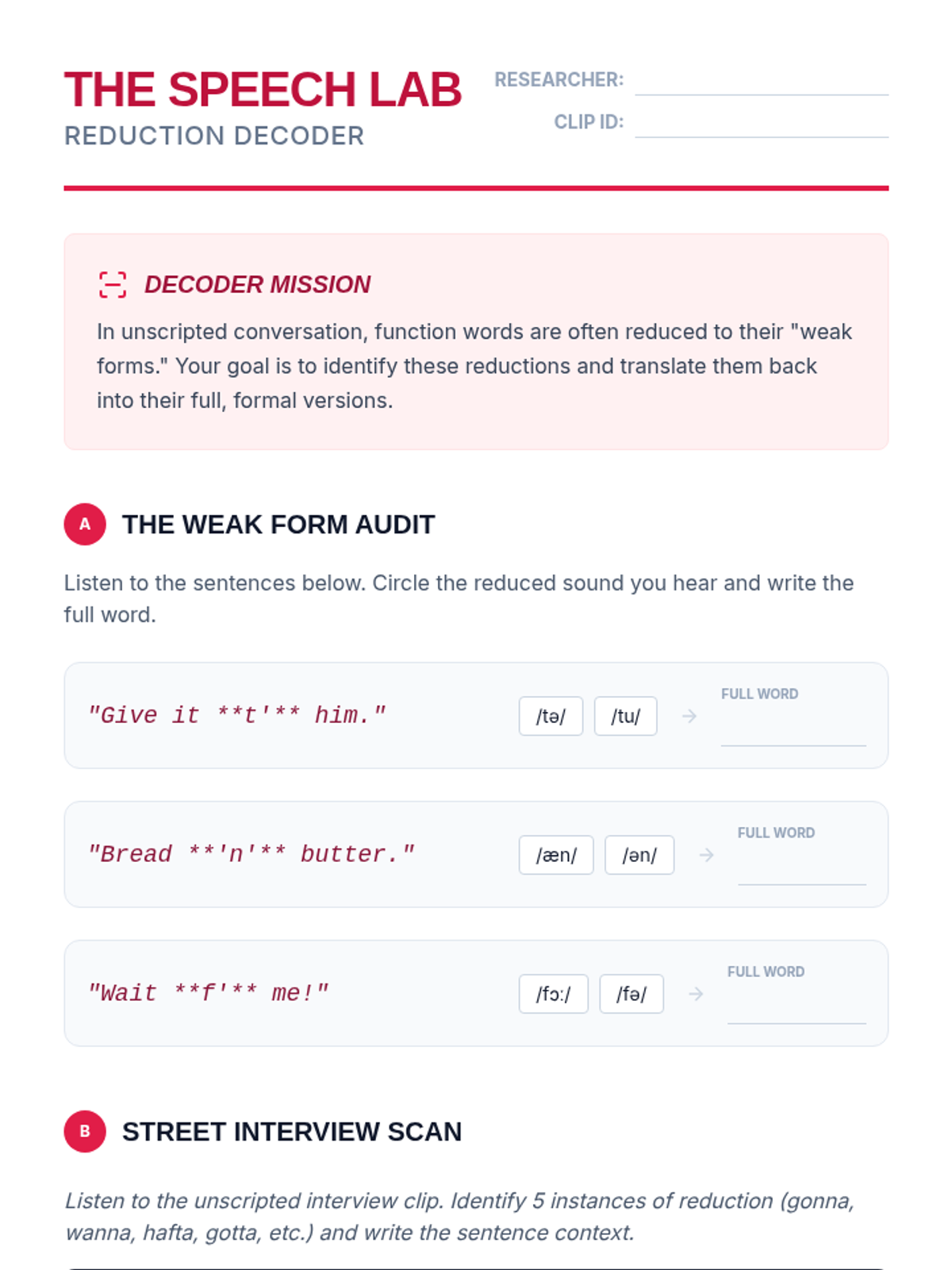
A student worksheet for identifying and translating grammatical reductions and weak forms in unscripted interviews.
A slide deck for Lesson 4 focusing on grammatical reductions and weak forms, using a high-contrast visual style to highlight the difference between formal and casual speech.
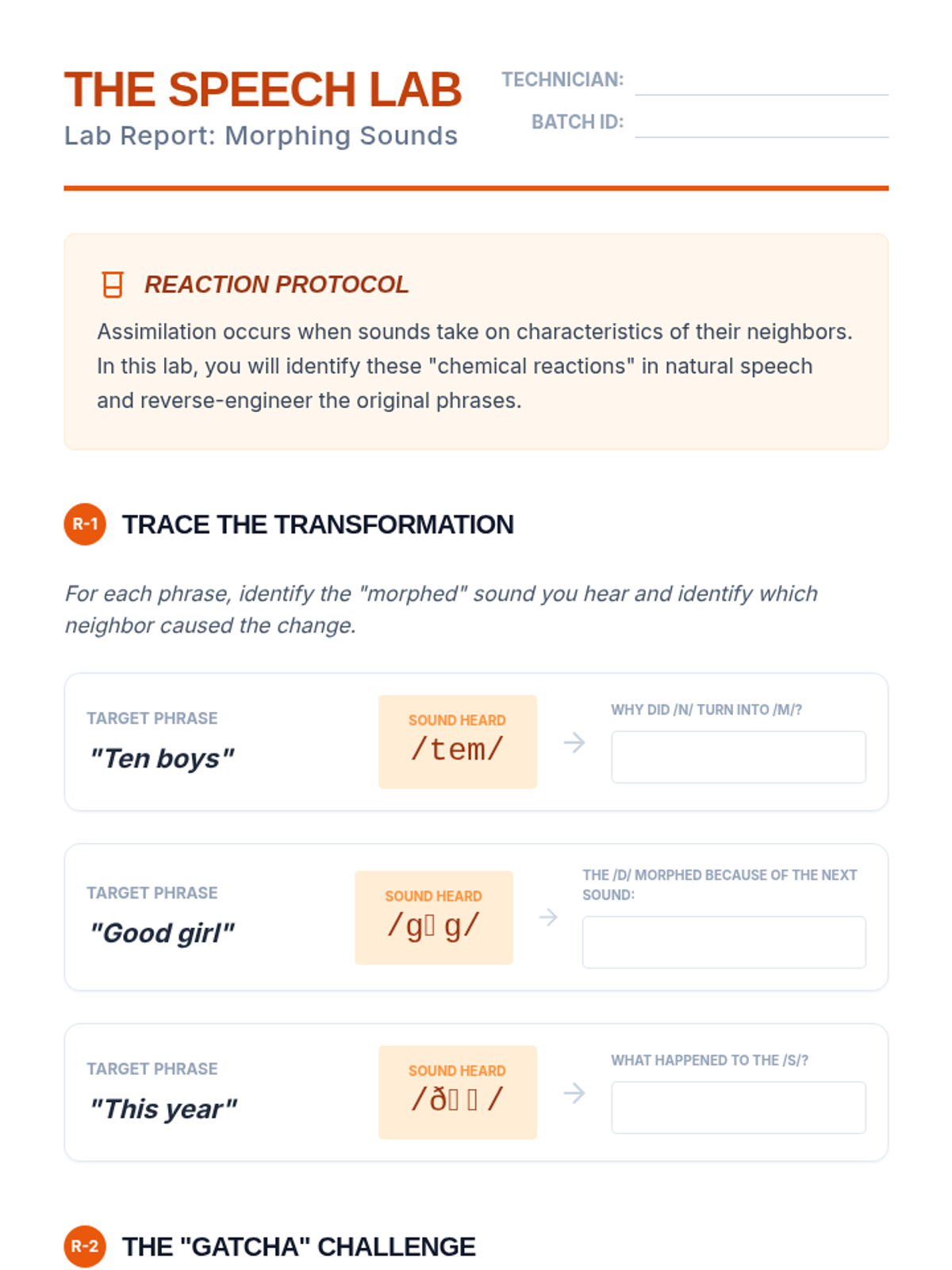
A student worksheet for identifying and reverse-engineering assimilated sounds in natural speech patterns.
A slide deck for Lesson 3 introducing assimilation, showing how sounds change based on their neighbors using a "chemical reaction" theme.
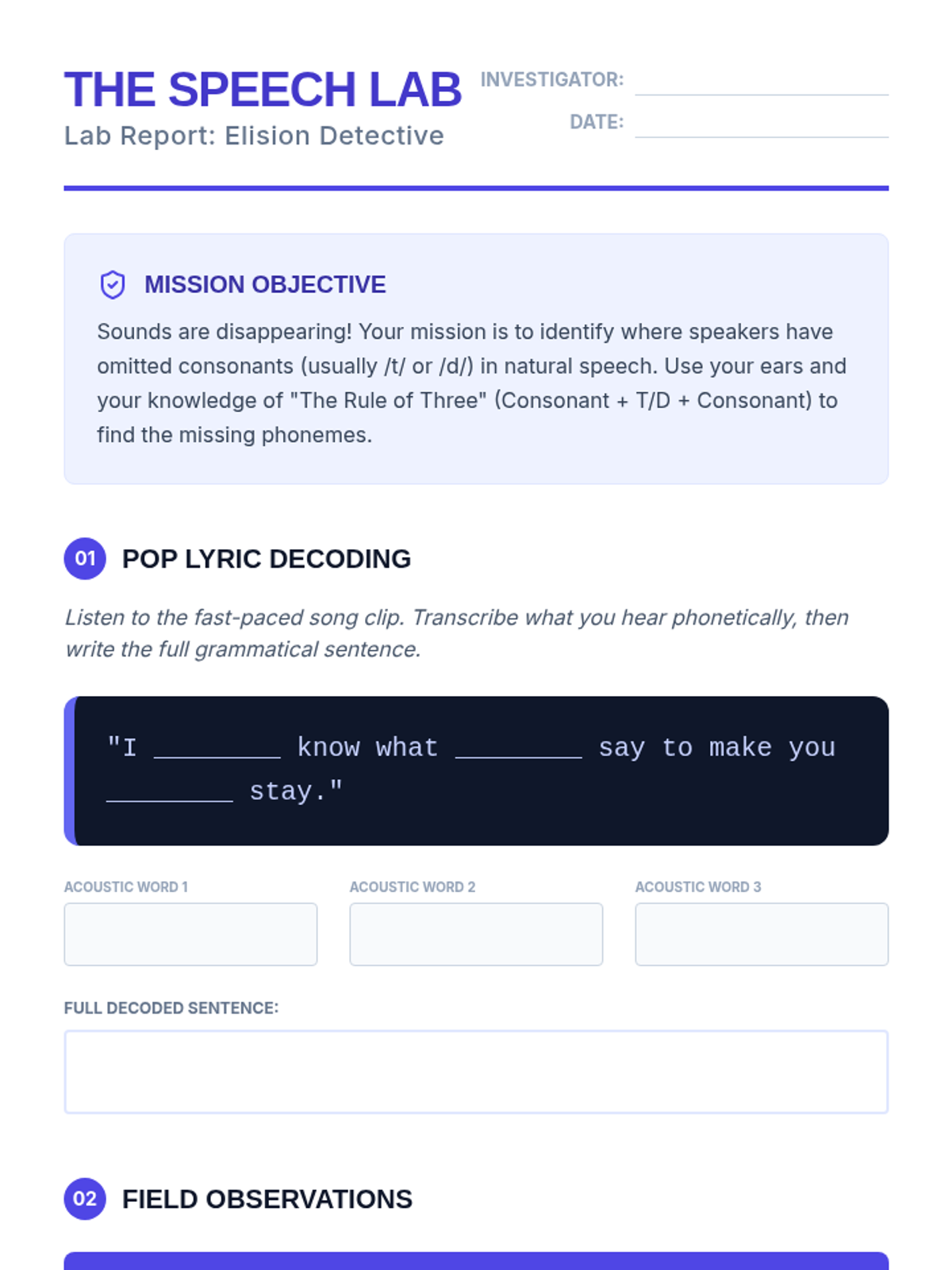
A student worksheet for identifying and reconstructing elided sounds (/t/ and /d/) in common phrases and lyrics.
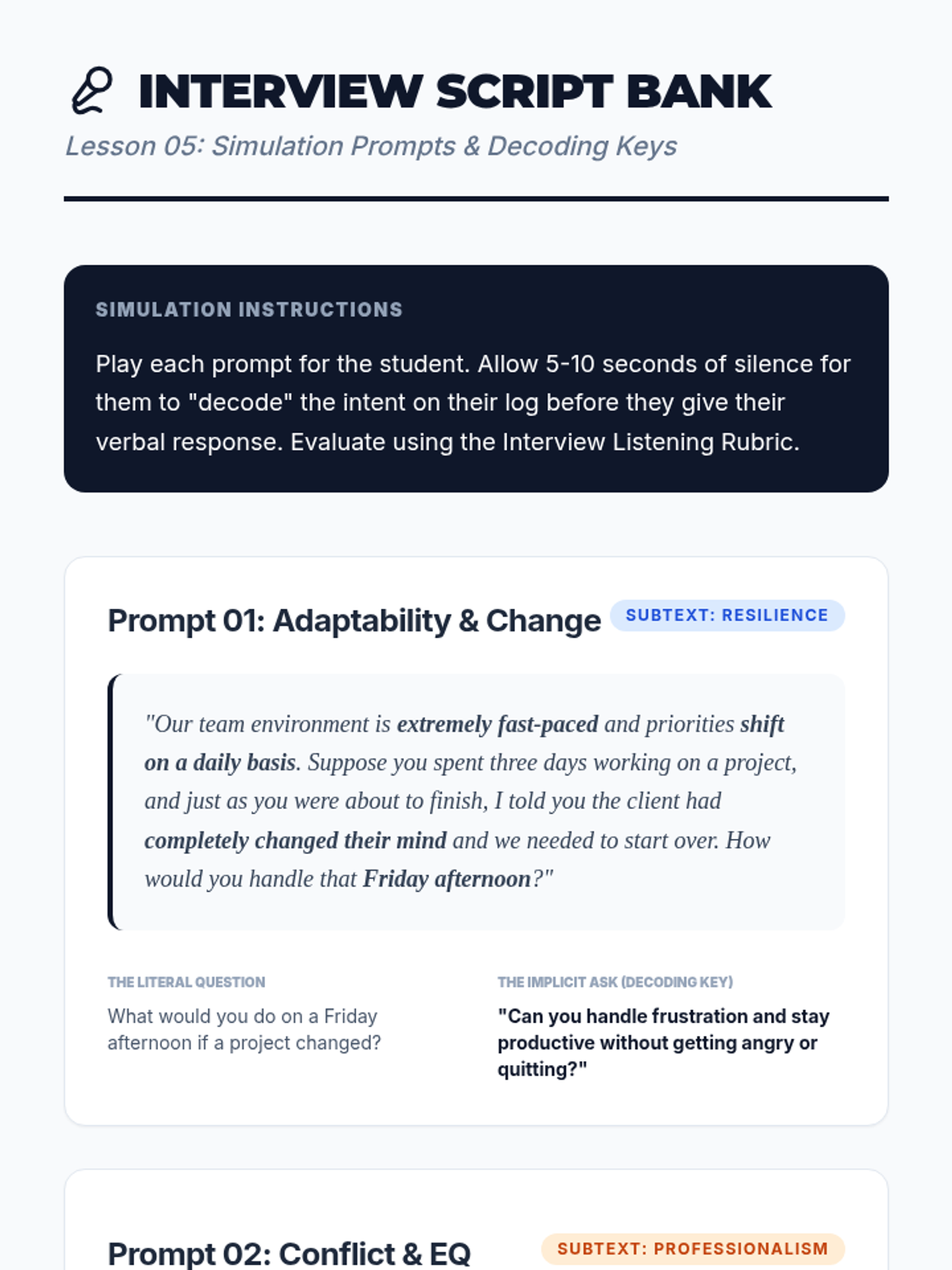
Teacher-facing scripts for the final lesson's interview simulation, featuring complex prompts with explicit vs. implicit intent decoding keys.
A slide deck for Lesson 2 focusing on elision, where sounds disappear in rapid speech, specifically highlighting /t/ and /d/ omissions.
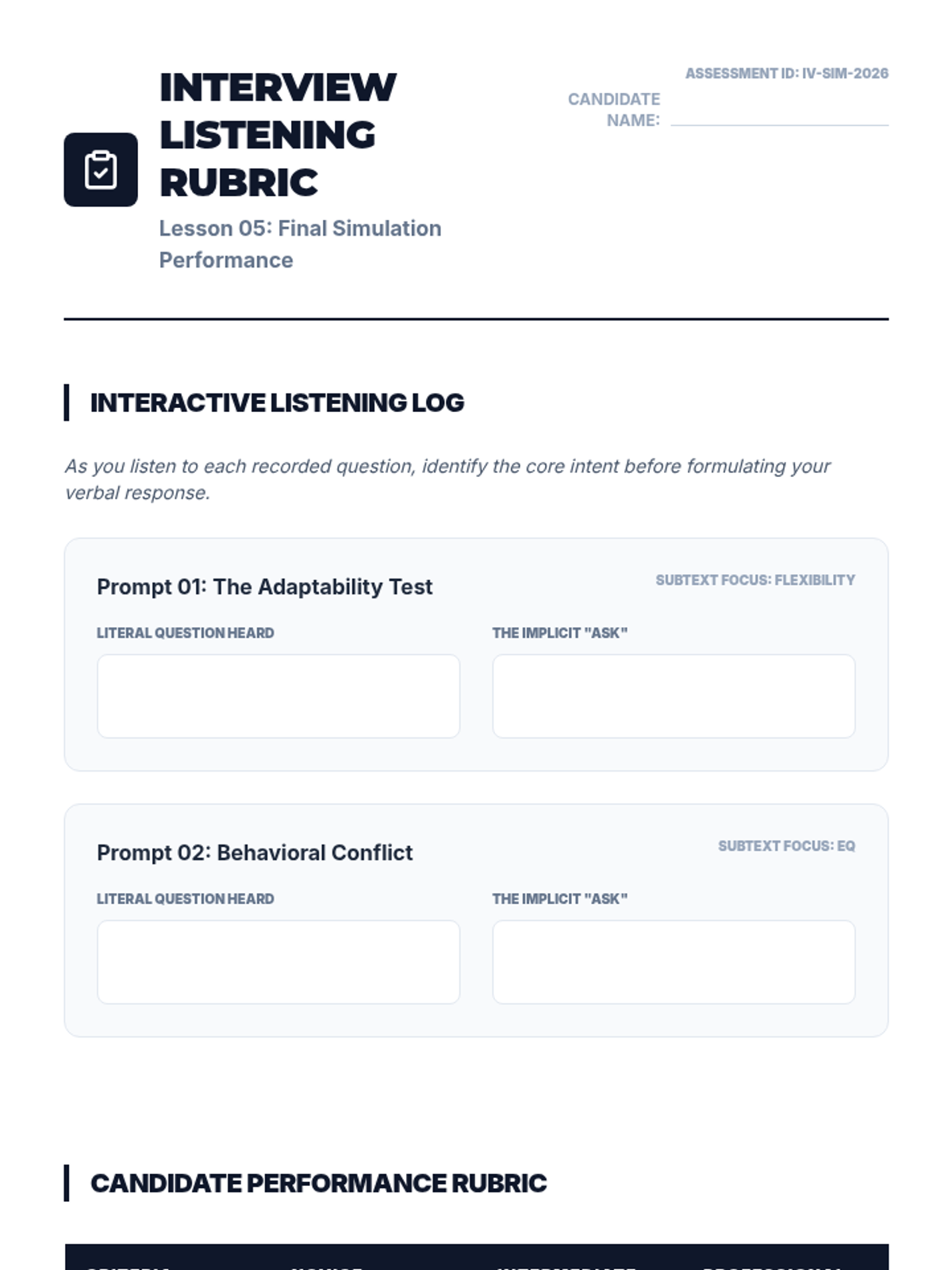
A student assessment rubric and listening log for the final interview simulation, focusing on decoding implicit intent and pragmatic clarity.
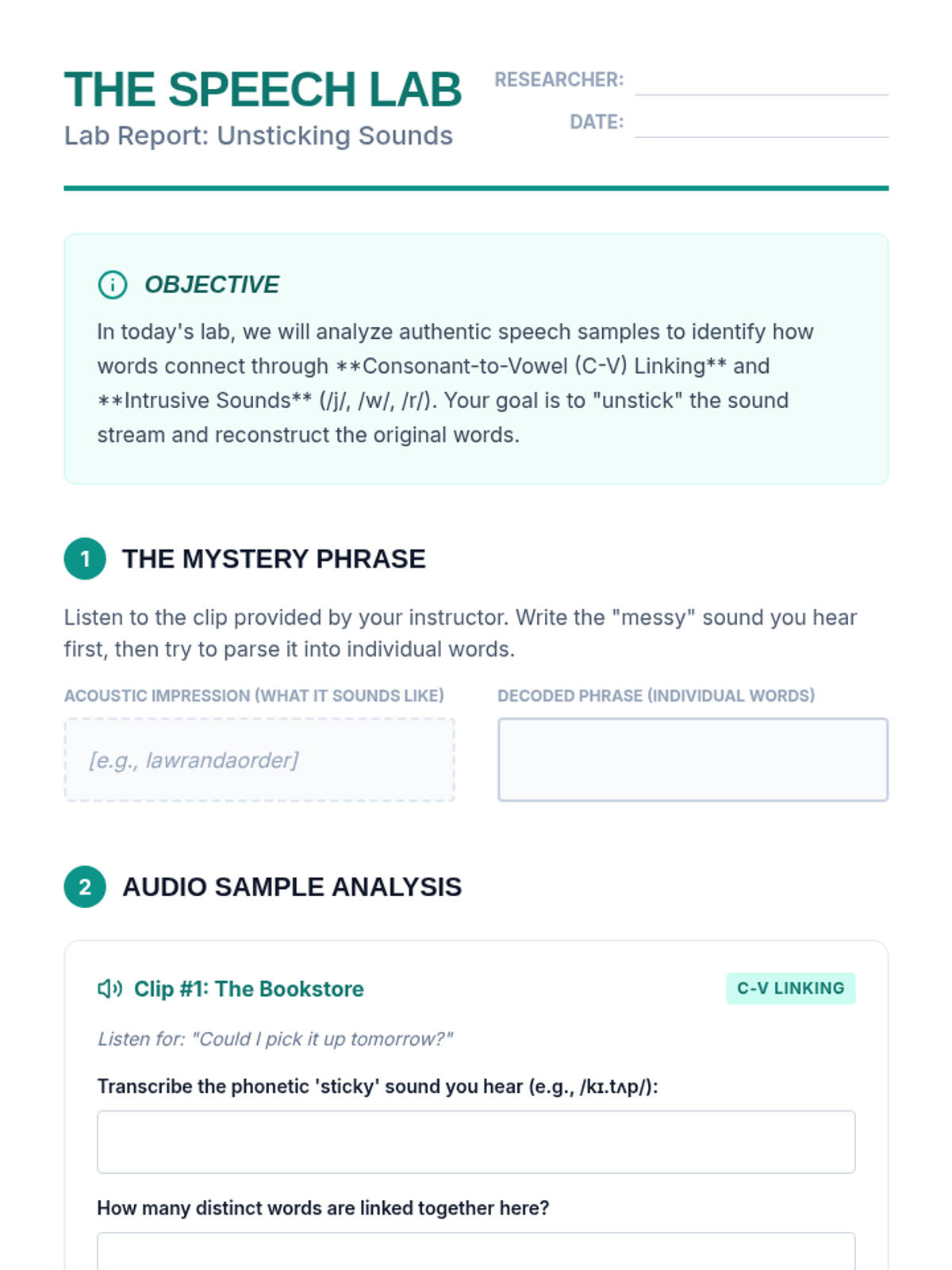
A student worksheet for analyzing audio samples, focusing on identifying consonant-vowel linking and intrusive sounds in campus-based scenarios.
A slide deck focusing on strategies for decoding complex interview questions and behavioral prompts, preparing students for the final simulation.
A visual presentation for Lesson 1, introducing the concepts of consonant-vowel linking and intrusive sounds (/r/, /w/, /j/) with examples and a clear acoustic theme.
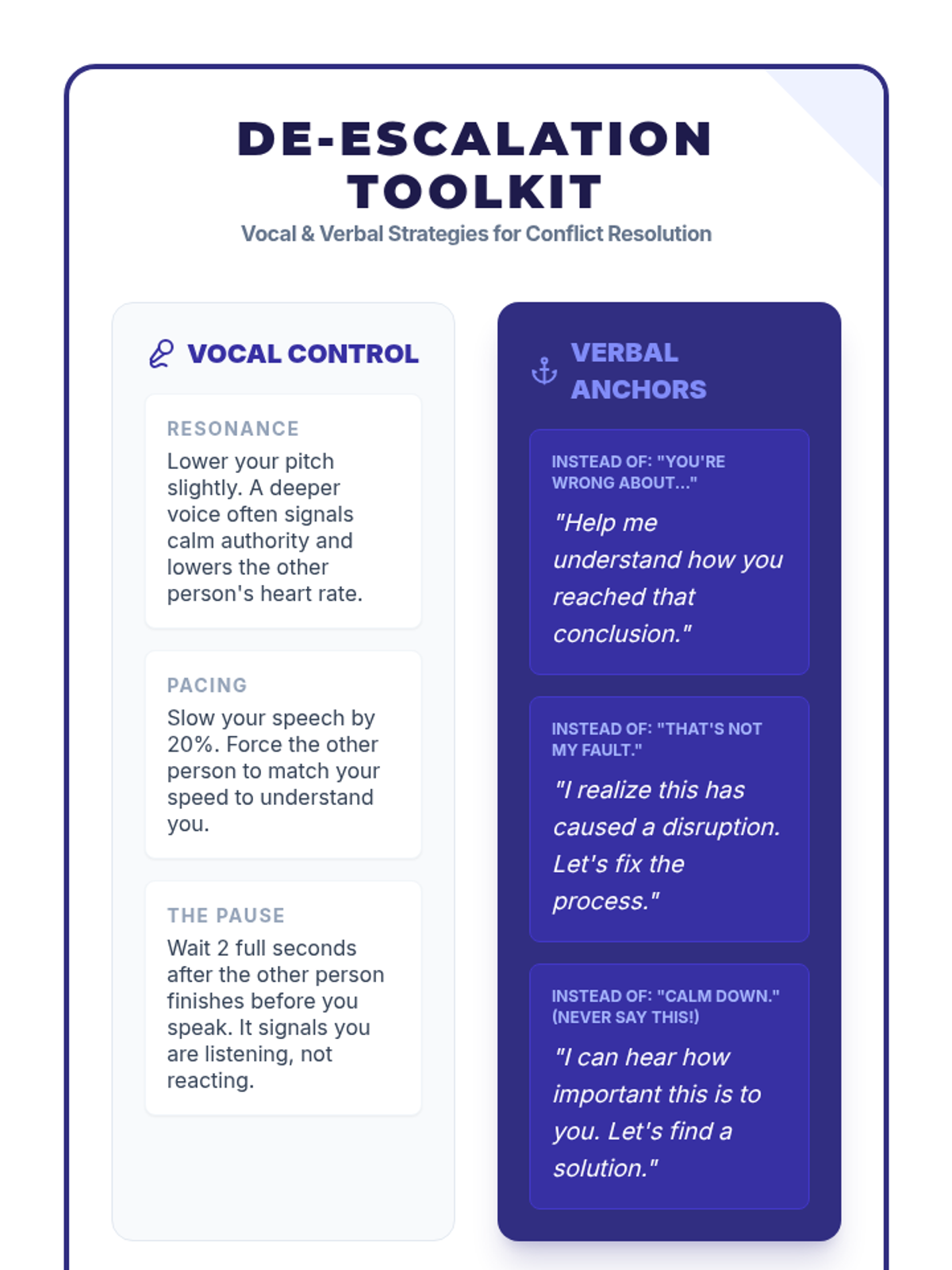
A quick-reference student guide for vocal control and de-escalation phrases to be used during conflict resolution simulations.
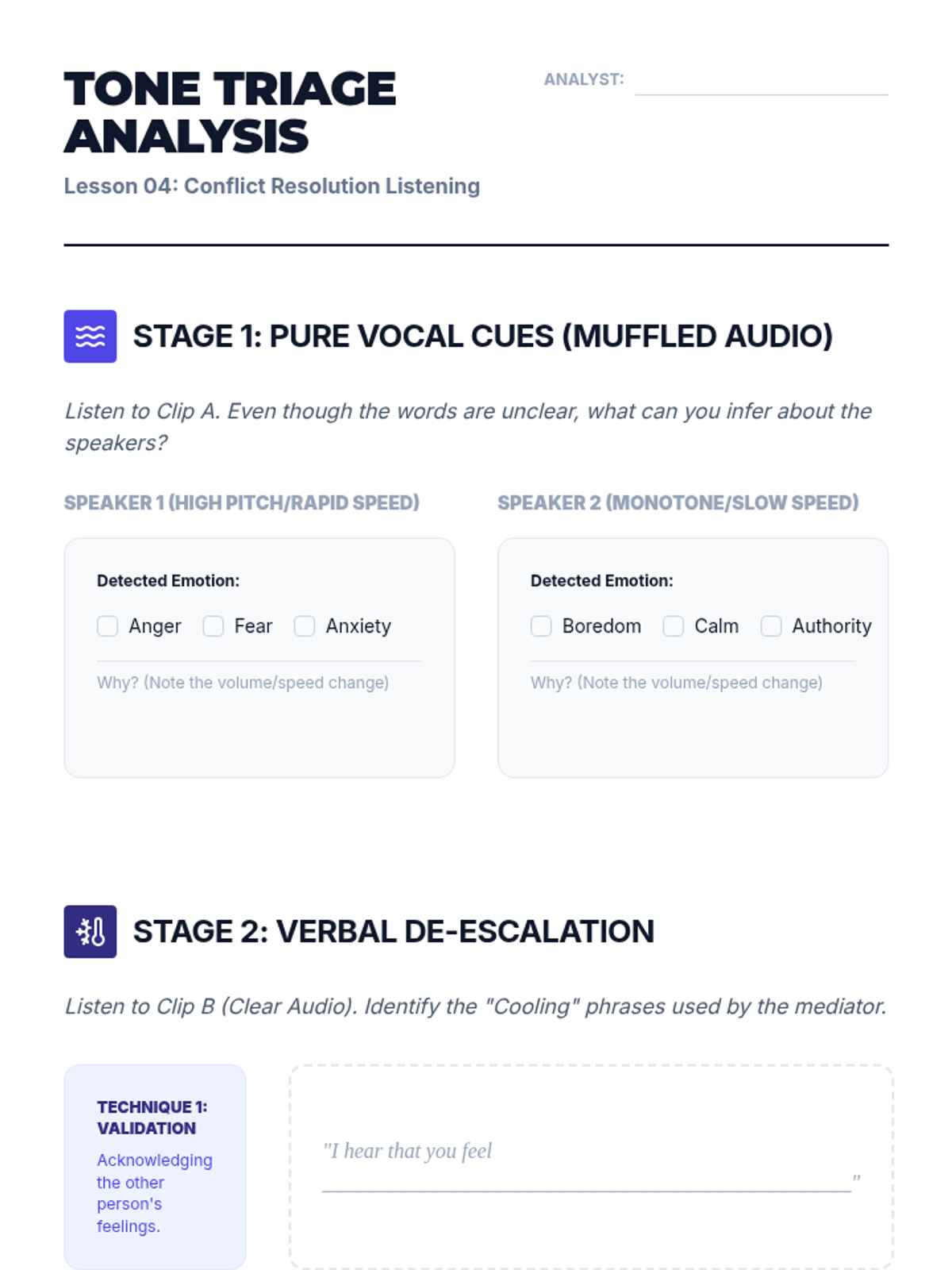
A worksheet for students to analyze conflict resolution audio, tracking both non-verbal vocal cues and specific de-escalation phrases.
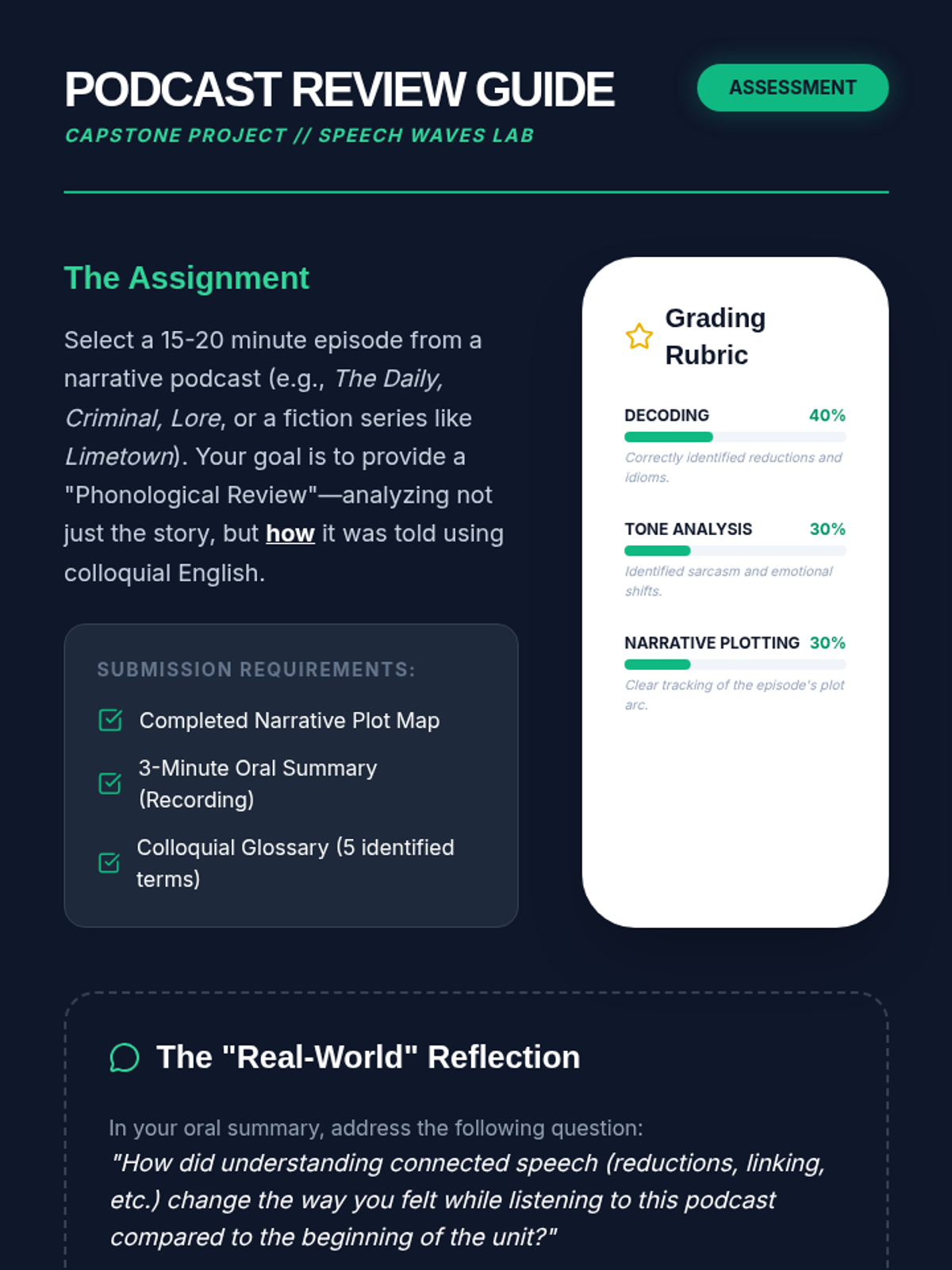
Final project guide and rubric for Lesson 5, where students conduct an independent listening analysis of a narrative podcast episode.
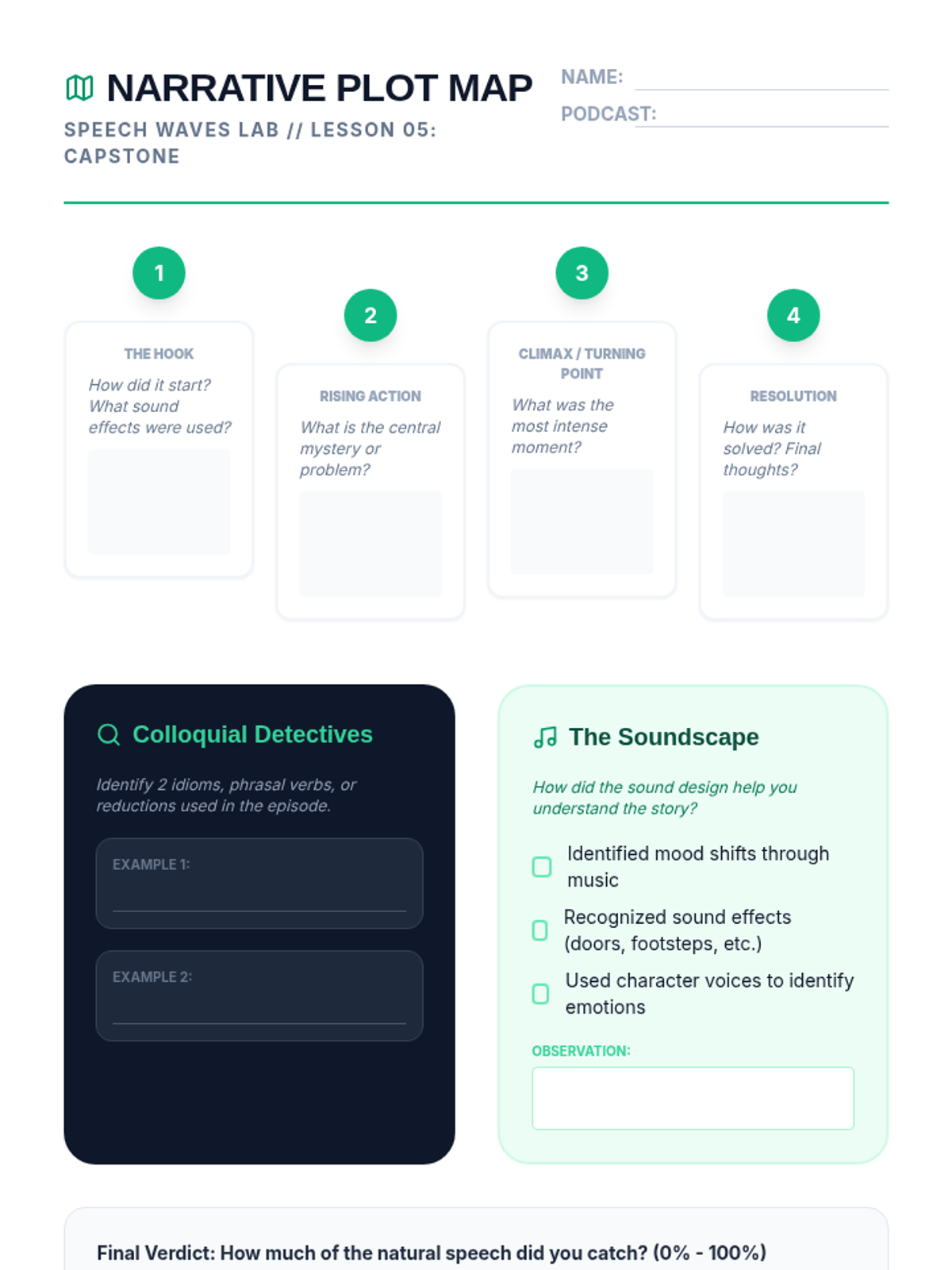
Worksheet for Lesson 5 where students map the plot of a podcast episode and identify colloquial language markers used in sustained storytelling.
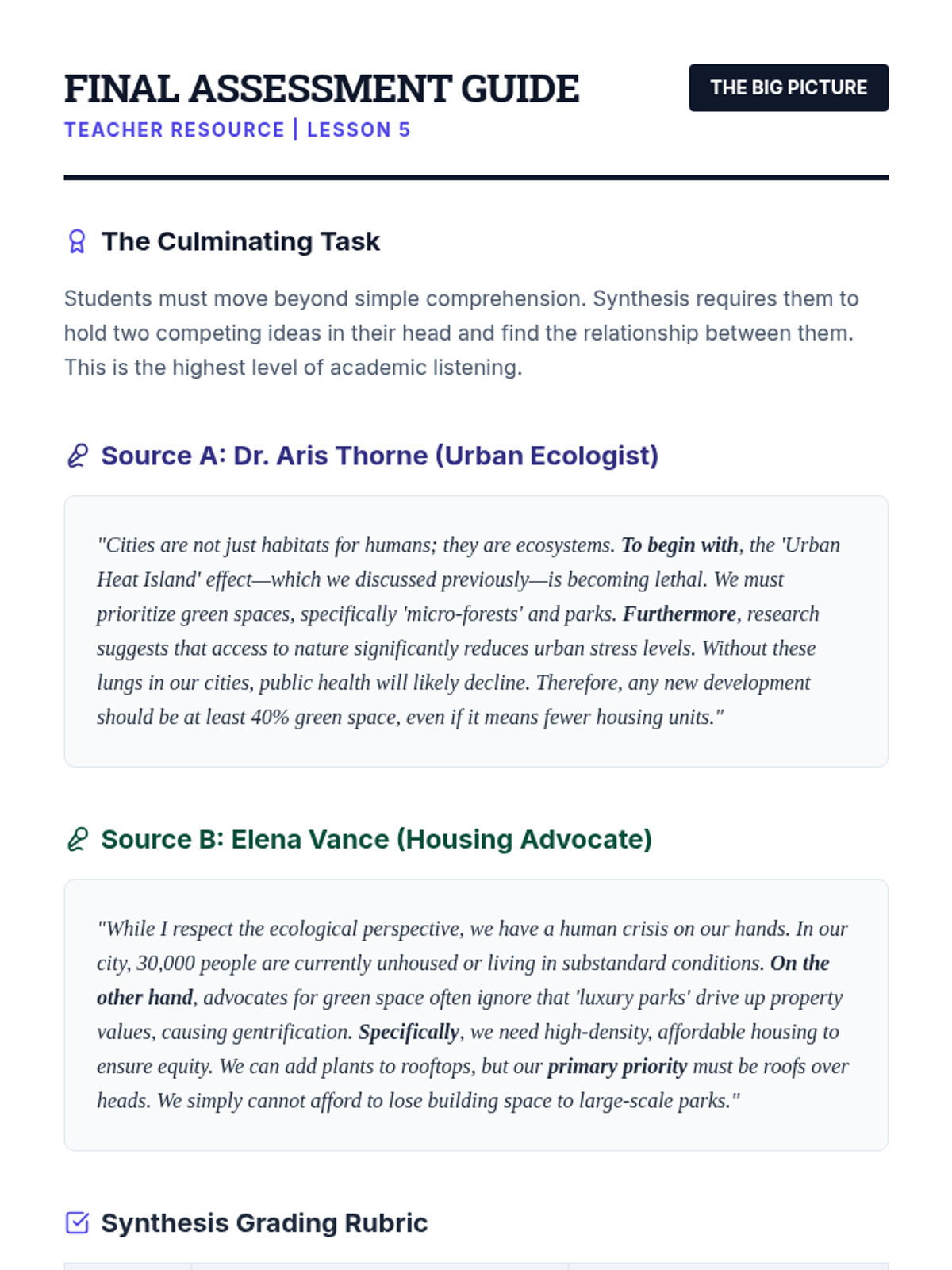
Teacher guide for Lesson 5, including scripts for two contrasting viewpoints and a grading rubric for the synthesis task.
Final slide deck for Lesson 5, guiding students through the process of analyzing sustained narrative podcasts using sound cues and story mapping.
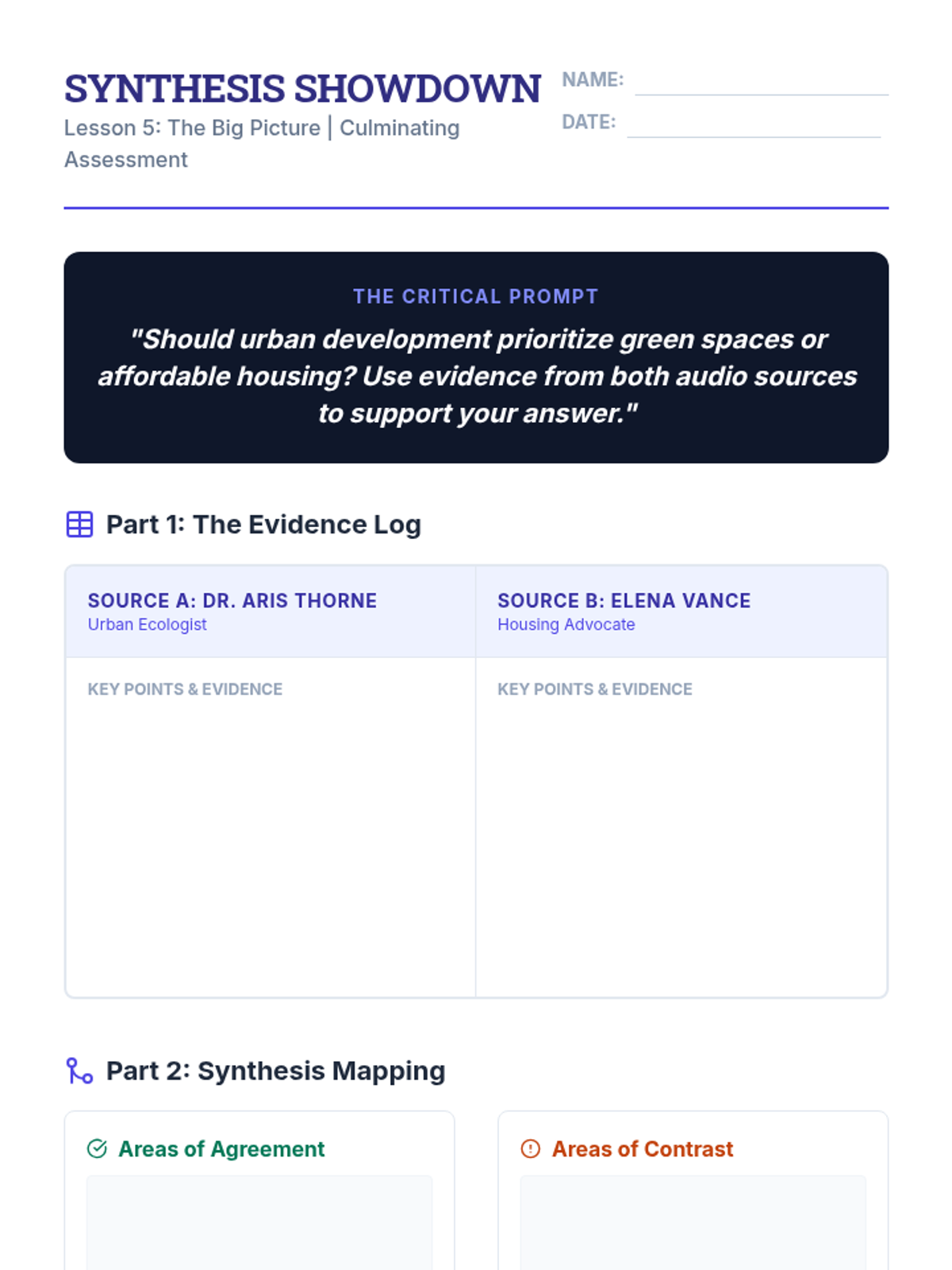
Student worksheet for Lesson 5 providing a comparison chart and space for synthesizing a final response from two audio sources.
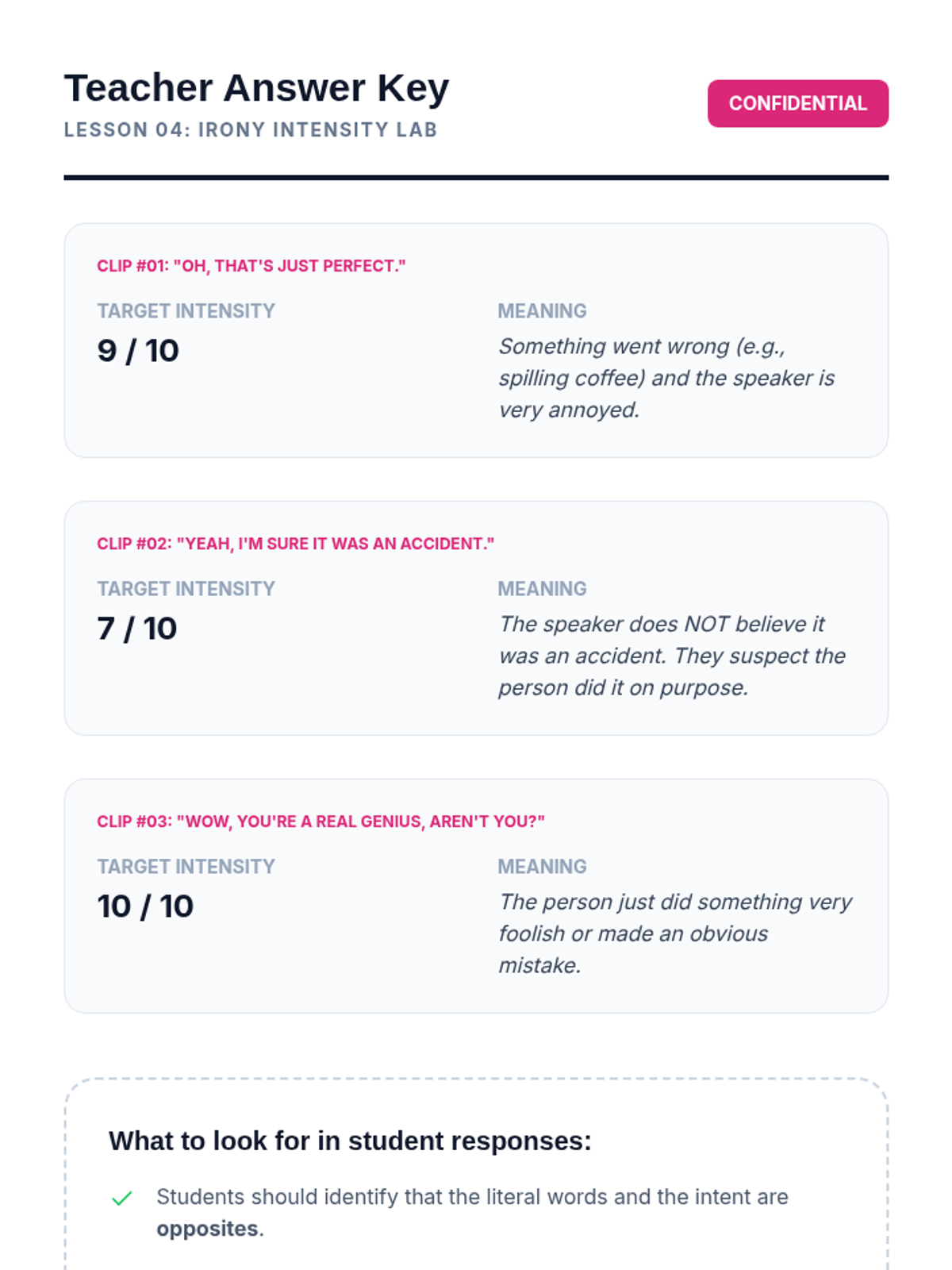
Answer key for Lesson 4 providing expected intensity ratings and literal meanings for the irony detection activity.
Slides for Lesson 5, introducing the concept of synthesis and providing transition phrases for comparative analysis.
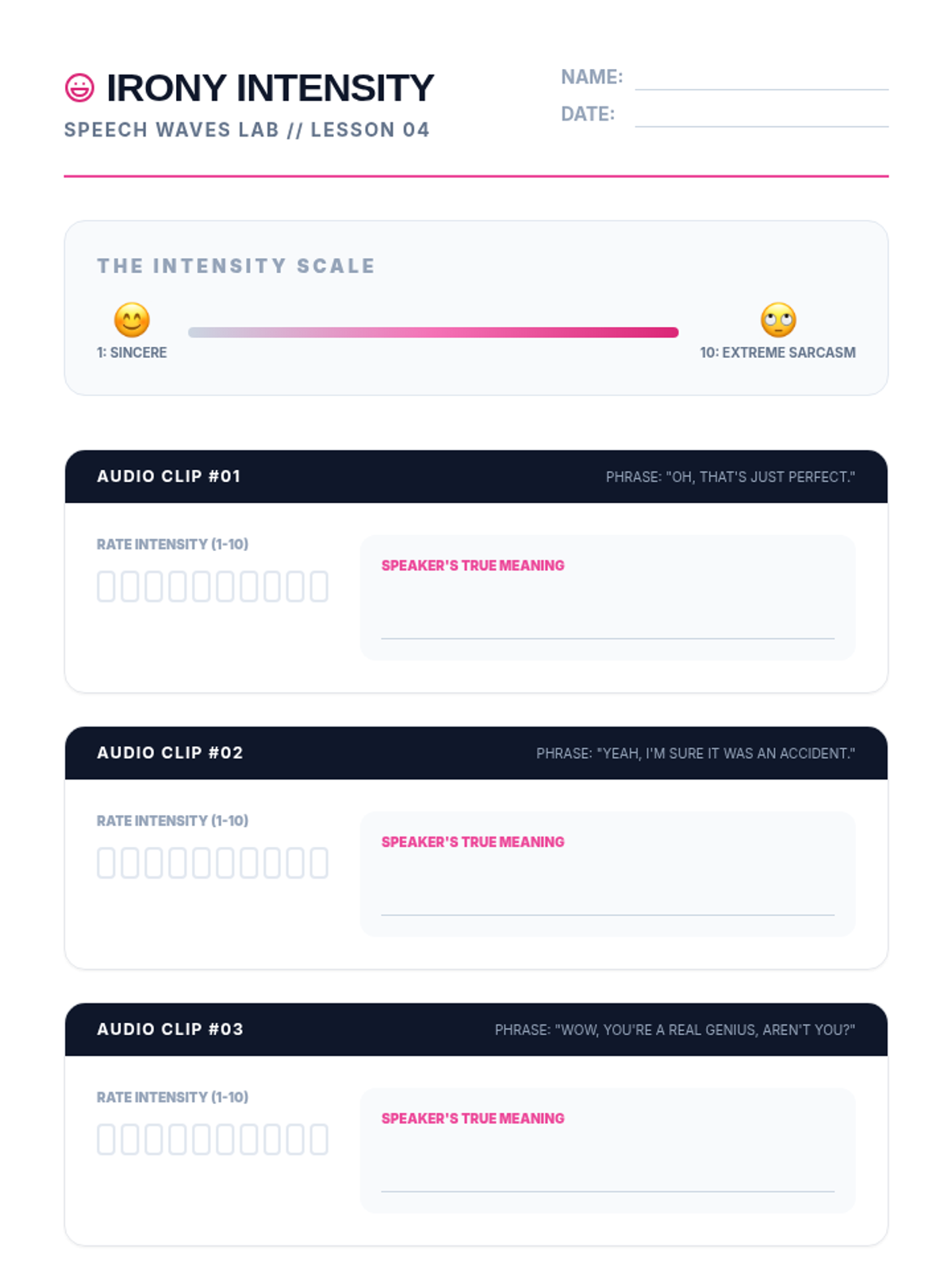
Worksheet for Lesson 4 where students analyze clips for irony levels and describe the speaker's true intent based on intonation.
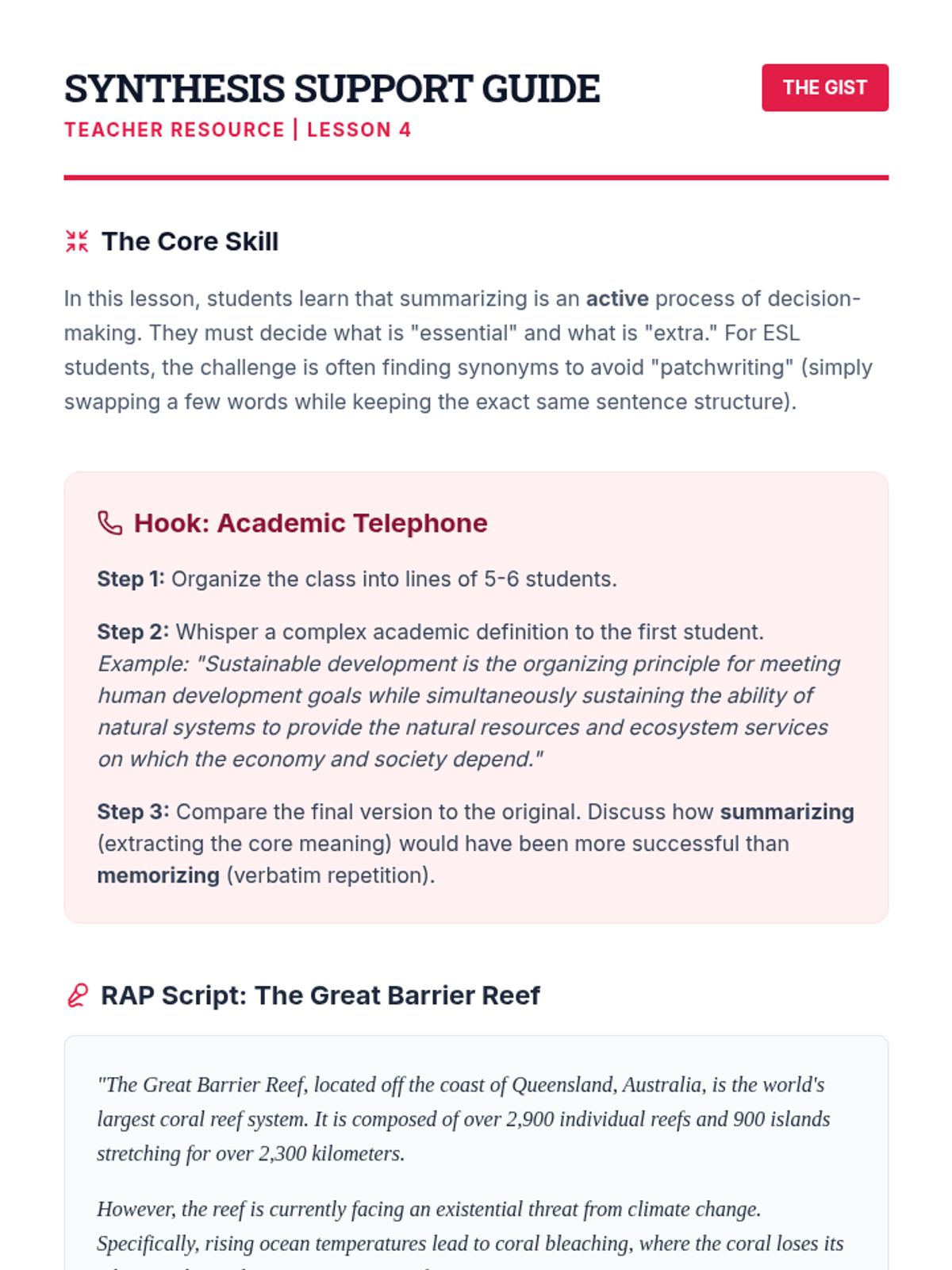
Teacher guide for Lesson 4, including script for the practice lecture and answer key for paraphrasing exercises.
Slide deck for Lesson 4 targeting the detection of sarcasm and irony, focusing on intonation and stress patterns.
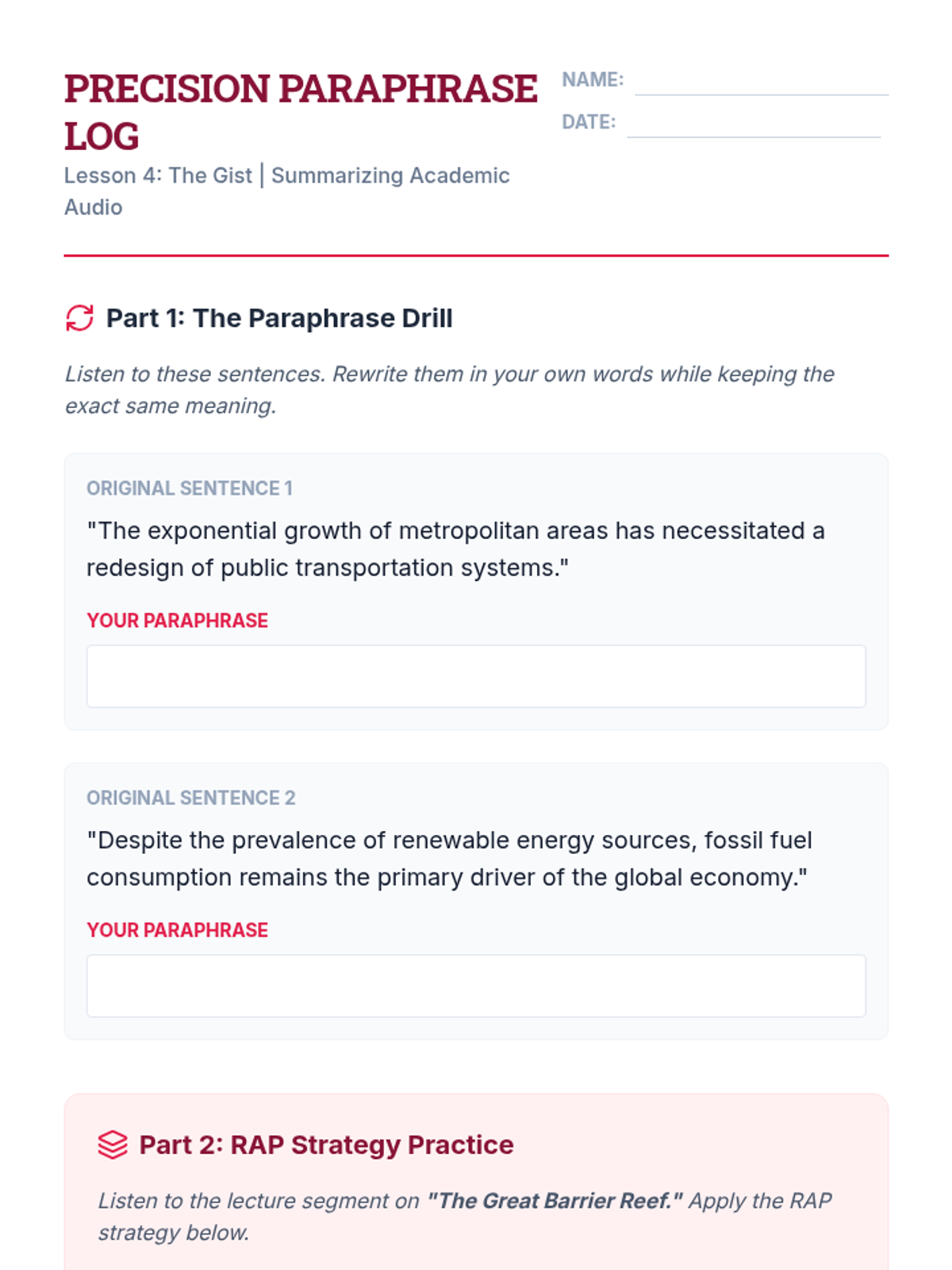
Student worksheet for Lesson 4 focused on practicing summarization and paraphrasing using the RAP method.
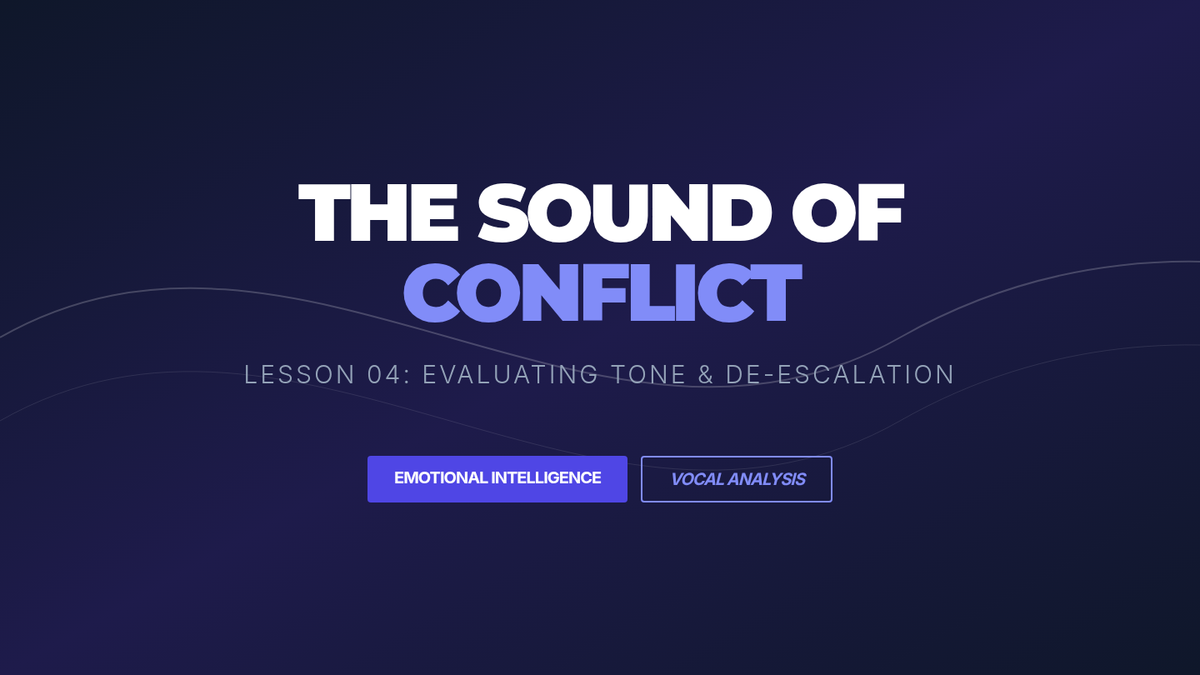
A slide deck evaluating emotional cues and de-escalation techniques in conflict resolution scenarios.
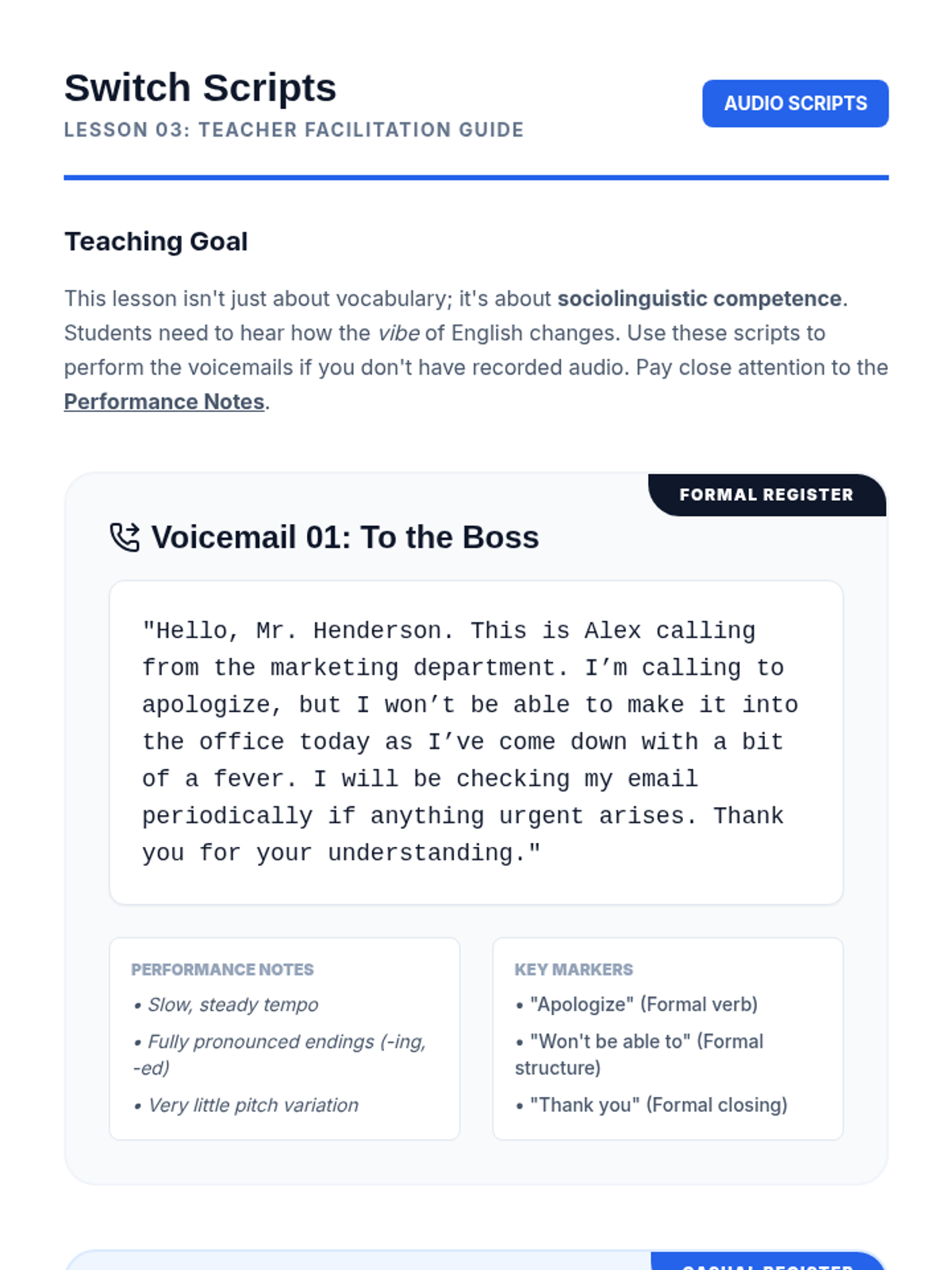
Teacher guide for Lesson 3 providing scripts for formal and informal voicemail examples, including performance notes and sociolinguistic markers.
Slides for Lesson 4, introducing summarization and paraphrasing strategies like the RAP method for auditory content.
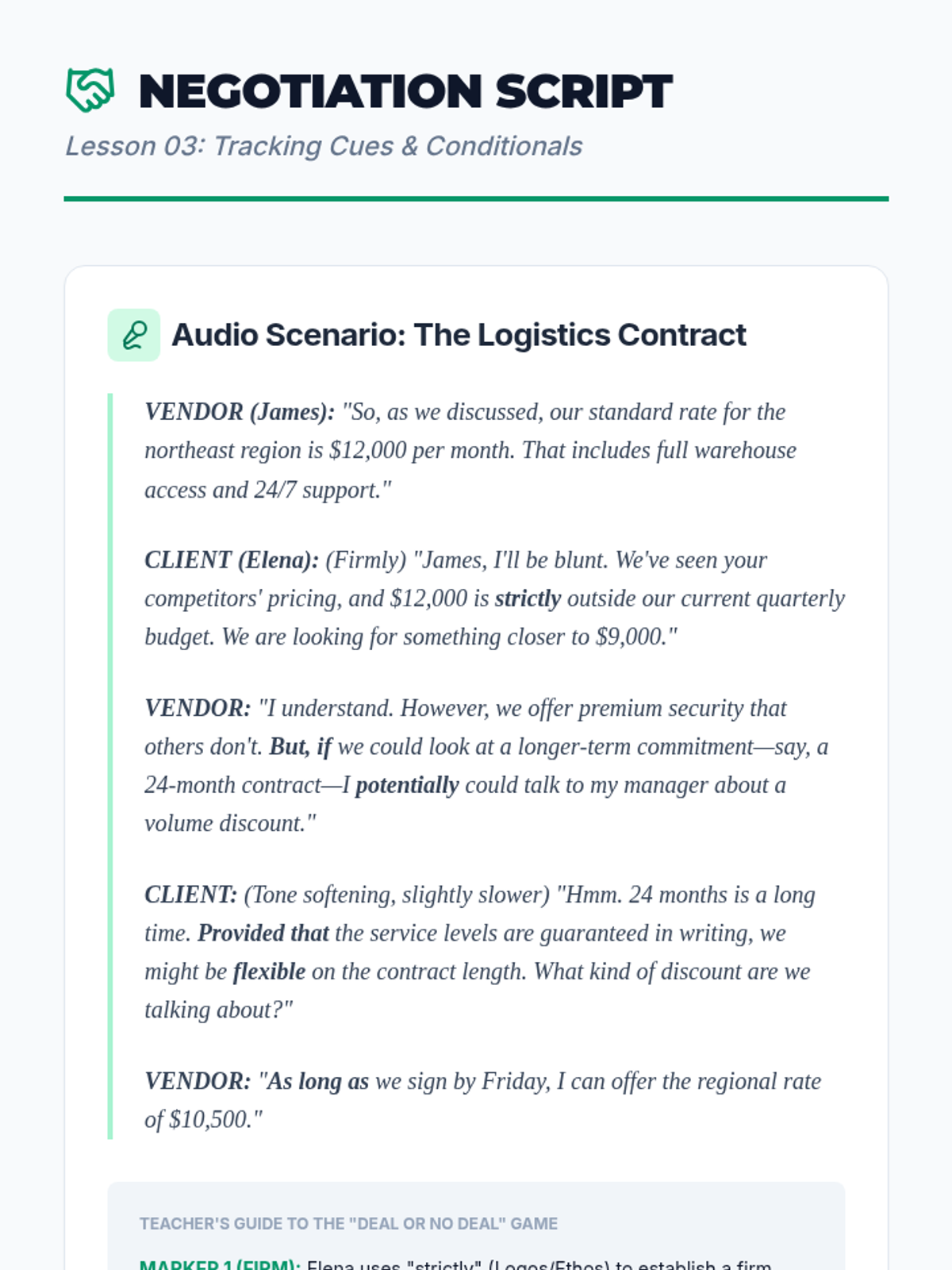
A teacher guide for Lesson 3 containing the negotiation script for "The Logistics Contract" with markers for conditional language and tone shifts.
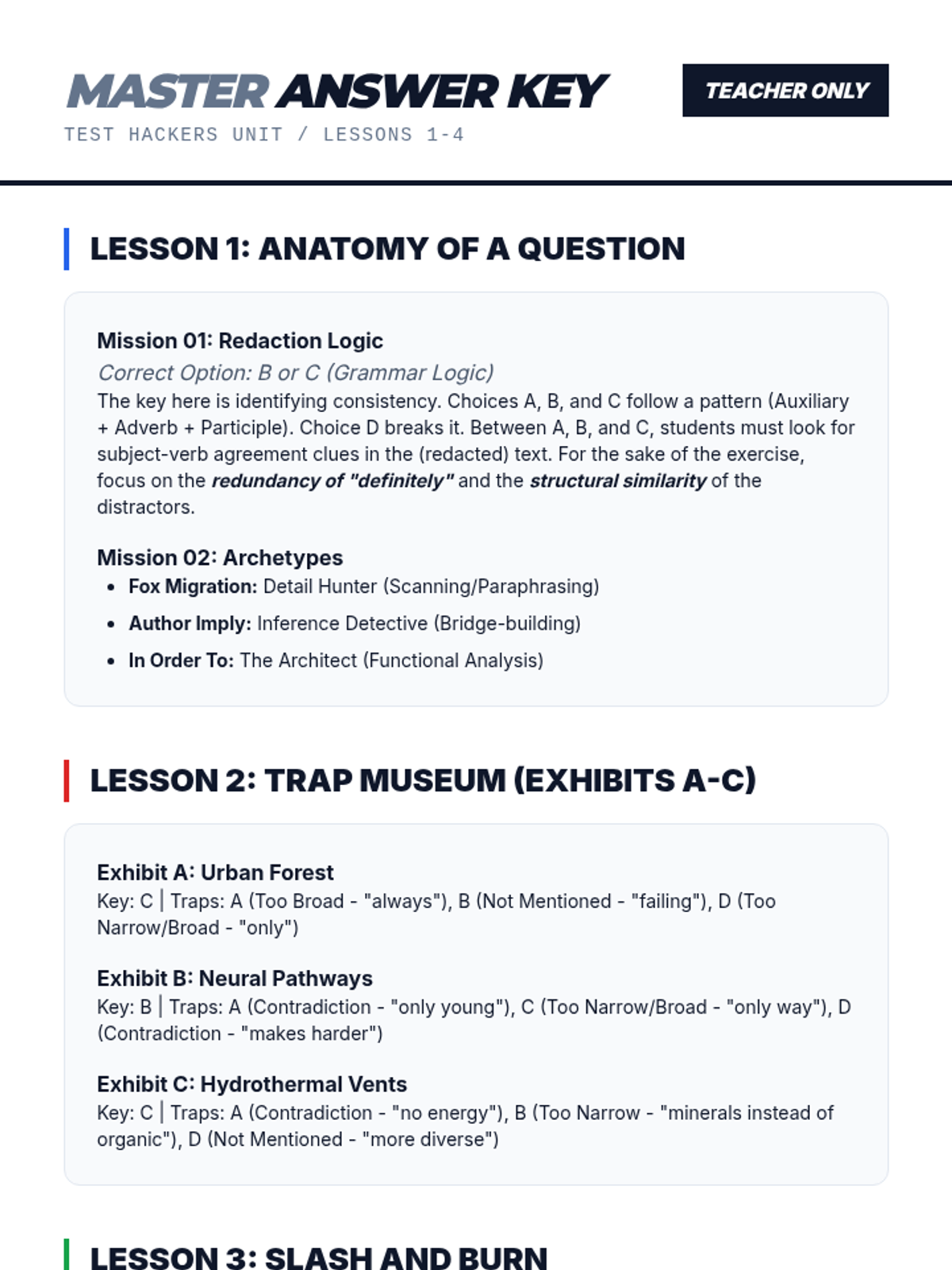
A comprehensive master answer key for teachers, covering activities and worksheets from Lessons 1 through 4 of the Test Hackers unit.
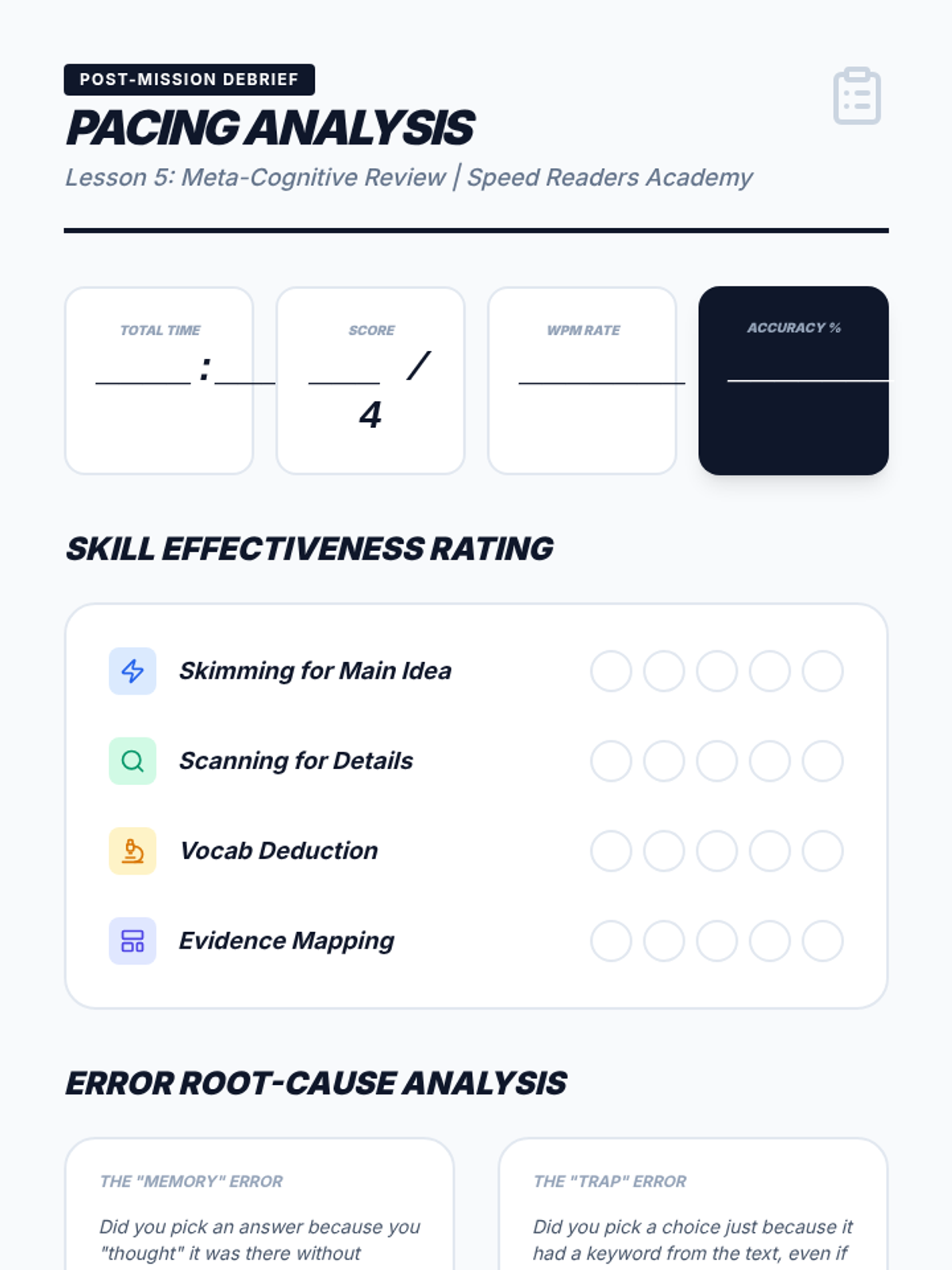
A meta-cognitive log where students conduct a detailed pacing analysis and root-cause analysis of their errors following the timed simulation.
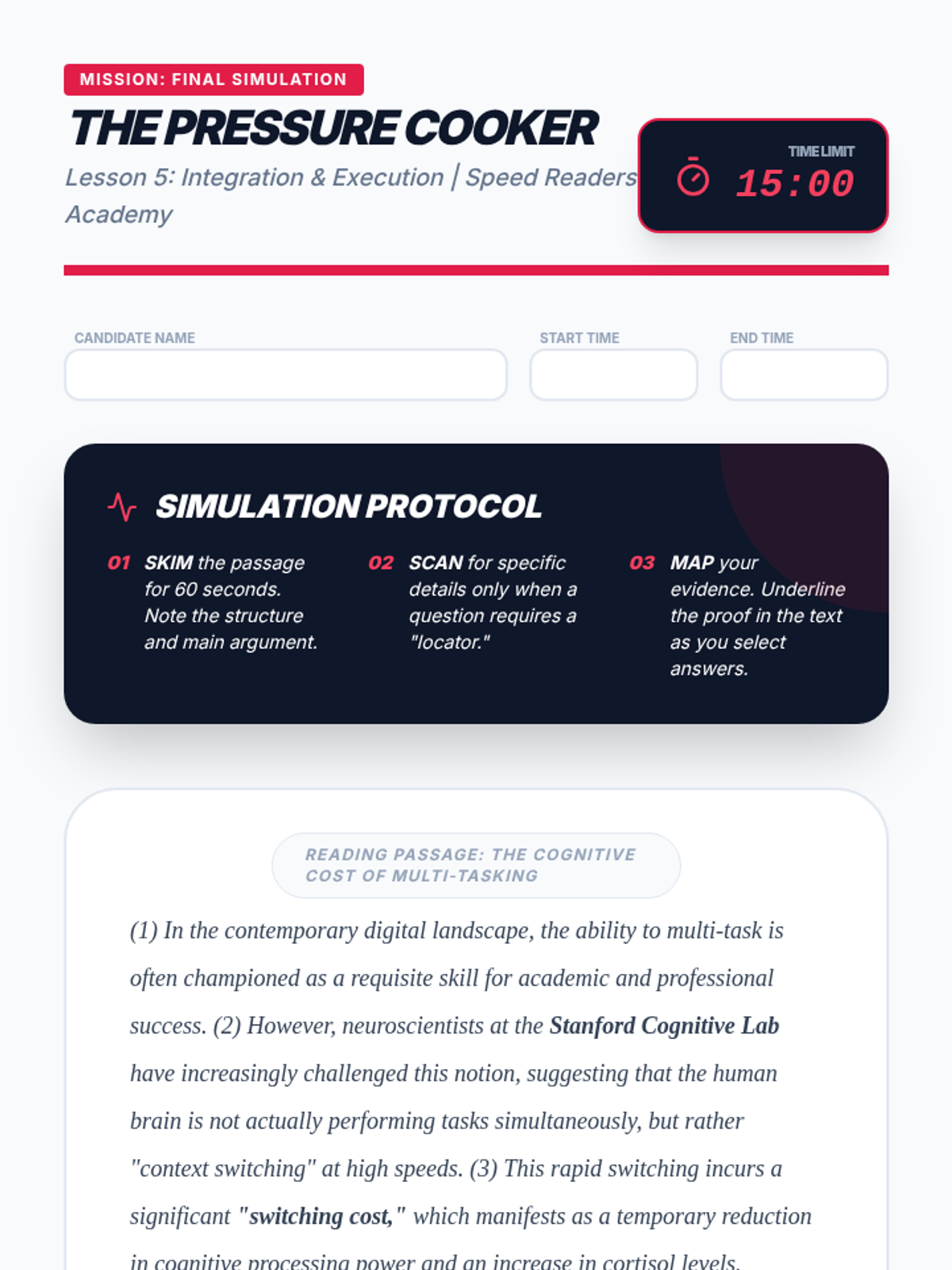
A full-length timed reading section simulation where students apply skimming, scanning, vocabulary deduction, and evidence mapping under pressure.
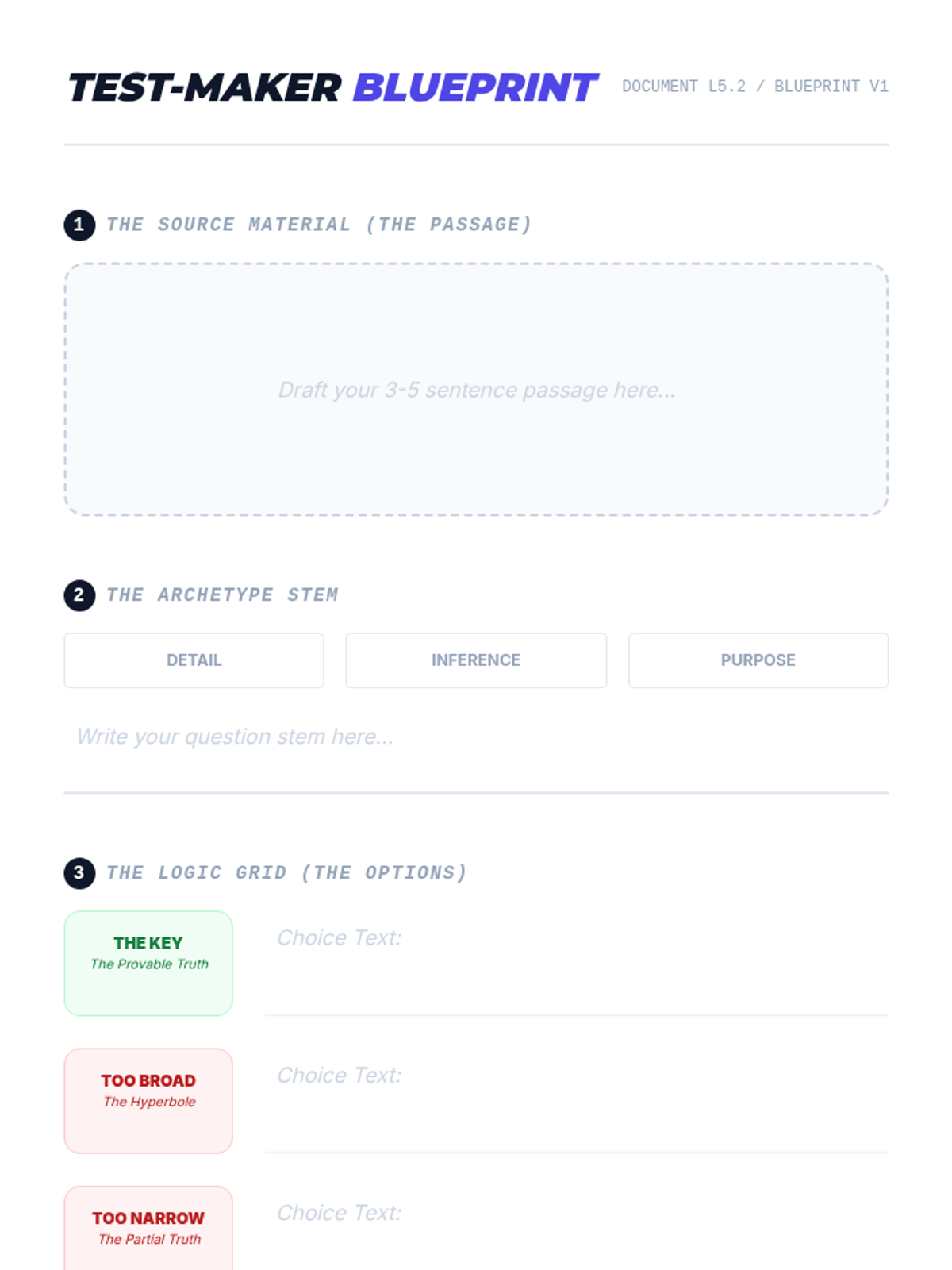
A template for students to draft their own reading passages and corresponding multiple-choice questions with specific distractor types.
A specialized worksheet for Lesson 4 where students practice deconstructing question stems and mapping multiple-choice answers to specific textual proof.
A project guide and rubric for the final assessment where students create their own test questions and distractors.
A student worksheet for practicing rephrasing double negatives and navigating 'EXCEPT' question formats.
A visual guide for Lesson 4 focusing on question analysis, textual mapping, and evading common testing traps through evidence-based reading.
Visual instruction on mental rephrasing techniques for 'EXCEPT' questions and double negatives in standardized exams.
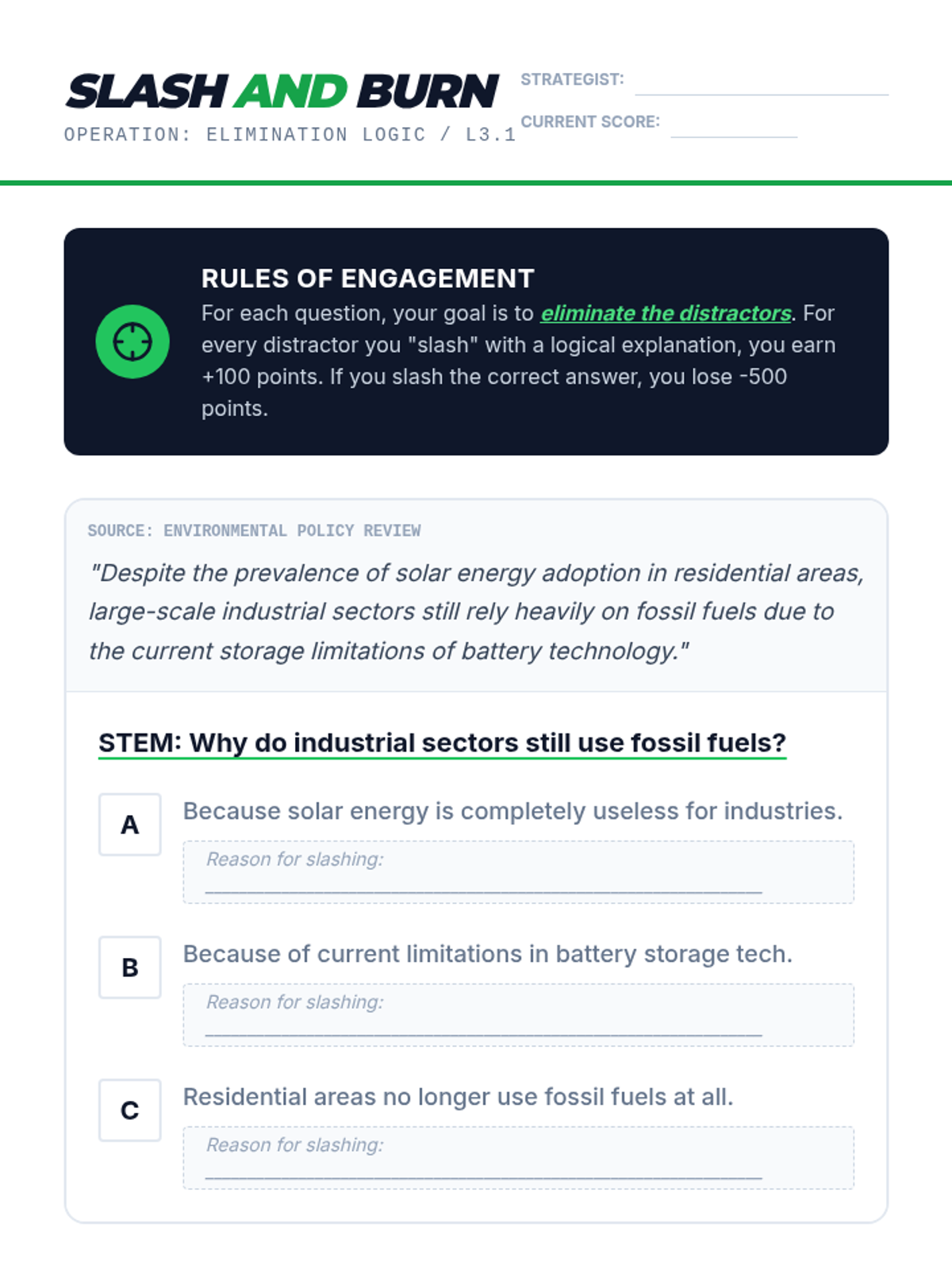
A student game sheet for the 'Slash and Burn' activity where they earn points by logically explaining why distractors are incorrect.
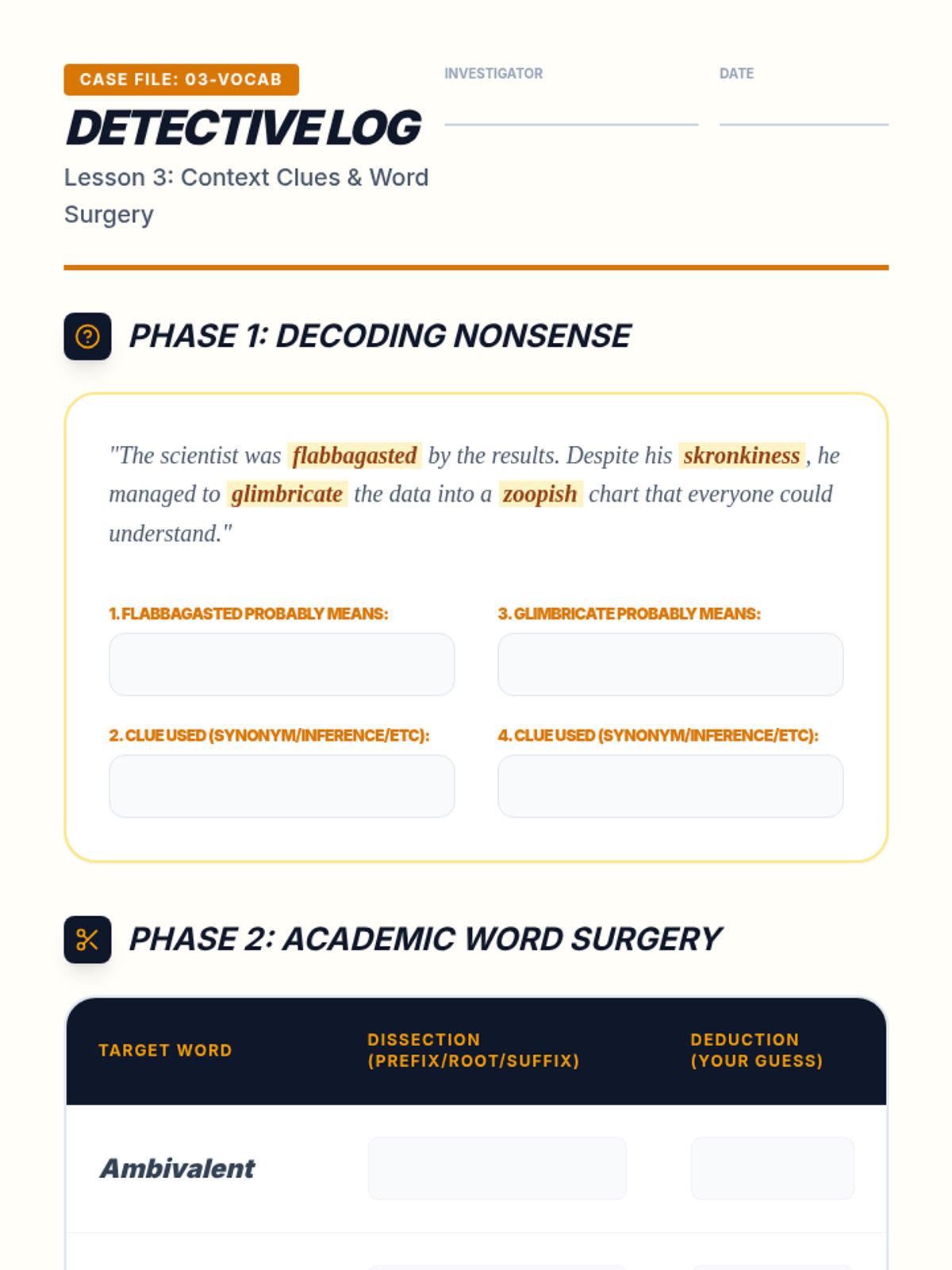
A detective-themed log where students translate nonsense text, perform morphology "surgery" on academic words, and practice 5-second strategic guessing.
Visual instruction on the probability and logic of the Process of Elimination, introducing the 'Slash and Burn' technique for increasing test scores.
A visual guide for Lesson 3 focusing on context clues, morphology, and strategic word-analysis techniques for standardized testing.