Historical evolution of performance, technical stagecraft, and core acting techniques. Develops playwriting skills and fosters imaginative expression through script development and production management.
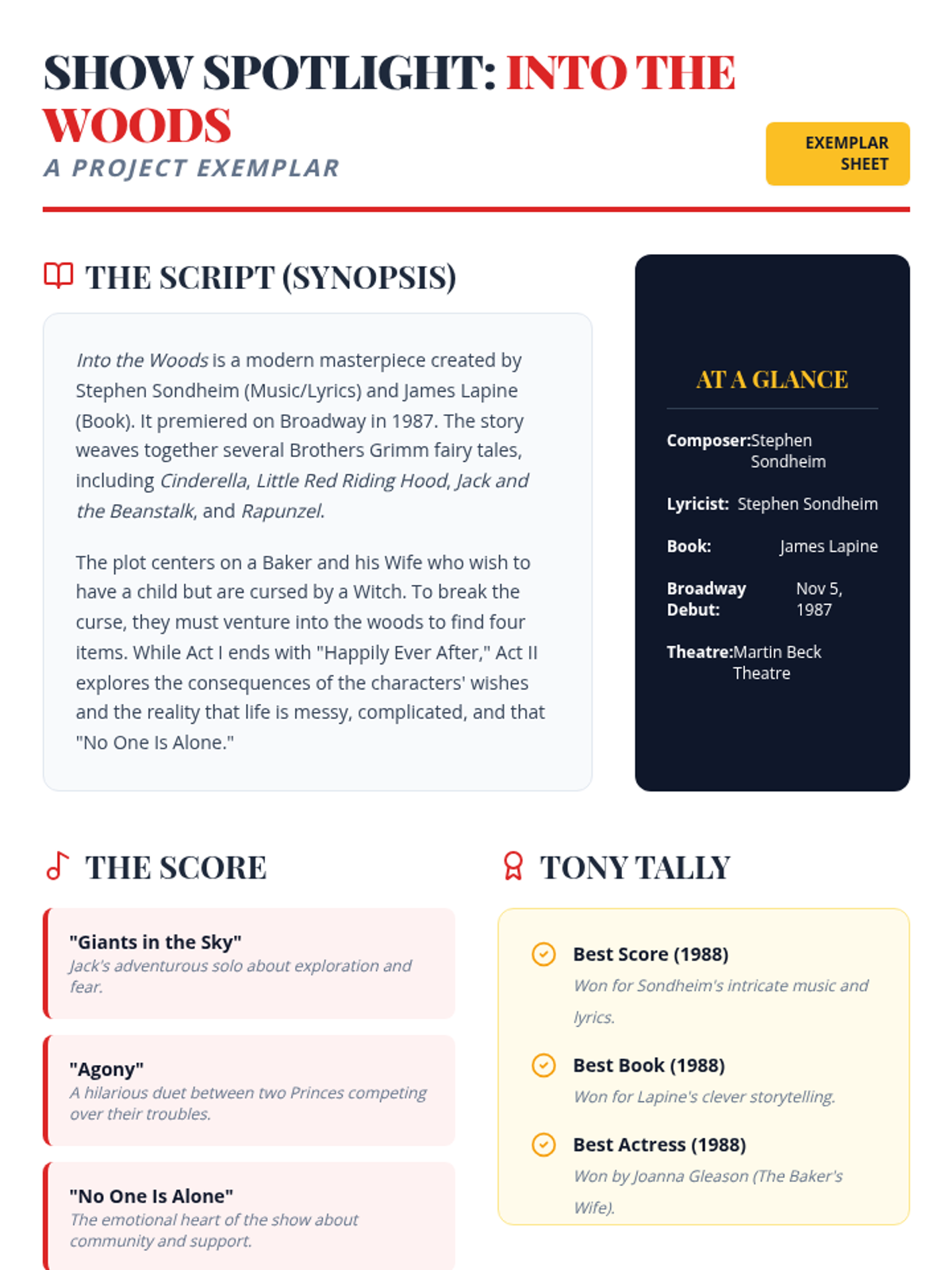
An exemplar research profile for the musical 'Into the Woods', showing students the level of detail, specific facts, and musical analysis expected for their Broadway Spotlight project.
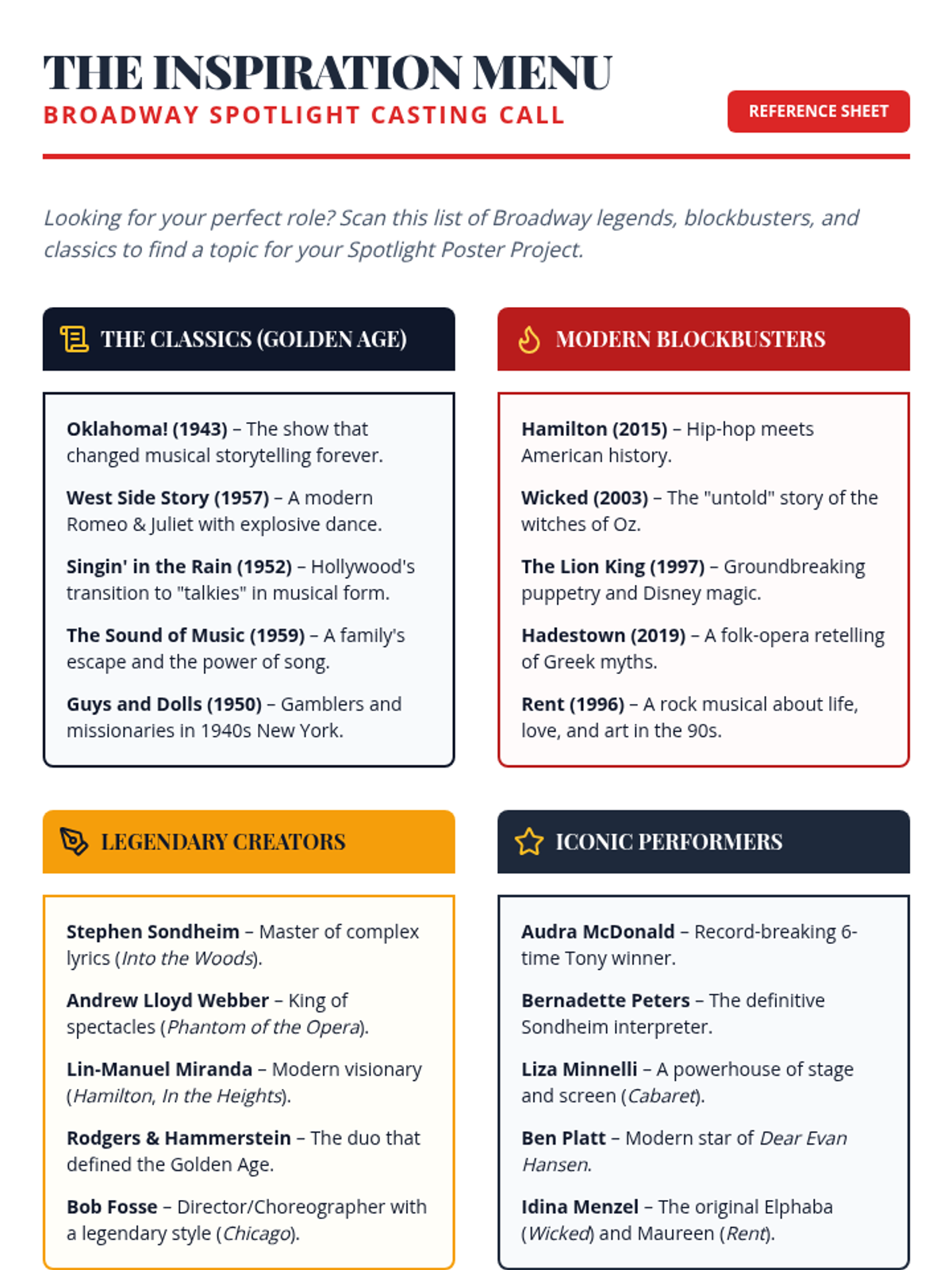
A reference sheet providing a curated list of iconic Broadway musicals, creators, and performers to inspire student project choices.
A visual presentation to introduce the Broadway Spotlight poster project, covering requirements, topic choices, and the project timeline with a musical theatre theme.
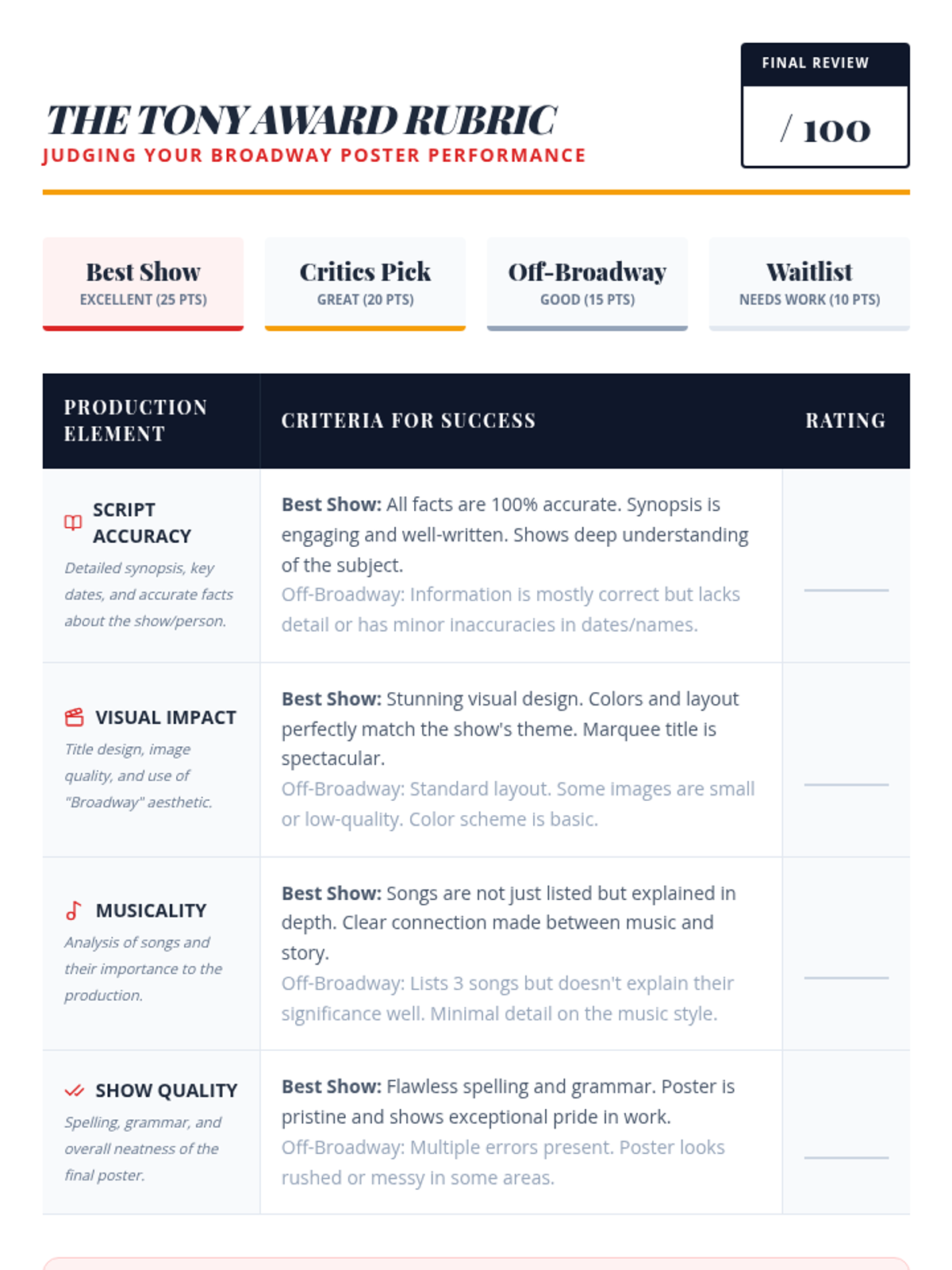
A Broadway-themed assessment rubric for the poster project, evaluating research, design, musical analysis, and professional quality with Tony Award-inspired levels.
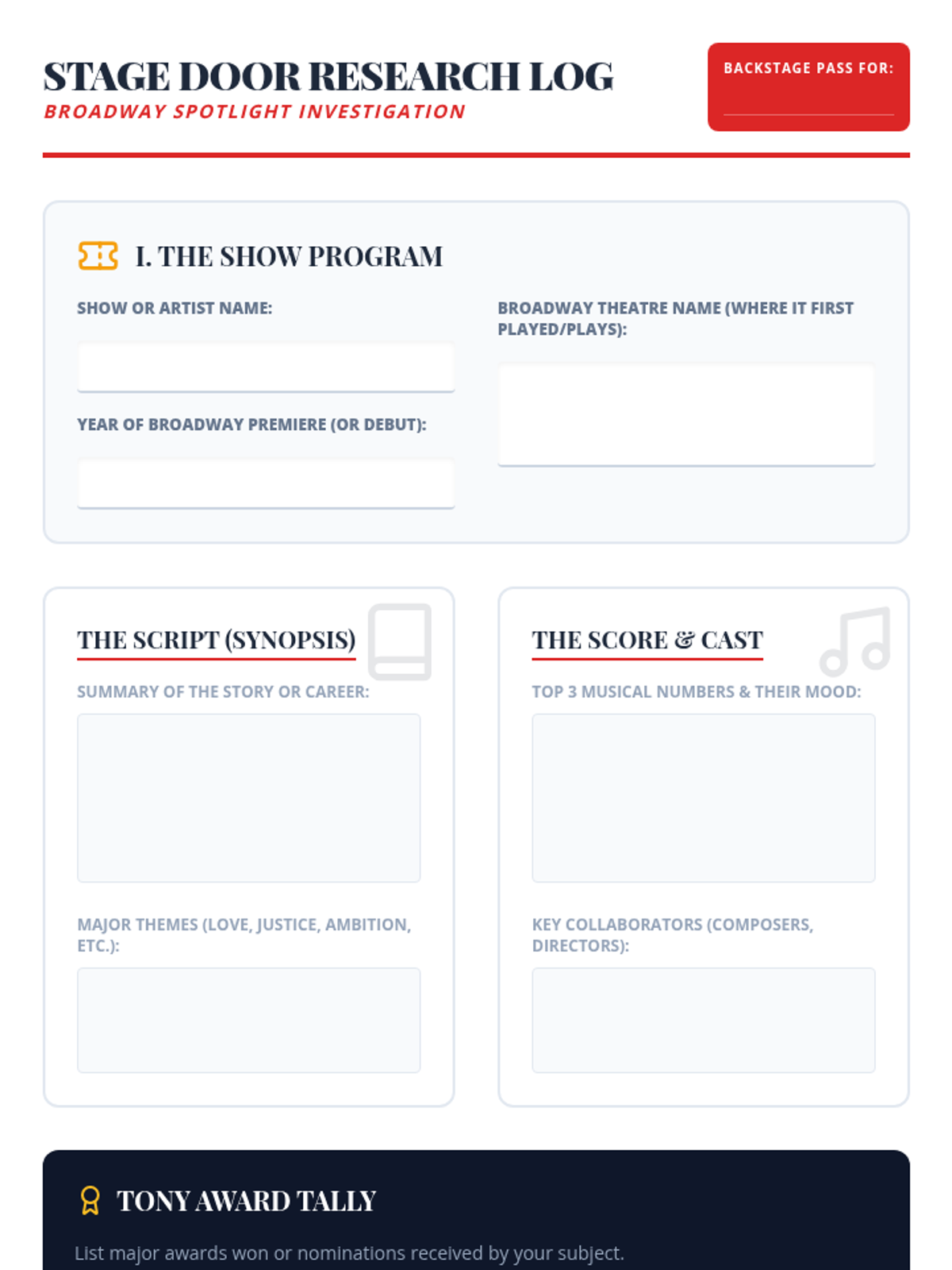
A structured research organizer for students to log information about a Broadway musical, composer, or performer, including plot details, awards, and songs.
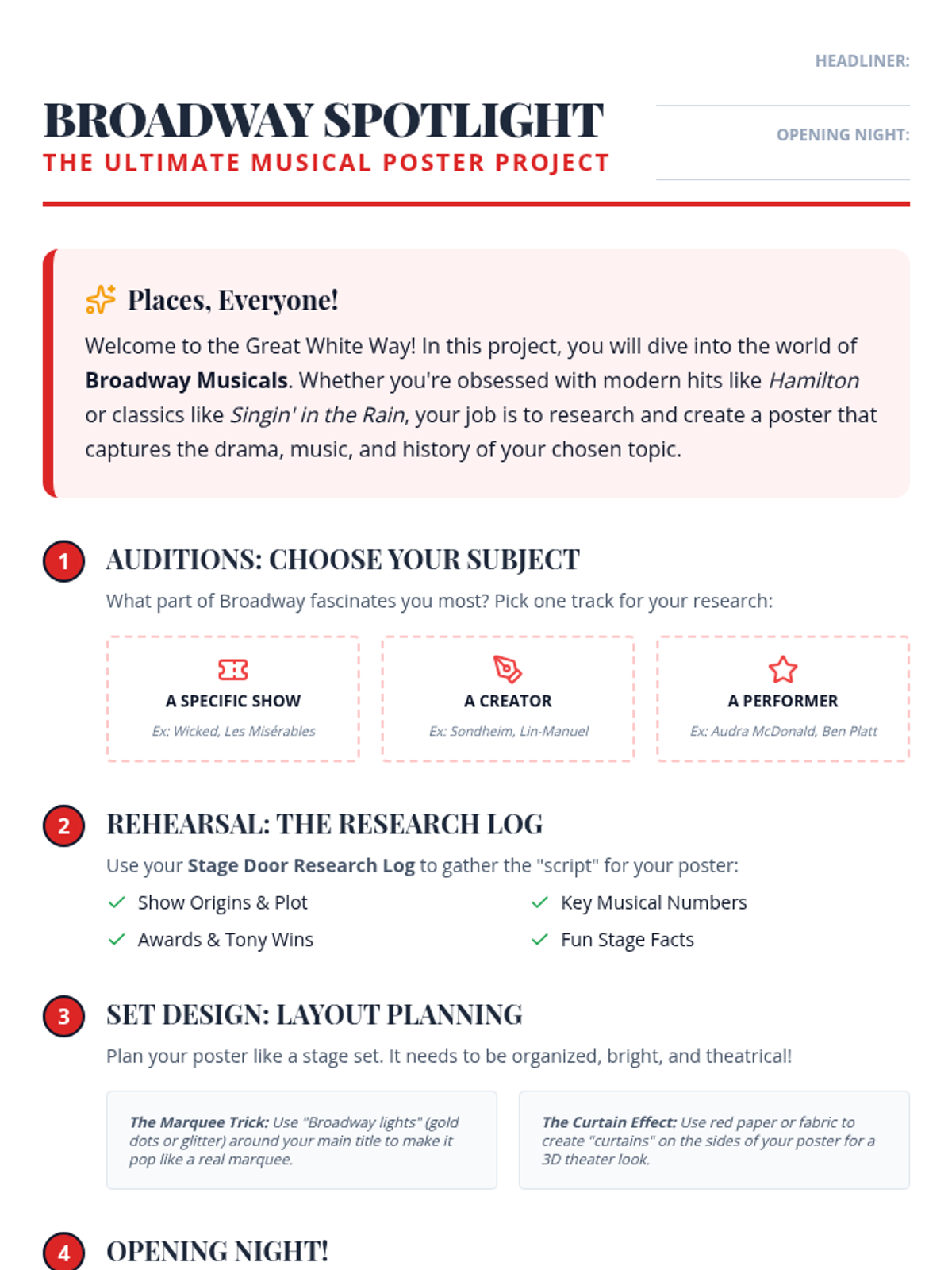
A step-by-step student guide for the Broadway Spotlight poster project, outlining project phases, requirements, and a timeline tailored to musical theatre.
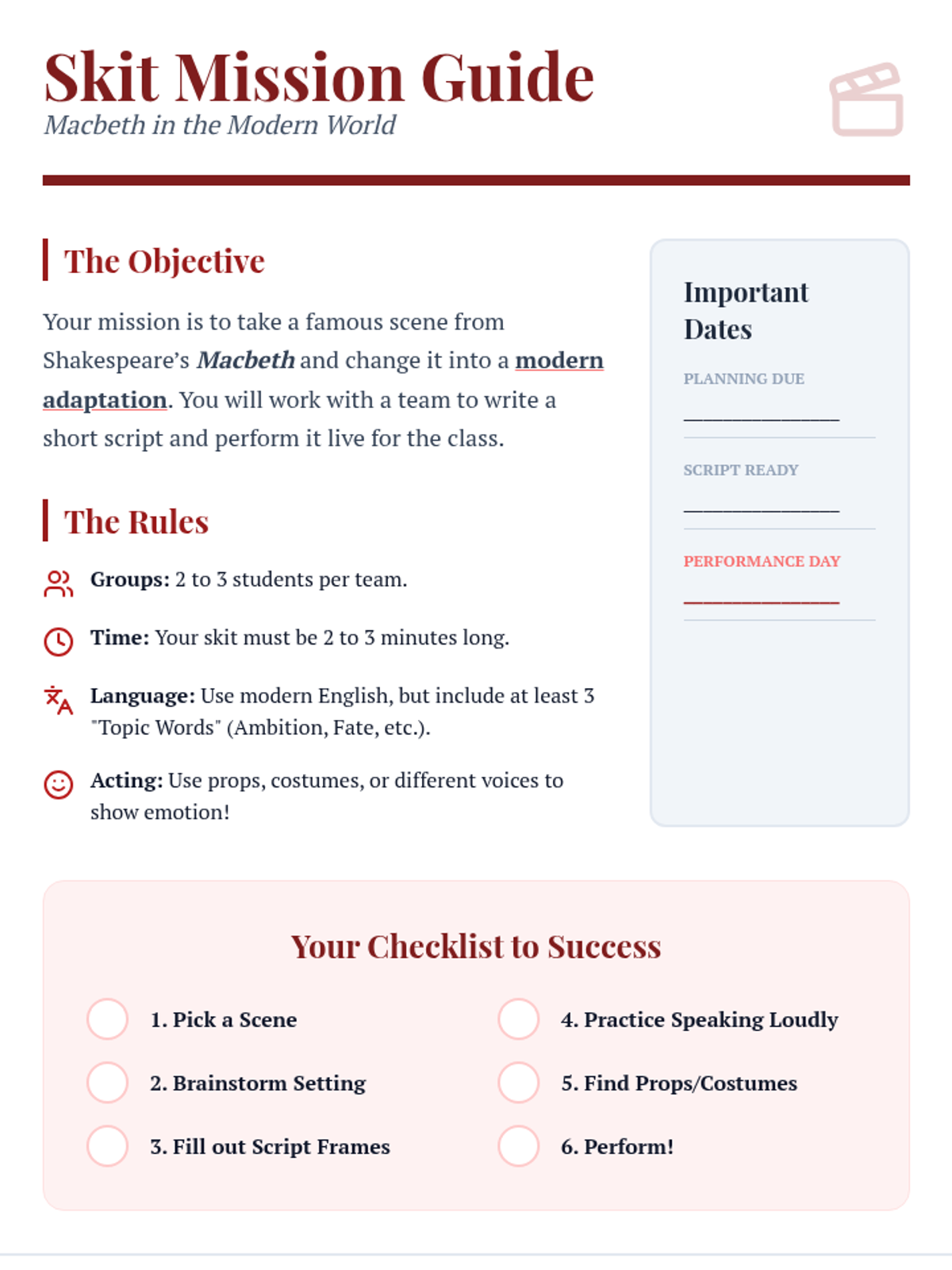
A student-facing assignment overview for the Macbeth skit project. It outlines the project objectives, rules, key dates, and a step-by-step checklist, along with a self-evaluation rubric for students to track their own progress in speaking and listening.
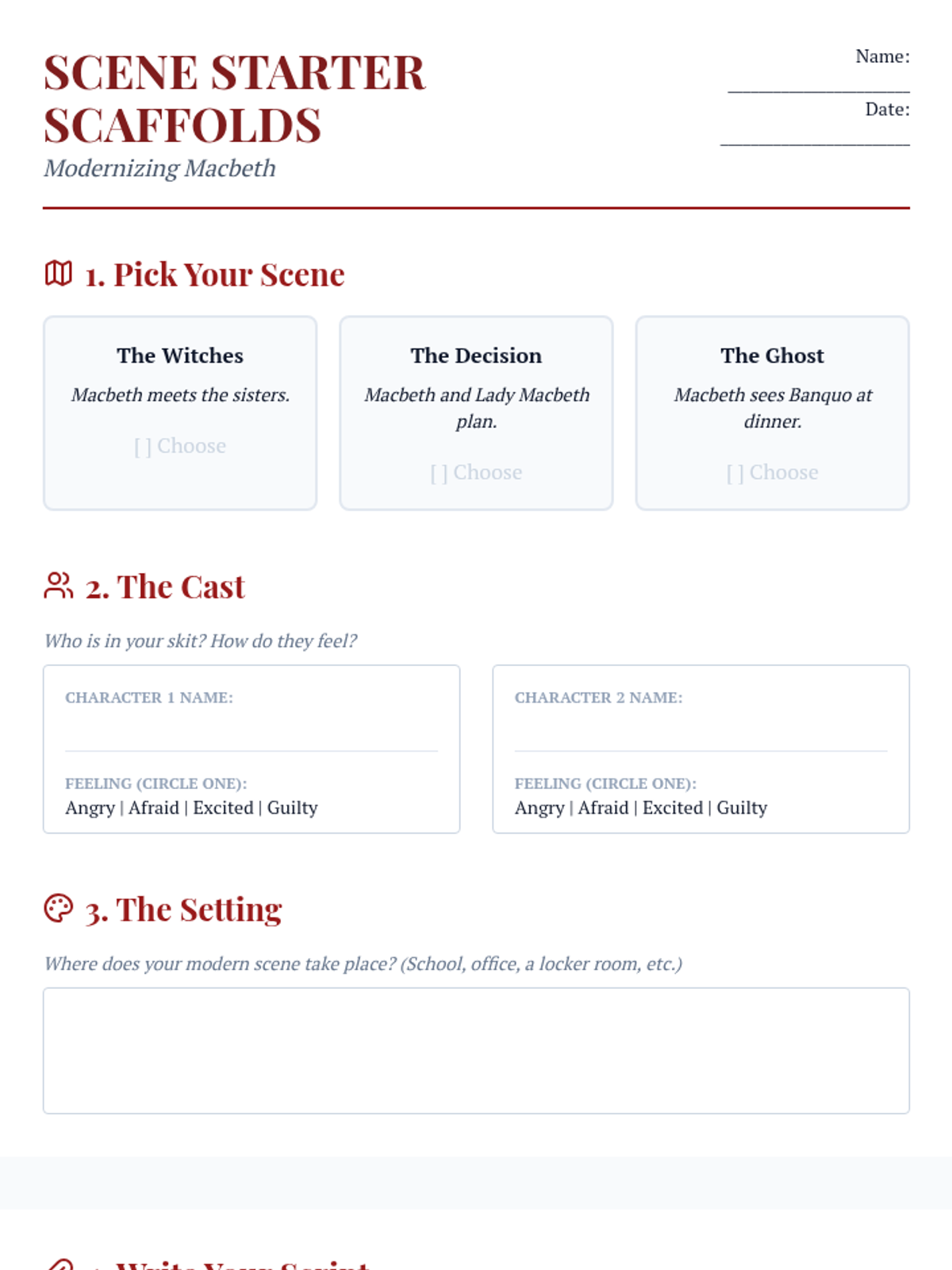
A student-facing graphic organizer and script-writing template for WIDA Level 2-3 ELLs. It provides sentence frames, scene options, and a listening log to support productive and receptive language use during the Macbeth performance task.
A visual guide for introducing the Macbeth skit performance task, featuring simplified plot summaries, key academic vocabulary, and sentence frames for Speaking and Listening.
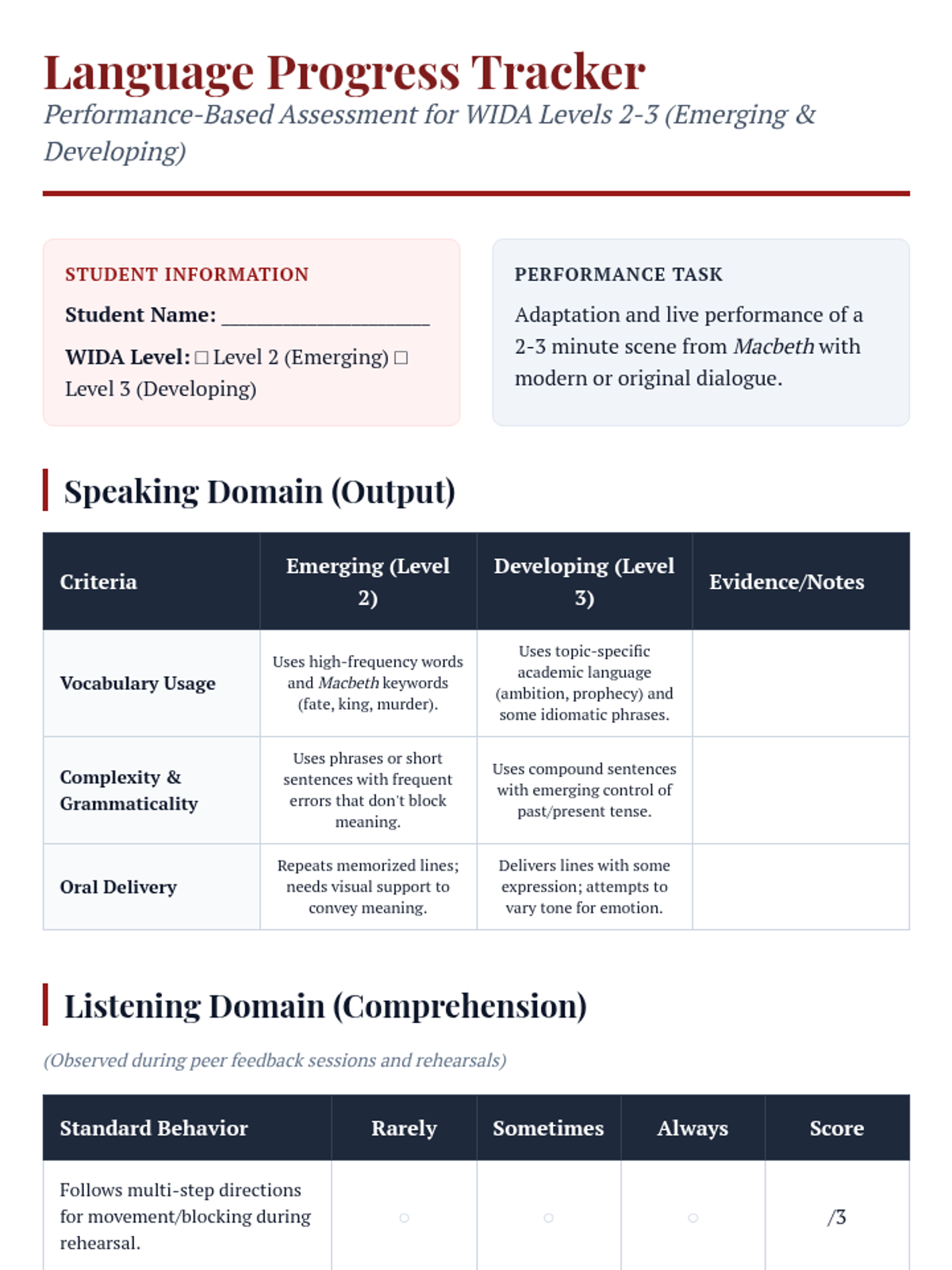
A comprehensive teacher-facing assessment tool and portfolio evidence sheet designed to measure WIDA Level 2-3 ELL progress during a Macbeth performance task. It includes a rubric for Speaking and a checklist for Listening, aligned with graduate-level teaching standards.
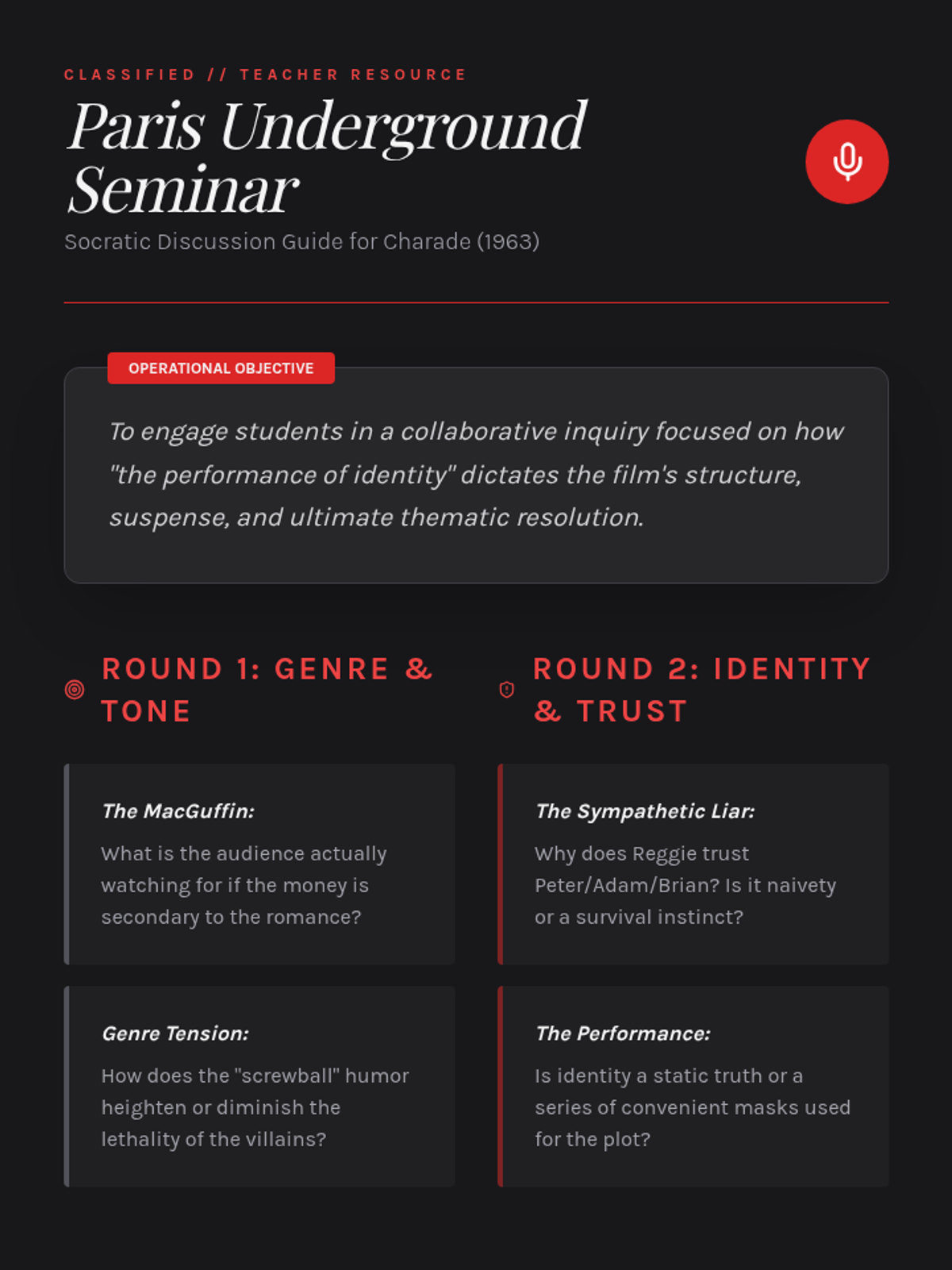
A comprehensive teacher's guide for facilitating a Socratic Seminar on Charade, including essential questions about genre, identity, and visual metaphors, along with facilitation tips. Expanded with a Visual Motif Intelligence Dossier.
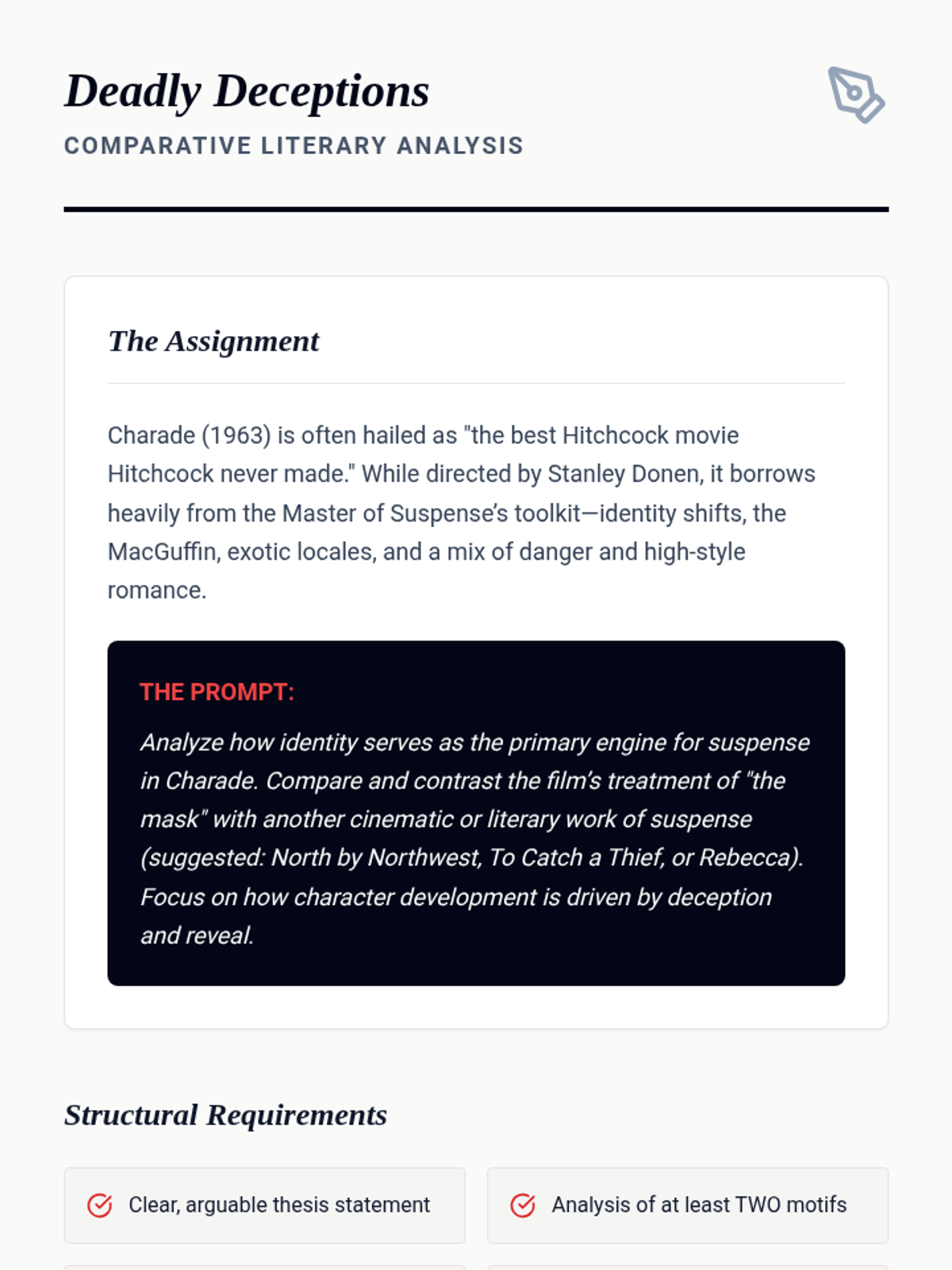
An essay prompt and comprehensive grading rubric focusing on a comparative analysis between the film Charade and classic Hitchcockian suspense tropes. Explores the theme of identity as an engine for plot and character development.
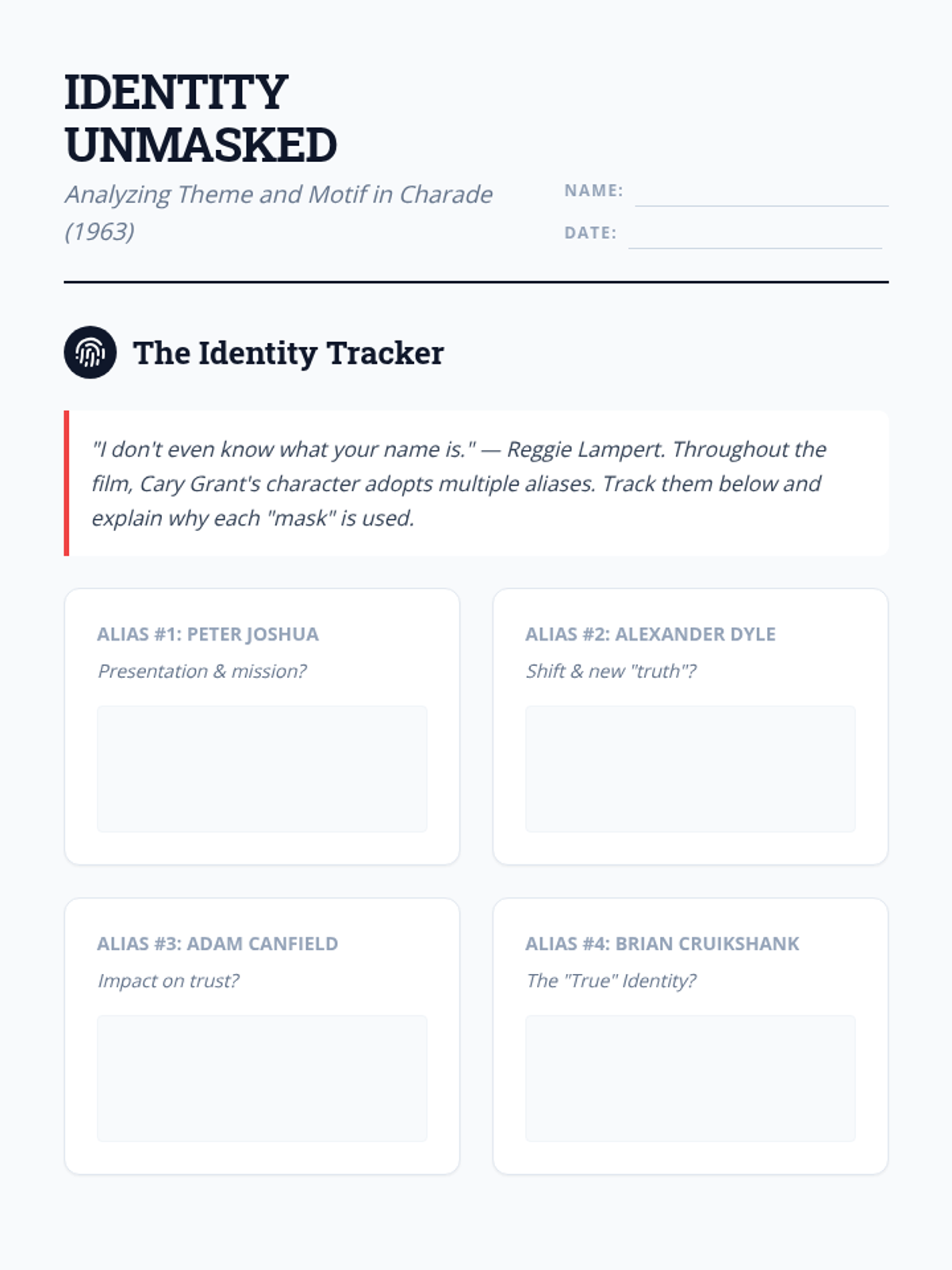
A student worksheet focused on tracking the multiple identities of the protagonist and analyzing key motifs (stamps, water, shadows) within the film Charade. Layout optimized with cleaner page breaks and larger work areas.
Visual presentation slides analyzing the 1963 film Charade, focusing on genre hybridity, identity themes, visual metaphors, and dialogue irony. Expanded to include new sections on the "Appetite & Anxiety" motif and "The Performance Space." Designed with a mid-century modern cinematic aesthetic. Body text increased to meet minimum size requirements.
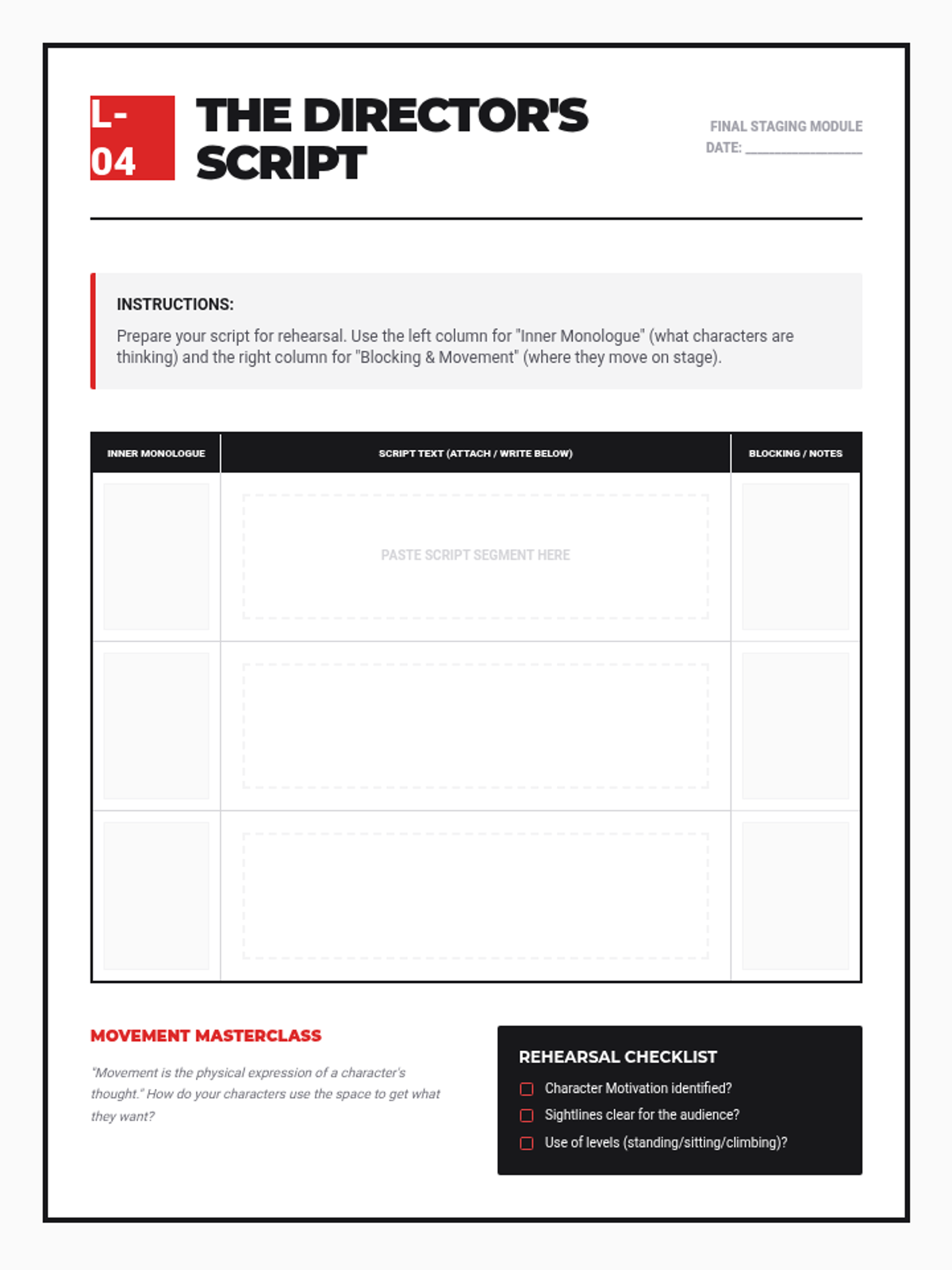
A technical staging worksheet for Lesson 4. Students use a three-column layout to annotate their script with inner monologues, blocking notes, and movement directions for their final scene presentation.
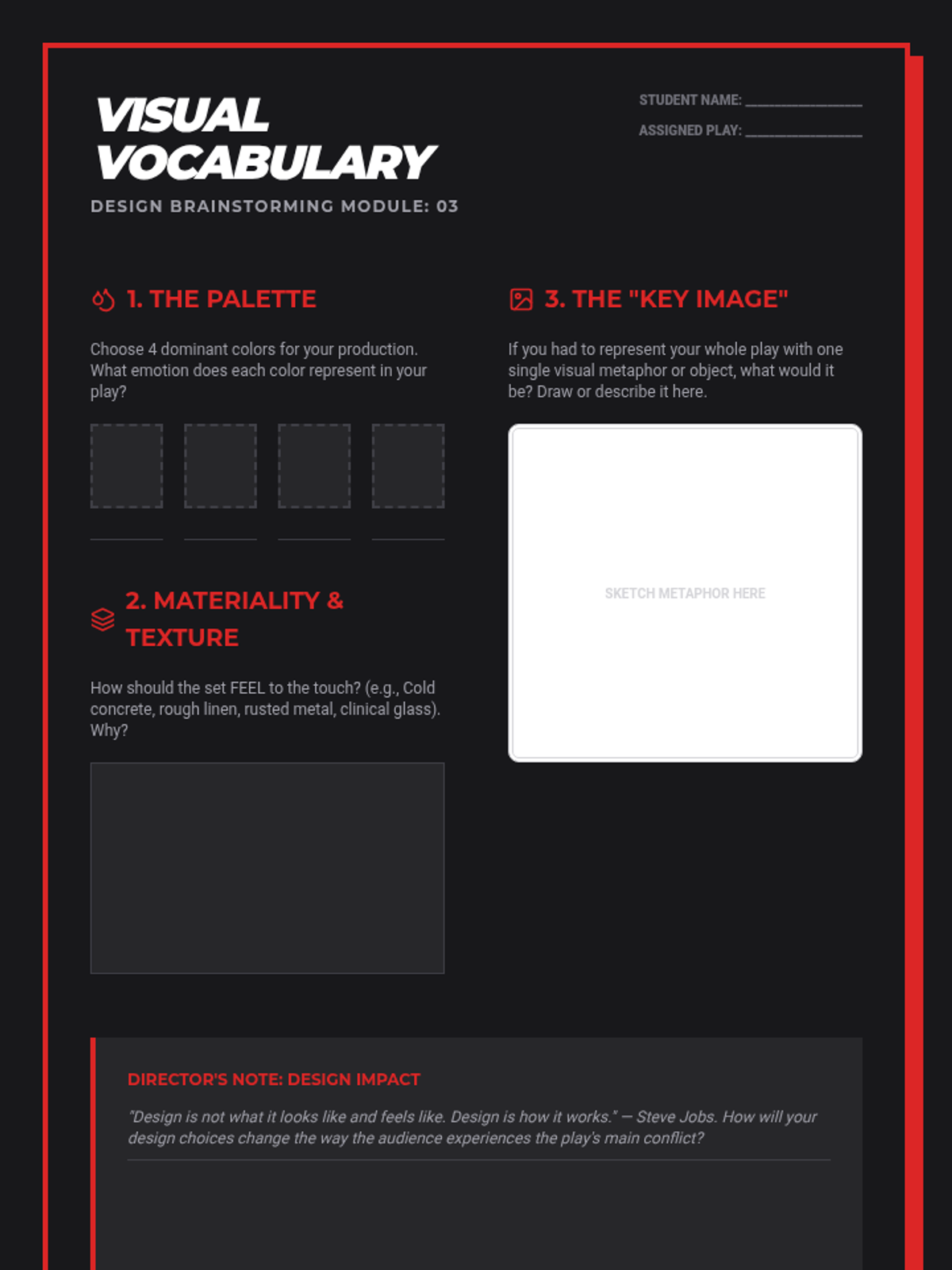
A visual design worksheet for Lesson 3. Students explore color palettes, textures, and central symbolic metaphors to define the aesthetic world of their play before creating final set and costume designs.
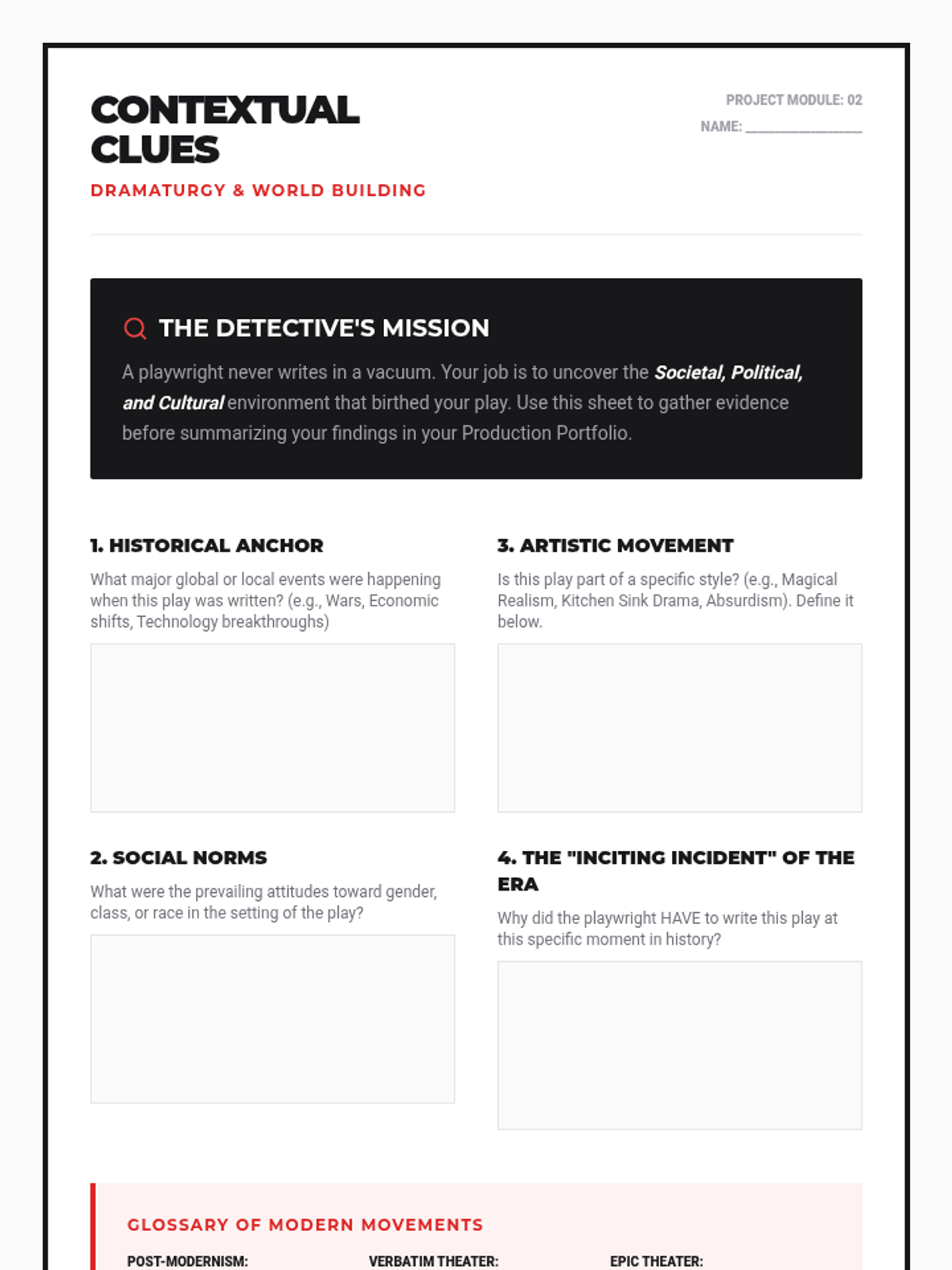
A research-focused worksheet for students to explore the historical, social, and cultural context of their chosen play. It includes sections for era research, social norms analysis, and artistic movement definitions.
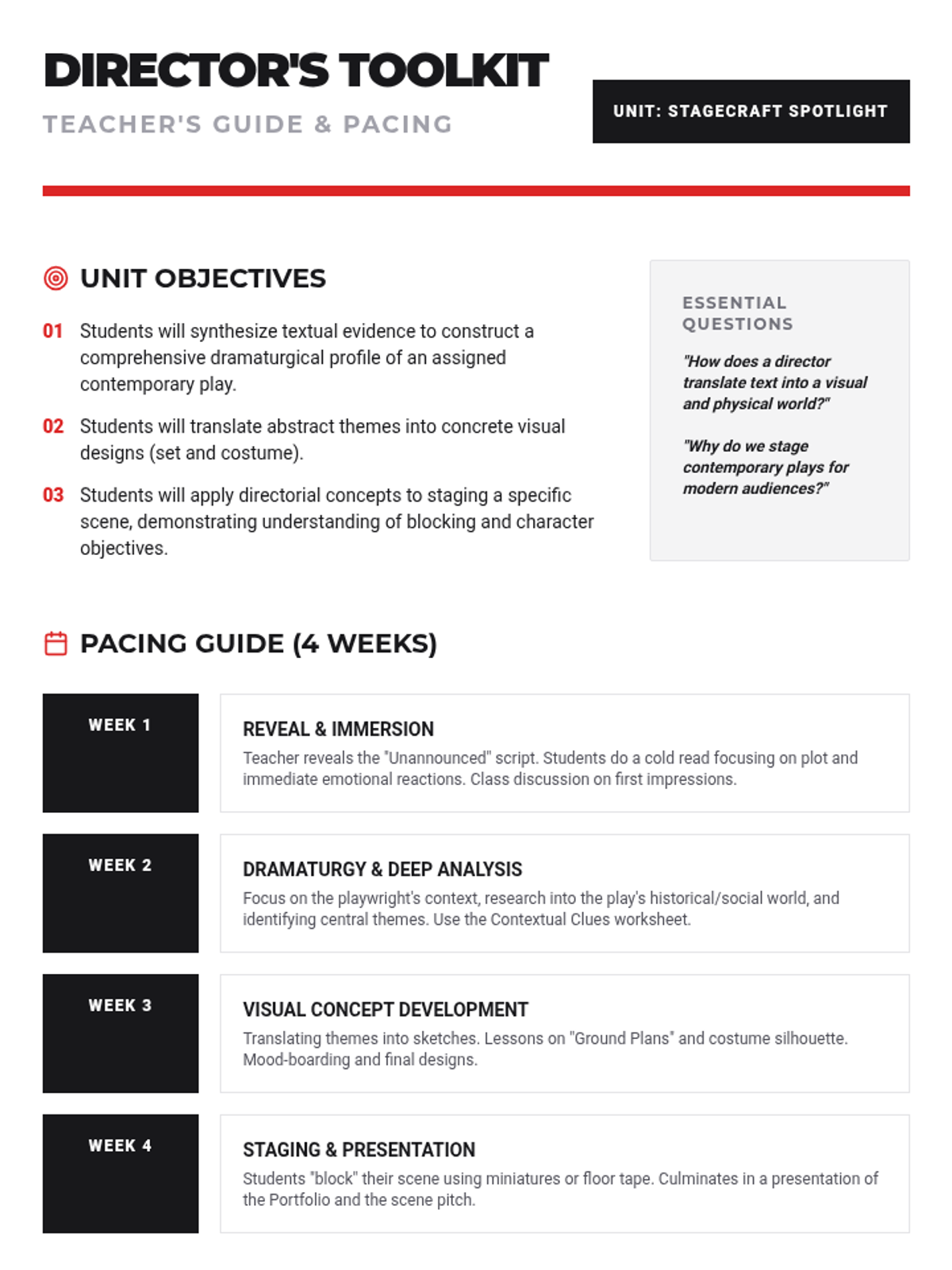
A teacher facilitation guide for the Stagecraft Spotlight unit. Includes a 4-week pacing guide, contemporary play recommendations across genres, and a detailed 40-point assessment rubric for the final production portfolio.
Updated slide deck for the Stagecraft Spotlight project. Reframed for a teacher-assigned "unannounced" script reveal, removing student selection criteria while maintaining the theatrical aesthetic.
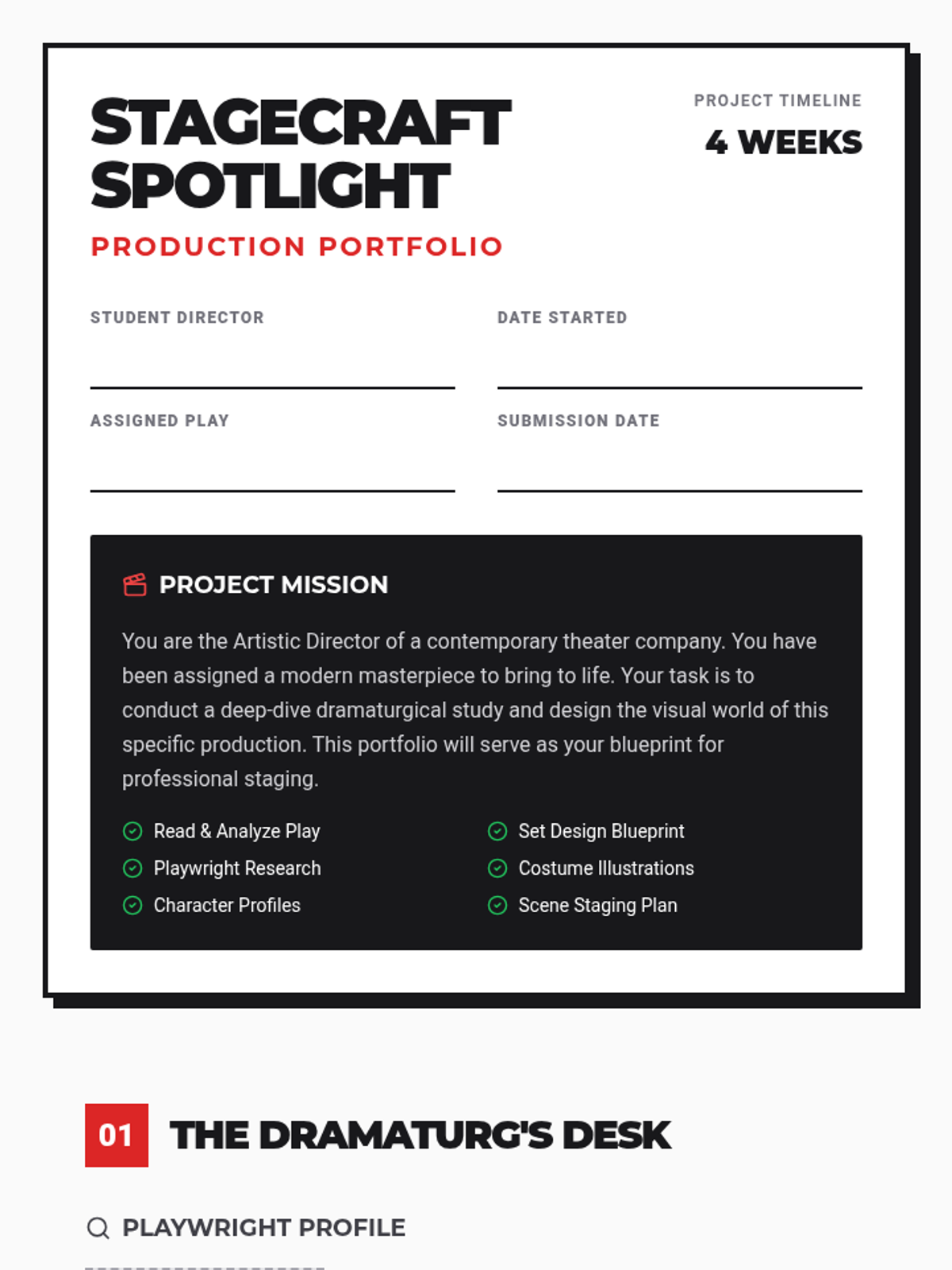
A comprehensive 6-page student portfolio document for an independent or guided play study. It includes sections for playwright research, character analysis, set design blueprints, costume concept illustrations, and scene staging plans.
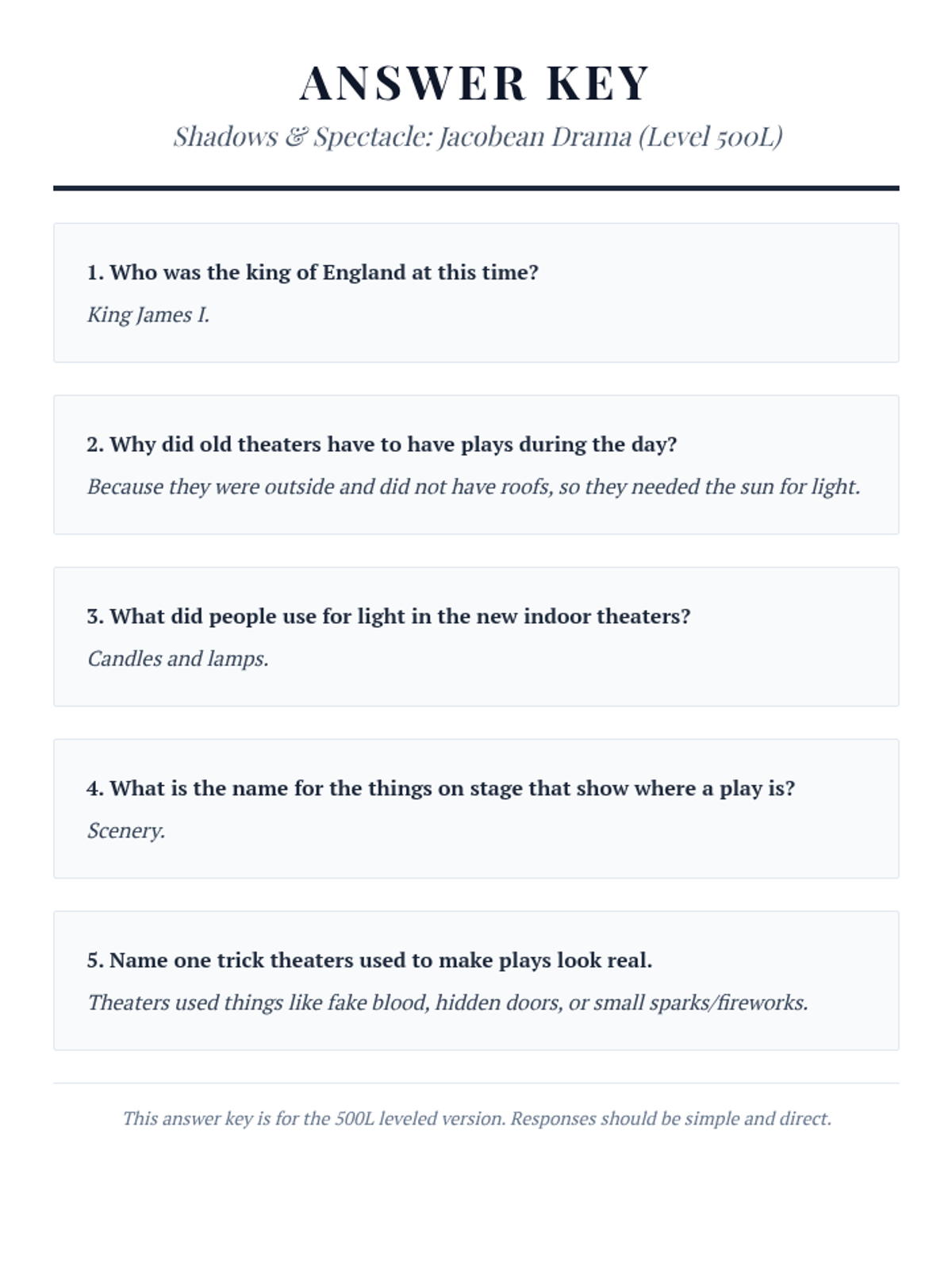
The answer key for the 500L version of the Shadows and Spectacle handout.
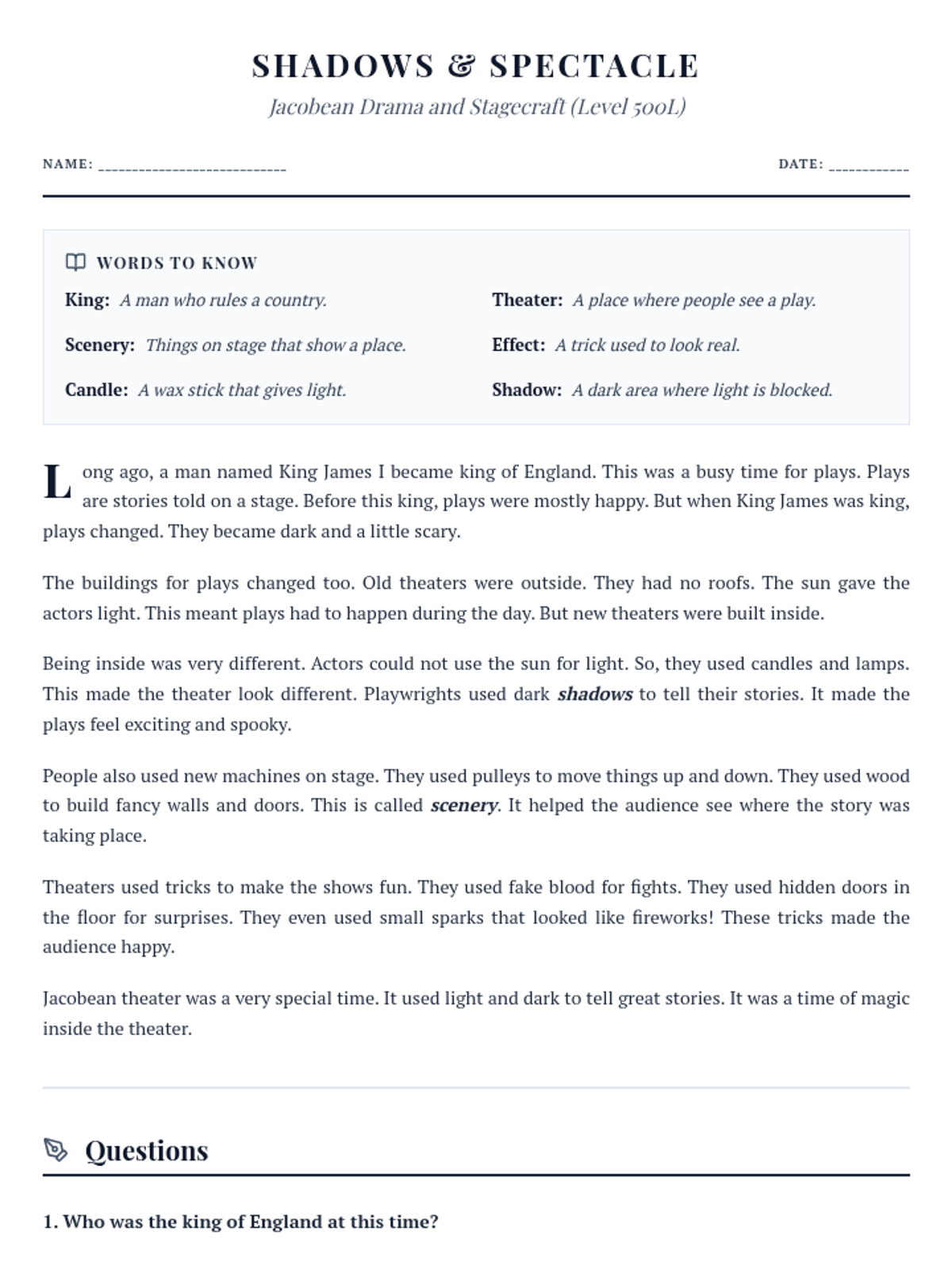
A printable handout featuring a 500L leveled version of the article on Jacobean drama and stagecraft, including a simplified vocabulary bank and questions.
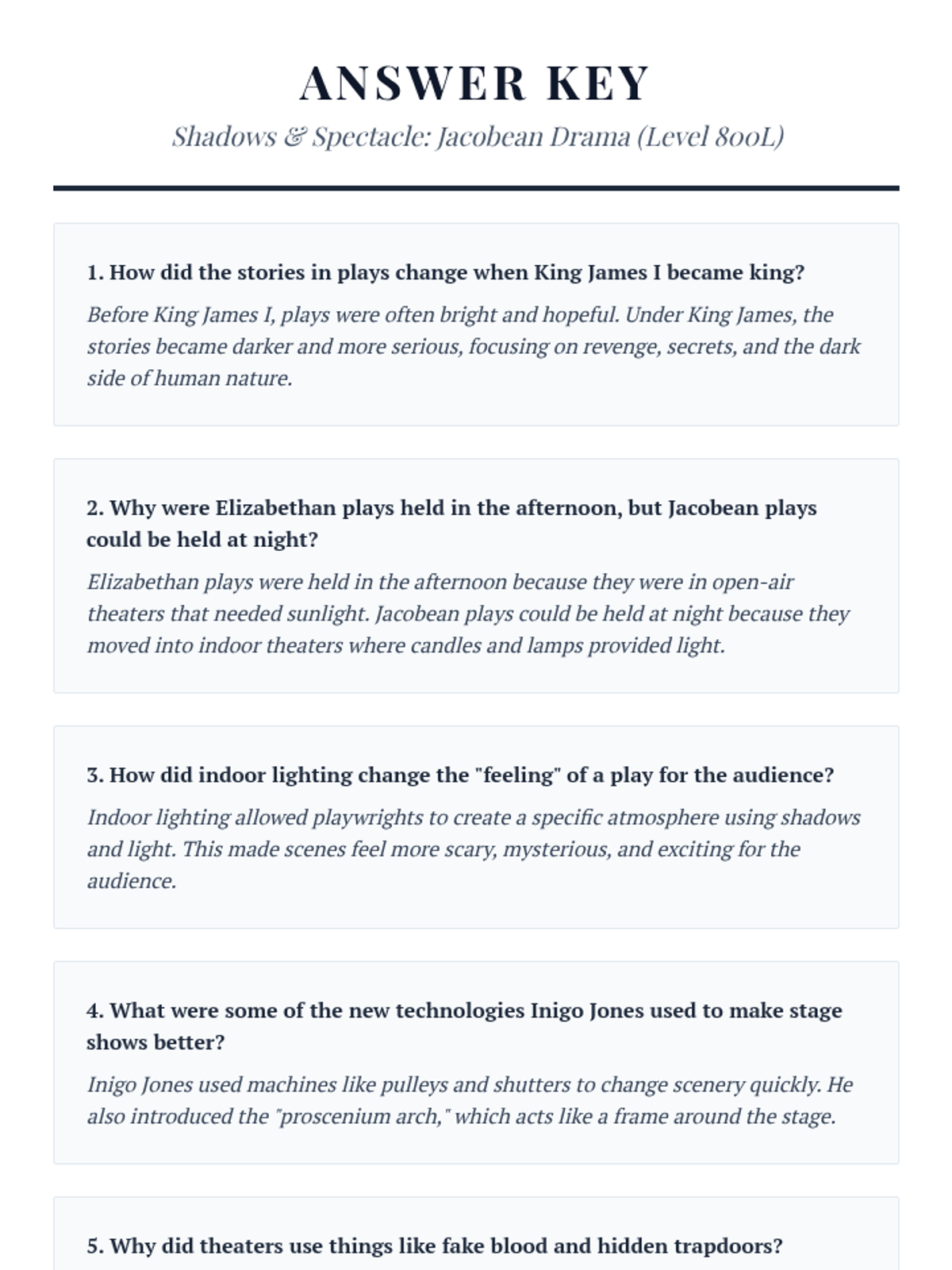
The answer key for the 800L version of the Shadows and Spectacle handout.
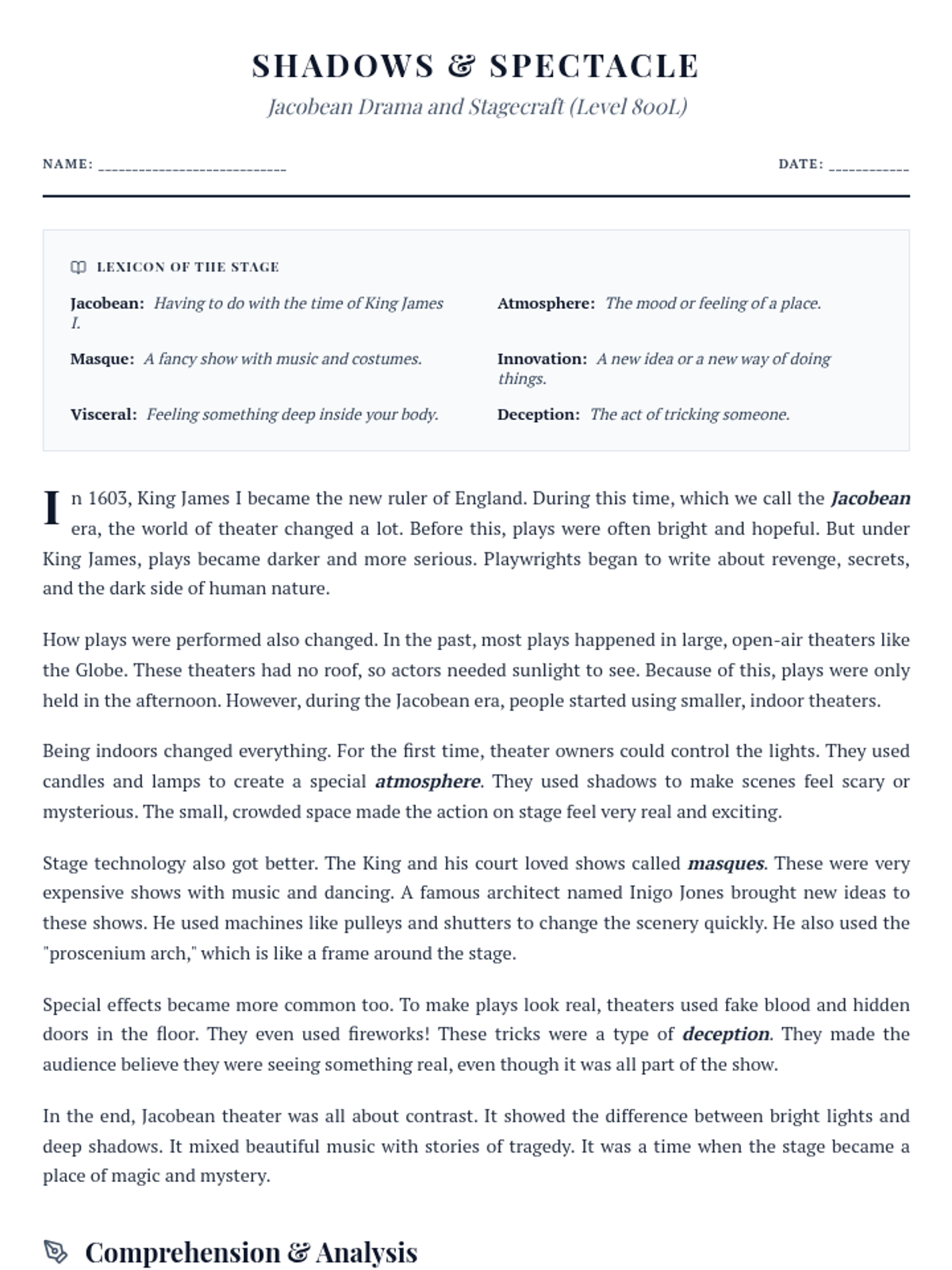
A printable handout featuring an 800L leveled version of the article on Jacobean drama and stagecraft, including a vocabulary bank and five comprehension questions.
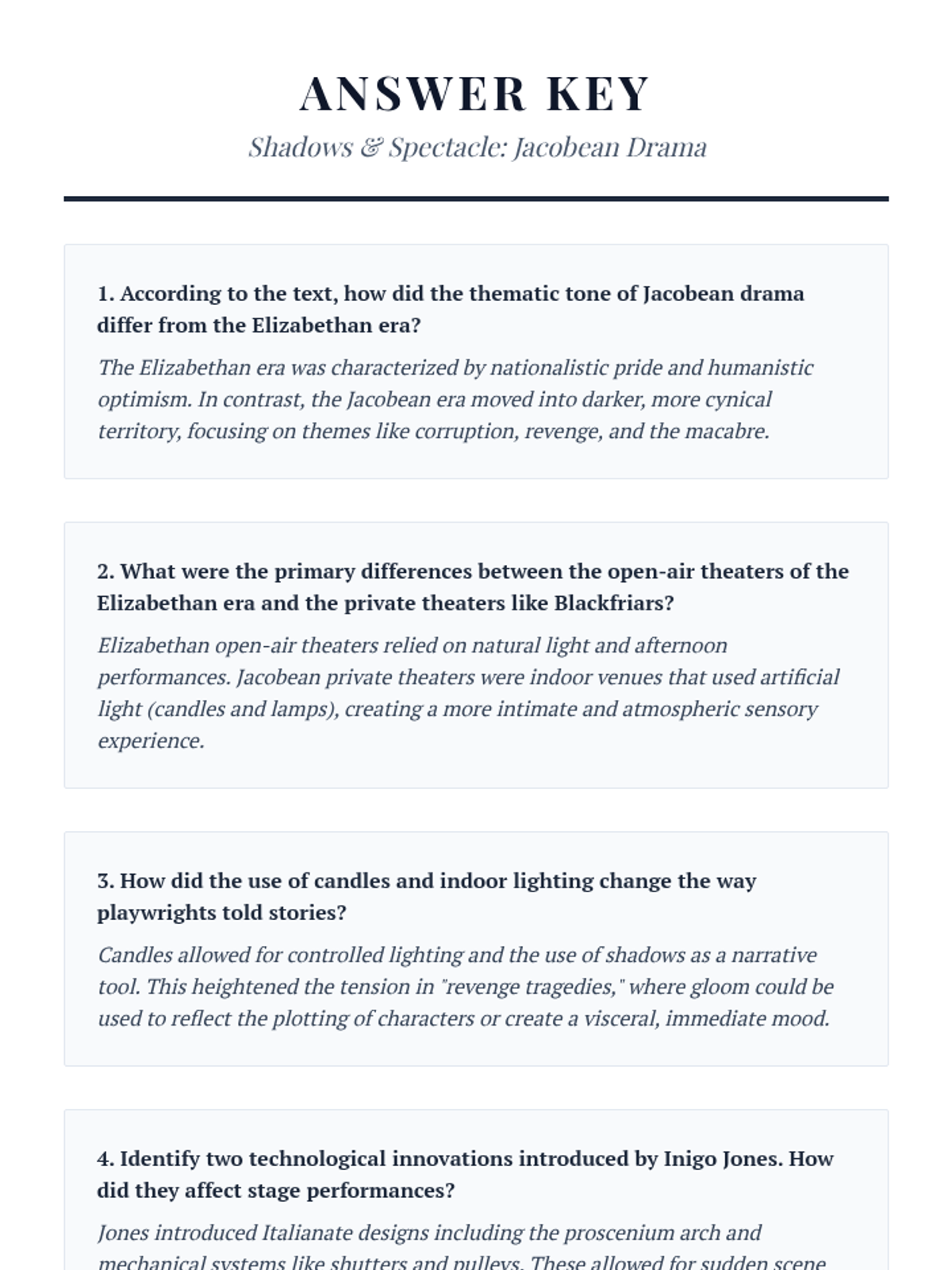
The answer key for the Shadows and Spectacle handout, providing suggested responses for the comprehension questions.
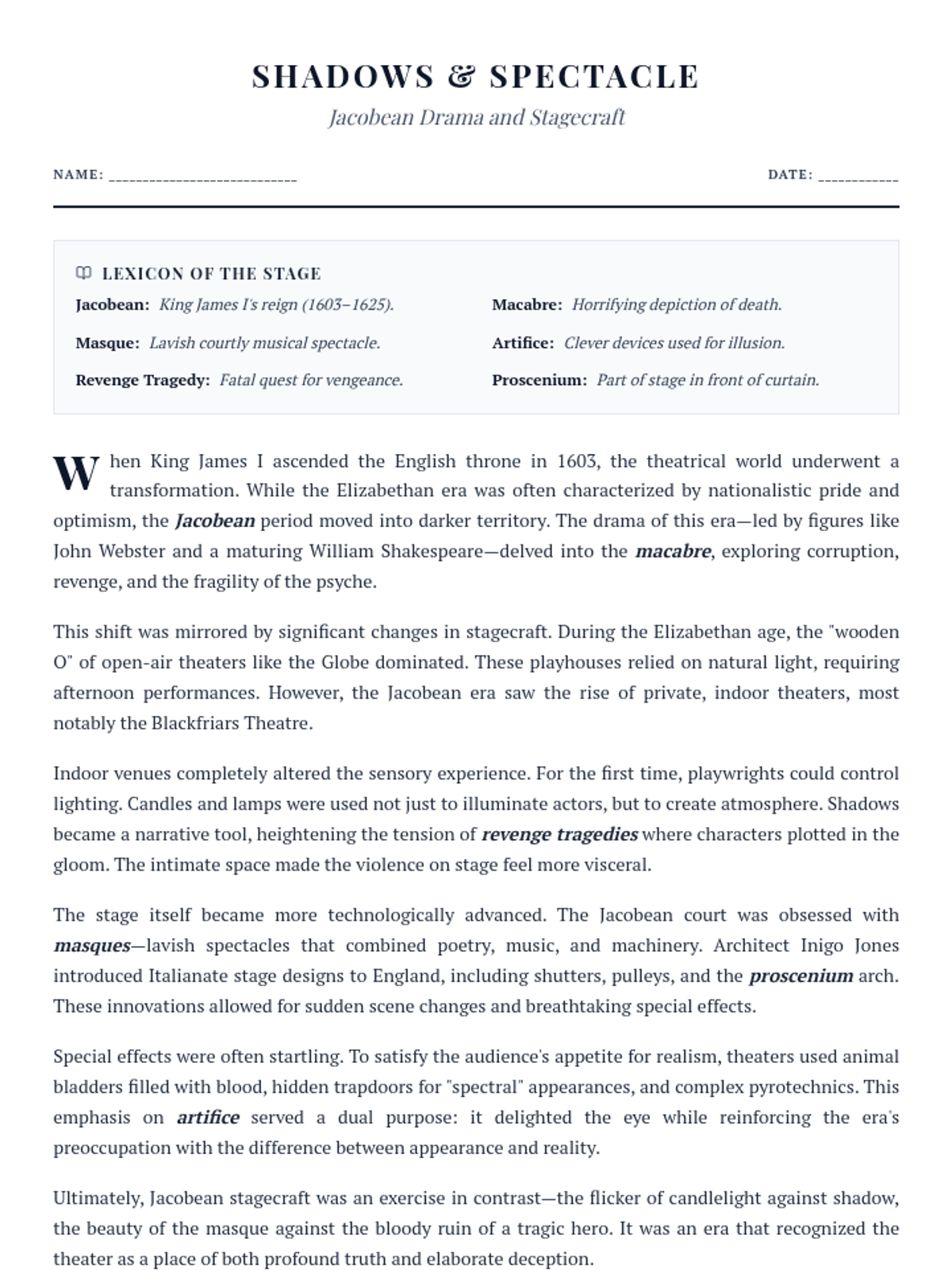
A printable handout featuring an article on Jacobean drama and stagecraft, including a vocabulary bank and five comprehension questions for independent student work.
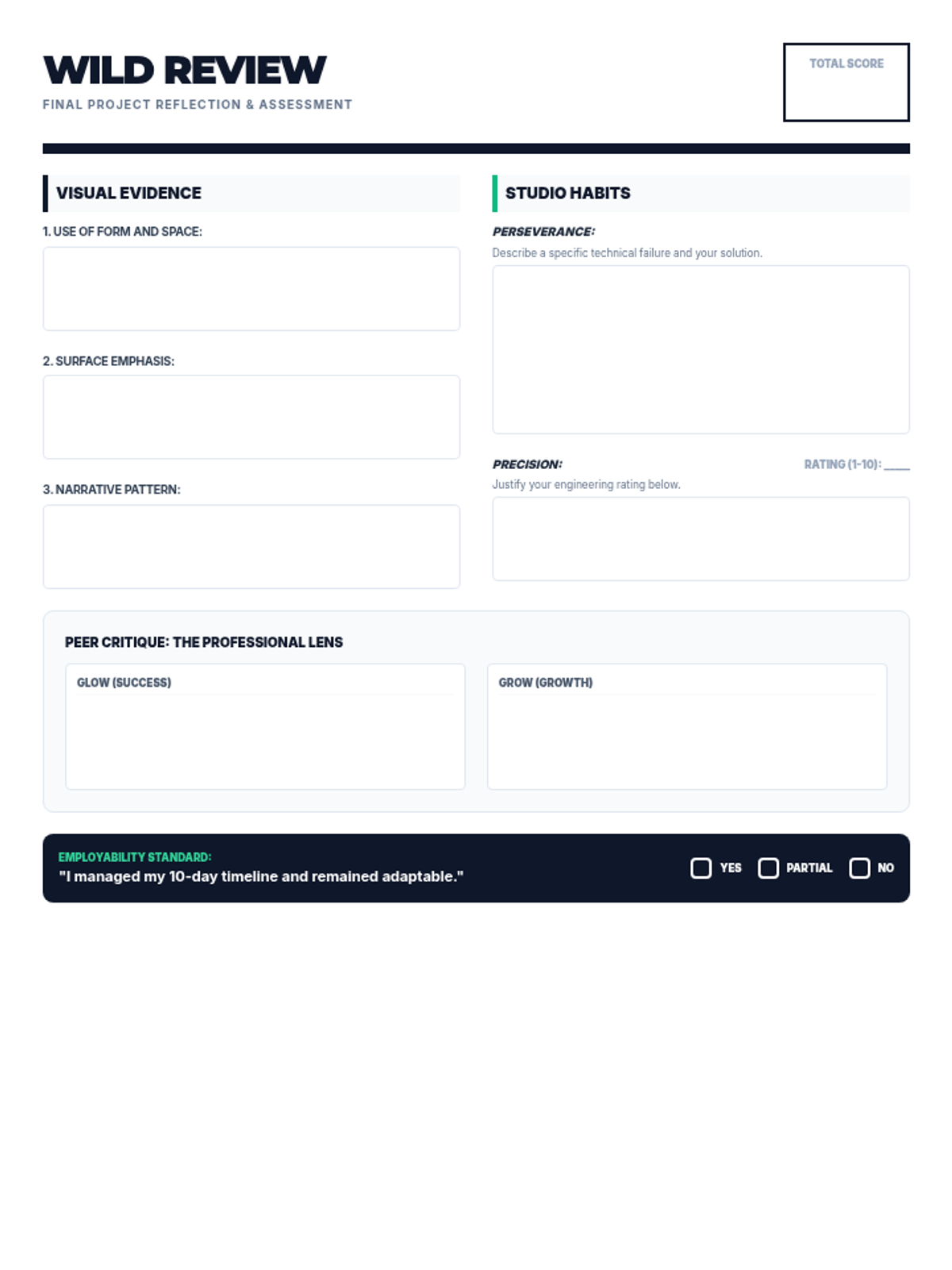
A final project reflection and rubric focusing on visual analysis, perseverance in the studio, and peer critique.
A slide deck for the final phase of the project, focusing on color application, surface texture, and using paint markers to enhance 3D form.
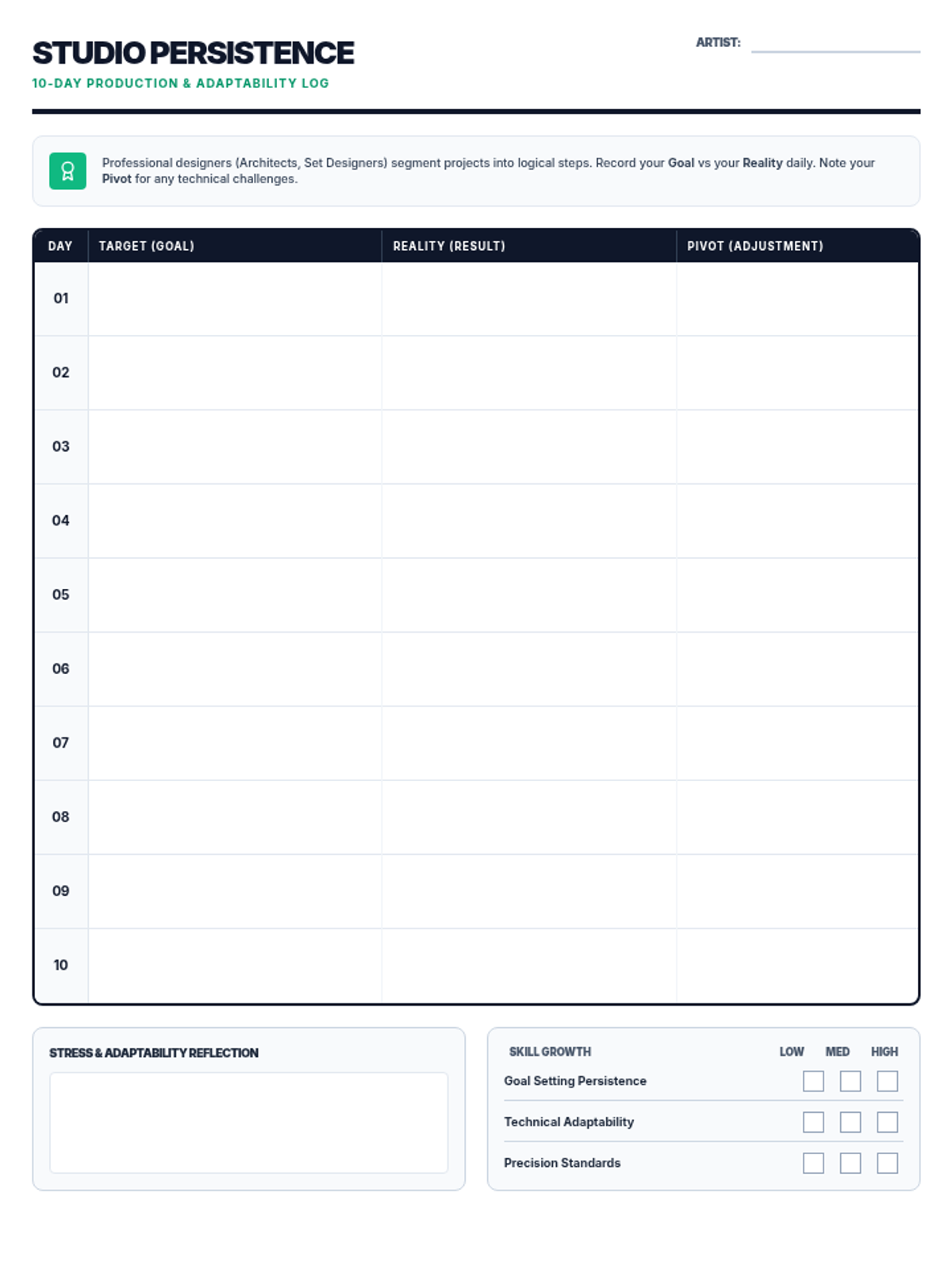
A daily studio habit tracker focused on goal setting, adaptability, and managing stress during the construction phase.
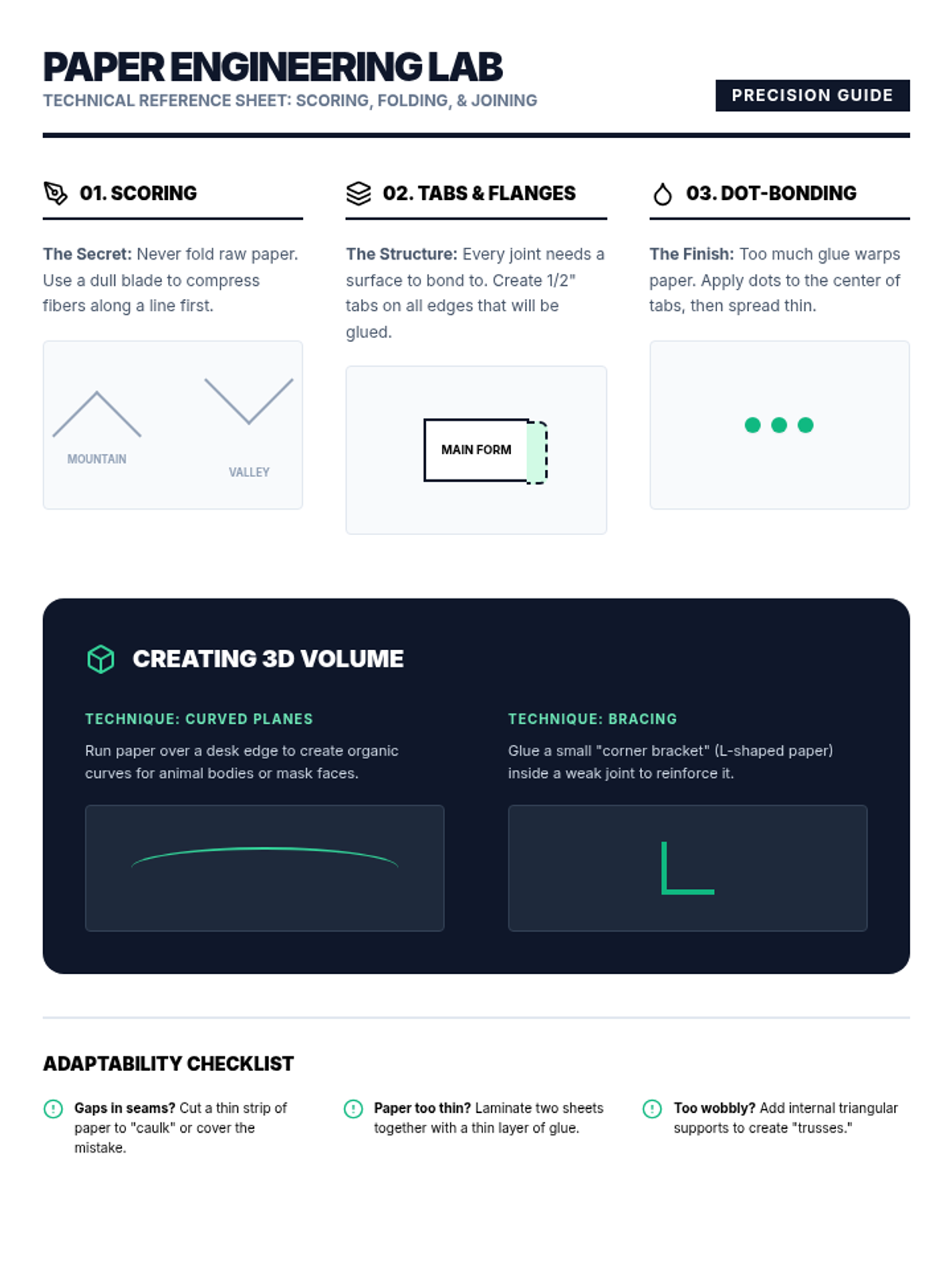
A technical reference guide for students illustrating scoring, tabbing, and joining techniques for 3D paper construction.
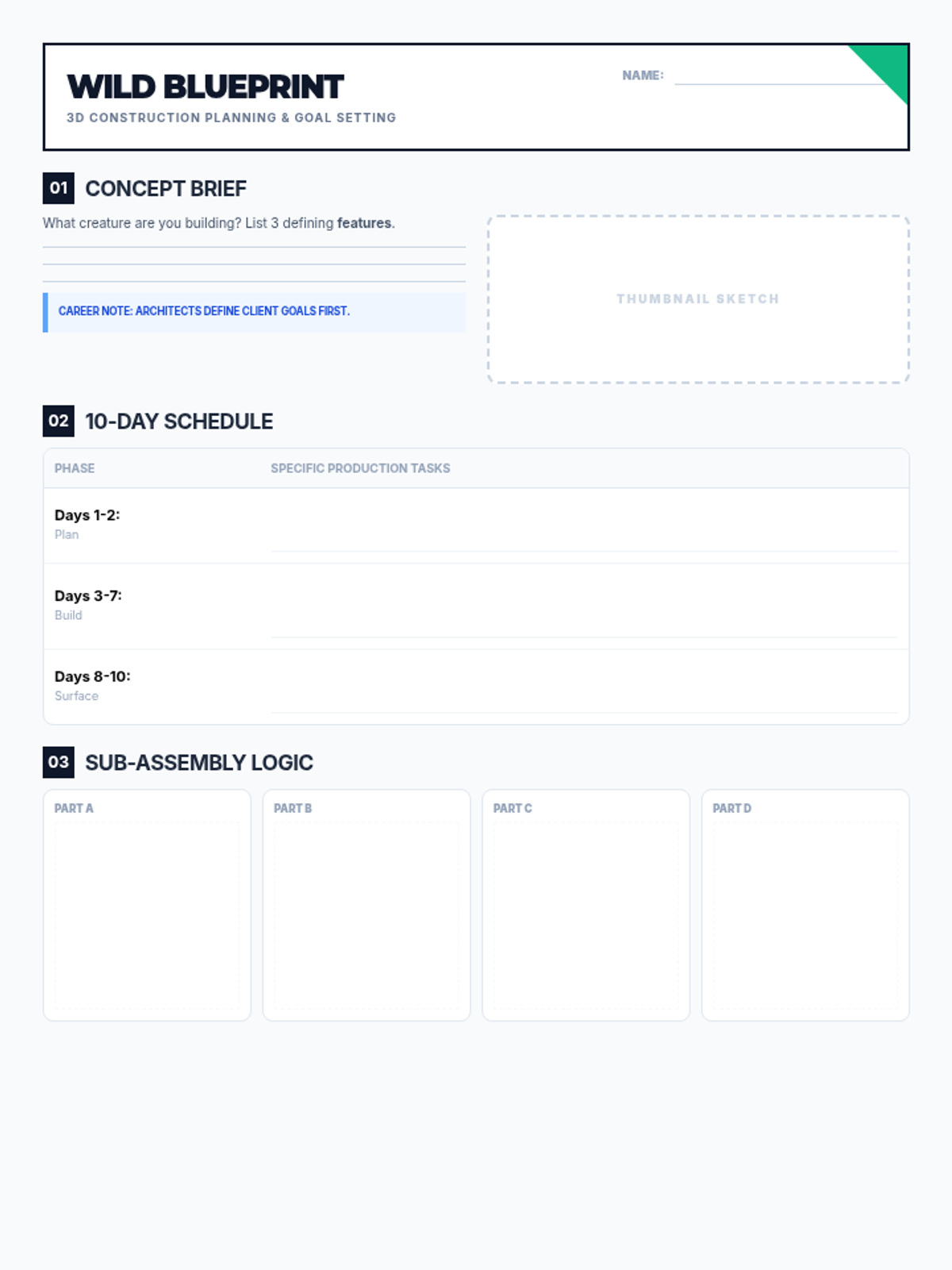
A planning worksheet for students to conceptualize their animal or mask, set goals for the 10-day unit, and break down their construction logic.
An introductory slide deck for the 3D paper engineering unit, covering career connections, visual elements, and the importance of precision.
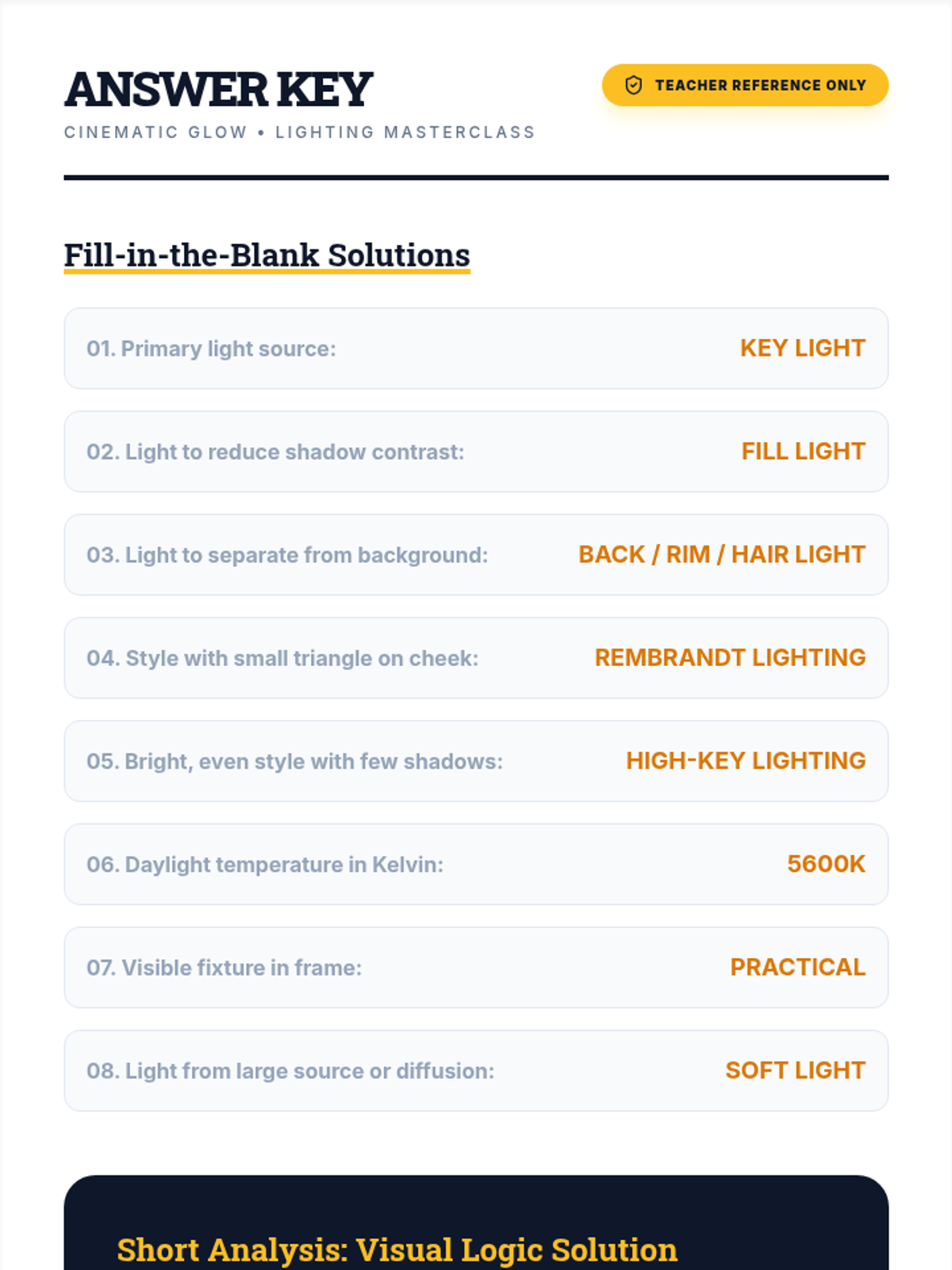
The answer key and instructor's reference for the Cinematic Glow Handout assessment.
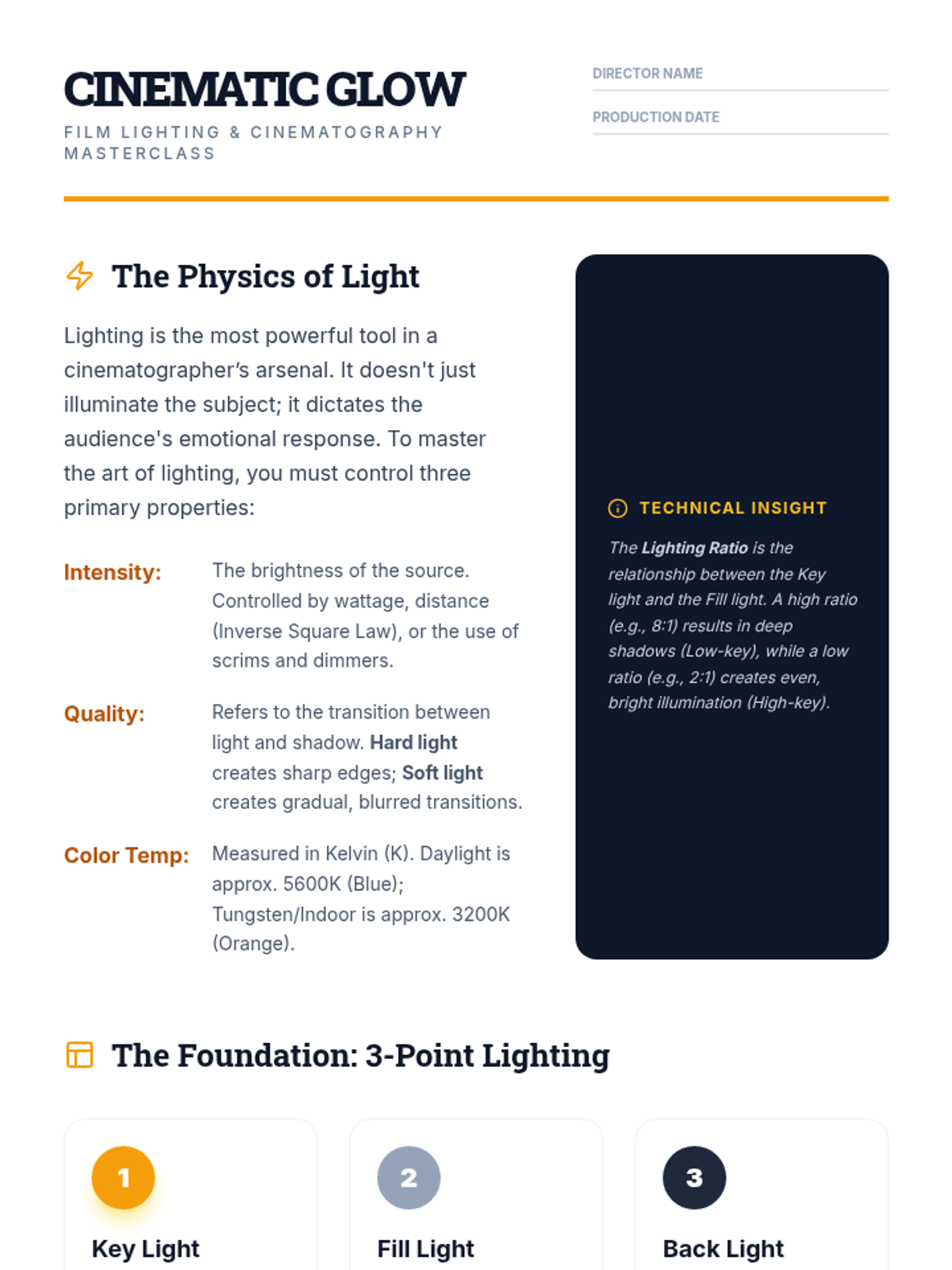
A comprehensive 3-page illustrated handout for film students covering lighting fundamentals, 3-point lighting, professional setups like Rembrandt and Butterfly, and a fill-in-the-blank comprehension quiz.
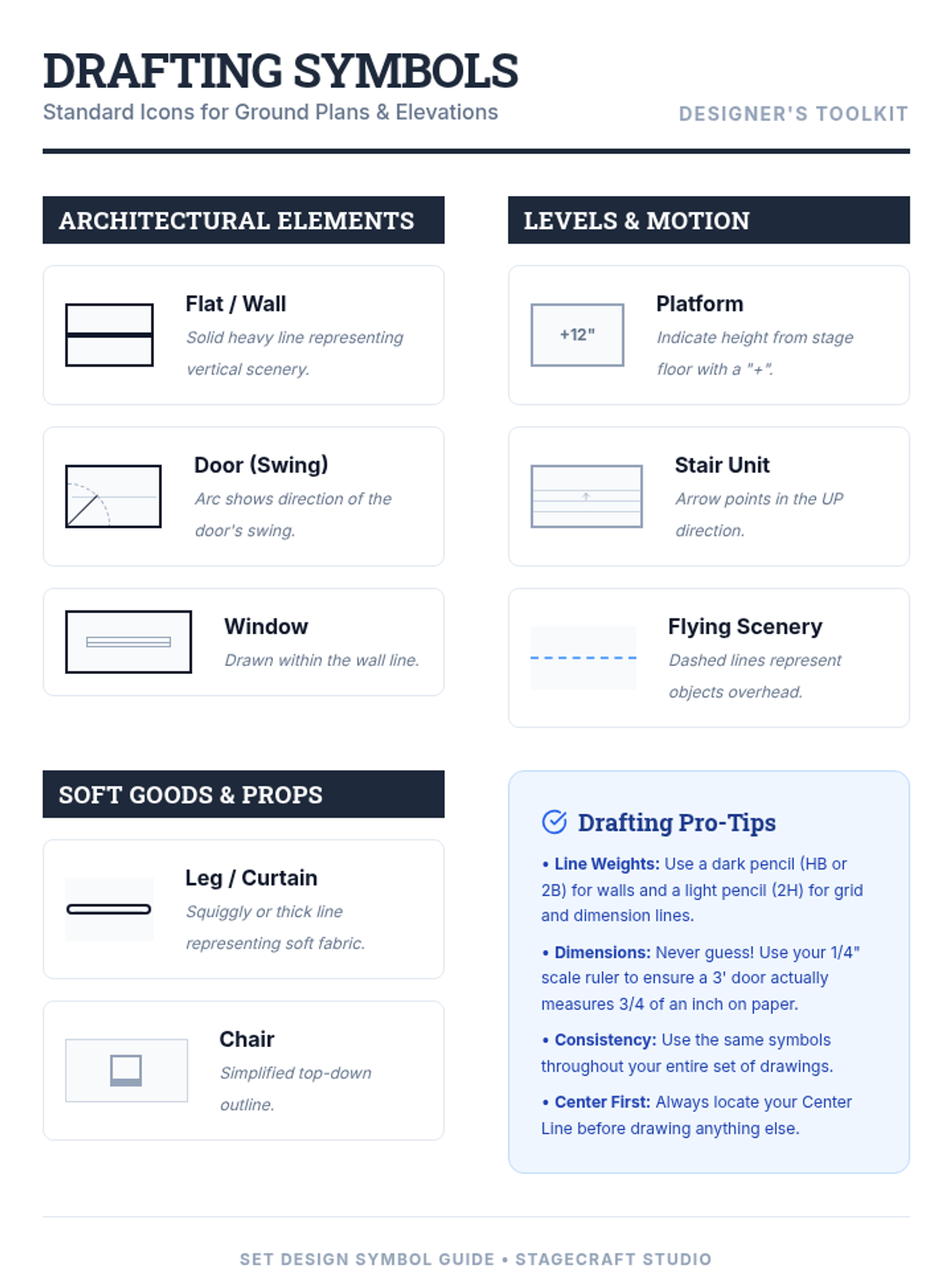
A reference guide for students showing standard theatrical drafting symbols for furniture, architectural elements, and stage curtains.
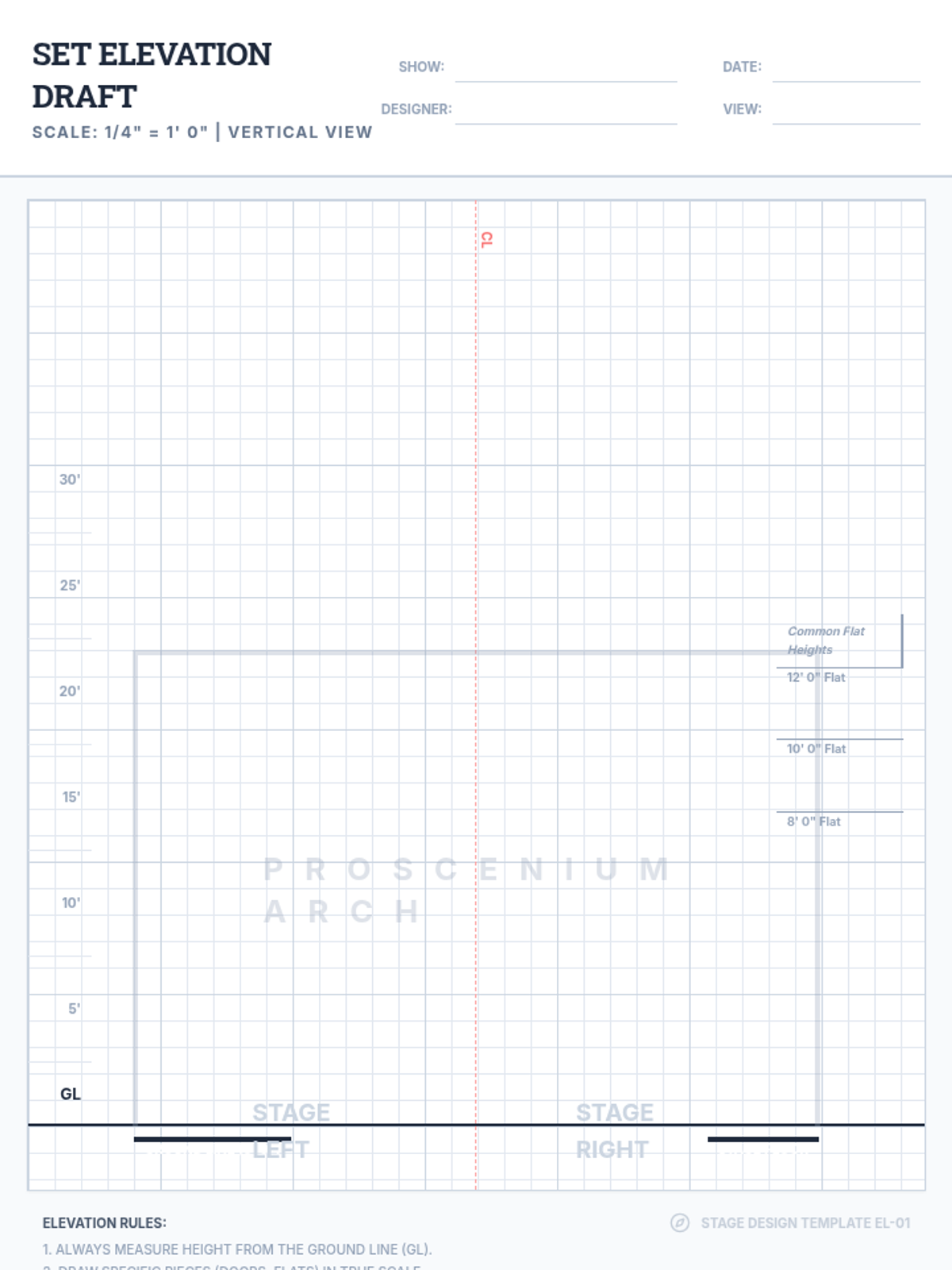
A vertical drafting template for creating front elevations of set designs. It includes height markers for common flat sizes and a clear ground line for accurate measuring.
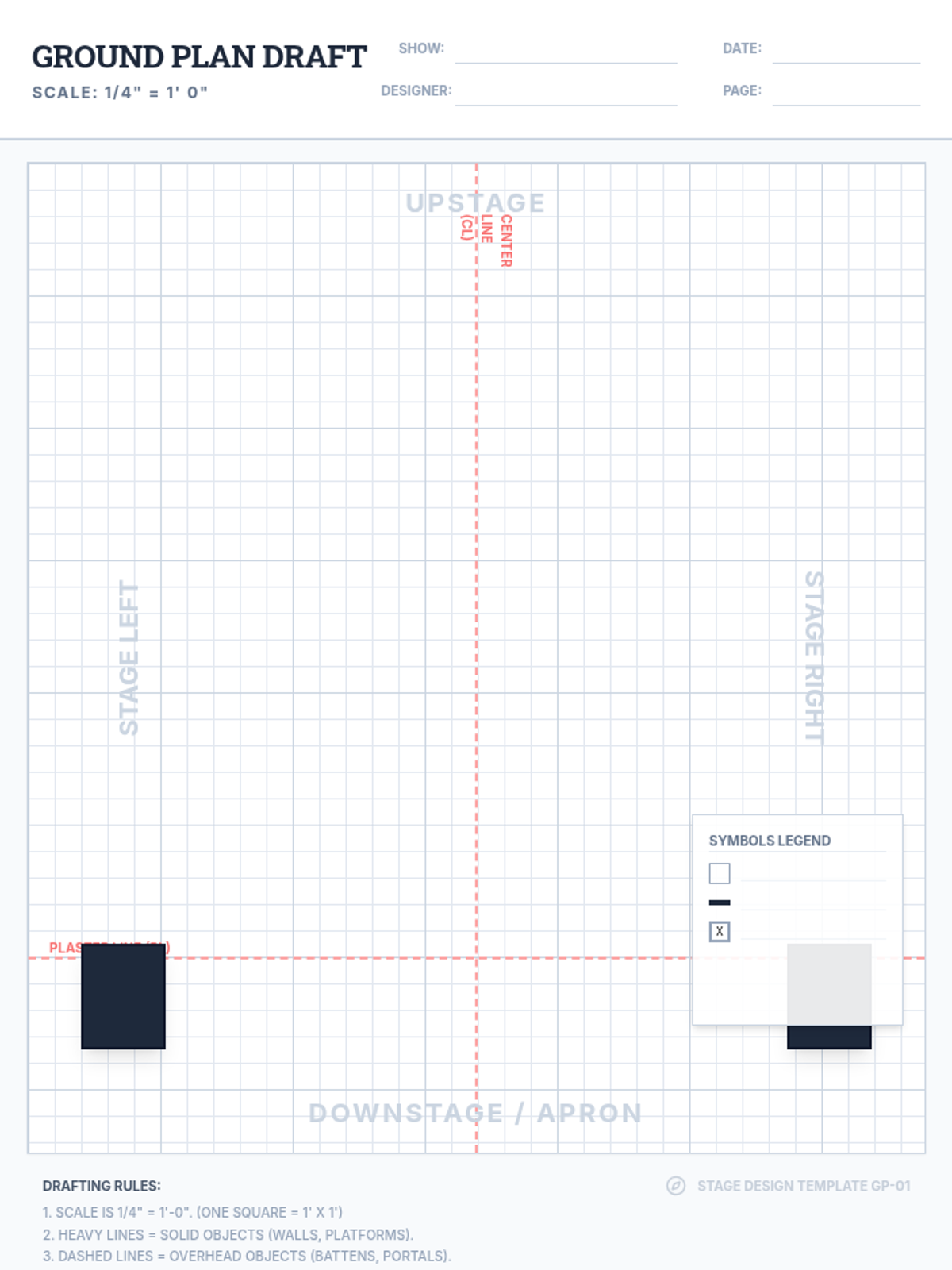
A technical drafting template for creating ground plans. It includes a 1/4" scale grid, marked Center Line and Plaster Line, and a legend area for students to define their symbols.
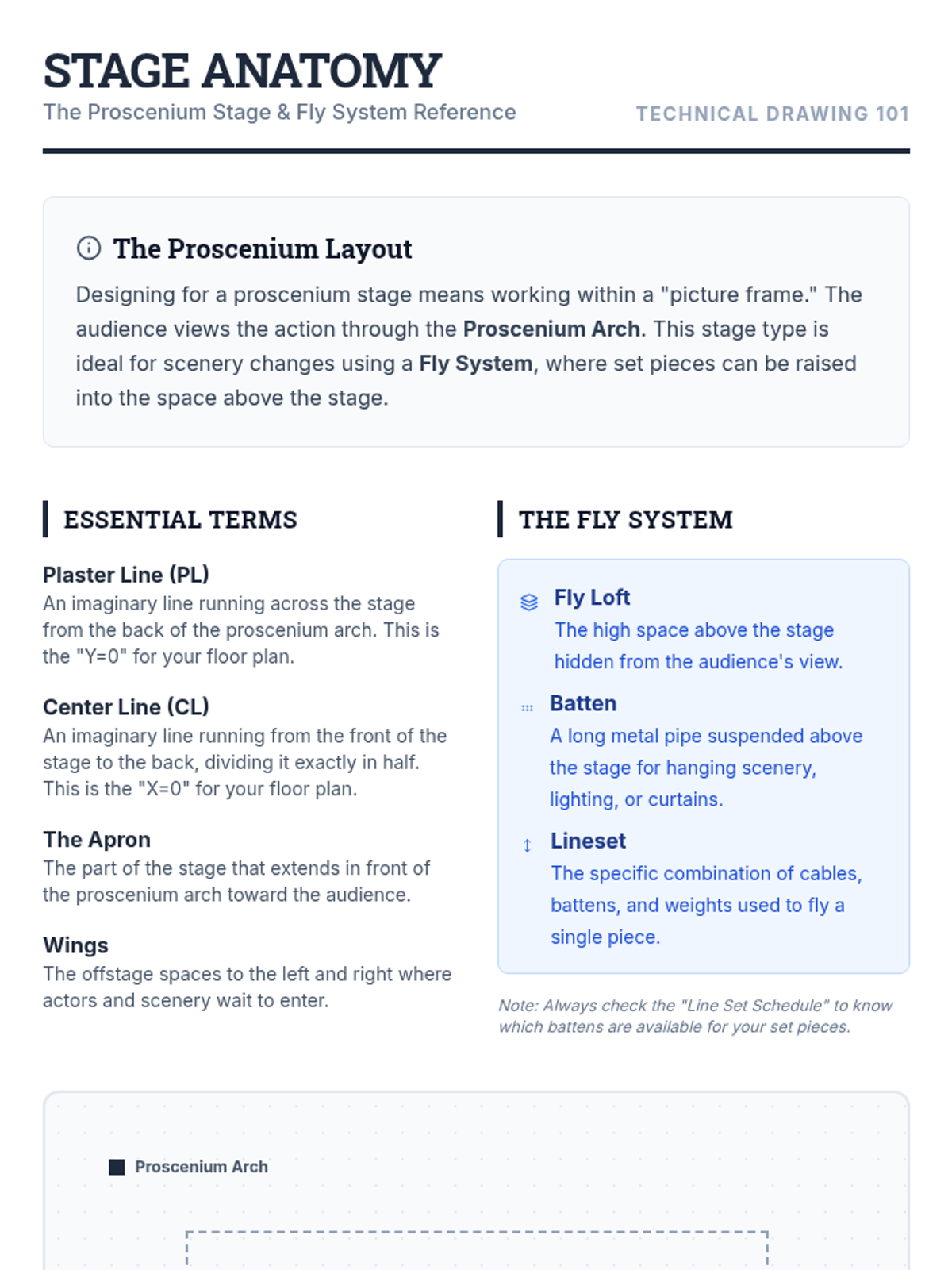
A reference guide for students explaining the key components of a proscenium stage and fly system, including essential technical drafting terms.
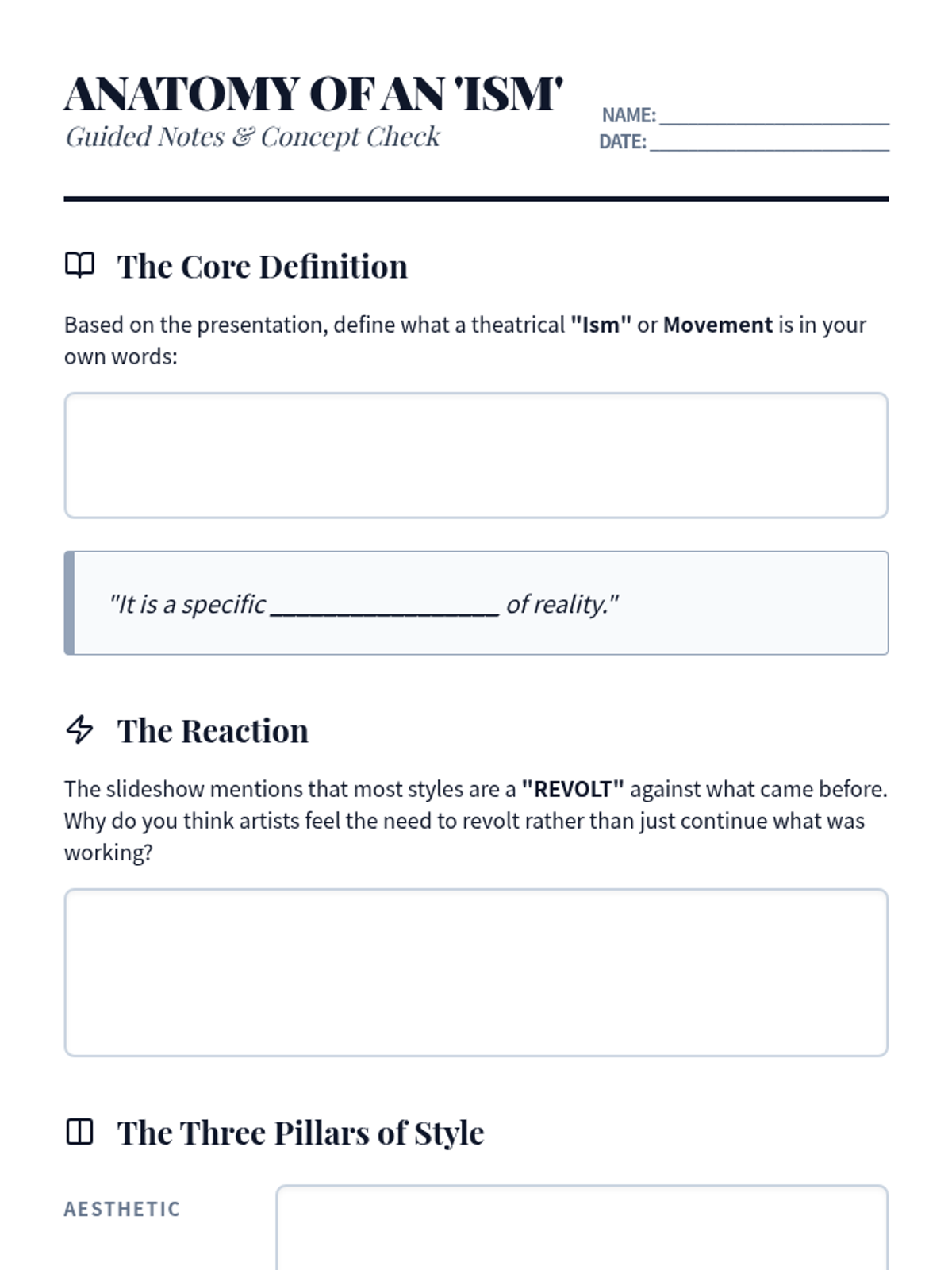
A conceptual worksheet designed to accompany the 'Anatomy of an Ism' presentation, optimized for black and white printing. Helps students define theatrical movements, understand the 'revolt' nature of styles, and identify the three pillars (Aesthetic, Conventions, Philosophy).
A brief introductory slideshow defining what theatrical movements, 'isms', and styles are, focusing on how they react to historical context and establish specific aesthetic rules.
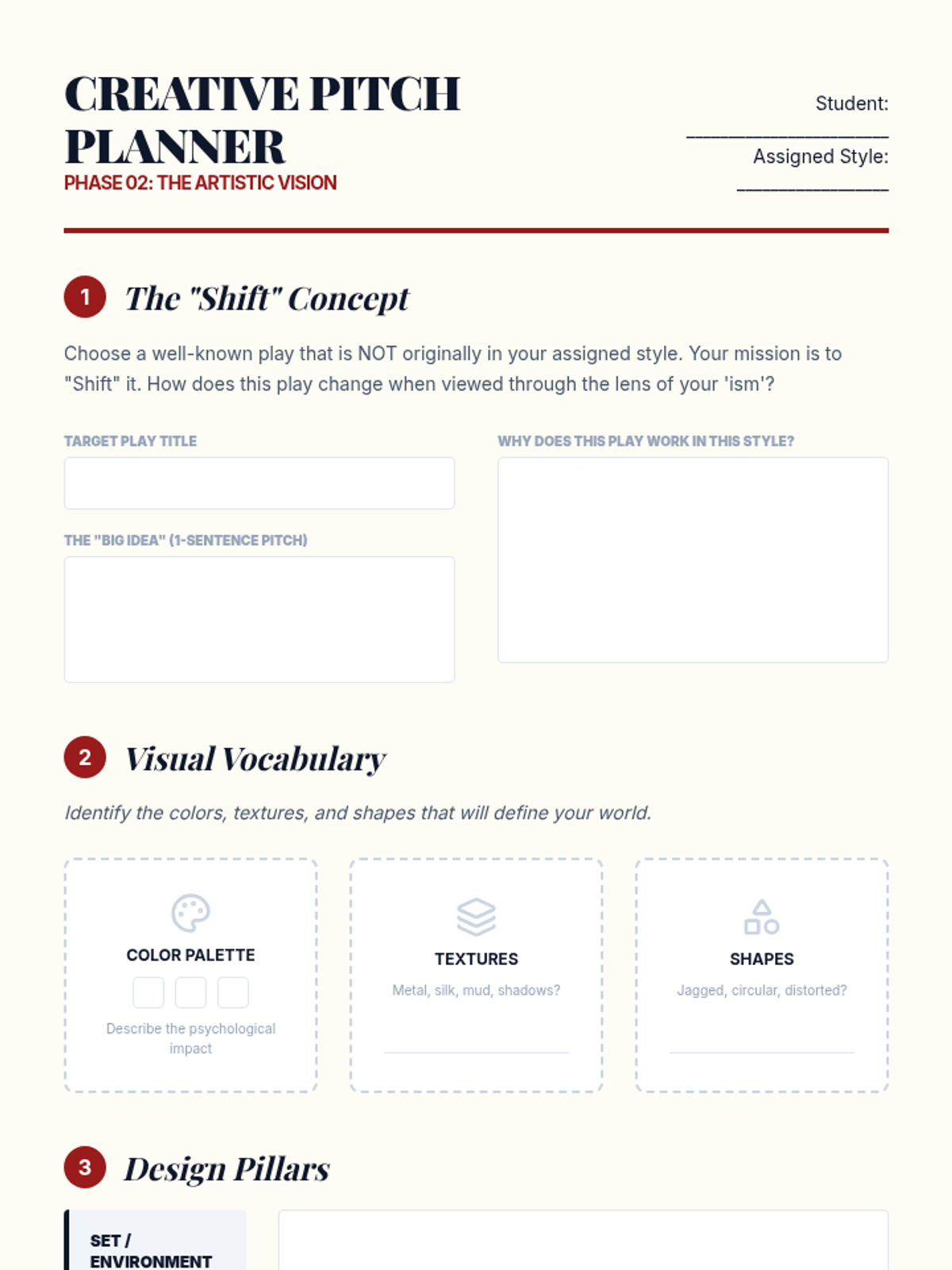
A planning worksheet for students to develop their creative design pitch, including their play choice, directorial concept, mood board plan, and specific design elements.
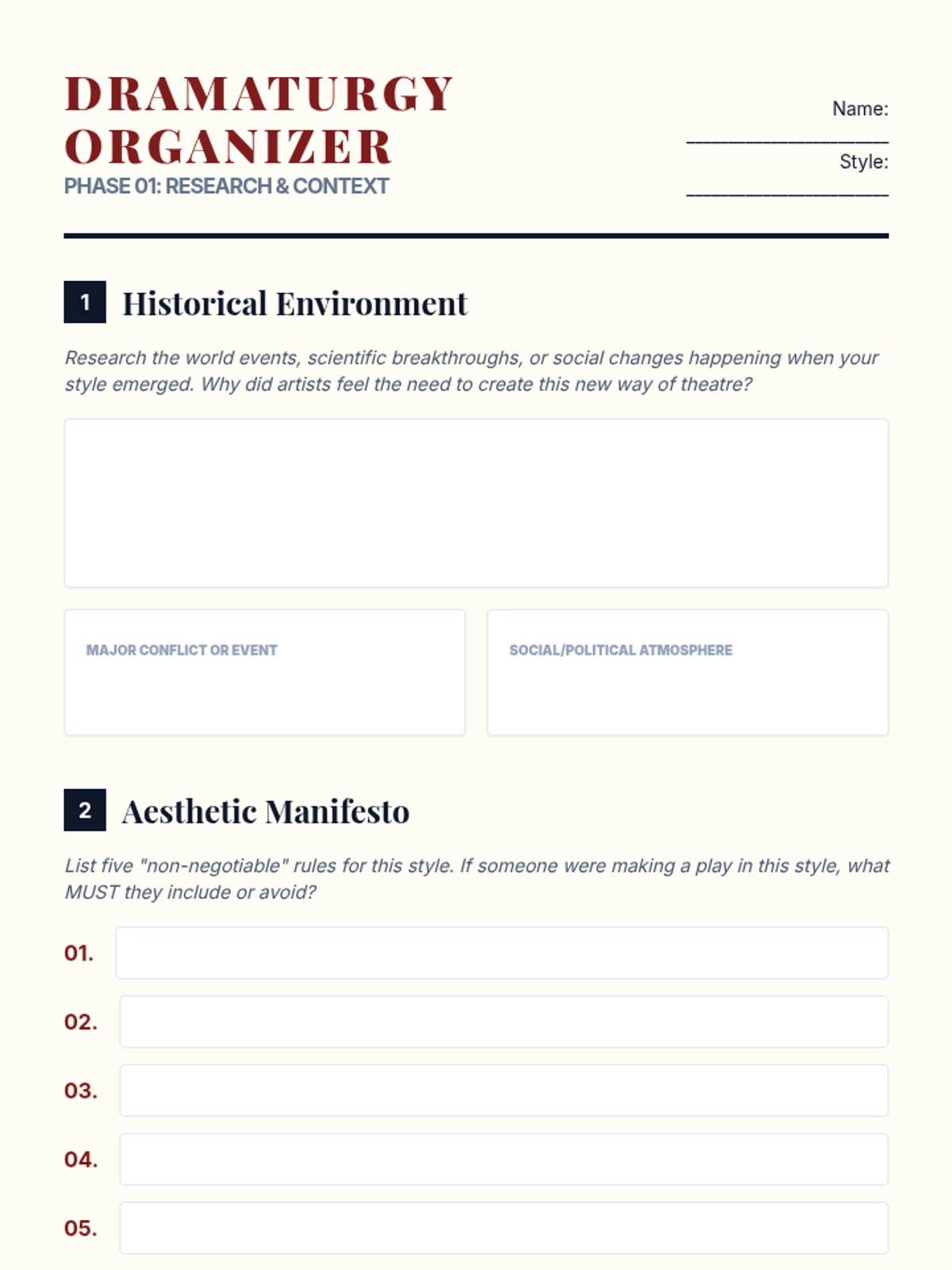
A research organizer for students to document historical context, aesthetic principles, key artists, and primary play analysis for their chosen theatrical movement.
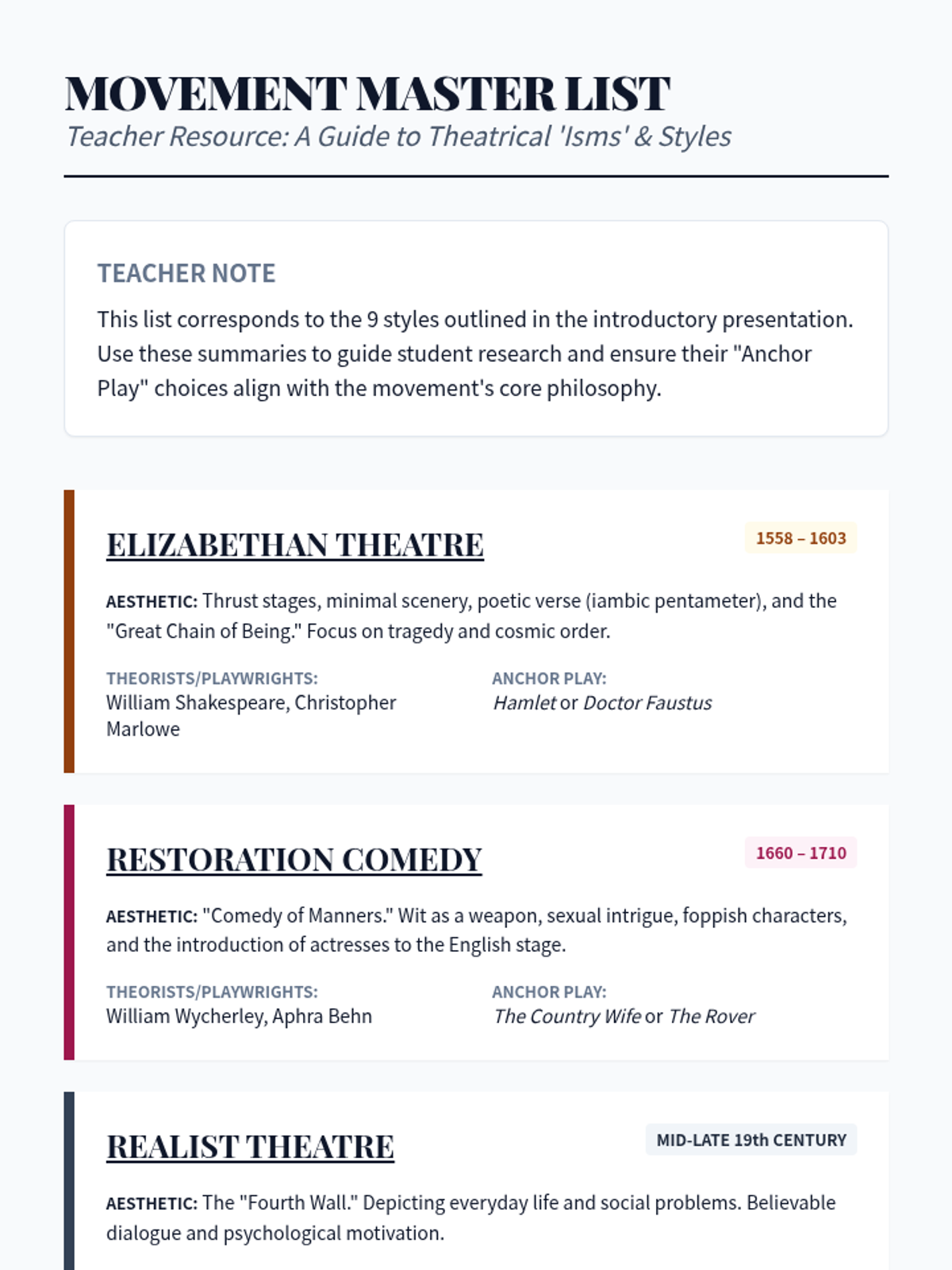
A teacher-facing reference guide listing major theatrical movements, their core aesthetics, key theorists, and suggested anchor plays for student research. Updated to include Elizabethan, Restoration, and Realist styles.
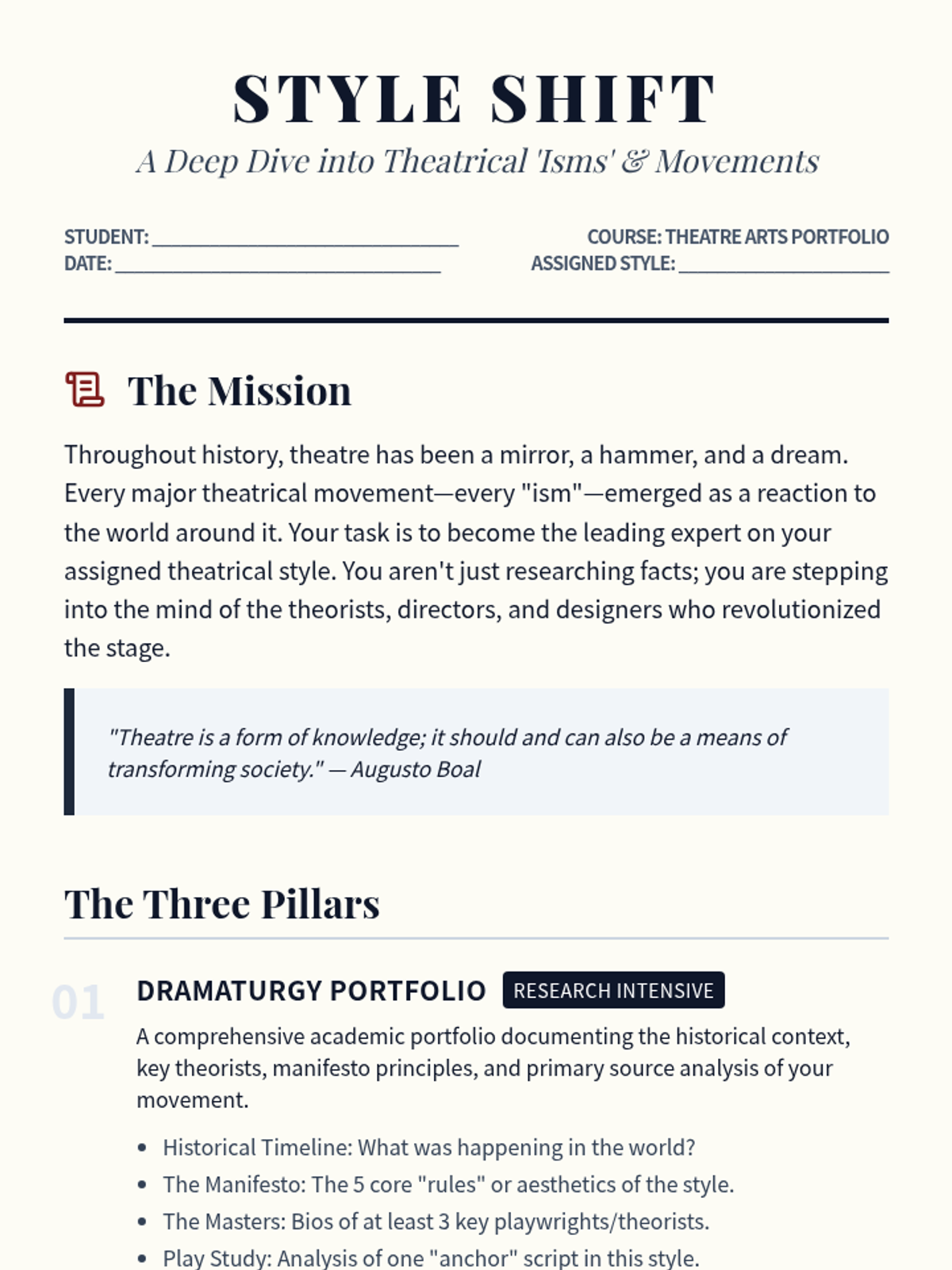
A visual presentation to introduce the Style Shift project, defining theatrical movements ('isms'), outlining the three project pillars, and setting the creative expectations for the final presentation. Now updated with the specific list of 9 theatrical styles.
The master project guide for the Style Shift project, including an overview of the three major components (Dramaturgy Portfolio, Creative Design Pitch, and Presentation) along with a detailed assessment rubric.
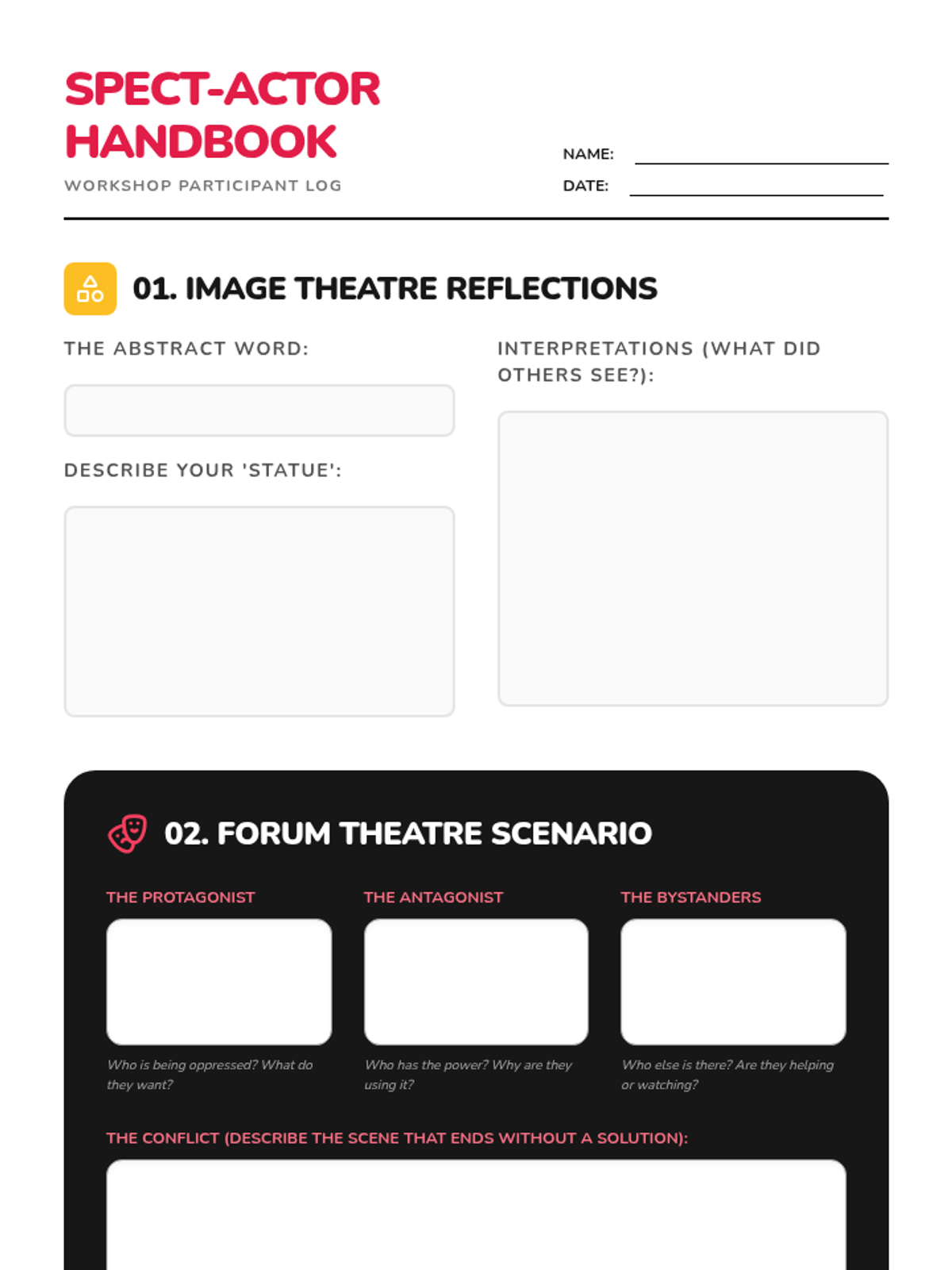
A workshop handbook for students to document their participation in Theatre of the Oppressed activities. Includes space for Image Theatre reflections, Forum Theatre scenario planning, intervention logging, and internalized oppression analysis.
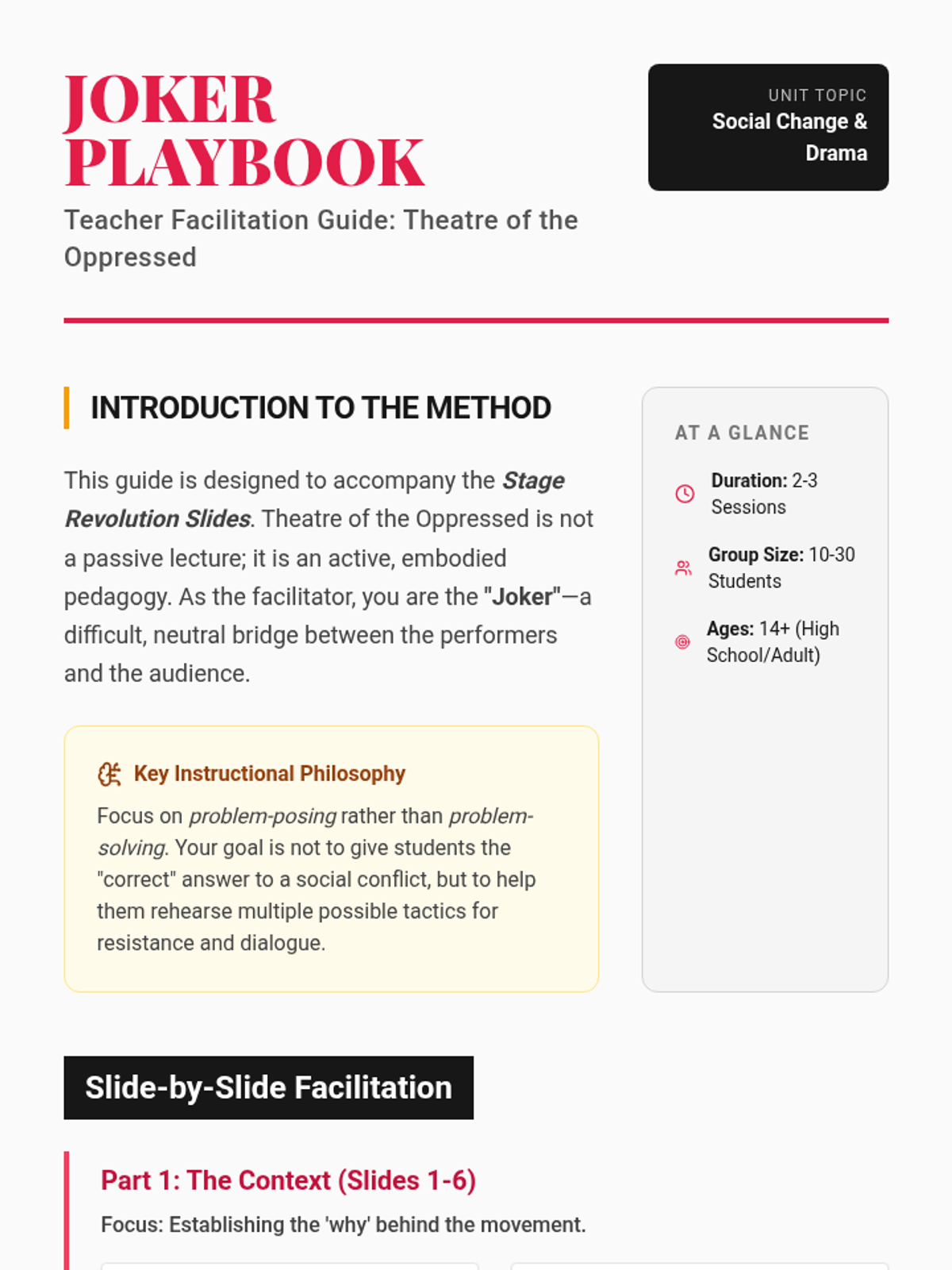
A facilitation guide for teachers to lead workshops using Theatre of the Oppressed techniques. Includes slide-by-slide teaching notes, workshop activities, debrief questions, and a preparatory checklist.
A 21-slide presentation on the Theatre of the Oppressed, featuring the life of Augusto Boal, key techniques like Forum and Image Theatre, and modern social justice applications. Designed with a bold, dramatic aesthetic using high-contrast colors and professional typography.
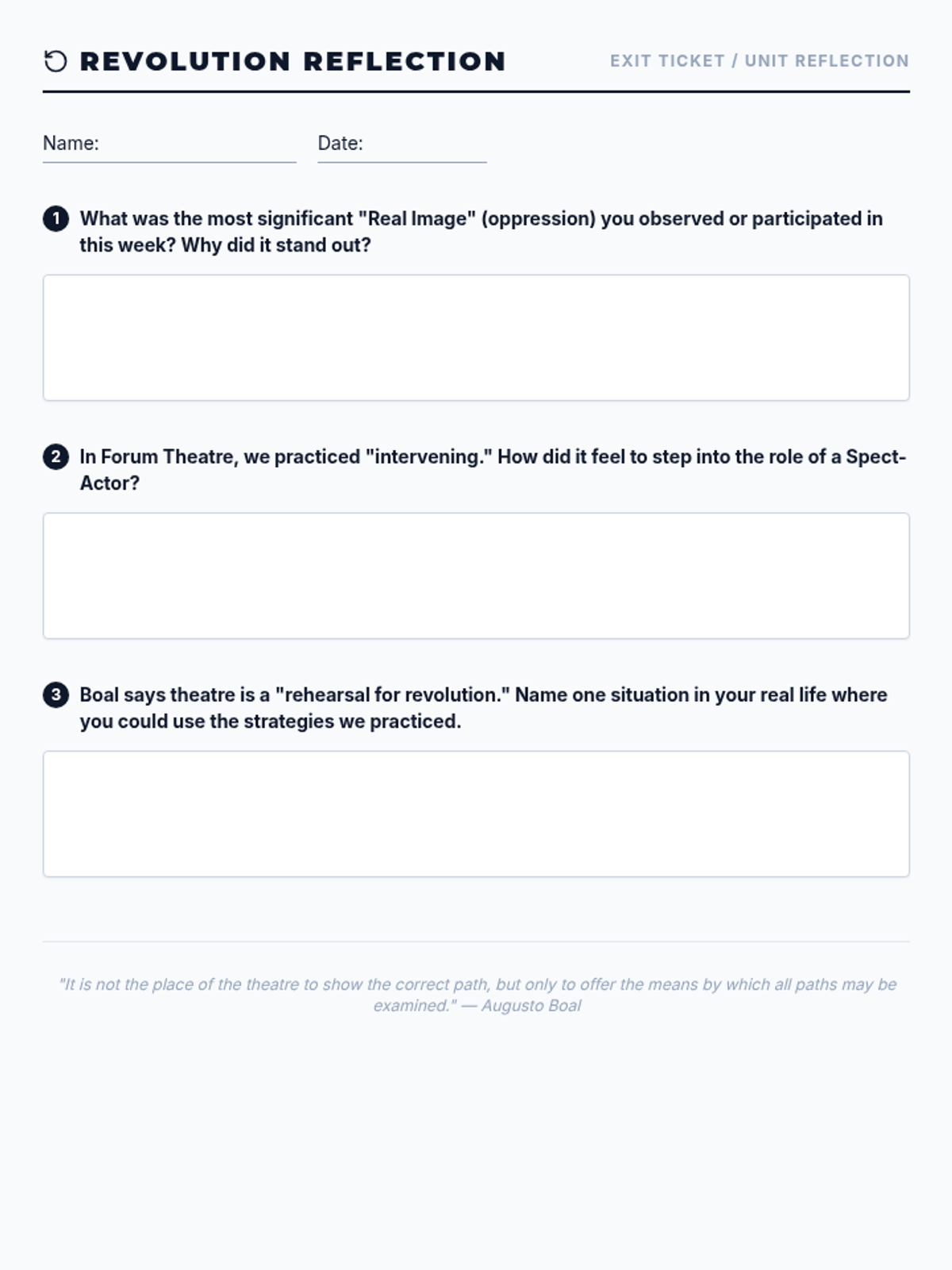
A final student exit ticket and unit reflection for Lesson 3, allowing students to process their experience as a spect-actor and connect techniques to real-life applications.
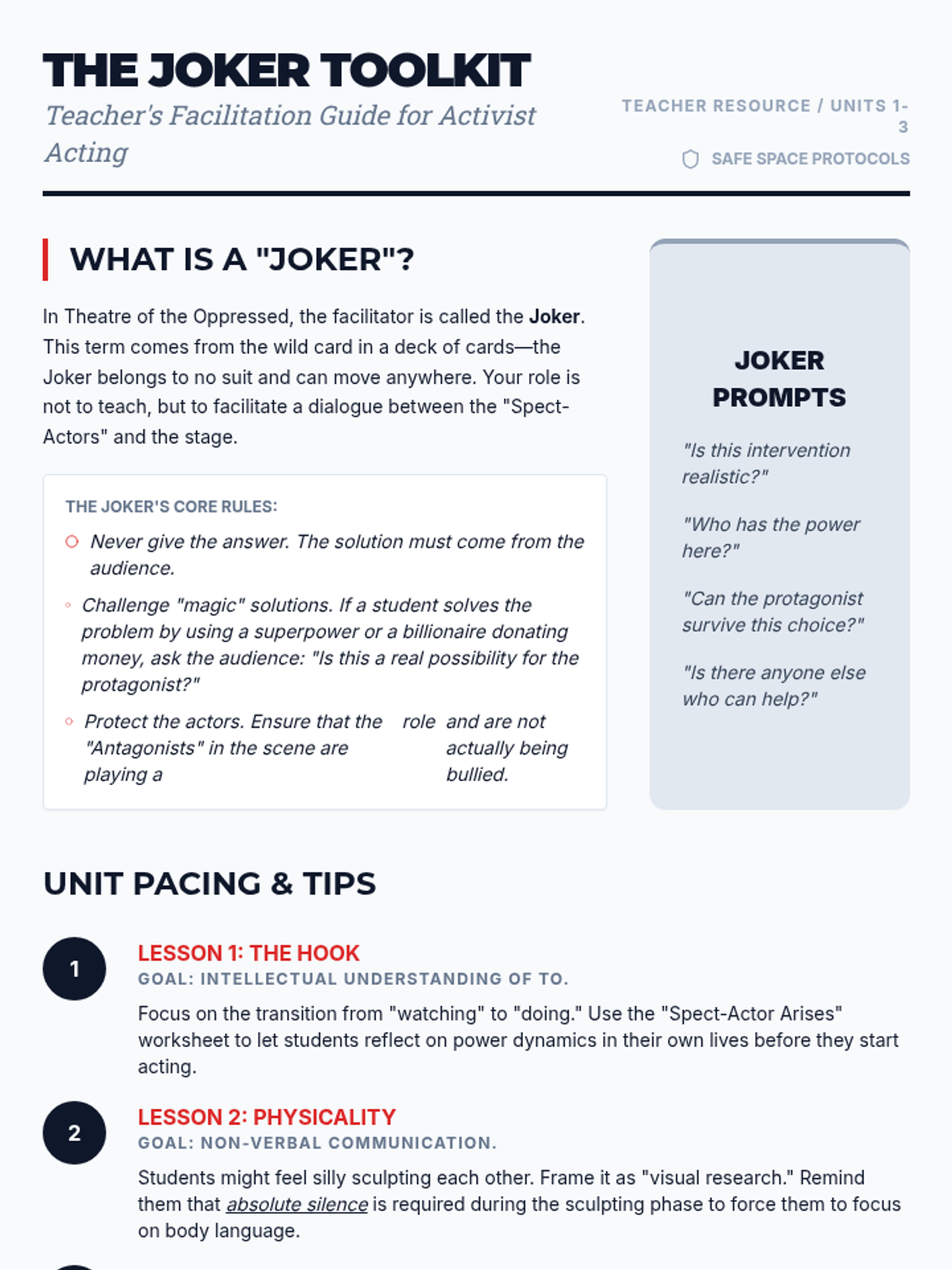
A teacher facilitation guide for the Theatre of the Oppressed unit, defining the "Joker" role, providing pacing tips, and safety protocols for managing sensitive topics in the classroom.
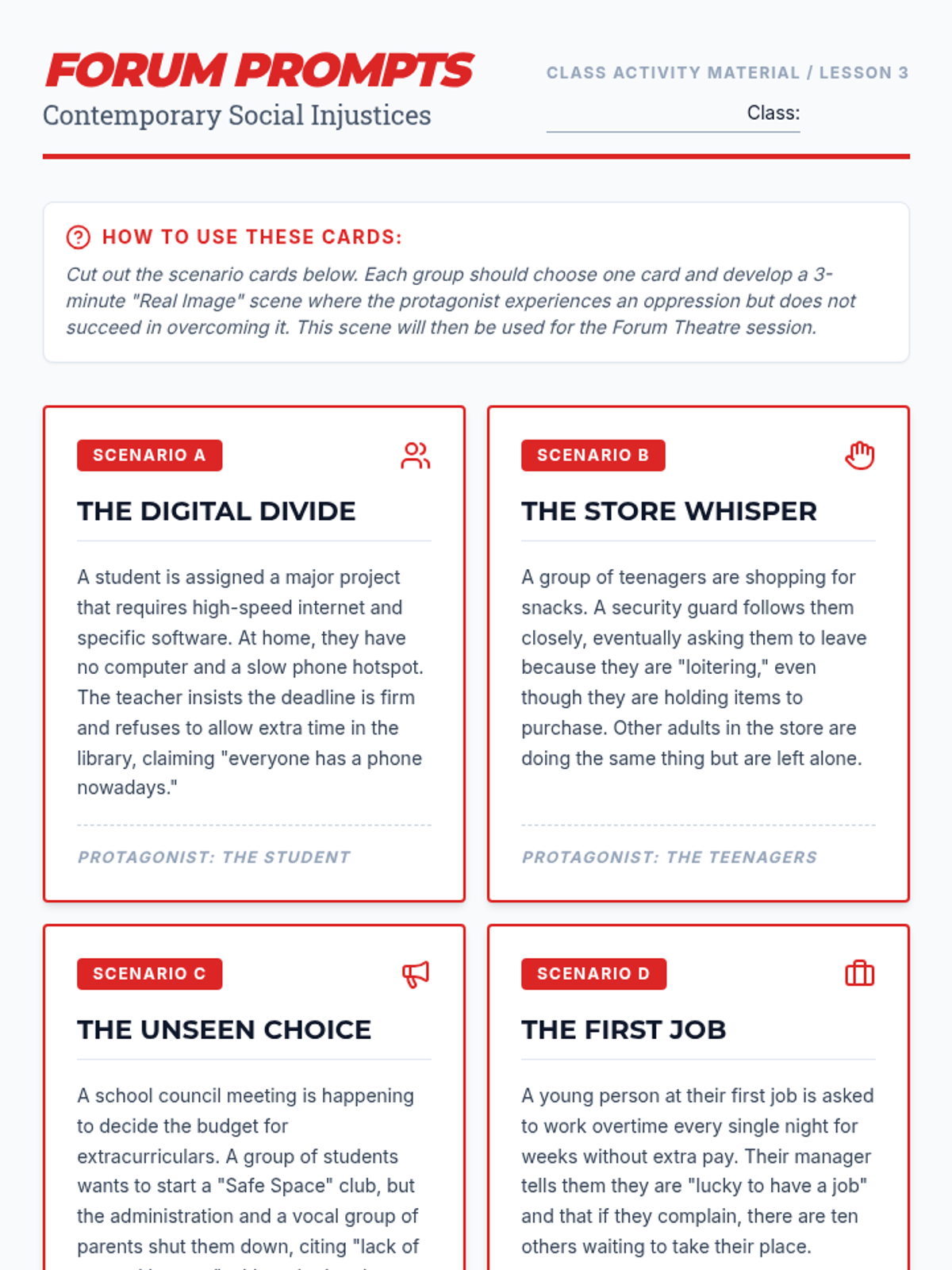
A set of scenario cards for Lesson 3 to prompt Forum Theatre scenes based on contemporary social issues like digital divide, profiling, and labor rights.
A high-energy slide deck for Lesson 3 focusing on Forum Theatre, defining the roles of the Spect-actor and Joker, the "Stop!" intervention technique, and contemporary issues.
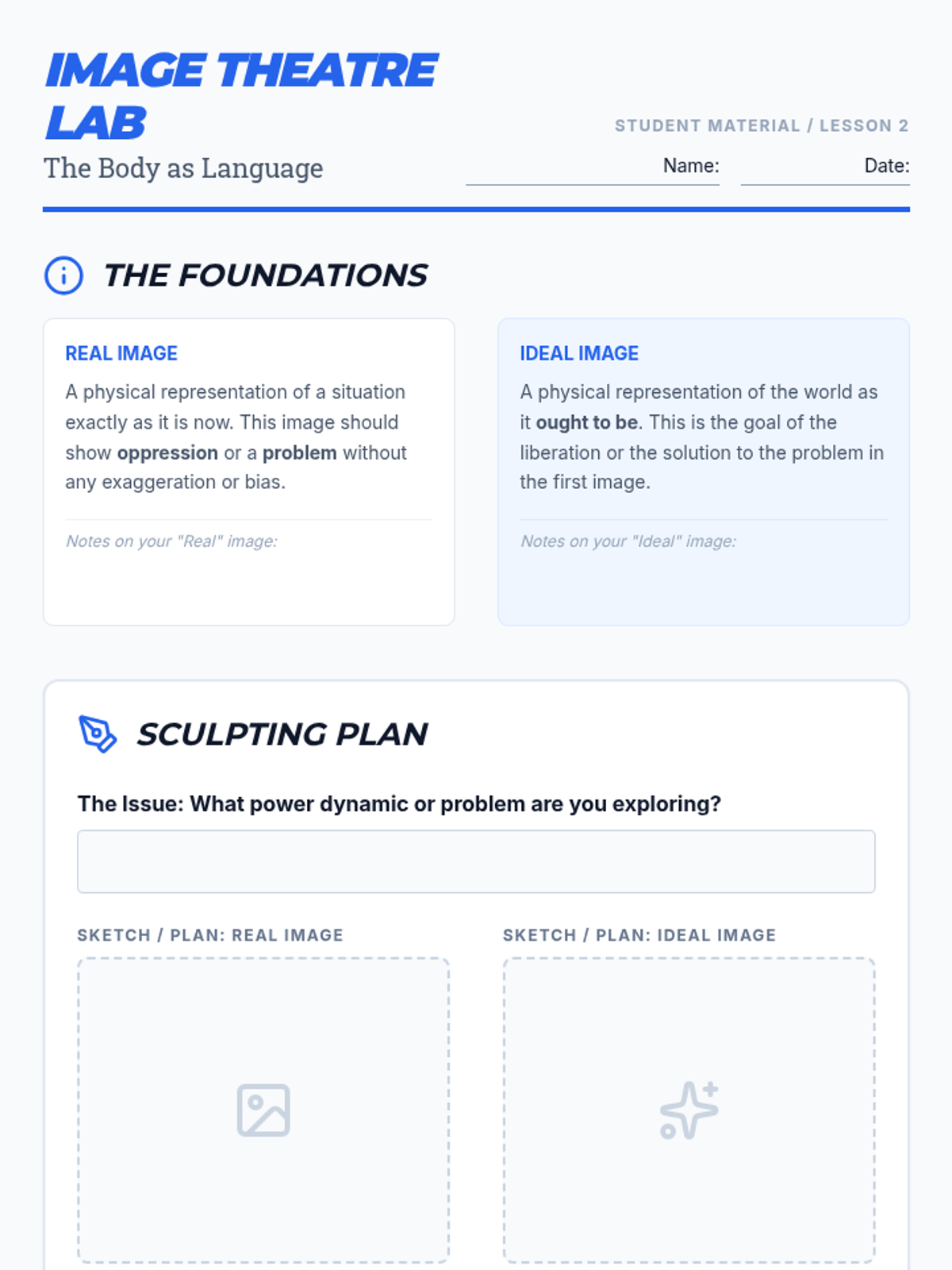
An Image Theatre planning and reflection worksheet for students, providing space for "Real" and "Ideal" image planning and analytical questions for peer observation.
A slide deck for Lesson 2 focusing on Image Theatre, defining the technique of sculpting, the transition from real to ideal images, and the analytical framework for "de-coding" physical forms.
A high-impact introductory slide deck for Lesson 1, visually defining Theatre of the Oppressed, the life of Augusto Boal, and the concept of the 'spect-actor'.
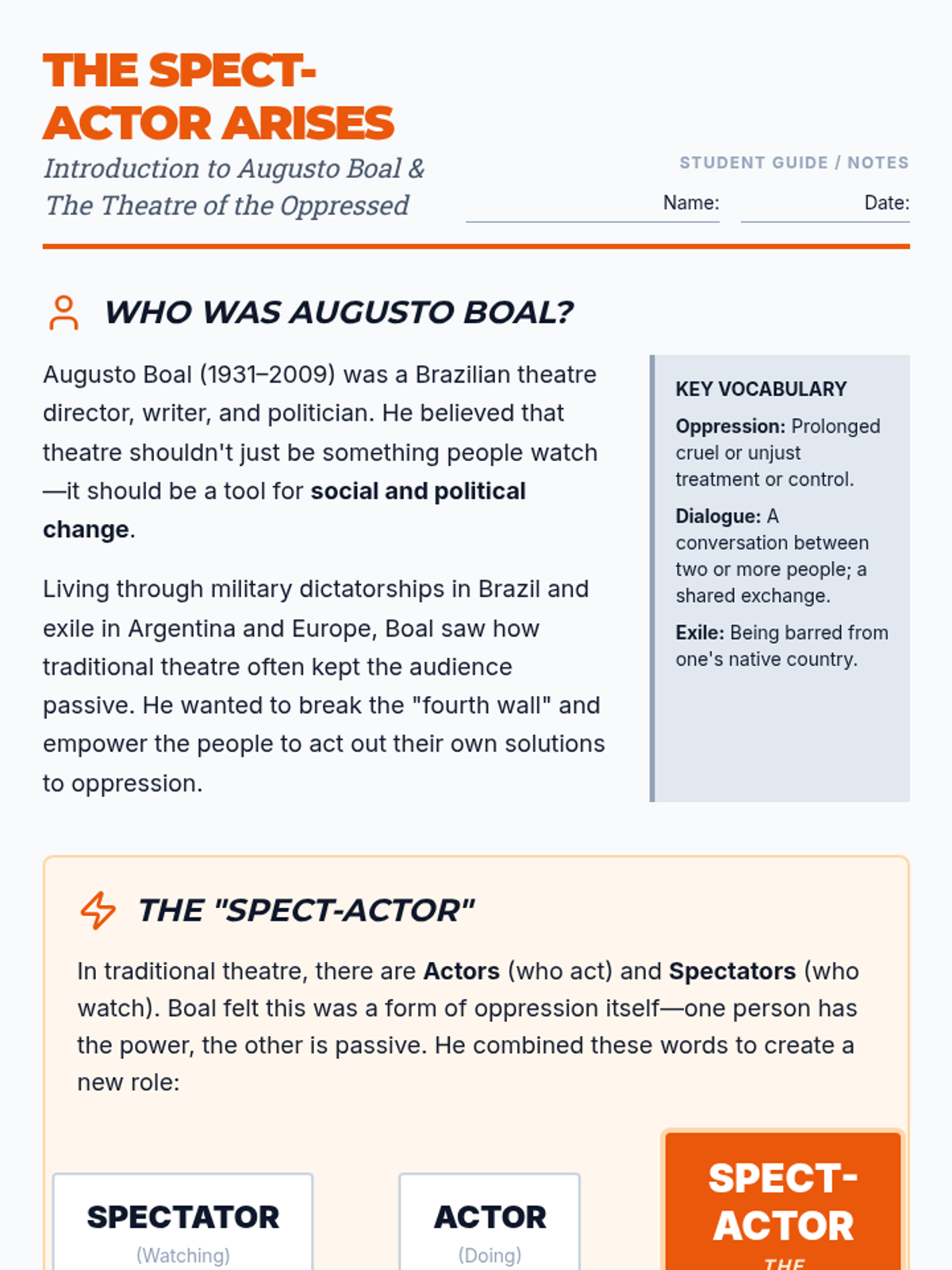
An introductory student worksheet for Lesson 1, covering the life of Augusto Boal, the definition of oppression, the concept of the 'spect-actor', and the origins of Theatre of the Oppressed.
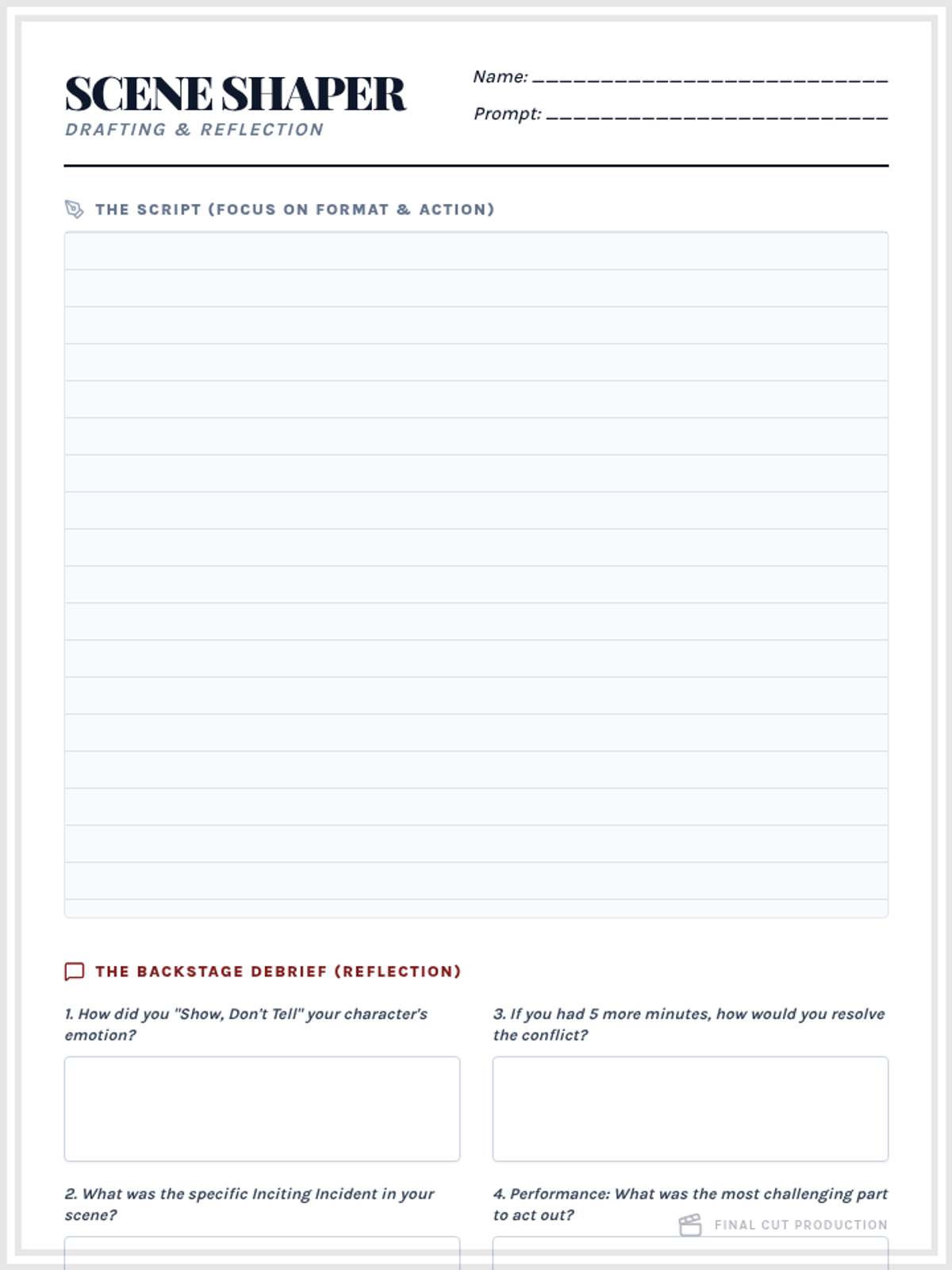
A specialized worksheet for drafting a short dramatic scene, including a large designated writing area with script formatting guides and a set of reflection prompts for student analysis.