Specialized vocabulary across disciplines, research methodologies, and effective note-taking systems. Equips learners with information literacy skills and strategies for navigating standardized exams.
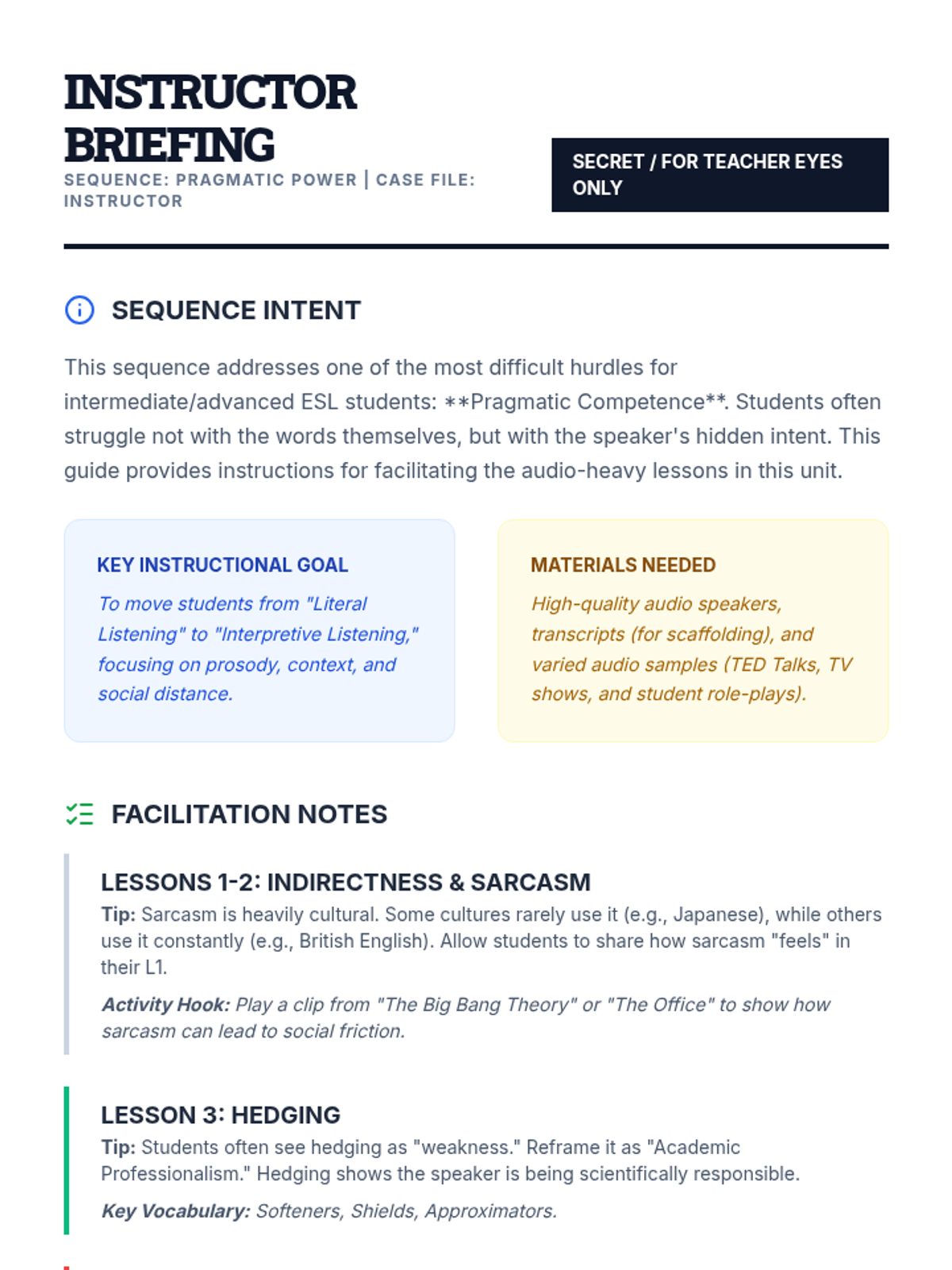
Instructor briefing and facilitation guide for the Pragmatic Power sequence, providing teaching tips, activity hooks, and assessment strategies for ESL instructors.
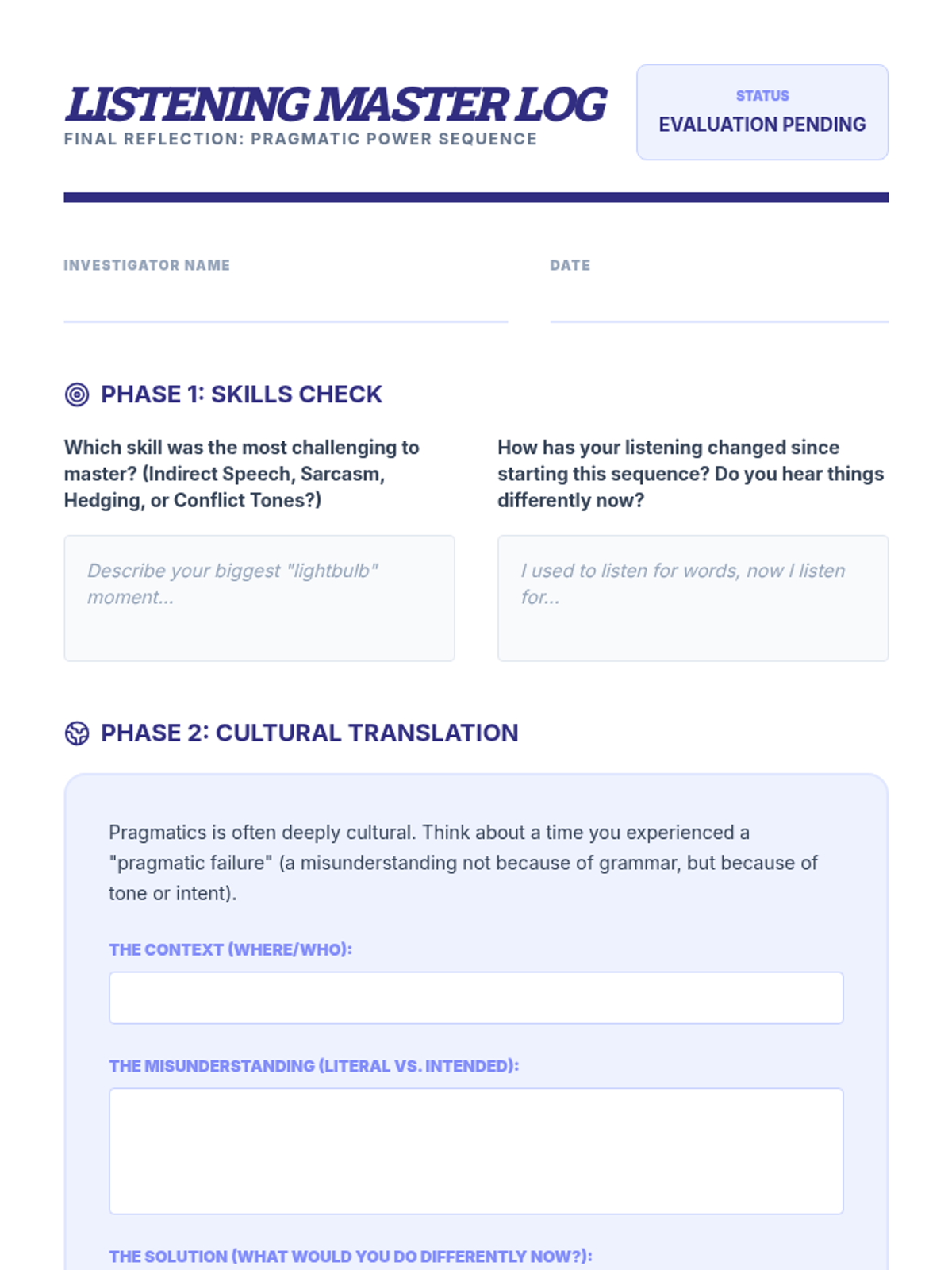
Final reflection worksheet and exit ticket for the sequence, allowing students to synthesize their learning about pragmatics and reflect on their own cultural communication experiences.
Visual presentation for Lesson 5 exploring how cultural backgrounds influence pragmatic markers like silence, interruption, and backchanneling in global English.
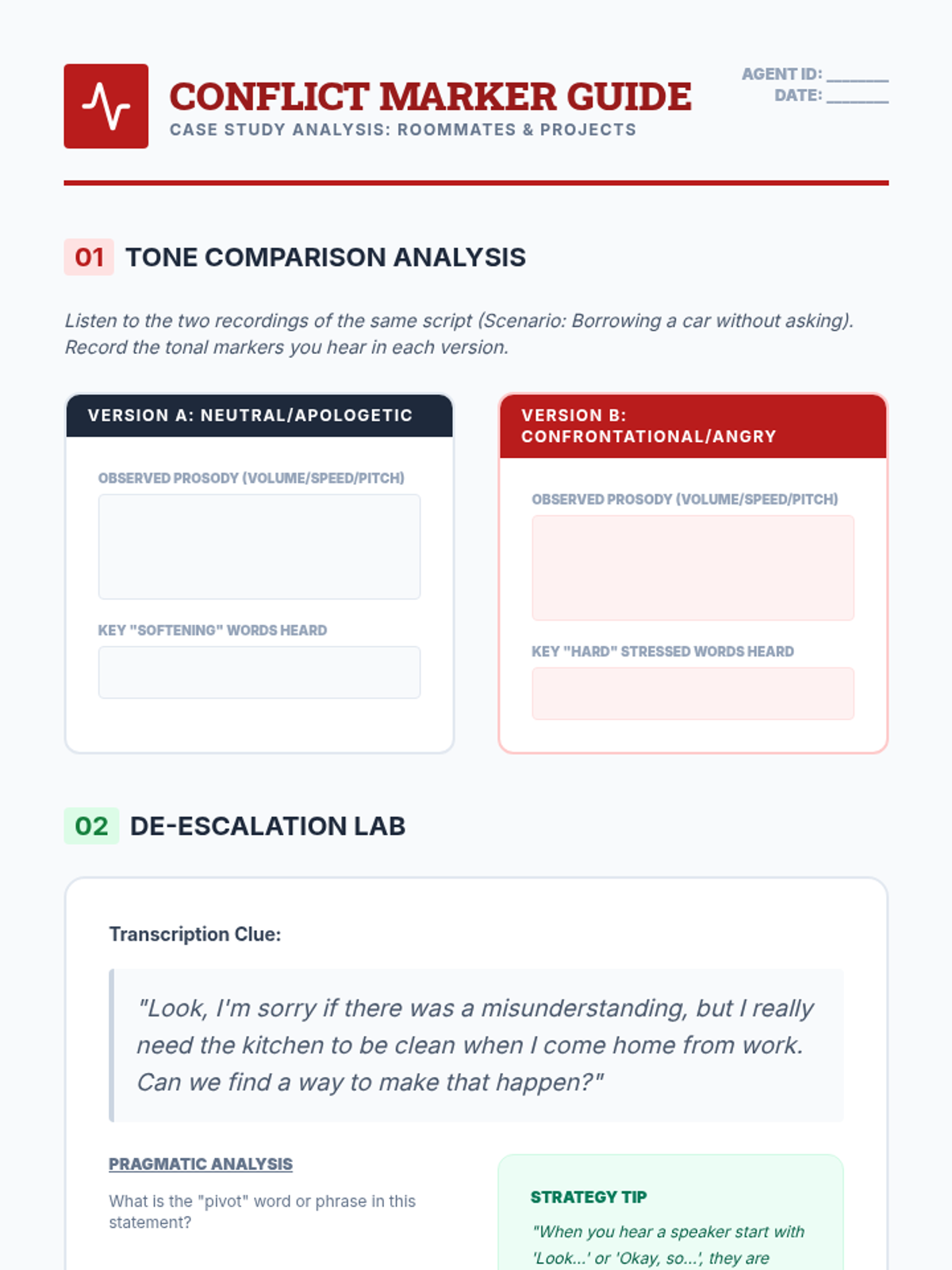
Student worksheet for Lesson 4 where students compare different tonal renditions of a script to identify markers of conflict and practice identifying de-escalation strategies.
Visual presentation for Lesson 4 exploring the tonal and prosodic markers of conflict (escalation) and negotiation (de-escalation) in social and academic scenarios.
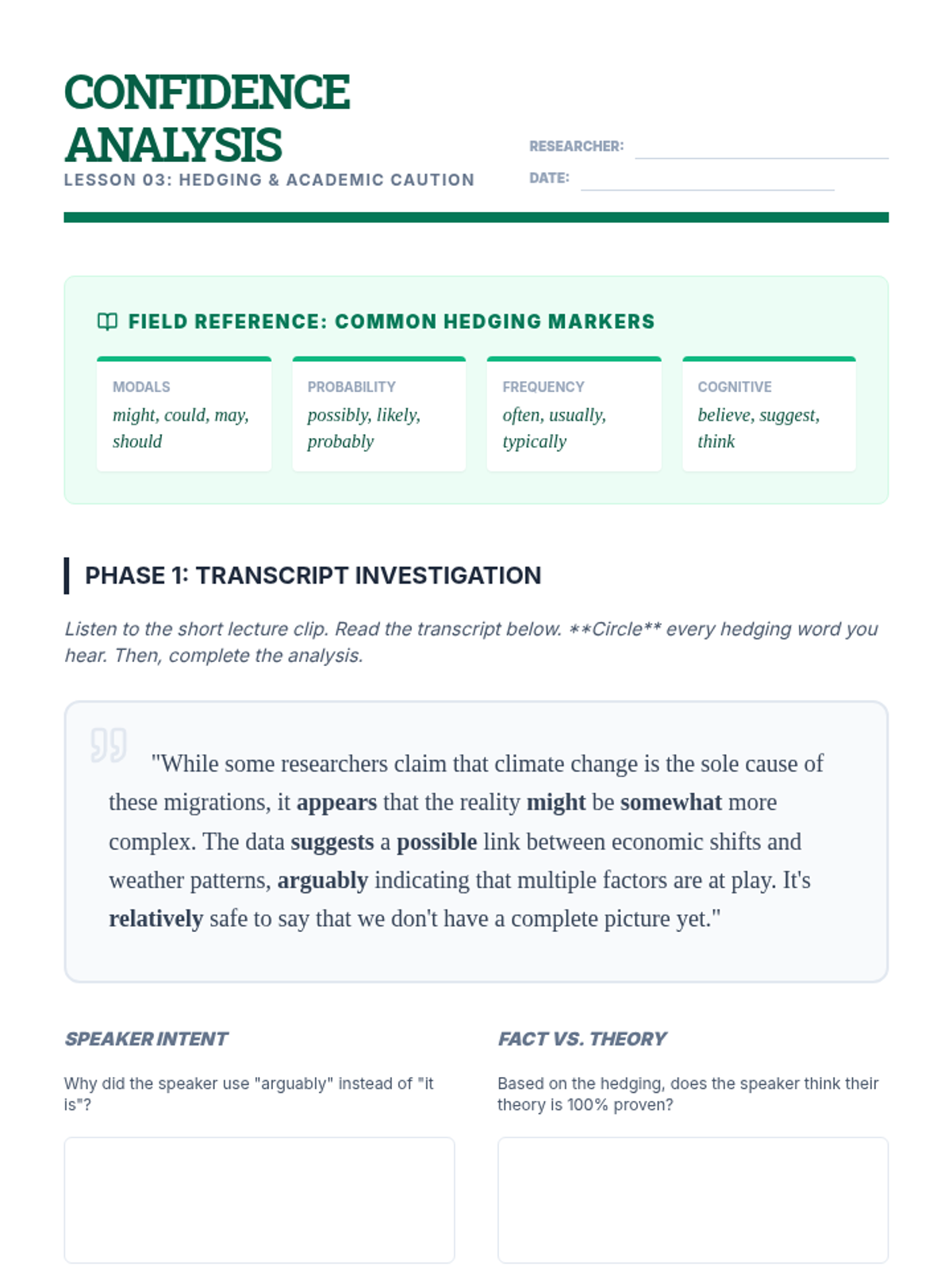
Worksheet for Lesson 3 where students identify hedging language in a transcript and evaluate the confidence level of different speakers based on their linguistic choices.
Presentation for Lesson 3 focusing on hedging language in academic and formal English, teaching students to identify linguistic softeners that signal uncertainty or caution.
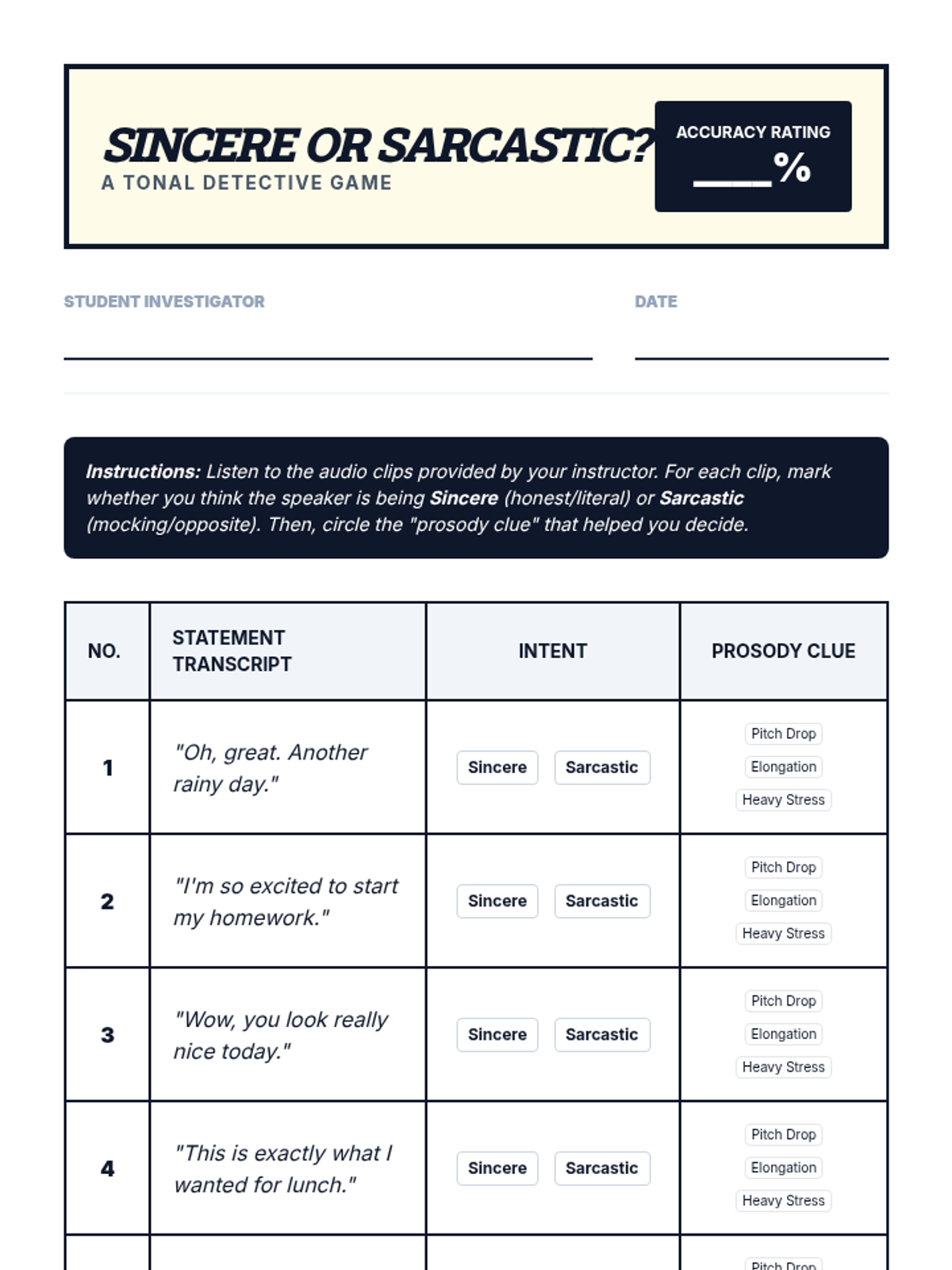
Game-based worksheet for Lesson 2 where students record their interpretations of audio clips to distinguish between sincere and sarcastic intent based on tonal prosody.
Visual presentation for Lesson 2 focusing on the vocal markers of sarcasm (pitch, elongation, stress) and the social contexts where irony is appropriate.
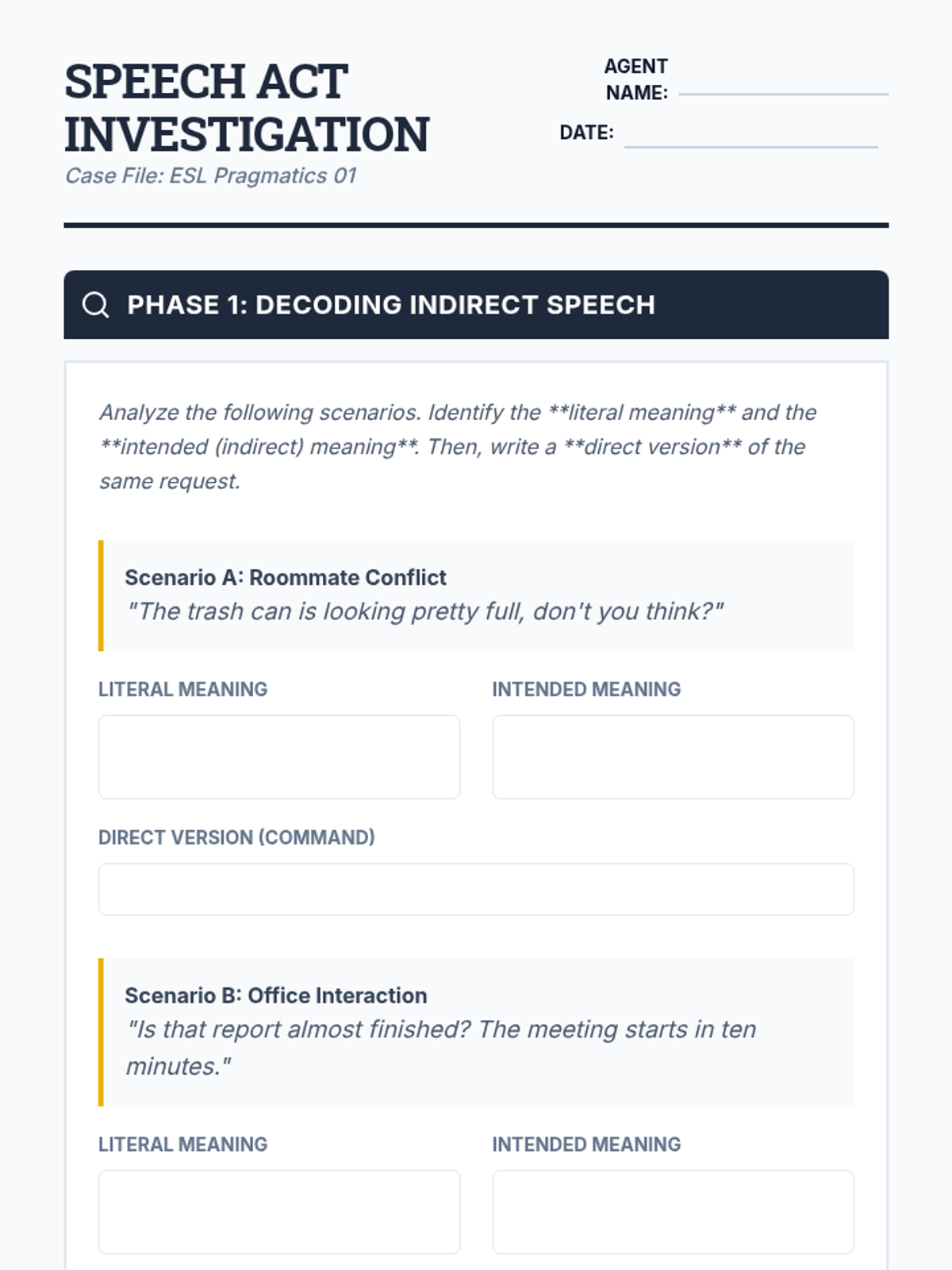
Student worksheet for Lesson 1 where students analyze scenarios to decode the difference between literal and intended meaning in indirect requests.
Introductory presentation for Lesson 1, exploring the concept of pragmatics and the difference between direct and indirect speech acts using real-world scenarios.
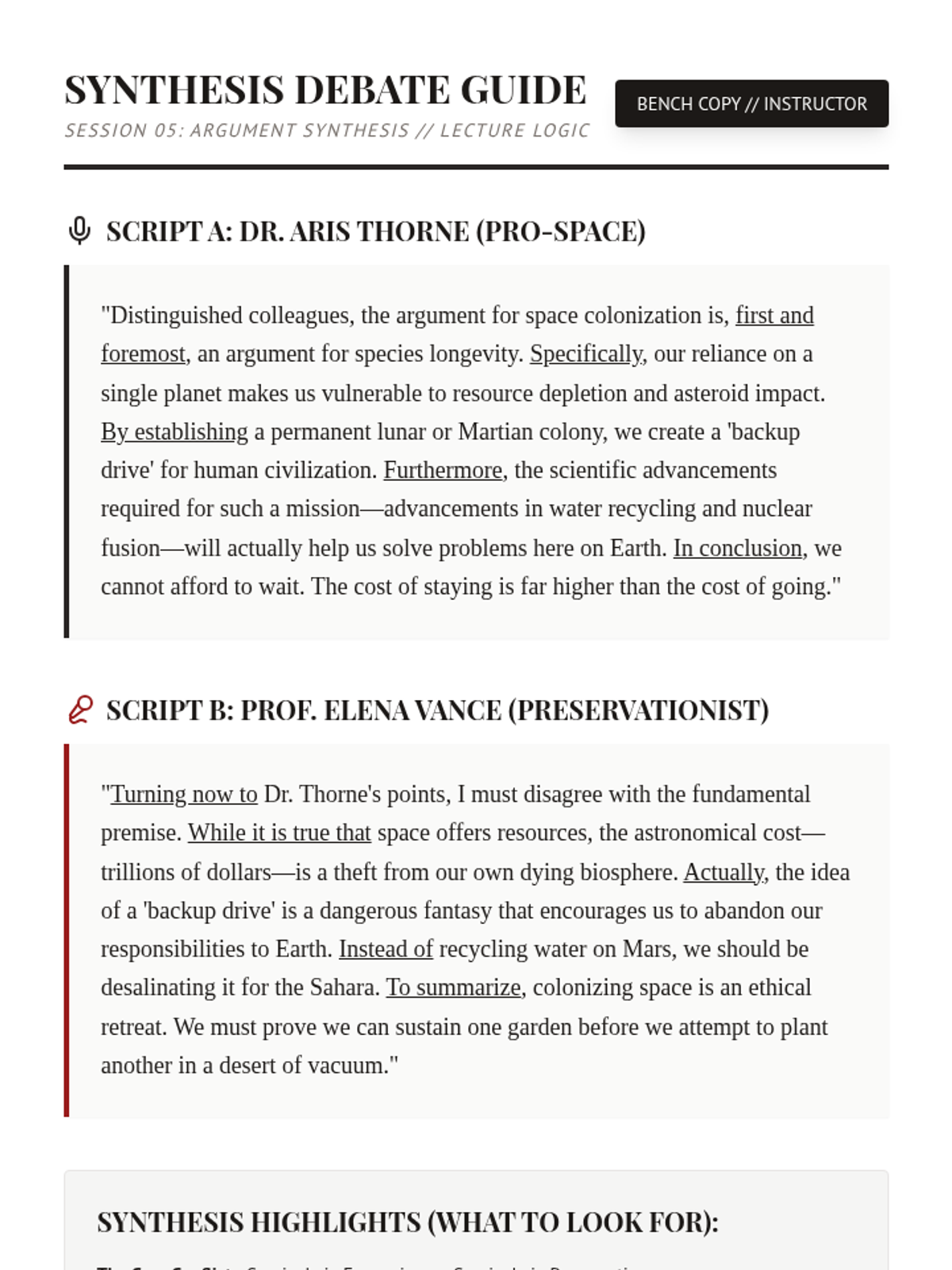
A teacher resource providing the instructional scripts for the final synthesis debate. Includes specific rebuttals to listen for and facilitation tips for the lesson wrap-up.
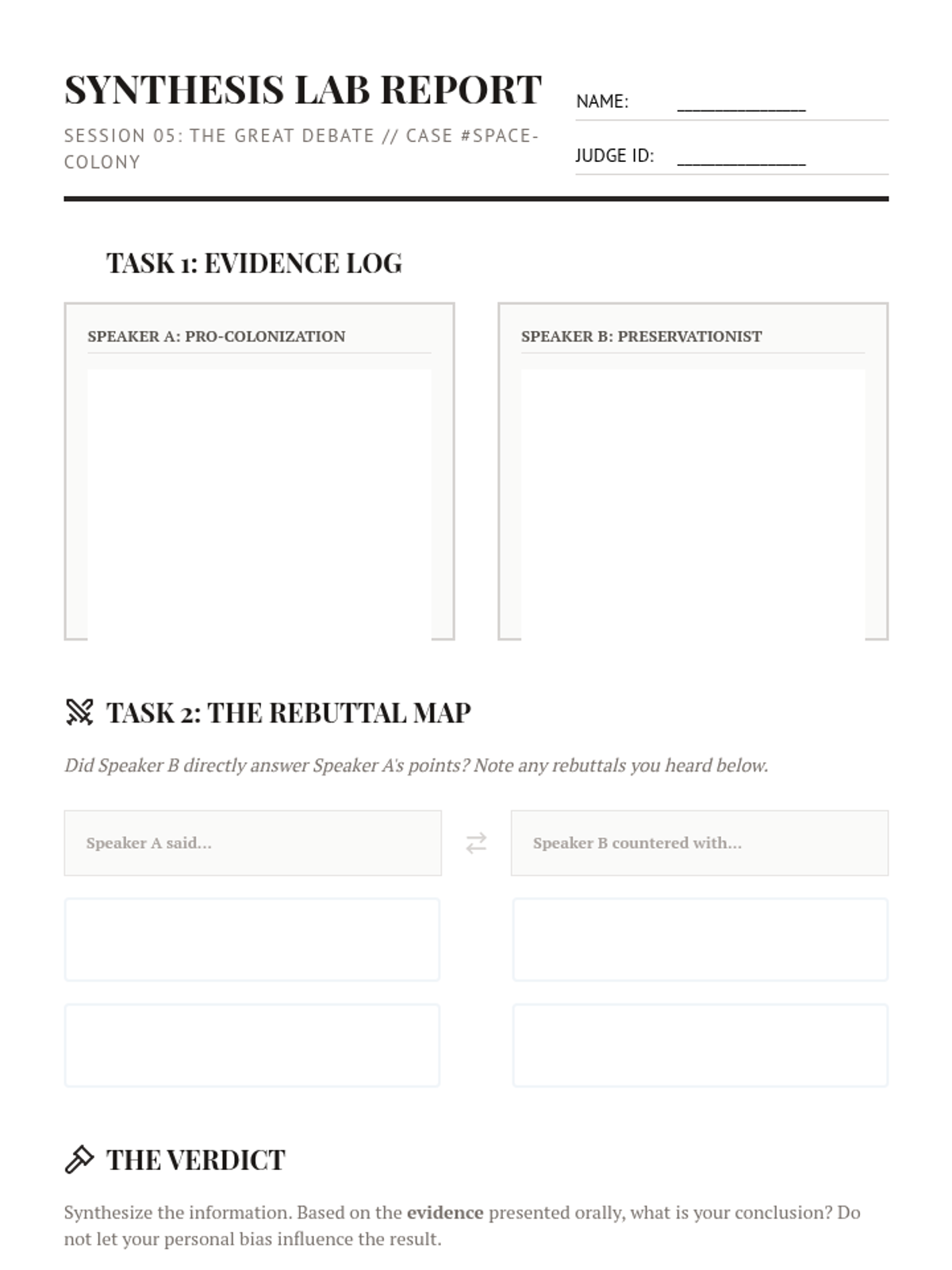
A student worksheet for identifying arguments and rebuttals between two speakers. Includes a graphic organizer for cross-referencing claims and a section for a synthesized conclusion.
A slide deck introducing identifying claims and rebuttals in academic listening. Includes examples of contrasting arguments and instructions for the synthesis activity.
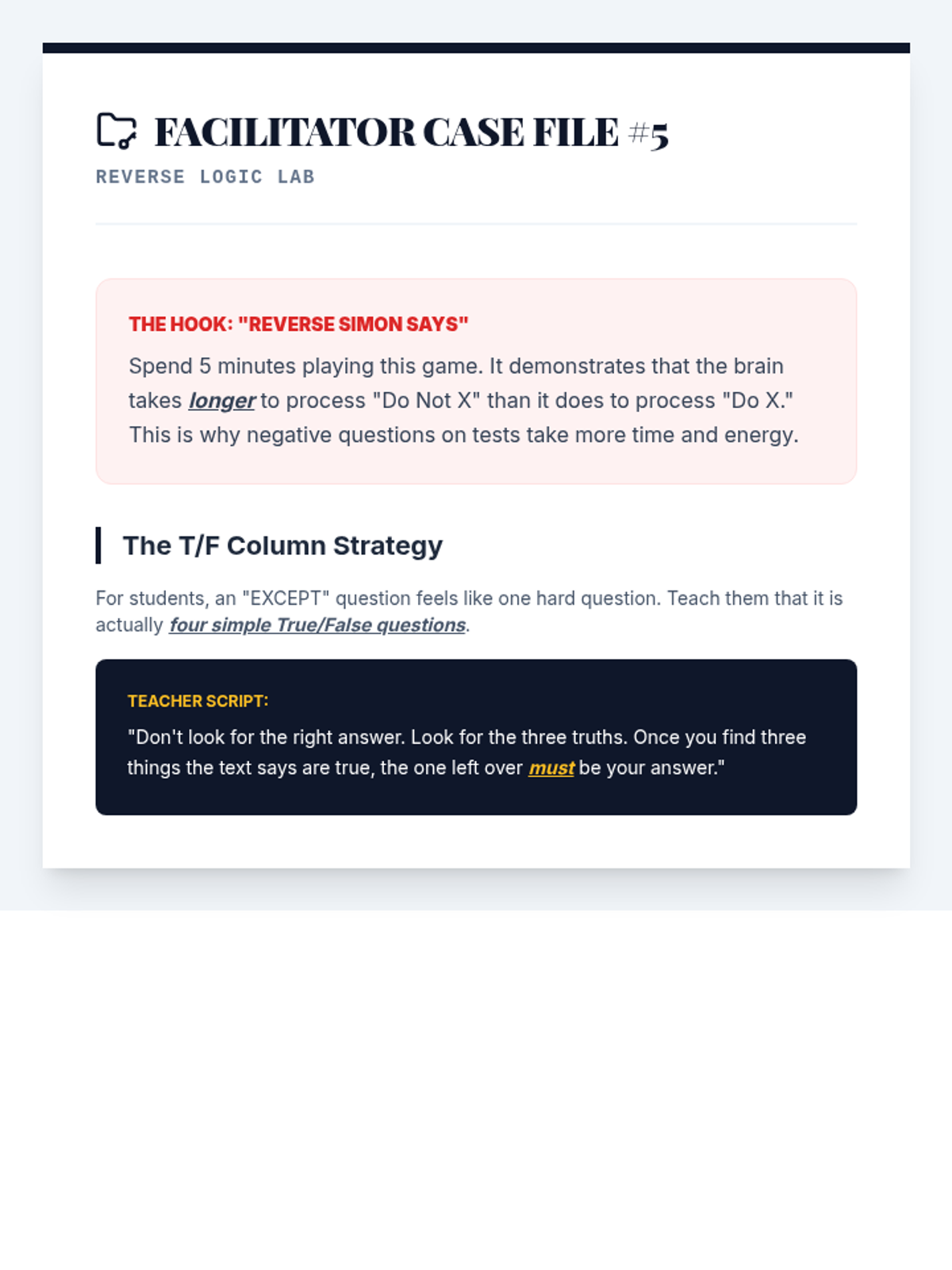
A teacher guide for Lesson 5 on handling negative/except questions, featuring the Reverse Simon Says hook and the T/F elimination method.
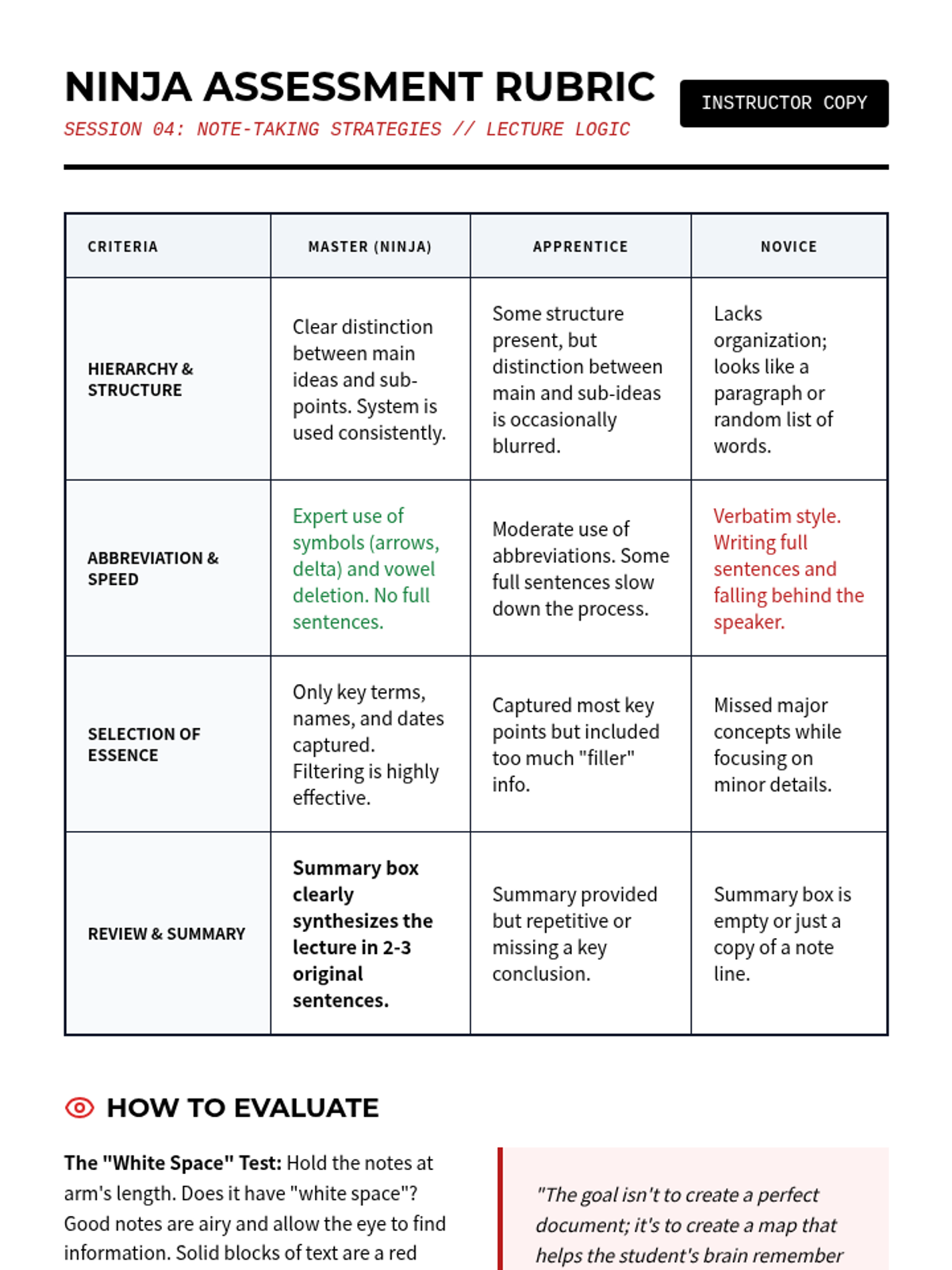
A teacher resource providing an assessment rubric and evaluation tips for student note-taking. Focuses on hierarchy, abbreviation use, and the synthesis of core concepts.
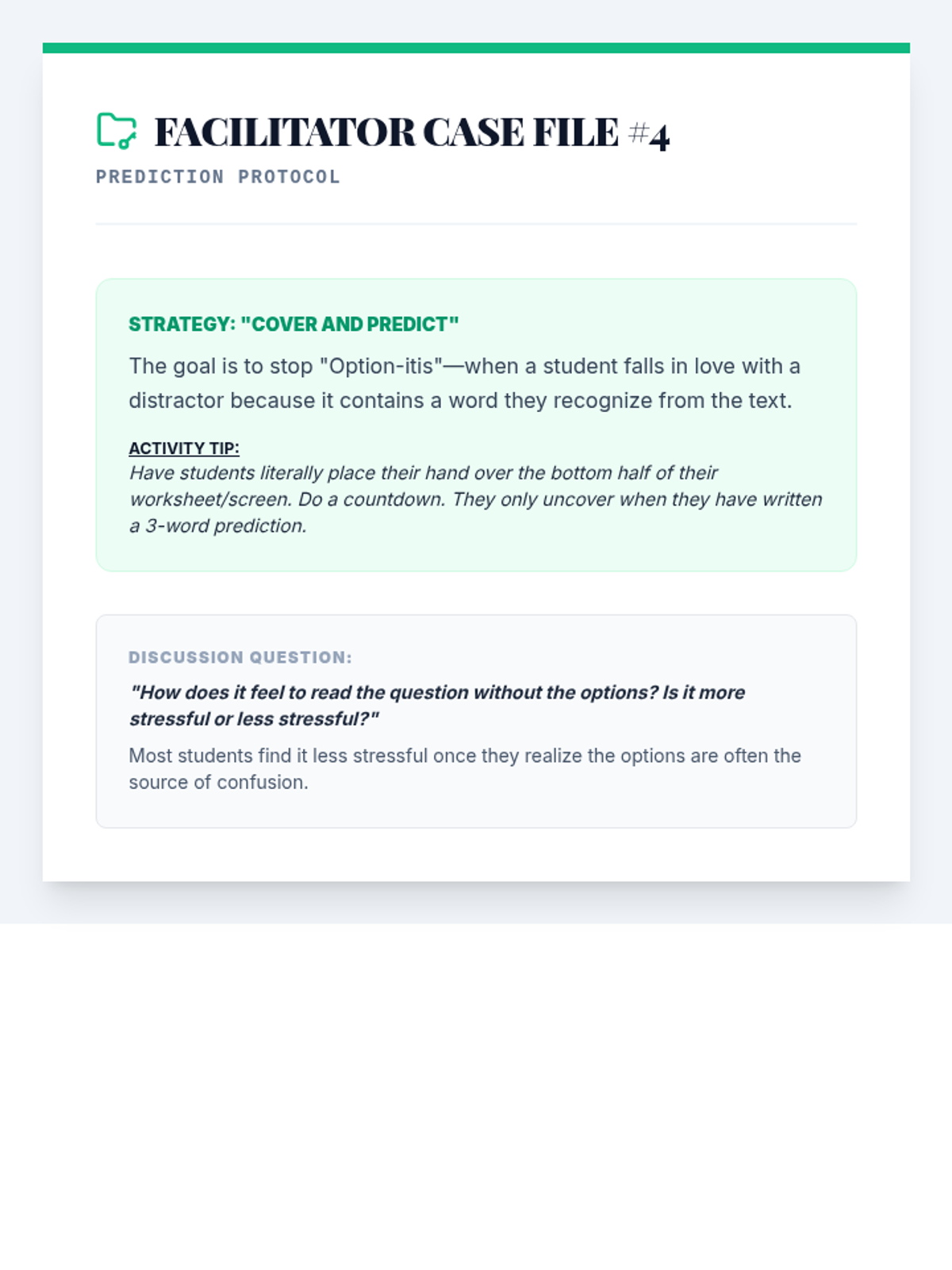
A teacher guide for Lesson 4 on the prediction strategy, focusing on active recall and avoiding distractors.
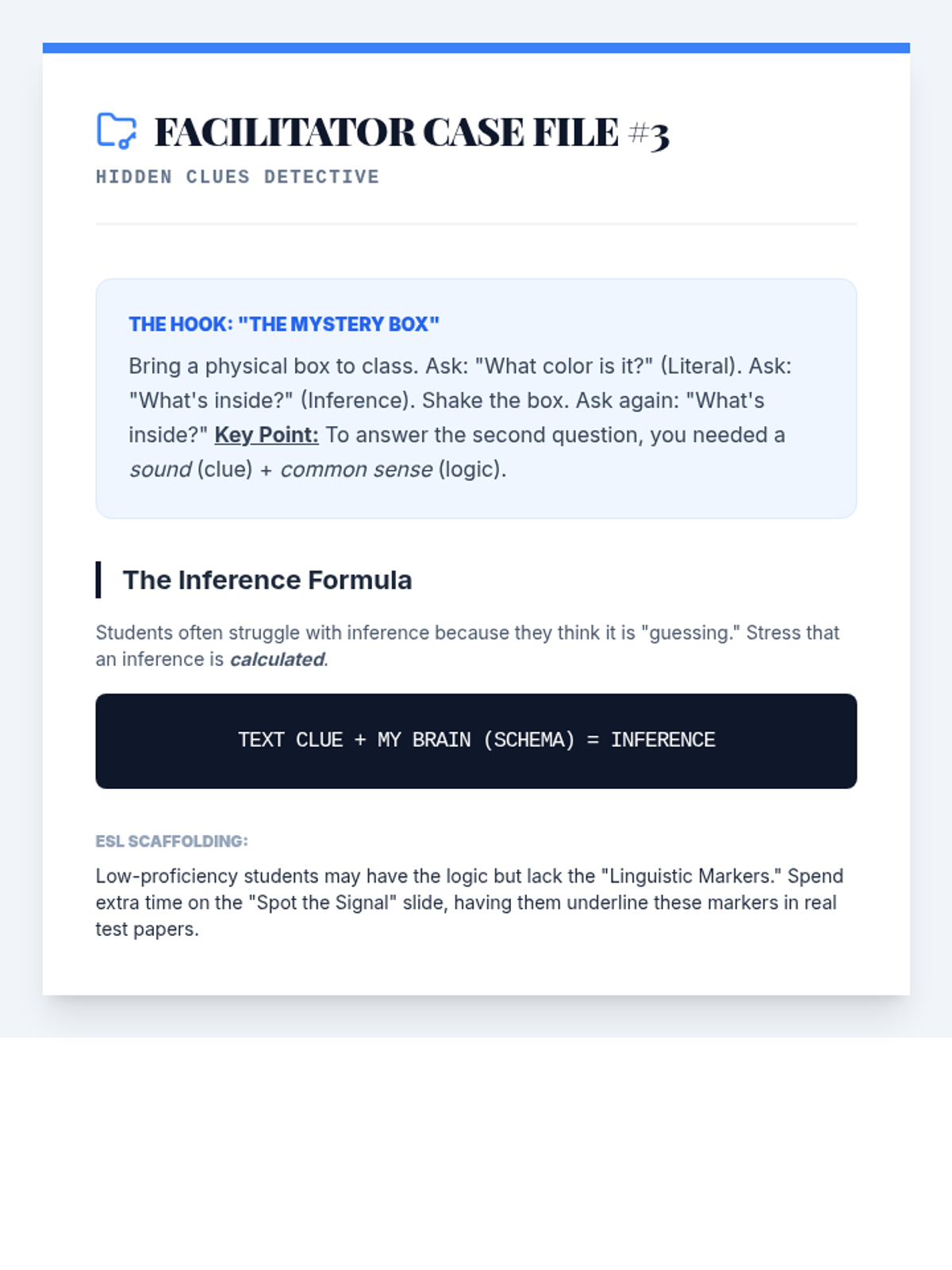
A teacher guide for Lesson 3 on inference vs. literal recall, featuring the mystery box activity and the inference formula.
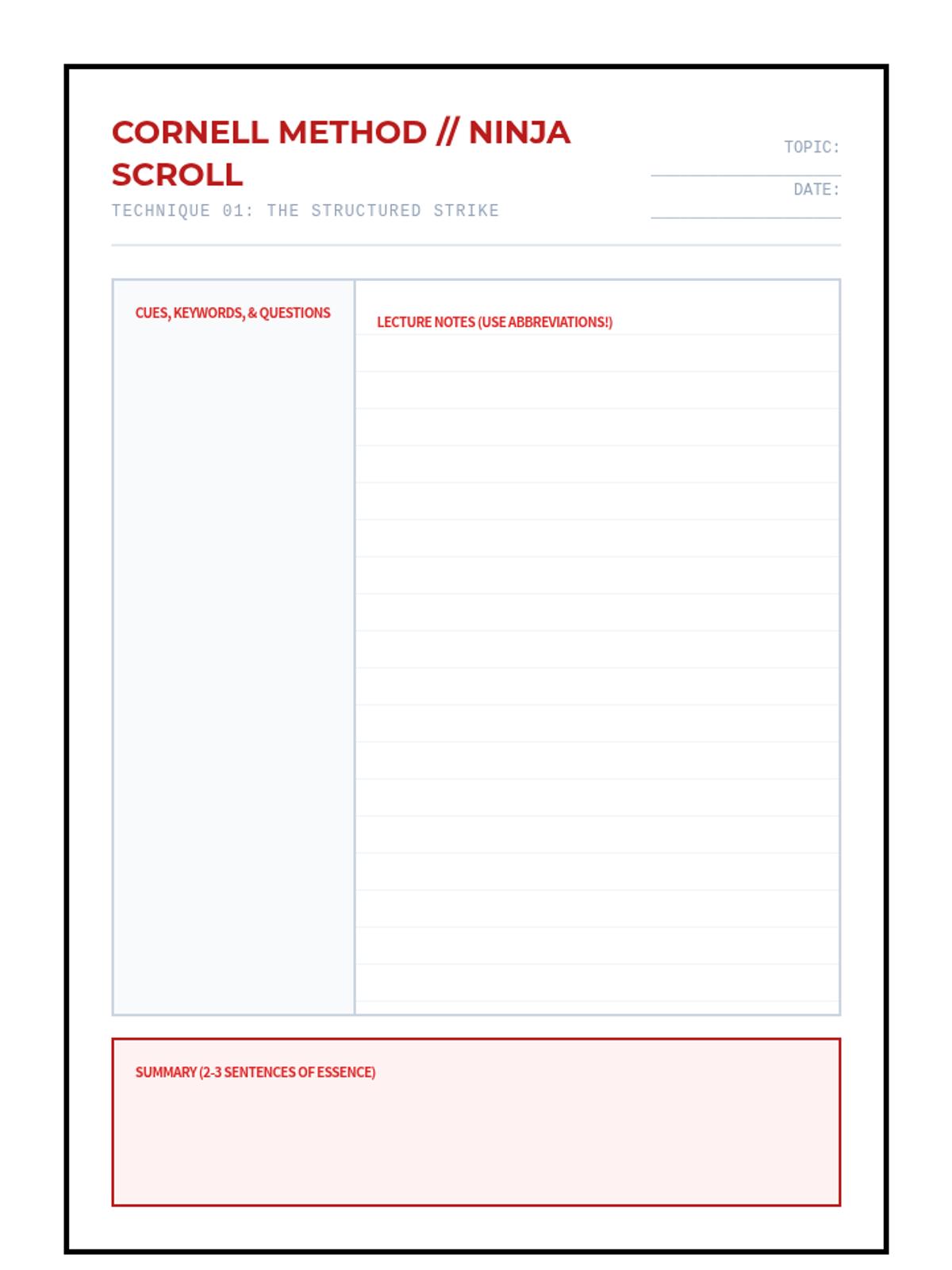
A set of note-taking templates for students to practice the Cornell and Mind Mapping methods during academic lectures. Designed with specific sections for cues, notes, and summaries.
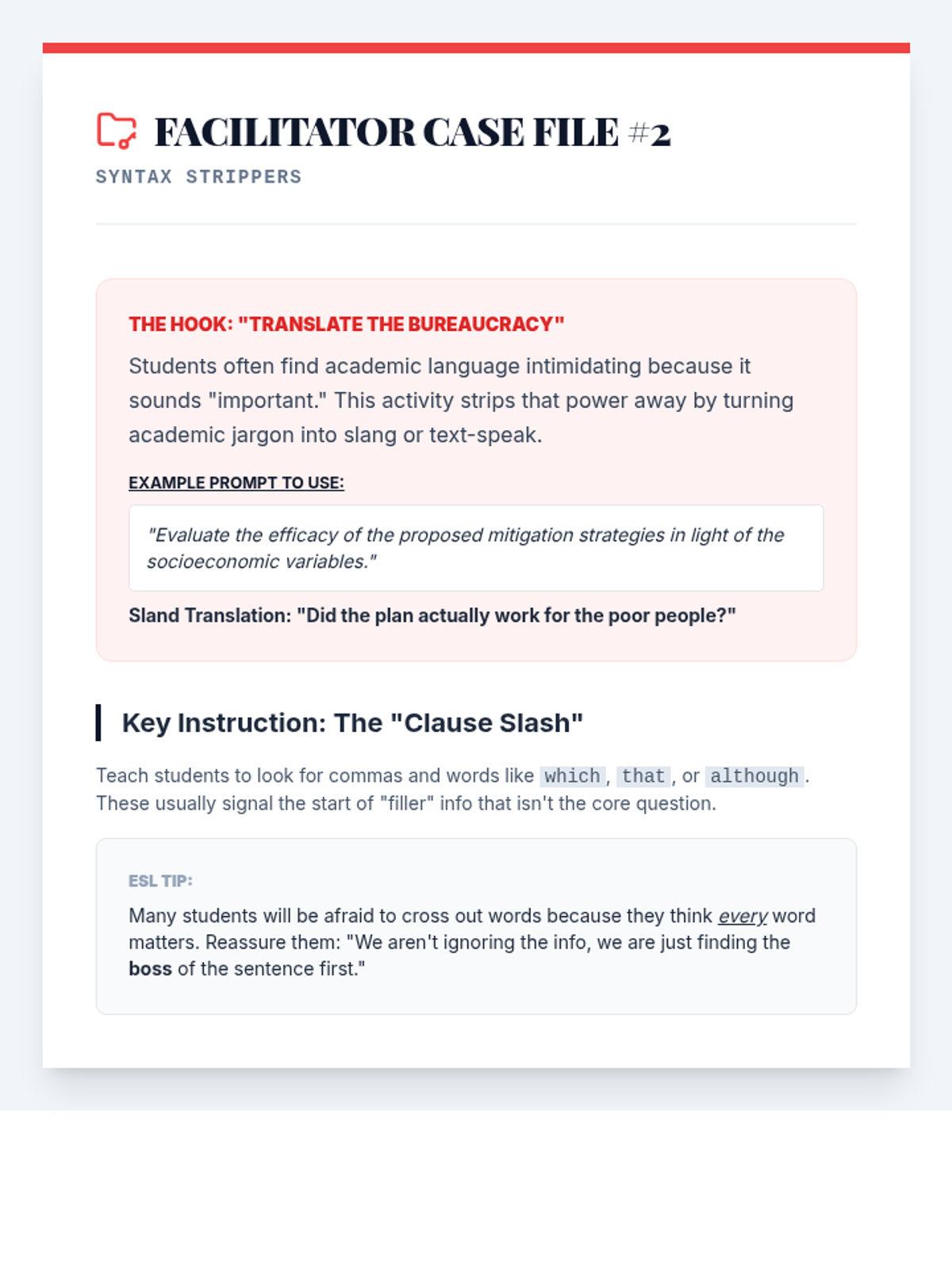
A teacher guide for Lesson 2 focusing on syntactic parsing strategies and the 'Translate the Bureaucracy' hook.
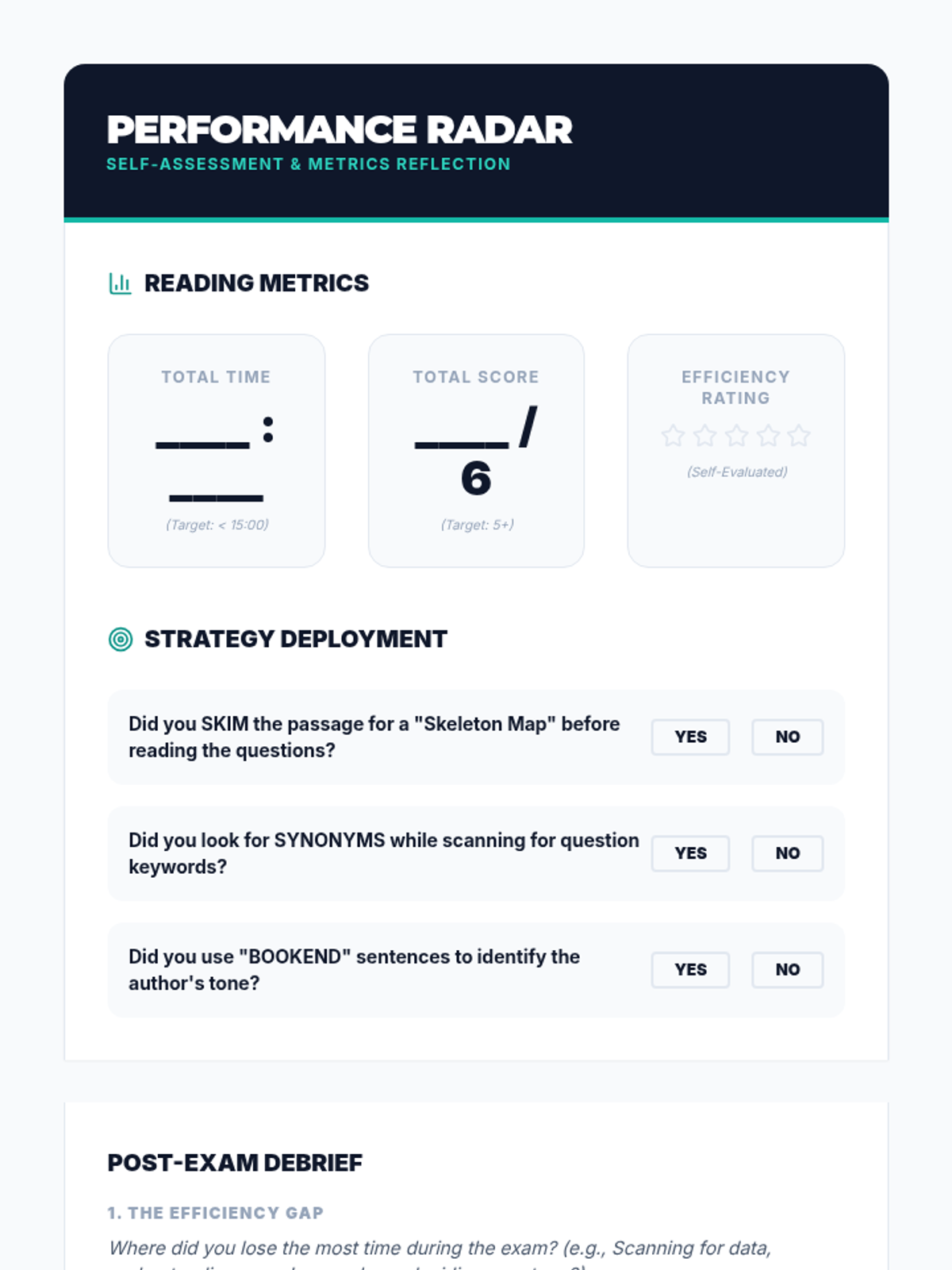
A student self-assessment and reflection sheet to analyze performance metrics and strategy effectiveness after the final efficiency exam.
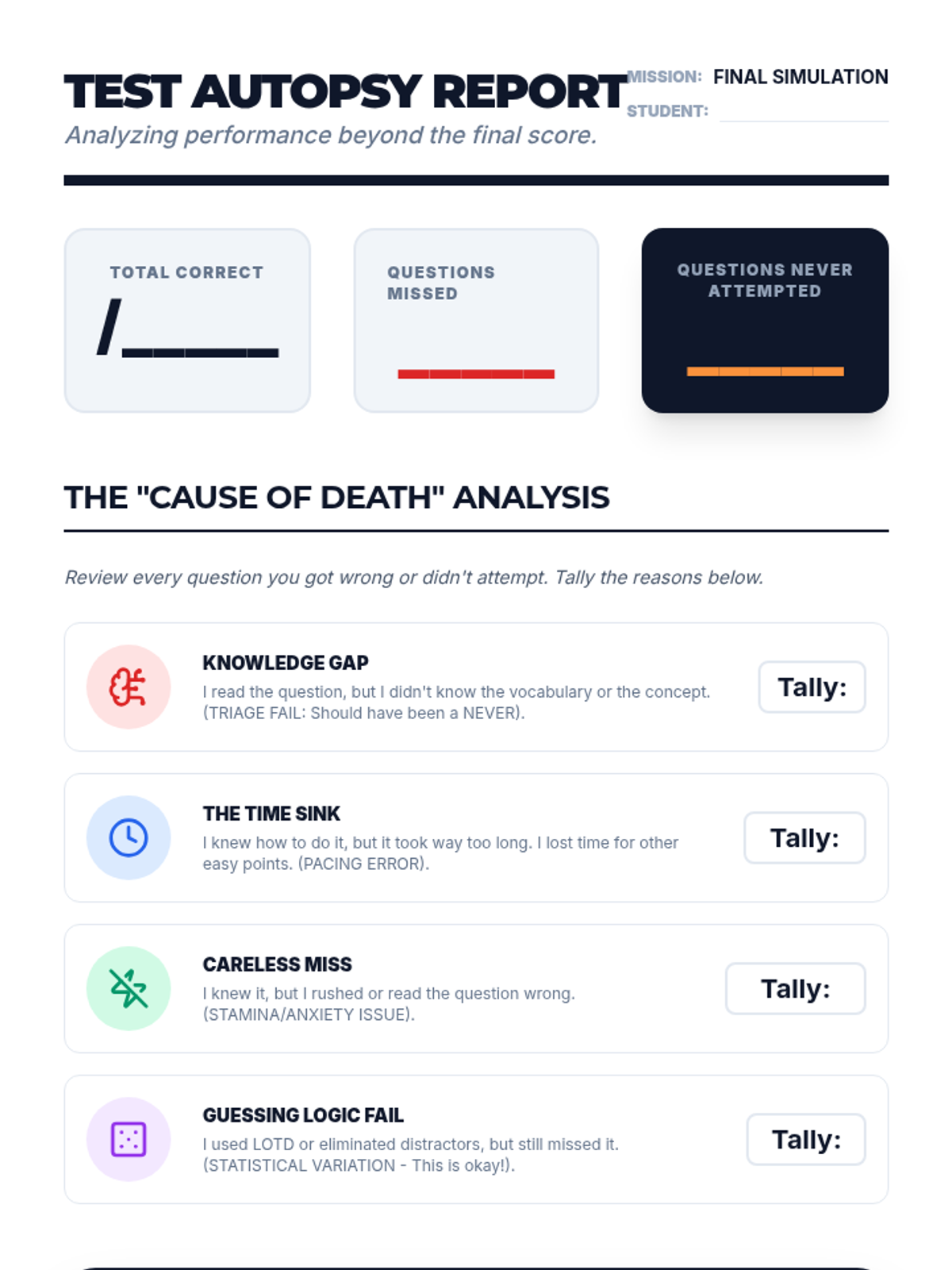
Final reflection document for the simulation. Students categorize their errors into Knowledge Gaps, Time Sinks, or Triage Fails and reflect on their milestone performance and use of regulation techniques.
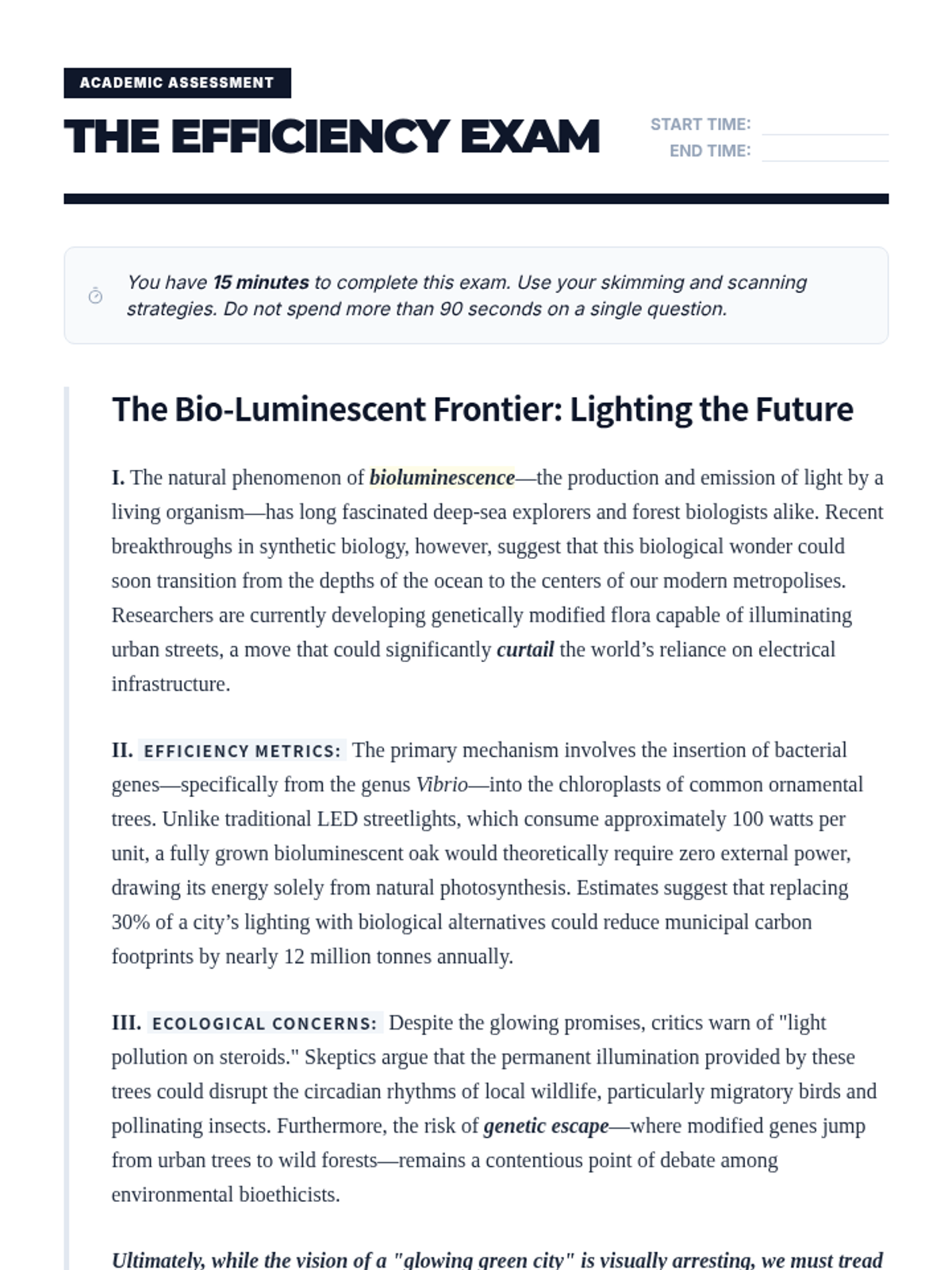
A full-length academic reading assessment designed to test skimming and scanning efficiency under a 15-minute time limit.
Slide deck for Lesson 5: Full Test Simulation. Guides students through the simulation protocol and introduces the "Test Autopsy" reflection concept to analyze performance beyond just the final score.
A slide deck for Lesson 5 providing final time management tips and strategy reminders before the high-stakes reading efficiency simulation.
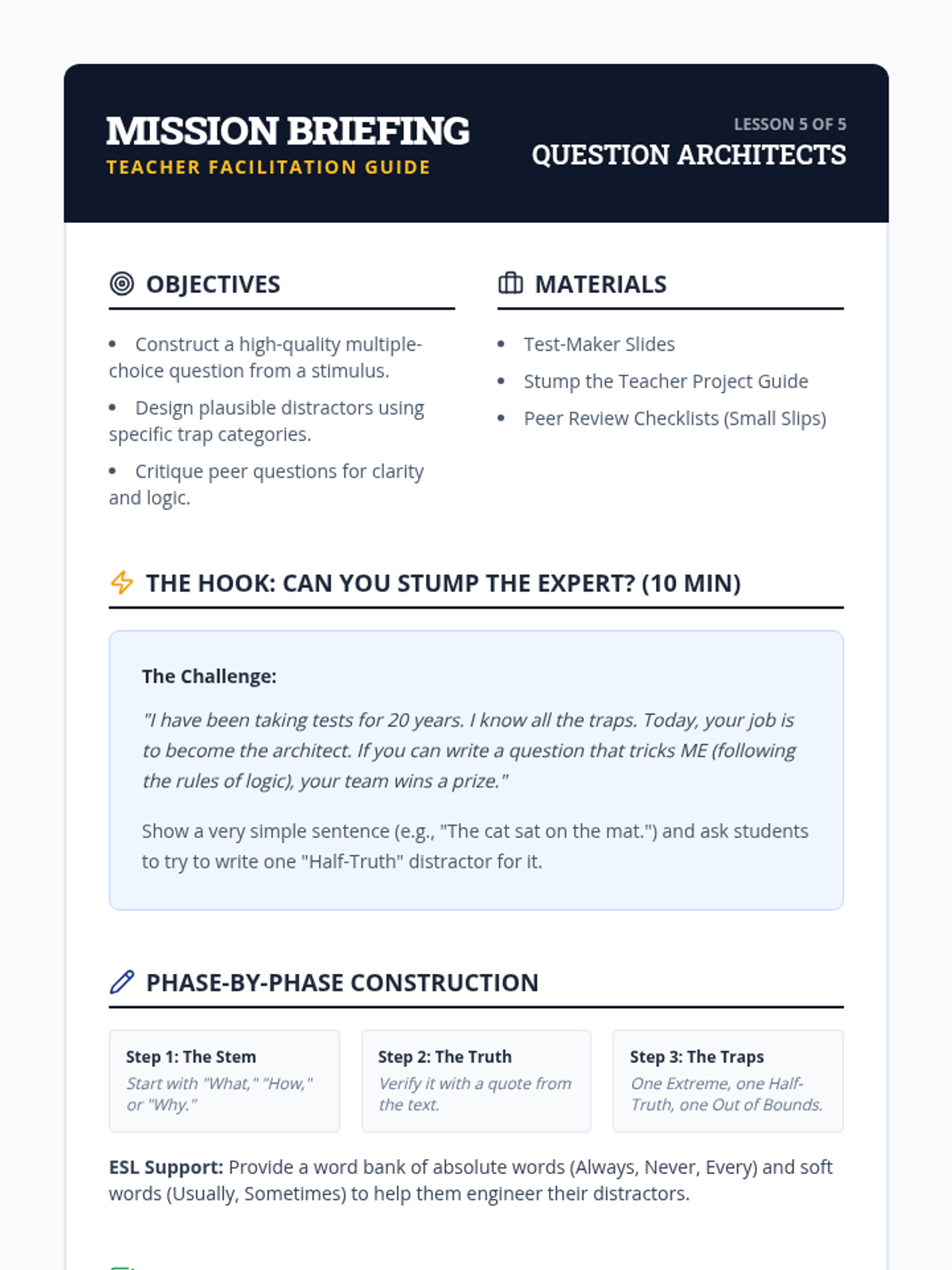
Facilitation guide for Lesson 5, including the "Stump the Expert" hook, phase-by-phase question construction steps, and a peer review protocol.
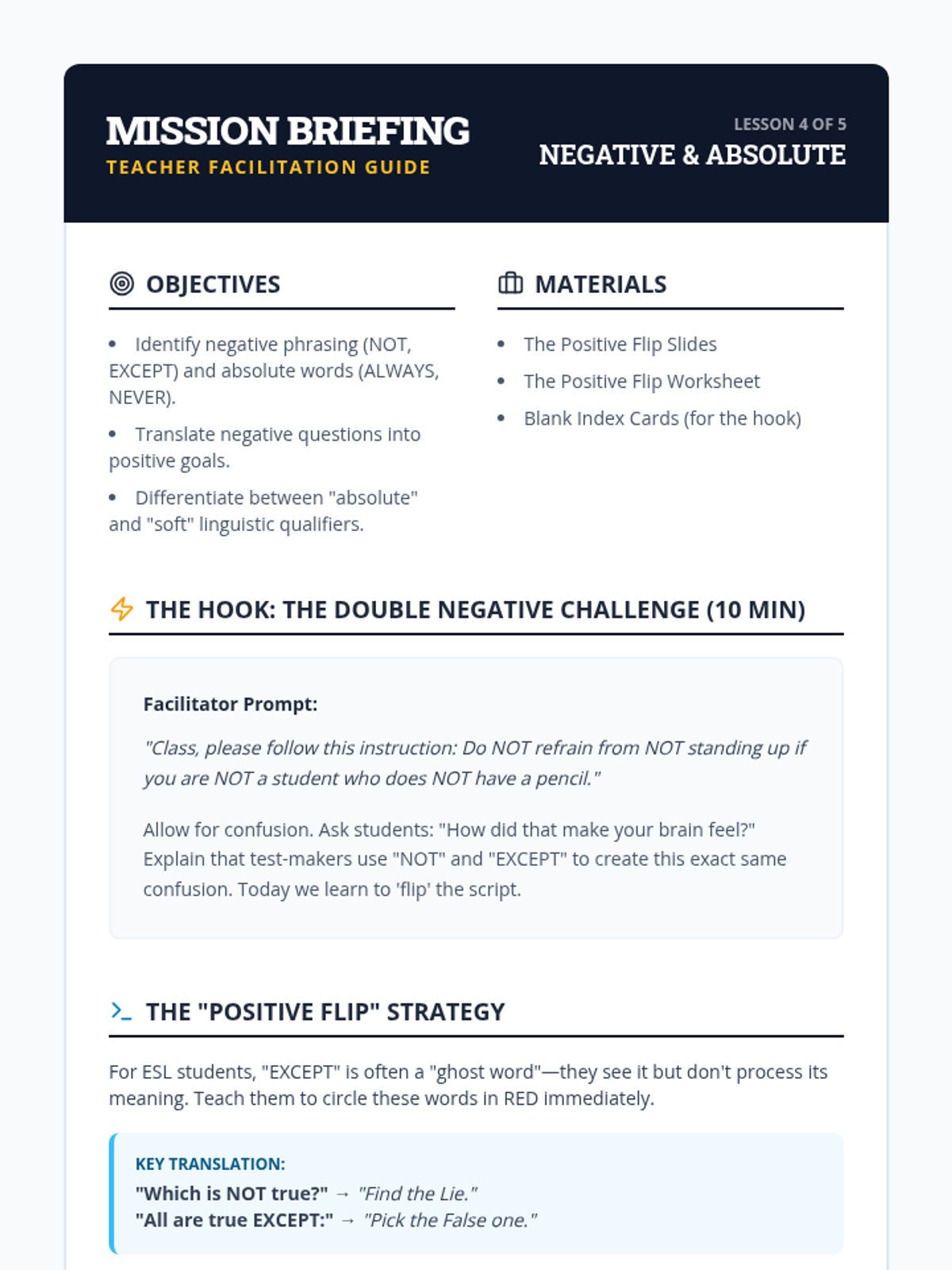
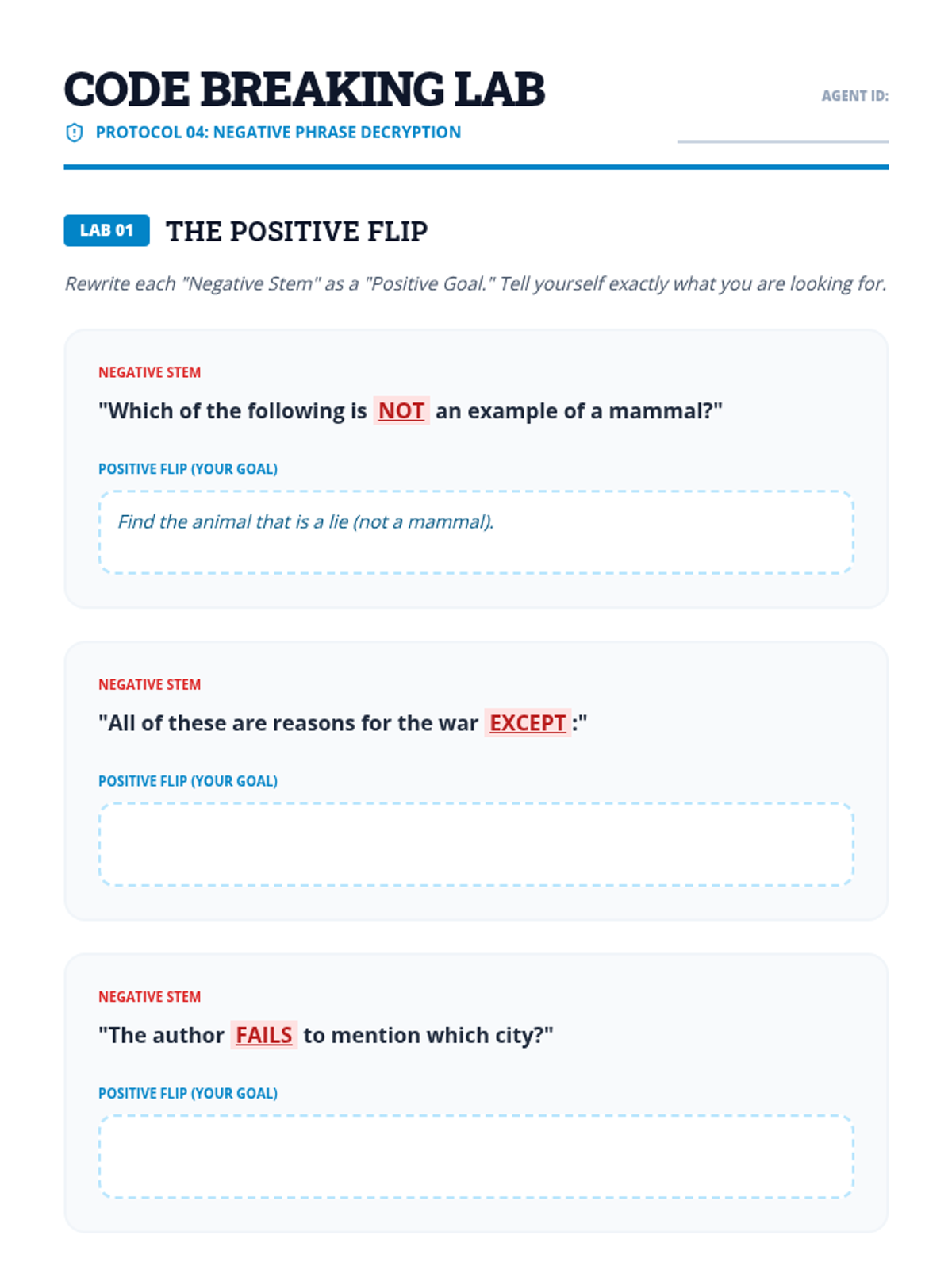
Facilitation guide for Lesson 4, including the "Double Negative Instructions" hook, translation strategies for "NOT" and "EXCEPT," and an answer key for the Positive Flip worksheet.
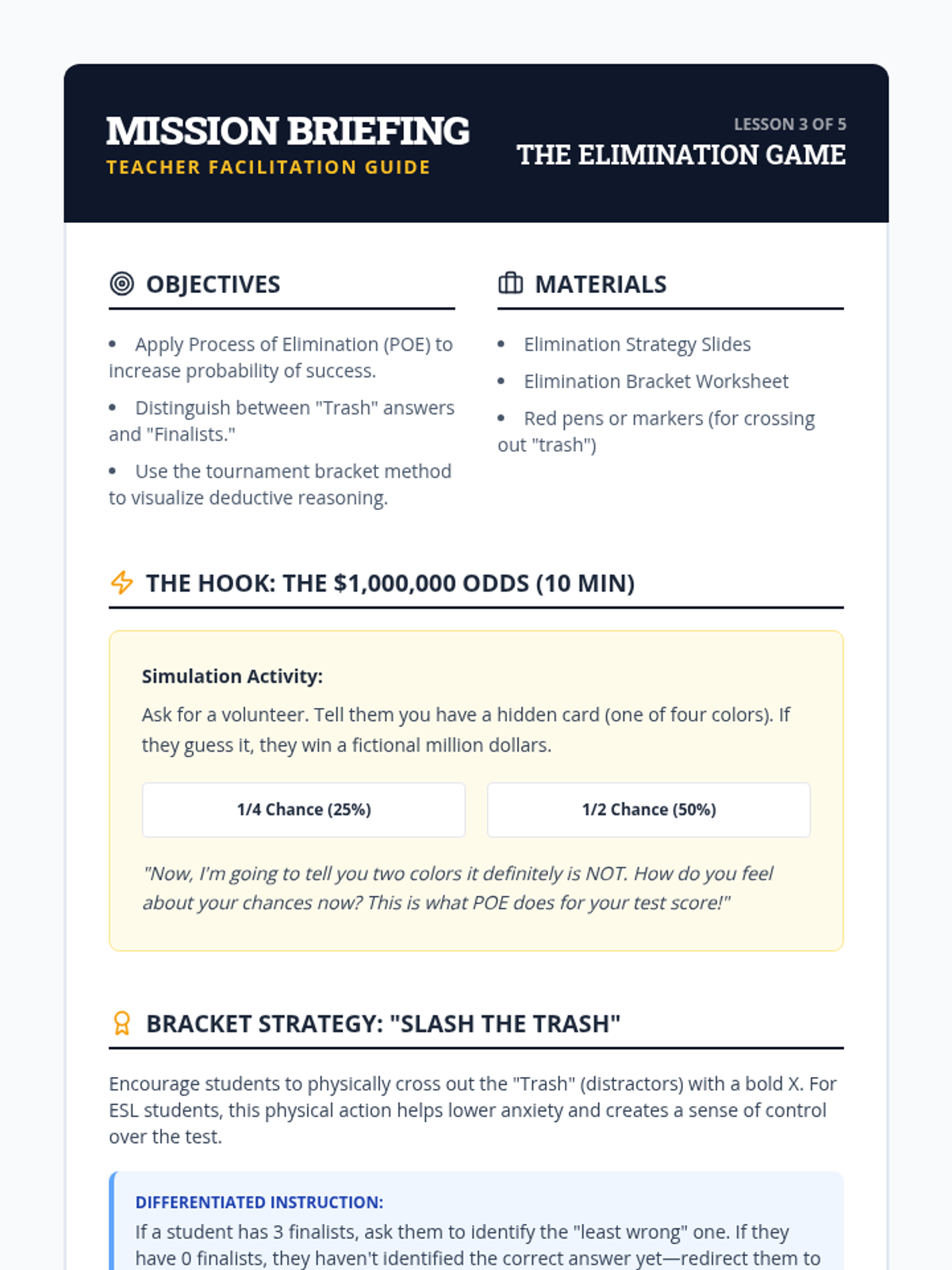
Facilitation guide for Lesson 3, including the odds simulation hook, the "Slash the Trash" technique, and an answer key for the Elimination Bracket worksheet.
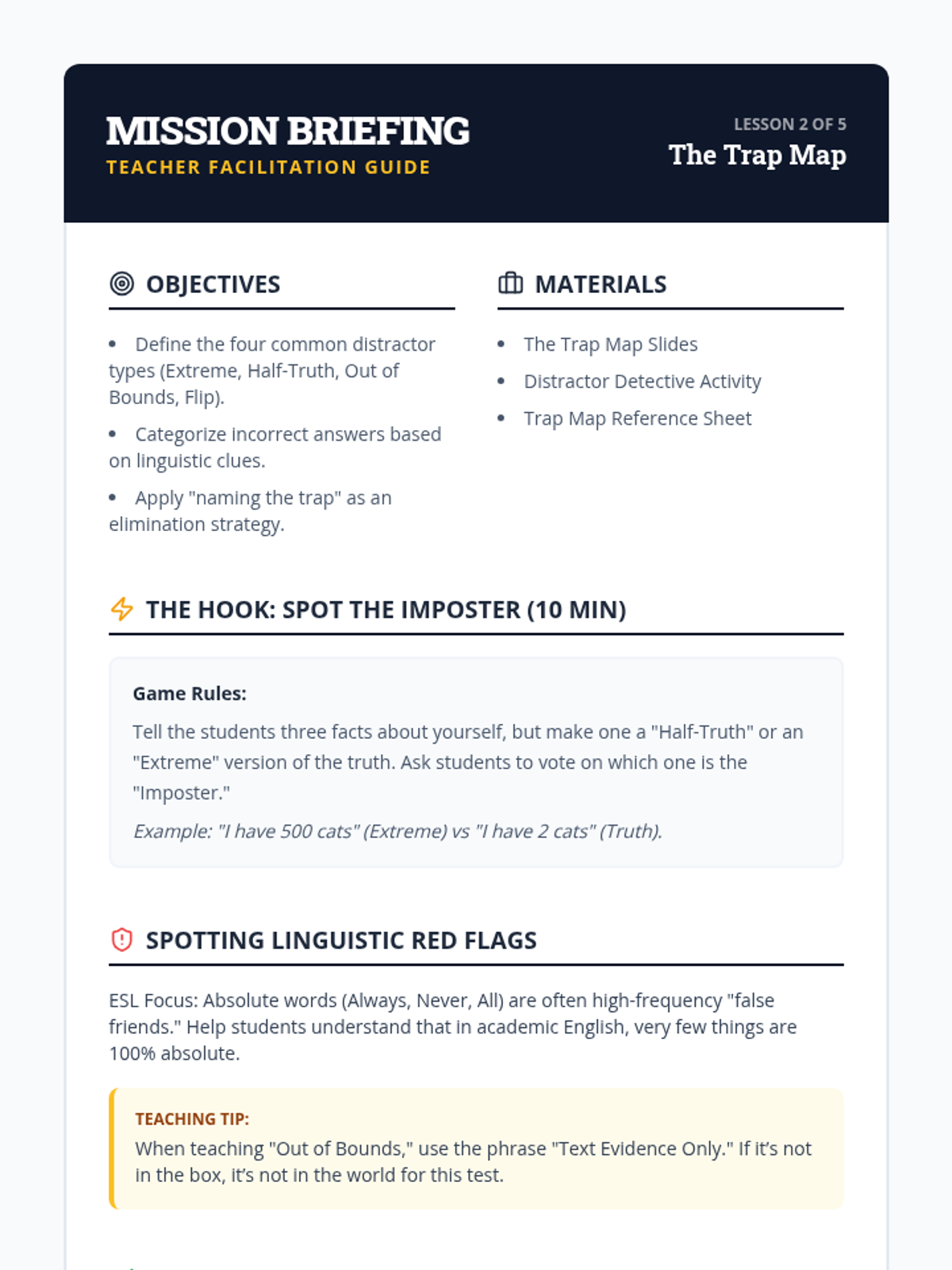
Facilitation guide for Lesson 2, including the 'Spot the Imposter' hook, linguistic red flags for ESL learners, and an answer key for the Distractor Detective activity.
Worksheet for Lesson 5 where students switch roles and become the test-makers. They write their own multiple-choice questions based on a shared text, intentionally creating plausible distractors.
Introductory slide deck for Lesson 5, exploring the mindset of a test-maker and the steps needed to construct a plausible multiple-choice question.
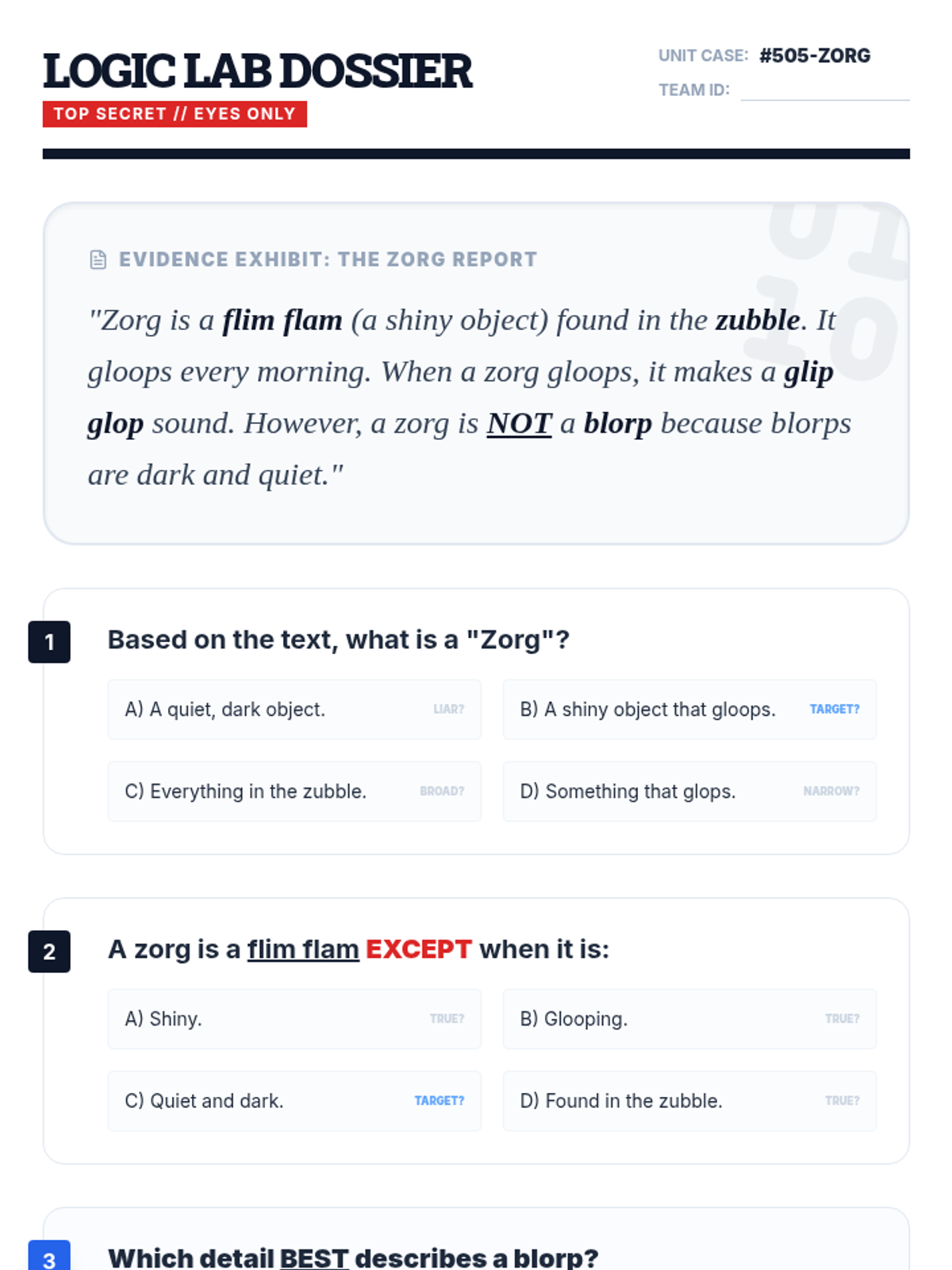
Student "Zorg Language" dossier for Lesson 5, featuring a nonsense language test that requires students to apply all deconstruction and elimination strategies to solve.
Worksheet for Lesson 4 where students specifically target questions using words like 'NOT,' 'EXCEPT,' 'ALWAYS,' or 'NEVER.' They rewrite these questions in positive terms to clarify meaning. Revised with a light theme for better printability.
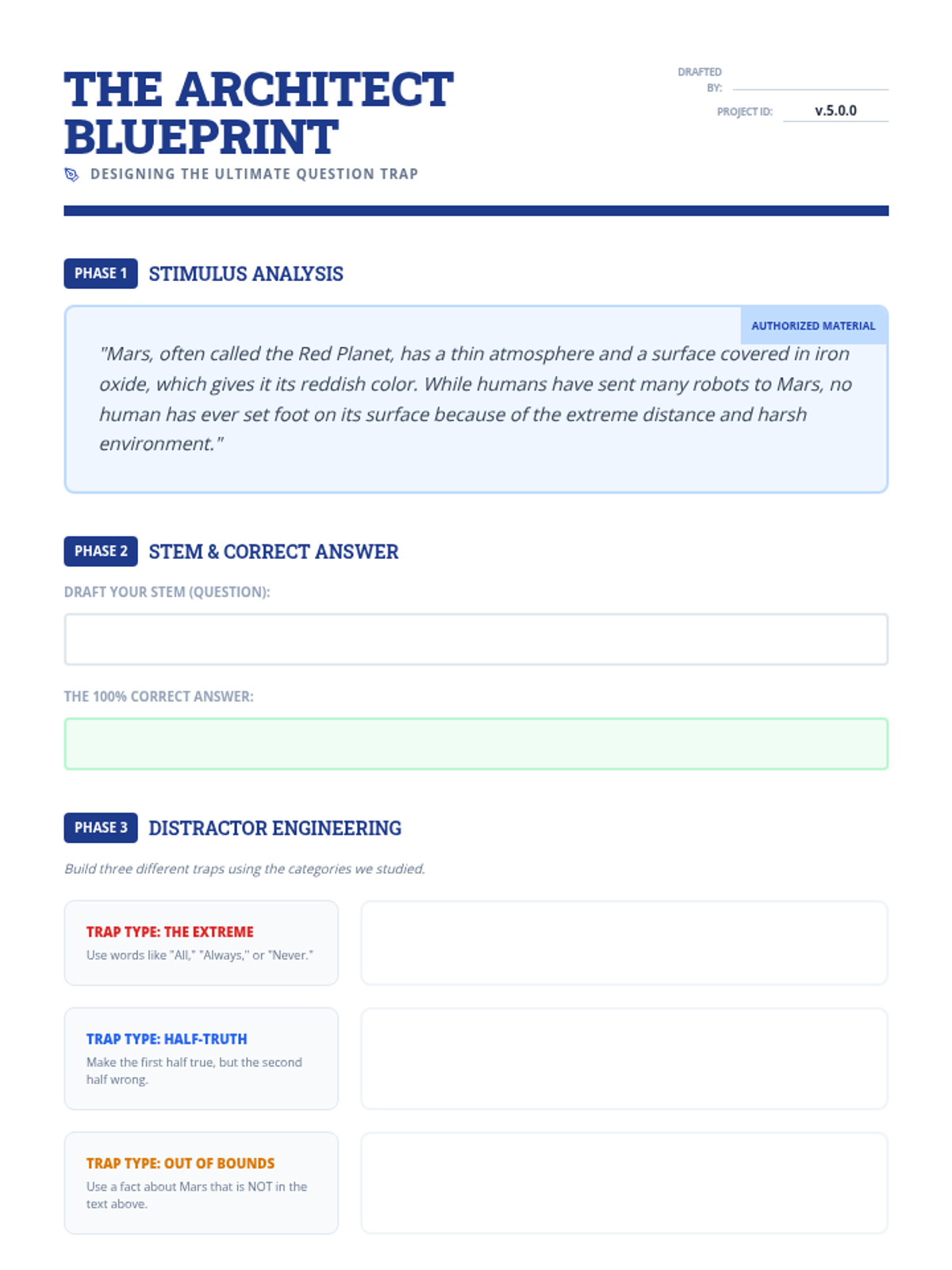
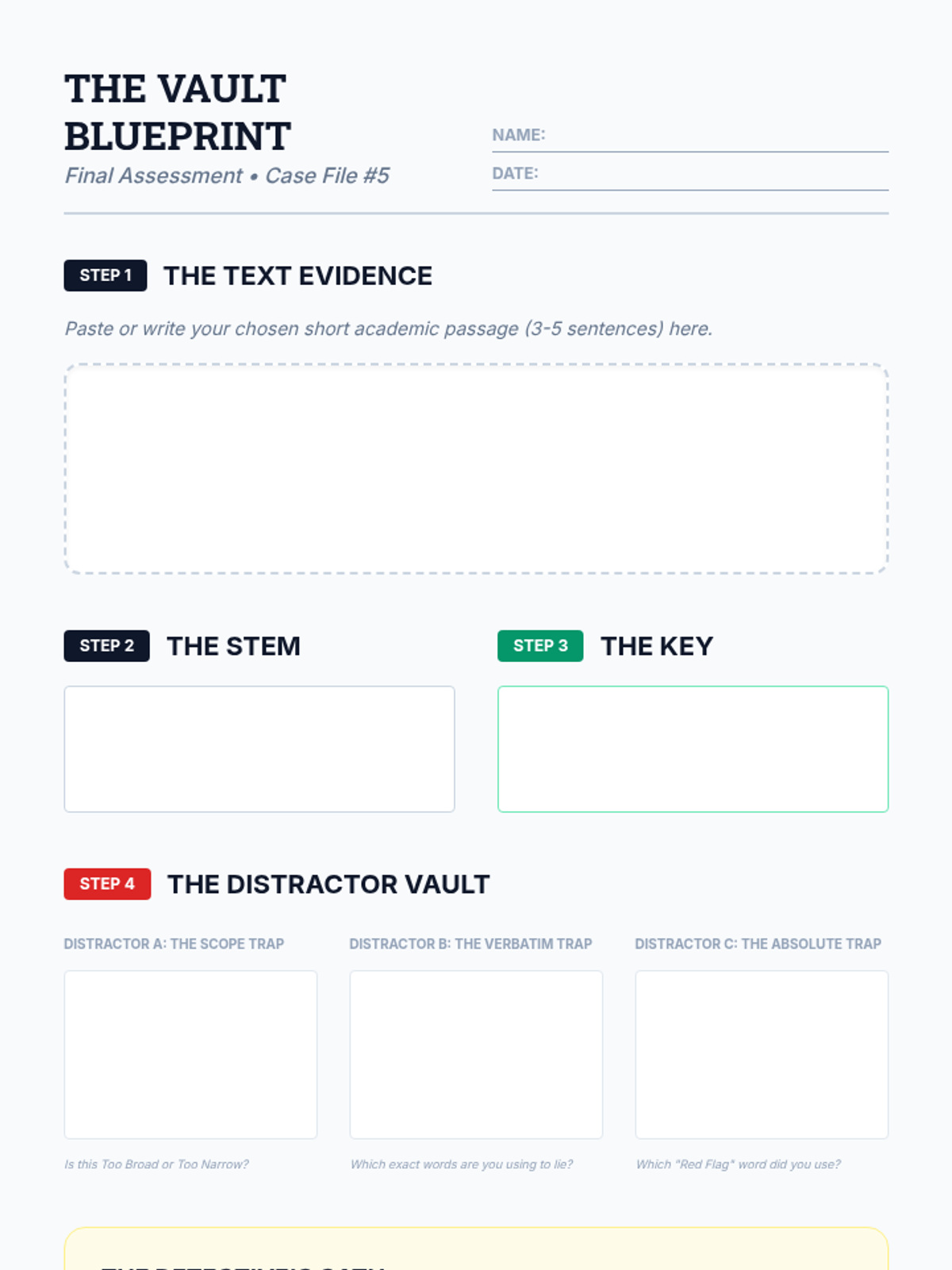
Student project planning sheet for creating an original multiple-choice question and justifying the distractor logic.
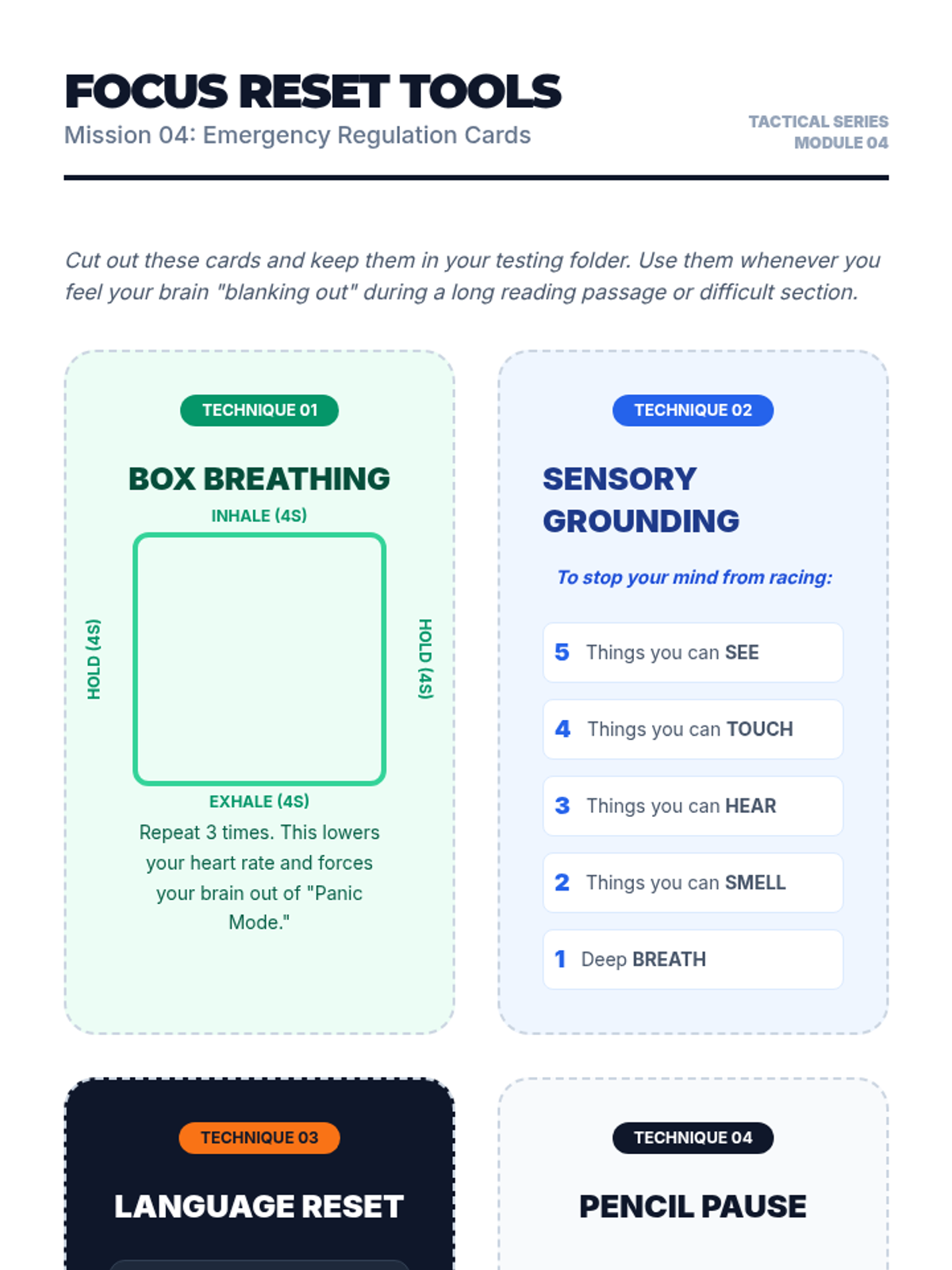
Reference cards for Lesson 4. Provides small, cut-out-ready guides for Box Breathing, Sensory Grounding, Language Reset techniques, and the Pencil Pause for eye rest and focus.
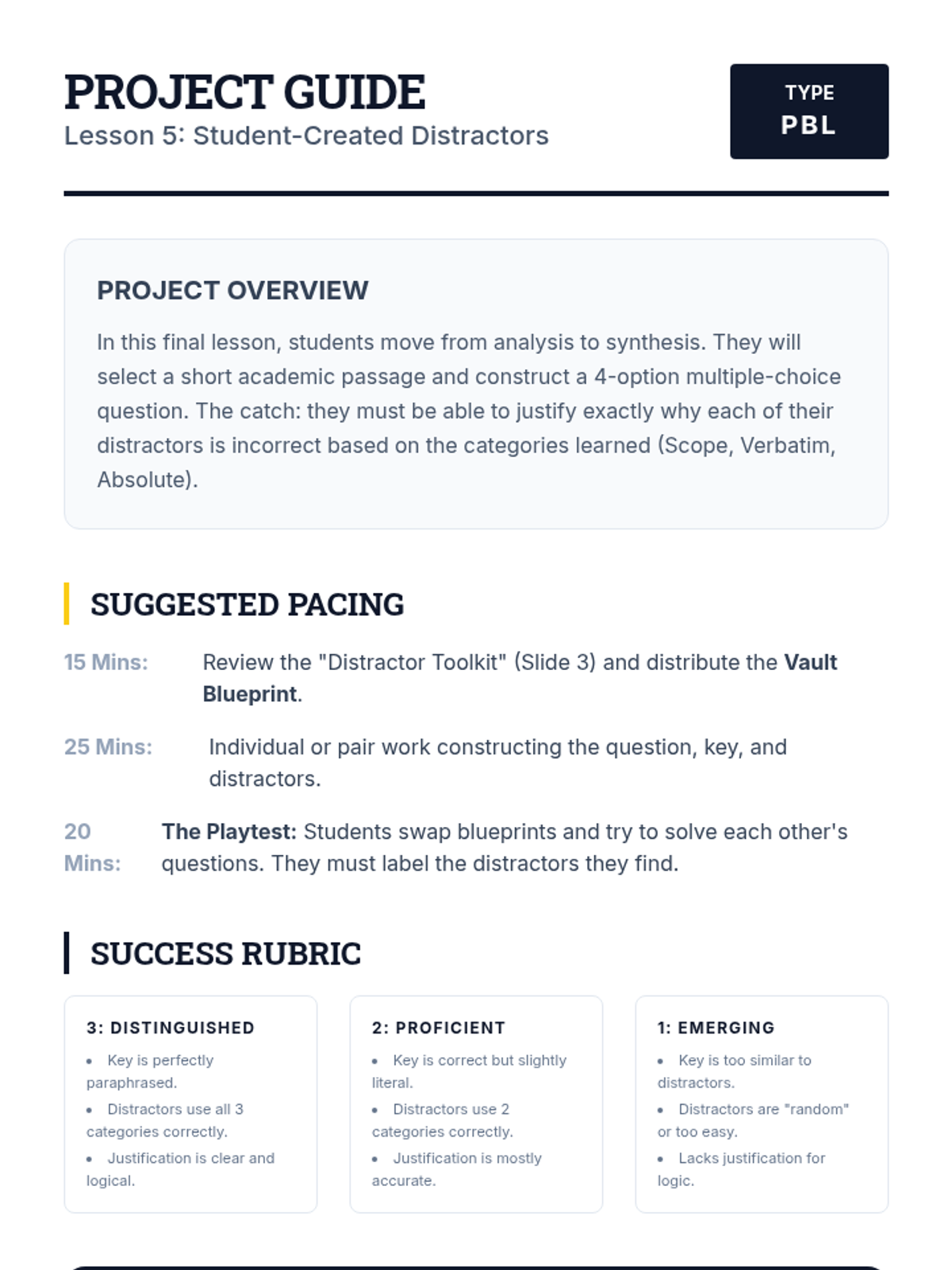
Teacher facilitator guide for the Lesson 5 project, providing pacing, a success rubric, and peer review strategies.
Introductory slide deck for Lesson 4, using a code-breaking theme to teach students how to handle negative phrasing (NOT, EXCEPT) and absolute words (ALWAYS, NEVER) in test questions.
A slide deck introducing strategic note-taking systems (Cornell, Outlining, Mapping) and abbreviation techniques. Focused on speed and efficiency in academic listening.
A teacher resource providing the instructional scripts for the audio-to-visual tasks. Includes visual keys and facilitation tips for pacing and the final reveal.
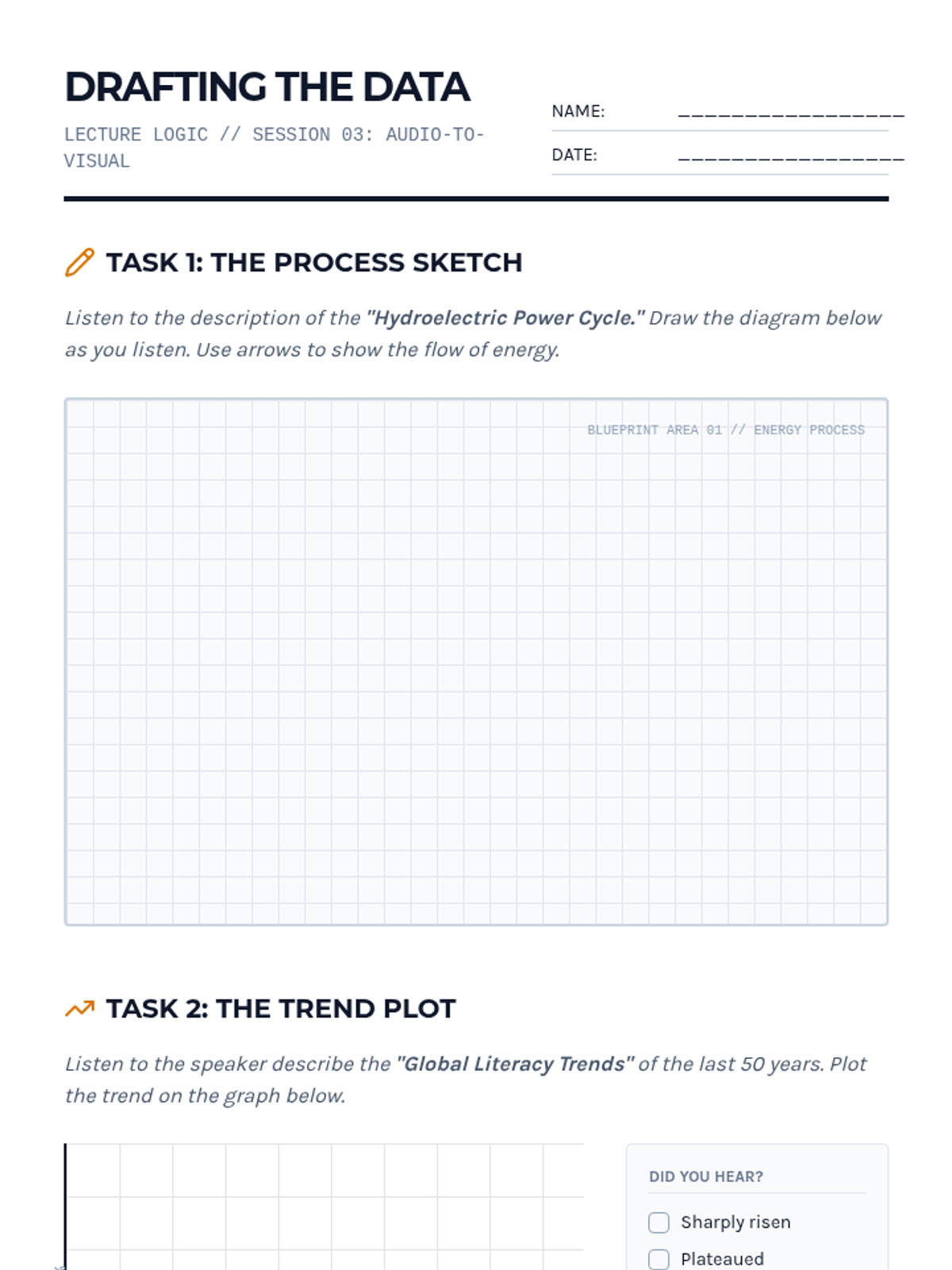
A student worksheet for sketching processes and plotting data trends based on auditory descriptions. Includes a drafting grid for process mapping and a blank graph for trend analysis.
A slide deck introducing the vocabulary of shapes, trends, and spatial relationships in academic listening. Includes visual examples of upward, downward, and stable data trends.
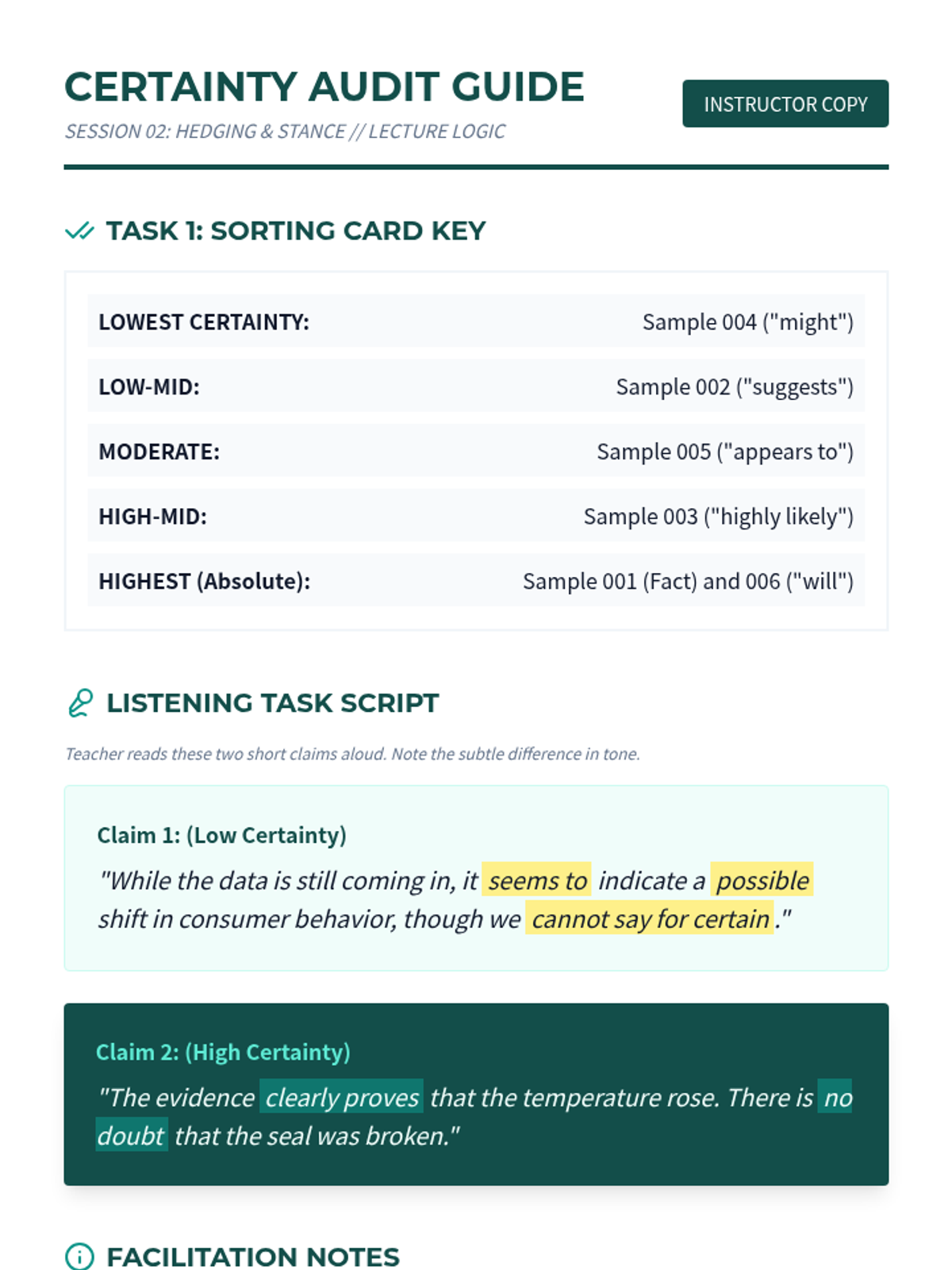
A teacher resource for the Certainty Scales lesson. Includes answer keys for the statement sorting activity and the instructional script for the listening evaluation task.
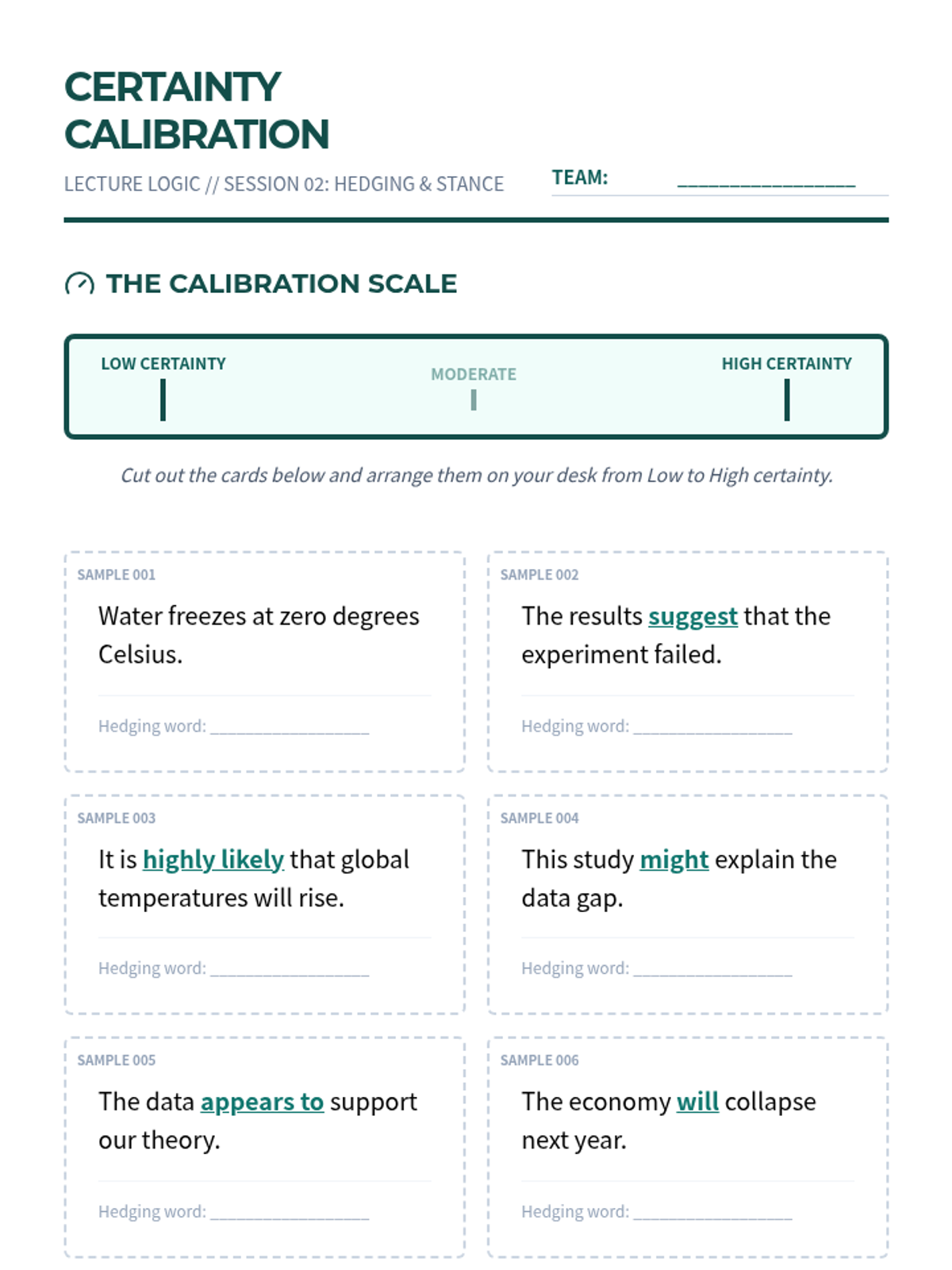
A sorting activity where students rank statements based on their level of certainty and identify hedging vocabulary. Includes a section for evaluating certainty during a listening task.
A slide deck introducing fact, opinion, and hedging language in academic listening. Includes vocabulary lists for verbs, modals, and adverbs used in hedging.
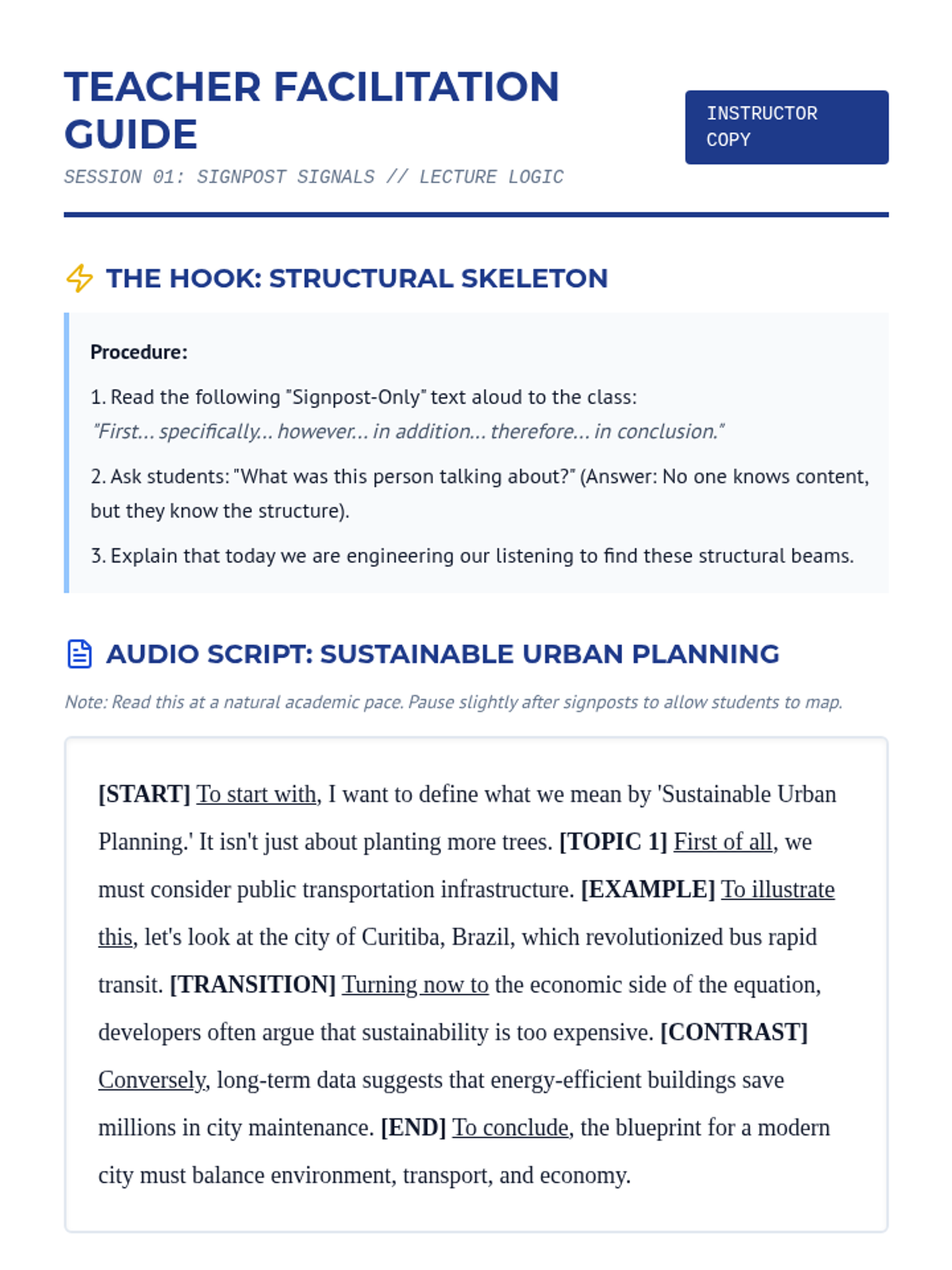
A teacher resource providing the instructional script and answer key for the Signpost Signals lesson. Includes facilitation notes for the hook and differentiation strategies.
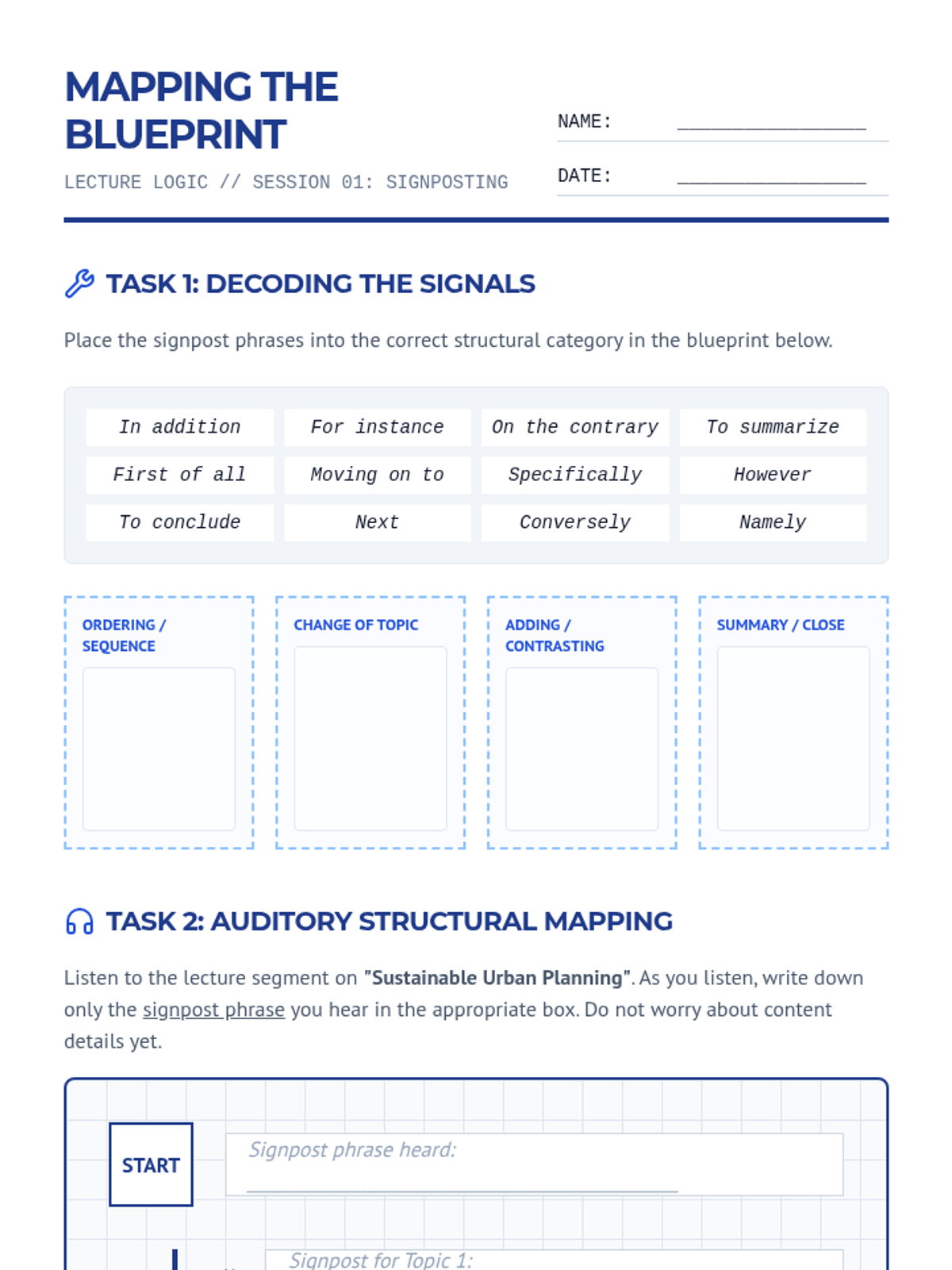
A student worksheet designed to practice structural mapping of lectures using signpost signals. Includes categorization exercises and a listening-based "blueprint" map.
An introductory slide deck for intermediate ESL students focusing on identifying signpost language in academic lectures. Includes categories of transitions and instructions for structural mapping.
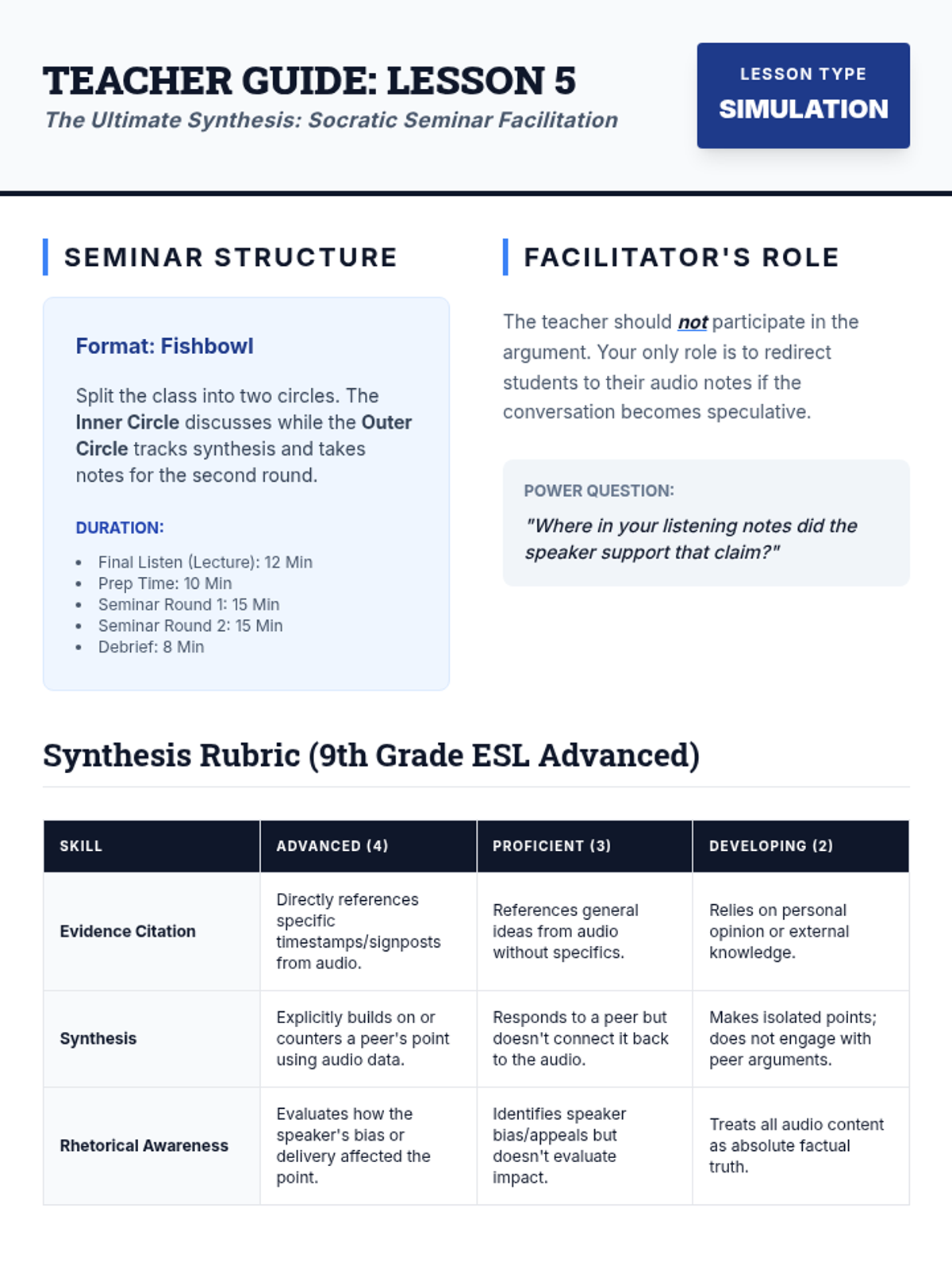
Comprehensive facilitation guide for the Lesson 5 Socratic Seminar, including the Fishbowl protocol, a detailed synthesis rubric, and discussion sparks to keep the debate moving.
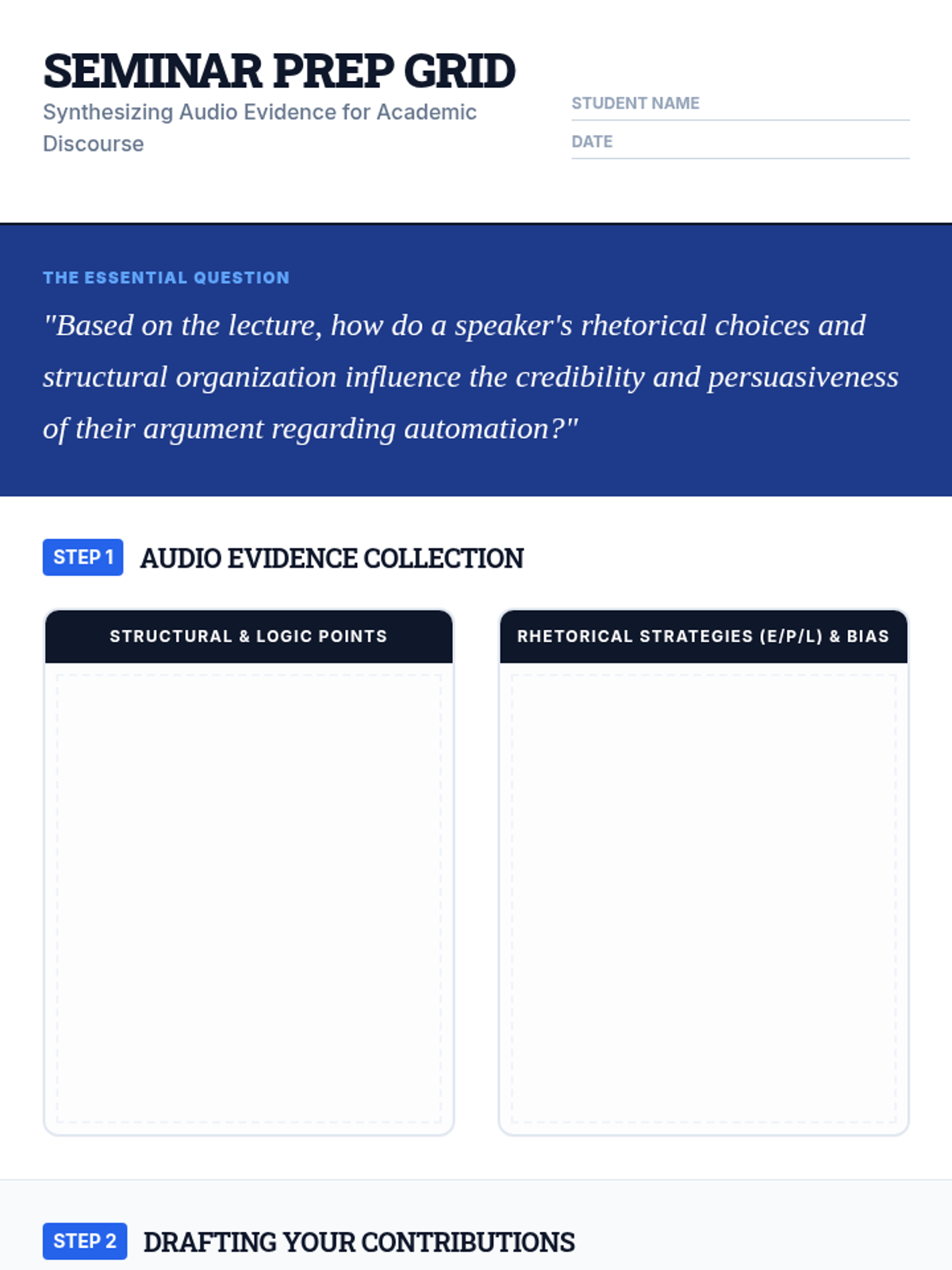
Student preparation and active tracking document for the Lesson 5 Socratic Seminar, including space for final lecture notes and peer synthesis tracking during the debate.
Visual presentation for Lesson 5, outlining the Socratic Seminar protocol, providing academic discourse frames for synthesis, and presenting the central essential question for the final debate.
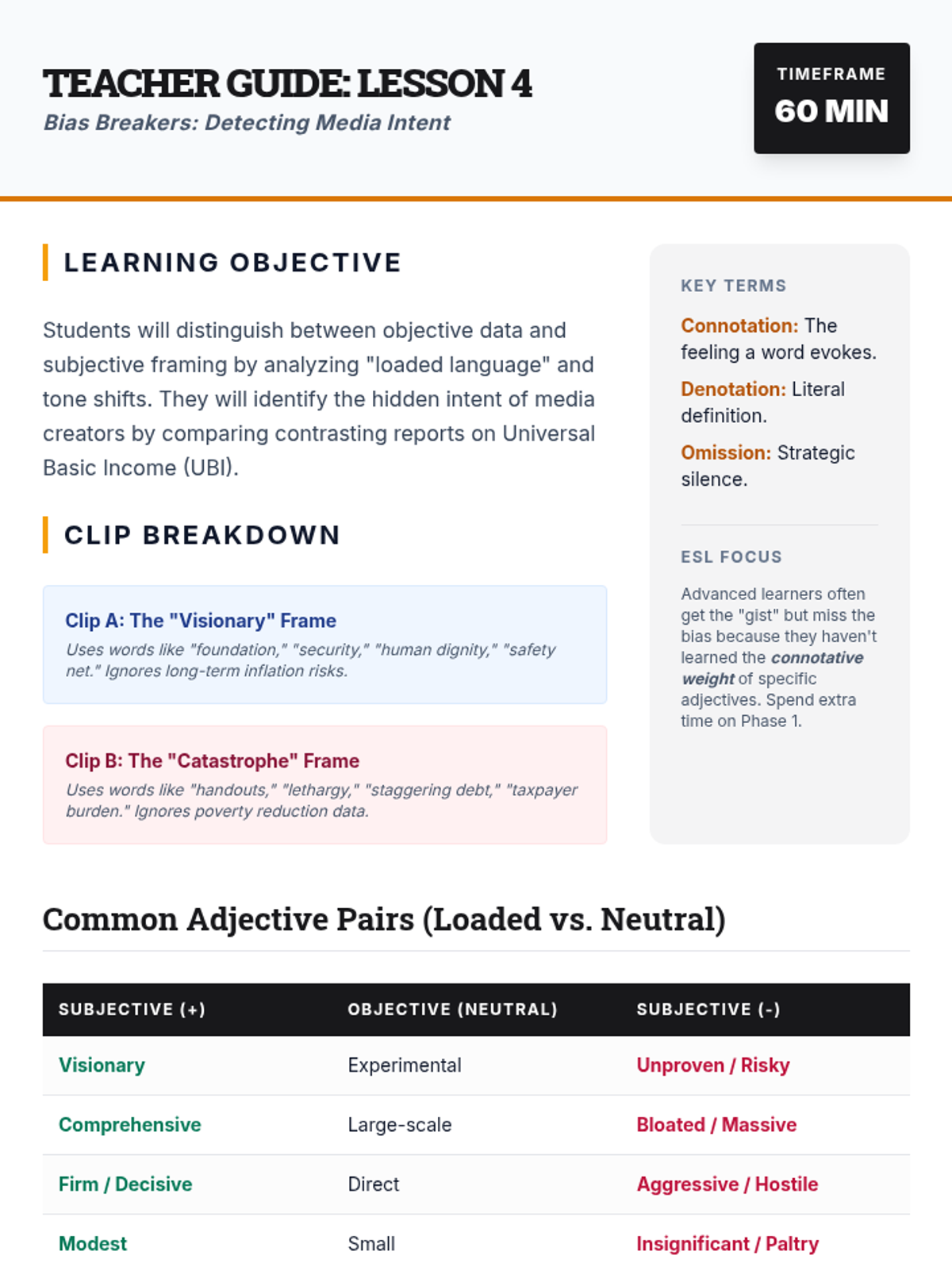
Teacher facilitation guide for Lesson 4, including a breakdown of biased clips, a table of loaded vs. neutral adjectives, and discussion prompts for unmasking media intent.
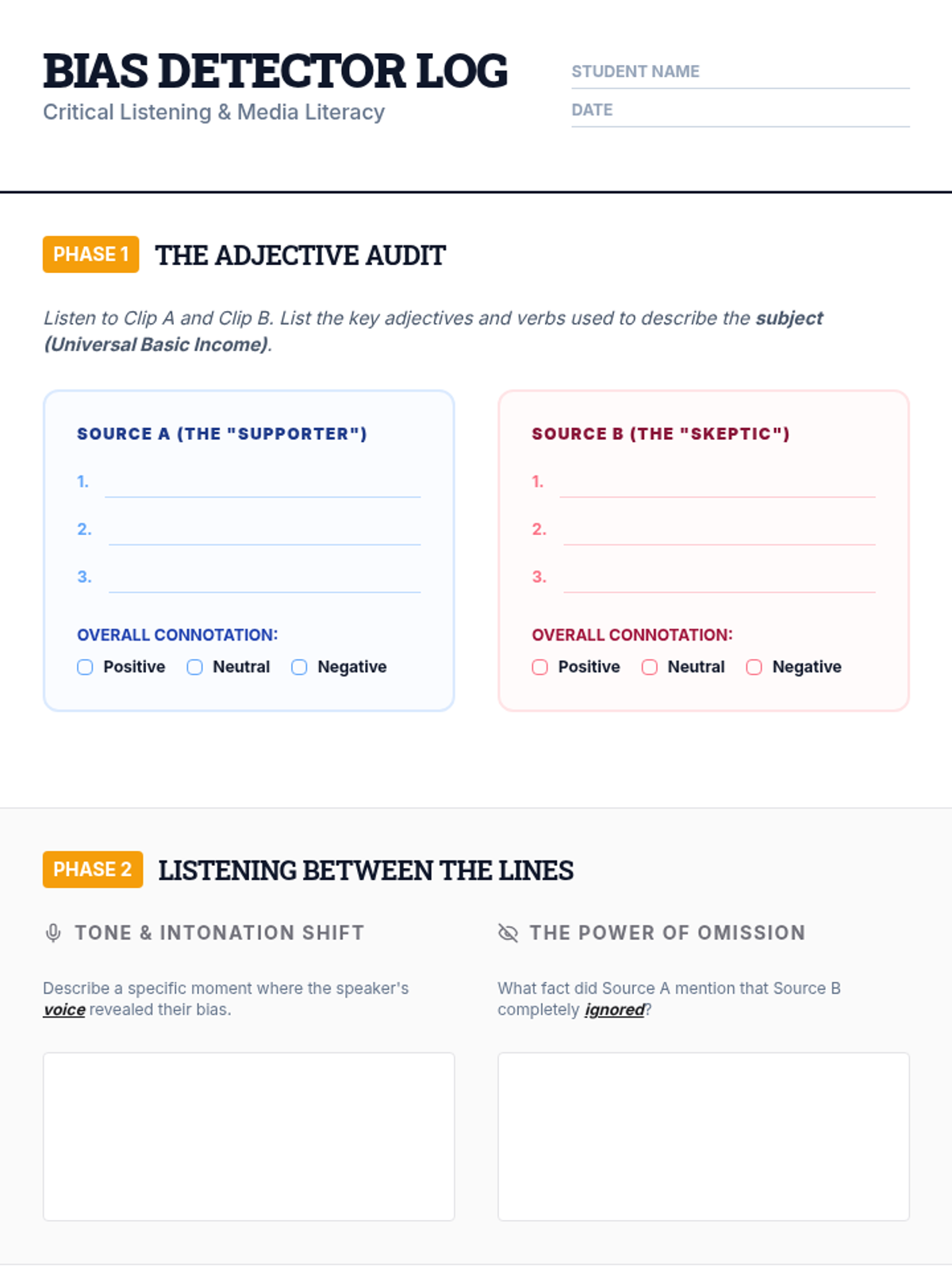
Student worksheet for Lesson 4, designed to help students track loaded language, identify tone shifts, and infer the speaker's intent across two biased media clips.