Complex syntax, nuanced vocabulary, and academic discourse. Strengthens professional communication through advanced writing, analytical reading, and mastery of high-level auditory and oral fluency.
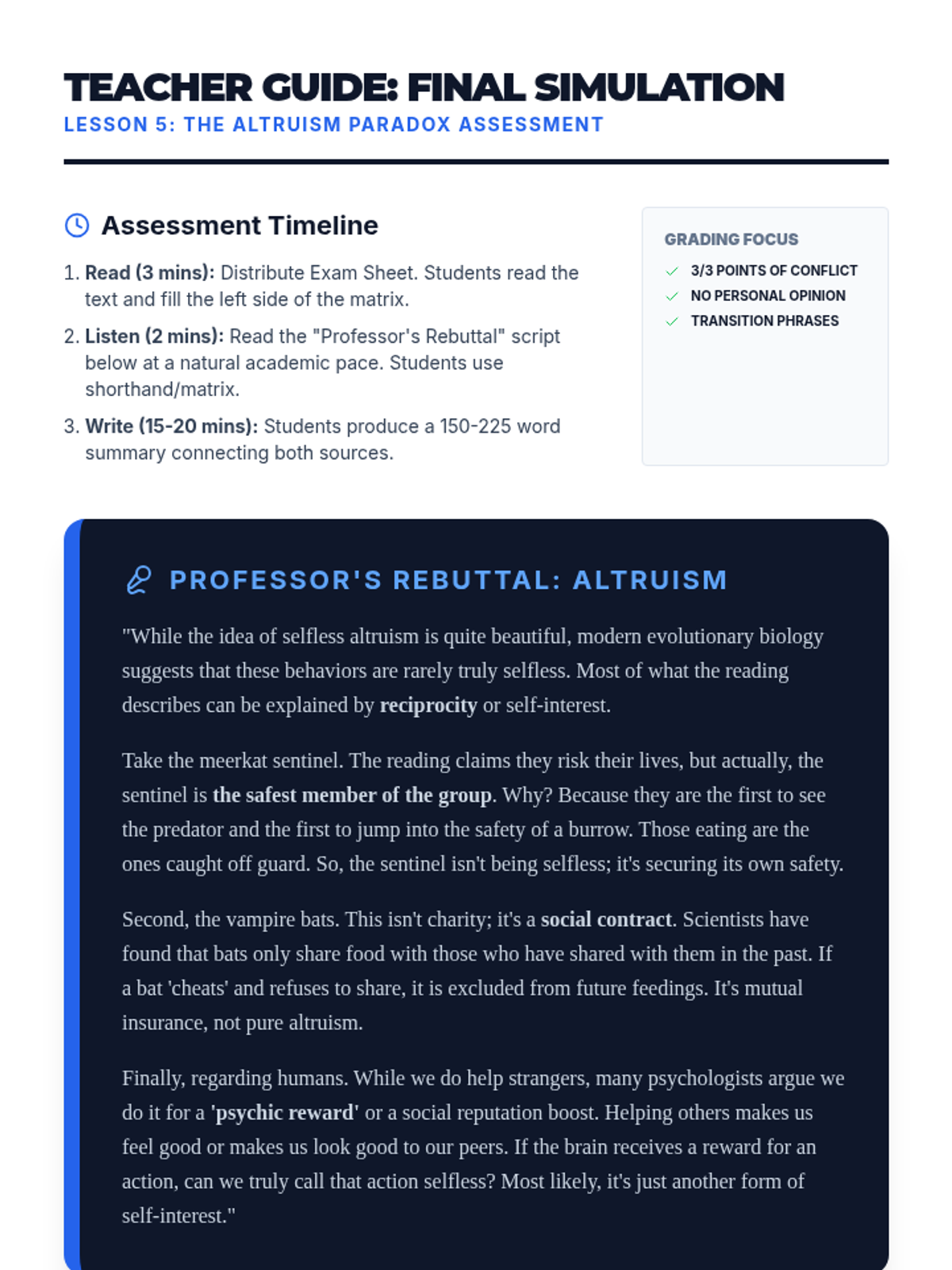
A guide for teachers with the final assessment script on 'The Altruism Paradox' and a sample high-scoring response for grading reference.
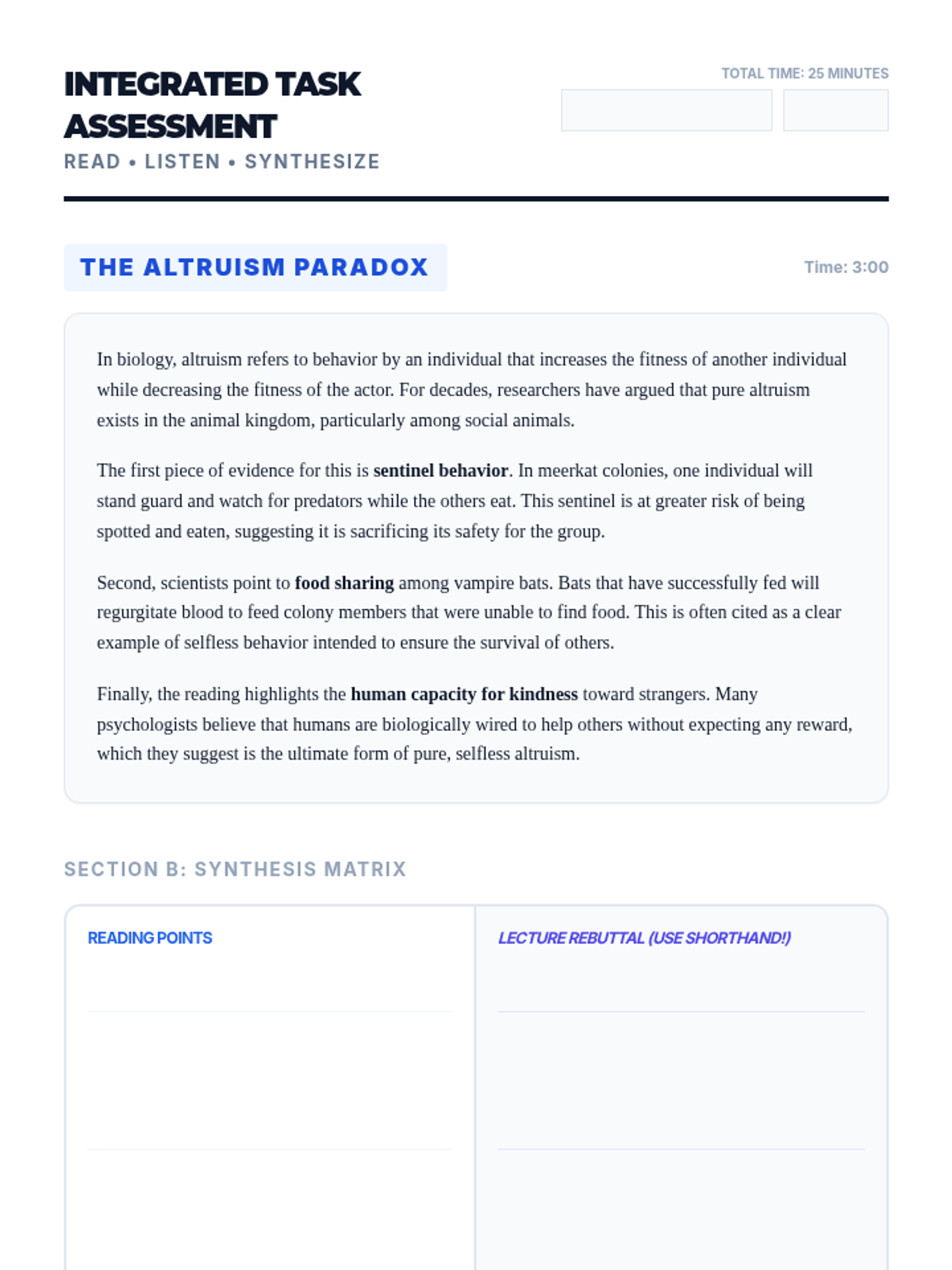
The final assessment sheet for the integrated task simulation, featuring a reading passage on altruism and structured areas for note-taking and writing.
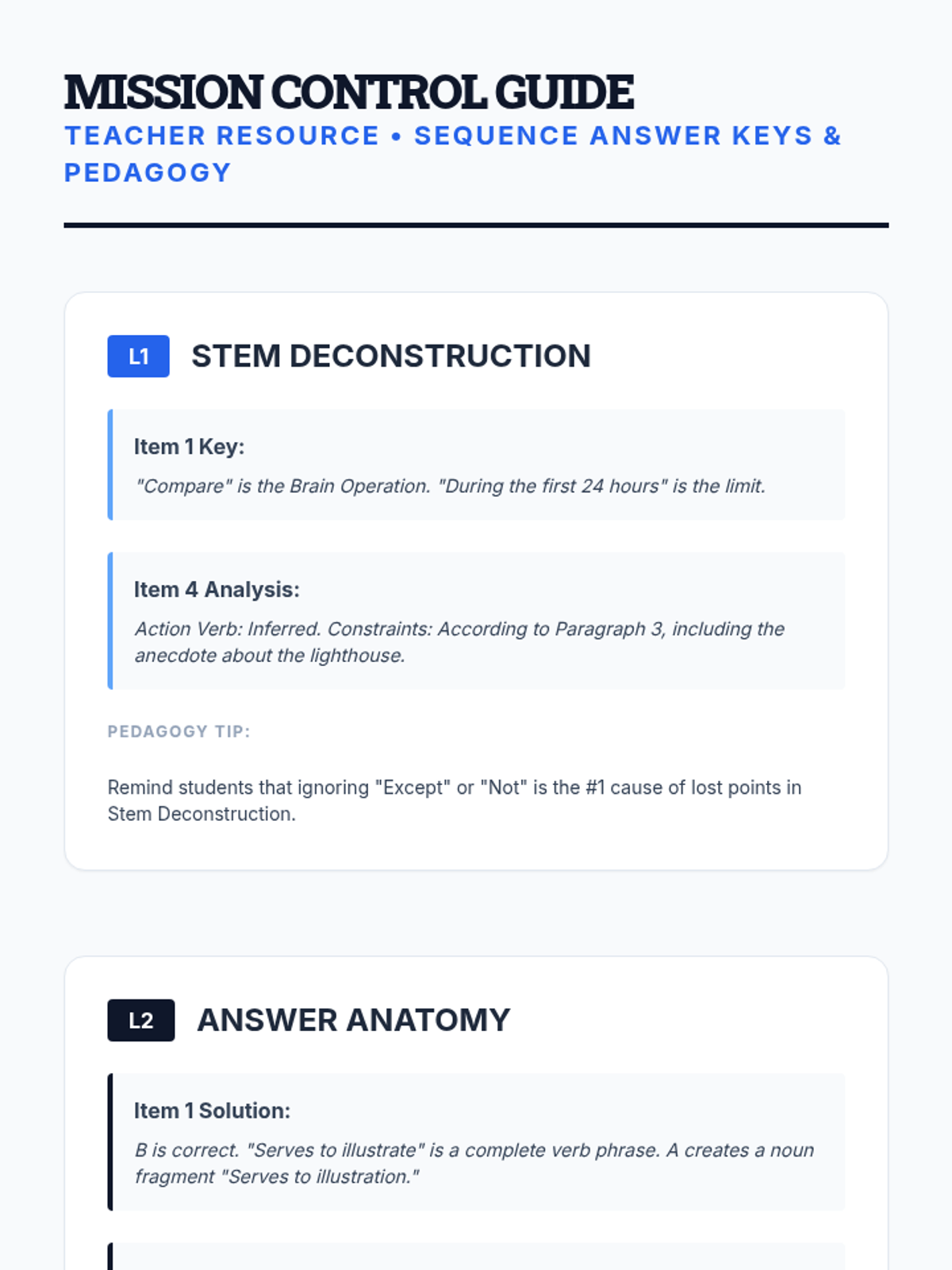
Comprehensive teacher guide and answer key for all lessons in the Question Logic Mastery sequence, including pedagogical tips and analysis of distractors.
A slide deck introducing the final integrated task simulation, explaining the grading criteria, task structure, and the 'no-opinion' rule.
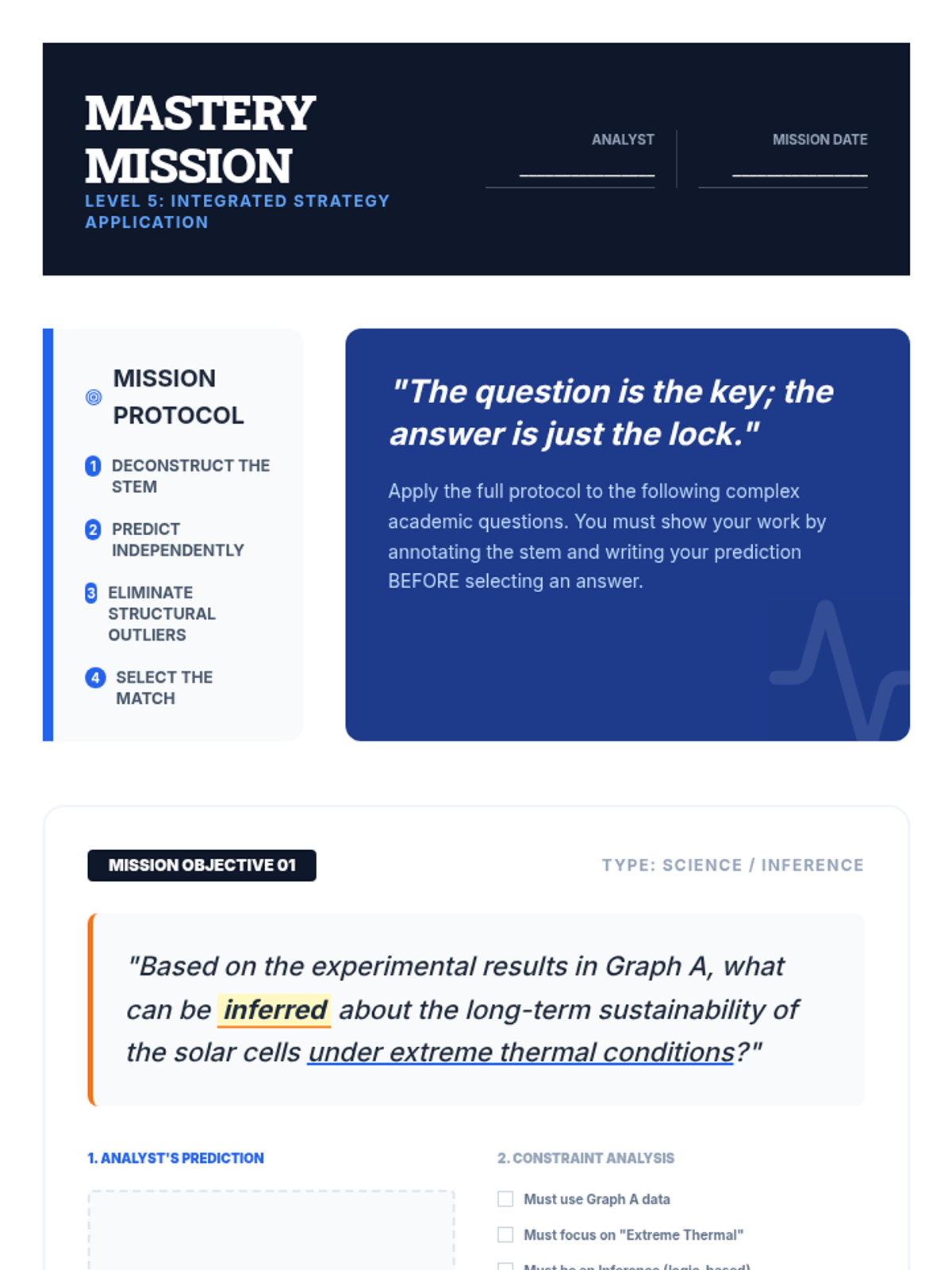
The culminating worksheet for the sequence, where students apply the integrated strategy protocol to complex academic questions, showcasing their prediction and analysis work.
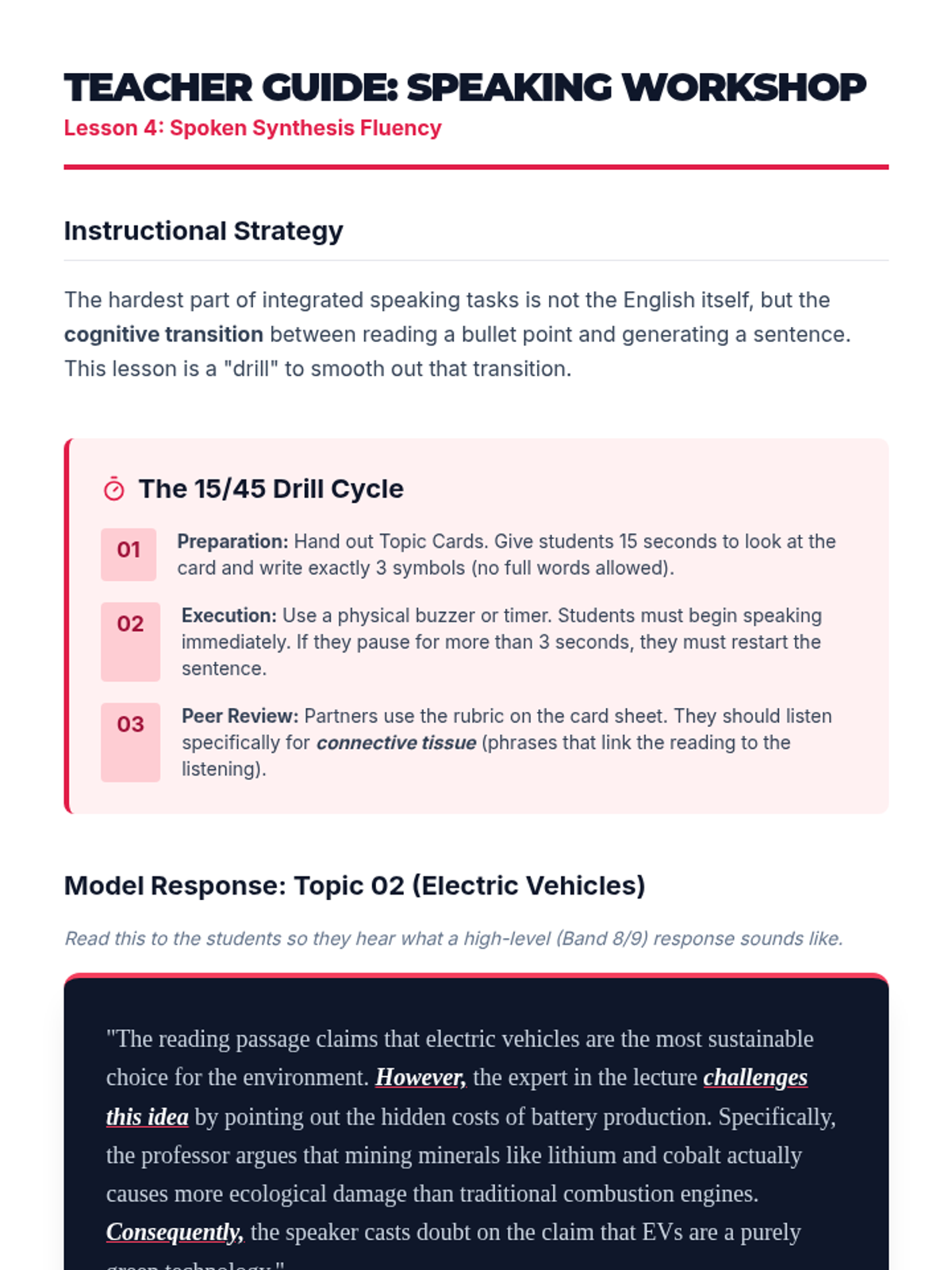
A guide for teachers providing model responses and correction strategies for the speaking fluency workshop.
Slide deck for Lesson 5 summarizing all previously learned strategies into a unified systematic approach for academic test questions.
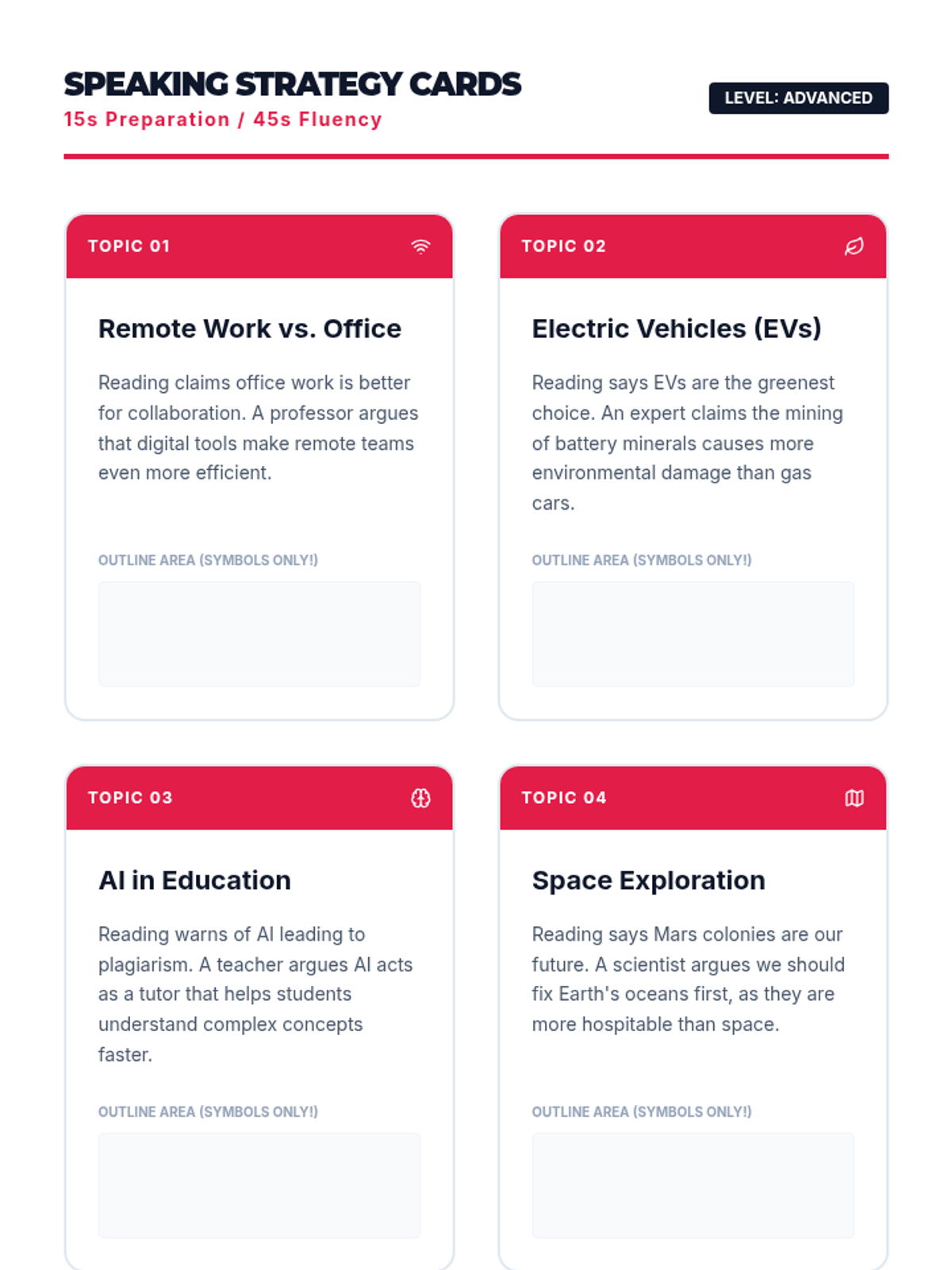
Extemporaneous speaking cards for students to practice synthesizing conflicting arguments from 15-second outlines.
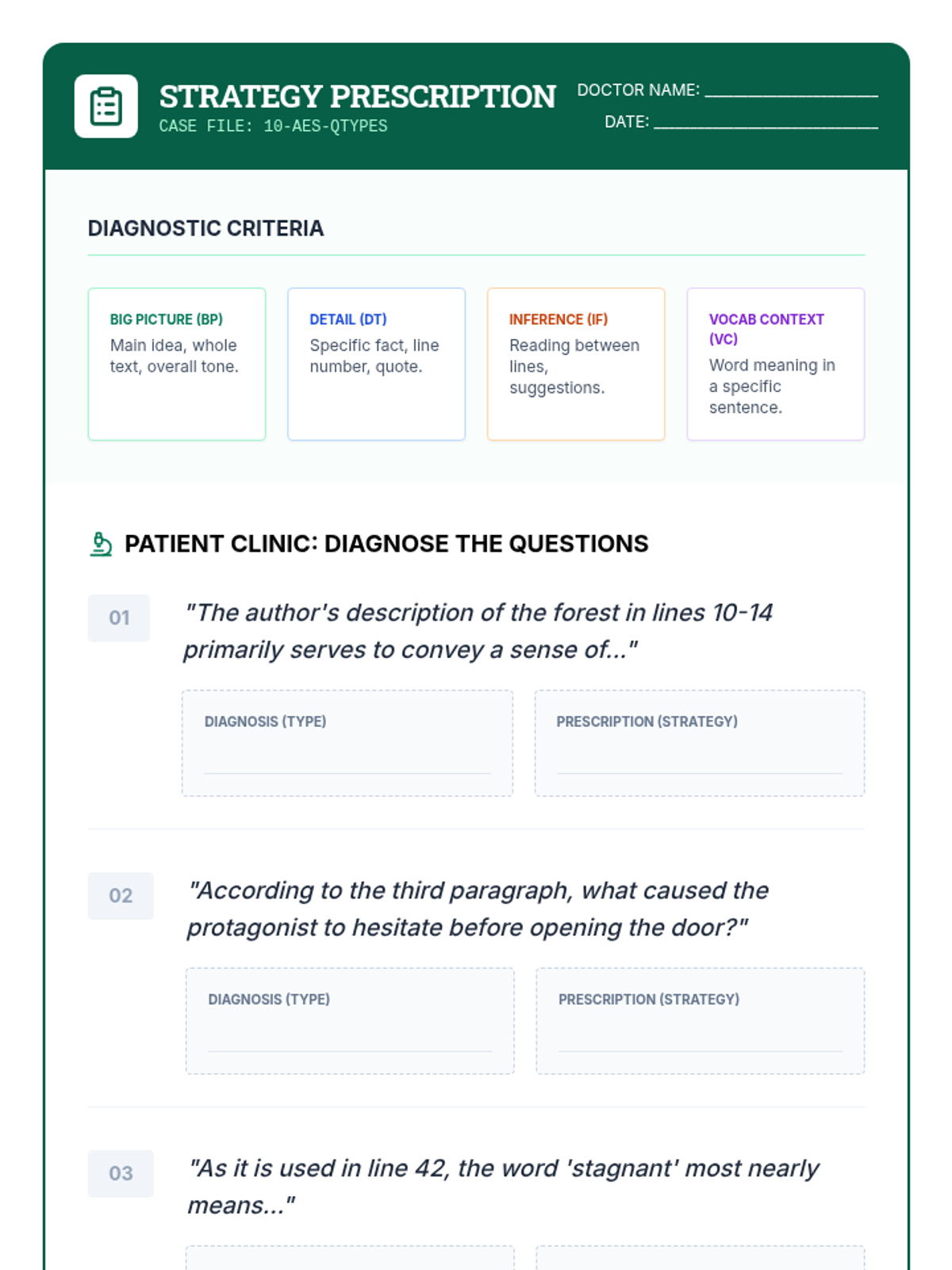
Worksheet for Lesson 4 where students diagnose various question stems by type and prescribe the appropriate strategy treatment.
A slide deck focusing on the transition from shorthand notes to fluent spoken English, introducing the 'glance' technique and oral connectives.
Slides for Lesson 4 using a 'Test Doctor' metaphor to help students categorize question types and apply specific strategy treatments.
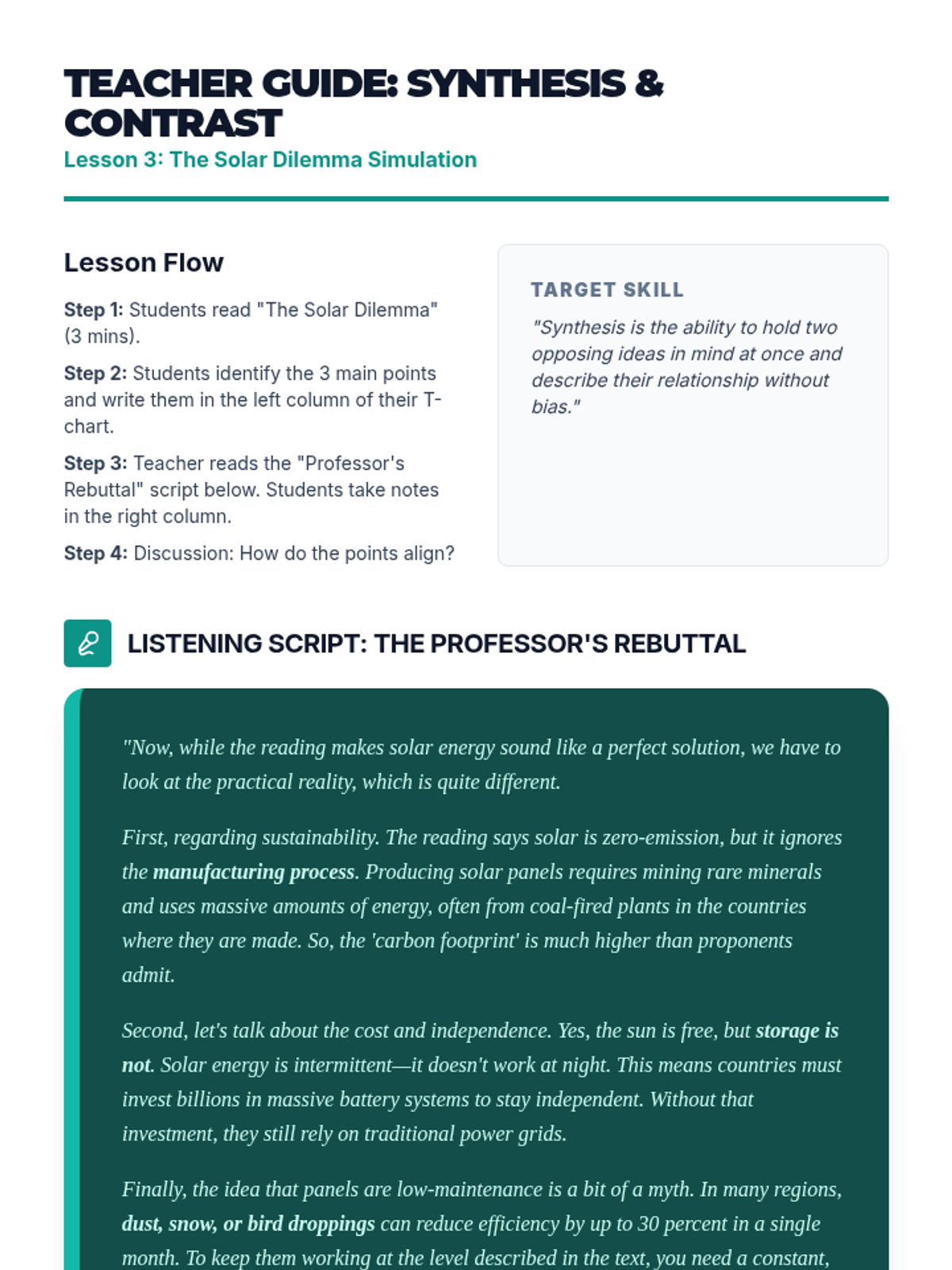
A guide for teachers with the rebuttal script for 'The Solar Dilemma' and a mapping of the key points of conflict.
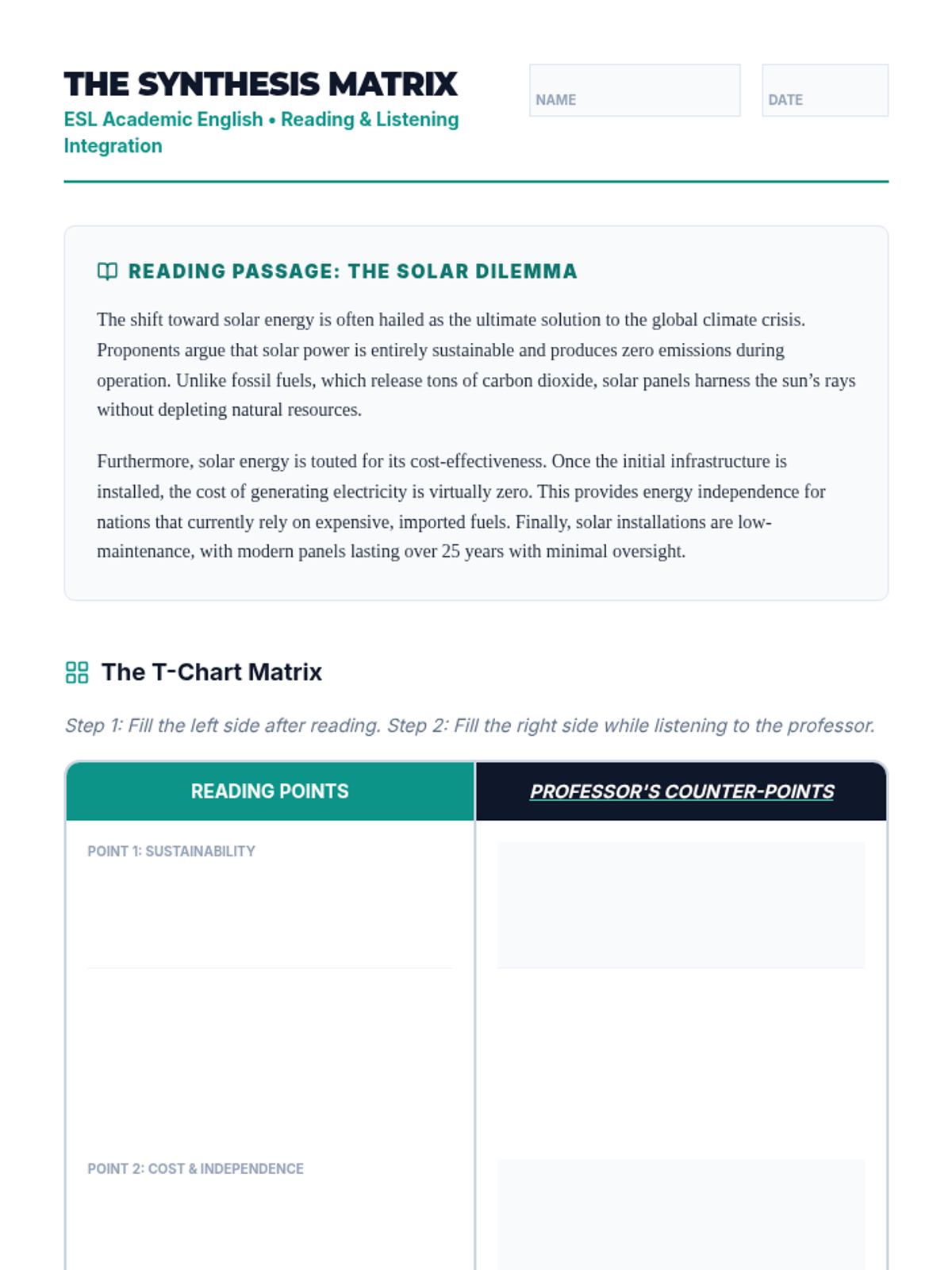
A student activity sheet featuring a reading passage on solar energy and a T-chart for mapping contradictory information from a lecture.
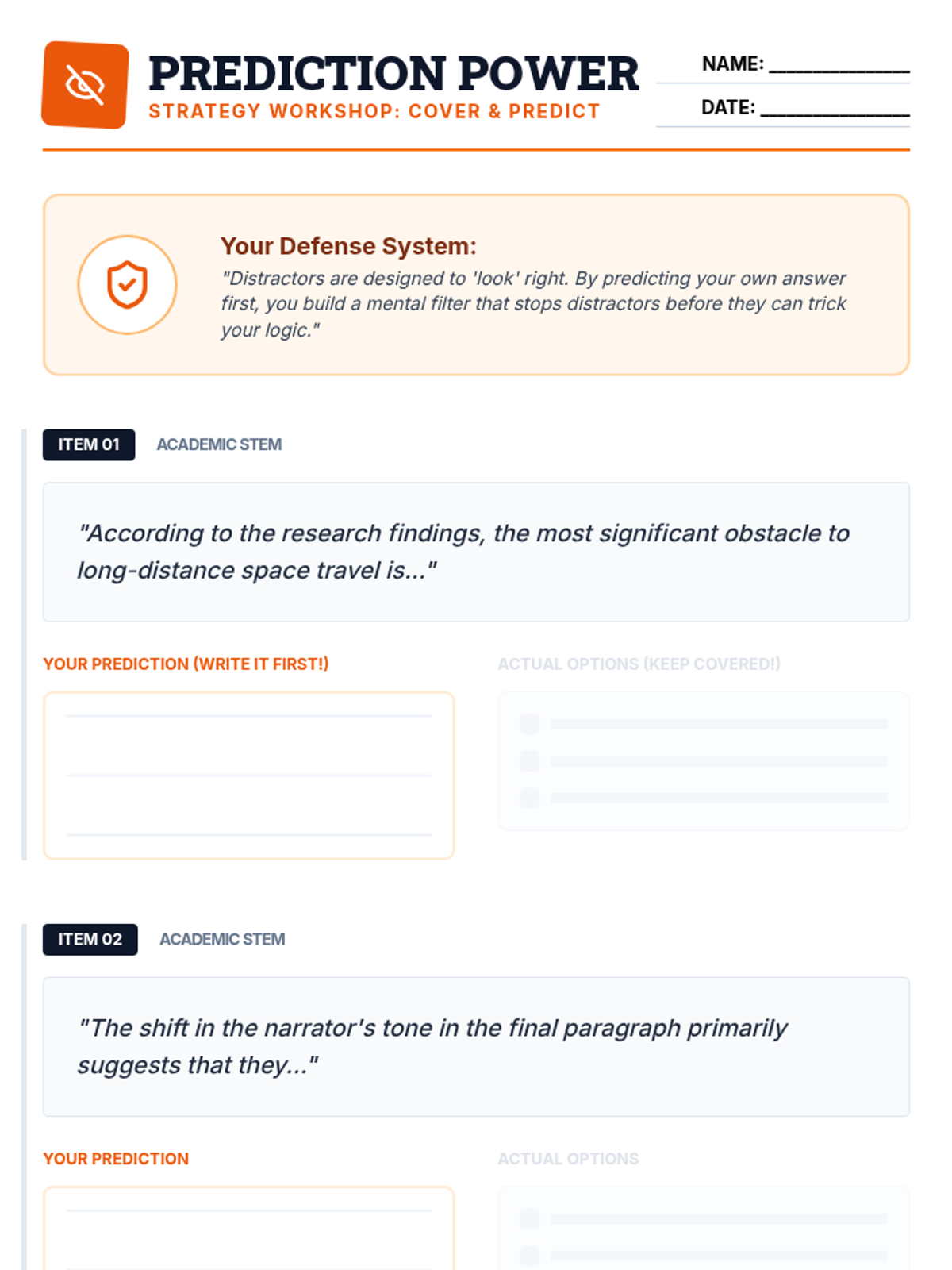
Worksheet for Lesson 3 where students practice predicting answers before seeing options to develop resilience against persuasive distractors.
A slide deck explaining the concept of synthesis, the use of T-charts to organize conflicting sources, and the language of comparative analysis.
Slides for Lesson 3 introducing the 'Cover and Predict' strategy to mitigate the influence of persuasive distractors in multiple-choice questions.
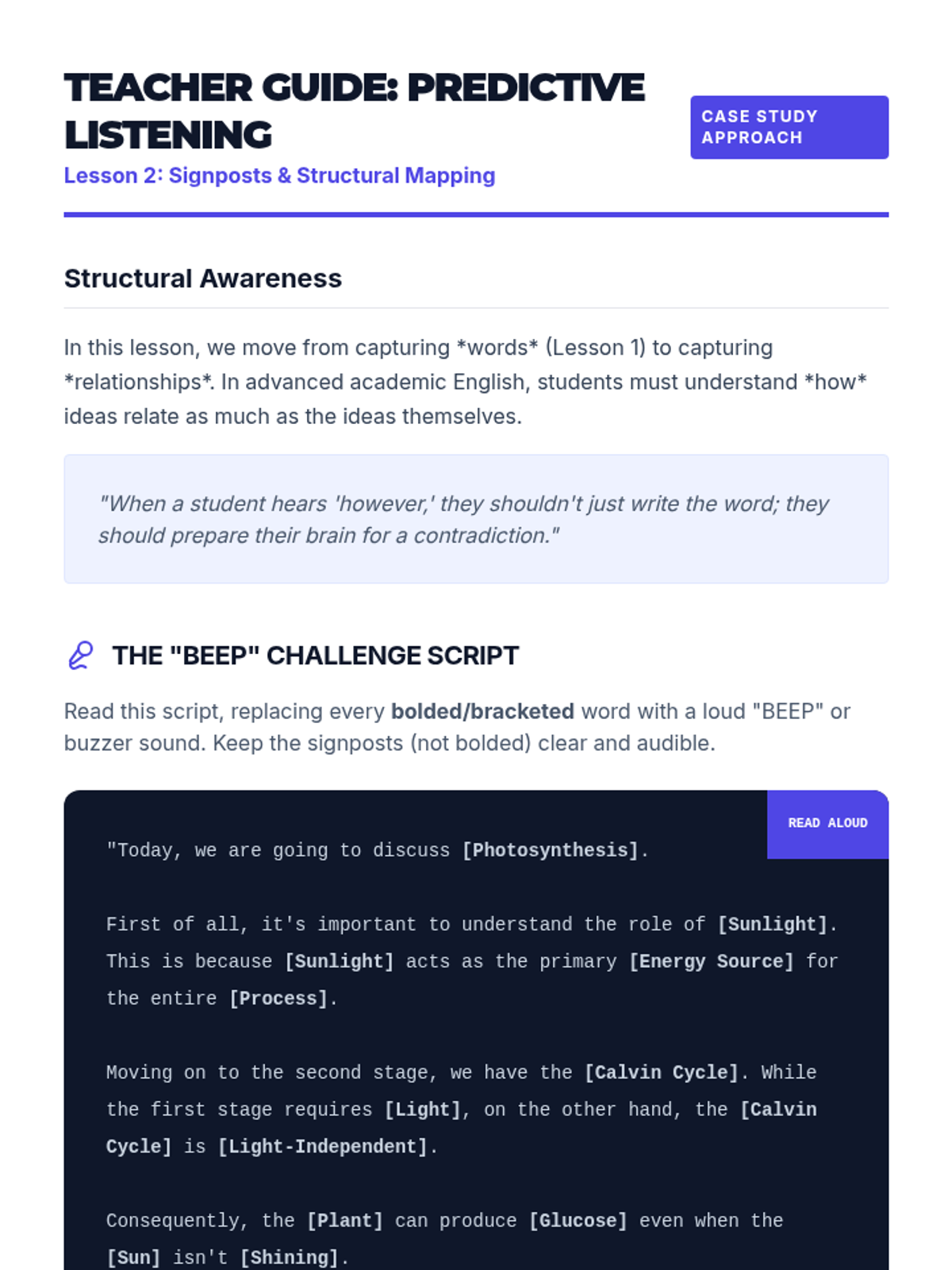
A guide for teachers with the 'Beep Challenge' script and strategies for facilitating predictive listening exercises.
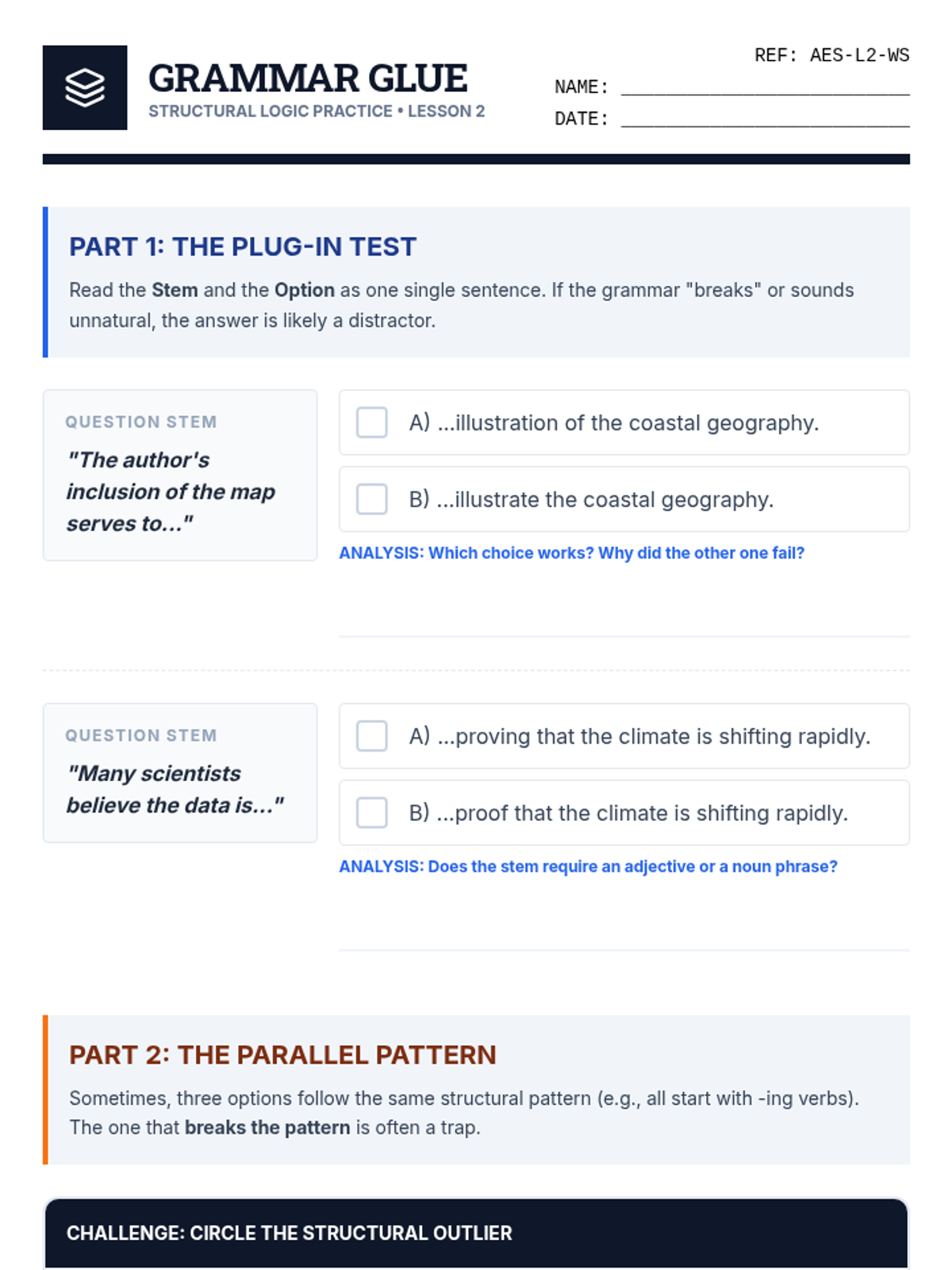
Worksheet for Lesson 2 focusing on grammatical matching and structural outliers in multiple-choice questions.
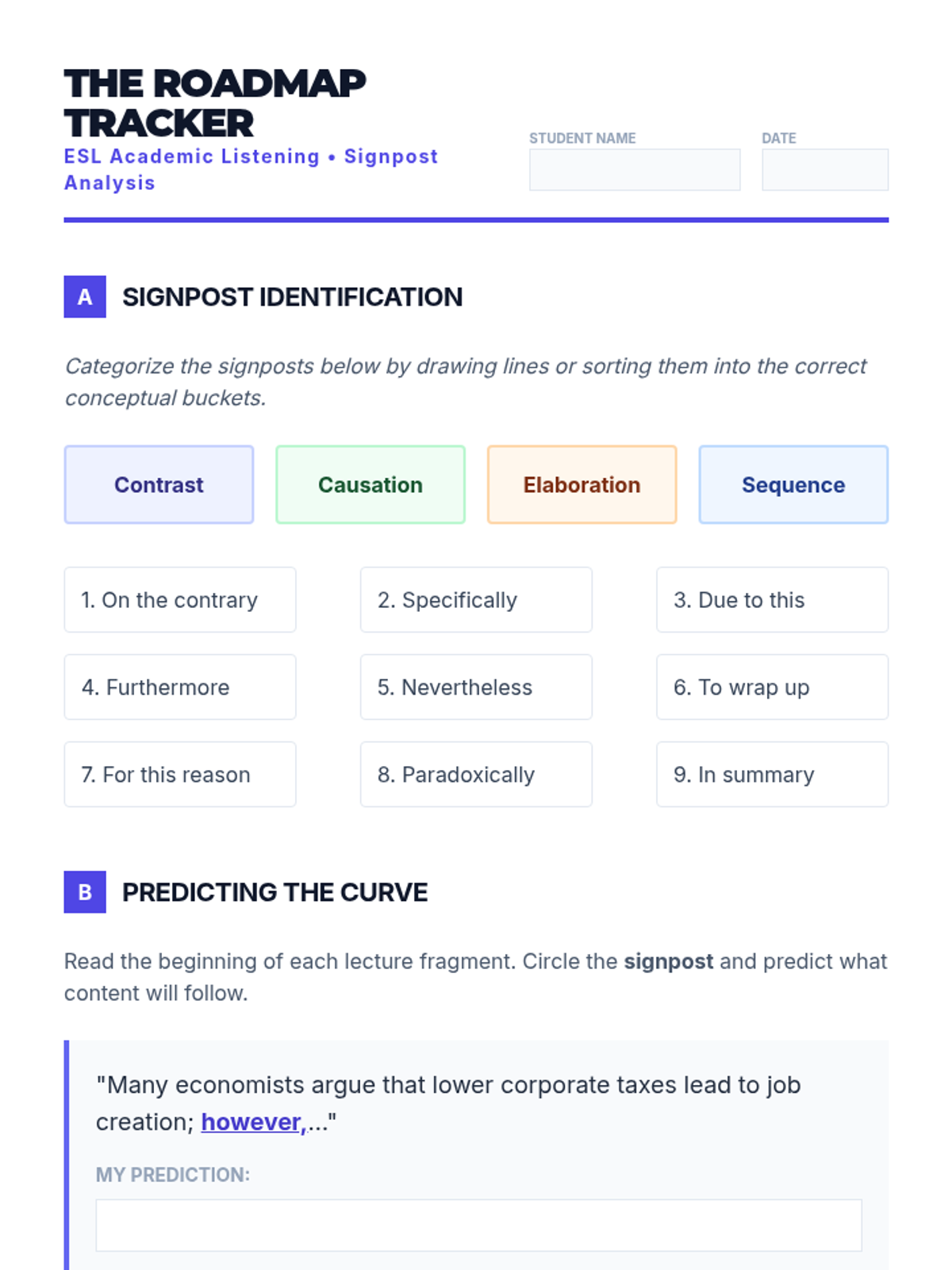
A student worksheet for identifying signposts, predicting lecture content, and mapping a 'beeped' lecture structure.
Slide deck for Lesson 2 focusing on grammatical consistency and parallel structure between question stems and answer choices.
A presentation on identifying verbal signposts and using them to predict and organize academic lecture notes.
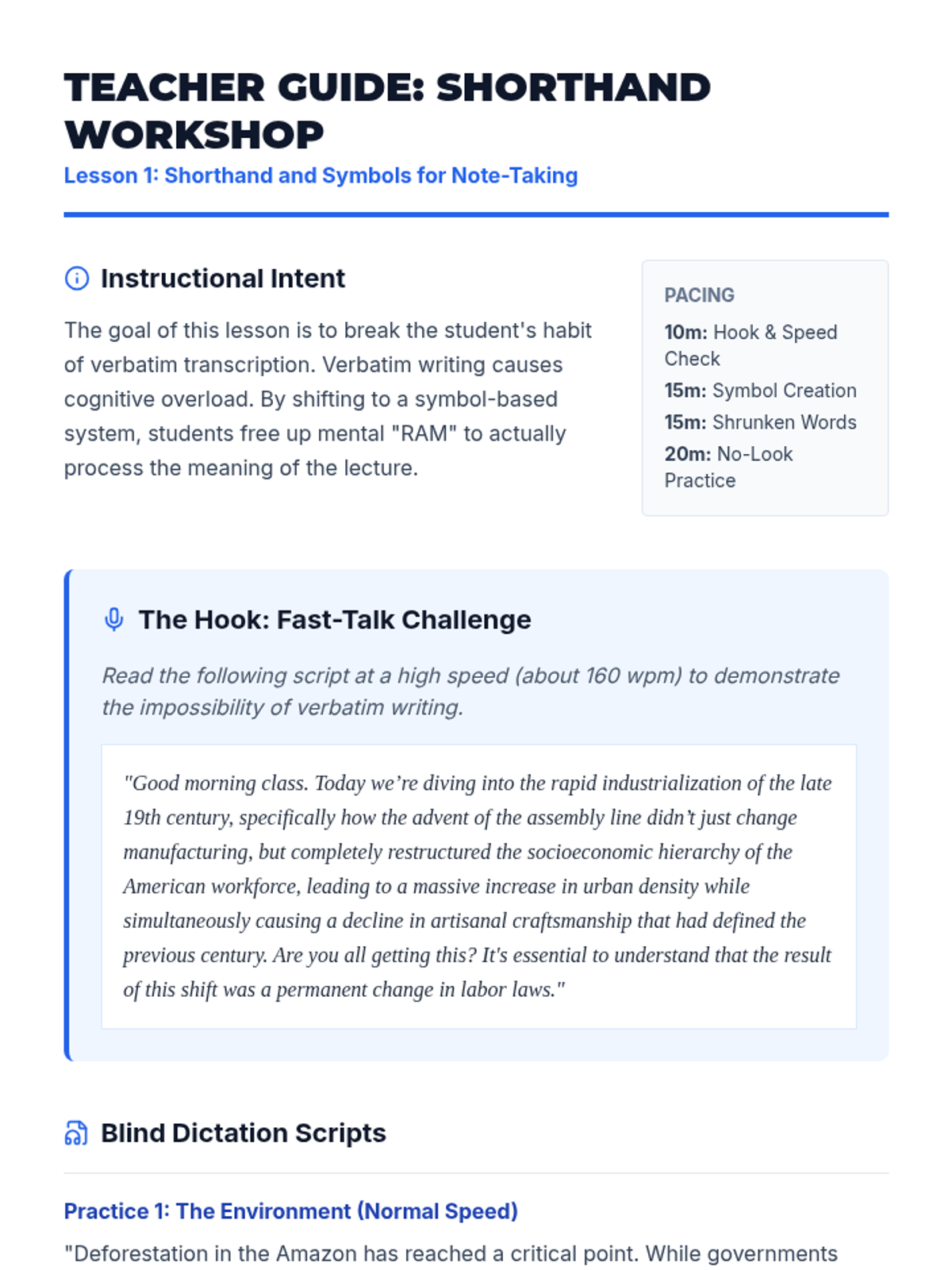
A guide for teachers providing pacing suggestions, scripts for the fast-talk hook, and dictation passages for the shorthand lesson.
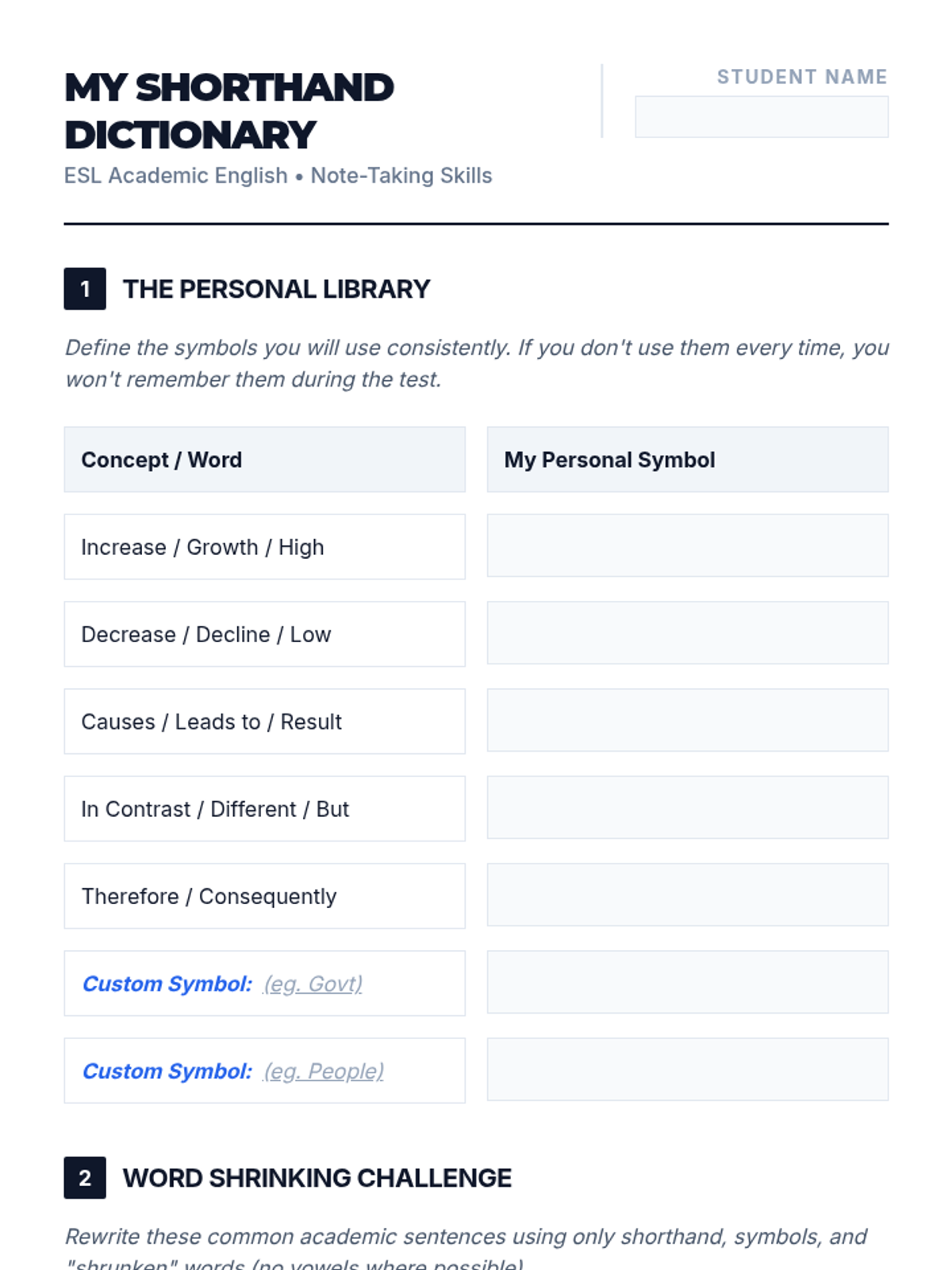
A student worksheet for creating a personal symbol library and practicing shorthand with 'no-look' dictation.
A slide deck introducing shorthand techniques, common symbols, and word-shrinking strategies for fast academic listening.
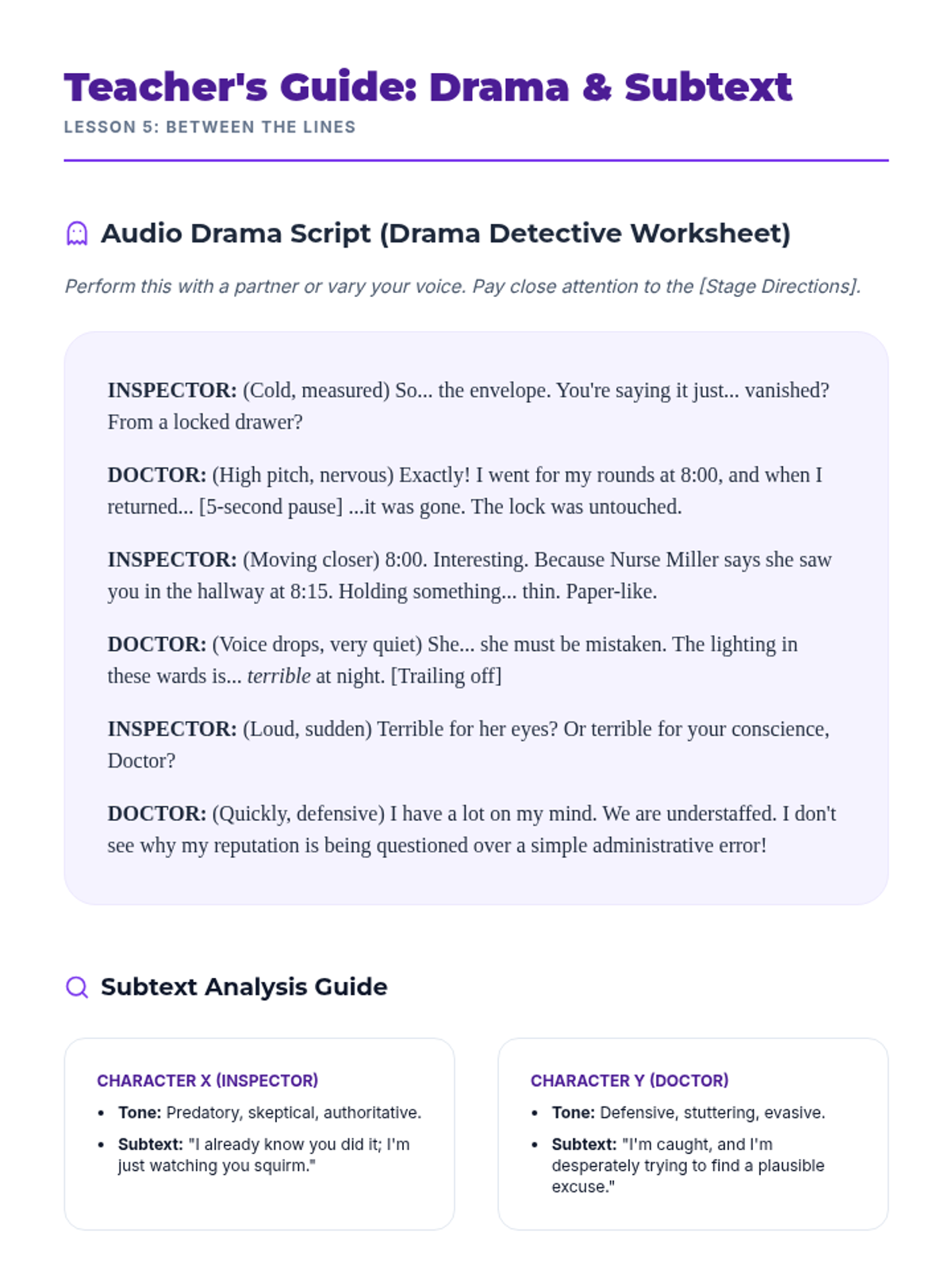
Teacher guide for Lesson 5 featuring the "Lost Envelope" drama script and a detailed subtext analysis guide for the Drama Detective activity.
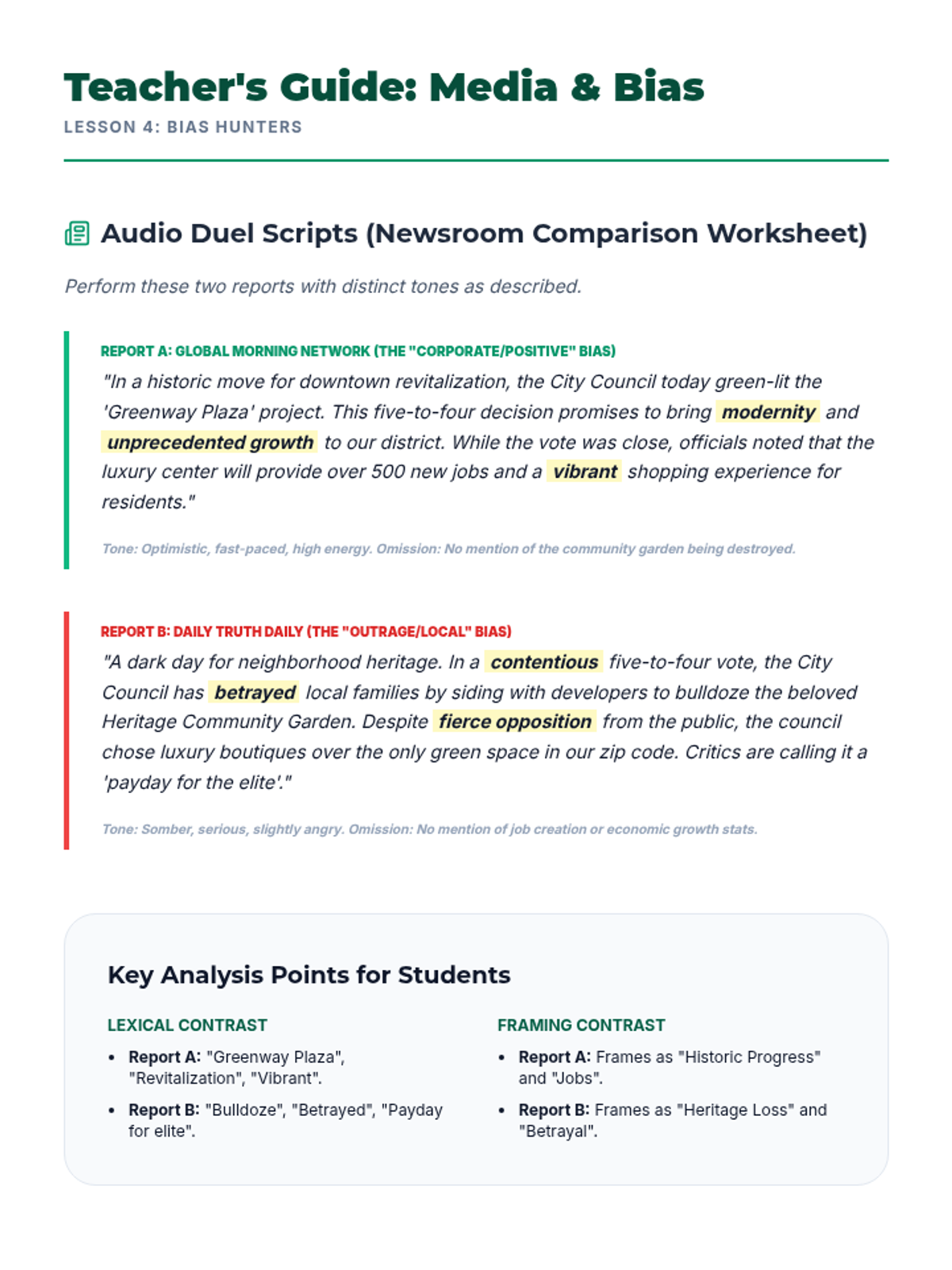
Teacher guide for Lesson 4 including contrasting news scripts for the comparative analysis activity and key analysis points for discussion.
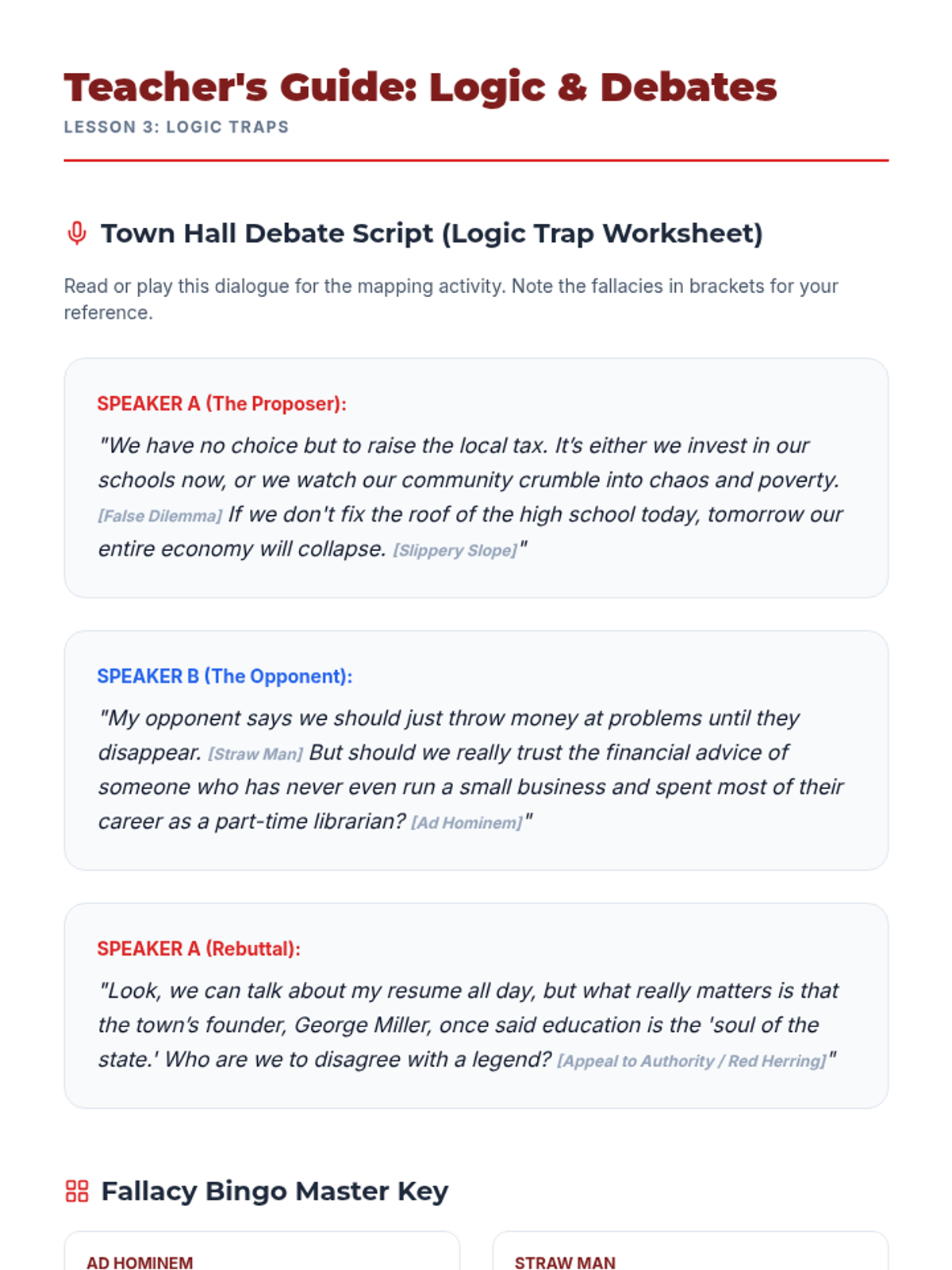
Teacher guide for Lesson 3 including a full debate script for the mapping activity and a master key for the Fallacy Bingo game.
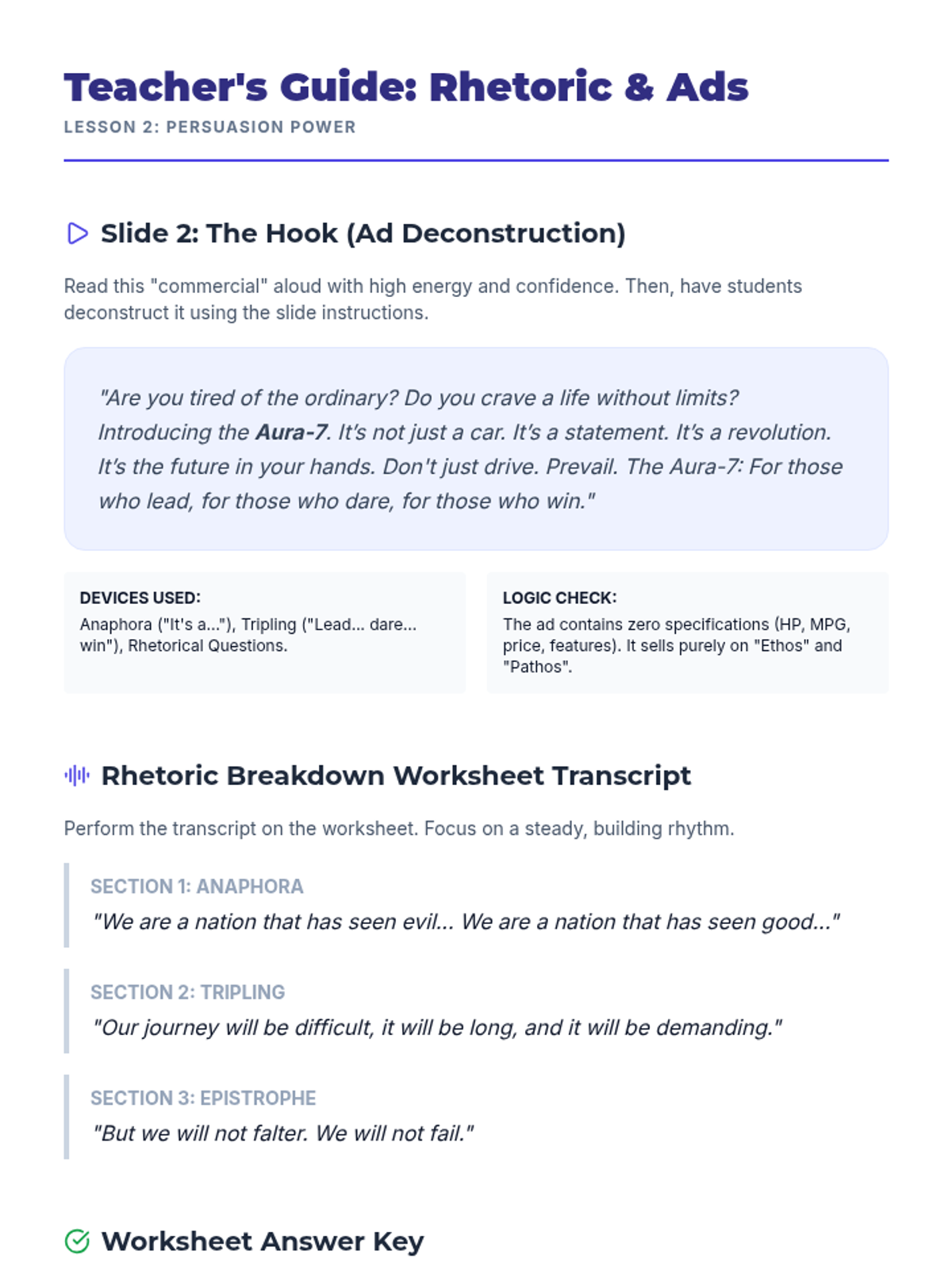
Teacher guide for Lesson 2 including a persuasive speech script, ad analysis prompts, and the answer key for the Rhetoric Breakdown worksheet.
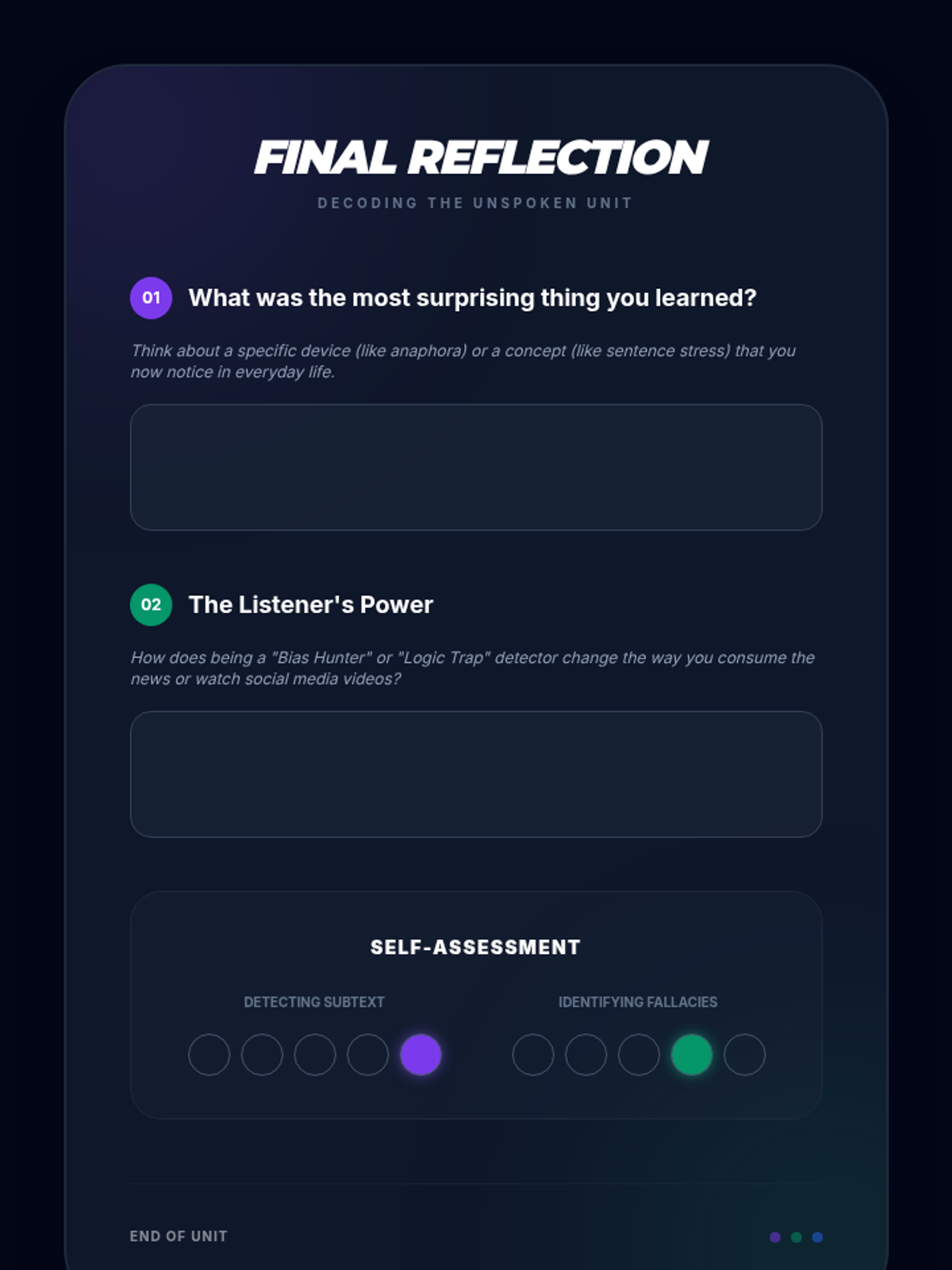
A unit-ending exit ticket for students to reflect on their learning across the five lessons of the Advanced Listening sequence.
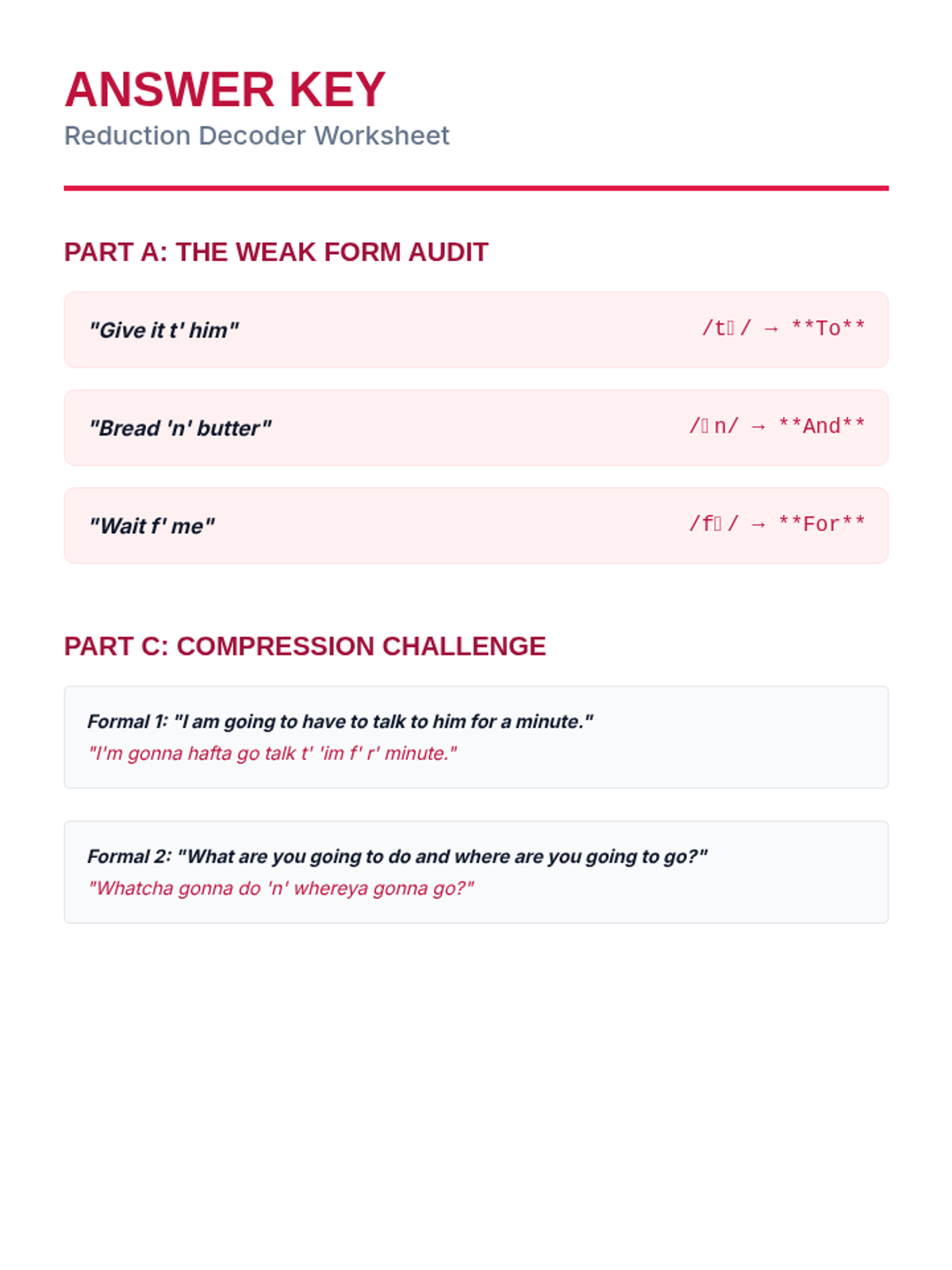
Answer key for the Lesson 4 worksheet on grammatical reductions.
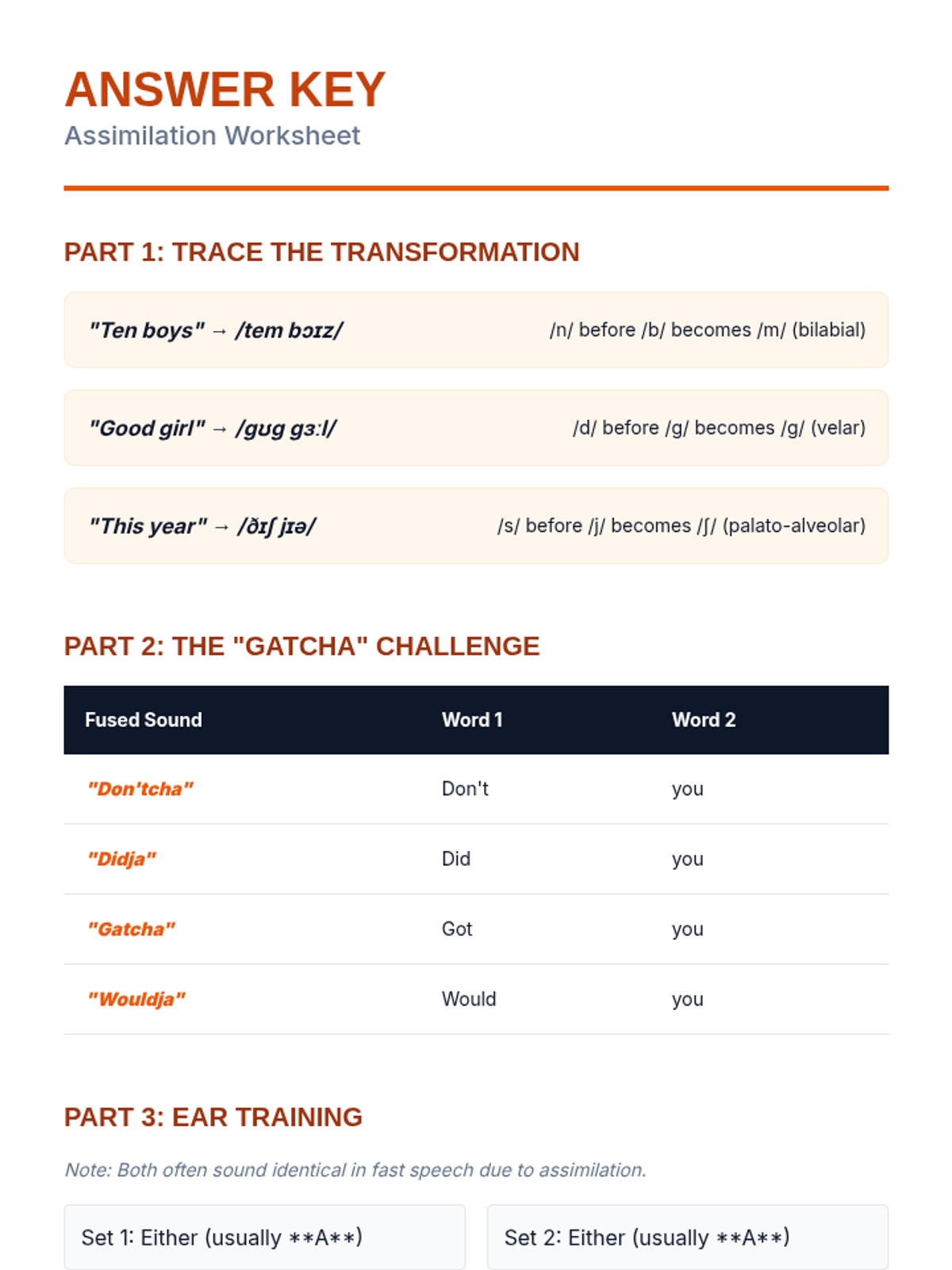
Answer key for the Lesson 3 worksheet on assimilation.
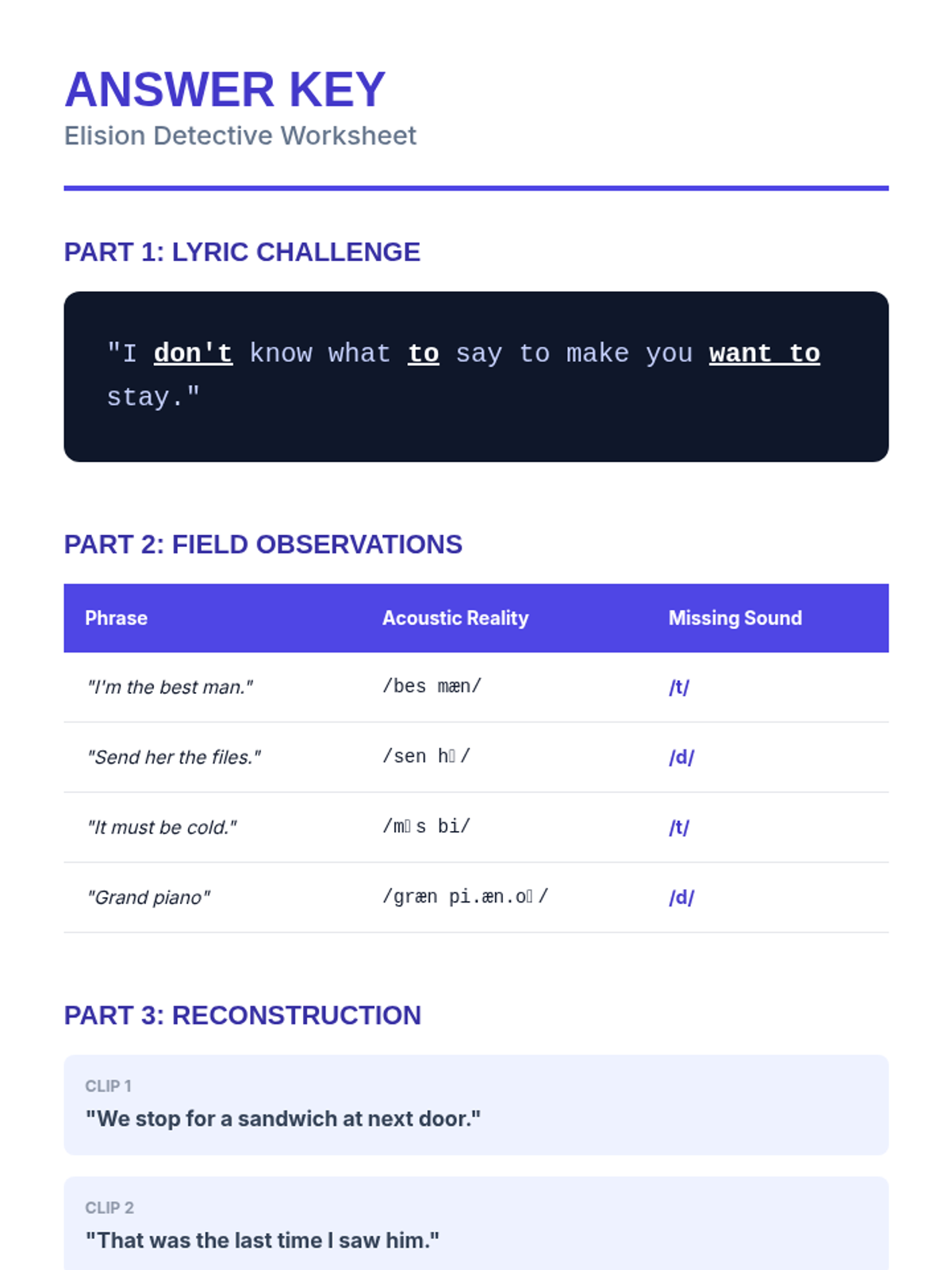
Answer key for the Lesson 2 worksheet on elision.
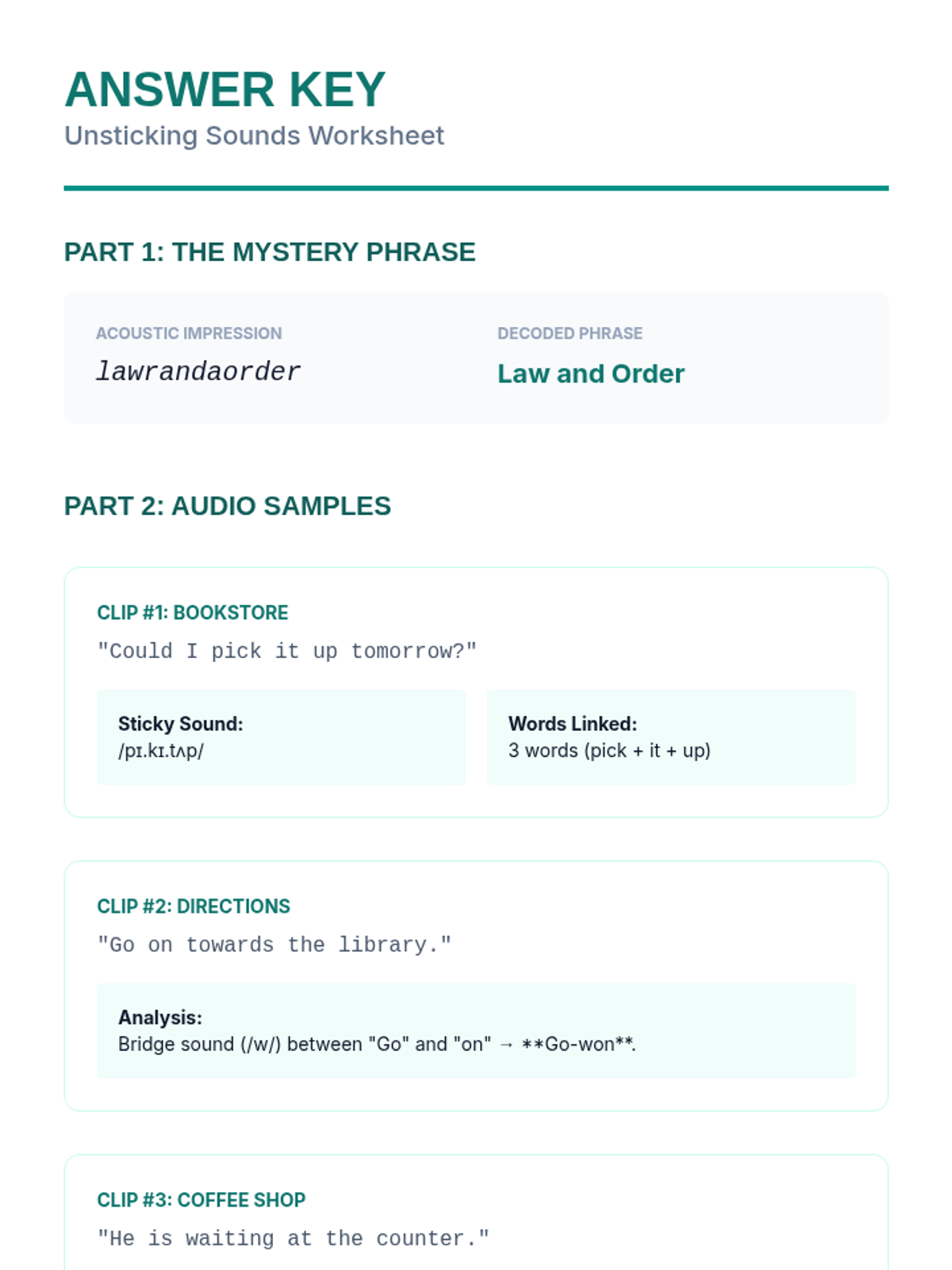
Answer key for the Lesson 1 worksheet on linking and intrusion.
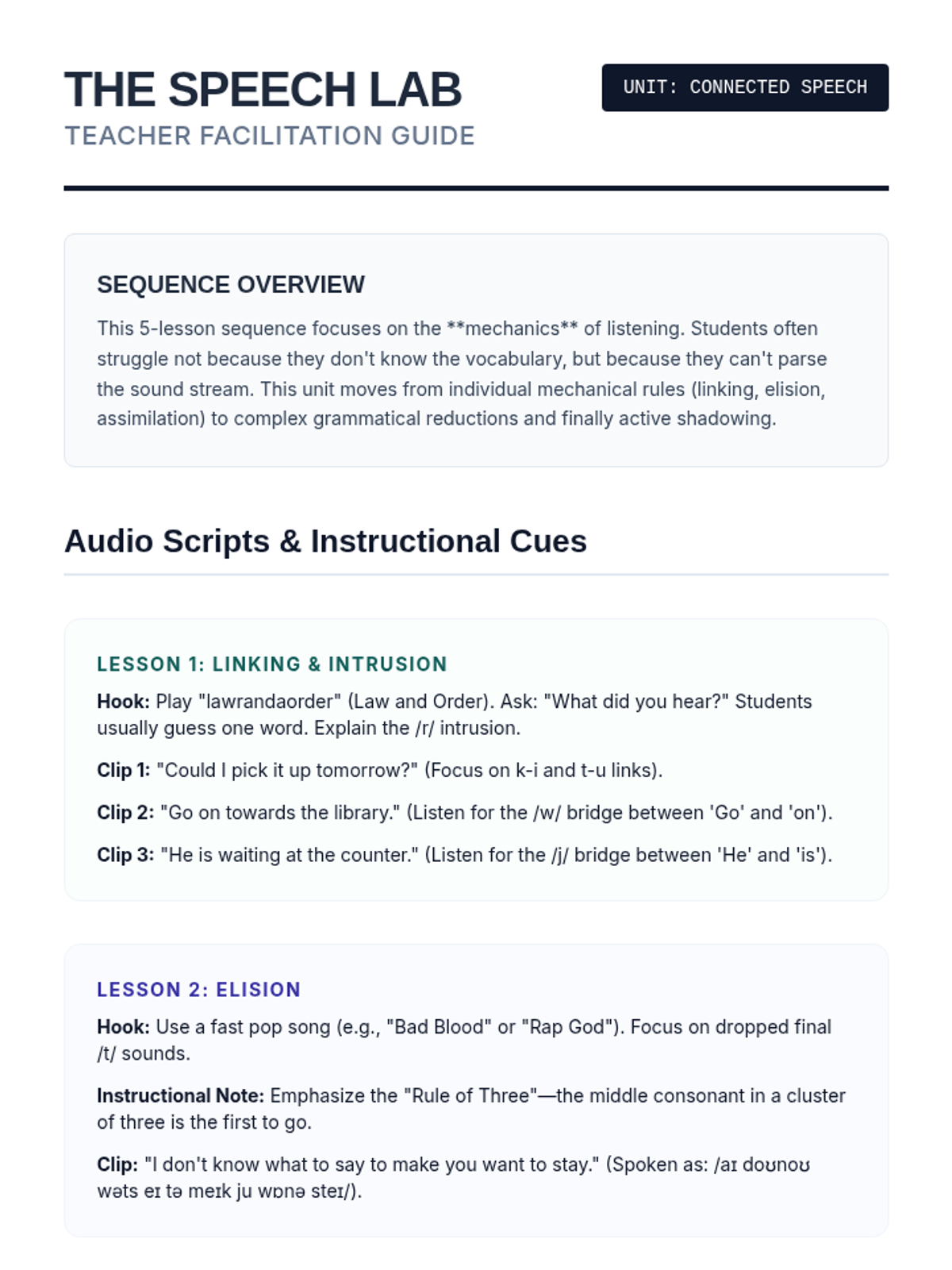
A comprehensive teacher guide for the Speech Lab sequence, including audio scripts, instructional cues, pacing, and differentiation strategies.
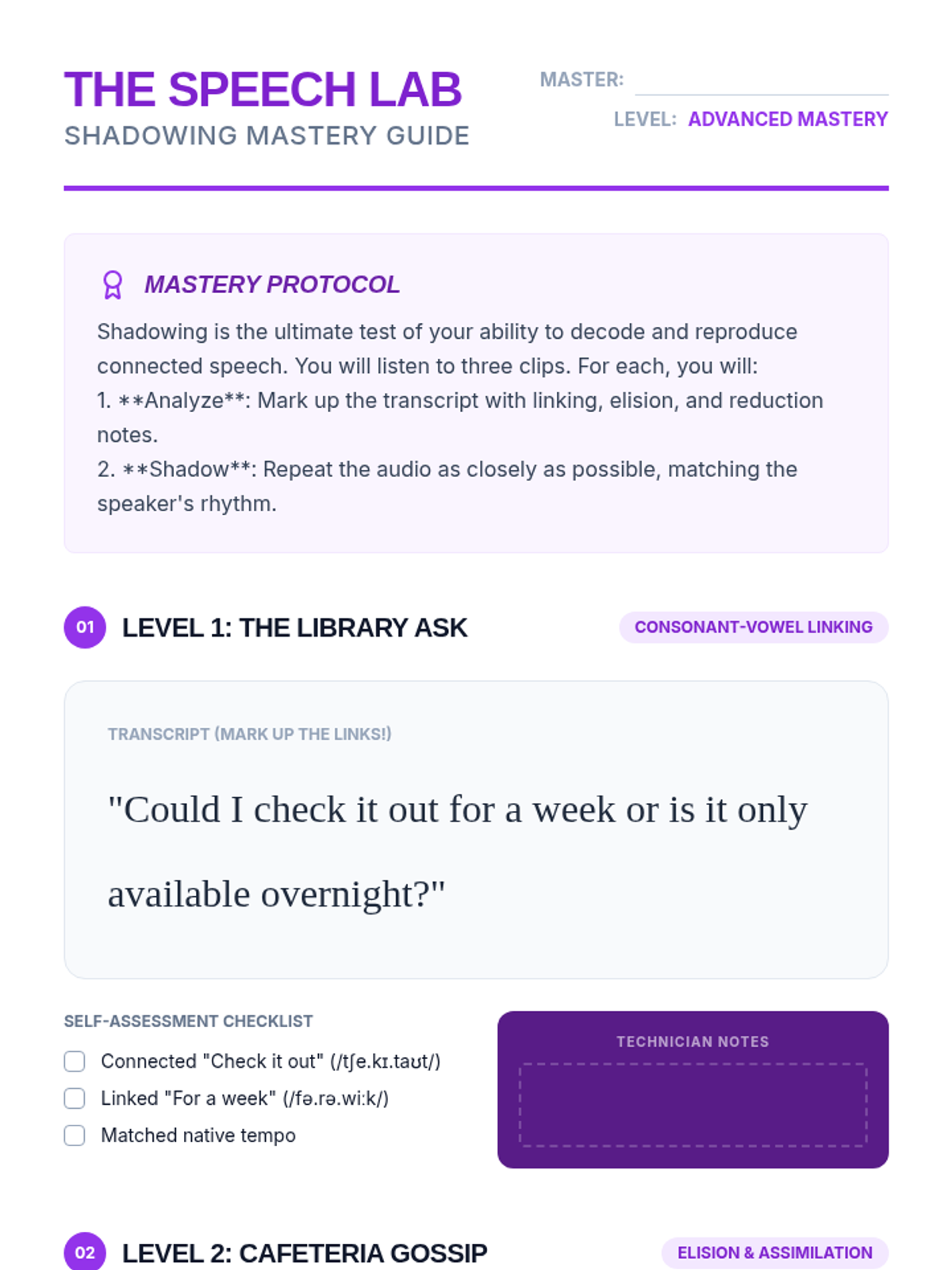
A student mastery guide for practicing shadowing techniques with transcript analysis of complex campus dialogues.
A slide deck for Lesson 5 on shadowing techniques, prosody, and the final mastery assessment of connected speech patterns.
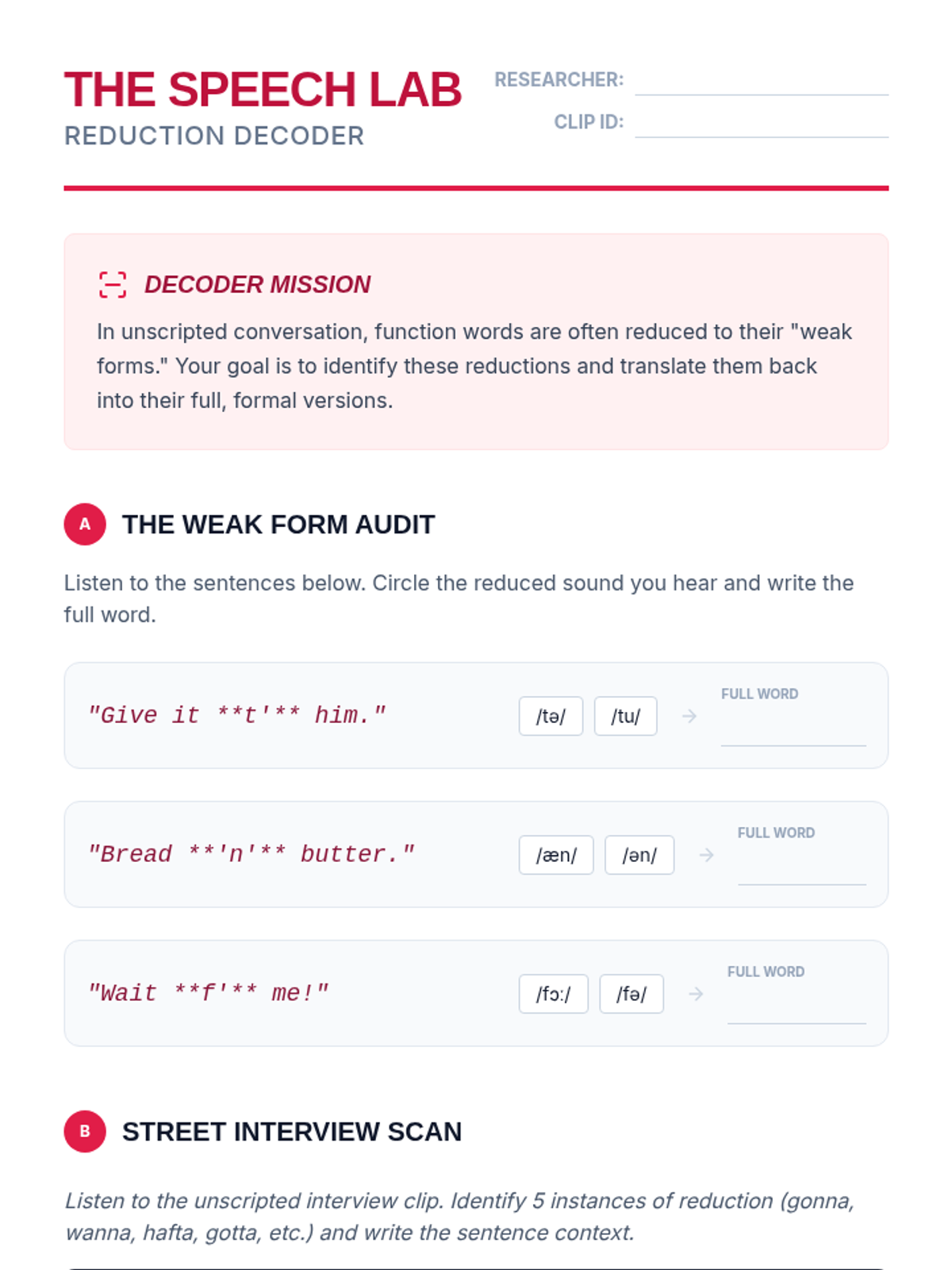
A student worksheet for identifying and translating grammatical reductions and weak forms in unscripted interviews.
A slide deck for Lesson 4 focusing on grammatical reductions and weak forms, using a high-contrast visual style to highlight the difference between formal and casual speech.
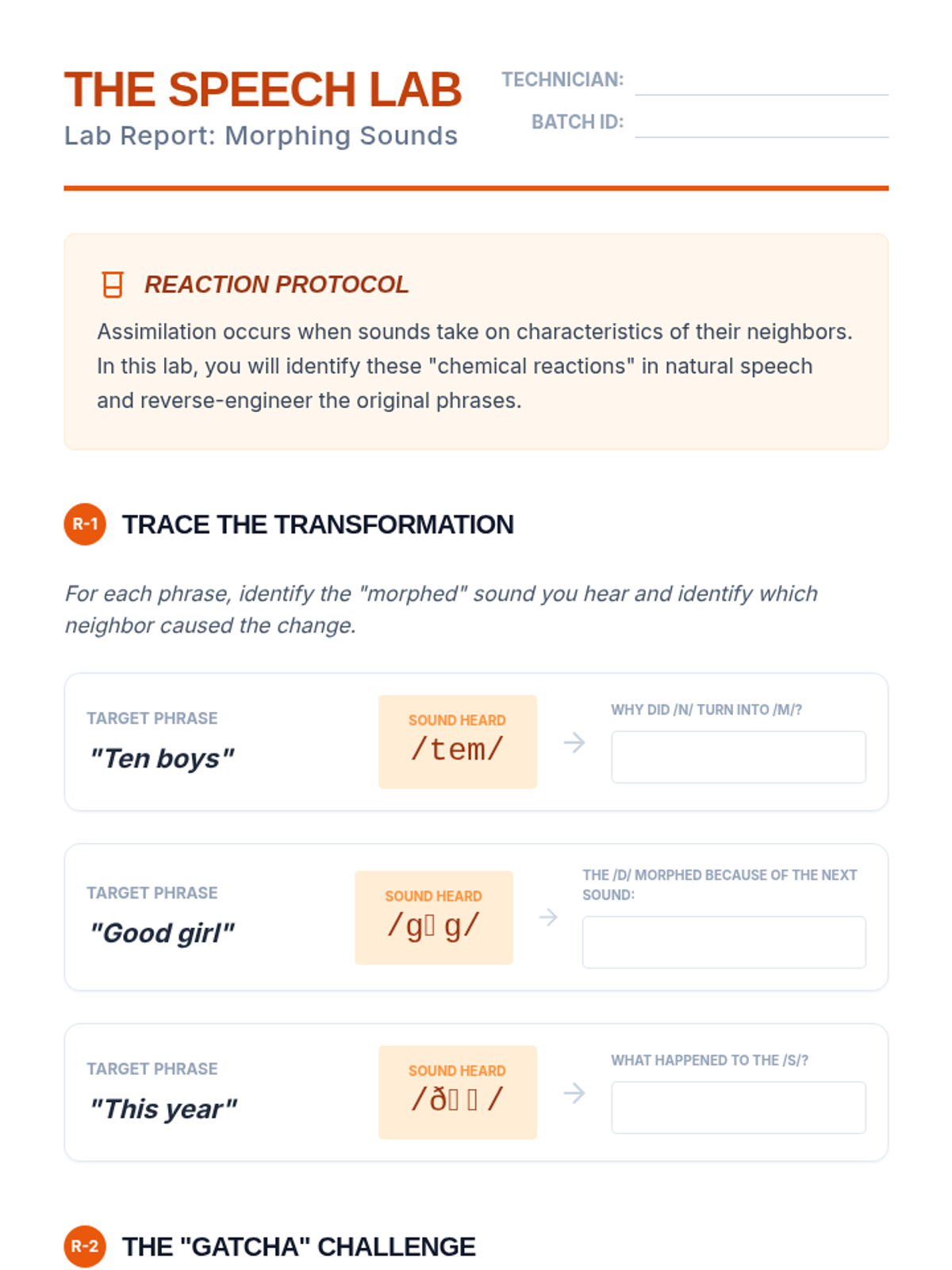
A student worksheet for identifying and reverse-engineering assimilated sounds in natural speech patterns.
A slide deck for Lesson 3 introducing assimilation, showing how sounds change based on their neighbors using a "chemical reaction" theme.
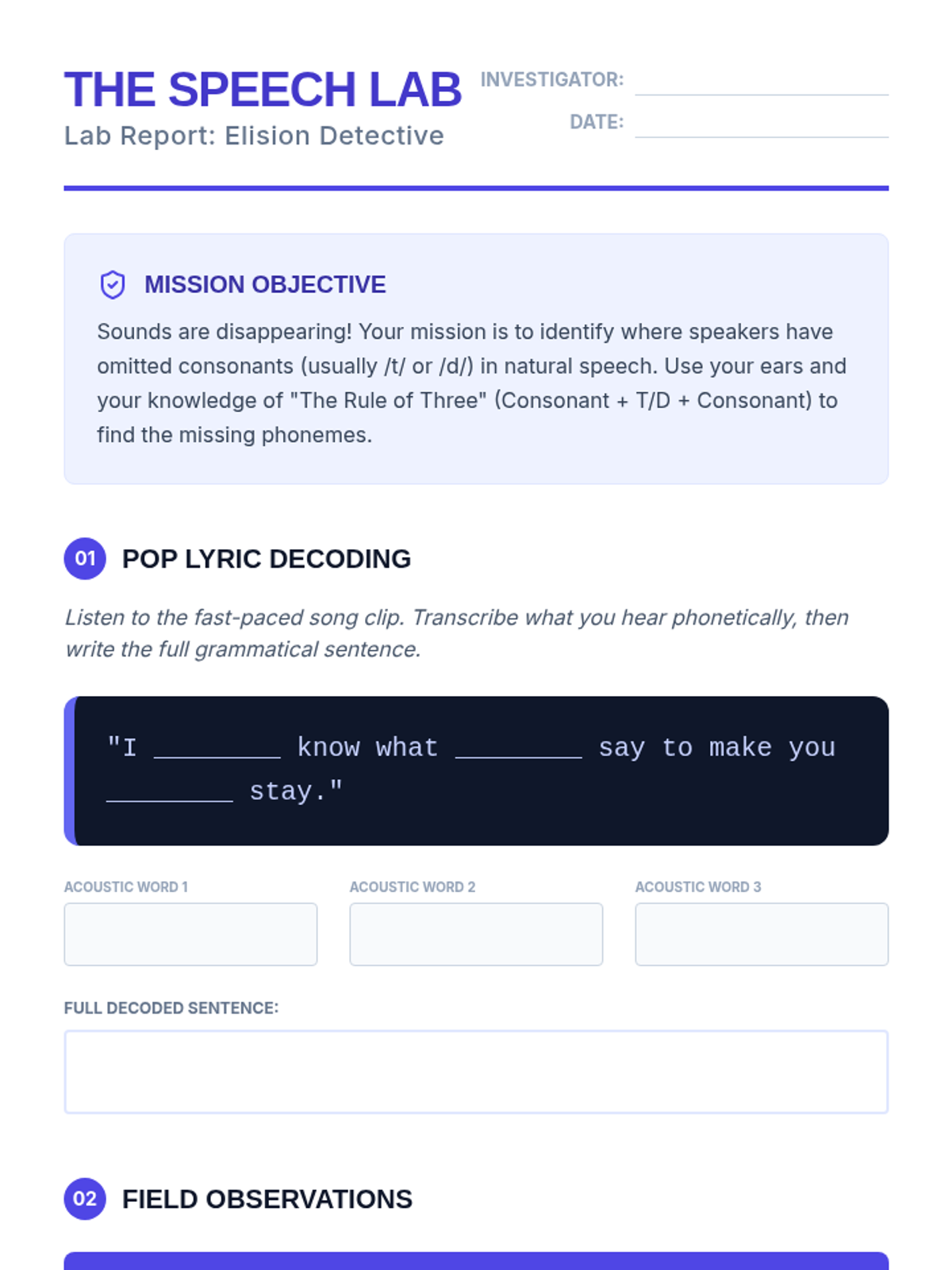
A student worksheet for identifying and reconstructing elided sounds (/t/ and /d/) in common phrases and lyrics.
A slide deck for Lesson 2 focusing on elision, where sounds disappear in rapid speech, specifically highlighting /t/ and /d/ omissions.
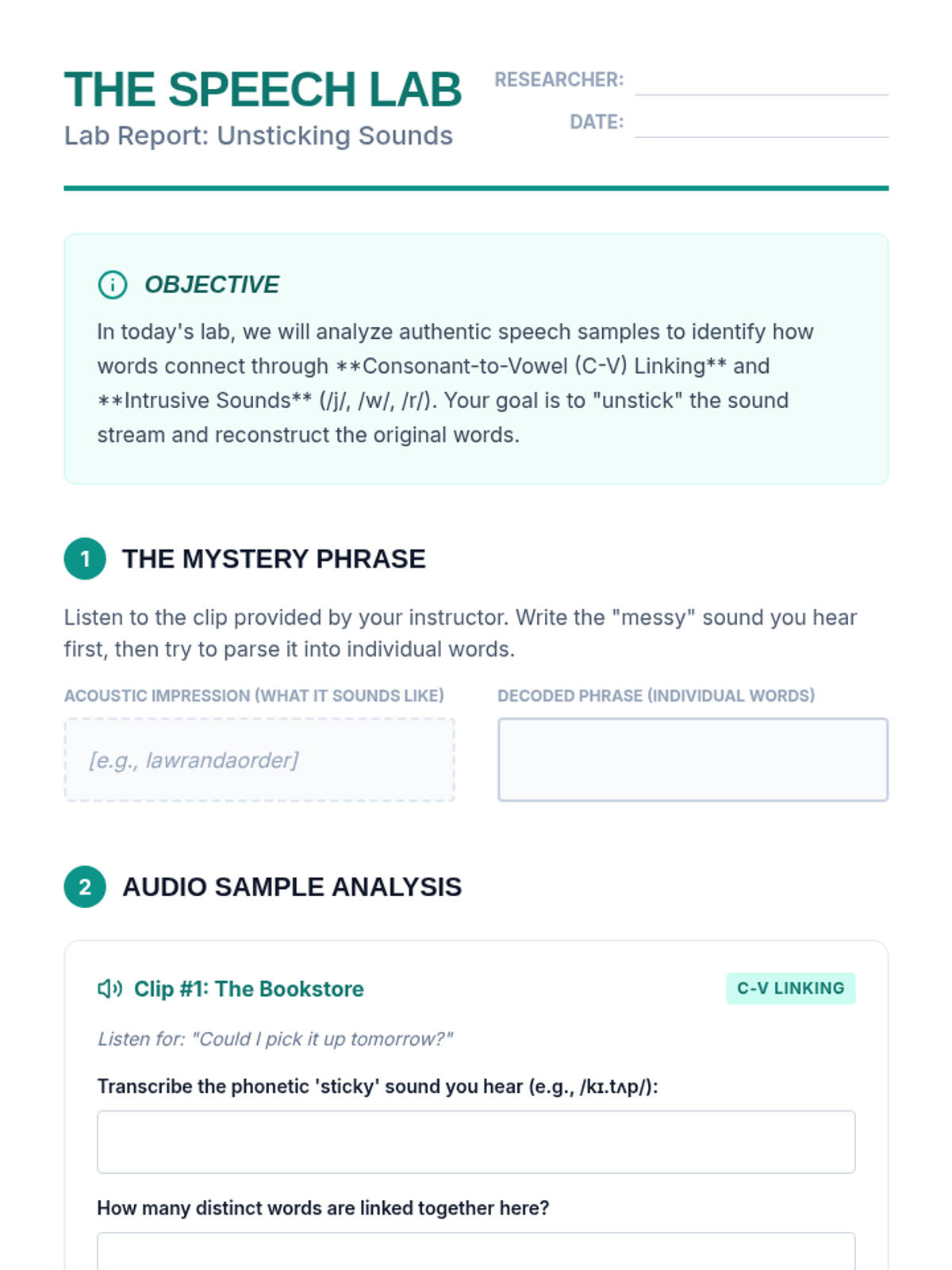
A student worksheet for analyzing audio samples, focusing on identifying consonant-vowel linking and intrusive sounds in campus-based scenarios.
A visual presentation for Lesson 1, introducing the concepts of consonant-vowel linking and intrusive sounds (/r/, /w/, /j/) with examples and a clear acoustic theme.
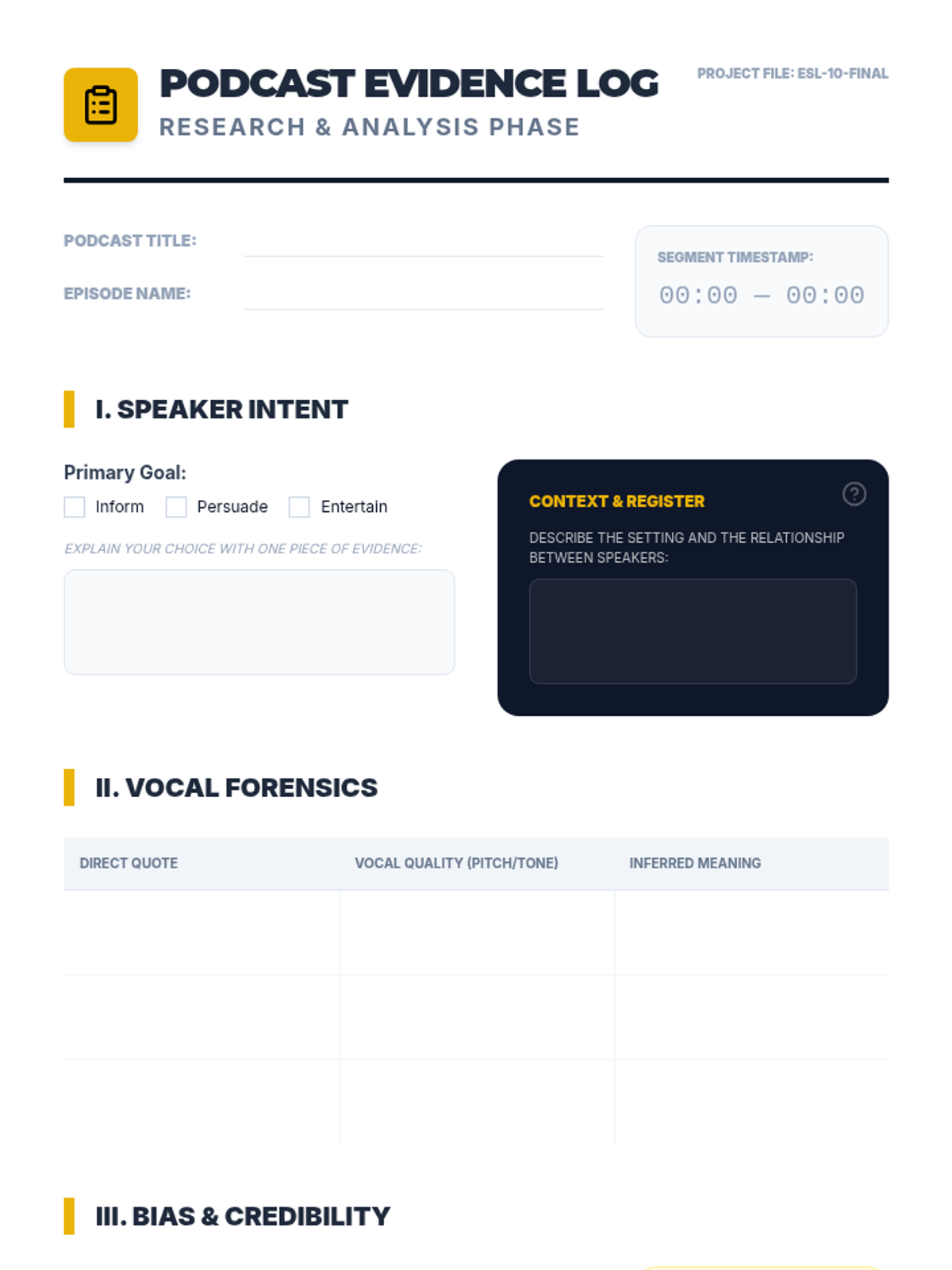
A detailed student evidence log for the final podcast project, providing sections for analyzing intent, vocal forensics, and bias check.
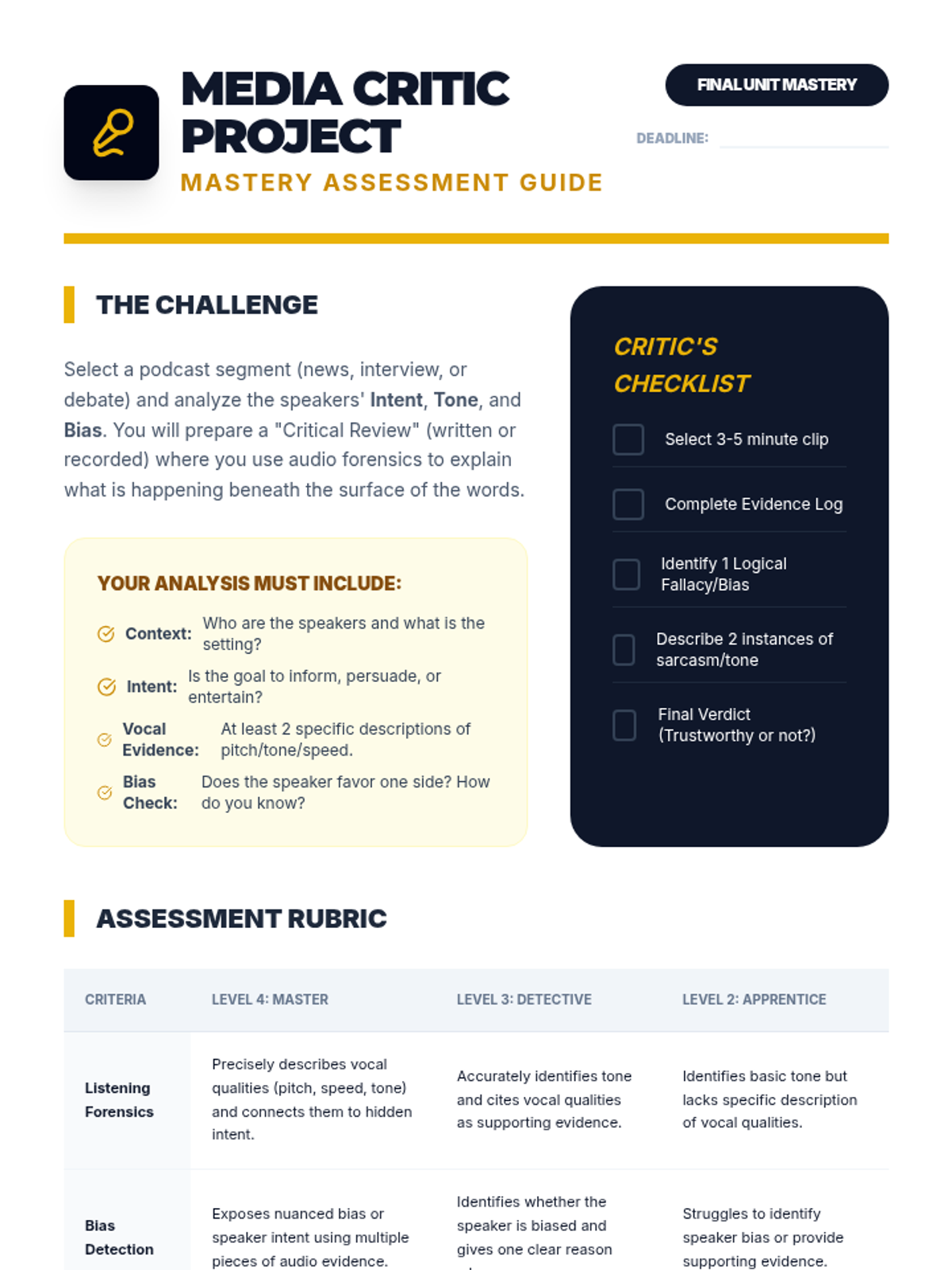
A guide for the final project where students select a podcast episode, analyze its intent and bias, and present their findings, including a checklist and a performance rubric.
Slides for the final project launch, introducing the media critic mission, criteria for analyzing podcasts, and methods for citing audio evidence.
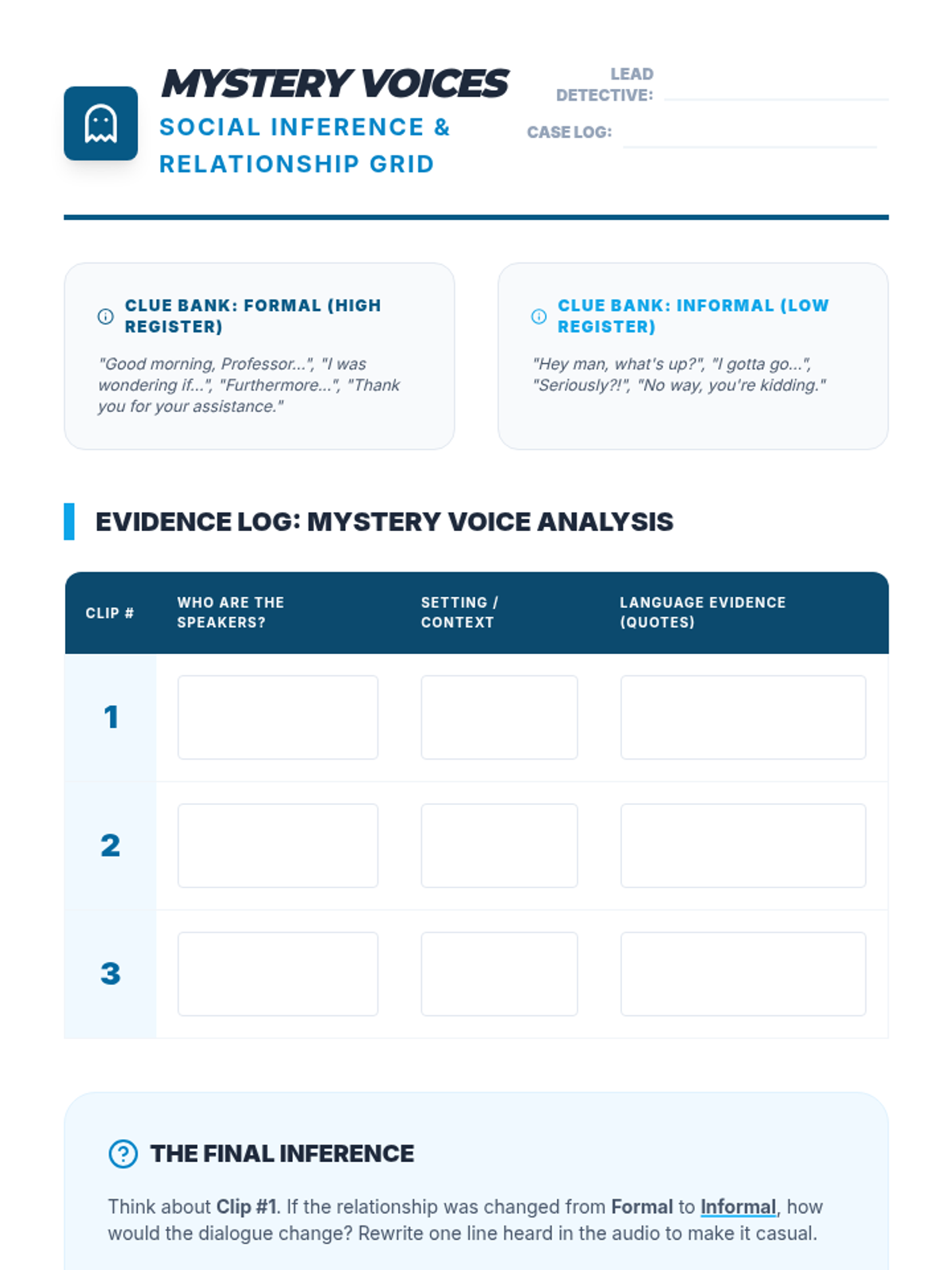
A student activity sheet for analyzing speaker relationships and social context, featuring a grid for recording inferences and a creative rewrite exercise for register shifts.
Slides for the fourth lesson on social inference, exploring the concept of register (formal vs. informal) and providing clues for identifying speaker relationships through audio.
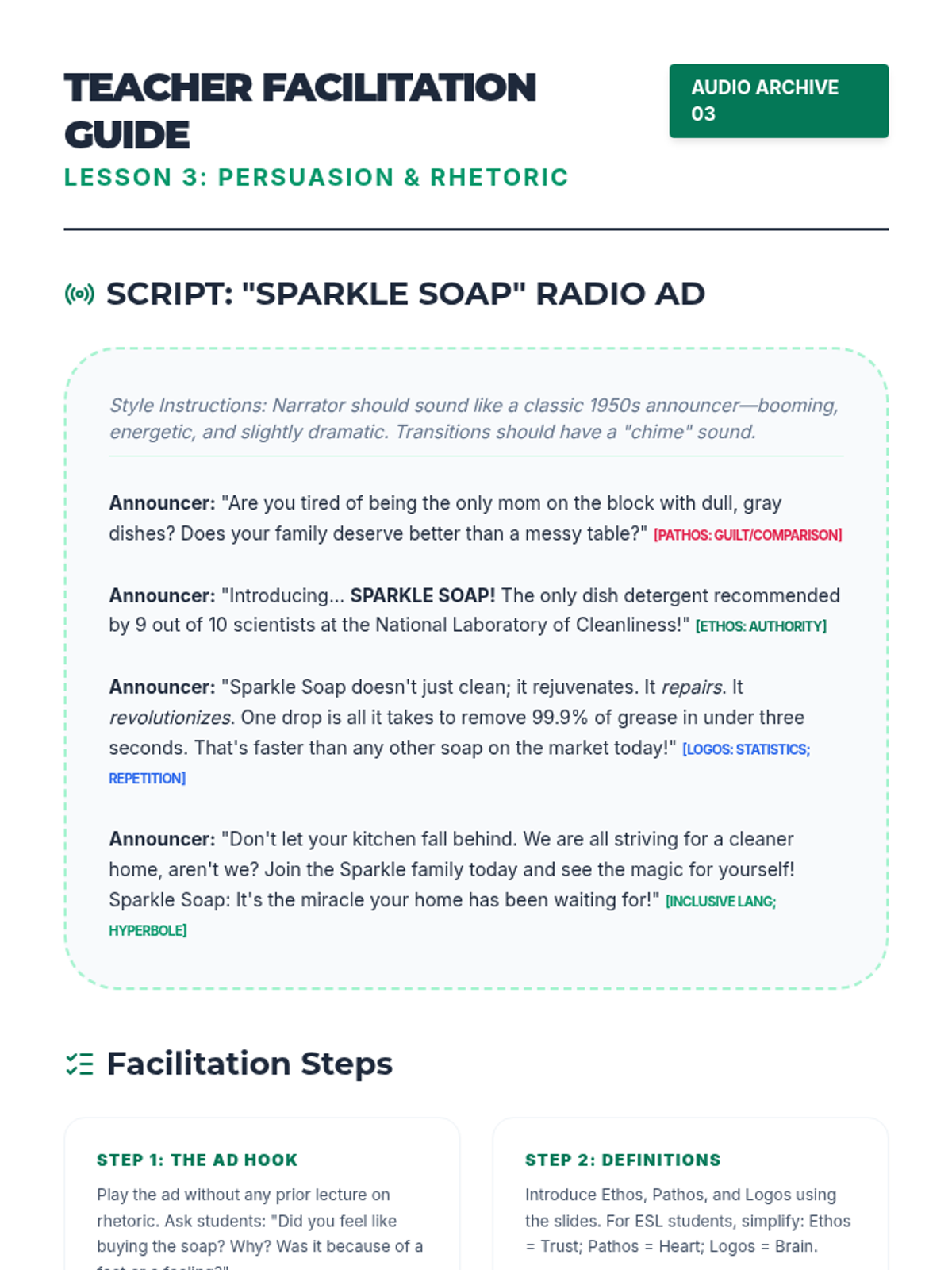
A teacher guide for Lesson 3 featuring a detailed radio advertisement script ("Sparkle Soap") annotated with rhetorical devices, facilitation steps, and common misconceptions for teaching rhetoric to ESL students.
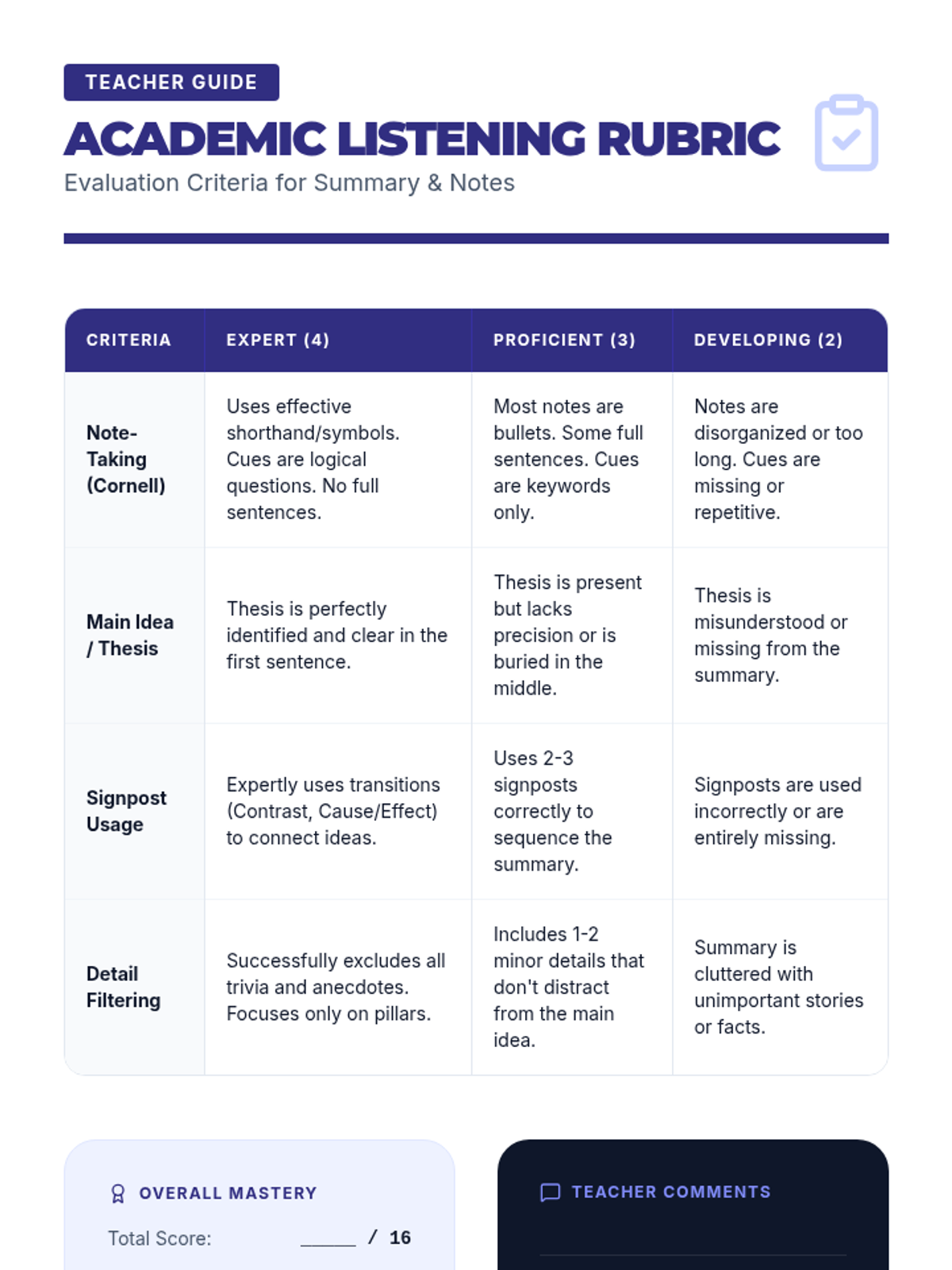
A comprehensive grading rubric for teacher use, evaluating note-taking quality, thesis identification, signpost usage, and detail filtering for Lesson 5.
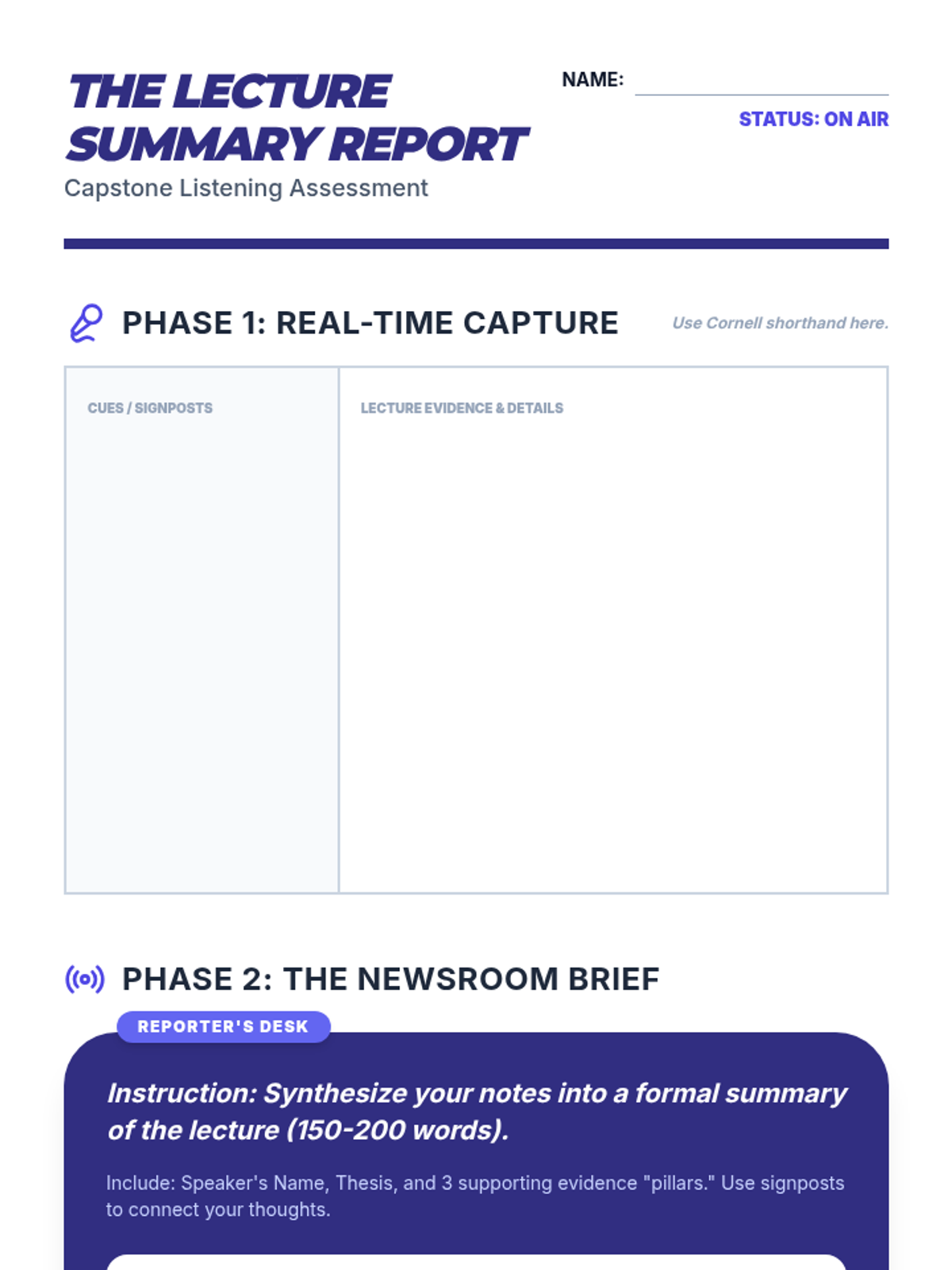
The final assessment worksheet for Lesson 5, where students take notes on a capstone lecture and produce a formal written summary.
The final instructional slide deck for Lesson 5, focusing on summarizing techniques and framing the student as a 'News Reporter' delivering a brief.
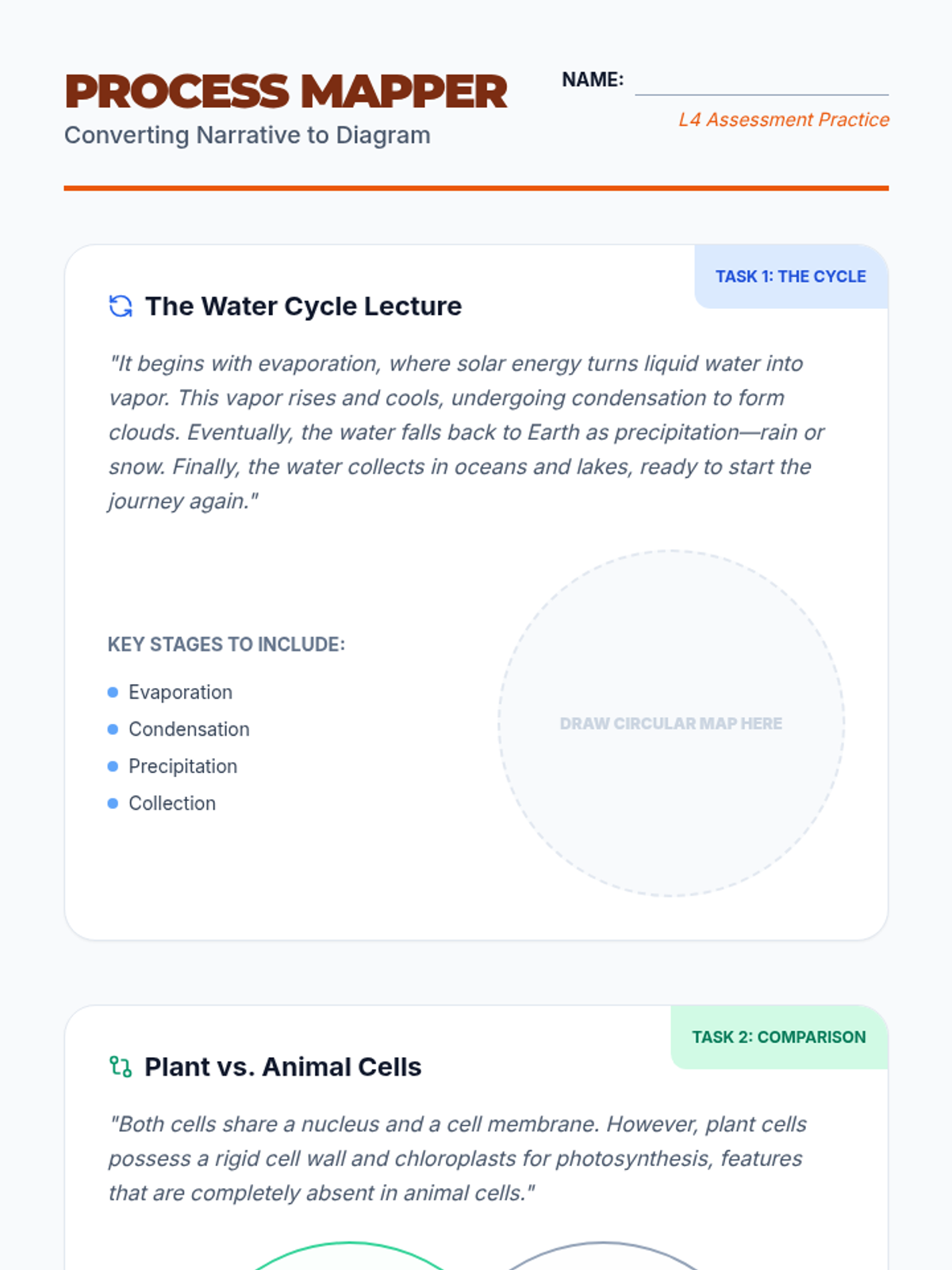
A worksheet for Lesson 4 where students convert short auditory narratives (Water Cycle and Cell Comparison) into appropriate graphic organizers.
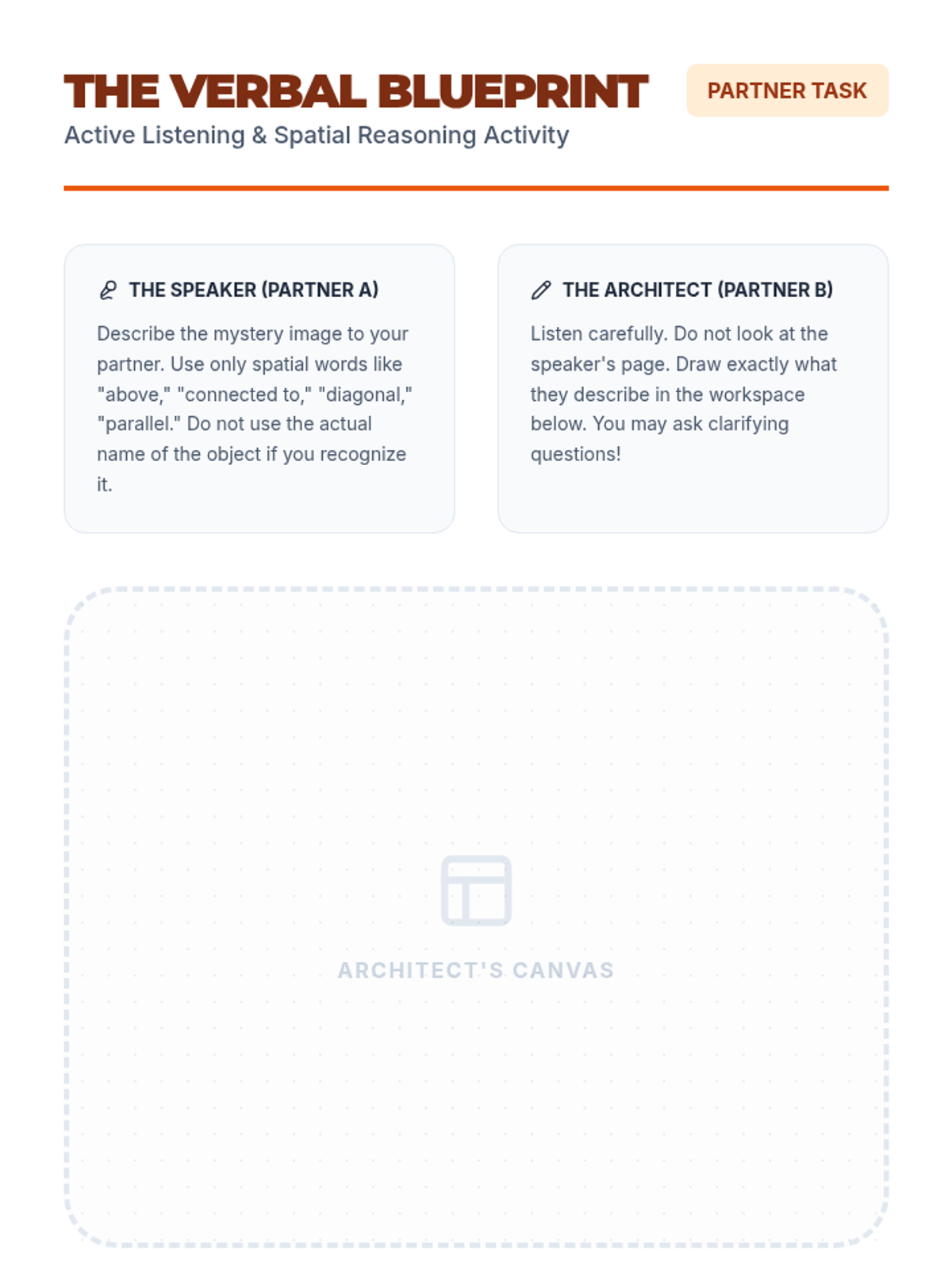
A partner-based activity worksheet for Lesson 4 where students practice describing and drawing complex geometric shapes through purely verbal instructions.