Essential grammar structures, high-frequency vocabulary, and foundational literacy skills. Equips learners with basic speaking and listening abilities for everyday interactions and introductory text comprehension.
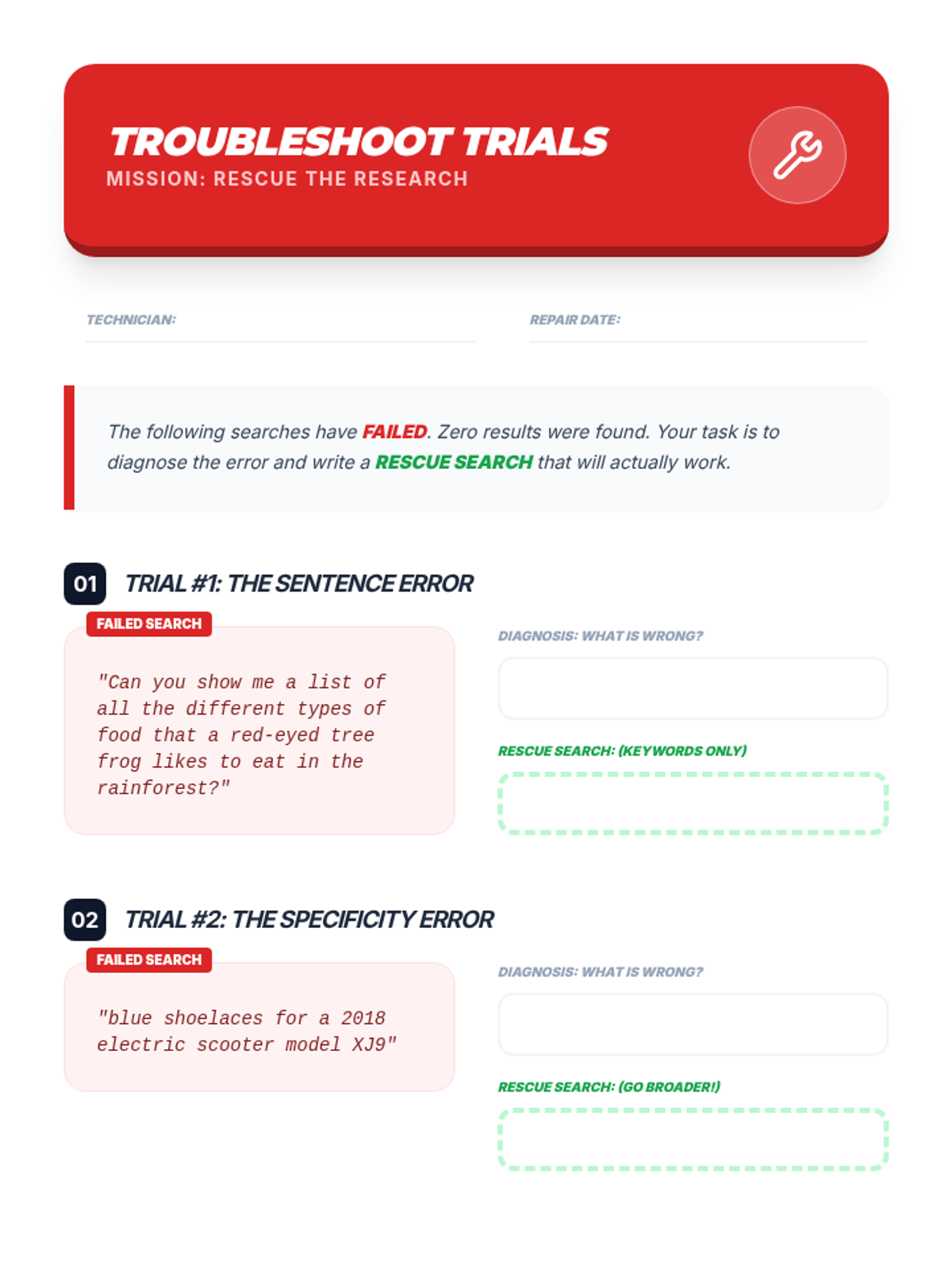
Students analyze search failures and practice iterative strategies to refine their inquiries when initial attempts don't yield the desired results.
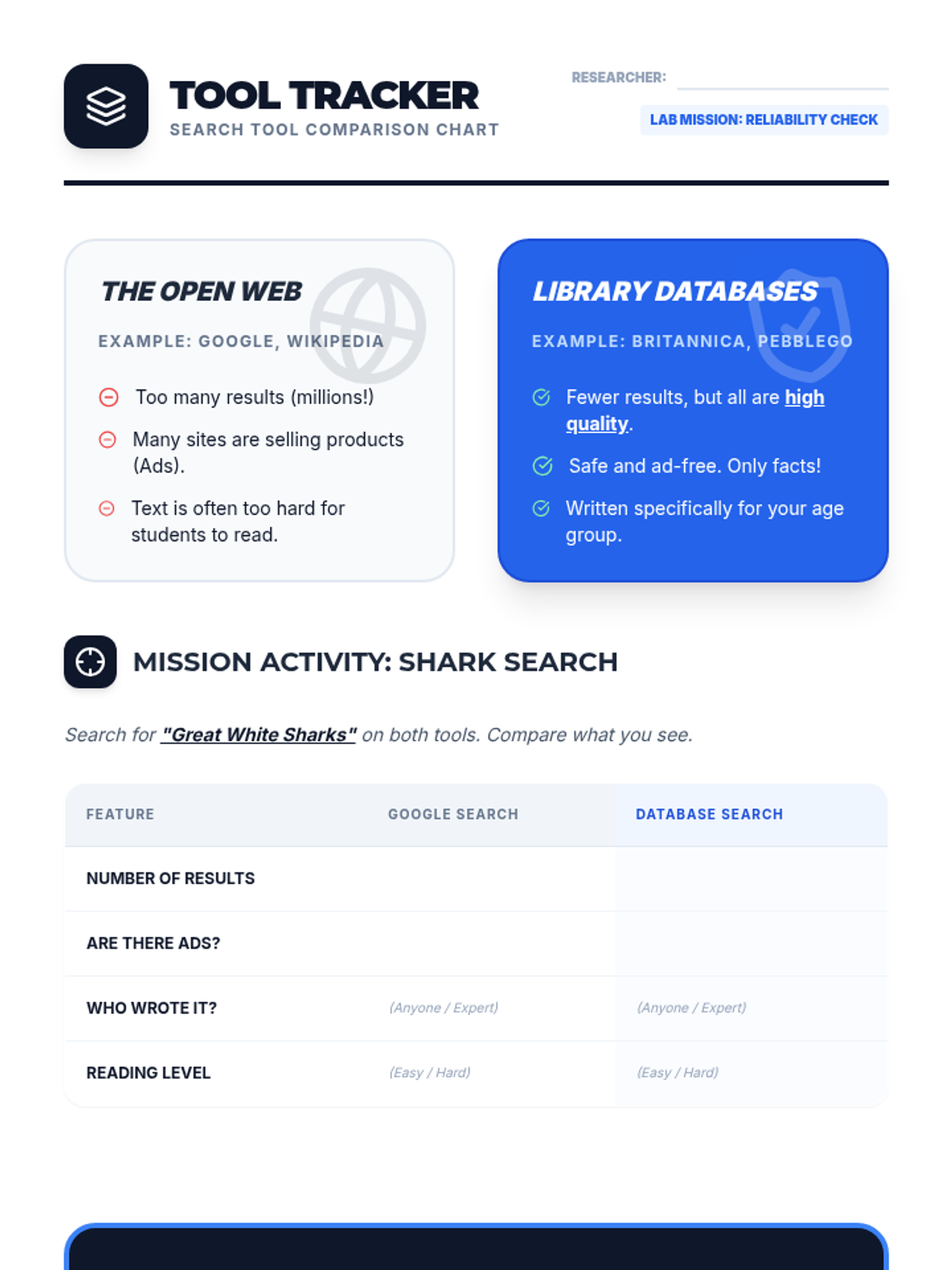
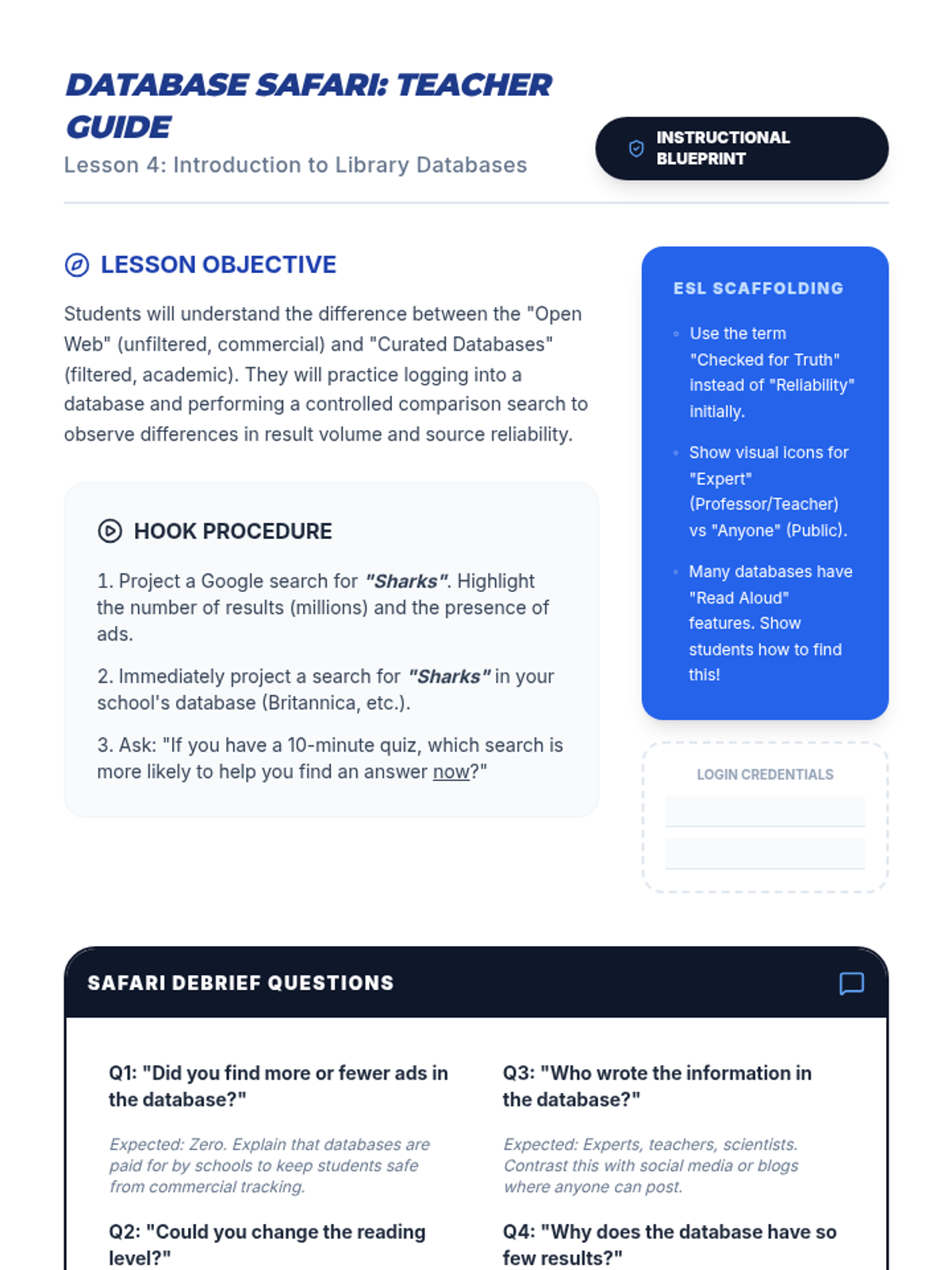
Students transition from open web searches to curated databases, comparing the reliability and organization of professional search tools.
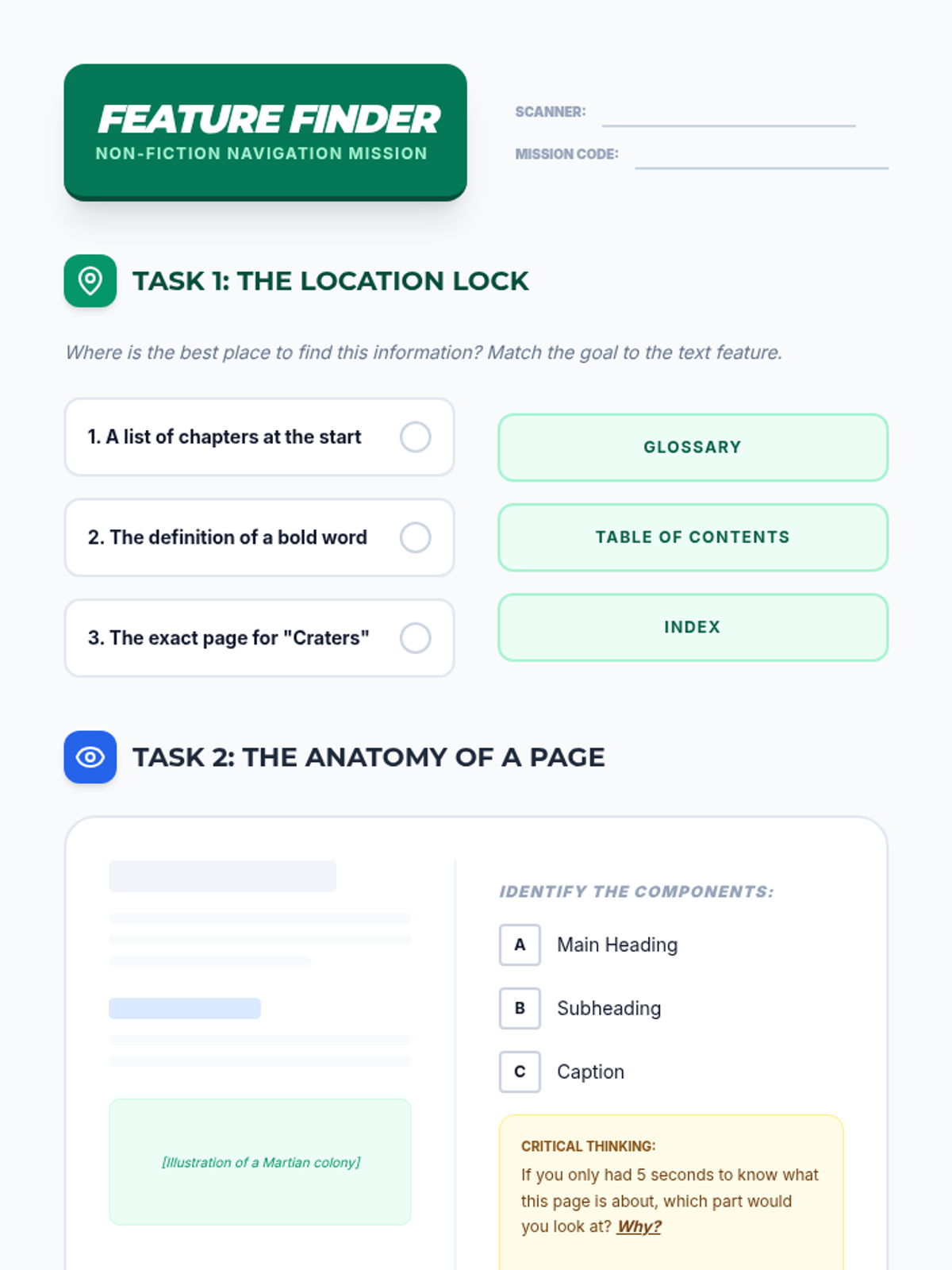
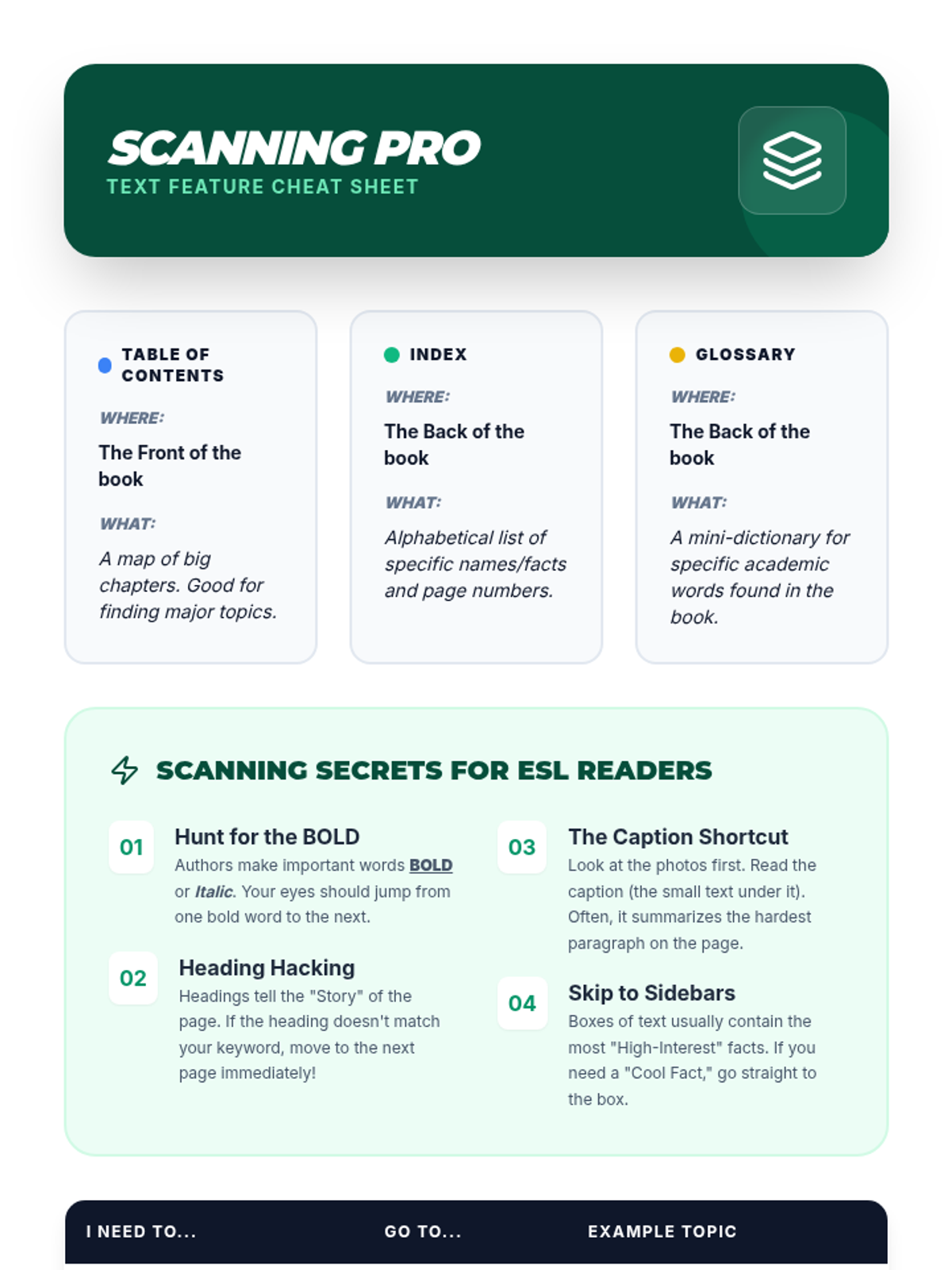
Students practice using text features like indices, headings, and sidebars to locate information quickly through skimming and scanning techniques.
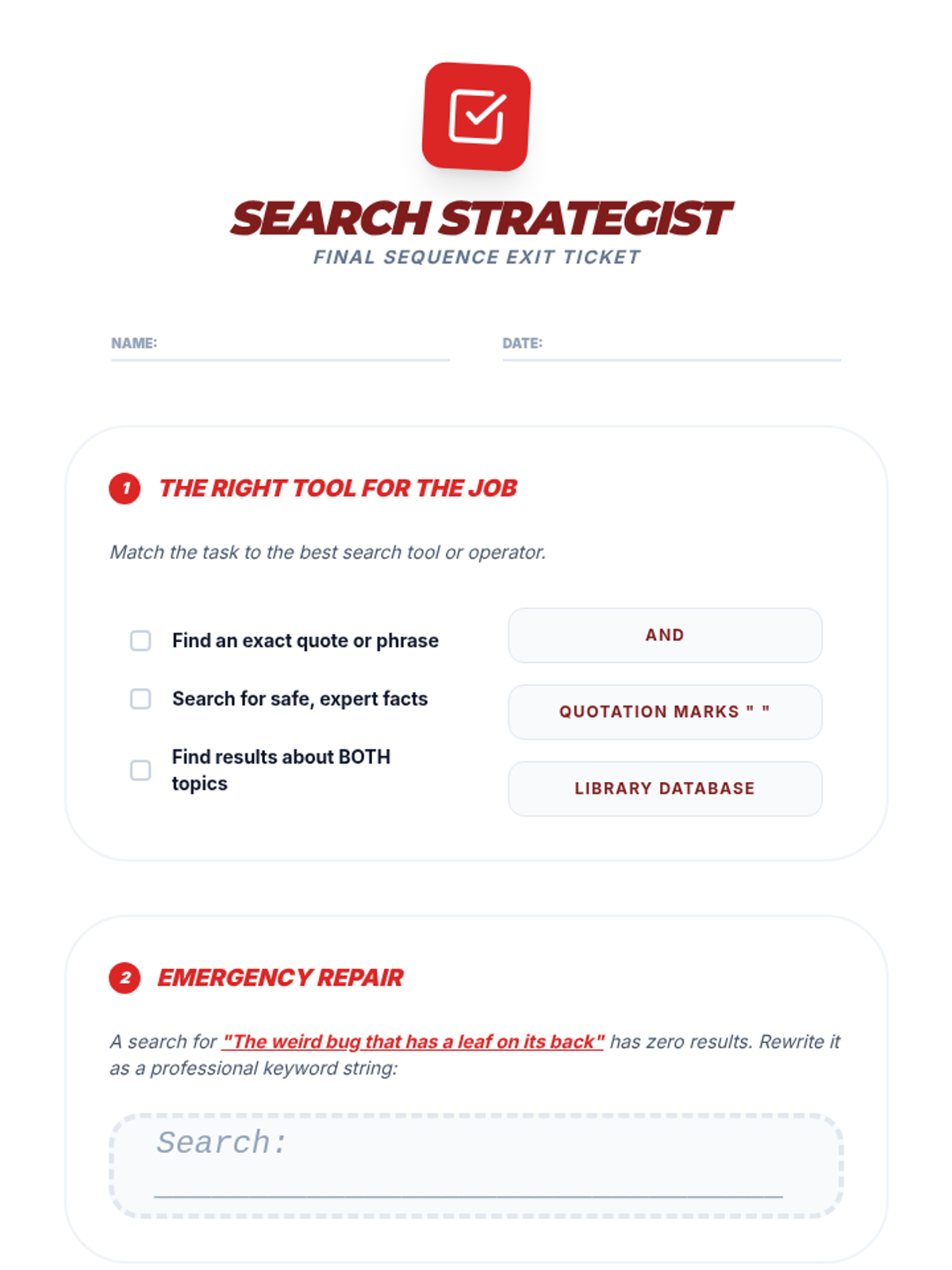
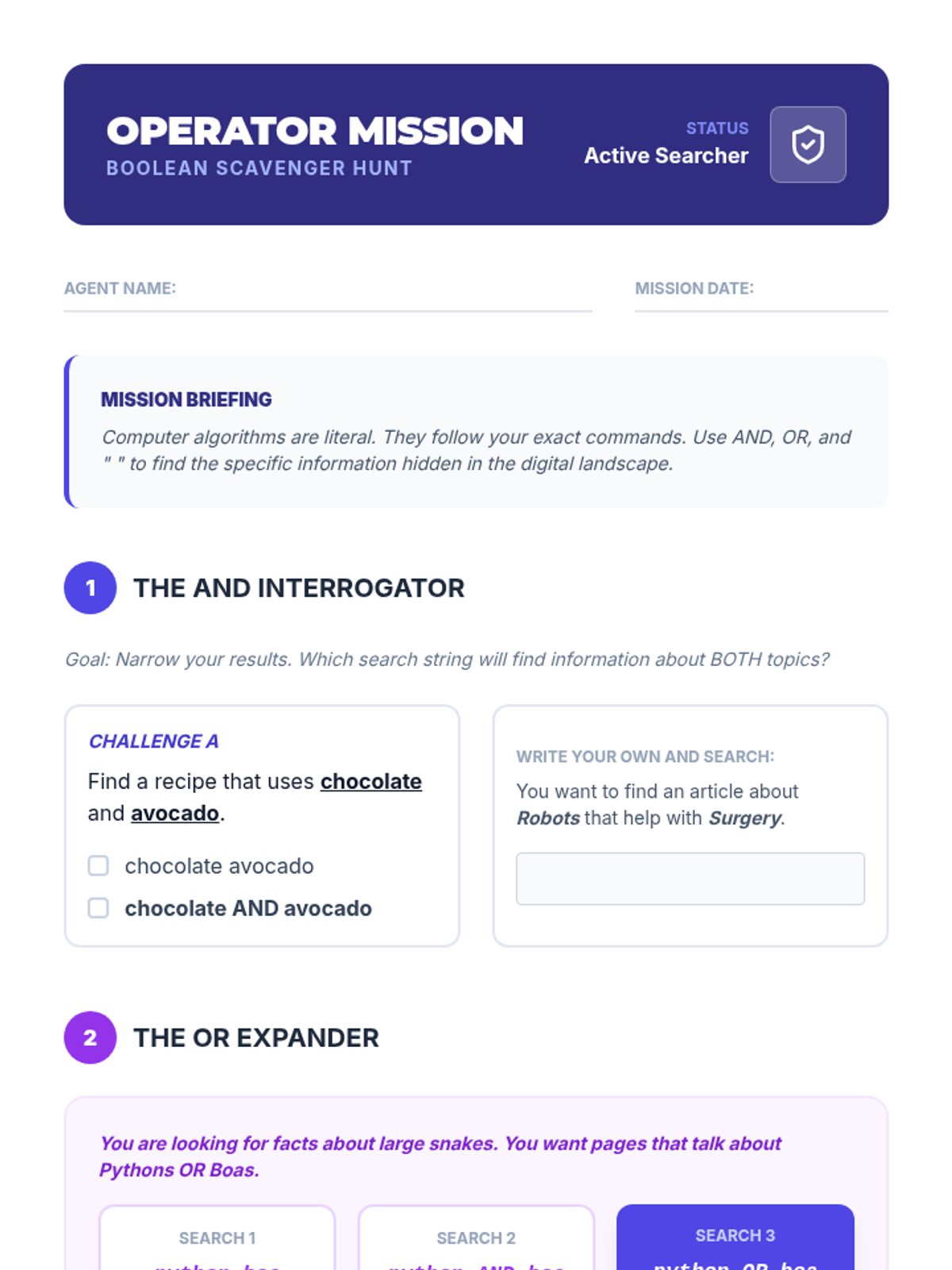
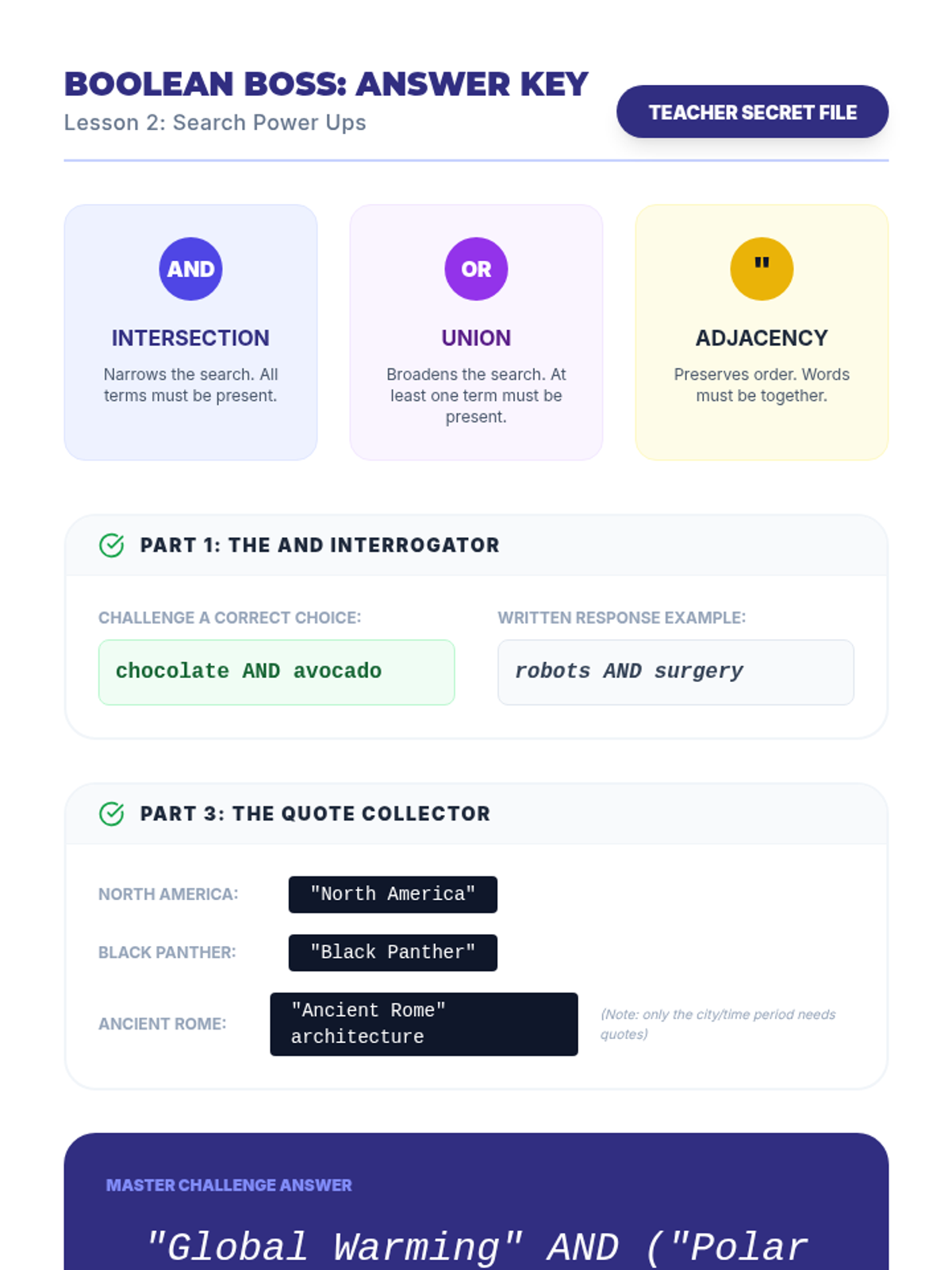
Learners use Boolean operators like AND, OR, and quotation marks to narrow or broaden search results in a digital scavenger hunt.
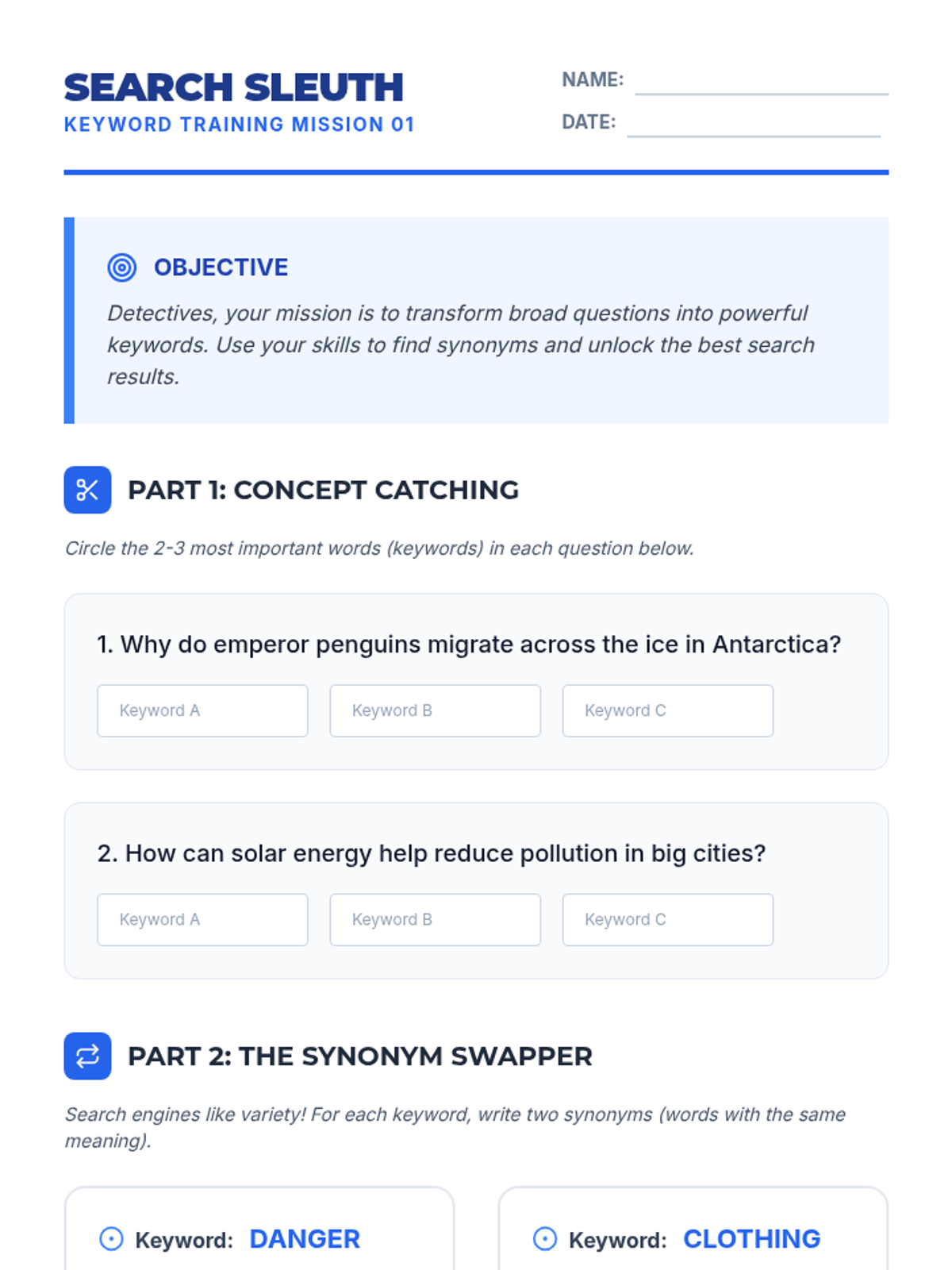
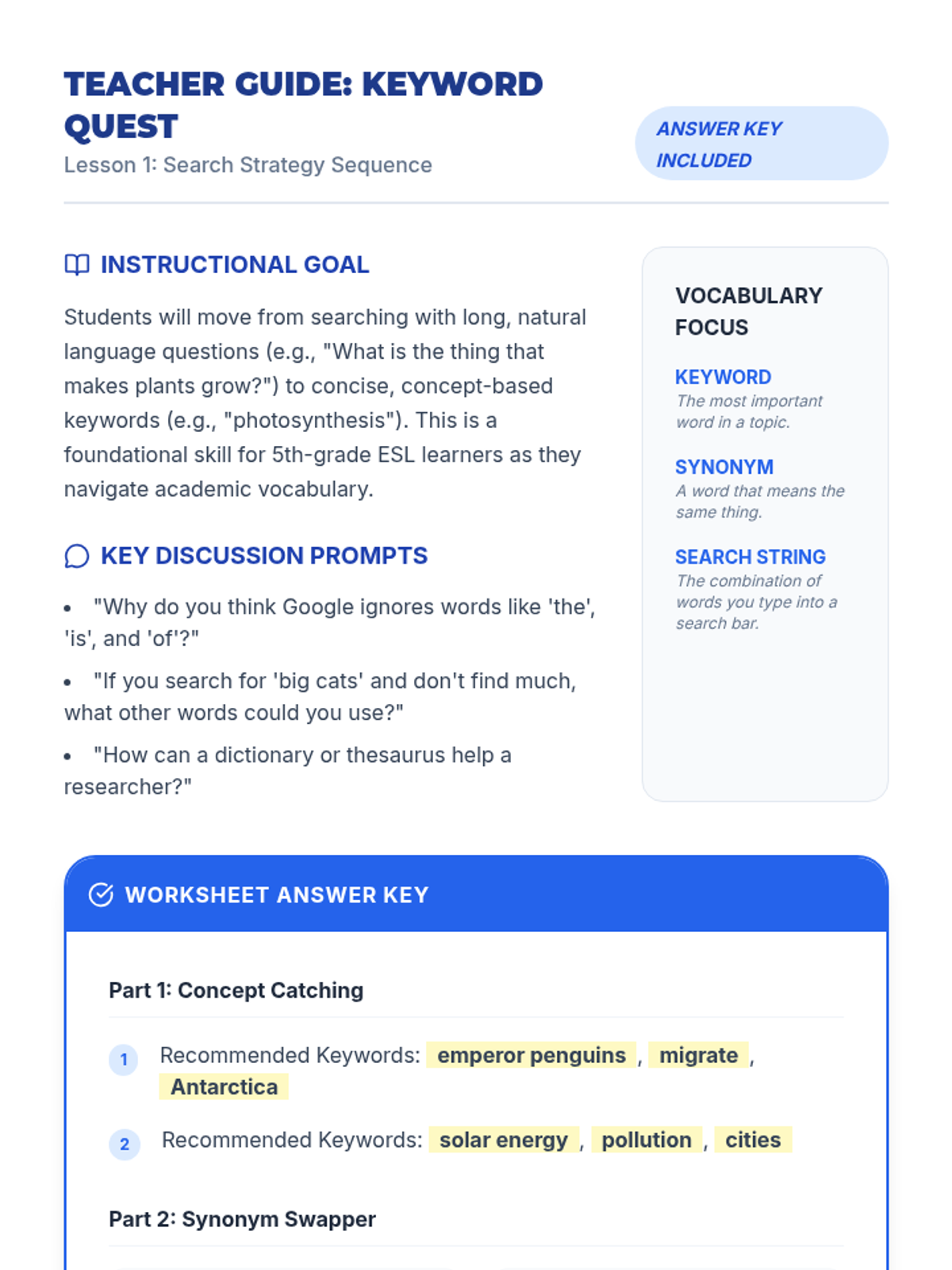
Students learn to break down research questions into core concepts and generate synonyms, transforming natural language into effective search strings.
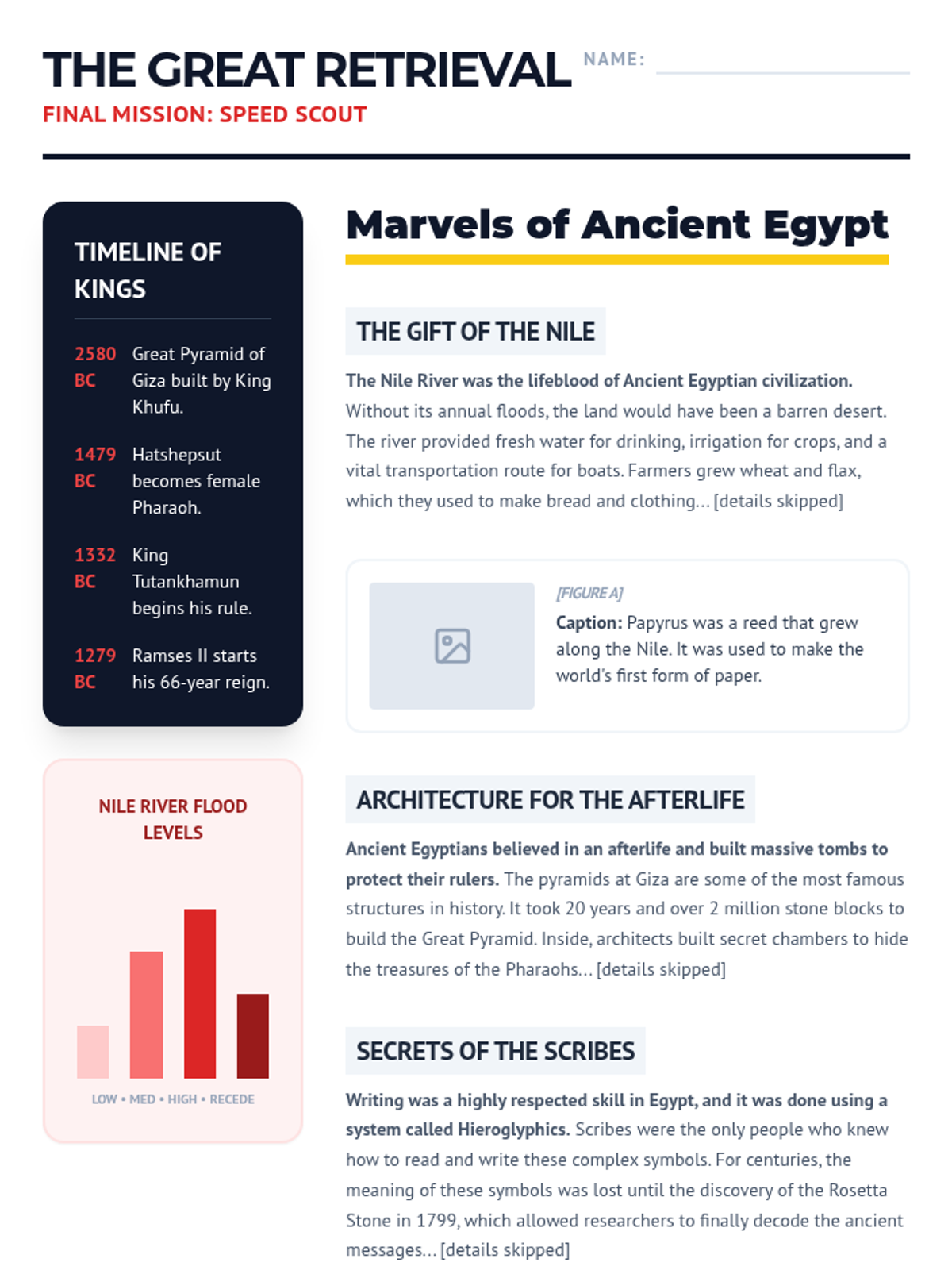
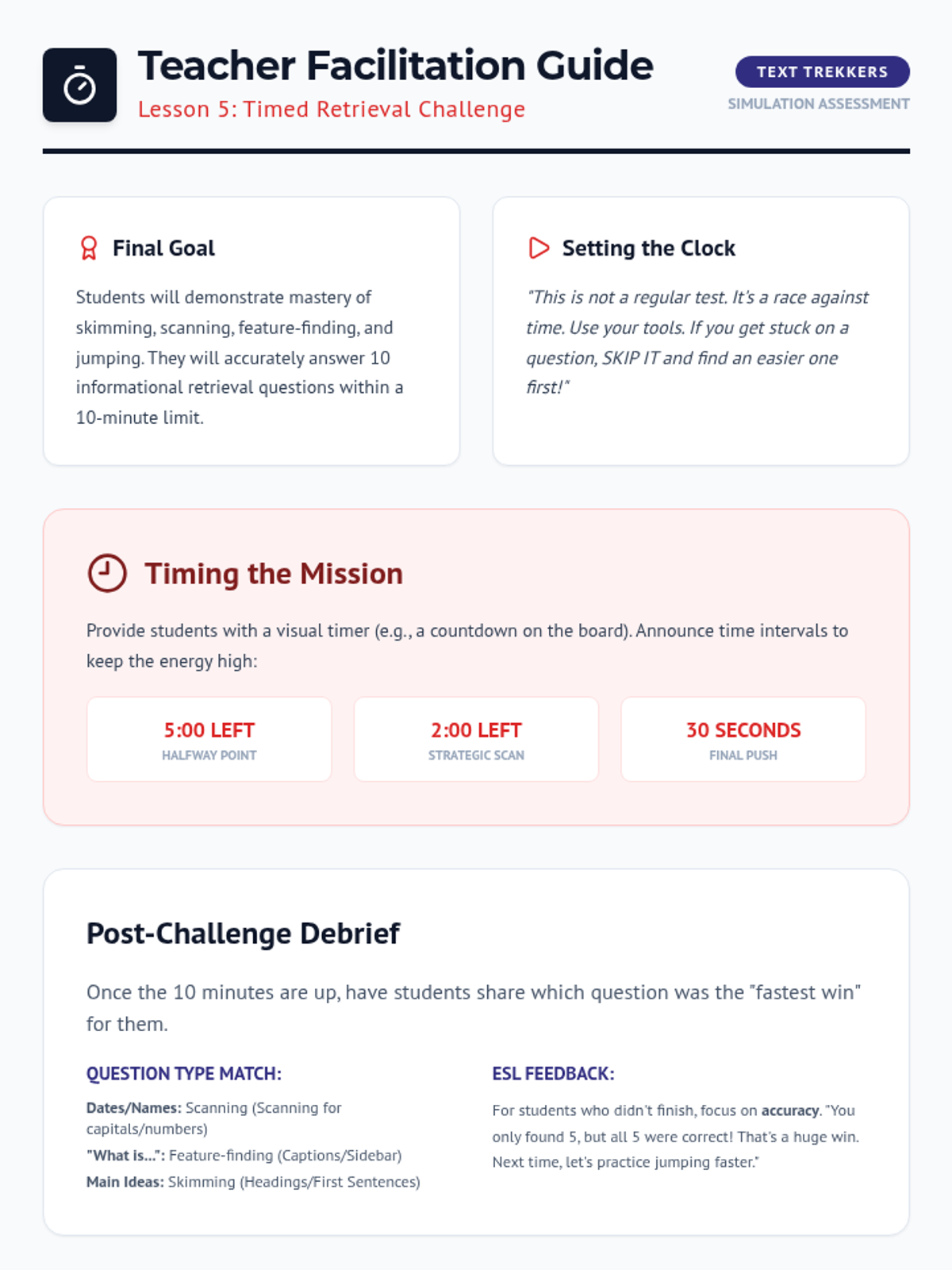
A culminating timed challenge where students apply all strategies to solve information retrieval tasks accurately and quickly.
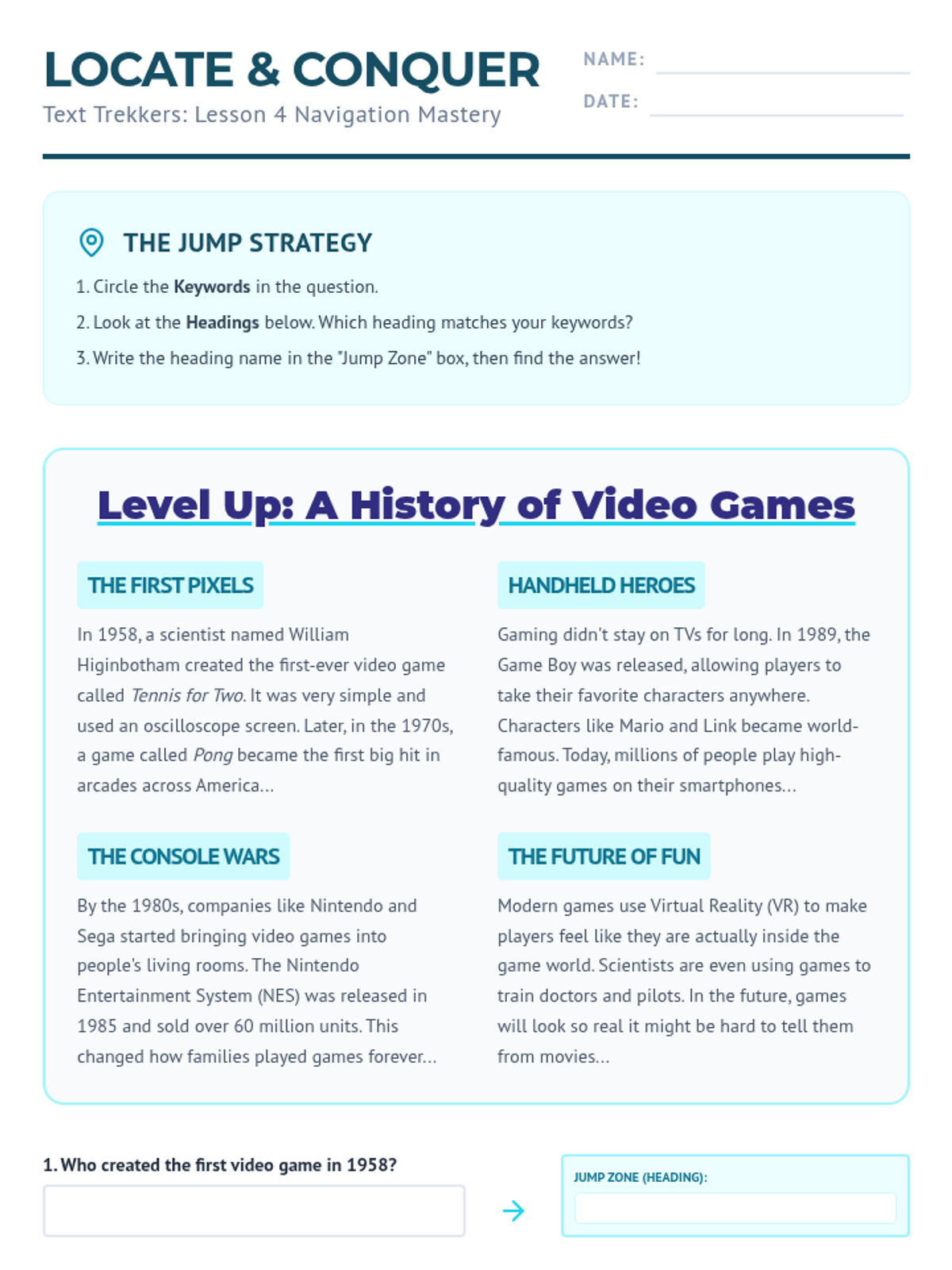
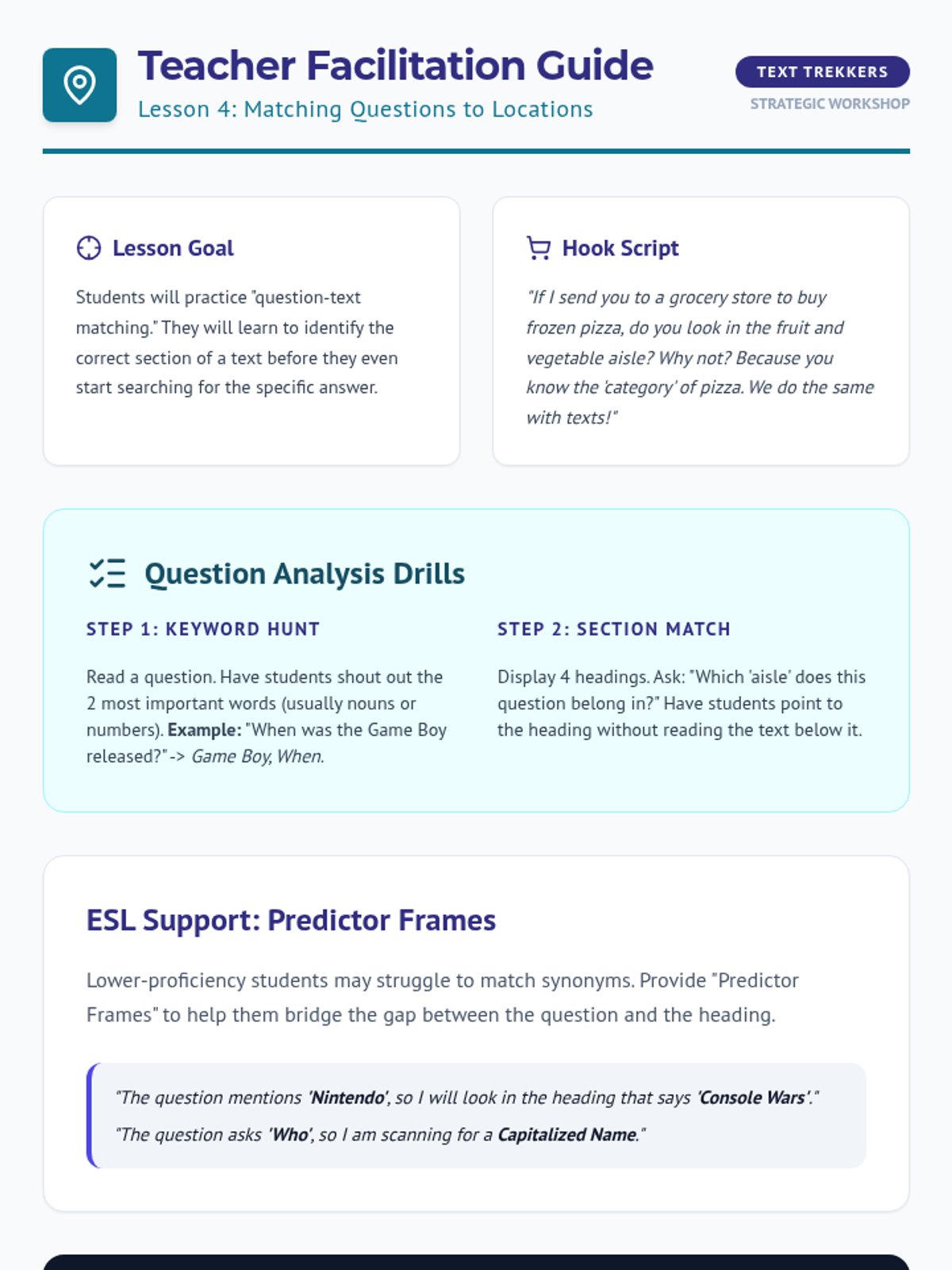
Students learn to predict where an answer is located based on the question type and structure of the text.
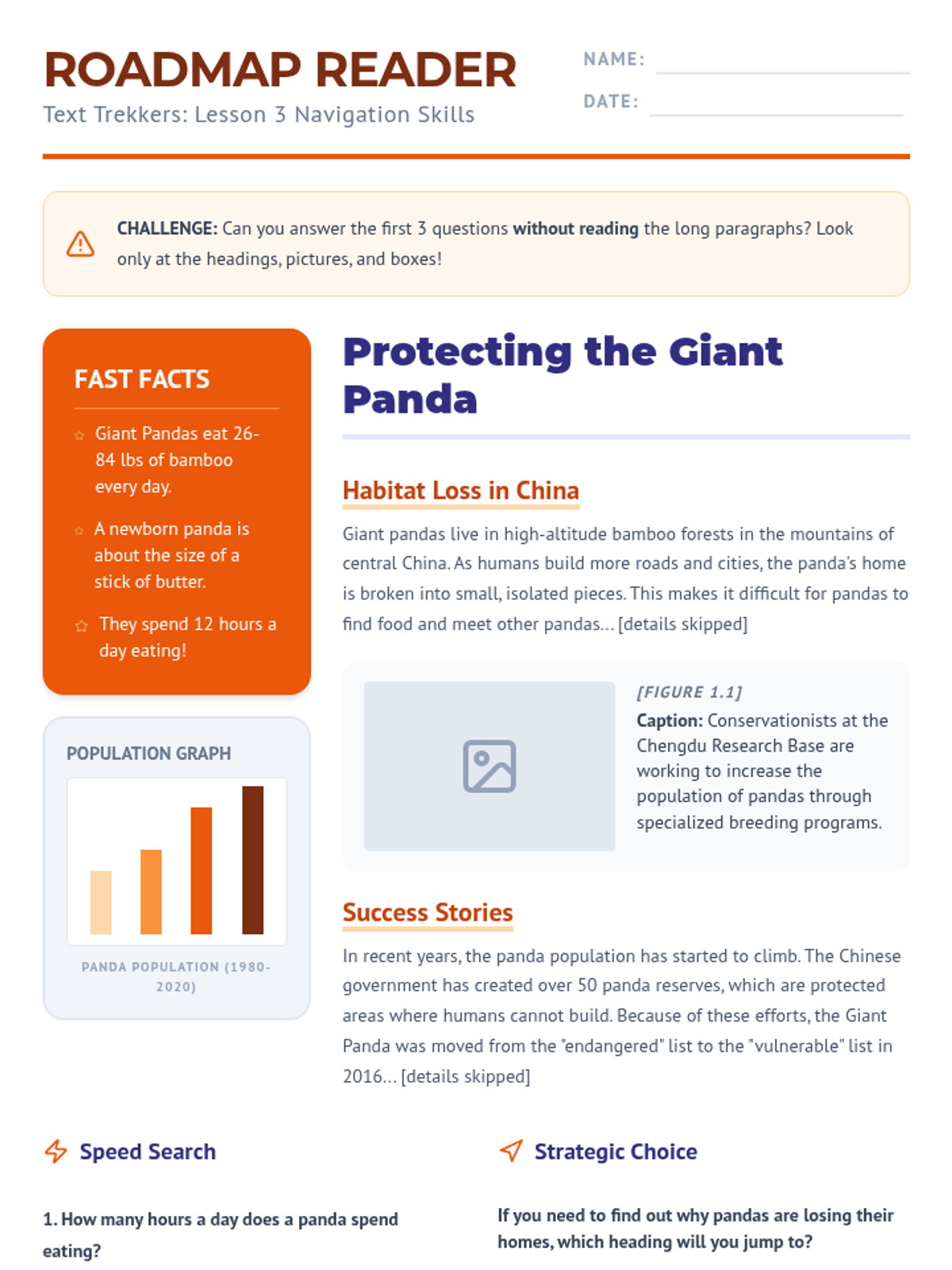
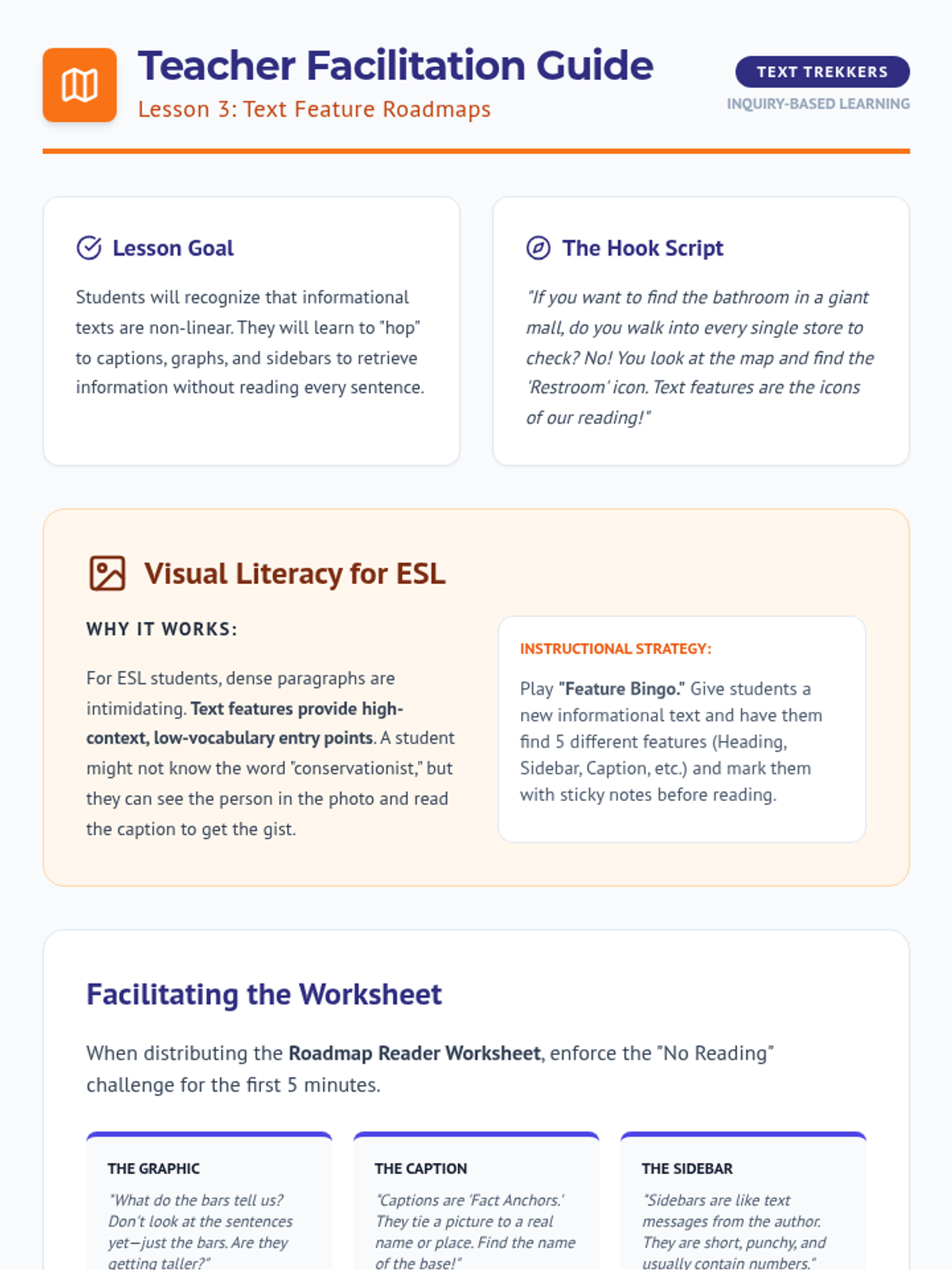
Students analyze how text features like captions, graphs, and bold words serve as navigation tools to find information rapidly.
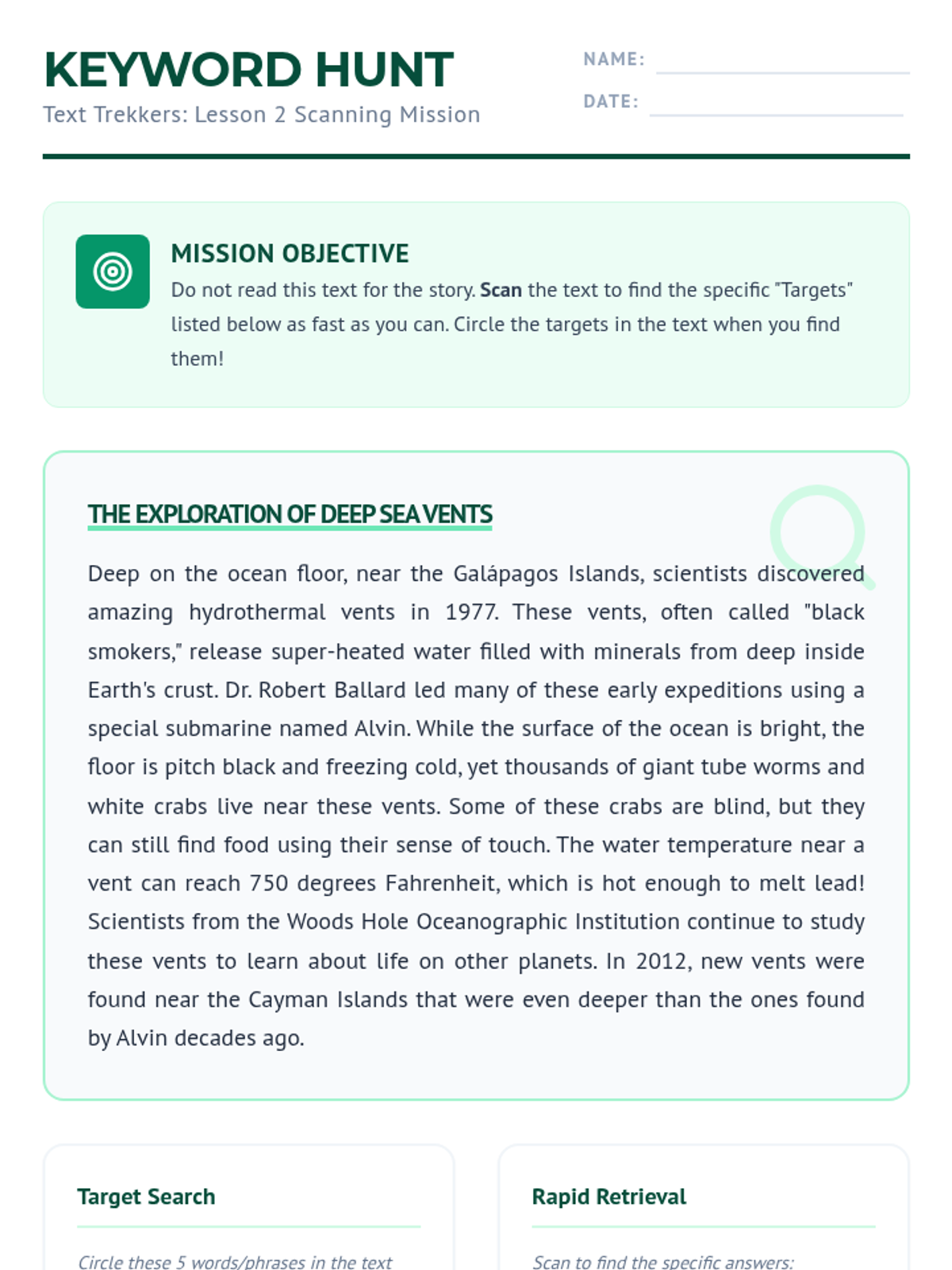
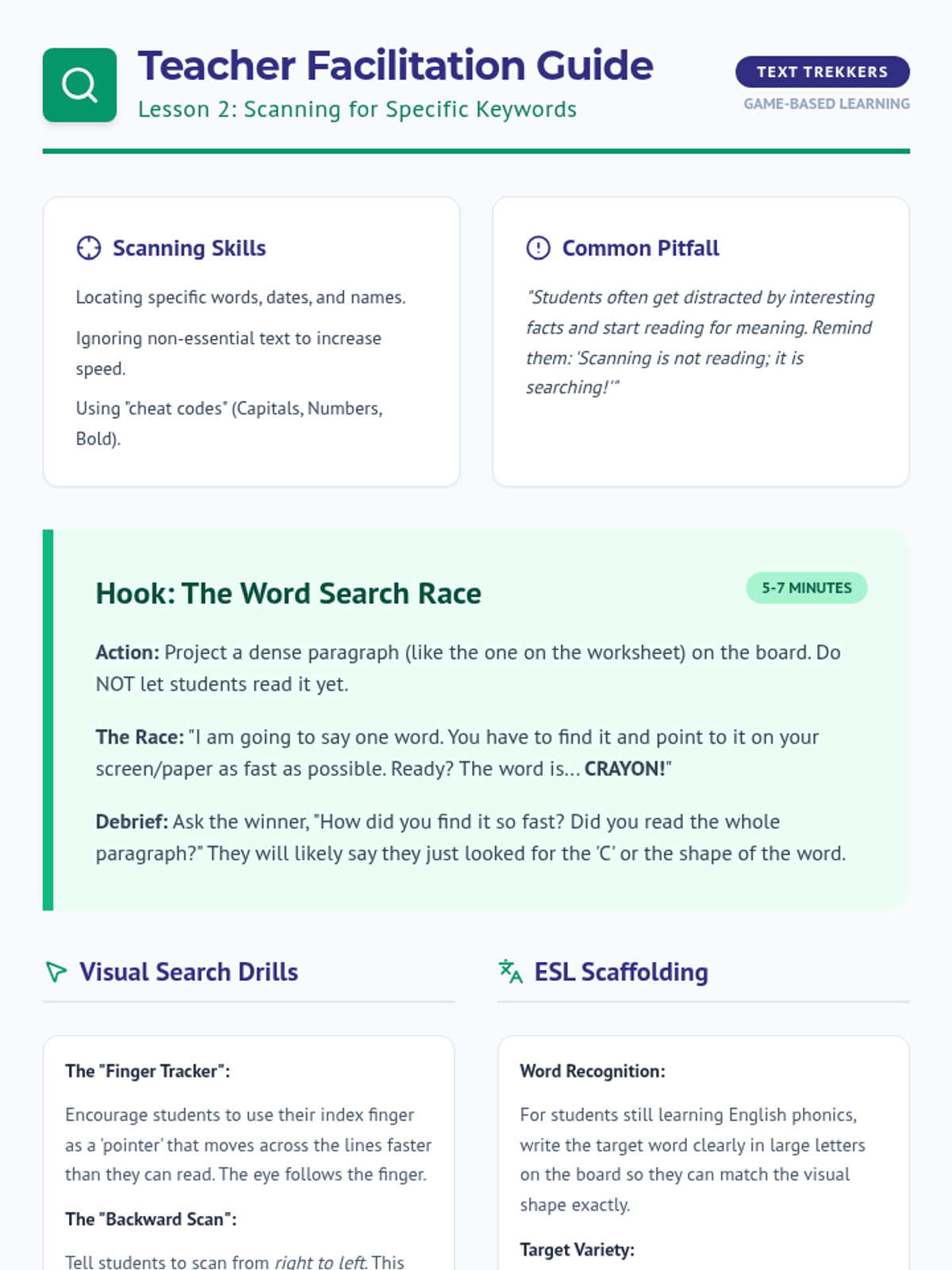
Students practice scanning—moving eyes quickly over text to find specific words, names, or numbers using visual search techniques.
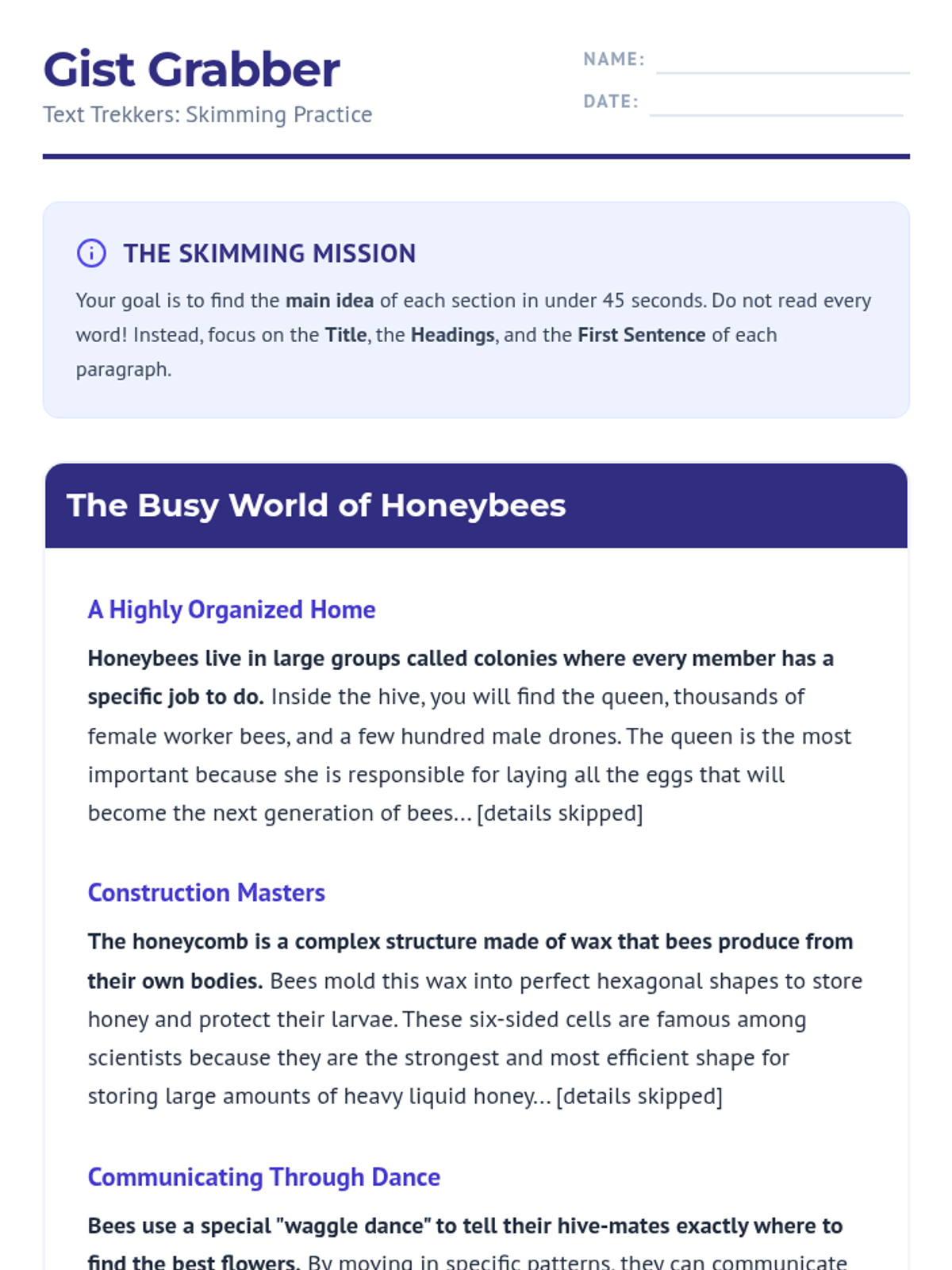
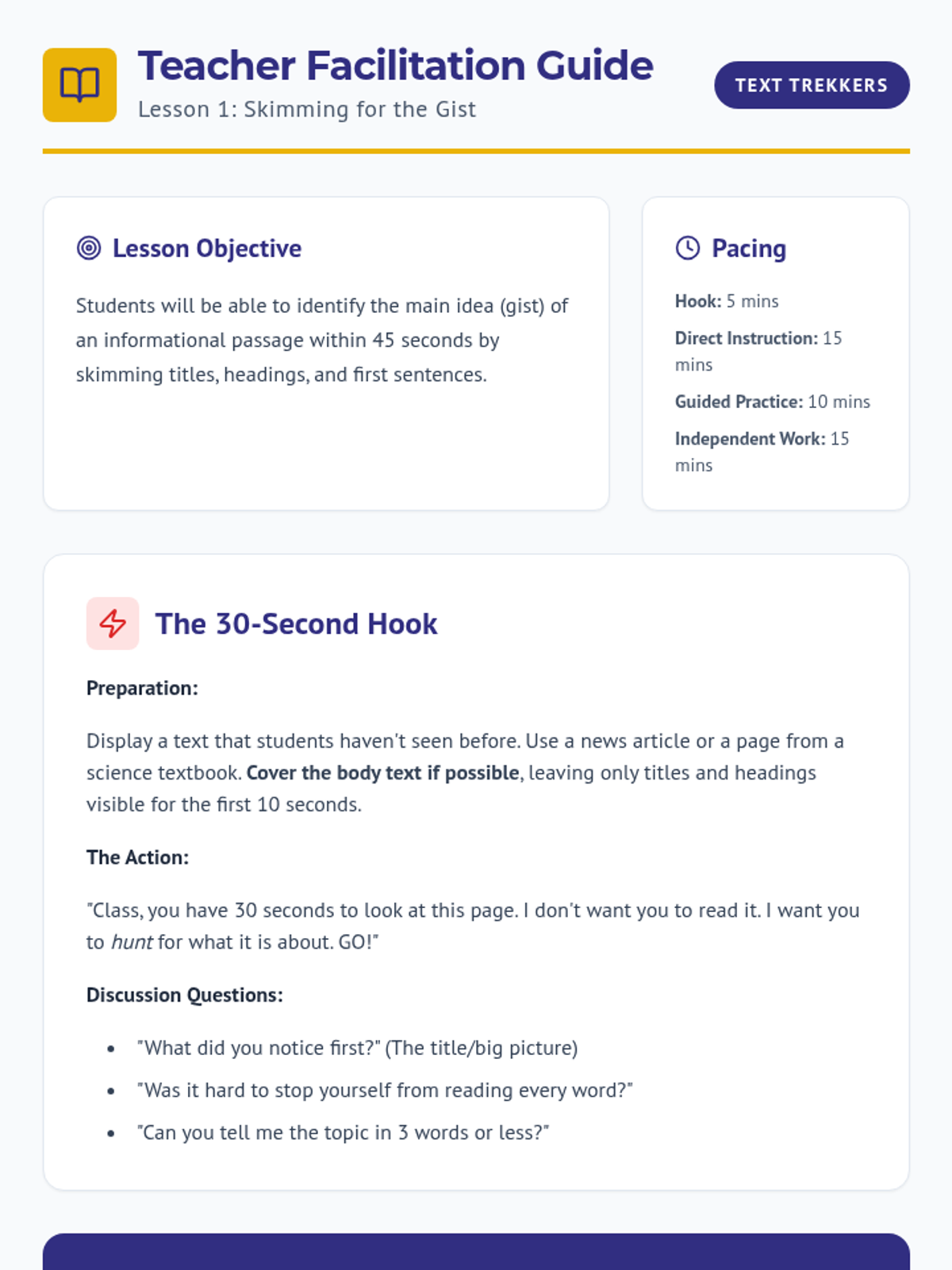
Students learn the technique of skimming to understand the main idea of a text quickly by focusing on titles, headings, and first sentences.
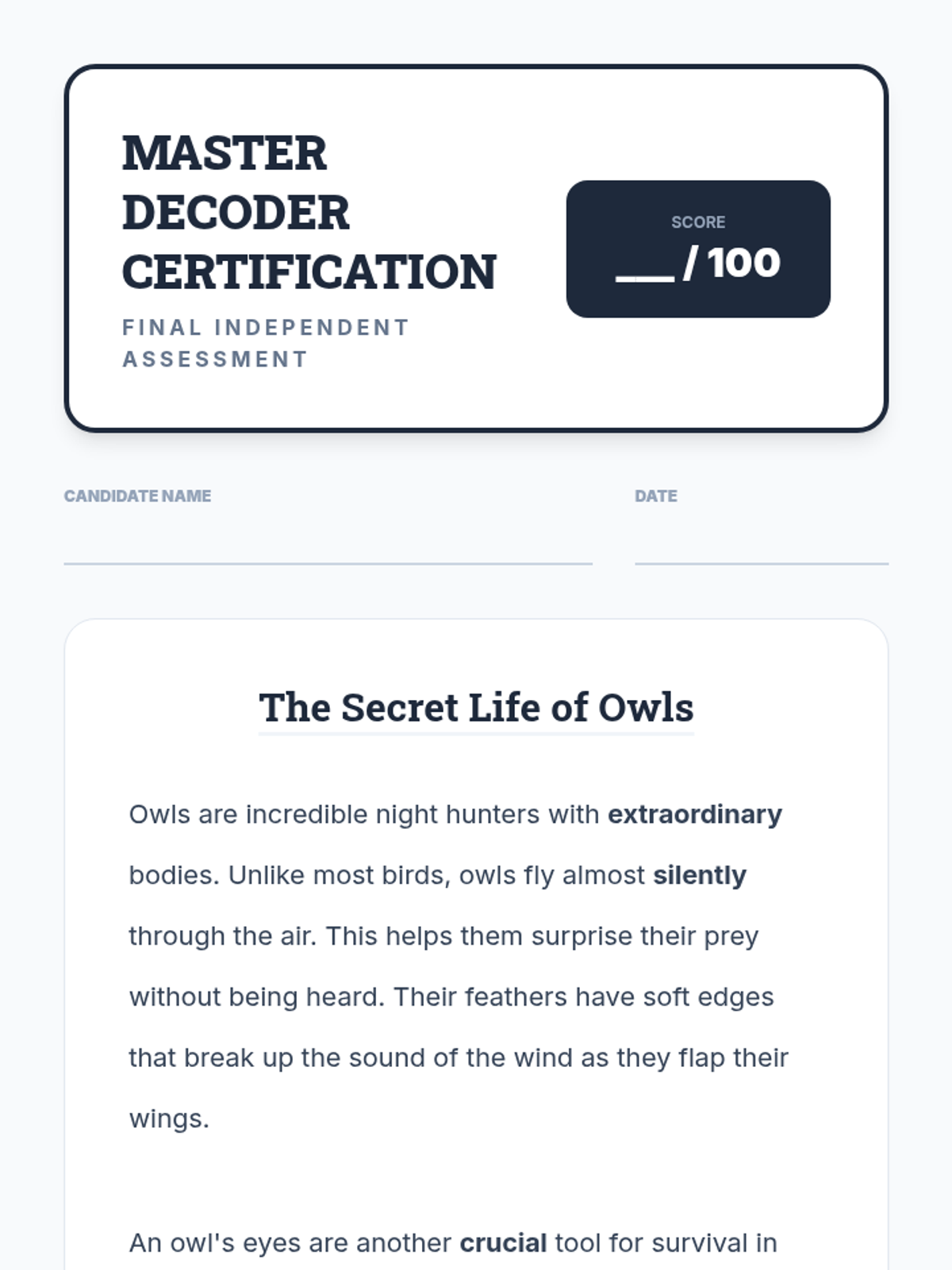
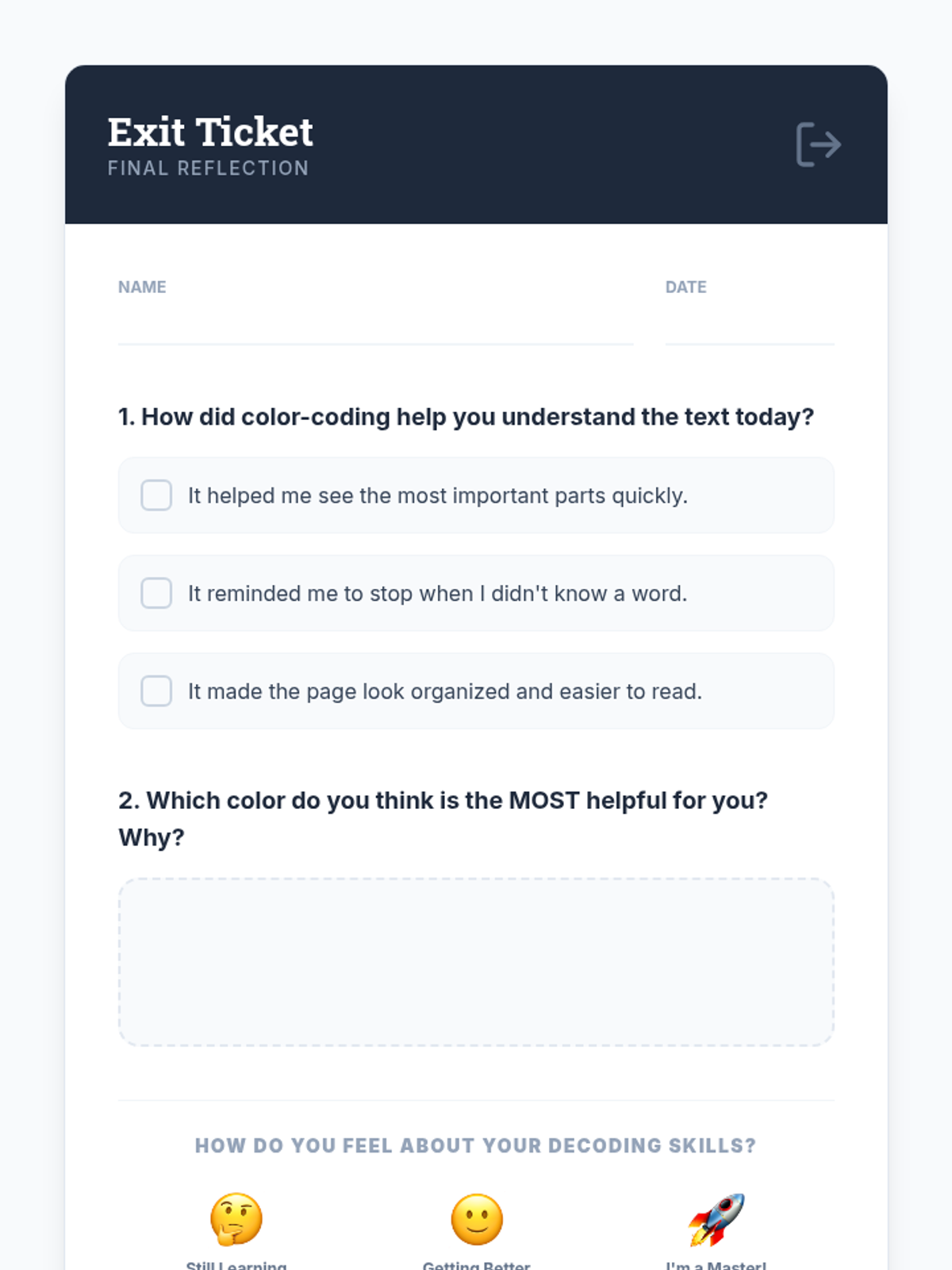
The final challenge where students independently apply the tri-color system to a new text and justify their choices through peer review.
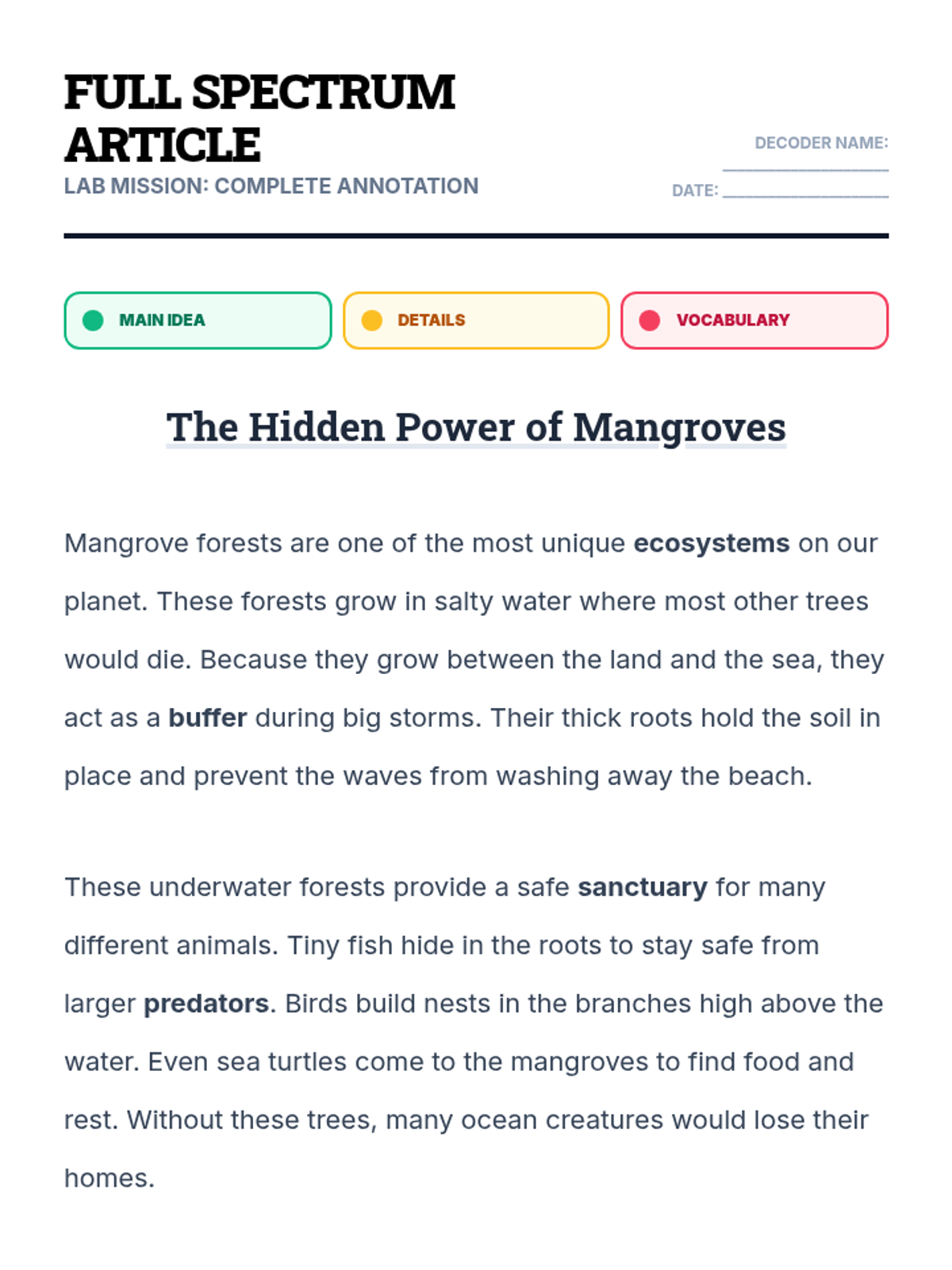
A synthesis lesson where students integrate all three colors on a full-length informational article through guided modeling.
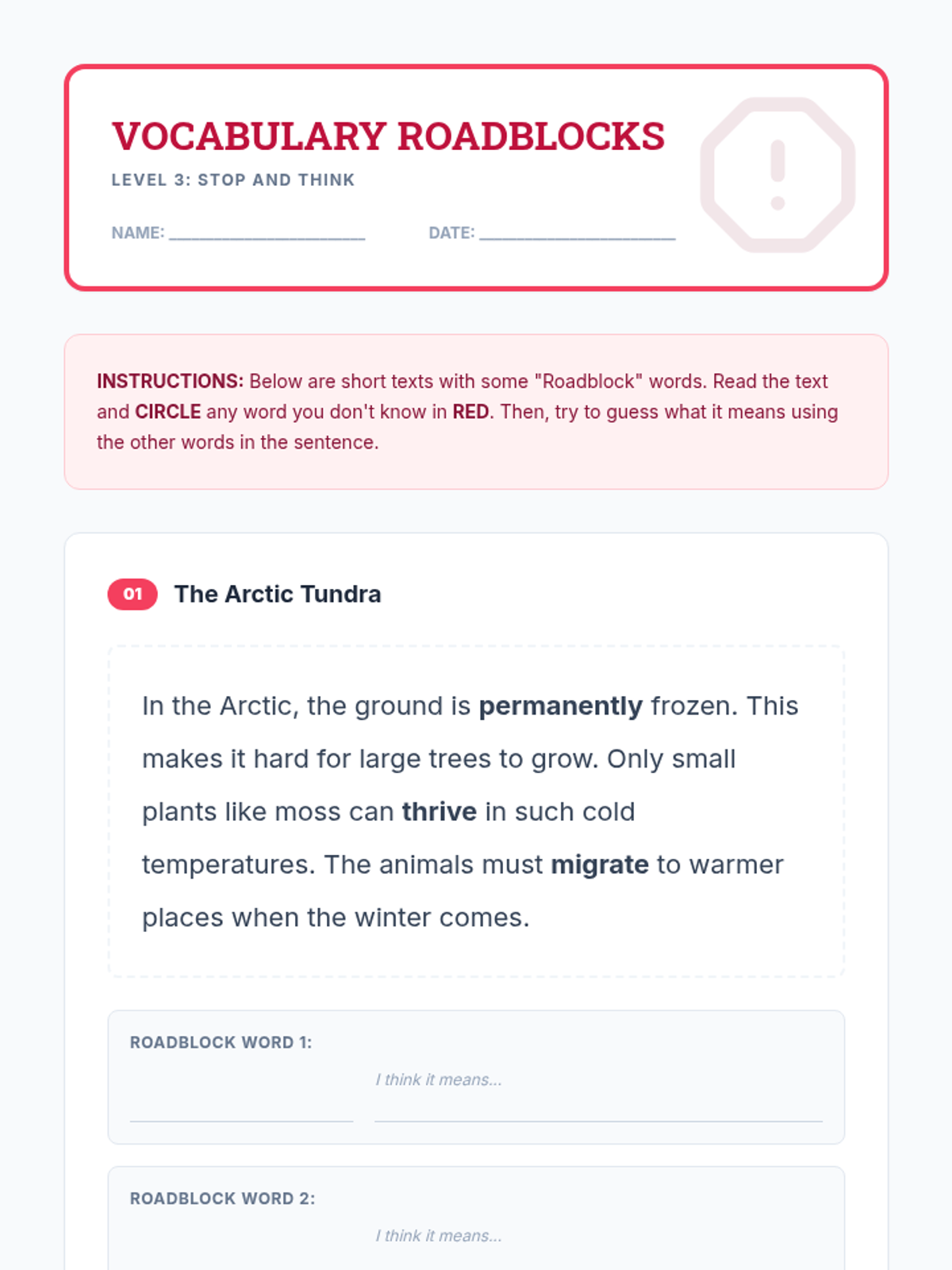
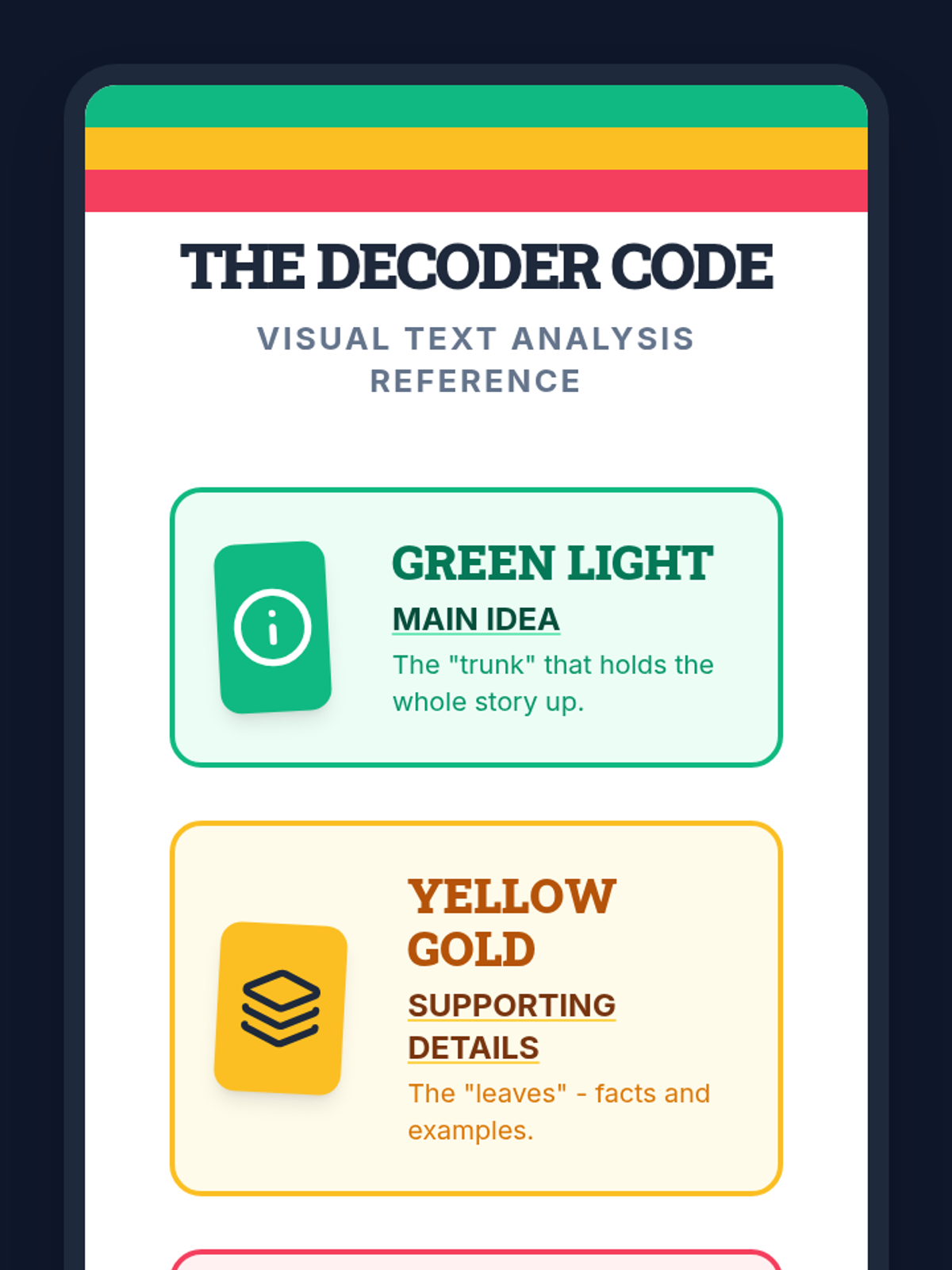
Students add a third layer of annotation using red or pink to identify 'roadblock' words that hinder their understanding.
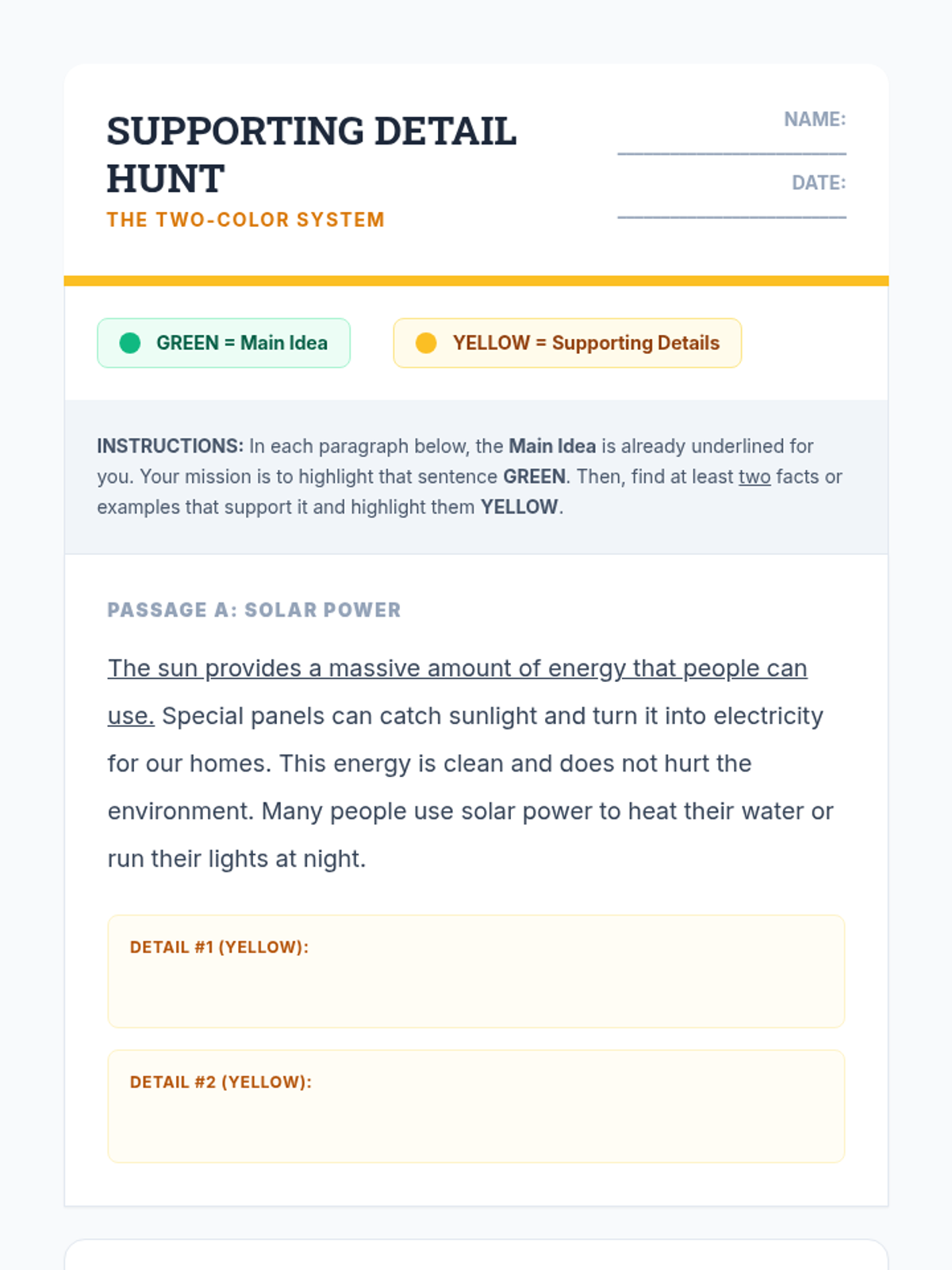
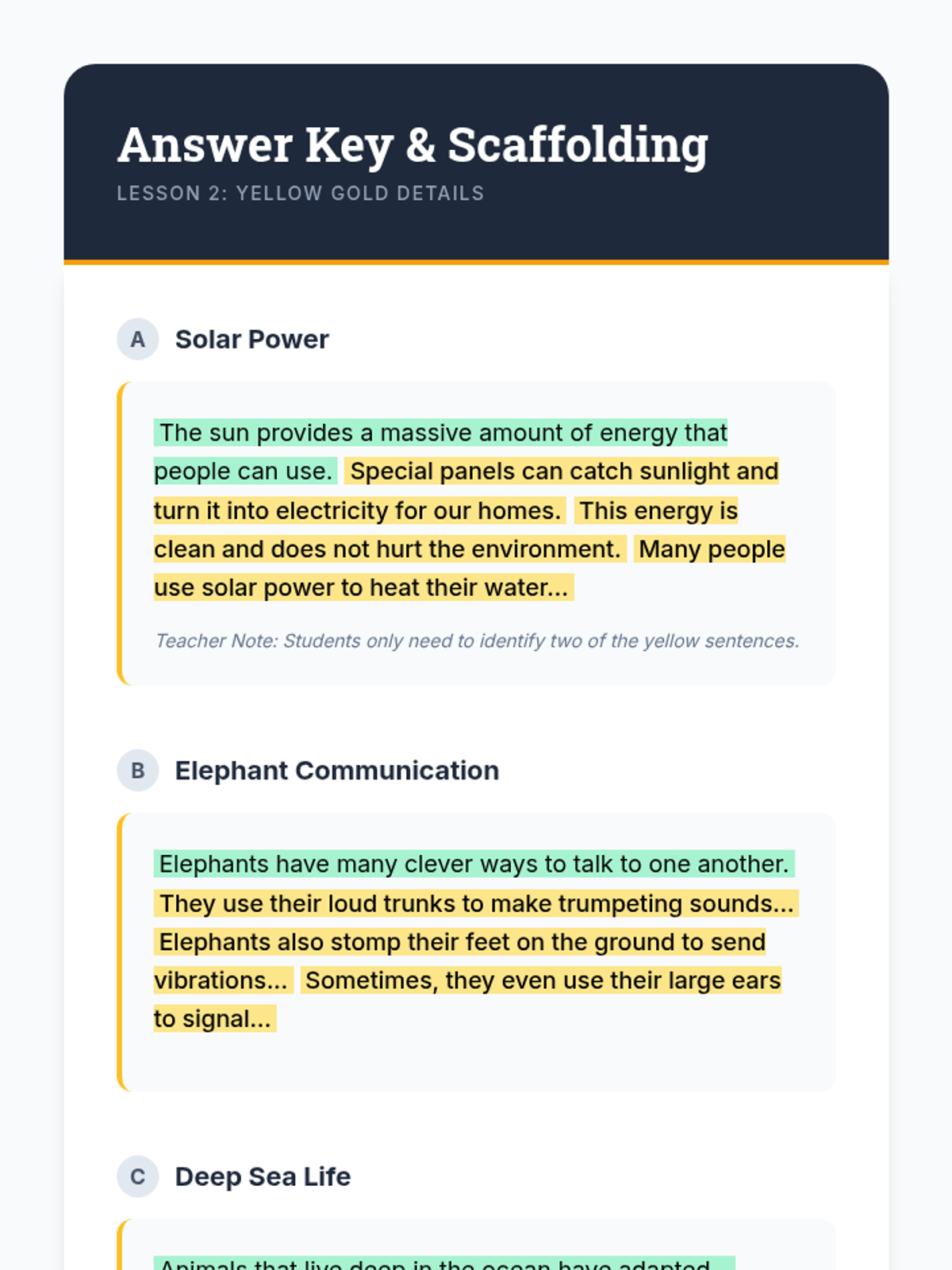
Building on the main idea, students learn to use yellow to highlight facts and examples that support the central message.
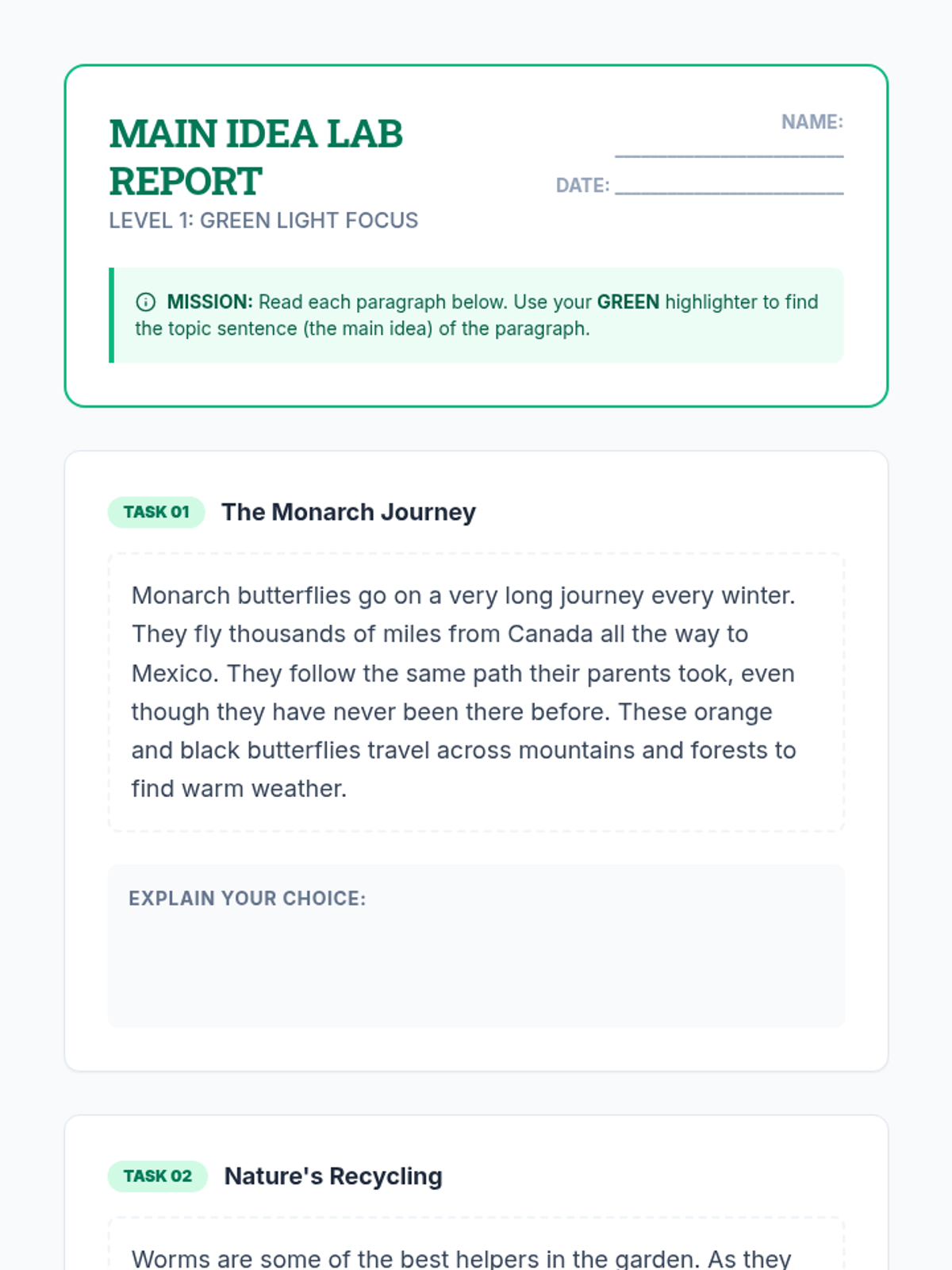
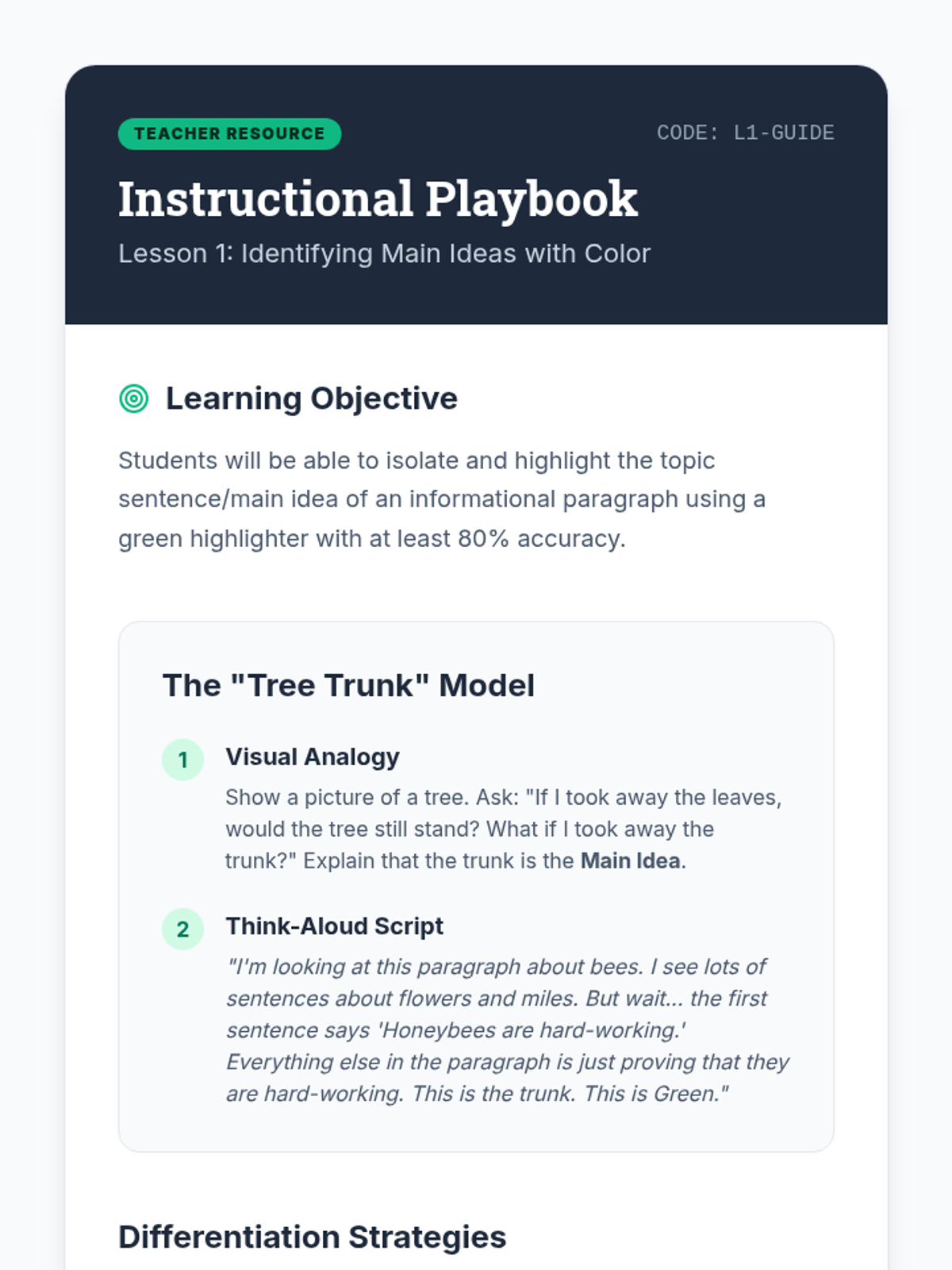
Introduces the 'Green for Go' concept, focusing exclusively on identifying the main idea or topic sentence within short paragraphs using the color green.
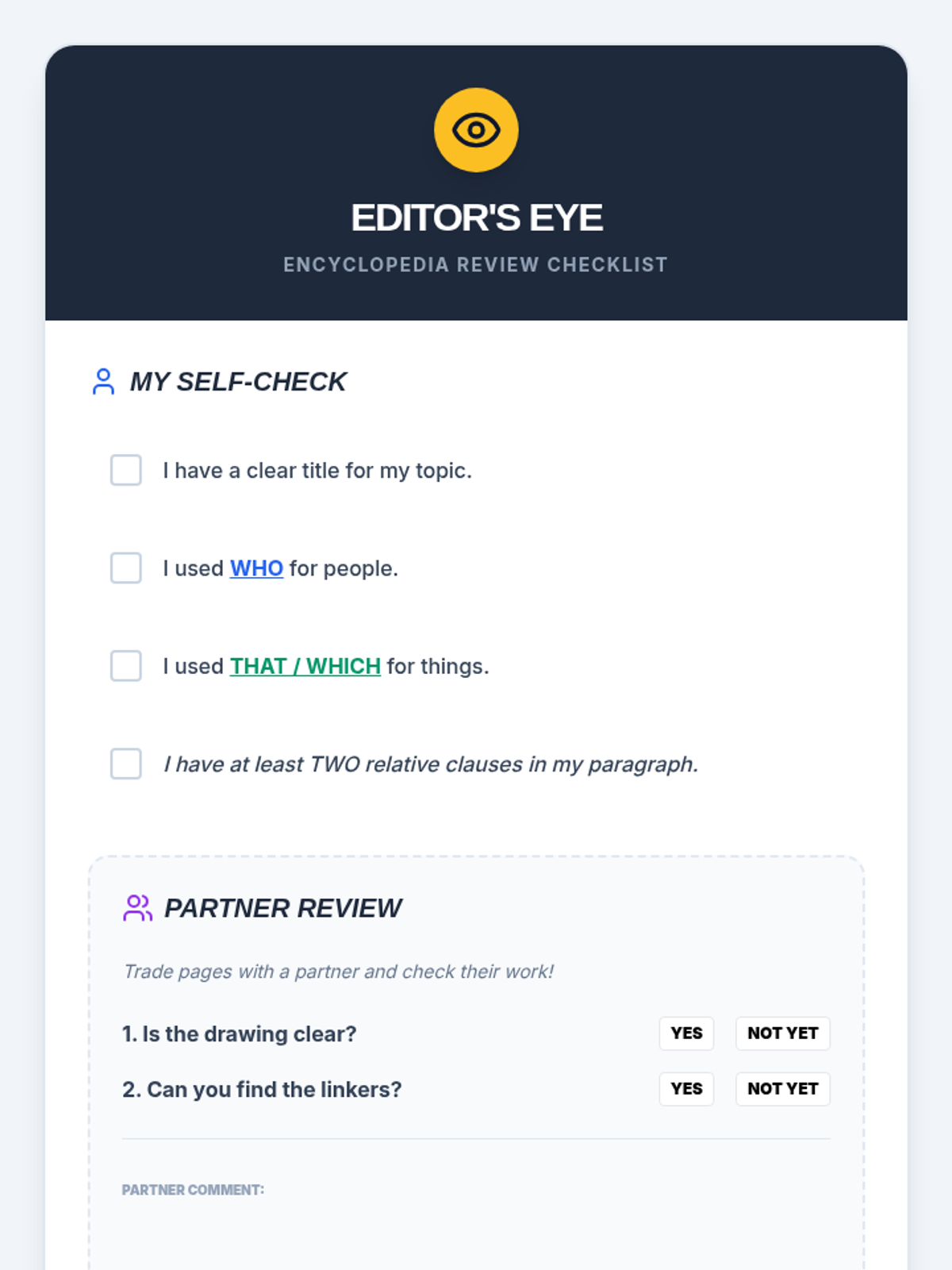
Students apply their skills to create a collaborative class encyclopedia with detailed entries using relative clauses.
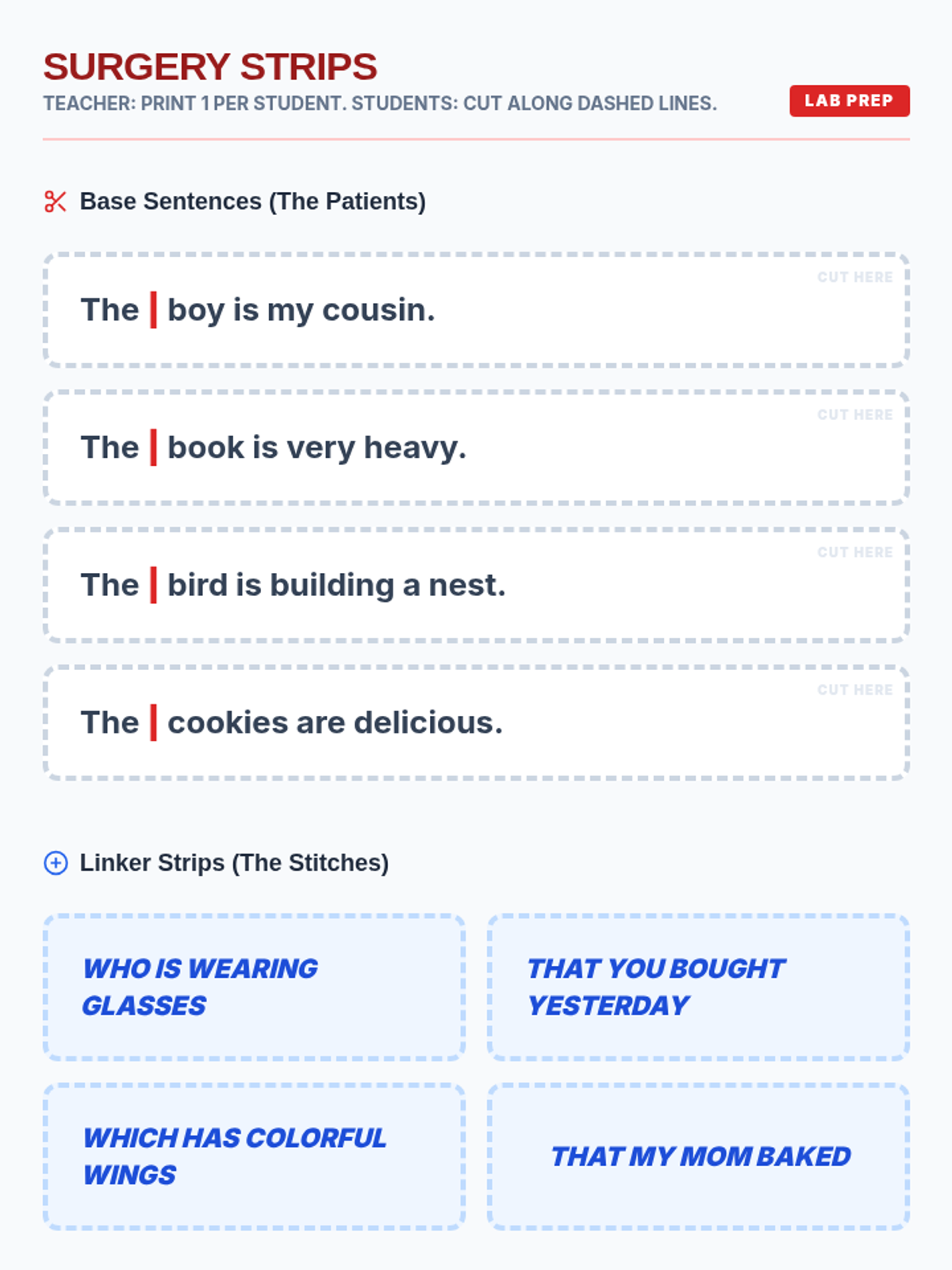
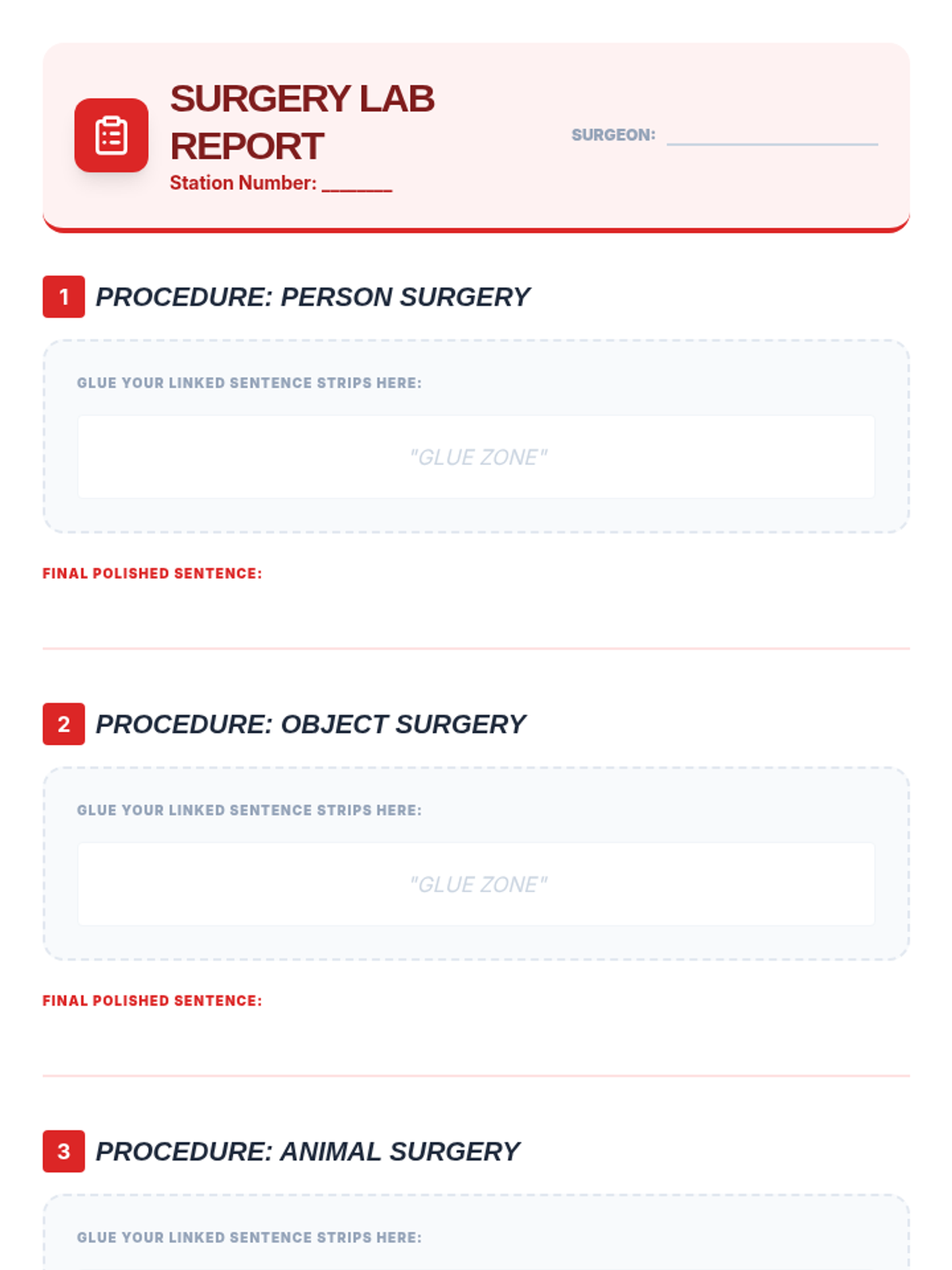
A workshop where students physically manipulate sentence parts using strips to understand where relative clauses fit best.
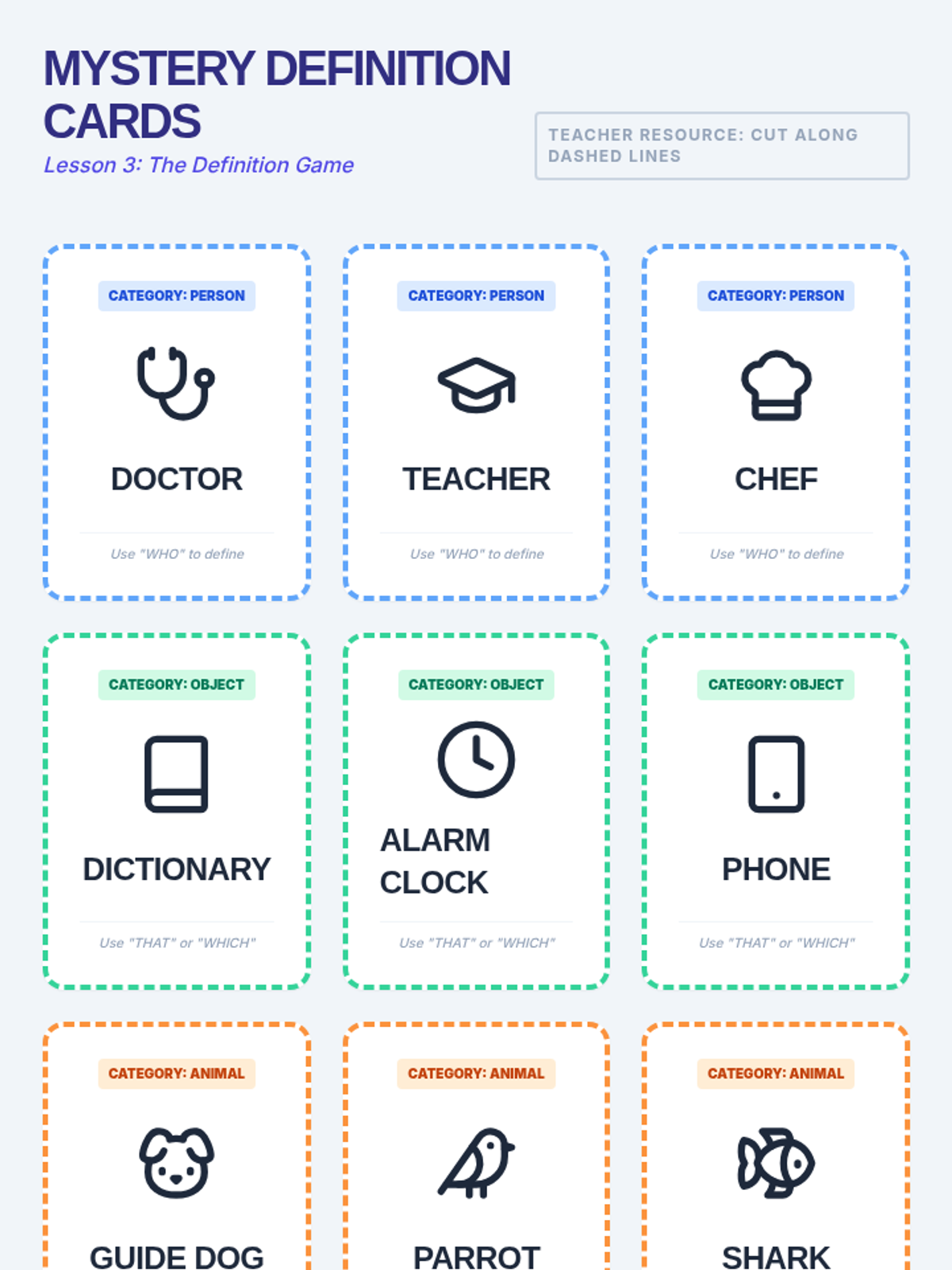
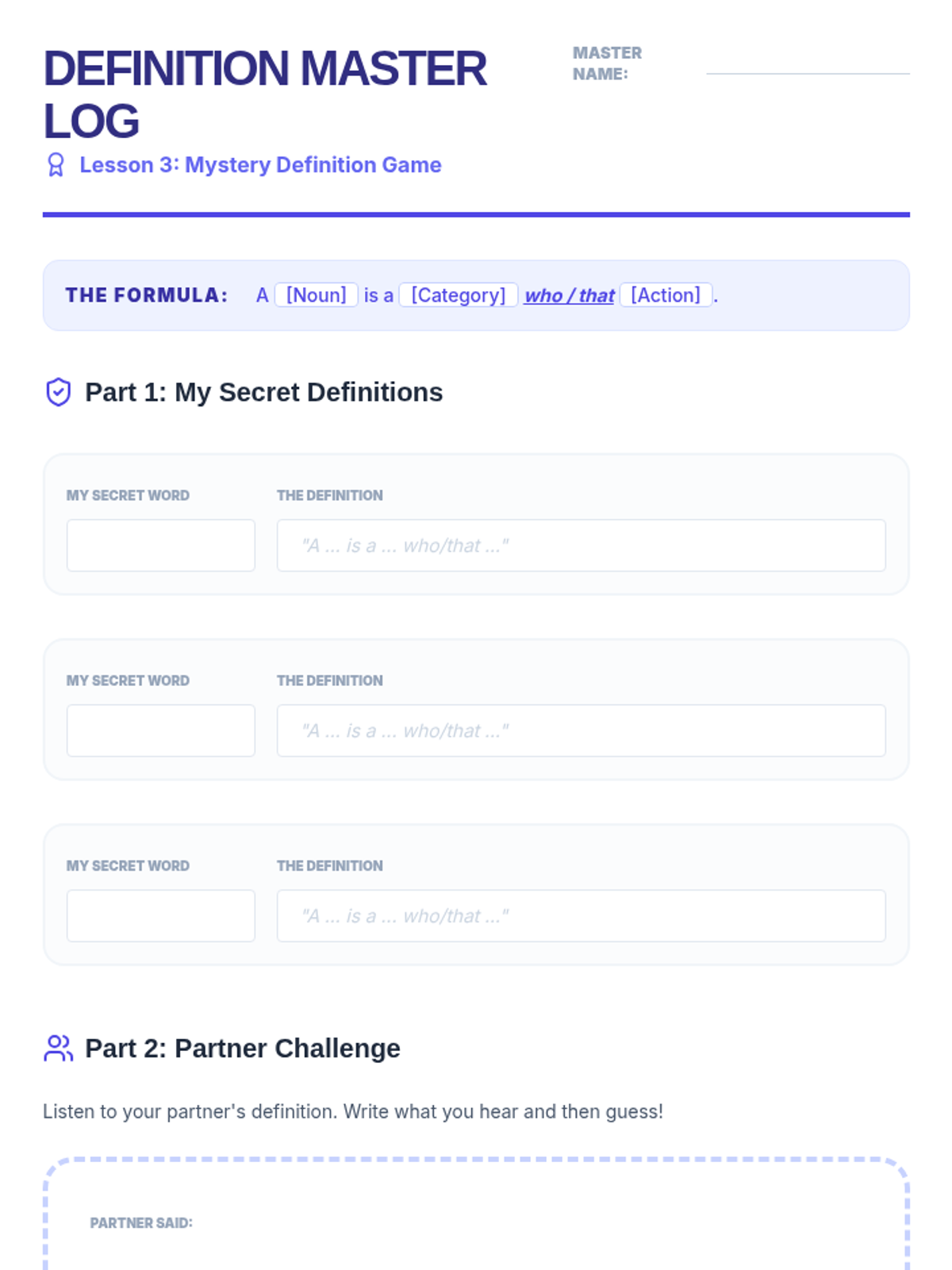
Students write definitions for common words using relative clauses and quiz their peers in a game-based setting.
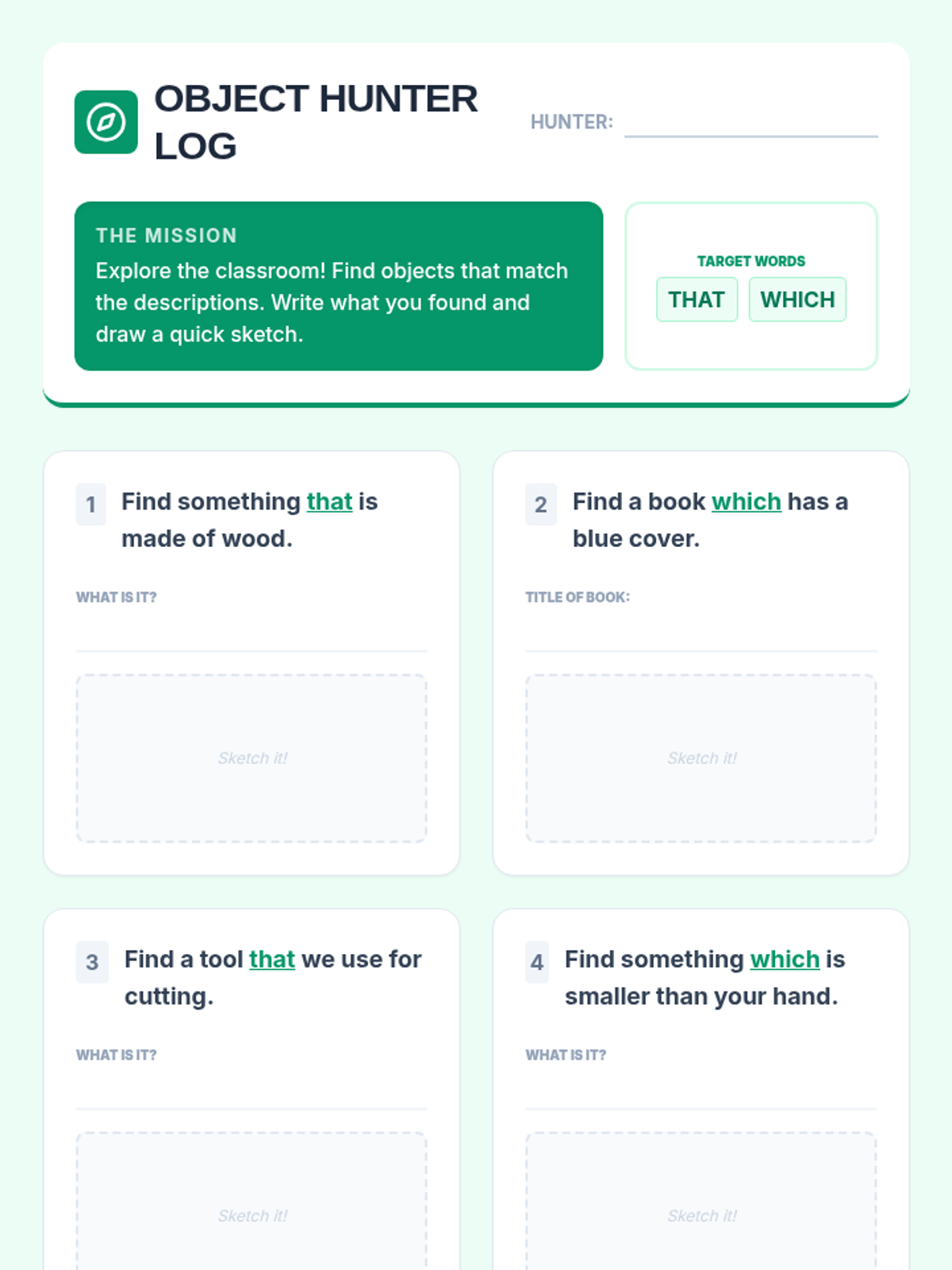
Students practice describing objects and animals using 'which' and 'that' through a scavenger hunt and descriptive exercises.
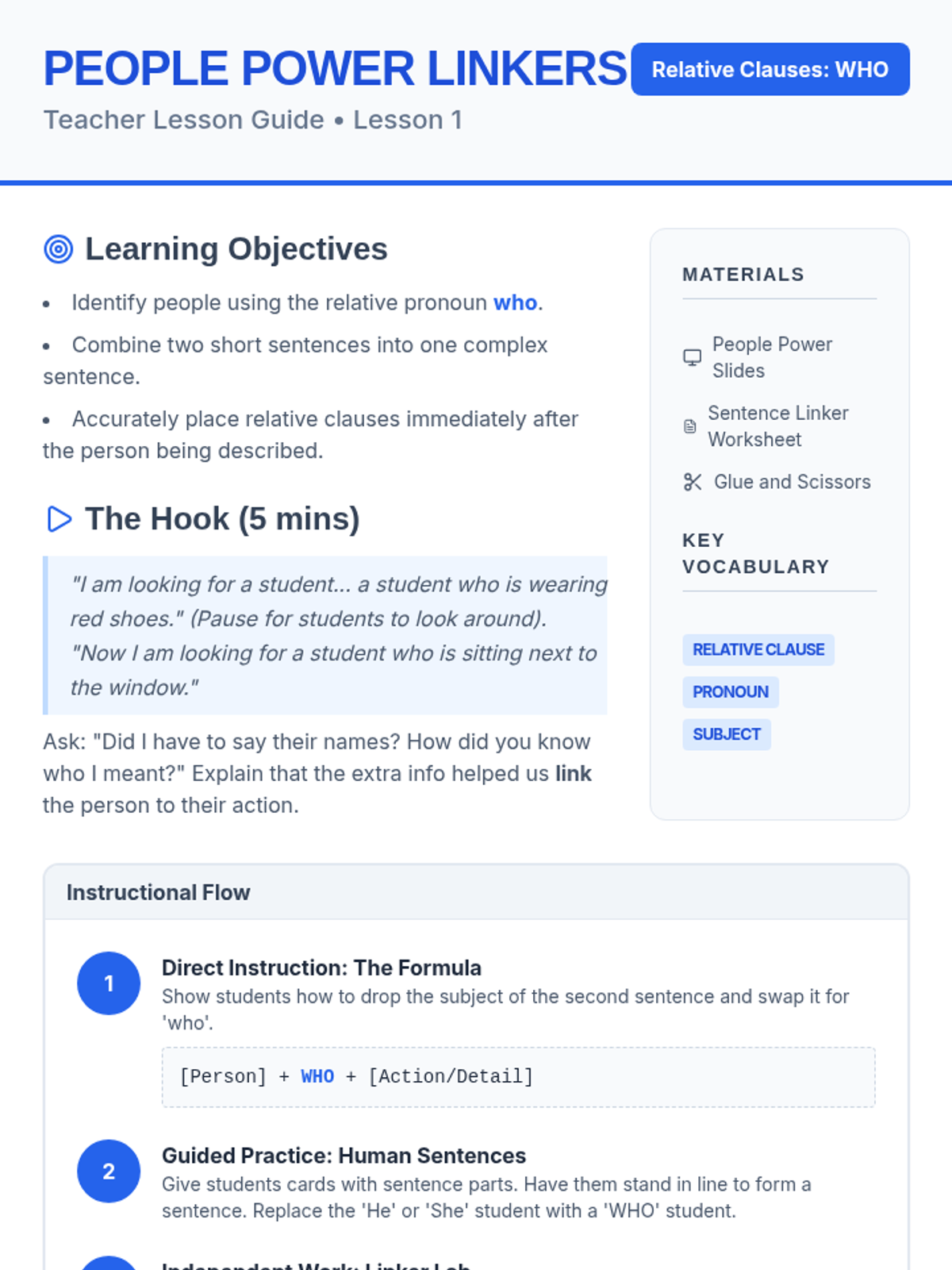
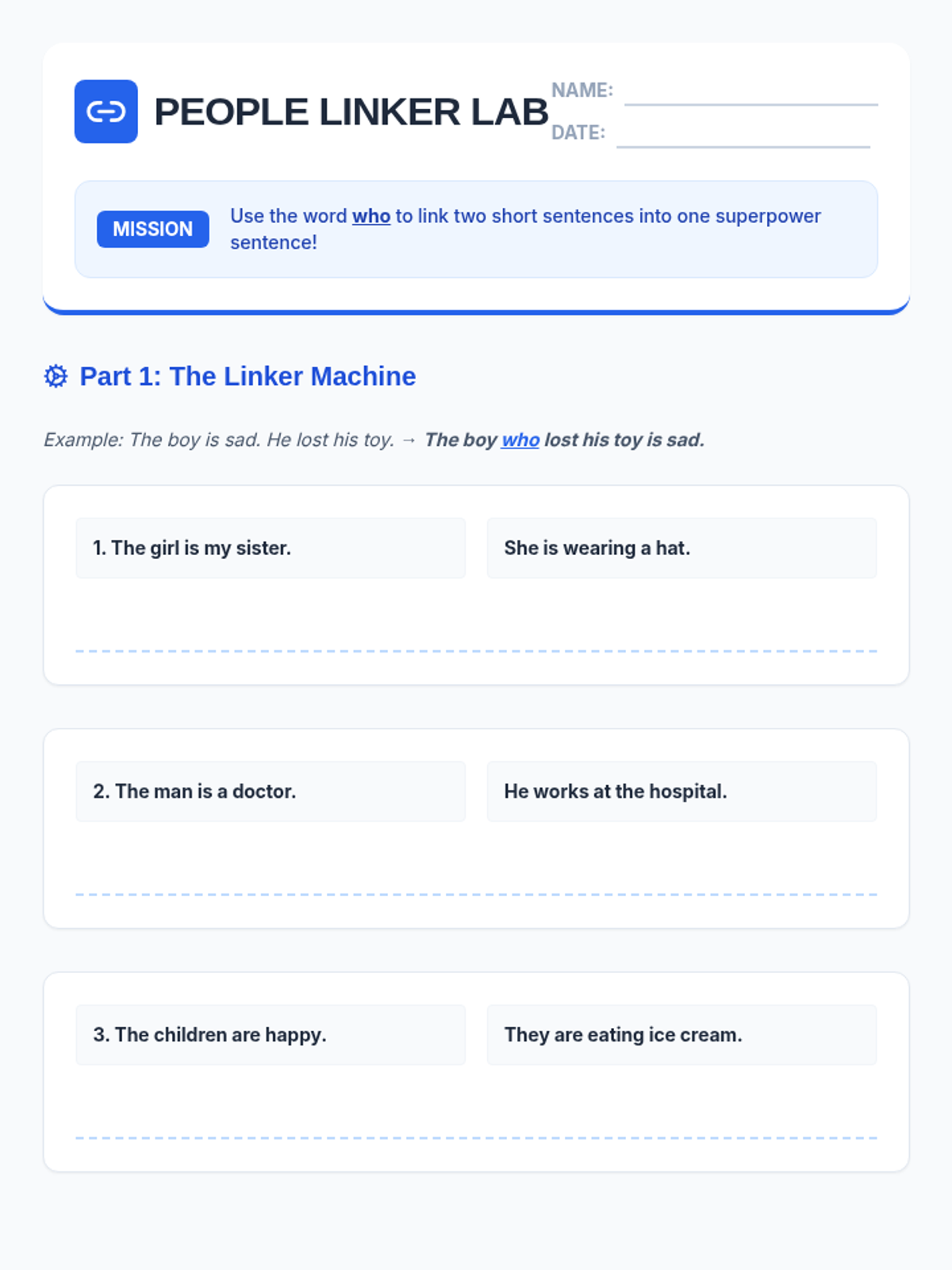
Students focus on describing people using the relative pronoun 'who' to combine two simple sentences into one complex description.
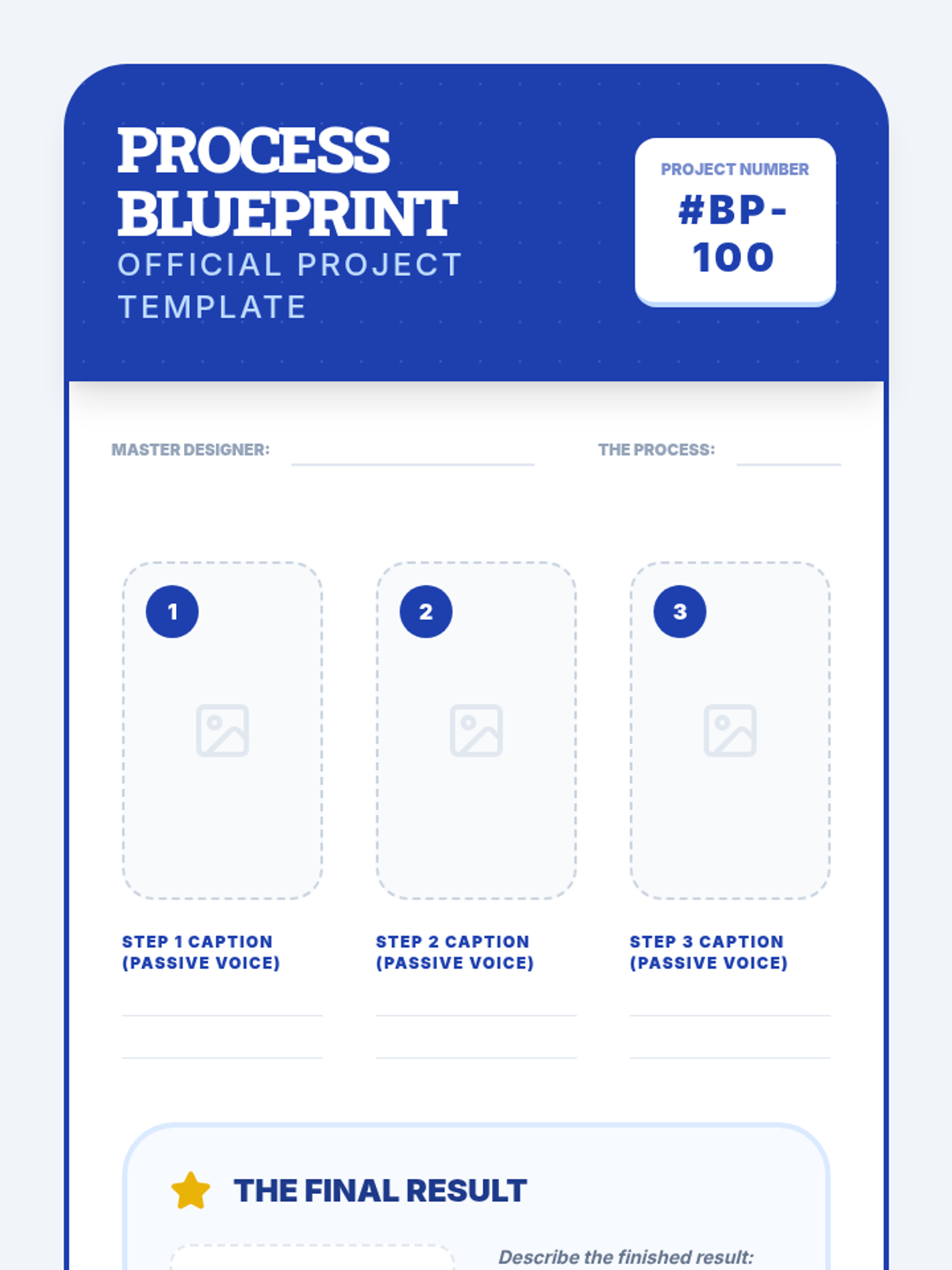
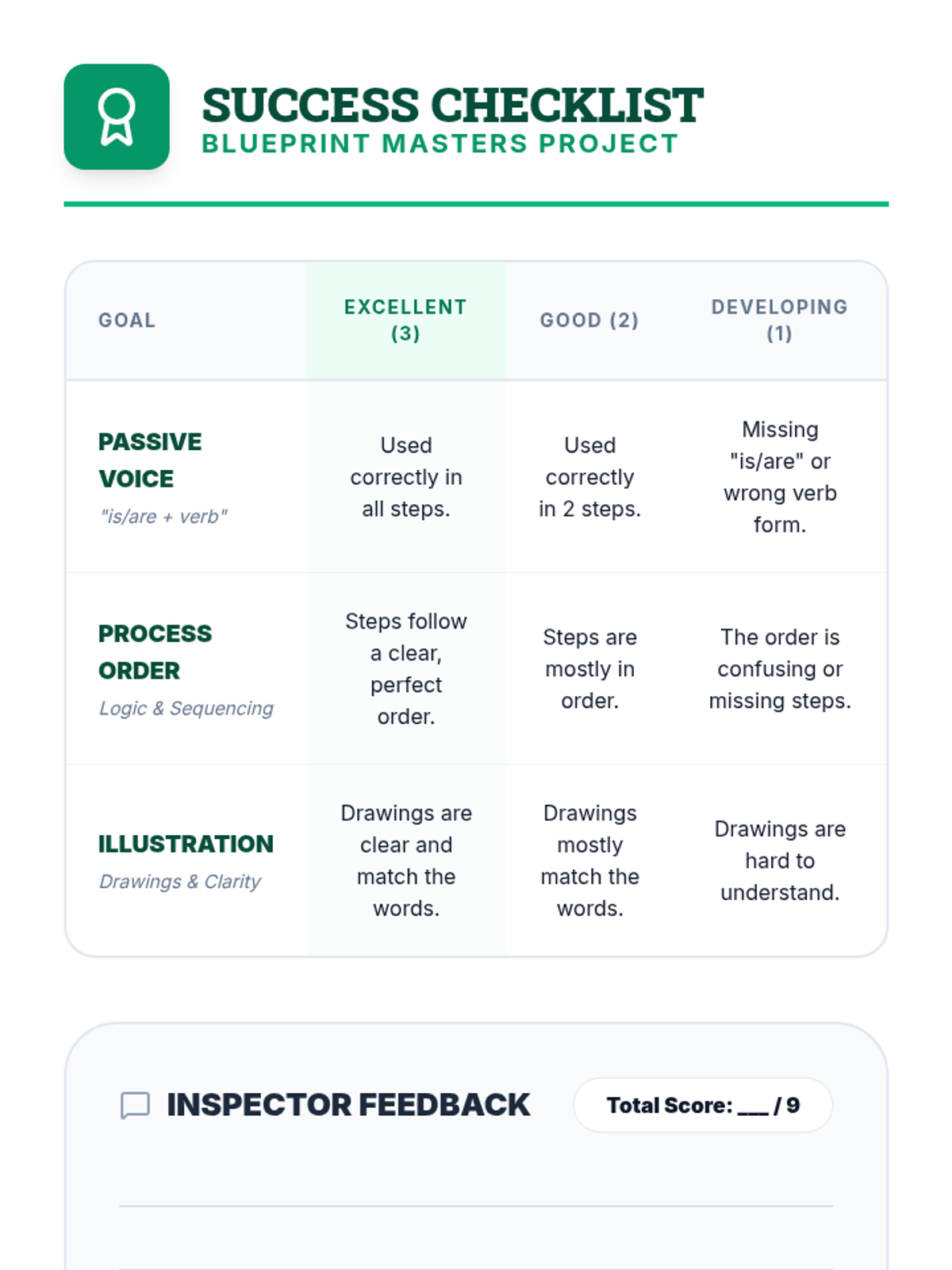
Students synthesize their learning by creating a visual 'How It's Made' guide for a simple everyday process.
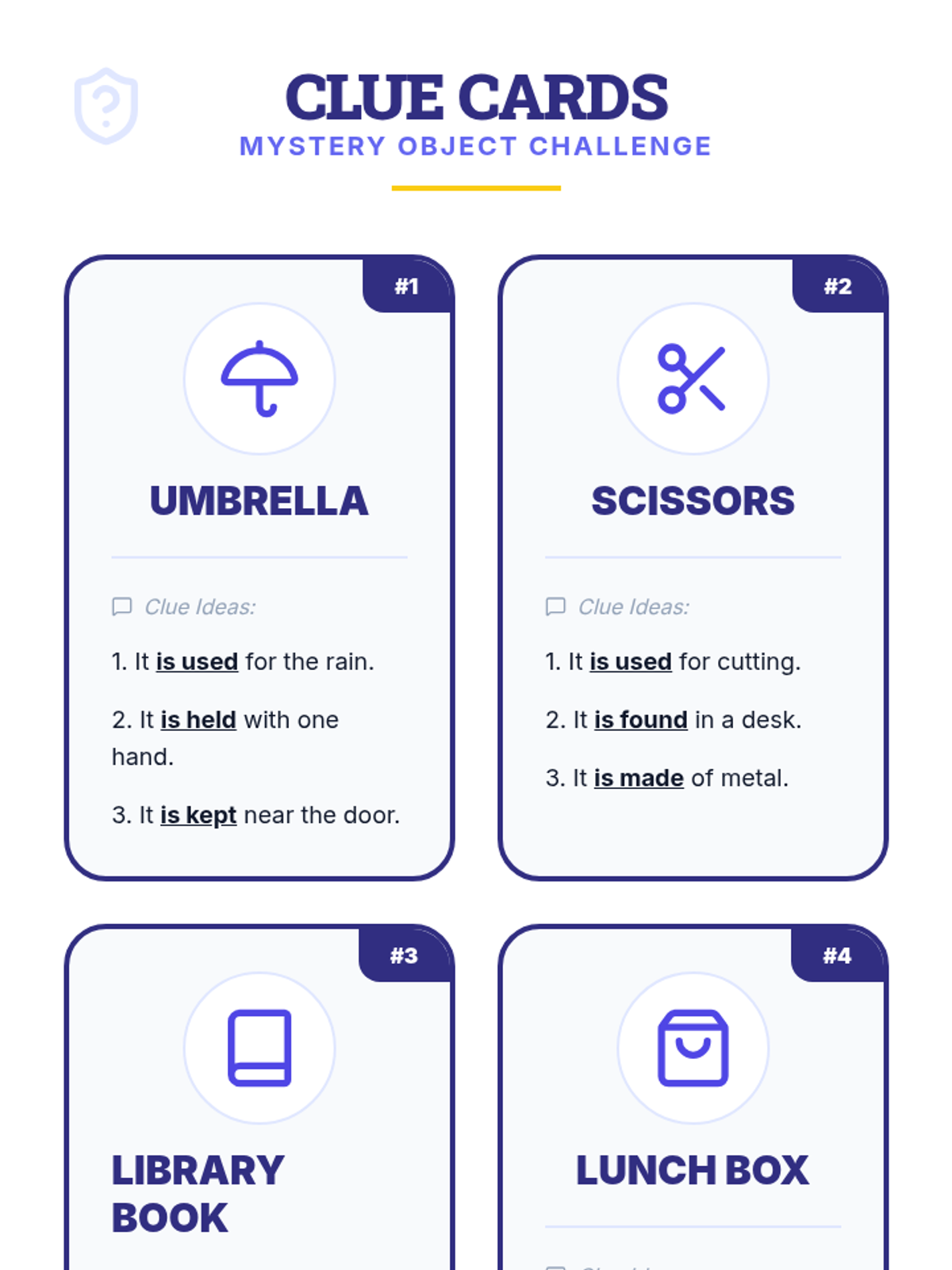
Students use passive voice to describe the function and location of hidden objects for their peers to guess.
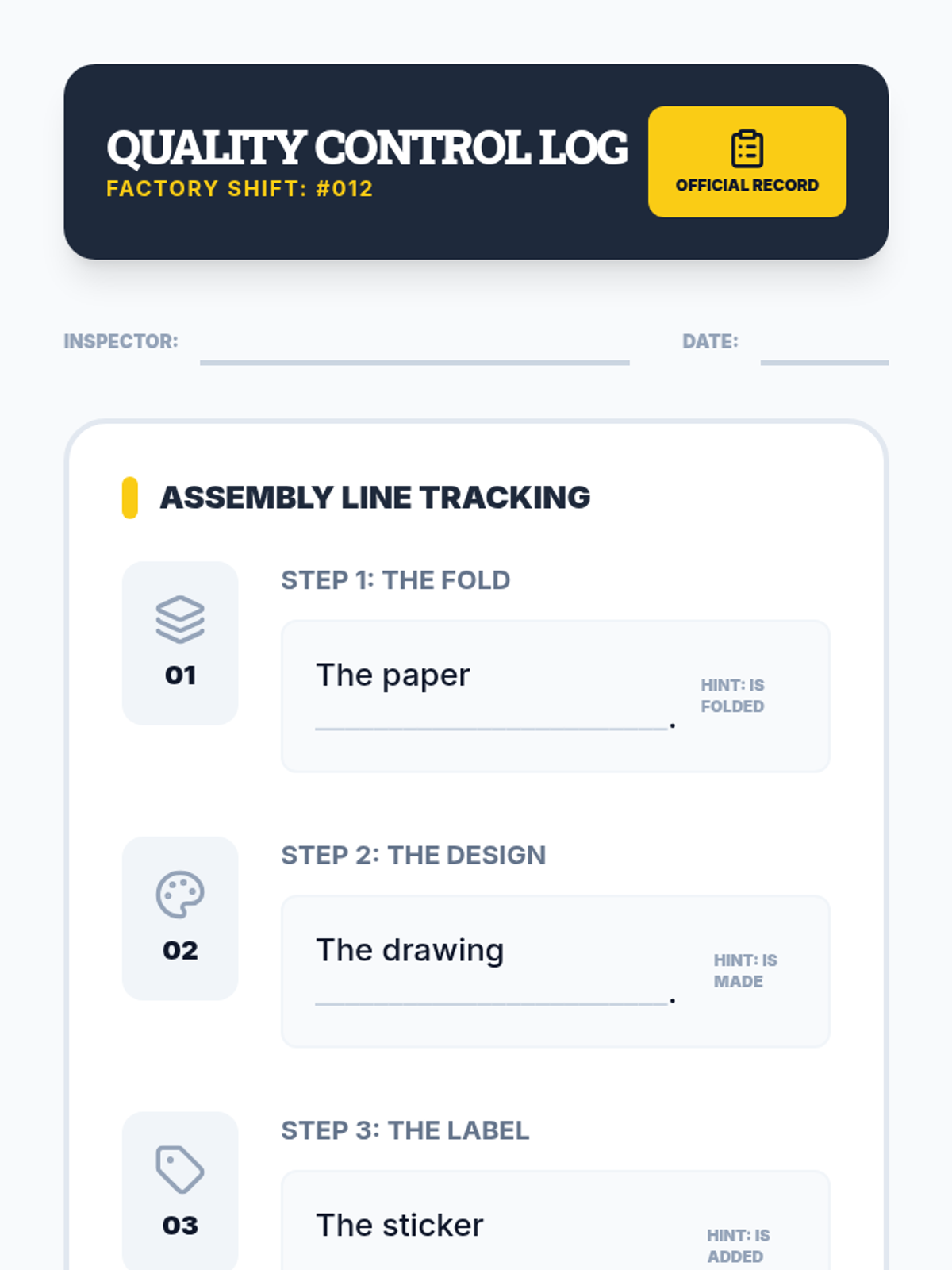
A hands-on simulation where students act as factory workers and describe the changing status of a product using passive voice.
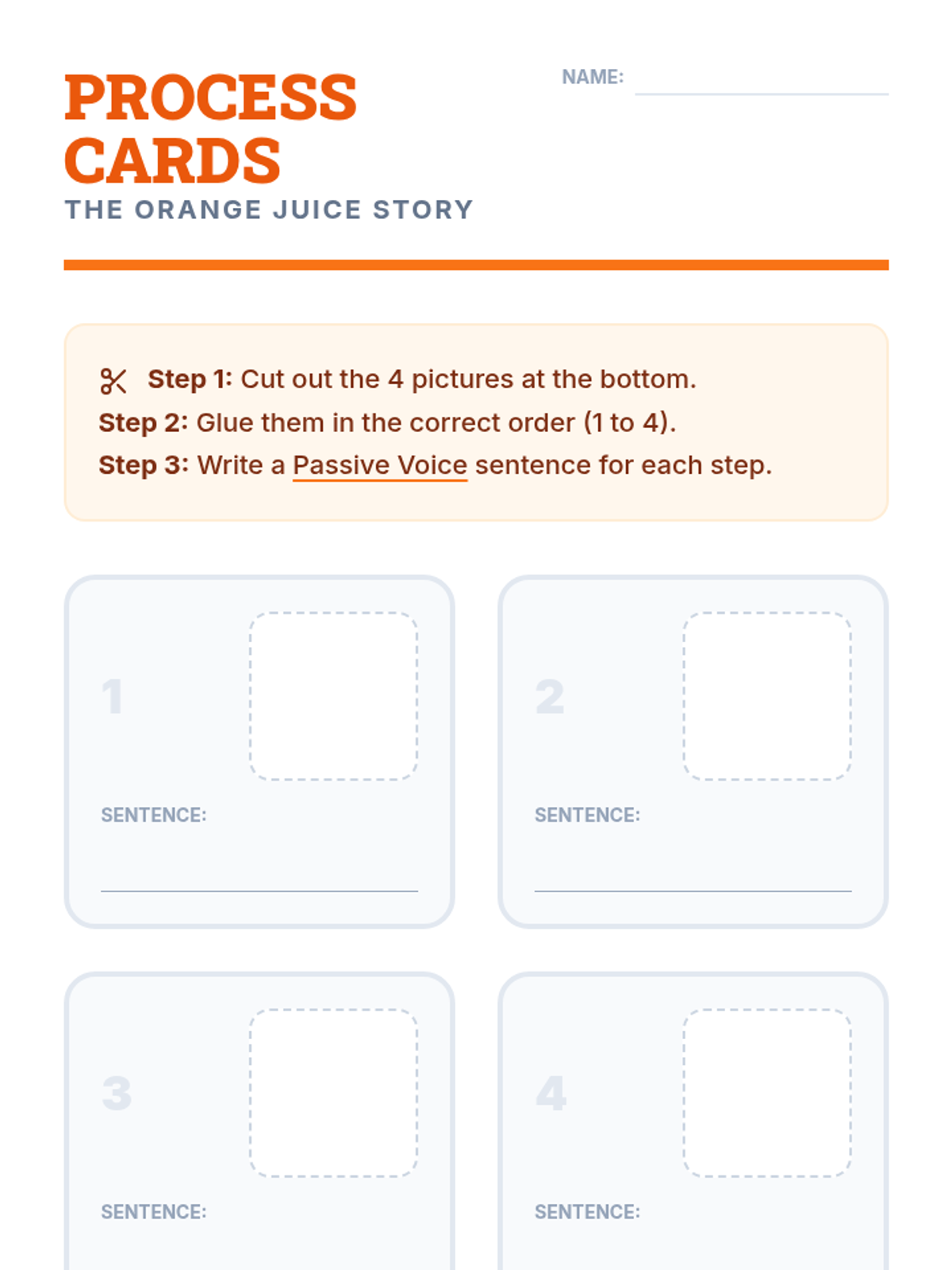
Students sequence the production of orange juice and practice constructing simple present passive sentences to describe each stage.
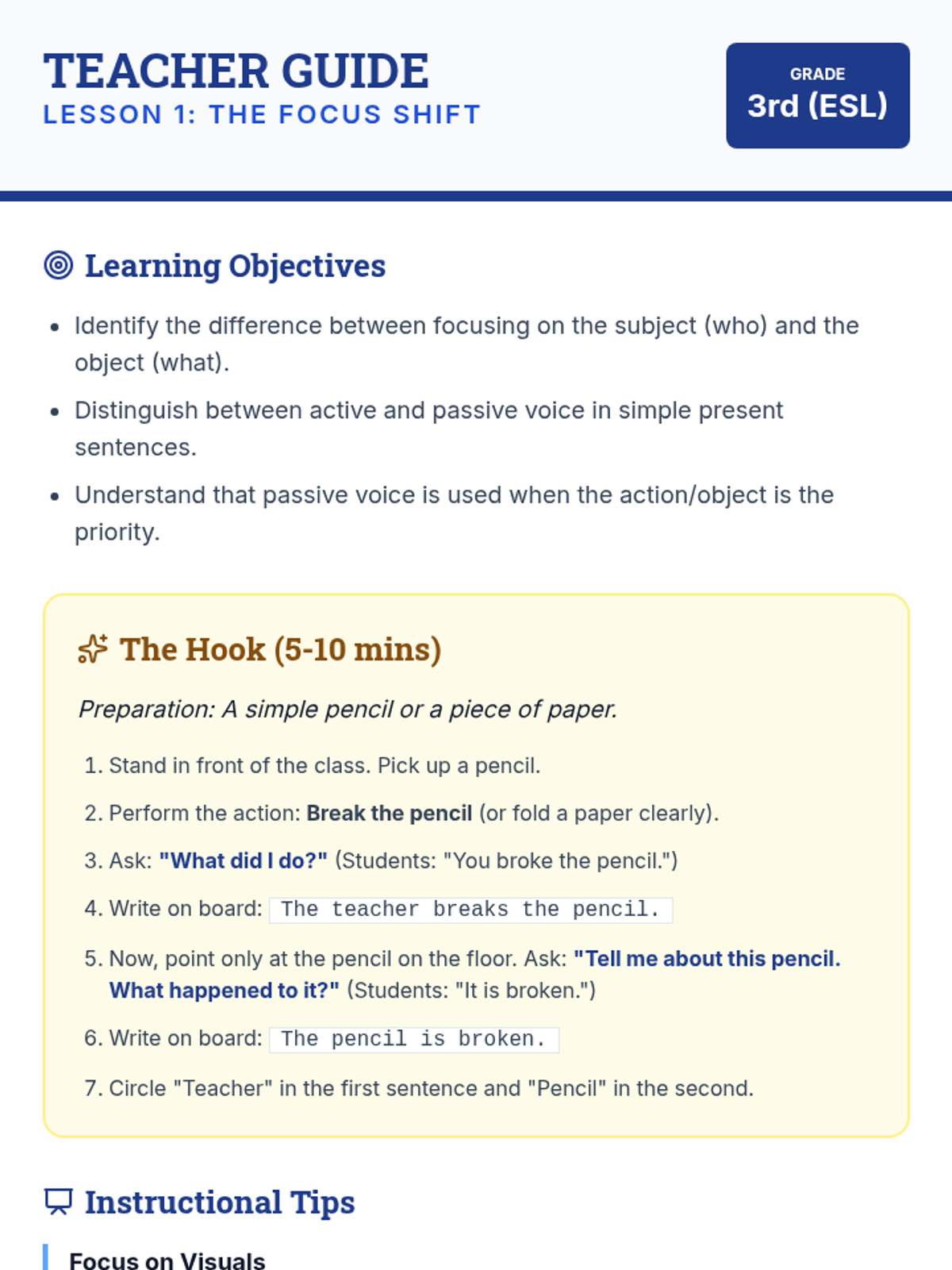
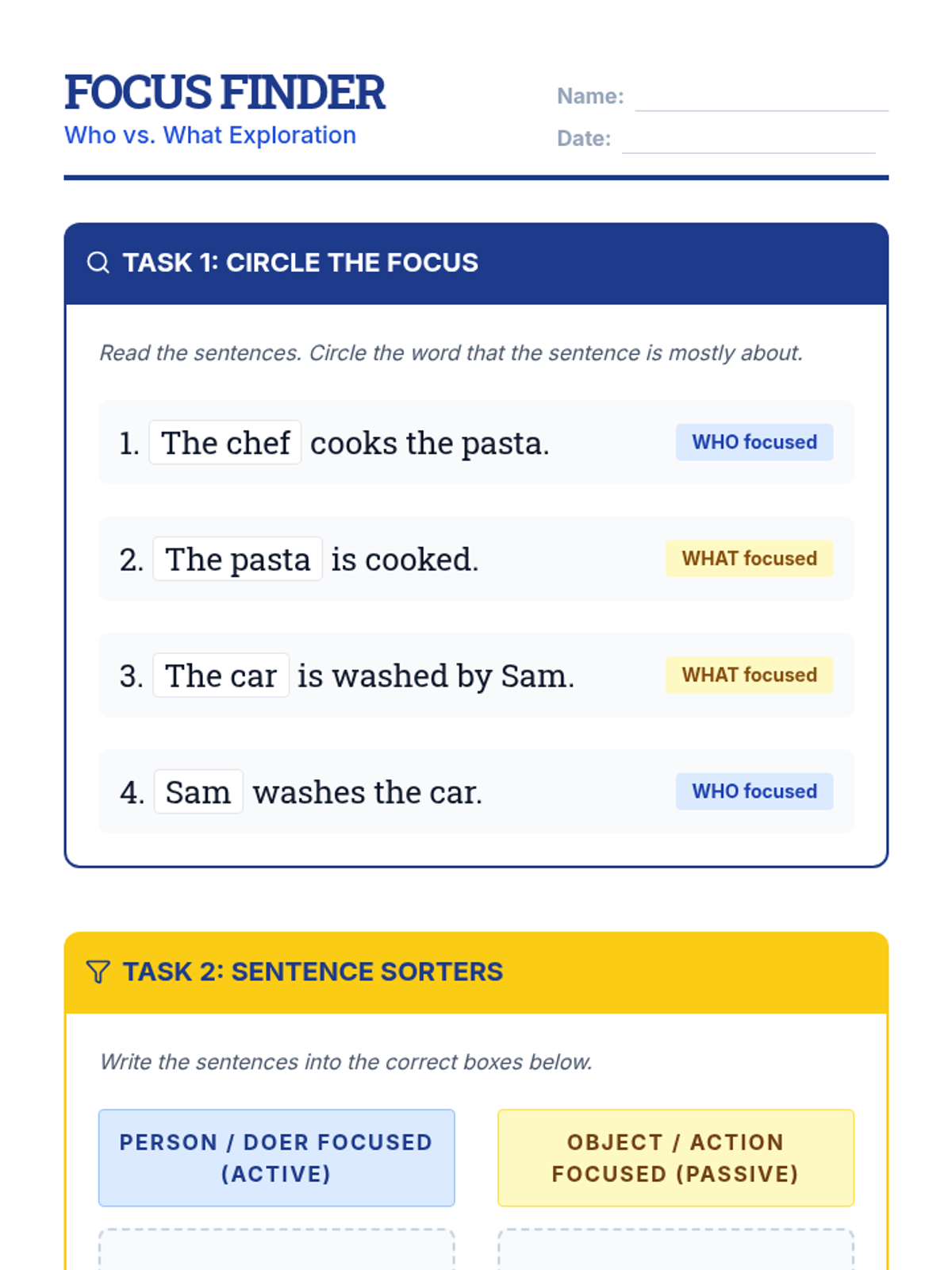
Students investigate the difference between focusing on the 'doer' versus the 'action' through a hands-on hook and sentence sorting.
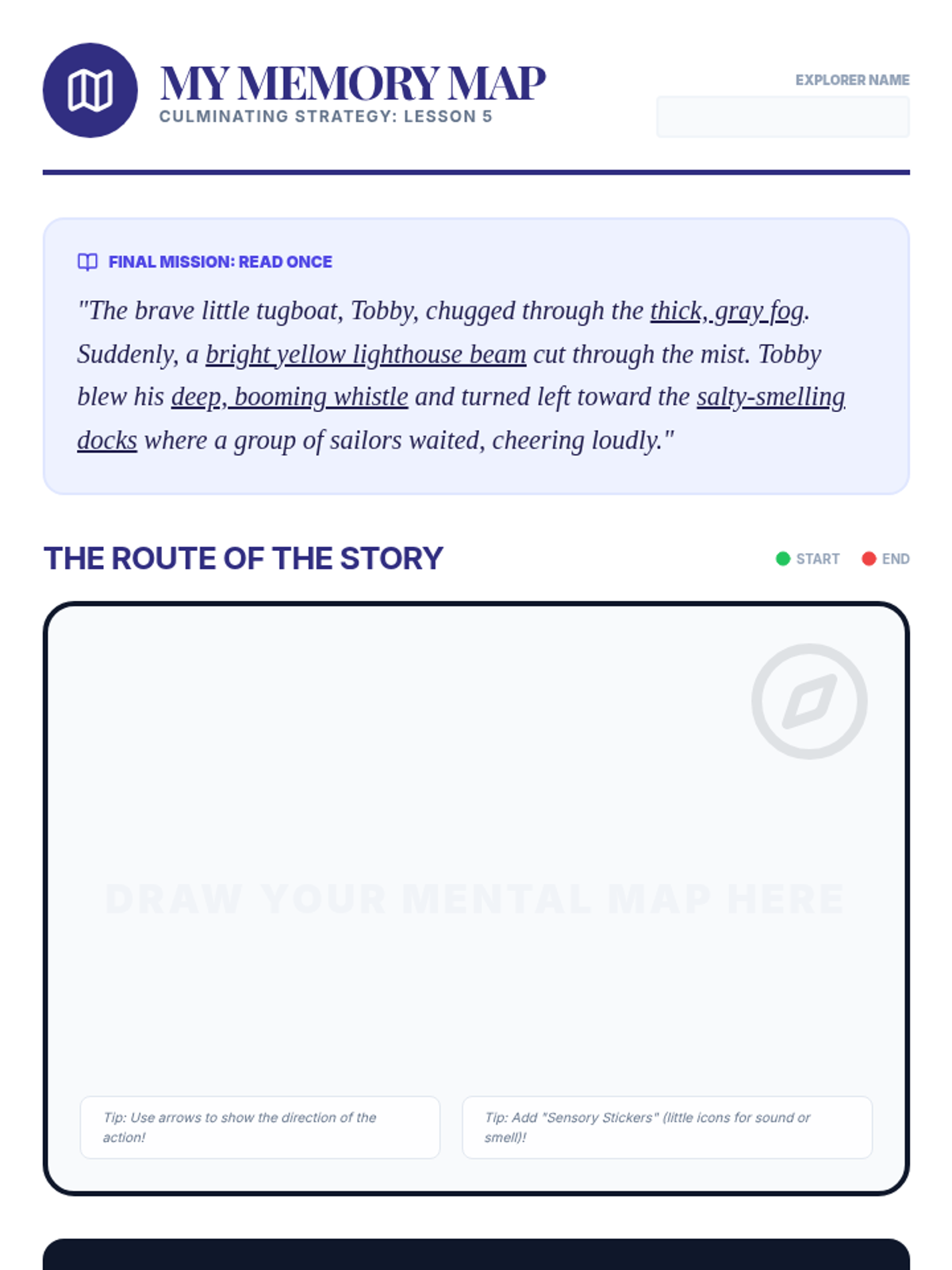
In the final lesson, students create 'Memory Maps' to orally retell stories, demonstrating how mental movies support long-term retention.
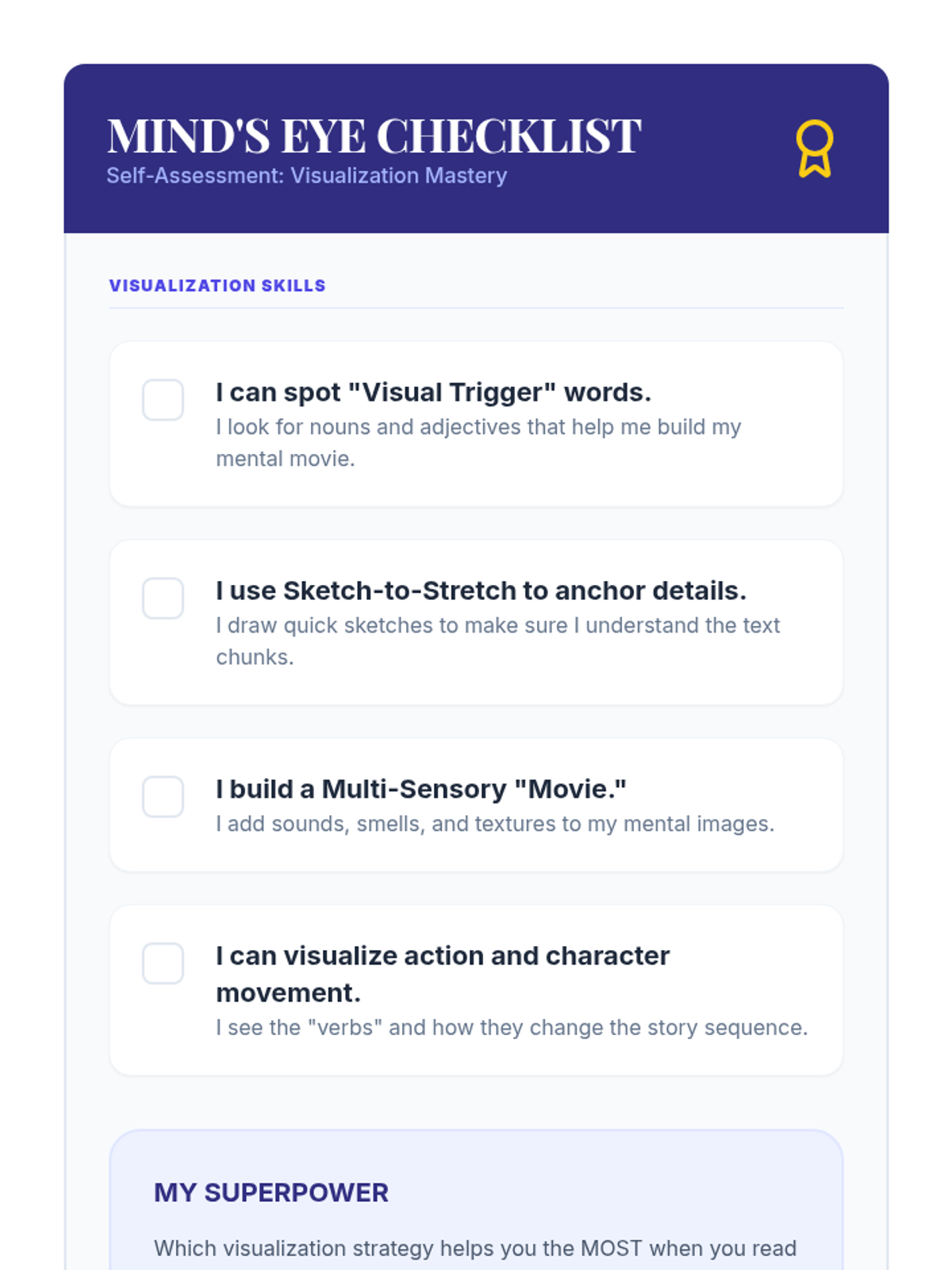
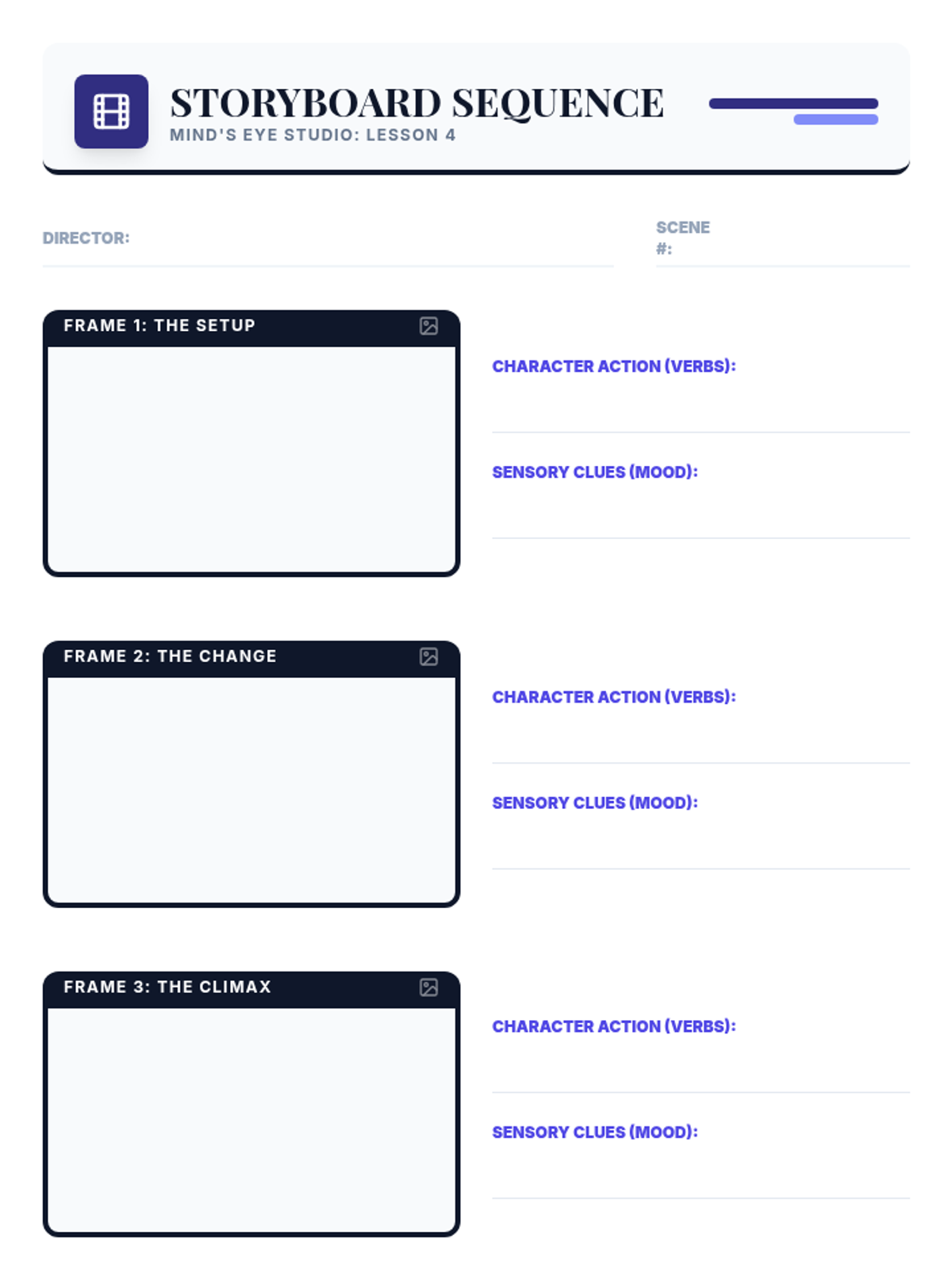
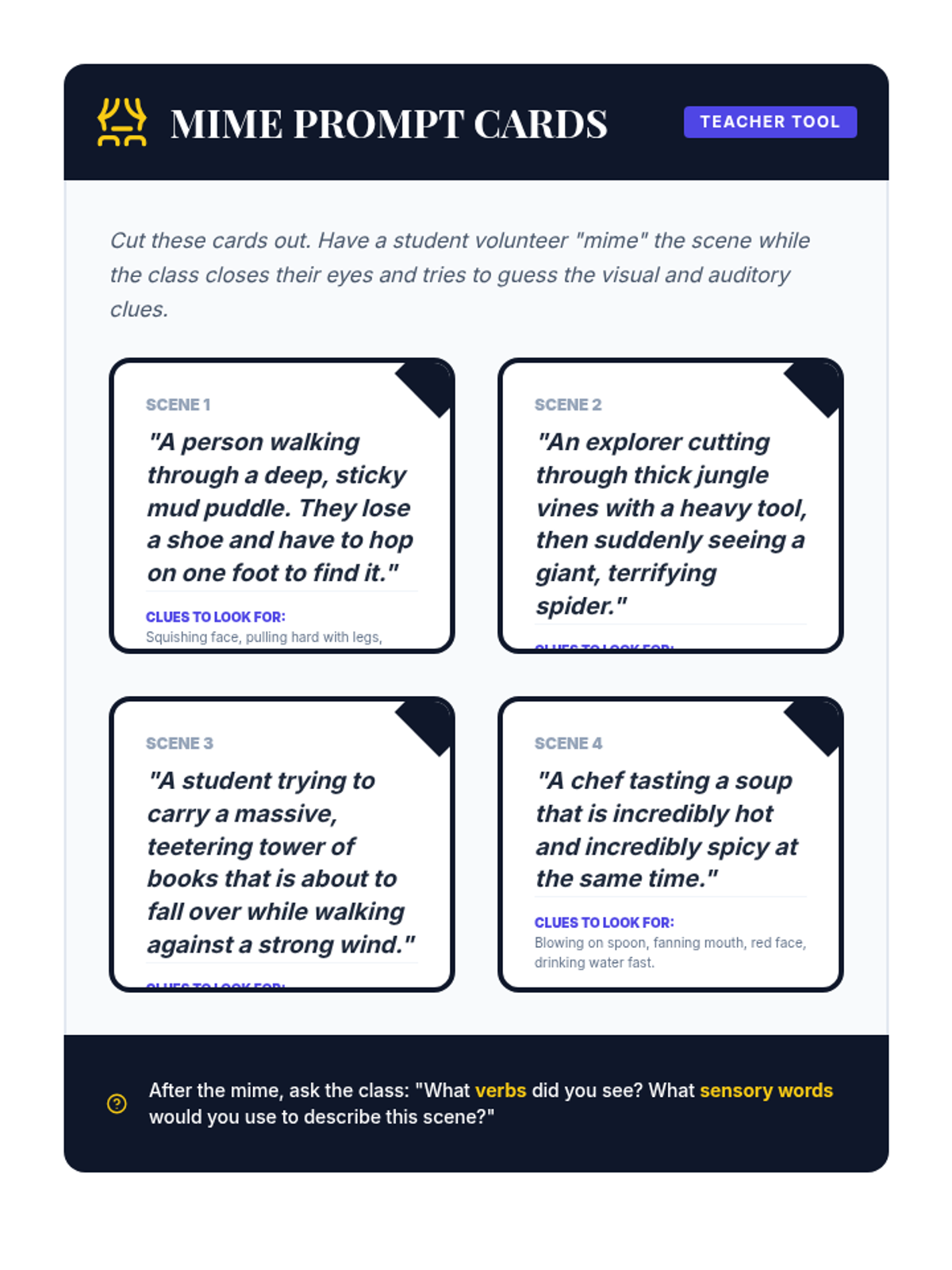
Students practice visualizing dynamic action and character movement through 'freeze-frame' snapshots and sequencing.
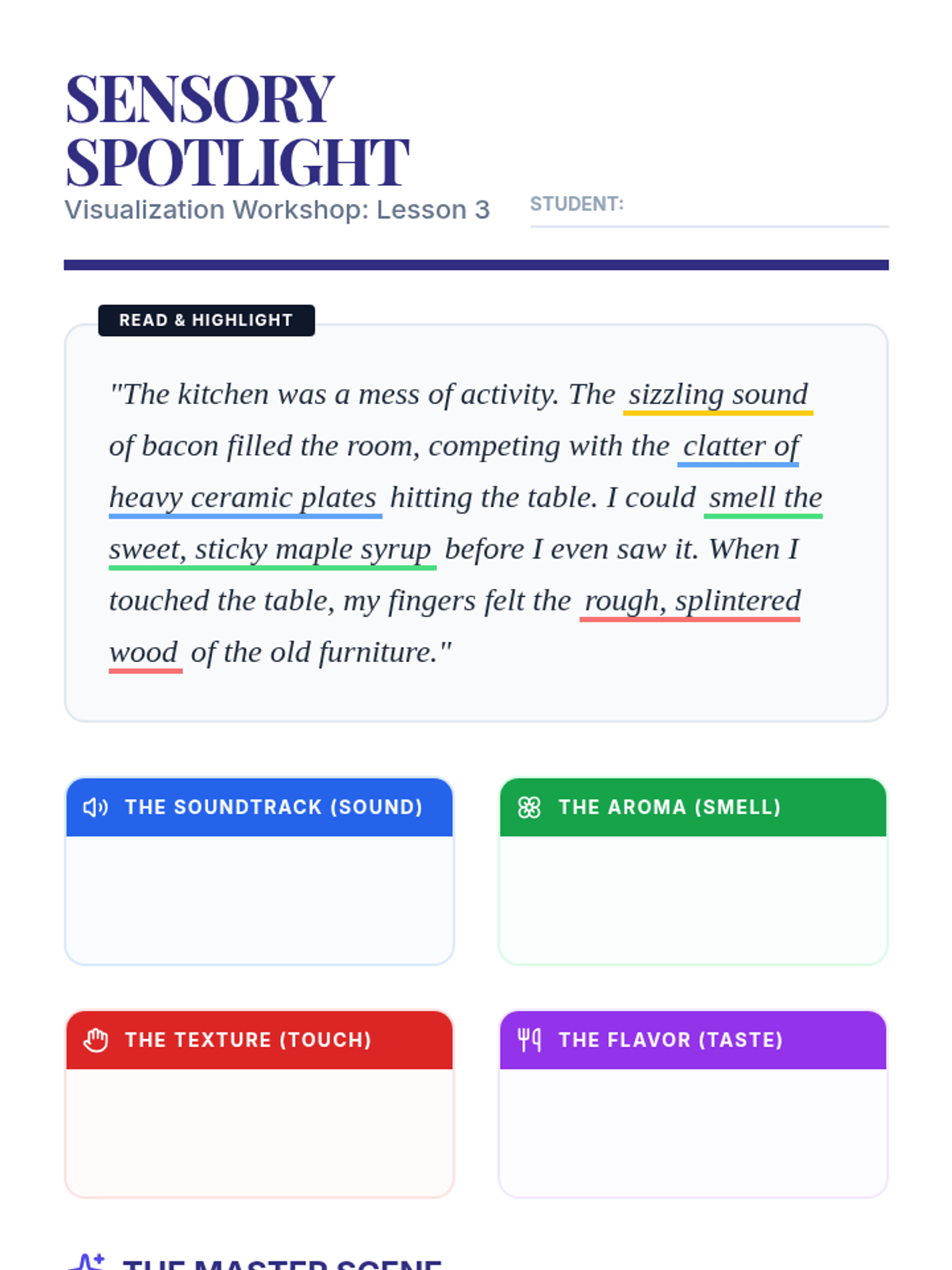
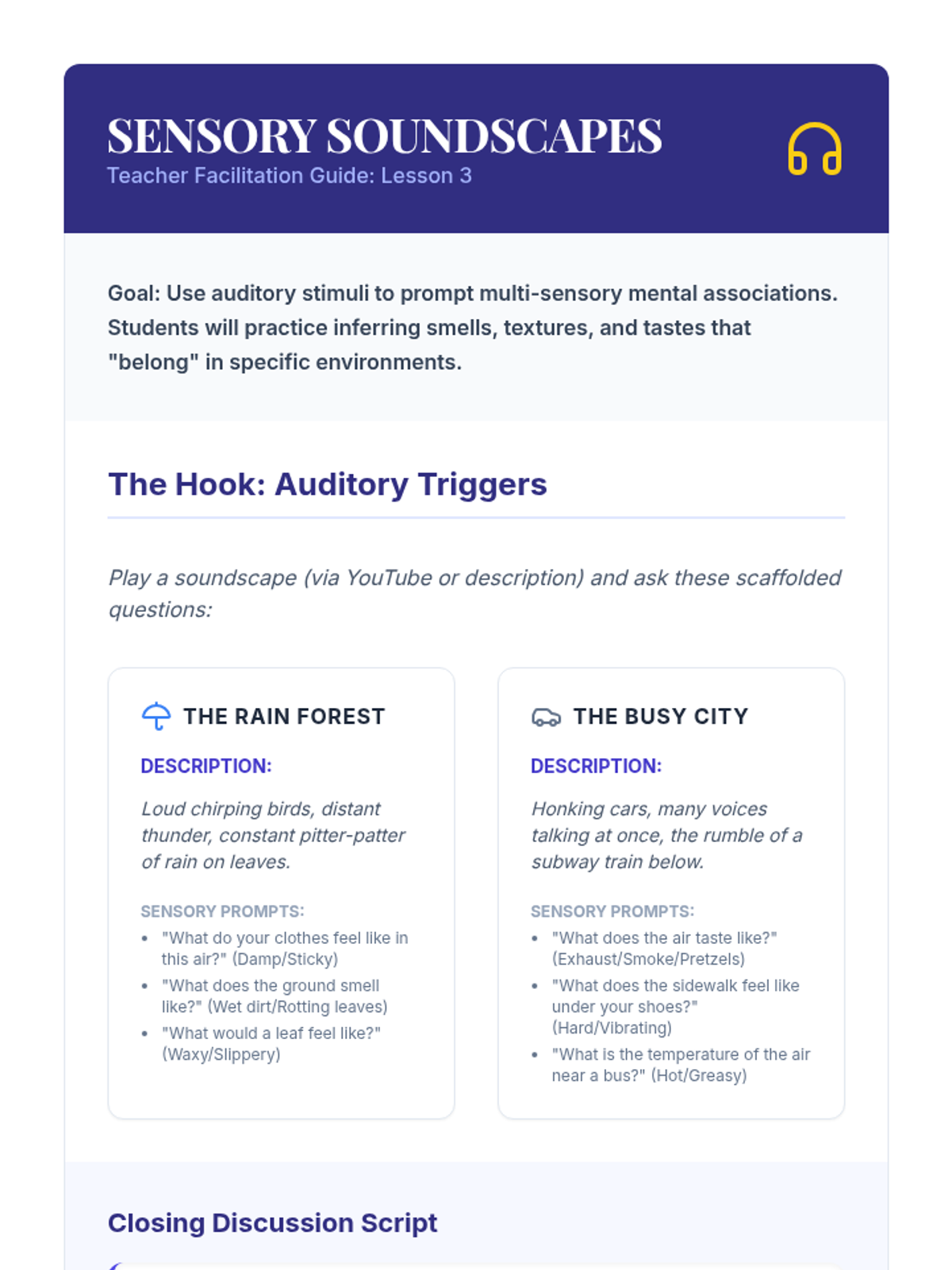
This lesson expands visualization beyond sight to include sound, smell, taste, and texture, using color-coded sensory language.
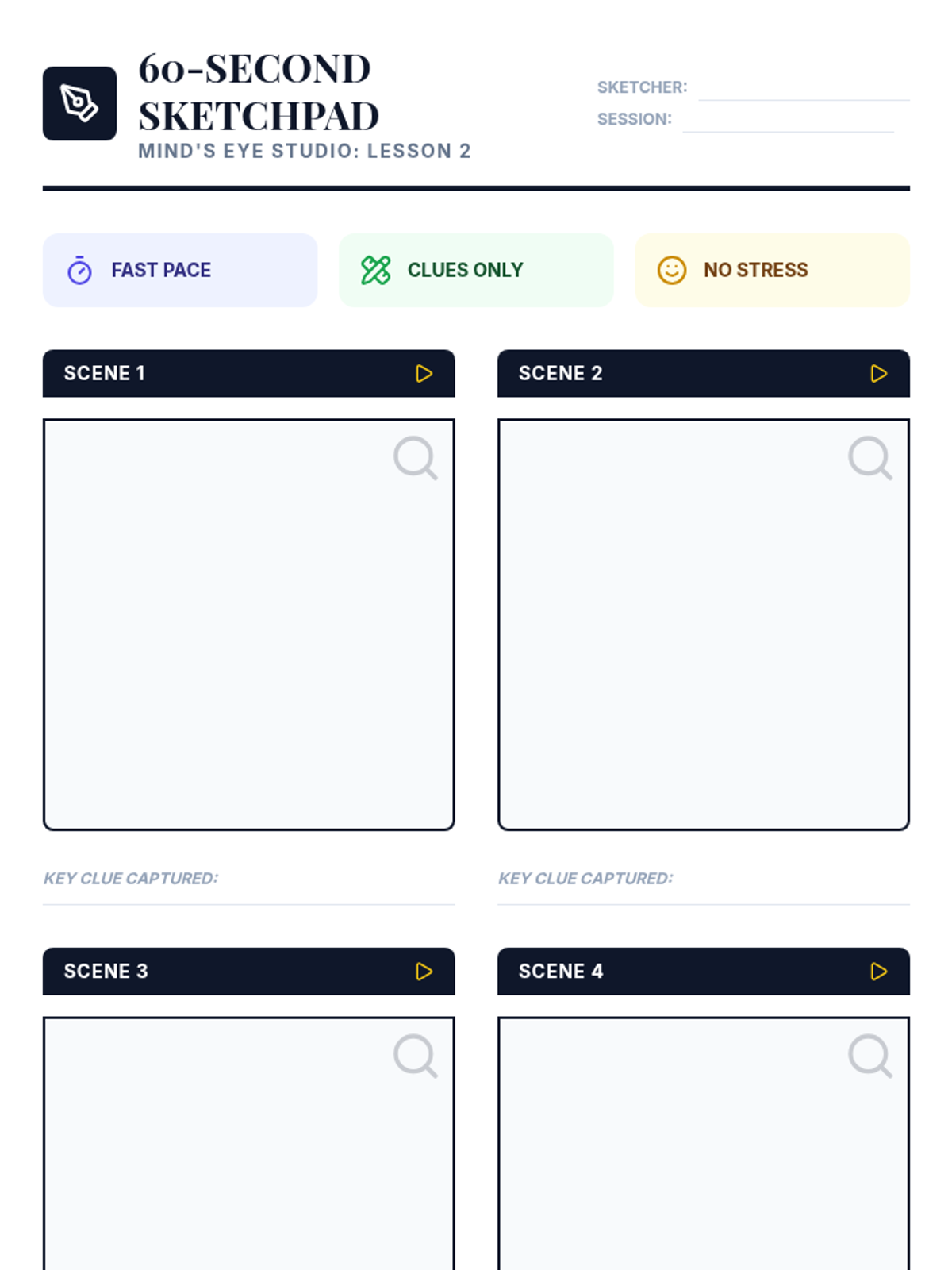
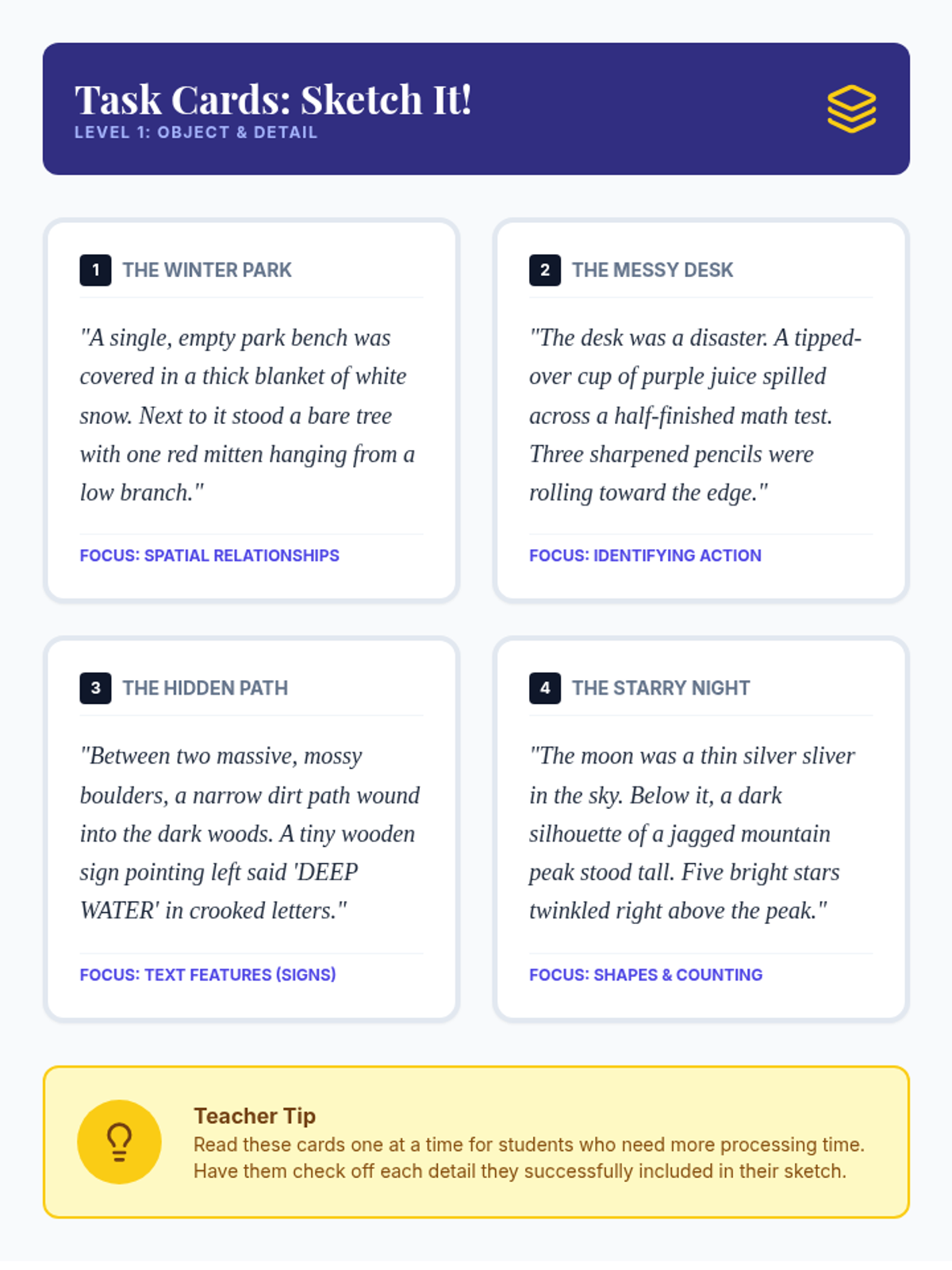
Students use the Sketch-to-Stretch strategy to translate short text passages into quick, meaningful visual representations to anchor comprehension.
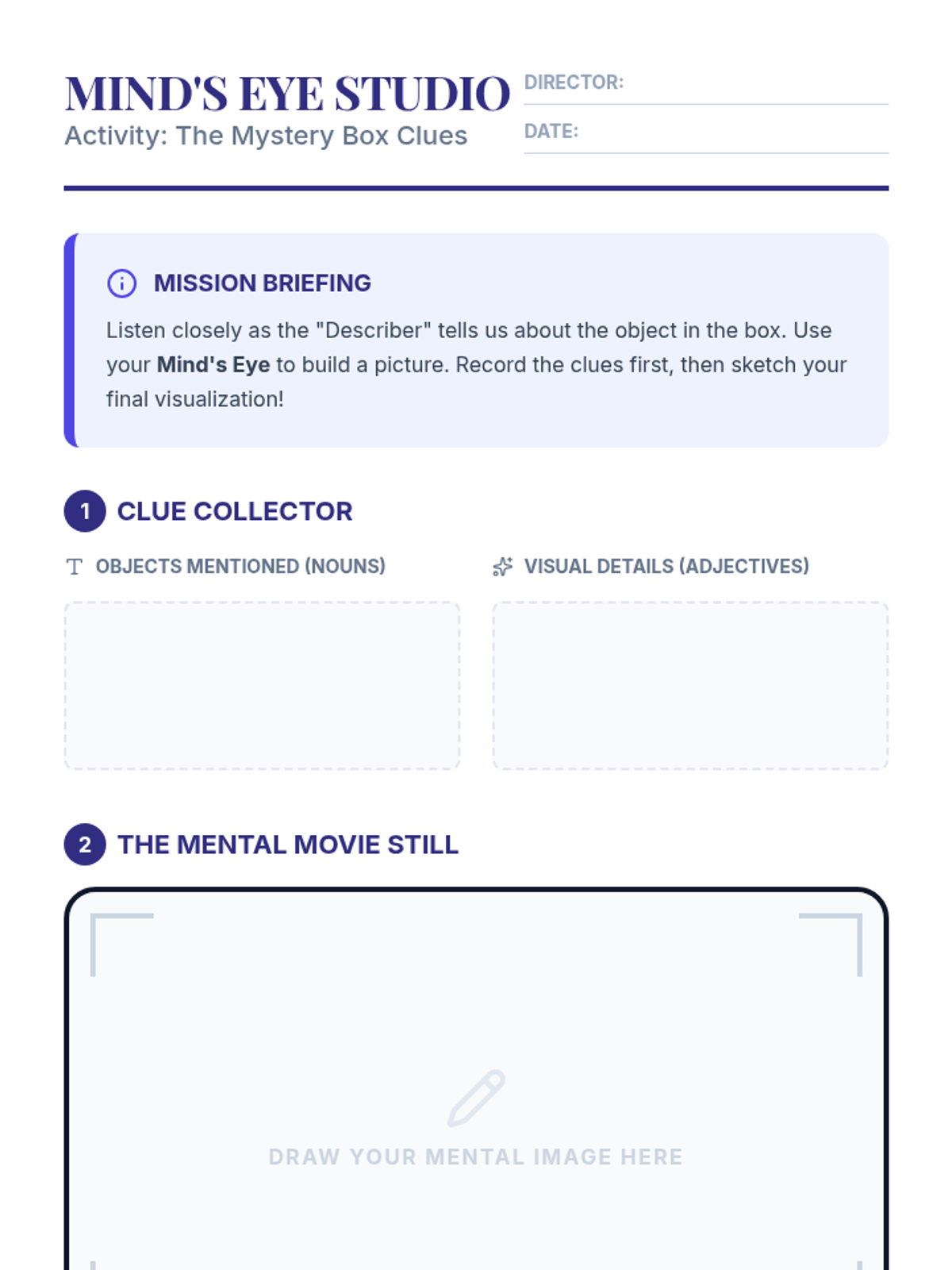
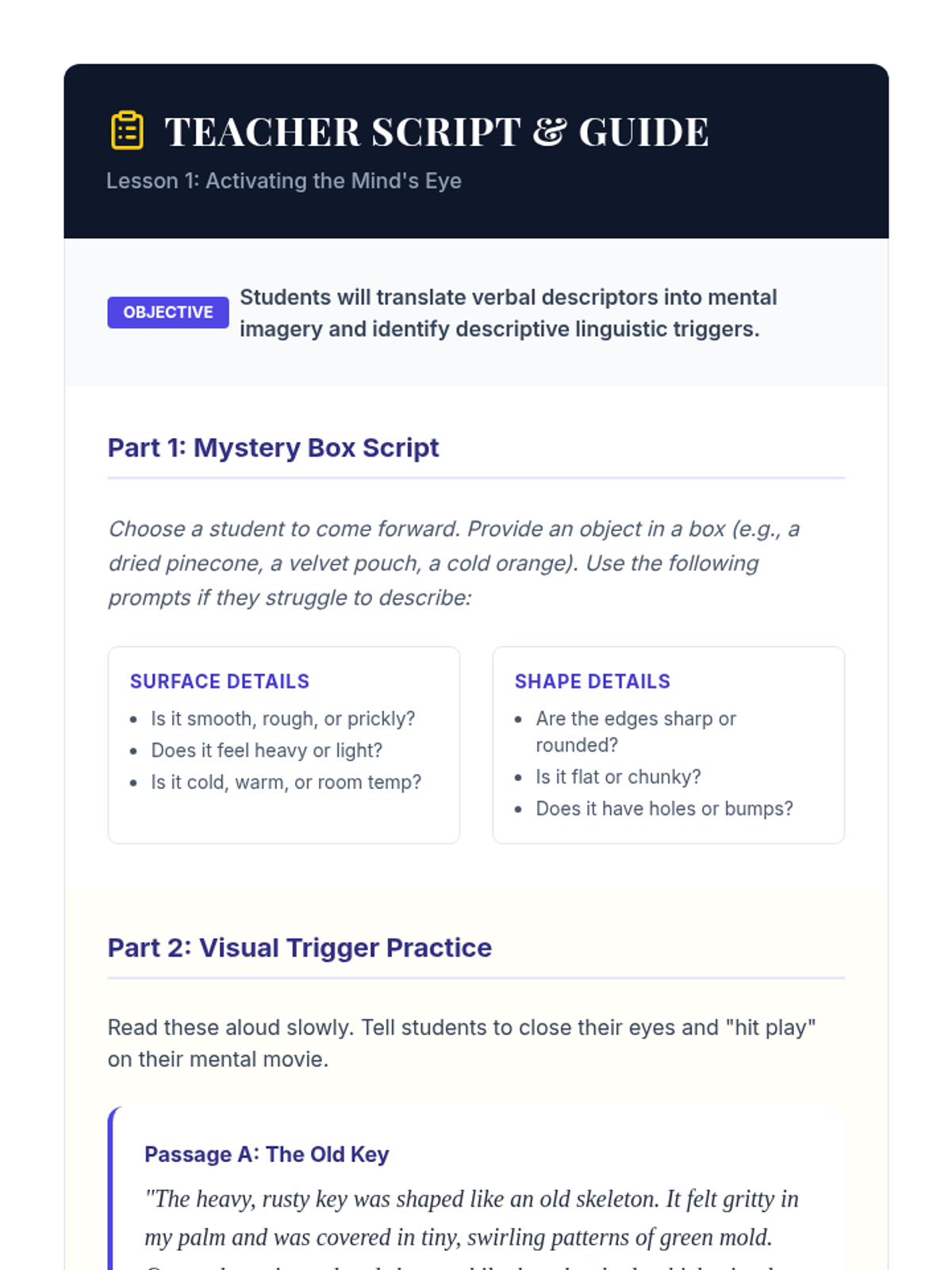
Students learn to activate their mental imagery by identifying descriptive nouns and adjectives, understanding that every reader builds a unique picture.
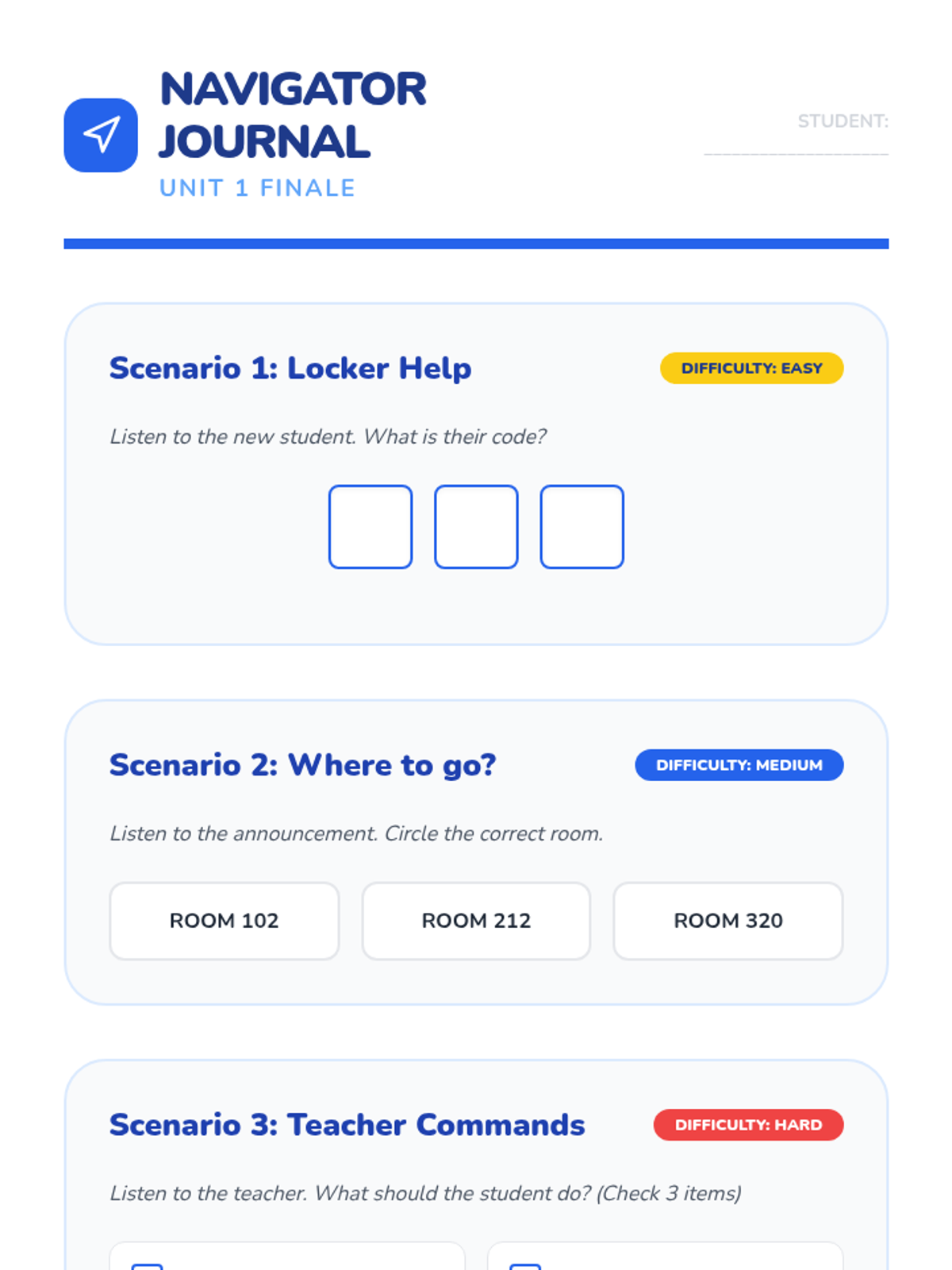
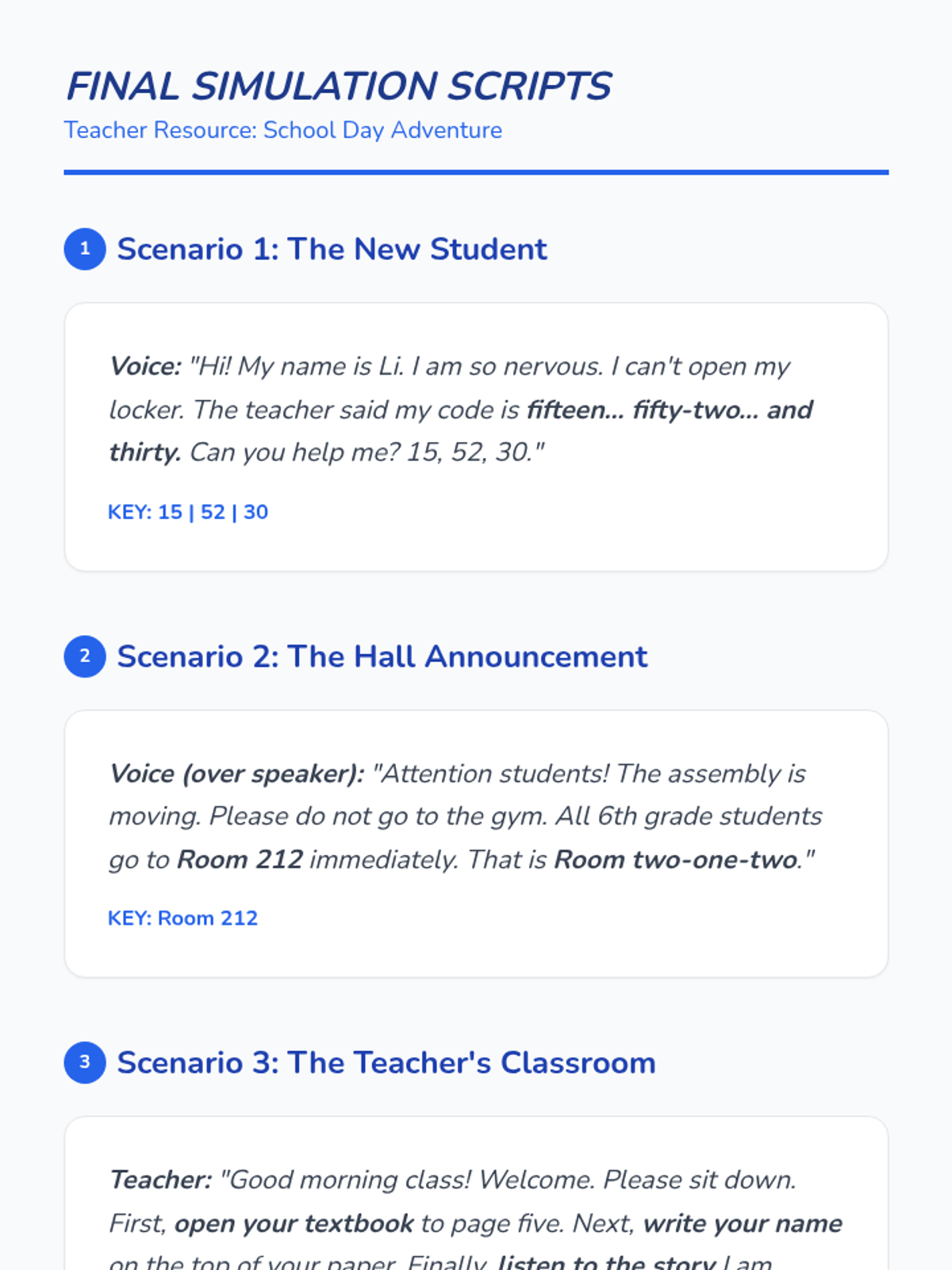
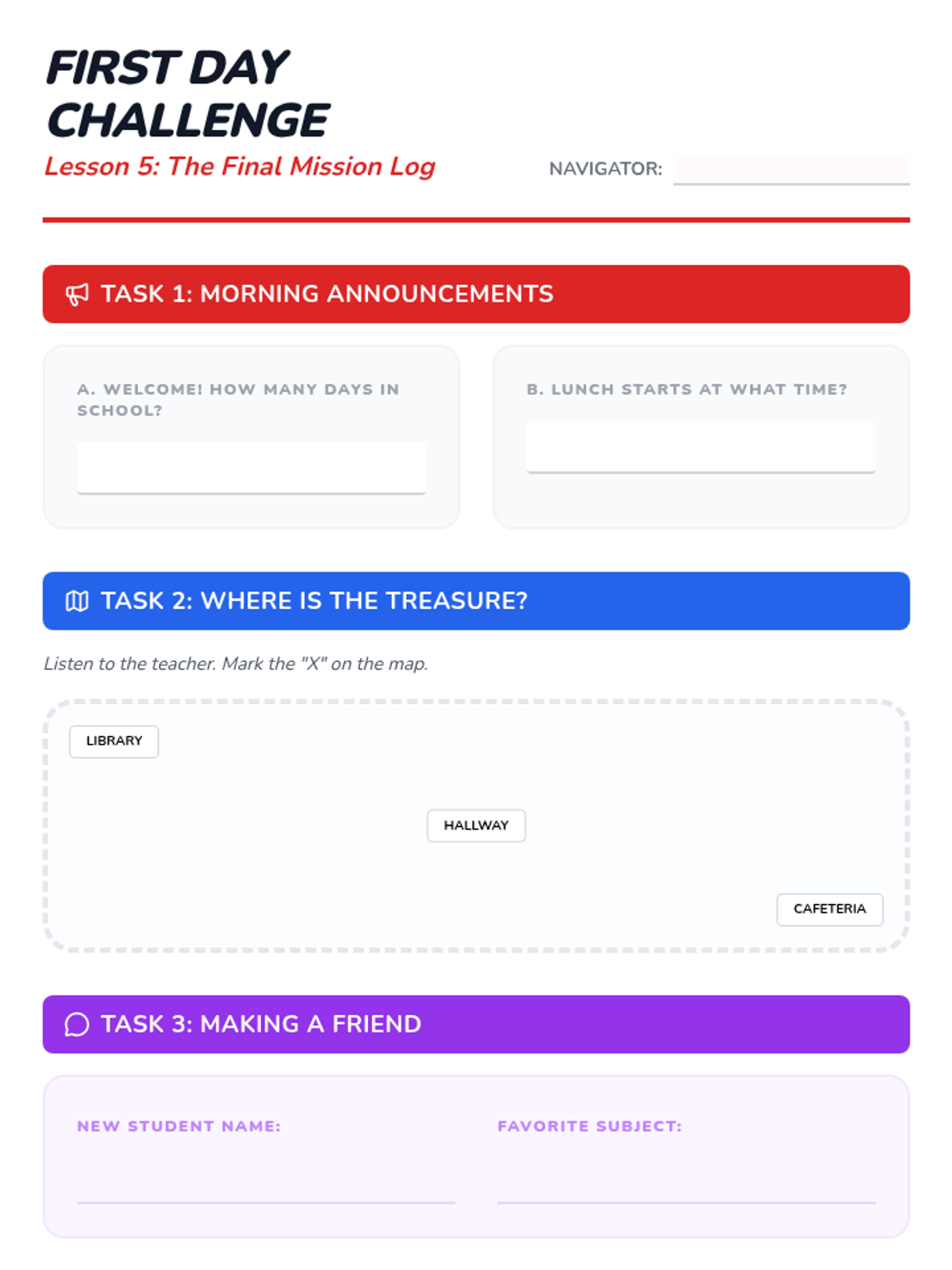
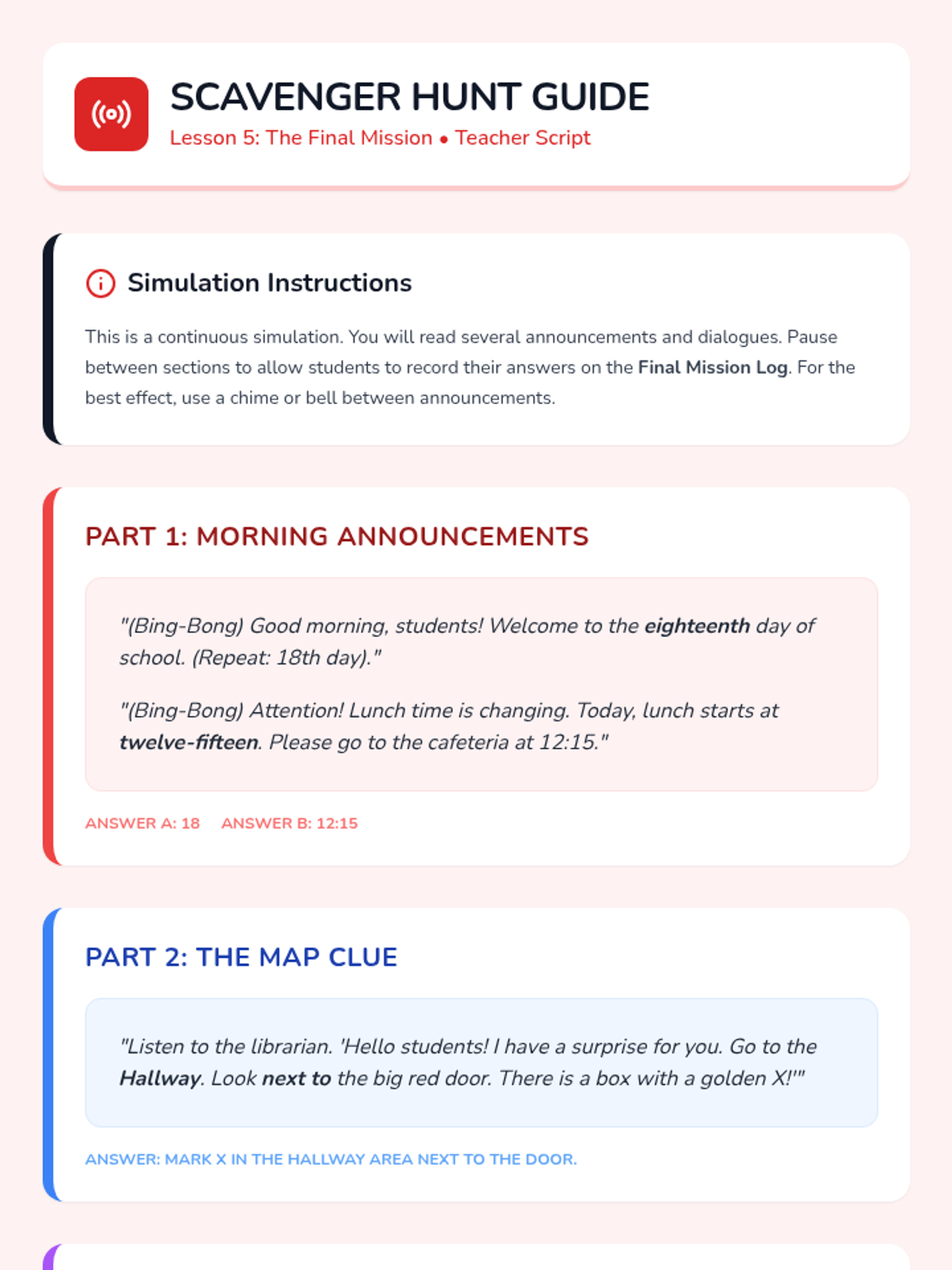
Students synthesize their learning by navigating a virtual audio adventure, making choices based on their understanding of dialogue and instructions throughout a simulated school day.
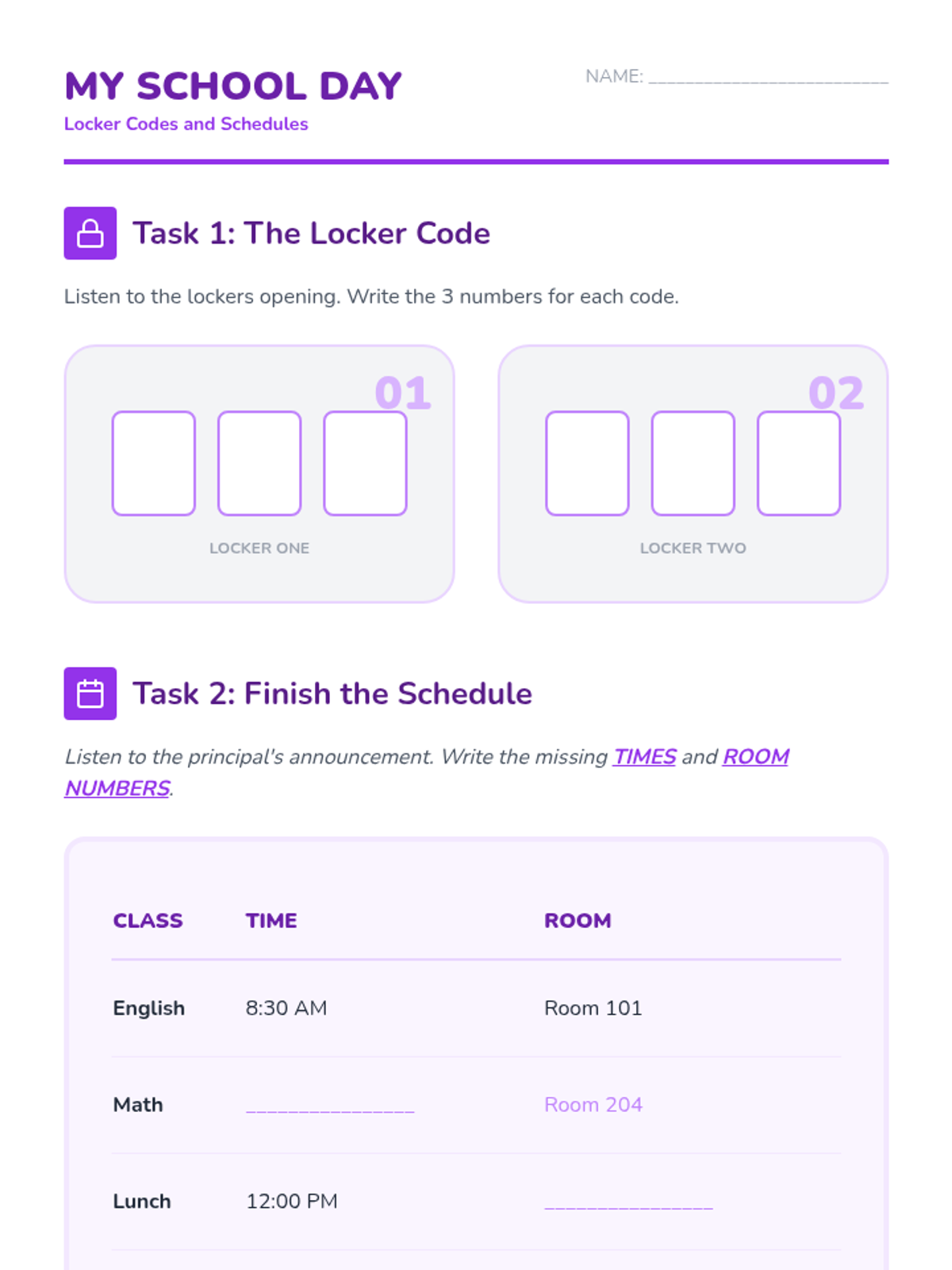
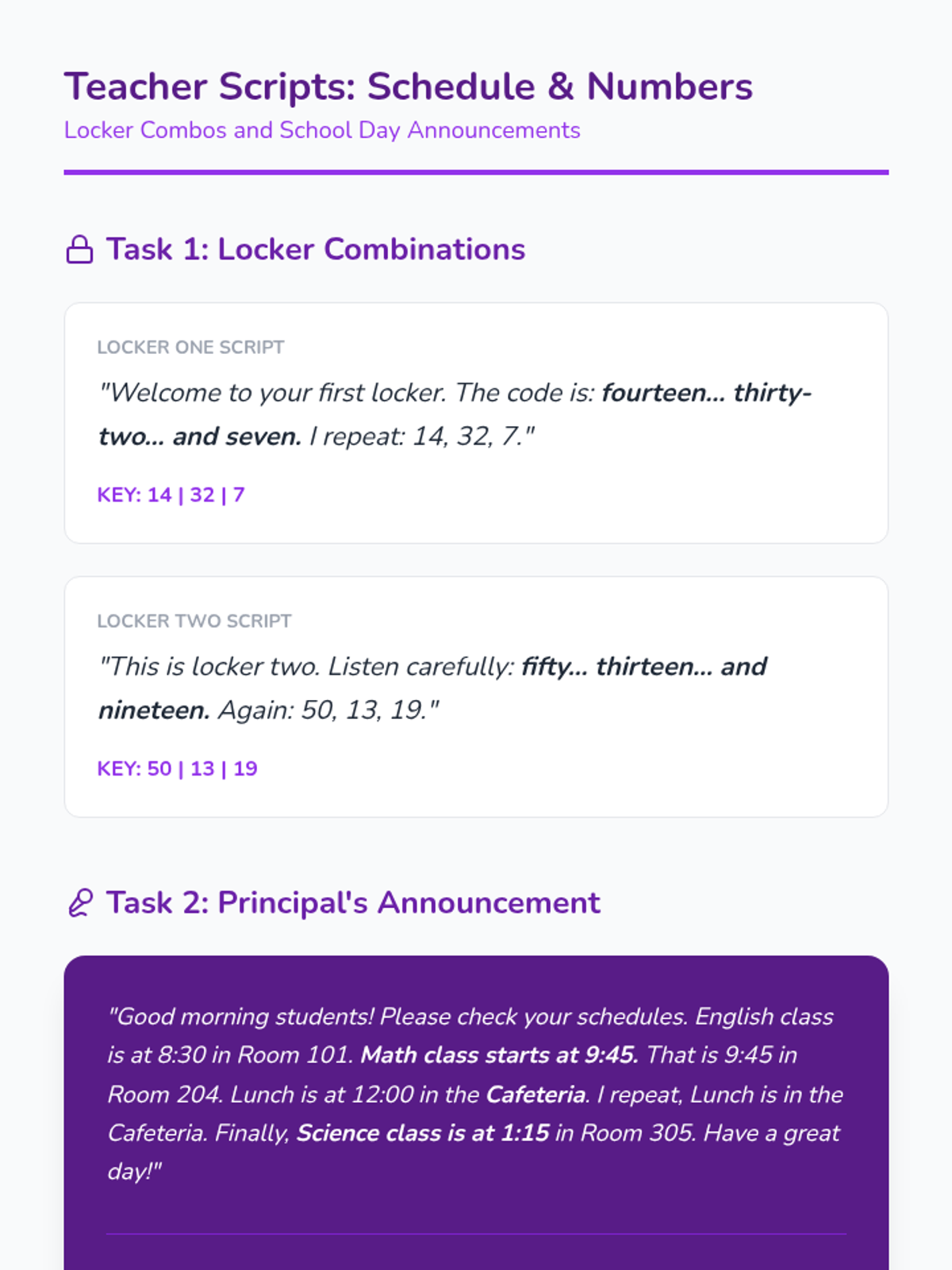
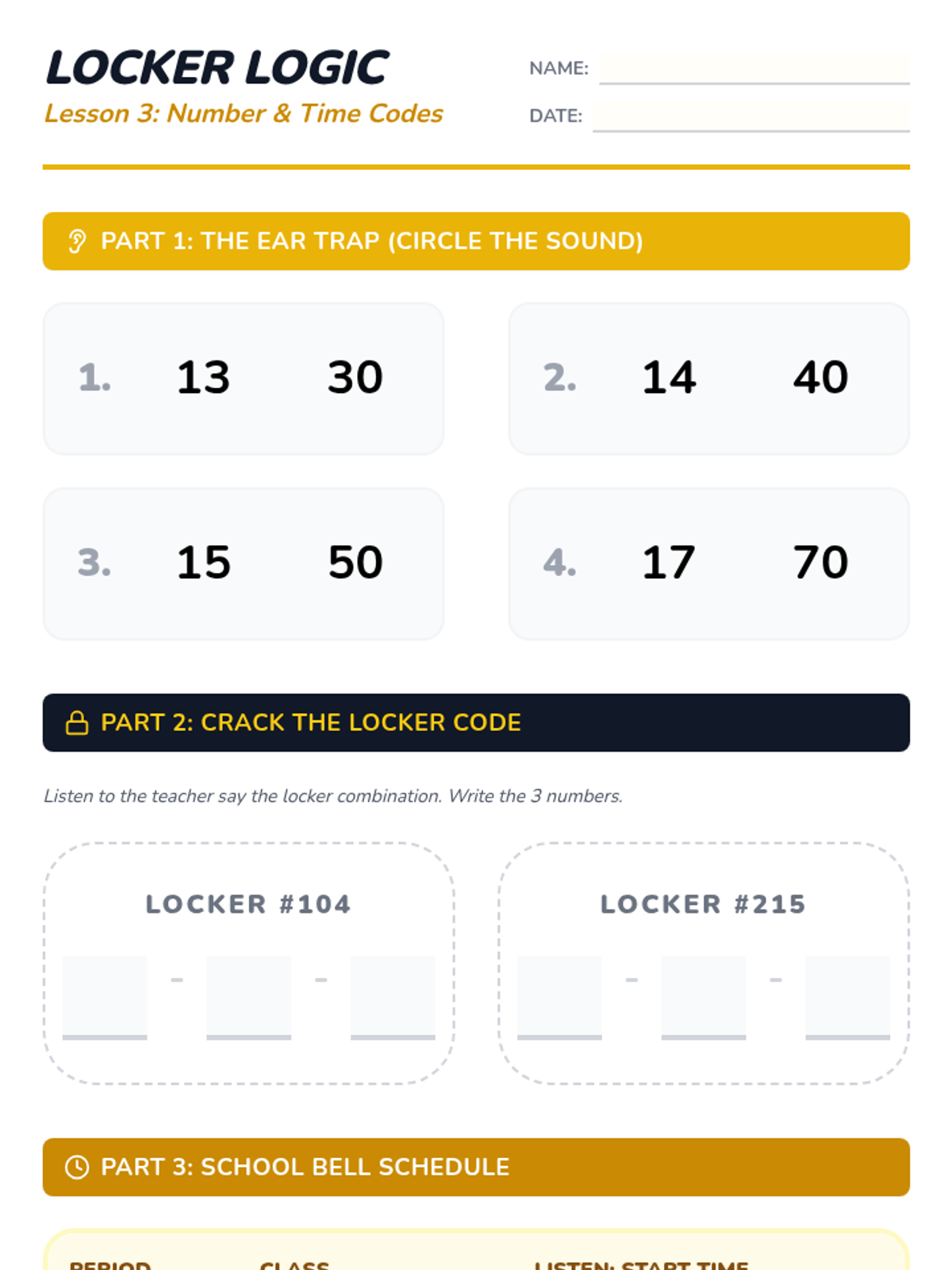
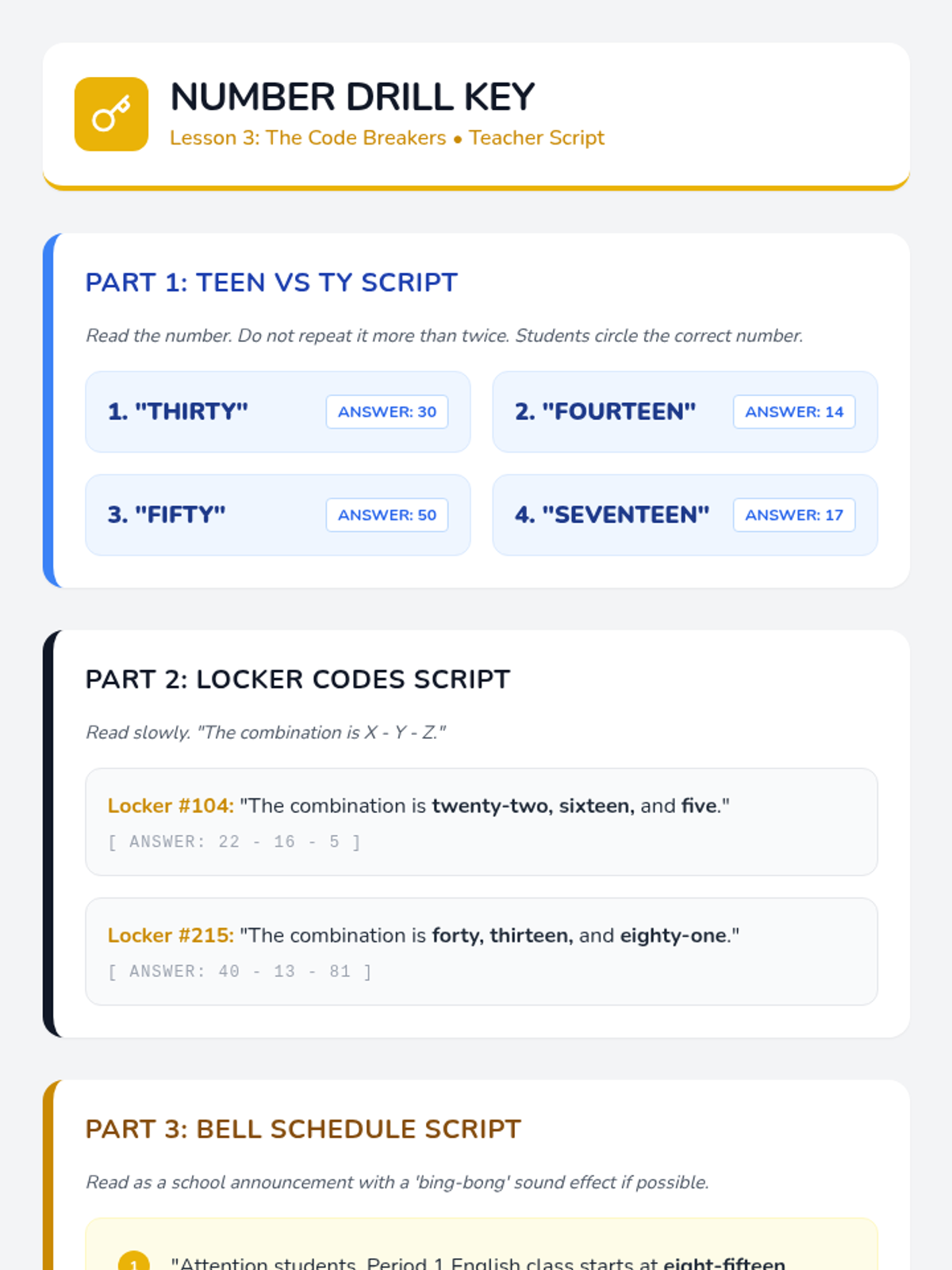
Students practice identifying numbers and time to understand class schedules and locker combinations, focusing on extracting specific data from spoken input.
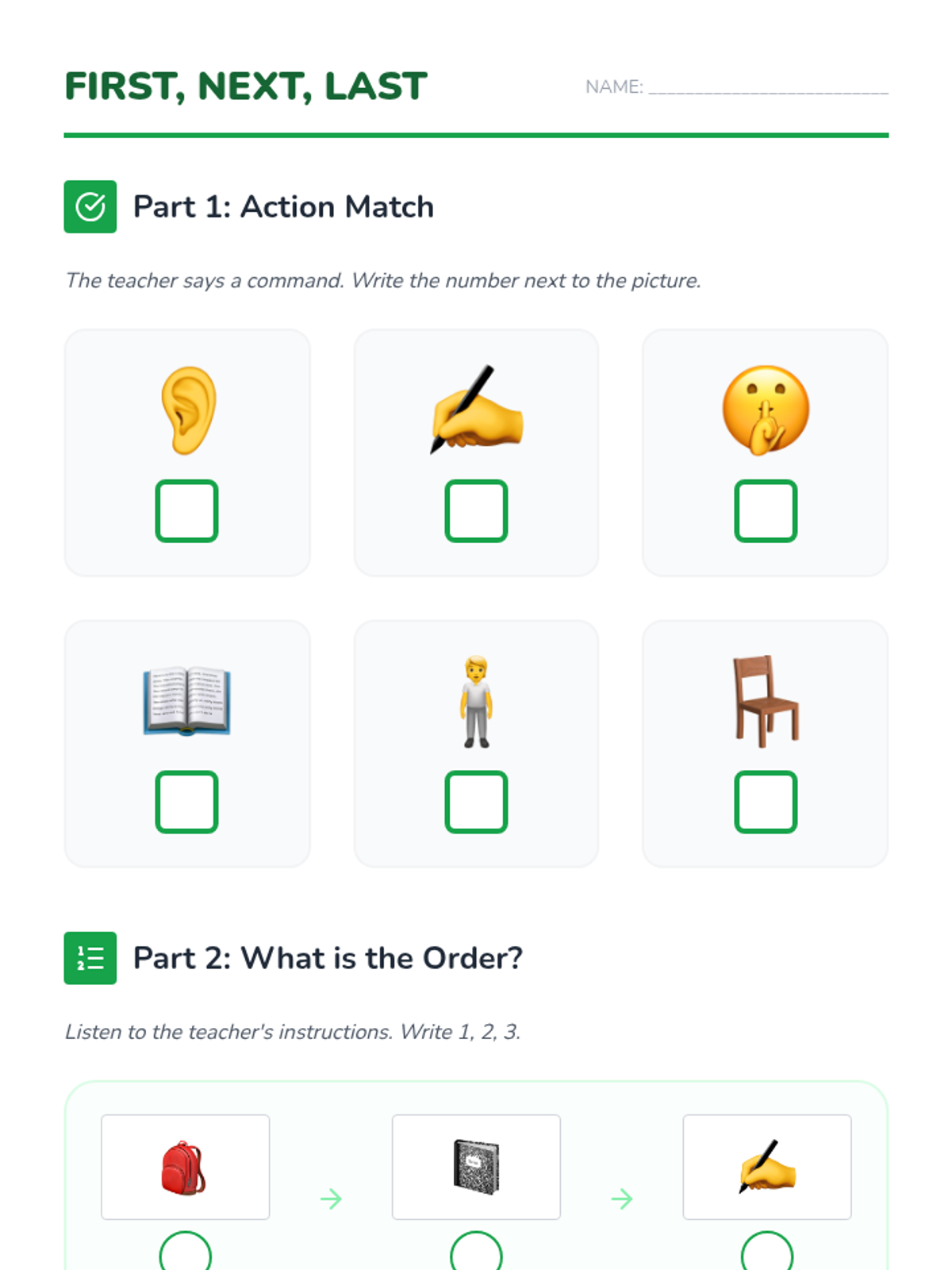
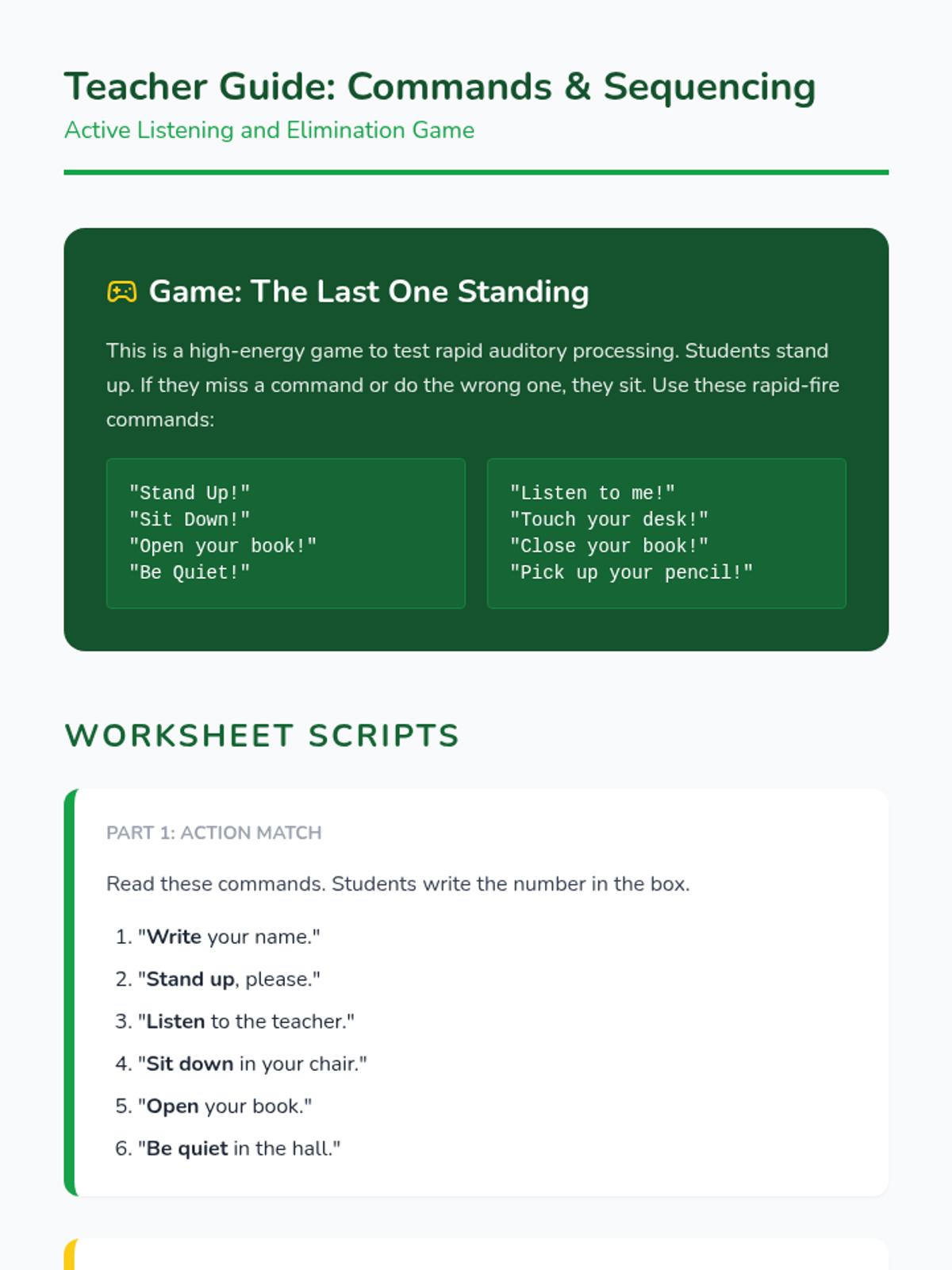
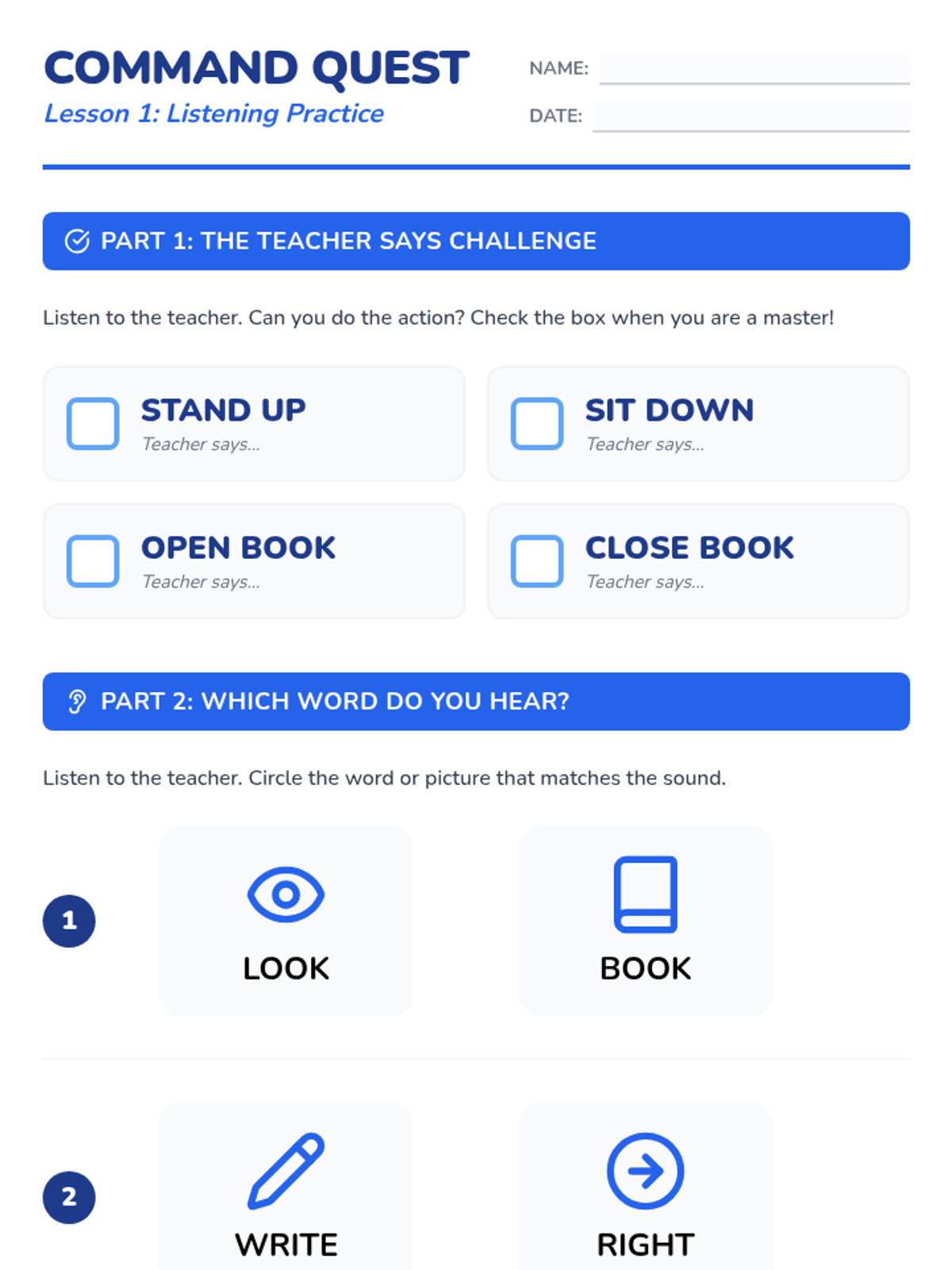
Students learn to recognize and respond to common instructional verbs used by teachers, practicing sequencing through visual-auditory matching.
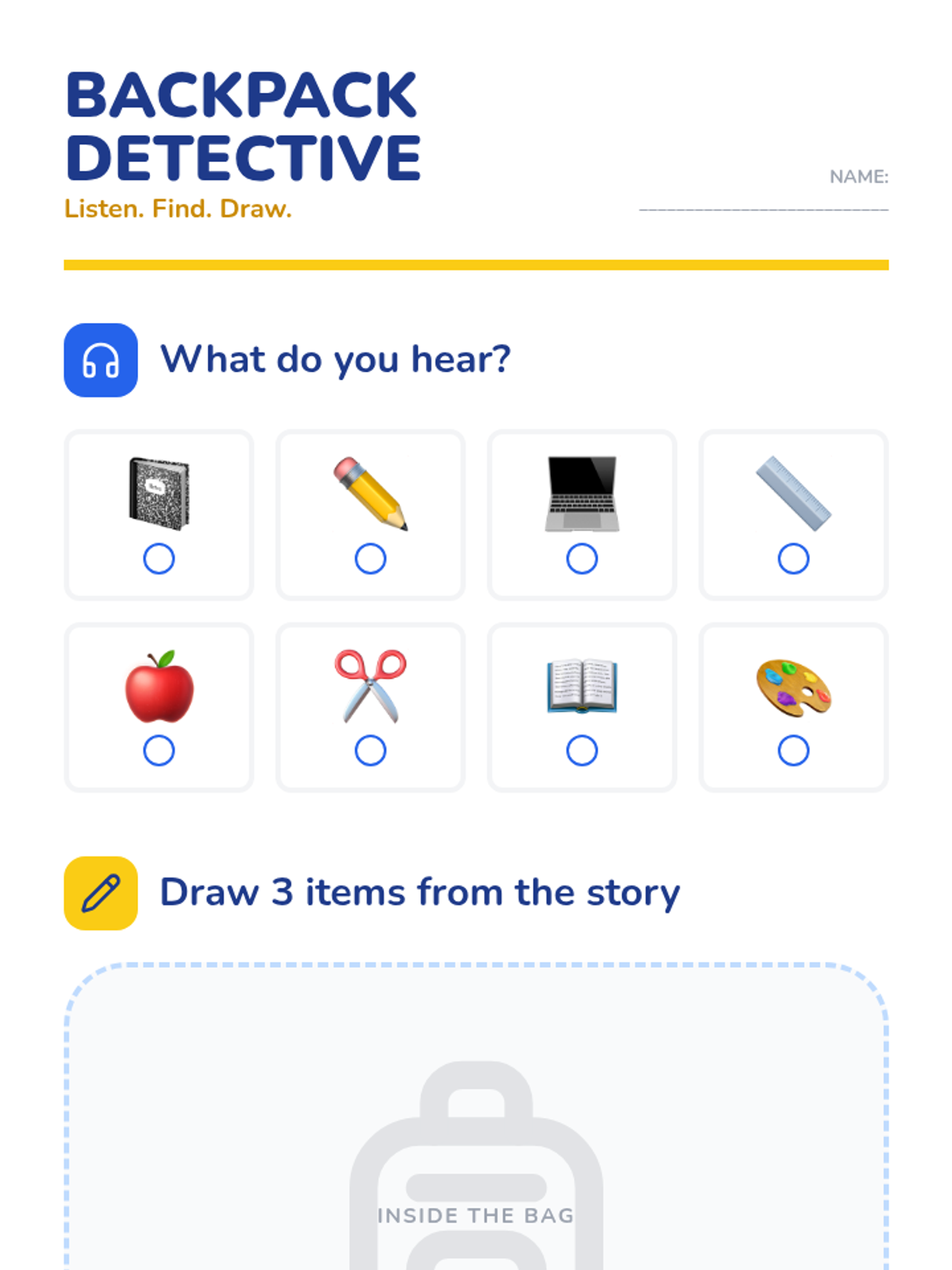
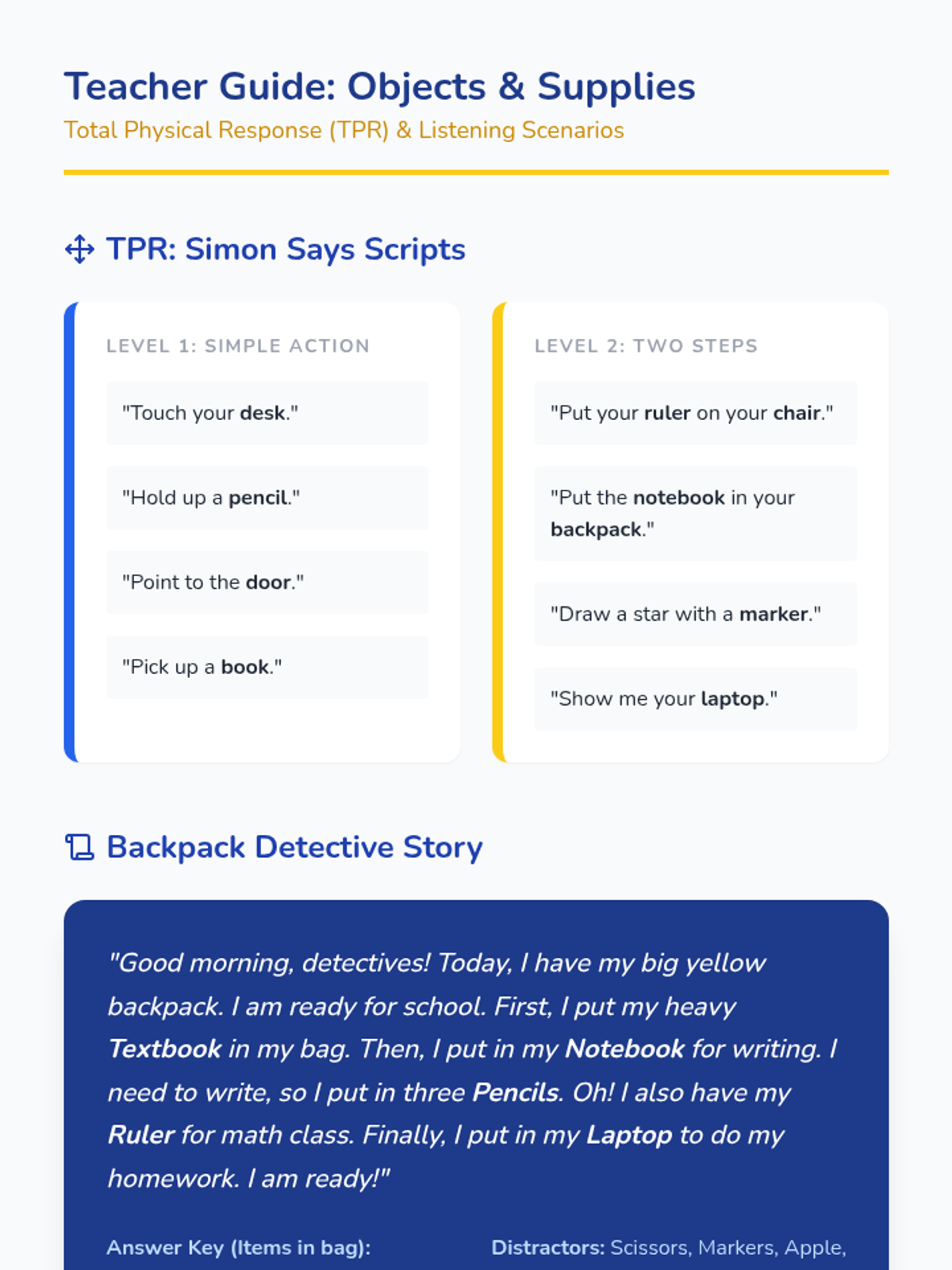
Students focus on physical classroom items, participating in TPR activities and a 'Backpack Detective' game to build auditory-visual associations.
A culminating simulation where students synthesize all previous listening skills to navigate a virtual first day of school.
Students practice listening for key details in social greetings and personal introductions, focusing on 'Wh-' questions.
This lesson focuses on auditory discrimination of numbers (0-100), time-telling, and locker combinations.
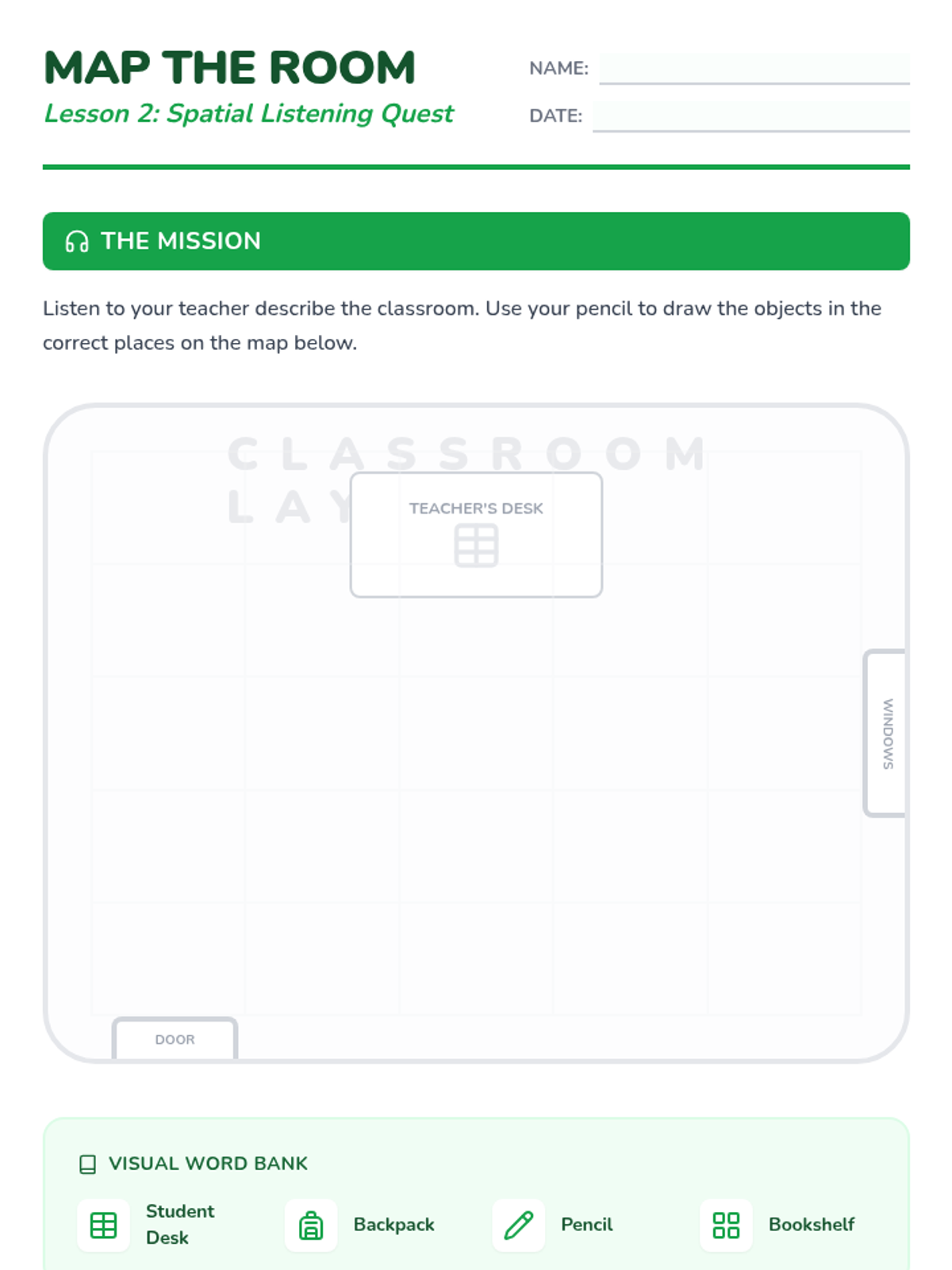
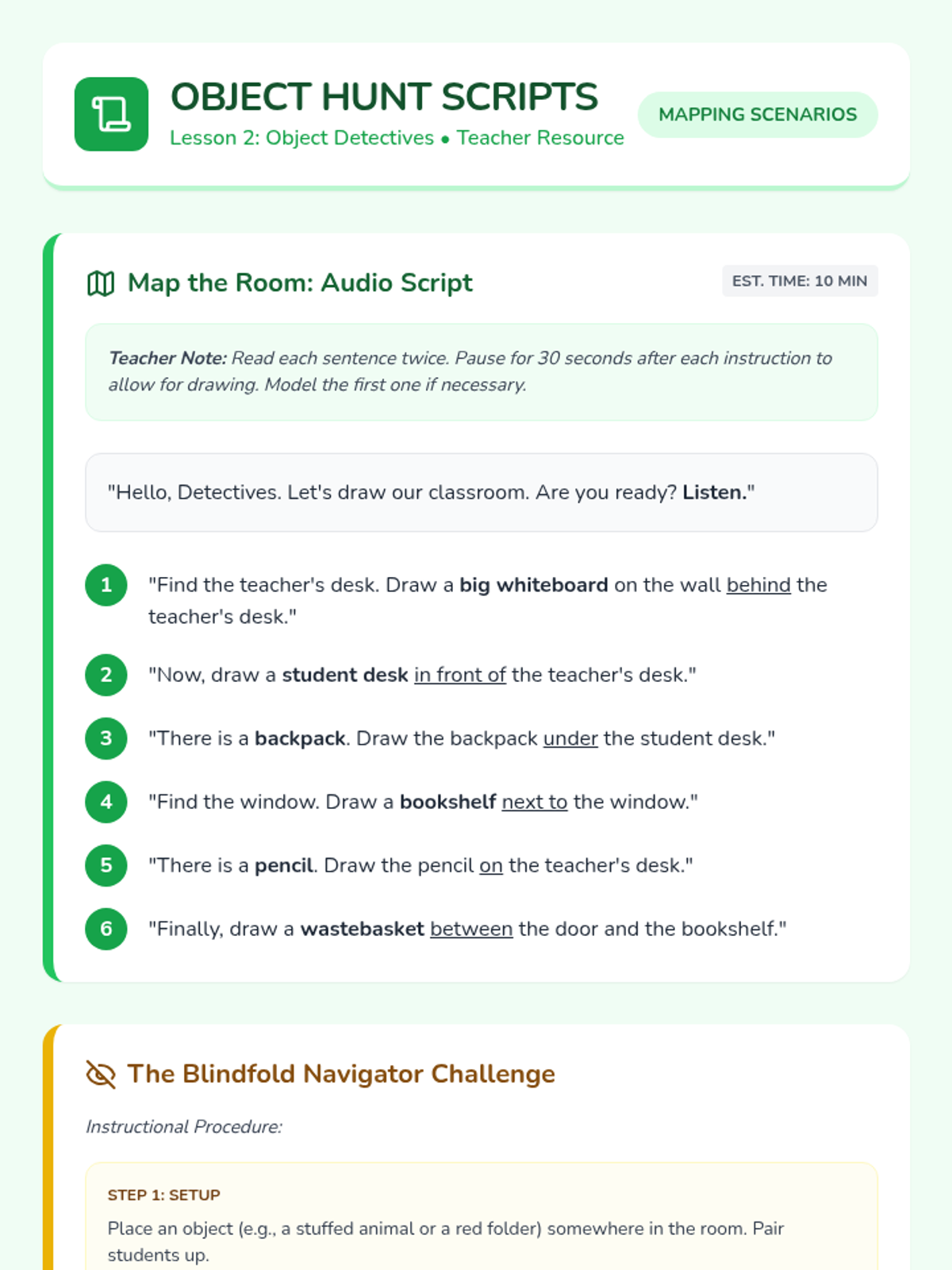
Learners identify common school objects and their locations using prepositions of place and spatial listening cues.
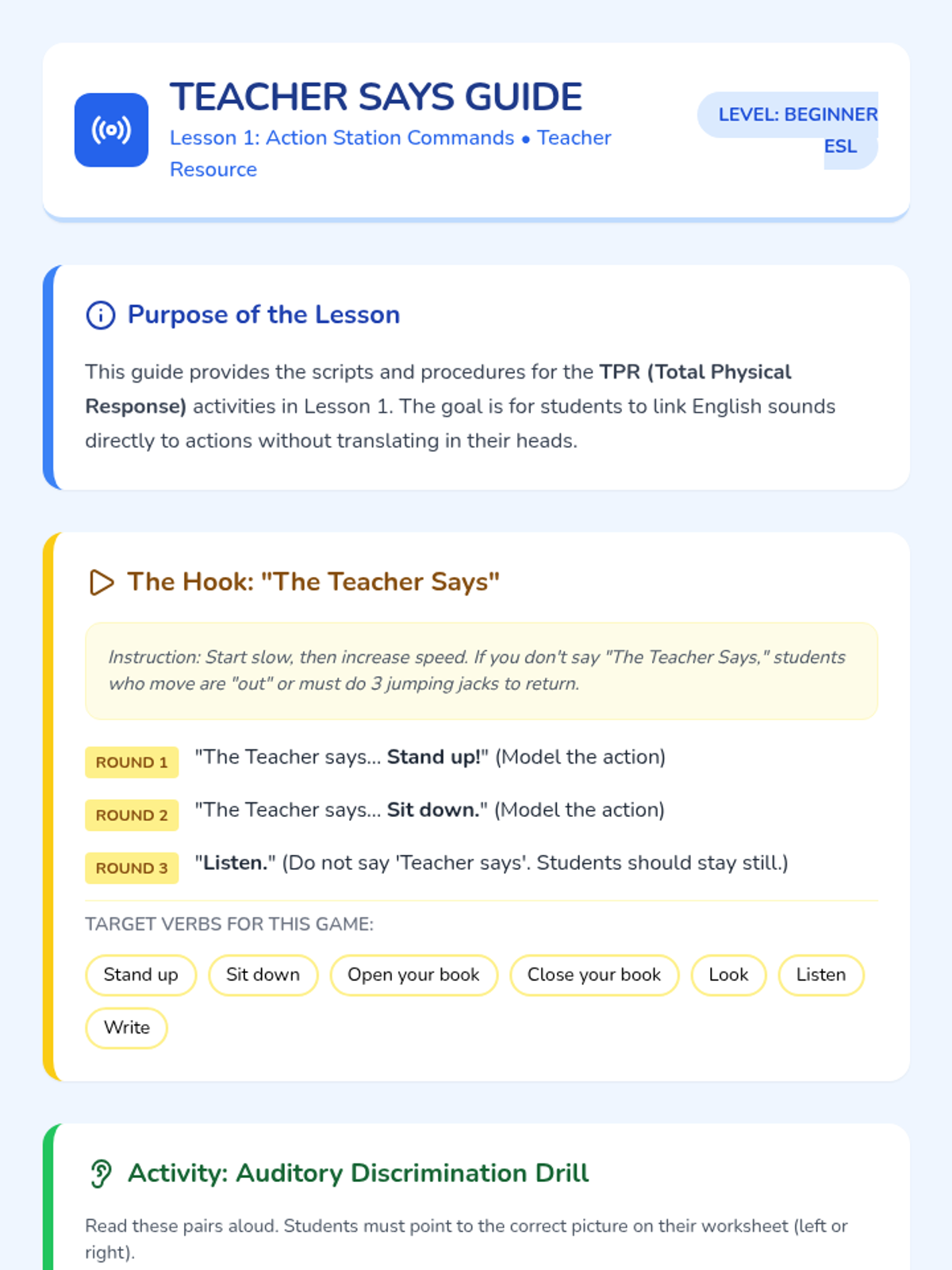
Students learn to recognize and respond to basic imperative verbs through high-energy Total Physical Response (TPR) activities and games.
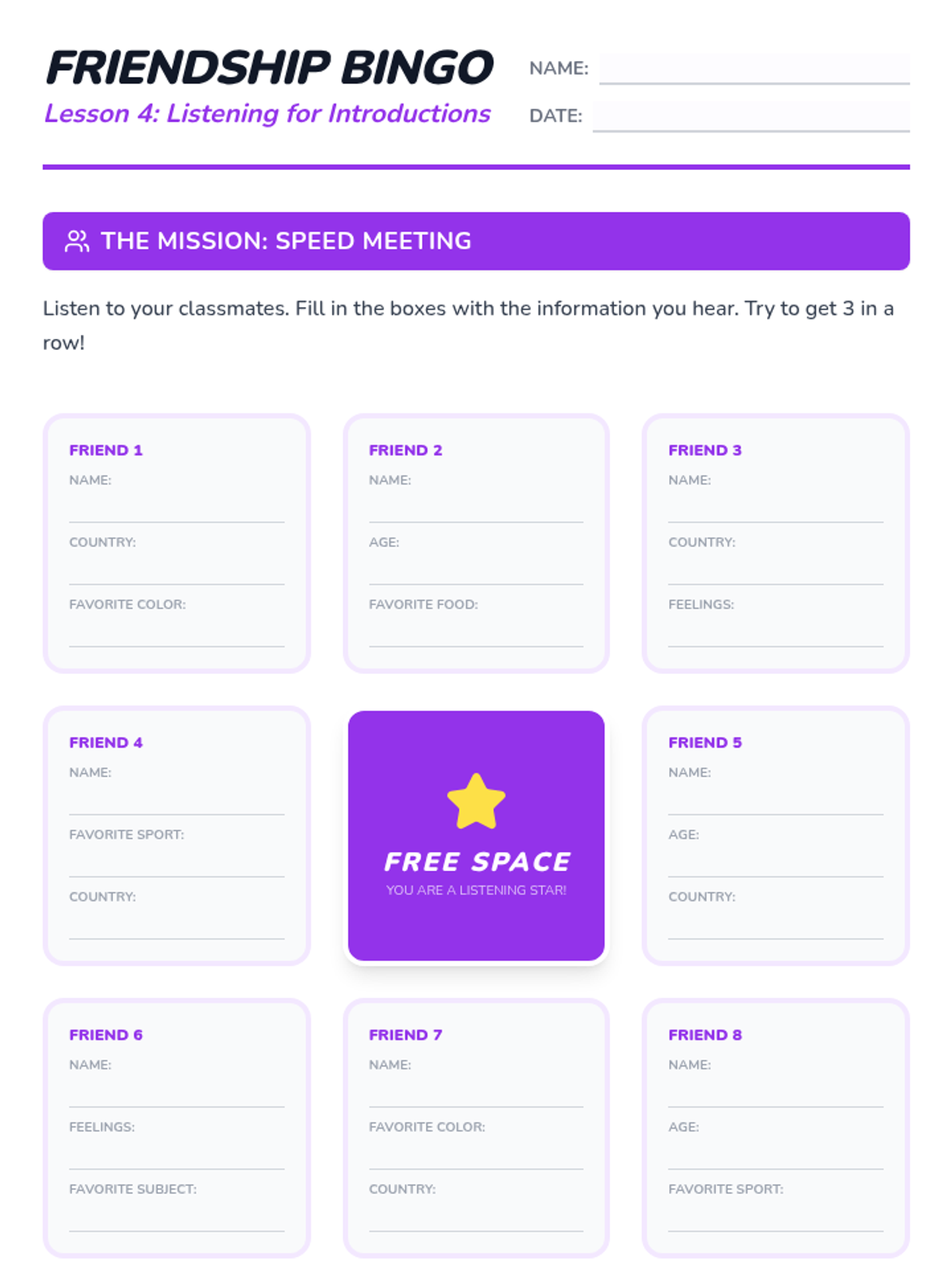
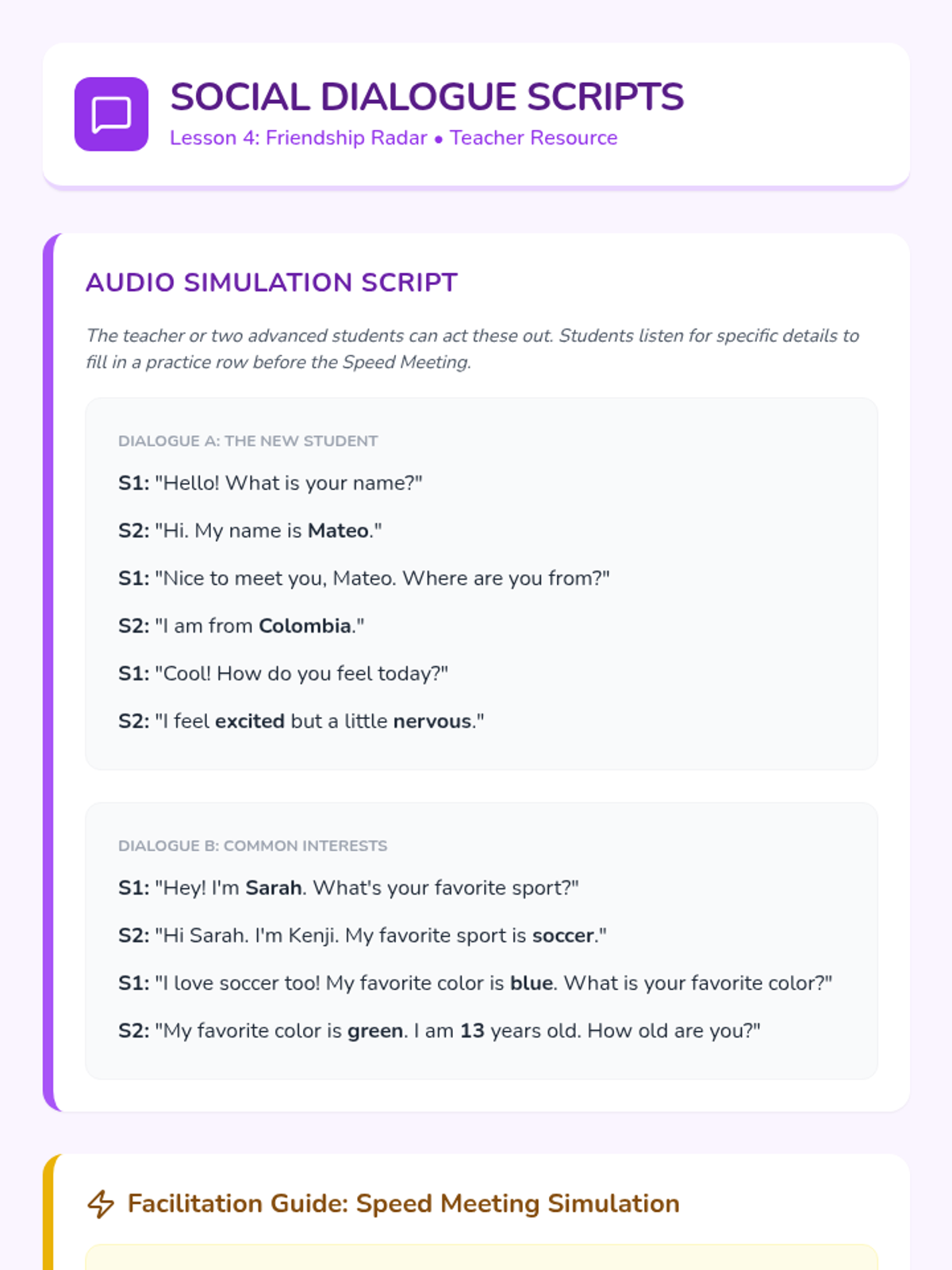
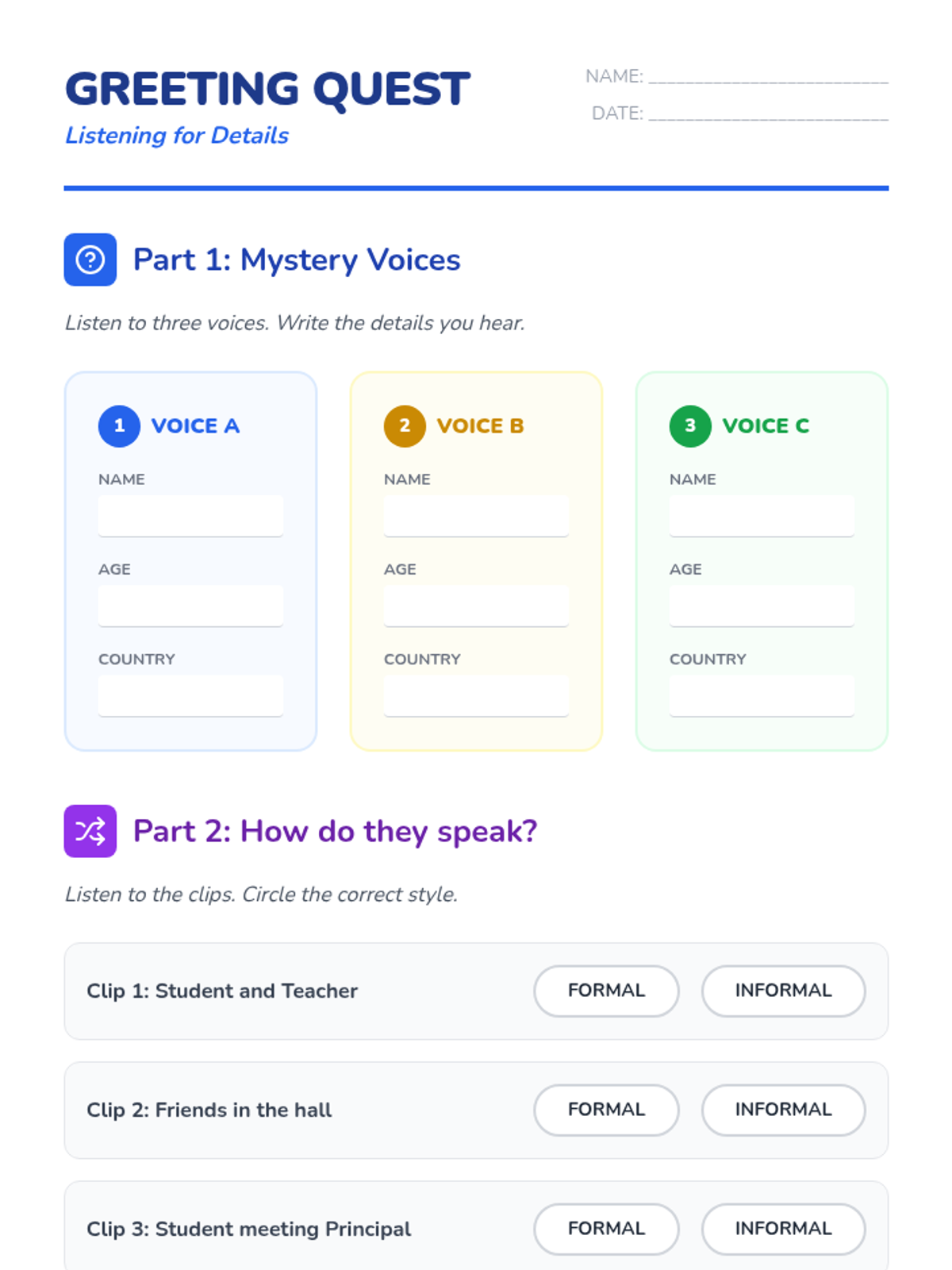
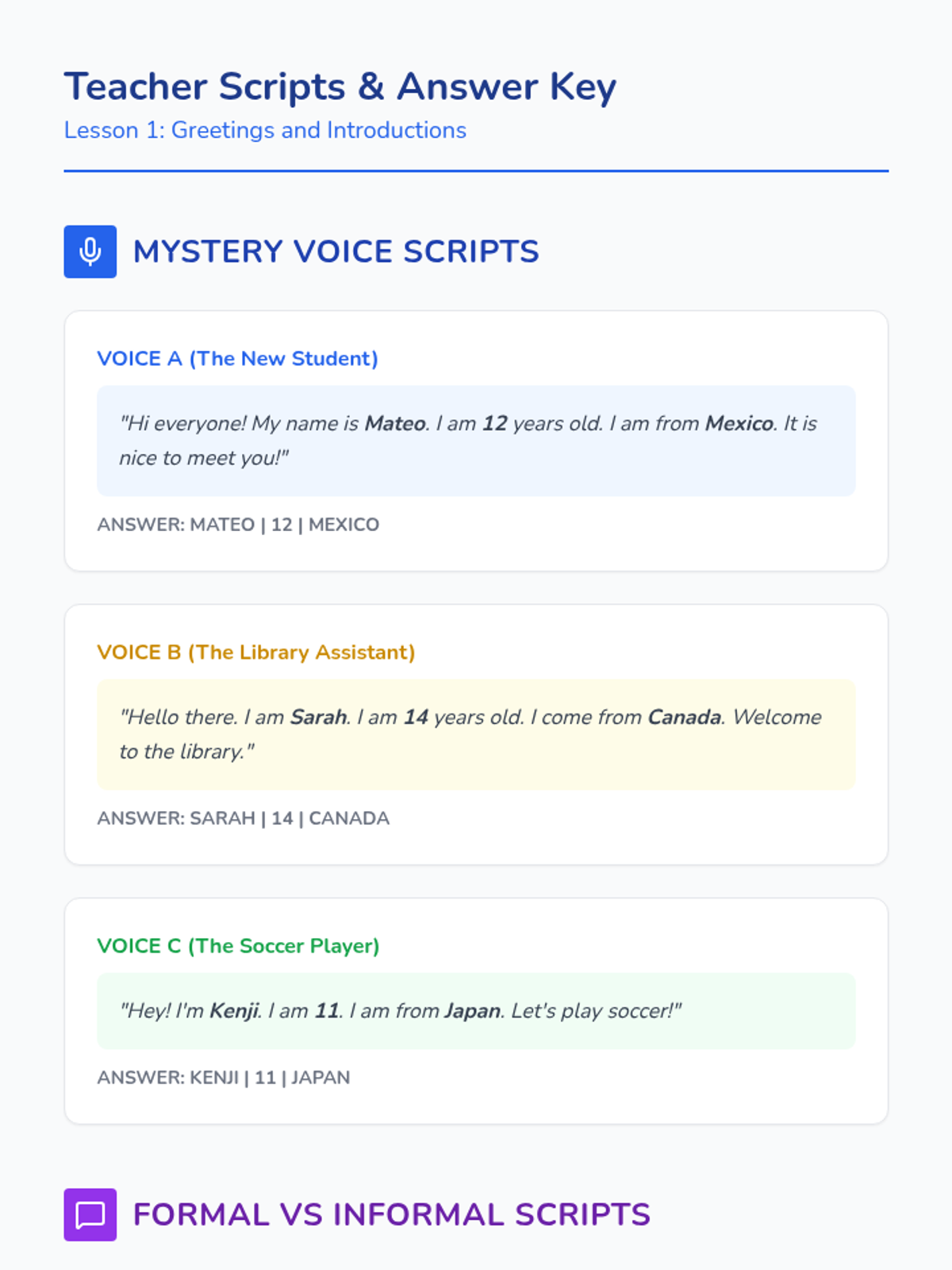
Students practice identifying names and personal details from spoken English, focusing on distinguishing between formal teacher-student greetings and informal peer-to-peer introductions.
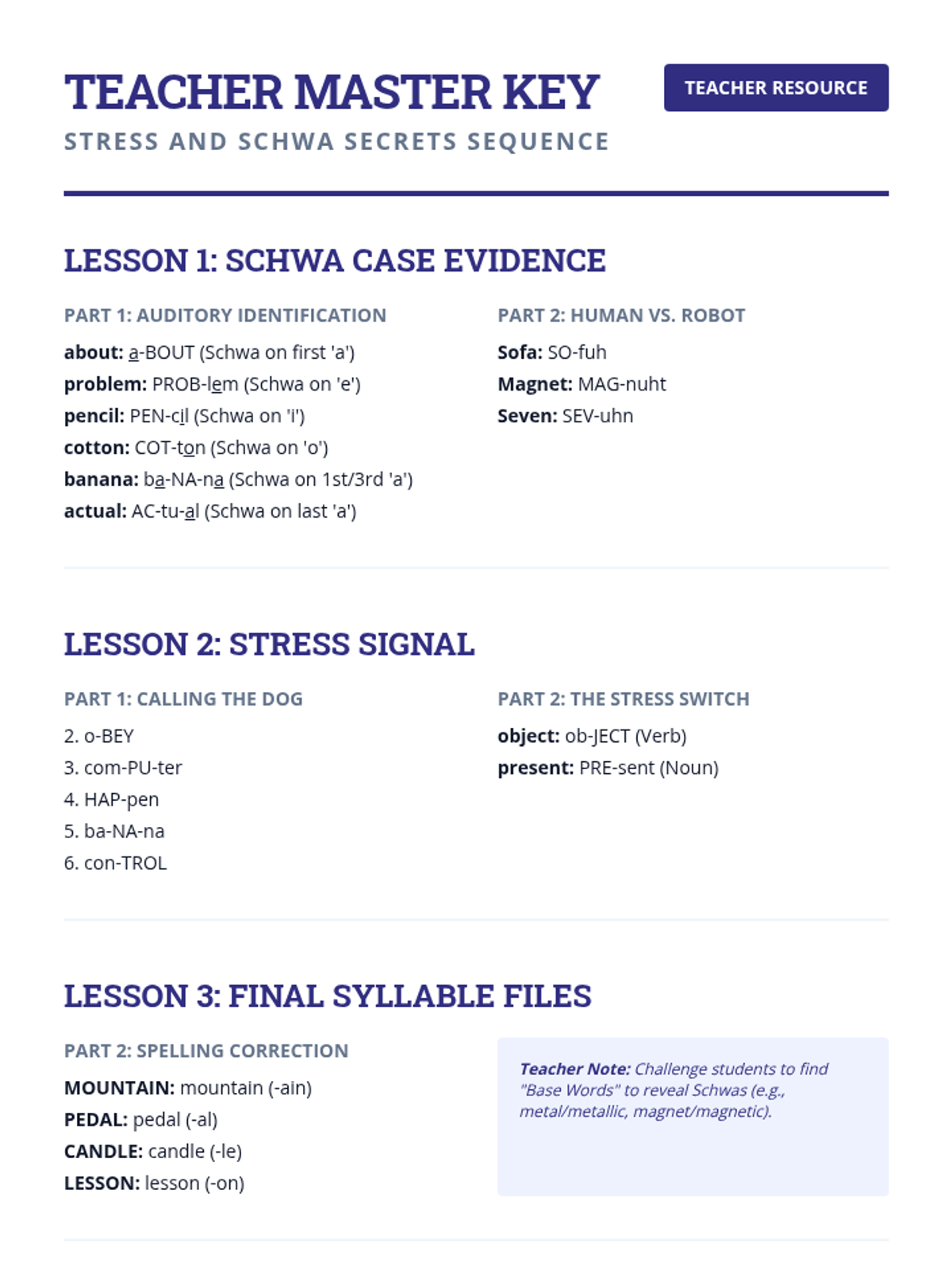
A collection of answer keys and teacher guides for the entire sequence.
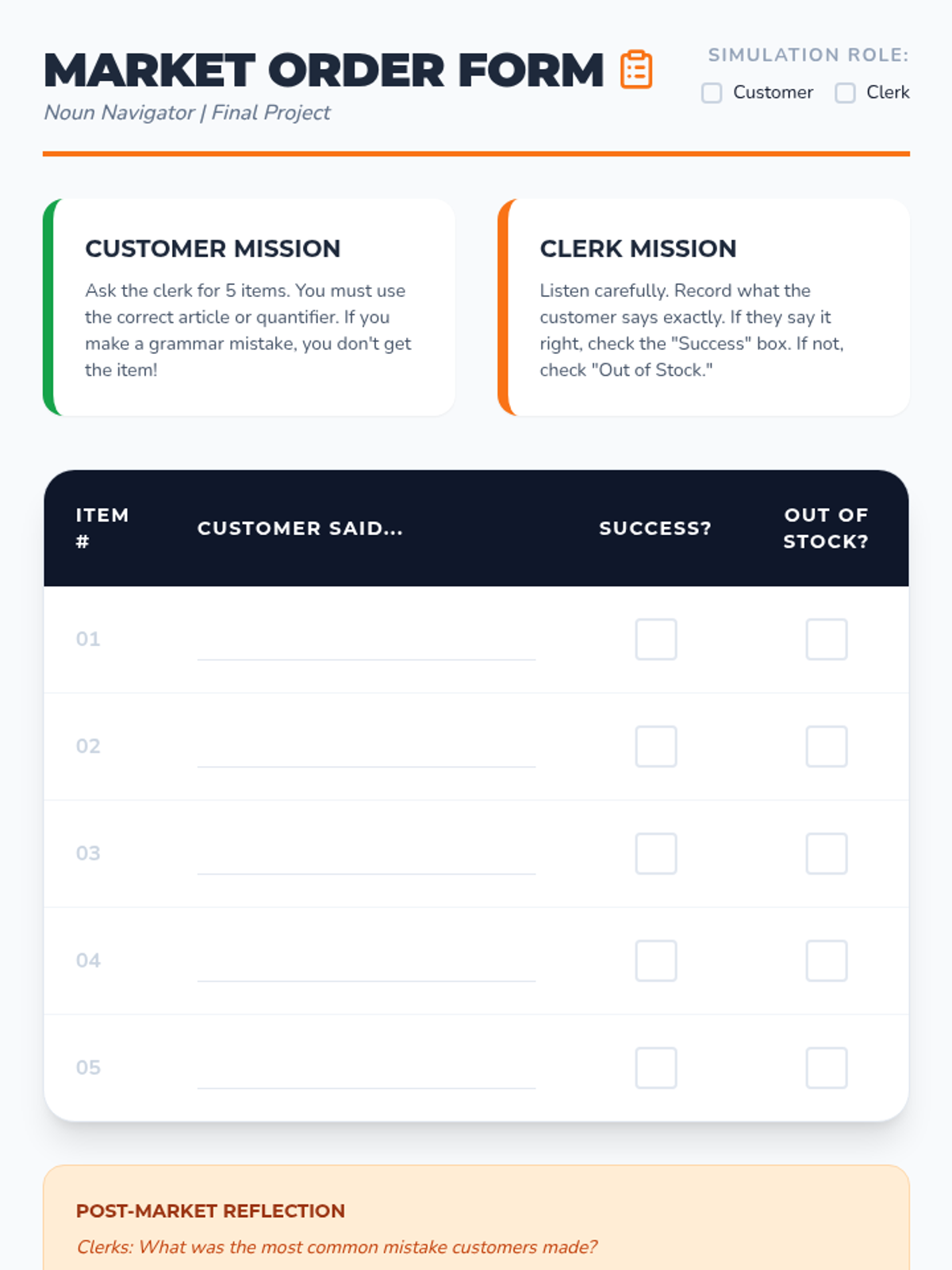
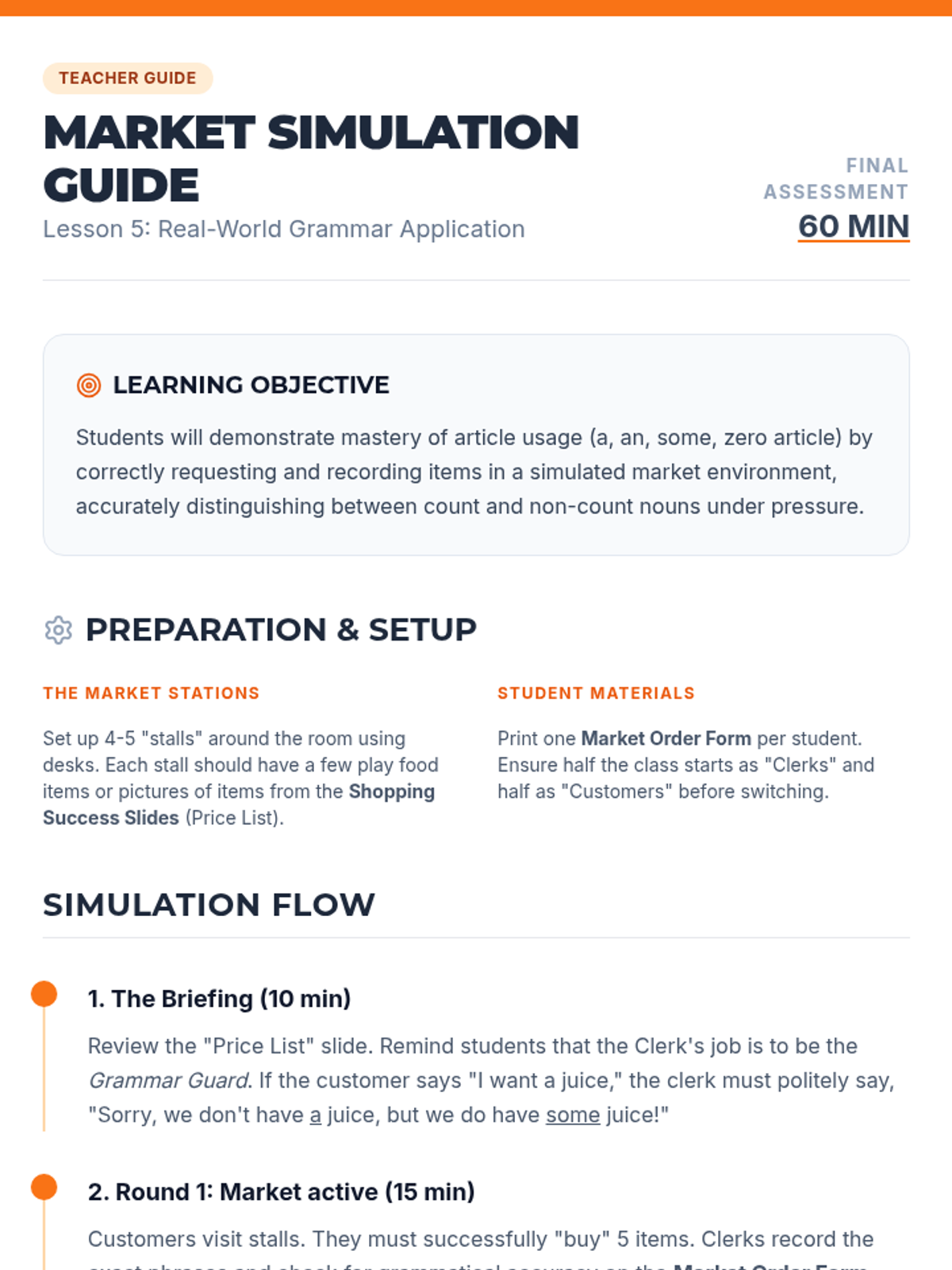
Students role-play a grocery store or restaurant scenario. They must use correct articles and quantifiers to order specific items and amounts, solidifying their understanding of count vs. non-count rules.
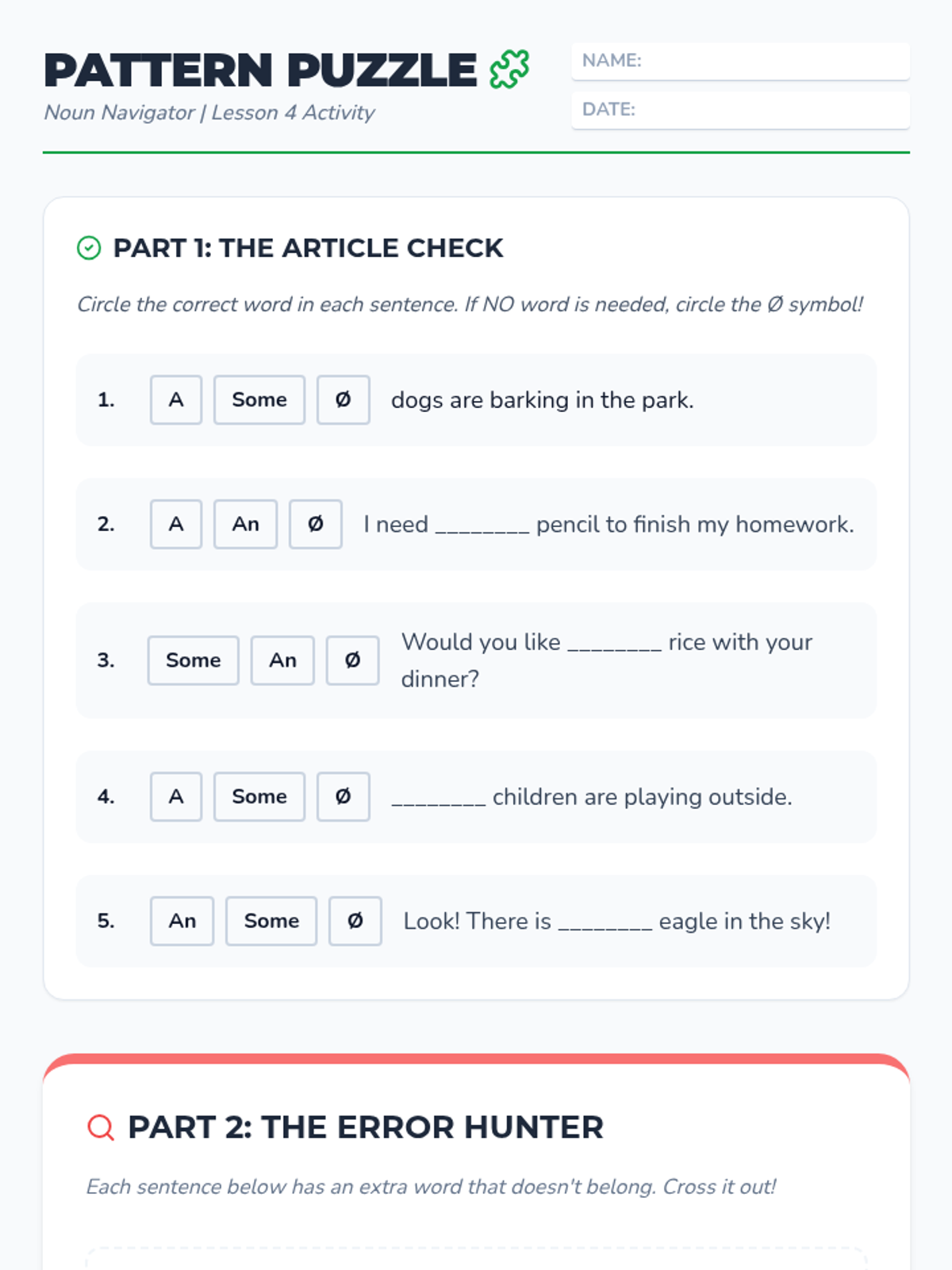
This lesson clarifies that plural count nouns (dogs) and non-count nouns (furniture) often behave similarly by not taking 'a/an'. Students identify these patterns in sentences.
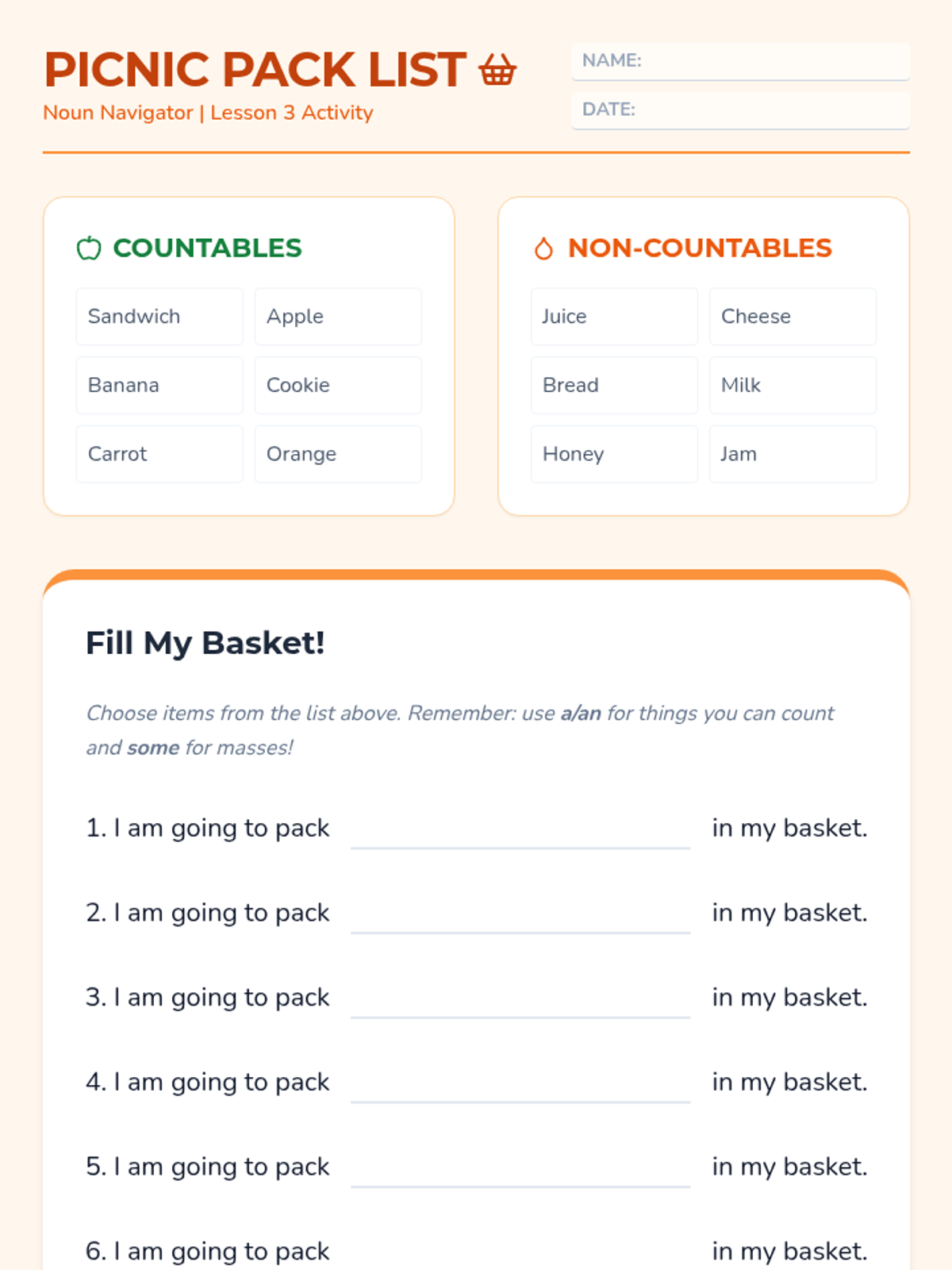
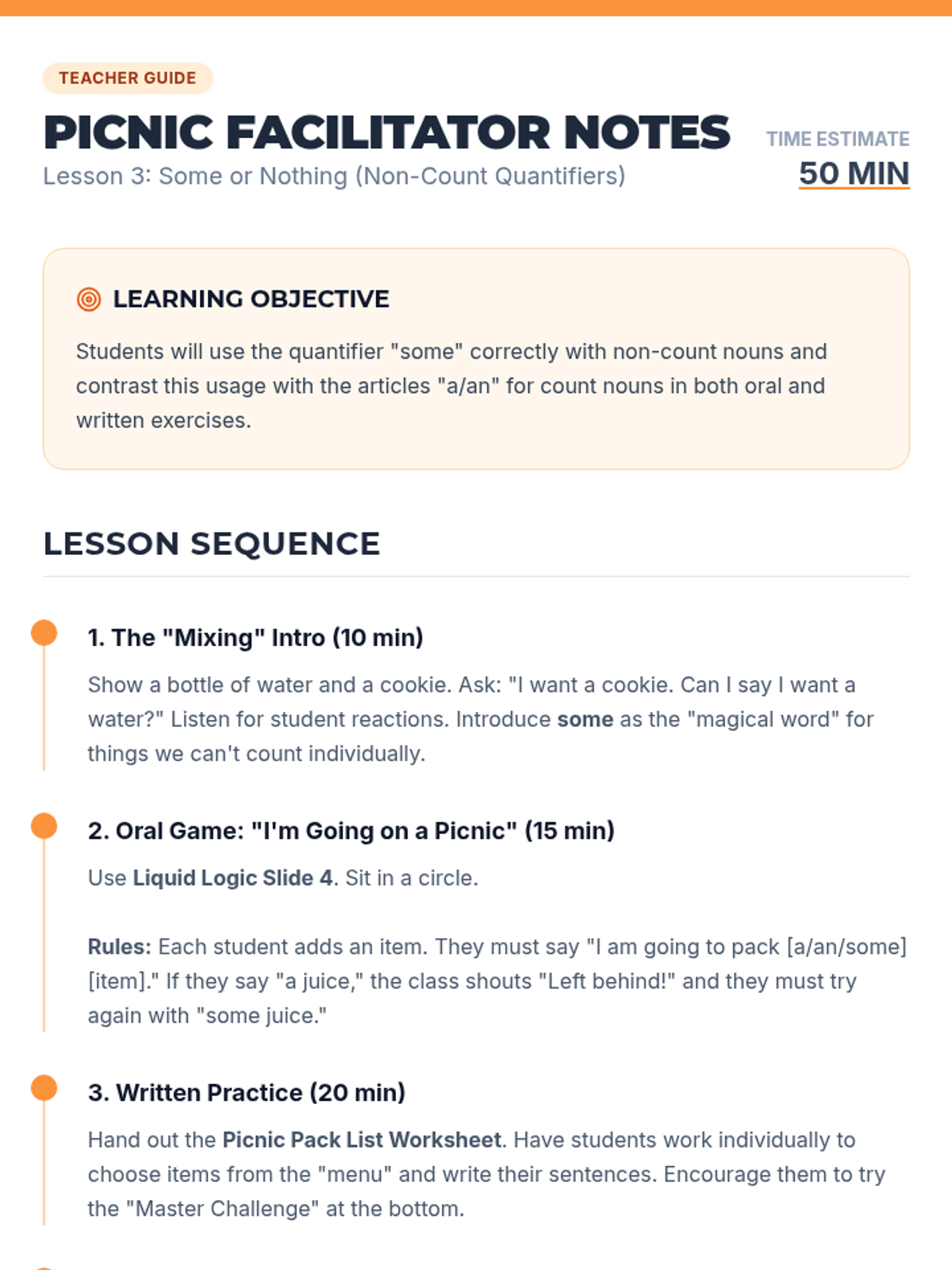
Students learn how to handle non-count nouns by using no article (the zero article) or quantifiers like 'some'. They contrast 'I want a cookie' with 'I want some milk'.
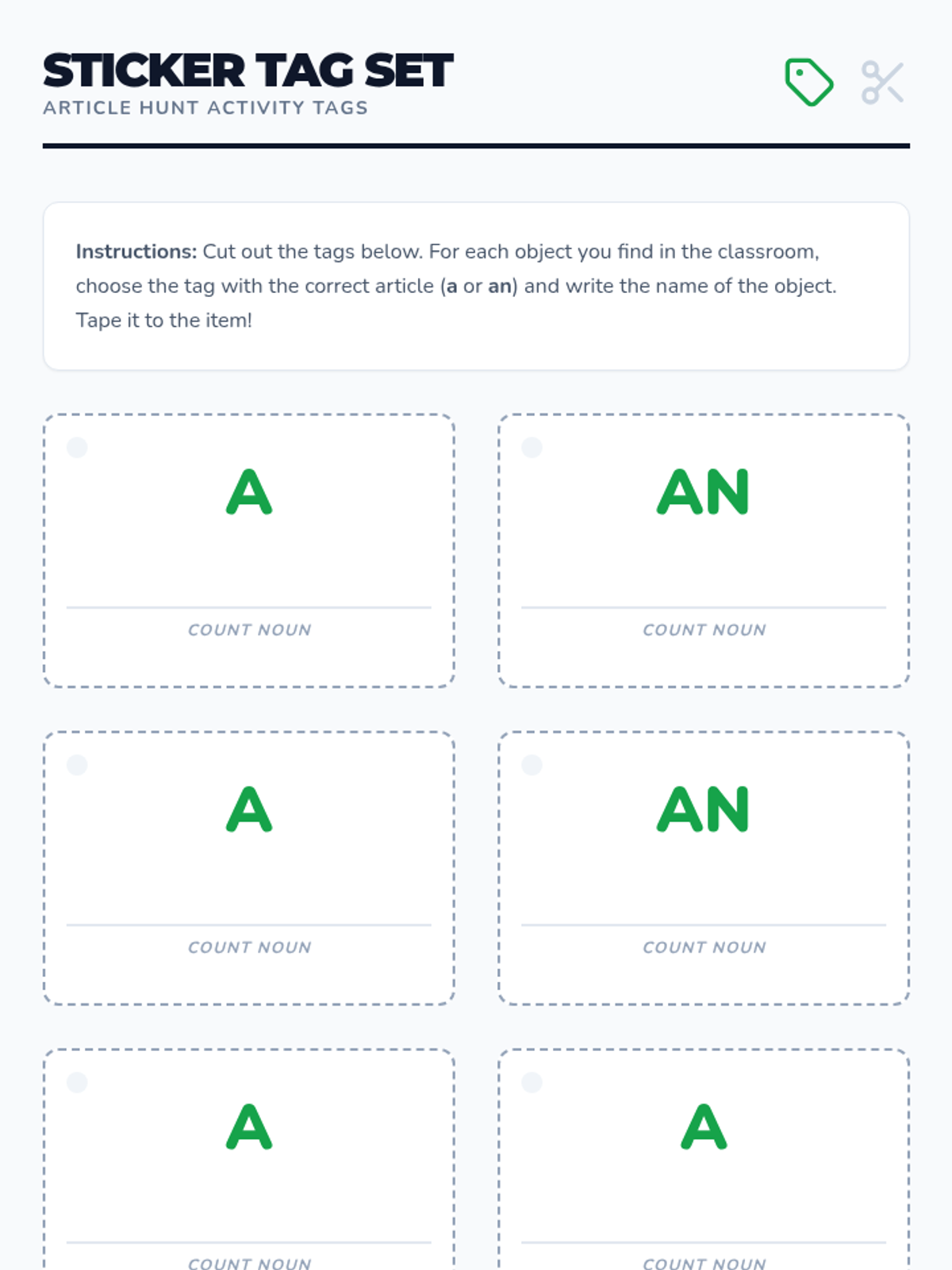
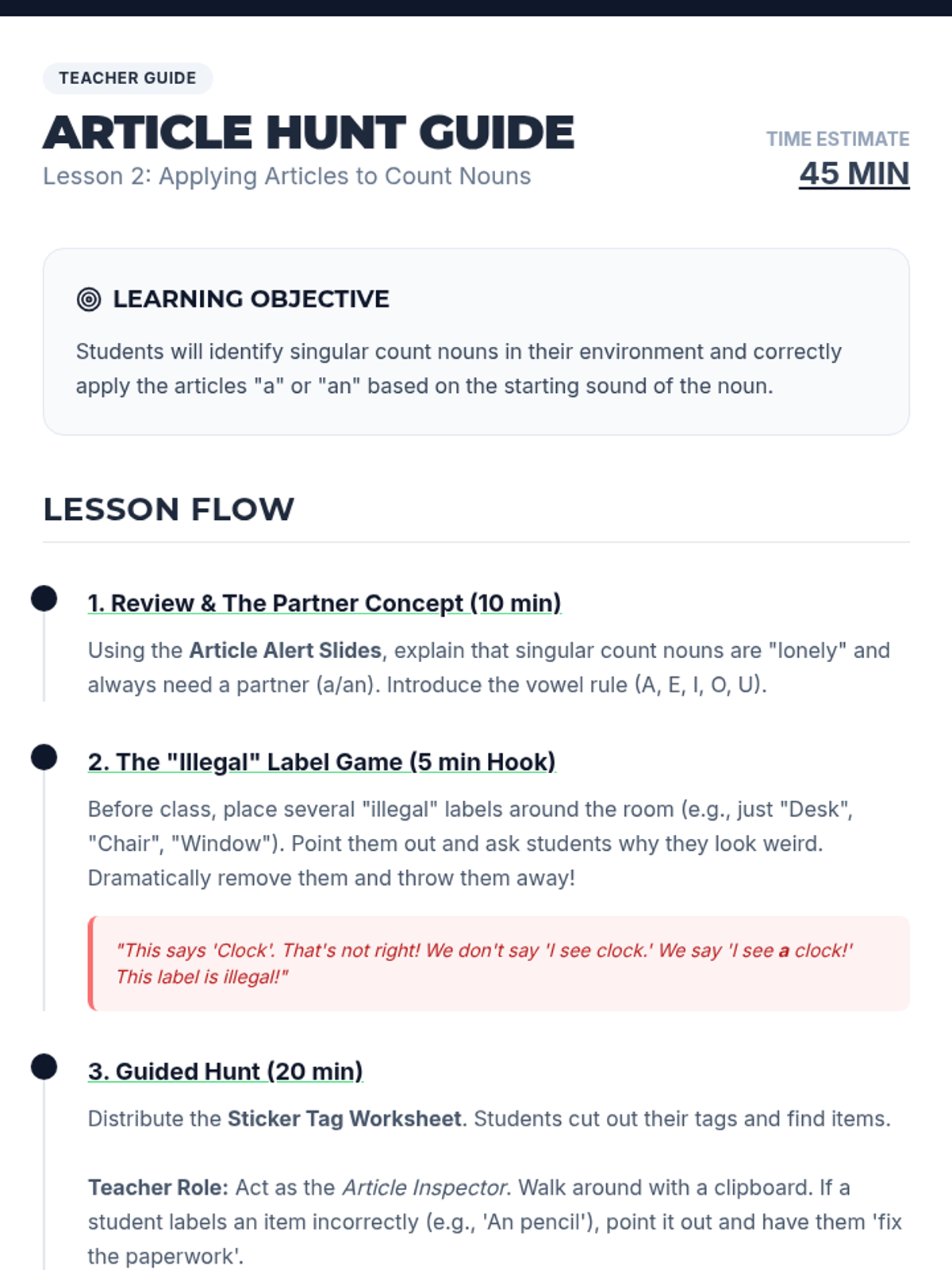
Students review that singular count nouns usually require 'a', 'an', or 'the'. They practice labeling classroom items to reinforce the necessity of the article for singular countable objects.
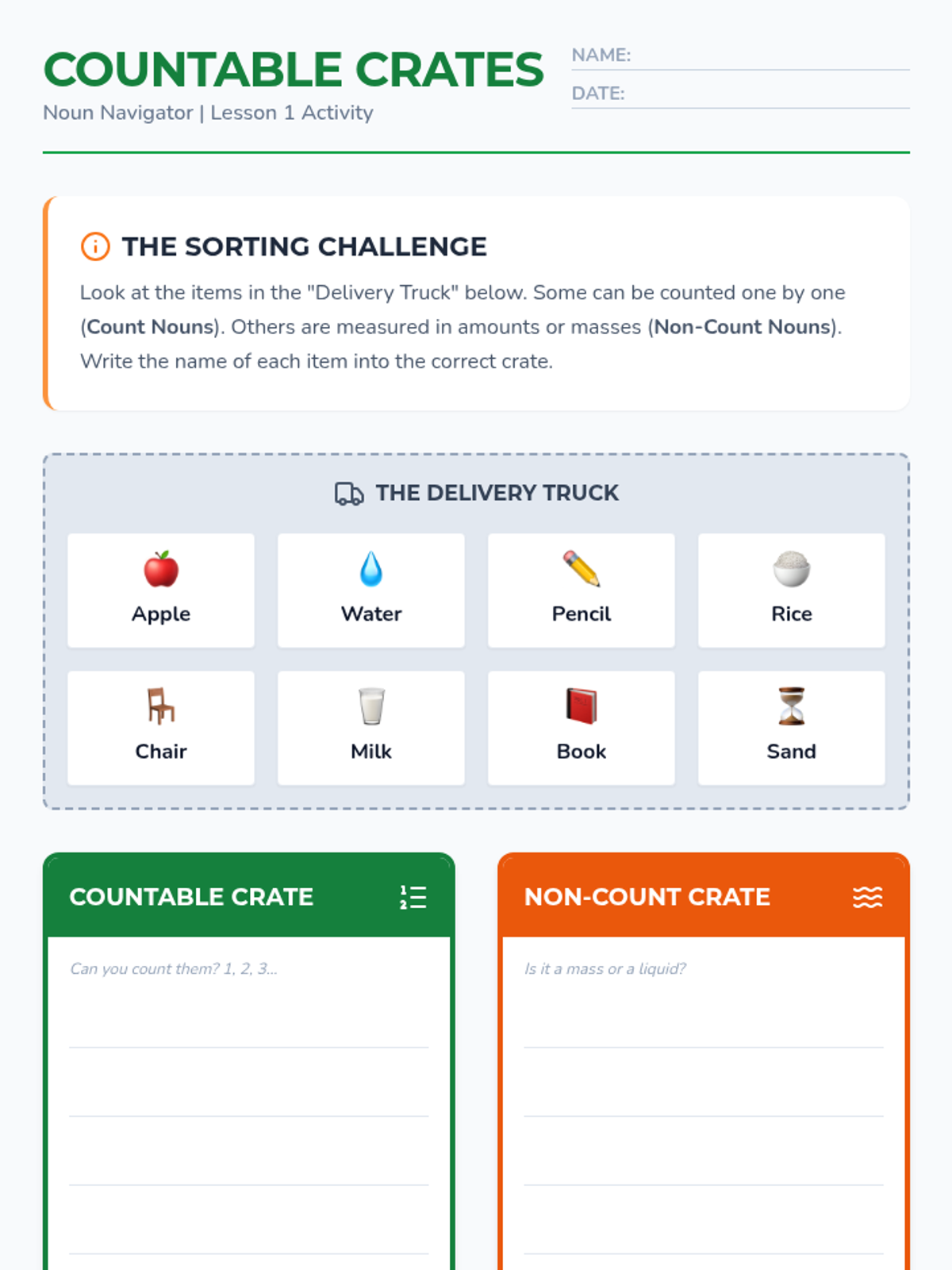
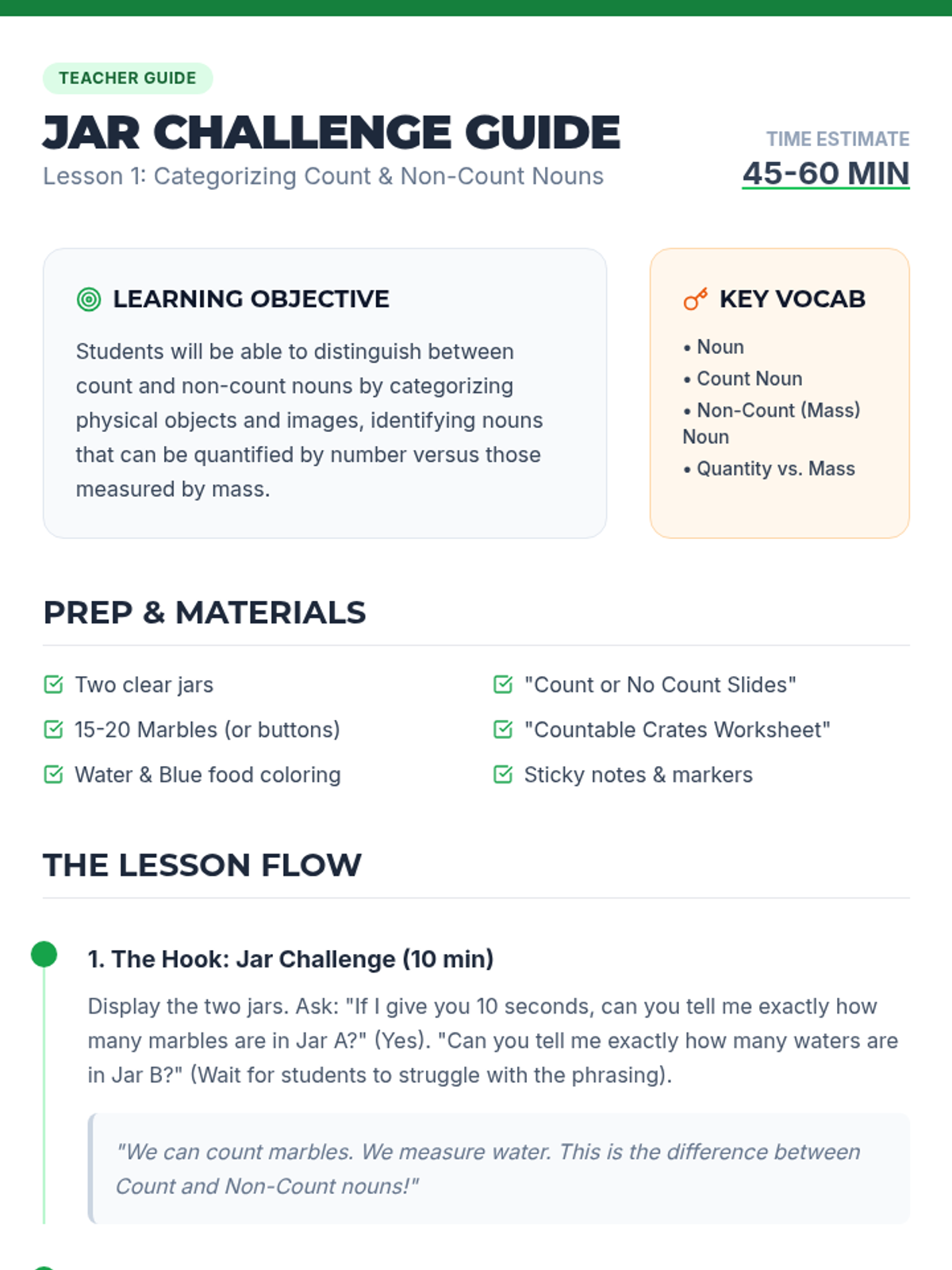
Students physically sort objects into things that can be counted individually and things that are measured in mass, establishing the concept of countability.